

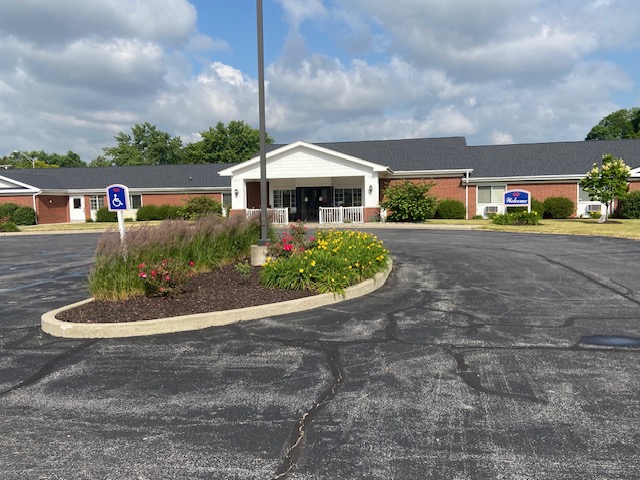
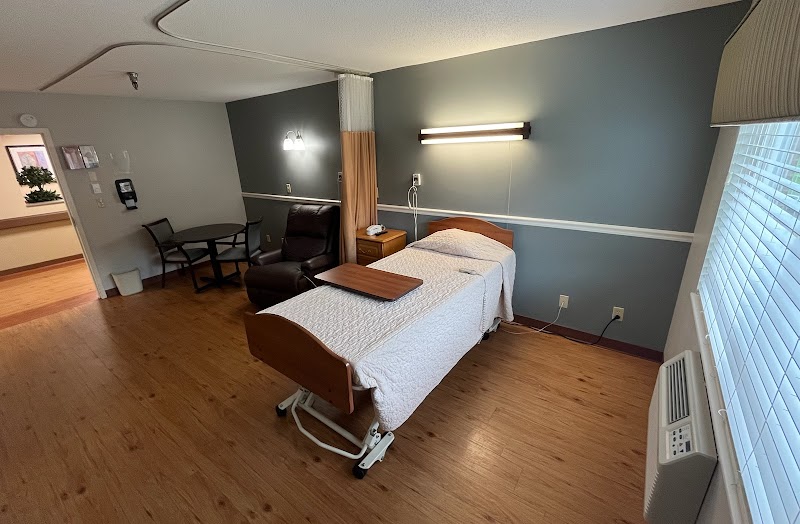
BETZ NURSING HOME

116 BETZ RD, AUBURN, IN 46706 (260) 925-3814
For profit - Corporation 114 Beds AMERICAN SENIOR COMMUNITIES Data: November 2025
Trust Grade
85/100
#13 of 505 in IN
Last Inspection: July 2024

Within standard 12-15 month inspection cycle. Federal law requires annual inspections.

Overview

Betz Nursing Home in Auburn, Indiana has a Trust Grade of B+, which indicates it is above average and recommended for families considering care options. It ranks #13 out of 505 facilities in Indiana, placing it in the top half, and is the best option among the four nursing homes in De Kalb County. The facility is stable, with only one issue reported in both 2024 and 2025, although it does have a below-average staffing rating of 2 out of 5 stars and a turnover rate of 56%, which is around the state average. Interestingly, there have been no fines recorded, suggesting compliance with regulations. However, there are some concerning findings from inspections. For instance, the kitchen sanitation was not properly maintained, with cracked eggs stored improperly, which raises food safety concerns. Additionally, there were instances where medications were left at residents' bedside without supervision, posing a risk for those who cannot self-administer their medications safely. Lastly, privacy issues were noted, as some residents were exposed in ways that should have been prevented by staff. While the overall care quality is rated excellent, these weaknesses warrant attention for families weighing their options.

Trust Score
B+
85/100
In Indiana
#13/505
Top 2%
Safety Record
Low Risk
No red flags
Inspections
Holding Steady
1 → 1 violations
Staff Stability
⚠ Watch
56% turnover. Above average. Higher turnover means staff may not know residents' routines.
Penalties
✓ Good
No fines on record. Clean compliance history, better than most Indiana facilities.
Skilled Nurses
✓ Good
Each resident gets 44 minutes of Registered Nurse (RN) attention daily — more than average for Indiana. RNs are trained to catch health problems early.
Violations
○ Average
7 deficiencies on record. Average for a facility this size. Mostly minor or procedural issues.
★★★★★
5.0
Overall Rating
★★☆☆☆
2.0
Staff Levels
★★★★☆
4.0
Care Quality
★★★★★
5.0
Inspection Score
Stable
2024: 1 issues
2025: 1 issues

The Good

  • 4-Star Quality Measures · Strong clinical quality outcomes
  • Full Sprinkler Coverage · Fire safety systems throughout facility
  • No fines on record

Facility shows strength in quality measures, fire safety.

The Bad

Staff Turnover: 56%

Near Indiana avg (46%)

Frequent staff changes - ask about care continuity

Chain: AMERICAN SENIOR COMMUNITIES

Part of a multi-facility chain

Ask about local staffing decisions and management

Staff turnover is elevated (56%)

8 points above Indiana average of 48%

The Ugly 7 deficiencies on record

Sept 2025 1 deficiency
CONCERN (D) 📢 Someone Reported This

A family member, employee, or ombudsman was alarmed enough to file a formal complaint

Potential for Harm - no one hurt, but risky conditions existed

Deficiency F0761 (Tag F0761)

Could have caused harm · This affected 1 resident

Based on observation, interview and record review the facility failed to ensure staff were present for medication administration for 2 of 3 residents reviewed (Resident B, Resident C).Findings include...

Read full inspector narrative →
Based on observation, interview and record review the facility failed to ensure staff were present for medication administration for 2 of 3 residents reviewed (Resident B, Resident C).Findings include:1.During an interview, on 9/15/25 at 10:10 AM, Resident B's family indicated the facility often left medications at bedside. Resident B's family indicated Resident B could not self administer their own medications safely.Resident B's record was reviewed on 9/15/25 at 10:35 AM, diagnoses included end stage renal disease. There were no self administration of medications evaluations documented for Resident B. There were no physician orders for self administration of medications for Resident B. 2. During an observation, on 9/15/25 at 11:23 AM, Resident C's medications were observed at bedside.During an interview, on 9/15/25 at 11:23 AM, Resident C indicated Licensed Practical Nurse (LPN) 3 placed his medications at bedside for his lunch. Resident C indicated he didn't receive lunch until around 1 PM.During an interview, on 9/15/25 at 11:28 PM, LPN 3 indicated no residents in the facility were able to self-administer their medications. LPN 3 indicated she placed Resident C's medications at bedside to take during his lunch. LPN 3 indicated no medications were allowed at bedside. During an interview, on 9/15/25 at 12:09 PM, the Director of Nursing (DON) indicated no residents were able to self-administer their medications. The DON indicated Resident C's medications should not be left at bedside.Resident C's record was reviewed on 9/15/25 at 11:46 AM. Diagnoses included end stage renal disease and type 2 diabetes mellitus. There were no physician orders for self administration of medication for Resident C. An admission care plan, dated 8/7/25, indicated the nurse was to administered Resident C's medications as ordered.An admission Minimum Data Set (MDS) assessment, indicated Resident C had a Brief Interview of Mental Status (BIMS) of 15/15 (cognitively intact). There were no self-administration of medication evaluations documented for Resident C.During an interview, on 9/15/25 at 11:17 AM, Registered Nurse (RN) 4 indicated medications were never left at bedside. RN 4 indicated the nurse waited for the resident to take the medication prior to the nurse leaving the room. A policy, last revised 1/2015, titled Self Administration of Medications, was provided by the Regional Nurse on 9/15/25 at 12:11 PM. The policy indicated a self-administration assessment and order were completed for residents who self- administered medications. This finding relates to Intake 2595411. 3.1-25(b)(3)
Jul 2024 1 deficiency
CONCERN (D)

Potential for Harm - no one hurt, but risky conditions existed

Deficiency F0583 (Tag F0583)

Could have caused harm · This affected 1 resident

**NOTE- TERMS IN BRACKETS HAVE BEEN EDITED TO PROTECT CONFIDENTIALITY** Based on observation, interview, and record review the facility failed to ensure privacy for 2 of 7 residents reviewed (Resident...

Read full inspector narrative →
**NOTE- TERMS IN BRACKETS HAVE BEEN EDITED TO PROTECT CONFIDENTIALITY** Based on observation, interview, and record review the facility failed to ensure privacy for 2 of 7 residents reviewed (Resident 17, and Resident 58). Findings include: 1. During an observation and interview on 7/11/24 at 8:51 AM with Certified Nurse Aide (CNA) 5 and Registered Nurse (RN) 6, Resident 17 was observed with her gown covering her shoulders and her breasts. Her abdomen, incontinence brief and legs were exposed and visible from the hallway. The privacy curtain was pulled less than halfway across its track leaving the exposed resident's body parts visible from the hallway. Resident 17's bed was near the window and the windows blinds were open. CNA 5 indicated Resident 17 should not have been able to be seen from the hallway when her body was not completely covered. She indicated the resident tends to throw covers off while in bed, so staff should have ensured the privacy curtain was pulled to ensure any exposed body parts were not visible from the hallway. RN 6 Indicated the window blinds should have been closed to prevent visibility from outside the building. Resident 17's record was reviewed on 7/11/24 at 11:17 AM. Diagnoses included chronic obstructive pulmonary disease, diabetes mellitus without complications, and need for assistance with personal care. Resident 17's current quarterly Minimum Data Set (MDS)dated 6/10/24 indicated her Basic Interview for Mental Status (BIMS) score was 15 (cognitively intact). The MDS indicated she required substantial or maximal assistance with upper and lower body dressing. 2. During an observation and interview on 7/8/24 between 09:53 AM and 10:05 AM, Resident 58 was observed from the hallway wearing a hospital gown backward. The gown was loosely tied at the top and the gown fell open below the tie exposing her left breast. She was sitting in a standard chair with a walker placed in front of her. She indicated she was waiting for staff to come and help her get dressed. She indicated she was not supposed to walk in her room by herself. Physical Therapist 2, CNA 3 and Nurse Aide in Training 4 were observed walking past the room in the time frame of the observation. No employee was observed approaching Resident 58 to offer assistance. Resident 58's record was reviewed on 7/11/24 at 11:46 AM. Diagnoses included chronic obstructive pulmonary disease, hemiplegia and hemiparesis following cerebral infarction affecting left non-dominant side, limitation of activities due to disability, and unsteadiness on feet. Resident 58's current quarterly Minimum Data Set (MDS) dated [DATE] indicated her Basic Interview for Mental Status (BIMS) score was 15 (cognitively intact). The MDS indicated she required substantial or maximal assistance with upper body dressing. During an interview on 7/12/24 at 10:07 AM, the Director of Nursing indicated resident's private body parts should not be visible from the hallway. A current policy, undated, titled Resident Rights, provided by Administrator on 7/11/24 at 11:12 AM indicated residents have a right to a dignified existence. 3.1-3(a)
Jun 2023 2 deficiencies
CONCERN (D)

Potential for Harm - no one hurt, but risky conditions existed

Deficiency F0773 (Tag F0773)

Could have caused harm · This affected 1 resident

**NOTE- TERMS IN BRACKETS HAVE BEEN EDITED TO PROTECT CONFIDENTIALITY** Based on interview and record review the facility failed to ensure the provision of timely laboratory testing to monitor warfari...

Read full inspector narrative →
**NOTE- TERMS IN BRACKETS HAVE BEEN EDITED TO PROTECT CONFIDENTIALITY** Based on interview and record review the facility failed to ensure the provision of timely laboratory testing to monitor warfarin (blood thinner) for 1 of 4 residents reviewed. (Resident 183) Findings include: Resident 183's record was reviewed on 6/26/23 at 2:19 PM. Diagnoses included a history of a blood clots. Resident 183's current Comprehensive Minimum Data Set (MDS) assessment dated [DATE] indicated their Brief Interview for Mental Status (BIMS) was 15 (no cognitive deficit). The MDS indicated the resident was being administered a blood thinner for a history of blood clots. A physician order dated 6/16/23 indicated a PT/INR (blood test for blood thinning medication) was to be performed on 6/23/23. Progress notes dated 6/23/23 through 6/26/23 had no indication of a PT/INR blood draw attempt. In an interview on 6/26/23 at 3:24 PM the Director of Nursing (DON) indicated the PT/INR scheduled for 6/23/23 was not performed due to Resident 183 having had difficult veins. The DON indicated the PT/INR was collected on 6/26/23 and results were anticipated between 5:00 PM and 6:00 PM. The DON indicated the ADON notified the Nurse Practitioner (NP) on 6/23/23 of the missed blood test and received an order to perform the blood test on 6/26/23. In a telephone interview on 6/26/23 at 3:32 PM a Laboratory Representative (Lab Rep) 5 indicated there was no physician order for Resident 183's PT/INR to be performed on 6/26/23. Lab Rep 5 indicated the only physician order for Resident 183's PT/INR was dated 6/22/23 at 7:59 PM. The blood draw should have been performed on 6/23/23. In an interview on 6/26/23 at 3:36 PM the DON indicated the facility had followed the physician order to perform the PT/INR on 6/26/23. The DON indicated the NP was made aware of the failed PT/INR attempt by the ADON on 6/23/23. The DON indicated on 6/23/23 the NP gave an order to the ADON for the PT/INR to be drawn 6/26/23. The DON indicated the PT/INR was collected the morning of 6/26/23 and results were pending. The DON indicated lab results were generally received from the lab between 5:00 PM and 6:00 PM due to the lab's location being in Indianapolis. In an interview on 6/26/23 at 4:02 PM Resident 183 indicated the nurse had drawn their blood. Resident 183 indicated there were no other attempts at drawing their blood on 6/26/23. The resident indicated a lab technician had failed at obtaining a blood sample on Friday morning 6/23/23. The resident indicated there had been no attempts to draw her blood between 6/23/23 and 6/26/23. In an interview on 6/26/23 at 4:15 PM Registered Nurse (RN) 4 indicated they had drawn Resident 183's blood at approximately 3:30 PM. On 6/27/23 at 8:45 AM Resident 183's record was reviewed. A progress noted entered by RN 4 dated 6/26/23 at 3:37 PM indicated Resident 183's blood was drawn due to the lab being unable to obtain a redraw. The entry was invalidated on 6/26/23 at 3:47 PM. A PT/INR lab report indicated Resident 183's blood was drawn on 6/26/23 at 3:30 PM. A review of a PT/INR Tracking Log indicated Resident 183's PT/INR test was performed on 6/16/23 and the next PT/INR test should be completed on 6/23/23. There was no documentation of the missed lab draw, physician notification or an order to draw the lab on an alternate date. A progress note entered by the ADON dated 6/23/23 at 3:25 PM recorded as a late entry on 6/26/23 at 3:27 PM indicated the NP was informed Resident 183's PT/INR had not been drawn and could be drawn on 6/26/23. A progress note entered by the NP dated 6/23/23 at 3:29 PM recorded as a late entry on 6/26/23 at 3:34 PM indicated PT/INR results were pending due to an inability to collect the sample on 6/23/23. In an interview on 6/27/23 at 10:15 AM the DON indicated the blood was drawn by RN 4 on 6/26/23 at 3:30 PM due to the lab had been unable to collect blood on the morning of 6/23/23. The DON indicated they had no knowledge as to why the progress note related to the blood draw dated 6/26/23 at 3:37 was invalidated on 6/26/23 at 3:47 PM. The DON indicated they were unaware as to why there was no documentation in the progress notes related to an unsuccessful lab draw. The DON indicated they were unaware as to why there was no documentation related to the unsuccessful lab draw and updated physician order on the resident's PT/INR Tracking Log. The DON indicated they were unaware as to why the physician order to obtain a PT/INR on 6/26/23 was not included on the physician order sheet. The DON indicated they were unaware as to why the lab did not have a physician order to draw a PT/INR on 6/26/23. A current policy dated 1/2016 provided by the DON on 6/26/23 at 3:36 PM indicated residents requiring warfarin would receive adequate monitoring. The policy indicated all PT/INR results, current warfarin dose, dosage change, physician notification, and relevant comments would be documented on the PT/INR Tracking Log. 3.1-49(a) and (b)
CONCERN (E)

Potential for Harm - no one hurt, but risky conditions existed

Food Safety (Tag F0812)

Could have caused harm · This affected multiple residents

Based on observation, interview, and record review the facility failed to ensure kitchen sanitation was maintained for 76 of 76 residents who ate meals prepared in the kitchen. During an observation w...

Read full inspector narrative →
Based on observation, interview, and record review the facility failed to ensure kitchen sanitation was maintained for 76 of 76 residents who ate meals prepared in the kitchen. During an observation with the dietician on 6/20/23 at 9:23 AM, A tray of eggs was observed on a shelf inside the walk-in cooler. The tray contained 15 intact eggs on one side and the other side contained eggshells with a clear slimy substance visible on the shells and on the tray around the shells. The dietician indicated cracked shells from egg use should not be stored with clean, intact eggs. In the walk-in freezer, two plastic grocery bags were observed on a shelf filled with containers of ice cream. The Dietician indicated the containers had been opened and were not labeled. The Dietician indicated items should be dated upon opening. In an interview on 6/20/23 at 9:28 AM, [NAME] 3 indicated she had used the tray of eggs observed in the walk-in cooler during breakfast that morning. She indicated she cracked each egg, discarded its shell on the same tray containing the clean supply and placed the tray in the walk-in cooler after breakfast service was over. She also indicated the ice cream containers in the walk-in freezer belonged to the activities department and the employee who opened them should have dated them upon opening. During an observation of a storage rack containing stacks of baking dishes, clear liquid dripped from 3 of 4 stacks of bakeware when separated. The Dietician indicated the bakeware should have been air dried prior to stacking and storing. A container of cut up cabbage was observed on the countertop. A serving spoon and tongs were lying on top of the cabbage with the handles touching the food supply. The Dietician indicated the handles should not touch the food supply. During an observation with [NAME] 2 on 6/20/23 at 10:43 AM, [NAME] 2 indicated she had never tested chemical levels in sanitizer water. [NAME] 2 indicated she did not know how to tell if sanitizer levels were correct. [NAME] 3 handed [NAME] 2 a test strip and instructed her to immerse it in the sanitizer water. After immersion, [NAME] 3 indicated the sanitizer levels were low and the water should be changed. During an interview with [NAME] 2 on 6/20/23 at 10:57 AM, [NAME] 2 indicated she did not know how to test sanitizer water because she was a new employee. During a record review on 6/20/23 at 11:15 AM, an Employee Records document provided by the Administrator indicated [NAME] 2 was hired on 10/26/22. A current skills validation form dated 11/17 provided by the Administrator on 6/21/23 at 10:25 AM identified staff testing of sanitizer solution for appropriate sanitizer concentration as a skill required for cleaning and sanitizing kitchen surfaces. A current policy titled Food Storage dated 5/23 provided by the Dietician on 6/20/23 at 11:25 AM indicated food should be clearly labeled and marked to indicate the date by which the food should be used or discarded. A current policy titled Manual Dishwashing dated 6/23 provided by the Administrator on 6/21/23 at 11:19 AM indicated all items should be air dried before use or storage. A current policy titled FDA Food Code dated 2022 provided by the Administrator on 6/21/23 at 11:19 AM indicated food preparation and dispensing utensils should be stored with their handles above the top of the food container. During an interview with the Administrator on 6/21/23 at 11:19 AM, she indicated the facility did not have a policy specific to egg handling and storage. 3.1-21(i)(2)(3)
Jul 2022 3 deficiencies
CONCERN (D)

Potential for Harm - no one hurt, but risky conditions existed

Deficiency F0638 (Tag F0638)

Could have caused harm · This affected 1 resident

2. Resident 25's record was reviewed on 7/26/22 at 9:30 am. The record indicated an annual MDS was accepted with warning on 3/30/22. The assessment reference date was 3/25/22. In addition, the record ...

Read full inspector narrative →
2. Resident 25's record was reviewed on 7/26/22 at 9:30 am. The record indicated an annual MDS was accepted with warning on 3/30/22. The assessment reference date was 3/25/22. In addition, the record indicated a quarterly review had been in process since 6/16/22, but had not been transmitted by the time of survey exit. The Director of Nursing was interviewed on 7/26/22 at 9:34am. She indicated MDS quarterly assessments were to be done within 92 days of the previous assessment. The MDS coordinator was interviewed on 7/26/22 at 11:50am. She indicated MDS quarterly assessments were to be completed within ninety-two (92) days from the last assessment. She indicated the quarterly review dated 6/16/22 should have been completed by 6/30/22 and transmitted within 31 days after the assessment was completed. A policy, dated 10/2019, entitled, RAI OBRA-required Assessment Summary was received from the DON on 7/26/22 at 9:59am. The policy indicated the assessment reference date was required to be within 92 days of the last assessment. The policy also indicated the completion date should have been within 14 days of the assessment reference date. 3.1-31(d)(3) Based on record review and interview, the facility failed to ensure quarterly Minimum Data Set (MDS) assessments were completed in the required time frame for 2 of 2 residents reviewed. (Resident 17 and Resident 25) Findings include: 1. Resident 17's record review began on 7/26/22 at 3:00 PM. The record indicated an annual MDS was accepted with warning on 3/30/22. The assessment reference date was 3/29/22. In addition, the record indicated a quarterly review had been in process since 6/22/22, but had not been transmitted by the time of survey exit.
CONCERN (D)

Potential for Harm - no one hurt, but risky conditions existed

Deficiency F0657 (Tag F0657)

Could have caused harm · This affected 1 resident

Based on interview and record review the facility failed to ensure quarterly care plan meetings were completed for 2 of 2 residents reviewed. (Resident 10, Resident 46) Findings Include: 1. Resident ...

Read full inspector narrative →
Based on interview and record review the facility failed to ensure quarterly care plan meetings were completed for 2 of 2 residents reviewed. (Resident 10, Resident 46) Findings Include: 1. Resident 10 was interviewed on 7/24/22 at 12:47 PM. Resident 10 indicated she did not have care plan meetings. Resident 10's record was reviewed on 7/25/22 at 3:25 PM. An Minimum Data Set (MDS) assessment, dated 3/24/22 indicated Resident 10 had a Brief Interview for Mental Status (BIMS) score of 15 indicating cognitively intact. Social Service (SS) notes were reviewed for Resident 10 from 2/1/22 - 7/25/22. The notes indicated there were care plan meetings on 2/24/22 and 7/14/22. There was no other documentation regarding care plan meetings. 2. Resident 46 was interviewed on 7/24/22 at 12:18 PM. Resident 46 indicated she did not have care plan meetings. Resident 46's record was reviewed on 7/25/22 at 2:03 PM. An MDS assessment, dated 5/17/22 indicated Resident 46 had a BIMS score of 15 indicating cognitively intact. SS notes were reviewed for Resident 46 from 2/1/22 - 7/25/22. The notes indicated there were care plan meetings on 2/24/22 and 7/7/22. There was no other documentation regarding care plan meetings. The Social Service Director (SSD) was interviewed on 7/25/22 at 3 PM. The SSD indicated care plan meetings were completed quarterly. The SSD indicated Resident 10 and Resident 46 should have had a care plan meeting in May 2022. A policy, revised 10/2019, titled IDT Comprehensive Care Plan Policy, was provided by the Director of Nursing on 7/26/22 at 12:40 PM. The policy did not indicate how often care plan meetings should be completed. A review of CMS.GOV website under MDS Care plan timing Chapter 5, Care plan meetings must be held within 7 days of MDS completion. 3.1-35(d)(2)(B)
CONCERN (D)

Potential for Harm - no one hurt, but risky conditions existed

ADL Care (Tag F0677)

Could have caused harm · This affected 1 resident

**NOTE- TERMS IN BRACKETS HAVE BEEN EDITED TO PROTECT CONFIDENTIALITY** Based on observation, interview and record review, the facility failed to ensure nail care was completed for 1 of 1 resident rev...

Read full inspector narrative →
**NOTE- TERMS IN BRACKETS HAVE BEEN EDITED TO PROTECT CONFIDENTIALITY** Based on observation, interview and record review, the facility failed to ensure nail care was completed for 1 of 1 resident reviewed. (Resident 44) Findings include: Resident 44's record was reviewed on 7/24/22 at 1:50 PM. Diagnoses included Alzheimer's disease. A review of Residnet 44's MDS (Minimum Data Set) assessment dated [DATE] indicated the resident did not have a Brief Interview of Mental Status (BIMS) conducted since the resident was rarely or never understood. The record indicated Resident 44 required extensive assistance with activities of daily living. An interview was conducted with the family of Resident 44 on 7/24/22 at 12:44 PM. A family member indicated there was a dark brown substance visible under Resident 44's fingernails. The family member indicated she witnessed Resident 44 placing her hands in feces during care on several occasions in the past. An observation was made on 7/24/22 at 12:44 PM. Resident 44's fingernails were of various lengths with some jagged edges and a dark brown substance was under the nails on both hands. An observation was made on 7/25/22 at 10:44 AM. Resident 44's fingernails were of various lengths with some jagged edges and a dark brown substance was under the nails on both her hands. In an interview on 7/26/22 at 11:09 AM, Licensed Practical Nurse (LPN) 3 indicated Certified Nursing Assistant's (CNA) normally provide nail care. In an interview on 7/26/22 at 11:13 AM, CNA 4 indicated resident nails are to be checked during care and cleaned when indicated. Resident 44's shower report dated 7/24/22 indicated nail care had been given on that day. In an interview on 7/25/22 at 2:55 PM, the DON indicated that there was no formal policy for nail care, and nail care was considered a standard of CNA care. During an observation on 7/26/22 at 9:27 am, Resident 44's nails were of consistent length with no jagged edges and no dark brown substance was visible under the nails. 3.1-38(a)(3)(E)
Understanding Severity Codes (click to expand)
Life-Threatening (Immediate Jeopardy)
J - Isolated K - Pattern L - Widespread
Actual Harm
G - Isolated H - Pattern I - Widespread
Potential for Harm
D - Isolated E - Pattern F - Widespread
No Harm (Minor)
A - Isolated B - Pattern C - Widespread

Questions to Ask on Your Visit

  • "Why is there high staff turnover? How do you retain staff?"
  • "Can I speak with families of current residents?"
  • "What's your RN coverage like on weekends and overnight?"

Our Honest Assessment

Strengths
  • • Grade B+ (85/100). Above average facility, better than most options in Indiana.
  • • No major safety red flags. No abuse findings, life-threatening violations, or SFF status.
  • • No fines on record. Clean compliance history, better than most Indiana facilities.
Concerns
  • • 56% turnover. Above average. Higher turnover means staff may not know residents' routines.
Bottom line: Generally positive indicators. Standard due diligence and a personal visit recommended.

About This Facility

What is Betz's CMS Rating?

CMS assigns BETZ NURSING HOME an overall rating of 5 out of 5 stars, which is considered much above average nationally. Within Indiana, this rating places the facility higher than 99% of the state's 100 nursing homes. This rating reflects solid performance across the metrics CMS uses to evaluate nursing home quality.

How is Betz Staffed?

CMS rates BETZ NURSING HOME's staffing level at 2 out of 5 stars, which is below average compared to other nursing homes. Staff turnover is 56%, which is 10 percentage points above the Indiana average of 46%. High turnover can affect care consistency as new staff learn residents' individual needs.

What Have Inspectors Found at Betz?

State health inspectors documented 7 deficiencies at BETZ NURSING HOME during 2022 to 2025. These included: 7 with potential for harm.

Who Owns and Operates Betz?

BETZ NURSING HOME is owned by a for-profit company. For-profit facilities operate as businesses with obligations to shareholders or private owners. The facility is operated by AMERICAN SENIOR COMMUNITIES, a chain that manages multiple nursing homes. With 114 certified beds and approximately 75 residents (about 66% occupancy), it is a mid-sized facility located in AUBURN, Indiana.

How Does Betz Compare to Other Indiana Nursing Homes?

Compared to the 100 nursing homes in Indiana, BETZ NURSING HOME's overall rating (5 stars) is above the state average of 3.1, staff turnover (56%) is near the state average of 46%, and health inspection rating (5 stars) is much above the national benchmark.

What Should Families Ask When Visiting Betz?

Based on this facility's data, families visiting should ask: "How do you ensure continuity of care given staff turnover, and what is your staff retention strategy?" "Can you walk me through typical staffing levels on day, evening, and night shifts?" "Can I visit during a mealtime to observe dining assistance and food quality?" "How do you handle medical emergencies, and what is your hospital transfer rate?" These questions are particularly relevant given the facility's high staff turnover rate and the below-average staffing rating.

Is Betz Safe?

Based on CMS inspection data, BETZ NURSING HOME has a clean safety record: no substantiated abuse findings (meaning no confirmed cases of resident harm), no Immediate Jeopardy citations (the most serious violation level indicating risk of serious injury or death), and is not on the Special Focus Facility watch list (a federal program monitoring the lowest-performing 1% of nursing homes). The facility has a 5-star overall rating and ranks #1 of 100 nursing homes in Indiana. While no facility is perfect, families should still ask about staff-to-resident ratios and recent inspection results during their visit.

Do Nurses at Betz Stick Around?

Staff turnover at BETZ NURSING HOME is high. At 56%, the facility is 10 percentage points above the Indiana average of 46%. High turnover means new staff may not know residents' individual needs, medications, or preferences. It can also be disorienting for residents, especially those with dementia who rely on familiar faces. Families should ask: What is causing the turnover? What retention programs are in place? How do you ensure care continuity during staff transitions?

Was Betz Ever Fined?

BETZ NURSING HOME has no federal fines on record. CMS issues fines when nursing homes fail to meet care standards or don't correct problems found during inspections. The absence of fines suggests the facility has either maintained compliance or corrected any issues before penalties were assessed. This is a positive indicator, though families should still review recent inspection reports for the full picture.

Is Betz on Any Federal Watch List?

BETZ NURSING HOME is not on any federal watch list. The most significant is the Special Focus Facility (SFF) program, which identifies the bottom 1% of nursing homes nationally based on persistent, serious quality problems. Not being on this list means the facility has avoided the pattern of deficiencies that triggers enhanced federal oversight. This is a positive indicator, though families should still review the facility's inspection history directly.