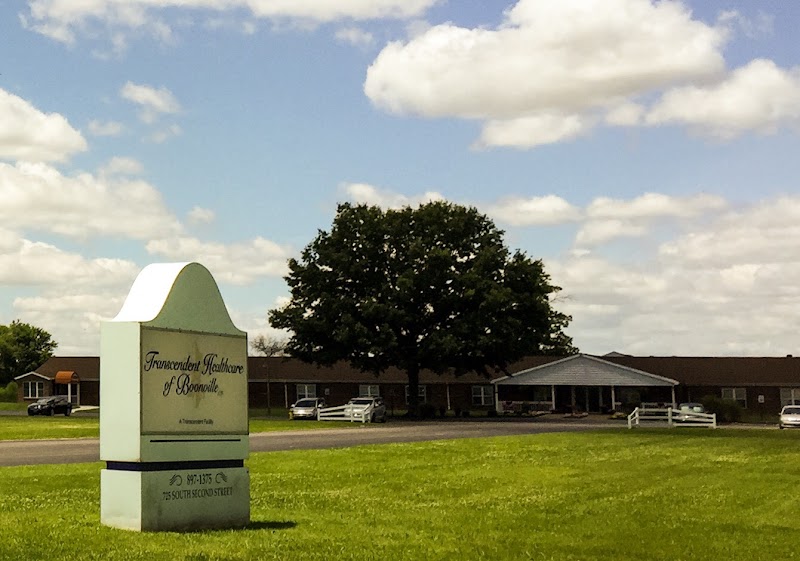
TRANSCENDENT HEALTHCARE OF BOONVILLE

725 S SECOND ST, BOONVILLE, IN 47601 (812) 897-1375
Non profit - Corporation 102 Beds Independent Data: November 2025 1 Immediate Jeopardy citation
Trust Grade
0/100
#484 of 505 in IN
Last Inspection: January 2025

Within standard 12-15 month inspection cycle. Federal law requires annual inspections.

Overview

Transcendent Healthcare of Boonville has received a Trust Grade of F, indicating significant concerns about the facility's performance and care quality. It ranks #484 out of 505 nursing homes in Indiana, placing it in the bottom half, and #7 out of 8 in Warrick County, meaning there is only one local option considered better. The facility appears to be improving, with the number of issues decreasing from 29 in 2024 to 20 in 2025, although it still has a lot of room for improvement. Staffing is rated 2 out of 5 stars with a turnover rate of 37%, which is better than the state average, suggesting some staff members remain long enough to build relationships with residents. However, the facility has incurred fines totaling $39,385, higher than 95% of Indiana facilities, indicating ongoing compliance issues. There have been serious incidents, including a resident with dementia who eloped through an unsecured window and was found by law enforcement, raising significant concerns about supervision and safety. Another resident also exited the facility in a similar manner, requiring hospitalization due to exposure. While the quality measures score is relatively good at 4 out of 5, the critical and serious deficiencies highlight the need for families to carefully consider these factors when choosing care for their loved ones.

Trust Score
F
0/100
In Indiana
#484/505
Bottom 5%
Safety Record
High Risk
Review needed
Inspections
Getting Better
29 → 20 violations
Staff Stability
○ Average
37% turnover. Near Indiana's 48% average. Typical for the industry.
Penalties
○ Average
$39,385 in fines. Higher than 51% of Indiana facilities. Some compliance issues.
Skilled Nurses
⚠ Watch
Each resident gets only 28 minutes of Registered Nurse (RN) attention daily — below average for Indiana. Fewer RN minutes means fewer trained eyes watching for problems.
Violations
⚠ Watch
61 deficiencies on record. Higher than average. Multiple issues found across inspections.
★☆☆☆☆
1.0
Overall Rating
★★☆☆☆
2.0
Staff Levels
★★★★☆
4.0
Care Quality
★☆☆☆☆
1.0
Inspection Score
Stable
2024: 29 issues
2025: 20 issues

The Good

  • 4-Star Quality Measures · Strong clinical quality outcomes
  • Full Sprinkler Coverage · Fire safety systems throughout facility
  • No fines on record
  • Staff turnover below average (37%)

    11 points below Indiana average of 48%

Facility shows strength in quality measures, fire safety.

The Bad

1-Star Overall Rating

Below Indiana average (3.1)

Significant quality concerns identified by CMS

Staff Turnover: 37%

Near Indiana avg (46%)

Typical for the industry

Federal Fines: $39,385

Above median ($33,413)

Moderate penalties - review what triggered them

The Ugly 61 deficiencies on record

1 life-threatening 1 actual harm
May 2025 3 deficiencies
CONCERN (D) 📢 Someone Reported This

A family member, employee, or ombudsman was alarmed enough to file a formal complaint

Potential for Harm - no one hurt, but risky conditions existed

Deficiency F0602 (Tag F0602)

Could have caused harm · This affected 1 resident

Based on interview and record review, the facility failed to ensure residents were free from misappropriation for 1 of 1 residents reviewed for misappropriation. A resident's debit card was taken with...

Read full inspector narrative →
Based on interview and record review, the facility failed to ensure residents were free from misappropriation for 1 of 1 residents reviewed for misappropriation. A resident's debit card was taken without consent and used by staff to make multiple unauthorized purchases. (Resident D) Finding includes: During a review of facility reported incidents on 5/21/25 at 11:15 A.M., an incident dated 5/2/25, indicated Resident D contacted local police to report a stolen debit card. Resident D identified on a bank statement several unauthorized transactions. The local police reviewed surveillance footage from the locations where the unauthorized purchases were made that showed CNA 13 had been responsible for the transactions. CNA 13 was placed on suspension during an investigation. During a review of the facility's investigation into the incident on 5/21/25 at 11:30 A.M., a facility grievance form, dated 4/30/25, indicated Resident D had a bank statement with unknown charges. Resident D claimed someone used her debit card without her permission. An undated and unsigned, typed, note in the facility investigation indicated on 5/1/25 at approximately 7:00 P.M., Resident D stated she was missing her entire wallet, however a few a items from the wallet were located on her bed. The local police department were called and arrived to the facility. On 5/5/25, a local police detective indicated that CNA 13 was observed on camera with Resident D's debit card. During record review on 5/21/25 at 11:50 A.M., Resident D's diagnoses included, but were not limited to, dementia, anxiety, depression, and psychotic disorder. Resident D's most recent quarterly minimum data set (MDS) assessment, dated 4/8/25, indicated the resident had moderate cognitive impairment. During an interview on 5/21/25 at 12:35 P.M., Resident D indicated she had placed her purse at the foot of her bed and fell asleep, when she woke, her wallet and debit card was missing. Resident D indicted she called the local police to report the stolen wallet. She later reviewed a bank statement and noticed several unauthorized purchases made with her debit card. Resident D was unable to determine the total sum of fraudulent purchases, but indicated there were multiple transactions at a local gas station and a paid phone bill that was not hers. During an interview on 5/21/25 at 11:40 A.M., the Facility Administrator indicated the facility did not have a written policy related to shopping or making purchases for residents. The Facility Administrator indicated the CNA's and nursing staff were not permitted to make purchases for residents, and that only department heads or the facility Activity Director could make purchases on a resident's behalf, with the resident's permission. On 5/19/25 at 11:55 A.M., the Facility Administrator supplied an undated facility policy titled, Abuse, Neglect, Exploitation or Misappropriation - Reporting and Investigating. The policy included, All reports of . theft/misappropriation of resident property are reported to local, state and federal agencies . 3.1-28(a)
CONCERN (D) 📢 Someone Reported This

A family member, employee, or ombudsman was alarmed enough to file a formal complaint

Potential for Harm - no one hurt, but risky conditions existed

Deficiency F0658 (Tag F0658)

Could have caused harm · This affected 1 resident

Based on interview, and record review, the facility failed to ensure the physicans orders were thoroughly followed and documented when completed for 2 of 3 residents reviewed for nursing services rela...

Read full inspector narrative →
Based on interview, and record review, the facility failed to ensure the physicans orders were thoroughly followed and documented when completed for 2 of 3 residents reviewed for nursing services related to wound care. Routine dressing changes and skin assessments were not completed per the physician's orders. (Resident F, Resident G) Findings include: 1. During record review on 5/21/25 at 9:15 A.M., Resident F's diagnoses included, but were not limited to peripheral vascular disease, morbid obesity, and lymphedema. Resident F's most recent admission MDS (Minimum Data Set) dated 3/12/25, indicated the resident had one unhealed venous ulcer. Resident F's physician orders included, but were not limited to, Right dorsal lateral foot: Cleanse with wound cleanser and pat dry, Apply collagen moistened with sodium chloride to wound bed. Cover with bordered foam dressing and apply three layer compression wrap every day shift, Monday, Wednesday, and Friday (started 5/9/25 and discontinued on 5/15/25), Right dorsal lateral foot: Cleanse with wound cleanser. Place collagen dressing as filler to wound bed. cover with alginate dressing. Cover with abdominal pad. Cover with absorbent wound dressing. Wrap with Kerlix (medical gauze). Apply medical tape, then wrap with four layer compression wrap. Wear post-operative shoe for offloading of wound. To bed done three times a week every day shift, every Monday, Wednesday, and Friday (started 5/15/25), Right medial foot: Cleanse area and peri-wound with wound cleanser, apply alginate border dressing every Monday, Wednesday, and Friday (discontinued 5/15/25), Right dorsal mid-foot: Cleanse area with wound cleanser, cover with Mepilex Transfer (wound dressing), cover with gauze, cover with abdominal pad, wrap with Kerlix and apply medical tape. Wrap with four layer compression wrap. Wound to be offloaded with post operative shoe. Three times a week, every Monday, Wednesday, and Friday (started 5/16/25), and weekly skin assessment every day shift, every Thursday. Resident F's care plan included, but was not limited to, resident has surgical wound on top/dorsal side of foot (initiated 4/19/25) with an intervention of; provide treatment as ordered. Resident F's Medication Administration Record (MAR) and Treatment Administration Record (TAR) for May 2025 lacked documentation indicating the resident received the following orders on the following dates and times: Right dorsal lateral foot: Cleanse with wound cleanser and pat dry, Apply collagen moistened with sodium chloride to wound bed. Cover with bordered foam dressing and apply three layer compression wrap every day shift, Monday, Wednesday, and Friday (started 5/9/25 and discontinued on 5/15/25) - not completed Monday 5/12/25. Right dorsal lateral foot: cleanse with wound cleanser. Place collagen dressing as filler to wound bed. cover with alginate dressing. Cover with abdominal pad. Cover with absorbent wound dressing. Wrap with Kerlix (medical gauze). Apply medical tape, then wrap with four layer compression wrap. Wear post-operative shoe for offloading of wound. To bed done three times a week every day shift, every Monday, Wednesday, and Friday (started 5/15/25) - not completed Monday 5/19/25. Right medial foot: Cleanse area and peri-wound with wound cleanser, apply alginate border dressing every Monday, Wednesday, and Friday (discontinued 5/15/25) - not completed Friday 5/2/25 and Monday 5/12/25. Right dorsal mid-foot: Cleanse area with wound cleanser, cover with Mepilex Transfer (wound dressing), cover with gauze, cover with abdominal pad, wrap with Kerlix and apply medical tape. Wrap with four layer compression wrap. Wound to be offloaded with post operative shoe. Three times a week, every Monday, Wednesday, and Friday (started 5/16/25) - not completed Monday 5/19/25. Weekly skin assessment every day shift, every Thursday - not completed Thursday 5/8/25. 2. During record review on 5/21/25 at 10:00 A.M., Resident G's diagnoses included, but were not limited to pressure ulcer to right heel, type II diabetes, and edema. Resident G's most recent admission MDS (Minimum Data Set) dated 4/11/25, indicated the resident admitted to the facility with one unhealed stage IV pressure wound. Resident G's physician orders included, but were not limited to; Right Heel: Cleanse with wound cleanser, pat dry. Cover with bordered gauze dressing, initial and date every day shift for wound care (started 4/11/25 and discontinued 4/19/25), Right Heel: Cleanse with wound cleanser, pat dry. Cover with bordered gauze dressing. Initial and date every day shift for wound care (started 4/20/25 and discontinued 5/20/25), and Check placement of dressing to right heel every shift and replace if not present every shift (started 4/19/25). Resident G's care plan included, but was not limited to; resident has ulcer of the right foot/heel (initiated 4/16/25). Interventions included, but were not limited to, monitor placement of dressing every shift. Replace if soiled/dislodged, and provide treatment as ordered. Resident G's MAR/TAR for April and May 2025 lacked documentation that indicated the resident received the following orders on the following dates: Right Heel: Cleanse with wound cleanser, pat dry. Cover with bordered gauze dressing, initial and date every day shift for wound care (started 4/11/25 and discontinued 4/19/25) - not completed 4/11/25, 4/15/25, and 4/19/25. Right Heel: Cleanse with wound cleanser, pat dry. Cover with bordered gauze dressing. Initial and date every day shift for wound care (started 4/20/25 and discontinued 5/20/25) - not completed 4/20/25, 4/21/25, 4/29/25, 4/30/25, 5/4/25, 5/12/25, and 5/18/25. Check placement of dressing to right heel every shift and replace if not present every shift (started 4/19/25) - 4/20/25 (day shift), 4/21/25 (day shift), 4/29/25 (day shift), 4/30/25 (day shift), 5/4/25 (day shift), 5/12/25 (day shift), 5/14/25 (nightshift), and 5/18/25 (day shift). During an interview on 5/21/25 at 12:30 P.M., the Director of Nursing (DON) indicated some of the uncompleted treatment orders were due to the resident having an order completed by an outside source, however could not provide a rational for not providing all treatment orders. During an interview on 5/21/25 at 1:20 P.M., LPN 4 indicated a residents routine treatment orders should be documented as completed in the resident's record or if the treatment was not provided, a reason should be documented. On 5/21/25 at 1:25 P.M., the Facility Administrator provided an undated facility policy titled, Medication and Treatment Orders. The policy included, Orders for medications and treatments will be consistent with principles of safe and effective order writing. This Federal tag relates to complaint IN00458151. 3.1-35(a)
CONCERN (D) 📢 Someone Reported This

A family member, employee, or ombudsman was alarmed enough to file a formal complaint

Potential for Harm - no one hurt, but risky conditions existed

Pharmacy Services (Tag F0755)

Could have caused harm · This affected 1 resident

Based on interview and record review, the facility failed to ensure adequate pharmaceutical services were available to provide physician prescribed routine treatments for 1 of 3 residents reviewed for...

Read full inspector narrative →
Based on interview and record review, the facility failed to ensure adequate pharmaceutical services were available to provide physician prescribed routine treatments for 1 of 3 residents reviewed for pharmaceutical services. A facility did not have a treatment on hand and could not provide proof that the treatment (ointment) had been delivered by the pharmacy. (Resident C) Finding include: During an interview on 5/21/25 at 12:50 P.M., Resident C indicated that he typically received his ordered medications, however he had not been receiving a routine hemorrhoid cream and had asked for multiple times. During record review, Resident C's diagnoses included, but were not limited to, anxiety, irritable bowel syndrome, and hypertension. Resident C's physician orders included but were not limited to; 2-BAD Cream Baclofen/Diltiazem/Amitriptyline topical: apply to hemorrhoids twice a day to reduce inflammation/pain related to rectal fissure (started 3/20/25). During an interview on on 5/21/25 at 1:00 P.M., the Assistant Director of Nursing (ADON) indicated Resident C's hemorrhoid cream was not in the medication cart but should be in the treatment cart on the front hall of the building. The ADON indicated that she had not administered the resident's routine dose yet that shift. The ADON then searched the treatment cart and could not locate the resident's hemorrhoid cream. During an interview on 5/21/25 at 1:45 P.M., the Director of Nursing (DON) indicated she was unable to locate a pharmacy delivery receipt for Resident C's ordered hemorrhoid cream. On 5/21//25 at 1:25 P.M., the Facility Administrator supplied an undated facility policy titled, Medication and Treatment Orders. The policy included, .11. Drugs and biologicals that are required to refilled must be reordered from the issuing pharmacy not less than three (3) days prior to the last dosage being administered to ensure that refills are readily available . This citation relates to complaint IN00459395. 3.1-25(a)
Mar 2025 2 deficiencies 1 Harm
SERIOUS (G) 📢 Someone Reported This

A family member, employee, or ombudsman was alarmed enough to file a formal complaint

Actual Harm - a resident was hurt due to facility failures

Accident Prevention (Tag F0689)

A resident was harmed · This affected 1 resident

Based on observation, interview, and record review, the facility failed to ensure adequate supervision, and a secure environment was provided to prevent a resident with dementia from exiting the facil...

Read full inspector narrative →
Based on observation, interview, and record review, the facility failed to ensure adequate supervision, and a secure environment was provided to prevent a resident with dementia from exiting the facility and leaving the property for 1 of 3 residents reviewed for elopement risk. This deficient practice resulted in an elopement that occurred during the early morning hours on 3/15/25 after being last seen by facility staff at approximately 2:00 A.M. A resident exited the facility through an unsecured window and was not realized to be missing until approximately 5:00 A.M. The resident was located by local law enforcement at approximately 6:00 A.M. in a field near the facility wet and shivering and required hospitalization. (Resident C) Finding includes: During record review on 3/26/25 at 9:10 A.M., Resident C's diagnoses included, but were not limited to dementia, anxiety disorder, schizoaffective disorder, and heart failure. Resident C's most recent quarterly MDS (Minimum Data Set) assessment, dated 1/17/25, indicated the resident had severe cognitive impairment, could walk 10 feet with partial to moderate assistance, and could walk 50 feet with substantial to maximal assistance. A risk for elopement assessment, completed 1/15/25, indicated Resident C was not at risk for elopement. Resident C's care plan included but was not limited to, resident had late loss Activity of Daily Living (ADL) self-care performance deficit due to dementia (initiated 10/17/24) with an intervention of resident required assistance with bed mobility. Resident C had impaired cognitive function/thought processes related to dementia (initiated 2/25/25) with an intervention of cue, reorient, and supervise as needed. Resident at risk for elopement (initiated 3/24/25). Resident C's physician orders included, but were not limited to, turn and reposition every two hours for prevention every shift (started 10/10/24). Resident C's progress notes included, but were not limited to: (A previous note was dated 3/12/25 with no other documentation made prior to the note on 3/15/25 at 6:36 A.M. in the resident's record.) 3/15/25 at 6:36 A.M. - Resident sent out to hospital for evaluation and treatment. 3/15/25 at 11:29 A.M. - Resident admitted to the hospital with altered mental status. 3/21/25 at 3:13 P.M. - Resident was admitted to hospital (on 3/15/25) with altered mental status and urinary tract infection (UTI). Facility to pick up from hospital around 4:00 P.M. During an observation on 3/26/25 at 9:30 A.M., Resident C was sitting on the couch in a common area near the back hall nurse's station watching television. During an interview on 3/26/25 at 9:40 A.M., CNA 2 indicated Resident C could walk without assistance but was not always steady. Resident C often kept to himself and had not displayed any behaviors of wandering or exit seeking that she was aware of. During an interview on 3/26/25 at 9:55 A.M., Police Sergeant 4 indicated that Resident C had exited the facility during the morning hours of 3/15/25. Resident C had apparently slipped out of a window of the facility, crossed a ditch on the facility property and then fell and was found by police lying on the ground near a neighboring middle school, in the rain. During an interview on 3/26/25 at 10:10 A.M., LPN 6 indicate that she worked the morning of 3/15/25 but was late arriving to work due to the bad weather during the morning hours of 3/15/25. LPN 6 indicated that she had received a report from Resident C's night shift nurse and was told the resident had been sent to the hospital for altered mental status. LPN 6 indicated she was not aware of anything unusual that occurred during the night shift morning hours of 3/15/25 and that Resident C did not have any history of exit seeking or elopements. During an interview on 3/26/25 at 10:25 A.M., Police Sergeant 4 indicated that Emergency Medical Services (EMS) was called to the scene the morning of 3/15/25, after Resident C was located in the rain, shivering. A local police report, dated 3/15/25 at 5:57 A.M., indicated an officer was dispatched in reference to a person down in the grass. An officer arrived at the scene to find Resident C with his clothes completely wet. The facility called and indicated that Resident C was a resident at the facility. EMS was called due to the unknown timeframe of which the resident was outside, cold and wet. The facility staff indicated that Resident C was last seen during a 2:00 A.M. bed check. Staff then noticed the resident was missing around 5:00 A.M. Staff never called for police on a missing person. A local weather search indicated, at 3:00 A.M., the area received heavy rain and wind gusts from 14 to 23 miles per hour. During an interview on 3/26/25 at 10:55 A.M., the Facility Administrator indicated that she was notified by the night shift nurse on 3/15/25 that Resident C was missing and then had been found by local police outside of the facility. The Facility Administrator indicated that Resident C was found on facility property and that the night nurse had called the local police department after being unable to locate the resident in or around the facility. Resident C was then sent to the hospital for a change in mental status. The resident had been able to slip out of a bedroom window after construction crews had removed the screws that secured the windows while doing repairs in the facility to vent the facility during the construction. It was not known that the bedroom window was unsecured. During a review of Resident C's Emergency Department Medical Doctor (MD) exam, dated 3/15/25 at 7:06 A.M., indicated Resident C presented via EMS. Resident C apparently eloped from a nursing facility and was found lying in a football field in the rain. During an interview on 3/27/25 at 8:25 A.M., RN 10 indicated that Resident C had eloped from the facility on the morning of 3/15/25 and was found by local police. Resident C was last seen by staff around 2:00 A.M. during a bed check. RN 10 could not recall the exact time but being notified that the resident was not in his room, a search was initiated inside and outside of the facility. RN 10 notified the Facility Administrator and was told to call the local police department. RN 10 indicated he called the police to report the missing resident, and the police called the facility shortly after to alert them that the resident was found outside of the building. During an interview on 3/27/25 at 8:50 A.M., CNA 8 indicated she was the staff member that realized Resident C was not in his room during the early morning hours of 3/15/25. CNA 8 indicated Resident C was observed in his room during the 2:00 A.M. bed check. During a bed check at around 5:00 A.M., CNA 8 observed that Resident C's room had been rearranged, and the resident was not in his room. CNA 8 indicated a window in the room was opened, but was not completely open and it was not obvious at the time that the resident may have gone out the window. CNA 8 immediately notified the nurse, and staff began checking all rooms and closets on the unit. Staff then searched in and around the entire building until the local police notified them that the resident had been found. During an interview on 3/27/25 at 9:30 A.M., the Facility Administer indicated she was called by RN 10 at 5:46 A.M. and notified that Resident C was missing. The Facility Administrator instructed RN 10 to call the local police. At 6:12 A.M., RN 10 called to notify the Facility Administrator that Resident C had been located by the local police. On 3/26/25 at 2:05 P.M., the Facility Administrator supplied an undated facility policy titled Wandering and Elopements. The policy included, .3. If a resident is missing, initiate the elopement/missing resident emergency procedure: .b. initiate a search of the building(s) and premises; and c. If the resident is not located, notify the administrator and the director of nursing services, the resident's legal representative, the attending physician, law enforcement officials . f. document relevant information in the resident's medical record. This citation relates to complaint IN00456171. 3.1-45(a)(2)
CONCERN (D) 📢 Someone Reported This

A family member, employee, or ombudsman was alarmed enough to file a formal complaint

Potential for Harm - no one hurt, but risky conditions existed

Medical Records (Tag F0842)

Could have caused harm · This affected 1 resident

Based on interview and record review, the facility failed to ensure resident records were complete and accurate for 1 of 3 residents reviewed for elopement risks. Resident records contained no documen...

Read full inspector narrative →
Based on interview and record review, the facility failed to ensure resident records were complete and accurate for 1 of 3 residents reviewed for elopement risks. Resident records contained no documentation of an elopement event, and the Medication Administration Records (MAR) was documented inaccurately. (Resident C) Findings includes: 1. During record review on 3/26/25 at 9:10 A.M., Resident C's diagnoses included, but were not limited to dementia, anxiety disorder, schizoaffective disorder, and heart failure. Resident C's most recent quarterly MDS (Minimum Data Set) assessment, dated 1/17/25, indicated the resident had severe cognitive impairment, could walk 10 feet with partial to moderate assistance, and could walk 50 feet with substantial to maximal assistance. A risk for elopement assessment completed 1/15/25 indicated Resident C was not at risk for elopement. Resident C's care plan included but was not limited to, resident at risk for elopement (initiated 3/24/25). Resident C's progress notes included, but were not limited to: (A previous note was dated 3/12/25 with no other documentation made prior to the note on 3/15/25 at 6:36 A.M. in the resident's record.) 3/15/25 at 6:36 A.M. - Resident sent out to hospital for evaluation and treatment. During an interview on 3/26/25 at 10:55 A.M., the Facility Administrator indicated that she was notified by the night shift nurse on 3/15/25 that Resident C was missing and then had been found by local police outside of the facility. The Facility Administrator indicated that Resident C was found on facility property and that the night nurse had called the local police department after being unable to locate the resident in or around the facility. Resident C was then sent to the hospital for a change in mental status. During an interview on 3/27/25 at 8:25 A.M., RN 10 indicated that Resident C had eloped from the facility on the morning of 3/15/25 and was found by local police. Resident C was last seen by staff around 2:00 A.M. during a bed check. RN 10 could not recall the exact time but being notified that the resident was not in his room, a search was initiated inside and out of the facility. RN 10 notified the Facility Administrator and was told to call the local police department. RN 10 indicated he called the police to report the missing resident, and the police called the facility shortly after to alert them that the resident was found outside of the building. RN 10 indicated no documentation was made in the record regarding the elopement or notification to the police department. On 3/26/25 at 2:05 P.M., the Facility Administrator supplied an undated facility policy titled Wandering and Elopements. The policy included, .3. If a resident is missing, initiate the elopement/missing resident emergency procedure: .f. document relevant information in the resident's medical record. 2. During an interview on 3/26/25 at 11:15 A.M., QMA 14 indicated she had worked the day of 3/15/25 and had received a report from RN 10 that Resident C had been sent out to the hospital during the night shift. During record review on 3/26/25 at 2:30 P.M., Resident C's Medication Administration Record (MAR) for the month of March, 2025, documentation indicated that Resident C received the following medications during the 7:00 A.M., medication pass, signed by QMA 14: Aspirin 81 milligrams (mg) (started 10/11/24) documented as administered on 3/15/25 at 7:00 A.M. Depakote Sprinkles 125 mg (started 10/10/24) documented as administered on 3/15/25 at 7:00 A.M. Famotidine 20 mg (started 10/11/24) documented as administered on 3/15/25 at 7:00 A.M. GlycoLax oral powder 17 grams (started 2/10/25) documented as administered on 3/15/25 at 7:00 A.M. Metoprolol succinate extended release 25 mg (started 10/11/24) documented as administered on 3/15/25 at 7:00 A.M. Quetiapine fumarate 125 mg (started 2/19/25) documented as administered on 3/15/25 at 7:00 A.M. Senna-docusate sodium 8.6-50 mg (started 10/11/24) documented as administered on 3/15/25 at 7:00 A.M. Seroquel 25 mg (started 2/20/25) documented as administered on 3/15/25 at 7:00 A.M. During an interview on 3/27/25 at 11:35 A.M., QMA 10 indicated that Resident C was not in the building on 3/15/25 at 7:00 A.M., and that the medications had been documented as administered in error. QMA 10 indicated she would correct the record to show the resident was in the hospital at that time. This citation relates to complaint IN00456171. 3.1-50(a)(1) 3.1-50(a)(2)
Jan 2025 15 deficiencies
CONCERN (D)

Potential for Harm - no one hurt, but risky conditions existed

Deficiency F0576 (Tag F0576)

Could have caused harm · This affected 1 resident

Based on interview and record review, the facility failed to deliver mail to the residents on Saturdays. Eleven of eleven anonymous residents interviewed indicated they failed to get mail every Saturd...

Read full inspector narrative →
Based on interview and record review, the facility failed to deliver mail to the residents on Saturdays. Eleven of eleven anonymous residents interviewed indicated they failed to get mail every Saturday. Finding includes: During an interview on 1/27/25 10:53 A.M., eleven residents unanimously indicated they did not receive mail on Saturdays during the resident council meeting. During an interview on 1/27/25 at 11:49 A.M., the Activity Director indicated mail should be delivered everyday. At that time, she indicated she delivered the mail during the week and every other weekend an assistant delivered the mail. She further indicated two weekends a month the mail was not delivered because the office was locked. On 1/28/25 at 11:50 A.M., the Administrator provided a current Mail policy, revised November 2010, that indicated, .Mail will be delivered to the resident within twenty-four (24) hours of delivery on premises . 3.1-3(s)(1)
CONCERN (D)

Potential for Harm - no one hurt, but risky conditions existed

Deficiency F0657 (Tag F0657)

Could have caused harm · This affected 1 resident

Based on observation, interview and record review, the facility failed to revise resident care plans for 1 of 2 residents reviewed for a decline in activities of daily living (ADLs) and 1 of 3 residen...

Read full inspector narrative →
Based on observation, interview and record review, the facility failed to revise resident care plans for 1 of 2 residents reviewed for a decline in activities of daily living (ADLs) and 1 of 3 residents reviewed for nutrition. A resident's ADL care plan was not revised with an ADL decline and a resident was receiving a diuretic but the care plan indicated she was not. (Resident 11, Resident 35) Findings include: 1. On 1/27/25 at 11:29 A.M., Resident 11 was observed in a Broda chair brought to the dining room by staff and was being fed her lunch by staff. On 1/27/25 at 1:11 P.M., Resident 11's clinical record was reviewed. Diagnoses included, but were not limited to, chronic obstructive pulmonary disease (COPD), dementia with behaviors, schizophrenia, edema, Parkinson's disease, and mild intellectual disorder. The most recent Quarterly Minimum Data Set (MDS) assessment, dated 12/28/24, indicated Resident 11's cognition was not able to be assessed, she was totally dependent on staff for toileting, transfers, bed mobility, eating, and took a diuretic. Current physician's orders included, but were not limited to, the following: Lasix 20 milligram (mg) tablet, give one tablet by mouth one time a day related to edema, unsupervised self-administration, ordered 12/22/24 A current edema care plan, dated 11/13/24 indicated Resident 11 did not take a diuretic. The medication administration record (MAR) for January 2025 was reviewed and indicated Resident 11 self-administered Lasix 20 mg unsupervised daily at 7:00 A.M. from 1/1/24 through 1/27/25. During an interview on 1/29/25 at 2:40 P.M., the MDS Coordinator indicated Resident 11 was not able to self administer medication and she did not self administer her Lasix. She indicated she was unsure why the order and MAR reflected that she did. Resident 11 was not physically or mentally able to do so. At that time, she provided an edema care plan, revised 1/28/25, to indicate Resident 11 was currently taking a diuretic. 2. On 1/27/25 at 10:48 A.M., Resident 35 was observed seated in a wheelchair by himself at a dining room table staring into space. On 1/28/25 at 11:39 A.M., Resident 35 was laying in bed with his eyes closed. On 1/27/25 at 8:19 A.M., Resident 35's clinical record was reviewed. Diagnoses included, but were not limited to, COPD, dementia with behaviors, and stroke. A Quarterly MDS assessment, dated 9/5/24, indicated Resident 35's cognition was severely impaired, supervision of staff for eating, substantial to maximum assistance of staff for toileting, bed mobility, bathing, upper and lower body dressing, applying footwear, hygiene, and transfers, walking did not occur, and used a manual wheelchair. The most recent Quarterly MDS assessment, dated 12/6/24, indicated Resident 35's cognition was severely impaired, partial to moderate assistance of staff for eating (decline), substantial to maximum assistance of staff for toileting, bed mobility, and transfers, totally dependent on staff for bathing, hygiene (decline), walking did not occur, and used a manual wheelchair. A current ADL Care Plan, revised 12/9/24, included, but was not limited to the following interventions: bathing/showering: assist of one staff, last revised 12/9/24 bed mobility: supervision to Assist of one staff, last revised 12/9/24 dressing: assist of one staff at times, last revised 12/9/24 eating: extensive assist of one staff, last revised 12/9/24 hygiene: assist of one staff, last revised 12/9/24 toileting: assist of one staff at times, last revised 12/9/24 transfer: supervision, last revised 12/9/24 transfer: resident uses a walker to maximize independence with transferring. Resident often forgets walker and needs reminding often, ast revised 12/9/24 physical therapy/occupational therapy (PT/OT) evaluation and treatment as per Medical Doctor (MD) orders, last revised 12/9/24 During an interview on 1/29/25 11:13 A.M., Qualified Medication Aide (QMA) 7 indicated she had not noticed a decline in Resident 35. She indicated he had slowed down on eating and some days he would not want to get up out of bed. He was not in therapy and staff didn't do restorative therapy because their restorative aide hadn't worked at the facility for maybe a month. He had a friend at the facility that passed away about a month ago and since then, he sat in the lobby and stared into space because she believed he was bored. During an interview on 1/29/25 at 10:50 A.M., the MDS Coordinator indicated Resident 35 had been the same since she started working at the facility a few months ago. He had not walked with a walker and used a wheelchair. She was out in the dining room everyday and he was not an assist to feed now, but for a while they were trying to get him to eat more. In the last month, he was feeding himself and staff would just go over and cue him. She had noticed he was in bed more. The decline was probably from his dementia. When a resident had a noticed decline, staff would tell her, she would do an assessment, and the directors would discuss it at the ancillary meeting on Wednesday mornings. If there would be a change in functioning, she would expect the care plan to reflect those changes. She indicated they do not have a policy for MDS assessments, but she would use the Resident Assessment Instrument (RAI) manual as the policy. On 1/29/25 at 3:57 P.M., a current non dated current Function Impairment policy was provided by the Administrator and indicated Upon admission to the facility, whenever a significant change of condition occurs, and periodically during a resident/patient's stay, the physician and staff will assess the resident/patient's function along with their physical condition . The staff and physician will identify individuals with potential for significant improvement in function or significant decline in function, including the ability to perform activities of daily living (ADLs) . On 1/29/25 at 2:10 P.M., a current non dated Care Plan policy was provided by the Administrator and indicated . Assessmetns of residents are ongoing and care plans are revised as information about the residents and the residents' conditions change . the interdisciplinary team reviews and updates the care plan: . when there has been a significant change in the resident's condition . at least quarterly, in conjuction with the required quarterly MDS assessment . 3.1-35(d)(2)(B)
CONCERN (D)

Potential for Harm - no one hurt, but risky conditions existed

Deficiency F0676 (Tag F0676)

Could have caused harm · This affected 1 resident

**NOTE- TERMS IN BRACKETS HAVE BEEN EDITED TO PROTECT CONFIDENTIALITY** Based on observation, interview and record review, the facility failed to ensure a resident was given the appropriate treatment ...

Read full inspector narrative →
**NOTE- TERMS IN BRACKETS HAVE BEEN EDITED TO PROTECT CONFIDENTIALITY** Based on observation, interview and record review, the facility failed to ensure a resident was given the appropriate treatment and services to maintain or improve his ability to carry out the activities of daily living for 1 of 2 residents reviewed for a decline in activities of daily living (ADLs). A resident's functional ability declined, the ADL Care Plan was not revised, and restorative therapy was not provided as recommended. (Resident 35) Findings include: On 1/27/25 at 10:48 A.M., Resident 35 was observed seated in a wheelchair by himself at a dining room table. On 1/28/25 at 11:39 A.M., Resident 35 was laying in bed with his eyes closed. On 1/27/25 at 8:19 A.M., Resident 35's clinical record was reviewed. Diagnoses included, but were not limited to, COPD, dementia with behaviors, and stroke. A Quarterly MDS assessment, dated 9/5/24, indicated Resident 35's cognition was severely impaired, supervision of staff for eating, substantial to maximum assistance of staff (more than half effort performed by staff) for toileting, bed mobility, bathing, upper and lower body dressing, applying footwear, hygiene, and transfers, walking did not occur, and used a manual wheelchair. The most recent Quarterly MDS assessment, dated 12/6/24, indicated Resident 35's cognition was severely impaired, partial to moderate assistance (less then half the effort performed by staff) of staff for eating (decline), substantial to maximum assistance of staff (more than half the effort performed by staff) for toileting, upper body dressing, hygiene, bed mobility, transfers, and totally dependent on staff for bathing, lower body dressing, apply footwear (declines), walking did not occur, and used a manual wheelchair. A current ADL Care Plan, revised 12/9/24, included, but was not limited to the following interventions: bathing/showering: assist of one staff, last revised 12/9/24 bed mobility: supervision to Assist of one staff, last revised 12/9/24 dressing: assist of one staff at times, last revised 12/9/24 eating: extensive assist of one staff, last revised 12/9/24 hygiene: assist of one staff, last revised 12/9/24 toileting: assist of one staff at times, last revised 12/9/24 transfer: supervision, last revised 12/9/24 transfer: resident uses a walker to maximize independence with transferring. Resident often forgets walker and needs reminding often, last revised 12/9/24 physical therapy/occupational therapy (PT/OT) evaluation and treatment as per Medical Doctor (MD) orders, last revised 12/9/24 On 1/29/25 at 11:55 A.M., the Director of Therapy Services provided an OT Discharge summary, dated [DATE], and indicated at the time of discharge, the highest practical level of functioning was achieved. The resident was self feeding, completing self hygiene, grooming, and upper body dressing, and performing lower body dressing, bathing, and toileting with supervision or contact guard assistance (CGA). Prognosis: Good with consistent staff follow-through. Discharge recommendations: Restorative Nursing Program (RNP). During an interview on 1/29/25 11:13 A.M., Qualified Medication Aide (QMA) 7 indicated she had not noticed a decline in Resident 35. She indicated he had slowed down on eating and some days he would not want to get up out of bed. He was not in therapy and staff didn't do restorative therapy because their restorative aide hadn't worked at the facility for maybe a month. He had a friend at the facility that passed away about a month ago and since then, he sat in the lobby and stared into space because she believed he was bored. During an interview on 1/29/25 at 10:36 A.M., the Director of Therapy Services indicated Resident 35 had been in therapy recently and was discharged on 10/21/24 because he met his goals. He indicated the staff have an ancillary meeting once a week and if someone had a fall or decline, nursing would let them know. A decline on Resident 35 was not discussed. The resident had been in bed a little more. When the MDS Coordinator did her assessment, and noticed a decline, she should let him know about it. The restorative nursing program had been inconsistent in the building because staffing had been an issue and aides were pulled from restorative. He indicated there should be someone working the restorative nursing program six to seven days a week. He also indicated the resident lost a good friend at the facility and maybe that had something to do with his decline. During an interview on 1/29/25 at 10:50 A.M., the MDS Coordinator indicated Resident 35 had been the same since she started working at the facility a few months ago. He did not walk with a walker and was in a wheelchair. She was out in the dining room everyday and he was not an assist to feed now, but for a while they were trying to get him to eat more. Last month, he was feeding himself and staff would just go over and cue him. She had noticed he was in bed more. She indicated the decline was probably from his dementia. When a resident had a noticed decline, staff would tell her, she would do an assessment, and the directors would discuss it at the ancillary meeting on Wednesday mornings. At that time, she indicated they did not have anyone on a restorative nursing program but she thought he would benefit from it. If there would be a change in functioning, she would expect the care plan to reflect those changes. She indicated she was not sure what constituted as a significant change but the computer program had not triggered him for a significant change so she had not addressed it. She indicated they do not have a policy for MDS assessments, but she would use the Resident Assessment Instrument (RAI) manual as the policy. On 1/29/25 at 3:57 P.M., a current non dated Functional Impairment policy was provided by the Administrator and indicated Upon admission to the facility, whenever a significant change of condition occurs, and periodically during a resident/patient's stay, the physician and staff will assess the resident/patient's function along with their physical condition . The staff and physician will identify individuals with potential for significant improvement in function or significant decline in function, including the ability to perform activities of daily living (ADLs) . The staff and physician will collaborate to identify a rehabilitative or restorative care plan to help improve function and quality of life . On 1/29/25 at 3:57 P.M., a current non dated Restorative Nursing Services policy was provided by the Administrator and indicated Residents will receive restorative nursing care as needed to help promote optimal safety and independence . 3.1-38(a)(1)
CONCERN (D)

Potential for Harm - no one hurt, but risky conditions existed

Deficiency F0744 (Tag F0744)

Could have caused harm · This affected 1 resident

**NOTE- TERMS IN BRACKETS HAVE BEEN EDITED TO PROTECT CONFIDENTIALITY** Based on observation, interview, and record review, the facility failed to ensure a resident with dementia, received the appropr...

Read full inspector narrative →
**NOTE- TERMS IN BRACKETS HAVE BEEN EDITED TO PROTECT CONFIDENTIALITY** Based on observation, interview, and record review, the facility failed to ensure a resident with dementia, received the appropriate treatment and services to attain or maintain his or her highest practicable physical, mental, and psychosocial well-being for 1 of 2 residents reviewed for dementia care. A resident didn't have a plan of care for dementia, safety risks were not identified, wandering behavior and interventions were not being documented and evaluated, and a daily routine was not established. (Resident 54) Finding includes: On 1/21/25 at 9:59 AM, Resident 54 was observed roaming in the East Hall and down the hall towards the dining room without eyeglasses. An ankle alarm was not observed. On 1/21/25 at 12:17 P.M., Resident 54 was observed roaming in the [NAME] Hall and in the dining room without eyeglasses. An ankle alarm was not observed. On 1/27/25 at 11:11 A.M., Resident 54 was observed walking into room [ROOM NUMBER] on the [NAME] Hall. He indicated to the Qualified Medication Aide (QMA) who was finishing an accucheck in that room that he didn't have a room to go to. She proceeded to take him back to his room on the East Hall. The resident was not wearing an ankle alarm. On 1/27/25 at 11:16 A.M., Resident 54 was observed roaming down the middle hall, dining room, and the [NAME] Hall without his eyeglasses. An ankle alarm was not observed. On 1/28/25 at 11:46 A.M., an orange extension cord was observed laying beside Resident 54's bed by the window in room [ROOM NUMBER]. The orange extension cord was connected to a white cord that was attached to the air conditioner (AC)/heater unit in the wall. Neither of the cords were secured out of the resident's walking pathway. The orange extension cord went behind the resident's bed and recliner into the corner of his room and was laying loosely on the floor. On 1/27/25 at 1:49 P.M., Resident 54's clinical record was reviewed. Diagnoses included, but were not limited to, Alzheimer's disease. The most recent admission Minimum Data Set (MDS) assessment, dated 12/9/24, indicated Resident 54's cognition was severely impaired, needed partial/moderate assistance of staff for transfers, substantial/maximum assistance for bed mobility and toileting, took an antipsychotic, did not have care provided for dementia, wandered daily but wandering did not intrude on others, and was the same as the prior assessment. He did not use any alarms, vision was adequate, and did not wear corrective lenses. A current Vision Care Plan, dated 12/2/24, indicated Resident 54 has some difficulty seeing, and staff was to ensure resident was wearing eyeglasses. A current Wandering Care Plan, dated 12/24/24, included, but was not limited to, the following interventions, initiated 12/24/24: distract resident from wandering by offering pleasant diversions, structured activities, food, conversation, television, book. Identify pattern of wandering: Is wandering purposeful, aimless, or escapist? Is resident looking for something? Does it indicate the need for more exercise? Intervene as appropriate. A current Elopement Care Plan, dated 12/2/24, included, but was not limited to, the following intervention: wander alert device placed on ankle as preventative measure, initiated 12/2/24 The clinical record lacked a care plan for dementia care. The clinical record lacked documentation of wandering behavior. The most recent Elopement Risk Assessment, dated 12/2/24, indicated the resident was at high risk for elopement. The most recent Fall Risk Evaluation, dated 12/2/24, indicated the resident had intermittent confusion, decreased muscular coordination, currently took three to four high risk medications, and was a high risk to fall. During an interview on 1/29/25 at 1:04 P.M., Certified Nurse Aide (CNA) 9 indicated Resident 54's resided in room [ROOM NUMBER] on the East Hall. She thought the reason he walked the halls at the facility was because of boredom, he did not wear a wander guard that she was aware of, and had eyeglasses. At that time, she indicated he did not have a daily routine. She indicated he liked to talk about his dogs and his wife. Resident 54 did refuse care, wouldn't understand when staff explained things to him, and couldn't carry on a conversation with staff. He was not aware of his own safety but wasn't a risk to fall or elope. She was not aware of anywhere to document his behavior of wandering or of any specific interventions used for his dementia care. During an interview on 1/29/25 at 1:56 P.M., the Activities Director indicated for dementia residents, they did in person one on one visits. She indicated these were not documented anywhere because she had been enrolled in the computer course for directors since she was hired (10/30/24) but was waiting for the books she needed to complete the course to be able to document in the electronic health record. During an interview on 1/29/25 at 3:57 P.M., the Administrator indicated the diagnosis of Alzheimer's disease as an indication for Resident 54's antipsychotic was not accurate and he took it for major neurocognitive disorder, dementia with behavior disturbance, and agitation psychosis but at the time of the survey, that diagnosis was not included in the clinical record. At that time, she provided a Behavior Care Plan, revised 1/29/25, to include the diagnosis of psychosis. On 1/29/25 at 3:57 P.M., a current non dated Dementia policy was provided by the Administrator and indicated As part of the initial assessment, the physician will help identify individuals who have been diagnosed as having dementia and those with otherwise impaired cognition . the interdisciplinary team (IDT) will identify a resident-centered care plan to maximize remaining function and quality of life .the staff will monitor the individual with dementia for changes in condition and decline in function and will report these findings to the physician . the IDT will adjust interventions and the overall plan depending on the individual's responses to those interventions . 3.1-37(a)
CONCERN (D)

Potential for Harm - no one hurt, but risky conditions existed

Deficiency F0757 (Tag F0757)

Could have caused harm · This affected 1 resident

Based on interview and record review, the facility failed to ensure medications were administered appropriately for 1 of 5 residents reviewed for unnecessary medication use. A blood pressure medicatio...

Read full inspector narrative →
Based on interview and record review, the facility failed to ensure medications were administered appropriately for 1 of 5 residents reviewed for unnecessary medication use. A blood pressure medication was administered without adequate monitoring as well as given outside of ordered parameters, and an opioid pain medication was administered with excessive use. (Resident 6) Findings include: On 1/23/25 at 1:25 P.M., Resident 6's clinical record was reviewed. Diagnoses included, but were not limited to, hypotension (low blood pressure), and chronic pain. The most recent Quarterly Minimum Data Set (MDS) assessment, dated 1/8/25, indicated a moderate cognitive impairment, no behaviors, and use of an opioid. Current physician orders included, but were not limited to: Midodrine HCl 5mg (milligrams) three times a day related to orthostatic hypotension. Hold for systolic blood pressure greater than 120, dated 1/19/25. Midodrine HCl 5mg three times a day related to orthostatic hypotension (no parameters), dated 7/3/24 and discontinued 1/18/25. Norco (an opioid pain medication) 5-325mg every 8 hours as needed related to chronic pain, dated 6/26/24. Norco 7.5-325mg three times a day, dated 9/20/24. An order note, dated 9/20/24, indicated the resident felt as if her pain was not well controlled being administered only an as needed dose of pain medication. The physician ordered the Norco to be increased to 7.5mg and made routine three times a day for pain management. The clinical record lacked clarification of this order or clarification to discontinue the as needed medication at that time. Resident 6's Medication Administration Record (MAR) from September 2024 through January 2025 included, but was not limited to, the following administrations of Norco 5mg as needed dose in addition to the 7.5mg given every day at 7:00 A.M., 1:00 P.M., and 7:00 P.M.: 9/17/24 given at 3:30 P.M. and again at 8:47 P.M. 9/23/24 given at 6:41 A.M. 10/19/24 given at 4:30 P.M. 12/1/24 given at 5:00 P.M 1/20/25 given at 4:00 P.M. 1/25/25 given at 4:40 P.M 1/26/25 given at 5:00 P.M. Resident 6's clinical record lacked monitoring for signs and symptoms of excessive opioid administration, and lacked documentation that excessive pain medication had been administered. Resident 6's MAR from August 2024 through January 2025 indicated the following days and times Midodrine HCl was administered without the blood pressure taken prior to administration: 8/7/24 at 7:00 A.M. 8/7/24 at 1:00 P.M. 8/10/24 at 7:00 A.M. 8/20/24 at 1:00 P.M. 9/3/24 at 7:00 A.M. 9/8/24 at 7:00 A.M. (blood pressure recorded as 12/7) 9/8/24 at 1:00 P.M. 9/16/24 at 1:00 P.M. 9/23/24 at 7:00 A.M. 9/23/24 at 1:00 P.M. 9/26/24 at 1:00 P.M. 10/7/24 at 7:00 A.M. 10/10/24 at 7:00 A.M. 10/10/24 at 1:00 P.M. 10/15/24 at 1:00 P.M. 10/21/24 at 7:00 A.M. 10/29/24 at 7:00 A.M. 10/29/24 at 1:00 P.M. 11/4/24 at 1:00 P.M. 12/1/24 at 1:00 P.M. 12/2/24 at 7:00 A.M. 12/2/24 at 1:00 P.M. 12/11/24 at 1:00 P.M. 12/12/24 at 1:00 P.M. 12/16/24 at 7:00 A.M. 12/16/24 at 1:00 P.M. 12/19/24 at 1:00 P.M. 12/23/24 at 1:00 P.M. 12/24/24 at 7:00 A.M. 12/24/24 at 1:00 P.M. 12/29/24 at 1:00 P.M. 12/30/24 at 1:00 P.M. 1/6/25 at 7:00 P.M. 1/9/25 at 7:00 A.M. 1/9/25 at 1:00 P.M. 1/21/25 at 7:00 A.M. 1/26/25 at 7:00 A.M. The clinical record lacked a rationale as to why the blood pressure had not been taken. Resident 6's January 2025 MAR indicated the following days and times Midodrine HCl was administered when the systolic blood pressure was outside of the parameters over 120: 1/19/25 at 7:00 P.M. (128/72) 1/20/25 at 7:00 A.M. (130/76) 1/20/25 at 1:00 P.M. (130/76) 1/21/25 at 1:00 P.M. (134/70) 1/23/25 at 7:00 P.M. (132/68) 1/25/25 at 7:00 A.M. (134/70) 1/25/25 at 1:00 P.M. (126/76) 1/25/25 at 7:00 P.M. (126/76) 1/26/25 at 1:00 P.M. (122/70) 1/27/25 at 7:00 A.M. (126/76) The clinical record lacked a rationale for the blood pressure medication being administered or notification to the physician. On 1/28/25 at 7:39 A.M., Licensed Practical Nurse (LPN) 5 indicated a blood pressure should be taken prior to administering a blood pressure medication. If for any reason the blood pressure could not be taken, the nurse should notify the physician to see whether the medication should be given or not. On 1/29/25 at 8:47 A.M., the Director of Nursing (DON) indicated Resident 6's Midodrine HCl should not have been given when the systolic blood pressure was over 120. She indicated she was unsure why the blood pressure medication had been administered without a blood pressure reading, but that a blood pressure should have been taken. She further indicated when the Norco order had been changed to three times a day, the as needed order should have been questioned whether is needed to be discontinued or not. On 1/30/25 at 10:06 A.M., Registered Nurse (RN) 23 indicated although she had been the nurse to administer the Midodrine HCl outside of the parameters listed, it should have been held and not given. She indicated they would typically remove the parameters and administer regardless because the resident did better when she took the medication. She also indicated she had administered Resident 6's Midodrine HCl without documentation of a blood pressure, but couldn't say why. On 1/29/25 at 3:57 P.M., the Administrator provided a current non-dated Administering Medications policy that indicated Medications are administered in accordance with prescriber orders, including any required time frame . If a dosage is believed to be inappropriate or excessive for a resident . the person preparing or administering the medication will contact the prescriber, the resident's attending physician or the facility's medical director to discuss the concerns On 1/30/25 at 9:20 A.M., the Administrator provided a current non-dated Administering Pain Medications policy that indicated Pain management is a multidisciplinary care process that includes . Modifying approaches as necessary 3.1-48(a)
CONCERN (D)

Potential for Harm - no one hurt, but risky conditions existed

Medication Errors (Tag F0758)

Could have caused harm · This affected 1 resident

**NOTE- TERMS IN BRACKETS HAVE BEEN EDITED TO PROTECT CONFIDENTIALITY** Based on interview and record review, the facility failed to ensure unnecessary use of psychotropic medications for 2 of 5 resid...

Read full inspector narrative →
**NOTE- TERMS IN BRACKETS HAVE BEEN EDITED TO PROTECT CONFIDENTIALITY** Based on interview and record review, the facility failed to ensure unnecessary use of psychotropic medications for 2 of 5 residents reviewed for unnecessary medications. An antianxiety medication lacked a required gradual dose reduction (GDR) and an antipsychotic medication was given without an appropriate indication. (Resident 31, Resident 54) Findings include: 1. On 1/23/25 at 9:25 A.M., Resident 31's clinical record was reviewed. Diagnoses included, but were not limited to, depression and diabetes mellitus. The most recent Quarterly Minimum Data Set (MDS) assessment, dated 12/9/24, indicated no cognitive impairment, no behaviors, and use of an antianxiety medication. The MDS indicated a Gradual Dose Reduction (GDR) had not been done due to no antipsychotic medications given. Current physician orders included, but were not limited to: buspirone HCl oral tablet 5mg (milligrams) twice a day for anxiety, dated 8/19/24. A pharmacy review note, dated 7/19/24, indicated there was a recommendation related to buspirone. At that time, there was a current order for buspirone HCl oral tablet 5mg twice a day for anxiety, dated 3/18/24. On 1/27/25 at 1:23 P.M., the Director of Nursing (DON) provided all pharmacy recommendations for Resident 31 completed in the last 12 months. A recommendation related to buspirone was not included. On 1/29/25 at 8:44 A.M., the DON indicated at the time the pharmacy recommendation was done, she was not there and was unsure who would have been reviewing them. She further indicated it was the intent of the facility to do a GDR for buspirone, but the person that put it in did so incorrectly. 2. On 1/27/25 at 1:49 P.M., Resident 54's clinical record was reviewed. Diagnoses included, but were not limited to, chronic obstructive pulmonary disease, Alzheimer's disease, and depression. The most recent admission Minimum Data Set (MDS), dated [DATE], indicated Resident 54's cognition was severely impaired and receiving antidepressant, opiod (for pain), and an antipyschotic medication. Current Physician's Orders included, but were not limited to, the following: quetiapine (antipyschotic) 50 milligram tablet, take one tablet by mouth three times a day related to Alzheimer's disease, unspecified, ordered 12/2/24 Resident 54's clinical record lacked a clinically indicated diagnosis for receiving an antipyschotic. During an interview on 1/29/25 at 3:57 P.M., the Administrator indicated the diagnosis of Alzheimer's disease as an indication for Resident 54's antipyschotic was not accurate and he took it for major neurocognitive disorder, dementia with behavior disturbance, and agitation psychosis but at the time of the survey, that diagnosis was not included in the clinical record. At that time, she provided a Behavior Care Plan, revised 1/29/25, to include the diagnosis of pyschosis. On 1/29/25 at 3:57 P.M., a current non dated Antipsychotic Medication Use policy was provided by the Administrator and indicated Residents will not receive medications that are not clinically indicated to treat a specific condition . Residents will only receive antipsychotic medications when necessary to treat specific conditions for which they are indicated and effective . On 1/30/25 at 9:20 A.M., the Administrator provided a current non-dated Tapering Medications and Gradual Drug Dose Reduction policy that indicated During the first year in which a resident is admitted on a psychotropic medication . or after the facility has initated such medication, the facility will attempt to taper the medication during at least two separate quarters . unless contraindicated 3.1-48(a)(4) 3.1-48(b)(2)
CONCERN (D)

Potential for Harm - no one hurt, but risky conditions existed

Deficiency F0761 (Tag F0761)

Could have caused harm · This affected 1 resident

Based on observation, interview and record review, the facility failed to maintain safe and secure storage of medications for 1 of 1 medication carts observed. A medication cup with loose pills and a ...

Read full inspector narrative →
Based on observation, interview and record review, the facility failed to maintain safe and secure storage of medications for 1 of 1 medication carts observed. A medication cup with loose pills and a narcotic was observed in a medication cart. (Resident 17) Finding includes: During an observation on 1/21/25 at 8:45 A.M., the medication cart on the [NAME] Hall had a clear medication cup for Resident 17 with 10 loose pills in it. The loose pills included, but was not limited to, an oxycodone (narcotic) 10mg (milligram) tablet. At that time, Qualified Medication Aide (QMA) 7 indicated Resident 17 requested his pills and then left the hall. During an interview on 1/21/25 at 12:32 P.M., Registered Nurse (RN) 23 indicated if medications are prepared for a resident, and the resident is unavailable, the medications are placed in the medication cart because you can't put them back in the package. During an interview on 1/30/25 at 10:10 A.M., RN 23 indicated narcotics should be double locked in the medication cart. On 1/27/25 at 11:55 A.M., the Director of Nursing (DON) provided a current, undated Discarding and Destroying Medications policy that indicated, .All unused controlled substances are retained in a securely locked area with restricted access until disposed of . On 1/29/25 at 1:42 P.M., the DON provided a current, undated Medication Labeling and Storage policy that indicated, .Medications and biologicals are stored in the packaging, containers or other dispensing systems in which they are received . 3.1-25(r)
CONCERN (D)

Potential for Harm - no one hurt, but risky conditions existed

Infection Control (Tag F0880)

Could have caused harm · This affected 1 resident

Based on observation and interview, the facility failed to provide a safe and sanitary environment to help prevent the development and transmission of communicable diseases and infections for 1 of 1 r...

Read full inspector narrative →
Based on observation and interview, the facility failed to provide a safe and sanitary environment to help prevent the development and transmission of communicable diseases and infections for 1 of 1 residents observed for wound care and 1 of 2 residents with catheters. Staff did not change gloves after touching multiple items before starting wound care. One resident with a catheter did not have Enhanced Barrier Precautions in place. (Resident 26, Resident 3) Findings include: 1. On 1/22/25 at 1:16 P.M., Resident 26's clinical records were reviewed. Diagnoses included, but were not limited to disorder of bone density and structure, hereditary and idiopathic neuropathy, spinal stenosis, lumbar region with neurogenic claudication, achondroplasia, and neuromuscular dysfunction of bladder. The most recent Quarterly Minimum Data Set (MDS) assessment, date 11/14/24, indicated Resident 26 had severe cognitive impairment, required substantial/maximal assistance where the helper did more than half the effort with bed mobility and transfer, supervision with eating and was dependent for toilet use. Resident 26 had one stage 3 pressure ulcer and had a catheter. Physician orders included, but were not limited to the following: DRESSING CHANGE - Coccyx: Cleanse with wound cleanser, pat dry. Pack with 1/4 packing strip moistened with NaCl (Sodium Chloride). Cover with bordered gauze dressing. Initial and date. every day shift for wound care and as needed for soiled or dislodged dressing, dated 1/14/2025 Acetic Acid Irrigation Solution 0.25 % (Acetic Acid) Use 60 cc via irrigation every shift for catheter patency related to spinal stenosis, lumbar region with neurogenic claudication, retention of urine, neuromuscular dysfunction of bladder, dated 12/27/24 CATHETER: May anchor 16Fr (French)/10cc (cubic centimeter) Foley catheter due to urinary retention related to neurogenic bladder. Change every 30 days and prn (as needed) leakage/blockage/dislodgement every 30 days on day shift, dated 12/27/24 WEEKLY SKIN ASSESSMENT one time a day every Friday, dated 4/30/2024 ENHANCED BARRIER PRECAUTIONS: indwelling catheter and wound. No directions specified for order, dated 4/24/2024 On 1/28/25 at 12:47 P.M., the Wound Nurse, who came weekly, was observed doing wound care for Resident 26. She washed her hands in Nutrition Room behind nurse's station due to room bathroom being under construction, put gown on for Enhanced Barrier Precautions (EBP), put gloves on, closed door, pulled curtain around Resident 26, raised bed with remote, unfastened brief, did not change gloves before starting wound care. The dressing was already off of wound when the aides put the resident to bed. Wound Nurse used wound cleanser, sprayed area and wiped area with 4 x 4 gauze, removed gloves, cleaned hands with sanitizer, and put on clean gloves. The wound measured 0.5 x 0.5 centimeters (cm) x 0.6 cm deep. She poured normal saline on 1/4 packing strip, used swab to push the packing strip into the wound opening, covered with border dressing, dated and initialed dressing. Resident 26 rolled to her back and the Wound Nurse fastened the brief, removed gloves, put trash can on other side of bed, pushed curtain back, removed gown, and placed in trash can, cleaned hands with sanitizer, and went to Nutrition Room to wash hands. The Wound Nurse indicated Resident 26 was admitted with the wound, sometimes Resident 26 got yeast in the area and scratched area a lot, but it looked good right now. There was no drainage and the area was not red. There was an EBP sign on wall next to Resident 26's door and a container with EBP supplies next to the wall. During an interview on 1/30/25 at 10:10 A.M., the Infection Preventionist indicated gloves should be changed if they were visibly soiled. If they touched items in the room and were going to do wound care, gloves should be changed and hand hygiene done before proceeding with wound care. Hand hygiene should be with soap and water or hand sanitizer. Hand washing should last almost two minutes. 2. On 1/22/25 at 1:33 P.M., Resident 3 was observed in her room sitting up in wheelchair watching TV, bedside table in front of her with puzzle book on it, Foley catheter hooked under wheelchair. There was no Enhanced Barrier Precaution (EBP) sign outside of door or in room or supplies outside of room or hanging behind door. On 1/29/25 at 10:01 A.M. while walking down the hall it was observed that there was no enhanced barrier precaution sign outside of door or supplies outside of room for Resident 3. On 1/27/25 at 11:15 A.M., Resident 3's clinical records were reviewed. Diagnoses included, but were not limited to acute on chronic systolic (congestive) heart failure, fracture of unspecified lumbar vertebra, chronic kidney disease, stage 3B, retention of urine, Type 2 diabetes mellitus without complications. The most current Quarterly Minimum Data Set (MDS) assessment, dated 11/26/24, indicated Resident 3 was cognitively intact, needed substantial/maximal assistance where helper did more than half the effort for toilet use, bed mobility and transfers, and had an indwelling catheter. Physician orders included, but were not limited to the following: CATHETER: May anchor Foley catheter. 16FR (French), 10cc (cubic centimeters) balloon, Urinary Retention. Change every 30 days and prn (as needed) every day shift starting on the 16th and ending on the 17th every month related to retention of urine, dated 6/16/2024 ENHANCED BARRIER PRECAUTION: Foley catheter, dated 4/24/2024 Care Plan: Resident 3 has an ADL (Activities of Daily Living) self-care performance deficit r/t (related to) fatigue, impaired balance, weakness, dated 4/28/2023 Interventions included, but were not limited to Resident 3 has a Foley cath for urinary output needs. Follow catheter policy and procedures in regards to this as Resident 3 will allow. During an interview on 1/30/25 at 10:04 A.M., RN 23 indicated for catheter care she would clean her hands, tell resident what she was doing, gather supplies, basin, washcloths, towels, peri-cleaner, put on gloves, clean around meatus, catheter tubing, up and away with a soapy washcloth, rinse with clean wash cloths, make sure catheter was patent, put away supplies, remove gloves and clean hands. RN 23 did not indicate she would put on a gown. Due to the resident already being up in her wheelchair, care was not able to be watched. During an interview on 1/30/25 at 10:10 A.M., the Infection Preventionist indicated those residents who had an indwelling medical device or wound should be on EBP. If they were on EBP, she indicated they should have a sign on the door and Personal Protective Equipment (PPE) should be located in the isolation cart or in the closet outside the room. Staff was notified that a resident was on EBP by the sign and cart outside the room and if they didn't know what that meant, they should ask someone. On 1/29/25 at 2:57 P.M., the Administrator provided a current undated Personal Protective Equipment-Using Gloves policy that indicated Objectives: 1. To prevent the spread of infection, 2. To protect wounds from contamination . On 1/30/25 at 12:41 P.M., the Administrator provided a current undated Enhanced Barrier Precautions policy that indicated .2. EBPs employ targeted gown and glove use during high contact resident care activities when contact precautions do not otherwise apply .2. a. Gloves and gown are applied prior to performing the high contact resident care activity .3. Examples of high-contact resident care activities requiring the use of gown and gloves for EBPs include: g. device care or use ( .urinary catheter .); and h. wound care (any skin opening requiring a dressing) .5. EBPs are indicated for residents with wounds and/or indwelling medical devices regardless of MDRO (Multidrug-Resistant Organisms) colonization .10. Signs are posted in the door or wall outside the resident room indicating the type of precautions and PPE required. 11. PPE is available outside the resident rooms . 3.1-18(b)(1) 3.1-18(l)
CONCERN (D)

Potential for Harm - no one hurt, but risky conditions existed

Smoking Policies (Tag F0926)

Could have caused harm · This affected 1 resident

Based on observation, interview and record review, the facility failed to ensure the smoking policy was followed for 2 of 2 residents reviewed for smoking. Residents had their smoking supplies on thei...

Read full inspector narrative →
Based on observation, interview and record review, the facility failed to ensure the smoking policy was followed for 2 of 2 residents reviewed for smoking. Residents had their smoking supplies on their person, smoking assessments were not completed quarterly, smoking care plans were not revised, residents were smoking without staff supervision, and residents were smoking in undesignated area. (Resident 32, Resident 22) Findings include: 1. On 1/27/25 at 10:48 A.M. Resident 32 was observed punching in the code to exit the door from the dining room to the outside while lunch was being served in the dining room. The resident was observed seated in a chair on that patio, smoking a cigarette, without staff supervision. On 1/28/25 12:01 P.M., Resident 32's clinical record was reviewed. Diagnoses included, but were not limited to, nicotine dependence, diabetes mellitus type II, and polyneuropathy. The most recent Annual Minimum Data Set (MDS) assessment, dated 12/23/24, indicated Resident 32 was cognitively intact, supervision of one staff for bed mobility and transfers, needed partial to moderate staff assistance for toileting, substantial to maximum assistance of staff for showering, used tobacco and a walker. A current Smoking Care Plan, dated 3/4/24, included, but was not limited to, the following interventions: Notify charge nurse immediately if it is suspected resident has violated facility smoking policy, initiated 3/4/24 resident understands the facility policy on smoking: locations, times, and safety concerns, initiated 3/4/24 The most recent Smoking Assessment, dated 3/4/24, indicated Resident is safe to smoke with staff supervision. The clinical record lacked any smoking assessments between 6/5/24 and 11/25/24. The most recent Smoking Safety Assessment, dated 11/26/24, indicated, Supervision, designated smoking location, and smoking times are determined by facility policy. This evaluation will be utilized for the Resident's smoking care plan on admission and as indicated . Resident follows the facility's policy on location and time of smoking During an interview on 1/29/25 at 8:45 A.M., Resident 32 indicated he did keep his lighter and cigarettes on him and he did go out of the building by himself to smoke because he preferred smoking by himself. He indicated he pleads the fifth [amendment] about the smoking policy being explained to him, and had not had supplies taken from him in the past. 2. On 1/30/25 at 8:15 A.M., Resident 22 was observed seated on the patio furniture in front of the building smoking a cigarette without staff present. On 1/30/25 at 9:19 A.M., Resident 22's clinical record was reviewed. Diagnoses included, but were not limited to, nicotine dependence, mild cognitive impairment of unknown etiology, and delusional disorders. The most recent Quarterly MDS assessment, dated 12/9/24, indicated Resident 22 was cognitively intact, needed supervision of staff for bed mobility and transfers, and used tobacco. A current Smoking Care Plan, revised 1/8/25, included, but was not limited to, the following interventions: resident's smoking supplies are stored in the social services office, last revised 1/8/25 educate resident on facility smoking policy, last revised 1/8/25 supervise resident while smoking, last revised 1/8/25 The most recent Smoking Assessment, dated 3/4/24, indicated Resident is safe to smoke with staff supervision. The clinical record lacked smoking assessments from 6/5/24 to present. During an interview on 1/30/25 at 8:47 A.M., Qualified Medication Aide (QMA) 7 indicated to her knowledge there shouldn't be anyone smoking unsupervised, they should not have smoking supplies on their person because they should be locked up, and the designated smoking area was outside the dining room doors on the patio. On 1/28/25 at 12:45 P.M., a current non dated current Smoking policy was provided by the Administrator and indicated This facility has established and maintains safe resident smoking practices. Prior to, and upon admission, residents are informed of the facility smoking policy, including designated smoking areas . Smoking is only permitted in designated resident smoking area . A resident's ability to smoke safely is evaluated on admission (if they are a smoker), and re-evaluated quarterly, upon a significant change (physical or cognitive) and as determined by the staff . and will include the ability to smoke safely with or without supervision . Any resident with smoking privileges requiring monitoring shall have the direct supervision of a staff member . All smoking materials are to be kept at the nurse's station and will be distributed at each designated smoke time . Any smoking-related privileges, restrictions, and concerns (for example, need for close monitoring) are noted on the care plan, and all personnel caring for the resident shall be alerted to these issues .
CONCERN (E)

Potential for Harm - no one hurt, but risky conditions existed

Deficiency F0553 (Tag F0553)

Could have caused harm · This affected multiple residents

**NOTE- TERMS IN BRACKETS HAVE BEEN EDITED TO PROTECT CONFIDENTIALITY** Based on interview and record review, the facility failed to facilitate care plan meetings with the resident and/or resident rep...

Read full inspector narrative →
**NOTE- TERMS IN BRACKETS HAVE BEEN EDITED TO PROTECT CONFIDENTIALITY** Based on interview and record review, the facility failed to facilitate care plan meetings with the resident and/or resident representatives for 5 of 6 random clinical records reviewed for care plan conferences and 1 of 5 residents reviewed for unnecessary medications. A newly admitted resident did not have an initial care plan conference and other residents care plan conferences were not held quarterly. (Resident 260, Resident 11, Resident 35, Resident 26, Resident 3, Resident 30) Findings include: 1. On 1/28/25 at 8:09 A.M., Resident 260's clinical record was reviewed. Resident 260 was admitted to the facility on [DATE]. Diagnoses included, but were not limited to, chronic obstructive pulmonary disease (COPD), schizophrenia, and alcohol dependence with alcohol induced persisting dementia. Resident 260's clinical record lacked a care plan conference since admission. 2. On 1/27/25 at 1:11 P.M., Resident 11's clinical record was reviewed. Diagnoses included, but were not limited to, COPD, dementia with behaviors, schizophrenia, Parkinson's disease, and mild intellectual disorder. Resident 11's clinical record indicated the most recent care plan conference was 8/2/24. 3. On 1/27/25 at 8:19 A.M., Resident 35's clinical record was reviewed. Diagnoses included, but were not limited to, COPD, and dementia with behaviors. Resident 35's clinical record indicated the most recent care plan conference was 8/6/24. 4. On 1/27/25 at 11:15 A.M., Resident 3's clinical record was reviewed. Resident 3 was admitted on [DATE]. Diagnoses included, but were not limited to acute on chronic systolic (congestive) heart failure, fracture of unspecified lumbar vertebra, chronic kidney disease stage 3B, retention of urine, Type 2 diabetes mellitus without complications. Resident 3's clinical record indicated the most recent care plan conference was 7/26/24. 5. On 1/22/25 at 1:16 P.M., Resident 26's clinical records were reviewed. Resident 26 was admitted on [DATE]. Diagnoses included, but were not limited to disorder of bone density and structure, hereditary and idiopathic neuropathy, spinal stenosis, lumbar region with neurogenic claudication, achondroplasia, and neuromuscular dysfunction of bladder. Resident 26's clinical record indicated the most recent care plan conference was 8/2/24. 6. On 1/27/25 at 9:06 A.M., Resident 30's clinical records were reviewed. Resident 30 was admitted on [DATE]. Diagnoses included, but were not limited to schizophrenia, obstructive sleep apnea, adjustment disorder with mixed anxiety and depressed mood, bipolar disorder, severe, with psychotic features, and dementia, severe, with psychotic disturbance. Resident 30's clinical record indicated the most recent care plan conference was 7/26/24. During an interview on 1/29/25 at 9:01 A.M., the Social Services Director (SSD) indicated she was responsible for scheduling care plan conferences and they should have been done quarterly. On 1/29/25 at 1:10 P.M., the Director of Nursing (DON) provided a current undated Care Plans, Comprehensive Person-Centered policy which indicated .12. The interdisciplinary team reviews and updates the care plan: .d. at least quarterly, in conjunction with the required quarterly MDS assessment . 3.1-3(n)(3) 3.1-35(d)(2)(B)
CONCERN (E)

Potential for Harm - no one hurt, but risky conditions existed

Assessment Accuracy (Tag F0641)

Could have caused harm · This affected multiple residents

Based on observation, interview, and record review, the facility failed to ensure accuracy of assessments for 6 of 17 resident records reviewed during the survey. Minimum Data Set (MDS) assessments di...

Read full inspector narrative →
Based on observation, interview, and record review, the facility failed to ensure accuracy of assessments for 6 of 17 resident records reviewed during the survey. Minimum Data Set (MDS) assessments did not accurately reflect resident status. (Resident 31, Resident 20, Resident 6, Resident 23, Resident 30, Resident 40) Findings include: 1. On 1/23/25 at 9:25 A.M., Resident 31's clinical record was reviewed. Diagnoses included, but were not limited to, depression and anxiety. The most recent Quarterly MDS assessment, dated 12/9/24, indicated no cognitive impairment and diuretic use. The assessment indicated Resident 31 had not received an opioid or an antiplatelet. Current physician orders included, but were not limited to: Aspirin (an antiplatelet) 81mg (milligrams) once a day, dated 8/20/24. Oxycodone-Acetaminophen (an opioid) 7.5-325mg every 12 hours as needed for pain, dated 8/18/24. Resident 31's Medication Administration Record (MAR) for December 2024 indicated during the MDS look back period, a diuretic had not been given, aspirin was administered daily, and oxycodone-acetaminophen was administered once on 12/6/24 at 10:02 A.M. 2. On 1/23/25 at 8:15 A.M., Resident 20's clinical record was reviewed. Diagnosis included but was not limited to, intellectual disability. The most recent Annual MDS assessment, dated 8/7/24, indicated a level 2 Preadmission Screening and Resident Review (PASARR) had not been completed for Resident 20. A level 2 PASARR was completed on 7/25/23. 3. On 1/23/25 at 8:27 A.M., Resident 6's clinical record was reviewed. Diagnoses included, but were not limited to, major neurocognitive due to Parkinson's and Bipolar disorder. The most recent admission MDS assessment, dated 7/8/24, indicated a level 2 Preadmission Screening and Resident Review (PASARR) had not been completed for Resident 6. A level 2 PASARR was completed on 12/20/23. 4. On 1/23/25 at 8:36 A.M., Resident 23's clinical record was reviewed. Diagnoses included, but were not limited to, major depression and psychotic disorder. The most recent Annual MDS assessment, dated 1/27/24, indicated a level 2 Preadmission Screening and Resident Review (PASARR) had not been completed for Resident 23. A level 2 PASARR was completed on 9/23/21. 5. On 1/23/25 at 8:42 A.M., Resident 30's clinical record was reviewed. Diagnoses included, but were not limited to, Bipolar disorder, Schizophrenic disorder, and adjustment disorder. The most recent Annual MDS assessment, dated 5/28/24, indicated a level 2 Preadmission Screening and Resident Review (PASARR) had not been completed for Resident 30. A level 2 PASARR was completed on 8/22/22. 6. On 1/23/25 at 8:38 A.M., Resident 40's clinical records were reviewed. Diagnoses included, but were not limited to fracture of neck of right femur, and subsequent encounter for closed fracture with routine healing. The most recent Quarterly Minimum Data Set (MDS) assessment, dated 11/16/24, indicated Resident 40 had moderate cognitive impairment, and had received one injection. Review of the Medical Administration Record (MAR) from 11/10/24 thru 11/16/24 (MDS lookback period) indicated an injection had not been administered during that time. On 1/23/25 at 12:30 P.M., the MDS Coordinator indicated she had swapped the antiplatelet and diuretic, marking the wrong one had been given, and missed the opioid on Resident 31's MDS assessment. Residents 20, 6, 23, and 30 should have been marked yes for having a level 2 PASARR on their MDS assessments. She further indicated Resident 40 had not received an injection and was unsure why it had been marked but should not have been. At that time, she indicated the Resident Assessment Instrument (RAI) manual was used to enter information into the MDS and was used as a facility policy.
CONCERN (E)

Potential for Harm - no one hurt, but risky conditions existed

Comprehensive Care Plan (Tag F0656)

Could have caused harm · This affected multiple residents

**NOTE- TERMS IN BRACKETS HAVE BEEN EDITED TO PROTECT CONFIDENTIALITY** Based on observation, interview, and record review, the facility failed to ensure development and implementation of a comprehens...

Read full inspector narrative →
**NOTE- TERMS IN BRACKETS HAVE BEEN EDITED TO PROTECT CONFIDENTIALITY** Based on observation, interview, and record review, the facility failed to ensure development and implementation of a comprehensive person-centered care plan for each resident for 4 of 17 residents reviewed for care plans. A resident lacked a care plan for antidepressant use, and current care plan interventions were not followed. (Resident 4, Resident 54, Resident 23) Findings include: 1. On 1/22/25 at 1:20 P.M., Resident 4 was observed lying in bed. A call light was observed lying on the floor just under the bed, out of the resident's reach. On 1/23/25 at 9:13 A.M., Resident 4 was observed lying in bed. A call light was observed lying on the floor beside the bed, out of the resident's reach. On 1/23/25 at 12:19 P.M., Resident 4's clinical record was reviewed. Diagnoses included, but were not limited to, depression and schizophrenia. The most recent Quarterly Minimum Data Set (MDS) assessment, dated 1/12/25, indicated no cognitive impairment and no behaviors. Resident 4 required staff supervision with eating, bed mobility, and transfers. A current risk for falls care plan, dated 10/14/24, indicated an intervention to keep call light and frequently used personal items within reach , last revised 10/14/24. On 1/29/25 at 9:57 A.M., Certified Nurse Aide (CNA) 9 indicated Resident 4's call light should have been in reach at all times as the resident did use it. 2. On 1/27/25 at 1:49 P.M., Resident 54's clinical record was reviewed. Diagnoses included, but were not limited to, Alzheimer's disease, and depression. The most recent admission Minimum Data Set (MDS), dated [DATE], indicated Resident 54's cognition was severely impaired and received an antidepressant. Current physician's orders included, but were not limited to, the following: mirtazapine (antidepressant) 7.5 milligram tablet, take one tablet by mouth at bed time for mood stabilization, ordered 12/25/24 Resident 54's clinical record lacked a care plan related to taking an antidepressant. During an interview on 1/29/25 at 9:21 A.M., the MDS Coordinator indicated she was responsible for developing resident care plans for medications received except for antipsychotics. She indicated if a resident was on a medication they should have a care plan for that medication. 3. On 1/27/25 at 10:53 A.M., Resident 23 was observed to be out of the room, the bed was in the middle of her side of the room, had wheels on it, and no fall mat was observed in the room. On 1/28/25 at 10:01 A.M., Resident 23's bed was not next to the wall, wheels were on bed, and no landing mat was observed in the room. On 1/23/25 at 10:33 A.M., Resident 23's clinical records were reviewed. Diagnoses included, but were not limited to chronic obstructive pulmonary disease, Parkinson's disease with dyskinesia, vascular dementia with other behavioral disturbance, and fracture of right wrist and hand. The most current Quarterly Minimum Data Set (MDS) assessment, dated 11/27/24, indicated Resident 23 had moderate cognitive impairment, required supervision or touching assistance for eating, bed mobility, and transfers, and partial/moderate assistance for toilet use. Current care plans included, but were not limited to: Risk for falls due to medication usage, need for assistance with adls (activities of daily living), variable need for assistive device when ambulating, Parkinson's Disease, she had poor safety awareness and was impulsive, revised 1/23/2025. Interventions included, but were not limited to the following: Keep wheel chair next to bed, initiated 1/14/25 Assistive device rolling walker as needed, initiated 12/24/24 Bed in lowest position, initiated 1/2/25 Encourage to allow staff to assist with toileting needs, initiated 12/24/24 Encouraged to allow staff to assist with clothing and not put it up herself, initiated 12/24/2024 Landing mat at bedside, initiated 1/2/25 Occupational therapy to evaluate for wheelchair positioning. Pommel cushion added, initiated 1/2/25 Remove wheels from bed to lower bed for ease of transfers, initiated 12/24/24 On 1/28/25 at 2:00 P.M., Licensed Practical Nurse (LPN) 5 indicated Resident 23's bed should have been against the wall, the head of the bed should have been against the wall at the top and the left side. She indicated she was unsure if the wheels were supposed to be on the bed, but that when the resident moved rooms, the bed was probably not moved with her. LPN 5 indicated they were supposed to move the fall interventions with the resident when they moved rooms. On 1/29/25 2:10 P.M., the Director of Nursing (DON) provided an undated Care Plans, Comprehensive Person-Centered policy which indicated A comprehensive, person-centered care plan that includes measurable objectives and timetables to meet the resident's physical, psychosocial and functional needs is developed and implemented for each resident .2. The comprehensive, person-centered care plan is developed within seven days of the completion of the required MDS assessment .11. Assessments of residents are ongoing and care plans are revised as information about the residents and the residents' conditions change . 3.1-35(a) 3.1-35(b)(1) 3.1-35(c)(1) 3.1-35(g)(2)
CONCERN (E)

Potential for Harm - no one hurt, but risky conditions existed

Accident Prevention (Tag F0689)

Could have caused harm · This affected multiple residents

**NOTE- TERMS IN BRACKETS HAVE BEEN EDITED TO PROTECT CONFIDENTIALITY** Based on observation, interview, and record review, the facility failed to provide adequate supervision and an environment free ...

Read full inspector narrative →
**NOTE- TERMS IN BRACKETS HAVE BEEN EDITED TO PROTECT CONFIDENTIALITY** Based on observation, interview, and record review, the facility failed to provide adequate supervision and an environment free of accident hazards for 1 of 3 residents reviewed for accidents and 2 random observations. Residents were keeping smoking supplies on their person, smoking unsupervised, and in undesignated areas. A dementia resident that was at high risk for falls had an extension cord in his room that was not secured down. (Resident 32, Resident 22, Resident 54) Findings include: 1. On 1/27/25 at 10:48 A.M. Resident 32 was observed punching in the code to exit the door from the dining room to the outside while lunch was being served in the dining room. The resident was observed seated in a chair on that patio, smoking a cigarette, without staff supervision. On 1/28/25 12:01 P.M., Resident 32's clinical record was reviewed. Diagnoses included, but were not limited to, nicotine dependence, diabetes mellitus type II, and polyneuropathy. The most recent Annual Minimum Data Set (MDS) assessment, dated 12/23/24, indicated Resident 32 was cognitively intact, supervision of one staff for bed mobility and transfers, needed partial to moderate staff assistance (less than half the effort was performed by staff) for toileting, substantial to maximum assistance of staff (more than half the effort was performed by staff) for showering, used tobacco and a walker. A current Smoking Care Plan, dated 3/4/24, included, but was not limited to, the following interventions: Notify charge nurse immediately if it is suspected resident has violated facility smoking policy, initiated 3/4/24 resident understands the facility policy on smoking: locations, times, and safety concerns, initiated 3/4/24 The most recent Smoking Assessment, dated 3/4/24, indicated Resident is safe to smoke with staff supervision. The most recent Smoking Safety Assessment, dated 11/26/24, indicated, Supervision, designated smoking location, and smoking times are determined by facility policy. This evaluation will be utilized for the Resident's smoking care plan on admission and as indicated . Resident follows the facility's policy on location and time of smoking During an interview on 1/29/25 at 8:45 A.M., Resident 32 indicated he did keep his lighter and cigarettes on him and he did go out of the building by himself to smoke because he preferred smoking by himself. He indicated he pleads the fifth [amendment] about the smoking policy being explained to him, and had not had supplies taken from him in the past. 2. On 1/30/25 at 8:15 A.M., Resident 22 was observed seated on the patio furniture in front of the building smoking a cigarette without staff present. On 1/30/25 at 9:19 A.M., Resident 22's clinical record was reviewed. Diagnoses included, but were not limited to, nicotine dependence, mild cognitive impairment of unknown etiology, and delusional disorders. The most recent Quarterly MDS assessment, dated 12/9/24, indicated Resident 22 was cognitively intact, needed supervision of staff for bed mobility and transfers, and used tobacco. A current Smoking Care Plan, revised 1/8/25, included, but was not limited to, the following interventions: resident's smoking supplies are stored in the social services office, last revised 1/8/25 educate resident on facility smoking policy, last revised 1/8/25 supervise resident while smoking, last revised 1/8/25 The most recent Smoking Assessment, dated 3/4/24, indicated Resident is safe to smoke with staff supervision. During an interview on 1/30/25 at 8:47 A.M., Qualified Medication Aide (QMA) 7 indicated to her knowledge there shouldn't be anyone smoking unsupervised, they should not have smoking supplies on their person because they should be locked up, and the designated smoking area was outside the dining room doors on the patio. 3. On 1/21/25 at 9:59 AM, Resident 54 was observed roaming in the East Hall and down the hall towards the dining room without eyeglasses. On 1/21/25 at 12:17 P.M., Resident 54 was observed roaming in the [NAME] Hall and in the dining room without eyeglasses. On 1/27/25 at 11:16 A.M., Resident 54 was observed roaming down the middle hall, dining room, and then [NAME] Hall without his eyeglasses. On 1/28/25 at 11:46 A.M., an orange extension cord was observed laying beside Resident 54's bed by the window in room [ROOM NUMBER]. The orange extension cord was connected to a white cord that was attached to the air conditioner (AC)/heater unit in the wall. Neither of the cords were secured out of the resident's walking pathway. The orange extension cord went behind the resident's bed and recliner into the corner of his room and was laying loosely on the floor. On 1/29/25 at 3:45 P.M., the same was observed. On 1/27/25 1:49 P.M., Resident 54's clinical record was reviewed. Diagnoses included, but were not limited to, Alzheimer's disease. The most recent admission MDS assessment, dated 12/9/24, indicated Resident 54's cognition was severely impaired and he did not wear eyeglasses or use any alarms. A current Vision Care Plan, dated 12/2/24, indicated Resident 54 has some difficulty seeing, and staff was to ensure resident was wearing eyeglasses. The most recent Fall Risk Evaluation, dated 12/2/24, indicated the resident had intermittent confusion, decreased muscular coordination, currently took three to four high risk medications, and was a high risk to fall. During an interview on 1/29/25 at 1:04 P.M., Certified Nurse Aide (CNA) 9 indicated that room [ROOM NUMBER] was Resident 54's room. At that time, she indicated she did not think Resident 54 was a risk to fall but he was not aware of his own safety. During an interview on 1/29/25 at 10:31 A.M., the Maintenance Supervisor indicated that contractors were replacing the flooring in his room and the hallway for the last week or so. She indicated something happened with the electrical outlet near the AC/heater unit in his room and it was no longer working. At that time, she indicated they usually do not use extension cords but should make sure it's out of the resident's way. On 1/28/25 at 12:45 P.M., a current non dated current Smoking policy was provided by the Administrator and indicated This facility has established and maintains safe resident smoking practices. Prior to, and upon admission, residents are informed of the facility smoking policy, including designated smoking areas . Smoking is only permitted in designated resident smoking area . A resident's ability to smoke safely is evaluated on admission (if they are a smoker), and re-evaluated quarterly, upon a significant change (physical or cognitive) and as determined by the staff . and will include the ability to smoke safely with or without supervision . Any resident with smoking privileges requiring monitoring shall have the direct supervision of a staff member . All smoking materials are to be kept at the nurse's station and will be distributed at each designated smoke time . Any smoking-related privileges, restrictions, and concerns (for example, need for close monitoring) are noted on the care plan, and all personnel caring for the resident shall be alerted to these issues . On 1/30/25 at 9:40 A.M., a current non dated Hazardous Area policy was provided by the Administrator and indicated All hazardous areas, devices and equipment in the facility will be identified and addressed appropriately to ensure resident safety and mitigate accident hazards to the extent possible . examples of environmental hazards include but are not limited to the following: . irregular floor surfaces (cords, buckled carpeting, etc) . any element of the resident environment that has the potential to cause injury and that is accessible to a vulnerable resident is considered hazardous . improper or inappropriate use of equipment and devices will be identified as part of the hazards assessment and analysis . interim safety measures for temporary hazards, such as painting or construction work may be necessary. These may include posting warning signs, redirecting foot traffic, increasing supervision, and if necessary, limiting access to anyone but authorized personnel . 3.1-45(a)(2)
CONCERN (E)

Potential for Harm - no one hurt, but risky conditions existed

Safe Environment (Tag F0921)

Could have caused harm · This affected multiple residents

**NOTE- TERMS IN BRACKETS HAVE BEEN EDITED TO PROTECT CONFIDENTIALITY** 5. On 1/21/25 at 9:35 A.M., the following was observed in the [NAME] Hall shower room: cracked tiles along the front and side w...

Read full inspector narrative →
**NOTE- TERMS IN BRACKETS HAVE BEEN EDITED TO PROTECT CONFIDENTIALITY** 5. On 1/21/25 at 9:35 A.M., the following was observed in the [NAME] Hall shower room: cracked tiles along the front and side wall of shower stall, brown soiled grout along the front wall of the shower stall, paint peeling from the ceiling in the shower stall, loose circle attachments on 3 handrails, vent fan caked with dust, the caulk around the base of the toilet was brown and flaking off, and the plastic at the bottom on the entrance door was cracked, sticking out from the door, and sharp on the edges. On 1/29/25 at 8:54 A.M., the same was observed in the [NAME] Hall shower room along with resident clothing laying on the floor and the toilet paper holder was broken and the uncovered toilet paper was placed on the handrail. 6. On 1/21/25 at 9:23 A.M., the privacy curtain had brown smudges on it in room [ROOM NUMBER]. On 1/28/25 at 11:39 A.M., the same was observed. 7. On 1/28/25 at 11:46 A.M., the bottom of the entrance door to room [ROOM NUMBER] was difficult to open, rubbing along the metal threshold, and would not close. -Door catches on bottom. Can not close On 1/29/25 at 9:16 A.M., the same was observed. 8. On 1/28/25 at 11:42 A.M., the call light box in room [ROOM NUMBER] was out of the wall with wires exposed and laying on top of stuffed animals on the dresser. On 1/29/25 at 8:41 A.M., the same was observed. During an interview on 1/21/25 at 9:23 A.M., the Maintenance and Housekeeping Supervisor indicated privacy curtains were changed as needed and when a deep clean was performed on that room. She was unsure when room [ROOM NUMBER] had been deep cleaned. She indicated staff was aware of room [ROOM NUMBER]'s door and they need to shave off some of the bottom of the door since the floor was replaced. She was not aware of concerns in the [NAME] Hall shower room and indicated the call light box in room [ROOM NUMBER] was always coming out from the wall. If staff noticed things that needed attention, they should fill out and turn in a work order, kept in the copy room, and maintenance checks them daily in the morning. On 1/29/25 at 3:57 P.M., a current non dated current Homelike Environment policy was provided by the Administrator and indicated Residents are provided with a safe, clean, comfortable and homelike environment . On 1/30/25 at 9:40 A.M., the Administrator provided a current undated Foods Brought by Family/Visitors policy that indicated .7. The nursing and /or food service staff will discard any foods prepared for the resident that show obvious signs of potential foodborne danger (for example, mold growth, foul odor, past due package expiration dates .) On 1/30/25 at 11:02 A.M., the Administrator provided a current Food Receiving and Storage policy , revised December, 2008, which indicated .8. Refrigerated foods must be stored at or below 40 degrees Fahrenheit unless otherwise specified by law .Refrigerators must have working thermometers and be monitored for temperature according to state-specific guidelines . 3.1-19(f) Based on observation and interview, the facility failed to ensure a sanitary and home-like environment for 2 of 2 halls, 1 of 1 shower rooms reviewed for environment, and 3 of 3 resident personal refrigerator temperature logs reviewed. Temperature logs were not completed for resident personal refrigerators, a call light was out of the wall, brown spots on the wall of resident's room, and cracked tiles along shower front and side wall, paint peeling on ceiling, and vent caked with dust in [NAME] Shower Room. (room [ROOM NUMBER], room [ROOM NUMBER]-A, room [ROOM NUMBER]-A, room [ROOM NUMBER]-B, room [ROOM NUMBER]-B, [NAME] Shower Room) Findings include: 1. On 1/21/25 at 9:23 A.M., the temperature log for room [ROOM NUMBER]-A resident refrigerator was observed to be filled out from 1/1/25 through 1/14/25 at 40 degrees. On 1/29/25 at 10:00 A.M., the temperature log for room [ROOM NUMBER]-A resident refrigerator was observed to be filled out from 1/1/25 through 1/14/25. There were two drink cups sitting in the refrigerator and ice was built up on the freezer. On 1/30/25 8:50 A.M., the Maintenance Assistant looked at the temperature in the resident refrigerator in room [ROOM NUMBER]-A and indicated it was 28 degrees. 2. On 1/21/25 at 12:07 P.M., the temperature log for room [ROOM NUMBER]-A resident refrigerator was observed to be filled out from 1/1/25 through 1/3/25 at 40 degrees. On 1/28/25 at 1:45 P.M., the temperature log for room [ROOM NUMBER]-A resident refrigerator was observed to be filled out from 1/1/25 through 1/3/25. The refrigerator contained milk that expired on 1/25 and cheese. On 1/30/25 8:50 A.M., the Maintenance Assistant looked at the thermometer in room [ROOM NUMBER]-A resident refrigerator and indicated the temperature was 38 degrees. 3. On 1/22/25 at 8:47 A.M., the temperature log for room [ROOM NUMBER]-B resident refrigerator was observed to be filled out from 1/1/25 through 1/14/25 at 40 degrees. On 1/29/25 at 10:00 A.M., the temperature log for room [ROOM NUMBER]-B resident refrigerator was observed to be filled out from 1/1/25 through 1/14/25. There was a container of strawberries and take out box containing food in the refrigerator. The freezer had ice built up in it. On 1/30/25 8:50 A.M., the Maintenance Assistant looked in the resident refrigerator in room [ROOM NUMBER]-B and indicated there was no thermometer in the refrigerator and the resident must have put it somewhere else. During an interview on 1/29/25 at 1:55 P.M. the Housekeeping Supervisor indicated housekeeping was responsible for checking temperatures on the resident's refrigerators and logging it on the form on the front of the refrigerator. This should be done daily, and the form was changed out monthly. The refrigerators were cleaned by housekeeping when someone-resident, Certified Nurse Aide (CNA) or nurse-notified them it needed to be cleaned or freezer needed defrosted. Residents didn't like housekeeping getting into their refrigerators. They were also cleaned when the rooms were deep cleaned. Housekeeping had a deep cleaning schedule. 4. On 1/21/25 at 9:43 A.M., in room [ROOM NUMBER]-B brown raised areas were observed on the wall facing outside from halfway down the wall to the floor. On 1/30/25 at 8:50 AM, the Maintenance Assistant entered room [ROOM NUMBER]-B and indicated the brown raised areas were just the texture of the bricks, and the walls were painted to keep them white. He indicated the brown raised areas were of no concern, not from a leak or anything.
MINOR (C)

Minor Issue - procedural, no safety impact

Staffing Information (Tag F0732)

Minor procedural issue · This affected most or all residents

Based on observation, interview, and record review, the facility failed to ensure thoroughly completed staffing sheets were posted daily for 7 of 7 days during the survey. Finding includes: The poste...

Read full inspector narrative →
Based on observation, interview, and record review, the facility failed to ensure thoroughly completed staffing sheets were posted daily for 7 of 7 days during the survey. Finding includes: The posted nurse staffing sheets indicated total hours worked by nursing staff, but lacked the name of the facility and specific hours for the following days during the survey period: January 21, 2025 January 22, 2025 January 23, 2025 January 27, 2025 January 28, 2025 January 29, 2025 January 30, 2025 During an interview on 1/30/25 at 8:51 A.M., the Director of Nursing (DON) indicated Medical Records posted the nurse staffing sheets and the facility follows state regulation. On 1/30/25 at 9:20 A.M., the Administrator provided a current undated Posting Direct Care Daily Staffing Numbers policy that indicated, Our facility will post on a daily basis for each shift nurse staffing data .The name of the facility .The actual time worked during that shift for each category and type of nursing staff .
Dec 2024 2 deficiencies
CONCERN (D) 📢 Someone Reported This

A family member, employee, or ombudsman was alarmed enough to file a formal complaint

Potential for Harm - no one hurt, but risky conditions existed

Deficiency F0761 (Tag F0761)

Could have caused harm · This affected 1 resident

Based on observation, interview, and record review, the facility failed to ensure medications and syringes were stored safely and securely during a random observation during the survey. Discontinued m...

Read full inspector narrative →
Based on observation, interview, and record review, the facility failed to ensure medications and syringes were stored safely and securely during a random observation during the survey. Discontinued medications along with an unsecured sharps container with unused syringes were stored in an unlocked conference room. (Resident J) Finding includes: During an observation on 12/13/24 at 12:30 P.M., a cardboard box that contained Resident J's medications included the following: Levofloxacin 500 mg (milligrams) - 19 tablets Vitamin D3 50,000 IU (International Unit) - 3 tablets 1 bag of Juven Oral Packets (nutritional supplement) - 20 packets Scopolamine Base Patch 1.5 mg - 1 patch An unsealed sharps container was also observed next to the box of medications. The container held 30 unused syringes that were accessible through an opening at the top of the box. During an interview on 12/13/24 at 12:35 P.M., the Director of Nursing (DON) indicated the medications would be removed from the conference room. During an observation at 1:40 P.M., the medications were no longer stored in the unlocked conference room. An unsealed sharps container with 30 unused syringes that were accessible through an opening at the top of the box remained in the conference room. During an interview on 12/13/24 at 2:00 P.M., LPN 8 indicated that all medications and syringes should be stored securely either in a locked medication room or locked medication cart. During an interview on 12/13/24 at at 2:30 P.M., the Minimum Data Set (MDS) Nurse indicated the syringes had been placed in the conference room the day prior and that they should not be left unsecured. On 12/16/24 at 8:30 A.M., the Facility Administrator supplied an undated facility policy titled, Medication Labeling and Storage. The policy indicated, The facility stores all medications and biologicals in locked compartments under proper temperature humidity and light controls. Only authorized personnel have access to keys . 3. If the facility has discontinued, outdated or deteriorated medications or biologicals, the dispensing pharmacy is contacted for instructions regarding returning or destroying these items . 3.1-25(m)
CONCERN (E) 📢 Someone Reported This

A family member, employee, or ombudsman was alarmed enough to file a formal complaint

Potential for Harm - no one hurt, but risky conditions existed

Safe Environment (Tag F0921)

Could have caused harm · This affected multiple residents

**NOTE- TERMS IN BRACKETS HAVE BEEN EDITED TO PROTECT CONFIDENTIALITY** Based on observation, interview, and record review, the facility failed to ensure a safe, sanitary, and homelike environment in ...

Read full inspector narrative →
**NOTE- TERMS IN BRACKETS HAVE BEEN EDITED TO PROTECT CONFIDENTIALITY** Based on observation, interview, and record review, the facility failed to ensure a safe, sanitary, and homelike environment in 2 of 2 resident halls observed. Resident areas had holes in walls, floors were in disrepair, specimen collection hats were stored uncovered, resident trash receptacles were full, and odors were present during 2 of 2 days of the survey. (East Hall, [NAME] Hall, room [ROOM NUMBER], room [ROOM NUMBER], room [ROOM NUMBER]) Finding includes: 1. During an observation on 12/13/24 at 9:40 A.M., the flooring in front of the [NAME] Hall nurse's station near a wall mounted heating/air unit was cracked and uneven. During an observation and interview on 12/16/24 at 8:25 A.M., the Maintenance Director observed the uneven floor and indicated that the heating/air units had been leaking. The floor had already been repaired near the [NAME] Hall's nurse's station, but was not repaired well and that the floor was left uneven. 2. During an observation on 12/13/24 at 9:45 A.M., room [ROOM NUMBER]'s shared restroom contained a hole in the drywall across from the commode and sink. The floor in front of the sink was soft and depressed when bearing weight. During an observation and interview on 12/16/24 at 8:30 A.M., the Maintenance Director indicated that she was unaware of the hole in room [ROOM NUMBER]'s shared restroom and that the floor has been an ongoing issue and that the facility is addressing the flooring soon. No specific details for how or when the flooring for room [ROOM NUMBER]'s shared restroom would be repaired were provided. 3. During an observation on 12/13/24 at 9:15 A.M., the East hall had a damp/mildew odor. During an observation on 12/16/24 at 7:00 A.M., the East hall had a damp/mildew odor. During an observation and interview on 12/16/24 at 7:55 A.M., a resident in room [ROOM NUMBER] on the East Hall indicated that the hall smells like a sewer especially after a rain. The room was missing flooring near the room door with plywood exposed. During an interview on 12/16/24 at 8:10 A.M., the Maintenance Director indicated that part of the facility had a significant water leak and that repairs will be starting in January 2025. The maintenance director indicated that heating and air units had not been bled or drained routinely and many of the units had leaked and caused damage to the floors. The facility had quotes for repairs to be made to 5 resident rooms that were unoccupied. Those repairs were expected to extend into the resident halls and into other rooms currently occupied by residents. 4. During an observation on 12/16/24 at 6:10 A.M., a service hall off the [NAME] hallway had a soft spot in the floor between an emergency food supply room and storage room door. The area depressed when bearing weight. 5. During an observation on 12/16/24 at 6:15 A.M. the doorway into part of the [NAME] Hall was damaged near the floor exposing drywall. 6. During an observation and interview on 12/16/24 at 7:45 A.M., room [ROOM NUMBER]'s shared restroom contained an uncovered urine collection hat and an empty, uncovered basin on the floor next to the commode. Several napkins were on the floor around the commode, and the trash can was full with paper towels and briefs. The resident indicated the shared restroom is typically a mess. During an interview on 12/16/24 at 8:35 A.M., the Maintenance Director indicated she is also the head of housekeeping. The Maintenance Director indicated that old briefs should not be left in resident restroom trash and that bed pans and urine collection hats should be covered when stored. On 12/16/24 at 8:30 A.M., the Facility Administrator supplied an undated facility policy titled Homelike Environment. The policy indicated, Residents are provided with a safe, clean, comfortable and homelike environment . 2. The facility staff and management maximizes, to the extent possible, the characteristics of the facility that reflect a personalized, homelike setting. The characteristics include: .f. pleasant, neutral scents . This citation relates to complaints IN00449097 and IN00446323. 3.1-19(a)(4) 3.1-19(f)(5)
Jun 2024 1 deficiency 1 IJ
CRITICAL (J) 📢 Someone Reported This

A family member, employee, or ombudsman was alarmed enough to file a formal complaint

Immediate Jeopardy (IJ) - the most serious Medicare violation

Accident Prevention (Tag F0689)

Someone could have died · This affected 1 resident

**NOTE- TERMS IN BRACKETS HAVE BEEN EDITED TO PROTECT CONFIDENTIALITY** Based on observation, interview, and record review, the facility failed to ensure adequate supervision was provided to prevent a...

Read full inspector narrative →
**NOTE- TERMS IN BRACKETS HAVE BEEN EDITED TO PROTECT CONFIDENTIALITY** Based on observation, interview, and record review, the facility failed to ensure adequate supervision was provided to prevent a resident with dementia and a history of elopement from exiting the facility and leaving the property for 1 of 4 residents reviewed for elopement and risk for wandering. This deficient practice resulted in an elopement that occurred during the night of 5/14/24 and early morning hours of 5/15/24, after being last seen by facility staff around 10:00 P.M. on 5/14/24, a resident exited the facility and was not realized to be missing until approximately 1:00 A.M. on 5/15/24. The resident was located by local law enforcement at a previous residence approximately 22 miles from the facility. (Resident C) This Immediate Jeopardy began on 5/15/24 when the facility failed to ensure Resident C did not exit the facility through a window in the resident's room. Following a search in and around the facility property, local law enforcement was notified and located the resident. The resident was admitted to a local hospital for monitoring due to having had an APS (Adult Protective Services) court order filed on 4/11/24 for placement in a healthcare facility. The Facility Administrator and DON (Director of Nursing) was notified of the Immediate Jeopardy on 5/31/24 at 10:20 A.M. The Immediate Jeopardy was removed on 5/31/24, but noncompliance remained at the lower scope and severity of no actual harm with potential for more than minimal harm that is not Immediate Jeopardy. Finding includes: During a review of facility reported incidents on 5/30/24 at 9:55 A.M., an IDOH (Indiana Department of Health) Reportable Incident form completed by the facility administrator, with an incident dated 5/15/24 at 1:30 A.M., indicated that Resident C had a history of mental health complications related to dementia and delusional disorder. At 2:16 A.M., the Facility Administrator was notified by facility staff that Resident C was not in his room and could not be located within the parameters of the facility. Staff reported that Resident C was last seen in his bed during a medication pass at 10:00 P.M. Upon entering Resident C's room, staff observed the room window to be open and the screen to the window had been cut. The local police department was notified and came to the facility. A neighboring police department located Resident C at his previous address. Resident C was admitted to a local hospital for evaluation and treatment. During record review on 5/30/24 at 10:10 A.M., a court emergency protective services order, filed 4/11/24, indicated that Resident C was an endangered adult and in need of the proposed emergency protective services. The objectives of the emergency protective order were to secure the safety and well-being of Resident C. That a medical provider delivers the least restrictive protective services necessary to attain the objective of the adult protective services protective order. The medical provider shall place the endangered adult, Resident C, in a medical facility with 24-hour care for the duration of 45 days or until the order is terminated by the petitioner. Resident C's diagnoses included, but were not limited to dementia, delusional disorder, and mood disorder. Resident C's most recent admission MDS (Minimum Data Set) assessment, dated 5/15/24, indicated the resident had moderate cognitive impairment and that his wandering placed him at significant risk of getting to a potentially dangerous place. A risk for wandering assessment completed 5/3/24 indicated Resident C was at high risk for wandering. Resident C's initial baseline care plan included, but was not limited to, resident has an ADL (Activities of Daily Living) self-care performance deficit due to activity intolerance, dementia, fatigue, and impaired balance (initiated 5/3/24), resident anticipates long term care as he is unable to provide his own personal care (initiated 5/4/24), and resident has a potential of psychosocial well-being concern related to new placement in healthcare nursing facility (initiated 5/4/24). Resident C's initial baseline care plan did not reference Resident C's high risk for wandering or include interventions to minimize or prevent wandering. A social service note, dated 5/4/24, indicated that Resident C refused to answer questions for assessments. When the Social Service Director (SSD) asked if they could return later to complete the assessments, Resident C stated, doesn't matter, I won't be here later. A behavior note, dated 5/5/24, indicated that Resident C went out with the smokers for a breath of fresh air. During the smoke break, Resident C took off through a break in the fence. A staff member initially gave chase to stop Resident C but slipped in water and could not catch up to the resident. Other staff members gave chase in their personal vehicles. An ambulance was called, and the resident was eventually detained on the property located next to the facility. Resident C was taken to a local hospital where he was admitted . Resident C stated that if he was brought back, he would try to escape until he succeeded. An admission note, dated 5/9/24, indicated that Resident C had re-admitted to the facility following discharge from the local hospital. A risk for wandering assessment completed 5/9/24 indicated Resident C was at high risk for wandering. Following Resident C's return to the facility on 5/9/24, no interventions were added to prevent or minimize the residents wandering risk and ensure safety or to prevent another elopement attempt. A nurse's alert note, dated 5/15/24, indicated at 2:16 A.M., the Facility Administrator was notified by facility staff that Resident C was not in his room and could not be located within the parameters of the facility. Staff reported that Resident C was last seen in his bed during a medication pass at 10:00 P.M. Upon entering Resident C's room, staff observed the room window to be open and the screen to the window had been cut. The local police department was notified and came to the facility. A neighboring police department located Resident C at his previous address. Resident C was admitted to a local hospital for evaluation and treatment. During an observation and interview on 5/30/24 at 9:25 A.M., Resident C and Resident D's names were listed outside of room [ROOM NUMBER]. Resident D indicated that Resident C had been his roommate, but that he had escaped by breaking through their room window. Resident D indicated he had witnessed Resident C going out the window around 10:00 to 11:00 P.M. and did not notify staff. The mesh wire of the window screen in the resident room appeared to have been torn apart and contained a large hole. During an interview on 5/30/24 at 10:00 A.M., the Facility Administrator indicated that Resident C had used a taxi service to return to his previous address after exiting the building on 5/15/24. During an observation and interview on 5/30/24 at 1:30 P.M., Maintenance 4 indicated that window stops were on all windows to prevent them from fully opening as that would be an elopement risk to have window that fully opened. Screws were observed in the window frames that prevented the windows from fully opening as well as in the window latches to prevent the windows from tilting open. Maintenance 4 then demonstrated how Resident C was able to get out of his room window by grabbing the top portion of the bottom double-hung window and pulling it inward. Maintenance 4 indicated that Resident C was able to break the window latches which allowed the window to fall forward. Resident C was then able to break through the window screen and exit the facility. During an interview on 5/31/24 at 1:00 P.M. the MDS nurse indicated that an interim 48-hour care plan should be completed for all new admissions by using completed assessments, the resident's history if available, and what the nurse initially observed from the resident. If a resident demonstrated a new behavior after the interim 48-hour care plan was completed, the care plan should be updated to address the new behavior. The MDS nurse indicated that Resident C's care plan should have been updated following his readmission to the facility on 5/9/24. On 5/31/24 at 12:15 P.M., the Facility Administrator supplied an undated facility policy titled Wandering and Elopements. The policy included, The facility will identify residents who are at risk of unsafe wandering and strive to prevent harm while maintaining the least restrictive environment for residents. 1. If identified as at risk for wandering, elopement, or other safety issues, the resident's care plan will include strategies and interventions to maintain the resident's safety . An undated Care Plans - Baseline policy was also provided, and included, A baseline plan of care to meet the resident's immediate health and safety needs is developed for each resident within forty-eight (48) hours of admission. 1. The baseline care plan includes instructions needed to provide effective, person-centered care of the resident that meet professional standards of quality of care . 2. The baseline care plan is used until the staff can conduct the comprehensive assessment and develop an interdisciplinary person-centered comprehensive care plan . The baseline care plan is updated as needed to meet the resident's needs until the comprehensive care plan is developed. The Immediate Jeopardy, that began on 5/15/24, was removed on 5/31/24 when the facility in-serviced the staff on elopement prevention and ensured all windows were secured with latches and window stops but the noncompliance remained at the lower scope and severity of no actual harm with potential for more than minimal harm that is not Immediate Jeopardy, the facility continues to monitor residents at risk for elopement, continued staff education and elopement drills. This citation relates to complaint IN00434692. 3.1-45(a)(2)
Mar 2024 26 deficiencies
CONCERN (D)

Potential for Harm - no one hurt, but risky conditions existed

Deficiency F0554 (Tag F0554)

Could have caused harm · This affected 1 resident

Based on observation, interview, and record review, the facility failed to ensure residents that were self administering medications were assessed for capability to self administer medications for 1 o...

Read full inspector narrative →
Based on observation, interview, and record review, the facility failed to ensure residents that were self administering medications were assessed for capability to self administer medications for 1 of 1 residents observed with medications in their rooms. (Resident F) Finding includes: During an observation on 3/4/24 at 9:39 A.M., Resident F was observed in bed and had a clear medication cup on her bedside table that had 7 circular tablets in it. At that time, the resident indicated staff left Tums in her room for her upset stomach. During an observation on 3/5/24 at 9:22 A.M., Resident F had an unlabeled albuterol sulfate inhaler on her bedside table. At that time, Resident F indicated she used the inhaler twice a day. On 3/5/24 at 1:01 P.M., Resident F's clinical record was reviewed. The most recent Quarterly MDS (Minimum Data Set) Assessment, dated 1/29/24, indicated Resident F had moderate cognitive impairment. Current diagnoses included, but were not limited to, heart failure, hypertension, anxiety disorder, and depression. A current Self Medication assessment, dated 2/26/24, indicated, .Resident has no deesire [sic] or is totally unable to self administer medication . The clinical record lacked a current Physician's Order for Tums. The clinical record lacked a current Physician's Order for albuterol sulfate. Current care plans included, but were not limited to, [name of resident] has GERD [gastroesophageal reflux disease], revised 4/28/23. Current interventions included, but was not limited to, Give medications as ordered. Monitor/document side effects and effectiveness . The clinical record lacked a care plan related to use of inhaler. During an interview on 3/8/24 at 9:51 A.M., LPN (Licensed Practical Nurse) 21 indicated that Resident F did not have any medications that she self administered. During an interview on 3/12/24 at 10:49 A.M., RN (Registered Nurse) 9 indicated resident F should not have any medications in her room and staff should stay with the resident during a medication pass. At that time, she indicated she was unsure why she had an inhaler in her room. On 3/13/24 at 12:50 P.M., the ADON (Assistant Director Of Nursing) provided an undated Self- Administration of Medications policy that indicated, .4. If the team determines that a resident cannot safely self-administer medications, the nursing staff administer the resident's medications . 3.1-11(a)
CONCERN (D)

Potential for Harm - no one hurt, but risky conditions existed

Notification of Changes (Tag F0580)

Could have caused harm · This affected 1 resident

Based on observation, interview, and record review, the facility failed to ensure appropriate parties were notified following a change in resident condition for 1 of 3 residents reviewed for nutrition...

Read full inspector narrative →
Based on observation, interview, and record review, the facility failed to ensure appropriate parties were notified following a change in resident condition for 1 of 3 residents reviewed for nutrition and 1 random observation. The physician, Registered Dietician (RD), nor a representative were notified following a significant weight loss, and the physician was not notified of a resident's use of an electronic cigarette. (Resident 7, Resident J) Findings include: 1. During a random observation on 3/5/24 at 10:49 A.M., Resident 7 was observed lying in bed using an electronic cigarette. On 3/7/24 at 11:45 A.M., Resident 7 indicated her son used to bring her two electronic cigarettes per week, but that was too much, so she asked him to bring her less, and now received one per week. She indicated her roommate had recently moved out of the room, and she used her electronic cigarette to celebrate. She also indicated she never got out of bed, and used the electronic cigarette in bed. On 3/7/24 at 8:48 A.M., Resident 7's clinical record was reviewed. Diagnosis included, but were not limited to, chronic obstructive pulmonary disease, Alzheimer's disease, dementia, and depression. The most recent Quarterly MDS (Minimum Data Set) Assessment, dated 12/23/23, indicated no cognitive impairment, and no behaviors. Resident 7's clinical record lacked an assessment, care plan, and physician orders for use of an electronic cigarette. On 3/12/24 at 10:14 A.M., the Assistant Director of Nursing (ADON) indicated staff had taken an electronic cigarette from Resident 7 the week prior, and should have notified the physician at that time, but had not. Resident 7's clinical record was reviewed again on 3/14/24 at 10:02 A.M. and lacked notification to the physician related to the use of an electronic cigarette. 2. On 3/5/24 at 9:01 A.M., Resident J's clinical record was reviewed. Diagnosis included, but were not limited to, dementia, anxiety, depression, and schizophrenia. The most recent Quarterly MDS Assessment, dated 2/6/24, indicated cognition status could not be obtained. Resident 12 had no weight loss or weight gain, and no swallowing or dental concerns. Resident J's clinical record lacked current physician orders related to weights. A current risk for altered nutrition and hydration care plan dated 4/28/17 included, but was not limited to, an intervention to weigh resident monthly or as physician ordered, dated 3/13/20. A current risk for fluid imbalance care plan dated 9/17/22 included, but was not limited to, an intervention to document abnormal findings and notify the physician, dated 9/17/22. Resident J's weights included, but were not limited to, the following: 4/14/23 245.0 pounds 11/17/23 214.3 pounds (a 12.53% decrease from 4/14/23) 2/1/24 194.0 pounds (a 9.47% decrease from 11/17/23) A nutrition/dietary note from the RD on 11/28/23 at 1:59 P.M. indicated Resident J's weight was reviewed at that time. A care conference note from the Social Services Director (SSD) on 2/1/24 at 1:45 P.M. indicated the resident and Power of Attorney (POA) were present and discussed the chart, care plan, and preferences with no changes to note. The care conference note did not indicate Resident J's weights had been reviewed. On 3/13/24 at 12:48 P.M., the ADON indicated Resident J's physician, RD, or representative had not been notified of the significant weight loss on 11/17/23 or 2/1/24. On 3/13/24 at 12:48 P.M., the ADON provided a current non-dated Change in a Resident's Condition or Status policy that indicated Our facility promptly notifies the resident, his or her attending physician, and the resident representative of changes in the resident's medical/mental condition and/or status . The nurse will notify the resident's attending physician or physician on call when there has been a(an) . accident or incident involving the resident . significant change in the resident's physician/emotional/mental condition On 3/13/24 at 12:50 P.M., the ADON provided a current non-dated Nutrition (Impaired)/Unplanned Weight Loss - Clinical Protocol policy that indicated The staff will report to the physician significant weight gains or losses or any abrupt or persistent change from baseline appetite or food intake 3.1-5(a)(1) 3.1-5(a)(2)
CONCERN (D)

Potential for Harm - no one hurt, but risky conditions existed

Report Alleged Abuse (Tag F0609)

Could have caused harm · This affected 1 resident

Based on interview and record review, the facility failed to report an allegation of misappropriation of medications for 1 of 1 residents reviewed for missing medications. A finding of missing control...

Read full inspector narrative →
Based on interview and record review, the facility failed to report an allegation of misappropriation of medications for 1 of 1 residents reviewed for missing medications. A finding of missing controlled substances was not reported to the State Survey Agency. (Resident J) Findings include: On 3/5/24 at 9:01 A.M., Resident J's clinical record was reviewed. Diagnosis included, but were not limited to, dementia, anxiety, depression, and schizophrenia. The most recent Quarterly MDS (Minimum Data Set) Assessment, dated 2/6/24, indicated cognition status could not be obtained. Resident J had received antipsychotic, antianxiety, antidepressant, antibiotic, diuretic, and opioid medications. Current physician orders included, but were not limited to, the following: Clonazepam 0.5 mg (milligram) at bedtime for anxiety, dated 1/30/24. Resident J's MAR (medication administration record) for January 2023 indicated clonazepam 0.5 mg was administered on 1/25/24 by Qualified Medication Aide (QMA) 25 during a hospitalization when the resident was not in the facility. On 3/11/24 at 9:50 A.M., the Assistant Director of Nursing (ADON) was made aware of the discrepancy found in Resident J's medication administration. On 3/11/24 at 10:04 A.M., Resident J's Controlled Substance Accountability form was reviewed for the administration of clonazepam 0.5 mg. The forms did not match the MAR administration of medications, with 2 doses missing on 1/31/24. On 3/13/24 at 8:52 A.M., the Administrator indicated Resident J's alleged missing medications had not been reported because the ADON had investigated and determined that no medications had been missing, as it was only an error in documentation. On 3/13/24 at 9:20 A.M., Resident J's Controlled Substance Accountability forms were reviewed with the ADON. At that time, she indicated the incident should have been reported, as there were missing medications that still needed to be investigated more thoroughly. On 3/13/24 at 1:35 P.M., the ADON provided a current non-dated Unusual Occurrence Reporting policy that indicated Our facility will report the following events to appropriate agencies . Allegations of abuse, neglect and misappropriation of resident property . Unusual occurrences shall be reported via telephone to appropriate agencies as required by current law and/or regulations within twenty-four (24) hours of such incident or as otherwise required by federal and state regulations 3.1-28(c)
CONCERN (D)

Potential for Harm - no one hurt, but risky conditions existed

Investigate Abuse (Tag F0610)

Could have caused harm · This affected 1 resident

Based on interview and record review, the facility failed to perform a thorough and complete investigation of an alleged incident for 1 of 1 residents reviewed for missing medications. A finding of mi...

Read full inspector narrative →
Based on interview and record review, the facility failed to perform a thorough and complete investigation of an alleged incident for 1 of 1 residents reviewed for missing medications. A finding of missing medications was not thoroughly investigated after being reported to the facility. (Resident J) Findings include: On 3/5/24 at 9:01 A.M., Resident J's clinical record was reviewed. admission date was 6/2/23. Diagnosis included, but were not limited to, dementia, anxiety, depression, and schizophrenia. The most recent Quarterly MDS (Minimum Data Set) Assessment, dated 2/6/24, indicated cognition status could not be obtained. Resident J had received antipsychotic, antianxiety, antidepressant, antibiotic, diuretic, and opioid medications. Physician orders included, but were not limited to, the following: Clonazepam 0.5 mg (milligram) at bedtime for anxiety, dated 1/30/24 (current order). Resident J's MAR (medication administration record) for January 2023 indicated clonazepam 0.5mg was administered on 1/25/24 by Qualified Medication Aide (QMA) 25 while the resident was in the hospital. On 3/11/24 at 9:50 A.M., the Assistant Director of Nursing (ADON) was made aware of the discrepancy found in Resident J's medication administration. On 3/11/24 at 10:04 A.M., Resident J's Controlled Substance Accountability form was reviewed for the administration of clonazepam 0.5 mg. The forms did not match the MAR administration of medications, with 2 doses missing on 1/31/24. On 3/11/24 at 10:56 A.M., the ADON indicated QMA 27 had given Resident J the noon dose of clonazepam on 1/22/24 just before leaving for the hospital. At that time, the ADON was unaware that the clonazepam had been documented as given on the Controlled Substance Accountability form, and documented as not given on the resident's MAR. On 3/12/24 at 8:29 A.M., the ADON indicated QMA 25 had told her she must have checked off on giving Resident J a dose of clonazepam on 1/25/24 without actually giving the medication, as she was going from one resident to the next signing off on what was due on the MAR. On 3/13/24 at 8:52 A.M., the Administrator indicated she did not have record of the investigation and that the ADON had investigated Resident J's alleged missing medications, spoke with the nurses that signed off on them, and they all told her they had marked them accidentally. To her knowledge, the investigation had been complete. On 3/13/24 at 8:57 A.M., the ADON indicated the investigation into the alleged missing medications was complete and determined that the nurses had been clicking too fast on the resident's MAR and clicked off as being given, although it had not been. On 3/13/24 at 9:20 A.M., Resident J's Controlled Substance Accountability forms were reviewed with the ADON. At that time, she indicated no other forms could be located to account for what happened to the missing medications and a more thorough investigation needed to be done to determine what happened, as there were 2 doses that should be left that were not given. She indicated at that time the incident should have been reported, and staff educated. On 3/13/24 at 10:30 A.M., Clinical Support indicated since the bottom of the count sheet indicated 2 doses had been destroyed, it was only an error on the nurses part by signing off on the sheet for 1/31/24 at 6:00 A.M. and 12:00 P.M. At that time, she indicated she thought the nurse that signed off on the medications was Licensed Practical Nurse (LPN) 5, but not certain. On 3/13/24 at 10:53 A.M., LPN 5 indicated it was his signature on Resident J's Controlled Substance Accountability form on 1/31/24 at 6:00 A.M. and 12:00 P.M. He indicated he did not remember exactly what happened, but if it was signed off as being taken out of the cart, he must have pulled it and given it to the resident. On 3/13/24 at 1:35 P.M., a current non-dated Accidents and Incidents - Investigating and Reporting policy was provided and indicated All accidents or incidents involving residents, employees, visitors, etc., occurring on our premises shall be investigated and reported to the administrator 3.1-28(d)
CONCERN (D)

Potential for Harm - no one hurt, but risky conditions existed

Quality of Care (Tag F0684)

Could have caused harm · This affected 1 resident

**NOTE- TERMS IN BRACKETS HAVE BEEN EDITED TO PROTECT CONFIDENTIALITY** Based on observation, interview, and record review, the facility failed to do a comprehensive assessment of residents and that r...

Read full inspector narrative →
**NOTE- TERMS IN BRACKETS HAVE BEEN EDITED TO PROTECT CONFIDENTIALITY** Based on observation, interview, and record review, the facility failed to do a comprehensive assessment of residents and that residents received appropriate treatment and care in accordance with professional standards of practice for 3 of 9 residents reviewed for hospitalizations. A resident's weight and height were not accurately assessed, a resident's skin assessments were not completed, and a resident was not given Lasix (diuretic) as ordered and was hospitalized for weight gain. (Resident E, Resident 3, Resident G) Findings include: 1. On 3/6/24 at 10:58 A.M., Resident E's clinical record was reviewed. Diagnoses included, but were not limited to, diabetes mellitus type II, dysphagia, stroke, right side hemiplegia (paralysis of one side of the body). The most recent Quarterly MDS Assessment, dated 2/16/24, indicated Resident E's cognition was moderately impaired, was totally dependent on 2 staff for bed mobility, transfers, toileting, and an extensive assist of 1 staff for eating and no weight gain. Physician's Orders included, but were not limited to, the following: daily weight for 3 days, ordered 3/5/24 ending on 3/8/24 weekly weights for 4 weeks, ordered 3/5/24 to start 3/11/24 double meat portions three times a day, ordered 3/5/24 house supplement, 120 cubic centimeters (cc) one time a day, ordered 3/5/24 A current Nutrition Care Plan, dated 9/8/23, included, but was not limited to, the following intervention: Assist the resident with developing a support system to aid in weight loss efforts, including friends, family, other residents, volunteers, etc., initiated 9/8/23 Resident E's weights listed in the resident's clinical record were reviewed and listed below: 8/17/23 151.2 lbs (pounds) (wheelchair) 9/11/23 151.3 lbs (wheelchair) 9/14/23 151.6 lbs (wheelchair) 10/3/23 153 lbs (wheelchair) 11/7/23 156.8 lbs (wheelchair) 12/17/23 156.9 lbs (wheelchair) 1/17/24 160 lbs (wheelchair) 1/17/24 201 lbs (wheelchair), was documented as incorrect 1/26/24 161 lbs (standing) 2/1/24 161 lbs (standing) 2/9/24 210 lbs (wheelchair), weight gain of 50 lbs (30.43% increase) 2/17/24 210 lbs (wheelchair) 3/1/24 199.8 lbs (wheelchair), weight loss of 10.2 lbs (4.86% loss) Resident E's heights listed in the resident's clinical record were reviewed and listed below: 8/17/23 67 inches (laying down) 2/9/24 55 inches (standing), height loss of 12 inches On 2/9/24 at 2:45 P.M., a Clinical admission note indicated the 2/9/24 weight of 210 lb and 2/9/24 height of 55 inches with no mention of assessment or that this was a significant change for the resident. On 3/4/24 at 2:47 P.M., a weight change note created by the Registered Dietician (RD) indicated Resident E had a weight change. Intake is good. Likes vending machine. Skin issues followed by wound nurse. Aspiration risk sent to guardian to sign. Will suggest adding double protein at meals, add [name of shake] Q [every] day. NP aware. Will monitor weekly. RD avail. as needed. Resident E's progress notes lacked an assessment, reweigh, and notification to the representative, physician or Nurse Practitioner (NP) after the significant weight gain of 50 lbs in 8 days documented on 2/9/24. Resident E's progress notes lacked an assessment, height retaken, and notification to the representative, physician or NP after the significant height change of 12 inches in 5 months, 23 days documented on 2/9/24. Recent hospital records were reviewed and indicated Resident E's weight was 210.0 lbs on 1/22/24. No height was listed. Resident E's weight was 210.0 lbs and height was 65 inches on 2/6/24. During an interview on 3/8/24 at 9:38 A.M., Licensed Practical Nurse (LPN)14 indicated a resident with a weight change like that should raise flags because it is definitely significant. Staff should have reweighed the resident, notified family, NP, Director of Nursing (DON), assessed for edema or other causes of weight gain, and all of that should have been documented in the resident's progress notes. During an interview on 3/12/24 at 1:35 P.M., the ADON indicated weights were different because people were weighing wheelchairs differently. In the beginning of February 2024, they re-educated staff and decided to have 1 staff weigh each resident. The weight listed was a significant change and assessments should have been done, reweighed, and the NP should have been notified. As far as the height, it says standing and she can't stand so that's not correct. During an interview on 3/12/24 at 1:28 P.M., the MDS Coordinator indicated when Resident E went to the hospital and came back on 2/9/24 she was in a new wheelchair so the weight was probably effected and there should be a note indicating that. She was not sure if the weight gain should have been indicated on the 2/26/24 MDS Assessment. During an interview on 3/13/24 at 9:34 A.M., the ADON indicated the height was wrong and redone that morning by herself and she indicated 68 inches was the correct height and her clinical record was updated. At that time, Clinical Support indicated weights were an ongoing issue they discovered and reweighed everyone and their wheelchairs the first part of February 2024 so the 201 lbs that is crossed out on 1/26/24 was probably right and weights from there were probably accurate. During an interview on 3/13/24 at 9:44 A.M., the ADON indicated the Nutrition Care Plan should have been revised the next day during morning meeting or Monday morning if it was a weekend. During an interview on 3/13/24 at 10:22 A.M., the MDS Coordinator indicated she reviewed the hospital reports that say she weighed 210 lbs. She had never weighed 210 lbs here. She didn't know where the hospital got the 210 lbs weight and that's why the MDS Assessment indicated no weight gain. During an interview on 3/13/24 at 10:24 A.M., the ADON indicated she was not sure what happened with Resident E's weights. She went to Resident E's room to look at her wheelchair and it is the same wheelchair she had always had. On 3/14/24 at 9:41 A.M., LPN 21 was observed weighing Resident E. She zeroed out the scale and pulled Resident E onto the scale in her wheelchair without the foot pedals or cushion in it. The scale indicated her weight was 226.8 lbs. Then she weighed the wheelchair as it was without the resident in it and it weighed 40.4 lbs. She thought all wheelchairs were weighed and weights wrote on them but there was no weight on hers. That's why she weighed it again and put the amount on the chair so they don't have to weigh it every time. LPN 21 entered the weight of the resident as 186.0 lbs in the clinical record which was a loss of 13.8 lbs in 13 days. She indicated that was a significant weight loss and she would notify the NP and ADON. 2. On 3/7/24 at 8:44 A.M., Resident 3's clinical record was reviewed. Diagnosis included, but were not limited to, heart failure, cardiomyopathy, and depression. The most recent Annual MDS (Minimum Data Set) Assessment, dated 2/18/24, indicated no cognitive impairment. Physician orders included, but were not limited to: Daily weights - call NP (Nurse Practitioner) when clinically indicated, dated 2/1/24. Historical physician orders included, but were not limited to: Regular diet, regular texture, regular consistency, dated 2/10/23. Daily weight for 7 days, dated 12/27/23. Daily weight, dated 1/23/24 through 1/31/24. Lasix Oral Tablet 20mg (milligram) (a diuretic) Give 1 tablet by mouth one time a day, dated 1/22/24. Lasix Oral Tablet 40mg Give 1 tablet by mouth every 24 hours as needed,dated 2/10/23. Spironolactone Oral Tablet 25mg (a diuretic) Give 12.5 mg by mouth one time a day, dated 5/4/23. A current nutrition care plan indicated to notify MD of any concerns, dated 3/22/23. Weights from 12/24/23 through 1/9/24 included the following: 12/25/23 229.8 pounds 12/27/23 229 pounds 12/29/23 230.5 pounds 12/30/23 231 pounds 12/31/23 230.5 pounds 1/2/24 231 pounds 1/3/24 234.8 pounds 1/9/24 231 pounds Progress notes included, but were not limited to, the following: 12/25/23 at 2:48 P.M. Nurse called to resident's room this morning while CNA [Certified Nurse Aide] providing am care. Resident's abdomen appears much larger than normal. Resident currently laying on her back completely flat. Has abdominal hernia which is chronic. Abdomen is not distended but it is very wide; abdomen soft and non tender on palpation. Bowel sounds x4 present with last bm on 12/24. Denies any dyspnea while laying flat at this time. No nausea or early satiety reported. Will monitor for other symptoms 12/26/23 at 10:45 A.M. Resident has had an 18.8lb weight gain in the past month with no change in po [by mouth] intake. Resident has medical diagnosis of chf [chronic heart failure] and cardiomyopathy. Abdomen noted to be much larger in size. Resident roommate reported resident wheezing sometimes at night howeverresident [sic] always denies dyspnea. Will notify MD/NP 12/26/23 at 10:50 A.M. Notified NP of weight gain and increase in abdomen size. Order obtained to administer x1 lasix 40mg po and NP to see resident later on today The clinical record lacked an order for lasix x1 40mg po as ordered by the Nurse Practitioner on 12/26/23. The clinical record lacked information related to Nurse Practitioner visit on 12/26/23. 1/6/24 at 4:03 P.M. Family in facility, requesting Resident be sent out for weight gain, Resident assessed no wheezes, ABD [abdomen] is bigger in size however soft non tender, BS [bowel sounds] all 4 quads. Spoke with NP and she gave orders for medication changes and Family became persistant [sic] that Resident be sent for further eval [evaluation]. Resident will be prepped and sent to [hospital] 1/6/24 at 9:50 P.M. Resident admitted . Plan of care is IV [intravenous] lasix for excess fluid and a hernia consult. Resident's sister also reports that resident had a large amount of fecal material in her colon. Resident reported to be doing better 1/19/24 at 3:54 P.M. Resident returned from [hospital] today . 1800 ml fluid restriction and cardiac 2 gm [gram] sodium diet per hospital dc [discharge] orders . 1/26/24 at 9:51 P.M. Resident's current weight is 214.7lbs. Weight on 1/3/24 was 234.8lbs . At hospital, resident was given lasix iv which Resident's family do [NAME] [sic] her snacks to her room however she eats them in moderation. Resident has had medications in regards to her edema/swelling issues et will continue to monitor weight weekly On 3/13/24 at 11:05 A.M., the MDS Coordinator indicated when a resident returned from the hospital, any diet order changes should be sent by the floor nurse to the doctor for clarification, then entered into the resident's orders. She indicated she did not know what had happened with Resident 3's diet order after returning from the hospital on 1/19/24, but was unsure if the diet ordered was offered by the facility. She indicated the order should have been clarified and a note made. On 3/13/24 at 1:42 P.M., the Assistant Director of Nursing (ADON) indicated Resident 3's order for lasix 40mg x1 made on 12/26/23 as well as the 1800ml (milliliter) fluid restriction could not be located and was probably missed in error. On 3/14/24 at 8:08 A.M., the ADON indicated the lasix 40mg x1 order from 12/26/23 had not been given per the order. She indicated the 1800ml fluid restriction that was ordered at the hospital had only been communicated to the facility via phone and that was why it was entered into the progress notes, and had not been part of the resident's written discharge orders. 3. On 3/4/24 at 10:44 A.M., Resident G was observed in bed with a laceration on her forehead. The area was red and scabbed. At that time, Resident G indicated the area had come form her sister's cat, but was unable to indicate when it happened or how long the area had been there. On 3/5/24 at 1:50 P.M., Resident G's clinical record was reviewed. Diagnosis included, but were not limited to, epilepsy. The most recent MDS Assessment, dated 2/6/24, indicated no cognitive impairment, no behaviors, and no open lesions or skin tears. On 3/7/24 at 9:00 A.M., Qualified Medication Aide (QMA) 27 indicated Resident G had been admitted with the area on her forehead almost a year ago, and it did not heal because she picked at it. A current potential for impairment to skin integrity care plan indicated to monitor/document location, size and treatment of skin injury, and to report abnormalities, failure to heal, signs and symptoms of infection, maceration, etc, dated 6/2/23. A clinical admission assessment, dated 6/2/23, indicated no skin issues. Resident G's clinical record lacked progress notes about the area on her forehead. Resident G's clinical record lacked skin assessments related to the area on her forehead. Skin assessments were requested on 3/7/24 at 2:00 P.M. and not provided. No progress notes about the area on the forehead On 3/8/24 at 1:44 P.M., the Director of Nursing (DON) indicated Resident G had been admitted with the skin area on her forehead, and would often mess with it. She was unsure if it had gotten worse, but would check for any assessments for it. None were provided. On 3/12/24 at 9:03 A.M., the ADON indicated the area on Resident G's forehead should have been assessed, and staff should have added that information in a skin assessment. She indicated the information should have been on the clinical admission paperwork as well. On 3/13/24 at 12:48 P.M., a current Admission/readmission Nursing Assessment policy, dated 1/1/19, was provided and indicated Upon admission or readmission to the facility the admitting nurse will complete the electronic nursing assessment . The sections which are to be completed are . Skin Integrity . Be sure under the skin integrity section to include any and all skin issues identified upon admission/readmission. If there is no skin integrity issues make note of that in the comments section under skin integrity On 3/13/24 at 12:50 P.M., a current nondated Weight Assessment and Intervention Policy was provided by the ADON and indicated Resident weights are monitored for undesirable or unintended weight loss or gain . Any weight change of 5% [percent] or more since the last weight assessment is retaken the next day for confirmation . 3.1-37(a)
CONCERN (D)

Potential for Harm - no one hurt, but risky conditions existed

Pressure Ulcer Prevention (Tag F0686)

Could have caused harm · This affected 1 resident

**NOTE- TERMS IN BRACKETS HAVE BEEN EDITED TO PROTECT CONFIDENTIALITY** Based on observation, interview, and record review, the facility failed to ensure a resident with a pressure ulcer received nece...

Read full inspector narrative →
**NOTE- TERMS IN BRACKETS HAVE BEEN EDITED TO PROTECT CONFIDENTIALITY** Based on observation, interview, and record review, the facility failed to ensure a resident with a pressure ulcer received necessary treatment and services to promote healing in 1 of 2 residents reviewed for pressure ulcers. A resident's wound culture was not collected timely, the wound vac (wound therapy using vacuum assisted closure) was not documented as physician ordered, and the wound was left open to air. (Resident E) Finding includes: 1. During an observation on 3/13/24 at 1:35 P.M., the Wound Nurse was going to change Resident E's pressure wound dressing on her right buttock. When the wound nurse pulled resident's pants and brief down, the wound did not have a dressing on it, was open to air, and the brief was saturated. On 3/6/24 at 10:58 A.M., Resident E's clinical record was reviewed. Diagnoses included, but were not limited to, diabetes mellitus type II, dysphagia, stroke, right side hemiplegia (paralysis of one side of the body). The most recent Quarterly MDS Assessment, dated 2/16/24, indicated Resident E's cognition was moderately impaired, was totally dependent on 2 staff for bed mobility, transfers, toileting, and an extensive assist of 1 staff for eating, and had a stage III pressure ulcer. Physician's Orders included, but were not limited to, the following: Change dressing to right buttock: cleanse with wound cleanser, pat dry. Apply Santyl (medication used for removing damaged skin to allow for wound healing) to wound bed. Pack with calcium alginate (absorbs fluid from wounds). Cover with 6 x 6 bordered gauze dressing. Initial and date. every day shift, ordered 2/14/24 and discontinued 3/13/24 change dressing to right buttock: cleanse with wound cleanser, pat dry. Apply Santyl to wound bed. Pack with Calcium alginate, cover with 6 x 6 bordered gauze dressing. Initial and date. As needed for soiled or dislodged dressing, ordered 2/14/24 and discontinued 3/13/24 change dressing to right buttock: cleanse with wound cleanser, pat dry. Pack with Kerlix (gauze)moistened with NaCl (sodium chloride) and cover with bordered gauze dressing as needed for soiled or dislodged dressing, ordered 3/13/24 change dressing to right buttock: cleanse with wound cleanser, pat dry. Pack with Kerlix moistened with NaCl and cover with bordered gauze dressing two times a day, ordered 3/13/24 monitor dressing right buttock: ensure dressing is clean, dry, and intact every night shift. If soiled or dislodged, changer per PRN (as needed) orders, ordered 3/13/24 wound culture to wound on right buttock, ordered 3/7/24 amoxicillin-pot clavulanate (antibiotic) 875-125 mg (milligram) tablet, give 1 tablet by mouth two times a day for bacterial infection for 7 days, ordered 3/10/24 The clinical record lacked an order for a wound vac. A current Skin Integrity Care plan, dated 9/8/23 included, but was not limited to, the following interventions: Monitor/document location, size and treatment of skin injury. Report abnormalities, failure to heal, s/sx (signs and symptoms) of infection, maceration etc. to MD (Medical Doctor), initiated 9/8/23 The clinical record lacked a care plan specific to pressure ulcers. Progress notes included, but were not limited to, the following: On 2/18/24 at 9:53 A.M., Alert Note: pt [patient] refusing dressing to buttocks at this time stating I'm leaving for church now pt loa [leave of absence] at this time to church with friend. On 3/5/24 at 12:07 P.M., Skin/Wound note: ED [Executive Director] notified wound nurse of concerns that wound is worsening. Will assess and re-evaluate tx [treatment] plan during 3/6 wound rounds. On 3/7/24 at 10:53 A.M., Communication with physician note: Notified [Doctor's Name] and [Nurse Practitioner name] of increased depth to wound bed. Requested wound vac. [Doctor's Name] agreed to wound vac, ordered wound culture. Recommended protein supplements and diet modification geared toward higher protein intake. Informed him of double meat portion and house supplement daily per dietician. MD agreed to plan of care. On 3/11/24 at 5:22 P.M., Doctor Visit: [Doctor's Name] in facility. Resident was seen by MD. MD reviewed labs, vitals, and medications. MD assessed resident's sacral wound [sic]. MD will be discussing wound with WC [wound care] RN [Registered Nurse]. No changes at current to plan of care. On 3/12/24 at 5:00 P.M., Communication with physician note: Wound culture results reviewed by MD et [and] no changes to current antibiotic given at this time. On 3/13/24 at 12:15 P.M., Skin/Wound note: Representative from [company name] called to notify that delivery driver is unable to make it to facility today. Vac will be sent overnight. On 3/13/24 at 1:00 P.M., Communication with physician note: MD notified of delay in delivery of wound vac. Informed him that vac will be sent overnight delivery. Order's [sic] rec'd [received] to pack with Kerlix moistened with NACl and cover with bordered gauze dressing BID [twice daily] until vac rec'd. On 3/13/24 at 1:30 P.M., Skin/wound note: Dressing change completed this date with State surveyor present. Originally plan of care was to place wound vac this date, but due to delay in receipt of vac order's were placed for wet to dry dressing, which was performed during this dressing change. Wound was found to be open to air upon initial assessment of wound bed . A Buttock wound culture was ordered on 3/7/24 at 10:53 A.M., collected at the facility on 3/9/24 at 3:29 P.M., received to lab on 3/9/24 at 11:55 P.M., reported to the facility on 3/12/24 at 8:00 A.M., and reported to the MD on 3/13/24 at 4:47 P.M. It was reviewed and indicated . mixed gastrointestinal flora present . Weekly Pressure Wound Notes included the following: 1/23/24-First observation of the acquired stage III pressure wound on right buttock. The length was 5 cm (centimeters), width 5 cm, and depth 0.1 cm. Treatment included: Cleanse with wound cleanser, pat dry. Apply Anasept gel (antimicrobial) to wound bed. Cover with bordered gauze dressing. Initial and date. Change daily and PRN. 1/31/24-The observation of the acquired stage III pressure wound on right buttock indicated the pressure wound was improving. The length was 5 cm, width 4.5 cm, and depth 0.1 cm. Treatment included: Cleanse with wound cleanser, pat dry. Apply Santyl to wound bed. Cover with bordered gauze dressing. Initial and date. Change daily and PRN. 2/9/24-The resident returned from a 4 day hospital stay and the first observation of the stage III pressure wound on right buttock the resident admitted with indicated the length was 5.4 cm, width 4.8 cm, and depth 0.1 cm. Treatment included: Cleanse with wound cleanser, pat dry. Apply Santyl to wound bed. Cover with bordered gauze dressing. Initial and date. Change daily and PRN. 2/14/24-The observation of the stage III pressure wound on right buttock the resident admitted back with on 2/9/24 indicated the length was 5 cm, width 5 cm, and depth 2 cm. The wound was significantly debrided at hospital. Treatment included: Cleanse with wound cleanser, pat dry. Apply Santyl to wound bed. Pack with calcium alginate. Cover with bordered gauze dressing. Initial and date. Change daily and PRN. 2/21/24-The observation of the stage III pressure wound on right buttock the resident admitted back with on 2/9/24 indicated the length was 5.5 cm, width 5.5 cm, and depth 3 cm and worsening. Unable to determine at this time due to thick slough. Treatment included: Cleanse with wound cleanser, pat dry. Apply Santyl to wound bed. Pack with calcium alginate. Cover with bordered gauze dressing. Initial and date. Change daily and PRN. 2/28/24-The observation of the stage III pressure wound on right buttock the resident admitted back with on 2/9/24 indicated the length was 5 cm, width 4.5 cm, and depth 2.8 cm with approximately 1 cm in from edges of circumference of wound area 0.1 depth of granulation tissue. 2 cm by 2 cm circular area in the middle has a depth of 2.8 cm at the deepest and 2.3 cm at remaining. Wound was improving. Treatment included: Cleanse with wound cleanser, pat dry. Apply Santyl to wound bed. Pack with calcium alginate. Cover with bordered gauze dressing. Initial and date. Change daily and PRN. 3/6/24-The observation of the stage III pressure wound on right buttock the resident admitted back with on 2/9/24 indicated the length was 3 cm, width 3.8 cm, and depth 3.8 cm. Odor present. Undermining believed to be 4.3 cm from 2-5 o'clock. Wound was worsening. Treatment included: Cleanse with wound cleanser, pat dry. Apply Santyl to wound bed. Pack with calcium alginate. Cover with bordered gauze dressing. Initial and date. Change daily and PRN. 3/13/24-The observation of the stage III pressure wound on right buttock the resident admitted back with on 2/9/24 indicated the length was 2.5 cm, width 2.1 cm, and depth 4.1 cm. Wound appears to be cone shaped with 3.6 cm being the deepest layer. The wound was improving. Treatment included: Cleanse with wound cleanser, pat dry. Apply Santyl to wound bed. Pack with calcium alginate. Cover with bordered gauze dressing. Initial and date. Change daily and PRN. Wound vac to arrive tomorrow. On 3/13/24 at 2:05 P.M., Resident E's Treatment Administration Record (TAR) for March 2024 was reviewed and indicated Licensed Practical Nurse (LPN) 5 had changed the dressing on the resident's right buttock. During an interview on 3/12/24 at 12:03 P.M., the Assistant Director of Nursing (ADON) indicated the right buttock wound was not new but the wound worsened between when resident was admitted to the hospital on [DATE] and returned 2/9/24. During an interview on 3/13/24 at 1:51 P.M., the Wound Nurse indicated the wound was to have a dressing on it and was not supposed to be open to air. If it was not on during incontinence care, the nurse or I should have been notified. She indicated the wound being open to air for less then 24 hours should not affect the wound, but getting bowel movement in the wound could. Day shift should make sure it gets changed and night shift should check the dressing to make sure it was still dry, intact, and record on resident's TAR. The CNA that provided care should have alerted nurse there was no dressing. The wound vac should have been in physician's orders. During an interview on 3/13/24 at 1:55 P.M., Certified Nursing Aide (CNA) 3 said she changed Resident E last today at 10:00 A.M., and there wasn't a dressing on the wound at that time. When she provided incontinence care yesterday at 3:00 P.M. before she left, it was there. During an interview on 3/13/24 at 1:57 P.M., LPN 5 indicated he marked the TAR for 3/13/24 that he changed the dressing, but he did not look at it or change it because it was Wednesday and he knew the Wound Nurse would change the dressing when she was here. On 3/14/24 at 8:00 A.M., a nondated current Pressure Ulcer Policy was requested and provided by the ADON and indicated .1. The physician will order pertinent wound treatments, including pressure reduction surgaces, wound cleansing and debridement approaches, dressings (occlusive, absorptive, etc. [etcetera], and application of topical agents . 3.1-40(a)(1)
CONCERN (D)

Potential for Harm - no one hurt, but risky conditions existed

Deficiency F0740 (Tag F0740)

Could have caused harm · This affected 1 resident

**NOTE- TERMS IN BRACKETS HAVE BEEN EDITED TO PROTECT CONFIDENTIALITY** Based on observation, interview, and record review, the facility failed to provide the necessary behavioral health monitoring to...

Read full inspector narrative →
**NOTE- TERMS IN BRACKETS HAVE BEEN EDITED TO PROTECT CONFIDENTIALITY** Based on observation, interview, and record review, the facility failed to provide the necessary behavioral health monitoring to attain or maintain the highest practicable physical, mental, and psychosocial well-being in accordance with the comprehensive assessment and plan of care for 2 of 3 residents reviewed for behavior. Behavior monitoring was not accurately completed, and a care plan was not developed after behaviors observed. (Resident G, Resident H) Findings include: 1. On 3/5/24 at 1:17 P.M., Resident G was observed sitting in her room. At that time, she indicated she had recently fallen in the bathroom. Resident G initially indicated she had slipped on the bathroom floor, then later in the interview indicated she had fallen when a resident came into the bathroom while she was using it and pushed her. On 3/5/24 at 1:50 P.M., Resident G's clinical record was reviewed. Diagnosis included, but were not limited to, epilepsy. The most recent Annual MDS (Minimum Data Set) Assessment, dated 3/5/24, indicated no cognitive impairment, and no behaviors. Resident G's clinical record lacked current physician orders related to behaviors. Resident G's clinical record lacked a behavioral care plan related to accusations or false statements. Resident G's clinical record included, but was not limited to, the following fall: 1/14/24 at 9:15 A.M. Resident was found lying on the floor of her bathroom following a large crash heard from the room. The resident was shouting that another resident had pushed her. The fall was not witnessed. A nurses note, dated 1/14/24 (entered as a late entry on 3/5/24) indicated after assessing the resident regarding the fall, the resident denied that the other resident had pushed her. She indicated she was going to the bathroom and fell. Resident G's TAR (treatment administration record) for January 2024 lacked behavior monitoring. Resident G's clinical record lacked behavior monitoring prior to or after the incident on 1/14/24 related to accusations or false statements. On 3/12/24 at 10:03 A.M., the Assistant Director of Nursing (ADON) indicated Resident G's behavior of making false statements on 1/14/24 should have been identified as a new behavior and care planned so it could be monitored. She also indicated the physician should have been notified of the new behavior and was not. 2. On 3/8/24 at 9:38 A.M., Resident H's clinical record was reviewed. Diagnosis included, but were not limited to, schizoaffective disorder and Bipolar disorder. The most recent discharge MDS Assessment, dated 1/18/24, indicated Resident H experienced physical behaviors with others, verbal aggression with others and not toward others, and rejection of care. The most recent annual MDS Assessment, dated 1/9/24, indicated no cognitive impairment. Physician orders included, but were not limited to, the following: Antianxiety medication - monitor for aggressive/impulsive behavior, dated 1/20/22. Antipsychotic medication - monitor for increased agitation, dated 1/20/22. Resident H's care plans included, but were not limited to, the following: Potential to have a behavior problem related to diagnosis of schizoaffective disorder and bipolar disorder, dated 3/28/22. Psychosocial/behavior: altered perceptions including delusions/hallucinations and often expresses events that have not happened, can be difficult to redirect, dated 3/28/22. Sometimes has behaviors of outbursts as exhibited by knocking off items from desk, yelling, cursing, and name calling related to schizophrenia, dated 10/3/22. Progress notes included, but were not limited to, the following: 1/13/24 at 12:36 P.M. Behavior Note Notified by 2 other residents who were shouting that this resident had punched another resident in the right shoulder. This resident was seen by staff walking away from the other two. Notified Executive Director and NP [Nurse Practitioner]. New orders to send this resident to [hospital emergency department] for evaluation and treatment of aggressive behaviors. [emergency medical services] notified, who responded along with [police department]. While attempting to get resident onto the ambulance stretcher, she began striking the paramedic in the face several times, causing the police officer to physically restrain the resident. Resident then left the facility without further incident Resident returned to the facility same day. 1/14/24 at 9:20 A.M. Behavior Note Resident heard shouting from her room following a large crash. Upon arrival found resident standing near the doorway of her bathroom while another resident was lying on the bathroom floor. Resident denies striking or pushing other resident. No visible injuries to resident 1/14/24 at 9:22 A.M. Behavior Note Nurse Practitioner and Administrator notified. 1/14/24 at 10:43 A.M. Administration Note Geodon [an antipsychotic medication] Intramuscular Solution Reconstituted Inject 10 mg [milligrams] intramuscularly every 2 hours as needed for Aggressive behaviors May repeat dose in 2 hours if ineffective 1/14/24 at 10:49 A.M. Nurse communication with physician Spoke with NP [name] regarding resident increase in physical aggressive behaviors. New order in place to administer 10 mg of Geodon IM now, may repeat dose in 2 hours if ineffective Resident H's TAR for January 2024 indicated aggressive/impulsive behaviors were not observed on the following dates: 1/3/24 day and night shift 1/4/24 day and night shift 1/5/24 day and night shift 1/6/24 night shift 1/7/24 night shift 1/8/24 through 1/15/24 day and night shift Resident H's TAR for January 2024 indicated aggressive/impulsive behaviors were only observed on 1/6/24 and 1/7/24 day shift. On 3/14/24 at 9:33 A.M., the MDS Coordinator provided a behavior monitoring report for January 2024 that indicated from 1/6/24 through 1/17/24, no behaviors were observed. On 3/5/24 at 9:56 A.M., Licensed Practical Nurse (LPN) 5 indicated Resident H had a lot of psych issues, and had shared a bathroom with another resident. On 1/14/24, staff heard a crash coming from their bathroom, and upon entering, found Resident H standing in the doorway with the other resident on the bathroom floor. At that time, the other resident indicated Resident H had pushed her, but then later redacted that information. LPN 5 indicated later that day, Resident H's aggression with other residents got worse, so the Nurse Practitioner was notified and Resident H was given an antipsychotic medication order related to the behavior. On 3/13/24 at 12:48 P.M., a current non-dated Behavior Assessment and Monitoring policy was provided and indicated The nursing staff will identify, document, and inform the physician about an individual's mental status, behavior, and cognition . The staff will document (either in progress notes, behavior assessment forms, or other comparable approaches) the following information about specific problem behaviors . Number and frequency of episodes . Preceding or precipitating factors . Interventions attempted . Outcomes associated with interventions 3.1-43(a)
CONCERN (D)

Potential for Harm - no one hurt, but risky conditions existed

Deficiency F0745 (Tag F0745)

Could have caused harm · This affected 1 resident

**NOTE- TERMS IN BRACKETS HAVE BEEN EDITED TO PROTECT CONFIDENTIALITY** 2. On 3/05/24 at 1:27 P.M., Resident 41's clinical records were reviewed. He was admitted on [DATE]. Diagnosis included, but was...

Read full inspector narrative →
**NOTE- TERMS IN BRACKETS HAVE BEEN EDITED TO PROTECT CONFIDENTIALITY** 2. On 3/05/24 at 1:27 P.M., Resident 41's clinical records were reviewed. He was admitted on [DATE]. Diagnosis included, but was not limited to cerebral infarction, chronic embolism and thrombosis of bilateral lower extremities, chronic pain due to trauma, depression, atherosclerotic heart disease of native coronary artery. The most current State optional, Quarterly MDS Assessment, dated 1/29/24, indicated Resident 41 was cognitively intact, and needed extensive assistance of one for bed mobility, transfer, eating and toilet use. Progress Notes included, but was not limited to the following: 3/4/2024 1:34 P.M. Social Services Note Note Text: [Resident's name] went to NS [Nurse's State] to request CNA [Certified Nursing Assistant] call him a cab so that he can go to Bowling Green, Kentucky. CNA notified SSD [Social Services Designee] and SSD spoke to [Resident's name] at this time. [Resident's name] stated that he had an appointment with [doctor's name] in Bowling Green, Kentucky [101 miles away] that he needed to leave for a few days to go to this appointment. SSD attempted to explain that facility can call and schedule his appointments and provide transportation. [Resident's name] declined at this time stating that he just wanted to go see his doctor. SSD asked how long he would need to go LOA [Leave of Absence] for, [Resident's name] stated 2 or 3 days. [Resident's name] has a history of leaving facility AMA [Against Medical Advice]. SSD explained the importance of getting discharge orders from the MD [Medical Doctor]. [Resident's name] was adamant that he was not leaving AMA but that he just needed to go LOA to go to an appointment. [Resident's name] to call cab company and get ride to Bowling Green. LOA meds [medications] provided by nurse. 3/4/2024 2:39 P.M. Social Services Note Note Text: Nursing states [Resident's name] is A&Ox3 [Alert and oriented 3 times]. [Resident's name] BIMS [Brief Interview for Mental Status] score of 15. SSD assisted [Resident's name] in calling cab company. 30-45 minute wait. [Resident's name] aware. 3/4/2024 3:40 P.M. Alert Note Note Text: Cab here to get resident for LOA. Resident left facility with medications x3 [for 3] days, med [medication] list, et [and] belongings. 3/8/2024 9:03 A.M. IDT (Interdisciplinary Team) note Attendance: ED (Executive Director), ADNS (Assistant Director of Nursing Services), DNS (Director of Nursing Services), SSD, MDS (Minimum Data Set) Notes: Resident went out for LOA on 3/4/2024 with a return date of 3/7/2024. At this time, resident still has not returned to the facility. SSD contacted local hospitals, urgent cares, hotels and the clinic resident stated he was going to. SSD also contacted thecab [sic] company that resident used and confirmed that they dropped him off at [address] in Bowling Green, Kentucky. SSD contacted the hotel at this address, and they stated that resident is not there. ED contacted [Name of County] Sheriff's office and spoke operator [name] and they are initiating a welfare check. SSD contacted the Ombudsman, [name] by email and phone. RN contacted Indiana Adult Protective Services and spoke with [name]. [Name] stated that since resident had gone into Kentucky RNmust [sic] call Kentucky APS [Adult Protective Services]. RN then called Kentucky APS and spoke with [name] and gave all necessary information to file report. Case number per (name) is [number]. MD and NP [Nurse Practitioner] notified that resident has not returned to the facility at this time. Resident 41's clinical record lacked an order for resident to leave the facility. Resident 41's clinical record lacked notification of physician prior to calling a cab for the resident. Resident 41's clinical record lacked documentation of follow up until questioned. During on interview on 3/6/24 at 9:58 A.M., motel #1 staff of address provided by SSD indicated resident has not checked into their motel since June of 2023, did not check in on 3/4/24 and was not there now. During an interview on 3/6/24 at 10:18 A.M., the Cab Driver indicated she did pick up Resident 41 at this facility and drove him to Bowling Green, Kentucky (motel name different motel than above). Indicated he did change his mind when they got to Bowling Green, Kentucky and wanted to stay at (motel name #2) instead of (motel name #1). She indicated he told her he lost his home and was going to stay at (motel) now. He did not talk much during the trip and did not tell her his plans while he was in (city of Bowling Green). He did not tell her he would need a cab ride back to this facility. During an interview on 3/6/24 at 10:30 A.M., motel #2 staff indicated Resident 41 arrived on 3/4/24 and was booked to stay for 1 week. On 3/13/24 at 1:34 P.M., a current Social Worker (SSD) Job Description, revised 2010, was requested and provided by the ADON and indicated The primary purpose of your job position is to assist in planning, organizing, implementing, evaluating, and directing the overall operation of our facility's Social Services Department . to assure that the medically related emotional and social needs of the resident are met/maintained on an individual basis . job duties/responsibilities: . Ensure that all charted progress notes are informative and descriptive of the services provided and of the resident's response to the service . Assist in developing a written plan of care (preliminary and comprehensive) for each resident that identifies the problems/needs of the resident .Maintain a written record of the resident's complaints and/or grievances that indicates the action taken to resolve the complaint and the current status of the complaint . On 3/13/24 at 1:34 P.M., a current Grievance Policy, dated 1/6/19, was provided by the ADON and indicated . Our facility will assist residents, their representatives (sponsors), file grievances or complaints when such requests are made . Upon receipt of a grievance and/or complaint, the Executive Director or his/her designee will investigate the allegations and submit a written report of such findings within five (5) working days of receiving the grievance and/or complaint. 3.1-34(a)(1) Based on observation, interview, and record review, the facility failed to ensure medically-related social services were provided to residents for 1 of 2 residents reviewed for dental services and 1 of 1 resident leaving the building. Staff was unsure if a resident had dentures or not for Resident 14 and Resident 41 was assisted to leave the building without first verifying there was a physician order to leave, to leave with medication. (Resident 14, Resident 41) Findings include: 1. During an interview on 3/4/24 at 10:13 A.M., Resident 14 indicated someone took her dentures. On 3/5/24 at 1:27 P.M., Resident 14 was observed talking with other residents without her dentures while in the dining room. On 3/11/24 at 8:57 A.M., Resident 14's clinical record was reviewed. Diagnoses included, but were not limited to, dementia without behavioral disturbance. The most recent Quarterly MDS Assessment, dated 2/1/24, indicated Resident 14's cognition was moderately impaired and an extensive assist of 1 staff for bed mobility, transfers, toileting, and eating. A current [name of resident] has dentures, but prefers not to wear them Dental Care Plan, revised 2/28/24, included, but were not limited to, the following interventions: Please make sure to remind her to remove and clean dentures daily and as needed, initiated 11/5/20 Please watch that dentures continue to fit proper, initiated 11/5/20 The clinical record lacked documentation indicating staff was aware of the missing dentures. Resident grievances for the last 6 months were requested, provided, and reviewed. There was not a grievance for Resident 14's dentures. During an interview on 3/11/24 at 9:12 A.M., RN 9 indicated that Resident 14 hasn't had dentures that she knows of since she's worked there but will check with the Social Services Director (SSD) to make sure. During an interview on 3/13/24 at 10:13 A.M., the MDS Coordinator indicated there should be a grievance because SSD was aware of the dentures missing. During an interview on 3/13/24 at 9:34 A.M., the Assistant Director of Nursing (ADON) indicated she was not aware that Resident 14 was missing dentures and unsure if she even had dentures. During an interview on 3/13/24 at 10:40 A.M., the SSD indicated about a week ago, Resident 14 came to her and said she had lost her dentures. She indicated she had searched the resident's room and they were not found. At that time, the SSD could not verify if Resident 14 had dentures or not. She indicated she was not sure how to document the situation in the resident's chart and had consulted with the Administrator about how to document it but had not heard back from her yet. During an interview on 3/13/24 at 10:43 A.M., the Administrator indicated Resident 14 did have dentures and the SSD was aware that they were lost. She was unsure why there was no documentation of the situation.
CONCERN (D)

Potential for Harm - no one hurt, but risky conditions existed

Pharmacy Services (Tag F0755)

Could have caused harm · This affected 1 resident

**NOTE- TERMS IN BRACKETS HAVE BEEN EDITED TO PROTECT CONFIDENTIALITY** Based on interview and record review, the facility failed to ensure accurate dispensing and administration of medications for 1 ...

Read full inspector narrative →
**NOTE- TERMS IN BRACKETS HAVE BEEN EDITED TO PROTECT CONFIDENTIALITY** Based on interview and record review, the facility failed to ensure accurate dispensing and administration of medications for 1 of residents reviewed for hospitalizations. A resident's controlled medications were documented as given during a hospitalization, and after a change to the order resulting in missing doses. (Resident J) Findings include: On 3/5/24 at 9:01 A.M., Resident J's clinical record was reviewed. admission date was 6/2/23. Diagnosis included, but were not limited to, dementia, anxiety, depression, and schizophrenia. The most recent Quarterly MDS (Minimum Data Set) Assessment, dated 2/6/24, indicated cognition status could not be obtained. Resident J had received antipsychotic, antianxiety, antidepressant, antibiotic, diuretic, and opioid medications. Physician orders included, but were not limited to, the following: Clonazepam 0.5 mg (milligram) at bedtime for anxiety, dated 1/30/24 (current order). Clonazepam 0.5 mg three times a day for anxiety, from 8/16/22 through 1/30/24. A hold was put on the order from 1/25/24 through 1/28/24 and from 1/28/24 through 1/30/24. Resident J was hospitalized from [DATE] at 11:22 A.M. through 1/30/24 (discharged at 2:55 P.M.). Resident J's MAR (medication administration record) for January 2023 indicated clonazepam 0.5 mg (three times a day) was administered on 1/25/24 at 1:00 P.M. by Qualified Medication Aide (QMA) 25. All other doses from 1/22/24 at 1:00 P.M. through 1/25/24 at 7:00 P.M. were documented that the resident was away from home or at the hospital. From 1/26/24 at 7:00 A.M. through 1/30/24 at 1:00 P.M., the MAR indicated the medication was on hold. Resident J's MAR for January 2023 indicated clonazepam 0.5 mg (once a day) was administered 1/30/24 and 1/31/24. On 3/11/24 at 9:50 A.M., the Assistant Director of Nursing (ADON) was made aware of the discrepancies found in Resident J's medication administration. At that time, she indicated nurses were expected to sign off on the medications as they were given in the resident's MAR as well as the Controlled Substance Accountability forms. On 3/11/24 at 10:04 A.M., Resident J's Controlled Substance Accountability form was reviewed with the following information from 1/21/24 through 2/1/24 for the administration of clonazepam 0.5 mg: 1/21/24 dispensed: 3 with 3 total remaining 1/22/24 administered: 1 at 6:00 A.M. with 2 total remaining 1/22/24 administered: 1 at 12:00 P.M. with 1 total remaining 1/22/24 dispensed: 3 with 4 total remaining 1/23/24 destroyed: 1 with 3 total remaining 1/25/24 none dispensed, administered, or destroyed with 3 total remaining 1/27/24 none dispensed, administered, or destroyed with 3 total remaining 1/31/24 administered: 1 at 6:00 A.M. with 2 total remaining 1/31/24 administered: 1 at 12:00 P.M. with 1 total remaining 1/31/24 dispensed: 3, administered: 1 with 2 total remaining (1 dose missing. Count should have been 3 total remaining) 2/1/24 destroyed: 2 2/1/24 dispensed: 2 with 2 total remaining (still 1 dose missing. Count should be 3) 2/1/24 administered: 1 with 1 total remaining (still 1 dose missing. Count should be 2) On 3/11/24 at 10:22 A.M., the East and [NAME] Hall medications carts were observed and all controlled substances reconciled. All medications were accounted for in the carts. On 3/11/24 at 10:56 A.M., the ADON indicated QMA 27 had given Resident J the noon dose of clonazepam on 1/22/24 just before leaving for the hospital. (documented as given on the Controlled Substance Accountability form, and documented as not given on the resident's MAR) On 3/11/24 at 11:24 A.M., the ADON provided a dispense report for Resident J's clonazepam from 1/1/24 through 3/11/24. The form indicated the following doses were dispensed around the time of Resident J's hospitalization: On 1/21/24 at 3:54 P.M., 3 doses were dispensed for date of administration 1/22/24. On 1/22/24 at 7:54 P.M., 3 doses were dispensed for date of administration 1/23/24. On 2/1/24 at 12:56 P.M., 2 dosed were dispensed for dates of administration 2/1/24 and 2/2/24. On 3/12/24 at 8:29 A.M., the ADON indicated QMA 25 had told her she must have checked off on giving Resident J a dose of clonazepam on 1/25/24 without actually giving the medication, as she was going from one resident to the next signing off on what was due on the MAR. On 3/13/24 at 8:52 A.M., the Administrator indicated that the ADON had investigated Resident J's alleged missing medications, the ADON spoke with the nurses that signed off on them, and they all told her they had marked them accidentally. On 3/13/24 at 8:57 A.M., the ADON indicated the investigation into the alleged missing medications was complete and determined that the nurses had been clicking too fast on the resident's MAR and clicked off as being given, although it had not been. On 3/13/24 at 9:20 A.M., Resident J's Controlled Substance Accountability forms were reviewed with the ADON. At that time, she indicated no other forms could be located to account for what happened to the missing medications and a more thorough investigation needed to be done to determine what happened, as there were 2 doses that should be left that were not given. On 3/13/24 at 10:30 A.M., Clinical Support indicated since the bottom of the count sheet indicated 2 doses had been destroyed, it was only an error on the nurses part by signing off on the sheet for 1/31/24 at 6:00 A.M. and 12:00 P.M. On 3/13/24 at 10:53 A.M., Licensed Practical Nurse (LPN) 5 indicated it was his signature on Resident J's Controlled Substance Accountability form on 1/31/24 at 6:00 A.M. and 12:00 P.M. He indicated he did not remember exactly what happened, but if it was signed off as being taken out of the cart, he must have pulled it and given it to the resident. On 3/13/24 at 12:48 P.M., the ADON provided a current non-dated Controlled Substances policy that indicated Controlled substances are counted upon delivery. The nurse receiving the medication, along with the person delivering the medication, must count the controlled substances together. Both individuals sign the designated controlled substance record . Controlled substance inventory is monitored and reconciled to identify loss or potential diversion in a manner that minimizes the time between loss/diversion and detection/follow-up 3.1-25(a)(3) 3.1-25(e)(3)
CONCERN (D)

Potential for Harm - no one hurt, but risky conditions existed

Deficiency F0804 (Tag F0804)

Could have caused harm · This affected 1 resident

Based on observation, interview, and record review, the facility failed to serve food at an appetizing temperature for 1 of 1 lunch trays tested. (East Hall) Finding includes: On 3/8/24 at 12:29 P.M.,...

Read full inspector narrative →
Based on observation, interview, and record review, the facility failed to serve food at an appetizing temperature for 1 of 1 lunch trays tested. (East Hall) Finding includes: On 3/8/24 at 12:29 P.M., a lunch tray was obtained from the East Hall with the following temperatures: Beef stroganoff: 120.6 degrees Fahrenheit Green beans: 104.1 degrees Fahrenheit At that time, Licensed Practical Nurse (LPN) 21 indicated residents would normally complain about the breakfast temperatures, but not as often for lunch. On 3/8/24 at 1:35 P.M., the Kitchen Manager indicated hot foods should be served to residents at 165 degrees Fahrenheit or higher, but may lose 20 degrees or so coming down the hall. On 3/13/24 at 12:48 P.M., a current non-dated Food and Nutrition Services policy was provided and indicated Each resident is provided with a nourishing, palatable, well-balanced diet that meets his or her daily nutritional and special dietary needs, taking in to consideration the preferences of each resident The policy did not indicate serving temperatures of foods. 3.1-21(a)(2)
CONCERN (D)

Potential for Harm - no one hurt, but risky conditions existed

Medical Records (Tag F0842)

Could have caused harm · This affected 1 resident

**NOTE- TERMS IN BRACKETS HAVE BEEN EDITED TO PROTECT CONFIDENTIALITY** Based on observation, interview, and record review the facility failed to maintain accurate medical records on 3 of 27 residents...

Read full inspector narrative →
**NOTE- TERMS IN BRACKETS HAVE BEEN EDITED TO PROTECT CONFIDENTIALITY** Based on observation, interview, and record review the facility failed to maintain accurate medical records on 3 of 27 residents reviewed. (Resident 41, Resident G, Resident J) Findings include: 1. On 3/05/24 at 1:27 P.M., Resident 41's clinical records were reviewed. He was admitted on [DATE]. Diagnosis included, but was not limited to cerebral infarction, chronic embolism and thrombosis of bilateral lower extremities, chronic pain due to trauma, depression, atherosclerotic heart disease of native coronary artery. The most current State optional, Quarterly MDS Assessment, dated 1/29/24, indicated Resident 41 was cognitively intact, and needed extensive assistance of one for bed mobility, transfer, eating and toilet use. Progress Notes included, but was not limited to the following: 3/4/2024 1:34 P.M. Social Services Note Note Text: [Resident's name] went to NS [Nurse's State] to request CNA [Certified Nursing Assistant] call him a cab so that he can go to Bowling Green, Kentucky [101 miles away]. CNA notified SSD [Social Services Designee] and SSD spoke to [Resident's name] at this time. [Resident's name] stated that he had an appointment with [doctor's name] in Bowling Green, Kentucky and that he needed to leave for a few days to go to this appointment. SSD attempted to explain that facility can call and schedule his appointments and provide transportation. [Resident's name] declined at this time stating that he just wanted to go see his doctor. SSD asked how long he would need to go LOA [Leave of Absence] for, [Resident's name] stated 2 or 3 days. [Resident's name] has a history of leaving facility AMA [Against Medical Advice]. SSD explained the importance of getting discharge orders from the MD [Medical Doctor]. [Resident's name] was adamant that he was not leaving AMA but that he just needed to go LOA to go to an appointment. [Resident's name] to call cab company and get ride to Bowling Green. LOA meds [medications] provided by nurse. 3/4/2024 2:39 P.M. Social Services Note Note Text: Nursing states [Resident's name] is A&Ox3 [Alert and oriented 3 times]. [Resident's name] BIMS [Brief Interview for Mental Status] score of 15. SSD assisted [Resident's name] in calling cab company. 30-45 minute wait. [Resident's name] aware. 3/4/2024 3:40 P.M. Alert Note Note Text: Cab here to get resident for LOA. Resident left facility with medications x3 [for 3] days, med [medication] list, et [and] belongings. 3/8/2024 9:03 A.M. IDT (Interdisciplinary Team) note Attendance: ED (Executive Director), ADNS (Assistant Director of Nursing Services), DNS (Director of Nursing Services), SSD, MDS (Minimum Data Set) Notes: Resident went out for LOA on 3/4/2024 with a return date of 3/7/2024. At this time, resident still has not returned to the facility. SSD contacted local hospitals, urgent cares, hotels and the clinic resident stated he was going to. SSD also contacted thecab [sic] company that resident used and confirmed that they dropped him off at [address] in Bowling Green, Kentucky. SSD contacted the hotel at this address, and they stated that resident is not there. ED contacted [Name of County] Sheriff's office and spoke operator [name] and they are initiating a welfare check. SSD contacted the Ombudsman, [name] by email and phone. RN contacted Indiana Adult Protective Services and spoke with [name]. [Name] stated that since resident had gone into Kentucky RNmust [sic] call Kentucky APS [Adult Protective Services]. RN then called Kentucky APS and spoke with [name] and gave all necessary information to file report. Case number per (name) is [number]. MD and NP [Nurse Practitioner] notified that resident has not returned to the facility at this time. During on interview on 3/6/24 at 9:58 A.M., motel #1 staff of address SSD provided indicated resident has not checked into their motel since June of 2023, did not check in on 3/4/24 and was not there now. During an interview on 3/6/24 at 10:18 A.M., the Cab Driver indicated she did pick up Resident 41 at this facility and drove him to Bowling Green, Kentucky to (motel name different than the one above). Indicated he did change his mind when they got to Bowling [NAME] and wanted to stay at (motel name #2) instead of (motel name #1). She indicated he told her he lost his home and was going to stay at (motel) now. He did not talk much during the trip and did not tell her his plans while he was in Bowling Green. He did not tell her he would need a cab ride back to this facility. During an interview on 3/6/24 at 10:30 A.M., motel #2 staff indicated Resident 41 arrived on 3/4/24 and was booked to stay for 1 week. 2. On 3/5/24 at 9:01 A.M., Resident J's clinical record was reviewed. Diagnosis included, but were not limited to, dementia, anxiety, depression, and schizophrenia. The most recent Quarterly MDS Assessment, dated 2/6/24, indicated cognition status could not be obtained. Resident J was hospitalized from [DATE] at 11:22 A.M. through 1/30/24 (discharged at 2:55 P.M.). Resident J's MAR (medication administration record) for January 2024 indicated the following: ducosate sodium 100mg administered by Registered Nurse (RN) 9 on 1/25/24 at 6:00 A.M. Lasix 20mg was administered by RN 9 on 1/23/24 and 1/25/24 at 6:00 A.M. Resident J's TAR (treatment administration record) for January 2024 indicated the following: monitoring for reactions to antianxiety medication was completed 1/22/24 night and day shift, 1/23/24 night shift, 1/24/24 night shift, and 1/25/24 day shift. monitoring for reactions to antipsychotic medication was completed 1/22/24 night and day shift, 1/23/24 night shift, 1/24/24 night shift, and 1/25/24 day shift. bilateral enablers for bed mobility and positioning was completed 1/22/24 night and day shift, 1/23/24 night shift, 1/24/24 night shift, and 1/25/24 day shift. droplet precautions for positive influenza test was checked 1/22/24 night and day shift, 1/23/24 night shift, 1/24/24 night shift, and 1/25/24 day shift. may elevate head of the bed after meals due to reflux was checked 1/22/24 night and day shift, 1/23/24 night shift, 1/24/24 night shift, and 1/25/24 day shift. monitoring for reactions to antidepressant medication completed 1/22/24 night and day shift, 1/23/24 night shift, 1/24/24 night shift, and 1/25/24 day shift. monitoring for pressure relieving and reducing mattress completed 1/22/24 night and day shift, 1/23/24 night shift, 1/24/24 night shift, and 1/25/24 day shift. turn and reposition approximately every 2 hours completed 1/22/24 night and day shift, 1/23/24 night shift, 1/24/24 night shift, and 1/25/24 day shift. On 3/11/24 at 9:50 A.M., the Assistant Director of Nursing (ADON) indicated the nurses were expected to sign off on the medications as they were given. On 3/12/24 at 10:55 A.M., RN 9 indicated she had clicked off on giving Resident J ducosate sodium and lasix on 1/25/24 in error. On 3/13/24 at 9:20 A.M., the Clinical Support indicated medications and treatments should have been accurately documented and was part of the nurse's job description. Education was given on an as needed basis. 3. On 3/4/24 at 10:42 A.M., Resident G was observed sitting on the bed. Resident G was missing her front teeth. Several other teeth were observed broken in spots and all had a white filmy substance between them. On 3/5/24 at 1:50 P.M., Resident G's clinical record was reviewed. Diagnosis included, but were not limited to, epilepsy. The most recent annual MDS Assessment, dated 3/5/24, indicated no cognitive impairment, and no dental concerns. Progress notes included the following information from skilled evaluations filled out by nursing staff: No broken teeth documented on: 2/11/24 2/19/24 2/24/24 Broken teeth documented on: 1/31/24 2/6/24 2/14/24 2/25/24 3/1/24 3/4/24 Teeth not assessed on: 12/3/24 2/1/24 2/5/24 2/9/24 2/10/24 2/16/24 2/17/24 2/18/24 2/23/24 Resident G received the influenza vaccine on 9/1/23. Progress notes included, but were not limited to, the following: 1/20/24 at 2:08 P.M. Infection Note: Resident tested for outbreak testing . resulted positive after 15 minutes of processing time . 1/21/24 at 8:03 A.M. f/u [follow up] flu vaccine t [temperature] 97.6 no cough noted. in bed with eyes closed On 3/12/24 at 10:03 A.M., the ADON indicated the follow up flu vaccine progress note had been written in error and should have been a follow up for flu positive. On 3/13/24 at 12:48 P.M., the ADON provided a current non-dated Charge Nurse job description and indicated the form was a policy for nurse job duties. The form indicated charting and documentation should be completed . in an informative and descriptive manner that reflects the care provided to the resident, as well as the resident's response to the care . Perform routine charting duties as required and in accordance with established charting and documentation policies and procedures 3.1-50(a)(2)
CONCERN (D)

Potential for Harm - no one hurt, but risky conditions existed

Deficiency F0919 (Tag F0919)

Could have caused harm · This affected 1 resident

**NOTE- TERMS IN BRACKETS HAVE BEEN EDITED TO PROTECT CONFIDENTIALITY** Based on observation, interview, and record review, the facility failed to ensure resident's call lights were properly functioni...

Read full inspector narrative →
**NOTE- TERMS IN BRACKETS HAVE BEEN EDITED TO PROTECT CONFIDENTIALITY** Based on observation, interview, and record review, the facility failed to ensure resident's call lights were properly functioning and in reach for 3 of 21 residents reviewed in the sample. Call lights were on the floor, out of reach for the resident and not functioning. (Resident 46, Resident 203, Resident E, room [ROOM NUMBER]) Findings include: 1. During an observation on 3/4/24 at 12:23 P.M., Resident 46 was in bed, and her call light was on the floor. CNA (Certified Nurse Aide) 18 walked by the call light to drop off a meal tray and failed to pick the call light up and place it in the resident's reach. During an observation on 3/5/24 at 9:10 A.M., Resident 46 was observed in bed and her call light was on the floor. During an observation on 3/6/24 at 8:38 A.M., LPN (Licensed Practical Nurse) 21 administered medication to Resident 46. At that time, Resident 46's call light was on the floor and LPN 21 failed to place it in reach of the resident. During an observation on 3/6/24 at 8:57 A.M., LPN 21 walked by Resident 46 and failed to pick the call light up off of the floor. On 3/7/24 at 10:23 A.M., Resident 46's clinical record was reviewed. Diagnoses included, but were not limited to, non-Alzheimer's dementia and depression. The most recent Quarterly MDS (minimum data set) Assessment indicated resident 46 had severe cognitive impairment and required an extensive assist of 1 staff member for bed mobility, transfers, eating, and toileting. During an interview on 3/7/24 at 10:09 A.M., the DON (Director of Nursing) indicated Resident 46 is capable of using her call light. During an interview on 3/12/24 at 10:46 A.M., RN (Registered Nurse) 9 indicated all resident's should have their call light in reach, and if the call light is on the floor, it should be picked up and given to the resident. 2. On 3/8/24 at 9:40 A.M., Resident E was observed in bed eating breakfast with the call light wrapped around the right bed rail and hanging down. On 3/11/24 at 9:10 A.M., Resident E was sitting in her wheelchair in her room by the wall across from her bed and the call light was wrapped around the resident's right bed rail. On 3/6/24 at 10:58 A.M., Resident E's clinical record was reviewed. Diagnoses included, but were not limited to, diabetes mellitus type II, dysphagia, stroke, right side hemiplegia (paralysis of one side of the body). The most recent Quarterly MDS Assessment, dated 2/16/24, indicated Resident E's cognition was moderately impaired, was totally dependent on 2 staff for bed mobility, transfers, toileting, and an extensive assist of 1 staff for eating. A current Fall Risk Care Plan, revised 9/8/23, included, but was not limited to the following interventions: Be sure call light is within reach and encourage her to use it for assistance as needed, initiated 8/17/23 During an interview on 3/8/24 at 9:46 A.M., Certified Nurse Aide (CNA) 7 indicated all residents with rooms to the right of the [NAME] Hall Nurse's Station (when looking at the nurse's station) could use the call light and she had set up the breakfast tray for Resident E that morning and had been in the room twice to see if she was finished eating. At that time, CNA 7 observed the call light wrapped around the right bed rail and hanging down. When Resident E was asked to press her call light, the resident reached across her body with her left hand 3 times and was not able to reach her call light. CNA 7 indicated the resident wanted the call light on her right side bed rail because it was easier to reach across her body with the left hand then reach backwards with her left hand when she was in her bed. CNA 7 then unlooped the call light cord once and pointed the call light towards the resident instead of hanging downwards and the resident was able to press the call light at that time. 3. On 3/4/24 at 9:48 A.M., Resident 203 was observed laying in bed trying to open a container of cereal, coffee was spilt in her tray, call light was on the floor hanging from the left side of bed, and Resident 203 indicated I'm not sure where my call light went. On 3/4/24 at 9:57 A.M., CNA 3 was observed at the [NAME] Hall Nurse's Station on her cell phone and was asked to help open the cereal container for Resident 203. CNA 3 went into Resident 203's room. On 3/4/24 at 10:00 A.M., CNA 3 was observed returning back to the [NAME] Hall Nurse's Station from Resident 203's room, sitting down, and picking up her cell phone. On 3/4/24 at 10:02 A.M., Resident 203 was observed laying in bed eating cereal from the opened container, coffee was still spilt in her tray, and the call light was still on the floor hanging from the left side of bed. On 3/8/24 at 7:45 A.M., Resident 203 was observed laying in bed asleep and her call light was on the floor hanging from the left side of her bed. On 3/5/24 at 12:56 P.M., Resident 203's clinical record was reviewed. Diagnoses included, but were not limited to, multiple sclerosis. The most recent Quarterly MDS Assessment, dated 1/29/24, indicated Resident 203 was cognitively intact and an extensive assist of 2 staff for bed mobility, totally dependent on 2 staff for transfers and toileting, an extensive assist of 1 staff for eating. A current Fall Risk Care Plan, revised on 1/30/23, included, but was not limited to, the following interventions: Keep frequently used personal items including call light within reach, initiated 10/7/22 During an interview on 3/11/24 at 10:05 A.M., the ADON indicated resident's call light should be within reach of resident. During an interview on 3/8/24 at 9:38 A.M., Licensed Practical Nurse (LPN) 14 indicated all residents with rooms to the right of the [NAME] Hall Nurse's Station (when looking at the nurse's station) could use a call light and they should always be within reach of resident. 4.On 3/5/24 at 10:37 A.M., the call light in room [ROOM NUMBER]'s bathroom did not work. On 3/14/24 at 9:10 A.M., the call light in room [ROOM NUMBER]'s bathroom did not work. During an interview on 3/14/24 at 10:32 A.M., the Maintenance Supervisor indicated he was unaware of the call lights not working and staff or residents should tell him about the call lights malfunctioning and fill out work orders that go in the copy room. He checks the copy room every morning. On 3/11/24 at 10:55 A.M., a nondated current Call Light Answering Policy was provided by the Administrator and indicated . 5. Ensure that the call light is accessible to the resident when in bed, from the toilet, form the shower or bathing facility and from the floor. 3.1-38(a)(2)(E) 3.1-19(u)
CONCERN (E)

Potential for Harm - no one hurt, but risky conditions existed

Resident Rights (Tag F0550)

Could have caused harm · This affected multiple residents

Based on observation, interview, and record review, the facility failed to ensure each resident was treated with dignity for 3 of 3 residents reviewed for dignity and 2 random observations. Two reside...

Read full inspector narrative →
Based on observation, interview, and record review, the facility failed to ensure each resident was treated with dignity for 3 of 3 residents reviewed for dignity and 2 random observations. Two residents had catheter bags that were not covered. A resident was walking down the hall with wet pants and another with debris on her face and shirt. A resident asked for breakfast tray to be removed but it was not. (Resident 203, Resident 27, Resident 29, Resident 101, Anonymous Resident) Findings include: 1. On 3/4/24 at 9:32 A.M., Resident 203 was observed laying in her bed with an uncovered catheter bag hanging on the left side of her bed with dark amber urine in it that was visible from the hallway. On 3/6/24 at 8:25 A.M., Resident 203 was observed laying in bed with an uncovered catheter bag hanging on the left side of her bed with light amber urine in it visible from the hallway. On 3/11/24 at 9:10 A.M., Resident 203 was observed laying in bed with an uncovered catheter bag hanging on the left side of her bed with light yellow urine in it visible from the hallway. On 3/5/24 at 12:56 P.M., Resident 203's clinical record was reviewed. Diagnoses included multiple sclerosis and neurogenic bladder. The most recent Quarterly MDS (Minimum Data Set) Assessment, dated 1/29/24, indicated Resident 203 was cognitively intact and an extensive assist of 2 staff for bed mobility, totally dependent on 2 staff for transfers and toileting, and extensive assist of 1 staff for eating. Current Physician's Orders included, but were not limited to, the following: May anchor suprapubic (inserted through a small incision or hole in your abdomen used to drain urine from the bladder) catheter, ordered 2/28/24 A current Catheter Care Plan, revised 11/16/23, included, but was not limited to, the following intervention: Position catheter bag and tubing below the level of the bladder and away from entrance room door, initiated 10/7/22 During an interview on 3/12/24 at 12:26 P.M., the Assistant Director of Nursing (ADON) a catheter bag should be covered if it can be seen from the hallway. 4. During an observation on 3/4/24 at 12:08 P.M., Resident 27 walked out of the dining room full of residents. At that time, his pants were saturated on his crotch and right thigh down to his knee. During an observation on 3/5/24 at 10:25 A.M., CNA (Certified Nurse Aide) 18 walked down the hallway with Resident 27. Resident 27's pants were saturated on his crotch and right thigh down to his knee. During an observation on 3/5/24 at 10:27 A.M., the chair in the dining room Resident 27 sat in had a large wet area on the cushion. During an interview on 3/8/24 10:33 A.M., LPN (Licensed Practical Nurse) 21 indicated Resident 27 would not have been able to tell staff that he was wet. During an interview on 3/8/24 at 12:50 P.M., CNA 18 indicated staff would be expected to assist a resident to clean up if a wet spot was observed on them, and she was unsure if the chair had been cleaned. 5. During an interview on 3/5/24 at 9:31 A.M., an anonymous Resident indicated that staff failed to remove the breakfast tray from the bedside table until lunch trays are delivered. On 3/5/24 at 9:35 A.M., RN (Registered Nurse) 9 was asked to remove the Resident's breakfast tray. During an observation on 3/5/24 at 9:52 A.M., the Resident's breakfast tray continued to be on the bedside table. At that time, RN 9 was sitting at the nurse's station. During an interview on 3/8/24 at 10:41 A.M., the ADON (Assistant Director of Nursing) indicated staff should remove the meal trays from the rooms 30 minutes after the trays are delivered. During an interview on 3/12/24 at 10:48 A.M., RN 9 indicated if staff is requested to remove a tray from a room, it should be delegated to another staff member or be removed within 5 minutes. A current nondated Dignity Policy was provided by the Administrator on 3/11/24 at 10:55 A.M., and indicated Each resident shall be cared for in a manner that promotes and enhances his or her sense of well-being, level of satisfaction with life, and feelings of self-worth and self-esteem . Demeaning practices and standards of care that compromise dignity are prohibited. Staff are expected to promote dignity and assist residents; for example: a. helping the resident to keep urinary catheter bags covered . 3.1-3(a) 3.1-3(t) 3.1-32(a) 2. On 3/4/24 at 9:42 A.M., Resident 101 was observed walking down the hall and in the common area with a yellow substance on her mouth and chin. On 3/13/24 at 8:10 A.M., Resident 101 was observed walking down the hall and passed the nurses station with a brown substance on her mouth, chin, and the front of her shirt. 3. On 3/4/24 at 12:01 P.M., Resident 29 was observed sitting in a wheelchair in the dining room with several other residents and staff waiting for lunch. A catheter bag was observed hanging from the back of the wheelchair, uncovered.
CONCERN (E) 📢 Someone Reported This

A family member, employee, or ombudsman was alarmed enough to file a formal complaint

Potential for Harm - no one hurt, but risky conditions existed

Transfer Notice (Tag F0623)

Could have caused harm · This affected multiple residents

**NOTE- TERMS IN BRACKETS HAVE BEEN EDITED TO PROTECT CONFIDENTIALITY** 3. On 35/24 at 1:56 P.M., Resident C's clinical record was reviewed and indicated they were admitted from the facility to the ho...

Read full inspector narrative →
**NOTE- TERMS IN BRACKETS HAVE BEEN EDITED TO PROTECT CONFIDENTIALITY** 3. On 35/24 at 1:56 P.M., Resident C's clinical record was reviewed and indicated they were admitted from the facility to the hospital on [DATE] and returned back to the facility from the hospital on [DATE]. Progress note from 11/25/23 failed to indicate if Bed Hold/Notice of Transfer was forwarded to Ombudsman. On 3/7/24 at 3:04 P.M., an email from the Deputy Director from the State LTC (Long Term Care) Ombudsman Program indicated a monthly report was received for Resident C for the 11/25/23 hospitalization late. It was not reported until Feb., 2024. 4. On 3/12/24 at 10:02 A.M., Resident B's clinical record was reviewed and indicated they were admitted from the facility to the hospital on 2/12/2024. There was no date for Resident B returning to the facility. On 2/12/2024 at 8:57 A.M., Transfer/Discharge Information in the Progress Notes indicated Bed Hold/Notice of Transfer information to be forwarded to Ombudsman was sent with resident. 2. On 3/6/24 at 10:58 A.M., Resident E's clinical record was reviewed. Diagnoses included, but were not limited to, diabetes mellitus type II, dysphagia, stroke, right side hemiplegia (paralysis of one side of the body). The most recent Quarterly MDS Assessment, dated 2/16/24 indicated Resident E's cognition was moderately impaired, was totally dependent on 2 staff for bed mobility, transfers, toileting and extensive assist of 1 staff for eating. Progress notes included, but were not limited to, the following: On 1/22/24 at 10:30 A.M., Alert Note: Resident showing signs of possible aspiration: Lungs sound somewhat wet on the right side. Also has low grade fever of 100.5 . Notified NP [nurse practitioner], order to send to Deaconness Gateway for evalution . On 1/22/24 at 12:02 A.M., Social Services Note: SSD [Social Services Director] notified guardian of [resident name] being flu A positive and being sent to hospital. Questions answered. No concerns. The clinical record lacked documentation of the resident and representative receiving a notice of transfer and discharge at the time of hospitalization. On 3/7/24 at 3:04 p.m., the State Long-Term Care Ombudsman Program Deputy Director indicated she did not receive transfer and discharge paperwork for Resident E's 1/22/24 hospitalization. Based on interview and record review, the facility failed to ensure a notice of transfer or discharge was given to residents or resident representatives for 7 of 9 residents reviewed for hospitalizations. The transfer discharge form was not completed. There was no documentation of a resident, representative, and the ombudsman receiving a notice of transfer or discharge at the time of hospitalization. (Resident B, Resident C, Resident E, Resident F, Resident G, Resident H, Resident J) Findings include: 1. On 3/5/24 at 1:01 P.M., Resident F's clinical record was reviewed and indicated they were admitted from the facility to the hospital on 2/9/24 and returned back to the facility from the hospital on 2/11/24. Resident F's records lacked a notice of transfer/ discharge. On 2/9/24 at 5:45 P.M., a progress note in Resident F's clinical record indicated, Transfer/Discharge Information Late Entry: .How was notice of transfer/discharge and bed hold policy given? .in person . On 3/12/24 at 9:43 A.M., the MDS (Minimum Data Set) Coordinator provided a Notice of Transfer or Discharge form, dated 2/9/24 that was not filled out for Resident F. 5. On 3/6/24 at 11:49 A.M., Resident J's clinical record was reviewed. Resident J was sent to the hospital on 7/18/23 and 1/22/24. Resident J's clinical record lacked documentation that a transfer/discharge form had been sent with the resident or to a resident representative for either hospitalization. 6. On 3/5/24 at 1:50 P.M., Resident G's clinical record was reviewed. Resident G was sent to the hospital on 1/24/24. Resident G's clinical record lacked a transfer/discharge form for the 1/24/24 hospitalization. 7. On 3/8/24 at 9:38 A.M., Resident H's clinical record was reviewed. Resident H was sent to the hospital on [DATE], 11/6/23, 12/7/23, 12/25/23, 1/5/24, 1/13/24, and 1/18/24 with the following transfer/discharge information: 10/13/23 Transfer/discharge form not filled out or scanned in the clinical record 11/6/23 Transfer/discharge form not filled out 12/7/23 Transfer/discharge form not filled out 12/25/23 Transfer/discharge form not filled out 1/5/24 Ombudsman not notified of the transfer/discharge 1/13/24 Transfer/discharge form not given to resident or representative. Ombudsman not notified of the transfer/discharge On 3/11/24 at 9:30 A.M., a current non-dated Transfer or Discharge, Facility-Initiated policy was provided and indicated Notice of Transfer is provided to the resident and representative as soon as practicable before the transfer and to the long-term care [LTC] ombudsman when practicable . This citation relates to Complaint IN00428375. 3.1-12(a)
CONCERN (E) 📢 Someone Reported This

A family member, employee, or ombudsman was alarmed enough to file a formal complaint

Potential for Harm - no one hurt, but risky conditions existed

Deficiency F0625 (Tag F0625)

Could have caused harm · This affected multiple residents

**NOTE- TERMS IN BRACKETS HAVE BEEN EDITED TO PROTECT CONFIDENTIALITY** 3. On 3/05/24 at 1:56 P.M., Resident C's clinical records were reviewed and indicated they were admitted from the facility to th...

Read full inspector narrative →
**NOTE- TERMS IN BRACKETS HAVE BEEN EDITED TO PROTECT CONFIDENTIALITY** 3. On 3/05/24 at 1:56 P.M., Resident C's clinical records were reviewed and indicated they were admitted from the facility to the hospital on 1/10/24 and returned back to the facility from the hospital on 1/17/24. Resident C's records lacked a bed hold policy given to the resident or a representative at the time of the transfer. On 3/11/24 at 10:55 A.M., the Administrator provided a Notice of Transfer and Bed Hold paperwork that was not filled out. The Transfer/Discharge Notice section and the Reason for Transfer or Discharge section was not completed. 2. On 3/6/24 at 10:58 A.M., Resident E's clinical record was reviewed. Diagnoses included, but were not limited to, diabetes mellitus type II, dysphagia, stroke, right side hemiplegia (paralysis of one side of the body). The most recent Quarterly MDS Assessment, dated 2/16/24 indicated Resident E's cognition was moderately impaired, was totally dependent on 2 staff for bed mobility, transfers, toileting and extensive assist of 1 staff for eating. Progress notes included, but were not limited to, the following: On 1/22/24 at 10:30 A.M., Alert Note: Resident showing signs of possible aspiration: Lungs sound somewhat wet on the right side. Also has low grade fever of 100.5 . Notified NP [nurse practitioner], order to send to [name of hospital] for evaluation . On 1/22/24 at 12:02 A.M., Social Services Note: SSD [Social Services Director] notified guardian of [resident name] being flu A positive and being sent to hospital. Questions answered. No concerns. The clinical record lacked documentation of the resident or representative receiving a notice of bed hold policy at the time of hospitalization. On 3/7/24 at 3:04 p.m., the State Long-Term Care Ombudsman Program Deputy Director indicated she did not receive bed hold paperwork for Resident E's 1/22/24 hospitalization. Based on interview and record review, the facility failed to ensure a bed hold policy was given to residents or resident representatives for 5 of 9 residents reviewed for hospitalizations. The bed hold form was not completed. There was no documentation of a resident or representative receiving a bed hold at the time of hospitalization. (Resident C, Resident E, Resident F, Resident G, Resident H, Resident J) Findings include: 1. On 3/5/24 at 1:01 P.M., Resident F's clinical record was reviewed and indicated they were admitted from the facility to the hospital on 2/9/24 and returned back to the facility from the hospital on 2/11/24. Resident F's records lacked a bed hold policy. On 2/9/24 at 5:45 P.M., a progress note in Resident F's clinical record indicated, Transfer/Discharge Information Late Entry: .How was notice of transfer/discharge and bed hold policy given? .in person . On 3/12/24 at 9:43 A.M., the MDS (Minimum Data Set) Coordinator provided a bed hold policy form, dated 2/9/24 that was not filled out for Resident F. 4. On 3/6/24 at 11:49 A.M., Resident J's clinical record was reviewed. Resident J was sent to the hospital on 7/18/23 and 1/22/24. Resident J's clinical record lacked documentation that a bed hold policy form had been sent with the resident or to a resident representative for either hospitalization. 5. On 3/5/24 at 1:50 P.M., Resident G's clinical record was reviewed. Resident G was sent to the hospital on 1/24/24. Resident G's clinical record lacked a bed hold policy form for the 1/24/24 hospitalization or information that it had been provided to the resident or resident representative. 6. On 3/8/24 at 9:38 A.M., Resident H's clinical record was reviewed. Resident H was sent to the hospital on [DATE], 11/6/23, 12/7/23, 12/25/23, 1/5/24, 1/13/24, and 1/18/24 with the following bed hold policy information: 10/13/23 Bed hold policy form not filled out or scanned in the clinical record. 11/6/23 Bed hold policy form not filled out. 12/7/23 Bed hold policy form not filled out. 12/25/23 Bed hold policy form not filled out. 1/5/24 Ombudsman not notified of the transfer/discharge. 1/13/24 Bed hold policy form not given to resident. Ombudsman not notified of the transfer/discharge. On 3/11/24 at 9:30 A.M., a current non-dated Bed-Holds and Returns policy was provided and indicated All residents/representatives are provided written information regarding the facility and state bed-hold policies, which address holding or reserving a resident's bed during periods of absence . Residents, regardless of payer source, are provided written notice about these policies . This citation relates to Complaint IN00428375. 3.1-12(a)(25) 3.1-12(a)(26)
CONCERN (E)

Potential for Harm - no one hurt, but risky conditions existed

Assessment Accuracy (Tag F0641)

Could have caused harm · This affected multiple residents

**NOTE- TERMS IN BRACKETS HAVE BEEN EDITED TO PROTECT CONFIDENTIALITY** Based on observation, interview, and record review, the facility failed to ensure MDS (Minimum Data Set) Assessments were accura...

Read full inspector narrative →
**NOTE- TERMS IN BRACKETS HAVE BEEN EDITED TO PROTECT CONFIDENTIALITY** Based on observation, interview, and record review, the facility failed to ensure MDS (Minimum Data Set) Assessments were accurate for 6 of 23 residents reviewed for MDS Assessments. Medications were not accurately documented. (Resident E, Resident J, Resident 13, Resident 30, Resident 34, Resident 203) Findings include: 1. On 3/07/24 at 2:44 P.M., Resident 34's clinical record was reviewed. Resident 34 was admitted on [DATE]. Diagnoses included, but were not limited to, Type II diabetes mellitus with foot ulcer, chronic atrial fibrillation, major depressive disorder, chronic kidney disease, and dementia. The most current State optional, Quarterly MDS (Minimum Data Set) Assessment, dated 2/2/24 indicated Resident 34 had severe cognitive impairment, required total dependence of two for bed mobility, transfers and toilet use and total dependence of one for eating. The medications listed were insulin 7 days, antianxiety, anticoagulant, opioid, and hypoglycemic. Physician Orders included, but were not limited to the following: lorazepam Oral Tablet 1 MG (Milligram) Give 1 tablet by mouth two times a day related to dementia, dated 3/5/2024 glipizide XL (Extended Release) Oral Tablet 10 MG Give 1 tablet by mouth one time a day related to Type II diabetes mellitus with foot ulcer, dated 2/13/2024 Novolog FlexPen Subcutaneous Solution Pen-injector 100 UNIT/ML (Milliliter) Inject as per sliding scale: if 0 - 150 = 0; 151 - 200 = 6; 201 - 250 = 8; 251 - 300 = 10; 301 - 350 = 12; 351 - 400 = 14 If greater than 400 give 14 u (units) and call MD (Doctor of Medicine) for further orders., subcutaneously before meals and at bedtime for prophylaxis related to Type II diabetes mellitus with foot ulcer sliding scale qhs (every bedtime), dated 11/26/2023 Norco Oral Tablet 5-325 MG Give 1 tablet by mouth two times a day for pain, dated 11/22/2023 aspirin Oral Capsule 81 MG Give 1 capsule by mouth one time a day related to chronic atrial fibrillation, dated 7/25/2023 Basaglar KwikPen Subcutaneous Solution Pen-injector 100 UNIT/ML Inject 18 unit subcutaneously two times a day related to Type II diabetes mellitus with foot ulcer. May administer after resident eats meal, If refuses meal may hold, started 12/4/2023, discontinued 2/12/2024 Eliquis Tablet 5 MG Give 0.5 tablet by mouth two times a day related to chronic atrial fibrillation, dated 8/17/2022 On 3/07/24 at 2:44 P.M., review of the MAR (Medication Administration Record) indicated Resident 34 received aspirin 81 mg daily from 1/26/24 to 2/2/24. The MDS did not list an antiplatelet in the medications. During an interview on 3/13/24 at 11:30 A.M., MDS Coordinator indicated she did not see in the October changes that aspirin was to be added to medications under antiplatelets. 4. On 3/6/24 at 10:58 A.M., Resident E's clinical record was reviewed. Diagnoses included, but were not limited to, diabetes mellitus type II, dysphagia, stroke, right side hemiplegia (paralysis of one side of the body). The most recent Quarterly MDS Assessment, dated 2/16/24, indicated Resident E's cognition was moderately impaired, was totally dependent on 2 staff for bed mobility, transfers, toileting, wears glasses, and was not taking an antiplatelet medication during the 7 day look back period. Current Physician's Orders included, but were not limited to, the following: Aspirin 81 MG (milligram) tablet, give 1 tablet by mouth one time a day for heart health, ordered 8/17/23 The February 2024 MAR (medication administration record) was reviewed and indicated Resident 1 was administered Aspirin 81 mg on the following dates: 2/11/24 2/13/24 2/14/24 2/15/24 2/16/24 During an interview on 3/12/24 at 1:28 P.M., the MDS Coordinator indicated she was under the impression that Aspirin was not coded as antiplatelet on MDS Assessment and she was unsure if Resident E had glasses but will check into it. During an interview on 3/13/24 at 10:13 A.M., the MDS Coordinator indicated Resident E doesn't have glasses and it was an error on the MDS Assessment. 5. On 3/4/24 at 12:15 P.M., Resident 30 was observed walking with a cane down the [NAME] Hall to his room without staff's assistance. On 3/5/24 at 10:43 A.M., Resident 30 was observed laying in his bed, got up, and walked with a cane into the hallway without staff's assistance. On 3/11/24 at 9:12 A.M., Resident 30 was observed walking with a cane through the dining room to the [NAME] Hall nurse's station without staff's assistance. On 3/11/24 at 9:28 A.M., Resident 30's clinical record was reviewed. Diagnoses included, but were not limited to, depression and anxiety. The most recent admission MDS Assessment, dated 2/2/24, indicated Resident 30 was cognitively intact and an extensive assist of 1 staff for bed mobility, transfers, eating and toileting. A current ADL performance (Activities of Daily Living) Care Plan, revised 2/23/24, included, but was not limited to the following interventions: bed mobility: assist of 1, initiated 1/26/24 transfers: assist of 1, initiated 1/26/24 eating: assist of 1, initiated 1/26/24 toileting: assist of 1, initiated 1/26/24 During an interview on 3/13/24 at 10:25 A.M., the MDS Coordinator indicated he refused to get out of bed when MDS Assessment was completed so they weren't sure of his functional abilities. She indicated he was doing better now and was able to transfer and use the bathroom by himself with staff supervision. 6. On 3/5/24 at 12:56 P.M., Resident 203's clinical record was reviewed. Diagnoses included, but were not limited to, multiple sclerosis. The most recent Quarterly MDS Assessment, dated 1/29/24, indicated Resident 203 was cognitively intact and an extensive assist of 2 staff for bed mobility, totally dependent on 2 staff for transfers and toileting, and extensive assist of 1 staff for eating, and Resident 203 had no impairments of her upper or lower extremities. Current Physician's Orders included, but were not limited to, the following: May use Hoyer lift for transfers as resident tolerates, ordered 12/14/23 Turn and reposition approximately every 2 hours per braden scale every shift, ordered 10/7/22 A current Self Care Deficit Care Plan, revised on 1/30/24, included, but was not limited to, the following interventions: transfers: staff to assist with transfers at all times, initiated 10/7/22 transfers: Resident 30 utilizes assistive device mechanical stand lift with staff assist, initiated 10/7/22 During an interview on 3/11/24 at 10:05 A.M., the Assistant Director of Nursing (ADON) indicated Resident 203 did have both upper and lower extremity impairments, she can't use legs and she has some mobility of her arms but it's limited. During an interview on 3/12/24 at 1:18 P.M., the MDS Coordinator indicated she will look into extremity impairments and what classifies them as yes or no according to the RAI (Resident Assessment Instrument) manual. During an interview on 3/12/24 at 1:18 P.M., the MDS Coordinator indicated there was not an MDS Assessment policy, they use the RAI manual. 3. On 3/4/24 at 8:32 A.M., Resident 13's clinical record was reviewed. Diagnoses included, but were not limited to, hypertension and diabetes mellitus. The most recent Quarterly MDS, dated [DATE], indicated Resident 13 received insulin 1 day during the 7 day look back period. Resident 13's clinical record lacked a current order for insulin. During an interview on 3/11/24 at 1:40 P.M., the MDS Coordinator indicated insulin was documented on the MDS since Resident 13 received Trulicity (non-insulin) once a week. 2. On 3/6/24 at 11:49 A.M., Resident J's clinical record was reviewed. Diagnosis included, but was not limited to, dementia and anxiety. The most recent MDS (Minimum Data Set) Assessment, dated 2/6/24, indicated cognitive status could not be obtained. The MDS indicated the resident had received an antibiotic. Resident J's physician orders lacked an order for an antibiotic around the time of the most recent MDS on 2/6/24. Resident J's medication administration record (MAR) lacked an antibiotic given during the 7-day look back for the 2/6/24 MDS Assessment. On 3/14/24 at 10:09 A.M., the MDS Coordinator indicated she could not find where Resident J had received an antibiotic prior to the 2/6/24 MDS Assessment, and that information had been entered in error.
CONCERN (E)

Potential for Harm - no one hurt, but risky conditions existed

Comprehensive Care Plan (Tag F0656)

Could have caused harm · This affected multiple residents

**NOTE- TERMS IN BRACKETS HAVE BEEN EDITED TO PROTECT CONFIDENTIALITY** 3. On 3/07/24 at 2:44 P.M., Resident 34's clinical record was reviewed. Resident 34 was admitted on [DATE]. Diagnoses included, ...

Read full inspector narrative →
**NOTE- TERMS IN BRACKETS HAVE BEEN EDITED TO PROTECT CONFIDENTIALITY** 3. On 3/07/24 at 2:44 P.M., Resident 34's clinical record was reviewed. Resident 34 was admitted on [DATE]. Diagnoses included, but were not limited to, Type II diabetes mellitus with foot ulcer, chronic atrial fibrillation, major depressive disorder, chronic kidney disease, and dementia. The most current State optional, Quarterly MDS (Minimum Data Set) Assessment, dated 2/2/24 indicated Resident 34 had severe cognitive impairment, required total dependence of two for bed mobility, transfers and toilet use and total dependence of one for eating. The medications listed were insulin 7 days, antianxiety, anticoagulant, opioid, and hypoglycemic. Physician Orders included, but were not limited to the following: lorazepam Oral Tablet 1 MG (Milligram) Give 1 tablet by mouth two times a day related to dementia, dated 3/5/2024 glipizide XL (Extended Release) Oral Tablet 10 MG Give 1 tablet by mouth one time a day related to Type II diabetes mellitus with foot ulcer, dated 2/13/2024 Novolog FlexPen Subcutaneous Solution Pen-injector 100 UNIT/ML (Milliliter) Inject as per sliding scale: if 0 - 150 = 0; 151 - 200 = 6; 201 - 250 = 8; 251 - 300 = 10; 301 - 350 = 12; 351 - 400 = 14 If greater than 400 give 14 u (units) and call MD (Doctor of Medicine) for further orders., subcutaneously before meals and at bedtime for prophylaxis related to Type II diabetes mellitus with foot ulcer sliding scale qhs (every bedtime), dated 11/26/2023 Norco Oral Tablet 5-325 MG Give 1 tablet by mouth two times a day for pain, dated 11/22/2023 aspirin Oral Capsule 81 MG Give 1 capsule by mouth one time a day related to chronic atrial fibrillation, dated 7/25/2023 Basaglar KwikPen Subcutaneous Solution Pen-injector 100 UNIT/ML Inject 18 unit subcutaneously two times a day related to Type II diabetes mellitus with foot ulcer. May administer after resident eats meal, If refuses meal may hold, started 12/4/2023, discontinued 2/12/2024 Eliquis Tablet 5 MG Give 0.5 tablet by mouth two times a day related to chronic atrial fibrillation, dated 8/17/2022 The clinical record lacked care plans for antiplatelet and anxiety medication use. 4. On 3/5/24 at 1:27 P.M., Resident 41's clinical records were reviewed. He was admitted on [DATE]. Diagnosis included, but was not limited to cerebral infarction, chronic embolism and thrombosis of bilateral lower extremities, chronic pain due to trauma, depression, atherosclerotic heart disease of native coronary artery. The most current State optional, Quarterly MDS Assessment, dated 1/29/24, indicated Resident 41 was cognitively intact, and needed extensive assistance of one for bed mobility, transfer, eating and toilet use. The medications listed were antianxiety, antidepressant, antibiotic, opioid, anticoagulant, and antiplatelet. Physician Orders included, but were not limited to the following: Norco Oral Tablet 7.5-325 MG (Milligrams) Give 1 tablet by mouth every 6 hours as needed for pain related to chronic pain due to trauma, dated 2/27/2024 Cymbalta Oral Capsule Delayed Release Particles 60 MG Give 1 capsule by mouth one time a day related to depression, dated 2/27/2024 trazodone HCl (hydrochloride) Oral Tablet 150 MG Give 1 tablet by mouth at bedtime related to depression, dated 2/7/2024 clopidogrel bisulfate Tablet 75 MG Give 1 tablet by mouth one time a day for blood clot prevention related to personal history of pulmonary embolism, dated 12/8/2023 apixaban Oral Tablet 5 MG Give 1 tablet by mouth two times a day related to personal history of pulmonary embolism, dated 12/7/2023 Levaquin (antibiotic) 750 mg Give one daily for seven days, dated 1/25/24 buprenorphine Oral Tablet 8 mg Give 0.5 tablet sublingually every six hours for chronic pain due to trauma, dated 12/8/23 Ativan Oral Tablet 0.5 mg Give 1 tablet every 12 hours as needed for anxiety, dated 1/4/24 discontinued 1/31/24 hydrocodone-acetaminophen Oral Tablet 5-325 mg Give 1 tablet every six hours as needed for chronic pain due to trauma, dated 1/10/24 discontinued 1/24/24 The clinical record lacked care plans for antiplatelet and anxiety medication use. During an interview on 3/12/24 at 2:36 P.M., the MDS Coordinator indicated a resident on an antiplatelet and anticoagulant should have separate care plans for each medication. She indicated a resident on medication for anxiety should have a care plan for anxiety. On 3/11/24 at 10:55 A.M., the Administrator provided an undated Care Plans, Comprehensive Person-Centered Policy which indicated, 1. The interdisciplinary team, in conjunction with the resident and his/her family or legal representative, develops and implements a comprehensive, person-centered care plan for each resident. 2. the comprehensive, person-centered care plan is developed with seven days of the completion of the required MDS Assessment, and no more than 21 days after admission . 3.1-35(a) Based on observation, interview, and record review, the facility failed to develop and implement person-centered care plans and interventions specific to resident needs for 4 of 18 residents reviewed for care plan development. An intervention for monthly weights was not followed, a care plan was developed with inaccurate diagnosis, care plans were not developed for residents on antiplatelets and antianxiety medication. (Resident J, Resident G, Resident 41, Resident 34) Findings include: 1. On 3/5/24 at 9:01 A.M., Resident J's clinical record was reviewed. Diagnosis included, but were not limited to, dementia, anxiety, depression, and schizophrenia. The most recent Quarterly MDS (Minimum Data Set) Assessment, dated 2/6/24, indicated cognitive status could not be obtained. Resident J had no weight loss or gain, and no swallowing or dental concerns. Resident J lacked current physician orders related to weights. A current risk for altered nutrition and hydration care plan dated 4/28/17 indicated, but was not limited to, an intervention to weigh resident monthly or as physician ordered. Resident J's weights from April 2023 through current included the following: 4/14/2023 245.0 Lbs 1/5/2023 260 Lbs 7/13/2023 218.2 Lbs 11/17/2023 214.3 Lbs 1/3/2024 198.8 Lbs 2/1/2024 194.0 Lbs 2/6/2024 193.0 Lbs 3/1/2024 194.0 Lbs On 3/13/24 at 9:40 A.M., Clinical Support indicated Resident J's weights should have been completed monthly per the care plan. 2. On 3/5/24 at 1:50 P.M., Resident G's clinical record was reviewed. Diagnosis included, but was not limited to, epilepsy. The most recent Annual MDS Assessment, dated 3/5/24, indicated no cognitive impairment and no behaviors. The MDS Assessment did not indicate dementia, anxiety, depression, bipolar disorder, psychotic disorder, or schizophrenia. A current care plan was in place for a diagnoses of intellectual disability, epilepsy, generalized anxiety disorder, major depression, psychotic disorder, and adjustment disorder with depressed mood, dated 7/11/23. A current care plan was in place for a diagnoses of personality disorder, mild cognitive impairment, adjustment disorder, schizoaffective disorder, bipolar disorder, dementia, and major depressive disorder, dated 3/5/24. An admission record dated 6/2/23 indicated, but was not limited to, the following diagnosis: epilepsy intellectual disabilities depression adjustment disorder with depressed mood A PASARR (preadmission screening and resident review) form, dated 6/14/23, indicated the following diagnosis: generalized anxiety disorder major depression psychotic disorder adjustment disorder On 3/12/24 at 9:50 A.M., the MDS Coordinator indicated there were several diagnosis for Resident G that were listed on a provider note that were historical and that was why the care plan was put in related to those diagnosis. At that time, the physician progress note was reviewed with the MDS Coordinator. The note dated 3/25/23 indicated, but was not limited to, the following diagnosis: adjustment disorder with depressed mood intellectual functioning disability The form indicated, but was not limited to, the following under problems last reviewed 11/14/22: anxiety disorder intellectual functioning disability psychotic disorder hallucinations On 3/13/24 at 10:25 A.M., the Assistant Director of Nursing (ADON) indicated it was the facility policy to have person-centered care plans and follow interventions included in care plans.
CONCERN (E)

Potential for Harm - no one hurt, but risky conditions existed

Deficiency F0657 (Tag F0657)

Could have caused harm · This affected multiple residents

**NOTE- TERMS IN BRACKETS HAVE BEEN EDITED TO PROTECT CONFIDENTIALITY** 4. On 3/05/24 at 1:56 P.M., Resident C's clinical record was reviewed. He was admitted on [DATE]. Diagnosis included, but were n...

Read full inspector narrative →
**NOTE- TERMS IN BRACKETS HAVE BEEN EDITED TO PROTECT CONFIDENTIALITY** 4. On 3/05/24 at 1:56 P.M., Resident C's clinical record was reviewed. He was admitted on [DATE]. Diagnosis included, but were not limited to diabetes mellitus with diabetic polyneuropathy, open wound left foot, and multiple myeloma in remission. The most current State optional, Quarterly MDS (Minimum Data Set) Assessment, dated 2/11/24, indicated cognition status was not completed. Resident C required total dependence of two assistants for bed mobility, transfers, and toilet use and extensive assistance of one for eating. Skin assessment indicated Resident C had one or more unhealed pressure ulcers, one Stage 3 pressure ulcer, four unstagable pressure ulcers presenting as deep tissue injury, one venous and arterial ulcer present, diabetic foot ulcer, open lesion on the foot, surgical wound, and moisture associated skin damage. Resident C was receiving nutrition or hydration intervention to manage skin problems, pressure ulcer care, surgical wound care, application of nonsurgical dressings to areas other than to feet, application of ointments/medications other than to feet, and application of dressings to feet. Current physician orders included, but were not limited to the following: Santyl Ointment 250 UNIT/GM (gram) Apply to Wound Sites topically every day shift for wound care, dated 3/2/2024 Triad Hydrophilic Wound Dress External Paste (Wound Dressings) Apply to buttocks topically every shift for excoration, dated 3/1/2024 Monitor Dressing - Left Calf (2 areas: Proximal and distal): Ensure dressing is clean, dry, and intact. If soiled or dislodged, change per PRN (as needed) orders every night shift, dated 3/1/2024 Dressing Change - Left Calf (2 areas: proximal and distal): Cleanse with wound cleanser, pat dry. Apply Santyl to wound bed. Cover with bordered gauze dressing. Initial and date, every day shift for Wound Care and as needed for soiled or dislodged dressing, dated 3/1/2024 Monitor Dressing - Left JP (Jackson Pratt) Drain Removal Site: Ensure dressing is clean, dry, and intact. If soiled or dislodged, change per PRN orders, every night shift, dated 3/1/2024 Dressing Change - Left JP Removal Site: Cleanse with wound cleanser, pat dry. Pack with calcium alginate. Cover with bordered gauze dressing. Initial and date. every day shift for Wound Care AND as needed for soiled or dislodged dressing, dated 3/1/2024 Monitor Dressing - RLE (Right Lower Extremity) (3 areas: anterior shin, medial RLE posterior and distal): Ensure dressing is clean, dry, and intact. If soiled or dislodged, change per PRN orders, every night shift, dated 3/1/2024 Dressing Change - RLE (3 areas: anterior shin, medial RLE posterior and distal): Cleanse with wound cleanser, pat dry. Apply Santyl to wound bed. Cover with bordered gauze dressing. Initial and date. every day shift for Wound Care AND as needed for soiled or dislodged dressing, dated 3/1/2024 Dressing Change - Abdomen (If vac (vacuum) becomes displaced, and unable to be reapplied): Cleanse with wound cleanser, pat dry. Apply adaptic to graft. Back with Kerlix moistened with NaCl (sodium chloride). Cover with foam dressing, secure with Kerlix and tape. Notify MD (Medical Doctor) and Wound Nurse ASAP (as soon as possible), as needed, dated 3/1/2024 Monitor Dressing - Abdomen: Ensure Vac is on and functioning at 125 continuous. If Vac becomes dislodged may change per PRN orders, every shift, dated 3/1/2024 Dressing Change - Abdomen: Remove Wound Vac. Cleanse with wound cleanser, pat dry. Apply barrier layer around wound. Pack with black foam. Secure with vac dressing. Apply vac at 125 Continuous. every day shift every Mon, Wed, Fri for Wound care AND as needed for Dislodged vac, dated 3/1/2024 Monitor Dressing - Lateral Right foot at 5th MT (Metataursal) Joint: Ensure dressing is clean, dry, and intact. If soiled or dislodged, change per PRN orders, every night shift, dated 3/1/2024 Dressing Change - Lateral Right foot at 5th MT Joint: Cleanse with wound cleanser, pat dry. Apply Santyl to wound bed. Cover with bordered gauze dressing. Initial and date, every day shift for Wound Care AND as needed for soiled or dislodged dressing, dated 3/1/2024 Dressing Change - Left Heel (If vac becomes displaced, and unable to be reapplied): Cleanse with wound cleanser, pat dry. Apply adaptic to graft. Back with Kerlix moistened with NaCl. Cover with foam dressing, secure with Kerlix and tape. Notify MD and Wound Nurse ASAP. as needed for dislodged vac, dated 3/1/2024 Monitor Dressing - Left Heel: Ensure Vac is on and functioning at 125 continuous. If Vac becomes dislodged may change per PRN orders, every shift for wound vac, dated 3/1/2024 Dressing Change - Left Heel: Remove Wound Vac. Cleanse with wound cleanser, pat dry. Apply barrier layer around wound and to bridge site. Apply adaptic to graft. Cover with black foam, bridged to top of foot. Secure with vac dressing. Apply vac at 125 Continuous, every day shift every Mon, Wed, Fri for Wound Care AND as needed for If vac becomes dislodged, dated 2/28/2024 Current Care Plans included, but were not limited to the following: Resident C has an Indwelling Catheter: Neurogenic bladder, Skin Breakdown, dated 11/14/2023 Resident does not have a Foley catheter. The resident has actual impairment to skin integrity of the Left Heel and Right Lateral Foot r/t (related to) suspected deep tissue injury, dated 12/6/2023 The interventions included the following which were all dated 12/6/23: Educate resident/family/caregivers of causative factors and measures to prevent skin injury. · Encourage good nutrition and hydration in order to promote healthier skin. · Follow facility protocols for treatment of injury. · Identify/document potential causative factors and eliminate/resolve where possible. · Monitor/document location, size and treatment of skin injury. Report abnormalities, failure to heal, s/sx of infection, maceration etc. to MD. · Use caution during transfers and bed mobility to prevent striking arms, legs, and hands against any sharp or hard surface. · Weekly treatment documentation to include measurement of each area of skin breakdown's width, length, depth, type of tissue and exudate and any other notable changes or observations. The resident has diabetic ulcer of the Left Great Toe r/t Diabetes, dated 12/6/2023 The interventions included the following which were all dated 12/6/23: Carefully dry between toes but do not apply lotion between toes. Determine and treat cause: poor fitting shoes, poor blood sugar control, pressure area, infection. · Ensure appropriate protective devices are applied to affected areas. · Monitor Blood Sugar Levels. · Monitor/document wound: Size, Depth, Margins: periwound skin, sinuses, undermining, exudates, edema, granulation, infection, necrosis, eschar, gangrene, Document progress in wound healing on an ongoing basis. Notify MD as indicated. · Monitor/document/report PRN any s/sx of infection: [NAME] drainage, Foul odor, Redness and swelling, Red lines coming from the wound, Excessive pain, Fever. · Monitor/document/report PRN changes in wound color, temp, sensation, pain, or presence of drainage and odor. · Position resident off affected area. Change position every 2 hours and PRN. During an interview on 3/13/24 at 9:43 A.M., ADON (Assistant Director of Nursing) indicated care plans should be updated when a resident returns from the hospital and a Foley catheter has been removed and multiple surgeries have been done with wound vacuums in place. On 3/11/24 at 10:55 A.M., the Administrator provided an undated Care Plans, Comprehensive Person-Centered Policy that indicated, .11. Assessments of residents are ongoing and care plans are revised as information about the residents and the residents' conditions change . 3.1-35(d)(2) 3.1-35(d)(2)(B) 3.1-35(e) Based on observation, interview, and record review, the facility failed to ensure each resident's person-centered, comprehensive care plan was reviewed and revised for 3 of 21 residents reviewed for care plans. Vision care plan was not revised. Droplet isolation care plan was not removed, and short term stay care plan was not removed. Catheter care plan was not revised or removed, and wound care plans were not revised. (Resident E, Resident F, Resident 13, Resident C) Findings include: 1. On 3/8/24 at 9:40 A.M., Resident E was observed eating breakfast in her room and did not have glasses on. On 3/11/24 at 9:10 A.M., Resident E was observed sitting in her wheelchair in her room not wearing glasses. On 3/6/24 at 10:58 A.M., Resident E's clinical record was reviewed. Diagnoses included, but were not limited to, diabetes mellitus type II, dysphagia, stroke, right side hemiplegia (paralysis of one side of the body). The most recent Quarterly MDS (Minimum Data Set) Assessment, dated 2/16/24 indicated Resident E's cognition was moderately impaired, was totally dependent on 2 staff for bed mobility, transfers, toileting and extensive assist of 1 staff for eating. A current [resident name] wears glasses Vision Care Plan, dated 8/17/23, included, but was not limited to the following interventions: Ensure Resident E is wearing glasses which are clean, free from scratches, and in good repair, initiated 8/17/23 During an interview on 3/11/24 at 9:12 A.M., Registered Nurse (RN) 9 indicated she didn't think Resident E had glasses. During an interview on 3/12/24 at 1:28 P.M., the MDS Coordinator indicated she was not sure if the resident wore glasses but she would check into it. During an interview on 3/13/24 at 10:13 A.M., the MDS Coordinator indicated Resident E doesn't have glasses and she was unsure why there was a care plan for them. During an interview on 3/13/24 at 9:44 A.M., the Assistant Director of Nursing (ADON) indicated the resident care plans should be revised and they should be completed by the next day during the morning meeting or Monday morning if something changed over the weekend. Social Services and the MDS Coordinator are responsible for revising care plans. 2. On 3/4/24 at 8:32 A.M., Resident 13's clinical record was reviewed. Diagnoses included, but were not limited to, hypertension and diabetes mellitus. The most recent quarterly MDS, dated [DATE], indicated Resident 13 was cognitively intact. Discontinued Physician's Orders included, but were not limited to, .Droplet Precautions x 7 days for positive influenza test start date 1/20/2024 .end date 1/26/2024. Current care plans included, but were not limited to, I am in contact/droplet isolation as I am positive for Influenza . dated 1/25/24. During an interview on 3/8/24 at 9:09 A.M., the DON (Director of Nursing) indicated the MDS Coordinator revised care plans. During an interview on 3/11/24 at 1:53 P.M., the MDS Coordinator indicated the isolation care plan should have been removed 7 days after Resident 13 was diagnosed with influenza. 3. On 3/5/24 at 1:01 P.M., Resident F's clinical record was reviewed. Diagnoses included, but were not limited to, seizure disorder, anxiety disorder, and heart failure. The most recent Quarterly MDS, dated [DATE], indicated Resident F had moderate cognitive impairment. Current care plans included, but were not limited to, [name of resident] plans to be here short-term revised 2/7/23 and, [name of Resident anticipates Long Term Care; as she is unable to provide her own personal care, administer own medications, do meal preparation, grocery shop, or pay bills independently and have no one who can assist her in meeting her daily needs around the clock . dated 1/30/24 During an interview on 3/11/24 at 1:45 P.M., the MDS Coordinator indicated that the short term care plan should not have been in the clinical record.
CONCERN (E)

Potential for Harm - no one hurt, but risky conditions existed

Deficiency F0679 (Tag F0679)

Could have caused harm · This affected multiple residents

Based on observation and interview, the facility failed to ensure an ongoing activity program was in place for residents in 2 of 2 halls during the survey period. (West Hall and East Hall) Findings in...

Read full inspector narrative →
Based on observation and interview, the facility failed to ensure an ongoing activity program was in place for residents in 2 of 2 halls during the survey period. (West Hall and East Hall) Findings included: During an observation on 3/4/24 at 12:10 P.M., the activity calendar posted by the main dining room was for February 2024. During an observation on 3/4/24 at 12:22 P.M., Resident E had a February 2024 activities calendar hanging in her room. During a continuous observation on 3/7/24 from 10:20 A.M. to 10:35 A.M., 6 residents were seated in the dining room, 3 of them talking to each other, the others were seated alone. 3 residents were sitting in the living room area watching tv. According to the activity schedule, at 10:30 A.M., there should have been a Lucky Numbers activity. During an interview on 3/4/24 at 12:22 P.M., Resident 30 indicated he was bored most of the time because there were not enough activities. He indicated he would like to go outside the facility to other places and he indicated he did not know what activities were going on that day. During an interview on 3/5/24 at 1:37 P.M., Occupational Therapy Assistant 1 indicated Resident 203 came down to the therapy area because it gave her something to do. She indicated Resident 203 felt better when she got out of bed because otherwise she just laid there all day. She wasn't sure what the resident did at times when therapy employees were not there. During the resident council meeting on 3/6/24 at 10:00 A.M., several residents indicated there were not enough activities, if any, throughout the day for months. At that time, they indicated they sat in the dining room watching tv, talking to each other, or in their rooms. During an interview on 3/11/24 at 9:12 A.M., Registered Nurse (RN) 9 indicated they did have an Activities Director that was in charge of having activities but she was busy taking residents to their appointments all the time and not able to hold activities. On that day, she indicated she had 6 appointments scheduled. The Activities Assistant would sometimes help but at some point a while back she transferred into dietary so there was no activities assistant. She indicated it'd probably been 6 months since their Activities director was available. During an interview on 3/11/24 at 9:20 A.M., Occupational Therapist 4 indicated some residents come down and use the therapy equipment if they aren't using it at the time for therapy and hang out in therapy area so they have something to do. During an interview on 3/12/24 at 1:53 P.M., the Administrator indicated the Activities Director's hours vary with resident's transportation to appointments. They have an Activities Assistant job posted. She indicated there should be an activities program provided for the residents every day and their activities were not really happening because the facility's usual bus driver went down south for the winter so he wouldn't be back until the end of March 2024. At that time, the Activities Director would then be available to do activities. On 3/13/24 at 8:50 A.M., a current Activity Program Policy, dated 5/24/23, was provided by the Administrator and indicated Activity programs designed to meet the needs of each resident are available on a daily basis . Activities are scheduled 7(seven) days a week . 3.1-33(a)
CONCERN (E)

Potential for Harm - no one hurt, but risky conditions existed

Accident Prevention (Tag F0689)

Could have caused harm · This affected multiple residents

4. On 3/8/24 from 12:40 P.M. until 1:34 P.M., an unlocked treatment cart was observed sitting in the hallway just before the west hall near the nurses station. During that time, the following was obs...

Read full inspector narrative →
4. On 3/8/24 from 12:40 P.M. until 1:34 P.M., an unlocked treatment cart was observed sitting in the hallway just before the west hall near the nurses station. During that time, the following was observed: 12:45 P.M., the ADON (Assistant Director of Nursing) walked by. 12:49 P.M., Maintenance 29 walked by 3 times and CNA (Certified Nurse Aide) 7 walked by 2 times. 12:54 P.M., a visitor with a backpack walked by the cart; 1 anonymous resident wheeled past the cart; 1 anonymous resident walked by the cart. 12:55 P.M., CNA 7 and an anonymous resident with a walker walked by the cart. 12:56 P.M., OT (Occupational Therapist) 35 walked by the cart. 12:57 P.M., LPN (Licensed Practical Nurse) 21 walked by the cart. 12:59 P.M., LPN (Licensed Practical Nurse) 21 walked by the cart. 1:00 P.M., the Administrator and Maintenance 31 walked by the cart. 1:04 P.M., the SSD (Social Services Director) walked by, and LPN 13 looked at the cart and sat down at the nurses station. 1:05 P.M., the SSD, Maintenance Supervisor, and Housekeeping 12 walked by the cart. 1:07 P.M., Maintenance 31 walked by the cart. 1:08 P.M., the Maintenance Supervisor and Housekeeping 12 walked by the cart. 1:09 P.M., the Maintenance Supervisor walked by the cart. 1:10 P.M., LPN 14 left the nurses station and walked to the front of the building. At that time, the Maintenance Supervisor walked by the cart. 1:14 P.M., Maintenance 29, the Maintenance Supervisor, and Housekeeping 12 walked by the cart. 1:15 P.M., the SSD walked by the cart. 1:16 P.M., the Maintenance Supervisor and an anonymous resident wheeled by the cart. 1:17 P.M., the Maintenance Supervisor walked by the cart. 1:18 P.M., Housekeeping 6 walked by the cart. 1:19 P.M., LPN 14 returned to the nurses station and Maintenance 31 walked by the cart. 1:20 P.M., Maintenance 29, Maintenance 31, and LPN 14 walked by the cart, and an anonymous resident wheeled by the cart. 1:21 P.M., an anonymous resident walked by the cart. 1:22 P.M., LPN 14, the SSD, and Maintenance 29 walked by the cart. 1:24 P.M., Maintenance 29 walked by the cart. 1:26 P.M., LPN 14 left the nurses station to go to the front of the building. 1:27 P.M., the SSD walked by the cart. 1:28 P.M., Housekeeping 6 and an anonymous resident walked by the cart. 1:31 P.M., an anonymous resident walked by the cart and LPN 14 returned to the nurses station. 1:32 P.M., Maintenance 29 walked by the cart. 1:33 P.M., an anonymous resident, Housekeeping 6, Maintenance 29, and Maintenance 31 walked by the cart. During an interview on 3/8/24 at 1:34 P.M., LPN 14 indicated the treatment cart should be locked at all times. The treatment cart was observed with the following items: 1 bandage, 1 clear syringe, 1 box of cough drops, a box of 90 tablets of Levocarnitine, a clear bag of nebulizer solution, and an orange bottle with calcium tablets. At that time, LPN 14 indicated she had to verify if the residents had an order for those medications or they would be thrown in the trash. On 3/13/24 at 12:48 P.M., a current non-dated Falls policy was provided and indicated .the nurse should assess and document/report the following . Neurological status . The staff and physician will monitor and document the individual's response to interventions intended to reduce falling or the consequences of falling . If the individual continues to fall, the staff and physician will re-evaluate the situation and reconsider possible reasons for the resident's falling . and also reconsider the current interventions On 3/13/24 at 12:49 P.M., the ADON provided an undated Security of Medication Cart policy that indicated, .4. Medication carts must be securely locked at all times when out of the nurse's view . 5. When the medication cart is not being used, it must be locked . 3.1-45(a) Based on observation, interview, and record review, the facility failed to ensure each resident received adequate supervision and assistance to prevent accidents for 4 of 7 residents reviewed for accidents. Interventions were not implemented following falls, thorough assessments were not performed following unwitnessed falls, and assessments were not completed for a residents with an electronic cigarette. (Resident 7, Resident 31, Resident G, [NAME] Hall Treatment Cart) Findings include: 1. On 3/5/24 at 10:49 A.M., Resident 7 was observed lying in bed using an electronic cigarette. On 3/7/24 at 8:48 A.M., Resident 7's clinical record was reviewed. Diagnosis included, but were not limited to, Alzheimer's disease, dementia, and depression. The most recent MDS (minimum data set) Assessment, dated 12/23/23, indicated no cognitive impairment and no behaviors. Resident 7's clinical record lacked an order related to the use of an electronic cigarette. Resident 7's clinical record lacked a care plan related to the use of an electronic cigarette. Resident 7's clinical record lacked an assessment related to the use of an electronic cigarette. On 3/7/24 at 9:08 A.M., Certified Nurse Aide (CNA) 3 indicated Resident 7 used to use an electronic cigarette, but did not use one currently. On 3/7/24 at 11:45 A.M., Resident 7 indicated she did use her electronic cigarette in her bed, as she did not get out of bed. She indicated her son used to bring her two a week, and now brought her one per week. She indicated when her roommate recently moved out, she took a couple puffs on her way out. On 3/12/24 at 10:14 A.M., The Assistant Director of Nursing (ADON) indicated staff should have been aware of which residents used electronic cigarettes. She indicated an electronic cigarette had been taken from Resident 7 the previous week, but no assessments had been completed at that time. She indicated there also should have been a progress note about the event. The ADON indicated there were currently no safeguards for residents with vapes or electronic cigarettes, as the staff was not aware of who actually had possession of them. As of 3/14/24 at 11:02 A.M., Resident 7's clinical record lacked documentation of an electronic cigarette being found or taken from her, assessments, or notification to the physician following the event. 2. On 3/4/24 at 9:29 A.M., Resident 31 was observed sitting in a wheelchair in her room. Bruising and swelling was observed to the left eye. On 3/6/24 at 11:29 A.M., Resident 31's clinical record was reviewed. Diagnosis included, but were not limited to, Bipolar disorder and dementia. The most recent MDS Assessment, dated 1/30/24, indicated no cognitive impairment, no behaviors, and no falls. Resident 31 required assistance of one staff with toileting. Resident 31's clinical record lacked current physician orders related to interventions to prevent falls. A current risk for falls care plan included the following interventions: assist to a seated position when observed to ambulate long distances, dated 8/26/21. assist to keep frequently traveled pathways in my room clutter free, dated 8/31/21. assist with activities of daily living routinely and as needed, dated 1/28/21. keep call light within reach and eye sight, dated 8/31/21. keep frequently used personal items within reach, dated 1/28/21. non skid footwear at all times, dated 1/28/21. non skid strips to floor exit side of the bed, dated 8/26/21. staff to remain with resident during toileting as she will allow, dated 3/4/24. staff to walk with me to and from dining room, dated 9/22/21. therapy as needed, dated 1/28/21. toilet upon rising, before bed, before and after activities and meals and as needed, dated 8/31/21. Resident 31 experienced the following falls from 11/1/23 through 3/2/24: Fall 1 11/1/23 at 6:30 A.M. Resident was found sitting on the floor beside the bed with swelling to the left orbital area. As the hematoma increased in size, an order was obtained to sent to the ER (emergency room) for evaluation. The fall was unwitnessed. The fall incident report indicated a new intervention to initiate appropriate intervention with care team following heat CT at the hospital. A new intervention was not added to the falls care plan following fall. The clinical record lacked neuro checks related to the fall. Fall 2 11/4/23 at 10:00 A.M. Resident tripped on the carpet in the hallway during ambulation. Fall was witnessed by a Qualified Medication Aide (QMA). Resident did not hit head. The fall incident report indicated a new intervention for pt [patient] directly observed during ambulation. A new intervention was not added to the falls care plan following fall. Fall 3 12/2/23 at 4:50 P.M. Resident was transferring in the dining room without assistance and tripped over wheelchair, falling on buttocks on the floor. Fall was witnessed and resident did not hit head. The fall incident report indicated no immediate intervention Resident assisted off floor et [and] all interventions in place and wheelchair functional and in working condition. Fall appears to be isolated even et result from resident transferring without assistance A new intervention was not added to the falls care plan following fall. Fall 4 1/7/24 at 9:00 A.M. Resident slid out of chair in dining room while holding her walker, onto her back with walker at her side. Resident was assisted up and back to her room. Fall was witnessed, and resident did hit her head. The fall incident report indicated the immediate intervention was to place resident into wheelchair, and for the resident to utilize the wheelchair until a physical therapy evaluation. A new intervention was not added to the falls care plan following fall. The clinical record lacked neuro checks related to the fall. Fall 5 3/2/24 at 3:00 P.M. Resident was taken to the bathroom by staff and stated she needed a few minutes. Staff gave the resident the call string to pull when finished and left the area. The resident decided to go back to bed without assistance and fell hitting her face on the bedside table. Resident found laying on the left side with a raised hematoma to the left eye and a small laceration on the upper lip. The fall was unwitnessed. The fall incident report indicated educated staff to stay with the resident while using bathroom and to be certain proper footwear is on. The falls care plan was updated on 3/4/24 to include remaining with the resident during toileting as she will allow. The clinical record lacked neuro checks related to the fall. On 3/8/24 at 2:04 P.M., the ADON indicated staff was expected to stay just outside of the bathroom door when the resident requested privacy while using the toilet. Staff should provide the resident with a call light, but not leave the area while the resident was in the bathroom. On 3/13/24 at 11:04 A.M., the MDS Coordinator indicated care plan should be updated with every fall. She indicated often the IDT (interdisciplinary team) would meet without her and she would not know to update the care plan. In that case, someone else within the IDT should be updating care plan interventions. She indicated staff needed to be educated on updating care plan as needed. 3. On 3/5/24 at 1:17 P.M., Resident G was observed sitting in her room. At that time, she indicated she had recently fallen in the bathroom. Resident G initially indicated she had slipped on the bathroom floor, then indicated she had fallen when a resident came into the bathroom while she was using it, pushed her, and caused her to fall to the ground, hitting her head on the way down. On 3/5/24 at 1:50 P.M., Resident G's clinical record was reviewed. Diagnosis included, but were not limited to, epilepsy. The most recent Annual MDS Assessment, dated 3/5/24, indicated no cognitive impairment, and no behaviors. Resident G's clinical record lacked current physician orders related to interventions to prevent falls. A current risk for falls care plan included the following interventions: anticipate and meet the resident's needs, dated 6/2/23. follow facility fall protocol, dated 6/2/23. evaluate and treat as ordered or as needed, dated 6/2/23. Resident G experienced the following falls from 11/10/23 through 1/14/24: Fall 1 11/10/23 at 9:00 A.M. Resident was on the phone at the nurses station. She went to sit on her rolling walker as the walker rolled back and resident landed in a sitting position on the floor. Fall was witnessed and she did not hit her head. The falls incident report indicated the immediate intervention put into place to prevent further falls was that resident was reminded to lock rolling walker prior to standing or sitting. A new intervention was not added to the falls care plan following fall. Fall 2 12/3/23 at 7:00 A.M. Resident was found sitting on the floor next to the bed. The resident indicated she slid to the floor from the bed because of the slick comforter. Fall was not witnessed. The falls incident report indicated a new intervention to replace the comforter. A new intervention was not added to the falls care plan following fall. The clinical record lacked neuro checks related to the fall. Fall 3 12/30/23 at 3:30 P.M. Resident was trying on new clothes with family in her room when she lost balance and fell. The fall was witnessed by family, but not staff. The falls incident report indicated resident and family were educated on need for use of the walker. A new intervention was not added to the falls care plan following fall. The clinical record lacked neuro checks related to the fall. Fall 4 1/14/24 at 9:15 A.M. Resident was found lying on the floor of her bathroom following a large crash heard from the room. The resident was shouting that another resident had pushed her. The fall was not witnessed. A nurses note, dated 1/14/24 (entered as a late entry on 3/5/24) indicated after assessing the resident regarding the fall, the resident denied that the other resident had pushed her. She indicated she was going to the bathroom and fell. The falls incident report indicated the resident was moved to another room safely away from the other resident. A new intervention was not added to the falls care plan following fall. The clinical record lacked neuro checks related to the fall. On 3/12/24 at 12:52 P.M., the ADON indicated the intervention following Resident G's fall on 1/14/24 was not appropriate given the investigation following the fall. On 3/12/24 at 9:03 A.M., the ADON indicated care plans should be updated with a new intervention after each fall. She indicated all falls were reviewed in daily morning meetings and new interventions were put into place following that meeting. On 3/13/24 at 9:20 A.M., the ADON indicated neuro checks for Resident 31 and Resident G could not be located.
CONCERN (E)

Potential for Harm - no one hurt, but risky conditions existed

Deficiency F0727 (Tag F0727)

Could have caused harm · This affected multiple residents

Based on interview and record review, the facility failed to provide an RN (registered nurse) for 8 consecutive hours, seven days a week, for 2 of 7 days reviewed. Findings include: On 3/7/24 at 9:27...

Read full inspector narrative →
Based on interview and record review, the facility failed to provide an RN (registered nurse) for 8 consecutive hours, seven days a week, for 2 of 7 days reviewed. Findings include: On 3/7/24 at 9:27 A.M., the review of nurse staffing from 2/20/24 through 2/27/24 indicated there was no RN coverage for 8 consecutive hours on 2/24/24 and 2/25/24. There was an RN working for 6 hours from 12 A.M. until 6 A.M. and 6 P.M. until 12 A.M. on 2/24/24. There was an RN working for 6 hours from 12 A.M. until 6 A.M. and 6 P.M. until 12 A.M. on 2/25/24. During an interview on 3/11/24 at 11:01 A.M., CNA 18 indicated she was the scheduler. She indicated an RN should be here every day but was not certain how many consecutive hours they should be in the building. On 3/11/24 at 10:55 A.M., the Administrator provided an undated Staffing, Sufficient and Competent Nursing Policy which indicated, .3. A registered nurse provides services at least eight consecutive hours every 24 hours, seven days a week . 3.1-17(b)(3)
CONCERN (E)

Potential for Harm - no one hurt, but risky conditions existed

Food Safety (Tag F0812)

Could have caused harm · This affected multiple residents

Based on observation, interview, and record review, the facility failed to ensure storage of food in a safe and sanitary manner for 2 of 2 kitchen observations. Open food items were observed unlabeled...

Read full inspector narrative →
Based on observation, interview, and record review, the facility failed to ensure storage of food in a safe and sanitary manner for 2 of 2 kitchen observations. Open food items were observed unlabeled and open to air, debris was observed on the floor, and the window screen was observed damaged in the dishwasher area. Findings include: On 3/4/24 at 8:28 A.M., the following was observed in the kitchen: A pitcher of yellow substance was in the refrigerator with no label or date. A package of Canadian bacon was open to air with no label or open date in the refrigerator. A package of Canadian bacon was open and in a separate baggie with no label or open date. Slices of lunch meat were in a baggie in the refrigerator with no label or open date. A baggie of yellow cheese slices were in the refrigerator open to air with no label or open date. A baggie of white cheese slices were in the refrigerator with no label or open date. Shredded cheese was observed wrapped in cling wrap with no label or open date. The floor of the refrigerator was observed wet. A bag of meat patties were observed in the freezer open to air with no label or open date. The floor of the freezer was observed with ice. Debris was observed on the kitchen floor under the sink area, under the table with the microwave, on the puree blender, and under the dishwasher counter. Debris was observed inside the juice machine just under the juice containers. The window by the dishwasher was observed with three large holes in the screen. The air condition window unit by the dishwasher was observed with duct tape surrounding it and black spots on and around the tape. Dust was observed caked in the slats of the unit. On 3/7/24 at 11:34 A.M., the following was observed in the kitchen: A bag of meat patties were observed in the freezer open to air with no label or open date. The floor of the freezer was observed with ice. The air condition window unit by the dishwasher was observed with duct tape surrounding it and black spots on and around the tape. Dust was observed caked in the slats of the unit. At that time, the Kitchen Manager indicated she was unsure what all needed to be labeled, and was in the process of labeling everything. On 3/13/24 at 12:48 P.M., a current Food Receiving and Storage policy, dated 10/22/17, was provided and indicated Foods shall be received and stored in a manner that complies with safe food handling practices . Food services, or other designated staff, will maintain clean food storage areas at all times . All foods stored in the refrigerator or freezer will be covered, labeled and dated 3.1-21(i)(2) 3.1-21(i)(3)
CONCERN (E)

Potential for Harm - no one hurt, but risky conditions existed

Infection Control (Tag F0880)

Could have caused harm · This affected multiple residents

3. During an interview on 3/11/24 at 10:14 A.M., the Maintenance Supervisor indicated (name of company) came and did water testing. He was unsure how often, possibly yearly. At that time, he indicated...

Read full inspector narrative →
3. During an interview on 3/11/24 at 10:14 A.M., the Maintenance Supervisor indicated (name of company) came and did water testing. He was unsure how often, possibly yearly. At that time, he indicated there was no plan for monitoring Legionella development and not sure if they had any prevention practices, but he would check with the Administrator to be sure. On 3/11/24 AT 10:16 A.M., the last water testing report was requested and not provided during the survey period. During an interview on 3/12/24 at 1:00 P.M., the Administrator indicated she was unaware of any Legionella prevention and testing programs. On 3/13/24 at 8:50 A.M., a current nondated Legionella Water Management Program Policy was requested and provided by the Administrator and indicated Our facility is committed to the prevention, detection, and control of water-borne contaminants, including Legionella . As part of the infection prevention and control program, our facility has a water management program, which is overseen by the water management team .The purpose of the water management program are to identify areas in the water system where Legionella bacteria can grow and spread, and to reduce the risk of Legionnaire's disease . On 3/14/24 at 9:22 A.M., the ADON provided an undated Contact Precautions sign from the CDC (Centers for Disease Control and Prevention) that indicated, .PROVIDERS AND STAFF MUST ALSO: Put on gloves before room entry .Put on gown before room entry .Use dedicated or disposable equipment . 3.1-18(b)(2) Based on observation, interview, and record review, the facility failed to maintain an infection prevention program for 1 of 2 residents reviewed for infections, 1 random observation, and 2 of 2 halls reviewed for water system management. Proper PPE (personal protective equipment) was not used to care for a resident with MRSA (Methicillin Resistant Staph Aureus-a skin infection), an uncovered catheter bag was dragging on the floor, and there was no program for monitoring the water system for the growth of Legionella (bacteria). (Resident 16, Resident 29, East Hall, [NAME] Hall) Findings include: 1. On 3/11/24 at 1:12 P.M., Resident 16's clinical record was reviewed. Diagnoses included, but were not limited to, MDRO (Multidrug-resistant bacteria) and diabetes mellitus. The most recent Quarterly MDS (Minimum Data Set) Assessment, dated 11/24/23, indicated Resident 16 had severe cognitive impairment. Progress nursing notes included the following: 2/23/24 at 2:07 P.M., .Late Entry: Note Text: Please obtain wound culture. 2/26/24 at 12:41 P.M., .Wound cultures results forwarded to MD [medical doctor]. Awaiting response. A Lab Results Report indicated the following: Collection Date: 2/23/24 6:59 A.M. Received Date: 2/23/24 9:39 A.M. Reported Date: 2/27/24 10:59 A.M. Specimen description: foot Organism: MRSA Reviewed by the ADON (Assistant Director of Nursing) on 2/28/24 at 8:41 A.M. Resident 16's clinical record lacked a current order for MRSA and contact precautions. Resident 16's clinical record lacked a care plan for MRSA and contact precautions. During an interview on 3/12/24 at 12:27 P.M., the DON (Director of Nursing) indicated that Resident 16 did not currently have MRSA. During an interview on 3/12/24 at 12:40 P.M., the MDS Coordinator indicated Resident 16 had a MRSA positive wound culture on 2/23/24 and should have an order and care plans for MRSA and contact precautions. During an observation on 3/12/24 1:07 P.M., Resident 16 was laying in bed. At that time, he indicated he had wounds to both feet. The facility failed to have any notification that the resident was on contact precautions on the door. During an interview on 3/13/24 at 8:57 A.M., LPN (Licensed Practical Nurse) 5 indicated he was unsure if Resident 16 had MRSA and needed to check if he should be on contact precaution. During an interview on 3/13/24 at 9:21 A.M., the Wound Nurse indicated she was not aware that Resident 16 had MRSA. She indicated staff did not utilize contact precautions prior to 3/13/24. During an observation on 3/13/24 at 9:29 A.M., the Wound Nurse and ADON brought a cart full of isolation items and contact precaution sinage for the door. At that time, the ADON indicated no other residents in the building had MRSA. During an interview on 3/13/24 at 9:43 A.M., the ADON indicated when a culture comes back positive for MRSA, the nurse should contact the Wound Nurse and MD to obtain orders for MRSA and contact precautions. During an interview on 3/13/24 at 1:41 P.M., the ADON indicated it was the facilities policy to initiate an order and implement a care plan for MRSA and contact isolation when a positive result was obtained. 2. On 3/4/24 at 12:09 P.M., Resident 29 was observed being wheeled into the dining room by the Director of Nursing (DON). Catheter bag tubing was observed to be dragging the floor under the resident's wheelchair.
CONCERN (E)

Potential for Harm - no one hurt, but risky conditions existed

Safe Environment (Tag F0921)

Could have caused harm · This affected multiple residents

**NOTE- TERMS IN BRACKETS HAVE BEEN EDITED TO PROTECT CONFIDENTIALITY** 7. On 3/13/24 at 2:07 P.M., room [ROOM NUMBER]'s bathroom was observed to have multiple, small pieces of debris on the bathroom ...

Read full inspector narrative →
**NOTE- TERMS IN BRACKETS HAVE BEEN EDITED TO PROTECT CONFIDENTIALITY** 7. On 3/13/24 at 2:07 P.M., room [ROOM NUMBER]'s bathroom was observed to have multiple, small pieces of debris on the bathroom floor. 8. On 3/13/24 at 2:14 P.M., room [ROOM NUMBER] was observed to have multiple small pieces of paper and debris on the floor in the doorway and in the hallway outside of the room. On 3/14/24 at 11:44 A.M., the Maintenance and Housekeeping supervisor was notified of the findings in both rooms. 13. On 3/4/24 at 10:13 A.M., room [ROOM NUMBER] was observed. The entrance door was hard to open. It had a strong urine and smoke odor, the bedside table was covered with a sticky substance, the window blinds were broken, the air conditioner cover was off and leaning against it. The private bathroom had brown feces on the floor, cracked and brown caulk around the toilet, a red splatter on the floor by the sink, loose vent hanging from the ceiling, and there were brown splatters on the outside of the toilet bowl. Outside the bathroom door, it felt like there was a hole under the carpet. On 3/14/24 at 10:18 A.M., room [ROOM NUMBER] was observed. The entrance door was still hard to open, the air conditioner cover was off and leaning against it, had a strong urine odor, broken window blinds. The private bathroom still had a loose vent hanging down, brown and cracked caulk around the toilet, and there were brown splatters on the outside of the toilet bowl. Outside the bathroom door, it felt like there was a hole under the carpet. 14. On 3/4/24 at 12:25 P.M., room [ROOM NUMBER] was observed. The entrance door wood was splitting at the bottom, the paint on the air conditioner was scratched and scoffed up, and the door stop was laying on floor by the bathroom. On 3/14/24 at 10:23 A.M., the same was observed. 15. On 3/4/24 at 12:26 P.M., room [ROOM NUMBER] was observed. The foot board of Resident 30's bed on the right side was broken off. In the bathroom, shared with room [ROOM NUMBER], there was a brown substance smeared on the floor, door, on the door frame next to the sink, and the sink. There was a soaked paper towel next to toilet and brownish colored liquid leaking from around the toilet. On 3/14/24 at 10:24 A.M., room [ROOM NUMBER] was observed. The footboard of the bed was the same, and there was still brown substance smeared on the door and on the door frame next to the sink. A brownish colored liquid was leaking from around the toilet. 16. On 3/04/24 at 10:27 A.M., the [NAME] Hall floor outside room [ROOM NUMBER] felt like the carpet was covering a hole. It was uneven down the middle of the hall, the air conditioner unit cover, across from room [ROOM NUMBER], was sticking out on the bottom. There was a rip in the carpet in the middle of the hall in front of the first air conditioner unit on the left and the carpet was loose. The dining room floor was sticky and there was food debris scattered throughout the dining room. Baseboard was coming off the wall under the big clock in the [NAME] Hall. On 3/14/24 at 10:12 A.M., the same was observed. On 3/4/24 at 12:07 P.M., the Maintenance Supervisor was observed stopping at the rip in the carpet in the middle of hall in front of the first air conditioner unit on the left, stepped on it with his left foot a couple times, and then continued walking past. 17. On 3/11/24 at 9:00 A.M., a laundry/trash bin against the right wall in the [NAME] Hall was observed with a brown substance smeared and brown splotches covering the top lids and on sides of the PVC pipe stand. On 3/13/24 at 12:50 P.M., a current Maintenance/Housekeeping Policy, revised 9/22/14, was provided by the Assistant Director of Nursing (ADON) and indicated It is the policy of Transcendent Healthcare to assure that the building is comfortable and clean in accordance with the regulation . The Housekeeping cleaning schedule is to be followed which includes daily cleaning of resident rooms . each resident bathroom is to be cleaned a minimum of daily or more frequently if directed . floors throughout the building are to be cleaned in accordance with the cleaning schedule On 3/13/24 at 12:50 P.M., an Environmental Services/ Maintenance policy, revised 4/13/17, indicated, .a. To assist in maintaining a standard of excellence, our Environmental Services department has developed a quality control program that provides a safe, functional, sanitary, and comfortable environment for residents, staff and the public in accordance with regulations . 3.1-19(f) 3.1-19(f)(5) 9. On 3/4/24 at 9:15 A.M., a brown substance was observed around the bottom rim of the toilet in between rooms [ROOM NUMBERS]. The same was observed on 3/14/24 at 9:05 A.M. 10. On 3/5/24 at 10:51 A.M., the flooring in the hallway by room [ROOM NUMBER] had a visible gap. When stepped on, the floor sunk and dipped below the baseboard. The same was observed on 3/14/24 at 8:59 A.M. 11. On 3/5/24 at 10:53 A.M., the shower room on the East hall was observed with the following: 2 tiles loose on the right side and resting on the floor with bare flooring underneath 2 tiles on the left side that were chipped bottom around the wall was brown and discolored around the whole room 3 of 3 call lights failed to work 1 of 3 call light boxes was resting on the floor with exposed wires coming out of the wall the bottom of the toilet paper holder had a brown substance around it the paper towel holder was sideways and loose the door to the air conditioner unit was not attached and hung down caulk around the air conditioner unit was cracked and coming up the back of the door to leave the shower room was scuffed and had paint peeled off the ceiling had paint peeled off the exhaust fan had a layer of gray debris on it the shower chair had one leg shorter than the other leg On 3/14/24 at 8:54 A.M., the shower room on the East hall was observed with the following: 3 tiles loose on the right side and resting on the floor with bare flooring underneath 2 tiles on the left side that were chipped bottom around the wall was brown and discolored around the whole room 3 of 3 call lights failed to work the bottom of the toilet paper holder had a brown substance around it the paper towel holder was sideways and loose the door to the air conditioner unit was not attached and hung down caulk around the air conditioner unit was cracked and coming up the back of the door to leave the shower room was scuffed and had paint peeled off the ceiling had paint peeled off the exhaust fan had a layer of gray debris on it the shower chair had one leg shorter than the other leg 12. On 3/6/24 at 10:32 A.M., the nurses desk in the front of the building was observed to have exposed wood where the countertop peeled off The same was observed on 3/14/24 at 9:00 A.M. Based on observation, interview, and record review, the facility failed to ensure a safe, functional, sanitary, and comfortable environment for residents, staff, and the public for 2 of 2 resident halls, 2 of 2 shower rooms, and 1 of 2 nurses stations. (East Hall, East Hall nurses station, [NAME] Hall) Findings include: 1. On 3/5/24 at 10:34 A.M., the [NAME] Hall shower room was observed with debris on the floor, the floor was observed to be sticky, a candy bar wrapper was on the floor with ants crawling around it, and a tissue, used glove, and four alcohol prep packages were observed on the floor. A used paper towel was observed on the top of the trashcan lid. The shower chair had a brown substance smeared in the seat. The area of the floor tile where it met the wall was observed with a black substance, and the ceiling had chipped paint. On 3/5/24 at 1:25 P.M., the [NAME] Hall shower room was observed the same, with an alcohol wipe on the floor of the shower area. On 3/14/24 at 9:18 A.M., the [NAME] Hall shower room was observed freshly mopped. The trashcan was missing a bag, and the call light cord was dragging the floor. The ceiling vent was caked with dust, and the shower chair had a brown substance still smeared on the seat. The area of the floor tile where it met the wall was observed with a black substance, and the ceiling had chipped paint. Two alcohol pads were observed on the floor of the shower area. 2. On 3/5/24 at 10:40 A.M., room [ROOM NUMBER] was observed with scuff marks on the wall under the window and two broken blinds. The bathroom was observed with a plastic lid and straw inside of a bedpan sitting on the floor in a trashbag, brown smudges were observed on the raised toilet seat, three wash basins were observed on top of the toilet tank uncovered, and paint was observed peeling from the wall around the sink. On 3/14/24 at 9:08 A.M., room [ROOM NUMBER] was observed the same except the toilet tank was empty, and two uncovered wash basins were observed on the floor of the bathroom. 3. On 3/5/24 at 10:29 A.M., room [ROOM NUMBER]'s bathroom was observed with no stopper in the sink, a brown smudge on the back of the toilet tank, no trashbag in the trashcan with a soiled incontinence brief. A crack was observed in the floor in front of the air unit and paint was observed bubbling up on one side of the unit. The top of the wall was cracked with paint chipping, no trashbag in the trashcan in the room, and an outlet box was observed not sitting flush with the wall by the television. On 3/14/24 at 9:14 A.M., room [ROOM NUMBER]'s bathroom was observed with no stopper in the sink, a crack was observed in the floor in front of the air unit and paint was observed bubbling up on one side of the unit, and an outlet box was observed not sitting flush with the wall by the television. 4. On 3/5/24 at 10:29 A.M., a dip was observed in the floor in front of room [ROOM NUMBER]. On 3/14/24 at 9:11 A.M., the same was observed. 5. On 3/5/24 at 10:44 A.M., room [ROOM NUMBER] was observed with used clothes in the sink, dust caked in the exhaust fan on the ceiling, caulk cracking around the sink, and scuffs on the bottom of the door with the top layer peeled off. On 3/14/24 at 9:06 A.M. room [ROOM NUMBER] was observed with dust caked in the exhaust fan on the ceiling, caulk cracking around the sink, and scuffs on the bottom of the door with the top layer peeled off. 6. On 3/5/24 at 10:47 A.M., room [ROOM NUMBER] was observed with a fly trap hanging by the ceiling in the corner with dead flies on it. The paper was yellowed and brown. The resident in the room indicated the fly trap had been hanging in the room for a year. On 3/14/24 at 9:12 A.M., Housekeeper 12 indicated housekeeping staff cleaned rooms once a day. Shower rooms were cleaned daily. She indicated normally there were three housekeepers in the facility. She indicated if anything broken was noticed, staff should write it down, fill out a sheet, and put it in the copier room for the maintenance man.
CONCERN (F)

Potential for Harm - no one hurt, but risky conditions existed

Staffing Data (Tag F0851)

Could have caused harm · This affected most or all residents

Based on record review and interview, the facility failed to electronically submit to CMS (Center for Medicare and Medicaid Services) required information regarding direct care staffing for Fiscal Qua...

Read full inspector narrative →
Based on record review and interview, the facility failed to electronically submit to CMS (Center for Medicare and Medicaid Services) required information regarding direct care staffing for Fiscal Quarter 4 from 7/1/23 thru 9/30/23. Findings Include: During an interview on 3/7/24 at 9:37 A.M., the Administrator indicated PBJ (Payroll-Based Journal) information was submitted by staff outside of the facility. On 3/8/24 at 2:13 P.M., the Administrator provided a copy of the [NAME] Report 1702S, Staffing Summary Report from 7/1/23 thru 9/30/23, which indicated No data returned for selected criteria. On 3/11/24 at 10:53 A.M., the Administrator provided an undated Reporting Direct Care Staffing Information (Payroll-Based Journal) policy which indicated .9. Direct care staffing is submitted on the schedule specified by CMS, but no less frequently than quarterly. 10. Staffing information is collected daily and reported for each fiscal quarter no later than 45 days after the end of the reporting quarter .
MINOR (C)

Minor Issue - procedural, no safety impact

Staffing Information (Tag F0732)

Minor procedural issue · This affected most or all residents

Based on observation, interview, and record review, the facility failed to ensure posted nurse staffing sheets were posted and contained the correct information daily for 3 of 9 days reviewed during t...

Read full inspector narrative →
Based on observation, interview, and record review, the facility failed to ensure posted nurse staffing sheets were posted and contained the correct information daily for 3 of 9 days reviewed during the survey. (March 4, March 6, March 7) Findings include: On 3/4/24 at 8:37 A.M., the Posted Nurse Staffing sheet was observed laying on the East nurse's station ledge dated 3/1/24. On 3/6/24 at 8:18 A.M., the Posted Nurse Staffing sheet was observed laying on the East nurse's station ledge dated 3/5/24. On 3/7/24 at 8:30 A.M., there was no Posted Nurse Staffing sheet at the East nurse's station. On 3/7/24 at 2:16 P.M., there was no Posted Nurse Staffing sheet at the East nurse's station. During an interview on 3/11/24 at 11:01 A.M., CNA 18 indicated she filled out the Posted Nurse Staffing sheets. She put the sheets in a book and night shift posted them. She indicated they should be posted at midnight, and they should contain the correct date. On 3/11/24 at 10:55 A.M., the Administrator provided an undated Posting Direct Care Daily Staffing Numbers Policy which indicated, 1. Within two hours of the beginning of each shift, the number of licensed nurses (RNs-Registered Nurses, LPNs-Licensed Practical Nurses, and LVNs-Licensed Vocational Nurses) and the number of unlicensed nursing personnel (CNAs-Certified Nursing Assistants and NAs-Nursing Assistants) directly responsible for resident care is posted in a prominent location (accessible to residents and visitors) and in clear and readable format. 2.The information recorded on the form shall include the following: b. The current date (the date for which the information is posted) .
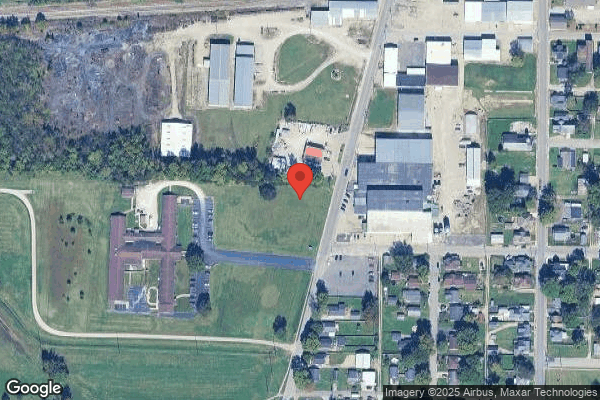
Dec 2023 3 deficiencies
CONCERN (D) 📢 Someone Reported This

A family member, employee, or ombudsman was alarmed enough to file a formal complaint

Potential for Harm - no one hurt, but risky conditions existed

ADL Care (Tag F0677)

Could have caused harm · This affected 1 resident

**NOTE- TERMS IN BRACKETS HAVE BEEN EDITED TO PROTECT CONFIDENTIALITY** Based on observation, interview, and record review, the facility failed to provide ADL (activities of daily living) care to 1 of...

Read full inspector narrative →
**NOTE- TERMS IN BRACKETS HAVE BEEN EDITED TO PROTECT CONFIDENTIALITY** Based on observation, interview, and record review, the facility failed to provide ADL (activities of daily living) care to 1 of 1 residents observed for ADL care. (Resident B) Finding includes: On 12/5/23 at 12:25 p.m., Resident B's clinical record was reviewed. Diagnoses included, but were not limited to, weakness generalized, chronic kidney disease, stage 3, diabetes mellitus. A quarterly MDS (Minimum Data Set) assessment, dated 8/20/23, indicated cognition intact, bathing total dependence. Care plans were reviewed and included, but were not limited to, [name] has an ADL self-care performance deficit r/t fatigue, impaired balance, weakness, date initiated 3/22/3. Interventions included but were not limited to, provide a sponge when full bath or shower cannot be tolerated, date initiated 3/22/23. On 12/6/23 at 9:33 a.m., CNA 1 and CNA 2 were observed to provide morning ADL care to Resident B. CNA 1 and CNA 2 removed Resident B's soiled brief, cleaned stool off Resident B's peri area and buttocks, put a new brief on and changed Resident B's clothing, and brushed her hair. No other areas were washed, deodorant not offered to the Resident. Oral care was not offered to the resident. On 12/6/23 at 10:01 a.m., CNA 2 indicated morning ADL care for a resident included, peri care, armpits, putting on deodorant, normally wash their face, dress them, some people like it different, on non shower days typically give a partial bath. On 12/7/23 at 10:03 a.m., Resident B indicated she has her teeth, her toothbrush and supplies were in a box on her bedside table, she is able to brush her own teeth. Resident B indicated she needs help with bathing, does not always get her showers, on non shower days staff do not clean her up much and don't offer her deodorant every day, that morning was the only time they ever asked her if she wanted to brush her teeth. On 12/7/23 at 11:12 a.m., the undated policy on Activities of Daily Living was reviewed and included, but was not limited to: Residents will be provided with care, treatment and services as appropriate to maintain or improve their ability to carry out activities of daily living (ADLS). Residents who are unable to carry out activities of daily living independently will receive the services necessary to maintain good nutrition, grooming and personal and oral hygiene .2. Appropriate care and services will be provided for residents who are unable to to carry out ADLs independently, with the consent of the resident and in accordance with the plan of care, including appropriate support and assistance with: a. hygiene (bathing, dressing, grooming, and oral care) . This citation relates to Complaint IN00421569. 3.1-38(b)(2)
CONCERN (D) 📢 Someone Reported This

A family member, employee, or ombudsman was alarmed enough to file a formal complaint

Potential for Harm - no one hurt, but risky conditions existed

Pressure Ulcer Prevention (Tag F0686)

Could have caused harm · This affected 1 resident

**NOTE- TERMS IN BRACKETS HAVE BEEN EDITED TO PROTECT CONFIDENTIALITY** Based on observation, interview, and record review, the facility failed to provide treatment or notify the physician of suspecte...

Read full inspector narrative →
**NOTE- TERMS IN BRACKETS HAVE BEEN EDITED TO PROTECT CONFIDENTIALITY** Based on observation, interview, and record review, the facility failed to provide treatment or notify the physician of suspected deep tissue injury for 1 of 3 residents reviewed for pressure wounds. (Resident C) Findings include: On 12/6/23 at 9:00 a.m., Resident C's clinical record was reviewed. Diagnoses included, but were not limited to, diabetes mellitus due to underlying condition with diabetic polyneuropathy, chronic kidney disease, stage 4 (severe), unspecified multiple myeloma. An admission MDS (Minimum Date Set) assessment, dated 10/17/23, indicated Resident C's cognition was intact, self care- resident needed partial assistance from another person to complete activities, skin - no unhealed pressure, no deep tissue injury, not marked for diabetic foot ulcers. Care plans were reviewed and included, but were not limited to: [name] has an ADL (Activities of Daily Living) self-care performance deficit r/t activity intolerance, fatigue, impaired balance, SOB (shortness of breath), date initiated 10/10/23. Interventions included, but were not limited to, Skin inspection: [ name] requires skin inspection weekly. Observe for redness, open areas, scratches, cuts, bruises, and report changes to the nurse, date initiated 10/10/23. The resident has actual impairment to skin integrity of the left heel and right lateral foot r/t to suspected deep tissue injury, date initiated 10/25/23. Interventions included, but were not limited to, follow facility protocols for treatment of injury, date initiated 12/6/23, monitor/document location, size, and treatment to skin injury. Report abnormalities, failure to heal, s/sx of infection, maceration, etc. to MD, date initiated 12/6/23. The resident has a diabetic ulcer of the left great toe r/t diabetes, date initiated 10/10/23. A clinical admission progress note dated 10/10/23 at 11:58 p.m., included, but was not limited to: Skin: Skin issue #001: New. Issue type: diabetic foot ulcer. Location: left toe(s). Painful: No. Skin issue #002: New. Issue type: Other skin issue. Location: penis. Other skin issue description: scab painful: No. Sin Issue #003: New: Issue type: Open lesion (other than ulcers, rashes, and cuts). Location: Buttocks-generalized. Painful: Yes-episodic pain. Skin color is WNL. Skin warm/dry to touch. Normal skin turgor. Skin notes: Scab on penis from previous foley cath. Small area to buttock, area is excoriated. Discoloration to bilateral lower extremities that was reported to be r/t PVD. A skin observation tool document effective date 10/11/23, was reviewed and indicated: Site- Right heel Type- Pressure Length- 2.8 Width- 2 Depth- 0 Stage- Suspected deep tissue injury Site - Left heel Type- Pressure Length- left blank Width- left blank Stage- Suspected deep tissue injury Notes: Resident has overall very dry flaky skin. Resident has scattered bruising and microabrasions to bilateral arms. Peri area very red. Bilateral heels mushy with non blanchable darkened areas. October 2023 physician orders were reviewed and included, but were not limited to: Dressing change -left toe: paint with betadine every shift, order date 10/21/23. Foot slope mattress for pressure reduction, order date 10/25/23. May use multi podus boots while in bed as resident allows every shift for skin breakdown prevention, order date 10/25/23. Pressure relieving/reduction mattress and device for chair every shift, order date 10/10/23. Turn and reposition approximately every 2 hours per braden scale every shift for prevention, order date 10/10/23. Weekly skin assessment every day shift every Tues for monitoring, order date 10/10/23. Barrier cream apply to buttock/coccyx topically every 3 hours as needed for wound prevention, incontinent episodes, order date 10/10/23. December 2023 physicians orders were reviewed and included, but were not limited to: Dressing change- 2 areas to Right lateral foot near 5th MT: Paint with betadine every shift, order date 11/2/23. Dressing change- Left lateral heel: Paint with betadine every shift, order date 11/2/23. Foot slope mattress for pressure reduction, order date 10/25/23. Pressure relieving mattress/reducing device for chair every shift, order date 10/10/23. Turn and reposition approximately every 2 hours per braden scale every shift for prevention, order date 10/10/23. Barrier cream apply to buttock/coccyx topically every 3 hours as needed for wound prevention, incontinent episodes, order date 10/10/23. Weekly skin assessment every day shift every Tues for monitoring, order date 10/10/23. The TAR (Treatment Administration Record) was reviewed for October, November, and December 2023 and weekly skin assessments were signed as done. Weekly pressure wound documents were reviewed and included, but were not limited to: 10/25/23 Location: lateral left foot at 5th MT Pressure stage: suspected deep tissue injury Date Acquired: 10/24/23 Length: 0.5 cm Width: 0.5 cm Depth: 0 Comments: Resident keeps bilateral feet turned outward with pressure on lateral portions. Right foot at 5th MT joint Pressure stage: suspected deep tissue injury Date acquired: 10/24/23 Length: 1 cm Width: 1 cm Depth: 0 Comments: Resident keeps bilateral feet turned outward with pressure on lateral portions. Left Lateral heel Pressure stage: suspected deep tissue injury Date acquired: 10/24/23 Length: 3.5 cm Width: 4 cm Depth: 0 Comments: Resident keeps bilateral feet turned outward with pressure on lateral portions. 11/22/23 Left lateral heel Pressure stage: unstageable Length: 3 cm Width: 4 cm Depth: 0.1 overall impression: worsening Comments: stable black eschar cap noted Right foot 5th MT joint Pressure stage: suspected deep tissue injury Length: 1.5 cm Width: 1.5 cm Depth: 0 overall impression: unchanged Lateral right foot at 5th MT joint Pressure stage suspected deep tissue injury Length: 0.5 cm Width: 0.5 cm Depth: 0 overall impression: unchanged 12/6/23 Lateral Right foot at 5th MT joint Pressure stage: suspected deep tissue injury Length: 0.5 cm Width: 0.5 cm Depth: 0 overall impression: unchanged Lateral right foot at 5th MT Pressure stage: suspected deep tissue injury Length: 0.5 cm Width: 0.5 cm Depth: 0 Overall impression: unchanged Left lateral heel Pressure stage: unstageable Length: 4 cm Width: 5 cm Overall impression: worsening Resident B had a hospital stay from 11/25/23 to 12/4/23. Progress notes were reviewed and included, but were not limited to: 10/24/23 8:29 a.m., N Adv Skilled Evaluation .Skin Issue #001: Needs Review. Skin Issue type: Diabetic foot ulcer. Location: Left toe(s). Painful: No. Skin Issue #002: Needs Review. Issue type: Other skin issue. Location: Penis. Other skin issue description: scab Painful: No. Skin Issue #003: Needs Review. Issue type: Open lesion (other than ulcers, rashes and cuts). Location: Buttocks-generalized. Painful: Yes-episodic pain . 11/4/23 9:02 a.m., N Adv Skilled Evaluation .Skin: warm & dry, skin color WNL and turgor is normal. Skin Issue #001: Needs Review: Issue type: Diabetic foot ulcer. Location: Left toe(s). Painful: No. Skin Issue #002: Needs Review: Issue type: Other skin issue. Location: Penis. Other skin issue description: scab Painful: No. Skin Issue #003: Needs Review. Issue type: Open lesion (other than ulcers, rashes and cuts). Location: Buttocks- generalized. Painful: Yes-episodic pain . 12/4/23 6:10 p.m. N ADV Clinical admission . Skin Issue #001: New. Issue type: Lesion. Location: Right toe(s). Wound odor: No. tunneling: No. Undermining: No. Skin Issue #002: New. Issue type: Lesion. Location: Left heel . A copy of an order summary for the foot slope mattress that was ordered to be used for the resident on 10/25/23 indicated the mattress was ordered on 11/1/23. A hospital patient summary report with an admit date and of 11/25/23 at 9:53 a.m. included, but was not limited to: OT Initial Evaluation Outcome Summary: Occupational Therapy Pt w/ recurrent admissions since August 2023 and now residing in SNF for rehab presents w/ impaired strength, balance, activity tolerance and increased pain to R knee affecting functional independence in ADL and mobility below baseline .Pt observed with severe pressure ulcers in bilateral heel areas as well, unclear how often pt is being mobilized at SNF . The OT note did not have date and time of evaluation. On 12/6/23 at 11:15 a.m., an observation was done of the Wound Nurse doing Resident C's skin treatments. The Wound Nurse indicated she was notified on 10/25/23 of the suspected deep tissue injuries to Resident C, and was told they were found on 10/24/23. On 12/6/23 at 12:40 p.m., the DON indicated she remembered Resident C had discrepancies on his wound treatments when he was admitted from the hospital, she did the skin observation tool document on 10/11/23 that identified Resident C's suspected deep tissue injuries to his heels, he was on therapy services and she thought he was given a bariatric mattress, there were some gaps in his documentation. On 12/7/23 at 12:02 p.m., the Administrator indicated Resident C's foot slope mattress was on backorder, the order was put in place when they were first alerted about his heels, she would check to see when the mattress was actually ordered. On 12/7/23 at 11:12 a.m., the Administrator provided an undated document titled Pressure Ulcers/Skin Breakdown-Clinical Procedures The document included, but was not limited to: 1. The nursing staff and practitioner will assess and document an individual's significant risk factors for developing pressure ulcers; for example. immobility, recent weight loss, and a history of pressure ulcer(s). 2. In addition, the nurse shall describe and document/report the following: a. full assessment .3. The staff and practitioner will examine the skin of newly admitted residents for evidence of existing pressure ulcers or other skin conditions . This citation relates to Complaint IN00421569. 3.1-40(a)(2) 3.1-40(a)(3)
CONCERN (D) 📢 Someone Reported This

A family member, employee, or ombudsman was alarmed enough to file a formal complaint

Potential for Harm - no one hurt, but risky conditions existed

Infection Control (Tag F0880)

Could have caused harm · This affected 1 resident

**NOTE- TERMS IN BRACKETS HAVE BEEN EDITED TO PROTECT CONFIDENTIALITY** Based on observation, interview, and record review, the facility failed to ensure infection control practices were done for 1 of...

Read full inspector narrative →
**NOTE- TERMS IN BRACKETS HAVE BEEN EDITED TO PROTECT CONFIDENTIALITY** Based on observation, interview, and record review, the facility failed to ensure infection control practices were done for 1 of 3 resident's observed for care. Hand hygiene was not done and gloves were not changed. (Resident B) Finding includes: On 12/5/23 at 12:25 p.m., Resident B's clinical record was reviewed. Diagnoses included, but were not limited to, weakness generalized, chronic kidney disease, stage 3, diabetes mellitus. A quarterly MDS (Minimum Data Set) assessment, dated 8/20/23, indicated cognition intact, bathing total dependence. Care plans were reviewed and included, but were not limited to, [name] has an ADL self-care performance deficit r/t fatigue, impaired balance, weakness, date initiated 3/22/3. Interventions included but were not limited to, provide a sponge when full bath or shower cannot be tolerated, date initiated 3/22/23. On 12/6/23 at 9:33 a.m., an observation of morning ADL care was observed by CNA 1 and CNA 2 for Resident B. CNA 1 performed hand hygiene, donned gloves, took off the soiled brief, cleaned stool off Resident B's peri area, CNA 2 assisted CNA 1 by holding apart the labia that was covered in stool. CNA 1 removed gloves, washed her hands and donned new gloves, CNA 2 did not change her gloves. CNA 1 and CNA 2 rolled Resident B to her side, CNA 1 cleaned stool off the buttocks using several washcloths, put the soiled cloths in a trash bag, tied the bag, rolled up the incontinent pad under the resident, put a new pad under the resident, took the fitted sheet off the ends of the mattress, rolled the resident to her side and both put a new brief on. CNA 1 took the Foley Catheter bag and hung it on the bed, CNA 1 picked up a trash bag, finished taking the sheet off the bed, put it in the bag. CNA 2 put pants on the resident, CNA 1 moved the bedside table, took gloves off and donned new gloves, no hand hygiene was performed. CNA 2 put socks on the resident, CNA 1 took the residents shirt off and put a new one on, CNA 2 rolled the resident to her side, CNA 1 pulled her pants up, both pulled her shirt down, CNA 2 got the walker and moved it to the bedside, both put a shoe on Resident B. CNA 2 put the gait belt on the resident, both transferred her to the wheelchair, both performed hand hygiene after taking gloves off after the tasks were done. On 12/6/23 at 10:04 a.m., CNA 1 indicated gloves are typically changed when they get soiled, do hand hygiene if gets something on gloves, but if nothing gets on gloves she doesn't do hand hygiene, just changes gloves. On 12/7/23 at 11:12 a.m., the Administrator provided the current undated policy on handwashing/hand hygiene. The policy included, but was not limited to: 2. All personnel shall follow hardwashing/hand hygiene procedures to help prevent the spread of infections to other personnel, residents, and visitors .7. Use alcohol-based hand rub containing at least 65% alcohol; or alternatively soap (antimicrobial or non- antimicrobial) and water for the following situations: .b. before and after direct contact with a residents; e. before and after handling an invasive device (e.g; urinary catheters, IV access sites) .before moving form a contaminated body site to a clean body site during resident care .after removing gloves .Applying and removing gloves- 1. perform hand hygiene before applying non- sterile gloves . This citation relates to Complaint IN00421569. 3.1-18(b) 3.1-18(l)
Sept 2023 1 deficiency
CONCERN (D) 📢 Someone Reported This

A family member, employee, or ombudsman was alarmed enough to file a formal complaint

Potential for Harm - no one hurt, but risky conditions existed

Deficiency F0604 (Tag F0604)

Could have caused harm · This affected 1 resident

**NOTE- TERMS IN BRACKETS HAVE BEEN EDITED TO PROTECT CONFIDENTIALITY** Based on observation, interview, and record review, the facility failed to ensure residents were free from physical restraints f...

Read full inspector narrative →
**NOTE- TERMS IN BRACKETS HAVE BEEN EDITED TO PROTECT CONFIDENTIALITY** Based on observation, interview, and record review, the facility failed to ensure residents were free from physical restraints for 1 of 1 residents reviewed for restraints. A resident was placed in a new wheel chair that restricted mobilization and was strapped into the wheelchair without documented clinical rational for the need of the wheelchair with straps, assessments, or a plan of care for the use of restraints. (Resident C) Finding includes: During an observation on 9/19/23 at 9:20 A.M., Resident C was sitting in front of the [NAME] hall's nurse's station in a Tilt-in-Space wheelchair. Resident C was wearing a lap belt and foot straps that were wrapped around both ankles. During record review on 9/19/23 at 11:00 A.M., Resident C's diagnoses included, but were not limited to, cerebral palsy, epilepsy, abnormal posture, unspecified convulsions, schizophrenia, major depressive disorders, anxiety, and mild intellectual disabilities. Resident C's most recent quarterly MDS (Minimum Data Set) assessments, dated 8/28/23, included that the resident had moderate cognitive impairment, had physical behavioral symptoms directed towards others, verbal behavioral symptoms directed towards others, and did not use physical restraints. Resident C's physician orders included, but were not limited to; may use self releasing seatbelt on wheelchair (started 9/19/23), occupational therapy (OT) evaluation and treatment for self-care, therapeutic exercise, neuromuscular reeducation (NMR), therapeutic activities for treatment of weakness and uncoordinated (started 8/8/23), high back wheelchair with pummel cushion (started 10/19/19), and may use specialty wheelchair (started 9/6/23). Resident C's wandering assessment dated [DATE], under mobility included that the resident can move without assistance while in wheelchair. Resident C's progress notes included: 7/29/23 at 12:26 P.M. - Resident in vending machine area. Threatening to throw himself on floor. Agitated and yelling at staff. Ramming into machines with wheelchair. Not redirectable at this time. Resident attempted to tip self out of chair purposefully however staff stopped him from doing so . 7/31/23 at 3:21 P.M., - .has been to SSD (Social Service Director's) office multiple times today due to attention seeking behavior. Starting this [morning] stating that he wanted to go home and wanted to be with his mother, then crying uncontrollably, then threatening to call the cops on staff for performing job duties. SSD was then called outside during smoke break due to [Resident C]ramming his wheelchair into the locked courtyard gate and attempting to escape and/or hurt himself . 8/15/2023 at 11:47 A.M., - Resident was seen . kicking and punching wall. This writer attempted to calm resident and find out why he was upset. Resident yelled this stupid (explicit) wheelchair is stuck. This writer noticed wheelchair brake was locked on one side and attempted to assist with getting wheelchair wheel brake . 8/15/2023 at 3:23 P.M. - 15:23 - .Resident has been agitated all day. Striking at staff and other residents however did not make contact with anyone. Tearful. States he's tired of people, 'treating him like shit.' Resident upset that he is unable to go smoke anymore due to him threatening to burn himself and refusal to wear proper safety gear while smoking. What was the resident doing prior to the behavior: Propelling in wheelchair around facility. 8/24/2023 at 10:30 A.M. - .Resident cursing out loud about another resident's behavior. Nurse asked resident to please calm down and talk to her . [approximately] 5 [minutes] post speaking with nurse resident was noted propelling himself toward another resident to run into them with his wheelchair; he then attempted to strike another resident . 8/24/2023 at 11:32 A.M. - SSD was notified by nursing staff that [Resident C] was becoming aggressive and needed to be separated from other residents to calm down. SSD brought him to the office and attempted to speak to him.[Resident C] then rammed his wheelchair into SSD office door attempting to break it . 8/24/2023 12:00 P.M. - Behaviors escalating. Resident attempting to hit staff member attempting to redirect him and ramming his wheelchair against a glass door. Order obtained from [Medical Doctor] to send out for eval/treatment related to uncontrolled behaviors. Resident C's care plan included, Resident sometimes has behaviors of being inappropriate as exhibited by yelling, cursing and hitting doors or walls with his fist and or wheelchair. Resident C' record lacked assessments for the use of the lap seatbelt and foot/ankle straps. Resident C's record lacked a plan of care regarding the use of a lap seatbelt and foot/ankle straps. During an interview on 9/19/23 at 9:23 A.M., QMA 23 indicated that Resident C was wearing a seatbelt as he was getting used to his new wheelchair, that he could remove the lap seatbelt himself, and that he was working with therapy with his new wheelchair. During an interview and observation on 9/19/23 at 10:10 A.M., QMA 23 pushed Resident C in his wheelchair from a common area in front of the [NAME] hall nurse's station to his room. Resident C indicated that his new wheelchair is more comfortable than his old wheelchair, but that he could no longer wheel himself around in the chair as he was previously able to do. Resident C removed the lap seatbelt himself, QMA 23 removed the foot/ankle straps and assisted the resident out of the wheelchair. Following peri-care, Resident C was assisted back to his wheelchair, the lap seat belt and foot/ankle straps were put back on by QMA 23. During an interview on 9/20/23 at 9:48 A.M., OT 4 indicated working with Resident C for strengthening and positioning. Resident C had recently received a Tilt-in-Space wheelchair that was donated. He used to be in highback wheelchair with cushion and foot pedals, he was mobile in the previous wheelchair. Resident C is unable to be mobile in the new wheelchair but it does help with his position. Therapy staff did not recommend the Tilt-in-Space wheelchair nor did they recommend the use of the straps on the wheelchair. Resident C had been using the new wheelchair for 2 or 3 weeks and therapy staff have not completed any assessments for the use of the new wheelchair or for the use of the straps. OT 4 indicated they were going to add a new foot cushion to the wheelchair so that the resident's feet would not have to be strapped into the wheelchair. During an interview on 9/20/23 at 10:40 A.M., the SSD indicated that Resident C was seen for an evaluation for a day program a few weeks prior. Following the evaluation, a new wheelchair was donated to Resident C to help with his posture. The CNA's began using the new wheelchair right away. Therapy moved Resident C back to his old wheelchair but then the next day he was using the new wheelchair again. Resident C appears to like his new wheelchair and appears more comfortable, however he is unable to wheel himself in the chair. He can alert staff to where he wants to go. During an interview on 9/20/23 at 11:00 A.M., LPN 7 indicated that if a resident is utilizing a belt or straps, they should be released every two hours and the resident should be assessed. The belt/strap release should be documented every time, but Resident C does not have any documentation in his record. Normally when a resident has a change in equipment, staff would complete an assessment and discuss a plan as a team. On 9/20/23 at 11:40 A.M., the facility administrator supplied a facility policy titled, Physical Restraint Assessment, dated 1/20/19. The policy included, The purpose of this procedure is to provide safety or postural support of a resident to prevent injury to the resident or others when the resident has medical symptom that warrant the use of restraints . A Pre-restraining assessment form is to be completed to adequately assess all aspects of the resident's well-being . prior to the use of either medication interventions or physical restraining devices in order to identify the least restrictive intervention. It is to be completed by the licensed nurse . The following information should be recorded in the resident's medical record: 1. The date and time the restraint was applied. 2. The name and title of the individual(S) who applied the restraint. 3. The type of physical restraint applied. 4. The specific reason the restraint was applied. 5. The length of time the restraint will be used. 6. Each time the device is released for resident exercise, toileting, and position change. 7. Each time the resident is monitored, per facility policy. 8. All assessment data observed during the procedure. 9. If and how the resident participated in the procedure or any changes in the resident's ability to participated in the procedure. 10. Any problems or complaints made by the resident related to the restraint application . This Federal tag relates to complaint IN00417535. 3.1-3(w) 3.1-26(b) 3.1-26(f)
Jan 2023 2 deficiencies
CONCERN (D) 📢 Someone Reported This

A family member, employee, or ombudsman was alarmed enough to file a formal complaint

Potential for Harm - no one hurt, but risky conditions existed

Comprehensive Care Plan (Tag F0656)

Could have caused harm · This affected 1 resident

**NOTE- TERMS IN BRACKETS HAVE BEEN EDITED TO PROTECT CONFIDENTIALITY** Based on interview, and record review, the facility failed to ensure the plan of care was implemented for 2 of 3 diabetic reside...

Read full inspector narrative →
**NOTE- TERMS IN BRACKETS HAVE BEEN EDITED TO PROTECT CONFIDENTIALITY** Based on interview, and record review, the facility failed to ensure the plan of care was implemented for 2 of 3 diabetic residents reviewed for medications. Residents did not receive insulin as ordered by their physician and staff failed to notify the physician when a resident's blood sugar level was above the ordered parameter. (Resident F and Resident D) Findings include: 1. During record review on 1/10/23 at 10:15 A.M., Resident F's diagnoses included, but were not limited to; type 2 diabetes mellitus. Resident F's most recent admission MDS (Minimum Data Set) assessment dated [DATE], indicated the resident received insulin 7 of 7 days during the review period. Resident F's physician orders included, but were not limited to; Levemir Flex Touch 100 units/mL (milliliter) 26 units one time a day (started 11/29/22), Novolog FlexPen 100 units/mL (sliding scale) 3 times a day, and .Notify physician of blood sugar greater than 400 unless otherwise ordered (10/29/22). Resident F's care plan included, but was not limited to; Diabetes medication as ordered by doctor. Monitor/document for side effects and effectiveness (updated 11/29/22). Resident F's medication administration record (MAR) for December 2022 and January 2023 lacked documentation indicating the resident received the following orders on the following dates and times: Levimer Flex Touch 100 units/mL 26 units 1 time a day - 12/22/22 at 6:00 P.M. Novolog FlexPen 100 units/mL (sliding scale) 3 times a day - 12/10/22, 12/26/22, 12/29/22, and 1/2/23 (all at 6:00 P.M.). On 12/19/22 at 9:07 P.M., Resident F's blood sugar level was documented to be 407. Resident F's clinical record contained no documentation indicating the physician was notified. 2. During record review on 1/9/23 at 11:00 A.M., Resident D's diagnoses included, but were not limited to; diabetes insipidus. Resident D's most recent admission MDS (Minimum Data Set) assessment dated [DATE], indicated the resident received insulin 7 of 7 days during the review period. Resident D's physician orders included, but were not limited to; Novolog injection solution 100 unit/mL 6 units three times a day (started 12/24/22), and Basaglar KwikPen solution Pen-injector 12 units two times a day (started 12/25/22), and Accuchecks four times a day (started 1/4/23). Resident D's care plan included, but was not limited to; Diabetes medication as ordered by doctor. Monitor/document for side effects and effectiveness (initiated 12/23/22). Resident D's medication administration record (MAR) January 2023 lacked documentation indicating the resident received the following orders on the following dates and times: Novolog 100 units/mL 6 units - 1/2/23 and 1/3/23 (both at 6:00 P.M.) Accucheck four times a day - 1/4/23 at 4:30 P.M. During an interview on 1/10/23 at 12:00 P.M., QMA 4 indicated if insulin is not given per the physician's order due to blood sugar levels or resident refusals, staff should document in the notes or the MAR why the order was not administered. QMA 4 also indicated that if a resident has an order to notify the physician if blood sugar levels are outside ordered parameters, staff should document that the physician was notified. On 1/10/23 at 3:00 P.M., the AIT (Administrator in training) provided a facility policy titled, Care Plans - Comprehensive, and dated 1/19/22. The policy included, .Purpose of Care Plan 3. Each resident's comprehensive care plan is designed to: a. Incorporate identified problem areas; b. Incorporate risk factors associated with identified problems; .e. Reflect treatment goals, timetables, and objectives in measurable outcomes . The AIT also supplied a facility policy titled, Physician Medication Orders, dated 8/24/22. The policy included, .Nursing staff will follow the physician's orders in accordance with their scope of practice, which will include medication and treatment administration . This Federal tag relates to complaint IN00391528. 3.1-35(a)
CONCERN (D) 📢 Someone Reported This

A family member, employee, or ombudsman was alarmed enough to file a formal complaint

Potential for Harm - no one hurt, but risky conditions existed

Incontinence Care (Tag F0690)

Could have caused harm · This affected 1 resident

Based on observation, interview, and record review, the facility failed to provide care to prevent and treat recurring urinary tract infections (UTIs) for 2 of 3 residents reviewed for incontinence an...

Read full inspector narrative →
Based on observation, interview, and record review, the facility failed to provide care to prevent and treat recurring urinary tract infections (UTIs) for 2 of 3 residents reviewed for incontinence and/or catheter care. Staff did not perform proper hand hygiene while providing incontinence care and catheter care to residents with current or frequent UTIs, staff did not provide timely incontinence care for a resident with frequent UTIs, and staff did not treat a UTI timely. (Resident G, Resident H) Findings include: 1. During record review on 1/10/23 at 9:45 A.M., Resident G's diagnoses included, but were not limited to; urinary tract infection, Alzheimer's disease, and type 2 diabetes. Resident G's most recent annual MDS assessment, dated 12/6/22 indicated the resident had severely impaired cognition, and required extensive assist toileting and personal hygiene. Resident G's care plan included, but was not limited to, assist to toilet frequently and as needed, and check routinely for incontinence and provide incontinent care as needed. Resident G's physician orders included, but were not limited to; Amoxicillin Oral Capsule 250 mg (milligrams) 1 capsule for UTI three times a day for 10 days (12/21/22 through 12/31/22), urinary analysis with culture and sensitivity (11/23/22), and Cefuroxime Axetil Oral Tablet 250 mg for UTI two times for 10 days (10/3/22 through 10/13/22). Resident G's progress notes from November, 2022 through January, 2023 included, but were not limited to: 11/22/22 at 11:47 A.M. - Resident has had decreased urinary output, less active than normal. When assessed urine dark in color and odorous. Communication sent to physician. New order for urinary analysis with culture and sensitivity in the morning. 12/16/22 at 9:45 P.M. (physician visit) - pending urine culture for increased behaviors. 12/19/22 (nurse practitioner visit) - .According to recent lab results, resident currently has a UTI. I do not see anywhere in chart where he has been started on antibiotic treatment . Date: 12/14/2022 Urinalysis: Positive for nitrites, leukocyte Estrace, and white blood cells Urine culture: Positive for E. coli (Escherichia Coli bacteria) . Lab results from 11/23/22 culture and sensitively indicated Resident G's urinalysis was positive for E. coli greater than 100,000 colonies/ml (milliliter). During an observation on 1/9/23 at 9:15 A.M., Resident G was in a wheelchair attempting to open the front door of the facility. Resident G had an odor of BM (bowel movement). During an observation on 1/9/23 at 10:28 A.M., CNA 5 and CNA 6 were providing incontinence care to Resident G. Using a stand lift, CNA 5 and CNA 6 stood resident G up, pulled pants down to thighs, removed the soiled brief, wiped BM from Resident G's buttocks and CNA's then removed gloves and washed hands. CNA 5 scrubbed hand with soap for 10 seconds before rinsing. CNA 6 scrubbed hands with soap for 15 seconds before rinsing. CNA 5 and CNA 6 then changed Resident G's pants and assisted with positioning in the wheelchair. During an interview on 1/10/23 at 1:30 P.M., the DON (Director of Nursing) indicated that Resident G's lab culture results were received on 12/16/22 (Friday) and that it was not reviewed until the following Tuesday 12/20/22. Resident G was then started on an antibiotic the following day (12/21/22). Resident G's results should have been reviewed and sent to the physician prior to 12/20/22. During an interview on 1/10/23 at 3:00 P.M. the Infection Preventionist indicated that lab results from 11/23/22 were discussed with the physician and that Resident G's symptoms did not meet criteria for antibiotic treatment. 2. During record review on 1/10/23 at 9:30 A.M., Resident H's diagnoses included, but were not limited to, spinal stenosis, methicillin resistant staphylococcus aureus (MRSA) infection, and osteomyelitis. Resident E's most recent quarterly MDS assessment (Minimum Data Set), dated 10/22/22, indicated the resident's cognition was severely impaired, had an indwelling urinary catheter and an ostomy, required extensive assistance with transfers, and was totally dependent for toileting, Resident H's physician orders included, but were not limited to, Foley catheter care and output. Use soap and water or cleansing wipes to perform perineal care. Keep catheter bag below bladder. Keep tubing free of kinks (initiated 10/16/22), and Cipro Oral Tablet 500 mg (milligrams) 1 tablet by mouth two times a day for signs and symptoms of UTI for 3 Days (1/7/23 through 1/10/23). Resident H's care plan included, but was not limited to; resident has a catheter for urinary needs . Assist with toileting needs. Empty catheter every shift and as needed. During an observation on 1/10/23 at 10:30 A.M., CNA 5 and CNA 6 were emptying Resident H's catheter. Resident H's catheter was draining cloudy yellow colored urine. Staff emptied into a basin and recorded the amount. CNA 5 then performed hand hygiene with soap and water with a scrub time of 9 seconds. During an interview on 1/10/23 at 10:40 A.M., CNA 6 indicated that staff should wash hands with soap and water for 30 - 40 seconds. On 1/10/23 at 10:31 A.M., the AIT provided a facility policy, titled Perineal Care, dated 8/24/22. The policy included, The purposes of this procedure are to provide cleanliness and comfort to the resident, to prevent infections and skin irritation, and to observe the resident's skin condition . The AIT also provided a facility policy titled, Handwashing/Hand Hygiene, dated 8/24/22. The policy included, Employees must wash their hands for at least forty - sixty (40 - 60) seconds using antimicrobial or non-antimicrobial soap and water under the following conditions: .before and after direct resident contact . This Federal tag relates to complaint IN00391528. 3.1-41(a)(2)
Apr 2022 6 deficiencies
CONCERN (D)

Potential for Harm - no one hurt, but risky conditions existed

Grievances (Tag F0585)

Could have caused harm · This affected 1 resident

**NOTE- TERMS IN BRACKETS HAVE BEEN EDITED TO PROTECT CONFIDENTIALITY** Based on interview and record review, the facility failed to ensure prompt resolution of a grievance for 1 of 2 residents invest...

Read full inspector narrative →
**NOTE- TERMS IN BRACKETS HAVE BEEN EDITED TO PROTECT CONFIDENTIALITY** Based on interview and record review, the facility failed to ensure prompt resolution of a grievance for 1 of 2 residents investigated for missing personal items. Staff did not return missing property, and staff was unaware a grievance was filed. (Resident 18) Finding includes: During an interview on 4/25/22 at 1:42 P.M., Resident 18 indicated they had missing items that have not been returned from the facility. On 4/29/22 at 10:26 A.M., Resident 18's clinical record was reviewed and indicated Resident 18's clinical diagnosis included, but are not limited to, spina bifida, neurogenic bladder, and hypertension. The most recent MDS (Minimum Data Set) Assessment, dated 12/20/21, indicated Resident 18 was cognitively intact. On 4/27/22 at 9:30 A.M., the Administrator provided a grievance form dated 11/16/21 that indicated Resident 18 had a concern of missing items that included the following: 3 pair of shorts (3x- pink w/ [with] [NAME] dye), (June- in past asked laundry), (3x- Blue gym shorts), (3x- Black gym shorts), Blanket spread burgendy [sic], cream, evergreen w/ teddy bears. From her grandma- Been missing over a year. The form indicated follow-up included Educated the resident to notify Directors of missing items. Let any one of them know when it happens so it can been [sic] looked for or replaced. Will follow up. Will get with Laundry 11/16/21. During an interview on 4/28/22 at 3:17 P.M., the SSD (Social Services Director) indicated several discussions had taken place with the resident and SSD was unaware of the grievance filed on 11/16/21. On 4/29/22 at 12:24 P.M., the facility provided a policy titled, Grievance Procedure, and dated, 8/4/15. The policy included, .2. The Administrator or Director of Nursing should be able to resolve your problem by completing the following: A. A complete investigation of incidents and allegations will be conducted . C. Results of the investigation will be discussed with the resident, family, or healthcare representative . 3.1-7(a)(2)
CONCERN (D)

Potential for Harm - no one hurt, but risky conditions existed

Comprehensive Care Plan (Tag F0656)

Could have caused harm · This affected 1 resident

**NOTE- TERMS IN BRACKETS HAVE BEEN EDITED TO PROTECT CONFIDENTIALITY** Based on observation, interview, and record review, the facility failed to implement the plan of care for 1 of 2 residents obser...

Read full inspector narrative →
**NOTE- TERMS IN BRACKETS HAVE BEEN EDITED TO PROTECT CONFIDENTIALITY** Based on observation, interview, and record review, the facility failed to implement the plan of care for 1 of 2 residents observed for incontinence care, and 1 of 3 residents reviewed for nutrition. Treatments were not completed to prevent skin breakdown and assistance with meals was not provided for a resident who required it. (Resident C and Resident D) Findings include: 1. During record review on 4/28/22 at 9:24 A.M., Resident C's diagnoses included, but were not limited to, morbid obesity, diabetes, peripheral vascular disease, rash, and edema. Resident C's most recent quarterly MDS (Minimum Data Set) assessment, dated 3/10/22, indicated the resident was frequently incontinent, required extensive assistance with bed mobility and transfers, and had MASD (Moisture-Associated Skin Dermatitis). Resident C's physician orders included, but were not limited to, Nystatin Powder - apply to areas of gaulding two times a day (initiated 11/22/21). Resident C's care plan included, but was not limited to, I have gaulding to bilateral buttocks, I am overweight, and I am at risk for skin breakdown due to incontinence. Interventions included, but were not limited to, treatments as ordered (imitated 11/22/21). Resident C's Nystatin powder was not documented as administered in the resident's record on the following dates and times: 4/19/22 - night shift 4/20/22 - night shift 4/25/22 - day shift and night shift 4/26/22 - day shift and night shift 4/27/22 - held on day shift without notes explaining why. During an observation on 4/28/22 at 11:16 A.M., CNA 10 and CNA 21 were providing incontinence care to Resident C. When removing the resident's wet brief, bright red blood was visible on the inner lining of the brief. The resident's peri area had blotchy red areas with two bright red areas near the groin. CNA 10 indicated the two bright red areas near the groin were possibly where the bright red blood was coming from. During an interview on 4/28/22 at 11:25 A.M., CNA 10 indicated Resident C should have Nystatin Powder applied daily, but that it had not yet been applied that morning due to the resident being out of the powder. 2. During an observation on 4/26/22 at 10:51 A.M., Resident D was heard hollering for help from inside their room. Resident D was observed lying in bed attempting to lift a drink cup up to get a drink. Resident D indicated not being able to lift their cup to get a drink or to set it back down on the their table. During an observation on 4/29/22 08:33 A.M., Resident D was heard hollering for help from their room. Resident D was observed sitting up in bed with a breakfast tray in front of them eating alone. Resident D indicated they felt they had something stuck in their throat. During record review on 4/27/22 at 1:10 P.M., Resident D diagnoses included, but were not limited to, heart failure, chronic pain, gastroesophageal reflux disease, irritable bowel syndrome, anxiety, and depression. Resident D's most recent quarterly MDS assessment, dated 3/4/22, indicated the resident required assistance with bed mobility, extensive assistance with transfers, and supervision with eating. Resident D's physician orders included, but were not limited to, Regular diet, mechanical soft texture, regular consistency. Resident D's care plan included, but was not limited to, Late Loss ADLs (Activities of Daily Living): I need staff supervision with bed mobility, transfers, eating, and toileting need due to my confusion, chronic heart failure, respiratory failure, limited mobility, and pain. Resident D's progress notes included, but were not limited to: 4/14/22 - Resident having noticeable difficulty with swallowing food. Will have ST (Speech Therapy) perform a re-Evaluation to better assess if changes in food consistency or other issues are of concern. 4/19/22 - Nutrition/Dietary Note - Resident indicated they have some problems with chewing and swallowing. It takes them awhile to eat. Complains of abdominal discomfort and pain. Complains of constipation. Staff reports that hospice services are being considered for resident. They indicated that resident has decline significantly with ADL's. She is now being fed. She does seem to be having more difficulty with chewing and swallowing and is eating less . This [AGE] year-old lady has fair intakes overall. This seems to represent a bit of a decline here of late. Additionally, she is showing a decline in her ADLs. She has general weakness . She is requiring extensive to total assistance with eating now. She is edentulous (no teeth). She appears to be having chewing and swallowing difficulties. She is now receiving dysphagia therapy per SLP (speech-language pathology) as of yesterday. 4/28/2022 - COMMUNICATION-HOSPICE - .Did inform regarding the issues with swallowing and she just had recent re-evaluation with ST. She had been changed to mechanical soft and partial feed. Resident does swallow; however, it is reaching the drink/food and chewing that has become difficult as well. Hospice discussed that they would do soft finger food and regular diet as comfort . 4/29/22 - .resident yelled out for help and stated she felt like something was stuck in her throat . This nurse went to assess resident. Resident stated she felt like something was in her throat but resident was able to talk fine, no coughing noted, respirations 18. This nurse assisted resident to take sips of water while tucking her chin and resident stated with each sip it was getting better. While assisting resident, another nurse called hospice and (physician) notified, ST notified for an evaluation and treat. (Hospice Company) will be in this morning to (evaluate). Nursing notified to assist with all meals. During an interview on 4/29/22 at 9:35 A.M., Nurse 25 indicated Resident D does requires assistance with feeding at times, depending on what they are eating. Resident can do pretty good with finger foods but has difficulty with other meals. During an interview 4/29/22 9:40 A.M., CNA 10 indicated they had just cleaned Resident D up after they had vomited. CNA 10 indicated the resident can eat finger foods pretty well, but needs assistance otherwise. The resident can't eat anything hard, like toast, she feels like things get stuck in her throat. During an interview on 4/29/22 at 10:18 A.M., Kitchen staff 4 indicated Resident D received ground up Canadian bacon with gravy, oatmeal, and toast for breakfast that morning. During an interview on 4/29/22 at 11:21 A.M., ST 9 (Speech Therapist) indicated they had evaluated Resident D last week and recommended that she continue to have direct assistance with eating to ensure proper positioning and to generally assist with the meal. On 4/29/22 at 11:16 A.M., Administrative Staff 3 supplied a facility policy title, Care Planning - Interdisciplinary Team, and dated, 1/19/22. The policy included, 3. Each discipline will be responsible for identifying each of the resident's problems/concerns and develop an appropriate plan to meet the needs of each resident. Each respective discipline is responsible for following the plan of care along with the physician's orders for each resident. This Federal tag relates to complaint IN00377495. 3.1-35(a) 3.1-35(g)(2)
CONCERN (D)

Potential for Harm - no one hurt, but risky conditions existed

Deficiency F0657 (Tag F0657)

Could have caused harm · This affected 1 resident

Based on interview and record review, the facility failed to ensure care plan conferences were completed and care plans were revised for 3 of 5 residents who met the criteria for review of care plans....

Read full inspector narrative →
Based on interview and record review, the facility failed to ensure care plan conferences were completed and care plans were revised for 3 of 5 residents who met the criteria for review of care plans. (Resident 8, Resident 28, Resident 51) Findings include: 1. During an interview on 4/25/22 at 10:19 A.M., Resident 8 indicated they had not been to or been invited to any care plan conferences. On 4/27/22 at 10:39 A.M., Resident 8's clinical record was reviewed. The most recent care plan conference was documented on 11/9/21. 2. On 4/27/22 at 12:45 P.M., Resident 28's clinical record was reviewed. The most recent care plan conference was documented on 11/4/21. During an interview on 4/28/22 at 1:19 P.M., the Social Services Director (SSD) indicated they had been in their current position for almost three (3) months, was trying to get caught up on care plan conferences, and had only completed them for a handful of residents. SSD indicated care plan conferences were supposed to be completed quarterly, but was unaware of a policy indicating that. During an interview on 4/28/22 at 2:11 P.M., the Administrator indicated the prior SSD had completed several care plan conferences, but had not used the term care plan conference in the documentation. At that time, documentation was provided and reviewed. The documentation lacked a current care plan conference for Resident 8 and Resident 28. 3. On 4/27/22 at 8:30 A.M., Resident 51's clinical record was reviewed. Diagnosis included, but were not limited to Parkinson's, viral hepatitis, seizure disorder, and anxiety. The most recent quarterly MDS (Minimal Date Set) Assessment, dated 3/16/22, indicated Resident 51 was severely cognitively impaired, and was on hospice. A current care plan, dated 1/17/22, indicated Resident 51 was positive for COVID-19. Resident 51's progress notes included, but were not limited to, the following: 1/17/22 9:00 A.M. Resident was tested by facility staff using BianxNOW card per CDC/ISDH guidelines related to outbreak testing. Resident was found to be positive at this time . The clinical record lacked a revision/update regarding Resident 51's COVID-19 status. On 4/29/22 at 1:15 P.M., a current Care Plans - Comprehensive policy, dated 1/19/22, was provided and indicated Our facility's Care Planning/Interdisciplinary Team, in coordination with the resident, his/her family or representative (sponsor), develops and maintains a comprehensive care plan for each resident that identifies the highest level of functioning the resident may be expected to attain . The Care Planning/Interdisciplinary Team is responsible for the review and updating of care plans: a. When there has been a significant change in the resident's condition . 3.1-35(c)(2)(C)
CONCERN (E)

Potential for Harm - no one hurt, but risky conditions existed

Deficiency F0583 (Tag F0583)

Could have caused harm · This affected multiple residents

Based on observation, interview, and record review, the facility failed to maintain privacy for residents during 5 random observations during a 5 day survey period. Staff entered resident rooms and re...

Read full inspector narrative →
Based on observation, interview, and record review, the facility failed to maintain privacy for residents during 5 random observations during a 5 day survey period. Staff entered resident rooms and restrooms without knocking. (Resident 38, Resident 56, Resident 44, Resident 29, Resident 8) Findings include: 1. During an observation on 4/28/22 at 8:26 A.M., CNA 13 assisting Resident 29 to bed. After assistance, CNA 13 opened the shared bathroom door, without knocking, and walked in on Resident 44 using the restroom. 2. On 4/29/22 at 8:40 A.M., CNA 13 was observed to enter Resident 56's room without knocking. 3. On 4/29/22 at 8:43 A.M., Staff 5 was observed to enter Resident 56's room without knocking. 4. On 4/29/22 at 9:41 A.M., during a tour of the facility, the Maintenance Supervisor entered Resident 56's bathroom without knocking. 5. During a facility tour on 4/29/22 at 9:45 A.M., the Maintenance Supervisor entered Resident 8's room without knocking. During an interview on 4/25/22 at 1:49 P.M., Resident 38 indicated staff walked in on them while in the bathroom. During an interview on 4/29/22 at 9:09 A.M., CNA 7 indicated staff should knock when entering resident rooms or bathrooms. On 4/29/22 at 1:15 P.M., a facility policy titled, Dignity, and dated 3/22/22, was provided, The policy included, Residents' private space and property shall be respected at all times . a. Staff will knock and request permission before entering residents' rooms . 3.1-3(t)
CONCERN (E)

Potential for Harm - no one hurt, but risky conditions existed

Deficiency F0638 (Tag F0638)

Could have caused harm · This affected multiple residents

**NOTE- TERMS IN BRACKETS HAVE BEEN EDITED TO PROTECT CONFIDENTIALITY** Based on interview and record review, the facility failed to complete the required assessments for 16 of 40 residents reviewed f...

Read full inspector narrative →
**NOTE- TERMS IN BRACKETS HAVE BEEN EDITED TO PROTECT CONFIDENTIALITY** Based on interview and record review, the facility failed to complete the required assessments for 16 of 40 residents reviewed for quarterly assessments. Quarterly assessments were not completed or were not completed timely. (Resident 5, Resident 11, Resident 14, Resident 1, Resident 3, Resident 34, Resident 30, Resident 4, Resident 17, Resident 16, Resident 24, Resident 2, Resident 13, Resident 12, Resident 6, Resident 18) Findings include: 1. During record review on 04/28/22 10:24 A.M., Resident 5's most recently completed admission MDS (Minimum Data Set) was dated 12/17/21. A quarterly (in progress) MDS dated [DATE] was 26 days overdue. 2. Resident 11's most recently completed quarterly MDS was dated 12/10/21. A quarterly (in progress) MDS dated [DATE] was 33 days overdue. 3. Resident 14's most recently completed quarterly MDS was dated 12/17/21. A quarterly (in progress) MDS dated [DATE] was 26 days overdue. 4. Resident 1's quarterly MDS (in progress) was dated 2/6/22, 67 days overdue. 5. Resident 3's quarterly MDS (in progress) was dated 3/1/22, 42 days overdue. 6. Resident 34's most recently completed quarterly MDS was dated 12/24/21. A quarterly (in progress) MDS dated [DATE] was 19 days overdue. 7. Resident 30's most recently completed quarterly MDS was dated 12/15/21. A quarterly (in progress) MDS dated [DATE] was 28 days overdue. 8. Resident 4's most recently completed quarterly MDS was dated 12/9/21. A quarterly (in progress) MDS dated [DATE] was 34 days overdue. 9. Resident 17's most recently completed quarterly MDS was dated 12/17/21. A quarterly (in progress) MDS dated [DATE] was 26 days overdue. 10. Resident 16's most recently completed quarterly MDS was dated 12/9/21. A quarterly (in progress) MDS dated [DATE] was 34 days overdue. 11. Resident 24's quarterly MDS (in progress) was dated 2/11/22, 61 days overdue. 12. Resident 2's most recently completed quarterly MDS was dated 11/20/21. A quarterly (in progress) MDS dated [DATE] was 53 days overdue. 13. Resident 13's quarterly MDS (in progress) was dated 3/16/22, 27 days overdue. 14. Resident 12's most recently completed Annual MDS was dated 12/12/21. A quarterly (in progress) MDS dated [DATE] was 31 days overdue. 15. Resident 6's quarterly MDS (in progress) was dated 2/28/22, 45 days overdue. 16. Resident 18's most recently completed Annual MDS was dated 12/20/21. A quarterly (in progress) MDS dated [DATE] was 23 days overdue. During an interview on 4/29/22 at 9:05 A.M., the Facility Administrator indicated the MDS assessments were late and that the facility had been trying since January to hire an MDS Coordinator. The facility uses the RAI (Resident Assessment Instrument) Manual to complete required MDS assessments. 3.1-31(d)
CONCERN (E)

Potential for Harm - no one hurt, but risky conditions existed

Safe Environment (Tag F0921)

Could have caused harm · This affected multiple residents

**NOTE- TERMS IN BRACKETS HAVE BEEN EDITED TO PROTECT CONFIDENTIALITY** Based on observation, interview, and record review, the facility failed to ensure a safe, comfortable, and sanitary environment ...

Read full inspector narrative →
**NOTE- TERMS IN BRACKETS HAVE BEEN EDITED TO PROTECT CONFIDENTIALITY** Based on observation, interview, and record review, the facility failed to ensure a safe, comfortable, and sanitary environment was maintained in 1 of 4 resident halls. The floors were sticky, resident rooms had debris on the floors, scuffed baseboards and doors, soiled privacy curtains, and resident bathrooms had not been cleaned. Resident bathrooms had call lights dragging the floors, and substances on the toilet seats and floors. (West Long Hall, room [ROOM NUMBER], room [ROOM NUMBER], room [ROOM NUMBER], room [ROOM NUMBER], room [ROOM NUMBER]) Findings include: 1. On 4/25/22 at 9:18 A.M., room [ROOM NUMBER] was observed with debris on the floor, scuffed baseboards behind the bed, two (2) pink spots on the floor by the bed, paper under the register by the bed, and a blanket on the floor. The bathroom was observed with a brown substance on the toilet seat, floor, and sink, a puddle on floor, the sink was not draining, the toilet paper holder was empty with a roll of toilet paper on the back of the toilet, and the call light string was dragging the floor. On 4/28/22 at 8:32 A.M., room [ROOM NUMBER] was observed with an orange substance smeared on the floor and on the vent by the bathroom, and debris on the floor and under the bed. The bathroom was observed with debris in the doorways, the call light was propped behind the toilet, and doorframes were scuffed. On 4/29/22 at 8:47 A.M., room [ROOM NUMBER] was observed with debris on the floor and under the bed, an orange substance on the vent by the bathroom, and the floor was sticky, and the bedside table was sticky. The bathroom floor was observed with debris in the doorways. 2. On 4/25/22 at 9:32 A.M., room [ROOM NUMBER] was observed with a half-dollar sized brown spot on the bedsheet by the pillow, debris on the floor, call lights on the floor between the beds, a used mask on the floor by the head of the bed, baseboards were scuffed, shirts on the closet floor, and a black pad in the closet with dirt spots/smears. The bathroom was observed with red splotches on the floor, red and brown spots and smears in the bathroom sink, no bag in the garbage can with items in the can, a strip of the floor was missing in the doorway, a urinal hat was sitting uncovered on the floor with a dried yellow substance in it. The exhaust fan on the ceiling had a visible hole above it, and chunk of ceiling hanging from it. The call light in the bathroom was stuck behind the toilet and could not be taken out. A sticky residue was on the resident's bedside table. On 4/29/22 at 8:39 A.M., room [ROOM NUMBER] was observed with a sticky residue on the bedside table, debris on the floor with ants crawling on it by the closet, a brown fist sized spot on the privacy curtain, the call light was on the floor, walls and baseboards scuffed, floor sticky, tape with paper pieces on the closet door, strip missing in the doorway of the bathroom with dried glue in patches. The call light in the bathroom was stuck behind the toilet and could not be taken out. Red and pink splotches were observed on the bathroom doorframe and frame scuffed. The exhaust fan on the ceiling had a visible hole above it, and chunk of ceiling hanging from it. 3. On 4/25/22 at 2:00 P.M., room [ROOM NUMBER]'s bathroom was observed with the floor sticky, a call light dragging the floor, baseboards dirty, doorframes scuffed, and privacy curtain in the room was dirty. On 4/29/22 at 8:51 A.M., room [ROOM NUMBER] was observed with wood missing around the door handle, call light was dragging the floor, and brown spots on the privacy curtain. The bathroom was observed with dirty baseboards, call light dragging the floor, a yellow puddle was observed on the floor in front of the toilet, a visibly dirty washrag in the floor, area between the bathroom and room with debris, and the flooring coming up between the bathroom and the room. 4. On 4/25/22 at 12:40 P.M., room [ROOM NUMBER] was observed with scuff marks behind the bed on the baseboards, a resident's mattress was observed with three (3) warped areas in the middle with a dark spot running from the top to the bottom, and a brown substance on the privacy curtain. On 4/29/22 at 8:56 A.M., room [ROOM NUMBER] was observed with scuff marks behind the bed on the baseboards, and a brown substance on the privacy curtain. A 3 - 4 inch chunk of wood missing from the left, outside corner of the door. 5. On 4/25/22 at 10:26 A.M., room [ROOM NUMBER]'s bathroom was observed with yellow substance on the toilet seat, a yellow and brown substance on the floor, the call light was wrapped around the leg of the toilet extender handles, and the bathroom had a urine odor. The register in the room had brown drips on the front of it. On 4/29/22 at 8:58 A.M.,, room [ROOM NUMBER]'s bathroom was observed with debris and dirt on the floor, and the floor was sticky. A yellow substance was on the toilet seat, and the call light was wrapped around the leg of the toilet extender handles. The room was observed with debris on the floor, in the corners and under the bed. 6. On 4/25/22 at 9:52 A.M., the area by the nurses station in the [NAME] Hall was observed to be sticky, as well as in the dining room. On 4/25/22 at 11:24 A.M., the [NAME] Hall (long hall) was observed to be sticky. On 4/29/22 at 8:38 A.M., the [NAME] Hall (long hall) was observed to be sticky, as well as by the nurses station. During an interview on 4/29/22 at 9:04 A.M., Staff 5 indicated all resident rooms were cleaned daily, as well as floors. During an interview on 4/29/22 at 9:41 A.M., the Maintenance Supervisor indicated there was not a written policy for maintenance, but it was the policy of the facility to have staff fill out work orders as they see concerns, and they were reviewed daily. The Maintenance Supervisor indicated they were aware of the baseboards being scuffed, but had not gotten to all of them yet. He further indicated they were aware of the sticky floors, as it had been an ongoing problem. He indicated they had changed cleaning chemicals, and was unsure why they were still sticky. 3.1-19(f) 3.1-19(m)(2)
Understanding Severity Codes (click to expand)
Life-Threatening (Immediate Jeopardy)
J - Isolated K - Pattern L - Widespread
Actual Harm
G - Isolated H - Pattern I - Widespread
Potential for Harm
D - Isolated E - Pattern F - Widespread
No Harm (Minor)
A - Isolated B - Pattern C - Widespread

Questions to Ask on Your Visit

  • "What changes have you made since the serious inspection findings?"
  • "Can I speak with families of current residents?"
  • "What's your RN coverage like on weekends and overnight?"

Our Honest Assessment

Strengths
  • • 37% turnover. Below Indiana's 48% average. Good staff retention means consistent care.
Concerns
  • • Multiple safety concerns identified: 1 life-threatening violation(s), Special Focus Facility, 1 harm violation(s), $39,385 in fines. Review inspection reports carefully.
  • • 61 deficiencies on record, including 1 critical (life-threatening) violation. These warrant careful review before choosing this facility.
  • • $39,385 in fines. Higher than 94% of Indiana facilities, suggesting repeated compliance issues.
  • • Grade F (0/100). Below average facility with significant concerns.
Bottom line: This facility is on CMS's Special Focus list for poor performance. Consider alternatives strongly.

About This Facility

What is Transcendent Healthcare Of Boonville's CMS Rating?

CMS assigns TRANSCENDENT HEALTHCARE OF BOONVILLE an overall rating of 1 out of 5 stars, which is considered much below average nationally. Within Indiana, this rating places the facility higher than 0% of the state's 100 nursing homes. A rating at this level reflects concerns identified through health inspections, staffing assessments, or quality measures that families should carefully consider.

How is Transcendent Healthcare Of Boonville Staffed?

CMS rates TRANSCENDENT HEALTHCARE OF BOONVILLE's staffing level at 2 out of 5 stars, which is below average compared to other nursing homes. Staff turnover is 37%, compared to the Indiana average of 46%. This relatively stable workforce can support continuity of care.

What Have Inspectors Found at Transcendent Healthcare Of Boonville?

State health inspectors documented 61 deficiencies at TRANSCENDENT HEALTHCARE OF BOONVILLE during 2022 to 2025. These included: 1 Immediate Jeopardy (the most serious level, indicating potential for serious harm or death), 1 that caused actual resident harm, 57 with potential for harm, and 2 minor or isolated issues. Immediate Jeopardy findings are rare and represent the most serious regulatory concerns. They require immediate corrective action.

Who Owns and Operates Transcendent Healthcare Of Boonville?

TRANSCENDENT HEALTHCARE OF BOONVILLE is owned by a non-profit organization. Non-profit facilities reinvest revenue into operations rather than distributing to shareholders. The facility operates independently rather than as part of a larger chain. With 102 certified beds and approximately 53 residents (about 52% occupancy), it is a mid-sized facility located in BOONVILLE, Indiana.

How Does Transcendent Healthcare Of Boonville Compare to Other Indiana Nursing Homes?

Compared to the 100 nursing homes in Indiana, TRANSCENDENT HEALTHCARE OF BOONVILLE's overall rating (1 stars) is below the state average of 3.1, staff turnover (37%) is near the state average of 46%, and health inspection rating (1 stars) is much below the national benchmark.

What Should Families Ask When Visiting Transcendent Healthcare Of Boonville?

Based on this facility's data, families visiting should ask: "What changes have been made since the serious inspection findings, and how are you preventing similar issues?" "Can you walk me through typical staffing levels on day, evening, and night shifts?" "Can I visit during a mealtime to observe dining assistance and food quality?" "How do you handle medical emergencies, and what is your hospital transfer rate?" These questions are particularly relevant given the facility's Immediate Jeopardy citations and the below-average staffing rating.

Is Transcendent Healthcare Of Boonville Safe?

Based on CMS inspection data, TRANSCENDENT HEALTHCARE OF BOONVILLE has documented safety concerns. Inspectors have issued 1 Immediate Jeopardy citation (the most serious violation level indicating risk of serious injury or death). The facility is currently on the Special Focus Facility watch list (a federal program monitoring the lowest-performing 1% of nursing homes nationwide). The facility has a 1-star overall rating and ranks #100 of 100 nursing homes in Indiana. Families considering this facility should ask detailed questions about what corrective actions have been taken since these incidents.

Do Nurses at Transcendent Healthcare Of Boonville Stick Around?

TRANSCENDENT HEALTHCARE OF BOONVILLE has a staff turnover rate of 37%, which is about average for Indiana nursing homes (state average: 46%). Moderate turnover is common in nursing homes, but families should still ask about staff tenure and how the facility maintains care continuity when employees leave.

Was Transcendent Healthcare Of Boonville Ever Fined?

TRANSCENDENT HEALTHCARE OF BOONVILLE has been fined $39,385 across 5 penalty actions. The Indiana average is $33,473. While any fine indicates a compliance issue, fines under $50,000 are relatively common and typically reflect isolated problems that were subsequently corrected. Families should ask what specific issues led to these fines and confirm they've been resolved.

Is Transcendent Healthcare Of Boonville on Any Federal Watch List?

TRANSCENDENT HEALTHCARE OF BOONVILLE is currently an SFF Candidate, meaning CMS has identified it as potentially qualifying for the Special Focus Facility watch list. SFF Candidates have a history of serious deficiencies but haven't yet reached the threshold for full SFF designation. The facility is being monitored more closely — if problems continue, it may be added to the official watch list. Families should ask what the facility is doing to address the issues that led to this status.