AMBASSADOR HEALTHCARE
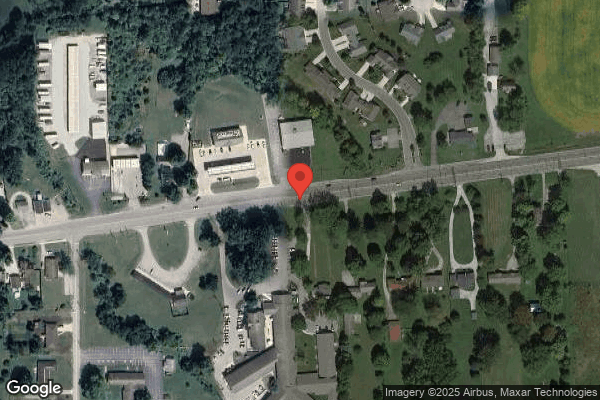
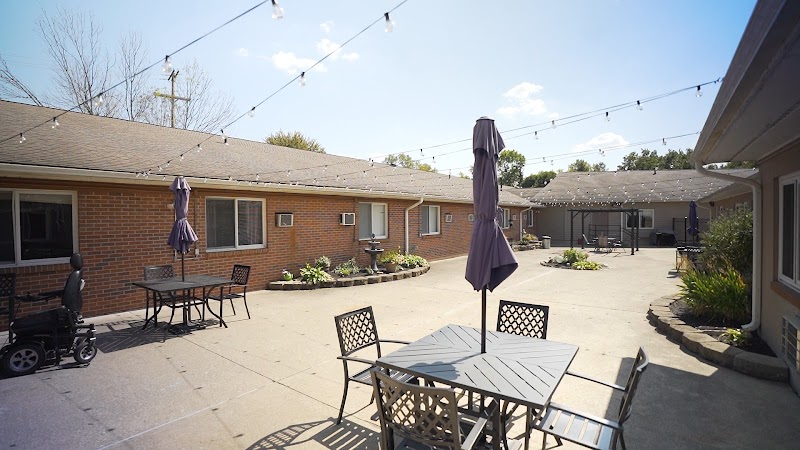
705 E MAIN ST, CENTERVILLE, IN 47330 (765) 855-3424
For profit - Partnership 137 Beds Independent Data: November 2025 1 Immediate Jeopardy citation
Trust Grade
23/100
#413 of 505 in IN
Last Inspection: April 2025

Within standard 12-15 month inspection cycle. Federal law requires annual inspections.

Overview

Ambassador Healthcare in Centerville, Indiana has received a Trust Grade of F, indicating significant concerns about its operations and care quality. Ranking #413 out of 505 facilities in Indiana places it in the bottom half, and #5 out of 8 in Wayne County suggests only a few local options are better. The facility is showing an improving trend, with issues decreasing from 19 in 2024 to 16 in 2025. Staffing is a relative strength, with a 4/5 star rating and a turnover rate of 37%, which is lower than the state average. However, the facility has concerning fines of $42,078, indicating compliance problems, and troubling incidents have been reported, including a serious failure to protect residents from sexual abuse by a staff member and improper transfers that could risk resident safety.

Trust Score
F
23/100
In Indiana
#413/505
Bottom 19%
Safety Record
High Risk
Review needed
Inspections
Getting Better
19 → 16 violations
Staff Stability
○ Average
37% turnover. Near Indiana's 48% average. Typical for the industry.
Penalties
✓ Good
$42,078 in fines. Lower than most Indiana facilities. Relatively clean record.
Skilled Nurses
✓ Good
Each resident gets 53 minutes of Registered Nurse (RN) attention daily — more than average for Indiana. RNs are trained to catch health problems early.
Violations
⚠ Watch
37 deficiencies on record. Higher than average. Multiple issues found across inspections.
★☆☆☆☆
1.0
Overall Rating
★★★★☆
4.0
Staff Levels
★★★☆☆
3.0
Care Quality
★☆☆☆☆
1.0
Inspection Score
Stable
2024: 19 issues
2025: 16 issues

The Good

  • 4-Star Staffing Rating · Above-average nurse staffing levels
  • Full Sprinkler Coverage · Fire safety systems throughout facility
  • No fines on record
  • Staff turnover below average (37%)

    11 points below Indiana average of 48%

Facility shows strength in staffing levels, fire safety.

The Bad

1-Star Overall Rating

Below Indiana average (3.1)

Significant quality concerns identified by CMS

Staff Turnover: 37%

Near Indiana avg (46%)

Typical for the industry

Federal Fines: $42,078

Above median ($33,413)

Moderate penalties - review what triggered them

The Ugly 37 deficiencies on record

1 life-threatening
Aug 2025 5 deficiencies
CONCERN (D) 📢 Someone Reported This

A family member, employee, or ombudsman was alarmed enough to file a formal complaint

Potential for Harm - no one hurt, but risky conditions existed

Safe Environment (Tag F0584)

Could have caused harm · This affected 1 resident

**NOTE- TERMS IN BRACKETS HAVE BEEN EDITED TO PROTECT CONFIDENTIALITY** Based on observation, interview, and record review, the facility failed to provide a homelike environment by not providing telev...

Read full inspector narrative →
**NOTE- TERMS IN BRACKETS HAVE BEEN EDITED TO PROTECT CONFIDENTIALITY** Based on observation, interview, and record review, the facility failed to provide a homelike environment by not providing television (TV) remotes for newly admitted residents to watch TV per their preference for 2 of 3 residents reviewed for accommodation of needs. (Resident B and Resident D) Findings include: 1. During an interview with Resident B's family member on 8/11/25 at 1:30 p.m., they indicated Resident B was admitted , on 7/26/25, and had a TV remote with no batteries. Resident B's family member indicated the morning Resident B fell, on 7/27/25, he had been asking about his TV and thought he was getting out of bed to turn on the TV when he fell. Resident B's family member indicated the TV remote kept coming up missing during his stay at the facility and he really enjoyed watching TV. The clinical record for Resident B was reviewed on 8/11/25 at 11:00 a.m. The diagnoses included, but were not limited to, dementia and atrial fibrillation. During an interview with Licensed Practical Nurse (LPN) 4 on 8/12/25 at 1:17 p.m., they indicated the Admissions Coordinator, Certified Nurse Aides (CNAs), and maintenance were responsible to ensure rooms were appropriately set up with working equipment and supplies. 2. During an observation and interview with Resident D on 8/11/25 at 11:39 a.m., the resident was sitting in her room and indicated she was admitted to the facility on [DATE]. Resident D indicated she had been without a remote control to her TV since being admitted to the facility. At that time, the resident did not have a TV remote visible in her room. During an interview with Resident D on 8/12/25 at 11:10 a.m., she indicated she went three days without a remote since her admission to the facility. The resident indicated she was unable to walk or stand so she could not turn on her TV without a remote. Resident D indicated she stared at the walls all weekend. The resident indicated she reported to the nursing staff that she needed a remote control for her TV, but they told her that she would have to wait until Monday when maintenance was working. The resident indicated watching TV was about all she could physically do. The clinical record for Resident D was reviewed on 8/12/25 at 1:55 p.m. The diagnoses included, but were not limited to, lung cancer, emphysema, heart failure, osteoporosis, anxiety and depression. A progress note for Resident D, dated 8/8/25 at 9:50 a.m., indicated the resident was admitted to the facility. The resident was alert and oriented to person, place, time and situation. The resident was able to answer questions appropriately. The plan of care for Resident D, dated 8/11/25, indicated the resident was alert and able to make leisure lifestyle choices and preferred self-directed activities in her room. The interventions included, but were not limited to, watching TV. This citation relates to Complaint 2578556. 3.1-19(f)(5)
CONCERN (D) 📢 Someone Reported This

A family member, employee, or ombudsman was alarmed enough to file a formal complaint

Potential for Harm - no one hurt, but risky conditions existed

Grievances (Tag F0585)

Could have caused harm · This affected 1 resident

Based on interview and record review, the facility failed to ensure follow up was conducted on care concerns for a resident and the resident's family who had expressed multiple care concerns via email...

Read full inspector narrative →
Based on interview and record review, the facility failed to ensure follow up was conducted on care concerns for a resident and the resident's family who had expressed multiple care concerns via email and follow the facility's policy pertaining to grievances for 1 of 3 residents reviewed for quality of care. (Resident B)Findings include: The clinical record for Resident B was reviewed on 8/11/25 at 11:00 a.m. The diagnoses included, but were not limited to, Parkinson's disease and rib fracture.During an interview with Resident B's family member on 8/11/25 at 1:30 p.m., they indicated they emailed the Admission's Director a list of concerns that Resident B's family had throughout their stay at the facility. During an interview with the Director of Nursing (DON) on 8/12/25 at 2:06 p.m., she indicated social services were responsible for filing a grievance.During an interview with the Social Service Director (SSD) on 8/12/25 at 2:25 p.m., she indicated she was aware that Resident B's family had concerns and believed the Admission's Director was handling them. The SSD indicated whoever took the grievance was usually the person who fills them out and were then turned into her to file.During an interview with the Admission's Director on 8/12/25 at 2:34 p.m., she indicated she did not fill out a grievance after receiving Resident B's family member's email of concerns. The Admission's Director indicated she forwarded the email to the SSD, DON, Executive Director (ED), and physical therapy. The Admission's Director indicated she thought letting everyone know by email would update them on the concerns Resident B's family had. The Admissions Director provided an email with Resident B's family concerns.The email, dated 8/4/25, sent by Resident B's family, indicated the following care concerns: a missing back brace, thrown away items, delay in follow-up after a fall, cleanliness of resident's room, and care assistance.A Filing Grievances/Complaints Policy was provided by the ED on 8/12/25 at 3:00 p.m. It indicated, .7. Upon receipt of a grievance and/or complaint, the grievance officer will review and investigate the allegations and submit a written report of such findings to the administrator within five (5) working days of receiving the grievance and/or complaint .This citation relates to Complaint 2578556.3.1-7(a)(2)
CONCERN (D) 📢 Someone Reported This

A family member, employee, or ombudsman was alarmed enough to file a formal complaint

Potential for Harm - no one hurt, but risky conditions existed

Quality of Care (Tag F0684)

Could have caused harm · This affected 1 resident

Based on interview and record review, the facility failed to follow a neurosurgeon's discharge instructions to call 911 or go to the hospital if the resident experienced a fall and ensure a resident a...

Read full inspector narrative →
Based on interview and record review, the facility failed to follow a neurosurgeon's discharge instructions to call 911 or go to the hospital if the resident experienced a fall and ensure a resident and the resident's family were included in a virtual physician follow-up appointment with the neurosurgeon's office after the resident's back surgery for 1 of 3 residents reviewed for physician appointments and quality of care. (Resident B) Findings include: A. The clinical record for Resident B was reviewed on 8/11/25 at 11:00 a.m. The diagnoses included, but were not limited to, obstructive sleep apnea and fracture of T11-T12 vertebra.A Resident Fall Investigation Checklist was provided by the Executive Director (ED) on 8/12/25 at 10:00 a.m. It indicated Resident B had an unwitnessed fall in his room on 7/27/25 at 8:45 a.m.During an interview with Resident B's family member on 8/11/25 at 1:30 p.m., they indicated they called the facility back after Resident B's fall and requested he have an x-ray since he recently had major back surgery. Resident B's family member indicated the facility staff told her they had onsite x-ray, and they would do it. The family member indicated the x-ray was not done until the next day on 7/28/25.A nurse's note, dated 7/27/25 at 3:20 p.m., indicated Resident B's family requested a spinal x-ray due to his fall and an order was placed at that time.Resident B's discharge summary from the hospital, dated 7/26/25, indicated discharge orders/instructions, included but were not limited to, go to the emergency department or call 911 if you have a fall.B. During an interview with Resident B's family member on 8/11/25 at 1:30 p.m., she indicated the family and Resident B had a virtual doctor's appointment with neurosurgery scheduled for 7/28/25 at 9:15 a.m. Resident B's family member indicated Licensed Practical Nurse (LPN) 3 had come into Resident B's room the morning of the appointment and mentioned something about a tablet to use for the appointment and Resident B's family member indicated she was not sure how to use the tablet. So, she wanted LPN 3 to have the doctor's office call her phone because the family, as well as the resident, wanted to speak to the surgeon about Resident B's fall the day before and not having the required back brace at the facility. The family member indicated the resident was capable of participating in the virtual meeting and had questions and so did the family. The family member indicated LPN 3 took the phone call without including the family as requested. An Inpatient Discharge Instructions form was provided by the Executive Director on 8/12/25 at 10:30 a.m. It indicated Resident B was to receive a virtual home visit follow up appointment with neurosurgery on 7/28/25 at 9:15 a.m.During an interview with LPN 3 on 8/12/25 at 11:12 a.m., she indicated Resident B's wife was who set up the virtual appointment at the hospital and was unsure what phone number she gave them. LPN 3 indicated that any appointments for residents are recorded on their unit calendar. The unit calendar, for 7/28/25, indicated Resident B had a neurosurgeon virtual visit and the phone number of the neurosurgeon's office at 9:15 a.m. LPN 3 indicated she did not know how to use the tablet for virtual doctor's visits. When the neurosurgeon's office called the facility she took the call, provided information, and received new orders but did not think the family needed to be in on the phone call.During an interview with the Director of Nursing (DON) on 8/12/25 at 2:06 p.m., she indicated physician's office usually will call the facility and set up a virtual office visit. The physician's office will provide us with an email/code for our tablet so everyone can be involved.During an interview with the Executive Director (ED) on 8/12/25 at 2:00 p.m., he indicated the facility did not have a policy regarding virtual doctor's appointments. This citation relates to Complaint 2578556. 3.1-37(a)
CONCERN (D) 📢 Someone Reported This

A family member, employee, or ombudsman was alarmed enough to file a formal complaint

Potential for Harm - no one hurt, but risky conditions existed

Accident Prevention (Tag F0689)

Could have caused harm · This affected 1 resident

Based on interview and record review, the facility failed to ensure a resident's equipment of an enabler bar was functioning properly, failed to complete a thorough assessment after the resident's fal...

Read full inspector narrative →
Based on interview and record review, the facility failed to ensure a resident's equipment of an enabler bar was functioning properly, failed to complete a thorough assessment after the resident's fall, and failed to implement fall interventions for a resident at high risk for falls for 1 of 3 residents reviewed for falls. (Resident B)Findings include: The clinical record for Resident B was reviewed on 8/11/25 at 11:00 a.m. The diagnoses included, but were not limited to, Parkinson's disease and fracture of T11-T12 vertebra.An Admit/Readmit Screener, dated 7/26/25, indicated Resident B had recent falls and was at risk for falls. Bilateral side rails for the bed were indicated for safety. A Resident Fall Investigation Checklist was provided by the Executive Director on 8/12/25 at 10:00 a.m. It indicated Resident B had a fall in his room on 7/27/25 at 8:45 a.m. The checklist indicated side rails need to be positioned and bedside rail on left side was stuck down. During an interview with Resident B's family member on 8/11/25 at 1:30 p.m., they indicated Resident B was admitted , on 7/26/25, and had a TV remote with no batteries. Resident B's family member indicated the morning Resident B fell, on 7/27/25, he had been asking about his TV and thought he was getting out of bed to turn on the TV when he fell. Resident B's family member indicated the TV remote kept coming up missing during his stay at the facility and he really enjoyed watching TV. During an interview with Licensed Practical Nurse (LPN) 4 on 8/12/25 at 1:17 p.m., she indicated Resident B's enabler bar on his bed was stuck down. The bar had a little black knob on it, but it wouldn't work. LPN 4 indicated she did not have the tools to fix the bed. LPN 4 indicated the Admissions Coordinator, Certified Nurse Aides (CNAs), and maintenance were responsible to ensure rooms were appropriately set up with working equipment and supplies for newly admitted residents. The Resident Fall Investigation Checklist indicated post fall assessments would be completed every shift for 72 hours post fall. No post fall assessments were documented in the electronic health record (EHR) for 7/27/25. The plan of care for Resident B indicated he was at risk for falls. The care plan indicated no fall interventions were implemented until 7/28/25.During an interview with the Director of Nursing (DON) on 8/12/25 at 2:06 p.m., she indicated she did not know why any post fall assessments were not completed for 7/27/25.A policy entitled Falls - Clinical Protocol was provided by the Executive Director on 8/11/25 at 11:00 a.m. The policy indicated the following, .Assessment and Recognition . 2. In addition, the nurse shall assess and document/report the following . a. Vital signs . b. Recent injury, especially fracture or head injury . c. Musculoskeletal function, observing for change in normal range of motion, weight bearing, etc . d. Change in cognition or level of consciousness . e. Neurological status . f. Pain . h. Precipitating factors, details on how fall occurred . 3. The staff and practitioner will review each resident's risk factors for falling and document in the medical record . 5. The stall will evaluate and document falls that occur while the individual is in the facility . Monitoring and Follow-Up . 1. The staff, with the physician's guidance, will follow up on any fall with associated injury until the resident is stable and delayed complications such as late fracture or subdural hematoma have been ruled out or resolved . 2. The staff and physician will monitor and document the individual's response to interventions in-tended to reduce falling or the consequences of falling This citation relates to Complaint 2578556. 3.1-45(a)(2)
CONCERN (D) 📢 Someone Reported This

A family member, employee, or ombudsman was alarmed enough to file a formal complaint

Potential for Harm - no one hurt, but risky conditions existed

Medical Records (Tag F0842)

Could have caused harm · This affected 1 resident

**NOTE- TERMS IN BRACKETS HAVE BEEN EDITED TO PROTECT CONFIDENTIALITY** Based on interview and record review, the facility failed to implement an inventory sheet with resident belongings for newly adm...

Read full inspector narrative →
**NOTE- TERMS IN BRACKETS HAVE BEEN EDITED TO PROTECT CONFIDENTIALITY** Based on interview and record review, the facility failed to implement an inventory sheet with resident belongings for newly admitted residents for 3 of 3 residents reviewed for missing items. (Resident B, Resident D and Resident C)Findings include:1. The clinical record for Resident B was reviewed on 8/11/25 at 11:00 a.m. The diagnoses included, but were not limited to, type 2 diabetes mellitus and congestive heart failure. Resident B was admitted to the facility on [DATE]. During an interview on 8/12/25 at 1:30 p.m. with Resident B's family member, they indicated Resident B should have arrived at the facility, on 7/26/25, with a back brace and he did not. Resident B's family member indicated she contacted the hospital Resident B discharged from and they indicated he was discharged with the back brace on him for transport. The family member indicated the facility did not fill out an inventory sheet upon admission. No inventory sheet was documented in Resident B's Electronic Health Record (EHR). During an interview with Licensed Practical Nurse (LPN) 4 on 8/12/25 at 1:17 p.m., she indicated she did not fill out an inventory sheet when Resident B was admitted to the facility. LPN 4 indicated facility staff normally completed them on all new admissions. During an interview with the Director of Nursing (DON) on 8/12/25 at 2:06 p.m., she indicated facility staff were responsible for making sure inventory sheets for residents were completed. 2. During an interview with Resident D on 8/12/25 at 11:10 a.m., she indicated she was admitted to the facility, on 8/8/25, and the facility did not fill out an inventory sheet with her belongings. The resident indicated she did not know if she had any personal belongings missing because she did not know what all was brought with her when she came. During an interview with LPN 2 on 8/12/25 at 11:48 a.m., they indicated the facility did not have resident records in a hard chart or on paper it was all documented on the EHR in the computer. The clinical record for Resident D was reviewed on 8/12/25 at 1:55 p.m. The diagnoses included, but were not limited to, lung cancer, emphysema, heart failure, osteoporosis, anxiety and depression. The resident's record did not indicate an inventory sheet was completed for the resident. A progress note for Resident D, dated 8/8/25 at 9:50 a.m., indicated the resident was admitted to the facility. The resident was alert and oriented to person, place, time and situation. The resident was able to answer questions appropriately. 3. During an interview with Resident C on 8/12/25 at 11:50 a.m., he indicated the facility did not complete an inventory sheet of his belongings when he was admitted to the facility. Resident C indicated he did not have any belongings missing that he was aware of. The clinical record for Resident C was reviewed on 8/12/25 at 2:20 p.m. The diagnoses included, but were not limited to, hypertension, diabetes, atrial fibrillation, malnutrition and hyperlipidemia. The resident's record indicated an inventory sheet was not completed for the resident's belongings. The quarterly Minimum Data Set (MDS) assessment for Resident C, dated 7/3/25, indicated the resident was cognitively intact for daily decision making. The resident was reasonable and consistent. The resident was admitted to the facility on [DATE]. This citation relates to Complaint 2578556. 3.1-50(a)(1)
Jul 2025 2 deficiencies
CONCERN (D) 📢 Someone Reported This

A family member, employee, or ombudsman was alarmed enough to file a formal complaint

Potential for Harm - no one hurt, but risky conditions existed

Report Alleged Abuse (Tag F0609)

Could have caused harm · This affected 1 resident

Based on interview and record review, the facility failed to ensure an allegation of verbal abuse was reported to the Indiana Department of Health within two (2) hours of its receipt for 1 of 3 reside...

Read full inspector narrative →
Based on interview and record review, the facility failed to ensure an allegation of verbal abuse was reported to the Indiana Department of Health within two (2) hours of its receipt for 1 of 3 residents reviewed for abuse. (Resident D)Findings include:In an interview with Resident D on 7-17-25 at 11:20 a.m., she indicated a physical therapist (PT 3) had been rude to her in the recent past when PT 3 told her, Show me what you can do, indicating this occurred after she had kicked me off of physical therapy. She indicated she promptly shared this information with the Social Services Staff and the Executive Director. In an interview with the Executive Director (ED) on 7-17-25 at 1:15 p.m., the ED indicated he did not report this as an allegation of abuse to the state. He indicated as soon as the facility began their investigation, It was very clear it was not abuse, but merely the resident being told something that she did not want to hear by the PT, who tends to be rather direct. On 7-17-25 at 10:36 a.m., the ED provided a copy of a policy entitled, Abuse, Neglect, Exploitation and Misappropriation Prevention Program. This policy indicated, Residents have the right to be free from abuse, neglect.but it is not limited to freedom from.verbal.abuse.Identify and investigate all possible incidents of abuse.Investigate and report any allegations within timeframes required by federal requirements. This citation relates to Complaint IN00462662. 3.1-28(c)
CONCERN (D) 📢 Someone Reported This

A family member, employee, or ombudsman was alarmed enough to file a formal complaint

Potential for Harm - no one hurt, but risky conditions existed

Deficiency F0627 (Tag F0627)

Could have caused harm · This affected 1 resident

**NOTE- TERMS IN BRACKETS HAVE BEEN EDITED TO PROTECT CONFIDENTIALITY** Based on interview and record review, the facility failed to ensure a resident was referred for home health nursing services upo...

Read full inspector narrative →
**NOTE- TERMS IN BRACKETS HAVE BEEN EDITED TO PROTECT CONFIDENTIALITY** Based on interview and record review, the facility failed to ensure a resident was referred for home health nursing services upon discharge for 1 of 3 residents reviewed for discharge. (Resident B)Findings include:The clinical record for Resident B was reviewed on 7/17/25 at 11:10 a.m. His diagnoses included, but were not limited to, mechanical complication of internal left knee prothesis, infection and inflammatory reaction due to internal left knee prosthesis, hypertension, and type 2 diabetes mellitus. He was admitted to the facility on [DATE] and discharged on 6/18/25. The 6/7/25 admission MDS (Minimum Data Set) assessment indicated he was cognitively intact.An interview was conducted with Resident B on 7/18/25 at 3:03 p.m. He indicated he had an infection in his leg and was on IV (intravenous) antibiotics four times a day while at the facility. When he was discharged from the facility on 6/18/25, they should have ordered nursing services for him, not just therapy. He wasn't able to get the IV antibiotics anymore but was supposed to be on them for two more weeks. It was almost a week after discharge, before he got everything figured out, but by that time, he'd already been off the antibiotics for a week. He was discharged from the facility with home health, but when the home health company contacted him after discharge, they informed him they only had an order for therapy. There were no orders for nursing, including the care of his PICC (peripherally inserted central catheter.) The first time the home health nurse came to see him, she just looked at the PICC, to ensure there were no signs of infection, because she had no orders. By the time it was straightened out and he was seen by a nurse from home health, his PICC dressing was overdue for a dressing change, as it had been almost two weeks since it was changed. Eventually, his PCP (primary care physician) wrote an order for home health to pull the PICC. Resident B's ID (infectious disease) physician was on leave at the time, so they were unable to write an order. He stated, If the facility had sent over the proper orders, I would have had what I needed. Someone from the facility came to speak with him, on 6/18/25, about the Medicaid application process, and he left the facility five hours later. He left with a 30-day supply of some medicine, two administrations of antibiotics, and some discharge paperwork, but no orders.On 7/17/25 at 2:21 p.m., an interview was conducted with the local hospital's social worker, where Resident B's Infectious Disease physician's office was associated. She indicated they were concerned with him discharging from the facility with a PICC in place and no follow-up for antibiotic treatment. Their office was informed when Resident B called and tried to set up getting his antibiotics taken care of after leaving the facility. The 5/30/25 medical professional progress note indicated the reason for the visit was debility, hypertension, failed total knee arthroplasty, obesity, diabetes mellitus, type 2, and left knee wound dehiscence. He was admitted to a local hospital, on 5/19/25, with a left total knee prosthetic joint infection, left total knee open dislocation, and traumatic arthrotomy of the left knee. He was transferred from the hospital to the facility, on 5/29/25, for continued skilled nursing care and rehabilitation. He was currently receiving IV antibiotics via a PICC line, with treatment scheduled to continue until 6/30/25. His admission to the facility included management of ongoing medical conditions, administration of IV antibiotics, and participation in physical and occupational therapy to aid in recovery. The Assessment and Plan section of the note indicated for the infection associated with prosthesis for left knee joint was to continue IV Cefepime as ordered until 6/30/25 and follow up in one week. The facility physician's orders indicated to administer one IV application of Daptomycin-Sodium Chloride Intravenous Solution 700-0.9 mg/100ML-% at bedtime, effective 5/31/25 until 6/30/25; to administer one IV application of Cefepime HCl Intravenous Solution 1 GM/50ML (one gram/50 milliliters) every 8 hours, effective 5/30/25 until 6/30/25; to change the sterile PICC dressing once a week and as needed if soiled, every evening shift every Saturday, from 6/2/25 to 6/7/25, and starting 6/14/25; to flush the PICC with 3-5 cc (three to five cubic centimeters) of saline, administer antibiotic, then flush with heparin followed by saline, every shift, effective 5/30/25; and to change the IV tubing every 24 hours for PICC line/IV antibiotic, effective 5/29/25. The 6/2/25 hospital follow up note indicated he was two weeks status post left knee resection arthroplasty incision. He was currently receiving Cefepime and Daptomycin per ID recommendation. He was doing relatively well. They would see him back in one week for possible staple removal and to check progress. He was to continue with IV antibiotics per infectious disease recommendation.The 6/18/25 nurses note indicated, Resident discharged from facility to home with family. All discharge paperwork signed and sent with resident's family. Sent inhaler, atb [antibiotic], insulin with resident/resident's family. Home health script [prescription] sent with family. No issues, complaints or concerns voiced. All personal belongings sent as well.The 6/18/25 Discharge Order Form, scanned into the electronic health record, indicated he discharged with home health care for therapy, but not for nursing services. The discharge planner was the SSD (Social Services Director). The form was signed by the NP (nurse practitioner) on 6/18/25. There was an order attached, dated 6/18/25 and signed by the NP (nurse practitioner) on 6/18/25, for a home health care evaluation for physical therapy and occupational therapy only. There was a second order attached, dated 6/23/25 and signed the NP on 6/23/25, for a referral for home health nursing services to include bandage changes.An interview was conducted with the facility's SSD on 7/17/25 at 12:44 p.m. She indicated she spoke with Resident B the day he left. He discussed the Medicaid process with her, and informed her he was leaving that day, so the SSD did a discharge for him. She set him up with home health care. Normally, when she knew someone was about to be discharged , they'd have the home health care company come into the facility to evaluate the resident, so everyone was on the same page, but since he was leaving that day, she could only send a referral. She spoke with home health directly that day, made the referral, then was out of the picture. Several days later, Resident B called her back, saying he'd been calling other places, trying to get his antibiotic and PICC care handled. Apparently, there was confusion with the PICC and antibiotic treatment with the home health company, since he called her back a few days after he was discharged . Resident B was aggravated at the time, saying he called one person, who then told him to call someone else, so the SSD informed him she would look into it. The referral for home health nursing services did not come until 6/23/25, when he called back, because that was when she was made aware of his need for it. The SSD thought the home health company needed an actual referral for nursing care. Resident B left the faciity on 6/18/25 with everything he needed, except the referral for nursing care. An interview was conducted with Resident B's Home Health Patient Care Manager, on 7/17/25 at 1:40 p.m., via telephone in the presence of the SSD. She indicated home health nursing services began on 6/24/25, after receiving the 6/23/25 referral for such. Resident B had a PICC, but no order for the PICC, no orders for the antibiotics, and nothing set up through an IV company. The facility was supposed to set up services for him through an IV company that supplied IV supplies. They were unable to do anything with Resident B's PICC line, and his PCP (primary care provider) would not give orders, because she wasn't the infectious disease provider. They needed orders, and the facility should have coordinated that, as well as with the IV company, because home health did not do that part. The only referral sent on 6/18/25, was for therapy. Resident B contacted the home health company to ask when services for his PICC would start, but since they had no orders, they were unable to provide the care, and eventually his PCP ordered to remove his PICC on 6/25/25. They removed it on 6/26/25. Resident B ended up taking Doxycycline twice daily, effective 6/24/25, probably from a bottle he already had at home.An interview was conducted with RN (Registered Nurse) 2 on 7/18/25 at 11:08 a.m. She indicated Resident B was at the facility after surgery. He was treated for pain, infection, and came with a PICC. They tried to get him to stay at the facility the day he was discharged . She talked to him that day, and he was worried about the Medicaid process. He was adamant about leaving. Upon discharge, he needed home health care for his IV antibiotic, their biggest concern. He needed to continue on the antibiotic due to infection. RN 2 thought the SSD got home health set up for him prior to leaving. RN 2 did not know why the nursing referral was not made at discharge but probably should have been. She did not know how the nursing services were missed at discharge. They got the orders into the pharmacy, but she did not know where the rest of it went.The Discharge Summary and Plan policy was provided by the ED (Executive Director) on 7/18/25 at 9:08 a.m. It indicated, Discharge to the Community .3. The facility makes referrals to local agencies, the local ombudsman, and support services that can assist in accommodating the resident's post-discharge preferences, as appropriate. Referrals made for this purpose, and the response to these referrals, are documented in the medical record 6. For residents discharged to their home, the medical record contains documentation that written and verbal discharge instructions were given to the resident or representative, and that the instructions were conveyed in a language and manner understood by the resident or representative.This Citation relates to Complaint IN00462276 and Complaint IN00462795. 3.1-12(a)(18)
Apr 2025 8 deficiencies
CONCERN (D)

Potential for Harm - no one hurt, but risky conditions existed

Resident Rights (Tag F0550)

Could have caused harm · This affected 1 resident

Based on observation, interview, and record review, the facility failed to provide privacy during care for 2 of 2 random observations (Resident 50 and Resident 36). Findings include: 1. During a medi...

Read full inspector narrative →
Based on observation, interview, and record review, the facility failed to provide privacy during care for 2 of 2 random observations (Resident 50 and Resident 36). Findings include: 1. During a medication pass observation on 4/28/25 at 10:10 a.m., Registered Nurse (RN) 11 knocked on Resident 50's door and walked in without waiting for a response. Resident 50 was standing up in front of his wheelchair and Certified Nurse Aide (CNA) 10 was applying an incontinent brief on the resident. The resident had no clothes on, and the privacy curtain was not pulled. Resident 50 was visible to the hallway. Review of the clinical record of Resident 50, on 4/30/25 at 11:10 a.m., indicated the diagnoses included, but were not limited to, schizophrenia, diabetes, depression, and muscle weakness. The Quarterly Minimum Data Set (MDS) assessment, dated 3/3/25, indicated the resident was cognitively intact for daily decision making. The resident was frequently incontinent of bowel and bladder. 2. Review of the clinical record of Resident 36, on 4/28/25 at 10:35 a.m., indicated the diagnoses included, but were not limited to, diabetes, Alzheimer's disease, dementia, major depressive disorder, anxiety, weakness, heart disease and stage three pressure ulcer to the coccyx (wound with full thickness tissue loss). During an observation of a pressure ulcer treatment for Resident 36 on 4/28/25 at 1:44 p.m., CNA 10 held Resident 36 on her right side while RN 11 was providing a pressure ulcer treatment to Resident 36's coccyx. RN 8 walked into Resident 36's room without knocking and the resident's buttocks were visible to the hallway. Resident 36 did not have a privacy curtain in her room. RN 11 and CNA 10 indicated they were unsure why the resident did not have a privacy curtain in her room. During an interview with RN 8 on 4/28/25 at 2:28 p.m., they indicated Resident 36 did not have a privacy curtain in her room because it was a private room. RN 8 indicated she knocked on Resident 36's door lightly before she came in but should have waited for a response before entering the resident's room. The dignity policy was provided by the Director of Nursing (DON) on 4/29/25 at 10:45 a.m. The policy indicated the residents would be treated with dignity and respect at all times. Staff would promote, maintain and protect resident privacy, including bodily privacy during assistance with person care and treatment procedures. Staff were expected to knock and request permission before entering residents' rooms. 3.1-3(p)(2) 3.1-3(p)(4) 3.1-3(t)
CONCERN (D)

Potential for Harm - no one hurt, but risky conditions existed

Deficiency F0558 (Tag F0558)

Could have caused harm · This affected 1 resident

2. The clinical record for Resident 71 was reviewed on 4/24/25 at 11:55 a.m. Her diagnoses included, but were not limited to, rheumatoid arthritis, diabetes mellitus, and stage four pressure ulcer of ...

Read full inspector narrative →
2. The clinical record for Resident 71 was reviewed on 4/24/25 at 11:55 a.m. Her diagnoses included, but were not limited to, rheumatoid arthritis, diabetes mellitus, and stage four pressure ulcer of sacral region. The 1/14/25 Annual MDS (Minimum Data Set) assessment indicated she was cognitively intact. She was totally dependent for toileting hygiene, bathing, lower body dressing, and putting on/taking off footwear. She required substantial/maximal assistance with eating, oral hygiene, upper body dressing, and personal hygiene. An observation and interview were conducted with Resident 71 in her room on 4/24/25 at 11:59 a.m. She was lying in bed with the covers over her. Her call light was clipped to her outer cover but was wedged between her left side enabler bar and mattress. Resident 71 attempted to reach for her call light but was unable to reach it. She indicated, I can't reach it. I need my call light. An observation and interview were conducted with Resident 71 in her room on 4/30/25 at 1:14 p.m. She was lying in bed with the covers over her. Her call light cord was wrapped and tied around her left side enabler bar. There was not enough cord length available for Resident 71 to reach her call button. Resident 71 kept pulling at the cord and requested it be pulled within her reach. LPN 13 entered the room to assist. LPN 13 untied the cord from the enabler bar and pulled the cord to release more of its' length. LPN 13 asked Resident 71 if she'd rather it be clipped onto her cover. Resident 71 answered in the affirmative, so LPN 13 detached it from the enabler bar, and clipped it onto her blanket, within Resident 71's reach. A policy, entitled Call System, Residents, was provided by the Administrator on 4/30/2025 at 9:40 a.m. The policy indicated residents are to be provided a means to call staff for assistance through a communication system that directly calls a staff member or central work location and, .if the resident has a disability that prevents him/her from making use of the call system, an alternative measure of communication that is usable for the resident is provided . Based on observation, interview, and record review, the facility failed to ensure call lights were within reach (Resident 67 and 71) and failed to ensure fluids were available at the bedside (Resident 22) for 3 of 3 residents reviewed for accommodations of needs. Findings include: 1. The clinical record for Resident 67 was reviewed on 4/28/2025 at 2:08 p.m. The medical diagnoses included anoxic brain injury and contractures. A Significant Change Minimum Data Set Assessment, dated 2/14/2025, indicated Resident 67 was able to participate in his cognition exam, was severely cognitively impaired, and was dependent on staff for activities of daily living. A care plan, last revised 1/8/2025, indicated to ensure Resident 67's call light was within reach. During an observation on 4/29/2025 at 12:01 p.m., Resident 67's call light was noted to be out of his range. When asked if he could use his call light, he indicated no. During an interview and observation, on 4/29/2025 at 12:10 p.m., Licensed Practical Nurse (LPN) 2 verified the call light was out of Resident 67's reach. She stated the call light should definitely be closer, and moved it down so Resident 67 would be able to press it. 3. During an observation on 4/23/25 at 1:53 p.m., Resident 22 was lying in bed. The resident had no water or any type of fluids in their room. During an observation on 4/28/25 at 10:19 a.m., Resident 22 was sleeping in bed. The resident had no water or any type of fluids in their room. During an observation on 4/28/25 at 1:55 p.m., Resident 22 was lying in bed. The resident had no water or any type of fluids in their room. During an observation on 4/29/25 at 9:38 a.m., Resident 22 had a clear, empty plastic glass sitting on their bedside table. The clinical record for Resident 22 was reviewed on 4/28/25 at 11:00 a.m. The diagnoses included, but were not limited to, anxiety and diabetes mellitus. A physician's order, dated 3/13/25, indicated Resident 22 was on a regular diet with regular texture and nectar (thickened) consistency for fluids. An interview was conducted with Certified Nurse Aide (CNA) 3 on 4/29/25 at 9:41 a.m. CNA 3 indicated Resident 22 was able to drink by herself and did not need assistance if the drink was placed in front of her. During an interview with the Director of Nursing (DON) on 4/29/25 at 10:49 a.m., she indicated residents who have nectar (thickened) liquids ordered were not allowed to have pitchers of water at the bedside, but they can have thickened fluids at the bedside. The Serving Drinking Water policy was provided by the DON on 4/28/25 at 2:30 p.m. It indicated, . the purpose of this procedure are to provide the resident with a fresh supply of drinking water and to provide adequate liquids for the resident . 3.1-3(v)(1)
CONCERN (D)

Potential for Harm - no one hurt, but risky conditions existed

Safe Environment (Tag F0584)

Could have caused harm · This affected 1 resident

**NOTE- TERMS IN BRACKETS HAVE BEEN EDITED TO PROTECT CONFIDENTIALITY** Based on observation, interview, and record review, the facility failed to maintain comfortable sound levels for 1 of 5 resident...

Read full inspector narrative →
**NOTE- TERMS IN BRACKETS HAVE BEEN EDITED TO PROTECT CONFIDENTIALITY** Based on observation, interview, and record review, the facility failed to maintain comfortable sound levels for 1 of 5 residents reviewed for accidents. (Resident 71) The clinical record for Resident 71 was reviewed on 4/24/25 at 11:55 a.m. Her diagnoses included, but were not limited to, rheumatoid arthritis, diabetes mellitus, and stage four pressure ulcer of sacral region. She was admitted to the facility on [DATE]. The 1/14/25 Annual MDS (Minimum Data Set) assessment indicated she was cognitively intact. She was totally dependent for toileting hygiene, bathing, lower body dressing, and putting on/taking off footwear. She required substantial/maximal assistance with eating, oral hygiene, upper body dressing, and personal hygiene. The physician's orders indicated to check the function and placement of her bed and chair alarm every shift, effective 9/11/23. The 9/11/23 at risk for falls care plan indicated she would climb out of bed and onto the floor mat and unplug her bed alarm. Interventions were bed and chair alarms, initiated on 9/11/23. An observation and interview were conducted with Resident 71 in her room on 4/24/25 at 11:57 a.m. She was lying in bed at this time. A position change alarm was attached to the side of her bed. Resident 71 indicated she had an alarm on her bed that beeped, if she moved around. She didn't' like it. It beeped all the time and was really loud. Interviews were conducted with the DON (Director of Nursing) on 4/29/25 at 1:26 p.m. and 4/30/25 at 10:44 a.m. She indicated the facility was not monitoring for efficacy of residents' alarm use, including Resident 71's, on a routine basis, and they had no documentation or verification that any resident's alarm use was for the purpose of assisting staff to assess for residents' patterns and routines. She understood the alarm use in the facility was a concern and it was next on her list to address. The Bed/Chair Alarm policy was provided by the DON on 4/30/25 at 11:45 a.m. It indicated, 1. Purpose .To reduce fall risks through timely staff interventions. To ensure alarms are used appropriately and not as a restraint. To comply with regulatory and ethical standards 4. Alarm Selection and Placement. Choose the least intrusive and most effective alarm 5. Staff Responsibilities Document alarm triggers and responses 6. Review effectiveness regularly (e.g., weekly or monthly). Remove alarms when they are no longer clinically justified. Document review findings in the care plan. 7. Alternatives and Least Restrictive Interventions. Use other fall prevention methods when possible: Increased supervision. Environmental adjustments. Scheduled toileting. 8. Regulatory and Ethical Considerations Follow CMS (Centers for Medicare & Medicaid Services) and state regulations. Avoid alarms as restraints unless absolutely necessary. Encourage resident independence and dignity. The Homelike Environment policy was provided by the Administrator on 4/30/25 at 9:40 a.m. It indicated, 2. The facility staff and management maximizes, to the extent possible, the characteristics of the facility that reflect a personalized, homelike setting. These characteristics include .comfortable sound levels. 3. The facility staff and management minimizes, to the extent possible, the characteristics of the facility that reflect a depersonalized, institutional setting. These characteristics include: .chair and bed alarms. 3.1-19(f)(5)
CONCERN (D)

Potential for Harm - no one hurt, but risky conditions existed

ADL Care (Tag F0677)

Could have caused harm · This affected 1 resident

**NOTE- TERMS IN BRACKETS HAVE BEEN EDITED TO PROTECT CONFIDENTIALITY** Based on observation, interview, and record review, the facility failed to provide nail care and oral care for 3 of 3 residents ...

Read full inspector narrative →
**NOTE- TERMS IN BRACKETS HAVE BEEN EDITED TO PROTECT CONFIDENTIALITY** Based on observation, interview, and record review, the facility failed to provide nail care and oral care for 3 of 3 residents reviewed for activities of daily living (ADLs). (Resident 9, Resident 66 and Resident 23) Findings include: 1. During an observation on 4/23/25 at 1:05 p.m., Resident 9 had a dark substance underneath her fingernails on both hands. During an observation on 4/28/25 at 9:46 a.m., Resident 9 had a dark substance underneath her fingernails on both hands. During an observation and interview on 4/28/25 at 12:44 p.m., Resident 9 had a dark substance underneath her fingernails on both hands. Resident 9 indicated her fingernails were horrible. During an observation and interview on 4/29/25 at 10:08 a.m., Certified Nurse Aide (CNA) 12 verified Resident 9 had a black substance under her fingernails. CNA 12 indicated that the aides were supposed to clean her fingernails on bed bath days. Resident 9 received her bed bath on evening shift. CNA 12 indicated she was unsure if Resident 9 was a diabetic, but she would not trim her nails at this time but would clean the resident's fingernails. The clinical record for Resident 9 was reviewed on 4/29/25 at 9:55 a.m. The diagnoses included, but were not limited to, dementia, chronic obstructive pulmonary disease, Alzheimer's disease, anxiety, pain, major depressive disorder, and psychosis. The plan of care for Resident 9, dated 7/26/24, indicated the resident required limited assistance with self-care related to poor motivation and dementia. The interventions included, but were not limited to, shower per staff assistance two times a week and to include nail care. The Quarterly Minimum Data Set (MDS) assessment for Resident 9, dated 4/4/25, indicated the resident required substantial/maximal assistance with personal hygiene. The fingernail care policy was provided by the Administrator on 4/30/25 at 9:40 a.m. The policy indicated the purpose was to clean the nail bed to prevent infection. 2. The clinical record for Resident 66 was reviewed on 4/24/25 at 11:20 a.m. His diagnoses included, but were not limited to, chronic obstructive pulmonary disease, diabetes, Alzheimer's disease, and congestive heart failure. He was admitted to the facility on [DATE]. An observation of Resident 66 was conducted on 4/24/25 at 12:06 p.m. He was lying in bed and was not wearing any socks. Both of his feet were completely visible. On his left foot, the pinky toenail and toenail next to the big toe were extremely long. On the right foot, the big toe and middle toe were long and curled over the end of the toes. The 3/21/25 admission MDS assessment indicated he was severely cognitively impaired, required substantial/maximal assistance with bathing, and was totally dependent for putting on/taking off footwear. The 4/28/25 ADL care plan indicated he required maximum assistance with showers twice weekly with hair and nail care included. He was totally dependent on staff with putting on/taking off footwear. The 3/12/25 Request For Service Consent form did not indicate whether Resident 66's representative accepted or refused podiatry services, as both options were left blank on the consent form. The physician's orders indicated he may be seen by the podiatrist, effective 3/13/25. An interview was conducted with LPN (Licensed Practical Nurse) 4 on 4/28/25 at 1:18 p.m. Resident 66 was not available for observation at this time. She indicated she noticed how long his toenails were and how they curled over. They had a podiatrist who came to the facility, but a lot of residents' families didn't approve for them to be seen. Nursing staff usually contacted social services, who would talk with the family about being seen by the podiatrist. She hadn't discussed Resident 66's toenails with social services and was unsure if anyone else had either. An interview was conducted with the Social Services Director (SSD) on 4/28/25 at 1:46 p.m. She indicated no one mentioned anything to her about Resident 66 needing to be seen by the podiatrist. An interview was conducted with the SSD on 4/29/25 at 11:27 a.m. She indicated she had a call out to Resident 66's family member to discuss podiatry services. If they declined, perhaps nursing could address his long toenails. 3. The clinical record for Resident 23 was reviewed on 4/29/2025 at 12:45 p.m. The medical diagnoses included stroke and heart failure. A Quarterly Minimum Data Set Assessment, dated 3/31/2025, indicated Resident 23 was cognitively impaired and did not reject care. A care plan, revised 11/11/2024, indicated Resident 23 needed maximal assistance with oral care twice a day and as needed. During an observation on 4/23/2025 at 1:10 p.m., Resident 23 was observed to have a thick white build up on her teeth as well as a white film over her teeth and lips. During an interview and observation, on 4/29/2025 at 12:39 p.m., Resident 23 was sitting in the common area by the nurse's station. She was observed to have a blue substance over her lips, around her mouth, and coating her teeth. She was also noted to have dry skin built up on her lips and a thick white substance built up between her teeth. During an interview on 4/30/2025 at 11:30 a.m., the Director of Nursing (DON) indicated nursing staff should provide care to assure residents are clean from food debris after meals. A policy entitled Mouth Care was provided by the Administrator on 4/30/2025 at 9:40 a.m. The policy indicated the purpose of the policy was to keep the resident's mouth and lips moist and provide oral care. 3.1-38(a)(2)(A) 3.1-38(a)(3)(A) 3.1-38(a)(3)(C) 3.1-38(a)(3)(E)
CONCERN (D)

Potential for Harm - no one hurt, but risky conditions existed

Deficiency F0685 (Tag F0685)

Could have caused harm · This affected 1 resident

**NOTE- TERMS IN BRACKETS HAVE BEEN EDITED TO PROTECT CONFIDENTIALITY** Based on observation, interview, and record review, the facility failed to timely provide optometry services and timely address ...

Read full inspector narrative →
**NOTE- TERMS IN BRACKETS HAVE BEEN EDITED TO PROTECT CONFIDENTIALITY** Based on observation, interview, and record review, the facility failed to timely provide optometry services and timely address a resident's missing glasses for 2 of 3 residents reviewed for vision services. (Residents 38 and 91) Findings include: 1. The clinical record for Resident 38 was reviewed on 4/24/25 at 12:10 p.m. Her diagnoses included, but were not limited to, cataracts, history of cerebral infarction, and dementia. The 3/26/25 Quarterly MDS (Minimum Data Set) assessment indicated she was cognitively intact. An interview and observation were conducted with Resident 38 in her room on 4/24/25 at 12:13 p.m. She indicated she had a hard time seeing, needed glasses, and hadn't seen the optometrist lately. She was not wearing glasses at that time. The physician's orders indicated she may be seen by the optometrist, effective 3/22/19. The 3/30/20 facility optometry provider's Request for Services Consultation indicated to please have the optometrist examine Resident 38. The 6/30/23 eye exam indicated new glasses were not recommended at this time, and that she only wore them intermittently. The plan was to monitor and follow up with a comprehensive exam on 6/30/24, and to continue wearing spectacles. The action required by nursing home staff was to encourage part-time use of glasses for reading. There was no information in the clinical record to indicate a follow up comprehensive exam was ever completed after the 6/30/23 exam, as planned. An interview was conducted with the SSD (Social Services Director) on 4/28/25 at 1:28 p.m. She indicated she handled ancillary services for all residents in the facility, including optometry services. No vision services had been provided in the facility since 10/7/24, which was by a previous provider. Resident 38 was not seen at the 10/7/24 visit and hadn't been seen since her 6/30/23 exam. The facility recently obtained a new provider who was scheduled to come to the facility for the first time on 5/1/25. An interview was conducted with the SSD on 4/29/25 at 11:50 a.m. She indicated she was unable to locate any glasses for Resident 38 yesterday. She also spoke with nursing staff and was informed they hadn't seen any glasses for Resident 38 either. The SSD reviewed Resident 38's clinical record and indicated there was no vision or ancillary services care plan for Resident 38, but she would create one now. 2. The clinical record for Resident 91 was reviewed on 4/24/25 at 11:30 a.m. His diagnoses included, but were not limited to, dementia. He was admitted to the facility on [DATE]. The physician's orders indicated he may be seen by the optometrist, effective 12/17/24. The 12/19/24 care plan indicated he had glasses. Interventions were to clean his glasses daily; ensure his glasses were on daily and removed prior to going to bed; and notify nursing/social services promptly of any lost/broken glasses. The 12/26/24 admission MDS assessment indicated he had adequate vision with corrective lenses used. The 3/28/25 Quarterly MDS assessment indicated he had adequate vision, but no corrective lenses were used. It indicated he was severely cognitively impaired. An observation of Resident 91 and interview with Family Member 5 was conducted in Resident 91's room on 4/24/25 at 11:39 a.m. Resident 91 was sitting up in his wheelchair next to Family Member 5, and he was not wearing any glasses. Family Member 5 indicated he needed glasses, because he does better with glasses, but she thought he may have thrown them away, as they were unable to be located at this time. Family Member 5 was unsure whether he'd seen the optometrist since he'd been at the facility or if his missing glasses had been addressed. An observation of Resident 91 and interview with Family Member 6 was conducted in Resident 91's room on 4/28/25 at 1:00 p.m. Resident 91 was sitting up in his wheelchair, and he was not wearing any glasses. Family Member 6 indicated she hadn't heard anything about him seeing the eye doctor or getting new glasses. An interview was conducted with the SSD on 4/28/25 at 1:28 p.m. She indicated she handled ancillary services for all residents in the facility, including optometry services. No vision services had been provided in the facility since 10/7/24, which was by a previous provider. The facility recently obtained a new provider, who was scheduled to come to the facility for the first time on 5/1/25. The SSD reviewed the optometry provider's 5/1/25 visit list and indicated Resident 91 was not on the list to be seen as a new patient, but she would add him to the list to be seen today. She was unaware he was currently missing his glasses. The Availability of Ancillary Services: Dental, Vision, Podiatry, Audiology policy was provided by the Administrator on 4/30/25 at 9:40 a.m. It indicated, Oral, visual, podiatry and audiology services will be provided to each resident. Policy Interpretation and Implementation: 1. Oral, visual, podiatry and audiology services are available to all residents requiring routine and emergent care. 2. Social Services will be responsible for making necessary dental, visual, audiology and podiatry arrangements and obtain consents for services. 3. All requests for routine services should be directed to social services to assure that appointments/referral can be made in a timely manner 6. Residents with lost or damaged glasses/contacts will be promptly referred to an optometrist. 3.1-39(a)(1)
CONCERN (D)

Potential for Harm - no one hurt, but risky conditions existed

Pressure Ulcer Prevention (Tag F0686)

Could have caused harm · This affected 1 resident

Based on observation, interview, and record review, the facility failed to provide pressure wound interventions for a resident at high risk of developing pressure areas for 1 or 2 residents reviewed f...

Read full inspector narrative →
Based on observation, interview, and record review, the facility failed to provide pressure wound interventions for a resident at high risk of developing pressure areas for 1 or 2 residents reviewed for pressure wounds. (Resident 67) Findings include: The clinical record for Resident 67 was reviewed on 4/28/2025 at 2:08 p.m. The medical diagnoses included anoxic brain injury and contractures. A Significant Change Minimum Data Set Assessment, dated 2/14/2025, indicated Resident 67 was able to participate in his cognition exam, was severely cognitively impaired, and at risk for developing pressure areas. A skin care plan, last revised 4/7/2025, indicated to provide Resident 67 with wound care as ordered. A physician order, dated 4/24/2025, indicated to apply a foam dressing to the top of Resident 67's right foot as a preventative measure. A wound practitioner note, dated 4/28/2025, indicated for Resident 67 to encourage the use of pressure reducing (prevalon) boots at all times. During an observation on 4/29/2025 at 12:01 p.m., Resident 67 was observed in bed. Resident 67's pressure reducing boot were sitting on the bedside table. During an interview and observation, on 4/29/2025 at 12:10 p.m., Licensed Practical Nurse (LPN) 2 verified pressure reducing boots were off. Observation of Resident 67's right foot indicated the preventative dressing was off. LPN 2 indicated she did not provide that dressing, she was not sure if he had an order for a dressing to the foot, but if he did then he should have one on. The order for the preventative dressing to Resident 67's right foot was verified in the electronic medical record. A policy entitled Prevention of Pressure Injuries was provided by the Administrator on 4/30/2025 at 9:50 a.m. The policy indicated selecting appropriate supportive devices, to apply to devices, and to review the interventions and strategies for effectiveness. 3.1-40(a)(2)
CONCERN (D)

Potential for Harm - no one hurt, but risky conditions existed

Deficiency F0688 (Tag F0688)

Could have caused harm · This affected 1 resident

**NOTE- TERMS IN BRACKETS HAVE BEEN EDITED TO PROTECT CONFIDENTIALITY** Based on observation, interview, and record review, the facility failed to implement and provide interventions for a resident wi...

Read full inspector narrative →
**NOTE- TERMS IN BRACKETS HAVE BEEN EDITED TO PROTECT CONFIDENTIALITY** Based on observation, interview, and record review, the facility failed to implement and provide interventions for a resident with bilateral hand contractures for 1 of 2 residents revived for range of motion (ROM). (Resident 98) Findings include: Review of the clinical record of Resident 98, on [DATE] at 10:12 a.m., indicated the diagnoses included, but were not limited to, anoxic brain damage, anxiety, and respiratory arrest. The admission assessment for Resident 98, dated [DATE], indicated both arms were contracted at varying degrees. The admission Minimum Data Set (MDS) assessment for Resident 98, dated [DATE], indicated the resident was severely cognitively impaired for daily decision making. The resident had impairment on both sides of his upper extremities. The plan of care for Resident 98, revised date of [DATE], indicated the resident was at risk for skin breakdown due to bilateral upper extremity contractures. During an observation on [DATE] at 1:20 p.m., Resident 98 was lying in bed, the resident had bilateral hand contractures (a condition of shortening and hardening of muscles, tendons, or other tissue, often leading to restricted joint mobility), and the resident did not have any splint/carrot in place. During an observation on [DATE] at 1:54 p.m., Resident 98 was lying in bed, the resident had bilateral hand contractures, and the resident did not have any splint/carrot in place. During an interview with Registered Nurse (RN) 9 on [DATE] at 1:55 p.m., she indicated she was the nurse caring for Resident 98. RN 9 indicated the resident had bilateral hand contractures since admission to the facility. RN 9 had not seen any splint/carrot utilized for the resident. The contracture prevention policy was provided by the Director of Nursing (DON) on [DATE] at 11:45 a.m. The policy indicated the purpose was to prevent the progression of contractures in residents and ensure timely appropriate management when they occur. Individual care plans would be developed for at risk residents, addressing ROM, splints or supportive devices. 3.1-42(a)(2)
CONCERN (E)

Potential for Harm - no one hurt, but risky conditions existed

Accident Prevention (Tag F0689)

Could have caused harm · This affected multiple residents

**NOTE- TERMS IN BRACKETS HAVE BEEN EDITED TO PROTECT CONFIDENTIALITY** 4. During an observation and interview on 4/28/25 at 1:16 p.m., Certified Nurse Aide (CNA) 10 and CNA 15 transferred Resident 41...

Read full inspector narrative →
**NOTE- TERMS IN BRACKETS HAVE BEEN EDITED TO PROTECT CONFIDENTIALITY** 4. During an observation and interview on 4/28/25 at 1:16 p.m., Certified Nurse Aide (CNA) 10 and CNA 15 transferred Resident 41 from his wheelchair to his bed. CNA 10 indicated the resident had good days and bad days with transferring and two staff members were always utilized. CNA 10 and CNA 15 lifted the resident up underneath his arms and by the back of his pants to transfer him to his bed. Resident 41 was able to bear some weight but was not able to pivot. When queried if there was a reason a gait belt was not used for Resident 41 during the transfer, CNA 15 indicated there was no reason and they forgot to use a gait belt. Review of the clinical record of Resident 41, on 4/28/25 at 2:20 p.m., indicated diagnoses that included, but were not limited to, traumatic subdural hemorrhage, dementia, unsteadiness on feet, muscle weakness, depression, low back pain, Alzheimer's disease, convulsions, spinal stenosis, arthritis, anxiety disorder and congestive heart failure. The Annual MDS assessment, dated 1/10/25, indicated the resident was severely impaired for daily decision making. The resident used a wheelchair for mobility. The resident required substantial/maximal assistance for standing and transferring from the chair to the bed. The resident did not ambulate. The resident had one fall since the last MDS assessment. The plan of care for Resident 41, dated 1/22/25, indicated the resident required extensive assistance with self-care tasks. The interventions included, but were not limited to, assistance with transfers. The fall risk assessment for Resident 41, dated 4/11/25, indicated the resident was at high risk for falls. The safe lifting and movement of residents' policy was provided by the DON on 4/29/25 at 10:45 a.m. The policy indicated in order to protect the safety and well-being of staff and residents, and to promote quality of care, the facility would use appropriate techniques and devices to lift and move residents. Staff responsible for direct resident care would be trained in the use of gait/transfer belts. 3.1-45(a)(2) Based on observation, interview, and record review, the facility failed to implement fall interventions, as care planned; transfer a resident utilizing a gait belt, as required; ensure position change alarm use was monitored for efficacy on an on-going basis; and ensure position change alarm use was aimed at assisting staff to assess for patterns and routines of residents for 4 of 5 residents reviewed for accidents. (Residents 23, 31, 41, and 71) Findings include: 1. The clinical record for Resident 71 was reviewed on 4/24/25 at 11:55 a.m. Her diagnoses included, but were not limited to, rheumatoid arthritis, diabetes mellitus, and stage four pressure ulcer of sacral region. She was admitted to the facility on [DATE]. The 1/14/25 Annual MDS (Minimum Data Set) assessment indicated she was cognitively intact. She was totally dependent for toileting hygiene, bathing, lower body dressing, and putting on/taking off footwear. She required substantial/maximal assistance with eating, oral hygiene, upper body dressing, and personal hygiene. An observation and interview were conducted with Resident 71 in her room on 4/24/25 at 11:57 a.m. She was lying in bed at that time. A position change alarm was attached to the side of her bed. Resident 71 indicated she had an alarm on her bed that beeped, if she moved around. She didn't' like it. It beeped all the time and was really loud. The physician's orders indicated to check the function and placement of her bed and chair alarm every shift, effective 9/11/23. The 9/11/23 at risk for falls care plan indicated she would climb out of bed and onto the floor mat and unplug her bed alarm. Interventions were bed and chair alarms, initiated 9/11/23. The clinical record indicated Resident 71's last fall was on 10/31/24, when she slid out of her wheel chair onto the floor after being transferred into her wheel chair with a Hoyer lift. The fall prior to the 10/31/24 fall was on 9/17/23, when she was found face down on the floor by the side of her bed. There was no information in the clinical record to indicate Resident 71's bed alarm was monitored for efficacy on an on-going basis or that it was originally aimed at assisting staff to assess for her patterns and routines. Interviews were conducted with the DON (Director of Nursing) on 4/29/25 at 1:26 p.m. and 4/30/25 at 10:44 a.m. She indicated the facility was not monitoring for efficacy of residents' alarm use, including Resident 71's, on a routine basis, and they had no documentation or verification that any resident's alarm use was for the purpose of assisting staff to assess for residents' patterns and routines. She understood alarm use in the facility was a concern and it was next on her list to address. 2. The clinical record for Resident 31 was reviewed on 4/24/25 at 11:05 a.m. Her diagnoses included, but were not limited to, Alzheimer's disease, depression, insomnia, anxiety, paranoid personality disorder, and hypertension. The 3/29/25 Annual MDS assessment indicated she was moderately, cognitively impaired. She was totally dependent for bathing and putting on/taking off footwear. She required substantial/maximal assistance with toilet hygiene, lower body dressing, personal hygiene, and transfers. An observation of Resident 31 and interview with LPN (Licensed Practical Nurse) 17 were conducted on 4/24/25 at 11:10 a.m. Resident 31 was sitting outside in her wheel chair in the patio area. There was a chair alarm attached to the back of her wheel chair. LPN 17 indicated Resident 31 had a chair alarm. If she moved forward, like she was about to get up, it would go off. She stated, Oh yea, it's loud. The physician's orders indicated to verify function and location of the pull pin (attached to chair alarm) on her wheel chair every shift, effective 4/21/25. The at risk for falls care plan, last revised 4/16/20, indicated a bed alarm, initiated on 6/28/19, and pull pin placed on wheel chair, initiated on 4/21/25. The clinical record indicated Resident 31's last fall was on 4/21/25, when staff entered her room and she was observed lying on her right side on the floor in the middle of her room. Resident 31 attempted to ambulate to a bedside table to get some candy. Resident 31's pull pin alarm was placed at this time. There was no information in the clinical record to indicate Resident 31's chair alarm was monitored for efficacy on an on-going basis or that it was originally aimed at assisting staff to assess for her patterns and routines. Interviews were conducted with the DON on 4/29/25 at 1:26 p.m. and 4/30/25 at 10:44 a.m. She indicated the facility was not monitoring for efficacy of residents' alarm use, including Resident 31's, on a routine basis, and they had no documentation or verification that any resident's alarm use was for the purpose of assisting staff to assess for residents' patterns and routines. She understood alarm use in the facility was a concern and it was next on her list to address. The Bed/Chair Alarm policy was provided by the DON on 4/30/25 at 11:45 a.m. It indicated, 1. Purpose .To reduce fall risks through timely staff interventions. To ensure alarms are used appropriately and not as a restraint. To comply with regulatory and ethical standards 5. Staff Responsibilities Document alarm triggers and responses 6. Review effectiveness regularly (e.g., weekly or monthly). Remove alarms when they are no longer clinically justified. Document review findings in the care plan. 7. Alternatives and Least Restrictive Interventions. Use other fall prevention methods [NAME] possible: Increased supervision. Environmental adjustments. Scheduled toileting. 8. Regulatory and Ethical Considerations Follow CMS (Centers for Medicare & Medicaid Services) and state regulations. Avoid alarms as restraints unless absolutely necessary. Encourage resident independence and dignity. 3. The clinical record for Resident 23 was reviewed on 4/29/2025 at 12:45 p.m. The medical diagnoses included stroke and heart failure. A Quarterly Minimum Data Set Assessment, dated 3/31/2025, indicated Resident 23 was cognitively impaired, did not reject care, utilized bed and chair alarms, and had a fall during the review period. A care plan, revised 11/12/2024, indicated Resident 23 was at risk for falls. The interventions included a bed alarm, but did not mention a wheelchair alarm. A physician order, dated 11/20/2024, indicated Resident 23 was to utilize a wheelchair alarm. A fall risk assessment, completed 4/29/2025, indicated Resident 23 was at high risk for falls. During an interview and observation, on 4/29/2025 at 12:39 p.m., Resident 23 was sitting in the common area by the nurse's station. She had a chair pad alarm in her wheelchair, but it was not connected to the alarm box. Registered Nurse (RN) 8 verified the alarm was not connected. RN 8 plugged in the pad alarm to the alarm box and then verified it was in operational order.
Feb 2025 1 deficiency
CONCERN (D) 📢 Someone Reported This

A family member, employee, or ombudsman was alarmed enough to file a formal complaint

Potential for Harm - no one hurt, but risky conditions existed

Pressure Ulcer Prevention (Tag F0686)

Could have caused harm · This affected 1 resident

Based on interview and record review, the facility failed to ensure 1 of 3 residents reviewed for pressure ulcers received the care and services required to treat the identified wound and documented t...

Read full inspector narrative →
Based on interview and record review, the facility failed to ensure 1 of 3 residents reviewed for pressure ulcers received the care and services required to treat the identified wound and documented the status of the wound routinely. (Resident B) Findings include: The clinical record of Resident B was reviewed on 2-10-25 at 11:02 a.m. His diagnoses included, but were not limited to, COPD (chronic obstructive pulmonary disease) with a dependency on supplemental oxygen, a history of TIA's (transient ischemic attacks or mini strokes), opioid abuse in remission, anxiety, polyneuropathy, hypertension, peripheral vascular disease and vascular dementia. His admission Minimum Data Set (MDS) assessment, dated 12-16-24, indicated Resident B was admitted to the facility with one unstageable pressure ulcer. In a telephone interview on 2-10-25 at 10:30 a.m., with a family member of Resident B, she indicated the skin issue to the coccyx area developed while he was at home, prior to going to an area hospital and then to the facility. A review of Resident B's nursing progress notes, dated 12-7-24, indicated he was admitted with a skin issue to his coccyx which measured 8 centimeters (cm) by 7 cm and described as black in color. A notation, dated 12-9-24, from the wound care team, identified the area to the coccyx as an unstageable sacral pressure ulcer . Wound bed with 100% eschar [a hardened, dry black or brown scab-like area] tissue. The unstageable pressure ulcer was measured at 6.5 cm (length) by 6.5 cm (width) by 0.1 cm (depth), was noted to have no odor present, with the wound base 100% eschar, 0% granulation, 0% slough, 0% epithelial. It was described as causing no pain to the resident, had no drainage and the surrounding tissue of the wound was fragile. The wound care team's recommendations for care, dated 12-9-24, included, but were not limited to, Recommend betadine moistened gauze with foam drsg [dressing], change daily and prn [as needed]. This treatment was included on the Treatment Administration Record (TAR) for Resident B without a start date and was not marked to indicate the treatment had been provided until 12-11-24. The TAR failed to identify any treatments provided between 12-7-24 and 12-11-24, for the pressure ulcer, with the exception of a nursing progress notation, dated 12-7-24, of an abd pad [large gauze dressing] covering the pressure ulcer. A review of the nursing progress notes and Daily Skilled Notes, for Resident B, failed to routinely document any assessment of the wound, as follows: -An absence of progress notes or Daily Skilled Notes, on 12-8-24 and 12-9-24 to address the status of the pressure area. -On 12-10-24, 12-11-24, 12-12-24, 12-13-24 and 12-14-24, the Daily Skilled Notes, indicated Resident B had no skin concerns and received no skilled nursing services related to wound care. -On 12-21-24 and 12-22-24, the Daily Skilled Notes, indicated Resident B had no new skin concerns, but received skilled nursing services related to wound care. -On 12-23-24 and 12-24-24, the Daily Skilled Notes, indicated Resident B had no skin concerns, but received skilled nursing services related to wound care. In an interview with the Director of Nursing (DON) on 2-10-25 at 5:10 p.m., she indicated the skilled nursing notes can be in the form of a progress note or the Daily Skilled Note. She indicated under the Daily Skilled Note, Section L, should identify all skilled services that are being provided to the resident, such as wound care or pressure ulcer care management. She added this particular document was fairly new to the facility and there has not been any formal training for how to properly complete the document. The DON indicated it looked like, to her, the resident was admitted to the facility, on 12-7-24, and the wound to the sacrum was identified at that time. The DON indicated she would have liked to see more detailed documentation about what care was provided and what the wound looked like between the admission note and when the wound team saw the resident, on 12-9-24. On 2-10-25 at 5:25 p.m., the DON provided a copy of a policy entitled, Pressure Ulcers/Skin Breakdown-Clinical Protocol, with a revision date of March 2014. This policy indicated, Assessment and Recognition .the nurse shall describe and document/report the following: Full assessment of pressure sore including location, stage, length, width and depth, presence of exudates or necrotic tissue; Pain assessment; Resident's mobility status; Current treatments, including support surfaces and; All active diagnoses. The staff will examine the skin of a new admission for ulcerations or altercations in skin. The physician will assist the staff to determine etiology (for example, arterial or stasis ulcer) and characteristics (necrotic tissue, status of wound bed, etc.) of the skin altercation .The physician will authorize pertinent orders related to wound treatments, including wound cleansing and abridgement approaches, dressings (occlusive, absorptive, etc.) and application of topical agents if indicated On 2-10-25 at 5:25 p.m., the DON provided an undated copy of a policy entitled, Charting and Documentation. This policy indicated, All services provided to the resident, progress toward the care plan goals, or any changes in the resident's medical, physical, functional or psychosocial condition shall be documented in the resident's medical record. The medical record should facilitate communication between the interdisciplinary team regarding the resident's condition and response to care .The following information is to be documented in the resident medical record: Objective observations; Medications administered; Treatments or services performed; Changes in the resident's condition; Progress toward or changes in the care plan goals and objectives .Documentation of procedures and treatments will include care-specific details, including: The date and time the procedure/treatment was provided; The name and title of the individual(s) who provided the care; The assessment data and/or any unusual findings obtained during the procedure/treatment; How the resident tolerated the procedure/treatment; Whether the resident refused the procedure/treatment; Notification of family, physician or other staff, if indicated; and The signature and title of the individual documenting. This citation relates to Complaint IN00451390. 3.1-40(a)(2)
Dec 2024 1 deficiency
CONCERN (D) 📢 Someone Reported This

A family member, employee, or ombudsman was alarmed enough to file a formal complaint

Potential for Harm - no one hurt, but risky conditions existed

Pharmacy Services (Tag F0755)

Could have caused harm · This affected 1 resident

Based on observation, interview, and record review, the facility failed to ensure medication administration was conducted in a safe manner and did not include leaving medication at a resident's bedsid...

Read full inspector narrative →
Based on observation, interview, and record review, the facility failed to ensure medication administration was conducted in a safe manner and did not include leaving medication at a resident's bedside unattended for 1 of 25 residents rooms observed for unattended medications. (Resident G) Findings include: During random observations of 25 resident rooms for unattended medications on 12/4/24, between 12:58 p.m. and 2:00 p.m., with the facility's Director of Nursing (DON), one resident room was observed with two medication cups of two similar-looking white oblong tablets and observed in close proximity to Resident G. Resident G was observed seated in his recliner with his rollator located adjacent to the recliner. On the rollator, one pill cup containing two large, white oblong tablets were observed, with a second pill cup containing two large, white oblong tablets were observed on his overbed table. All four tablets appeared to resemble each other. Resident G indicated he had asked the nurse who provided the medication to him to leave the meds for him to take later. During the conversation, the resident was observed to pick up the pill cup on the rollator and take both pills. Resident G was unable to identify what the medications were or what they were to be taken for. The DON was immediately informed of the situation and was observed to immediately enter the room to speak with the resident and shortly thereafter, she indicated she had spoken with the nursing staff. In an observation, on 12/5/24 at 9:04 a.m., of Resident G's room, no medications were observed to be unattended in his room. In an interview with the DON, on 12/5/24 at 1:30 p.m., she indicated she had addressed Resident G's medication being unattended with the nurse involved. She shared the nurse indicated the resident had requested for the nurse to leave his medication for him to take shortly afterward and she honored his request. In an interview with the DON, on 12/9/24 at 11:00 a.m., she indicated when she was informed of the unattended medications, on 12/4/24, she only observed one pill cup with two similar-looking pills and did not realize Resident G had already consumed a different cup of pills in the presence of the state surveyor. She indicated in either situation, the nursing staff should not leave medication unattended for a resident to consume, unless the resident has been assessed to be able to do so safely. She indicated Resident G had not been assessed for consumption of medications independently. The DON was observed to view the nursing schedule for the date, of 12/4/24, and determined the two nurses who provided medication she assumed to be sevelamer 800 milligrams (mg), (a medication used for persons with chronic kidney disease to lower the phosphate levels in their blood) to determine the 12/4/24, 6:00 a.m., dose was provided by Licensed Practical Nurse (LPN) 3 and the 11:00 a.m. dose was provided by Registered Nurse (RN) 4. The clinical record review for Resident G was conducted on 12/9/24 at 9:45 a.m. His diagnoses included, but were not limited to, stage 5 chronic kidney disease, end-stage kidney disease, dependence on dialysis and Alzheimer's disease. His most recent Minimum Data Set assessment, dated 10/26/24, indicated he was moderately cognitively impaired and received dialysis treatment. Resident G's most current physician recapitulation orders, for December 2024, indicated he was ordered, on 8/3/24, to receive sevelamer carbonate 800 mg, two tablets orally, before meals. His associated medication administration record (MAR) for this same order, indicated the administration times were 6:00 a.m., 11:00 a.m. and 4:00 p.m. On 12/4/24, the MAR indicated this medication was administered, at 6:00 a.m., by LPN 3, and the 11:00 a.m. dose was administered by RN 4. A review of the nursing progress notes, for 12/4/24, did not reflect any notations by the nursing staff regarding any medication related information. On 12/9/24 at 3:13 p.m., the DON provided a copy of a document entitled, Medication And/Or Treatment Incident Report. This document indicated Resident G had received the 12/4/24, doses of the 6:00 a.m., and 11:00 a.m., of sevelamer 800 mg, two tablets, at the wrong time, as the medications had been left at resident [sic] bedside. Resident took one dose on own, RN watched resident 11am dose. It indicated the resident was not sent out to the hospital, but the resident was made aware of the incident, on 12/4/24 at 12:20 p.m., and the physician was notified of the incident on 12/9/24 at 3:00 p.m. The document was signed as completed, on 12/9/24 at 3:08 p.m., by the DON. On 12/9/24 at 1:32 p.m., the DON provided a copy of a facility policy entitled, Administering Medications. This policy had a revision date of December 2012. It indicated its policy statement was, Medications shall be administered in a safe and timely manner, and as prescribed. In an associated interview with the DON, on 12/9/24 at 2:35 p.m., she indicated her expectations related to medication administration included, but were not limited to, the staff member administering the medication to each resident would remain with the resident until the medication is taken in order to observe the resident consuming the medication. This citation relates to Complaints IN00443195 and IN00447316. 3.1-25(b)(1) 3.1-25(b)(3) 3.1-25(b)(9)
Sept 2024 4 deficiencies
CONCERN (D) 📢 Someone Reported This

A family member, employee, or ombudsman was alarmed enough to file a formal complaint

Potential for Harm - no one hurt, but risky conditions existed

Free from Abuse/Neglect (Tag F0600)

Could have caused harm · This affected 1 resident

Based on observation, interview, and record review the facility failed to ensure residents remained free from physical abuse for 2 of 13 residents reviewed for abuse. (Resident K and Resident M) Findi...

Read full inspector narrative →
Based on observation, interview, and record review the facility failed to ensure residents remained free from physical abuse for 2 of 13 residents reviewed for abuse. (Resident K and Resident M) Findings include: 1. The clinical record for Resident K, reviewed on 9/4/24 at 1:37 p.m., indicated diagnoses that included, but were not limited to, unspecified dementia, cognitive communication deficit, cardiovascular disease, and hypertension. An admission Minimum Data Set (MDS) assessment, dated 7/1/24, indicated Resident K had severe cognitive impairment. Resident K exhibited other behavioral symptoms not directed towards others one to three days during the lookback period. A progress note written by Licensed Practical Nurse (LPN) 2, dated 8/31/24 at 7:57 p.m., indicated, [Resident K] observed pacing unit making attempts to grab at peers. He did make contact to the wrist of one female peer and immediately let go when staff intervened. [Resident K] then repeated the grabbing of another female peer twisting her wrist. [Resident K] was redirected and he did let go after nursing staff intervened. He is currently in his assigned room. There were no progress notes and/or assessments referencing any follow-up being conducted to the resident-to-resident altercation on 8/31/24 at 7:57 p.m. The clinical record indicated the next progress note entered for Resident K, on 9/2/24 at 10:24 a.m., indicated, Resident had been up walking around the unit this morning. [Resident K] has been in view of staff for his recent behaviors. Cooperative at this time. A behavior note was entered by LPN 3, on 9/3/24 at 9:00 a.m., indicating, Resident very volatile this morning was going to pick up a chair and throw it at others, screaming in staffs face, intimidating, restless, refusing to cooperate and becomes angrier when approached by others. There were no progress notes or indication of what approaches were taken regarding Resident K exhibiting behaviors towards others on 9/3/24. A care plan for behaviors, initiated on 9/4/24, indicated Resident K had a behavior problem related to assisting other residents in their wheelchairs, rubbing arms, holding hands of others in a consoling manner, and a history of kissing other female residents. The interventions included, but were not limited to, the following: - Assist resident to develop more appropriate methods of coping and interacting with others. - Encourage resident to express feelings appropriately. - Intervene, as necessary, to protect the rights and safety of others. - Divert attention, remove from situation, and take to alternate location as needed. A care plan for behaviors/agitation, initiated on 9/4/24, indicated Resident K had the potential to demonstrate physical behaviors and agitation at times related to dementia and poor impulse control. Resident K had a history of exhibiting verbal and physical aggression towards staff and redirection would be attempted. The interventions included, but were not limited to, the following: - Intervene before agitation escalates. - Guide away from source of distress. - Monitor, document, and report to physician of danger to self and others. During an interview on 9/4/24 at 11:10 a.m., Licensed Practical Nurse (LPN) 2 indicated Qualified Medication Aide (QMA) 4 told him Resident K had grabbed Resident M's wrist and QMA 4 had to pry their fingers off for Resident K to release. LPN 2 indicated there were no visible red marks or scratches noted to Resident M's wrist. LPN 2 indicated he attempted to call the Director of Nursing (DON) but had to leave a voice message. LPN 2 indicated he then notified the Administrator and was instructed to fill out an incident report sheet. LPN 2 indicated they did not report the incident to the physician or families because they thought that the QMA, who was working with him at the time of the incident, was also a nurse and handling the situation regarding follow-up. During an observation on 9/4/24 at 11:35 a.m., Resident M was lying in bed awake. LPN 3 indicated it was hard to determine if there were bruises on Resident M because she had petechiae (pinpoint, unraised, round spots under the skin caused by bleeding) on both arms and hands. During an observation on 9/4/24 at 11:40 a.m., Resident K was seen ambulating in the common area, talking with other residents. During an interview with LPN 3 on 9/4/24 at 11:45 a.m., they indicated Resident K had a tendency with agitation and, the day prior, had thrown a chair in the common area. During an interview with QMA 4 on 9/4/24 at 1:50 p.m., they indicated Resident K had a hold of Resident M's hand and when Resident M tried to pull away from him, Resident K started yelling, smacking his own head, then grabbed Resident M's right arm and wrist, took both hands and started twisting and pulling them. QMA 4 instructed Resident K to let go of Resident M's arm but continued to yell. So, QMA 4 put their fingers between Resident K and Resident M to pry and pull them apart from one another. QMA 4 indicated Resident M did show facial signs of pain and saying, he is hurting me. Resident M was also rubbing her wrist after the incident. QMA 4 indicated Resident M's wrist was red after the incident. 2. The clinical record for Resident M, reviewed on 9/4/24 at 3:00 p.m., indicated diagnoses that included, but were not limited to, end stage renal disease, unspecified dementia, anxiety, dependence on renal dialysis, and cerebral infarction. A quarterly MDS assessment, dated 7/8/24, indicated Resident M was severely cognitively impaired. She was dependent on staff for activities of daily living and utilized a wheelchair. Resident M's clinical record indicated there were no progress notes entered about the incident involving Resident K. No follow up documentation, including assessments, were present in the clinical record. During an interview with the Administrator on 9/4/24 at 2:56 p.m., he indicated he could not answer if the Interdisciplinary team (IDT) had implemented any interventions for Resident K. The Administrator indicated Resident M's physician and family were not notified because there was no injury, redness, or swelling to Resident M. During an interview with Social Services 1 on 9/4/24 at 3:30 p.m., they indicated Resident K did not have a care plan for aggressive behaviors with interventions because she had not gotten to them yet. The incident was sitting on her desk. Social Services 1 indicated she was made aware of the incident on Tuesday, 9/3/24, in the morning. She indicated she reviewed the clinical records every morning and progress notes to look for any new behaviors that needed to be addressed. During an interview with the Director of Nursing (DON) on 9/5/24 at 12:00 p.m., she indicated there were no assessments in the clinical record completed for Resident M, only an incident report sheet. The DON indicated the nurse on duty was responsible for follow-up assessments. The DON indicated they never received a call or voicemail about the incident from LPN 2. The abuse policy provided by the Administrator, on 9/3/24 at 11:20 a.m., indicated the facility shall prohibit and prevent abuse. The abuse definition included, but were not limited to, the willful infliction of pain. Willful, as used in this definition of abuse, means the individual must have acted deliberately, not that the individual must have intended to inflict injury or harm. The Behavioral Assessment, Intervention, and Monitoring Policy provided by the Director of Nursing (DON), on 9/4/24 at 4:05 p.m., indicated, . Appropriate assessment and treatment of behavioral symptoms .The nursing staff will identify, document, and inform the physician about specific details regarding changes in an individual's mental status, behavior, and cognition . This citation relates to Complaints IN00442082, IN00442125, IN00442039. 3.1-27(a)(1)
CONCERN (D) 📢 Someone Reported This

A family member, employee, or ombudsman was alarmed enough to file a formal complaint

Potential for Harm - no one hurt, but risky conditions existed

Report Alleged Abuse (Tag F0609)

Could have caused harm · This affected 1 resident

2. The clinical record for Resident K, reviewed on 9/4/24 at 1:37 p.m., indicated diagnoses that included, but were not limited to, unspecified dementia, cognitive communication deficit, cardiovascula...

Read full inspector narrative →
2. The clinical record for Resident K, reviewed on 9/4/24 at 1:37 p.m., indicated diagnoses that included, but were not limited to, unspecified dementia, cognitive communication deficit, cardiovascular disease, and hypertension. A progress note, dated 8/31/24 at 7:57 p.m., indicated, [Resident K] observed pacing unit making attempts to grab at peers. He did make contact to the wrist of one female peer and immediately let go when staff intervened. [Resident K] then repeated the grabbing of another female peer twisting her wrist. [Resident K] was redirected, and he did let go after nursing staff intervened. He is currently in his assigned room. During an interview on 9/4/24 at 11:10 a.m., Licensed Practical Nurse (LPN) 2 indicated he attempted to call the Director of Nursing (DON) but had to leave a voice message. LPN 2 indicated he then notified the Administrator and was instructed to fill out an incident report sheet. LPN 2 indicated they did not report the incident to the physician or families because they thought that the Qualified Medication Aide (QMA) who was working with him, at that time, was also a nurse and handled the situation and follow-up. The clinical record for Resident M, reviewed on 9/4/24 at 3:00 p.m., indicated diagnoses included, but were not limited to, end stage renal disease, unspecified dementia, anxiety, dependence on renal dialysis, and cerebral infarction. During an interview with the Administrator on 9/4/24 at 2:56 p.m., he indicated Resident M's physician and family were not notified because there were no injuries, redness, or swelling to Resident M. The Administrator indicated he did not report this to IDOH because when the incident was reported to him, Resident K had a hold of Resident M's wrist. Resident K did not attack Resident M. There were no red marks on Resident M nor were any malicious intent towards Resident M. There were no indications of any type of abuse. An Unusual Occurrence/Incident Reporting Policy provided by the DON, on 9/4/24 at 1:30 p.m., indicated, .1. Our facility will report the following events to appropriate agencies: g. Allegations of abuse .2. Unusual occurrences shall be reported to appropriate agencies as required by current law and/or regulations as required by federal and state regulations An Abuse Prohibition, Reporting, and Investigation Policy provided by the DON, on 9/3/24 at 11:20 a.m., indicated .14. The Administrator is responsible to notify the following agencies, as applicable: State Department of Health This citation relates to Complaints IN00442082, IN00442125, IN00442039. 3.1-28(c) Based on interview and record review, the facility failed to thoroughly report an allegation of sexual abuse and report resident to resident physical altercations to the Indiana Department of Health (IDOH) for 4 of 13 residents reviewed for abuse (Resident N, Resident P, Resident K and Resident M). Findings include: 1. The incident report filed by the facility to IDOH, dated 9/2/24 at 2:35 a.m., indicated there was an alleged altercation between Resident N and Resident P. During an interview with the Administrator on 9/3/24 at 2:32 p.m., he indicated, on 9/2/24 during third shift, Qualified Medication Aide (QMA) 10 reported to Registered Nurse (RN) 11 that Resident N reported to QMA 10 he had entered Resident P's room and touched her genitalia. RN 11 reported the incident to the Administrator and called the police. RN 11 assessed Resident P and there were no findings. Resident N was placed on 1 to 1 with staff. This was an ongoing investigation. During an interview with the Police Chief on 9/3/24 at 2:38 p.m., they indicated the police had obtained a standard Deoxyribonucleic Acid (DNA) (genetic test) on Resident P and fingerprints, palm prints and saliva test on Resident N. The Police Chief indicated the police report was not completed yet and it could be months before the DNA testing came back from the lab. During an interview with the Administrator on 9/4/24 at 9:53 a.m., he indicated when he filed the incident report to IDOH, he did not report the allegation of sexual abuse.
CONCERN (D) 📢 Someone Reported This

A family member, employee, or ombudsman was alarmed enough to file a formal complaint

Potential for Harm - no one hurt, but risky conditions existed

Accident Prevention (Tag F0689)

Could have caused harm · This affected 1 resident

Based on observation, interview, and record review, the facility failed to complete initial assessments after a fall and follow-up assessments after residents had a fall with injury for 2 of 3 residen...

Read full inspector narrative →
Based on observation, interview, and record review, the facility failed to complete initial assessments after a fall and follow-up assessments after residents had a fall with injury for 2 of 3 residents reviewed for accidents. (Resident D and Resident C) Findings include: 1. Review of the clinical record of Resident D, on 9/3/24 at 11:40 a.m., indicated the diagnoses included, but were not limited to, schizoaffective disorder, bipolar disorder, dementia, unsteadiness on feet, muscle weakness, abnormal gait and anxiety. The quarterly Minimum Data Set (MDS) assessment for Resident D, dated 6/8/24, indicated the resident was severely cognitively impaired. A progress note for Resident D, dated 8/23/24 at 9:01 a.m., indicated the Interdisciplinary Team (IDT) met to discuss the resident's fall on 8/22/24. Resident D went into another resident's room and the other resident was helping Resident D leave her room and Resident D fell to the ground. The resident sustained a skin tear to her right elbow and voiced complaints of pain to the elbow. Range of motion (ROM) was per usual. An order was obtained for an x-ray of the right elbow and placed on 15-minute checks to divert resident from going into other residents' rooms. A progress note for Resident D, dated 8/24/24 at 9:57 a.m., indicated the x-ray of the right elbow was negative. There was no further documentation of the fall, on 8/22/24, and no assessments, neurological assessments, nor follow up assessments were noted in the clinical record. During an observation on 9/3/24 at 3:17 p.m., Resident D was ambulating throughout the memory care unit with no assistive device. During an interview with the Director of Nursing (DON) on 9/4/24 at 10:38 a.m., she indicated when a fall occurred the process was for staff to document the incident on an incident/accident form which was not part of the residents' clinical record. The goal was to gather all the information and then the interdisciplinary team (IDT) would document the fall event in the clinical record. During an interview with Licensed Practical Nurse (LPN) 12 on 9/4/24 at 3:22 p.m., she indicated she was the nurse caring for Resident D when she fell. Resident D was found, on 8/22/24, sitting on her buttocks in the doorframe of Resident B's room. Resident B said she pushed Resident D, but did not hurt her, and if she wanted to hurt her, she would have. Resident D sustained a skin tear to her right elbow and complained of pain. An x-ray of the right elbow was obtained. LPN 12 indicated she documented her findings on an incident form. During an interview with the DON on 9/5/24 at 2:52 p.m., she indicated Resident D's fall was documented on a risk management form and it was not part of the resident's clinical record or a legal form. The Indiana Department of Health was not allowed access to this form. IDT documents the falls in the clinical record. The DON indicated Resident D did not have any follow-up assessments completed after the fall, on 8/22/24, and the floor nurses were responsible to complete these assessments. 2. Review of the clinical record of Resident C, on 9/4/24 at 1:37 p.m., indicated the diagnoses included, but were not limited to, hypertension, chronic pain, dementia, osteoporosis and adjustment disorder. The admission MDS assessment, dated 7/16/24, indicated the resident was severely impaired for daily decision making. A progress note for Resident C, dated 8/15/24 at 4:52 a.m., indicated resident fell in the hallway, had possible injuries, and notification completed to the family, the Assistant Director of Nursing (ADON), the DON, and the Administrator. The progress note was electronically signed by LPN 13. A progress note, dated 8/15/24 at 4:54 a.m., indicated resident left the facility via stretcher. The progress note was electronically signed by LPN 13. A progress note, dated 8/15/24 at 9:00 a.m., indicated the following, This was not a fall. Resident did not cause fall. Resident fell to the ground due to an outside force. The progress note was electronically signed by the DON. A progress note for Resident C, dated 8/15/24 at 9:22 a.m., indicated the resident was admitted to the hospital. The resident did not have a fracture but did have something going on with his hip and would be evaluated. A progress note, dated 8/15/24 at 12:55 p.m., indicated the resident returned from the hospital. A progress note for Resident C, dated 8/15/24 at 2:30 p.m., indicated the resident could not sleep and was wandering in the hallway towards another resident's room and the other resident slammed her door. It surprised Resident C and he fell. The resident was sent to the hospital and returned with no fracture. Resident C had no complaints when he returned, but did opt to say in bed for a while. The progress note was electronically signed by the Social Worker. A progress note for Resident C, dated 8/16/24 at 5:42 a.m., indicated the resident had bruising to the right hip and was guarding the right hip. No further documentation regarding fall follow up was noted in the clinical record. During an interview with the DON on 9/4/24 at 4:06 p.m., she indicated the nurse was responsible to complete fall assessments and follow up for Resident C. The IDT did not complete a root cause of Resident C's fall because it was not considered a fall. Resident B slammed her door causing Resident C to fall. It was from an outside source and the door caused Resident C to fall. The DON indicated Resident B had not been physically aggressive towards other residents, there had been assumptions that she had been, but no witness of physical abuse. This citation relates to Complaints IN00442039, IN00442082 & IN00442125. 3.1-45(a)(1) 3.1-45(a)(2)
CONCERN (D) 📢 Someone Reported This

A family member, employee, or ombudsman was alarmed enough to file a formal complaint

Potential for Harm - no one hurt, but risky conditions existed

Deficiency F0744 (Tag F0744)

Could have caused harm · This affected 1 resident

2a. The clinical record for Resident K was reviewed on 9/4/24 at 1:37 p.m. The diagnoses included, but were not limited to, unspecified dementia, cognitive communication deficit, cardiovascular diseas...

Read full inspector narrative →
2a. The clinical record for Resident K was reviewed on 9/4/24 at 1:37 p.m. The diagnoses included, but were not limited to, unspecified dementia, cognitive communication deficit, cardiovascular disease, and hypertension. An admission MDS assessment, dated 7/1/24, indicated Resident K had severe cognitive impairment. Resident K exhibited other behavioral symptoms not directed towards others one to three days during the lookback period. A care plan for behaviors, initiated on 9/4/24, indicated Resident K had a behavior problem related to assisting other residents in their wheelchairs, rubbing arms, holding hands of others in a consoling manner, and a history of kissing other female residents. The interventions included, but were not limited to, the following: - Assist resident to develop more appropriate methods of coping and interacting with others. - Encourage resident to express feelings appropriately. - Intervene, as necessary, to protect the rights and safety of others. - Divert attention, remove from situation, and take to alternate location as needed. A care plan for behaviors/agitation, initiated on 9/4/24, indicated Resident K had the potential to demonstrate physical behaviors and agitation at times related to dementia and poor impulse control. Resident K had a history of exhibiting verbal and physical aggression towards staff and redirection would be attempted. The interventions included, but were not limited to, the following: - Intervene before agitation escalates. - Guide away from source of distress. - Monitor, document, and report to physician of danger to self and others. A nurses note for Resident K, dated 8/10/24 at 3:36 p.m., indicated, Aide reported that resident was found in another residents room, kissing other resident. Nurse reported to DON [Director of Nursing]. Will keep residents separated. No further assessments or nurses' notes were documented following this incident. The next progress note for Resident K, dated 8/12/24 at 7:30 a.m., indicated, Resident left on an appointment with staff to Indianapolis. Family will meet him there. 2b. The clinical record for Resident L reviewed, on 9/4/24 at 3:50 p.m., indicated diagnoses included, but were not limited to, Alzheimer's disease, major depressive disorder, anxiety, hypertension, and paranoid personality disorder. A quarterly MDS assessment, dated 6/29/24, indicated Resident L was mildly cognitively impaired. A nurses note for Resident L, dated 8/10/24 at 3:35 p.m., indicated, aid reported resident [Resident L] was in her room kissing another resident. this resident's shirt was lifted up on her stomach. this nurse reported to DON [Director of Nursing]. will keep residents separated at this time. No further assessments or nurses' notes were documented following the incident. The next progress note was a psychiatry follow up note dated 8/27/24. During an interview with Licensed Practical Nurse (LPN) 3 on 9/4/24 at 11:45 a.m., they indicated Resident K's wife had passed away not long ago and he was known to get a little close to the female residents and was looking for companionship. During an interview with LPN 7 on 9/4/24 at 4:00 p.m., she indicated she was told by CNA 8, Resident K was in Resident L's room kissing her and had her shirt up. LPN 7 reported incident to the DON. The DON had her and CNA 8 fill out incident reports. LPN 7 indicated they did not remember contacting the family so they must have forgotten. During an interview with CNA 8 on 9/4/24 at 4:40 p.m., indicated they saw Resident K kissing Resident L's hand as they passed by the room. Resident L's shirt was up. The bottom half of her breast was exposed, but Resident K was not touching her. Resident K just had Resident L's hand and was kissing it. During an interview with the DON on 9/5/24 at 12:05 p.m., she indicated she did not think it was pertinent to do assessments on Resident L after the incident because they were separated, and Resident K was placed on fifteen-minute checks. The DON indicated it was the nurse's responsibility to ensure assessments were completed on Resident K and Resident L. The DON indicated it was social services responsibility for implementing interventions to prevent sexually inappropriate behaviors for Resident K. A facility assessment, undated, provided by the DON, on 9/5/24 at 2:52 p.m., indicated the following, .Services of Care We Offer Based on our Resident's needs .identify and treat new or worsening behaviors, search for root cause This citation relates to Complaints IN00442082, IN00442125, and IN00442039. 3.1-37(a) Based on observation, interview, and record review, the facility failed to monitor and supervise a resident with dementia resulting in the potential for resident-to-resident interaction and failed to monitor and supervise residents on the memory care unit, assess residents, conduct follow-up, and notify family and the physician of inappropriate sexual contact between two residents for 4 of 13 residents reviewed for abuse. (Resident N, Resident P, Resident K and Resident L) Findings include: 1a. Review of the clinical record of Resident N, on 9/5/24 at 1:34 p.m., indicated the diagnoses included, but were not limited to, schizoaffective disorder, osteoarthritis, major depressive disorder and insomnia. The quarterly Minimum Data Set (MDS) assessment for Resident N, dated 6/14/24, indicated the resident was cognitively intact for daily decision making. 1b. Review of the clinical record of Resident P, on 9/5/24 at 1:55 p.m., indicated the diagnoses included, but were not limited to, dementia, weakness, need for personal care, unsteadiness on feet, chronic obstructive pulmonary disease, Alzheimer's disease, anxiety, major depressive disorder and insomnia. A significant change MDS assessment for Resident P, dated 7/15/24, indicated the resident was moderately impaired for daily decision making. The resident had little interest or pleasure, feeling down, depressed or hopeless for the last 2-6 days (several days). A care plan, dated 7/26/24, indicated Resident P required medication related to Alzheimer's/dementia. A care plan, dated 9/3/24, indicated Resident P was at risk for psychosocial well-being problem related to a male resident allegedly coming into her room and touched her inappropriately. The interventions included, but were not limited to, male placed on 1 to 1 staff observation. During an interview with Certified Nursing Assistant (CNA) 9 on 9/3/24 at 1:55 p.m., they indicated Resident N went into Resident P's room and sexually abused her. CNA 9 did not witness this but was told about it from another staff member. During an interview with the Administrator on 9/3/24 at 2:32 p.m., he indicated, on 9/2/24 during third shift, Qualified Medication Aide (QMA) 10 reported to Registered Nurse (RN) 11 that Resident N reported to QMA 10 that he had entered Resident P's room and touched her genitalia. RN 11 reported the incident to the Administrator and called the police. RN 11 assessed Resident P and there were no findings. Resident N was placed on one to one with staff. This was an ongoing investigation. During an observation and interview with Resident N on 9/4/24 at 9:57 a.m., he indicated, on 9/2/24, Resident P asked him (Resident N) to come into her room. Resident P then pulled her nightgown up and exposed the lower part of her body. Resident N held Resident P's hand and there was no physical contact besides holding hands. Resident N was observed to be on one to one with staff and was ambulating independently. During an observation and interview with Resident P on 9/5/24 at 11:08 a.m., the resident was lying in bed eating grapes. The resident indicated she was doing so so today. During an interview with Resident P's family on 9/5/24 at 11:13 a.m., they indicated, on 9/2/24 early in the morning, she was awakened by the police knocking at her door. The Police reported that another resident had entered her family member's room and touched her inappropriately. The police reported there was no visible trauma to the outside of her body. The family indicated her family member was bed ridden and was unable to stand or walk. She was totally dependent on staff for all care. The family member indicated she prays her family member did not remember the incident. The family member worried had this occurred before or will it occur again. The family member told the Administrator the facility needed to protect her family member. During an observation of the facility's camera with the Administrator on 9/4/24 at 11:59 a.m., Resident N walked into Resident P's room, on 9/2/24 at 12:11 a.m., and left Resident P's room at 12:14 a.m. Resident N returned into Resident P's room again, at 12:15 a.m. RN 11 came down the hallway and stopped at Resident P's room and Resident N came out of the room at 12:18 a.m.
Apr 2024 3 deficiencies 1 IJ
CRITICAL (J) 📢 Someone Reported This

A family member, employee, or ombudsman was alarmed enough to file a formal complaint

Immediate Jeopardy (IJ) - the most serious Medicare violation

Free from Abuse/Neglect (Tag F0600)

Someone could have died · This affected 1 resident

Based on interview and record review, the facility failed to protect the residents ' right to be free from sexual abuse for 3 of 3 male residents by a staff member while providing incontinence care. T...

Read full inspector narrative →
Based on interview and record review, the facility failed to protect the residents ' right to be free from sexual abuse for 3 of 3 male residents by a staff member while providing incontinence care. The staff member was on his first night of orientation without the presence of the regular staff member which he was paired with for his orientation for the shift. This action resulted in mental anguish for all 3 residents. (Residents B, C, D and CNA 3) This deficient practice resulted in an Immediate Jeopardy. The Immediate Jeopardy began on, 3-20-24 at approximately 2:00 a.m., when CNA 3 masturbated 1 of 3 residents. The Administrator and Director of Nursing were notified of the Immediate Jeopardy on 4-17-24 at 11:55 a.m. The Immediate Jeopardy was removed on 3-27-24, but noncompliance remained at the lower scope and severity level of no actual harm with potential for more than minimal harm that is not Immediate Jeopardy. Findings include: The facility filed a reportable incident on 3-20-24 with the Indiana Department of Health, Long Term Care Division, citing concerns related to CNA 3, touching a male resident inappropriately while providing personal care to him during the night shift of 3-19-24 into 3-20-24. The report indicated an investigation had begun and CNA 3 had been suspended, pending results of the investigation. In an interview with the Executive Director (ED) on 4-16-24 at 2:43 p.m., he indicated on the morning of 3-20-24, he was informed by the Director of Nursing (DON) she had received a report from CNA 5 of an allegation of sexual abuse from Resident C. CNA 5 indicated she had noticed Resident C was acting different than usual. I would say she had to pry it out of him what happened. He seemed reluctant to address it, like he had something bothering him. Resident C shared with CNA 5, that he was not sure he should mention it, but finally decided he should let the management of the facility be aware a male CNA had been providing care to him for incontinence and then told him he was getting hard. Said the male CNA made him uncomfortable and the male CNA ended up leaving him alone. Resident C indicated the same CNA did return to his room later in the shift and the resident told him he didn't need anything and the male CNA did not offer to provide care at that time and left the room. The ED estimated the time of the inappropriate touching was around 2:00 a.m. The ED identified the male CNA as CNA 3. The ED indicated in interview with Resident C later in on 3-20-24, he detailed CNA 3 had physically contacted his penis and used vigorous hand movement. He did not indicate a time frame for the interaction. He said when the physical contact became uncomfortable, he mentioned it to CNA 3 and CNA 3 stopped. The ED indicated Resident C did not report the incident until around 8:00 a.m. to a day-shift staff, CNA 5, who in turn immediately reported the allegation to the DON. We immediately began the investigation and called in the male CNA to speak to us. This was his first shift of orientation on the floor with us. He was paired with (name of CNA 4) that night. In interview, he indicated he and (name of CNA 4) did rounds together around 11pm and around 2am, he went in to care for (name of Resident C) by himself. The male CNA told us that he went in to do incontinence care on (name of Resident C), cleaned off 'some white gunk' and bowel movement from the resident's penis, and was in the room about 10 minutes. He said he was simply providing incontinence care, nothing more or less. The ED indicated in post-incident interviews of residents down that hall, there was a total of two male residents, Residents B and C, that reported physical contact and one male resident, Resident D, said he had made him feel uncomfortable, but said there was no physical contact by the aide. The ED indicated CNA 3 provided unsupervised care only to male residents. We asked him how he selected the residents to care for by himself and he said that he went over (name of CNA 4)'s assignment ticket and selected people that were one person assistance for check and change (also called incontinence care). The ED indicated CNA 3 shared he had not given it any thought that it happened to be all male residents that he provided unsupervised care to. The ED indicated a review of CNA 3's employee file, revealed he had current CNA certification in good standing on the Professional Licensing website and he had worked in a few nursing facilities in the area. I had the our HR (Human Resources) person re-check all the references and we had no one give us anything other than good references. The ED provided information which indicated CNA 3 had completed abuse prohibition training on 3-13-24, and was signed by CNA 3 and the Human Resources staff member. The ED indicated the facility did interview each of the residents which CNA 3 had provided care for that night by himself. Each of those residents were considered cognitively intact. When the discussion with the residents got around to discussing the physical contact (by CNA 3) included hand grip (around the penis) and vigorous hand movement of the penis, their answers were very similar. I would like to think the male CNA was simply providing thorough care, but it seemed unusual their statements would be so similar. The ED indicated CNA 3 did return to the facility around 9:30 a.m., on of 3-20-23, to provide a statement of his own, as requested by the facility management. When he was in my office, he did deny that he touched the residents inappropriately and said he was merely providing care to them. He seemed very matter of fact and did not seem flustered, didn't yell or anything. The ED indicated CNA 3 was terminated upon completion of that visit to the facility. The ED indicated interviews with the staff CNA 3 worked with that night did not result in any concerns. Of course, he had only been on the floor the one shift. Nothing out of the ordinary or suggest any weird vibes. The ED indicated psycho-social follow-up visits were conducted with the residents that were identified as having a recollection of him working with him that night. He indicated the facility did follow their usual abuse prohibition policy recommendations as far as pre-employment license/certification verification, reference checking and provision of education on abuse prohibition. To be honest, I am not sure what I could have done better or differently. I followed our normal policy as far as hiring with verification of his CNA license, checking references, providing on-boarding training prior to him going out on the floor. There were no red flags as far as his license or references. Not sure what else we could have done or done differently. In a telephone interview with CNA 3 on 4-17-24 at 2:28 p.m., he indicated he has been a CNA since 2022. He indicated he was paired with CNA 4 for his first orientation shift at the facility Since I am an experienced aide, we were able to divide up the assignment, with her telling me some of the patients she thought that I would be able to check and change with just one person assist. The only person that I can think of that was a little harder than I expected was (name of Resident B). He is kind of heavy-set and partially paralyzed and he was harder to roll by myself. He was wet, plus he had some BM (bowel movement) on him; had to clean him up twice the first time I was in the room with him because he had BM on him to begin and did it again while I was cleaning him up. I can't say that I really had any problems with helping any of the residents .I don't remember him (Resident B) saying anything to me about being upset or anything. When I was called to come back in to talk to the administrator, they told me there had been an allegation about a patient saying I touched them. I've never had an allegation like that made about me. A couple of years ago, there was a patient who said I slapped them and that was not true. I didn't do anything that could have been mistook for touching a patient wrong. Later, I was told by Ambassador that another patient or two had said I had touched them, too. In a telephone interview with CNA 4 on 4-16-24 at 10:00 p.m., she indicated she was paired with CNA 3 on the night shift of 3-19-24 at 10:00 p.m. until 6:00 a.m. on 3-20-24. She indicated CNA 3 shared he was experienced aide with three years of experience. She indicated, He and I would go into a room to do patient care and he would leave the room and not say anything to me and I would not know where he was. He would seem to just disappear. Several times that night, I would ask the other aide or the nurses if they had seen him and I even thought maybe he had left. The others told me they hadn't seen him .I haven't oriented very many people, but when I was on orientation, I was paired with one of the other aides for several shifts before I had an assignment on my own. This was his first night on the floor and he was not familiar with our patients. I just thought it was odd that he just kept disappearing. At shift change and in between patients, he talked some about his family and things he did and he certainly sounded pretty normal to me. I haven't really been interviewed by the DON or Administrator about any of this stuff. CNA 4 indicated she was absolutely shocked when she learned of the allegations against CNA 3. She indicated the facility provided an inservice training on reporting of actual or suspected abuse shortly after the incident. In an interview with the ED on 4-19-24 at 11:30 a.m. The ED clarified CNA 4, was not formally interviewed by the management team during the active investigation, nor did she come forward with any concerns related to concerns for the allegation of abuse. With what we have learned since then, her concerns were more related to where the other CNA was, certainly not any abuse concerns. Going forward, we will certainly try to make sure we get those interviews conducted more quickly whenever there is an abuse allegation. In interview on 4-19-24 at 12:05 p.m., with the ED, he added, At the time of the investigation, we acknowledged the abuse allegation had not been made known to CNA 4, but to CNA 5, later on the morning of 3-20-24. (Name of Resident C) even told us when we spoke with him that he had not mentioned anything to anyone else prior to speaking with CNA 5. At the time of the investigation, we focused more on the people who were made aware of the abuse. In an interview on 4-17-24 at 1:35 p.m., with the Human Resources (HR) staff, she indicated she has 15 years of experience in HR at the facility. She indicated, During his (CNA 3) on-boarding process and all the references were all excellent and there were absolutely no red flags .I was dumb-founded when I found out the allegations. We do not have a particular policy about what to expect during the [working on the] floor orientation. We base their orientation on what their past experience is and what they need help with. We try to personalize it to the needs of the new employee. In an interview with the ED on 4-19-24 at 9:35 a.m., he indicated the facility does have a specific policy regarding the on-boarding of new employees. The policy indicated all new employees must participate in an orientation program within the first five days of employment and includes training for both general orientation as well as for each department. In interview with the ED on 4-19-24 at 11:26 a.m., he indicated the departmental orientation follows the job description for each position as well as the task-specific checklist associated with each department and takes into consideration each employees work experience, level of education and needs for further training. He indicated the facility does follow all regulatory guidelines related to abuse, specific to verification of licensure or certification, background checks for criminal background and sexual abuse registry and provision abuse prohibition education. Additionally, the potential employee's experience is taken into consideration. The ED indicated each employee will review and sign acknowledgement of receipt of the specific job description and each specific job will have a sign-off for the majority of common tasks associated with that specific position. He indicated CNA 3 received a task-associated document to sign off on as he completed each CNA-related task, but the facility did not receive this from him prior to his termination. The ED indicated the facility does not have strict guidelines for the length of direct supervision or training, it is based on the specific needs of each new employee. The ED provided a copy of CNA 3's job description, signed and dated on 3-13-24 by CNA 3 and the Human Resources staff. Additionally, CNA 3 signed an acknowledgement of receipt of training/education for abuse prohibition, including mandatory reporting, sexual harassment awareness, resident rights, elder justice act and ethics in long-term care on 3-13-24. A. The clinical record of Resident B was reviewed on 4-17-24 at 8:48 a.m. His diagnoses included, but were not limited to, hemiplegia and hemiparesis following a cerebral infarction affecting left non-dominant side, diabetes, urge incontinence, depression and anxiety. His most recent Minimum Data Set assessment, dated 3-23-24, indicated he is cognitively intact. It indicated he is frequently incontinent of his bladder and requires substantial to maximal assistance of staff with toileting. In an interview with Resident B on 4-17-24 at 10:28 a.m., he recalled about one month ago, a new male aide Sometime around 11:30 p.m., or could have been later on the third shift, I'm not sure, he came in by himself to check and change me. That part was pretty normal, because that's just part of the normal routine. After he got done cleaning me up, he tried to masturbate me. To be honest, I wasn't sure what to think, I guess I was just kind of in shock somebody would do that. I can't tell you right now exactly what time he did that, but it kind of weirded me out. I know I ended up telling him to leave me alone and he did .I was not sure what to think, still don't. I thought about busting his head, but I knew that was wrong. It still upsets me, makes me mad that somebody would do that to somebody else. Resident B shared later that morning, he told the day-shift aide what had happened. Resident B indicated he could not recall the exact date or the name of the day-shift aide. B. The clinical record of Resident C was reviewed on 4-17-24 at 4:28 p.m. His diagnoses included, but were not limited to surgical amputation of the right leg below the knee, diabetes, nontraumatic intracerebral hemorrhage and end-stage kidney disease with hemodialysis. His most recent Minimum Data Set assessment, dated 1-16-24, indicated he is cognitively intact. It indicated he is frequently incontinent of his bladder and bowel and requires substantial to maximal assistance of staff with toileting. In interview with Resident C on 4-17-24 at 3:00 p.m., he indicated on the night-shift of 3-19-24 until the morning of 3-20-24, the nursing staff on duty had introduced a new male aide to him around 11:00 p.m., and said it was his first shift at the facility. A little while later, I was not asleep, he came back in, not sure what time it was, and he asked if I needed changed. I told him that I didn't think I did. My incontinence is more with my stool. I told him he could check me, after he asked me several times. He had me roll over on my side, like the nurses normally do. I helped pull my sweats down and pulled the brief down. Don't know if he even looked at my bottom to check. He immediately started touching my penis from one side of the bed and then walked around and continued masturbating me. He leaned down at one point to near my ear and said, 'You're as hard as a rock.' I was shocked, actually not sure if I had heard him right. You have to understand I haven't had an erection in a long time because of my health problems. I asked him what he said and he, about that time, he had his head down close to my penis. I told him to just finish cleaning me up and he left. I worried about it off and on that night as to if I should tell anybody about it. When my day shift aide, [name of CNA 5] came in, I did mention it to her. Resident C indicated not long after he reported the incident to CNA 5, he was interviewed by the facility management team and by the local law enforcement several days later. C. The clinical record of Resident D was reviewed on 4-17-24 at 4:44 p.m. His diagnoses included, but were not limited to, pathological hip fracture, right kidney cancer and secondary bone cancer. His most recent Minimum Data Set assessment, dated 3-17-24, indicated he is cognitively intact. It indicated he is occasionally incontinent of his bladder and always continent of bowel and requires partial to moderate assistance of staff with toileting. In an interview with Resident D on 4-17-24 at 10:38 a.m., he indicated he had an incident about a month ago in which a male attendant was taking care of him, assisting him to get up in the middle of the night to use the bathroom. I can't walk well, so I use the urinal. After doing my business, he was helping me clean up in my private parts. I didn't think that I had made any kind of a mess with just urinating. He seemed to spend more time than I would have anticipated for the job at hand. I think he used some kind of wipe. I finally told him, 'We're done here,' and he said okay and left. I wasn't sure what to think about, but it seemed unusual, at the very least, to me. Later in the morning, (name of Social Services Designee), came in and asked me if I had had any type of incidents with any staff members. I had kind of struggled with trying to decide if I should say something or not, and then told her about what had happened with the one guy. She told me she would check into it. I had only been here a few weeks at that time and wasn't sure who or what to do about it. I think he had been in earlier in the shift, but not sure. I can't say anything happening or unusual conduct with him prior. I did not see him any more after that .I can't say that he caused me any harm, but I will say that guy certainly came across as weird to me. On 4-16-24 at 2:20 p.m., the ED provided a copy of a policy entitled, Abuse Prohibition, Reporting and Investigation. This policy was identified as the current policy utilized by the facility and had a revision date of 9/2017. This policy indicated, This facility shall prohibit and prevent abuse, neglect, misappropriation of resident property, and exploitation .Abuse is the willful infliction of injury, unreasonable confinement, intimidation, or punishment with resulting physical harm, pain or mental anguish .Instances of abuse of a resident, irrespective of any mental or physical condition, cause physical harm, pain or mental anguish. It includes verbal abuse, sexual abuse .Sexual Abuse - Non-consensual sexual contact of any type with a resident .Any staff to resident sexual contact and/or sexual relationship is considered abuse. The relationship between a resident and their caregiver is a professional relationship. The facility strictly prohibits relationships between an employee and a resident of any type beyond professional caregiver-to-resident interaction. Should there ever be a time when a caregiver acts or speaks in a manner which would be considered trying to establish a relationship beyond that of a professional caregiver, the caregiver must report to the nurse or supervisor immediately .Residents shall be questioned about the nature of the incident and their statements placed in writing. Investigation shall be conducted to assure other residents have not been affected by the incident or inappropriate behavior and the results documented. Statements shall be taken including, but not limited to, facts and observations by involved employee(s); facts and observations by witnessing employee(s), facts and observations by witnessing non-employee(s); facts and observations by any others who might have pertinent information; facts and observations by the licensed nurse or individual to whom the initial report was made . On 4-19-24 at 11:10 a.m., the ED provided a copy of a policy entitled, Orientation Program for Newly Hired Employees, Transfers, Volunteers, with a revision date of January, 2008. This policy indicated, An orientation program shall be conducted for all newly hired employees .All newly hired personnel .must attend an orientation program within the first five (5) days of employment .Our orientation program includes, but is not limited to .An introduction to resident care procedures .A review of the facility's Nursing Assistant's Training Program .A review of our organized staff including an introduction to each department supervisor; An overview of each department's services; A review of the employee's job description; A review of the resident rights including abuse prohibition .In addition to our general orientation, each department will orient the newly hired employee .to his or her department's policies and procedures, as well as other data that will aid him/her in understanding the team concept, attitudes and approaches to resident care. Our orientation program is an in-depth review of our facility's policies and procedures. A checklist is used to record materials reviewed with each employee . The Immediate Jeopardy, that began on 3-20-24, was removed on 3-27-24 when the facility inserviced the facility staff on abuse policies, but the noncompliance remained at the lower scope and severity of no actual harm with potential for more than minimal harm that is not Immediate Jeopardy because a systemic plan of correction had not been developed and implemented to prevent recurrence. This Federal tag relates to Complaint IN00430919. 3.1-27(a)(1)
CONCERN (D) 📢 Someone Reported This

A family member, employee, or ombudsman was alarmed enough to file a formal complaint

Potential for Harm - no one hurt, but risky conditions existed

Abuse Prevention Policies (Tag F0607)

Could have caused harm · This affected 1 resident

Based on interview and record review, the facility failed to ensure their policies and procedures related to abuse prohibition were implemented for the prohibition of staff to resident abuse, for repo...

Read full inspector narrative →
Based on interview and record review, the facility failed to ensure their policies and procedures related to abuse prohibition were implemented for the prohibition of staff to resident abuse, for reporting of an allegation of abuse within two hours of the facility learning of the abuse allegation to the Indiana Department of Health's Long Term Care Division and for ensuring all persons with any facts or observations who might have pertinent information related to the alleged abuse were included in the investigation for 3 of 3 residents reviewed for staff to resident abuse. (Residents B, C, D and CNA 3) Findings include: A. The facility filed a reportable incident on 3-20-24 with the Indiana Department of Health, Long Term Care Division, citing concerns related to CNA 3, touching two male residents inappropriately while providing personal care to them during the night shift of 3-19-24 into 3-20-24. The report indicated an investigation had begun and CNA 3 had been suspended, pending results of the investigation. In an interview with the Executive Director (ED) on 4-16-24 at 2:43 p.m., he indicated on the morning of 3-20-24, he was informed by the Director of Nursing (DON) she had received a report from CNA 5 of an allegation of sexual abuse from Resident C. He indicated the investigation revealed two other male residents were identified as having been affected by the actions of CNA 3. Resident B was identified as being touched in a sexual manner by CNA 3 and Resident D was identified as feeling uncomfortable in the presence of CNA 3 while incontinence care was provided. The ED indicated the abuse allegations against CNA 3 occurred on his first shift of orientation, being paired with a current employee for that shift and while CNA 3 was providing unsupervised one-person assistance incontinence care to the three male residents. B. The facility filed a reportable incident on 3-20-24 with the Indiana Department of Health, Long Term Care Division, citing concerns related to CNA 3, touching two male residents inappropriately while providing personal care to him during the night shift of 3-19-24 into 3-20-24. The report indicated an investigation had begun and CNA 3 had been suspended, pending results of the investigation. In an interview with the Executive Director (ED) on 4-16-24 at 2:43 p.m., he indicated on the morning of 3-20-24, he was informed by the Director of Nursing (DON) she had received a report of an allegation of sexual abuse regarding Resident C by CNA 3. On 4-16-24 at 4:55 p.m., the ED provided a copy of a timeline of events surrounding this incident. It indicated the DON received the allegation of abuse on 3-20-24 at approximately 8:00 a.m., and the ED received the information regarding the allegation of abuse shortly thereafter. During the investigation, nd Resident B and Resident D were identified as being touched in a sexual manner by CNA 3. In an interview with the ED on 4-17-24 at 9:45 a.m., the ED indicated the copy of the email confirmation of submission of the reportable incident, dated 3-20-24 at 4:28 p.m., was the date and time of the initial submission of the reportable incident to the Indiana Department of Health, Long Term Care Division. C. In a telephone interview with CNA 4 on 4-16-24 at 10:00 p.m., she indicated she was paired with CNA 3 on the night shift of 3-19-24 at 10:00 p.m. until 6:00 a.m. on 3-20-24 to assist with CNA 3's orientation. She indicated CNA 3 shared he was experienced aide with three years of experience. She indicated, He and I would go into a room to do patient care and he would leave the room and not say anything to me and I would not know where he was. He would seem to just disappear. Several times that night, I would ask the other aide or the nurses if they had seen him and I even thought maybe he had left. The others told me they hadn't seen him .This was his first night on the floor and he was not familiar with our patients. I just thought it was odd that he just kept disappearing. At shift change and in between patients, he talked some about his family and things he did and he certainly sounded pretty normal to me. I haven't really been interviewed by the DON or Administrator about any of this stuff. In an interview with the ED on 4-19-24 at 11:30 a.m. The ED clarified CNA 4, was not formally interviewed by the management team during the active investigation, nor did she come forward with any concerns related to concerns for the allegation of abuse. With what we have learned since then, her concerns were more related to where the other CNA was, certainly not any abuse concerns. Going forward, we will certainly try to make sure we get those interviews conducted more quickly whenever there is an abuse allegation. In interview on 4-19-24 at 12:05 p.m., with the ED, he added, At the time of the investigation, we acknowledged the abuse allegation had not been made known to CNA 4, but to CNA 5, later on the morning of 3-20-24. (Name of Resident C) even told us when we spoke with him that he had not mentioned anything to anyone else prior to speaking with CNA 5. At the time of the investigation, we focused more on the people who were made aware of the abuse. On 4-16-24 at 2:20 p.m., the ED provided a copy of a policy entitled, Abuse Prohibition, Reporting and Investigation. This policy was identified as the current policy utilized by the facility and had a revision date of 9/2017. This policy indicated, This facility shall prohibit and prevent abuse, neglect, misappropriation of resident property, and exploitation .Abuse is the willful infliction of injury, unreasonable confinement, intimidation, or punishment with resulting physical harm, pain or mental anguish .Instances of abuse of a resident, irrespective of any mental or physical condition, cause physical harm, pain or mental anguish. It includes verbal abuse, sexual abuse .Sexual abuse - Non-consensual sexual contact of any type with a resident by another resident or visitor .Any staff to resident sexual contact and/or sexual relationship is considered to be abuse .The facility shall have evidence that all alleged violations are thoroughly investigated and shall prevent further potential abuse, neglect, exploitation, or mistreatment while the investigation is in progress. The individual coordinating the investigation shall report the results of all investigations to the administrator or his or her designated representative, who shall report to other officials in accordance with State law, including the State Survey Agency, within 5 working days of the incident, if the alleged violation is verified appropriate corrective action shall be taken .This facility shall report all reportable incidents, which shall include allegations of abuse, immediately to the Long Term Care Division of the State Department of Health. Upon completion of the investigation, which must occur within 5 working days of the reporting of an allegation/incident, a report of the investigation must be forwarded to the Long Term Care Division of the Indiana State Department of Health .The Administrator shall initiate and direct the investigation immediately and the findings of the investigation must be completed by the Administrator within 5 days of the initial notification of the incident .Investigation shall be conducted to assure other residents have not been affected by the incident or inappropriate behavior and the results documented. Statements shall be taken including, but not limited to facts and observations by involved employee(s); facts and observations by witnessing employee(s); facts and observations by witnessing non-employee(s); facts and observations by any others who might have pertinent information; facts and observations by the licensed nurse or individual to whom the initial report was made .The Administrator, Director of Nursing, or designee, is responsible to notify the following agencies, as applicable: State Department of Health, Adult Protective Services, Ombudsman, Applicable Licensing Agency. This Federal tag relates to Complaint IN00430919. 3.1-28(a)
CONCERN (D) 📢 Someone Reported This

A family member, employee, or ombudsman was alarmed enough to file a formal complaint

Potential for Harm - no one hurt, but risky conditions existed

Report Alleged Abuse (Tag F0609)

Could have caused harm · This affected 1 resident

Based on interview and record review, the facility failed to report an allegation of staff to resident sexual abuse to the Indiana Department of Health's Long Term Care Division and other state agenci...

Read full inspector narrative →
Based on interview and record review, the facility failed to report an allegation of staff to resident sexual abuse to the Indiana Department of Health's Long Term Care Division and other state agencies within two hours of the facility being made aware of the abuse. (Residents B, C, D and CNA 3) Findings include: The facility filed a reportable incident on 3-20-24 with the Indiana Department of Health, Long Term Care Division, citing concerns related to CNA 3, touching two male residents inappropriately while providing personal care to him during the night shift of 3-19-24 into 3-20-24. The report indicated an investigation had begun and CNA 3 had been suspended, pending results of the investigation. In an interview with the Executive Director (ED) on 4-16-24 at 2:43 p.m., he indicated on the morning of 3-20-24, he was informed by the Director of Nursing (DON) she had received a report of an allegation of sexual abuse regarding Resident C by CNA 3. On 4-16-24 at 4:55 p.m., the ED provided a copy of a timeline of events surrounding this incident. It indicated the DON received the allegation of abuse on 3-20-24 at approximately 8:00 a.m., and the ED received the information regarding the allegation of abuse shortly thereafter. In an interview with the ED on 4-17-24 at 9:45 a.m., the ED indicated the copy of the email confirmation of submission of the reportable incident, dated 3-20-24 at 4:28 p.m., was the date and time of the initial submission of the reportable incident to the Indiana Department of Health, Long Term Care Division. On 4-16-24 at 2:20 p.m., the ED provided a copy of a policy entitled, Abuse Prohibition, Reporting and Investigation. This policy was identified as the current policy utilized by the facility and had a revision date of 9/2017. This policy indicated, This facility shall prohibit and prevent abuse, neglect, misappropriation of resident property, and exploitation .Abuse is the willful infliction of injury, unreasonable confinement, intimidation, or punishment with resulting physical harm, pain or mental anguish .Instances of abuse of a resident, irrespective of any mental or physical condition, cause physical harm, pain or mental anguish. It includes verbal abuse, sexual abuse .Sexual abuse - Non-consensual sexual contact of any type with a resident by another resident or visitor .Any staff to resident sexual contact and/or sexual relationship is considered to be abuse .The facility shall have evidence that all alleged violations are thoroughly investigated and shall prevent further potential abuse, neglect, exploitation, or mistreatment while the investigation is in progress. The individual coordinating the investigation shall report the results of all investigations to the administrator or his or her designated representative, who shall report to other officials in accordance with State law, including the State Survey Agency, within 5 working days of the incident, if the alleged violation is verified appropriate corrective action shall be taken .This facility shall report all reportable incidents, which shall include allegations of abuse, immediately to the Long Term Care Division of the State Department of Health. Upon completion of the investigation, which must occur within 5 working days of the reporting of an allegation/incident, a report of the investigation must be forwarded to the Long Term Care Division of the Indiana State Department of Health .The Administrator shall initiate and direct the investigation immediately and the findings of the investigation must be completed by the Administrator within 5 days of the initial notification of the incident .Investigation shall be conducted to assure other residents have not been affected by the incident or inappropriate behavior and the results documented. Statements shall be taken including, but not limited to facts and observations by involved employee(s); facts and observations by witnessing employee(s); facts and observations by witnessing non-employee(s); facts and observations by any others who might have pertinent information; facts and observations by the licensed nurse or individual to whom the initial report was made .The Administrator, Director of Nursing, or designee, is responsible to notify the following agencies, as applicable: State Department of Health, Adult Protective Services, Ombudsman, Applicable Licensing Agency. This Federal tag relates to Complaint IN00430919. 3.1-28(c)
Feb 2024 11 deficiencies
CONCERN (D)

Potential for Harm - no one hurt, but risky conditions existed

Deficiency F0638 (Tag F0638)

Could have caused harm · This affected 1 resident

**NOTE- TERMS IN BRACKETS HAVE BEEN EDITED TO PROTECT CONFIDENTIALITY** Based on interview and record reviewed, the facility failed to ensure Minimum Data Set (MDS) Assessments were completed timely, ...

Read full inspector narrative →
**NOTE- TERMS IN BRACKETS HAVE BEEN EDITED TO PROTECT CONFIDENTIALITY** Based on interview and record reviewed, the facility failed to ensure Minimum Data Set (MDS) Assessments were completed timely, or at least every 92 days, for 3 of 4 residents reviewed for MDS timeliness. (Resident 36, 73, and 79) Findings include: 1 The clinical record for Resident 36 was reviewed on 2/19/2024 at 11:48 a.m. An admission record for Resident 36 indicated she was admitted on [DATE] with a diagnosis of muscle weakness. An admission MDS Assessment for Resident 36 had an Assessment Reference Date (ARD) of 8/24/2023. No follow up assessment was reflected on the record upon reviewed on 2/19/2024. A discharge assessment for Resident 36 was completed on 2/19/2024 and dated with an ARD date of 9/14/2023. 2. The clinical record for Resident 73 was reviewed on 2/19/2024 at 11:57 a.m. An admission record for Resident 73 indicated she was admitted on [DATE] with a diagnosis of dementia. A Quarterly MDS Assessment for Resident 73 had an ARD date of 9/29/2023. The next MDS assessment had an ARD date of 1/22/2024, a difference of 115 days between assessments. 3. The clinical record for Resident 79 was reviewed on 2/19/2024 at 12:05 p.m. An admission record for Resident 79 indicated she was admitted on [DATE] with a diagnosis of Alzheimer's disease. A Quarterly MDS Assessment for Resident 79 had an ARD date of 9/29/2023. The next MDS assessment had an ARD date of 1/23/2024, a difference of 116 days between assessments. An interview with the MDS Nurse on 2/19/2024 at 1:45 p.m. indicated that the assessments for Resident 36, 73, and 79 had been missed but completed upon discovery of the oversight. A policy, entitled MDS Completion and Submission Timeframes, was provided by the DON on 2/19/2024 at 2:20 p.m. The policy indicated, .Our facility will conduct and submit resident assessments in accordance with current federal and state submission timeframes . 3.1.-31(d)(3)
CONCERN (D)

Potential for Harm - no one hurt, but risky conditions existed

Assessment Accuracy (Tag F0641)

Could have caused harm · This affected 1 resident

**NOTE- TERMS IN BRACKETS HAVE BEEN EDITED TO PROTECT CONFIDENTIALITY** 2. The clinical record for Resident 79 was reviewed on 2/19/2024 at 12:05 p.m. An admission record for Resident 79 indicated sh...

Read full inspector narrative →
**NOTE- TERMS IN BRACKETS HAVE BEEN EDITED TO PROTECT CONFIDENTIALITY** 2. The clinical record for Resident 79 was reviewed on 2/19/2024 at 12:05 p.m. An admission record for Resident 79 indicated she was admitted on [DATE] with a diagnosis of Alzheimer's disease. An Annual MDS Assessment for Resident 79, with an Assessment Reference Date (ARD) of 9/29/2023, indicated that they had one fall with no injury and one fall with major injury during the review period. An interdisciplinary note, dated 9/17/2023, indicated that Resident 79 had a fall with injury that did not meet the criteria for a major injury. 3. The clinical record for Resident 93 was reviewed on 2/15/2024 at 1:44 p.m. An MDS Assessment, dated 1/5/2024, indicated Resident 93 had an indwelling catheter. An interview with MDS Nurse on 2/19/2024 at 2:10 p.m. indicated that Resident 93 did not have a catheter and Resident 79 did not have a fall with major injury during the review periods for the aforementioned surveys and that she would enter modifications for those assessments. A policy entitled, Certifying Accuracy of Resident Assessment, was provided by the DON on 2/19/2024 at 2:20 p.m. The policy indicated, .All personnel who complete any portion of the Resident Assessment (MDS) [NAME] sign and certify the accuracy of that portion of the assessment . Based on interview and observation, the facility failed to accurately code dental status for Resident 82, failed to accurately code Resident 79's urinary status, and failed to accurately code falls for Resident 93. This affected 3 of 34 residents reviewed. Findings include: 1. Resident 82 was observed, on 2/14/24 at 11:08 a.m., to have no teeth. Resident 82's record was reviewed on 2/15/24 at 10:53 a.m. The record indicated Resident 82 had diagnoses that included, but were not limited to, stroke, difficulty swallowing, and cognitive communication deficit. An admission Minimum Data Set (MDS) assessment, dated 3/7/23, indicated no natural teeth or tooth fragment(s) (edentulous) was not marked, which indicated the resident did have teeth. On 2/19/24 at 2:00 p.m., the MDS coordinator, provided paperwork from her admission assessment where the family had said she had her own teeth, and this was documented on the baseline care plan. The MDS coordinator indicated the MDS should have been been marked for the resident being edentulous.
CONCERN (D)

Potential for Harm - no one hurt, but risky conditions existed

Deficiency F0657 (Tag F0657)

Could have caused harm · This affected 1 resident

2. The clinical record for Resident 2 was on 2/15/2024 at 1:55 p.m. Resident 2 had a medical diagnosis of Alzheimer's disease. A Quarterly Minimum Data Set (MDS) Assessment, dated 12/3/2023, indicate...

Read full inspector narrative →
2. The clinical record for Resident 2 was on 2/15/2024 at 1:55 p.m. Resident 2 had a medical diagnosis of Alzheimer's disease. A Quarterly Minimum Data Set (MDS) Assessment, dated 12/3/2023, indicated Resident 2 had a slight cognitive impairment. During an observation and interview on 2/14/2023 at 12:45 p.m. indicated Resident 2 had a bruise to the back of her left hand and wrist that she was unsure of how she had received it. Review of the clinical record indicated that Resident 2 received intravenous (IV) therapy to the left hand/wrist on 2/5/2024. A nursing assessment on 2/6/2024 indicated Resident 2 had a bruise to the back of the left hand/wrist. A bruising care plan for Resident 2 was initiated on 2/15/2024 for the bruise related to her IV therapy. 3. The clinical record for Resident 93 was reviewed on 2/15/2024 at 1:44 p.m. Resident 93 had a medical diagnosis of chronic obstructive pulmonary disease. An admission Minimum Data Set (MDS) Assessment, dated 1/2/2024, indicated Resident 93 was cognitively intact. A nursing progress note, dated 1/10/2024, indicated that Resident 93 was found after a fall and a chair alarm was placed as intervention. During an interview and observation with Resident 93 on 2/14/2024 at 1:20 p.m., indicated that a chair alarm was placed to his recliner. Resident 93 indicated he had a couple falls since admission and that the alarm was a fall intervention. Review of the fall care plan for Resident 93 indicated that the intervention of chair alarm was implemented on 1/10/2024, but not created on the care plan until 2/16/2024. A policy entitled, Care Planning - Interdisciplinary Team, was provided by the Administrator on 2/16/2024 at 3:00 p.m. The policy indicated, Our facility's Care Planning//Interdisciplinary Team is responsible for the development of an individualized care plan for each resident . 3.1-35(b)(2) Based on observation, interview, and record review, the facility failed to update Resident 12's care plan after refusal to use a lap buddy, failed to update a care plan after Resident 2 had bruising, and failed to update Resident 93's care plan with fall interventions. This affected 3 of 34 residents reviewed for care plan revisions. Findings include: 1. During an observation, on 2/15/24 at 10:42 a.m., Resident 12 was observed sitting in her wheelchair in her room, watching TV. She did not have a lap buddy (a firm, flat, pillow like device to provide upper body support, help with posture, and reminds residents to ask for help before getting out of their chair) in place. On 2/15/24 at 2:40 p.m., Resident 12 was sitting in her wheelchair in her room, eyes closed, TV on, and had no lap buddy in place. On 2/16/24 at 9:00 a.m., Resident 12 was sitting in her wheelchair in her room, TV on, and had no lap buddy in place. On 2/19/24 at 10:20 a.m., Resident 12 was sitting in her doorway in her wheelchair and had no lap buddy in place. Resident 12's record was reviewed on 2/14/24 at 2:45 p.m. and indicated diagnoses that included, but were not limited to, Parkinson's Disease, lack of coordination, Alzheimer's disease, cognitive communication deficit, history of falling, weakness, abnormal gait and mobility muscle wasting and atrophy. An Annual Minimum Data Set (MDS) assessment, dated 11/17/23, indicated Resident 12 was moderately cognitively impaired and had Alzheimer's disease. Resident 12 had a fall on 10/6/23 and has not had further falls. A current physician's order indicated: Ensure lap buddy is in place if resident is up in her w/c (wheelchair) every shift. Effective date 9/17/2023 A care plan, with a last revision date of 2/1/2024, indicated Resident 12 was at risk for falls and included an intervention for: Ensure lap buddy is in place if resident is up in her w/c. The care plan was not updated to indicate Resident 12 refuses to use, and will remove her lap buddy. On 2/20/24, at 12:13 p.m., the Director of Nursing indicated Resident 12 removes her lap buddy and will not wear it a lot of the time, she likes to lean forward and reach things and the lap buddy gets in her way. The documentation is on the Electronic Medication Administration Records for when she refuses to use the lap buddy.
CONCERN (D)

Potential for Harm - no one hurt, but risky conditions existed

ADL Care (Tag F0677)

Could have caused harm · This affected 1 resident

2. The clinical record for Resident 93 was reviewed on 2/15/2024 at 1:44 p.m. Resident 93 had a medical diagnosis of chronic obstructive pulmonary disease. An admission Minimum Data Set (MDS) Assessm...

Read full inspector narrative →
2. The clinical record for Resident 93 was reviewed on 2/15/2024 at 1:44 p.m. Resident 93 had a medical diagnosis of chronic obstructive pulmonary disease. An admission Minimum Data Set (MDS) Assessment, dated 1/2/2024, indicated Resident 93 was cognitively intact. During an interview and observation with Resident 93 on 2/14/2024 at 1:20 p.m., indicated that he preferred to have his facial hair shaved except for his mustache. He indicated he had only had his facial hair shaved once since he came to the building and needed some assistance with keeping it shaved and that at home he shaved, or tried to shave, daily. He had long dark facial hair. An observation on 2/15/2024 at 2:05 p.m. indicated Resident 93 continued to have long dark facial hair. An interview with CNA 2 on 2/15/2024 at 2:10 p.m. indicated Resident 93 was not on her shower list and he would get shaved during his shower the next morning. A policy entitled, SHAVING A RESIDENT - SAFETY RAZOR, was providing by the Administrator on 2/16/2024 at 3:00 p.m. The policy indicated, .Male residents are shaved with showers and upon request . 3.1-38(a)(2)(A) 3.1-38(a)(3)(A) 3.1-38(a)(3)(E) Based on observation, interview, and record review, the facility failed to provide a dependent resident with nail care, and failed to ensure facial hair was to a resident's preference. This affected 2 of 7 residents reviewed for activities of daily living care. (Residents 82 and 93) Findings include: 1. During an observation, on 2/14/24, at 11:07 a.m., Resident 82's nails were observed to be long with a black substance on the nails of both hands. On 2/15/24, at 10:33 a.m., Resident 82 was observed to have a yellow substance under some of the nails on her right hand, and her left hand had a black substance under 2 of the nails that were observable due to the left hand contracture. On 2/15/24, at 2:38 p.m., Resident 82 sat near the nurse's desk, in a Broda (a specialty chair for comfort and mobility) chair, asleep. The fingernails on her right hand were soiled with a dark substance, her left hand was contracted and unable to view at that time. Resident 82's record was reviewed on 2/15/24, at 10:53 a.m., and indicated diagnoses that included, but were not limited to, stroke, left sided weakness, and cognitive communication deficit. A Quarterly Minimum Data Set assessment, dated 12/2/23, indicated Resident 82 was moderately cognitively impaired, and was dependent on staff for all activities of daily living. A care plan initiated on 3/22/23, indicated a focus for: Resident is dependent on staff with self care and mobility tasks related to dependent mobility and left sided hemiplegia. The goal was: Resident will be neat, clean and dressed appropriately daily thru next review. Interventions included, but were not limited to, Partial bath 5x weekly. Hand resident prepared washcloth and encourage her to wash face. Shower per staff assist 2x weekly with hair and nail care included. On 2/19/24 at 10:42 a.m., CNA 3 indicated Resident 12 gets both showers and bed baths, and gets her fingernails cleaned and trimmed at least once a week. She said Resident 82 had gotten a bed bath today. Resident 82's fingernails were observed and there was a small amount of black substance under her left thumb, and the nails on her right hand had a yellow/brown substance under 3 of the nails. A Policy and Procedure for Nails - Care Of was provided by the Administrator on 2/16/24 at 3:00 p.m. The policy included, but was not limited to, Purpose: To provide cleanliness, manicure, stimulation, and exercise while preventing self-injury and infection. Policy: Nails are cleaned daily as part of a.m. or p.m. care and are trimmed weekly on a set schedule. Responsibility: CNA
CONCERN (D)

Potential for Harm - no one hurt, but risky conditions existed

Deficiency F0679 (Tag F0679)

Could have caused harm · This affected 1 resident

Based on observation, interview and record review the facility failed to provide in room activities for 1 of 4 residents reviewed for activities (Resident 59). Finding include: During an observation ...

Read full inspector narrative →
Based on observation, interview and record review the facility failed to provide in room activities for 1 of 4 residents reviewed for activities (Resident 59). Finding include: During an observation on 2/13/24 at 11:18 a.m., Resident 59 was sitting in her room with no TV or radio on, no magazine, books or any self initiated activities available. The resident was sitting in her recliner staring at the wall. During an observation on 2/14/24 at 2:35 p.m., Resident 59 was sitting in her room with no TV or radio on, no magazine, books or any self initiated activities available. The resident was sitting in her recliner staring at the wall. During an observation on 2/15/24 at 1:48 p.m., Resident 59 was sitting in her room with no TV or radio on, no magazine, books any self initiated activities available. The resident was sitting in her recliner staring at the wall. Review of the record of Resident 59 on 2/19/24 at 1:20 p.m., indicated the resident's diagnoses included, but were not limited, schizoaffective disorder, dementia, vascular dementia, unsteadiness on feet, abnormal gait, bipolar disorder and hypertension. The activity assessment for Resident 59, dated 10/9/23, the resident's current interest in games was words games and puzzles. The resident enjoyed sports basketball. The resident enjoyed talking with friends and family. The resident enjoyed television shows of soap operas, sitcoms, game shows, news, movies and sports. The resident enjoyed music of gospel, country, oldies and listening to the radio. The resident enjoyed spiritual activities of listening to it on the radio and watching it on TV. The resident enjoyed reading the newspaper, magazines and the bible. The Annual Minimum Data (MDS) assessment for Resident 59, dated 10/12/23, indicated the resident was severely impaired for daily decision making. It was very important for the resident to listen to music and to do her favorite activities. The plan of care for Resident 59, dated 10/27/22, indicated the resident was alert with cognitive deficits, she was able to make decisions related to leisure needs and preferred self directed activities of interest in her room. The interventions included, but were not limited to, offer choices, provide word puzzles, puzzles, games, TV and music. During an interview with the Director Of Nursing (DON) on 2/19/24 at 12:57 p.m., indicated it was the Activities departments responsibility to ensure Resident 59 had self initiated activities available in her room. The activity policy provided by the DON on 2/19/24 at 2:20 p.m., indicated the program was designed to meet the needs of each resident are available on a daily basis. The activity program was designed to encourage maximum individual participation and are geared to the individual resident's needs. 3.1-33(a)
CONCERN (D)

Potential for Harm - no one hurt, but risky conditions existed

Quality of Care (Tag F0684)

Could have caused harm · This affected 1 resident

Based on observation, interview and record review the facility failed to date a gastrostomy tube (G-Tube) dressing and failed to date the piston irrigation syringe for 1 of 1 residents reviewed for G-...

Read full inspector narrative →
Based on observation, interview and record review the facility failed to date a gastrostomy tube (G-Tube) dressing and failed to date the piston irrigation syringe for 1 of 1 residents reviewed for G-Tube (Resident 49). Finding include: During an observation on 2/13/24 at 11:25 a.m., Resident 49's piston irrigation syringe was sitting on her bedside table with no date and the resident's G-tube dressing was not dated. During an observation on 2/14/24 at 2:40 p.m., Resident 49's piston irrigation syringe was sitting on her bedside table with no date and the resident's G-tube dressing was not dated During an observation on 2/15/24 at 1:49 p.m., Resident 49's piston irrigation syringe was sitting on her bedside table dated 2/15/24 and the resident's G-tube dressing was dated 2/15/24. Review of the record of Resident 49 on 2/15/24 at 10:10 a.m., indicated the resident's diagnoses included, but were not limited to, cerebral infarction, vascular dementia, muscle weakness, major depressive disorder, post traumatic stress disorder, apraxia, difficulty walking, unsteadiness on feet, anxiety, hemiplegia/hemiparesis and cerebral infarction affecting left non-dominant side. The February 2024 physician Recapitulation (recap) for Resident 49, indicated the resident was to have silvadene cream (topical antibiotic) to G-tube stoma every day in the evening, apply to G-tube stoma and cover with a dressing. The resident was ordered to have the G-tube flushed with 200 milliliter (ml) 4 times a day. During an interview with the Director Of Nursing (DON) on 2/19/24 at 12:58 p.m., indicated the facilities expectation was that Resident 49's stoma dressing and piston irrigation syringe would be dated. 3.1-37(a)
CONCERN (D) 📢 Someone Reported This

A family member, employee, or ombudsman was alarmed enough to file a formal complaint

Potential for Harm - no one hurt, but risky conditions existed

Pressure Ulcer Prevention (Tag F0686)

Could have caused harm · This affected 1 resident

**NOTE- TERMS IN BRACKETS HAVE BEEN EDITED TO PROTECT CONFIDENTIALITY** Based on interview and record review, the facility failed to ensure wound treatments were signed off as administered, conduct we...

Read full inspector narrative →
**NOTE- TERMS IN BRACKETS HAVE BEEN EDITED TO PROTECT CONFIDENTIALITY** Based on interview and record review, the facility failed to ensure wound treatments were signed off as administered, conduct weekly would assessments on a pressure ulcer, and ensure there was not multiple treatments for the same pressure ulcer for 1 of 3 residents reviewed for pressure ulcers. (Resident B) Findings include: The clinical record for Resident B was reviewed on 2/16/24 at 2:23 p.m. The diagnoses included, but were not limited to, pressure ulcer of sacral region, peripheral vascular disease, acquired absence of left leg below knee, cerebrovascular disease, and chronic pain. An admission nursing assessment, dated 8/17/23, indicated shearing above coccyx and bilateral buttocks. A wound assessment, dated 8/29/23, indicated a stage 2 pressure ulcer was present to Resident B's coccyx. The coccyx wound was documented as resolved on 9/19/23. A Quarterly Minimum Data Set (MDS) assessment, dated 11/10/23, indicated a stage 4 pressure ulcer, diabetic foot ulcer, along with infection of the foot. A wound care plan, dated 10/18/23, indicated an unstageable pressure ulcer to Resident B's sacrum with a wound vac treatment initiated on 11/8/23. The interventions included, but were not limited to, perform wound care as ordered. A wound assessment, dated 10/17/23, indicated the pressure ulcer to Resident B's coccyx had reopened and was documented as a stage 3 pressure ulcer. The treatment was to apply medical grade honey to the wound, secure with bordered foam, and change daily at that time. A wound assessment, dated 10/24/23, indicated the pressure ulcer to Resident B's coccyx had worsened but no treatment changes were noted. A wound assessment, dated 10/31/23, indicated the pressure ulcer to Resident B's coccyx was now classified as an unstageable pressure ulcer. A wound center note, dated 11/8/23, indicated to apply negative pressure wound therapy (NPWT) to coccyx at 125 mmHg (millimeters of mercury) with continuous suction and change the dressing on Monday, Wednesday, and Fridays. The electronic treatment administration record (ETAR) for November of 2023 indicated the NPWT to Resident B's coccyx was not signed off, as administered, on 11/10/23 and 11/14/23. A wound center note, dated 11/15/23, indicated a stage 4 ulcer to Resident B's coccyx and to hold the NPWT for one week. The plan was to cleanse the coccyx with normal saline, apply Santyl and normal saline by wet to moist, cover with Allevyn Life dressing, and change daily. The next wound center appointment was for 11/22/23. The ETAR for November of 2023 indicated the daily treatment with Santyl was signed off from 11/16/23 to 11/25/23. The NPWT treatment was also signed off on 11/22/23. This indicated duplicate treatment to the same pressure ulcer to Resident B's coccyx. Resident B did not go to the wound center on 11/22/23 due to his condition. There were no wound assessments for Resident B's coccyx from 11/20/23 to 11/24/23. Resident B discharged to the local hospital on [DATE] and did not return to the facility. An interview conducted with the Director of Nursing (DON), on 2/19/24 at 12:54 p.m., indicated the Wound Nurse is responsible for conducting the weekly wound assessments. If the resident goes to the wound center, then the facility does not conduct weekly wound assessments. The Wound Nurse is responsible for ensuring recommendations for wound treatment are implemented along with the discontinuation and/or holding of previous orders. The DON indicated they receive a missed documentation report 5 days a week and then she sends the missed documentation to the nurses, and they document such. A policy titled Pressure Ulcers/Skin Breakdown, revised March 2014, was provided by the Executive Director (ED) on 2/19/24 at 10:00 a.m. The policy indicated the following, .Treatment/Management .1. The physician will authorize pertinent orders related to wound treatments .Monitoring .1. During resident visits, the physician will evaluate and document the progress of wound healing - especially for those with complicated, extensive, or non-healing wounds .2. The physician will help the staff review and modify the care plan as appropriate, especially when wounds are not healing as anticipated or new wounds develop despite existing interventions This Federal Tag relates to Complaint IN00422934. 3.1-40(a)(2)
CONCERN (D)

Potential for Harm - no one hurt, but risky conditions existed

Deficiency F0688 (Tag F0688)

Could have caused harm · This affected 1 resident

Based on observation, interview and record review the facility failed to provide Passive Range Of Motion (PROM) exercises for 1 of 4 residents reviewed for Range Of Motion (ROM) (Resident 49). Findin...

Read full inspector narrative →
Based on observation, interview and record review the facility failed to provide Passive Range Of Motion (PROM) exercises for 1 of 4 residents reviewed for Range Of Motion (ROM) (Resident 49). Finding include: During an observation and interview on 2/13/24 at 11:27 a.m., Resident 49 had a left hand contracture with no splint in place. The resident indicated she did not want to wear a splint. During an observation and interview on 2/15/24 at 1:49 p.m., Resident 49 had a left hand contracture. The resident indicated the staff did not provide her with PROM exercises and she would like to participate in a PROM program. Review of the record of Resident 49 on 2/15/24 at 10:10 a.m., indicated the resident's diagnoses included, but were not limited to, cerebral infarction, vascular dementia, muscle weakness, major depressive disorder, post traumatic stress disorder, apraxia, difficulty walking, unsteadiness on feet, anxiety, hemiplegia/hemiparesis and cerebral infarction affecting left non-dominant side. The plan of care for Resident 49, dated 3/13/23, indicated the resident had left sided hemiplegia. The resident's goal was Resident would perform 15-20 reps of Passive Range Of Motion to arms 1-2x/daily x 90 days. The interventions included, but were not limited to, document amount of reps and time spent with the resident daily. The Quarterly Minimum Data Set (MDS) for Resident 49, dated 11/25/23, indicated the resident cognitively intact for daily decision making, the resident was consistent and reasonable. The resident had no behaviors of rejecting care. The resident had impairment in her range of motion of the bilateral lower and upper extremities. During an interview with the Administrator on 2/16/24 at 10:26 a.m., indicated the facility did not have any documentation of PROM exercises provided for Resident 49. During an interview with the Director Of Nursing on 2/19/24 at 12:58 p.m , indicated the CNA's and nurses were responsible to ensure PROM was provided for Resident 49. The ROM policy provided by the Administrator on 2/16/24 at 1:15 p.m., indicated the purpose was to maintain muscle tone, strength and joint function while preventing deformities caused by inactvitiy thus supporting normal physiologic function of all body systems. Document ROM on daily resident care record and document weekly resident participation, toelance level and include any pertinent observations. 3.1-42(a)(2)
CONCERN (D)

Potential for Harm - no one hurt, but risky conditions existed

Accident Prevention (Tag F0689)

Could have caused harm · This affected 1 resident

Based observation, interview and record review the facility failed to ensure fall interventions were implemented and failed to transfer a resident in a safe manner for 2 of 5 residents reviewed for ac...

Read full inspector narrative →
Based observation, interview and record review the facility failed to ensure fall interventions were implemented and failed to transfer a resident in a safe manner for 2 of 5 residents reviewed for accidents (Resident 87 and Resident 72). Finding include: 1.) During an interview with Resident 87 on 2/13/24 at 11:43 a.m., indicated she had a fall in the last six months, she was unsure what caused her to fall. During an observation on 2/14/24 at 2:50 p.m., Resident 87 was lying in bed, there was no fall mat beside her bed. During an observation on 2/15/24 at 1:56 p.m., Resident 87 was lying in bed, there was no fall mat beside her bed. Review of the record of Resident 87 on 2/19/24 at 2:10 p.m., indicated the resident's diagnoses included, but were not limited to, diabetes, dementia, muscle weakness, age related physical debility, hypertension, major depressive disorder and rheumatoid arthritis. The Quarterly Minimum Data (MDS) assessment for Resident 87, dated 12/9/23, indicated the resident was moderately impaired for daily decision making. The fall risk assessment for Resident 87, dated 9/9/23, indicated the resident was at high risk for falls. The progress note for Resident 87, dated 9/17/23 at 8:45 p.m., indicated the nurse was called to residents room by CNA's, the resident was lying on the floor face down by the side of the bed. The resident stated she was trying to get out of bed and landed on knees then moved on to her stomach. The Interdisciplinary Team (IDT) progress note for Resident 87, dated 9/18/2023 at 9:12 a.m., indicated the IDT met to discuss resident fall from 9/17/23. Resident was noted to be lying on floor faced down by side of bed. Resident stated she was trying to get out of bed and landed on knees and buttocks then moved on to her stomach. Res assessed for injuries; no apparent injury noted. Staff to ensure fall mat is in place at side of bed whenever resident was in bed. The plan of care for Resident 87, dated 9/11/23, indicated the resident was is risk for falls related to decreased mobility, new surroundings, impaired safety awareness, dementia, delirium, depression, will climb out of bed and onto floor mat and unplug her bed alarm. The interventions included, but were not limited to, ensure fall mat is in place at the side of the bed whenever the resident was in bed (9/11/23). During an observation and interview with Assistant Director of Nursing (ADON) on 2/19/24 at 2:54 p.m., verified Resident 87 was in bed with no fall mat beside her bed. The ADON indicated it was the responsibility of the CNA's to ensure all fall interventions were in place. 2.) Review of the record of Resident 72 on 2/16/24 at 11:40 a.m., indicated the resident's diagnoses included, but were not limited to, dementia, Alzheimer's disease, anxiety, osteoarthritis and pain. The Quarterly Minimum Data (MDS) assessment for Resident 72, dated 11/25/23, indicated the resident required substantial/maximal assistance with transfer from a sitting position to a standing position. The State Optional MDS for Resident 72, dated 11/25/24, indicated the resident required extensive assistance of one person for transfers. The fall risk assessment for Resident 72, dated 11/25/23, indicated the resident was at high risk for falls. During an observation on 2/15/24 at 1:58 p.m., CNA 1 lifted Resident 72 underneath both of her arms and transferred her from the bed to the wheelchair without utilizing a gait belt. The resident required extensive assistance with the transfer. During an interview with the Director Of Nursing on 2/19/24 at 1:00 p.m., indicated the facility expectation was for staff to utilize a gait belt during transfers with Resident 72. The fall policy provided by the Administrator on 2/16/24 at 1:15 p.m., indicated safety interventions would be implemented for each resident identified at risk. The gait belt policy provided by the Administrator on 2/16/24 at 1:15 p.m., indicated the purpose was to prevent injury to staff members and residents while offering security and balance to residents during a transfer. Failure to utilize gait belts on designated residents is a danger to both the resident and staff member. 3.1-45(a)(1) 3.1-45(a)(2)
CONCERN (D)

Potential for Harm - no one hurt, but risky conditions existed

Respiratory Care (Tag F0695)

Could have caused harm · This affected 1 resident

2. The clinical record for Resident 2 was on 2/15/2024 at 1:55 p.m. Resident 2 had a medical diagnosis of Alzheimer's disease. A Quarterly Minimum Data Set (MDS) Assessment, dated 12/3/2023, indicate...

Read full inspector narrative →
2. The clinical record for Resident 2 was on 2/15/2024 at 1:55 p.m. Resident 2 had a medical diagnosis of Alzheimer's disease. A Quarterly Minimum Data Set (MDS) Assessment, dated 12/3/2023, indicated Resident 2 had a slight cognitive impairment. An observation of Resident 2 on 2/14/2024 at 11:36 a.m. indicated she was utilizing oxygen therapy at 2 liters per minute (LPM) via nasal cannula (NC). An observations of Resident 2 on 2/15/2023 at 1:09 p.m. indicated she was utilizing oxygen therapy at 2 LPM via NC. A nursing progress note, dated 1/25/2024, indicated Resident 2 utilized oxygen therapy. A nursing progress note, dated 2/4/2024, indicated Resident 2 utilized oxygen therapy. A physician order for Resident 2 to utilize oxygen therapy was not entered into the medical until 2/15/2024. A policy entitled, Oxygen Therapy, was provided by the Administrator on 2/16/2024 at 1:15 p.m. The policy indicated, .Treatment requires a physician's orders which must include the frequency, method of administration, liters of oxygen, and medical reason . Regarding maintenance of oxygen equipment, the policy indicated .Change masks, cannulas and tubing weekly or more often as required. These should be dated when put out .When O2 [oxygen] is not in use, nasal cannulas, or mask and tubing are to be kept in a labeled and dated plastic bag in the resident's bedside table or on oxygen cylinder/machine . 3.1-47(a)(6) Based on observation, interview and record review the facility failed to date oxygen tubing and storage bag, failed to store oxygen tubing in a sanitary manner when not in use and failed to have a physician order for oxygen therapy for 2 of 4 residents reviewed for respiratory therapy (Resident 72 and Resident 2). Findings include: 1.) During an observation 2/13/24 on 11:57 a.m., Resident 72 had a portable oxygen on her wheelchair, the resident was receiving oxygen via nasal cannula. The oxygen tubing and the storage bag was not dated. During an observation on 2/14/24 at 2:45 p.m , Resident 72 had a portable oxygen on her wheelchair, the oxygen tubing and nasal cannula was lying the seat of her wheelchair not stored in the storage bag. The oxygen tubing and the storage bag was not dated. During an observation on 2/15/24 at 1:58 p.m., Resident 72 had a portable oxygen on her wheelchair, the oxygen tubing and nasal cannula was lying the wheelchair wheel not stored in a storage bag. CNA 1 indicated hospice staff must not have put it in the storage bag when they assisted the resident to bed and she would change the oxygen tubing. The oxygen tubing and the storage bag was not dated. Review of the record of Resident 72 on 2/16/24 at 11:40 a.m., indicated the resident's diagnoses included, but were not limited to, respiratory failure with hypoxia and chronic obstructive pulmonary disease. The February 2024 Recapitulation (Recap) for Resident 72, indicated the resident was ordered oxygen between 2 liters to 4 liters to maintain oxygen levels above 90%. During an interview with the Director Of Nursing (DON) on 2/19/24 at 1:00 p.m., indicated it was the responsibility of the staff to store Resident's 72's oxygen tubing in a sanitary manner when not in use. The facilities expectation was Resident 72's oxygen tubing and storage bag should be dated.
CONCERN (E)

Potential for Harm - no one hurt, but risky conditions existed

Food Safety (Tag F0812)

Could have caused harm · This affected multiple residents

Based on observation, interview, and record review, the facility failed to ensure beard restraints were utilized while working with food. This had the potential to affect 89 out of 94 residents who re...

Read full inspector narrative →
Based on observation, interview, and record review, the facility failed to ensure beard restraints were utilized while working with food. This had the potential to affect 89 out of 94 residents who receive food from the kitchen. Findings include: A kitchen tour was conducted on 2/13/24 at 9:45 a.m., with the Dietary Manager (DM). [NAME] 22 was observed in the food preparation area with the DM and they both were observed with having facial hair and no beard restraint was utilized. Another kitchen tour was conducted on 2/13/24 at 10:47 a.m., with the DM and [NAME] 22. The food temperatures were obtained and both DM and [NAME] 22 were standing over the food without wearing a beard restraint. A kitchen observation was conducted on 2/16/24 at 10:43 a.m., with the DM and [NAME] 22 noted with facial hair and no utilization of a beard restraint. A kitchen observation and interview was conducted on 2/16/24 at 1:23 p.m., with the DM indicated [NAME] 22 has a clean cut to his facial hair and would not have to wear a beard restraint. The DM indicated [NAME] 24 and Dietary Staff 26, who were present in the kitchen during the interview, could use one regarding a beard restraint. [NAME] 24 was called to come out of the kitchen by the DM and [NAME] 24 had a full beard, and commented I need to shave, while they proceeded to apply a beard restraint and return to the kitchen at that time. [NAME] 24 was in the kitchen in the food preparation area before retrieving the beard restraint. A policy titled Hair Restraints, undated, was provided by the Executive Director (ED), on 2/16/24 at 4:45 p.m. The policy indicated the following, .Hair restraints shall be worn by all Dining Services staff when in food production areas, dishwashing areas, or when serving food .2. Hair restraints, hats, and/or beard guards shall be used to prevent hair from contacting exposed food. Facial hair is discouraged. Any facial hair that is longer than the eyebrow shall require coverage with a beard guard in the production and dishwashing areas 3.1-21(i)(2) 3.1-21(i)(3)
Nov 2022 2 deficiencies
CONCERN (D)

Potential for Harm - no one hurt, but risky conditions existed

Assessment Accuracy (Tag F0641)

Could have caused harm · This affected 1 resident

**NOTE- TERMS IN BRACKETS HAVE BEEN EDITED TO PROTECT CONFIDENTIALITY** 3. The clinical record for Resident 55 was reviewed on 11/17/2022 at 10:45 a.m. The medical diagnoses included, but were not lim...

Read full inspector narrative →
**NOTE- TERMS IN BRACKETS HAVE BEEN EDITED TO PROTECT CONFIDENTIALITY** 3. The clinical record for Resident 55 was reviewed on 11/17/2022 at 10:45 a.m. The medical diagnoses included, but were not limited to, dementia and cognitive communication deficit. A Quarterly Minimum Data Set Assessment, dated for 8/16/2022, indicated that Resident 55 utilized a trunk restraint less than daily. Review of the medical record for Resident 55 did not indicate the use of a trunk restraint. An interview with MDS Nurse 1 on 11/17/2022 at 12:06 p.m. indicated that trunk restraint was selected in error on the assessment for Resident 55 dated 8/16/2022 and that she would submit a modification of assessment. The Center of Medicare and Medicaid Services Resident Assessment Instrument (RAI) Manual, revised October 2019, indicated under section B0200 the resident's ability to hear, under B0300 if a hearing aid or other hearing appliance utilized, and under section P0100 the use of physical restraints and, if applicable, the frequency. The RAI Manual section Z instructed the person signing the attestation must review the information to assure accuracy and sign for those portions on the date the review was conducted. Based on record review and interview, the facility failed to accurately code a Minimum Data Set assessment (MDS) for use of hearing aids for Residents 39 and 78, and failed to accurately code use of restraints for Resident 55. This affected 3 of 30 residents reviewed for assessments. Findings include: 1. During an interview, on 11/14/22 at 1:49 p.m., Resident 39 indicated she wears a hearing aid and they don't work well. The resident had difficulty hearing during the interview. Resident 39's record was reviewed on 11/17/22 at 1:52 p.m. The record indicated Resident 39 had diagnoses that included, but were not limited to, pulmonary embolism, cognitive communication deficit, and tracheostomy. An Annual Minimum Data Set (MDS) assessment, dated 2/5/22, indicated Resident 39 was cognitively intact, her hearing was adequate without hearing aids, she did not speak, and she made herself understood, A Quarterly MDS, dated [DATE], indicated Resident 39 was cognitively intact, her hearing was adequate without hearing aids, her speech was clear, she makes herself understood, and she understands others, A Quarterly MDS, dated [DATE], indicated she moderately impaired in cognitive skills for daily decision making, has minimal difficulty with hearing, and wears a hearing aid. Resident 39 had a care plan for use of a hearing aid in her left ear dated 2/13/21. On 11/21/22, at 10:30 a.m., the MDS Coordinator indicated the MDS report, dated 11/5/22 is ready to export and it indicates she has a hearing aid and it is correct. 2. During an interview, on 11/15/22 at 4:05 p.m., Resident 78 indicated he got new hearing aids and they worked for 3 days then quit. He said he has been trying to get the hearing aids replaced. Resident 78's record was reviewed on 11/16/22 at 2:36 p.m. and indicated diagnoses that included, but were not limited to, acute respiratory failure, mild cognitive impairment, stroke with weakness on his right side, tracheostomy, and anxiety. A Quarterly MDS, dated [DATE], indicated Resident 78 was moderately impaired in cognitively skills for daily decision making and his hearing was adequate without hearing aids. An Annual MDS, dated [DATE], indicated he was cognitively intact, his hearing is adequate and he did not wear a hearing aid. On 11/21/22 at 10:30 a.m., the MDS Coordinator indicated his MDS showed he did not have a hearing aid. She said they code to the Resident Assessment Instrument manual.
CONCERN (D)

Potential for Harm - no one hurt, but risky conditions existed

Incontinence Care (Tag F0690)

Could have caused harm · This affected 1 resident

2. The clinical record for Resident 19 was reviewed on 11/15/2022 at 11:03 a.m. The medical diagnoses included, but were not limited to, dementia and polyneuropathy. A Quarterly Minimum Data Set Asse...

Read full inspector narrative →
2. The clinical record for Resident 19 was reviewed on 11/15/2022 at 11:03 a.m. The medical diagnoses included, but were not limited to, dementia and polyneuropathy. A Quarterly Minimum Data Set Assessment, dated 9/27/2022, indicated that Resident 19 had an indwelling catheter and needed extensive assistance with hygiene tasks. An observation on 11/14/2022 at 3:03 p.m., indicated Resident 19 laying in bed with a catheter bag hanging from the left side of the bed with the bottom of the bag contacting the bottom of the bedside table and floor. A policy entitled, Catheter Care, Urinary, was provided by the Administrator on 11/21/2022 at 10:00 a.m. The policy indicated, .Be sure the catheter tubing and drainage bag are kept off the floor . 3.1-41(a)(2) Based on observation, interview and record review the facility failed to ensure residents catheter bags were not touching the floor to prevent infection and failed to provide a privacy bag for the catheter bag for 2 of 2 residents reviewed for Foley catheter/Urinary Tract Infection (UTI) (Resident 64 and Resident 19). Findings include: 1. During an observation on 11/14/22 at 2:35 p.m., Resident 64 was sitting in the recliner, the resident's catheter bag was clipped to the recliner and was touching the floor and was not in a privacy bag. The resident had dark amber urine in bag and tubing. During an observation on 11/16/22 at 1:52 p.m., Resident 64 was sitting in a wheelchair in the dining room, the catheter was not in a privacy bag. Review of the record of Resident 64 on 11/17/22 at 10:20 a.m., indicated the resident's diagnoses included, but were not limited to, dementia with agitation, muscle weakness, diabetes, hypertension, hearing loss, delusional disorders, urinary tract infection, Alzheimer's disease and major depressive. The plan of care for Resident 64, dated 9/26/22, indicated the resident had a Foley catheter and was at risk for recurrent Urinary Tract Infections (UTI). The Significant Change Minimum Data Set (MDS) assessment for Resident 64, dated 10/21/22, indicated the resident required total assistance of two people. The resident had an indwelling catheter and had a Urinary Tract Infection (UTI) in the last 30 days. The physician recapitulation for Resident 64, dated November 2022, indicated the resident was ordered a 20 french catheter change monthly and as needed for occlusion. During an interview with the Director Of Nursing (DON) on 11/18/22 at 3:15 p.m., nursing staff would be responsible to ensure Resident 64 catheter bag was in a dignity bag and whoever assisted him to transfer to his recliner would be responsible to ensure the catheter bag was not on the floor.
Understanding Severity Codes (click to expand)
Life-Threatening (Immediate Jeopardy)
J - Isolated K - Pattern L - Widespread
Actual Harm
G - Isolated H - Pattern I - Widespread
Potential for Harm
D - Isolated E - Pattern F - Widespread
No Harm (Minor)
A - Isolated B - Pattern C - Widespread

Questions to Ask on Your Visit

  • "What changes have you made since the serious inspection findings?"
  • "Can I speak with families of current residents?"
  • "What's your RN coverage like on weekends and overnight?"

Our Honest Assessment

Strengths
  • • 37% turnover. Below Indiana's 48% average. Good staff retention means consistent care.
Concerns
  • • Multiple safety concerns identified: 1 life-threatening violation(s), $42,078 in fines. Review inspection reports carefully.
  • • 37 deficiencies on record, including 1 critical (life-threatening) violation. These warrant careful review before choosing this facility.
  • • $42,078 in fines. Higher than 94% of Indiana facilities, suggesting repeated compliance issues.
  • • Grade F (23/100). Below average facility with significant concerns.
Bottom line: Trust Score of 23/100 indicates significant concerns. Thoroughly evaluate alternatives.

About This Facility

What is Ambassador Healthcare's CMS Rating?

CMS assigns AMBASSADOR HEALTHCARE an overall rating of 1 out of 5 stars, which is considered much below average nationally. Within Indiana, this rating places the facility higher than 0% of the state's 100 nursing homes. A rating at this level reflects concerns identified through health inspections, staffing assessments, or quality measures that families should carefully consider.
How is Ambassador Healthcare Staffed?

CMS rates AMBASSADOR HEALTHCARE's staffing level at 4 out of 5 stars, which is above average compared to other nursing homes. Staff turnover is 37%, compared to the Indiana average of 46%. This relatively stable workforce can support continuity of care.

What Have Inspectors Found at Ambassador Healthcare?

State health inspectors documented 37 deficiencies at AMBASSADOR HEALTHCARE during 2022 to 2025. These included: 1 Immediate Jeopardy (the most serious level, indicating potential for serious harm or death) and 36 with potential for harm. Immediate Jeopardy findings are rare and represent the most serious regulatory concerns. They require immediate corrective action.
Who Owns and Operates Ambassador Healthcare?

AMBASSADOR HEALTHCARE is owned by a for-profit company. For-profit facilities operate as businesses with obligations to shareholders or private owners. The facility operates independently rather than as part of a larger chain. With 137 certified beds and approximately 104 residents (about 76% occupancy), it is a mid-sized facility located in CENTERVILLE, Indiana.
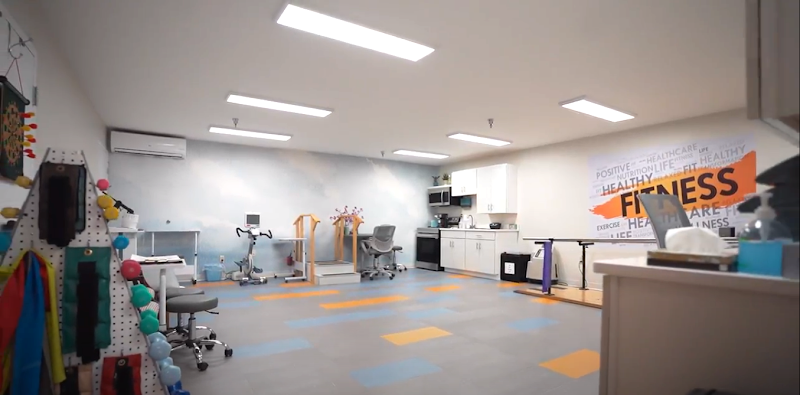
How Does Ambassador Healthcare Compare to Other Indiana Nursing Homes?

Compared to the 100 nursing homes in Indiana, AMBASSADOR HEALTHCARE's overall rating (1 stars) is below the state average of 3.1, staff turnover (37%) is near the state average of 46%, and health inspection rating (1 stars) is much below the national benchmark.

What Should Families Ask When Visiting Ambassador Healthcare?

Based on this facility's data, families visiting should ask: "What changes have been made since the serious inspection findings, and how are you preventing similar issues?" "Can I visit during a mealtime to observe dining assistance and food quality?" "How do you handle medical emergencies, and what is your hospital transfer rate?" "Can I speak with family members of current residents about their experience?" These questions are particularly relevant given the facility's Immediate Jeopardy citations.

Is Ambassador Healthcare Safe?

Based on CMS inspection data, AMBASSADOR HEALTHCARE has documented safety concerns. Inspectors have issued 1 Immediate Jeopardy citation (the most serious violation level indicating risk of serious injury or death). The facility has a 1-star overall rating and ranks #100 of 100 nursing homes in Indiana. Families considering this facility should ask detailed questions about what corrective actions have been taken since these incidents.

Do Nurses at Ambassador Healthcare Stick Around?

AMBASSADOR HEALTHCARE has a staff turnover rate of 37%, which is about average for Indiana nursing homes (state average: 46%). Moderate turnover is common in nursing homes, but families should still ask about staff tenure and how the facility maintains care continuity when employees leave.

Was Ambassador Healthcare Ever Fined?

AMBASSADOR HEALTHCARE has been fined $42,078 across 1 penalty action. The Indiana average is $33,500. While any fine indicates a compliance issue, fines under $50,000 are relatively common and typically reflect isolated problems that were subsequently corrected. Families should ask what specific issues led to these fines and confirm they've been resolved.

Is Ambassador Healthcare on Any Federal Watch List?

AMBASSADOR HEALTHCARE is not on any federal watch list. The most significant is the Special Focus Facility (SFF) program, which identifies the bottom 1% of nursing homes nationally based on persistent, serious quality problems. Not being on this list means the facility has avoided the pattern of deficiencies that triggers enhanced federal oversight. This is a positive indicator, though families should still review the facility's inspection history directly.