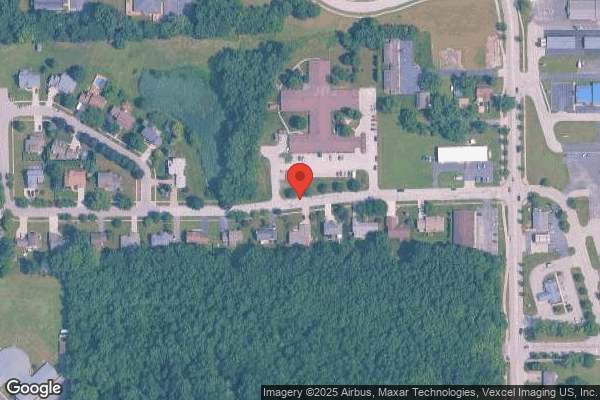
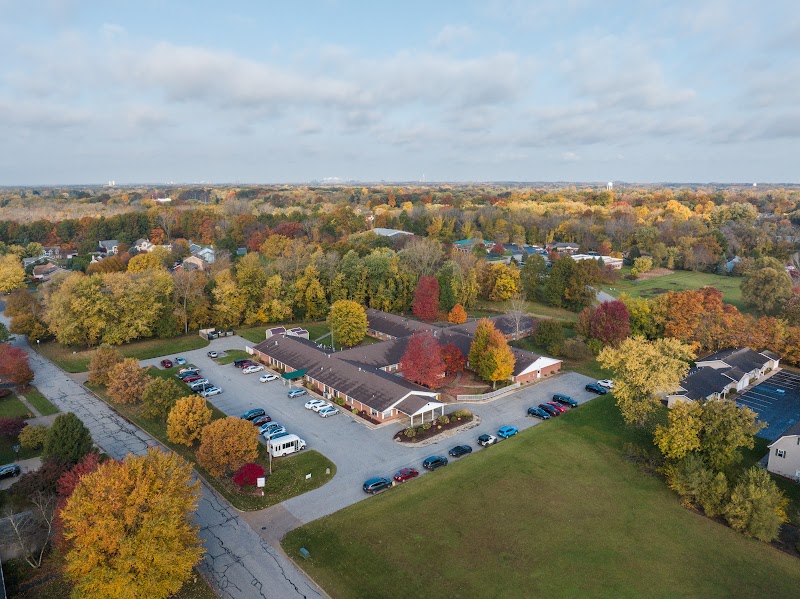
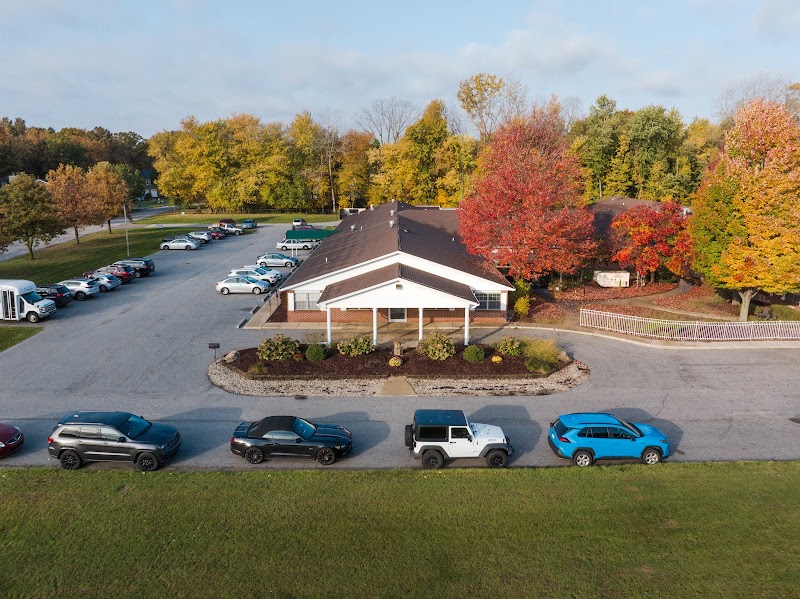
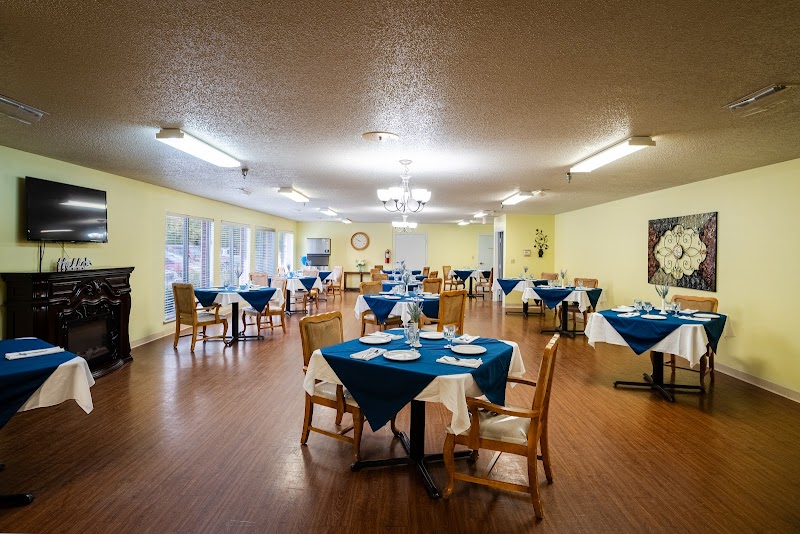

CHESTERTON MANOR

110 BEVERLY DR, CHESTERTON, IN 46304 (219) 926-8387
For profit - Corporation 100 Beds IDE MANAGEMENT GROUP Data: November 2025
Trust Grade
35/100
#442 of 505 in IN
Last Inspection: March 2025

Within standard 12-15 month inspection cycle. Federal law requires annual inspections.

Overview

Chesterton Manor has received a Trust Grade of F, indicating significant concerns about the quality of care provided. It ranks #442 out of 505 nursing facilities in Indiana, placing it in the bottom half of the state's offerings, and #9 out of 10 in Porter County, meaning only one local facility is rated lower. The trend is worsening, with the number of issues increasing from 11 in 2024 to 12 in 2025. While staffing is a concern with a high turnover rate of 65%, which is above the state average, the facility does have more RN coverage than 88% of Indiana nursing homes, which is a positive aspect. However, there are serious issues noted, such as a failure to ensure adequate RN coverage on multiple days, and staff not being trained on abuse policies, which raises significant safety concerns for residents.

Trust Score
F
35/100
In Indiana
#442/505
Bottom 13%
Safety Record
Low Risk
No red flags
Inspections
Getting Worse
11 → 12 violations
Staff Stability
⚠ Watch
65% turnover. Above average. Higher turnover means staff may not know residents' routines.
Penalties
✓ Good
No fines on record. Clean compliance history, better than most Indiana facilities.
Skilled Nurses
✓ Good
Each resident gets 42 minutes of Registered Nurse (RN) attention daily — more than average for Indiana. RNs are trained to catch health problems early.
Violations
⚠ Watch
36 deficiencies on record. Higher than average. Multiple issues found across inspections.
★☆☆☆☆
1.0
Overall Rating
★☆☆☆☆
1.0
Staff Levels
★★☆☆☆
2.0
Care Quality
★★☆☆☆
2.0
Inspection Score
Stable
2024: 11 issues
2025: 12 issues

The Good

  • Full Sprinkler Coverage · Fire safety systems throughout facility
  • No fines on record

Facility shows strength in fire safety.

The Bad

1-Star Overall Rating

Below Indiana average (3.1)

Significant quality concerns identified by CMS

Staff Turnover: 65%

19pts above Indiana avg (46%)

Frequent staff changes - ask about care continuity

Chain: IDE MANAGEMENT GROUP

Part of a multi-facility chain

Ask about local staffing decisions and management

Staff turnover is elevated (65%)

17 points above Indiana average of 48%

The Ugly 36 deficiencies on record

Mar 2025 12 deficiencies
CONCERN (D)

Potential for Harm - no one hurt, but risky conditions existed

Deficiency F0602 (Tag F0602)

Could have caused harm · This affected 1 resident

**NOTE- TERMS IN BRACKETS HAVE BEEN EDITED TO PROTECT CONFIDENTIALITY** Based on observation, record review and interview, the facility failed to protect a resident's right to be free from misappropri...

Read full inspector narrative →
**NOTE- TERMS IN BRACKETS HAVE BEEN EDITED TO PROTECT CONFIDENTIALITY** Based on observation, record review and interview, the facility failed to protect a resident's right to be free from misappropriation of property related to bank fraud by Agency CNA 1, for 1 of 1 resident reviewed for misappropriation of property. (Resident 25) The deficient practice was corrected by [DATE], prior to the start of the survey, and was therefore past noncompliance. The facility thoroughly investigated the incident related to the bank fraud once being notified by the police. A report was initiated by the police department and a detective was assigned to the case. The Staffing Agency was notified as soon as the Administrator was made aware and the Agency CNA had not worked at the facility since [DATE]. Finding includes: On [DATE] at 2:30 p.m., Resident 25 was observed in her room. She indicated it was not a good time to talk due to her floor being wet and she was busy. On [DATE] at 2:00 p.m., the resident indicated it was not a good time to talk. The record for Resident 25 was reviewed on [DATE] at 3:32 p.m. Diagnoses included, but were not limited to, rheumatoid arthritis, scoliosis, spinal stenosis, and anxiety. The Quarterly Minimum Data Set (MDS) assessment, dated [DATE], indicated the resident was cognitively intact. A Social Service Note, dated [DATE] at 3:00 p.m., indicated the Social Service Director met with the resident to inquire about personal items. The resident indicated something was missing, however, they already know. The resident was offered a lock box to secure her valuables but she declined. The resident was observed with a keychain around her wrist with keys. She indicated she was able to keep personal items in her dresser that locked with a key. She presented at her baseline without signs or symptoms of emotional distress. A facility reportable to the State Agency was dated [DATE] and indicated the following: The facility was notified by (name of town) detective of fraudulent funds from the resident's checking account. The police were notified by the resident's daughter of the fraudulent activity occurring since November. The detective notified the facility of the alleged involvement by an agency employee. The staffing agency was notified and the suspected staff member was removed from the schedule. The facility was working with the family and detective. The physician was notified and the resident was offered to keep her possessions in the safe in the business office. A statement completed by the Administrator indicated, on [DATE], a detective arrived at the facility and met with the Administrator. The detective informed the writer (Administrator) there were fraudulent charges on Resident 25's checking account going back to [DATE]. The detective informed the Administrator of the Agency CNA's name. The CNA's file was pulled and the last time she had worked was [DATE], her certificate expired [DATE], and she had not worked in the facility since [DATE]. The Administrator called the staffing agency and alerted them of the investigation and indicated there might be two more aides involved but the detective had no evidence yet. The Administrator spoke with the resident to ask if she had anything of value in her room and if she would like to have it locked up. The bank had refunded the lost funds to the resident. Resident interviews were completed related to misappropriation of property on [DATE] and [DATE] and no concerns were voiced. On [DATE], the Administrator went in with the Human Resource (HR) Director and met with the resident, and asked her again if she had anything she would like put in the safe. The resident indicated she had $150 in her night stand and the Administrator encouraged her to please put the money in the safe. The resident handed over an envelope that had $120 in it. The resident's daughter was called and informed of amount of money her mother had as well as another envelope with $30 that she wanted to keep. A follow up investigation on [DATE], indicated the detective alerted the facility of an agency aide in possible connection with fraudulent activity in the resident's checking account. The aide last worked in the facility on [DATE] and has since been put on the do not return list. The resident agreed to have the facility place any cash or checks in the facility safe. The facility was cooperating with the police department and the resident's bank had replaced the cash back into the resident's account. On [DATE], the Administrator called the detective for an update, who indicated he was pressing charges against the aide and had just started an investigation on the other two agency aides and would keep the facility updated. During an interview on [DATE] at 8:51 a.m., the Administrator indicated she had no previous knowledge of the incident prior to the detective coming to the facility on [DATE]. The resident's daughter had not brought the issue to her attention or any other staff member. As soon as the Administrator was aware of the alleged incident, she called the staffing agency to make them aware. The staffing agency indicated the CNA no longer worked there. The Nurse Consultant was also notified due to the facility having a sister facility in the same city where the staffing agency was located. The Administrator indicated staff and residents who worked and resided on the 100 Unit were interviewed with no concerns voiced. 3.1-28(a)
CONCERN (D)

Potential for Harm - no one hurt, but risky conditions existed

Deficiency F0657 (Tag F0657)

Could have caused harm · This affected 1 resident

Based on record review and interview, the facility failed to ensure a care plan meeting was conducted at least quarterly for 1 of 5 residents reviewed for care planning. (Resident 4) Finding includes:...

Read full inspector narrative →
Based on record review and interview, the facility failed to ensure a care plan meeting was conducted at least quarterly for 1 of 5 residents reviewed for care planning. (Resident 4) Finding includes: The record for Resident 4 was reviewed on 3/4/25 at 9:05 a.m. Diagnoses included, but were not limited to, pneumonia and hypertensive heart disease. The 12/27/24 Quarterly Minimum Data Set (MDS) assessment indicated the resident was cognitively intact for daily decision making. A review of the care plan notes indicated the last care plan meeting conducted was on 3/14/24. The resident declined a care plan meeting on 9/18/24. There was no documentation of subsequent care plan meetings conducted or refused. During an interview on 3/5/25 at 4:05 p.m. the Social Service Director indicated care plan meetings normally would take place at least quarterly, with each MDS assessment. A policy titled, Care Plans, Comprehensive Person - Centered, received as current from the Director of Nursing on 3/6/25 at 9:00 a.m. indicated, . The Interdisciplinary Team (IDT), in conjunction with the resident and his/her family or legal representative, develops and implements a comprehensive, person-centered care plan for each resident . The Interdisciplinary Team must review and update the care plan: . At least quarterly, in conjunction with the required quarterly MDS assessment . 3.1-35(d)(2)(B)
CONCERN (D)

Potential for Harm - no one hurt, but risky conditions existed

Pressure Ulcer Prevention (Tag F0686)

Could have caused harm · This affected 1 resident

Based on record review and interview, the facility failed to ensure pressure ulcer treatments were completed as ordered by the physician for 1 of 4 residents reviewed for pressure ulcers. (Resident 10...

Read full inspector narrative →
Based on record review and interview, the facility failed to ensure pressure ulcer treatments were completed as ordered by the physician for 1 of 4 residents reviewed for pressure ulcers. (Resident 10) Finding includes: During an interview on 3/2/25 at 11:55 a.m., Resident 10 indicated his pressure ulcer treatment was completed one time a week and was just changed on the midnight shift and that has never happened. On 3/4/25 at 2:00 p.m., the resident refused to have the surveyor observe the pressure ulcer and the treatment. The record for Resident 10 was reviewed on 3/4/25 at 11:40 a.m., Diagnoses included, but were not limited to, stroke, left hemiplegia, abnormal posture, heart failure, heart disease, pain in the left wrist anxiety and major depressive disorder. The 2/25/25 Quarterly Minimum Data Set (MDS) assessment indicated the resident was cognitively intact for daily decision making and had one Stage 3 (full-thickness tissue loss where subcutaneous fat was visible within the wound, but bone, tendon, or muscle were not exposed) unhealed pressure ulcer. The Care Plan, revised on 2/6/25, indicated the resident had an impairment to his skin integrity. The approaches were for nursing to provide the treatment as ordered by the physician. The Care Plan, dated 9/17/24, indicated the resident had an actual Stage 3 pressure ulcer. The approaches were to apply the treatment as ordered. A Physician's Order, dated 10/16/24, indicated to clean the coccyx wound with normal saline, pat dry, apply moistened collagen powder and cover with a bordered gauze daily. The 11/2024 Treatment Administration Record (TAR) indicated the treatment was not signed out as being completed on 11/7/24, 11/8/24, 11/9/24, 11/10/24, 11/21/24, and 11/29/24. A Physician's Order, dated 12/9/24, indicated to clean the coccyx wound with normal saline, pat dry, apply moistened collagen matrix sheet and cover with a bordered gauze every night shift. The 12/2024 TAR indicated the treatment was not signed out as being completed on 12/11/24, 12/19/24, 12/23/24, and 12/29/24. The 1/2025 and 2/2025 TARs indicated the treatment was not signed out as being completed on 1/2/25, 1/9/25, and 2/3/25. A Physician's Order, dated 2/17/25, indicated to clean the coccyx wound with normal saline, pat dry, apply collagen to the wound bed and skin prep to the periwound and cover with a bordered gauze every night shift. The 2/2025 and 3/2025 TAR indicated the treatment was not signed out as being completed on 2/20/25, 2/27/25, and 3/2/25. The last documented Wound Nurse Practitioner (NP) note, dated 2/28/25, indicated the wound was improving and smaller in size. The pressure ulcer measured 1.2 centimeters (cm) in length, 0.4 cm in width, and 0.3 cm in depth and had 90% granulation tissue with 10% slough (dead tissue). There was documentation in nursing notes for the month of 1/2025 and 2/2025 the resident had refused to lay down during the day as he wished to stay up and smoke. During a phone interview on 3/4/25 at 2:00 p.m., the Wound NP indicated the resident refused debridement all the time, and was noncompliant with lying down daily as he indicated he wanted to smoke and was not going to bed during the day. During an interview on 3/5/25 at 2:00 p.m., the Unit Manager indicated treatments were to be completed as ordered by the physician. 3.1-40(a)(2)
CONCERN (D)

Potential for Harm - no one hurt, but risky conditions existed

Deficiency F0688 (Tag F0688)

Could have caused harm · This affected 1 resident

Based on observation, record review, and interview, the facility failed to ensure an orthotic device was in place for a resident with a limited range of motion to the hand for 1 of 2 residents reviewe...

Read full inspector narrative →
Based on observation, record review, and interview, the facility failed to ensure an orthotic device was in place for a resident with a limited range of motion to the hand for 1 of 2 residents reviewed for range of motion. (Resident 10) Finding includes: During an interview on 3/2/25 at 11:54 a.m., Resident 10 indicated he used to wear a splint on his left hand, but now he did not. The resident's left hand was observed to be flaccid (soft and limp characterized by a decrease in or absence of muscle tone) and he was not able to open the left hand on his own, he used his right hand to open the hand. During random observations on 3/3/25 at 1:04 p.m., and on 3/4/25 at 9:35 a.m. and 12:00 p.m., the resident was observed seated in his wheelchair. At those times, his left hand was flaccid and there was no orthotic device observed in that hand. During an interview on 3/4/25 at 2:05 p.m., the resident indicated he had not seen his hand splint in a long time. The record for Resident 10 was reviewed on 3/4/25 at 11:40 a.m. Diagnoses included, but were not limited to, stroke, left hemiplegia, abnormal posture, heart failure, heart disease, pain in the left wrist anxiety and major depressive disorder. The 2/25/25 Quarterly Minimum Data Set (MDS) assessment indicated the resident was cognitively intact for daily decision making and had a range of motion impairment to one side for his upper extremity. A Care Plan, revised on 1/16/24, indicated the resident had an ADL (activities of daily living) self care performance deficit related to hemiplegia affecting his left side. A Care Plan, revised on 1/16/24, indicated the resident was at risk for falls related to left-sided paralysis. The approaches were to wear the left wrist orthotic device as ordered. A Physician's Order, dated 12/20/22, indicated left wrist/hand orthotic device to be donned and doffed as the resident tolerated or requested every day and night shift. The Treatment Administration Record (TAR) for 11/2024 indicated the orthotic device lacked documentation of it being signed out on the night shift on 11/7/24, 11/8/24 and 11/29/24 and on the day shift on 11/10/24. The TAR for the month of 12/2024 indicated there were no documented refusals of the resident not wearing the orthotic device. The device lacked documentation of it being signed out on the night shift on 12/11/24, 12/23/24 and 12/31/24. The 1/2025, 2/2025 and 3/2025 TAR indicated the orthotic device was signed out as being donned for day and night shift with no documentation of refusals. During an interview on 3/4/25 at 3:20 p.m., the Unit Manager indicated the orthotic device was attached to his motorized wheelchair and he no longer used that wheelchair. The order for the device should have been discontinued a long time ago. 3.1-42(a)(2)
CONCERN (D)

Potential for Harm - no one hurt, but risky conditions existed

Deficiency F0692 (Tag F0692)

Could have caused harm · This affected 1 resident

**NOTE- TERMS IN BRACKETS HAVE BEEN EDITED TO PROTECT CONFIDENTIALITY** Based on observation, record review, and interview, the facility failed to ensure food consumption logs were completed for resid...

Read full inspector narrative →
**NOTE- TERMS IN BRACKETS HAVE BEEN EDITED TO PROTECT CONFIDENTIALITY** Based on observation, record review, and interview, the facility failed to ensure food consumption logs were completed for residents with a history of weight loss for 2 of 2 residents reviewed for nutrition. (Residents 6 and 176) Findings include: 1. The record for Resident 6 was reviewed on 3/4/25 at 12:22 p.m. Diagnoses included, but were not limited to, protein calorie malnutrition, feeding difficulties, dysphagia (difficulty swallowing), and Alzheimer's disease. The 12/17/24 Quarterly Minimum Data Set (MDS) assessment indicated the resident was cognitively impaired for daily decision making. He required partial to moderate assistance with eating and received a mechanically altered diet. A Care Plan, dated 7/15/24 and reviewed on 12/4/24, indicated the resident was at nutritional risk associated with dysphagia diet due to dysphagia and Parkinson's disease causing impaired dexterity and movement, history of significant weight changes (7/12/24) and the diagnosis of protein calorie malnutrition. Interventions included, but were not limited to, diet as ordered by the physician and monitor diet acceptance and intake. A Dietary Note, dated 1/27/25, indicated the resident had a significant weight loss of 6.3% within the last 30 days. The Food Consumption Logs for the months of February and March 2025, located in the Task section of the electronic medical record, indicated the following: - There was no documentation of breakfast intake on 2/8/25 - There was no documentation of dinner intake on 2/21/25 and 2/27/25 - There was no documentation of food intake for all three meals on 2/10/25, 2/11/25, 2/19/25, 2/22/25, and 3/3/25 During an interview on 3/5/25 at 2:25 p.m., the Unit Manager indicated the resident's food intake should have been documented. 2. The record for Resident 176 was reviewed on 3/3/25 at 2:40 p.m. The resident was admitted to the facility on [DATE]. Diagnoses included, but were not limited to, wedge compression fracture of T11 and T12 vertebra, anxiety disorder, chronic pain, adult failure to thrive, severe protein calorie malnutrition, and atrial fibrillation. The 2/14/25 admission Minimum Data Set (MDS) assessment indicated the resident was cognitively intact for daily decision making and required set up assistance with eating. The resident had no oral problems and weighed 73 pounds with no weight loss. A Care Plan, dated 2/11/25, indicated the resident was at risk for nutritional deficits related to underweight status. The approaches were to monitor by mouth intakes. A Care Plan, dated 2/11/25, indicated the resident had a nutritional problem or a potential nutritional problem related to serve protein calorie malnutrition. The approaches were to monitor weight and food intake. A Registered Dietitian (RD) Progress Note, dated 2/17/25, indicated the resident was at an underweight status with a body mass index of 14.7. The resident's admission weight was 73 pounds and her weight was 72 pounds on 2/24/25. The Food Consumption Log, in the CNA Task Section, indicated breakfast was not documented on 2/10/25, 2/11/25, 2/22/25, 2/26/25, and 2/27/25. Lunch was not documented on 2/10/25, 2/11/25, 2/22/25, 2/26/25, and 2/27/25, and dinner was not documented on 2/10/25, 2/11/25, 2/17/25, and 2/18/25. During an interview on 3/5/25 at 2:00 p.m., the Unit Manager indicated meal consumptions should be completed before the end of each CNA's shift. The current and undated Food Acceptance Methods of Measurement policy, provided by the Administrator on 3/6/25 at 9:00 a.m., indicated determining food intake by facility staff and family was an important part of monitoring the food consumed by residents. Comparing food intake over time was a way to evaluate trends in a resident's nutritional status such as low intake and possibility of changes in the weight. 3.1-46(a)(1)
CONCERN (D)

Potential for Harm - no one hurt, but risky conditions existed

Respiratory Care (Tag F0695)

Could have caused harm · This affected 1 resident

Based on observation, record review, and interview, the facility failed to ensure oxygen was at the correct flow rate for 2 of 3 residents reviewed for oxygen. (Residents 7 and 58) Findings include: 1...

Read full inspector narrative →
Based on observation, record review, and interview, the facility failed to ensure oxygen was at the correct flow rate for 2 of 3 residents reviewed for oxygen. (Residents 7 and 58) Findings include: 1. During a random observation on 3/2/25 at 9:09 a.m., Resident 7 was observed seated in her wheelchair. At that time, she was wearing oxygen per a portable tank via nasal cannula at 2.5 liters per minute. On 3/2/25 at 12:12 p.m. and 3:04 p.m., the resident was observed seated in her wheelchair. At those times she was wearing oxygen per a portable tank via nasal cannula at 2 liters per minute. During random observations on 3/3/25 8:55 a.m., 1:00 p.m., and 3:00 p.m., the resident was observed seated in her wheelchair. At those times she was wearing oxygen per a portable tank via nasal cannula at 2 liters per minute. During random observations on 3/4/25 at 9:40 a.m., 11:00 a.m., 11:49 a.m., and 1:59 p.m., the resident was observed seated in her wheelchair. At those times she was wearing oxygen per the portable tank via nasal cannula at 2.5 liters per minute. On 3/4/25 at 3:00 p.m., the Unit Manager was in the main dining room where the resident was seated. The Unit Manager was asked to look at the oxygen setting and verified it was set to 2.5 liters per minute. The record for Resident 7 was reviewed on 3/3/25 at 1:15 p.m. Diagnoses included, but were not limited to, COPD (chronic obstructive pulmonary disease), asthma, bronchitis, dementia, heart failure, heart disease, and high blood pressure. The 1/27/25 Annual Minimum Data Set (MDS) assessment, indicated the resident was moderately impaired for decision making and used oxygen while a resident. The revised 3/17/23 Care Plan, indicated the resident has asthma, COPD and has shortness of breath while lying flat and was at risk for complications. The approaches were to provide oxygen per the doctor's orders. A Physician's Order, dated 4/13/23, indicated oxygen at 3 liters per minute continuously. During an interview on 3/4/25 at 3:00 p.m., the Unit Manager indicated the oxygen rate should have been set to 3 liters per minute. 2. During random observations on 3/2/25 at 11:49 a.m. and 3:12 p.m., Resident 58 was observed in bed. At those times, she was wearing oxygen on the room concentrator via nasal cannula at 1.5 liters per minute. During random observations on 3/3/25 at 9:32 a.m., and 1:03 p.m., on and 3/4/25 at 9:44 a.m., the resident was observed in bed. At those times she was wearing oxygen on the room concentrator via nasal cannula at 1.5 liters per minute On 3/4/25 at 2:00 p.m., LPN 2 was observed in the room and was asked to look at the oxygen level. At that time, she verified the oxygen was not at 2 liters, as the middle of the ball was below the 2 on the concentrator. The record for Resident 58 was reviewed on 3/4/25 at 9:30 a.m. Diagnoses included, but were not limited to, chronic kidney disease, chronic migraines, atrial fibrillation, high blood pressure, major depressive disorder, anxiety, joint disorder, and obsessive compulsive disorder. The 1/29/25 Quarterly Minimum Data Set (MDS) assessment indicated the resident was cognitively intact for daily decision making and was not receiving oxygen. A Care Plan, dated 2/7/25, indicated the resident was at risk for alterations in oxygen levels due to diagnosis of pneumonia. The approaches were to set the oxygen at 2 liters per minute. A Physician's Order, dated 2/6/25, indicated oxygen at 2 liters per minute. During an interview on 3/4/25 at 3:20 p.m., the Unit Manager indicated the oxygen was to be at 2 liters per minute. 3.1-47(a)(6)
CONCERN (D)

Potential for Harm - no one hurt, but risky conditions existed

Deficiency F0697 (Tag F0697)

Could have caused harm · This affected 1 resident

Based on record review and interview, the facility failed to ensure a resident was free from pain related to pain medications and transportation to the pain clinic not being available for 1 of 1 resid...

Read full inspector narrative →
Based on record review and interview, the facility failed to ensure a resident was free from pain related to pain medications and transportation to the pain clinic not being available for 1 of 1 resident reviewed for pain. (Resident 36) Finding includes: During an interview on 3/2/25 at 11:44 a.m., Resident 36 indicated she did not get her medications on time or at all, as they were always running out of them. The record for Resident 36 was reviewed on 3/5/25 at 9:10 a.m. Diagnoses included, but were not limited to, rheumatoid arthritis, anemia, anxiety disorder, end stage renal disease, and osteoarthritis of the hip. The Quarterly Minimum Data Set (MDS) assessment, dated 2/7/25, indicated the resident was cognitively intact for daily decision making and received an opioid medication. The resident indicated she had frequent pain that interfered with her sleep and activities of daily living. Her pain was a five out of 10 on the pain scale. A Care Plan, revised on 1/27/25, indicated the resident had behaviors of making false accusations related to stating she does not receive her medications. A Care Plan, revised on 2/25/25, indicated the resident had arthritis, a fractured right foot and chose to go to another pain clinic. The approaches were to anticipate the need for pain relief and respond immediately and encourage the resident to call for assistance when in pain. A Physician's Order, dated 12/30/24, indicated Methocarbamol (a type of muscle relaxant that works by calming overactive nerves in your body and treats muscle pain and stiffness) tablet 500 milligrams (mg), give one tablet by mouth two times a day. A Nurse's Note, dated 12/31/24 at 9:56 a.m., indicated the Methocarbamol had not arrived to the facility. The 1/2025 Medication Administration Record (MAR) indicated the Methocarbamol tablet 500 mg was coded with a 16, meaning see nurse's notes, at 8:00 a.m. on 1/1/25, 1/2/25, 1/3/25, 1/4/25, 1/5/25, and 1/6/25 and at 8:00 p.m. on 1/1/25, 1/2/25, 1/4/25, and 1/5/25. Nurse's Notes, dated 1/1/25, 1/2/25, 1/3/25, 1/4/25, 1/5/25 and 1/6/25, indicated the Methocarbamol had not arrived to the facility. A Nurse's Note, dated 1/13/25 at 2:49 p.m., indicated a message was left for the pain clinic to reschedule the resident's appointment due to the transportation company canceled the pick up. A Nurse' Note, dated 1/13/25 at 4:03 p.m., indicated the pain clinic called back with a new appointment on 1/28/25 at 11:30 a.m. A Physician's Order, dated 1/1/25, indicated Oxycodone 10 mg, give one tablet four times a day for pain. The 2/2025 MAR indicated the Oxycodone was coded with a 16 on 2/15/25 at 12:00 a.m., 6:00 a.m., 12:00 p.m., and 6:00 p.m. and on 2/16/25 at 12:00 p.m. and 6:00 p.m. Nurse's Notes for the above dates indicated the medication was not available and they were awaiting it from pharmacy. Nurse's Notes, dated 2/26/25 at 7:33 p.m., indicated the resident missed the pain clinic appointment due to transportation. A phone call was placed to the clinic to reschedule. The 3/2025 MAR indicated the Oxycodone was coded with a 16 on 3/4/25 at 12:00 p.m. and 6:00 p.m. and on 3/5/25 at 12:00 a.m. Nursing Notes for the above dates indicated the medication was not available and they were awaiting it from pharmacy. During an interview on 3/5/25 at 2:00 p.m., the Unit Manager indicated the resident had missed two pain clinic appointments due to no transportation because they canceled. She was aware the resident had missed doses of pain medication, however, the pharmacy only supplied a limited amount of medication in the EDK (emergency drug kit) box, therefore sometimes nursing staff could not give her the medication due to not having enough in the EDK box. 3.1-37(a)
CONCERN (D)

Potential for Harm - no one hurt, but risky conditions existed

Deficiency F0761 (Tag F0761)

Could have caused harm · This affected 1 resident

Based on observation, record review and interview, the facility failed to ensure proper medication storage related to medicated creams not stored securely for 2 of 2 residents randomly observed. (Resi...

Read full inspector narrative →
Based on observation, record review and interview, the facility failed to ensure proper medication storage related to medicated creams not stored securely for 2 of 2 residents randomly observed. (Residents 58 and 13) Findings include: 1. During random observations on 3/2/25 at 11:49 a.m. and 3:12 p.m., Resident 58 was observed in bed. At those times there was a tube of Bacitracin medicated cream on the dresser. During random observations on 3/3/25 at 9:32 a.m. and 1:03 p.m. and on 3/4/25 at 9:44 a.m., the Bacitracin medicated cream remained on top of the dresser in the resident's room. On 3/4/25 at 2:00 p.m., LPN 2 was observed in the room. At that time, the LPN was shown the medicated cream on top of the dresser. During an interview at that time, LPN 2 indicated the Bacitracin was to be locked in the treatment cart and not left in the resident's room. The record for Resident 58 was reviewed on 3/4/25 at 9:30 a.m. Diagnoses included, but were not limited to, chronic kidney disease, chronic migraines, atrial fibrillation, high blood pressure, major depressive disorder, anxiety, joint disorder, and obsessive compulsive disorder. The 1/29/25 Quarterly Minimum Data Set (MDS) assessment, indicated the resident was cognitively intact for daily decision making. A Physician's Order, dated 2/27/25, indicated Bacitracin Ointment 500 units, apply to right shin and right lower leg open blisters one time a day. There was no order to keep the medicated cream at the bedside in the resident's room. During an interview on 3/4/25 at 3:20 p.m., the Unit Manager indicated the Bacitracin cream should not have been left in the resident's room on the dresser. 2. During random observations on 3/02/25 at 9:05 a.m. and 11:08 a.m., a tube of Medihoney (a topical wound medication) was observed on Resident 13's dresser. During an interview on 3/5/25 at 11:31 a.m., the Unit Manager was informed of the findings and offered no further information. A policy titled, Storage of Medications and Biologicals, received as current on 3/6/25 at 10:30 a.m. from the Unit Manager, indicated, . The facility is required to secure all medications in a locked storage area and to limit access to only authorized or licensed personnel consistent with state or federal requirements and professional standards of practice . 3.1-25(j) 3.1-25(m) 3.1-25(n)
CONCERN (D)

Potential for Harm - no one hurt, but risky conditions existed

Infection Control (Tag F0880)

Could have caused harm · This affected 1 resident

Based on observation, record review, and interview, the facility failed to ensure infection control practices were in place and implemented related to not donning personal protective equipment (PPE) f...

Read full inspector narrative →
Based on observation, record review, and interview, the facility failed to ensure infection control practices were in place and implemented related to not donning personal protective equipment (PPE) for residents in enhanced barrier precautions (EBP) for 3 of 3 wound care treatments observed. (Residents 3, 6, and 226) Findings include: 1. On 3/5/25 at 11:30 a.m., the Assistant Director of Nursing (ADON) was observed performing the treatment to Resident 3's sacral pressure area. The ADON entered the resident's room and proceeded to wash her hands with soap and water. She donned a pair of gloves, repositioned the resident in bed, and removed the dressing to the resident's sacrum. She was not wearing a gown when she repositioned the resident and removed the dressing. The ADON proceeded to remove her gloves, used hand sanitizer, donned new gloves and a gown and completed the resident's treatment to her sacrum. The record for Resident 3 was reviewed on 3/5/25 at 11:21 a.m. Diagnoses included, but were not limited to, dementia without behavior disturbance, chronic kidney disease stage 4, and hypertensive heart disease. The Quarterly Minimum Data Set (MDS) assessment, dated 12/2/24, indicated the resident was moderately impaired for daily decision making and she had one Stage 4 pressure area (the wound extends through all layers of the skin, reaching the underlying muscle, tendon, or bone). A Care Plan, reviewed on 12/2/24, indicated the resident was in enhanced barrier precautions (EBP) due to a wound to the coccyx area. The March 2025 Physician's Order Summary (POS) indicated EBP (a set of infection control measures that used gowns and gloves to reduce the spread of multidrug-resistant organisms) was to be maintained due to the resident's sacral wound. During an interview on 3/5/25 at 3:00 p.m., the ADON indicated she should have worn a gown when removing the resident's dressing to the sacrum. 2. On 3/5/25 at 2:34 p.m., the Assistant Director of Nursing (ADON) was observed performing wound care for Resident 6. The ADON entered the resident's room, she washed her hands with soap and water and donned a gown and gloves. She removed the dressing to the resident's left heel. The dressing to the resident's sacrum was already removed due to receiving incontinence care. After changing gloves, sanitizing her hands, and donning new gloves, the ADON completed the treatment to the resident's sacrum. The ADON removed her gown and gloves and left the resident's room to retrieve more supplies from the treatment cart. Upon entering the room, the ADON washed her hands, donned a pair of gloves, and proceeded to complete the treatment to the resident's left heel. She was not wearing a gown at that time. During an interview on 3/5/25 at 3:00 p.m., the ADON indicated she should have worn a gown while completing the treatment to the resident's left heel. The record for Resident 6 was reviewed on 3/4/25 at 12:22 p.m. Diagnoses included, but were not limited to, Alzheimer's disease and Stage 4 pressure ulcer to the left buttock. The 12/17/24 Quarterly Minimum Data Set (MDS) assessment indicated the resident was cognitively impaired for daily decision making. He was identified as having one Stage 3 (full thickness tissue loss) pressure ulcer, one Stage 4 (the wound extends through all layers of the skin, reaching the underlying muscle, tendon, or bone) pressure ulcer, and four Deep Tissue Injuries (a type of pressure ulcer that occurs when prolonged pressure or shear forces damage to the underlying soft tissues, such as muscles and bones). A Physician's Order, dated 3/2/25, indicated to maintain EBP (a set of infection control measures that used gowns and gloves to reduce the spread of multidrug-resistant organisms) related to wounds. 3. During an observation on 3/3/25 at 9:05 a.m., Resident 226 was observed resting in bed. She had a dressing on her left lower leg. An EBP (enhanced barrier precautions) sign was on her door. At that time, the resident indicated the Assistant Director of Nursing (ADON) only wore gloves, not a gown, when performing the daily dressing change on her leg. During an observation of wound care on 3/5/25 at 2:03 p.m., the ADON removed the resident's dressing to her leg, and reached over her uncovered wound to get her tablet. She then put on a gown, cleansed the wound, and applied the dressing. The record for Resident 226 was reviewed on 3/4/25 at 11:31 a.m. Diagnoses included, but were not limited to, cerebral infarction and hypertension. The 2/19/25 Nursing admission Evaluation Assessment indicated the resident was cognitively intact for daily decision making and required limited assistance from staff with ADLs and transfers. A Care Plan, revised on 3/2/25, indicated the resident required EBP due to her wound. A Physician's Order, dated 3/2/25, indicated the EBP were to be in place because the resident had a wound. During an interview on 3/5/25 at 2:20 p.m., the ADON indicated she forgot to put a gown on before beginning wound care. A policy titled, Enhanced Barrier Precautions, received as current from the Unit Manager on 3/6/25 at 10:30 a.m. indicated, . Gloves and gown are applied prior to performing the high contact resident care activity . Examples of high-contact resident care activities requiring the use of gown and gloves for EBPs include: . wound care . 3.1-18(b)
CONCERN (D)

Potential for Harm - no one hurt, but risky conditions existed

Deficiency F0919 (Tag F0919)

Could have caused harm · This affected 1 resident

Based on observation and interview, the facility failed to ensure the call light system in a resident's room and the call light system at the nurses' station was properly functioning during random cal...

Read full inspector narrative →
Based on observation and interview, the facility failed to ensure the call light system in a resident's room and the call light system at the nurses' station was properly functioning during random call light observations. (Residents 38 & 18) Findings include: 1. During an observation on 3/2/25 at 12:00 p.m., Resident 38's call light button was pushed. The light inside the room on the wall was observed to be functioning. At 12:27, there was no staff response to the resident's light. The call light in the hallway outside the resident's room was observed and was not activated. At 12:29 p.m., the nurse indicated that the call light was not working, and she would notify the Maintenance Director. 2. On 3/3/25 at 9:24 a.m., Resident 18 indicated her call light lit up outside of her room, but did not work at the nurse's station. She said the staff would only know if her light was going off if they looked down the hall for it. During the environmental tour with the Maintenance Director and the Administrator on 3/6/25 at 2:49 p.m., the Maintenance Director tested the call light in Resident 18's room then observed the call light system at the nurses' station and found the call light system was not functioning properly. During an interview on 3/6/25 at 3:10 p.m., the Maintenance Director indicated he knew the call light at the nurses' station was not operating properly. He contacted the repair technician on 3/6/25 to come and repair the system. 3.1-19(u)(1)
CONCERN (E)

Potential for Harm - no one hurt, but risky conditions existed

Quality of Care (Tag F0684)

Could have caused harm · This affected multiple residents

**NOTE- TERMS IN BRACKETS HAVE BEEN EDITED TO PROTECT CONFIDENTIALITY** Based on observation, record review, and interview, the facility failed to ensure medications were held per blood sugar paramete...

Read full inspector narrative →
**NOTE- TERMS IN BRACKETS HAVE BEEN EDITED TO PROTECT CONFIDENTIALITY** Based on observation, record review, and interview, the facility failed to ensure medications were held per blood sugar parameters for 1 of 1 resident reviewed for insulin. The facility also failed to ensure areas of discoloration and dry flaky skin were assessed and monitored for 4 of 4 residents reviewed for skin conditions non-pressure related and signs and symptoms of constipation were monitored and treated for 2 of 2 residents reviewed for constipation. (Residents 53, 3, 69, 58, 176, 13, and 226) Findings include: 1. The record for Resident 53 was reviewed on 3/3/25 at 2:17 p.m. Diagnoses included, but were not limited to, type 2 diabetes and chronic kidney disease stage 3. The Quarterly Minimum Data Set (MDS) assessment, dated 1/27/25, indicated the resident was cognitively intact and he had received insulin injections within the past seven days. A Care Plan, dated 10/29/24 and reviewed on 1/8/25, indicated the resident had a diagnosis of diabetes mellitus which placed him at a risk for medical complications. Interventions included, but were not limited to, administer medications as ordered by the physician. A Physician's Order, dated 1/23/25, indicated the resident was to receive 6 units of Lispro insulin subcutaneously (a method of administering medication by injecting it into the fatty layer of tissue just beneath the skin) three times a day. The insulin was to be held if the resident's blood sugar was 150 or less. The January 2025 Medication Administration Record (MAR) indicated the resident's insulin was administered when his blood sugar was 150 or less for the following dates and times: - 7:00 a.m.: 1/24/25 and 1/27/25 - 5:00 p.m.: 1/24/25 and 1/25/25 The February 2025 MAR indicated the resident's insulin was administered when his blood sugar was 150 or less for the following dates and times: - 7:00 a.m.: 2/6/25, 2/13/25, 2/14/25, 2/18/25, 2/19/25, 2/21/25, 2/22/25, 2/23/25, 2/24/25, and 2/27/25 - 12:00 p.m.: 2/9/25 - 5:00 p.m.: 2/17/25 and 2/28/25 The March 2025 MAR, indicated the resident's insulin was administered when his blood sugar was 150 or less for the following date and time: - 7:00 a.m.: 3/3/25 During an interview on 3/6/25 at 1:15 p.m., the Unit Manager indicated the insulin should have been held as ordered. 2. On 3/2/25 at 2:41 p.m., a fading reddish/purple bruise was observed on the top of Resident 3's right hand. The record for Resident 3 was reviewed on 3/5/25 at 11:21 a.m. Diagnoses included, but were not limited to, dementia without behavior disturbance, atrial fibrillation (an irregular heart rhythm), and anemia. The 12/2/24 Quarterly Minimum Data Set (MDS) assessment indicated the resident was moderately impaired for daily decision making and required substantial to maximum assistance with rolling left and right and with chair to bed transfers. A Care Plan, dated 7/27/23 and reviewed on 12/2/24, indicated the resident was at risk for bleeding due to Aspirin therapy. Interventions included, but were not limited to, observe for increased bruising on skin assessments and with care. A Physician's Order, dated 4/23/24 and listed as current on the March 2025 Physician's Order Summary (POS), indicated the resident received Aspirin Enteric Coated 81 milligrams (mg) daily related to atrial fibrillation. There was no order to assess and monitor the discoloration on the right hand. The last Weekly Non-Pressure Bruise Evaluation was dated 1/21/25, which indicated bruising to the left and right forearms was resolved. During an interview on 3/5/25 at 2:25 p.m., the Unit Manager was informed of the discoloration to the resident's right hand. A Nurse's Note, dated 3/6/25 at 7:14 a.m., indicated the resident was observed with a bruise to the right posterior hand, which was pink in color. The area measured 0.5 centimeters (cm) in length and 0.5 cm in width. The area was to be monitored until the bruise was healed. 3. On 3/3/25 at 8:50 a.m., Resident 69 was observed with two small areas of reddish/purple discoloration to the top of her left hand. The record for Resident 69 was reviewed on 3/4/25 at 9:52 a.m. Diagnoses included, but were not limited to, hypertension and fracture of the right femur. The 1/20/25 admission Minimum Data Set (MDS) assessment indicated the resident was cognitively impaired for daily decision making and she required substantial to maximum assistance with rolling left and right and with chair to bed transfers. A Care Plan, dated 1/17/25, indicated the resident was at increased risk for bleeding related to anticoagulant (blood thinner) use of Aspirin. Interventions included, but were not limited to, observe skin with care and report abnormalities to the nurse. There was no order to assess and monitor the discoloration to the left hand. A Weekly Skin Assessment, dated 2/25/25, indicated the resident's skin was intact and a bruise to the right side of her face near her brow was lightening. There was no documentation related to the resident's left hand. During an interview on 3/5/25 at 2:25 p.m., the Unit Manager was informed of the discoloration to the resident's left hand. 4. During an interview on 3/3/25 at 9:34 a.m., Resident 58 indicated she was very constipated and sometimes did not have a bowel movement within 3 days. The record for Resident 58 was reviewed on 3/4/25 at 9:30 a.m. Diagnoses included, but were not limited to, chronic kidney disease, chronic migraines, atrial fibrillation, high blood pressure, major depressive disorder, anxiety, joint disorder, and obsessive compulsive disorder. The 1/29/25 Quarterly Minimum Data Set (MDS) assessment indicated the resident was cognitively intact for daily decision making, was always incontinent of bowel, and was not on a bowel toileting program. The resident needed substantial to maximum assistance with toileting. The Care Plan, dated 12/2/24, indicated the resident was constipated related to decreased mobility. The nursing approaches were to follow the facility's bowel protocol for bowel management. The bowel movement documentation, in the CNA task section, indicated the resident had no bowel movement on 11/1/24, 11/3/24, 11/4/24, 11/5/24, 11/6/24, 11/8/24, 11/9/24, 11/19/24-11/22/24, and 11/27/24-11/30/24. There was no documentation and was blank on 11/2/24, 11/7/24 and 11/24/24. The resident had no bowel movements on 12/1/24, 12/3/24, 12/4/24, 12/6-12/10, 12/15/24, 12/18/24, 12/22/24, 12/24/24, 12/26/24, 12/27/24, 12/28/24, 12/29/24, and 12/31/24. There was no documentation and was blank on 12/2/24, 12/16/24, 12/19/24-12/21/24, 12/23/24, 12/25/24, and 12/30/24. The resident had no bowel movement on 1/4/25, 1/6/25, 1/7/25, 1/8/25, 1/9/25, 1/10/25, 1/17/25, 1/18/25, 1/19/25, and 1/20/25. There was no documentation and was blank on 1/3/25 and 1/5/25. The resident had no bowel movement on 2/12/25, 2/14/25, 2/15/25, 2/16/25, 2/28/25, 3/2/25, 3/3/25, and 3/4/25. There was no documentation and was blank on 2/13/25, 3/1/25, and 3/5/25. A Physician's Order, dated 11/21/24, indicated Milk of Magnesia oral, give 30 milliliters (ml) by mouth every 24 hours PRN (as needed) for constipation. A Physician's Order, dated 12/1/24, indicated Milk of Magnesia oral, give 30 milliliters (ml) by mouth at bedtime for constipation. The Medication Administration Record (MAR) for the months of 11/2024, 12/2024, 1/2025, and 2/2025 indicated the PRN Milk of Magnesia was only administered two times in four months on 11/29/24 and 2/5/25. During an interview on 3/5/25 at 2:00 p.m., the Unit Manager indicated if a resident had no bowel movement after three days then nursing staff should be administering the PRN medications. 5. During an interview on 3/2/25 at 9:35 a.m., Resident 176 indicated she had constipation and it might be longer than 3 days before she had a bowel movement. The record for Resident 176 was reviewed on 3/3/25 at 2:40 p.m. The resident was admitted to the facility on [DATE]. Diagnoses included, but were not limited to, wedge compression fracture of T11 and T12 vertebra, anxiety disorder, chronic pain, adult failure to thrive, severe protein calorie malnutrition, and atrial fibrillation. The 2/14/25 admission Minimum Data Set (MDS) assessment indicated the resident was cognitively intact for daily decision making and needed minimal assistance with toileting. The resident was always continent of bowel and constipation was not present. A Care Plan, dated 2/11/25, indicated the resident had constipation related to decreased mobility. The approaches were to follow the facility protocol for bowel management and record bowel movements each day. The bowel movement documentation, in the CNA task section, indicated the resident had no bowel movement on 2/14/25-2/16/25 and there was no documentation and it was blank on 2/17/25. A Physician's Order, dated 2/10/25, indicated Glycolax Powder, give 17 gram by mouth one time a day for constipation. The 2/2025 and 3/2025 Medication Administration Record (MAR) indicated the Glycolax powder was refused by the resident on 2/22/25, 2/27/25 and 3/4/25. During an interview on 3/5/25 at 2:00 p.m., the Unit Manager indicated if a resident had no bowel movement after three days, then nursing staff should have followed the bowel protocol if the resident had no as needed medications for constipation. The current and revised 9/8/2014 Bowel Protocol policy, provided by the Unit Manager on 3/6/25 at 10:30 a.m., indicated if a resident had no bowel movement after two days, then give prune juice or bran. If no bowel movement after three days, then administer Milk of Magnesia 30 ml and if no results with 24 hours, administer a Dulcolax suppository. If no results after the suppository within 12 hours, administer a Fleets enema. 6. During an observation of wound care on 3/4/25 at 10:27 a.m., a tennis ball-sized purple bruise was observed below Resident 13's right buttock. The record for Resident 13 was reviewed on 3/3/25 at 1:57 p.m. Diagnoses included, but were not limited to, disruption of surgical wound, dementia, and rheumatoid arthritis. The 2/9/25 admission Minimum Data Set (MDS) assessment indicated the resident was cognitively intact for daily decision making and required moderate assistance with ADLs (activities of daily living) and transfers. A Care Plan, revised on 2/4/25, indicated the resident was taking a blood thinner. Interventions included watching for bruising and reporting abnormalities. The record lacked an assessment of the bruise below the resident's right buttock. During an interview on 3/5/25 at 11:31 a.m., the Unit Manager indicated the bruise was probably from one of the resident's falls, there was no assessment of that bruise documented, and staff would have to do a new skin assessment. A policy titled, Incidents - Bruising, received as current from the Unit Manager on 3/6/25 at 10:30 a.m. indicated, . The nurse will complete an incident report when a bruise is identified . An identified bruise will be measured. This measurement will be noted on the incident report and in the clinical record . 7. On 3/3/25 at 9:05 a.m., Resident 226's left lower leg was observed to have reddened, scaly, flaking skin below an area with a traumatic wound. The resident indicated her skin had been that way due to cellulitis. On 3/3/25 at 1:12 p.m., the resident was observed seated in her wheelchair with her left leg elevated on the footrest. The skin to her lower leg remained dry and scaly. At that time, the resident indicated there was no treatment being provided for that area. During an observation of wound care on 3/4/25 at 10:48 a.m., the skin to the right lower leg remained unchanged. At that time, LPN 3 indicated she thought there was a treatment for the scaly skin that was flaking off of the resident's leg, but she was not sure what it was. The record for Resident 226 was reviewed on 3/4/25 at 11:31 a.m. Diagnoses included, but were not limited to, cerebral infarction and hypertension. The 2/19/25 Nursing admission Evaluation assessment indicated the resident was cognitively intact for daily decision making and required limited assistance from staff with ADLs and transfers. There were no orders or care plans for treatment of the resident's dry, scaly skin. During an interview on 3/5/25 at 2:27 p.m., the Unit Manager was informed of the findings and offered no further information. 3.1-37(a)
CONCERN (E)

Potential for Harm - no one hurt, but risky conditions existed

Accident Prevention (Tag F0689)

Could have caused harm · This affected multiple residents

**NOTE- TERMS IN BRACKETS HAVE BEEN EDITED TO PROTECT CONFIDENTIALITY** Based on observation, record review, and interview, the facility failed to ensure fall interventions were in place for residents...

Read full inspector narrative →
**NOTE- TERMS IN BRACKETS HAVE BEEN EDITED TO PROTECT CONFIDENTIALITY** Based on observation, record review, and interview, the facility failed to ensure fall interventions were in place for residents with a history of falls related to floor mats, bed position, and call lights in reach for 2 of 2 residents reviewed for falls. (Residents 46 and 13) The facility also failed to ensure hot water temperatures were below 120 degrees Fahrenheit on 3 of 4 halls throughout the facility. (100, 300 and 400 halls) This had the potential to affect 53 of the 75 residents who resided in the facility. Findings include: 1. During random observations on 3/2/25 at 9:17 a.m., 9:44 a.m. and 3:05 p.m., Resident 46 was observed in bed. At those times, a green wedge cushion was on the floor and a floor mat for between the beds was folded up against the wall. The floor mat closest to the room door was under the bed. On 3/3/25 at 9:03 a.m., the resident was observed in bed. The green wedge cushion was on the floor and floor mat between the beds was folded up against the wall. The floor mat closest to the room door was half under the bed. On 3/3/25 at 1:07 p.m. and 2:38 p.m., the resident was observed in bed and the floor mat closest to the door was folded up and against the wall. During random observations on 3/4/25 at 9:40 a.m. and 11:00 a.m., the resident was observed in bed. At those times, the floor mat closest to the room door was folded up against the wall. On 3/5/25 at 1:54 p.m., the resident was observed in bed. At that time, the floor mat between the beds was folded up against the wall. LPN 1 was in the room and indicated the resident was to have both floor mats on the floor beside her bed. The record for Resident 46 was reviewed on 3/3/25 at 1:30 p.m. Diagnoses included, but were not limited to, stroke, left side hemiplegia, high blood pressure, anxiety disorder, and major depressive disorder. The 1/9/25 Quarterly Minimum Data Set (MDS) assessment indicated the resident was not cognitively intact for daily decision making and had no falls since the last assessment. The Care Plan, revised on 8/4/24, indicated the resident was at risk for falls and preferred to stay in bed. The approaches were to provide a thicker mat on the floor, exit side of bed. A Nurse's Note, dated 11/9/24 at 3:30 p.m., indicated the resident was observed on the floor mat beside the bed. A Nurse's Note, dated 11/25/24 at 12:33 p.m., indicated the resident was found on the floor next to the wheelchair. A Nurse's Note, dated 11/29/24 at 10:17 a.m., indicated the resident was observed on the floor in the lounge. A Nurse's Note, dated 1/28/25 at 8:15 p.m., indicated the resident was observed on the floor at 5:30 p.m., in the dining room. A Nurse's Note, dated 2/5/25 at 5:47 a.m., indicated the resident was observed on the floor next to her roommate's bed. An Interdisciplinary Note, dated 2/7/25 at 9:22 a.m., indicated the resident was in bed and decided she wanted to get up and fell. The intervention was to ask hospice to bring in a thicker floor mat for that side of the bed. A Nurse's Note, dated 2/17/25 at 1:06 p.m., indicated the resident fell out of the broda chair. During an interview on 3/5/25 at 2:00 p.m., the Unit Manager indicated the floor mats were to be on both sides of the bed when the resident was in the bed. 2. During random observations on 3/2/25 at 9:05 a.m. and 11:08 a.m., 3/3/25 at 8:50 a.m. and 1:15 p.m., and 3/4/25 at 10:20 a.m. and 2:28 p.m., Resident 13 was observed resting in bed. She had a WanderGuard band (a safety alarm device for residents who may wander) on her right ankle. The bed was in a high position. During random observations on 3/2/25 at 9:05 a.m., 3/4/25 at 2:28 p.m. and 3:18 p.m., and 3/5/25 at 10:07 a.m., Resident 13 was observed resting in bed. At those times, her call light was out of reach on the floor. The record was reviewed for Resident 13 on 3/3/25 at 1:57 p.m. Diagnoses included, but were not limited to, disruption of surgical wound, dementia, and rheumatoid arthritis. The 2/9/25 admission Minimum Data Set (MDS) assessment indicated the resident was cognitively intact for daily decision making and required moderate assistance with ADLs (activities of daily living) and transfers. A Care Plan, revised on 2/11/25, indicated the resident was at risk for falls. Interventions included ensuring the resident's call light was within reach. A Nurse's Note, dated 2/7/25, indicated the CNA found the resident on the floor in her room. A Nurse's Note, dated 2/11/25, indicated the resident fell while at a doctor's appointment with family. A Nurse's Note, dated 2/24/25, indicated the nurse found the resident lying on the floor in her room. On 3/4/25 at 10:27 a.m., when asked about fall prevention and the high position of the bed, LPN 3 indicated the bed could be positioned lower, but she did not think the resident ever fell in the facility. During an interview on 3/5/25 at 10:07 a.m., the resident indicated she would like to have the call light clipped to her blanket. During an interview on 3/5/25 11:31 a.m., the Unit Manager was informed of the findings and offered nothing further. A policy titled, Falls Management System, received as current from the Unit Manager on 3/6/25 at 10:30 a.m. indicated, . It is the policy of this center to provide each resident with appropriate evaluation and interventions to prevent falls and to minimize complications if a fall occurs . 3. During environmental observations on 3/2/25 and 3/3/25, with the Maintenance Director, the hot water temperatures were found to be higher than 120 degrees in multiple rooms throughout the facility. 100 Hallway a. In room [ROOM NUMBER], the hot water in the bathroom was very hot to touch. Two residents shared this bathroom. b. In room [ROOM NUMBER], the hot water in the bathroom was very hot to touch and one's hand could not be held in the stream of hot water flowing from the faucet. One resident resided in this room. 300 Hallway a. In room [ROOM NUMBER], the hot water temperature was checked in the bathroom. The Maintenance Director placed the thermometer under the running water in the bathroom and the temperature gauge displayed 142 degrees. Two residents resided in this room. b. In room [ROOM NUMBER], the hot water in the bathroom was very hot to touch. Two residents resided in this room. 400 Hallway a. In room [ROOM NUMBER], the hot water in the bathroom was very hot to touch. There were two residents who used this bathroom. b. In room [ROOM NUMBER], the hot water in the bathroom was very hot to touch. One resident resided in this room. c. In room [ROOM NUMBER], the hot water in the bathroom was very hot to touch. One resident used the bathroom. d. In room [ROOM NUMBER], the hot water in the bathroom was very hot to touch. One resident resided in this room. During an interview on 3/3/25 at 9:05 a.m., the Maintenance Director indicated the water heater was set at 120 degrees, and that the water heater might have increased on him again. The mixing valve was set at 130 and he would set the hot water tank to 118 degrees. 3.1-19(r)(1) 3.1-19(r)(2) 3.1-45(a)(2)
Nov 2024 2 deficiencies
CONCERN (D) 📢 Someone Reported This

A family member, employee, or ombudsman was alarmed enough to file a formal complaint

Potential for Harm - no one hurt, but risky conditions existed

ADL Care (Tag F0677)

Could have caused harm · This affected 1 resident

Based on observation, record review, and interview, the facility failed to ensure dependent residents received timely assistance with ADL's (activities of daily living) related to incontinence care fo...

Read full inspector narrative →
Based on observation, record review, and interview, the facility failed to ensure dependent residents received timely assistance with ADL's (activities of daily living) related to incontinence care for 2 of 4 residents reviewed for ADL's. (Residents C and F) Findings include: 1. On 11/12/24 at 5:38 a.m., Resident C was observed lying in bed asleep. The room had a strong urine odor that could be smelled from the doorway. CNA 1 checked on the resident and asked if care could be provided. When CNA 1 pulled the sheet up from the resident's body, there was stool and urine that had leaked onto the bed sheet. The resident's brief was soiled through with urine and stool. During an interview at the time, CNA 1 indicated the resident was not soiled when she came in at 11:00 p.m. CNA 1 had not checked the resident for incontinence since 11:00 p.m. on 11/11/24. The Record for Resident C was reviewed on 11/12/24 at 12:33 p.m. Diagnosis included, but were not limited to, Alzheimer's, depression, anxiety, anemia, and hypertension. The Quarterly Minimum Data Set (MDS) assessment, dated 10/23/24, indicated the resident was moderately impaired for daily decision making. The resident had impairment on both sides of the lower extremities. Toileting hygiene and personal hygiene required substantial/maximum assistance and the resident was always incontinent of bowel and urine. A Care Plan, dated 10/17/24, indicated the resident was incontinent of urine. Interventions were to identify incontinence patterns, establish a toileting plan, provide incontinence care as needed, and provide preventative skin care with each incontinent episode. A Care Plan, dated 10/17/24, indicated the resident was incontinent of bowel. Interventions were to identify incontinence patterns, establish a toileting plan, and provide preventative skin care with each incontinent episode. A Care Plan, dated 10/17/24, indicated the resident had an ADL self-care performance deficit related to general weakness, Alzheimer's, and impaired cognition. Interventions indicated the resident required 1-2 staff members for toilet use. During an interview on 11/12/24 at 1:45 p.m., the Administrator indicated Resident C should not have been soiled, and should have been changed and repositioned every 2 hours. 2. On 11/12/24 at 5:50 a.m. and 6:39 a.m., Resident F was observed awake lying in bed. The resident indicated the brief they were wearing was soaked. The resident pulled the covers over and showed the soiled brief. During an interview at the time, Resident F indicated the brief was last changed the previous day on 11/11/24 at 3:00 p.m. The record for Resident F was reviewed on 11/13/24 at 9:55 a.m. Diagnosis included, but were not limited to, respiratory failure, oxygen dependence, weakness and difficulty walking. The admission Minimum Data Set (MDS) assessment, dated 10/14/24, indicated the resident was cognitively intact for daily decision making. The resident was occasionally incontinent of urine and always incontinent of bowel. Toileting required substantial/maximum assistance and the resident was dependent with lower body dressing. A Care Plan, dated 10/11/24, indicated Resident F was incontinent of bowel. Interventions were to provide peri care after each incontinent episode and to provide peri skin care. A Care Plan, dated 10/11/24, indicated the resident had an ADL self care performance deficit related to impaired mobility. Interventions indicated the resident was totally dependent on staff for toilet use and the resident required 2 staff participation for bed mobility. During an interview on 11/12/24 at 1:48 p.m., the Administrator indicated Resident F should not have been soiled, and should have been changed every 2 hours. This citation relates to Complaint IN00445328. 3.1-38(a)(2)(C)
CONCERN (D) 📢 Someone Reported This

A family member, employee, or ombudsman was alarmed enough to file a formal complaint

Potential for Harm - no one hurt, but risky conditions existed

Infection Control (Tag F0880)

Could have caused harm · This affected 1 resident

Based on observation, interview, and record review, the facility failed to ensure correct Personal Protective Equipment (PPE) was used by a staff member (CNA 3) when providing care to a resident (Resi...

Read full inspector narrative →
Based on observation, interview, and record review, the facility failed to ensure correct Personal Protective Equipment (PPE) was used by a staff member (CNA 3) when providing care to a resident (Resident E) who was in Enhanced Barrier Precautions (EBP) and failed to ensure hand hygiene was completed by a staff member (CNA 2) after the care had been completed, for one random observation for infection control. Finding includes: During an observation on 11/12/24 from 5:37 a.m. through 5:59 a.m., the following was observed: At 5:37 a.m., Resident E was lying in bed. She indicated she had been incontinent of a bowel movement. A urinary catheter drainage bag was observed positioned on the the side of the bed. A sign posted above the bed indicated Enhanced Barrier Precautions were to be used during care. At 5:40 a.m., CNA 3 entered the room and indicated she would need to have another staff member assist her with the incontinence care. CNA 3 donned gloves, retrieved a plastic measuring container from the bathroom, and started to empty out the urinary catheter drainage bag. CNA 3 was stopped prior to starting the task. She indicated the resident required EBP, then continued to empty the urine into the measuring container without the the correct PPE applied (gown). She indicated there was 900 milliliters of urine drained from the bag and emptied the measuring container in the toilet. CNA 3 then donned a gown over her uniform. At 5:55 a.m., CNA 2 entered the room and asked CNA 3 why the gown was worn. CNA 3 indicated the resident was on EBP due to the urinary catheter. CNA 2 indicated she was unaware the resident required EBP. At 5:59 a.m., incontinent care was completed. Resident E requested fresh water for her tumbler. CNA 2 removed one glove, pulled the trash bag out of the trash can and tied the bag, then picked up the tumbler and walked to the door. She then removed the gown and the other glove and rolled it in a wad, and exited the room, while holding the tumbler and the closed trash bag. She then obtained a new trash bag located on the side of the Medication Cart, sitting outside the room in the hall, and placed the gown and glove in the bag and tied the bag up and started to walk down the hallway. CNA 2 was stopped. She indicated the hand gel in the hallway was, old and she would wash her hands. She delivered the trash bags to the soiled utility room, walked out of the room then entered the pantry with the tumbler and washed her hands in the pantry's sink. Resident E's record was reviewed on 11/12/24 at 7:47 a.m. The diagnoses included, but were not limited to, cystitis and lung cancer. A Quarterly Minimum Data Set assessment, dated 8/27/24, indicated an intact cognitive status, was dependent for toileting and bed mobility, and had an indwelling catheter. A Care Plan, dated 4/4/24, indicated a suprapubic urinary catheter was present and EBP was required. The interventions included, the EBP would be used and appropriate hand washing procedures would be completed after care was completed. A Physician's Order, dated 8/27/24, indicated EBP was to be used due to the suprapubic catheter. A facility EBP policy, dated 8/2022 and received as current from the Director of Nursing (DON) on 11/13/24 at 8 a.m., indicated a gown and gloves were to be used during high contact resident care activities. Face protection may be used if there was a risk of splashing or spray. The examples of high contact activities included hygiene, brief change, and device care (urinary catheter). The communication for EBP included signage would be used. A facility hand hygiene policy, dated 11/28/2016 and received from the DON as current, indicated hand hygiene was the final step after removing and disposing of personal protective equipment. 3.1-18(b)
Feb 2024 9 deficiencies
CONCERN (D)

Potential for Harm - no one hurt, but risky conditions existed

Deficiency F0554 (Tag F0554)

Could have caused harm · This affected 1 resident

3. On 2/6/24 at 10:40 a.m., the resident was observed in her room. There was a labeled facility box, which contained a hand held inhaler of Albuterol sulfate, on the resident's bedside table, along wi...

Read full inspector narrative →
3. On 2/6/24 at 10:40 a.m., the resident was observed in her room. There was a labeled facility box, which contained a hand held inhaler of Albuterol sulfate, on the resident's bedside table, along with a bottle of Tums. The resident indicated she used the inhaler and Tums when she needed them. On 2/07/24 at 9:08 a.m., Resident 54 was observed in her room. The bottle of Tums and the inhaler were observed on the bedside table. The record for Resident 54 was reviewed on 2/8/24 at 11:00 a.m. Diagnoses included, but were not limited to, hypertension (high blood pressure), heart failure, cancer, respiratory failure, stroke and chronic obstructive pulmonary disease (restricted airway). The Quarterly Minimum Data Set (MDS) assessment, dated 1/22/24, indicated the resident was cognitively intact for daily decision making. The Care Plan, dated 1/22/24, indicated the resident required oxygen therapy due to chronic obstructive pulmonary disease. The interventions were to administer oxygen and puffers as ordered. A Physician's Order, dated 6/16/23, indicated inhale 2 puffs of Albuterol sulfate (inhaler) orally every 6 hours as needed for wheezing. There was no Physician's Order for the Tums. There was no Care Plan to self-administer her medications. There was no Self-Administration of Medication Assessment completed for the resident. During an interview on 2/8/24 at 10:49 a.m., the Director of Nursing (DON) indicated the resident did not have a Self-Administration of Medication Assessment completed. A policy titled Self Administration of Medications, dated 12/2016, indicated Residents have the right to self-administer medications if the interdisciplinary team has determined that it is clinically appropriate and safe for the resident to do so . 3.1-11(a) 2. On 2/9/24 at 12:40 p.m., Resident 22 was observed in a wheelchair in his room watching television. At that time, there was a large bottle of Tums tablets on his dresser. During an interview at that time, the resident indicated he takes them all the time. On 2/6/24 at 2:13 p.m., on 2/7/24 at 9:30 a.m. and 3:30 p.m., and on 2/8/24 at 9:57 a.m. and 11:08 a.m., the container of Tums was still on his dresser. The record for Resident 22 was reviewed on 2/9/24 at 11:10 a.m. Diagnoses included, but were not limited to, end stage renal disease, type 2 diabetes, dependence on renal dialysis, major depressive disorder, heart failure, and high blood pressure. The 11/25/23 Quarterly Minimum Data Set (MDS) assessment, indicated the resident was cognitively intact and needed set up help for eating. There was no Care Plan for the resident to self-administer his own medications. There was no Physician's Order for the Tums, nor was there an order for the resident to self-administer his own medications. There was no Self-Administration of Medication Assessment completed for the resident. During an interview on 2/8/24 at 2:00 p.m., the Director of Nursing indicated there was no Physician's Order for the Tums tablets and there was no Self-Administration of Medication Assessment for the resident to give his own medications. Based on observation, record review, and interview, the facility failed to ensure residents had Physician's Orders for medications, and an assessment to self-administer their own medications, for 3 of 3 residents reviewed for self-administration of medication. (Residents 56, 22, and 54) Findings include: 1. During a random observation on 2/6/24 at 10:24 a.m., two small bottles of Tylenol were observed in a plastic bin containing denture supplies, located on Resident 56's bedside table. During random observations on 2/7/24 at 9:26 a.m., 1:24 p.m., and 3:05 p.m., the bottles of Tylenol remained in the plastic bin. During random observations on 2/8/24 at 9:57 a.m. and 3:04 p.m., the bottles of Tylenol remained in the plastic bin. During a random observation on 2/9/24 at 10:16 a.m., the bottles of Tylenol remained in the plastic bin on the resident's bedside table. The record for Resident 56 was reviewed on 2/7/24 at 1:35 p.m. Diagnoses included, but were not limited to, dysphagia (difficulty swallowing) and intestinal obstruction. The Quarterly Minimum Data Set (MDS) assessment, dated 12/5/23, indicated the resident was cognitively intact. The resident did not have a current Care Plan related to self administration of medications. A Physician's Order, dated 10/21/23 and listed as current on the February 2024 Physician's Order Summary (POS), indicated the resident was to receive Tylenol 325 milligrams (mg), 2 tablets every 6 hours as needed for pain. There was no order for the resident to self-administer the medication and a Self-Administration of Medication Assessment had not been completed. During an interview on 2/9/24 at 10:42 a.m., the Director of Nursing (DON) indicated the resident's family would bring in medications for him without telling anyone. She indicated the Tylenol would be removed from the resident's room.
CONCERN (D) 📢 Someone Reported This

A family member, employee, or ombudsman was alarmed enough to file a formal complaint

Potential for Harm - no one hurt, but risky conditions existed

Incontinence Care (Tag F0690)

Could have caused harm · This affected 1 resident

2. On 2/6/24 at 10:30 a.m., Resident D was observed in bed with an indwelling foley catheter. At that time, the bed was low to the floor, and the bag and catheter tubing were observed on the floor. O...

Read full inspector narrative →
2. On 2/6/24 at 10:30 a.m., Resident D was observed in bed with an indwelling foley catheter. At that time, the bed was low to the floor, and the bag and catheter tubing were observed on the floor. On 2/7/24 at 10:10 a.m., the resident was observed in bed, and the catheter bag was touching the floor. On 02/09/24 at 9:40 a.m., the resident was observed in bed. At that time, the catheter bag was hanging on the bed rail, and the tubing was laying on the floor next to the resident's bed. The record for Resident D was reviewed on 2/6/24 at 9:13 a.m. Diagnoses included, but were not limited to, stroke, hemiplegia, muscle weakness, and aphasia. The State Optional Minimum Data Set (MDS) assessment, dated 1/17/24, indicated the resident was severely impaired for cognitive decision making. A Care Plan indicated the resident was incontinent of bowel and bladder. A Physician's Order indicated foley catheter care was to be administered to the resident every shift and as needed. During an interview, on 2/9/24 at 10:45 a.m., the Director of Nursing (DON) indicated the resident's catheter bag or tubing should not be on the floor. A facility policy titled, Catheter Care Urinary, Infection Control, provided as current by the Administrator on 2/9/24 at 2:39 p.m., indicated . Be sure the catheter tubing and drainage bag are kept off of the floor . This citation relates to Complaint IN00423048. 3.1-41(a)(2) Based on observation, record review, and interview, the facility failed to ensure a resident with a suprapubic foley catheter received foley catheter care, and catheter bags and tubing were kept off the floor, for 2 of 3 residents reviewed for catheters. (Residents B and D) Findings include: 1. During an interview on 2/6/24 a 10:55 a.m., Resident B indicated nursing staff were not cleaning around his suprapubic foley catheter. At that time, the resident lifted up the bed linens, so his catheter site could be observed. The area around the catheter was red with dried blood noted. There was no split gauze sponge around the ostomy. On 2/6/24 at 1:30 p.m., the resident was observed in bed. At that time, the catheter bag and tubing were observed on the floor. At 3:30 p.m., the catheter bag was now hanging on the side of the garbage can and the bottom of the bag was touching the floor. On 2/7/24 at 9:06 a.m., the resident was observed in bed. At that time, he lifted up the bed linens, so the suprapubic catheter stoma could be observed. There was no bandage noted around the ostomy, and the area was red with dried blood. The catheter bag was touching the floor. On 2/7/24 at 3:40 p.m., the resident was observed in bed. The catheter bag was not attached to anything, and was laying directly on the floor. The record for Resident B was reviewed on 2/7/24 at 2:05 p.m., Diagnoses included, but were not limited to, quadriplegia, neuromuscular of the bladder, anxiety, alcohol abuse, stroke, major depressive disorder, and high blood pressure. The Quarterly Minimum Data Set (MDS) assessment, dated 1/29/24, indicated the resident was cognitively intact and had a suprapubic catheter and an ostomy. The Care Plan, revised on 9/26/23, indicated the resident had an urinary tract infection. The Care Plan, revised on 10/10/23, indicated the resident had a suprapubic catheter. Physician's Orders, dated 9/21/23, indicated cleanse suprapubic catheter site with soap and water and apply a split sponge dressing every night shift for infection control and hygiene. A Physician's Order, dated 12/19/23, indicated Sulfamethoxazole-Trimethoprim (an antibiotic) tablet 800-160 milligrams (mg), give 1 tablet by mouth two times a day for an urinary tract infection for 10 days. The Medication and Treatment Administration Records (MARS/TARS) for the months of 10/2023, 11/2023, 12/2023, 1/2024 and 2/2024, indicated there was no documentation the foley catheter care was being done daily and a sponge dressing was being applied. During an interview on 2/7/24 at 3:45 p.m., the Director of Nursing indicated she was unaware there was no place on the MAR or TAR to sign out the foley catheter care to ensure it was being completed as ordered. The foley catheter bag and tubing was not to be on the floor. The revised and current 10/2010 Suprapubic Catheter Care policy, provided by the Administrator on 2/9/24 at 3:25 p.m., indicated nursing staff were to wash around the catheter site with soap and water. If the resident had a drainage sponge around the stoma site, remove the sponge before washing with soap and water. Document in the resident's medical record the date and time the procedure was performed.
CONCERN (D)

Potential for Harm - no one hurt, but risky conditions existed

Deficiency F0694 (Tag F0694)

Could have caused harm · This affected 1 resident

Based on observation, record review, and interview, the facility failed to care for a PICC line (peripherally inserted central catheter, intravenous catheter placed into the peripheral veins of the up...

Read full inspector narrative →
Based on observation, record review, and interview, the facility failed to care for a PICC line (peripherally inserted central catheter, intravenous catheter placed into the peripheral veins of the upper arm) in accordance with professional standards of practice, related to not flushing the PICC line with the correct amount of saline, and a lack of documentation the saline and heparin flushes were administered as ordered, for 1 of 1 residents observed with a PICC line during medication pass. (Resident 62) Finding includes: On 2/9/24 at 11:55 a.m., RN 1 was observed passing medication to Resident 62. He prepared the intravenous (IV) medication of Ceftriaxone 2 grams (gm) and primed a new IV tubing. The RN cleaned the left upper arm access lumen with an alcohol swab, flushed the PICC line with 4 milliliters (ml) of normal saline, attached the tubing containing the Ceftriaxone, and started the IV infusion. At 1:08 p.m., RN 1 was observed disconnecting the IV tubing after the medication had completed infusing. He flushed the PICC line with 4 ml of normal saline, followed with 5 ml of Heparin (an anticoagulant), and applied a new cap to the lumen. Interview with RN 1 on 2/9/24 at 12:05 p.m., indicated he did not know how much of the saline flush to administer prior to connecting the IV. Resident 62's record was reviewed on 2/6/24 at 1:00 p.m. Diagnoses included, but were not limited to, infection following a procedure, disruption of wound, fracture of the left lower leg, open wound, and skin infection. A Physician's Order, dated 1/6/24, indicated IV Ceftriaxone 2 gm one time a day for 40 days. A Physician's Order, dated 1/5/24, indicated flush IV with 10 ml of normal saline followed by 5 ml of Heparin at 10 units/ml every 12 hours. The Medication Administration Record (MAR), dated 2/2024, indicated there was no documentation the saline or Heparin flushes had been administered through the PICC line before and after the IV antibiotic. During an interview, on 2/12/24 at 11:40 a.m., the Director of Nursing (DON) indicated the nurse should have followed the Physician's Order related to the amount of saline used to flush the PICC line, and the saline and Heparin flushes were not on MAR for the nurse to sign they had been administered before and after the IV antibiotic. 3.1-47(a)(2)
CONCERN (D)

Potential for Harm - no one hurt, but risky conditions existed

Respiratory Care (Tag F0695)

Could have caused harm · This affected 1 resident

Based on observation, record review, and interview, the facility failed to ensure oxygen was administered as ordered, and set at the correct flow rate, for 1 of 1 residents reviewed for respiratory ca...

Read full inspector narrative →
Based on observation, record review, and interview, the facility failed to ensure oxygen was administered as ordered, and set at the correct flow rate, for 1 of 1 residents reviewed for respiratory care. (Resident 54) Finding includes: On 2/6/24 at 10:40 a.m., Resident 54 was observed in bed and not wearing oxygen. The oxygen concentrator was set at 3 liters. The resident indicated she only wore oxygen at night. On 2/7/24 at 9:08 a.m., the resident was observed in bed not wearing oxygen. The oxygen was set at 4 liters. On 2/8/24 at 9:54 a.m., the resident was observed in bed taking a nap, and was not wearing oxygen. The oxygen concentrator was turned off. On 2/9/24 at 7:37 a.m., the resident was sitting up in bed preparing for breakfast. She was wearing oxygen via nasal cannula and the concentrator was set at 3.5 liters. The record for Resident 54 was reviewed on 2/8/24 at 11:00 a.m. Diagnoses included, but were not limited to, hypertension (high blood pressure), heart failure, cancer, respiratory failure, stroke and chronic obstructive pulmonary disease. The Quarterly Minimum Data Set (MDS) assessment, dated 1/22/24, indicated the resident was cognitively intact for daily decision making. The Care Plan, dated 1/22/24, indicated the resident required oxygen therapy due to chronic obstructive pulmonary disease. The interventions were to provide oxygen therapy at 2 liters continuously per nasal cannula and administer medication as ordered. A Physician's Order, dated 9/13/23, indicated to administer oxygen via nasal cannula at 4 liters every night and with naps. A Nursing Progress Note, dated 9/13/23, indicated the resident's oxygen order was increased from 2 liters to 4 liters, and included wearing oxygen when taking naps. The Medication Administration Record (MAR), indicated the order for oxygen to be administered at 4 liter at night and during naps was signed out daily for the month of February 2024. A Policy titled Oxygen Administration, dated 10/2010, indicated .Review the Physician's orders or facility protocol for oxygen administration . During an interview on 2/9/24 at 10:27 a.m., the Administrator indicated the resident should have been wearing oxygen as ordered. 3.1-47(a)(6)
CONCERN (D)

Potential for Harm - no one hurt, but risky conditions existed

Deficiency F0761 (Tag F0761)

Could have caused harm · This affected 1 resident

Based on observation and interview, the facility failed to ensure medications were properly stored, related to loose pills inside the medication drawers, for 2 of 4 medication carts observed. (Hall 10...

Read full inspector narrative →
Based on observation and interview, the facility failed to ensure medications were properly stored, related to loose pills inside the medication drawers, for 2 of 4 medication carts observed. (Hall 100 and 200). Finding includes: 1. During a medication storage observation, on 2/9/24 at 1:16 p.m., the 100 Hall medication cart was observed with RN 1. At that time, there were 9 loose pills inside the drawer of the medication cart. The pills ranged in size and color. 2. During a medication storage observation, on 2/9/24 at 1:30 p.m., the 200 hall cart was observed with RN 1. There were 15 loose pills inside the drawer of the medication cart. The pills ranged in size and color. During an interview, on 2/9/24 at 1:20 p.m., RN 1 indicated he had just cleaned the carts a few days ago and loose pills should not be inside the medication cart. A facility policy, titled, Storage of Medication and Biologicals, provided by the Director of Nursing as current, indicated, . Medication storage areas are to be kept clean, well lit, free of clutter, and free of extreme temperatures. 3.1-25(j)
CONCERN (D)

Potential for Harm - no one hurt, but risky conditions existed

Medical Records (Tag F0842)

Could have caused harm · This affected 1 resident

2. The record for Resident 22 was reviewed on 2/9/24 at 11:10 a.m. Diagnoses included, but were not limited to, end stage renal disease, type 2 diabetes, dependence on renal dialysis, major depressive...

Read full inspector narrative →
2. The record for Resident 22 was reviewed on 2/9/24 at 11:10 a.m. Diagnoses included, but were not limited to, end stage renal disease, type 2 diabetes, dependence on renal dialysis, major depressive disorder, heart failure, and high blood pressure. The 11/25/23 Quarterly Minimum Data Set (MDS) assessment, indicated the resident was cognitively intact and needed set up help for eating. A Care Plan, revised on 8/7/23, indicated the resident was at risk for impaired nutrition. The meal consumption log indicated there were no meals documented on 1/14, 1/21, 2/5, and 2/8/24. The dinner meal was blank on 1/18, 1/20, 1/22, and 1/23/24. During an interview with on 2/9/24 at 1:15 p.m., the Director of Nursing indicated the resident would leave and go out to dinner with his ex-wife, and that was why the meal consumption logs were blank and not completed. 3.1-50(a)(1) Based on record review and interview, the facility failed to maintain clinical records that were complete and accurately documented, related to clarification orders for as needed (PRN) pain medications, and documentation of meal consumption, for 2 of 21 records reviewed. (Residents 13 and 22) Findings include: 1. The record for Resident 13 was reviewed on 2/8/24 at 10:53 a.m. Diagnoses included, but were not limited to, osteoarthritis of the left hip and Alzheimer's disease. The Quarterly Minimum Data Set (MDS) assessment, dated 1/2/24, indicated the resident was moderately impaired for daily decision making. The resident received pain medications and she had occasional pain. Her pain scale was a 4. A Physician's Order, dated 2/1/24, indicated the resident was to receive Norco (a narcotic pain medication) 5-325 milligrams (mg), 1 tablet every 8 hours as needed (PRN) for a pain scale of 7-10. The February 2024 Medication Administration Record (MAR), indicated the resident received the PRN Norco on 2/1 at 9:43 a.m., 2/2 at 10:51 p.m., 2/6 at 9:30 a.m., and 2/8/24 at 8:47 a.m. The resident's pain scale was documented as being a 4 each time the medication was received. A Physician's Order, dated 10/12/23, indicated the resident was to receive Norco (a narcotic pain medication) 5-325 milligrams (mg), 1 tablet every 4 hours as needed (PRN) for a pain scale of 7-10. The January 2024 MAR, indicated the resident received the PRN Norco on 1/6 at 10:15 p.m., 1/11 at 9:34 p.m., 1/19 at 8:30 p.m., 1/23 at 8:15 p.m., and 1/31/24 at 9:44 a.m. and 6:24 p.m. The resident's pain scale was documented as less than 7 each time the medication was received. During an interview on 2/9/24 at 10:42 a.m., the Director of Nursing (DON) indicated the resident requested her Norco on a routine basis and she had received it for years. The DON indicated she would contact the Physician and get the order clarified related to the pain scale of 7-10.
CONCERN (E)

Potential for Harm - no one hurt, but risky conditions existed

Quality of Care (Tag F0684)

Could have caused harm · This affected multiple residents

**NOTE- TERMS IN BRACKETS HAVE BEEN EDITED TO PROTECT CONFIDENTIALITY** 4. On 2/6/24 at 10:49 a.m., Resident 217 was observed with multiple bruise like appearances on the right and left dorsal side of...

Read full inspector narrative →
**NOTE- TERMS IN BRACKETS HAVE BEEN EDITED TO PROTECT CONFIDENTIALITY** 4. On 2/6/24 at 10:49 a.m., Resident 217 was observed with multiple bruise like appearances on the right and left dorsal side of her hands. The record for Resident 217 was reviewed on 2/6/24 at 9:15 a.m. Diagnoses included, but were not limited to, chronic ulcer of the left ankle, right below the leg amputation, squamous cell carcinoma of the skin, peripheral vascular disease, and atherosclerotic heart disease. The resident was admitted to the facility on [DATE]. The Minimum Data Set (MDS) assessment was not completed. A Care Plan, dated 2/6/24, indicated the resident was on anticoagulant therapy of Plavix and Aspirin. An admission Nursing Assessment Evaluation, dated on 2/5/24, indicated the resident was admitted with areas of non-pressure ulcers to the left distal ankle. There was an old PEG tube scar, as well as a healed wound to the left foot. There was no documentation of bruise like marks on the right and left hand. A Skin Observation Assessment, dated 2/6/24 through 2/7/24, indicated no scratches, red areas, discoloration, skin tear, or open areas noted. During an interview on 2/9/24 at 3:21 p.m., the Director of Nursing (DON) indicated she did not see the marks on the resident's hands, and the nurses missed the bruises to her hand on the admission Assessment. A facility policy titled, Skin and Wound Management System, provided as current by the Administrator on 2/9/24 at 2:39 p.m., indicated . An assessment of skin integrity is to be performed on each resident upon admission to the center by completing . a.) A head to toe physical evaluation of the skin condition. 3.1-37(a) 2. On 2/6/24 at 10:29 a.m., Resident 22 was observed sitting in a wheelchair in his room watching television. At that time, both lower arms were observed with red and purple areas of bruising, and the right arm had an old skin tear that was scabbed. The record for Resident 22 was reviewed on 2/9/24 at 11:10 a.m. Diagnoses included, but were not limited to, end stage renal disease, type 2 diabetes, dependence on renal dialysis, major depressive disorder, heart failure, and high blood pressure. The 11/25/23 Quarterly Minimum Data Set (MDS) assessment, indicated the resident was cognitively intact. A Care Plan, revised on 4/24/23, indicated the resident had potential for further skin integrity impairment related to vision loss and fragile skin. The approaches were to follow facility protocols for treatment and injury. There was no documentation in Nursing Progress Notes prior to 2/6/24 regarding the bruises on both arms. A Nurses' Note, dated 2/7/24 at 10:27 a.m., indicated the resident was noted with multiple bruises and scabbed areas to his hands, arms, and legs. Physician's Orders, dated 2/7/24 at 10:35 a.m., indicated monitor bruising to bilateral arms and right toes until resolved every day and night shift. During an interview on 2/9/24 at 1:15 p.m., the Director of Nursing indicated there was no assessment or documentation of the bruises prior to 2/7/24. 3. During an interview on 2/6/24 at 2:42 p.m., Resident 166 indicated she had trouble with constipation. The record for Resident 166 was reviewed on 2/8/24 at 10:05 a.m. Diagnoses included, but were not limited to, cervical disc degeneration, morbid obesity, anxiety, major depressive disorder, high blood pressure, and seizures. The 12/5/23 Quarterly Minimum Data Set (MDS) assessment, indicated the resident was cognitively intact for daily decision making and was always incontinent of bowel. There was no Care Plan for constipation. Physician's Orders, dated 1/21/23, indicated Polyethylene Glycol powder, give 17 grams by mouth one time a day for constipation. Dissolve 1 capful (17 GM) in 6-8 ounces of liquid. Physician's Orders, dated 11/30/23, indicated Percocet 5-325 milligrams (mg) (Oxycodone with Acetaminophen), give 1 tablet by mouth every 8 hours as needed for pain. There was no prn (as needed) medication ordered for the resident for constipation. The bowel movements (bm) log for the month of 12/2023, indicated, on 12/20 it was blank and not completed. On 12/21 and 12/22 0 was entered, on 12/23 it was blank and not completed, on 12/24 0 was entered, on 12/25 it was blank and not completed, on 12/26 0 was entered and on 12/27-12/29/23 were blank and not completed. The bm log for the month of 1/2024, indicated, on 1/15 it was blank and not completed. On 1/16-1/19/24 a 0 was entered. The bm log for the month of 2/2024, indicated a 0 was entered on 2/2, 2/3, 2/4, and on 2/5 the resident had a small bowel movement. On 2/6/24 another 0 was entered. The Medication Administration Record (MAR) for the month of 1/2024, indicated the resident was administered the Percocet on 1/14, 1/19 times 2, 1/21, 1/24, 1/26, and 1/27/24. During an interview on 2/9/24 at 1:30 p.m., the Director of Nursing indicated staff were not documenting in the point of care when the resident had a bowel movement. Based on observation, record review, and interview, the facility failed to ensure areas of bruising were assessed and monitored, for 3 of 4 residents reviewed for skin conditions (non-pressure related), and signs and symptoms of constipation were monitored, for 1 of 1 residents reviewed for constipation. (Residents 56, 22, 166, and 217) Findings include: 1. During a random observation on 2/7/24 at 9:25 a.m., a circular fading reddish/purple bruise was observed on Resident 56's left forearm. During an interview at that time, the resident indicated he noticed the bruise after staff had helped him put on his shirt. The record for Resident 56 was reviewed on 2/7/24 at 1:35 p.m. Diagnoses included, but were not limited to, dysphagia (difficulty swallowing), intestinal obstruction, weakness, and surgical aftercare following surgery on the digestive system. The Quarterly Minimum Data Set (MDS) assessment, dated 12/5/23, indicated the resident was cognitively intact. He required extensive assistance with bed mobility and transfers. There was no Physician's Order to monitor the bruising to the resident's left forearm. The Weekly Skin Review, dated 1/31/24, indicated the resident's skin was intact. There was no documentation related to bruising. The Weekly Skin Review, dated 2/7/24, indicated the resident's skin was intact. There was no documentation related to bruising. During an interview on 2/9/24 at 1:02 p.m., the Assistant Director of Nursing indicated the resident told her that he had the bruise for a while. She indicated the bruise should have been identified on the weekly skin assessment.
CONCERN (E)

Potential for Harm - no one hurt, but risky conditions existed

Safe Environment (Tag F0921)

Could have caused harm · This affected multiple residents

**NOTE- TERMS IN BRACKETS HAVE BEEN EDITED TO PROTECT CONFIDENTIALITY** Based on observation and interview, the facility failed to keep the resident's environment in good repair, related to marred wal...

Read full inspector narrative →
**NOTE- TERMS IN BRACKETS HAVE BEEN EDITED TO PROTECT CONFIDENTIALITY** Based on observation and interview, the facility failed to keep the resident's environment in good repair, related to marred walls, doors, and door frames, gouged walls, missing baseboards, and non-skid strips peeling off the floor, for 2 of 4 units in the facility. (100 and 200 Hall). Findings include: During the Environmental tour on 2/12/24 at 10:53 a.m., the following was observed: 1. Hall 100 a. room [ROOM NUMBER] - The resident room and bathroom doors were marred as well as the frames. The corner by the closet and bathroom door was gouged and missing the baseboard. There was 1 resident who resided in the room and used the bathroom. b. room [ROOM NUMBER] - The resident room and bathroom doors were marred, as well as the door frames. The walls in the bathroom and in the room were marred. The floor around the toilet was rusty. Two residents resided in the room and used the bathroom. c. room [ROOM NUMBER] - The walls in the room were marred. There was 1 resident who resided in the room. 2. Hall 200 a. room [ROOM NUMBER] - The non-skid strips were peeling next to bed 2 and in the bathroom in front of the toilet. There were 2 residents in room and both residents used the bathroom. b. room [ROOM NUMBER] -The edge of the wall next to the closet was scratched and marred. The wall was marred underneath the grab bar next to the toilet. There were 2 residents in the room and used the bathroom. During the interview on 2/12/24 at 11:15 a.m., the Maintenance Director indicated he was currently training an assistant, and they were currently going through the building to verify and make repairs. 3.1-19(f)
CONCERN (F)

Potential for Harm - no one hurt, but risky conditions existed

Deficiency F0727 (Tag F0727)

Could have caused harm · This affected most or all residents

Based on record review and interview, the facility failed to ensure a Registered Nurse (RN) worked 8 consecutive hours in the facility on any given day. This had the potential to affect 67 of 67 resid...

Read full inspector narrative →
Based on record review and interview, the facility failed to ensure a Registered Nurse (RN) worked 8 consecutive hours in the facility on any given day. This had the potential to affect 67 of 67 residents who resided in the facility. Finding includes: The staffing schedules for 9/1-9/20/23 and 1/1-1/31/24 were reviewed on 2/7/24 at 8:40 a.m. There were currently 2 RN's who worked in the facility as a floor nurse. The other RN's who were employed at the facility, were the Director of Nursing (DON) and the MDS Coordinator. Nursing time cards were reviewed on 2/7/24 at 9:25 a.m., and the following was noted: There was no RN coverage for 7/22/23. There was no RN coverage for 9/2/23. There was no RN coverage for 9/3/23. There was no RN coverage for 9/16/23. There was no RN coverage for 9/17/23. There was no RN coverage on 1/6/24. During an interview on 2/7/24 at 12:10 p.m., the Administrator indicated that they did not have an RN working on the dates above. 3.1-17(b)(3)
Mar 2023 10 deficiencies
CONCERN (D)

Potential for Harm - no one hurt, but risky conditions existed

Deficiency F0554 (Tag F0554)

Could have caused harm · This affected 1 resident

3. On 3/20/23 at 11:10 a.m., Resident 57 was sitting in a wheelchair in her room. There was a bottle of miconazole (antifungal) powder on top of the dresser and the night stand. On 3/21/23 at 9:00 a....

Read full inspector narrative →
3. On 3/20/23 at 11:10 a.m., Resident 57 was sitting in a wheelchair in her room. There was a bottle of miconazole (antifungal) powder on top of the dresser and the night stand. On 3/21/23 at 9:00 a.m., the two bottles of miconazole were still observed on the dresser and the night stand. The resident indicated the powder was applied to her daily. Record review for Resident 57 was completed on 3/21/23 at 1:01 p.m. Diagnoses included, but were not limited to, hypertension and depression. The 5 Day Minimum Data Set (MDS) assessment, dated 2/2/23, indicated the resident was cognitively intact. A Physician's Order, dated 1/27/23 and discontinued on 2/6/23, was for miconazole nitrate powder. The powder was to be applied to the groin and buttock topically every shift for excoriation. There was no documentation to indicate a self-medication administration assessment had been completed for the medication or an active Physician's Order for the medication. Interview with the Director of Nursing on 3/21/23 at 2:33 p.m., indicated the medication was discontinued in February and should not have been in the resident's room. The resident did not have a self-medication administration assessment completed for the medication. A facility policy titled, Self-Administration of Medications and received as current from the Administrator on 3/24/23, indicated, .1. As part of their overall evaluation, the staff and practitioner will assess each resident's mental and physical abilities to determine whether self-administering medications is clinically appropriate for the resident .9. Staff shall identify and give to the Charge Nurse any medications found at the bedside that are not authorized for self-administration, for return to the family or responsible party 3.1-11(a) 2. During a random observation on 3/20/23 at 9:00 a.m., Resident 55 was observed in bed. At that time, there was a bottle of nasal spray, eye drops, and a tube of Nystatin cream on the over bed table. The resident indicated the medications were hers and she was able to self-administer those medications to herself. On 3/20/23 at 1:34 p.m., the resident was interviewed. At that time, there was a plastic zip lock bag in her purse. Inside the bag was a green bottle of medication and multiple unidentified oral pills. On 3/21/23 at 9:02 a.m. and 3:30 p.m., the bag full of the unidentified medication remained inside the resident's purse. The record for Resident 55 was reviewed on 3/22/23 at 10:40 a.m. Diagnoses included, but were not limited to, kidney failure, kyphosis, conversion disorder with seizures, high blood pressure, and major depressive disorder. The Quarterly Minimum Data Set (MDS) assessment, dated 3/9/23, indicated the resident was cognitively intact. A Care Plan, updated 12/14/22, indicated the resident had requested to self-administer medications at the bedside such as nasal spray and eye drops. The approaches were for the resident to only self-administer the nasal spray and eye drops. Physician's Orders, dated 3/15/23, indicated the resident may self-administer her eye drops and nasal spray. A Self-Administration of Medications Assessment had been completed in 12/2022 and 3/2023 for the resident to self-administer the nasal spray and eye drops. There was no self-administration assessment or order for the resident to administer any oral medications or creams. Interview with the Director of Nursing on 3/23/23 at 1:30 p.m., indicated the Nurse Consultant had gone into the room and removed the bag of pills from the resident. The resident was to self-administer only her nasal spray and eye drops, not the oral medications. Based on observation, record review, and interview, the facility failed to ensure residents had Physician's Orders and an assessment to self-administer their own medications for 3 residents randomly reviewed for self-administration of medication. (Residents 31, 55, and 57) Findings include: 1. On 3/20/23 at 10:25 a.m., Resident 31 was observed in her room in bed. There were two tubes of Preparation H hemorrhoid cream on the resident's bedside stand. On 3/21 at 10:52 a.m. and 3/22/23 at 11:15 a.m., the tubes of Preparation H remained on the bedside stand. The record for Resident 31 was reviewed on 3/23/23 at 11:36 a.m. Diagnoses included, but were not limited to, type 2 diabetes and muscle weakness. The Quarterly Minimum Data Set (MDS) assessment, dated 3/10/23, indicated the resident was cognitively intact. The resident had no Care Plan related to self-administering medications. A Physician's Order, dated 3/16/23, indicated the resident was to receive Preparation H rectal ointment 0.25-14-74.9% (Phenylephrine-Mineral Oil-Petrolatum), insert 1 application as needed (prn) for hemorrhoids. There was no Physician's Order for the medication to be left at the bedside or for self-administration. The resident had no assessment related to self-administration of medications. Interview with the Director of Nursing on 3/23/23 at 2:20 p.m., indicated the Preparation H cream should not have been left at the bedside.
CONCERN (D)

Potential for Harm - no one hurt, but risky conditions existed

ADL Care (Tag F0677)

Could have caused harm · This affected 1 resident

**NOTE- TERMS IN BRACKETS HAVE BEEN EDITED TO PROTECT CONFIDENTIALITY** 3. On 3/20/23 at 10:05 a.m., Resident 15 was observed sitting in her bed. The resident indicated she never received showers as s...

Read full inspector narrative →
**NOTE- TERMS IN BRACKETS HAVE BEEN EDITED TO PROTECT CONFIDENTIALITY** 3. On 3/20/23 at 10:05 a.m., Resident 15 was observed sitting in her bed. The resident indicated she never received showers as she was supposed to. She had only had a few showers in the past month. Record review for Resident 15 was completed on 3/21/23 at 1:30 p.m. Diagnoses included, but were not limited to, anxiety, depression, and psychotic disorder. The Quarterly Minimum Data Set (MDS) assessment, dated 2/10/23, indicated the resident was cognitively intact. The resident required an extensive 2 person assist for hygiene, and a total 2 person assist for bathing. The bathing Task indicated the resident received a shower on 2/28/23 and 3/17/23. She received a bed bath on 3/21/23. Interview with the Director of Nursing on 3/24/23 at 10:25 a.m., indicated the CNAs were not documenting when they gave the resident a shower. When the residents refused bathing, the CNAs should mark the refusal on the bathing Task and inform the nurse. She could not provide any documentation the resident had received any more bathing for the past month. 3.1-38(a)(2)(A) 3.1-38(a)(3)(D) Based on observation, record review, and interview, the facility failed to provide ADL (activities of daily living) assistance to dependant residents related to completing scheduled showers and shaving male residents for 3 of 7 residents reviewed for ADL care. (Residents 55, 45, and 15) Findings include: 1. During an interview with Resident 55 on 3/20/23 at 1:32 p.m., she indicated she did not always get a shower twice a week. She could not remember the last time her hair had been washed. At that time, her hair was visibly greasy with dandruff flakes noted. During another interview with the resident on 3/21/23 at 9:02 a.m., she indicated her hair still had not been washed, nor had she had a shower. The record for Resident 55 was reviewed on 3/22/23 at 10:40 a.m. Diagnoses included, but were not limited to, kidney failure, kyphosis, conversion disorder with seizures, high blood pressure, and major depressive disorder. The Quarterly Minimum Data Set (MDS) assessment, dated 3/9/23, indicated the resident was cognitively intact. The resident needed extensive assist with a 2 person physical assist with personal hygiene. The resident needed help with bathing with a 2 person physical assist. A Care Plan, revised on 12/14/22, indicated the resident had an ADL self-care deficit. The approaches were to provide the resident with a sponge bath when a full bath or shower couldn't be tolerated. The resident was scheduled every Tuesday and Friday evenings for showers and/or bed baths. The resident received a shower on 1/31/23 and 3/9/23. A bed bath was given to the resident on 2/2, 2/8, 2/14, 2/28, and 3/21/23. The resident refused the shower on 2/3 and 3/7/23. A Social Service Note, dated 2/22/23 at 2:58 p.m., indicated the writer met with the resident yesterday in the resident's room. The resident indicated to the writer she had not been receiving her showers. The writer stated she would make sure the resident received a shower that was scheduled that day on the evening shift. Interview with the Director of Nursing on 3/23/23 at 12:10 p.m., indicated the resident did not receive a shower or bed bath at least 2 times a week. 2. During an interview with Resident 45 on 3/20/23 at 9:49 a.m., he indicated he had not been getting a bed bath twice a week like he was supposed to be getting. The resident was observed with a moderate amount of facial hair on his face and neck. The resident stated, I like to be clean shaven. During random observations on 3/21/23 at 9:30 a.m., and 1:15 p.m., on 3/22/23 at 10:14 a.m., and 11:40 a.m., the resident was observed with a moderate amount of facial hair on his face and neck. The record for Resident 45 was reviewed on 3/22/23 at 2:00 p.m. Diagnoses included, but were not limited to, Parkinson's disease, heart failure, and high blood pressure. The Significant Change Minimum Data Set (MDS) assessment, dated 3/3/23, indicated the resident was cognitively intact. The resident needed extensive assist with a 2 person physical assist for personal hygiene and bathing. A Care Plan, revised on 6/6/22, indicated the resident had an ADL self-care deficit. The resident was to receive a shower/bed bath on Monday and Thursday evenings. The resident received a bed bath on 1/30, 2/6, 2/8, 2/13, 2/23 and 3/16/23. He received a shower on 3/13/23. The resident was admitted to the hospital on [DATE] and returned on 2/22/23. There was no documentation the resident had been shaved. Interview with the Director of Nursing on 3/23/23 at 1:30 p.m., indicated the resident was to receive at least 2 baths a week and to be shaved as needed.
CONCERN (D)

Potential for Harm - no one hurt, but risky conditions existed

Quality of Care (Tag F0684)

Could have caused harm · This affected 1 resident

2. On 3/20/23 at 11:20 a.m., Resident 32 was observed sitting in a wheelchair in her room. The resident had a large purple discoloration to her right forearm. On 3/23/23 at 9:30 a.m., Resident 32 was...

Read full inspector narrative →
2. On 3/20/23 at 11:20 a.m., Resident 32 was observed sitting in a wheelchair in her room. The resident had a large purple discoloration to her right forearm. On 3/23/23 at 9:30 a.m., Resident 32 was observed sitting in a wheelchair in the dining room. The dark purple discoloration was still observed to her right forearm. Record review for Resident 32 was completed on 3/21/23 at 2:00 p.m. Diagnoses included, but were not limited to, anemia, peripheral vascular disease, and anxiety. The Quarterly Minimum Data Set (MDS) assessment, dated 2/27/23, indicated the resident was cognitively intact. The resident required a limited 2 person assist with bed mobility, dressing, toilet use, and personal hygiene. The resident received an anticoagulant (blood thinning) medication. A Care Plan, dated 9/21/21 and revised 6/6/22, indicated the resident was at risk for impaired skin integrity and or discolorations related to blood thinning agents. An intervention included to observe skin daily with care and notify the nurse of any skin discolorations. A Care Plan, dated 5/27/21 and revised 6/24/21, indicated the resident was at risk for increased bleeding related to anticoagulant use of Coumadin (blood thinning medication). An intervention included to observe for signs or symptoms of anticoagulant complications which included bruising. The March 2023 Physician's Order Summary indicated orders for the following: - Coumadin 3 mg (milligrams), give 1 tablet on Monday, Tuesday, Wednesday, Thursday, Friday, and Sunday related to peripheral vascular disease - Coumadin 1 mg, give 1 1/2 tablets on Saturday - Weekly body audit by licensed nurse on Tuesday evenings - Monitor for signs of bleeding every shift when receiving anticoagulant therapy The last skin assessment, dated 3/14/23, indicated the resident did not have any bruising. There was no documentation to indicate the discoloration had been assessed and was being monitored. Interview with the Director of Nursing on 3/23/23 at 12:21 p.m., indicated she could not provide any documentation the discoloration had been assessed and was being monitored. 3.1-37(a) Based on observation, record review, and interview, the facility failed to ensure skin excoriation and bruising was assessed, monitored, and treated for 2 of 7 residents reviewed for skin conditions non-pressure related. (Residents 55 and 32) Findings include: 1. During an interview on 3/20/23 at 1:29 p.m., Resident 55 indicated she had extreme itchiness behind her thighs. She did not feel like she got washed up like she should have been. The record for Resident 55 was reviewed on 3/22/23 at 10:40 a.m. Diagnoses included, but were not limited to, kidney failure, kyphosis, conversion disorder with seizures, high blood pressure, and major depressive disorder. The Quarterly Minimum Data Set (MDS) assessment, dated 3/9/23, indicated the resident was cognitively intact. The resident needed extensive assist with a 2 person physical assist with personal hygiene. The resident needed help with bathing with a 2 person physical assist. A Care Plan, revised on 2/1/23, indicated the resident had potential for impairment to her skin. The approaches were to keep her skin clean and dry and to use lotion on her dry skin. Monitor and document location and size of skin injury and report abnormalities. A Care Plan, revised on 12/14/22, indicated the resident complained of itching at times. The approaches were to observe for skin breakdown and provide medication as ordered and note effectiveness. Physician's Orders, dated 11/31/22, indicated the resident was to receive Hydrocortisone Cream 1%. Apply to back topically every 12 hours as needed for skin care. The cream was discontinued on 3/12/23. Physician's Orders, dated 11/2/22, indicated Calamine Lotion was to be applied to the resident's trunk, arms, and legs topically as needed for itching. The lotion was discontinued on 3/12/23. The Medication Administration Record (MAR) for 2/2023 and 3/2023 indicated both creams had not been applied to the resident. A Weekly Skin Review, dated 3/14/23, indicated the resident had no skin issues. A Skin Observation in the point of care responses, dated 3/19/23 at 2:29 p.m., indicated the resident had red areas. There was no documentation in the nursing progress notes regarding the location and size of the red areas. Nurses' Notes, dated 3/21/23 at 6:54 p.m., indicated during a bed bath skin assessment, the nurse noted excoriation to both buttocks and the left posterior thigh. The NP (Nurse Practitioner) was made aware and new orders were received. Physician's Orders, dated 3/21/23, indicated the resident was to receive Hydrophilic Petrolatum External Ointment (a moisturizer for itchy skin). Apply to both buttocks/left thigh topically every day and night shift for wound care. Interview with the Director of Nursing on 3/23/23 at 1:30 p.m., indicated the CNAs should have reported the red areas to the nurse so the nurse could have assessed the resident's skin on 3/19/23 and something could have been ordered sooner.
CONCERN (D)

Potential for Harm - no one hurt, but risky conditions existed

Deficiency F0685 (Tag F0685)

Could have caused harm · This affected 1 resident

**NOTE- TERMS IN BRACKETS HAVE BEEN EDITED TO PROTECT CONFIDENTIALITY** Based on record review and interview, the facility failed to ensure residents with impaired hearing received the necessary servi...

Read full inspector narrative →
**NOTE- TERMS IN BRACKETS HAVE BEEN EDITED TO PROTECT CONFIDENTIALITY** Based on record review and interview, the facility failed to ensure residents with impaired hearing received the necessary services related to ear wax removal for 1 of 2 residents reviewed for vision and hearing. (Resident 55) Finding includes: During an interview with Resident 55 on 3/20/23 at 1:32 p.m., she indicated she was having trouble hearing and her ears were clogged. The wax needed to be removed from her ears and she had requested to go to an urgent care. The resident indicated the staff were aware of the situation. The record for Resident 55 was reviewed on 3/22/23 at 10:40 a.m. Diagnoses included, but were not limited to, kidney failure, kyphosis, conversion disorder with seizures, high blood pressure, and major depressive disorder. The Quarterly Minimum Data Set (MDS) assessment, dated 3/9/23, indicated the resident was cognitively intact and her hearing was adequate. There was no Care Plan indicating the resident had ear wax or trouble hearing. A Nurse's Note, dated 3/13/23 at 7:32 p.m., indicated Resident told writer multiple times that she wanted to use the outpatient walk-in clinic for x-rays and to have the wax cleaned out of ears. Spoke with [name] at same place who stated she could come in for both, but they are unable to take appointments. Resident informed again that an appointment is necessary to schedule transportation. Resident will pick another location and if unable, facility will have Doctor [name] choose a location. Resident voiced understanding. There was no further documentation or assessment of the resident's ears. There were no Physician's Orders for ear drops or wax removal medication. Interview with the Director of Nursing on 3/23/23 at 1:30 p.m., indicated she had spoken to the nurse who worked on 3/13/23 and she was aware the resident was having trouble with her ears. She indicated the NP (Nurse Practitioner) offered drops for the resident, but she declined, and the NP had not been back to the facility to make him aware. An ENT (Ear, Nose, and Throat) consult was just made today, and the resident would go out and be seen by a Physician as soon as they got back with the next available appointment date. 3.1-39(a)(1)
CONCERN (D)

Potential for Harm - no one hurt, but risky conditions existed

Deficiency F0692 (Tag F0692)

Could have caused harm · This affected 1 resident

Based on record review and interview, the facility failed to ensure acceptable parameters of nutrition were maintained related to documenting food consumption for a resident with a history of weight l...

Read full inspector narrative →
Based on record review and interview, the facility failed to ensure acceptable parameters of nutrition were maintained related to documenting food consumption for a resident with a history of weight loss for 1 of 1 residents reviewed for nutrition. (Resident 59) Finding includes: The record for Resident 59 was reviewed on 3/21/23 at 2:19 p.m. Diagnoses included, but were not limited to, morbid obesity, dysphagia (difficulty swallowing), and dementia without behavior disturbance. The Quarterly Minimum Data Set (MDS) assessment, dated 2/18/23, indicated the resident was cognitively intact and required extensive assistance with eating. The resident was coded as having a significant unplanned weight loss. A Care Plan, revised on 3/20/23, indicated the resident had a nutritional problem or potential nutritional problem related to morbid obesity and receiving a therapeutic diet. The resident had a significant weight loss in the past 30 days. Interventions included, but were not limited to, provide and serve diet as ordered. Monitor intake and record every meal. On 9/9/22, the resident weighed 416 pounds. On 3/9/23, the resident weighed 310 pounds, a 25% weight loss within the past 6 months. A Physician's Order, dated 2/14/23, indicated the resident was to receive a regular, no added salt diet. The meat was to be cut into small pieces. The food consumption sheets, dated 2/21-3/21/23, indicated there was no meal intake documented on the following dates and times: - No breakfast or lunch documented on 3/3 and 3/11/23. - No lunch documented on 3/20/23. - No lunch or dinner documented on 2/23/23. - No dinner documented on 2/24, 2/26, 2/27, 2/28, 3/2, 3/4, 3/6, 3/9, 3/14, 3/16, and 3/17/23. - No food consumption documented for all meals on 3/1, 3/10, and 3/13/23. Interview with the Director of Nursing on 3/23/23 at 2:15 p.m., indicated the resident's food consumption should have been documented. 3.1-46(a)(1)
CONCERN (D)

Potential for Harm - no one hurt, but risky conditions existed

Respiratory Care (Tag F0695)

Could have caused harm · This affected 1 resident

3. On 3/20/23 at 11:20 a.m., Resident 15 was observed lying in her bed. An oxygen concentrator was observed next to the bed and on. The resident's nasal cannula was not on the resident but was hanging...

Read full inspector narrative →
3. On 3/20/23 at 11:20 a.m., Resident 15 was observed lying in her bed. An oxygen concentrator was observed next to the bed and on. The resident's nasal cannula was not on the resident but was hanging off the bed. The resident indicated she was unsure where her oxygen was and was having difficulty breathing. RN 1 was notified and indicated the resident must have taken her oxygen off. She went into the resident's room and applied the resident's nasal cannula for her. On 3/21/23 at 2:00 p.m., the resident was observed sitting in a wheelchair in her room. The resident indicated the staff filled her portable oxygen tank up approximately 10 minutes prior. The oxygen tank was hanging on the resident's wheelchair with the nasal cannula attached to the resident's nose. The tank was set at 3 liters. The resident indicated there was no air coming out of the nasal cannula and she was having difficulty breathing. The Administrator was observed in the hallway. Interview with the Administrator indicated the resident should be on 2 liters and not 3 liters. She looked at the portable oxygen tank and indicated there was no airflow coming from the tank. She indicated she would take the oxygen tank to get it fixed and provided her with a new one. Record review for Resident 15 was completed on 3/21/23 at 1:30 p.m. Diagnoses included, but were not limited to, chronic obstructive pulmonary disease, anxiety, depression, and psychotic disorder. The Quarterly Minimum Data Set (MDS) assessment, dated 2/10/23, indicated the resident was cognitively intact. The resident was on oxygen therapy. A Physician's Order, dated 11/4/22, indicated supplemental oxygen via nasal cannula at 2 L (liters) every shift. 3.1-47(a)(6) 2. During observations on 3/20/23 at 10:23 a.m. and 1:12 p.m., on 3/21/23 at 9:00 a.m. and 1:05 p.m., and on 3/22/23 at 10:12 a.m. and 1:15 p.m., Resident 58 was wearing oxygen per a nasal cannula. At those times, the rate was set at 4 liters per minute. The record for Resident 58 was reviewed on 3/21/23 at 1:50 p.m. Diagnoses included, but were not limited to, chronic obstructive pulmonary disease (COPD), chronic respiratory failure with hypoxia, and anxiety. The Annual Minimum Data Set (MDS) assessment, dated 3/8/23, indicated the resident was not cognitively intact. The resident used oxygen while at the facility. A Care Plan, revised on 3/13/23, indicated the resident had oxygen therapy. The approaches were for oxygen to be administered per orders. Physician's Orders, dated 4/11/22 and listed as current on the March 2023 Physician's Order Summary (POS), indicated the resident was to receive supplemental oxygen via nasal cannula at 2 liters per minute every day and night shift for shortness of breath. Interview with the Director of Nursing on 3/23/23 at 11:00 a.m., indicated the flow rate should have been set at 2 liters per minute. Based on observation, record review, and interview, the facility failed to ensure oxygen was set at the correct flow rate and functioning for 3 of 3 residents reviewed for oxygen. (Residents 59, 58, and 15) Findings include: 1. On 3/20/23 at 3:23 p.m., Resident 59 was observed in her room in bed. The resident had oxygen by the way of a nasal cannula in use. The oxygen concentrator was set at 3 1/2 liters. On 3/21/23 at 9:14 a.m., 10:57 a.m., 1:18 p.m., and 3:15 p.m., the resident's oxygen concentrator was set at 3 1/2 liters. The record for Resident 59 was reviewed on 3/21/23 at 2:19 p.m. Diagnoses included, but were not limited to, chronic obstructive pulmonary disease (COPD) and dementia without behavior disturbance. The Quarterly Minimum Data Set (MDS) assessment, dated 2/18/23, indicated the resident was cognitively intact. The resident was coded as receiving oxygen therapy. A Care Plan, dated 3/16/23, indicated the resident had the diagnoses of COPD and obstructive sleep apnea. The resident had shortness of breath while lying flat. Interventions included, but were not limited to, oxygen therapy as ordered by the Physician. A Physician's Order, dated 9/29/22 and listed as current on the March 2023 Physician's Order Summary (POS), indicated the resident was to receive continuous oxygen at 3 liters per nasal cannula. Interview with the Director of Nursing on 3/23/23 at 1:46 p.m., indicated the resident's oxygen concentrator should have been set at 3 liters.
CONCERN (D)

Potential for Harm - no one hurt, but risky conditions existed

Deficiency F0757 (Tag F0757)

Could have caused harm · This affected 1 resident

2. Record review for Resident 23 was completed on 3/22/23 at 3:08 p.m. Diagnoses included, but were not limited to, hypertension, heart failure, and diabetes mellitus. The Quarterly Minimum Data Set (...

Read full inspector narrative →
2. Record review for Resident 23 was completed on 3/22/23 at 3:08 p.m. Diagnoses included, but were not limited to, hypertension, heart failure, and diabetes mellitus. The Quarterly Minimum Data Set (MDS) assessment, dated 2/8/23, indicated the resident was cognitively intact. A Care Plan, dated 11/16/21 and revised 6/7/22, indicated the resident had hypertension. An intervention included to administer antihypertensive medications as ordered. The March 2023 Physician's Order Summary indicated an order for carvedilol (blood pressure medication) 12.5 mg (milligrams); give 1 tablet twice a day every Tuesday, Thursday, Saturday, and Sunday related to hypertension. Hold if the SBP (systolic blood pressure, top number of blood pressure reading) was less than 130. Review of the March 2023 Medication Administration Record indicated the carvedilol was given when the blood pressure (BP) was out of the ordered parameters on the following dates and times: - 3/2/23 at 8:00 a.m., BP 128/72, carvedilol given - 3/2/23 at 5:00 p.m., BP 126/66, carvedilol given - 3/4/23 at 5:00 p.m., BP 126/72, carvedilol given - 3/19/23 at 8:00 a.m., BP 116/76, carvedilol given - 3/21/23 at 5:00 p.m., BP 124/72, carvedilol given Interview with the Director of Nursing on 3/23/23 at 12:18 p.m., indicated the medication should not have been given on the above dates and times due to the blood pressure being out of the ordered parameter. 3.1-48(a)(6) Based on record review and interview, the facility failed to manage medications appropriately related to not monitoring the side effects of opioid medication and administering blood pressure medication outside of the parameters for 2 of 5 residents reviewed for unnecessary medication. (Residents 59 and 23) Findings include: 1. The record for Resident 59 was reviewed on 3/21/23 at 2:19 p.m. Diagnoses included, but were not limited to, dementia without behavior disturbance and anxiety. The Quarterly Minimum Data Set (MDS) assessment, dated 2/18/23, indicated the resident was cognitively intact and required extensive assistance with bed mobility, transfers, and toileting. The resident was always incontinent of bowel and bladder. The resident was assessed for pain and had received as needed (PRN) opioid pain medication during the assessment reference period. A Physician's Order, dated 1/25/23, indicated the resident was to receive Norco (an opioid pain medication) 5-325 milligrams (mg), 1 tablet every 6 hours PRN for pain. A Physician's Order, dated 2/27/23, indicated the resident was to receive Bisacodyl EC (a laxative) Tablet Delayed Release 5 milligrams (mg), 2 tablets daily for bowel management. The February 2023 Medication Administration Record (MAR), indicated the resident received the PRN Norco on 2/20 at 4:20 p.m., 2/21 at 7:40 a.m., 2/22 at 12:04 p.m., 2/23 at 5:13 a.m. and 9:39 p.m., 2/25 at 11:00 p.m., 2/26 at 11:14 p.m., and 2/28/23 at 9:42 p.m. The March 2023 MAR, indicated the resident had received the PRN Norco on 3/1 at 8:47 p.m. and 3/2 at 2:25 p.m. and 10:35 p.m. The bowel movement sheet, dated 2/21-3/22/23, indicated the resident had no bowel movements on 2/21, 2/22, 2/24, 2/26, 2/27, 2/28, 3/1, and 3/2/23. No documentation related to bowel movements was completed on 2/23 and 2/25/23. Constipation was a side effect from receiving Norco. Interview with the Director of Nursing on 3/23/23 at 3:30 p.m., indicated the resident's bowel movements should have been documented and monitored since the resident was receiving PRN Norco.
CONCERN (D)

Potential for Harm - no one hurt, but risky conditions existed

Deficiency F0805 (Tag F0805)

Could have caused harm · This affected 1 resident

Based on observation, interview, and record review, the facility failed to ensure food was prepared in a form to meet individual needs related to not following a recipe for pureed food. This had the p...

Read full inspector narrative →
Based on observation, interview, and record review, the facility failed to ensure food was prepared in a form to meet individual needs related to not following a recipe for pureed food. This had the potential to affect 3 residents who received a pureed diet. (Main Kitchen) Finding includes: On 3/22/23 at 9:02 a.m., [NAME] 1 was observed preparing pureed food. There was no recipe present. She indicated three residents received a puree diet but would prepare 5 servings. She added 5 Salisbury steaks to the puree blender and started blending. She then added water and two slices of bread and continued to puree. She then added more water and thickener to the blender and started blending. She then poured it out into a pan. The Salisbury steak was a smooth consistency. Interview with the [NAME] on how much she had to add to the Salisbury steak indicated she eyeballed it. She further indicated they did not have any broth so she added water. Interview with the the Dietary Manager after the Salisbury steak was pureed indicated the [NAME] should have followed the recipe. They had broth and she should have added the broth instead of water and measured out the ingredients. The recipe for the pureed Salisbury steak called for broth or gravy and thickener if product needed thickening. The recipe did not include water or bread. 3.1-21(a)(3)
CONCERN (D)

Potential for Harm - no one hurt, but risky conditions existed

Antibiotic Stewardship (Tag F0881)

Could have caused harm · This affected 1 resident

Based on record review and interview, the facility failed to promote antibiotic stewardship related to unnecessary antibiotic use for 1 of 1 residents reviewed for antibiotic use. (Resident 4) Finding...

Read full inspector narrative →
Based on record review and interview, the facility failed to promote antibiotic stewardship related to unnecessary antibiotic use for 1 of 1 residents reviewed for antibiotic use. (Resident 4) Finding includes: On 3/20/23 at 2:35 p.m., Resident 4 was observed lying in bed. The resident indicated she had recently taken an antibiotic for a cough and was feeling better. Record review for Resident 4 was completed on 3/23/23 at 1:22 p.m. Diagnoses included, but were not limited to, asthma, anemia, heart failure, and hypertension. The Quarterly Minimum Data Set (MDS) assessment, dated 3/7/23, indicated the resident was moderately impaired for daily decision making and she had received an antibiotic. A Physician's Order, dated 3/1/23 and discontinued on 3/8/23, indicated ciprofloxacin (antibiotic) 500 mg (milligrams); give 1 tablet twice a day for cough for 7 days. A fax to the Physician, dated 3/1/23, indicated the resident had a nonproductive cough and the facility wanted to have an order for cough syrup. The Physician responded with orders to start Tessalon (cough medicine) 100 mg three times a day for 7 days and ciprofloxacin 500 mg twice a day for 7 days. There was no documentation to indicate the resident had any other symptoms besides a cough before the antibiotic was administered. Interview with the Director of Nursing on 3/23/23 at 1:40 p.m., indicated the resident's symptoms did not meet the criteria of a true infection to warrant the use of an antibiotic. A facility policy titled, Infection Control Prevention, Control and Antibiotic Stewardship, and received as current from the facility, indicated, .6. Core Elements of Antibiotic Stewardship .Action: Formal review procedure for the appropriateness of any antibiotics prescribed by the Infection Preventionist on a regular basis when antibiotic orders are prescribed
MINOR (B)

Minor Issue - procedural, no safety impact

Safe Environment (Tag F0921)

Minor procedural issue · This affected multiple residents

**NOTE- TERMS IN BRACKETS HAVE BEEN EDITED TO PROTECT CONFIDENTIALITY** Based on observation and interview, the facility failed to ensure the residents' environment was clean and in good repair relate...

Read full inspector narrative →
**NOTE- TERMS IN BRACKETS HAVE BEEN EDITED TO PROTECT CONFIDENTIALITY** Based on observation and interview, the facility failed to ensure the residents' environment was clean and in good repair related to marred doors and door frames, chipped floor tile, and broken shower heads on 2 of 4 units and 1 of 2 shower rooms. (The 200 and 300 Units and the Women's Shower Room) Findings include: During the Environmental tour with the Director of Maintenance on 3/24/23 at 2:06 p.m., the following was observed: 1. 200 Unit a. The floor tile located next to the heating unit in room [ROOM NUMBER] was chipped and pieces were missing. Two residents resided in this room. b. The wall behind bed B in room [ROOM NUMBER] was gouged and marred. Two residents resided in this room. c. The bathroom door frame and door was scratched and marred in room [ROOM NUMBER]. There was cracked and missing floor tile next to bed A. One resident resided in this room. d. The Women's Shower Room had two broken shower heads and the water trickled from the shower head. Interview with the Director of Maintenance at that time, indicated staff had not brought the issue to his attention. 2. 300 Unit a. The inside of the bathroom door in room [ROOM NUMBER] was scratched and marred. Two residents used the bathroom. Interview with the Director of Maintenance at the time, indicated all of the above were in need of repair. 3.1-19(f)
Nov 2022 3 deficiencies
CONCERN (D) 📢 Someone Reported This

A family member, employee, or ombudsman was alarmed enough to file a formal complaint

Potential for Harm - no one hurt, but risky conditions existed

Report Alleged Abuse (Tag F0609)

Could have caused harm · This affected 1 resident

Based on interview and record review, the facility failed to ensure an allegation of abuse was immediately reported to the Administrator, for 1 of 4 residents reviewed for allegations of abuse. (Resid...

Read full inspector narrative →
Based on interview and record review, the facility failed to ensure an allegation of abuse was immediately reported to the Administrator, for 1 of 4 residents reviewed for allegations of abuse. (Resident K) Finding includes: During an interview on 11/14/22 at 10:05 a.m., Resident K indicated there had been a CNA who was very mean when she talked and was rough during care. She indicated she had informed a staff member who had a relative at the facility. She indicated she has had no problems since this incident and felt safe at the facility. The Administrator was informed of the conversation on 11/14/22 at 10:34 a.m. and indicated she was unaware of this allegation. During an interview on 11/14/22 at 10:47 a.m., CNA 3 indicated the resident had concerns a few times about a month ago about a CNA being rough with her and her roommate. CNA 3 indicated she had reported it to the nurse on duty and could not recall the name of the nurse she reported this to, but thought it was Nurse 1. She indicated the allegation was made against an Agency CNA, and the CNA had not worked in the facility since. She indicated she had been educated on the facility abuse policy and the Administrator was to be contacted immediately for any allegations of abuse and she had not notified the Administrator. During an interview on 11/14/22 at 11:35 a.m., Nurse 1 indicated no allegation of abuse was reported to her. If the allegation had been reported to her, she would have asked the CNA the allegation was against to leave the facility and have notified the Administrator immediately. A facility abuse policy, dated 6/21/17 and received from the Administrator as current, indicated all allegations of abuse were to be reported immediately to the Administrator or designated representative. This Federal tag relates to Complaint IN00393843. 3.1-28(c)
CONCERN (D) 📢 Someone Reported This

A family member, employee, or ombudsman was alarmed enough to file a formal complaint

Potential for Harm - no one hurt, but risky conditions existed

Accident Prevention (Tag F0689)

Could have caused harm · This affected 1 resident

Based on observation, record review, and interview, the facility failed to ensure residents received adequate supervision, related to residents who were assessed for supervised smoking observed outsid...

Read full inspector narrative →
Based on observation, record review, and interview, the facility failed to ensure residents received adequate supervision, related to residents who were assessed for supervised smoking observed outside smoking without supervision from the staff, for 2 of 4 residents observed for smoking. (Residents G and L) Finding includes: During an observation on 11/14/22 at 9:39 a.m., there were two residents sitting outside the alarmed door at the end of the 400 Unit, smoking. There was no staff observed outside with the residents or close to the outside exit door. During an interview on 11/14/22 at 11:07 a.m., The Administrator identified the two residents as Resident G and Resident 2. The Director of Nursing indicated they were to be supervised by the staff when smoking. She indicated a staff member had to have given the smoking material to them and opened the door for them and the door they were sitting outside of was an alarmed exit. Resident G's record was reviewed on 11/15/22 at 11:23 a.m. The diagnoses included, but were not limited to, bilateral below the knee amputation. An Annual Minimum Data Set (MDS) assessment indicated an intact cognitive status, no behaviors, and no impairments of the upper extremities. A Care Plan, dated 3/23/21, indicated he was a cigarette smoker. The interventions included a Smoking Assessment would be completed and the plan of care would be based on the findings of the assessment to ensure safety and safety precautions were addressed. A Smoking Assessment, dated 9/14/22, indicated smoking must be supervised by staff, a volunteer, or a family member at all times. Resident L's record was reviewed on 11/15/22 at 12:15 p.m. The diagnoses included, but were not limited to, diabetes mellitus, stroke, and syncope. A Quarterly MDS assessment, dated 11/18/22, indicated an intact cognitive status and no impairment of the upper and lower extremities. A Care Plan, dated 11/16/21, indicated he smoked cigarettes. The interventions included the resident would be educated on the facility's smoking policy. A Smoking Assessment, dated 11/8/22, indicated his vision was not adequate with or without aid and he must be supervised by staff, a volunteer, or family member at all times when smoking. The facility smoking policy, dated 7/2019 and received from the Director of Nursing as current, indicated the residents were only able to have their smoking materials when under direct supervision. All residents who smoked would be supervised to ensure safety. 3.1-45(2)
CONCERN (F) 📢 Someone Reported This

A family member, employee, or ombudsman was alarmed enough to file a formal complaint

Potential for Harm - no one hurt, but risky conditions existed

Deficiency F0943 (Tag F0943)

Could have caused harm · This affected most or all residents

Based on record review and interview, the facility failed to ensure staff at the facility were trained on the facility's abuse policy and procedure, related to 3 of 4 Agency CNA's not educated on the ...

Read full inspector narrative →
Based on record review and interview, the facility failed to ensure staff at the facility were trained on the facility's abuse policy and procedure, related to 3 of 4 Agency CNA's not educated on the facility's abuse policy and procedures prior to working with residents. This had the potential to affect all 62 residents who resided in the facility. Finding includes: During an interview on 11/15/22 at 9:29 a.m., CNA 2 indicated she worked for an Agency and this was the first day scheduled at the facility. She indicated she had not been educated on the facility's abuse policy and procedures. During an interviews on 11/15/22 at 10:42 a.m., the Administrator indicated it was the responsibility of Human Resources (HR) to ensure all Agency Staff are educated on the abuse policy and procedures. HR staff indicated the education on the abuse policy and procedures had not been completed yet for the Agency Staff in the building. She was not at the facility when the CNA's came in to start work. During an interview on 11/15/22 at 10:50 a.m., CNA 4 indicated she was Agency Staff and had started work at 6:30 a.m She had not been educated on the facility's abuse policy and procedures. During an interview on 11/15/22 at 10:55 a.m., CNA 5 indicated she was Agency Staff and she had also worked on 11/14/22. She indicated she had not been educated on the facility's abuse policy and procedures. A facility abuse policy, dated 6/2017 and received as current from the Administrator, indicated upon initial employment, the employee would be provided a copy of the facility's abuse policy and procedures, which included identification and reporting requirements. This Federal tag relates to Complaint IN00393843.
Understanding Severity Codes (click to expand)
Life-Threatening (Immediate Jeopardy)
J - Isolated K - Pattern L - Widespread
Actual Harm
G - Isolated H - Pattern I - Widespread
Potential for Harm
D - Isolated E - Pattern F - Widespread
No Harm (Minor)
A - Isolated B - Pattern C - Widespread

Questions to Ask on Your Visit

  • "Why is there high staff turnover? How do you retain staff?"
  • "Can I speak with families of current residents?"
  • "What's your RN coverage like on weekends and overnight?"

Our Honest Assessment

Strengths
  • • No major safety red flags. No abuse findings, life-threatening violations, or SFF status.
  • • No fines on record. Clean compliance history, better than most Indiana facilities.
Concerns
  • • 36 deficiencies on record. Higher than average. Multiple issues found across inspections.
  • • Grade F (35/100). Below average facility with significant concerns.
  • • 65% turnover. Above average. Higher turnover means staff may not know residents' routines.
Bottom line: Trust Score of 35/100 indicates significant concerns. Thoroughly evaluate alternatives.

About This Facility

What is Chesterton Manor's CMS Rating?

CMS assigns CHESTERTON MANOR an overall rating of 1 out of 5 stars, which is considered much below average nationally. Within Indiana, this rating places the facility higher than 0% of the state's 100 nursing homes. A rating at this level reflects concerns identified through health inspections, staffing assessments, or quality measures that families should carefully consider.

How is Chesterton Manor Staffed?

CMS rates CHESTERTON MANOR's staffing level at 1 out of 5 stars, which is much below average compared to other nursing homes. Staff turnover is 65%, which is 19 percentage points above the Indiana average of 46%. High turnover can affect care consistency as new staff learn residents' individual needs. RN turnover specifically is 73%, which is notably high. RNs provide skilled clinical oversight, so turnover in this role can affect medical care quality.

What Have Inspectors Found at Chesterton Manor?

State health inspectors documented 36 deficiencies at CHESTERTON MANOR during 2022 to 2025. These included: 35 with potential for harm and 1 minor or isolated issues.

Who Owns and Operates Chesterton Manor?

CHESTERTON MANOR is owned by a for-profit company. For-profit facilities operate as businesses with obligations to shareholders or private owners. The facility is operated by IDE MANAGEMENT GROUP, a chain that manages multiple nursing homes. With 100 certified beds and approximately 74 residents (about 74% occupancy), it is a mid-sized facility located in CHESTERTON, Indiana.

How Does Chesterton Manor Compare to Other Indiana Nursing Homes?

Compared to the 100 nursing homes in Indiana, CHESTERTON MANOR's overall rating (1 stars) is below the state average of 3.1, staff turnover (65%) is significantly higher than the state average of 46%, and health inspection rating (2 stars) is below the national benchmark.

What Should Families Ask When Visiting Chesterton Manor?

Based on this facility's data, families visiting should ask: "How do you ensure continuity of care given staff turnover, and what is your staff retention strategy?" "Can you walk me through typical staffing levels on day, evening, and night shifts?" "Can I visit during a mealtime to observe dining assistance and food quality?" "How do you handle medical emergencies, and what is your hospital transfer rate?" These questions are particularly relevant given the facility's high staff turnover rate and the below-average staffing rating.

Is Chesterton Manor Safe?

Based on CMS inspection data, CHESTERTON MANOR has a clean safety record: no substantiated abuse findings (meaning no confirmed cases of resident harm), no Immediate Jeopardy citations (the most serious violation level indicating risk of serious injury or death), and is not on the Special Focus Facility watch list (a federal program monitoring the lowest-performing 1% of nursing homes). The facility has a 1-star overall rating and ranks #100 of 100 nursing homes in Indiana. While no facility is perfect, families should still ask about staff-to-resident ratios and recent inspection results during their visit.

Do Nurses at Chesterton Manor Stick Around?

Staff turnover at CHESTERTON MANOR is high. At 65%, the facility is 19 percentage points above the Indiana average of 46%. Registered Nurse turnover is particularly concerning at 73%. RNs handle complex medical decisions and coordinate care — frequent RN changes can directly impact care quality. High turnover means new staff may not know residents' individual needs, medications, or preferences. It can also be disorienting for residents, especially those with dementia who rely on familiar faces. Families should ask: What is causing the turnover? What retention programs are in place? How do you ensure care continuity during staff transitions?

Was Chesterton Manor Ever Fined?

CHESTERTON MANOR has no federal fines on record. CMS issues fines when nursing homes fail to meet care standards or don't correct problems found during inspections. The absence of fines suggests the facility has either maintained compliance or corrected any issues before penalties were assessed. This is a positive indicator, though families should still review recent inspection reports for the full picture.

Is Chesterton Manor on Any Federal Watch List?

CHESTERTON MANOR is not on any federal watch list. The most significant is the Special Focus Facility (SFF) program, which identifies the bottom 1% of nursing homes nationally based on persistent, serious quality problems. Not being on this list means the facility has avoided the pattern of deficiencies that triggers enhanced federal oversight. This is a positive indicator, though families should still review the facility's inspection history directly.