HERITAGE HOUSE REHABILITATION & HEALTH CARE CENTER
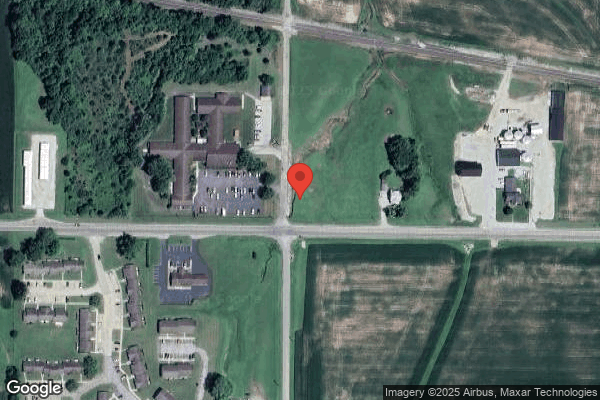
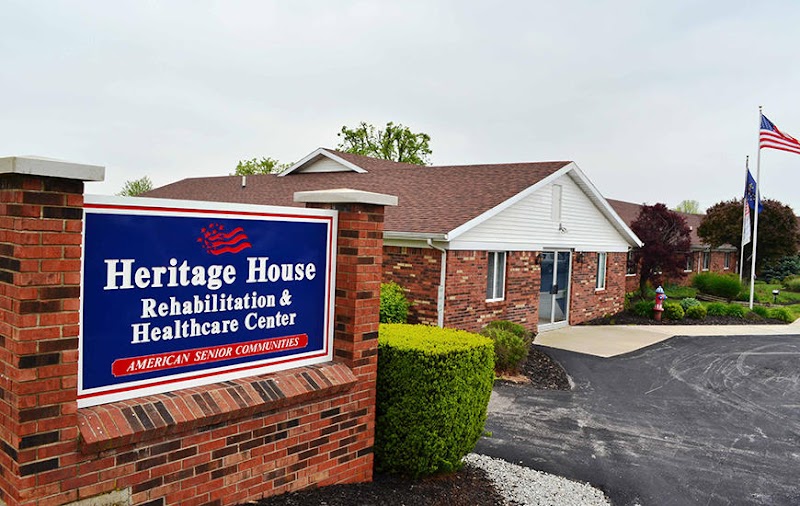
281 S COUNTY ROAD 200 EAST, CONNERSVILLE, IN 47331 (765) 825-2148
Government - County 98 Beds AMERICAN SENIOR COMMUNITIES Data: November 2025
Trust Grade
90/100
#47 of 505 in IN
Last Inspection: January 2025

Within standard 12-15 month inspection cycle. Federal law requires annual inspections.

Overview

Heritage House Rehabilitation & Health Care Center has received an excellent Trust Grade of A, indicating that it is highly recommended for families seeking care. It ranks #47 out of 505 facilities in Indiana, placing it in the top half of the state, and #2 out of 4 in Fayette County, meaning only one nearby option is better. The facility's trend is stable, with eight issues identified in both 2023 and 2025, which suggests consistent care challenges over time. While staffing is a noted weakness with a below-average rating of 2 out of 5 stars and a turnover rate of 36%, which is better than the state average, the center has no fines reported, indicating compliance with regulations. Specific incidents include a failure to assist residents with personal hygiene and dressing, as well as concerns regarding pain management for a newly admitted resident, highlighting areas that need improvement alongside the facility's overall strong health inspection scores.

Trust Score
A
90/100
In Indiana
#47/505
Top 9%
Safety Record
Low Risk
No red flags
Inspections
Holding Steady
2 → 2 violations
Staff Stability
○ Average
36% turnover. Near Indiana's 48% average. Typical for the industry.
Penalties
✓ Good
No fines on record. Clean compliance history, better than most Indiana facilities.
Skilled Nurses
○ Average
Each resident gets 37 minutes of Registered Nurse (RN) attention daily — about average for Indiana. RNs are the most trained staff who monitor for health changes.
Violations
○ Average
8 deficiencies on record. Average for a facility this size. Mostly minor or procedural issues.
★★★★★
5.0
Overall Rating
★★☆☆☆
2.0
Staff Levels
★★★★☆
4.0
Care Quality
★★★★★
5.0
Inspection Score
Stable
2023: 2 issues
2025: 2 issues

The Good

  • 4-Star Quality Measures · Strong clinical quality outcomes
  • Full Sprinkler Coverage · Fire safety systems throughout facility
  • No fines on record
  • Staff turnover below average (36%)

    12 points below Indiana average of 48%

Facility shows strength in quality measures, fire safety.

The Bad

Staff Turnover: 36%

Near Indiana avg (46%)

Typical for the industry

Chain: AMERICAN SENIOR COMMUNITIES

Part of a multi-facility chain

Ask about local staffing decisions and management

The Ugly 8 deficiencies on record

Jan 2025 2 deficiencies
CONCERN (D) 📢 Someone Reported This

A family member, employee, or ombudsman was alarmed enough to file a formal complaint

Potential for Harm - no one hurt, but risky conditions existed

ADL Care (Tag F0677)

Could have caused harm · This affected 1 resident

Based on observation, interview, and record review, the facility failed to assist dependent residents with dressing, personal hygiene, eating, and applying heel guards for 3 of 6 residents reviewed fo...

Read full inspector narrative →
Based on observation, interview, and record review, the facility failed to assist dependent residents with dressing, personal hygiene, eating, and applying heel guards for 3 of 6 residents reviewed for Activities of Daily Living (ADL) assistance (Resident K, Resident G and Resident Q). Findings include: 1. During an observation and interview with Resident K's family member on 1/22/25 at 12:13 p.m., they indicated the resident had several bras in the drawer and the family had asked the facility, multiple times, to put a bra on the resident. Resident K had always been particular about wearing a bra. Resident K's family member indicated the facility was not brushing the resident's hair either. The resident had a doctor's appointment earlier in the week and the family met her at the appointment. The resident's hair was not combed when at the appointment. The family member indicated they had talked to the Social Service Director (SSD) about the staff not combing her hair and not putting a bra on her and it had improved for a few days, and then they stopped doing it again. The family member indicated it was very important to the resident for these things to be done. An observation at the time of the interview indicated Resident K's hair was not combed and she did not have a bra on. During an observation on 1/23/25 at 11:00 a.m., Resident K was dressed, she did not have a bra on, and her hair was not brushed. During an observation on 1/24/25 at 11:23 a.m., Resident K was in therapy with two other residents. Resident K did not have a bra on, and her hair was not brushed. During an observation and interview with Resident K on 1/24/25 at 11:55 a.m., the resident pulled her shirt down and indicated she did not have a bra on. Resident K indicated she wanted to wear a bra, but they said they do not wear them here. They are the boss. During an interview with the SSD on 1/24/25 at 12:48 p.m., they indicated Resident K's family reported to her, in December 2024, that it was important to the resident to wear and bra and have her hair combed. The SSD indicated she did talk with the staff about the importance of putting a bra on the resident and combing her hair. It was the responsibility of the Certified Nurse Aides (CNA's) and nurses to ensure these were completed for the resident. During an observation and interview with the SSD on 1/24/25 at 12:54 p.m., they verified Resident K did not have a bra on and her hair was not brushed. The SSD requested approval from the resident to look in her drawer for a bra and the resident agreed. The resident had three bras in her drawer. The clinical record for Resident K was reviewed on 1/23/25 at 11:48 a.m. The diagnoses included, but were not limited to, left femur fracture, osteoporosis, dementia, major depressive disorder, and muscle weakness. The plan of care for Resident K, dated 12/4/24, indicated the resident required assistance with ADL care. The resident had functional changes and weakness. The interventions included, but were not limited to, assisting with dressing and grooming. The Significant Change Minimum Data Set (MDS) assessment for Resident K, dated 1/14/25, indicated the resident was moderately impaired for daily decision making. The resident did not exhibit behaviors that included rejection of care. It was somewhat important to choose what clothes to wear. The resident required partial to moderate assistance with upper body dressing and substantial to maximal assistance with personal hygiene, including combing hair. 2. The clinical record for Resident G was reviewed on 1/22/25 at 11:00 a.m. Her diagnoses included, but were not limited to, dementia and chronic kidney disease. The 12/24/24 Quarterly MDS assessment indicated she was dependent on staff for putting on and taking off footwear. The physician's orders indicated heel guards to bilateral feet at all times, starting 5/11/24. The at risk for skin breakdown care plan indicated she had an inability to care for herself and was unaware of her needs. The goal was for her to be free from skin breakdown. An intervention was heel guards to bilateral lower extremities at all times, starting 6/24/24. An observation of Resident G was conducted on 1/22/25 at 11:09 a.m. She was sitting in her wheelchair in the dining room. She was not wearing heel guards. An observation of Resident G was conducted on 1/24/25 at 12:33 p.m. She was sitting in her wheelchair in the dining room. She was not wearing heel guards. An observation of Resident G was conducted, on 1/27/25 at 11:31 a.m., with Licensed Practical Nurse (LPN) 4. She was sitting in her wheelchair in the dining room. She was not wearing heel guards. An observation of Resident G's room was conducted with LPN 4 on 1/27/25 at 11:34 a.m. LPN 4 looked in Resident G's closet and drawers for heel guards but was unable to locate any. An observation of the clean linen room was conducted, and an interview was conducted with the Assistant Director of Nursing (ADON), on 1/27/25 at 11:39 a.m., to look for heel guards. The ADON located a plastic bag, containing heel guards, in the room. The ADON removed a pair and handed them to LPN 4 for her to apply to Resident G. The Skin Management Program policy was provided by the Director of Nursing (DON) on 1/27/25 at 12:45 p.m. It indicated, Interventions to prevent wounds from developing and/or promote healing will be initiated based upon the individual's risk factors to include but not limited to the following .Redistribute pressure (such as repositioning, protecting and/or offloading heels, etc.) . 3. The clinical record for Resident Q was reviewed on 1/24/2025 at 1:45 p.m. The medical diagnoses included dementia and pain. An Annual Minimum Data Set assessment, dated 1/9/2025, indicated Resident Q was cognitively impaired and needed partial to moderate assistance with the daily activity of eating. A care plan, last revised 5/30/2024, indicated to assist Resident Q with eating as needed. During an observation on 1/24/2025 at 12:21 p.m., Resident Q was sitting at a table in the dining room with a plate of pureed food. Resident Q was using her fingers to feed herself without staff at the table with her. An interview conducted with CNA 2, on 1/24/2025 at 12:45 p.m., indicated Resident Q often needed assistance with eating and will sometimes eat with her fingers. An interview conducted with CNA 3, on 1/24/2025 at 1:30 p.m., indicated Resident Q needed assistance with eating and has been noted to eat with her fingers. An interview conducted with the Administrator, on 1/27/2025 at 1:00 p.m., indicated the facility did not have a policy for assisting residents with eating. The expectation of the facility was that staff would ensure residents' hands were clean, the diet was as ordered, set up the meal for the resident, and then assist the resident with the meal as needed. Once assistance was initiated, staff would stay at the table with residents through the meal. A policy entitled, AM [morning] Care, was provided by the Director of Nursing on 1/27/2025 at 10:45 a.m. The policy indicated for staff to assist with dressing, as well as combing and styling a resident's hair as preferred. This citation relates to Complaints IN00450713 and IN00451373. 3.1-38(a)(2)(A) 3.1-38(a)(2)(D) 3.1-38(a)(3)(A) 3.1-39(a)(3)(B)
CONCERN (D) 📢 Someone Reported This

A family member, employee, or ombudsman was alarmed enough to file a formal complaint

Potential for Harm - no one hurt, but risky conditions existed

Deficiency F0697 (Tag F0697)

Could have caused harm · This affected 1 resident

Based on interview and record review, the facility failed to ensure effective pain management was provided for a newly admitted resident who experienced pain for 1 of 3 residents reviewed for pain med...

Read full inspector narrative →
Based on interview and record review, the facility failed to ensure effective pain management was provided for a newly admitted resident who experienced pain for 1 of 3 residents reviewed for pain medication administration. (Resident D) Findings include: A hospital discharge summary for Resident D, dated 12/31/24, provided by the Director of Nursing (DON) on 1/27/25 at 1:25 p.m., indicated Resident D was ordered Dilaudid 4 mg (milligram) tablet by mouth every four hours as needed for pain. An Epic Care Link provided by the DON, on 1/27/25 at 2:30 p.m., indicated Resident D was administered Dilaudid 4 mg by mouth, at 3:22 p.m., while at the hospital before arrival to the facility. The clinical record for Resident D was reviewed on 1/27/25 at 12:13 p.m. The diagnoses included, but were not limited to, amputation of right foot and toes, diabetes mellitus type 2, and diabetic neuropathy. Resident D was admitted to the facility, on 12/31/24 at 5:30 p.m., from the hospital. The admission physician order for Resident D, dated 12/31/24, indicated the resident was ordered Dilaudid 4 mg every four hours as needed. The admission assessment for Resident D, dated 12/31/24 at 8:17 p.m., indicated Resident D verbalized experiencing pain rated 10 out of 10 on the pain scale. Per the Long-Term Care Facility Resident Assessment Instrument 3.0 User's Manual Version 1.19.1 published by the Centers for Medicare and Medicaid Services, the numeric pain scale indicated 0 being no pain and 10 as the worst pain one could imagine. This indicated a 10 would be concurrent with very severe or horrible pain. Pain was recorded as almost constantly, sharp, shooting, and stabbing, and analgesic therapy made it better. Resident D was documented as being alert and oriented to person, place, time, and situation. There was no documentation in the EHR to indicate follow up after Resident D expressed being in pain rated 10 out of 10 on 12/31/24 at 8:17 p.m. A progress note in the Electronic Health Record (EHR), dated 12/31/24 at 11:19 p.m., indicated the following, .resident [Resident D] became very anxious, asking aide to get him out of bed because he felt too confined in room .was on the phone saying he didn't think he was able to stay here d/t [due to] this and being unable to sleep The Medication Administration Record (MAR), dated 1/1/25 at 1:10 a.m., indicated Resident D was experiencing pain and received Dilaudid 4 mg. This documentation indicated Resident D was experiencing pain from 8:17 p.m. on 12/31/24, until 1:10 a.m. on 1/1/25, (4 hours and 53 minutes). The MAR, progress notes, and assessments for Resident D, dated 12/31/24 until 1/1/25, did not indicate any documentation of implementation of any non-pharmacological pain interventions. A care plan for Resident D, dated 1/2/25, indicated they were at risk for pain related to recent surgical procedure, functional changes, and neuropathy. Resident would be free from adverse effects of pain, and administer medications as ordered. Also, to observe for non-physical signs of pain, i.e. vocalizations and mood/behavior changes. During an interview on 1/27/25 at 12:44 p.m., Resident D indicated he did not receive any pain medications for over six hours after arriving at the facility. He had a pain level of 10 out of 10. During an interview with the Regional Director of Clinical Support (RDCS) and DON on 1/27/25 at 2:00 p.m., they indicated Resident D had an admission assessment completed at 8:20 p.m. After he had voiced his pain level, he was offered Tylenol because the facility did not have Dilaudid 4 mg tablets in the Emergency Drug Kit (EDK). Resident D refused the Tylenol, so at 8:30 p.m., a STAT (without delay) order was placed to the pharmacy. The DON indicated it usually takes four hours for emergent deliveries. The DON indicated there was a problem getting the medications timely from the pharmacy. The DON indicated the facility did not have any documentation of when the pharmacy was contacted, nor that Tylenol was offered or refused by Resident D. Resident D's clinical record indicated there were no physician orders for Tylenol inputted until 1/7/25. A Pain Management Policy was provided by the Executive Director (ED) on 1/27/25 at 1:55 p.m. The policy indicated the following, . It is the policy of [name of corporation] to provide the necessary care and services to attain or maintain the highest practicable physical, mental, and psychosocial well-being, including pain management .Pain medications will be prescribed and given based upon the intensity of the pain This citation relates to Complaints IN00451373 and IN00450713. 3.1-37(a)
Nov 2023 2 deficiencies
CONCERN (D)

Potential for Harm - no one hurt, but risky conditions existed

ADL Care (Tag F0677)

Could have caused harm · This affected 1 resident

Based on interview, observation, and record review, the facility failed to assist a dependent resident (Resident 26) with nail care for 1 of 4 residents reviewed for activities of daily living. Findi...

Read full inspector narrative →
Based on interview, observation, and record review, the facility failed to assist a dependent resident (Resident 26) with nail care for 1 of 4 residents reviewed for activities of daily living. Findings include: The clinical record for Resident 26 was reviewed on 11/15/2023 at 1:25 p.m. The medical diagnoses included dementia and stroke. The admission Minimum Data Set Assessment, dated for 9/20/2023, indicated that Resident 26 was cognitively impaired, did not exhibit behaviors or reject care, and needed substantial assistance with self-care activities of daily living. An observation on 11/13/2023 at 12:48 p.m. indicated Resident 26 had moderately long uneven fingernails with light brown debris under his nails. An observation on 11/15/2023 at 12:30 p.m. indicated that he had moderately long uneven fingernails with light brown debris under his nails. An interview with the DON on 11/16/2023 at 2:00 p.m. indicated that nursing staff are to keep nails trimmed and clean. Routinely nail care is to be provided to the residents with showers, during activities on Fridays, and as needed. A skills checkoff, provided by the DON on 11/17/2023 at 10:00 a.m., indicated .Clean under nails with orange stick. Clip fingernails straight across, then file in a curve . 3.1-38(a)(3)(E)
CONCERN (D)

Potential for Harm - no one hurt, but risky conditions existed

Infection Control (Tag F0880)

Could have caused harm · This affected 1 resident

Based on observation, interview and record review, the facility failed to ensure a staff member's bare hands did not come into contact with a resident's medication during a medication administration o...

Read full inspector narrative →
Based on observation, interview and record review, the facility failed to ensure a staff member's bare hands did not come into contact with a resident's medication during a medication administration observation for 1 of 3 medication administration observations and 1 of 3 staff administering medications. (LPN 3 and Resident 74) Findings include: On 11/15/23, at 9:14 a.m., LPN 3 was observed removing pills from a medication card, into her bare hands, and then placed them in a medication cup. She indicated the medications were for Resident 74 and he was receiving 8 pills but she would hold his lisinopril for blood pressure if his blood pressure was too low. On 11/17/23, at 9:40 a.m., the Director of Nursing indicated staff know not to do that; touch pills with their bare hands. On 11/17/23, at 12:21 p.m., the Administrator provided a Policy for Medication Pass Procedure. The policy indicated, but was not limited to, Procedure Steps .3. Medications are opened without contaminating 3.1-48(c)(2)
Sept 2022 4 deficiencies
CONCERN (D)

Potential for Harm - no one hurt, but risky conditions existed

Accident Prevention (Tag F0689)

Could have caused harm · This affected 1 resident

2. The clinical record for Resident 33 was reviewed on 9/19/2022 at 1:52 p.m. The medical diagnoses included, but were not limited to, muscle weakness and age-related osteoporosis. A Significant Chan...

Read full inspector narrative →
2. The clinical record for Resident 33 was reviewed on 9/19/2022 at 1:52 p.m. The medical diagnoses included, but were not limited to, muscle weakness and age-related osteoporosis. A Significant Change in Condition Assessment completed on 7/24/2022 indicated Resident 33 needed assistance of two staff members for transferring tasks, was only able to stabilize during transfers with staff assistance, and had no falls during the review period. A fall risk assessment completed on 7/21/2022 indicated Resident 33 was a high risk for falls. A fall care plan, reviewed on 8/3/2022, indicated for Resident 33 to be assisted to bed or recliner following meals. An observation on 9/19/2022 at 1:32 p.m. indicated Resident 33 sitting in her wheelchair to the side of her bed. An observation on 9/21/2022 at 1:05 p.m. indicated Resident 33 sitting in her wheelchair to the side of her bed. An observation on 9/21/22 at 10:20 a.m. indicated Resident 33 sitting in her wheelchair to the side of her bed. An interview with the Director of Nursing on 9/22/2022 at 11:12 a.m. indicated that the care plan indicated to assist Resident 33 back to bed or in the recliner needed to be updated. She indicated that Resident 33's preference was to be in her wheelchair, but right after admission it was the family's preference to have the resident lay down or back to the recliner after meals. A policy entitled, Fall Management Policy, was provided by the Director of Nursing on 9/22/2022 at 10:05 a.m. The policy indicated, .A care plan will be developed at the time of admission with specific care plan intervention to address each resident's fall risk factors. Care plan including interventions and fall risks will be reviewed at least quarterly . A policy entitled, TRANSFER TO WHEELCHAIR, was provided by the Director of Nursing on 9/22/2022 at 10:05 a.m. The policy indicated, .Place gait belt around resident's waist . 3.1-45(a)(2) Based on observation, interview and record review the facility failed to implement fall interventions for residents who were at high risk for falls for 2 of 5 residents reviewed for accidents (Resident 22 and Resident 33). Findings include: 1.) During an observation and interview 9/21/22 at 10:00 a.m., CNA 5 and CNA 6 lifted Resident 22 underneath her arms and transferred her from the bed to the wheelchair without utilizing a gait belt. Resident 22 was minimally able to assist with the transfer. When queried why a gait belt was not used, CNA 5 indicated there was usually a gait belt in each of the resident's room, but Resident 22 did not have one in her room. Review of the record of Resident 22 on 9/21/22 at 1:00 p.m., indicated the resident's diagnoses included, but were not limited to, Parkinson's disease, dementia, hypertensive chronic kidney disease with stage 1 through stage 4 chronic kidney disease, chronic kidney disease, major depressive disorder, unsteadiness on feet, lack of coordination and muscle weakness. The admission Minimum Data (MDS) for Resident 22, dated 4/13/22, indicated the resident required extensive assistance of two staff for transfers. The plan of care for Resident 22, dated 7/13/22, indicated the resident required assistance with ADL's including bed mobility, transfers, eating and toileting related to inability to care for self, Parkinson's, inability to walk, dementia, psychosis. The interventions included, but were not limited to, assist with transfers x's 2 people. The fall risk assessment for Resident 22, dated 7/13/22, indicated the resident was at high risk for falls.
CONCERN (D)

Potential for Harm - no one hurt, but risky conditions existed

Garbage Disposal (Tag F0814)

Could have caused harm · This affected 1 resident

Based on observation and interview, the facility failed to ensure the area around the dumpsters was free of debris for one of one observation. This had the potential to affect all 90 residents who res...

Read full inspector narrative →
Based on observation and interview, the facility failed to ensure the area around the dumpsters was free of debris for one of one observation. This had the potential to affect all 90 residents who resided in the facility. Findings include: On 9/22/22 at 12:55 p.m., the fenced in dumpster area was observed with the Dietary Manager. He unlocked the gate and four covered dumpsters were observed. Around the dumpsters was debris that included, spoons, styrofoam cups, paper towel rolls, masks, gloves, cup lids, clear plastic bags, clear plastic cups, papers, an empty odor eliminator bottle, a wooden pallet, used depends, and broken glass. The Dietary Manager indicated housekeeping was responsible to keep the area clean. On 9/22/22 at 1:14 p.m., the Administrator said their trash service just picked up the trash today; when they come and do the trash, some of it falls out and they don't pick it up. 3.1-21(i)(5)
CONCERN (D)

Potential for Harm - no one hurt, but risky conditions existed

Infection Control (Tag F0880)

Could have caused harm · This affected 1 resident

Based on observation, interview and record review the facility failed to complete proper hand washing and change of gloves during incontinent care for 1 of 3 observation of incontinent care (Resident ...

Read full inspector narrative →
Based on observation, interview and record review the facility failed to complete proper hand washing and change of gloves during incontinent care for 1 of 3 observation of incontinent care (Resident 22). Finding include: During an observation and interview 9/21/22 at 10:00 a.m., CNA 5 and CNA 6 provided incontinent care for Resident 22. Resident 22 was incontinent of her bowels and bladder. CNA 5 was observed touching both curtains and top of cabinet with soiled gloves searching for a incontinent brief. CNA 5 picked up the soiled linen and soiled trash and left the resident's room touching the door knob with soiled gloves. When queried about not removing soiled gloves and performing handwashing prior to touching surfaces, CNA 5 indicated she normally would have all her supplies gathered prior to providing care so she would not leave the resident's bedside and avoid potentially contaminating surfaces with soiled gloves. Review of the record of Resident 22 on 9/21/22 at 1:00 p.m., indicated the resident's diagnoses included, but were not limited to, Parkinson's disease, dementia, hypertensive chronic kidney disease with stage 1 through stage 4 chronic kidney disease, chronic kidney disease, major depressive disorder, unsteadiness on feet, lack of coordination and muscle weakness. The admission Minimum Data (MDS) for Resident 22, dated 4/13/22, indicated the resident is frequently incontinent of bowels and bladder. The incontinent care policy provided by the Director Of Nursing (DON) on 9/22/22 at 11:05 a.m., indicated after providing incontinent care to remove gloves and wash hands. Do not leave the resident room. 3.1-18(a)
CONCERN (E)

Potential for Harm - no one hurt, but risky conditions existed

Food Safety (Tag F0812)

Could have caused harm · This affected multiple residents

Based on observation, interview, and record review, the facility failed to ensure one dietary staff member's hair was appropriately covered, failed to ensure a range hood was clean, and failed to ensu...

Read full inspector narrative →
Based on observation, interview, and record review, the facility failed to ensure one dietary staff member's hair was appropriately covered, failed to ensure a range hood was clean, and failed to ensure an area of floor was clean. This had the potential to affect all 90 residents who resided in the facility. Findings include: A dietary observation, on 9/22/22 at 10:32 a.m., indicated, on the floor beside the wall, on the right of the walk in freezer door, a 6 inch by 3 inch area had a buildup of dark brown debris with white particles on top of it. The inside of the range hood, above the range and steam table, had rust colored areas on the galvanized steel. A sticker on the outside corner of the range hood indicated the range hood was last cleaned on 4/6/22. Culinary Aide 7, who was preparing beverages, had long hair in braids and did not have her hair covered. [NAME] 9 indicated she wasn't sure of the policy for wearing hair covering for synthetic hair. On 9/22/22 at 12:43 p.m., the Dietary Manager indicated he didn't know if the hood vent was rusty, and there was no debris falling from it. He said the area beside the freezer door was caused by a build up of moisture from the freezer being so cold because it was along the wall by the freezer and it would be deep cleaned. Culinary Aide 7 was working and did not have her hair covered. When queried about hair covering, Culinary Aide 7 said they told her to wear a hair net and she tried to wear it but it slides off. The Dietary Manager said he would find out from the Dietitian what the policy was for synthetic hair covering. On 9/22/22 at 1:18 p.m., the Maintenance Supervisor said when the range hood vent was cleaned in April, it had been steam cleaned and it is due to be cleaned in October. He said he rubbed the rust colored areas of the vent and nothing came off of it. A policy for Dietary Personal Hygiene was provided by the Administrator on 9/22/22 at 1:57 p.m. The policy included, but was not limited to: Policy: Employees will maintain good personal hygiene to prevent food contamination .3. Personal Cleanliness. a. Wear a clean hat and/or other hair restraint 3.1-21(i)(2) 3.1-21(i)(3)
Understanding Severity Codes (click to expand)
Life-Threatening (Immediate Jeopardy)
J - Isolated K - Pattern L - Widespread
Actual Harm
G - Isolated H - Pattern I - Widespread
Potential for Harm
D - Isolated E - Pattern F - Widespread
No Harm (Minor)
A - Isolated B - Pattern C - Widespread

Questions to Ask on Your Visit

  • "Can I speak with families of current residents?"
  • "What's your RN coverage like on weekends and overnight?"

Our Honest Assessment

Strengths
  • • Grade A (90/100). Above average facility, better than most options in Indiana.
  • • No major safety red flags. No abuse findings, life-threatening violations, or SFF status.
  • • No fines on record. Clean compliance history, better than most Indiana facilities.
  • • 36% turnover. Below Indiana's 48% average. Good staff retention means consistent care.
Concerns
  • • No significant concerns identified. This facility shows no red flags across CMS ratings, staff turnover, or federal penalties.
Bottom line: Generally positive indicators. Standard due diligence and a personal visit recommended.

About This Facility

What is Heritage House Rehabilitation & Health's CMS Rating?

CMS assigns HERITAGE HOUSE REHABILITATION & HEALTH CARE CENTER an overall rating of 5 out of 5 stars, which is considered much above average nationally. Within Indiana, this rating places the facility higher than 99% of the state's 100 nursing homes. This rating reflects solid performance across the metrics CMS uses to evaluate nursing home quality.
How is Heritage House Rehabilitation & Health Staffed?

CMS rates HERITAGE HOUSE REHABILITATION & HEALTH CARE CENTER's staffing level at 2 out of 5 stars, which is below average compared to other nursing homes. Staff turnover is 36%, compared to the Indiana average of 46%. This relatively stable workforce can support continuity of care.

What Have Inspectors Found at Heritage House Rehabilitation & Health?

State health inspectors documented 8 deficiencies at HERITAGE HOUSE REHABILITATION & HEALTH CARE CENTER during 2022 to 2025. These included: 8 with potential for harm.
Who Owns and Operates Heritage House Rehabilitation & Health?

HERITAGE HOUSE REHABILITATION & HEALTH CARE CENTER is owned by a government entity. Government-operated facilities are typically run by state, county, or municipal agencies. The facility is operated by AMERICAN SENIOR COMMUNITIES, a chain that manages multiple nursing homes. With 98 certified beds and approximately 81 residents (about 83% occupancy), it is a smaller facility located in CONNERSVILLE, Indiana.
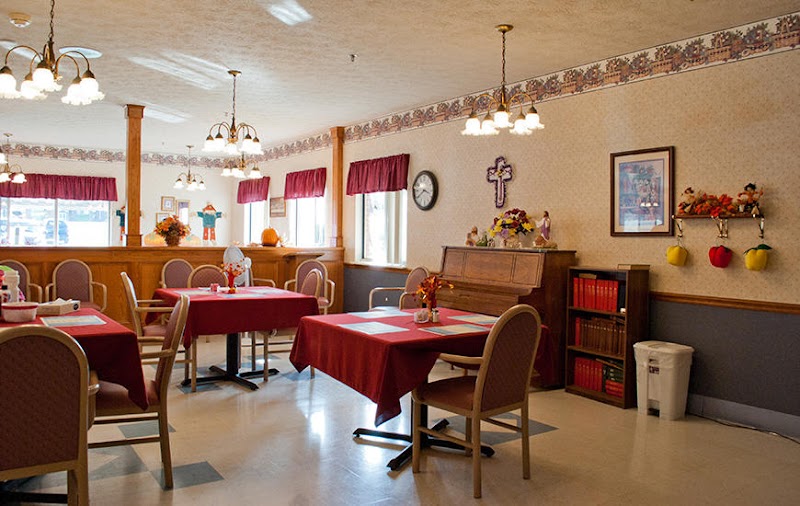
How Does Heritage House Rehabilitation & Health Compare to Other Indiana Nursing Homes?

Compared to the 100 nursing homes in Indiana, HERITAGE HOUSE REHABILITATION & HEALTH CARE CENTER's overall rating (5 stars) is above the state average of 3.1, staff turnover (36%) is near the state average of 46%, and health inspection rating (5 stars) is much above the national benchmark.

What Should Families Ask When Visiting Heritage House Rehabilitation & Health?

Based on this facility's data, families visiting should ask: "Can you walk me through typical staffing levels on day, evening, and night shifts?" "Can I visit during a mealtime to observe dining assistance and food quality?" "How do you handle medical emergencies, and what is your hospital transfer rate?" "Can I speak with family members of current residents about their experience?" These questions are particularly relevant given the below-average staffing rating.

Is Heritage House Rehabilitation & Health Safe?

Based on CMS inspection data, HERITAGE HOUSE REHABILITATION & HEALTH CARE CENTER has a clean safety record: no substantiated abuse findings (meaning no confirmed cases of resident harm), no Immediate Jeopardy citations (the most serious violation level indicating risk of serious injury or death), and is not on the Special Focus Facility watch list (a federal program monitoring the lowest-performing 1% of nursing homes). The facility has a 5-star overall rating and ranks #1 of 100 nursing homes in Indiana. While no facility is perfect, families should still ask about staff-to-resident ratios and recent inspection results during their visit.

Do Nurses at Heritage House Rehabilitation & Health Stick Around?

HERITAGE HOUSE REHABILITATION & HEALTH CARE CENTER has a staff turnover rate of 36%, which is about average for Indiana nursing homes (state average: 46%). Moderate turnover is common in nursing homes, but families should still ask about staff tenure and how the facility maintains care continuity when employees leave.

Was Heritage House Rehabilitation & Health Ever Fined?

HERITAGE HOUSE REHABILITATION & HEALTH CARE CENTER has no federal fines on record. CMS issues fines when nursing homes fail to meet care standards or don't correct problems found during inspections. The absence of fines suggests the facility has either maintained compliance or corrected any issues before penalties were assessed. This is a positive indicator, though families should still review recent inspection reports for the full picture.

Is Heritage House Rehabilitation & Health on Any Federal Watch List?

HERITAGE HOUSE REHABILITATION & HEALTH CARE CENTER is not on any federal watch list. The most significant is the Special Focus Facility (SFF) program, which identifies the bottom 1% of nursing homes nationally based on persistent, serious quality problems. Not being on this list means the facility has avoided the pattern of deficiencies that triggers enhanced federal oversight. This is a positive indicator, though families should still review the facility's inspection history directly.