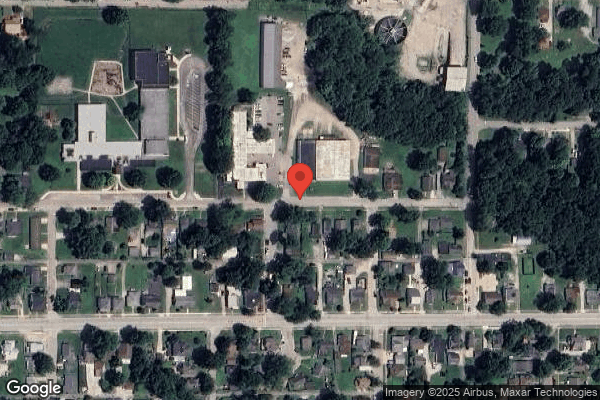
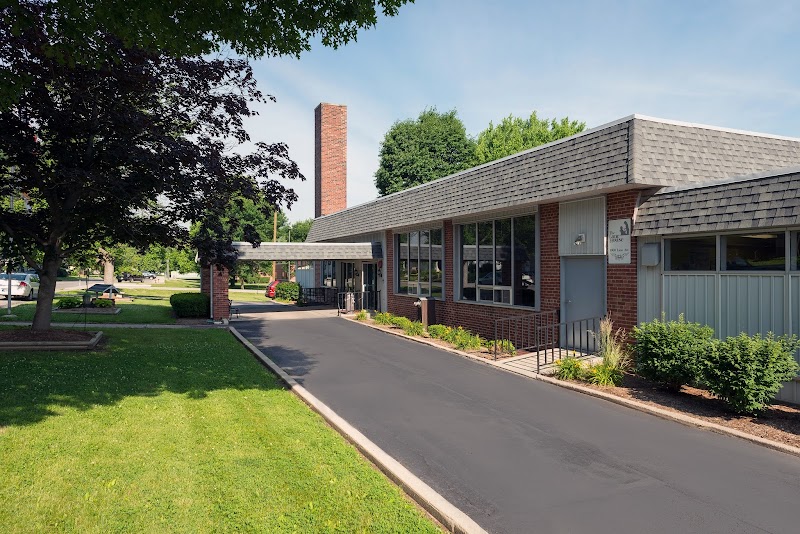
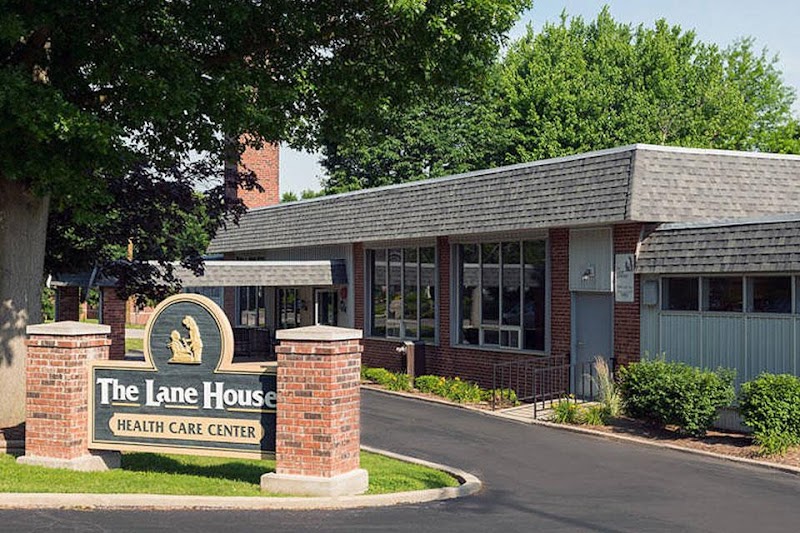
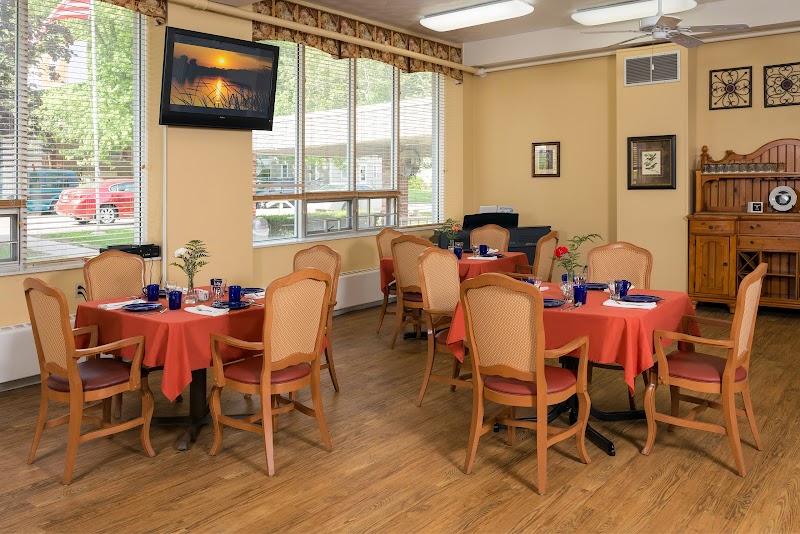
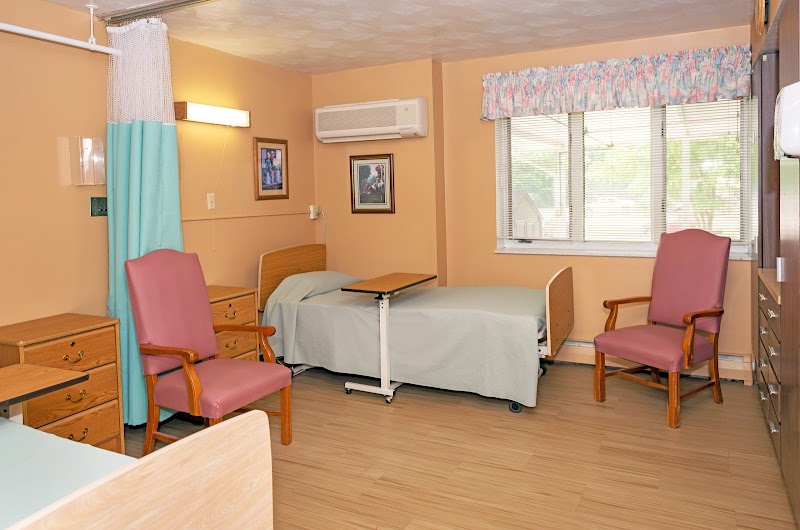
LANE HOUSE, THE

1000 LANE AVE, CRAWFORDSVILLE, IN 47933 (765) 362-0007
Government - County 60 Beds LIFE CARE CENTERS OF AMERICA Data: November 2025
Trust Grade
60/100
#261 of 505 in IN
Last Inspection: April 2025

Within standard 12-15 month inspection cycle. Federal law requires annual inspections.

Overview

Lane House in Crawfordsville, Indiana, has a Trust Grade of C+, which means it is slightly above average but still has room for improvement. It ranks #261 out of 505 facilities in the state, placing it in the bottom half, and is the lowest-ranked facility in Montgomery County. The facility's trend is worsening, with issues increasing from 8 in 2024 to 9 in 2025. Staffing is rated average, with a 50% turnover rate, which is similar to the state average, while RN coverage is also average, meaning there is sufficient nursing oversight. Although there have been no fines, which is positive, there are concerning incidents, such as food service staff cleaning while meals were being served and kitchen staff failing to wear hair restraints during meal preparation. Overall, while Lane House has some strengths, like no fines and decent quality measures, the rising number of issues and concerns about cleanliness and safety during meal service are important factors to consider.

Trust Score
C+
60/100
In Indiana
#261/505
Bottom 49%
Safety Record
Low Risk
No red flags
Inspections
Getting Worse
8 → 9 violations
Staff Stability
⚠ Watch
50% turnover. Above average. Higher turnover means staff may not know residents' routines.
Penalties
✓ Good
No fines on record. Clean compliance history, better than most Indiana facilities.
Skilled Nurses
○ Average
Each resident gets 33 minutes of Registered Nurse (RN) attention daily — about average for Indiana. RNs are the most trained staff who monitor for health changes.
Violations
⚠ Watch
24 deficiencies on record. Higher than average. Multiple issues found across inspections.
★★★☆☆
3.0
Overall Rating
★★★☆☆
3.0
Staff Levels
★★★★★
5.0
Care Quality
★★☆☆☆
2.0
Inspection Score
Stable
2024: 8 issues
2025: 9 issues

The Good

  • 5-Star Quality Measures · Strong clinical quality outcomes
  • Full Sprinkler Coverage · Fire safety systems throughout facility
  • No fines on record

Facility shows strength in quality measures, fire safety.

The Bad

3-Star Overall Rating

Near Indiana average (3.1)

Meets federal standards, typical of most facilities

Staff Turnover: 50%

Near Indiana avg (46%)

Higher turnover may affect care consistency

Chain: LIFE CARE CENTERS OF AMERICA

Part of a multi-facility chain

Ask about local staffing decisions and management

The Ugly 24 deficiencies on record

Sept 2025 1 deficiency
CONCERN (D) 📢 Someone Reported This

A family member, employee, or ombudsman was alarmed enough to file a formal complaint

Potential for Harm - no one hurt, but risky conditions existed

Free from Abuse/Neglect (Tag F0600)

Could have caused harm · This affected 1 resident

**NOTE- TERMS IN BRACKETS HAVE BEEN EDITED TO PROTECT CONFIDENTIALITY** Based on record review and interview, the facility failed to accurately complete an elopement risk assessment for a vulnerable r...

Read full inspector narrative →
**NOTE- TERMS IN BRACKETS HAVE BEEN EDITED TO PROTECT CONFIDENTIALITY** Based on record review and interview, the facility failed to accurately complete an elopement risk assessment for a vulnerable resident who was found outside the facility, on the grass after falling out of his wheelchair, without the knowledge of staff for 1 of 3 residents reviewed for neglect (Resident C). The deficient practice was corrected by 9/8/25 prior to the start of the survey and was therefore past noncompliance. Findings include:A nursing progress note, dated 9/7/25 at 3:35 p.m., indicated that emergency medical services (EMS) were at the facility. A resident had gotten outside without being seen and had fallen from his wheelchair. EMS had arrived to the facility at 3:32 p.m. and indicated they had gotten a call around 3:28 p.m. that a person was crawling in the grass on the side of the facility. Nursing staff reported last seeing Resident C around 3:00 p.m. A different resident had indicated she saw a visitor coming or going who had left the door open for Resident C to go outside. The resident had no injuries from the elopement/fall. The physician, Director of Nursing, Administrator and family were notified. The resident's care plan was updated, and he was placed on 1:1 supervision of staff until further notice. A Wander Guard [ankle bracelet that would set off an alarm if exiting the facility] was placed on Resident C. The clinical record review for Resident C was completed on 9/9/25 at 10:12 a.m. Diagnoses included alcohol-induced amnestic disorder, metabolic encephalopathy, and major depressive disorder. The resident had admitted to the facility on [DATE]. A quarterly Minimum Data Set (MDS) assessment, dated 8/22/25, indicated the resident had severe cognitive impairment, used a wheelchair for mobility and required assistance for toileting, bathing, and transferring. The resident was able to wheel himself short distances without staff assistance. An Elopement Risk Evaluation, dated 7/2/25, included an answer of no to the following questions: Is the resident cognitively impaired with poor decision-making skills ?; Does the resident ambulate independently with or without the use of an assistive device (including a wheelchair)?; Does the resident have a history of Substance Use Disorder? A health care plan, dated 6/22/25, indicated the resident had pulled the facility fire alarm intentionally related to wanting to go home. Interventions included, to anticipate and meet the resident's needs, and to help minimize potential for the resident's disruptive behaviors by offering tasks which divert his attention such as reminiscing, snacks, or magazines.The resident's clinical record lacked a care plan for elopement. A document titled, [Resident C} Elopement Timeline, was provided by the Administrator on 9/9/25 at 10:40 a.m. The timeline indicated the resident was last seen by a staff member on 9/7/25 at 3:15 p.m. around the nurses' station. The Emergency Medical Service run report indicated a unit was dispatched on 9/7/25 at 3:30 p.m. They arrived to the facility at 3:32 p.m. They observed Resident C outside the facility sitting upright next to his wheelchair. A bystander, who had been driving by, observed a male laying in the grass outside the facility next to his wheelchair. The resident indicated he had made his way outside and was on his way home. The resident had indicated he was let out of the facility by an unknown person prior to slipping out of his wheelchair to the ground. The resident was assisted to his wheelchair by the rescue crew and refused any further care or evaluation and complained of no pain. The resident was wheeled back into the facility and care was transferred back to the facility staff. During an interview on 9/9/25 at 2:23 p.m., the Director of Nursing (DON) indicated Resident C had metabolic encephalopathy and struggled to form new memories. He continually asked about his car and when it would be returned from the shop so he could go home. She had not known him to attempt to exit the facility in the past. The July assessment for risk of elopement was not accurate because he had a cognitive deficit and a history of substance abuse, and was able to move around independently in his wheelchair. She, however, felt he was not an elopement risk. Resident C had not been observed pushing on doors to exit the facility. A current facility policy, reviewed 11/19/24, titled, Area of Focus: Elopement, provided by the DON on 9/9/25 at 2:53 p.m., included the following: What Elopement occurs when a resident leaves the premises or a safe area without authorization .and/or any necessary supervision to do so How Upon completion of the other interdisciplinary team's admission and readmission assessments, the interdisciplinary team will review any additional unsafe wandering and/or elopement risk indicators and revise the resident's care plan as indicated. The deficient practice was corrected by 9/8/25 prior to the start of the survey and was therefore past noncompliance. The facility implemented a systemic plan that included re-assessment of residents in regard to elopement, staff education, visitor education, signs regarding not allowing residents to exit the building, and ongoing monitoring. This citation relates to Intake 2611338. 3.1-45(a)(2)
Apr 2025 8 deficiencies
CONCERN (D)

Potential for Harm - no one hurt, but risky conditions existed

Accident Prevention (Tag F0689)

Could have caused harm · This affected 1 resident

**NOTE- TERMS IN BRACKETS HAVE BEEN EDITED TO PROTECT CONFIDENTIALITY** Based on observation, record review, and interview, the facility failed to ensure falls were documented, interventions implement...

Read full inspector narrative →
**NOTE- TERMS IN BRACKETS HAVE BEEN EDITED TO PROTECT CONFIDENTIALITY** Based on observation, record review, and interview, the facility failed to ensure falls were documented, interventions implemented, and a call light was within the resident's reach for 1 of 2 residents reviewed for falls (Resident 29). Findings include: During an observation, on 4/1/25 at 11:05 a.m., Resident 29 was in his recliner with no call light within his reach. The call light was observed at the end of his bed. At the same time, the resident indicated he used the call light to request assistance when needed, and it was over there on the bed somewhere. When queried how he used the call light when it was on the bed, the resident indicated, I don't. The resident requested to lay back down in bed. During an interview, on 4/1/25 at 12:07 p.m., Resident 29's daughter indicated he had fallen a lot since being at the facility. He fell often at home too. The resident used the call light to ask for help and knew how to use it, but he sometimes got up without assistance. The resident had fallen earlier in the day on 4/1/25. Resident 29's record was reviewed on 4/3/25 at 2:15 p.m. Census information indicated the resident was admitted to the facility on [DATE]. Diagnoses on the resident's profile included, but were not limited to, generalized muscle weakness, subsequent encounter for a fracture of the unspecified carpal (bones in wrist) bone of the right wrist, and history of falling. A Progress Note, dated 1/3/25, indicated the resident's roommate turned on the call light and reported the resident rolled out of bed. The resident was lying beside the bed and indicated he was sleeping. The bed was in the lowest position with a mat placed at bedside. An Interdisciplinary Team (IDT) note, dated 1/6/25, indicated the resident had an unwitnessed fall on 1/3/25. The bed was placed in the lowest position. The resident had another unwitnessed fall on 1/4/25 at 4:25 p.m. when he was found on the floor mat next to his bed. The resident had no injuries and was assisted back to bed by staff. New interventions included floor mat next to bed and bed in the lowest position. The IDT Note lacked documentation of new interventions placed after the fall on 1/4/25, as the low bed and mat next to the bed were initiated after the resident's fall on 1/3/25. Progress Notes lacked documentation of the fall on 1/4/25, at the time it occurred, including a post-fall assessment or new interventions put into place. A Progress Note, dated 1/9/25 at 4:35 a.m., indicated the resident fell from a raised bed onto the floor while the Certified Nurse Aide (CNA) provided care to the resident at 4:10 a.m. The note lacked documentation an intervention was initiated immediately to prevent further falls. An IDT Note, dated 1/9/25 at 10:13 a.m., indicated the resident had a witnessed fall at 4:10 a.m. The resident rolled out of his raised bed while the CNA provided care, and landed on his right side. There were two skin tears to the resident's right elbow. A new intervention of two staff to assist with resident care was initiated. An admission Minimum Data Set (MDS) Assessment, dated 1/13/25, indicated the resident had a severe cognitive impairment, required substantial/maximal assistance with transfers, and one fall since the resident's admission. An IDT Note, dated 1/17/25 at 9:22 a.m., indicated the IDT reviewed the resident's fall from 1/16/25 at 9:20 a.m. The resident was found lying beside his bed on the floor mattress with no injuries. The new intervention was to monitor the resident for restlessness and assist the resident into his wheelchair as needed. The Progress Notes lacked documentation of the fall on 1/16/25, at the time it occurred, including a post-fall assessment or new interventions put into place. A Progress Note, dated 3/28/25, indicated another resident reported Resident 29 was sitting on the floor. The staff went to the resident and found he had gotten himself up from the floor and was sitting on the other bed in his room. The resident was assessed and denied pain. The note lacked documentation of an intervention implemented immediately to prevent further falls. A Progress Note, dated 3/29/25 at 11:21 a.m., indicated the resident complained of right wrist pain. The resident's daughter requested evaluation in the emergency room (ER) for x-ray. The resident's daughter reported the resident had a history of a wrist fracture, but she was unable to remember which wrist he previously fractured. The resident was transported to the ER via ambulance. A Progress Note, dated 3/29/25 at 2:17 p.m., indicated the resident returned to the facility. The resident's daughter reported he was to wear the splint for four weeks, and there was no orthopedic treatment recommended. The resident was moved to a room closer to the nurse's station for increased observation. An x-ray report, dated 3/29/25, indicated evidence of a chronic healing fracture to the left wrist. An x-ray report, dated 3/29/25, indicated a fragment along the dorsum (back or upper side) of the right wrist which was concerning for a possible triquetral (bone on inner side of wrist) fracture. An IDT Note, dated 3/31/25, indicated the IDT reviewed the resident's unwitnessed fall on 3/28/25. The resident was placed on 15-minute checks and moved closer to the nurse's station. A Progress Note, dated 4/1/25 at 9:45 a.m., indicated the resident was found on the floor next to his closet, and his recliner was tipped over on its side. The resident was assisted to his wheelchair. The note lacked documentation of an assessment of the resident after the fall or an intervention implemented immediately to prevent further falls. On 4/4/25 at 11:20 a.m., the Director of Nursing (DON) provided the following Risk Management documents. At the same time, the DON indicated the falls should have been documented in the Progress Notes and Risk Management. The Risk Management was an internal incident report and included information about the falls and interventions. The Risk Management documents were visible to nurses and management. a. An unwitnessed fall occurred on 1/3/25. The resident's roommate reported the resident was on the floor. The resident had rolled out of bed and indicated he was sleeping. The resident was assessed, and no injuries were noted. Interventions to prevent further falls were bed in lowest position and mat placed at bedside. b. An unwitnessed fall occurred on 1/4/25. The CNA found the resident sitting on the floor. There were no injuries noted, and the resident was unable to say what happened. The Risk Management document lacked documentation of an intervention put in place to prevent further falls. c. An unwitnessed fall occurred on 1/16/25. The resident was found lying on the mat next to his bed on his left side. An assessment was completed. The Risk Management document lacked documentation of an intervention put in place to prevent further falls. d. An unwitnessed fall occurred on 4/1/25. The resident was found lying on his right side next to his recliner. The recliner was flipped over next to the resident. The resident told his daughter he was trying to get into his chair. No injuries were noted, and the resident was assisted into his wheelchair. The immediate intervention was to ensure staff provides frequent checks for resident when in recliner. A care plan, target dated 4/21/25, indicated the resident was at risk for falls. The resident rolled out of bed, on 1/3/25, with no injuries, was found sitting on the floor at bedside, on 1/4/25, with no injuries, rolled out of bed while being assisted by staff with incontinence care, on 1/9/25, was found lying on the floor mat, on 1/16/25, and was observed by another resident sitting on the floor and then got himself up, on 3/28/25. Interventions included monitor for restlessness and get resident up into wheelchair as needed, initiated on 1/17/25, bed in lowest position, initiated on 1/6/25, floor mat at bedside, initiated on 1/6/25, two staff assistance with activities of daily living (ADLs), initiated on 1/9/25, anticipate and meet the resident's needs, initiated on 3/29/25, assist with ADLs as needed, initiated on 1/3/25, call light within reach, initiated on 1/3/25, complete fall risk assessment, initiated on 1/3/25, and resident monitored for safety every 15 minutes, initiated on 3/29/25. During an interview, on 4/4/25 at 10:41 a.m., the DON indicated falls were documented in the Progress Notes and Risk Management documents. Risk Management documents were internal incident reports and were visible to nurses and management. An intervention should have been initiated at the time of each fall. The IDT reviewed falls and ensured care plans were updated. Staff was notified of fall interventions verbally and education was provided as needed. During an interview, on 4/4/25 at 11:20 a.m., the DON indicated she reviewed the resident's record and was unable to find Progress Notes for the falls on 1/4/25 and 1/16/25. During an interview, on 4/4/25 at 11:30 a.m., CNA 13 she was taking care of Resident 29. The resident had fallen a few days ago, but she had not worked in about a week. She should have been notified of any required fall interventions for the resident when she received report. She was not sure what intervention was put in place for the resident's last fall, and she was not aware of any interventions specific to the resident's recliner. The resident's call light should have been kept within his reach, and he was able to use the call light. During an interview, on 4/4/25 at 11:55 a.m., the DON indicated the resident's wrist fracture may have been old, but they were unable to tell for sure. The resident's daughter reported he previously fractured his wrist, but she was unable to remember which wrist. On 4/4/25 at 1:06 p.m., the DON provided a document titled, Fall Management, last revised 3/11/25, and indicated it was the policy currently being used by the facility. The policy indicated, .Policy: The facility will assess the resident upon admission/readmission, quarterly, with change in condition, and with any fall event for any fall risks and will identify appropriate interventions to minimize the risk of injury related to falls .Procedure .4. The interdisciplinary team will review and revise the care plan, if indicated .upon a fall event and as needed thereafter .6. The interventions to reduce the risk of falls should be individualized based on the resident risk factors and fall history 3.1-45(a)(2)
CONCERN (D)

Potential for Harm - no one hurt, but risky conditions existed

Deficiency F0692 (Tag F0692)

Could have caused harm · This affected 1 resident

**NOTE- TERMS IN BRACKETS HAVE BEEN EDITED TO PROTECT CONFIDENTIALITY** 2. Resident 17's record was reviewed on 4/4/25 at 10:26 a.m. The profile indicated the resident's diagnoses included, but were n...

Read full inspector narrative →
**NOTE- TERMS IN BRACKETS HAVE BEEN EDITED TO PROTECT CONFIDENTIALITY** 2. Resident 17's record was reviewed on 4/4/25 at 10:26 a.m. The profile indicated the resident's diagnoses included, but were not limited to, mild protein calorie malnutrition ( a condition caused by a deficiency in both protein and calories, leading to poor growth, muscle weakness, and potential neurological complications), dysphasia (swallowing difficulties), and gastrostomy tube (feeding tube-a flexible, hollow tube inserted through the abdominal wall and into the stomach which provides a direct route for administering nutrition and medications into the stomach). An annual Minimum Data Set (MDS) assessment, dated 2/11/25, indicated the resident had no cognitive deficit, had a documented weight loss of 5% in the last month or 10% in past 6 months, and had a feeding tube. A care plan, dated 5/19/23, indicated the resident had the potential for nutritional problems related to protein calorie malnutrition and dysphasia, and being NPO (nothing by mouth) with a feeding tube. A care plan, dated 7/15/24, indicated the resident required a tube feeding related to diagnoses of dysphasia and history of malignant neoplasm of lip, oral cavity, and pharynx (a cancerous growth in the tissues lining the mouth, lips, and upper throat). A care plan, dated 3/17/25, indicated the resident would refuse his tube feeding if not offered at scheduled times. A physician's order, dated 4/26/24, indicated to weigh the resident weekly on the day shift, every Tuesday, related to his tube feeding. Review of the residents' weights indicated the resident weighed 213.8 lbs. (pounds) on 9/3/24 and dropped to 177.4 lbs. on 1/7/25. This indicated a weight loss of 17.03% in 90 days. A quarterly Registered Dietician (RD) assessment, dated 1/3/25, indicated the resident's weight on 12/24/24 had been 177.6 lbs., which indicated a significant weight loss of 22 lbs. or an 11% weight loss in 1 month or 32 lbs. or an 15.3 % weight loss in 6 months. The RD questioned the accuracy of weight obtained on 12/24/24, (177.6) as inconsistent with the previous month's weights which indicated an upward trend of his weights of 194.2 lbs. to 199.8 lbs. The RD recommended that weights and tolerance to tube feeding continue to be monitored and requested a new weight be obtained. During an interview, on 4/2/25 at 11:17 a.m., the RD indicated she believed the facility had some issues with their scales in the fall and the beginning of the year. She had recommended additional bolus feedings, at that time, but the resident refused because he did not accept the weight that had been indicated by the scales. She also had failed to see any evidence of the resident being malnourished or having any significant weight loss. During an interview, on 4/4/25 at 11:24 a.m., the Director of Nursing (DON) indicated the resident had always been weighed in his wheelchair. He had been care planned for refusal to accept his feedings at times and had failed multiple swallow studies. When she was the Assistant Director of Nursing (ADON), she had recognized many inconsistencies with the facility's scale and had asked to get the scale looked at, but the previous administration never acted on her request. During the period when she had been made aware of the resident's weight loss, she met with him and did not notice any signs that he had any significant weight loss (i.e., clothes fitting more loosely or his watch being loose on his wrist). At the same time, she indicated the expectation would be that when the RD documented a need for a re-weight, it should be done as soon as possible to make sure that the weight loss was an actual loss or a malfunction of the scale. On 4/4/25 at 1:08 p.m., the DON provided a document, with a revision date of 8/19/24, titled, Weight Measurement, and indicated it was the policy currently being used by the facility. The policy indicated, .Critical Notes .3. Notify the nurse if the weight obtained is significantly different from the prior weight (greater or equal to 3 lbs. for a weekly weight; greater or equal to 5 lbs. for a monthly weight). Reweigh as needed. 4. The unit manager/designee should review and verify the weights on the day they are obtained to ensure there is no unexplained significant variance from the prior weight by utilizing the weight reports in PCC (Point Click Care-the electronic medical record) Based on record review and interview, the facility failed to address a significant weight discrepancy for 2 of 4 residents reviewed for nutrition and the facility failed to obtain daily weights for 1 of 4 residents reviewed for weights (Residents 27, 17, and 21). Findings include: 1. Resident 27's record was reviewed on 4/2/25 at 1:45 p.m. The profile indicated the resident's diagnoses included, but were not limited to, chronic combined systolic (congestive) and diastolic (congestive) heart failure (a long-term condition where the heart's ability to pump blood effectively impairs both systole [contraction] and diastole [relaxation], leading to fluid buildup and other symptoms) and cardiomegaly (an enlarged heart). A quarterly Minimum Data Set (MDS) assessment, dated 2/26/25, indicated the resident had severe cognitive impairment and indicated the resident had weight loss in the last 6 months and was not on a weight loss regimen. A care plan, dated 1/14/25, indicated the resident had unplanned/unexpected weight gain related to 5% weight gain in 30 days. Interventions included but were not limited to, daily weight, observe and report to medical doctor as needed situations leading to increased food consumption, reasons for weight gain, and significant weight changes. A physician order, dated 2/20/25, indicated to obtain a daily weight in the morning before breakfast every day and report a 3-pound weight gain/day or a 5-pound weight gain/week to medical doctor. A physician order, dated 2/26/25, indicated the resident was to have a regular diet, mechanically altered texture (foods that have been modified to be softer and easier to chew), and nectar/mildly (used for people with swallowing difficulties to reduce the risk of choking) consistency. Review of the resident's weights indicated she weighed 174 pounds on the most recent MDS assessment dated [DATE]. Subsequent weights included, but were not limited to the following: a. On 2/28/25 at 2:33 p.m., the resident was weighed in her wheelchair. Her weight was 180.9 pounds. b. On 3/4/25 at 6:08 p.m., the resident was weighed in her wheelchair. Her weight was 185.9 pounds. c. On 3/5/25 at 12:25 p.m., the resident was weighed in her wheelchair. Her weight was 179.3 pounds. d. On 3/9/25 at 11:23 a.m., the resident was weighed in her wheelchair. Her weight was 186.5 pounds. e. On 3/10/25 at 12:37 p.m., the resident was weighed in her wheelchair. Her weight was 191.6 pounds. f. On 3/12/25 at 1:38 p.m., the resident was weighed in her wheelchair. Her weight was 182.3 pounds. h. On 3/15/25 at 5:51 p.m., the resident was weighed in her wheelchair. Her weight was 190.1 pounds. i. On 3/17/25 at 9:23 a.m., the resident was weighed in her wheelchair. Her weight was 181.2 pounds. j. On 3/18/25 at 9:57 a.m., the resident was weighed in her wheelchair. Her weight was 187.7 pounds. k. On 4/2/25 at 6:21 p.m., the resident was weighed in her wheelchair. Her weight was 187.2 pounds. l. On 4/3/25 at 2:45 p.m., the resident was weighed in her wheelchair. Her weight was 199.2 pounds. The record lacked documentation that the significant weight discrepancies in the resident's weights had been addressed by the facility and the record lacked documentation of the weights being conducted before breakfast daily as ordered by the physician. During an interview, on 4/2/25 at 1:56 p.m., Registered Dietitian (RD) was not concerned about Resident 27's weight but she had been gaining weight recently, she further indicated she usually eats well, and she had edema at times. The RD had questioned rather staff was weighing the resident accurately. During an interview, on 4/4/25 at 1:32 p.m., the Director of Nursing (DON) indicated the facility had noticed some inconsistency with some of the residents' weights back in the fall of 2024 and they felt the scale could have been off and needed recalibrated, but it had not been looked at yet. She indicated there was a systemic issue that the facility needed to work on, and staff should have notified the medical doctor as ordered for weight discrepancies. She was aware Resident 27 was a congestive heart failure resident, and her weights should be monitored more closely. 3. Resident 21's record was reviewed on 4/3/25 at 11:16 a.m. Diagnoses on the resident's profile included, but were not limited to, chronic systolic congestive heart failure (CHF) (a condition in which the heart does not pump blood effectively). An admission Minimum Data Set (MDS) assessment, dated 2/18/25, indicated the resident was cognitively intact. A Physician's Order, dated 3/17/25, indicated daily weight in the morning before breakfast related to CHF. A weight gain of three pounds in a day or five pounds in a week should have been reported to the physician. A Medication Administration Record (MAR), dated March 2025, lacked documentation a daily weight was obtained on 3/20/25, 3/21/25, 3/22/25, 3/25/25, 3/27/25, and 3/28/25. A MAR, dated April 2025, lacked documentation a daily weight was obtained on 4/1/25. The weights vital signs section of the electronic record lacked documentation daily weights were obtained on 3/20/25, 3/21/25, 3/22/25, 3/25/25, 3/27/25, 3/28/25, and 4/1/25. Progress Notes, dated March and April 2025, lacked documentation the resident refused daily weights. During an interview, on 4/3/25 at 2:52 p.m., the Director of Nursing (DON) indicated the daily weights were ordered because of the resident's CHF diagnosis, but he was not symptomatic. She reviewed the resident's chart but was unable to find additional weights, refusals, or reasons why the daily weights were not obtained. Daily weights should have been completed everyday, and if they were not completed for some reason, the reason should have been documented on the MAR. On 4/3/25 at 2:52 p.m., the DON provided a document titled, Lippincott Advisor-Diseases and Conditions: Heart failure, long-term care, dated 2025, and indicated it was the facility's policy related to caring for residents with CHF. The policy indicated, .Monitoring: Daily or weekly weight 3.1-46(a)(1)
CONCERN (D)

Potential for Harm - no one hurt, but risky conditions existed

Respiratory Care (Tag F0695)

Could have caused harm · This affected 1 resident

Based on observations, interviews, and record review, the facility failed to ensure proper storage of respiratory equipment for 1 of 2 residents reviewed for respiratory care (Resident 14). Findings ...

Read full inspector narrative →
Based on observations, interviews, and record review, the facility failed to ensure proper storage of respiratory equipment for 1 of 2 residents reviewed for respiratory care (Resident 14). Findings include: 1a. On 4/1/25 at 11:21 a.m., Resident 14's unbagged nebulizer (turns liquid medicine into a mist that can be easily inhaled) mouthpiece and tubing were observed laying on top the nebulizer machine. The resident was sitting in her wheelchair next to her bed. 1b. On 4/1/25 at 2:38 p.m., Resident 14 was sitting up in her wheelchair watching T.V. and her unbagged nebulizer mouthpiece and tubing were observed laying on top of the nebulizer machine on her bedside table. 1c. On 4/2/25 at 9:50 a.m., Resident 14 was resting in bed and her nebulizer mouthpiece and tubing was observed sitting on top of her nebulizer machine in a clear plastic trash bag. The trash bag was not labeled with the resident's name or date. 1d. On 4/3/25 at 10:28 a.m., Resident 14's unbagged nebulizer mouthpiece and tubing were observed to be sitting on top of her nebulizer machine. The resident indicated that she knew the mouthpiece and tubing should be bagged when not in use, but she doesn't have good dexterity of her fingers to put it in the bag herself. Resident 14's record was reviewed on 4/3/25 at 10:34 a.m. The profile indicated the resident diagnosis included, but were not limited to, chronic obstructive pulmonary disease (COPD- a group of diseases that cause airflow blockage and breathing related problems). An admission Minimum Data Set (MDS) assessment, dated 3/14/25, indicated the resident was cognitively intact and received oxygen therapy. A care plan, dated 3/7/25, indicated the resident had altered respiratory status/ difficulty breathing related to anxiety (intense, excessive, and persistent worry and fear about every situation), COPD, and asthma (a condition in which a person's airways become inflamed, narrow and swell, and produce extra mucus, which makes it difficult to breathe). Interventions included, but were not limited to, administer medications/puffers as ordered. A physician's order, dated 3/7/25, indicated albuterol sulfate solution (a medication that can help people with lung problems, like asthma or obstructive pulmonary disease, breathe easier) 2.5 milligrams (mg)/3 milliliters (ml) inhale 3ml orally via nebulizer every 6 hours for shortness of breath. During an interview on 4/3/25 at 1:45 p.m., Licensed Practical Nurse (LPN) 10 indicated the nebulizer mouthpiece and medication chamber was to be rinsed out after use and once dried it should be placed in a bag with the resident's name and date on it. The nebulizer mouthpiece and tubing should not be left out unbagged when not in use. During an interview on 4/3/25 at 2:12 p.m., Director of Nursing (DON) indicated the nebulizer mouthpiece, and tubing should be bagged when not in use. On 4/3/25 at 2:52 p.m., the DON provided a document with a revised date of 10/11/24, titled, Oxygen Administration (Safety, Storage, Maintenance), and indicated it was the currently policy currently being used by the facility. The policy indicated, .3. Storage oxygen and respiratory supplies in bag labeled with resident's name when not in use 3.1-47(a)(6)
CONCERN (D)

Potential for Harm - no one hurt, but risky conditions existed

Medication Errors (Tag F0758)

Could have caused harm · This affected 1 resident

Based on record review and interview, the facility failed to ensure behaviors were documented to support the declination of a medication gradual dose reduction (GDR) for 1 of 5 residents reviewed for ...

Read full inspector narrative →
Based on record review and interview, the facility failed to ensure behaviors were documented to support the declination of a medication gradual dose reduction (GDR) for 1 of 5 residents reviewed for unnecessary medications (Resident 36). Findings include: Resident 36's record was reviewed on 4/2/25 at 10:55 a.m. Diagnoses on the resident's profile included, but were not limited to, major depressive disorder single episode and unspecified mild anxiety disorder. Progress Notes, dated December 2024, lacked documentation of behaviors, including restlessness. A physician's order, dated 12/31/24, indicated administer Ativan (antianxiety medication) 0.25 milligrams (mg) via gastrostomy tube (g-tube) twice daily for anxiety. A physician's order, dated 12/31/24, indicated administer sertraline (antidepressant medication) 25 mg via g-tube once daily for depression. Progress Notes, dated January 2025, lacked documentation of behaviors, including restlessness. A Medication Administration Record (MAR), dated February 2025, indicated monitor and document behaviors of yelling out and disturbing others every shift related to unspecified anxiety disorder. The documentation included interventions and their efficacy. The resident had one episode of behaviors on 2/2/25, day shift. The MAR lacked documentation of other behaviors during February 2025. A quarterly Minimum Data Set (MDS) assessment, dated 2/21/25, indicated the resident had a severe cognitive impairment and received antidepressant and antianxiety medications during the look-back period. Progress Notes, dated February 2025, lacked documentation of behaviors, including restlessness. A MAR, dated March 2025 indicated monitor and document behaviors of yelling out and disturbing others every shift related to unspecified anxiety disorder. The documentation included interventions and their efficacy. The resident had one episode of behaviors on 3/8/25, day shift. The MAR lacked documentation of other behaviors during March 2025. Progress Notes, dated March 2025, indicated the resident yelled out several times throughout the night shift on 3/24/25. The Progress Notes lacked documentation of other behaviors during March 2025. A Psychiatry Progress Note, dated 3/20/25, indicated, Per staff, [Resident 36] has remained psychiatrically stable at baseline with no new concerns or behaviors since last visit. Seen in her room, alert and calm. Is mostly nonverbal but indicated her mood has been okay. Does endorse some anxiety. Denies changes with sleep or appetite The note lacked documentation of persistent restlessness. A Pharmacy Consultation Report, dated 3/24/25, indicated the resident had received sertraline 25 mg daily for the management of major depressive disorder since 9/27/24. The pharmacist recommended an initial GDR attempt of a trial off of the sertraline. The Nurse Practitioner (NP) declined the GDR and documented, will increase at next visit d/t [due to] persistent restlessness and then GDR Ativan. The NP signed the form on 4/1/25. A Pharmacy Consultation Report, dated 3/24/25, indicated the resident had received Ativan 0.25 mg twice daily for anxiety since 9/7/24. The pharmacist recommended a GDR to lorazepam 0.25 mg once daily. The NP declined the GDR and documented, more alert and restless. Will likely increase Zoloft [sertraline] and then GDR Ativan. The NP signed the form on 4/1/25. A care plan, target dated 5/15/25, indicated the resident exhibited behaviors of yelling out and disturbing others and had the potential to be verbally aggressive towards staff related to poor impulse control. Interventions included, but were not limited to, observe and document behaviors and attempted interventions each shift and analyze key times, places, circumstances, triggers, and what de-escalates behaviors and document. A MAR, dated April 2025 indicated monitor and document behaviors of yelling out and disturbing others every shift related to unspecified anxiety disorder. The documentation included interventions and their efficacy. The MAR lacked documentation of any behaviors. Progress Notes, dated April 2025, lacked documentation of behaviors, including restlessness. During an interview, on 4/3/25 at 10:26 a.m., the Director of Nursing (DON) indicated she reviewed the resident's medical record and was unable to find additional documentation the resident had behaviors. Behaviors and the interventions attempted should have been documented by the nursing staff. During an interview, on 4/3/25 at 10:36 a.m., the Social Services Director (SSD) indicated behaviors and interventions attempted were documented on the MAR. There was no additional documentation of Resident 36's behaviors. On 4/3/25 at 10:45 a.m., the DON provided a document titled, Psychotropic Medication Use, dated 2025, and indicated it was the policy currently being used by the facility. The policy indicated, .10. If physician/prescriber orders a psychotropic medication in the absence of a diagnosis, facility should ensure that the ordering physician/prescriber reviews the medication plan and considers a gradual dose reduction .of psychotropic medications for the purpose of finding the lowest effective dose unless a GDR is clinically contraindicated. 10.1 physician/prescriber should document the clinical rationale for why any additional attempted dose reduction at that time would be likely to impair the resident's function or increase distressed behavior. 11. Facility staff should monitor the resident's behavior pursuant to facility policy using a behavioral monitoring chart or behavioral assessment record for residents receiving psychotropic medication .Facility staff should monitor behavioral triggers, episodes, and symptoms. Facility staff should document the number and/or intensity of symptoms and the resident's response to staff interventions 3.1-48(b)(2)
CONCERN (D)

Potential for Harm - no one hurt, but risky conditions existed

Deficiency F0761 (Tag F0761)

Could have caused harm · This affected 1 resident

Based on observation, interview, and record review, the facility failed to ensure keys to the medication room were kept in an area only accessible to nursing staff, food was not kept in the medication...

Read full inspector narrative →
Based on observation, interview, and record review, the facility failed to ensure keys to the medication room were kept in an area only accessible to nursing staff, food was not kept in the medication room, multi-use medication containers were dated when opened, and insulin was disposed of once it was past the use by date for 1 of 1 medication rooms reviewed and 1 of 2 medication carts reviewed (Residents 33 and 12). Findings include: 1. During an observation, on 4/7/25 at 10:19 a.m., the Director of Nursing (DON) removed keys from an unsecured drawer at the nurse's station and unlocked the medication room. The nurse's station was not locked or secured and was accessible to staff and visitors. The keys obtained from the unsecured drawer unlocked the narcotic and refrigerated emergency drug kits (EDKs) in the medication room. A container of peanut butter bars was observed on the counter in the medication room. A medication bottle contained three vials of Aplisol (tuberculosis testing solution) and was stored in the refrigerator. One of the vials of Aplisol was opened. There was no opened date on the Aplisol vial or the medication bottle. At the same time, the DON indicated the nurses were not supposed to have food at the nurse's station so it was in the medication room. 2. During an observation, on 4/7/25 at 10:24 a.m., Registered Nurse (RN) 14 opened the wing medication cart. A Humalog (fast-acting insulin) pen for Resident 33 had an opened date of 2/21/25 and a pharmacy filled date of 2/19/25. A stock bottle of Prosource Plus Liquid Protein was opened and undated. A bottle of Milk of Magnesia (MOM) for Resident 12 was opened and undated. At the same time, RN 14 indicated she thought insulin could be used for 30 days after it was opened, and the liquid protein and MOM should have been dated when opened. 2a. Resident 33's record was reviewed on 4/7/25 at 10:40 a.m. Diagnoses on the resident's profile included, but were not limited to, type two diabetes mellitus (a chronic condition where the body either does not produce enough insulin, or the body's cells do not respond normally to insulin, leading to high blood sugar levels). A Physician's Order, dated 8/26/22, indicated Humalog Kwikpen 100 units (u)/milliliters (ml), inject per sliding scale before meals. 2b. Resident 12's record was reviewed on 4/7/25 at 10:44 a.m. A Physician's Order, dated 1/10/25, indicated MOM 30 ml by mouth daily as needed for constipation. During an interview, on 4/7/25 at 10:34 a.m., the Assistant Director of Nursing (ADON) indicated insulin should have been discarded 28 days past the opened date. The Aplisol, liquid protein, and MOM should have been dated when they were opened. During an interview, on 4/7/25 at 10:59 a.m., the Nurse Consultant indicated the medication room keys should not have been stored where they were accessible to anyone other than nursing staff. At the same time, the DON indicated they kept the medication and EDK keys in the drawer at the nurse's station. On 4/7/25 at 10:53 a.m., the DON provided a document titled, Storage Recommendations for Injectable Diabetes Medications, dated 2024, and indicated it was the policy currently being used by the facility. The policy indicated, .Humalog .Opened .Room Temperature .28 days On 4/7/25 at 10:53 a.m., the DON provided a document titled, .Storage and Expiration Dating of Medications, Biologicals, dated January 2022, and indicated it was the policy currently being used by the facility. The policy indicated, .This Policy .sets forth the procedures relating to the storage and expiration dates of medications .PROCEDURE: 1. Facility should ensure that only authorized Facility staff, as defined by Facility, should have possession of the keys, access cards, electronic codes, or combinations which open medication storage areas. Authorized staff may include nursing supervisors, charge nurses, licensed nurses, and other personnel authorized to administer medications in compliance with Applicable law .3.6 Facility should ensure that food is not stored in the .general storage areas where medications and biologicals are stored .5. Once any medication or biological package is opened, Facility should follow manufacturer/supplier guidelines with respect to expiration dates for opened medications. Facility staff should record the date opened on the primary medication container .when the medication has a shortened expiration date once opened .5.3 If a multi-dose vial of an injectable medication has been opened or accessed (e.g., needle-punctured), the vial should be discarded within 28 days unless the manufacturer specifies a different (shorter or longer) date for that opened vial 3.1-25(m)
CONCERN (E)

Potential for Harm - no one hurt, but risky conditions existed

Safe Environment (Tag F0921)

Could have caused harm · This affected multiple residents

Based on observations, interview, and record review the facility failed to ensure a sanitary environment was maintained for residents during meal service for 2 of 2 random observations. This had the p...

Read full inspector narrative →
Based on observations, interview, and record review the facility failed to ensure a sanitary environment was maintained for residents during meal service for 2 of 2 random observations. This had the potential to affect all residents on the [NAME] Hall consuming food during the use of cleaning supplies. Findings include: On 4/01/25 at 12:10 p.m., during observation of the noon meal service on the [NAME] Hall, observed Employees 8 and 3 cleaning rooms and mopping floors while drinks and food trays were being passed to residents. On 4/01/25 at 12:30 p.m., observed Employee 3 cleaning handrails outside of the residents rooms while residents were eating. On 4/01/25 at 12:18 p.m., during interview with Housekeeping Supervisor she indicated she had instructed the staff to remove carts when meals were being served. She indicated the housekeepers were not permitted to clean residents rooms or hall area when meals were being served. On 4/1/2025 at 1:48 p.m., the Administrator provided a document, titled, Housekeeping Services, dated 6/29/21, and indicated it was the policy currently being used by the facility. The policy indicated, .Routine Cleaning .18. Resident rooms should not be cleaned during meal services. 19. Cleaning carts should be removed from resident halls while meal trays are being passed 3.1-19(e)
CONCERN (F)

Potential for Harm - no one hurt, but risky conditions existed

Food Safety (Tag F0812)

Could have caused harm · This affected most or all residents

A. Based on observation, interview, and record review, the facility failed to ensure the low temperature dish machine (a commercial dishwashing machine that relies on chemical sanitizers, rather than ...

Read full inspector narrative →
A. Based on observation, interview, and record review, the facility failed to ensure the low temperature dish machine (a commercial dishwashing machine that relies on chemical sanitizers, rather than high temperatures, to sanitize dishes, typically operating at temperatures between 120° Fahrenheit [F] and 140 F) wash and rinse temperatures met minimum standards and the March 2025 logs for the dish machine temperatures were completed for 1 of 2 kitchen observations. This had the potential to affect all residents who consumed food or liquids from the kitchen. B. Based on observation, interview, and record review, the facility failed to ensure the March 2025 logs for the sanitizer solution bucket (a container filled with a sanitizer solution [like bleach or a similar chemical] used to reduce germs on surfaces, often wiping cloths or equipment, to safe levels), freezer, refrigerator, and dinner meal food temperatures were completed for 1 of 2 kitchen observations. This had the potential to affect all residents who consumed food or liquids from the kitchen. C. Based on observation, interview, and record review, the facility failed to ensure the scoop to the ice container used for the resident's lunch drinks, was maintained in a sanitary manner for 1 of 2 dining observations. Findings include: A. During the initial kitchen tour, on 4/1/25 at 9:51 a.m., the facility's low temperature dish machine wash temperatures measured at 115 F and the rinse temperature was measured at 118 F. Observation of the March 2025 dish machine temperature logs lacked documentation of the temperatures being monitored after 3/17/25. During an interview, on 4/1/25 at 11:41 a.m., the Dietary Manager indicated he had re-checked the temperatures on their low temp machine and it had never got above 118 F. At the same time, he indicated he had new dietary staff, and they were still being trained. He felt that this was the reason the temperature logs had not been completed. On 4/1/25 at 12:20 p.m., the Dietary Manager provided a document, dated 4/1/25, titled, Low Temp Dishwasher Temperature, and indicated it was the policy currently being used by the facility. The policy indicated, Low-temperature dishwashers operate with wash and rinse cycles between 120 F and 140 F B. During the initial kitchen tour, on 4/1/25 at 9:51 a.m., the temperature logs for the kitchen were reviewed, and indicated the following: a. The March 2025 sanitizing bucket daily log lacked documentation of the sanitizer measurements, after 3/18/25. b. The March 2025 refrigerator and freezer temperature logs (logs documenting the temperatures to ensure foods stored were maintained at a safe temperature) lacked documentation that the temperatures had been monitored after 3/19/25. c. The March 2025 Food Temperature logs (logs that measured the holding temperatures of foods to be served for each meal) lacked documentation that the temperatures of the dinner meals had been monitored 3/18/25, and that the breakfast and lunch meals had been monitored on 3/29/25, 3/30/25, and 3/31/25. During an interview, on 4/1/25 at 11:41 a.m., the Dietary Manager (DM) indicated he had new dietary staff, and they were still being trained. He felt that this was the reason the temperature logs had not been completed. On 4/1/25 at 11:40 a.m., the Dietary Manager provided a document, with a revision date of 6/28/24, titled, Food Temperature Control, and indicated it was the policy currently being used by the facility. The policy indicated, .Guidelines: 1. Food temperatures are checked at the completion of the cooking process and before being placed in the serving line On 4/1/25 at 12:00 p.m., the Dietary Manager provided an undated document titled, Closing List for PM Cook, and indicated it was the policy currently being used by the facility. The policy indicated, .All logs are filled out C. On 4/1/25 at 11:48 a.m., an observation of the lunch meal in the main dining room was initiated. On 4/1/25 at 12:02 p.m., Registered Nurse (RN) 15 was observed to open the lid to the ice cooler, pick up the ice scoop, fill ice into a resident's glass, and placed the ice scoop back into the cooler directly on top of the ice, and close the lid. During an interview, on 4/1/25 at 12:32 p.m., the Dietary Manager indicated the ice scoop should be maintained in a container outside of the ice chest and should never be placed into the ice when used. On 4/1/25 at 1:48 p.m., the Dietary Manager provided a document, with a revision date of 6/3/24, titled, Ice Chests, and indicated it was the policy currently being used by the facility. The policy indicated, .Procedure .5. Ice scoops used should be .kept on an uncovered stainless steel, impervious plastic, or fiberglass tray on top of the chest or in a mounted holder when not in use 3.1-21(a)(3)
MINOR (C)

Minor Issue - procedural, no safety impact

Staffing Information (Tag F0732)

Minor procedural issue · This affected most or all residents

Based on observation, interview, and record review, the facility failed to ensure accurate staffing sheets were posted daily for 3 of 5 days during the recertification survey. Findings include: Duri...

Read full inspector narrative →
Based on observation, interview, and record review, the facility failed to ensure accurate staffing sheets were posted daily for 3 of 5 days during the recertification survey. Findings include: During an observation, on 4/01/25 at 12:19 p.m., the staffing sheet posted on the wall outside of the nurses' station was dated correctly, but the posting lacked documentation of the total number of the facility census and the name of the facility. During an observation, on 4/2/25 at 9:27 a.m., the staffing sheet posted on the wall outside of the nurses' station, was dated on the top half of the sheet for 4/2/25 and the bottom half for 4/3/25, but the posting lacked documentation of the total number of the facility census and the name of the facility. During an interview, on 4/2/25 at 9:30 a.m., the Director of Nursing (DON) indicated she was not aware the staffing sheet posted was not completed accurately. She indicated the scheduler was responsible for making sure the posting was completed accurately. The DON indicated she would post the staffing sheet in the morning if the scheduler wasn't there. On 4/2/25 at 1:14 p.m., the DON provided a document with a revised of 6/12/24, titled, Staffing, and indicated it was the policy currently being used by the facility. The policy indicated, .3. The daily posting must include: a. Facility name b. Current date .d. Resident census
Jul 2024 2 deficiencies
CONCERN (D) 📢 Someone Reported This

A family member, employee, or ombudsman was alarmed enough to file a formal complaint

Potential for Harm - no one hurt, but risky conditions existed

Accident Prevention (Tag F0689)

Could have caused harm · This affected 1 resident

Based on record review, observation, and interview, the facility failed to ensure a dependent resident had adequate supervision, a safe environment, and was provided care to remain free from injuries ...

Read full inspector narrative →
Based on record review, observation, and interview, the facility failed to ensure a dependent resident had adequate supervision, a safe environment, and was provided care to remain free from injuries of unknown origin for 1 of 3 residents reviewed for accidents (Resident B). Finding includes: On 7/26/24 at 10:45 a.m., a review of an Indiana Department of Health (IDOH) Reportable Incident document, dated 7/6/24 at 6:01 a.m., indicated Resident B was found with bruising to bilateral face and swelling to the nose. She also had a skin tear noted to her left forearm. The type of injury that was noted on the document indicated bruising of unknown etiology. A head-to-toe assessment was completed, and the resident was sent to the emergency room for evaluation and an investigation was initiated. On 7/26/24 at 11:05 a.m., Resident B was observed sitting in a wheelchair outside of her room across from the nurses' station. No bruising was noted to her face at this time, but she did have a foam dressing on her left hand. The resident was unable to communicate about why she had a dressing on her hand. The resident's room was noted to have an end table (with a drawer) next to the bed and was approximately an inch and half away from the mattress. On the other side of the bed was a standard high back chair. There were no side rails noted on the bed. Resident B's record was reviewed on 7/26/24 at 11:15 a.m. The profile indicated the resident's diagnoses included, but were not limited to, unspecified dementia (a group of conditions characterized by impairment of at least two brain functions, such as memory loss and judgement) without behavioral disturbance, psychotic disturbance, mood disturbance, and anxiety. A quarterly Minimum Data Set (MDS) assessment, dated 6/29/24, indicated the resident was severely cognitively impaired and required assistance from staff for bed mobility, transfers, and toilet use. A care plan, dated 7/7/24, indicated the resident had a skin tear/potential for skin tear of the left forearm and bilateral facial bruising related to unknown injury. Interventions included, but were not limited to, inform staff of causative factors and measures to prevent skin tears and use caution during transfers and bed mobility to prevent striking arms, legs, and hands against any sharp or hard surfaces. A nurse's note, dated 7/6/24 at 6:06 a.m., indicated Licensed Practical Nurse (LPN) 7 noticed Resident B had multiple bruised areas to her face, her nose appeared swollen, and she had a left hand that was bruised, swollen, and contained a 5 centimeter (cm) skin tear. An emergency room note, dated 7/6/24, indicated they were unsure of etiology of the facial purpura (a rash of purple spots due to small blood vessels leaking blood into the joints, intestines, or organs) /petechiae (small red or purple spot that appear on skin which is caused by hemorrhage of capillaries). This could be from patient scratching at her face or some type of trauma. A Care Management note, dated 7/8/24 at 10:02 a.m., indicated Resident B was found to have bilateral facial bruising on 7/6/24 in the morning with a swollen nose and a skin tear to her left hand. There was no reported fall or injury. The resident was sent to the emergency room and returned with no abnormal lab values or fractures noted. Interviews with staff continued currently. An event note, dated 7/8/24 at 7:05 p.m., indicated Resident B had purple spots on bilateral cheeks and 3 cm bruise on left side of jaw and some splotches to left neck. A follow up note, dated 7/11/24, indicated an investigation had been completed and there were no indications or validation of any type of abuse. Staff interviews did not indicate a fall of any kind. Resident B was a two-person transfer requiring extensive assistance with all transfers. Resident was scheduled to have a follow up appointment with a dermatologist on 7/15/24. A skin integrity note, dated 7/11/24, indicated Resident B had petechiae to bilateral cheeks. These areas appeared to be purple and red in color. She had bruises to her left jaw and neck area and 2 small yellowing bruises to chest area. A dermatology progress note, dated 7/15/24, indicated Resident B had purpura to bilateral cheeks and hands. The purpura was consistent with a traumatic injury. Concurrent laceration on the left dorsal hand spoke to traumatic injury. The note was signed by nurse practitioner of the dermatology office. During an interview, on 7/26/24 at 12:04 p.m., the Assistant Director of Nursing (ADON) indicated the facility did a thorough investigation into Resident B's injuries and was unable to determine the cause. The facility interviewed staff taking care of the resident leading up to the morning of July 6th. She indicated their investigation gave them no answers to what had happened. A signed statement, dated 7/6/24, LPN 11 indicated she was asked by a Certified Nurse's Aide (CNA) to enter Resident B's room at around 5:30 a.m. LPN 11 indicated the resident was lying on her left side and her left side had been noted to have appeared purple and had a 5 cm split on the top of her hand. The LPN then noticed multiple bruises on both hands and face. She noted all the bruises were deep purple in color. At 6:00 a.m., she notified the charge nurse. A signed statement, dated 7/6/24 at 2:14 p.m., indicated CNA 12 laid Resident B down for bed around 8 p.m. the night of July 5th, and she did not see any marks on her skin when she went to bed. During an interview, on 7/26/24 at 2:35 p.m., the Director of Nursing (DON) indicated they had their theories on what happened to Resident B but were not able to prove anything. They were unable to determine the cause of her injuries. The DON indicated the resident was not combative with care and was cognitively impaired. She was not aware of any staff having previous disciplinary actions against them. During an interview, on 7/29/24 at 9:45 a.m., CNA 8 indicated she arrived to work on the morning of July 6th and saw Resident B's bruising. She indicated the night shift was unaware of what happened. CNA 8 indicated the facility did an in-service on reporting accidents and abuse and how long they have to report it to management. During a phone interview, on 7/29/24 at 10:29 a.m., LPN 7 indicated she was working the morning that the injuries to Resident B were noted. Resident B was sitting up in the hallway in her wheelchair across from the nurse's station when she arrived at 6:00 a.m. She questioned the night shift CNA about what happened and was told the resident was found that way. LPN 7 indicated she thought the resident had gotten her head caught between the mattress and her bedside table, but she was unable to prove that was what happened. LPN 7 indicated the resident had bruising to bilateral sides of her face and it was swollen, she also had a skin tear to her left hand. The LPN indicated the bruising eventually moved down jaw and neck. During an interview, on 7/29/24 at 1:15 p.m., CNA 17 indicated she was not working the day that Resident B's bruising was noted but she did work on the following Monday. She indicated the resident was pretty bruised up and something had to have happened to her, but no one came forward with anything. During an interview, on 7/29/24 at 1:30 p.m., DON indicated there had been no allegations against staff regarding abuse or being rough with residents. During an interview, on 7/29/24 at 1:37 p.m., Social Service Director (SSD) indicated Resident B had no behaviors, was not combative with care, and didn't thrash around in her bed. She further indicated something had happened to Resident B, but they were unable to determine the cause. SSD indicated she had some theories as to what may have happened but was unable to prove them. The SSD interviewed 11 residents, and no one had complaints about staff being rough during care. On 7/29/24 at 11:09 a.m., the DON provided a document with a revised date of 9/24/23, titled, Incident and Reportable Event Management, and indicated it was the policy currently being used by the facility. The policy indicated, .The facility to the best of its ability strives to provide an environment that is free from accident hazards over which the facility has control and provides supervision and assistive devices to each resident to prevent avoidable accidents This citation relates to Complaint IN00438305. 3.1-45(a)
CONCERN (D) 📢 Someone Reported This

A family member, employee, or ombudsman was alarmed enough to file a formal complaint

Potential for Harm - no one hurt, but risky conditions existed

Tube Feeding (Tag F0693)

Could have caused harm · This affected 1 resident

Based on record review and interview, the facility failed to ensure a resident's gastrostomy tube (g-tube-a tube inserted through the belly that brings nutrition directly to the stomach) was maintaine...

Read full inspector narrative →
Based on record review and interview, the facility failed to ensure a resident's gastrostomy tube (g-tube-a tube inserted through the belly that brings nutrition directly to the stomach) was maintained in a clean and sanitary condition, for 1 of 2 residents reviewed for g-tube (Resident C). The deficient practice was corrected on 7/17/24, prior to the start of the survey, and was therefore past noncompliance. Findings include: A complaint intake document, dated 7/12/24, indicated Resident C had been seen in the emergency room (ER) of the local hospital. During the physical assessment, live maggots (fly larvae) were found crawling around his g-tube site. Resident C's record was reviewed on 7/26/24 at 11:15 a.m. The profile indicated the resident's diagnoses included, but were not limited to, history of malignant neoplasm (a cancerous tumor) of the lip, oral cavity and pharynx (a hollow, muscular tube inside the neck that starts behind the nose and opens into the larynx [the area of the throat containing the vocal cords and used for breathing, swallowing, and talking] and esophagus), and history of g-tube placement. A quarterly Minimum Data Set (MDS) assessment, dated 6/27/24, indicated the resident had no cognitive deficit, required physical assistance of 2 with activities of daily living (ADLs-basic care tasks of everyday life), and had a g-tube. A care plan, dated 5/19/23, indicated the resident was non-compliant with care related to refusal of additional g-tube feedings. The care plan interventions lacked documentation of assessments to any dressings applied to the g-tube site. A nurse progress note, documented as a late entry, on 7/12/24 at 2:15 p.m., indicated the g-tube site had been assessed and no parasites (maggots) were noted, and a clean dry dressing was in place. Review of the record lacked documentation that any assessment had been completed. A nurse progress note, dated 7/12/24 at 4:27 p.m., indicated while cleaning the residents g-tube site, maggots were noted around the stoma (a surgical connection between an internal organ and the skin on the outside of your body). The resident was sent to the ER for evaluation. An ER report, dated 7/12/24, indicated the resident had presented to the ER for evaluation of maggots found at his g-tube site. The ER course summary indicated upon examination the resident some mild surrounding inflammation. Multiple maggots had been removed by the physician and nursing staff. The report indicated the patient appeared to have been receiving substandard care to his g-tube, at the nursing home. A nurse progress note, dated 7/13/24 at 6:05 p.m., indicated during a g-tube dressing change 2 maggots were observed on the g-tube site. A review of the resident's physician's orders lacked documentation of an order to assess the g-tube site dressing being intact and/or in place, prior to 7/15/24. The resident's Treatment Administration Record (TAR) and Medication Administration Record (MAR), from 1/1/24 to 7/15/24, lacked documentation of an order to assess the g-tube site dressing being intact and/or in place, prior to 7/15/24. A physician order, dated 7/15/24, indicated to validate the g-tube dressing was in place, dry, and intact, when resident returned from being outdoors, four times a day. A physician's order, dated 7/15/24, indicated to assess the g-tube exit site every shift. The resident's care plan was updated on 7/17/24, to indicate the resident preferred to remain outside for extended periods of time during the daytime hours in the elevated temperatures and humidity and often refused to come indoors. Interventions, dated 7/17/24, included, but were not limited to, staff will clean g-tube site and covers with drain sponge, per physician's orders. A care plan, dated 7/15/24, indicated the resident required a tube feeding. Interventions included, but were not limited to, dressing change to g-tube site every shift. On 7/29/24 at 10:30 a.m., the Director of Nursing (DON) provided documentation of the facility's investigation of the incident. At the same time, she indicated the documentation included the correction plan and events that had been put into place to ensure the situation does not occur again. The documents included, but were not limited to, the following: a. An invoice, dated 7/16/24, from a pest control service, which indicated the facility had been treated with fly bait to minimize the presence of flies in the facility. b. Hand hygiene education had been provided to the resident to ensure his hands were cleaned when he re-entered the facility after being outside. c. Statements from staff as to the lack of presence of flies in the resident's room during assessment of the g-tube site. d. Audit documentation of the facility's 2 residents' g-tube site assessments. e. Education to nursing staff on g-tube site care and observance for flies in the building. The education included skills check sign-off sheets for the g-tube assessment and care. During an interview, on 7/26/24 at 10:58 a.m., Resident C indicated he had gone to the hospital a little while back to get his G-tube looked at. It did not hurt but felt like someone was trying to pull it out. When they looked at it at the hospital, they said they found maggots around it. He acknowledged that he had seen flies in his room on multiple occasions. During an interview, on 7/29/24 at 10:01 a.m., the Administrator (ADM) indicated they had completed an investigation related to the maggots which were found on the Resident C's g-tube site. A State Reportable incident was completed and sent. They re-educated all staff on the care and assessment of g-tube sites and were auditing the two residents with g-tubes. The audits would be reviewed by the quality assurance and improvement (QAPI) committee. They also had a pest control service come in and treat the facility in hopes of decreasing the number of flies in the building. This would be an on-going service. During an interview, on 7/29/24 at 11:35 a.m., Certified Nursing Assistant (CNA) 15 indicated the resident has had a dressing on his g-tube for as long as she could remember. She was aware that they had found maggots around his g-tube. She had participated in education on g-tube care and assessment recently. On 7/29/24 at 11:09 a.m., the DON provided a document, dated 8/25/23, titled, Enteral Access Device (EAD) Site Care and Management, and indicated it was the policy currently being used by the facility. The policy indicated, .Procedure: .Critical Notes .2. The nurse will observe for any change .and will inspect the tube .Because .tubes exit through the abdominal wall they require careful skin care .to prevent infection .Caring for gastrostomy .Assess the tube exit site .apply a sterile gauze dressing and external stabilization .around the site .Complications associated with enteral feeding tube exit site care may include .infection This deficient practice was corrected by 7/17/24, after the facility implemented a systemic plan that included the following actions: education provided to all nursing staff on the care and proper assessment of g-tube sites, audits of the resident's with g-tubes were being conducted and results reviewed by the facility QAPI committee, obtained new physician orders for the assessment and care of the resident's g-tube sites, and updated the care plans for the resident's with g-tubes. This citation relates to Complaint IN00438706. 3.1-44(a)(2)
Feb 2024 6 deficiencies
CONCERN (D)

Potential for Harm - no one hurt, but risky conditions existed

Accident Prevention (Tag F0689)

Could have caused harm · This affected 1 resident

**NOTE- TERMS IN BRACKETS HAVE BEEN EDITED TO PROTECT CONFIDENTIALITY** Based on observation, record review, and interview, the facility failed to ensure a resident was transferred properly for 1 of 1...

Read full inspector narrative →
**NOTE- TERMS IN BRACKETS HAVE BEEN EDITED TO PROTECT CONFIDENTIALITY** Based on observation, record review, and interview, the facility failed to ensure a resident was transferred properly for 1 of 1 resident reviewed for accidents (Resident 14). Findings include: On 2/13/24 at 2:10 p.m., a local police officer was observed entering Resident 14's room with the resident's family member. During an interview, on 2/13/24 at 2:12 p.m., the Executive Director (ED) indicated there had been an allegation of abuse from a resident which indicated a staff had hit her in the right breast during care. The facility had sent in a State reportable incident form and begun an investigation. They also contacted the local police to get statements and investigate. Resident 14's record was reviewed on 2/19/24 at 9:55 a.m. The profile indicated the resident's diagnoses included, but were not limited to, chronic obstructive pulmonary disease (COPD-a group of diseases that cause airflow blockage and breathing-related problems), unspecified dementia (the impaired ability to remember, think, or make decisions that interferes with doing everyday activities without a specific diagnosis), and cognitive communication deficit (difficulty with thinking and how someone uses language which may occur after a stroke, tumor, brain injury, progressive degenerative brain disorder, or other neurological damage). A quarterly Minimum Data Set (MDS) assessment (part of the federally mandated process for clinical assessment of all residents in Medicare and Medicaid certified nursing homes), dated 11/10/23, indicated the resident had moderate cognitive deficit and had no documented behaviors. A care plan, dated 6/4/19, indicated the resident had activities of daily living (ADL-activities related to personal care) self-care performance deficit. Interventions included, but were not limited to, the resident transfers with stand by assistance (SBA-the presence of another person within arm's reach that is necessary to prevent, by physical intervention, injury while performing the ADL task in question) of 1 staff assist. A fall risk assessment, dated 1/1/24, indicated the resident was a high risk for falls. A State reportable incident form, dated 2/13/24, was observed. The form indicated the resident had alleged Certified Nursing Assistant (CNA) 8 had been rough with her. The CNA had been suspended pending the facility investigation. The resident was assessed, and no injury was noted. The facility's investigation had been initiated, A typed statement, by Licensed Practical Nurse (LPN) 4, dated 2/13/24, indicated she had often offered assistance to CNA 8, but CNA 8 would get angry when assistance was offered. CNA 8 did not use a gait belt (an assistive device which can be used to help safely transfer a person from a bed to a wheelchair, assist with sitting and standing, and help with walking around) with her transfers. A typed statement by CNA 8, dated 2/13/24, indicated on 2/12/23 at approximately 6:30 a.m., she had completed morning (am) care with the resident. At times when she assisted the resident to her wheelchair, she would place her arm under the resident's arm to guide her. The resident did not complain during care or exhibit any signs or symptoms of pain or injury during the time of the transfer. The statement lacked documentation that the CNA had used a gait belt when she transferred the resident. During an interview, on 2/19/24 at 11:01 a.m., CNA 7 indicated staff were supposed to use gait belts when transferring residents. Each resident who was assisted with transfer would have a gait belt in their room. At the same time, a gait belt was observed in a bag hanging on the back of Resident 14's door. During an interview, on 2/19/24 at 11:03 a.m., Resident 14 indicated she could not remember if CNA 8 had used the gait belt on her when she was attempting to transfer her on the date of the incident. During an interview, on 2/19/24 at 11:19 a.m., the Assistant Director of Nursing (ADON) indicated during the facility's investigation, it was determined that CNA 8 did not use a gait belt while transferring Resident 14. It was the policy of the facility that staff would use gait belts when transferring residents. At the same time, the ADON provided telephone contact information for CNA 8, and indicated the Director of Nursing (DON) had called CNA 8 and instructed her that someone would be calling her to question her about the alleged incident, and to make sure she answered her phone. Three attempts were made to contact CNA 8 by telephone on 2/19/24. The first attempt was at 11:30 a.m., with no answer and a message was left informing the CNA that a second call would be forthcoming. The second attempt was made at 11:40 a.m., with no answer. The third attempt was made at 11:50 a.m., with again no answer. During an interview, on 2/19/24 at 12:05 p.m., the DON indicated facility used the [NAME] guidelines (provides evidence-based procedure guidance at the point of care with over 1,700 procedures and skills from a wide variety of nursing specialties) for the gait belt use as the policy for the facility. If CNA 8 was reinstated to her position, the CNA would be educated on the guidelines, and pass the skills check-off, prior to returning to her regular schedule. On 2/19/24 at 12:05 p.m., the DON provided a document, with a revision date of 9/11/23, titled, Gait Belt Use, and indicated it was the policy currently being used by the facility. The policy indicated, .Policy: The facility will provide Gait Belt Use in accordance with professional standards of practice, as outlined by [NAME] .Procedure: The facility will utilize Lippincott procedures On 2/19/24 at 12:05 p.m., the DON provided a document, dated 9/15/23, titled, Skills Checklist-Gait Belt Use, and indicated it was the policy currently being used by the facility. The policy indicated, .Objective: To use a gait belt according to the standard of care .Checklist Step .Wrap gait belt around the patient's waist .Adjust the gait belt so that it fits snugly around the patient's waist .Position yourself close to the patient so that you're facing each other. Grasp both sides of the gait belt with an underhand grip. While firmly gripping the gait belt .instruct the patient on the count of three, to push off the bed or other surface .Keeping a firm grip on the gait belt, gently lower the patient onto the destination surface 3.1-45(a)(1)
CONCERN (D)

Potential for Harm - no one hurt, but risky conditions existed

Unnecessary Medications (Tag F0759)

Could have caused harm · This affected 1 resident

Based on observation, record review, and interview, the facility failed to ensure they were free of a medication error of 5% or higher with an error rate of 6.67% for 1 of 5 residents observed for med...

Read full inspector narrative →
Based on observation, record review, and interview, the facility failed to ensure they were free of a medication error of 5% or higher with an error rate of 6.67% for 1 of 5 residents observed for medication administration (Resident 24). Finding includes: During an observation of medication administration, on 2/15/24 at 9:30 a.m., Registered Nurse (RN) 3 proceeded into the main dining room where Resident 24 was standing. RN 3 had a medication cup with the resident's medication in it. Resident 24 was standing by a table with her walker when RN 3 set down the cup of pills on the table. The nurse obtained the resident's blood pressure and indicated to Resident 24 these were her morning pills and that she would be back in a minute because she needed to check on her blood pressure parameters due to her low blood pressure reading. RN 3 walked away from the resident and exited the dining room with 2 pills still in the medication cup minus her blood pressure medication. RN 3 did not observe the resident take her medication before she left the dining room. Resident 24's record was reviewed on 2/15/24 at 11:45 a.m. The profile indicated the resident's diagnoses, included but were not limited to, unspecified dementia (a condition characterized by progressive or persistent loss if intellectual functioning) without behavioral disturbance, essential (primary hypertension) high blood pressure that is not due to another medical condition, and unspecified atrial fibrillation (the heart's upper chambers, called the atria, beat chaotically and irregularly). A quarterly Minimum Data Set (MDS) assessment (a standardized assessment tool that measures health status in nursing home residents), dated 1/17/24, indicated the resident had moderate cognitive impairment. A physician order, dated 2/14/24, indicated Lasix (treat fluid retention) 20 mg (milligram) by mouth one time a day for edema (swelling). A physician order, dated 12/11/23, indicated Venlafaxine (antidepressant) 75 mg by mouth one time a day for depression. During an interview, on 2/15/24 at 1:18 p.m., Licensed Practical Nurse (LPN) 4 indicated the nurse must stay with a resident during medication administration and ensure the resident had taken their medication as ordered. On 2/15/24 at 11:33 a.m., the Regional Director of Clinical Services provided a document, with a revised date of 9/22/21, titled, Oral Medication Administration, and indicated it was the policy currently being used by the facility. The policy indicated, .Stay with the patient until the patient has swallowed the drug 3.1-48(c)(1)
CONCERN (D)

Potential for Harm - no one hurt, but risky conditions existed

Medical Records (Tag F0842)

Could have caused harm · This affected 1 resident

**NOTE- TERMS IN BRACKETS HAVE BEEN EDITED TO PROTECT CONFIDENTIALITY** Based on record review, the facility failed to ensure the medical record of medication administration was accurately documented ...

Read full inspector narrative →
**NOTE- TERMS IN BRACKETS HAVE BEEN EDITED TO PROTECT CONFIDENTIALITY** Based on record review, the facility failed to ensure the medical record of medication administration was accurately documented for 1 of 5 residents reviewed (Resident 31). Findings Include: On 2/15/24 at 10:52 a.m., the medical record of Resident 31was reviewed. The resident was admitted to the facility on [DATE]. Diagnosis included, but were not limited to, chronic obstruction obstructive pulmonary disease (a group of diseases that cause airflow blockage and breathing-related problems) COPD, aphasia (a language disorder caused by damage in a specific area of the brain that controls language expression and comprehension) following a cerebral infarction (a stroke which is when blood flow to a part of your brain is stopped either by a blockage or the rupture of a blood vessel), anxiety disorder (a feeling of fear, dread, and uneasiness which might cause you to sweat, feel restless and tense, and have a rapid heartbeat), malignant neoplasm of right female breast (cancerous tumor), depression (an illness characterized by persistent sadness and a loss of interest in activities that you normally enjoy, accompanied by an inability to carry out daily activities, for at least two weeks). Physician orders included but were but not limited to, Paroxetine HCl oral tablet 10 mg (milligrams) (Paroxetine HCl) give 20 mg by mouth one time a day for depression, dated 10/20/2023; Lorazepam oral tablet 0.5 mg (Lorazepam) give 1 tablet by mouth at bedtime related to anxiety disorder, dated 11/7/2023; Trazodone HCl oral tablet 50 mg (Trazodone HCl) give 25 mg by mouth at bedtime for anxiety dated 2/13/2024; Hydrocodone-Acetaminophen oral Tablet 10-325 mg (Hydrocodone-Acetaminophen) give 1 tablet by mouth four times a day for pain dated 3/27/2023; Gabapentin Capsule 300 mg give 1 capsule by mouth three times a day for pain - mild dated 4/27/2023; Magnesium Oxide oral tablet 400 mg (Magnesium Oxide) give 1 tablet by mouth three times a day for leg cramps dated 6/2/2023; and Acetaminophen Tablet 325 mg give 2 tablets every 4 hours as needed (PRN) for pain. A quarterly Minimum Data Set, (MDS) (a standardized assessment tool that measures health status in nursing home residents), dated 12/8/23, indicated the resident had a moderate cognitive impairment. A care plan, dated 5/15/23, included Resident expressed pain & discomfort related to arthritis and cancer. Interventions included but were not limited to, anticipate the resident's need for pain relief and respond immediately to any complaint of pain, evaluate the effectiveness of pain interventions, identify, and record previous pain history and management of pain and impact. Review of medication administration record (MAR) for December 2023 lacked documentation that the following medication were administered. Hydrocodone 1-325 mg (milligrams) on 12/7/23 at 6:00 a.m., 12/22/23 at 6:00 p.m., and 12/23/24 at 6:00 a.m. The Medication administration record for January 2024 lacked documentation that the following medication was administered. Omeprazole 40 mg 1/21/24 a.m. dose. The Medication administration record for February 2024 lacked documentation that the following medication were administered: Docusate Sodium 100 mg 2/10/24 p.m. dose, Gabapentin 300 mg 2/10/24 p.m. dose, and Magnesium oxide 400 mg 2/10/24 p.m. dose. On 2/15/2024 at 11:33 a.m., the Director of Nursing Services (DON) provided a document titled, Administration of medications, dated 2/13/23, and indicated it was the policy currently being used by the facility. The policy indicated, .Policy .The facility will ensure medications are administered safely and appropriately per physician order .B. Staff who are responsible for medication administration will adhere to the 10 Rights of Medication Administration .6. Right Documentation .Make sure to write the time and any remarks on the chart correctly .Medication administration should be documented timely following the administration to the resident .Controlled substances should be signed out from the descending count sheet and documented on the MAR for each routine and PRN dose of medication administered 3.1-50(a)
CONCERN (D)

Potential for Harm - no one hurt, but risky conditions existed

Infection Control (Tag F0880)

Could have caused harm · This affected 1 resident

Based on observation, record review, and interview, the facility failed to ensure proper handling of medication patches during the medication administration pass for 2 of 5 residents reviewed during m...

Read full inspector narrative →
Based on observation, record review, and interview, the facility failed to ensure proper handling of medication patches during the medication administration pass for 2 of 5 residents reviewed during medication administration (Residents 9 and 26). Findings include: 1. During a medication administration observation, on 2/15/24 at 9:44 a.m., RN 3 placed a Lidocaine (pain relief medicated patch) external patch onto Resident 9's right shoulder. RN 3 did not have gloves on when removing the patch from the packaging or when placing the patch onto the resident's shoulder. Resident 9's record was reviewed, on 2/15/24 at 1:20 p.m. The profile indicated the resident diagnoses included, but were not limited to, chronic obstructive pulmonary disease (COPD) (a group of lung diseases that block airflow and make it difficult to breathe) and hemiplegia and hemiparesis following cerebral infarction affecting right dominant side (paralysis of partial or total body function on one side of the body, whereas hemiparesis is characterized by one sided weakness, but without complete paralysis). An annual minimum date set (MDS) assessment (a standardized assessment tool that measures health status in nursing home residents), dated 12/11/23, indicated the resident had moderate cognitive impairment. A physician order, dated 7/24/23, indicated Lidocaine external patch 5%, apply to right shoulder every morning for pain. 2. During a medication administration observation, on 2/15/24 at 10:35 a.m., RN 3 removed a NicoDerm (smoking sensation medication) patch from the box and used a pair of scissors to cut the patch out of the package with her bare hands. RN 3 proceeded from the medication cart to Resident 26's room with her medications. The nurse removed an old NicoDerm patch from the right side of her chest and placed the new patch on the left side of her chest. The nurse did not wear gloves when removing the old patch and placing a new patch on the resident. Resident 26's record was reviewed, on 2/15/24 at 1:29 p.m. The profile indicated the resident diagnosis included, but were not limited to, COPD and fibromyalgia (a long-term condition that involves widespread body pain and tiredness). An admission MDS assessment, dated 1/22/24, indicated the resident was cognitively intact. A physician order, dated 1/15/24, indicated NicoDerm cq transdermal patch 24-hour 21mg (milligram), apply one transdermal patch once a day for smoking cessation. During an interview, on 2/15/24 at 10:35 a.m., RN 3 indicated she should have worn gloves when removing and or placing medication patches on the residents. During an interview, on 2/15/24 at 1:18 p.m., Licensed practical nurse (LPN) 4 indicated nursing staff should always wear gloves when removing or placing medication patches on the residents. On 2/15/24 at 11:33 a.m., the Regional Director of Clinical Services provided a document, with a revised date of 9/23/21, titled, Transdermal Ointment and Patch Application, and indicated it was the policy currently being used by the facility. The policy indicated, .Put on gloves and as needed, other personal protective equipment to comply with standard precautions 3.1-18(b)(1)
CONCERN (D)

Potential for Harm - no one hurt, but risky conditions existed

Room Equipment (Tag F0908)

Could have caused harm · This affected 1 resident

Based on observation and interview the facility failed to maintain all mechanical equipment was kept in safe operating condition for 2 of 2 observations of the laundry service area. Findings Include:...

Read full inspector narrative →
Based on observation and interview the facility failed to maintain all mechanical equipment was kept in safe operating condition for 2 of 2 observations of the laundry service area. Findings Include: On 2/19/24 at 11:02 a.m., during routine observation of the laundry service area, two large fans were observed. The fan blades and the fan cage covering the blades were coated in a thick layer of grey lint. On the floor behind washers were a large amount of grey lint and debris. Lint traps in two dryers contained a moderate amount of lint on the screens. The cleaning logs indicated the lint traps were cleaned frequently. The lint on the fans and behind the washers created a risk for fire hazard. On 2/19/24 at 1:30 p.m., during an interview with the Administrator indicated the fans and floors of the laundry area must be kept clean and free of lint. On 2/19/2024 at 11:30 a.m., the Assistant Director of Nursing (ADON) provided a document titled, Laundry Services- General Policy, dated 2/12/20, and indicated it was the policy currently being used by the facility. The policy indicated, .Separating clean from Dirty in the Laundry .5. All areas should be cleaned on a regular basis 3.1-19(bb)
CONCERN (E)

Potential for Harm - no one hurt, but risky conditions existed

Food Safety (Tag F0812)

Could have caused harm · This affected multiple residents

Based on observation, interview, and record review, the facility failed to ensure hair restraints (hair covering and nets, beard restraints, and clothing that cover body hair) were worn in the kitchen...

Read full inspector narrative →
Based on observation, interview, and record review, the facility failed to ensure hair restraints (hair covering and nets, beard restraints, and clothing that cover body hair) were worn in the kitchen during meal service and preparation during 2 of 2 kitchen observations. Findings include: 1. On 2/13/24 at 11:49 a.m., during observation of the lunch meal service in the main dining room, an area in the kitchen was observed to be marked with tape, across the floor, which designated the area staff could not go beyond, without a hair restraint. Licensed Practical Nurse (LPN) 4 was observed entering the kitchen area, beyond the designated area, to retrieve meal trays without a hair restraint. At the same time, the Dietary Manager was observed standing in the kitchen, beyond the designated area, with uncovered facial hair. During an interview, on 2/13/24 at 12:01 p.m., the Dietary Manager indicated that both he and LPN 4 were past the designated area of the kitchen and should have been wearing hair restraints. 2. During observation of pureed food (a way to change the texture of solid food so that it is smooth with no lumps and has a texture like pudding) preparation, on 2/16/24 at 10:30 a.m., the Dietary Manager was preparing the pureed food with uncovered facial hair. At the same time, the Dietary Manager acknowledged that he should have his facial hair covered, but failed to put on any hair restraint, and completed the procedure. On 2/14/24 at 10:01 a.m., the Executive Director (ED) provided a document, with a revision date of 3/28/23, titled, Associate Conduct and Dress Code, and indicated it was the policy currently being used by the facility. The policy indicated, .Policy: The facility will ensure all foodservice associates adhere to the company's established code of conduct and dress code .Hair Restraints/Jewelry/Nail Polish-Dietary staff must wear hair restraints (e.g., hairnet .beard restraint) .Procedure: .1 .e. All facial hair including moustaches and beards should be .covered 3.1-21(i)(3)
Dec 2022 7 deficiencies
CONCERN (D)

Potential for Harm - no one hurt, but risky conditions existed

Deficiency F0572 (Tag F0572)

Could have caused harm · This affected 1 resident

Based on record review and interview, the facility failed to ensure the resident's rights had been reviewed with the members of the Resident Council, during the monthly scheduled meetings, for 3 of 3 ...

Read full inspector narrative →
Based on record review and interview, the facility failed to ensure the resident's rights had been reviewed with the members of the Resident Council, during the monthly scheduled meetings, for 3 of 3 residents who attended the Resident Council interview. Findings include: On 12/5/22 at 1:05 p.m., after obtaining the approval of the Resident Council President, the minutes from the Resident Council meetings, dated September 2022, October 2022, and November 2022, were reviewed. The minutes lacked documentation related to the resident's rights ever having been discussed at the during the Resident Council meetings. During the Resident Council interview, on 12/5/22 at 1:37 p.m., Resident 7, who identified herself as the Resident Council President indicated she was not aware of any Resident Council meeting where the resident's rights had been discussed. At the same time, Resident 8 indicated she had never heard any discussion of the resident's rights at any of the Resident Council meetings she had attended. During an interview, on 12/5/22 at 1:41 p.m., Resident 39 indicated he was not 100% sure what his specific rights at the facility were and would be interested to know more about them. During an interview, on 12/5/22 at 1:52 p.m., the Activity Director (AD) indicated she had not been reviewing the resident's rights with the Resident Council. The rights were posted on a display board on the wall in the facility, but she was not aware that the rights should be reviewed with the Resident Council. On 12/5/22 at 3:01 p.m., the AD provided a document, dated 1997, titled, Resident Rights, and indicated it was the policy currently being used by the facility. The policy indicated, .(b) Notice of rights and services (1) The facility must inform the resident .of his or her rights .during the stay in the facility .notification must be made prior to and upon admission and during the resident's stay 3.1-4(a)
CONCERN (D)

Potential for Harm - no one hurt, but risky conditions existed

Free from Abuse/Neglect (Tag F0600)

Could have caused harm · This affected 1 resident

Based on observations, interviews and record reviews, the facility failed to ensure a resident had the right to be free from physical abuse and coercion when she was forcibly given a shower against he...

Read full inspector narrative →
Based on observations, interviews and record reviews, the facility failed to ensure a resident had the right to be free from physical abuse and coercion when she was forcibly given a shower against her will for 1 of 1 resident reviewed for abuse (Resident 19). Findings include: On 11/30/22 at 2:31 p.m., Resident 19 was initially observed. She was reclined in her bed, with the head of her bed elevated as she watched T.V. Although she was hard of hearing, she was able to answer questions appropriately, and carried on a cohesive conversation. She was observed to have a large, faded bruise which was purple/black and green around the edges located on her left forearm just below her elbow. When asked about what happened to her arm, Resident 19 sighed deeply, shook her head and pinched her lips together as she made a frustrated frown. She indicated, it was September 11th, I remember because of the date, they tricked me into taking a shower. She indicated, those girls, knew she did not like to take a shower because it hurt to move her arms and shoulder. She always preferred to take bed baths instead. But the Certified Nursing Assistants (CNAs) tricked her and told her there was a visitor for her up front and she needed to get up to go see them. Instead of going to the front, they turned the corner and said, your visitors are in here, as they referred to the shower room. Resident 19 indicated, now do they think I'm stupid?! Why would there be visitors in there! She realized they were taking her to the shower, and she told them no, and stop but they took her in anyway. Resident 19 continued to refuse a shower and then became combative in an attempt to get out of the shower, which was when the CNA pulled on her arm too hard and caused a large skin tear. Resident 19 admitted to attempting to punch the CNA because she wasn't listening. Eventually she got tired and gave up, and the CNAs completed a shower. Resident 19 indicated she was still angry about the situation, but she was not afraid and was thankful that, she got fired. On 11/30/22 at 3:00 p.m., Resident 19's medical record was reviewed. She was a long-term care resident and had current diagnoses which included, but were not limited to, fracture of the neck of her right humerus, pain in her right shoulder, and general pain. She had a comprehensive care plan, initiated 7/19/21 and revised 11/30/22, indicated Resident 19 had an Activities of Daily Living (ADL) self-care performance deficient related to her impaired balance, limited mobility, musculoskeletal impairment, and pain in her right hip and shoulder. Interventions for this plan of care included, but were not limited to, up to extensive assistance for personal hygiene and showering. A nursing progress note, dated 9/14/22 at 2:00 p.m., indicated, Resident reported to writer that she was given a shower on Sunday 9/11/22 by 2 CNAs and that she did not want to take the shower. Resident states that she was told that someone wanted to see her and staff got her up into her wheelchair and wheeled her to the shower room. Upon entering the shower room resident asked the CNAs what they were doing in the shower room, and she was told that they were giving her a shower. Resident then reports that she told them that she did not want a shower and that she only got bed baths. Resident then stated that the 2 CNAs picked her up under the arms and legs and proceeded to transfer her from the wheelchair to the shower chair and give her a shower. Resident states that she hit one of the CNA's resulting in the skin tear to the top of her left elbow. ED [Executive Director] and RDCS [Regional Director of Clinical Services] notified. Incident reported to ISDH [Indiana State Department of Health] and investigation initiated. Physician and responsible party notified. On 12/1/22 at 9:45 a.m., the Administrator provided a copy of the facilities investigation into Resident 19's allegation of abuse. The facility investigated the abuse allegation, which was substantiated, and the accused Certified Nursing Assistant (CNA) 18 was terminated. The investigation included the following witness statements: CNA 18 indicated, .[nursing staff] asked me to help give [Resident 19] a shower . we are not going to tell her where we are going and what we are doing, don't say anything to her . Resident 19 didn't refuse care when getting in her chair, didn't refuse going down the hallway, didn't refuse when in front of the door that said shower on it, all she said was, I should have known. She didn't refuse when we arm and legged her in the shower chair when I turned the water on that is when she punched me and said hurry up you're taking too long . nurse came in to bandage her left arm due to her trying to hit the other aide on the left side when we were transferring to the shower chair CNA 19 indicated, .on 9/11 I, [CNA 19] and CNA 18 were giving showers . [we] came out to get Resident 19 and bring her in the shower room. [We] armed and legged her into shower chair. During the transfer Resident 19 began to try and yank out of [our] arms yelling, 'I'm not going to take a shower!' [We] sat her in the shower chair and noticed skin tear to left arm. Resident 19 began to try to hit CNA 18 and curse at her. CNA 18 said to Resident 19, 'please go ahead and let me shower you, you're already here.' CNA 19 continued the shower The Social Service Director (SSD) indicated, . Resident 19 stated that two girls [identified CNA 18 and CNA 19] came in her room and said, 'someone is here to see you downstairs.' She asked them to bring the person to her room, but they said she needed to get up . they got her up in the wheelchair and took her down the hall. She didn't see anyone in the front. The proceeded to take her into the shower room. She asked what they were doing, she told the writer [SSD], 'they know I don't get a shower.' They transferred her into the shower chair. That was when she got the skin tear. She doesn't remember hitting her arm on anything. She thinks it happened when she grabbed her arm. She started hitting the aid repeatedly. Once she was in the shower CNA 19 left, and CNA 18 proceeded to give her a shower. She said she didn't want her hair washed, but she did it anyway Licensed Practical Nurse (LPN) 15 indicated, .On 9/11/22, late afternoon, CNA 18 and 19 had gotten Resident 19 up for a shower . she normally only takes a bath . within a few minutes I did hear yelling and screaming from the shower room. I believe it was CNA 19 that came out and said that Resident 19 needs her arm dressed since she got a skin tear . I went in and measured the skin tear and cleaned and applied steri-strips and dressing. She began yelling at CNA 18 saying, 'look what that one did to me.' A corresponding shower sheet, dated 9/11/22, indicated Resident 19 had sustained a skin tear which measured 4 centimeters (cm) long by 4 cm wide, triangled in shape, pieced together and secured with steri-strips. Scratches were also noted to her lower left leg. A nursing progress note, dated 9/16/22 at 12:02 p.m., indicated Resident 19 complained of pain in her right shoulder and arm. A STAT x-ray was ordered. A nursing progress note dated 9/19/22 at 5:40 a.m., indicated the x-ray results were available and there was no evidence of fractures. Upon the survey entrance on 11/30/22 at 10:00 a.m., a copy of the facility's current Abuse Prohibition Policy was requested and provided by the Administrator. The policy was titled, Abuse- Prevention, dated10/4/22. The policy indicated, It is the policy of this facility to prevent and prohibit all types of abuse, neglect, misappropriation of property and exploitation . Procedure: . 2. Identify, correct, and intervene in situations in which abuse is more likely to occur This deficient practice was corrected by 11/16/22 prior to the start of the survey and was therefore Past Noncompliance. The facility conducted a thorough investigation and terminated employment with the accused CNA. The resident was followed up with IDT (interdisciplinary team), her care plan and preferences for bed baths was updated included on the CNA task tracker. Additional education on Resident's Rights and Abuse was provided to the staff. 3.1-3(a)(2)(B) 3.1-27(a)(1)
CONCERN (D)

Potential for Harm - no one hurt, but risky conditions existed

Deficiency F0688 (Tag F0688)

Could have caused harm · This affected 1 resident

**NOTE- TERMS IN BRACKETS HAVE BEEN EDITED TO PROTECT CONFIDENTIALITY** Based on observation, interview and record review, the facility failed to ensure orders for a hand splint were re-initiated upon...

Read full inspector narrative →
**NOTE- TERMS IN BRACKETS HAVE BEEN EDITED TO PROTECT CONFIDENTIALITY** Based on observation, interview and record review, the facility failed to ensure orders for a hand splint were re-initiated upon return from the hospital and implemented to prevent the potential for worsening contractures and skin break down for 1 of 1 resident reviewed for Range of Motion (ROM) services (Resident 14). Findings include: On 11/30/22 at 11:17 a.m., Resident 14 was initially observed. She was reclined in a Broda chair (specialty reclining wheelchair) beside her bed. Her eyes were closed. Her hands were observed closed into fists and rested on her lap. There was a mesh bag which hung on her wall with what appeared to be a soft padded brace. During an interview on 11/30/22 at 3:22 p.m., Resident 14's family member indicated they were concerned about Resident 14's hands which had started to pull together into tight fists. She was supposed to have something on her hands to prevent her fingernails from digging into her palms, but when the family member visited they never saw them in place. On one occasion, the family member visited and saw that her nails had not been trimmed and had subsequently dug into her palms and caused her hand to bleed. Throughout the survey period, at the following times, Resident 14 was observed with no brace or protector on her hands: 11/30/22 at 12:03 p.m., as she sat in her Broda chair in the main dining room for lunch. 12/1/22 at 10:23 a.m., as she laid in bed. 12/2/22 at 9:22 a.m., as she laid in bed. 12/2/22 at 12:18 p.m., as she sat in her Broda chair in the main dining room for lunch. 12/5/22 at 9:24 a.m., as she laid in bed. 12/5/22 at 1:12 p.m., as she laid in bed after lunch. 12/7/22 at 9:09 a.m., as she laid in bed. 12/8/22 at 10:01 a.m., as she laid in bed. During an interview on 12/8/22 at 10:59 a.m., the Wound Nurse (WN) indicated Resident 14 had a history of pressure ulcers to her heels and bottom, she was very fragile. Resident 14 was totally dependent on staff for all aspects of her care, so they needed to be very careful to maintain her skin integrity. On 12/8/22 at 11:15 a.m., Certified Nursing Assistants (CNAs) 10 and 16 entered Resident 14's room to get her up and ready for lunch. At that time CNA 10 was able to gently and slowly open Resident 14's hands. Although there were not open areas, there was a deep indention in the palms of her hand from where her fingers had curled under. CNA 10 indicated he had worked with Resident 14 over many years and her hands had not always been like that. He was unsure whether or not she had a brace or palm protectors for her contracted hands. CNA 16 indicated she was a new CNA and did not know all the residents well yet. When asked how she would find out about individual care aspects for each resident such as if Resident 14 had any palm protectors, she indicated she would first ask one of the other CNAs or nurses. When asked about the device which hung in a mesh bag beside Resident 14's bed, CNA 10 turned it over and the device was labeled as a right-hand splint. CNA 10 indicated he would ask about the application. During an interview on 12/8/22 at 11:28 a.m., Certified Occupational Therapist Assistant (COTA) 12 indicated Resident 14 was not on therapy case load at that time, but she had been discharged from therapy with hand protector soft splints. Typically, therapy ordered Range of Motion (ROM) devices such as the hand splint, educated the nursing staff on when and how to apply the device and turned over the responsibility to the nursing staff when the therapy course had been completed. At that time, COTA 12 reviewed Resident 14's current ordered and indicated she did not see the active order for her hand splint. When she reviewed discontinued (DC'd) orders, she indicated it appeared that the hand protector order had not been re-initiated upon her return from the hospital in February of 2022. During an interview on 12/8/22 at 11:42 a.m., Licensed Practical Nurse (LPN) 17 indicated, she reviewed the order when CNA 10 asked her, and it looked like the order had not been re-initiated when she came back from the hospital, and it should have been put back in place since she did have contractures on both her hands. During an interview on 12/8/22 at 2:50 p.m., the Director of Nursing, (DON) indicated Resident 14 was no longer on a ROM program, but the splint was still appropriate and should be in place. On 12/8/22 at 10:50 a.m., Resident 14's medical record was reviewed. She was a long-term care resident with current diagnoses which included but were not limited to stiffness of an unspecified joint. She had a discontinued physician's order which had been started on 11/16/21 and discontinued on 2/26/22 when she was transferred to the hospital. The order gave instructions: Resident to have right and left-hand orthotics applied for 6 hours then off for 6 hours. Check skin with each removal to assure skin is intact. The order was not re-initiated upon her return on 3/1/22. A comprehensive care plan, initiated on 3/19/21 and revised 11/30/22, indicated Resident 14 had an alteration in her musculoskeletal status related to stiffness of an unspecified join and contractures of her right hand. Interventions for this plan of care included but were not limited to assistance with the application of her hand splint. The care plan had not been revised to include application of the left-hand splint, and/or to check for the skin of her palms for skin integrity. The record lacked documentation of monitoring that the splint was applied and/or instructions for application. On 12/8/22 at 2:50 p.m., the DON provided a copy of a current facility policy titled, Alignment and Pressure-Reducing Device Application, reviewed 9/20/22. The policy indicated, .The facility will provide Alignment and Pressure Reducing Devise Application in accordance with professional standards of practice, as outlined by [NAME] through the procedures linked below . [printed copies of the link were included] . various assistive devices are available to help maintain correct body positioning and prevent complications that commonly occur when a resident must be on prolonged bed rest . a hand roll is designed to prevent hand contractures 3.1-42(a)(2)
CONCERN (D) 📢 Someone Reported This

A family member, employee, or ombudsman was alarmed enough to file a formal complaint

Potential for Harm - no one hurt, but risky conditions existed

Incontinence Care (Tag F0690)

Could have caused harm · This affected 1 resident

Based on observations, interviews and record reviews, the facility failed to identify a resident, (Resident D) at a higher risk for the development of serious urinary tract infections (UTIs) due to he...

Read full inspector narrative →
Based on observations, interviews and record reviews, the facility failed to identify a resident, (Resident D) at a higher risk for the development of serious urinary tract infections (UTIs) due to her history of UTIs and the presentation of her intellectual/developmental disabilities which at baseline, often closely resembled common symptoms of a UTI, which resulted in 2 of 3 hospitalizations for sepsis, secondary to UTIs. This deficient practice had the potential to effect 1 of 2 residents reviewed for UTIs. Findings include: On 11/30/22 at 11:42 a.m., Resident D was observed. She sat in a wheelchair in the hallway outside of her room. She made independent attempts to ambulate with her chair, and slowly rolled herself up and down the main hallway. She was unable to answer simple questions, and was observed to intermittently cough weakly, moaned, and groaned as if crying. She stopped in the middle of the hall, unaware of other's paths that may have been obstructed. She fiddled with the slippers on her feet. Her eyes were open but dull, and here eye-lids appeared heavy and dropped. Her mouth hung open. On 11/30/22 at 2:25 p.m., Resident D had been laid down in her bed after lunch. She rested on her back and stared blankly at the cleaning and wrung the sheets between her hands, twisting and pulling. She did not answer question, and only started off. There were no beverages or water observed in her room or within her reach. On 12/1/22 at 10:29 a.m., Resident D was observed as she sat up in her wheelchair in the hallway. She leaned to one side, here eyes were open, but still appeared dull, and her mouth hung open with some drool that dripped down her chin. She continued to intermittently cough weakly, moaned, and groaned as if crying. She grasped a fist of her pants between her legs and rubbed as it scratching at her groin area. On 12/2/22 at 12:08 p.m., Resident D was observed in her wheelchair in the hallway outside of her room. She leaned to one side as she fidgeted with a rolling table and Styrofoam cup of water. She continued to intermittently cough weakly, moaned, and groaned as if crying. On 12/2/22 at 2:07 p.m., Resident D had been laid down after lunch. She laid in bed on her back and stared blankly at the celling. There were no fluids or beverages observed in her room or within her reach at that time. On 12/5/22 at 9:43 a.m. Resident D was observed in bed. She remained on her back, her eyes were open, and she stared at the ceiling. She fidgeted with her bed sheets and made moaning/coughing sounds. There were no cups of fluids observed in her room or within her reach at that time. On 12/7/22 at 9:47 a.m., Resident D's medical record was reviewed. She was a long-term care resident with current diagnoses which included, but were not limited to, anoxic brain damage (caused by a complete lack of oxygen to the brain) and other lack of expected normal physiological development in childhood. During the span of 3 months, from 5/26/22-8/30/22, Resident D was diagnoses with 3 UTIs. 1. May 2022: A nursing progress note dated 5/2/22 at 4:48 a.m., indicated Resident D slept for approximately three hours at the beginning of the shift but then was awake the majority of the night yelling and crying. Multiple staff members attempted to figure out what she needed with no success. Multiple re-directions were attempted with no effect. The progress note did not indicate the doctor was notified of the continuing symptoms without redirection success. A nursing progress note dated 5/23/22 at 1:01 p.m., indicated, Resident D was reviewed the IDT (interdisciplinary team). Scheduled Ativan, (an anti-anxiety medication) 0.5 mg (milligrams) every 8 hours, as needed, not effective. Resident continues to scream out, redirected at time. A nursing progress note dated 5/26/22 at 1:11 a.m., indicated Resident D was noted to have an elevated temperature, shortness of breath, and diminished lung sounds. Her oxygen saturation was low, at 86% on room air, but she refused to wear an oxygen supplement. New orders were received to send her to eh emergency room (ER) for further evaluation and treatment. A follow up nursing progress note dated 5/26/22 at 3:00 a.m., indicated, Resident D was being admitted to the hospital for a UTI, fever and diarrhea. A corresponding hospital visit summary, dated 5/26/22-5/28/22 indicated, Resident D was admitted with a UTI and treated with cefdinir (an antibiotic medication) and gave instructions to follow up with her primary doctor within a week. The physician progress note dated 5/31/22, indicated Resident D was being seen that day for her readmission to the facility after hospitalization for sepsis due to a UTI. Responded well to IV [intravenous] Zosyn then IV Rocephin (antibiotic medications). Will transition to oral Cefdinir. There was an identical physician progress note dated 6/5/22, with no changes, no additional information, no additional assessment or intervention. 2. July 2022: A nursing progress note dated 7/1/22 at 12:46 a.m., indicated, Resident D was given PRN (as needed) pain medication because she was yelling out and grimacing. A nursing progress note dated 7/2/22 at 4:07 a.m., indicated, Resident D was yelling out and grimacing through the night. Her brief was dry, she was in bed, and all other items attempted that normally [help] were ineffective. Her PRN pain medication was administered, and she improved. A nursing progress note dated 7/3/22 at 3:58 a.m., indicated Resident D was yelling and screaming out and grimacing. Again, all items that were normally effective were completed but she continued to yell and scream out. A nursing progress note dated 7/4/22 at 6:22 a.m., indicated Resident D was yelling out at HS [hour of sleep]. Resident changed and placed in bed and all other items completed that normally would cause resident to yell and scream with no improvement. Her PRN pain medication was administered and was effective. A nursing progress note dated 7/5/22 at 6:22 a.m., (identical to the above note) indicated, Resident D was yelling out at HS [hour of sleep]. Resident changed and placed in bed and all other items completed that normally would cause resident to yell and scream with no improvement. Her PRN pain medication was administered and was effective. The record lacked documentation that the physician had been notified of 5 nights in a row of Resident D's increased behaviors and ineffective interventions besides PRN pain medication. On 7/13/22 at 3:04 a.m., a new order for a urinalysis (UA) was entered. The corresponding lab results were received 7/18/22 at 11:11 a.m., and indicated Resident D had a UTI and was positive for two types of bacteria; Morganella Morganii and Ecoli ESBL (extended spectrum beta-lactamase, an enzyme which makes the bacteria germ harder to treat with antibiotics). A nursing progress note dated 7/17/22 at 4:04 p.m., indicated Resident D cried and fussed for an hour that afternoon and was given pain medication. A nursing progress note dated 7/21/22 at 3:04 a.m., indicated Resident D was started on an antibiotic on 7/21/22, 3 days after the lab results were received. A physician visit summary dated 7/21/22 indicated, Resident D was seen for that day for follow up due to her UTI. She was started on Bactrim (an antibiotic medication) 800-160 mg 1 tablet twice a day for 5 days. A nursing progress note dated 7/28/22 at 3:51 p.m., indicated Resident D was quiet that day with no outburst of crying. A nursing progress note dated 8/12/22 at 11:48 p.m., indicated Resident D finished her antibiotics on 7/29/22. 3. August 2022: A nursing progress note dated 7/30/22 at 5:27 a.m., indicated Resident D screamed out several times throughout the night. She was repositioned, checked and changed frequently. PRN medication was given but ineffective. The progress note lacked documentation that the physician had been notified if ineffective medication administration. A nursing progress note dated 8/2/22 at 5:31 a.m., indicated Resident D screamed out several times throughout the night. She was repositioned, checked and changed frequently. PRN medication was given but ineffective. The doctor was notified, but no new orders were noted. A nursing progress note dated 8/2/22 at 10:58 a.m., indicated Resident D presented like she had some stomach cramps, and when they stopped, she continued to eat. The physician was notified and no new ordered were noted. A nursing progress note dated 8/7/22 at 1:06 p.m., indicated antibiotics continued, even though they had been completed on 7/29/22. Resident D was restless most of the shift. An IDT progress note dated 8/26/22 at 1:22 p.m., indicated Resident completed her antibiotic for ESBL in her urine on 7/29/22 and continued to yell out to express concerns or needs/wants. A nursing progress note dated 8/30/22 at 5:30 p.m., indicated Resident D was noted to have shortness of breath, drooling and a non-productive cough with course lung sounds. New orders were received to send her to the ER. A corresponding Hospital summary report dated 8/30/22-9/3/22 indicated, Resident D was admitted to the hospital. She was septic secondary to a UTI and had subsequent lactic acidosis (lactic acid build up in the bloodstream. Lactic acid is produced when oxygen levels become low in cells within the areas of the body where metabolism takes place). Upon arrival to eh ER Resident D's vitals were abnormal. She had a temperature of 101.8, her pulse was elevated 133, and her blood pressure was elevated 152/126 and her white blood cell count was elevated 14.8 Her US was remarkable for blood and moderate nitrate-positive (suggestive of UTI). She was discharged on 9/3/22 with an injectable antibiotic medication course for 13 days. A nursing progress note dated 9/6/22 at 6:45 p.m., indicated Resident D continued her IM (intramuscular) antibiotic and has not been crying as much lately. Although Resident D had comprehensive care plans for being at risk for breaks of skin integrity due to bowel/bladder incontinence and had a history of ESBL (extended-spectrum beta-lactamases- an enzyme found in some strains of bacteria. ESBL-producing bacteria can't be killed by many of the antibiotics that doctors use to treat infections, like penicillins and some cephalosporins. This makes it harder to treat), These care plans however, did not include additional interventions for identifying or monitoring for urinary tract infections, and was revised to include mention of her history of ESBL until 8/9/22. Even after her hospitalization in May 2022, a comprehensive care plan for UTIs was not initiated until 9/9/22. The care plan indicated, Resident D had a UTI [as evidence by] yelling out, increased confusion, UA presenting with ESBL. Additionally, her comprehensive care plan lacked documentation of, and or interventions for preventions of dehydration via encourage intake of fluids, and/or monitoring in intake and output. The record lacked documentation of formal or informal monitoring of her fluid intake. During an interview on 12/8/22 at 10:06 a.m., Licensed Practical Nurse (LPN) 17 indicated, she had worked with Resident D a very long time and was very familiar with her care and baseline behavior. She did cry a lot for her needs and wants and was sometimes able to point or indicated to where she might have pain. Usually if she was crying out it was because she wanted to be put back to bed, but if she continued to cry out after being laid down, was usually when LPN 17 would think something else might be wrong and she should notify the physician. When asked how to tell the difference between Resident D's common behaviors (considering her developmental delay and baseline mental status) and typical signs or symptoms of UTI, LPN 17 indicated she wasn't sure besides watching the resident to see if she continued crying after all other interventions had been attempted. During an interview on 12/8/22 at 10:29 a.m., the Director of Nursing (DON) indicated, Resident D did have a diagnoses of GERD, so the stomach pain mentioned in the 8/2/22 progress note was thought to be associated with her meal consumption, but stomach/Supra-pubic pain could also be a sign or symptom of a UTI. Resident D was able to minimally communicate pain, and her baseline behaviors included crying out and due to her hypoxic brain injury, she has confusion on a daily basis. During an interview on 12/8/22 at 1:00 p.m., with the Medical Director, DON, Regional Nurse Consultant (RNC), and Administration present, Resident D's recent hospitalizations for UTIs was discussed. The RNC had printed a log of Resident D's respiratory vital sign monitoring and indicated all the residents received regular respiratory assessments, which included temperature monitoring and Resident D never had a temperature. Additionally, she provided a copy of the Mcgreers criteria for UTI which specified the following: Symptomatic urinary tract infection: One of the following criteria must be met: A-The resident does not have an indwelling urinary catheter and has at least three of the following signs and symptoms: a. Fever (>38ºC) or chills b. New or increased burning pain on urination, frequency or urgency c. May be new or increased incontinence d. New flank or suprapubic pain or tenderness e. Change in character of urine [may be clinical (e.g., bloody urine) or as reported by the laboratory (new pyuria or microscopic hematuria). For laboratory changes a previous urinalysis must have been negative f Worsening of mental or functional status Although Resident D had no documented temperatures (a), she was not a reliable historian to indicate new/increasing/acute pain or changes in her urinary sensations (b), she was not on a toileting program and there were no formal monitoring parameters for changes in her incontinence patterns (c), she was not a reliable historian to indicate new/acute flank or suprapubic pain/tenderness (d), changes in characteristics of urine- (previous UAs were positive for at least two types of bacteria) and there no formal monitoring parameters for changes in her urine characteristics (e), due to her diagnoses of hypoxic brain injury and psychological developmental delay, there were no additional individualized monitoring/assessment tools in place for staff use to determine worsening of mental status (f). The Medical Director indicated it was important to monitor her fluid intake, but he did not recall if there were any orders to do so, but the staff just monitored all residents in general. It is important to monitor Resident D closely because she was less likely to be able to tell you if she had new symptoms, she just develops so fast, maybe we could be a little more proactive on monitoring those UAs. On 12/8/22 at 2:50 p.m., the DON provided a copy of current facility policy titled, Urinary Tract Infection (lower) dated 4/1/22. The policy indicated, .lower UTIs are much more common in females than in males . monitoring: pain level and effectiveness of interventions, intake/output, urine characteristics, voiding patterns . Patient Teaching: General- the fact that 25% of women with a first UTI experience a second UIT within 6 months and that 50% develop a UTI again sometimes during their lifetime . This Federal tag relates to Complaint IN00387291. 3.1-41(a)(2)
CONCERN (D)

Potential for Harm - no one hurt, but risky conditions existed

Respiratory Care (Tag F0695)

Could have caused harm · This affected 1 resident

Based on observation, record review, and interview, the facility failed to ensure a nebulizer (a drug delivery device used to administer medication in the form of a mist inhaled into the lungs) mask w...

Read full inspector narrative →
Based on observation, record review, and interview, the facility failed to ensure a nebulizer (a drug delivery device used to administer medication in the form of a mist inhaled into the lungs) mask was stored properly for 1 of 1 residents reviewed for respiratory (Resident 28). Findings include: During an initial observation of the resident, on 12/1/22 at 1:49 p.m., the resident's nebulizer mouthpiece and tubing were observed unbagged and sitting on her bed side table (BST). A liquid substance was observed in the medication container of the nebulizer. During a random observation, on 12/2/22 at 10:56 a.m., the resident's nebulizer mouthpiece and tubing were observed unbagged and sitting on her BST. During a random observation, on 12/5/22 at 9:56 a.m., the resident's nebulizer mouthpiece and tubing were observed unbagged and sitting on her BST. Resident 28's record was reviewed on 12/6/22 at 10:57 a.m. The profile indicated the resident's diagnoses included, but were not limited to, chronic obstructive pulmonary disease (COPD-a group of lung diseases that block airflow and make it difficult to breathe), secondary malignant neoplasm of the left lung (when a cancer that started somewhere else in the body has spread to the lung), and chronic respiratory failure with hypoxia (a condition that occurs when the lungs cannot get enough oxygen into the blood or eliminate enough carbon dioxide from the body). A 5-day Minimum Data Set (MDS) assessment, dated 10/28/22, indicated the resident had no cognitive deficit and received supplemental oxygen (a treatment that provides you with extra oxygen to breathe in). A care plan, dated 9/29/22 and revised on 11/11/22, indicated the resident was at risk for increased shortness of breath (SOB) related to COPD. Interventions included, but were not limited to, give nebulizer treatments or bronchodilators ( a substance that dilates the bronchi and bronchioles [bronchi carry air into your lungs and bronchioles carry air to small sacs in your lungs], decreasing resistance in the respiratory airway and increasing airflow to the lungs) as ordered. A physician's order, dated 10/22/22, indicated arformoterol tartrate (a medication used for the treatment of COPD) nebulization solution 15 micrograms (mcg) per 2 milliliters (ml) was to be inhaled 2 ml orally two times a day. A physician's order, dated 10/23/22, indicated Yupelri solution (a medicine which helps the muscles around the airway in your lungs) 175 mcg per 3 ml. Inhale 3 ml orally one time a day. Review of the November 2022 and December 2022 medication administration records (MARs) indicated the nebulizer medications had been administered as ordered. During an interview, on 12/6/22 at 11:50 a.m., the Infection Control Preventionist (ICP) indicated nebulizer should be bagged, in a bag with the resident's name, when not in use. On 12/6/22 at 1:18 p.m., the ICP provided a document, with a revised date of 2/1/21, titled, Nebulizer Equipment care, and indicated it was the policy currently being used by the facility. The policy indicated, Life Centers of America has approved the following information as an addendum to the Lippincott procedure. Please reference the Respiratory Medication Administration policy (Clinical Services Manual, Ch. 11) .Nebulizer equipment should be stored at the bedside when there is a routine order. The Lippincott Nursing Procedures Manual, eighth edition, copyright 2019, indicated to clean and store the nebulizer and tubing appropriately to prevent bacterial contamination. 3.1-47(a)(6)
CONCERN (D)

Potential for Harm - no one hurt, but risky conditions existed

Food Safety (Tag F0812)

Could have caused harm · This affected 1 resident

Based on observations, interviews and record reviews, the facility failed to ensure the general cleanliness of food storage areas was maintained and failed to ensure the air conditioning (AC) grated v...

Read full inspector narrative →
Based on observations, interviews and record reviews, the facility failed to ensure the general cleanliness of food storage areas was maintained and failed to ensure the air conditioning (AC) grated vents were cleaned to prevent potential for contamination of uncovered foods for 1 of 2 kitchen observations. These deficient practices had the potential to effect 42 of 42 residents served from the kitchen. Findings include: On 11/30/22 at 9:52 a.m., an initial kitchen tour was conducted with the Kitchen Manager (KM). Upon entrance to the kitchen, an uncovered metal rack of individualized pre-prepared dessert bowls were observed. Each bowl was also uncovered. The KM indicated it was fruit pie, which had been prepared for that day's lunch. The AC ventilating system, which hung from the kitchen ceiling was felt to be blowing cool air, and the grated vent openings were observed to be rusted, and covered with copious grey, fuzzy dust/debris which was observed to undulate in the forced air. The vents, which were located throughout all areas of the kitchen were observed to be built up with debris. The walk-in freezer storage box was observed. There was a black anti-slip rubber floor mat with checkered cross cutsouts. Inside the cutouts a build up of unidentified spilled substances was observed. There was also unidentified spills and food particles left on the floor. At that time the KM indicated the floors did need to be cleaned and she was unaware when the last time it had been deep cleaned. The dry food storage area was observed. There were several miscellaneous, dropped items which had rolled under the shelving units. Additionally, there was a buildup of dust bunnies and paper particles and other unidentified items. There was a cardboard cut-out with faded lettering which appeared to have fallen on the floor behind a storage shelf that had been water damaged and was moldy. There was also soggy unidentified substance in a puddle of water at the base of the dumbwaiter system which was used to send items up/down to and from the kitchen. The KM indicated she did not know the last time the dry storage area had been sept or tidied. There had been a previous employee who used to clean, sweep, and organize when she put away stock on a regular basis, but she had been gone for several months. The KM indicated they did have a regular schedule cleaning log, but staff rarely filled it out, so there was no way to tell when the last time it had been cleaned up. On 12/7/22 at 10:56 a.m., a second kitchen tour was conducted with the kitchen manager. The metal rack was observed with trays of individual pre-prepared dessert cups, which were uncovered. The KM indicated it was a fruit cobbler for that day's lunch. The AC was felt blowing, and the direction of the grated vents was noted to point directly toward and blew over the food preparation and storage line. During an interview on 12/7/22 at 11:58 a.m., the KM indicated it was the Maintenance Department's responsibility to clean the AC vents and she did not know when it was last cleaned. She indicated it was a problem because it blew directly over the food. In the four years she had worked, she could not recall the last time the vents had been cleaned. During an interview on 12/7/22 at 11:13 a.m., the Maintenance Director (MD) indicated it was maintenance that should clean the kitchen vents. He usually cleaned them at least once a quarter, or as needed. He observed the vents at that time and indicated they did need to be cleaned. When asked if he had a regular schedule or record of his maintenance/cleaning in the kitchen, he indicated he did not keep a record of it. On 12/7/22 at 1:15 p.m., the Administrator (ADM) provided a copy of a section of an Administrator in Training (AIT) Manual, Chapter 9: Food and Nutrition Services. The chapter indicated, It is necessary for the highest sanitary standards to me maintained throughout the department . Residents in long-term care facilities are especially vulnerable to organisms that may be prevalent through food-borne causes . Cleaning schedules are prepared by the Director and used to monitor sanitation On 12/7/22 at 1:15 p.m., the ADM provided a copy of current facility policy titled, Cleaning Schedule, revised 4/27/22. The policy indicated, The Director of Food and Nutrition Services develops a cleaning schedule, with assistance from the Regional Dietician, to ensure that the Food and Nutrition Services Department remains clean and sanitary at all times . equipment and utensil cleaning and - A potential cause of foodborne outbreaks is improper cleaning of equipment and protecting equipment from contamination via splash, dust, grease, etc 3.1-21(i)(3)
MINOR (C)

Minor Issue - procedural, no safety impact

Staffing Information (Tag F0732)

Minor procedural issue · This affected most or all residents

Based on observation, interview, and record review, the facility failed to ensure nurse staffing information was posted daily for 1 of 7 observations of staff postings. Finding includes: On 11/30/22 a...

Read full inspector narrative →
Based on observation, interview, and record review, the facility failed to ensure nurse staffing information was posted daily for 1 of 7 observations of staff postings. Finding includes: On 11/30/22 at 12:37 p.m., observation of the nurse staffing information posted by the nurses' station was dated 11/7/22. On 11/30/22 at 4:06 p.m., observation of the nurse staffing information posted by the nurses' station was dated 11/30/22. The Director of Nursing (DON) indicated she had just updated and posted the nurse staffing information this afternoon and the nurse staffing information posting should have been updated daily. It just got missed. On 12/1/22 at 9:05 a.m., the Administrator provided and identified a document as a current facility policy, titled Life Care Centers of America Staffing, dated 7/27/22. The policy indicated, .Policy .The facility maintains adequate staff on each shift to meet residents' needs, posts daily staffing data and furnishes staffing information to the state as specified in the Federal regulations .Procedure: .2. The facility posts daily staffing information in a clear readable format in a prominent place that is easily accessible to residents and visitors at any given time 3.1-13(i)(4)
Understanding Severity Codes (click to expand)
Life-Threatening (Immediate Jeopardy)
J - Isolated K - Pattern L - Widespread
Actual Harm
G - Isolated H - Pattern I - Widespread
Potential for Harm
D - Isolated E - Pattern F - Widespread
No Harm (Minor)
A - Isolated B - Pattern C - Widespread

Questions to Ask on Your Visit

  • "Can I speak with families of current residents?"
  • "What's your RN coverage like on weekends and overnight?"

Our Honest Assessment

Strengths
  • • No major safety red flags. No abuse findings, life-threatening violations, or SFF status.
  • • No fines on record. Clean compliance history, better than most Indiana facilities.
Concerns
  • • 24 deficiencies on record. Higher than average. Multiple issues found across inspections.
Bottom line: Mixed indicators with Trust Score of 60/100. Visit in person and ask pointed questions.

About This Facility

What is Lane House, The's CMS Rating?

CMS assigns LANE HOUSE, THE an overall rating of 3 out of 5 stars, which is considered average nationally. Within Indiana, this rating places the facility higher than 0% of the state's 100 nursing homes. This mid-range rating indicates the facility meets federal standards but may have areas for improvement.

How is Lane House, The Staffed?

CMS rates LANE HOUSE, THE's staffing level at 3 out of 5 stars, which is average compared to other nursing homes. Staff turnover is 50%, compared to the Indiana average of 46%. RN turnover specifically is 57%, which is notably high. RNs provide skilled clinical oversight, so turnover in this role can affect medical care quality.

What Have Inspectors Found at Lane House, The?

State health inspectors documented 24 deficiencies at LANE HOUSE, THE during 2022 to 2025. These included: 22 with potential for harm and 2 minor or isolated issues.

Who Owns and Operates Lane House, The?

LANE HOUSE, THE is owned by a government entity. Government-operated facilities are typically run by state, county, or municipal agencies. The facility is operated by LIFE CARE CENTERS OF AMERICA, a chain that manages multiple nursing homes. With 60 certified beds and approximately 38 residents (about 63% occupancy), it is a smaller facility located in CRAWFORDSVILLE, Indiana.

How Does Lane House, The Compare to Other Indiana Nursing Homes?

Compared to the 100 nursing homes in Indiana, LANE HOUSE, THE's overall rating (3 stars) is below the state average of 3.1, staff turnover (50%) is near the state average of 46%, and health inspection rating (2 stars) is below the national benchmark.

What Should Families Ask When Visiting Lane House, The?

Based on this facility's data, families visiting should ask: "Can I visit during a mealtime to observe dining assistance and food quality?" "How do you handle medical emergencies, and what is your hospital transfer rate?" "Can I speak with family members of current residents about their experience?"

Is Lane House, The Safe?

Based on CMS inspection data, LANE HOUSE, THE has a clean safety record: no substantiated abuse findings (meaning no confirmed cases of resident harm), no Immediate Jeopardy citations (the most serious violation level indicating risk of serious injury or death), and is not on the Special Focus Facility watch list (a federal program monitoring the lowest-performing 1% of nursing homes). The facility has a 3-star overall rating and ranks #100 of 100 nursing homes in Indiana. While no facility is perfect, families should still ask about staff-to-resident ratios and recent inspection results during their visit.

Do Nurses at Lane House, The Stick Around?

LANE HOUSE, THE has a staff turnover rate of 50%, which is about average for Indiana nursing homes (state average: 46%). Moderate turnover is common in nursing homes, but families should still ask about staff tenure and how the facility maintains care continuity when employees leave.

Was Lane House, The Ever Fined?

LANE HOUSE, THE has no federal fines on record. CMS issues fines when nursing homes fail to meet care standards or don't correct problems found during inspections. The absence of fines suggests the facility has either maintained compliance or corrected any issues before penalties were assessed. This is a positive indicator, though families should still review recent inspection reports for the full picture.

Is Lane House, The on Any Federal Watch List?

LANE HOUSE, THE is not on any federal watch list. The most significant is the Special Focus Facility (SFF) program, which identifies the bottom 1% of nursing homes nationally based on persistent, serious quality problems. Not being on this list means the facility has avoided the pattern of deficiencies that triggers enhanced federal oversight. This is a positive indicator, though families should still review the facility's inspection history directly.