DANVILLE REGIONAL REHABILITATION
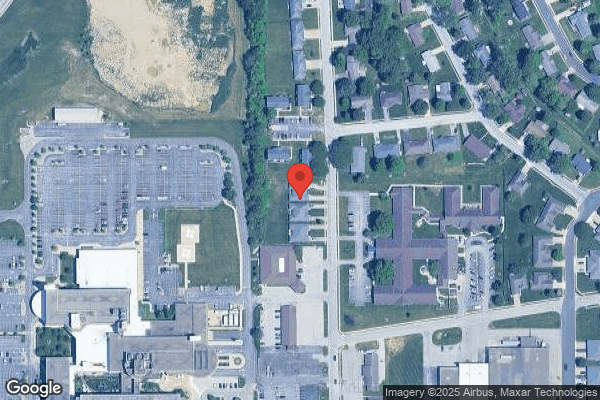

255 MEADOW DR, DANVILLE, IN 46122 (317) 745-5451
Government - County 110 Beds AMERICAN SENIOR COMMUNITIES Data: November 2025
Trust Grade
88/100
#26 of 505 in IN
Last Inspection: June 2025

Inspected within the last 6 months. Data reflects current conditions.

Overview

Danville Regional Rehabilitation has a Trust Grade of B+, indicating it is above average and recommended for families considering options. With a state rank of #26 out of 505 facilities in Indiana, it places in the top half, and it is #2 out of 9 in Hendricks County, meaning only one local option is better. However, the facility is experiencing a worsening trend, with issues increasing from 2 in 2024 to 4 in 2025. Staffing is a relative strength, rated at 3 out of 5 stars with a turnover rate of 30%, which is well below the state average of 47%, suggesting that staff are more likely to stay and build relationships with residents. On the downside, the facility has recorded 16 concerns, none of which were life-threatening, but there are issues such as failing to keep urinary catheter bags off the floor for some residents, which can increase infection risks. Additionally, they did not maintain safe hot water temperatures in the memory care unit, which could lead to accidents for residents. Although there are no fines on record, the presence of multiple concerns highlights the need for improvement in certain areas.

Trust Score
B+
88/100
In Indiana
#26/505
Top 5%
Safety Record
Low Risk
No red flags
Inspections
Getting Worse
2 → 4 violations
Staff Stability
✓ Good
30% annual turnover. Excellent stability, 18 points below Indiana's 48% average. Staff who stay learn residents' needs.
Penalties
✓ Good
No fines on record. Clean compliance history, better than most Indiana facilities.
Skilled Nurses
⚠ Watch
Each resident gets only 28 minutes of Registered Nurse (RN) attention daily — below average for Indiana. Fewer RN minutes means fewer trained eyes watching for problems.
Violations
⚠ Watch
16 deficiencies on record. Higher than average. Multiple issues found across inspections.
★★★★★
5.0
Overall Rating
★★★☆☆
3.0
Staff Levels
★★★★★
5.0
Care Quality
★★★★☆
4.0
Inspection Score
Stable
2024: 2 issues
2025: 4 issues

The Good

  • 5-Star Quality Measures · Strong clinical quality outcomes
  • Low Staff Turnover (30%) · Staff stability means consistent care
  • Full Sprinkler Coverage · Fire safety systems throughout facility
  • No fines on record
  • Staff turnover is low (30%)

    18 points below Indiana average of 48%

Facility shows strength in quality measures, staff retention, fire safety.

The Bad

Chain: AMERICAN SENIOR COMMUNITIES

Part of a multi-facility chain

Ask about local staffing decisions and management

The Ugly 16 deficiencies on record

Jun 2025 4 deficiencies
CONCERN (D)

Potential for Harm - no one hurt, but risky conditions existed

Deficiency F0578 (Tag F0578)

Could have caused harm · This affected 1 resident

**NOTE- TERMS IN BRACKETS HAVE BEEN EDITED TO PROTECT CONFIDENTIALITY** Based on interview and record review, the facility failed to ensure a resident, (Resident 94) had the right to formulate an adva...

Read full inspector narrative →
**NOTE- TERMS IN BRACKETS HAVE BEEN EDITED TO PROTECT CONFIDENTIALITY** Based on interview and record review, the facility failed to ensure a resident, (Resident 94) had the right to formulate an advanced directive for 1 of 2 residents reviewed for advance directives. Findings include: On 06/19/25 at 11:44 a.m., Resident 94's medical record was reviewed. He was a long-term care resident with diagnoses which included, but was not limited to, peripheral vascular disease (PVD), a below the knee amputation of his left leg, surgical wound failure with necrosis, and dementia with unspecified severity. At the time of his admission, on 1/14/25, there was no Power of Attorney (POA) and/or guardianship documentation. Resident 94's face-sheet contact information was reviewed and revealed he was his own responsible party and received his Accounts/Receivable (AR) statements. Resident 94's family member was listed as an emergency contact. A social service progress note, dated 4/7/25 at 2:14 p.m., indicated a notary was scheduled to come to the facility to assist Resident 94 to establish a healthcare POA and the family is planning to change code status . son will be at the facility later today to make/discuss plans A social service progress note, dated 4/7/25 at 6:23 .m., indicated Resident 94's son came in to discuss POST form . Writer reviewed options with son. Son stated his wishes were for Resident to become DNR [do not resuscitate] with comfort measures in place. Post form signed Resident 94 had a significant change Minimum Data Set (MDS) assessment, dated 3/24/25, after his BKA. At the time of his assessment he was interviewed, and scored an 11 of 15 on the Brief Interview for Mental Status (BIMS) which indicated he was only moderately cognitively impaired. On 6/20/25 at 2:05 p.m., the Administrator (ADM) provided a copy of Resident 94's POA paperwork. The document was titled, Medical Power of Attorney, and was signed/sealed by a Notary Public on 4/7/25. The document indicated, .Even after you sign this document, you will be able to make your healthcare decision assuming you are still considered mentally competent. Your agent cannot act on your behalf until your physician has determined that you are no longer physically or mentally able to make medical decisions unless otherwise stated in this document . Duration: unless stated otherwise [NAME], this document shall remain in effect until I revoke it. I understand that I cannot revoke this document if I am considered incompetent to make my own decision . When My Agent's Authority Becomes Effective: . The only option for initial of acknowledgement of when the agent's authority was to become effective stated: Immediately to make health care decision on my behalf. The election for this option was left blank and was not initialed by the Resident. The document was signed by both the Resident and his son. Resident 94's POST form was prepared on 4/7/25 and signed by the Resident's son. The record lacked documentation that the physician had determined Resident 94 was incompetent. A Social Service progress note, dated 4/18/25 at 2:25 p.m., indicated that Resident 94's son made the decision to implement comfort measures, but did not specify if the resident assisted in making this decision as well. Resident 94 passed away on 5/14/25. During a confidential interview, it was indicated that Resident 94 was alert and oriented with minimal confusion. His confusion was usually worse in the afternoons or evenings when he was more tired. He remembered most of his daily staff members and engaged in meaningful conversation with staff and residents. He was compliant with care and kept talking about how he wanted to get better. He was alert and aware enough to make his own decision and should have had more say in the end. As soon as they stopped trying to fix his wounds, all decisions went through the son. During a confidential interview, it was indicated Resident 94 was very sweet, alert and oriented. He would have regular and appropriate conversations and understood that his condition was not good but wasn't sure what else they could do about it. The son made the decision not to do more surgery because they didn't want him to go under again. During an interview on 6/23/25 at 9:52 a.m., the Social Service Director (SSD) indicated Resident 94 was moderately cognitively impaired, but was alert and oriented. Most of his confusion was noted later in the evenings but during the morning and into the afternoon, his baseline was alert and oriented to his person, place and time. The SSD indicated, I feel like he did understand that [the severity of his medical condition and imminent demise] because he said things like, 'I've lived a good life.' There had been multiple conversations at bedside about changing his code status but he really didn't want to change his code status. Resident 94 was very hard of hearing, so his son would often have to explain back what was being said. Options for different DNR codes status was explained to the son, who indicated he didn't have a good understanding before that there were as many options for comfort/palliative DNR options, and after those options were explained, the son agreed to change Resident 94's code status. On 6/20/25 at 2:05 p.m., the ADM provided a copy of current, but undated facility policy titled, Your Rights and Protections as a Nursing Home Resident. The policy indicated, .at minimum, Federal law specified that nursing home must protect and promote the following rights of each resident: You have the right to: . to create advance directives (a health care proxy or power of attorney, a living will, after-death wishes) in accordance with State Law On 6/20/25 at 2:05 p.m., the ADM provided a copy of current facility policy titled, Advance Directive (POST, DNR, Health Care Rep), revised 7/2023. The policy indicated, .if the resident has capacity to make decision, the resident makes decision regarding their medical decision, advance directives, and healthcare appointments. Resident representatives, health care representatives and/or Power of Attorney should only make decisions when a resident no longer has capacity to make decisions on their behalf. The attending physician determines capacity of the resident to made decision; this assessment should be documented in the medical record 3.1-4(f)(7)
CONCERN (D)

Potential for Harm - no one hurt, but risky conditions existed

Assessment Accuracy (Tag F0641)

Could have caused harm · This affected 1 resident

Based on observations, record reviews, and interviews, the facility failed to accurately code the Minimum Data Set (MDS) for a suprapubic catheter (a hollow tube inserted through the abdomen into the ...

Read full inspector narrative →
Based on observations, record reviews, and interviews, the facility failed to accurately code the Minimum Data Set (MDS) for a suprapubic catheter (a hollow tube inserted through the abdomen into the bladder to drain urine, typically used when a urethral catheter is not feasible or desirable) and an coded an anticoagulant medication when the resident did not received an anticoagulant medication for 2 of 7 resident reviewed (Residents 39 and 13). Findings include: 1. On 6/19/25 at 9:54 a.m., a record review was completed for Resident 39. She had the following diagnoses which included but were not limited to dementia, hypertension, anxiety, and high cholesterol. Her MDS was not coded as her having a suprapubic catheter. She had an order, dated 5/5/25, for suprapubic catheter, size 18 French (FR), 30 milliliter (ML) bulb. She had an order, dated 5/5/25, to change suprapubic catheter and urinary collection bag as needed for dislodgement, leakage, or occlusion. She had a care plan, dated 5/7/25, that she required assistance with toileting due to assistance with transfers, hygiene, adjusting, catheter care. She had a care plan, dated 5/7/25, indicating she was at risk for falls related to catheter tubing. 2. On 6/19/25 at 11:38 a.m., a record review was completed for Resident 13. She had the following diagnoses which included but were not limited to multiple sclerosis (MS) (a chronic, often disabling disease that attacks the central nervous system, specifically the brain and spinal cord), depression, weakness, and major depressive disorder. Her MDS was coded that she took an anticoagulant medication. She was not prescribed an anticoagulant medication. On 6/19/25 at 1:46 p.m., the Executive Director (ED) provided a corrected copy of Resident 39's MDS. On 6/19/25 at 2:05 p.m., the ED provided a corrected copy of Resident 13's MDS and indicated the MDS coordinator inadvertently coded the wrong type of medication. A document from the RAI (Resident Assessment Instrument) manual, chapter 3 provided by the ED on 6/18/25 at 1:37 p.m. It indicated, .To facilitate accurate resident assessment using the MDS, each section is accompanied by screenshots, which display the item from the MDS 3.0 item set
CONCERN (D)

Potential for Harm - no one hurt, but risky conditions existed

Accident Prevention (Tag F0689)

Could have caused harm · This affected 1 resident

Based on observations, interviews, and record review, the facility failed to prevent the potential for accidents with ongoing safety monitoring and assessments for a resident (Resident 62) who require...

Read full inspector narrative →
Based on observations, interviews, and record review, the facility failed to prevent the potential for accidents with ongoing safety monitoring and assessments for a resident (Resident 62) who required the use of a seat belt in his wheelchair for 1 of 1 resident reviewed for the use of a seat belt. Findings include: On 6/19/25 at 11:41 a.m., Resident 62 was observed seated in his wheelchair (wc). A seat belt was observed across his lap but hung slack to the middle of his thighs. The left side of the belt was frayed nearly in half, as it appeared to rub against a sharp edge of the wc frame. On 6/20/25 Resident 62 was observed multiple times seated in his wc outside of the Activity Director's office door as he visited with staff and other residents. A seat belt was observed across his lap but hung slack and reached almost to the top of his knees. The left side of the belt was observed to rub against a sharp edge of his chair and remained frayed, nearly in half. On 6/23/25 at 9:41 a.m., Resident 62 was observed with the Social Service Director, (SSD). Resident 62 was asked to unbuckle his seat belt, which he demonstrated with ease, however he could not re-buckle it on his own. The SSD observed the frayed edge of the belt, and indicated it must have rubbed on the frame and was no longer in good repair. At that time, a Maintenance Staff member passed by and observed the belt. He indicated it needed to be replaced. On 6/20/25 at 1:26 p.m., Resident 62's medical record was reviewed. He was a long term-care resident with diagnoses which included, but were not limited to, cerebral palsy, shaken infant syndrome and intellectual disabilities. There was an initial Adaptive Device Review, dated 7/25/24, which indicated, Seatbelt on wheelchair. Seatbelt to wheelchair due to resident rocking per mom's request. Therapy evaluated and resident is able to remove seatbelt by self. The initial assessment did not specify the type of belt and/or parameters for ongoing assessment of placement, appropriateness and/or function/condition. He had a physician's order, dated 2/10/25, which indicated he could have a wheelchair with seatbelt. The order did not specify the type of belt and/or parameters for ongoing assessment of placement, appropriateness and/or function/condition. A comprehensive care plan, dated 5/15/25, indicated Resident 62 required assistance with activities of daily living (ADLS). An intervention was added on 5/15/24 which indicated he could be up in his wheelchair with a seatbelt. The care plan lacked implementation and/or revision to specify the type of belt and/or parameters for ongoing assessment of placement, appropriateness and/or function/condition. On 6/20/25 at 2:05 p.m., the Administrator (ADM) provided a copy of current facility policy titled, Adaptive Device Review Policy, revised 2/2020. The policy indicated, .It is the responsibility of the facility IDT team to review adaptive devices initially and on a quarterly basis to ensure the continued need and/or identify a new intervention . adaptive devised that do not meet the definition of a restraint must be reviewed on a quarterly basis by the IDT team to determine continued need . the use of the adaptive devise needs to be addressed in the resident's plan of care and appear on the resident profile 3.1-45(a)
CONCERN (D)

Potential for Harm - no one hurt, but risky conditions existed

Deficiency F0761 (Tag F0761)

Could have caused harm · This affected 1 resident

**NOTE- TERMS IN BRACKETS HAVE BEEN EDITED TO PROTECT CONFIDENTIALITY** Based on observations and interviews, the facility failed to store topical creams from medications, keep the medication cart cle...

Read full inspector narrative →
**NOTE- TERMS IN BRACKETS HAVE BEEN EDITED TO PROTECT CONFIDENTIALITY** Based on observations and interviews, the facility failed to store topical creams from medications, keep the medication cart clean, failed to remove expired insulin from use, and failed to date insulin and eye drops for 2 of 4 medications carts observed. Findings include: 1. On [DATE] at 12:04 p.m., the Cottage medication cart was observed. In the cart it was noted that wound gel was being stored next to eye drops and throat lozenges. Resident 197 had an insulin pen, Humalog, in the cart with no date to indicate when it was opened. There were approximately 50 various pills loose in the second drawer of the medication cart. 2. On [DATE] at 12:22 p.m., the Meadows medication cart was observed. In the cart nitroglycerin tablets was being stored with eye drops. Resident 12 had an insulin pen, Lispro in the cart. It was dated for [DATE]. The observations were confirmed by LPN 6 and LPN 8. A policy titled, Storage and Expiration Dating of Medications and Biologicals was provided by the Executive Director (ED) on [DATE] at 1:41 p.m. It indicated, .Topical (external) use medications or other medications should be stored separately from oral medication when infection control issues may be a consideration .The facility should ensure medications and biologicals that 1.) have an expiration date on the label 2.) have been retained longer than recommendations by manufacturer or supplier guidelines, or 3.) have been contaminated or deteriorated are stored separate from other medications until destroyed or returned to the pharmacy or supplier 3.1-25(j) 3.1-25(m) 3.1-25(n)
May 2024 2 deficiencies
CONCERN (D)

Potential for Harm - no one hurt, but risky conditions existed

Incontinence Care (Tag F0690)

Could have caused harm · This affected 1 resident

**NOTE- TERMS IN BRACKETS HAVE BEEN EDITED TO PROTECT CONFIDENTIALITY** Based on observation, interview, and record review, the facility failed to ensure a urinary catheter bag and catheter tubing did...

Read full inspector narrative →
**NOTE- TERMS IN BRACKETS HAVE BEEN EDITED TO PROTECT CONFIDENTIALITY** Based on observation, interview, and record review, the facility failed to ensure a urinary catheter bag and catheter tubing did not touch the floor resulting in a urinary tract infection (UTI) for 1 of 2 residents observed for catheter acquired urinary tract infection (cauti) (Resident 81), and failed to ensure residents had diagnoses to support the insertion of urinary Foley catheters for 2 of 2 residents reviewed for urinary catheters (Resident 81 and 155). Findings include: 1. On 4/30/24 at 12:15 p.m., Resident 81's urinary Foley bag and catheter tubing were observed on the floor. On 5/1/24 at 12:15 p.m., Resident 81's records were reviewed. A care plan, dated 4/17/24, indicated Resident 81 required an indwelling urinary catheter related to urinary retention. The goal indicated she would have catheter care managed appropriately as evidenced by not exhibiting signs of urinary tract infection. A nursing approach was to not allow tubing or any part of the drainage system to touch the floor. An Infection Control Surveillance document, dated 4/29/24, indicated Resident 81 had a urinary catheter related infection and was on antibiotic therapy until 5/8/24. Her symptoms onset was 4/29/24 with acute change in mental status and suprapubic pain or costovertebral angle pain or tenderness. She was placed on enhanced barrier precautions. On 5/2/24 at 10:52 a.m., her record indicated she was scheduled to be given Macrobid (antibiotic) 100 mg every 12 hours for 7 days for a UTI from 5/1/24 to 5/8/24. A progress note, dated 4/17/24 at 5:07 p.m., indicated Resident 81 complained of back pain often. Her PVR (post-void residual) was obtained and she was retaining approximately 226 milliliters (mL) of urine. The Nurse Practitioner (NP) was notified and a new order to anchor a foley was received. Resident 81 tolerated it well. During an interview, on 4/30/24 at 10:24 a.m., the Moving Forward Unit Manager (MFUM) 5 indicated Resident 81 had a foley catheter due to urinary retention. Resident 81's record lacked documentation of a diagnosis of urinary retention. 2. During an interview, on 4/30/24 at 12:30 p.m., Resident 155's wife indicated he got a new Foley catheter that morning because his abdomen was distended. She indicated the nurse had to clamp it because there was so much urine. The nurse had to empty the catheter bag three times. On 5/1/24 at 10:51 a.m., Resident 155 record was reviewed. He was admitted on [DATE]. He had an admission diagnosis of retention of urine. A progress note, on 4/30/24 at 1:09 p.m., indicated a PVR was completed as ordered. Resident 155 was retaining approximately 800 mL of urine in his bladder. The NP was notified and a new order to I/O (in and out) catheter every 8 hours as needed (PRN) for abdominal distention and pain due to high PVR. The I/O drained 1400 mL in increments due to his hypotension. The NP was notified of the amount of urine drained and a new order to place a Foley catheter was received. A physician's order, dated 4/30/24, indicated to anchor a Foley catheter. A care plan, dated 5/1/24, indicated Resident 155 required an indwelling urinary catheter related to urinary retention. A care plan, dated 4/26/24, indicated Resident 155 was at risk for pain related to PVD. Resident 155's record lacked documentation of a diagnosis of urinary retention. A policy, titled, Bowel and Bladder Program, dated 5/2019, was provided by the Regional Nurse Consultant, on 5/3/24 at 12:11 p.m. A review of the policy indicated, .Indwelling Urinary Catheters - Suprapubic or Urethral .Assessment will include reason for indwelling Urinary Catheter 3.1-41(a)(1) 3.1-41(a)(2)
CONCERN (D)

Potential for Harm - no one hurt, but risky conditions existed

Deficiency F0761 (Tag F0761)

Could have caused harm · This affected 1 resident

Based on observation, interview, and record review, the facility failed to ensure 1 of 4 treatment carts remained locked and medication remained inaccessible to residents and visitors (Residents 345, ...

Read full inspector narrative →
Based on observation, interview, and record review, the facility failed to ensure 1 of 4 treatment carts remained locked and medication remained inaccessible to residents and visitors (Residents 345, 11, 79, and 63). Findings include: One 4/30/24 at 9:48 a.m., the Rosewood treatment cart was observed unlocked. Several staff were observed to pass the treatment cart. Prescription medication found inside the treatment cart included: a. Resident 345 had SSD cream 1%. b. Resident 11 had thera-gel 0.5% shampoo. c. Resident 79 had diclofenac sodium 1% gel, one container in drawer one and one container in drawer two. d. Resident 63 had diclofenac sodium 1% gel. During an interview, on 4/30/24 at 10:03 a.m., Licensed Practical Nurse (LPN) 5 indicated the treatment cart should not be unlocked. She was observed locking it. During an interview, on 5/1/24 at 10:21 a.m., the Moving Forward Unit Manager (MFUM) 5 indicated all treatment carts should have been locked because it was a violation of resident's privacy because a resident or visitor could have been curious and looked at or taken medications from the treatment cart. On 5/1/24 at 2:58 p.m., the Director of Nursing (DON) indicated Resident 76 and Resident 108 were residents who wandered the building with severe cognitive abilities. A policy, titled, Storage and Expiration Dating of Medications, Biologicals, dated 7/21/22, was provided by the Regional Nurse Consultant, on 5/3/24 at 12:15 p.m. A review of the policy indicated, .Facility should ensure that only authorized Facility staff, as defined by Facility, should have possession of the keys, access cards, electronic codes, or combinations which open medication storage areas 3.1-25(m)
Feb 2023 10 deficiencies
CONCERN (D)

Potential for Harm - no one hurt, but risky conditions existed

Deficiency F0655 (Tag F0655)

Could have caused harm · This affected 1 resident

Based on record review and interview, the facility failed to ensure a new resident had a baseline care plan initiated to identify problems related to pain and insomnia (Resident 204) for 1 of 22 resid...

Read full inspector narrative →
Based on record review and interview, the facility failed to ensure a new resident had a baseline care plan initiated to identify problems related to pain and insomnia (Resident 204) for 1 of 22 residents reviewed for care planning. Findings include: On 2/27/23 at 2:55 p.m., Resident 204's medical record was reviewed. The resident's admission date was 2/24/23. The diagnoses included, but were not limited to, rhabdomyolysis (a breakdown of muscle tissue that releases damaging protein into the blood), laceration of the head, chronic heart failure, neuropathy (nerve pain), pain in left hip, sacroiliitis (a painful condition that effects one or both sacroiliac [joints at base of the spine] joints that results in lower back pain), primary insomnia, and a wedge compression fracture of the fourth lumbar (back) vertebra (bone of spine). Resident 204's care plans did not include a care plan for pain management or insomnia. Resident 204's admission pain, observation report, was dated 2/24/23 and showed In Progress. None of the questions had been answered on the Pain Interview. On 2/27/23 at 3:45 p.m., Resident 204's care plans and admission pain assessment were requested. On 2/28/23 at 9:00 a.m., the Administrator provided copies of all of Resident 204's care plans and admission Pain Assessment Interview. The pain assessment had been completed by the Minimum Data Set (MDS) Coordinator on 2/27/23 at 4:02 p.m. Resident 204's care plans, dated 2/27/23, created by the MDS Coordinator, included, but was not limited to, Resident is at risk for pain related to: Rhabdomyolysis, laceration to the head, neuropathy, sacroiliitis, wedge compression fracture of the fourth lumbar vertebra. The goal, with a target date of 5/27/23, indicated Resident will be free from adverse effects of pain. A second care plan, dated 2/27/23, created by the MDS Coordinator indicated, Resident is at risk for adverse side effects related to use of psychotropic medication, antidepressant, and hypnotic. The goal, with a target date of 5/27/23, indicated, Will have no adverse side effects. On 2/28/23 at 11:43 a.m., during an interview, in his room, Resident 204 indicated he did not get all his medication until yesterday. They did not have his ambian (for sleep), norco (for pain), or the lyrica (for nerve pain). They finally had given him generic medicine for his sleeping medication, and it helped last night. He had trouble sleeping, had been taking that for years. He fell 5 years ago and landed on his leg. The orthopedic surgeon had put a plate and rod in his leg. He has been on lyrica and norco for the past 5 years. He had pain the whole time he was at the facility since admission. When he asked about it they indicated it took several days to get all the medicine from pharmacy. They said it was the hospital's fault and there was a problem with not having all the prescriptions to get the medicines from pharmacy. They gave him pain medicine last night, for the first time, and it helped. He indicated I'm getting ready to ask for some more now. On 2/28/23 at 10:12 a.m., the Regional Clinical Consultant (RCC) provided a current policy, dated as revised 10/19, titled, IDT Comprehensive Care Plan Policy. This policy indicated, It is the policy of this facility that each resident will have a comprehensive person-centered care plan based on comprehensive assessment .Create an organized, resident-centered review on a routine basis to improve communication with residents 3.1-30(a)
CONCERN (D)

Potential for Harm - no one hurt, but risky conditions existed

Deficiency F0657 (Tag F0657)

Could have caused harm · This affected 1 resident

**NOTE- TERMS IN BRACKETS HAVE BEEN EDITED TO PROTECT CONFIDENTIALITY** 2. On 2/22/23 at 2:15 p.m., Resident 95 was sitting in her wheelchair with her right arm in a sling. Her bed was not against the...

Read full inspector narrative →
**NOTE- TERMS IN BRACKETS HAVE BEEN EDITED TO PROTECT CONFIDENTIALITY** 2. On 2/22/23 at 2:15 p.m., Resident 95 was sitting in her wheelchair with her right arm in a sling. Her bed was not against the wall. On 2/24/23 at 3:15 p.m., Resident 95 was sitting up in her wheelchair with her right arm in a sling. Her bed was not against the wall. A comprehensive record review was completed on 2/24/23 at 11:26 a.m. for Resident 95. She admitted on [DATE] after sustaining a fractured right arm. Her diagnoses included, but were not limited to, other displaced fracture of upper end of right humerus, dementia, Alzheimer's disease with late onset, asthma, major depressive disorder, anemia, GERD (gastro-esophageal reflux disease), muscle weakness, unsteadiness on her feet, and pain of her right shoulder. Her orders included to have her bed against the wall, dated 1/18/23. Her care plan had a problem dated 1/19/23 for Resident 95. It indicated she was at risk for falls due to lack of understanding one's physical and cognitive limitations, history of falls, advanced age, incontinent, on two or more high risk medications, needs assistance with mobility and has an unsteady gait (walking). The goal, dated 5/1/23, indicated her fall risk factors would be reduced to avoid significant fall with injury. The care plan did not address an intervention to have the bed against the wall. On 2/28/23 at 10:12 a.m., the Regional Clinical Specialist provided a copy of current facility policy titled, IDT [interdisciplinary team] Comprehensive Care Plan Policy, revised 10/2019. The policy indicated, It is the policy of this facility that each resident will have a comprehensive person-centered care plan developed based on comprehensive assessment. The care plan will include measurable goals and resident specific interventions based on resident needs and preferences to promote the resident's highest level of functioning including medical, nursing, mental and psychosocial needs .Care plan problems, goals and interventions will be updated based on changes in resident assessment/condition, resident preferences or family input 3.1-35(d)(2)(B) Based on observation, interview, and record review, the facility failed to ensure a resident had a new and/or revised comprehensive care plan to address a new diagnosis for 1 of 22 residents reviewed for care planning (Resident 59), and failed to revise a resident's care plan to include fall interventions for 1 of 22 residents reviewed for care planning (Resident 95). Findings include: 1. On 2/23/23 at 1:30 p.m., Resident 59's medical record was comprehensively reviewed. She had been a long-term care resident and resided on the secured memory care unit since 10/29/2020. She had previously lived at two separate Assisted Living (AL) facilities before she was admitted to long-term care. She had active diagnoses which included but were not limited to, dementia and psychotic disorder with hallucinations due to known physiological condition, and on 6/4/2022 a new diagnosis of Herpes viral vulvovaginitis (HSV) was added. Her physician's orders were reviewed and revealed she took Valacyclovir, an antiviral medication, on a regular basis, every other day. A nursing progress note, dated 7/28/21 at 3:17 p.m., indicated Resident 59 returned from her private doctor with a new order for an antiviral medication to complete a course over 7 days and to follow up in November. A nursing progress note, dated 8/5/21 at 9:01 p.m., indicated Resident 59 had completed her antiviral course with no issues. After her follow up in November, a nursing progress note dated 11/4/21 at 8:26 p.m., indicated, Resident 59 remained on Valtrex (an antiviral medication) for HSV. Her comprehensive care plan lacked documentation of new and/or revised interventions related to her genital herpes diagnoses. Although she had comprehensive care plan which addressed her as being at risk for skin breakdown due to her cognition and incontinence, the care plan lacked revision to include a diagnoses of genital herpes or for increased monitoring due to outbreaks, rashes and//or flare ups. During an interview on 2/23/23 at 2:54 p.m., Resident 59 indicated, she had lived at the facility almost three years. She had resided on memory care for a long time, but she was excited that she would soon move to a new private room on the other side of the facility. She indicated since she started taking a daily medication, she had not had any more problems with her genital herpes. During an interview on 2/23/23 at 3:05 p.m., the Memory Care Support Specialist (MCSS) indicated Resident 59 was going to move off the memory care unit to a private room as she was no longer considered a risk for elopement and displayed no exit seeking behaviors. When Resident 59 first moved in he didn't even know she had genital herpes, but she kept getting a rash. They sent her to her doctor which was when she got the new diagnosis and she had been on medicine for it since with no concerns.
CONCERN (D)

Potential for Harm - no one hurt, but risky conditions existed

Deficiency F0694 (Tag F0694)

Could have caused harm · This affected 1 resident

**NOTE- TERMS IN BRACKETS HAVE BEEN EDITED TO PROTECT CONFIDENTIALITY** Based on observation, interview, and record review, the facility failed to properly place and change a gauze/transparent dressin...

Read full inspector narrative →
**NOTE- TERMS IN BRACKETS HAVE BEEN EDITED TO PROTECT CONFIDENTIALITY** Based on observation, interview, and record review, the facility failed to properly place and change a gauze/transparent dressing for a PICC line (peripherally inserted central catheter) for 1 of 1 resident reviewed for a vascular access device (Resident 154). Findings include: On 2/23/23 at 8:41 a.m., a PICC line was observed in Resident 154's left upper arm. It had gauze applied at the insertion site and was covered with a transparent dressing dated 2/9/23 and initialed, AB. On 2/23/23 at 1:00 p.m., Resident 154's PICC line to the left upper arm was observed a second time, and remained dated 2/9/23 and initialed, AB. On 2/24/23 at 3:53 p.m., Resident 154's record was reviewed. She admitted to the facility on [DATE] with active diagnoses, which included, but were limited to infection and inflammatory reaction due to indwelling urethral catheter, peripheral vascular disease (disease of the blood vessels), presence of vascular implants and grafts (artificial medical device in the body), diabetes mellitus (blood sugar disorder), and acute myocardial infarction (heart attack). A nursing progress note, dated, 2/8/23 at 9:18 a.m., indicated the nurse notified a family member and Resident of new PICC being placed. They informed the nurse she had an axillary-femoral bypass graft AFBG) (tubing from the axillary artery to the femoral artery to allow more blood flow) on her left side and showed the nurse the scar in her forearm. The provider was notified and ordered a peripheral line placed. Nurse charted, unable to start the peripheral vascular (PV) line. Provided indicated to contact the hospital to confirm the location of the AFBG and to start the antibiotic upon confirmation. A nursing progress note, dated, 2/9/23 at 1:01 p.m., indicated orders were obtained to remove the right upper extremity (RUE) PICC line and place it in the left upper extremity (LUE). Awaiting stat arterial doppler for RUE to verify integrity of AFBG. A nursing progress note, dated, 2/9/23 at 3:03 p.m., indicated, the pharmacy had come to remove the current PICC line (RUE) and place it in the LUE. A physician's order, dated 2/8/23, gave instructions for the nurse to initial every shift that the PICC line site was free of warmth, redness or swelling. A physician's order, dated 2/8/23, gave instructions to change transparent dressing, as needed, if integrity of the dressing was compromised (wet, loose, or soiled). The record lacked documentation of a physician's order to monitor/maintain the dressing until 2/17/23. A physician's order, dated, 2/17/23, gave instructions to change PICC line dressing every 7 days with transparent dressing. The nurse was to measure (in centimeters) the PICC catheter length (from insertion site to catheter hub) and the nurse was to measure the upper arm circumference (10 cm above antecubital fossa) (inside the elbow), once a day, every 7 days. A physician's order, dated 2/8/23, gave instructions to give piperacillin-tazobactam (an antibiotic medication) 3.375 gram reconstituted solution, every 8 hours by IV, due to infection and inflammatory reaction due to indwelling urethral catheter with an end date of 2/17/23. A nursing progress note, dated, 2/10/23 at 3:10 a.m., indicated Resident 154 had a vascular access device, PICC line, in her LUE. A nursing progress note, dated, 2/12/23 at 1:48 a.m., Resident 154 continued on antibiotic therapy for UTI (urinary tract infection) and wounds. A nursing progress note, dated, 2/14/23 at 9:48 a.m., Resident 154 continued on antibiotic therapy for UTI. A nursing progress note, dated, 2/25/23 at 12:28 a.m., Resident 154 continued on IV antibiotics, PICC line flushed well. A physician's order, dated 2/24/23 at 3:18 p.m., gave instructions to give meropenem 1 gram reconstituted solution, every 8 hours by IV. Resident 154's Treatment Administration Record (TAR) for the month of February was reviewed and revealed: a. On 2/17/23 at 5:11 a.m., Licensed Practical Nurse (LPN) 25 charted on 2/16/23, the order was not completed. b. On 2/17/23 at 1:29 p.m., LPN 26 charted the order was not completed. The piperacillin-tazobactam antibiotic was ordered on 2/8/23 but was not started until 2/9/23 at 10:00 p.m., LPN 27 charted it was due to the PICC line needing to be place in the LUE. The PICC line was inserted in the LUE on 2/9/23. The TAR indicated the PICC line dressing was not changed until 2/24/23 by LPN 27. On 2/27/23 at 11:56 a.m., Resident 154's care plan, dated 2/9/23, indicated she had IV access and was at risk for infection/complications due to her PICC line. The goal was to keep her free from complications associated with IV access. An approach to the issue was to change the dressing as ordered. During an interview, on 2/24/23 at 11:04 a.m., with the Administrator, Director of Nursing Services (DNS), and the Regional Clinical Consultant (RCC) present, the only statement proffered as to why Resident 154 did not get her PICC line dressing order until 2/17/23 and the dressing was not changed until 2/24/23, was by the RCC. She indicated maybe the resident refused. A current policy, titled, Central Vascular Access Device (CVAD) Dressing Change, dated 6/1/21, was provided by the Administrator, on 2/24/23 at 12:18 p.m. A review of the policy indicated, .The nurse is responsible and accountable for obtaining and maintaining competence with infusion therapy within his or her scope of practice .Central vascular access devices (CVADs) include peripherally inserted central catheter (PICC) .The catheter insertion site is a potential entry site for bacteria that may cause a catheter-related infection .Perform sterile dress changes .at least weekly .what a transparent dressing is applied over a sterile gauze dressing it is considered a gauze dressing and is changed upon admission .every two days 3.1-47(a)(2)
CONCERN (D)

Potential for Harm - no one hurt, but risky conditions existed

Pharmacy Services (Tag F0755)

Could have caused harm · This affected 1 resident

Based on observation, interview, and record review, the failed to ensure a resident with difficulty sleeping due to acute and chronic pain received medications, prescribed by the physician, to control...

Read full inspector narrative →
Based on observation, interview, and record review, the failed to ensure a resident with difficulty sleeping due to acute and chronic pain received medications, prescribed by the physician, to control pain and aid in ability to sleep, when they did not follow up after admission to obtain written prescriptions for the pharmacy to provide the prescribed medications (Resident 204) for 1 of 1 residents reviewed for pain. Findings include: On 2/27/23 at 2:55 p.m., Resident 204's medical record was reviewed. The resident's admission date was 2/24/23. The diagnoses included, but were not limited to, rhabdomyolysis (a breakdown of muscle tissue that releases damaging protein into the blood), laceration of the head, chronic heart failure, neuropathy (nerve pain), pain in left hip, sacroiliitis (a painful condition that effects one or both joints at base of the spine, that results in lower back pain), primary insomnia, and a wedge compression fracture of the fourth lumbar (back) vertebra (bone of spine). The admission Minimum Data Set (MDS) assessment, dated 12/24/23, indicated Resident 204's Brief Interview for Mental Status (BIMS) assessment was 15 out of 15 which was cognitively intact. On 2/27/23 at 8:58 a.m., during a random medication pass observation, with Registered Nurse (RN) 18, she was observed as she prepared and passed morning medications to Resident 204. The resident received the following medications, from RN 18: 81 milligrams (mg) aspirin, 20 mg furosemide (a diuretic), 25 mg metoprolol (for blood pressure), 20 mg omeprazole (for acid reflux prevention), and Miralax (for bowels) 17 gram (gm) in water. Resident 204 had an order for lyrica (pregabalin) 25 mg capsule, twice a day for pain in left hip. The medication was not available in the medication cart. She marked the medication administration record not given, medication unavailable. RN 18 told Resident 204, when she administered his other medications, the lyrica for his pain had still not arrived from the pharmacy, she would have to call them. The resident indicated they had told him it was not available; he needed all his medication. Upon returning to the hall, RN 18 opened the narcotic book and indicated there were no narcotic sheets in the book for Resident 204. The locked narcotic drawer contained no narcotic medications for him either. RN 18 then went to the nurses' station desk and phoned the pharmacy. After talking to the pharmacy, she indicated they had told her when the resident admitted to the facility they required paper prescriptions for all narcotic medications. None had been faxed over to the pharmacy, so they were unable to supply the medication. Without the pharmacy authorization she could not obtain the medication from the facility's emergency supply, either. She would have to call the physician to obtain written prescriptions for the narcotic medications. A review of Resident 204's MAR indicated lyrica (pregabalin) was not administered on 2/24/23 at 9:03 p.m., due to not available. It was not administered on 2/25/23 at 7:13 a.m. or 5:00 p.m., because it was not available. It was not administered on 2/26/23 at 6:49 a.m., because it was not available. It was not administered on 2/27/23 at 11:38 a.m., because it was not available. The record indicated Resident 204 received lyrica on 2/26/23 at 5:00 p.m., by Licensed Practical Nurse (LPN) 13. The record reflected Resident 204 had an order for hydrocodone-acetaminophen 7.5-325 mg prn (as needed). This medication, also a narcotic pain medication, was not charted on the MAR as ever having been administered. Resident 204 had an order for zolpidem (a narcotic sleeping pill) 5 mg at bedtime prn (as needed). On 2/28/23 at 10:10 a.m., during an interview, the Regional Clinical Consultant (RCC) indicated traditionally the hospital should have sent prescriptions for medications, then they would have been faxed to pharmacy. If they did not send a written prescription the facility needed to contact the doctor to obtain one. If the medication was not available at medication pass the nurse should not have charted it as given. She was going to contact the nurse, LPN 13, who documented it as given on Sunday 2/26/23 evening. The MAR would have to be corrected because the medication was not available. Resident 204's care plans did not include a care plan for pain management or insomnia. Resident 204's admission pain, observation report, was dated 2/24/23 and showed In Progress. None of the questions had been answered on the Pain Interview. On 2/27/23 at 3:45 p.m., Resident 204's care plans and admission pain assessment were requested. On 2/28/23 at 9:00 a.m., the Administrator provided copies of Resident 204's care plans and admission Pain Assessment Interview. The pain assessment had been completed by the MDS (Minimum Dataset) Coordinator on 2/27/23 at 4:02 p.m. Resident 204's care plans, dated 2/27/23, created by the MDS Coordinator, included, but was not limited to, Resident is at risk for pain related to: Rhabdomyolysis, laceration to the head, neuropathy, sacroiliitis, wedge compression fracture of the fourth lumbar vertebra. The goal, with a target date of 5/27/23, indicated Resident will be free from adverse effects of pain. A second care plan, dated 2/27/23, created by the MDS Coordinator, indicated, Resident is at risk for adverse side effects related to use of psychotropic medication, antidepressant, and hypnotic. The goal, with a target date of 5/27/23, indicated, Will have no adverse side effects. On 2/28/23 at 11:43 a.m., during an interview, in his room, Resident 204 indicated he did not get all his medication until yesterday. They did not have his ambian (for sleep), norco (for pain), or the lyrica (for nerve pain). They finally had given him generic medicine for his sleeping medication, and it helped last night. He had trouble sleeping, had been taking that for years, fell 5 years ago landed on his leg. The orthopedic surgeon put a plate and rod in his leg. He has been on lyrica and norco for the past 5 years. He had pained the whole time he was here (at the facility) since admission. When he asked about it they indicated it took several days to get all the medicine from pharmacy. They said it was the hospital's fault, there was a problem with not having all the prescriptions to get the medicines from pharmacy. They gave him pain medicine last night, for the first time, and it helped. He indicated I'm getting ready to ask for some more now. 3.1-25(g)(2)
CONCERN (D)

Potential for Harm - no one hurt, but risky conditions existed

Medication Errors (Tag F0758)

Could have caused harm · This affected 1 resident

Based on observation, interview, and record review, the facility failed to ensure an approved psychiatric diagnosis was included in a resident's (Resident 82) comprehensive medical record for the use ...

Read full inspector narrative →
Based on observation, interview, and record review, the facility failed to ensure an approved psychiatric diagnosis was included in a resident's (Resident 82) comprehensive medical record for the use and indication of antipsychotic medications and failed to ensure ongoing monitoring for improving/worsening symptoms were documented to justify the medications continued use for 1 of 5 resident reviewed for unnecessary medications. Findings include: During an observation on 2/21/23 at 1:48 p.m., Resident 82 was sitting up in a Geri chair (a recliner on wheels) with the legs elevated. Her eyes were closed. She was unresponsive to verbal stimuli. During an observation on 2/22/23 at 10:02 a.m., Resident 82 was sitting up in a Geri chair with the legs elevated. Her eyes were closed. She did not respond to verbal stimuli or touch. During an observation on 2/23/23 at 3:41 p.m., Resident 82 was sitting up in a Geri chair with the legs elevated. She opened her eyes when her name was called. She did not verbally respond. During an observation on 2/27/23 at 9:23 a.m., Resident 82 was sitting up in a Broda chair (a recliner chair on wheels). She was unresponsive to verbal stimuli. An interview was conducted with RN 8 on 2/23/23 at 2:30 p.m. RN 8 indicated she was not familiar with Resident 82 due to being a float nurse. An interview was conducted with UM 9 (Unit Manager) on 2/23/23 at 2:38 p.m. UM 9 indicated Resident 82 had not been awake much and did not eat much since transferring to her unit. UM 9 had not reviewed Resident 82's admission orders because she had admitted to another unit. When UM 9 reviewed Resident 82's medication, she indicated she would notify the physician due to resident's sedation. During an interview with LPN 16 on 2/27/23 at 9:30 a.m., she indicated Resident 82 did not eat breakfast, indicating she would not open her mouth. During an interview with Resident 82's family representative on 2/27/23 at 9:35 a.m., he indicated he was concerned about Resident 82's drowsiness and poor appetite. A telephone interview was conducted with the Pharmacist on 2/27/23 at 2:05 p.m. The Pharmacist indicated she reviewed Resident 82 when she admitted and did not make any recommendations. She did not know what her thought process was at the time of the review. On 2/15/23, the Pharmacist indicated on her Pharmacist Observation there were irregularities and to see her report. The Pharmacist did not send the report from 2/15/23 until 2/27/23 due to being on vacation. She indicated Resident 82 received an order to decrease Seroquel and they are doing a gradual dose reduction. An interview was conducted with the NP (Nurse Practitioner) on 2/27/23 at 3:02 p.m. The NP indicated Resident 82 admitted with the discharge plan of going to an assisted living. The plan was to get Resident 82 out of the facility quickly. The NP indicated Resident 82 was diagnosed with COVID-19 upon admission to the facility. The NP indicated that around 2/13/23, Resident 82 was tested for a UTI (Urinary Tract Infection) and was treated for a UTI. The NP indicated Resident 82's sedation and poor food and fluid intake was likely due to the diagnoses of COVID-19 and UTI, not adverse drug reactions to olanzapine and Seroquel usage. A comprehensive record review was completed on 2/23/23 at 3:50 p.m. Resident 82 had the following diagnoses, but not limited to encounter for other orthopedic aftercare, unspecified fracture of right femur, unspecified fall, generalized osteo arthritis, essential hypertension, hyperlipidemia, unspecified dementia, unspecified severity with other behavioral disturbance, Alzheimer's disease with early onset, peripheral vascular disease, hypothyroidism, unspecified anxiety, and pain in the right hip. Resident 82 had orders for Zyprexa Zydis (olanzapine) 10mg daily for unspecified dementia, unspecified severity, with other behavioral disturbance. She received Seroquel 50 mg two times daily for unspecified dementia with unspecified severity, with other behavioral disturbance. It was reduced to Seroquel 25 mg two times daily on 2/23/23. An observation was completed by the Pharmacist on 1/23/23 at 2:53 p.m. It indicated, based on the information available at the time of the review, and assuming the accuracy and completeness of such information, it is my professional judgement that as such time, the resident's medication regimen contained no new irregularities. An observation was completed by the Pharmacist on 2/15/23 at 1:45 p.m. It indicated, see report for any noted irregularities. On 2/28/23 at 10:00 a.m., the ED (Executive Director) provide a consultation report from the pharmacist. The report indicated Resident 82 received two or more antipsychotics. The report indicated, Antipsychotics have a BOXED WARNING for increased mortality in older adults with psychosis related dementia. Additionally, they are associated with other potentially serious adverse effects including movement disorders, metabolic abnormalities, and orthostatic hypotension. The pharmacist recommended a gradual dose reduction to decrease olanzapine to 5mg daily, with then goal of discontinuation. Resident 82's care plan, dated 1/31/23, indicated she was at risk for side effects related to use of psychotropic medication, antipsychotic. The goal of the care plan was resident 82 would have no adverse side effects. Interventions included to administer medications as ordered, observed for effectiveness, document side effects as observed and notify MD (medical doctor), observe for side effects: antipsychotic medications: dizziness, dry mouth, indigestion, drowsiness, constipation, impaired balance, weight gain, tremors, abnormal involuntary movements, and pharmacist to review medications routinely. Resident 82's record revealed her weight on 1/23/23 was 122.4 pounds. Her weight on 2/20/23 was 116.0 pounds. Her food and fluid records indicated she refused to accept supplements and meals on several occasions. On 2/16/23, she refused dinner due to her condition and refused to accept any fluids. Her nutrition care plan, dated 1/23/23, indicated she was not motivated to feed herself. The goal indicated she would increase her intake to 75-100 percent of her meals and would not experience weight loss. A policy was provided by the ED on 2/24/23 at 9:30 a.m., titled Nursing Admission/Return admission Policy and Procedure, with a date of 3/2010. The policy indicated, .Physician Orders, transcribe the routine medication orders to include dosage, route, frequency, and the diagnosis to support the use, ask if the resident/representative understands the medication names, reason for use and why they should be continued after discharge from the facility. Explain the importance of managing medications to avoid adverse drug events or re-hospitalization, admission medication regimen review completed upon admission or as close to admission as possible, per policy 3.1-48(b)(1)
CONCERN (D)

Potential for Harm - no one hurt, but risky conditions existed

Deficiency F0761 (Tag F0761)

Could have caused harm · This affected 1 resident

**NOTE- TERMS IN BRACKETS HAVE BEEN EDITED TO PROTECT CONFIDENTIALITY** Based on observation and interview, the facility failed to ensure medications were properly secured, and also failed to waste or...

Read full inspector narrative →
**NOTE- TERMS IN BRACKETS HAVE BEEN EDITED TO PROTECT CONFIDENTIALITY** Based on observation and interview, the facility failed to ensure medications were properly secured, and also failed to waste or destroy unused medications, according to federal guidelines, when a nurse threw medications into the trash can and then poured medication down a sink drain for 3 of 5 random medication administration observations. Findings include: On 2/27/23 at 8:47 a.m., during a random observation, a medication cart was observed outside room [ROOM NUMBER], unattended. The cart was unlocked. There were no staff members observed in the hall. The nurse was not within eyesight of the medication cart. A plastic medication cup was on the cart with applesauce and a spoon in it. Medications, several pills of different colors were mixed in the applesauce. There were 6 medication cards, containing medications, turned upside down on cart for Resident 97. On 2/27/23 at 8:50 a.m., Registered Nurse (RN) 18 came out of Resident 20's room. During an interview, she indicated she had prepared Resident 20's medications in applesauce, but she did not want to take them that way. RN 18 then indicated I'm just going to start over. She threw the cup of applesauce and medications into the trash can on the side of the medication cart. She then pushed the medication cart to the front hallway, next to the nurses' station. She put all the medication cards in the drawer and locked it. She threw the trash bag in the soiled utility room trash. A review of Resident 20's morning administered medications, from the MAR (Medication Administration Record) indicated RN 18 had given the following morning medications: Tylenol 500 mg 2 tabs , Allegra (for allergies) 180 mg, amlodipine (for blood pressure) 5 mg, Eliquis(blood thinner) 5 mg, I-caps (supplement for vision) 180 10-2 mg, losartin (for blood pressure) 50 mg, potassium chloride 20 meq, sodium chloride 1,000 mg, sotalol (for a heart irregular rhythm) 120 mg, and torsemide (diuretic) 10 mg. On 2/27/23 at 8:58 a.m., during a random medication observation, RN 18 was observed as she prepared medications for Resident 204. She took a bottle of Miralax from the medication drawer and poured into a plastic medication cup. The powder heaped up over the cup. She then shook the cup over the trash can, to level it off at the top edge of the cup, which was above the 30 ml mark. She then poured the powder into a cup of water, and carried it, with other medications to the resident's room. Resident 204 indicated he did not want the Miralax because his bowels were OK. RN 18 took the MiraLAX which she had mixed in a cup of water and poured it down the sink in the resident's bathroom. On 2/27/23 at 9:15 a.m., during an interview, RN 18 indicated, when they waste narcotics they use a drug buster system, and 2 nurses have to witness. Non-narcotics they usually just throw into the red box, but she could not put a cup of applesauce in there. On 2/28/23 at 9:10 a.m., the Administrator provided a current policy, dated revised 1/1/13, titled, General Dose Preparation and Medication Administration. This policy indicated, .Dispose of unused medication portions in accordance with facility policy .Discard used medication supplies .in accordance with facility policy On 2/28/23 at 10:25 a.m., upon request for The Facility Policy, during an interview, the Director of Nursing Services (DNS) indicated the facility policy said to make medications inaccessible. If the nurse put them into the trash and took trash to the soiled utility they were then inaccessible. It was ok to put medications in the trash if they are not accessible. 3.1-25(m) 3.1-25(o)
CONCERN (E)

Potential for Harm - no one hurt, but risky conditions existed

Assessment Accuracy (Tag F0641)

Could have caused harm · This affected multiple residents

**NOTE- TERMS IN BRACKETS HAVE BEEN EDITED TO PROTECT CONFIDENTIALITY** Based on observation, interview, and record review, the facility failed to accurately code the Minimum Data Set (MDS) for 4 of 6...

Read full inspector narrative →
**NOTE- TERMS IN BRACKETS HAVE BEEN EDITED TO PROTECT CONFIDENTIALITY** Based on observation, interview, and record review, the facility failed to accurately code the Minimum Data Set (MDS) for 4 of 6 residents reviewed for MDS accuracy (Residents 34, 40, 69 and 102). Findings include: 1. A comprehensive record review was completed on 2/23/23 at 12:35 p.m. for Resident 34. He admitted to the facility on [DATE]. His diagnoses included but were not limited to, after care of joint replacement surgery, unspecified atrial fibrillation, encephalopathy, acute pyelonephritis, urinary retention, GERD (gastro-esophageal reflux disease), undifferentiated schizophrenia, and restlessness with agitation. Resident 34 had a notice of Pre-admission Screening and Resident Review (PASSR) level II outcome in his medical record. The notification was dated 12/2/22 and indicated he had a diagnosis of schizophrenia. Resident 34's comprehensive MDS, dated [DATE], indicated that he did not require a level II assessment. 2. A comprehensive record review was completed on 2/22/23 at 10:40 a.m. for Resident 40. She admitted to the facility on [DATE]. Her diagnoses included, but were not limited to, aftercare following joint replacement surgery, COPD (chronic obstructive pulmonary disease), panic disorder, emphysema, major depressive disorder, hyperlipidemia, other anxiety disorders, repeated falls, and muscle weakness. Resident 40 had a notice of PASRR level II outcome in her medical record. The notification was dated 5/13/21 and indicated she had a diagnosis of major depression, anxiety disorder and panic disorder. Resident 40's comprehensive MDS, dated [DATE], indicated she did not require a level II assessment. 3. A comprehensive record review was completed on 2/22/23 at 10:18 a.m. for Resident 69. He admitted to the facility on [DATE]. He had the following diagnoses, but not limited to COPD (chronic obstructive pulmonary disease), generalized anxiety disorder, agoraphobia with panic disorder, GERD (gastro-esophageal reflux disease), hyperlipidemia, sleep apnea, osteoarthritis of the hip, tobacco use, and acute hepatitis C. Resident 69 had a care plan, dated 8/20/19, indicating he was determined to be mentally ill per the PASRR level 2 assessment. Level 2 diagnosis were major depression and PTSD (post-traumatic stress disorder). Resident 40's MDS assessment, dated 7/3/22, diagnosis section of the MDS lacked documentation of PTSD on the assessment. On 2/28/23 at 10:39 a.m., the MDS Coordinator indicated she corrected Residents 34, 40, and 69's MDS assessments to reflect the accuracy of PASRR outcomes and diagnoses. 4. On 2/27/23 at 03:59 p.m., the closed medical record was reviewed for Resident 102. A nurses' progress note, dated 12/12/22 at 11:33 a.m., indicated Resident 102 had discharged from the facility by private car with her family to home. Resident 102 discharged from the facility fully clothed with shoes on. The resident's family member reviewed and signed the discharge paperwork and copies were sent with the resident. The resident inventory sheet was signed, and all belongings accounted for. Resident 102 was sent home with a 3 day supply of medication. A review of the discharge Minimum Data Set (MDS) assessment, dated 12/12/22, indicated Resident 102 had been discharged to an acute hospital. On 2/28/23 at 9:50 a.m., during an interview, the MDS coordinator indicated Resident 102 had come to the facility from an acute hospital, she had discharged home. The discharge MDS assessment had been coded wrong. The facility followed the Resident Assessment Instrument (RAI) [NAME] for coding of the MDS. On 2/28/23 at 1:14 p.m., the Administrator provided a current policy titled, RESIDENT ASSESSMENT (RAI), dated 10/2019. This policy indicated, It is the policy of (Name of Corporation) to ensure MDS assessments accepted into the QIES ASAP [automated system for payment] system accurately reflects the resident's identification, location, overall clinical status, and payment status. If inaccuracies are identified processes will be followed to ensure the information is corrected 3.1-31(i)
CONCERN (E)

Potential for Harm - no one hurt, but risky conditions existed

Accident Prevention (Tag F0689)

Could have caused harm · This affected multiple residents

Based on observation, interview, and record review, the facility failed to prevent the potential for accidents by maintaining safe hot water temperatures in the secured memory care unit. This deficien...

Read full inspector narrative →
Based on observation, interview, and record review, the facility failed to prevent the potential for accidents by maintaining safe hot water temperatures in the secured memory care unit. This deficient practice had the potential to effect 26 of 26 residents who resided on the memory care unit (Residents 24, 53, 54, 88, and 59). Findings include: On 2/22/23 at 9:45 a.m., Resident 24 was observed. She was seated in a recliner chair in the memory care TV lounge area. Her eyes were closed, her head was bowed, and she appeared to be asleep. During an interview on 2/22/23 at 9:50 a.m., Certified Nursing Assistant (CNA) 20 indicated Resident 24 was not a resident on the secured memory care unit, but that since her admission, a couple days prior, she had trial days on the unit due to her confusion and behaviors. Particularly, the night before, she had been found in her bathroom. She had left the bathroom sink running until it overflowed and wandered around the unit. Staff brought her to memory care early that morning and she seemed to have settled down. When asked if there were other residents on the memory care unit who would run the water and forget that it was on, CNA 20 indicated Resident 24 was notorious for it. Resident 24 would often clog up her toilet or sink with paper towels, turn on the water and forget it was running until the sink overflowed. On 2/22/23 at 10:00 a.m., Resident 24's bathroom hot water temperature was checked. After the water ran for approximately 2 minutes, steam was visible and rose to fog the mirror. An initial temperature check registered the water temperature at 125 degrees Fahrenheit (F). Two additional rooms were sampled for hot water temperatures at opposite ends of the memory care unit: Residents 53 and 54's room had the initial water temperature register at 126 degrees F. Residents 88 and 59's room had the initial water temperature register at 131 degrees F. On 2/22/23 at 10:45 a.m., the Administrator (ADM) was made aware of the hot water temperatures. The ADM indicated the Maintenance Director (MD) had been off work since the previous Thursday for medical reasons and was not anticipated to return until recovered. In the meantime, the ADM, Housekeeping Supervisor (HKS) and a Regional Maintenance Support Technician (RMST) were responsible for maintaining daily and as needed responsibilities. On 2/22/23 at 10:50 a.m., the ADM and HKS were accompanied to the memory care unit to re-check the water temperatures. The HKS indicated she had worked in the facility for 8 years and was familiar with the residents. Upon entering Resident 24's room, the HKS indicated, she had often had to clean up after Resident 24 when she clogged the toilet or sink with paper towels and had collaborated with the nursing staff to come up with the idea of placing a doorbell alarm to the top of the bathroom door, which sounded upon entrance to alert staff that Resident 24 may need assistance in the bathroom. On 2/22/23 at 10:55 a.m., the HKS re-checked the water temperatures in room noted above. She indicated the temperatures should be between 116-120, not to exceed 120 degrees F. Resident 24's room, the temperature registered 134 degrees F. Residents 53 and 54's room, the temperature registered 131 degrees F. Residents 88 and 59's room, the temperature registered 136 degrees F. On 2/22/23 at 11:00 a.m., the ADM indicated all water use on the memory care unit would be suspended until the temperatures could be stabilized, however, all resident showers were already taking place off the unit, as the memory care unit shower room was under construction at that time. The ADM indicated she suspected the problem was the new hot water tank which had been installed back in December after several plumbing issues. She indicated she would also call the service who installed the hot water tank and have a technician out by the end of the day. On 2/22/23 at 2:15 p.m., a third check of the hot water temperatures was conducted with the HKS for the memory care unit. In the rooms noted above, the water temperatures did not exceed 100 degrees F. The HKS indicated, it was better to run a little colder than too hot, but she and the equipment technician were still working on adjustments. On 2/23/23 at 12:45 p.m., an equipment service technician from a local plumbing service and repair company indicated he had been out all morning working with the HKS to adjust the hot water tank. He indicated there were three components to the adjustments which involved precise calibration of the hot water valve, cold water valve and the mixing valve. He indicated the water was not running over 120 degrees F any longer, but they were making final adjustments to maintain temperatures between 116-120 degrees F. On 2/22/23 at 11:30 a.m., the ADM provided copies of the MD hot water temperature monitoring logs. She indicated, and the logbook documentation gave instructions; Hot water temperatures were randomly checked on each unit at least once a week. The logs for the previous 4 weeks in the memory care unit were all within safe operating temperatures. The logbook documentation instructions indicated, Ensure patient room water temperatures are between 105 [degrees] and 115 [degrees] F (or specified by state requirements) . Indiana - 100-120 degrees F. On 2/22/23 at 3:00 p.m., the ADM indicated all resident on the memory care unit were at risk due to the hot water temperatures given their mental capacities. At that time, she provided a copy of current facility policy titled, Resident Rights, dated 3/2017. The policy indicated, .Safe Environment: You have a right to a safe, clean, comfortable and homelike environment, including but not limited to receiving treatment and supports for daily living safely 3.1-45(a)
CONCERN (E)

Potential for Harm - no one hurt, but risky conditions existed

Incontinence Care (Tag F0690)

Could have caused harm · This affected multiple residents

Based on observation, interview, and record review, the facility failed to ensure urinary catheter bags were kept off the floor for 2 of 4 residents reviewed for urinary catheters (Resident 18 and 41)...

Read full inspector narrative →
Based on observation, interview, and record review, the facility failed to ensure urinary catheter bags were kept off the floor for 2 of 4 residents reviewed for urinary catheters (Resident 18 and 41). Findings include: 1. During an observation on 2/22/23 at 10:02 a.m., Resident 18 was lying in her bed. She indicated she had a supra-pubic catheter to drain her bladder. The catheter collection bag was lying on the floor. On 2/22/23 at 3:15 p.m., a comprehensive record review was completed for Resident 18. She had the following diagnoses, but not limited to COPD (chronic obstructive pulmonary disease), sacral spina bifida with hydrocephalus (occurs when the bones in the spine do not properly form and hydrocephalus is extra fluid in and around the brain), paraplegia, major depressive disorder, neuromuscular dysfunction of the bladder, anxiety, constipation, and tobacco use. Resident 18's care plan dated 10/29/20, indicated she required a supra-pubic urinary catheter related to neuromuscular dysfunction of the bladder and she is at risk for infection. The goal dated, 3/5/23, indicated her catheter care would be managed appropriately as evidence by not exhibiting signs of urinary tract infection or urethral trauma. An intervention dated 10/29/20 indicated not to allow the tubing or any part of the drainage system (bag) to touch the floor. 2. During an observation on 2/24/23 at 9:42 a.m. Resident 41 was wheeling himself down the hall. His catheter bag was dragging on the floor. During an observation 2/24/23 at 10:08 a.m., Resident 41 was sitting next to the nurse's cart and LPN 10 as she passed her medication. Resident 41's catheter bag was halfway full and was lying on the ground under his wheelchair. At this time, LPN was interviewed about Resident 41's catheter bag lying on the ground. She did not respond and addressed Resident 41 indicating she needed to reposition his catheter bag. On 2/27/23 at 10: 55 a.m., a comprehensive medical record review was completed for Resident 41. He had the following diagnoses but not limited to unspecified spina bifida with hydrocephalus, infection and inflammatory reaction due to indwelling catheter, essential hypertension, low potassium, pain and muscle weakness. Resident 41's care plan included a problem with a date of 3/30/21 indicating he required an indwelling catheter related to obstructive and reflux uropathy (disease of the urinary system), and that he is at risk for infection. The care plan addressed Resident 41 will hang his catheter bag on his wheelchair above his bladder. The goal dated 5/21/23 indicated he will have catheter care managed appropriately as evidenced by not exhibiting signs of urinary tract infection or urethral trauma. An intervention dated 3/30/21 indicated not to allow the catheter tubing or any part of the drainage system (bag) to touch the floor. The ED (Executive Director) provided a policy titled, Indwelling Urinary Catheters-Suprapubic or Urethral, with no date. The policy did not address the positioning or placement of catheter bags. 3.1-41(a)(1)
CONCERN (E)

Potential for Harm - no one hurt, but risky conditions existed

Food Safety (Tag F0812)

Could have caused harm · This affected multiple residents

Based on observations, interview, and record review, the facility failed to ensure infection control procedures were followed by staff in the main dining room while assisting residents with eating for...

Read full inspector narrative →
Based on observations, interview, and record review, the facility failed to ensure infection control procedures were followed by staff in the main dining room while assisting residents with eating for 5 of 5 randomly observed residents during a dining services observation, (Residents 9, 159, 163, 305, and one unidentified resident). Findings include: On 2/21/23 at 12:25 p.m., Licensed Practical Nurse (LPN) and Unit Manager (UM) 4 were observed in the Moving Forward dining room. LPN 4 moved Resident 159's walker with her bare hands and did not wash or gel her hands before she moved Resident 163's walker. Resident 163 was prepared to leave the dining room. LPN 4 walked with Resident 163 to her room. On 2/21/23 at 12:31 p.m., UM 4 indicated, LPN 4 should have performed hand hygiene before she touched Resident 163's walker. On 2/21/23 at 12:36 p.m., Certified Nursing Aide (CNA) 5 was observed as she touched Resident 305's arm. She did not perform hand hygiene before she returned to assist an unidentified resident with her meal. On 2/21/23 at 12:37 p.m., CNA 6 was observed as she touched the arm of her chair with her left hand, then continued to assist Resident 9 with her meal. She pulled Resident 9's hand away from the resident's face with her potentially contaminated left hand. CNA 6 touched both arms of her chair with both bare hands and continued to assist Resident 9 with eating. On 2/21/23 at 12:42 p.m., CNA 6 was observed as she touched the arm of her chair with her left hand and pulled her chair closer to the table, then continued to assist Resident 9 with her meal. On 2/23/23 at 12:45 p.m., CNA 5 was observed as she touched and fixed her hair. She failed to perform hand hygiene before she removed Resident 305 clothing protector, unlocked her wheelchair and took her to the nurse's station. On 2/21/23 at 12:48 p.m., CNA 6 was observed as she stood up, moved an empty chair with her bare hand, did not perform hand hygiene and continued to assist Resident 9 with their meal. During an interview, on 2/24/23 at 11:11 a.m., the Infection Preventionist, (IP) indicated staff have been instructed to hand gel and hand washing between touching residents. During an interview, on 2/24/23 at 11:12 a.m., Regional Clinical Consultant (RCC) indicated basic hand hygiene is needed after touching a resident, their chair, or environment. A current policy, titled, Hand Hygiene Policy, dated 12/2021, was provided by the Administrator on 2/24/23 at 11:15 a.m. A review of the policy indicated, .Indications for Hand-rubbing but not limited to: Before having director contact with a resident and/or equipment .After each resident contact and after contact with a resident's belongings, environmental surfaces, touching items on the floor, and resident care equipment 3.1-21(i)(3)
Understanding Severity Codes (click to expand)
Life-Threatening (Immediate Jeopardy)
J - Isolated K - Pattern L - Widespread
Actual Harm
G - Isolated H - Pattern I - Widespread
Potential for Harm
D - Isolated E - Pattern F - Widespread
No Harm (Minor)
A - Isolated B - Pattern C - Widespread

Questions to Ask on Your Visit

  • "Can I speak with families of current residents?"
  • "What's your RN coverage like on weekends and overnight?"

Our Honest Assessment

Strengths
  • • Grade B+ (88/100). Above average facility, better than most options in Indiana.
  • • No major safety red flags. No abuse findings, life-threatening violations, or SFF status.
  • • No fines on record. Clean compliance history, better than most Indiana facilities.
  • • 30% annual turnover. Excellent stability, 18 points below Indiana's 48% average. Staff who stay learn residents' needs.
Concerns
  • • 16 deficiencies on record. Higher than average. Multiple issues found across inspections.
Bottom line: Generally positive indicators. Standard due diligence and a personal visit recommended.

About This Facility

What is Danville Regional Rehabilitation's CMS Rating?

CMS assigns DANVILLE REGIONAL REHABILITATION an overall rating of 5 out of 5 stars, which is considered much above average nationally. Within Indiana, this rating places the facility higher than 99% of the state's 100 nursing homes. This rating reflects solid performance across the metrics CMS uses to evaluate nursing home quality.

How is Danville Regional Rehabilitation Staffed?

CMS rates DANVILLE REGIONAL REHABILITATION's staffing level at 3 out of 5 stars, which is average compared to other nursing homes. Staff turnover is 30%, compared to the Indiana average of 46%. This relatively stable workforce can support continuity of care.

What Have Inspectors Found at Danville Regional Rehabilitation?

State health inspectors documented 16 deficiencies at DANVILLE REGIONAL REHABILITATION during 2023 to 2025. These included: 16 with potential for harm.
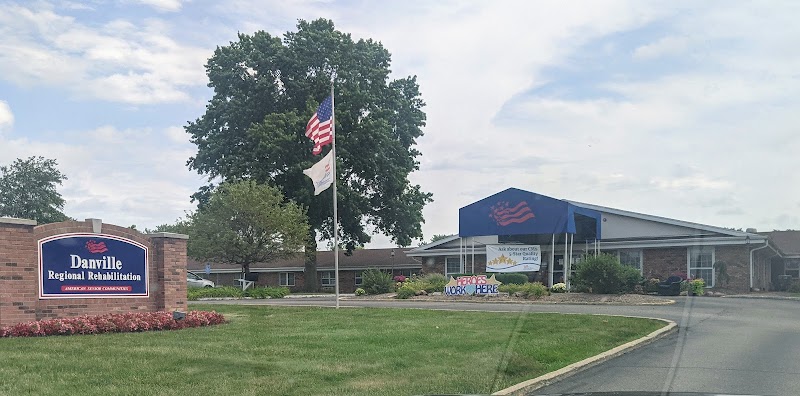
Who Owns and Operates Danville Regional Rehabilitation?

DANVILLE REGIONAL REHABILITATION is owned by a government entity. Government-operated facilities are typically run by state, county, or municipal agencies. The facility is operated by AMERICAN SENIOR COMMUNITIES, a chain that manages multiple nursing homes. With 110 certified beds and approximately 102 residents (about 93% occupancy), it is a mid-sized facility located in DANVILLE, Indiana.
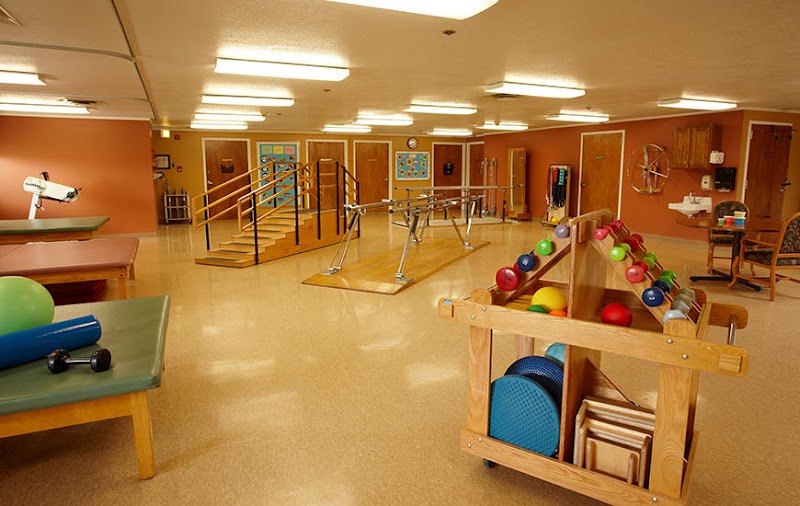
How Does Danville Regional Rehabilitation Compare to Other Indiana Nursing Homes?

Compared to the 100 nursing homes in Indiana, DANVILLE REGIONAL REHABILITATION's overall rating (5 stars) is above the state average of 3.1, staff turnover (30%) is significantly lower than the state average of 46%, and health inspection rating (4 stars) is above the national benchmark.

What Should Families Ask When Visiting Danville Regional Rehabilitation?

Based on this facility's data, families visiting should ask: "Can I visit during a mealtime to observe dining assistance and food quality?" "How do you handle medical emergencies, and what is your hospital transfer rate?" "Can I speak with family members of current residents about their experience?"

Is Danville Regional Rehabilitation Safe?

Based on CMS inspection data, DANVILLE REGIONAL REHABILITATION has a clean safety record: no substantiated abuse findings (meaning no confirmed cases of resident harm), no Immediate Jeopardy citations (the most serious violation level indicating risk of serious injury or death), and is not on the Special Focus Facility watch list (a federal program monitoring the lowest-performing 1% of nursing homes). The facility has a 5-star overall rating and ranks #1 of 100 nursing homes in Indiana. While no facility is perfect, families should still ask about staff-to-resident ratios and recent inspection results during their visit.

Do Nurses at Danville Regional Rehabilitation Stick Around?

Staff at DANVILLE REGIONAL REHABILITATION tend to stick around. With a turnover rate of 30%, the facility is 16 percentage points below the Indiana average of 46%. Low turnover is a positive sign. It means caregivers have time to learn each resident's needs, medications, and personal preferences. Consistent staff also notice subtle changes in a resident's condition more quickly. Registered Nurse turnover is also low at 21%, meaning experienced RNs are available to handle complex medical needs.

Was Danville Regional Rehabilitation Ever Fined?

DANVILLE REGIONAL REHABILITATION has no federal fines on record. CMS issues fines when nursing homes fail to meet care standards or don't correct problems found during inspections. The absence of fines suggests the facility has either maintained compliance or corrected any issues before penalties were assessed. This is a positive indicator, though families should still review recent inspection reports for the full picture.

Is Danville Regional Rehabilitation on Any Federal Watch List?

DANVILLE REGIONAL REHABILITATION is not on any federal watch list. The most significant is the Special Focus Facility (SFF) program, which identifies the bottom 1% of nursing homes nationally based on persistent, serious quality problems. Not being on this list means the facility has avoided the pattern of deficiencies that triggers enhanced federal oversight. This is a positive indicator, though families should still review the facility's inspection history directly.