BRICKYARD HEALTHCARE - ELKHART CARE CENTER
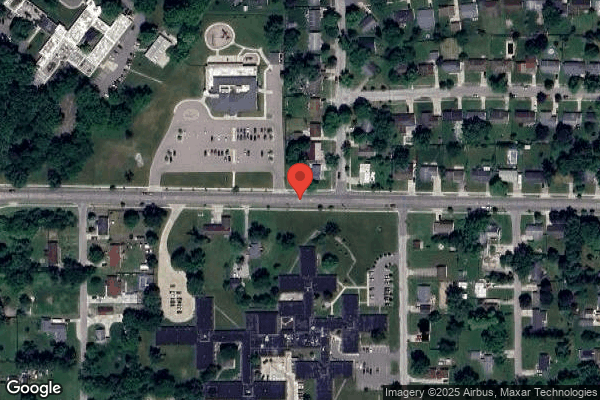
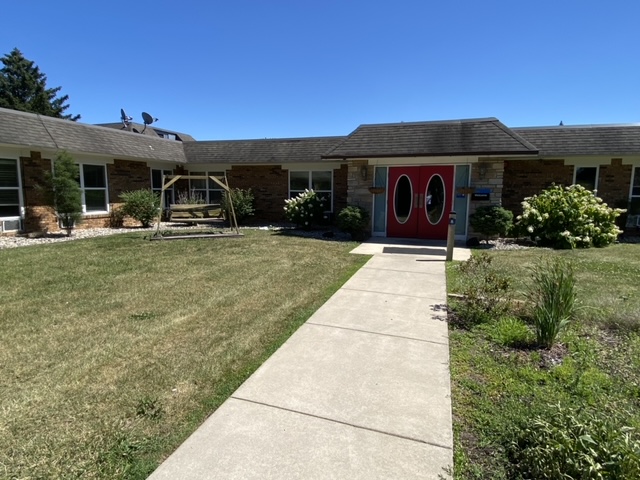
1001 W HIVELY AVE, ELKHART, IN 46517 (574) 294-7641
For profit - Limited Liability company 175 Beds BRICKYARD HEALTHCARE Data: November 2025 2 Immediate Jeopardy citations
Trust Grade
4/100
#427 of 505 in IN
Last Inspection: August 2024

Within standard 12-15 month inspection cycle. Federal law requires annual inspections.

Overview

Brickyard Healthcare - Elkhart Care Center has received a Trust Grade of F, indicating significant concerns about the quality of care provided. With a state ranking of #427 out of 505 facilities in Indiana, they fall in the bottom half, and they rank #11 out of 12 in Elkhart County, meaning only one local facility is performing worse. The facility has seen some improvement, as the number of reported issues decreased from 15 in 2024 to just 1 in 2025. Staffing is a relative strength, with a turnover rate of 28%, much lower than the state average of 47%, but the overall staffing rating is only 2 out of 5 stars, which is below average. However, the facility has concerning fines totaling $63,174, higher than 94% of Indiana facilities, and they have less RN coverage than 85% of state facilities, which could impact the level of care. Specific incidents raised serious alarms: one resident suffered from untreated pressure ulcers due to failure to follow treatment orders, leading to hospitalization and eventual death, while another resident with a Foley catheter did not have proper care or monitoring, resulting in sepsis and also death. Additionally, a resident requiring a modified diet did not receive appropriate supervision during meals, which resulted in choking and ultimately death. While there are some staffing strengths, these critical incidents highlight significant weaknesses that families should consider when researching this facility.

Trust Score
F
4/100
In Indiana
#427/505
Bottom 16%
Safety Record
High Risk
Review needed
Inspections
Getting Better
15 → 1 violations
Staff Stability
✓ Good
28% annual turnover. Excellent stability, 20 points below Indiana's 48% average. Staff who stay learn residents' needs.
Penalties
○ Average
$63,174 in fines. Higher than 70% of Indiana facilities. Some compliance issues.
Skilled Nurses
⚠ Watch
Each resident gets only 21 minutes of Registered Nurse (RN) attention daily — below average for Indiana. Fewer RN minutes means fewer trained eyes watching for problems.
Violations
⚠ Watch
50 deficiencies on record. Higher than average. Multiple issues found across inspections.
★☆☆☆☆
1.0
Overall Rating
★★☆☆☆
2.0
Staff Levels
★★★☆☆
3.0
Care Quality
★☆☆☆☆
1.0
Inspection Score
Stable
2024: 15 issues
2025: 1 issues

The Good

  • Low Staff Turnover (28%) · Staff stability means consistent care
  • Full Sprinkler Coverage · Fire safety systems throughout facility
  • No fines on record
  • Staff turnover is low (28%)

    20 points below Indiana average of 48%

Facility shows strength in staff retention, fire safety.

The Bad

1-Star Overall Rating

Below Indiana average (3.1)

Significant quality concerns identified by CMS

Federal Fines: $63,174

Above median ($33,413)

Moderate penalties - review what triggered them

Chain: BRICKYARD HEALTHCARE

Part of a multi-facility chain

Ask about local staffing decisions and management

The Ugly 50 deficiencies on record

2 life-threatening 1 actual harm
Jan 2025 1 deficiency
CONCERN (D) 📢 Someone Reported This

A family member, employee, or ombudsman was alarmed enough to file a formal complaint

Potential for Harm - no one hurt, but risky conditions existed

Report Alleged Abuse (Tag F0609)

Could have caused harm · This affected 1 resident

Based on interview and record review, the facility failed to implement their policy related to reporting an allegation of abuse for 1 of 3 residents reviewed for abuse. (Resident B) Finding includes: ...

Read full inspector narrative →
Based on interview and record review, the facility failed to implement their policy related to reporting an allegation of abuse for 1 of 3 residents reviewed for abuse. (Resident B) Finding includes: During an interview on 1/22/25 at 12:45 P.M., Resident B indicated one night the previous week, Employee 3 entered her room to assist with changing her brief. Resident B indicated Employee 3 commented the odor was strong and sprayed her buttocks with room deodorizer and then pushed the spray can into her rectum. Resident B indicated on 1/20/25, at an unknown time, she was in the lobby of the facility and reported the incident to Employee 6. Resident B indicated on 1/22/24 during morning physical therapy, she reported the allegation to Employee 2. During an interview on 1/22/25 at 1:15 P.M., the Administrator indicated he was made aware of an allegation of abuse for the first time from Employee 2 on 1/22/25 at 12:30 P.M. The Administrator indicated he immediately suspended Employee 3, pending an investigation, reported the allegation to the State Agency, and initiated an investigation. The Administrator indicated the allegation of abuse should have been reported to him by Employee 6 immediately and that Employee 6 had been trained regarding the requirement to report all allegations of abuse to the Administrator and Director of Nursing immediately. During an interview on 1/23/25 at 1:25 P.M., Employee 6 indicated sometime in the evening of 1/20/25, Resident B was in the lobby of the facility and reported to her that sometime in the night on 1/16/25, Employee 3 entered her room to change her brief and and sprayed her with room spray and made remarks about the way she smelled and that the employee practically sodomized her with the can of room spray. Employee 6 indicated she should have reported the allegation immediately to the Administrator but did not. On 1/23/25 at 10:20 A.M., the Administrator provided a policy titled, Abuse, Neglect and Exploitation, dated 2024, and indicated it was the current facility policy. The policy indicated, .The facility will .implement written policies and procedures .Reporting of all alleged violations to the Administrator, state agency, adult protective services and to all other required agencies .not later than 2 hours after the allegation is made, if the events that cause the allegation involve abuse or result in serious bodily injury . This citation relates to Complaint IN00451700. 3.1-28(c)
Oct 2024 1 deficiency
CONCERN (F) 📢 Someone Reported This

A family member, employee, or ombudsman was alarmed enough to file a formal complaint

Potential for Harm - no one hurt, but risky conditions existed

Deficiency F0804 (Tag F0804)

Could have caused harm · This affected most or all residents

Based on observation, record review and interview, the facility failed to ensure food was served at palatable temperatures in 1 of 1 kitchens observed (Main Kitchen). This deficient practice potential...

Read full inspector narrative →
Based on observation, record review and interview, the facility failed to ensure food was served at palatable temperatures in 1 of 1 kitchens observed (Main Kitchen). This deficient practice potentially affected 110 of 120 residents who consumed food from the main kitchen. Finding includes: During a meal observation with [NAME] 1 in the Main Kitchen, on 10/1/24 at 12:00 P.M., the food temperatures of hot foods on the steam table were a follows: pureed corn 105 F (Fahrenheit), cream corn 123 F, pureed beef 118 F, beef gravy 128 F, pepper steak 123 F, whole corn 141 and sweet potato 140 During observation of room trays on the 500 hall, conducted on 10/1/24 at 12:37 P.M., meals were transported to the unit, from the kitchen on metal covered, noninsulated carts. The last tray to be served, at 12:37 P.M., had the following food temperatures at the point of service: pepper steak 80 F, sweet potatoes 85 F and whole corn 85*F. During an interview on 10/1/24 at 12:05 P.M., [NAME] 1 indicated hot food temps should be held at or above 140 F while on the steam table. During an interview on 10/1/24 at 12:24 P.M. the Dietary Manager indicated hot foods were to be temperature checked at the steam table and should be held at at least 135 F. During an interview on 10/1/24 at 12:49 P.M., Resident E indicated the hot food was always cold when served. During an interview, on 10/1/24 at 12:52 P.M. in the dining room, Resident G and Resident H both indicated the food was often served cold and needed to be warmer. On 10/1/24 at 12:00 P.M., during food service distribution, in a hot food temps check with [NAME] 1, [NAME] 1 check the food temps and agreed that the following foods tempt out at: Pureed corn: 105 F, Cream corn 123, whole corn 141, pureed beef 118, beef gravy 128, pepper steak 123, sweet potato 140 During an interview on 10/1/24 at 12:58 P.M., the Administrator indicated hot foods should be served at appropriate temperatures and not below. On 10/1/24 at 2:32 P.M., the Director of Nursing provided the policy titled, Maintaining a Sanitary Tray Line, dated 12/17 and indicated it was the current facility policy. The policy indicated the priority of food service was to ensure foods were handled safely and held at proper temperatures and to periodically monitor food temperatures throughout the meal service to ensure hot foods were maintained at or above 135 F. This citation relates to Complaint IN00443191. 3.1-21(a)(2)
Aug 2024 14 deficiencies
CONCERN (D)

Potential for Harm - no one hurt, but risky conditions existed

Deficiency F0578 (Tag F0578)

Could have caused harm · This affected 1 resident

Based on record review and interview, the facility failed to provide accurate orders for resuscitative wishes for 2 of 3 resident reviewed for advanced directives. (Residents 94 & 36) Findings include...

Read full inspector narrative →
Based on record review and interview, the facility failed to provide accurate orders for resuscitative wishes for 2 of 3 resident reviewed for advanced directives. (Residents 94 & 36) Findings include: 1. A record review for Resident 94 was completed on 7/31/2024 at 11:19 A.M. Diagnoses included, but were not limited to: cerebral infarction, chronic obstructive pulmonary disease (COPD), congestive heart failure, atrial fibrillation, epilepsy, and diabetes mellitus type 2. An admission Minimum Data Set (MDS) assessment, dated 6/7/24, indicated Resident 94 had severe cognitive impairment. A Physician Orders for Scope of Treatment (POST) form, dated 6/1/2024, and signed by the nurse practitioner on 6/27/2024, indicated to not attempt resuscitation. A Physician's Order, dated 6/10/2024, indicated Resident 94 was a full code, indicating cardiopulmonary resuscitation to was to be completed. A Care Plan, dated 6/13/2024, indicated Resident 94 had an advanced directive of a full code. The goal, dated 6/13/2024, indicated that Resident 94's wishes would be honored. The interventions include cardiopulmonary resuscitation would be honored, and to review code status quarterly. During an interview, on 7/31/2024 at 12:19 P.M., LPN 3 indicated Resident 94 had an order to be a full code. The POST form indicated his wishes to be a do not resuscitate. LPN 3 indicated the physician's order, care plan and the POST form conflicted related to the wishes of Resident 94. 2. The record for Resident 36 was completed on 7/31/2024 at 9:54 A.M. Diagnoses included, but were not limited to: diabetes, hypertension, anxiety, depression, epilepsy, and Schizophrenia. Physician's orders, dated 8/1/2024- 8/31/2024, lacked documentation of physician's orders for code status preferences. During an interview, on 7/31/2024 at 12:10 P.M., LPN 13 indicated the resident should have had an order for his code status. On 28/1/2024 at 12:25 P.M., the Director of Nursing provided the policy titled,Communication of Code Status, dated 2/2023, and indicated the policy was the one currently used by the facility. The policy indicated .It is the policy of this facility to adhere to residents' rights to formulate advanced directives .When an order is written pertaining to a resident's presence or absence of an Advanced Directive, the directions will be clearly documented in designated sections of the medical record. Examples of directions to be documented include, but are not limited to: a. Full Code. b. Do Not Resuscitate. c. Do Not Intubate. d. Do Not Hospitalize. 3. The nurse who notates the physician order is responsible for documenting the directions in all relevant sections of the medical record. 4. The designated sections of the medical record are: Active order, copy of code status uploaded into electronic file.8. The resident's code status will be reviewed as least quarterly and documented in the medical record 3.1-4(f)(7)
CONCERN (D)

Potential for Harm - no one hurt, but risky conditions existed

Deficiency F0679 (Tag F0679)

Could have caused harm · This affected 1 resident

**NOTE- TERMS IN BRACKETS HAVE BEEN EDITED TO PROTECT CONFIDENTIALITY** Based on observation, record review, and interview, the facility failed to provide resident-centered activities for 1 of 3 resid...

Read full inspector narrative →
**NOTE- TERMS IN BRACKETS HAVE BEEN EDITED TO PROTECT CONFIDENTIALITY** Based on observation, record review, and interview, the facility failed to provide resident-centered activities for 1 of 3 residents reviewed for activities. (Resident 93) Finding includes: During an observation on 7/29/2024 at 3:08 P.M., Resident 93 was lying in bed. There was no radio or television on in the room. On 7/30/3034 at 11:22 A.M., Resident 93 was observed in bed, with a loud hum of the oxygen concentrator and no radio or television playing. A record review was completed on 7/31/2024 at 8:57 A.M. Diagnoses included, but were not limited to: unspecified sequelae of cerebral infarction, anoxic brain, and tracheostomy. A Quarterly Minimum Data Set (MDS) assessment, dated 6/23/2024, indicated cognitive function could not be assessed due to unresponsiveness. An admission MDS, dated [DATE], indicated activity interview responses had no answers due to non-responsiveness. During observations on 7/31/2024 at 9:12 A.M. and 2:56 P.M., no music or television was observed to be on in the resident's room. An Activity Participation Review, dated 3/27/2024 at 10:11 A.M., indicated Resident 93 liked to listen to easy listening music, liked to watch cartoons, talk shows, and Hallmark type of movies. A Care Plan, dated 3/27/2024, indicated Resident 93 was unresponsive, and her mother would visit weekly. An intervention, dated 4/9/2024, indicated per Resident 93 mother's request, a television or music should be on in the room. A Progress Note, dated 5/28/2024 at 1:52 P.M., indicated Resident 93's activities preferences from the family as the following: - It is somewhat important to Resident to listen to music they like. Preferred music genre: Easy listening. - It is somewhat important for Resident to do their favorite activities. Favorite activities include: Watch television A Physician's Order, dated 7/6/2024, indicated Resident 93 may participate in activities per her individual plan of care. The Activity Tasks for the month of July 2024 indicated television was the activity provided for Resident 93 twice daily. On 8/1/24 at 9:54 A.M., the Activity Director (AD) observed Resident 93's room, and indicated, Oh, there's no television in here. They must have taken it out when she was at the hospital. The AD indicated Resident 93 liked easy listening music and had not received any one-on-one visits since she came back from her hospitalization in July. A policy was provided by the Director of Nursing, on 8/1/2024 at 12:18 P.M. The policy titled, Activities, indicated, . It is the policy of this facility to provide ongoing program to support in their choice of activities based on their comprehensive assessment, care plan, and preferences. Facility-sponsored group, individual, and independent activities will be designed to meet the interest of each resident, as well as support their physical, mental, and psychosocial well-being. Activities will encourage both independence and interaction within the community 3.1-33(b)(6)(C) 3.1-33(b(8)
CONCERN (D)

Potential for Harm - no one hurt, but risky conditions existed

Quality of Care (Tag F0684)

Could have caused harm · This affected 1 resident

**NOTE- TERMS IN BRACKETS HAVE BEEN EDITED TO PROTECT CONFIDENTIALITY** Based on observation, record review and interview, the facility failed to ensure edema was monitored for 1 of 1 residents review...

Read full inspector narrative →
**NOTE- TERMS IN BRACKETS HAVE BEEN EDITED TO PROTECT CONFIDENTIALITY** Based on observation, record review and interview, the facility failed to ensure edema was monitored for 1 of 1 residents reviewed for edema. (Resident 14) and failed to ensure antibiotic medication was administered timely for 1 of 2 residents reviewed for antibiotic use. (Resident 99) Findings include: 1. During an observation and interview on 7/29/2024 at 11:34 A.M., alert and oriented Resident 14 indicated he was admitted to the facility with edema to his bilateral below the knee amputation stumps. His prosthetic leg appliances were noted leaning against the wall in his room. He indicated his legs were too swollen to wear the prosthetic legs. The resident's lower thighs, knees and stump areas were noted to be swollen and looked similar in circumference to his upper thighs. A bandage was noted on the bottom of the left stump. The record for Resident 14 was reviewed on 7/31/2024 at 11:31 A.M. He was admitted to the facility on [DATE] with diagnoses including, but not limited to, major depressive disorder, recurrent severe, pressure ulcer stage 3 right lateral hip, chronic pain syndrome, lack of coordination, muscle weakness, type 2 diabetes, insomnia, obsessive-compulsive disorder, history of acquired absence of the left leg and right leg below knee. The admission Minimum Data Set (MDS) assessment, completed on 7/12/2024, indicated the resident was alert and oriented, utilized a wheelchair independently for mobility and required moderate assistance for lower body dressing. The current care plans for Resident 14 did not include a care plan to monitor the resident's edema to his bilateral lower extremity edema. A care plan to address the resident's coronary artery disease diagnosis included an intervention to monitor the resident for edema and other potential complications of the disease. The Nursing Clinical admission Assessment, completed on 7/6/2024, indicated the resident had no edema. The most recent weekly Skin and Wound assessment and the most recent weekly skin assessments, dated 8/1/2024, indicated the resident's edema was not assessed. During an interview, on 8/1/2024 at 2:11 P.M., the Rehab (Rehabilitation) Director indicated Resident 14 had been admitted to the facility with significant bilateral edema to his legs and stumps. The edema was present in the resident's thighs and down to his stumps. He indicated the resident was not tolerating the stump shrinker in therapy and due to his edema, he thought the resident had been prescribed a diuretic medication about a week and a half ago. The physician's orders for medication included an order, dated 7/29/2024, to administer Lasix (a diuretic medication) 40 mg tablet at bedtime for edema for 3 days. A subsequent physician's order, dated 8/1/2024, indicated the resident had received Lasix 40 mg one tablet at bedtime for Inflammation of his stumps. During an interview with the Medical Record Nurse, on 8/1/2024 at 1:30 P.M. she indicated she was providing nursing coverage for the nursing unit on which Resident 14 resided. If edema was assessed, it would be documented in nursing progress notes, weekly skin assessments and weekly skin and wound assessments, and possibly on shower record sheets. She indicated the shower record sheets were not a part of the clinical record and if edema was noted on the shower record, the nurse should assess the edema and note it on the weekly skin assessments. During an interview, on 8/5/2024 at 9:00 A.M., the Director of Nursing (DON) indicated the physician and the Nurse Practitioner had assessed the resident's edema. The facility did not have a policy and procedure specific to monitoring for edema. 2. The record for Resident 99 was reviewed on 7/31/2024 at 2:01 P.M. Diagnoses included but were not limited to, diabetes mellitus with hyperglycemia, delusional disorder, unspecified psychosis, dementia, encephalopathy, chronic pain syndrome, insomnia, old myocardial infarction, unsteadiness and lack of coordination. During an observation and interview with Resident 99, on 7/29/2024 at 10:08 A.M., Resident 99 indicated she was receiving an antibiotic for her infected toe and it was very painful. The resident's right foot was noted to a scabbed area on the top of the toes. During an observation of wound care on 8/1/2024 at 8:40 A.M. with the Wound Nurse, Resident 99's third toe was noted to have an open area and her toe was red and swollen. A Nursing Progress Note, dated 7/20/2024, indicated the resident had a blister noted to the right foot middle/3rd toes, the physician had observed the blister and did not want a treatment. A Nursing Progress Wound Note, dated 7/25/2024, indicated the right foot toe wound was covered with eschar (dead tissue that sheds or falls off from the skin), the periwound was edematous and red, and she recommended an antibiotic. The physician was notified and an order received on 7/25/2024 for Doxycycline Hyclate (an antibiotic) 100 mg one capsule two times a day for cellulitis of the right third toe. The order was entered and discontinued in the electronic computer system on 7/25/2024. The order was then put in again on 7/26/2024 and discontinued. The current order was then entered in the electronic medical system for the antibiotic on 7/26/2024 at 8:00 P.M. Review of the Medication Administration Record for Resident 99 indicated the scheduled evening dose of Doxycycline for 7/26/2024 was not administered and the resident did not receive the first dose of antibiotic until 7/27/2024 in the morning. During an interview with the Director of Nursing, on 8/5/2024 at 9:00 A.M., she indicated the facility did not have a policy specific to timeliness of following antibiotic orders. A copy of medications included in the facility's Emergency Drug Kit was requested on 8/4/2024 and 8/5/2024 and not provided prior to the survey exit. 3.1-37
CONCERN (D)

Potential for Harm - no one hurt, but risky conditions existed

Deficiency F0688 (Tag F0688)

Could have caused harm · This affected 1 resident

Based on observation, record review, and interview, the facility failed to provide a range of motion program to prevent further contractures for 1 of 2 residents reviewed for range of motion. (Residen...

Read full inspector narrative →
Based on observation, record review, and interview, the facility failed to provide a range of motion program to prevent further contractures for 1 of 2 residents reviewed for range of motion. (Resident 93) Finding includes: During an observation on 7/29/2024 at 3:11 P.M., Resident 93 was observed to have her hands in a fist-like position and her knees bent. On 7/31/2024 at 9:19 A.M., a straight legged, cushioned boot was observed sitting on a table at the end of the resident's bed. A record review was completed on 7/31/2024 at 8:57 A.M. Diagnoses included, but were not limited to, unspecified sequelae of cerebral infarction, anoxic brain, and tracheostomy. Past Physician's Orders included the following: - 3/28/2024-6/24/2024 Resting hand splint to right hand in the morning, and remove at night for skin integrity. - 3/27/2024-6/24/2024 Foot brace to left lower extremity drop foot. - 3/27/2024-6/24/2024 Passive range of motion to residents upper and lower extremities every shift and can be completed per Qualified Medication Assistant of Certified Nursing Assistant. A Physician's Order, dated 7/6/2024, indicated physical therapy, occupational therapy, and speech therapy, if indicated. A Care Plan, dated 3/26/2024, indicated Resident 93 had a physical functioning deficit related to impaired mobility, impaired cognition, incontinence, and required assistance with her activities of daily living. Resident 93 was in a persistent vegetative state. The goal, dated 3/26/2024 and revised on 7/28/2024, indicated Resident 93 would maintain the current level of physical functioning through the next review date of 9/23/2024. Interventions included, monitor and report changes in range of motion ability, and to provide passive range of motion as ordered. During an interview, on 8/1/2024 at 9:24 A.M., LPN 2 indicated Resident 93 had a passive range of motion program prior to her hospitalization on 6/23/2024 with a return date of 7/6/2024. LPN 2 indicated Resident 93 should be receiving a passive range of motion program, and that her hands and knees were tight. LPN 2 could not provide documentation that a passive range of motion program was being completed. She indicated Resident 93's splints were discontinued due to causing anxiety. A policy was provided by the Director of Nursing, on 8/1/2024 at 12:18 P.M. The policy titled, Prevention of Decline in Range of Motion, indicated, .Residents who enter the facility without limited range of motion will not experience a reduction in range of motion unless the resident's clinical condition demonstrated that a reduction in range of motion is unavoidable .Policy Explanation and Compliance Guidelines: 1. The facility in collaboration with the medical director, director of nurses, and as appropriate, physical/occupational consultant shall establish and utilize a systemic approach for prevention of decline in range of motion, including assessment, appropriate care planning, and preventative care 3-1-42(a)(2)
CONCERN (D)

Potential for Harm - no one hurt, but risky conditions existed

Deficiency F0694 (Tag F0694)

Could have caused harm · This affected 1 resident

Based on observation, record review, and interview, the facility failed to provide a peripherally inserted central catheter care for 1 of 5 residents reviewed for infection control (Resident 266) Find...

Read full inspector narrative →
Based on observation, record review, and interview, the facility failed to provide a peripherally inserted central catheter care for 1 of 5 residents reviewed for infection control (Resident 266) Finding includes: On 7/29/2024 at 9:32 A.M., Resident 266 was observed to have vancomycin and piperacillin hanging from an intravenous pole. He had a peripherally inserted central catheter (PICC) to his left antecubital space (the crook of the elbow), the transparent dressing, dated 7/24/2024, was folded in half with the insertion point site of the PICC line exposed. On 7/29/2024 at 2:37 P.M., the PICC line transparent dressing remained folded in half with the insertion point site of the PICC line exposed. During an observation, on 8/1/2024 at 9:45 A.M., the transparent dressing was observed to not be adhered along the lateral edges of the dressing. Resident 266 indicated he had received a shower the previous evening, and the dressing became wet. A record review was completed on 8/1/2024 at 10:14 A.M. Diagnoses included, but were not limited to, osteomyelitis, methicillin-susceptible staphylococcus aureus, and diabetes mellitus type 1. A Physician's Order, dated 7/26/2024, indicated to complete a PICC line dressing change weekly and as needed every night shift. During an interview, on 8/1/2024 at 3:06 P.M., LPN 2 indicated the PICC line dressing are changed weekly and as needed if the dressing was peeling or soiled. She indicated she had seen the dressing on 7/29/2024, and the dressing was changed during night shift the next day. A policy was provided as current on 8/2/2024 at 11:43 A.M. by the Director of Nursing. The policy, titled, PICC/Midline/CVAD [central venous access device] Dressing Change, indicated, .It is the policy of this facility to change peripherally inserted central catheter [PICC], midline or central venous access devices [CVAD] dressing weekly or if soiled, in a manner to decrease potential for infection and/or cross-contamination. Physician's orders will specify type of dressing and frequency of change 3.1-47(a)(2)
CONCERN (D)

Potential for Harm - no one hurt, but risky conditions existed

Respiratory Care (Tag F0695)

Could have caused harm · This affected 1 resident

Based on observation, record review, and interview, the facility failed to provide adequate tracheostomy care for 1 of 1 resident reviewed for tracheostomy/ventilation. (Resident 93) Finding includes:...

Read full inspector narrative →
Based on observation, record review, and interview, the facility failed to provide adequate tracheostomy care for 1 of 1 resident reviewed for tracheostomy/ventilation. (Resident 93) Finding includes: During an observation on 7/29/2024 at 9:39 A.M., Resident 93's oxygen collar was observed to be to the left of her tracheostomy stoma site. On 7/29/2024 at 10:44 A.M., Resident 93's oxygen collar was observed to be at left of the tracheostomy stoma site. At 10:49 A.M., Qualified Medication Assistant (QMA) 19 was requested to obtain an oxygen saturation. The saturation level read 85-86 percent. QMA 19 indicated it was due to the way Resident 93 slept, and many interventions had been attempted. A rolled towel was observed on the right side of the neck. At 10:51 A.M., Resident 93's oxygen saturations were observed to be at 89 percent. Resident 93 was repositioned in bed, and at 10:53 A.M., her oxygen saturations were 92 percent. A record review was completed on 7/31/2024 at 8:57 A.M. Diagnoses included, but were not limited to, unspecified sequelae of cerebral infarction, anoxic brain, and tracheostomy. A Quarterly Minimum Data Set (MDS) assessment, dated 6/23/2024, indicated cognitive function could not be assessed due to unresponsiveness. The assessment indicated Resident 93 received treatments of oxygen therapy, suctioning, and tracheostomy care. Current Physician's Orders for tracheostomy care included the following: - 6/24/2024 Disposable Ambu bag (a positive pressure ventilation for a person with insufficient or ineffective breathing, a complete back-up tracheostomy set, and a suction machine set up at bedside. - 7/7/2024 Continuous humidified oxygen via tracheostomy collar at 5 liter per minute to the stoma, and to call the physician if oxygen saturations were below 90 percent. - 7/7/2024 Suction as needed for tracheostomy care. The physician's orders did not include changing the suction canister and tubing weekly and as needed, changing the tracheostomy ties weekly and as needed, routine tracheostomy care and suctioning every shift and as needed, and the tracheostomy tube needed should it be expelled. A review of the Medication and Treatment Administration Record for July 2024 indicated no entries for tracheostomy care. A Care Plan, dated 3/26/2024, indicated Resident 93 had a tracheostomy secondary to cerebral vascular accident (CVA), encephalopathy/anoxic brain injury, chronic hypoxic respiratory failure, and a history of traumatic brain injury. The goal, dated 3/36/3034 and updated 7/28/2024, indicated Resident 93 would have adequate gas exchange as evidenced by no adventitious breath sounds, and absence of respiratory distress. The interventions included to administer humidified oxygen as ordered, check oxygen saturations as needed, observe tracheostomy site daily for signs and symptoms of infection, provide tracheostomy care daily as ordered and as needed, suction tracheostomy as ordered and as needed, and to place the tracheostomy tube size above the bedside for emergency use. During an interview, on 8/1/2024 at 9:12 A.M., LPN 2 indicated tracheostomy care included cleaning it daily and as needed, suctioning as needed, changing the gauze around the tracheostomy daily and as needed, and changing the oxygen collar weekly or as needed. She indicated the tracheostomy did not have an inner cannula to change. All oxygen humidification tubing was changed by an outside vendor. LPN 2 indicated Resident 93 should have had orders for all the care needed for the tracheostomy. A policy was provided by the Director of Nursing, on 8/1/2024 at 12:18 P.M. The policy titled, Tracheostomy Care, indicated, .The facility will ensure that residents who need respiratory care, including tracheostomy care and tracheal suctioning, is provided such care consistent with professional standards of practice, the comprehensive person-centered care plan and resident goals and preferences 3.1-4(a)(6)
CONCERN (D)

Potential for Harm - no one hurt, but risky conditions existed

Pharmacy Services (Tag F0755)

Could have caused harm · This affected 1 resident

Based on observation, interview and record review, the facility failed to verify controlled substance counts for 1 of 1 medication cart observed. (SW Unit) Finding includes: During a medication storag...

Read full inspector narrative →
Based on observation, interview and record review, the facility failed to verify controlled substance counts for 1 of 1 medication cart observed. (SW Unit) Finding includes: During a medication storage observation of the SW Unit medication cart, on 8/2/24 at 9:43 A.M. with RN 11, the controlled medication log book had missing signatures for the count sheets on July 1, 5, 6, 11, 13, 14, 17, 18 and 27, 202.4 During an interview on 8/2/24 at 11:14 P.M., the Director of Nursing indicated all narcotic count sheets were to be signed by the oncoming and offgoing nurse/QMA for verification of residents' medications. A current policy was provided on 8/2/24 at 1:10 P.M. by the Director of Nursing. The policy, titled, Controlled Substance Administration and Accountability, indicated .for areas without automated dispensing systems, two licensed nurses account for all controlled substances and access keys at the end of each shift 3.1-25(e)(2)
CONCERN (D)

Potential for Harm - no one hurt, but risky conditions existed

Medication Errors (Tag F0758)

Could have caused harm · This affected 1 resident

**NOTE- TERMS IN BRACKETS HAVE BEEN EDITED TO PROTECT CONFIDENTIALITY** Based on record review and interview, the facility failed to ensure an appropriate diagnosis for a resident who received an anti...

Read full inspector narrative →
**NOTE- TERMS IN BRACKETS HAVE BEEN EDITED TO PROTECT CONFIDENTIALITY** Based on record review and interview, the facility failed to ensure an appropriate diagnosis for a resident who received an antipsychotic medication for 1 of 5 residents reviewed for unnecessary medications. (Resident 28) Finding includes: The record for Resident 28 was reviewed on 7/31/2024 at 9:15 A.M. Diagnoses included, but were not limited to, hemiplegia and hemiparesis, cerebral infarction, unspecified dementia, atrial fibrillation, cardiomegaly, hypertension, and anxiety disorder. Current medications for Resident 28 included Zyprexa (Olanzapine - an antipsychotic) 10 mg (milligram) 1 tablet by mouth at bedtime for dementia with agitation. A Psychiatric Note, dated 7/24/2024 at 8:09 P.M., lacked an approved diagnosis and documented a plan by the psychiatric provider to continue Zyprexa despite being clinically contraindicated, as benefits outweighed risks. A professional resource, https://medlineplus.gov/druginfo/meds, indicated the following: Olanzapine is used to treat the symptoms of schizophrenia (a mental illness that causes disturbed or unusual thinking, loss of interest in life, and strong or inappropriate emotions) in adults and teenagers [AGE] years of age and older. It is also used to treat bipolar disorder (manic depressive disorder; a disease that causes episodes of depression, episodes of mania, and other abnormal moods) in adults and teenagers [AGE] years of age and older. Olanzapine is in a class of medications called atypical antipsychotics . IMPORTANT WARNING: Studies have shown that older adults with dementia (a brain disorder that affects the ability to remember, think clearly, communicate, and perform daily activities and that may cause changes in mood and personality) who take antipsychotics (medications for mental illness) such as olanzapine have an increased chance of death during treatment. Older adults with dementia may also have a greater chance of having a stroke or mini-stroke during treatment. Olanzapine is not approved by the Food and Drug Administration (FDA) for the treatment of behavior disorders in older adults with dementia. Talk to the doctor who prescribed this medication if you, a family member, or someone you care for has dementia and is taking olanzapine. For more information visit the FDA website: http://www.fda.gov/Drugs. During an interview on 8/2/2024, at 1:32 P.M., the DON indicated that the resident did not have an appropriate diagnosis for taking the antipsychotic. On 8/5/2024, at 12:34 P.M., the Director of Nursing provided a policy titled, Unnecessary Drugs - Without Adequate Indication for Use, dated February 2023, and indicated the policy was the one currently used by the facility. The policy indicated .documentation will be provided in the resident's medical record to show adequate indications for the medication's use and the diagnosed condition for which it was prescribed . 3.1-48(a)(4)
CONCERN (D)

Potential for Harm - no one hurt, but risky conditions existed

Infection Control (Tag F0880)

Could have caused harm · This affected 1 resident

Based on observation, interview and record review, the facility failed to ensure staff change gloves and complete hand hygiene when providing perineal care for 1 of 1 resident reviewed for personal ca...

Read full inspector narrative →
Based on observation, interview and record review, the facility failed to ensure staff change gloves and complete hand hygiene when providing perineal care for 1 of 1 resident reviewed for personal care. (Resident 47) Finding includes: During a random observation, on 7/29/2024 at 3:20 P.M., Resident 47 was observed lying on wet bed linens. Resident 47 indicated, they don't clean me up like they should. During a random observation, on 7/31/2024 at 1:23 P.M., Resident 47's call light was on. CNA 15 was observed answering the light. After the aide exited the residents' room, she indicated the room had a strong urine smell. CNA 15 indicated she smelled the urine and was not sure when he was checked or changed last. On 7/31/2024 at 1:38 P.M., CNA was observed to provide perineal care to Resident 46. CNA 16 applied gloves and obtained a wash basin and washcloth and a towel. He removed the brief, and with the same area of the washcloth wiped both sides of the residents groin, then washed the penis. He then rinsed the areas with another washcloth. With the same gloves still on, CNA 16 then put the wet brief in the trash bag and moved the covers on the bed. CNA 16 then washed the buttocks and dried the area. He placed the dirty linens along with a rolled up bed sheet that was wet with a large yellow stain on the night stand. CNA 16 obtained a new clean sheet and placed it on the bed. With the same gloves on, the aide then placed a clean brief on the resident. CNA 16 then put the resident's pants on him. He then touched the clean towel and then emptied the basin. The CNA removed the dirty bed linens from the night stand and then placed them in a bag. CNA 16, still with the same gloves on, touched the bedside table placed everything in another bag and left the room without washing his hands. During an interview, on 7/31/2024 at 1:46 P.M., the CNA indicated he should have changed his gloves and washed his hands. On 8/1/2024 at 12:25 P.M., the Director of Nursing provided the policy titled,Hand Hygiene, dated 2002, and indicated the policy was the one currently used by the facility. The policy indicated . All staff will perform hand hygiene procedures to prevent the spread of infection to other personnel, residents, and visitors . a. The use of gloves does not replace hand hygiene. If your task requires gloves, perform hygiene prior to donning gloves, and immediately after removing gloves 3.1-18(b)
CONCERN (E)

Potential for Harm - no one hurt, but risky conditions existed

Deficiency F0567 (Tag F0567)

Could have caused harm · This affected multiple residents

Based on interview and record review, the facility failed to ensure resident funds were available on the same day of the request and for the desired amount for 4 of 4 residents reviewed for facility-m...

Read full inspector narrative →
Based on interview and record review, the facility failed to ensure resident funds were available on the same day of the request and for the desired amount for 4 of 4 residents reviewed for facility-managed personal funds. (Residents 18, 5, 31 and 8) Findings include: During an interview on 7/29/24 at 10:15 A.M., Resident 18 indicated he was able to obtain money from his facility account between the hours of 9 A.M. and 4 P.M. weekdays, and not at all on Saturday and Sunday. During an interview on 7/29/24 at 10:54 A.M., Resident 5 indicated he was only able to get five dollars from his facility account on the weekends. During an interview on 7/30/24 at 9:42 A.M., Resident 31 indicated she could only get money from her facility account until 4 P.M. weekdays, and not at all on Saturday and Sunday. During an interview on 7/30/24 at 1:15 P.M., Resident 8 indicated she was unable to get money from her facility account after 4 P.M. During an interview on 7/31/24 at 2:27 P.M., LPN 13 indicated the residents had a five dollar limit that they could take out of their facility accounts. During an interview on 7/31/24 at 2:13 P.M., the Business Office Manager (BOM) indicated the residents should not have a five dollar withdrawal limit for their facility accounts. During an interview on 8/2/24 at 2:14 P.M., the Executive Director (ED) indicated he was unaware that staff was telling the residents they had a 5 dollar limit to withdraw from their facility accounts. On 8/1/24 at 2:32 P.M., the Director of Nursing provided a policy titled, Availability of Resident Funds-After Business Office Hours no date, and indicated the policy was the one currently used by the facility. The policy indicated .During non-business office hours (e.g., nights, weekends, and holidays), the Business Office Manager, or designee, provides the Nurse Supervisor on duty at the time the business office closes a residents' fund petty cash box 3.1-6(a)
CONCERN (E)

Potential for Harm - no one hurt, but risky conditions existed

Deficiency F0570 (Tag F0570)

Could have caused harm · This affected multiple residents

Based on record review and interview, the facility failed to ensure a surety bond sufficiently covered the total monies in the Resident Fund account. This had the potential to affect the 56 residents ...

Read full inspector narrative →
Based on record review and interview, the facility failed to ensure a surety bond sufficiently covered the total monies in the Resident Fund account. This had the potential to affect the 56 residents who had resident fund accounts managed by the facility. Finding includes: During an interview and record review of Resident Fund accounts, with the Business Office Manager (BOM) and the Executive Director, on 8/2/2024 at 8:25 A.M., the total amount in the Resident Fund accounts was $286,128.00. The BOM indicated the amount was higher than usual due to a closed account with funds from a home sale for which she was waiting on verification before sending the funds back to Medicaid. Review of the facility's Surety Bond insurance rider to cover Resident Fund monies, dated April 1, 2020, indicated the covered amount had been increased to $250,000. During an interview with the Executive Director (ED) on 8/5/2024 at 9:40 A.M. he indicated he did not know why the Corporation had not raised the Resident Fund Surety Bond amount higher. He confirmed the total amount noted on 8/2/2024 was unusually high for that account. The current facility policy titled Surety Bond Requirements provided by the ED on 8/5/2024 at 9:00 A.M., included the following: .The surety bond, or alternative to a surety bond, must be equal to or greater than the total amount of residents' funds, as of the most recent quarter . 3.1-6(j)
CONCERN (E)

Potential for Harm - no one hurt, but risky conditions existed

Deficiency F0655 (Tag F0655)

Could have caused harm · This affected multiple residents

**NOTE- TERMS IN BRACKETS HAVE BEEN EDITED TO PROTECT CONFIDENTIALITY** 2. During an observation of Resident 107, on 7/29/2024 at 10:00 A.M., a bottle of Glucerna 1.5 was infused at 60 milliliters per...

Read full inspector narrative →
**NOTE- TERMS IN BRACKETS HAVE BEEN EDITED TO PROTECT CONFIDENTIALITY** 2. During an observation of Resident 107, on 7/29/2024 at 10:00 A.M., a bottle of Glucerna 1.5 was infused at 60 milliliters per hour via a tube feeding. A record review for Resident 107 was completed on 7/31/2024 at 1:57 P.M. Diagnoses included, but were not limited to, cerebral infarction, dysphagia, and diabetes mellitus type 2. He was admitted on [DATE]. An admission Minimum Data Set (MDS) assessment, dated 7/9/2024, indicated Resident 107 received tube feeding, and had moderate cognitive impairment. Physician's Orders, dated 7/3/2024, indicated for Glucerna 1.5 to infuse via a gastrostomy tube at 60 milliliters per hour (ml/hr). A Care Plan, dated 7/18/2024, indicated Resident 107 received nutrition/hydration via a gastrostomy tube. All goals and interventions were dated 7/18/2024. During an interview, on 8/1/2024 at 3:13 P.M., LPN 2 indicated the baseline care plan was dated 7/9/2024. Based on record review and interview, the facility failed to ensure baseline care plans were initiated for a resident receiving dialysis, a resident with falls and edema, and a resident with a wound, and failed to ensure baseline care plans were completed timely for a resident with an enteral feeding tube, for 4 of 27 residents reviewed for baseline care plans. (Residents 36, 107, 14 and 99) Findings include: 1. The record for Resident 36 was completed on 8/01/2024 at 8:48 A.M. Diagnoses included, but were not limited to, end stage renal disease, neurogenic bladder, viral hepatitis, and diabetes. An admission Minimum Data Set (MDS) assessment, dated 6/13/2024, indicated Resident 36 was receiving dialysis. A Baseline Care Plan form, dated 6/7/2024, indicated the resident required dialysis. The form lacked any goals, interventions, and any special needs to to address the resident's current needs to properly care for the resident. During an interview, on 8/2/2024 at 2:58 P.M., the Director of Nursing indicated the resident had a baseline care plan, but it did not have all the information in it from the chart. 3. A record review for Resident 14 was completed, on 8/2/24 at 9:35 A.M. Diagnoses included included, but were not limited to major depressive disorder, heart disease, edema, type 2 diabetes, hypertension, muscle weakness, chronic pain syndrome and absence of left and right leg below knee. An admission MDS (Minimum Data Set) assessment, dated 7/12/24, indicated Resident 14 has intact cognition. A baseline care plan, completed on 7/15/24, indicated Resident 14 had a history of falls prior to admission and as ordered psychotropic medication. During an interview on 8/2/24 at 1:34 P.M., the Director of Nursing (DON) indicated a baseline care plan should have been completed within 48 hours of admission, it was late and should have been completed timely. 4. A record review for Resident 99 was completed on 7/30/24 at 2:10 P.M. Diagnoses included, but were not limited to, diabetes, dementia, pressure ulcer, muscle weakness and diabetes. A Significant Change MDS assessment, dated 5/17/24, indicated Resident 99 has moderate cognitive impairment. A baseline care plan, completed on 4/29/24, indicated Resident 99 was admitted with a pressure ulcer. During an interview on 8/1/24 at 2:52 P.M., the DON indicated a baseline care plan should have been completed for her wounds within 48 hours of admission. On 8/2/24 at 1:16 P.M., the Executive Director provided the policy titled, Baseline Care Plan, dated 2/2023, and indicated the policy was the one currently used by the facility. The policy indicated .1. The baseline care plan will: a. Be developed within 48 hours of a resident's admission. b. Include the minimum healthcare information necessary to properly care for a resident including, but not limited to: i. Initial goals based on admission orders. ii. Physician orders. iii. Dietary orders. iv. Therapy services. v. Social Services. vi. PASARR recommendation, if applicable 3.1-30(a)
CONCERN (E)

Potential for Harm - no one hurt, but risky conditions existed

Comprehensive Care Plan (Tag F0656)

Could have caused harm · This affected multiple residents

**NOTE- TERMS IN BRACKETS HAVE BEEN EDITED TO PROTECT CONFIDENTIALITY** Based on record review and interview, the facility failed to ensure comprehensive person-centered plans of care were created rel...

Read full inspector narrative →
**NOTE- TERMS IN BRACKETS HAVE BEEN EDITED TO PROTECT CONFIDENTIALITY** Based on record review and interview, the facility failed to ensure comprehensive person-centered plans of care were created related to behaviors, a urinary tract infection, constipation, impaired vision and edema for 5 of 23 residents reviewed for comprehensive care plans. (Residents 28, 10, 14, 66 & 215) Findings include: 1. The record for Resident 28 was reviewed on 7/31/2024, at 9:15 A.M. Diagnoses included but were not limited to: hemiplegia and hemiparesis, cerebral infarction, unspecified dementia, atrial fibrillation, cardiomegaly, hypertension, and anxiety disorder. Resident 28's current medications included Zyprexa (antipsychotic) 10 milligrams (mg) 1 tablet by mouth at bedtime for dementia with agitation. A Care Plan, dated 7/28/2024, indicated the resident had target behaviors of paranoia and agitation. Interventions included, but were not limited to, assess for pain, monitor for side effects of antipsychotics and report to the physician, monthly pharmacy review of the medication regimen, offer to call the resident's wife, offer to sit and talk about the resident's wife, provide medications as ordered and evaluate for effectiveness, psychotropic risk/benefit and reduction plan as recommended by the physician and pharmacist, and reassure the resident of his safety. Resident 28's record lacked person-centered Care Plan interventions for behaviors. During an interview, on 7/31/2024 at 1:43 P.M., CNA 4 indicated all behaviors exhibited by the residents were charted in the electronic medical record system. The CNA indicated any interventions attempted by the CNA's were charted in electronic medical record system and were not individualized to the specific resident, the interventions were the same for every resident. During an interview, on 8/1/2024, at 2:41 P.M., the Memory Care Director indicated the interventions were individualized for the anxiety portion but not the antipsychotic portion of the care plan. She indicated that all parts of the care plan should be patient-centered. 4. During an interview, on 7/30/2024 at 9:07 A.M., Resident 66 indicated he had a urinary tract infection. A record review was completed on 8/1/2024 at 8:48 A.M. Diagnoses included, but were not limited to, hypertension, end stage renal disease, neurogenic bladder, Viral hepatitis, and diabetes. Resident 66's current Physician Orders, dated 7/29/2024, included Cephalexin (antibiotic) 500 mg (milligram) - Give 1 capsule orally every 12 hours for UTI (urinary tract infection) for 5 days. The record lacked a care plan for the urinary tract infection. During an interview, on 8/2/2024 at 2:48 P.M., the Director of Nursing indicated there should have been a UTI Care Plan on the chart. 5. During an interview, on 7/29/2024 at 3:03 P.M., Resident 215 indicated he had not had a bowel movement (BM) in 14 days. The record for Resident 215 was completed on 7/30/2024 at 11:00 A.M. Diagnoses included, but were not limited to: Neurogenic bladder, anxiety, and depression. A Quarterly Minimum Data Set (MDS) assessment, dated 4/29/24, indicated the resident received opioid medications and received scheduled pain medications. The documentation for bowel continence, dated July 2024, indicated Resident 215 had no bowel movement documented from July 16 on the night shift to July 22 on the night shift. The clinical record lacked a person centered care plan for constipation. During an interview, on 8/5/2024 at 10 :11 A.M., the Director of Nursing indicated there should have been a care plan for constipation. On 8/2/2024 at 1:11 P.M., the Director of Nursing provided the policy titled,Comprehensive Care Plans, dated 2023, and indicated the policy was the one currently used by the facility The policy indicated . It is the policy of this facility to develop and implement a comprehensive person-centered care plan for each resident, consistent with resident right's, that includes measurable objectives and timeframes to meet a resident's medical, nursing, and mental and psychosocial needs that are identified in the resident's comprehensive assessment . 1. The care planning process will include and assessment of the resident's strengths and needs, and will incorporate the resident's personal and cultural preferences in developing goals of care. Services provided or arranged by the facility, as outlined by the comprehensive care plan, shall be culturally-competent and trauma-informed .3. The comprehensive care plan will describe, at a minimum, the following: a. The services that are to be furnished to attain or maintain the resident's highest practicable physical, mental, and psychosocial well being . 6. The comprehensive care plan will include measurable objectives and timeframes to meet the resident's needs as identified in the resident's comprehensive assessment. The objectives will be utilized to monitor the resident's progress 3.1-35(a) 2. The record for Resident 10 was reviewed on 7/30/2024 at 2:20 P.M. Diagnoses included, but were not limited to, Alzheimer's disease, schizoaffective disorder, bipolar disorder, mild cognitive impairment and anxiety. During an interview with Resident 10, on 7/29/2024 at 9:30 A.M., she indicated she could not see very well and her eye glasses were not working. The resident was not wearing her glasses, but a hard covered eyeglass case was noted by the television. The resident indicated she did not think she had seen an eye doctor recently. The Quarterly Minimum Data Set (MDS) assessment, completed 6/19/2024, indicated her vision was adequate without corrective lenses. There was no current care plan for Resident 10 related to impaired vision and the need for eye glasses and/or any other intervention to address the resident's impaired vision. The most recent LTC (Long Term Care) facility evaluation, completed on 7/14/2024 indicated the resident's vision was adequate and she did not utilize corrective lenses. During an interview, on 7/31/2024 at 1:45 P.M. QMA 13 indicated she had not observed Resident 10 wearing eyeglasses. During an observation and interview, on 7/31/24 at 1:45 P.M., Resident 10's eyeglass case, located on the dresser in front of her television, was opened and a pair of prescription eyeglasses that looked like bifocals was observed. The resident indicated she was not wearing the glasses because they were not working for her. During an interview with the MDS coordinator, on 7/31/2024 at 2:00 P.M. she indicated the Social Service Director had completed the section of the MDS pertaining to vision and had inaccurately marked no corrective lenses. The MDS coordinator confirmed Resident 10 did have eyeglasses and the resident had been seen by the in-house eye doctor in March of 2024 and was prescribed bifocal eye glasses. The resident was not due to be seen again for 12 - 15 months from that time. 3. During an observation and interview on 7/29/2024 at 11:34 A.M., alert and oriented Resident 14 indicated he was admitted to the facility with edema to his bilateral below the knee amputation stumps. His prosthetic leg appliances were observed leaning against the wall in his room. He indicated his legs were too swollen to wear the prosthetic legs. The resident's lower thighs, knees and stump areas were observed to be swollen and looked similar in circumference to his upper thighs. A bandage was noted on the bottom of the left stump. The record for Resident 14 was reviewed on 7/31/2024 at 11:31 A.M. He was admitted to the facility on [DATE] with diagnoses including but not limited to, major depressive disorder, recurrent severe, pressure ulcer stage 3 right lateral hip, chronic pain syndrome, lack of coordination, muscle weakness, type 2 diabetes, insomnia, obsessive-compulsive disorder, history of acquired absence of the left leg and right leg below knee. The physician's orders for medication included an order, dated 7/29/2024 to administer Lasix (a diuretic medication) 40 mg tablet at bedtime for Inflammation for 3 days. A subsequent order, dated 8/1/2024, indicated the resident had received Lasix 40 mg one tablet at bedtime for Edema. The admission MDS assessment, completed on 7/12/2024, indicated the resident was alert and oriented, utilized a wheelchair independently for mobility and required moderate assistance for lower body dressing. The current care plans for Resident 14 did not include a care plan to monitor the resident's edema to his bilateral lower extremity edema. A care plan to address the resident's coronary artery disease diagnosis included an intervention to monitor the resident for edema and other potential complications of the disease.
CONCERN (F)

Potential for Harm - no one hurt, but risky conditions existed

Food Safety (Tag F0812)

Could have caused harm · This affected most or all residents

Based on observation, interview, and record review, the facility failed to ensure food was handled appropriately, foods were sealed appropriately, and failed to date foods when opened. This had the p...

Read full inspector narrative →
Based on observation, interview, and record review, the facility failed to ensure food was handled appropriately, foods were sealed appropriately, and failed to date foods when opened. This had the potential to affect 114 residents of 115 residents who received meals from the kitchen. Findings include: 1. An initial walk through of the kitchen with the Dietary Manager was completed on 7/29/2024 at 9:35 A.M. The following were observed: in the dry storage area was an opened/undated box of lasagna noodles not sealed, a gallon of vanilla with an opened date of 4/15/2023. In the walk-in cooler was an undated container of gravy and 3 health shakes with an expiration date of 7/23/2024, and an opened and undated box of Cream of Wheat cereal. 2. During a meal observation, on 7/29/2024 at 12:35 P.M., CNA 17 was observed to have her thumb extending over the plates' rim onto the food surface of the plate when serving 2 different residents. During an interview, on 7/29/2024 at 12:50 P.M., CNA 17 indicated her thumb should be underneath the plate. 3. During an observation, on 7/29/2024, CNA 18 was observed to hold the meal tray on her shoulder with one hand underneath the tray. While she was moving and walking, her hair was observed touching the top of the tray. During an interview, on 7/29/2024 at 12:58 P.M., CNA 18 indicated she should not put the tray on her shoulders. On 8/2/2024 at 12:18 P.M., the Director of Nursing provided the policy titled, Date Marking for Food Safety, dated 2024, and indicated the policy was the one currently used by the facility. The policy indicated .2. The food shall be clearly marked to indicate the date or day by which the food shall be consumed or discarded. 3. The individual opening or preparing a food shall be responsible for date marking the food at the time the food is opened or prepared. 4. The marking system shall consists of the day/date of opening, and the day/date the item must be consumed or discarded .6. The Head Cook, or designee, shall be responsible for checking the refrigerator daily for food items that are expiring, and shall discard accordingly A policy was requested on meal tray delivery, but one was not provided prior to the survey exit. 3.1-21(i)(3)
Jul 2023 12 deficiencies
CONCERN (D) 📢 Someone Reported This

A family member, employee, or ombudsman was alarmed enough to file a formal complaint

Potential for Harm - no one hurt, but risky conditions existed

Deficiency F0554 (Tag F0554)

Could have caused harm · This affected 1 resident

Based on observation and interview, the facility failed to ensure standards of care of visually observing a resident take their medications was followed for 1 of 1 residents randomly observed. (Reside...

Read full inspector narrative →
Based on observation and interview, the facility failed to ensure standards of care of visually observing a resident take their medications was followed for 1 of 1 residents randomly observed. (Resident 75) Finding includes: On 7/20/2023 at 11:14 A.M., a souffle cup with 4 pills was randomly observed on the resident's bedside table. During an interview, on 7/20/2023 at 11:14 A.M., Resident 75 indicated they brought them in and I have until later to take them. During an interview, on 7/20/2023 at 11:28 A.M., LPN 20 indicated the pills should not have been left at the bedside, and stated after leaving the residents room that she had watched the resident take her medications that morning and did not know where the medications on the bedside table came from. On 7/27/2023 at 1:15 P.M., the Regional Director of Clinical Operations provided the policy titled, Medication Administration-Preparation and General Guidelines, dated 10/2017, and indicated the policy was the one currently used by the facility. The policy indicated .18. The resident is always observed after administration to ensure that the dose was completely injested 3.1-11
CONCERN (D)

Potential for Harm - no one hurt, but risky conditions existed

Deficiency F0578 (Tag F0578)

Could have caused harm · This affected 1 resident

Based on interview and record review, the facility failed to ensure the Physician Orders for Scope of Treatment (POST) forms were accurately completed for 3 of 3 residents whose Advanced Directives we...

Read full inspector narrative →
Based on interview and record review, the facility failed to ensure the Physician Orders for Scope of Treatment (POST) forms were accurately completed for 3 of 3 residents whose Advanced Directives were reviewed. (Resident 71, 72, & 4) Findings include: 1. A record review was completed on 7/21/2023 at 2:21 P.M. Resident 71's Physician Orders for Scope of Treatment (POST) form lacked the following documented information: the printed treating physicians name; the date; the office telephone number and the physician's licenses number. 2. A record review was completed on 7/24/2023 at 6:31 A.M. Resident 74's Physician Orders for Scope of Treatment (POST) form lacked the following documented information: the date; the office telephone number and the physician's licenses number. 3. A record review was completed on 7/21/2023 at 1:45 P.M. Resident 84's Physician Orders for Scope of Treatment (POST) form lacked the following documented information: the printed treating physicians name; the date; the office telephone number and the physician's licenses number. During an interview, on 7/27/2023 at 11:12 A.M., the Regional Director of Clinical Operations indicated the post forms were not completed and should have been. On 7/27/2023 at 11:13 A.M., a policy was requested regarding advance directives/POST forms, but one was not provided. 3.1-4(I)(7)
CONCERN (D) 📢 Someone Reported This

A family member, employee, or ombudsman was alarmed enough to file a formal complaint

Potential for Harm - no one hurt, but risky conditions existed

Notification of Changes (Tag F0580)

Could have caused harm · This affected 1 resident

Based on record review and interview, the facility failed to notify a plysician timely of missed doses of unavailable medication for 2 of 5 residents whose medications were reviewed. ( Resident 26 & B...

Read full inspector narrative →
Based on record review and interview, the facility failed to notify a plysician timely of missed doses of unavailable medication for 2 of 5 residents whose medications were reviewed. ( Resident 26 & B) Findings include: 1. A record review was completed on 7/25/2023 at 11:30 A.M. Resident 26's diagnoses included, but were not limited to: Multiple Sclerosis, epilepsy, depression, hypertension and diabetes. Current physician orders included: Vumerity delayed release capsule 231 mg (milligrams) 2 capsules 2 times a day related to MS (Multiple Sclerosis), and Ascorbic acid (vitamin C) 1000 mg daily. The June MAR (Medication Administration Record) indicated on June 1st the Vumerity order was documented as (3) hold/see nurses notes. The Nurses Note, dated 6/1/2023 at 9:17 P.M., indicated the Vumerity medication not given pending pharmacy delivery. The June MAR indicated on June 2nd and 3rd the Vumerity medication was documented as (7) other/see nurses notes. A Nurse's Note, dated 6/2/2023 at 10:53 A.M., indicated the Vumerity medication needs reordered. A Nurses' Note, dated 6/2/2023 at 7:37 P.M., indicated Vumerity medication was not available, waiting for pharmacy to deliver. A Nurse's Note, dated 6/3/2023 at 4:48 A.M., indicated the Vumerity medication was not not available, waiting for pharmacy to deliver. A Nurse's Note, dated 6/3/2023 at 11:36 A.M., indicated the Vumerity medication was not not available, waiting on the arrival from pharmacy. The June MAR indicated on June 9th the Ascorbic Acid medication was documented as a (7) other see nurses notes. A Nurse's Note, dated June 9th at 7:27 A.M., indicated the medication was not given due to awaiting pharmacy to deliver, nurse aware. A general note, dated 6/5/2023 at 12:19 P.M., indicated the Physician's Assistant and the MD were notified of the Vumerity Capsule being missed x 5 doses. 2. A Record review was completed on 7/25/2023 at 2:33 P.M. Resident B's diagnoses included, but were not limited to: rheumatoid arthritis, fractured left hip anemia and depression. Current physician orders for July, included the following: Rinvoq 15 mg (milligrams) 1 tablet every day for Rheumatoid Arthritis. The June MAR indicated on 6/30/2023 the Rinvoq medication was documented as a (7) other/see nurses notes). A Nurses' Note, dated 6/30/2023 at 8:54 A.M., indicted medication unavailable , awaiting pharmacy to deliver. The July MAR indicated on 7/1, 7/2, 7/3, 7/4, 7/5, and 7/6/2023 the Rinvoq was documented as (7) other/see nurses notes. The Nurse's Notes dated for July 1st and 2nd lacked the documentation of why the medication was not administered. The Nurses Note, dated July 3 at 12:49 P.M., indicated the Rinvoq medication was not available. The Nurses Notes, dated July 4 and 5, lacked the documentation of why the medication was not administered. The Nurses' Note, dated July 6 at 6:49 A.M., indicated the Rinvoq medication was not available. The Nurse's Notes, dated July 7, lacked the documentation of why the medication was not administered. The July MAR indicated on 7/1, 7/2, 7/3, 7/4, 7/5 and 7/6/2023, the Rinvoq was not administered During an interview, on 7/27/2023 at 11:08 A.M., LPN 8 indicated the physician should have been notified of the missed medications. On 7/27/2023 at 4:25 P.M., the Regional Director of Clinical Operations provided the policy titled, Unavailable Medications, undated and indicated the policy was the one currently used by the facility. The policy indicated .Notify physician of inability to obtain medication upon notification or awareness that medication is not available 3.1-5(a)
CONCERN (D)

Potential for Harm - no one hurt, but risky conditions existed

Transfer Notice (Tag F0623)

Could have caused harm · This affected 1 resident

Based on interview and record review, the facility failed to ensure pertinent transfer and resident clinical information was completed for 1 of 3 residents reviewed for transfers. (Resident 72) Findin...

Read full inspector narrative →
Based on interview and record review, the facility failed to ensure pertinent transfer and resident clinical information was completed for 1 of 3 residents reviewed for transfers. (Resident 72) Finding includes: During an interview, on 7/20/2023 at 3:03 P.M., Resident 72 indicated he had gone to the hospital 2 weeks ago. A clinical record review was completed on 7/24/2023 at 2:12 P.M., Resident 72's diagnoses included, but were not limited to chronic kidney disease stage 3, obstructive and Reflux Uropathy, diabetes and depression. A Nurse's Note, dated 7/12/2023 at 8:45 P.M., indicated: QMA on staff contacted this writer to assess resident left Nephro tube, upon assessment this writer found left tube to be leaking urine from insertion site resident entire shirt soiled with urine. No urine noted in left leg bag and blood noted in tubing. On call NP (Nurse Practitioner) called - new orders to send resident to emergency room. A general note, dated 7/13/2023 at 2:32 A.M., indicated the resident returned from the hospital. Left nephrostomy tube was changed without incident and is draining clear, yellow urine. During an interview, on 7/26/2023 at 10:00 A.M., the Regional Director of Clinical Operations indicated they could not provide any transfer form documentation for the resident and there should have been one On 7/26/2023 at 10:55 A.M., the Regional Director of Clinical Operations provided the policy titled, Transfer and Discharge (including AMA), undated, and indicated the policy was the one currently used by the facility. The policy indicated .For a transfer to another provider, for any reason, the following information must be provided to the receiving provider: Contact information of the practitioner who was responsible for the care of the resident; Resident representative information, including contact information; Advance directive information; Resident status, including baseline and current mental , behavioral, and functional status, reason for transfer, recent vital signs; diagnoses and allergies; Medications (including when last received) ; and Most recent relevant labs, other diagnostic tests, and recent immunizations . Emergency Transfers/Discharges .The original copies of the transfer form and Advance Directive accompany the resident. Copies are retained in the medical record 3.1-12(a)(9)
CONCERN (D)

Potential for Harm - no one hurt, but risky conditions existed

Deficiency F0625 (Tag F0625)

Could have caused harm · This affected 1 resident

Based on record review and interview, the facility failed to provide transfer form information for 1 of 3 residents reviewed for hospitalization. (Resident 72) Finding include: During an interview, on...

Read full inspector narrative →
Based on record review and interview, the facility failed to provide transfer form information for 1 of 3 residents reviewed for hospitalization. (Resident 72) Finding include: During an interview, on 7/20/2023 at 3:03 P.M., Resident 72 indicated he had gone to the hospital 2 weeks ago. A clinical record review was completed on 7/24/2023 at 2:12 P.M., Resident 72's diagnoses included, but were not limited to chronic kidney disease stage 3, obstructive and Reflux Uropathy, diabetes and depression. A Nurse's Note, dated 7/12/2023 at 8:45 P.M., indicated: QMA on staff contacted this writer to assess resident left Nephro tube, upon assessment this writer found left tube to be leaking urine from insertion site resident entire shirt soiled with urine. No urine noted in left leg bag and blood noted in tubing. On call NP (Nurse Practitioner) called - new orders to send resident to emergency room. A general note, dated 7/13/2023 at 2:32 A.M., indicated the resident returned from the hospital. During an interview, on 7/26/2023 at 10:00 A.M., the Regional Director of Clinical Operations indicated they could not provide any transfer form documentation for the resident and there should have been one. On 7/26/2023 at 10:55 A.M., the Regional Director of Clinical Operations provided the policy titled, Transfer and Discharge (including AMA), undated, and indicated the policy was the one currently used by the facility. The policy indicated .For a transfer to another provider, for any reason, the following information must be provided to the receiving provider: Contact information of the practitioner who was responsible for the care of the resident; Resident representative information, including contact information; Advance directive information; Resident status, including baseline and current mental , behavioral, and functional status, reason for transfer, recent vital signs; diagnoses and allergies; Medications (including when last received) ; and Most recent relevant labs, other diagnostic tests, and recent immunizations . Emergency Transfers/Discharges .The original copies of the transfer form and Advance Directive accompany the resident. Copies are retained in the medical record 3.1-12(25)(A)
CONCERN (D)

Potential for Harm - no one hurt, but risky conditions existed

Comprehensive Care Plan (Tag F0656)

Could have caused harm · This affected 1 resident

**NOTE- TERMS IN BRACKETS HAVE BEEN EDITED TO PROTECT CONFIDENTIALITY** Based on observation, record review, and interview, the facility failed to provide a care plan for the use of a continuous posit...

Read full inspector narrative →
**NOTE- TERMS IN BRACKETS HAVE BEEN EDITED TO PROTECT CONFIDENTIALITY** Based on observation, record review, and interview, the facility failed to provide a care plan for the use of a continuous positive airway pressure (C-Pap) device for 1 of 28 residents reviewed for care plans. (Resident 15) Finding includes: During an observation on 7/20/2023 at 10:19 A.M., Resident 15's continuous positive airway pressure (C-Pap) mask was lying over the top of the machine on the bedside table. A record review was completed on 7/25/2023 at 10:36 A.M. Diagnoses included,but were not limited to: morbid obesity and renal dialysis. A Physician's Order, dated 6/22/2023, indicated a C-Pap at bedtime and as needed. A care plan was not located in the medical record for use of the C-Pap. During an interview on 7/26/2023 at 1:09 P.M., the MDS Coordinator indicated an order was placed for the C-Pap at admission on [DATE]. She indicated Resident 15 should have a care plan for the use of the C-Pap. On 7/27/2023 at 1:07 P.M., a policy titled, Comprehensive Care Plans was provided by the Regional Director of Clinical Operations. The policy indicated, .It is the policy of this facility to develop and implement a comprehensive person-centered care plan for each resident, consistent with resident rights, that includes measurable objectives and timeframes to meet a resident's medical, nursing, and mental and psychosocial needs that are identified in the resident's comprehensive assessment 3.1-35(b)(1)
CONCERN (D)

Potential for Harm - no one hurt, but risky conditions existed

ADL Care (Tag F0677)

Could have caused harm · This affected 1 resident

Based on observation, record review, and interview, the facility failed to ensure showers were provided timely for 1 of 3 residents reviewed for activity of daily living (ADL) care. (Resident 47) Find...

Read full inspector narrative →
Based on observation, record review, and interview, the facility failed to ensure showers were provided timely for 1 of 3 residents reviewed for activity of daily living (ADL) care. (Resident 47) Finding includes: During an interview on 7/20/2023 at 11:15 A.M., Resident 47 indicated he was not receiving his showers routinely, and staff would state they were out of hot water or there was not enough staff to complete the shower. A record review was completed on 7/24/2023 at 11:53 A.M. Diagnoses included, but were not limited to: left below the knee amputation, muscle weakness, and chronic obstructive pulmonary disease. A 5-Day Minimum Data Set (MDS) Assessment, dated 6/17/2023, indicated Resident 47 was dependent with the assistance of one staff member for bathing. On a Significant Change MDS Assessment, dated 5/9/2023, Resident 15 indicated it was very important to him to chose between a tub bath, shower, bed bath or sponge bath. The Tasks section of the electronic medical record indicated Resident 47's showers were scheduled for Tuesdays and Fridays. A Care Plan, dated 3/23/2022, and revised on 5/31/2023, indicated resident 47 had a physical functioning deficit. An intervention included assistance with staff member for bathing. On 7/26/2023 at 9:59 A.M., a shower binder that had shower documentation sheets from June 2023 to July 2023 was reviewed. Resident 47 had the following shower documentation sheets dated: 6/20/2023, 7/11/2023, 7/14/2023, and 7/18/20023. A review of showers documented in the electronic medical record indicated no showers were provided in June 2023, and showers were provided on 7/6/2023 and 7/12/2023. During an interview on 7/26/2023 at 9:26 A.M., LPN 7 indicated showers are documented on a shower sheet and within the electronic medical record. She indicated residents should get a shower twice a week unless the resident requested for additional shower days. On 7/26/2023 at 10:29 A.M., LPN 6 reviewed the shower binder. She was able to find one additional shower sheet, and indicated no more shower sheets were available. During an interview on 7/26/2023 at 11:28 A.M., Resident 47 indicated he did not receive a shower yesterday. Resident 47's hair was observed to be greasy in the front and sides of his head. On 7/27/2023 at 1:07 P.M., the Regional Director of Clinical Operations provided the policy titled, resident Showers. The policy indicated, .It is the practice of this facility to assist residents with bathing to maintain proper hygiene, stimulate circulation and help prevent skin issues as per standards of practice .Residents will be provided showers as per request or as per facility schedule protocols and based upon resident safety 3.1-38(b)(2)
CONCERN (D)

Potential for Harm - no one hurt, but risky conditions existed

Respiratory Care (Tag F0695)

Could have caused harm · This affected 1 resident

Based on observation, record review, and interview, the facility failed to provide sanitation of the continuous positive airway pressure (C-Pap) equipment for 1 of 3 residents reviewed for supportive ...

Read full inspector narrative →
Based on observation, record review, and interview, the facility failed to provide sanitation of the continuous positive airway pressure (C-Pap) equipment for 1 of 3 residents reviewed for supportive respiratory usage. (Resident 15) Finding includes: During an observation on 7/20/2023 at 10:19 A.M., Resident 15's continuous positive airway pressure (C-Pap) mask was lying over the top of the machine on the bedside table. A record review for Resident 15 was completed on 7/25/2023 at 10:36 A.M. Diagnoses included, but were not limited to: morbid obesity and renal dialysis. A Physician's Order, dated 6/22/2023, indicated a C-Pap at bedtime and as needed. During an interview on 7/26/2023 at 1:03 P.M., Resident 15 indicated the C-Pap tubing, mask, and canister had not been cleaned at the facility. On 7/26/2023 at 1:04 P.M., LPN 7 indicated there was not an order for washing the mask, tubing, or canister. The only order related to the C-Pap was to wear the C-Pap at night and as needed. On 7/27/2023 at 1:07 P.M., a policy titled, CPAP/BiPAP Cleaning was provided by the Regional Director of Clinical Operations. The policy indicated, .It is the policy of this facility to clean CPAP/BiPAP equipment in accordance with current CDC guidelines and manufacturer recommendations in order to prevent the occurrence or spread of infection .Clean mask frame daily after use with CPAP cleaning wipe or soap and water. Dry well. Cover with plastic bag or completely enclosed in machine storage when not in use .Weekly cleaning activities: Wash headgear/straps in warm, soapy water and air dry. Wash tubing with warm, soapy water and air dry 3.1-47(a)(6)
CONCERN (D) 📢 Someone Reported This

A family member, employee, or ombudsman was alarmed enough to file a formal complaint

Potential for Harm - no one hurt, but risky conditions existed

Pharmacy Services (Tag F0755)

Could have caused harm · This affected 1 resident

Based on observation and interview, the facility failed to ensure medications were available from the pharamacy for 2 of 4 residents reviewed for pain. (Resident 26 & B) Findings include: 1. A record ...

Read full inspector narrative →
Based on observation and interview, the facility failed to ensure medications were available from the pharamacy for 2 of 4 residents reviewed for pain. (Resident 26 & B) Findings include: 1. A record review was completed on 7/25/2023 at 11:30 A.M. Resident 26's diagnoses included, but were not limited to: Multiple Sclerosis, epilepsy, depression, hypertension and diabetes. Current physician orders included: Vumerity delayed release capsule 231 mg (milligrams) 2 capsules 2 times a day related to MS (Multiple Sclerosis), and Ascorbic acid (vitamin C) 1000 mg daily. The June MAR (Medication Administration Record) indicated on June 1st the Vumerity order was documented as (3) hold/see nurses notes. The Nurses Note, dated 6/1/2023 at 9:17 P.M., indicated the Vumerity medication not given pending pharmacy delivery. The June MAR indicated on June 2nd and 3rd the Vumerity medication was documented as (7) other/see nurses notes. A Nurse's Note, dated 6/2/2023 at 10:53 A.M., indicated the Vumerity medication needs reordered. A Nurses' Note, dated 6/2/2023 at 7:37 P.M., indicated Vumerity medication was not available, waiting for pharmacy to deliver. A Nurse's Note, dated 6/3/2023 at 4:48 A.M., indicated the Vumerity medication was not available, waiting for pharmacy to deliver. A Nurse's Note, dated 6/3/2023 at 11:36 A.M., indicated the Vumerity medication was not available,waiting on the arrival from pharmacy. The June MAR indicated on June 9th the Ascorbic Acid medication was documented as a (7) other see nurses notes. A Nurse's Note, dated June 9th at 7:27 A.M., indicated the medication was not given due to awaiting pharmacy to deliver, nurse aware. 2. A Record review was completed on 7/25/2023 at 2:33 P.M. Resident B's diagnoses included, but were not limited to: rheumatoid arthritis, fractured left hip anemia and depression. Current physician orders for July, included the following: Rinvoq 15 mg (milligrams) 1 tablet every day for Rheumatoid Arthritis. The June MAR indicated on 6/30/2023 the Rinvoq medication was documented as a (7) other/see nurses notes). A Nurses' Note, dated 6/30/2023 at 8:54 A.M., indicted medication unavailable , awaiting pharmacy to deliver. The July MAR indicated on 7/1, 7/2, 7/3, 7/4, 7/5, and 7/6/2023 the Rinvoq was documented as (7) other/see nurses notes. The Nurse's Notes dated for July 1st and 2nd lacked the documentation of why the medication was not administered. The Nurses Note, dated July 3 at 12:49 P.M., indicated the Rinvoq medication was not available. The Nurses Notes, dated July 4 and 5, lacked the documentation of why the medication was not administered. The Nurses' Note, dated July 6 at 6:49 A.M., indicated the Rinvoq medication was not available. The Nurse's Notes, dated July 7, lacked the documentation of why the medication was not administered. The July MAR indicated on 7/1, 7/2, 7/3, 7/4, 7/5 and 7/6/2023, the Rinvoq was not administered A current care plan, dated 6/30/2023, indicated Resident B was at risk for pain and discomfort secondary to diagnoses of status post fractured hip, Rheumatoid arthritis, and left hip surgical wound. Interventions included, but were not limited to: administer medications as ordered. During an interview, on 7/27/2023 at 10:27 A.M., LPN 8 indicated all the medications do not come with the resident when admitted . They have to have the order in the computer/pharmacy before they will send it. The EDK (Emergency Drug Kit) does not have all the medications and indicated the physician should have been notified of the missed med's. On 7/27/2023 at 1:15 P.M., the Regional Director of Clinical Operations provided the policy titled, Unavailable Medications, undated, and indicated the policy was the one currently used by the facility. The policy indicated .The facility maintains a contract with a pharmacy provider to supply the facility with routine, prn and emergency drugs . The facility shall follow established procedures for ensuring residents have a sufficient supply of medications This Federal tag relates to Complaint IN00412325. 3.1-25(a)
CONCERN (D)

Potential for Harm - no one hurt, but risky conditions existed

Safe Environment (Tag F0921)

Could have caused harm · This affected 1 resident

**NOTE- TERMS IN BRACKETS HAVE BEEN EDITED TO PROTECT CONFIDENTIALITY** Based on observation, interview, and record review, the facility failed to ensure a safe, clean, and comfortable environment was...

Read full inspector narrative →
**NOTE- TERMS IN BRACKETS HAVE BEEN EDITED TO PROTECT CONFIDENTIALITY** Based on observation, interview, and record review, the facility failed to ensure a safe, clean, and comfortable environment was maintained, related to a broken towel rack, plastic wrapped around the cord of a power strip, stained ceiling tiles, broken heater, dead bugs in the light covers, and black mold on vents. (room [ROOM NUMBER], 217, 303, and 200, 400 and 500 Hall) Findings include: During an environmental tour, on 7/27/2023 at 2:30 P.M., with the Maintenance Director, Maintenance Assistant and Account Manager, the following was observed: room [ROOM NUMBER] had a broken towel rack. room [ROOM NUMBER] had a power strip plugged into the electric outlet but the cord to the power strip was still wrapped in plastic. The resident was using the power strip to power their television. There were ceiling tiles on the 200 hallway with large dark stains. room [ROOM NUMBER] had a broken baseboard heater. The 500 Hall had dead bugs that could be seen in five light covers. The 400 Hall had black mold that was observed on two of the air vents above the nurse's station. During an interview, on 7/27/2023 at 2:54 P.M., the Maintenance Director indicated that there should not be stains on the ceiling tiles. He indicated he was not aware of the broken towel rack and did not have a work order for the broken towel rack. He indicated he was not aware of the plastic on the power strip and the plastic should not be there. The Maintenance Director indicated the power strip was new and not one of the facilities, and that family had likely brought it in. He indicated the power strip had not been tested before being used. In room [ROOM NUMBER], the maintenance director didn't have a work order and didn't know the baseboard heater was broken, and it should not be broken and needed fixed. When asked who is responsible for the dead bugs in the light fixtures, the Maintenance Director indicated the maintenance department was responsible, and that the dead bugs should be remove. When asked how work was prioritized, the Maintenance Director indicated work orders were put in and prioritized based on the work order. The Maintenance Director indicated that daily rounds of the facility included the common areas and main hallways. He indicated that the rooms are broken up into blocks and each room is checked by maintenance personnel quarterly. On 7/27/2023 at 3:03 P.M., a policy for the use of outside electrical devices was requested. On 7/27/2023 at 3:04 P.M., a policy for environmental services was requested, but one was not provided. During an interview, on 7/27/2023 at 3:05 P.M., the Account Manager indicated that the two vents were dirty and should have been cleaned. He indicated floor technicians were responsible for cleaning the vents weekly. On 7/27/23 at 3:06 P.M., a policy for sanitation of the facility was requested, but one was not provided. On 7/27/23 at 3:07 P.M., a floor tech cleaning schedule was provided by the Account Manager, and indicated the vents are to be cleaned every Friday. On 7/27/2023 at 3:22 P.M., the Maintenance Assistant provided an undated policy titled, Electrical Safety, and indicated it was the policy currently used by the facility. The policy indicated .Power strips used in a patient care vicinity must be tested by the maintenance department prior to use. Tests shall include the equipment to be powered by the strip On 7/27/2023 at 3:22 P.M., the Maintenance Assistant provided a checklist titled, Preventative Maintenance, and indicated it was currently being used by the facility. The checklist included checking baseboard heater, inspect hardware, and inspect electrical outlets. 3.1-19(f)
CONCERN (E)

Potential for Harm - no one hurt, but risky conditions existed

Deficiency F0761 (Tag F0761)

Could have caused harm · This affected multiple residents

**NOTE- TERMS IN BRACKETS HAVE BEEN EDITED TO PROTECT CONFIDENTIALITY** Based on observation, interview and record review, the facility failed to ensure medications were kept in a locked cart when una...

Read full inspector narrative →
**NOTE- TERMS IN BRACKETS HAVE BEEN EDITED TO PROTECT CONFIDENTIALITY** Based on observation, interview and record review, the facility failed to ensure medications were kept in a locked cart when unattended, failed to ensure medication storage areas were free from loose medications; failed to date medications when opened during medication storage reviews for 4 of 4 medication carts observed and 2 of 3 medication rooms observed. (500, 300, 400 and 200 medication carts, 200 and 300 medication rooms) Findings include: 1. During a random observation, on 7/24/2023 at 5:35 A.M., the 500 Hall medication cart was observed to be unlocked with no staff in site of the cart. During an interview, on 7/24/2023 at 5:38 A.M., LPN 11 indicated the cart should have been locked. 2. During a medication storage observation, on 7/26/2023 at 9:35 A.M., on the 300 Hall medication cart with LPN 19 the following was observed: a loose pill was noted in a drawer. During an interview, on 7/26/2023 at 9:38 A.M., LPN 19 indicated there should be no loose pills in the medication cart. 3. During a medication room observation on the 300 Hall, on 7/26/2023 at 9:37 A.M., the medication refrigerator freezer section was full of ice build up. During an interview, on 7/26/2023 at 9:39 A.M., LPN 19 indicated the freezer should have been defrosted. 4. During a medication storage observation on the 400 Hall, on 7/26/2023 at 9:50 A.M., with QMA 9, the following was observed: the middle hall cart had 1 loose pill in the drawer. During an interview, on 7/26/2023 at 9:51 A.M., QMA 9 indicated there should be no loose pills in the medication cart. 5. During a medication storage observation, on 7/26/2023 at 10:17 A.M., with LPN 10, on the 200 Hall medication cart the following was observed: 2 loose pills and 3 opened and undated [NAME] lax bottles. During an interview on 7/26/2023 at 10:19 A.M., LPN 10 indicated there should be no loose pills in the medication cart and the opened containers should have had open dates on them. 6. During a medication storage observation on the 200 Hall medication room with LPN 10 on 7/26/2023 at 10:24 A.M., the following was observed: an expired (4/8/2023) glucose control solution and an expired (7/13/2023) bottle of Liquid Protein. During an interview, on 7/26/2023 at 10:25 A.M., LPN 10 indicated the expired control solution, and the liquid protein should have been thrown away. On 7/27/2023, at 1:15 P.M., the Regional Director of Clinical Operations provided the policy titled,Medication Storage, undated, and indicated the policy was the one currently used by the facility. The policy indicated .All drugs and biological's will be stored in locked compartments (i.e., medication carts, cabinets, drawers, refrigerators, medication rooms) On 7/27/2023, at 1:15 P.M., the Regional Director of Clinical Operations provided the policy titled,Storage of Medications, dated 11/2018, and indicated the policy was the one currently use by the facility. The policy indicated .B. Medication rooms, carts,, and medication supplies are locked when not attended by persons with authorized access . H. Outdated, contaminated, or deteriorated medications and those in containers that are cracked, soiled, or without secure closures are immediately removed from inventory, disposed of according to procedures for medication disposal . Temperature: F. The facility should check the refrigerator or freezer in which vaccines are stored, at least two times a day . Expiration Dating (Beyond- use dating) . c. Certain medications, including some multi-dose preparations, may require different dating once opened per regulations/guidelines. d. when the original seal of a manufacture's container or vial is initially broken, it is recommended that a nurse write the date opened on the medication container or vial . F. All expired medications will be removed from the active supply and destroyed in the facility, regardless of amount remaining 3.1-25(j) 3.1-25(m)
CONCERN (E)

Potential for Harm - no one hurt, but risky conditions existed

Food Safety (Tag F0812)

Could have caused harm · This affected multiple residents

Based on observation, interview, and record review, the facility failed to ensure the ceiling, oven, counters, and floor were clean and in good condition in the main kitchen; failed to ensure refriger...

Read full inspector narrative →
Based on observation, interview, and record review, the facility failed to ensure the ceiling, oven, counters, and floor were clean and in good condition in the main kitchen; failed to ensure refrigerated foods were held at safe temperatures in the walk-in cooler; failed to dispose of expired foods; failed to ensure a refrigerator was clean; and failed to label and date foods brought in by residents, in 2 of 4 pantries (400 & 500 Halls) and the main kitchen. This deficient practice had the potential to affect 95 of 95 residents who received meals out of the kitchen. Findings include: 1. During an observation of the main kitchen, on 7/20/2023 at 9:45 A.M., with the certified dietary manager (CDM) the following was observed: A hole in the ceiling directly next to the air conditioning/heating vent that had an open bag of insulation hanging down and insulation was on the floor. Two buckets and four towels were under the vent and water was present on the floor. The outside of the oven had grease and food debris. The inside of the oven had a buildup of grease. The stainless-steel counters had food debris. Two containers of potato salad that expired on 7/11/2023. A container of pasta salad with mold made on 6/20/2023 and expired on 6/23/2023. 1 case of rotten lemons with visible mold dated 3/17/2023. 33 individual Jell-O cups with an expiration date of 7/15/2023. The stand alone refrigerator had 6 pitchers of undated apple juice,7 pitchers of undated lemonade, 1 undated plate of salad, and 1 undated plate with a sandwich. During an interview, on 7/20/2023 at 10:07 A.M., the CDM indicated that pitchers of juice and lemonade did not contain an expiration date, but the pitchers should have an expiration date. A single serve milk carton was opened, and the temperature of the milk was 48 degrees. The temperature on the inside of the cooler registered 50 degrees, and the temperature on the outside of the walk-in cooler registered 48 degrees. The temperature log on the outside of the door indicated the temperatures of the walk-in cooler were: On 7/17/2023 a morning temperature of 44 degrees with no evening temperature documented. On 7/18/2023 a morning temperature of 46 degrees and an evening temperature of 50 degrees. On 7/19/2023 a morning temperature of 46 degrees with no evening temperature documented. During an interview,conducted at that time, the CDM indicated there was a service order for the leaking vent and the hole was for access to the vents and indicated the hole should be covered, that the oven and counters were dirty and should be clean, the expired food should have been thrown away on or before their expiration date, she indicated the pitchers of juice and lemonade should have an expiration date. The CDM indicated the temperatures of the refrigerator were not within safe storage temperature range and should be within safe storage temperature ranges. The CDM indicated she was notified on 7/20/2023 at 6:00 A.M. that the walk-in cooler was not working, and a service call was placed to have the walk-in cooler repaired. 2. During an observation of the Main Dining Hall, on 7/20/2023 at 11:56 A.M., cottage cheese was observed being served to a resident. The outside temperature of the walk-in cooler was 52 degrees, and the inside temperature registered 50 degrees. During an interview, on 7/20/2023 at 12:01 P.M., the CDM indicated they were serving the cups of cottage cheese that were sitting in ice at this time. When inquired about where the cottage cheese was taken from, Dietary Aide 3 indicated the cottage cheese was served from the walk-in cooler. The CDM indicated the cottage cheese was only stored in the walk-in cooler and cottage cheese should not have been served. 3. During an observation of the 400 Hall Pantry, on 7/20/2023 at 12:44 P.M., the following was observed: The rubber seal around the refrigerator door was broken. There was a sandwich with the date of 7/16/2023. A bottle of water with no name, and an opened and undated bottle of ensure. The inside of the fridge was dirty and had a red substance on the bottom. During an interview, on 7/20/2023 at 12:49 P.M., Licensed Practical Nurse (LPN) 7 indicated they needed a new refrigerator, the food items should have the resident's name and dates on them, and expired items should have been discarded on the date of expiration. 4. During an observation of the 500 Hall Pantry, on 7/20/2023 at 12:52 P.M., the following was observed: The microwave was dirty with an area that looked as if there were burnt areas. A broken thermometer in the refrigerator. During an interview, on 7/20/2023 at 12:56 P.M., LPN 7 indicated the microwave should be clean, and the refrigerator should have had a working thermometer. On 7/24/2023 at 12:20 P.M., the CDM provided a current policy titled, Use and Storage of Food Brought in by Family or Visitors, and indicated the policy was the one currently used by the facility. The policy indicated .Food items that are already prepared by the family or visitor brought in must be labeled with content and dated .The prepared food must be consumed by the resident within 3 days. If not consumed within 3 days, food will be thrown away by facility staff On 7/24/2023 at 1:39 P.M., the CDM provided an undated current policy titled, Date Marking for Food Safety, and indicated the policy was the one currently used by the facility. The policy indicated .Refrigerated, ready-to eat, time/temperature control for safety food (i.e., perishable food) shall be held at a temperature of 41 F [Fahrenheit] or less for a maximum of 7 day. The food shall be clearly marked to indicate the date or day by which the food shall be consumed or discarded On 7/24/2023 at 1:39 P.M., the CDM provided an undated current policy titled, Sanitation Inspection, and indicated the policy was the one currently used by the facility. The policy indicated .All food service areas shall be kept clean, sanitary, free from litter, rubbish and protected from rodents, roaches, flies, and other insects .The sanitation inspections will be conducted in the following manner: Daily: Food service staff shall inspect refrigerators/coolers, freezers, storage area temperatures, and dishwasher temperatures daily. Weekly: The dietary manager or designee shall inspect all food service areas 3 times per week to ensure the areas are clean and comply with sanitation and food service regulations. 3.1-21(3)
Apr 2023 1 deficiency 1 Harm
SERIOUS (G) 📢 Someone Reported This

A family member, employee, or ombudsman was alarmed enough to file a formal complaint

Actual Harm - a resident was hurt due to facility failures

Deficiency F0805 (Tag F0805)

A resident was harmed · This affected 1 resident

Based on record review and interview, the facility failed to provide the appropriate supervision and the appropriate textured diet for 1 of 3 residents reviewed for mechanically altered diets that res...

Read full inspector narrative →
Based on record review and interview, the facility failed to provide the appropriate supervision and the appropriate textured diet for 1 of 3 residents reviewed for mechanically altered diets that resulted death. (Resident B) Finding includes: A record review was completed for Resident B on 4/25/2023 at 4:33 P.M. Diagnoses included, but were not limited to: Parkinson's disease, hemiplegia, dementia, and atrial fibrillation. A Quarterly Minimum Data Set (MDS) Assessment, dated 3/29/2023, indicated Resident B had severe cognitive impairment. He was able to be understood and understand others. He required meal set-up with supervision for eating. Resident B received a mechanically altered diet. A Physician's Order, dated 6/29/2022, indicated, .Direct supervision for entirety consumption of food and liquids On 7/13/2022, a Physician's Order indicated, .Resident has exhibited coughing or choking during meals or when swallowing medications A Care Plan, initiated on 7/22/2022, and resolved on 2/13/2023, indicated Resident B was at risk for coughing and or choking during meals or when swallowing medication. The goal was for Resident B to remain free of adverse effects associated with coughing/choking during meals or when swallowing medications. A Physician's Order dated 1/19/2023, indicated a regular diet, mechanical soft/easy to chew texture diet. A Nurse's Note, dated 4/20/2023 at 6:32 P.M., indicated Resident B finished eating his dinner, stood up from the table, and placed his hands next to his throat. The Heimlich maneuver was done. Resident B was sitting on the floor with an occasional breath. Resident B's mouth was swept and small pieces of diced fruit was removed from his mouth. Resident B's lips were turning blue and 911 was called. Oxygen was placed and suctioning was attempted with no success. On 4/20/2023 at 6:39 P.M., a Nurse's Note indicated, 911 arrived and took over care. Cardiopulmonary resuscitation (CPR) was initiated for approximately twenty minutes before the time of death was called. On 4/26/2023 at 9:27 A.M., the facility provided a folder that contained the investigation information for the incident on 4/20/2023. A form titled Alleged Incident Statement, dated 4/20/2023, CNA (certified nursing assistant) 3's statement indicated on 4/20/23 at 6:20 P.M., .I was sitting at a table feeding a resident turned around notice the resident [Resident B] was looking like he was choking I called [name of QMA 4] he ran over started the hemlich [Heimlich] maneuver then I preceded to call the nurses.Injury? Death Another Alleged Incident Statement, dated 4/20/2023, handwritten by QMA (qualified medication assistant) 4 indicated .Resident [Resident B] was eating and I noticed him grasping for and trying to get our attention, Realizing he was choking I conducted Heimlich maneuver while calling for nurse .Resident [Resident B] was eating mechanical [ground] hamburger chips and peaches .Injury? Not certain though it appeared resident was choking An Alleged Incident Statement, dated 4/20/23, handwritten by QMA 5 indicated .While counting and getting report, got a scream from the dining room from a CNA that a resident is choking. I run and helped to with the Heimlich Maneuver and I put a glove and sweep out his mouth and found in mouth. Then the nurse took over and helped him more and proceeded to call 911 and paperwork and authorities .Injury? Death A typed interview, dated 4/20/23, [NAME] 6 indicated he would know the type of diet a resident should receive, by observing the ticket. [NAME] 6 then explained the mechanical soft diet for the evening meal on 4/20/2023 was .Chopped hamburger with a slice of cheese on a bun. Spiced apricots that were cut up into small pieces. And Cheetos Cheese Puffs [NAME] # 6 statement indicated the meals are loaded onto a cart, then delivered to the unit's dining room. The mechanical soft diets were checked by the dietary staff who loads the cart. [NAME] # 6 indicated the fruit in a mechanical soft diet, would be served cut up, into small pieces. A document titled, Interview [LPN 2] for incident on 4/20/23, LPN (licensed practical nurse) dated 4/24/2023, from an interview with Area [NAME] President, indicated, .The nurse was as giving report to oncoming QMA at approx. [approximately] 6:20 P.M. We heard yelling. The CNA started yelling for the nurse, Nurse went immediately to the dining room. The nurse states that CNA reports to her that they observed the resident standing up with his hand on his chest and lower throat area. The nurse observed upon arrival was resident in sitting position on the floor. Resident appeared to have taken a few deep breaths every few seconds. CNA assisted Nurse with putting resident in the chair. Directive was given to staff to call 911. The crash cart was grabbed by a staff member. O2 [oxygen] was placed on the resident. O2 stat machine was showing a pulse, but the machine was not reading a number. Lips were starting to turn a light blue. Nurse suctioned resident x 2 [times two]. No particles were coming out of the resident mouth through the suction. The nurse continued with abdominal thrusts and sweep of mouth. Findings from nurse appeared to be small, diced peach-colored particles. EMT's [Emergency Medical Technicians] arrived and laid resident down on floor. EMT's initiated CPR [cardiopulmonary resuscitation] and took over from nurse A document titled, Timeline, dated 4/20/2023, indicated the following: .1. Beginning of meal service (exact time unknown)-resident dropped plate on floor. 2. CNA 4 assisted resident from stepping in his dropped plate while another staff member cleaned up the tray on the floor. 3. Resident assisted back to his seat and provided with another tray. 4. Staff resumed their duties of assisting residents with meal service. 5. Resident appeared to still be hungry. 6. CNA 4 observed this and provided another tray to resident. 7. CNA 4 redirected this resident from taking food from a tablemate's plate. CNA 4 observed this resident take one chip from the tray he set down in front of him. 8. CNA 4 went back to cleaning the dining room. Other CNA assisting residents with finishing meal service. 9. CNA 4 states he was putting a tray in the cart and he walked back toward the tables, he observed resident Rico [sic] standing with his head down, looking unusual. 10. CNA 4 stated he rushed to the resident and called for the other CNA to get the nurse. 11. CNA 4 stated that QMA 5 arrived and abdominal thrusts were immediately started. 12. CNA 4 stated resident was starting to become weak in the legs and limp, he was sat in a chair. The nurse arrived and began abdominal thrusts. 13. 911 was called by CNA. 14. The nurse instructed CNA 4 to get O2 and crash cart. Resident was placed on floor. 15. Nurse reports she did a finger sweep and a small amount of what appeared to be sliced peaches were in resident mouth. 16. Nurse attempted to suction without observing items coming out. 17. EMT's arrived at approx. 18:39 [6:39 P.M.] and continued to suction. 18. Resident passing at approx. [approximately] 16:53 [4:53 P.M.] The folder contained the self-report incident #549, dated 4/21/2023 at 4:16 P.M., indicated, Resident B was, .in dining room at dinner time, noted to be experiencing a change in condition. Nursing staff immediately attended to resident, as he appeared to be choking. Nurse performed abdominal thrust. 911 immediately called. Nurse triage continued until EMT arrival. Resident passed away while at facility with EMT's present Actions taken after the incident included audits and education to include checking that diet orders match the meals being served and therapeutic diet have been completed and are ongoing education completed and ongoing prior to the start of their shift During an interview, on 4/26/2023 at 11:49 A.M., LPN 2, an agency nurse, indicated when she arrived at the dining room no one was doing anything for the resident and was found sitting on the floor. She immediately checked the resident's mouth for debris and got out a few pieces of fruit. She had staff put the resident into a chair so she could provide the Heimlich Maneuver to the resident. Once suction arrived, to the area, she suctioned the resident but did not get anything so went back to do Heimlich Maneuver 2-3 times, then back to check mouth and suction. When Emergency Personnel arrived, they asked for his DNR paperwork, but it was not on the chart, so they started CPR and continued to provide CPR until a staff member provided the DNR paperwork. The resident was pronounced dead at the scene by the Emergency Personnel. LPN 2 indicated the tray she observed, for the resident had a bun, with ground meat in it, cut up fruit and potato chips. During an interview, on 4/26/2023 at 12:55 P.M., the Dietician indicated that potato chips were not to be provided to a resident on a mechanical soft diet. And she also indicated she did not believe cheese puffs were either. She indicated she would check to see if the resident had a speech therapy evaluation and would provide a copy. On 4/27/2023 at 1:33 P.M., the [NAME] President of Regulatory Compliance provided the policy titled, Therapeutic Diet Orders. The policy indicated, .The facility provides all residents with foods in the appropriate form and/or the appropriate nutritive content as prescribed by a physician, and/or assessed by the interdisciplinary team to support the resident's treatment/plan of care, in accordance with his/her goals and preferences .Mechanically Altered Diet is one in which the texture or consistency of food is altered to facilitate oral intake. Examples include soft solids, pureed foods, ground meat, and thickened liquids .3. Therapeutic diets are provided only when ordered by the attending physician or a registered or licensed dietician who has been delegated to write diet orders, to the extent allowed by state law 5. Dietary and nursing staff are responsible for providing therapeutic diets in the appropriate form The past noncompliance began on 4/20/2023. The tag was removed and the deficient practice corrected by 4/21/2023 after the facility implemented a systemic plan that included the following actions: an investigation of the diet received for Resident B on 4/20/2023, a review of all facility residents' dietary orders and recommendations with emphasis on mechanically altered diets, a review of all dietary department tray tickets for all residents, education provided to nursing staff and dietary staff that regarded appropriate diets were plated and served to residents, applicable facility policies and procedures for diet consistencies, a meal grid was placed in each dining area for easy identification of meal types, substitutions for items on the menu to be logged and approved by the Registered Dietician or clarified if needed, continued supervision for all food preparation and meals provided for three months, and nursing and dietary services to continue audits for the next four months. This Federal tag relates to complaint IN00407017. 1.3-21(a)(3)
Mar 2023 6 deficiencies 2 IJ
CRITICAL (J) 📢 Someone Reported This

A family member, employee, or ombudsman was alarmed enough to file a formal complaint

Immediate Jeopardy (IJ) - the most serious Medicare violation

Pressure Ulcer Prevention (Tag F0686)

Someone could have died · This affected 1 resident

**NOTE- TERMS IN BRACKETS HAVE BEEN EDITED TO PROTECT CONFIDENTIALITY** Based on interview and record review, the facility failed to ensure a resident who was admitted with pressure ulcers received ap...

Read full inspector narrative →
**NOTE- TERMS IN BRACKETS HAVE BEEN EDITED TO PROTECT CONFIDENTIALITY** Based on interview and record review, the facility failed to ensure a resident who was admitted with pressure ulcers received appropriate treatment/services to prevent deterioration, infection and additional wounds. (Resident J) The immediate jeopardy began on 1/10/23 when the facility did not follow the Nurse Practitioner treatment orders to prevent the deterioration of the of pressure ulcers, a hospitalization, additional wounds discovered in emergency room and passed away 2 days later due to complications, one being pressure ulcers. The Administrator, the Director of Nursing (DON), an Assistant Director of Nursing (ADON), a Regional Nurse and a Registered Nurse (RN) were notified of the immediate jeopardy, at 4:28 P.M. on 2/28/23. The immediate jeopardy was removed, and the deficient practice corrected, on 3/2/23. Finding includes: On 2/23/23 at 2:28 P.M., a review of the clinical record for Resident J was conducted. The record indicated the resident was admitted on [DATE], as a full code, and discharge to a local hospital on 1/27/23. The resident's diagnoses included, but were not limited to: multiple sclerosis, neuromuscular dysfunction of the bladder, history of urinary tract infections and pressure ulcer of sacral region-Stage III (pressure injury with full-thickness lose of skin). A Braden score, dated 12/30/22, indicated the resident was at high risk for developing pressure ulcers. A pressure ulcer care plan, dated 12/30/22, indicated the resident had pressure ulcers present on admission and was at risk for developing pressure ulcers related to his impaired mobility and bowel incontinence The interventions included but were not limited to: assist with repositioning, observe/report signs & symptoms of infection, provide thorough skin care after incontinent episodes and treatments as ordered. A Physician Assistant Progress Note, dated 12/30/22 indicated .Patient found to be resting comfortably in bed in no acute distress. He states he has a baclofen pump for his MS [multiple sclerosis] that has essentially left him paralyzed from the waste down. The original one that he had become infected and he became septic. He was sent to Indianapolis for surgery on the infected pump area . He spent 6 weeks until he was able to be placed in our facility for further treatment and evaluation .He is unable to voluntary move his lower extremities but does have feeling in his legs The Assessment/Plan indicated the following: .1. Pressure ulcer of sacral region: Did not visualize wound today. Most likely from being bedridden for almost 6 weeks. Wound [Nurse Practitioner] is following and we will follow their recommendations The Treatment Administration Record (TAR) for, December of 2022, had no pressure wound treatments documented. A General Note, documented by the Wound Nurse Practitioner, dated 1/15/23, with a date of service of 1/3/23, indicated .Will debride pressure ulcer with medical grade honey for autolytic debridement and softening of slough; anticipate sharp debridement in follow up. Patient is at increased risk for infection. Recommend specialty bed. Recommend offloading of bony prominence's while out of bed and heels offloaded The Note indicated to see the Tissue Analytic form in miscellaneous section of resident's chart. A Wound Nurse Practitioner Tissue Analytic form indicated, on 1/3/23 the resident had the following wounds: 1. Right buttock, Stage 3 pressure ulcer, measured 1.43 x 2.59 x 0.3 centimeters (cm) and was present on admission. The ulcer had a moderate amount of drainage and no odor. Treatment: wound cleanser then medihoney with bordered gauze TID (three times a day) 2. Left buttock, unstageable wound, measured 6.30 x 4.05 cm and had 70% slough (dead skin tissue that may have a yellow appearance) covering the wound bed. Present at admission. A moderate amount of drainage. Treatment: wound cleanser then medihoney and bordered gauze BID (twice a day). 3. MASD (Moisture-Associated Skin Damage) to the buttocks, which measured 11.6 x 13.26 x 0.20 cm and was present on admission with scant drainage. Treatment: wound cleanser and then calmoseptine daily and as need for soilage. The admission Minimum Data Set (MDS) Assessment, dated 1/6/23, indicated the resident was cognitively intact, required extensive assistance of two people for bed mobility and transfers. The assessment indicated the resident had an impairment of lower extremities on one side, had a Foley Catheter (a thin tube inserted into the bladder to drain urine into a drainage bag) was always incontinent of bowels and was admitted with two Stage 3 pressure ulcers. A Physician Progress Note, dated 1/6/23, indicated the Medical Director had examined and reviewed the resident's history. The examination indicated the skin was very dry in the lower extremities. The Assessment portion of the Note, indicated .Pressure ulcer of sacral region, stage 3 The treatment portion of the note indicated .Pressure ulcer of sacral region, stage 3 Notes: Wound care underway A General Note, documented by the Wound Nurse Practitioner, dated 1/28/23, with a date of service of 1/10/23, indicated .Unstageable wound to the left and right buttock with surrounding MASD; sharp debridement performed today to the left buttock eschar and curette debredement to right buttock biofilm. Will optimize dressing treatment The Note indicated to see the Tissue Analytic form for full wound assessment. A Wound Nurse Practitioner Tissue Analytic form indicated, on 1/10/23 the resident had the following wounds: 1. Right buttock, Stage 3 pressure ulcer, measured 1.89 x 2.22 x 0.3 centimeters (cm) and was present on admission. The ulcer had a moderate amount of drainage and no odor. Treatment: wound cleanser then calcium alginate medihoney with bordered gauze TID (three times a day) 2. Left buttock, unstageable wound, measured 6.12 x 4.12 cm and had 70% slough (dead skin tissue that may have a yellow appearance) covering the wound bed. Present at admission. A moderate amount of drainage. Treatment: wound cleanser then calcium alginate, medical-grade honey and cover with bordered foam daily 3. MASD (Moisture-Associated Skin Damage) to the buttocks, which measured 6.86 x 7.97 x 0.10 cm and was present on admission with scant drainage. Treatment: wound cleanser and then thin layer of calmoseptine daily and as need for soilage. Treatment documentation for the left buttock wound: The TAR for January 2023, indicated an order was received, on 1/4/23, for the treatment of the left buttock, stage III, pressure ulcer, which consisted of cleansing the wound with wound cleanser, pat dry and apply Medihoney TID (6:00 A.M., 2:00 P.M. & 10:00 P.M.). This was first documented as completed, on 1/4/23 at 10:00 P.M., and continued, until 1/11/23 at 2:00 P.M. Then the TAR indicated a new order was received, on 1/11/23, which stated .Left Buttock: Pressure Ulcer Stage 3 every day shift .Cleanse with wound cleanser, pat dry, apply Medi-honey TID [three times a day] and PRN [as needed], cover with bordered gauze. Offload with pillow. This treatment documentation started, on 1/12/23 but had been documented, once a day through to 1/27/23 even though the treatment order changed on 1/10/23 (see above) Treatment documentation for the right buttock wound: The TAR, for January 2023, indicated an order was received on 1/11/23 for the treatment of a .Right Buttock: Pressure Ulcer Stage 3 every day shift .Cleanse with wound cleanser, pat dry, apply Medihoney BID [twice a day] and PRN [as needed], cover with bordered gauze. Offload with pillow The first documented right buttock treatment was on 1/12/23 and continued daily, until 1/27/23, even though the treatment order changed on 1/10/23 (see above) Treatment documentation for the MASD: The TAR, for January 2023, indicated an order was received on 1/4/23 for the treatment of .Buttocks: MASD every day shift .Cleanse with wound cleanse, pat dry, apply Calmoseptine/Calazine daily and PRN [as needed] for soilage. The first documented treatment was on 1/5/23 and continued daily until 1/11/23. Then the TAR indicated a new order was received, on 1/11/23, which stated .Buttock: MASD three times a day .Cleans with wound cleanse, pat dry, apply Calmoseptine/Calazime daily and PRN [as needed] for soilage The treatment documentation started on 1/11/23 at 10:00 P.M. and continued TID through, to 1/26/23, even though the treatment order had changed on 1/17/23 (see below) The TAR for January 2023, indicated .Staff to monitor all resident's wounds for both shifts for any changes and signs of infection. Document and report to provider for any changes This was first documented as completed on 1/6/23 at 8:00 P.M. and continued twice a day, until 1/27/23. A General Note, documented by the Wound Nurse Practitioner, dated 1/18/23, with a date of service of 1/3/23 (per DON the date of service corresponded with 1/17/23, Tissue Analytics), indicated no new information and repeated the 1/10/23 General Note. A Wound Nurse Practitioner Tissue Analytic form indicated, on 1/17/23 the resident had the following wounds: 1. Right buttock, Stage 3 pressure ulcer, measured 2.53 x 1.39 x 1.0 centimeters (cm) and was present on admission. The ulcer had a moderate amount of drainage with no odor. Treatment: cleanse wound with Dakins (antiseptic) then collagen with bordered foam daily. 2. Left buttock, unstageable wound, measured 4.46 x 3.77 cm and had 70% slough (dead skin tissue that may have a yellow appearance) covering the wound bed. Present at admission. A heavy amount of drainage with malodorous odor. Treatment: cleanse wound with Dakins (antiseptic) then Silver alginate and cover with bordered foam daily 3. MASD (Moisture-Associated Skin Damage) to the buttocks, which measured 8.17 x 6.83 cm with 30 % slough and was present on admission. Wound bed bleeding. Treatment: wound cleanser and then thin layer of Zinc HD to periwound only three times a daily and as needed. A General Note, documented by the Wound Nurse Practitioner, dated 1/24/23, with a date of service of 1/24/23, indicated skin dry/flaky.There is an unstagable wound to the left and right buttock with surrounding MASD; sharp debridement performed today. Will optimize dressing treatment. Alginate to be applied to wound base then fill wound cavity with lightly moistened fluff gauze then apply zinc HD to peri wound A Wound Nurse Practitioner Tissue Analytic form indicated, on 1/17/23 the resident had the following wounds: 1. Right buttock, Stage 3-now an unstageable pressure ulcer, measured 4.29 x 2.37 centimeters (cm) and was present on admission. The ulcer had a heavy amount of drainage with no odor. Treatment: cleanse wound with wound cleanser, apply silver alginate to wound bed then fill wound cavity with lightly-moistened fluff gauze; cover with bordered foam daily. 2. Left buttock, unstageable wound, measured 5.90 x 3.74 cm and had 50% slough (dead skin tissue that may have a yellow appearance) covering the wound bed. Present at admission. A heavy amount of drainage with no odor. Treatment: cleanse wound cleanser then Silver alginate to wound bed then fill wound cavity with lightly- moistened fluff gauze; cover with bordered foam. Change daily and as needed. 3. MASD (Moisture-Associated Skin Damage) to the buttocks, which measured 6.02 x 6.65 cm with 30 % slough and was present on admission. Wound bed bleeding. Treatment: wound cleanser and then thin layer of Zinc HD to peri wound only three times a daily and as needed. A Weekly Skin Review, dated 1/7/23 indicated pre-existing open area-pressure area noted to right buttock. No other information was documented. A Weekly Skin Review, dated 1/14/23, indicated pre-existing surgical wound to right abdomen. Wound vac in place. Coccyx-pre-existing open area. A Weekly Skin Review, dated 1/23/23, indicated pre-existing surgical wound to right abdomen. Coccyx-pre-existing open area. A General Note by LPN2, dated 1/23/23 at 7:16 P.M., indicated .Resident's wounds show no worse symptoms. Moderate drainage observed. Wounds were cleaned up and covered with bordered dressing. No s/s [signs/symptoms] infection observed. Will continue to monitor Follow by another General Note, dated 1/23/23 at the same time, indicated .Residents wounds show no unusual appearance. Copious drainage observed as usual. Wound has both eschar and slough. Skin around wounds red and peeling A General Note, dated 1/27/23 at 4:46 A.M., indicated .911 notified of need for resident to be transferred to [name of hospital] for TX [treatment] and evaluation An emergency room (ER) Physician Report, dated 1/27/23, indicated on exam the patient presented with concerns of altered mental status and fever. The patient's skin was warm and dry. There was a right lower quadrant abdominal wall wound VAC in place with what appeared to be a yellow-white material in the wound VAC. There were multiple areas of unstageable pressure ulcerations throughout bilateral lower extremities on the calves and heels., the ulceration on the right heel, measured approximately 3.0 centimeters, consistent with pressure ulceration. There was a large 2 to 3 deep pressure ulceration over the sacrum with a visible granulation tissue, tenderness surrounding it, surrounding erythema and extreme odor. Patient's skin is extremely dry on the extremities and flaking. The right lower quadrant abdominal wall incision had signs of cellulitis and tenderness with palpation. The ER Medical Decision Making indicated the resident's emergency contact was updated on the patient's condition and was explained that the patient had a .significant risk for morbidity and mortality given his septic shock, severe sepsis, dehydration, unstable a fib [atrial fibrillation], lactic acidosis [body produces to much lactic acid and is produced when oxygen levels become low in the cells], UTI [Urinary Tract Infection], sacral decubitus ulcer with cellulitis, wound VAC site with infection, lower extremity decubitus ulcers The ER Medical Decision Making indicated the physician had contacted APS [Adult Protective Services] regarding the resident's wounds. The hospital CT (Computed Toomography-diagnostic imaging exam) of the Abdomen and Pelvis with Contrast included the following: .4. Soft tissue stranding [term applied to injury of skin, the fat and layers beneath the skin] and locules of gas likely reflecting developing decubitus ulcer subcutaneous soft tissues posterior to the lower sacrum and coccyx with soft tissue stranding and edema extending to the dorsal aspect of the sacrum and coccyx . The following Wound Care Notes & Pictures, dated 1/27/23, provided by the hospital, indicated the following: .Purulent drainage from penis, erosion from Foley catheter. Negative Pressure wound therapy dressing removed. Exudate canister is full of purulent drainage with foul odor. Surrounding skin is moist erythremia, foam dressing was placed directly on skin. No date or time on dressing to indicate when it was changed last. Left medial foot, deep tissue injury, 1.0 x 1.5 cm, surrounding skin blanchable. Right posterior ankle, 4.0 x 2.0 cm, deep tissue injury, wound base purple, surrounding skin is blanchable. Right plantar medial heel, 4.5 x 6. cm, Stage 2 pressure injury intact fluid filled blister. Right plantar lateral heel 0.5 x 1 cm deep tissue injury. Surrounding skin is blanchable. Left anterior medial foot deep tissue injury 5 x 3 cm purple, surrounding skin dry, flakey blanchable. Right lateral foot deep tissue injury 1 x 0.5 cm surrounding tissue is blanchable. Left Sacrum unstageable pressure injury 5 x 4.5 x 2 cm 10% yellow/90% brown slough Left buttock stage 2 pressure injury 4 x 3 deep red to pale pink Medical Sacrum unstageable pressure injury 4 x 2 cm 30% yellow/70% brown slough Right coccyx to buttock unstageable pressure injury 7 x 3 cm 80% pale yellow/20% brown. Surrounding skin is nonblanchable red to purple in color During an interview, on 2/28/23 at 11:40 A.M., the DON indicated the General Notes were completed, by the Wound NP, and were scanned into the facility's system, at a later date. However, the date of service was in the body of the assessment and represented the day the wound care was completed. The DON indicated the Tissue Analytics form was the date the wounds were assessed, treatments were ordered and were available to the unit managers/nurses. On 2/28/23 at 12:12 P.M. an interview was conducted with the DON and LPN/Unit Manager. The Unit Manager indicated on 1/14/23 & 1/23/23 she had completed the form titled Weekly Skin Review. The Unit Manager indicated if there had been any other skin problems or ulcers she would have documented them. The DON explained the Weekly Skin Reviews were when the nurse observes all of the skin and documents on all skin issues. On 2/24/23 at 9:57 A.M., the DON provided a policy titled, Pressure Injury Prevention Guidelines, dated 2021, and indicated the policy was the one currently used by the facility. The policy indicated .Policy: to prevent the formation of avoidable pressure injuries and too promote healing of existing pressure injuries, it is the policy of this facility to implement evidence-based interventions for all residents who are assessed at risk or who have a pressure injury present .Policy Explanation and Compliance Guidelines: 1. Individualized interventions will address specific factors identified in the resident's risk assessment, skin assessment, and any pressure injury assessment (e.g., moisture management, impaired mobility, nutritional deficit, staging wound characteristics) .8. Compliance with interventions will be documented in the medical record .b. For residents who have a pressure injury present: treatment or medication administration records; weekly wound summary charting. 9. The effectiveness of interventions will be monitored through ongoing assessment of the resident and/or wound. Considerations for needed modifications include: a. Development of a new pressure ulcer. b. Lack of progression towards healing or changes in wound characteristics On 2/28/23 at 11:50 A.M., the DON provided a policy titled, Skin Assessment, dated October 2022, and indicated the policy was the one currently used by the facility. The policy indicated .Policy: It is our policy to perform a full body skin assessment as part of our systematic approach to pressure injury prevention and management. This policy included the following procedural guidelines in performing the full body skin assessment. Policy Explanation and Compliance Guidelines: 1. A full body, or head to toe, skin assessment will be conducted by a licensed or registered nurse upon admission/re-admission, daily for three days, and weekly thereafter. The assessment may also be performed after a change of condition or after any newly identified pressure injury The immediate jeopardy that began on 12/30/22 was removed and the deficient practice corrected on 3/2/23 when the facility completed a facility wide skin sweep with Braden scale completed on all residents, care plans updated/revised for any residents identified to be at risk for a pressure ulcer, nursing staff in-serviced on the Pressure Injury Prevention and Management & Weekly Skin Assessment policies, with audits instituted to ensure compliance. This Federal tag relates to complaint IN00400925. 3.1-40(a)(2)
CRITICAL (J) 📢 Someone Reported This

A family member, employee, or ombudsman was alarmed enough to file a formal complaint

Immediate Jeopardy (IJ) - the most serious Medicare violation

Incontinence Care (Tag F0690)

Someone could have died · This affected 1 resident

**NOTE- TERMS IN BRACKETS HAVE BEEN EDITED TO PROTECT CONFIDENTIALITY** Based on interview and record review, the facility failed to ensure thorough assessments and care was provided for the use of a ...

Read full inspector narrative →
**NOTE- TERMS IN BRACKETS HAVE BEEN EDITED TO PROTECT CONFIDENTIALITY** Based on interview and record review, the facility failed to ensure thorough assessments and care was provided for the use of a Foley catheter in 1 of 3 residents. And failed to identify a change in condition which resulted in sepsis and death . (Resident J) The Immediate jeopardy began on [DATE] when the resident entered the facility with a Foley catheter, and the facility did not document catheter care for 8 days and had no documentation of resident's output from the catheter. The resident was sent to a local hospital where he was diagnosed with Sepsis and an Urinary Tract Infection due to the Foley catheter. The resident deceased on [DATE]. The Administrator, the Director of Nursing (DON), Assistant Director of Nursing (ADON), a Regional Nurse and a Registered Nurse (RN) were notified of the immediate jeopardy at 4:28 P.M., on [DATE]. The immediate jeopardy was removed, and the deficient practice corrected, on [DATE]. Finding includes: On [DATE] at 2:28 P.M., a review of the clinical record for Resident J was conducted. The record indicated the resident was admitted to the facility, on [DATE], as a full code and discharged to a local hospital on [DATE]. The resident's diagnoses included, but were not limited to: multiple sclerosis, neuromuscular dysfunction of the bladder, history of urinary tract infections (UTI) and pressure ulcers of the sacral region-Stage III (pressure injury with full-thickness loss of skin). The discharging hospital form titled, Document Review Report, dated [DATE], indicated a baclofen pump replacement had occurred on [DATE], the resident had a history of UTIs, the resident performed self-catheterized on himself once a day, and an indwelling Foley catheter was inserted on [DATE]. The form indicated a CT scan was completed, on [DATE], which indicated the resident had bilateral renal staghorn calculi with a partial obstruction. The Hospital Discharge Report/orders, dated [DATE], indicated .right lower quadrant .wound vac to right lower quadrant, change every other day until wound closure .pt [patient] has neurogenic bladder. Currently with Foley in place. D/c [discontinue] on [DATE] and change to intermittent catheterization BID [twice a day] The admission Minimum Data Set (MDS) Assessment, dated [DATE], indicated the resident was cognitively intact, required extensive assistance of two people for bed mobility and transfers. The assessment indicated the resident had an impairment of his lower extremity on one side, had an indwelling Catheter (a thin tube inserted into the bladder to drain urine into a drainage bag) was always incontinent of his bowels and was admitted with two Stage 3 pressure ulcers. A care plan, dated [DATE], for the elimination of bowel and bladder indicated the use of an indwelling urinary catheter related to diagnoses of multiple sclerosis with neurogenic bladder with frequent urinary tract infections. The interventions included, but were not limited to: encourage fluids, catheter care every shift, keep drainage bag below level of the bladder at all times, labs as ordered and monitor for signs & symptoms of UTI such as change in color, odor, consistency of urine, fever and pain. There was no documentation regarding the catheter use, discontinuing the indwelling catheter or any urine output results from [DATE] through [DATE]. A Physician's Order, dated [DATE], indicated the Foley catheter use was related to neuromuscular dysfunction of the resident's bladder and for staff to provide catheter care every shift and as needed. Catheter care included the following directions: to cleanse with soap and water, rinse and pat dry as needed and to change Foley drainage bag weekly and as needed. The Medication Administration Record (MAR) and Treatment Administration Record (TAR) for Resident J, for [DATE], indicated the catheter type, size and diagnosis supporting the use of the catheter was to be documented every shift. The documentation was initiated on [DATE]. In addition, the Foley catheter care every shift was initiated on [DATE] The facility had documented the drainage bag changes on 1/8, 1/13 and [DATE]. During an interview, on [DATE] at 9:36 A.M., the DON indicated the drainage bag for a Foley catheter was changed once a week. She did not know if Foley was removed on the [DATE] as ordered. She provided an order for the Foley on [DATE] but did not know if it was the same Foley which was already in place at admission. During an interview, on [DATE] at 2:00 P.M., the DON indicated the facility does not document a resident's output of urine unless there was a specific order to do so. Therefore there was no documentation to indicate when the Foley catheter collection bag was emptied and how much urine was removed from the collection bag. The ER (Emergency) Physician Report, dated [DATE], indicated .the skin of the penis and scrotum is erythematous [abnormal redness] without induration. There is an extensive amount of crusting .His Foley catheter was replaced and new urine taken off of new Foley catheter was sent with with evidence of UTI [Urinary Tract Infection] . The Hospital History & Physical (H&P) , dated [DATE], indicated .Foley catheter appears to be very old, it was replaced .Foley in place with purulent urine The H&P Impression and Plan indicated the patient had a fever, septic shock, pleural effusion and had a UTI associated with chronic indwelling Foley catheter. The H&P indicated .the source of sepsis was not clear however, the UTI or pleural effusion could be causing the septic shock The resident was admitted to the ICU (intensive care unit) and passed away on [DATE]. On [DATE] at 9:26 A.M., the DON provide a policy titled, Catheter Care, dated [DATE], and indicated the policy was the one currently used by the facility. The policy indicated .1. Catheter Care will be performed every shift and as needed by nursing personal .8. Empty drainage bags when bag is half-full or every 3 to 6 hours On [DATE] at 9:30 A.M., the DON provided a policy titled, Notification of Changes, dated [DATE], and indicated the policy was the one currently used by the facility. The policy indicated .Policy: The purpose of this policy is to ensure the facility promptly informs the resident, consults the resident's physician; and notifies, consistent with his or her authority, the resident's representative when there is a change requiring notification .Circumstances requiring notification include: .2. Significant change in the resident's physical, mental or psychosocial condition such as deterioration in health, mental or psychosocial staus. This may include: a. Life-threatening conditions, or b. Clinical complications On [DATE] at 11:16 A.M., the Regional Nurse provided a policy titled, Indwelling Catheter Use and Removal, dated [DATE], and indicated the policy was the one currently used by the facility. The policy indicated .It is the policy of this facility to ensure that indwelling urinary catheters that are inserted or remain in place are justified or removed according to regulations and current standards of practice. Policy Explanation: Indwelling urinary catheters are catheters that remain in the bladder to assist with urinary elimination .Compliance Guidelines .2. Residents that admit with an indwelling catheter or subsequently receives one will be assessed for removal of the catheter as soon as possible unless the resident's clinical condition demonstrates that the catheter is necessa [necessary]. 3. If an indwelling catheter is in use, the facility will provide appropriate care for the catheter in accordance with current professional standards of practice and resident care policies and procedures that include but are not limited to .f. Ongoing monitoring for changes in condition related too potential catheter-associated urinary tract infections, recognizing, reporting and addressing such changes .6. Additional care practices include: a. Recognition and assessment for complications and their causes, and maintaining a record of any catheter-related problems .d. Keeping the catheter anchored to prevent excessive tension on the catheter, which can lead to urethral tears or dislodgement of the catheter .7. Catheters and drainage bags should be changed based on clinical indications such as infection, obstruction, or when the closed system is compromised. Routine, fixed intervals is not recommended The immediate jeopardy that began, on [DATE], was removed and the deficient practice corrected, on [DATE], when the facility assessed all residents with indwelling catheters; to ensure no signs or symptoms of infection, nursing staff were in-serviced on the Catheter Care Policy and the Change of Condition policy, which included documentation required, and instituted on-going audits of residents with Foley catheters to ensure compliance. This Federal tag relates to complaint IN00400925. 3.1-41(a)(2)
CONCERN (D) 📢 Someone Reported This

A family member, employee, or ombudsman was alarmed enough to file a formal complaint

Potential for Harm - no one hurt, but risky conditions existed

Deficiency F0559 (Tag F0559)

Could have caused harm · This affected 1 resident

**NOTE- TERMS IN BRACKETS HAVE BEEN EDITED TO PROTECT CONFIDENTIALITY** Based on observation, record review and interviews, the facility failed to ensure 2 of 3 residents received written notice of ro...

Read full inspector narrative →
**NOTE- TERMS IN BRACKETS HAVE BEEN EDITED TO PROTECT CONFIDENTIALITY** Based on observation, record review and interviews, the facility failed to ensure 2 of 3 residents received written notice of roommate change when a second resident was assigned to a resident room only certified for one resident. (Residents E and R) Finding includes: 1. During an observation of room [ROOM NUMBER], conducted, on 2/24/23 at 11:00 A.M. , there was one bed noted in a large resident room. The room had three overbed light fixtures along one wall. The bed was noted to be positioned underneath the middle overbed light fixture. During an interview, with Resident D, conducted, on 2/21/23 at 11:50 A.M., she indicated she had changed rooms a few times since her admission because she had requested room changes. She indicated she had requested room changes because she had desired a private room. She indicated she was happy with her current resident room. The clinical record for Resident D indicated she was admitted to the facility, on 5/13/2022. She was then discharged to the hospital and readmitted to the facility on [DATE]. On 7/2/22 she was assigned to Resident room [ROOM NUMBER]. There was no documentation located in the clinical record regarding any voiced concerns with her room and/or roommate and no documentation of any notification of room changes and/or roommate changes. During an interview with Resident R, conducted on 3/2/23 at 11:30 A.M., she did not recall being in a room with a roommate and she did not have any concerns with her room. The clinical record for Resident R indicated she was admitted to the facility, on 5/13/2022, and was also assigned to room [ROOM NUMBER] Bed A, at the same time Resident E was assigned to room [ROOM NUMBER] Bed A. Review of facility documents and progress notes for Resident E from June 2022 - current indicated there was no documentation of any bed transfer and/or new roommate notification. Review of Daily Census forms by bed number for June 15 - 21, 2022 indicated both Resident E and R were assigned to room [ROOM NUMBER] [NAME] A. The Bed Status indicated beside Resident E's name Occupied and beside Resident R's name Unavailable. During an interview, with the Director of Nursing, conducted on 2/24/23 at 1:00 P.M. , she indicated all of the resident rooms on the 500, Primrose unit were private rooms. However, during an interview with the Administrator, conducted, on 2/24/23 at 1:15 P.M., he indicated he thought the resident rooms on the 500 unit were certified for two residents officially, but the facility utilized them as private rooms as much as possible. A bed inventory form was requested. Review of a facility bed inventory form, completed in 2012, provided by the Indiana State Department of Health and last changed in 2004, indicated there was only one dually certified bed listed for room [ROOM NUMBER]. During a follow up interview with the Administrator, conducted, on 2/24/23 at 3:30 P.M., he indicated he had reviewed the facility's bed inventory form and realized the resident rooms on the 500, Primrose Unit, were only certified for one resident. He indicated he did not recall why the facility had placed two residents in the same room. He indicated perhaps it was a clerical error in the computerized charting system. During an interview, with the Social Service Designee, conducted, on 3/2/23 at 9:15 A.M., she indicated she utilized a paper form to document room and/or roommate change notifications and then the completed form was scanned into the resident's electronic record by the Medical Records department. The SSD indicated there was currently a vacancy in Medical Records and she indicated she would go to the Medical Records office to look for any paper forms for Resident E and R that had not yet been scanned into the electronic clinical records. A subsequent interview with the SSD, conducted, on 3/2/23 at 11:30 A.M., indicated she was unable to locate any notification forms and could not recall any concerns voiced by Resident's E or R last summer regarding their room placements and/or roommates. She indicated she did not know why two residents would have been assigned to the same bed, in a room certified for only one resident. Review of the facility policy an procedure, titled, Change of Room or Roommate, provided by the Director of Nursing, on 2/27/23 at 9:30 A.M. ,included the following: .3. Requests for changes in room or roommate should be communicated to the Social Service Designee. 4. Prior to making a room change or roommate assignment, all persons involved in he changes/assignment, such as residents and their representatives, will be given advance notice of such a change as is possible. 5. The notice of a change in room or roommate will be provided in writing, in a language and manner the resident and representative understands, and will include the reason(s) why the move or change is required .7. The Social Service designee or Licensed nurse should inform the resident's sponsor/family in advance of a change in the resident's There was no specific policy regarding how the notice was to be included into the resident's clinical record. This Federal tag relates to complaint IN00383543. 3.1-3(v)(2)
CONCERN (D) 📢 Someone Reported This

A family member, employee, or ombudsman was alarmed enough to file a formal complaint

Potential for Harm - no one hurt, but risky conditions existed

Quality of Care (Tag F0684)

Could have caused harm · This affected 1 resident

**NOTE- TERMS IN BRACKETS HAVE BEEN EDITED TO PROTECT CONFIDENTIALITY** Based on interview and record review, the facility failed to monitor and follow physician orders regarding a Wound VAC (vacuum-a...

Read full inspector narrative →
**NOTE- TERMS IN BRACKETS HAVE BEEN EDITED TO PROTECT CONFIDENTIALITY** Based on interview and record review, the facility failed to monitor and follow physician orders regarding a Wound VAC (vacuum-assisted wound closure)/NPWT (negative pressure wound therapy) for 1 of 1 residents with a wound VAC/NPWT. (Resident J) Findings include: On 2/23/23 at 2:28 P.M., a review of the clinical record for Resident J was conducted. The record indicated the resident was admitted on [DATE], as a full code, and discharge to a local hospital on 1/27/23. The resident's diagnoses included, but were not limited to: multiple sclerosis, a baclofen pump infection to the right lower abdomen with a Wound Vac and pressure ulcer of sacral region-Stage III (pressure injury with full-thickness lose of skin). The Hospital Discharge Report/orders, dated 12/29/22 indicated Wound Description right lower quadrant Dressing Needs (type/supplies/schedule) wound vac to right lower quadrant, change every other day until wound closure A care plan, dated 12/30/22, for altered skin integrity, non-pressure related to a surgical wound to the right lower abdomen. The interventions included, but were not limited to: observe for signs and symptoms of infection such as swelling, redness, warm, discharge, odor and notify physician of significant findings, Wound Vac and treatments as ordered. A Physician Assistant Progress Note, dated 12/30/22 indicated .Patient found to be resting comfortably in bed in no acute distress. He states he has a baclofen pump for his MS [multiple sclerosis] that has essentially left him paralyzed from the waste down. The original one that he had become infected and he became septic. He was sent to Indianapolis for surgery on the infected pump area A General Note, documented by the Wound Nurse Practitioner, dated 1/15/23, with a date of service of 1/3/23, indicated .Surgical site at right lower abdomen with black sponge adhered to wound edges, borders dry. Scant serous drainage .Surgical site care per Surgeon, temporary orders provided A Wound Nurse Practitioner Tissue Analytic form indicated, on 1/3/23, a right lower abdomen wound measured 1.48 x 3.79 centimeters (cm) with red, black and yellow colors in wound. The form indicated the wound was present on admission and was from an infected intrathecal surgical site. The temporary orders, until 1/6/23, was to .apply hydrogel to wound base then pack lightly with lightly moistened fluff gauze; cover with bordered foam dressing; follow Surgeon's orders for site care thereafter. A Note Text, effective 1/3/23 and created on 1/5/23, indicated .Surgical site to right abd [abdomen] has wound vac orders. Staff to follow surgeons' orders for cleaning wound and apply Hydrogel wound base then pack lightly fluff gauze and cover with bordered foam until wound vac received A Note Text, dated 1/5/23, indicated the resident was not going to an appointment in Indy to see the surgeon on 1/6/23. The resident indicated he had told the surgeon he was not returning until he was able to get up better. The surgeon was contacted two times and a message was left. This was documented by the Unit Manager. A General Note, documented by the Wound Nurse Practitioner, dated 1/28/23, with a date of service of 1/10/23, indicated .Surgical site at right lower abdomen managed with Wound Vac per PCP [Primary Care Practitioner] until patient follows Surgeon. Yellow hard plaque debris to wound bed has not lifted A Wound Nurse Practitioner Tissue Analytic form indicated, on 1/10/23, a right lower abdomen wound measured 1.44 x 3.13 cm., with red, black and pink colors in the wound. The form indicated the wound was present on admission and was from an infected intrathecal surgical site.Renew temporary orders, until 1/17/23-patient needs to reschedule Surgical follow up; apply hydrogel to entire wound base then pack lightly with lightly moistened fluff gauze; cover with bordered foam dressing; follow Surgeon's orders for site care thereafter; will likely need further surgical intervention A General Note, documented by the Wound Nurse Practitioner, dated 1/18/23, with a date of service of 1/17/23, indicated .Surgical site at right lower abdomen with black sponge adhered to wound edges, borders dry. Scant serous drainage .Surgical site care per Surgeon, temporary orders provided (Same documentation given on 1/3/23) A Wound Nurse Practitioner Tissue Analytic form indicated, on 1/17/23, a right lower abdomen wound measured 0.93 x 4.0 cm with 1.30 cm of underming ,with red, black and pink colors in the wound. The form indicated the wound was present on admission and was from an infected intrathecal surgical site. Follow Surgeon's orders for site care A General Note, documented by the Wound Nurse Practitioner, dated 1/24/23, indicated .Surgical site at right lower abdomen managed with Wound Vac per PCP [Primary Care Practitioner] until patient follows with Surgeon. Patient has decided that he is willing to follow up with surgeon and is requesting assistance to schedule appointment A Wound Nurse Practitioner Tissue Analytic form indicated, on 1/24/23, a right lower abdomen wound measured 1.78 x 2.93 cm, with 1.30 cm of underming ,with red, black, yellow and pink colors in the wound. The form indicated the wound was present on admission and was from an infected intrathecal surgical site. Follow Surgeon's orders for site care; needs follow up appt [appointment] A Weekly Skin Review, dated 1/7/23 indicated pre-existing open area-pressure area noted to right buttock. No other information was documented. A Weekly Skin Review, dated 1/14/23, indicated pre-existing surgical wound to right abdomen. Wound Vac in place. Coccyx-pre-existing open area. A Weekly Skin Review, dated 1/23/23, indicated pre-existing surgical wound to right abdomen. Coccyx-pre-existing open area. The Review did not indicate a Wound Vac had been in place. All General/Progress Notes reviewed and at no time did the facility document the surgeon had been contacted for the follow up appointment nor contacted regarding the condition of the wound. A Physician's Order, dated 1/2/23, indicated .surgical wound, cleanse area with Normal Saline, pat dry and apply Border gauze daily A Physician's Order, dated 1/4/23, indicated .Right Lower Abdomen: Surgical Wound every day shift for Surgical Wound Temporary Orders until 1/6/23 cleanse area with Normal Saline, pat dry, apply Hydrogel to the wound base then pack lightly moistened fluff gauze and cover with bordered foam daily. A Physician's Order, dated 1/6/23, indicated .Apply wound vac @ 125mm/HG continuous Q [every] shift. May apply we to moist dressing in case of Wound Vac malfunction one time every Tue, Thu, Sat for Wound The Treatment Administration Record (TAR) for, December 2022, had no abdomen wound treatments and/or wound Vac documented. The TAR, for January 2023, indicated .Temporary Orders until 1/6/23 cleanse area with Normal Saline, pat dry, apply Hydrogel to the wound base then pack lightly moistened fluff gauze and cover with bordered foam daily - Order Date- 01/04/2023 -D/C [discontinue] Date- 01/06/2023 The TAR had no documentation which indicated the right lower abdomen wound received temporary wound care on 1/1/23, 1/2/23,1/3/23 1/4/23 and 1/6/23. It was documented the above order was completed on 1/5/23. The TAR, for January 2023, indicated Apply wound vac @ 125mm/HG continuous Q [every] shift. May apply wet to moist dressing in case of Wound Vac malfunction one time a day every Tue. Thu, Sat for wound - Order Date- 01/06/2023 - D/C [discontinue] Date 01/11/2023. The documentation indicated the this order was carried out on 1/7/23 and 1/10/23, after that there was no documentation indicating Wound Vac dressing changes were being completed as ordered. The TAR then had another order which indicated Wound vac @ 125mm/HG continuous Q [every] shift. every Tue, Thu, Sat for Right Lower Abdominal Wound Cleanse with wound cleanser, pat dry and apply Hydrogel to wound base. Apply wound vac @ 125mm/HG continuous Q [every] shift. May apply wet to moist dressing in case of Wound Vac malfunction. -Order date- 01/011/2023 . The documentation indicated this order was carried out on 1/12/23, 1/14/23, 1/17/23, 1/19/23, 1/21/23, 1/24/23 and 1/26/23. During an interview on 2/27/23 at 11:52 A.M., the Unit Manger indicated the Wound Vac was ordered, on 1/3/23, through the facility's supply carrier. Unit Manager indicated she had placed the Wound Vac, on the resident's abdominal wound, but was unsure of the date. She indicated it was before the 7th, a Saturday, as she does not work the weekend. Unit Manager indicated she wished she had documented the date she placed the Wound Vac on the resident. No wound vac was documented as being placed over the wound, as ordered by the transferring physician, for 8, days. The emergency room (ER) Physician Report, dated 1/27/23, indicated on Physical Exam the patient presented with concerns of altered mental status and fever. He was given a dose of Tylenol at the facility and found to be hypotensive and was started on IV with 100 ml of Normal Saline and was infused with 300 ml. The patient's skin was warm and dry. There was a right lower quadrant abdominal wall Wound Vac in place with what appeared to be a yellow-white material in the wound VAC. The right lower quadrant abdominal wall incision had signs of cellulitis and tenderness with palpation. The Medical Decision Making indicated the resident's emergency contact was updated on the patient's condition and was explained that the patient had a .significant risk for morbidity and mortality given his septic shock, severe sepsis, dehydration, unstable a fib, lactic acidosis, UTI, sacral decubitus ulcer with cellulitis, wound VAC site with infection, lower extremity decubitus ulcers The ER Medical Decision Making indicated the physician had contacted APS regarding the resident's wounds. The admitting hospital, Wound Care Note Note with pictures, dated 1/27/23, indicated on page 1 .Negative pressure wound therapy dressing removed. Exudate canister if full of purulent drainage with foul odor .page2 Surrounding skin is moist erythema, foam dressing was placed directly on skin. No date or time on dressing to indicate when last change On 1/28/23 at 11:16 A.M., the Director of Nursing (DON) provided a policy titled, Negative Pressure Wound Therapy, dated 2023, and indicated the policy was the one currently used by the facility. The policy indicated .Policy: To promote wound healing of various types of wounds, it is the policy of this facility to provide evidence-based treatments in accordance with current standards of practice and physician orders .Policy Explanation and Compliance Guidelines: 1. Negative pressure wound therapy will be provided in accordance with the physician orders. 10. The physician shall be notified of any complications associated with the use of NPWT This Federal tag relates to complaint IN00400925. 3.1-37(a) 3.1-37(b)
CONCERN (D) 📢 Someone Reported This

A family member, employee, or ombudsman was alarmed enough to file a formal complaint

Potential for Harm - no one hurt, but risky conditions existed

Deficiency F0757 (Tag F0757)

Could have caused harm · This affected 1 resident

**NOTE- TERMS IN BRACKETS HAVE BEEN EDITED TO PROTECT CONFIDENTIALITY** Based on interview and record review, the facility failed to monitor 1 of 3 residents who were administered a diuretic. ( Reside...

Read full inspector narrative →
**NOTE- TERMS IN BRACKETS HAVE BEEN EDITED TO PROTECT CONFIDENTIALITY** Based on interview and record review, the facility failed to monitor 1 of 3 residents who were administered a diuretic. ( Resident K) Finding includes: On 2/22/23 at 11:11 A.M., a review of the clinical record for Resident K was conducted. The record indicated the resident was admitted on [DATE], discharged to a local hospital on 1/12/23, returned to the facility on 1/23/23 and was discharged to a local hospital on 1/23/23 and did not return to the facility. The resident's diagnoses included, but were not limited to: encephalopath, post polio syndrome, non-traumatic intracranial hemorrhage, heart failure, generalized edema and convulsions. Lab work completed, on 12/23/22, indicated the residents potassium level was low at 2.6 (3.6-5.0-normal range) and sodium level was normal at 139 (137-145-normal range). A Care plan, date 12/26/22, indicated the resident was at risk for impaired cardiovascular status. The interventions included, but were not limited to: labs values will remain within therapeutic range, diet as ordered, lab work as ordered, monitor weight and report significant changes. A Physician's Order, indicated the resident was being administered Lasix (water pill-prevents body from absorbing to much salt and allows the salt to be passed in the urine) 40 milligrams daily. A General Note, dated 12/23/22 at 2:40 P.M., indicated the Medical Director had assessed the resident and there were no new orders received. A General Note, date 1/12/23 indicated a change in the resident's condition, oxygen level was 88% and was placed on oxygen, but became unresponsive and 911 was called and resident was sent to a local hospital. The Emergency Physician Report, dated 1/12/23, indicated the patient presented to ER for an evaluation of hypoxia and appeared more lethargic at the nursing home. Lab work indicated the patient's potassium was low at 2.1 and sodium level was high at 157 and the high level of sodium (hypernatremia) could be causing his altered mental status. The Report indicated the .patient at risk for life threatening cardiac arrhythmia due to severe electrolyte abnormality requiring replacement of potassium The resident returned to the facility, on 1/23/23, with orders to continue the Lasix at 40 mg a day and to have a CBC (Complete Blood Count) in 5 days, but no orders to re-evaluate the resident's potassium or sodium levels, nor to start administering a potassium supplement. The Emergency Physician Report, dated 2/14/23, indicated the patient was brought into the ER today for acute alteration in mental status, hypoxia and hypotensive. Lab work indicated sodium level critical-high at 177 and potassium level low at 2.3. Patient was severely dehydrated causing the hyponatremia and was administered IV (intravenous) fluids and IV potassium. During an interview, on 2/24/23 at 1:20 P.M., the Medical Director/Physician indicated the facility was struggling to get hospital records/labs etc. He indicated if they do get the records it would be 2 weeks or more. He indicated had tried for the admission Coordinator to obtain the records but she can't get them neither. They get the transfer sheet and medication order but no ER report, History & Physical or Discharge Summary. He indicated he had no idea the Resident K had high potassium and high sodium levels when he went to the ER both times. He indicated they are trying to get the problem resolved but the hospital is not cooperating. During an interview, on 2/27/23 at 10:13 A.M. the Director of Nursing (DON) indicated the Medical Director had never mentioned a concern regarding the difficulty of the facility receiving hospital records after a resident had been sent for evaluation and treatment at a local hospital. A review of the Quality Assurance & Performance Improvement (QAPI) notes for December 2022 & 2023 January did not indicate the physician had mentioned his concern. During an interview, on 2/27/23 at 2:21 P.M., the Hospital Medical Records Employee indicated she would send any medical records to any nursing home who requested them. During an interview, on 3/2/23 at 11:22 A.M., the Hospital Liaison indicated she is not a nurse but reviews residents from hospital for admissions and re-admissions. She indicated she does not get the records, of the residents, after a stay at the hospital. Those records are sent to Direct Connect and they review and send to the Administer, DON and admission Coordinator. She indicated the DON and/or Unit Manager should receive those records and have them available for the physician to review. She is not aware of what is actually sent nor if the records contain the information the facility needs for continuing care. On 2/23/23 at 12:25 P.M., the DON provided a form from the facility's pharmacy titled, Medication Issues of Particular Relevance in Older Adults, dated 2006 and revised August 2014. The form indicated diuretics .may cause fluid and electrolyte (hypo/hypernatremia, hypo/hyperkalemia (potassium), dehydration, etc) hypotension; may precipitate or exacerbate urinary incontinence, falls On 2/28/23 at 11:50 A.M., the DON provided a policy titled, Medical Director Responsibilities, dated October 2022 and indicated the policy was the one currently used by the facility. The policy indicated .Policy: The facility retains a physician designated as Medical Director, to coordinate the medical care provided by attending physicians, and to assist with development and implementation of resident care policies .4. The Medical Director's responsibilities include participation in: .b. Issues related to the coordination of medical care identified through the facility's QA [Quality Assurance] committee and other activities related to the coordination of care This Federal tag relates to complaint IN00401849. 3.1-48(a)(3)
CONCERN (D) 📢 Someone Reported This

A family member, employee, or ombudsman was alarmed enough to file a formal complaint

Potential for Harm - no one hurt, but risky conditions existed

Deficiency F0944 (Tag F0944)

Could have caused harm · This affected 1 resident

Based on record review and interviews, the facility failed to conduct quarterly Quality Assurance and Performance Improvement (QAPI) meetings. This deficient practice potentially affected all 90 resid...

Read full inspector narrative →
Based on record review and interviews, the facility failed to conduct quarterly Quality Assurance and Performance Improvement (QAPI) meetings. This deficient practice potentially affected all 90 residents in the facility. Finding includes: During a review of the facility's QAPI binder for the past year, presented by the Administrator, on 3/3/23 at 9:30 A.M., indicated the Social Service Designee and the Administrator met, on 8/16/22, for a meeting regarding a specific issue related to a quality of life issues. There was also a form, dated 12/2/22 signed by all of the QAPI committee members including the Medical Director but there was no documentation of any content. In January 2023 there was documentation regarding a plan to address issues with baseline care plans but not all of the committee members had signed the attendance form and there was no evidence the entire facility QAPI areas were reviewed During an interview, with the Administrator, conducted, on 3/2/2023 at 11:25 A.M., he indicated he had started working at the facility March 2, 2023. He indicated he was busy fixing facility issues and there was no QAPI meeting held during the second quarter (April through June 2022) He indicated he did not have any documentation of QAPI meetings during the first quarter, prior to March 2023. He confirmed there was a QAPI meeting with only the Social Services Designee in August, but indicted there was no QAPI meeting with all the required participants during the third quarter of 2022 (July through September 2022) He indicated he was on an extended leave of absence from September 2022 through Movement 2022 and there was no QAPI meeting conducted during his absence. He indicated the QAPI meeting in December 2022 was to reorganize and he confirmed there was no facility reports or information discussed but just a discussion about how the meetings were going to be conducted going forward. In January 2023 there was documentation regarding an improvement plan to address issues with baseline care plans but not all of the committee members had signed the attendance form and there was no evidence the entire facility QAPI areas were reviewed. He indicated the QAPI meeting for the first quarter of 2023 was scheduled on a later date in March 2023 and had not yet been conducted. Review of the facility policy and procedure, titled, Quality Assurance and Performance Improvements (QAPI), provided by the Administrator, on 3/2/23 at12:29 P.M., included the following: .2. The QAA Committee shall be interdisciplinary and shall: a. Consist at a minimum of : i. The Director of Nursing Services ii. The medical Director or his/her designee, iii. At least three other members of the facility's staff, at least one of which must be the Administrator, Owner, a Board Member or other Individual in a leadership role, and iv. The Infection Preventionist. b. Meet at least quarterly and as needed to coordinate and evaluate activities under the QAPI program, such as identifying issues with respect to which quality assessment and assurance activities, including performance improvement projects under the QAPI program, are necessary. (sic) c. Develop and implement appropriate plans of actions to correct identified quality deficiencies. d. Regularly review and analyze date, including date collected under the QAPI program and data resulting from drug regimen reviews, and act on available data to make improvements. e. The QAA committee must sign to verify approval of all plans of correction written There was no evidence the facility was monitoring systems regarding quality of life and quality of care to ensure deficient areas were identified, facility data was analyzed and quality improvement programs were implemented to address areas of concern.
Oct 2021 15 deficiencies
CONCERN (D)

Potential for Harm - no one hurt, but risky conditions existed

Transfer Requirements (Tag F0622)

Could have caused harm · This affected 1 resident

**NOTE- TERMS IN BRACKETS HAVE BEEN EDITED TO PROTECT CONFIDENTIALITY** Based on interview and record review, the facility failed to ensure residents were able to appeal a facility-initiated transfer ...

Read full inspector narrative →
**NOTE- TERMS IN BRACKETS HAVE BEEN EDITED TO PROTECT CONFIDENTIALITY** Based on interview and record review, the facility failed to ensure residents were able to appeal a facility-initiated transfer prior to being discharged from the facility for 1 of 1 residents reviewed for facility-initiated transfers (Resident 89). Findings include: On 9/28/21 at 3:57 P.M., the closed record for Resident 89 was reviewed. Diagnoses included, but were not limited to, diabetes and partial amputation of finger with osteomyelitis (bone infection). The resident admitted to the facility following hospitalization and further need for intravenous antibiotics to treat his bone infection. He was discharged on 8/6/21. An admission MDS (Minimum Data Set) assessment, dated 7/10/21, indicated a BIMS (Brief Interview Mental Status) of 14-no cognitive impairment. He had delusions and behaviors not directed at others during the assessment. A care plan, dated 7/15/21, indicated the resident would like to discharge back to the community. The goal was for him to be able to go home safely when his care and rehab goals were met. Interventions were to educate him or his care giver about his medications, side effects and how to take them; help arrange for any equipment needed; and help with any services needed. Progress notes indicated the following: -8/6/21 at 5:19 p.m., late entry for 8/3/21 at 4:12 p.m., the Social Services Director (SSD) had spoken with Resident 89 regarding his discharge. He indicated he did not want to go home with the friends he had been living with before. The SSD spoke with the ED (Executive Director) who indicated the facility would be pay for a hotel for a week. The resident didn't have a physician so an appointment was made for him at a clinic. Per therapy he no longer needs OT/PT (Occupational/Physical therapy) as he is at baseline and able to do his ADL's for himself and per nursing, he is able to do his own dressing changes. A hotel room would be secured for him at [hotel] prior to his discharge on Friday, 8/6/21. Resident 89's insurance was contacted to arrange discharge transportation and the SSD was told to call back the day of discharge on [DATE]. -8/6/21 at 5:06 p.m., the ED and SSD met with the resident as he was refusing to discharge and reported he still had antibiotics to take. He was reminded of a conversation last Friday and told that his antibiotic had ended on 8/6/21 and he would discharge on that day. Discharge paperwork indicated the paperwork had been incomplete per the facility checklist. The forms had a place for the resident to sign his name signifying that the discharge plan had been reviewed with him and he understood the information, his questions answered and copy of the plan given to him. Resident 89 signed the form and dated it 8/5/21. He wrote a note below his signature that stated Has not been reviewed with me on this wrongful discharge. A copy of the Notice of Transfer or Discharge indicated the reason for the residents discharge was that the resident's health had improved sufficiently so the resident no longer needed the services provided by the nursing facility. The notice indicated the resident was informed of the Notice of Transfer or Discharge and wanted to appeal the discharge and requested a hearing on the facility's decision to discharge him from the facility. The notice had no signature or date of when the form had been provided to the resident nor was there a signature or date when the appeal was requested. On 10/1/21 at 11:00 A.M., the ED and SSD were interviewed. They indicated the resident's discharge had not been completed per regulations or facility policy and he had been discharged prior to his appeal being heard. The SSD indicated when the resident admitted to the facility, it was short term and only until his course of IV antibiotics were completed. The resident was to discharge back to the home he had lived in previously but had changed his mind. When questioned, the ED indicated the resident had not been discharged from his managed care insurance company but had finished the IV antibiotics he had been receiving skilled services for. A current policy, titled Transfer and Discharge (including AMA), was provided by the ED on 10/1/21 at 11:18 A.M. and stated the following: Policy: It is the policy of this facility to permit each resident to remain in the facility, and not transfer or discharge the resident from the facility except in limited situations when the health and safety of the individual or other residents are endangered .'Facility-initiated transfer or discharge' is a transfer or discharge which the resident objects to, did not originate through a resident's verbal or written request, and/or is not in alignment with the resident's stated goals for care and preferences .When a resident exercises his or her right to appeal a transfer or discharge, the facility will not transfer or discharge the resident while the appeal is pending 3.1-12(a)(10)
CONCERN (D)

Potential for Harm - no one hurt, but risky conditions existed

Transfer Notice (Tag F0623)

Could have caused harm · This affected 1 resident

2. A record review was conducted, on 9/29/21 at 1:00 P.M., for Resident 32 and indicated his diagnoses included, but were not limited to, chronic obstructive pulmonary disease, post-traumatic stress d...

Read full inspector narrative →
2. A record review was conducted, on 9/29/21 at 1:00 P.M., for Resident 32 and indicated his diagnoses included, but were not limited to, chronic obstructive pulmonary disease, post-traumatic stress disorder, major depressive disorder, alcohol dependence with alcohol-induced persisting dementia and generalized anxiety disorder. A Discharge Return Anticipated MDS (Minimum Data Set) assessment, dated 6/1/21, indicated Resident 32 discharged to an acute hospital. A Quarterly MDS assessment, dated 7/12/21, indicated Resident 32 had severe cognitive impairment and had a re-entry to the facility on 6/3/21 from acute hospital. No Ombudsman notification available for review for Resident 32. During an interview, on 9/29/21 at 1:45 P.M., SSD (Social Service Director) indicated she did not send notifications to the ombudsman when a resident goes to the hospital, and was unaware the Ombudsman needed notified for a hospital discharge. A policy was provided by the on 9/29/21 at 2:45 P.M., titled Transfer and Discharge (including AMA), undated, and indicated this was the policy currently used by the facility. The policy indicated .Social Service Director, or designee, shall provide notice of transfer to a representative of the State Long-Term Care Ombudsman via monthly list 3.1-12(a)(6)(A) Based on interview and record review, the facility failed to notify the Ombudsman of discharges for 2 of 3 residents reviewed for Ombudsman notification (Resident 89 and Resident 32). Findings include: 1. On 9/28/21 at 3:57 P.M., the closed record for Resident 89 was reviewed. Diagnoses included, but were not limited to, diabetes and partial amputation of finger with osteomyelitis (bone infection). The resident admitted to the facility following hospitalization and further need for intravenous antibiotics to treat his bone infection. A Discharge Return not anticipated MDS (Minimum Data Set) assessment, dated 8/6/21, indicated Resident 89 discharged to the community. An admission MDS (Minimum Data Set) assessment, dated 7/10/21, indicated a BIMS (Brief Interview Mental Status) of 14-no cognitive impairment. He had delusions and behaviors not directed at others during the assessment. An undated Notice of Transfer or Discharge form indicated the reason for the residents discharge was that the resident's health had improved sufficiently so the resident no longer needed the services provided by the nursing facility. The notice indicated the resident was informed of the Notice of Transfer or Discharge and wanted to appeal the discharge and requested a hearing on the facility's decision to discharge him from the facility. The notice had no signature or date of when the form had been provided to the resident nor was there a signature or date when the appeal was requested. On 10/1/21 at 11:00 A.M., the Social Services Director was interviewed. She indicated the Ombudsman had been notified of the resident's discharge per the facility's monthly notification but had not been notified timely, that the resident had been discharged prior to his appeal being heard.
CONCERN (D)

Potential for Harm - no one hurt, but risky conditions existed

Comprehensive Care Plan (Tag F0656)

Could have caused harm · This affected 1 resident

Based on observation, record review and interview, the facility failed to ensure a care plan for smoking was developed for 1 of 21 residents whose care plans were reviewed. (Resident 10) Finding inclu...

Read full inspector narrative →
Based on observation, record review and interview, the facility failed to ensure a care plan for smoking was developed for 1 of 21 residents whose care plans were reviewed. (Resident 10) Finding includes: On 9/28/21 at 2:46 P.M., Resident 10 was observed to be smoking. A record review was conducted, on 9/28/21 at 3:04 P.M., for Resident 10 and indicated his diagnoses included, but were not limited to, severe protein-calorie malnutrition, vitamin B12 deficiency anemia and hypotension. A Quarterly MDS (Minimum Data Set), dated 9/17/21, indicated Resident 10 was cognitively intact. A Smoking Safety Evaluation, dated 9/7/21, indicated Resident 10 utilized tobacco. There were no smoking care plans available for review. During an interview, on 9/28/21 at 3:33 P.M., the SSD (Social Service Director indicated there was not a care plan for smoking for Resident 10, but there should be one. 3-1-35(a)
CONCERN (D)

Potential for Harm - no one hurt, but risky conditions existed

Deficiency F0657 (Tag F0657)

Could have caused harm · This affected 1 resident

2. A clinical record review was completed on 9/2820/21 at 3:07 P.M., and indicated Resident 28's diagnoses included, but were not limited to: dementia, delusional disorder, retention of urine, and hal...

Read full inspector narrative →
2. A clinical record review was completed on 9/2820/21 at 3:07 P.M., and indicated Resident 28's diagnoses included, but were not limited to: dementia, delusional disorder, retention of urine, and hallucinations. A quarterly MDS (Minimum Data Assessment), dated 7/7/2021, indicated the resident was receiving a psychotropic medication. A current care plan, dated 12/4/2020, indicated the resident was receiving an anti-psychotic medication (Olanzapine) for a diagnoses of psychotic disorder with delusions. Resident 28's current physician orders, dated October 2021, lacked the order for the antipsychotic medication. The medication had been discontinued in August. During an interview, on 10/1/2021 at 11:55 A.M., the Director of Nursing indicated the care plan should have been updated. On 10/1/2021 at 3:30 P.M., the Corporate Nurse provided the policy titled, Care Plan Revision Upon Status Change undated, and indicated the policy was the one currently used by the facility. The policy indicated .The purpose of this procedure is to provide a consistent process for reviewing and revising the care plan for those residents experiencing a status change. 1. The comprehensive care plan will be reviewed, and revised as necessary, when a resident experiences a status change. d. The care plan will be updated with new or modified interventions 3.1-35(d)(2)(b) Based on observation, interview, and record review, the facility failed to revise the care plan for 2 of 23 residents whose care plans were reviewed. (Resident 12 & 28) Findings include: 1. On 9/28/21 at 3:34 P.M., Resident 12's record was reviewed. Diagnoses included, but were not limited to, paranoid schizophrenia, bulimia nervosa, Parkinson's disease, and muscle wasting and atrophy. A care plan, initiated on 6/2/21, indicated the resident was at risk for dental problems related to broken, missing or dental caries. The goal was to be free of complications related to dental or oral issues. Interventions were to provide assistance with oral care as needed, inspect the oral cavity for bleeding of gums or other issues and medication and/or treatment as ordered. On 9/27/21 at 2:08 P.M., Resident 12 was observed lying in his bed. He complained of pain in his mouth. His front bottom teeth were observed to be broken and in poor condition. He indicated he was using a mouth rinse which helped but was waiting on the facility to set up an appointment with the dentist. On 9/30/21 at 3:45 P.M., Resident 12 was again, observed lying in his bed. He complained of his mouth still hurting, that it now hurt to eat, and the roof of his mouth was burning. When questioned, he indicated he hadn't been told about getting a dental appointment and he hadn't been given any pain medication but thought he needed something for the mouth pain. Nurse Notes indicated the following: -8/24/21 at 3:47 p.m., the resident had been seen by the dentist and a referral given to contact an oral surgeon for tooth extractions. -9/20/21 at 3:39 p.m., the facility Nurse Practitioner had been in to see the resident who had complained of mouth and gum pain. New orders were received for an oral antiseptic mouth rinse 2 times per day for 10 days. There were no further nurse notes regarding the resident's mouth/gum pain nor was an appointment for the oral surgeon documented as being completed. The care plan hadn't indicated Resident 12 was having acute mouth/teeth pain, that he had been referred to the oral surgeon, or how the mouth pain affected his ability to eat and drink. On 10/1/21 at 11:15 A.M., the Director of Nursing was interviewed and indicated acute dental issues should be put onto the resident's care plan.
CONCERN (D)

Potential for Harm - no one hurt, but risky conditions existed

Deficiency F0659 (Tag F0659)

Could have caused harm · This affected 1 resident

Based on interview and record review, the facility failed to administer medications per physician orders for 1 of 1 residents reviewed for physician orders (Resident 12). Findings include: On 9/28/21 ...

Read full inspector narrative →
Based on interview and record review, the facility failed to administer medications per physician orders for 1 of 1 residents reviewed for physician orders (Resident 12). Findings include: On 9/28/21 at 3:34 P.M., Resident 12's record was reviewed. Diagnoses included, but were not limited to, paranoid schizophrenia, bulimia nervosa, Parkinson's disease, and muscle wasting and atrophy. An admission MDS (Minimum Data Set) assessment, dated 6/17/21, indicated a BIMS (Brief Interview Mental Status) of 14-no cognitive impairment. He had no behaviors observed during the assessment. A Care Plan, dated 5/26/21, indicated the resident had a diagnosis of paranoid schizophrenia which put him at risk for target behaviors of refusing care and agitation. The goal was for noted target behaviors to be redirected. Interventions included, but were not limited to, give medications as per doctors orders. A hospital transfer form with medication orders, dated 5/18/21 upon admission, was for Haloperidol Decanoate (antipsychotic) 100 mg/ml (milliliter)-1 ml intramuscular every 3 weeks for schizophrenia. There was a note on the order that indicated unable to determine when next dose is due. A physician order, dated 5/20/21, was for Haloperidol Decanoate solution 100 mg/ml-inject 100 mg intramuscularly one time a day starting on the 6th and ending on the 9th every month and take 1 intramuscular injection once every 3 weeks starting on 6/9/21. A physician visit note, dated 5/28/21, indicated the resident was receiving Haloperidol Decanoate 100 mg/ml solution-inject 100 mg every 3 weeks intramuscular for paranoid schizophrenia. A June 2021 MAR (Medication Administration Record) indicated Haloperidol Decanoate solution 100 mg/ml-inject 100 mg intramuscularly one time a day starting on the 6th and ending on the 9th every month and take 1 intramuscular injection once every 3 weeks starting on 6/9/21 was administered on 6/8/21 at 9:19 a.m. into the left deltoid (upper arm muscle). The resident was due for his next Haloperidol injection 3 weeks later on 6/29/21. The June 2021 MAR did not indicate the resident had been administered his medication as ordered. A July 2021 MAR indicated Haloperidol Decanoate solution 100 mg/ml-inject 100 mg intramuscularly was administered on July 6 and on July 7 by 2 different nurses. The resident's next injection was scheduled for 7/27/21. On 10/1/21 at 11:15 A.M., the Director of Nursing (DON) was interviewed. She provided a copy of the manifest from their pharmacy which showed one Haloperidol injection was delivered in June and one delivered in July. She indicated the MAR was initialed incorrectly and the resident received only one dose of the medication in July. The DON indicated Resident 12 should have received his dose of Haloperidol on 6/29/21-3 weeks after the last dose, and shouldn't have received it on 7/7/21. There was confusion with the order because it had been written to be given between days 6-9 each month so if it were late, staff would have 3 days to administer it however, the medication was to be administered every 3 weeks and not monthly. The DON indicated they had no specific policy for physician orders but that nurses were expected to follow physician orders as written. 3.1-35(g)(2)
CONCERN (D)

Potential for Harm - no one hurt, but risky conditions existed

Deficiency F0688 (Tag F0688)

Could have caused harm · This affected 1 resident

Based on observation, interview and record review, the facility failed to follow a physician order regarding range of motion and hand splint application for a resident with a hand contracture. The def...

Read full inspector narrative →
Based on observation, interview and record review, the facility failed to follow a physician order regarding range of motion and hand splint application for a resident with a hand contracture. The deficient practice affected 1 of 1 resident reviewed for range of motion and mobility (Resident 24). Findings include: During observations, on 9/27/21 at 10:45 A.M., 9/28/21 at 9:52 A.M., and 9/30/21 at 2:52 P.M., Resident 24's right hand was noted to be contracted and in a fist position. A splint was not being worn during any observation times. On 09/30/21 at 2:34 P.M., Resident 24's record was reviewed. Diagnosis included, but were not limited to, hemiplegia and hemiparesis following cerebrovascular accident affecting right dominant side, contracture, and vascular dementia with behavioral disturbance. The Quarterly MDS (Minimum Data Set) assessment, dated 9/15/21, indicated Resident 24 had a BIMS (Brief Interview Mental Status) score of 12-cognitively intact. She required extensive assistance with 2 staff members for dressing, bed mobility and transfers. The MDS assesssment indicated no restorative nursing programs for range of motion or splinting and impairment on one side of the body. A physcian order written on 5/5/20 of, Please apply resting hand splint to R [right]hand daily as tolerated by patient 6 to 8 hrs [hours] post range of motion and hand hygiene. An order written on 5/24/21 indicates continue OT [occupational therapy] 3 x [times] week 4 weeks for therapeutic ex/act [exercise/activity], w/c mange [wheelchair management], orthotic fitting and training A care plan written, on 6/27/18 indicated Resident 24 is .At risk for pain related to contracture of right hand & arm with an intervention dated 3/26/21 .please apply resting hand splint to R hand daily as tolerated by patient 6 to 8 hrs [hours] post range of motion and hand hygiene A therapist progress and discharge summary written on 6/3/21, indicated a short term goal of Patient may able to tolerate WHO [whole hand orthotic] or palm guard in right hand to aid in maintaining ROM [range of motion] to prevent further contracture and deformity. During an interview, on 9/27/21 at 10:45 A.M. , Resident 24 indicated she did not have a splint available to wear. During an interview, on 9/30/21 3:26 PM, LPN 6 indicated that the facility currently did not have any restorative programs to perform range of motion or splinting programs. LPN 6 indicated if a splint is needed, therapy writes an order and it will show up on the MAR [Medication Administration Record]. LPN 6 indicated if an order is written for a splint, the resident should be wearing the splint per the order. LPN 6 indicated the nurse/QMA is responsible for placement of the splint. During an interview, on 10/01/21 at 12:02 P.M., the Therapy Coordinator and COTA [Certified Occupational Therapist Assistant], both indicated Resident 24 should be receiving range of motion exercise and wearing a splint as ordered. On 10/1/21 at 1:24 P.M., the Corporate Consultant provided a current copy of the facility policy titled, Preventionof Decline in Range of Motion which stated the following: The facility in collaboration with the medical director, director of nurses and as sppropriate, physical/occupational consultant shall establish and utilize a systematic approach for prevention of decline in range of motion, including the assesssment, appropriate care planning, and preventative care 3.1-42(a)(2)
CONCERN (D)

Potential for Harm - no one hurt, but risky conditions existed

Accident Prevention (Tag F0689)

Could have caused harm · This affected 1 resident

Based on observation, interview and record review, the facility failed to follow care planned interventions for falls for 1 of 1 resident reviewed for accidents. (Resident 75) Findings include: During...

Read full inspector narrative →
Based on observation, interview and record review, the facility failed to follow care planned interventions for falls for 1 of 1 resident reviewed for accidents. (Resident 75) Findings include: During observations, on 9/27/21 at 10:58 A.M., Reesident 75 was observed laying in bed with eyes closed without the bedside floor mat next to the bed. The bedside floor mat was leaning upward against the wall. On 9/30/21 at 1:37 P.M., Resident 75's record was reviewed. Diagnoses included, but were not limited to, schizophrenia, peripheral vascular disease and muscle weakness. The admission MDS (Minimum Data Set) assessment, dated 9/1/21, indicated Resident 75 had a BIMS (Brief Interview Mental Status) score of 5-severe cognitive impairment. He required extensive assistance with 2 staff members for toileting, bed mobility and transfers. Nurse's notes indicated Resident 75 had falls on 9/2/21, 9/5/21, and 9/9/21. An interdisciplinary team note dated, 9/3/2021 9:39 A.M., indicated [Resident name] had a fall 9/2/21 at 17:48 he was found lying on his back next to bed, no injury occurred, he stated he was trying to walk. Other interventions in place, bed in low position, keep call light in reach. [Resident name] is currently in PT/OT [physical therapy/occupational therapy] for strengthening. He was educated that walking was not safe for him at this time, especially with protective footing in place. res [Resident] verbalized understanding. call light in reach. A nurse's note dated, 9/3/2021 at 10:37 A.M., indicated, Spoke with resident today to discuss recent fall. Resident stated he was trying to get up to go to the bathroom and realized he can't walk. Resident has agreed to try keeping a urinal at bedside. A nurse's note dated, 9/7/2021 at 1:44 P.M., indicated, IDT [interdisciplinary team] met to discuss recent report of resident sitting on the floor and visitors assisted him back to bed. Bed will be kept in low position with a mat beside his bed. Sign in room to remind him to use call light for assistance. A nurse's note dated, 9/9/2021 at 4:51 P.M., indicated, Resident has had 2 recent falls where he has been found beside his bed, one intervention was to keep urinal at bedside and then mat was placed by his bed and bed in low position while in the bed. No more incidents at this time. A care plan writte, on 8/25/21 indicated Resident 75 is .At risk for falls related to: New environment, impaired mobility, incontinence with intervention dated, 9/7/21, .fall mat beside bed During an interview, on 10/01/21 at 1:49 P.M. , LPN 7 indicated interventions for falls are communicated in the 24-hour report and during the shift huddle. LPN 7 indicated floor mats should be beside the bed on the floor when the bed is occupied with the resident. LPN 7 indicated the mats should not be leaning against the wall when the bed is ocuppied. On 10/1/21 at 1:24 P.M., the Corporate Consultant provided a current copy of the facility policy titled, Fall Prevention which states the following, .Provide interventions that address unique risk factors 3.1-45(a)(2)
CONCERN (D)

Potential for Harm - no one hurt, but risky conditions existed

Deficiency F0692 (Tag F0692)

Could have caused harm · This affected 1 resident

Based on record review and interview, the facility failed to ensure Dietician recommendations for supplements were followed up timely for 2 of 7 residents reviewed for nutrition. (Residents 15 and 28)...

Read full inspector narrative →
Based on record review and interview, the facility failed to ensure Dietician recommendations for supplements were followed up timely for 2 of 7 residents reviewed for nutrition. (Residents 15 and 28) Findings include: 1. A clinical record review was completed on 9/29/2021 at 9:18 A.M., and indicated Resident 15's diagnoses included, but were not limited to: Alzheimer's disease, diabetes, anxiety disorder, dysphagia, and hallucinations. A quarterly MDS (Minimum Data Set) assessment, dated 8/30/2021, indicated the resident was severely cognitive impaired. Required extensive assist of 1 staff for bed mobility, transfers, toileting and supervision and set up for eating. A current care plan, dated 5/12/2021, indicated Resident 15 was at risk for alteration in nutrition and weight changes related to Alzheimer's, dementia, diabetes, schizophrenia, gastro esophageal reflux disease and mechanical altered diet, as well as needing assistance with eating at times. Significant weight loss. Resident 15's weights from March 2021 through September 2021 were: 3/10/2021--174 4/10/2021--178 +4 pounds 5/6/2021--169 -9 pounds 6/6/2021--156 -13 pounds 7/4/2021--156 8/1/2021--153 -3 pounds 9/5/2021--158 +5 pounds A Registered Dietician's note, dated 5/12/2021 indicated the resident has had some gradual significant weight loss x 30 days. Current weight is 166# (pounds). Meal intake is good at 76-100% consumption. Is offered a Mechanical soft diet with nectar thick liquids related to dysphasia. Is also receiving 2 cal med pass (supplement) of 120 cc BID (twice daily) for additional nutrition support. Recommend provide health shakes with all meals for additional calories and protein due to weight loss. The Health shakes were ordered on 5/25/20/21, 13 days after the recommendation was made. A Medical Nutrition Therapy Recommendations form, dated 6/3/2021, indicated the Registered Dietician's recommendation was to increase the 2 cal med pass supplement to 120 cc TID (three times a day) at 10:00A.M., 2:00 P.M., and at bedtime. Health shakes with all meals and to record the consumption in the MAR (Medication Adminsitration Record). A Registered Dietician's note, dated 6/16/2021 indicated the residents' current weight 158# 6/10/2021, 156# on 6/6/2021. The resident has had a significant weight loss related to decreased po (by mouth) intakes. Resident is very mobile. She does not usually sit very long at the table. Staff tries to provide foods that she can drink or eat while walking but she has been giving her food away recently. She is offered a Mech soft diet with nectar thick liquids, sandwich at 2 P.M. & HS cottage cheese at lunch and dinner, 2 cal med pass supplement and health-shakes. She takes health-shakes and 2 cal fairly well therefore will increase these to TID. Staff will continue to redirect and encourage increased po intakes of meals and snacks. The physicians order to increase the med pass supplement to three times a day was not received until 7/1/2021, 13 days after the first recommendation was made. 2. A clinical record review was completed on 9/28/2021 at 3:07 P.M. and indicated Resident 28's diagnoses's included, but were not limited to: dementia, delusional disorder, retention of urine, and hallucinations. A quarterly MDS (Minimum Data Set) assessment, dated 7/7/2021, indicated the resident required extensive assist of 2 staff for bed mobility, transfers, and toileting, and 1 staff extensively for dressing and and eating. A current care plan, dated 11/16/2020 indicated the resident was at risk for alteration in nutrition and weight changes related to dementia, Alzheimer's and depressive disorder. Prefers to eat in her room. 10/2020 Significant weight loss. Resident 28's weights from January 2021 to September 2021 were: 1/5--178 2/1--181 +3 pounds 3/1--178 - 3 pounds 4/8--175 - 3 pounds 5/2--170 - 5 pounds 6/4--164 - 6 pounds 7/4--159 - 5 pounds 8/3--160 - 1 pound 9/2--158 - 2 pounds A Registered Dietician's note, dated 3/25/2021 indicated: Current weight 177 Lbs. Significant weight loss x 180 days but weight has remained stable since November. Meal intake is good at 76-100% consumption usually. Is offered a Regular Diet with ice cream at lunch and supper. No new recommendations. Current diet and intake are appropriate. A Medical Nutrition Therapy Recommendation form, dated 4/16/2021, indicated: Recommend provide 120 cc 2 cal med pass supplement BID (twice a day) at 10:00 A.M., and 8:00 P.M. and record % consumed in MAR (Medication Administration Record). The April 2021 MAR lacked the documentation to show Resident 28 had received the med pass supplement. The May 2021 MAR lacked the documentation to show Resident 28 had received the med pass supplement. A Registered Dietician's note, dated 6/16/2021, indicated the current weight was 162# 6/11, 160# 6/8, 165# 5/5, 170# 5/2, 166# 4/25, 176# 4/18. Significant weight loss x 180 days but no significant weight loss x 90/30 days. Meal intake is usually <50% most meals. Is offered a Mech soft diet with nectar thick liquids and fortified foods all meals and magic cup at lunch and dinner. Skin is intact. Recommended to start on 2 cal med pass supplement 120 cc BID (twice a day) for additional calories and protein due to decreased Po intakes and weight loss. Will follow via intakes, weekly weights and NAR. The June 2021 MAR indicated the 2 cal med pass supplement had been ordered on June 16 th and was documented as received, but no intake % were documented. A nurses's note, dated 6/16/2021 indicated the resident has had a gradual weight loss. New orders for 2 cal supplement BID (twice a day. Family notified and aware The July 2021 MAR indicated the 2 cal med pass supplement had been received, but no intake % were documented. A Registered Dietician's note, dated 7/8/2021 indicated: Current weight vary 7/4/2021 159#. Significant weight loss X 180 days. Has had 4# weight loss recently. Recommend consideration of appetite stimulant or increase 2 cal med pass supplement to 120 cc med pass supplement TID (three times a day) at 10:00 A.M., 2:00 P.M., and HS (bed time) and record % consumed in MAR. A Registered Dietician's note, dated 8/11/2021 indicated: Recommend to record % consumed of 2 cal med pass & magic cup supplements in MAR. Resident 28's current physician's orders, dated October 2021, indicated the order to increase the 2 cal med pass supplement was not received until 10/1/2021. During an interview, on 10/1/2021 at 11:59 A.M., the Director of Nursing indicated she was unsure why the dietary recommendations were not followed up on sooner and should have been. On 10/1/2021 a policy was requested for Dietary Recommendations, but one was not provided. 3.1-46(a)(1)
CONCERN (D)

Potential for Harm - no one hurt, but risky conditions existed

Respiratory Care (Tag F0695)

Could have caused harm · This affected 1 resident

Based on observation, interview and record review, the facility failed to ensure cleanliness of the oxygen concentrator and filter for 1 of 1 resident reviewed for oxygen therapy. (Resident 51) Findin...

Read full inspector narrative →
Based on observation, interview and record review, the facility failed to ensure cleanliness of the oxygen concentrator and filter for 1 of 1 resident reviewed for oxygen therapy. (Resident 51) Findings include: During an observation, on 9/27/21 10:45 A.M. and 9/28/21 at 3:40 P.M., the oxygen concentrator had brown and white debris on the top and the sides. The oxygen concentrator filter was covered with a thick amount of dust and lent. A record review was completed, on 09/28/21 at 3:07 P.M., and indicated Resident 51's diagnosis included, but not limited to, chronic obstructive pulmonary disease, dementia with behavioral disturbances, and generalized anxiety. The Quarterly MDS (Minimum Data Set) assessment dated , 9/14/21, indicates resident uses oxygen. The MDS indicates extensive assistance with 2 staff members to assist for bed mobility, extensive assist with one staff member to assist for transfers and toileting. Resident 51 had a BIMS (Brief Interview Mental Status) score of 9-moderate cognitive impairment. An order review indicated, O2 [oxygen] 2L [2 liters] via NC [nasal cannula] every night shift related to obstructive sleep apnea written on 1/9/19. During an interview, on 9/28/21 at 3:46 P.M., QMA 1 indicated oxygen concentrators should be cleaned as needed when visibly soiled. QMA 1 was not aware of a policy related to cleaning oxygen concentrators. QMA 1 observed the debris on the oxygen concentrator of Resident 51, and indicated the debris was food and saliva from Resident 51 spitting into the trash can next to the oxygen concentrator. QMA 1 removed the oxygen concentrator filter and acknowledged the filter covered in thick dust and lent. QMA 1 indicated he was not aware of the cleaning schedule, but the oxygen concentrator filter should be cleaned once weekly. On 10/1/21 at 1:24 P.M., the Corporate Consultant provided a current copy of the facility policy titled, Oxygen Concentrator. The policy indicated under the precautions and hazards section, 1) DO NOT operate the oxygen concentrator without the filter or with a dirty filter, and under the daily maintenance section, 3) Clean the air inlet filter PRN [as needed] and weekly. An additional policy also titled, Oxygen Concentrator was provided by the Corportate Consultant, and indicated, The main body cabinet should be dusted when needed and can be wiped clean with a damp cloth and mild household cleaner if neccessary. 3.1-47(a)(6)
CONCERN (D)

Potential for Harm - no one hurt, but risky conditions existed

Pharmacy Services (Tag F0755)

Could have caused harm · This affected 1 resident

Based on record review and interview, the facility failed to ensure physician ordered medications were administered for 1 of 5 residents reviewed for unnecessary medications. (Resident 40) Finding inc...

Read full inspector narrative →
Based on record review and interview, the facility failed to ensure physician ordered medications were administered for 1 of 5 residents reviewed for unnecessary medications. (Resident 40) Finding includes: A clinical record review was completed on 9/30/2021 at 11:29 A.M., and indicated Resident 40's diagnoses included, but were not limited to: Alzheimer's disease, seizures, and depression. Current physician orders, dated 10/1/2021 indicated Resident 40 was to receive the following medications: Aricept (Alzheimer's medication) 5 mg (milligrams) at bedtime: Atorvastatin Calcium (high cholesterol) 10 mg every day; Keppra (anticonvulsant) 500 mg twice a day and Sertraline (antidepressant) 25 mg at bed time. A MAR (medication administration record), dated 9/1/2021 through 9/30/2021, indicated on 9/2/2021 the Aricept and the Atorvastatin medications were coded as 7 (see nurses notes). On 9/17/2021 the Astorvastatin, the Keprra and Sertraline medications were coded as 7 (see nurses notes). The nurses notes indicated the medications were not available. During an interview, on 10/1/2021 at 8:55 A.M., the interim Director of Nursing indicated the staff should pull the medications out of the ADU (automated dispensing unit). On 10/1/2021 at 3:30 P.M., the Corporate Nurse provided the policy titled, Unavailable Medications, dated 11/2017, and indicated the policy was the one currently used buy the facility. The policy indicated .1. The facility maintains a contract with a pharmacy provider to supply the facility with routine, prn, and emergency medications. 2. A STAT supply of commonly used medications is maintained in-house for timely initiation of medications. 3. The facility shall follow established procedures for ensuring resident have a sufficient supply of medications On 10/1/2021 at 3:30 P.M., the Corporate Nurse provided the policy titled, Emergency Pharmacy Service and Emergency Kits, dated 12/2017,and indicated the policy was the one currently used by the facility. The policy indicated . D. Medications are not borrowed from other residents. The ordered medication is obtained either from the emergency kit, the electronic medication cabinet (EMC) or Automated Dispensing Unit (ADU), from the provider pharmacy or a back up pharmacy that is determined by the provider pharmacy 3.1-25(a)(b)
CONCERN (D)

Potential for Harm - no one hurt, but risky conditions existed

Drug Regimen Review (Tag F0756)

Could have caused harm · This affected 1 resident

2. On 9/28/21 at 3:34 P.M., Resident 12's record was reviewed. Diagnoses included, but were not limited to, paranoid schizophrenia, bulimia nervosa, Parkinson's disease, and muscle wasting and atrophy...

Read full inspector narrative →
2. On 9/28/21 at 3:34 P.M., Resident 12's record was reviewed. Diagnoses included, but were not limited to, paranoid schizophrenia, bulimia nervosa, Parkinson's disease, and muscle wasting and atrophy. A Pharmacy Medication Regimen Review (MMR) note to Resident 12's attending physician, dated 6/2/21, indicated the resident's medications had been reviewed and a concern identified. Resident 12 was prescribed Olanzapine (anti-pyschotic)-20 mg (milligrams) by mouth at bedtime; Haloperidol (anti-pyschotic)-5 mg by mouth 2 times per day; and Haloperidol decanoate 100 mg/ml intramuscularly monthly. The concern was The use of more than one antipsychotic concurrently may be considered duplicate therapy and contribute to polypharmacy, unnecessary medication use, and the risk for additional side effects. The Pharmacy Recommendation was for the physician to review the above orders due to duplicate therapy. The Pharmacy MMR recommendation form was not signed by the physician and the resident continued to receive all 3 antipsychotic medications as ordered until 7/27/21 when Haloperidol decanoate 100 mg/ml intramuscularly monthly was discontinued. Haloperidol 5 mg by mouth 2 times per day was discontinued on 8/18/21. A current facility policy, titled Medication Regimen Review was provided by the Director of Nursing on 10/1/21 at 9:15 a.m. which stated the following: The drug regimen of each resident is reviewed at least once a month by a licensed pharmacist and includes a review of the resident's medical chart .with the goal of promoting positive outcomes and minimizing adverse consequences and potential risks associated with medication .Facility staff shall act upon all recommendations according to procedures for addressing medication regimen review irregulartities. 3.1-25(i) Based on interview and record review, the facility failed to ensure pharmacy recommendations were followed up on in a timely manner for 2 of 5 residents reviewed for unnecessary meds. (Resident 62 & 12) Findings include: 1. A clinical record review was conducted, on 9/30/2021 at 1:47 P.M., and indicated Resident 62's diagnoses included but were not limited to: paraplegia, tremor and anxiety disorder. A form, titled Note To Attending Physician/Prescriber, dated 4/13/2021, indicated Resident 62 had a current physician order for: .Loranzepam [an anti-anxiety medication] 0.5 mg [milligrams] HS [at bed time] since 4/16/2019 and a pharmacy recommendation to: .Please consider a trial reduction to: Loranzepam 0.25 mg HS The form indicated the physician had not seen it. A Review of Psychotropic Medication form, dated 8/24/2021 indicated Resident 62 was still prescribed Loranzepam 0.5 at bedtime. During an interview, on 9/30/2021 at 4:12 P.M., the Interim DON (Director of Nursing) indicated the pharmacy recommendations should have been followed up on in a timely manner and they were not.
CONCERN (D)

Potential for Harm - no one hurt, but risky conditions existed

Deficiency F0761 (Tag F0761)

Could have caused harm · This affected 1 resident

**NOTE- TERMS IN BRACKETS HAVE BEEN EDITED TO PROTECT CONFIDENTIALITY** Based on record review, interview and observation, the facility failed to ensure medications were properly stored, labeled appro...

Read full inspector narrative →
**NOTE- TERMS IN BRACKETS HAVE BEEN EDITED TO PROTECT CONFIDENTIALITY** Based on record review, interview and observation, the facility failed to ensure medications were properly stored, labeled appropriately and dated when opened, for 1 of 3 medication pass observations and 2 of 2 medication storage observations. (LPN 6, medication cart 1 and 3). Findings include: 1. During a medication observation, on [DATE] at 7:55 A.M., LPN (Licensed Practical Nurse) 6 pulled out medication cards for room [ROOM NUMBER]. LPN 6 punched out the pills from the cards she was going to administer. LPN 6 returned some of the medication cards back in to the medication cart. LPN 6 then went into the residents room and administered the medications she had just pulled from the cards. Upon exiting the residents room, LPN 6 observed 4-6 medication cards lying on top of the medication cart with pills/capsules remaing in the cards. During an interview, on [DATE] at 7:59 A.M., LPN 6 indicated she should have placed all the medication cards back in the medication cart. 2. During an medication storage observation on [DATE] from 3:52 P.M. to 4:07 P.M., the following were observed: Medication cart 3 had an undated opened bottle of Latanoprost eye drops; an undated opened bottle of [NAME] lax; an undated opened bottle of Dyna Hex 4 (surgical scrub liquid) stored with other liquid medication; a closed box with a tube of Diaper Rash ointment with no label or resident identifiers; an undated opened bottle of Milk of Magnesium; an undated opened bottle of Siltussin liquid (cough medicine). 3. During an medication storage observation on [DATE] from 4:08 P.M. to 4:22 P.M., the following were observed: an undated opened bottle of artificial tears; 2 undated opened bottles of Miralax; a hand held puffer with an opened date of [DATE] with 26 puffs remaining in the container. The label indicated 2 puffs three times a day and a reorder date of [DATE]. During an interview, on 9/302021 at 4:22 P.M. LPN (Licensed Practical Nurse) 8 indicated the medications should have had a date opened, a label for the diaper rash ointment, the soap should not be in with the medications, and was unsure if the inhaler was expired. On [DATE] at 3:30 P.M., the Corporate Nurse provided the policy titled, Medication Storage in the Facility, dated 03/2017, and indicated the policy was the one currently used by the facility. The policy indicated .Medications and biological's are stored safely, securely, and properly, following manufactures recommendations or those of the supplier. C. d. When the original seal of a manufactures container or vial is initially broken, it is recommended that a nurse write the date opened on the medication container or vial On [DATE] at 3:30 P.M., the Corporate Nurse provided the policy titled,Administration Procedures for All Medications, dated 12/2017, and indicated the policy was the one currently used by the facility. The policy indicated . C. Review 5 Rights (3) times: . 3). After the dose has been prepared and before returning the medication to storage. D.When opening a multi-dose container, place the date on the container . On [DATE] at 3:30 P.M., the Corporate Nurse provided the policy titled,Medication Labels, dated 12/2017, and indicated the policy was the one currently bused by the facility. The policy indicated . F. Resident specific nonprescription medications provided by the pharmacy that are not labeled by the pharmacy are kept in the manufacturer's original container and identified with the resident's name. Facility personnel may write the resident's name on the container or label as long as the required information listed above is not covered 3.1-25(j) 3.1-25(m)
CONCERN (D)

Potential for Harm - no one hurt, but risky conditions existed

Infection Control (Tag F0880)

Could have caused harm · This affected 1 resident

Based on record review, observation and interview, the facility failed to ensure proper infection control practices were implemented related to not handling medications with an ungloved hand and not f...

Read full inspector narrative →
Based on record review, observation and interview, the facility failed to ensure proper infection control practices were implemented related to not handling medications with an ungloved hand and not fanning an area for insulin administration after being cleansed with alcohol in 2 of 2 medication administration observations. (QMA 2 & LPN 8) Findings include: 1. During a medication administration observation, on 9/20/2021 at 7:17 A.M., QMA (Qualified Medication Aide) 2 punched out a Colace (stool softener) capsule from the medication card into a plastic souffle cup. QMA 2 then indicated this resident did not have the medication and then with an ungloved hand removed the capsule from the cup and placed it back into the medication slot where she had just punched it out of and placed the medication card back into the medication cart. During an interview, on 9/30/2021 at 7:50 A.M., QMA 2 indicated she should have tossed the pill and not placed it back into the medication card. 2. During a medication administration, on 9/30/2021 at 8:57 A.M., LPN (Licensed Practical Nurse) 8 donned gloves and wiped the right upper arm on Resident 51 with an alcohol pad for an insulin injection. LPN 8 then with an opened hand fanned the area she had just cleansed with alcohol. During an interview, on 9/30/2021 at 9:00 A.M., LPN 8 indicated she should not have fanned the arm after cleaning with alcohol. On 10/1/2021 at 1:33 P.M., the Corporate Nurse provided the policy titled, Administration Procedures For All Medications, dated 2014, and indicated the policy was the one currently used by the facility. The policy indicated . C. Review 5 Rights (3) times: 1) Prior to removing the medication package/container from the cart/drawer; a. Check MAR/TAR for order. 2. Prior to removing the medication from the container; a. Check the label against the order on the MAR/TAR A policy was requested for proper insulin administration but one was not provided. 3.1-18(b)(1)
CONCERN (E)

Potential for Harm - no one hurt, but risky conditions existed

Deficiency F0561 (Tag F0561)

Could have caused harm · This affected multiple residents

**NOTE- TERMS IN BRACKETS HAVE BEEN EDITED TO PROTECT CONFIDENTIALITY** 2. During an observation on 9/27/2021 at 3:16 P.M., Resident 15's nails and hair were dirty. A clinical record review was comple...

Read full inspector narrative →
**NOTE- TERMS IN BRACKETS HAVE BEEN EDITED TO PROTECT CONFIDENTIALITY** 2. During an observation on 9/27/2021 at 3:16 P.M., Resident 15's nails and hair were dirty. A clinical record review was completed on, 9/29/2021 at 9:18 A.M., and indicated Resident 15's diagnoses included, but were not limited to: Alzheimer's disease, diabetes, anxiety disorder, dysphagia, and hallucinations. A quarterly MDS (Minimum Data Assessment), dated 8/30/2021, indicated Resident 15 had a BIMS (Brief Interview for Mental Status) score of 99, indicating the assessment was not able to be completed. Resident 15 required total assistance for bathing. A current care plan, dated 9/3/2020, indicated the resident had a physical functioning deficit related to requiring assist with adls (activities of daily living) due to dementia and schizophrenia and having impaired mobility. Interventions included, but were not limited to: bathing assistance dependant of one staff, and encourage choices with care. A current care plan, dated 5/10/202, indicated the resident preferred to take showers. A shower schedule for the south hall, indicated the resident was to receive a shower on Monday and Thursday evenings. Resident 15's shower documentation dated 8/1/2021 through 9/20/2021, indicated Resident 15 did not receive a shower on: 8/2, 8/5, 8/16, 9/9, 9/16, 9/20 and 9/23/2021 as he was scheduled to. During an observation on 9/30/2021 at 2:29 P.M., Resident 15 was observed with white long whiskers to her chin. 3. A clinical record review was completed on 9/28/21 at 3:07 P.M., and indicated Resident 28's diagnoses included, but were not limited to: dementia, delusional disorder, retention of urine, and hallucinations. A quarterly MDS (Minimum Data Set) assessment, dated 7/7/2021 indicated the resident required total assistance for bathing. A current care plan, dated 3/5/2019, indicated the resident had a physical functioning deficit related to impaired mobility and cognition, diagnosis of dementia. Interventions included, but were not limited to: bathing assistance -staff assist of one. A shower schedule for the south hall, indicated the resident was to receive a shower on Tuesday and Friday evenings. Resident 28's shower documentation dated 8/1/2021 through 9/20/2021, indicated Resident 28 did not receive a shower on: 8/6, 8/13, 8/16, 8/31, 9/7, 9/10, 9/14, 9/17, 9/24, 9/28/2021 as scheduled. During an interview, on 10/1/2021 at 11:49 A.M., the Director of Nursing indicated the residents should receive 2 showers weekly. 4. During an interview, on 9/27/21 at 3:23 P.M., Resident 7 indicated she did not get her showers regularly and wanted to have her showers at least 2 times a week. A record review was conducted, on 9/30/21 at 11:05 A.M., for Resident 7 and indicated her diagnoses included, but were not limited to, Alzheimer's disease, sleep disorders, schizoaffective disorder, bipolar disorder, major depressive disorder, paranoid schizophrenia, attention-deficit hyperactivity disorder, anxiety disorder and dementia with behavioral disturbance, A Quarterly MDS (Minimum Data Set) assessment, dated 9/15/21, indicated Resident 7 was cognitively intact. A Care Plan, dated 8/2/21, indicated Resident 7 would like to receive showers any day during the week in the afternoon, and an intervention, dated 8/2/21, to .Please remind and encourage me to take showers twice a week in the afternoons on any day of the week as requested A bathing/showering [NAME], revised 8/7/21, indicated Resident 7 was to receive showers 2 times weekly on Monday and Thursday evenings. A Resident Preferences Evaluation, dated 6/6/21, indicated it was very important for Resident 7 to choose between a tub bath, shower, bed bath, or sponge bath, and her bathing preference was a shower. A Resident Preferences Evaluation, dated 9/1/21, indicated it was very important for Resident 7 to choose between a tub bath, shower, bed bath, or sponge bath, and her bathing preference was a shower. The shower documentation, for the month of July 2021, indicated Resident 7 received a shower on 7/17 and 7/21/21 and no refusals had been documented. The shower documentation, for the month of August 2021, indicated Resident 7 received a shower on 8/30/21 and had 1 refusal documented on 8/11/21. The shower documentation, for the month of September 2021, indicated Resident 7 received a bed bath on 9/16 and a shower on 9/13 and 9/29. No refusals documented. No documentation present in the progress notes for refused showers for the month of July, August or September 2021. There was no documentation for shower refusals in the progress notes present for review. During an interview, on 9/30/21 at 11:42 A.M., LPN (Licensed Practical Nurse) 12 if a resident refuses a shower it is documented in the progress notes and on the shower sheets. During an interview, on 9/30/21 at 2:22 P.M., the Corporate Consultant indicated Resident 7 should have her showers as per her preference 2 times weekly. A policy was provided by the on 9/30/21 at 2:54 P.M., titled Resident Self Determination and Participation (Schedules),undated , and indicated this was the policy currently used by the facility. The policy indicated .Choose activities, schedules, and providers of health care services consistent with his or her interests, assessments and plans of care .Make choices about aspects of his or her life in the facility that are significant to the resident .Plans of care should be considerate of resident preferences and routines, to help avoid problem behaviors 3.1-3(u)(1) 3.1-3(u)(3) Based on observation, interview and record review, the facility failed to ensure showers were provided in a timely manner and per their preference, for 4 of 4 residents reviewed for showers. (Residents 15, 28, 57 & 7) Findings include: 1. On 9/27/2021 at 2:25 P.M., Resident 57's hair was observed to be unwashed and unkempt. During an interview, on 9/27/2021 at 2:25 P.M., Resident 57 indicated he was not receiving his showers as scheduled. A clinical record review, was conducted, on 9/28/2021 at 11:40 A.M., and indicated Resident 57's diagnoses included but were not limited to: chronic obstructive pulmonary disease, type 2 diabetes and stage 4 chronic kidney disease. A Shower Schedule form, dated 2/14/2021, indicated Resident 57 was scheduled to receive showers on Mondays and Thursday nights. A form, titled RESIDENT SHOWER SHEET/SKIN CONCERN DOCUMENTATION, indicated Resident 57 received a shower on 7/13/2021, 7/16/2021 and 9/28/2021. Certified Nursing Assistant task documentation indicated Resident 57 had a shower on 7/10/2021, 9/6/2021 and 9/8/2021. Resident 57's medical record indicated no further showers had been received. During an interview, on 9/28/2021 at 3:01 P.M., the Interim DON (Director of Nursing) indicated there were no further documented showers available.
CONCERN (E)

Potential for Harm - no one hurt, but risky conditions existed

Safe Environment (Tag F0921)

Could have caused harm · This affected multiple residents

**NOTE- TERMS IN BRACKETS HAVE BEEN EDITED TO PROTECT CONFIDENTIALITY** Based on record review, interview and observation, the facility failed to ensure a clean, sanitary and comfortable environment w...

Read full inspector narrative →
**NOTE- TERMS IN BRACKETS HAVE BEEN EDITED TO PROTECT CONFIDENTIALITY** Based on record review, interview and observation, the facility failed to ensure a clean, sanitary and comfortable environment was maintained related to: missing wall paint; gouged walls; base boards missing; missing closet doors; heaters rusted and dented; stained and broken ceiling tiles; missing faucet hot water knob; floor cracked; broken window blinds; missing floor tiles exposing concrete floor in a bathroom; broken and gouged window seal board; black mold to a shower room, closet doors hanging by one side; black mold to the door of the ice machine and dirty stained linens in 2 of 2 units observed for environment. (South Unit and Southwest Unit) Findings include: 1. During an environmental tour on 10/1/2021 at 9:15 A.M., with the Maintenance Director and the Housekeeping supervisor, on the South Unit, the following was observed: room [ROOM NUMBER] had no closet doors. room [ROOM NUMBER] had missing paint on the walls, missing closet doors, part of the floor baseboard heater was missing part of the slats, and there was no paper towel holder in the bathroom. The floor had a large brown colored stain of 3 x 2 feet by the residents bed. room [ROOM NUMBER] had no closet doors. Three ceiling tiles outside of the dining room were stained with a brown substance. room [ROOM NUMBER] had no hot water handle to turn it on, the trash can had trash in it with no trash bag, the heater along the wall was bent, rusty and dirty. room [ROOM NUMBER] a wall was gouged and had missing paint, a board was holding up the blind that was falling down and a gouged area above the top of the heater. room [ROOM NUMBER] had a gouged walls behind both beds, baseboards peeling off the wall, no closet doors, the bathroom had with mold around the toilet and the wall had a brown substance on it. room [ROOM NUMBER] had a gouged bathroom wall, walls were dirty with a brown substance and the wall behind the toilet had gouged area. room [ROOM NUMBER] had missing paint on walls, raised area of spackling behind the door of a patched area not painted not sanded and no closet doors. room [ROOM NUMBER] had no toilet paper holder, 2 toilet plungers not bagged sitting on the floor, the wall across from the toilet has exposed drywall. room [ROOM NUMBER] had missing paint on the walls. The pantry had a dirty plate in a cabinet. The refrigerator had dirty drawers, the top shelve had a spilled liquid yellow area. There was no log for checking the temperature of the refrigerator. 2. During an environmental tour on the Southwest unit on 10/1/2021 at 9:50 A.M., with the Maintenance Director and the Housekeeping supervisor the following was observed: The floor going into the 2nd dining area had a crack extending from one side of the walkway to the other with numerous missing pieces exposing the concrete. room [ROOM NUMBER] had a gouged wall by the window, blinds were broken, the closet doors are loosely hanging, the bathroom floor had 6 missing tiles exposing concrete floor. room [ROOM NUMBER] had a broken window ledge, gouged areas on the ledge and missing Formica coverings. The ceiling tiles outside of room [ROOM NUMBER] were stationed and had a missing area around a sprinkler head. The shower room on the 400 hall had black mold on the floor along the base board and closet doors on the floor. The ice machine had black mold along the back seal of the opening. During an interview, on 10/1/2021 at 10:35 A.M., the Maintenance Director indicated she does a preventative maintenance on every room each quarter. She indicated the staff can also make out a work order for things that need to be repaired or fixed. The Maintenance director indicated the wall gouges should be repaired and painted, the heaters needed cleaned, painted and fixed, a paper towel holder needed to be replaced, the blinds needed repaired, the ceiling tiles needed replaced, the floor tiles needed repaired, the plungers should be bagged and the mold should be removed. She indicated the crack in the floor by the 2nd dining area was due to a leak and had been that way for 1/12 years. 3. During an observation, on 9/27/21 at 10:45 A.M. and 9/28/21 at 9:26 A .M., Resident 51 was laying his bed that had five nickel sized dark red stains and a light brown stain the size of a football on the fitted sheet and a half-dollar sized dark brown stain on flat sheet. During an observation, on 9/28/21 at 3:51 P.M., CNA 3 indicated the linens for the bed should have been changed when the soiled linens were seen by staff. A clinical record review was completed on 09/28/21 at 3:07 P.M., and indicated Resident 51's diagnosis included, but not limited to, chronic obstructive pulmonary disease, dementia with behavioral disturbances, and generalized anxiety. The Quarterly MDS (Minimum Data Set) assessment dated , 9/14/21, indicates Resident 51 has a BIMS (Brief Interview Mental Status) score of 9-moderate cognitive impairment The MDS indicates extensive assistance with two staff members for bed mobility, extensive assist with one staff member for tansfers and toileting. During an interview, on 09/28/21 at 3:23 P.M., CNA 3 indicated linens should be changed twice weekly, and whenever soiled. On 10/1/2021 at 11:23 A.M., the Maintenance Director provided a Quarterly Preventative Maintenance form, indicating the areas that she is to complete on a quarterly schedule on every resident room. The areas, included but were not limited to: . 4. Check wall conditions (painted wall paper) and repair as needed. 5 Check for mold or mildew and refer to ([NAME] Indoor Air Quality Policy). 6. Inspect wall cove base and repair as needed. 7. Inspect flooring and repair as needed. 8. Inspect ceilings and repair as needed. 12. Inspect windows and repair as needed. 13. Inspect doors, hardware and frames, entrance and toilets and repaint or refinish as required. 20. Check condition of ceramic tiles and repair as needed. 21. Verify that all closet pulls, knobs & handles are secure and in place. 29. Inspect radiator/Baseboard heater. A policy on dirty linens was requested on 9/30/2021 at 1:48 P.M., but one was not provided. 3.1-19(f) 3.1-19(g)(5) 3.1-19(m)(4)
Understanding Severity Codes (click to expand)
Life-Threatening (Immediate Jeopardy)
J - Isolated K - Pattern L - Widespread
Actual Harm
G - Isolated H - Pattern I - Widespread
Potential for Harm
D - Isolated E - Pattern F - Widespread
No Harm (Minor)
A - Isolated B - Pattern C - Widespread

Questions to Ask on Your Visit

  • "What changes have you made since the serious inspection findings?"
  • "Can I speak with families of current residents?"
  • "What's your RN coverage like on weekends and overnight?"

Our Honest Assessment

Strengths
  • • 28% annual turnover. Excellent stability, 20 points below Indiana's 48% average. Staff who stay learn residents' needs.
Concerns
  • • Multiple safety concerns identified: 2 life-threatening violation(s), 1 harm violation(s), $63,174 in fines. Review inspection reports carefully.
  • • 50 deficiencies on record, including 2 critical (life-threatening) violations. These warrant careful review before choosing this facility.
  • • $63,174 in fines. Extremely high, among the most fined facilities in Indiana. Major compliance failures.
  • • Grade F (4/100). Below average facility with significant concerns.
Bottom line: Trust Score of 4/100 indicates significant concerns. Thoroughly evaluate alternatives.

About This Facility

What is Brickyard Healthcare - Elkhart's CMS Rating?

CMS assigns BRICKYARD HEALTHCARE - ELKHART CARE CENTER an overall rating of 1 out of 5 stars, which is considered much below average nationally. Within Indiana, this rating places the facility higher than 0% of the state's 100 nursing homes. A rating at this level reflects concerns identified through health inspections, staffing assessments, or quality measures that families should carefully consider.
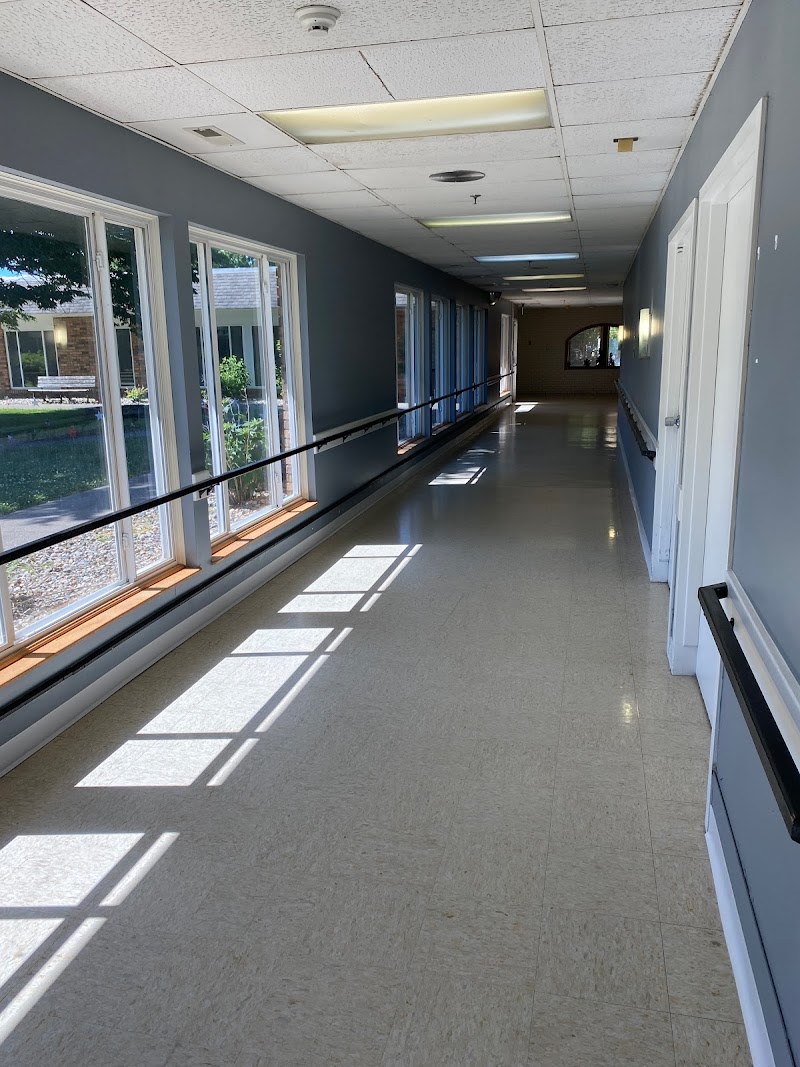
How is Brickyard Healthcare - Elkhart Staffed?

CMS rates BRICKYARD HEALTHCARE - ELKHART CARE CENTER's staffing level at 2 out of 5 stars, which is below average compared to other nursing homes. Staff turnover is 28%, compared to the Indiana average of 46%. This relatively stable workforce can support continuity of care.

What Have Inspectors Found at Brickyard Healthcare - Elkhart?

State health inspectors documented 50 deficiencies at BRICKYARD HEALTHCARE - ELKHART CARE CENTER during 2021 to 2025. These included: 2 Immediate Jeopardy (the most serious level, indicating potential for serious harm or death), 1 that caused actual resident harm, and 47 with potential for harm. Immediate Jeopardy findings are rare and represent the most serious regulatory concerns. They require immediate corrective action.

Who Owns and Operates Brickyard Healthcare - Elkhart?

BRICKYARD HEALTHCARE - ELKHART CARE CENTER is owned by a for-profit company. For-profit facilities operate as businesses with obligations to shareholders or private owners. The facility is operated by BRICKYARD HEALTHCARE, a chain that manages multiple nursing homes. With 175 certified beds and approximately 126 residents (about 72% occupancy), it is a mid-sized facility located in ELKHART, Indiana.
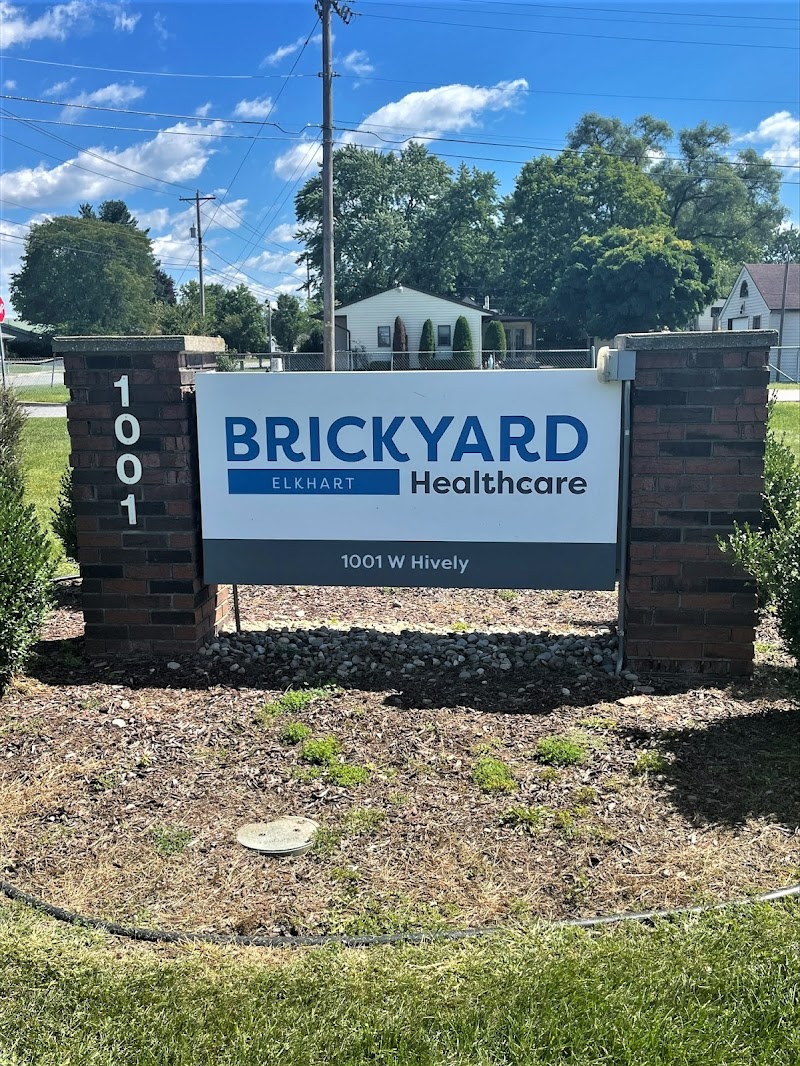
How Does Brickyard Healthcare - Elkhart Compare to Other Indiana Nursing Homes?

Compared to the 100 nursing homes in Indiana, BRICKYARD HEALTHCARE - ELKHART CARE CENTER's overall rating (1 stars) is below the state average of 3.1, staff turnover (28%) is significantly lower than the state average of 46%, and health inspection rating (1 stars) is much below the national benchmark.

What Should Families Ask When Visiting Brickyard Healthcare - Elkhart?

Based on this facility's data, families visiting should ask: "What changes have been made since the serious inspection findings, and how are you preventing similar issues?" "Can you walk me through typical staffing levels on day, evening, and night shifts?" "Can I visit during a mealtime to observe dining assistance and food quality?" "How do you handle medical emergencies, and what is your hospital transfer rate?" These questions are particularly relevant given the facility's Immediate Jeopardy citations and the below-average staffing rating.

Is Brickyard Healthcare - Elkhart Safe?

Based on CMS inspection data, BRICKYARD HEALTHCARE - ELKHART CARE CENTER has documented safety concerns. Inspectors have issued 2 Immediate Jeopardy citations (the most serious violation level indicating risk of serious injury or death). The facility has a 1-star overall rating and ranks #100 of 100 nursing homes in Indiana. Families considering this facility should ask detailed questions about what corrective actions have been taken since these incidents.

Do Nurses at Brickyard Healthcare - Elkhart Stick Around?

Staff at BRICKYARD HEALTHCARE - ELKHART CARE CENTER tend to stick around. With a turnover rate of 28%, the facility is 18 percentage points below the Indiana average of 46%. Low turnover is a positive sign. It means caregivers have time to learn each resident's needs, medications, and personal preferences. Consistent staff also notice subtle changes in a resident's condition more quickly. Registered Nurse turnover is also low at 25%, meaning experienced RNs are available to handle complex medical needs.

Was Brickyard Healthcare - Elkhart Ever Fined?

BRICKYARD HEALTHCARE - ELKHART CARE CENTER has been fined $63,174 across 1 penalty action. This is above the Indiana average of $33,711. Fines in this range indicate compliance issues significant enough for CMS to impose meaningful financial consequences. Common causes include delayed correction of deficiencies, repeat violations, or care failures affecting resident safety. Families should ask facility leadership what changes have been made since these penalties.

Is Brickyard Healthcare - Elkhart on Any Federal Watch List?

BRICKYARD HEALTHCARE - ELKHART CARE CENTER is not on any federal watch list. The most significant is the Special Focus Facility (SFF) program, which identifies the bottom 1% of nursing homes nationally based on persistent, serious quality problems. Not being on this list means the facility has avoided the pattern of deficiencies that triggers enhanced federal oversight. This is a positive indicator, though families should still review the facility's inspection history directly.