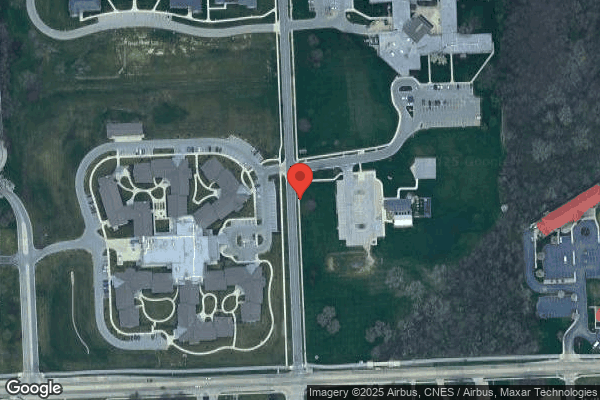
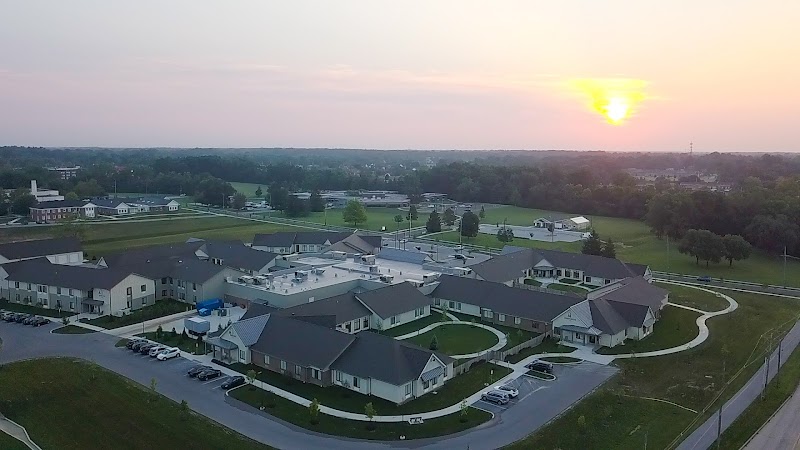
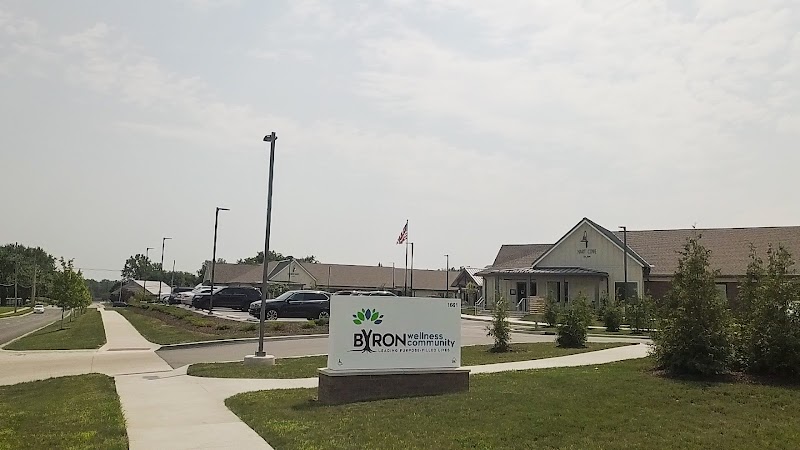
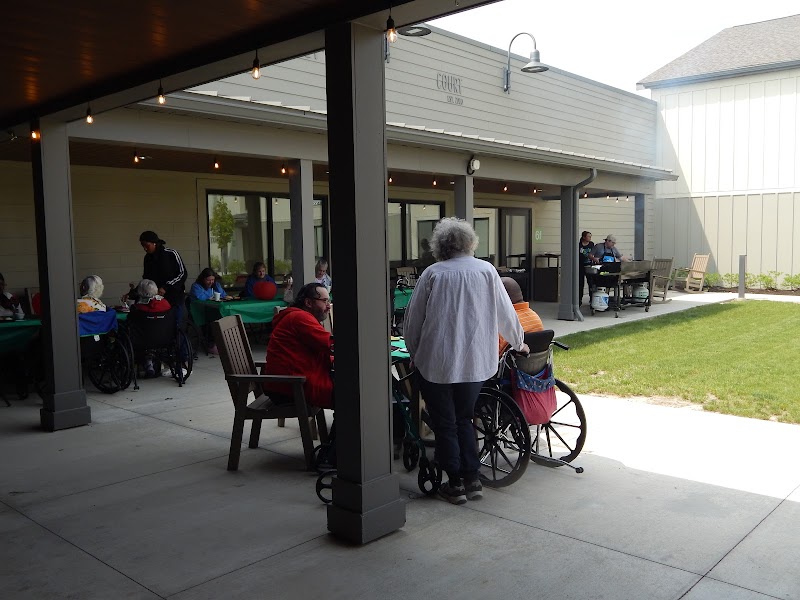
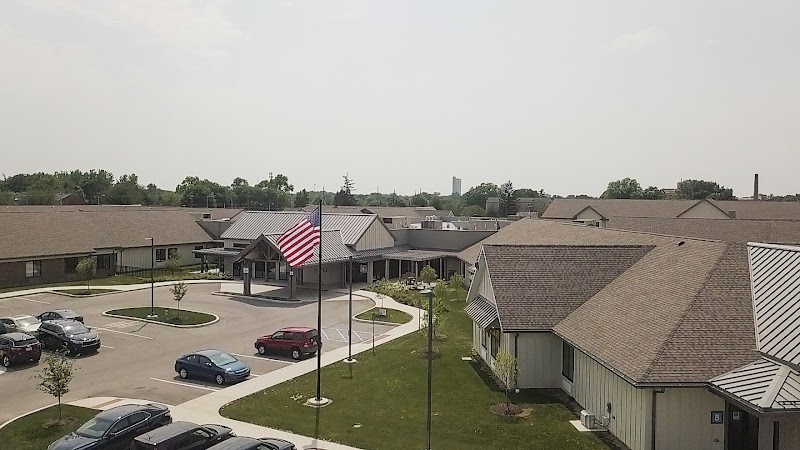
BYRON HEALTH CENTER

1661 BEACON STREET, FORT WAYNE, IN 46805 (260) 637-3166
Non profit - Other 120 Beds Independent Data: November 2025 1 Immediate Jeopardy citation
Trust Grade
33/100
#437 of 505 in IN
Last Inspection: May 2025

Inspected within the last 6 months. Data reflects current conditions.

Overview

Byron Health Center in Fort Wayne, Indiana has received a Trust Grade of F, indicating significant concerns about its operations and care quality. Ranked #437 out of 505 facilities in Indiana, it falls in the bottom half of state rankings, and is #27 out of 29 in Allen County, meaning there are very few local options that are better. The facility is worsening, with issues increasing from 1 in 2024 to 8 in 2025. While staffing is rated average with a 3 out of 5 stars and a turnover rate of 49%, which is similar to the state average, RN coverage is concerning as it is less than that of 82% of Indiana facilities. Notable incidents include a critical situation where a resident was able to leave the facility unsupervised and wandered approximately 3 miles across busy streets, and instances where food sanitation practices were not properly maintained, putting residents at risk for foodborne illnesses. Although there have been no fines, the overall quality and safety concerns make this facility a risky choice for families seeking care for their loved ones.

Trust Score
F
33/100
In Indiana
#437/505
Bottom 14%
Safety Record
High Risk
Review needed
Inspections
Getting Worse
1 → 8 violations
Staff Stability
⚠ Watch
49% turnover. Above average. Higher turnover means staff may not know residents' routines.
Penalties
✓ Good
No fines on record. Clean compliance history, better than most Indiana facilities.
Skilled Nurses
⚠ Watch
Each resident gets only 26 minutes of Registered Nurse (RN) attention daily — below average for Indiana. Fewer RN minutes means fewer trained eyes watching for problems.
Violations
⚠ Watch
13 deficiencies on record. Higher than average. Multiple issues found across inspections.
★☆☆☆☆
1.0
Overall Rating
★★★☆☆
3.0
Staff Levels
★★★★☆
4.0
Care Quality
★☆☆☆☆
1.0
Inspection Score
Stable
2024: 1 issues
2025: 8 issues

The Good

  • 4-Star Quality Measures · Strong clinical quality outcomes
  • Full Sprinkler Coverage · Fire safety systems throughout facility
  • No fines on record

Facility shows strength in quality measures, fire safety.

The Bad

1-Star Overall Rating

Below Indiana average (3.1)

Significant quality concerns identified by CMS

Staff Turnover: 49%

Near Indiana avg (46%)

Higher turnover may affect care consistency

The Ugly 13 deficiencies on record

1 life-threatening
Jun 2025 1 deficiency 1 IJ
CRITICAL (J) 📢 Someone Reported This

A family member, employee, or ombudsman was alarmed enough to file a formal complaint

Immediate Jeopardy (IJ) - the most serious Medicare violation

Accident Prevention (Tag F0689)

Someone could have died · This affected 1 resident

**NOTE- TERMS IN BRACKETS HAVE BEEN EDITED TO PROTECT CONFIDENTIALITY** Based on interview and record review the facility failed to ensure adequate supervision was in place to prevent residents from l...

Read full inspector narrative →
**NOTE- TERMS IN BRACKETS HAVE BEEN EDITED TO PROTECT CONFIDENTIALITY** Based on interview and record review the facility failed to ensure adequate supervision was in place to prevent residents from leaving the facility unsupervised for 1 of 3 residents reviewed (Resident B). Resident B was unsupervised, walked approximately 3 miles across heavily traveled streets. Resident B's unsupervised wandering could result in death. The Immediate Jeopardy began on 6/15/25 when the facility failed to prevent Resident B from leaving the facility unsupervised. The Executive Director (ED) and Assistant Administrator were notified of the Immediate Jeopardy on June 17, 2025, at 12:34 PM. The Immediate Jeopardy was removed on June 18, 2025, but noncompliance remained at the lower scope and severity of no actual harm with potential for more than minimal harm that is not Immediate Jeopardy. Findings include: An investigation file was provided by the ED on 6/17/25 at 9:15 AM. The file included an incident report, dated 6/15/25 at 12:56 PM, indicating Resident B was brought back to the facility by the local police department. The police indicated Resident B was found at an apartment complex on [NAME] Street (approx. 3 miles from the facility and having to cross heavy traffic). The report indicated Resident B indicated she went to her old apartment complex to check on the repairs needed. The file included statements of the following: The Chief Financial Officer (CFO)'s statement indicated she was working in the lobby on 6/15/25 and interacted with Resident B multiple times. The CFO indicated she observed Resident B exit the front door at 9:40 AM, returned at 9:45 AM, exited again at 9:55 AM, and returned at 9:55 AM. CFO indicated she observed Resident B exit again at 10:03 AM with no return after camera footage review. CFO indicated at 12:49 PM she received a call from Resident B's friend, who indicated Resident B was at her former apartment on [NAME] Street and the police told her friend they were going to bring the resident back to the facility. CFO indicated she notified Nursing Supervisor 4 who indicated Resident B had returned to the facility with the police. According to Google earth, Resident B would have crossed 2 main highly traveled streets from the facility to reach her prior residence at an apartment complex. Resident B's record was reviewed on 6/17/25 at 9:54 AM. Diagnosis included: unspecified mental disorder due to known physiological condition and chronic obstructive pulmonary disease. Resident B resided on the unsecured [NAME] neighborhood (facility unit) Resident B's care plan, dated 5-16-25, did not include the resident's ability to exit the facility alone or interventions for wandering. The care plan did not indicate how often the resident's whereabouts should be checked. Resident B's physician's orders, dated 5/16/25, indicated Resident B could go out on leave of absence (LOA) with family/friends. Resident B's Brief Interview for Mental Status (BIMS), dated 5/22/25, indicated Resident B had a BIMS score of 3/15 -severely impaired cognition. The resident was independently mobile, her mood scores did not indicate sadness or was seeking to go home. There were no exit seeking behaviors indicated on the MDS. She did have pacing behaviors indicated. Resident B's admission assessment, dated 5/16/25, indicated Resident B's reason for admission was due to memory issues. Resident B's wandering assessments, dated 5/16/25, 5/19/25 and 6/3/25, indicated Resident B was at high risk for wandering. The assessments did not address the risk for elopement. No elopement risk assessments were completed. A nursing note, dated 6/11/25, indicated Resident B was wandering around another neighborhood (unit within the facility) and reported she was lost. Staff directed the resident back to her room. A nursing note, dated 6/12/25, indicated Resident B was wandering and pacing around other neighborhoods (units throughout the facility). The note indicated Resident B told staff she was moving out of the facility and did not need to be at the facility. A nursing note, dated 6/15/25 at 1:45 PM, indicated Resident B was brought back to the facility by the local police department. The police officer indicated Resident B was at her old apartment approximately 3 miles away from the facility. The note indicated Resident B left without signing out, having a friend or family accompanying her, or alerting staff. Resident B told staff she left the facility a couple days ago, returned today but was unsure who brought her back. Resident B indicated she went to her old apartment to check on the work that was completed. There were no other notes to indicate Resident B wandered or felt lost between 6/12/15 and 6/15/25. An LOA form was provided by the ED on 6/17/25 at 1 PM. The LOA form indicated Resident B signed out with family/friends on 5/26/25 and 5/31/25. The LOA form did not include a signature for an outing on 6/15/25 related to Resident B's absence. During an interview, on 6/17/25 at 9:07 AM, Licensed Practical Nurse (LPN) 6 indicated Resident B resided on the [NAME] Neighborhood, an unsecured unit within the facility. The resident left the faciity on 6/15/25 without notifying staff or signing out of the LOA book. LPN 6 indicated Resident B was brought back to the facility by the local police department around 12:40 PM. LPN 6 indicated prior to Resident B exiting the facility, she had last seen her around 9 AM and was at her baseline. LPN 6 indicated she did not know Resident B had left the facility. During an interview, on 6/17/25 at 9:15 AM, Certified Nurse Aide (CNA) 7 indicated she last saw Resident B on 6/15/25 around 9 AM. CNA 7 indicated Resident B was in the main lobby area. Resident B usually ambulated independently and wandered the facility but never exited the facility without family/friends. The resident was fairly alert and cared mostly for herself. She indicated the resident usually ate lunch in the main dining room rather than on the neighborhood (facility unit), so she did not miss the resident at lunchtime. CNA 7 indicated she did not know Resident B had exited the facility. During an interview, on 6/17/25 at 9:25 AM, Nursing Supervisor 4 indicated she was notified Resident B was dropped off by the local police department on 6/15/26 at 12:46 PM. Nursing Supervisor 4 indicated she completed an assessment and talked to Resident B upon return. Nursing Supervisor 4 indicated Resident B was confused compared to baseline. Nursing Supervisor 4 indicated Resident B indicated she had walked to her old apartment to check in on the landlord repairs. Nursing Supervisor 4 indicated Resident B thought she had been away from the facility for the past 3 days and returned on 6/15/25 but was unsure who brought her back to the facility. During an interview, on 6/17/25 at 9:34 AM, the CFO indicated she was working in the lobby on 6/15/25. She indicated she had witnessed Resident D exit the building unsupervised prior to 6/15/25, but the resident always returned in a few minutes independently. The CFO indicated she had received a call from Resident B's friend, who indicated Resident B was picked up by the police at her old apartment and the police were headed back to the facility. The CFO took no action on 6/15/25 between 10:03 AM and 12:49 PM to ensure Resident B's safety. During an interview, on 6/17/25 at 12:47 PM, Resident B's son indicated he was not in the area on 6/15/25. He indicated Resident B had moved to the facility due to memory issues. She was unable to recall short-term memory items i.e. repetitive notes regarding the same issue, dates and times. He indicated prior to moving to the facility, Resident B lived in an apartment alone about 3 miles away from the facility. Resident B's son indicated on 6/15/25 the facility notified him Resident B had walked to her old apartment. He indicated the facility staff indicated the local police department brought Resident B back to the facility. During an interview, on 6/17/25 at 1:09 PM, Registered Nurse (RN) 5 indicated Resident B often wandered throughout the other neighborhoods (facility unit). RN 5 indicated Resident B was not safe to leave the facility alone due to her confusion. RN 5 indicated on 6/12/25 Resident B reported she was leaving the facility but was redirected. RN 5 indicated she did not know Resident B had exited the facility on 6/15/25. During an interview, on 6/18/25 at 10 AM, Resident's B former neighbor indicated the resident walked from the facility to the her prior residence at an apartment complex on 6/15/25. She indicated the resident had indicated she was coming home. Resident B's former neighbor indicated the resident had dementia. Resident B's former neighbor indicated a police officer had asked her if she knew the resident. She indicated the resident had told the police it took her 3 days to walk to her apartment complex. The neighbor indicated she called the facility and asked if the resident was missing. Staff indicated the resident was not missing and staff had seen resident recently. During an interview, on 6/18/25 at 9:50 AM, the ED indicated Resident B went to the her prior residence at an apartment complex on 6/15/25 either by walking or bus. The ED indicated the police were working outside the apartment complex and the resident went up to the police officer with a map to her apartment. The ED indicated Resident B asked the police officer for assistance to her apartment and the police officer called the landlady. The landlady indicated Resident B no longer lived at the apartment complex, she had moved to the facility. The police brought the resident back to the facility. During an interview, on 6/18/25 at 10:05 AM, the Social Services Director (SSD) indicated Resident B had a BIMS score of 3/15 (severely impaired) and was at high risk of wandering. SSD indicated during the admission assessment, Resident B refused to answer multiple questions which resulted in a BIMS of 3. SSD indicated the admission, 72 hour and 1 month wandering assessment included Resident B's dementia diagnosis, independent ambulation without a device, frequently walked around the facility and low BIMS score. This indicated resident was at risk for unsafe wandering. The SSD indicated interventions in place included to engage in activities. The SSD indicated Resident B did not exhibit exit seeking behaviors, was alert to place and person with mixed clarity and became confused at times. The SSD indicated residents who are at risk for wandering are not monitored at specific timeframes but are encouraged to participate in activities for connection. During an interview on 6/18/25 at 11:04 AM, LPN 8 indicated she assisted Resident B on 6/11/25. LPN 8 indicated Resident B indicated her son had stolen her apartment and then indicated her apartment was getting repaired. Resident B also indicated she would be back to her house in a couple days. LPN 8 indicated Resident B was easily redirected. A policy, dated 7/20, titled Missing Resident/Elopement, was provided by the ED on 6/17/25 at 1 PM. The policy indicated staff should attempt to prevent residents from elopement through assessment and interventions. The policy indicated an elopement risk assessment should be completed upon return to the facility. A policy, last revised 5/13/25, titled Care Plan - Comprehensive, was provided by the ED on 6/17/25 at 1 PM. The policy indicated resident's comprehensive care plans are designed to reflect the resident's current standards of practice for problem areas and conditions. The Immediate Jeopardy that began on 6/15/25 was removed and the deficient practice corrected on 6/18/25 when the facility re-educated all staff on facility policies for unsafe wandering and elopement, assessments and appropriate interventions but will remain at the lower scope and severity of no actual harm with potential for more than minimal harm that is not Immediate Jeopardy. This citation relates to Complaint IN00461523. 3.1-45(a)
May 2025 6 deficiencies
CONCERN (D)

Potential for Harm - no one hurt, but risky conditions existed

Resident Rights (Tag F0550)

Could have caused harm · This affected 1 resident

Based on observation, record review, and interview the facility failed to ensure dignity was maintained for 1 of 1 resident reviewed. (Resident 10) Findings include: During an observation, on 5/15/25 ...

Read full inspector narrative →
Based on observation, record review, and interview the facility failed to ensure dignity was maintained for 1 of 1 resident reviewed. (Resident 10) Findings include: During an observation, on 5/15/25 at 7:26AM, Licensed Practical Nurse (LPN) 6 administered medications to Resident 10. The medications were administered in a common area while Resident 10 was sitting eating breakfast at dining table. The medications administered included Trulicity, a subcutaneous injection of a hypoglycemic agent. The Trulicity injection was administered in Resident 10's right upper quadrant of his abdomen after Resident 10 pulled up his shirt revealing his abdomen. In an interview, on 5/15/25 at 9:56AM, LPN 6 indicated she normally would stop giving medications and assist in serving breakfast rather than administering medications during breakfast. In an interview, on 5/15/25 at 10:10AM, Registered Nurse (RN) 5 indicated nurses were not permitted to give medications in the common area during breakfast due to dignity issues as well as residents were to enjoy their meal without interruptions. Resident 10's record review began on 5/15/25 at 2:06PM. The record indicated diagnoses included type 2 diabetes, chronic gingivitis, and unspecified dementia. Resident 10's care plan did not specify a preference to take medications in the common areas. A current policy, titled Quality of Life-Dignity undated, was provided by the administrator on 5/15/25 at 10:23AM. The policy indicated, 2. Treated with dignity means the resident will be assisted in maintaining and enhancing his or her self-esteem and self-worth .9.Staff shall maintain an environment in which confidential clinical information was protected, for example: b. signs indicating the resident's clinical status or care needs shall not be openly posted in the resident's room unless specifically requested by the resident or the resident's family member. Discreet posting of important of information 10. Staff shall promote, maintain, and protect resident privacy, including bodily privacy during assistance with personal care and during treatment procedures . A current policy, titled Administered Oral Medications undated , was provided by the Administrator on 5/15/25 at 10:23AM. The policy indicated, 26. If the resident desires, return the door and curtains to the open position . 3.1-3(a)
CONCERN (D)

Potential for Harm - no one hurt, but risky conditions existed

Deficiency F0583 (Tag F0583)

Could have caused harm · This affected 1 resident

**NOTE- TERMS IN BRACKETS HAVE BEEN EDITED TO PROTECT CONFIDENTIALITY** Based on observation, interview and record review the facility failed to ensure privacy of electronic and paper medical informat...

Read full inspector narrative →
**NOTE- TERMS IN BRACKETS HAVE BEEN EDITED TO PROTECT CONFIDENTIALITY** Based on observation, interview and record review the facility failed to ensure privacy of electronic and paper medical information for 1 of 20 residents reviewed. (Resident 80) Findings include: During an observation, on 5/14/25 at 10:30 AM, a computer screen on top of a medicine cart was open with Resident 80's name, picture, medication list and other personal health information visible on the screen. A paper worksheet was lying on top of the medicine cart displaying vital signs and other health information for residents on the unit. The medicine cart was observed in a hallway leading to the common areas of the unit where staff and residents were observed passing by. During an observation, on 5/14/25 at 12:31 PM, Registered Nurse (RN) 5 was observed seated next to Resident 80 in the dining room assisting her with lunch. RN 5 rose from her chair, walked to the medicine cart, activated the lock and returned to her seat. The computer on top of the medicine cart was open to Resident 80's medication list and picture. A worksheet with visible vital signs and other resident information was observed sitting on top of the cart. Residents and staff were walking around the area preparing for the lunch meal and were in close enough proximity to view the computer screen and paper. Resident 80's record was reviewed on 5/14/25 at 1:14 PM. Diagnoses included cerebral palsy, abnormal weight loss, dysphagia, and altered mental status. A review of Resident 80's current significant change Minimum Data Set Assessment (MDS) dated [DATE] indicated their Basic Interview for Mental Status (BIMS) score was 3 (cognitively impaired). During an interview, on 5/14/25 at 12:40 PM, RN 5 indicated she had prepared and administered Resident 80's medications, but had forgotten to lock the screen when she stepped away from the cart. She indicated the computer screen should have been locked and the worksheet should have been turned over to keep resident information private. During an interview, on 5/16/25 at 12:26 PM, the Director of Nursing (DON) indicated computer screens should be locked when staff were not present and attending to them. The DON indicated any paper records should not have visible resident information in unsecured areas, such as on top of medication carts. A current policy titled Protected Health Information, Management and Protection of, dated 4/07 provided by the Administrator on 5/16/25 at 1:12 PM indicated all personnel with access to resident information should ensure the information is managed and protected to prevent unauthorized disclosure. A current policy titled Confidentiality of Information, dated 7/10/19, indicated all resident records should be safeguarded to protect the confidentiality of the information. The policy indicated access to medical records should be limited to staff and consultants providing care to the resident. 3-1(p)(5)
CONCERN (D)

Potential for Harm - no one hurt, but risky conditions existed

Deficiency F0628 (Tag F0628)

Could have caused harm · This affected 1 resident

Based on record review and interview the facility failed to ensure a bed hold policy was given prior to discharge to 2 of 3 residents reviewed. (Resident 35 and Resident 47) Findings include: 1) Resid...

Read full inspector narrative →
Based on record review and interview the facility failed to ensure a bed hold policy was given prior to discharge to 2 of 3 residents reviewed. (Resident 35 and Resident 47) Findings include: 1) Resident 35's record review began on 5/13/25 at 10:33AM. Resident 35's diagnoses included kidney failure, respiratory failure, and pneumonitis due to inhalation of food and vomit. On 10/8/24 Resident 35 was sent to the hospital. There was no documentation to indicate a bed hold had been explained to her or the family in the medical record. The facility was unable to show proof a bed hold was given prior to discharge. 2) Resident 47's record review began on 05/14/25 at 1:34 PM. Resident 47's diagnoses included respiratory failure, dysphagia, and altered mental status. Resident 47 was sent to the hospital on 3/8/25 there was no documentation to indicate a bed hold had been explained to him or his family in the medical record. The facility was unable to provide proof a bed hold was given prior to discharge. In an interview, on 05/16/25 at 12:27 PM, the Director of Nursing (DON) indicated a bed hold policy should have been documented in the progress notes. The DON indicated the resident, a family member, or power of attorney should always be informed of a bed hold policy at discharge prior to leaving the building. A current policy titled, Holding Bed Space was provided by the Administrator on 5/16/25 at 1:12PM. The policy indicated, Our facility shall inform residents upon admission and prior to transfer for hospitalizations or therapeutic leave of our bed-hold policy . No state rule applies.
CONCERN (D)

Potential for Harm - no one hurt, but risky conditions existed

Quality of Care (Tag F0684)

Could have caused harm · This affected 1 resident

Based on observation, interview and record review the facility failed to ensure assessments were accurately recorded for 2 of 2 residents reviewed. (Resident 1, Resident 35) Findings include: During a...

Read full inspector narrative →
Based on observation, interview and record review the facility failed to ensure assessments were accurately recorded for 2 of 2 residents reviewed. (Resident 1, Resident 35) Findings include: During an observation on 05/16/2025 at 1:38 PM the following was observed: the Director of Nursing approached Resident 1 to check pupils. Upon shining a flashlight in the left eye, the pupil appeared dilated, round and nonreactive to light; the right pupil appeared round, non-dilated, and reacted to light. Resident 1's record was reviewed on 05/14/2025 at 12:53 PM. Diagnoses included 6th abducent nerve palsy (affects the ability to turn the eye outward), 3rd oculomotor nerve palsy (affects the ability for eye to look straight ahead, also effects the pupils ability to constrict to light leaving the pupil dilated), and blepharoconjunctivitis (inflammation of the eyelid and conjunctiva (mucus membrane of eye)). A review of Resident 1's current quarterly MDS indicated their BIMS (Basic Interview for Mental Status) score was 5 (severe cognitive impairment). A review of Resident 1's current care plan titled Impaired Vision related to dry eye syndrome, blepharitis (inflamed, itchy eyelids), and ptosis (eyelids droop over eye) indicated the resident had a problem with inflamed, droopy eyelids, with a goal date of 07/23/2025. Interventions included washing eye lids with baby shampoo as ordered, referring to optometry as ordered, and head CT scan as ordered. There was no care plan for unequally sized pupils. A review of progress notes dated 04/30/2025 at 11:43 AM indicated when Resident 1 was seen by the eye doctor, they recommended for her to be sent to the ER for ptosis. The eye doctor believed it could be life threatening. Resident 1 refused to have an MRI performed, but agreed to a CT of the head. Resident 1 had known irregular pupils, had no mental status changes, no headache, no recent head trauma, and no complaints of eye pain. Skilled charting dated 2024 indicated Resident 1's pupils were equal, round, and reactive to light on 07/08, 07/16, 07/22, 07/29, 08/06, 08/12, 08/19, 08/27, 09/02, 09/09, 09/17, 09/30, 10/05, 10/14, 10/21, 10/29, 11/04, 11/05, 11/19, 11/25, 12/02, 12/19, and 12/25. Skilled charting dated 2025 indicated Resident 1's pupils were equal, round, and reactive to light on 01/01, 01/09, 01/22, 02/05, 02/12, 02/20, 03/13, 04/02, 04/03, and 04/24. A review of Resident 1's CT of the Head without contrast, dated 05/08/2025, indicated no acute findings. In an interview, on 05/14/25 at 10:34 AM, the Administrator indicated Resident 1's pupils had been unequal in size since 2022. In an interview, on 05/14/25 at 12:53 PM, the DON indicated the PERRLA (Pupils Equal, Round, and Reactive to Light and Accommodation) documentation needed to be better, and staff would be educated on performing neurological assessments and documentation. In an interview, on 05/16/25 at 09:40 AM, LPN 7 indicated pupils are to be checked when a fall happens and with mental status changes. Resident 1 had not had any mental status changes recently and the nurse was not aware of the resident having unequal pupils. In an interview, on 05/16/25 at 10:00 AM, RN 5 indicated skilled assessments are typically done weekly. If an assessment was missed, then she would make sure to get that done and charted. Resident 35's record was reviewed on 05/13/25 at 10:33 AM. Diagnoses included acute respiratory failure with hypoxia, pneumonitis (swelling and irritation of lungs) due to inhalation of food and vomit, and dysphagia (difficulty eating). A review of Resident 35's current quarterly MDS indicated their BIMS (Basic Interview for Mental Status) score was 3 (severe cognitive impairment). A review of physician's orders, dated 11/13/24, indicated to focus documentation for breath sounds, fever, oxygen saturation below 92% on room air, and increased respiratory rate greater than 24 breaths per minute every shift for 7 days. A review of physician's orders, dated 11/13/24, 11/25/24, and 12/20/24, indicated Resident 35 received chest X-rays for pneumonia and pleural effusion (fluid accumulation between lungs and chest wall). A physician's order, dated 12/11/24, indicated to completeanother follow up chest X-ray for pneumonia with effusion drainage related to recent chest tube removal. Change in condition supportive documentation, dated 11/15/24, indicated no breath sounds were assessed on second shift. On 11/16/24 no breath sounds were assessed for first or second shift. On 11/17/24 no breath sounds were assessed for third shift. In an interview, dated 05/14/25 at 10:53 AM, the DON indicated Resident 35 should have been assessed every shift as ordered. A current policy, dated 02/2014, provided by the DON indicated neurological assessments should include drooping eyelids, facial paralysis, asymmetry, and pupil size. A current policy dated 02/2014 provided by the DON indicated lung sounds, respirations, cough, consistency and color of sputum, oxygen use and oxygen saturations, and shortness of breath should be assessed during comprehensive assessments. 3.1-37
CONCERN (D)

Potential for Harm - no one hurt, but risky conditions existed

Respiratory Care (Tag F0695)

Could have caused harm · This affected 1 resident

**NOTE- TERMS IN BRACKETS HAVE BEEN EDITED TO PROTECT CONFIDENTIALITY** Based on observation, interview and record review, the facility failed to ensure oxygen tubing was appropriately applied and sto...

Read full inspector narrative →
**NOTE- TERMS IN BRACKETS HAVE BEEN EDITED TO PROTECT CONFIDENTIALITY** Based on observation, interview and record review, the facility failed to ensure oxygen tubing was appropriately applied and stored when not in use for 1 of 2 residents reviewed. (Resident 28) Findings include: During an observation on 5/13/25 at 12:04 PM oxygen tubing was lying across Resident 28's bed unbagged. The bedside oxygen concentrator was turned on, releasing oxygen while Resident 28 was in the dining room. During an interview on 5/13/25 at 12:05 PM, Licensed Practical Nurse (LPN) 2 indicated bedside oxygen should be turned off when not in use and oxygen tubing should be bagged when not in use. LPN 2 indicated she was unable to find a bag in Resident 28's room to place her oxygen tubing in. During an observation on 05/15/25 10:19 AM, Resident 28 was observed lying on her right side in bed with her chin tucked to her chest, breathing in a labored manner. She was not wearing the oxygen. Resident 28's oxygen tubing was about 2.5 feet away from the resident lying neatly coiled, unbagged on a bedside table. The tubing was attached to an oxygen concentrator that was turned on and releasing oxygen. Resident 28's wheelchair was about 8 feet away from her bed. Resident 28's record was reviewed on 5/15/25 at 10:28 AM. Diagnoses included chronic respiratory failure with hypoxia, hypoxemia, shortness of breath, and need for assistance with personal care. A review of Resident 28's current quarterly Minimum Data Set Assessment (MDS), dated [DATE], indicated their Basic Interview for Mental Status (BIMS) score was 3 (cognitively impaired). The MDS indicated the resident utilized oxygen therapy. A review of Resident 28's current care plan regarding Impaired gas exchange indicated the resident had a problem of shortness of breath, with a goal date of 7/5/25. Interventions included monitoring for signs and symptoms of acute respiratory insufficiency including labored breathing and administering oxygen as directed. A review of physician orders dated 2/17/25 at 4:00 PM indicated oxygen should be administered up to 5 liters per minute for hypoxia or shortness of breath. A review of progress notes did not indicate any refusal of care or oxygen dated 5/15/25. During an interview on 5/15/25 at 10:23 AM, LPN 3 indicated Resident 28 was poorly positioned due to the head of the bed being raised and the resident sliding down causing her chin to tuck toward her chest resulting in labored breathing. She indicated Resident 28 would not have been able to place her oxygen tubing on the table as it was out of her reach and physical ability. She indicated Resident 28 was not able to self-transfer or walk from where her wheelchair was positioned across the room. She indicated Resident 28 should have been positioned better and should have had her nasal cannula placed in her nostrils. A current policy dated 10/2010, provided by the Administrator on 5/15/25 at 11:35 AM indicated staff should turn on the oxygen at the time of application and place the oxygen device on the resident. A current policy titled Oxygen Storage, dated 8/22/14 did not address storage of oxygen supplies when not in use. 3.1-47(a)(6)
CONCERN (E)

Potential for Harm - no one hurt, but risky conditions existed

Food Safety (Tag F0812)

Could have caused harm · This affected multiple residents

Based on observation, interview and record review the facility failed to ensure kitchen sanitation was maintained, opened food items were labeled and dated, and baking trays were thoroughly air dried....

Read full inspector narrative →
Based on observation, interview and record review the facility failed to ensure kitchen sanitation was maintained, opened food items were labeled and dated, and baking trays were thoroughly air dried. 95 of 96 residents residing in the building were served food prepared in the kitchen. Findings include: During an observation on 5/13/25 at 9:07 AM, A container of ice cream was observed in the walk-in freezer. The dietary manager (DM) opened the container and dip marks where ice cream had been removed were observed. No open date was observed on the container. A large, covered cart was observed in the back of the walk-in cooler with a discard date of 5/11/25. The DM lifted the cart cover revealing individual pieces of cake on plates and bowls of fruit. The fruit and cake were not individually covered and appeared dry. A large bin labeled flour was observed with a scoop lying in the flour supply. A large bin labeled sugar was observed with a scoop lying in the sugar supply. Four chef salads were observed on plates covered with plastic wrap inside the reach-in cooler. No date was observed on any of the salads. An open box of popsicles was observed in the reach in freezer with an expiration date of 3/8/25. A box was observed inside a reach in freezer containing frozen hamburger patties inside a plastic bag. The plastic bag was open leaving the meat open to air. A plastic bag containing breaded chicken strips was observed on a shelf in the freezer. The plastic bag was open with the meat open to air. A plastic bag containing French fries was open with the French fries open to air. No open dates were observed on the hamburger patties, chicken strips or French fries. A shelf next to the fryer was observed with a large amount of yellow oily liquid and brown specks of debris. The reach in freezer across from the fryer had multicolored streaks and splatters on the front of the doors. 3 of 4 baking pans had clear liquid dripping from them when separated in the ready to use baking pan storage stack. In an interview on 5/13/25 at 9:08 AM, the Dietary Manager (DM) indicated the container of ice cream should have been dated when opened. The DM indicated the cart containing the expired fruit and cake should have been disposed of on 5/11/25. The DM indicated scoops for flour and sugar should be stored outside the supply. The DM indicated salads in the reach-in cooler should have been dated. The DM indicated the expired box of popsicles should have been discarded upon expiration. The DM indicated packages frozen hamburgers, chicken strips and French Fries should be closed after use to prevent air exposure and dated when opened. The DM indicated the fryer area, including the freezer doors, should have been cleaned after its last use, the previous evening. The DM indicated all baking pans should be air dried on a drying rack and stacked only after they were completely dry. A current policy titled Food Receiving and Storage dated 12/08 provided by the Administrator on 5/13/25 at 1:23 PM indicated Food Services or other staff should always maintain clean food storage areas. The policy indicated all food stored in the refrigerator or freezer should be covered, labeled and dated with a use by date. A current policy titled Preventing Foodborne Illness- Food Handling, dated 12/09 provided by the Administrator on 5/13/25 at 1:23 PM indicated all food service equipment should be sanitized according to current guidelines. A current policy titled Dishwashing Machine Use, dated 8/10 indicated after running items through the dishwasher, the items should be allowed to air dry. 3.1-21(i)(2) 3.1-21(i)(3)
Feb 2025 1 deficiency
CONCERN (D) 📢 Someone Reported This

A family member, employee, or ombudsman was alarmed enough to file a formal complaint

Potential for Harm - no one hurt, but risky conditions existed

Accident Prevention (Tag F0689)

Could have caused harm · This affected 1 resident

Based on interview and record review the facility failed to ensure fall prevention interventions were followed for 1 of 4 resident reviewed (Resident B). Findings include: A facility reported incide...

Read full inspector narrative →
Based on interview and record review the facility failed to ensure fall prevention interventions were followed for 1 of 4 resident reviewed (Resident B). Findings include: A facility reported incident file was provided by the Executive Director on 2/21/25 at 10:15 AM. The file included the following: The file, dated 2/4/25, indicated around 6:40 PM, Certified Nurse Aide (CNA) 5 assisted Resident B in the shower. Resident B was in the shower chair, started to foam at the mouth and turned blue. CNA 5 ran out of the room, left the resident alone in the shower chair, and got help. Upon return, CNA 5 and Qualified Medication Aide (QMA) 4 found Resident B on the floor of the shower. CNA 5's statement, undated, indicated while she assisted Resident B with a shower, Resident B foamed at the mouth. CNA 5 indicated she ran to get the nurse and upon return found Resident B on the floor of the shower. CNA 5's statement also indicated she did not witness the fall as she had ran to get the nurse and then came back. CNA 5 indicated she had left Resident B alone in the shower chair. QMA 4's statement, undated, indicated she was alerted by CNA 5, Resident B had turned blue and foamed at the mouth. QMA 4 indicated when she entered the room, Resident B was observed on the floor of the shower. In at interview, on 2/21/25 at 11:35 AM, the Director of Nursing (DON), indicated CNA 5 assisted Resident B with a shower in the shower chair. The DON indicated Resident B started to foam at the mouth and turned blue. The DON indicated CNA 5 left Resident B alone in the shower chair and ran to get assistance. The DON indicated when CNA 5 and QMA 4 returned to the room, Resident B was on the floor. The DON indicated Resident B had an unwitnessed fall while CNA 5 was out of the room. In an interview, on 2/21/25 at 11:25 AM, QMA 7 indicated when a resident was in the shower chair, the resident should never be left alone. QMA 7 indicated when additional assistance was needed, the call light should be pulled or staff yell out for help. QMA 7 indicated she would never leave the resident alone. In an interview, on 2/21/25 at 11:08 AM, CNA 6, indicated a resident was never left in the shower chair alone. CNA 6 indicated when a resident became unresponsive or had a change in condition while in the shower, she pulled the call light or yelled for help. Resident B's record was reviewed on 2/21/25 at 10:54 AM. Diagnosis included: history of a traumatic brain injury, muscle weakness, and quadriplegia. A quarterly fall assessment, dated 11/20/24, indicated Resident B was at high risk for falls. A current care plan indicated Resident B had a history falls due to a traumatic brain injury. The care plan indicated Resident B needed assistance with transfers and showers. A policy, dated 10/2005, titled Falls - Clinical Protocol, was provided by the DON on 2/21/25 at 11:45 AM. The policy did not indicate fall prevention interventions for high fall risk residents. This citation relates to Complaint IN00452850. 3.1-45(a)
Feb 2024 1 deficiency
CONCERN (D) 📢 Someone Reported This

A family member, employee, or ombudsman was alarmed enough to file a formal complaint

Potential for Harm - no one hurt, but risky conditions existed

Free from Abuse/Neglect (Tag F0600)

Could have caused harm · This affected 1 resident

Based on observation, interview and record review, the facility failed to ensure residents were free from mental and physical abuse by staff for 1 of 3 resident's reviewed (Resident D). The deficient ...

Read full inspector narrative →
Based on observation, interview and record review, the facility failed to ensure residents were free from mental and physical abuse by staff for 1 of 3 resident's reviewed (Resident D). The deficient practice was corrected on 2/1/24 prior to the start of the survey and was therefore past non-compliance. Findings include: A Indiana IDOH (Indiana Department of Health) incident report, dated 1/30/24 at 7:00 p.m., indicated the Administrator had viewed the facility camera, located on the male secured unit, for investigation of a staff members reported injury. The camera footage indicated at 5:04 a.m., QMA 2 walked into the nurse office followed by Resident D in his wheelchair. The resident was next seen on the floor outside the nurse office followed by his wheelchair coming out after him. He got back into his wheelchair and left the area. QMA 2 was observed to follow Resident D and removed the backpack off the back of his chair. A struggle between the 2 ensued and QMA 2 swung the backpack at the resident. QMA 4 came into view and ran towards the area where QMA 2 and the Resident were struggling over the backpack. QMA 2 took the backpack and threw it over into the kitchenette. Around 5:10 a.m., LPN 5 (Licensed Practical Nurse) entered the video pushing a cart carrying blue pharmacy bins. She was observed to be pointing at the resident, and pushed the cart towards him. LPN 5 then went behind and moved the residents wheelchair towards the exit door to the courtyard where she tipped him forward towards the door. QMA 4, QMA 6, and LPN 5 were seen with the resident at the door while QMA 2 walked around holding her right wrist. The resident was observed to go behind the nurse station to get his backpack, then went out to his wheelchair. At 5:15 a.m., Resident D was observed back in his wheelchair, seated outside the nurse office where QMA 2, QMA 4, and QMA 6 appeared to be speaking to the resident. LPN 5 was observed drawing up medication into a syringe. At 5:20 a.m., QMA 4 moved behind the resident while QMA 2 and QMA 6 held the residents hands down on the arms of his wheelchair. LPN 5 administered the injection. After the medication was administered, Resident D was observed propelling himself down the hallway following the 4 staff members. On 2/16/24 at 10:55 A.M., Resident D's record was reviewed. Diagnoses included Schizoaffective disorder, medication induced Parkinsonism, psychotic disorder with delusions, restlessness and agitation, anxiety disorder, and insomnia. An admission MDS (Minimum Data Set) assessment, dated 1/31/24, was completed following an extended stay at an inpatient psychiatric hospital. The resident had no cognitive impairment and was responsible for himself. The assessment indicated he had hallucinations and delusions. He had physical behaviors 1-3 days, verbal behaviors 4-6 days, behaviors not directed towards others 4-6 days, and wandering 1-3 days. His behaviors had worsened since his last assessment and hospitalization. The resident was prescribed multiple psychotropic medications to control his behaviors, hallucinations, and delusions. A behavior management plan of care, updated 2/13/24, indicated Resident D was physically and verbally aggressive towards staff and peers. He would grab at staff, block staff in areas, throw items, had intrusive behaviors such as interrupting conversations or talking over others, shadowing/following staff and peers, inappropriate usage of the phone (calling 911 to report delusional thoughts), name calling, yelling, screaming, and made excessive religious comments. At times he would refuse care and medications. The resident had visual and auditory hallucinations, would talk and respond to internal and unseen stimuli, talking in different voices. The behavior management plan of care had numerous interventions in place to keep the resident and his peers safe. On 2/19/24 at 10:00 A.M., Resident D was observed off the secured unit, sitting in his wheelchair next to the receptionist desk where a staff member sat, providing 1:1 supervision. He was playing a religious program on his MP3 player, had an open bible sitting next to him on the counter, and was speaking profanities to himself. On 2/19/24 at 10:45 A.M., the Administrator was interviewed. She indicated she interviewed Resident D on 1/30/24 at 3:00 p.m. He denied issues with staff and made comments about hitting women regardless of their color. When asked, he indicated he felt safe at the facility but had spent enough time here and it was time to move on. After viewing the video, the Administrator made several attempts to contact the 4 staff members involved in the incident to obtain statements. She was able to speak with 2 of the 4 employees including QMA 2 who alleged the resident had injured her wrist. The Administrator indicated all 4 employees were terminated on 1/30/24 before 5:30 p.m., their access to the facility and facility used media were terminated. There had been no reported concerns from residents, staff, or visitors regarding care provided by the 4 ex-employees prior to the incident on 1/30/24. The Administrator indicated the police were notified, she had spoken with IDOH CNA investigators and was fully cooperating with their investigation. Resident D was being monitored for psychosocial distress but hadn't had any change in behaviors or moods. A current facility policy, provided by the Administrator on 2/16/24 at 10:30 A.M. and titled Abuse Prevention Program, stated Our residents have the right to be free from abuse, neglect, exploitation, misappropriation of resident property, corporal punishment and involuntary seclusion The past non-compliance deficiency began on 1/30/24 and deficient practice corrected on 2/1/24 after the facility terminated the 4 employees involved in the incident, reported the incident to local law authorities and IDOH as required. Resident D was immediately monitored and continued to be monitored for psychosocial distress related to the incident. The facility completed education with all staff on the abuse prevention program, compassion fatigue, and de-escalation techniques and handling of agitated residents. On 1/31/24 and 2/1/24, all staff were re-educated on the facility's abuse policy/procedure, de-escalation techniques, and educated on compassion fatigue. The facility monitored and will continue to monitor staff interaction with residents each shift x 4 weeks, then will continue to monitor daily until 100% compliance is reached. The results will be monitored through the facility QAPI plan. This tag relates to Complaint IN00427412. 3.1-27(a)(b)
Jun 2023 3 deficiencies
CONCERN (D)

Potential for Harm - no one hurt, but risky conditions existed

Quality of Care (Tag F0684)

Could have caused harm · This affected 1 resident

Based on observation, interview, and record review the facility failed to ensure comprehensive assessments were performed related to skin conditions for 1 of 3 residents reviewed. (Resident 65). Findi...

Read full inspector narrative →
Based on observation, interview, and record review the facility failed to ensure comprehensive assessments were performed related to skin conditions for 1 of 3 residents reviewed. (Resident 65). Findings include: During an observation on 6/12/23 at 12:14 PM the following was observed: Resident 65 had a dime-sized dry, scabbed area on the right palm-side of the wrist. The resident indicated he wore a wrist brace frequently. Resident 65's record was reviewed on 6/12/23 at 2:15 PM. Diagnoses include scoliosis (curvature of the spine), contracture of muscle (stiffening of muscles due to lack of use), and muscle weakness. Resident 65's current quarterly MDS indicated their BIMS (Basic Interview for Mental Status) score was 13 (cognitively intact). There was no current care plan to address Resident 65's abrasion to the right wrist. Current physician orders indicated there were no orders to assess the skin under the splint for Resident 65's contracture of their right hand. Progress notes dated 6/12/2023 at 5:53 PM indicated Resident 65's right hand was clean, dry, and intact. There were no progress notes to indicate the scabbed area on Resident 65's wrist right wrist had been assessed, when the area had been discovered, the characteristics of the area, if physician and family notification had been completed. In an interview on 6/13/23 at 2:02 PM, Employee 5 indicated the right wrist had a scabbed area with pink surrounding tissue. A current policy dated 6/16/23 provided by the Administrator titled Skin Tears - Abrasion and Minor Breaks, indicated to record the following in the residents' medical record: 1. The site and description of the abrasion or wound. 2. The date and time the abrasion was discovered. 3. The date and time the injury occurred, if known. 4. The date and time the wound care was given. 3.1-37
CONCERN (D)

Potential for Harm - no one hurt, but risky conditions existed

Deficiency F0688 (Tag F0688)

Could have caused harm · This affected 1 resident

**NOTE- TERMS IN BRACKETS HAVE BEEN EDITED TO PROTECT CONFIDENTIALITY** Based on observation, interview, and record review the facility failed to ensure range of motion exercises and therapy devices w...

Read full inspector narrative →
**NOTE- TERMS IN BRACKETS HAVE BEEN EDITED TO PROTECT CONFIDENTIALITY** Based on observation, interview, and record review the facility failed to ensure range of motion exercises and therapy devices were completed as ordered for 1 of 2 residents reviewed. (Resident 65) Findings include: In an observation of Resident 65 on 6/12/23 at 10:15 he did not have splint in his right hand. Resident 65's right hand was contracted. Resident 65's left and right foot had foot drop. During an interview with Resident 65 on 6/12/23 at 12:15 he indicated the staff do not always do his exercises, nor do they use his splint consistently. Resident 65 was alert and oriented x3 throughout the interview. Resident 65's record was reviewed on 6/13/23 at 3:37PM. His current quarterly MDS (MDS) Minimal Data Set assessment dated [DATE] indicated the following: Section C- Cognitive Patterns indicated Resident 65 BIMS score (Brief Interview of Mental Status) was 13. The score of 13 indicated minimal cognitive decline. Section E-Behavior indicated Resident 65 did not refuse care. Section G-Functional Status-indicated Resident 65 required extensive assist with many areas of daily living. Functional limitation in range of motion indicated there were no limitations in upper or lower extremities. Mobility devices indicated no assistive devices. The functional rehabilitation potential was not completed. Section I-Active Diagnosis- indicated Resident 65 had contracture of muscles at multiple sites. Resident 65's medication administration record and treatment administration record dated June 1st through June 13th, 2023, indicated the following: The order: Splint: apply splint/brace for 6 hours; staff to wash, rinse, dry, and apply lotion before splint application, scheduled for 6am. There was no documentation of completion on 6/1, 6/3, 6/4, 6/5, 6/6, 6/7, 6/9, and 6/10. The order: Active range of motion to left upper extremity to be completed every shift. There was no documentation of completion of range of motion exercises Between June 1, and June 10 , 2023. The order: Active range of motion to right upper extremity to be completed every shift was documented as completed once on 6/3 and once on 6/5. There was no other documentation of completion of exercises. Resident 65's record did not have documentation of any refusals of care. Resident 65's current care plan had the focus of at risk for reduced joint mobility dated 9/29/22 with last revision to goal on 5/17/23. A goal was to have no contractures to left upper extremity and right shoulder and elbow. An intervention was to perform range of motion exercises as prescribed. A policy titled; Range of Motion Exercises dated October of 2010 was provided by the Administrator on 6/16/23 at 9:42AM. The policy indicated Documentation the following information should be recorded in the resident's medical record: 1. The date exercises were performed. 2. The name and title of the individual who performed the exercises. 3. The type of range of motion exercises completed. 4. Whether the exercise was active or passive. 5. The initials of the person who performed exercises. 6. How long the exercises were conducted. 7. Any problems or complaints made by the resident related to exercises. 8. If the resident refused the treatment, the reason why and the intervention taken. 9. The signature and title of the person recording the data. 3.1-42(a)(2)
CONCERN (D)

Potential for Harm - no one hurt, but risky conditions existed

Respiratory Care (Tag F0695)

Could have caused harm · This affected 1 resident

**NOTE- TERMS IN BRACKETS HAVE BEEN EDITED TO PROTECT CONFIDENTIALITY** Based on observation, interview, and record review the facility failed to ensure oxygen tubing was properly stored and labeled w...

Read full inspector narrative →
**NOTE- TERMS IN BRACKETS HAVE BEEN EDITED TO PROTECT CONFIDENTIALITY** Based on observation, interview, and record review the facility failed to ensure oxygen tubing was properly stored and labeled when not in use for 1 of 5 residents reviewed. (Resident 44) Findings include: During an observation on 6/12/23 at 9:56 AM oxygen tubing and a humidifier bottle about 1/3 full of water was observed attached to the oxygen concentrator in Resident 44's room next to her bed. No dates were observed on the bottle or tubing. The tubing was coiled on top of the oxygen concentrator with the last 6 inches of the tubing, including the nasal cannula, hanging over the front portion of the concentrator. The tubing was not in a labeled bag. In an interview on 6/12/23 at 9:56 AM, Licensed Practical Nurse (LPN) 2 indicated oxygen tubing and humidifier bottles should be changed weekly and dated when changed. She also indicated tubing not in use should be placed in a dated bag. She picked up an unlabeled plastic bag from Resident 44's bedside table across the room and placed the tubing in the bag. In an interview on 6/14/23 at 10:21 AM, the Administrator indicated oxygen tubing should be labeled, dated, and changed weekly. She also indicated the tubing should be stored in a labeled and dated plastic bag when not in use. Resident 44's record was reviewed on 6/14/23 at 8:58 AM. Diagnoses included chronic obstructive pulmonary disease, anoxic brain damage, not elsewhere classified, pneumonia, organism unspecified, and heart failure, unspecified. Resident 44's current quarterly MDS dated [DATE] indicated her BIMS (Basic Interview for Mental Status) score was unable to be obtained because Resident 44 was unable to complete the interview. The MDS indicated Resident 44 required total assistance of one to two staff to perform activities of daily living. Resident 44's current care plan titled I am at risk for shortness of breath indicated Resident 44 had a problem of shortness of breath, with a goal date of 7/19/23. Interventions included use of oxygen. Physician orders dated 5/2/23 indicated oxygen was ordered to be administered as needed at 2 liters per minute for aspiration pneumonia. Progress notes indicated oxygen was administered on 6/4/23, 6/5/23, 6/7/23, 6/8/23, and 6/10/23. Medication administration records dated 6/23 and treatment administration records dated 6/23 did not indicate tubing changes had been performed. A current policy titled Oxygen Administration dated October 2010 provided by the Administrator on 6/13/23 at 1:32 PM did not address tubing changes or storage of tubing while not in use. The Administrator indicated the facility did not have a policy pertaining to tubing changes and storage. 3.1-47 (a)(4)(5)(6)
Dec 2022 1 deficiency
CONCERN (D) 📢 Someone Reported This

A family member, employee, or ombudsman was alarmed enough to file a formal complaint

Potential for Harm - no one hurt, but risky conditions existed

Deficiency F0602 (Tag F0602)

Could have caused harm · This affected 1 resident

Based on interview and record review, the facility failed to ensure a resident was free from misappropriation of property for 1 of 1 residents reviewed (Resident D). Findings include: An Indiana repor...

Read full inspector narrative →
Based on interview and record review, the facility failed to ensure a resident was free from misappropriation of property for 1 of 1 residents reviewed (Resident D). Findings include: An Indiana report form, submitted by the facility, on 11/16/22 at 3:40 p.m., indicated potential misappropriation of resident property had occurred. The facility investigated the allegation and terminated the involved employee after determining the allegation was substantiated. On 12/12/22 at 11:51 A.M., Resident D's record was reviewed. Diagnoses included Alzheimer's disease and general anxiety disorder. He resided on the secured male memory care unit. The resident was able to ambulate by himself and wandered daily throughout the unit. An Investigation Summary Report, provided by the Administrator during an interview on 12/12/22 at 11:30 a.m., indicated Resident D had a Roku remote that had been reported missing on 11/11/22. A statement by LPN 5 (Licensed Practical Nurse) on 11/15/22, indicated she had reviewed the security camera footage at the nurses station where Resident D resided. She saw that CNA 7 (Certified Nurse Assistant) had clocked out at the end of her shift on 11/10/22 at 10:15 p.m. and then walked over to the nurses station counter where the Roku remote sat, grabbed it and put it into her pocket. The Administrator indicated an immediate investigation was started and CNA 7 was terminated on 11/16/22 for taking a resident's personal property. She indicated there were no other reports of missing items on the unit and the facility replaced the stolen Roku remote. On 12/12/22 at 12:43 P.M., LPN 5 was interviewed. She indicated, on 11/11/22 around 11:30 a.m., Resident D's spouse was visiting and reported to her the Roku remote could not be found. The resident had a Roku television in his room where staff would play movies, TV, or music for him at night when he had anxious behaviors. Resident D's spouse had requested the remote be kept at the nurse's station so he wouldn't misplace it and staff had access to it. The Roku remote was kept behind the nurses station/counter in a drawer. She indicated staff were alerted and looked for the remote over the weekend and the following Monday. On Tuesday, 11/15/22, LPN 5 reviewed the security camera footage to see if another resident had picked up the remote because it still hadn't been found. Upon review, she saw CNA 7 had taken the remote, following her shift on 11/10/22. LPN 5 reported the information to her supervisor. A current policy, titled Abuse Prevention Program and provided by the Administrator on 12/12/22 at 11:30 a.m., stated the following: Our residents have the right to be free from abuse, neglect, exploitation, misappropriation of resident property This Federal tag relates to Complaint IN00394955. 3.1-28(a)
Understanding Severity Codes (click to expand)
Life-Threatening (Immediate Jeopardy)
J - Isolated K - Pattern L - Widespread
Actual Harm
G - Isolated H - Pattern I - Widespread
Potential for Harm
D - Isolated E - Pattern F - Widespread
No Harm (Minor)
A - Isolated B - Pattern C - Widespread

Questions to Ask on Your Visit

  • "What changes have you made since the serious inspection findings?"
  • "Can I speak with families of current residents?"
  • "What's your RN coverage like on weekends and overnight?"

Our Honest Assessment

Strengths
  • • No fines on record. Clean compliance history, better than most Indiana facilities.
Concerns
  • • Multiple safety concerns identified: 1 life-threatening violation(s). Review inspection reports carefully.
  • • 13 deficiencies on record, including 1 critical (life-threatening) violation. These warrant careful review before choosing this facility.
  • • Grade F (33/100). Below average facility with significant concerns.
Bottom line: Trust Score of 33/100 indicates significant concerns. Thoroughly evaluate alternatives.

About This Facility

What is Byron's CMS Rating?

CMS assigns BYRON HEALTH CENTER an overall rating of 1 out of 5 stars, which is considered much below average nationally. Within Indiana, this rating places the facility higher than 0% of the state's 100 nursing homes. A rating at this level reflects concerns identified through health inspections, staffing assessments, or quality measures that families should carefully consider.

How is Byron Staffed?

CMS rates BYRON HEALTH CENTER's staffing level at 3 out of 5 stars, which is average compared to other nursing homes. Staff turnover is 49%, compared to the Indiana average of 46%.

What Have Inspectors Found at Byron?

State health inspectors documented 13 deficiencies at BYRON HEALTH CENTER during 2022 to 2025. These included: 1 Immediate Jeopardy (the most serious level, indicating potential for serious harm or death) and 12 with potential for harm. Immediate Jeopardy findings are rare and represent the most serious regulatory concerns. They require immediate corrective action.

Who Owns and Operates Byron?

BYRON HEALTH CENTER is owned by a non-profit organization. Non-profit facilities reinvest revenue into operations rather than distributing to shareholders. The facility operates independently rather than as part of a larger chain. With 120 certified beds and approximately 97 residents (about 81% occupancy), it is a mid-sized facility located in FORT WAYNE, Indiana.

How Does Byron Compare to Other Indiana Nursing Homes?

Compared to the 100 nursing homes in Indiana, BYRON HEALTH CENTER's overall rating (1 stars) is below the state average of 3.1, staff turnover (49%) is near the state average of 46%, and health inspection rating (1 stars) is much below the national benchmark.

What Should Families Ask When Visiting Byron?

Based on this facility's data, families visiting should ask: "What changes have been made since the serious inspection findings, and how are you preventing similar issues?" "Can I visit during a mealtime to observe dining assistance and food quality?" "How do you handle medical emergencies, and what is your hospital transfer rate?" "Can I speak with family members of current residents about their experience?" These questions are particularly relevant given the facility's Immediate Jeopardy citations.

Is Byron Safe?

Based on CMS inspection data, BYRON HEALTH CENTER has documented safety concerns. Inspectors have issued 1 Immediate Jeopardy citation (the most serious violation level indicating risk of serious injury or death). The facility has a 1-star overall rating and ranks #100 of 100 nursing homes in Indiana. Families considering this facility should ask detailed questions about what corrective actions have been taken since these incidents.

Do Nurses at Byron Stick Around?

BYRON HEALTH CENTER has a staff turnover rate of 49%, which is about average for Indiana nursing homes (state average: 46%). Moderate turnover is common in nursing homes, but families should still ask about staff tenure and how the facility maintains care continuity when employees leave.

Was Byron Ever Fined?

BYRON HEALTH CENTER has no federal fines on record. CMS issues fines when nursing homes fail to meet care standards or don't correct problems found during inspections. The absence of fines suggests the facility has either maintained compliance or corrected any issues before penalties were assessed. This is a positive indicator, though families should still review recent inspection reports for the full picture.

Is Byron on Any Federal Watch List?

BYRON HEALTH CENTER is not on any federal watch list. The most significant is the Special Focus Facility (SFF) program, which identifies the bottom 1% of nursing homes nationally based on persistent, serious quality problems. Not being on this list means the facility has avoided the pattern of deficiencies that triggers enhanced federal oversight. This is a positive indicator, though families should still review the facility's inspection history directly.