MAJESTIC CARE OF WEST ALLEN
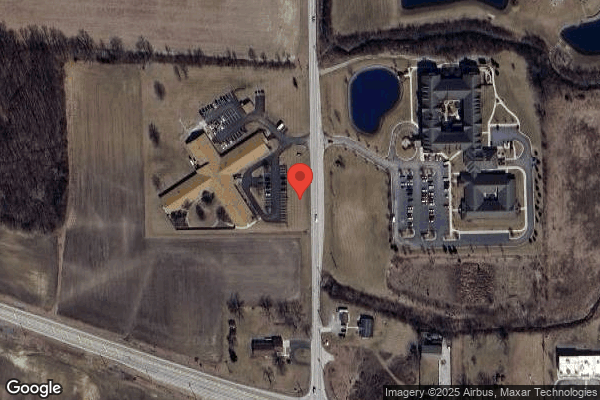
6050 S CR 800 E 92, FORT WAYNE, IN 46814 (260) 625-3545
For profit - Corporation 96 Beds MAJESTIC CARE Data: November 2025
Trust Grade
60/100
#267 of 505 in IN
Last Inspection: May 2025

Inspected within the last 6 months. Data reflects current conditions.

Overview

Majestic Care of West Allen has a Trust Grade of C+, indicating it is slightly above average but not particularly strong in overall quality. It ranks #267 out of 505 nursing homes in Indiana, placing it in the bottom half of facilities statewide, and #20 out of 29 in Allen County, meaning only one local option is better. The facility is currently worsening, with issues increasing from 2 in 2024 to 7 in 2025. Staffing is a significant weakness, rated at 1/5 stars, with a turnover rate of 57%, which is concerning and suggests instability among staff. However, the home has not incurred any fines, which is a positive note, and it has more RN coverage than 97% of Indiana facilities, indicating that registered nurses are present to catch potential issues. Specific incidents of concern include food safety violations, such as finding moisture and debris in bowls used for serving food and dead bugs in the dishwasher, which could pose health risks. Additionally, medication carts were found unlocked and unattended, raising serious safety concerns for residents. Lastly, environmental maintenance issues were noted, such as protruding clips in resident rooms that could cause injury, indicating a lack of attention to safety details. Overall, while there are some strengths, significant areas for improvement exist at this facility.

Trust Score
C+
60/100
In Indiana
#267/505
Bottom 48%
Safety Record
Low Risk
No red flags
Inspections
Getting Worse
2 → 7 violations
Staff Stability
⚠ Watch
57% turnover. Above average. Higher turnover means staff may not know residents' routines.
Penalties
✓ Good
No fines on record. Clean compliance history, better than most Indiana facilities.
Skilled Nurses
⚠ Watch
Each resident gets only 13 minutes of Registered Nurse (RN) attention daily — below average for Indiana. Fewer RN minutes means fewer trained eyes watching for problems.
Violations
⚠ Watch
14 deficiencies on record. Higher than average. Multiple issues found across inspections.
★★★☆☆
3.0
Overall Rating
★☆☆☆☆
1.0
Staff Levels
★★★★★
5.0
Care Quality
★★★☆☆
3.0
Inspection Score
Stable
2024: 2 issues
2025: 7 issues

The Good

  • 5-Star Quality Measures · Strong clinical quality outcomes
  • Full Sprinkler Coverage · Fire safety systems throughout facility
  • No fines on record

Facility shows strength in quality measures, fire safety.

The Bad

3-Star Overall Rating

Near Indiana average (3.1)

Meets federal standards, typical of most facilities

Staff Turnover: 57%

11pts above Indiana avg (46%)

Frequent staff changes - ask about care continuity

Chain: MAJESTIC CARE

Part of a multi-facility chain

Ask about local staffing decisions and management

Staff turnover is elevated (57%)

9 points above Indiana average of 48%

The Ugly 14 deficiencies on record

Jul 2025 1 deficiency
CONCERN (D) 📢 Someone Reported This

A family member, employee, or ombudsman was alarmed enough to file a formal complaint

Potential for Harm - no one hurt, but risky conditions existed

Accident Prevention (Tag F0689)

Could have caused harm · This affected 1 resident

**NOTE- TERMS IN BRACKETS HAVE BEEN EDITED TO PROTECT CONFIDENTIALITY** Based on interview and record review, the facility failed to thoroughly investigate a potential fall for 1 of 3 residents review...

Read full inspector narrative →
**NOTE- TERMS IN BRACKETS HAVE BEEN EDITED TO PROTECT CONFIDENTIALITY** Based on interview and record review, the facility failed to thoroughly investigate a potential fall for 1 of 3 residents reviewed for accidents (Resident K).Findings include: On 7/24/25 at 1:06 P.M., Resident K's record was reviewed. Diagnoses included diabetes, generalized anxiety disorder, and dementia.An admission Minimum Data Set (MDS) assessment, dated 6/12/25, indicated a Brief Interview Mental Status (BIMS) was 8 indicating the resident had moderately impaired cognition. He required maximal assistance with his activities of daily living (ADL) including transfers, bed mobility, and toileting. He was frequently incontinent of bladder and occasionally incontinent of bowel.Care Plans indicated:-Revised 6/11/25: Resident K was at risk for falls or fall related injuries. He had signs of decreased judgement for safety and hadn't recognized his decline. The goal was for the resident to have reduced risk for fall and fall related injuries. Interventions included: resident was to use a rolling walker for short distances and wheelchair for long distance; staff to encourage and assist to wear non-skid footwear; provide cues as needed; and provide resident with 1 step commands/cues and allow to respond. -Revised 6/16/25: Resident K required assistance with his ADL's and needed encouragement to help with his care. The goal was for his ADL needs to be met daily with staff assistance. Interventions included: provide assistance with personal hygiene; provide assistance with ambulation-used a rolling walker and wheelchair; provide assistance with transfers.Care plans hadn't indicated the amount of assistance the resident required for his ADL's, if Resident K tried to do his own ADL's or walk around the room or to/from bathroom by himself. The fall care plan hadn't indicated he was at risk for falls due to unassisted transfers/ambulation nor were interventions put into place to prevent falls due to unassisted transfers, ambulation, or self-toileting.A progress note, dated 6/5/25 at 7:13 p.m., indicated the resident had arrived to the facility at 4:30 p.m., accompanied by his Power of Attorney (POA) and using a rolling walker. He was alert and verbally responsive. He had a small area of yellow and light purple bruising to his scalp, multiple areas of bruising and skin tear to the left forearm.A Skin Condition Evaluation, dated 6/6/25 at 5:26 p.m., indicated Resident K was admitted with 1 skin tear on his left forearm which measured 1 centimeter (cm) by 1 cm.A Behavioral Diagnostic Evaluation, dated 6/11/25, indicated Resident K had a history of depression, anxiety and dementia with psychosis prior to admission to facility. He had been at another nursing home but referred to this facility for memory care due to greatly declined cognition. He had auditory hallucinations and bizarre/illogical delusions. He was described as struggling with many behaviors since being here. He initially started out on the memory care unit but the noise from the severely demented residents was bothering him and he was threatening to hit the residents who were making noises.Nurse notes indicated:On 6/19/25 at 9:00 a.m., Resident K was walking in his room. Several attempts had been made to assist him with getting cleaning up but he refused. He went to the bathroom on his own and told staff to get out.On 6/30/25 at 1:00 p.m., Resident K was observed sitting on the 2nd bed in his room wearing no shoes or socks and skin injuries observed to his left arm. The nurse assessed the resident who was observed with 5 skin tears to his left arm. He had 3 small skin tears at his wrist, 1 to his forearm and 1 to the upper elbow. Resident K indicated he had not fallen but was unable to describe how the skin tears occurred. Treatments were applied to the skin tears and he was assessed with no further skin injuries observed. Staff initiated neurological checks despite the resident denying he had fallen or hit his head. An Interdisciplinary Team note, dated 7/1/25 at 11:18 a.m., indicated Resident K had a fall on 6/30/25 and received skin tears to his left wrist, left forearm and elbow. He had been observed barefoot. Staff were to encourage use of proper footwear and skin protectors applied.On 7/24/25 at 2:39 P.M., Resident K's POA was interviewed. She indicated the resident was hospitalized on [DATE], allegedly due to severe dehydration, electrolyte imbalances, and wound to his bottom. He was currently receiving hospice services at another facility. She indicated being told, the resident had a fall on 6/30/25 but indicated the resident rarely fell and hadn't known how he had gotten multiple skin tears.On 7/24/25 at 3:15 P.M., the Director of Nursing (DON) and Assistant Director of Nursing (ADON) were interviewed. Both were new to the facility and hadn't been employed at the facility when the incident occurred. The DON and ADON reviewed the fall report for Resident K on 6/30/25 and were unable to determine if the resident had an actual fall or if something else had occurred to cause his injuries. The fall report indicated the resident was wheelchair bound. Resident K's MDS had indicated he required maximal assistance with transfers so was unclear how he was observed seated on the other bed in his room with multiple skin tears. The resident had denied falling. The DON and ADON indicated circumstances surrounding the incident should've been thoroughly investigated to determine if the resident had fallen, what environmental factors were involved, and interviews done with staff to rule out another resident's involvement or staff member having witnessed the resident ambulating by himself in the room. On 7/25/25 at 10:30 A.M., the Administrator provided a current copy of the facility policy, titled Fall Prevention which indicated each resident would be assessed for fall risk and receive care and services to minimize the likelihood of falls .A fall was an event where the individual unintentionally came to rest on the ground, floor or other level but not as a result of an overwhelming external force (resident pushes another resident). The event may be witnessed, reported, or presumed when a resident is found on the floor or ground and can occur anywhere .When any resident experiences a fall, the facility will assess the resident, complete a post fall assessment and incident report, notify the physician and family, review the resident's care plan and update as indicated, document assessments and actions and obtain witness statements in the case of injury.This Citation relates to Complaint 18070993.1-45(a)
May 2025 6 deficiencies
CONCERN (D)

Potential for Harm - no one hurt, but risky conditions existed

ADL Care (Tag F0677)

Could have caused harm · This affected 1 resident

**NOTE- TERMS IN BRACKETS HAVE BEEN EDITED TO PROTECT CONFIDENTIALITY** Based on observation, interview and record review the facility failed to ensure toenail care was provided for 1 of 7 residents r...

Read full inspector narrative →
**NOTE- TERMS IN BRACKETS HAVE BEEN EDITED TO PROTECT CONFIDENTIALITY** Based on observation, interview and record review the facility failed to ensure toenail care was provided for 1 of 7 residents reviewed (Resident 52). Findings include: During an interview, on 5/6/24 at 11:14 AM, Resident 52 indicated her toenails were very long and she feared they would curl under her toes. She indicated the podiatrist normally cut her toenails but had not for a long time due to his inability to come to the facility when scheduled. She indicated she had discussed her toenail concerns with the Social Service Director. She indicated her excessively long toenails caused walking to be painful. During an observation, on 5/6/25 at 11:24 AM, Resident 52 removed her shoes and socks revealing very long toenails. Her right great toe and the next two toes had thin toenails extending about 1/2 cm beyond the end of her toes with irregular edges. A callous, about 2 cm in diameter, raised about 1/2 cm was present on the ball of her right foot. Her left great toenail and second toenail were observed to be long and very thick. Resident 52's record was reviewed on 5/6/25 at 11:37 AM. Diagnoses included type 2 diabetes without complications and dementia. A review of Resident 52's current quarterly Minimum Data Set (MDS) dated [DATE] indicated her Basic Interview for Mental Status (BIMS) score was 12(mild cognitive impairment). A review of progress notes dated 4/1/25 to 5/6/25 did not contain any documentation of hygiene care refusal. Skin evaluations dated 4/14/25, 4/23/25 and 5/4/25 did not include documentation of long toenails. In an interview, on 5/6/25 at 11:25 AM, the Regional Nurse Consultant (RNC) indicated Resident 52's nails were excessively long and should have been trimmed. She indicated nails were observed during weekly skin checks by nurses, during care and showers by nurse aides. She indicated nurses were able to cut diabetic nails that were not excessively thick, requiring podiatry tools. She indicated the podiatrist had last seen Resident 52 in February and was not able to come to the facility for the visit due in April. In an interview, on 5/6/25 at 11:37 AM, the RNC indicated the podiatrist had last treated Resident 52 on 2/12/25. She indicated the podiatrist was unable to come to the facility on his regularly scheduled visit in April 2025. She indicated Certified Nurse Aides should have identified the long nails during showers and other daily care and reported it to the nurses. She indicated nurses should have identified the long nails during weekly skin assessments and provided any nailcare they were able to provide. Any nailcare they were unable to provide should have been reported to management to arrange a podiatry visit. A current policy titled Activities of Daily Living dated 1/2/24 provided by the RNC on 5/6/25 at 11:47 AM indicated a resident unable to provide any activity of daily living by themselves should be provided the necessary services to maintain good grooming. 3.1-38(a)(3)(E)
CONCERN (D) 📢 Someone Reported This

A family member, employee, or ombudsman was alarmed enough to file a formal complaint

Potential for Harm - no one hurt, but risky conditions existed

Accident Prevention (Tag F0689)

Could have caused harm · This affected 1 resident

**NOTE- TERMS IN BRACKETS HAVE BEEN EDITED TO PROTECT CONFIDENTIALITY** Based on observation, interview, and record review the facility failed to ensure staff areas remained secure and smoking materi...

Read full inspector narrative →
**NOTE- TERMS IN BRACKETS HAVE BEEN EDITED TO PROTECT CONFIDENTIALITY** Based on observation, interview, and record review the facility failed to ensure staff areas remained secure and smoking materials were secured for 1 of 12 residents reviewed. (Resident 53) Findings include: During an observation, on 5/4/25 at 10:14 AM, Resident 53 indicated he knew almost all the keypad door codes in the building. Resident 53 demonstrated entering the code and gaining access to the conference room, dementia unit, housekeeping closet, shower room and pantry room. Cleaning products were observed in the conference room and housekeeping closet. He verbalized he knew the door codes for in and out access to the smoking area, front doors and end of hallway doors to the outside of the building. During an interview, on 5/4/25 at 10:14 AM, Resident 53 indicated he was supposed to be supervised by staff when smoking and vaping outdoors, but he frequently went by himself. He indicated he vaped in his room at times although he had been told not to. He indicated he stored smoking materials in his safe in his room. He indicated he believed he should be able to vape inside if there was not any nicotine in his vape cartridge. During an interview, on 5/4/25 at 10:29 AM, Qualified Medicine Aide (QMA) 8 indicated Resident 53 knows the codes for most of the keypad entry doors. He indicated whenever the codes had been changed, Resident 53 learned the codes quickly. During an interview, on 5/4/25 at 10:35 AM, Certified Nurse Aide (CNA) 11 indicated Resident 53 knew all the door codes. She indicated staff could not do anything about Resident 53 knowing the codes because he learned the codes right away after they were changed. She indicated all residents in the facility should be supervised when smoking or vaping. During an interview, on 5/4/25 at 10:55 AM, Resident 53 entered the door code to the conference room, held up a Bic lighter indicating the lighter belonged to his roommate. He indicated he had an additional lighter and a lock picking kit locked in his safe in his room. QMA 8, CNA 9, and QMA 10 were present in the interview area. They did not intervene or ask Resident 53 to give them his smoking materials. During an interview, on 5/4/25 at 1:10 PM, Resident 53 indicated the Administrator went around the building and collected lighters and smoking materials from all the smokers when he arrived at work. Resident 53's record was reviewed on 5/4/25 at 1:10 PM. Diagnoses included schizoaffective disorder, antisocial personality disorder, attention deficit hyperactivity disorder, predominantly inattentive type, and anxiety disorder. A review of Resident 53's current quarterly Minimum Data Set (MDS) dated [DATE] indicated his Basic Interview for Mental Status (BIMS) score was 15 (cognitively intact). A review of Resident 53's current care plan titled Tobacco Use indicated Resident 53 had a problem of being a current tobacco user, with a goal date of 6/22/25. Interventions included supervising Resident 53 while smoking. A review of Resident 53's current care plan titled, known for non-compliance with smoking policy, indicated the Resident 53 had a problem of being a current tobacco user, with a goal date of 6/22/25. Interventions included notifying the charge nurse when Resident 53 violated the smoking policy. The care plan indicated Resident 53's smoking materials should be kept by facility staff. A review of a document titled Smokers, provided by the Administrator on 5/4/25 at 1:10 PM indicated 12 residents participated in smoking activities. A review of progress notes dated 4/1/25 to 5/7/25 did not contain any documentation of entry into restricted areas, possession of smoking materials or unsupervised smoking or vaping. A progress note dated 5/6/25 at 7:14 PM indicated Resident 53 had been attempting to pick locks in the building and was placed on direct supervision. In an interview, on 5/6/25 at 9:25 AM, the Social Services Director indicated smoking materials were kept locked in the medication room and accessed by the staff member supervising the smokers. The cigarettes were distributed to residents in the smoking area by the staff member who maintains possession of the case of materials throughout the process. She indicated all residents who smoke should be supervised every time they smoke. No resident may smoke or vape unsupervised. In an interview, on 5/7/25 at 8:15 AM, the Administrator indicated Resident 53 had been observed picking a lock and was placed on one-to-one supervision. The Administrator indicated residents should not be able to enter locked facility locations designated for staff only access. In an observation, on 5/7/24 at 8:17 AM, the Administrator presented a video on a cell phone showing Resident 53 using a plastic card, consistent with the size of a credit, debit or identification card, successfully opening the locked door of the pantry room. A current policy titled Smoking, dated 2/14/25, provided by the Administrator on 5/7/25 at 9:19 AM indicated smoking, including the use of electronic cigarettes, was prohibited in designated smoking areas. The policy indicated residents who require supervision while smoking should be supervised by a staff member, family member or volunteer while smoking. The policy indicated the care team maintains a storage system of smoking materials for supervised smoking. This citation is related to Complaint IN00458229. 3.1-45(a)(2)
CONCERN (D)

Potential for Harm - no one hurt, but risky conditions existed

Deficiency F0692 (Tag F0692)

Could have caused harm · This affected 1 resident

**NOTE- TERMS IN BRACKETS HAVE BEEN EDITED TO PROTECT CONFIDENTIALITY** Based on interview and record review the facility failed to ensure care plan interventions were implemented, weight losses were...

Read full inspector narrative →
**NOTE- TERMS IN BRACKETS HAVE BEEN EDITED TO PROTECT CONFIDENTIALITY** Based on interview and record review the facility failed to ensure care plan interventions were implemented, weight losses were reported and addressed timely. This resulted in a significant weight loss of 6.6% in 30 days for 1 of 3 residents reviewed (Resident 37). Findings include: During an observation on 5/4/25 at 11:58 AM, Resident 37 was observed eating lunch independently. He was slow at consuming his meal and tired easily during eating. Resident 37's record was reviewed on 5/5/25 at 1:12 PM. Diagnoses included unspecified dementia, moderate protein-calorie malnutrition, and gastro-esophageal reflux. Resident 37's current admission Minimum Data Set (MDS) assessment dated [DATE] indicated the resident was cognitively impaired. A Nursing admission Evaluation, dated 4/2/25, indicated Resident 37 had dysphagia and missing teeth or dentures. The evaluation indicated Resident 37 needed assistance with eating. A current care plan titled potential for nutritional risk indicated the resident had a problem of risk for weight loss, with a goal date of 10/30/25. Interventions included notifying the physician of significant weight changes. A current care plan titled needs assistance with activities of daily living indicated the resident had a problem of requiring assistance, with a goal date of 10/30/25. Interventions included providing eating assistance. A review of Resident 37's care Kardex (guidelines for direct care staff to deliver care) indicated assistance was needed for eating activities. A review of Resident 37's weights indicated: On 4/2/25, 180.6 lbs. On 4/9/25, 173 lbs. On 4/16/25, 170 lbs. On 4/23/25, 167 lbs. On 4/30/25, 165 lbs. On 5/1/25, 168 lbs. This is a 6.6% loss in 30 days. No additional weights or reweights were available for review. A review of meal intakes indicated: On 4/8/25, the evening meal was refused. On 4/10/25, the evening meal was refused. On 4/11/25 the evening meal was refused. On 4/12/25, no documentation of the breakfast or lunch meal intake was available for review. On 4/14/25, less than 25% of the breakfast and lunch meals were consumed. On 4/16/25, the breakfast and lunch meals were refused. No documentation of the evening meal was available for review. On 4/18/25, less than 25% of the breakfast meal was consumed. The evening meal was refused. On 4/19/25, no documentation of the evening meal was available for review. On 4/21/25, the breakfast and lunch meals were refused. On 4/23/25, less than 25% of the breakfast meal was consumed. No documentation of the evening meal was available for review. On 4/24/25, less than 25% of the lunch and evening meals were consumed. On 4/25/25, less than 25% of the breakfast and lunch meals were consumed. On 4/26/25, less than 25% of the breakfast meal was consumed. On 4/28/25, less than 25% of the breakfast meal was consumed. No documentation of the evening meal was available for review. On 4/30/25, less than 25% of the lunch meal was consumed. No documentation of the evening meal was available for review. On 5/4/25, less than 25% of the breakfast meal was consumed. On 5/5/25, no documentation of the evening meal was consumed. No further meal intake documentation, record of meal replacement or supplement offering was available for review. Progress notes from 4/2/25 to 4/29/25 did not include any documentation of reweights or reporting weight loss to the physician. During an observation, on 5/7/25 at 10:48 AM, Resident 37 was observed indepndantly eating part of a snack during an activity. Resident 37 did not appear to be interested in consuming the rest of the snack. In an interview, on 5/6/25 at 10:53 AM, Certified Nurse Aide (CNA) 12 indicated CNA staff obtained weights and turned them in to the nurse on the unit. In an interview, on 5/6/25 at 10:54 AM, Qualified Medicine Aide (QMA) 8 indicated 7 residents on the unit were provided with eating assistance and provided their names. He indicated Resident 37 did not receive eating assistance. In an interview, on 5/6/25 at 10:58 AM, Licensed Practical Nurse (LPN) 13 indicated CNAs turned completed weight lists into the nurses who then turned them in to the Nurse Managers. Nurse managers then provided the nurses with reweight lists. She indicated Nurse Managers reported any weight changes to the doctor and families. In an interview, on 5/6/24 at 11:40 AM, the Regional Nurse Consultant (RNC) indicated staff should obtain a reweight when weight variances occur and weight losses of 5% or more should be reported to the physician and family. She indicated a reweight should have been obtained on 4/9/25, 4/16/25 and 4/23/25. She indicated eating assistance should have been provided, meal replacements and supplements should have been offered and recorded. A current policy titled Weight Monitoring, dated 1/2/24 provided by the RNC on 5/6/25 at 11:47 AM indicated weekly weights should be obtained for all newly admitted residents. The policy indicated reweights should be obtained when a weight variance of three pounds or more occurs. Significant weight changes of 5% or more in 30 days should be reported to the physician. 3.1-46(1)
CONCERN (D) 📢 Someone Reported This

A family member, employee, or ombudsman was alarmed enough to file a formal complaint

Potential for Harm - no one hurt, but risky conditions existed

Safe Environment (Tag F0921)

Could have caused harm · This affected 1 resident

**NOTE- TERMS IN BRACKETS HAVE BEEN EDITED TO PROTECT CONFIDENTIALITY** Based on observation, interview and record review, the facility failed to ensure the dining room, the 300 hall and one resident ...

Read full inspector narrative →
**NOTE- TERMS IN BRACKETS HAVE BEEN EDITED TO PROTECT CONFIDENTIALITY** Based on observation, interview and record review, the facility failed to ensure the dining room, the 300 hall and one resident room was maintained. Findings include: During an observation, on 05/04/25 at 12:29 PM, the dining room had 4 small areas of the ceiling without paint to match the ceiling. The main doorway corner had a deep gouge approximately 2.5 inches in length by 0.75 inches wide in the drywall, approximately 3 feet from the floor. Drywall was missing in 3 smaller areas down the same corner of the doorway. During an observation, on 5/05/25 at 10:53 AM, heavy dust particles were found on the drop ceiling and metal supports outside room [ROOM NUMBER]. Two groups of three rectangle marks about 1 inch wide were found on the wall between rooms [ROOM NUMBERS], and outside the infection control office. During an observation, on 05/05/25 at 10:14 AM, a 5 foot long trim piece was found on the floor, underneath the headboard of the bedcin room [ROOM NUMBER]. 4 nails, approximately 1-2 inches long were pointing upwards. A review of maintenance logs, on 05/05/25 at 11:45 AM, indicated there were no written work requests for wall or trim damage within the last 6 months. In an interview, on 05/05/25 at 10:34 AM, CNA 2 indicated she would verbally tell maintenance about equipment malfunctions, cracked fire extinguisher covers, or anything that needed fixed. In an interview, on 05/05/25 at 11:23 AM, the Maintenance Director indicated he received verbal or maintenance request forms from staff. The trim piece in room [ROOM NUMBER] needed removed from the room. In an interview, on 5/5/25 at 11:30 AM, the Housekeeping Manager indicated paint repairs should get done the same day as they are reported. In an interview, on 05/08/25 at 9:28 AM, the Administrator indicated the dust on the ceiling and rectangular areas on the walls were something the facility would work on. A current policy, dated 12/12/2023, provided by administration, indicated work orders must be filled out and forwarded to the Maintenance Director. Work orders were to be picked up daily. Emergency requests would be given priority in making necessary repairs. This citation is related to Complaint IN00458229. 3.1-19(e)
CONCERN (F) 📢 Someone Reported This

A family member, employee, or ombudsman was alarmed enough to file a formal complaint

Potential for Harm - no one hurt, but risky conditions existed

Food Safety (Tag F0812)

Could have caused harm · This affected most or all residents

**NOTE- TERMS IN BRACKETS HAVE BEEN EDITED TO PROTECT CONFIDENTIALITY** Based on observation, interview and record review the facility failed to store and serve food and drinks to maintain food safety...

Read full inspector narrative →
**NOTE- TERMS IN BRACKETS HAVE BEEN EDITED TO PROTECT CONFIDENTIALITY** Based on observation, interview and record review the facility failed to store and serve food and drinks to maintain food safety for 78 of 78 residents who consume food and drinks from the kitchen. Findings include: In a continuous observation of the kitchen on 05/04/25 from 10:13 AM to 11:30 AM, the following was observed: Three medication bottles were found in a open basket, on a counter, with an employee's name on one prescription bottle of Xarelto. The bottle contained tablets. Moisture was observed in 3 of 17 maroon bowls being filled with pudding. 2 of 17 bowls had small specks of white debris inside the bowls. The dishwasher unit had 5 small, black dead bugs and small brown, tan particles on the top surface. A ceiling vent above the freezer had a thick layer of dark gray, fuzzy substance coating the slats. Behind the first freezer, the wall had wavy brown to tan discoloration from the floor to about 1 foot in height. Underneath the shelves in the pantry, 7 round pieces of cereal, brown and white granules were found at the base of 3 out of 4 walls, 2 packets of sugar and 1 packet of salt were found on the floor. Onion peels were found on the floor, small peels and debris were found in the shelving unit. A bottle of lime juice with a use by date of 4/17/25 was found in the reach- in refrigerator. In the reach -in refrigerator, a pitcher labeled V8 juice, was not sealed and dated with an open date of 4/27/25. A jug of chocolate milk had a best by date of 5/1/25. An opened, single size milk was found on the top shelf of the refrigerator without a name or date label. In an interview, on 5/4/25 at 10:45 AM, [NAME] 6 indicated the V8 juice and milk were expired and shouldn't be in the refrigerator. The unlabeled milk should not be in this refrigerator. In an interview, on 5/4/25 at 11:00 AM, the Dietary Manager indicated staff medication should be locked in staff's lockers. She confirmed 3 bottles of medication including Xarelto, Naproxen, and a combination of acetaminophen, aspirin, and caffeine migraine medication had been unsecured. During an observation, on 05/04/25 at 11:04 AM, moisture drops were found in between two of 5 large pans. During an observation, on 5/4/25 at 11:21AM, in the main resident pantry, the following was found: Circular brown stains covered the wooden table top, next to the microwave. Inside the refrigerator, a pitcher of orange juice and red juice was not labled or dated. Milk had a use by date of 4/29/25. Lactose free milk had a use by date of 11/26/25. A container of French Onion Dip labeled room [ROOM NUMBER]-2, did not have an opened or use by date. A Pizza [NAME] container with food inside did not have a name or date label. A plasticware container contained a pudding like substance, but did not have a use by date. On the bottom floor of the refrigerator, dried red substance was observed. Inside the freezer, a package of frozen cheese sticks, 3 microwave meals, mozzarella cheese sticks, a package of buns, and a package of pizza rolls did not have a name or date labeled. In a closed shelving unit a carton of popcorn liquid expired on 12/15/2020. The interior stainless steel of the ice machine had a reddish brown shiny substance across the bottom. A plastic spoon, Milky Way wrapper, and a blue glove were on the floor against the back wall. A linen pillowcase was observed on top the freezer. In an interview, on 5/5/25 at 11:35 AM, the dietary manager indicated housekeeping staff cleaned the fridge and dietary staff checked for outdates. A current policy, regarding cleaning schedules, dated 12/12/2023, indicated the cleaning schedules would be posted, followed and the Dietary Manager would make regular inspections. A current policy, regarding food storage, dated 3/1/25, indicated food items were placed into appropriate storage lactions consistent with Food Code Guidelines. Equipment and utensils would be cleaned and sanitized before each use. A current policy, regarding food brought into the kitchen, dated 12/12/23, indicated food brought into the facility by family or visitors would be labeled and stored with the resident's name and use by date. The nursing or dietary staff would discard food past use by or manufacture expiration dates. A review of current daily cleaning logs, dated 4/1/25-4/12/25, provided by the Dietary Manager, indicated staff was required to ensure dishes, mugs, bowls, and utensils were cleaned and stored properly. All table countertops and under shelving were cleaned and sanitized. The dish machine was cleaned inside and out. Ensure the dry storage area was organized and floor is mopped. This citation is related to Complaint IN00458229. 3.1-21(i) (3)
MINOR (C)

Minor Issue - procedural, no safety impact

Garbage Disposal (Tag F0814)

Minor procedural issue · This affected most or all residents

Based on observation, interview and record review, the facility failed to dispose of garbage and refuse properly for 3 of 3 dumpsters. Findings include: During an observation, on 5/4/25 at 1:32 PM, 3...

Read full inspector narrative →
Based on observation, interview and record review, the facility failed to dispose of garbage and refuse properly for 3 of 3 dumpsters. Findings include: During an observation, on 5/4/25 at 1:32 PM, 3 of 3 dumpsters were not closed. The first dumpster lid was fully open. The second dumpster had white trash bags propping open the lids. The third dumpster, labeled cardboard, was overstuffed with cardboard propping open both lids. Plastic and trash were found on the ground surrounding the dumpsters and in the tree line to the north. During an observation, on 5/5/25 at 8:50 AM, 3 of 3 dumpsters were not closed. The first dumpster lid was fully open. The second dumpster had white trash bags propping open the lids. The third dumpster, labeled cardboard, was overstuffed with cardboard propping open both lids. Plastic and trash were found on the ground surrounding the dumpsters and in the tree line to the north. In an interview, on 05/08/25 at 09:52 AM, the Dietary Manager indicated, housekeeping, dietary, and nursing staff should make sure dumpster lids are closed and there should be no debris outside the dumpsters. A current policy, dated 12/12/2023, titled Disposal of Garbage and Refuse, indicated dumpsters would be kept closed and free of surrounding litter. 3.1-21(i)(5)
Jul 2024 2 deficiencies
CONCERN (D)

Potential for Harm - no one hurt, but risky conditions existed

ADL Care (Tag F0677)

Could have caused harm · This affected 1 resident

**NOTE- TERMS IN BRACKETS HAVE BEEN EDITED TO PROTECT CONFIDENTIALITY** Based on observation, interview and record review the facility failed to ensure services were provided for the grooming of facia...

Read full inspector narrative →
**NOTE- TERMS IN BRACKETS HAVE BEEN EDITED TO PROTECT CONFIDENTIALITY** Based on observation, interview and record review the facility failed to ensure services were provided for the grooming of facial hair for 1 of 2 residents reviewed (Resident 16). Findings include: On 7/24/24 at 10:34 AM Resident 16 was observed sitting in their wheelchair in the hallway. Resident 16 was observed to have a full mustache of dark hair. Resident 16's record was reviewed on 7/25/24 at 1:01 PM. Diagnoses included dementia, diabetes, stroke, pain in right shoulder, pain in left shoulder, hemiplegia (paralysis) of their left side and hemiparesis (weakness) of their left side. Resident 16's Quarterly Minimum Data Set (MDS), dated [DATE], indicated the resident's Brief Interview for Mental Status (BIMS) score was 10 (moderate cognitive impairment). The MDS indicated Resident 16 required substantial or maximum assistance with personal care such as washing face, combing hair, shaving and applying makeup. Resident 16's Care Plan, dated 11/8/23, indicated the resident needed assistance with activities of daily living (ADLs). The target goal was for the resident to have their needs met daily with assistance from staff through 11/15/24. Interventions included staff assistance with bed mobility, eating, personal hygiene, toilet use, the use of a mechanical lift for transfers, encouraging participation, praising resident efforts, observing and reporting changes in ability to participate in ADLs and screening for the need for a therapy evaluation. Resident 16's Care Plan did not indicate the resident required assistance with grooming of facial hair. Resident 16's Care Plan did not indicate if the resident had a preference about their facial hair being shaved or being left intact. Resident 16's [NAME] (care plan summary for providers of direct care) dated current as of 7/29/24 consisted of the following items: 1. Bathing-showers on the evening shift every Wednesday and Saturday 2. Personal Hygiene-staff assistance 3. Oral Care-specify dentures, natural teeth, partials or no teeth Resident 16's [NAME] did not indicate the resident required assistance with grooming of facial hair. Resident 16's [NAME] did not indicate if the resident had a preference about their facial hair being shaved or being left intact. In an interview on 7/30/24 at 9:43 AM, the Administrator indicated Resident 16 often refused personal care. The Administrator indicated they were unaware the grooming of facial hair had not been included on the resident's Care Plan or [NAME]. The Administrator indicated the grooming of facial hair should be offered by the staff- even for female residents. The Administrator agreed including the grooming of facial hair on the Care Plan and the [NAME] would remind the staff to offer assistance. In an interview on 7/30/24 at 10:34 AM, the Regional Nurse Consultant and the Director of Nursing (DON) indicated Resident 16 did not have facial hair on 7/30/24. The DON indicated Resident 16 would allow a certain staff member to assist with personal care. The DON indicated Resident 16's refusals of personal care, the resident's preference to have facial hair removed and their preference for a certain staff member should have been on the resident's Care Plan and [NAME]. The Regional Nurse Consultant indicated Resident 16's preferences included on the [NAME] would be beneficial in making all direct care staff aware of the resident's needs. In an interview on 7/30/24 at 11:20 AM, the Administrator indicated a resident diagnosed with dementia could possibly be unaware of their facial hair. The Administrator indicated facial hair on a woman could be a dignity issue. A current facility policy dated 2001 and revised 3/2018 provided by the Administrator on 7/30/24 at 9:35 AM indicated the facility would provide services according to the resident's MDS assessment for bathing, dressing, grooming and oral care. The policy indicated refusal of personal care by a resident with dementia would be investigated to determine the underlying cause for refusal. 3.1-38(a)(3)
CONCERN (D)

Potential for Harm - no one hurt, but risky conditions existed

Deficiency F0699 (Tag F0699)

Could have caused harm · This affected 1 resident

**NOTE- TERMS IN BRACKETS HAVE BEEN EDITED TO PROTECT CONFIDENTIALITY** Based on observation, interview and record review, the facility failed to identify triggers to prevent potential re-traumatizati...

Read full inspector narrative →
**NOTE- TERMS IN BRACKETS HAVE BEEN EDITED TO PROTECT CONFIDENTIALITY** Based on observation, interview and record review, the facility failed to identify triggers to prevent potential re-traumatization for 2 of 11 residents reviewed for mood/behavior (Resident 3 and Resident 16). Findings include: 1. In an observation on 7/24/24 at 10:40 AM, Resident 3 was observed laying in her bed yelling. A staff member arrived, and the resident indicated she wanted to get up. The resident's call light was attached to her bed linens within arm length. In an observation on 7/25/24 at 2:10 PM, Resident 3 was observed laying in her bed yelling out from her room. A staff member arrived, and the resident indicated she needed her brief changed. The resident's call light was attached to her bed linens within arm length. In an observation on 7/26/24 at 12:32 PM, Resident 3 was observed sitting in her wheelchair at the nurses station counter with her lunch in front of her. The resident's arms were shaking, and the Administrator was assisting her. Resident 3's record was reviewed on 07/25/24 at 12:37 pm. Diagnoses included paranoid schizophrenia, schizoaffective disorder, personality disorder, obsessive-compulsive personality disorder, generalized anxiety disorder, severe recurrent major depressive disorder with psychotic episodes, and intellectual disability. Resident 3's current annual Minimum Data Set (MDS) assessment, dated 6/17/24, indicated her Basic Interview for Mental Status (BIMS) score was 11 (moderate cognitive impairment). The MDS indicated the resident experienced 7-11 days in a 2-week period of decreased interest or pleasure in doing things, feeling down, depressed or hopeless, feeling tired or having little energy, feeling bad about herself, she was a failure or had let herself or her family down, and had trouble concentrating on things such as reading the newspaper or watching TV. The MDS indicated the resident experienced 2 - 6 days in a 2-week period of trouble falling or staying asleep or sleeping too much and a poor appetite or overeating. The MDS indicated Resident 3 was on antipsychotics, antidepressants, and antianxiety medications in the last 7 days. Resident 3's Preadmission Screening and Resident Review (PASRR), dated 9/1/22 with an effective date of 8/25/22, indicated she had experienced sexual abuse as a child and was sexually assaulted as a teen. The PASRR indicated she had extreme focus on sexual thoughts, disrobed, rolled around on the ground, thought of ending her life by beating herself up, angry behaviors, chose not to eat, take medications, and/or shower, attempted to leave a group home, and distrust or belief others were trying to harm her, were watching her, or were planning to put her in jail. Resident 3's Initial Social Service History, dated 8/11/23, indicated the resident had some schooling, had some mental disabilities, had been raped and molested as a child over and over, and had been in and out of facilities. Resident 3's Social Service History did not identify the resident's specific identified triggers that could cause Resident 3's re-traumatization of her life experiences. Resident 3's Adverse Childhood Experience (ACE) Questionnaire, dated 8/11/23, indicated the resident answered yes to 10 of 10 questions. This indicated Resident 3 was at high risk to experience toxic stress related to agressive behaviors and sleep diturbances. Resident 3's Psychiatry Progress Notes, dated 7/23/24, indicated the resident was diagnosed with a mental illness at [AGE] years old. The progress note indicated the resident was sexually abused as a child and assaulted as a teen. The progress note indicated the resident was divorced and had two children she had given up for adoption. The progress note indicated the resident experienced severe distrust and focused on frequent sexual thoughts. The progress note indicated the resident had a history of rolling on the floor, had beat herself up, had thoughts of ending her life, and had noncompliance with care with a current complaint of not sleeping well. The progress notes indicated the resident hallucinated; she heard voices singing to her. The progress note indicated the resident had multiple admissions at the State Hospital with Electroconvulsive therapy (ECT) (psychiatric treatment where a generalized seizure is electrically induced to manage refractory mental disorders), and psychiatric hospitals. The most recent admission was due to psychosis and delusions. Resident 3's current [NAME] (brief overview of each patient, updated every shift, used by the facility's Certified Nursing Assistant), dated 7/29/24, did not identify Resident 3's specific identified triggers with a potential to cause re-traumatization of her life experiences. A physician's order, dated 8/10/23, indicated Resident 3 could receive psychiatrist services. A physician's order, dated 8/10/23, indicated Resident 3 received Invega 6 milligrams (mg) daily and Invega 3mg at bedtime for depressive type schizoaffective disorder. A physician's order, dated 3/20/24, indicated Resident 3 received risperidone 0.5mg daily for depressive type schizoaffective disorder and major recurrent depressive disorder with psychotic symptoms. A physician's order, dated 3/7/24, indicated Resident 3 received Ativan 1mg two times a day for anxiety. Resident 3's behavior symptoms task monitor indicated the resident displayed the following behaviors 7/1/24 through 7/29/24: Behaviors Number of times -Yelling/Screaming: 38 -Kicking/Hitting: 1 -Wandering: 2 -Abusive Language: 8 -Rejection of Care: 2 Resident 3's current care plan titled Psychosocial Wellbeing Problem, revised 7/08/2024, indicated the resident's life experience included being raped, growing up in a home with emotional and physical abuse, family discord, and witnessing abuse. Resident 3's care plan goal, target date 11/21/24, indicated she would demonstrate the ability to seek out staff support when feeling frustrated or provoked. Interventions included 1) consult with pastoral care, social services and psych services, 2) encourage resident and family/representative to attend quarterly care plan meetings and to be involved in the plan of care, and 3) when conflict arises, remove resident to a calm safe environment and allow her to vent/share feelings. The care plan did not include resident specific identified triggers with a potential to cause re-traumatization of her life experiences. Resident 3's care plan goal, target date 11/21/24, did not include the elimination or reduction of resident specific identified triggers with a potential to cause re-traumatization of her life experience. Resident 3's current care plan titled Behavior Symptoms, revised 7/8/24, indicated the resident experienced behavioral symptoms related to her life experiences of thoughts others talked about her, thoughts others would not listen to her, thoughts others would not give her attention, repetitive noises and movements, being anxious, yelling out, and screaming. Interventions included she would demonstrate the ability to seek out staff/caregiver support when she felt frustrated. The care plan did not include resident specific identified triggers with a potential to cause re-traumatization of her life experiences. Resident 3's care plan goal, target date 11/21/24, did not include the elimination or reduction of resident specific identified triggers with a potential to cause re-traumatization of her life experience. 2. On 7/27/24 at 10:33 AM Resident 16 was observed sitting in their wheelchair in the hallway outside their room. Resident 16 did not make eye contact when spoken to. Resident 16 declined being interviewed. Resident 16's record was reviewed on 7/25 24 at 1:01 PM. Diagnoses included psychotic disorder with delusions, major depressive disorder, dementia, anxiety, visual hallucinations and cerebral infarction (stroke). Resident 16's Quarterly Minimum Data Set (MDS) dated [DATE] indicated the resident's Brief Interview for Mental Status (BIMS) score was 10 (moderste cognitive impairment). The MDS indicated Resident 16 had rejected care. The MDS indicated Resident 16 had dementia, (non-Alzheimer's) anxiety, depression and psychotic disorder. The MDS indicated Resident 16 had episodes of refusing care. Resident 16's Behavior Monitoring and Interventions Report dated 7/1/24 through 7/29/24 indicated the number of times the resident had displayed the following behaviors: 1. Wandering-9 2. Delusions-2 3. Repetitive motions-2 4. Pick at self-2 5. Pushing others-1 6. Disruptive sounds-1 7. Throwing/smearing bodily waste-1 8. Agitation-1 9. Scratching self-1 Resident 16's Care Plan dated 11/25/23 indicated the resident displayed behaviors of visual hallucinations, delusions, yelling, screaming, abusive language and refusal of care. The target goal was Resident 16 would allow support from the staff during the behaviors by 11/15/24. Interventions included medications as ordered, meeting the resident's needs, offering coloring supplies, providing the resident with choices, approaching later and placing the resident at the nurse station. Resident 16's Care Plan did not include attempting to identify resident specific triggers or stressors. Resident 16's Care Plan did not include attempting to identify the resident's specific stressors or triggers with a potential to lead to visual hallucinations, delusions, yelling, screaming, abusive language or refusal of care. Resident 16's Care Plan dated 11/25/23 indicated the resident had a history of trauma, post- traumatic stress disorder, (PTSD) memory problems and sadness as evidenced by sad face, sad affect and statements of sadness. The target goal was for Resident 16 to have positive social interactions with peers by 11/15/24. Interventions included to encourage the resident to share their concerns and wishes and ensure the resident's preferences were communicated to caregivers. Resident 16's Care Plan did not include attempting to identify resident specific triggers or stressors. Resident 16's Care Plan did not include attempting to identify the resident's specific stressors or triggers with potential to cause the resident to make sad statements, have a sad face or have a sad affect. Resident 16's Care Plan dated 11/25/23 indicated the resident had verbalized or displayed the following: feeling down, feeling depressed, feeling hopeless, trouble falling asleep, trouble staying asleep, feeling tired, poor appetite and feeling restless. The target goal was for the resident to seek out staff to vent and to encourage activities with peers through 11/15/24. Interventions included encouraging the resident to express feelings. Resident 16's Care Plan did not include attempting to identify resident specific triggers or stressors. Resident 16's Care Plan did not include specific stressors or triggers with a potential for the resident to feel down, feel depressed, feel hopeless, have trouble falling asleep, have trouble staying asleep, feel tired, have poor appetite or feel restless. Resident 16's Care Plan did not indicate the resident displayed behaviors of wandering, pushing others, throwing or smearing bodily waste, picking at self or scratching self. Resident 16's [NAME] (care plan summary for providers of direct care) dated current as of 7/29/24 indicated the resident required assistance with the following: 1. Safety-anti-tippers to wheelchair, mattress to floor, offer of getting up if restlessness is noted and re-education on use of the call light 2. Bathing-showers on the evening shift every Wednesday and Saturday 3. Eating-mechanically altered diet, observe for choking, difficult swallowing, coughing, holding food in their mouth, appearing concerned during meals and refusing to eat 4. Transferring-mechanical lift 5. Resident Care-pressure relieving mattress to bed, pressure relieving cushion to wheelchair 6. Bed Mobility-staff assistance 7. Personal Hygiene-staff assistance 8. Oral Care-specify dentures, natural teeth, partials or no teeth 9. Toileting-assist with toileting Resident 16's [NAME] did not indicate the resident had a history of trauma, depression, anxiety, visual hallucinations or delusions. Resident 16's [NAME] did not indicate they displayed behaviors of agitation, verbal aggression, refusal of care, delusions or visual hallucinations. Resident 16's [NAME] did not indicate specific resident stressors or triggers with a potential to cause re-traumatization, anxiety, agitation, delusions, visual hallucinations or refusal of care. Resident 16's [NAME] did not include interventions to minimize the resident's behaviors. Resident 16's Preadmission Screening and Resident Review (PASRR), dated 2/29/24, indicated the resident's diagnoses were psychotic disorder, unspecified depressive disorder, unspecified anxiety disorder and major neurocognitive disorder (dementia) due to multiple etiologies with behavioral disturbance. Resident 5's PASRR indicated their BIMS score was 5 (severe cognitive impairment). A physician order dated 7/23/24 indicated Resident 16's sleep disturbances were to be documented every night due to trouble sleeping. A Psychiatry Progress Note dated 7/23/24 at 6:37 PM indicated Resident 16 had a history of refusal of medications, therapy and personal care. The note indicated Resident 16 was often tearful. Resident 16 had indicated they had been sad for a long time and did not know what caused the sadness. A Behavioral Health Progress Note dated 4/9/24 at 5:47 PM indicated Resident 16 had lived at home with their husband prior to having a fall in the garage. Resident 16 had remained on the garage floor for an undetermined amount of time. Resident 16's husband had a difficult time caring for the resident due to their progression of dementia. Resident 16 had often been paranoid and agitated which resulted in many arguments between the resident and their husband. Resident 16 had served in the Women's Army Corp where they worked with the emergency medical technicians and the military police. In an interview on 7/29/24 at 10:45 AM, the Administrator indicated they were unaware of the need for identification of triggers for trauma survivors. The Administrator indicated Social Services was responsible for mental health Care Plans. In an interview on 7/30/24 at 10:52 AM, the Social Service Director (SSD) indicated they had been employed at the facility for 3 weeks. The SSD indicated they were in the process of reviewing all the facility Care Plans. The SSD indicated each resident should be assessed for the history of trauma upon admission to the facility. A current facility policy dated 1/2/24 provided by the Director of Nursing (DON) on 7/29/24 at 10:30 AM, indicated the facility would identify triggers with a potential to re-traumatize trauma survivors. The policy indicated the facility would identify trigger specific interventions and add the interventions to the resident's Care Plan. For residents who were resistant to sharing their trauma history details, the policy indicated the facility would still make attempts to identify resident specific triggers and formulate Care Plan interventions to minimize the resident's trauma response. A current facility policy dated 1/2/24 provided by the DON on 7/29/24 at 10:30 AM indicated resident specific behavioral Care Plan interventions would be made available on the resident's [NAME].
Nov 2023 1 deficiency
CONCERN (E) 📢 Someone Reported This

A family member, employee, or ombudsman was alarmed enough to file a formal complaint

Potential for Harm - no one hurt, but risky conditions existed

Deficiency F0761 (Tag F0761)

Could have caused harm · This affected multiple residents

Based on observation and interview the facility failed to ensure medication carts were secured/locked for 2 of 2 observations. 29 residents resided on the 100 hall. Findings include: During an contin...

Read full inspector narrative →
Based on observation and interview the facility failed to ensure medication carts were secured/locked for 2 of 2 observations. 29 residents resided on the 100 hall. Findings include: During an continuous observation on 11/28/23 at 1:29 PM - 1:32 PM, 2 medication carts on 100 hall were unlocked. The 2 medication carts each had 1 drawer partially open. 2 residents were observed walking past the medication carts. There were also no staff present at the medication carts. During an observation on 11/28/23 at 1:43 PM, 2 medication carts on 100 hall were unlocked. There were no staff present at the medication carts. In an interview on 11/28/23 at 1:32 PM, Qualified Medication Aide (QMA) 2 indicated she was scheduled as the QMA on the 100 hall. QMA 2 indicated she should have locked the medication carts and computers closed prior to walking away from the carts. A resident roster was provided by the Administrator on 11/28/23 at 12:30 PM. The roster indicated 29 residents resided on the 100 hall. A policy, dated 2/2017, titled Medication Storage and Labeling, was provided by the Director of Nursing on 11/28/23 at 2:25 PM. The policy indicated medication carts are secured/locked and only accessible to designated staff. This Citation relates to Complaint IN00421807. 3.1-25(m)
Aug 2023 1 deficiency
CONCERN (D) 📢 Someone Reported This

A family member, employee, or ombudsman was alarmed enough to file a formal complaint

Potential for Harm - no one hurt, but risky conditions existed

Quality of Care (Tag F0684)

Could have caused harm · This affected 1 resident

Based on interview and record review the facility failed to ensure medications were giving as ordered for 2 of 5 residents reviewed (Resident B, Resident C). Findings include: 1. In an interview on ...

Read full inspector narrative →
Based on interview and record review the facility failed to ensure medications were giving as ordered for 2 of 5 residents reviewed (Resident B, Resident C). Findings include: 1. In an interview on 8/22/23 at 9:46 AM, Resident B indicated he had not received his medications as ordered, especially in the evenings. Resident B's record was reviewed on 8/22/23 at 11:03 AM. Diagnosis included, epilepsy, glaucoma, multiple sclerosis, hypothyroidism, and Crohn's disease. An annual Minimal Data Set (MDS) assessment, dated 6/23/23 indicated Resident B had a Brief Interview Mental Score (BIMS) of 15/15 (cognitively intact). A Medication Administration Record (MAR) dated August 1, 2023- August 21, 2023 indicated the following: An order, dated 1/16/23, indicated to give hydrocortisone oral tablet 5 mg for hormone replacement (cortisol) after supper. The MAR indicated the medication was not administered on: 8/8/23, 8/14/23, 8/19/23 or 8/21/23. An order, dated 9/13/21, indicated to instill 1 drop of lubricating plus eye drops 0.5% in both eyes at bedtime. The MAR indicated the medication was not administered on 8/8/23, 8/14/23, 8/19/23 or 8/21/23. An order, dated 5/28/23, indicated to give oxycodone (opioid) -acetaminophen oral 1(7.5-3.25 MG) tablet every 12 hours for pain. The MAR indicated the medication was not administered in the evening on 8/8/23, 8/14/23, 8/19/23 or 8/21/23. An order, dated 6/24/21, indicated to give phenobarbital (anticonvulsant) tablet 64.8 mg 1 tablet 2x daily for seizures. The MAR indicated the medication was not administered in the evening on 8/8/23, 8/14/23, 8/19/23 or 8/21/23. There was no other documentation related to the missed medication in Resident B's chart. 2. In an interview on 8/22/23 at 9:46 AM, Resident C indicated she had not received her medications as ordered. Resident C's record was reviewed on 8/22/23 at 11:02 AM. Diagnosis included, schizoaffective disorder: bipolar type, gastroesophageal reflux disease (GERD), dry eye syndrome, allergic rhinitis, and overactive bladder. A quarterly MDS assessment, dated 7/17/23, indicated Resident C had a BIMS of 12/15 (moderately impaired). A MAR, dated August 1, 2023- August 21, 2023 was reviewed. The MAR indicated the following: An order, dated 6/13/23 indicated to give desmopressin acetate (antidiuretic) tablet at bedtime for overactive bladder. The MAR indicated the medication was not administered on 8/8/23, 8/14/23, 8/19/23 or 8/21/23. An order, dated 4/27/23, indicated to administer lithium carbonate (antimanic) 1 tablet at bedtime for schizoaffective disorder, bipolar type. The MAR indicated the medication was not administered on 8/8/23, 8/14/23, 8/19/23 or 8/21/23. An order, dated 5/4/23, indicated to administer omeprazole 1 capsule for GERD daily. The MAR indicated the medication was not administered on 8/8/23, 8/14/23, 8/19/23 or 8/21/23. An order, dated 5/15/23, indicated to administer flonase allergy relief suspension: 1 spray in both nostrils 2x day for allergies. The MAR indicated the medication was not administered in the evening on 8/8/23, 8/14/23, 8/19/23 or 8/21/23. An order, dated 3/4/23, indicated to instill refresh tears 0.5% solution: 2 drops in both eyes 2x daily for ophthalmic agents. The MAR indicated the medication was not administered on 8/8/23, 8/14/23, 8/19/23 or 8/21/23. There was no other documentation related to the missed medications in Resident C's chart. In an interview on 8/22/23 at 12:20 PM the Director of Nursing (DON) indicated she was unable to find any documentation related to why the medications were not given as ordered. The DON indicated Resident B and Resident C should have received their medications as ordered. A current policy, dated April 2012, titled Guidelines for Charting and Documentation, was provided by the DON on 8/22/23 at 12:43 PM. The policy indicated all medication administered or refused should be documented. This Federal citation relates to Complaints IN00414847 and IN00415402. 3.1-37 (a)
Jul 2023 1 deficiency
CONCERN (E)

Potential for Harm - no one hurt, but risky conditions existed

Safe Environment (Tag F0921)

Could have caused harm · This affected multiple residents

**NOTE- TERMS IN BRACKETS HAVE BEEN EDITED TO PROTECT CONFIDENTIALITY** Based on observation, interview, and record review the facility failed to ensure environmental Mintenance for 14 of 82 residents...

Read full inspector narrative →
**NOTE- TERMS IN BRACKETS HAVE BEEN EDITED TO PROTECT CONFIDENTIALITY** Based on observation, interview, and record review the facility failed to ensure environmental Mintenance for 14 of 82 residents residing in the facility. Findings include: 1. During an observation on 7/17/23 at 9:43 AM, trim along the length of the right side of the bathroom door in room [ROOM NUMBER] was missing. 8 raised metal clips were spaced along the length of the space where trim would normally be placed. Each clip was 2 cm by 6 cm and protruded 3 cm from the wall. 2 residents resided in room [ROOM NUMBER]. In an observation and interview on 7/19/23 at 10:34 AM, the Administrator indicated the protruding clips could cause injury and should have been addressed. He indicated maintenance needs should have been identified during routine room rounds. He indicated the facility did not have a specific policy for room rounds. 2. During a continuous observation beginning on 7/18/23 at 3:10 PM, a door to the maintenance office across the hall from the dining room was propped open with a 5- gallon bucket. A white bottle containing cleaning supplies such as window cleaner and toilet cleaner were on shelves adjacent to the door and visible from the hallway. No staff members were in the office or in the hallway near the office. Residents were in the process of gathering in the dining room for the scheduled bingo activity across the hall. In an observation and interview with the Administrator on 7/18/23 at 3:25 PM, the Administrator indicated the door should not be propped open when not in direct attendance of a staff member due to the presence of potentially harmful chemicals. A list of residents who attended the bingo activity received from the Activity Director on 7/20/23 at 11:59 AM indicated 12 residents were in the dining room during the observations. A current policy dated 7/17 provided by the Director of Nursing indicated examples of hazards included open areas that should be locked when not in use, and access to toxic chemicals. The policy also indicated any element of the resident environment that has the potential to cause injury and is accessible to a vulnerable resident. 3.1-19(f)
Jun 2023 1 deficiency
CONCERN (D) 📢 Someone Reported This

A family member, employee, or ombudsman was alarmed enough to file a formal complaint

Potential for Harm - no one hurt, but risky conditions existed

Deficiency F0744 (Tag F0744)

Could have caused harm · This affected 1 resident

Based on observation, interview and record review, the facility failed to ensure dementia care interventions were implemented for 3 of 4 residents reviewed (Resident K, Resident L, and Resident N). Fi...

Read full inspector narrative →
Based on observation, interview and record review, the facility failed to ensure dementia care interventions were implemented for 3 of 4 residents reviewed (Resident K, Resident L, and Resident N). Findings include: 1. On 6/28/23 at 1:36 P.M., Resident N's family member was interviewed. The family member indicated she had been notified there had been an incident on 6/24/23 which resulted in the resident getting a large skin tear on her forearm during care. The family member indicated the resident was never combative and was upset that such a large skin tear could occur while trying to assist her into her night clothes. On 6/28/23 at 2:10 P.M., Resident N was observed standing in the middle of her room wearing a very large pair of blue pants. She was frowning, her brows elevated and furrowed. She indicated she had someone else's pants on, the blue ones were not hers. She sat on the bed and tried to take them off as her daughter tried to soothe her and find her a different pair of pants. After a different pair of pants were found and put on, Resident N was all smiles. She was hard of hearing and would put her ear near the speakers mouth so she could hear what was being said. She showed her daughter her left forearm where a clear dressing covered the large area and kept trying to peel the edges of the dressing. On 6/28/23 at 2:49 P.M., Resident N's record was reviewed. Diagnoses included Alzheimer's disease with late onset, major depressive disorder, generalized anxiety order, and disorder of the acoustic nerve (nerve that connects from ear to brain and controls hearing and balance). A quarterly MDS (Minimum Data Set) assessment, dated 5/31/23, indicated the resident had severely impaired cognition. She had new mood indicators of having little interest or pleasure in doing things, feeling down or depressed, trouble falling asleep/sleeping too much, and feeling bad about herself (indicated moderate depression). She had no behaviors but had disorganized thinking. The resident required supervision and walked without assistance in her room and hallway. She required limited assistance with dressing and extensive assistance of 1 with toileting and personal hygiene. Care plans indicated the following: -5/3/21, the resident had cognitive impairment due to Alzheimer's disease. Interventions included to be alert to her non-verbal cues, problems or unmet needs and intervene as needed. -5/3/21, exhibits signs and symptoms of anxiety with a goal of her demonstrating effective coping skills. Interventions included to listen to her needs and adjust the plan as appropriate and if combative or resistive, postpone care/activity and allow her to regain her composure and re-approach. -3/1/22, the resident had behavior symptoms and physical aggression such as slapping people out of confusion with a goal of the resident's needs being met. Interventions included approaching her in a calm and friendly manner and explaining to her what was going to be done prior to initiating a task. Review of behavior reports indicated Resident N had no behaviors during the month of June 2023 other than 1 episode of wandering. A change in condition report, dated 6/24/23 at 9:50 p.m., indicated the resident had a skin tear. A new order was to keep the area covered with a dressing. A Telehealth note, dated 6/25/23, indicated the resident had a skin tear after being combative with a CNA (Certified Nurse Aide) while being changed. Her left arm had a large skin tear and the resident kept picking at the dressing. She was completely unaware of the injury. On 6/28/23 at 10:37 A.M., CNA 10, was interviewed. She was assigned on the hall to care for Resident N. She indicated she had never witnessed the resident be combative with anyone including staff. The resident was always happy, gave hugs and kisses, and kept to herself. CNA 10 indicated the resident did much of her own care for herself; took herself to the bathroom and dressed herself. Occasionally, she would need assistance following bowel incontinence. On 6/29/23 at 2:02 P.M., CNA 15 was interviewed. The CNA had been caring for Resident N when she got a skin tear. The CNA indicated she hadn't been very familiar with the resident and was trying to help out the CNA assigned to that group. She asked the resident if she could help her change her pants as they were soiled and the resident said no however, there was stool all over her pants and on the bed linens. She thought the resident had changed her mind as she stood up from the bed and started to pull down her pants. When the CNA tried to help her, the resident pushed, screamed and slapped the CNA. CNA 15 indicated she held onto the residents arm to keep her from slapping and allowed her to remove the soiled pants. When questioned, CNA 15 hadn't known the resident could be combative, how many staff were supposed to care for her, or what care was to be provided and what care the resident could perform herself. She had no care sheet, care plan, or CNA assignment sheet that explained the care to be given. 2. On 6/28/23, the following observations and interviews were completed on the secured memory care unit where Resident K resided. -9:45 A.M., during an initial tour of the secured memory care unit, several male residents were observed ambulating throughout the hallway and other resident's rooms. An unidentified male resident, sat in a wheelchair near the door and was trying to speak with anyone that came near him. He had a grimace on his face and tears in his eyes and raised his voice at times, as he tried to communicate his frustration.In the dining room, 2 activity staff were observed trying to assist residents to sit at the table for an activity. Once seated, some of the resident's would get back up and were redirected to sit down and participate in the activity. 2 CNA's (Certified Nurse Aides) and a nurse were observed trying to provide personal care and medications to residents. They were continually up and down the hallways and into rooms trying to provide care while intervening with wandering residents going into others rooms. Resident K was seated in the dining room and participated in the balloon toss activity. -11:59 A.M., residents were observed in the dining room as staff passed out lunch trays. Resident K was seated at a different table eating his lunch. Doors to the resident's rooms were closed. Staff went into each resident room, delivering trays and assisting resident's out of the rooms that were not their's. A male resident was escorted out of another resident's room. After walking a few steps down the hallway, CNA 2 observed the resident had a soiled sock and removed it from his hand. -3:15 P.M., 5 residents on the memory care unit were observed wandering up and down the hallway while others sat in the dining room. 2 CNA's were seated at the nurse's station but would get up often to redirect residents away from others or intervene with resident's displaying behaviors. 1 female resident was lying on the floor near the desk. Staff were encouraging her to get off the dirty floor. A male and female resident were overheard in the dining room, arguing and raising their voices and cursing. Staff quickly intervened and removed the female resident from the dining room. Staff present were interviewed about dementia care provided on the unit. CNA 3 indicated they always worked on the memory care unit and spent most of their time, intervening in resident conflicts or redirecting them. Most of the residents on the unit wandered, had behaviors, and would only engage in activities for very short periods of time. When questioned, CNA 3 and Nurse 5 indicated resident behaviors were documented on the computer but there were no individualized interventions to implement for resident behaviors other than distract and re-direct as the dementia of residents on the unit was so advanced. The Memory Care Unit Coordinator indicated staff tried to keep residents busy but their attention span was extremely short. When questioned about behaviors and assessment of residents prior to being placed on the unit, she indicated she'd had no involvement in who was admitted , what behaviors the residents may have and how it would affect other residents residing on the unit. On 6/28/23 at 11:50 A.M., Resident K's record was reviewed. Diagnoses included dementia with agitation, anxiety disorder, and psychotic disorder with delusions. He resided on the secured memory care unit. Care plans were: -6/8/23, the resident had cognitive impairment due to dementia. The goal was for him to interact with others daily for mental stimulation with an intervention of allowing the resident extra time to respond. -6/15/23, the resident exhibited behaviors due to dementia and anxiety. The goal was for him to seek out staff/caregiver support when feeling frustrated or provoked. Interventions were non-specific and included providing medications as ordered, if combative or resistive, postpone care/activity, re-approach, and document behaviors per behavior management program. An admission note, dated 6/6/23 at 1:33 P.M., indicated the resident was alert and oriented to himself with clear speech. He required extensive assistance of 1 staff member to walk but his gait was unsteady. He was not easily redirected and hadn't followed verbal instructions regarding safety. Progress notes indicated the following: -6/7/23 at 5:46 p.m., Resident K wandered in and out of other resident's rooms, incontinent of bowel and bladder. He was uncooperative with care at times and difficult to redirect. There was no indication of behavioral interventions attempted. -6/8/23 at 6:46 p.m., Resident K roamed into other resident's rooms. He walked by himself with a steady gait. He was confused to place, time, and person and was combative with care. There was no indication of behavioral interventions attempted. -6/12/23 at 8:52 p.m., the resident was observed to strip naked several times while walking down the hallway and wandering into other residents rooms. He was threatening, verbally aggressive with staff and threw a dirty brief in staff's face. He was unable to be redirected or dressed. He was monitored until the behavior ended and was assisted to bed. -6/13/23 at 6:54 p.m., the resident was involved in an altercation with another resident. He complained of a headache and was given Tylenol. There was no indication of behavioral interventions attempted. A Behavior Report for June 2023, indicated Resident K had the following behaviors: -1 episode of frequent crying. -9 episodes of repetitive movements. -9 episodes of yelling/screaming. -1 episode of kicking/hitting. -8 episodes of pushing. -10 episodes of grabbing. -4 episodes of pinching/scratching/spitting. -30 episodes of wandering. -19 episodes of abusive language. -15 episodes of threatening behavior. -5 episodes of sexually inappropriate behavior. -7 episodes of rejecting care. A counselors progress note, dated 6/27/23, indicated the resident was was no longer able to be maintained at home due to advancing dementia. Since admission, staff reported he was anxious, irritable, had sexually inappropriate behaviors towards staff and other residents, disrobed in the hallway and once threw a dirty brief at staff while being assisted to toilet. He was described as irritable, anxious, agitated, resisting care, delusional and sundowning. He had severely impaired cognition. The plan was to provide him with individual therapy and psychiatric treatment services. 3. On 6/28/23 at 12:06 P.M., Resident L's record was reviewed. Diagnoses included Schizoaffective disorder, bipolar type, major depressive disorder, anxiety disorder, psychotic disorder with delusions, and dementia with behavioral disturbance. The resident had a long psychiatric history and was hospitalized in February 2023 for physical aggression towards residents and staff which was triggered by another resident who wandered into her room. A quarterly MDS (Minimum Data Set) assessment, dated 6/12/23, indicated the resident had moderately impaired cognition. She had several mood indicators of moderate depression and disorganized thinking. She had delusions and rejected care over 1-3 days of the assessment. Care plans were: -11/9/22: The resident exhibited physical aggression toward other residents. The goal was to demonstrate the ability to seek out staff when feeling frustrated or provoked. Interventions included: provide resident with personal space and place a STOP sign on the resident's door. -3/28/22: The resident had an acute confusional episode and delusions due to schizoaffective disorder. The goal, with a target date of 7/3/23, was for the acute episode to be resolved. Interventions included: address environmental factors such as recent change in environment, environmental noise or commotion. A psychologist progress note, dated 5/30/23, indicated the resident was visited. During the visit, the resident told the therapist she was hearing voices and seeing things that she knew were not real and wanted to go to the psychiatric hospital. She indicated she wanted out of the facility and hadn't understood why she had to stay. She believed everyone was against her and if she wasn't able to leave, she would go to war. She refused a shot, had increased paranoia, and believed staff were trying to kill her with shots. A Behavior Report for June 2023, indicated Resident L had the following behaviors: -11 episodes of repetitive movements. -24 episodes of yelling/screaming. -1 episode of kicking/hitting. -5 episodes of pushing. -4 episodes of grabbing. -14 episodes of wandering. -21 episodes of abusive language. -16 episodes of threatening behavior. -2 episodes of sexually inappropriate behavior. -6 episodes of rejecting care. A social service note, dated 6/12/23 at 8:04 a.m., indicated the resident had increased agitation, refused her medications and was banging on the door saying she was ready to leave and go to jail. She yelled at staff and accused everyone of stealing her money. She was re-directed with snacks and a pop and agreed to take her medications. A progress note, dated 6/13/23 at 7:01 p.m., indicated the resident was involved in an altercation with another resident and was placed on 1:1 supervision until further IDT (Interdisciplinary Team) review. An IDT note, dated 6/16/23 at 2:46 p.m., indicated a review of the resident's past 180 days of behaviors indicated a trend regarding intrusive wanderers that entered her room. A progress note, dated 6/26/23 at 4:02 p.m., indicated the resident came out of her room, angry, because another resident had wandered into her open door and she started banging onto the door. A progress note, dated 6/28/23 at 8:27 a.m., indicated the resident was discharged and transported to a sister facility for continued care. On 6/28/23 at 3:20 P.M., CNA 3 and Nurse 5 were interviewed about how intrusive wandering residents were kept out of others rooms and they indicated room doors would be kept closed. When questioned, neither indicated interventions to be used if a resident hadn't wanted their door closed but wanted other residents to stay out of their room. Nurse 5 indicated it was a memory care unit and wandering residents was to be expected. She indicated use of a STOP sign or strap across the door wouldn't stop wandering residents because their dementia was too far advanced. CNA 3 and Nurse 5 indicated they would distract or re-direct to try and keep residents from wandering into others rooms. Neither CNA 3 nor Nurse 5 were aware of any specific, person centered interventions for behaviors for residents that resided on the unit. On 6/29/23 at 10:28 A.M., the Social Service Director (SSD) was interviewed. She indicated, currently, there were no specific, person-centered, dementia care plans for residents who resided on the secured memory care unit or who had a diagnosis of dementia. The facility did not have a dementia program in place but were in the process of implementing one. She indicated that she and the Memory Care Unit Coordinator were each receiving separate training from consultants on dementia care and were working on putting the pieces together to incorporate behaviors, dementia, and programming. On 6/29/23 at 11:00 A.M., the SSD provided a current copy of a policy titled Dementia Care which stated the following: It is the policy of this facility to provide the appropriate treatment and services to every resident who displays signs of, or is diagnosed with dementia, to meet his or her highest practicable physical, mental, and psychosocial well-being .1. The facility will assess, develop, and implement care plans through an interdisciplinary team approach that includes the resident, their family, and/or resident representative, to the extent possible. 2. The care plan goals will be achievable .3. The care plan interventions will be related to each resident's individual symptomology and rate of dementia progression .4. Care and services will be person-centered and reflect each resident's individual goals while maximizing the resident's dignity, autonomy, privacy, socialization, independence, choice, and safety .7. The care plan goals and interventions will be monitored on an ongoing basis for effectiveness, and will be reviewed/revised as necessary This Federal tag relates to Complaints IN00410783, IN00411611, and IN00411878. 3.1-37
Jan 2023 1 deficiency
CONCERN (D) 📢 Someone Reported This

A family member, employee, or ombudsman was alarmed enough to file a formal complaint

Potential for Harm - no one hurt, but risky conditions existed

Free from Abuse/Neglect (Tag F0600)

Could have caused harm · This affected 1 resident

**NOTE- TERMS IN BRACKETS HAVE BEEN EDITED TO PROTECT CONFIDENTIALITY** Based on interview and record review the facility failed to protect the residents' right to be free from verbal abuse by staff f...

Read full inspector narrative →
**NOTE- TERMS IN BRACKETS HAVE BEEN EDITED TO PROTECT CONFIDENTIALITY** Based on interview and record review the facility failed to protect the residents' right to be free from verbal abuse by staff for 2 of 4 residents reviewed. The deficient practice was corrected on 1/5/2023 when the facility completed mesures to remove the deficient practice. (Resident B, Resident E). Findings Include: 1. A record review was completed for Resident B on 1/19/2023 at 11:04 AM. Diagnoses included, unspecified dementia, mild, without behavioral disturbance, psychotic disturbance, mood disturbance, anxiety and depression. An admission, Minimum Data Set assessment (MDS), dated [DATE], indicated Resident B had a Brief Interview Mental Status (BIMS) score of 00/15 (severely impaired). 2. A record review was completed for Resident E on 1/19/2023 at 11:05 AM. Diagnosis included dementia. A quarterly MDS assessment, dated 12/6/2022, indicated Resident E had a BIMS score of 13/15 (cognitively intact). An investigation file was provided by the Administrator on 1/19/2023 at 9:58 AM. The investigation file included a plan of action, dated 1/5/2023. The plan of action indicated a Certified Nursing Assistant (CNA) allegedly was verbally abusive to a resident on 1/4/2023. The file also included staff statements, as follows: Qualified Nursing Assistant (QMA) 3's statement, dated 1/4/2023, indicated she had assisted Resident E in the shower room when CNA 2 entered the shower room toilet area with Resident B. QMA 3 assisted Resident E out of the shower room and overheard Resident B repeating the word salad. CNA 2 told Resident B to stand twice and then the third time told Resident B to stand the f* up. CNA 2 continued to sternly repeat commands turn, sit, then sit again. QMA 3 then heard CNA 2 say this shift's f* retarded. QMA 3 then stepped in and told CNA 2 not to speak and handle the residents like that. QMA 3 indicated CNA 2 responded and who do you think you are? QMA 3 responded an employee who takes care of these residents almost every day. QMA 3 then notified management. The Assistant Director of Nursing (ADON)'s statement, dated 1/4/2023, indicated the ADON was notified by a CNA of CNA 2 talking and using explicit verbal wording when talking with a resident. The ADON and two other managers assessed the situation. CNA 2 was still using explicit verbal language while in the presence of the managers. The ADON and another manager talked with Resident E. Resident E indicated they overheard the conversation with the explicit language. Licensed Practical Nurse (LPN) 4's statement, dated 1/4/2023, indicated QMA 3 went to managers immediately. QMA 3 reported CNA 2 was being verbally abusive to a resident. CNA 2 also had cursed at staff. LPN 4 indicated herself, MDS Coordinator 5 and the ADON arrived on the hall, asked CNA 2 what happened and CNA 2 continued to curse in front of Resident E. MDS Coordinator 5's statement, dated 1/4/2023, indicated QMA 3 reported she was in the shower room with Resident E when CNA 2 entered the shower room with Resident B and assisted with their toileting. QMA 3 overheard CNA 2 say sit down, sit the f* down, this is retarded. QMA 3 indicated she intervened and told CNA 2 don't talk to the residents like that. QMA 3 indicated CNA 2 responded who the f* are you? QMA 3 indicated she responded a CNA who cares. QMA 3 then indicated she notifed management. MDS Coordinator 5 indicated she, and 2 other nurse managers went to the shower room to speak with CNA 2. MDS Coordinator 5 indicated CNA 2 was immediately defensive and continued to curse in front of the resident. CNA 2 indicated she made the statement to QMA 3. MDS Coordinator 5 indicated she and the ADON spoke with Resident E who was present and Resident E stated it was horrible, she cursed and yelled, saying f* and sit down. In an interview on 1/19/2023 at 10:43 AM, QMA 3 indicated on 1/4/2023, she had taken Resident E to the shower room and CNA 2 assisted Resident B into the room, but in the toileting area. QMA 3 indicated she heard CNA 2 tell Resident B to sit down then said sit the f* down. QMA 3 indicated she told CNA 2 not to talk to the resident like that and reminded CNA 2 to slow down especially when assisting residents with dementia. CNA 2 responded to QMA 3 as who the f* do you think you are? QMA 3 indicated Resident B was safe on the toilet at the time. QMA 3 indicated she notified management immediately. In an interview on 1/19/2023 at 10:54 AM, LPN 4 indicated on 1/4/2023, a staff member had notified her, the ADON and other management staff that a staff member was verbally abusive to a resident. LPN 4 indicated she and other management staff immediately arrived to the hall, CNA 2 was very rude and unprofessional at the time. LPN 4 indicated CNA 2 was told to leave, the resident was assessed, and the Director of Nursing and Administrator were notified. In an interview on 1/19/2023 at 10:33 AM, CNA 6 indicated verbal abuse included when a resident was put down by staff, staff used inappropriate language, yelled, screamed or name called towards and/or around residents. A current policy, last revised 3/2022, titled Abuse Prevention Program, was provided by the Administrator on 1/19/2023 at 10:20 AM. The policy indicated committed to protecting our residents from abuse by anyone including, but not necessarily limited to: facility staff, other residents verbal abuse: is defined as any use of oral, written, or gestured language that willfully includes disparaging and derogatory terms to residents or their families, or within their hearing distance, to describe residents, regardless of their age, ability to comprehend, or disability. The facility corrected the deficient practice prior to the beginning of the current survey, on 1/5/2023, after completing review of all residents, care plans, progress notes; staff education; monitoring; and clinical competency validations. This Federal citation is related to Complaint IN00398620. 3.1-27(b)
Understanding Severity Codes (click to expand)
Life-Threatening (Immediate Jeopardy)
J - Isolated K - Pattern L - Widespread
Actual Harm
G - Isolated H - Pattern I - Widespread
Potential for Harm
D - Isolated E - Pattern F - Widespread
No Harm (Minor)
A - Isolated B - Pattern C - Widespread

Questions to Ask on Your Visit

  • "Why is there high staff turnover? How do you retain staff?"
  • "Can I speak with families of current residents?"
  • "What's your RN coverage like on weekends and overnight?"

Our Honest Assessment

Strengths
  • • No major safety red flags. No abuse findings, life-threatening violations, or SFF status.
  • • No fines on record. Clean compliance history, better than most Indiana facilities.
Concerns
  • • 14 deficiencies on record. Higher than average. Multiple issues found across inspections.
  • • 57% turnover. Above average. Higher turnover means staff may not know residents' routines.
Bottom line: Mixed indicators with Trust Score of 60/100. Visit in person and ask pointed questions.

About This Facility

What is Majestic Care Of West Allen's CMS Rating?

CMS assigns MAJESTIC CARE OF WEST ALLEN an overall rating of 3 out of 5 stars, which is considered average nationally. Within Indiana, this rating places the facility higher than 0% of the state's 100 nursing homes. This mid-range rating indicates the facility meets federal standards but may have areas for improvement.

How is Majestic Care Of West Allen Staffed?

CMS rates MAJESTIC CARE OF WEST ALLEN's staffing level at 1 out of 5 stars, which is much below average compared to other nursing homes. Staff turnover is 57%, which is 11 percentage points above the Indiana average of 46%. High turnover can affect care consistency as new staff learn residents' individual needs. RN turnover specifically is 67%, which is notably high. RNs provide skilled clinical oversight, so turnover in this role can affect medical care quality.

What Have Inspectors Found at Majestic Care Of West Allen?

State health inspectors documented 14 deficiencies at MAJESTIC CARE OF WEST ALLEN during 2023 to 2025. These included: 13 with potential for harm and 1 minor or isolated issues.

Who Owns and Operates Majestic Care Of West Allen?

MAJESTIC CARE OF WEST ALLEN is owned by a for-profit company. For-profit facilities operate as businesses with obligations to shareholders or private owners. The facility is operated by MAJESTIC CARE, a chain that manages multiple nursing homes. With 96 certified beds and approximately 78 residents (about 81% occupancy), it is a smaller facility located in FORT WAYNE, Indiana.

How Does Majestic Care Of West Allen Compare to Other Indiana Nursing Homes?

Compared to the 100 nursing homes in Indiana, MAJESTIC CARE OF WEST ALLEN's overall rating (3 stars) is below the state average of 3.1, staff turnover (57%) is significantly higher than the state average of 46%, and health inspection rating (3 stars) is at the national benchmark.

What Should Families Ask When Visiting Majestic Care Of West Allen?

Based on this facility's data, families visiting should ask: "How do you ensure continuity of care given staff turnover, and what is your staff retention strategy?" "Can you walk me through typical staffing levels on day, evening, and night shifts?" "Can I visit during a mealtime to observe dining assistance and food quality?" "How do you handle medical emergencies, and what is your hospital transfer rate?" These questions are particularly relevant given the facility's high staff turnover rate and the below-average staffing rating.

Is Majestic Care Of West Allen Safe?

Based on CMS inspection data, MAJESTIC CARE OF WEST ALLEN has a clean safety record: no substantiated abuse findings (meaning no confirmed cases of resident harm), no Immediate Jeopardy citations (the most serious violation level indicating risk of serious injury or death), and is not on the Special Focus Facility watch list (a federal program monitoring the lowest-performing 1% of nursing homes). The facility has a 3-star overall rating and ranks #100 of 100 nursing homes in Indiana. While no facility is perfect, families should still ask about staff-to-resident ratios and recent inspection results during their visit.

Do Nurses at Majestic Care Of West Allen Stick Around?

Staff turnover at MAJESTIC CARE OF WEST ALLEN is high. At 57%, the facility is 11 percentage points above the Indiana average of 46%. Registered Nurse turnover is particularly concerning at 67%. RNs handle complex medical decisions and coordinate care — frequent RN changes can directly impact care quality. High turnover means new staff may not know residents' individual needs, medications, or preferences. It can also be disorienting for residents, especially those with dementia who rely on familiar faces. Families should ask: What is causing the turnover? What retention programs are in place? How do you ensure care continuity during staff transitions?

Was Majestic Care Of West Allen Ever Fined?

MAJESTIC CARE OF WEST ALLEN has no federal fines on record. CMS issues fines when nursing homes fail to meet care standards or don't correct problems found during inspections. The absence of fines suggests the facility has either maintained compliance or corrected any issues before penalties were assessed. This is a positive indicator, though families should still review recent inspection reports for the full picture.

Is Majestic Care Of West Allen on Any Federal Watch List?

MAJESTIC CARE OF WEST ALLEN is not on any federal watch list. The most significant is the Special Focus Facility (SFF) program, which identifies the bottom 1% of nursing homes nationally based on persistent, serious quality problems. Not being on this list means the facility has avoided the pattern of deficiencies that triggers enhanced federal oversight. This is a positive indicator, though families should still review the facility's inspection history directly.