SAGE BLUFF HEALTH & REHAB CENTER
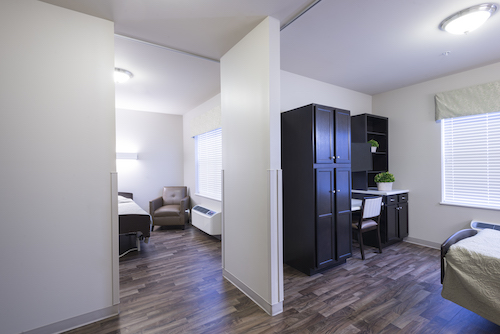
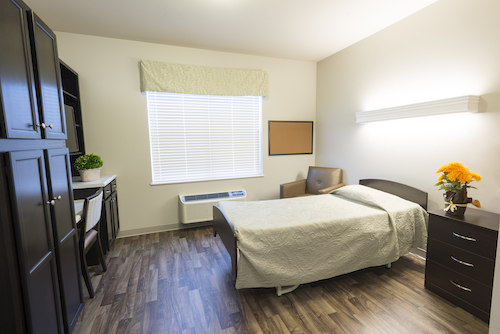
4180 SAGE BLUFF CROSSING, FORT WAYNE, IN 46804 (260) 443-7300
For profit - Corporation 84 Beds SABER HEALTHCARE GROUP Data: November 2025
Trust Grade
60/100
#286 of 505 in IN
Last Inspection: November 2024

Within standard 12-15 month inspection cycle. Federal law requires annual inspections.

Overview

Sage Bluff Health & Rehab Center has received a Trust Grade of C+, indicating it has a decent reputation that is slightly above average but not exceptional. It ranks #286 out of 505 facilities in Indiana, placing it in the bottom half statewide, and #21 out of 29 in Allen County, meaning there are only a few better options in the local area. The facility is improving, with reported issues decreasing from 9 in 2024 to 3 in 2025. However, staffing is a concern, with a low rating of 2 out of 5 stars and a high turnover rate of 69%, significantly above the state average of 47%. On a positive note, there have been no fines recorded, which is a good sign of compliance. The facility has average RN coverage, which is important as registered nurses can catch potential issues that might be missed by other staff. Some concerning incidents were noted, such as a resident making loud noises without staff intervention and a situation where a resident fell after returning from an appointment, raising concerns about the adequacy of supervision. Additionally, another resident reported feeling intimidated by a staff member. Overall, while there are strengths, particularly in compliance, the high turnover and specific incidents indicate areas that need improvement.

Trust Score
C+
60/100
In Indiana
#286/505
Bottom 44%
Safety Record
Low Risk
No red flags
Inspections
Getting Better
9 → 3 violations
Staff Stability
⚠ Watch
69% turnover. Above average. Higher turnover means staff may not know residents' routines.
Penalties
✓ Good
No fines on record. Clean compliance history, better than most Indiana facilities.
Skilled Nurses
○ Average
Each resident gets 41 minutes of Registered Nurse (RN) attention daily — about average for Indiana. RNs are the most trained staff who monitor for health changes.
Violations
⚠ Watch
19 deficiencies on record. Higher than average. Multiple issues found across inspections.
★★★☆☆
3.0
Overall Rating
★★☆☆☆
2.0
Staff Levels
★★★★☆
4.0
Care Quality
★★★☆☆
3.0
Inspection Score
Stable
2024: 9 issues
2025: 3 issues

The Good

  • 4-Star Quality Measures · Strong clinical quality outcomes
  • Full Sprinkler Coverage · Fire safety systems throughout facility
  • No fines on record

Facility shows strength in quality measures, fire safety.

The Bad

3-Star Overall Rating

Near Indiana average (3.1)

Meets federal standards, typical of most facilities

Staff Turnover: 69%

23pts above Indiana avg (46%)

Frequent staff changes - ask about care continuity

Chain: SABER HEALTHCARE GROUP

Part of a multi-facility chain

Ask about local staffing decisions and management

Staff turnover is elevated (69%)

21 points above Indiana average of 48%

The Ugly 19 deficiencies on record

May 2025 1 deficiency
CONCERN (D) 📢 Someone Reported This

A family member, employee, or ombudsman was alarmed enough to file a formal complaint

Potential for Harm - no one hurt, but risky conditions existed

Accident Prevention (Tag F0689)

Could have caused harm · This affected 1 resident

Based on interview and record review the facility failed to ensure fall interventions were followed for 1 of 4 residents reviewed (Resident B). Findings include: An incident report, dated 5/7/25, wa...

Read full inspector narrative →
Based on interview and record review the facility failed to ensure fall interventions were followed for 1 of 4 residents reviewed (Resident B). Findings include: An incident report, dated 5/7/25, was provided by the Administrator on 5/21/25 at 10 AM. The report indicated Resident B returned from an outside appointment on 5/2/25, reported to the facility staff she fell and her wrist was injured. The report indicated Resident B initially refused treatment but later accepted treatment on 5/7/25. Resident B had an open and closed left distal wrist fracture. The report indicated Resident B's fall interventions were in place. Resident B's record was reviewed on 5/21/25 at 11:30 AM. Diagnosis included congestive heart disease, muscle weakness and post-traumatic stress disorder. A nursing note, dated 5/7/25, indicated the fall intervention added was: Resident B accompanied by facility staff for all outside appointments. A nursing note, dated 5/20/25, indicated Resident B returned from an outside appointment, but there was no documentation to indicate whether staff had acoompanied the resident. Resident B's care plan indicated Resident B was at risk for falls. Interventions included: staff to accompany resident to all appointments, start date of 5/2/25. Resident B's recent quarterly Minimum Data Set (MDS) Assessment, dated 3/10/25, indicated Resident B had a Brief Interview of Mental Status (BIMS) of 15/15 (cognitively intact). During an interview, on 5/22/25 at 9:22 AM, Resident B indicated she attended an outside appointment on 5/2/25, transported by the facility. Resident B indicated during the appointment she fell in the bathroom. Resident B indicated upon return to the facility she reported the fall to the facility staff. Resident B indicated the fall resulted in an open and closed distal fracture of her left wrist. Resident B indicated the facility transported her to the next appointment on 5/20/25, but no staff had accompanied her during the appointment. During an interview, on 5/22/25 at 10:40 AM, the Administrator indicated Resident B reported she fell in the bathroom during an outside appointment on 5/2/25. The Administrator indicated Resident B was transported to a follow up appointment on 5/20/25 by the Maintenance Director. The Administrator indicated the Maintenance Director did not accompany Resident B during her appointment. The Administrator indicated Resident B's fall intervention was for staff to accompany her at appointments. The Administrator indicated no staff accompanied Resident B at her appointment on 5/20/25. During an interview, on 5/22/25 at 10:52 AM, the Maintenance Director indicated he transported residents to outside appointments. The Maintenance Director indicated when a resident had to be accompanied during an appointment a Certified Nurse Assistant (CNA) or other staff member attended. The Maintenance Director indicated the Administrator or Director of Nursing (DON) notified him of any residents needed accompanied at appointments. The Maintenance Director indicated he transported Resident B to her appointment on 5/20/25 with no other staff present and did not accompany her at the appointment. The Maintenance Director indicated he was notified on 5/22/25 Resident B needed accompanied at appointments. During an interview, on 5/22/25 at 11:40 AM, Licensed Practical Nurse (LPN) 3 indicated fall interventions included therapy evaluation, proper foot wear and determined root cause. LPN 3 indicated she would ask her supervisor for guidance on residents going to appointments supervised or unsupervised. LPN 3 indicated when residents needed supervised for appointments a CNA accompanied the resident During an interview, on 5/22/25 at 11:43 AM, LPN 4 indicated fall interventions included lowered bed, floor mats and frequent monitoring. LPN 4 indicated she had not assisted Resident B prior to 5/2/25 but recalled she did not need supervision during outside appointments. LPN 4 indicated when she was unsure of assistance needed for outside appointments she reviewed the resident's care plan and asked the Maintenance Director who transported residents to appointments. A policy, last revised 8/6/2024, titled Fall Prevention and Management Policy, was provided by the Administrator on 5/22/25 at 12:16 PM. The policy indicated falls were reviewed by the interdisciplinary team, new interventions were implemented and the care plan was updated to prevent further falls. This citation is related to Complaint IN00459121. 3.1-45(a)
Mar 2025 2 deficiencies
CONCERN (D) 📢 Someone Reported This

A family member, employee, or ombudsman was alarmed enough to file a formal complaint

Potential for Harm - no one hurt, but risky conditions existed

Deficiency F0675 (Tag F0675)

Could have caused harm · This affected 1 resident

Based on interview and record review the facility failed to ensure 1 of 3 residents reviewed were free from condescending remarks. (Resident C) Findings include: A review of an investigation, dated 3/...

Read full inspector narrative →
Based on interview and record review the facility failed to ensure 1 of 3 residents reviewed were free from condescending remarks. (Resident C) Findings include: A review of an investigation, dated 3/10/25, indicated Resident C stated she overheard QMA (Qualified Medical Assistant) 8 say the resident needed to stop lying. Resident C indicated she was afraid QMA 8 would retaliate if she said anything to her. Resident C was placed on care in pairs. A written statement, signed by QMA 8, dated 3/10/25, indicated Resident C complained about everything. When staff would go in to help her, the resident would indicate its fine if you don't want to help me. The resident accused QMA8 of pulling her curtain in her room when I was helping the other resident. Resident C tells stories after stories since she has entered the building. A written statement from the social services worker, dated 3/10/25, indicated shortly after the incident in the dining room, QMA 8 was removal from Resident C's care. QMA 8 then went into Resident C's room room to take Resident C's room mate out. Resident C accused QMA 8 of giving her a look. When QMA 8 was leaving the room, QMA 8 aggressively yanked on the curtain. Resident C also indicated she was in fear of her life and might call the police after she called her daughter. A progress note dated 3/11/25 indicated Resident C left against medical advice due to her fear after allegations of verbal abuse. A report to adult protective services was made. During an interview, on 3/24/25 at 9:20AM, the Dietary Director indicated Resident C was concerned and called her over to discuss QMA 8's refusal to assist her getting her pants back on. Resident C indicated QMA 8 was nasty towards her, QMA 8 became loud, while walking towards the resident, called her a liar and stated all the resident does is lie. The Dietary Director explained she attempted to intervene, asking QMA 8 to please stop and just walk away. QMA 8 came back over to the table and stated loudly I don't care if she does go and tell all she does is lie. Resident C was visibly crying and was asking if I could get her moved. A peer came and was trying to console her. Resident C indicated she was in fear for her safety. During an interview, on 3/24/25 at 9:46AM, Resident F indicated she heard QMA 8 loudly calling Resident C a liar and had observed Resident C crying. Resident F explained to her QMA 8 refused to assist her in getting her pants on to come to breakfast and therefore she had to do it herself. Resident C indicated she ripped a stitch in her abdominal incision, then came to dining room to endure this treatment. Resident F indicated QMA 8 was being threatening, standing over Resident C, yelling, and telling her if she told no one would believe her. A review of Resident F's record on 3/24/25 at 12:56 PM indicated her most recent Brief Interview for Mental Status assessment, dated 2/26/25, was a 15. The score of 15 indicated Resident F had no cognitive deficits. A current policy and procedure titled Indiana Resident Abuse Policy dated May 2008 last revision date 07/11/2024 was provided by the Executive Director on 3/24/25 at 11:23AM. The policy stated .Abuse-includes actions such as willful infliction of injury, unreasonable confinement, intimidation, or punishment with physical harm, pain or mental anguish. Abuse also includes the deprivation by an individual including a caretaker, of goods or services that are necessary to attain or maintain physical, mental, and psychosocial well-being .Willful in this definition of abuse, means the individual must have acted deliberately, not that the individual must have intended to inflict injury .Verbal abuse-is defined as the use of oral or written or gestural language that willfully includes disparaging and derogatory terms to residents or their families, or within hearing distance, regardless of their age, ability to comprehend or disability . This citation is related to complaint IN00455256 3.1-37(a)
CONCERN (D) 📢 Someone Reported This

A family member, employee, or ombudsman was alarmed enough to file a formal complaint

Potential for Harm - no one hurt, but risky conditions existed

Pressure Ulcer Prevention (Tag F0686)

Could have caused harm · This affected 1 resident

Based on interview and record review the facility failed to ensure wound care was provided to 1 of 3 residents reviewed. (Resident D) Findings include: Resident D's record was reviewed on 03/24/2025 a...

Read full inspector narrative →
Based on interview and record review the facility failed to ensure wound care was provided to 1 of 3 residents reviewed. (Resident D) Findings include: Resident D's record was reviewed on 03/24/2025 at 10:15 AM. Diagnoses included rheumatoid arthritis, major depressive disorder, and stage 4 sacral pressure ulcer (small of the back). A review of Resident D's current quarterly MDS indicated their BIMS (Basic Interview for Mental Status) score was 15 (cognitively intact). The MDS indicated the resident was completely dependent on caregivers for mobility assistance. In an interview, on 03/23/2025 at 2:30 PM, Resident D indicated they did not receive wound care on Friday, 03/21/2025. The last time Resident D had their wound cleaned and changed was Friday, 03/14/2025. Resident D indicated they were residing at the facility specifically for wound care. A review of physician orders, dated 03/08/2025, indicated the stage 4 coccyx pressure ulcer needed cleansed, the wound packed daily and as needed. On 03/20/2025 and 03/21/2025, per the medication administration record (MAR), wound care was not completed. A current policy, dated 09/18/2023, provided by the Administrator indicated dressings will be left according to orders unless removal is indicated due to excessive drainage, odor, or other indications. This citation is related to complaint IN00455764. 3.1-40
Nov 2024 4 deficiencies
CONCERN (D)

Potential for Harm - no one hurt, but risky conditions existed

Report Alleged Abuse (Tag F0609)

Could have caused harm · This affected 1 resident

Based on interview and record review the facility failed to report elopement in a timely manner for 1 of 1 residents reviewed. (Resident 199) Findings include: Resident 199's record was reviewed on 11...

Read full inspector narrative →
Based on interview and record review the facility failed to report elopement in a timely manner for 1 of 1 residents reviewed. (Resident 199) Findings include: Resident 199's record was reviewed on 11/07/2024 at 10:15 AM. Diagnoses included cognitive communication deficit, muscle weakness, and dependence on renal dialysis. A review of Resident 199's current quarterly MDS indicated their BIMS (Basic Interview for Mental Status) score was 10 (moderately impaired). A review of progress notes dated 10/26/2024 4:59 PM indicated the 200 hall door alarm was heard, Resident 199 was observed on the sidewalk outside, and staff immediately assisted resident back into facility. Resident 199 stated he was going to find his sister, was then given snacks and placed in a visible area. In an interveiw on 11/07/24 at 10:15 AM, the Administrator indicated the incident was not reported to the Indiana State Department of Health until 10/28/2024 A current policy dated 11/07/2024 provided by the Administrator indicated facilities are required to report incidents within 24 hours of occurrence to the Long Term Care Division. 3.1-28 (c)
CONCERN (D)

Potential for Harm - no one hurt, but risky conditions existed

Deficiency F0697 (Tag F0697)

Could have caused harm · This affected 1 resident

Based on interview and record review, the facility failed to ensure non-pharmacological interventions were attempted before administering (PRN) as needed pain medication for 1 of 2 residents reviewed ...

Read full inspector narrative →
Based on interview and record review, the facility failed to ensure non-pharmacological interventions were attempted before administering (PRN) as needed pain medication for 1 of 2 residents reviewed ( Resident 5). Findings include: A record review began on 11/6/24 at 9:41 AM for Resident 5. Diagnoses included unspecified dementia, mild with psychotic disturbance. A review of the physician orders indicated to give Percocet ( oxycodone-acetaminophen)-Schedule II tablet; 5-325 milligrams (mg); 1 tablet oral severe pain 7-10. Do not exceed 3 grams/24 hours every 8 hour- as needed (PRN) start date 9/10/2024. There were no other physician orders to indicate non-pharmacological interventions were to done before administering the PRN medication. A review of the current care plan, edited on 10/17/2024, indicated the focus was: Resident 5 has pain/potential for pain related to color cancer, fibromyalgia. The Goal was: the resident (capitalize only if the identifier follows the word resident) will verbalize reduction of pain through next review date. The approach was: Handle gently and try to eliminate any environment stimuli. Monitor and record any complaints of pain: location, frequency, effect on function, intensity, alleviation factors, aggravating factors. Monitor and record any non-verbal signs of pain: crying, guarding, moaning, restlessness, grimacing, diaphoresis, withdrawal. Position for comfort with physical support as necessary. There were no personalized care plans related to non-pharmacological interventions for Resident 5. A review of vitals sign- pain scale indicated the following: The last recorded pain rate was dated 7/13/2024: 0 of 10. A review of the Medication Administration Record indicated the following: Dated August 2024: On the following dates PRN ( as needed) pain medication was given: 8/6, 8/14, 8/19, 8,25. On 8/6, 8/14, and 8/19, the MAR did not indicate non-pharmacological interventions were attempted before administering the PRN pain medication. 8/25 indicated non-pharmacological interventions were attempted and were not successful. Dated September 2024: On the following dates PRN pain medication was given: 9/3, 9/7, 9/8, 9/16, 9/21, 9/25, 9/26. There was no documentation to indicate non-pharmacological interventions were attempted before administering PRN. Dated October 2024: On the following dates PRN pain medication was given: 10/9, 10/10, 10/23. There was no documentation to indicate non-pharmacological interventions were attempted before administering PRN. A review of the progress notes from 7/1/24 to 11/6/24 indicated there was no documentation to indicate attempts of non-pharmacological interventions were made. In an interview, on 11/06/24 at 10:25 AM, the Director of Nursing (DON) indicated, the staff are supposed to be attempting non-pharmacological interventions and documenting. If there is no documentation in the progress notes then non pharmacologic attempts weren't documented. A current facility policy, Pain Management policy, dated 8/1/2024, was provided by the DON on 11/6/24 at 12:11 PM. The policy indicated .Pharmacological and non-pharmacological interventions used in the past to address pain and the efficacy of such interventions. This will include use of opioids and any history opioid use disorder (OUD) and/or medication assisted treatment for OUD .Non-pharmacological intervention(s) will be attempted prior to the administration of PRN pain medications. If non-pharmacological intervention(s) fail(s) then when multiple PRN medications are available with corresponding intensity ratings, the resident will be administered the medication ordered for the corresponding pain rating within the PRN order 3.1-37(a)
CONCERN (D)

Potential for Harm - no one hurt, but risky conditions existed

Deficiency F0698 (Tag F0698)

Could have caused harm · This affected 1 resident

Based on interview and record review the facility failed to ensure communication with dialysis center for 1 of 2 patients reviewed. (Resident 30) Findings include: A record review for Resident 30 beg...

Read full inspector narrative →
Based on interview and record review the facility failed to ensure communication with dialysis center for 1 of 2 patients reviewed. (Resident 30) Findings include: A record review for Resident 30 began on 11/01/24 at 09:42 AM. Resident 30's diagnoses included dependence on renal dialysis, hepatic encephalopathy, kidney failure, cirrhosis of the liver, and general weakness. Resident 30's orders included- Dialysis communication tool completed and sent with resident (dated 8/29/24) , Dialysis Monday, Wednesday, and Friday (dated 5/11/24), renal diet (dated 5/13/24), and Check fistula every shift (dated 5/17/24). The dialysis communication book was reviewed. Within the book the current orders, emergency contact, and care plan were present, as well as blank communication forms. Within the book the following documentation was discovered: Dated 9/19/24, a communication form from End-Stage Renal Disease Disease Network Program) IPRO with the section blank from nursing home center related to resident mental status. From the dialysis center the section of amount of fluid removed, meal consumption, and any medications given were not completed. Dated 9/20/24, an observation tool form from Sage Bluff, section from nursing home not completed included significant alerts/communication, needs meal, needs snack, n/a, diet, fluid restriction, amount allowed per day, dialysis chair cleaned. The section from dialysis center not completed included time of discharge, and fluid removed. Dated 9/23/24, an observation tool form from Sage Bluff, section from nursing home not completed included significant alerts/communication, needs meal, needs snack, n/a, diet, fluid restriction, amount allowed per day, dialysis chair cleaned. The section from dialysis center not completed included time of discharge, pre dialysis weight, post dialysis weight, fluid removed, most recent vital signs, labs drawn, follow up orders, appointments made, medications/treatments given at dialysis, significant alerts/communication, and dialysis nurse signature. Dated 9/23/24, a communication form from End-Stage Renal Disease Disease Network Program) IPRO with the section blank from nursing home was blank From the dialysis center the section of updated doctor orders, did dietician make any recommendations, did social worker make recommendations, food/fluid consumed during dialysis, meal consumption, vascular access condition, and dialysis nurse signature. Dated 9/25/24, an observation tool form from Sage Bluff; section from nursing home not completed included significant alerts/communication, needs meal, needs snack, n/a, diet, fluid restriction, amount allowed per day, dialysis chair cleaned. The section from dialysis center not completed included time of discharge, pre dialysis weight, post dialysis weight, fluid removed, most recent vital signs, labs drawn, follow up orders, appointments made, medications/treatments given at dialysis, significant alerts/communication, and dialysis nurse signature. Dated 10/02/24, an observation tool form from Sage Bluff; section from nursing home not completed included significant alerts/communication, needs meal, needs snack, n/a, diet, fluid restriction, amount allowed per day, dialysis chair cleaned. The section from the dialysis center not completed included time of discharge, labs drawn, follow up orders, appointments made, medications/treatments given at dialysis, significant alerts/communication, and dialysis nurse signature. Dated 10/04/24, an observation tool form from Sage Bluff; section from nursing home not completed included significant alerts/communication, needs meal, needs snack, n/a, diet, fluid restriction, amount allowed per day, dialysis chair cleaned. The section from dialysis center not completed included fluids removed, labs drawn, follow up orders, appointments made, significant alerts/communication, and dialysis nurse signature. Dated 10/09/24, an observation tool form from Sage Bluff; section from nursing home not completed included significant alerts/communication, needs meal, needs snack, n/a, diet, fluid restriction, amount allowed per day, dialysis chair cleaned. The section from the dialysis center was completed entirely. Dated 10/11/24, an observation tool form from Sage Bluff was completed other than was dialysis chair cleaned. The section from the dialysis center was without documentation. Dated 10/14/24, an observation tool form from Sage Bluff; section from nursing home not completed included significant alerts/communication, needs meal, needs snack, n/a, diet, fluid restriction, amount allowed per day, dialysis chair cleaned. The section from dialysis center was not completed; the dialysis center communication portion was blank. Dated 10/16/24, an observation tool form from Sage Bluff; section from nursing home not completed included significant alerts/communication, needs meal, needs snack, n/a, diet, fluid restriction, amount allowed per day, dialysis chair cleaned. The section from dialysis center was not completed; the dialysis center communication portion was blank. Dated 10/18/24, an observation tool form from Sage Bluff; section from nursing home not completed included significant alerts/communication, needs meal, needs snack, n/a, diet, fluid restriction, amount allowed per day, dialysis chair cleaned. The section from dialysis center was not completed; the dialysis center communication portion was blank. Dated 10/21/24, an observation tool form from Sage Bluff; section from nursing center included significant alerts/communication and dialysis chair cleaned. The diet section indicated resident was on a regular diet. The section from the dialysis center was completed. Dated 10/23/24, an observation tool form from Sage Bluff; section from nursing home not completed included significant alerts/communication, needs meal, needs snack, n/a, diet, fluid restriction, amount allowed per day, dialysis chair cleaned. The section from the dialysis center was completed. Dated 11/04/24, an observation tool form from Sage Bluff; section from nursing home not completed included significant alerts/communication, needs meal, needs snack, n/a, diet, fluid restriction, amount allowed per day, dialysis chair cleaned. The section from dialysis center was not completed; the dialysis center communication portion was blank. In an interview on 11/06/24 at12:49 PM, the Director of Nursing (DON) and Regional Nurse Consultant; the DON indicated the forms should have been filled out in their entirety. The Regional Nurse Consultant indicated when dialysis did not return forms completed, the dialysis center should have been contacted and information requested. The request should have been documented in Resident 30's chart. A policy and procedure titled Hemodialysis Care Policy, dated 6/16/17 last revised 8/24/23 provided by the DON on 11/6/24 at 2:19PM; indicated .Communication between the dialysis provider and facility staff will occur before and after each hemodialysis treatment and as needed . 3,1-37(a)
CONCERN (D)

Potential for Harm - no one hurt, but risky conditions existed

Deficiency F0742 (Tag F0742)

Could have caused harm · This affected 1 resident

Based on observation, interview, and record review the facility failed to manage behaviors for 1 of 8 residents reviewed. (Resident 40). Findings include: During an observation, on November 1, 2024, a...

Read full inspector narrative →
Based on observation, interview, and record review the facility failed to manage behaviors for 1 of 8 residents reviewed. (Resident 40). Findings include: During an observation, on November 1, 2024, at 9:31AM, Resident 40 was pbserved grabbing at the Administrator's wrist while he was standing in the hall speaking and walking with her. The Administrator then held her hand and continued to walk with her down the hall. This behavior was not documented. During a continuous observation and interviews, on November 4, 2024, from 7:02AM through 8:11AM, during 300 hall medication pass; observed Resident 40 grabbing the right wrist of Resident 14 more than 10 times. Resident 40 grabbed Resident 14's inner right thigh once while in the presence of the Licensed Practical Nurse (LPN4). LPN 4 did not intervene to prevent Resident 40 from grabbing Resident 14. The observation occurred at the end of 300 hall within eyesight of the nursing desk with several various staff sitting, as well as coming and going from the area. The two residents were sitting at a table within arm's reach of each other; at a 90-degree angle. Resident 40 was in a wheelchair and visibly able to manipulate and move without difficulty. Resident 14 was in an anti-tilt wheelchair with breaks locked, pulled up to the table, with nothing in her lap, facing the wall. There was nothing on the table and no activities. Resident 14's shoulders curved in, her body leaned forward slightly, and her hands were kept in a C shape position. Resident 40 continued to reach over and grab Resident 14's right inner wrist and at times was pulling the arm near her while talking to Resident 14. The right wrist grabbing occurred 6 times prior to escalating to right inner thigh grabbing. The behavior was redirected by staff after the behavior was pointed out to them. In an interview, on November 1, 2024 at 8:15 AM, Resident 40 explained she was working with Resident 14 on her mobility during these behaviors and making progress. Resident 40 showed pride in Resident 14's perceived progress. Resident 14 did not make any sound, movement, or pull away during these interactions. During this interview Resident 40 indicated Resident 14 loved to be touched, especially in specific places. Resident 40 used her hand to indicate an area on her thighs. During Resident 14's medication administration by LPN 4; Resident 40 reached over and grabbed Resident 14's inner right thigh above the knee. Resident 14 immediately turned her head to Resident 40. Resident 14's face was grimaced and angry in presentation. Resident 14 did not make any noise or say any words. LPN 4 redirected Resident 40 to keep her hands to herself and respect Resident 14's personal space. Resident 40 removed her hand from Resident 14's inner thigh. Resident 40 went on to grab Resident 14's right wrist more than 4 additional times with verbal redirections following each grab given by LPN 4. During an attempted grab LPN 4 offered Resident 40 her own hand to hold and Resident 40 refused. LPN 4 attempted to ask Resident 14 twice if she consented to having Resident 40 holding her hand and Resident 14 did not answer despite being given extended periods of time to form words. During an interview, on November 1, 2024 at 8:24 AM, LPN 4 indicated Resident 14 was mainly nonverbal and slow to move most of the time. LPN 4 indicated Resident 14 did speak a few words intermittently. LPN 4 explained Resident 14's speech was slow and soft. LPN 4 indicated Resident 14 could not purposefully move in the wheelchair throughout the facility and would be unable to move away Resident 40 on her own. During an observation, on November 1, 2024 at 8:25 AM, LPN 4 assessed Resident 14's wrist and indicated it was bruised. LPN 4 was unable to find prior documentation of bruising noted. LPN 4 indicated Resident 40 did not mean any harm to Resident 14 and therefore did not consider the hand holding a behavior. A record review for Resident 40 began on 11/01/24 at 10:26 AM. Resident 40's diagnoses included dementia and depression. Resident 40's Minimal Data Set (MDS) assessment, dated 10/14/24, indicated the following: Under Section C Brief Interview for Mental Status (BIMS) her mental status score was a 3, the score of 3 indicated severe cognitive decline. Under Section E Behavior indicated a score of zero to indicate Resident 40 had no behaviors. The assessment was scored zero for the question of physical behavior of physical behavior towards others (e.g. hitting, kicking, scratching, grabbing, abusing others sexually). Resident 40's care plan did not directly address behaviors. A record review for Resident 14 began on 11/06/24 at 09:41 AM. Resident 14's diagnoses included osteoporosis, degenerative disease, dementia, muscle weakness, and dysphagia. Resident 14 was care planned for ADL function status with a goal of. Resident will show no decline in function to bilateral lower extremities as evidenced by ability to rotate feet in and out, move feet up and down, rotate legs up and down. The care plan clearly indicated Resident 14 had issues with mobility. Resident 14 was care planned for Skin Integrity approaches included pressure reducing cushions to wheelchair, pressure reducing mattress to bed, and handle resident with care. The care plan clearly indicated Resident 14 had issues with skin integrity. In an interview, on November 4, 2024, at 1:39PM, the Director of Nursing (DON), indicated Resident 40 had no behavior tracking due to the fact she had no behaviors. The DON indicated the bruising on Resident 14's right wrist should have been documented in physician ordered weekly skin assessments. The DON indicated the bruising was from a blood test performed on 10/16/24, 19 days prior to the observation of behavior and bruising. In an interview on 11/6/24 at 12:46PM, the DON and the Regional Nurse Consultant indicated the behavior was overlooked as handholding and no harm or ill intent was intended. A policy and procedure titled, 'Behavior Management Program dated 3/1/2013 and last revised on 5/15/24, provided by the Administrator on November 7, 2024 at 9:08AM indicated .The Facility will assess and track a behavior(s) that negatively impacts each resident in regards to their quality of life . 3.1-43(a)(1)
Jul 2024 3 deficiencies
CONCERN (D) 📢 Someone Reported This

A family member, employee, or ombudsman was alarmed enough to file a formal complaint

Potential for Harm - no one hurt, but risky conditions existed

Free from Abuse/Neglect (Tag F0600)

Could have caused harm · This affected 1 resident

Based on observation, interview and record review, the facility failed to protect a resident's right to be free from physical abuse by staff for 1 of 3 residents reviewed (Resident Q). The deficient p...

Read full inspector narrative →
Based on observation, interview and record review, the facility failed to protect a resident's right to be free from physical abuse by staff for 1 of 3 residents reviewed (Resident Q). The deficient practice was corrected on 7/11/24 prior to the start of the survey and was therefore past non-compliance. Findings include: An Indiana Department of Health (IDOH) incident report, submitted by the facility on 7/9/24 at 9:37 p.m., indicated an altercation between a resident and staff member had occurred. The resident had no apparent injury and the staff member was suspended pending investigation. The follow-up report, indicated on 7/9/24 at 9:15 p.m., Employee 2 notified the Administrator, she had witnessed Employee 5 slap Resident Q in the face while being pulled up in her wheelchair. Employee 2, Employee 3, and Employee 5 had been attempting to reposition the resident due to sliding down and potential for her to fall from the chair. The resident became combative during positioning and struck Employee 5 on the face, then Employee 5 struck Resident Q with an open hand. Resident Q was assessed for injury and none were observed. Employee 2, Employee 3, and Employee 5 were suspended on 7/10/24. The investigation was conducted, the local police department and resident's guardian were notified of the incident. Following the facility's investigation, Employee 5 was terminated for striking the resident. On 7/23/24 at 12:54 P.M., Resident Q's record was reviewed. Diagnoses included brain damage due to trauma, major depressive disorder, dependence on wheelchair, and abnormal posture. A quarterly MDS (Minimum Data Set) assessment, dated 7/4/24, indicated Resident Q had severely impaired cognition. She'd had no behaviors, moods, or signs of delirium. She was dependent on staff for all her ADL's (Activities of Daily Living) except eating. Care plans included: -Dated 11/17/23: The resident displayed behaviors of throwing food at others, striking others during care, when in the hall and dining room, and placed her feet on tables. The goal was for her to be free of behavioral outbursts or unusual behaviors daily. Inventions were: administer medications as ordered; allow resident to vent feelings and thoughts; approach in a calm, relaxed manner; attempt to reduce stressors; and do not place her within reach of other residents. -Dated 12/22/22, the resident had a past history of trauma and abuse. The goals were for her to display a positive affect and to not exhibit signs of isolation. Interventions included: remove her from negative stimuli and report signs of isolation. On 7/23/24 at 11:10 A.M., Employee 2 was interviewed. She indicated, on 7/9/24 at approximately 8:30 a.m., she observed Resident Q sliding down in her wheelchair and she didn't want her to fall. Employee 2 summoned Employee 3, also in the dining room, to assist her to pull the resident up in her chair. Both tried but were unable to pull her up themselves. Employee 5 went to assist Employee 2 and Employee 3 to pull up the resident. Employee 2 was on the resident's right side, Employee 3 on her left side and Employee 5 was behind the resident's chair by the residents head. They attempted to pull her up in the chair when the resident raised her right arm and hand over her head and hit Employee 5 in the face. They attempted again to pull her up. Employee 2 saw Employee 5 slap Resident Q on her cheek and say something to the resident but didn't hear what she'd said. The resident didn't react to the slap on her cheek nor appear distressed. Employee 2 left the area and continued with her job duties. She indicated, as the day went on and she thought more about what had occurred, she became uncomfortable and believed what Employee 5 had done was wrong and needed to be reported to the Administrator. After leaving for the day and later into the evening, she contacted the Administrator and told him of the incident which had occurred that morning (7/9/24). Employee 2 indicated staff should never retaliate by slapping or hitting a resident in response to their behaviors and she regretted not reporting the incident immediately. On 7/23/24 at 1:45 P.M., Resident Q was observed awake and lying in her bed. Her face was observed to be relaxed without signs of distress or discomfort. She smiled and held her hand out as a greeting. She was non-verbal but shook her head yes or no when asked questions. When asked if staff were kind to her and if she felt safe here, she shook her head yes to both questions. On 7/23/24 at 3:20 P.M., the Administrator and DON (Director of Nursing) were interviewed. Both indicated Employee 2 and Employee 3 were suspended on 7/10/24 for not reporting the incident immediately. Employee 5 was suspended, then terminated for striking the resident in the face. The DON indicated the resident had no observed physical effects from the incident nor had her mood changed or behaviors increased. Resident Q was being monitored for psychosocial effects and was being followed closely by the psychiatric Nurse Practitioner (NP) for any changes. A current facility policy, titled Indiana Resident Abuse Policy, was provided by the Administrator on 7/23/24 at 10:20 A.M. and stated: This facility will not tolerate abuse, neglect, mistreatment, exploitation of resident, and misappropriation of resident property by anyone .Facility staff must immediately report all such allegations to the Administrator/Abuse Coordinator. The Administrator/Abuse Coordinator will immediately begin an investigation and notify the applicable local and state agencies in accordance with the procedures in this policy The past non-compliance deficiency began on 7/9/24 and deficient practice corrected on 7/11/24 after the facility suspended the 2 employees for not reporting immediately, terminated employment of the employee involved in the incident, reported the incident to local law authorities and IDOH as required. Resident Q was observed for injury and monitored for psychosocial distress related to the incident. On 7/10/24, the facility took steps to identify other residents with the potential to be affected by completing interviews on all interviewable residents, skin assessments on non-interviewable residents, and reviewed 72 hours of documentation on all residents with none exhibiting combative behaviors. There were no negative findings. All staff were educated on the facility abuse policies and caring for residents with combative behaviors on 7/11/24. To ensure ongoing compliance, staff and residents would be interviewed and skin assessments completed on non-interviewable residents weekly x 4 then monthly x 5 to ensure the facility remained free of abuse. This tag relates to Complaint IN00438417. 3.1-27(a)(b)
CONCERN (D) 📢 Someone Reported This

A family member, employee, or ombudsman was alarmed enough to file a formal complaint

Potential for Harm - no one hurt, but risky conditions existed

Report Alleged Abuse (Tag F0609)

Could have caused harm · This affected 1 resident

Based on interview and record review, the facility failed to report timely, physical abuse of 1 of 3 residents reviewed for abuse reporting (Resident Q). The deficient practice was corrected on 7/11/2...

Read full inspector narrative →
Based on interview and record review, the facility failed to report timely, physical abuse of 1 of 3 residents reviewed for abuse reporting (Resident Q). The deficient practice was corrected on 7/11/24 prior to the start of the survey and was therefore past non-compliance. Findings include: An Indiana Department of Health (IDOH) incident report, submitted by the facility on 7/9/24 at 9:37 p.m., indicated an altercation between a resident and staff member had occurred. The resident had no apparent injury and the staff member was suspended pending investigation. The follow-up report, indicated on 7/9/24 at approximately 8:30 a.m., Employee 2, Employee 3, and Employee 5 had been attempting to reposition the resident due to sliding down and potential for her to fall from the chair. The resident became combative while positioning her and struck Employee 5 on the face, then Employee 5 struck the resident in the face with an open hand. Employee 2 nor Employee 3 reported the abuse until after 8:00 p.m. on 7/9/24, when Employee 2 contacted the Administrator. On 7/23/24 at 12:54 P.M., Resident Q's record was reviewed. Diagnoses included brain damage due to trauma, major depressive disorder, dependence on wheelchair, and abnormal posture. A quarterly MDS (Minimum Data Set) assessment, dated 7/4/24, indicated the resident had severely impaired cognition. She'd had no behaviors, moods, or signs of delirium. She was dependent on staff for all her ADL's (Activities of Daily Living) except eating which she had done independently. Care plans included: - Revised 7/18/24: The resident displayed behaviors of throwing food at others, striking others during care, when in the hall and dining room, and placed her feet on tables. The goal was for her to be free of behavioral outbursts or unusual behaviors daily. Inventions were: administer medications as ordered; allow resident to vent feelings and thoughts; approach in a calm, relaxed manner; attempt to reduce stressors; and do not place her within reach of other residents. -Revised 7/10/24, the resident had a past history of trauma and abuse. The goals were for her to display a positive affect and to not exhibit signs of isolation. Interventions included: remove her from negative stimuli and report signs of isolation. On 7/23/24 at 11:10 A.M., Employee 2 was interviewed. She indicated, on 7/9/24 at approximately 8:30 a.m., she observed Resident Q sliding down in her wheelchair in the dining room and she didn't wanted her to fall. Employee 2 summoned Employee 3, to assist her to pull the resident up in her chair. Both tried but were unable to pull her up themselves. Employee 5 went to assist Employee 2 and Employee 3 to pull up the resident. Employee 2 was on the resident's right side, Employee 3 on her left side and Employee 5 was behind the resident's chair by the residents head. The staff attempted to pull her up in the chair when the resident raised her right arm and hand over her head and hit Employee 5 in the face. The staff attempted again to pull the resident up. Employee 2 saw Employee 5 slap Resident Q on her cheek and say something to the resident but didn't hear what she'd said. The resident didn't reacted to the slap on her cheek nor appear distressed. Employee 2 left the area and continued with her job duties. She indicated, as the day went on she thought more about what had occurred. She became uncomfortable, believed what Employee 5 had done was wrong and needed to be reported to the Administrator. After leaving the facility, later in the evening, she contacted the Administrator, told him of the incident, and the incident had occurred that morning (7/9/24). Employee 2 indicated staff should never retaliate by slapping or hitting a resident in response to their behaviors and she regretted not reporting the incident immediately. On 7/23/24 at 3:20 P.M., the Administrator and DON (Director of Nursing) were interviewed. Both indicated Employee 2 and Employee 3 were suspended on 7/10/24 for not reporting the incident immediately. Employee 5 was suspended and then terminated. A current facility policy, titled Indiana Resident Abuse Policy, was provided by the Administrator on 7/23/24 at 10:20 A.M. and stated: This facility will not tolerate abuse, neglect, mistreatment, exploitation of resident, and misappropriation of resident property by anyone .Facility staff must immediately report all such allegations to the Administrator/Abuse Coordinator. The past non-compliance deficiency began on 7/9/24 and deficient practice corrected on 7/11/24 after the facility suspended the 2 employees for not reporting immediately, reported the incident to local law authorities and IDOH as required. Resident Q was observed for injury and monitored for psychosocial distress related to the incident. On 7/10/24, the facility took steps to identify other residents with the potential to be affected by completing interviews on all interviewable residents, and reviewed 72 hours of documentation on all residents with no further need for reporting noted. All staff were educated on the facility abuse policies, including immediate reporting of abuse on 7/11/24. To ensure ongoing compliance, staff and residents would be interviewed and reports to IDOH and other authorities as needed weekly x 4 then monthly x 5 to ensure the facility reported abuse within 24 hours. This tag relates to Complaints IN00438417. 3.1-28(a)
CONCERN (D) 📢 Someone Reported This

A family member, employee, or ombudsman was alarmed enough to file a formal complaint

Potential for Harm - no one hurt, but risky conditions existed

Deficiency F0699 (Tag F0699)

Could have caused harm · This affected 1 resident

Based on interview and record review, the facility failed to ensure triggers were identified and resident specific approaches implemented in providing trauma informed care for 1 of 1 residents reviewe...

Read full inspector narrative →
Based on interview and record review, the facility failed to ensure triggers were identified and resident specific approaches implemented in providing trauma informed care for 1 of 1 residents reviewed (Resident Q). Findings include: On 7/23/24 at 12:54 P.M., Resident Q's record was reviewed. Diagnoses included brain damage due to trauma, major depressive disorder, dependence on wheelchair, and abnormal posture. A quarterly MDS (Minimum Data Set) assessment, dated 7/4/24, indicated Resident Q had severely impaired cognition. She'd had no behaviors, moods, or signs of delirium. She was dependent on staff for all her ADL's (Activities of Daily Living) except eating. Care plans included: -Initiated 11/17/23 and revised 7/18/24: The resident displayed behaviors of throwing food at others, striking others during care, when in the hall and dining room, and placed her feet on tables. The goal was for her to be free of behavioral outbursts or unusual behaviors daily. Inventions were: administer medications as ordered; allow resident to vent feelings and thoughts; approach in a calm, relaxed manner; attempt to reduce stressors; and do not place her within reach of other residents. -Initiated 12/22/22 and revised 7/10/24, the resident had a past history of trauma and abuse. The goals were for her to display a positive affect and to not exhibit signs of isolation. Interventions included: remove her from negative stimuli, report signs of isolation, attempt to identify any activities which would help decrease negative symptoms of past trauma. On 7/23/24 at 10:25 AM., Resident Q's guardian was interviewed. The guardian indicated the resident had a long history of trauma and abuse which led to her current and permanent condition. The guardian had been appointed to make decisions about her care needs and to ensure the resident's safety. She indicated due to the alleged severe trauma and abuse suffered by the resident, she needed to remain in a safe place where the abusers could not gain access to her. There was a visitor statement, provided to staff, with names and pictures of persons not allowed to visit. If anyone else were to try and visit, they weren't allowed until the guardian was contacted. She indicated she visited the facility at odd times to check on the resident's care and when came in after hours, she would ring the doorbell and just be allowed in despite there being no staff at the front desk or lobby. A family member, not on the visitor list, had recently visited after hours and was let into the facility without being questioned or the guardian notified and she was concerned for the resident's continued safety in the facility. The guardian indicated the resident had been hit by a staff member on 7/9/24 and she hadn't been notified until the following day. She indicated, she was told the staff member had been helping to move the resident up in her chair and the resident hit out at the staff member who then hit the resident back in her face. The resident may have been startled when the staff member had come up behind her to pull her up and in defense, hit out at the staff member due to the type of abuse she'd been through in the past (strangulation). She indicated the resident was mostly non-verbal and at times, would respond with shaking her head yes or no, but her behaviors, at times, were her only way of communicating with others. On 7/23/24 at 1:45 P.M., Resident Q was observed awake and lying in her bed. Her face was observed to be relaxed without signs of distress or discomfort. She smiled and held her hand out as a greeting. She was non-verbal but shook her head yes or no when asked questions. When asked if staff were kind to her and if she felt safe here, she shook her head yes to both questions. On 7/23/24 at 3:05 P.M., Nurse 6 and Nurse 7, assigned to care for Resident Q, were interviewed. Both indicated the resident could have visitors and weren't aware of any restrictions. When questioned, Nurse 6 indicated the resident at times, would be combative when staff were providing care. Both indicated they had heard the resident had a history of abuse but weren't aware of what had happened, triggers to prevent re-traumatization, or interventions to put in place when she had behaviors. Neither was aware of the visitor restrictions to prevent the residents abusers from coming in to see her. The care plan didn't indicate what triggers staff should avoid to prevent the resident from being retraumatized, lashing out or approaches to keep the resident safe from persons who abused and traumatized her by screening visitors. On 7/23/24 at 3:45 P.M., the Director of Nursing indicated the facility had no policy specific for trauma informed care but provided a current copy of the facility policy, titled Social Services Policy which stated: The facility provides social services to assure that each resident can attain or maintain his/her highest practicable, physical, mental and/or psychosocial well-being .Social Services will assist in implementing interventions for the resident's needs by developing and maintaining care plans which are individualized, realistic, with measurable goals, including, but not limited to .Trauma, PTSD (Post Traumatic Stress Disorder .and be Responsible for assessing and ensuring residents who are trauma survivors receive culturally competent, trauma-informed care/approaches including: psychiatric referrals as needed, identifying triggers and implementing approaches/interventions to help reduce risk of retraumatization This tag relates to Complaint IN00439226.
Jan 2024 2 deficiencies
CONCERN (D) 📢 Someone Reported This

A family member, employee, or ombudsman was alarmed enough to file a formal complaint

Potential for Harm - no one hurt, but risky conditions existed

Accident Prevention (Tag F0689)

Could have caused harm · This affected 1 resident

**NOTE- TERMS IN BRACKETS HAVE BEEN EDITED TO PROTECT CONFIDENTIALITY** Based on interview and record review the facility failed to ensure a fall assessment was completed after a witnessed fall for 1 ...

Read full inspector narrative →
**NOTE- TERMS IN BRACKETS HAVE BEEN EDITED TO PROTECT CONFIDENTIALITY** Based on interview and record review the facility failed to ensure a fall assessment was completed after a witnessed fall for 1 of 3 residents reviewed (Resident C). Findings include: Resident C's record was reviewed 1/4/24 at 11:18 AM. Diagnosis included: developmental disorder, epilepsy and schizophrenia. A fall risk assessment, dated 12/8/23, indicated resident was a high fall risk. A nursing note, dated 12/9/23, indicated Certified Nurse Aide (CNA) 2 entered Resident C's room to assist CNA 3. CNA 2 noticed a raised area on Resident C's forehead with blood. CNA 3 indicated resident had fallen before dinner and CNA 3 had notified the nurse on duty. CNA 3 indicated herself and the nurse assisted Resident C back into her wheelchair. CNA 3 told CNA 2 she didn't think the fall had been reported and CNA 3 had also notified her Agency Supervisor of the fall which occurred sometime between 4-5 PM. CNA 2 indicated she asked the oncoming Nurse 7 about the fall, who indicated she was not notified of Resident C's fall during report. An investigation file was provided by the Interim Director of Nursing (DON) on 1/4/24 at 1 PM. The file indicated on 12/9/23 around 6 PM, CNA 3 was assigned to Resident C as a one on one. CNA 3 indicated she was pushing Resident C in her wheelchair to the dining room at approximately 5 PM, Resident C leaned forward, and fell out of her wheelchair. CNA 3 indicated she had notified the nurse and the nurse had assisted CNA 3 with transferring Resident C back into her wheelchair. CNA 3 indicated she notified the nurse of Resident C's head bleeding. CNA 3 had later told the facility later that the nurse was a Qualified Nurse Aide (QMA). The file indicated an interview was conducted with QMA 4. In the interview QMA 4 indicated she had assisted CNA 3 in transferring Resident C back into her wheelchair and did not observe any blood. QMA 4 indicated she did not realize Resident C had fallen. The file also included an interview with another aide who assisted QMA 4 and CNA 3 with transferring Resident C back into her wheelchair and also indicated she was unaware the resident had fallen. The file indicated later on in the evening CNA 3 requested assistance from CNA 2 with Resident C's shower. CNA 2 noticed a raised area on her forehead and some blood. CNA 2 notified Nurse 7. The file included statements regarding Resident C's fall. The staements indicated the following: CNA 3's statement, dated 12/9/23, indicated she assisted Resident C to the dining room, but prior to, Resident C leaned forward in the doorway of her room and fell out of her chair. CNA 3 indicated she called for the nurse. CNA 3 indicated the nurse arrived and assisted CNA 3 in transferring Resident C back into her wheelchair. CNA 3 indicated the nurse had indicated Resident C could eat in her bed if she wanted to. CNA 3 indicated she notified the nurse Resident C had hit head head and was bleeding. CNA 3 indicated Resident C stayed in bed, ate dinner and napped. CNA 3 indicated she had also alerted her Agency Supervisor of the fall and Resident C had hit her head. CNA 3 indicated she wasn't sure if the nurse on the floor had reported the fall. QMA 4's statement, dated 12/9/23, indicated she had assisted CNA 2 in assisting Resident C back into her wheelchair. QMA 4 indicated she had not noticed any blood and did not report the fall to the nurse. CNA 2's statement, dated 12/9/23, indicated CNA 2 assisted CNA 3 with Resident C's shower at 9:23 PM. CNA 2 indicated she noticed Resident C had a raised area on her forehead and some blood. CNA 2 indicated she notified Nurse 7 of the fall and CNA 3's statement: Resident C had fallen before dinner and she didn't know if it had been reported. In an interview on 1/4/24 at 12:38 PM, the Interim DON indicated Resident C fell on [DATE] between 5-6 PM. The Interim DON indicated at the time Resident C was a one on one with a CNA. The interim DON indicated while CNA 3 pushed Resident C via wheelchair to the dining room, Resident C leaned forward and fell out of her chair. The Interim DON indicated CNA 3 had indicated she notified the nurse and the nurse assisted CNA 3 in transferring Resident C back into her chair. The Interim DON indicated later on the same evening the oncoming CNA 2 had noticed a raised area and blood on Resident C's forehead. CNA 2 had indicated CNA 3 indicated she had told the nurse. The Interim DON indicated the oncoming Nurse 7 was not notified of the fall in report. The Interim DON indicated CNA 3 thought she told the nurse, but she told QMA 4 who did not tell anyone in charge. The Interim DON also indicated Resident C was not assessed at the time of the fall and the QMA should have notified the nurse. In an interview on 1/5/24 at 12:20 PM, the Interim DON indicated the nurse was aware of the fall at the time and did not do anything. In an interview on 1/5/24 at 10:31 AM, CNA 6 indicated when a resident fell, the nurse is alerted immediately. CNA 6 indicated if a QMA was working the floor, a nurse was notified. In an interview on 1/5/24 at 10:37 AM, Registered Nurse (RN) 5 indicated when a resident fell a nurse should assess the resident first. RN 5 indicated the resident was not moved until an assessment was completed. A policy, dated July 2017, titled Fall Managment Program, was provided by the Interim DON on 1/5/24 at 10 AM. The policy indicated all falls are recorded, investigated and documented by a qualified healthcare professional. This citation relates to Complaint IN00424136. 3.1-45(a)
CONCERN (D) 📢 Someone Reported This

A family member, employee, or ombudsman was alarmed enough to file a formal complaint

Potential for Harm - no one hurt, but risky conditions existed

Deficiency F0692 (Tag F0692)

Could have caused harm · This affected 1 resident

Based on interview and record review the facility failed to ensure meal consumption percentages were documented for 3 of 3 residents reviewed (Resident D, Resident E, Resident F) and monthly weights w...

Read full inspector narrative →
Based on interview and record review the facility failed to ensure meal consumption percentages were documented for 3 of 3 residents reviewed (Resident D, Resident E, Resident F) and monthly weights were documented for 2 of 3 residents reviewed (Resident D, Resident E). Findings include: 1. A record review was completed for Resident D on 1/4/24 at 11:42 AM. Resident D's intake, dated 12/1/23 - 1/4/24 indicated meal consumption percentage was not documented for the following dates and meals: 12/1/23 no breakfast, lunch or dinner was documented 12/2/23 no breakfast, lunch or dinner was documented 12/3/23 no breakfast, lunch or dinner was documented 12/4/23 no breakfast, lunch or dinner was documented 12/6/23 no breakfast or lunch was documented 12/7/23 no breakfast, lunch or dinner was documented 12/8/23 no breakfast, lunch or dinner was documented 12/9/23 no breakfast, lunch or dinner was documented 12/10/23 no breakfast, lunch or dinner was documented 12/11/23 no breakfast, lunch or dinner was documented 12/15/23 no dinner was documented 12/16/23 no breakfast was documented 12/19/23 no dinner was documented 12/21/23 no dinner was documented 12/23/23 no dinner was documented 12/26/23 no dinner was documented 12/27/23 no dinner was documented 12/28/23 no dinner was documented 1/2/24 no dinner was documented Resident D's weight log, dated 6/1/23 - 1/4/24, indicated Resident D's weight was not completed for the following months: September 2023 December 2023 Resident D's progress notes, dated 6/1/23 - 1/4/24 were reviewed. There was no documentation regarding refusal of meals or weights. 2. A record review was completed for Resident E on 1/4/24 at 12:19 PM. Resident E's intake, dated 12/1/23 - 1/4/24 indicated meal consumption percentage was not documented for the following dates and meals: 12/1/23 no lunch or dinner was documented 12/2/23 no breakfast, lunch or dinner was documented 12/3/23 no breakfast, lunch or dinner was documented 12/4/23 no dinner was documented 12/5/23 no lunch or dinner was documented 12/6/23 no breakfast or lunch was documented 12/7/23 no breakfast, lunch or dinner was documented 12/8/23 no breakfast, lunch or dinner was documented 12/9/23 no breakfast, lunch or dinner was documented 12/10/23 no breakfast, lunch or dinner was documented 12/14/23 no dinner was documented 12/15/23 no breakfast, lunch or dinner was documented 12/16/23 no breakfast, lunch or dinner was documented 12/17/23 no breakfast, lunch or dinner was documented 12/19/23 no dinner was documented 12/21/23 no dinner was documented 12/23/23 no dinner was documented 12/24/23 no breakfast, lunch or dinner was documented 12/25/23 no breakfast, lunch or dinner was documented 12/26/23 no breakfast, lunch or dinner was documented 12/27/23 no dinner was documented 1/2/24 no dinner was documented Resident E's weight log, dated 6/1/23 - 1/4/24 indicated Resident E's weight was not taken during the following months: September 2023 October 2023 Resident E's progress notes, dated 6/1/23 - 1/4/24 were reviewed. There was no documentation regarding refusal of meals or weights. 3. A record review was completed for Resident F on 1/5/24 at 10:12 AM. Resident F's intake, dated 12/1/23 - 1/4/24 indicated meal consumption percentage was not documented for the following dates and meals: 12/1/23 no lunch or dinner was documented 12/2/23 no breakfast, lunch or dinner was documented 12/3/23 no breakfast, lunch or dinner was documented 12/4/23 no dinner was documented 12/5/23 no lunch was documented 12/6/23 no breakfast or lunch was documented 12/7/23 no breakfast, lunch or dinner was documented 12/8/23 no dinner was documented 12/9/23 no breakfast, lunch or dinner was documented 12/10/23 no breakfast, lunch or dinner was documented 12/15/23 no dinner was documented 12/16/23 no lunch was documented 12/19/23 no dinner was documented 12/23/23 no dinner was documented 12/26/23 no dinner was documented 12/27/23 no breakfast was documented 12/28/23 no dinner was documented 1/2/24 no dinner was documented Resident F's progress notes, dated 12/1/23 - 1/4/24 were reviewed. There was no documentation regarding refusal of meals. During an interview on 1/5/24 at 10:31 AM, Certified Nurse Aide (CNA) 6 indicated resident meal consumption percentages and weights were completed by the CNAs. CNA 6 indicated the CNA documented the meal consumption percentages and the nurse documented the resident's weight. CNA 6 indicated weights were completed monthly unless the resident's physician orders indicated otherwise. During an interview on 1/5/24 at 10:37 AM, Registered Nurse (RN) 5 indicated the CNA completed meal consumption percentages and weights. RN 5 indicated the CNA documented the meal consumption percentage and the nurses documented the resident's weight. RN 5 indicated weights were completed monthly unless the resident's physician orders indicated otherwise. A policy, dated May 2015, titled Resident Weight Policy, was provided by the Interim Director of Nursing on 1/5/24 at 11:06 AM. The policy indicated weight were obtained upon admission, weekly for the the first four weeks, monthly or more often as ordered. This citation relates to Complaint IN00423851. 3.1-46(1)
Dec 2023 3 deficiencies
CONCERN (D)

Potential for Harm - no one hurt, but risky conditions existed

Staffing Information (Tag F0732)

Could have caused harm · This affected 1 resident

Based on observation, and interview, the facility failed to ensure the daily report of nursing staff directly responsible for resident care was accurately posted during 2of 3 observations. Findings in...

Read full inspector narrative →
Based on observation, and interview, the facility failed to ensure the daily report of nursing staff directly responsible for resident care was accurately posted during 2of 3 observations. Findings included: An observation on 12/5/2023 at 8:58 AM, of the daily staffing post was located on the wall next to the front desk lobby. The single sheet had a date of 12/1/2023. In an observation on 12/6/2023 at 9:00 AM the daily staffing post had a date of 12/5/2023. In an interview on 12/7/2023 at 9:04 AM, Receptionist 9 indicated the staff scheduler does the changing of the staffing post. In an interview on 12/7/2023 at 9:14 AM, Scheduler 3 indicated she had the posting on her desk but just had not posted it yet. Scheduler 3 indicated no one changes the posting on the weekends. A current facility policy titled Daily Nurse staffing posting policy, was provided by the Director of Nursing on 12/7/2023 at 11:35 AM. The facility policy indicated . daily nursing staffing will be posted per state/federal regulations .The facility will post the following information on a daily basis, at the beginning of each state: facility name, the current date, resident census, the total number and the actual hours worked by the following categories of licensed and unlicensed nursing staff directly responsible for resident care per shift
CONCERN (D)

Potential for Harm - no one hurt, but risky conditions existed

Deficiency F0743 (Tag F0743)

Could have caused harm · This affected 1 resident

Based on observation, interview, and record review the facility failed to implement person centered interventions to prevent intrusive behaviors for 1 of 7 residents reviewed. Resident 147 Findings in...

Read full inspector narrative →
Based on observation, interview, and record review the facility failed to implement person centered interventions to prevent intrusive behaviors for 1 of 7 residents reviewed. Resident 147 Findings include: In an observation and interview on 12/5/23 at 9:26AM Resident 147 was making inarticulate loud noises. The SSD (Social Services Director) indicated she was not crying, moaning, nor in pain. He indicated she was new, and this was just what she did. In an observation on 12/5/23 at 11:16AM Resident 147 could be heard at the end of the hall, making the loud vocalizations, even with the door shut in a peer's room. Resident 147's records review began on 12/5/23 at 1:38PM. Her diagnoses were epilepsy, developmental disorder, chronic pain, hypertension, constipation, muscle weakness, low oxygen levels in her blood, schizophrenia, and obstructive sleep apnea. She had abnormalities of gait and needs for assistance with personal care. No behaviors were documented on 12/5/23. Resident 147's physician orders indicated a change in her medications from admission as follows: *Discontinue trazodone 50mg at bedtime for sleeplessness 11/15/23 to 11/28/23 * Discontinue mirtazapine 15mg at bedtime 11/15/23 to 11/28/23, a medication known to help with sleep and appetite. *Discontinue melatonin 5mg as needed 11/15/23-11/28/23, a sleep aid *Ativan 0.5mg three times a day as needed 11/17/23 to 11/29/23 to Ativan 0.5mg every 8 hours, 8 am, 4pm, and midnight on 11/29/23 *Discontinue lacosamide 200mg twice a day and lacosamide 50mg twice a day equals 500mg daily 11/15/23 to 11/28/23. A controlled substance used for seizures. The medication was a controlled substance due to its potential to be misused or lead to dependency. It was possible to have withdraw from discontinuing lacosamide. *Discontinue clobazam 20 mg twice a day 11/15/23 to 11/28/23 a-controlled substance used for seizure disorder. A controlled substance due to risk of abuse and addiction. *Discontinue Aptiom 200mg daily 11/15/23 to 11/28/23 a seizure medication. *Discontinue levetiracetam 1000mg twice a day 11/15/23 to 11/28/23 a seizure medication Resident 147 was not on any medications for seizures at time of record review. Resident 147's admission assessment was scheduled on 11/15/23 and completed on 11/20/23 by an LPN (Licensed Practical Nurse) 5 days after admission. The section of cognition indicated her thinking was impaired by a diagnosis of dementia. A readmission assessment scheduled 11/28/23 was completed on 12/8/23 by an RN (Registered Nurse). The area of neuropsychological problems indicated Resident 147 had mild dementia. Resident 147's care plan indicated a problem of psychotropic drug use created on 12/7/23. An interventions were to assess if the resident's behavioral/mood symptoms presented a danger to the resident and/or others, Intervene as needed. No direction was given to how to intervene. A problem of psychosocial well-being created by the SSD (Social Services Director) indicated a goal of resident will have their mental health and/or specialized services/needs met daily through next review period. Created on 12/5/23. The interventions were: Ensure specific recommendations (specify) are followed as needed. Follow regulations relating to any significant change assessments needed. Identify any level 2 recommendations. Make any referrals and/or follow up relating to level 2 recommendations, if applicable. There were no specific recommendations listed. A problem of Cognitive loss/Dementia created 11/16/23 by LPN 8 without interventions or referral to Resident 147's vocalizations, or intrusive wandering. Progress notes dated 11/15/23 to 12/7/23 indicated the following behaviors and observations of mood were documented: 11/30/23 at 2:23PM Nursing staff reported resident continued to wander throughout the building in her wheelchair and did not follow commands. By NP (Nurse Practitioner) 12/2/23 at 1:41PM Resident was up most of the night according to report. Resident was assisted to bed and was resting comfortably. 12/3/23 at 2:23PM anxiety medication was given as resident continued to yell out and roam facility. 12/5/23 at 5:03AM she was yelling and continuously going into other residents' rooms violating their privacy. Redirection, favorite activities, and one on one were attempted. None of the interventions were effective. 12/5/23 at 5:23AM she attempted to leave the building out of an employee only door while the 2 employees on the hall were checking on other residents. 12/5/23 at 1:22PM a progress note from the NP indicated her mood was stable. In an observation on 12/6/23 at 9:31AM Resident 147 was making loud demands. She repeated simple phrases. I want to go back to my room. I want to eat. This behavior was not documented. In an observation on 12.7.23 at 1:35PM Resident 147 was making loud vocalizations. Resident 2 began to scream repeatedly, shut up. The staff had difficulty quieting Resident 2 as Resident 147 continued to be heard in the hallway. These behaviors were not documented. During a meeting with residents on 12/7/23 at 1:53PM, 6 of 6 residents in attendance indicated Resident 147 had entered their rooms without permission. Resident 8, Resident 31, Resident 21, Resident 42, and Resident 3 indicated they were troubled by the intrusive behavior. Resident 8, Resident 21, and Resident 3 indicated they were afraid of Resident 147. In an interview on 12/7/23 at 2:00PM, Resident 8 indicated Resident 147 was noisy all day long and the noise kept her on edge. Resident 8 indicated Resident 147 had come into her room at night on multiple occasions and wheeled herself right up to the bed and into her face. Resident 8 indicated she was afraid of Resident 147 becasue Resident 147 was unable to be redirected by staff. The feeling staff were unable to deter Resident 147 increased Resident 8's fear. When asked about staffing when Resident 147 came into her room, Resident 8's response was giving care to others who also require it. Resident 8 did not blame staff for Resident 147's behaviors yet expressed being troubled by being awoken with a stranger so near her face or in her room rummaging through her belongings. When asked if she informed staff of her fear she indicated if her frightened screaming did not tell them mere words would not either. In an interview on 12/7/23 at 2:06PM, Resident 6 indicated Resident 147 had entered her room on several occasions. Resident 6 further indicated she was woken up by resident 147 yelling out in the middle of the night in response to Resident 147 being in her room. Resident 6 indicated she no longer walked with her walker in the hallway due to unease of what Resident 147 might do. Resident 6 indicated she did not feel Resident 147 would purposefully hurt anyone but could easily do so not knowing any better. In an interview on 12/7/23 at approximately 2:15PM with the IDT (Inter Disciplinary Team) indicated for Resident 147 acclimation to facility and behaviors; they have attempted redirection, changing anxiety medications from as needed to routine, stuffed animals, activities, orienting, and reorienting her to her room. The IDT indicated none of the approaches have been successful and they were questioning the appropriateness of placement. The DON (Director of Nursing) indicated they were going to assign one staff to directly care for Resident 147 due to knowledge of peers' fear and lack of effectiveness with other interventions. During an observation on 12/8/23 at 04:03AM Resident 147 was talking more quietly. She responded differently to a male CNA 5 (Certified Nursing Aid) than the female CNA 7 on third shift. CNA 5 was able to tell her shush, and she would quiet down. CNA 7 was unable to deter her behaviors without physically standing between her and the exit door, a peer's room, or the nurses station. Resident 147's chair had a wander guard and set off an alarm due to inability to keep from the door. The alarm was unable to be reset for over 30 minutes. In an interview on 12/8/23 at 4:23AM CNA 5 he indicated Resident 147 had dementia so she wandered and at times went into other resident's rooms. He indicated she never troubled anyone. Resident 147 did not have a diagnosis of dementia. In an interview on 12/8/23 at 4:38AM with LPN 6 (Licensed Practical Nurse) indicated she was aware Resident 8, Resident 6, and 2 other residents were afraid of Resident 147. She indicated they expressed they were afraid of Resident 147. LPN 6 indicated she offered to file grievances and encouraged them to talk to administration. LPN 6 indicated herself and all staff have removed Resident 147 from peers' rooms on multiple occasions. LPN 6 indicated third shift especially was not staffed to have her awake all night moving throughout the facility while they were trying to turn and change other residents. She indicated it was impossible to always keep an eye on her. During an observation on 12/08/23 at 05:14 AM, Resident 147 with her wheelchair brakes locked as she was in the hallway near a sitting area becoming more and more loud noises. Resident 147 was unable to move in the chair due to brakes being locked. CNA 5 came out of another resident's room with CNA 7 and was able to calm Resident 147 down and released the brakes on her wheelchair. In an interview on 12/11/23 at 8:36AM, Resident 3 indicated she was afraid of Resident 147 due to her frequently entering her room. She also was afraid to leave her room at times due to uncertainty of Resident 147 entering while she was away. Resident 147 had come into her room more than one occasion and rummaged through her belongings. Resident 3 felt Resident 147 was unable to be cared for at the facility due to lack of sufficient staff. In an interview on 12/11/23 at 9:42AM LPN 8 indicated her care plan of cognitive loss/dementia was unable to be changed to not include the word dementia as to not confuse the staff doing direct care for Resident 147. In an interview on 12/11/23 at 9:46AM the DON (Director or Nursing) indicated she expected all assessments to be done timely and thoroughly. The DON indicated she was unsure where the dementia diagnosis was assigned to Resident 147 as she was developmental disorder not dementia. In an interview with SSD on 12/11/23 at 10:26AM he indicated the care plan for psychosocial well being he created on 12/5/23 was a baseline care plan. He indicated the care plan was not person centered and would need to be redone to give staff direction on how to best assist Resident 147. No policy or procedure was provided by time of exit. 3.1-43(a)(2)
CONCERN (E)

Potential for Harm - no one hurt, but risky conditions existed

Deficiency F0725 (Tag F0725)

Could have caused harm · This affected multiple residents

Based on observation, record review, and interview the facility failed to schedule staff adequately to prevent intrusive behavior affecting 7 of 22 residents reviewed. (Resident 147, Resident 6, Resid...

Read full inspector narrative →
Based on observation, record review, and interview the facility failed to schedule staff adequately to prevent intrusive behavior affecting 7 of 22 residents reviewed. (Resident 147, Resident 6, Resident 31, Resident 2, Resident 21, Resident 42, and Resident 3). Findings include: 1. In an observation and interview on 12/5/23 at 9:26AM Resident 147 was making inarticulate loud noises. The SSD (Social Services Director) indicated she was not crying, moaning, nor in pain. He indicated she was new, and this was just what she did. During an observation on 12/5/23 at 11:16AM indicated Resident 147 could be heard at the end of the hall, making the loud vocalizations. No staff were available to check on the resident or attempt interventions with her behavior. Resident 147's records review began on 12/5/23 at 1:38PM. Resident 147's diagnoses were epilepsy, developmental disorder, chronic pain, hypertension, constipation, muscle weakness, low oxygen levels in her blood, schizophrenia, and obstructive sleep apnea. She had abnormalities of gait and needs for assistance with personal care. Resident 147's care plan indicated a problem of psychotropic drug use created on 12/7/23. An intervention was to assess if the resident's behavioral/mood symptoms presented a danger to the resident and/or others. Intervene as needed. There was no indication of the interventions to attempt. A problem of psychosocial well-being indicated a goal of resident will have their mental health and/or specialized services/needs met daily through next review period. The interventions were: Ensure specific recommendations (specify) are followed as needed. Follow regulations relating to any significant change assessments needed and to closely supervise the resident. A problem of Cognitive loss/Dementia created 11/16/23 by LPN 8. The interventions included avoid use of restraints, remove resident from other resident's rooms and unsafe situations. A problem of at risk for falls related to epilepsy, history of falls, muscle weakness, and developmental disorder. Many of the interventions were to monitor frequently; while in bed, toilet frequently, and observe frequently. A review of progress notes from 11/15/23 to 12/7/23 indicated the following behaviors and observations of mood were documented: 11/30/23 at 2:23PM Nursing staff reported resident continued to wander throughout the building in her wheelchair and did not follow commands. 12/1/23 at 2:08PM staff reported resident was on her floor with blood and feces smeared around her. 12/2/23 at 1:41PM Resident was up most of the night. Resident was assisted to bed and was resting comfortably. 12/3/23 at 2:23PM anxiety medication was given as resident continued to yell out and roam facility. Redirection and other interventions were not effective. 12/5/23 at 5:03AM she was yelling and continuously going into other residents' rooms violating their privacy. Redirection, favorite activities, and one on one were attempted. None of the interventions were effective. 12/5/23 at 5:23AM she attempted to leave the building out of an employee only door while the 2 employees on the hall were checking on other residents. 12/5/23 at 1:22PM a progress note from the NP indicated her mood was stable. During an observation on 12/6/23 at 9:31AM Resident 147 was making loud demands. She repeated simple phrases. This behavior was not documented in progress notes by staff. During an observation on 12/7/23 at 1:35PM Resident 147 was making loud vocalizations, Resident 2 began to scream repeatedly, shut up. The staff had difficulty calming Resident 2 as Resident 147 continued to be heard in the hallway. These behaviors were not documented. During a meeting with residents on 12/7/23 at 1:53PM, 4 of 6 residents in attendance indicated Resident 147 had entered their rooms without permission. Resident 31, Resident 21, Resident 42, and Resident 3 indicated they were troubled by the intrusive behavior. Resident 21, and Resident 3 indicated they were afraid of Resident 147. In an interview on 12/7/23 at 2:00PM, Resident 42 indicated Resident 147 was noisy all day long and this kept her on edge. Resident 42 indicated Resident 147 had come into her room at night on multiple occasions and wheeled herself right up to her face. Resident 42 indicated she was afraid of Resident 147 because Resident 147 was unable to be redirected by staff. The feeling staff were unable to deter Resident 147 increased Resident 42's fear. When asked where staff were when Resident 147 came into her room, Resident 42 indicated they were in other rooms giving care. Resident 42 did not blame staff for Resident 147's behaviors because there were not enough staff to intervene with her. When asked if she informed staff of her fear she indicated if her frightened screaming did not tell them mere words would not either. An interview on 12/7/23 at 2:06PM Resident 6 indicated Resident 147 had entered her room on several occasions. Resident 6 further indicated she was woken up by Resident 147 across the hall yelling out in the middle of the night. Resident 6 indicated she no longer walked with her walker in the hallway due to unease of what Resident 147 might do and there was not enough staff to intervene. Resident 6 indicated she did not feel Resident 147 would purposefully hurt anyone but could easily do so not knowing any better. In an interview on 12/7/23 at approximately 2:15PM with the IDT (Inter Disciplinary Team) they indicated Resident 147's acclimation to facility and behaviors; they have attempted redirection, changing anxiety medications from as needed to routine, stuffed animals, activities, orienting, and reorienting her to her room. The IDT indicated none of the approaches have been successful and they were questioning the appropriateness of placement. The DON (Director of Nursing) indicated they were going to assign one staff to directly care for Resident 147 due to knowledge of peers' fear and lack of effectiveness with other interventions. In an observation on 12/8/23 at 04:03AM, Resident 147 was talking more quietly than previous days. She responded differently to a male CNA 5 (Certified Nursing Aid) than the female CNA 7 on third shift. CNA 5 was able to tell her shush, and she would quiet down. CNA 7 was unable to deter her behaviors without physically standing between her and the exit door, a peer's room, or the nurses station. Resident 147's chair had a wander guard and set off an alarm due to staff's inability to keep her from the door. The alarm was unable to be reset for over 30 minutes because there were not staff able to reset it. In an interview on 12/8/23 at 4:23AM CNA 5 he indicated Resident 147 had dementia so she wandered and at times went into other resident's rooms. He indicated she never troubled anyone. Resident 147 did not have a diagnosis of dementia. In an interview on 12/8/23 at 4:38AM LPN 6 (Licensed Practical Nurse) indicated she was aware Resident 6, and 2 other residents were afraid of Resident 147. She indicated they expressed they were afraid of Resident 147. LPN 6 indicated she offered to file grievances and encouraged them to talk to administration. LPN 6 indicated herself and multiple staff have removed Resident 147 from peers' rooms on multiple occasions. LPN 6 indicated third shift especially was not staffed to have her awake all night moving throughout the facility while they were trying to turn and change other residents. She indicated it was impossible to always keep an eye on her. During an observation on 12/08/23 at 05:14 AM, Resident 147 with her wheelchair brakes locked as she was in the hallway near a sitting area becoming more and more loud making noises rather than using words. Resident 147 was unable to move in chair due to brakes being locked. CNA 5 came out of another resident's room with CNA 7 and was able to calm Resident 147 down and released the brakes on her wheelchair. CAN 7 indicated the staff had to lock the wheelchair brakes to get their work done. In an interview on 12/11/23 at 8:36AM, Resident 3 indicated she was afraid of Resident 147 due to her frequently entering her room. She also was afraid to leave her room at times due to uncertainty of Resident 147 entering while she was away. Resident 147 had come into her room more than one occasion and rummaged through her belongings. Many of those times were during the day and some were at night. Resident 3 felt Resident 147 was unable to be cared for at the facility due to lack of sufficient staff. In an interview with SSD on 12/11/23 at 10:26AM he indicated the care plan for psychosocial wellbeing he created on 12/5/23 was a baseline care plan. He indicated the care plan was not person centered and would need to be redone to give staff direction on how to best assist Resident 147. Record reviews for the residents affected by Resident 147's behaviors began on 12/8/23 at 5:30AM and were as follows: 2. Resident 6 was admitted with diagnosis included stroke, anxiety, depression, cognitive impairment, and repeated falls. Her BIMS (Brief Interview of Mental Status was 14. A score of 14 indicated only slight cognitive impairment. Resident 6 care plan included a focus on behavior with an intervention to encourage resident to express feelings. Establish and maintain a trusting relationship. Provide reassurance and comfort measures. Resident care plan indicated she was at risk for falls related to history of falls and impaired mobility. 3. Resident 31 was admitted with diagnosis included kidney disease, dementia, hypertension, and abnormalities of gait. Her BIMS score was 14 on 11/2/23. Her care plan indicated she was at risk for falls related to her lack of mobility. Resident had focus of altered cognitive function with one of the interventions were to provide a calm and relaxing environment. 4. Resident 2 was admitted with diagnosis included respiratory disease, heart failure, kidney disease, muscle weakness, difficulty walking, and dementia. Her BIMS score was a 5 on 11/22/23. A score of 5 indicated severe impairment. Resident 2 did not have a care plan for behavioral issues. 5. Resident 21 was admitted with diagnosis included end stage heart failure, respiratory failure, anxiety, and depression. Resident 21's BIM score was 14 on 10/3/23. Resident 21's care plan included a focus on risk for falls and self-care deficit. 6. Resident 42 was admitted with diagnosis included anxiety, depression, lung disease, abnormalities of gait, and muscle weakness. Resident 42's BIMS score was 15 on 11/22/23. A score of 15 indicated no cognitive impairment. Resident 42's care plan had no focus on behaviors. 7. Resident 3 was admitted with diagnosis included lung disease, diabetes, stroke, anxiety, depression, and cognitive impairment. Resident 3's BIM score was 11 on 11/3/23. A score of 11 indicated moderately impaired cognitive function. Resident 3's care plan indicated she had self-care deficit problem. A risk of falls. A focus of hoarding items in her room. This focus had no goal or interventions listed. No policy and procedure was provided at time of exit. 3.1-17(a)
Feb 2023 1 deficiency
CONCERN (D) 📢 Someone Reported This

A family member, employee, or ombudsman was alarmed enough to file a formal complaint

Potential for Harm - no one hurt, but risky conditions existed

Accident Prevention (Tag F0689)

Could have caused harm · This affected 1 resident

**NOTE- TERMS IN BRACKETS HAVE BEEN EDITED TO PROTECT CONFIDENTIALITY** Based on observation, interview and record review the facility failed to ensure the door alarm sounded loud enough to be heard i...

Read full inspector narrative →
**NOTE- TERMS IN BRACKETS HAVE BEEN EDITED TO PROTECT CONFIDENTIALITY** Based on observation, interview and record review the facility failed to ensure the door alarm sounded loud enough to be heard in resident care areas to prevent a resident from exiting outside of the facility for 1 of 3 residents reviewed. (Resident B) Findings include: Review of the Facility's State Reportable Incident dated 2/3/2023 at 8:40 PM. indicated the incident involved Resident B. Resident B's diagnoses included dementia with agitation, stroke and aphasia. It was reported at approximately 8:38 P.M. Nurse 1 came out of a resident's room located around the corner from the front door. The report indicated Nurse 1 heard the front door alarm sounding and was going toward the front door when she met Nurse 2. Nurse 2 indicated she received a phone call reporting a resident in a wheelchair was outside on the drive on Sage Bluff Crossing by Aboite Center Road. The resident was located on the sidewalk by the parking lot and Sage Bluff crossing. Two nurses found Resident B in his wheelchair, dressed in 3 layers with long sweat pants and shoes on. Resident B's wander guard was in place. Resident B was resistant and combative when staff attempted to return him into the facility. Two other staff drove a car near the resident. The staff was able to coax the resident to get into the care, the resident was taken to the main entry and returned to his room. A review of Resident B's records began at 10:00 A.M., diagnoses included dementia with agitation, cerebral infarction (stroke) and aphasia (disorder affecting ability to communicate, loss of language/speech) following a stroke. Review of a Quarterly MDS (Minimum Data Set) assessment dated [DATE] indicated Resident B did not have a BIMS (Brief Interview for Mental Status) due to refusal to participate. The staff assessment indicated the resident had memory problems, but was able to recall. During the assessment time, the resident did not have documented behaviors of wandering. The Functional Status indicated he required supervision for locomotion of 1 person. His range of motion was limited on one side of his upper extremities with no limitations for lower extremities. The assessment indicated he used a wheelchair. A review of Resident B's physician's orders indicated on 2/3/2023 at 21:30 (9:30 P.M.) Ativan (to treat anxiety) 1 mg (milligram, a dose measurement) was to be given IM (intramuscularly) injection for severe agitation. On 2/4/2023 at 6:00 A.M., an order was given for a UA (urinalysis, a urine test) with C&S (culture and sensitivity, a test for type of infection) due to confusion. An order dated 5/22/2022 was given to place a Wanderguard check function and placement to wheelchair every shift for elopement risk. The Wandergaurd was noted to have an expiration date of 09/2024. An order was dated 2/4/2023 for the Wanderguard to be placed on the right ankle, placement and function were to be checked every shift. This Wandergaurd was noted to have an expiration date of 09/2024. A review of Resident B's TAR (Treatment Administration Record) dated January 2023 and February 2023 indicated the placement and function was documented every 12-hour shift every day in January 2023 and February 2023. Review of Resident B's progress note dated 2/3/2023 at 21:29 (9:29 P.M.) indicated Ativan 1 mg was injected IM one time for Severe Agitation. An event report dated 2/4/2023 at 00:01 (12:01 A.M.) indicated the immediate intervention was to bring the resident back to the facility. Vital signs on 2/3/2023 at 9:45 P.M. were 98.2 degrees, Oxygen saturation was 97% on room air, Blood Pressure 143/69, Pulse 72 with a regular rhythm, and Respirations 18. Resident had combative behavior. He was yelling, screaming, refusing assistance from staff, and grabbing the arms of staff. Resident B had full range of motion to all extremities. His neurological checks were with within normal limits (WNL). His skin was warm and dry, lung sounds were clear. No edema was noted, right and left pedal (foot) pulses were present. Resident B had been incontinent of bladder. Bowel sounds were present in all four quadrants of the abdomen. Resident B's family was notified, the Nurse Practitioner (NP) and DON (Director of Nursing) was notified. 15 minutes checks were initiated at 8:45 P.M. and were continued. A Social Service (SS) note dated 2/4/2023 at 10:46 A.M., indicated the SS spoke with Resident B's family member regarding safety and recommended moving to a locked unit at their sister facility would be the best. The family member requested to wait until 2/6/23 when another family member to be available for the move. A review of the Resident Observation/Monitoring Tool, indicated 1:1 moinitoring began at 9:30 PM on 2/3/2023 and continued 24 hours daily until 2/6/2023 at 1:00 PM when he was discharged to a sister facility with a secured unit. A review of staff statements indicated the following: Nurse 1's statement dated 2/3/2023 indicated when exiting room [ROOM NUMBER], she headed to the front door becasue the alarm was sounding. She met Nurse 2 on the 300/400 Hall and was informed there was a resident in a wheelchair heading out of teh building. Nurse 1 headed to the front door and nursing staff began room checks. Nurse 1 found Resident B in a wheelchair heading towards Sage Bluff Crossing, but was stopped by a citizen. The nurse attempted to redirect Resident B into the building but the resident became combative and refused to go back. Additional staff were notified while Nurse 1 remained with Resident B and prevented injury. A review of Nurse 2's written statement dated 2/3/23, indicated Nurse 2 was called to the receptionist desk at approximately 7:25 P.M., to redirect Resident B back to his hall. At approximately 8:38 PM, she noticed Resident B exiting the front door and went to retrieve him when she met Nurse 1 in the hall. A person in the community called in and reported they saw a person outside in a wheelchair going towards the street. The Rehab Nurse started facility resident checks. Resident B was chatting with a man from the surrounding community. The resident was talking loudly and started to wheel off the sidewalk. One staff stood in front of the wheelchair. The other staff member went to get help. Nurse 2 assisted several staff to put Resident B into the van and take him back into the facility. A police officer arrived. He requested to speak to and see the resident. The police asked if everyone was alright and if Resident B needed to be transferred. Nurse 1 told him no, then the NP was notified. A review of CNA 4's written statement dated 2/3/2023, indicated at approximately 8:45 P.M., Nurse 1 came down the hall informing the staff Resident B was outside. CNA 4 indicated when the alarm was triggered, she was in the middle of the 300 hall in a room doing care and didn't hear the alarm. In an interview on 2/13/2023 at 11:55 A.M., Nurse 5 indicated he had worked at the facility for 3 months, was weekend supervisor and worked 12-hour shifts on Saturday, Sunday and Monday. He indicated he could hear the front door alarm sounding when he was at the nurses station. He indicated the tone of the alarm was higher and faster than the call lights. He indicated he front door alarm would sound when a resident with a wanderguard got near the door. He indicated they had been educated on elopement and have had elopement drills. He also indicated both nurses' stations had elopement books with residents identified at risk for elopement. He further indicated residents' with wanderguards are checked each shift and would be documented on the TAR. In an interview On 2/13/2023 at 12:10 P.M., Nurse 6 indicated he had worked at the facility for 7 months. He indicated he was not working when Resident B eloped. He indicated he worked 12 hour shift 6:00 AM to 6:00 PM. He indicated the door alarm sounds in the 100 Hall nurses station and also sounds at the 200 Hall nurse's station. He indicated the alarm beeps differently than the call lights. He indicated the alarm would be hard to hear when in a resident room with the door closed. He also indicated when the door alarmed, staff would go to the door to check why is was going off. He indicated when a resident with a wander guard was near the door, the alarm would sound. There has to be a code entered to shut off the alarm. He indicated the residents with wanderguards are checked for function and documented in the resident's record. He indicated the facility had elopement drills on every shift. In an interview on 2/13/2023 at 1:00 P.M., CNA 7 indicated she has worked at the facility for 7 years, was the scheduler and fills in on the units as needed. She indicated a new very loud alarm was put on the front door after Resident B went out. She indicated the new alarm was activated when the receptionist leaves at 7:00 P.M. She indicated the prior door alarm was no very audible, and staff could not have heard it when in a room. She indicated the alarm was similar to the call light. She indicated they have received education and do routine drills on elopement. In an interview on 2/13/2023 at 2:30 P.M., the Administrator indicated she was notified when Resident B was found outside. She indicated the investigation of the incident has been completed and determined the door alarm was not loud enough to be heard on all units. She indicated the ADON assessed all residents for elopement and identified residents who were at high risk of elopement. She indicated the residents' orders were updated with wanderguards when placed. The Administrator indicated she had checked the security of all doors and windows in the facility. She indicated she had contacted a company to assess the alarm system, to equip all of the units with an audible and visual alarm when the door alarms were triggered. She indicated they had put a mounted alarm on the front entrance. The alarm had a screeching sound and could not be turned off without a key. She indicated Resident B had been very combative and was difficult to get to come back into the facility. The NP was notified and an order was given for an Ativan injection. When Resident B calmed down, he was assessed. He was placed on 1:1 observation until he was transferred to their sister facility on 2/6/23. The Administrator indicated Resident B's family member was notified and was in agreement for the transfer to the secured unit. Review of the current facility policy, Elopement/Unauthorized Absence Policy, with a revision Date of 03/18/2022. The policy was provided by the Administrator on 2/13/2023 at 2:30 P.M., indicated, .The facility will identify residents with potential and/or actual risk factors for elopement and protect the resident through development and implementation of safety interventions. In the event of a resident elopement the facility will implement its policies and procedures promptly to locate the resident in a timely manner This Federal citation is related to Complaint IN00400977 3.1-45(a)
Jan 2023 3 deficiencies
CONCERN (D)

Potential for Harm - no one hurt, but risky conditions existed

Deficiency F0698 (Tag F0698)

Could have caused harm · This affected 1 resident

Based on record review and interview, the facility failed to ensure ongoing communication and collaboration with the dialysis facility regarding dialysis care and services for 1 of 2 residents reviewe...

Read full inspector narrative →
Based on record review and interview, the facility failed to ensure ongoing communication and collaboration with the dialysis facility regarding dialysis care and services for 1 of 2 residents reviewed. (Resident 142) Findings include: Resident 142's record review began on 1/11/23 at 11:53AM. Resident 142's diagnosis included dependency on renal dialysis, heart disease, and chronic pain. Resident 142's 5day admission MDS (Minimum data Set) assessment indicated he required dialysis in Section O, Special Treatments, Procedures, and Programs. Resident 142's Section C (Brief Interview Memory Status) indicated he was without memory deficits. In an interviewon 1/11/23 at 10:58AM, Resident 142 indicated he went to dialysis in the afternoon. He indicated he did not take any form of paperwork with him to or from dialysis. In an interview on 1/11/23 11:01AM, RN (Registered Nurse) 3 indicated if Resident 142 had a dialysis communication book it was located at nursing station, but there was no dialysis communication book. RN 3 indicated he did not recall sending one with any resident going to dialysis. RN 3 indicated there was no specific assessment or paperwork prior to or after dialysis however, he completed an assessment prior to dialysis by doing vital signs and ensuring Resident 142 was functioning per his normal. RN 3 indicated he was not frequently there upon Resident 142's return. On 01/11/23 at 11:53 AM, a binder with Resident 142's name was provided by RN 3. RN 3 indicated the binder was in the DON's (Director of Nursing) office, and therefore unavailable to him. The binder had assessments from 1/2/23 at noon, 1/2/23 at 7pm, 1/6/23 at 3PM, 1/4/23 at 7PM, 1/9/23 at 3PM, 1/9/12 at 8PM. The assessments did not include a face sheet or other information provided to the dialysis center. In an interview on 1/11/23 at 12:06PM, the DON and Regional Nurse Consultant indicated the ADON (Assistant Director of Nursing) put together a new binder due to the inability to locate the old one. On 1/11/23 at 1:42PM, the Regional Nurse Consultant indicated there was no form sent with Resident 142 for dialysis to fill out. The Regional Nurse Consultant indicated dialysis assessments were printed and sent with Resident 142; she further indicated the driver took them not the resident. On 1/11/23 at 2:18PM, the Regional Nurse Consultant provided lab reports, a nutrition profile from the dialysis center printed 1/11/23 at 11:54AM, and an email sent by Registered Dietician on 1/11/23 at 11:35AM requesting the information from the dialysis center. A policy titled Hemodialysis Care Policy, dated 06/16/2017 last revision on 4/20/22, was provided by Regional Nurse Consultant on 1/12/23 at 2:36PM. The policy indicated to document assessment in the Dialysis Communication Tool. Assessment includes vital signs, pretreatment weight, medications administered prior to treatment, time of last meal, fluid intake, and any additional alerts or information. Post Dialysis process: received report from dialysis provider and or receive Dialysis Communication Tool documentation by the dialysis provider. Contact dialysis promptly with any questions. Information post dialysis will include amount of fluid removed, vital signs, post treatment weight, lab draws and results, medications administered during or after treatment, any new orders, any additional alerts, or information, monitor for dizziness, and meal and fluids consumed at dialysis. 3.1-37 (a)
CONCERN (D)

Potential for Harm - no one hurt, but risky conditions existed

Medication Errors (Tag F0758)

Could have caused harm · This affected 1 resident

Based on interview and record review the facility failed to ensure medication prescribed had appropriate diagnoses identified for 2 of 5 residents reviewed. (Resident 39 and Resident 142). Findings in...

Read full inspector narrative →
Based on interview and record review the facility failed to ensure medication prescribed had appropriate diagnoses identified for 2 of 5 residents reviewed. (Resident 39 and Resident 142). Findings include: 1.A record review for Resident 39 began on 1/12/23 at 10:37AM. Resident 39 diagnoses were high blood pressure, heart palpitations, hyperlipidemia, covid 19, history of falls, traumatic brain injury, and vascular disease. Resident 39's record did not include insomnia, depression, and anxiety. Resident 39's admission MDS (Minimal Data Set) indicated diagnoses were hypertension, atrial fibrillation or other dysrhythmias, peripheral vascular disease, hyperlipidemia, and history of falling. Resident 39's assessment did not indicate any psychiatric or mood disorders. Resident 39's Section C of MDS indicated the resident was rarely understood and had severely impaired cognition. The assessment indicated each symptom was not assessed through interview of resident or staff. The assessment was not scored to indicate severity of mood. A depression assessment was completed after start of survey with a score of zero. Resident 39 had physician orders for Effexor (venlafaxine) to be used for depression, increased during her stay from 75mg daily to 150mg daily. The resident had an order for buspirone 5mg at bedtime for insomnia and anxiety. Resident 39 did not have an active diagnosis of depression, anxiety, or insomnia. Resident 39's record indicated no documentation of monitoring for side effects for venlafaxine or buspirone. Resident 39's current care plan did not include interventions related to depression, but did include she was receiving an antidepressant. Resident 39 was seen by rounding providers (psychiatric nurse practitioner) on December 22, 2022 for a follow-up visit regarding facility reported increased tearfulness. Resident 39 had no documentation of increased tearfulness, no interdisciplinary team meetings, and no documentation of behaviors in December. 2. Resident 142's record review began on 01/12/23 09:59 AM. Resident 142 diagnoses included heart disease, stroke, chronic pain, convulsions, sleep apnea, end stage renal disease, and lung disease. Resident 142 did not have a diagnosis of insomnia. Resident 142 had a physician order dated 12/31/22 to give quetiapine tablet 25 MG, 1 tablet by mouth at bedtime for Insomnia. Resident 142 was documented as being administered this medication on 12/31/22, 1/1/23, 1/2/23, 1/3/23, 1/4/23, 1/5/23, 1/6/23, 1/7/23, 1/8/23, 1/9/23, 1/10/23, 1/11/23, and 1/12/23. An admission MDS (minimal data set) assessment section I (active diagnosis) completed on January 5, 2023, indicated Resident 142 diagnosis were hypertension, renal insufficiency, hyperlipidemia, seizure disorder, malnutrition, chronic lung disease, cardiomyopathy, nonrhematic aortic stenosis, history of malignant neoplasm of prostate, hx of TIA (cerebral infarct), hypercalcemia, benign neoplasm of parathyroid gland, sleep apnea, dependence on renal dialysis, and rotator-cuff tear. No diagnosis of insomnia was listed in the assessment. In an interviewon 1/12/23 at 3:29PM, the Regional Nurse indicated any medication prescribed required a diagnosis to support the medication use. A task list of Resident 142's mood and behaviors dated January 2023 was reviewed. No tracking of sleep was available for review. The Regional Nurse indicated there was no specific tracking for sleep. On 1/12/23 at 2:36PM the current facility policy was provided by Regional Nurse and reviewed. A policy titled, Psychoactive Medication Policy effective 07/16/2013 with last revision date 5/26/21 indicated Resident specific behaviors will be documented. Diagnosis supporting the use of psychoactive medication will be documented in the medical record. 3.1-48(a)(4)
CONCERN (D)

Potential for Harm - no one hurt, but risky conditions existed

Deficiency F0865 (Tag F0865)

Could have caused harm · This affected 1 resident

Based on interview and record review, the facility failed to ensure a process was in place to identify and correct quality deficiencies for 1 of 1 review. Findings include: A QAPI (Quality Assurance ...

Read full inspector narrative →
Based on interview and record review, the facility failed to ensure a process was in place to identify and correct quality deficiencies for 1 of 1 review. Findings include: A QAPI (Quality Assurance Performance Improvement) committee list was provided by the Administrator on 1-12- 2023 at 2 PM. The member list included the Executive Director, Medical Director, Director of Nursing, Human Resources, MDS (Minimum Data Set) Coordinator, Director of Plant Operations, Social Services, Director of Rehabilitation, Social Services/Activities, Business Office Manager and the Unit Manager. There was no policy and procedure provided prior to exit regarding QAPI. In an interview on 1-17-23 at 9:45 AM, the Administrator indicated problems and issues in the facility were tracked and trended through the QAPI committee monthly. He indicated the QAPI process was utilized to improve processes within the facility and the facility had a schedule of processes to review each month to ensure improvement of operations. Focusi included nursing processes, risk management and reportable incidents. He indicated the process for dialysis communication imporvement had been completed prior to his arrivel at the facility. The facility annual survey completed on December 10, 2021 identified noncompliance regarding dialysis communication and psychotropic medication use. The facility was also found to be noncompliant regarding dialysis communication and psychotropic medication use on January 17, 2023. Refer to tag F0698 and F0758. 3.1-52
Understanding Severity Codes (click to expand)
Life-Threatening (Immediate Jeopardy)
J - Isolated K - Pattern L - Widespread
Actual Harm
G - Isolated H - Pattern I - Widespread
Potential for Harm
D - Isolated E - Pattern F - Widespread
No Harm (Minor)
A - Isolated B - Pattern C - Widespread

Questions to Ask on Your Visit

  • "Why is there high staff turnover? How do you retain staff?"
  • "Can I speak with families of current residents?"
  • "What's your RN coverage like on weekends and overnight?"

Our Honest Assessment

Strengths
  • • No major safety red flags. No abuse findings, life-threatening violations, or SFF status.
  • • No fines on record. Clean compliance history, better than most Indiana facilities.
Concerns
  • • 19 deficiencies on record. Higher than average. Multiple issues found across inspections.
  • • 69% turnover. Above average. Higher turnover means staff may not know residents' routines.
Bottom line: Mixed indicators with Trust Score of 60/100. Visit in person and ask pointed questions.

About This Facility

What is Sage Bluff Health & Rehab Center's CMS Rating?

CMS assigns SAGE BLUFF HEALTH & REHAB CENTER an overall rating of 3 out of 5 stars, which is considered average nationally. Within Indiana, this rating places the facility higher than 0% of the state's 100 nursing homes. This mid-range rating indicates the facility meets federal standards but may have areas for improvement.
How is Sage Bluff Health & Rehab Center Staffed?

CMS rates SAGE BLUFF HEALTH & REHAB CENTER's staffing level at 2 out of 5 stars, which is below average compared to other nursing homes. Staff turnover is 69%, which is 23 percentage points above the Indiana average of 46%. High turnover can affect care consistency as new staff learn residents' individual needs. RN turnover specifically is 82%, which is notably high. RNs provide skilled clinical oversight, so turnover in this role can affect medical care quality.

What Have Inspectors Found at Sage Bluff Health & Rehab Center?

State health inspectors documented 19 deficiencies at SAGE BLUFF HEALTH & REHAB CENTER during 2023 to 2025. These included: 19 with potential for harm.
Who Owns and Operates Sage Bluff Health & Rehab Center?

SAGE BLUFF HEALTH & REHAB CENTER is owned by a for-profit company. For-profit facilities operate as businesses with obligations to shareholders or private owners. The facility is operated by SABER HEALTHCARE GROUP, a chain that manages multiple nursing homes. With 84 certified beds and approximately 47 residents (about 56% occupancy), it is a smaller facility located in FORT WAYNE, Indiana.
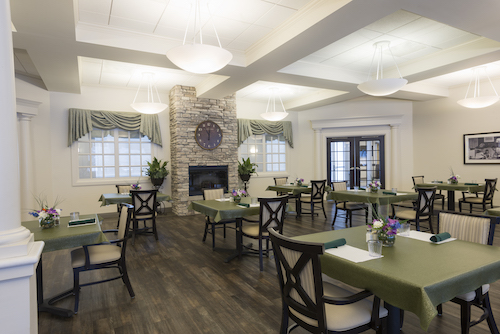
How Does Sage Bluff Health & Rehab Center Compare to Other Indiana Nursing Homes?

Compared to the 100 nursing homes in Indiana, SAGE BLUFF HEALTH & REHAB CENTER's overall rating (3 stars) is below the state average of 3.1, staff turnover (69%) is significantly higher than the state average of 46%, and health inspection rating (3 stars) is at the national benchmark.

What Should Families Ask When Visiting Sage Bluff Health & Rehab Center?

Based on this facility's data, families visiting should ask: "How do you ensure continuity of care given staff turnover, and what is your staff retention strategy?" "Can you walk me through typical staffing levels on day, evening, and night shifts?" "Can I visit during a mealtime to observe dining assistance and food quality?" "How do you handle medical emergencies, and what is your hospital transfer rate?" These questions are particularly relevant given the facility's high staff turnover rate and the below-average staffing rating.

Is Sage Bluff Health & Rehab Center Safe?

Based on CMS inspection data, SAGE BLUFF HEALTH & REHAB CENTER has a clean safety record: no substantiated abuse findings (meaning no confirmed cases of resident harm), no Immediate Jeopardy citations (the most serious violation level indicating risk of serious injury or death), and is not on the Special Focus Facility watch list (a federal program monitoring the lowest-performing 1% of nursing homes). The facility has a 3-star overall rating and ranks #100 of 100 nursing homes in Indiana. While no facility is perfect, families should still ask about staff-to-resident ratios and recent inspection results during their visit.

Do Nurses at Sage Bluff Health & Rehab Center Stick Around?

Staff turnover at SAGE BLUFF HEALTH & REHAB CENTER is high. At 69%, the facility is 23 percentage points above the Indiana average of 46%. Registered Nurse turnover is particularly concerning at 82%. RNs handle complex medical decisions and coordinate care — frequent RN changes can directly impact care quality. High turnover means new staff may not know residents' individual needs, medications, or preferences. It can also be disorienting for residents, especially those with dementia who rely on familiar faces. Families should ask: What is causing the turnover? What retention programs are in place? How do you ensure care continuity during staff transitions?

Was Sage Bluff Health & Rehab Center Ever Fined?

SAGE BLUFF HEALTH & REHAB CENTER has no federal fines on record. CMS issues fines when nursing homes fail to meet care standards or don't correct problems found during inspections. The absence of fines suggests the facility has either maintained compliance or corrected any issues before penalties were assessed. This is a positive indicator, though families should still review recent inspection reports for the full picture.

Is Sage Bluff Health & Rehab Center on Any Federal Watch List?

SAGE BLUFF HEALTH & REHAB CENTER is not on any federal watch list. The most significant is the Special Focus Facility (SFF) program, which identifies the bottom 1% of nursing homes nationally based on persistent, serious quality problems. Not being on this list means the facility has avoided the pattern of deficiencies that triggers enhanced federal oversight. This is a positive indicator, though families should still review the facility's inspection history directly.