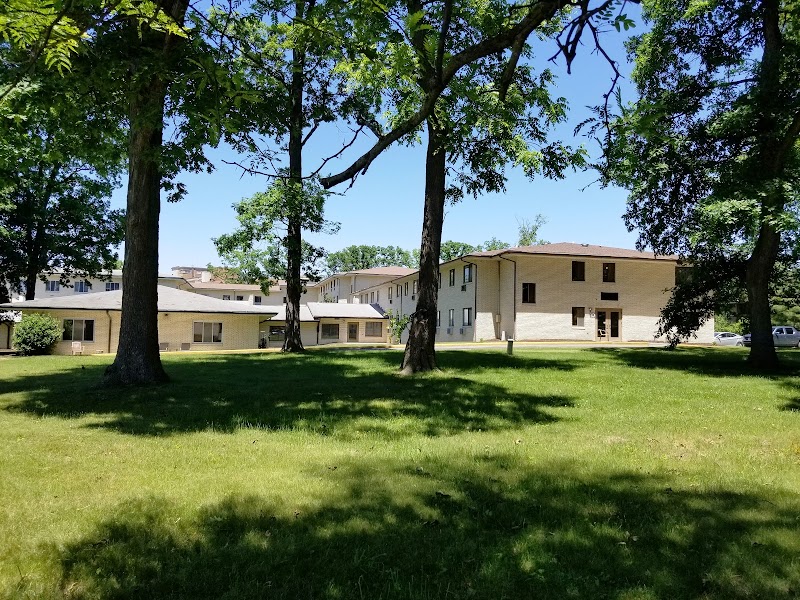
SAINT ANNE HOME

1900 RANDALLIA DR, FORT WAYNE, IN 46805 (260) 484-5555
Non profit - Church related 166 Beds Independent Data: November 2025
Trust Grade
85/100
#89 of 505 in IN
Last Inspection: February 2025

Within standard 12-15 month inspection cycle. Federal law requires annual inspections.

Overview

Saint Anne Home in Fort Wayne, Indiana has received a Trust Grade of B+, which means it is recommended and above average in quality. It ranks #89 out of 505 nursing homes in Indiana, placing it in the top half of facilities statewide, and #12 out of 29 in Allen County, indicating only 11 local options are better. The facility is improving, having reduced its issues from 2 in 2024 to 1 in 2025. Staffing is rated 4 out of 5 stars, reflecting a solid environment, but with a turnover rate of 52%, which is average compared to the state average of 47%. While there have been no fines, which is a positive sign, the home has concerning RN coverage that is lower than 84% of facilities in the state, potentially impacting resident care. However, there are notable weaknesses as well. Recent inspections found issues such as a failure to monitor water temperatures and conduct legionella testing, which could pose health risks. Additionally, kitchen sanitation was not maintained, with evidence of water dripping near clean dishes and food debris found in storage areas. Another incident highlighted inadequate care planning for a resident with a catheter, which raises concerns about the attention to individual care needs. Overall, while Saint Anne Home has strengths in its rankings and staffing, families should be aware of these specific incidents and the importance of monitoring ongoing improvements.

Trust Score
B+
85/100
In Indiana
#89/505
Top 17%
Safety Record
Low Risk
No red flags
Inspections
Getting Better
2 → 1 violations
Staff Stability
⚠ Watch
52% turnover. Above average. Higher turnover means staff may not know residents' routines.
Penalties
✓ Good
No fines on record. Clean compliance history, better than most Indiana facilities.
Skilled Nurses
○ Average
Each resident gets 31 minutes of Registered Nurse (RN) attention daily — about average for Indiana. RNs are the most trained staff who monitor for health changes.
Violations
⚠ Watch
18 deficiencies on record. Higher than average. Multiple issues found across inspections.
★★★★★
5.0
Overall Rating
★★★★☆
4.0
Staff Levels
★★★★★
5.0
Care Quality
★★★★☆
4.0
Inspection Score
Stable
2024: 2 issues
2025: 1 issues

The Good

  • 4-Star Staffing Rating · Above-average nurse staffing levels
  • 5-Star Quality Measures · Strong clinical quality outcomes
  • Full Sprinkler Coverage · Fire safety systems throughout facility
  • No fines on record

Facility shows strength in staffing levels, quality measures, fire safety.

The Bad

Staff Turnover: 52%

Near Indiana avg (46%)

Higher turnover may affect care consistency

The Ugly 18 deficiencies on record

Feb 2025 1 deficiency
CONCERN (F)

Potential for Harm - no one hurt, but risky conditions existed

Infection Control (Tag F0880)

Could have caused harm · This affected most or all residents

Based on interview and record review, the facility failed to ensure water temperatures in facility storage tanks were monitored and legionella testing was performed routinely. 118 of 118 residents res...

Read full inspector narrative →
Based on interview and record review, the facility failed to ensure water temperatures in facility storage tanks were monitored and legionella testing was performed routinely. 118 of 118 residents residing in the facility used water provided by the facility. Findings include: In an interview, on 2/27/25 at 1:04 PM, the Director of Nursing indicated she would provide policies and all records and logs pertaining to the facility's water management and legionella testing. A printed record of an email, dated 2/27/24 at 2:30 PM, indicated the Maintenance Director had contacted a company regarding a request for sample containers for legionella testing. The email indicated containers were being shipped that day or the following day for the facility to conduct legionella testing. A review of the facility assessment indicated the facility had a low probability of the occurrence of a resident with a legionella infection and a low capacity and performance to identify an issue. A review of 2024 temperature logs for water temperatures included spaces to record temperatures for hot water storage tanks 1 and 2 in the Nursing Home and hot water storage tanks 1 and 2 in the Rehabilitation section of the building. No values were documented in the spaces to record water temperatures of the water storage tanks in the Nursing Home or the Rehabilitation section of the building. In an interview, on 2/28/25 at 10:33 AM, the Maintenance Director indicated he was unable to obtain temperatures of water in the water storage tanks because no temperature gauge was present on the tanks. In an interview, on 2/28/25 at 10:33 AM, the Administrator indicated federal guidelines require the facility to provide a policy on water management for legionella and the policy should be followed. She indicated no legionella testing records were available for review and the policy had not been followed. An undated current policy titled Water Management Program- Legionella, provided by Administrator on 2/28/25 at 9:50 AM indicated the facility should maintain a temperature of 140 or above to prevent legionella growth. The policy also indicated legionella screening tests should be performed in 3-4 locations such as sinks or showers per floor and in the hot water tanks semi-annually. 3.1-18(a)
Aug 2024 1 deficiency
CONCERN (D) 📢 Someone Reported This

A family member, employee, or ombudsman was alarmed enough to file a formal complaint

Potential for Harm - no one hurt, but risky conditions existed

Deficiency F0602 (Tag F0602)

Could have caused harm · This affected 1 resident

**NOTE- TERMS IN BRACKETS HAVE BEEN EDITED TO PROTECT CONFIDENTIALITY** Based on interview and record review, the facility failed to the ensure residents were free from misappropriation of property fo...

Read full inspector narrative →
**NOTE- TERMS IN BRACKETS HAVE BEEN EDITED TO PROTECT CONFIDENTIALITY** Based on interview and record review, the facility failed to the ensure residents were free from misappropriation of property for 1 of 4 residents reviewed (Resident B). Findings include: During an interview on 8/14/24 at 11:46 AM, Resident B indicated she kept her credit card in her drawer in her room. Resident B indicated her power of attorney (POA) had noticed multiple charges to Doordash (food delivery company) on the resident's credit card statement. The POA notified the facility. Resident B indicated she was not aware of who in particular made the charges, but the facility talked to Doordash and Doordash told the facility the person who made the order used her personal name and home address. Resident B indicated the facility matched the name and address to an employee at the facility. Resident B indicated she never had the staff purchase items for her with her credit card nor did she give the staff permission to use her credit card. An investigation file was provided by the DON on 8/14/24 at 12:08 PM. The file included the following: A facility reported incident, dated 8/1/24, indicated Resident B's family notified the facility of multiple fraudulent Doordash charges on her credit card. The report indicated Resident B's family called Doordash and was told Certified Nurse Aide (CNA) 2 made purchases and had the purchases delivered to her home address using Resident B's credit card information. The report indicated a police report and investigation was initiated. The file included CNA 2's signed/dated 3/23/24, acknowledgement of the facilities' abuse policy, which included misappropriation of property. The file included a schedule dated 4/30/24 - 7/26/24, which indicated CNA 2 assisted Resident B 10 days with activities of daily living. The file also included statements which indicated the following: Social Worker (SW) 4's interview with Resident B and Resident B's POA, dated 8/1/24, indicated the POA showed SW 4 2 recent bank statements. The 2 bank statements displayed multiple Doordash charges. The statement indicated SW 4 asked Resident B if she had ever used Doordash or had the application on her phone and Resident B indicated no. The statement indicated Resident B's family called Doordash and gathered CNA 2's name and address. The facility then confirmed CNA 2 had purchased the items off of Doordash based on her employee file. A interview with Human Resources, AIT, DON and CNA 2 was included in the file. The interview indicated Human Resources had confirmed the information provided from the family and Doordash then confirmed the information matched CNA 2's name and address. Human Resources indicated herself, AIT and DON had called CNA 2 regarding the allegation. The interview indicated CNA 2 indicated her neighbor had been doing fraud or something about Doordash and one time she got home there was just food there. During an interview on 8/14/24 at 10 AM, the Administrator and AIT indicated Resident B had reported multiple fraudulent charges to Doordash to the Administrator. The Administrator indicated Resident B's POA indicated she had called Doordash who provide the [NAME] information and delivery address. The Administrator indicated she confirmed the information matched CNA 2's name and address. The Administrator indicated when CNA 2 was asked about the fraudulent charges, CNA 2 blamed her neighbor and denied the allegation. During an interview on 8/14/24 at 12 PM, Unit Secretary 3 indicated theft was stealing and was against the facility policy. Resident B's record was reviewed on 8/14/24 at 10:59 AM, diagnosis included anxiety disorder and muscle weakness. A recent quarterly Minimum Data Set (MDS) Assessment, dated 6/28/24, indicated Resident B had a Brief Interview of Mental Status (BIMS) of 15/15 (cognitively intact). A current policy, undated, titled Compliance Reporting Allegations of Abuse/Neglect/Exploitation, was provided by the DON on 8/14/24 at 12:08 PM. The policy indicated .misappropriation of resident property: the deliberate misplacement, exploitation, or wrongful, temporary or permanent, use of a resident's belongings or money without the resident's consent This citation relates to Complaint IN00440091. 3.1-28(a)
Feb 2024 1 deficiency
CONCERN (D) 📢 Someone Reported This

A family member, employee, or ombudsman was alarmed enough to file a formal complaint

Potential for Harm - no one hurt, but risky conditions existed

Free from Abuse/Neglect (Tag F0600)

Could have caused harm · This affected 1 resident

**NOTE- TERMS IN BRACKETS HAVE BEEN EDITED TO PROTECT CONFIDENTIALITY** Based on interview and record review the facility failed to ensure residents were free of physical abuse for 1 of 3 residents re...

Read full inspector narrative →
**NOTE- TERMS IN BRACKETS HAVE BEEN EDITED TO PROTECT CONFIDENTIALITY** Based on interview and record review the facility failed to ensure residents were free of physical abuse for 1 of 3 residents reviewed (Resident D). Findings include: A continuous video recording was provided for review by the Administrator on 2/7/24 at 11:39 AM. The video was time stamped 12/27/23 at 4:46 AM. Resident D was observed sitting in a chair in the hallway and Qualified Medication Aide (QMA) 4 was observed at the medication cart down the hall. Resident D was observed walking into room [ROOM NUMBER]. QMA 4 followed Resident D into the room. The video showed QMA 4's head bobbing up and down. Resident D was not visible at the time while in the room. QMA 4 was then observed pulling Resident D out of the room with her hands around both the resident's arms. The video showed Resident D resisted and tried to hit QMA 4. QMA 4 was then observed stepping back, Resident D lost his balance and fell to the floor in the hallway into an over the bedside table. Next, QMA 4 and Licensed Pratical Nurse (LPN) 5 were observed standing over Resident D. QMA 4 was observed performing a hand motion as if scolding Resident D. Then, QMA 4 and LPN 5 were observed assisting Resident D up into the chair for an assessment. An investigation file was provided by the Director of Nursing (DON) on 2/7/24 at 11 AM. The file included the following: A incident report, dated 12/27/23 at 4:56 AM, was completed by LPN 5. The report indicated Resident D wandered into room [ROOM NUMBER]. The report indicated QMA 4 attempted to redirect Resident D, but Resident D began to shout and grab QMA 4. The report indicated Resident D swung to hit QMA 4 in the face, but QMA 4 stepped out of the way. The report indicated Resident D then lost his balance and fell to the floor. The report also indicated Resident D made comments of it was her fault and f*** you while on the floor. The file included the following statements : LPN 5's statement indicated he was at the nurse's station when he saw Resident D wander into room [ROOM NUMBER]. LPN 5 indicated QMA 4 followed Resident D. LPN 5 indicated he overheard QMA 4 telling Resident D Hey, this is not your room. Come with me, if you need the bathroom, I can show you one. At that time, Resident D began to shout at QMA 4. The resident indicated I have had enough of you. LPN 5 indicated at that time he heard a physical struggle between the resident and QMA 4. LPN 5 got up to try to deescalate the situation, but before he arrived at the area, LPN 5 observed Resident D had attempted to hit QMA 4 and QMA 4 stepped back. LPN 5 then overheard Resident D fall on the floor. LPN 5 indicated he overheard QMA 4 indicate to Resident D See? Now you fell. LPN 5 and QMA 4 then assisted Resident D to a chair for an assessment. QMA 4's statement indicated she was trying to redirect Resident D from another resident's room. Resident D became agitated, angry and combative. QMA 4 indicated Resident D tried to hit her and told her to get off him. QMA 4 indicated she got off him and then Resident D lost his balance and fell. An assignment sheet was included in the file. The sheet indicated Resident D was a fall risk, was alert and confused at times. The sheet indicated Resident D had poor vision, needed frequent cues for care and had become aggressive at times. The sheet also indicated when Resident D became aggressive, was unable to be redirected, the staff were instructed to give Resident D space. A progress note, dated 12/27/23, by QMA 4 and LPN 5 indicated Resident D wandered into room [ROOM NUMBER]. QMA 4 attempted to redirect the resident and the resident began to shout and grab QMA 4. The note indicated LPN 5 approached the situation due to Resident D's physical aggression towards QMA 4. The note indicated Resident D tried to hit QMA 4. QMA 4 stepped back, then Resident D lost his balance then fell to the floor. A progress note, dated 1/1/24, indicated the Interdisciplinary Team (IDT) met for review on 12/28/23. The note indicated video cameras were reviewed and visualized Resident D wandered into a different resident's room. The note indicated as the resident entered the room, QMA 4 followed. QMA 4 was partially seen in the doorway of the room. The note indicated Resident D exited as QMA 4 was holding Resident D's arms. A struggle between the resident and QMA 4 was visualized. Resident D then attempted to swing his arm/fist at QMA 4 but lost his balance and fell. In an interview, on 2/7/24 at 11:03 AM, the DON indicated Resident D fell on [DATE] around 4:30 AM. The DON indicated she reviewed the cameras for the time period. The DON indicated she observed QMA 4 followed Resident D into a room, then QMA 4 pulled Resident D out of the room. The DON indicated she observed Resident D start to swing at QMA 4, lost his balance and fell. The DON indicated post fall, she observed QMA 4 stand over Resident D and made a hand motion as is sscolding Resident D. Certified Nurse Aide (CNA) 2 and Registered Nurse (RN) 3 were interviewed on 2/7/24 at 10:44 AM. CNA 2 and RN 3 indicated Resident D had been agitated and resistant with care before. CNA 2 indicated she reapproached or provided distraction at times of Resident D's care resistance. CNA 2 also indicated alternate staff assisted with Resident D's care. CNA 2 and RN 3 indicated when Resident D was resistant with care, the staff were to let him be peaceful and let him do what he wanted as long as he was safe. Resident D's record was reviewed on 2/7/24 at 11:48 AM. Diagnosis included Alzheimer's disease, delusional disorders, muscle weakness and abnormalities of gait/mobility. Resident D's quarterly assessment, dated 1/17/24, indicated Resident D had a Brief Interview Mental Status score of 03/15 (severely impaired). Resident D's current care plan indicated Resident D had behaviors. Resident D's care plan interventions indicated to stop and return if agitated. A current policy, dated 2022, was provided by the DON on 2/7/24 at 11 AM. The policy indicated abuse is a willful infliction of injury, unreasonable confinement, intimidation, or punishment with resulting physical harm, pain or mental anguish. The policy indicated mistreatment included inappropriate treatment of a resident. This citation relates to Complaint IN00424824. 3.1-27(b)
Mar 2023 12 deficiencies
CONCERN (D)

Potential for Harm - no one hurt, but risky conditions existed

Deficiency F0583 (Tag F0583)

Could have caused harm · This affected 1 resident

Based on observation, interview and record review the facility failed to ensure privacy for 1 of 1 resident reviewed. (Resident 32) Findings include: In an observation on 03/01/23 at 12:58 PM, from th...

Read full inspector narrative →
Based on observation, interview and record review the facility failed to ensure privacy for 1 of 1 resident reviewed. (Resident 32) Findings include: In an observation on 03/01/23 at 12:58 PM, from the hallway across from the dining area, a door was observed wedged open with a yellow wet floor sign. Inside the bathroom, Resident 32 was sitting on the toilet with her clothing to her ankles in full view of a visitor. A noise came from behind the bathroom door, RN 12 (Registered Nurse) stated, one minute (Resident 32's name), I will be right there. During an interview on 3/1/23 at 12:59 PM, Unit Manager 16 indicated Resident 32 frequently would go into the restroom without shutting the door. Unit Manager 16 indicated the wet floor sign was wedged there to indicate the floor was mopped. Unit Manager 16 indicated the floor was no longer wet. Unit Manager 16 did not indicate how she was aware the floor was not wet. Unit Manager 16 moved the wet floor sign from the doorway (shutting the door). Unit Manager 16 indicated no resident should be in the bathroom with the door open regardless of visitors in proximity. An observation and interview with Housekeeper 14 on 3/2/23 at 9:41AM, observed housekeeping putting a sign in the middle of the opening of a resident's door. The housekeeper indicated the middle of the open door was the place housekeeping personnel were trained to put the sign on the inner most part of the door, next to hinges, to keep the floor wet sign from accidently wedging the door open. Housekeepier 14 indicated they place a wet floor sign in the middle of the door opening in frequently used locations to best ensure visibility. Housekeeper 14 indicated she had not wedged a door open with a wet floor sign. Housekeeper 14 indicated the sign should be removed when the floor was dry. Resident 32's record review, began on 02/28/23 at 10:48 AM, indicated diagnosis included unsteadiness on feet, history of falls, dementia, need for assistance with personal care, overactive bladder, and Alzheimer's disease. Resident 32's current MDS (minimal data set), indicated the following: Section C for cognitive patterns indicated Resident 32 had minimal to no cognitive deficits with a BIMS (Brief Interview for Mental Status) of 14. Section E for behavior indicated Resident 32 did not have behaviors of disrobing in public, and public sexual acts. Section G for functioning status Resident 32's assessment indicated she requires limited physical assistance of one staff for toileting. Section GG for functional abilities Resident 32's assessment indicated she requires partial/moderate assistance with toileting hygiene. Section H for bowel and bladder Resident 32's assessment indicated she was frequently incontinent of urine and occasionally incontinent of bowel. Resident 32's current care planindicated the following: The problem of functioning performance with an intervention listed as; Resident requires substantial or maximal assistance for toileting hygiene, and lower body dressing. The focus of bladder incontinence indicated interventions included assist to toilet upon rising, before and after meals, at bedtime, and as needed. Resident 32's care plan did not indicate a behavior of not ensuring her privacy or the ability for Resident 32 to toilet unassisted. Upon request for policy regarding privacy, on 2/27/23 at 1:39 PM, the Administrator provided a current procedure titled, Abuse Prevention, revised 12/2022, this policy did not indicate a procedure for ensuring residents' privacy. No other policy was provided prior to exit. 3.1-3(a)(t)
CONCERN (D)

Potential for Harm - no one hurt, but risky conditions existed

Assessment Accuracy (Tag F0641)

Could have caused harm · This affected 1 resident

Based on record review and interview, the facility failed to ensure acurate assessment for 1 of 26 residents reviewed. (Resident 59). Findings include: On 3/1/23 at 10:29 AM, Resident 59's record was ...

Read full inspector narrative →
Based on record review and interview, the facility failed to ensure acurate assessment for 1 of 26 residents reviewed. (Resident 59). Findings include: On 3/1/23 at 10:29 AM, Resident 59's record was reviewed. Diagnoses included bipolar disorder, cirrhosis of the liver, dementia, major depressive disorder, cerebral infarct, and hemiplegia and hemiparesis following cerebral infarct affection right dominant side. Resident 59's Preadmission Screening and Resident Review (PASRR) I (federal requirement to help ensure that individuals are not inappropriately placed in nursing homes for long term care), dated 5/28/21, indicated the resident had a current Diagnostic and Statistical Manual of Mental Disorders (DSM) diagnoses of bipolar disorder and alcohol abuse. The resident was referred for a PASRR Level II (a document to confirm the indicated diagnosis noted in the PASRR Level I screening and to determine whether placement or continued stay in a nursing facility is appropriate). Resident 59's PASRR II, dated 6/7/21, indicated he had DSM diagnoses of bipolar disorder and alcohol abuse. Resident 59s annual Minimum Data Set (MDS) assessment, dated 4/8/22, was reviewed. The MDS Section A1500 PASRR was marked 0 for No indicating the state level II PASRR does not consider the Resident 59 to have a serious mental illness and/or intellectual disability or a related condition. The MDS indicated the resident's health conditions included bipolar disorder. In an interview on 3/2/23 at 11:15 AM, Social Services 1 indicated he entered 0 for No on the MDS Section A1500 PASRR for Resident 59 because the resident had not been having issues. A 0 for no in this section indicated the state level II PASRR did not consider the resident to have a serious mental illness and/or intellectual disability or a related condition and did not trigger Section A1510 to be completed which should had been. MDS Section A1510 allowed the facility to identify if the PASRR II indicated the resident had a mental illness and/or intellectual disability or a related condition. On 3/2/23 at 1:17 PM, a current policy titled RAI Policy, updated 12/22, provided by the Administrator, indicated the facility followed the Center for Medicare & Medicaid Services Long Term Care Facility Assessment Instrument (RAI) 33.0 User's Manual Version 1.15, 10/2017 (or current version) for RAI completion. No State Rule Applies
CONCERN (D)

Potential for Harm - no one hurt, but risky conditions existed

Deficiency F0675 (Tag F0675)

Could have caused harm · This affected 1 resident

**NOTE- TERMS IN BRACKETS HAVE BEEN EDITED TO PROTECT CONFIDENTIALITY** Based on observation, interview, and record review, the facility failed to ensure a call light was responded to in a timely mann...

Read full inspector narrative →
**NOTE- TERMS IN BRACKETS HAVE BEEN EDITED TO PROTECT CONFIDENTIALITY** Based on observation, interview, and record review, the facility failed to ensure a call light was responded to in a timely manner for 1 of 3 residents reviewed (Resident 68). During an observation on 3/1/23 at 9:22 AM, a call light was observed turned on outside room [ROOM NUMBER]. A large monitor at the nurse's station was sounding a tone and displaying the room number where the call light was located. On 3/1/23, at 9:22 AM Licensed Practical Nurse (LPN) 10 was observed carrying bottles of nutritional supplements to the medication room. After exiting the medication room, she passed by the call light monitor and walked down the hall. On 3/1/23 at 9:31 AM, LPN 10 was observed walking into the medication room. The call light remained on in room [ROOM NUMBER]. During an interview at 9:48 AM on 3/1/23, Resident 68 who resided in room [ROOM NUMBER], indicated she needed assistance transferring into her bed from her wheelchair. The call light remained on outside her room. At 9:52 AM on 3/1/23, two Certified Nursing Assistants (CNAs) were observed leaving another resident's room carrying plastic bags containing bed linens. LPN 10 was observed at that time wiping down a medication cart. The call light monitor was approximately 15 feet from where she was standing. room [ROOM NUMBER] was displayed on the screen and the call light tone was sounding. After placing linen in a soiled linen location and performing hand hygiene, CNA 9 answered the call light in room [ROOM NUMBER]. During an interview on 3/1/23 at 9:58 AM, CNA 9 indicated all staff are responsible for answering call lights. She indicated Nurses should answer call lights when CNAs are occupied with other residents. During an interview on 3/1/23 at 10:16 AM, LPN 10 indicated she did not know why she did not notice the call light going off. She indicated she had stepped into a break area at the time to have a bite to eat. A record review on 3/3/23 at 1:15 PM indicated Resident 68 had diagnoses including hypertension, Parkinson's disease, and depression. A Minimum Data Set (MDS) included a Basic Interview for Mental Status (BIMS) score of 14 out of 15 indicating she was alert, oriented and able to be interviewed. A document titled Tech- Care Report received on 3/2/23 indicated the call light in room [ROOM NUMBER] had been activated on 3/1/23 at 9:20 AM and was on for 32 minutes. Resident Council Minutes dated 12/15/23 were reviewed. 2 residents indicated call light response times were too long. Resident Council Minutes dated 2/14/23 were reviewed with one resident indicating concern about call light wait times. During a resident council meeting held with surveyors on 3/1/23 at 2:00 PM, 8 residents indicated they had concerns about long waits for call lights to be answered. A policy titled Resident Call Lights, dated 8/22 indicated all staff members who see or hear an activated call light are responsible for responding. 3.1-37(a)
CONCERN (D)

Potential for Harm - no one hurt, but risky conditions existed

Deficiency F0676 (Tag F0676)

Could have caused harm · This affected 1 resident

**NOTE- TERMS IN BRACKETS HAVE BEEN EDITED TO PROTECT CONFIDENTIALITY** During an observation on 2/28/23 at 11:51 AM, two surveyors standing to the left of Resident 22 attempted to speak to him and re...

Read full inspector narrative →
**NOTE- TERMS IN BRACKETS HAVE BEEN EDITED TO PROTECT CONFIDENTIALITY** During an observation on 2/28/23 at 11:51 AM, two surveyors standing to the left of Resident 22 attempted to speak to him and received no response. During an observation on 2/28/23 at 12:10 PM, Resident 22 was observed having a conversation with his wife in the dining room. She was seated at his right. In an interview, Resident 22's indicated Resident 22 is completely deaf in his left ear and wears a hearing aide in his right ear. During an interview on 3/1/23 at 10:18 AM, Certified Nursing Assistant 3 indicated she did not know if Resident 22 had better hearing in one ear or the other. During a record review on 3/1/23 at 1:45 PM, Resident 22 had diagnoses including unspecified dementia, major depressive disorder, recurrent, severe, with psychotic symptoms, and anxiety disorder. A Minimum Data Set (MDS) dated [DATE] included a Basic Interview for Mental Status score of 5 out of 15 indicating he was cognitively impaired and unable to be interviewed. The MDS also indicated he had difficulty hearing and used a hearing aid. In an interview on 3/1/23 at 2:20 PM, Minimum Data Set (MDS) Coordinator 4 indicated any hearing issues and strategies to communicate should be indicated on the care plan and communicated to the staff. No care plan discussing hearing or communication strategies was available for review. A policy dated titled Hearing Aid Care dated 8/22/23 indicated the facility should assist residents in using their hearing aides. A policy titled Effective Communication dated 1/22 indicated a resident's process for communication should be obtained upon admission. The policy also indicated plans and goals for communication should be individualized and in accordance with the resident's established routine. 3.1-38(a)(2)(E) Based on observation, interview, and record review the facility failed to ensure communication and hearing loss needs were addressed for 2 of 3 residents reviewed. (Resident 62 and Resident 22). Findings include: 1) During an observation on 2/27/23 at 10:40 AM, Resident 62 did not have her hearing aids in her ears. During an observation and interview on 02/28/23 at 08:41 AM, RN 12 (Registered Nurse) was observed to ask Resident 62 about pain. Resident 62 did not turn to acknowledge RN 12 was talking to her. A peer at the table pointed to RN 12 and Resident 62 stated, I don't know. Pain was documented by RN 12 as a zero. RN 12 indicated Resident 62 did not complain of any pain when asked. Resident 62's chart review, began on 02/28/23 at 11:08 AM, indicated diagnosis included Alzheimer's disease, morbid obesity, anxiety, pain, and unspecified voice and resonance disorder. Resident 62's current MDS (Minimal Data Set) section I for Active Diagnosis did not list any diagnosis regarding hearing loss. Section of MDS regarding hearing loss was not provided. Resident 62's care plan mentioned hearing aids under the focus of ADLs (Activity of Daily Living) without any specific focus on hearing loss. Resident 62's orders included hearing aid placement was to be in the morning and removed at bedtime. This was scheduled and documented as completed at 8am throughout the survey. During an observation of Resident 62, on 2/28/23 at 11:33AM, she did not have her hearing aids in. In an interview on 2/28/23 at 11:36AM, the Unit Secretary indicated Resident 62 was extremely hard of hearing and required hearing aids in both ears for communication purposes.
CONCERN (D)

Potential for Harm - no one hurt, but risky conditions existed

Pressure Ulcer Prevention (Tag F0686)

Could have caused harm · This affected 1 resident

Based on observation, interview, and record review the facility failed to implement standard procedures for pressure ulcer treatment for 1 of 2 residents reviewed. (Resident 64). Findings include: Dur...

Read full inspector narrative →
Based on observation, interview, and record review the facility failed to implement standard procedures for pressure ulcer treatment for 1 of 2 residents reviewed. (Resident 64). Findings include: During a continuous observation on 2/27/23 from 9:13 AM to 10:32 AM, Resident 64 was observed sitting in front of the nursing station in a wheelchair. Her feet were dangling. She had a wedge with padding between her legs. She was crying out please help me please and Get me out of here several times. At 10:32 AM Resident 64 was taken to shower room and did not return to common area by end of observation at 11:35 AM. Resident 64's record review, on 02/27/23 at 11:33 AM, indicated diagnosis included dementia, anxiety, irritable bowel, heart disease, and dysphagia. Resident 64's orders included active liquid protein four times a day for wound care, hospice, wash right buttock with soap and water, apply Medi honey alginate, and cover with dry dressing. Resident 64's current quarterly MDS (Minimum Data Set) assessment included the following: Section C for Cognitive patterns was not assessed due to her inability to complete. Section G for functional status indicated she required extensive assistance of one staff for bed mobility, personal hygiene, transfers, and toilet use. Section GG for functional abilities indicated she is dependent on staff for hygiene, toileting, rolling, and transfers. Section H for bladder and bowel indicated she is always incontinent of urine and frequently incontinent of bowel. Section M for skin conditions indicated she had a pressure ulcer that was unstageable. This section also indicated she had pressure reduction device on bed, nutrition intervention, and pressure ulcer treatment. It did not indicate any pressure reduction device for chair, turning. or repositioning program in place. Resident 64's care plan included the focus of potential for skin impairment related to decreased mobility. The interventions were from December of 2021. There were no updated or new interventions after developing the pressure ulcer in January of 2023. Resident 64 was seen by the rounding wound care nurse practioner on 2/28/23, 2/23/23, 2/16/23. The wound was identified as stage 3 pressure ulcer. On 2/7/23, 2/1/23 and 1/24/23, the wound was identified as unstageable. Unit Manager 16's progress notes indicated the wound was a stage 2 pressure ulcer on 2/28/23 and on 2/24/23. Unit Managers 16's progress notes indicated the wound was a stage 3 pressure ulcer on 2/7/23 and 2/1/23. Progress notes from the wound nurse practitioner and Unit Manager 16's assessments did not match in staging. Unit Manager 16 was the wound care nurse for the facility. An interview with Resident 64's emergency contact and POA (Power of Attorney), on 2/27/23 at 3:45 PM, indicated he was aware of the sore on her hip from friction. During an interview on 3/1/23, Unit Manager 16 indicated she was aware of monitoring of wound care that day and stated she would monitor the wound at 1pm. Unit Manager 16 indicated the wound was a twice a day dressing and they did not complete wound care in the AM so it could be observed. During an observation, on 3/1/23 at 12:58 PM, Unit Manager 16 and RN 12 (Registered Nurse) were at the medication cart. Neither of them indicated the dressing had been completed that day. Resident 64 was complaining of pain as she was being repositioned by RN 12 and Unit Manager 16. RN 12 indicated Resident 64 received pain medication prior to the dressing change. When Resident 64 was positioned and as comfortable as possible at the time, the dressing was removed. There was no lighting in the room. The light above Resident 64's bed was not able to be turned on although it was plugged in. The dressing was initialed by RN 12 and dated 3/1/23. Unit Manager 16 indicated RN 12 changed the dressing earlier that day. Unit Manager 16 washed her hands after removing the dressing. She did not dry her hands and commented on her hands still being wet while putting on her gloves. She then acquired 2 wash clothes and took them to the bathroom to apply warm water. She returned to the dresser where she had soap and a labeled dressing sitting on top of the dresser without a clean field. She put soap on a washcloth. Unit Manager 16 washed the area with her left hand, she used the soapy cloth, dropped the soapy cloth on the bed, then used the wet cloth. She did not wash hands or change gloves after washing the wound prior to applying the new treatment and covering. Unit Manager 16 used a small package prep adhesive around the area of the wound. The area was reddened with a darker edge about the size of a quarter. The area was on Resident 64's left gluteal and in the left inner quadrant. Unit Manager 16 then applied Medi honey alginate and a dressing pre labeled with date and initials which she had held in her right hand throughout the process. Resident 64 had stool present in her gluteal fold which was not cleaned prior to starting the dressing change. RN 12 cleaned Resident 64 after the dressing change and prior to repositioning. In an interview on 3/2/23 at 11:16 AM, Unit Manager 16 indicated she did not feel she had any difficulty with the dressing change. Unit Manager 16 indicated she washed her hands after removing the dressing and that was sufficient. Unit Manager 16 indicated stool was present during the dressing change. Unit Manager 16 indicated her clean field was on the dresser. She did not indicate what she used to create the clean field, simply repeated she had her soap on the dresser. In an interview on 3/2/23 at 12?32 PM, the Infection Control Nurse indicated it was important to do audits to ensure proper care, to ensure nursing confidence, and demonstration of skill. The Infection Control Nurse indicated it was important to keep the wound and surrounding area clean and to ensure no cross contamination happened throughout the process for wound healing and to decrease chance of infection. On 3/1/23 at 3:16PM, a current procedure titled, Risk Factors for Pressure Ulcers revised April 2020, indicated 3. general treatment goals for pressure ulcers. Stage 2 a) keep wound bed moist and peri wound tissue dry. Minimize trauma and pain. Prevent infection and further tissue destruction and damage. C. stage 3 and 4 a) keep wound bed moist b) absorb excessive exudate c) debride necrosis or devitalized tissue d) loosely pack dead space e) protect delicate granulation tissue and keep peri wound tissue dry. f) minimize pain. 3.1-40
CONCERN (D)

Potential for Harm - no one hurt, but risky conditions existed

Accident Prevention (Tag F0689)

Could have caused harm · This affected 1 resident

**NOTE- TERMS IN BRACKETS HAVE BEEN EDITED TO PROTECT CONFIDENTIALITY** Based on observation, interview, and record review the facility failed to implement interventions to prevent falls for 2 of 7 re...

Read full inspector narrative →
**NOTE- TERMS IN BRACKETS HAVE BEEN EDITED TO PROTECT CONFIDENTIALITY** Based on observation, interview, and record review the facility failed to implement interventions to prevent falls for 2 of 7 residents reviewed. (Resident 61 and Resident 39) Findings include: 1) During an observation, on 2/27/23 at 12:11 PM, Resident 61 was observed walking backwards with her walker. There were 2 staff in room at the time. The staff did not redirect the resident from walking backward. Throughout the continuous observation on 2/27/23 from 9:33AM to 12:11PM, Resident 61 was pacing the halls without any supervision or staff cues to rest. Resident 61's record review on 2/28/23 at 11:01 AM indicated diagnosis included dementia, behavioral disturbance, heart disease, and anxiety. Resident 61's current care plan indicated she is at high risk for falls related to dementia and history of falling. An intervention was listed of asking resident to sit down and take a break when pacing and to cue Resident 61 to use walker appropriately. During an observation on 3/1/23 at 9:37 AM, Resident 61 and a peer were in a contact altercation. Resident 61 was attempting to sit in chair next to a peer. The chair was in a row of 4 chairs at the front of the dining room in the hallway and had the arms touching. When a peer began yelling and smacking at Resident 61, Resident 61 continued to pace and each time she passed the peer, the peer would make negative statements and glare at her. Resident 61 was verbally redirected several times to not sit there, but no other activity was offered to her. Resident 61 then attempted to go into the tv area and was bumping another peer's feet with her walker, wheelchairs, and wheels on others' walkers. In the tv area there was an activity in progress with 17 people sitting in the room. Six wheelchairs were in the middle of the room with 11 others sitting off to the side. It was not possible for Resident 61 to walk through the room with a walker. During an observation on 3/1/23 at 10:56 AM the nurses and unit secretary were behind the desk. There were no CNAs (Certified Nursing Assistant) observed on the unit. The Unit Secretary indicated 3 CNAs of the 5 scheduled to work the unit were on break. During an observation and interview with the Administrator on 3/2/23 at 9:25 AM, 14 residents were observed in the tv room. There was no way to get through the room without bumping into something. The Administrator indicated space was an issue. The Administrator indicated the plan was to move some of the residents to the third floor. The Administrator indicated falls were not reported as happening in the tv room during the day. During an observation on 3/2/23 at 10:21 AM, 7 staff were observed behind the desk. There were no staff in the hallways, where Resident 61 continued to pace. In an interview on 03/02/23 at 11:38 AM, with Activities 15 indicated she was told to not use the activity room in the mornings. The activity room had 2 sections. One with tables and chairs the other with couches and chairs. Activities 15 indicated she had asked to do morning activities in the dining room due to lack of space and inability to spread out. In an interview on 3/1/ 23 at 9:56 AM, Unit Manager 16 indicated the a large number of residents go into tv room so they used that location. Unit Manager 16 indicated the unit was not an ideal set up for dementia unit. Unit Manager 16 indicated that there are at times 2 activities people on the unit and at those times they did parallel programming, so there was more room. 2) On 2/28/23 at 11:41 AM Resident 39 was observed sitting in a wheelchair near a medication cart. The wheelchair had foot pedals in place. A record review on 3/1/23 at 9:29 AM indicated the resident's diagnoses included dementia, anxiety, and chronic pain syndrome. A quarterly Minimum Data SET (MDS) assessment dated [DATE] indicated the resident had severe cognitive impairment with a Brief Interview of Mental Status (BIMS) score of 3 (not cognitively aware). The MDS indicated the resident had a history of falls. A physician order dated 7/30/22 indicated the resident was to have safety checks every 30 to 60 minutes. The physician order indicated the safety checks were to be performed by the nurse and or certified nursing assistant. A care plan focus dated 8/1/22 indicated the resident was at risk for falls due to decreased safety awareness, psychoactive drug use, and balance problems. A care plan intervention indicated the resident's wheelchair foot pedals should be on while in motion, and off at the point of transfer. The care plan did not indicate the resident was to have safety checks every 30 to 60 minutes. A post fall evaluation dated 2/26/23 indicated the resident was found on the floor in the common sitting area. The evaluation indicated prior to being found on the floor, the resident had been sitting at the table with her wheelchair in locked position and foot pedals in place. On 3/1/23 at 10:44 AM the resident was observed participating in activities with foot pedals in place on her wheelchair. During an interview with Certified Nursing Assistant (CNA) 22 on 3/1/23 at 10:50 AM she indicated she was not aware of the foot pedals being in place on the resident's wheelchair. She indicated she had not transferred the resident to the common sitting area. CNA 22 immediately removed the foot pedals. During an interview on 3/2/23 at 11:05 AM, Licensed Practical Nurse 20 indicated she was unaware of the physician order for safety checks every 30 to 60 minutes. She indicated the safety checks could possibly be included in the CNA task documentation. During an interview on 3/2/23 at 1:33 PM the Director of Nursing (DON) indicated she could not provide documentation of the resident's safety checks. A current policy titled Fall Assessment provided by the DON on 3/2/23 at 1:33 PM indicated interventions should be implemented to prevent recurrent falls. The policy indicated the interventions should be documented in the resident's care plan and communicated to resident care staff.
CONCERN (D)

Potential for Harm - no one hurt, but risky conditions existed

Respiratory Care (Tag F0695)

Could have caused harm · This affected 1 resident

Based on observation, record review and interview, the facility failed to ensure oxygen tubing was properly labeled and stored when not in use for 2 of 3 residents reviewed. (Resident 29 and Resident ...

Read full inspector narrative →
Based on observation, record review and interview, the facility failed to ensure oxygen tubing was properly labeled and stored when not in use for 2 of 3 residents reviewed. (Resident 29 and Resident 82). Findings include: 1) During an observation on 2/27/23 at 11:39 AM, Resident 29's nasal cannula (NC) oxygen tubing (a lightweight tube split into two prongs on one end and placed in the nostrils used to deliver supplemental oxygen) attached to her oxygen condenser (a medical device that gives you extra oxygen) was laying on her bed, not in a bag, and was not labeled. On 2/29/23 at 3:35 PM, Resident 29's record was reviewed. Diagnoses included cerebral infarction, hemiplegia and hemiparesis affecting left non-dominant side, contractures of multiple sites of muscles, diabetes mellitus type 2 with diabetic neuropathy, paroxysmal atrial fibrillation, hypothyroidism, essential hypertension, and body mass index. Resident 29's comprehensive Minimum Data Set (MDS) assessment, dated 2/20/23, indicated the resident's Brief Interview for Mental Status (BIMS) score was 8, she was alert but not interviewable. The MDS indicated she received oxygen while a resident at the facility. A review of the physician's order, dated 10/21/21, indicated her oxygen could be titrated between 1 liter per minute (LPM) and 6 LPM NC. A review of Resident 29's care plan, last revised 12/1/22, indicated the resident had altered cardiovascular status related to arrhythmia, hyperlipidemia, hypertension and heart disease and the goal was for the resident to be free from complications of cardiac problems. One intervention to maintain this goal indicated oxygen as ordered. 2) During an observation on 2/27/23 at 9:41 AM, Resident 82's NC oxygen tubing attached to her oxygen condenser was laying on top of the condenser, not in a bag, and was not labeled. During an observation on 2/28/23 at 9:27 AM, Resident 82's NC oxygen tubing attached to her portable oxygen tank which she was wearing was not labeled. The resident's NC oxygen tubing attached to her condenser was laying on the floor of her room, not in a bag. On 3/1/23 at 1:25 PM, Resident 82's record was reviewed. Diagnoses included acute and chronic respiratory failure with hypercapnia, dyspnea, obstructive sleep apnea, chronic diastolic heart failure, and allergic rhinitis. The resident's comprehensive Minimum Data Set (MDS) assessment, dated 12/15/22, indicated the resident's Brief Interview for Mental Status (BIMS) score was 15, she was alert, oriented and interviewable. The MDS assessment indicated she was on oxygen while a resident at the facility. A review of the resident's orders, dated 9/15/22, indicated she was to be on oxygen at 4 liters per minute (LPM) nasal cannula (NC). A review of Resident 82's care plan. Last revised 12/20/22, indicated the resident had an altered respiratory status with difficulty breathing related to acute respiratory failure with hypoxia secondary to congestive heart failure with a goal to maintain normal breathing patterns. One intervention to maintain this goal indicated oxygen by NC as ordered. In an interview on 2/27/23 at 11:39 AM, RN 2 indicated oxygen tubing should be labeled and in a bag when not in use. In an interview on 2/28/23 at 9:45 AM, the Infection Preventionist indicated oxygen tubing should be stored in a protective bag when not in use. On 2/29/23 at 4:00 PM, a current policy entitled Clean Oxygen Supplies, updated 9/20, provided by the Administrator, indicated the purpose of the policy was to maintain clean and dust-free equipment so it works effectively and is free of contamination. The policy indicated all new tubing was to be initialed. No addition policies were provided by survey exit. 3.1-47(a)(4)(5)(6)
CONCERN (D)

Potential for Harm - no one hurt, but risky conditions existed

Deficiency F0697 (Tag F0697)

Could have caused harm · This affected 1 resident

**NOTE- TERMS IN BRACKETS HAVE BEEN EDITED TO PROTECT CONFIDENTIALITY** Based on observation, interview, and record review the facility failed to provide nonpharmacological interventions and assessmen...

Read full inspector narrative →
**NOTE- TERMS IN BRACKETS HAVE BEEN EDITED TO PROTECT CONFIDENTIALITY** Based on observation, interview, and record review the facility failed to provide nonpharmacological interventions and assessment of pain for 1 of 1 resident reviewed for pain management. (Resident 39) On 2/28/23 at 11:41 AM Resident 39 was observed sitting in a wheelchair near a medication cart. The resident repeatedly referred to having a headache. A record review on 3/1/23 at 9:29 AM indicated the resident's diagnoses included chronic pain syndrome, anxiety, and unspecified dementia. A quarterly Minimum Data Set (MDS) assessment dated [DATE] indicated the resident had a Brief Interview for Mental Status (BIMS) score of 3 which indicated a severe cognitive deficit. The MDS pain assessment was blank. A physician order dated 12/8/22 indicated the resident was to be administered morphine sulfate 15 milligrams (mg) 4 times daily for pain. A physician order dated 1/21/23 indicated the resident was to be administered morphine sulfate 15 mg every 2 hours as needed for pain. The resident's physician orders did not indicate the resident's pain was to be monitored or nonpharmacological interventions were to be utilized. A care plan focus dated 8/1/22 indicated the resident was at risk for pain due to chronic pain syndrome. Interventions included administer medications, monitor for side effects and effectiveness of medications. The resident's care plan did not include the provision of nonpharmacological interventions to relieve pain. The resident's Medication Administration Record (MAR) for the months of January and February 2023 indicated the resident was administered morphine sulfate 15 mg 4 times daily for pain. The resident's pain level was indicated with a number at the time of administration. The MAR did not indicate the resident's pain was assessed after medication administration. The resident's MAR did not indicate nonpharmacological interventions were offered to relieve pain. The resident's MAR dated 1/21/23 through 3/2/23 indicated the resident was to be administered morphine sulfate 15 mg every 2 hours as needed for pain. On 2/22/23 at 11:15 AM the resident's MAR indicated the pain medication was not effective for a pain level of 8. The resident's pain level was not assessed on a numeric scale after the medication was administered. The resident's MAR did not indicate nonpharmacological interventions were offered to relieve pain. On 2/27/23 at 10:37 PM the resident's MAR indicated the pain medication was not effective for a pain level of 3. The resident's pain level was not assessed on a numeric scale after the medication was administered. The resident's MAR did not indicate nonpharmacological interventions were offered to relieve pain. During an interview on 3/2/23 at 11:05 AM LPN 20 indicated pain should be assessed before and after pain medication was administered. She indicated the pain assessment should be documented on the resident's MAR. A current policy titled Pain Management provided by the Executive Director on 3/2/23 at 1:17 PM indicated residents were to be assessed for acute or chronic pain upon admission and quarterly thereafter. The policy indicated if a resident was administered pain medication per required need (PRN) the pain level should be assessed before and after the medication was administered. 3.1-37(a)
CONCERN (D)

Potential for Harm - no one hurt, but risky conditions existed

Deficiency F0699 (Tag F0699)

Could have caused harm · This affected 1 resident

**NOTE- TERMS IN BRACKETS HAVE BEEN EDITED TO PROTECT CONFIDENTIALITY** Based on observation, interview and record review, the facility failed to identify triggers and initiate resident specific appro...

Read full inspector narrative →
**NOTE- TERMS IN BRACKETS HAVE BEEN EDITED TO PROTECT CONFIDENTIALITY** Based on observation, interview and record review, the facility failed to identify triggers and initiate resident specific approaches in providing trauma informed care for 1 of 1 resident reviewed (Resident 92). During an interview on 2/27/23 at 3:26 PM, Resident 92 indicated she had recently moved to Indiana after spending the last 29 years in Florida. She indicated during her hospitalization in Florida her condominium received severe storm damage, developed mold and was uninhabitable. Resident 92 had a sad facial expression when discussing her move to Indiana. She discussed having difficulty transitioning into living in a small space and people coming into her room frequently. During a record review on 3/2/23 at 10:07 AM, Resident 92 had diagnoses including acute diastolic heart failure, left bundle-branch block, and post-traumatic stress disorder. A Minimum Data Set (MDS) dated [DATE] included a Basic Interview for Mental Status (BIMS) score of 15 out of 15 which indicated she was alert, oriented and interviewable. Section D of the MDS indicated Resident 92 indicated Resident 92 had indicators of mood concerns including trouble falling or staying asleep, feeling tired or having little energy, feeling bad about herself, trouble concentrating, and moving so slowly that others have noticed. The MDS indicated each of these symptoms occurred 2-6 times per week. In a progress note by Social Services Director 5 dated 2/13/23, Resident 92 indicated that she felt bad about herself at times because she spent 11 years of her life hearing negative comments from her ex-husband. In a progress note by Nurse Practitioner 50 dated 2/13/23, she indicated Resident 92 had been divorced and lived alone for 47 years after being married to a verbally abusive husband. Resident 92 had indicated in this visit she experienced 11 years of misery and reported her husband had been mentally abusive. In a care plan dated 3/1/23, trauma was identified as a focus with a goal Resident 92 should receive culturally competent, trauma informed care within a safe environment through the next review. An intervention in this care plan indicated staff should identify the resident's history of trauma, cultural preferences and that triggers should be identified. Identified triggers and trigger-specific approaches were not available in the care plan for review. Specific approaches for mood concerns identified in section D of the MDS were not available in the care plan for review. During an interview on 3/3/23 at 8:51 AM Licensed Practical Nurse 10 indicated she was not aware of any specific triggers or approaches that should be used when interacting with Resident 92 as pertaining to any history of trauma. During an interview on 3/3/23 at 8:56 AM with MDS Coordinator 4, indicated that mood indicators identified in section d of the MDS should have prompted staff to generate a care plan addressing mood concerns. No policy regarding trauma- informed care was available for review. No state rule applies.
CONCERN (E)

Potential for Harm - no one hurt, but risky conditions existed

Resident Rights (Tag F0550)

Could have caused harm · This affected multiple residents

On 02/29/23 at 3:35 PM, Resident 29's record was reviewed. Diagnoses included neuromuscular dysfunction of the bladder, cerebral infarction, mellitus type 2 with diabetic neuropathy, hemiplegia and he...

Read full inspector narrative →
On 02/29/23 at 3:35 PM, Resident 29's record was reviewed. Diagnoses included neuromuscular dysfunction of the bladder, cerebral infarction, mellitus type 2 with diabetic neuropathy, hemiplegia and hemiparesis affecting left non-dominant side. Resident 29's comprehensive Minimum Data Sheet (MDS) assessment, dated 2/20/23, indicated the resident's Brief Interview for Mental Status (BIMS) score was 8, she was alert but not interviewable. The MDS indicated she received hospice and had an indwelling catheter. A review of the resident's order, dated 11/25/2022, indicated Resident 29 had an indwelling foley catheter. An order for Resident 29, dated 11/23/22, indicated to ensure the drainage bag was covered. A review of Resident 29's care plan, last revised 1/10/23, indicated the resident had a foley catheter related to a neuromuscular dysfunction of the bladder. During an observation on 02/29/23 at 9:10 AM, Resident 19 was observed laying in bed with her catheter bag hung along the lower right side of the bed facing the door; no privacy bag was covering the catheter bag. In an interview on 2/29/23 at 9:20 AM, the Infection Preventionist indicated Resident 29's catheter bag should be covered for privacy and it was not. On 3/1/23 at 2:10 PM, a current policy titled Catheter Care, updated 9/20, provided by the Executive Director, indicated the bag connected to the catheter should be covered to ensure the dignity of the resident. 3.1-3(a) Based on observation, interview, and record review, the facility failed to ensure a resident's indwelling urinary catheter bag was covered to maintain the resident's dignity for 1 of 8 residents reviewed for dignity (Resident 29). Findings include:
CONCERN (E)

Potential for Harm - no one hurt, but risky conditions existed

Deficiency F0761 (Tag F0761)

Could have caused harm · This affected multiple residents

**NOTE- TERMS IN BRACKETS HAVE BEEN EDITED TO PROTECT CONFIDENTIALITY** 6) During an observation at on 2/27/23 at 10:46 AM, Resident 87 was lying in bed. A bottle of Tums chewable antacid tablets was ...

Read full inspector narrative →
**NOTE- TERMS IN BRACKETS HAVE BEEN EDITED TO PROTECT CONFIDENTIALITY** 6) During an observation at on 2/27/23 at 10:46 AM, Resident 87 was lying in bed. A bottle of Tums chewable antacid tablets was on his bedside stand within his reach. In an interview conducted at that time, Resident 87 indicated he took 1 or two tablets when he felt like he needed them for a sour stomach. Resident 87 indicated he did not know how long he should wait between doses or the maximum amount that could be taken in a day. A record review conducted on 3/1/23 at 8:49 AM, indicated Resident 87 had diagnoses including cerebral atherosclerosis, depression, hypertensive heart disease with heart failure and gastro-esophageal reflux disease without esophagitis. A Minimum Data Set (MDS) dated [DATE] included a Basic Interview for Memory Score of 15 out of 15, which indicated Resident 87 was alert, oriented and able to be interviewed. In an interview on 3/28/23 at 3:42 PM, the DON indicated residents with medications at bedside must pass a medication self-administration assessment, and any medications kept in the room should be locked in their bedside cabinet. A care plan dated 11/2/22 indicated medications should be given as ordered and monitored for side effects and effectiveness. During a review of physician's orders, no order for Tums was available for review. A self-administration of medication assessment was not available for review. A document titled admission Information, undated, indicated all mediations, both prescription and over the counter, must be ordered by the physician. A policy titled Medication Storage, last updated 9/22, indicated all medications should be stored in locked carts or medication storage rooms. 3.1-25(j)(l)(m)(o)(r) Based on observation, interview, and record review the facility failed to properly label and store medications for 5 of 6 residents in 1 of 3 medication storage rooms reviewed. (Resident 62, Resident 22, Resident 68, Resident 40, and Resident 87) Findings include: 1) During a continuous observation on the dementia unit, on 02/28/23 at 8:41 AM, RN 12 (Registered Nurse) walked away from the medication cart without securing it to administered medication in another location not within sight of the medication cart. There were 8 Residents who came within arm's reach of the cart. RN 12 began preparing to administer medication to Resident 62. Resident 62 had several bottles of medications that were labeled with her preferred name and her last name. The medications were as follows: Acetaminophen 500mg; there was no open date, no room number, and no physician name amlopidine10-320; There was no open date A fiber supplement-1 fiber; There was no open date. no room number, and no physician name hydrochlorizaide 12.5mg; There was no open date Jardiance 25mg; There was no open date metopropol 50mg; There was no open date Preservision; There was no open date, no room number, and no physician name pantoprazoe 40mg; There was no open date Gemtesa 75mg; There was no open date CBD gummy (a controlled substance); There was no open date, no room number, no directions, and no physician name After getting all of Resident 62's medications together, crushed and floated in pudding, RN 12 began to walk away; leaving 11 bottles of pills, unsecured on top of the cart. RN 12 returned after turning her back to the cart, put the medications away then locked the cart. Resident 62's record review, began on 2/28/23 at 11:08AM, indicated diagnosis included Alzheimer's disease, difficulty swallowing, anxiety, depression, and hypertension. Resident 62 had physician orders for medications listed above and they were attempted to be administered on 2/28/23. 2) During an observation and interview on 2/28/23 at 9:36 AM with LPN 18 (Licensed Practical Nurse) at the Lakeside medication cart on the third floor, Resident 22's MiraLAX powder Bottle was without an open date. LPN 18 indicated the medication had been used by opening and noting the bottle was a quarter of the way full. LPN 18 indicated all medications are to have an open date when opened. Resident 22's record review on 3/1/23 at 8:06AM, indicated Resident 22 had an order for glycolax powder (MiraLAX) give 17 grams by mouth daily. The order was discontinued on 2/2/23. 3) During an observation on 2/28/23 at 9:36 AM, the Lakeside medication cart was observed. Resident 68's aluminum-magnesium-simethicone (Milk of Magnesium) did not have an open date. LPN 18 verified that it had been opened. Resident 68's record review on 3/1/23 at 8:08AM, indicated Resident 68 had an order for aluminum-magnesium-simethicone give 5ml by mouth every 4 hours as needed. Resident 68's MAR documentation indicated they did not receive this medication in the month of February 2023. 4) During an observation and interview, on 2/28/23 at 9:44AM the Tuscany cart on the first floor was observed. Resident 40's Mylanta double strength liquid was without an open date. LPN 19 verified the medication had been opened. Resident 40's record review began on 3/1/23 at 8:13AM indicated she had an order for Mylanta written in August of 2022. MAR documentation indicated the medication was not given in the month of February 2023. 5) During an observation on 2/28/23 at 10:03AM in the third floor medcation storage room the refrigerator temperature log was observed. The log was labeled February 2023 it indicated the refrigerator was to be 36-46 degrees and the freezer temp was to be -4 to 14 degrees. The log had the following documented: 16 Refrigerator temp 32 freezer -10 (not within range) 17 Refrigerator temp 32 freezer -10 (not within range) 22 Refrigerator tempt 34 and freezer -5 (not within range) 23 Refrigerator temp 34 and freezer -5 (not within range) 24 Refrigerator temp 36 and freezer -10 (not within range) There were no other temps recorded on the February log. Another refrigerator temp log available for review was dated December 2022. The temp log had the 15th documented as refrigerator 36 degrees and freezer at -10 degrees (not within range) There was no other documentation available for review. On 2/8/23 at 1:12 pm the Administrator provided the current policy titled Medication Refrigeration and Freezer Temperatures revised February 2023, indicated, all refrigerators and freezers where medication is to be stored will be checked daily to ensure teperatures are appropriate for medication storage. The temperature should remain between 36 to 46 degrees Fahrenheit. The freezer temperature should be -4 to 14 degrees Fahrenheit.'
CONCERN (F)

Potential for Harm - no one hurt, but risky conditions existed

Food Safety (Tag F0812)

Could have caused harm · This affected most or all residents

Based on observation, interview and record review, the facility failed to ensure kitchen sanitation was maintained. 101 of 101 residents residing in the facility were served food prepared in the kitch...

Read full inspector narrative →
Based on observation, interview and record review, the facility failed to ensure kitchen sanitation was maintained. 101 of 101 residents residing in the facility were served food prepared in the kitchen. During an observation of the Health Center dish room on 2/27/23 at 9:29 AM, water was observed dripping from ceiling approximately 3 feet from clean dishes just cleaned from the dishwasher. The floor surrounding the dishwasher area was wet. On 2/27/23 at 9:36 AM, during an observation, no internal thermometer was found in the walk-in cooler. Food particles and reddish quarter and dime sized spots were visible on the floor of the walk-in cooler and the walk-in freezer. Debris was also visible on the floor in the dry storage room. 2 inch round brown spots were visible on the shelf beneath the coffee maker where cookware was stored. During an observation of the 2nd floor kitchenette on 2/28/23 at 8:32 AM,, debris was present on the floor of the food service area. The gasket lining the bottom of the refrigerator door was torn away and hanging from the door. During an observation on 2/28/23 at 8:46 AM, a temperature log was observed on the refrigerator with recordings for 2/15 and 2/28 and no other entries. During an interview on 2/27/23 at 9:36 AM, the Dietary Manager indicated temperatures should be recorded for two reach-in coolers and an ice cream freezer. She indicated the wrong form was used at the beginning of the month. A policy titled Refrigerator/Freezer Seal dated 2/23 was reviewed. The policy indicated the seals would be replaced annually and repaired as needed. A policy titled Refrigerator Freezer Walk in Floor Cleaning dated 2/23 indicated the refrigerator and freezer floors would be swept daily and mopped twice weekly. A policy titled Refrigerator/Freezer Temperatures dated 8/22 indicated temperatures of refrigerators and freezers should be monitored daily. 3-1-21(i)(3
Dec 2022 3 deficiencies
CONCERN (D) 📢 Someone Reported This

A family member, employee, or ombudsman was alarmed enough to file a formal complaint

Potential for Harm - no one hurt, but risky conditions existed

Free from Abuse/Neglect (Tag F0600)

Could have caused harm · This affected 1 resident

Based on interview and record review, the facility failed to ensure residents were free from staff abuse 1 of 5 residents reviewed (Resident J). Findings include: An Indiana report form, dated 12/8/22...

Read full inspector narrative →
Based on interview and record review, the facility failed to ensure residents were free from staff abuse 1 of 5 residents reviewed (Resident J). Findings include: An Indiana report form, dated 12/8/22 at 4:30 p.m., indicated Resident J had reported to a nurse a male staff member (Employee 3) gave her a hug and kissed her on the lips. The male staff member had resigned earlier in the day. The male staff member was notified he was not allowed on the property, have contact with residents or families. Social services staff were to interview other residents for abuse or inappropriate contact. On 12/19/22 at 3:15 P.M., Resident J was observed seated in her wheelchair in her room. She was alert and oriented. She indicated she'd lived at the facility for 6 years and loved her room. Currently, she had no roommate. She was not observed in any distress and had a welcoming, genuine smile on her face. On 12/20/22 at 9:25 A.M., Resident J was observed in the living room area working on a puzzle. In an interview, Resident J indicated Employee 3 had been her special friend. She had spent much time with him talking about life, their children, books, and dying. She indicated he was her soulmate but not in a sexual way. They could talk about everything important to them and she came to love him like a son. On 12/8/22, in the afternoon, Emploee 3 came to her room. She was surprised because she hadn't usually seen him in the afternoon, just in the mornings. He came in the room, knelt down in front of her wheelchair, indicated he had been let go by the facility and was leaving his employment. He couldn't tell her why he had been let go. She indicated she had cried but had also been very angry with him. She indicated he was very intelligent but was a man, but didn't think with his head, rather another part of his anatomy. She indicated Employee 3 had been tempted by Resident N who lived on the 2nd floor of the facility. The resident indicated she'd known Resident N for years and had gone to school with her. She indicated Resident N was flirtatious with men and then would rebuff them when they became interested. When questioned why she thought this, she indicated that Employee 3 would always bring Resident N to mass and she observed him, several times, tenderly and lovingly caress the resident's shoulders. Resident J indicated it was a caress that would occur between a man and woman. Before Employee 3 had left her room, on 12/8/22, he had asked for her phone number so he could contact her after he left. She indicated she'd felt bad, but she had lied to him and told him she couldn't remember the number because she hadn't thought it was proper to give it to him. She told him she would pray for him and hoped he could get his life straightened out. She indicated he asked if he could kiss and hug her goodbye. She replied yes, he could and would've been upset had he not asked. He hugged her and then kissed her on the lips. She indicated she hadn't expected to be kissed on the lips and had been surprised when he did. Employee 3 then left her room and she hadn't heard from him since. She indicated she had cried for 2 days after he left and missed him. On 12/19/22 at 12:40 P.M., Resident J's record was reviewed. Diagnoses included hemiplegia (paralysis) of the right dominant side following a stroke and dependence on a wheelchair. A quarterly MDS (Minimum Data Set) assessment, dated 9/28/22, indicated she had no cognitive impairment, mood indicators, or behaviors. Care plans, revised on 9/14/20, indicated Resident J demonstrated independence in her decision making. She needed religious/spiritual support with a goal of having her spiritual needs met by pastoral care. Her care plans had not indicated any behaviors towards other residents/staff, behaviors of making false accusations or fabrication/embellishment of events. Progress notes indicated the following: -12/9/22 at 6:00 a.m., the resident reported to the nurse a male staff member (Employee 3) had given her a hug, kissed her on the lips as he was leaving and had asked for her phone number so he could keep in touch after he was no longer employed at the facility. The Administrator and Director of Nursing (DON) were notified. -At 9:48 a.m., the resident spoke with the day shift nurse (Employee 6) about the incident. The resident denied distress over the situation but reported her concern for anyone else he may have done this to. The resident was told a member of management would speak with her. Record reviews hadn't indicated a member of management had spoken with her on that day. -12/10/22 at 11:14 a.m., Resident J stopped the day shift nurse (Employee 6) and reported she knew why Employee 3 was no longer at the facility. She believed Resident N, who lived upstairs, reported him. She indicated Resident N was always flirting and batting her eyes at Employee 3 and was a big flirt who was probably jealous. -12/12/22 at 10:45 a.m., a Social Services note indicated a follow up interview had been completed with Resident J. During the interview, Resident J had indicated she was upset at her friend choosing to leave the facility but she supported his decision because it was best for him. She became tearful as she described her relationship with Employee 3 whom she indicated was like a son to her. When asked about the kiss he had given her, she indicated it was what she had expected and he was like a son to her. She hadn't expressed any further concerns. She was offered the opportunity to speak with a talk therapist and she accepted. -At 6:16 p.m., a Licensed Social Worker (LSW)/talk therapist indicated she met with the resident in the dining room. Resident J was inviting, pleasant, spoke about the holiday and being with family. She was asked if she was doing alright since her friend (Employee 3) had been dismissed. She indicated they had been good friends. Employee 3 had told her the facility had let him go but he hadn't been able to tell her why. She went on to say he kissed her but it had been a peck on her mouth. He had asked her for her phone number but she told him she hadn't thought it was a good idea. She saw him as a friend to have good conversations with. When asked, she indicated she was no longer having any difficulties coping with the actions and end of relationship. She had cried for 2 nights but indicated she was fine with it now. The LSW indicated Resident J hadn't indicated any emotional trauma nor had she perceived anything inappropriate when Employee 3 touched her. On 12/19/22 at 11:16 A.M., The Administrator indicated the residents family had been notified of the incident and had reported their belief Resident J embellished or fabricated stories to get attention. He indicated the resident hadn't understood Employee 3 could get into trouble for her report of him kissing her on the lips. He indicated he'd had a meeting with Employee 3 and had encouraged him to resign due to other concerns about Employee 3's behavior. Employee 3 agreed and resigned at that time. The Administrator indicated there had been no concerns expressed by residents or staff regarding the employee's behaviors towards residents, only those in his department. During a confidential interview, Employee 5 indicated Employee 3 could be manipulating. He would have angry outbursts at staff members, then would want to be helpful and pray with the staff member he had just had the verbal outburst at. Employee 3 worked often on the 2nd floor secured memory care unit and preferred to pray with residents in their rooms rather than complete other assigned duties. Employee 5 indicated Employee 3 had a close friendship with Resident J and had spent much time with her. On 12/20/22 at 10:20 A.M., Employee 6 was interviewed. She indicated Resident J reported to her Employee 3 had kissed her on the lips and was concerned there may have been other residents he had kissed as well. She indicated the resident hadn't seemed distressed by what had occurred but had reported it. She indicated she knew the resident on the 2nd floor, Resident N, but couldn't recall if she had reported it to anyone. She hadn't asked for further information from Resident J about her concerns. Employee 6 indicated she had not witnessed nor had she ever been told by residents Employee 3 had been inappropriate with them. On 12/20/22 at 11:25 A.M., the Administrator was interviewed. He indicated it was not appropriate for a staff member to kiss a resident on the lips. On 12/20/22 at 12:02 P.M., the Social Services Director (SSD) was interviewed. He indicated he had spoken with Resident J after the allegation was made. Resident J indicated Employee 3 had been like a son to her and she was tearful while describing the relationship. She appreciated Employee 3 praying with her and treating her kindly. When questioned, he indicated he hadn't known why the resident reported the incident if she hadn't been bothered by it. He had not been aware of the resident's concern about Resident N and the alleged relationship with Employee 3. On 12/20/22 at 12:36 P.M., the HR director was interviewed regarding a written statement dated 12/12/22 at 9:19 a.m. She indicated she had been approached by the Administrator to accompany the SSD during his interview with Resident J. She indicated, after reviewing the hall cameras, she could confirm that on 12/8/22 at 2:42 p.m., Employee 3 entered Resident J's room and exited the room at 2:48 p.m. She indicated earlier on the day of the allegation, Employee 3 had given his resignation on the recommendation of the Administrator. Employee 3 had not been asked to leave the building immediately upon tendering his resignation and had gone to some of the resident's room to say goodbye. She indicated he had clocked out of the facility sometime between 3:15 and 3:30 p.m. During the interview with Resident J and SSD, the resident indicated Employee 3 had come to her room and explained he needed to leave the facility. He hadn't disclosed the reason but indicated it was time to leave. She was visibly emotional about this and indicated a number of times she was sad he was gone and was going to miss him very much. Resident J indicated she thought of Employee 3 as the son she'd never had. They had sat and talked about their kids, family, life, and death. She indicated before he left her room, he had asked for her phone number but she had declined and told him she would keep him in her prayers. He then asked if he could kiss her and she gave permission. He kissed her on the lips and left the room. A current facility policy, titled Abuse Prevention and provided by the Administrator on 12/19/22 at 12:15 P.M., stated the following: It is the policy of [facility] to adhere to CMS guidelines and Indiana Administrative Code (IAC) regarding resident's right to be free from abuse, neglect and exploitation .3. [Facility] will establish policies and procedures to prohibit and prevent abuse, neglect, exploitation and misappropriation property, watch for changes that may cause abusive behavior and review interventions on a regular basis, such as: A. Screen and train employees to protect residents and prohibit and prevent abuse, neglect and exploitation. B. Identify, investigate and report any incidents of abuse, neglect or exploitation .Abuse is defined as: Sexual, physical and mental abuse This Federal tag relates to Complaint IN00396697. 3.1-27(a)(b)
CONCERN (D) 📢 Someone Reported This

A family member, employee, or ombudsman was alarmed enough to file a formal complaint

Potential for Harm - no one hurt, but risky conditions existed

Abuse Prevention Policies (Tag F0607)

Could have caused harm · This affected 1 resident

Based on interview and record review, the facility failed to implement policies and procedures to prevent abuse of 1 of 5 residents reviewed (Resident J). Findings include: An Indiana report form, dat...

Read full inspector narrative →
Based on interview and record review, the facility failed to implement policies and procedures to prevent abuse of 1 of 5 residents reviewed (Resident J). Findings include: An Indiana report form, dated 12/8/22 at 4:30 p.m., indicated Resident J had reported to a nurse a male staff member (Employee 3) gave her a hug and kissed her on the lips. The male staff member had resigned earlier on 12/8/22. The male staff member was notified he was not allowed on the property or have contact with residents or families. Social services staff were to interview other residents for abuse or inappropriate contact. On 12/19/22 at 11:16 A.M., the Administrator was interviewed about the reported incident between Resident J and Employee 3. He indicated on 12/8/22 he'd had a meeting with Employee 3 and had encouraged him to resign due to other reported concerns about Employee 3's behaviors. Employee 3 agreed and resigned at that time. The Administrator indicated there had been no concerns expressed by residents regarding Employee 3's behaviors. During a confidential interview, Employee 5 indicated Employee 3 could be manipulating. He would have angry outbursts at staff members, then would want to be helpful and pray with the staff member. Employee 3 worked often on the 2nd floor secured memory care unit and preferred to pray with residents in their rooms rather than complete his assigned duties. Employee 5 indicated Employee 3 had a close friendship with Resident J and had spent much time with her. On 12/19/22 at 2:00 P.M., Employee 3's personnel file was reviewed. There were no disciplinary actions or concerns regarding performance of his duties or interactions with others. A criminal background check indicated it had been completed on 12/19/22. The Administrator indicated Human Resources (HR) staff had been unable to find the criminal background check done at the time Employee 3 was hired. On 12/20/22 at 12:36 P.M., the HR director was interviewed. She indicated, on 12/8/22, Employee 3 submitted his resignation on the recommendation of the Administrator. The HR Director indicated when Employee 3 had been hired, she had been leaving for an extended leave of absence and had been trying to orient her replacement. The position had been vacated abruptly and the position needed filled immediately. Employee 3 had credible references and was hired. She indicated she had not been able to find the employee's criminal background check. The check was required to be done for employment at the facility. She indicated it may have been missed due to the confusion with the leave of absence and the need to fill the open position immediately. A current facility policy, titled Abuse Prevention and provided by the Administrator on 12/19/22 at 12:15 P.M., stated the following: It is the policy of [facility] to adhere to CMS guidelines and Indiana Administrative Code (IAC) regarding resident's right to be free from abuse, neglect and exploitation .3. [Facility] will establish policies and procedures to prohibit and prevent abuse, neglect, exploitation and misappropriation property, watch for changes that may cause abusive behavior and review interventions on a regular basis, such as: A. Screen and train employees to protect residents and prohibit and prevent abuse, neglect and exploitation. B. Identify, investigate and report any incidents of abuse, neglect or exploitation .Abuse is defined as: Sexual, physical and mental abuse .Screening Procedure: D. Obtain criminal history report on all employees This Federal tag relates to Complaint IN00396697. 3.1-28(b)(1)(A)
CONCERN (D) 📢 Someone Reported This

A family member, employee, or ombudsman was alarmed enough to file a formal complaint

Potential for Harm - no one hurt, but risky conditions existed

Investigate Abuse (Tag F0610)

Could have caused harm · This affected 1 resident

Based on interview and record review, the facility failed to conduct a thorough investigation of an allegation of abuse for 1 of 5 residents reviewed (Resident J). Findings include: An Indiana report ...

Read full inspector narrative →
Based on interview and record review, the facility failed to conduct a thorough investigation of an allegation of abuse for 1 of 5 residents reviewed (Resident J). Findings include: An Indiana report form, dated 12/8/22 at 4:30 p.m., indicated Resident J had reported to a nurse that a male staff member (Employee 3) gave her a hug and kissed her on the lips. The male staff member had resigned earlier that day. The male staff member was notified that he was not allowed on the property or have contact with residents or families. Social services staff were to interview other residents for abuse or inappropriate contact. On 12/20/22 at 9:25 A.M., during an interview, Resident J indicated Employee 3 had been her special friend. On 12/8/22, in the afternoon, he came to her room, knelt down in front of her wheelchair, indicated he had been let go by the facility and was leaving his employment. He couldn't tell her why he had been let go. She indicated she had cried but had also been very angry with him. She indicated he was very intelligent but was a man and didn't think with his head, rather another part of his anatomy. She indicated Employee 3 had been tempted by Resident N who lived on the 2nd floor of the facility. The resident indicated she'd known Resident N for years and had gone to school with her. She indicated Resident N was flirtatious with men and then would rebuff them when they became interested. When questioned why she thought this, she indicated that Employee 3 would always bring Resident N to mass. She had observed him several times tenderly and lovingly caress the resident's shoulders. Resident J indicated it was a caress that would occur between a man and woman. Before Employee 3 had left her room, on 12/8/22, he had asked for her phone number so he could contact her after he left. She indicated she'd felt bad, but she had lied to him and told him she couldn't remember the number because she hadn't thought it was proper to give it to him. She told him she would pray for him and hoped he could get his life straightened out. She indicated he asked if he could kiss and hug her goodbye. She replied yes he could and would've been upset had he not asked. He hugged her and then kissed her on the lips. She indicated she hadn't expected to be kissed on the lips and had been surprised when he did. Employee 3 then left her room and she hadn't heard from him since. She indicated she had cried for 2 days after he left and missed him. On 12/19/22 at 12:40 P.M., Resident J's record was reviewed. Diagnoses included hemiplegia (paralysis) of the right dominant side following a stroke and dependence on a wheelchair. A quarterly MDS (Minimum Data Set) assessment, dated 9/28/22, indicated she had no cognitive impairment, mood indicators, or behaviors. Care plans, revised on 9/14/20, indicated Resident J demonstrated independence in her decision making. She needed religious/spiritual support with a goal of having her spiritual needs met by pastoral care. Her care plans had not indicated any behaviors towards other residents/staff or behaviors of making false accusations or fabrication/embellishment of events. Progress notes indicated the following: -12/9/22 at 6:00 a.m., the resident reported to the nurse a male staff member (Employee 3) had given her a hug kissed her on the lips as he was leaving and had asked for her phone number so he could keep in touch after he was no longer employed at the facility. The Administrator and Director of Nursing (DON) were notified. -At 9:48 a.m., the resident spoke with the day shift nurse (Employee 6) about the incident. The resident denied distress over the situation but reported her concern for anyone else he may have done this to. The resident was told a member of management would speak with her. Record reviews hadn't indicated a member of management had spoken with her. -12/10/22 at 11:14 a.m., Resident J stopped the day shift nurse (Employee 6) and reported she knew why Employee 3 was no longer at the facility. She believed Resident N, who lived upstairs, reported him. She indicated Resident N was always flirting, batting her eyes at Employee 3 and was a big flirt who was probably jealous. During a confidential interview, Employee 5 indicated Employee 3 worked often on the 2nd floor secured memory care unit and preferred to pray with residents in their rooms rather than complete other assigned duties. On 12/20/22 at 10:20 A.M., Employee 6 was interviewed. She indicated Resident J reported to her Employee 3 had kissed her on the lips and she was concerned there may have been other residents he had done this to. She indicated the resident hadn't seemed distressed by what had occurred but had reported it. She indicated she knew which resident on the 2nd floor Resident J had referred to, Resident N, but couldn't recall if she had reported it to anyone. She hadn't asked for further information from Resident J about her concerns. Employee 6 indicated she had not witnessed nor had she ever been told by residents Employee 3 had been inappropriate with them. On 12/20/22 at 12:02 P.M., the Social Services Director (SSD) was interviewed about the investigation into the allegation. He indicated he interviewed some residents who may have received care from Employee 3 (a total of 7 residents). The 7 residents were asked if it was okay for staff to hug, hold hands, or to kiss a resident. 4 residents reported it was ok. 1 resident indicated staff should not hug, hold hands or kiss a resident. 1 resident indicated it would be okay if the resident hadn't minded and knew what the hug was about. 1 resident indicated hugs were okay but never was it okay to kiss a resident on the lips. The SSD indicated the facility had no specific questions to ask residents when conducting investigations regarding abuse nor was there any procedure to identify residents to be interviewed. When questioned, he indicated he hadn't known why the resident reported the incident if she hadn't been bothered by it and had not been aware of the resident's concern about Resident N and the alleged relationship with Employee 3. He had not conducted any interviews of residents or staff on the 2nd floor. The investigation of the alleged abuse had not included interviews with staff who may have witnessed the incident, any cognitively intact residents who may have been affected by Employee 3, nor was there any investigation completed with residents and staff on the 2nd floor secured memory care unit where Employee 3 was observed to work often. A current facility policy, titled Abuse Prevention and provided by the Administrator on 12/19/22 at 12:15 P.M., stated the following: It is the policy of [facility] to adhere to CMS guidelines and Indiana Administrative Code (IAC) regarding resident's right to be free from abuse, neglect and exploitation .3. [Facility] will establish policies and procedures to prohibit and prevent abuse, neglect, exploitation and misappropriation property .B. Identify, investigate and report any incidents of abuse, neglect or exploitation The policy hadn't indicated what the expectations were for an investigation to be considered thorough and complete. This Federal tag relates to Complaint IN00396697. 3.1-28(d)
Understanding Severity Codes (click to expand)
Life-Threatening (Immediate Jeopardy)
J - Isolated K - Pattern L - Widespread
Actual Harm
G - Isolated H - Pattern I - Widespread
Potential for Harm
D - Isolated E - Pattern F - Widespread
No Harm (Minor)
A - Isolated B - Pattern C - Widespread

Questions to Ask on Your Visit

  • "Can I speak with families of current residents?"
  • "What's your RN coverage like on weekends and overnight?"

Our Honest Assessment

Strengths
  • • Grade B+ (85/100). Above average facility, better than most options in Indiana.
  • • No major safety red flags. No abuse findings, life-threatening violations, or SFF status.
  • • No fines on record. Clean compliance history, better than most Indiana facilities.
Concerns
  • • 18 deficiencies on record. Higher than average. Multiple issues found across inspections.
Bottom line: Generally positive indicators. Standard due diligence and a personal visit recommended.

About This Facility

What is Saint Anne Home's CMS Rating?

CMS assigns SAINT ANNE HOME an overall rating of 5 out of 5 stars, which is considered much above average nationally. Within Indiana, this rating places the facility higher than 99% of the state's 100 nursing homes. This rating reflects solid performance across the metrics CMS uses to evaluate nursing home quality.

How is Saint Anne Home Staffed?

CMS rates SAINT ANNE HOME's staffing level at 4 out of 5 stars, which is above average compared to other nursing homes. Staff turnover is 52%, compared to the Indiana average of 46%.

What Have Inspectors Found at Saint Anne Home?

State health inspectors documented 18 deficiencies at SAINT ANNE HOME during 2022 to 2025. These included: 18 with potential for harm.

Who Owns and Operates Saint Anne Home?

SAINT ANNE HOME is owned by a non-profit organization. Non-profit facilities reinvest revenue into operations rather than distributing to shareholders. The facility operates independently rather than as part of a larger chain. With 166 certified beds and approximately 115 residents (about 69% occupancy), it is a mid-sized facility located in FORT WAYNE, Indiana.

How Does Saint Anne Home Compare to Other Indiana Nursing Homes?

Compared to the 100 nursing homes in Indiana, SAINT ANNE HOME's overall rating (5 stars) is above the state average of 3.1, staff turnover (52%) is near the state average of 46%, and health inspection rating (4 stars) is above the national benchmark.

What Should Families Ask When Visiting Saint Anne Home?

Based on this facility's data, families visiting should ask: "Can I visit during a mealtime to observe dining assistance and food quality?" "How do you handle medical emergencies, and what is your hospital transfer rate?" "Can I speak with family members of current residents about their experience?"

Is Saint Anne Home Safe?

Based on CMS inspection data, SAINT ANNE HOME has a clean safety record: no substantiated abuse findings (meaning no confirmed cases of resident harm), no Immediate Jeopardy citations (the most serious violation level indicating risk of serious injury or death), and is not on the Special Focus Facility watch list (a federal program monitoring the lowest-performing 1% of nursing homes). The facility has a 5-star overall rating and ranks #1 of 100 nursing homes in Indiana. While no facility is perfect, families should still ask about staff-to-resident ratios and recent inspection results during their visit.

Do Nurses at Saint Anne Home Stick Around?

SAINT ANNE HOME has a staff turnover rate of 52%, which is 6 percentage points above the Indiana average of 46%. Moderate turnover is common in nursing homes, but families should still ask about staff tenure and how the facility maintains care continuity when employees leave.

Was Saint Anne Home Ever Fined?

SAINT ANNE HOME has no federal fines on record. CMS issues fines when nursing homes fail to meet care standards or don't correct problems found during inspections. The absence of fines suggests the facility has either maintained compliance or corrected any issues before penalties were assessed. This is a positive indicator, though families should still review recent inspection reports for the full picture.

Is Saint Anne Home on Any Federal Watch List?

SAINT ANNE HOME is not on any federal watch list. The most significant is the Special Focus Facility (SFF) program, which identifies the bottom 1% of nursing homes nationally based on persistent, serious quality problems. Not being on this list means the facility has avoided the pattern of deficiencies that triggers enhanced federal oversight. This is a positive indicator, though families should still review the facility's inspection history directly.