CLINTON HOUSE REHABILITATION AND HEALTHCARE CENTER
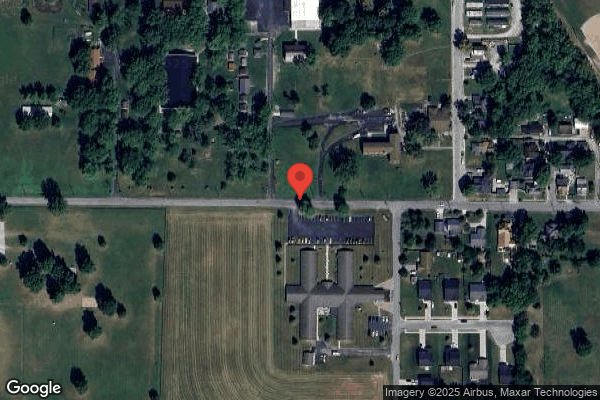
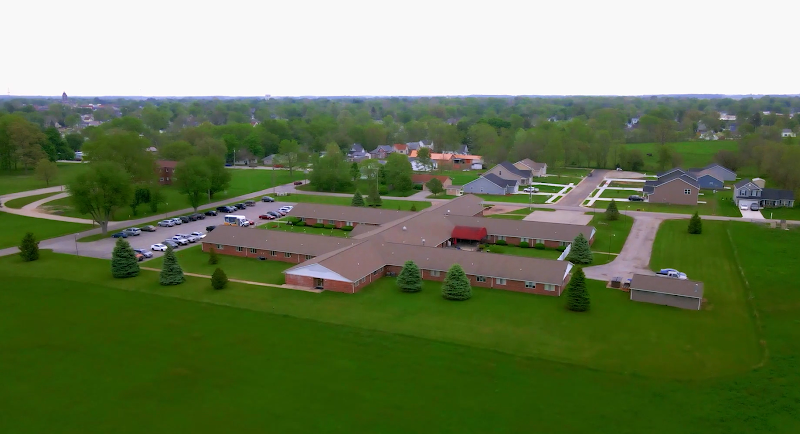
809 W FREEMAN ST, FRANKFORT, IN 46041 (765) 654-8783
Non profit - Other 88 Beds CASTLE HEALTHCARE Data: November 2025
Trust Grade
45/100
#338 of 505 in IN
Last Inspection: September 2024

Within standard 12-15 month inspection cycle. Federal law requires annual inspections.

Overview

Clinton House Rehabilitation and Healthcare Center has received a Trust Grade of D, indicating below average performance with some concerns. It ranks #338 out of 505 facilities in Indiana, placing it in the bottom half, and #4 out of 4 in Clinton County, meaning there are no better local options. The facility's trend is improving, with issues decreasing from 7 in 2024 to 2 in 2025, which is a positive sign. However, staffing is a significant weakness, as it has a low rating of 1 out of 5 stars and a turnover rate of 50%, which is average for the state but still concerning. There were serious incidents reported, including a resident who fell and sustained injuries due to a failure to secure them properly during transport, as well as issues with medication records that could potentially harm residents. Overall, while there are some improvements, families should weigh these concerns carefully.

Trust Score
D
45/100
In Indiana
#338/505
Bottom 34%
Safety Record
Moderate
Needs review
Inspections
Getting Better
7 → 2 violations
Staff Stability
⚠ Watch
50% turnover. Above average. Higher turnover means staff may not know residents' routines.
Penalties
✓ Good
No fines on record. Clean compliance history, better than most Indiana facilities.
Skilled Nurses
⚠ Watch
Each resident gets only 16 minutes of Registered Nurse (RN) attention daily — below average for Indiana. Fewer RN minutes means fewer trained eyes watching for problems.
Violations
⚠ Watch
34 deficiencies on record. Higher than average. Multiple issues found across inspections.
★★☆☆☆
2.0
Overall Rating
★☆☆☆☆
1.0
Staff Levels
★★★☆☆
3.0
Care Quality
★★★☆☆
3.0
Inspection Score
Stable
2024: 7 issues
2025: 2 issues

The Good

  • Full Sprinkler Coverage · Fire safety systems throughout facility
  • No fines on record

Facility shows strength in fire safety.

The Bad

2-Star Overall Rating

Below Indiana average (3.1)

Below average - review inspection findings carefully

Staff Turnover: 50%

Near Indiana avg (46%)

Higher turnover may affect care consistency

Chain: CASTLE HEALTHCARE

Part of a multi-facility chain

Ask about local staffing decisions and management

The Ugly 34 deficiencies on record

1 actual harm
Aug 2025 2 deficiencies
CONCERN (D) 📢 Someone Reported This

A family member, employee, or ombudsman was alarmed enough to file a formal complaint

Potential for Harm - no one hurt, but risky conditions existed

Deficiency F0727 (Tag F0727)

Could have caused harm · This affected 1 resident

Based on interview and record review, the facility failed to ensure a Registered Nurse (RN) was scheduled for at least 8 consecutive hours 7 days a week for 2 of 21 days reviewed for staffing. (7/20/2...

Read full inspector narrative →
Based on interview and record review, the facility failed to ensure a Registered Nurse (RN) was scheduled for at least 8 consecutive hours 7 days a week for 2 of 21 days reviewed for staffing. (7/20/25 and 8/3/25)Findings include:The as worked staffing schedules were reviewed on 8/11/25 at 1:35 p.m. A RN was not scheduled to work on Sunday, 7/20/25. A RN was not scheduled to work on Sunday, 8/3/25. The facility assessment, dated 3/17/25, indicated the facility had 2 residents who required IV (Intravenous) medications on average. Staff with specialized training such as RNs were to be assigned to areas with residents with higher acuity needs.During an interview, on 8/15/25 at 10:19 a.m., the Director of Nursing indicated there was no RN present in the facility on 7/20/25 and 8/3/25. The facility followed the CMS guidelines for staffing, and an RN should have been present on those dates for at least 8 consecutive hours.The facility did not provide a staffing policy prior to exit. 3.1-17(b)(3)
MINOR (C) 📢 Someone Reported This

A family member, employee, or ombudsman was alarmed enough to file a formal complaint

Minor Issue - procedural, no safety impact

Staffing Information (Tag F0732)

Minor procedural issue · This affected most or all residents

Based on interview and record review, the facility failed to ensure the daily nurse staffing data was posted at the beginning of each shift on 1 of 6 survey observation dates. (8/10/25)Findings includ...

Read full inspector narrative →
Based on interview and record review, the facility failed to ensure the daily nurse staffing data was posted at the beginning of each shift on 1 of 6 survey observation dates. (8/10/25)Findings include:During an observation, on 8/10/25 at 12:21 p.m., the posted nurse staffing data sheet was dated for 8/8/25.During an interview, on 8/11/25 at 12:55 p.m., the Director of Nursing (DON) indicated the scheduler created the daily nurse staffing data forms and posted it each morning. On the weekends, she created it ahead of time, and the manager on duty was supposed to post it each morning. The Saturday and Sunday sheets were placed in the posting frame behind Friday's sheet to be pulled forward over the weekend. If there were call-ins or changes, it would not reflect those on the weekend or night shifts after she went home. The staffing should be posted each morning, even during the weekend. If the posted sheet was dated 8/8/25, then the nurse staffing data sheet for 8/9/25 must not have been pulled forward on Saturday and Sunday's sheet was not pulled forward at the beginning of the shift.The facility did not provide a policy on nurse staffing data posting prior to exit.3.1-17(a)
Sept 2024 7 deficiencies
CONCERN (D)

Potential for Harm - no one hurt, but risky conditions existed

Deficiency F0655 (Tag F0655)

Could have caused harm · This affected 1 resident

**NOTE- TERMS IN BRACKETS HAVE BEEN EDITED TO PROTECT CONFIDENTIALITY** 2. The clinical record for Resident 34 was reviewed on 9/4/24 at 2:39 p.m. The diagnoses included, but not limited to, pneumonia...

Read full inspector narrative →
**NOTE- TERMS IN BRACKETS HAVE BEEN EDITED TO PROTECT CONFIDENTIALITY** 2. The clinical record for Resident 34 was reviewed on 9/4/24 at 2:39 p.m. The diagnoses included, but not limited to, pneumonia, acute on chronic systolic congestive heart failure, major depressive disorder, chronic kidney disease stage 3, and anxiety disorder. The resident's initial admission date was 7/18/24. The baseline care plan meeting date was recorded as occurring on 7/22/24 at 10:30 a.m. The resident was discharged to the hospital on 7/23/24. The resident was readmitted to the facility again on 7/27/24. The clinical record did not include a new baseline care plan meeting. During an interview, on 9/6/24 at 2:05 p.m., the Social Services Director indicated the baseline care plan meetings were recorded in the clinical record. A current facility policy, titled Baseline Care Plan, dated 10/20/23 and received from the Interim Executive Director on 9/6/24 at 2:40 p.m., indicated .Upon admission, the admission nurse will initiate the development of the baseline care plan as part of the admission assessment. The baseline care plan will continue to be developed by the interdisciplinary team and be completed within 48 hours of admission. 3.1-35(a) Based on observation, interview and record review, the facility failed to ensure baseline care plans were completed within 48 hours after admission for 2 of 2 residents reviewed for baseline care plans. (Resident B and 34) Findings include: 1. During an observation, on 9/3/24 at 10:51 a.m., Resident B was wearing oxygen at 3 liters. The clinical record for Resident B was reviewed on 9/5/24 at 1:25 p.m. The diagnoses included, but were not limited to, acute and chronic respiratory failure, type 2 diabetes, stage 3 chronic kidney disease, obstructive sleep apnea, and retention of urine. The resident was admitted on [DATE]. While reviewing the resident's care plan, the resident did not have a baseline care plan for the use of oxygen. During an interview, on 9/6/24 at 2:31 p.m., the Chief Nursing Officer (CNO) indicated there was not a respiratory baseline care plan for the resident. The policy was for the baseline care plan to be started within 48 hours of admission.
CONCERN (D)

Potential for Harm - no one hurt, but risky conditions existed

Quality of Care (Tag F0684)

Could have caused harm · This affected 1 resident

Based on interview and record review, the facility failed to administer an as needed medication for weight gain, to notify the physician of a weight gain and to hold insulin doses per the physician's ...

Read full inspector narrative →
Based on interview and record review, the facility failed to administer an as needed medication for weight gain, to notify the physician of a weight gain and to hold insulin doses per the physician's orders for 2 of 2 residents reviewed for quality of care. (Resident 34 and 68) Findings include: 1. The clinical record for Resident 34 was reviewed on 9/4/24 at 2:39 p.m. The diagnoses included, but were not limited to, pneumonia, acute respiratory failure with hypoxia (absence of enough oxygen to sustain bodily functions), acute on chronic systolic congestive heart failure (heart is unable to pump blood as well as it should), and chronic kidney disease stage 3. A physician's order, dated 7/28/24, indicated to weigh the resident daily and to notify the physician if the resident had a weight gain of 3 pounds in a day or 5 pounds in a week for congestive heart failure. A physician's order, dated 7/28/24, indicated to give furosemide (a diuretic medication) 40 milligrams (mg) by mouth every 24 hours as needed (PRN) for a greater than 3-pound weight gain. The vitals record in the electronic medical record indicated the resident's weights included, but were not limited to, a. On 8/4/24, the weight was 152 pounds and on 8/5/24 the weight was 155.5 pounds. This was a documented increase of 3.5 pounds in a day. b. On 8/10/24, the weight was 149.9 pounds and on 8/16/24 the weight was 161 pounds. This was a gain of 11.1 pounds in a week. c. On 8/11/24, the weight was 150 pounds and on 8/12/24 the weight was 156.5 pounds. This was an increase of 6.5 pounds in a day d. On 8/13/24, the weight was 156.5 pounds and on 8/14/24 the weight was 162 pounds. This was a gain of 5.5 pounds in a day. e. On 8/28/24, the weight was 158.5 pounds and on 8/30/24 the weight was 162 pounds. There was no weight found for 8/29/24. This was a gain of 3.5 pounds. The vitals record had multiple dates of missing weights. The Medication Administration Record (MAR), dated 8/1/24 through 8/31/24, indicated there had been no administrations of the furosemide PRN dose for a weight gain greater than 3 pounds. The electronic medical record did not indicate the physician had been notified of any weight gain greater than 3 pounds in a day or greater than 5 pounds in a week. During an interview, on 9/3/24 at 12:15 p.m., the resident indicated her main issue was with her breathing and feeling short of breath. She indicated the oxygen, and breathing treatments did not take away her discomfort of feeling short of breath on some days. The resident indicated her legs hurt more when they were more swollen. During an interview, on 9/6/24 at 2:25 p.m., the Director of Nursing (DON) indicated there had been no PRN furosemide doses documented as being given with the weight gain of greater than 3 pounds. She also indicated the provider had not been notified of weight gains as it occurred. 2. The clinical record for Resident 68 was reviewed on 9/6/24 at 1:32 p.m. The diagnoses included, but were not limited to, hemiplegia and hemiparesis following cerebral infarction affecting the left non-dominant side, type 2 diabetes mellitus with hyperglycemia and diabetic neuropathy, Parkinson's disease, gastroparesis, vascular dementia with mood disturbance, mild cognitive impairment, long term current use of insulin, depression, anxiety disorder, visual hallucinations, and tremor. A physician's order, dated 3/11/24 and discontinued 6/9/24, indicated to inject 28 units of insulin glargine-yfgn subcutaneously two times a day for diabetes and to hold if the blood glucose was less than 200. A physician's order, dated 6/9/24, indicated to inject 34 units of insulin glargine-yfgn subcutaneously two times a day for diabetes and to hold if the blood glucose was less than 200. A MAR, dated 6/1/24 through 6/30/24, indicated insulin glargine-yfgn 34 units was given with a documented blood glucose level less than 200 on 6/2/24 for the a.m. and p.m. doses, 6/4/24 for the a.m. dose, 6/7/24 for the p.m. dose, 6/11/24 for the a.m. dose, 6/13/24 for the a.m. and p.m. doses, 6/13/24 for the a.m. and p.m. doses, 6/14/24 for the a.m. dose, 6/16/24 for the a.m. dose, 6/18/24 for the a.m. dose, 6/21/24 for the p.m. dose, 6/22/24 for the a.m. dose, 6/28/24 for a.m. dose, and 6/30/24 for the a.m. dose. The documented blood glucose range was 115 to 197 for the doses given against the order to hold for a blood glucose less than 200. A MAR, dated 7/1/24 through 7/31/24, indicated insulin glargine-yfgn 34 units was given with a documented blood glucose level less than 200 on 7/4/24 for the a.m. and p.m. doses, 7/5/24 for the a.m. dose, 7/6/24 for the a.m. dose, 7/8/24 for the a.m. dose, 7/9/24 for the a.m. dose, 7/13/24 for the a.m. and p.m. doses, 7/14/24 for the a.m. dose, 7/16/24 for the a.m. dose, 7/17/24 for the a.m. dose, 7/20/24 for the a.m. and p.m. doses, 7/22/24 for the a.m. dose, 7/23/24 for the a.m. dose, 7/28/24 for the a.m. dose, and on 7/30/24 for the a.m. dose. The documented blood glucose range was 107 to 197 for the doses given against the order to hold for a blood glucose less than 200. A MAR, dated 8/1/24 through 8/31/24, indicated insulin glargine-yfgn 34 units was given with a documented blood glucose level less than 200 on 8/2/24 for the a.m. dose, 8/4/24 for the a.m. dose, 8/5/24 for the a.m. dose, 8/8/24 for the p.m. dose, 8/10/24 for the a.m. dose, 8/11/24 for the a.m. dose, 8/13/24 for the a.m. dose, 8/14/24 for the a.m. dose, 8/15/24 for the a.m. dose, 8/16/24 for the a.m. and p.m. doses, 8/22/24 for the a.m. dose, and 8/23/24 for the a.m. and p.m. doses. The documented blood glucose range was 149 to 198 for the doses given against the order to hold for a blood glucose less than 200. A MAR, dated 9/1/24 through 9/30/24, indicated insulin glargine-yfgn 34 units was given on 9/1/24 for the a.m. dose with a blood glucose of 134, on 9/2/24 for the a.m. dose with a blood glucose of 199, on 9/3/24 for the a.m. dose with a blood glucose of 187, and on 9/6/24 for the a.m. dose with a blood glucose of 195. During an interview, on 9/6/24 at 2:06 p.m., Licensed Practical Nurse (LPN) 7 indicated a medication was given if there was a check mark and initials on the MAR. There would be a code with initials when the medication was not given. LPN 7 indicated the insulin doses had been given on 9/1/24, 9/2/24, 9/3/24, and 9/6/24 with blood glucose levels less than 200. During an interview, on 9/6/24 at 2:21 p.m., the DON indicated the insulin doses were given against the hold order on multiple occasions. A current facility policy, titled Change in Condition/Physician Notification Guidelines, dated 11/23 and received from the DON on 9/10/24 at 12:00 p.m., indicated .physician notification is based on assessment findings and is to be documented in the medical record A current facility policy, titled Medication Administration Policy, dated 6/1/22 and received from the DON on 9/10/24 at 11:58 a.m., indicated .Check for vital signs or other tests to be done during or prior to medication administration A current facility policy, titled Subcutaneous Insulin, undated and received from the Clinical Support Nurse on 9/10/24 at 1:00 p.m., indicated .Administer to resident .as ordered . 3.1-37(a)
CONCERN (D)

Potential for Harm - no one hurt, but risky conditions existed

Respiratory Care (Tag F0695)

Could have caused harm · This affected 1 resident

**NOTE- TERMS IN BRACKETS HAVE BEEN EDITED TO PROTECT CONFIDENTIALITY** 3. During an observation, on 9/3/24 at 10:51 a.m., Resident B was wearing oxygen at 3 liters. The clinical record for Resident B...

Read full inspector narrative →
**NOTE- TERMS IN BRACKETS HAVE BEEN EDITED TO PROTECT CONFIDENTIALITY** 3. During an observation, on 9/3/24 at 10:51 a.m., Resident B was wearing oxygen at 3 liters. The clinical record for Resident B was reviewed on 9/3/24 at 1:25 p.m. The diagnoses included, but were not limited to, acute and chronic respiratory failure, type 2 diabetes, stage 3 chronic kidney disease, obstructive sleep apnea, and retention of urine. The resident was admitted on [DATE]. While reviewing the resident's physician's orders, the resident did not have an order for the use of oxygen. During an interview, on 9/3/24 at 3:01 p.m., the DON indicated she was not aware the resident did not have an order for oxygen. During an interview, on 9/10/24 at 12:00 p.m., the DON indicated they did not have a policy for physician's orders. A current facility policy, titled CPAP/BiPap CLEANING POLICY, dated as last revised and received from the Director of Nursing on 9/10/24 at 11:58 a.m., indicated, .Nebulizer/BiPap/CPAP mask and oxygen tubing is to be stored in plastic bag when not in use 3.1-47(a)(6) Based on observation, interview and record review, the facility failed to ensure staff stored a nebulizer mask and a CPAP/BiPap mask in a sanitary manner, failed to sanitize a CPAP/BiPap mask after it was found on the floor, and failed to ensure a resident receiving oxygen supplement therapy had an order for the oxygen for 3 of 3 residents reviewed for respiratory care. (Resident 58, 27 and B) Findings include: 1. During an observation, on 9/3/24 at 10:20 a.m., Resident 58 was resting in bed. A nebulizer mask was found lying on top of the nebulizer machine. It was not stored in a bag. The clinical record for Resident 58 was reviewed on 9/3/24 at 12:26 p.m. The diagnoses included, but were not limited to, history of traumatic brain injury, acute respiratory failure with hypoxia, and other diseases of the bronchus. A physician's order, initiated on 10/21/23, indicated to administer albuterol sulfate (a respiratory medication) 2.5 milligrams in 3 milliliters via nebulizer every six (6) hours as needed for shortness of breath and/or wheezing. During an interview, on 9/3/24 at 10:38 a.m., CNA 5 indicated the mask should not be stored on top of the nebulizer machine. During an interview, on 9/3/24 at 11:25 a.m., the Director of Nursing indicated the nebulizer mask was not stored appropriately. 2. During an observation, on 9/3/24 at 10:35 a.m., Resident 27 was sitting up in bed. A mask for a CPAP/BiPap (machine used to assist with breathing while sleeping) was noted to be on the floor. During an observation, on 9/3/24 at 10:36 a.m., CNA 5 entered the room, picked up the CPAP/BiPap mask from the floor and placed it on top of the machine. CNA 5 indicated the mask was not stored in a sanitary manner. She was not observed to have cleaned the mask prior to exiting the room. The clinical record for Resident 27 was reviewed on 9/10/24 at 10:56 a.m. The diagnoses included, but were not limited to, unspecified asthma, chronic respiratory failure with hypoxia, and obstructive sleep apnea. The resident did not have an order for a CPAP/BiPap machine. The resident did not have a care plan addressing the use of a CPAP/BiPap machine. During an interview, on 9/10/24 at 12:33 p.m., Resident 27 indicated he used the machine every night and nursing staff put the mask on him. During an interview, on 9/3/24 at 11:26 a.m., the Director of Nursing indicated the mask should have been sanitized and placed in a bag with a new date. During an interview, on 9/10/24 at 12:05 p.m., the Director of Nursing (DON) indicated Resident 27 needed to have an order for the CPAP. During an interview, on 9/10/24 at 12:32 p.m., RN 6 indicated when the resident admitted to the facility he had an order for the CPAP. The order was discontinued in October of 2023 when he went out to the hospital.
CONCERN (D)

Potential for Harm - no one hurt, but risky conditions existed

Deficiency F0700 (Tag F0700)

Could have caused harm · This affected 1 resident

Based on observation, interview and record review, the facility failed to ensure assessments were completed and a consent was obtained prior to the use of side rails for 2 of 3 residents reviewed for ...

Read full inspector narrative →
Based on observation, interview and record review, the facility failed to ensure assessments were completed and a consent was obtained prior to the use of side rails for 2 of 3 residents reviewed for accident hazards. (Resident O and 63) Findings include: 1. During an observation, on 9/3/24 at 9:34 a.m., 9/3/24 at 10:49 a.m., 9/4/24 at 9:19 a.m., 9/5/24 at 2:42 p.m., 9/6/24 at 1:40 p.m., 9/9/24 at 2:54 p.m., and 9/10/24 at 10:47 a.m., a side rail was in the raised position and in use on Resident O's bed. The clinical record for Resident O was reviewed on 9/4/24 at 2:02 p.m. The diagnoses included, but were not limited to, chronic obstructive pulmonary disease, type 2 diabetes mellitus with diabetic neuropathy and hyperglycemia, unsteadiness on feet, weakness, lack of coordination, difficulty in walking, peripheral vascular disease, anxiety disorder, chronic pain syndrome, hypertension, and major depressive disorder. A side rail assessment, completed on 7/24/23, indicated Resident O did not need a side rail to assist in bed mobility. The electronic record did not have documentation showing the risks and benefits were explained to Resident O or a consent was obtained prior to the use of side rails. A physical therapy treatment note, dated 6/25/24, indicated Resident O completed transfers using the bedside rail during his therapy session. 2. During an observation, on 9/3/24 at 9:37 a.m., 9/4/24 at 9:29 a.m., 9/5/24 at 1:23 p.m., and 9/9/24 at 2:54 p.m., a side rail was in place on Resident 63's bed. The clinical record for Resident 63 was reviewed on 9/4/24 at 2:03 p.m. The diagnoses included, but were not limited to, chronic obstructive pulmonary disease, lack of coordination, difficulty in walking, bipolar disorder, generalized anxiety disorder, seizures, gastroesophageal reflux, hypertension, pain in right knee, pain in left knee, and age-related physical debility. A side rail assessment was completed on 2/20/24 at 1:09 p.m. The assessment had the following question, Risks & Benefits have been explained & agreed to bed rail utilization, and indicated one of the following should be selected: 1. Resident representative notified and agreed or 2. Resident notified and agreed. Neither option was selected. The electronic record did not have documentation showing the risks and benefits were explained to Resident 63 or a consent was obtained prior to the use of side rails. A facility document, titled admission Packet, was found in the electronic record for Resident O and 63. The document indicated .Prior to installing a side or bed rail, the Facility will attempt to use appropriate alternatives. If the Facility determines it is necessary to use a bed or side rail, the Facility will (1) assess the Resident for risk of entrapment from bed rails prior to installation; (2) review the risks and benefits of bed rails with the Resident, Resident Representative and/or Resident Representative and obtain informed consent prior to installation . A current policy, titled Policy and Procedure Subject: Bedrails, dated 11-22 and received from the Clinical Support nurse on 9/5/24 at 9:00 a.m., indicated .when bed/side rails are requested .the admitting nurse will complete the Side Rail Evaluation .When bed/side rails are deemed to be appropriate for the resident, upon completion of the Side Rail Evaluation, the admitting nurse will review risks and benefits and obtain informed consent. 3.1-45(a)(1)
CONCERN (D)

Potential for Harm - no one hurt, but risky conditions existed

Medication Errors (Tag F0758)

Could have caused harm · This affected 1 resident

Based on interview and record review, the facility failed to ensure a PRN (as needed) psychotropic medication was not ordered beyond 14 days or the attending physician documented their rationale in th...

Read full inspector narrative →
Based on interview and record review, the facility failed to ensure a PRN (as needed) psychotropic medication was not ordered beyond 14 days or the attending physician documented their rationale in the resident's medical record to indicate the duration for the PRN order for 2 of 5 residents reviewed for unnecessary medications. (Resident K and 183) Findings include: 1. The clinical record for Resident K was reviewed on 9/5/24 at 10:54 a.m. The diagnoses included, but were not limited to, hemiplegia and hemiparesis following cerebral infarction affecting left non-dominant side, fibromyalgia, type 2 diabetes mellitus with hyperglycemia, recurrent major depressive disorder with psychotic symptoms, insomnia, unspecified affective mood disorder, anxiety disorder, post-traumatic stress disorder, and unspecified psychosis not due to a substance or known physiological condition. A physician's order, dated 2/9/24, indicated to give 1 tablet of alprazolam (an anti-anxiety medication) 0.25 mg (milligrams) by mouth every 12 hours as needed for anxiety with a 90 day stop date of 5/9/24. A physician's order, dated 5/16/24, indicated to give 1 tablet of alprazolam 0.25 mg by mouth every 12 hours as needed for anxiety with a 90 day stop date of 8/14/24. A physician's order, dated 8/15/24, indicated to give 1 tablet of alprazolam 0.25 mg by mouth every 12 hours as needed for anxiety with no end date given. During an interview, on 9/9/24 at 9:22 a.m., the Director of Nursing (DON) indicated she had not noticed the current PRN alprazolam order did not have a stop date. She could not find any documentation of a clinical reasoning from the physician for the extended duration of the PRN orders. 2. The clinical record for Resident 183 was reviewed on 9/4/23 at 2:36 p.m. The diagnoses included, but were not limited to, severe bipolar disorder with psychotic features, type 2 diabetes, and irritable bowel syndrome. A physician's order, with a start date of 8/23/24, indicated to give clonazepam (an anti-anxiety medication) 0.5 mg every 12 hours as needed. The order for the clonazepam did not have an end/stop date. During an interview, on 9/9/24 at 2:03 p.m., the DON indicated she did not see a stop date for the PRN order. During an interview, on 9/9/24 at 2:34 p.m., the Clinical Support nurse indicated as needed psychotropics should have stop dates within 14 days. A current policy, titled Psychotropic Drug Policy. Gradual Dose Reduction, PRN Psychotropics, not dated and received from the Clinical Support nurse on 9/10/24 at 9:35 a.m., indicated .PRN Psychotropics hypnotics, antianxiety or antidepressant medications shall not be used beyond 14 days unless the prescribing practitioner indicates the clinical rationale for extended use and the expected duration for PRN use of the medication 3.1-48(a)(2)
CONCERN (D)

Potential for Harm - no one hurt, but risky conditions existed

Deficiency F0804 (Tag F0804)

Could have caused harm · This affected 1 resident

Based on observation, interview and record review, the facility failed to ensure food was being served at proper (safe and appetizing) temperature for 1 of 1 kitchen reviewed for safe food temperature...

Read full inspector narrative →
Based on observation, interview and record review, the facility failed to ensure food was being served at proper (safe and appetizing) temperature for 1 of 1 kitchen reviewed for safe food temperatures. Findings include: During an interview, on 9/3/24 at 11:22 a.m., Resident E indicated room trays were often delivered late, and the food was cold. The posted mealtimes were as followed: Breakfast: 7:00 a.m. to 8:00 a.m. Lunch: 12:00 p.m. to 1:00 p.m. Dinner: 5:00 p.m. to 6:00 p.m. During a continuous dining observation, on 9/3/24 from 12:17 p.m. to 12:57 p.m., 30 residents in the dining room were served lunch. During a continuous dining observation, on 9/3/24 from 12:57 p.m. to 1:08 p.m., room trays were delivered to residents on the 200 hall and 400 hall. During a continuous dining observation, on 9/3/24 from 1:08 p.m. to 1:20 p.m., room trays were delivered to residents on the 500 hall and 600 hall. During the delivery of the room trays on the 500 hall, at 1:17 p.m., a food temperature check was requested on the last room tray. During an observation and interview, on 9/3/24 at 1:17 p.m., the Dietary Manager checked the temperature of the meal and indicated the hot foods should be served at 120 degrees Fahrenheit and the cold foods should be served at 45 degrees Fahrenheit. The Dietary Manager indicated if the food did not meet the recommended temperatures, the food would be reheated. The temperatures of the last room tray were as followed: a. The cheeseburger was 106 degrees Fahrenheit. b. The potato salad was 51 degrees Fahrenheit. c. The watermelon was 65 degrees Fahrenheit. During an observation, on 9/3/24 at 1:20 p.m., the last room tray was delivered with the hot food below the recommended temperature (greater than 135 degrees Fahrenheit) and the cold food was above the recommended temperature (less than 41 degrees Fahrenheit). During an interview, on 9/4/24 at 10:39 a.m., Resident C indicated the food being served was bland, cold, and the meal trays brought to the resident's room were delivered late. During an interview, on 9/6/24 at 1:31 p.m., Resident F indicated if they ate in the main dining room, the food temperatures were not a concern. If they ate the meals in their rooms, the food was cold when it was delivered. Resident F indicated complaints about the food had been discussed in the monthly resident council meetings. During an interview, on 9/6/24 at 1:33 p.m., Resident G indicated meal portions were not consistent, the food was bland, and if they chose to eat in their room, the food was cold when it was delivered. During an interview, on 9/9/24 at 2:35 p.m., the Interim Executive Director (ED) indicated he was aware of the ongoing complaints about the food. The concern had been discussed at resident council meetings almost every month. A current facility policy, titled Food and Nutrition Services, dated as revised 11/22 and received from the Clinical Support nurse indicated .The facility will provide each resident with a nourishing, palatable, well-balanced diet . A facility document, titled .Quick Resource Tool: Safe Food Handling . dated 9/1/2021 and received from the Director of Nursing (DON) on 9/10/24 at 10:40 a.m., indicated .The Dining Services Director/Cook(s) will be responsible for food preparation techniques which minimize the amount of time that the food items are exposed to temperatures greater than 41 degrees Fahrenheit and/or less than 135 degrees Fahrenheit, or per state regulation .All foods will be held at appropriate temperatures, greater than 135 degrees Fahrenheit (or as state regulation requires) for hot holding, and less than 41 degrees Fahrenheit for cold food holding .Temperature for Time/Temperature Control for Safety (TCS) foods will be recorded at time of service and monitored periodically during meal service periods . This citation relates to Complaint IN00441593. 3.1-21(a)(1) 3.1-21(a)(2)
CONCERN (D) 📢 Someone Reported This

A family member, employee, or ombudsman was alarmed enough to file a formal complaint

Potential for Harm - no one hurt, but risky conditions existed

Infection Control (Tag F0880)

Could have caused harm · This affected 1 resident

Based on observation, interview and record review, the facility failed to ensure a resident was placed in contact isolation immediately after being tested and while waiting for the results for Clostri...

Read full inspector narrative →
Based on observation, interview and record review, the facility failed to ensure a resident was placed in contact isolation immediately after being tested and while waiting for the results for Clostridium Difficile (C-Diff) for 1 of 1 resident reviewed for antibiotic use. (Resident B) Finding includes: During an observation, on 9/3/24 at 10:51 p.m., Resident B was on enhanced barrier precautions. The clinical record for Resident B was reviewed on 9/5/24 at 1:25 p.m. The diagnoses included, but were not limited to, acute and chronic respiratory failure, type 2 diabetes, stage 3 chronic kidney disease, obstructive sleep apnea, and retention of urine. A nursing progress note, dated 9/2/24, indicated the resident had an episode of bowel movement which was foul smelling and mucus in appearance. The physician was notified. A physician's order, dated 9/2/24 at 11:30 a.m., indicated to obtain a stool sample. A physician's order, dated 9/2/24, indicated the Medical Doctor (MD) started Resident B on Flagyl (an antibiotic) 500 mg (milligram) by mouth three times per day for diarrhea to rule out C-Diff (a highly contagious bacteria which causes diarrhea and inflammation of the colon). A physician's order, dated 9/3/24 at 6:00 p.m., indicated the resident was to be in contact isolation every shift until C-Diff was ruled out. The resident was not placed into contact isolation immediately while being tested for C-Diff. Resident B was not in contact isolation for over 24 hours after being tested. During enhanced barrier precautions, personal protective equipment (PPE) was not required to be put on every time when entering the room. Contact isolation required PPE every time when entering a room. During an interview, on 9/3/24 at 3:01 p.m., the Director of Nursing (DON) indicated when you get an order for a stool sample to rule out C-Diff, a resident should be put in contact isolation until they get the results back. A current policy, titled Clostridium Difficile, dated as effective 6/14/24 and received from the DON indicated .Resident with diarrhea and suspected CDI are placed on contact precautions while awaiting laboratory results 3.1-18(j)
Sept 2023 13 deficiencies
CONCERN (D)

Potential for Harm - no one hurt, but risky conditions existed

Resident Rights (Tag F0550)

Could have caused harm · This affected 1 resident

3. During an observation, on 8/27/23 at 12:33 p.m., QMA 7 was standing next to Resident 40 feeding her. CNA 8 took over feeding the resident and she remained standing until the resident finished. Duri...

Read full inspector narrative →
3. During an observation, on 8/27/23 at 12:33 p.m., QMA 7 was standing next to Resident 40 feeding her. CNA 8 took over feeding the resident and she remained standing until the resident finished. During an observation, on 8/29/23 at 12:33 p.m., the Activity Director was assisting the resident to eat while she was standing next to her. She kneeled on the floor beside the resident at 12:36 p.m., then stood back up to assist her to eat. The record for Resident 40 was reviewed on 8/27/23 at 1:00 p.m. Diagnoses included, but were not limited to, dysphagia and Alzheimer's disease. A care plan, dated 8/15/23, indicated eating may fluctuate throughout the day, but usual performance was supervision or touching assistance. During an interview, on 8/30/23 at 3:30 p.m., the Activity Director, who was also a CNA, gave a copy of the items reviewed in the state approved curriculum for dining assistants (used to train feeding assistants to assist residents to eat). She indicated the staff were taught to sit next to the resident and not across from them. She was not sure why this was not listed on the state approved curriculum for dining assistants. During an interview, on 8/31/23 at 2:47 p.m., CNA 10 indicated when she fed a resident, she would sit on the affected side at eye level with the resident. She was taught to sit next to the resident when feeding them during the CNA training. A current policy, titled Castle Healthcare Fall Prevention Program, reviewed on 6/9/21 and received from the ED on 9/1/23 at 4:30 p.m., indicated .It is the policy of this facility to have a Fall Prevention Program to assure the safety of all residents in the facility, when possible .Standard Fall/Safety Precautions For All Residents .The bed will be maintained in a position appropriate for resident transfers A current policy, titled Resident Rights, revised on 11/2022 and received from the Director of Nursing (DON) on 9/1/23 at 12:30 p.m., indicated .To promote the exercise of rights for each resident, including any who face barriers [such as communication problems, hearing problems and cognition limits] in the exercise of these rights. A resident, even though determined to be incompetent, should be able to assert these rights based on his or her degree of capability .These rights include the resident's right to .Retain and use personal possessions to the maximum extent that space and safety permit 3.1-3(t) Based on observation, record review and interview, the facility failed to ensure a resident was dressed in her own clothing, a resident's bed was not in the lowest position and sitting on the floor and a resident was assisted to eat with the staff sitting next to her for 3 of 3 residents reviewed for dignity. (Resident 14, 52 and 40) Finding includes: 1. During an observation, on 8/27/23 at 3:18 p.m., Resident 14 was lying in bed with her eyes closed and the bed was so low to the floor it was almost touching the floor with only about one inch between the floor and bed. The bed appeared like it was floor level and the resident appeared to be lying on the floor. The record for Resident 14 was reviewed on 8/3/23 at 11:49 a.m. Diagnoses included, but were not limited to, Alzheimer's disease, osteoarthritis, major depressive disorder, and a mood disorder. A care plan, dated 7/11/23, indicated the resident was at a risk for impaired safety and injury related to a fall risk. The interventions included, but were not limited to, keep the bed in the lowest position. During an interview, on 9/1/23 at 10:09 a.m., LPN 14 indicated the bed position when a care plan indicated for the bed to be in the lowest position would depend on the resident. The beds placed in the lowest position which was almost touching the floor would prevent a resident from falling out of the bed. Other beds were placed in a low position although not close to touching the floor. 2. During an observation, on 8/27/23 at 3:45 p.m., Resident 52 was lying in bed and was wearing a hospital gown. During an observation, on 8/28/23 at 12:29 p.m., the resident was lying in bed in her room and was wearing a hospital gown. During an observation, on 8/29/23 at 11:28 a.m., the resident was lying in bed in her room, her eyes were closed, and she was wearing a hospital gown. During an observation, on 9/1/23 at 10:10 a.m., Resident 52 was lying in bed. The bed was so low it appeared as though the resident was sleeping on the floor. The record for Resident 52 was reviewed on 8/30/23 at 2:29 p.m. Diagnoses included, but were not limited to, Alzheimer's disease, dementia with agitation, chronic kidney disease and depression. A care plan, dated 6/13/23, indicated the resident had an activities of daily living (ADL) self-care deficit and was at a risk for functional declines related to depression, impaired mobility, and dementia. The interventions included, but were not limited to, encourage participation in daily care and provide positive reinforcement for activities attempted and/or partially achieved. The care plan did not include the resident would wear a hospital gown. A care plan, dated 6/13/23, indicated the resident was at a risk for impaired safety/injury related to being a fall risk. The interventions included, but were not limited to, keep the bed in the lowest position. The care plan did not indicate if the lowest position was at the floor level or in the regular lower bed position (not elevated position for when staff provided care). An Activity Preferences form, dated 7/30/23, indicated it was somewhat important for the resident to be choose her clothes. During an interview, on 8/29/23 at 12:26 p.m., RN 12 indicated the resident always wore a hospital gown. There were a few times the resident would wear regular clothes. During an interview, on 8/30/23 at 3:39 p.m., the Clinical Support Nurse indicated she was not able to locate documentation in the electronic health record (EHR) for the reason the resident always wore a hospital gown. The preferences were not marked for wearing a hospital gown and the care plan did not include wearing a hospital gown. During an interview, on 8/31/23 at 10:39 a.m., the Social Services Designee (SSD) indicated the resident was combative with care at times and she assumed the resident would not let staff change her clothes. The resident did have her own clothing. During an interview, on 8/31/23 at 4;15 p.m., the Executive Director (ED) indicated she was not aware the residents' beds were in such a low position at the floor level. The beds were not in the lowest position to keep the resident's from getting up and were not supposed to be on the floor.
CONCERN (D)

Potential for Harm - no one hurt, but risky conditions existed

Deficiency F0657 (Tag F0657)

Could have caused harm · This affected 1 resident

Based on interview and record review, the facility failed to update the care plan for a resident after acquiring a pressure ulcer on his heel for 1 of 3 residents reviewed for pressure ulcers. (Reside...

Read full inspector narrative →
Based on interview and record review, the facility failed to update the care plan for a resident after acquiring a pressure ulcer on his heel for 1 of 3 residents reviewed for pressure ulcers. (Resident 73) Finding includes: The record for Resident 73 was reviewed on 8/29/23 at 10:02 a.m. Diagnoses included, but were not limited to, severe calorie malnutrition, traumatic brain injury, need for assistance with personal care, anemia, and lower back wound. A skin and wound progress note, dated 6/28/23 at 12:32 p.m., indicated Resident 73 had developed a new pressure ulcer on his right heel. A care plan, dated 6/15/23, indicated to monitor the progress of the resident's skin condition, notify the nurse of new areas of skin breakdown, provide a pressure redistribution mattress to the bed, and provide incontinence care as needed. The care plan did not include the new pressure ulcer on the right heel. During an interview, on 9/1/23 at 9:47 a.m., the Clinical Support Nurse indicated there was no care plan with revisions for the resident's new pressure ulcer for his right heel. During an interview, on 9/1/23 at 11:07 a.m., the Director of Nursing (DON) indicated the facility did not have a care plan with revisions for the resident's new pressure ulcer for his right heel. A current policy, titled CARE PLANS PROTOCOL, received from the DON on 9/1/23 at 12:30 p.m., indicated .The care plan should be revised on an on-going basis to reflect changes in the resident and the care the resident is receiving. The care plan is an interdisciplinary communication tool the comprehensive care plan must include measurable objectives and time frames and must describe the services that are to be furnished to attain or maintain the resident's highest practicable physical, mental, and psychosocial well-being. The care plan must be periodically reviewed and revised, and the services provided or arranged must be in accordance with each resident's written plan of care 3.1-35(d)(1)
CONCERN (D)

Potential for Harm - no one hurt, but risky conditions existed

ADL Care (Tag F0677)

Could have caused harm · This affected 1 resident

Based on observation, record review and interview, the facility failed to ensure a resident was getting her teeth brushed twice daily as ordered by the dentist for 1 of 1 resident reviewed for dental ...

Read full inspector narrative →
Based on observation, record review and interview, the facility failed to ensure a resident was getting her teeth brushed twice daily as ordered by the dentist for 1 of 1 resident reviewed for dental care. (Resident 40) Finding includes: During an observation, on 8/28/23 at 12:25 p.m., Resident 40 was talking and there was a very foul odor noted from the resident's mouth. The record for Resident 40 was reviewed on 8/29/23 at 11:30 a.m. Diagnoses included, but were not limited to, dysphagia (difficulty swallowing), anxiety, Alzheimer's disease, and age-related cataract. A dental note, dated 4/4/23, indicated the resident's oral hygiene was poor. A dental note, dated 7/18/23, indicated the resident had heavy generalized plaque (a sticky film coating teeth which contains bacteria), heavy calculus (hardened dental plaque) and generalized bleeding. The gingival (tissue surrounding the teeth) tissue was red and inflamed. The instructions included for the staff to please assist the resident to brush her teeth twice daily and to focus on the gumlines. A care plan, dated 8/15/23, indicated the resident had an activities of daily living (ADL) self-care deficit. The resident's oral hygiene may fluctuate throughout the day and usual performance was supervision or touching assistance. The care plan did not include the instructions from the dentist for the staff to assist the resident with brushing her teeth twice daily or to focus on the gumlines. The daily documentation of ADL care from the CNAs did not include if the resident's teeth were brushed. During an interview, on 8/30/23 at 2:30 p.m., RN 12 indicated it was hit or miss if the resident would let staff assist with oral care. She was not aware of the recommendations from the dentist. During an interview, on 8/30/23 at 2:47 p.m., the Clinical Support Nurse indicated the resident's care plan did not include the recommendations from the dentist and should be updated. Social services would usually read the dental notes and acknowledge the recommendations from the dentist. During an interview, on 8/31/23 at 10:30 a.m., the Social Services Designee (SSD) indicated she would tell the nurse the recommendation from the dentist and then it was out of her hands. It would be up to the nurses to make a task for the Certified Nursing Assistants (CNAs) to complete the task. The nursing staff would also need to update the care plan since teeth brushing would be a nursing care plan. A current policy, titled Dental Services and Loss or Damage of Dentures, dated 11/28/17 and received from the Executive Director (ED) on 9/1/23 at 4:38 p.m., indicated .The facility will, if necessary or requested by the resident, assist with scheduling appointments for dental services A current policy, titled Physician Orders Policy/Guidelines, revised on 11/2022 and received form the Clinical Support Nurse on 8/28/23 at 2:00 p.m., indicated .Physician orders are reviewed and noted accordingly per licensed nursing staff A current policy, titled Activities of Daily Living [ADLS] Maintain Abilities, revised on 11/2022 and received from the ED on 9/1/23 at 4:40 p.m., indicated .It is the policy of the facility to specify the responsibility to create and sustain an environment that humanizes and individualizes each resident's quality of life by ensuring all staff, across all shifts and departments, understand the principles of quality of life, and honor and support these principles for each resident; and that the care and services provided are person-centered, and honor and support each resident's preferences, choices, values and beliefs .The facility will provide care and services for the following activities of daily living .hygiene-bathing, dressing, grooming, and oral care .A resident who is unable to carry out activities of daily living will receive the necessary services to maintain good nutrition, grooming, and personal and oral hygiene 3.1-38(a)(2)(A) 3.1-38(b)(1)
CONCERN (D)

Potential for Harm - no one hurt, but risky conditions existed

Quality of Care (Tag F0684)

Could have caused harm · This affected 1 resident

3. During an observation, on 8/29/23 at 3:40 p.m., Resident 33 was sitting in her wheelchair, in the dining room, her legs were dangling to the floor and both lower legs were swollen. During an observ...

Read full inspector narrative →
3. During an observation, on 8/29/23 at 3:40 p.m., Resident 33 was sitting in her wheelchair, in the dining room, her legs were dangling to the floor and both lower legs were swollen. During an observation and interview, on 8/31/23 at 9:55 a.m., the resident indicated her legs were swollen and they were heavy. The resident's legs appeared to have edema. The record for Resident 33 was reviewed on 8/29/22 at 12:12 p.m. Diagnoses included, but were not limited to, congestive heart failure, chronic kidney disease, and hypertension. A care plan, dated 6/22/22, indicated the resident had an alteration in her nutritional status related to congestive heart failure. The interventions included, but were not limited to, obtain weight as indicated and report to the Registered Dietician, Physician, and family of significant weight changes. A physician's order, dated 6/14/21, indicated to call the Cardiologist if the resident had a 5 or more-pound (lb.) weight gain in one week. The resident was to be weighed on Mondays and before breakfast. A physician's order, dated 7/17/22, indicated to give furosemide (a diuretic) tablet 40 milligram (mg), 1 tablet in the morning. The resident's weights were reviewed and indicated the following: a. On 8/21/22, the resident weighed 191.6 pounds. On 8/28/22, the resident weighed 206.6 pounds. This was a weight gain of 15 pounds in week. b. On 10/3/22, the resident weighed 215 pounds. On 11/1/22, the resident weighed 235.0 pounds. This was a weight gain of 20 pounds within the month. There was no documentation the resident's medical record to indicate the Cardiologist was notified of the weight increases as ordered. During an interview, on 8/31/23 at 12:03 p.m., the Director of Nursing (DON) did not know if the cardiologist was notified of the weight increases. The cardiologist should be notified according to the order. During an interview, on 8/31/23 at 1:50 p.m., the Clinical Support Nurse indicated the resident went to the cardiologist in July and they discussed weights. She was not sure if the Cardiologist was notified of the August weight increase. A current policy, titled Wound Documentation Policy, dated 2022 and received from the Executive Director on 9/1/23 at 4:30 p.m., indicated .Process .Wounds will be assessed weekly and documented on the skin pressure and/or non pressure UDAs [user defined assessment] until healed by a Licensed Nurse .When a skin impairment is healed the MD and family will be notified and plan of care updated. The skin pressure and/or non pressure UDA[s] will be completed to note healing of the wound[s] by Licensed Nurse .If areas are identified after admission the licensed nurse will assess the area and complete applicable skin pressure and/or non pressure UDA[s]. The Licensed Nurse will notify the Medical provider for orders, notify the resident/resident representative, and implement applicable new care plan interventions .Weekly Skin Assessment will be complete by a licensed nurse and documented in the medical record MAR/TAR and/or weekly skin observation UDA A current policy, titled Physician Orders Policy/Guidelines, revised 11/2021 and received from the DON on 8/29/23 at 2:21 p.m., indicated .Medical care problems are communicated to the attending physician in a timely, concise, and thorough matter .The nurse should not hesitate to contact the attending physician at any time for a problem which in his or her judgement requires immediate medical intervention .Should the physician not be available, the alternate physician should be contacted .If neither of these physicians are available, the Medical Director should be notified 3.1-37(a) Based on observation, interview and record review, the facility failed to ensure assessments and documentation of care were completed for a resident with sutures after a surgical procedure, assessments were completed for a resident with a head injury after a fall, and the physician was notified of weight changes for a resident with congestive heart failure for 2 of 2 residents reviewed for skin conditions and 1 of 1 resident reviewed for congestive heart failure. (Resident 42, 66, and 33) Finding includes: 1. During an observation, on 8/27/23 at 3:06 p.m., Resident 42 had a scabbed area on the right side of his mouth about 2 inches in length. During an observation, on 8/31/23 at 11:07 a.m., the resident was sitting up in the recliner in the common area, the scabbed area to the right side of the mouth remained the same and was about 2 inches in length. The record for Resident 42 was reviewed on 8/30/23 at 2:33 p.m. Diagnoses included, but were not limited to, Alzheimer's disease and basal cell carcinoma of the skin of the nose. A care plan, initiated on 11/20/2020 and revised on 2/22/21, indicated the resident had a potential for impairment to his skin integrity related to fragile skin. The interventions included, but were not limited to, document location, size and treatment of skin injury and report failure to heal. A dermatology visit note, dated 8/22/23, indicated the resident had surgery to his right cheek to repair a flap. The total repair area was 4.04 cm (centimeters) by 2 cm. The wound was closed with sutures and a petrolatum and pressure dressing was applied. The suture removal would be in 14 days. A physician's order, dated 8/22/23, indicated no ointments or creams aside from Vaseline should be applied to the surgery, hold baby(?) for 5 days after surgery. The physician order did not include the site of the surgery or indicated there were sutures from the surgery. There was no explanation of what hold the baby indicated. A weekly skin review, dated 8/26/23, indicated the resident had skin impairment to the face. The weekly skin review did not include the location on the face or the size of the skin impairment. It also did not include the resident had sutures to the right side of his mouth. During an interview, on 8/31/23 at 11:12 a.m., Certified Nursing Assistant (CNA) 13 indicated the resident had seen a dermatologist and there were sutures to the right side of his mouth with a big, scabbed area. During an interview and observation, on 9/1/23 at 12:28 p.m., LPN 14 indicated the resident had 5 sutures to the right side of his mouth. The electronic health record (EHR) did not include the resident had sutures and if treatment was supposed to be done to the sutures or when the sutures would need to be removed. During an interview, on 9/1/23 at 2:19 p.m., the Director of Nursing (DON) indicated the resident's skin condition to the right side of his mouth was not listed in the EHR, there were no measurements of the skin condition, no physician orders for care of the sutures and no information on when the sutures were to be removed. The sutures were placed on 8/22/23 and the follow up appointment with the dermatologist was scheduled for 9/5/23. The skin assessment completed, on 8/26/23, did not include the sutures or the measurements of the skin condition and should have included them. The word baby on the physician order should have been hold bathing for 5 days after surgery. 2. The record for Resident 66 was reviewed on 8/29/23 at 2:26 p.m. Diagnoses included, but were not limited to, dementia without a behavioral disturbance, type 2 diabetes mellitus, cerebral infarction, peripheral vascular disease, chronic obstructive pulmonary disease, and congestive heart failure. A care plan, dated 7/8/23, indicated the resident was at a risk for impaired safety and injury related to a fall risk. The goal was for the resident to have a minimized risk for falls and minimized injuries related to falls. A progress note, dated 8/9/23 at 1:55 p.m., indicated at 6:15 a.m., the resident was yelling from the bathroom and requesting help. The staff found the resident lying on her stomach in the bathroom. She had a 5-centimeter (cm) bump on her right forehead which was starting to bruise. A progress note, dated 8/9/23 at 1:56 p.m., indicated the resident was sent to the emergency room for evaluation and treatment. A 72-hour fall follow up, dated 8/10/23, indicated the resident had a fall, there was a bump to the right forehead. The follow up did not include measurements to the bump on the right forehead and did not include if the bump was resolving or worsened. A Nurse Practitioner (NP) note, dated 8/10/23, indicated the resident was seen for follow up after a fall and emergency room visit. The resident fell and hit her head. The NP note did not include any information about a bump to the right forehead. An Interdisciplinary Team (IDT) note, dated 8/10/23 at 9:34 a.m., indicated the resident had a fall during a self-transfer, was sent to the emergency room for evaluation, and had a bump on her forehead with slight bruising. The IDT note did not include the measurement of the bump to the forehead. The electronic health record (EHR) did not include when the bump on the forehead had resolved. During an interview, on 8/30/23 at 2:57 p.m., the Clinical Support Nurse indicated the resident had a fall on 8/9/23, went to the emergency room (ER), and returned to the facility. The ER notes indicated the resident had a contusion although the location of the contusion and the measurements were not documented. The facility did not have further documentation of the bump on the resident's forehead including when it was resolved.
CONCERN (D)

Potential for Harm - no one hurt, but risky conditions existed

Deficiency F0692 (Tag F0692)

Could have caused harm · This affected 1 resident

Based on record review and interview, the facility failed to notify the physician, implement interventions timely and to include re-weights with a date completed in the electronic record (EHR) for sig...

Read full inspector narrative →
Based on record review and interview, the facility failed to notify the physician, implement interventions timely and to include re-weights with a date completed in the electronic record (EHR) for significant weight changes for 2 of 5 residents reviewed for nutrition. (Resident 14 and 42) Finding includes: 1. The record for Resident 14 was reviewed on 8/30/23 at 11:49 a.m. Diagnoses included, but were not limited to, Alzheimer's disease, iron deficiency anemia, and major depressive disorder. A physician's order, dated 10/13/22, indicated to give a regular diet with mechanical soft texture and regular liquids. A physician's order, dated 10/1/22, indicated a monthly weight and vital signs. The resident had the following weights: 1. On 7/17/23, the weight was 127.6 pounds. 2. On 8/2/23, the resident's weight was 119 pounds which was a 6.74% weight loss in less than one month. A nutrition note, dated 8/16/23 at 10:42 a.m., indicated a weight warning. The resident had a 5% change from the last weight and was a noted significant weight loss. A re-weight would be requested. The Memory Care Unit (MCU) staff indicated the resident ate well at breakfast and had been refusing lunch and dinner. The resident did accept mighty shakes. The mighty shakes would be increased from twice daily to three times daily. The nutrition note and intervention was 14 days after the significant weight loss occurred. The EHR did not include a notification to the physician for the significant weight loss. The EHR did not include a nutrition care plan. A Nurse Practitioner (NP) progress note, dated 8/15/23, indicated the resident's weight was stable. The NP note did not include the significant weight loss from 8/2/23. During an interview, on 8/30/23 at 3:21 p.m., the Director of Nursing (DON) indicated the Registered Dietician had requested a re-weight and the staff sometimes completed the re-weights and did not get them entered in the EHR. She had not seen the re-weights yet because she had been gone the week of 8/9/23. During an interview, on 8/30/23 at 3: 51 p.m., the DON indicated she located the re-weight for the resident although it was not dated so she was not sure when the re-weight had occurred. During an interview, on 8/30/23 at 4:29 p.m., the Clinical Support nurse indicated the facility did not know for sure the date of the re-weight and had not entered the re-weight into the computer, she thought the re-weight was okay and this was the reason the resident was not put on the Nutrition at Risk (NAR). The DON was not working the week of August 10th. The documentation did not show the physician had been notified of the significant weight change. 2. The record for Resident 42 was reviewed on 8/30/23 at 2:33 p.m. Diagnoses included, but were not limited to, Alzheimer's disease, hemiplegia (paralysis on one side of the body) and hemiparesis (weakness on one side of the body) following a cerebral infarction, anemia, and vitamin deficiency. A care plan, dated 11/11/20 and last revised on 8/16/22, indicated the resident had a nutritional problem related to a risk for unplanned weight loss and significant weight fluctuations. The interventions included, but were not limited to, diet as ordered, the Registered Dietician to evaluate and make diet change recommendations and weights as ordered. A physician's order, dated 1/29/21, indicated to give a regular diet with large portion, regular texture, and regular liquids. A physician's order, dated 1/19/23, indicated to give fortified foods when available. The resident had the following weights: 1. On 4/24/23, the weight was 180.4 pounds. 2. On 5/1/23, the weight was 161.6 pounds which was a significant weight loss of 10.24% in less than one month. 3. On 6/5/23, the weight was 163.6 pounds. 4. On 6/26/23, the weight was 162 pounds. This weight was documented 21 days after the significant weight loss on 6/5/23. 5. On 7/3/23, the weight was 182.4 pounds which was a 12.59% significant weight increase in less than one month. 6. On 8/3/23, the weight was 183.2 pounds. This weight was documented 30 days after the significant weight increase on 7/3/23. A nutritional assessment, dated 5/11/23, indicate the resident was noted to have a recent significant weight loss and it was questionable if the current weight was accurate. A re-weight would be requested. The nutritional assessment was 10 days after the significant weight loss occurred. The documentation did not include notification to the physician of the significant weight loss. The next resident weight was not documented in the EHR until 6/5/23/23 and was 163.6 pounds which was more than a month after the significant weight change. A nutrition note, dated 7/12/23 at 5:36 p.m., indicated a weight warning. The resident showed a significant weight gain. It was uncertain the cause of the weight fluctuations. The resident did eat well and was also on Depakote (a seizure medication also used for mood stabilization) which could increase appetite. The nutrition note was 9 days after the significant weight gain occurred. The EHR did not include notification to the physician of the significant weight gain and did not include a re-weight of the resident after the 7/3/23 significant weight gain. During an interview, on 9/1/23 at 2:18 p.m., the Clinical Support Nurse indicated the physician was not notified of the significant weight changes and there were no re-weights documented in the EHR. A current policy, titled Weights, last reviewed on 5/1/23 and received from the Clinical Support Nurse on 8/30/23, indicated .Resident should be routinely weighed on the same type of scale .Current standards of practice recommend weighing the resident on admission or readmission [to establish baseline weight], weekly for the first 4 weeks after admission and at least monthly thereafter to help identify and document trends such as insidious [gradual] weight loss .Residents identified as nutritional risk by be weighed weekly or bi-weekly per physician order or IDT [interdisciplinary team] recommendations .Re-weight should be obtained if there is a difference of 5 pounds or greater [gain or loss]since previous recorded weight .Re-weight should be obtained after an unanticipated weight change and prior to calling the physician. [within 72 hours] .Weights and re-weights should be obtained and documented by the 10th of the month .Unanticipated weight gains or losses of 5%/30 days, 7.5%/3 months, or 10% in 6 months shall be reported to the physician, dietician, and dietary manager as appropriate 3.1-46(a)(1)
CONCERN (D)

Potential for Harm - no one hurt, but risky conditions existed

Tube Feeding (Tag F0693)

Could have caused harm · This affected 1 resident

Based on observation, record review and interview, the facility failed to ensure an enteral (a feeding directly into the stomach) feeding tube was unclamped and connected to the feeding 1 of 1 residen...

Read full inspector narrative →
Based on observation, record review and interview, the facility failed to ensure an enteral (a feeding directly into the stomach) feeding tube was unclamped and connected to the feeding 1 of 1 resident reviewed for tube feeding. (Resident 50) Finding includes: During an observation, on 8/29/23 at 9:55 a.m., Resident 50's floor had a large puddle of enteral (refers to intake of food via the gastrointestinal (GI) tract) feeding on the right side of the bed. The resident's sheet and pad were soaked with the feeding. The record for Resident 50 was reviewed on 8/29/22 at 1:05 p.m. Diagnoses included, but were not limited to, Wernicke's encephalopathy (caused by a thiamine deficiency), gastrostomy status, and anxiety disorder. A physician's order, dated 6/8/23, indicated to give Nutren 2.0 (for the nutritional management of those with limited fluid tolerance and/or increased energy needs) at 84ml (milliliters)/hr for 20 hours and a water flush of 40ml/hr for 20 hours. The formula ran from 3 p.m. to 11 a.m. At 11a.m., disconnect the feeding and restart feeding at 3 p.m. A care plan indicated the resident had a nutritional problem related to dependence on gastral tube feeding. The interventions included, but were not limited to, feeding as ordered and to provide and serve diet as ordered. During an interview, on 8/29/23 at 10:00 a.m., CNA 16 indicated the tube was clamped when she went to breakfast around 7 a.m. The CNA assisted the resident back to bed between 8-9 a.m., and the feeding tube was clamped. During an interview, on 8/29/23 at 10:00 a.m., LPN 2 entered the resident's room. She indicated she would clean the feeding up off the floor. She removed the sheet and uncovered the tubing. The tubing was not all the way into her gastronomy tube (tube surgically placed into the stomach). LPN 2 pushed the end of the feeding tube into the tubing attached to the feeding machine and indicated it should be fine. She indicated she did not notice the clamp was closed and said it should have been opened. During an interview, on 8/29/23 at 11:00 a.m., the DON indicated the clamp should be opened and she was told by the nurse it was clamped and leaking on the bed and floor. A current policy, titled Enteral Feeding, revised 11/2022 and received from the DON on 8/29/23 at 2:21 p.m., indicated .A resident who is fed by a gastronomy tube shall receive the appropriate treatment and services to prevent aspiration pneumonia, diarrhea and vomiting 3.1-44(a)(2)
CONCERN (D)

Potential for Harm - no one hurt, but risky conditions existed

Respiratory Care (Tag F0695)

Could have caused harm · This affected 1 resident

Based on observation, interview and record review, the facility failed to ensure a resident had a physician's order for the administration of oxygen (02) and failed to ensure an oxygen saturation (02 ...

Read full inspector narrative →
Based on observation, interview and record review, the facility failed to ensure a resident had a physician's order for the administration of oxygen (02) and failed to ensure an oxygen saturation (02 sat) was obtained prior to setting the liter per minute (LPM) flow rate of the oxygen for 1 of 1 resident reviewed for oxygen. (Resident 66) Finding includes: During an observation, on 8/27/23 at 3:26 p.m., Resident 66 was lying in bed in her room and had 02 in place per nasal cannula at 3 LPM. The resident's physician's orders did not include oxygen administration. During an interview and observation, on 8/27/23 at 3:29 p.m., QMA 3 indicated she could not find During an observation, on 8/28/23 at 11:40 a.m., Resident 66 was lying in bed in her room and had 02 per nasal cannula in place. The oxygen was set at 0 which indicated no oxygen was being administered through the nasal cannula. QMA 4 confirmed the resident's 02 was set at 0 and she would call the nurse from the other unit to set the 02. The resident had returned from the hospital early in the morning and it was scary her 02 had not been turned on when she returned. The resident had gone to the hospital for shortness of breath. During an observation and interview, on 8/28/23 at 11:43 a.m., Registered Nurse (RN) 11 set the 02 at 2 LPM. She did not check a 02 sat and said she thought the resident's 02 was set at 2 LPM before she left for the hospital. She did not look at the physician's orders prior to setting the 02 at 2 LPM. The record for Resident 66 was reviewed on 8/29/23 at 2:26 p.m. Diagnoses included, but were not limited to, unspecified dementia without behavioral disturbance, chronic obstructive pulmonary disease (COPD), and congestive heart failure. A progress note, dated 8/18/23 at 4:46 p.m., indicated the residents 02 sat was 85% at 2 LPM and the Nurse Practitioner indicated to increase the oxygen to 3 LPM and to send the resident to the hospital. A progress note, dated 8/23/23 at 8:43 p.m., indicated the resident had 02 on at 2 LPM per nasal cannula. A progress note, dated 8/25/23 at 11:15 p.m., indicated the resident had 02 on at 2 LPM with the nasal cannula. A progress note, dated 8/27/23 at 4:46 p.m., indicated the resident was to be on as needed oxygen since 8/9/23 and the oxygen could be titrated to keep the 02 sat above 90%. The 02 could be titrated between 1-4 LPM. A physician's order, dated 8/27/23, indicated oxygen at 1-4 LPM via nasal cannula as needed and may titrate to keep 02 sat above 90%. A progress note, dated 8/27/23 at 7:37 p.m., indicated the resident was having trouble breathing even while on oxygen and was being sent to the emergency room. An Indiana University Health emergency department note, dated 8/28/23, indicated the resident was admitted with shortness of breath. The diagnoses included, but were not limited to, congestive heart failure and pulmonary edema. A current policy, titled Respiratory, Oxygen Therapy, General Standard, revised on 11/2022 and received from the Executive Director on 9/1/23 at 4:30 p.m., indicated .Purpose .To provide adequate tissue oxygenation for problems associated with .Reduced oxygen carrying capacity of blood .Decreased cardiac output .To provide for safe oxygen administration .Standards .Oxygen is administered in accordance with a physician's order and on an emergency basis .A licensed nurse will conduct ongoing resident assessments for oxygen administration. Assessments will be conducted prior to administering oxygen when a resident is in distress .Assessment will include .Lung sounds .Vital signs and oxygen saturation level .A pulse oximeter will be used to determine oxygen saturation levels. The oxygen liter flow will be increased or decreased depending on physician protocol/orders for COPD or other residents .A physician's order must be obtained for the continued use of oxygen 3.1-47(a)(6)
CONCERN (D)

Potential for Harm - no one hurt, but risky conditions existed

Deficiency F0725 (Tag F0725)

Could have caused harm · This affected 1 resident

Based on record review and interview, the facility failed to have Certified Nursing Assistants (CNA) coverage for the evening shift to ensure residents on the Memory Care Unit (MCU) received showers d...

Read full inspector narrative →
Based on record review and interview, the facility failed to have Certified Nursing Assistants (CNA) coverage for the evening shift to ensure residents on the Memory Care Unit (MCU) received showers during the evening shift for 3 of 3 residents reviewed for evening showers. (Residents 14, 40 and 15) Findings include: 1. The Facility Assessment tool indicated the facility was staffed daily by the following: a. Day shift required 9 QMAs or CNAs. b. Evening shift required 8 QMAs or CNAs c. Night shift required 5 QMAs or CNAs The Daily Nursing Schedule indicated on 8/20/23 the evening shift had a total of 7 QMAs and CNAs. The Facility Assessment called for a total of 8 QMAs and CNAs. The Daily Nursing Schedule indicated on 8/30/23 the evening shift had a total of 5 QMAs and CNAs with 1 CNA in orientation. The Facility Assessment called for a total of 8 QMAs and CNAs. During an interview, on 9/1/23 at 3:30 p.m., the Scheduler indicated the Eastside of the facility had 3 CNAs during day and the QMA worked 12 hours a day. The Westside was staffed with a QMA from 6 a.m.-6 p.m., and two CNAs from 6-2 p.m. If there was not a nurse on the Westside, then the Memory Care nurse would come out and help. On 8/30/23, there was a CNA and an Activity Aide in the MCU. The activity aide goes home at 7 p.m. The MCU would have only one CNA for 10 p.m. to 6 a.m. There were 18 residents on the memory care. 2. During an observation, on 8/27/23 at 4:24 p.m., the shower room on the Memory Care Unit (MCU) had a sign which indicated the room was out of order. During an interview, on 8/29/23 at 11:14 a.m., the Maintenance Director indicated the MCU shower had been out of order since last week. He was replacing some floor tiles and had put new grout around the shower. There were 4 shower rooms with 8 showers for the facility for 77 residents. Since the MCU shower room was out of order, it left 3 shower rooms and 6 shower stalls for 77 residents. The shower sheets for residents on the MCU were reviewed and the following was noted: a. Resident 14 had received 8 showers for the month of July 2023 and only 5 showers for the month of August 2023. The showers were to be completed on the evening shift. The shower sheets did not include any refusals. b. Resident 40 had 8 showers completed for the month of July 2023 and only 5 showers for the month of August 2023. The showers were to be completed on the evening shift. The shower sheets did not include any refusals. c. Resident 15 had 6 showers with 2 documented refusals for the month of July and only 5 showers for the month of August with no documented refusals. The showers were to be completed on the evening shift. Residents 14, 40 and 15 were all scheduled to receive two showers weekly on the evening shift for at least 8 showers for each month. During an interview, on 8/31/23 at 11:12 a.m., CNA 13 indicated the residents on the MCU would have to be taken off the unit to get a shower since the MCU shower room was out of order. After 6:00 p.m., there might only be one staff on the MCU, and the residents scheduled for evening showers would not get a shower since the one staff scheduled could not leave the MCU to go to another unit's shower room. So, on the shift when there was only one staff during the evening the residents' showers would not be completed. During an interview, on 9/1/23 at 3:30 p.m., the Executive Director (ED) indicated the MCU shower room had been shut down since the week of 8/21/23. Usually, the MCU would have one activity aide and one CNA on the evening shift. The activity staff would leave the unit at 7:00 p.m. The facility had not given the surveyors the correct as worked staff and had not completed changes when the staff called off work. The MCU evening shift was only staffed with one CNA, and it was not documented if any of the evening shifts on the MCU were without an activity aid on the evening shift. Usually, MCU evening shift showers were completed from 4:00 p.m. through 7:00 p.m., when the activity staff was still on the unit. A current policy, titled Nursing Services-Nurse Staffing Information, revised on 11/2022 and received from the ED on 9/1/23, indicated .Intent .It is the policy of the facility to make staffing information readily available in a readable format to residents and visitors at any given time .The facility will post the following information daily .The total number and the actual hours worked by the following categories .Registered nurses .Licensed practical nurses .Certified nurse aides A current policy, titled Activities of Daily Living [ADLS] Maintain Abilities, revised on 11/2022 and received from the ED on 9/123 at 4:40 p.m., indicated .It is the policy of the facility to specify the responsibility to create and sustain an environment that humanizes and individualizes each resident's quality of life by ensuring all staff, across all shifts and departments, understand the principles of quality of life, and honor and support these principles for each resident; and that the care and services provided are person-centered, and honor and support each resident's preferences, choices, values and beliefs .The facility will provide care and services for the following activities of daily living .hygiene-bathing, dressing, grooming, and oral care .A resident who is unable to carry out activities of daily living will receive the necessary services to maintain good nutrition, grooming, and personal and oral hygiene 3.1-17(a)
CONCERN (D)

Potential for Harm - no one hurt, but risky conditions existed

Deficiency F0727 (Tag F0727)

Could have caused harm · This affected 1 resident

Based on record review and interview, the facility failed to ensure there was RN coverage for multiple days for the 2nd Quarter of 2023 from 1/1/2023 to 03/31/2023. Finding includes: The Staffing inf...

Read full inspector narrative →
Based on record review and interview, the facility failed to ensure there was RN coverage for multiple days for the 2nd Quarter of 2023 from 1/1/2023 to 03/31/2023. Finding includes: The Staffing information was reviewed on 8/31/23 at 1:40 p.m. The Payroll Based Journal (PBJ) report for the 2nd Quarter during 2023, indicated the following area was triggered. a. No RN coverage for 8 consecutive hour/day and triggered for the dates of 1/1, 1/2, 1/8, 1/9, 1/14, 1/21, 1/22, 1/23, 2/4, 2/5, 2/7, 2/11, 2/18, 3/19, 3/22, 3/23, 3/24, 3/25, 3/27, 3/28, 3/31/23. The Facility Assessment tool indicated the facility was staffed daily by the following: a. Day shift required 2 RNs. b. Evening shift required 2 RNs. c. Night shift required 1 RN. During an interview, on 9/1/23 at 3:30 p.m., the Executive Director (ED) indicated she was given the Certification and Survey Provider Enhanced Reports 3 (CASPER 3) at the entrance conference. The areas triggered in the Payroll Based Journal (PBJ) was the facility was one-star, low weekend staff and no RN coverage for 8 consecutive hour/day for the dates of 1/1, 1/2, 1/8, 1/9, 1/14, 1/21, 1/22, 1/23, 2/4, 2/5, 2/7, 2/11, 2/18, 3/19, 3/22, 3/23, 3/24, 3/25, 3/27, 3/28, 3/31/23 was correct. The one-star rating was probably due to no RN coverage. The facility was down a Unit Manager and an Assistant Director of Nursing. They both need to be RNs and they were currently using Licensed Practical Nurses. The facility did not have RN coverage for those dates. 3.1-17(b)(3)
CONCERN (D)

Potential for Harm - no one hurt, but risky conditions existed

Deficiency F0744 (Tag F0744)

Could have caused harm · This affected 1 resident

Based on observation, record review and interview, the facility failed to provide a consistent program of cognitively stimulating activities for a resident with dementia for 1 of 4 residents reviewed ...

Read full inspector narrative →
Based on observation, record review and interview, the facility failed to provide a consistent program of cognitively stimulating activities for a resident with dementia for 1 of 4 residents reviewed for dementia care. (Resident 52) Finding includes: During an observation, on 8/27/23 at 3:45 p.m., Resident 52 was lying in bed in her room and was wearing a hospital gown. Several other residents were sitting in the common area with the staff, and they were getting ready to play bingo. During an observation, on 8/28/23 at 12:29 p.m., the resident was lying in bed in her room. Several other residents were in the common area and eating lunch together. During an observation, on 8/29/23 at 11:28 a.m., the resident was lying in bed in her room, her eyes were closed, and she was wearing a hospital gown. Several other residents were in the common area playing balloon toss and listening to music with the activity staff. During an observation, on 8/29/23 at 4:06 p.m., the resident was lying in bed in her room. Several other residents were playing bingo with the activity staff. During an observation, on 8/20/23 at 10:50 a.m., the resident was lying in bed with her eyes closed. There were four residents in the common area with the television on. During an observation, on 8/31/23 at 11:06 a.m., the resident was sitting up in a wheelchair next to the bed in her room. Several other residents were in the common area and eating lunch. The record for Resident 52 was reviewed on 8/30/23 at 2:29 p.m. Diagnoses included, but were not limited to, Alzheimer's disease, type 2 diabetes mellitus, dementia with agitation, depression, and chronic kidney disease. A care plan, dated 5/4/23, indicated the resident would be a long term stay at the facility for custodial care. The goal included the resident would adjust to the facility and participate in care to return to the prior level of care. The interventions included, but were not limited to, encourage the resident to participate in activities of her choice and to provide the resident with emotional and spiritual needs. A care plan, dated 5/6/23, indicated the resident had impaired cognitive function/dementia or impaired thought processes related to Alzheimer's. The resident resided on the locked Memory Care Unit (MCU). The goal was for the resident to maintain the current level of cognitive function through the next review date. The interventions included, but were not limited to, cue, reorient and supervise as needed, ask yes or no questions to determine the resident's needs and to communicate with resident/family/caregivers regarding the resident's capabilities. A care plan, dated 5/7/23, indicated the resident had impaired activity and recreational pursuits related to social, physical, and cognitive impairments. The goal included the resident would engage in activities which matched her skills, abilities and/or interests. The interventions included, but were not limited to, encourage, and invite participation in activities of interest like bingo and provide a calendar of events to the resident. A care plan, dated 6/13/23, indicated the resident had activities of daily living (ADL) self-care deficits and was at a risk for functional decline related to depression and dementia. The interventions included, but were not limited to, encourage participation in daily care and to provide positive reinforcement for the activities attempted. An Activity/Quarterly/Annual Review, dated 7/30/23, indicated the resident's favorite activities included chef's hour, coca cola, and exercise time. An Activity Preferences, dated 7/30/23, indicated it was somewhat important for the resident to listen to music, be around animals, and to go outside. During an interview, on 8/29/23 at 12:26 p.m., RN 12 indicated the resident usually ate meals in her room. During an interview, on 8/31/23 at 11:11 a.m., the Activity Staff 15 indicated the resident liked exercise and bingo. She would participate maybe three times a week in the activities. During an interview, on 8/31/23 at 10:39 a.m., the Social Services Designee (SSD) indicated the resident was combative with care, verbally aggressive, and would make inappropriate comments to staff. The facility attempted to bring the resident out of the (MCU) to the main floor and it lasted only a day. The resident was making inappropriate remarks and reaching out to touch other people. The resident had to be moved to back to the MCU. If the resident was being aggressive, it was best just to leave her alone for the day. During an interview, on 8/31/23 at 10:41 a.m., the Activity Director indicated the resident would sometimes participate in bingo and other times would participate in activities if she would get a cola. She could not give a percentage of activity participation for the resident since participation was so unpredictable. A current policy, titled Castle Healthcare admission Process-Dementia Units, revised on 5/12/22 and received from the Clinical Support Nurse on 8/30/23 at 4:40 p.m., indicated .Healthcare has developed specialized areas of our campuses to serve those living with dementia and the associated challenges. It has been shown that individuals living with dementia benefit from specialized environments to meet their unique needs. Castle has adopted dementia specific interactions and interventions to increase quality of life for the residents we serve. In doing this there are certain criteria to enter such a unit to determine the environment remain therapeutic .Prior to admission, the potential resident shall have a physician's diagnosis of some type of irreversible dementia or dementia related illness. As well as a physician order stating potential resident needs a secured environment to be documented in their medical record .The IDT[interdisciplinary team] shall assess whether the potential resident's current cognitive, medical, physical, and emotional state can be appropriately served, given current resources available, that the resident can benefit from the cognitively/socially oriented services provided on the memory care unit .The potential resident shall demonstrate that they can benefit, even passively from the specialized memory care activity programming 3.1-33(a) 3.1-37(a)
CONCERN (D)

Potential for Harm - no one hurt, but risky conditions existed

Deficiency F0804 (Tag F0804)

Could have caused harm · This affected 1 resident

Based on observation, interview and record review, the facility failed to prepare pureed foods according to the recipes in the kitchen for 5 of 5 residents who were ordered a pureed diet. Finding inc...

Read full inspector narrative →
Based on observation, interview and record review, the facility failed to prepare pureed foods according to the recipes in the kitchen for 5 of 5 residents who were ordered a pureed diet. Finding includes: During the observation of pureed foods, on 8/27/23 at 11:38 a.m., the Dietary Manager (DM) was observed to do the following: a. The DM put 3/4 cup of juice into the Robo coupe (a machine to puree foods). She placed 10 peaches into the Robo coupe. Then the DM placed 2/3 cup of thickener into the machine. b. The DM put an unmeasured amount of California blend vegetables into the Robo coupe with an unmeasured amount of margarine and added 2/3 cup of thickener. c. The DM poured a 1/2 cup of chicken broth into the Robo coupe, added 2 scoops of alfredo, and then added 2/3 cup of thickener. d. The DM added 4 bread sticks into the Robo coupe and poured in 1 and 1/2 cups of milk and added 2/3 cup of thickener. The recipe the DM used for the Pureed Peach Cobbler indicated for 5 servings of peaches cobbler to blend 5 servings of prepared peach cobbler and 1/2 cup of juice and blend until smooth. The DM used 3/4 cup of juice instead of 1/2 cup. The recipe the DM used for the pureed California blend vegetables indicated for 5 servings of California blend vegetables to use 2 and 1/2 cups of California Vegetables and 2 tablespoons of solid margarine. Place prepared vegetables and margarine in a sanitized food processor and blend until smooth. The DM did not measure the California blend vegetables. The recipe the DM used for the chicken alfredo indicated for 5 servings of chicken alfredo combine chicken base and water to make chicken broth (water and base). Remove portions needed from regular prepared recipe, gradually add broth, and blend until smooth in texture. The DM used 1/2 cup of chicken broth instead of 1 cup. The recipe the DM used for the bread sticks indicated for 5 servings of bread sticks combine 5 bread sticks, 3/4 cup of milk and 2 tablespoons of melted margarine and blend until smooth. The DM used 4 bread sticks, 1 and 1/2 cup of milk and 2/3 cups of thickener and the recipe did not indicate to use thickener. During an interview, on 8/27/23 at 11:38 a.m., the DM indicated the facility had 5 residents on a pureed diet. She should had used the correct measurements when preparing the food. A current policy, titled Pureed Diet, dated 2022 and received from the Clinical Support on 8/31/23 at 11:06 a.m., indicated .The Pureed Diet is designed for individuals who cannot chew foods of the Dental Soft (Mechanical soft) consistency and/or difficulty swallowing .The Pureed Diet follows the Regular Diet with alterations in the consistency of foods to a pureed consistency as needed .The actual process to pureed food is a simple task when the right equipment is used. The following gives a few basic guidelines that should guarantee success .Weigh and measure the number of drained portions required for the standardized recipe .Add measured amounts of hot liquid for cooked foods and cold liquid (if required) for cold foods and process until a smooth consistency is achieved A current policy, titled Therapeutic/Specialized Diets and Nutritional Adequacy, revised on 11/21/21 and received from the Executive Director on 9/1/23 at 4:38 p.m., indicated .The residents will receive and consume foods in the appropriate form and/or the appropriate nutritive content as prescribed by the physician and, or assessed by the interdisciplinary team, which maintains acceptable parameters of nutritional status, unless the resident's clinical condition demonstrates that it is not possible and received a therapeutic/specialized diet when there is a nutritional problem 3.1-21(a)(1) 3.1-21(a)(2)
CONCERN (E)

Potential for Harm - no one hurt, but risky conditions existed

Pharmacy Services (Tag F0755)

Could have caused harm · This affected multiple residents

Based on observation, interview and record review, the facility failed to ensure the reconciliation of controlled drugs in 3 of 3 medication carts reviewed for controlled drugs and to maintain insulin...

Read full inspector narrative →
Based on observation, interview and record review, the facility failed to ensure the reconciliation of controlled drugs in 3 of 3 medication carts reviewed for controlled drugs and to maintain insulin medication integrity for 2 of 2 residents reviewed for insulin medication distribution. (Residents 15 and 4) Findings include: 1a. During the record review of controlled drug records, on 8/30/2023 at 3:01 p.m., the Medication Cart 200, Shift Change Controlled Substance Inventory Count Sheet (narcotic count record- reconciliation) was incomplete for the Month of August 1 through 27, 2023. The narcotic count record -reconciliation sign in and sign out documentation record for August 1 through 27, 2023 was missing 48 of 124 entries. b. During the record review of controlled drug records, on 8/30/2023 at 3:08 p.m., the Medication Cart 400, Shift Change Controlled Substance Inventory Count Sheet (narcotic count record- reconciliation) was incomplete for the Month of August 1 through 27, 2023. The narcotic count record -reconciliation sign in and sign out documentation record for August 1 through 27, 2023 was missing 13 of 104 entries. c. During the record review of controlled drug records, on 8/30/2023 at 3:15 p.m., the Medication Cart for the Memory Care Unit (MCU), Shift Change Controlled Substance Inventory Count Sheet (narcotic count record- reconciliation) was incomplete for the Month of August 1 through 27, 2023. The narcotic count record -reconciliation sign in and sign out documentation record for August 1 through 27, 2023 was missing 37 of 108 entries. During an interview, on 8/28/2023 at 11:40 a.m., LPN 2 indicated the staff were to sign in and out each shift when they did a narcotic count to verify the correct narcotic count for the shift. The reconciliation records for controlled drugs were signed when you count the controlled drugs before each shift and after the shift was over. The count must be conducted with another nurse/QMA and must be accurate or it was reported to the supervisor. She indicated the staff must have forgotten to do the documentation. During an interview, on 8/28/2023 at 11:55 a.m., QMA 3 indicated the staff were to sign in and out each shift when they did a narcotic count to verify the correct narcotic count for the shift. The reconciliation records for controlled drugs were signed when you count the controlled drugs before each shift and after the shift was over. The count must be conducted with another nurse/QMA and must be accurate or it was reported to the supervisor. She indicated the staff must have forgotten to do the documentation. During an interview, on 8/28/2023 at 1:40 p.m., the Director of Nursing (DON) indicated the staff were to sign in and out each shift when they did a narcotic count to verify the correct narcotic count for the shift. The reconciliation records for controlled drugs were signed when you count the controlled drugs before each shift and after the shift was over. The count must be conducted with another nurse/QMA and must be accurate or it was reported to her. She indicated the staff must have forgotten to do the documentation. During an interview, on 8/28/2023 at 3:10 p.m., QMA 4 indicated the staff were to sign in and out each shift when they did a narcotic count to verify the correct narcotic count for the shift. The reconciliation records for controlled drugs were signed when you count the controlled drugs before each shift and after the shift was over. The count must be conducted with another nurse/QMA and must be accurate or it was reported to the supervisor. She indicated the staff must have forgotten to do the documentation. 2. During an observation of the medication cart on the Memory Care Unit, three insulin medications were observed to be in the cart, unopened, and not refrigerated. The manufacture label indicated the medication was to be refrigerated until opened. a. The record for Resident 15 was reviewed on 8/30/2023 at 4:05 p.m. Diagnoses included, but were not limited to, atrial fibrillation, depression, anxiety, and type 2 Diabetes Mellitus. The Medication Administration Record (MAR) for Resident 15 indicated the resident was to receive Insulin Glargine Solution 100 UNIT/ML inject 15 unit subcutaneous at bedtime for diabetes. The resident's medication was found unopened and in the MCU cart on 8/28/2023 at 3:11 p.m. b. The record for Resident 4 was reviewed on 8/30/2023 at 4:15 p.m. Diagnoses included, but were not limited to, type 2 diabetes mellitus (DM), cardiac pacemaker, dementia, mood disturbance, and anxiety. The Medication Administration Record (MAR) for Resident 4 indicated the resident was to receive Insulin Glargine Solution 100 UNIT/ML inject 28 unit subcutaneous in the morning for diabetes. The MAR for Resident 4 indicated the resident was to receive Insulin Aspart FlexPen 100 UNIT/ML solution pen-injector inject as per sliding scale subcutaneous three times a day for or DM. The resident's medication was found unopened and in the MCU cart on 8/28/2023 at 3:11 p.m. During an interview, on 8/28/2023 at 3:15 p.m., RN 6 indicated the insulin medications for Residents 4 and 15 should have remained in the refrigerator until the medication was to be opened and utilized. During an interview, on 8/28/2023 at 4:22 p.m., the DON indicated the medications had been removed from the refrigerator the morning of 8/28/2023 for utilization. The medications had not yet been utilized and should have been returned to the refrigerator when they were not given to the residents. A current policy, titled Controlled Medication Storage, effective 2/1/2018 and received on 8/30/2023 at 4:18 p.m., from the DON indicated .physical inventory of all controlled medication(s), including emergency supply is completed at each shift change of two (2) licensed nurses and is documented on the controlled medication accountability record per facility procedure A current policy, titled Insulin Storage, effective 11/2020 and received on 8/30/2023 at 9:15 a.m., from the DON indicated .All insulins are sensitive to temperatures that are too high or too low. Once you receive your insulin prescription, you should store all supplies you've received in the refrigerator .Keep an insulin pen refrigerated until you open it; after that, you can store at room temperature 3.1-25(e)(2) 3.1-25(e)(3) 3.1-25(m)
CONCERN (F)

Potential for Harm - no one hurt, but risky conditions existed

Food Safety (Tag F0812)

Could have caused harm · This affected most or all residents

Based on observation, interview and record review, the facility failed to ensure the refrigerator did not contain employee drinks, the dishwasher was washing at the recommended temperature and the san...

Read full inspector narrative →
Based on observation, interview and record review, the facility failed to ensure the refrigerator did not contain employee drinks, the dishwasher was washing at the recommended temperature and the sanitizing solution bucket levels were in range. This deficient practice had the potential to affect 77 of 77 residents who received food from the kitchen. Findings include: During the kitchen observation, on 8/27/23 at 11:06 p.m., with the Dietary Manager (DM) the following were observed: a. The reach-in refrigerator contained a medium size fast-food cup with a brown drink and a straw. b. The red sanitizer bucket was tested twice. The DM placed a test strip into the bucket and the strip did not change colors. She tested the bucket again using a strip from a different container and the strip did not change color. c. The dishwasher was put through the wash and rinse cycle twice. The first time the rinse temperature was 117 degrees Fahrenheit and the second time the rinse temperature was 116 degrees Fahrenheit. An Installation and Operation Manual from [name of appliance company] indicated the water requirements for the dishwasher rinse was a minimum of 120 degrees Fahrenheit and a recommended temperature of 140 Fahrenheit. During an interview, on 8/27/23 at 11:06 a.m., the DM indicated the fast-food cup was a staff's drink. The refrigerator should not contain staff food or drinks. During an interview, on 8/27/23 at 11:10 a.m., the DM indicated the red bucket contained sanitizing solution (used to wipe tables and surfaces). None of the testing strips turned colors and the test strip should change to green to indicate the amount of sanitizer was appropriate for cleaning surfaces. The green color would indicate a range of 200-400. During an interview, on 8/27/23 at 11:20 a.m., the DM indicated the temperature of the dishwasher should be above 120 degrees and the temperatures were 116 and 117 degrees. The dishwasher not reaching the right temperature and could leave bacteria on the dishes. A current policy, titled QRT Warewashing, dated 9/1/21 and received from the Clinical Support Nurse on 8/27/23 at 3:14 p.m., indicated .All dish machine water temperatures will be maintained in accordance with manufacturer recommendations for high temperature or low temperature machines. A current policy, titled Resident Food-Safe Storage, revised 11/20/22 and received from the Clinical Support on 8/27/23 at 3:14 p.m., indicated .Employee food items shall be placed in the employee refrigerator A current policy, titled How to Sanitize, not dated and received from the Clinical Support on 8/27/23 at 3:14 p.m., indicated .Buckets should be changed every 2-4 hours or more as needed to keep the water clean and the sanitizer effective in use .Buckets that are easily identifiable (e.g. red buckets) and not used for any other purposes do not require labels .Replace solutions when the concentration gets weak or when the solution becomes cloudy .Quaternary Ammonia (QUAT) per manufacture instructions usually 0-500 PPM .The test strip should be in the range of 200 to 400). 3.1-21(i)(3)
Jun 2023 1 deficiency
CONCERN (D) 📢 Someone Reported This

A family member, employee, or ombudsman was alarmed enough to file a formal complaint

Potential for Harm - no one hurt, but risky conditions existed

Pharmacy Services (Tag F0755)

Could have caused harm · This affected 1 resident

Based on interview and record review, the facility failed to ensure a resident's medications were transcribed and administered as ordered on the hospital discharge record for 1 of 3 residents reviewed...

Read full inspector narrative →
Based on interview and record review, the facility failed to ensure a resident's medications were transcribed and administered as ordered on the hospital discharge record for 1 of 3 residents reviewed for admission medications. (Resident H) Finding includes: The record for Resident H was reviewed on 6/5/2023 at 4:45 p.m. Diagnoses included, but were not limited to, non-displaced fracture of the upper end of the left humerus, lack of coordination, hypothyroidism, depression, hypertension, congestive heart failure, and type 2 diabetes mellitus with diabetic chronic kidney disease stage 4. A discharge medication record from the hospital, dated 2/28/2023, indicated the resident was to receive Insulin NPH-insulin regular (Novolin 70/30) subcutaneous injection 35 units (U) twice a day, use up to 70 U daily. The Medication Administration Record (MAR) indicated Resident H did not receive the insulin medication on 2/28/2023 in the evening, and on 3/1/2023 in the morning. A discharge medication record from the hospital, dated 2/28/2023, indicated the resident was to receive atorvastatin (used to treat high cholesterol) 80 mg (milligrams) tablet by mouth every day at bedtime. The MAR indicated Resident H did not receive the atorvastatin medication on 2/28/2023 at bedtime. A discharge medication record from the hospital, dated 2/28/2023, indicated the resident was to receive gabapentin (used to treat seizures or nerve pain) 100 mg by mouth every day at bedtime. The MAR indicated Resident H did not receive the gabapentin medication on 2/28/2023 and 3/1/2023. During an interview, on 6/6/2023 at 5:55 p.m., the Infection Preventionist indicated the medication orders were not transcribed on 2/28/2023 and the medications were not given according to the physician's orders received from the hospital. During an interview, on 6/6/2023 at 5:58 p.m., the Director of Nursing (DON) indicated the medication orders from the hospital discharge for Resident H were not transcribed to the MAR and the medications were not given according to the physician's orders. A current policy, titled admission of Resident, dated as revised 11/2022 and received from the DON on 6/6/2023 at 5:15 p.m., indicated .Notify the physician of the admission and verify admitting orders. 11. Enter the physician orders into the Electronic Medical Record This Federal tag relates to Complaint IN00404299. 3.1-25(a)
Aug 2022 11 deficiencies 1 Harm
SERIOUS (G)

Actual Harm - a resident was hurt due to facility failures

Accident Prevention (Tag F0689)

A resident was harmed · This affected 1 resident

Based on interview, observation and record review, the facility failed to ensure the emergency brake was engaged before assisting a resident off the facility bus (Resident 63) and to ensure a resident...

Read full inspector narrative →
Based on interview, observation and record review, the facility failed to ensure the emergency brake was engaged before assisting a resident off the facility bus (Resident 63) and to ensure a resident was secured in the wheelchair during transport in the facility bus (Resident 43) for 2 or 5 residents reviewed for falls. Resident 63 sustained a hematoma to her left knee and a fractured pelvis. Findings include: 1. During an interview, on 08/26/22 at 9:17 a.m., Resident 63 indicated she fell while being transported in the facility bus to the hospital for a scheduled echocardiogram (an ultrasound of the heart). CNA 11 was driving the bus, pulled up to the emergency room door and then stopped the bus. The resident stood up from her seat and walked to the lift at the back of the bus. CNA 11 was not able to open the lift door and went back into the bus. The resident was still standing in the back of the bus by the lift door. She saw CNA 11 at the front of the bus. CNA 11 was doing something with the emergency brake. The bus started to shake, she lost her balance and fell on the floor. She was on her left side and unable to move. CNA 11 left the resident alone in the bus, went inside the hospital and returned to the bus with 2 security guards. CNA 11 and the 2 security guards assisted the resident into the emergency room. The resident had severe pain and bruising to her left side. X-ray's were completed and the resident had a large hematoma on her left lateral knee and a fractured pelvis. A Facility Reported Incident (FRI), dated 5/8/22, indicated Resident 63 was in the parking lot of [name of hospital]. CNA 11 was applying the parking brake when the bus jerked and the resident fell. The resident was taken to the emergency room (ER) to be evaluated. The resident had an abrasion, a hematoma on her left knee and a fractured pelvis. The facility provided education to the transport personnel to ensure residents did not rise or exit the bus until it came to a complete halt. The record for Resident 63 was reviewed on 8/25/22 at 3:34 p.m. Diagnoses included, but were not limited to, fracture of the right and left pubis, type 2 diabetes mellitus, cellulitis (inflammation) of left lower limb, anxiety disorder, cardiac pacemaker, atrial fibrillation and hypertension. A BIMS (Brief Interview for Mental Status) assessment, dated 8/5/22, indicated the resident was cognitively intact. A [name of hospital] ER record, dated 5/8/22, indicated the resident had a large hematoma on the left lateral knee and a acute fracture of the pelvic (a sturdy ring of bones located at the base of the spine). A progress note, dated 5/19/2022 at 3:44 p.m., indicated the resident stood up from the bus seat. The driver engaged the emergency brake and the resident lost her balance and fell. The driver was educated. A Driver Safety Regulations Inservice, dated 5/8/22 and signed by CNA 11, indicated the driver and all occupants were required to wear safety belts when the vehicle was in operation or while riding in a vehicle. The driver was responsible for ensuring passengers wear their seatbelts. During an interview, on 8/31/22 at 3:24 p.m., CNA 11 indicated she was driving Resident 63 to a appointment at the hospital. She left the bus engine running and exited the bus to put the lift down. The resident was standing by the lift and the lift would not go down. She returned inside the bus to put the emergency brake on. When she put the emergency brake on the bus shook hard. The resident fell behind the back seats. She remained inside the bus, tried to assist the resident up from the bus floor and the resident refused. She left the resident alone on the bus, went into the hospital to get assistance. Two security guards went back to the bus with her and assisted the resident into a wheelchair. The resident was evaluated in the emergency room. CNA 11 did not request the resident to remain seated and indicated, Residents take their seatbelts off all the time. 2. The record for Resident 43 was reviewed on 08/31/2022 at 9:23 a.m. Diagnosis included, but were not limited to, metabolic encephalopathy (a degenerative brain disease), Parkinson's disease, cerebral infarction (stroke), diabetes mellitus and below the knee amputation of the left leg. Progress notes, dated 03/08/2022, indicated the following: 4:25 p.m., the doctor spoke with the DON (Director of Nursing) post fall and gave orders for an X-ray of the bilateral hips and pelvis due to a fall. 5:45 p.m., a summary of the IDT (Interdisciplinary Team) meeting indicated during transport, the resident's cushion slid with the resident forward and out of his wheelchair. The staff were re-education on seat belt use. All approved drivers received re-education. The bus was inspected to verify proper functioning. X-rays revealed no fractures and no additional injuries were documented. An incident report, dated 03/08/2022 at 2:20 p.m., indicated the following: The transportation driver was taking the resident to his appointment when she heard the resident make a noise. The driver indicated the resident slid half way out of his wheelchair. The driver then stopped the bus and went to help the resident when his cushion and himself slid out from under his seat belt and onto his buttocks. The driver called the DON and 2 CNAs to meet her at bus. The DON assessed the resident for injuries and obtained vitals. The staff assisted the resident back into his wheelchair, contacted the family and doctor. The resident was then brought back to facility and assessed further for injuries. Vitals were taken again when resident returned to facility. The resident denied any pain and no bruising or skin issues were noted. A current facility policy, titled Policy and Procedure for Bus Driver Operation, undated and received from the Assistant Director of Nursing (ADON) on 08/31/2022 at 3:49 p.m., indicated .Seat belts must be worn by the driver and the resident. If the resident refuses to wear a seat belt they will not be transported 3.1-45(a)(2)
CONCERN (D)

Potential for Harm - no one hurt, but risky conditions existed

Deficiency F0635 (Tag F0635)

Could have caused harm · This affected 1 resident

Based on observation, interview and record review, the facility failed to ensure a physician's order was obtained for a resident receiving hospice services upon admission for 1 of 1 resident reviewed ...

Read full inspector narrative →
Based on observation, interview and record review, the facility failed to ensure a physician's order was obtained for a resident receiving hospice services upon admission for 1 of 1 resident reviewed for hospice care. (Resident 279) Finding includes: During an observation, on 08/26/22 at 9:30 a.m., CNA (certified nursing assistant) 13 and RN (registered nurse)14 from [name of hospice company] were at the resident's bedside. CNA 13 was providing personal care and RN 14 was completing an assessment which included a blood pressure reading. The record for Resident 279 was reviewed on 08/25/22 at 11:45 a.m. Diagnoses included, but were not limited to, conus medullaris syndrome (a spinal cord injury) and auditory and visual hallucinations. A facility matrix, provide by the ADON (assistant director of nursing) upon entrance, indicated the resident was on hospice upon admission to the facility. During an interview, on 08/26/22 at 9:30 a.m., RN 14 from [name of hospice] indicated the resident was on hospice at home, was admitted to the facility and needed to continue the hospice care at the facility. During an interview, on 08/30/22 at 4:16 p.m., the ADON indicated the resident was admitted to the facility and had received care from [name of hospice] prior to admission. During an interview, on 08/31/22 at 1:48 p.m., the DON (director of nursing) indicated the resident came to the facility on hospice. The nurse on duty should have obtained the physician's order for the hospice services. During an interview, on 08/31/22 at 2:37 p.m., LPN (licensed practical nurse) 1 indicated when a resident came into the facility and was already on hospice, an order would be obtained from the hospice company providing the service. The nurse would notify the facility physician to obtain an order for the hospice services to continue and enter the physician's order into the electronic health record with the admission orders. A current policy, titled Documentation Guidelines, not dated and received from the Director of Nursing on 08/31/22 at 2:53 p.m., indicated .Using the electronic medical records, initiate the clinical record upon the resident's admission .Verbal and telephone communication with all parties concerning the care and treatment of the resident will be entered in the clinical record 3.1-30(a)
CONCERN (D)

Potential for Harm - no one hurt, but risky conditions existed

Deficiency F0637 (Tag F0637)

Could have caused harm · This affected 1 resident

Based on record review and interview, the facility failed to complete a significant change assessment for 1 of 8 residents reviewed for significant change. (Residents 52) Finding includes: The record ...

Read full inspector narrative →
Based on record review and interview, the facility failed to complete a significant change assessment for 1 of 8 residents reviewed for significant change. (Residents 52) Finding includes: The record for Resident 52 was reviewed on 08/29/22 at 10:55 a.m. Diagnoses included, but were not limited to, metabolic encephalopathy (a brain disease which altered brain function), cognitive communication deficit, weakness, dysphagia (difficulty swallowing), hemiplegia (paralysis of one side of the body) and CVA (cerebrovascular accident) with left hemiparesis (lack of movement of one side of the body). A 5 day MDS (minimum data set) assessment, dated 5/17/22, indicated a BIMs (brief interview for mental status) score of 9, no mental status change, set up assistance with oral hygiene, set up assist with toileting and partial to moderate assist with a shower. The resident was independent with dressing upper and lower body, was independent in putting on and removing footwear and was occasionally incontinent. A progress note, dated 6/19/22, indicated the resident was sent to the emergency room and admitted to the hospital for neurological deficits. A progress note, dated 7/17/22, indicated the resident returned from the hospital with a diagnosis of a CVA with left sided weakness. A nurse practitioner progress note, dated 7/18/22, indicated a swallow study was completed and speech therapy was ordered for dysphagia. A therapy note, dated 7/18/22, indicated speech therapy was started for dysphagia. A therapy note, dated 7/28/22, indicated occupational therapy was started for a lack of coordination and for ADL's (activities of daily living). A quarterly MDS assessment was completed on 7/25/22. The quarterly MDS assessment, dated 7/25/22, did not include a significant change in the resident's condition. A comprehensive annual MDS assessment, dated 8/12/22, indicated a BIMs score of 5, inattention as a mental status change, partial to moderate assist with oral hygiene, partial to moderate assist with toileting, substantial to maximal assist with showering, partial assist with upper body dressing, substantial to maximal assist with lower body dressing, substantial to maximal assist with putting on and removing footwear and he was frequently incontinent. The comprehensive MDS assessment, dated 8/12/22, did not include a significant change in the resident's condition. During an interview, on 08/29/22 at 3:37 p.m., LPN 1 indicated the resident was more independent before his hospitalizations. After the hospitalizations, he required more assist with ADL's and he had mentally declined. He was put in the memory care unit due to wandering. During an interview, on 08/30/22 at 3:30 p.m., the MDS corporate consultant indicated a significant change assessment should have been completed since the resident had more than 2 changes, including the changes in ADL performance, swallowing and toileting. A current facility policy, titled Assessment Management Requirements and Tips for Annual Assessments, dated 10/2019 and received from the Assistant Director of Nursing (ADON) on 08/30/22 at 4:00 p.m., indicated .After the IDT has determined that a resident meets the significant changes guidelines, the nursing home should document the initial identification of a change in the resident's status in the clinical record 3.1-31-(d)(1)
CONCERN (D)

Potential for Harm - no one hurt, but risky conditions existed

Quality of Care (Tag F0684)

Could have caused harm · This affected 1 resident

2. During an observation, on 8/25/22 at 12:44 p.m., Resident 25 was noted to have a bruise on her forehead between her eyebrows which was the size of a 50 cent piece and yellowish in color. During an...

Read full inspector narrative →
2. During an observation, on 8/25/22 at 12:44 p.m., Resident 25 was noted to have a bruise on her forehead between her eyebrows which was the size of a 50 cent piece and yellowish in color. During an interview, on 8/26/22 at 10:06 a.m., QMA 12 indicated the resident had a bruise on her forehead from a fall which occurred in another resident's room. QMA 12 received this information during report. During an interview, on 8/29/22 at 3:08 p.m., CNA 11 indicated the resident had the bruise on 8/26/22 and she did not remember the resident having the bruise prior to then. She was told the resident had hit her head in the bathroom. The record for Resident 25 was reviewed on 8/29/22 at 11:21 a.m. Diagnoses included, but were not limited to, unspecified dementia with behavioral disturbance, anemia and chronic kidney disease. A care plan, dated 8/2/21 and last revised on 6/24/22, indicated the resident had a potential for impaired skin integrity related to decreased mobility. The interventions included, but were not limited to, evaluate skin weekly and observe skin integrity during morning and evening care. A care plan, dated 8/2/21 and last revised on 6/24/22, indicated the resident was at a risk for falls and injuries related to dementia, decreased mobility and a history of falls. The interventions included, but were not limited to, the resident was moved to the memory care unit. A weekly skin assessment, dated 8/22/22 at 8:00 a.m., indicated the resident had no skin issues. A weekly skin assessment, dated 8/29/22 at 8:00 a.m., indicated the resident had no skin issues. During an interview, on 8/30/22 at 10:55 a.m., the Assistant Director of Nursing (ADON) indicated she could not locate any documentation on the resident's bruise or what happened to cause the bruise. A current policy, titled Skin Assessment: New Onset and Ongoing Until Healed, dated 1/2022 and received from the ADON on 8/31/22 at 4:30 p.m., indicated .Each wound will be assessed upon identification .Upon identification the Nurse will notify the MD/NP/PA for orders .The resident/family/resident representative will be notified of wounds .Areas identified after admission will be documented on the applicable skin assessment Pressure or Non Pressure .New skin impairments will be investigated through the risk program A current policy, titled Wound Documentation Policy, dated 2022 and received from the ADON on 8/31/22 at 3:49 p.m., indicated .Process .Weekly Skin Assessment will be complete[d] by a licensed nurse and documented in the medical record .During routine care of residents, the Nursing Assistant will observe skin and any areas of impairment will be reported to the Licensed Nurse. Routine Care includes but is not limited to am and pm care, turning and repositioning, toileting, incontinent care, showers, bed baths, changing clothing 3.1-37(a) Based on observation, interview and record review, the facility failed to assess and identify skin conditions of excoriation and bruising during weekly skin assessments for 2 of 4 residents reviewed for non-pressure skin issues. (Resident 61 and 25) Findings include: 1. During the initial tour of the facility, on 08/25/2022 at 2:24 p.m., Resident 61 was observed sitting in a Broda chair in her room. CNA 9 and CNA 10, present in the room at that time, indicated they were putting the resident back to bed. The resident was observed to be totally dependent on staff and required the use of mechanical lift for transfers. Following the transfer from the chair to the bed, CNA 10 leaned down to the resident and indicated they were going to change her brief. The resident looked at the CNA and indicated, her bottom hurt. The resident was turned to her left side and the resident's sweatpants were removed. The resident's pants were wet with urine. When the resident's brief was removed, the resident had bright red excoriation to both sides of the buttocks, with each area estimated by sight to measure approximately 10 cm (centimeters) in length and approximately 5 cm wide. As CNA 9 cleansed the areas with a wet washcloth, the resident verbally winced in pain and pulled away from the cloth. A white, thick barrier cream was applied by CNA 9 and the resident jerked away from the touch of the CNA. The record for Resident 61 was reviewed on 08/26/2022 at 4:17 p.m. Diagnosis included, but were not limited to, Wernicke's' encephalopathy (a degenerative brain disorder), anxiety disorder, major depressive disorder, psychotic disorder and hypertension. During an interview, on 08/30/22 at 11:49 a.m., LPN 8 indicated she had informed the CNAs to continue to place barrier cream the Resident 61's buttocks and the wound nurse would be at the facility today. Resident 61 would be added to the list of residents to be seen by the wound nurse. The resident's most recent weekly skin assessments, dated 08/12/2022, 08/19/2022 and 08/26/2022 indicated Skin intact. No concerns. On the assessment, section 3, all answers indicated the resident's skin was intact with no concerns. Section 3 prompted staff to identify all redness or partial thickness skin loss involving the epidermis, dermis or both caused by excessive moisture to the skin from urine, feces or sweat. The documentation was lacking the excoriation of the resident's skin on the buttocks. There were no measurements or descriptions of the areas identified in the weekly skin assessments completed on 08/12/2022, 08/19/2022 and 08/26/2022, or elsewhere in the record.
CONCERN (D)

Potential for Harm - no one hurt, but risky conditions existed

Pharmacy Services (Tag F0755)

Could have caused harm · This affected 1 resident

Based on observation and interview, the facility failed to ensure expired controlled medications were disposed of and controlled medication packaging was intact for 2 of 3 medication carts reviewed fo...

Read full inspector narrative →
Based on observation and interview, the facility failed to ensure expired controlled medications were disposed of and controlled medication packaging was intact for 2 of 3 medication carts reviewed for medication storage. (Memory Care and 400 hall medication carts). Findings include: 1. During an observation of the memory care medication cart, on 8/26/22 at 10:46 a.m., with QMA 12, there was one bottle of morphine sulfate 30 ml (milliliter) with an expiration date of 7/2022 for Resident 26. During an interview, on 8/26/22 at 10:48 a.m., QMA 12 indicated the night shift was responsible for cleaning the medication cart. The record for Resident 26 was reviewed on 8/26/22 at 10:57 a.m. Diagnoses included, but were not limited to, unspecified dementia with behavioral disturbance and encounter for palliative care. A physician's order, dated 6/8/21, indicated morphine sulfate solution 20 mg (milligram)/ml to give 0.25 ml by mouth every 2 hours as needed for pain or shortness of breath related to the encounter for palliative care. 2. During an observation, on 8/26/22 at 11:06 a.m., with LPN 8, the 400 hall medication storage cart had one card of tramadol 50 mg (milligram) for Resident 35 with the foil on doses 14 and 15 torn and clear tape was covering the foil. There was no medication in dose 15 and dose 14 still had the pill on the card. During an interview, on 8/26/22 at 11:10 a.m., LPN 8 indicated the doses of medication taped over should have been destroyed by two nurses. The record for Resident 35 was reviewed on 8/26/22 at 11:20 a.m. Diagnoses included, but were not limited to, chronic obstructive pulmonary disease and encounter for palliative care. A physician's order, dated 4/15/22, indicated to give tramadol (a narcotic to treat moderate pain) 50 mg in the morning for pain. During an interview, on 8/29/22 at 10:52 a.m., the Director of Nursing (DON) indicated the midnight shift or the pharmacy should have reviewed the medication carts to make sure expired medications were removed and controlled medications did not have tape over the back of the card to hold the dose of medication in the card. A current policy, titled Medication Storage, dated as revised on 2/5/18 and received from the DON on 8/29/22 at 11:25 a.m., indicated .To ensure proper storage, labeling and expiration dates of medications, biologicals, syringes and needles .Facility should ensure that medications and biologicals that .have an expired date on the label .have been contaminated or deteriorated, are stored separate from other medications until destroyed or returned to the supplier .Once any medication of biological package is opened, Facility should follow manufacturer/supplier guidelines with respect to expiration dates for opened medications .Facility should destroy or return all discontinued, outdated/expired, or deteriorated medications or biologicals in accordance with Pharmacy return/destruction guidelines and other Applicable Law .Facility personnel should inspect nursing station storage areas for proper storage compliance on a regularly scheduled basis 3.1-25(o)
CONCERN (D)

Potential for Harm - no one hurt, but risky conditions existed

Medication Errors (Tag F0758)

Could have caused harm · This affected 1 resident

3. The record for Resident 10 was reviewed on 08/26/22 at 4:12 p.m. Diagnoses included, but were not limited to, difficulty in walking, lack of coordination, dysphagia, anxiety, psychotic disorder wit...

Read full inspector narrative →
3. The record for Resident 10 was reviewed on 08/26/22 at 4:12 p.m. Diagnoses included, but were not limited to, difficulty in walking, lack of coordination, dysphagia, anxiety, psychotic disorder with delusions, mood disorder, dementia, personality change and hallucinations. A geripsych note and treatment summary, dated 7/14/21, indicated Depakote was started due to increased anger and hostility. A geripsych note and treatment summary, dated 8/11/21, indicated the Depakote was increased to twice daily due to hitting another resident on the arm. During an interview, on 08/31/22 at 10:09 a.m., the Social Service Designee indicated the Depakote was started by the psychiatrist for behaviors of verbal aggression, refusal of care and non compliance. During an interview, on 08/31/22 11:56 a.m., the pharmacist indicated physicians prescribe medication for other reasons than the indicated use. He indicated the Depakote was to be used for treatment of mania with bipolar disease. He indicated it was used for behaviors related to a diagnoses. A current policy, titled Psychotropic Medications and Antipsychotic Medications Guideline, updated 11/20 and received from the Assistant Director of Nursing on 08/31/22 at 4:21 p.m., indicated .Use of psychotropic medication to treat an emergency must be consistent with the requirements for as needed orders for psychotropic medications .residents must not receive medications which are not clinically indicated to treat a specific condition . Other medications which may affect the brain activity such as .anticonvulsants .must also only be given with documented clinical indication consistent with accepted clinical standards of practice A current policy, titled Psychotropic Medication-Gradual Dosage Reduction, received from the Assistant Director of Nursing on 08/31/22 at 4:21 p.m., indicated .To ensure that residents are not given psychotropic drugs unless psychotropic drug therapy is necessary to treat a specific or suspected condition as per current standards of practice A current publication of the PDR.net (physicians desk reference) indicated the approved use for Risperdal in adults was for schizophrenia and bipolar 1 disorder. The black box warning indicated antipsychotics were not approved for the treatment of dementia-related psychosis in geriatric patients. The use of antipsychotics should be avoided in the geriatric population, if possible due to the increased morbidity and mortality in the elderly. PDR.net did not indicate an as needed use for Risperdal. A current publication of PDR.net indicated the approved use for thioridazine in adults was for schizophrenia in patients who fail to respond to treatment with other antipsychotics. The black box warning indicated antipsychotics were not approved for the treatment of dementia-related psychosis in geriatric patients. The use of antipsychotics should be avoided in the geriatric population, if possible due to the increased morbidity and mortality in the elderly. A current publication of PDR.net indicated the approved use for Zyprexa in adults was for schizophrenia. The black box warning indicated antipsychotics were not approved for the treatment of dementia-related psychosis in geriatric patients. The use of antipsychotics should be avoided in the geriatric population, if possible due to the increased morbidity and mortality in the elderly. PDR.net did not indicate an as needed use for Zyprexa. A current publication of PDR.net indicated the approved use for Depakote in adults was for seizures, acute mania associated with bipolar disorder, with or without psychotic features and migraines. The black box warning indicated the medication was not for the treatment of dementia-related psychosis in geriatric patients. The use of antipsychotics should be avoided in the geriatric population, if possible due to the increased morbidity and mortality in the elderly. 3.1-48(a)(4) Based on interview and record review, the facility failed to ensure residents with dementia had appropriate diagnoses for the prescribed psychotropic medications for 3 of 7 residents reviewed for unnecessary psychotropic medications. (Resident 25, 66 and 10) Findings include: 1. The record for Resident 25 was reviewed on 8/29/22 at 11:21 a.m. Diagnoses included, but were not limited to, unspecified dementia with behavioral disturbance, anxiety disorder, urinary tract infections and schizoaffective disorder bipolar type. A care plan, dated 8/2/21 and last revised on 6/24/22, indicated the resident had impaired cognitive function and dementia. The interventions included, but were not limited to, administer medications as ordered and monitor for side effects. A care plan, dated 8/13/21 and last revised on 6/24/22, indicated the resident refused to eat related to dementia. The resident believed she had to take food home to her family. The interventions included, but were not limited to, administer medications as ordered and to monitor for side effects. A physician's order, dated 6/28/22, indicated thioridazine (an antipsychotic) 10 mg (milligram) to give two tablets every morning and bedtime for increase in behaviors. A physician's order note, dated 8/13/22 at 6:08 p.m., indicated there was an interaction with Zyprexa and thioridazine which could prolong the QT interval (causing the heart to take longer than usual to recharge between beats which can increase risk of death). The psychiatrist was aware and the medications were to be continued as ordered. A physician order, dated 8/13/22, indicated Zyprexa (an antipsychotic) 5 mg to give one tablet by mouth every 12 hours as needed for agitation and aggression for 14 days. A physician order, dated 8/19/22, indicated Macrobid (an antibiotic) capsule 100 mg to give every morning and bedtime for a urinary tract infection. A Medication Administration Record, dated August 1 through August 31, 2022, indicated a dose of Zyprexa had been administered on 8/19/22 at 2:15 p.m. During an interview, on 8/30/22 at 2:04 p.m., the Assistant Director of Nursing (ADON) indicated she received an order from the facility psychiatrist for the as needed Zyprexa since the resident was verbally aggressive to the staff and talked to the residents like they were her family. She was trying to get the other residents to do what she wanted. The resident was hard to redirect and it was assumed she had a urinary tract infection. She needed to be calmed down. During an interview, on 8/30/22 at 2:14 p.m., the facility pharmacist indicated it was not uncommon to see Zyprexa prescribed off label to be give for agitation and aggression. Zyprexa was not rapid acting although Zyprexa Zydis was a rapid acting medication. Zyprexa Zydis was not ordered. Zyprexa did have a black box warning for the increase of mortality in elderly patients with dementia. 2. The record for Resident 66 was reviewed on 8/26/22 at 4:45 p.m. Diagnoses included, but were not limited to, atrial fibrillation, major depressive disorder, anxiety disorder, psychotic disorder with delusions due to a known physiological condition and dementia with behavioral disturbance. An admission PASARR (preadmission screening and resident review) level I, indicated the resident was on Risperdal 0.5 mg and did not have a supportive diagnosis for the antipsychotic use. A care plan, dated 5/14/22 and revised on 6/9/22, indicated the resident used an antipsychotic medication related to a history of delusions. The intervention included, but were not limited to, administer the antipsychotic medication as ordered, discuss the ongoing need for the use of the mediation and review alternate therapies attempted. An initial psychiatrist treatment plan, dated 6/16/22, indicated the resident had a past diagnoses of depression, anxiety and dementia without subsequent behaviors. The staff reported the resident had been sad and tearful on transition to the nursing home. The resident was confused and did not want to live at the facility. The diagnostic impression was dementia, likely Alzheimer's type with behavioral disturbance. The behaviors included depression and anxiety. Rule out a diagnosis of delusions with the consideration of delusions and paranoia due to dementia. The recommendations included to continue the Risperdal 0.5 mg nightly but taper over time if no symptoms. The care plan, dated 5/14/22, listed delusions as a diagnosis. The initial psychiatrist treatment plan listed the delusions as a rule out diagnosis with the consideration of delusions and paranoia due to dementia. A physician's order, dated 8/19/22, indicated Risperdal (an antipsychotic) to give 1 mg in the evening for depression. A physician's order, dated 7/31/22 through 8/19/22, indicated to give Risperdal 0.5 mg every 24 hours as needed for agitation. During an interview, on 8/30/22 at 2:19 p.m., the facility pharmacist indicated the use of Risperdal for a resident with dementia would be an off label use and the medication was not indicated for use on an as needed basis.
CONCERN (D)

Potential for Harm - no one hurt, but risky conditions existed

Deficiency F0761 (Tag F0761)

Could have caused harm · This affected 1 resident

Based on observation and interview, the facility failed to ensure oral, topical and inhaled medications were separated for storage for 1 of 3 medication carts reviewed (400 hall medication cart). Fin...

Read full inspector narrative →
Based on observation and interview, the facility failed to ensure oral, topical and inhaled medications were separated for storage for 1 of 3 medication carts reviewed (400 hall medication cart). Finding includes: During an observation with LPN 8, on 8/26/22 at 11:06 a.m., the 400 hall medication storage cart bottom right hand drawer had oral medications, topical medications and inhaled medications stored together. During an interview, on 8/26/22 at 11:10 a.m., LPN 8 indicated usually those medications were not stored together but there was no room for them in the other drawers of the medication cart. The administrative staff had not been notified of the lack of storage space. During an interview, on 8/29/22 at 10:52 a.m., the Director of Nursing (DON) indicated topical, oral medications and inhaled medications should not be stored together. A current policy, titled Medication Storage, dated 2/5/18 and received from the DON on 8/29/22 at 11:25 a.m., indicated .To ensure proper storage, labeling and expiration date of medications, biologicals, syringes and needles .Facility should ensure that external use medications and biologicals are stored separately from internal use medications and biologicals .Topical [external] use medications or other medications should be stored separately from oral medications when infection control issues may be a consideration 3.1-25(m)
CONCERN (D)

Potential for Harm - no one hurt, but risky conditions existed

Deficiency F0790 (Tag F0790)

Could have caused harm · This affected 1 resident

Based on interview and record review, the facility failed to ensure residents and resident representatives were aware of the available dental services and consent or declination of dental services wer...

Read full inspector narrative →
Based on interview and record review, the facility failed to ensure residents and resident representatives were aware of the available dental services and consent or declination of dental services were obtained for 1 of 3 residents reviewed for dental services. (Resident 66) Finding includes: During an interview, on 8/25/22 at 3:36 p.m., the resident's representative indicated the resident would complain of some mouth pain at times and the representative was not aware it was an option for the resident to be seen by the dentist. The record for Resident 66 was reviewed on 8/26/22 at 4:45 p.m. Diagnoses included, but were not limited to, unspecified dementia without behavioral disturbance, major depressive disorder and anxiety. A care plan, dated 5/5/22 and revised on 5/9/22, indicated the resident had altered nutrition and hydration with a risk of unplanned weight loss related to dementia and depression. The interventions included, but were not limited to, dental evaluation. A consent for dental services was not located in the electronic health record. During an interview, on 8/30/22 at 11:34 a.m., the ADON (Assistant Director of Nursing) indicated a care partner provided dental services for the facility. The facility did not obtain the consents for the dental services. The care partners would contact the resident or resident representative to get the consents. A provider agreement with the care partners, dated May 18, 2022, did not include who was responsible for obtaining the resident consents for dental services. An email to the SSD (Social Services Director), dated 8/30/22, indicated the care partners had reached out to Resident 66's representative to obtain a signature for dental services. A letter and an application for services was sent on 7/12/22. There was no signed consent for dental services yet. A current policy, titled Dental Services, dated 11/2021 and received from the ADON on 8/31/22 at 4:21 p.m., indicated .It is the policy of the facility to ensure that residents obtain needed dental services, including routine dental services; to ensure the facility provides the assistance needed or requested to obtain these services; to ensure the resident is not inappropriately charged for these services: and if a referral does not occur within three business days, documentation of the facility's to ensure resident could still eat and drink adequately while awaiting dental services and the extenuating circumstances that led to the delay .The facility will provide from an outside source routine and 24-hour emergency dental services to meet the needs of each resident .The facility will, if necessary or if requested, assist the resident .Making appointments .If a referral does not occur within 3 days, the facility will provide documentation of what they did to ensure the resident could still eat and drink adequately while awaiting dental services and the extenuating circumstances that led to the delay 3.1-24(a)(1)
CONCERN (D)

Potential for Harm - no one hurt, but risky conditions existed

Dental Services (Tag F0791)

Could have caused harm · This affected 1 resident

Based on interview and record review, the facility failed to ensure residents and resident representatives were aware of the available dental services and consent or declination of dental services wer...

Read full inspector narrative →
Based on interview and record review, the facility failed to ensure residents and resident representatives were aware of the available dental services and consent or declination of dental services were obtained for 2 of 3 residents reviewed for dental services. (Resident 25 and 77) Findings include: 1. During an observation, on 8/25/22 at 12:45 p.m., Resident 25 was noted to have missing top front teeth when she smiled. The record for Resident 25 was reviewed on 8/29/22 at 11:21 a.m. Diagnoses included, but were not limited to, unspecified dementia with behavioral disturbance, anemia and chronic kidney disease. There were no dental notes or dental consent or declination of services noted in the electronic health record. A care plan, dated 8/5/21, indicated the resident had a risk of altered nutrition and hydration related to the risk of unplanned weight loss, dementia and varied intake. The interventions included, but were not limited to, diet as ordered, snacks and supplements as ordered and registered dietician evaluation as needed. The care plan did not include the missing top teeth. A care partners census report, dated 8/29/22, indicated the resident was considered a decline of dental services since the resident's representative had not responded to the care partners reaching out. The census report did not include how or when the care partners had reached out to the representative. During an interview, on 8/30/22 at 11:34 a.m., the ADON (Assistant Director of Nursing) indicated the care partners provided dental services for the facility. The facility did not obtain the consents for the dental services. The care partners would contact the resident or resident representative to get the consents. During an interview, on 8/31/22 at 3:23 p.m., the Social Services Director indicated the facility was not getting consents for dental services and the care partners was getting the consents. The facility did not follow-up with the residents who did not respond to the care partners. During an interview, on 8/31/22 at 3:50 p.m., the ADON indicated there was no documentation on the electronic health record of the resident's missing teeth and the resident was missing two teeth on top, one of the right side and one on the left side. 2. During an observation, on 8/25/22 at 12:10 p.m., Resident 77 had some darkened lower teeth. The record for Resident 77 was reviewed on 8/29/22 at 12:16 p.m. Diagnoses included, but were not limited to, dementia with behavioral disturbance, unspecified severe protein calorie malnutrition and vitamin D deficiency. A physician's order, dated 8/10/22, indicated a regular diet with pureed texture. A care plan, dated 7/8/22, indicated the resident was at a risk for oral/dental health problems. The interventions included, but were not limited to, coordinate arrangements for dental care as needed/as ordered, diet as ordered and monitor for dental problems needing attention. A neuropsychiatric discharge note, dated 7/29/22, indicated the resident was constantly grinding her teeth. A care partners census sheet, dated 8/29/22, indicated the company had not received a consent for dental services. The census sheet did not indicate how the care partners contacted the resident's representative or who they contacted to try to obtain the consent. A current policy, titled Dental Services, dated 11/2021 and received from the ADON on 8/31/22 at 4:21 p.m., indicated .It is the policy of the facility to ensure that residents obtain needed dental services, including routine dental services; to ensure the facility provides the assistance needed or requested to obtain these services; to ensure the resident is not inappropriately charged for these services: and if a referral does not occur within three business days, documentation of the facility's to ensure resident could still eat and drink adequately while awaiting dental services and the extenuating circumstances that led to the delay .The facility will provide from an outside source routine and 24-hour emergency dental services to meet the needs of each resident .The facility will, if necessary or if requested, assist the resident .Making appointments .If a referral does not occur within 3 days, the facility will provide documentation of what they did to ensure the resident could still eat and drink adequately while awaiting dental services and the extenuating circumstances that led to the delay 3.1-24(a)(1)
CONCERN (D)

Potential for Harm - no one hurt, but risky conditions existed

Deficiency F0804 (Tag F0804)

Could have caused harm · This affected 1 resident

Based on observation, interview and record review, the facility failed to ensure menus were followed when staff prepared food which was non-compliant with the established menu or dietician-approved re...

Read full inspector narrative →
Based on observation, interview and record review, the facility failed to ensure menus were followed when staff prepared food which was non-compliant with the established menu or dietician-approved recipe to ensure nutritional adequacy for 1 of 1 staff member observed to puree food. (Dietary Manager) Finding includes: During observation of puree foods, on 08/29/2022 at 11:03 a.m., the facility menu indicated pork loin was to be served for the lunch meal. The Dietary Manager (DM) indicated there were currently 5 residents in the facility ordered to receive puree foods. A recipe for the preparation of the pork loin was observed open on the table next to the RoboCoupe, however a procedure or recipe to puree the pork was not observed at the time of preparation. The DM retrieved an undetermined amount of pork loin which had been placed in a metal steam table container. Using a 3 ounce scoop, the DM placed 6 heaping scoops of pork loin into the RoboCoupe reservoir. The DM indicated he always prepared a little more than 5 servings just in case the extra amount was needed. The DM then poured an undetermined amount of water to the pork loin, placed the lid on the reservoir and turned the RoboCoupe on to blend the meat. Following several pulses of the machine, he emptied the puree pork product into a steam table container and placed the container in the oven for holding. During an interview, at this time, regarding the addition of the water to the pork loin, the DM indicated he could have used broth and questioned whether he should have. The DM indicated the portion size of the puree pork was 3 ounces. A recipe for puree pork was requested. A current puree recipe, titled Pureed Italian Herbed Pork Loin, undated and received on 08/29/2022 at 11:20 a.m., from the DM indicated .If product needs thinning, gradually add an appropriate amount of liquid (NOT WATER) to achieve a smooth, pudding or soft mashed potato consistency During an interview, at that time, the DM indicated he should have used broth instead of water for the pork loin. A current policy, titled Therapeutic Diets, dated 09/01/2021 and received on 08/31/2022 at 12:29 p.m., from the Director of Nursing (DON) indicated .All residents have a diet order, including regular, therapeutic, and texture modification, that is prescribed by the attending physician .Diets are prepared in accordance with the guidelines in the approved Diet Manual and the individualized plan of care 3.1-20(i)(1)
CONCERN (E)

Potential for Harm - no one hurt, but risky conditions existed

Safe Environment (Tag F0921)

Could have caused harm · This affected multiple residents

**NOTE- TERMS IN BRACKETS HAVE BEEN EDITED TO PROTECT CONFIDENTIALITY** Based on observation and interview, the facility failed to ensure water temperatures were at a comfortable and safe level for 2 ...

Read full inspector narrative →
**NOTE- TERMS IN BRACKETS HAVE BEEN EDITED TO PROTECT CONFIDENTIALITY** Based on observation and interview, the facility failed to ensure water temperatures were at a comfortable and safe level for 2 of 6 bathrooms reviewed (room [ROOM NUMBER] and 508) and bathroom doors were in good condition for 9 of 9 rooms observed on the memory care unit. (Rooms 706, 707, 708, 709, 710, 711, 712, 713 and 715) Findings include: 1. During an interview, on 8/25/22 at 1:37 p.m., Resident 1 indicated the water in the bathroom was cold. During a facility tour, with the Maintenance Director, on 8/29/22 at 2:26 p.m., the following were observed: a. The bathroom water temperature in room [ROOM NUMBER] was 98 degrees. b. The bathroom water temperature in room [ROOM NUMBER] was 133 degrees. During an interview, on 8/29/22 at 2:26 p.m., the Maintenance Director indicated the facility had 2 hot water tanks. The tanks were set on 105 and 130 degrees. The water temperatures should be between 105 and 115 degrees. During an interview, on 8/29/22 at 3:12 p.m., the Maintenance Director checked the guidelines and the hot water temperatures should be between 105 and 120 degrees. 2. During an observation, on 08/25/22 beginning at 1:41 p.m., on the memory care unit (MCU) the following were observed: a. In room [ROOM NUMBER], the lower third of the bathroom door had black marks, scuff marks and gouges with exposed unpainted wood. b. In room [ROOM NUMBER], the lower third of the bathroom door had black marks, scuff marks and gouges with exposed unpainted wood. During an observation, on 08/26/22 at 9:59 a.m., in room [ROOM NUMBER], the inside of the bathroom door was noted to be marked with a black substance and chipped wood. During a tour of the MCU, with the Maintenance Director and the Executive Director, on 08/31/22 at 3:29 p.m., they both indicated they were aware of the black marks, chipped wood and gouging on the bottom third of all the bathroom doors including rooms 706, 707, 708, 709, 710, 711, 712, 713 and 715. During an interview, on 8/31/22 at 3:29 p.m., the Executive Director indicated the repairs were a capital expenditure and there was no date for repair work to start. A current policy, titled Health Facilities; Licensing and Operational Standards, was received on 08/31/22 at 4:00 p.m., from the ADON indicated .the water temperature at the point of use must be maintained between .one hundred degrees Fahrenheit and one hundred twenty degrees Fahrenheit .the facility must provide a safe, functional, sanitary environment for residents 3.1-19(f)(5) 3.1-19(r)(1) 3.1-19(r)(2)
Understanding Severity Codes (click to expand)
Life-Threatening (Immediate Jeopardy)
J - Isolated K - Pattern L - Widespread
Actual Harm
G - Isolated H - Pattern I - Widespread
Potential for Harm
D - Isolated E - Pattern F - Widespread
No Harm (Minor)
A - Isolated B - Pattern C - Widespread

Questions to Ask on Your Visit

  • "Can I speak with families of current residents?"
  • "What's your RN coverage like on weekends and overnight?"

Our Honest Assessment

Strengths
  • • No fines on record. Clean compliance history, better than most Indiana facilities.
Concerns
  • • 34 deficiencies on record, including 1 serious (caused harm) violation. Ask about corrective actions taken.
  • • Grade D (45/100). Below average facility with significant concerns.
Bottom line: Trust Score of 45/100 indicates significant concerns. Thoroughly evaluate alternatives.

About This Facility

What is Clinton House Rehabilitation And Healthcare Center's CMS Rating?

CMS assigns CLINTON HOUSE REHABILITATION AND HEALTHCARE CENTER an overall rating of 2 out of 5 stars, which is considered below average nationally. Within Indiana, this rating places the facility higher than 0% of the state's 100 nursing homes. A rating at this level reflects concerns identified through health inspections, staffing assessments, or quality measures that families should carefully consider.
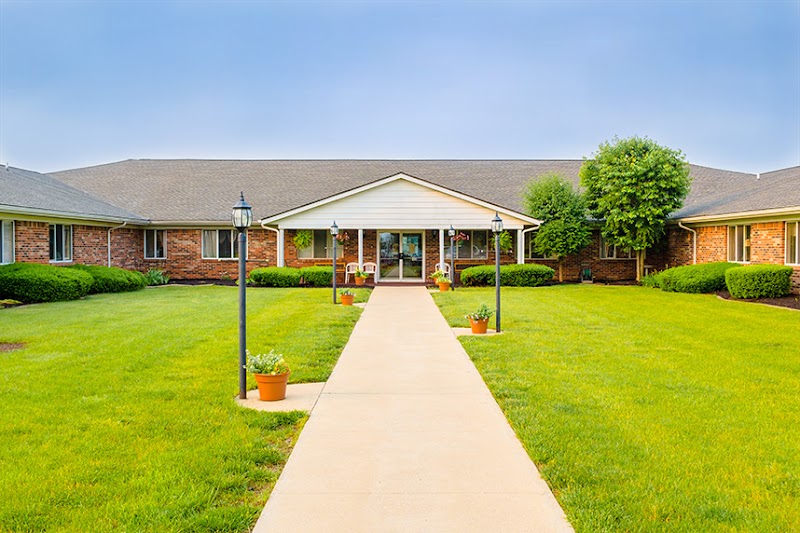
How is Clinton House Rehabilitation And Healthcare Center Staffed?

CMS rates CLINTON HOUSE REHABILITATION AND HEALTHCARE CENTER's staffing level at 1 out of 5 stars, which is much below average compared to other nursing homes. Staff turnover is 50%, compared to the Indiana average of 46%. RN turnover specifically is 67%, which is notably high. RNs provide skilled clinical oversight, so turnover in this role can affect medical care quality.

What Have Inspectors Found at Clinton House Rehabilitation And Healthcare Center?

State health inspectors documented 34 deficiencies at CLINTON HOUSE REHABILITATION AND HEALTHCARE CENTER during 2022 to 2025. These included: 1 that caused actual resident harm, 32 with potential for harm, and 1 minor or isolated issues. Deficiencies causing actual harm indicate documented cases where residents experienced negative health consequences.

Who Owns and Operates Clinton House Rehabilitation And Healthcare Center?

CLINTON HOUSE REHABILITATION AND HEALTHCARE CENTER is owned by a non-profit organization. Non-profit facilities reinvest revenue into operations rather than distributing to shareholders. The facility is operated by CASTLE HEALTHCARE, a chain that manages multiple nursing homes. With 88 certified beds and approximately 67 residents (about 76% occupancy), it is a smaller facility located in FRANKFORT, Indiana.

How Does Clinton House Rehabilitation And Healthcare Center Compare to Other Indiana Nursing Homes?

Compared to the 100 nursing homes in Indiana, CLINTON HOUSE REHABILITATION AND HEALTHCARE CENTER's overall rating (2 stars) is below the state average of 3.1, staff turnover (50%) is near the state average of 46%, and health inspection rating (3 stars) is at the national benchmark.

What Should Families Ask When Visiting Clinton House Rehabilitation And Healthcare Center?

Based on this facility's data, families visiting should ask: "Can you walk me through typical staffing levels on day, evening, and night shifts?" "Can I visit during a mealtime to observe dining assistance and food quality?" "How do you handle medical emergencies, and what is your hospital transfer rate?" "Can I speak with family members of current residents about their experience?" These questions are particularly relevant given the below-average staffing rating.

Is Clinton House Rehabilitation And Healthcare Center Safe?

Based on CMS inspection data, CLINTON HOUSE REHABILITATION AND HEALTHCARE CENTER has a clean safety record: no substantiated abuse findings (meaning no confirmed cases of resident harm), no Immediate Jeopardy citations (the most serious violation level indicating risk of serious injury or death), and is not on the Special Focus Facility watch list (a federal program monitoring the lowest-performing 1% of nursing homes). The facility has a 2-star overall rating and ranks #100 of 100 nursing homes in Indiana. While no facility is perfect, families should still ask about staff-to-resident ratios and recent inspection results during their visit.

Do Nurses at Clinton House Rehabilitation And Healthcare Center Stick Around?

CLINTON HOUSE REHABILITATION AND HEALTHCARE CENTER has a staff turnover rate of 50%, which is about average for Indiana nursing homes (state average: 46%). Moderate turnover is common in nursing homes, but families should still ask about staff tenure and how the facility maintains care continuity when employees leave.

Was Clinton House Rehabilitation And Healthcare Center Ever Fined?

CLINTON HOUSE REHABILITATION AND HEALTHCARE CENTER has no federal fines on record. CMS issues fines when nursing homes fail to meet care standards or don't correct problems found during inspections. The absence of fines suggests the facility has either maintained compliance or corrected any issues before penalties were assessed. This is a positive indicator, though families should still review recent inspection reports for the full picture.

Is Clinton House Rehabilitation And Healthcare Center on Any Federal Watch List?

CLINTON HOUSE REHABILITATION AND HEALTHCARE CENTER is not on any federal watch list. The most significant is the Special Focus Facility (SFF) program, which identifies the bottom 1% of nursing homes nationally based on persistent, serious quality problems. Not being on this list means the facility has avoided the pattern of deficiencies that triggers enhanced federal oversight. This is a positive indicator, though families should still review the facility's inspection history directly.