GREENCROFT HEALTHCARE
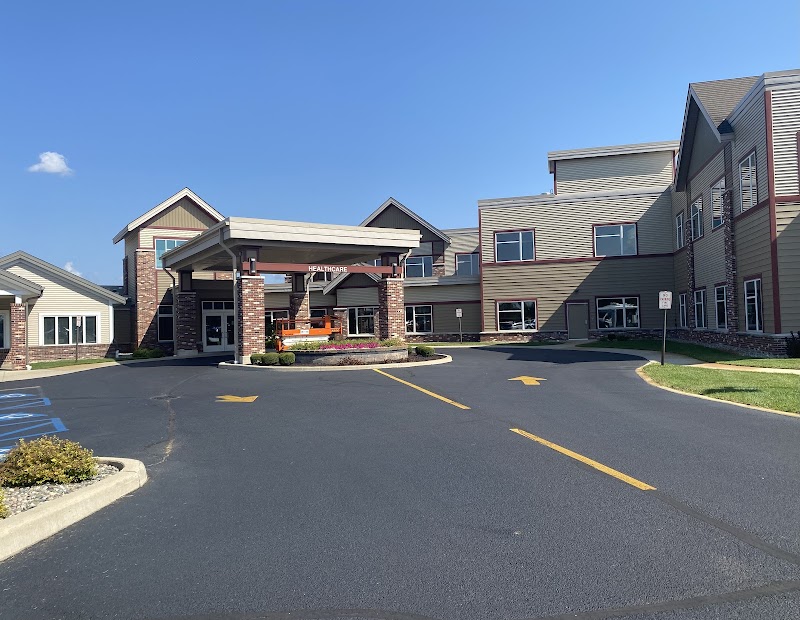
1225 GREENCROFT DR, GOSHEN, IN 46527 (574) 537-4000
Non profit - Corporation 231 Beds Independent Data: November 2025
Trust Grade
40/100
#350 of 505 in IN
Last Inspection: May 2025

Inspected within the last 6 months. Data reflects current conditions.

Overview

Greencroft Healthcare has a Trust Grade of D, indicating below-average performance with some significant concerns. They rank #350 out of 505 facilities in Indiana, placing them in the bottom half of all nursing homes in the state, and #6 out of 12 in Elkhart County, meaning only five local options are better. The facility's situation is worsening, as the number of issues increased from 13 in 2024 to 17 in 2025. While staffing is a strength with a 4 out of 5-star rating and an average turnover rate of 53%, the facility has serious deficiencies, including a failure that led to a resident's death due to improper transfer assistance and another incident where a resident developed pressure ulcers due to inadequate care. Despite having no fines on record and average RN coverage, these significant issues and a poor health inspection rating of 1 out of 5 raise concerns about the overall quality of care.

Trust Score
D
40/100
In Indiana
#350/505
Bottom 31%
Safety Record
Moderate
Needs review
Inspections
Getting Worse
13 → 17 violations
Staff Stability
⚠ Watch
53% turnover. Above average. Higher turnover means staff may not know residents' routines.
Penalties
✓ Good
No fines on record. Clean compliance history, better than most Indiana facilities.
Skilled Nurses
○ Average
Each resident gets 36 minutes of Registered Nurse (RN) attention daily — about average for Indiana. RNs are the most trained staff who monitor for health changes.
Violations
⚠ Watch
37 deficiencies on record. Higher than average. Multiple issues found across inspections.
★★☆☆☆
2.0
Overall Rating
★★★★☆
4.0
Staff Levels
★★★★★
5.0
Care Quality
★☆☆☆☆
1.0
Inspection Score
Stable
2024: 13 issues
2025: 17 issues

The Good

  • 4-Star Staffing Rating · Above-average nurse staffing levels
  • 5-Star Quality Measures · Strong clinical quality outcomes
  • Full Sprinkler Coverage · Fire safety systems throughout facility
  • No fines on record

Facility shows strength in staffing levels, quality measures, fire safety.

The Bad

2-Star Overall Rating

Below Indiana average (3.1)

Below average - review inspection findings carefully

Staff Turnover: 53%

Near Indiana avg (46%)

Higher turnover may affect care consistency

The Ugly 37 deficiencies on record

2 actual harm
Aug 2025 2 deficiencies
CONCERN (D) 📢 Someone Reported This

A family member, employee, or ombudsman was alarmed enough to file a formal complaint

Potential for Harm - no one hurt, but risky conditions existed

Quality of Care (Tag F0684)

Could have caused harm · This affected 1 resident

Based on record review and interview, the facility failed to provide wound care as directed by the physician for 1 of 3 residents reviewed for wounds.(Resident D).Finding includes:The clinical record ...

Read full inspector narrative →
Based on record review and interview, the facility failed to provide wound care as directed by the physician for 1 of 3 residents reviewed for wounds.(Resident D).Finding includes:The clinical record for Resident D was reviewed on 8/6/25 at 2:14 P.M. Diagnoses included, but were not limited to, peripheral neuropathy, type 2 diabetes, anxiety, chronic kidney disease, and history of stroke.Resident D's physician's orders included an current order for weekly skin checks. The order was dated 3/4/25 to begin on 3/11/25 and had no stop date. The order indicated the facility was to complete a head to toe assessment of the resident's skin and to re-evaluate and update any existing skin concerns every week on Monday evenings.A Skin Evaluation Record dated 4/9/25 at 2:22 P.M., indicated Resident D had a partial thickness skin tear to the right buttock, described as a scrape measuring 0.2 cm wide x 0.2 cm long x 0.1 cm depth. The wound was treated with zinc oxide.Review on Resident D's Treatment Administration Record indicated Resident D's order for a re-evaluation of the skin concern was signed off, but there were no associated re-evaluations documented on 4/21/25, 4/28/25, 5/5/25, 5/19/25 or 5/26/25.Resident B's Skin Evaluations, from 6/2/25 to 7/7/25, indicated there had been no change in the resident's wound size or condition, with the wound measuring on 7/7/25 at 9:50 P.M.- 0.1 cm wide x 0.1 cm long x 0.1 cm deep. The form indicated the wound continued to be treated with zinc oxide.Review of Resident B's Progress Note dated 7/10/25 at 4:15 P.M., indicated Resident B had requested a skin assessment of his right buttock and the nurse had examined the area per his request. The note indicated the Nurse Practitioner was notified of the wound condition and new orders had been received to begin Nystatin and Triamcinolone (topical creams to treat fungal and yeast infections) topically 2 times daily for 7 days. There was no documentation that a skin assessment had been completed on 7/10/25.A Skin Evaluation Record, dated 7/14/25, indicated a partial thickness skin tear to the right buttock that was described as dark pink and measured - 7.8 cm wide x 5.3 cm long x no depth.A new order had been received on 7/17/25 to extend the treatment of Nystatin and Triamcinolone topically 2 times daily for an additional 7 days.On 8/11/25 at 8:30 A.M., during an interview with the Assistant Director of Nursing, she confirmed there had been a lack of documentation regarding Resident D's Weekly Skin Check re-evaluations related to the wound to the right buttock and that the resident's wounds should have been assessed and documented as ordered.On 8/11/25 at 9:40 A.M., the Administrator provided a copy of the facility policy titled, Skin Assessment, dated 8/19/24, and deemed it to be the current facility policy. The policy indicated, .[A] skin assessment will be conducted by a licensed or registered nurse upon admission and weekly thereafter.Documentation of skin assessment: a. Include date and time of the assessment, your name, and position title. b. Document observations [e.g. skin conditions, how the resident tolerated the procedure, etc.]. c. Document type of wound. d. Describe the wound[measurements, color type of tissue in wound bed, drainage, odor, pain]. e. Document if resident refused assessment and why. f. Document other information as indicated or appropriate.On 8/11/25 at 9:40 A.M., the Administrator provided a copy of the facility policy titled, Wound Documentation, dated 2/26/24, and indicated it was the current policy used by the facility. The policy indicated that wound assessments were to be documented upon weekly and as needed if the resident or wound condition deteriorated.This Citation relates to Complaint 2571559.3.1-37(a)
CONCERN (D) 📢 Someone Reported This

A family member, employee, or ombudsman was alarmed enough to file a formal complaint

Potential for Harm - no one hurt, but risky conditions existed

Deficiency F0760 (Tag F0760)

Could have caused harm · This affected 1 resident

Based on record review and interview, the facility failed to ensure 1 of 3 residents reviewed for medication administration was free from significant medication errors. (Resident B) This deficient pra...

Read full inspector narrative →
Based on record review and interview, the facility failed to ensure 1 of 3 residents reviewed for medication administration was free from significant medication errors. (Resident B) This deficient practice resulted in the resident experiencing nausea and vomiting and requiring the administration of an additional medication to treat the adverse side effect of the medication errors.Finding Includes:Resident B's clinical record was reviewed on 8/7/25 at 9:11 A.M., diagnoses included but were not limited to a history of stroke with hemiplegia, heart disease, constipation, gastroenteritis, colitis.Resident B was admitted to the facility for respite care from home and under hospice care on 6/3/25. Hospice Physician's orders dated 6/3/25, on admission, included but were not limited to; Morphine concentrate 100 mg/5mL (20 mg/mL), 0.25 mL, orally for shortness of breath or severe pain every 4 hours as needed, Lomotil 2.5 mg- 0.025 mg, 1 tablet orally, every 8 hours as needed for diarrhea, Tums 200 mg chewable tablet, 2 tablets orally, (no time frame given), as needed for gastroenteritis. On 6/4/25 hospice added an order for Zofran 4 mg, 1 tablet every 6 hours as needed for nausea and vomiting.Review of Resident B's Medication Administration Record, dated 6/3/25, indicated the resident was to receive; Morphine concentrate 10 mg/0.5 mL, 0.25 mL, orally for shortness of breath or severe pain every 4 hours at 6:00 P.M., 8:00 P.M., 6:00 A.M., 10:00 A.M., and at 2:00 P.M., Lomotil 2.5 mg- 0.025 mg, 1 tablet orally, every 8 hours for diarrhea, at 2:00 P.M., 10:00 P.M., and at 6:00 A.M., Tums 200 mg chewable tablet, 2 tablets orally every night at bedtime for gastroenteritis. Resident B's Medication Administration Record indicated the resident received the following; Morphine on 6/3/25 at 6:00 P.M. and 10:00 P.M., and on 6/4/25 at 2:00 A.M. and 6:00 A.M., Lomotil on 6/3/25 at 10:00 P.M. and on 6/4/25 at 6:00 A.M., Tums on 6/3/25 at 8:00 P.M., Zofran on 6/4/25 at 2:39 P.M., and on 6/5/25 at 5:29 A.M.The resident's Medication Administration Record on 6/3/25 and 6/4/25 indicated the resident was not experiencing any shortness of breath, pain, or diarrhea. There was no complaint of gastroenteritis documented on 6/3/25.Resident B's Review Assessment/Pain Interview, dated 6/3/25 at 8:56 P.M., indicated the resident was able to express herself to other and able to understand others, in the past 5 days, the resident had not experienced any pain or shortness of breath, and diarrhea was not listed as a current problem or condition.The resident's Interdisciplinary Notes included but were not limited to the following: 6/4/25 at 7:11 A.M., a physician's note indicated the resident took morphine for shortness of breath and pain and was not experiencing any diarrhea. 6/4/25 at 3:54 P.M., .Resident nauseous and vomiting this afternoon. 6/4/25 at 3:30 P.M., Medications clarified with [hospice]. Zofran 4 mg every 6 hours as needed for nausea and vomiting. 6/4/25 at 8:53 P.M., Resident alert, verbal and oriented.Had 2 episodes of vomiting this shift. PRN Zofran given. No complaint of pain. On 8/8/25 at 12:58 P.M. during an interview, the Admissions Coordinator, indicated when Resident B was admitted for respite care, the facility received medication orders from the resident's hospice service and then sent the facility physician who would check and sign the orders and then sent to the unit where the admitting nurse entered the orders in the Electronic Medical system.During an interview on 8/8/25 at 1:05 P.M., the Assistant Director of Nursing indicated Registered Nurse 4 was Resident B's the admitting nurse and entered the resident's orders in the computer incorrectly. She indicated Morphine, Lomotil, and Tums were incorrectly entered into the system as routine medications when they had been ordered as needed.On 8/8/25 at 2:29 A.M., during an interview the hospice nurse indicated, on 6/4/25 at an unknown time, she received a report from the facility that the resident was having nausea and vomiting and that the nurse had withheld her morphine. The hospice nurse indicated she went to the facility at that time and noted Resident B's Morphine, Lomotil, and Tums had been entered in the system to be administered as routine rather than PRN as ordered. The hospice nurse indicated on arrival, the resident was nauseated, so ordered Zofran in response, and then notified the resident's responsible party of the medication error.A policy titled Medication Error Policy, dated 4/19, was provided by the Administrator on 8/11/25 at 8:40 A.M., and deemed as current. The policy indicated, .'Medication error' means the observed or identified.administration of medications.not in accordance with: the prescriber's order.The facility shall ensure medications will be administered as follows: a. According to the physician's orders.This citation relates to Complaint 1699537.3.1-48(c)(2)
May 2025 15 deficiencies
CONCERN (D)

Potential for Harm - no one hurt, but risky conditions existed

Deficiency F0552 (Tag F0552)

Could have caused harm · This affected 1 resident

Based on observations, record review and interviews, the facility failed to ensure 1 of 3 residents reviewed for resident rights were informed of treatment and medication changes. (Resident 36) Findin...

Read full inspector narrative →
Based on observations, record review and interviews, the facility failed to ensure 1 of 3 residents reviewed for resident rights were informed of treatment and medication changes. (Resident 36) Finding includes: A record review For 36 was completed, on 5/21/2025. Diagnoses included, but were not limited to: anxiety disorder and major depressive disorder. A Significant Change Minimum Data Set (MDS) assessment, dated 4/22/2025, indicated Resident 36 had severe cognitive impairment and received anti-anxiety medication. A Physician's Order, dated 5/13/2025, indicated lorazepam 0.5 milligrams every four hours as needed. A Care Plan, dated 10/18/2024, indicated Resident 36 used anti-anxiety medication related to his diagnoses of anxiety. Interventions included, but were not limited to: assessing anxiety level and the need for anti-anxiety medication and administration of anti-anxiety medication per the physician order. During observations on 5/22/2025 at 9:22 A.M., 5/22/2025 at 1:48 P.M. and 5/23/2025 at 8:54 A.M., Resident 36 was observed lying in bed. During an interview, on 5/23/2025 at 9:06 A.M., QMA 2 indicated Resident 36 took lorazepam for restlessness. During an interview, on 5/23/2025 at 1:27 P.M., the Director of Nursing (DON) indicated a notification to Resident 36's representative of the risk of psychotropic medication use could not be found in the medical record. A policy was provided on, 5/23/2025 at 1:00 P.M., by the DON. The policy titled, Psychotropic Medication Policy, indicated, .Residents are not given psychotropic drugs unless the medication is necessary to treat a specific condition, as diagnosed and documented in the clinical record, and the medication is beneficial to the resident, as demonstrated by monitoring and documentation of the resident's response to the medication[s] .5. Residents and/or representatives shall be educated on the risks and benefits of psychotropic drug use, as well as alternative treatments/non-pharmacological interventions 3.1-3(n)(2)
CONCERN (D)

Potential for Harm - no one hurt, but risky conditions existed

Deficiency F0557 (Tag F0557)

Could have caused harm · This affected 1 resident

Based on observation, record review and interview, the facility failed to provide a dignity bag to cover a urinary drainage bag for 1 of 2 residents reviewed for urinary catheters. (Resident 36) Findi...

Read full inspector narrative →
Based on observation, record review and interview, the facility failed to provide a dignity bag to cover a urinary drainage bag for 1 of 2 residents reviewed for urinary catheters. (Resident 36) Finding includes: During an interview, on 5/19/2025 at 1:47 P.M., Resident 36's wife indicated Resident 36 had a suprapubic catheter and had had his urinary catheter for the past two and a half years. A record review for Resident 36 was completed on 5/21/2025. Diagnoses included, but were not limited to: retention of urine and pressure ulcer of sacral region. A Significant Change Minimum Data Set (MDS) assessment, dated 4/22/2025, indicted Resident 36 had severe cognitive impairment, had an indwelling urinary catheter, had an unstageable pressure ulcer and received hospice services. A Physician's Order, dated 5/18/2023, indicated catheter care- use a leg bag when out of bed and replace every shift with urinary drainage bag when in bed. A Care Plan, dated 5/31/2023, indicated Resident 36 had a suprapubic urinary catheter due to a history of urinary retention and a diagnosis of obstructive uropathy. Interventions included, but were not limited to: make sure the urinary catheter bag was emptied at the end of every shift and keep the closed urinary drainage system below the bladder. During an observation, on 5/22/2025 at 9:22 A.M., Resident 36 was observed lying in bed with the urinary drainage bag hooked to the bed frame. Yellow liquid was observed in the urinary drainage bag. A dignity cover was not over the urinary drainage bag and was visible to anyone entering the room. During an observation, on 5/22/2025 at 1:48 P.M., Resident 36 was observed lying in bed with the urinary drainage bag hooked to the bed frame. A dignity cover was not over the urinary drainage bag and was visible to anyone entering the room. During an observation, on 5/23/2025 at 8:54 A.M., Resident 36 was lying in bed, and the urinary drainage bag was seen from the hallway hanging to the bed frame. During an interview, on 5/23/3035 at 8:55 A.M., CNA 6 indicated the urinary drainage bag should have had a dignity cover. A policy was provided on, 5/23/2025 at 1:00 P.M., by the DON. The policy titled, Indwelling Catheter Use and Removal Policy, indicated, .It is the policy of this campus to ensure that indwelling catheters that are inserted or remain in place are justified or removed according to regulations and current standards of practice The policy did not address the use of a dignity bag for resident comfort. 3.1-3(t)
CONCERN (D)

Potential for Harm - no one hurt, but risky conditions existed

Deficiency F0605 (Tag F0605)

Could have caused harm · This affected 1 resident

Based on record review and interview, the facility failed to limit an as needed psychotropic medication to a 14-day duration without required documentation for continued use of the psychotropic med fo...

Read full inspector narrative →
Based on record review and interview, the facility failed to limit an as needed psychotropic medication to a 14-day duration without required documentation for continued use of the psychotropic med for 1 of 5 residents reviewed for unnecessary medications. (Resident 36) Finding includes: A record review For 36 was completed, on 5/21/2025. Diagnoses included, but were not limited to: anxiety disorder and major depressive disorder. A Significant Change Minimum Data Set (MDS) assessment, dated 4/22/2025, indicated Resident 36 had severe cognitive impairment and received antianxiety medication. A Physician's Order, initiated on 11/14/2024 and discontinued on 1/6/2025, indicated lorazepam 0.5 milligrams (an antianxiety medication) every four hours as needed. A Physician's initiated on 1/6/2025 and discontinued on 3/14/2025, indicated lorazepam 0.5 milligrams every four hours as needed. A Psychiatric Progress Note, dated 12/2/2024, had no documentation of the lorazepam use. A Psychiatric Progress Note, dated 12/30/2024 and 1/27/2025, indicated Resident 36 was co-managed with hospice services and his symptoms were currently managed with citalopram 30 milligrams. The note had no mention of the lorazepam use. Resident 36 received lorazepam, on 12/3/2024, 12/10/2024, 12/12/2024, 12/22/2024, 12/28/2024, 12/29/2024,1/22/2025, 1/28/2025, 1/29/2025, 1/30/2025, 2/4/2025 and 2/20/2025, beyond the 14-day as needed limit without documentation for continued use of the medication. A Care Plan, dated 10/18/2024, indicated Resident 36 used anti-anxiety medication related to his diagnoses of anxiety. Interventions included, but were not limited to: assessing anxiety level and the need for anti-anxiety medication and administration of anti-anxiety medication per the physician order. During an interview, on 5/23/2025 at 9:06 A.M., QMA 2 indicated Resident 36 took lorazepam for restlessness. During an interview, on 5/23/2025 at 9:17 A.M., LPN 3 indicated as needed psychotropic medications had a limit of 14 days for use. A policy was provided on, 5/23/2025 at 1:00 P.M., by the DON. The policy titled, Psychotropic Medication Policy, indicated, .Residents are not given psychotropic drugs unless the medication is necessary to treat a specific condition, as diagnosed and documented in the clinical record, and the medication is beneficial to the resident, as demonstrated by monitoring and documentation of the resident's response to the medication[s] .10. PRN [as needed] orders for all psychotropic drugs shall be used only when the medication is necessary to treat a diagnosed specific condition that is documented in the clinical record, and for a limited duration [i.e. 14 days] .a. If the attending physician or prescribing practitioner believes this it is appropriate for the PRN order to be extended beyond 14 days, he or she shall document that rationale in the resident's medical record and indicate the duration for the PRN order 3.1-48(a)(2)
CONCERN (D)

Potential for Harm - no one hurt, but risky conditions existed

Deficiency F0628 (Tag F0628)

Could have caused harm · This affected 1 resident

**NOTE- TERMS IN BRACKETS HAVE BEEN EDITED TO PROTECT CONFIDENTIALITY** Based on record review and interview, the facility failed to ensure required transfer and resident clinical information was comp...

Read full inspector narrative →
**NOTE- TERMS IN BRACKETS HAVE BEEN EDITED TO PROTECT CONFIDENTIALITY** Based on record review and interview, the facility failed to ensure required transfer and resident clinical information was completed for 2 of 4 residents reviewed for transfers. (Residents 140 &148) Findings include: 1. The record for Resident 148 was reviewed on 5/22/2025 at 11:51 A.M. Diagnoses included, but were not limited to heart failure, depression, arthritis, pain, diabetes, atrial-fibrillation and septicemia. Resident 148 was admitted on [DATE] and discharged on 5/10/2025. A Nurses Progress Note, dated 5/9/2025 at 2:38 P.M., indicated the resident had complaint of nausea that morning and had been given Zofran, (antiemetic to prevent nausea and vomiting). The resident had continued to refuse medications because they made her sick to her stomach. A Nurses Progress Note, dated 5/10/2025 at 10:54 P.M., indicated Resident 148 had been admitted to the hospital according to the ER nurse. A Nurses Progress Note, dated 5/12/2025, indicated the nurse had received a text from the resident's daughter. The daughter and the resident did not want to hold the resident's bed. They planned to return home with hospice services. A Copy of the Bed Hold form were mailed to Resident. On 5/23/2025 at 12:03 P.M., the Director of Nurses provided a copy of a Notice of Transfer or Discharge form, a progress note dated 5/12/2025 and 11 pages of Resident 148's orders. The record lacked copies of transfer documentation including: the bed hold, the resident's clinical status prior to the transfer, reason for the transfer and most recent diagnostic and lab tests. On 5/23/2025 at 3:10 P.M., the Director of Nursing indicated she could not provide any transfer document or a checklist of what was sent with the resident. She indicated the facility had sent a list of the residents' medications, the POA (power of attorney) information, and had called the hospital to give report. 2. The record for Resident 140 was reviewed on 5/22/2025 at 11:00 A.M. Diagnoses included, but were not limited to malnutrition, atrial valve disorder, cancer and heart failure. Resident 140 was admitted on [DATE] and discharged on 3/31/2025. A Nurses Progress Note, dated 3/31/2025 at 1:34 A.M., indicated the NP (Nurse Practitioner) had been called to notify her of the resident's elevated temperature and low blood pressure. The family had been notified of Resident 140's change of condition and requested the resident be sent out to the ER (emergency room). A Nurses Progress Note, dated 3/31/2025, indicated the EMT (emergency medical technicians) were there to transport the resident to the hospital. A report had been called to the hospital and all the paperwork needed had been provided. The resident's daughter was to meet the resident at the hospital. On 5/23/2025 at 12:04 P.M., the Director of Nurses provided a copy of a Do Not Resuscitate Declaration and Order, copies of medical and financial POA's (Power of Attorney), a progress note, dated 4/1/2025, indicating the facility was unable to reach the family to provide the bed hold informstion prior to the resident's passing/expiring in the hospital, and 11 pages of the Resident 148's orders. The record lacked copies of transfer documentation including: the bed hold form, the resident's clinical status prior to the transfer, the reason for the transfer and the most recent diagnostic and lab tests. On 5/23/2025 at 2:28 P.M., the Director of Nursing indicated she could not provide any sort of transfer document or even a check list for Resident 148. She indicated the facility had sent a list of the residents' medications, the POA (power of attorney) information, and had called the hospital to had give a veral report. On 5/23/2025 the facility policy was requested regarding Discharge/Transfers but one was not provided prior to the survey exit. 3.1-12(a)(6)(A)
CONCERN (D)

Potential for Harm - no one hurt, but risky conditions existed

Deficiency F0657 (Tag F0657)

Could have caused harm · This affected 1 resident

Based on record review and interview, the facility failed to develop person centered care plans for a new pressure area and refusal to have facial hair removed for 2 of 31 residents whose care plans w...

Read full inspector narrative →
Based on record review and interview, the facility failed to develop person centered care plans for a new pressure area and refusal to have facial hair removed for 2 of 31 residents whose care plans were reviewed. (Resident 94 and 33) Findings include: 1. During an interview, on 5/21/2025 at 9:19 A.M., CNA 18 indicated she thought Resident 94 had a very small area on his bottom last week. She indicated it's an independence thing with him. He always wants to stay in his wheelchair because he knows he can go whenever he wants to. She indicated therapy had been working with the resident on self-transfers in and out of bed. During an observation, on 5/21/2025 at 9:26 A.M., Resident 94 was assisted to the bathroom where he was able to stand upright while holding onto the toilet seat riser bars. The aide pulled his pants down and Resident 94 had an open area to the left inner buttock cheek. No dressing was observed covering the area. The record for Resident 94 was completed on 5/21/2025 at 9:37 A.M. Diagnoses included, but were not limited to chronic kidney disease, hemiplegia, insomnia, low back pain, restless leg syndrome and venous insufficiency. A current Care Plan, dated 2/16/2024, indicated the resident had the potential for or actual skin impairment related to venous insufficiency, end stage chronic kidney disease, right hemiplegia and frail skin that tears easily. Interventions included but were not limited to: Observe resident's skin daily with care. Report any changes in skin integrity to nurse. Encourage/assist with frequent position changes if a resident is sitting or lying in the same position for extended periods of time. A current Care Plan, dated 2/16/2024, indicated the resident had impaired physical mobility related to end stage renal failure, bursitis, cellulitis, neck pain, low back pain, right side hemiplegia, venous insufficiency. Interventions included but were not limited to assisting with ADL's (activities of daily living) as directed. He required staff to assist as needed with bed mobility, transfers and toileting and assist/encourage resident to participate with ADL tasks. A current Care Plan, dated 2/16/2024, indicated the resident's skin would remain clean, dry and free of breakdown related to incontinence. Interventions included but were not limited to: Perineal cleansing and apply protective skin barrier after each incontinent episode. Assess and report signs of impaired skin integrity or breakdown. A current Care Plan, dated 5/21/2024, indicated Resident 94 was at risk for further impaired skin integrity related to impaired mobility, moisture, history of pressure ulcers and cellulitis. Interventions included but were not limited to alternating air loss mattress, pressure reducing cushion for wheelchair, treatments as ordered and offer peri care after incontinent episodes and every shift. During an interview, on 5/21/2025 at 10:33 A.M., RN 19 indicated she thought she was notified of the open area on Resident's 94 left buttock cheek. RN 19 was questioned about the procedure when a new skin issue was observed to a resident. RN 19 indicated the area was to be measured, a skin incident was to be completed and entered into the computer, and the physician, family and management were to be notified. RN 19 indicated there was no Skin Incident and no current treatment order for Resident 94's open area. She indicated there should have been a Skin Incident, a treatment order in place and a care plan initiated for the open area. 2. During an observation, on 5/19/2025 at 10:04 A.M., Resident 33 was observed to have a large amount of hair on her chin and upper lip. A record review was completed for Resident 33 on 5/21/2025 at 2:46 P.M. Diagnoses included, but were not limited to: moderate protein calorie malnutrition, anxiety and depression. A Quarterly MDS (Minimum Data Set), dated 5/6/2025 indicated Resident 33's cognition was intact and she required setup and cleanup assistance from staff with personal hygiene. During an interview, on 5/22/2025 at 8:24 A.M., Resident 33 indicated she did not want anyone helping her with her facial hair and she would take care of it when she wanted to. During an interview, on 5/22/2025 at 9:10 A.M., LPN 11 indicated she had asked the resident if she could shave her facial hair in the past and the resident always refused. During an interview, on 5/22/2025 at 10:34 A.M., CNA 15 indicated Resident 33 usually refused to have her facial hair shaved. She indicated that if the resident refused, she documented the refusal in the resident's electronic medical record. A current Care Plan, initiated on 4/13/2020 indicated the resident had the potential for a self care deficit related to requiring staff assistance with ADL's (activities of daily living) and refused showers at times. Interventions included, but were not limited to: assist with ADL's as indicated. The Care Plan lacked documentation that Resident 33 had refused when staff attempted to assist her with the removal of her facial hair. During an interview, on 5/23/2025 at 8:56 A.M., the Househould's Unit Manager indicated that if the resident refused to have staff help her with removing her facial hair then it should have been documented on her care plan. On 5/23/2025 at 9:57 A.M. the Househould's Unit Manager provided the policy titled, Care Plan - Care Plan Reviews, dated 7/2006 and indicated it was the policy currently being used by the facility. The policy indicated, Purpose: To maintain care plans on a current status. 1. The Care Plan team will be responsible for the periodic review and updating of care plans 3.1-35(e)
CONCERN (D)

Potential for Harm - no one hurt, but risky conditions existed

Quality of Care (Tag F0684)

Could have caused harm · This affected 1 resident

Based on observation, record review and interview the facility failed to ensure medications were administered based on manufacturers guidelines for 1 of 5 residents reviewed for medication administrat...

Read full inspector narrative →
Based on observation, record review and interview the facility failed to ensure medications were administered based on manufacturers guidelines for 1 of 5 residents reviewed for medication administration (Resident 37). Finding includes: During an observation of medication administration on 5/21/2025 at 11:53 A.M., LPN 9 administered one omeprazole 20 mg (milligrams) delayed release capsule by mouth to Resident 37. During the time of administration, Resident 37 had been sitting in the dining room and had already eaten most of his lunch. A record review was completed for Resident 37 on 5/21/2025 at 2:07 P.M. Diagnoses included, but were not limited to: gastro-esophageal reflux disease. A Physician's Order, initiated on 2/21/2025 indicated the resident was to receive omeprazole 20 mg delayed release tablet every day at noon. During an interview, on 5/22/2025 at 11:19 A.M., the (Pharmacy Name) Pharmacist indicated, ideally the omeprazole 20 mg delayed release capsule should have been given prior to the resident's first meal of the day. On 5/22/2025 at 1:30 P.M. the ADON provided the medication information sheet titled, Omeprazole Delayed-Release Capsules and Tablets, no date. The medication information sheet indicated, Take this drug before meals On 5/23/2025 at 11:08 A.M., the DON provided the policy titled, Medication Administration, dated 12/13/2024 and indicated it was the policy currently being used by the facility. The policy indicated, 17. Administer medication as ordered in accordance with manufacturer specifications. a. Provide appropriate amount of food and fluid 3.1-48(c)(2)
CONCERN (D)

Potential for Harm - no one hurt, but risky conditions existed

Pressure Ulcer Prevention (Tag F0686)

Could have caused harm · This affected 1 resident

**NOTE- TERMS IN BRACKETS HAVE BEEN EDITED TO PROTECT CONFIDENTIALITY** Based on interview, observation and record review, the facility failed to ensure a resident who was at risk for pressure ulcers ...

Read full inspector narrative →
**NOTE- TERMS IN BRACKETS HAVE BEEN EDITED TO PROTECT CONFIDENTIALITY** Based on interview, observation and record review, the facility failed to ensure a resident who was at risk for pressure ulcers did not develop a stage II pressure ulcer and failed to implement a treatment for 1 of 2 residents reviewed for pressure ulcers. (Resident 94) Finding includes: During an interview, on 5/21/2025 at 9:19 A.M., CNA 18 indicated she thought Residnet 94 had a very small area on his bottom last week. She indicated it's an independence thing with him. He always wants to stay in his wheelchair because he knows he can go whenever he wants to. She indicated therapy had been working with him on self-transfers in and out of bed. During an observation, on 5/21/2025 at 9:26 A.M., Resident 94 was assisted to the bathroom where he was able to stand upright while holding onto the toilet seat riser bars. The aide pulled his pants down and Resident 94 had an opened area to the left inner buttock cheek. The area was approxamately a half inch in diameter with red colored tissue to the center of the wound. No dressing was observed covering the area. The record for Resident 94 was completed on 5/21/2025 at 9:37 A.M. Diagnoses included, but were not limited to chronic kidney disease, hemiplegia, insomnia, low back pain, restless leg syndrome and venous insufficiency. Resident 94's Physician Orders included: Weekly Skin Check. Complete head to toe assessment of skin. Document findings in Skin Condition tab. Re-evaluate and update existing skin concerns. If new conditions are found, initiate the Skin Condition Checklist. A Braden Scale for Predicting Pressure Sore Risk assessment, dated 1/14/2025, indicated Resident 94's score totaled 15, which meant he was at risk for pressure ulcer/injury developement. A Braden Scale for Predicting Pressure Sore Risk assessment, dated 4/8/2025, indicated Resident 94's score totaled 17, which meant he was at risk for pressure ulcer/injury developement. A current Care Plan, initiated on 2/16/2024, indicated the resident had the potential for or actual skin impairment related to venous insufficiency, end stage chronic kidney disease, right hemiplegia and frail skin that tears easily. Interventions included but were not limited to: Observe resident's skin daily with care. Report any changes in skin integrity to nurse. Encourage/assist with frequent position changes if a resident is sitting or lying in the same position for extended periods of time. A current Care Plan, initiated on 2/16/2024, indicated the resident had impaired physical mobility related to end stage renal failure, bursitis, cellulitis, neck pain, low back pain, right side hemiplegia, venous insufficiency. Interventions included but were not limited to assisting with ADL's (activities of daily living) as directed. staff to assist as needed with bed mobility, transfers and toileting and assist/encourage resident to participate with ADL tasks. A current Care Plan, initiated on 2/16/2024, indicated a plan to address the resident's risk for skin impairment. The goal was for the resident's skin to remain clean, dry and free of breakdown related to incontinence. Interventions included but were not limited to: Perineal cleansing and apply protective skin barrier after each incontinent episode. Assess and report signs of impaired skin integrity or breakdown. A current Care Plan, initiated on 5/21/2024, indicated Resident 94 was at risk for further impaired skin integrity related to impaired mobility, moisture, history of pressure ulcers and cellulitis. Interventions included but were not limited to alternating air loss mattress, pressure reducing cushion for his wheelchair, treatments as ordered and offer peri care after incontinent episodes and every shift. During an interview, on 5/21/2025 at 10:33 A.M., RN 19 indicated she thought she had been previously notified of the open area on Resident's 94 left buttock cheek. RN 19 was questioned about the procedure when a new skin issue was observed to a resident. RN 19 indicated the area was to be measured, a skin incident report needed to be completed and entered into the computer, and the physician, family and facility management were to be notified of the open area. RN 19 indicated there was no Skin Incident assessment completeed and no current treatment order for Resident 94's open area. She indicated there should have been a Skin Incident, a treatment order in place and care plan initiated for the new open area. During the interview, on 5/21/2025, RN 19 was questioned regarding the timing of when weekly skin assessments were completed by the nurses. RN 19 indicated the weekly skin assessments were documented on the shower sheets. Resident 94's Shower Sheet/Skin Check sheets for May 2025 had been completed on 5/1 and 5/15/2025 with no open area observed to the left buttocks documented on either form. A Shower Sheet/Skin Check sheet, completed on 5/22/2025, after the observation and interview with RN 19 confirming the open area, indicated the resident's skin was intact, no ulcers/open wounds but yes was checked for reddened area. A Skin Evaluation Form, dated 5/6/2025, indicated General skin check completed-existing wounds noted no changes.The following was marked - Pressure reduction bed: Not applicable. Preventative Protective Skincare: Not applicable. Turning/ Repositioning Program: Not applicable. A Skin Evaluation Form, dated 5/12/2025, indicated General skin check completed indicated the following was marked- No new issues. Pressure reduction bed: Not applicable. Preventative Protective Skincare: Not applicable. Turning /Repositioning Program: Not applicable. A Skin Evaluation Form, dated 5/19/2025, indicated General skin check completed. No new issues. The following was marked - Pressure reduction bed: Inapplicable. Preventative Protective Skincare: In applicable. Turning/Repositioning Program: Inapplicable. A Nurse's Progress Note, dated 5/21/2025 at 1:14 P.M., indicated RN 19 had assessed an open area on Resident 94's left buttock. The area was not on a bony prominence. The area measured 0.5 cm x 1.0 cm. The note indicated the nurse had applied [NAME] oxide and had notified the physician, family and facility management. During an interview, on 5/21/2025 at 2:05 P.M., Resident 94 indicated he was given a shower last Thursday, 5/15/2025, or Friday, 5/16/2025. He indicated hospice had previously been completing his showers, three times a week and since the facility had been giving his showers, he received them two times a week. Resident 94 indicated the facility was having trouble getting them (showers) started again. He indicated that his buttocks hurt. When questioned what type of pain, he indicated it was a continuous severe achy pain.'' In addition, Resident 94 indicated, it hurts unless I get moved. He indicated that I try to shift and get off of it, but I can't get it done. When asked if the aides come in and stand him up or move him in his wheelchair, he stated When I pulled the cord (call light) and ask them to do it, the aides seldom do it. They say 'we have to get a nurse.' They have never changed my position. Resident 94 indicated he had not refused any showers. During an observation, on 5/22/2025 at 3:40 P.M., Resident 94's gel cushion for his wheelchair was almost flat in the middle where his buttocks was positioned. During an interview, on 5/22/2025 at 3:49 P.M., the unit manager indicated the cushion should have been changed. He was unsure if it was a pressure reduction or a pressure relieving device. He indicated the residnet should not have been sitting on the flattened cushion. On 5/23/2025 at 11:29 A.M., the Director of Nursing provided the policy titled, Pressure Injury Prevention and Management, dated 2/26/2024, and indicated the policy was the one currently used by the facility. The policy indicated . Avoidable means that the resident developed a pressure ulcer/injury and that the campus did not do one or more of the following: evaluate the residents clinical condition and risk factors; define and implement interventions that are consistent with resident needs, resident goals, and professional standards it practice; monitor and evaluate the impact of the interventions; or revise the interventions as appropriate . Interventions for Prevention and to Promote Healing. a. After completing a thorough assessment/evaluation, the interdisciplinary team shall develop a relevant care plan that includes measurable goals for prevention and management of pressure injuries with appropriate interventions . c. Evidenced-based interventions for prevention will be implemented for all residents who are assessed at risk or who have a pressure injury present. Basic or routine care interventions could include, but are not limited to: I. Redistribute pressure (such as repositioning, protecting/or offloading heels, etc.) . c. Provide appropriate, pressure -redistributing, support surfaces . 3.1-40
CONCERN (D)

Potential for Harm - no one hurt, but risky conditions existed

Accident Prevention (Tag F0689)

Could have caused harm · This affected 1 resident

Based on observation, record review and interview, the facility failed to ensure a safe smoking assessment was completed, smoking materials were locked up and safe disposal of cigarette butts was desi...

Read full inspector narrative →
Based on observation, record review and interview, the facility failed to ensure a safe smoking assessment was completed, smoking materials were locked up and safe disposal of cigarette butts was designated for 1 of 1 resident reviewed for accidents and hazards. (Resident 73) Finding includes: During an observation, on 5/20/2025 at 10:50 A.M., Resident 73 was observed taking himself out of the building to smoke. He was observed on the sidewalk of the facility between South 13th Street and the main entrance. During an observation, on 5/22/2025 at 8:59 A.M.-9:24 A.M., Resident 73 was observed outside smoking. He smoked three cigarettes and was observed putting the cigarette out on his wheelchair by the front wheel and held the smoked cigarette butts in his hand. During an observation, on 5/22/2025 at 2:06 P.M., Resident 73 was in his room. His cigarettes and lighter were lying inside his hat on a table in his room. During an observation, on 5/23/2025 at 9:02 A.M., Resident 73 was observed outside smoking on the facility campus. A record review for Resident 73 was completed, on 5/21/2025 at 9:55 A.M. Diagnoses included, but were not limited to: polyneuropathy, glaucoma, diabetes mellitus type 2 and nicotine dependence. A Quarterly Minimum Data Set (MDS) assessment, dated 3/12/2025, indicated Resident 73 was cognitively intact and used a motorized wheelchair. A Physician's Order, dated 12/18/2024, indicated to educate Resident 73 on the risks of smoking and document in the interdisciplinary notes every shift and smoking paraphernalia was to be placed in a lock box while inside the building. A Care Plan, initated on 1/10/2023 and revised on 1/6/2025, indicated Resident 73 would use nicotine in a safe way and in the designated area. Interventions included, but were not limited to: Resident 73 was aware of the designated area to smoke and to check in with staff before leaving, encouraged to store smoking material in nurses' carts, but declined, a lock box was provided in the room for smoking material and Resident 73 had declined to sign the facility smoking assessment. A Safe Smoking Assessment was not completed and signed by the resident until 5/21/2025. During an interview, on 5/22/2025 at 2:06 P.M., Resident 73 indicated he went outside on his own and always had his cigarettes on him. He indicated he did not throw his cigarette butts on the ground, and sometimes he knocked off the cherry (lighted end of cigarette) and threw the butts in the trash can in his room. During an interview, on 5/23/2025 at 11:47 A.M., QMA 21 indicated Resident 73 was not to smoke on the campus and he was to go across the street to smoke. She indicated Resident 73 did not need supervised and she was unsure where he disposed of his cigarette butts. During an interview, on 5/23/2025 at 1:13 P.M., LPN 3 indicated the facility was a non-smoking campus and Resident 73 chose to cross the road to smoke his cigarettes. She was not sure if Resident 73 placed his cigarette butts in his trash can in his room. During an interview, on 5/23/2025 at 1:16 P.M., the Director of Nursing (DON) indicated the facility was a non-smoking campus. She indicated Resident 73 adamantly refused to sign the safe smoking assessment until he thought the Social Service Director would get in trouble because he had not signed the assessment. The DON indicated the facility staff continually educated Resident 73 for interventions related to his smoking habits. During an interview, on 5/23/2025 at 2:03 P.M., the Social Service Director indicated there were no previously completed safe smoking assessments found in the medical record. A policy was provided, on 5/23/2025 at 1:03 P.M. by the DON. The policy titled, Smoking Policy, indicated, .It is the policy of this facility to provide a safe and healthy environment for residents, visitors, and employees, including safety as related to smoking. Safety protections apply to smoking and non-smoking residents .1. Smoking is prohibited in all areas except the designated smoking area. A 'Designated Smoking Area sign will be prominently posted .2. Safety measures for the designated smoking area will include, but not limited to: a. protection from weather conditions [i.e. covered]. b. Provision of ashtrays made of noncombustible material and safe design .4. All residents and family members will be notified of this policy during the admission process, and as needed. 5. All residents will be asked about tobacco use during the admission process, and during each quarterly or comprehensive MDS assessment process. 6. Residents who smoke will be further assessed using the Resident Safe Smoking Assessment, to determine whether or not supervision is required for smoking, or if resident is safe to smoke at all .12. If a resident or family does not abide by the smoking policy or care plan [e.g. smoking materials are provided directly to the resident, smoking in non-smoking areas, does not wear protective gear], the plan of care may be revised to include additional safety measures 3.1-45(a)(1)
CONCERN (D)

Potential for Harm - no one hurt, but risky conditions existed

Deficiency F0692 (Tag F0692)

Could have caused harm · This affected 1 resident

Based on observation, record review and interview, the facility failed to provide identified interventions to promote consumption of meals for 1 of 3 residents reviewed for nutrition. (Resident 31) Fi...

Read full inspector narrative →
Based on observation, record review and interview, the facility failed to provide identified interventions to promote consumption of meals for 1 of 3 residents reviewed for nutrition. (Resident 31) Finding includes: A record review for Resident 31 was completed on 5/21/2025 at 9:12 A.M. Diagnoses included, but were not limited to: cerebral infarction, dysphagia and hemiplegia of the left side. A Significant Change Minimum Data Set (MDS) assessment, dated 2/22/2025, indicated Resident 31 had severe cognitive impairment, required mechanically altered foods and had impairment to the upper and lower extremity on one side. A review of Resident 31's weights indicated the following: -5/19/2025 1:54 P.M. 108.4 pounds -4/15/2025 9:11 A.M. 116.0 pounds -2/18/2025 9:20 P.M. 125.2 pounds -11/25/2024 3:04 P.M. 131.0 pounds The weights reviewed indicated a 6.55 percent weight loss in one month, a 13.42 percent weight loss in three months and a 15.31 percent weight loss in months. A Nursing Progress Note, on 5/13/2025 at 8:05 A.M., indicated Resident 31 appeared to be overwhelmed by plates of food. The staff had suggested serving one item in a bowl at a time with each bowl introduced as tolerated. The suggestion was reviewed with [NAME] 22 and [NAME] 22 indicated she would share the suggestion with the facility staff. A Care Plan, dated 2/27/2025, indicated Resident 31 was at risk for malnutrition and weight changes related to a recent hospitalization with cerebral infarction with left hemiplegia and her weight had decreased significantly in the past month. Interventions included, but were not limited to: a mechanically soft diet, encouragement to eat at mealtimes, provide assistance as needed to consume meals, serve half servings of one food in a bowl at a time, offer the next bowl and big plates of food were overwhelming. During an observation, on 5/21/2025 at 11:57 A.M., Resident 31 was in the dining room with a plate of noodles and mashed potatoes with gravy in front of her. During an observation, on 5/22/2025 at 12:03 P.M., Resident 31 had eaten in her room with a plate of beets and quiche in front of her. Resident 31 had asked what she should do with the food. During an observation, on 5/23/2025 at 9:09 A.M., Resident 31 had a breakfast tray in front of her with various liquids, a bowl of cornflakes and a cup pf yogurt. She had been sleeping and had not eaten her food. During an interview, on 5/23/2025 at 1:05 P.M., CNA 6 indicated Resident 31's food should be as fun as it could be. During an interview, on 5/23/2025 at 1:07 P.M., QMA 2 indicated Resident 31 should be served small portions in individual bowls. A policy was provided on, 5/23/2025 at 1:00 P.M., by the DON. The policy titled, Weigh Loss/Gain Interventions, indicated, .To identify nutritionally at-risk residents and indicate corresponding interventions to monitor, communicate, and correct weight loss or gain .5. Weight loss or gain interventions shall be addressed on the resident's plan of care 3.1-(a)(1)
CONCERN (D)

Potential for Harm - no one hurt, but risky conditions existed

Tube Feeding (Tag F0693)

Could have caused harm · This affected 1 resident

Based on record review and interview, the facility failed to follow and administer physician ordered hydration orders for 1 of 1 resident reviewed for tube feeding. (Resident 52) Finding includes: A r...

Read full inspector narrative →
Based on record review and interview, the facility failed to follow and administer physician ordered hydration orders for 1 of 1 resident reviewed for tube feeding. (Resident 52) Finding includes: A record review for Resident 52 was completed on 5/21/2025 at 1:04 P.M. Diagnoses included, but were not limited to: functional quadriplegic, adult failure to thrive and protein-calorie malnutrition. A Quarterly Minimum Data Set (MDS) assessment, dated 5/6/2025, indicated Resident 52 had moderate cognitive impairment and received tube feeding with 51 percent of calories from the feedings and 501 cc/day (cubic centimeter per day or equal to one milliliter per day) or more of hydration from the feeding tube. A Physician's Order, dated 3/1/2024, indicated flushing the feeding tube with 120 mL (milliliters) before and after Jevity feedings, totaling a 240 mL flush. A Physician's Order, dated 3/13/2024, indicated Jevity 1.5 tube feeding two cartons (474 mL) daily and Jevity 1.5 tube feeding one carton (237 mL) three times daily. The May 2025 Medication Administration Record (MAR) indicated Resident 52 received the following water flushes below or above the ordered flush orders: -5/1/2025 8:00 A.M. 100 mL -5/1/2025 4:00 P.M. 120 mL -5/1/2025 12:00 P.M. 100 mL -5/1/2025 8:00 P.M. 120 mL -5/2/2025 8:00 A.M. 120 mL -5/3/2025 8:00 A.M. 300 mL -5/4/2025 8:00 A.M. 400 mL -5/5/2025 8:00 P.M. 100 mL -5/6/2025 8:00 A.M. 325 mL -5/8/2025 8:00 A.M. 350 mL -5/9/2025 8:00 A.M. 350 mL -5/10/2025 12:00 P.M. 120 mL -5/12/2025 8:00 P.M. 100 mL -5/13/2025 8:00 A.M. 350 mL -5/13/2025 8:00 P.M. 100 mL -5/14/2025 8:00 P.M. 100 mL -5/15/2025 8:00 P.M. 100 mL -5/17/2025 8:00 A.M. 350 mL -5/18/2025 8:00 A.M. 350 mL -5/20/2025 8:00 A.M. 300 mL -5/22/2035 8:00 A.M. 350 mL -5/22/2025 8:00 P.M. 120 mL -5/23/2025 8:00 A.M. 100 mL -5/23/2025 12:00 P.M. 100 mL A Care Plan, dated 3/5/2023, indicated Resident 52 had a feeding tube necessary for nutritional needs related to swallowing difficulties and a nothing by mouth order. Interventions included, but were not limited to: provide tube feeding and nutritional supplements as ordered, give 120 mL of water before and after each feeding, and monitor for signs of dehydration. During an interview, on 5/23/2025 at 9:18 A.M., LPN 3 indicated Resident 52 should have received 120 mL of water before and after his Jevity tube feedings. She indicated the amount of water provided was documented in the MAR. The MAR lacked documentation of the correct amount of water flushes/hydration being provided before and after feedings and the daily totals were incorrect. A policy was provided on, 5/23/2025 at 1:00 P.M., by the DON. The policy titled, Care and Treatment of Feeding Tubes, indicated, .It is the policy of this campus to utilize feeding tubes in accordance with current clinical standards of practice, with interventions to prevent complications to the extent possible .4. The campus will utilize a Registered Dietician in estimating and calculating a resident's daily nutritional and hydration needs .7. Direction for team member[s] on how to provide the following care will be provided: .e. Frequency of and volume used for flushing, including flushing medication administration, and what to do when a prescriber's order does not specify 3.1-46(b)
CONCERN (D)

Potential for Harm - no one hurt, but risky conditions existed

Respiratory Care (Tag F0695)

Could have caused harm · This affected 1 resident

Based on observation, record review and interview, the facility failed to store respiratory equipment in a sanitary manner for 1 of 2 residents reviewed for respiratory care. (Resident 66) Finding inc...

Read full inspector narrative →
Based on observation, record review and interview, the facility failed to store respiratory equipment in a sanitary manner for 1 of 2 residents reviewed for respiratory care. (Resident 66) Finding includes: During an observation, on 5/19/2025 at 10:45 A.M., Resident 66's nebulizer mask and tubing had not been dated or bagged, and the dirty mask with white colored specs of dried debris was laying on the bed side table. During an observation, on 5/21/2025 at 9:10 A.M., Resident 66's nebulizer mask and tubing had not been dated or bagged, and the dirty mask with white colored specs of dried debris remained on the bedside table. During an observation, on 5/22/2025 at 9:02 A.M., the nebulizer mask and tubing had not been dated or bagged, and the dirty mask with white colored specs of dried debris remained on the bedside table. The record for Resident 66 was reviewed on 5/21/2025 at 11:51 A.M. Diagnoses included, but were not limited to diabetes, depression, dementia, anxiety and chronic obstructive pulmonary disease. Resident 66's current Physician Orders included: Ipratropium-albuterol 0.5 mg (milligram) -3 mg (2.5 mg base)/3 ml Neb Solution 1 ml inhalation every 6 hours as needed for cough and congestion. There were no physician's order specific to changing the nebulizer mark or tubing. During an interview, on 5/22/2025 at 9:17 A.M., RN 19 indicated the nebulizer mask should have been stored in a bag when it was not in use and should have been dated to indicate when the mask and/or tubing had been changed. On 5/23/2025 at 11:29 A.M., the Director of Nursing provided the policy titled, Oxygen Therapy-Nebulizer Treatment, dated 1/2016, and indicated the policy was the one currently used by the facility. The policy indicated .6. After treatment, remove mask, disassemble nebulizer set, rinse and place clean nebulizer set in plastic bag . 9. Tubing, nebulizer set, and plastic bag are changed weekly 3.1-47(a)(6)
CONCERN (D)

Potential for Harm - no one hurt, but risky conditions existed

Deficiency F0698 (Tag F0698)

Could have caused harm · This affected 1 resident

Based on record review and interview, the facility failed to provide daily fistula checks for 1 of 1 resident reviewed for dialysis. (Resident 75) Finding includes: During an interview, on 5/20/2025 a...

Read full inspector narrative →
Based on record review and interview, the facility failed to provide daily fistula checks for 1 of 1 resident reviewed for dialysis. (Resident 75) Finding includes: During an interview, on 5/20/2025 at 9:28 A.M., Resident 75 indicated she received dialysis on Mondays, Wednesdays and Fridays. Resident 75's fistula access site was observed in her left bicep. A record review for Resident 75 was completed on 5/21/2025 at 2:22 P.M. Diagnoses included, but were not limited to: end stage renal disease, diabetes mellitus type 2 and anemia. An Annual Minimum Data Set (MDS) assessment, dated 4/4/2025, indicated Resident 75 was cognitively intact and received dialysis treatments. A Physician's Order, dated 7/11/2024, indicated the dialysis access site was in the left bicep. A Care Plan, dated 5/3/2024, indicated Resident 75 has end stage renal disease and required hemodialysis three times per week. Interventions included, but were not limited to: assess, observe and document care of the access site and to document in the interdisciplinary notes monitoring for complications. A review of the interdisciplinary notes and the treatment/medication administration records had no documentation of the fistula site having been accessed on a daily or shift basis. During an interview, on 5/22/2025 at 2:11 P.M., RN 7 indicated the fistula access site was only monitored on Resident 75's dialysis days and assessments were not completed on the non-dialysis days. A policy was provided on, 5/23/2025 at 1:00 P.M., by the DON. The policy titled, Hemodialysis, indicated, .This facility will provide the necessary care and treatment, consistent with professional standards of practice, physician orders, the comprehensive person-centered care plan, and the resident's goals and preferences, to meet the special medical, nursing, mental, and psychosocial needs of residents receiving hemodialysis .14. The nurse will ensure that the dialysis access site is checked before and after dialysis treatments and every shift for patency by auscultation for a bruit and palpating a thrill 3.1-47
CONCERN (D)

Potential for Harm - no one hurt, but risky conditions existed

Deficiency F0761 (Tag F0761)

Could have caused harm · This affected 1 resident

**NOTE- TERMS IN BRACKETS HAVE BEEN EDITED TO PROTECT CONFIDENTIALITY** 8. During an observation in Resident 94's bathroom, on 5/21/2025 at 2:50 P.M., there was a small bottle sitting on the sink coun...

Read full inspector narrative →
**NOTE- TERMS IN BRACKETS HAVE BEEN EDITED TO PROTECT CONFIDENTIALITY** 8. During an observation in Resident 94's bathroom, on 5/21/2025 at 2:50 P.M., there was a small bottle sitting on the sink counter. The container had a label indicating it was nystatin powder for the residents' abdominal folds. The record for Resident 94 was completed on 5/21/2025 at 3:16 P.M. Diagnoses included but were not limited to hypertension, hemiplegia, anxiety, depression, and renal insufficiency. Current Physician Orders included 100,000 unit/gram topical powder-apply topical twice a day (BID) as needed for rash and redness in abdominal folds. During an observation of Resident 94's bathroom, on 5/22/2525 at 3:33 P.M., the Nystatin bottle remained on the counter in the bathroom. During an interview, on 5/22/2025 at 3:35 P.M., the Households Unit manager indicated the nystatin should not have been in the residents' room. On 5/23/2025 at 11:08 A.M., the DON provided the policy titled, Labeling of Medications and Biological's, dated 4/13/2024 and indicated it was the policy currently being used by the facility. The policy indicated, Policy: All medications and biological's used in the campus will be labeled in accordance with current state and federal regulations to facilitate consideration of precautions and safe administration of medications. 1. All medications and biological's will be labeled in accordance with applicable federal and state requirements and current accepted pharmaceutical principles 3.1-25(m) Based on observation, interview and record review the facility failed to ensure medications were not left unattended in resident rooms (Resident 94), failed to ensure medications were labeled and dated when opened and failed to ensure expired medications were properly disposed of in 5 of 6 medication carts reviewed and 2 of 3 medication rooms reviewed. ([NAME], Oasis, [NAME], [NAME] and Vista medication carts and [NAME] and Vista medication rooms). Findings include: 1. During a medication storage observation, on 5/21/2025 at 9:13 A.M., on the Oasis medication cart with QMA 10, the following was observed: - six opened bottles of polyethylene glycol with no open date. During an interview, on 05/21/2025 at 9:18 A.M., QMA 10 indicated the opened bottles of polyethylene glycol should have been dated when opened. 2. During a medication storage observation, on 5/5/2025 at 11:02 A.M., on the [NAME] medication cart with LPN 11, the following was observed: - An opened bottle of meclizine 25 mg chewable tablets with no open date. - An opened bottle of risiquad 2 30 mg capsules with no open date. - An opened bottle of Centrum Silver tablets with no open date. - An opened bottle of polyethylene glycol with no open date. During an interview, on 5/21/2025 at 9:26 A.M., LPN 11 indicated the opened bottles of medications should have had open dates. 3. During a medication storage observation, on 5/22/2025 at 9:25 A.M., on the [NAME] medication cart with LPN 12, the following was observed: - An opened bottle of gas relief chews 25 mg with no open date. - An opened bottle of omega 3 1000 mg capsules with no open date. During an interview, on 5/22/2025 at 9:35 A.M., LPN 12 indicated the opened medications should have been dated when opened. 4. During a medication storage observation, on 5/23/2025 at 9:06 A.M., on the Vista medication cart with LPN 12, the following was observed: - An opened Breo Ellipta inhaler with no open date. During an interview, on 5/23/2025 at 9:09 A.M., LPN 12 indicated the Breo Ellipta inhaler should have been dated when opened. 5. During a medication storage observation of the Vista medication room, on 5/23/2025 at 9:10 A.M. with LPN 12, the following was observed: - 19 packages of povidone iodine swabs with an expiration date of 4/2025. During an interview, on 5/23/2025 at 9:16 A.M., LPN 12 indicated the expired povidone iodine swabs should have been thrown away. 6. During a medication storage observation of the [NAME] medication room, on 5/23/2025 at 9:22 A.M. with QMA 13, the following was observed: - four boxes of probe covers with an expiration date of 3/31/2025. During an interview, on 5/23/2025 at 9:29 A.M. QMA 13 indicated the probe covers should have been thrown away. 7. During a medication storage observation, on 5/23/2025 at 11:33 A.M., of the [NAME] medication cart with LPN 14, the following was observed: - An opened bottle of flaxseed oil 1000 mg with no open date. During an interview, on 5/23/2025 at 11:37 A.M., LPN 14 indicated the opened flaxseed oil should have been dated when opened.
CONCERN (D)

Potential for Harm - no one hurt, but risky conditions existed

Infection Control (Tag F0880)

Could have caused harm · This affected 1 resident

Based on observation, record review and interview, the facility failed to provide enhanced barrier precautions for 1 of 2 residents reviewed for urinary catheters. (Resident 36) Finding includes: Duri...

Read full inspector narrative →
Based on observation, record review and interview, the facility failed to provide enhanced barrier precautions for 1 of 2 residents reviewed for urinary catheters. (Resident 36) Finding includes: During an interview, on 5/19/2025 at 1:47 P.M., Resident 36's wife indicated Resident 36 had a suprapubic catheter and had had the urinary catheter for the past two and a half years. A record review for Resident 36 was completed on 5/21/2025. Diagnoses included, but were not limited to: retention of urine and pressure ulcer of sacral region. A Significant Change Minimum Data Set (MDS) assessment, dated 4/22/2025, indicted Resident 36 had severe cognitive impairment, had an indwelling urinary catheter, had an unstageable pressure ulcer and received hospice services. A Physician's Order, dated 5/23/2024, indicated enhanced barrier precautions (EBP) every shift for a suprapubic catheter. A Care Plan, dated 5/24/2024, indicated Resident 36 required enhanced barrier precautions for an indwelling medical device and a pressure ulcer to the sacral region. Interventions included, but were not limited to: implement and follow EBP during high-contact resident care activities as ordered (gown and glove use) and educate family/representative as needed. During an observation, on 5/22/2025 at 1:48 P.M., CNA 4 and CNA 5 were observed providing incontinent care in Resident 36's room without wearing gowns. During an interview, on 5/22/2025 at 1:48 P.M., CNA 5 indicated Resident 36 was on EBP and they should have been wearing personal protective equipment (PPE) for Resident 36's care. A policy was provided on, 5/23/2025 at 1:00 P.M., by the DON. The policy titled, Enhanced Barrier Precautions, indicated, .It is the policy of this community to implement enhanced barrier precautions for the prevention of transmission of multi-drug resistant organisms .2. Initiation of Enhanced Barrier Precautions .b. An order for enhanced barrier precautions will be obtained for residents with the following: wounds .indwelling medical devices .even if the resident is not known to be infected or colonized with a MDRO [multi-drug resistant organism] .3. Implementation of Enhanced Barrier Precautions: a. Make gowns and gloves available immediately near or outside of the resident's room .b. PPE for enhanced barrier precautions is only necessary when performing high-contact care activities .4. High-contact resident care activities include: e. changing linens, f. Changing briefs or assisting with toileting 3.1-18(b)
CONCERN (E)

Potential for Harm - no one hurt, but risky conditions existed

Deficiency F0574 (Tag F0574)

Could have caused harm · This affected multiple residents

Based on interview, observation and record review, the facility failed to ensure residents were informed of where the Ombudsman and other state agencies phone numbers were located. This had the potent...

Read full inspector narrative →
Based on interview, observation and record review, the facility failed to ensure residents were informed of where the Ombudsman and other state agencies phone numbers were located. This had the potential to affect 145 of 145 residents who resided in the facility. Findings include: During the resident/surveyor meeting, on 5/20/2025 at 10:45 A.M., 11 of 11 residents in attendance indicated they were unaware of where the Ombudsman's contact information or telephone number and where a copy of resident rights was posted. During a random observation, on 5/20/2025 at 11:48 A.M., a poster of the resident rights was hung on a wall in a lounge area past the receptionist desk. A small desk was attached to the wall beneath the Resident Rights poster, making it difficult for a resident using a wheelchair for mobility to be able to visulize the entire poster. In the same lounge area, on a shelf, there was printed paper in a plastic stand with the Ombudsman phone numbers, the State health department and other required agencies and their contact information. During an interview, on 5/20/2025 at 12:10 P.M., the Administrator indicated the Resident Rights and Ombudsman phone numbers were easily accessible to the family. He indicated the residents had been given a handbook with this information on admission. The Administrator indicated the information for the Ombudsman and the Resident Rights should probably be in each hall. On 5/23/2025 at 1:00 P.M., the Administrator provided the policy titled, Facility Required Postings, dated 8/1/2024, and indicated the policy was the one currently used by the facility. The policy indicated .The campus will post required postings in an area that is accessible to all team member(s) and residents 3.1-4(j)(3)
Sept 2024 2 deficiencies
CONCERN (D) 📢 Someone Reported This

A family member, employee, or ombudsman was alarmed enough to file a formal complaint

Potential for Harm - no one hurt, but risky conditions existed

Notification of Changes (Tag F0580)

Could have caused harm · This affected 1 resident

Based on interview and record review, the facility failed to ensure a resident's responsible party was notified in a timely manner after a fall for 1 of 3 residents reviewed for falls, (Resident C). ...

Read full inspector narrative →
Based on interview and record review, the facility failed to ensure a resident's responsible party was notified in a timely manner after a fall for 1 of 3 residents reviewed for falls, (Resident C). Finding includes: During an interview on 9/17/24 at 2:40 P.M., Resident C's Responsible Party indicated she heard from an unnamed Certified Nursing Assistant (CNA) that Resident C had fallen over a recent weekend. Resident C's responsible party indicated the facility had not notified her of the fall. During an interview, on 9/20/24 at 9:00 A.M., the Director of Nursing indicated Resident C had a fall on 8/23/24 without injuries. The Director of Nursing indicated the physician was notified at the time, but the family was not notified though they should have been notified. The Director of Nursing indicated the Nurse called the family on 9/19/24 to apologize for the oversite. A record review for Resident C was completed on 9/20/24 at 9:42 A.M. Diagnoses included, but were not limited to: repeated falls, congestive heart failure, restlessness and agitation, chronic obstructive pulmonary disease, hypertension, restless leg syndrome and macular degeneration. Resident C's admission Fall Risk assessment, dated 4/29/24, indicated the resident was at high risk for falls having had three or more falls in the past three months. A facility Incident form, dated 8/23/24 at 12:15 A.M., indicated the CNA had went to check on Resident C and found the resident on the floor in front of her recliner. There were no injuries observed and no pain or discomfort was voiced from the resident. The Incident form indicated the physician was notified on 8/23/24 at 12:20 A.M. There was no documentation regarding notification of Resident C's family. A policy titled Notification of Changes, dated 1/23/24 was provided by the Director of Nursing on 9/19/24 at 1:03 P.M., indicating it was the current policy. The policy indicated, .The purpose of the policy is to ensure the campus promptly informs the resident, consults the resident's physician, and notifies, consistent with his or her authority, the resident's representative when there is a change requiring notification .The campus must inform the .resident's family member or legal representative . This Federal tag relates to complaint IN00443554. 3.1-5(a)(1)(3)
CONCERN (F) 📢 Someone Reported This

A family member, employee, or ombudsman was alarmed enough to file a formal complaint

Potential for Harm - no one hurt, but risky conditions existed

Deficiency F0804 (Tag F0804)

Could have caused harm · This affected most or all residents

Based on interviews and record review, the facility failed to ensure hot food temperatures were assessed and logged consistently in the main kitchen to ensure food was served at palatable temperatures...

Read full inspector narrative →
Based on interviews and record review, the facility failed to ensure hot food temperatures were assessed and logged consistently in the main kitchen to ensure food was served at palatable temperatures. This deficient practice had the potential to affect 155 of 155 residents in nursing care who were served from the main kitchen. Finding includes: During an interview, on 9/16/24 at 12:28 P.M., the Dietary Team Lead staff member indicated food was prepared in the main kitchen and then delivered to the unit servery kitchens, where it was held in steam tables. She indicated she had heard some concerns the food was not always as warm as it should be when served. She indicated hot foods should be held and served at at least 140 degrees Fahrenheit. During an interview, on 9/17/24 at 10:20 A.M., Resident B indicated he/she had been served cold food many times. Resident B indicated when food that was supposed to be served hot was served cold, he/she lost their appetite. Residen Bt indicated he/she had refused to eat cold food and planned to throw their tray across the dining room if food was ever served cold to them again. During a Resident Council meeting, conducted on 9/17/24 at 10:45 A.M., 3 of 12 alert and oriented residents indicated the hot food on the Knolls and Vista units was sometimes served cold. During an interview on 9/20/24 at 10:37 A.M., the Interim Dietary Manager indicated all hot and cold foods should be checked for adequate temperatures as indicated in the facility policy. The Interim Dietary Manager indicated the kitchen had not been consistently documenting food temperatures in the kitchen before serving food to the nursing units. The Kitchen Food Temp Log sheets were reviewed for 8/11/24 to 9/15/25 and indicated no recorded food temperatures were logged for the following days: 8/11,12,13,14, 16, 17, 18, 21, 22, 23, 25, 26, 27, 28, 29, 2024 and 9/1, 2, 4, 5, 6, 11, 2024. On 9/19/24 at 1:03 P.M., the Executive Director provided a policy titled, Record of Food Temp Policy, dated 3/1/22 indicating it was the current facility policy. The policy indicated, .It is the policy of this facility to record food temperatures daily to ensure food is at the proper serving temperature(s) before trays are assembled .Hot foods will be held at 135 degrees Fahrenheit or greater .cold food temperatures will be kept at or below 41 degrees Fahrenheit .Measure and record the temperatures for each food product and milk at all meals. Record temperature on temperature log . This citation relates to Complaint IN00442353. 3.1-21(a)(2)
Jun 2024 2 deficiencies 1 Harm
SERIOUS (G) 📢 Someone Reported This

A family member, employee, or ombudsman was alarmed enough to file a formal complaint

Actual Harm - a resident was hurt due to facility failures

Accident Prevention (Tag F0689)

A resident was harmed · This affected 1 resident

**NOTE- TERMS IN BRACKETS HAVE BEEN EDITED TO PROTECT CONFIDENTIALITY** Based on observation, record review and interviews, the facility failed to ensure 1 of 3 residents reviewed for accidents was p...

Read full inspector narrative →
**NOTE- TERMS IN BRACKETS HAVE BEEN EDITED TO PROTECT CONFIDENTIALITY** Based on observation, record review and interviews, the facility failed to ensure 1 of 3 residents reviewed for accidents was provided safe transfer assistance utilizing a mechanical stand lift This deficient practice resulted in a significant injury which required a transfer to an acute care center for treatment, hospice admission and death, (Resident B). Finding includes: A record review for Resident B was completed on [DATE] at 11:00 A.M. Resident B's diagnoses included dementia, deep venous thrombosis, rheumatoid arthritis, anxiety, and history of hip fracture. The resident was admitted to the facility on [DATE], was hospitalized for a fall on [DATE], was readmitted to the facility under hospice care on [DATE], and expired on [DATE]. A Quarterly Minimum Data Set (MDS) assessment, dated [DATE], indicated the resident had severe cognitive impairment, was dependent on others for transfer assistance from a chair to the bed and to stand from a seated position. The resident required substantial assistance to move from sitting on the side of the bed to laying flat on the bed, and required a wheelchair for mobility. A Physical Therapy Evaluation and Plan of Treatment, dated [DATE], indicated the resident was dependent for all transfers, had impaired strength to both the right and left lower extremities and was able to sit unsupported for 30 seconds when her feet were flat on the floor without back support, though she was unable to stand without without support for 10 seconds. The current Care Plans for Resident B included: Assistance for activities of daily living related to impaired function of late loss of activities of daily living due to dementia, dated [DATE]. One approach, dated [DATE], indicated 2 staff were to assist the resident with transfers when using the [NAME] Lift (a lift-to-stand mechanical device). Resident B had poor safety awareness due to dementia, dated [DATE], and included an approach indicating staff were encouraged to call for assist with transfers and toileting. Resident B had a diagnosis of depression and anxiety and was fearful of falling, and included an approach to see the care plan for assistance for daily living, including assistance needed, dated [DATE] Resident was at risk for complications from blood thinning medications with an intervention that indicated to prevent fall which could potentially cause high risk of bleeding due to anticoagulant use, dated [DATE] Resident had a potential for falls related to impaired cognition, new living environment and impaired mobility, and included an approach to see the care plan for assistance for daily living, including assistance needed, dated [DATE]. A fall risk assessment completed on [DATE], indicated Resident B had a fall risk of 20 which indicated a high risk for falls. A physician's order dated [DATE], indicated the resident required a mechanical stand lift. Review of an incident reported to Indiana State Department of Health, submitted by the Administrator, indicated on [DATE] at 9:21 A.M., Resident B was sitting on the bed after she was transferred and reached to grab the mechanical lift when Certified Nurses Aide (CNA) 2 was moving it away and the resident fell to the floor. The resident sustained lacerations around the left eye and right scalp, and sustained a right subdural hematoma (a condition where blood collects between the skull and the surface of the brain). The resident was sent to a local hospital for evaluation and treatment. An incident follow up dated [DATE], indicated and investigation into the fall was completed, and indicated the resident had fallen from the bed and was observed on the floor between the bed and the nightstand. The resident required sutures and staples for the lacerations, and treatment for the hematoma. The resident returned to the facility from the hospital Review of Resident B's Incident Report, dated [DATE] at 7:00 P.M., indicated CNA 2 approached Licensed Practical Nurse (LPN) 6, and stated he had a resident fall. LPN 6 entered the room to find Resident B laying on her left side between the bed and the nightstand. The resident was noted to have blood on her face. LPN 6 assisted the resident to a partial sitting position. A large open laceration was noted above the resident's left eyebrow, a laceration to her scalp, and a skin tear on her left shoulder extending from her shoulder to her left elbow. LPN immediately applied pressure to the lacerations and instructed another staff member to call 911. The resident remained alert and oriented and was able to engage in conversation with LPN 6 in an effort to keep her awake. The resident was unable to explain how she fell. A review of an investigation/follow-up documented by LPN 6, dated [DATE] at 1:16 A.M., indicated, CNA [CNA 2] reports that he had transferred resident to her bed via mechanical lift, once resident was sitting on bed he attempted to remove lift and resident reached out causing her to fall. [CNA 2] approached writer and stated he had a resident fall. Writer entered room to find resident laying on her left side between the bed and the nightstand. Resident noted to have blood on her face. Writer assisted resident to partial sitting position. Large open laceration above left eyebrow, laceration to scalp, skin tear on left shoulder extending to left elbow Writer immediately applied pressure to lacerations and instructed another staff member to call 911. Resident remained alert and oriented was able to engage in conversation. Vitals obtained by paramedics in rout to hospital . A review of an interview statement by the Administrator from CNA 2, dated [DATE] (no time documented) indicated the following: Resident B was in her recliner with her feet up and the CNA was getting her ready for bed. CNA removed the resident's shirt and placed a gown on her. He indicated he used the stand lift, attached the sling and stood the resident up. He cleaned her bottom area and changed her brief. CNA then wheeled her over to the bed in the stand lift, sitting her on the bed at an angled position with her bottom on the bed and body leaning back after he removed the sling. CNA 2 quickly glanced behind him to move the lift back and that is when Resident B fell off the bed. He was confused and did not know if the resident grabbed the lift. CNA 2 indicated he did not have assistance with the lift and no other staff were in the room at the time of the fall. He indicated the resident's feet were still on the platform of the lift and she tubi grips on her feet. CNA indicated he assumed the resident grabbed the stand lift, but did not feel her grab it. CNA 2 indicated he knew the transfer status of the resident was on the care sheets and through CNA report. Review of Resident B's emergency room (ER) note dated [DATE] at 8:31 P.M., the ER physicians indicated Resident B presented the ER with complaints of a ground level fall. He indicated the resident sustained a large left supraorbital laceration of about 4 cm that was gaping and into the muscle layer which required 9 sutures to repair, a right frontotemporal hematoma, a right scalp laceration of about 9 cm which was repaired with unspecified number of staples, and a significant skin tear covering most of the deltoid region at the left shoulder. Review of Resident B's emergency room (ER) note, dated [DATE] at 8:31 P.M., indicated the ER physicians documented Resident B presented to the ER with complaints of a ground level fall. He indicated the resident sustained a large left supraorbital laceration of about 4 cm that was gaping and into the muscle layer which required 9 sutures to repair, a right frontotemporal hematoma, a right scalp laceration of about 9 cm which was repaired with unspecified number of staples, and a significant skin tear covering most of the deltoid region at the left shoulder. A radiology report for Resident B, dated [DATE] at 8:27 P.M., indicated a subdural hematoma with a thickness of 2 to 3 mm. An ER note dated [DATE] at 4:00 A.M., indicated, Critical Care Attestation: Upon my evaluation, this patient had a high probability of imminent or life-threatening deterioration . A Hospital Discharge summary, dated [DATE] at 11:00 A.M., indicated the following: hemoglobin was noted to be low likely related to acute subdural hematoma. Patient was evaluated by hospice, plan was for the patient to be discharged back to the facility where the hospice team will evaluate her and admit her over there A physician's order dated [DATE], indicated to admit to local hospice for hospice diagnosis. A review of hospice Certification of Terminal Illness Statement, dated [DATE], indicated Resident B's Terminal Diagnosis was, Traumatic subdural hemorrhage . On [DATE] at 12:10 P.M., the Director of Nursing provided Resident B's Indiana State Department of Health Certificate of Death, dated [DATE]. The certificate indicated the, Immediate cause (Final Disease Or Condition Resulting in Death) A. Complications From a Fall Striking Her Head . A review of the Validation Checklist with sit to stand to wheelchair using a stand up mechanical lift, was provided on [DATE] by the Director of Nursing indicating this was the current validation education tool for mechanical lifts. The checklist indicated, .Second assist flush to resident while instructing the resident to pull with their arms and straighten their legs if able .Operator to lift resident by pressing 'up' on controller. Unlock the wheels of the stand lift. Second assist to remain beside resident during standing . During an interview, on [DATE] at 11:05 A.M., the Administrator indicated CNA 2 transferred Resident B from her recliner to the bed using the stand up mechanical lift. The Administrator indicated the facility staff know they are to use 2 staff for all mechanical lift transfers. During an interview on [DATE] at 11:45 A.M., CNA 2 indicated he transferred Resident B from her recliner to the bed using the mechanical stand lift. He indicated he did not ask for assistance and he transferred the resident alone. CNA 2 indicated the bed had to be raised a few inches to fit the legs of the stand lift under the bed and placed it at a slight angle. CNA 2 indicated he transferred the resident to the bed and had her sitting at an angle because it was easier to swing the resident's legs in the bed when higher up in the bed and at an angle. CNA 2 indicated he removed the sling, placed it over the lift and went to pull the lift back. CNA 2 indicated he glanced behind him to ensure the area was clear and pulled the stand up lift back away from the bed. He indicated the resident's feet were on the foot rest after she was placed in the bed and when he went to move the stand lift back, he indicated the resident must have grabbed the handle of the lift causing her to fall. He said he did not feel resistance as if she was holding on because the stand lift was heavy and required effort to move it. On [DATE] at 9:30 A.M., the Director of Nursing provided a policy titled, Mechanical Lift Use Policy, dated [DATE], and indicated it was the current mechanical lift policy. The policy indicated, .Mechanical lift transfers will be conducted by 2 team members at all times . This citation relates to Complaints IN00436194 and IN00435888.
CONCERN (D) 📢 Someone Reported This

A family member, employee, or ombudsman was alarmed enough to file a formal complaint

Potential for Harm - no one hurt, but risky conditions existed

Deficiency F0557 (Tag F0557)

Could have caused harm · This affected 1 resident

**NOTE- TERMS IN BRACKETS HAVE BEEN EDITED TO PROTECT CONFIDENTIALITY** Based on interview and record review, the facility failed to ensure a resident rights were respected regarding photos taken by a...

Read full inspector narrative →
**NOTE- TERMS IN BRACKETS HAVE BEEN EDITED TO PROTECT CONFIDENTIALITY** Based on interview and record review, the facility failed to ensure a resident rights were respected regarding photos taken by a facility staff member posted on social media without the resident's knowledge or permission for 1 of 3 resident's reviewed for resident's rights, (Resident F) Finding Includes: A record review for Resident F was completed on 6/14/24 at 1:00 P.M. Diagnoses included but were not limited to: dementia, breast cancer, heart failure, spinal stenosis, depression, and cerebrovascular disease. An Annual Minimum Data Set (MDS) assessment, dated 5/3/24, indicated Resident F was cognitively intact, required moderate assistance for most Activities of Daily Living (ADLs), and utilized a wheelchair for locomotion. A review of an incident reported to the Indiana State Department of Health Survey Report System, submitted by the facility Administrator indicated on 5/28/24 at 4:35 P.M., Certified Nursing Assistant (CNA) 7 reported Employee (E) 3 posted a picture of Resident F on her social media. The Incident Report indicated immediate action included notification to the Administrator, Director of Nursing, physician, and Resident F's family. The resident was assessed, Employee 3 was suspended, a police report was filed with the local police department and an investigation was initiated. A follow-up report dated 6/3/24 indicated the investigation was completed and included staff and resident interviews. Resident F did not recall any photographs taken and Social Services provided follow-up visits with the resident with no distress noted. Employee 3 received disciplinary action. On 6/12/24 at 9:30 A.M., the Administrator provided a document, Reportable Incident, dated 6/5/24, (no time documented). The Reportable Incident indicated on 5/28/24 (no time documented), Employee 3 took a photo of Resident F in the lounge area with the resident's breast exposed and posted it on social media. On 5/28/24 (no time documented), the Administrator notified the resident's family member/POA. The family member/POA did not want the resident to know about the photo taken. On 5/31/24 (no time documented), Administrator provided police case number to Resident F's family member/POA. Review of an investigation interview conducted by the Administrator and Human Resource Manager with Employee 3, dated 5/28/24, indicated she took a photograph of Resident F, .her boob was out . Employee 3 indicated in the interview that she posted the photo on Snap Chat and then removed it from social media and from her phone cloud. She indicated she did not ask permission to take the photo, the resident probably did not know she took the photo, and she did not think it was respectful to take the photo of the resident's breast. Review of an investigation interview conducted by the Administrator and Human Resource Manager with Employee 8, dated 5/28/24, indicated Employee 8 saw the photo of Resident F on her phone before serving dinner. She indicated Employee 3 posted it and she reported it to the nurse. Review of an investigation interview conducted by the Administrator and Human Resource Manager with Employee 9, dated 5/28/24, indicated Employee 9 saw the photo of Resident F on the phone before serving dinner and reported it to the nurse. Review of a Team Member Coaching & Counseling Form, dated 6/4/24, indicated, On Tuesday May 28, 2024 you posted an image of a resident with her exposed breast to Snap Chat. This image was seen by fellow team members, who reported it to Administration and HR [Human Resources]. Your actions to post this image is a violation of the resident's rights, confidentiality, Code of Conduct and our [NAME] values. Your decision to post that image resulted in a reportable to state, with outcome of abuse to a resident by you. These are the actions which the employee is expected to take to resolve the issues (s) noted above and the expected timeline. ACTION Termination TARGET DATE Immediately . Review of the facility's Human Resources Handbook signed on 10/10/23 by Employee 3, indicated, .Our goal is to treat out residents with respect and dignity. This means that we treat confidentially all information (medical, financial, personal) about the residents in all of our facilities. Inappropriate disclosure, including the use of electronic devices or social media sites used to share a personal image through pictures and video or any other designated confidential resident information is strictly prohibited. Violation of the established confidentiality guidelines will result in disciplinary action, up to and including termination of employment . On 6/12/24 at 9:30 A.M., the Director of Nursing provided an all-staff in-service signature sheet, dated 5/28/24, that indicated team members were not allowed to take photos or videos of residents and were not to post photos on social media. The in-service included the employee Human Resources Handbook regarding photographing and posting resident photos During an interview on 6/13/24 at 9:37 A.M., the Administrator indicated Employee 3 had taken a picture of Resident F and posted it to social media. She indicated on 5/28/24 at 4:35 P.M., CNA 7 was in the common area and saw Employee 8 and Employee 9 looking at a phone and giggling. The Administrator indicated CNA 7 asked Employees 8 and 9 what was funny and they showed her a picture that Employee 3 posted on social media of Resident F. The Administrator indicated the resident was sitting in the common area at a chair and her shirt was raised exposing the side of her bare breast. The Administrator indicated she immediately called the Employee 3 to the Director of Nursing's office and they conducted interviews with Employees 3, 8, and 9, and began their investigation. The Administrator indicated the photo was on the social media for less than 1 hour, and she suspended Employee 3 immediately, and terminated her when the investigation was completed. The Administrator indicated Resident F's family was notified immediately as well as the local police and the State Agency, and that staff education was initiated 5/28/24. On 6/12/24 at 9:30 A.M., the Director of Nursing provided a policy titled, Resident Rights, dated 5/8/23, which indicated, .The facility will ensure that all direct care and indirect care staff members .are educated on the rights of residents and the responsibility of the facility to properly care for its residents .The resident has the right to a dignified existence .The resident has a right to be treated with respect and dignity . This citation relates to Complaint IN00436194.
May 2024 9 deficiencies
CONCERN (D)

Potential for Harm - no one hurt, but risky conditions existed

Comprehensive Care Plan (Tag F0656)

Could have caused harm · This affected 1 resident

Based on observation, record review, and interview, the facility failed to develop a person-centered care plan for the use and refusal of a splint for 1 of 30 residents whose care plans were reviewed....

Read full inspector narrative →
Based on observation, record review, and interview, the facility failed to develop a person-centered care plan for the use and refusal of a splint for 1 of 30 residents whose care plans were reviewed. (Resident 90) Finding includes: During an observation on 5/23/24 at 2:26 P.M., Resident 90's left hand was contracted (a permanent tightening of muscles that prevents normal movement) and she was not able to open it fully without using her right hand to pull her fingers open. A splint was noted on the table next to her bed. She nodded her head yes when asked if she usually wore the splint during the day. A record review was conducted on 5/29/24 at 9:23 A.M. for Resident 90. Diagnoses included, but were not limited to, a cerebrovascular accident with hemiplegia. A Quarterly Minimum Data Set (MDS) assessment, dated 4/30/24, indicated the resident's cognition was severely impaired, she refused care between 1 and 3 days during the assessment period, her range of motion was limited on one side in both upper and lower extremities, and she was dependent on staff for dressing, bathing, and toileting. She did not receive any physical or occupational therapy. Physician Orders on 3/27/24, included, but were for the resident to wear a left hand splint twice a day. A care plan, dated 1/19/24, included a goal for Resident 90's hand not have worsening contractures through the next review. Interventions included, but were not limited to, .wash and dry left hand daily prior to applying the splint, apply the splint in the morning and remove in the evening, and upon removal look for redness or skin breakdown and report any changes to the nurse. The record lacked any interventions to address when the resident refused the splint and what to do when she refused. During an interview on 5/31/24 at 9:12 A.M., the DON indicated the care plan did not address when the resident refused the splint or interventions to encourage her to wear the splint. On 5/31/24 at 8:30 A.M., the DON provided a policy titled, Comprehensive Care Plans, dated 1/29/24, and indicated the policy was the one currently used by the facility. The policy indicated, 2.All Care Assessment Areas triggered by the MDS will be considered in developing the plan of care. Other factors identified by the interdisciplinary team, or in accordance with the resident's preference, will also be addressed in the plan of care 3.1-35(a)(d)(1)
CONCERN (D)

Potential for Harm - no one hurt, but risky conditions existed

Deficiency F0657 (Tag F0657)

Could have caused harm · This affected 1 resident

**NOTE- TERMS IN BRACKETS HAVE BEEN EDITED TO PROTECT CONFIDENTIALITY** Based on interview and record review, the facility failed to update a care plan regarding the use of a Continuous Positive Airwa...

Read full inspector narrative →
**NOTE- TERMS IN BRACKETS HAVE BEEN EDITED TO PROTECT CONFIDENTIALITY** Based on interview and record review, the facility failed to update a care plan regarding the use of a Continuous Positive Airway Pressure (CPAP) machine for 1 of 33 residents reviewed for care plans. (Resident 254) Finding includes: A record review was completed on 5/28/2024 at 1:13 P.M., for Resident 254. Diagnoses included, but were not limited to: interstitial lung disease, and atrial fibrillation. Resident admitted on [DATE]. A Care Plan, dated 2/12/2024, indicated the resident was at risk for respiratory distress related to allergies, cough and COVID. Interventions did not indicate a CPAP machine was in use. During an interview on 5/28/2024 at 1:38 P.M., LPN 5 indicated the care plan should have mentioned the CPAP machine and the settings. On 5/31/2024 at 8:30 A.M., the DON provided a policy titled, Comprehensive Care Plans, revised 1/29/2024, and indicated the policy was the one currently used by the facility. The policy indicated .5. The comprehensive care plan will be reviewed and revised by the interdisciplinary team after each comprehensive and quarterly MDS assessment . 3.1-35(d)(2)(B)
CONCERN (D) 📢 Someone Reported This

A family member, employee, or ombudsman was alarmed enough to file a formal complaint

Potential for Harm - no one hurt, but risky conditions existed

Quality of Care (Tag F0684)

Could have caused harm · This affected 1 resident

Based on observation, interview, and record review, the facility failed to ensure physician orders were in place for a resident using a Continuous Positive Airway Pressure (CPAP) for 1 of 1 resident r...

Read full inspector narrative →
Based on observation, interview, and record review, the facility failed to ensure physician orders were in place for a resident using a Continuous Positive Airway Pressure (CPAP) for 1 of 1 resident reviewed for quality of care. (Resident 254) Finding includes: During an observation on 5/23/2024 at 2:40 P.M., Resident 254's CPAP mask and tubing was hanging over the headboard and a container of distilled water was on the bathroom floor under the sink, opened without an open date. During an observation and interview on 5/28/2024 at 1:03 P.M., Resident 254 indicated the mask and tubing had never been placed in a plastic bag, and the tubing had not been cleaned. The water was kept on the floor in the bathroom under the sink. She did not always get the water put in the machine, there are times she ran it without the water. The mask/tubing was hanging over the headboard and the distilled water was on the bathroom floor undated. She indicated she has been using the CPAP machine for years. A record review was completed on 5/28/2024 at 1:13 P.M., for Resident 254. Diagnoses included, but were not limited to: interstitial lung disease, and atrial fibrillation. There were no physician's orders for the CPAP machine with settings or for the cleaning of the equipment. During an interview on 5/28/2024 at 1:38 P.M., LPN 5 indicated Resident 254 did not have an order with settings for a CPAP machine nor for the cleaning/storage of the equipment. On 5/28/2024 at 3:10 P.M., the DON provided a policy titled, Medication Order Policy, dated 4/9/2019, and indicated the policy was the one currently used by the facility. The policy indicated .1. Medications should be administered only upon the signed order of a person lawfully authorized to prescribe. 4. Documentation of Medication Orders: a. Each medication order should be documented with the date, time, and signature of the person receiving the order. The order should be recorded on the physician order sheet, and the Medication Administration Record (MAR) . On 5/28/2024 at 3:10 P.M., the DON provided a policy titled, CPAP/BIPAP Cleaning Policy, revised 1/31/2024, and indicated the policy was the one currently used by the facility, The policy indicated .It is the policy of this community to clean CPAP/BiPAP equipment in accordance with current CDC guidelines and manufacturer recommendations in order to prevent the occurrence or spread of infection. Policy Implementation: 5. If humidification is required, distilled or sterile water will be used to fill the humidifier chamber. Empty the chamber completely after each use and wipe dry. 6. Clean mask frame daily after use with CPAP cleaning wipe or soap and water. Dry well. Cover with plastic bag or completely enclosed in machine storage when not in use. 7. Weekly cleaning activities a. Wash headgear/straps in warm, soapy water and air dry. b. Wash tubing with warm, soapy water and air dry . 3.1-37(a)
CONCERN (D)

Potential for Harm - no one hurt, but risky conditions existed

Tube Feeding (Tag F0693)

Could have caused harm · This affected 1 resident

Based on observation, interview and record review, the facility failed to provide proper G-tube (artificial opening placed in the stomach to provide nutritional support and/or gastric decompression) c...

Read full inspector narrative →
Based on observation, interview and record review, the facility failed to provide proper G-tube (artificial opening placed in the stomach to provide nutritional support and/or gastric decompression) care per professional standards and facility policy related to G-tube feedings for 1 of 1 resident who was reviewed for G-Tube feeding. (Resident 67) Finding includes: During an observation of a G-Tube feeding on 5/29/2024 at 1:00 P.M., LPN 3 checked the residuals (the quantity left over in the stomach between feedings) of the resident's stomach. She pulled 60 mL (milliliters) of gastric contents from the G-Tube and left the contents in the graduated cylinder on the bedside table. After giving the resident his prescribed tube feeding and flushing the tubing with water, LPN 3 asked the resident if she could perform oral care on him. The resident's gastric content was still in the graduated cylinder on the bedside table. An interview with LPN 3 was completed on 5/29/2024 at 1:08 P.M. LPN 3 indicated she would be dumping the resident's 60 mL gastric residual down the toilet. She was not sure if she should return the resident's residuals back to him but would check before discarding. During an interview on 5/29/2024 at 1:12 P.M., the Director of Nursing (DON) indicated residuals should be given back to the resident through the G-Tube before administering the tube feed. Resident 67's record review was completed on 5/29/2024 at 2:30 P.M. His diagnoses included, but were not limited to: functional quadriplegia, adult failure to thrive, cerebral palsy and major depressive disorder. A current Physicians order, dated 3/13/2024, indicated the resident was to receive 1 carton of Jevity (liquid nutritional supplement to provide a balanced nutrition through a tube feed) 1.5 tube feed three times a day through his G-Tube. A Physician's Order, dated 3/13/2024, indicated the resident's G-Tube placement and residuals were to be checked before any G-Tube feeding. During an interview on 5/30/24 at 2:36 P.M. , LPN 2 indicated gastric residuals are always given back to the resident through the G-tube. During an interview on 5/30/2024 at 3:10 P.M., LPN 4 indicated she checks residuals before any G-Tube feedings and always returns the residuals to the resident. On 5/30/2024 at 2:40 P.M. the DON provided a policy titled, Checking Gastric Residual and identified it as the policy currently used by the facility. The policy indicated, .Definitions .Gastric Residual (GDV): Food, liquid, or material from previous feeding left in the stomach at the start of the next feeding .1 . Residents who receive bolus feedings should have residual checks prior to administration of a bolus, per MD order . 3. After measuring, the contents should be replaced (up to 500 mL or per MD order) via the enteral tube 3.1-44(a)(1)
CONCERN (D)

Potential for Harm - no one hurt, but risky conditions existed

Respiratory Care (Tag F0695)

Could have caused harm · This affected 1 resident

Based on observation, interview, and record review, the facility failed to ensure continuous positive airway pressure (CPAP) equipment was properly stored when not in use, cleaned and the distilled wa...

Read full inspector narrative →
Based on observation, interview, and record review, the facility failed to ensure continuous positive airway pressure (CPAP) equipment was properly stored when not in use, cleaned and the distilled water was dated when opened for 1 of 1 resident reviewed for respiratory care. (Resident 254) Finding Includes: During an observation on 5/23/2024 at 2:40 P.M., Resident 254's CPAP mask and tubing was hanging over the headboard and the distilled water container was on the bathroom floor under the sink, opened without an open date. During an observation and interview on 5/28/2024 at 1:03 P.M., Resident 254 indicated the mask and tubing had never been placed in a plastic bag, and the tubing had not been cleaned. The water was kept on the floor in the bathroom under the sink. She did not always get the water put in the machine, there were times she ran it without the water. The mask/tubing was hanging over the headboard and the distilled water container was on the bathroom floor, undated. Resident 254 indicated she has been using the CPAP machine for years. A record review was completed on 5/28/2024 at 1:13 P.M., for Resident 254. Diagnoses included, but were not limited to: interstitial lung disease, and atrial fibrillation. There were no physician's orders for the CPAP machine or a care plan regarding the use of the CPAP machine. During an interview on 5/28/2024 at 1:38 P.M., LPN 5 indicated the CPAP mask should have been stored in a dated plastic bag when not in use, and the distilled water should have been marked with an opened date and stored on a shelf or cabinet. The mask and the tubing should have been cleaned. On 5/28/2024 at 3:10 P.M., the DON provided a policy titled, CPAP/BIPAP Cleaning Policy, revised 1/31/2024, and indicated the policy was the one currently used by the facility, The policy indicated .It is the policy of this community to clean CPAP/BiPAP equipment in accordance with current CDC guidelines and manufacturer recommendations in order to prevent the occurrence or spread of infection. Policy Implementation: 5. If humidification is required, distilled or sterile water will be used to fill the humidifier chamber. Empty the chamber completely after each use and wipe dry. 6. Clean mask frame daily after use with CPAP cleaning wipe or soap and water. Dry well. Cover with plastic bag or completely enclosed in machine storage when not in use. 7. Weekly cleaning activities a. Wash headgear/straps in warm, soapy water and air dry. b. Wash tubing with warm, soapy water and air dry . 3.1-47(6)
CONCERN (D)

Potential for Harm - no one hurt, but risky conditions existed

Deficiency F0698 (Tag F0698)

Could have caused harm · This affected 1 resident

Based on observation, interview and record review, the facility failed to provide ongoing assessment of the resident and monitoring for complications by completing Pre Dialysis Evaluations and Post Di...

Read full inspector narrative →
Based on observation, interview and record review, the facility failed to provide ongoing assessment of the resident and monitoring for complications by completing Pre Dialysis Evaluations and Post Dialysis Evaluations assessments for 2 of 2 residents reviewed for dialysis. (Residents 354 & 88 ). Findings include: 1. Resident 354's record was reviewed on 5/29/24 at 9:11 a.m. Diagnoses included, but were not limited to, end stage renal disease and dependence on renal dialysis. Physician's Orders, dated 5/21/24, indicated the following: -. Fresenius Kidney care Dialysis, Monday, Wednesday, and Friday. - Assess dressing to dialysis port every shift. - Weight before dialysis - Weight after dialysis The facility's electronic charting system included a Pre Dialysis and Post Dialysis Evaluation form which was to be completed with the resident name, date, time of assessment, most recent weight and most recent vital signs and placed in the resident's dialysis book. Questions included presence of redness at access site, presence of swelling at access site, presence of bleeding at access site, presence of bruit, presence of thrill and medications given prior to dialysis. Pre and Post Dialysis Evaluations for Resident 354, dated May 2024, were documented and placed in the dialysis book on 5/22, 5/27, and 5/29. The dialysis book lacked documentation of a Pre and Post Dialysis Evaluation form being completed on 5/24. A Care Plan for Resident 354, dated 5/21/24, indicated the resident needed hemodialysis related to end stage renal disease. Interventions included, but were not limited to, resident to attend dialysis as scheduled, notify provider for non-compliance/missed visits, assess dialysis access site as ordered and notify provider for complications, weights and vital signs as ordered. During an interview on 5/29/24 at 2:49 p.m., RN 7 indicated there was not a note showing the resident did not go to dialysis on 5/24, there was not a Pre Dialysis Evaluation or a Post Dialysis Evaluation in the book on that day, and one should have been completed. On 5/29/24 at 2:50 p.m., the Pre and Post Dialysis Evaluation for 5/24/24 was requested but was not provided prior to the survey exit. 2. A record review for Resident 88 was completed on 5/30/2024 at 1:07 P.M. Diagnoses included, but were not limited to: chronic kidney disease stage 5, type 2 diabetes, anemia, hypothyroidism, and venous insufficiency. A current Physicians's Order indicated the resident received hemodialysis three times per week on Monday, Wednesday and Friday. Resident 88's dialysis binder lacked documentation the resident's post-dialysis assessment and vitals were completed and recorded on the following dates: -4/26/2024 -4/29/2024 -5/1/20204 -5/3/2024 -5/6/2024 -5/8/2024 -5/13/2024 -5/15/2024 -5/17/2024 -5/20/2024 -5/22/2024 -5/24/2024 -5/27/2024 -5/29/2024 During an interview on 5/30/24 at 2:00 P.M., the DON indicated the dialysis book was used for continuity of care between the facility and the dialysis center and Resident 88's dialysis binder did not have post dialysis assessments and vitals recorded for every day she went to dialysis. An interview on 5/30/24 at 2:36 P.M. LPN 2 indicated Nurses should take a weight and a full set of vitals before and after dialysis and the vitals and weights should be recorded in the resident's dialysis binder. During an interview on 5/30/2024 at 3:10 P.M., LPN 4 indicated residents who received dialysis should have their fistula (dialysis access site) accessed, weight and a full set of vitals checked before and after dialysis treatments. The assessment, their weight and vitals should be recorded in the resident's dialysis binder. On 5/30/2024 at 10:00 A.M. the DON provided a policy titled, Hemodialysis and identified it as the policy currently used by the facility. The policy indicated, .This facility will provide the necessary care and treatment, consistent with professional standards of practice . 3. Interventions will include, but not limited to: . b. Pre- and post weights, c. Assessing, observing, and documenting care of access sites . f. Vital signs 3.1-37(a)
CONCERN (D) 📢 Someone Reported This

A family member, employee, or ombudsman was alarmed enough to file a formal complaint

Potential for Harm - no one hurt, but risky conditions existed

Deficiency F0760 (Tag F0760)

Could have caused harm · This affected 1 resident

Based on interview and record review, the facility failed to prevent a significant medication error related to a resident being given an incorrect insulin pen for 1 of 2 residents who were reviewed fo...

Read full inspector narrative →
Based on interview and record review, the facility failed to prevent a significant medication error related to a resident being given an incorrect insulin pen for 1 of 2 residents who were reviewed for insulin use. (Resident 101) Finding includes: During an interview on 5/29/2024 at 9:00 A.M., Resident 101 indicated he was given the wrong insulin pen on 5/28/2024 and had self-injected the insulin before he realized it was another resident's insulin pen. Resident 101 normally self injected 40 units of insulin using a Basaglar Kwick Pen. This was not the first time he was given another resident's insulin pen, but it was the first time he had injected the insulin with another resident's insulin pen. The DON had visited Resident 101 and he was no longer upset with the mistake but did not want it to happen again. Resident 101 understood why the physician ordered blood work but refused the laboratory tests to check for hepatitis and HIV. Resident 101's record review was completed on 5/29/2024 at 9:45 A.M. Diagnoses included, but were not limited to: type 2 diabetes, chronic kidney disease stage 3, benign prostatic hyperplasia, and dysphagia. A Quarterly Minimum Data Set (MDS) assessment, dated 3/12/2024, indicated the resident's cognition was intact. A Self Administration of Medication assessment, dated 10/8/2023, indicated the resident was able to self-administer his own medications. A current Physicians Order, dated 3/24/2024, indicated the resident was to receive 40 units of regular insulin with a Basaglar Kwik Pen, twice a day. A current Physician's order, revised on 5/30/2024, indicated Resident 101 could self-administers his own insulin. During an interview with the DON\ completed on 5/29/2024 at 9:30 A.M., the Director of Nursing (DON) indicated Resident 101 was given the wrong resident's insulin pen and it was discovered after the resident had already injected himself. The nurse who had given the resident the insulin pen was interrupted after pulling the insulin pens and got the insulin pens mixed up when she came back to the medication cart. The insulin pen Resident 101 used was a brand new pen and had never been used by anyone prior to Resident 101 using it. The facility contacted the physician and spoke to the resident's wife. The physician ordered blood work to check for HIV and hepatitis, but the resident refused. The DON educated the resident on why the physician ordered the blood work, but the resident still refused labs. The nurse who made the error was educated and an In-Service titled, Medication Administration was conducted with staff by the DON on 5/28 and 5/29/2024. During an interview with LPN 2 completed on 5/30/24 at 2:36 P.M. , LPN 2 indicated Resident 101 self-administered his own insulin and the Five Rights of Medication Administration were used to ensure medications were given correctly. LPN 2 indicated the five rights were: right resident, right medication, right dose, right route, and right time. It was never appropriate to give a resident another resident's insulin pen. During an interview on 5/30/2024 at 3:10 P.M., LPN 4 indicated residents should never be given another resident's insulin pen for use and the facility used the Five Rights of Medication Administration during medication passes. On 5/30/2024 at 10:00 A.M. the DON provided a policy titled, Medication Administration and identified it as the policy currently used by the facility. The policy indicated, . 11. Compare medication source (bubble pack, vial, etc.) with MAR (Medication Administration Record) to verify resident name, medication name, form, dose, route and time On 5/28/2024 at 3:10 P.M., the DON provided a policy titled, Medication Order Policy, dated 4/9/2019, and indicated the policy was the one currently used by the facility. The policy indicated .1. Medications should be administered only upon the signed order of a person lawfully authorized to prescribe. 4. Documentation of Medication Orders: a. Each medication order should be documented with the date, time, and signature of the person receiving the order. The order should be recorded on the physician order sheet, and the Medication Administration Record (MAR) . This federal tag relates to Complaint IN 00435496. 3.1-48(c)(2)
CONCERN (D)

Potential for Harm - no one hurt, but risky conditions existed

Deficiency F0761 (Tag F0761)

Could have caused harm · This affected 1 resident

**NOTE- TERMS IN BRACKETS HAVE BEEN EDITED TO PROTECT CONFIDENTIALITY** Based on observation, interview, and record review the facility failed to properly label medications with an open date for 3 of ...

Read full inspector narrative →
**NOTE- TERMS IN BRACKETS HAVE BEEN EDITED TO PROTECT CONFIDENTIALITY** Based on observation, interview, and record review the facility failed to properly label medications with an open date for 3 of 5 medication carts observed. ([NAME] Vesta cart 2, [NAME] cart 1, [NAME] cart 2) In addition, the facility failed to ensure treatments, and inhaler were separated from oral medication for 2 out of 5 medication carts and 1 out of 3 medication room refrigerators reviewed. Findings include: 1. During an observation of the medication cart for [NAME] Vesta cart 2 with QMA 9 on 5/31/2024 at 8:32 A.M., the following was observed:: -An opened bottle of Fiberwell gummies for Resident 108 without an open date. -An opened bottle of Peg 3350 Powder for Resident 16 without an open date. -An opened bottle of Reguloid 28 grams for Resident 98 without an open date. -An opened bottle of antacid chew 750 milligram (mg) for Resident 57 without an opened date. During an interview on 5/31/2024 at 8:45 A.M., QMA 9 indicated they should have been dated when they were opened. 2. During an observation of the medication cart for [NAME] 1 with LPN 10 on 5/31/2024 at 9:00 A.M., the following was observed: - An opened bottle of Tums smooth chew 750 mg for Resident 96 was without a date. LPN 10 indicated it should have had an opened date. 3. During an observation of the medication cart for [NAME] 2 with LPN 11 on 5/31/2024 at 9:32 A.M., the following was observed: -An opened bottle of brimonidine 0.2% eye drops for Resident 120 without an open date. -An opened bottle of Peg 3350 powder for Resident 48 without an open date. -An opened bottle of liquid protein sugar free without a label and an open date. During an interview on 5/31/2024 at 9:45 A.M., LPN 11 indicated she did not know who opened the liquid protein but it should have had an open date along with the other bottles. On 5/31/2024 at 12:10 P.M., the ADON provided a policy titled, Labeling of Medications and Biologicals, revised 5/20/2022, and indicated the policy was the one currently used by the facility. The policy indicated .All medications and biologicals will be labeled in accordance with applicable federal and state requirements and current accepted pharmaceutical principles and practices . 4. During observation of the medication on cart 2 of the [NAME] unit with LPN 11 on 5/31/2024 at 9:23 A.M. the following was observed: - A tube of Aquaphor and capsaicin cream for shingles was on top of the oral medication for Resident 124. During an interview LPN 11 at the time of the cart observation, she indicated she had a treatment cart, and the creams should not have been stored in the medication cart. 5. During observation of the medication cart 1 of [NAME] Vesta unit with LPN 12 on 5/31/2024 at 10:20 A.M. the following was observed: -An inhaler was in the drawer with oral medication for Resident 113. During an interview with LPN 12 at the time of the medication cart observation, she indicated the inhaler should have been kept in a separate drawer. 6. During observation of the medication room refrigerator on Lea Unit on 5/31/2024 at 11:15 A.M., the following was observed: -One unsealed container of yogurt, a clear plastic cup dated 5/31/2024 with PAB (prune, applesauce and bran) mixture, and 3 cartons of Nepro therapeutic nutrition supplement. During an interview LPN 6 indicated food and drinks should not have been in the refrigerator designated for medication. On 5/31/2024 at 12:10 P.M., the ADON provided a policy titled, Medication Storage, revised 10/27/2022, and indicated the policy was the one currently used by the facility. The policy indicated . 3. External Products: Disinfectants and drugs external use are stored separately from internal and injectable medications. 4. Internal Products: Medications to be administered by mouth are stored separately from other formulations (i.e., eye drops, ear drops, injectables) . On 5/31/2024 at 1:01 P.M., the ADON provided a policy titled, Medications Requiring Refrigeration, revised 5/20/2022, and indicated the policy was the one currently used by the facility. The policy indicated . 4. Refrigerators used for the storage of medications and biologicals: a. Used solely for the purpose of storing medications and biologicals that require refrigeration according to manufacturer's instructions. b. Not used for food, blood or blood products or specimen storage . 3.1-25(j)
CONCERN (D)

Potential for Harm - no one hurt, but risky conditions existed

Deficiency F0883 (Tag F0883)

Could have caused harm · This affected 1 resident

Based on record review and interview, the facility failed to obtain a declination form for a resident who refused the pneumococcal vaccine for 1 of 5 residents reviewed for vaccinations. (Resident 101...

Read full inspector narrative →
Based on record review and interview, the facility failed to obtain a declination form for a resident who refused the pneumococcal vaccine for 1 of 5 residents reviewed for vaccinations. (Resident 101) Finding includes: On 5/31/24 at 9:06 a.m., Resident 101's record was reviewed for vaccine compliance. An Immunization Report indicated Resident 101 refused the pneumococcal vaccine on 10/10/2023. The record lacked the documentation showing a declination form was signed by the resident and/or their representative. During an interview on 5/31/24 at 12:12 p.m., the IP (Infection Preventionist) Nurse indicated the resident did not have a signed declination form for the pneumococcal vaccine and one should have been obtained. 3.1-13(a)
Sept 2023 1 deficiency 1 Harm
SERIOUS (G) 📢 Someone Reported This

A family member, employee, or ombudsman was alarmed enough to file a formal complaint

Actual Harm - a resident was hurt due to facility failures

Pressure Ulcer Prevention (Tag F0686)

A resident was harmed · This affected 1 resident

Based on observation, interview and record review, the facility failed to prevent a pressure ulcer from developing on the heel and buttock, for 1 of 3 residents reviewed for pressure ulcers. (Resident...

Read full inspector narrative →
Based on observation, interview and record review, the facility failed to prevent a pressure ulcer from developing on the heel and buttock, for 1 of 3 residents reviewed for pressure ulcers. (Resident F) Finding includes: On 9/19/23 at 1:35 P.M., a review of the clinical record for Resident F was conducted. The resident's diagnoses included, but were not limited to: diabetes, anemia, arthritis, unsteadiness on feet, and a prosthetic heart valve. A Quarterly Braden Scale for Predicting Pressure Score Risk form, dated 6/16/23, indicated the resident scored a 14. The form indicated .If the residents total is 18 or less, consider him/her at risk for pressure ulcer/injury development A Minimum Data Set (MDS) Significant Change assessment, dated 8/7/23, indicated the resident's cognitive status was moderately impaired, required extensive assist of 2 persons with bed mobility and toileting. In addition, was totally dependent of 2 persons with transfers. The Assessment indicated the resident weighed 127 pounds, was always incontinent of her bladder function and had acquired an unstageable pressure ulcer/deep tissue injury. A Care Plan, dated 12/17/19, indicated the resident was at risk for skin breakdown due to incontinence and needed help with bed mobility. On 7/3/23, Moisture-Associated Skin Damage (MASD) to the sacral area was added and on 7/26/23 Deep Tissue Injury (DTI) to heel was added to the care plan. The interventions included, but were not limited to: reposition with routine rounds, as needed, during the day when in bed or in chair, monitor skin during bathing, assess skin weekly, float heels when non-blanchable redness or softness was noted, treatments per physician orders, measure wound weekly and administer nutritional supplement, as ordered. A Progress Note, dated 7/26/23, indicated .Resident noted to have 1.8 x 2.0 cm [centimeter] DTI to left heel The nurse practitioner and family were notified of the observed area. An Interdisciplinary Team (IDT) Note, dated 8/1/23, indicated resident had an area on her heel and appeared to be possible trauma from her scooter. Area was dry, callused with intact skin. The order received was to apply skin prep and facility initiated a Prevalon boot (floats the heel) for protection. A Progress Note, dated 8/3/23, indicated Active (a liquid protein supplement) was ordered for twice a day and facility provided an air alternating mattress. An IDT Note, dated 8/7/23, indicated the DTI on the left heel had the first layer of skin coming off. The wound measured 3.4 x 2.7 cm and treatment was Allyven (a layered foam dressing) was to be changed every 3 days. The Note indicated resident had been compliant with the heel protector boot. An IDT Note, dated 8/9/23, indicated the heel wound was now a Stage II pressure ulcer, which measured 0.8 x 2.0 x 0.4 cm. with good granulation, color-yellow. The treatment was to apply Allyven every 3 days. A Progress Note, dated 8/15/23, indicated a Nurse Aide had notified the Nurse regarding a rash, (raised clusters of pustules) between the residents breasts, along her left side and back. The Physician was notified and the resident was diagnosed with Shingles. An IDT Note, dated 8/16/23, indicated .entered room to assess previous open area to the left heel and noted her in the recliner with out heels floated. immediately did this and assessed the wound noted previous was resolved, however this area is dark purple in color continue to monitor and continue same dressing. family and md [medical doctor] notified A Progress Note, dated 8/16/23, indicated a dark purple discoloration to the back of the heel further from the previous wound site, and it measured 1.0 x 1.0 cm. A Progress Note, dated 8/23/23, indicated the purple area was now pink granulation, a Stage II pressure ulcer which measured 4.0 x 2.5 x 0.3 cm. Continued with heel protector boots, air mattress and Allyven dressing every 3 days. A Progress Note, dated 8/31/23, indicated .top layer of skin gone and yellow slough noted in center of left heel The Stage II pressure ulcer measured 3.0 x 2.0 x 0.1 cm. A new order was received for medihoney with boarder gauze, change every day. A Progress Note, dated 9/6/23, indicated .top layer of skin gone and granulation with 15% yellow slough noted in center of left heel The Stage II pressure ulcer measured 3.0 x 2.0 x 0.1 cm. No change in the treatment. On the same day, it was documented the resident had MASD to the right upper buttock area which measured 0.1 x 0.2 cm. An IDT Note, dated 9/7/23, indicated resident had a pressure injury to her left heel with a yellow center, which measured 3.0 x 2.0 x 0.1 cm. Supplements were Active Protein twice a day and added health shakes daily. New Stage II ulcer on her left buttock which measured 2.8 x 1.7 x 0.4 cm. Treatment for the buttock wound was Allyven dressing every 3 days. The Physician had been notified and lab work was ordered. Progress Note, dated 9/14/23, indicated left heel, Stage II pressure ulcer measured 3.0 x 2.0 x 0.1 cm with pink granulation and the Stage II pressure ulcer on the coccyx measure 2.8 x 1.7 x 0.4 cm. and was slight pink with 5% slough noted in the area. No change in treatments for either wound. On 9/19/23 at 2:42 P.M., Resident F was observed in a recliner with footrest up. The resident had no pressure reducing device on her left foot. Her meal tray was in front of her. There was no cushion/pressure relieving device underneath her buttocks. The resident's bed was observed to be an air alternating bed. A Prevalon Boot was located at head of the bed. During an interview, on 9/19/23 at 3:01 P.M., CNA 2 indicated the resident had been sitting, in the recliner, since before lunch and indicated lunch was served around 11:30 A.M. On 9/19/23 at 3:07 P.M., an observation of the wounds was conducted with LPN 2-Team Lead. There were no dressings covering the wounds. The left heel area had firm dark brown eschar (dead tissue within a wound) which measured 1.3 x 1.8 x 0.3 cm. The resident pulled away and said Ouch during the observation and reapplying of the dressing. The right side of the buttock area had a small area of MASD and the left side of the buttock there was observed an unstageable pressure ulcer which measured 1.1 x 0.7 cm. This wound had no drainage, no odor but entire area was covered with yellow slough, with no areas of granulation. On 9/19/23 at 3:40 P.M., the Assist Director of Nursing (ADON) provided a policy titled, Pressure Injury Prevention and Management, dated 12/2019 and revised on 8/8/23, and indicated the policy was the one currently used by the facility. The policy indicated .This facility is committed to the prevention of avoidable pressure injuries, unless clinically unavoidable, and to provide treatment and services to heal the pressure ulcer/injury, prevent infection and the development of additional pressure ulcers/injuries . This Federal tag relates to complaint IN00417490. 3.10-40(2)
May 2023 5 deficiencies
CONCERN (D)

Potential for Harm - no one hurt, but risky conditions existed

Report Alleged Abuse (Tag F0609)

Could have caused harm · This affected 1 resident

**NOTE- TERMS IN BRACKETS HAVE BEEN EDITED TO PROTECT CONFIDENTIALITY** Based on observation, record review, and interview, the facility failed to report allegations of alleged verbal abuse for 1 of 1...

Read full inspector narrative →
**NOTE- TERMS IN BRACKETS HAVE BEEN EDITED TO PROTECT CONFIDENTIALITY** Based on observation, record review, and interview, the facility failed to report allegations of alleged verbal abuse for 1 of 1 resident reviewed for abuse. (Resident 90) Finding includes: During an initial interview, on 5/17/2023 at 10:28 A.M., Resident 90 indicated he had a certified nursing assistant (CNA), go off on a tangent the prior week. He indicated he informed the Unit Manager of the situation, and the Director of Nursing (DON) came to his room and spoke with him for approximately an hour. He indicated the interaction didn't make him feel good, was rude in nature, and he felt the CNA was being verbally abusive. On 5/17/2023 at 12:32 P.M., the administrator was informed of the allegations Resident 90 had made. A record review was completed on 5/22/2023 at 10:21 A.M. Diagnoses included, but were not limited to: congestive heart failure, chronic kidney disease, and idiopathic neuropathy. An admission Minimum Data Set (MDS) Assessment, on 2/28/2023 indicated Resident 90 was cognitively intact, and had no behaviors. A Care Conference Note, on 4/26/2023 at 11:12 A.M., indicated .Resident is alert, oriented, displays a relaxed physical demeanor, can be vocally irritable at times, but is able to express himself, ask questions, and guide his care On 5/23/2023 at 10:32 A.M., requested the investigation file for the alleged verbal abuse incident. A request was made again at 11:35 A.M. for the file. On 5/23/2023 at 12:17 P.M., a typed note and handwritten note was received from the Director of Nursing. A typed note, dated 5/9/2023, indicated, .Received concern from Unit Manager that resident [Resident 90 name] was unhappy with CNA care . Question: Do you have any concerns? Answer: Sometimes they're going before they are coming. Asked for clarification and he told writer that the workers move too fast .Question: Do you feel your needs are being met? Answer: Yes .Writer then asked if there was anything else he would like to share, and resident replied no A handwritten note of an interview of CNA 3 from the Director of Nursing dated 5/9/2023, indicated, .Went in room. Got him up. 'Do you need another person?' [CNA name] said she's done it before and can do it again. He said that she had left his shirt bunched up. She said she not believe she did. Had help with [CNA name 5] .Did you tell [NAME] [sic] he was rude? She said 'You don't have to be mean to me about it.' A handwritten note of an interview with Resident 90, dated 5/17/2023, indicated, .This aide come in I have no idea what set her off. She said he was rude to her and that he was being verbally abusive .I have no idea what she was upset about .When I [DON] asked if it had anything to do w/ [with] a shirt he said 'Well, yes. I said it wasn't pulled down and she said it was' On 5/23/2023 at 12:05 P.M., the DON indicated the alleged allegation was addressed on 5/9/2023. During an interview, on 5/23/2023 at 12:30 P.M., the DON indicated the alleged incident was just conversation, and the CNA 3 only said you don't have to be mean about it, and he was upset due to CNA's 3 comment. The DON and Assistant Director of Nursing (ADON) indicated they did not do any interviews of other resident during the investigation. On 5/23/2023 at 12:39 P.M., the Social Service Director indicated she did not interview other residents due to not being notified of the alleged incident. On 5/23/2023 at 1:40 P.M., the Administrator indicated that she had spoken with the Regional Director, directed to submit a facility reportable incident, the alleged incident was submitted to the Indiana Department of Health based upon Resident 90's concern. During an interview, on 5/23/2023 at 1:54 P.M., CNA 3 indicated that she works at the facility through an agency. The alleged incident occurred on 5/9/2023. She indicated that she was operating a stand-up lift independently, and Resident 90 asked if she needed any help. She replied she could complete the care needed by herself. Resident 90 had inquired about leaving his shirt up in the back, and she did not feel like that happened, and they were chuckling during the conversation. CNA 3 indicated she was called to discuss the alleged accusation around 1:00 P.M. on 5/9/2023, and did not leave the facility until around 3:30 P.M. She indicated her scheduled shifts were canceled on 5/10/2023 and 5/16/2023. During an interview, on 5/23/2023 at 2:45 P.M., LPN 1 indicated resident 90 was not happy with the interaction between CNA 3 and himself. She indicated Resident 90 thought CNA 3 was rude and not happy with the way CNA 3 had spoken to him. LPN 1 indicated she reported the allegation to the Administrator and DON immediately. LPN 1 indicated this happened towards the end of the shift, and Resident 90 stated to CNA 3 she was being rude, and she responded, standing up for herself. LPN 1 indicated, The customer service base of it, these girls don't get to know there people. A policy was provided on 5/23/2023 at 12:40 P.M. by the Administrator titled, Abuse, Neglect, Exploitation Policy. The policy indicated, .V. Investigation of Alleged Abuse, Neglect, Exploitation A. An immediate investigation is warranted when suspicion of abuse, neglect, or exploitation, or reports off abuse, neglect, or exploitation occur .VII. Reporting/Response A. the facility will have written, procedures that include: 1. Reporting of all alleged violations to the Administrator, state agency, adult protective services and to all other required agencies (e.g. law enforcement when applicable) within specified timeframes: a. Immediately, but not later than 2 hours after the allegation is made, if the events that cause the allegation involve abuse or result in serious bodily injury, or b. Not later than 24 hours if the events that cause the allegation do not involve abuse and do not result in serious bodily injury 3.1-28(c)
CONCERN (D)

Potential for Harm - no one hurt, but risky conditions existed

Investigate Abuse (Tag F0610)

Could have caused harm · This affected 1 resident

**NOTE- TERMS IN BRACKETS HAVE BEEN EDITED TO PROTECT CONFIDENTIALITY** Based on observation, record review, and interview, the facility failed to throughly investigate an allegation of alleged verbal...

Read full inspector narrative →
**NOTE- TERMS IN BRACKETS HAVE BEEN EDITED TO PROTECT CONFIDENTIALITY** Based on observation, record review, and interview, the facility failed to throughly investigate an allegation of alleged verbal abuse for 1 of 1 resident reviewed for abuse. (Resident 90) Finding includes: During an initial interview, on 5/17/2023 at 10:28 A.M., Resident 90 indicated he had a certified nursing assistant (CNA), go off on a tangent the prior week. He indicated he informed the Unit Manager of the situation, and the Director of Nursing (DON) came to his room and spoke with him for approximately an hour. He indicated the interaction didn't make him feel good, was rude in nature, and he felt the CNA was being verbally abusive. On 5/17/2023 at 12:32 P.M., the administrator was informed of the allegations Resident 90 had made. A record review was completed on 5/22/2023 at 10:21 A.M. Diagnoses included, but were not limited to: congestive heart failure, chronic kidney disease, and idiopathic neuropathy. An admission Minimum Data Set (MDS) Assessment, on 2/28/2023 indicated Resident 90 was cognitively intact, and had no behaviors. A Care Conference Note, on 4/26/2023 at 11:12 A.M., indicated .Resident is alert, oriented, displays a relaxed physical demeanor, can be vocally irritable at times, but is able to express himself, ask questions, and guide his care On 5/23/2023 at 10:32 A.M., a request was made for the investigation file for the alleged verbal abuse incident. A request was made again at 11:35 A.M. for the file. On 5/23/2023 at 12:17 P.M., a typed note and handwritten note was received from the Director of Nursing. A typed note, dated 5/9/2023, indicated, .Received concern from Unit Manager that resident [Resident 90 name] was unhappy with CNA care . Question: Do you have any concerns? Answer: Sometimes they're going before they are coming. Asked for clarification and he told writer that the workers move too fast .Question: Do you feel your needs are being met? Answer: Yes .Writer then asked if there was anything else he would like to share, and resident replied no A handwritten note of an interview of CNA 3 from the Director of Nursing dated 5/9/2023, indicated, .Went in room. Got him up. 'Do you need another person?' [CNA name] said she's done it before and can do it again. He said that she had left his shirt bunched up. She said she not believe she did. Had help with [CNA name 5] .Did you tell [NAME] [sic] he was rude? She said 'You don't have to be mean to me about it.' A handwritten note of an interview with Resident 90, dated 5/17/2023, indicated, .This aide come in I have no idea what set her off. She said he was rude to her and that he was being verbally abusive .I have no idea what she was upset about .When I [DON] asked if it had anything to do w/ [with] a shirt he said 'Well, yes. I said it wasn't pulled down and she said it was' On 5/23/2023 at 12:05 P.M., the DON indicated the alleged allegation was addressed on 5/9/2023. During an interview, on 5/23/2023 at 12:30 P.M., the DON indicated the alleged incident was just conversation, and the CNA 3 only said you don't have to be mean about it, and he was upset due to CNA's 3 comment. The DON and Assistant Director of Nursing (ADON) indicated they did not do any interviews of other resident during the investigation. On 5/23/2023 at 12:39 P.M., the Social Service Director indicated she did not interview other residents due to not being notified of the alleged incident. On 5/23/2023 at 1:40 P.M., the Administrator indicated that she had spoken with the Regional Director, directed to submit a facility reportable incident, the alleged incident was submitted to the Indiana Department of Health based upon Resident 90's concern. During an interview, on 5/23/2023 at 1:54 P.M., CNA 3 indicated that she works at the facility through an agency. The alleged incident occurred on 5/9/2023. She indicated that she was operating a stand-up lift independently, and Resident 90 asked if she needed any help. She replied she could complete the care needed by herself. Resident 90 had inquired about leaving his shirt up in the back, and she did not feel like that happened, and they were chuckling during the conversation. CNA 3 indicated she was called to discuss the alleged accusation around 1:00 P.M. on 5/9/2023, and did not leave the facility until around 3:30 P.M. She indicated her scheduled shifts were canceled on 5/10/2023 and 5/16/2023. During an interview, on 5/23/2023 at 2:45 P.M., LPN 1 indicated resident 90 was not happy with the interaction between CNA 3 and himself. She indicated Resident 90 thought CNA 3 was rude and not happy with the way CNA 3 had spoken to him. LPN 1 indicated she reported the allegation to the Administrator and DON immediately. LPN 1 indicated this happened towards the end of the shift, and Resident 90 stated to CNA 3 she was being rude, and she responded, standing up for herself. LPN 1 indicated, The customer service base of it, these girls don't get to know there people. A policy was provided on 5/23/2023 at 12:40 P.M. by the Administrator titled, Abuse, Neglect, Exploitation Policy. The policy indicated, .V. Investigation of Alleged Abuse, Neglect, Exploitation A. An immediate investigation is warranted when suspicion of abuse, neglect, or exploitation, or reports off abuse, neglect, or exploitation occur .VII. Reporting/Response A. the facility will have written, procedures that include: 1. Reporting of all alleged violations to the Administrator, state agency, adult protective services and to all other required agencies (e.g. law enforcement when applicable) within specified timeframes: a. Immediately, but not later than 2 hours after the allegation is made, if the events that cause the allegation involve abuse or result in serious bodily injury, or b. Not later than 24 hours if the events that cause the allegation do not involve abuse and do not result in serious bodily injury 3.1-28(d)
CONCERN (D)

Potential for Harm - no one hurt, but risky conditions existed

Pressure Ulcer Prevention (Tag F0686)

Could have caused harm · This affected 1 resident

Based on observation, interview, and record review, the facility failed to complete interventions ordered for pressure ulcer prevention for 1 of 4 resident's reviewed for pressure ulcers. (Resident 15...

Read full inspector narrative →
Based on observation, interview, and record review, the facility failed to complete interventions ordered for pressure ulcer prevention for 1 of 4 resident's reviewed for pressure ulcers. (Resident 159) Finding includes: A record review was completed on 5/22/2023 at 9:37 A.M. Diagnoses included, but were not limited to: dementia, unstageable left heel ulcer, and generalized anxiety. A Significant Change Minimum Data Set (MDS) Assessment, dated 3/9/2023, indicated Resident 159 had severe cognitive impairment, and required extensive assistance with two or more staff members for bed mobility and dressing. Resident 159 received hospice care, and had a stage 2 pressure ulcer. During an observation, on 5/22/2023 at 10:11 A.M., Resident 159 was observed to be lying in bed with non-skid socks on, and heels not floated. On 5/23/2023 at 9:34 A.M., Resident 159 was lying in bed with non-skid socks on, and heels not floated. A Physician's Order, on 2/24/2023, indicated to ensure resident's heels were floated at all times every shift. A Care Plan, dated 2/24/2023, indicated Resident 159 had impaired skin integrity related to a deep tissue injury on the left heel. An intervention was to offload heels at all times. A handwritten noted from the Director of Nursing on 5/23/2023, indicated the left heel wound began on 2/24/2023 as a blister. On 2/25/2023, the blister measured 5.0 centimeters by 5.0 centimeters. A Progress Note, on 5/9/2023 at 1:33 P.M., indicated eschar was detached from the wound bed. On 5/18/2023 at 11:14 A.M., a Progress Note indicated the heel was debrided and the wound bed was 100 percent slough. During an interview, on 5/23/2023 at 2:40 P.M., LPN 2 indicated Resident 159 had a pressure ulcer to her heel. She indicated her heels should be floated while in bed. On 5/23/2023 at 2:50 P.M., LPN 1 indicated that Resident 159 heels should be floated when in bed. A policy was provided on 5/23/2023 at 4:23 P.M. by the Director of Nursing. The policy titled, Wound Treatment Policy, indicated, .Policy: To promote wound healing of various types of wounds, it is the policy of this facility to provide evidence-based treatments in accordance with current standards of practice and physician orders .7. Treatments will be documented on the Treatment Administration Record 3.1-40
CONCERN (D)

Potential for Harm - no one hurt, but risky conditions existed

Deficiency F0688 (Tag F0688)

Could have caused harm · This affected 1 resident

**NOTE- TERMS IN BRACKETS HAVE BEEN EDITED TO PROTECT CONFIDENTIALITY** Based on record review, observation and interview, the facility failed to ensure a resident on restorative nursing received her ...

Read full inspector narrative →
**NOTE- TERMS IN BRACKETS HAVE BEEN EDITED TO PROTECT CONFIDENTIALITY** Based on record review, observation and interview, the facility failed to ensure a resident on restorative nursing received her hand splint and carrot device per plan of care for 1 of 3 residents reviewed for position and mobility. (Resident 30) Finding includes: A record review for Resident 30 was completed on 5/19/2023 at 1:14 P.M. The diagnoses included, but were not limited to: cerebral infarction, and cerebrovascular disease affecting the left side. An Annual Minimum Data Set (MDS), dated [DATE], indicated she was receiving restorative nursing for splinting and passive range of motion. A Care Plan, dated 1/7/2022, indicated left hand splint applied in A.M. and removed in P.M. and to apply hand roll with carrot. A Care Plan, dated 1/13/2022, indicated passive range of motion to left upper extremity, elbow, shoulder, wrist, hand and fingers. A Physician Order, dated 12/19/2017, indicated to place a carrot in the left hand between noon and 5 P.M. as tolerated. During an observation, on 5/17/2023 at 9:58 A.M., Resident 30 was sleeping in her wheelchair, a contracture was observed to the left arm/wrist and a hand splint sitting on the nightstand. During an observation, on 5/17/2023 at 3:05 P.M., Resident 30 was in her recliner and the hand splint was on the nightstand. During an observation, on 5/18/2023 at 10:16 A.M., the resident was in the common area and her splint was in her room sitting on the nightstand. During an observation, on 5/19/2023 at 11:45 A.M., the resident was in the dining room she was not wearing a hand splint or a carrot in her left hand. The hand splint was in her room. During an observation, on 5/22/2023 at 9:15 A.M., the resident was not wearing her hand splint or carrot. During an interview, on 5/23/2023 at 9:50 A.M., the restorative MDS nurse indicated that the resident is receiving restorative nursing for range of motion and splinting. The Certified Nurse Aide now provides the restorative nursing program and documents in the point of care since March. They do not put a physician order in the treatment record for administration of the hand splint. During an interview, on 5/23/2023 at 10:25 A.M., Certified Nurse Aide 4 indicated that she works Monday through Friday and assists Resident 30 with dressing, grooming and applies her splint. She does not apply her splint every day. If she applies the splint, she does it first thing in the morning and sometimes it does not get done. She has not been able to locate the carrot which she would apply after lunch. She does not refuse the application of both devices. On 5/23/2023 at 12:19 P.M., the Administrator provided a policy titled, Restorative Nursing, and indicated the policy was the one currently used by the facility. The policy indicated .It is the policy of this facility to provide maintenance and restorative services designed to maintain or improve a resident's abilities to the highest practicable level. 4. Nursing personnel are trained on basic, or maintenance, restorative nursing care that does not require the use of a qualified therapist or licensed nurse oversight 3.1-42(a)
CONCERN (D)

Potential for Harm - no one hurt, but risky conditions existed

Respiratory Care (Tag F0695)

Could have caused harm · This affected 1 resident

2. During an initial observation on 5/17/2023 at 10:11 A.M., a portable oxygen cannula was observed under the wheelchair, and the nebulizer mask sitting on top of machine. There were no dates on the o...

Read full inspector narrative →
2. During an initial observation on 5/17/2023 at 10:11 A.M., a portable oxygen cannula was observed under the wheelchair, and the nebulizer mask sitting on top of machine. There were no dates on the oxygen tubing or nebulizer mask indicating the date of change. A record review was completed on 9:37 A.M. Diagnoses included, but were not limited to: dementia, shortness of breath, and generalized anxiety. A Significant Change Minimum Data Set (MDS) Assessment, dated 3/9/2023, indicated Resident 159 received oxygen and hospice care. On 5/22/2203 at 10:16 A.M., the resident's nebulizer mask was observed lying on top of the nebulizer machine. The mask was visibly soiled. On 5/23/2203 at 9:35 A.M, the resident's nebulizer mask was observed lying on the bedside table with the tubing in the chair. The mask was visibly soiled, with no dates of change observed on the mask, tubing or nasal canula. A Physician Order on 2/11/2023, indicated to change oxygen tubing and bubbler, check air filters weekly. On 2/8/2023, a Physician Order indicated Ipratropium-albuterol 0.5 milligram-3 milligram per 3 milliliter three times a day for shortness of breath and wheezing. On 5/23/2023 at 12:19 P.M., the Administrator provided a policy titled, Oxygen Administration. The policy indicated, .5. Staff shall perform hand hygiene and don gloves when administering oxygen or when in contact with oxygen equipment. Other infection control measures include: b. Change oxygen tubing and mask/cannula weekly and as needed if it becomes soiled or contaminated. D. If applicable, change nebulizer tubing and delivery devices weekly or facility policy and as needed if they become soiled or contaminated .6. Oxygen warning signs must be placed on the door of the resident's room where oxygen is in use During an interview on 5/23/2023 at 2:41 P.M., LPN 2 indicated nebulizer masks are changed every 3 weeks, and tubing should be dated. She indicated nebulizer masks should be in a covered plastic bag. 3.1-47(a)(6) Based on observation, record review and interview, the facility failed to ensure proper storage of nebulizer masks, obtain orders for nebulizer and oxygen tubing changes, and failed to have an identifier on the door indicating oxygen was in use for 2 out of 3 residents reviewed for respiratory care. (Resident 91 & 159) Findings include: 1. During an observation, on 5/17/2023 at 10:05 A.M., Resident 91 was receiving 2 liters of oxygen via a nasal cannula, the tubing was undated and a storage bag was unavailable to place tubing in when not in use. A identifier on the door indicating oxygen use was not visualized. During an observation, on 5/19/2023 at 11:47 A.M., the resident was receiving oxygen there was no identifier on the door indicating oxygen is in use and the zip lock bag is lying on the bathroom floor. The record review for Resident 91 was completed on 5/19/2023 at 2:00 P.M. The diagnoses included, but were not limited to: congestive heart failure, angina and atrial fibrillation. A Physician Order, dated 2/13/2023, indicated oxygen 1-2 liters nasal cannula as needed for comfort even if sats above 90%. During an interview, on 5/23/2023 at 10:56 A.M., the Director of Nursing indicated that the order for tubing change should be on the treatment administration record (TAR) and it is changed weekly she believes on Saturday. There should also be a No smoking sign on the outside of the door. She reviewed the TAR and did not see an order, so she was unclear if nursing or central supply changes out the supplies. On 5/23/2023 at 12:06 P.M., the Director of Nursing indicated that some team leaders put in orders to change the tubing and one puts on an excel spread sheet. Their policy indicates to change tubing weekly.
Nov 2022 1 deficiency
CONCERN (D) 📢 Someone Reported This

A family member, employee, or ombudsman was alarmed enough to file a formal complaint

Potential for Harm - no one hurt, but risky conditions existed

Infection Control (Tag F0880)

Could have caused harm · This affected 1 resident

Based on observation, record review and interview, the facility failed to ensure 1 of 2 licensed nurses (LPN 2) observed obtaining blood glucose levels and administering insulin followed acceptable st...

Read full inspector narrative →
Based on observation, record review and interview, the facility failed to ensure 1 of 2 licensed nurses (LPN 2) observed obtaining blood glucose levels and administering insulin followed acceptable standard of practice for 1 of 3 residents observed receiving insulin. (Resident F) Finding includes: During an observation of blood glucose assessments and administration of insulin, conducted on 11/03/2022 between 6:25 A.M. - 7:25 A.M., the following was noted: At 6:40 A.M., LPN 2 gathered supplies, including a lancet, glucometer, test strip and alcohol swabs and entered Resident F's room. Resident F was lying in his bed. LPN 2 was observed to swab a finger on Resident F's right hand with an alcohol swab, then prick his finger with a lancet, obtain a drop of blood from Resident F's finger and ensure it was placed on the test strip, which had been inserted into the glucometer. LPN 2 was not wearing any gloves when she obtained Resident F's blood for the glucose test. At 7:00 A.M., LPN 2 was noted to swab the top of an insulin vial with an alcohol swab, aspirate 15 units of Lantus insulin from a vial with an insulin syringe, and recap the syringe. She then lifted Resident F's shirt, swabbed his right lower abdominal quadrant with alcohol and administered the insulin via the syringe. LPN 2 was not wearing nay gloves when she administered the insulin to Resident F. During an interview with LPN 2, immediately after she had administered insulin to Resident F, when the lack of glove use was brought to her attention, LPN 2 stated Sorry. Review of the current facility policy and procedure, titled Blood Glucose Fingerstick provided by the Director of Nursing on 11/02/2022 at 10:30 A.M. indicated the following procedure was included: .9. Perform hand hygiene and don gloves 23. Remove gloves and discard into designated container . Review of the current facility policy and procedure titled Administration of Injections Policy provided by the Director of Nursing on 11/02/2022 at 10:30 A.M. indicated the following procedure was included: .4. Gloves and other PPE (personal protective equipment) are not required for preparing the medications, but are required for administering medications that might involve contact with blood or body fluids . 3.1-18(a)
Understanding Severity Codes (click to expand)
Life-Threatening (Immediate Jeopardy)
J - Isolated K - Pattern L - Widespread
Actual Harm
G - Isolated H - Pattern I - Widespread
Potential for Harm
D - Isolated E - Pattern F - Widespread
No Harm (Minor)
A - Isolated B - Pattern C - Widespread

Questions to Ask on Your Visit

  • "Can I speak with families of current residents?"
  • "What's your RN coverage like on weekends and overnight?"

Our Honest Assessment

Strengths
  • • No fines on record. Clean compliance history, better than most Indiana facilities.
Concerns
  • • 37 deficiencies on record, including 2 serious (caused harm) violations. Ask about corrective actions taken.
  • • Grade D (40/100). Below average facility with significant concerns.
Bottom line: Trust Score of 40/100 indicates significant concerns. Thoroughly evaluate alternatives.

About This Facility

What is Greencroft Healthcare's CMS Rating?

CMS assigns GREENCROFT HEALTHCARE an overall rating of 2 out of 5 stars, which is considered below average nationally. Within Indiana, this rating places the facility higher than 0% of the state's 100 nursing homes. A rating at this level reflects concerns identified through health inspections, staffing assessments, or quality measures that families should carefully consider.
How is Greencroft Healthcare Staffed?

CMS rates GREENCROFT HEALTHCARE's staffing level at 4 out of 5 stars, which is above average compared to other nursing homes. Staff turnover is 53%, compared to the Indiana average of 46%.

What Have Inspectors Found at Greencroft Healthcare?

State health inspectors documented 37 deficiencies at GREENCROFT HEALTHCARE during 2022 to 2025. These included: 2 that caused actual resident harm and 35 with potential for harm. Deficiencies causing actual harm indicate documented cases where residents experienced negative health consequences.
Who Owns and Operates Greencroft Healthcare?

GREENCROFT HEALTHCARE is owned by a non-profit organization. Non-profit facilities reinvest revenue into operations rather than distributing to shareholders. The facility operates independently rather than as part of a larger chain. With 231 certified beds and approximately 149 residents (about 65% occupancy), it is a large facility located in GOSHEN, Indiana.
How Does Greencroft Healthcare Compare to Other Indiana Nursing Homes?

Compared to the 100 nursing homes in Indiana, GREENCROFT HEALTHCARE's overall rating (2 stars) is below the state average of 3.1, staff turnover (53%) is near the state average of 46%, and health inspection rating (1 stars) is much below the national benchmark.

What Should Families Ask When Visiting Greencroft Healthcare?

Based on this facility's data, families visiting should ask: "Can I visit during a mealtime to observe dining assistance and food quality?" "How do you handle medical emergencies, and what is your hospital transfer rate?" "Can I speak with family members of current residents about their experience?"

Is Greencroft Healthcare Safe?

Based on CMS inspection data, GREENCROFT HEALTHCARE has a clean safety record: no substantiated abuse findings (meaning no confirmed cases of resident harm), no Immediate Jeopardy citations (the most serious violation level indicating risk of serious injury or death), and is not on the Special Focus Facility watch list (a federal program monitoring the lowest-performing 1% of nursing homes). The facility has a 2-star overall rating and ranks #100 of 100 nursing homes in Indiana. While no facility is perfect, families should still ask about staff-to-resident ratios and recent inspection results during their visit.

Do Nurses at Greencroft Healthcare Stick Around?

GREENCROFT HEALTHCARE has a staff turnover rate of 53%, which is 7 percentage points above the Indiana average of 46%. Moderate turnover is common in nursing homes, but families should still ask about staff tenure and how the facility maintains care continuity when employees leave.

Was Greencroft Healthcare Ever Fined?

GREENCROFT HEALTHCARE has no federal fines on record. CMS issues fines when nursing homes fail to meet care standards or don't correct problems found during inspections. The absence of fines suggests the facility has either maintained compliance or corrected any issues before penalties were assessed. This is a positive indicator, though families should still review recent inspection reports for the full picture.

Is Greencroft Healthcare on Any Federal Watch List?

GREENCROFT HEALTHCARE is not on any federal watch list. The most significant is the Special Focus Facility (SFF) program, which identifies the bottom 1% of nursing homes nationally based on persistent, serious quality problems. Not being on this list means the facility has avoided the pattern of deficiencies that triggers enhanced federal oversight. This is a positive indicator, though families should still review the facility's inspection history directly.