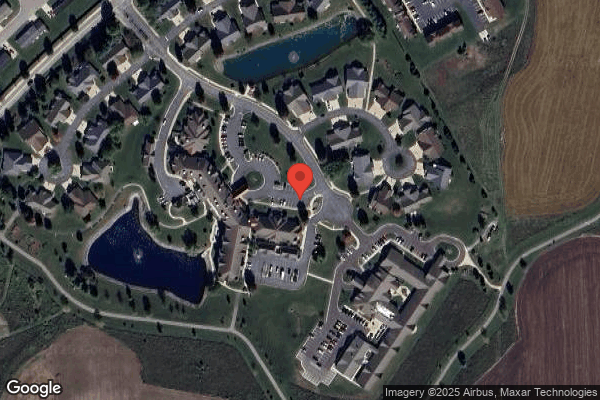
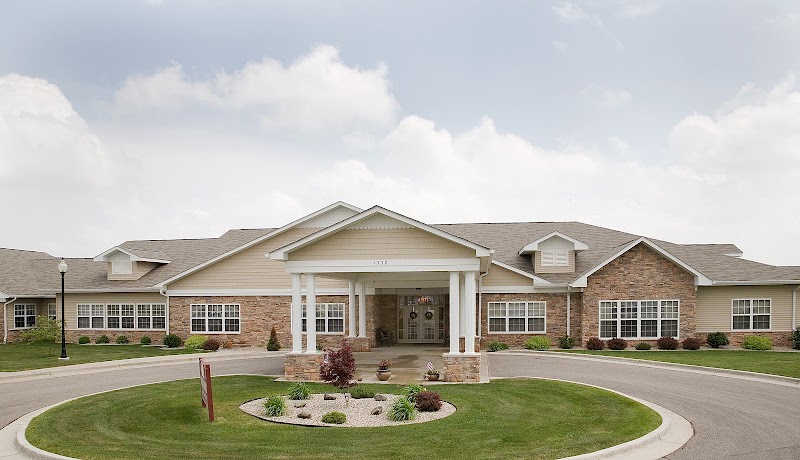
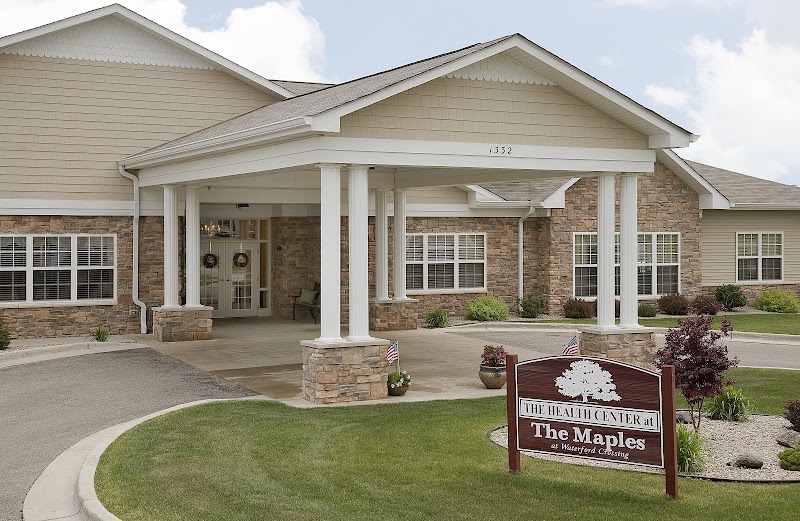
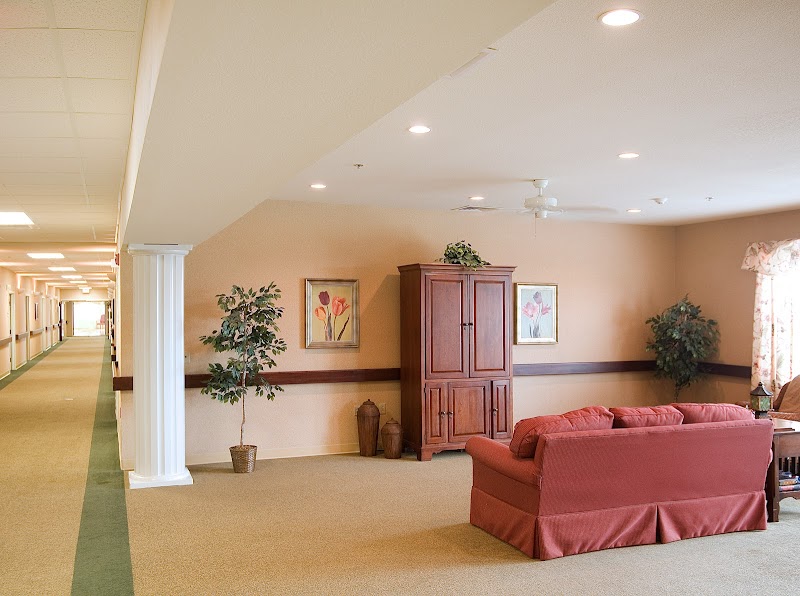
WATERFORD CROSSING

1332 WATERFORD CIR, GOSHEN, IN 46526 (574) 534-3920
For profit - Corporation 87 Beds TRILOGY HEALTH SERVICES Data: November 2025
Trust Grade
88/100
#105 of 505 in IN
Last Inspection: December 2024

Within standard 12-15 month inspection cycle. Federal law requires annual inspections.

Overview

Waterford Crossing in Goshen, Indiana has a Trust Grade of B+, which means it is rated as above average and is recommended for families seeking care. It ranks #105 out of 505 facilities in Indiana, placing it in the top half, and #4 of 12 in Elkhart County, indicating only three local options are better. However, the facility's trend is concerning as it has worsened, with issues increasing from 3 in 2023 to 10 in 2024. Staffing is a strength, with a good rating of 4 out of 5 stars and only a 30% turnover rate, which is significantly lower than the state average. There have been no fines reported, suggesting compliance with regulations, and the facility has more RN coverage than 85% of Indiana facilities, ensuring better oversight of resident care. On the downside, recent inspector findings raised concerns about the facility's cleanliness and adherence to residents' preferences. For example, the kitchen had ice buildup and spills, which could affect food safety, and a resident was not given the opportunity to choose their shower schedule, indicating a lack of attention to individual care preferences. Additionally, another resident with vision impairment did not have a care plan in place to address their needs, suggesting potential gaps in personalized care. Families should weigh these strengths and weaknesses when considering this facility for their loved ones.

Trust Score
B+
88/100
In Indiana
#105/505
Top 20%
Safety Record
Low Risk
No red flags
Inspections
Getting Worse
3 → 10 violations
Staff Stability
✓ Good
30% annual turnover. Excellent stability, 18 points below Indiana's 48% average. Staff who stay learn residents' needs.
Penalties
✓ Good
No fines on record. Clean compliance history, better than most Indiana facilities.
Skilled Nurses
✓ Good
Each resident gets 60 minutes of Registered Nurse (RN) attention daily — more than 97% of Indiana nursing homes. RNs are the most trained staff who catch health problems before they become serious.
Violations
⚠ Watch
19 deficiencies on record. Higher than average. Multiple issues found across inspections.
★★★★★
5.0
Overall Rating
★★★★☆
4.0
Staff Levels
★★★★★
5.0
Care Quality
★★★★☆
4.0
Inspection Score
Stable
2023: 3 issues
2024: 10 issues

The Good

  • 4-Star Staffing Rating · Above-average nurse staffing levels
  • 5-Star Quality Measures · Strong clinical quality outcomes
  • Low Staff Turnover (30%) · Staff stability means consistent care
  • Full Sprinkler Coverage · Fire safety systems throughout facility
  • No fines on record
  • Staff turnover is low (30%)

    18 points below Indiana average of 48%

Facility shows strength in staffing levels, quality measures, staff retention, fire safety.

The Bad

Chain: TRILOGY HEALTH SERVICES

Part of a multi-facility chain

Ask about local staffing decisions and management

The Ugly 19 deficiencies on record

Dec 2024 5 deficiencies
CONCERN (D)

Potential for Harm - no one hurt, but risky conditions existed

Deficiency F0561 (Tag F0561)

Could have caused harm · This affected 1 resident

**NOTE- TERMS IN BRACKETS HAVE BEEN EDITED TO PROTECT CONFIDENTIALITY** Based on interview and record review, the facility failed to honor a resident's shower preference for 1 of 1 resident reviewed f...

Read full inspector narrative →
**NOTE- TERMS IN BRACKETS HAVE BEEN EDITED TO PROTECT CONFIDENTIALITY** Based on interview and record review, the facility failed to honor a resident's shower preference for 1 of 1 resident reviewed for choices. (Resident 13) Finding includes: During an interview, on 12/13/2024 at 9:42 A.M., Resident 13 was unsure if the facility asked her about her preference for showers. She indicated she received a shower two times a week on the evening shift. She indicated she would like to have a shower daily on the day shift, as she had never showered in the evening before this admission. A record review for Resident 13 was completed on 12/16/2024 at 1:05 P.M. Diagnoses included, but were not limited to: anemia, end stage renal disease and celiac disease. An admission Minimum Data Set (MDS) assessment, dated 10/26/2024, indicated Resident 13 was cognitively intact and it was important to her to choose between a tub bath, shower, bed bath or sponge bath. On 12/11/2024, the census information indicated Resident 13 had moved from room [ROOM NUMBER] to room [ROOM NUMBER]. A Shower Schedule, for the 200-hall, indicated room [ROOM NUMBER] received a shower on Mondays and Thursdays on day shift. A Shower Schedule for the 300-hall indicated Resident 13 received a shower on Mondays and Thursdays on the evening shift. During an interview, on 12/17/2024 at 2:46 P.M., CNA 9 indicated prior to Resident 13's admission to the facility, Resident 13 received showers on day shift in the assisted living setting. During an interview, on 12/18/2024 at 11:01 A.M., the Staff Development Director indicated residents were interviewed for their shower preference upon admission. She indicated the results of the preference interviews were documented on the shower sheet schedule. She indicated Resident 13 had moved from the 200-hall where she received a shower on day shift and moved to the 300-hall where Resident 13 may have just been placed in a shower slot that was available. She indicated the resident's preference should have been honored. A policy was provided by the Director of Nursing, on 12/18/2024 at 11:48 A.M. The policy titled, Resident Choice, , indicated, .Resident have the right to make choices regarding their care, daily routine, religious practices, and activity participation 3.1-3(u)(1)
CONCERN (D)

Potential for Harm - no one hurt, but risky conditions existed

Comprehensive Care Plan (Tag F0656)

Could have caused harm · This affected 1 resident

Based on interview and record review, the facility failed to ensure a care plan for vision needs was in place for 1 of 2 residents reviewed for communication and sensory needs. (Resident 8) Finding in...

Read full inspector narrative →
Based on interview and record review, the facility failed to ensure a care plan for vision needs was in place for 1 of 2 residents reviewed for communication and sensory needs. (Resident 8) Finding includes: During an interview, on 12/12/2024 at 10:25 A.M., Resident 8 indicated he could not read the newspaper or the Bible. A record review for Resident 8 was completed, on 12/13/2024 at 12:57 P.M. Diagnoses included, but were not limited to: metabolic encephalopathy, major depressive disorder and macular degeneration. A Quarterly Minimum Data Set (MDS) assessment, dated 9/9/2024, indicated Resident 8 had moderate cognitive impairment and had impaired vision and utilized corrective lenses. An Annual MDS assessment, dated 8/19/2024, indicated a CAA (care area assessment) was triggered for visual impairment for Resident 8, but a plan of care related to vision needs was not developed. A Social Service Comprehensive Note, dated 8/19/2024 at 3:36 P.M., indicated Resident 8 had impaired vision with ability to see large print but not regular print when reading newspapers or books. A care plan could not be located for impaired vision for Resident 8. During an interview, on 12/18/2024 at 11:11 A.M., the MDS (Minimum Data Set) Coordinator indicated a care plan had not been developed for vision needs for Resident 8. During an interview, on 12/18/2024 at 11:14 A.M., the Social Service Director indicated a care plan was not developed for vision needs for Resident 8 and a vision care plan should have been completed. A policy was provided by the Director of Nursing, on 12/17/2024 at 11:03 A.M. The policy titled, Comprehensive Care Plan Guidelines, indicated, .To ensure appropriateness of services and communication that will meet the resident's needs, severity/stability of conditions, impairment, disability, or disease in accordance with state and federal guidelines .b. Care plan interventions should be reflective of the risk area(s) or disease processes that impact the individual resident .6. Comprehensive care plans need to remain accurate and current 3.1-35(a)
CONCERN (D)

Potential for Harm - no one hurt, but risky conditions existed

Deficiency F0658 (Tag F0658)

Could have caused harm · This affected 1 resident

Based on observation, interview and record review, the facility failed to ensure 1 of 7 nursing staff administering medications maintained professional standards of quality. (QMA 4) Findings include: ...

Read full inspector narrative →
Based on observation, interview and record review, the facility failed to ensure 1 of 7 nursing staff administering medications maintained professional standards of quality. (QMA 4) Findings include: During a medication observation, on 12/16/2024 at 8:25 A.M., QMA 4 was observed to remove a soufflé medication cup from the top drawer of the 300-hall medication cart. Resident 56's name was written on the side of the souffle cup that contained 14 different medications. The top drawer of the medication cart also contained 2 more souffle cups with the names of Residents 13 and 134 written on the side of the cups. During an interview, on 12/16/2024 at 8:26 A.M., QMA 4 indicated he should not have preset the medications. On 12/18/2024 at 11:51 A.M., the Director of Nursing provided the policy titled, Medication Administration-General Guidelines, with a revision date of 11/2018, and indicated the policy was the one currently used by the facility. The policy indicated . 4. Medications are not pre-poured either in advance of the med pass or for more than one resident at a time 3.1-35(g)(1)
CONCERN (D)

Potential for Harm - no one hurt, but risky conditions existed

Deficiency F0761 (Tag F0761)

Could have caused harm · This affected 1 resident

Based on observation, interview and record review, the facility failed to ensure over the counter medications were labeled appropriately for 1 of 2 medication storage carts. (300 hall- back medication...

Read full inspector narrative →
Based on observation, interview and record review, the facility failed to ensure over the counter medications were labeled appropriately for 1 of 2 medication storage carts. (300 hall- back medication cart). Finding includes: During a medication administration observation, on 12/17/2024 at 6:09 A.M., RN 11 obtained medication bottles from the cart. The following medications had labels indicating the ordering physician, resident's name or ordered dose: - a bottle of 81 mg (milligrams) aspirin. - multiple bottles of men's multi vitamin capsules - q bottle of vitamin B 12 - 5000 mg tablets - a bottle of multi-vitamins - a bottle of Acetaminophen 650 mg. During an interview, RN 11 indicated the medications observed without labels should have been labeled. On 12/17/2024 at 9:52 A.M., the Director of Nursing provided the policy titled, Medication Ordering and Receiving from Pharmacy- Medication Labels, dated 11/2018, and indicated the policy was the one currently used by the facility. The policy indicated . F. Resident-specific non prescription medications (not floor stock) that are not labeled by the pharmacy are kept in the manufacture's original container and identified with the resident's name. Facility personnel may write the resident's name on the container or label as long as the required information listed above (see B.) is not covered. B . 1) Resident's name . 3) Medication name. 4) Strength of medication. 5) Prescriber's name . 8) Beyond use (or expiration) date of medication 3.1-25(j)(l)
CONCERN (D)

Potential for Harm - no one hurt, but risky conditions existed

Infection Control (Tag F0880)

Could have caused harm · This affected 1 resident

Based on observation, record review and interview, the facility failed to follow infection control practices regarding enhanced barrier precautions for 1 of 1 resident reviewed for dialysis care. (Res...

Read full inspector narrative →
Based on observation, record review and interview, the facility failed to follow infection control practices regarding enhanced barrier precautions for 1 of 1 resident reviewed for dialysis care. (Resident 13) Finding includes: A record review for Resident 13 was completed on 12/16/24 at 1:05 P.M. Diagnoses included, but were not limited to: anemia, end stage renal disease and dependence on renal dialysis. An admission Minimum Data Set (MDS) assessment, dated 10/26/2024, indicated Resident 13 had moderate cognitive impairment and received dialysis care. A Physician's Order, dated 11/2/2024, indicated staff were to use enhanced barrier precautions, wearing a gown and gloves at minimum, during high-contact care activities three times a day. A current Care Plan, initiated on 10/22/2024, indicated Resident 13 required enhanced barrier precautions (EBP) during high-contact care related to presence of dialysis treatment with a fistula. Interventions included, but were not limited to: don/doff and dispose of PPE (Patient Protective Equipment) systematically and appropriately per policy, face mask to be utilized as needed and utilize gown and gloves per EBP policy during high contact ADL (Activities of Daily Living) care (e.g. dressing, showering/bathing, hygiene, transfers, toileting/changing briefs) and during linen changes. During an observation, on 12/16/2024 at 1:29 P.M., no precautionary signage or personal protective equipment (PPE) was observed outside Resident 13's room. During an observation and interview, on 12/17/2024 at 11:04 A.M., Resident 13 indicated the staff did not wear PPE, including gowns, gloves and mask when they provided direct care. There was no signage outside the room that indicated enhanced barrier precautions were in place and no PPE equipment was inside or outside of the room. During an observation, on 12/18/2024 at 9:52 A.M., CNA 8 was providing care for Resident 13 in the bathroom. CNA 8 was dressing Resident 13 as the resident sat on the toilet. The CNA did not have on any PPE. CNA 8 indicated he did not think PPE was required for direct care with Resident 13. He indicated he had utilized only gloves when he provided personal care to Resident 13. During an interview, on 12/18/2024 at 9:54 A.M., RN 7 indicated Resident 13 was the only resident in her care that required enhanced barrier precautions. She indicated enhanced barrier precautions were only utilized when providing care for Resident 13's dialysis fistula. A policy was provided by the Director of Nursing, on 12/18/2024 at 11:48 A.M. The policy titled, Enhanced Barrier Precautions [EBP] Standard Operating Procedure, indicated, .1. Enhanced Barrier Precautions [EPB] will be in place during high-contact care activities for residents with the following conditions: ii. All Residents with indwelling medical devices .3. High-contact care activities include but are not limited to: morning and evening ADL [activities of daily living] care, toileting, and showers 3.1-18(a)
Jan 2024 5 deficiencies
CONCERN (D)

Potential for Harm - no one hurt, but risky conditions existed

Comprehensive Care Plan (Tag F0656)

Could have caused harm · This affected 1 resident

During observation, interview, and record review, the facility failed to develop and implement a personalized care plan for 1 of 22 residents whose care plans were reviewed. (Resident 49) Finding incl...

Read full inspector narrative →
During observation, interview, and record review, the facility failed to develop and implement a personalized care plan for 1 of 22 residents whose care plans were reviewed. (Resident 49) Finding includes: The record review for Resident 49 was completed on 1/23/2024 at 2:47 P.M. Diagnoses included, but were not limited to: Parkinson's Disease and obstructive sleep apnea. A Physician's Order, dated 9/18/2023, indicated oxygen- bilevel positive airway pressure (BiPap) at 10 cm water at 0 liters to wear during the night and as needed during the day. There was no care plan available for the resident's BiPap machine. During an interview on 1/24/2024 at 9:38 A.M., the MDS Support indicated that Resident 49 should have had a care plan for his BiPap. On 1/25/2024 at 9 A.M., the Clinical Support Nurse provided a policy titled, Comprehensive Care Plan Guideline, dated 12/31/22, and indicated the policy was the one currently used by the facility. The policy indicated . 6. Comprehensive care plans need to remain accurate and current. a. New interventions will be added and updated or directly following CCM meeting. b. Newly recognized problems will have a care plan developed and added after CCM meeting 3.1-35(a)
CONCERN (D)

Potential for Harm - no one hurt, but risky conditions existed

Quality of Care (Tag F0684)

Could have caused harm · This affected 1 resident

Based on interview, record review, and observation, the facility failed to provide treatment for a skin tear and dry skin for 1 of 3 residents reviewed for non-pressure related skin conditions. (Resid...

Read full inspector narrative →
Based on interview, record review, and observation, the facility failed to provide treatment for a skin tear and dry skin for 1 of 3 residents reviewed for non-pressure related skin conditions. (Resident 43) Finding includes: During an interview on 1/23/2023 at 10:39 A.M., Resident 43 indicated he had sores on both shins. He was scratching and broke the skin open. A record review was conducted on 1/24/2023 at 10:25 A.M. Diagnoses included, but were not limited to: diabetes mellitus type 2, Parkinson's disease, and Alzheimer's disease. An Annual Minimum Data Set (MDS) assessment, dated 11/25/2023, indicated Resident 43 had moderate cognitive impairment. Current Physician's Orders indicated a weekly skin assessment was to be completed. There were no orders for any treatment to the shins. A Shower Sheet, dated 1/22/2024, indicated no bruising or redness was observed. A weekly Skin Assessment, dated 1/22/2024, indicated no skin issue was observed. A Care Plan, dated 12/08/2022, indicated Resident 43 was at risk for skin breakdown related to incontinence and impaired mobility. The goal was for Resident 43's skin to remain intact. Interventions included, to conduct a weekly skin assessment. During an observation and interview on 1/25/2024 at 11:19 A.M., the Director of Nursing (DON) described the left shin as very discolored with dried scabs, and a skin tear that had not dried up. Dry skin was present. She indicated Resident 43 needed a treatment for the skin tear and lotion for the dry skin. As of 1/29/2024 at 9:07 A.M., the medical record had no new orders or documentation of the left shin. A policy was provided by the Regional Support Nurse on 1/29/2024 at 11:26 A.M. The policy titled, Bruise, Rash, Lesion, Skin Tear, Laceration Assessment Guidelines, indicated, .Utilized to describe and monitor bruises, rashes, lesions, skin tears, and laceration .1. May complete Skin Tear/Laceration Event in the EMR [electronic medical record] by an RN/LPN [registered nurse/licensed practical nurse] if the Skin Tear/Laceration warrants documentation due to the extent and/or location. 2. Complete one event for each Skin Tear/Laceration. 3. One weekly follow-up assessment may be completed to ensure Skin Tear/Laceration are resolved or in the progress of healing. If further follow-up is needed, documentation may be placed in a progress note 3.1-37(a)
CONCERN (D)

Potential for Harm - no one hurt, but risky conditions existed

Respiratory Care (Tag F0695)

Could have caused harm · This affected 1 resident

3. During observations on 1/22/204 at 9:38 A.M., 1/23/2024 at 10:44 A.M., and 1/24/2024 at 3:12 P.M., Resident 50's CPAP (continuous positive airway pressure) mask was observed lying on the bedside ta...

Read full inspector narrative →
3. During observations on 1/22/204 at 9:38 A.M., 1/23/2024 at 10:44 A.M., and 1/24/2024 at 3:12 P.M., Resident 50's CPAP (continuous positive airway pressure) mask was observed lying on the bedside table, and a gallon of distilled water was on the floor undated. A record review was completed on 1/25/2024 at 10:26 A.M. Diagnoses included, but were not limited to: pulmonary fibrosis, sleep apnea, and unspecified dementia. A Quarterly Minimum Data Set (MDS) assessment, dated 12/13/2023, indicated Resident 50 had a non-invasive mechanical ventilation device. A Physician's Order, dated 5/11/2022, indicated to wear the CPAP at night and as need during the day. A Care Plan, dated 5/26/2022, indicated Resident 50 had the potential for complications of functional and cognitive status decline related to respiratory disease, due to pulmonary fibrosis and sleep apnea with the use of a CPAP. During an interview on 1/25/2024 at 1:04 P.M., the Director of Nursing (DON) indicated the CPAP mask should be stored in a respiratory bag when it was not in use, and the gallon of distilled water should be dated when opened. On 1/29/2024, the Regional Support Nurse indicated a policy was not available for the use of CPAP/BiPap machines. 3.1-47(6) 2. During an observation, on 1/22/2024 at 10:43 A.M., Resident 49's BiPap mask was behind the nightstand on the floor in a bag, and a partially filled gallon of distilled water was undated. During an observation, on 1/23/2024 at 10:29 A.M., the BiPap mask was laying on the nightstand, and the partially filled gallon of distilled water was undated. During an observation on 1/24/2024 at 9:10 A.M., the mask was hanging over the nightstand, and a partially filled gallon of distilled water was undated. The record review was completed for Resident 49 on 1/23/2023 at 2:47 P.M. Diagnoses included, but were not limited to: Parkinson's Disease, and obstructive sleep disorder. A Physician's Order, dated 9/18/2023, indicated oxygen- BiPap at 10 cm water at 0 liters to wear during the night and as needed during the day. During an interview, on 1/24/2024 at 9:15 A.M., RN 2 indicated when the BiPap was not in use, the tubing should be in a bag and the bottled water should have an opened date. Based on observation, record review, and interview, the facility failed to ensure respiratory equipment for oxygen and sleep apnea machines was stored and maintained according to professional standards for 3 of 3 residents reviewed for respiratory care. (Residents 37, 49 and 50) Findings include: 1. The record for Resident 37 was reviewed on 1/23/24 at 11:30 A.M. Diagnoses included, but were not limited to: status post pneumonia and sepsis, chronic respiratory failure and obstructive sleep apnea. The initial Minimum Data Set assessment, completed on 12/15/23, did not indicate oxygen therapy was in use for Resident 37. A Care Plan to address shortness of breath was initiated on 12/10/24, and included an intervention to utilize oxygen as needed per Physician's Orders. On 1/22/24 at 11:24 A.M., Resident 37 was observed in his room, seated in his recliner, holding his oxygen tubing. There was no date on the oxygen tubing, which was connected to a concentrator in his room. In addition, there was oxygen tubing draped over a wheelchair in the resident's room. There was no date on the tubing on the wheelchair. On 1/23/24 at 11:11 A.M., Resident 37 was observed resting in his recliner with oxygen via a nasal cannula. The oxygen tubing was connected to a humidifier on an oxygen concentrator in the resident's room. There was additional tubing with a nasal cannula, attached to a portable oxygen tank on the resident's wheelchair. There was no date on any of the oxygen tubing or humidifier water bottle. There was a plastic bag taped to the concentrator, but it was empty and not dated. On 1/24/24 at 9:26 A.M. Resident 37 was observed seated in his room in a recliner. He had oxygen via a nasal cannula in place, connected to a concentrator in his room. There was no humidified water bottle on the concentrator. There was a plastic bag taped to the concentrator with the portable oxygen tubing in the bag. There were no dates on the oxygen tubing or the plastic bag. On 1/25/24 at 8 45 A.M. Resident 37 was observed, seated in his recliner in his room. The resident had oxygen tubing in place via a nasal cannula. There was no date on the oxygen tubing. There was a bag taped to the oxygen concentrator in the room with portable oxygen tubing inside. There was no date on the portable oxygen tubing. During an interview with the Regional Nurse Consultant, on 1/24/24 at 11:20 A.M., she acknowledged there were no dates on the oxygen equipment and/or tubing for Resident 37. She indicated she would have to research his oxygen use. A policy and procedure, titled, Administration of Oxygen, provided as current by the Regional nurse Consultant on 1/25/24 at 10:59 A.M., indicated the following: .14. Date the tubing for the date it was initiated. a. Tubing should be changed monthly and PRN
CONCERN (D)

Potential for Harm - no one hurt, but risky conditions existed

Drug Regimen Review (Tag F0756)

Could have caused harm · This affected 1 resident

Based on observation, interview, and record review, the facility failed to ensure a Physician reviewed a Medication Regimen Review (MRR) provided by the Pharmacist following a monthly MRR, for 1 out o...

Read full inspector narrative →
Based on observation, interview, and record review, the facility failed to ensure a Physician reviewed a Medication Regimen Review (MRR) provided by the Pharmacist following a monthly MRR, for 1 out of 5 residants selected for unnecessary medication review. (Resident 225) Finding includes: A record review was completed for Resident 225 on 1/24/2024 at 2:43 P.M. Diagnoses included, but were not limited to: Alzheimer's disease, dementia, unspecified severity, without behavioral disturbance, psychotic disturbance, mood disturbance, and anxiety, neurocognitive disorder with Lewy body, and unspecified psychosis not due to a substance or known physiological condition. A Physician's Order, dated 12/9/2022, indicated doneprizil 10 mg (milligram) tablet, orally at bedtime. A Pharmacy Recommendation, dated 9/26/2023, indicated Resident 225 has an order for DONEPEZIL TAB 10 MG daily. The most recent BIMS [Brief Interview for Mental Status] score on file is < 7 which indicated severe impairment [BIMS =3 on 6/27/23]. The American Geriatric Society has found that deprescribing acetylcholinesterase inhibitors is not associated with negative effects to the resident, and is likely to help reduce the risk of falls and fractures in older nursing home residents with dementia. Please consider tapering off of DONEPEZIL TAB 10 MG at this time [Donepezil 5 mg QD [every day] x 2 weeks then d/c [discontinue] During an interview on 1/26/2024 at 10:15 A.M., the Regional Support Nurse indicated the Nurse Practitioner (NP) did not address the pharmacy recommendation in September of 2023. During an interview on 1/26/2024 at 11:00 A.M., the Regional Support Nurse indicated, when they receive the recommendations, the nurse initiates an Event if there is a GDR (gradual dose reduction), then it is printed out and placed in the NP's folder. The NP then reviews it, signs, and puts in a note in her progress note if she agrees or disagrees with the recommendation. The Assistant Director of Nursing then attaches the note before closing the recommendation. She acknowledged that the September recommendation got missed. On 1/26/2024 at 11:00 A.M., the Regional Support Nurse provided a policy titled, Consultant Pharmacist Reports, revised 11/2018, and indicated the policy was the one currently used by the facility. The policy indicated .E. Recommendations are acted upon and documented by the facility personnel and/or the prescriber. 10 Prescriber accepts and acts upon suggestion or rejects and provides an explanation for disagreeing 3.1-25(i)
CONCERN (D)

Potential for Harm - no one hurt, but risky conditions existed

Infection Control (Tag F0880)

Could have caused harm · This affected 1 resident

Based on observation, record review, and interview, the facility failed to ensure 1 of 4 nursing staff (QMA 4) administering medications followed infection control policies regarding hand washing. Fin...

Read full inspector narrative →
Based on observation, record review, and interview, the facility failed to ensure 1 of 4 nursing staff (QMA 4) administering medications followed infection control policies regarding hand washing. Finding includes: During an observation of a medication administration pass, on 1/24/2024 at 11:01 A.M., QMA 4 administered a crushed oral medication to Resident 31. After he completed the medication administration for Resident 31, he then prepared medication for Resident 62. He assessed Resident 62's vital signs, and then crushed the medications and administered them to Resident 62. QMA 4 then pushed Resident 62 back to the dining table. Next, QMA 4 prepared a medication for Resident 63 and administered the oral medication. QMA 4 did not perform hand hygiene in between any of the three resident's medication preparations and administrations. During an interview with the Administrator, on 1/26/2024 at 2:31 P.M., she indicated the medication policy included instructions for handwashing during the medication administration process. The facility policy, titled, Preparation and General Guidelines provided as current by the Administrator on 1/26/2024 at 2:31 P.M., indicated the following: .2. Handwashing and Hand Sanitation: The person administering medications adheres to good hand hygiene before beginning a medication pass, prior to handling any medications, after coming into direct contact with a resident .b. Hand sanitization is done with an approved sanitizer between handwashings, when returning to the medication cart or preparation area, at regular intervals during the mediation pass such as after each room, again assuming handwashing is not indicated . 3.1-18(l)
Feb 2023 3 deficiencies
CONCERN (D) 📢 Someone Reported This

A family member, employee, or ombudsman was alarmed enough to file a formal complaint

Potential for Harm - no one hurt, but risky conditions existed

Resident Rights (Tag F0550)

Could have caused harm · This affected 1 resident

**NOTE- TERMS IN BRACKETS HAVE BEEN EDITED TO PROTECT CONFIDENTIALITY** Based on record review and interview, the facility failed to protect a residents' right to participate in a religious activity i...

Read full inspector narrative →
**NOTE- TERMS IN BRACKETS HAVE BEEN EDITED TO PROTECT CONFIDENTIALITY** Based on record review and interview, the facility failed to protect a residents' right to participate in a religious activity in the privacy of their own room, (Resident B). Findings include: On 2/22/23 at 10:30 A.M., the Executive Director (ED) provided an email communication dated 11/30/22 at 11:34 A.M., and indicated it was received from Resident B's family member and Emergency Contact 2. The email indicated, on 11/20/22 at approximately 4:00 P.M., the family member and a family friend were visiting Resident B in his room and, .[family friend] began praying for [Resident B] .in an elevated tone. After some time [Registered Nurse (RN) 2] came back in and said that [family friend] was being too loud and she needed to quiet down as she could be heard out to the nurse's station (the door was closed). I again closed the door and [family friend] got quieter. A couple minutes later, [RN 2] was at the door again. She said that we had to leave as religious ceremonies were not allowed in the rooms . On 2/22/23 at 10:13: A.M., the clinical record for Resident B was reviewed. Resident B was admitted on [DATE] with diagnoses that included but were not limited to, metabolic encephalopathy, pneumonitis, sepsis, bipolar disorder, and dementia. The most recent Minimum Data Set (MDS) dated [DATE], was an admission assessment that indicated Resident B had minimal difficulty in hearing and utilized hearing aids, was usually able to understand others, had moderate cognitive impairment, frequently felt depressed and hopeless. The resident demonstrated behaviors of rejection of care on 1-3 days in the previous 7 day look back period. The staff assessment of daily activity preferences indicated Resident B preferred to have family or significant other involved in his care discussions. Resident B's care plans included but were not limited to Activities, dated 10/13/22. The care plan indicated, While in this campus, it is important that I have the opportunity to engage in activities and opportunities that are meaningful to me. My interests include reading, music, and church .My faith is important to me, and it is important that I continue to engage in religious services or practices . 2/22/23 at 9:45 A.M., during an interview with the Executive Director, she indicated on 11/20/22 RN 2 heard loud noises in Resident B's room and was concerned. The Executive Director indicated RN 2 went to the residents room and a family friend and the resident's son were praying the demons out of the resident and became concerned because the resident was not able to give his consent to what was going on because he had a diagnosis of dementia. The Executive Director indicated Resident B did not have a roommate at the time. On 2/22/23 at 10:30 A.M., during an interview conducted with RN 2, the RN indicated she had gone to Resident B's room to administer care and the resident's son was at the bedside. Upon RN 2's entry, the family friend also came to the bedside. RN 2 indicated when she completed care and exited the room, she could hear the family friend's raised voice from the Nurse's station so returned to the room, knocked on the closed door and, .said I could still hear her at the nurses station and we could not have that here .she continued being loud after I left the room so I went back to the room and heard her say, 'I rebuke you.' [Resident B's] hands were raised and he was getting upset and I said [the son and family friend] had to leave the facility .[Resident B's] Bible was on his chest .I told them to take it off his chest . RN 2 indicated the resident was not asking for help or telling the family friend to stop praying, but that she felt the resident was agitated. RN 2 indicated Resident B's son was not happy with her when she had them leave. RN 2 indicated no other residents complained about the noise level in Resident B's room. RN 2 indicated Resident B was not wearing his hearing aids that evening. RN 2 indicated she did not document the events of the evening, her concerns, the resident's reactions, and she did not report the incident because, .I thought I nipped it in the bud. On 2/22/23 at 10:30 A.M., the Executive Director provided a policy titled, Resident Rights Guidelines, with an effective date of 11/21 with a revised date of 5/11/17 and indicated it was the current facility policy. The policy indicated, .Residents shall not leave their individual personalities or basic human rights behind when they move to a health campus .Our residents have the right to .Exercise choice in attending and participating in activities, including religious services . This Federal tag related to complaint IN00398501. 3.1- 3(m)
CONCERN (D) 📢 Someone Reported This

A family member, employee, or ombudsman was alarmed enough to file a formal complaint

Potential for Harm - no one hurt, but risky conditions existed

Report Alleged Abuse (Tag F0609)

Could have caused harm · This affected 1 resident

**NOTE- TERMS IN BRACKETS HAVE BEEN EDITED TO PROTECT CONFIDENTIALITY** Based on interview and record review, the facility failed to assure that an allegation of abuse was reported to the State Survey...

Read full inspector narrative →
**NOTE- TERMS IN BRACKETS HAVE BEEN EDITED TO PROTECT CONFIDENTIALITY** Based on interview and record review, the facility failed to assure that an allegation of abuse was reported to the State Survey Agency (SSA) for 1 of 3 residents reviewed for abuse (Resident B). Findings include: On 2/22/23 at 10:30 A.M., the Executive Director (ED) provided an email communication dated 11/30/22 at 11:34 A.M., and indicated it was received from Resident B's family member and Emergency Contact 2. The email indicated, on 11/20/22 at approximately 4:00 P.M., the family member and a family friend were visiting Resident B in his room and, .[family friend] began praying for [Resident B]. She was still holding hands with him as he did not let go of her hands. [Family friend] was praying in an elevated tone. After some time [Registered Nurse (RN) 2] came back in and said that [family friend] was being too loud and she needed to quiet down as she could be heard out to the nurse's station (the door was closed). I again closed the door and [family friend] got quieter. A couple minutes later, [RN 2] was at the door again. She said that we had to leave as religious ceremonies were not allowed in the rooms. She said, 'What you are doing is abuse.' As [family friend tried to leave and let go of [Resident B's] hands go, he held on to her hands and [RN 2] had to separate herself from his hands . As we were walking out, she said, 'This is inappropriate.' I asked her, 'what is inappropriate?' 'what you are doing is abusive, struggling with a patient,' she said . On 2/22/23 at 10:13: A.M., the clinical record for Resident B was reviewed. Resident B was admitted on [DATE] with diagnoses that included but were not limited to, metabolic encephalopathy, pneumonitis, sepsis, bipolar disorder, and dementia. The most recent Minimum Data Set (MDS) dated [DATE], was an admission assessment that indicated Resident B had moderate cognitive impairment, frequently felt depressed and hopeless. The resident demonstrated behaviors of rejection of care on 1-3 days in the previous 7 day look back period. 2/22/23 at 9:45 A.M., during an interview with the Executive Director, she indicated on 11/20/22 RN 2 heard loud noises in Resident B's room and was concerned. The Executive Director indicated RN 2 went to the residents room and a family friend and the resident's son were praying the demons out of the resident and became concerned because the resident was not able to give his consent to what was going on because he had a diagnosis of dementia. On 2/22/23 at 10:30 A.M., during an interview conducted with RN 2, the RN indicated she had gone to Resident B's room to administer care and the resident's son was at the bedside. Upon RN 2's entry, the family friend also came to the bedside. RN 2 indicated when she completed care and exited the room, she could hear the family friend's raised voice from the Nurse's station so returned to the room, knocked on the closed door and, .said I could still hear her at the nurses station and we could not have that here .she continued being loud after I left the room so I went back to the room and heard her say, 'I rebuke you.' [Resident B's] hands were raised and he was getting upset and I said [the son and family friend] had to leave the facility .RN 2 indicated the resident was not asking for help or telling the family friend to stop praying, but that she felt the resident was agitated. RN 2 indicated Resident B's son was not happy with her when she had them leave. RN 2 indicated she did not document the events of the evening, her concerns, the resident's reactions, and she did not report the incident because, .I thought I nipped it in the bud. 2/22/23 at 12:37 P.M. during a second interview with the Executive Director, she indicated she did not believe the email received from Resident B's family member was an allegation of abuse and did not initiate an investigation in response to the email and did not report the allegation of abuse to the State Agency. On 2/22/23 at 3:15 P.M., the Executive Director provided a policy titled, Abuse and Neglect Procedural Guidelines, with an effective date of 8/29/19 with a revised date of 8/29/19 and indicated it was the current facility policy. The policy indicated, .The Executive Director and Director of Health Services are responsible for the implementation and ongoing monitoring of abuse standards and procedures .Mental/Emotional Abuse-Mental abuse is the use of verbal or nonverbal conduct which causes or has the potential to cause the resident to experience .agitation .Investigation .the Executive Director is accountable for investigating and reporting .Ensure that all alleged violations involving abuse .are reported immediately, but not later than 2 hours after the allegation is made, if the events that cause the allegation involve abuse .to the administrator of the facility and to other officials (including to the State Survey Agency .in accordance with State law through established procedures This Federal tag related to complaint IN00398501. 3.1- 28(c)
CONCERN (D) 📢 Someone Reported This

A family member, employee, or ombudsman was alarmed enough to file a formal complaint

Potential for Harm - no one hurt, but risky conditions existed

Investigate Abuse (Tag F0610)

Could have caused harm · This affected 1 resident

**NOTE- TERMS IN BRACKETS HAVE BEEN EDITED TO PROTECT CONFIDENTIALITY** Based on interview and record review, the facility failed to ensure a thorough investigation was completed for an allegation of ...

Read full inspector narrative →
**NOTE- TERMS IN BRACKETS HAVE BEEN EDITED TO PROTECT CONFIDENTIALITY** Based on interview and record review, the facility failed to ensure a thorough investigation was completed for an allegation of abuse for 1 of 3 residents reviewed for abuse, (Resident B). Findings include: On 2/22/23 at 10:30 A.M., the Executive Director (ED) provided an email communication dated 11/30/22 at 11:34 A.M., and indicated it was received from Resident B's family member and Emergency Contact 2. The email indicated, on 11/20/22 at approximately 4:00 P.M., the family member and a family friend were visiting Resident B in his room and, .[family friend] began praying for [Resident B]. She was still holding hands with him as he did not let go of her hands. [Family friend] was praying in an elevated tone. After some time [Registered Nurse (RN) 2] came back in and said that [family friend] was being too loud and she needed to quiet down as she could be heard out to the nurse's station (the door was closed). I again closed the door and [family friend] got quieter. A couple minutes later, [RN 2] was at the door again. She said that we had to leave as religious ceremonies were not allowed in the rooms. She said, 'What you are doing is abuse.' As [family friend tried to leave and let go of [Resident B's] hands go, he held on to her hands and [RN 2] had to separate herself from his hands . As we were walking out, she said, 'This is inappropriate.' I asked her, 'what is inappropriate?' 'what you are doing is abusive, struggling with a patient,' she said . On 2/22/23 at 10:13: A.M., the clinical record for Resident B was reviewed. Resident B was admitted on [DATE] with diagnoses that included but were not limited to, metabolic encephalopathy, pneumonitis, sepsis, bipolar disorder, and dementia. The most recent Minimum Data Set (MDS) dated [DATE], was an admission assessment that indicated Resident B had minimal difficulty in hearing and utilized hearing aids, was usually able to understand others, had moderate cognitive impairment, frequently felt depressed and hopeless. The resident demonstrated behaviors of rejection of care on 1-3 days in the previous 7 day look back period. The staff assessment of daily activity preferences indicated Resident B preferred to have family or significant other involved in his care discussions. Resident B's care plans included but were not limited to Activities, dated 10/13/22. The care plan indicated, While in this campus, it is important that I have the opportunity to engage in activities and opportunities that are meaningful to me. My interests include reading, music, and church .My faith is important to me, and it is important that I continue to engage in religious services or practices . 2/22/23 at 9:45 A.M., during an interview with the Executive Director, she indicated on 11/20/22 RN 2 heard loud noises in Resident B's room and was concerned. The Executive Director indicated RN 2 went to the residents room and a family friend and the resident's son were praying the demons out of the resident and became concerned because the resident was not able to give his consent to what was going on because he had a diagnosis of dementia. The Executive Director indicated Resident B did not have a roommate at the time. On 2/22/23 at 10:30 A.M., during an interview conducted with RN 2, the RN indicated she had gone to Resident B's room to administer care and the resident's son was at the bedside. Upon RN 2's entry, the family friend also came to the bedside. RN 2 indicated when she completed care and exited the room, she could hear the family friend's raised voice from the Nurse's station so returned to the room, knocked on the closed door and, .said I could still hear her at the nurses station and we could not have that here .she continued being loud after I left the room so I went back to the room and heard her say, 'I rebuke you.' [Resident B's] hands were raised and he was getting upset and I said [the son and family friend] had to leave the facility .RN 2 indicated the resident was not asking for help or telling the family friend to stop praying, but that she felt the resident was agitated. RN 2 indicated Resident B's son was not happy with her when she had them leave. RN 2 indicated she did not document the events of the evening, her concerns, the resident's reactions, and she did not report the incident because, .I thought I nipped it in the bud. 2/22/23 at 12:37 P.M. during a second interview with the Executive Director, she indicated she did not believe the email received from Resident B's family member was an allegation of abuse and did not initiate an investigation in response to the email. On 2/22/23 at 3:15 P.M., the Executive Director provided a policy titled, Abuse and Neglect Procedural Guidelines, with an effective date of 8/29/19 with a revised date of 8/29/19 and indicated it was the current facility policy. The policy indicated, .The Executive Director and Director of Health Services are responsible for the implementation and ongoing monitoring of abuse standards and procedures .Mental/Emotional Abuse-Mental abuse is the use of verbal or nonverbal conduct which causes or has the potential to cause the resident to experience .agitation .Investigation .the Executive Director is accountable for investigating and reporting .Identifying and interviewing all involved persons, including the alleged victim, alleged perpetrator, witnesses, and others who might have knowledge of the allegations .Focusing the investigation on determining if abuse .has occurred, the extent, and cause . This Federal tag related to complaint IN00398501. 3.1- 28(d)
Dec 2022 6 deficiencies
CONCERN (D)

Potential for Harm - no one hurt, but risky conditions existed

Notification of Changes (Tag F0580)

Could have caused harm · This affected 1 resident

Based on observation, interview, and records review the facility failed to provide timely physician notification of respiratory symptoms for 1 of 3 residents reviewed for respiratory care. (Resident 3...

Read full inspector narrative →
Based on observation, interview, and records review the facility failed to provide timely physician notification of respiratory symptoms for 1 of 3 residents reviewed for respiratory care. (Resident 39) Finding includes: During an initial interview and observation on 12/8/202 at 9:09 A.M., Resident 39 indicated going to the bathroom causes shortness of breath. A productive cough was observed. Resident 39's roommate, indicated that Resident 39 has been coughing for the past 3 to 4 days, and was keeping her awake at night. On 12/08/2022 at 10:04 A.M., Resident 39 had a productive cough and signs and symptoms of shortness of breath. Resident 39 indicated she is short of breath with just walking from her recliner to the bathroom. During an observation on 12/08/2022 at 10:29 A.M., the therapy staff was observed in Resident 39's room. Resident 39 was coughing. The therapy staff was observed to inform Resident 39 to feel better as she refused therapy treatment.You sound like you have a lot of stuff in there On 12/9/2022 9:45 A.M., Resident 39 complained of coughing and shortness of breath. A clinical record review was completed on 12/9/2022 at 1:22 P.M. Diagnoses included, but were not limited to: pulmonary fibrosis, chronic obstructive pulmonary disease, centrilobular emphysema, and paroxysmal atrial fibrillation. A 5-day Minimum Data Set (MDS) Assessment on 11/23/2022, indicated Resident 39 was cognitively intact and required oxygen use. A Skilled Nursing Assessment on 12/5/2022 indicated regular and unlabored respirations with clear lung sound and no cough. On 12/6/2022, a Skilled Nursing Assessment indicated shortness of breath with exertion, diminished breath sounds in both lobes, and cough present with thin mucous On 12/8/2022, the Assessment indicated shortness of breath with exertion, diminished breath sounds in both lobes, cough present with thin mucous, and a congested nose. On 12/9/2022, the Assessment indicated shortness of breath with exertion, diminished breath sounds in both lobes, cough present with thin mucous, and watery eyes. During an observation on 12/9/2022 at 1:57 P.M., a report conversation was observed. RN 4 was observed telling LPN 5, she .Wants NP [Nurse Practitioner] to see her as cough is getting worse, she's had a cold for a while 12/12/22 . SOB [shortness of breath] with exertion, left side diminished with wheezes, right side clear, cough present with small amount thin mucous During an interview on 12/9/2022 at 1:35 P.M., the Program Director of Therapy indicated, no notes were available for the 12/8/2022 session. She indicated the documentation shows an X which indicated not seen for therapy. She indicated the therapist would most likely inform the nurse the resident indicated was not feeling well. On 12/9/2022 at 2:10 P.M., Resident 39's roommate was observed coming to the area on the 300 hall and requested to find the office of Nurse Practitioner. My roommate has been coughing for 3 days and 3 nights. A staff member immediately removed the resident from the area. During an interview on 12/9/0222 at 1:58 P.M., RN 4 indicated therapy was refused, but the therapist did not communicate the refusal. She indicated she had a cold awhile, and symptoms were worsening. She indicated a productive cough was noted two days ago. She indicated Resident 39 was on the nurse practitioner list to be seen today. RN 4 indicated a temperature had not been taken on Resident 39. RN 4 indicated, .She's always drinking all the time so it wouldn't be accurate A Nurse's Note on 12/9/2022 at 2:00 P.M., indicated, .Resident has productive cough with thick yellow sputum. She has declined to participate in therapy and has had her meals in her room today A Nurse Practitioner's note on 12/9/2022 at 2:46 P.M. indicated, .Acute Visit .Cough not feeling well Resident has been coughing for about 3-5 days, and it is not getting better. She has stopped participating in therapies, and is feeling worse. She does have the cough medicine, but she states it's not helping much. She does feel like she has to clear her throat multiple times a day. When she coughs, she coughs up clear liquid. She does have shortness of breath with exertion and it is getting worse. Denies any chest pain, heart palpitations .Cough: tested for covid 19. it was negative. Will start Mucinex 600 mg po BID [twice daily] x [times] 10 days, Flonase 1 spray BID x 10 days, albuterol inhaler 2 puffs q4hrs[every 4 hours] prn [as needed] for shortness of breath/wheezing On 12/12/2022 at 12:57 P.M., Resident 39 indicated, .I'm doing better than I was Resident stated she was still coughing and had shortness of breath, but her covid test was negative. She indicated what she coughs up is, .nasty She offered a cup full of sputum filled tissues to observed. She indicated the new medication helps get the sputum coughed up. She indicated coughing wears her out and she can't walk and go anywhere even the bathroom, She indicated it feels like she's walked a mile to go to the bathroom. A current policy titled, Notification of Change in Condition, was provided on 12/14/2022 at 9:46 A.M., by the Executive Director, and indicated, .Purpose To ensure appropriate individuals are notified of change in condition. The facility informed the resident, consult with the resident's physician and if known the resident's legal representative 3.1-5(a)(2)
CONCERN (D)

Potential for Harm - no one hurt, but risky conditions existed

Comprehensive Care Plan (Tag F0656)

Could have caused harm · This affected 1 resident

**NOTE- TERMS IN BRACKETS HAVE BEEN EDITED TO PROTECT CONFIDENTIALITY** Based on observation, record review, and interview, the facility failed to develop a person-centered care plan for 3 out of 23 r...

Read full inspector narrative →
**NOTE- TERMS IN BRACKETS HAVE BEEN EDITED TO PROTECT CONFIDENTIALITY** Based on observation, record review, and interview, the facility failed to develop a person-centered care plan for 3 out of 23 residents whose care plans were reviewed (Residents 7, 41, and 46). Findings include: 1. During an interview on 12/07/2022 2:52 PM, Resident 7 indicated she had pain all over. The resident indicated pain medication was ordered but didn't work. A clinical record review on 12/09/2022 11:36 A.M., indicated Resident 7's diagnoses included, but were not limited to, unspecified sequelae of cerebral infarction and dorsalgia, unspecified. Physician's orders dated 11/14/2022 to 12/14/2022 indicated, but were not limited to, gabapentin 300 mg (milligram) for nerve pain, tizanidine 2 mg for muscle spasms, acetaminophen 325 mg for mild pain, biofreeze 4% menthol gel for chronic pain, aspercreme lidocaine 4% patch for pain, and oxycodone-acetaminophen 10-325 mg for pain. A Quarterly MDS (Minimum Data Set) assessment dated [DATE] included, but was not limited to, the following information: BIMS (Brief Interview for Mental Status) indicated a score of 13, which signifies intact cognition; extensive assist of 2 for transfers; extensive assist of 1 for dressing, personal hygiene, and toileting; routine and prn (as needed) pain meds; opioid use daily; and no special programs, hospice or dialysis. During an interview on 12/12/2022 at 01:21 P.M., RN 3 indicated medications usually worked, but she had also tried warm compresses which also helped. Employee further indicated resident reported if meds do not work. The care plan problem for pain dated 4/21/2021 indicated, but were not limited to, the following interventions: observe for and record verbal and non-verbal signs of pain, reposition as needed, notify MD of increased pain, administer medications as ordered and notify MD for any side effects observed or lack of effectiveness, attempt non-pharmacological interventions. 2. During an interview on 12/7/2022 at 2:20 P.M., Resident 41 indicated she had some depression. A clinical record review on 12/12/2022 at 9:16 A.M., diagnoses included, but were not limited to, Parkinson's; dementia, unspecified, without behavioral disturbances; major depressive disorder, single episode; and anxiety disorder, unspecified. Physician's orders dated 11/14/2022 to 12/14/2022 indicated, but were not limited to, Ativan 0.5 mg; Namenda 10 mg; paroxetine20 mg; and trazodone 150 mg. A Quarterly MDS assessment dated [DATE] included, but was not limited to, the following: BIMS was 15, signifying intact cognition; no behaviors; supervision of 1 for all activities of daily living but set up for eating and bathing; received an antidepressant and antianxiety medication daily; and no special programs, treatments, or procedures. A care plan problem dated 8/11/2022 for anxiety and depression included, but were not limited to, the following interventions: assist her in making contact with family/friends as needed; allow resident to vent feelings and frustrations; encourage resident to attend structured activities of preference and participate in leisure/pastime activities; provide supportive counseling contacts as needed; meds per orders; observe mood, affect, and behaviors with all hands on care and contacts. During an observation on 12/12/2022 at 9:42 A.M., resident was sitting on side of bed, still in her pajamas, with breakfast tray 1/2 eaten. During an interview at the same time, the resident indicated it was good, but she was done now. Indicates she prefers to stay in her room and watch her TV rather than go to activities. During an interview on 12/12/2022 at 3:25 P.M., the Social Service Director indicated that she was new and needs to talk to staff some more to update care plans with person centered interventions. 12/13/2022 3:01 P.M. During an interview, the DON indicated the care were not person centered. 3. A clinical record review was completed on 12/12/2022 at 10:21 A.M. Resident 46's diagnoses included, but were not limited to: arthritis, Parkinson's disease, dementia, anxiety, depression, schizophrenia, psychosis and delusional disorder. An annual MDS ( Minimum Data Set) Assessment, dated 7/16/2022, indicated Resident 46 was severely confused. Received antipsychotic, antianxiety and antidepressant medications, with a GDR (gradual dose reduction) on 2/11/2022. A current care plan, dated 8/5/2021, indicated Resident 46 demonstrated physically abusive and resistive behaviors towards staff during hands on care. The resident frequently refuses personal grooming assistance such as shaving, face washing, nail cleaning and changing soiled clothing. Interventions included, but were not limited to: Re-approach with a different staff member or at a different time. Approach resident in a calm and unhurried manor to deliver care and provide services. Explain care process prior to delivery of care as needed. Observe for signs of sensory over stimulation and encourage resident to move into less stimulating environment as needed. Offer choices in all hands on care and contacts. A current carte plan, dated 8/5/2021, indicated Resident 46 had inappropriate behaviors including: physical aggression, verbal aggression, barricading self in room, and isolation from others. Interventions included, but were not limited to: Approach resident in a calm and unhurried manor to deliver care and provide services. Assess for pain and follow pain management regiment when applicable. Assess for unmet needs such as need for toileting, rest, food, companionship, etc. Assist resident to away from other residents as needed. Determine cause for inappropriate behavior and refer to physician as needed for intervention. Encourage participation in structured activities as appropriate. Observe for triggers of inappropriate behaviors and alter environment as needed. The care plans lacked individualized person centered interventions to prevent further behaviors. During an interview, on 12/13/2022 at 3:01 P.M., the Director of Nursing indicated the care plans were not person centered for the behaviors. On 12/14/2022 at 10:00 A.M, the Administrator provided the policy titled, Comprehensive Care Plan Guidelines, dated 5/22/2018, and indicated the policy was the one currently used by the facility. The policy indicated . b. Care plan interventions should be reflective of the risk area(s) or disease processes that impact the individual resident. c. Should new identified areas of concern arise during the residents stay, they should be addressed on the care plan. d. iii. Interventions should be reflective of the individual's needs and risk influences as well as the resident's strengths. 2 . Address problems that become ongoing or chronic with a new comprehensive care plan . The comprehensive care plan should be reviewed no less than quarterly with the completion of the OBRA assessment, and revised to reflect changes in the resident condition as they occur . 5. If the resident is readmitted to the campus, the previous care plan will be reviewed and updated to meet the resident's current needs. 6. Comprehensive care plans need to remain accurate and current 3.1-35(a)
CONCERN (D)

Potential for Harm - no one hurt, but risky conditions existed

Quality of Care (Tag F0684)

Could have caused harm · This affected 1 resident

Based on record review and interview and observation, the facility failed to assess, and monitor a skin issue for 1 of 3 residents reviewed for skin issues, failed to follow physician orders for press...

Read full inspector narrative →
Based on record review and interview and observation, the facility failed to assess, and monitor a skin issue for 1 of 3 residents reviewed for skin issues, failed to follow physician orders for pressure ulcer prevention and continuous positive airway pressure (CPAP) equipment changes. (Residents 45, 218 & 9) Finding includes: 1.During an interview, on 12/7/2022 at 2:26 P.M., Resident 45 was observed with a large dark purple bruise to the inner aspect of her right upper arm. The resident indicated the bruise to her arm was from the staff pulling her up in bed. A clinical record review was completed, on 12/09/2022 at 9:30 A.M. Resident 45's diagnoses included, but were not limited to: fractured right femur, protein malnutrition, anxiety, and had a pacemaker. An admission MDS (Minimum Data Set) Assessment, dated 11/13/2022, indicated Resident 45 was severely cognitive impaired. Required extensive assist of 2 staff for bed mobility, transfers, dressing, toilet use and limited assist for eating. A current care plan, dated 11/25/2022, indicated the resident was at risk for excessive bleeding and bruising related to medications. Interventions included notify physician of abnormal bruising and or bleeding. Skilled Documentation, dated 12/7/2022, indicated the resident had normal skin integrity and no skin issues. Skilled Documentation, dated 12/8/2022, indicated the resident had normal skin integrity and no skin issues. Skilled Documentation, dated 12/9/2022, indicated the resident had normal skin integrity and no skin issues. A Nurses' Progress Note, dated 12/9/2022 at 10:57 A.M., indicated the aide and nurse were successful with assisting Resident 45 to change her gown, the bed clothes and receive a partial bed bath. Skilled Documentation, dated 12/11/2022, indicated the resident had normal skin integrity and no skin issues. During an interview, on 12/13/2022 at 11:42 A.M., RN 11 indicated she had seen the bruised area a couple weeks ago. RN 11 indicated if a resident had a new skin issue, the aide should tell the nurse about the area, the nurse should measure it and tell the wound nurse. During an interview, on 12/13/2022 at 1:58 P.M., C.N.A 14 indicated when they move the resident up in bed they will put the foot of the bed up, so gravity will help. We will use the lift sheet and then put our hands as close to the resident and lift her up. She indicated that they will at times lift her up in the wheel chair by her pants and around her arms, but she had not been of bed for awhile. A review of the Nursing progress notes, dated 12/1/2022 through 12/12/2022, lacked the documentation of the bruise, weekly measurements and a care plan for the new bruise. During an interview, on 12/14/2022 at 12:20 P.M., the Director of Nursing indicated she could not locate any documentation of the bruise. 2. During an observation on 12/08/2022 at 1:52 P.M., Resident 218 was laying in bed. The foot booties were on the floor at the end of the bed, and the low air loss mattress was set on standby. On 12/9/2022 at 8:56 A.M., Resident 218 was in the common area in her wheelchair, and had non-skid socks on her feet. On 12/9/2022 at 9:32 A.M., the foot booties were observed laying on the floor at the end of the bed. On 12/9/2022 at 10:04 A.M., the low air loss mattress was observed to be on standby. A clinical record review was completed on 12/9/2022 at 10:05 A.M. Diagnoses included, but were not limited to: anemia, pressure ulcer of sacral region, and type 2 diabetes mellitus. A 5-day Minimum Data Set (MDS) Assessment on 11/22/2022, indicated Resident 218 was severely cognitively impaired. She required extensive assistant with one staff member for bed mobility and toileting. She required extensive assistance with two or more staff members for transferring. She was at risk for developing pressure ulcers and was admitted with a stage 4 pressure ulcer to the sacrum. A Physician's Order on 9/9/2022, indicated, . Low Air Loss Pressure Reducing Mattress in place & functioning properly .Three Times A Day A Nurse's Note on 12/5/2022 at 1:52 P.M., indicated, .This writer notified by staff that resident has a red area to R [right] heel. Writer in to assess and finds R heel is red and blanchable. MD made aware and gave N/O [new order] skin prep to bilateral heels BID [twice daily] and protective boots at all times On 12/5/2022, a Physician's Order indicated, .Protective Boots BLE [bilateral lower extremities] at All Times Special Instructions: preventative Three Times A Day and .Skin Prep to Bilateral Heel BID [twice daily] Special Instructions: preventative Twice a Day During on observation on 12/12/2022 at 9:08 A.M., Resident 218 was observed sitting in her room in a wheelchair eating breakfast. Her feet were resting on foot pedals with no foot booties in place. On 12/12/2022 at 3:29 P.M., Resident 218 was observed lying in bed sleeping with blue non-skid socks on her feet. Her heels were not floated. The low air loss mattress is not turned on with no noted illuminated lights observed. On 12/13/2022 at 10:19 A.M., Resident 218 was observed sitting in her wheelchair in an activity. She did not have foot booties on her feet. On 12/13/2022 at 10:44 A.M., Resident 218 was observed lying in bed. The low air loss mattress had no illuminated lights and was not functioning, and her foot booties are not on feet. On 12/13/2022 at 1:33 P.M., Resident 218 was observed lying in bed. The low air loss mattress has no illuminated lights and was not turned functioning, and her foot booties are not on feet. During an observation and interview on 12/13/2022 at 1:37 P.M., 2 indicated the low air loss mattress did not have any illuminated lights. During an interview on 12/13/22 at 1:37 P.M., RN 3 indicated the physician order will indicate the pressure setting for the low air loss mattress. She indicated the settings had not changed recently. She indicated that foot booties are not needed with a low air loss mattress. RN 3 indicated physician orders should be followed. She observed the low air loss mattress and indicated the low air loss mattress was not turned on. She indicated when the mattress is on standby it is on hold and not inflating. During an observation on 12/14/2022 at 10:48 A.M., the heels were observed. RN 2 indicated a diabetic pressure ulcer was found this morning, and examined by the physician. Resident 218 had her foot booties on, and the low air pressure mattress was illuminated to indicate power. RN 2 indicated a diabetic ulcer to the right heel was found this morning. She described a left medial area filled blister with dried eschar callus like tissue to the ball of the heel. 3. During an initial interview on 12/08/2022 at 1:46 P.M., Resident 9 and his wife indicated the CPAP machine does not receive routine sanitation and equipment changes. A clinical record review was completed on 12/12/2022 at 10:55 A.M. Diagnoses included, but were not limited to: chronic diastolic (congestive) heart failure, type 2 diabetes mellitus with diabetic chronic kidney disease, obstructive sleep apnea and pulmonary fibrosis. An Annual Minimum Data Set (MDS) Assessment on 11/22/2022, indicated Resident 9 was cognitively intact and required oxygen use. On 11/14/2022, the Sleep and Allergy Medicine Nurse Practitioner provided an order for full face mask change every 6 months, a headgear change every 6 months, tubing change every 3 months, a non-disposable filter change every 6 months and a disposable filter change every month. A care plan on 8/19/2016 and reviewed on 11/29/2022, indicated, .Resident has sleep apneas and has been prescribed a CPAP machine to reduce respiratory distress while sleeping. He sometimes refuses to wear CPAP On 12/12/2022 at 3:44 P.M., an observation of the CPAP equipment was observed, A small amount of debris to full face mask, and soilage to headgear was observed. During an interview on 12/13/2022 at 11:11 AM, RN 4 indicated the CPAP cleaning is scheduled by the night shift staff once a week, and Resident 9 should have a physician order to complete this task. RN 4 indicated she was not aware of how the changing of equipment happens due to this task is a night shift duty and this task should have an order to change the equipment. RN 4 indicated she doesn't think the mask gets changed out that much. RN 4 reviewed the Physician's Order record and identified the settings of the CPAP. She indicated she did not see the orders for sanitation of the CPAP equipment or changing the CPAP equipment. RN 4 reviewed the discontinued orders and could not find any orders for sanitation of the CPAP equipment or changing the CPAP equipment. On 12/14/2022 at 12:20 P.M., the Director of Nursing provided the policy titled, Guidelines for Weekly Skin Observations, dated 1/7/2019, and indicated the policy was the one currently used by the facility. The policy indicated .The monitor the effectiveness of intervention for pressure reduction, identify areas of skin impairment in the early development stage and implement other preventative and/or treatment measures indicated. 1. A full body observation shall be completed weekly by the licensed nurse.6. IN addition to the Weekly Observation by the licensed nurse, the nursing assistant shall observe the skin for areas of impairment with bathing and daily dressing and pericare and notify the nurse if an area is identified A policy for CPAP use and cleaning was request on 12/13/2022 at 2:00 P.M. The Executive Director indicated on 12/14/2022 at 9:46 A.M. a policy was not available. A policy titled, Notification of Change in Condition ,was provided on 12/14/2022 at 9:46 A.M. by the Executive Director, and indicated, Purpose to ensure appropriate individuals are notified of change in condition. The facility informed the resident, consult with the resident's physician and if known the resident's legal representative . A policy titled, Pressure/Stasis/Arterial/Diabetic/Wound Guidelines, did not show indications of wound prevention. 3.1-5(a)(2) 3.1-37
CONCERN (D)

Potential for Harm - no one hurt, but risky conditions existed

Respiratory Care (Tag F0695)

Could have caused harm · This affected 1 resident

Based on interview, observation, and record review the facility failed to provide equipment (tubing, filter, mask and water chamber) replacements and routine sanitation of a continuous positive airway...

Read full inspector narrative →
Based on interview, observation, and record review the facility failed to provide equipment (tubing, filter, mask and water chamber) replacements and routine sanitation of a continuous positive airway pressure (CPAP) machine for 13 residents reviewed for respiratory care. (Resident 9) Finding includes: During an initial interview on 12/08/2022 at 1:46 P.M., Resident 9 and his wife indicated the CPAP machine does not receive routine sanitation and equipment changes. A clinical record review was completed on 12/12/2022 at 10:55 A.M. Diagnoses included, but were not limited to: chronic diastolic (congestive) heart failure, type 2 diabetes mellitus with diabetic chronic kidney disease, obstructive sleep apnea and pulmonary fibrosis. An Annual Minimum Data Set (MDS) Assessment on 11/22/2022, indicated Resident 9 was cognitively intact and required oxygen use. A Physician's Order on 10/30/2022, indicated, .Auto CPAP set at Min [minimum] pressure 3 Max [maximum] pressure 14 with oxygen at 2 liters during NOC [night] and as needed during day .Special Instructions: Chart refusal to wear CPAP Once a Day On 11/14/2022, the Sleep and Allergy Medicine Nurse Practitioner provided an order for full face mask change every 6 months, a headgear change every 6 months, tubing change every 3 months, a non-disposable filter change every 6 months and a disposable filter change every month. A Nurse's Note on 11/14/2022 at 3:08 P.M., indicated, .Spoke with this resident's wife. She states the NP [Nurse Practitioner] at [name of the Sleep and Allergy Clinic] states [resident's name] needs a new CPAP machine. She states he tells her, it's not working and she received notice that it has been recalled. NP states he is only using it 20% of the time. This RN [Registered Nurse] reminded her he often refuses, when it is offered .This resident's wife is going to start the process of getting a new machine through the Sleep Clinic A care plan on 8/19/2016 and reviewed on 11/29/2022, indicated, .Resident has sleep apneas and has been prescribed a CPAP machine to reduce respiratory distress while sleeping. He sometimes refuses to wear CPAP On 12/12/2022 at 3:44 P.M., an observation of the C -PAP equipment was observed, A small amount of debris to full face mask, and soilage to headgear was observed. During an interview on 12/13/2022 at 11:11 AM, RN 4 indicated the CPAP cleaning is scheduled by the night shift staff once a week, and Resident 9 should have a physician order to complete this task. RN 4 indicated she was not aware of how the changing of equipment happens due to this task is a night shift duty and this task should have an order to change the equipment. RN 4 indicated she doesn't think the mask gets changed out that much. RN 4 reviewed the Physician's Order record and identified the settings of the CPAP. She indicated she did not see the orders for sanitation of the CPAP equipment or changing the CPAP equipment. RN 4 reviewed the discontinued orders and could not find any orders for sanitation of the CPAP equipment or changing the CPAP equipment. A policy for CPAP use and cleaning was request on 12/13/2022 at 2:00 P.M. The Executive Director indicated on 12/14/2022 at 9:46 A.M. a policy was not available. 3.1-18(a)
CONCERN (D)

Potential for Harm - no one hurt, but risky conditions existed

Medication Errors (Tag F0758)

Could have caused harm · This affected 1 resident

Based on record review, observation and interview, the facility failed to complete an AIMS assessment timely and failed to have adequate justification for the increase of an antipsychotic medication i...

Read full inspector narrative →
Based on record review, observation and interview, the facility failed to complete an AIMS assessment timely and failed to have adequate justification for the increase of an antipsychotic medication in 1 of 5 residents reviewed for unnecessary medications. (Resident 46) Finding includes: A clinical record review was completed on 12/12/2022 at 10:21 A.M. Resident 46's diagnoses included, but were not limited to: Parkinson's disease, dementia, anxiety, depression,delusional disorder and schizophrenia. An annual MDS (Minimum Data Set) assessment, dated 7/16/2022, indicated the resident was severely confused, received antipsychotic, antidepressant and antianxiety medications. A GDR (gradual dose reduction) was completed on 2/11/2022. A Physician order, dated 7/26/2021, indicated to complete AIMS (Abnormal Involuntary Movement Scale) assessment every 3 months on the 1st of every 3rd month. AIMS assessments had been completed on 1/1/022 and 4/1/2022. There were no completed AIMS assessments for 7/2022 and 10/2022. During an interview, on 12/13/2022 at 10:41 A.M., the Director of Nursing indicated the resident should have had the AIMS completed in July and October. A current care plan, dated 12/8/2022, indicated: Resident presents with a diagnosis of vascular dementia with behavioral disturbances, schizoaffective disorder, Mood disorder, psychosis,delusional disorder is treated with anti-psychotic medication. Interventions included, but were not limited to: Monitor for adverse side effects of medication. Observe mood, affect, and behaviors with all hands on care and contacts. A Physician's order, dated 2/11/2022, indicated Resident 46 received Zyprexia 1.25 mg (milligrams) daily. A Psychiatry Progress note, dated 8/3/2022 indicated the Nurse Practitioner had been asked to see the resident due to concerns of dementia, depression disorder, delusions, and mood and anxiety disorders. Psychiatric: anxiety and depression checked. The patient was referred for the management of depression, anxiety, and delusions. Patient reported to have hallucinations, be delusional and combative. Comments regarding medication: patient on multiple psychotropic medications. Tolerating medications with out any reported side effects. Will continue medications. Changes in medications were explained to patient, including purpose, dosage, directions, side effects, risks, benefits and options. Plan continue current medications, A Miscellaneous Note from the psychiatric provider,dated 8/10/2022, indicated a report from SS (Social Service) and nursing regarding mood/behavior concerns about the patient. Patient with progressing episodes of delusions/paranoia. Patient reported to have increasing episodes of more restlessness, he believes staff are trying to poison him. Irritability and increasingly difficult to redirect, interventions and redirection by staff usually not successful. Will increase Zyprexa to 2.5 mg daily. The Behavior documentation dated 8/1/2022 through 8/10/2022 indicated: no behaviors of grabbing others, wandering, hallucination, delusions and or combative were documented on 8/1/2022, 8/2/2022, 8/3/2022, 8/4/2022, 8/5/2022, 8/6/2022, 8/7/2022, and on 8/8/2022. Review of Nurses Notes, dated 8/1/2022 through 8/11/2022, lacked the documentation to show the resident had an increase in any behaviors. On 12/14/2022 at 3:01 P.M., the Director of Nursing indicated she could not provide documentation of increased behaviors and the medication should not have been increased. On 12/14/2022 at 10:15 A.M., the Administrator provided the policy titled, Psychotropic Medication Usage and Gradual Dose Reductions, undated, and indicated the policy was the one currently used by the facility. The policy indicated .To ensure every effort is made for residents receiving psychoactive medications to obtain the maximum benefit with minimal unwanted side effects through appropriate use, evaluation and monitoring by the interdisciplinary team. 1. Residents shall receive psychotropic medications only if designated medically necessary by the prescriber, with appropriate diagnosis or documentation to support its usage On 12/14/2022 at 10:15 A.M., the Administrator provided the policy titled,Guidelines for Mental Health Wellness Program, dated 12/1/2021, and indicated the policy was the one currently used by the facility. The policy indicated .6. Nursing staff shall document new or exacerbated behaviors on the 24 hours report(facility Activity Report) and nursing progress notes . 12. In the event a behavior potentially may need lead to harm to the resident or others and expanded summary should be documented in the nursing notes with follow up reflected as soon as possible in the social service notes and residents profile updated to communicate to caregivers what is included on the behavior plan 3.1-48(a)(3) 3.1-48(a)(4)
CONCERN (E)

Potential for Harm - no one hurt, but risky conditions existed

Food Safety (Tag F0812)

Could have caused harm · This affected multiple residents

Based on observations and interviews the facility failed to provide a sanitary refrigerator and storage for the residents' nutrition needs in 3 out of 3 unit nutrition pantries that were observed. Fin...

Read full inspector narrative →
Based on observations and interviews the facility failed to provide a sanitary refrigerator and storage for the residents' nutrition needs in 3 out of 3 unit nutrition pantries that were observed. Finding includes: During an observation of the 100-unit nutrition pantry with the Dietary Manager, on 12/13/2022 at 1:20 P.M., the refrigerator had ice buildup in the freezer compartment. The 200-unit refrigerator had spills on door shelves and the freezer had ice buildup that was discolored brown. The floor in the nutrition pantry had brown spills. The 300-unit refrigerator had spills noted on the bottom shelf and ice buildup in the freezer. The microwave had brown food particles on the bottom and the walls. Nail clippers and nail files were noted in the drawer with creamers and condiment packets. During an interview on 12/13/2022 at 1:34 P.M., RN 3 indicated nail care items should not be kept with food. During an interview on 12/13/2022 at 1:35 P.M., the Dietary Manager indicated there should not be ice buildup on the freezers. He also indicated he did not know the freezers in those refrigerators were supposed to be defrosted. 12/15/2022 at 10 A.M., the DON indicated they do not have a policy for cleaning and defrosting refrigerators in the nutrition pantries. 3.1-21(i)(3)
Understanding Severity Codes (click to expand)
Life-Threatening (Immediate Jeopardy)
J - Isolated K - Pattern L - Widespread
Actual Harm
G - Isolated H - Pattern I - Widespread
Potential for Harm
D - Isolated E - Pattern F - Widespread
No Harm (Minor)
A - Isolated B - Pattern C - Widespread

Questions to Ask on Your Visit

  • "Can I speak with families of current residents?"
  • "What's your RN coverage like on weekends and overnight?"

Our Honest Assessment

Strengths
  • • Grade B+ (88/100). Above average facility, better than most options in Indiana.
  • • No major safety red flags. No abuse findings, life-threatening violations, or SFF status.
  • • No fines on record. Clean compliance history, better than most Indiana facilities.
  • • 30% annual turnover. Excellent stability, 18 points below Indiana's 48% average. Staff who stay learn residents' needs.
Concerns
  • • 19 deficiencies on record. Higher than average. Multiple issues found across inspections.
Bottom line: Generally positive indicators. Standard due diligence and a personal visit recommended.

About This Facility

What is Waterford Crossing's CMS Rating?

CMS assigns WATERFORD CROSSING an overall rating of 5 out of 5 stars, which is considered much above average nationally. Within Indiana, this rating places the facility higher than 99% of the state's 100 nursing homes. This rating reflects solid performance across the metrics CMS uses to evaluate nursing home quality.

How is Waterford Crossing Staffed?

CMS rates WATERFORD CROSSING's staffing level at 4 out of 5 stars, which is above average compared to other nursing homes. Staff turnover is 30%, compared to the Indiana average of 46%. This relatively stable workforce can support continuity of care.

What Have Inspectors Found at Waterford Crossing?

State health inspectors documented 19 deficiencies at WATERFORD CROSSING during 2022 to 2024. These included: 19 with potential for harm.

Who Owns and Operates Waterford Crossing?

WATERFORD CROSSING is owned by a for-profit company. For-profit facilities operate as businesses with obligations to shareholders or private owners. The facility is operated by TRILOGY HEALTH SERVICES, a chain that manages multiple nursing homes. With 87 certified beds and approximately 73 residents (about 84% occupancy), it is a smaller facility located in GOSHEN, Indiana.

How Does Waterford Crossing Compare to Other Indiana Nursing Homes?

Compared to the 100 nursing homes in Indiana, WATERFORD CROSSING's overall rating (5 stars) is above the state average of 3.1, staff turnover (30%) is significantly lower than the state average of 46%, and health inspection rating (4 stars) is above the national benchmark.

What Should Families Ask When Visiting Waterford Crossing?

Based on this facility's data, families visiting should ask: "Can I visit during a mealtime to observe dining assistance and food quality?" "How do you handle medical emergencies, and what is your hospital transfer rate?" "Can I speak with family members of current residents about their experience?"

Is Waterford Crossing Safe?

Based on CMS inspection data, WATERFORD CROSSING has a clean safety record: no substantiated abuse findings (meaning no confirmed cases of resident harm), no Immediate Jeopardy citations (the most serious violation level indicating risk of serious injury or death), and is not on the Special Focus Facility watch list (a federal program monitoring the lowest-performing 1% of nursing homes). The facility has a 5-star overall rating and ranks #1 of 100 nursing homes in Indiana. While no facility is perfect, families should still ask about staff-to-resident ratios and recent inspection results during their visit.

Do Nurses at Waterford Crossing Stick Around?

Staff at WATERFORD CROSSING tend to stick around. With a turnover rate of 30%, the facility is 16 percentage points below the Indiana average of 46%. Low turnover is a positive sign. It means caregivers have time to learn each resident's needs, medications, and personal preferences. Consistent staff also notice subtle changes in a resident's condition more quickly. Registered Nurse turnover is also low at 11%, meaning experienced RNs are available to handle complex medical needs.

Was Waterford Crossing Ever Fined?

WATERFORD CROSSING has no federal fines on record. CMS issues fines when nursing homes fail to meet care standards or don't correct problems found during inspections. The absence of fines suggests the facility has either maintained compliance or corrected any issues before penalties were assessed. This is a positive indicator, though families should still review recent inspection reports for the full picture.

Is Waterford Crossing on Any Federal Watch List?

WATERFORD CROSSING is not on any federal watch list. The most significant is the Special Focus Facility (SFF) program, which identifies the bottom 1% of nursing homes nationally based on persistent, serious quality problems. Not being on this list means the facility has avoided the pattern of deficiencies that triggers enhanced federal oversight. This is a positive indicator, though families should still review the facility's inspection history directly.