WATERS OF HUNTINGBURG, THE
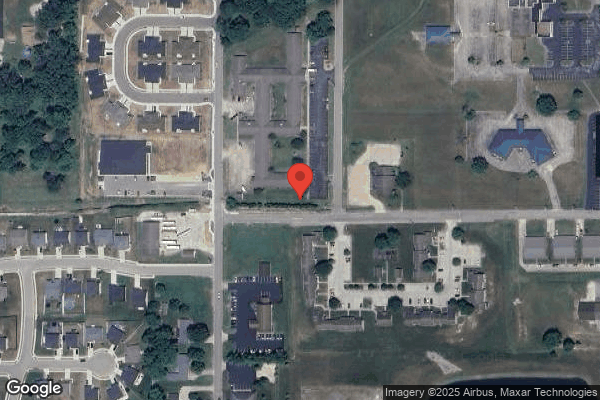

1712 LELAND DR, HUNTINGBURG, IN 47542 (812) 683-4090
Government - County 95 Beds INFINITY HEALTHCARE CONSULTING Data: November 2025
Trust Grade
45/100
#398 of 505 in IN
Last Inspection: October 2024

Within standard 12-15 month inspection cycle. Federal law requires annual inspections.

Overview

The Waters of Huntingburg has a Trust Grade of D, indicating below-average performance with some significant concerns. Ranking #398 out of 505 facilities in Indiana places it in the bottom half, and #6 out of 7 in Dubois County suggests that there is only one local option that is better. Although the facility is showing improvement in its issues, dropping from 19 in 2024 to 3 in 2025, there are still serious staffing concerns with a high turnover rate of 65%, which is above the state average. While there have been no fines reported, which is a positive sign, specific incidents such as a lack of adequate staffing on a dementia unit and failure to notify physicians about critical changes in residents' conditions highlight ongoing risks. Additionally, the facility does have average RN coverage, which is essential for monitoring residents closely. Overall, families should weigh both the positive trend and the existing weaknesses when considering this nursing home.

Trust Score
D
45/100
In Indiana
#398/505
Bottom 22%
Safety Record
Low Risk
No red flags
Inspections
Getting Better
19 → 3 violations
Staff Stability
⚠ Watch
65% turnover. Above average. Higher turnover means staff may not know residents' routines.
Penalties
✓ Good
No fines on record. Clean compliance history, better than most Indiana facilities.
Skilled Nurses
⚠ Watch
Each resident gets only 29 minutes of Registered Nurse (RN) attention daily — below average for Indiana. Fewer RN minutes means fewer trained eyes watching for problems.
Violations
⚠ Watch
45 deficiencies on record. Higher than average. Multiple issues found across inspections.
★★☆☆☆
2.0
Overall Rating
★☆☆☆☆
1.0
Staff Levels
★★★★★
5.0
Care Quality
★☆☆☆☆
1.0
Inspection Score
Stable
2024: 19 issues
2025: 3 issues

The Good

  • 5-Star Quality Measures · Strong clinical quality outcomes
  • Full Sprinkler Coverage · Fire safety systems throughout facility
  • No fines on record

Facility shows strength in quality measures, fire safety.

The Bad

2-Star Overall Rating

Below Indiana average (3.1)

Below average - review inspection findings carefully

Staff Turnover: 65%

19pts above Indiana avg (46%)

Frequent staff changes - ask about care continuity

Chain: INFINITY HEALTHCARE CONSULTING

Part of a multi-facility chain

Ask about local staffing decisions and management

Staff turnover is elevated (65%)

17 points above Indiana average of 48%

The Ugly 45 deficiencies on record

Jul 2025 1 deficiency
CONCERN (D) 📢 Someone Reported This

A family member, employee, or ombudsman was alarmed enough to file a formal complaint

Potential for Harm - no one hurt, but risky conditions existed

Pharmacy Services (Tag F0755)

Could have caused harm · This affected 1 resident

Based on interview and record review, the facility failed to ensure accurate receiving of routine medications for 1 of 3 residents reviewed for unnecessary medications. A physician's order was entered...

Read full inspector narrative →
Based on interview and record review, the facility failed to ensure accurate receiving of routine medications for 1 of 3 residents reviewed for unnecessary medications. A physician's order was entered incorrectly which led to an interruption of a resident's routine medication and an unprescribed dosage reduction. (Resident B)Finding includes:A record review on 7/22/25 at 10:30 A.M., Resident B's diagnoses included, but were not limited to, unspecified polyneuropathy.Resident B's most recent quarterly Minimum Data Set (MDS) assessment, dated 4/15/25, indicated the resident had moderate cognitive impairment and received routine pain medication. Resident B's physician's orders included, but were not limited to; Lyrica Oral Capsule 100 milligrams (mg) give one (1) capsule two times a day for pain (started 5/10/24 and discontinued 6/24/25), Lyrica Oral Capsule 100 milligrams (mg) give two (2) capsules at bedtime related to polyneuropathy (started 11/5/24 and discontinued 6/24/25), Lyrica Oral Capsule 100 mg give one (1) capsule every morning and at bedtime for pain (started 6/24/25 and discontinued 6/28/25), Lyrica Oral Capsule 100 mg give one (1) capsule one time a day for pain (started 6/28/25 and discontinued 6/30/25), Lyrica Oral Capsule 100 mg give one (1) capsule one time a day for pain (started 6/30/25 and discontinued 6/30/25), Lyrica Oral Capsule 100 mg give two (2) capsules at bedtime (started 6/30/25 and discontinued 6/30/25), Lyrica Oral Capsule 100 mg give one (1) capsule one time a day and give one (1) capsule one time a day and give two (2) capsules at bedtime for pain (started 6/30/25).Resident B's medication administration record (MAR) for June 2025 indicated the resident did not receive a routine Lyrica 100 mg capsule at the ordered time of 12:00 P.M. on 6/23/25, did not receive the bedtime dose of 200 mg on 6/23/25, did not receive the morning dose of 100 mg on 6/24/25, and did not receive the noon dose of 100 mg on 6/24/25. Starting on 6/24/25 through 6/29/25, Resident B received only a 100 mg dose of Lyrica at bedtime and only received one 100 mg dose during the day.Resident B's progress notes included, but were not limited to: 6/24/25 at 5:15 A.M. - Lyrica oral capsule 100 mg held, will resume upon delivery, pharmacy and physician aware. 6/24/25 at 12:41 P.M. - Lyrica oral capsule 100 mg - Pharmacy stated they did not receive this. The hard script was faxed again today.6/24/25 at 6:24 P.M. - Resident's Lyrica did not arrive at the facility. Called the pharmacy to get information regarding this. The pharmacy stated the prescription had not been received. 6/29/25 at 12:09 A.M. - Resident complained of pain in legs during evening shift due to Lyrica reduction. 6/29/25 at 3:40 P.M. - Resident stated, My feet hurt so bad I can barely walk. The nurse stated to the resident that her Lyrica was decreased from four (4) capsules per day to two (2) capsules. The resident was unaware. Physician notified about the resident's complaint after reduction. 6/30/25 at 1:58 A.M. - Resident complained of foot pain at times due to Lyrica reduction.6/30/25 at 7:12 A.M. - Resident complained of leg and foot pain at times due to Lyrica reduction. Awaiting response from physician. 6/30/25 at 9:30 A.M. - Nurse practitioner clarified resident's Lyrica order - Lyrica 100 mg one capsule twice a day in the morning and at noon, and two capsules (200 mg) at bedtime. On 7/22/25 at 11:05 A.M., LPN 4 indicated Resident B's routine Lyrica order was changed from four capsules a day to two capsules a day by the facility without the physician's knowledge and without an order to do so. On 7/22/25 at 1:15 P.M., RN 6 indicated there was no order to change Resident B's Lyrica medication. An original order was being put into the electronic record and was entered incorrectly by facility staff. On 7/22/25 at 1:50 P.M., RN 6 supplied a facility policy titled Guideline for Physician Orders - (Following Physician Orders), dated 6/18/23. The policy included, It is the policy of the facility to follow the orders of the physician . 4) All physician orders received pertaining to the resident will be implemented and followed throughout the course of the resident's stay in the facility as the orders are received. The deficient practice was corrected on June 25, 2025 after the facility implemented a systemic plan that included the following actions: Ad HOC QAPI meeting was held on June 25, 2025 an action plan included inservice review of policy for physicians orders and other documentation in the residents records with staff, and the on going monitoring of the transcribing physicians orders and documentation.This citation relates to Complaint 2561130.3.1-25(a)
Feb 2025 2 deficiencies
CONCERN (D) 📢 Someone Reported This

A family member, employee, or ombudsman was alarmed enough to file a formal complaint

Potential for Harm - no one hurt, but risky conditions existed

Deficiency F0744 (Tag F0744)

Could have caused harm · This affected 1 resident

**NOTE- TERMS IN BRACKETS HAVE BEEN EDITED TO PROTECT CONFIDENTIALITY** Based on interview, and record review, the facility failed to provide necessary treatment and services for 2 of 3 residents revi...

Read full inspector narrative →
**NOTE- TERMS IN BRACKETS HAVE BEEN EDITED TO PROTECT CONFIDENTIALITY** Based on interview, and record review, the facility failed to provide necessary treatment and services for 2 of 3 residents reviewed for dementia care. Resident behaviors were not monitored and known behaviors were not documented by nursing staff. (Resident C, Resident D) Findings include: 1. During an interview on 2/4/25 at 9:55 A.M. CNA 5 indicated that she had to watch Resident C because he liked to joke around on the dementia unit and the other residents did not realize he was joking. Resident C's diagnoses included, but were not limited to, Alzheimer's disease, vascular dementia with mood disturbance, cognitive communication deficit, and anxiety. Resident C's most recent quarterly Minimum Data Set (MDS), dated [DATE], indicated the resident had severe cognitive impairment, and wandered daily. Resident C's physician orders included, but were not limited to, behavioral monitoring every shift for depression, withdrawn, anxiety, pacing (started 8/23/24), reside on secure unit due to Alzheimer's dementia (started 9/25/24), and cimetidine 300 milligrams (mg) one time a day for sexual behaviors (ordered 1/21/25). Resident C's care plan included, but was not limited to, resident demonstrates verbal inappropriate sexual comments due to dementia (initiated 1/21/25). One intervention was created prior to development of the care plan that included, redirect resident to room and offer toileting when making sexual comments (initiated 1/15/25). Resident C's CNA charting from 1/6/25 to 2/4/25 indicated Resident C had the following behaviors on the following dates: 1/21/25 at 5:59 A.M. - Resident was physically aggressive towards others, expressed frustration / anger at others, and displayed public sexual acts (no specific sexual acts documented). 1/27/25 at 4:28 A.M. - Resident displayed public sexual acts ( no specific sexual acts documented), was anxious / restless, and was wandering. 2/2/25 at 11:01 A.M. - Resident displayed public sexual acts(no specific sexual acts documented) A facility investigation timeline, signed by the Facility Administrator and Director of Nursing (DON) and dated 1/15/25 indicated, on 1/15/25 the DON was told by CNA 5 that Resident C was demonstrating sexually inappropriate behaviors the night prior. The DON questioned the MDS nurse, who had been the charge nurse for the building during the night of 1/14/25, about Resident C's behavior. The MDS nurse indicated that the CNA on the Memory Springs locked dementia unit had informed her that Resident C was making sexually inappropriate comments to staff during the night shift. Resident C's nurse's notes contained no documentation of sexually inappropriate behaviors on 1/14/25, 1/15/25, 1/21/25, 1/27/25, or 2/2/25. 2. On 2/4/25 at 12:00 P.M., a review of a facility investigation timeline, signed by the Facility Administrator and Director of Nursing (DON) and dated 1/15/25 indicated, on 1/14/25 the MDS nurse was called to the Memory Springs locked dementia unit at 8:16 P.M. , to assist in locating Resident D after the CNA assigned to the unit could not locate the resident. Resident D was found in another resident's room, in their bed, asleep with the resident. Resident D's diagnoses included, but were not limited to, altered mental status, dementia with behavioral disturbances and psychotic disturbances, and Alzheimer's disease. Resident D's most recent annual MDS assessment, dated 1/6/25, indicted the resident had severe cognitive impairment and displayed behavioral symptoms directed towards others. Resident D's physician orders included, but were not limited to, behavioral monitoring every shift (started 2/21/24). Resident D's care plan included, but was not limited to, resident is at high risk for wandering due to dementia with behaviors (initiated 3/18/24), resident is at risk for decline in mood due to depression (initiated 2/14/24). An intervention included monitor for effectiveness of medications and interventions. Resident D's CNA charting indicated, on 1/21/25 at 7:33 A.M., Resident D was sad / tearful. Resident D's Treatment Administration Record (TAR) for January 2025, indicated the resident behavioral monitoring had been completed with the resident having no behaviors during the month of January, 2025. Resident D's nurse's notes contained no documentation of Resident D's behavior on the night of 1/14/25 or the resident's sadness / tearfulness on 1/21/25. During an interview on 2/4/25 at 1:20 P.M., LPN 11 indicated that if a resident is displaying a behavior, nursing staff should document the behavior in the resident's clinical record. On 2/5/25 at 12:30 P.M., the DON supplied a facility policy titled, Guidelines for Handling and Addressing Behavioral Emergencies, dated 3/18/23. The policy included, Assess whether the anger/acting out is related to . dementia . Look for: .4. A change in behavior - Notify medical staff for evaluation . B. Immediate Approaches . 7. Any interventions implemented for behavior control will be monitored by nursing staff and/or SSD (Social Service Director) daily until the behavior is considered to be managed . 11. Every resident behavior will be assessed and addressed individually . C. Documentation 1. Record specifics related to the behavior incident(s). Include time, place, duration, actions observed by the resident, statements or vocalizations made by the resident, possible causative factors, persons involved other than the resident, witnesses, behavior intensity, interventions, notifications, orders received and resolutions . This citation relates to complaint IN00452251. 3.1-37(a)
CONCERN (E) 📢 Someone Reported This

A family member, employee, or ombudsman was alarmed enough to file a formal complaint

Potential for Harm - no one hurt, but risky conditions existed

Deficiency F0741 (Tag F0741)

Could have caused harm · This affected multiple residents

**NOTE- TERMS IN BRACKETS HAVE BEEN EDITED TO PROTECT CONFIDENTIALITY** Based on observation, interview and record review, the facility failed to ensure adequate staff was available on a locked dement...

Read full inspector narrative →
**NOTE- TERMS IN BRACKETS HAVE BEEN EDITED TO PROTECT CONFIDENTIALITY** Based on observation, interview and record review, the facility failed to ensure adequate staff was available on a locked dementia unit. A licensed nurse was not stationed on the unit during 2 of 2 days during the survey, monitoring and documenting of behaviors was not being completed during a 30-day review period, and staffing patterns did not meet the facility's Alzheimer's/Dementia Special Care Unit staffing specifications. (Memory Springs unit, Resident C, Resident D) Findings include: 1. During an observation and interview 2/4/25 at 9:50 A.M., LPN 2 entered Memory Springs (locked dementia unit). LPN 2 checked in and then exited then unit. One Certified Nurse Aide (CNA) 5 and one activity assistant (AA) 3 were on the Memory Springs unit. CNA 5 indicated that the Memory Springs unit nurse floated from the front hall located at the front of the building. The nurse or other staff come on the unit periodically to check in, administer medications, or will come to the unit if needed and contacted by the CNA. During a review of the daily schedule for 2/4/25, no nursing staff and no Qualified Medication Aide (QMA) were assigned to the Memory Springs locked dementia unit during day shift, evening shift, or night shift. One CNA was assigned to the unit during the day, evening, and night shifts. A review of the facility census, on 2/4/25, indicated there were nine residents that resided on the Memory Springs locked dementia unit. During a confidential interview on 2/4/25, a nursing staff member indicated while working the front hall of the building they have to float back to the Memory Springs locked dementia unit. The staff member indicated that nursing was not able effectively monitor the dementia unit and that the one CNA on the dementia unit could not keep up. The staff indicated the dementia unit should be staffed better. The facility's Alzheimer's / Dementia Special Care Unit dementia disclosure form dated, 12/30/24, indicated, the resident census and number of full time equivalent (FTE) direct care staff for each shift of the dementia care program / unit: (one FTE = 8 hours) At that time, the dementia unit census was 10. The form indicated the following staffing patterns: Day / Morning - 1 LPN, 1 CNA, 1 QMA, 1 activity staff, 1 social worker Afternoon / Evening - 0.5 LPN, 1 CNA, 1 QMA, 0.5 activity staff Night - 1 LPN, 1 CNA A review of the facility's daily staffing schedule from 1/22/25 through 2/4/25 indicated that no nurse or QMA was assigned to the Memory Springs locked dementia unit during the day shift. One QMA was assigned to the unit from 7:00 P.M. - 7:00 A.M. on 1/25/25, 1/26/25, 2/1/25, and 2/2/25. On those dates that a 7:00 P.M. - 7:00 A.M. QMA was scheduled to the unit, no CNA was scheduled to be on the unit during that time frame. During an observation on 2/5/25 at 9:35 A.M., AA 3 was sitting at a table with a resident in a common activity area. AA3 indicated the CNA was assisting a resident with bathing. No other staff were on the unit until 9:37 A.M. when the Administrator in Training (AIT) came onto the unit and sat with another resident in the common area. The Facility Administrator along with other staff members then came onto the unit. 2. During an interview on 2/4/25 at 9:55 A.M. CNA 5 indicated that she had to watch Resident C because he liked to joke around on the dementia unit and the other residents did not realize he was joking. Resident C's diagnoses included, but were not limited to, Alzheimer's disease, vascular dementia with mood disturbance, cognitive communication deficit, and anxiety. Resident C's most recent quarterly Minimum Data Set (MDS), dated [DATE], indicated the resident had severe cognitive impairment, and wandered daily. Resident C's physician orders included, but were not limited to, behavioral monitoring every shift for depression, withdrawn, anxiety, pacing (started 8/23/24), reside on secure unit due to Alzheimer's dementia (started 9/25/24), and cimetidine 300 milligrams (mg) one time a day for sexual behaviors (ordered 1/21/25). Resident C's CNA charting from 1/6/25 to 2/4/25 indicated Resident C had the following behaviors on the following dates: 1/21/25 at 5:59 A.M. - Resident was physically aggressive towards others, expressed frustration / anger at others, and displayed public sexual acts.(no specific sexual acts were documented) 1/27/25 at 4:28 A.M. - Resident displayed public sexual acts,(no specific sexual acts documented) was anxious / restless, and was wandering. 2/2/25 at 11:01 A.M. - Resident displayed public sexual acts (no specific sexual acts documented) A facility investigation timeline, signed by the Facility Administrator and Director of Nursing (DON) and dated 1/15/25 indicated, on 1/15/25 the DON was told by CNA 5 that Resident C was demonstrating sexually inappropriate behaviors the night prior. The DON questioned the MDS nurse, who had been the charge nurse for the building during the night of 1/14/25, about Resident C's behavior. The MDS nurse indicated that the CNA on the Memory Springs locked dementia unit had informed her that Resident C was making sexually inappropriate comments to staff during the night shift. Resident C's nurse's notes contained no documentation of sexually inappropriate behaviors on 1/14/25, 1/15/25, 1/21/25, 1/27/25, or 2/2/25. 3. On 2/4/25 at 12:00 P.M., a review of a facility investigation timeline, signed by the Facility Administrator and Director of Nursing (DON) and dated 1/15/25 indicated, on 1/14/25 the MDS nurse was called to the Memory Springs locked dementia unit at 8:16 P.M., to assist in locating Resident D after the CNA assigned to the unit could not locate the resident. Resident D was found in another resident's room, in their bed, asleep with the resident. Resident D's diagnoses included, but were not limited to, altered mental status, dementia with behavioral disturbances and psychotic disturbances, and Alzheimer's disease. Resident D's most recent annual MDS assessment, dated 1/6/25, indicted the resident had severe cognitive impairment and displayed behavioral symptoms directed towards others. Resident D's physician orders included, but were not limited to, behavioral monitoring every shift (started 2/21/24). Resident D's care plan included, but was not limited to, resident is at high risk for wandering due to dementia with behaviors (initiated 3/18/24), resident is at risk for decline in mood due to depression (initiated 2/14/24). An intervention included monitor for effectiveness of medications and interventions. Resident D's CNA charting indicated, on 1/21/25 at 7:33 A.M., Resident D was sad / tearful. Resident D's Treatment Administration Record (TAR) for January 2025, indicated the resident behavioral monitoring had been completed with the resident having no behaviors during the month of January, 2025. Resident D's nurse's notes contained no documentation of Resident D's behavior on the night of 1/14/25 or the resident's sadness / tearfulness on 1/21/25. During an interview on 2/4/25 at 1:20 P.M., LPN 11 indicated that if a resident is displaying a behavior, nursing staff should document the behavior in the resident's clinical record. During an interview on 2/5/25 at 12:15 P.M., the DON indicated that the facility did not have policy related to staffing. This citation relates to complaint IN00452251. 3.1-17(a) 3.1-17(c)(5)
Dec 2024 1 deficiency
CONCERN (D) 📢 Someone Reported This

A family member, employee, or ombudsman was alarmed enough to file a formal complaint

Potential for Harm - no one hurt, but risky conditions existed

Medical Records (Tag F0842)

Could have caused harm · This affected 1 resident

Based on interview and record review, the facility failed to ensure accurate documentation of resident records for 3 of 3 records reviewed. Staff members that initialed they were completing assessment...

Read full inspector narrative →
Based on interview and record review, the facility failed to ensure accurate documentation of resident records for 3 of 3 records reviewed. Staff members that initialed they were completing assessments were not on the schedule as worked at the time of the assessments. (Resident B, Resident C, Resident D) Findings include: 1. On 12/17/24 at 9:30 A.M., Resident B's clinical record was reviewed. Diagnoses included, but were not limited to, dementia, anxiety, depression, and psychotic disorder. The most recent Annual MDS (Minimum Data Set) Assessment, dated 11/18/24, indicated a severe cognitive impairment, partial or moderate assist required with toileting, and supervision or touching assist with all other ADLs (activities of daily living). A progress note, dated 11/30/24 at 6:43 A.M. indicated Resident B had experienced an unwitnessed fall in the dining room. A neurological (neuro) evaluation flow sheet, dated 11/30/24, indicated neuro checks were completed from 11/30/24 at 5:00 A.M. through 12/3/24 during the 7:00 A.M. to 3:00 P.M. day shift. The form lacked initials to indicate what staff member completed each check. All entries on the form were completed with the same handwriting. 2. On 12/17/24 at 10:14 A.M., Resident C's clinical record was reviewed. Diagnoses included, but were not limited to, dementia and depression. The most recent admission MDS Assessment, dated 11/19/24, indicated a severe cognitive impairment, and supervision or touching assistance with all ADLs. A progress note, dated 11/16/24 at 2:44 A.M. indicated Resident C had experienced an unwitnessed fall in his room at 2:00 A.M. that morning. A neurological evaluation flow sheet, dated 11/16/24, indicated neuro checks were completed from 11/16/24 at 2:00 A.M. through 11/19/24 at 5:45 A.M. The Assistant Director of Nursing (ADON) had initialed she had completed the following neuro checks: 11/16/24 at 2:00 A.M. 11/16/24 at 2:15 A.M. 11/16/24 at 2:30 A.M. 11/16/24 at 2:45 A.M. 11/16/24 at 3:15 A.M. 11/16/24 at 3:45 A.M. 11/16/24 at 4:45 A.M. The MDS Coordinator had initialed she had completed the following neuro checks: 11/16/24 at 9:45 P.M. 11/17/24 at 9:45 P.M. 11/18/24 at 9:45 P.M. On 12/17/24 at 2:30 P.M., the Administrator provided the schedules as worked for nursing staff from November 2024 through December 2024. The schedules indicated the ADON had not worked on 11/16/24. The schedule lacked information for the MDS Coordinator. The Administrator indicated at that time that the MDS Coordinator had just started, and was not on the schedule and had been using employee timesheet correction forms to record her time. Employee timesheet correction forms indicated the MDS Coordinator had left at 4:00 P.M. on 11/16/24, 11/17/24, and 11/18/24. 3. On 12/17/24 at 10:32 A.M., Resident D's clinical record was reviewed. Diagnoses included, but were not limited to, dementia, anxiety, and psychotic disorder. The most recent Quarterly MDS Assessment, dated 12/4/24, indicated a severe cognitive impairment, and substantial or maximum assistance with all ADLs. A progress note, dated 11/22/24 at 6:01 P.M., indicated Resident D had experienced an unwitnessed fall. A neurological evaluation flow sheet, dated 11/22/24, indicated neuro checks were completed from 11/22/24 at 4:00 P.M. through 11/25/24 at 9:45 P.M. The Assistant Director of Nursing (ADON) had initialed she had completed the following neuro checks: 11/22/24 at 8:45 P.M. 11/22/24 at 9:45 P.M. 11/23/24 at 9:45 P.M. 11/24/24 at 5:45 A.M. The MDS Coordinator had initialed she had completed the following neuro checks: 11/25/24 at 5:45 A.M. 11/25/24 at 9:45 P.M. On 12/17/24 at 2:30 P.M., the Administrator provided the schedules as worked for nursing staff from November 2024 through December 2024. The schedules indicated the ADON had not worked on 11/22/24, had left at 2:00 P.M. on 11/23/24, and had started a shift at 3:00 P.M. on 11/24/24. A timesheet for the MDS Coordinator indicated she clocked in on 11/25/24 at 8:18 A.M. and clocked out at 4:24 P.M. During an interview with the ADON and MDS Coordinator on 12/18/24 at 11:46 A.M., the MDS Coordinator indicated since they lived close to the facility, they would pop in before and after their scheduled shifts to check on residents and staff. She indicated that could be the reason for initialing for neuro checks outside of scheduled shifts. The ADON indicated at times, the Qualified Medication Aide (QMA) would get vitals on the scheduled neuro check times, and because they did not fill in the forms, would save that information and give to her to fill in the forms when she was there. They both indicated at that time they were unable to provide documentation that they were in the building at the time of the neuro checks for Resident C and Resident D. On 12/18/24 at 11:25 A.M., the Administrator indicated they did not have a current policy for accurate documentation, but provided a Nurse Job Description at that time that indicated Performs administrative duties such as completing medical forms, reports, evaluations, studies, charting . Signs and dates all entries made in the resident's medical record. This citation relates to Complaint IN00448316. 3.1-50(a)
Oct 2024 12 deficiencies
CONCERN (D)

Potential for Harm - no one hurt, but risky conditions existed

Comprehensive Care Plan (Tag F0656)

Could have caused harm · This affected 1 resident

**NOTE- TERMS IN BRACKETS HAVE BEEN EDITED TO PROTECT CONFIDENTIALITY** Based on interview and record review, the facility failed to develop and implement a comprehensive person-centered care plan for...

Read full inspector narrative →
**NOTE- TERMS IN BRACKETS HAVE BEEN EDITED TO PROTECT CONFIDENTIALITY** Based on interview and record review, the facility failed to develop and implement a comprehensive person-centered care plan for 2 of 5 residents reviewed for unnecessary medications. A resident's clinical record lacked an antianxiety, antipsychotic, antiplatelet, and diabetes care plans. A resident's clinical record lacked a care plan for smoking and an order to add NAS (no added salt) to a resident's diet was not implemented. (Resident 18, Resident 30) Findings include: 1. On 9/26/24 at 2:57 P.M., Resident 18's clinical record was reviewed. Diagnoses included, but were not limited to, diabetes mellitus type II, other arterial embolism and thrombosis of abdominal aorta, generalized anxiety disorder, borderline personality disorder, and bipolar disorder. Resident 18 was admitted [DATE]. The most recent admission MDS (Minimum Data Set), dated 7/22/24, indicated Resident 18 was cognitively intact, an extensive assist of 2 staff for bed mobility, transfers, toileting, and was administered antianxiety, antipsychotic, antiplatelet, and hypoglycemic medications. Current Physician's Orders included, but were not limited to, the following: Latuda (antipsychotic) 20 mg (milligrams) tablet, give 20 mg by mouth one time a day related to borderline personality disorder, ordered 7/16/2024 Buspar (antianxiety) 5 mg tablet, give 5 mg by mouth three times a day for anxiety, ordered 7/15/2024 Aspirin (antiplatelet) 325 mg tablet, give 325 mg by mouth one time a day related to other arterial embolism and thrombosis of abdominal aorta, ordered 7/16/2024 Jardiance (diabetes) 10 mg tablet, give 10 mg by mouth in the morning related to diabetes mellitus type II, ordered 8/13/2024 Metformin (diabetes) HCL (hydrochloride) 1000 mg tablet, give 1000 mg by mouth every morning and at bedtime related to diabetes mellitus type II, ordered 7/16/2024 The clinical record lacked an antianxiety, antipsychotic, antiplatelet, and a diabetic care plan. 2. During an interview on 9/27/24 at 7:51 A.M., Resident 30 indicated she vaped (electronic cigarette) and had to watch her salt intake. On 9/25/24 at 3:13 P.M., Resident 30's clinical record was reviewed. Diagnoses included, but were not limited to, chronic obstructive pulmonary disease (COPD), atherosclerotic heart disease, hypertension (HTN), and nicotine dependence. Resident 30 was admitted on [DATE]. The most recent Quarterly MDS (Minimum Data Set) Assessment, dated 9/13/24, indicated Resident 30 was cognitively intact and supervision of staff with set up for bed mobility, transfers, toileting, was on a therapeutic diet, and her smoking status was not indicated. Current Physician's Orders included, but were not limited to, the following: Con Cho (Consistent Carbs) diet, regular texture, thin liquids consistency, ordered 5/31/24 A current At Risk for HTN Care Plan, dated 6/18/24, included but was not limited to the following intervention: Provide diet as ordered and encourage resident to follow RD recommendations Progress notes included, but were not limited to, the following: On 9/19/24 at 2:15 P.M., a Dietary Progress Note indicated, Monitoring for: Significant weight gain . wt [weight] Change: gain of 27 pounds in 1 week. Diet: CCHO [Carb Consistent]; regular; thin liquids . Resident reviewed on NAR [Nutrition Assessment Review] for significant weight gain. Gain of 27 pounds in 1 week, which may be fluid-related. Per DON, resident with increased edema and excess swelling to breast. Eating well. Plan/Monitoring: Continue monitoring the resident's weight and PO intake. Recommendation: add NAS restriction to the diet. The clinical record lacked a smoking/vaping care plan for the resident. The clinical record lacked a current NAS restriction for Resident 30's diet. During an interview on 9/30/24 at 10:17 A.M., the DON (Director of Nursing) indicated she was unsure who was putting in the orders and care plans prior to her employment (8/12/24), but there should be a care plan for smoking in Resident 30's clinical record and an antianxiety, antipsychotic, antiplatelet, hypoglycemic, and diabetes care plans for Resident 18. During an interview on 9/30/24 at 2:40 P.M., the DON indicated the NAS diet recommendation from the dietician's note on 9/19/24 should have went into effect immediately, but it was missed. She indicated the physician would not have to sign off on that order before it would go into effect. The current process was that an email would be sent from the dietician to the DON/ADON (Assistant Director of Nursing) to put that order in and notify dietary. At that time, the DON indicated they don't have a policy, but it would be their policy to follow orders and care plan interventions. On 9/30/24 at 12:30 P.M., a current Baseline/Comprehensive Care Plan Policy, revised 9/18/18, was provided by the DON and indicated, . The comprehensive Care Plan will further expand on the resident's risks, goals, and interventions using the Person-Centered Plan of Care approach for each resident that includes measurable objectives and timetables [sic] to meet the resident's medical, nursing, physical functioning, mental and psychosocial needs . The facility Interdisciplinary Team in conjunction with the resident, resident's family, surrogate or representative as appropriate along with a hands on caregiver, such as a Certified Nursing Assistant will discuss and develop quantifiable objectives along with appropriate interventions in an effort to achieve the highest level of functioning and the greatest degree of comfort/safety and overall well-being attainable for the resident . The Comprehensive Care Plan will be finalized within 7 days of completion of the Full Comprehensive MDS assessments . 3.1-35(a)
CONCERN (D) 📢 Someone Reported This

A family member, employee, or ombudsman was alarmed enough to file a formal complaint

Potential for Harm - no one hurt, but risky conditions existed

Quality of Care (Tag F0684)

Could have caused harm · This affected 1 resident

**NOTE- TERMS IN BRACKETS HAVE BEEN EDITED TO PROTECT CONFIDENTIALITY** Based on interview and record review, the facility failed to ensure residents received treatment and care in accordance with pro...

Read full inspector narrative →
**NOTE- TERMS IN BRACKETS HAVE BEEN EDITED TO PROTECT CONFIDENTIALITY** Based on interview and record review, the facility failed to ensure residents received treatment and care in accordance with professional standards of practice and a comprehensive person-centered care plan for 1 of 1 residents reviewed for bowel and bladder incontinence. Physician orders were not followed, physician was not notified related to change in condition, treatments were being done without an order, care plans were not updated, and wound assessments were not completed. (Resident J) Findings include: On 10/1/24 at 10:05 A.M., Resident J's clinical record was reviewed. Diagnosis included, but were not limited to, cellulitis of the right lower limb. The most recent Quarterly and State Optional MDS (Minimum Data Set) Assessment, dated 9/23/24, indicated no cognitive impairment, always incontinent of urine, frequently incontinent of bowel, and required extensive assistance of two with toileting. Physician orders included, but were not limited to: Stool occult with culture and sensitivity if indicated, every 12 hours for infection control until completed, dated 8/30/24, and started 9/2/24. Linezolid Oral Tablet 600 mg (milligram) every morning and at bedtime for bacterial skin infection to the leg/cellulitis, from 8/20/24 through 8/29/24. Triad Hydrophilic Wound Dress External Paste (Wound Dressings), apply to buttocks topically every shift for MASD (moisture-associated skin damage), apply with every incontinent episode, dated 5/1/24. Aquaphor Advanced Therapy External Ointment (Emollient), apply to bilateral legs and face topically at bedtime for extremely dry skin, , dated 5/1/24. Apply Miconazole powder to right gluteal fold every shift for skin integrity until healed, dated 4/24/24. A current impaired skin integrity care plan for maceration/moisture to abdominal folds, under breasts, and coccyx, dated 4/23/24, indicated to notify physician as needed, treatments as ordered, and weekly skin checks, all dated 4/23/24. A current risk for skin impairment care plan related to bilateral lower extremity cellulitis, dated 9/27/24, indicated resident was dependent on staff assistance for bed mobility and transfers. Interventions included, but were not limited to, keep clean and dry, skin assessment per facility policy, and treatments as ordered, all dated 9/27/24. Progress notes indicated Resident J was in the hospital from [DATE] through 8/20/24 and diagnosed with sepsis and cellulitis of right lower extremity. Resident J was re-admitted with an antibiotic order of Linezolid 600 mg twice a day for bacterial skin infection to the leg/cellulitis, dated and administered from 8/20/24 through 8/29/24. Progress notes included, but were not limited to, the following: 8/20/24 at 11:35 A.M. A nures's note indicated Resident J had returned from the hospital with no new skin issues noted. Redness continued to folds with powder and Interdry (fabric type dressing) in place. 8/29/24 at 8:11 A.M. A nurse's note indicated Resident J was noted to have an adverse reaction to an antibiotic evidenced by loose stool with frequent slimy consistency. The Nurse Practitioner (NP) was notified. 8/30/24 at 9:45 A.M. An Interdisciplinary Team (IDT) note indicated a new skin area was identified related to maceration, diarrhea, and current cellulitis infection. New skin orders were in place. 8/30/24 at 10:29 A.M. A nurse's note indicated a new order was received from the NP for a stool occult specimen with culture and sensitivity if indicated. 8/30/24 at 11:47 A.M. A nurse's note indicated Resident J was having frequent loose stools, and the recommendation from the resident's provider was to keep clean and dry, and follow wound care orders. 9/4/24 at 2:11 A.M. A physician note indicated Resident J had experienced recent episodes of loose stool causing gaulding to peri/buttock area. 9/4/24 at 11:13 A.M. A physician note indicated Resident J was noted to have increased fungal appearance rash to buttocks following diarrhea related to antibiotic use. Resident J's Medication Administration Record (MAR) for September 2024 indicated a stool sample was ordered and not obtained (not signed off on) with no indication why on the following dates/times: 9/2/24 at 6:00 P.M. 9/3/24 at 6:00 A.M. 9/11/24 at 6:00 A.M. 9/18/24 at 6:00 A.M. 9/25/24 at 6:00 A.M. and 6:00 P.M. Resident J's September 2024 MAR indicated a stool sample was obtained on 9/6/24 at 6:00 A.M. and on 9/30/24 at 6:00 P.M. The clinical record lacked stool occult test results, or information that the stool was sent to the lab for testing. Resident J's September 2024 MAR for the remaining dates from 9/2/24 through 9/30/24 indicated a stool sample was not obtained with an indicator to see nurse's notes. Progress notes related to e-mar administration included the following: 9/5/24 at 5:17 A.M. waiting for collection vial for lab. 9/5/24 at 5:13 P.M. no BM 9/7/24 at 5:56 P.M. sample not obtained. 9/8/24 at 5:44 P.M. specimen not obtained. 9/10/24 at 5:49 P.M. no BM. 9/11/24 at 6:03 P.M. no BM on this shift. 9/12/24 at 6:12 A.M. no stool noted. 9/13/24 at 6:05 P.M. specimen not obtained. 9/14/24 at 5:39 P.M. no BM this shift. 9/15/24 at 6:05 P.M. no BM this shift. 9/16/24 at 6:14 P.M. specimen not obtained. 9/17/24 at 6:30 P.M. no sample. 9/18/24 at 5:41 P.M. no BM this shift. 9/19/24 at 5:36 A.M. no bm this shift. 9/19/24 at 5:22 P.M. no BM. 9/20/24 at 6:42 A.M. no BM observed this shift. 9/21/24 at 5:40 P.M. specimen not obtained. 9/22/24 at 6:26 P.M. no sample. 9/24/24 at 5:33 P.M. no BM. 9/26/24 at 6:33 A.M. no stool noted. 9/27/24 at 6:25 A.M. no BM noted. 9/28/24 at 5:15 P.M. no BM noted. 9/29/24 at 5:32 P.M. no BM noted. Resident J's clinical record lacked a nurse's note for the following dates: 9/3/24 at 6:00 P.M. 9/4/24 at 6:00 A.M. and 6:00 P.M. 9/6/24 at 6:00 A.M. and 6:00 P.M. 9/7/24 at 6:00 A.M. 9/8/24 at 6:00 A.M. 9/9/24 at 6:00 A.M. and 6:00 P.M. 9/10/24 at 6:00 A.M. 9/12/24 at 6:00 P.M. 9/13/24 at 6:00 A.M. 9/14/24 at 6:00 A.M. 9/15/24 at 6:00 A.M. 9/16/24 at 6:00 A.M. 9/17/24 at 6:00 A.M. 9/18/24 at 6:00 A.M. 9/20/24 at 6:00 P.M. 9/21/24 at 6:00 A.M. 9/22/24 at 6:00 A.M. 9/23/24 at 6:00 A.M. and 6:00 P.M. 9/24/24 at 6:00 A.M. 9/25/24 at 6:00 A.M. and 6:00 P.M. 9/26/24 at 6:00 P.M. 9/27/24 at 6:00 P.M. 9/28/24 at 6:00 A.M. 9/29/24 at 6:00 A.M. 9/30/24 at 6:00 P.M. A weekly skin check, dated 8/30/24, indicated resident did not have current loss of skin integrity, but had experienced a new loss of skin integrity. The form indicated a weekly wound evaluation was required for each area of loss of skin integrity. The clinical record lacked a weekly wound evaluation for the new areas listed on the 8/30/24 weekly skin check. A change in condition evaluation, dated 8/30/24, indicated Resident J had a new skin wound identified on 8/29/24 due to having loose stools related to the antibiotic Linezolid. A wound evaluation, dated 8/22/24, indicated Resident J had maceration to the left lower leg fold that was identified on 8/20/24 with a current treatment of Interdry daily. The clinical record lacked a current or discontinued order for Interdry. The clinical record lacked a notification to the physician related to inability to get a stool sample. On 10/1/24 at 9:48 A.M., Certified Nurse Aide (CNA) 9 indicated Resident J used a bedpan for bowel movements and usually went once a day. He indicated he was unaware of any stool tests that needed to be completed, and that was something nursing would take care of. On 10/1/24 at 9:52 A.M., Registered Nurse (RN) 3 indicated she was aware of the stool test for Resident J, but the resident was no longer having diarrhea. She indicated the CNAs were supposed to notify the nurses if Resident J had a bowel movement. She indicated a sample was collected for the occult test at some point, but the lab said it was in the wrong container and they would have to bring the correct one to the facility. It took them about a week to bring the correct container and by that time, the diarrhea was gone. She indicated the loss of skin integrity that Resident J experienced on 8/30/24 was from moisture associated with incontinence and diarrhea, would notify staff when she needed to be changed, and used a bed pan for bowel movements. On 10/1/24 at 11:08 A.M., the Director of Nursing (DON) indicated Resident J had been in the hospital from [DATE] through 8/20/24 and came back to the facility on an antibiotic that caused diarrhea which then resulted in her skin getting macerated. She indicated staff was using barrier cream on the areas, then changed to powder which has helped. She indicated the stool sample had not been obtained when ordered because the bed sheets would soak it up when the resident had diarrhea as she was not using a bed pan. She indicated the physician should have been notified after a couple of missed stools that they were not able to obtain it for the test, and at this point the order for the test should be discontinued as she stopped having diarrhea. She indicated the wound evaluation on 8/22/24 reflected areas behind both knees as well as gluteal folds. All areas had Interdry to keep them dry and were currently being changed daily and/or when soiled. She indicated there should have been an order in place for the Interdry, and was unsure why there was not a current order. She indicated she was unsure what area the weekly skin check dated 8/30/24 was for as there were no new areas at that time that hadn't been already identified. She indicated Resident J's skin integrity care plans should have been updated when she came back from the hospital on 8/20/24 with the new skin issues. At that time, the DON indicated there was no current facility policy related to wound management, but that it would be the facility's policy to follow physician orders, and to receive an order prior to implementing a treatment. On 9/30/24 at 12:30 P.M., the DON provided a current non-dated Notification policy that indicated Notification is provided to the physician to facilitate continuity of care and to obtain input from the physician about appropriate interventions/changes which can include additions to, or discontinuation of, current care/treatments - related to the notification This Federal tag relates to Complaint IN00442764. 3.1-37(a)
CONCERN (D) 📢 Someone Reported This

A family member, employee, or ombudsman was alarmed enough to file a formal complaint

Potential for Harm - no one hurt, but risky conditions existed

Pressure Ulcer Prevention (Tag F0686)

Could have caused harm · This affected 1 resident

Based on interview and record review, the facility failed to ensure measures to heal existing pressure ulcers and prevention of additional pressure ulcers for 1 of 3 residents reviewed for pressure ul...

Read full inspector narrative →
Based on interview and record review, the facility failed to ensure measures to heal existing pressure ulcers and prevention of additional pressure ulcers for 1 of 3 residents reviewed for pressure ulcers. Care plan interventions were not followed, orders were not placed, pressure ulcers were not staged correctly, and dressings were not completed as ordered for a resident with chronic pressure ulcers. (Resident D) Findings include: On 9/26/24 at 11:48 A.M., Resident D's clinical record was reviewed. Diagnosis included, but were not limited to, paraplegia, diabetes mellitus, anxiety, and depression. The most recent Annual and State Optional MDS (Minimum Data Set) Assessment, dated 8/23/24, indicated no cognitive impairment, extensive assistance of one with bed mobility, extensive assistance of two with toileting, total dependence of two with transfers, and two stage 4 pressure ulcers. Current physician orders included, but were not limited to: Dakins (1/4 strength) External Solution (Sodium Hydrochloride), apply to right and left ischium topically one time a day for wound healing, dated 7/24/24. Cleanse wound bed with Dakins flush and gently pack ulcers with plain packing strips, cover with bordered foam. Change daily, dated 6/6/24. Weekly skin assessments to be completed every Wednesday, dated 4/5/23. Continue protective dressing of border foam to coccyx, change three times a week on Tuesday, Friday and Sunday, dated 9/16/22. A current pressure ulcer care plan, dated 4/25/24, indicated the resident had pressure ulcers to bilateral buttocks. Interventions included, but were not limited to: Assess/record/monitor wound healing weekly, measure length, width, and depth where possible. Assess and document status of wound perimeter, wound bed and healing progress. Report improvements and declines to the physician, dated 6/19/24. Treatment as ordered, dated 2/7/24. Weekly skin check, dated 2/7/24. Resident D's Medication Administration Record (MAR) from June 2024 indicated wound treatment was not done on 6/3/24 with an indicator to see nurse notes. The progress/nurses notes lacked documentation related to treatment on that date. Resident D's MAR from July 2024 indicated the resident went to a wound clinic appointment on 7/17/24 at 11:00 A.M. Wound clinic notes from July indicated the resident went for an appointment that month on 7/24/24. The MAR also indicated a wound treatment was not done on 7/24/24 with an indicator to see nurse notes. The progress/nurses notes lacked documentation related to treatment on that date. Resident D's MAR from August 2024 indicated no treatments were performed on buttock wounds on 8/30/24 with no indication why. The MAR also indicated wound treatment was not done on 8/21/24 with an indicator to see nurse notes. The progress/nurses notes lacked documentation related to treatment on that date. Resident D's Medication Administration Record (MAR) from June 2024 through September 2024 indicated skin assessments were completed every Wednesday with a checkmark. The record lacked skin assessment documentation in June 2024. Documentation of skin assessments from July 2024 through September 2024 were not completed on Wednesdays as ordered or indicated in the MAR, and were completed on the following dates: 7/1/24 (Monday) 7/8/24 (Monday) 7/15/24 (Monday) 7/22/24 (Monday) 7/29/24 (Monday) 8/5/24 (Monday) 8/5/24 (Monday) 8/16/24 (Friday) 8/22/24 (Thursday) 8/29/24 (Thursday) 9/5/24 (Thursday) 9/13/24 (Friday) 9/20/24 (Friday) All skin assessments indicated a current loss of skin integrity, but no new loss of skin integrity. Resident D experienced the following pressure ulcers from June 2024 through September 2024: Pressure ulcer 1: A wound clinic note, dated 6/5/24, indicated a stage 3 pressure ulcer to the left lateral buttock that was closed. Wound was identified 2/7/24. Orders placed included, but were not limited to, cleanse and fill wound space (of other two wounds) with dry plain packing strip and cover with border foam, and apply skin prep to area around those wounds. The order for skin prep was not placed or initiated at the facility. A weekly wound evaluation, dated 6/7/24, indicated a left buttock stage 3 pressure ulcer, measuring .8 cm (centimeters) x 1.1 cm x .1 cm that was identified 3/26/19, and treatment was ordered 6/5/24 (the form did not indicate what the treatment was). A weekly wound evaluation, dated 6/14/24, indicated a left buttock stage 3 pressure ulcer, measuring .6 cm x .8 cm x .5 cm. A weekly wound evaluation, dated 6/21/24, indicated a left buttock stage 3 pressure ulcer, measuring 0 cm x 0 cm x 0 cm. Wound was identified 3/24/19 and healed 6/21/24. Pressure ulcer 2: A wound clinic note, dated 6/5/24, indicated a stage 4 pressure ulcer to the left buttock, measuring 1 cm x 1.1 cm x 1.2 cm that was identified 9/16/20. At that time, a recommendation of a protective dressing of border foam over the sacrum to be changed weekly and pulled back and assessed daily was placed. An order was placed to cleanse wound beds with Dakin's flush at each dressing change, fill wound space with dry plain packing strip, and cover with border foam daily and as needed. A weekly wound evaluation, dated 6/7/24, indicated a left buttock stage 4 pressure ulcer, measuring 1.2 cm x 1.4 cm x 1 cm. Wound was identified 3/26/19, and treatment was ordered 6/5/24 (the form did not indicate what the treatment was). A weekly wound evaluation, dated 6/14/24, indicated a left buttock stage 4 pressure ulcer, measuring 1.2 cm x 1.4 cm x 1 cm. A weekly wound evaluation, dated 6/21/24, indicated a left buttock stage 4 pressure ulcer, measuring 1 cm x 1.4 cm x 1.2 cm. Wound was identified 3/24/19. A wound clinic note, dated 6/26/24, indicated a stage 4 pressure ulcer to the left buttock, measuring 1 cm x 1.4 cm x 1.2 cm. A weekly wound evaluation, dated 6/28/24, indicated a left buttock stage 4 pressure ulcer, measuring .9 cm x 1.3 cm x 1.2 cm. Wound was identified 3/26/19. A weekly wound evaluation, dated 7/5/24, indicated a left buttock stage 4 pressure ulcer, measuring 1 cm x 1.2 cm x 1.2 cm. A wound clinic note, dated 7/24/24, indicated a stage 4 pressure ulcer to the left buttock, measuring .5 cm x .6 cm x 1 cm. A wound clinic note, dated 8/21/24, indicated a stage 4 pressure ulcer to the left buttock, measuring .2 cm x .3 cm x .3 cm. A weekly wound evaluation, dated 8/23/24, indicated a stage 4 pressure ulcer to the left ischium, measuring .2 cm x .3 cm x .3 cm. The form indicated a treatment was ordered 8/21/23 (did not indicate what the treatment was). A wound clinic note, dated 9/11/24, indicated a stage 4 pressure ulcer to the left buttock, measuring .5 cm x .6 cm x .5 cm. The clinical record lacked wound assessments after 7/5/24. The clinical record lacked weekly wound assessments from 7/5/24 through 8/23/24, and after 8/23/24. Pressure ulcer 3: A wound clinic note, dated 6/5/24, indicated a stage 4 pressure ulcer to the right buttock, measuring 1 cm x 1 cm x .8 cm that was identified 9/16/20. At that time, a recommendation of a protective dressing of border foam over the sacrum to be changed weekly and pulled back and assessed daily was placed. An order was placed to cleanse wound beds with Dakin's flush at each dressing change, fill wound space with dry plain packing strip, and cover with border foam daily and as needed. A weekly wound evaluation, dated 6/7/24, indicated a stage 4 pressure ulcer to the right buttock, measuring 1 cm x 1 cm x .8 cm. Wound was identified 3/26/19, and treatment was ordered 6/5/24 (the form did not indicate what the treatment was). A weekly wound evaluation, dated 6/14/24, indicated a stage 4 pressure ulcer to the right buttock, measuring 1 cm x 1 cm x 1 cm. A weekly wound evaluation, dated 6/21/24, indicated a stage 4 pressure ulcer to the right buttock, measuring 1 cm x 1 cm x 1 cm. Wound was identified 3/24/19. A wound clinic note, dated 6/26/24, indicated a stage 4 pressure ulcer to the right buttock, measuring .9 cm x 1 cm x .9 cm. A weekly wound evaluation, dated 6/28/24, indicated a stage 3 pressure ulcer to the right buttock, measuring .9 cm x .9 cm x .9 cm. Wound was identified 3/26/19. A weekly wound evaluation, dated 7/5/24, indicated a stage 3 pressure ulcer to the right buttock, measuring .8 cm x .8 cm x 1 cm. A wound clinic note, dated 7/24/24, indicated a stage 4 pressure ulcer to the right buttock, measuring .5 cm x .9 cm x .5 cm. A wound clinic note, dated 8/21/24, indicated a stage 4 pressure ulcer to the right buttock, measuring .8 cm x .9 cm x .6 cm. A weekly wound evaluation, dated 8/23/24, indicated a stage 4 pressure ulcer to the right ischium, measuring .8 cm x .9 cm x .6 cm. The form indicated a treatment was ordered 8/21/24 (did not indicate what the treatment was). A new treatment order was not placed on 8/21/24. A wound clinic note, dated 9/11/24, indicated a stage 4 pressure ulcer to the right buttock, measuring 1 cm x .5 cm x .5 cm. The clinical record lacked weekly wound assessments from 7/5/24 through 8/23/24, and after 8/23/24. Pressure ulcer 4: A weekly wound evaluation, dated 9/19/24, indicated a stage 1 pressure ulcer to the right buttock, measuring .5 cm x .5 cm x 0 cm was identified 9/17/24. The form indicated a new treatment to monitor; cleanse bilateral buttock, pat dry, apply skin prep to surrounding area and cover with border foam was dated 9/17/24. The new treatment order on 9/17/24 was not placed or initiated. Pressure ulcer 5: A wound evaluation, dated 9/19/24, indicated a stage 1 pressure ulcer to the left buttock, measuring 3 cm x 1.7 cm x 0 cm was identified 9/17/24. The form indicated a new treatment to monitor; cleanse bilateral buttock, pat dry, apply skin prep to surrounding area and cover with border foam was dated 9/18/24. The new treatment order on 9/18/24 was not placed or initiated. Pressure ulcer 6: A wound evaluation, dated 9/23/24, indicated an additional open area of existing wound on the left buttock measuring 2 cm x 2.5 cm x 1.5 cm was identified on 9/22/24. The wound was not staged and indicated a current treatment to cleanse the area daily with normal saline, pat dry, apply skin prep around the wound, cover with border foam, and change when soiled or dislodged, dated 9/18/24. The new treatment order on 9/18/24 was not placed or initiated. Resident D's clinical record lacked Interdisciplinary Team (IDT) meetings or notes related to the resident's pressure ulcers from June 2024 through September 2024. On 9/26/24 at 11:57 A.M., The Director of Nursing (DON) provided wound management logs for Resident D and indicated they were not part of the clinical record. The forms were hand written and included the following information: Wound log for a stage 4 pressure ulcer on the left ischium/left distal buttock, identified on 9/16/20: On 8/23/24, the wound measured .2 cm x .3 cm x .3 cm. On 9/6/24, the wound measured .5 cm x .6 cm x .3 cm. On 9/13/24, the wound measured .5 cm x .6 cm x .3 cm. On 9/20/24, the wound measured 2 cm x 2.5 cm x 1.5 cm. Wound log for a stage 4 pressure ulcer on the left ischium/right buttock, identified on 9/16/20: On 8/23/24, the wound measured 1 cm x .5 cm x .5 cm. On 9/6/24, the wound measured 1 cm x .5 cm x .5 cm. On 9/13/24, the wound measured 1 cm x .5 cm x .5 cm. On 9/20/24, the wound measured 1 cm x .5 cm x .5 cm. On 9/26/24 at 2:35 P.M., the DON indicated wound assessments were not in the resident's clinical records and had not been when she started at the facility on 8/12/24, and she had started handwritten weekly wound assessments on paper beginning 8/23/24. She indicated since Resident D's areas on her buttocks had not been documented appropriately, and the areas were not separated on documentation, only one care plan was in place for pressure ulcers, although a separate care plan should be in place for each area. She indicated a quality improvement plan was needed for documentation including wound documentation. On 9/30/24 at 10:00 A.M., the DON indicated Resident D's treatment order from 9/16/22 for the bordered foam to coccyx three times a week should have been discontinued when a new order was placed for a new dressing, and had been checked off on the MAR without actually completing it because it was a current order. She indicated the right buttock pressure ulcer was mis-staged on the 6/28/24 and 7/5/24 evaluations and should have been marked as a stage 4 instead of a stage 3 pressure ulcer. She indicated wound evaluations should have been done in house weekly, and the skin assessment on 9/20/24 should have identified a new area identified on 9/17/24. The DON indicated all wound clinic orders should have been transferred to the facility, and the skin prep order should have been put in the treatment orders. She further indicated Resident D had been to the wound clinic on 7/24/24, not on 7/17/24, and should have been changed in the clinical record to reflect the correct appointment date. On 9/30/24 at 3:00 P.M., the DON indicated the facility did not have a current policy for the prevention and/or treatment of pressure ulcers or wounds, or a policy related to wound assessments. On 9/30/24 at 12:30 P.M., the DON provided a current non-dated Comprehensive Care Plan policy that indicated The Comprehensive Care Plans will be reviewed and updated every quarter at a minimum. The facility may need to review the care plans more often based on changes in the resident's condition and/or newly developed health/psycho-social issues . The MDS/Care Plan Coordinator and/or ancillary MDS staff will attend the Morning /CQI meetings where in-depth review of the 24 Hour Report(s) since the prior Morning/CQI meeting are reviewed and discussed as well as new or changed orders, new admissions, readmissions, falls and other pertinent circumstances regarding the residents. They will then see that the care plans for these residents are revised and updated as necessary This Federal tag relates to Complaint IN00442764. 3.1-40(a)(2)
CONCERN (D) 📢 Someone Reported This

A family member, employee, or ombudsman was alarmed enough to file a formal complaint

Potential for Harm - no one hurt, but risky conditions existed

Accident Prevention (Tag F0689)

Could have caused harm · This affected 1 resident

**NOTE- TERMS IN BRACKETS HAVE BEEN EDITED TO PROTECT CONFIDENTIALITY** Based on observation, interview, and record review, the facility failed to provide adequate supervision and prevent falls for 1 ...

Read full inspector narrative →
**NOTE- TERMS IN BRACKETS HAVE BEEN EDITED TO PROTECT CONFIDENTIALITY** Based on observation, interview, and record review, the facility failed to provide adequate supervision and prevent falls for 1 of 2 residents reviewed for accidents. Fall risk assessments and neuro (neurological) assessments were not completed after a resident fell. The care plan was not updated after a fall. (Resident L) Findings include: On 9/25/24 at 1:46 P.M., Resident L's clinical record was reviewed. Diagnoses included, but was not limited to, unsteadiness on feet, anxiety disorder, and diabetes mellitus. The most recent State Optional and Quarterly MDS (Minimum Data Set) Assessment, dated 7/23/24, indicated Resident L had severe cognitive impairment and required supervision of 1 staff member for bed mobility, and supervision and setup help for transfer and toileting. Current Physicians Orders included, but was not limited to, OLANZapine [psychotropic] Oral Tablet Disintegrating 5 MG (Olanzapine). Give 5 mg by mouth at bedtime related to MOOD DISORDER DUE TO KNOWN PHYSIOLOGICAL CONDITION WITH MIXED FEATURES . dated 8/23/2024 Resident L's care plan included, but was not limited to, [Resident] is at risk for falls r/t [related to] dementia with behavioral disturbance, convulsions, unsteadiness on feet .date initiated 7/18/24 .Interventions Attempt to keep areas free of clutter Date Initiated: 7/18/24. Keep call light in reach Date Initiated 7/18/24. Move resident to a location to provide more assistance Date Initiated: 7/18/24. Notify and update MD [medical doctor] as needed Date Initiated 7/18/24. Therapy screen as indicated, quarterly and prn [as needed] Date Initiated 7/18/24. A review of Resident L's falls since admission on [DATE] included, but was not limited to, the following: On 7/28/24 Resident L had an unwitnessed fall in the hallway. The facility failed to complete neuro checks, update Resident L's care plan, and failed to complete a fall risk assessment. On 9/14/24 Resident L had an unwitnessed fall in the dining room. The facility failed to complete neuro checks, and the fall risk assessment lacked that Resident L received psychotropic and was completed incorrectly. During an interview on 9/26/24 at 8:57 A.M., RN (Registered Nurse) 3 indicated if a resident had an unwitnessed fall, neuro checks should be completed. During an interview on 9/27/24 at 11:19 A.M., the DON (Director of Nursing) indicated Resident L should have had a new care plan intervention and fall risk assessment completed after every fall, and the fall risk assessment on 9/14 should have indicated Resident L received psychotropic's. At that time, she indicated Resident L should have had neuro checks after the falls on 7/28 and 9/14. On 9/30/24 at 12:30 P.M., the DON provided a current, undated, Baseline Care Plan Assessment/ Comprehensive Care Plans policy that indicated, .The Comprehensive Care Plans will be reviewed .more often based on changes in the resident's condition . On 9/30/24 at 12:30 P.M., the DON provided a current Guidelines for incidents/ accidents/ falls policy, dated 6/30/23 that indicated, .Neuro checks will be completed after .any unwitnessed fall .each fall needs a new care plan intervention rolled out .Residents are assessed for FALL RISK upon admission, re-admission, quarterly and when there is a change of condition to include a fall . This Federal Tag relates to Complaint IN00442764. 3.1-45(a)
CONCERN (D)

Potential for Harm - no one hurt, but risky conditions existed

Respiratory Care (Tag F0695)

Could have caused harm · This affected 1 resident

Based on observation, interview, and record review, the facility failed to provide respiratory care consistent with professional standards of practice and a comprehensive person-centered care plan for...

Read full inspector narrative →
Based on observation, interview, and record review, the facility failed to provide respiratory care consistent with professional standards of practice and a comprehensive person-centered care plan for 1 of 2 residents reviewed for respiratory care. The resident was receiving oxygen without monitoring oxygen saturation (O2 sat) levels (level of oxygen in the blood) or monitoring how often and what LPM (Liter Per Minute) of oxygen was being used by the resident. The order lacked perimeters for the staff to determine accurate LPM needed and a care plan was not developed for oxygen use. (Resident 30) Finding includes: On 9/26/24 at 11:15 A.M., Resident 30 was observed asleep in her bed wearing O2 per nasal cannula at 3 LPM. On 9/27/24 at 7:22 A.M., Resident 30 was observed eating breakfast wearing oxygen (O2) per nasal cannula at 3 LPM with the right nasal cannula on the outside of her nose. At that time, the resident indicated she wore her oxygen all the time. On 9/27/24 at 7:51 A.M., Resident 30 was observed laying in bed wearing her O2 per nasal cannula at 3 LPM and the nasal cannula was still out of her right nostril. On 9/27/24 at 12:42 P.M., RN (Registered Nurse) 5 was observed delivering a meal to Resident 30 in her room. Resident 30 had her right nasal cannula outside her right nostril and RN 5 did not bring it to Resident 30's attention or adjust the nasal cannula. On 9/25/24 at 3:13 P.M., Resident 30's clinical record was reviewed. Diagnoses included, but were not limited to, chronic obstructive pulmonary disease (COPD). The most recent Quarterly MDS (Minimum Data Set) Assessment, dated 9/13/24, indicated Resident 30 was cognitively intact and supervision of staff with set up for bed mobility, transfers, toileting, and was on oxygen but did not specify if it was continuous or intermittent use. Current Physician's Orders included, but were not limited to, the following: O2 at 1-3 LPM (Liters Per Minute) via NC (Nasal Cannula) as needed for SOB (Shortness of Breath) as needed, ordered 9/24/2024 The clinical record lacked a care plan for oxygen use. The following were the documented O2 sats for the month of September 2024: 9/12/24 11:04 A.M. 98.0% Oxygen via Nasal Cannula 9/11/24 7:22 A.M. 90.0% Oxygen via Nasal Cannula 9/10/24 8:43 P.M. 90.0% on Room Air 9/10/24 8:10 A.M. 90.0% Oxygen via Nasal Cannula 9/9/24 10:40 A.M. 92.0% on Room Air 9/8/24 10:43 A.M. 100.0% Oxygen via Nasal Cannula 9/8/24 6:46 A.M. 92.0% Oxygen via Nasal Cannula 9/7/24 8:09 A.M. 94.0% on Room Air 9/7/24 10:02 P.M. 96.0% Oxygen via Nasal Cannula 9/6/24 9:04 P.M. 91.0% Oxygen via Nasal Cannula 9/6/24 11:56 A.M. 92.0% on Room Air 9/6/24 7:09 A.M. 91.0% on Room Air 9/5/24 11:55 P.M. 91.0% Oxygen via Nasal Cannula The clinical record lacked documentation of staff checking the resident's oxygen concentrator to make sure it was on the correct LPM. During an interview on 9/30/24 at 10:17 A.M., the DON (Director of Nursing) indicated she was unsure who was putting in the orders and care plans prior to her employment (8/12/24), but there should be a care plan and an order for the staff to be checking Resident 30's O2 sats on room air at least every shift and as needed for shortness of breath, and if the resident was wearing the O2, there should be an order to monitor the LPM and O2 sats while she is on O2. In the current order for her to wear oxygen, there should be perimeters for the amount of oxygen to be administered based on her O2 sats. The DON indicated Resident 30 did not wear oxygen all the time, it was to be used as needed, and the resident was aware of that. At that time, the DON indicated Resident 30 was getting her vitals, including her O2 sat, checked once every shift but that was discontinued and she wasn't sure why. On 9/30/24 at 12:30 P.M., a current non dated Oxygen Administration Policy was provided by the DON and indicated . It is the policy of this facility to provide oxygen to maintain levels of saturation to residents as needed and as ordered . Resident with oxygen orders, routine and PRN [as needed], will have oxygen saturation levels measured by oximetry per physician order indicating clinical oxygen saturation to be maintained. Oxygen saturation will be checked and documented every shift to meet order specifications . Residents who have oxygen orders, whether scheduled or PRN will have oxygen saturation levels measured no less than daily. If MD [Medical Doctor] order states 'to maintain sat' then oxygen saturation will be checked and documented every shift. MD will be notified whenever titration is required to maintain a saturation . 3.1-47(a)(6)
CONCERN (D) 📢 Someone Reported This

A family member, employee, or ombudsman was alarmed enough to file a formal complaint

Potential for Harm - no one hurt, but risky conditions existed

Deficiency F0760 (Tag F0760)

Could have caused harm · This affected 1 resident

Based on interview and record review, the facility failed to ensure residents were free from significant medication errors for 1 of 3 residents reviewed for Urinary Tract Infections (UTI). A resident ...

Read full inspector narrative →
Based on interview and record review, the facility failed to ensure residents were free from significant medication errors for 1 of 3 residents reviewed for Urinary Tract Infections (UTI). A resident with a UTI missed 4 of 28 ordered doses of an intravenous (IV) antibiotic. (Resident F) Finding includes: On 9/27/24 at 10:47 A.M., Resident F's clinical record was reviewed. Diagnosis included, but were not limited to, obstructive uropathy. The most recent Discharge MDS (Minimum Data Set) Assessment, dated 9/14/24, indicated an indwelling catheter and frequent bowel incontinence. Cognition status was not assessed. Physician orders included, but were not limited to: Cefepime HCl Infection Solution Reconstituted 1 GM (gram), use 50 ml (milliliter) intravenously every 6 hours for UTI for 7 days, reconstituted with 50 ml normal saline, dated 9/19/24 through 9/25/24. Resident F's Medication Administration Record (MAR) for September 2024 indicated Cefepime was not administered as ordered on the following dates/times: 9/19/24 at 12:00 A.M. (indicated other/see nurse notes) 9/19/24 at 6:00 A.M. (indicated other/see nurse notes) 9/20/24 at 12:00 P.M. (indicated other/see nurse notes) 9/25/24 at 12:00 P.M. (indicated other/see nurse notes) Resident F's clinical record lacked a nurse note related to why Cefepime was not administered. Resident F's clinical record lacked physician notification of the missed doses of Cefepime, or any investigation into why the medication was missed. On 9/30/24 at 9:50 A.M., the Director of Nursing (DON) indicated there should have been a nurses note in the clinical record to explain why the doses of Cefepime were not given to Resident F. The DON further indicated the physician had not been notified of the missed doses, nor had an investigation been conducted related to the missing doses. On 9/30/24 at 12:30 P.M., the DON provided a current non-dated Medication Administration Errors policy that indicated Administration-based medication errors Examples include but are not limited to . Missed medication . Upon identification of a medication error the facility will . Complete medication error report form . Notify the physician and family of the medication error . Conduct an investigation regarding how the error occurred . Institute interventions to prevent further recurrence of medication error This Federal tag relates to Complaint IN00442764. 3.1-48(c)(2)
CONCERN (D) 📢 Someone Reported This

A family member, employee, or ombudsman was alarmed enough to file a formal complaint

Potential for Harm - no one hurt, but risky conditions existed

Deficiency F0761 (Tag F0761)

Could have caused harm · This affected 1 resident

Based on observation, interview and record review, the facility failed to maintain safe and secure storage of medications for 1 of 2 medication carts observed. A narcotic box was unlocked. (100/200 Ha...

Read full inspector narrative →
Based on observation, interview and record review, the facility failed to maintain safe and secure storage of medications for 1 of 2 medication carts observed. A narcotic box was unlocked. (100/200 Hall) Findings include: During an observation on 9/24/24 at 9:38 A.M., the medication cart on the 100/200 hall was reviewed. The narcotic lock box was observed unlocked. At that time, the ADON (Assistant Director of Nursing) indicated it should have been locked. On 9/30/24 at 12:30 P.M., the DON (Director of Nursing) provided a current Medication Storage in the Facility policy, dated February 2017 that indicated, .All drugs classified as Schedule II of the Controlled Substances Act will be stored under double locks . This Federal Tag relates to Complaint IN00442764. 3.1-25(n)
CONCERN (D)

Potential for Harm - no one hurt, but risky conditions existed

Food Safety (Tag F0812)

Could have caused harm · This affected 1 resident

Based on observation, interview, and record review, the facility failed to serve food in accordance with professional standards for food service safety for 1 of 1 observations of the kitchen. The food...

Read full inspector narrative →
Based on observation, interview, and record review, the facility failed to serve food in accordance with professional standards for food service safety for 1 of 1 observations of the kitchen. The food temperature log lacked food temperatures for food served 12 of 19 days reviewed. Finding includes: On 9/24/24 at 9:38 A.M., the food temperature logs from 9/5/24 through 9/23/24 were reviewed. The following dates had no temperatures documented for the food served at dinner: 9/6/24 9/8/24 9/10/24--no temperatures for breakfast, lunch, or dinner 9/13/24--no temperatures for breakfast, lunch, or dinner 9/15/24 9/16/24 9/17/24 9/18/24 9/20/24 9/21/24 9/22/24 9/23/24 On 9/24/24 at 9:40 A.M., the Dietary Manager indicated if there was nothing written for food served at dinner on those days, staff probably didn't do them. If they were taken, they should be documented there. At that time, he indicated they do have some newer staff at that time and they may need to re-educate them about getting food temperatures before serving it. On 9/30/24 at 12:30 P.M., a current non dated Monitoring Food Temperatures Policy was provided by the DON (Director of Nursing) and indicated, .food temperatures will be monitored daily to prevent food borne illness. Food temperatures will be taken and recorded for all hot and cold foods prior to placing them on the serving line. The temperature for each food item shall be recorded on the Food Temperature Log . If hot foods are not 135 degrees Fahrenheit or higher when checked, they will be reheated to at least 135 degrees Fahrenheit. Cold foods and beverages which are not 41 degrees Fahrenheit or below will be chilled on ice or in the freezer . 3.1-21(i)(2) 3.1-21(i)(3)
CONCERN (D)

Potential for Harm - no one hurt, but risky conditions existed

Deficiency F0883 (Tag F0883)

Could have caused harm · This affected 1 resident

**NOTE- TERMS IN BRACKETS HAVE BEEN EDITED TO PROTECT CONFIDENTIALITY** Based on interview and record review, the facility failed to administer or properly document the pneumococcal immunization for 3...

Read full inspector narrative →
**NOTE- TERMS IN BRACKETS HAVE BEEN EDITED TO PROTECT CONFIDENTIALITY** Based on interview and record review, the facility failed to administer or properly document the pneumococcal immunization for 3 of 5 residents reviewed for immunizations. Clinical records lacked documentation that the resident received or refused a pneumococcal vaccine when a consent was signed to receive the vaccine. (Resident 20, Resident 5, Resident 4) Findings include: 1. On 9/30/24 at 9:17 A.M., Resident 20's clinical record was reviewed. Diagnosis included, but was not limited to schizoaffective disorder, hypertension, diabetes mellitus, hyperlipidemia, aphasia, non-Alzheimer's dementia, depression, and schizophrenia. The most recent Quarterly MDS (Minimum Data Set) assessment, dated 9/13/24, indicated Resident 20 was severely cognitively impaired and his pneumococcal vaccine was not up to date. Resident 20 was [AGE] years old and was admitted on [DATE]. Resident 20's immunization record was reviewed for pneumococcal vaccine. Resident 20 received Prevnar-13 on 12/20/2022. The clinical record lacked documentation that the second dose of the pneumococcal vaccine was offered, administered, or refused since that time. During an interview on 9/30/24 at 12:32 P.M., DON (Director of Nursing) indicated Resident 20 should have had a second pneumococcal vaccine. 2. On 9/30/24 at 9:17 A.M., Resident 5's clinical record was reviewed. Diagnosis included, but was not limited to COPD (Chronic obstructive pulmonary disease), hypertension, fracture, depression, and asthma. The most recent Quarterly MDS Assessment, dated 8/1/24, indicated Resident 5 had moderate cognitive impairment and her pneumococcal vaccine was not up to date. Resident 5 was 85 and was admitted on [DATE]. Resident 5's immunization record was reviewed for pneumococcal vaccine. The most recent consent form for the pneumococcal vaccine was signed on 8/3/22. The clinical record lacked documentation that the pneumococcal vaccine was offered, ordered, administered, or refused since that time. 3. On 9/26/24 at 11:50 A.M., Resident 4's clinical record was reviewed. Diagnosis included, but was not limited to abscess of lung without pneumonia, asthma, diabetes mellitus with diabetic neuropathy, COPD, and dementia. The most recent Quarterly MDS assessment, dated 9/15/24, indicated Resident 4 was cognitively intact and her pneumococcal vaccine was not up to date. Resident 4 was 88 and admitted on [DATE]. Resident 4's immunization record was reviewed for pneumococcal vaccine. The most recent consent form was signed on 5/27/23 to receive the pneumococcal vaccine. The clinical record lacked documentation that the pneumococcal vaccine was ordered, administered, or refused. During an interview on 9/30/24 at 2:42 P.M., DON (Director of Nursing) indicated if residents have a signed consent form they should receive the vaccine. On 9/24/24 at 11:15 A.M., the Administrator provided an undated Guidelines for Pneumococcal Vaccination policy which indicated It is the intent of the facility to minimize the risk of residents acquiring, transmitting, and /or experiencing complications from Pneumococcal pneumonia. This policy will assure that each resident and/or the Representative/(POA)[Power of Attorney] is informed about the benefits and risks of immunization related to Pneumococcal pneumonia and that each resident has the opportunity to receive the vaccine unless medically contraindicated or refused- or the resident has already been immunized with the vaccine. The resident's (facility) medical record will contain documentation as to the information/education provided to the resident and/or their Representative/(POA) regarding the risks and benefits of this immunization as well as the administration or the refusal of the vaccine, or the medical contraindication to the vaccine done by the facility. 3.1-13(a)
CONCERN (E)

Potential for Harm - no one hurt, but risky conditions existed

Notification of Changes (Tag F0580)

Could have caused harm · This affected multiple residents

**NOTE- TERMS IN BRACKETS HAVE BEEN EDITED TO PROTECT CONFIDENTIALITY** Based on observation, interview, and record review, the facility failed to notify the physician in regard to a need to alter tre...

Read full inspector narrative →
**NOTE- TERMS IN BRACKETS HAVE BEEN EDITED TO PROTECT CONFIDENTIALITY** Based on observation, interview, and record review, the facility failed to notify the physician in regard to a need to alter treatment for 2 of 5 residents reviewed for unnecessary medications. The physician was not notified of resident's elevated blood sugar readings and elevated weights. (Resident 30, Resident L, Resident J, Resident F) Findings include: 1. On 9/25/24 at 3:13 P.M., Resident 30's clinical record was reviewed. Diagnoses included, but were not limited to, chronic obstructive pulmonary disease (COPD), diabetes mellitus type II, atherosclerotic heart disease, hypertension (HTN), and edema. Resident 30 was admitted on [DATE]. The most recent Quarterly MDS (Minimum Data Set) Assessment, dated 9/13/24, indicated Resident 30 was cognitively intact and supervision of staff with set up for bed mobility, transfers, toileting, was on a therapeutic diet, had a significant weight gain, and was given insulin. Physician's Orders included, but were not limited to, the following: Weekly Weight in the morning every Monday for edema, start date 7/17/2024 Daily weight in the morning related to edema. Notify provider of weight >3 lbs/24 hours(greater then 3 lbs in 24 hours), start date 9/18/24 Dexcom G7 Sensor (continuous glucose system), inject 1 device subcutaneously one time a day every 10 days related to diabetes mellitus type II. Replace sensor every 10 days. Resident has receiver, start date 7/18/24 Lispro Insulin 100 units/ml (milliliter) solution, inject as per sliding scale: 0-100=0 unit, 101-150=1 unit, 151-200 =4 units, 201-250=6 units, 251-300=10 units, 301-350=15 units, 351-400=20 units, 401-450=22 units, subcutaneously three times a day, start date 6/9/24 and discontinued 7/17/24 Lispro Insulin 100 units/ml (milliliter) solution, inject as per sliding scale: 0-100=0 unit, 101-150=1 unit, 151-200 =4 units, 201-250=6 units, 251-300=10 units, 301-350=15 units, 351-400=20 units, 401-450=22 units, subcutaneously three times a day, start date 7/17/24 A current Diabetes Care Plan, dated 6/19/24, included, but was not limited to, the following interventions: Notify MD (Medical Doctor) as needed, initiated 6/19/24 A current Obesity/Nutritionally compromised Care Plan, dated 6/7/24, included, but was not limited to the following interventions: Monitor weight per facility protocol, initiated 6/7/24 The June 2024 MAR (Medication Administration Record) was reviewed for blood sugars from 6/6/24 through 6/30/24 and indicated the following: On 6/14/24 at 5:00 P.M., Resident 30's blood sugar was 513 mg/dL (milligrams per deciliter) and indicated to see nurse's note. On 6/22/24 at 12:00 P.M., Resident 30's blood sugar was 450 mg/dL and indicated to see nurse's note. The July 2024 MAR was reviewed for blood sugars from 7/18/24 through 7/31/24 and indicated the following: On 7/19/24, Resident 30 was out of the facility for her blood sugar reading at 12:00 P.M. At 5:00 P.M. that evening, her blood sugar was 450 mg/dL. On 7/21/24 at 12:00 P.M., Resident 30's blood sugar reading was 96 mg/dL and indicated to see nurse's note. On 7/22/24, Resident 30 was out of the facility for her blood sugar reading at 12:00 P.M. At 5:00 P.M. that evening, her blood sugar was 302 mg/dL. The August 2024 MAR was reviewed for blood sugars from 8/1/24 through 8/31/24 and indicated the following: On 8/16/24 at 7:00 A.M., Resident 30's blood sugar reading was 458 mg/dL and indicated to see nurse's note. On 8/26/24 at 5:00 P.M., MAR was blank. On 8/29/24 at 7:00 A.M., Resident 30's blood sugar reading was 540 mg/dL and indicated to see nurse's note. On 8/29/24 at 12:00 P.M., Resident 30's blood sugar reading was 540 mg/dL and indicated to see nurse's note. Resident 30's weights were reviewed from 5/31/24 through 9/25/24 and indicated the following: 5/31/24 2:36 P.M. 217.4 Lbs (pounds) 6/27/24 4:56 P.M. 256.0 Lbs (weight gain of 38.6 lbs) 7/1/24 2:12 P.M. 265.4 Lbs (weight gain of 9.4 lbs) 7/10/24 6:55 A.M. 263.0 Lbs (weight loss of 2.4 lbs) 7/11/24 5:30 A.M. 265.0 Lbs (weight gain of 2.0 lbs) 7/11/24 1:21 P.M. 266.0 Lbs (weight gain of 1.0 lbs) 7/12/24 10:26 A.M. 267.2 Lbs (weight gain of 1.2 lbs) 7/22/24 6:02 A.M. 273.4 Lbs (weight gain of 6.2 lbs) 7/25/24 10:28 A.M. 179.0 Lbs On 8/6/2024 2:07 P.M. noted Incorrect Documentation 8/5/24 1:09 P.M. 269.2 Lbs (weight loss of 4.2 lbs) 8/6/24 2:07 P.M. 272.6 Lbs (weight gain of 3.4 lbs) 8/6/24 2:07 P.M. 272.6 Lbs (weight gain of 3.4 lbs) 8/16/24 12:56 A.M. 278.0 Lbs (weight gain of 6.0 lbs) 8/19/24 9:44 A.M. 285.6 Lbs (weight gain of 7.6 lbs) 9/2/24 10:38 A.M. 313.8 Lbs (weight gain of 28.2 lbs) 9/9/24 11:09 A.M. 306.6 Lbs (weight loss of 7.2 lbs) 9/16/24 10:51 A.M. 340.6 Lbs (weight gain of 34 lbs) 9/18/24 10:02 A.M. 333.6 Lbs (weight loss of 7.0 lbs) 9/19/24 7:40 A.M. 334.0 Lbs (weight gain of 0.4 lbs) 9/20/24 7:54 A.M. 320.4 Lbs (weight loss of 13.6 lbs) 9/21/24 12:19 P.M. 317.6 Lbs (weight loss of 2.8 lbs) 9/22/24 9:04 A.M. 318.4 Lbs (weight gain of 0.8 lbs) 9/23/24 12:01 P.M. 317.6 Lbs (weight loss of 0.8 lbs) 9/24/24 8:53 A.M. 311.6 Lbs (weight loss of 6.0 lbs) 9/25/24 5:30 A.M. 318.4 Lbs (weight gain of 7.2 lbs) Progress notes for June 2024 were reviewed and lacked documentation in the nursing notes regarding the elevated blood sugars. Progress notes for July 2024 were reviewed and lacked documentation about the resident's blood sugar and insulin administration while she was out of the facility and documentation in the nursing notes regarding the elevated blood sugars. There was no documentation noting weight change/error from 7/22/24 to 7/25/24 or from 7/25/24 to 8/5/24. Progress notes for August 2024 were reviewed and lacked documentation in the nursing notes regarding the elevated blood sugars. Progress notes for September 2024 were reviewed and lacked documentation of the physician being notified of weight changes 9/18/24, 9/20/24, 9/24/24, or 9/25/24. A Care Plan Meeting Note, dated 9/11/24, lacked documentation that significant weight gain and uncontrolled blood sugars were discussed. Recent lab results from 6/26/24 were reviewed indicated Resident 30 had an A1C blood test (tests the average of resident's blood sugars over the past 3 months) of 7.9% (greater than 6.5 is considered diabetic level). On 7/24/24, Resident had a fasting glucose (blood sugar) of 426 mg/dL (normal 65-99). There was a typed note on the bottom of the blood work results from (Name of Nurse Practitioner) indicating BS [blood sugars] out of control . remind me to look at next time I'm there. , dated 7/27/24 The clinical record lacked documentation that the resident's diabetes care had any changes after 7/27/24. During an observation on 9/27/24 at 8:24 A.M., RN (Registered Nurse) 3 weighed Resident 30 on a sit down chair scale. The resident's buttocks was hanging over the armrests of the chair. The scale indicated she weighed 324.0 lbs. RN 3 indicated to the resident her weight went up since the previous day. At that time, RN 3 said ideally they should weigh residents before breakfast. She indicated Resident 30 was a diabetic and had excessive weight gain so they are watching her weight closely. During an interview on 9/30/24 at 10:17 A.M., the DON (Director of Nursing) indicated she was unsure who was putting in the orders and care plans prior to her employment (8/12/24), but for her insulin sliding scale should indicate to call the physician if blood sugars were over 450 mg/dL. She would expect staff to notify the physician of a blood sugar higher then 450 mg/dL. She indicated the resident's cognition was intact and she bought food, overate, and snacked on things that she shouldn't, which was her right, so it was hard for the dietician, physician, nurse practitioner, and staff to know if the weight fluctuations were due to medications, fluid retention, error in weighing resident, or another medical condition. She indicated they tried to educate Resident 30, but she was not making better decisions about what she ate or how much. Any communication or documentation done should be put in a nurse note in progress notes. During an interview on 9/30/24 at 3:14 P.M., the DON indicated they don't have a policy, but it would be their policy to follow orders and care plans. She indicated they did not have a policy for monitoring weights of residents, but they should be weighed before they have breakfast and if the weight gain or loss was significant, more than 3 lbs, the resident should be re-weighed and physician notified during that shift. 2. On 9/25/24 at 1:46 P.M., Resident L's clinical record was reviewed. Diagnoses included, but was not limited to, anxiety disorder and diabetes mellitus. The most recent State Optional and Quarterly MDS (Minimum Data Set) Assessment, dated 7/23/24, indicated Resident L had severe cognitive impairment and received insulin injections. Current Physician Order's included, but was not limited to: .HumaLOG Injection Solution 100 UNIT/ML [milliliter] (Insulin Lispro) Inject as per sliding scale: if 151 - 200 = 2 units; 201 - 250 = 4 units; 251 - 300 = 6 units; 301 - 350 = 8 units; 351 - 400 = 10 units, subcutaneously three times a day for Diabetes related to TYPE 2 DIABETES MELLITUS WITH OTHER SPECIFIED COMPLICATION .Do not give insulin before eating. Wait to administer insulin until after eating or at least 50% of the meal is consumed. AND Inject 5 unit subcutaneously three times a day related to TYPE 2 DIABETES MELLITUS WITH OTHER SPECIFIED COMPLICATION .Pharmacy Active 8/21/2024 . .Insulin Glargine Subcutaneous Solution Pen-injector 100 UNIT/ML (Insulin Glargine) Inject 23 unit subcutaneously in the evening for Hyperglycemia related to TYPE 2 DIABETES MELLITUS WITH OTHER SPECIFIED COMPLICATION .Pharmacy Active 8/21/2024 . .Accu-check before meals and at bedtime four times a day .Active 7/15/2024 . Resident L's clinical record lacked current blood sugar parameters to notify the Physician. Resident L's current care plans included, but was not limited to, .Diabetes with risk for Hypo/or Hyperglycemia . with interventions to obtain blood sugars per the order and to notify the Physician as needed. Resident L's MAR (Medication Administration Record) was reviewed for August 2024 and September 2024 and lacked notification of high blood sugars to the Physician on the following dates and times: On August 1 at 7:00 A.M., Resident L's blood sugar was 450. On August 3 at 7:00 A.M., Resident L's blood sugar was 579. On August 5 at 7:00 A.M., Resident L's blood sugar was 405. On August 9 at 4:00 P.M., Resident L's blood sugar was 500. On August 9 at 8:00 P.M., Resident L's blood sugar was 500. On August 11 at 7:00 A.M., Resident L's blood sugar was 566. On August 10 at 11:00 A.M., Resident L's blood sugar was 494. On August 15 at 7:00 A.M., Resident L's blood sugar was 568. On August 15 at 11:00 A.M., Resident L's blood sugar was 439. On August 20 at 8:00 P.M., Resident L's blood sugar was 489. On August 21 at 7:00 A.M., Resident L's blood sugar was 501. On August 21 at 4:00 P.M., Resident L's blood sugar was 499. On August 23 at 4:00 P.M., Resident L's blood sugar was 501. On August 25 at 7:00 A.M., Resident L's blood sugar was 570. On August 30 at 4:00 P.M., Resident L's blood sugar was 548. On September 1 at 11:00 A.M., Resident L's blood sugar was 215. On September 2 at 4:00 P.M., Resident L's blood sugar was 476. On September 7 at 7:00 A.M., Resident L's blood sugar was 423. On September 8 at 4:00 P.M., Resident L's blood sugar was 541. On September 9 at 7:00 A.M., Resident L's blood sugar was 600. On September 9 at 4:00 P.M., Resident L's blood sugar was 405. On September 9 at 11:00 P.M., Resident L's blood sugar was 405. On September 10 at 11:00 A.M., Resident L's blood sugar was 499. On September 12 at 11:00 A.M., Resident L's blood sugar was 458. On September 13 at 4:00 P.M., Resident L's blood sugar was 407. On September 22 at 4:00 P.M., Resident L's blood sugar was 503. On September 23 at 11:00 A.M., Resident L's blood sugar was 484. On September 24 at 4:00 P.M., Resident L's blood sugar was marked Not Applicable. During an interview on 9/27/24 at 12:26 P.M., the ADON (Assistant Director of Nursing) indicated staff should notify the Physician if Resident L's blood sugar is over 400, and document the notification in progress notes. During an interview on 9/30/24 at 10:07 A.M., the DON (Director of Nursing) indicated staff should have documented in the progress notes that they notified the Physician of a blood sugar higher than 400, and it was not done. At that time, she indicated parameters should be documented in Resident L's chart on when to notify the Physician. 3. On 10/1/24 at 10:05 A.M., Resident J's clinical record was reviewed. Diagnosis included, but were not limited to, cellulitis of the right lower limb. The most recent Quarterly and State Optional MDS (Minimum Data Set) Assessment, dated 9/23/24, indicated no cognitive impairment, always incontinent of urine, frequently incontinent of bowel, and required extensive assistance of two with toileting. Physician orders included, but were not limited to: Stool occult with culture and sensitivity if indicated, every 12 hours for infection control until completed, dated 8/30/24, and started 9/2/24. The clinical record lacked stool occult test results, or information that the stool was sent to the lab for testing. On 10/1/24 at 9:52 A.M., Registered Nurse (RN) 3 indicated a sample was collected for the occult test at some point, but the lab said it was in the wrong container and they would have to bring the correct one to the facility. It took them about a week to bring the correct container and by that time, the diarrhea was gone. On 10/1/24 at 11:08 A.M., the Director of Nursing (DON) indicated Resident J's stool sample had not been obtained when ordered because the bed sheets would soak it up when the resident had diarrhea. She indicated the physician should have been notified after a couple of missed stools that they were not able to obtain it for the test, and at this point the order for the test should be discontinued as she stopped having diarrhea. 4. On 9/27/24 at 10:47 A.M., Resident F's clinical record was reviewed. Diagnosis included, but were not limited to, obstructive uropathy. The most recent Discharge MDS (Minimum Data Set) Assessment, dated 9/14/24, indicated an indwelling catheter and frequent bowel incontinence. Cognition status was not assessed. Physician orders included, but were not limited to: Cefepime HCl Infection Solution Reconstituted 1 GM (gram), use 50 ml (milliliter) intravenously every 6 hours for UTI for 7 days, reconstituted with 50 ml normal saline, dated 9/19/24 through 9/25/24. Resident F's Medication Administration Record (MAR) for September 2024 indicated Cefepime was not administered as ordered on the following dates/times: 9/19/24 at 12:00 A.M. 9/19/24 at 6:00 A.M. 9/20/24 at 12:00 P.M. 9/25/24 at 12:00 P.M. Resident F's clinical record lacked physician notification of the missed doses of Cefepime, or any investigation into why the medication was missed. On 9/30/24 at 9:50 A.M., the Director of Nursing (DON) indicated the physician had not been notified of Resident F's missed doses of Cefepime. On 9/30/24 at 12:30 P.M., the DON provided a current non-dated Medication Administration Errors policy that indicated Administration-based medication errors Examples include but are not limited to . Missed medication . Upon identification of a medication error the facility will . Notify the physician and family of the medication error On 9/30/24 at 12:30 P.M., the DON provided a current non-dated Notification policy that indicated Notification is provided to the physician to facilitate continuity of care and to obtain input from the physician about appropriate interventions/changes which can include additions to, or discontinuation of, current care/treatments - related to the notification On 9/30/24 at 12:30 P.M., a current Guidelines for Notification of Change in Resident's Condition/Status/Treatment policy, dated 6/29/24 indicated, It is the intent of the facility to ensure that .their attending physician .notified of changes in the resident's condition, status, or treatment. This notification will be done promptly in order to obtain any orders needed for appropriate treatment and/or monitoring related to the change . On 9/30/24 at 3:00 P.M., the DON provided a current, undated, Blood Glucose Monitoring policy that indicated, .Blood sugars found to be below 70 or above 400 will be reported immediately to the physician and the resident's representative. Any orders received from the physician will be implemented .Notify physician if blood glucose is outside resident's parameters for blood glucose as ordered by their physician .Immediately notify the physician and the resident's representative any time the resident's blood sugar is outside the ordered parameter range as well as any interventions taken .complete all appropriate documentation. 3.1-5(a)(2) 3.1-5(a)(3)
CONCERN (E) 📢 Someone Reported This

A family member, employee, or ombudsman was alarmed enough to file a formal complaint

Potential for Harm - no one hurt, but risky conditions existed

Infection Control (Tag F0880)

Could have caused harm · This affected multiple residents

2. On 9/27/24 at 10:47 A.M., CNA (Certified Nurse Aide) 7 and RN (Registered Nurse) 5 were observed performing incontinence care on Resident M. CNA 7 washed her hands with a 13 second lather of soap a...

Read full inspector narrative →
2. On 9/27/24 at 10:47 A.M., CNA (Certified Nurse Aide) 7 and RN (Registered Nurse) 5 were observed performing incontinence care on Resident M. CNA 7 washed her hands with a 13 second lather of soap and RN 5 with a 6 second lather. Both put on gloves and RN 5 hooked the strap of the lift pad on to the lift. CNA 7 removed the resident's blanket, hooked the other straps of the lift pad on to the lift, used the controller to raise the resident from her wheelchair, and lower her into the bed. CNA 7 opened the closet door, grabbed a clean incontinence pad, and closed the closet. CNA 7 opened the dresser, grabbed wipes, and closed the drawers. CNA 7 did not remove gloves or perform hand hygiene prior to beginning incontinence care. They rolled Resident M onto her right side and RN 5 tucked the soiled incontinence pad under the resident. CNA 7 grabbed a wipe from the package laying on the blanket, and reached across the resident to wipe Resident M's left hip, grabbed another wipe and wiped left hip area again, while RN 5 tucked a new incontinence pad under the resident using her gloved hands on the inside and center of the clean incontinence pad. Resident M was rolled on to her left side. CNA 7 pulled out the soiled incontinence pad. CNA 7 grabbed a wipe and wiped the resident's backside from front to back with bowel movement visible on her gloves. She grabbed another wipe, and wiped bowel movement off her gloves with the wipe. CNA 7 propped herself by leaning on her left hand glove in a fist on the clean sheet. After grabbing 3 more wipes and wiping the resident, CNA 7 removed her gloves, discarded them, and put on new gloves without using hand hygiene. At that time, the resident indicated she was urinating. Someone knocked on the door, proceeded to open door with the resident exposed, then closed the door. Then opened the door again and threw a clean dress on a hanger on to residents feet and closed the door again. CNA 7 indicated the resident's urine did not get on the clean incontinence pad so they continued care. Resident M was rolled to the left side again while CNA pulled the new incontinence pad out and then rolled the resident to her back. CNA 7 wiped the resident's perineal (peri) area crease on the left, got a new wipe, and folded and wiped 3 times from front to back. CNA 7 lifted the resident's dress out of the way wearing the same gloves and both CNA 7 and RN 5 fastened the incontinence pad with their gloves on. CNA 7 opened the dresser drawer, put the wipes in a drawer, then closed it. CNA 7 grabbed the clean dress off the bed, opened the closet, hung the clean dress in the closet, and closed the closet. CNA 7 then used the controller to lower the bed to floor, and took off her gloves. She held on to her soiled gloves and touched those gloves to her left side scrub pocket to get a trash can liner from her pocket. RN 5 washed her hands with a 9 second lather with soap and then CNA 7 washed her hands with an 8 second lather. During an interview on 10/1/24 at 9:00 A.M., the Infection Preventionist (IP) indicated she would expect staff to clean the resident's front side, take off gloves, wash hands, put new gloves on, clean the resident's back side, and then remove gloves and wash hands. While washing their hands, staff should lather with soap for at least 20 seconds, should change gloves and wash hands if they touch items, they definitely should sanitize hands and change gloves between clean and dirty tasks, and should change gloves and sanitize hands after care was completed before they touch any other items. On 9/30/24 at 3:14 P.M., a current Perineal Care Policy, dated 4/12/23, was provided by the Director of Nursing (DON) and indicated . separate the labia and clean downward from front to back . turn the resident to the side . clean the rectal area . On 9/30/24 at 3:14 P.M., a current Guidelines for Gloves Policy, dated 4/12/23, was provided by the DON and indicated . Procedure: perform hand hygiene apply latex free non-sterile gloves one at a time . remove gloves . perform hand hygiene . if for any reason there is a need to remove the gloves and reapply new gloves, hand hygiene must occur between the removal of the used pair of gloves and the application of the new pair of gloves . On 9/30/24 at 3:14 P.M., a current non dated Hand Hygiene Policy was provided by the DON, and indicated . hands should be washed with a non-microbial or anti-microbial soap . apply generous amount of soap to hands and run hands together vigorously for at least 20 seconds . On 10/1/24 at 9:32 A.M., the IP provided a current Guidelines for infection Prevention and Control policy, dated 8/17/23 that indicated, .A surveillance system designed to do the following will be maintained: Identify possible communicable diseases or infections before they can spread to other persons in the facility .A recording system for incidents under the facility's INFECTION AND PREVENTION and CONTROL PROGRAM to do the following will be maintained: Identify any incident(s) considered as an infection risk within the facility . This Federal tag relates to Complaint IN00443360. 3.1-18(b)(1) 3.1-18(l) Based on observation, record review, and interview, the facility failed to ensure a safe, sanitary and comfortable environment to help prevent the development and transmission of disease and infection during 1 of 4 observations of care. The facility failed to track all infections for 3 of 5 residents reviewed for infections. Staff lathered hands for 6 seconds, touched items with gloved hands before care was performed, wiped the residents buttock's first, failed to perform hand hygiene when gloves were changed, and touched multiple items with soiled gloves after care. (Resident G, Resident J, Resident K, Resident M) Findings include: 1. On 10/1/24 at 9:15 A.M., the facility tracking binder was reviewed for July 2024, August 2024, and September 2024. The facility tracking lacked the following UTI's (urinary tract infections): Resident K had a UTI in July 2024. The facility tracking map lacked documentation of the UTI. Resident J had a UTI in August 2024. The facility tracking map lacked documentation of the UTI. Resident G had a UTI in August and September 2024. The facility tracking map lacked documentation of the UTI. During an interview on 10/1/24 at 9:23 A.M., the IP (Infection Preventionist) indicated the UTI's were not tracked due to her not being able to complete them. The facility tracking should have had their name, date, infection, and be labeled on the facility tracking map.
MINOR (C)

Minor Issue - procedural, no safety impact

Staffing Information (Tag F0732)

Minor procedural issue · This affected most or all residents

Based on observation, interview, and record review, the facility failed to ensure posted nurse staffing sheets were posted and contained the correct information daily for 1 of 6 days reviewed during t...

Read full inspector narrative →
Based on observation, interview, and record review, the facility failed to ensure posted nurse staffing sheets were posted and contained the correct information daily for 1 of 6 days reviewed during the survey. (September 24) Findings include: On 9/24/24 at 9:14 A.M., Posted Nurse Staffing was observed hanging on the wall next to the nurse's station by the entrance dated 9/19/24. During an interview on 9/30/24 at 10:13 A.M., the DON (Director of Nursing) indicated the ADON (Assistant Director of Nursing) filled out the Posted Nurse Staffing form and checked it daily. Night shift changed the Posted Nurse Staffing form out each night. The Posted Nurse Staffing form should be current. On 9/30/24 at 12:30 P.M., DON provided an undated BIPA (Benefits Improvement and Protection Act of 2000) Staffing Posting Requirements policy which indicated 1. SNFs (Skilled Nursing Facilities) and NFs (Nursing Facilities) must post daily, at the beginning of each shift, the facility specific shift schedule for the 24 hour period .3. Other required posted data includes: .b) Current date .
Jul 2024 1 deficiency
CONCERN (D) 📢 Someone Reported This

A family member, employee, or ombudsman was alarmed enough to file a formal complaint

Potential for Harm - no one hurt, but risky conditions existed

Deficiency F0757 (Tag F0757)

Could have caused harm · This affected 1 resident

**NOTE- TERMS IN BRACKETS HAVE BEEN EDITED TO PROTECT CONFIDENTIALITY** Based on interview, and record review, the facility failed to monitor a resident's behaviors, as needed psychotropic medications...

Read full inspector narrative →
**NOTE- TERMS IN BRACKETS HAVE BEEN EDITED TO PROTECT CONFIDENTIALITY** Based on interview, and record review, the facility failed to monitor a resident's behaviors, as needed psychotropic medications were given beyond 14 days without a rational to continue, orders were not followed, for 1 of 3 residents reviewed for behaviors. (Resident B) Findings include: On [DATE] at 11:34 a.m., Resident B's clinical record was reviewed. Diagnoses included, but were not limited to, unspecified dementia, unspecified severity, with other behavioral disturbance, vascular dementia, unspecified severity, with other behavioral disturbance, depression, unspecified insomnia, unsteadiness on feet, other abnormalities of gait and mobility, cerebrovascular disease. A significant change MDS (Minimum Date Set) assessment, dated [DATE], indicated Resident B's cognition was severely impaired, physical behavioral symptoms directed towards others 1-3 days, verbal behavioral symptoms directed towards others 1-3 days, wandering 1-3 days. Resident B's initial admission to the facility was [DATE], expired at the facility on [DATE]. Care plans were reviewed and included but were not limited to: [Resident B] requires psychotropic medications to help manage and alleviate: Psychosis) ie,. delusions, hallucinations, altered thought process, loss of contact with reality), depression behavior with depressive features, initiated [DATE]. Interventions included, but were not limited to: carry out medication management regimen as prescribed, notify MD/NP as needed. (Resident B name) presents with moderate to extreme anxiety related to: Alzheimer's disease or related dementia, initiated [DATE]. (Resident B name) has been demonstrating behavioral symptoms such as wandering/getting up unassisted, impulsivity, yelling, swinging at staff, related to a diagnosis of Alzheimer's disease of other dementia causing debilitating cognitive loss, date initiated [DATE]. Interventions included, but were not limited to: use behavior management techniques to promote & shape the desired behavior such as: look pro-actively at the behavior. Identify causal factors & work to reduce, minimize and/or treat the causal factors. This stresses prevention. Resident B was sent out of the facility for acute care evaluation for behaviors on [DATE]- [DATE], [DATE]- [DATE], [DATE]- [DATE]. Physicians orders and the EMAR (Electronic Medication Administration Record) were reviewed for February, March, April, May, [DATE], and included but were not limited to the following: send to ER (emergency room) for eval and tx (treat) one time for hostile, aggressive for 1 day, start date [DATE]. trazodone (antidepressant) HCI oral tablet 100 mg give one tablet by mouth at bedtime related to unspecified dementia, unspecified severity, with other behavioral disturbance, vascular dementia, unspecified severity, with other behavioral disturbance, start [DATE], d/c [DATE]. trazodone HCI oral tablet 100 mg at bedtime for depression; insomnia, start date [DATE], d/c [DATE], start [DATE], d/c [DATE]. zoloft oral tablet (antidepressant) 50 mg (sertraline HCI) give 50 mg by mouth one time a day related to depression, unspecified, start date [DATE], d/c [DATE], start date [DATE], d/c [DATE], start date [DATE], d/c [DATE]. compound ABHR gel (Ativan 1 mg, Benadryl 12.5 mg, Haldol 5 mg, Reglan 5 mg) gel apply to back of neck topically two times a day for anxiety, start date [DATE], d/c [DATE]. ABH gel compound ml (1 mg lorazepam, 12.5 diphenhydramine, 2 mg haloperidol) apply to neck topically every morning and at bedtime related to unspecified dementia, unspecified severity, with other behavioral disturbance, apply 1 ML (milliliter) to neck, start date [DATE], d/c [DATE]. Geodone oral capsule 20 mg (ziprasidone HCI) (antipsychotic) give 1 capsule by mouth and at bedtime related to unspecified dementia, unspecified severity, with other behavioral disturbance, (give with 80 mg) total 100 mg, start date [DATE], d/c [DATE]. Geodone oral capsule 80 mg (ziprasidone HCI) (antipsychotic) give 1 capsule by mouth every morning and at bedtime related to unspecified dementia, unspecified severity, with other behavioral disturbance, (give with 20 mg) total 100 mg, start date [DATE], d/c [DATE]. Geodon oral capsule 20 mg (ziprasidone HCI) (antipsychotic) give 1 capsule by mouth every morning and at bedtime related to unspecified dementia, unspecified severity, with other behavioral disturbance. Vascular dementia, unspecified severity, with other behavioral disturbance, (give with 80 mg) total 100 mg , start date [DATE], d/c [DATE]. Geodone oral capsule 80 mg (ziprasidone HCI) (antipsychotic) give 1 capsule by mouth every morning and at bedtime related to unspecified dementia, unspecified severity, with other behavioral disturbance, (give with 20 mg) total 100 mg, start date [DATE], d/c [DATE]. Geodone oral capsule 40 mg (ziprasidone HCI) (antipsychotic) give 1 capsule by mouth every morning and at bedtime for behaviors, start date [DATE], d/c [DATE]. halloperidol oral tablet 5 mg give 5 mg by mouth in the morning for anxiety, start [DATE], d/c [DATE]. Ativan (antianxiety) oral tablet 0.5 mg (lorazepam) give 1 tablet by mouth every morning and at bedtime for anxiety, start date [DATE], d/c [DATE]. Ativan (antianxiety) oral tablet 0.5 mg (lorazepam) give 1 tablet by mouth three times a day for anxiety, start date [DATE], d/c [DATE]. Depokote (mood stabilizer) oral tablet delayed release 250 mg (divalproex sodium) give 1 tablet by mouth every morning and at bedtime for bipolar, start [DATE], d/c [DATE]. Depakote (mood stabilizer) oral tablet delayed release 250 mg (divalproex sodium) give 1 tablet by mouth every morning and at bedtime for behaviors, start date [DATE], d/c [DATE]. haploperidol (antipsychotic) oral tablet 5 mg, give 5 mg by mouth two times a day for anxiety, start date [DATE], d/c [DATE]. haloperidol (antipsychotic) oral tablet 5 mg give 5 mg by mouth two times a day for anxiety, start date [DATE], d/c [DATE]. haloperidol (antipsychotic) tablet 5 mg give 2.5 mg by mouth every morning and at bedtime for behaviors, start date [DATE], d/c [DATE]. Razadyne oral tablet 4 mg (galantamine hydrobromide) give 1 tablet by mouth every morning and at bedtime for dementia, start date [DATE], d/c [DATE]. lorazepam intensol oral concentrate 2 mg/ml, give 0.5 ml by mouth three times a day for anxiety/agitation, start date [DATE], d/c [DATE]. haloperidol (antipsychotic) oral tablet 5 mg give 1 tablet by mouth every 6 hours as needed for anxiety, start date [DATE], d/c [DATE]. Documented as given on the EMAR on 3/31, 4/1, 4/7, 4/12, 4/13, 4/15. haloperidol (antipsychotic) tablet 5 mg give 1 tablet by mouth every 24 hours as needed for behaviors, start date [DATE], d/c [DATE]. Documented as given on the EMAR on 4/28, 4/29, 5/2, 5/4, 5/18. Ativan (antianxiety) oral tablet 1 mg (lorazepam) give 1 tablet by mouth every 24 hours as needed for anxiety, start date [DATE], d/c [DATE]. Documented on the EMAR as given on 5/5, 5/7, 5/11, 5/20, 5/22, 5/30,6/2, 6/3, 6/8, 6/10, 6/12, 6/17. The [DATE] EMAR did not contain daily behavior monitoring. The April, May, [DATE] EMAR indicated behavior monitoring every shift, start date [DATE], d/c [DATE]. The intervention codes were- 1 attempt redirection, 2-snack, 3-fluid offered, 4- activity for diversion, 5-tolieting, 6- change of environment, 7-pain assessment, 8-offer nap/rest period, 9-provide comfort measures, 10-other-enter behavior charting note type every shift for target behaviors. PRN (as needed) medications were given on 4/28 & 4/29 for behaviors. Behavior monitoring on the April EMAR was marked n or NA on 4/28, 4/29 was marked n or 0 for each shift. PRN medications for behaviors/anxiety were given on 5/2, 5/4, 5/5, 5/7, 5/11, 5/18, 5/20, 5/22, 5/30. Behavior monitoring on the May EMAR was marked the following: 5/2- 8- eff 5/4- n or NA 5/5- n or NA, night shift left blank 5/7- NA 5/11- NA, nigh shift left blank 5/18-n or NA , nigh shift 1236, 8 5/20- NA, night shift left blank 5/22- NA or n 5/30 - NA or left blank the following days had blank spots 5/6- night shift 5/14- night shift 5/23- night shift PRN medications were given on 6/3, 6/8, 6/10, 6/12, 6/17 for anxiety. Behavior monitoring on the June EMAR was marked the following: 6/3- Y, 0, 1-9 6/8- n or NA 6/10- n or NA 6/12- n, NA, 0, night shift left blank 6/17- NA, night shift left blank the following days had blank spots 6/2- night shift 6/4 day shift 6/15- night shift [DATE] physician orders indicated EKG (electrocardiogram) d/t Geodon use, order date [DATE]. The March EMAR was signed on [DATE] with a code 9 - other/see nursing notes. Progress notes dated [DATE] at 10:22 p.m., indicated Express Mobile contacted to schedule EKG d/t Geodon use; voicemail left; diagnostic services to return call. On [DATE] at 1:21 p.m., the ADON indicated the EKG was not done as ordered on [DATE], it was done in April when Resident B was sent out for behaviors. Resident B was sent out for behaviors from [DATE]- [DATE]. On [DATE] at 10:52 a.m., RN 1 indicated behaviors are supposed to be documented on the EMAR, follow up with a yes or no. Interventions are supposed to be done before giving medications, the intervention code marked on the EMAR, NA meant no behaviors. On [DATE] at 11:57 a.m., the ADON (Assistant Director of Nursing) indicated she did not see anything in the clinical record that Resident B was assessed to continue a psychotropic drug beyond 14 days, she did not see any behavior monitoring on the EMAR for [DATE]. On [DATE] at 8:48 a.m., the ADON provided the current policy for psychotropic drugs, dated [DATE]. The policy included, but was not limited to: PRN orders for psychotropic medications : PRN orders for psychotropic drugs will be limited to 14 days unless the physician identifies and documents rationale to extend the medication beyond 14 days. PRN antipsychotic drugs will be limited to 14 days and will not be renewed unless the physician evaluates the appropriateness of the medication. On [DATE] at 8:48 a.m., the ADON provided the current behavior management program policy with a revision date of 6/20. The policy included, but was not limited to: .specific elements of the behavior management program as follows: identification of the problematic behavior When a resident exhibits problematic behavior, the same is addressed on the 24- hour report and in the resident's medical record. The Nursing Administration and Social Service Department review the 24-hour reports on the a daily basis, on scheduled days of work, assessing for concerns that need further follow-up. Should a problematic behavior be observed on the 24-hour report, the behavior will be researched per corresponding nurse's notes, consultation with staff members, etc .Initiation of Behavior Management Logbook. If the resident has currently ordered psychoactive medications information (behavior, interventions) then forward this information to the Behavior Management logbook. The record should list behaviors and interventions specific to the resident discussed and planned by the members of the interdisplinary team . On [DATE] at 8:48 a.m., the ADON provided the current policy on physicians orders with a date of [DATE]. The policy included, but was not limited to: It is the policy of the facility to follow the orders of the physician . 4) all physician orders received pertaining to the resident will be implemented and followed throughout the course of the resident's stay in the facility. This citation relates to Complaint IN00438187. 3.1-48(a)(2)
Apr 2024 1 deficiency
CONCERN (D) 📢 Someone Reported This

A family member, employee, or ombudsman was alarmed enough to file a formal complaint

Potential for Harm - no one hurt, but risky conditions existed

Deficiency F0744 (Tag F0744)

Could have caused harm · This affected 1 resident

Based on interview, and record review, the facility failed to provide necessary treatment and services for 1 of 3 residents reviewed for dementia care. A resident's plan of care was not updated, and p...

Read full inspector narrative →
Based on interview, and record review, the facility failed to provide necessary treatment and services for 1 of 3 residents reviewed for dementia care. A resident's plan of care was not updated, and physician orders were not implemented following an incident of new and escalated inappropriate sexual behaviors with a resident that resulted in an additional similar incident with another resident in a locked dementia unit. (Resident B, Resident C, Resident D) Finding includes: During a review of facility reported incidents on 4/24/24 at 1:15 P.M., an incident dated 4/2/24 at 6:32 A.M., indicated that Resident B was sitting in the dining room on the locked dementia unit next to Resident C. Resident B kissed Resident C two times on the lips. Resident B then made contact with Resident C's breast. An incident dated 4/8/24 at 7:01 P.M., indicated that a staff member may have witnessed inappropriate touching between Resident B and Resident D. A follow up to the incident, dated 4/17/24, indicated Resident B was started on a Climara patch and was put on one-to-one observation until he discharged to a behavioral care facility. During record review on 4/25/24 at 9:30 A.M., Resident B's diagnoses included, but were not limited to, dementia, depression, and anxiety. Resident B's most recent Quarterly MDS (Minimum Data Set), dated 2/23/24, indicated the resident had severe cognitive impairment and required supervision for transfers and mobility. Resident B's care plan included, but was not limited to, Resident exhibits sexual behaviors including, resident chooses to watch pornography on his laptop (initiated 3/18/24). Interventions included, but were not limited to, provide a safe environment. Following the incident on 4/2/24, Resident B was placed on 15-minute checks for 72 hours. Resident B's physician orders included, but were not limited to, Climara Transdermal Patch weekly 0.025 mg (milligrams) per 24 hours, apply one application transdermally in the morning ever Wednesday for dementia with sexually inappropriate behaviors (started 4/3/24 and discontinued 4/5/24), Climara Transdermal Patch weekly 0.025 mg (milligrams) per 24 hours, apply one application transdermally in the morning every Wednesday for dementia with sexually inappropriate behaviors (start date 4/10/24 and discontinued on 4/9/24), and Climara Transdermal Patch weekly 0.025 mg (milligrams) per 24 hours, apply one application transdermally in the morning ever Wednesday for dementia with sexually inappropriate behaviors (started 4/16/24). Resident B's nurse's progress notes between 4/2/24 and 4/8/24 included, but were not limited to the following: 4/2/24 at 6:49 A.M. - Resident B noted to have sexual behavior with other female memory care resident such as kissing and fondling breast as well as increased masturbating that was noted by other staff members. Resident B has increased restlessness noted during the day and evening. 4/2/24 at 4:54 P.M. - New order from NP 3 (Nurse Practioner) for Climara Transdermal Patch weekly 0.025 mg, apply to skin and change weekly. 4/3/24 at 12:18 P.M. - Climara Transdermal Patch weekly 0.025 mg per 24 hours unavailable. Awaiting delivery. 4/5/24 at 12:15 P.M. - Check placement of Climara Patch every day and night shift - Medication not available and this medication order was discontinued. Resident B's record contained no documentation or details of the incident between Resident B and Resident D on 4/8/24. Resident B was discharged to a behavioral health facility on 4/15/24. During a review of the facility's investigation, on 4/25/24 at 11:00 A.M., of the incidents on 4/2/24 and 4/8/24, the following was noted: A hospital Nursing Home Note electronically signed by NP 3 and dated 4/4/24, included, Patient Name: [Resident B] . Reason For Consultation: Behaviors . [Resident B] is a long-term resident in the locked dementia unit at [facility]. Nursing did send a note of concern to me. He was found with a lady's breast in his mouth on the unit. I did order a Climara 0.025 mg patch to be applied to decrease his inappropriate sexual behaviors. Nursing shares with me today that they did not use the patch as directed. Instead, they tell me that they moved the lady that he was involved with off the unit . Assessment: Dementia with inappropriate sexual behaviors. Plan: .2. Activity: He requires a locked unit and 24-hour care and observation for return of the inappropriate sexual behaviors. If those behaviors do return, he is to have the Climara 0.025 mg patch placed on his skin and changed weekly . An unsigned handwritten note dated 4/11/24 regarding Resident B's ordered Climara patch included, that the patch was initially ordered on 4/2/24 by NP 3. Facility received the ordered Climara patch that evening on 4/2/24 by LPN 9 and returned on 4/4/24 unopened. On 4/9/24 NP 3 re-ordered the Climara patch and night shift nurse RN 8 signed for it. A handwritten note dated 4/8/24 at 10:00 P.M. and signed by QMA 4, included, CNA (and) QMA were returning from putting some residents to bed when CNA noticed Resident B rubbing Resident D's legs, then Resident B started rubbing Resident D's arm (and) moved hand over her left breast . QMA saw Resident B's hand starting to go up Resident D's sweater . Resident B's record contained no documentation that a physician or nurse practitioner was notified of facility staff not implementing Resident B's order to apply the Climara 0.025mg patch. Resident B's record did not include an alternate plan or lasting interventions to prevent sexual advances towards other residents on the locked unit. During an interview on 4/25/24 at 11:00 A.M., the facility administrator indicated that nursing staff chose not to administer the ordered Climara patch. During an interview on 4/25/24 at 1:40 P.M., the DON (Director of Nursing) indicated that nursing staff felt that Resident B's inappropriate sexual behaviors would not continue after the incident on 4/2/24 due to Resident C being moved to another unit in the facility. On 4/25/24 at 1:30 P.M., the facility administrator supplied an undated facility policy titled Behavior Management Program. The policy included, Each resident of the facility identified as exhibiting problematic behavior will be observed in a manner to identify the casual factor, if possible, of the behavior as well as seek approaches/interventions appropriate for the same . This [interdisciplinary team] will appropriately determine clinical and psychosocial interventions to best address each resident's needs . This citation relates to complaint IN00432332. 3.1-37(a)
Feb 2024 4 deficiencies
CONCERN (D) 📢 Someone Reported This

A family member, employee, or ombudsman was alarmed enough to file a formal complaint

Potential for Harm - no one hurt, but risky conditions existed

ADL Care (Tag F0677)

Could have caused harm · This affected 1 resident

Based on observation, interview and record review, the facility failed to ensure dependent residents received the necessary services to maintain good grooming, and personal hygiene for 2 of 3 resident...

Read full inspector narrative →
Based on observation, interview and record review, the facility failed to ensure dependent residents received the necessary services to maintain good grooming, and personal hygiene for 2 of 3 residents observed for care. A CNA continued to wipe a resident during perineal care after the resident complained of pain. A CNA did not wipe appropriately for one resident. (Resident B, Resident E) Findings include: 1. During an observation on 1/31/24 at 9:50 A.M., Resident B indicated to CNA 2 while getting a bed bath to be careful in the perineal area because she was still tender. CNA 2 used fingers to spread labia and washed area gently with a soapy wet wash cloth from top to bottom. CNA 2 used a clean, wet wash cloth to rinse the area. On 1/30/24 at 11:00 A.M., Resident B's clinical records were reviewed. Diagnosis included, but were not limited to, morbid obesity, asthma, depression, spinal stenosis, lumbar region with neurogenic claudication and hypertension. The most current quarterly MDS (Minimum Data Set) Assessment, dated 11/3/23, indicated Resident B is cognitively intact and needs extensive assistance of 2 for bed mobility, transfers and toilet use. A current care plan for Resident is incontinent of bladder and bowels, chronic problem related to diagnosis included, but was not limited to, the following interventions: Pericare after every incontinent episode Staff to assist to toileting as needed Nurse's Notes included but were not limited to: 1/15/2024 at 10:51 P.M. Nursing Progress Note Note Text: Res (sic) c/o [complained of] pain to vaginal area stating it first started when a wash rag was used to clean too aggressively; PRN [as needed] Norco administered; MD [Medical Doctor] updated. 1/15/2024 11:00 P.M. Nursing Progress Note Note Text: This nurse assess (sic) vaginal area; no bruising, redness or abrasions noted r/t [related to] c/o [complaint of] vaginal discomfort. 1/16/2024 3:22 P.M. Physician Note: .Reason for evaluation : This is a follow-up note on the patient for management of pain with urination. resident reported pain to vaginal area on 1/15/24. stated that pain started when a wash rag was used to clean genital area too aggressively. staff reported there was no bruising/redness/abrasions on exam. resident complaining of dysuria today. orders given for UA [urinalysis] with C&S [Culture and Sensitivity]. will monitor until results are available. No other complaints voiced by resident and/or staff today. During an interview on 1/31/24 at 8:54 A.M., Resident B indicated CNA 8 needed to be dismissed. She indicated that aide shoved a dry washcloth into her vaginal area and area was still sore. She indicated CNA 8 had been back in her room because she was the only one available but won't allow her to do care. She indicated the other aides were not rough. 2. On 1/31/24 at 9:13 A.M., CNA 2 and CNA 4 were observed to provide incontinence care for Resident E. CNA 2 obtained a wet wipe, spread the resident's labia, and wiped inside and down the middle. Resident E indicated that it was hurting. At that time, CNA 2 told the resident there was cream on her, and it needed to be removed. CNA 2 then wiped the area two more times, with the resident complaining each time. At that time, Resident E's labia was observed to be red. On 1/31/24 at 9:45 A.M., Resident E's clinical record was reviewed. Diagnosis included, but were not limited to, obesity and stress incontinence. The most recent quarterly and state optional MDS Assessment, dated 11/6/23, indicated a severe cognitive impairment and frequent incontinence of bladder. Resident E required extensive assistance of two staff with bed mobility and toileting. A current risk for infection care plan, dated 7/4/23, included, but was not limited to, the following intervention: Provide proper hygiene and infection control per facility policy, dated 7/4/23. On 1/31/24 at 3:20 P.M., CNA 21 indicated if a resident complained of pain or discomfort during incontinence care, the staff should stop immediately and notify the nurse. On 1/31/24 at 11:20 A.M., a current non-dated Incontinence Care policy was provided and indicated Gently separate labia and wash area using downward strokes from pubic area to rectal area On 2/1/24 at 10:18 A.M., a current non-dated Resident Rights policy was provided and indicated Residents have the right to a dignified existence and to communicate with individuals and representatives of choice . The facility must care for them in a manner and environment that enhances or promotes their quality of life . The facility will treat them with dignity and respect in full recognition of their individuality This citation relates to Complaint IN00427111. 3.1-38(a)(2)
CONCERN (D) 📢 Someone Reported This

A family member, employee, or ombudsman was alarmed enough to file a formal complaint

Potential for Harm - no one hurt, but risky conditions existed

Infection Control (Tag F0880)

Could have caused harm · This affected 1 resident

3. During observation on 1/31/24 at 9:50 A.M., CNA 2 and CNA 4 gave Resident B a bed bath. CNA 4 washed her hands in the bathroom with a 10 second lather. CNA 2 washed her hands with a 10 second lathe...

Read full inspector narrative →
3. During observation on 1/31/24 at 9:50 A.M., CNA 2 and CNA 4 gave Resident B a bed bath. CNA 4 washed her hands in the bathroom with a 10 second lather. CNA 2 washed her hands with a 10 second lather. After setting up supplies and filling wash basins with warm water, CNA 2 washed her hands in the bathroom for a total of 10 seconds before putting on gloves. CNA 4 washed her hands for a total of 8 seconds before putting on gloves. CNA 4 took the bed remote with gloved hands and raised the bed and lowered the head of the bed. She did not change her gloves. CNA 2 asked CNA 4 to go get more towels and washcloths. While waiting for CNA 4 to return, CNA 2 stood by the bed talking to the resident and put her gloved left hand on the bed rail. She did not change gloves before continuing the bed bath. When CNA 4 returned with supplies, she washed her hands for a total of 10 seconds before putting on clean gloves. After washing perineal area, CNA 2 removed gloves and washed hands for a total of 8 seconds before putting on clean gloves. After applying protective cream to perineal areas front and back, CNA 2 removed gloves and washed hands a total of 6 seconds before putting on clean gloves CNA 4 removed gloves and washed hands a total of 10 seconds. She removed a cup from a drawer to rinse resident's hair before putting on clean gloves. After washing resident's hair, CNA 4 removed gown and gloves and washed hands a total of 10 seconds. She left the room to go get more towels. CNA 2 removed gloves and washed hands a total of 5 seconds before putting on clean gloves. She applied lotion under each breast and deodorant under each arm. She removed her gloves but did not wash her hands. She took socks out of the drawer and clothes out of the closet. CNA 4 returned with towels and briefs, washed hands for a total of 10 seconds before putting on gloves. CNA 2 put on gloves and emptied the wash basins in the bathroom, dried them and put resident's bath supplies back into basins. CNA 2 removed bag of linens from the wheelchair, removed gloves and washed hands for a total of 5 seconds before putting on gloves. Both aids dressed the resident and using the lift got resident up in wheelchair. Based on observation, interview, and record review, the facility failed to ensure infection control practices were followed for 3 of 3 residents during observation of perineal care and a bed bath. Staff failed to wash hands or sanitize and gloves were not changed between dirty and clean tasks during peri care. (Resident B, Resident D, Resident E) Findings include: 1. On 1/31/24 at 9:13 A.M., CNA 2 and CNA 4 were observed to provide incontinence care for Resident E. CNA 2 washed hands with a four second lather, and CNA 4 washed hands with a nine second lather. Both aides pulled the blanket down off the resident, and both put on gloves. CNA 4 asked CNA 2 to raise the bed, and CNA 2 indicated I just put my gloves on, yeah, then touched the bed controller with gloved hands to raise the bed. Without changing gloves, CNA 2 pulled wipes out of a package, and one fell onto the resident's foot. CNA 2 took the wipe and placed that one plus two others on the clean brief that was lying by the resident's head. CNA 2 then used all three wipes, one at a time, to clean the front of the resident's perineal area. After cleaning the resident, CNA 2 placed a clean, dry brief under the resident before removing her gloves, washing her hands with a three second lather, and putting on new gloves. After care was complete, CNA 2 washed hands with a five second lather, and CNA 4 washed hands with a 10 second lather. On 1/31/24 at 3:20 P.M., CNA 21 indicated hands should be washed prior to providing care, and after removing gloves with a 20-30 second lather with soap. CNA 21 indicated gloves should be changed during care in between dirty and clean tasks, or after touching objects. 2. During an observation on 1/31/24 at 9:00 A.M., incontinence care was performed on Resident D by CNA 2 and CNA 4. CNA 2 completed a 5 second lather to wash hands and obtained gloves. CNA 2 cleaned the resident and removed the dirty brief and removed both gloves. At that time, CNA 2 stated, I know we are supposed to rewash hands, but and failed to wash hands or sanitize before she obtained new gloves and placed the clean brief under the resident. On 1/31/24 at 1:30 P.M., a current non-dated Hand Hygiene policy was provided and indicated Apply generous amount of soap to hands and run hands together vigorously for at least 20 seconds . On 1/31/24 at 1:30 P.M., a current Gloves Non-Sterile policy, dated 4/12/23, was provided and indicated If for any reason there is a need to remove the gloves and reapply new gloves, Hand Hygiene must occur between the removal of the used pair of gloves and the application of the new pair of gloves. 3.1-18(b) 3.1-18(l)
CONCERN (E) 📢 Someone Reported This

A family member, employee, or ombudsman was alarmed enough to file a formal complaint

Potential for Harm - no one hurt, but risky conditions existed

Deficiency F0687 (Tag F0687)

Could have caused harm · This affected multiple residents

Based on observation, interview and record review, the facility failed to provide proper treatment and care to maintain mobility and good foot health for 5 of 5 residents reviewed for foot care. Four ...

Read full inspector narrative →
Based on observation, interview and record review, the facility failed to provide proper treatment and care to maintain mobility and good foot health for 5 of 5 residents reviewed for foot care. Four residents had long, thick toe nails curling over the end of their toes. One resident had long nails and ingrown toenails. (Resident B, Resident C, Resident D, Resident E, Resident F) Findings include: 1. During an observation on 1/31/24 at 9:50 A.M., Resident B was lying in bed getting a bed bath. She indicated to CNA 2 to be careful when she washed her right foot because her right great toe was sore. She indicated she had been trying to see the podiatrist for 3 months but was told due to a glitch in her insurance, the podiatrist would not see her. She indicated her nails need trimmed and both of her great toes were ingrown. CNA 2 agreed with the resident that her toenails needed trimmed. All of the nails on both feet stuck above the end of toes. On 1/30/24 at 11:00 A.M., Resident B's clinical records were reviewed. Diagnosis included, but were not limited to, morbid obesity, asthma, depression, spinal stenosis, lumbar region with neurogenic claudication and hypertension. The most current quarterly MDS (Minimum Data Set) Assessment, dated 11/3/23, indicated Resident B is cognitively intact and needs extensive assistance of 2 for bed mobility, transfers and toilet use. Physician orders included, but were not limited to, Resident may be seen by podiatrist, dated 7/21/23. On 11/17/2023 at 10:34 A.M., a Social Service Note indicated resident declined to be added to on site eye care, on site hearing care, and onsite dental care but approved being added to on site podiatry. The clinical record lacked any care plans related to foot care. The clinical record lacked any podiatry visits. The clinical record lacked any notes related to foot care. During an interview on 1/31/24 at 11:18 A.M., Social Services indicated Resident B had not seen podiatry. When asked if there was a problem with her insurance, she indicated she would have to check on that. During an interview on 1/31/24 at 3:13 P.M.,Social Services indicated the Resident B's Medicaid was inactive at this time. During an interview on 2/1/24 at 10:38 A.M., the Administrator indicated the facility did not deny services for ancillary services for anybody .will look at Resident B, but she would have to private pay and with Medicare B podiatry should bill that, will call them and tell them that .nobody would ever tell them that it was an insurance problem. During an interview on 2/1/24 at 11:26 A.M., the Administrator indicated she talked to podiatrist, podiatrist had no idea if she accepted Medicare B but thought she did. 2. During an observation on 1/31/24 at 3:16 P.M., Resident C was lying in bed. CNA 6 put on gloves and removed blankets from his feet and took the sock off of his right foot. Right great toenail was very thick, and the rest of the toenails were long and starting to curl over the end of his toes. Resident C indicated he had never seen podiatry since he had been in facility because he was told insurance won't pay for it. Indicated his left great toe is worse than right and hurts. CNA 6 removed sock from left foot, left great toe nail dark in color and very thick, the rest of the nails were long and starting to curl over the toes. On 1/30/24 at 1:23 P.M., Resident C's clinical record was reviewed. Diagnosis included, but were not limited to, chronic kidney disease, acute kidney failure, diabetes mellitus type II with hyperglycemia, depression and anxiety disorder. The most current quarterly MDS Assessment, dated 11/4/23, indicated Resident C was cognitively intact and required extensive assistance of 2 for bed mobility, transfer and toilet use. Physician orders included, but were not limited to, Resident may be seen by podiatrist, dated 10/27/23. The clinical record lacked any care plans related to foot care. The clinical record lacked any podiatry visits. The clinical record lacked any notes related to foot care. During an interview on 2/1/24 at 11:26 A.M., the Administrator indicated she talked to podiatrist, and podiatrist said she came every 61 days and it was never the same day-concern was Resident C might be at dialysis .Administrator unsure if Resident C was diabetic. 3. During an observation on 1/31/24 on 1:59 P.M., Resident D was observed in bed. His family member removed his sock and his toenails were curled over every toe. At that time, he indicated he would like his nails trimmed. When his family member replaced his sock, his toenail cut her finger and it began to bleed. On 1/31/24 at 8:48 A.M., Resident D's clinical record was reviewed. Diagnoses included, but were not limited to, hypertension, depression, and diabetes mellitus. The most recent quarterly MDS Assessment, dated 11/6/2023, indicated Resident D was cognitively intact and did not reject care. Physician orders included, but were not limited to, Resident may be seen by podiatrist, dated 11/25/2022. The clinical record lacked any care plans related to foot care. The clinical record lacked any podiatry visits. The clinical record lacked any notes related to foot care. 4. During an observation on 1/31/24 at 3:00 P.M., Resident F was observed in bed. At that time, CNA 10 removed his shoes and socks, and his toenails were long on both feet. CNA 10 indicated she was unaware that his toenails were that long and that they needed to be trimmed. She indicated if a CNA noticed long toenails, they would tell the nurse and the nurse could trim them or have the resident placed on the list to be seen by the podiatrist. On 1/31/24 at 3:11 P.M., Resident F's clinical record was reviewed. The most recent quarterly MDS Assessment, dated 12/16/23 indicated Resident F had severe cognitive impairment and did not reject care. Diagnoses included, but were not limited to, Alzheimer's disease and hypertension. Physician orders included, but were not limited to, Resident may be seen by podiatrist, dated 9/23/2022. The clinical record lacked any care plans related to foot care. The clinical record lacked any podiatry visits. Progress notes included, but were not limited to, 12/3/2023 09:51 (9:51 A.M.) .res [resident] took shower and requested toenails be trimmed; this nurse trimmed toenails. The clinical record lacked any notes related to foot care after 12/3/23. During an interview on 1/31/24 at 2:05 P.M., Licensed Practical Nurse (LPN) 12 indicated the CNA's would let the nurses know if a resident's nails were long and they would trim them. If a resident utilized hospice services, then hospice would trim the nails. If a resident had diabetes mellitus, then the nurse or podiatry would trim those resident's nails. 5. On 1/31/24 at 9:13 A.M., CNA 2 and CNA 4 were observed to provide incontinence care for Resident E. At that time, Resident E's toenails were observed to be thick, long, yellow, and crusty. On 1/31/24 at 9:45 A.M., Resident E's clinical record was reviewed. Diagnosis included, but were not limited to, dementia, type 2 diabetes, and gout. The most recent quarterly and state optional MDS Assessment, dated 11/6/23, indicated a severe cognitive impairment, no rejection or refusals of care, and was hospice while a resident. Resident E required extensive assistance of two staff with bed mobility and toileting, limited assistance of one staff with eating, and was totally dependent of two staff with transfers. Current physician orders included, but were not limited to, the following: Resident may be seen by podiatrist, dated 5/4/23. Heart to heart hospice to evaluate and treat , dated 7/6/23. Resident E had a current care plan for alteration in grooming and hygiene secondary to poor self-care, dated 5/6/23. A skin assessment form, dated 1/31/24, did not include any information about Resident E's feet or toenails. Progress notes lacked information related to podiatry visits or nail care. Hospice notes included, but were not limited to, the following: Aide care plan report, dated 1/1/24 through 2/29/24, indicated nail care to be done at every visit, clean and file, notify case manager if needs cut. On 1/31/24 at 1:30 P.M., the DON (Director of Nursing) provided a list of residents that had been seen by podiatry. The most recent visit, dated 1/12/24, indicated Resident E had been seen. Copies of all podiatry visit notes were requested, but none received for date of service 1/12/24. On 1/31/24 at 9:31 A.M., LPN 12 indicated Resident E was on hospice, and was not sure if ancillary services such as podiatry were stopped when a residents entered hospice, or if hospice took care of their podiatry needs. She indicated Resident E's toenails were pretty gnarly and probably needed a podiatry visit. She indicated she would put in a request for podiatry to see the resident as her toenails were so thick, it would take a special tool to cut them. At that time, LPN 12 did not indicate that Resident E refused any type of care. On 1/31/24 at 10:40 A.M., the DON indicated ancillary services did not automatically stop when a resident was admitted to hospice, and it was up to the hospice service whether that service was covered or not. She indicated podiatry came to the facility every other month. On 1/31/24 at 10:46 A.M., the SSD (Social Services Director) indicated the podiatrist would send her a list of all residents to be seen at their upcoming visits, and the facility could delete or add residents as needed. She indicated residents would be added based on observations and nursing assessments, but that no one had mentioned anything to her about Resident E needing podiatry services. On 1/31/24 at 11:22 A.M., the Executive Director (ED) from Resident E's hospice service indicated via phone their staff had seen Resident E on 1/26/24 and 1/30/24, and had notes from both visits explaining that toenail care and trimming were offered and denied by the resident. She indicated that information had not been given to the facility yet, and she was getting ready to send it to them. During an interview on 1/31/24 3:27 P.M., the Administrator indicated all resident's are able to see podiatry, but some resident's do not want to pay for the service. At that time, she indicated staff should not trim resident's nails. On 1/31/24 at 2:25 P.M., MDS 14 provided a current, undated CNA job description that indicated, .Role Responsibilities - Personal Nursing Care: .6. Assists residents with nail care (i.e., clipping, trimming, and cleaning the finger/ toenails, not including diabetic residents) . A current, undated Licensed Practical Nurse job description indicated, .Role Responsibilities - Nursing Care: .9. Makes periodic checks to ensure that certified nursing assistants are properly administering prescribed treatments . A current, undated Registered Nurse job description indicated, .ESSENTIAL DUTIES/ RESPONSIBILITIES: .12. Supervises nurse assistants/ nurse aides in performing duties by checking their work to be sure assignments have been completed . On 1/31/24 at 2:37 P.M., the podiatrist indicated via phone she remembered Resident E being seen last year and she had been combative. She indicated that would not be a reason to not attempt to see the resident again. However, on the most recent visit on 1/12/24, the Administrator from the facility had requested that Resident E not be seen due to her being on hospice despite the resident being on the list of residents to be seen that day. She further indicated she remembered having staff go with her in the room with Resident E due to behaviors, and the facility should have had documentation of that. During an interview on 1/31/24 at 3:47 P.M., the Administrator indicated she had to correct herself. CNA's and nurses can file and trim nails any resident's nails unless the resident had diabetes mellitus. On 2/1/24 at 10:18 A.M., the DON indicated there was not a podiatry or foot care policy, but that the facility used the ancillary service agreement as a policy for podiatry services. At that time, the service agreement, signed by the Administrator on 5/2/23, indicated Whereas the Facility desires to secure health services for its residents and has determined that it is in the best interest of its residents to be enrolled in the Providers health care service program(s) indicated below . Podiatry Services 3.1-47(a)(7)
CONCERN (E) 📢 Someone Reported This

A family member, employee, or ombudsman was alarmed enough to file a formal complaint

Potential for Harm - no one hurt, but risky conditions existed

Safe Environment (Tag F0921)

Could have caused harm · This affected multiple residents

**NOTE- TERMS IN BRACKETS HAVE BEEN EDITED TO PROTECT CONFIDENTIALITY** Based on observation, interview, and record review, the facility failed to ensure a comfortable environment for residents, staff...

Read full inspector narrative →
**NOTE- TERMS IN BRACKETS HAVE BEEN EDITED TO PROTECT CONFIDENTIALITY** Based on observation, interview, and record review, the facility failed to ensure a comfortable environment for residents, staff and the public. Resident room floors were sticky in 11 of 29 rooms observed. (room [ROOM NUMBER], room [ROOM NUMBER], room [ROOM NUMBER], room [ROOM NUMBER], room [ROOM NUMBER], room [ROOM NUMBER], room [ROOM NUMBER], room [ROOM NUMBER], room [ROOM NUMBER], room [ROOM NUMBER], room [ROOM NUMBER]) Findings include: On 1/30/24 at 10:50 A.M., resident council meeting minutes were reviewed. On 8/2/23, a note indicated floors sticky after mopping On 2/1/24 from 10:00 A.M. through 10:24 A.M., the following rooms were observed with sticky floors: room [ROOM NUMBER] room [ROOM NUMBER] room [ROOM NUMBER] room [ROOM NUMBER] room [ROOM NUMBER] room [ROOM NUMBER] room [ROOM NUMBER] room [ROOM NUMBER] room [ROOM NUMBER] room [ROOM NUMBER] room [ROOM NUMBER] On 1/31/24 at 9:00 A.M., the Housekeeping Supervisor indicated the floors were sometimes sticky after cleaning, and could be due to the reaction of the chemicals used and the wax on the floors. She indicated heat and humidity also induced stickiness. She indicated the goal was to strip and wax all of the floors, as the tile was the original tile, but a lot of times, the old wax would not come up. On 1/31/24 at 9:31 A.M., Licensed Practical Nurse (LPN) 12 indicated the floors were frequently sticky and was worse in the colder months. LPN 12 indicated the floors had always been sticky. On 1/31/24 at 11:03 A.M., the Activities Assistant indicated the floors on the locked unit were mainly sticky on the tile floors in the resident's rooms, and not so much on the vinyl flooring in the hallway or dining area. On 2/1/24 at 9:22 A.M., the Activities Director indicated she had filled out a resident council form for the resident council complaints of sticky floors, and also talked to housekeeping. She indicated the Administrator told her the floors were sticky due to a chemical in the cleaner and it was not an issue. She indicated she relayed to the resident council that the floors were not an issue. On 2/1/24 at 9:47 A.M., the Activities Director indicated she had spoken with the resident council president and she was able to recall that they were told the floors were sticky because of the chemicals, so they were stripping the floors. On 2/1/24 at 10:12 A.M., Resident G indicated the floor in his room was sticky. On 2/1/24 at 10:26 A.M., the Administrator and Maintenance Supervisor indicated the facility had been meeting on the phone with regional staff to update on the floor progress. The Administrator indicated there was no actual plan in writing to fix the floors and no estimated completion date, but the goal was to have vinyl flooring in all areas. She indicated the facility staff (herself, the Maintenance Supervisor, and Housekeeping Supervisor) were the ones laying the floor, and they worked on it every week. She indicated the company had not told them to do it, but new flooring had been done in some rooms thus far. The Maintenance Supervisor indicated it was slow progress due to the work load for the rest of the building and daily maintenance needs. On 2/1/24 at 10:18 A.M., a current non-dated Hard Floor Care policy was provided and indicated it was the responsibility of the housekeeping staff, housekeeping supervisor, floor technician, or maintenance staff to replace worn floor finish for easier maintenance, increased beauty and added protection This citation relates to Complaint IN00422428. 3.1-19(f)
Jul 2023 12 deficiencies
CONCERN (D)

Potential for Harm - no one hurt, but risky conditions existed

Deficiency F0558 (Tag F0558)

Could have caused harm · This affected 1 resident

**NOTE- TERMS IN BRACKETS HAVE BEEN EDITED TO PROTECT CONFIDENTIALITY** Based on observation, interview, and record review, the facility failed to provide accommodations for a resident in a timely man...

Read full inspector narrative →
**NOTE- TERMS IN BRACKETS HAVE BEEN EDITED TO PROTECT CONFIDENTIALITY** Based on observation, interview, and record review, the facility failed to provide accommodations for a resident in a timely manner for 1 of 1 resident reviewed for accommodation of needs. The facility failed to provide a bariatric air mattress for a resident, or an appropriate lift for transfers. (Resident 34) Findings include: During an interview on 7/10/23 at 9:52 A.M., Resident 34 indicated he had been waiting six months for an air mattress. He indicated the facility had ordered one, but it did not fit his bed. He indicated the facility staff kept telling him another one had been ordered. On 7/10/23 at 2:05 P.M., Resident 34 was observed lying in bed on a pressure reducing mattress. At that time, Resident 34 indicated a man came in his room earlier to measure his mattress so he could get an air mattress. On 7/11/23 at 10:28 A.M., Resident 34 was observed lying in bed. At that time, he indicated a couple weeks ago the staff tried getting him up with a lift. They didn't think he was back in the seat far enough. When they raised him out of the chair with the lift to pull him back, the lift fell over, hit him on the lip, and he fell about a foot to the wheelchair seat. He indicated he had been afraid to try to get out of bed since then. On 7/11/23 at 3:01 P.M., Resident 34 was observed lying in bed. At that time, he indicated the staff had brought in a new lift, and he was able to sit up in a chair. He also indicated a new air mattress had been delivered today and put on his bed. On 7/10/23 at 1:42 P.M., Resident 34's clinical record was reviewed. He was admitted on [DATE]. Diagnosis included, but were not limited to, heart failure, morbid obesity, chronic respiratory failure with hypoxia and other abnormalities with gait and mobility. The most recent quarterly MDS (minimum data set) Assessment, dated 6/8/23, indicated Resident 34 was cognitively intact, required extensive assistance of two staff with bed mobility, transfers and toilet use and was totally dependent on two staff with bathing. The skin assessment indicated he had a stage III pressure ulcer and MASD (moisture-associated skin damage). Resident 34's physician orders included, but were not limited to: Resident may be transferred with mechanical lift as per plan of care, dated 8/29/22 Resident 34's weights included, but were not limited to: 8/30/22 553.0 bed scale 6/15/23 588.4 lift scale 6/22/23 584.0 lift scale 6/27/23 577.0 lift scale 7/10/23 609.4 lift scale 7/11/23 600.5 lift scale A care plan meeting progress note, dated 6/9/2023 at 9:19 A.M., indicated Resident inquires about high back wheelchair and air mattress. Administrator following up on this. During an interview on 7/10/23 at 9:52 A.M., the administrator indicated the place where they ordered air mattresses from in (city) had closed so they had to order one from a different city, and they only delivered on Thursday. During an interview on 7/11/23 at 2:43 P.M., the administrator indicated Resident 34's mattress was currently in the facility, as well as a new lift brought from another facility. A brand new lift had been received for 650 pounds but the scale on it indicated 750 pounds. She indicated what was ordered was a 700 pound lift, but they sent a 650 pound one. On 7/12/23 at 9:17 A.M., the Administrator provided a manual for Bariatric full body patient lift that the facility bought in 6/23. The manual indicated allow patients up to 600 pounds to be lifted and transferred safely with minimal physical effort provided by the operator. At that time, the Administrator indicated the scale went to 750 lbs. She indicated when she ordered the lift it was supposed to be for 700 lbs. but when it arrived it was for 600 pounds. She indicated before that they rented a lift for 600 pounds before the resident arrived which had been used for Resident 34 prior to yesterday. She indicated a new lift that arrived yesterday came from a sister facility, but they no longer had the manual. On 7/12/23 at 1:35 P.M., documentation related to when the first air mattress was ordered for Resident 34, when it was returned, and when a new replacement was ordered was requested and not provided. On 7/13/23 at 3:21 P.M. a current, undated Guidelines to Ensure Reasonable Accommodation of Needs policy provided by the Administrator indicated It is the intent of this facility to provide, at minimum, reasonable accommodations as dictated by CMS (Centers for Medicare and Medicaid Services), for those persons (residents) residing in the nursing home facility. The resident has the RESIDENT RIGHT to receive care and services with reasonable accommodation of needs and preferences except when the health or safety of the resident could be jeopardized. 3.1-3(v)(1)
CONCERN (D)

Potential for Harm - no one hurt, but risky conditions existed

Transfer Notice (Tag F0623)

Could have caused harm · This affected 1 resident

**NOTE- TERMS IN BRACKETS HAVE BEEN EDITED TO PROTECT CONFIDENTIALITY** Based on interview and record review, the facility failed to ensure a notice of transfer or discharge was completed and given to...

Read full inspector narrative →
**NOTE- TERMS IN BRACKETS HAVE BEEN EDITED TO PROTECT CONFIDENTIALITY** Based on interview and record review, the facility failed to ensure a notice of transfer or discharge was completed and given to residents or resident representatives for 2 of 3 residents reviewed for hospitalizations. The clinical records lacked documentation of the residents or representatives receiving a completed notice of transfer or discharge at the time they were transferred from the facility. (Resident 5, Resident 32) Findings include: 1. On 7/11/23 at 10:28 A.M., Resident 5's clinical record was reviewed. Progress notes indicated the resident was transferred out of the facility to the emergency room (ER) on 12/17/22, admitted , and returned on 12/17/22. Resident 5 was again transferred out of the facility to the ER on [DATE], admitted , and returned on 3/6/23. Resident 5's clinical record lacked documentation that a notice of transfer or discharge was completed and given to the resident or a representative at the time of both transfers. On 7/11/23 at 1:30 P.M., a copy of the completed notice of transfer or discharges given were requested and not made available during the survey. 2. On 7/10/23 at 2:32 P.M., Resident 32's clinical record was reviewed and indicated she did not have a resident representative and was responsible for herself. Progress notes indicated they were transferred from the facility to the ER on [DATE] and 6/14/23 and returned back to the facility the same day. Resident 32's records lacked documentation that a notice of transfer or discharge was completed and given to the resident or a representative at the time of both transfers. On 7/11/23 at 1:30 P.M., a copy of the completed notice of transfer or discharges given were requested and not made available during the survey. During an interview on 7/11/23 at 1:15 P.M., the Administrator indicated when a notice of transfer or discharge form is completed, it should be provided, along with the bed hold policy, to the resident or resident's representative, scanned into the clinical record, and then shredded. At that time she indicated the nurse's were required to complete the forms anytime a resident was transferred somewhere from the facility, and that included doctor's appointments. On 7/13/23 at 2:37 P.M., a current Notice of Transfer or Discharge Policy was requested from the Administrator. At that time, she indicated there was not a policy but they use the form as their policy. The form included boxes that were to be filled in for the following information: resident name and date notice was issued, facility resident was being discharged from and address, transfer or discharge date , name of facility resident was being transferred to and address, reason for discharge, and appeal rights information. 3.1-12(a)(6)(A)(i) 3.1-12(a)(6)(A)(ii)
CONCERN (D)

Potential for Harm - no one hurt, but risky conditions existed

Deficiency F0625 (Tag F0625)

Could have caused harm · This affected 1 resident

**NOTE- TERMS IN BRACKETS HAVE BEEN EDITED TO PROTECT CONFIDENTIALITY** Based on interview and record review, the facility failed to ensure a bed hold policy was provided to residents or resident repr...

Read full inspector narrative →
**NOTE- TERMS IN BRACKETS HAVE BEEN EDITED TO PROTECT CONFIDENTIALITY** Based on interview and record review, the facility failed to ensure a bed hold policy was provided to residents or resident representatives for 2 of 3 residents reviewed for hospitalizations. The clinical records lacked documentation of the resident or family representatives receiving a bed hold policy at the time they were transferred from the facility. (Resident 5, Resident 32) Findings include: 1. On 7/11/23 at 10:28 A.M., Resident 5's clinical record was reviewed. Progress notes indicated the resident was transferred out of the facility to the emergency room (ER) on 12/17/22, admitted , and returned on 12/17/22. Resident 5 was again transferred out of the facility to the ER on [DATE], admitted , and returned on 3/6/23. Resident 5's clinical record lacked documentation that a bed hold policy was given to the resident or a representative at the time of both transfers. On 7/11/23 at 1:30 P.M., a copy of the bed hold policies given were requested and not made available during the survey. 2. On 7/10/23 at 2:32 P.M., Resident 32's clinical record was reviewed and indicated she did not have a family representative and was responsible for herself. Progress notes indicated they were transferred from the facility to the ER on [DATE] and 6/14/23 and returned to the facility the same day. Resident 32's records lacked documentation that a bed hold policy was given to the resident at the time of both transfers. On 7/11/23 at 1:30 P.M., a copy of the bed hold policies given were requested and not made available during the survey. During an interview on 7/11/23 at 1:15 P.M., the Administrator indicated when a bed hold policy form is completed, it should be provided, along with the notice of discharge or transfer, to the resident or resident's representative, scanned into the clinical record, and then shredded. At that time she indicated the nurse's were required to do the forms anytime a resident was transferred somewhere from the facility, and that included doctor's appointments. On 7/13/23 at 2:37 P.M., a current Bed Hold Policy was requested from the Administrator. At that time, she indicated there was not a policy but they use the form as their policy. The Bed Hold Policy form indicates . If a resident leaves the facility for hospitalization or for therapeutic leave, and it is the intent fo [sic] the resident to return to the facility, shall [sic] hold the Resident's bed as follows: . the facility will not hold bed for Medicaid residents unless resident pays the daily Medicaid rate for the days of on [sic] leave . Medicare/insurance carries DO NOT reimburse for bed-holds while resident is on leave (i.e. hospital stay). If a resident wants to reserve his/her bed, then resident must pay the facility the private pay rate for his/her bed while on leave from facility . for private pay residents, if a bed hold is requested, the facility will bill at the current room and board rate for the duration of the leave . If an appropriate bed is not available upon time of return to facility, the facility will assist with appropriate transfer to other facility . If the procedures are not followed and no BED HOLD is established then upon the Resident's departure, the facility may treat the Resident's bed as being open an [sic] available for another admission . A line was provided for the date the resident and/or representative were advised of the facility bed hold policy, whether they choose to request a bed hold and agree to submit timely payment or wish not to pay for a bed hold, and their signature. 3.1-12(a)(6)(A)(i) 3.1-12(a)(6)(A)(ii)
CONCERN (D)

Potential for Harm - no one hurt, but risky conditions existed

Assessment Accuracy (Tag F0641)

Could have caused harm · This affected 1 resident

Based on interview and record review, the facility failed to ensure MDS (Minimum Data Set) Assessments were accurate for 2 of 5 residents reviewed for unnecessary medications. (Resident 5, Resident 16...

Read full inspector narrative →
Based on interview and record review, the facility failed to ensure MDS (Minimum Data Set) Assessments were accurate for 2 of 5 residents reviewed for unnecessary medications. (Resident 5, Resident 16) Findings include: 1. On 7/11/23 at 10:28 A.M., Resident 5's clinical record was reviewed. Diagnoses included, but were not limited to, post traumatic stress disorder (PTSD). The most recent annual MDS Assessment, dated 6/27/23, indicated Resident 5 was moderately cognitively impaired, not a tobacco user, did not have PTSD, and received an anti-anxiety, opiod, and antibiotic for 7 of 7 days during the lookback period. Current physician's orders included, but were not limited to, the following: The resident may smoke in accordance with the facility smoking policy, ordered on 4/14/2023 Effexor XR capsule give 3 capsules by mouth in the morning for PTSD, ordered on 3/7/23 Resident 5's MAR (Medication Administration Record) for June 2023 indicated Resident 5 was not on an anti-anxiety, opiod, or antibiotic during that month. During an interview on 7/12/23 at 10:22 A.M., the MDS Coordinator indicated Resident 5 did have PTSD and was a smoker. At that time, she indicated no anti-anxiety, opiod, or antibiotic had been given to the resident and they were documented on the MDS Assessment in error. 2. On 7/11/23 at 8:31 A.M., Resident 16's clinical record was reviewed. Diagnoses included, but were not limited to, dementia. The most recent quarterly MDS Assessment, dated 6/23/23, indicated that Resident 16 was moderately cognitively impaired and had received an antibiotic for 7 of 7 days during the look back period. June 2023 physician's orders included, but were not limited to, the following: Bactrim DS 800-160mg (milligram) tablet give 1 tablet by mouth two times a day for UTI for a total of 5 days, ordered on 6/21/23 at 4:00 P.M. Resident 16's MAR for June 2023 was reviewed and indicated Resident 16 received an antibiotic on the following dates: 6/21/23 6/22/23 6/23/23 6/24/23 6/25/23 6/26/23 During an interview on 7/12/23 at 10:22 A.M., the MDS Coordinator indicated that Resident 16 only had the antibiotic for 6 days and 7 days was documented on the MDS Assessment in error. On 7/13/23 at 2:42 P.M., the Administrator indicated there was not a policy on MDS Assessments, but it was their policy to follow the Resident Assessment Instrument (RAI) manual. 3.1-31(i)
CONCERN (D)

Potential for Harm - no one hurt, but risky conditions existed

Deficiency F0657 (Tag F0657)

Could have caused harm · This affected 1 resident

**NOTE- TERMS IN BRACKETS HAVE BEEN EDITED TO PROTECT CONFIDENTIALITY** 2. On 7/11/23 at 10:28 A.M., Resident 5's clinical record was reviewed. Diagnoses included, but were not limited to, diabetes me...

Read full inspector narrative →
**NOTE- TERMS IN BRACKETS HAVE BEEN EDITED TO PROTECT CONFIDENTIALITY** 2. On 7/11/23 at 10:28 A.M., Resident 5's clinical record was reviewed. Diagnoses included, but were not limited to, diabetes mellitus type II, stroke with hemiplegia affecting left dominant side, post traumatic stress disorder, and congestive heart failure. The most recent annual MDS Assessment, dated 6/27/23, indicated Resident 5 was moderately cognitively impaired. A care plan note, dated 2/21/23, indicated Resident has requested to reschedule care conference as she is going out with her son for her birthday. She requests son be at care conference. The most recent care plan conference was documented on 4/4/23. The note indicated (name of daughter) was invited but not the son. During an interview on 7/12/23 at 2:30 P.M., the Social Services Director (SSD) indicated that conference was the only one for the 6 month period requested. During an interview on 7/13/23 at 9:11 A.M., the SSD indicated she looked at every resident monthly to see if a care plan conference had been done. She indicated a consultant came in last week and provided her with a spreadsheet to better organize the care conference schedules. At that time she indicated care plan conferences should be done at least once a quarter or with a change of condition. On 7/13/23 at 2:37 P.M., a current non-dated Comprehensive Care Plan policy was provided and indicated The Comprehensive Care Plans will be reviewed and updated every quarter at a minimum 3.1-35(c)(2)(C) Based on interview and record review, the facility failed to provide care plan conferences quarterly for 2 of 6 residents reviewed for care plan conferences. (Resident 26, Resident 5) Findings include: 1. On 7/11/23 at 8:48 A.M., Resident 26's clinical record was reviewed. Diagnosis included, but were not limited to, dementia and anxiety. The most recent quarterly MDS (minimum data set) assessment dated [DATE], indicated a severe cognitive impairment. The most recent care plan conference was documented on 2/21/23. On 7/12/23 at 9:58 A.M., the Social Services Director (SSD) indicated Resident 26 had a conference scheduled for 5/9/23, and the family called and wished to reschedule. At that time, a handwritten care conference schedule was provided, and indicated a care conference was scheduled for Resident 26 on 7/19/23.
CONCERN (D)

Potential for Harm - no one hurt, but risky conditions existed

Deficiency F0761 (Tag F0761)

Could have caused harm · This affected 1 resident

Based on observation and interview, the facility failed to ensure proper storage of medications in 1 of 2 medication storage rooms. Discontinued/expired medications were stored in the storage room and...

Read full inspector narrative →
Based on observation and interview, the facility failed to ensure proper storage of medications in 1 of 2 medication storage rooms. Discontinued/expired medications were stored in the storage room and not appropriately disposed. (100 Hall Medication Storage Room) Findings include: On 7/12/23 at 10:00 A.M., a plastic container was observed sitting on the counter in the Medication Storage Room on the 100 Hall with the following medications for residents no longer residing in the facility: Resident discharged on 7/3/23 ducosate sodium 100 mg (milligrams)-9 capsules ibuprofen 600 mg-30 pills epinephrine 0.3 mg-3 pens chloraseptic lozenges-18 lozenges Hospice resident, passed on 6/2/23 acetaminophen 650 mg suppositories in a prescription bottle-3 suppositories Hospice resident, passed on 6/20/23 haloperidol 5 mg in a prescription bottle-9 pills Hospice resident, passed on 7/3/23 saline enema-4 boxes A tied plastic bag of expired medications from the Emergency Medication System contained the following medications: diltiazem 30 mg-15 unit dose packages amoxicillin/clavulanic acid 875/125 mg-14 unit dose packages ciprofloxacin 250 mg -12 unit dose packages cefuroxine 250 mg -6 unit dose packages halsperidol 2 mg -24 unit dose packages meloxicam 15 mg-11 unit dose packages cephalexin 250 mg-17 unit dose packages furosemide 20 mg-14 unit dose packages Vitamin C 500 mg-13 unit dose packages During an interview on 7/12/23 at 10:00 A.M., RN 7 indicated the facility pharmacy had to be notified when there were medications to be picked up after a resident had been discharged or passed away. The facility pharmacy came to the facility two times a day between 1:00 P.M. to 3:00 P.M. and 12:00 A.M. to 1:00 A.M. If the medication was not from the facility pharmacy, the medication had to be destroyed which was done by the night shift nurse. During an interview on 7/12/23 at 1:35 P.M., the Administrator indicated when a resident passed while they were on hospice, the hospice nurse needed to notify their DME (Durable Medical Equipment) provider to come to the facility to get any medications left over. During an interview on 7/13/23 at 8:30 A.M., the Administrator indicated when a resident was discharged , the night shift nurse filled out a form for the facility pharmacy to pick up medications and rubber banded the form to the medications for the pharmacy to pick up when they came to the facility. A current Discontinued Medications policy, dated March 2023, provided by the Administrator on 7/13/23 at 12:10 P.M. indicated All non-scheduled medication discontinued by the physician will be returned to the (pharmacy name) for a credit if completely unused or will be destroyed in accordance with local, state, and federal regulations A current undated Medication Storage in the Facility policy provided by the Administrator on 7/13/23 at 12:10 P.M. indicated .14. Outdated, contaminated, or deteriorated drugs and those in containers, which are cracked, soiled or without secure closures will be immediately withdrawn from stock. They will be disposed of according to drug disposal procedures, and reordered from the pharmacy if a current order exists. 15. Medication storage areas are kept clean, well lit, and free of clutter . 3.1-25(o) 3.1-25(q) 3.1-25(r)
CONCERN (D)

Potential for Harm - no one hurt, but risky conditions existed

Food Safety (Tag F0812)

Could have caused harm · This affected 1 resident

Based on observation, interview, and record review, the facility failed to ensure food items were properly labled and not expired during 1 of 2 kitchen observations. Findings include: During the init...

Read full inspector narrative →
Based on observation, interview, and record review, the facility failed to ensure food items were properly labled and not expired during 1 of 2 kitchen observations. Findings include: During the initial tour of the kitchen on 7/9/23 at 9:23 A.M., the following was observed: Dry storage: An undated plastic 22 quart container with 4 quarts of cereal. Refrigerator: An undated block of cheese. A bag of cheddar shredded cheese, dated 6/27/23 and 7/6/23. A bag of mozzarella shredded cheese, dated 7/4/23 and 7/5/23. A container of chicken base, dated 7/2/23 3 bags filled with ham. 2 bags dated 7/6/23 and 1 bag was unreadable. A container of tomato soup, dated 7/2/23. A container of garlic gin oil, dated 6/28/23. Freezer: A bag of mixed vegetables, dated 6/1/23. A container of tomato sauce, dated 4/20. The label lacked a year. 2 apple pies, 1 was dated 2/26/23 with a use by date of 3/1/23, and the other pie was dated 4/23/23 and did not have an expiration date on it. During an interview on 7/9/23 at 9:28 A.M., cook 5 indicated food items are are dated when they are opened and discarded 3 days later. The evening cook is supposed to go through the items and discard the expired items, but she was unsure how often they check those items and discard of expired items. During an interview on 7/9/23 at 9:43 A.M., the dietary manager indicated when items are received, they are dated and when they are opened, an open date is wrote on the item. They do not write an expiration date on items. At that time, he indicated he checked the items weekly and discarded expired items. On 7/13/23 at 10:00 A.M., the Administrator provided the Food Storage policy, revised 4/2017, that indicated Label all food items. The label must include the name of the food and the date by which it should be sold, consumed, or discarded .If the item has not been used by the determined date, the remaining product is discarded .Store leftover contents of cans and prepared food in clean, sanitized containers with proper and secure covers. The new container shall be labeled with the name of the food item and the original expiration date . 3.1-21(i)(2) 3.1-21(i)(3)
CONCERN (E)

Potential for Harm - no one hurt, but risky conditions existed

Deficiency F0576 (Tag F0576)

Could have caused harm · This affected multiple residents

Based on interview and record review, the facility failed to deliver mail to the residents on Saturdays for 4 of 9 residents interviewed about mail service. During a resident council meeting, resident...

Read full inspector narrative →
Based on interview and record review, the facility failed to deliver mail to the residents on Saturdays for 4 of 9 residents interviewed about mail service. During a resident council meeting, residents indicated they failed to get mail every Saturday. (Resident 10, Resident 20, Resident 27, Resident 32) Findings include: On 7/11/23 at 12:58 P.M., during a resident council meeting, Resident 10, Resident 20, Resident 27, and Resident 32 indicated if the assistant activity person was not working on Saturday the mail sat in the business office until Monday. During an interview on 7/12/23 at 11:28 A.M., the activity assistant indicated she worked every other weekend. When she worked, she sorted and delivered the mail. If the activity director or herself were not working, there was no one to deliver the mail on the weekend. During an interview on 7/12/23 at 1:35 P.M., the Administrator indicated it was the manager on duty's responsibility to get the mail and distribute it on the weekends. On 7/13/23 at 12:10 P.M. a current undated Postal Services (Mail) policy provided by the administrator indicated .The resident will be afforded the same USPS (United States Postal Service) delivery services as practiced in the surrounding community . 3.1-3(s)(1)
CONCERN (E)

Potential for Harm - no one hurt, but risky conditions existed

Deficiency F0679 (Tag F0679)

Could have caused harm · This affected multiple residents

Based on observation, interview, and record review, the facility failed to provide an ongoing activity program for 1 of 4 units observed and 1 of 1 resident council meetings. (Hope Springs Dementia Un...

Read full inspector narrative →
Based on observation, interview, and record review, the facility failed to provide an ongoing activity program for 1 of 4 units observed and 1 of 1 resident council meetings. (Hope Springs Dementia Unit, Resident 13, Resident 38, Resident 42, Resident 36, Resident 37, Resident 97, Resident 35, Resident 10) Finding includes: 1. The following were observations and interviews regarding Hope Springs: During a continuous observation on 7/9/23 from 9:45 A.M. through 12:07 P.M., no activities were observed on the Hope Springs Dementia Unit. During an observation on 7/10/23 at 9:18 A.M., Qualified Medication Aid (QMA) 3 was observed eating a snack while sitting at a dining room table talking to Resident 13. During a continuous observation on 7/10/23 from 10:48 A.M. through 11:30 A.M., four residents were observed sitting in the dining room. There were crayons sitting on a table, but no one was using them. Resident 13 was observed eating a cookie with a copy of the Daily Chronicle sitting in front of her. During that time, there were no activities observed on the unit. During a continuous observation on 7/10/23 from 2:10 P.M. through 3:02 P.M., Resident 13 was observed sitting in a recliner in the common area in front of the TV. Resident 38 was observed sitting in the dining room. At that time, there were no activities observed. During a continuous observation on 7/11/23 from 8:46 A.M. through 10:24 A.M., the Activities Assistant was observed to enter the unit at 8:46 A.M. and pass out a copy of the Daily Chronicle to the residents that were seated in the dining room. She then entered Resident 42's room and read a portion of the Daily Chronicle to that resident. She then came back out to the dining room, and sat with Resident 13, then Resident 38, then Resident 36 and read a portion of the Daily Chronicle to each of them. She then went into the common area and tossed a balloon back and forth with Resident 37 for two minutes, then left the unit at 9:06 A.M. Resident 97 was observed to wander in the hall, dining room, and common area. At 10:14 A.M., the Activities Director and Activities Assistant were observed to enter the unit and begin providing nail care for Resident 13 and Resident 35. During a continuous observation on 7/12/23 from 9:08 A.M. through 10:01 A.M., the following was observed: At 9:08 A.M., the Activities Assistant left the unit Resident 13 was lying in a recliner in the common area in front of the TV with her eyes closed. Resident 17 was sitting in the dining room at a table by himself. Resident 38 was sitting in the dining room at a table by herself. Resident 36 was wandering from the hall to the dining room. From 9:29 A.M. until 9:39 A.M., QMA 3 was observed playing dominoes with Resident 36. Resident 97 was observed sitting in the common area with a visitor. They both were observed walking in the hall, and sitting in the dining room. At that time, the visitor indicated she was Resident 97's daughter, and did not get to visit often but had been there to visit the previous two evenings as well as that day. She indicated every time she had visited, she had not seen any activities on the unit. On 7/10/23 at 10:30 A.M., a July 2023 Activity Calendar was provided for the Hope Springs Dementia Unit. The Activity Calendar included, but was not limited to: 7/9/23 Chronicles (no time) 7/9/23 Porch time (no time) 7/9/23 10:00 A.M. Hydration 7/9/23 11:00 A.M. Lotion 7/9/23 Therapy (no time) 7/10/23 11:00 A.M. Birdwatching 7/10/23 2:00 P.M. Mens group 7/10/23 2:30 P.M. Ringtoss 7/10/23 3:00 P.M. Sensory time 7/11/23 Chronicles (no time) 7/11/23 Porch time (no time) 7/11/23 9:00 A.M. Washers 7/11/23 10:00 Nail care 7/12/23 Chronicles (no time) 7/12/23 9:30 A.M. Washers 7/12/23 12:00 P.M. Birthday party 2. On 7/10/23 at 3:15 P.M., QMA 17 indicated there was no designated activity person on the Hope Springs Dementia Unit, and it was the staff working the floor who were responsible for doing activities with the residents. On 7/12/23 at 10:07 A.M., the Activities Director indicated she was currently the only staff member that transferred residents to appointments on the bus. She indicated when she was the only activities person in the building, and there were appointments, activities were canceled. There were sometimes several appointments a week, and could be gone for three to four hours at a time. She indicated the activities department consisted of her and an assistant who rotated weekends, so they were off every other Monday and Friday. If there were appointments on those days, activities did not get done. She indicated the Hope Springs Dementia Unit did their own activities, as they could not be in two places at once. On 7/12/23 at 12:08 A.M., Certified Nurse Aid (CNA) 15 was observed passing out lunch trays. At that time, she indicated once a month there was a birthday party activity that consisted of bringing in a couple of large cakes for the residents, and the celebration was on the calendar for today. On 7/12/23 at 1:28 P.M., CNA 15 indicated the Activities Director had forgotten about the birthday celebration and was currently out getting the cakes. At that time, Resident 13 was observed sitting in a recliner in the common area in front of a TV with her eyes closed, Resident 36 was wandering in the hall and dining room, and Resident 38 and Resident 97 were observed sitting in separate areas of the dining room by themselves. At that time, the Activities Director was observed taking cupcakes to the Hope Springs Dementia Unit and indicated staff and residents liked having the birthday celebration at lunchtime because they were all up and together in the dining room at that time, but since she had been out of the facility during that time, they might have them during dinner that evening. On 7/13/23 at 9:26 A.M., CNA 15 indicated the Activities Assistant would come to the unit in the mornings and read the Daily Chronicle and devotions to the residents, and staff working the unit would entertain the residents the rest of the time. She indicated when there were three staff on the unit, they were able to take the residents outside, but most of the time there were only two staff on the unit at a time. On 7/13/23 at 9:35 A.M., the Activities Assistant indicated she usually read the Daily Chronicle about four residents in the morning on the Hope Springs Dementia Unit, and the Activities Director would make sure they had plenty snacks and drinks. She indicated she would like to do a small group activity in the morning, and if she had time go back in the afternoon, but that didn't happen a lot because she had activities to do on the other units. 3. During the resident council meeting on 7/11/23 at 12:58 P.M., several residents indicated they would like to go on outings as activities, but the bus would only hold a couple of wheelchairs and not everyone could go. At that time, Resident 10 indicated there were no activities on the weekends. On 7/13/23 at 2:37 P.M., a current non-dated Activities Program policy was provided and indicated It is the policy of the facility to provide an ongoing program of Activities designed to meet, in accordance with the comprehensive assessment, the interests and the physical, mental and psychosocial well-being of the residents 3.1-33(a)
CONCERN (E)

Potential for Harm - no one hurt, but risky conditions existed

Accident Prevention (Tag F0689)

Could have caused harm · This affected multiple residents

**NOTE- TERMS IN BRACKETS HAVE BEEN EDITED TO PROTECT CONFIDENTIALITY** 4. During an observation on 7/12/23 at 11:22 A.M., Resident 38 was observed holding a baby doll in the hallway sitting in a high...

Read full inspector narrative →
**NOTE- TERMS IN BRACKETS HAVE BEEN EDITED TO PROTECT CONFIDENTIALITY** 4. During an observation on 7/12/23 at 11:22 A.M., Resident 38 was observed holding a baby doll in the hallway sitting in a highback wheelchair with shoes on. On 7/12/23 at 8:35 A.M., Resident 38's clinical record was reviewed. Diagnosis included, but were not limited to, Alzheimer's disease, weakness, and unsteadiness on feet. The most recent quarterly MDS, dated [DATE], indicated Resident 28 had severe cognitive impairment, and required extensive assistance of 2 staff members for bed mobility, transfers, and toileting. Resident 38's care plan included, but was not limited to, Resident is at risk for falls D/T [due to] history or recent fall. Resident has dx [diagnosis] weakness, unsteady gait, lack of coordination, abn [abnormal] gait, dated 11/8/22. Interventions included the following: Attempt to keep areas free of clutter, dated 11/8/22 bed in lowest position while in bed, dated 11/8/22 Coordinate care with hospice services, dated 1/22/23 Enabler bar x1 [times 1] for positioning, dated 2/8/23 Ensure resident has non slip slippers on while in wheel chair, revised 6/26/23 fall mat beside bed, dated 11/29/22 highback wheelchair, dated 2/20/23 Keep call light in reach, dated 11/8/22 Notify and update MD [medical doctor] as needed, dated 11/8/22 offer to lay down after meals, dated 12/30/22 Res [resident] to remain in high back w/c [wheelchair] when sitting in tv [television]/ lounge area, dated 2/28/23 Resident to have activity blanket to distract when agitated, revised 6/26/23 Resident to use body pillow while in bed, revised 6/26/23 Room re-arranged with bed against the wall for safety, revised 11/8/22 stuffed mechanical cat for comfort, revised 2/21/23 Therapy screen as indicated, quarterly and prn [as needed], dated 11/8/22 Toilet before and after meals, dated 1/3/22 Resident 38's fall history included the following: Fall 1: On 11/23/22 at 5:39 P.M., Resident 38 was found sitting on the floor by her roommates bed. Fall 2: On 12/29/22 at 2:00 P.M., Resident 38 was heard yelling out, and staff found her on the floor in the lounge. Fall 3: On 12/30/23 at 3:45 P.M., staff witnessed Resident 38 stand up and before staff made it to the resident, she fell on the floor. She did not hit her head. Fall 4: On 2/19/23 at 6:11 P.M., staff heard Resident 38 yelling, please help me, and found her laying on the floor. The new intervention at that time was to utilize a highback wheelchair. Fall 5: On 2/27/23 at 3:54 P.M., staff witnessed Resident 38 land on her buttocks when she attempted to move from the couch. She did not hit her head during that fall. The new intervention at that time was to remain in a highback wheelchair when sitting in the lounge area. Fall 6: On 3/20/23 at 8:00 P.M., Resident 38 called for help and she was found sitting on her floor mat beside her bed. The facility failed to document vital signs (blood pressure, temperature, heart rate, respiration rate, and oxygen saturation) during 2 of the 15 minute neurological checks (8:15 P.M. and 8:45 P.M.). The facility failed to document any neurological checks were completed after 9:00 P.M. on 3/20/23. There was not a new care plan intervention implemented. Fall 7: On 3/27/23 at 6:08 P.M., staff witnessed Resident 38 fall on the ground in the lounge area. She did not hit her head. The new intervention at that time was an activity blanket if the mechanical cat was not working, dated 4/25/23. The facility failed to update their care plan immediately. Fall 8: On 4/13/23 8:20 P.M., Resident 38 was found on the floor mat beside the bed. The facility failed to complete the neurological check on 4/15/23 at 4:45 A.M. Fall 9: On 4/28/23 at 7:00 P.M., staff found Resident 38 in the lounge area on the floor. There was not a new care plan intervention put into place at that time. Fall 10: On 6/15/23 at 5:10 P.M., staff found Resident 38 laying on her right side on the dining room floor. During an interview on 7/12/23 at 11:21 A.M., CNA (Certified Nurse Aide) 15 indicated the following interventions are utilized to prevent Resident 38 from falling: fall mat by her bed, a bird feeder, candy jar, jelly beans, and assisting resident to her recliner. At that time, she indicated Resident 38 had not used the mechanical cat recently. During an interview on 7/13/23 at 12:18 P.M., the Administrator indicated the same care plan intervention would be utilized 2 different times as a new intervention if the intervention worked well several months before and it was a similar fall. On 7/12/23 at 9:19 A.M., QMA 3 indicated neuro checks were supposed to be completed with every unwitnessed fall. They were filled out on paper, and were supposed to be fully completed as indicated on the form. On 7/13/23 at 12:13 P.M., the Administrator indicated the morning after a resident fall, it was supposed to be discussed at the clinical meeting. The meeting consisted of discussing interventions that had been tried previously, what was in place currently, and what other interventions could be initiated. She indicated the care plan should be updated by MDS staff after every fall, and at no time would the care plan not be updated. The facility staff would call their regional nurse consultant if needed to decide on a new intervention. On 7/13/23 at 3:40 P.M., a current non-dated Falls policy was provided, and indicated . residents who have an unwitnessed fall must have neuro check started and continued per policy. Neuro checks will be initiated even if the resident states they did not hit their head in an unwitnessed fall . Based on the results of the incident/accident/fall, the resident's care plan will be addressed to ensure that any needed points of focus have measurable goals with appropriate interventions in place 3.1-45(a)(1) 3.1-45(a)(2) Based on observation, interview, and record review, the facility failed to provide an environment that was free from accident hazards, and ensure residents received adequate supervision and assistive devices to prevent accidents for 3 of 4 residents reviewed for accidents, and 1 of 4 units reviewed for hot water. The water temperature in resident areas exceeded 120 degrees Fahrenheit, care plans were not updated with new interventions following falls, neurological checks were not completed following falls, and interventions were observed out of place. (Hope Springs Dementia Unite, Resident 35, Resident 13, Resident 38) Findings include: 1. On 7/9/23 between 10:38 A.M. and 11:27 A.M., the following water temperatures were obtained on the Hope Springs Dementia Unit: Shower room [ROOM NUMBER].5 degrees Fahrenheit room [ROOM NUMBER] (private bathroom) 124.1 degrees Fahrenheit room [ROOM NUMBER] (private bathroom) 123.7 degrees Fahrenheit room [ROOM NUMBER] (shared with room [ROOM NUMBER]) 121.8 degrees Fahrenheit room [ROOM NUMBER] (shared with room [ROOM NUMBER]) 124.2 degrees Fahrenheit On 7/9/23 at 12:07 P.M., Licensed Practical Nurse (LPN) 21 indicated all residents on the Hope Springs Dementia Unit used the shower room in the hall to shower. On 7/9/23 between 1:40 P.M. and 1:50 P.M., the following water temperatures were obtained with the Social Services Director (SSD) with the facility's thermometer on the Hope Springs Dementia Unit: Shower room [ROOM NUMBER].0 degrees Fahrenheit room [ROOM NUMBER] 121.3 degrees Fahrenheit room [ROOM NUMBER] 121.5 degrees Fahrenheit room [ROOM NUMBER] 121.8 degrees Fahrenheit room [ROOM NUMBER] 124.7 degrees Fahrenheit At that time, the SSD indicated she was unaware what the water temperatures should have been, and indicated it was the housekeeping supervisor that usually took the water temperatures. At that time, the housekeeping supervisor indicated she was unsure how often the maintenance supervisor took the water temperatures, but thought it was daily. She indicated she would look for the logs of the temperatures, but could not locate them. On 7/9/23 at 2:15 P.M., the housekeeping supervisor indicated she was unaware of how to lower the water temperatures. She indicated the maintenance supervisor was currently out of town, but was on his way back. She also indicated the regional maintenance person was just in two days prior and had turned the water temperatures down. On 7/9/23 at 2:56 P.M., the maintenance supervisor arrived at the facility. He indicated the water temperatures should be below 120 degrees Fahrenheit. He indicated when he checked the water temperatures two days prior (7/7/23), he got a temperature of 121 degrees Fahrenheit, and the regional maintenance person instructed him how to turn the valve down. There was a mixing valve that was adjusted to increase or decrease the temperature and after decreasing the temperature and letting the water run for an hour, they were able to get the water to 105 degrees Fahrenheit. He indicated the water temperatures were not checked on the weekends, and was unsure who took the temperatures prior to him taking the position. He indicated had just taken the maintenance position on 6/26/23. On 7/9/23 at 2:56 P.M., the maintenance supervisor checked the shower room water temperature on the Hope Springs Dementia Unit. Once the temperature was at 122.5 degrees Fahrenheit and still rising, he indicated it was too hot. He went to the room where the water heater was kept and untightened the mixing valve and attempted to turn the valve to the right. He indicated turning it that way should have lowered the water temperature, but it was turned as far as it would go. The thermometer at the top of the valve indicated 141 degrees Fahrenheit. On 7/10/23 at 8:30 A.M., a copy of the water temperature logs were provided for May, June, and July, 2023. All entries were written in the same handwriting. The temperatures documented on 7/7/23 were 101.7 degrees Fahrenheit, 110.4 degrees Fahrenheit, 102.1 degrees Fahrenheit, and 110.9 degrees Fahrenheit. A copy of the original temperature logs were requested on 7/10/23 at 9:45 A.M. and not provided. On 7/10/23 at 3:20 P.M., the maintenance supervisor indicated since he had been there, he had been the one to fill out the water temperature logs, and if he wasn't there, the housekeeping supervisor would do it. He indicated he did not know who filled them in prior to his employment. On 7/10/23 at 2:00 P.M., The Administrator indicated there was not a specific policy for water temperatures, but the staff should have followed the maintenance orientation checklist. At that time, the checklist was provided, and indicated Water Temperatures . Check daily to maintain between 105 - 115 degrees . 2. On 7/9/23 at 10:06 A.M., Resident 35 was observed sitting in the dining area. At that time, Licensed Practical Nurse (LPN) 21 indicated Resident 35 repeatedly placed himself on the floor. On 7/10/23 at 2:35 P.M., Resident 35's clinical record was reviewed. admission date was 1/5/23. Diagnosis included, but were not limited to, dementia, anxiety, and depression. The most recent quarterly MDS (minimum data set) Assessment, dated 4/12/23, indicated a severe cognitive impairment. Resident 35 required extensive assistance of one staff with bed mobility, transfers, and toileting. Resident 35 had experienced two or more falls with no major injury since the prior assessment. A falls risk assessment, dated 1/5/23, indicated Resident 35 was a high risk for falls. A baseline care plan, signed 1/10/23, indicated Resident 35 was a falls risk. A current falls care plan, initiated 1/9/23, indicated, but was not limited to, the following interventions: Nursing to place multiple floor mats on resident floor due to behavior of crawling and sitting self on floor, dated 6/29/23. Replace batteries in fall mat, dated 6/19/23. Wheelchair in locked position within reach while resident is in bed, dated 3/9/23. Nursing will ensure that wheelchair remains at bedside in locked position, dated 4/25/23. Nursing will place dysem underneath fall mat, dated 4/25/23. Resident 35 had experienced 17 falls since admission on [DATE] that included the following: Fall 1 1/7/23 at 3:00 A.M. Unwitnessed. Resident was heard calling for help. Resident was in his room lying on his back in the middle of the floor. No documentation of neuro checks were found. At that time, a falls care plan was not in place, and an intervention to prevent future falls was not documented. Fall 2 1/8/23 at 10:00 A.M. Witnessed. Resident was in the dining room when the nurse was at the medication cart. The resident yelled out ohh, and when the nurse turned around, the resident was leaning towards the right side. The resident fell out of the chair before he could be reached, and hit the right side of the head. Resident was sent to the hospital for evaluation, and all tests were negative for injury. Neuro checks were completed from the time of the fall until he left for the hospital. Upon returning, the resident's pupils and extremities were not checked with the rest of the neuro checks. At that time, a falls care plan was not in place. The following day, a care plan was initiated. Fall 3 2/7/23 at 9:28 A.M. Unwitnessed. Resident observed lying on the floor on his back next to the bed. No documentation of neuro checks were found. The falls care plan was updated to include bed in lowest position (intervention was discontinued on 6/26/23). Fall 4 2/26/23 at 3:15 A.M. Unwitnessed. Resident was found sitting next to the bed attempting to get out of bed without assistance. No documentation of neuro checks were found. An Interdisciplinary Team (IDT) note, dated 2/27/23, indicated a new intervention for mat beside bed. The falls care plan was not updated at that time. Fall 5 3/3/23 at 5:00 A.M. Unwitnessed. Resident was heard calling for help from his room. Resident was found sitting on the floor beside the bed on top of his pad. Resident indicated he slid off of the bed and denied hitting his head. A nurses note, dated 3/3/23, indicated in the future will only put one pad on the bed instead of two. No documentation of neuro checks were found. At that time, the falls care plan was updated with interventions for perimeter mattress, closer to nurses station, and for the resident to be up in the wheelchair in the dining room. Fall 6 3/8/23 at 10:22 A.M. Unwitnessed. Resident was heard calling for help from his room. Resident was found sitting on the floor next to the bed and wheelchair. Neuro checks were initiated, but the last three checks were not completed on 3/9/23 at 1:45 A.M., 9:45 A.M., and 5:45 P.M. An IDT note, dated 3/9/23, indicated a new intervention to have wheelchair within reach at the bedside when resident was in bed. The falls care plan was updated 3/9/23 with the new intervention wheelchair locked and within reach. Fall 7 3/9/23 at 10:45 A.M. Unwitnessed. Resident was found sitting on the floor next to his bed. Neuro checks were initiated, but not completed on 3/10/23 at 6:30 A.M., 10:30 A.M., 6:30 P.M., 3/11/23 at 2:30 A.M., 10:30 A.M., and 6:30 P.M. The care plan was updated with a new intervention for an alarm call light mat. Fall 8 3/23/23 at 1:33 P.M. Unwitnessed. Resident was heard calling for help from his room. Resident was found in the room beside the bed. No documentation of neuro checks were found. The falls care plan was not updated with a new intervention. Fall 9 3/25/23 at 11:30 P.M. Unwitnessed. The QMA heard resident's walker fall over in his room. Resident was found sitting on his floor mat alarm with his back against the bed and feet straight out. The floor mat was not alarming. The floor mat alarm and call light had come disconnected from the alarm. Neuro checks were initiated, but not completed on 3/26/23 at 7:30 A.M., 11:30 A.M., 3:30 P.M., 3/27/23 day, evening, or night shift. The falls care plan was not updated with a new intervention. Fall 10 4/4/23 Unknown if witnessed. A nurses note, dated 4/4/23 (did not indicate a time), indicated .Resident fell. Mat was at bedside but resident moved mat. Dycem placed under mat to prevent mat from being moved. Neuro checks were not completed. The falls care plan was not updated with the new intervention. Fall 11 4/17/23 at 3:30 P.M. Unwitnessed. Resident was found on the floor in front of his door holding onto the handle. Resident complained of right shoulder pain, but an x-ray was negative for injury. No documentation of neuro checks were found. The falls care plan was updated on 4/25/23 to include toileting before and after meals, check the floor alarm, the bed to be at the same level as the wheelchair, wheelchair to be locked at the bedside, Dycem under the floor mat, and work on transferring in and out of the bed. Fall 12 6/19/23 at 1:48 P.M. Unwitnessed. Resident was found sitting on the floor in the middle of the bedroom. The floor mat alarm did not go off, and the batteries were changed. Neuro checks completed. The falls care plan was updated to include replace the batteries in the floor mat alarm. Fall 13 6/23/23 at 4:12 P.M. Unwitnessed. Therapy staff found the resident sitting in the middle of the bedroom on his knees. Neuro checks completed except for one 8 hour check on 6/24/23 at 11:00 P.M. A nursing progress note, dated 6/23/23, indicated placed Dycem between floor and mat to prevent mat from being pushed/kicked away from bed. The falls care plan was not updated with a new intervention. Fall 14 6/25/23 at 1:00 P.M. Unwitnessed. Resident found laying on the floor on his right side. A resident that was sitting beside him indicated he did not fall. He got on his knees and laid down on the floor. Neuro checks were initiated, but not completed on 6/26/23 at 12:45 A.M., 4:45 A.M., or 6/27/23 at 4:45 A.M. The falls care plan was updated at that time to include a psychiatric evaluation, non-skid strips in front of the bed, and replace Dycem under the mat (discontinued 6/28/23) Fall 15 6/27/23 at 9:33 A.M. Unwitnessed. Resident's floor mat alarm was sounding. Resident was found sitting on the floor mat leaning against the wall. Neuro checks were completed. The falls care plan was updated with a new intervention to obtain a urinalysis. Fall 16 6/28/23 at 1:14 P.M. Unwitnessed. Resident was found crawling on the bedroom floor near the door. Neuro checks were initiated but not completed on 6/30/23 at 12:20 P.M. or 8:30 P.M. The falls care plan was updated with a new intervention to have multiple mats on the floor, and resident has behaviors. Fall 17 7/10/23 at 4:45 P.M. Unwitnessed. A resident's family member notified staff that a gentleman was on the floor in the dining room. Resident was found lying semi-prone on the right side with wheelchair wheels unlocked. Neuro checks were provided 7/12/23 at 9:27 A.M. The had been initiated, but not completed on 7/10/23 at 9:30 P.M., 7/11/23 at 1:30 A.M., 3:30 A.M., or 3:30 P.M. None of the three 8 hour checks had been completed. The falls care plan was updated to include anti roll back on the wheelchair. On 7/10/23 at 3:00 P.M., Qualified Nurse Aide (QMA) 17 and Certified Nurse Aide (CNA) 8 were observed to assist Resident 35 from the bed to a wheelchair. CNA 8 had a gait belt tied around her own waist, and did not remove it and apply to the resident during the transfer. Two total mats were observed on the floor in front of the bed. Under the mat closest to the bed, non-skid strips were observed on the floor. Neither mat was observed with Dycem under them. On 7/12/23 at 9:57 A.M., Resident 35 was observed lying in bed. The bed was observed lower than the height of the wheelchair, and the wheelchair was not locked. On 7/13/23 at 9:16 A.M., Registered Nurse (RN) 7 indicated in the last month, Resident 35 had been threatening to put himself on the floor. At that time, she was unsure of any fall interventions that should have been in place for Resident 35. 3. On 7/9/23 at 9:50 A.M., Resident 13 was observed in her room sitting on her bed. Resident 13 was unable to verbalize anything. The bed she was in was observed to be in the middle of the room, not against any wall, and no mats were observed on the floor on either side of the bed. On 7/10/23 at 2:54 P.M., Resident 13's clinical record was reviewed. Diagnosis included, but were not limited to, dementia, anxiety, Bipolar disorder, psychotic disorder, and schizophrenia. The most recent quarterly MDS Assessment, dated 5/2/23, indicated a moderate cognitive impairment. Resident 13 required extensive assistance of one staff with bed mobility, transfers, and toileting. A current falls care plan, initiated 5/2/20, indicated, but was not limited to, the following interventions: Mat to the right side of the bed, dated 3/3/23. Resident 13 had experienced five falls since 9/2022 that included the following: Fall 1 9/16/23 at 3:10 P.M. Unwitnessed. Resident found on the floor by the bathroom. Not utilizing walker or call light. Neuro checks were completed. An IDT note, dated 9/19/23, indicated a new intervention for a sign to walker to remind resident to use for ambulation. The falls care plan was not updated with a new intervention. Fall 2 9/27/23 at 11:40 A.M. Unwitnessed. Resident was found on the floor on her left side in the doorway. Resident was attempting to self ambulate with walker. No documentation of neuro checks were found. The falls care plan was not updated with a new intervention. Fall 3 3/3/23 at 1:45 A.M. Unwitnessed. Resident was found sitting on the floor between the beds and had stripped down to an incontinence brief. No documentation of neuro checks were found. An IDT note, dated 3/3/23, indicated a new intervention to have a mat on the floor in between the beds. The falls care plan was updated with the new intervention. Fall 4 6/29/23 at 7:47 A.M. Unwitnessed. Resident was heard yelling for help. Staff found resident on the floor wanting up. Resident was unable to verbalize what had happened. No documentation of neuro checks were found. An IDT note, dated 6/29/23, indicated a new intervention to have left side of the bed against the wall, and evaluate for memory care unit. The falls care plan was updated with the new intervention for evaluation for memory care, but not to move the bed. Fall 5 7/9/23 at 4:45 P.M. Unwitnessed. Resident was found lying on the floor in her room beside the bed. Resident had been incontinent of bowel. Neuro checks were initiated, but not completed on 7/10/23 at 12:30 A.M., 4:30 A.M., or on 7/11/23 at 4:30 P.M. An IDT note, dated 7/10/23, indicated a new intervention to encourage resident to stay in common area in recliner and to participate in group activities prior to meals after toileting. On 7/12/23 at 9:39 A.M., Resident 13's bed was observed to be against the wall. At that time, QMA 3 indicated Resident 13's bed was moved against the wall after a fall on 7/10/23 as a preventative measure related to that fall. On 7/13/23 at 9:17 A.M., RN 7 indicated she was unaware of any fall interventions Resident 13 had in place.
CONCERN (F)

Potential for Harm - no one hurt, but risky conditions existed

Deficiency F0882 (Tag F0882)

Could have caused harm · This affected most or all residents

Based on interview and record review, the facility failed to designate one or more individual(s) as the Infection Preventionist with qualifying training or certification. The facility did not have a c...

Read full inspector narrative →
Based on interview and record review, the facility failed to designate one or more individual(s) as the Infection Preventionist with qualifying training or certification. The facility did not have a current certified Infection Preventionist for 5 of 5 days of the survey. Finding includes: On 7/10/23 at 8:15 A.M., the Administrator indicated the ADON (Assistant Director of Nursing) was the Infection Preventionist and provided a certificate that indicated the ADON had successfully completed CDC (Centers for Diesease Control and Prevention) Train Module 1 Infection Prevention and Control Program from the Nursing Home Infection Preventionist Training Course, dated 3/28/23. During an interview on 7/13/23 at 11:26 A.M., the ADON indicated she was the Infection Preventionist and started that role in April of 2023. At that time, she indicated she wasn't sure if she had to be certified but thought completing Module 1 of the CDC training meant her certification was complete. She was unaware there were 23 other modules needed to complete her certification. On 7/13/23 at 3:50 P.M., a current Infection Preventionist policy, dated 12/1/14, was provided by the Administrator and indicated The Infection Preventionist is responsible for coordinating the implementation and updating of our established infection control policies and practices . The policy lacked information about the regulation requirements.
MINOR (C)

Minor Issue - procedural, no safety impact

Staffing Information (Tag F0732)

Minor procedural issue · This affected most or all residents

Based on observation, interview, and record review, the facility failed to ensure completed nurse staffing sheets were posted daily for 4 of 5 days during the survey. Findings include: On 7/9/23 at 9:...

Read full inspector narrative →
Based on observation, interview, and record review, the facility failed to ensure completed nurse staffing sheets were posted daily for 4 of 5 days during the survey. Findings include: On 7/9/23 at 9:26 A.M., a staff posting sheet was observed on the wall by the nursing station at the entrance. It was dated 7/3/23, did not have the facility name on the sheet, and the actual working hours of nursing staff were not included. On 7/11/23 at 11:15 A.M., staff posting sheets were provided for the following dates: 7/9/23 7/10/23 7/11/23 7/12/23 Each staff posting sheet indicated the date, census, and number of hours worked for each shift. Disciplines included RN (Registered Nurse), LPN (Licensed Practical Nurse), CNA (Certified Nurse Aide), and QMA (Qualified Medication Aide). Actual hours worked and the facility name were not included on the postings. During an interview on 7/12/23 at 11:23 A.M., the Administrator indicated the DON (Director of Nursing) was responsible for completing and posting the nurse staffing sheets daily and they should be posted everyday for the current day. At that time, she indicated the nurse staffing sheets for the weekend should be placed behind Friday's sheet. On 7/13/23 at 8:27 A.M., the Administrator indicated that was the way they have always done nurse staffing sheets and she was unaware the actual working hours should be on the form. She indicated that the forms given were bad copies and that's why they did not include the facility name on them. On 7/12/23 at 1:35 P.M., an undated Posted Nurse Staffing policy was provided by the Administrator and indicated SNFs and NFs must post daily, at the beginning of each shift, the facility specific shift schedule for the 24 hour period, the number and category of nursing staff employed or contracted by the facility for each 24 hour period, as well as the total number of hours worked by licensed and licensed nursing staff [sic] who are directly responsible for resident care . 3. Other required posted data includes: a. facility name . The policy did not indicate regulation requirements for the actual worked hours to be on the form.
Jun 2021 11 deficiencies
CONCERN (D)

Potential for Harm - no one hurt, but risky conditions existed

Grievances (Tag F0585)

Could have caused harm · This affected 1 resident

Based on interview and record review, the facility failed to follow up and resolve a grievance for 1 of 1 residents reviewed for missing personal property. (Resident 5) Finding includes: On 6/14/21 at...

Read full inspector narrative →
Based on interview and record review, the facility failed to follow up and resolve a grievance for 1 of 1 residents reviewed for missing personal property. (Resident 5) Finding includes: On 6/14/21 at 10:37 A.M., Resident 5 indicated that she had missing perfume following a recent hospitalization. Resident 5 indicated that she had notified the facility. Resident 5 further indicated that she replaced the perfume with her own money and facility staff had not followed up with her about the missing perfume. On 6/16/21 at 9:51 A.M., Resident 5's clinical record was reviewed. The Quarterly MDS (Minimum Data Set) assessment, dated 3/3/21, indicated Resident 5 had no cognitive impairment. On 6/17/21 at 9:00 A.M., the facility grievances were reviewed. The grievances did not include Resident 5's missing perfume. On 6/17/21 at 9:36 A.M., the Social Worker indicated that Resident 5 had notified the Social Worker about the missing perfume. The Social Worker indicated she had contacted the hospital to see if it was there. The Social Worker further indicated that Resident 5 replaced the perfume with Resident 5's own monies. The Social Worker indicated that she had not followed up with Resident 5 because Resident 5 had not brought it up again. The Social Worker indicated that she did not fill out a grievance form because she forgot. On 6/18/21 at 2:00 P.M., the Interim Administrator indicated the Social Worker stated that since March 2021 when the Social Worker began employment had not filled out any grievance forms. On 6/18/21 at 9:00 A.M., the Interim DON provided the current I Would Like to Know procedure, revised 2/9/16. The procedure included, but was not limited to, If the question/concern is related to MISSING PROPERTY, the 'Missing Property Report' form will be completed at the time that an item or piece of property is identified as missing . 3.1-7(b)
CONCERN (D)

Potential for Harm - no one hurt, but risky conditions existed

Comprehensive Care Plan (Tag F0656)

Could have caused harm · This affected 1 resident

**NOTE- TERMS IN BRACKETS HAVE BEEN EDITED TO PROTECT CONFIDENTIALITY** Based on observation, interview, and record review, the facility failed to ensure care was provided in accordance with the writt...

Read full inspector narrative →
**NOTE- TERMS IN BRACKETS HAVE BEEN EDITED TO PROTECT CONFIDENTIALITY** Based on observation, interview, and record review, the facility failed to ensure care was provided in accordance with the written plan of care for 1 of 2 residents reviewed for pressure injuries and 2 of 6 residents reviewed for falls. A resident with a history of pressure on the heels was observed wearing no surgical or soft boot and 2 of 2 residents did not have soft touch call light systems within reach. (Resident 23, Resident 16, Resident 22) Findings include: 1. The clinical record of Resident 23 was reviewed on 7/19/19 at 10:47 A.M. Resident 23's diagnoses included, but were not limited to, history of falling, difficulty walking, and muscle wasting and atrophy. The most recent Quarterly MDS (Minimum Data Set) assessment, dated 5/10/21, indicated Resident 23 experienced severe cognitive impairment, needed the extensive assistance of two staff for transfers, walking, dressing, and toileting. A care plan dated 2/15/21 titled, Moderate risk for falls r/t [related to] actual falls and gait balance problems read as follows: soft touch call pad . Dated 12/29/20 During an observation on 6/15/21 at 10:10 A.M., Resident 23 was observed lying in bed on her back and the red soft touch alarm was located at the head of the bed above the resident's head. No other call light was available. During an observation on 06/17/21 at 9:07 A.M., Resident 23 was observed lying in bed awake, her red soft touch call pad was lying on the bedside table/refrigerator. During an observation of Resident 23 and an interview with CNA 4 on 6/17/21 at 9:28 A.M., CNA 4 indicated she was unsure where the alarm should to be located. During an observation and interview with PT 1 on 6/17/21 at 9:28 A.M., PT 1 indicated that the soft touch alarm was very sensitive and that it should be positioned close to the resident so that the alarms would sound and activate the red light above the resident's door whenever the resident moved. PT 1 took the alarm and positioned it close to the resident's forearm. During an observation on 06/18/21 9:24 A.M., Resident 23 was observed asleep in her bed and the soft touch call light was located on the bed above her head. During an observation and interview on 06/18/21 10:38 A.M., RN 7 indicated the soft touch call light should not be located above the resident's head that it should be positioned lower and nearer to the resident's forearm or hip so that it would alarm whenever the resident started moving. 2. The clinical record for Resident 16 was reviewed on 6/18/21 at 10:21 A.M. Resident 16's diagnoses included, but were not limited to, history of falling, unsteadiness on feet, and muscle weakness. The most recent Quarterly MDS (Minimum Data Set) assessment, dated 4/9/21, indicated Resident 10 experienced severe cognitive impairment, needed the assistance of one staff for transfers, walking, bed mobility, dressing, and toileting. A care plan dated 5/2/20 titled, Resident 16 ([name] is at risk for falls D/T [due to] Actual falls, read as follows: soft touch call pad . Dated 8/4/20 . 1/7/21 call light to be placed midway to body, within reach . During an observation on 6/16/21 at 1:29 P.M., Resident 16 was observed lying in bed and there was a red soft touch alarm positioned at the head of the bed. Resident 16 indicated they needed to go to the bathroom. RN 1 entered the resident's room. RN 1 indicated not knowing where the soft touch alarm was supposed to be positioned. During an interview on 6/16/21 at 1:31 P.M., CNA 3 indicated the alarm was supposed to prevent Resident 16 from falling again and that it should be positioned near the hip, not the head. CNA 16 indicated that the alarm would activate whenever the Resident tried to get out of bed so long as the alarm was positioned by the hip. 3. The clinical record for Resident 22 was reviewed on 6/18/21 at 10:21 A.M. Resident 22's diagnoses included, but were not limited to, pressure ulcer to left heel, history of falling, and weakness. The most recent Quarterly MDS (Minimum Data Set) assessment, dated 4/22/21, indicated Resident 22 experienced severe cognitive impairment, needed the assistance of one staff for transfers and dressing. Physician's orders for Resident 22 included, but were not limited to, Surgical shoe . Men's large (ordered 5/18/21). A care plan dated 5/13/20 titled, Wound is present: lt (left) heel, and it read as follows: treatment as ordered. Dated initiated: 5/13/21 .Diet as ordered. Date initiated 5/13/21 . medication as ordered. Dated initiated 5/13/21 .pressure reducing mattress. Dated initiated 5/13/21 .skin checks weekly and prn [as needed]. Date initiated 5/13/21 . The care plan lacked documentation of a physician's order, dated 5/18/21, which directed the use of a surgical shoe on left foot. During an observation on 6/17/21 at 10:15 A.M., Resident 22 was observed in the front dayroom sitting in a wheelchair with the left foot resting on the floor. No surgical boot was observed. During an interview on 6/17/21 at 11:15 A.M., the Interim Director of Nursing indicated Resident 22 was supposed to wear a surgical boot on the left foot whenever up and out of bed. During an interview on 6/18/21 at 3:00 P.M., the Interim Administrator indicated it was the facility's policy to follow the physicians orders in regards to pressure relief and fall preventions. 3.1-35(a) 3.1-35(g)(2)
CONCERN (D)

Potential for Harm - no one hurt, but risky conditions existed

Pressure Ulcer Prevention (Tag F0686)

Could have caused harm · This affected 1 resident

Based on interview and record review, the facility failed to ensure weekly wound evaluations were completed for 1 of 2 residents reviewed for pressure ulcers. (Resident B) Finding includes: On 6/14/21...

Read full inspector narrative →
Based on interview and record review, the facility failed to ensure weekly wound evaluations were completed for 1 of 2 residents reviewed for pressure ulcers. (Resident B) Finding includes: On 6/14/21 at 10:55 A.M., Resident B indicated they had chronic pressure ulcers. On 6/16/21 at 9:28 A.M., Resident B's clinical record was reviewed. Resident B's diagnoses included, but were not limited to, pressure ulcer of sacral region, stage 4 and paraplegia. The most recent Quarterly MDS (Minimum Data Set) assessment, dated 5/21/21, indicated Resident B had no cognitive impairment, had two unhealed Stage 4 pressure ulcers, not present upon admission. The Care Plans included, but were not limited to: Stage 4 pressure ulcer to right gluteal fold/ischium, initiated 4/26/17. The interventions included, but were not limited to, record skin assessments weekly, initiated 4/26/17. Stage 4 pressure ulcer to left gluteal fold/ischium, initiated 11/16/17. The interventions included, but were not limited to, record skin assessments weekly, initiated 11/16/17. The Physician's Orders included, but were not limited to: Weekly skin assessments to be completed, ordered 6/22/20. Cleanse area on right ischium with normal saline and gauze, apply iodoform ¼ to wound, skin prep area, and cover with border dressing every night shift for pressure ulcer, ordered 6/14/21. Cleanse area on left ischium with normal saline, paint with betadine, allowing to dry, place Aquacel AG, cover with foam border dressing. Change every other day, night shift, ordered 6/14/21. A Weekly Wound Evaluations included, but was not limited to: 4/21/21- Left ischium, Stage 4, 1.0 cm (centimeter) by 1.0 cm by 1.1 cm deep. 5/21/21- Left ischium, Stage 4, 0.8 cm by 0.8 cm by 0.8 cm deep. 4/21/21- Right ischium, Stage 4, 0.7 cm by 0.5 cm by 1.3 cm deep. Tunneling included, 1 o'clock position, 5.0 cm and 10-12 o'clock position, 2.1 cm. 5/21/21- Right ischium, Stage 4, 1.0 cm by 1.0 cm by 0.9 cm. Tunneling included, 11 o'clock position, 5.0 cm and 1-2 o'clock position, 5.1 cm. A Progress Note, dated 5/21/21 at 8:43 P.M., included, but was not limited to: Physician and Nurse Practitioner notified of purulent drainage noted to tissue of sacral area on 5/20/21 and dressing changed today without purulent drainage noted outside of the dressing. However, purulent drainage noted to right ischium and measurements of right ischium wound appear worsened. The clinical record lacked a wound evaluation from 4/21/21-5/21/21. On 6/17/21 at 1:34 P.M., the Interim DON indicated that Resident B had pressure ulcers and was unable to locate any assessments and measurements of the areas from 4/21/21-5/21/21. On 6/18/21 at 9:00 A.M., the Interim DON provided the current Dressing Change-Clean Guidelines policy, undated. The policy included, but was not limited to: Documentation may include, wound size, site, depth, color, and drainage. This Federal tag relates to Complaint IN00355085. 3.1-40(a)(2)
CONCERN (D)

Potential for Harm - no one hurt, but risky conditions existed

Accident Prevention (Tag F0689)

Could have caused harm · This affected 1 resident

Based on observation, interview, and record review, the facility failed to ensure adequate supervision to prevent falls for 1 of 7 residents reviewed for falls. Fall interventions were not implemented...

Read full inspector narrative →
Based on observation, interview, and record review, the facility failed to ensure adequate supervision to prevent falls for 1 of 7 residents reviewed for falls. Fall interventions were not implemented and the clinical record lacked specific information related to resident falls. (Resident C) Finding includes: On 6/14/21 at 10:22 A.M., Resident C was observed to be lying in bed. Resident C's call light was not within reach and no easy touch call pad was observed to be placed on Resident C's bed. On 6/14/21 at 11:10 A.M., Resident C was observed to be lying in bed. Resident C's call light was not within reach and no easy touch call pad was observed to be placed on Resident C's bed. On 6/14/21 at 11:46 A.M., Resident C was observed to be lying in bed. Resident C was observed to have no socks on, the urinal was across the room, and no easy touch call pad was observed to be placed on Resident C's bed. On 6/15/21 at 10:13 A.M., Resident C was observed to be sitting at the edge of the bed eating a sandwich. Resident C's urinal and shoes were not at bedside. Resident C was attempting to get up to look for his shoes. On 6/16/21 at 1:51 P.M., Resident C was observed to be sleeping in bed. Resident C's shoes were not observed to be at bedside and no easy touch call pad was observed to be placed on the bed. On 6/17/21 at 9:24 A.M., Resident C was observed to be lying in bed. Resident C's shoes were not observed to be at bedside and no easy touch call pad was observed to be placed on the bed. On 6/16/21 at 1:01 P.M., Resident C's clinical record was reviewed. Resident C's diagnoses included, but were not limited to; dementia and unspecified psychosis not due to a substance or known physiological condition. The most recent Quarterly MDS (Minimum Data Set) assessment, dated 5/1/21, indicated Resident C had severe cognitive impairment, required extensive assistance of 2 persons for transfers, experienced two or more falls with no injury and two or more falls with minor injuries since the prior assessment. The Care Plans included, but were not limited to: Resident has history of falls, initiated 12/1/16. The interventions included, but were not limited to: 12/17/16, Call light in reach. 7/3/18, Gripper socks at all times. 12/29/19, Staff to monitor that resident does have his gripper socks on at all times. 1/16/20, Shoes to be at bedside. 1/22/21, Easy touch call pad to near center of body when in bed. 2/3/21, Urinal at bedside. On 6/17/21 at 12:12 P.M., Resident C's clinical record was reviewed. The Progress Notes included, but were not limited to: 6/16/21 at 1:45 P.M., Change in condition reported, falls. 6/16/21 at 1:53 P.M., Physician notified of resident fall and skin tear that was reopened. On 6/17/21 at 1:45 P.M., the Interim DON indicated that the information for Resident 16's fall on 6/16/21 was contained within an incident report. The Interim DON indicated that staff believe on 6/16/21, Resident C was attempting to transfer himself back to bed from a chair in his room. The Interim DON indicated that Resident C's new intervention was to remove the chair from the room. On 6/18/21 at 9:00 A.M., the Interim DON provided the current Incidents/Accidents/Falls policy, undated. The policy included, but was not limited to: Documentation in the Medical Record should include the following: Description of occurrence. On 6/18/21 at 9:00 A.M., the Interim DON provided the current Falls-Initial Plan of Care policy, undated. The policy included, but was not limited to: If a resident is admitted and is found to be at risk for falls or has a history of falls, the physician should be contacted for any appropriate orders and an initial and individual plan of care will need to be developed with appropriate interventions to prevent falls. This Federal tag relates to Complaint IN00354156 and Complaint IN00355085. 3.1-45(a)(2)
CONCERN (D)

Potential for Harm - no one hurt, but risky conditions existed

Pharmacy Services (Tag F0755)

Could have caused harm · This affected 1 resident

Based on interview and record review, the facility failed to ensure accurate receiving of routine medications for 1 of 5 residents reviewed for unnecessary medications. A medication was not delivered ...

Read full inspector narrative →
Based on interview and record review, the facility failed to ensure accurate receiving of routine medications for 1 of 5 residents reviewed for unnecessary medications. A medication was not delivered timely. (Resident B) Finding includes: On 6/16/21 at 10:29 A.M., Resident B's clinical required was reviewed. Resident B's Quarterly MDS (Minimum Data Set) assessment, dated 5/21/21, indicated Resident B had severe cognitive impairment and had diagnoses of depression and anxiety. The Physician's Orders included, but was not limited to: Compound: Ativan (anti-anxiety medication) gel, apply to wrist topically every 8 hours as need for anxiety, ordered 2/27/21 and discontinued 3/29/21. Ativan 0.5 mg (milligrams) compound gel, apply to wrist twice a day for anxiety, ordered 3/15/21 and discontinued 3/29/21. Ativan 0.5 mg compound gel, apply to wrist twice a day for anxiety, ordered on 3/29/21 and discontinued on 6/8/21. The Progress Notes included, but were not limited to: 3/1/21 at 6:11 A.M., Still have not received residents ativan [sic] gel. Spoke with pharmacy for second time last night after receiving a transmission that a script was needed. Faxed script 2-26 as well as 2-28. Called pharmacy gave me a back up number to fax it to and I did so. 5/12/21 at 12:07 P.M., spoke with pharmacist in regard to ativan [sic] compound she stated 'we had chicago [sic] mix that and send to facility back 4/29 did it not come in' this [sic] said no and she said she will call up there and find out why it wasn't [sic] not mixed and have it tomorrow if not sooner and apologized for the inconvience [sic]. 6/6/21 at 4:18 P.M., Ativan 0.5 mg compound gel, out of stock. 6/7/21 at 8:44 A.M., Ativan 0.5 mg compound gel, not available. 6/8/21 at 6:50 A.M., Ativan 0.5 mg compound gel, not here. 6/8/21 at 9:11 A.M., Ativan 0.5 mg compound gel, called pharmacy in regard to ativan needing to be sent. Physician notified need a new script. 6/8/21 at 10:12 A.M., Spoke with [Name of Person] at [Name of Pharmacy] in regard to ativan [sic] gel they stated 'It will be mixed at our pharmacy in hillside in Chicago pharmacy today but cant [sic] get to until tomorrow due the [sic] ingredients it cant [sic] be stat out'. On 6/18/21 at 9:58 A.M., the Interim DON indicated the facility had trouble receiving medications from the pharmacy. The Interim DON further indicated the Ativan gel was difficult to get because it required compounding. On 6/18/21 at 10:00 A.M., RN 1 indicated the facility had issues with medications not coming in from the pharmacy in a timely manner for months. RN 1 indicated the pharmacy was having issues with their fax for a while, which is how medication refills are requested. RN 1 indicated the facility has asked staff to request pharmacy refills on the computer, but were still having issues. On 6/18/21 at 1:45 P.M., the Interim DON provided the current Pharmacy Services policy, updated 1/27/14. The policy included, but was not limited to: Providing routine and timely pharmacy service 7 days per week and emergency pharmacy services 24 hours per day, seven days per week. This Federal tag relates to Complaint IN00355879. 3.1-25(a)
CONCERN (D)

Potential for Harm - no one hurt, but risky conditions existed

Antibiotic Stewardship (Tag F0881)

Could have caused harm · This affected 1 resident

**NOTE- TERMS IN BRACKETS HAVE BEEN EDITED TO PROTECT CONFIDENTIALITY** Based on observation, interview, and record review, the facility failed to ensure antibiotic use for infections were monitored f...

Read full inspector narrative →
**NOTE- TERMS IN BRACKETS HAVE BEEN EDITED TO PROTECT CONFIDENTIALITY** Based on observation, interview, and record review, the facility failed to ensure antibiotic use for infections were monitored for 2 of 5 residents reviewed for unnecessary medications. Resident E received 3 consecutive rounds of the same antibiotic and Resident J didn't receive an antibiotic for 4 days following labs confirming an infection and 7 days following first signs/symptoms. (Resident J, Resident E) Findings include: 1. During an interview on 6/14/21 at 11:15 A.M., Resident J and Resident J's family member indicated the Resident currently had a UTI (Urinary Tract Infection). During record review on 6/16/21 at 9:05 A.M., Resident J's diagnoses included but were not limited to, chronic kidney disease, overactive bladder, and dementia. Resident J's most recent quarterly MDS dated [DATE] indicated the resident required extensive assistance with toilet use and personal hygiene. Progress note's for Resident J included, but were not limited to: 6/8/21 - Change in condition reported due to behavioral symptoms, increased confusion, agitation 6/8/21 - Doctor notified and order's received for urinary analysis with culture and sensitivity due to increased behaviors. 6/10/21 - Resident continues to be tearful this morning. Resident also experiencing pain and hallucinations. Resident is easily redirected. Urinary analysis was done and sent off to pharmacy. Awaiting results. 6/10/21 - Faxed partial urinary analysis result to physician for review. Resident has allergy to sulfa. Physician aware. 6/11/21 at 7:56 A.M. - Awaiting culture and sensitivity results from urinary analysis per physician. 6/15/21 at 11:01 A.M. - New order received to start antibiotic for UTI . A final urinary analysis reported 6/11/21 at 9:49 A.M., indicated Resident J had elevated white blood cells in their urine. A urine culture indicated Streptococcus Agalactiae - Group B was present and that no sensitivity would be done. During an interview on 6/15/21 at 10:20 A.M., LPN 9 indicated that Resident J was not currently being treated for a UTI. During an interview on 06/16/21 at 11:25 A.M., LPN 2 indicated when a urinary analysis and culture is received and indicates an infection, the nurse should contact the doctor and get an order for an antibiotic, the nurse should then pull the medication from the facility medication storage if it is available. Staff should not wait several days to treat an infection. During an interview on 6/18/21 at 9:10 A.M., the IDON (Interim Director of Nursing) indicated an order for Resident J's antibiotic should not have taken 4 days to receive. During an interview on 6/17/21 at 1:37 P.M., the Facility Administrator indicated that a Regional Nurse was the facility's acting Infection Preventionist, however, the Regional Nurse Infection Preventionist was not visiting the facility weekly to conduct rounds. On 6/14/21 at 11:45 A.M., the Facility Administrator supplied an undated copy of a facility policy, titled, Policy and Procedure - Guidelines for Compliance with Infection Control. The policy included, The Infection Preventionist will conduct weekly rounds throughout the facility using the Infection and Prevention Control Rounds Tool.Needed orders and care plans will be implemented as indicated. 2. On 6/18/21 at 8:52 A.M., Resident E's clinical record was reviewed. Diagnoses included, but were not limited to, urinary incontinence, and history of urinary tract infections. The most current quarterly MDS (Minimal Data Set) Assessment, dated 5/25/21, indicated the resident was cognitively intact, required extensive assist of 2 with bed mobility, transfers, toileting, was completely dependent of 2 staff with bathing, and incontinent of bowel and bladder. Progress notes included the following: 4/12/21 12:55 A.M. Resident has purulent yellow drainage coming from her urethra. Foul smelling. Obtained urine that is turbid and foul smelling. Fax sent to [medical doctor] for UA [urinalysis] C&S[culture and sensitivity]. Has history of urosepsis requiring hospitalization/intravenous antibiotics. Is afebrile [without fever] at this time 4/13/21 4:40 P.M. [medical doctor] notified of ua results at this time [they] stated fax to my office and will wait for c/s 4/16/21 6:18 P.M. Received orders for macrobid [antibiotic] 100 mg 1 PO BID x 10 days for UTI [urinary tract infection]. Resident aware 4/24/21 3:10 P.M. T [temperature] 98 res [resident] continues on atb for uti no c/o [complaints of] dysuria [painful urination] voiced slight odor to urine no adverse reaction to atb therapy . will continue to monitor 4/29/21 9:46 A.M. Contacted MD [Doctor of Medicine] regarding resident has completed [their] ATB [antibiotic] et [and] to see if another UA needs to be done . Awaiting phone call back 4/29/21 2:48 P.M. MD responded with orders to continue another round of macrobid x 10 days 5/12/21 10:36 A.M. [medical doctor] notified of res atb being completed asked for repeat ua/cs . d/t [due to] atb completed no orders recd [received] at this time 5/12/21 3:39 P.M. [medical doctor] notified . no repeating ua necessary family notified On 5/13/21 at 7:35 P.M., resident E complained of stomach pain. The resident and family requested to be sent to the hospital, were she was admitted until 5/18/21. Hospital records indicated Resident E was discharged on 5/18/21 on a round of Macrobid 100 mg twice a day for 10 days due to ESBL (extended spectrum beta lactamase) found in urine in the emergency room on 5/13/21. Orders in the hospital included, but were not limited to, ceftriaxone sodium 1000 mg vial at 100 mls/hour [milliliters per hour], given 5/13/21 - 5/16/21, and Zosyn 3.375 gm [gram] vial at 100 mls/hour, given 5/16/21 - 5/18/21. Both were IV [intravenous] antibiotics. Physician orders included, but were not limited to: Macrobid Capsule 100 mg, give 1 capsule by mouth two times a day for UTI for 10 days. Started 4/17/21, and ended 4/27/21. Macrobid Capsule 100 mg, give 1 capsule by mouth every morning and at bedtime for UTI for 10 days. Started 4/29/21, and ended 5/9/21. Macrobid Capsule 100 mg, give 1 capsule by mouth every morning and at bedtime for UTI for 10 days. Started 5/18/21, and ended 5/28/21. During an interview on 6/18/21 at 1:05 P.M., the Interim Director of Nursing (IDON) indicated when a resident is sent to the emergency room/hospital, their current orders, MAR (medication administration record), and H/P (history and physical) should be sent with them. The IDON further indicated being unsure what exactly was sent with Resident E when they were sent out on 5/13/21. The IDON indicated they were unsure why Resident E was given the same antibiotic for a second round on 4/29/21. During an interview on 6/18/21 at 1:55 P.M., the IDON indicated that the facility's Infection Preventionist should have reviewed Resident E's antibiotic orders and been in communication with the prescribing physicians. On 6/18/21 at 9:00 A.M., the IDON provided an undated facility policy titled, Antibiotic Stewardship Guidelines. The policy included, i. Antibiotic orders will be tracked as part of the daily . meeting . ii. The infection preventionist/designee will have documented discussion with the physician indicated related to antibiotic use and the McGreer's criteria being met and the facility's responsibility related to what could be considered unnecessary medications . iii. The infection preventionist/designee will track antibiotic orders/cultures/labs/treatments as well as efficacy . iv. The infection preventionist will work with the pharmacy consultant in reviewing antibiotic use in the facility for appropriateness and will (make) any recommendations. This Federal tag relates to Complaint IN00355085 and Complaint IN00355879. 3.1-18(a)(1)(A)
CONCERN (E)

Potential for Harm - no one hurt, but risky conditions existed

Deficiency F0657 (Tag F0657)

Could have caused harm · This affected multiple residents

**NOTE- TERMS IN BRACKETS HAVE BEEN EDITED TO PROTECT CONFIDENTIALITY** Based on interview and record review, the facility failed to update/revise the care plan for 1 of 7 residents reviewed for accid...

Read full inspector narrative →
**NOTE- TERMS IN BRACKETS HAVE BEEN EDITED TO PROTECT CONFIDENTIALITY** Based on interview and record review, the facility failed to update/revise the care plan for 1 of 7 residents reviewed for accidents failed to complete quarterly care plan conferences with residents and residents' representatives for 4 of 4 residents reviewed for care plan conferences. A care plan was not updated with new interventions following a fall, and quarterly care plan conferences with resident/representative input were not completed. (Resident J, Resident L, Resident E, Resident K, Resident G) Findings include: 1. During record review on 6/1/6/21 at 9:05 A.M., Resident J's most recent quarterly MDS (Minimum Data Set) assessment, dated 4/8/21, indicated the resident had diagnoses of seizure disorder, anxiety, and depression. A fall risk assessment dated [DATE], indicated Resident J was at a high risk for falls. Resident J's care plan included, but was not limited to; Resident is at risk for falls due to seizure disorder, weakness, and incontinence (initiated 1/27/21). Interventions included, but were not limited to, perimeter mattress on bed (initiated 5/9/21), and re-arrange room for safety (initiated 5/9/21). A progress note, dated 3/29/21, included, Resident J stated that they fell out of bed last night and did not report the fall to nursing staff. Resident J stated they got back up and fell because their feet got tangled in the covers. Resident J stated they fell on the same arm that is already hurt. Resident J complained of shoulder and upper arm pain. During an interview on 6/16/21 at 11:25 A.M., LPN 2 indicated an unwitnessed fall reported by a resident should be treated as any fall and that notifications, a fall incident report, and a progress note regarding the fall should be completed. During an interview on 6/16/21 at 11:45 A.M., the MDS Nurse indicated that staff discuss new interventions following an event or a fall and that the care plan should be updated with the new interventions at that time. 2. During record review on 6/17/21 at 11:55 A.M., Resident L's most recent quarterly MDS assessment, dated 4/29/21, indicated the Resident was rarely to never understood and had diagnoses of non-traumatic brain dysfunction, dementia with Lewy bodies, and Alzheimer's disease. Resident L was admitted to the facility 6/5/18. No care plan conferences were documented in Resident L's record during 2021. 3. On 6/18/21 at 8:52 A.M., Resident E's clinical record was reviewed. Resident E's diagnoses included, but were not limited to diabetes, anxiety, and depression. Resident E was admitted [DATE]. Resident E's most recent quarterly MDS assessment, dated 3/5/21, indicated the Resident was cognitively intact. A Care Plan Note, dated 8/27/20, indicated a care plan conference was completed. Both the resident and family were invited, but declined to attend. The clinical record lacked any other care plan conferences since that date. During an interview on 6/18/21 at 10:57 A.M., the SSD (Social Services Director) indicated Resident E did not have any care plan conferences recorded after 8/27/21. 4. During an interview on 06/15/21 at 1:11 P.M., Resident K's family member indicated they had never attended a Care Plan conference for Resident K. The clinical record for Resident K was reviewed on 6/16/21 at 10:50 A.M. Resident K was admitted to the facility on [DATE] and diagnoses included, but were not limited to, anxiety disorder, and depressive disorder. The Quarterly MDS (Minimum Data Set) assessment dated [DATE] indicated Resident K was not cognitive intact and needed the assistance of two staff for transfers. 5. The clinical record for Resident G was reviewed on 6/16/21 at 10:55 A.M. The record indicated Resident G was admitted to the facility on [DATE] and diagnoses included, but were not limited to, dementia and depressive disorder. The Quarterly MDS (Minimum Data Set) assessment dated [DATE] indicated Resident G was not cognitive intact and needed the assistance of one staff for transferring, walking, and dressing. During an interview 06/18/21 at 10:02 A.M., the SSD indicated there were no Care Plan conferences completed at the facility for 2021 and for part of 2020. During an interview on 6/18/21 at 3:00 P.M., the Interim Administrator indicated it was the facility's policy to complete Care Plan conferences with the resident and family representatives quarterly. 3.1-35(d)(2)(B)
CONCERN (E)

Potential for Harm - no one hurt, but risky conditions existed

Deficiency F0725 (Tag F0725)

Could have caused harm · This affected multiple residents

**NOTE- TERMS IN BRACKETS HAVE BEEN EDITED TO PROTECT CONFIDENTIALITY** Based on observation, interview, and record review, the facility failed to ensure staffing was adequate to prevent falls for 1 o...

Read full inspector narrative →
**NOTE- TERMS IN BRACKETS HAVE BEEN EDITED TO PROTECT CONFIDENTIALITY** Based on observation, interview, and record review, the facility failed to ensure staffing was adequate to prevent falls for 1 of 7 residents reviewed for falls, complete wound evaluations for 1 of 2 residents reviewed for pressure injuries, ensure antibiotic stewardship for 2 of 5 residents reviewed for unnecessary medications, provide immunizations for 5 of 5 residents reviewed for flu/pnuemococcal immunizations, and answer call lights timely during 2 random observations on 2 of 2 nursing units, in a facility census of 46. Findings include: 1. During a continued observation on 6/14/21, Resident M's call light was on from 10:21 A.M. until 10:57 P.M., when staff entered the room. During a continued observation on 6/14/21, Resident P's call light was on from 2:25 P.M. until 2:42 P.M., when the IDON (Interim Director of Nursing) entered the room. 2. During the survey period of 6/14/21 through 6/18/21, the following comments were made while random confidential interviews were conducted: a. A staff member indicated there was not enough staff during all shifts to adequately tend to the residents' needs. b. A resident indicated having to wait long periods of time for their call light to be answered. c. A resident indicated needing more staff and having to wait 15-20 minutes for the call light to be answered. d. A resident indicated that CNAs are short staffed on the weekend. e. A resident indicated that there was not enough staff and that they had to wait for assistance that morning. f. A family member indicated they need more help, especially on the weekends. 3. Nurse staffing and resident need during the survey period of 6/14/21 through 6/18/21 was as follows: The Facility Administrator indicated at the beginning of the survey, there was a census of 46. On 6/17/21 at 10:10 A.M., the MDS nurse supplied a copy of the residents required level of assistance needed for transfers: Unit 1 - 29 residents total, 5 residents required a lift for transfers (required assist of 2 staff), 2 residents required assist of 2 for transfers, 19 residents required assist of 1 for transfers. Unit 2 - 15 residents, 2 required a lift for transfers (required assist of 2 staff), 2 required assist of 2 staff for transfers, 9 required assist of 1 staff for transfers. 6/14/21 - Day - Unit 1 - 1 Nurse, 2 CNA's/ Unit 2 - 1 Nurse, 1 CNA Evening - Unit 1 - 1 Nurse, 2 CNA's/ Unit 2 - 1 Nurse, 1 CNA Night - Unit 1 - 2 Nurses, 1 CNA/ Unit 2 - 1 Nurse, 1 CNA 6/15/21 - Day - Unit 1 - 2 Nurses, 3 CNA's/ Unit 2 - 1 Nurse, 1 QMA, 2 CNA's Evening - Unit 1 - 1 Nurse, 1 CNA/ Unit 2 - 1 Nurse, 1 CNA Night - Unit 1 - 1 Nurse, 1 CNA/ Unit 2 - 1 Nurse - 1 CNA 6/16/21 - Day - Unit 1 - 1 Nurse, 1 QMA, 3 CNAs/ Unit 2 - 1 Nurse, 1 CNA Evening - Unit 1 - 1 Nurse, 3 CNA's/ Unit 2 - 1 Nurse, 1 CNA Night - Unit 1 - 1 Nurse, 2 CNA's/ Unit 2 - 1 Nurse, 1 CNA 6/17/21 - Day - Unit 1 - 1 Nurse, 2 CNA's/ Unit 2 - 1 Nurse, 1 CNA Evening - Unit 1 - 1 Nurse, 1 CNA/ Unit 2 - 1 Nurse, 1 CNA Night - Unit 1 - 1 Nurse, 1 CNA/ Unit 2 - 1 Nurse, 1 CNA 6/18/21 - Day 1 - Unit 1 - 1 Nurse, 3 CNAs/ Unit 2 - 1 Nurse, 2 CNA's Evening - Unit 1 - 1 Nurse, 2 CNA's/ Unit 2 - 1 Nurse, 1 CNA Night - Unit 1 - 2 Nurses, CNA's/ Unit 2 - 1 Nurse, 1 CNA 4. Insufficient staffing was indicated by the avoidable falls from Resident C and observations of fall interventions not in place: On 6/14/21 at 10:22 A.M., Resident C was observed to be lying in bed. Resident C's call light was not within reach and no easy touch call pad was observed to be placed on Resident C's bed. On 6/14/21 at 11:10 A.M., Resident C was observed to be lying in bed. Resident C's call light was not within reach and no easy touch call pad was observed to be placed on Resident C's bed. On 6/14/21 at 11:46 A.M., Resident C was observed to be lying in bed. Resident C was observed to have no socks on, the urinal was across the room, and no easy touch call pad was observed to be placed on Resident C's bed. On 6/15/21 at 10:13 A.M., Resident C was observed to be sitting at the edge of the bed eating a sandwich. Resident C's urinal and shoes were not at bedside. Resident C was attempting to get up to look for shoes. On 6/16/21 at 1:51 P.M., Resident C was observed to be sleeping in bed. Resident C's shoes were not observed to be at bedside and no easy touch call pad was observed to be placed on the bed. On 6/17/21 at 9:24 A.M., Resident C was observed to be lying in bed. Resident C's shoes were not observed to be at bedside and no easy touch call pad was observed to be placed on the bed. On 6/16/21 at 1:01 P.M., Resident C's clinical record was reviewed. Resident C's diagnoses included, but were not limited to; dementia and unspecified psychosis not due to a substance or known physiological condition. The Quarterly MDS (Minimum Data Set) assessment, dated 5/1/21, indicated Resident C had severe cognitive impairment, required extensive assistance of 2 persons for transfers, experienced two or more falls with no injury and two or more falls with minor injuries since the prior assessment. The Care Plans included, but were not limited to: Resident has history of falls, initiated 12/1/16. The interventions included, but were not limited to: 12/17/16, Call light in reach. 7/3/18, Gripper socks at all times. 12/29/19, Staff to monitor that resident does have his gripper socks on at all times. 1/16/20, Shoes to be at bedside. 1/22/21, Easy touch call pad to near center of body when in bed. 2/3/21, Urinal at bedside. On 6/17/21 at 12:12 P.M., Resident C's clinical record was reviewed. The Progress Notes included, but were not limited to: 6/16/21 at 1:45 P.M., Change in condition reported, falls. 6/16/21 at 1:53 P.M., Physician notified of resident fall and skin tear that was reopened. 5. Insufficient staffing was indicated by a lack of wound evaluations for Resident B: On 6/16/21 at 9:28 A.M., Resident B's clinical record was reviewed. The Quarterly MDS (Minimum Data Set) assessment, dated 5/21/21, indicated Resident B had no cognitive impairment, had two unhealed Stage 4 pressure ulcers, not present upon admission. The Care Plans included, but were not limited to: Stage 4 pressure ulcer to right gluteal fold/ischium, initiated 4/26/17. The interventions included, but were not limited to, record skin assessments weekly, initiated 4/26/17. Stage 4 pressure ulcer to left gluteal fold/ischium, initiated 11/16/17. The interventions included, but were not limited to, record skin assessments weekly, initiated 11/16/17. The Physician's Orders included, but were not limited to: Weekly skin assessments to be completed, ordered 6/22/20. Cleanse area on right ischium with normal saline and gauze, apply iodoform ¼ to wound, skin prep area, and cover with border dressing every night shift fore pressure ulcer, ordered 6/14/21. Cleanse area on left ischium with normal saline, paint with betadine, allowing to dry, place Aquacel AG, cover with foam border dressing. Change every other day, night shift, ordered 6/14/21. A Weekly Wound Evaluations included, but was not limited to: 4/21/21- Left ischium, Stage 4, 1.0 cm (centimeter) by 1.0 cm by 1.1 cm deep. 5/21/21- Left ischium, Stage 4, 0.8 cm by 0.8 cm by 0.8 cm deep. 4/21/21- Right ischium, Stage 4, 0.7 cm by 0.5 cm by 1.3 cm deep. Tunneling included, 1 o'clock position, 5.0 cm and 10-12 o'clock position, 2.1 cm. 5/21/21- Right ischium, Stage 4, 1.0 cm by 1.0 cm by 0.9 cm. Tunneling included, 11 o'clock position, 5.0 cm and 1-2 o'clock position, 5.1 cm. The clinical record lacked a wound evaluation from 4/21/21-5/21/21. On 6/17/21 at 1:34 P.M., the Interim DON indicated that Resident B had pressure ulcers and was unable to locate any assessments and measurements of the areas from 4/21/21-5/21/21. 6. Insufficient staffing was indicated by residents with UTI's (Urinary Tract Infections) not receiving oversight according to the facility's Infection Control Policy and Antibiotic Stewardship Policy: a. During an interview on 6/14/21 at 11:15 A.M., Resident J and Resident J's family member indicated the Resident currently had a UTI (Urinary Tract Infection). During record review on 6/16/21 at 9:05 A.M., Resident J's diagnoses included but were not limited to, chronic kidney disease, overactive bladder, and dementia. Resident J's most recent quarterly MDS dated [DATE] indicated the resident required extensive assistance with toilet use and personal hygiene. Progress note's for Resident J included, but were not limited to: 6/8/21 - Change in condition reported due to behavioral symptoms, increased confusion, agitation 6/8/21 - Doctor notified and order's received for urinary analysis with culture and sensitivity due to increased behaviors. 6/10/21 - Resident continues to be tearful this morning. Resident also experiencing pain and hallucinations. Resident is easily redirected. Urinary analysis was done and sent off to pharmacy. Awaiting results. 6/10/21 - Faxed partial urinary analysis result to physician for review. Resident has allergy to sulfa. Physician aware. 6/11/21 at 7:56 A.M. - Awaiting culture and sensitivity results from urinary analysis per physician. 6/15/21 at 11:01 A.M. - New order received to start antibiotic for UTI . A final urinary analysis reported 6/11/21 at 9:49 A.M., indicated Resident J had elevated white blood cells in their urine. A urine culture indicated Streptococcus Agalactiae - Group B was present and that no sensitivity would be done. During an interview on 6/15/21 at 10:20 A.M., LPN 9 indicated that Resident J was not currently being treated for a UTI. During an interview on 06/16/21 at 11:25 A.M., LPN 2 indicated when a urinary analysis and culture is received and indicates an infection, the nurse should contact the doctor and get an order for an antibiotic, the nurse should then pull the medication from the facility medication storage if it is available. Staff should not wait several days to treat an infection. During an interview on 6/18/21 at 9:10 A.M., the IDON (Interim Director of Nursing) indicated an order for Resident J's antibiotic should not have taken 4 days to receive. During an interview on 6/17/21 at 1:37 P.M., the Facility Administrator indicated that a Regional Nurse was the facility's acting Infection Preventionist, however, the Regional Nurse Infection Preventionist was not visiting the facility weekly to conduct rounds. b. On 6/18/21 at 8:52 A.M., Resident E's clinical record was reviewed. Diagnoses included, but were not limited to, urinary incontinence, and history of urinary tract infections. The most current quarterly MDS (Minimal Data Set) Assessment, dated 5/25/21, indicated the resident was cognitively intact, required extensive assist of 2 with bed mobility, transfers, toileting, completely dependent of 2 staff with bathing, and incontinent of bowel and bladder. Progress notes included the following: 4/12/21 12:55 A.M. Resident has purulent yellow drainage coming from her urethra. Foul smelling. Obtained urine that is turbid and foul smelling. Fax sent to [medical doctor] for UA [urinalysis] C&S[culture and sensitivity]. Has history of urosepsis requiring hospitalization/intravenous antibiotics. Is afebrile [without fever] at this time 4/13/21 4:40 P.M. [medical doctor] notified of ua results at this time [they] stated fax to my office and will wait for c/s 4/16/21 6:18 P.M. Received orders for macrobid [antibiotic] 100 mg 1 PO BID x 10 days for UTI [urinary tract infection]. Resident aware 4/24/21 3:10 P.M. T [temperature] 98 res [resident] continues on atb for uti no c/o [complaints of] dysuria [painful urination] voiced slight odor to urine no adverse reaction to atb therapy . will continue to monitor 4/29/21 9:46 A.M. Contacted MD [Doctor of Medicine] regarding resident has completed [their] ATB [antibiotic] et [and] to see if another UA needs to be done . Awaiting phone call back 4/29/21 2:48 P.M. MD responded with orders to continue another round of macrobid x 10 days 5/12/21 10:36 A.M. [medical doctor] notified of res atb being completed asked for repeat ua/cs . d/t [due to] atb completed no orders recd [received] at this time 5/12/21 3:39 P.M. [medical doctor] notified . no repeating ua necessary family notified Hospital records indicated Resident E was discharged on 5/18/21 on a round of Macrobid (antibiotic) 100 mg twice a day for 10 days due to ESBL (extended spectrum beta lactamase) found in urine in the emergency room on 5/13/21. Orders in the hospital included, but were not limited to, ceftriaxone sodium 1000 mg vial at 100 mls/hour [milliliters per hour], given 5/13/21 - 5/16/21, and Zosyn 3.375 gm [gram] vial at 100 mls/hour, given 5/16/21 - 5/18/21. Both were IV [intravenous] antibiotics. Physician orders included, but were not limited to: Macrobid Capsule 100 mg, give 1 capsule by mouth two times a day for UTI for 10 days. Started 4/17/21, and ended 4/27/21. Macrobid Capsule 100 mg, give 1 capsule by mouth every morning and at bedtime for UTI for 10 days. Started 4/29/21, and ended 5/9/21. Macrobid Capsule 100 mg, give 1 capsule by mouth every morning and at bedtime for UTI for 10 days. Started 5/18/21, and ended 5/28/21. During an interview on 6/18/21 at 1:55 P.M., the IDON indicated that the facility's Infection Preventionist should have reviewed Resident E's antibiotic orders and been in communication with the prescribing physicians. 7. Insufficient staff was indicated by residents not receiving education regarding influenza/pnuemococcal immunizations and/or not being offered the immunizations as required: On 6/17/21 at 9:38 A.M., the following records were reviewed: a. Resident E's clinical record indicated a flu vaccine was administered 11/20/20. A pneumovax 23 was given historically, and there was no information about a prevnar 13 vaccine. The record lacked that information about the flu vaccine had been given to the resident, or a signed consent. The record also lacked a refusal or consent for the prevnar 13 vaccine. b. Resident F's clinical record indicated the resident had not received a flu vaccine for the current season, and had not received either pneumonia vaccine. The record lacked an order for vaccines. The record also lacked a refusal or consent for the flu or pneumonia vaccines. c. Resident J's clinical record indicated the resident had not received a flu vaccine for the current season, and had not received either pneumonia vaccine. The record lacked an order for vaccines. The record also lacked a refusal or consent for the flu or pneumonia vaccines. d. Resident H's clinical record indicated the resident received the prevnar 13 vaccine 8/5/19, and the pneumovax 23 12/18/20. The resident did not receive a flu vaccine for the current season. The record lacked an order for vaccines. The record also lacked a refusal or consent for the flu or pneumonia vaccines. e. Resident G's clinical record indicated the resident received the prevnar 13 vaccine 2/15/19. The resident had no record of receiving the pneumovax 23 or current season flu vaccine. The record lacked an order for vaccines. The record also lacked a refusal or consent for the flu or pneumonia vaccines. During an interview on 6/18/21 at 1:37 P.M., the Interim Director of Nursing (IDON) indicated they could not find consents or refusals of vaccines for Resident E, Resident F, Resident J, Resident H, or Resident G. No facility policy regarding facility staffing was obtained. This Federal tag relates to Complaint IN00354156 and Complaint IN00355085. 3.1-17(a)
CONCERN (E)

Potential for Harm - no one hurt, but risky conditions existed

Deficiency F0761 (Tag F0761)

Could have caused harm · This affected multiple residents

**NOTE- TERMS IN BRACKETS HAVE BEEN EDITED TO PROTECT CONFIDENTIALITY** Based on observation, interview, and record review, the facility failed to ensure that medications were stored properly. Loose p...

Read full inspector narrative →
**NOTE- TERMS IN BRACKETS HAVE BEEN EDITED TO PROTECT CONFIDENTIALITY** Based on observation, interview, and record review, the facility failed to ensure that medications were stored properly. Loose pills and debris were observed in the drawers, an expired insulin pen, insulin bottles and eye drops were not dated when they were opened for 1 of 2 medication carts observed. Storage of refrigerator medications were not monitored, resident medications that were not used by facility staff were stored at the facility. Expired medications were not properly disposed of and were stored at the facility for one of one medication room observed and 1 of 2 medication carts observed. (Resident 28, Resident 11, Resident 5, Resident 43, Resident 200, Resident 100, Resident 33, Resident 45, Resident 101, Resident 13, Resident 246, Resident 104, Resident 102, Resident 22, Legacy Hall Medication Cart, Medication Storage Room) Findings include: During an observation of the Legacy medication cart on 6/18/21 at 1:00 P.M., the following was observed: 1. Resident 28 One Humalog Kwik Pen had an opened date of 4/7/21 (opened more than 2 months prior). 2. Resident 11 One bottle of Lantus 100 U/ML, no opened date documented. One bottle of isopto eye solution, opened with no date documented 3. Resident 5 One Basaglar Kwik Pen 100 Units /ML, opened with no date. During an observation of the Legacy medication cart and an interview with RN 15 on 6/18/21 at 1:12 P.M., RN 15 indicated all insulin and eye drops were supposed to be dated the first time they were opened. During an observation of the Unit 1 nurses' station medication storage room with RN 7, on 6/18/21 at 2:23 P.M., the following was observed: During an interview in the medication storage room, RN 7 indicated most of the medications located on the counter were medications which were brought in by the residents' families and could not be administered to the resident by the facility. RN 7 explained those medications should have been destroyed or returned to the family members. 4. The medical record for Resident 43 was reviewed on 6/18/21 at 2:55 P.M. and indicated Resident 43, who was admitted to the facility on [DATE], currently resided in the facility. The following medications, which belonged to Resident 43, were observed on the counter in the medication storage room: Two pharmacy medication bottles of simethicone, 125 mg pills. One pharmacy medication bottle of Lasix 80 mg pills. One pharmacy medication bottle of Coreg 3.125 mg pills. Three pharmacy medication bottles of Protnix 40 mg pills. One pharmacy medication bottle of gabapentin 100 mg pills. One pharmacy medication bottle of senna 8.6 mg pills. Three over the counter bottles of metformin 100 mg pills. Two over the counter bottles of acetaminophen 325 mg pills. One pharmacy medication bottle of Buspar 150 mg pills. One over the counter bottle of Melatonin 10 mg pills. Two pharmacy medication bottles of Colace 100 mg pills. Two pharmacy medication bottles of Loratadine 10 mg pills. One over the counter bottle of mucus relief pills. One pharmacy medication bottle of Metolazone 5 mg pills. One pharmacy bottle of Aldactone 25 mg pills. One pharmacy bottle of Metolazone 5 mg pills. One pharmacy bottle of Wellbutrin 150 mg pills. One pharmacy bottle of Bumex 2 mg pills. One pharmacy bottle of Gabapentin 100 mg pills. One pharmacy bottle of Protonix 40 mg pills. Two weekly pill box organizers with pill compartments for twice a day medications with unidentified pills in the daily compartments. 5. The medical record for Resident 200 was reviewed on 6/18/21 at 2:56 P.M. and indicated Resident 200 was admitted to the facility on [DATE] and was discharged from the facility on 3/11/20. The following medications, which belonged to Resident 200, were located on the counter in the medication storage room: One pharmacy bottle of atenolol 25 mg pills. One pharmacy bottle of Cymbalta 60 mg pills. One pharmacy bottle of Lisinopril 20 mg pills. One over the counter bottle of Melatonin 10 mg pills. One over the counter bottle of [NAME] low dose aspririn 81 mg pills. One pharmacy bottle of Xarelto 10 mg pills. 6. The medical record for Resident 100 was reviewed on 6/18/21 at 2:57 P.M. and indicated Resident 100 was admitted to the facility on [DATE] and was discharged from the facility on 12/10/20. The following medications, which belonged to Resident 100, were located on the counter in the medication storage room: One pharmacy bottle of Lipitor 20 mg pills. One pharmacy bottle of Zoloft 100 mg pills. One pharmacy bottle of finasteride 5 mg pills. One pharmacy bottle of Lisinopril 10 mg pills. One pharmacy bottle of Fomax 0.4 mg pills. One pharmacy bottle of metoprolol 25 mg pills. One pharmacy bottle of Lasix 80 mg pills. One pharmacy bottle of Mobix 7.5 mg pills. One over the counter bottle of Benadryl 25 mg pills. One over the counter bottle of Immodium with and expiration date of 8/20/20 stamped on the bottle. One over the counter bottle of asprin 325 mg pills. One over the counter bottle of Vitamin D tablets. One over the counter bottle of acetaminophen 500 mg with an expiration date of 9/20 stamped on the bottle. One over the counter bottle of naproxen with an expiration dated of 9/20 stamped on the bottle. One over the counter bottle of Zyertec with an expiration date of 4/20 stamped on the bottle. 7. The medical record for Resident 33 was reviewed on 6/18/21 at 2:57 P.M. and indicated Resident 33 was admitted to the facility on [DATE] and currently resided in the facility. The following medications, which belonged to Resident 33, were located on the counter in the medication storage room: One pharmacy bottle of Plavix 75 mg pills. One pharmacy bottle of Lipitor 40 mg pills. One pharmacy bottle of menatine 5 mg pills. One pharmacy bottle of Metformin ER 500 mg pills. One pharmacy bottle of Lisinopril 5 mg pills. One pharmacy bottle of Protonix 40 mg pills. One pharmacy bottle of Coreg 3.125 mg pills. One over the counter bottle of gentle iron pills. One over the counter bottle of [NAME] low dose 81 mg pills. Two over the counter bottles of b12 dietary supplement pills. One over the counter bottle of Vitamin D 3 pills. 8. The medical record for Resident 45 was reviewed on 6/18/21 at 2:57 P.M. and indicated Resident 45 was admitted to the facility on [DATE] and currently resided in the facility. The following medications, which belonged to Resident 45, were located on the counter in the medication storage room: One pharmacy bottle of potassium 20 meq pills. One pharmacy bottle of Prilosec 20 mg pills. One pharmacy bottle of Plavix 75 mg pills. One pharmacy bottle of atenolol chlorhtiazide 50-25 mg pills. One over the counter bottle of B12 1000 mcg pills. One pharmacy bottle of rosuvastatin 10 mg pills. One pharmacy bottle of isosorbide 30 mg pills. One bottle of over the counter bottle of asprin 81 mg pills. A medication pill box organizers with pill compartments for twice a day medications with 8 unidentified pills in the daily compartments for Wednesday, Thursday, Friday, and Saturday. 9. The medical record for Resident 101 was reviewed on 6/18/21 at 2:58 P.M. and indicated Resident 101 was admitted to the facility on [DATE] and passed away on 11/22/20. The following medications, which belonged to Resident 101, were located on the counter in the medication storage room: One over the counter bottle of Senna tables with an expiration date of 2/21. One over the counter bottle of allergy relief tables. 10. The medical record for Resident 13 was reviewed on 6/18/21 at 2:58 P.M. and indicated Resident 13 was admitted to the facility on [DATE] and currently resided in the facility. The following medications, which belonged to Resident 13, were located on the counter in the medication storage room: Four pharmacy bottles of metformin 850 mg pills. One pharmacy bottle of atenolol 100 mg pills. Two pharmacy bottles of simvastatin 20 mg pills. Two pharmacy bottles of lisinopril/hydrochlorothiazide 20-25mg pills. 11. The medical record for Resident 246 was reviewed on 6/18/21 at 2:58 P.M. and indicated Resident 246 was admitted to the facility on [DATE] and currently resided in the facility. The following medications, which belonged to Resident 246, were located on the counter in the medication storage room: One pharmacy bottle of Pepcid 20 mg pills. One pharmacy bottle of Cardizem 240 mg pills. One pharmacy bottle of oxybutnin ER 5 mg pills. One pharmacy bottle of folic acid 1 mg pills. One pharmacy bottle of metoprolol 100 mg pills. One pharmacy bottle of hyroxyzine 25 mg pills. One pharmacy bottle of Coumadin 5 mg pills. One pharmacy bottle of atorvastatin 40 mg pills. 12. The medical record for Resident 104 was reviewed on 6/18/21 at 2:59 P.M. and indicated Resident 104 was admitted to the facility on [DATE] and was discharged from the facility on 2/3/21. The following medications, which belonged to Resident 104, were located on the counter in the medication storage room: One pharmacy bottle of lisinopril/hydrochlorothiazide 20-25mg pills. One pharmacy bottle of Entresto 24-26 mg pills. One pharmacy bottle of Coreg 12.5 mg pills. One pharmacy bottle of Lexapro 5 mg pills. One pharmacy bottle of Effexor XR 75 mg pills. 13. The medical record for Resident 102 was reviewed on 6/18/21 at 2:59 P.M. and indicated Resident 102 was admitted to the facility on [DATE] and was discharged from the facility on 4/3/21. The following medications, which belonged to Resident 102, were located on the counter in the medication storage room: One pharmacy bottle of Celexa 20 mg pills. 14. The medical record for Resident 22 was reviewed on 6/18/21 at 2:58 P.M. and indicated Resident 22 was admitted to the facility on [DATE] and currently resided in the facility. The following medications, which belonged to Resident 22, were located on the counter in the medication storage room: One card with 14 capsules of Keflex 500 mg. The Keflex medication was discontinued on 5/22/21. One card with 1 table of Cleosin which was discontinued on 6/7/21. Located on the counter of the medication storage room was the following: One over the counter bottle of iburophen 200 mg. The owner was not identifed on the bottle. One 16 ounce plastic food storage container that was half full of unidentified tablets. The owner of the medication stored inside the storage container was not identifed. Twenty one unidentified pills in an open plastic container storage container. Five small plastic bags containing multiple pills were located on the counter. The bags did not identify the owner(s) of the medications, but did identify the medications stored inside the plastic bags. One bag of calcium carbonate 1250 mg, one bag of Remeron 30 mg, one bag of Bumetidne 2 mg, one bag of vit d 3 2.5mg, and one bag of Priloc 20 mg. During an observation on 6/18/21 at 2:00 P.M., the refrigerator temperature was 38 degrees Fahrenheit. Stored in the refrigerator was resident's insulin. The temperature log for June was reviewed and the documentation for the following days was missing: 6/1/21, 6/3/21, 6/4/21, 6/5/21, 6/6/21, 6/8/21, 6/10/21, 6/11/21, 6/12/21, 6/13/21, 6/14/21, 6/15/21, 6/17/21, 6/18/21. During an interview with the Director of Nursing (DON) on 6/18/21 at 2:10 P.M., the DON indicated the temperatures of the medication refrigerator were supposed to be taken and recorded daily. Most of the medications located on the shelf and cabinets in the medication room were medications that the residents brought from home. During an interview on 6/18/21 at 1:18 P.M. RN 7 indicated Resident 45, Resident 33, Resident 13, and 246, were current residents at the facility. RN indicated the medications located in bags on the counter were medications that the residents brought with them or that the families of these residents had dropped off at the facility. During an observation on 6/18/21 at 1:35 P.M. with the Director of Nursing of the nurses station medication room, the DON indicated that residents Resident 101, Resident 102, and Resident 100 no longer resided in the facility. During an interview on 6/18/21 at 3:00 P.M., the Interim Director of Nursing indicated the following was the facility's policy: Temperatures of the medication refrigerator were supposed to be monitored and documented daily. Medications that were discontinued by the physician, brought in by the resident or their family members, and medications that were not sent home with a resident, were supposed to be returned to the pharmacy or destroyed within 7 days of any of these circumstances. Insulin and eye drops containers were supposed to be dated when opened. Expired medications on the medication cart were supposed to be destroyed. 3.1-25(o) 3.1-25(r)
CONCERN (E)

Potential for Harm - no one hurt, but risky conditions existed

Deficiency F0883 (Tag F0883)

Could have caused harm · This affected multiple residents

Based on interview and record review, the facility failed to follow appropriate vaccine administration guidelines for the flu and pneumococcal vaccines. Residents were not given education about flu an...

Read full inspector narrative →
Based on interview and record review, the facility failed to follow appropriate vaccine administration guidelines for the flu and pneumococcal vaccines. Residents were not given education about flu and pneumonia vaccines, and the facility did not obtain refusals from residents that did not receive the vaccines for 5 of 5 residents reviewed for vaccines. (Resident E, Resident F, Resident J, Resident H, Resident G) Findings include: On 6/17/21 at 9:38 A.M., the following records were reviewed: 1. Resident E's clinical record indicated a flu vaccine was administered 11/20/20. A pneumovax 23 was given historically, and there was no information about a prevnar 13 vaccine. The record lacked that information about the flu vaccine had been given to the resident, or a signed consent. The record also lacked a refusal or consent for the prevnar 13 vaccine. 2. Resident F's clinical record indicated the resident had not received a flu vaccine for the current season, and had not received either pneumonia vaccine. The record lacked an order for vaccines. The record also lacked a refusal or consent for the flu or pneumonia vaccines. 3. Resident J's clinical record indicated the resident had not received a flu vaccine for the current season, and had not received either pneumonia vaccine. The record lacked an order for vaccines. The record also lacked a refusal or consent for the flu or pneumonia vaccines. 4. Resident H's clinical record indicated the resident received the prevnar 13 vaccine 8/5/19, and the pneumovax 23 12/18/20. The resident did not receive a flu vaccine for the current season. The record lacked an order for vaccines. The record also lacked a refusal or consent for the flu or pneumonia vaccines. 5. Resident G's clinical record indicated the resident received the prevnar 13 vaccine 2/15/19. The resident had no record of receiving the pneumovax 23 or current season flu vaccine. The record lacked an order for vaccines. The record also lacked a refusal or consent for the flu or pneumonia vaccines. During an interview on 6/18/21 at 1:37 P.M., the Interim Director of Nursing (IDON) indicated they could not find consents or refusals of vaccines for Resident E, Resident F, Resident J, Resident H, or Resident G. On 6/14/21 at 11:00 A.M., a current Influenza and Pneumococcal Immunization policy, dated 1/1/17, was provided, and indicated This policy will assure that each resident is informed about the benefits and risks of immunizations and has the opportunity to receive, unless medically contraindicated or refused or already immunized, the influenza and Pnuemococcal vaccine . [a] standing order [for the flu and pneumonia vaccine] will be placed in each resident's medical record and will remain on each current physician order sheet . Inform the resident and/or responsible party that they will need to sign the Immunization Consent or Refusal form This Federal tag relates to Complaint IN00355085 and Complaint IN00354156. 3.1-13(a)
MINOR (C)

Minor Issue - procedural, no safety impact

Staffing Information (Tag F0732)

Minor procedural issue · This affected most or all residents

Based on observation, interview, and record review, the facility failed to ensure the daily staffing was posted for 4 of 5 days during the survey. Findings include: During random observations during t...

Read full inspector narrative →
Based on observation, interview, and record review, the facility failed to ensure the daily staffing was posted for 4 of 5 days during the survey. Findings include: During random observations during the survey from 6/14/21 through 6/17/21, no daily staffing sheets were posted and available for the public to view. During an interview on 6/17/21 at 1:15 P.M., the facility administrator indicated that the daily staffing sheets had not been put out, but that they usually are posted in front of the Unit 1 nurse's station. On 6/18/21 at 9:00 A.M., the IDON (Interim Director of Nursing) supplied a copy of a Report of Nursing Staff Directly Responsible for Resident care form. The form includes daily nursing staff hours worked per shift for RN's, LPN's, and CNA's. The report also includes, Daily posting of this information is required for nursing participation in Medicare and Medicaid.
Understanding Severity Codes (click to expand)
Life-Threatening (Immediate Jeopardy)
J - Isolated K - Pattern L - Widespread
Actual Harm
G - Isolated H - Pattern I - Widespread
Potential for Harm
D - Isolated E - Pattern F - Widespread
No Harm (Minor)
A - Isolated B - Pattern C - Widespread

Questions to Ask on Your Visit

  • "Why is there high staff turnover? How do you retain staff?"
  • "Can I speak with families of current residents?"
  • "What's your RN coverage like on weekends and overnight?"

Our Honest Assessment

Strengths
  • • No major safety red flags. No abuse findings, life-threatening violations, or SFF status.
  • • No fines on record. Clean compliance history, better than most Indiana facilities.
Concerns
  • • 45 deficiencies on record. Higher than average. Multiple issues found across inspections.
  • • Grade D (45/100). Below average facility with significant concerns.
  • • 65% turnover. Above average. Higher turnover means staff may not know residents' routines.
Bottom line: Trust Score of 45/100 indicates significant concerns. Thoroughly evaluate alternatives.

About This Facility

What is Waters Of Huntingburg, The's CMS Rating?

CMS assigns WATERS OF HUNTINGBURG, THE an overall rating of 2 out of 5 stars, which is considered below average nationally. Within Indiana, this rating places the facility higher than 0% of the state's 100 nursing homes. A rating at this level reflects concerns identified through health inspections, staffing assessments, or quality measures that families should carefully consider.

How is Waters Of Huntingburg, The Staffed?

CMS rates WATERS OF HUNTINGBURG, THE's staffing level at 1 out of 5 stars, which is much below average compared to other nursing homes. Staff turnover is 65%, which is 19 percentage points above the Indiana average of 46%. High turnover can affect care consistency as new staff learn residents' individual needs. RN turnover specifically is 64%, which is notably high. RNs provide skilled clinical oversight, so turnover in this role can affect medical care quality.

What Have Inspectors Found at Waters Of Huntingburg, The?

State health inspectors documented 45 deficiencies at WATERS OF HUNTINGBURG, THE during 2021 to 2025. These included: 42 with potential for harm and 3 minor or isolated issues.

Who Owns and Operates Waters Of Huntingburg, The?

WATERS OF HUNTINGBURG, THE is owned by a government entity. Government-operated facilities are typically run by state, county, or municipal agencies. The facility is operated by INFINITY HEALTHCARE CONSULTING, a chain that manages multiple nursing homes. With 95 certified beds and approximately 41 residents (about 43% occupancy), it is a smaller facility located in HUNTINGBURG, Indiana.

How Does Waters Of Huntingburg, The Compare to Other Indiana Nursing Homes?

Compared to the 100 nursing homes in Indiana, WATERS OF HUNTINGBURG, THE's overall rating (2 stars) is below the state average of 3.1, staff turnover (65%) is significantly higher than the state average of 46%, and health inspection rating (1 stars) is much below the national benchmark.

What Should Families Ask When Visiting Waters Of Huntingburg, The?

Based on this facility's data, families visiting should ask: "How do you ensure continuity of care given staff turnover, and what is your staff retention strategy?" "Can you walk me through typical staffing levels on day, evening, and night shifts?" "Can I visit during a mealtime to observe dining assistance and food quality?" "How do you handle medical emergencies, and what is your hospital transfer rate?" These questions are particularly relevant given the facility's high staff turnover rate and the below-average staffing rating.

Is Waters Of Huntingburg, The Safe?

Based on CMS inspection data, WATERS OF HUNTINGBURG, THE has a clean safety record: no substantiated abuse findings (meaning no confirmed cases of resident harm), no Immediate Jeopardy citations (the most serious violation level indicating risk of serious injury or death), and is not on the Special Focus Facility watch list (a federal program monitoring the lowest-performing 1% of nursing homes). The facility has a 2-star overall rating and ranks #100 of 100 nursing homes in Indiana. While no facility is perfect, families should still ask about staff-to-resident ratios and recent inspection results during their visit.

Do Nurses at Waters Of Huntingburg, The Stick Around?

Staff turnover at WATERS OF HUNTINGBURG, THE is high. At 65%, the facility is 19 percentage points above the Indiana average of 46%. Registered Nurse turnover is particularly concerning at 64%. RNs handle complex medical decisions and coordinate care — frequent RN changes can directly impact care quality. High turnover means new staff may not know residents' individual needs, medications, or preferences. It can also be disorienting for residents, especially those with dementia who rely on familiar faces. Families should ask: What is causing the turnover? What retention programs are in place? How do you ensure care continuity during staff transitions?

Was Waters Of Huntingburg, The Ever Fined?

WATERS OF HUNTINGBURG, THE has no federal fines on record. CMS issues fines when nursing homes fail to meet care standards or don't correct problems found during inspections. The absence of fines suggests the facility has either maintained compliance or corrected any issues before penalties were assessed. This is a positive indicator, though families should still review recent inspection reports for the full picture.

Is Waters Of Huntingburg, The on Any Federal Watch List?

WATERS OF HUNTINGBURG, THE is not on any federal watch list. The most significant is the Special Focus Facility (SFF) program, which identifies the bottom 1% of nursing homes nationally based on persistent, serious quality problems. Not being on this list means the facility has avoided the pattern of deficiencies that triggers enhanced federal oversight. This is a positive indicator, though families should still review the facility's inspection history directly.