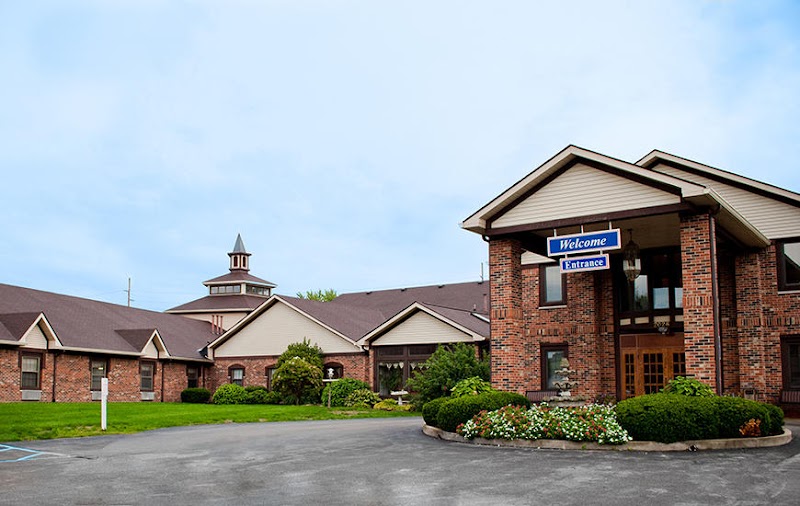

AMERICAN VILLAGE

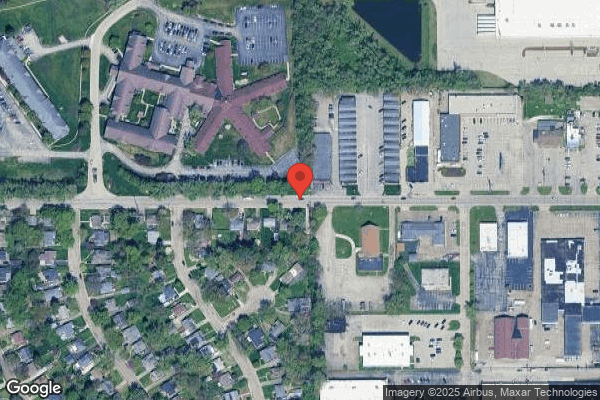
2026 EAST 54TH ST, INDIANAPOLIS, IN 46220 (317) 253-6950
Government - County 150 Beds AMERICAN SENIOR COMMUNITIES Data: November 2025
Trust Grade
60/100
#212 of 505 in IN
Last Inspection: February 2025

Within standard 12-15 month inspection cycle. Federal law requires annual inspections.

Overview

American Village in Indianapolis has a Trust Grade of C+, which means it is slightly above average among nursing homes. It ranks #212 out of 505 facilities in Indiana, placing it in the top half of the state, and #13 out of 46 in Marion County, indicating that only a few local options are better. The facility appears to be improving, as the number of issues reported decreased from 17 in 2024 to 9 in 2025. Staffing is average, with a 3/5 star rating and a turnover rate of 51%, which is similar to the state average. Notably, there have been no fines, which is a positive sign. However, there are some concerns. The health inspection rating is 2/5, indicating below-average performance, and there were 55 deficiencies found, although none were life-threatening. Specific incidents included medication errors, such as failing to label opened medications or refrigerate those that required it, and a staff member being unprofessional by taking a resident's pen without permission. Additionally, there was an instance where a resident's meal was left out of reach and uncovered for an extended period. While there are strengths in staffing stability and no fines, families should weigh these alongside the identified weaknesses.

Trust Score
C+
60/100
In Indiana
#212/505
Top 41%
Safety Record
Low Risk
No red flags
Inspections
Getting Better
17 → 9 violations
Staff Stability
⚠ Watch
51% turnover. Above average. Higher turnover means staff may not know residents' routines.
Penalties
✓ Good
No fines on record. Clean compliance history, better than most Indiana facilities.
Skilled Nurses
○ Average
Each resident gets 37 minutes of Registered Nurse (RN) attention daily — about average for Indiana. RNs are the most trained staff who monitor for health changes.
Violations
⚠ Watch
55 deficiencies on record. Higher than average. Multiple issues found across inspections.
★★★☆☆
3.0
Overall Rating
★★★☆☆
3.0
Staff Levels
★★★★★
5.0
Care Quality
★★☆☆☆
2.0
Inspection Score
Stable
2024: 17 issues
2025: 9 issues

The Good

  • 5-Star Quality Measures · Strong clinical quality outcomes
  • Full Sprinkler Coverage · Fire safety systems throughout facility
  • No fines on record

Facility shows strength in quality measures, fire safety.

The Bad

3-Star Overall Rating

Near Indiana average (3.1)

Meets federal standards, typical of most facilities

Staff Turnover: 51%

Near Indiana avg (46%)

Higher turnover may affect care consistency

Chain: AMERICAN SENIOR COMMUNITIES

Part of a multi-facility chain

Ask about local staffing decisions and management

The Ugly 55 deficiencies on record

Jul 2025 1 deficiency
CONCERN (D) 📢 Someone Reported This

A family member, employee, or ombudsman was alarmed enough to file a formal complaint

Potential for Harm - no one hurt, but risky conditions existed

Deficiency F0554 (Tag F0554)

Could have caused harm · This affected 1 resident

Based on observation, interview, and record review, the facility failed to timely have the interdisciplinary team (IDT) determine and document self-administration of medications and treatments were c...

Read full inspector narrative →
Based on observation, interview, and record review, the facility failed to timely have the interdisciplinary team (IDT) determine and document self-administration of medications and treatments were clinically appropriate for 2 of 2 randomly observed residents. (Resident 10 and Resident 20) Findings include: 1. The clinical record for Resident 10 was reviewed on 7/1/25 at 11:51 a.m. The diagnoses included, but were not limited to, chronic obstructive pulmonary disease. The Quarterly 5/12/25 Minimum Data Set (MDS) assessment indicated Resident 10 was cognitively intact. A physician's order, dated 3/11/25, indicated the resident was to receive 10 micrograms of vitamin D3 once a day. A physician's order, dated 3/13/25, indicated the resident was to receive 60 milligrams of Cymbalta once a day. A physician's order, dated 3/11/25, indicated the resident was to receive 100 milligrams of Neurontin three times a day. A physician's order, dated 3/11/25, indicated the resident was to receive 30 milliliters of lactulose three times a day. A physician's order, dated 3/11/25, indicated the resident was to receive 5 milligrams of pilocarpine once a day. A physician's order, dated 3/11/25, indicated the resident was to receive 100 milligrams of thiamine daily. An observation was conducted of Resident 10 on 7/1/25 at 11:51 a.m. The resident was observed in bed with one medication cup of liquid medication and one medication cup of pill medications on the bedside table. There was no nurse present in the room at that time. She indicated it was her morning medications, and she had not taken them yet. An interview was conducted with Registered Nurse (RN) 1 on 7/1/25 at 11:55 a.m. She indicated she was Resident 10's nurse that morning. At that time, RN 1 was observed walking into the resident's room and speaking with Resident 10 about the medication left at the bedside. After, she left the room and reported the resident had now taken her medications. 2. The clinical record for Resident 20 was reviewed on 7/1/25 at 11:50 a.m. The diagnoses included, but were not limited to, dementia. The Quarterly 4/24/25 MDS assessment indicated Resident 20 was cognitively intact. A physician's order, dated 12/16/24, indicated the resident was to receive 500 milligrams of ascorbic acid daily. A physician's order, dated 6/5/24, indicated the resident was to receive 500 micrograms of vitamin B-12 daily. A physician's order, dated 10/20/22, indicated the resident was to receive 2.5 milligrams of Eliquis twice a day. A physician's order, dated 11/20/24, indicated the resident was to receive 20 milligrams of omeprazole once a day. A physician's order, dated 12/27/23, indicated the resident was to receive 50 micrograms of vitamin D3 once a day. An observation was conducted of Resident 20 on 7/1/25 at 11:58 a.m. The resident was observed sitting on the side of the bed. The bedside table had one medication cup of medications. There was no nurse present in the room at that time. He indicated he believed one of the pill medications in the cup was his Eliquis medication and another pill was B-12 medication. The other pills in the cup; he was unsure what they were. An interview was conducted with RN 1 on 7/1/25 at 12:00 p.m. She indicated Resident 20 refused to let her remove the pill medications from his room when she delivered them that morning. RN 1 at that time, walked into the resident's room and spoke to the resident about taking the medications. During that time, she had stated to the resident, I don't have time to stand here all day. An interview was conducted with the Director of Nursing (DON) on 7/1/25 at 12:23 p.m. She indicated Resident 10 does have a self-medication assessment in the clinical record that she was able to self-medicate lotion. It does not indicate she was able to self-administer pill medications. Resident 20 does not have a self-administration assessment that had been conducted indicating he was able to self-administer his medications. A self-administration of medications policy was provided by the DON on 7/1/25 at 1:56 p.m. It indicated, .Policy. It is the policy of this facility to respect the wishes of alert, competent residents to self-administer prescribed medications as allowable under state regulations. The facility will provide instruction for all residents choosing to and capable of self-administration .If a resident desires to participate in self-administration, the Interdisciplinary Team will assess the competence of the resident to participate by completing the Self-Administration of Medication Assessment observation. A physician order will be obtained specifying the resident's ability to self-administer medications and, if necessary, listing which medications will be included in the self-administration plan .Storage of self-administered medications will comply with state and federal regulations. All bedside medications will be maintained in a secured location in the resident's room. The resident will be assessed for continued self-administration of medications quarterly and with any significant change of condition . 3.1-11(a)
Feb 2025 8 deficiencies
CONCERN (D)

Potential for Harm - no one hurt, but risky conditions existed

Assessment Accuracy (Tag F0641)

Could have caused harm · This affected 1 resident

**NOTE- TERMS IN BRACKETS HAVE BEEN EDITED TO PROTECT CONFIDENTIALITY** 2. The clinical record for Resident 22 was reviewed on 2/18/25 at 3:10 p.m. The diagnoses included, but were not limited to, Par...

Read full inspector narrative →
**NOTE- TERMS IN BRACKETS HAVE BEEN EDITED TO PROTECT CONFIDENTIALITY** 2. The clinical record for Resident 22 was reviewed on 2/18/25 at 3:10 p.m. The diagnoses included, but were not limited to, Parkinson's disease. A Nurse Practitioner Progress Note, dated 10/23/24, indicated Resident 22 was being seen due to two broken teeth that were causing her to have issues with eating. A Significant Change Minimum Data Set assessment, completed 11/27/24, indicated she was severely cognitively impaired and had no dental issues. A care plan, last reviewed 12/2/24, indicated she was at risk for caries (cavities) or missing teeth. The goal was for her to be free from mouth pain, red or bleeding gums, and oral lesions. The approaches included, but were not limited to, dental consult as indicated, observe and document red/bleeding gums, lesions, loose teeth, and symptoms of pain, and notify physician as needed. During an interview on 2/21/25 at 11:53 a.m., the Minimum Data Set Coordinator (MDSC) indicated she would check on the dental coding of the MDS. 3. The clinical record for Resident 49 was reviewed on 2/19/25 at 11:27 a.m. The diagnoses included, but were not limited to, anxiety disorder and post-traumatic stress disorder. On 2/20/25 at 10:50 a.m., the Executive Director provided Resident 49's Notice of Preadmission Screening and Resident Review (PASAR) Level II outcome, dated July 6, 2021, which indicated Resident 49 was approved for long term care without specialized services. Based on his diagnoses, treatment history, symptoms and services needed, he had met the PASRR criteria. A Significant Change MDS assessment, dated 11/25/24, did not indicate Resident 49 had been evaluated for a PASRR Level II Assessment and was determined to have a mental illness. During an interview on 2/20/25 at 3:01 p.m., the MDSC indicated Resident 49's PASRR Level II assessment should have been captured on the MDS Assessment. The facility used the Resident Assessment Instrument Manual as the policy for completing the MDS assessment. Based on interview and record review, the facility failed to accurately complete a Minimum Data Set (MDS) assessment for 1 of 1 resident reviewed for dental services, 1 of 1 resident reviewed for Preadmission Screening and Resident Review, and 1 of 1 resident reviewed for skin conditions (Resident 22, Resident 49, and Resident 329). Findings include: 1. The clinical record for Resident 329 was reviewed on 02/21/25 at 9:59 a.m. The diagnoses included, but were not limited to, gangrene and pain. Resident 329 was admitted on [DATE]. A wound progress note, dated 2/11/25, indicated the resident did have arterial insufficiency on bilateral feet. Areas noted to have arterial insufficiency are the top and bottom of all toes, bottom of both feet, and top of both feet. The admission MDS assessment, completed on 2/12/25, indicated Resident 329 did not have arterial ulcers present. During an interview on 2/25/25 at 11:15 a.m., the Minimum Data Set Coordinator (MDSC) indicated she was not aware of the arterial insufficiency ulcers, and they should have been included on the admission MDS assessment.
CONCERN (D)

Potential for Harm - no one hurt, but risky conditions existed

Comprehensive Care Plan (Tag F0656)

Could have caused harm · This affected 1 resident

Based on observation, interview, and record review the facility failed to develop a person-centered care plan timely for refusal to change clothes for 1 of 9 residents reviewed for activities of daily...

Read full inspector narrative →
Based on observation, interview, and record review the facility failed to develop a person-centered care plan timely for refusal to change clothes for 1 of 9 residents reviewed for activities of daily living (ADL) care. (Resident 19) Findings include: The clinical record for Resident 19 was reviewed on 2/18/25 10:30 a.m. The diagnoses included, but were not limited to, dementia, mild intellectual disabilities, and need for assistance with personal care. A Quarterly Minimum Data Set (MDS) assessment, dated 12/10/24, indicated the resident was cognitively impaired and required supervision and setup assistance during dressing. On 2/18/25 at 12:19 p.m., Resident 19 was observed sitting in the dining room for lunch wearing a green shirt and khaki pants with suspenders On 2/19/25 at 11:05 a.m., Resident 19 was observed in his room wearing the same clothing as the day prior, a green shirt and khaki pants with suspenders. On 2/20/25 at 1:59 p.m., Resident 19 was observed in the activities room with other residents, wearing the same clothing previously worn on 2/18/25 and 2/19/25. During an interview on 2/20/25 at 2:01 p.m., Certified Nurse Aide (CNA) 7 indicated Resident 19 sometimes refused to change his clothing. The clinical record was reviewed on 2/20/25 at 2:19 p.m. and did not contain a care plan for Resident 19's refusal to change clothing. During an interview with the Director of Nursing (DON) on 2/24/25 at 3:00 p.m., she indicated a lot of times the resident refused to change his clothing because he had some favorite clothing to wear and becomes fixated on those items. On 2/25/25 at 10:04 a.m., the DON provided a Comprehensive Care Plan Policy, dated 1/2010 and revised on 8/2023, it indicated the following, .It is the policy of this facility that each resident will have an interdisciplinary comprehensive person-centered care plan developed and implemented based on Resident Assessment Instrument (RAI) process. The care plan must include measurable goals and resident specific interventions based on resident needs and preferences to promote the resident's highest level of functioning including medical, nursing, mental, and psychosocial well-being . 3.1-35(b)(1) 3.1-35(b)(2)
CONCERN (D)

Potential for Harm - no one hurt, but risky conditions existed

Quality of Care (Tag F0684)

Could have caused harm · This affected 1 resident

Based on interview and record review, the facility failed to ensure lidocaine patches were administered as ordered for 1 of 1 resident reviewed for pain, and to obtain weights three times weekly and i...

Read full inspector narrative →
Based on interview and record review, the facility failed to ensure lidocaine patches were administered as ordered for 1 of 1 resident reviewed for pain, and to obtain weights three times weekly and inform the physician of weight changes, as ordered by the physician, for 1 of 1 resident reviewed for edema (Resident 3 and Resident 63). Findings include: 1. The clinical record for Resident 63 was reviewed on 2/18/25 at 12:29 p.m. The diagnoses for Resident 63 included, but were not limited to, pain and neuropathy. A physician order, dated 1/29/25, indicated Resident 63 was to receive lidocaine patches twice a day. The staff were to apply the patches to both feet on day and evening shift. The February 2025 Treatment Administration Record (TAR) indicated the following days and shifts the resident did not receive the lidocaine patches, due to not being available: 2/10/25 - day and evening shift, 2/12/25 - day shift, 2/13/25 - day and evening shift, 2/16/25 - evening shift, 2/17/25 - day and evening shift, 2/18/25 - day and evening shift, 2/19/25 - day shift, 2/20/25 - day shift, and 2/21/25 - day shift. A nursing progress note, dated 2/17/25, indicated pharmacy was notified regarding lidocaine patch availability. The pharmacy reported the order needed clarification by the medical provider prior to sending a supply. The resident cannot wear lidocaine patches all the time. The order needed to state a timeframe the resident will not be wearing the lidocaine patches. An interview was conducted with the Director of Nursing on 2/24/25 at 3:00 p.m. She indicated the nursing staff should have received clarification of the order sooner. 2. The clinical record for Resident 3 was reviewed on 2/19/25 at 11:14 a.m. The diagnoses included, but were not limited to, congestive heart failure and diabetes. A physician's order, dated 1/29/25, indicated she was to have her weight done once a day on Monday, Wednesday, and Friday. The physician was to be notified of a weight gain of three pounds. The February 2025 Medication Administration Record (MAR) did not contain documentation that a weight had been obtained on Wednesday 2/5/25, Friday 2/7/25, and Monday 2/10/25. A weight of 184 pounds was recorded on 2/12/25 and a weight of 189.2 pounds was recorded on 2/14/25. The MAR did not include documentation of the physician being notified of the 5.2 pound weight gain. During an interview on 2/20/25 at 3:08 p.m., Unit Manager 3 indicated Resident 3 should have weights obtained and the physician should be notified of a weight gain of three pounds or more per the physician's order. On 2/20/25 at 3:40 p.m., the Executive Director provided the Resident Weight Monitoring policy, last reviewed September 2024, which indicated, .It is the policy of this facility to weigh residents no less that monthly or per physician order . 3.1-37(a)
CONCERN (D)

Potential for Harm - no one hurt, but risky conditions existed

Deficiency F0688 (Tag F0688)

Could have caused harm · This affected 1 resident

Based on observation, interview, and record review, the facility failed to apply splints, as care-planned, for 1 of 1 resident reviewed for limited range of motion (ROM) (Resident 40). Findings inclu...

Read full inspector narrative →
Based on observation, interview, and record review, the facility failed to apply splints, as care-planned, for 1 of 1 resident reviewed for limited range of motion (ROM) (Resident 40). Findings include: The clinical record for Resident 40 was reviewed on 2/18/25 at 1:05 p.m. The diagnoses included, but were not limited to, Alzheimer's disease, multiple sclerosis, osteoarthritis, and chronic pain. A Quarterly Minimum Data Set (MDS) assessment, dated 1/22/25, indicated Resident 40 was cognitively impaired. A care plan, last reviewed 1/23/25, indicated Resident 40 was on the Passive Range of Motion (PROM) program, she was able to tolerate wearing left hand resting splint/brace for four hours, apply in the morning. She has a diagnosis of multiple sclerosis (MS) which contributes to her risk of contractures and need for assistance with daily care. The goal was to reduce the risk of contractures. On 2/18/25 at 3:06 p.m., Resident 40 was observed sitting in her wheelchair in the activities room, with no splint or brace in place. On 2/19/25 at 10:25 a.m., Resident 40 was observed without a splint or brace in place on her left hand while sitting in her wheelchair in the activities room. On 2/20/25 at 10:32 a.m., Resident 40 was observed sitting in her wheelchair without a splint or brace on her left hand. During an interview on 2/20/25 at 2:08 p.m. with Certified Nurse Aide (CNA) 6, she indicated she did not know why Resident 40 did not have her splint or brace on and she should wear her brace. During an observation of Resident 40's room on 2/20/25 at 2:10 p.m., CNA 6 was unable to locate Resident 40's splint or brace and indicated it may be in the laundry. During an interview with the Director of Nursing (DON) on 2/24/25 at 1:45 p.m., she indicated Resident 40 should have her splint or brace on as care planned. On 2/25/25 at 10:04 a.m., the DON provided a Comprehensive Care Plan Policy, dated 1/2010 and revised on 8/2023, it indicated the following, .It is the policy of this facility that each resident will have an interdisciplinary comprehensive person-centered care plan developed and implemented based on Resident Assessment Instrument (RAI) process. The care plan must include measurable goals and resident specific interventions based on resident needs and preferences to promote the resident's highest level of functioning including medical, nursing, mental, and psychosocial well-being . 3.1-42(a)(2)
CONCERN (D)

Potential for Harm - no one hurt, but risky conditions existed

Deficiency F0744 (Tag F0744)

Could have caused harm · This affected 1 resident

Based on observation, interview, and record review, the facility failed to timely develop a person-centered behavior management care plan with individualized interventions and document approaches to c...

Read full inspector narrative →
Based on observation, interview, and record review, the facility failed to timely develop a person-centered behavior management care plan with individualized interventions and document approaches to care for a resident with dementia who exhibited behaviors for 1 of 1 resident reviewed for behaviors. (Resident 62) Findings include: The clinical record for Resident 62 was reviewed on 2/18/25 at 10:55 a.m. The diagnoses included, but were not limited to, dementia, depression, and cognitive communication deficit. An admission Minimum Data Set (MDS) assessment, dated 12/11/24, indicated Resident 62 was severely cognitively impaired. A hospice Master of Social Work (MSW) Visit Note, dated 12/06/24, indicated Resident 62 was experiencing fluctuating emotions, staff reported she had been crying all morning and yelling out. MSW encouraged husband to coordinate care needs with facility to reduce stress and the facility Registered Nurse (RN) was notified. The clinical record did not contain documentation from facility staff of the noted behaviors from the MSW or interventions initiated on 12/06/24. An Acute Care Progress Note, dated 12/12/24, indicated, .Due to progression in dementia with increasing behaviors - agitation, restlessness, wandering, going into other residents' rooms, it was decided to transfer patient to the nursing memory care unit for more assistance . A physician order for scheduled lorazepam (antianxiety medication) 0.5 milligrams (mg) oral tablet every four hours was started, on 12/22/24, as well as an order for as needed lorazepam 0.5 mg oral tablet every two hours with the same start date. A hospice RN Recertification Note, dated 12/26/24, indicated the hospice MSW was to coordinate with the facility and hospice team to encourage proper supervision and assessment of behaviors. A Psychiatry Progress Note, dated 1/07/25, indicated staff had reported increased anxiety, irritability, and agitation when Resident 62's husband visited. Included in the progress note plan was to continue lorazepam 0.5 mg as ordered. Non-pharmacological interventions were not included in the plan. The clinical record for Resident 62 did not include a care plan for monitoring behavior when the resident's husband was present in the facility. On 1/17/25 at 3:56 p.m., during a care plan meeting, Resident 62's husband indicated he had concerns the resident was too drowsy at times and too anxious at other times, hospice nurse indicated a change in administration times for lorazepam might help. A physician order for as needed lorazepam 0.5 mg oral tablet every hour was placed on 1/21/25. A Psychiatry Progress Note, dated 1/28/25, indicated staff endorsed concerns for lethargy, per hospice, addition of lorazepam 0.5 mg oral tablet every hour was indicated following spouse concerns for increasing anxiety. Facility reports patient often appeared agitated or anxious when husband was visiting but otherwise calm with no behavioral concerns in his absence. A decrease in frequency of administration of as needed lorazepam 0.5 mg was ordered. A nursing progress note, dated 2/02/25 at 9:29 p.m., by Licensed Practical Nurse (LPN) 22, indicated the resident was yelling and crying while visiting with her husband. The resident took her oral medications and let staff perform activities of daily living (ADLs). There was no documentation to indicate non-pharmacological interventions were used in the clinical record. A Psychiatry Progress Note, dated 2/04/25, indicated Resident 62 was seen at the request of the facility for increasing behaviors. Staff indicated an increase in anxiety, agitation, and distressful yelling out since dose reduction. Dosage of lorazepam 0.5 mg was increased in frequency from every six hours to every five hours. The progress note plan indicated to monitor and hold for sedation. The clinical record for Resident 62 did not include an order for behavior monitoring or any daily documentation of behavior monitoring. A nursing progress note, dated 2/13/25 at 3:17 p.m., by LPN 23, indicated Resident 62 had increased agitation and anxiety during this shift. Hospice nurse was here and recommended to give as needed morphine and as needed lorazepam. LPN 23 indicated a voicemail was left to the Hospice nurse and had notified her that the resident had not changed behavior since she left. There was no documentation to indicate non-pharmacological interventions were used in the clinical record. On 2/15/25 at 8:17 p.m., Registered Nurse (RN) 26 indicated in a progress note that Resident 62 was attempting to get out of wheelchair and bed throughout shift. Resident sitting in common area with staff at that time. On 2/18/25 at 11:39 a.m., Resident 62 was observed sitting in her wheelchair grimacing and exhibiting tearfulness while alongside her husband. A Psychiatry Progress Note, dated 2/18/25, indicated the facility reported persistent and slightly worsening anxiety, tearfulness, restlessness, pacing, and distressful yelling out. The resident's order for lorazepam 0.5 mg (scheduled and as needed) was discontinued and was changed to clonazepam 0.25 mg oral half-tablet twice a day starting on 2/18/25. During an interview on 2/21/25 at 1:41 p.m., the Memory Care Support Specialist (MCSS) indicated Resident 62 gets tearful during the day, anything can set her off, it just depends. For the most part, she can be consoled or redirected. She has a fake cat we give her; she likes music, the main thing she likes is holding onto someone. During an interview on 2/21/25 at 2:04 p.m., the Director of Nursing (DON) indicated Resident 62 would become tearful all throughout the day and would try to grab onto whoever was near her to hold onto them, she really liked touch. During an interview on 2/21/25 at 2:09 p.m., Registered Nurse (RN) 25 indicated Resident 62 had moments of tearfulness throughout the day. The DON provided the resident's care plans on 2/21/25 at 2:33 p.m. A care plan for mood and behaviors related to a diagnosis of dementia was not included. A Behavior Management Policy, dated 7/1/22, revised 8/22, was provided by the DON on 2/25/25 at 10:14 a.m. The policy indicated the following, .Policy: It is the policy of [name of corporation] to provide behavior interventions for residents with problematic or distressing behaviors. Interventions provided are both individualized and non pharmacological and part of a supportive physical and psychosocial environment that is directed toward preventing, relieving, and/or accommodating a resident's behavioral expressions . Procedure: 1. Care plans should be initiated for any behavioral expression that is problematic or distressing to the resident, other resident, or caregivers. Care plan interventions should include individualized and non pharmacological interventions which address both proactive and responsive interventions . 3.1-37(a)
CONCERN (D)

Potential for Harm - no one hurt, but risky conditions existed

Deficiency F0745 (Tag F0745)

Could have caused harm · This affected 1 resident

Based on observation, interview, and record review, the facility failed to ensure appropriate social services follow-up, related to a previous allegation of abuse of a resident by a family member, for...

Read full inspector narrative →
Based on observation, interview, and record review, the facility failed to ensure appropriate social services follow-up, related to a previous allegation of abuse of a resident by a family member, for 1 of 1 resident reviewed for dementia care. (Resident 62) Findings include: The clinical record for Resident 62 was reviewed on 2/18/25 at 10:55 a.m. The diagnoses included, but were not limited to, dementia, depression, and cognitive communication deficit. An admission Minimum Data Set (MDS) assessment, dated 12/11/24, indicated Resident 62 was severely cognitively impaired. An incident report, dated 10/31/24, indicated Resident 62's husband was overheard by staff raising his voice at the resident while assisting her with activities of daily living (ADL) care on the attached Assisted Living (AL) unit of the facility. A Nursing Progress Note, dated 11/2/24, indicated Resident 62's husband had been overheard yelling at the resident. Once staff entered the resident's room the resident's husband began yelling at facility staff to leave the room. Facility staff stayed in the resident's room to ensure safety. The resident was tearful and indicated multiple times that she was scared and attempted to move away from her husband and towards staff, but the resident's husband prevented her from doing so. Facility staff asked the resident's spouse to leave the facility, and he refused. At the advisement of the Director of Nursing (DON), the facility staff called the police, upon their arrival the resident's spouse was escorted out of the facility. On 11/6/24, a follow-up note was provided to the original incident report indicating Resident 62's husband had supervised visitations. On 12/4/24, Resident 62 was discharged from the attached AL unit and admitted to the Skilled Nursing Facility (SNF) due to progression of dementia. A hospice Master of Social Work (MSW) Visit Note, dated 12/6/24, indicated Resident 62 was experiencing fluctuating emotions, staff reported she had been crying all morning and yelling out. MSW encouraged husband to coordinate care needs with facility to reduce stress and the facility Registered Nurse (RN) was notified. A Psychiatry Progress Note, dated 1/7/25, indicated staff had reported increased anxiety, irritability, and agitation when Resident 62's husband visited. Included in the progress note; the plan was to continue lorazepam (antianxiety medication) 0.5 milligrams (mg) as ordered. On 2/18/25 at 11:39 a.m., Resident 62 was observed in her wheelchair tearful and grimacing while her husband was wheeling her into her room. During this time, the resident's husband was not actively being supervised by facility staff. During an interview on 2/21/25 at 1:36 p.m., the Social Services Director (SSD) of the AL unit, indicated facility staff noticed Resident 62's husband exhibit aggressive behavior toward the resident. He was forceful while changing her, would get mad at her, and be rough with her. The resident would cry a lot. Initially, Resident 62 would walk a lot and smile a lot, but when her husband came around, she would become tearful and withdraw. We even talked to the children, and they indicated he had always acted in this manner towards the resident. There was a meeting once the incident occurred, and we asked the resident's husband to please just let staff provide ADL care. We scheduled times for him to come in and initiated supervised visits in open areas. During an interview on 2/21/25 at 1:41 p.m., the Memory Care Support Specialist (MCSS) of the SNF, indicated Resident 62's husband was aggressive towards herself and staff, and liked to delegate where the resident was and who was involved with her care. Resident 62 gets tearful during the day, by herself, not just when the spouse was here. The MCSS then indicated that we (the SNF), don't provide one on one supervision here. We have never provided that overall. She did not know they were providing that (supervised visits) in the AL. During an interview on 2/21/25 at 2:04 p.m., the DON indicated Resident 62's husband and daughter share joint power of attorney. When the resident's husband visits, we try to keep the door open and keep an eye on him. He has been told several times not to provide ADL care and keep doors open; he is not compliant. They also try to keep an eye on him while he is feeding the resident because he tries to force feed her. During an interview on 2/21/25 at 2:31 p.m., hospice staff 1 indicated she was informed that Resident 62's door had to remain open and visits with the resident's husband had to be in an open area and supervised. During an interview on 2/24/25 at 9:44 a.m., hospice staff 2 indicated she had heard through the rest of the team and facility staff, that Resident 62's husband was possibly going to be banned from the facility. I saw Resident 62 for the first time on the secured memory care unit at the SNF part of the facility. I had been in contact with her daughter prior to the initial visit. I knew there had been some allegations of long-time abuse. I was under the impression that the resident's husband was not going to be there, however when I arrived, he was there. There were not any staff around and the door was open. Later, the staff walking down the hall saw me in the resident's room. On 2/21/25 at 3:24 p.m., the DON provided the Visitation Policy, dated 11/2016, revised 10/2022, which indicated, .Procedure: 4. Visitors must not behave in a way that imposes on the rights of other residents (i.e. using loud, abusive language; intimidating staff or other residents; appearing under the influence of drugs or alcohol, etc.) If a visitor is found to behave in a manner that imposes on the rights of other residents, the visitor will be asked to leave the facility .6. The facility may either deny or provide supervised visitation for a visitor who is suspected of abuse until an investigation into the allegation is completed. If the visitor is found to be abusing, exploiting or coercing a resident, visitation may be denied, limited or supervised as determined by the Executive Director On 2/24/25 at 10:52 a.m., the DON provided the Social Services Policy, dated 8/1998, revised 11/2016, which indicated, .It is the policy to provide medically-related social services to attain or maintain each resident's highest practicable physical, mental, and psychosocial well-being of each resident including provision of mental health services as ordered by the attending physician . 3.1-34(a)(1) 3.1-34(a)(2)
CONCERN (D)

Potential for Harm - no one hurt, but risky conditions existed

Infection Control (Tag F0880)

Could have caused harm · This affected 1 resident

Based on observation, interview, and record review, the facility failed to ensure staff donned personal protective equipment (PPE) prior to a wound dressing for 1 of 1 random observation. (Resident 5)...

Read full inspector narrative →
Based on observation, interview, and record review, the facility failed to ensure staff donned personal protective equipment (PPE) prior to a wound dressing for 1 of 1 random observation. (Resident 5) Findings included: The clinical record for Resident 5 was reviewed on 2/18/25 at 1:29 p.m. The diagnoses included, but were not limited to, Alzheimer's disease. A care plan, dated 2/3/25, indicated Resident 5 had pressure ulcer on her sacrum. A physician order, dated 2/3/25, indicated the staff was to cleanse sacrum with wound cleanser, apply collagen powder, and cover with bordered gauze once a day. An observation was made of Resident 5's room on 2/21/25 at 11:30 a.m. Licensed Practical Nurse (LPN) 21 was observed leaving the resident's room with a treatment cart. She indicated she had provided a wound treatment to Resident 5. At that time, an observation was made of the resident's room with the Director of Nursing (DON). The DON had indicated the Enhanced Barrier Precaution signage was placed on the closet doors of Resident 5's room. The trash can in the resident's room did not contain discarded PPE. An interview was conducted with LPN 21 with the DON on 2/21/25 at 2:57 p.m. LPN 21 indicated she had donned gloves only to provide the wound treatment to Resident 5. She was unaware Resident 5 was on Enhanced Barrier Precautions. An Enhanced Barrier Precautions policy was provided by the DON on 2/21/25 at 10:39 a.m. It indicated, Enhanced Barrier Precautions (EBP): An intervention designed to reduce the transmission of resistant organisms that employs targeted use of gown and glove use during high contact resident care activities .Enhanced barrier precautions are used for: Resident(s) with chronic wounds and/or indwelling medical devices, regardless of their MDRO [Multidrug-Resistant Organisms] status .Wounds generally include: Chronic wounds, not shorter-lasting wounds, such as skin breaks or skin tears covered with a adhesive bandage (e.g., Band-Aid) or similar dressing. Examples of chronic wounds include, but are not limited to, pressure ulcers, diabetic foot ulcers, unhealed surgical wounds, and venous stasis ulcers .Use of Personal Protective Equipment - gown and gloves: During high-contact resident care activities .wound care: any skin opening requiring a dressing . 3.1-18(b)(2)
CONCERN (E)

Potential for Harm - no one hurt, but risky conditions existed

Deficiency F0761 (Tag F0761)

Could have caused harm · This affected multiple residents

**NOTE- TERMS IN BRACKETS HAVE BEEN EDITED TO PROTECT CONFIDENTIALITY** Based on observation, interview, and record review, the facility failed to remove discontinued resident medications, refrigerate...

Read full inspector narrative →
**NOTE- TERMS IN BRACKETS HAVE BEEN EDITED TO PROTECT CONFIDENTIALITY** Based on observation, interview, and record review, the facility failed to remove discontinued resident medications, refrigerate a medication requiring refrigeration, and label open medications in 2 of 3 medication carts observed (Residents 22, 49, 60, 75, 76, 105). Findings include: 1. An observation was conducted of the 200-hall medication cart, on [DATE] at 9:55 a.m., with Licensed Practical Nurse (LPN) 4. The medication cart contained an insulin degludec pen (type of long-acting insulin for diabetes) for Resident 60 that was opened with no open date label. Another insulin degludec pen for Resident 60, delivered on [DATE], was unopened/unused and not being refrigerated per manufacturer instructions. A bottle of lactulose (liquid medication for constipation) for Resident 49 was open, but did not have an open date label. A bottle of liquid guaifenesin dextromethorphan (medication for cough/upper respiratory symptoms) for Resident 105 was open with no open date label. This medication was discontinued, on [DATE], but not removed from the cart. A bottle of lactulose for Resident 75 was open with no open date label. An interview was conducted with LPN 4 on [DATE] at 10:05 a.m. He indicated he was not sure if opened medications needed an open date label, and did not know why the medications were not labeled. The unopened insulin pen should be refrigerated, but he did not know why it was not refrigerated. 2. An observation was conducted of the 400-hall medication cart, on [DATE] at 10:10 a.m., with LPN 2. A bottle of nitroglycerin pills (used as needed for chest pain) for Resident 22 was open with no open date label. It was delivered to the facility on [DATE]. Another bottle of nitroglycerin pills for the same resident also was open with no open date label. This bottle was delivered to the facility on [DATE]. A bottle of liquid ibuprofen (used as needed for pain) for Resident 76 was open with no open date label. It was delivered to the facility on [DATE]. An interview was conducted with LPN 2 on [DATE] at 10:15 a.m. She indicated she was not sure why the medications did not have an open date label, and she was not sure if they needed that label. On [DATE] at 10:20 a.m., the Director of Nursing (DON) provided the current facility policy titled, Medication Storage and Expiration Policy, dated 11/2024. It indicated, .Facility staff should record the date opened on the primary medication container (vial, bottle, inhaler) .Facility should destroy and reorder medications with soiled, illegible, worn, makeshift, incomplete, damaged, or missing labels or cautionary instructions .Medications should be stored in accordance with manufacturers' recommendations .Facility should ensure that medications are stored at their appropriate temperatures according to the United States Pharmacopeia guidelines for temperature ranges .Medications that are expired, discontinued, or belong to hospitalized patients should be stored separately, away from use, until destroyed or returned to the provider. 3.1-25(j) 3.1-25(m) 3.1-25(o)
Jan 2024 17 deficiencies
CONCERN (D)

Potential for Harm - no one hurt, but risky conditions existed

Deficiency F0554 (Tag F0554)

Could have caused harm · This affected 1 resident

2. On 1/4/24 at 1:52 p.m., a random observation of Resident P's bedside found a Symbicort inhaler (a medication used to treat asthma and chronic obstructive pulmonary disease) on her bedside table and...

Read full inspector narrative →
2. On 1/4/24 at 1:52 p.m., a random observation of Resident P's bedside found a Symbicort inhaler (a medication used to treat asthma and chronic obstructive pulmonary disease) on her bedside table and a bottle of loperamide (medication to treat diarrhea) on her bedside dresser. An interview conducted at the same time as the observation with Resident P indicated, the Symbicort inhaler was from home. An interview with UM (Unit Manager) 27 conducted on 1/4/24 at 1:57 p.m. indicated, she was not able to locate a self-administration of medication assessment for Resident P's Symbicort nor the loperamide. The clinical record for Resident P was reviewed on 1/9/24 at 10:27 a.m. and revealed that at the time of the random observation of medications at her bedside, Resident P did not have a physician's order for the loperamide. A Self Administration of Medications was provided by the Director of Nursing on 1/4/24 at 9:18 a.m. It indicated .Policy. It is the policy of this facility to respect the wishes of alert, competent residents to self-administer prescribed medications as allowable under state regulations. The facility will provide instruction for all residents choosing to and capable of self-administration .If a resident desires to participate in self-administration, the Interdisciplinary Team will assess the competence of the resident to participate by completing the Self-Administration of Medication Assessment observation. A physician order will be obtained specifying the resident's ability to self-administer medications and, if necessary, listing which medications will be included in the self-administration plan .Storage of self-administered medications will comply with state and federal regulations. All bedside medications will be maintained in a secured location in the resident's room. The resident will be assessed for continued self-administration of medications quarterly and with any significant change of condition . 3.1-11(a) Based on observation, interview and review, the facility failed to timely have the interdisciplinary team (IDT) determine and document that self-administration of medications and treatments were clinically appropriate for 2 of 2 randomly observed residents. (Resident 58 and Resident P) Findings include: 1. The clinical record for Resident 58 was reviewed on 1/3/24 at 3:47 p.m. The diagnosis for Resident 58 included, but was not limited to, type 2 diabetes mellitus. The admissions 12/12/23 Minimum Data Set (MDS) assessment indicated Resident 58 was cognitively intact. A physician order dated 12/6/23 indicated Resident 58 was to receive 1000 milligrams of Tylenol every 6 hours as needed. A physician order dated 1/4/24 indicated Resident 58 was to receive ciclopirox topically for toenails daily. A physician order dated 1/4/24 indicated Resident 58 was to receive 1 spray in each nostril of 50 mcg (micrograms) of Flonase twice a day. An observation was made of Resident 58 on 1/3/24 at 3:47 p.m. The resident was lying in bed in her room. The resident's bedside table was observed with a tube of fungal cream, ciclopirox, 2 Tylenol tablets in a medication cup and 1 bottle of Flonase. The resident indicated at that time she had received the ciclopirox cream and the Flonase medications from an outside medical provider. The 2 tablets of Tylenol were administered to her by staff in the morning sometime. The resident did not need to take the Tylenol at that time, so she didn't. She waits until she needs to take them. The staff were aware she has the medications in her room. The resident's clinical record did not indicate assessments were conducted to determine if it was safe for resident to keep medications at bedside and/or self-administer medications. An interview was conducted with the Director of Nursing on 1/4/24 at 9:14 a.m. She indicated Resident 58 did not have an assessment for self-medication administration to determine if it was safe for medications to be in her room. There was an audit, and all residents on the unit was assessed for self-medication administration. Resident 58 has been assessed.
CONCERN (D)

Potential for Harm - no one hurt, but risky conditions existed

Deficiency F0561 (Tag F0561)

Could have caused harm · This affected 1 resident

Based on observation, interview and record review, the facility failed to ensure residents got out of bed and showered as preference for 2 of 2 residents reviewed for choices. (Resident B and Resident...

Read full inspector narrative →
Based on observation, interview and record review, the facility failed to ensure residents got out of bed and showered as preference for 2 of 2 residents reviewed for choices. (Resident B and Resident 105) Findings include: 1. The clinical record for Resident B was reviewed on 1/4/24 at 10:00 a.m. The diagnosis for Resident B included, but was not limited to, epilepsy. The quarterly 12/3/23 (MDS) assessment indicated Resident B was severely cognitively impaired. A care plan dated 8/23/23 indicated Resident B has the following daily routine preferences .The approaches .prefers to get showers, 2x's [twice] weekly in the morning . A routine and activities preference form dated 11/30/23 indicated it was very important to her to choose her bathing. The resident's bathing choice was showers. The resident's clinical record did not indicate the resident refuses showers. The December 2023 and January 2024 shower sheets indicated the resident was provided bathing the following days: December 2023: 12/1/23 - did not indicate the type of bathing, 12/4/23 - complete bed bath, 12/8/23 - complete bed bath, 12/13/23 - did not indicate the type of bathing, 12/20/23 - did not indicate the type of bathing, January 2024: 1/8/24 - full bed bath The December 2023 Certified Nursing Aide plan of care tasks indicated the following days and the bathing type Resident B received: 12/1/23 - complete bed bath, 12/4/23 - complete bed bath, 12/6/23 - complete bed bath, 12/9/23 - complete bed bath, 12/12/23 - complete bed bath, 12/18/23 - complete bed bath, 12/20/23 - complete bed bath, 12/22/23 - complete bed bath, 12/23/23 - complete bed bath, 12/29/23 - complete bed bath, and 12/31/23 - complete bed bath, An interview was conducted with Resident B's Representative on 1/4/23 at 10:55 a.m. She indicated the resident receives bed baths, but showers are preferred. An interview was conducted with Nurse Aide 8 on 1/8/24 at 10:40 a.m. She indicated Resident B receives complete bed baths not showers. An interview was conducted with the Director of Nursing on 1/9/24 at 1:57 p.m. She indicated an audit was completed last week regarding the residents' shower preferences in the building. Resident B had reported she would like bed baths. Families had not yet been notified. 2. The clinical record for Resident 105 was reviewed on 1/8/24 at 10:00 a.m. The diagnosis for Resident 105 included, but was not limited to, heart failure. The quarterly 11/20/23 (MDS) assessment indicated Resident 105 was severely cognitively impaired. A care plan dated 8/3/23 indicated the resident has the following daily routine preferences .Approach .Resident prefers to get up before breakfast . A routine and activities preference form date 11/20/23 indicated Resident 105 preferred to get out of bed before breakfast. An observation was made of Resident 105 and Nurse Aide 8 on 1/8/24 at 10:39 a.m. The resident was in bed with a gown on. Nurse Aide 8 was at the resident's bed side at that time. The resident was observed to be agitated and requested to get cleaned up and get out of bed. Nurse Aide 8 had responded to the resident, she would have to wait until Certified Nursing Aide (CNA) 9 was available. CNA 9 was providing care to another resident at that time. An interview was conducted with Nurse Aide 8 on 1/8/24 at 10:40 a.m. She indicated Resident 105 gets out of bed when she requests. An interview was conducted with Resident 105 on 1/8/24 at 10:42 a.m. She indicated she had been asking to get up for awhile. She was tired of waiting. Nurse Aide 8 keeps pushing me off. She was supposed to get up at 9:00 a.m., but she had not even been washed up yet. They came in and cleaned up her roommate a while ago but had not been back to clean her up. A Preference for Daily Routine policy was provided on 1/9/24 at 9:01 a.m. It indicated .Purpose: to identify and develop a plan of care that reflects a resident's past and current daily customary routines. The Preference for Daily Customary Routines is a tool that can be used to gather information about a resident and incorporate this into the interdisciplinary plan of care. Procedure .1 .The interview will be conducted with the resident unless they are not able to be understood. If the resident is not able to be understood, the worksheet is completed with the family/significant other, as available .3. The information from the worksheet will be shared with the interdisciplinary team so that each department can address the resident's preferences. A Resident Rights policy was provided by the ED on 1/9/24 at 9:01 a.m. It indicated .Resident rights. You have the right to a dignified existence, self-determination, and communication with and access to the persons and services inside and outside the facility .Planning and implementing care .You have the right to be informed, and participate in, your treatment. This includes the right to .Receive the services and/or items included in the plan of care Be informed in advance, of the care to be furnished and the type of care giver or professional that will furnish care .Respect and Dignity. You have a right to be treated with respect and dignity, including .The right to reside and receive services in the facility with reasonable accommodations of your needs and preferences except when to do so would endanger the health or safety of you or your residents . 3.1-3(v)(1)
CONCERN (D)

Potential for Harm - no one hurt, but risky conditions existed

Deficiency F0687 (Tag F0687)

Could have caused harm · This affected 1 resident

**NOTE- TERMS IN BRACKETS HAVE BEEN EDITED TO PROTECT CONFIDENTIALITY** Based on observation, interview, and record review, the facility failed to ensure a resident was provided the necessary foot car...

Read full inspector narrative →
**NOTE- TERMS IN BRACKETS HAVE BEEN EDITED TO PROTECT CONFIDENTIALITY** Based on observation, interview, and record review, the facility failed to ensure a resident was provided the necessary foot care for 1 of 6 residents reviewed for ADLs (activities of daily living.) (Resident G) Findings include: The clinical record for Resident G was reviewed on 1/3/24 at 2:30 p.m. His diagnoses included, but were not limited to, dementia, hypertension, and chronic kidney disease. He was admitted to the facility on [DATE]. The ADL care plan, revised 12/21/23, indicated to provide assistance with bathing, dressing, grooming, and hygiene, as needed. An observation of Resident G was made on 1/3/24 at 2:36 p.m. He was lying in bed and was not wearing any socks. His lift great toenail was very long and thick, extending significantly past the end of his toe. His right great toenail was very thick. The other toenails were also long and thick, with some of them curling around the tips of his toes. The 5/9/22 Request for Service form included in his admission agreement indicated He requested to be seen for podiatry services. The physician's orders read, May be seen by Podiatrist, Dentist, Optometrist, Audiologist, starting 4/24/24. There were no podiatry consultations in Resident G's clinical record. An observation and interview was conducted with Resident G on 1/8/24 at 10:33 a.m. He was wearing socks and lying in bed. He indicated his toenails were long and he'd like for someone to cut them. An observation of Resident G's feet was made with LPN (Licensed Practical Nurse) 15 on 1/8/24 at 10:35 a.m. LPN 15 removed both of his socks and assessed his feet. The third and fourth toenail on his left foot was very long and thick, curling around the tips of his toes. The left great toenail was still very long and thick. An interview was conducted with LPN 15 on 1/8/24 at 10:35 a.m. during the above observation. LPN 15 indicated his toenails looked awful and informed Resident G that they must be uncomfortable for you. They were so thick. She indicated she could work on a couple of the toenails, but podiatry would need to do the rest. She was going to tell the MCSS (Memory Care Support Specialist) to put him on the list to be seen by podiatry. She was also going to contact Resident G's hospice company about his toenails, because they needed to know. The 1/8/24, 12:44 p.m. nurse's note, written by LPN 15, read, Nurse assessed bilateral feet and toenails. SS [Social Services] director notified of the need for podiatry to see resident. Hospice was notified of toenails needing to be trimmed by Podiatrist. Awaiting call back. This nurse trimmed some toenails and applied lotion to bilateral feet. An interview was conducted with the DON (Director of Nursing) on 1/9/24 at 10:28 a.m. She indicated Resident G never received podiatry services in the facility. Podiatry informed them they were waiting on some form to come back, but they never received it, so they were getting that taken care of, and he was going to be put on the podiatry list. The Podiatry Services policy was provided by the ED (Executive Director) on 1/9/24 at 9:01 a.m. It read, Residents are provided with proper treatment and care for foot disorders. PROCEDURE: The facility maintains an outside resource to provide podiatry services to meet the needs of each resident. Podiatry care is provided as ordered by a physician. Podiatry services are available on a routine and as needed basis. This citation relates to Complaint IN00420608. 3.1-47(a)(7)
CONCERN (D)

Potential for Harm - no one hurt, but risky conditions existed

Accident Prevention (Tag F0689)

Could have caused harm · This affected 1 resident

2. The clinical record for Resident L was reviewed on 1/8/24 at 11:48 a.m. The diagnoses included, but were not limited to, dementia, major depressive disorder, muscle weakness, and cerebral ischemia....

Read full inspector narrative →
2. The clinical record for Resident L was reviewed on 1/8/24 at 11:48 a.m. The diagnoses included, but were not limited to, dementia, major depressive disorder, muscle weakness, and cerebral ischemia. A care plan for fall risk, dated 6/8/21 and revised on 12/4/23, indicated Resident L was at risk for falls due to history of one or more falls within the previous 6 months. The approaches included, but were not limited to, bed in lowest position with fall mattress next to bed, flat panel call light, scoop mattress, and body pillow. A quarterly minimum data set (MDS) assessment, dated 11/22/23, noted severe cognitive impairment, dependent for roll left and right, substantial/maximal assistance with sit to lying, and substantial/maximal assistance with chair/bed to chair transfer. An observation conducted, on 1/9/24 at 9:30 a.m., of Resident L lying in bed with the bed control in her hand. There was no body pillow or a mattress next to her bed. The mattress was against the wall behind the headboard. An observation conducted, on 1/9/24 at 1:10 p.m., of Resident L lying in bed. There was no body pillow or a mattress next to her bed. The mattress was against the wall behind the headboard. 3. The clinical record for Resident K was reviewed on 1/9/24 at 2:30 p.m. The diagnoses included but were not limited to Alzheimer's disease with late onset, dementia, major depressive disorder, diabetes mellitus, age-related physical debility, and muscle weakness. A care plan for fall risk, dated 10/28/21 and revised 10/16/23, indicated Resident K was at risk for falls due to history of one or more falls within the previous six months. The approaches included, but not limited to, bed in low position and fall mattress next to open side of bed. An observation conducted, on 1/9/24 at 1:15 p.m., of Resident K in bed with no mattress next to either side of her bed. The mattress was leaning up against the wall. An observation conducted, on 1/9/24 at 1:42 p.m., of Resident K in bed with no mattress next to either side of her bed. The mattress was still leaning up against the wall. This citation relates to Complaint IN00425026. 3.1-45(a)(1) 3.1-45(a)(2) Based on observation, interview, and record review, the facility failed to ensure a resident's wheelchair had 2 functioning anti-tippers and ensure fall interventions were in place for 3 of 4 residents reviewed for accidents. (Residents' K, L and Y) Findings include: 1. The clinical record for Resident Y was reviewed on 1/5/24 at 10:00 a.m. His diagnoses included, but were not limited to, hemiplegia, hemiparesis, and vascular dementia. The 11/20/23 unwitnessed fall event indicated Resident Y was sitting in his wheelchair prior to falling in his room. The 12/14/23 unwitnessed fall event indicated Resident Y was lying in bed prior to falling in his room. The fall care plan, last revised 1/10/24, indicated an intervention was anti-tippers to his wheelchair, starting 12/28/23. An observation was made on 1/5/24 at 10:15 a.m. He was sitting in his wheelchair in the common area of the facility during an activity. He was missing the right anti-tipper to the back of his wheelchair. The left anti-tipper was present. An observation was made on 1/9/24 at 11:28 a.m. He was sitting in his wheelchair in the common area of the facility during an activity. His right anti-tipper was still missing the back of his wheelchair. An observation and interview was conducted with the ADON (Assistant Director of Nursing) on 1/10/24 at 11:03 p.m. Resident Y's wheelchair was in his room. It was still missing the right anti-tipper. The ADON indicated she was unsure why he didn't have 2 anti-tippers on his wheelchair but would look into it. An interview was conducted with the ADON on 1/10/24 at 11:19 a.m. She indicated there was no good reason Resident Y's wheelchair did not have 2 anti-tippers. She told maintenance about it, and they were going to put the other one on his wheelchair, as he should have two.
CONCERN (D)

Potential for Harm - no one hurt, but risky conditions existed

Incontinence Care (Tag F0690)

Could have caused harm · This affected 1 resident

Based on interview and record review, the facility failed to ensure residents with a urinary catheter had physician orders for such catheters; staff were monitoring and documenting the urinary outputs...

Read full inspector narrative →
Based on interview and record review, the facility failed to ensure residents with a urinary catheter had physician orders for such catheters; staff were monitoring and documenting the urinary outputs, and to timely notify the physician of decreased urinary output and urine leaking from a urinary catheter for 2 of 3 residents reviewed for urinary catheters (Residents' 75 and T). Findings include: 1. The clinical record for Resident T was reviewed on 1/4/23 at 9:49 a.m. The Resident's diagnosis included, but were not limited to, obstructive uropathy and diabetes. A care plan, last initiated 4/19/23, indicated he required a suprapubic catheter (catheter which is placed above the pubic area), changed to a foley on 05/17/23, related to obstructive uropathy. The goal was for him to have suprapubic catheter care managed appropriately. The interventions included, but were not limited to, staff to record urinary output in mL (Milliliter), initiated 4/19/23, avoid obstructions in the drainage, initiated 4/19/23, report complications/UTI such as: acute confusion, bladder spasms, low back/flank pain, malaise, nausea, emesis, chills, fever, foul odor, concentrated urine, blood in urine, obstruction, tissue trauma at site, dislodgment of catheter, initiated 4/19/23, and assess the drainage(frequency). Record the amount, type, color, odor. Observe for leakage, initiated 4/19/23. Resident T's clinical record contained a urology after visit summary, dated 5/17/23, which read .You had a successful exchange of your suprapubic catheter to a 16 fr[sic] Foley in the tract with a retention balloon with 10 ml[sic] water in the retention balloon. The previous suture was removed . Future tube exchanges can be done in an office or bedside without fluoro [x-ray] guidance . A physician's order, dated 5/17/23, indicated to change foley catheter and urinary drainage bag as needed for dislodgement, leaking or occlusion. A physician's order, dated 5/17/23, indicated foley catheter care, catheter securement device in place and nurse to record output every shift. A physician's order, dated 5/17/23, indicated the foley catheter size was 16 French and 10 ml bulb. The November 2023 TAR (Treatment Administration Record) contained documentation of Resident T's urinary output on the following days and time: 11/1/23- day shift 500 ml, evening shift 600 ml, night shift 1500 ml, 11/2/23- day shift 500 ml, evening shift 500 ml, night shift 1000 ml, 11/3/23- day shift 800 ml, evening shift 600 ml, night shift 300 ml, 1/4/23- day shift 550 ml, evening shift medium with no ml entered, night shift 120 ml, 1/5/23- day shift intake not reported with comment of catheter leaking. Resident T's clinical record did not contain documentation or progress notes about urine color, consistency, or leaking of urine from 11/1/23 through 11/5/23. A progress note, dated, 11/05/2023 at 1:51 p.m., read .this writer was called to resident's room d/t [due to] resident suprapubic leaking and resident having pain this writer assessed resident and found that residents abdomen was distended resident has pain with palpation and urine is leaking through catheter insertion area and private area NP [nurse practitioner] called new orders send to ER [emergency room]. this writer called 911 send resident to . ER . Resident T's health record contained an acute care hospital history and physical, dated 11/5/23 at 10:42 p.m., which read .Presented to the hospital brought in from his facility . for the concern of urine tract infection associated with his suprapubic catheter When I saw the patient he was alert oriented x 3 .from information obtained he said he actually noticed leakage in the area of the suprapubic catheter and his depends and he told the nursing staff that he will need help and per patient he noticed the leakage about 3 days ago .He noticed some burning sensation and when I asked him if he noticed some urine from his penis he said his depends were wet . On 11/10/23, Resident T returned to the facility from the acute care hospital. A Significant Change in Status MDS (Minimum Data Set) Assessment, completed 11/17/23, indicated Resident T was able to make himself understood and to understand what was said to him. He was cognitively intact and had an indwelling urinary catheter. The November 2023, December 2023, and January 2024 TAR's did not contain information on the amount of urine output, in milliliters, on the following days and shifts: 11/10/23- night shift recorded as small, 11/14/23- day shift recorded as medium, evening shift recorded as medium, night shift recorded as medium, 11/20/23- night shift not recorded, 11/21- day shift recorded as medium, 11/23/23- day shift recorded as medium, 11/24/23- day shift recorded as large, 11/26/23, evening shift recorded as large, 11/27/23- day shift recorded as large, 11/29/23- evening shift recorded as medium, 12/3/23- evening shift recorded as large and night shift recorded as medium, 12/4/23- day shift recorded as medium and evening shift recorded as medium, 12/6/23- night shift not recorded, 12/7/23- day shift and evening shift recorded as large, 12/13/23- evening shift and night shift recorded as large, 12/16/23- day shift and night shift recorded as large, 12/18/23- evening and night shift recorded as large, 12/19/23- day and evening shift recorded as large, 12/22/23- night shift not recorded, 12/23/23- evening shift recorded as large, 12/24/23- day shift recorded as medium, 12/26/23- day, evening, and night shift recorded as large, 12/27/23- evening shift recorded as large, 12/28/23- day and evening shifts recorded as medium and night shift recorded as large, 12/29/23- evening shift recorded as large, 12/30/23- day shift recorded as medium, 12/31/23- day shift recorded as large, 1/1/24-evening shift recorded as medium , 1/2/24- - day shift not recorded and evening and night shift recorded as medium, 1/3/24- day and evening shift recorded as large, 1/4/24- day shift recorded as medium and evening shift recorded as large, 1/5/23- day, evening, and night shifts recorded as large, and 1/6/23- day shift recorded as medium. During an interview on 1/4/24 at 9:49 a.m., Resident T indicated he had a problem with his catheter and was sent to the hospital. The hospital had fixed the problem. During an interview on 1/08/24 at 3:05 p.m., Resident T indicated that prior to going to the hospital in November, he had experienced urine leaking around his catheter and through his penis for 3 or 4 days prior to being sent to the hospital. He had let the nursing staff know it was happening. 2. The clinical record for Resident 75 was reviewed on 1/3/24 at 3:31 p.m. The diagnoses for Resident 75 included, but were not limited to, chronic kidney disease, urinary tract infections and uropathy (an obstructive urinary flow). A care plan dated 11/24/23 indicated Resident requires a suprapubic catheter r/t [related to] obstructive uropathy Approach .Assess the drainage each shift. Record the amount, type, color, odor. Observe for leakage .staff to record urinary output in ml [milliliters] . A physician order dated 11/22/23 indicated the resident was to receive once a week 60 milliliters of acetic acid. A physician order dated 11/22/23 indicated the resident was to receive 60 milliliters of acetic acid once a day as needed. An observation was made of Resident 75 on 1/3/24 at 3:31 p.m. The resident was observed in bed with a catheter that was in a dignity bag hanging on bed rail. The resident had indicated she has had the catheter for years. It does leak at times. That morning it had leaked a little. The December 2023 and January vitals report for Resident 75 indicated the following days, times the urinary outputs were not recorded as milliliters per plan of care: December 2023: 12/30/23 at 12:59 p.m., - medium amount of urine was documented, 12/31/23 at 6:30 a.m., - large amount of urine was documented, 12/31/23 at 1:06 p.m., - large amount of urine was documented, 12/31/23 at 4:48 p.m., - large amount of urine was documented, January 2024: 1/1/24 at 9:44 a.m., - large amount of urine was documented, 1/1/24 at 10:04 a.m., - medium amount of urine was documented, 1/1/24 at 4:48 p.m., - medium amount of urine was documented, 1/2/24 at 6:20 a.m., - large amount of urine was documented, 1/2/24 at 6:33 p.m., - large amount of urine was documented, 1/3/24 at 6:01 p.m., - large amount of urine was documented, 1/3/24 at 8:11 p.m., - large amount of urine was documented, 1/4/24 at 6:25 a.m., - large amount of urine was documented, 1/4/24 at 2:50 p.m., - large amount of urine was documented, 1/4/24 at 9:16 p.m., - medium amount of urine documented, 1/5/24 at 6:28 a.m., - large amount of urine was documented, 1/6/24 at 12:50 a.m., - large amount of urine was documented, 1/6/24 at 12:47 p.m., - medium amount of urine was documented, 1/6/24 at 8:20 p.m., - large amount of urine was documented, 1/7/24 at 1:14 a.m., - large amount of urine was documented, 1/7/24 at 6:40 a.m., - large amount of urine was documented, 1/7/24 at 12:00 p.m., - medium amount of urine was documented, 1/8/24 at 5:54 a.m., 6:49 a.m., 8:59 a.m., - large amount of urine was documented, 1/9/24 at 6:00 a.m., - large amount of urine was documented, An interview was conducted with the Director of Nursing on 1/9/24 at 10:28 a.m. She indicated Resident 75 should have had catheter orders. It was missed on error. The emptying urinary drainage bag procedure was provided by the ED on 1/9/24 at 9:01 a.m. It indicated the procedure steps was .9. measure and record amount of urine . 3.1-41(a)(2)
CONCERN (D) 📢 Someone Reported This

A family member, employee, or ombudsman was alarmed enough to file a formal complaint

Potential for Harm - no one hurt, but risky conditions existed

Deficiency F0692 (Tag F0692)

Could have caused harm · This affected 1 resident

Based on observation, interview, and record review, the facility failed to assure weights were obtained accurately for 1 of 4 residents reviewed for nutrition (Resident BB). Findings include: The clin...

Read full inspector narrative →
Based on observation, interview, and record review, the facility failed to assure weights were obtained accurately for 1 of 4 residents reviewed for nutrition (Resident BB). Findings include: The clinical record for Resident BB was reviewed on 1/3/23 at 3:49 p.m. The Resident's diagnosis included, but were not limited to, dysphagia (difficulty swallowing) and abnormal weight loss. A physician's order, dated 6/12/23, indicated Resident BB was to be weighed weekly. A Significant Change of Status MDS (Minimum Data Set) Assessment, completed 11/10/23, indicated that he had significant cognitive impairment, needed maximal assistance with eating, and had experienced a significant, unplanned weight loss. During a confidential interview, they indicated the residents' weights were being documented incorrectly due to staff not wanting to document weight changes or concerns. During an interview on 1/3/23 at 3:49 p.m., Family Member 20 indicated Resident BB had lost a lot of weight in the past few months. His weight seemed to go up and down a lot. She wondered how accurate the weight were. She had been told by staff that the Hoyer lift was not giving them the right weights. A care plan, last updated 1/5/23, indicated Resident BB was at risk for altered nutrition related to aspiration risk. His g-tube (feeding tube) was found removed on 12/26/23 with no plans for replacement. His weight was down 20 pounds in 180 days. The goal was for him to maintain weight without significant changes. The interventions were to provide supplements as ordered. Honor known food/ fluid preferences, provide pureed diet with nectar thick liquids, monitor weight, and notify physician and family of significant weight changes. Resident BB's weight was recorded on 12/19/23 as 141 lbs. (pounds), 12/26/23 as 142 lbs., 1/2/24 as 143 lbs., and 1/9/23 as 144 lbs. On 1/09/24 at 1:56 p.m., Resident BB was observed being weighed with the mechanical lift by CNA (Certified Nursing Assistant) 42 and UM (Unit Manager) 23. UM 23 indicated his weight was 134.8 pounds. During an interview on 1/09/24 at 3:41p.m., the RD (Registered Dietician) indicated she had obtained the weight of 144 from the electronic medication administration record. Resident BB's weight had been recorded on the EMAR on 1/8/24 as 144 pounds. Since it was close to the weight from the last week she did not question if it was accurate. UM 23 informed the RD of Resident BB's weight had been obtained on 1/9/23 as 134.8 pounds. Due to the 9-pound difference in the weight obtained a re-weight would need to be done. During an interview on 1/9/24 at 3:41 p.m., UM 23 indicated she was unsure why there was such a difference between the 1/8/23 weight recorded on the EMAR and the weight obtained on 1/9/23. She would reach out to the nurse who recorded the 1/8/23 to ask how the weight was obtained. During an interview on 1/10/24 at 8:45 a.m., UM23 indicated she had not heard back from the nurse who recorded the 1/8/23 weight of 144 lbs. On 1/10/24 at 1:56 p.m., Resident BB was observed being weighed with the mechanical lift by UM 23 and CNA 44. UM 23 indicated his weight was 136.8. On 1/20/24 at 9:37 a.m., the Director of Nursing provided the Resident Weight Monitoring Policy, last reviewed 12/2022, which read .It is the policy of this facility that residents will be weighted no less than monthly or per physician's order . Ideally, weights will be obtained by a designated and consistent team or individual to ensure accuracy. This Federal tag relates to complaint IN00420608. 3.1-46(a)(1)
CONCERN (D) 📢 Someone Reported This

A family member, employee, or ombudsman was alarmed enough to file a formal complaint

Potential for Harm - no one hurt, but risky conditions existed

Respiratory Care (Tag F0695)

Could have caused harm · This affected 1 resident

Based on observation, interview, and record review, the facility failed to administer a resident's oxygen, as ordered, and ensure accuracy of his current oxygen orders in the clinical record for 1 of ...

Read full inspector narrative →
Based on observation, interview, and record review, the facility failed to administer a resident's oxygen, as ordered, and ensure accuracy of his current oxygen orders in the clinical record for 1 of 4 residents reviewed for respiratory care. (Resident F) Findings include: The clinical record for Resident F was reviewed on 1/3/24 at 2:30 p.m. His diagnoses included, but were not limited to, chronic obstructive pulmonary disease, dementia, and hypertension. The physician's orders indicated he was admitted to hospice services, starting 3/10/23, and for his oxygen to flow at 1.5 liters per nasal cannula, every shift, starting 4/4/23. The impaired gas exchange care plan, last reviewed/revised 10/26/23, indicated an intervention was to administer oxygen as ordered. An observation of Resident F and interview with Hospice Aide 17 was conducted on 1/3/24 at 2:32 p.m. Resident F was sitting in his Broda chair in his room. A home health aide from his hospice company, Hospice Aide 17, was present in the room with him. He was wearing oxygen per nasal cannula. His portable oxygen tank was attached to the back of his chair. It was set to 3 liters but the oxygen was not flowing. The needle on the tank was all the way to the left below the red. Hospice Aide 17 indicated she arrived at the facility 45 minutes ago. Resident F was hooked up to his oxygen concentrator when she arrived. She took him off to give him a bath. She shook the portable oxygen tank on the back of his chair and indicated it was empty. She was going to take him to activities, so she had to ask facility staff about having his portable oxygen tank filled. Hospice Aide 17 proceeded to assist Resident F out of the room and down the hall. An observation of Resident F was made on 1/3/24 at 3:00 p.m. He was sitting in his Broda chair in the activity room. He was wearing his oxygen per nasal cannula. The portable oxygen tank on the back of his chair was set to 2 liters and was flowing. An observation of Resident F and interview with LPN (Licensed Practical Nurse) 15 was conducted on 1/3/24 at 3:05 p.m. LPN 15 indicated she usually worked a different hall but worked on this unit sometimes. She thought Resident F's oxygen was supposed to be set to 3 liters. LPN 15 checked Resident F's portable tank, saw it was set to 2 liters and changed it to 3 liters. LPN 15 then reviewed Resident Y's oxygen orders in his electronic clinical record, saw the order was for 1.5 liters, and changed the setting to 1.5 liters. Resident F's hospice plan of care, as of 12/12/23, located in his hospice binder at the nurse's desk was immediately reviewed after the above observation. The oxygen orders in the hospice plan of care were 2-6 liters as needed per nasal cannula, may titrate to patient comfort, starting 3/15/23. An interview was conducted with LPN 15 on 1/3/24 at 3:20 p.m. after reviewing the oxygen orders in his hospice plan of care. She indicated she was unsure and needed to call hospice for clarification of the order. An interview was conducted with LPN 15 on 1/4/23 at 10:26 a.m. She indicated they called hospice and received clarification Resident F's oxygen order was 2-6 liters. The order in the electronic clinical record for 1.5 liters was not current and accurate. LPN 15 called hospice to have them send over the clarification. The 10/16/23 email between Hospice OT (Occupational Therapist) 14, Hospice RN (Registered Nurse) 13, and Family Member 12 indicated Hospice OT 14 had just finished seeing Resident F. Staff had just laid him down in bed. No oxygen on him .Oxygen saturation was 74% on room air An interview was conducted with Hospice RN (Registered Nurse) 13 on 1/8/24 at 1:43 p.m. He indicated he began working with Resident F earlier last year, 2023. The issue with Resident F's oxygen was ongoing between the facility and the medical supply company, regarding his portable oxygen tank. There were times Resident F's oxygen was completely off, empty, and needed filled. There were times he was in bed and the concentrator wasn't on. In the 8-10 months he'd been caring for Resident F, this was the case about 5 times. When Hospice OT 14 saw his oxygen was not on, she put it on him. As far as he knew, Hospice Aide 17 could leave his oxygen on as much as possible, as the tubing from the concentrator could reach the restroom. The 1/4/24 oxygen clarification order in the electronic clinical record indicated Oxygen at 2 liters per nasal cannula, may titrate to 6 liters to keep saturations above 90, every shift, starting 1/4/24. An observation of Resident F was made on 1/8/24 at 3:19 p.m. He was sitting in his Broda chair in the activity room. His eyes were closed. He was wearing his oxygen per nasal cannula. The portable oxygen tank was set to 2 liters. The needle on the tank was all the way to the left below the red. An observation of Resident F and interview with QMA (Qualified Medication Aide) 18 on 1/8/24 at 3:25 p.m. She indicated she was the QMA for the unit, as the nurse was located on the 100 hall. She looked at Resident F's portable oxygen tank and indicated it was empty, but she could fill it. She then pushed Resident F out of the activity room and down the hallway. The Oxygen Therapy and Devices policy was provided by the ED (Executive Director) on 1/9/24 at 9:01 a.m. It read, Oxygen is a basic human need. Without it, we would not survive. The air that we breathe contains approximately 21% oxygen. For most people with healthy lungs, this is sufficient, but some people with certain health conditions whose lung function is impaired, the amount of oxygen that is obtained through normal breathing is not enough. Therefore, they require supplemental amounts to maintain normal body function Initiation of Oxygen 1) Verify physician order .7) Apply device to the patient with appropriate liter flow. This citation relates to Complaint IN00425026. 3.1-47(a)(6)
CONCERN (D)

Potential for Harm - no one hurt, but risky conditions existed

Pharmacy Services (Tag F0755)

Could have caused harm · This affected 1 resident

**NOTE- TERMS IN BRACKETS HAVE BEEN EDITED TO PROTECT CONFIDENTIALITY** Based on observation, interview, and record review, the facility failed to ensure medication labels were not altered (Resident 1...

Read full inspector narrative →
**NOTE- TERMS IN BRACKETS HAVE BEEN EDITED TO PROTECT CONFIDENTIALITY** Based on observation, interview, and record review, the facility failed to ensure medication labels were not altered (Resident 103); facility stock of clear needleless connectors and leur lock caps were not expired (Facility); the disposition medications for discharged and/or expired residents was completed timely (Residents 330 and 331); and a resident's home medications were stored appropriately (Resident 119). Findings include: A review of the facility's medication storage rooms and medication carts was conducted on [DATE]. The following was observed: 1. On the Auguste's Cottage unit, in conjunction with LPN (Licensed Practical Nurse) 30 at 2:48 p.m. the medication cart contained a medication bottle had a handwritten label over where the resident's name should have been typed. The handwritten name label identified it as Resident 103's Zyprexa (an antipsychotic medication). LPN 30 peeled the handwritten label off the bottle which revealed a different person's name who never had resided at the facility. An interview with LPN 30 immediately following the discovery of an unknown person's name on the bottle indicated, Resident 103's family had brought that medication in from home. A review of Resident 103's current orders conducted on [DATE] at 9:28 a.m. indicated, Resident 103's Zyprexa order was discontinued on [DATE]. 2. a. In the medication storage room for the [DATE]/400 hallways, in conjunction with ADON (Assistant Director of Nursing) at 3:06 p.m. on the counter were storage units with multiple drawers. One drawer of that unit contained clear needleless connector devices. At least two of the connectors were found to have expiration dates of [DATE] and [DATE]. Another drawer contained leur lock caps and at least one was found to have an expiration date of [DATE]. An interview with ADON immediately following the observation of the expired medical supplies indicated, a more complete review of the remaining connector devices and leur lock caps needed to be reviewed to ensure they were not expired as well. b. On the counter near the medication fridge, were 4 bottles of medication labeled for Resident 330. All of the medication bottles contained medications labeled as Zofran (an anti-nausea medication), Eliquis (an anti-coagulant), amiodarone (used to treat heart rhythm issues), and Valsartan (used to treat hypertension). An interview with ADON immediately following this observation indicated, Resident 330 was no longer a resident at the facility. A clinical record review for Resident 330 conducted on [DATE] indicated, Resident 330 expired on [DATE]. c. In a broken cabinet next to the medication fridge, a large, clear, plastic bag containing 15 bottles of medications and other medical supplies for Resident 119 was located. An interview with ADON was conducted immediately following the observation and indicated, she believed the bag of medication labeled for Resident 119 were her home medications that she had brought with her when admitted to the facility. When asked how home medications should be stored and accounted for, ADON indicated, the resident's medications should be logged and kept inside the medication cart until the resident's family/representative could pick them up. d. Inside the medication fridge, one Bydureon (an anti-diabetic medication) injection for Resident 331. An interview with ADON immediately following the observation indicated, Resident 331 was no longer a resident at the facility. A clinical record review was conducted on [DATE] for Resident 331. Resident 331 was discharged from the facility on [DATE]. A Storage and Expiration Dating of Medications, Biologicals policy received on [DATE] at 4:05 p.m. from DON (Director of Nursing) indicated, Procedure .3.7 Facility should ensure that test reagents, germicides, disinfectants, and other household substances are stored separately from medications .6. Facility should destroy and reorder medications and biologicals with soiled, illegible, worn, makeshift, incomplete, damaged or missing labels or cautionary instructions .15. Facility should ensure that medications and biologicals for expired or discharged or hospitalized residents are stored separately, away from use, until destroyed or returned to the provider .17. Facility personnel should inspect nursing station storage area for proper storage compliance on a regularly scheduled basis . 3.1-25(j) 3.1-25(o) 3.1-25(r)
CONCERN (D)

Potential for Harm - no one hurt, but risky conditions existed

Medication Errors (Tag F0758)

Could have caused harm · This affected 1 resident

**NOTE- TERMS IN BRACKETS HAVE BEEN EDITED TO PROTECT CONFIDENTIALITY** Based on observation, interview, and record review, the facility failed to ensure an appropriate justification was in place for ...

Read full inspector narrative →
**NOTE- TERMS IN BRACKETS HAVE BEEN EDITED TO PROTECT CONFIDENTIALITY** Based on observation, interview, and record review, the facility failed to ensure an appropriate justification was in place for the continued utilization of an antipsychotic medication, follow up with the family in regards to side effects of antipsychotic medication, and follow up with an abnormal AIMS (abnormal involuntary movement scale) assessment for 1 of 5 residents reviewed for unnecessary medications. (Resident L) Findings include: The clinical record for Resident L was reviewed on 1/8/24 at 11:48 a.m. The diagnoses included, but were not limited to, dementia, major depressive disorder, muscle weakness, schizophrenia (diagnosis added in 2023), and cerebral ischemia. An observation conducted of Resident L, on 1/8/24 at 2:00 p.m., up in their wheelchair with excessive, repetitive movements to their arms and legs, including lip puckering, and sticking their tongue out. An observation conducted of Resident L, on 1/9/24 at 9:32 a.m., lying in bed with excessive, repetitive movements to their arms and legs. An observation conducted of Resident L, on 1/10/24 at 10:08 a.m., up in their wheelchair with excessive, repetitive movements to the arms and legs including lip puckering and sticking their tongue out. A physician order, dated 5/19/23, was noted for fluphenazine (antipsychotic medication)10 milligrams every 12 hours. A behavioral care plan, dated 6/17/21, indicated the following, per daughter resident has multiple nervous breakdowns and PCP [primary care physician] diagnosed her with Schizophrenia. A behavioral care plan, dated 11/10/23, indicated Resident L was at risk for delusions and hallucinations due to diagnosis of schizophrenia. Resident L utilized antipsychotic medication. A side effect care plan, dated 6/9/21, indicated Resident L was at risk for adverse side effects related to the use of psychotropic medication. The approach was to conduct an AIMS assessment twice a year, document side effects as observed and notify the physician, IDT (interdisciplinary team) to review routinely to attempt gradual dose reductions, observe for side effects: Antipsychotic meds: dizziness, dry mouth, indigestion, drowsiness, constipation, impaired balance, weight gain, tremors, abnormal involuntary movements. An AIMS Scale, dated 1/17/23, indicated facial and oral movements to be minimal, jaw movement to be minimal, tongue movement to be minimal, trunk movement to be minimal, the severity of abnormal movements to be minimal, and had no incapacitation due to the movements. A progress note, dated 4/12/23 at 3:02 p.m., indicated the following, .Writer and UM [Unit Manager] noted resident having involuntary movements in legs, bulging eyes, dilated pupils and restlessness. Writer approached resident and asked if she was ok. Resident smiled at writer and shook head yes. All symptoms continued .Writer placed call to [name of outside psychiatry provider]. Psych NP [Nurse Practitioner] called writer back and writer explained resident's symptoms. Recent medication changes reviewed. New order to change fluphenazine to 5 mg [milligrams] BID [twice daily]. Psych NP will re-evaluate on Friday when in facility A progress note, dated 4/27/23 at 11:38 a.m., indicated the following, .res. [resident] continues to tamper [sic] off of antipsychotic meds. res. is noted to have a restless leg movement since tampering meds [sic]. while up in w/c [wheelchair] staff reports that res. constantly moves while in bed this is new noted behavior for res. A progress note, dated 5/2/23 at 1:14 p.m., indicated the following, .res. alert and oriented to self. staff anticipate all of res. needs. [sic] res. requires extensive assist with ald [sic][ADL - activities of daily living] care, transfers, toileting, bed mobility, dressing and bathing. res. able to feed self after staff setup. incontinent of bowel and bladder. res. legs continues to move non stop. staff reports that res moves constantly while she is in bed also. social services and [name of Nurse Practitioner] made aware A progress note, dated 5/4/23 at 3:28 p.m., indicated the following, .'[name of Nurse Practitioner] here and seen res. noted that res. appears to be very restless with continuous leg movement. writer informed [name of Nurse Practitioner] that this behavior started when the fluphenazine started to be tamper [sic]. cna [certified nursing assistant] reports that when res. is laying in bed there is constant movement. res. appears very uncomfortable with continuous leg movement. [name of Nurse Practitioner] restarted fluphenazine 5mg bid [5 milligrams twice daily] A progress note, dated 5/18/23 at 11:04 a.m., indicated the following, .res. alert and oriented to self and staff. staff anticipate res. needs. res. restarted on fluezphen [sic]. no increase sedation noted. res. leg movement starting to decrease. res. do not appear to be distress [sic]. up in w/c [wheelchair]. propel via staff A progress note, dated 5/18/23 at 2:30 p.m., indicated the following, .writer was called to res. room and noted that res. was on the flr [floor]. laying on her back .res. has been noted to have some increase movement. res. started back on fluphenazine 5mg bid [5 milligrams twice daily]. increase movement has improved but continues to be more than before fluphenazine was stopped A nurse practitioner note, dated 5/18/23, indicated the following, .Encounter Reason .schizophrenia - tardive dyskinesia [a disorder that results in involuntary repetitive body movements, which may include grimacing, sticking out the tongue or smacking the lips] .This is an [AGE] year [year old] female evaluated today for an acute visit due to schizophrenia and tardive dyskinesia .This patient has had a diagnosis of schizophrenia for years. She has been managed on fluphenazine 10 mg twice daily for quite some time. Per the daughter the patient does her best on this dose of fluphenazine. Psych has been recently decreasing the patient's fluphenazine dose. The patient has had a wild look in her eyes as well as increased tardive dyskinesia movements of her legs with dose decreases. The patient appears to be uncomfortable. She is nonverbal .The patient's family would prefer the patient be back on fluphenazine 10 mg twice daily and the dose not be altered for the patient's wellbeing A progress note, dated 6/9/23 at 10:21 a.m., indicated Resident L was noted with significant weight loss. A significant change MDS assessment was going to be conducted. A significant change minimum data set (MDS) assessment, dated 6/16/23, noted severe cognitive impairment and no behaviors exhibited related to physical behavioral symptoms, verbal behavioral symptoms, other behavioral symptoms, rejection of care, and/or wandering. A psychiatry progress note, dated 6/20/23, indicated the following, .[Name of Resident L] admitted to [name of facility] on 6/8/21 following an acute hospitalization. PASSRR [preadmission screening and resident review] [sic] dated 6/16/21 endorses a history of schizo affective disorder along with dementia. However, per chart review by [name of collaborating physician] there is not enough evidence to support the diagnosis of schizophrenia in this patient .ANTIPSYCHOTIC USE .Start Date: 3/10/23 .diagnosis for use: schizophrenia .Date of last GDR [gradual dose reduction]: NA [not applicable] .Resident is positive for dementia-related behaviors in past 12 months, is to receive individual therapy and psychiatric treatment services An AIMS Scale, dated 7/3/23, indicated facial and oral movements to be minimal, lips and perioral area to be minimal, jaw movement to be minimal, tongue movement to be minimal, upper extremity movements to be minimal, lower extremity movements to be moderate (marked at a 3), trunk movement to be minimal, and overall severity of abnormal movements to be moderate (marked at a 3). The document indicated the following, .Interpretation of the AIMS score .A score of 3 or 4 in only one body area warrants referring the resident for a complete neurological examination There was no indication in Resident L's electronic medical record that she was referred for a neurological examination. A pharmacy recommendation, dated 7/7/23, noted a gradual dose reduction (GDR) of the antipsychotic fluphenazine due to the recent AIMS assessment and risk for involuntary movements. The GDR request was declined with the Medical Director commenting will disrupt well being. A psychiatry progress note, dated 7/25/23, indicated Resident L was not displaying changes in mood or worsening depression. A quarterly MDS assessment, dated 8/2/23, noted severe cognitive impairment and no behaviors exhibited. A psychiatry progress note, dated 8/22/23, indicated the following, .Plan .Psychotic disorder with delusions due to known physiological condition .DISCONTINUE fluphenazine 10 mg p.o. [by mouth] twice daily .STARTED fluphenazine 7.5mg po q AM [by mouth every morning] and 10mg po q HS [by mouth at hours of sleep] .medication previously decreased per GDR - however medical team increased medication to previous dosing .Abnormal involuntary movements .Ingrezza 40 mg [medication used for involuntary movements] po q day [by mouth daily] started by medical team - this is not a [name of outside psychiatry provider] approved medication - previous GDR of offending agent (fluphenazine) increased by medical team A psychiatry progress note, dated 9/12/23, indicated the following, .Plan .Abnormal involuntary movements .previous GDR of offending agent (fluphenazine) increased by medical team A psychiatry progress note, dated 10/17/23, indicated Resident L had not exhibited any changes in mood or worsening depression. Staff denied any new/significant changes in psych status. Resident L takes an antipsychotic medication and Family not receptive to medication being decreased. A significant change MDS assessment, dated 10/19/23, noted severe cognitive impairment and no behaviors exhibited. A psychiatry progress note, dated 10/31/23, indicated the following, .Continues to have rhythmic movements of BLE [bilateral lower extremities]. Clinician has attempted to reduce antipsychotic medications during past GDR/behavior meetings - however family has declined changes to antipsychotic medications. Family aware of clinicians desire to decrease medications to the lowest effective dosing - however continue to decline changes to antipsychotic medications A quarterly MDS assessment, dated 11/22/23, noted severe cognitive impairment and no behaviors exhibited. A psychiatry progress note, dated 11/28/23, indicated the following, .Noted resident continues to display akathisia [a state of agitation, distress, and restlessness that is an occasional side-effect of antipsychotic and antidepressant drugs] - previous attempts to decrease this medication declined by family. Medications reviewed with no new orders at this time- plan to reach out to DTR/POA [daughter/power of attorney] again regarding decrease antipsychotic medication There was no documentation in the electronic medical record about a reapproach to the GDR of the antipsychotic medication for Resident L. An AIMS Scale, dated 1/9/24, indicated facial movements as moderate (scale of 3), lip movement as minimal, jaw movement as mild (scale of 2), tongue movement as minimal, upper and lower extremity movements as minimal, trunk movement as moderate, and severity of abnormal movements as minimal. An interview conducted with Certified Nursing Assistant (CNA) 34, on 1/10/24 at 10:10 a.m., indicated Resident L has these excessive, repetitive movements and they have occurred since she started working at the facility in August of 2023. Resident L can hold onto food items such as toast, but she was fed mostly by the facility staff. An interview conducted with the Regional Consultant for Social Services, on 1/10/24 at 1:28 p.m., indicated the facility staff reviewed information with the psychiatrist to see if we had the documentation to support the diagnosis of schizophrenia. The level 1 and level 2 were reviewed as well. It was determined that it was a history of schizophrenia and/or a primary dementia diagnosis. Resident L's schizophrenia diagnosis was not validated. Resident L's family spoke with the primary care provider and got the antipsychotic increased again. A GDR meeting was held and discussed with the family, but the family was insistent on keeping Resident L on that medication and the same dose. An interview with the Director of Nursing (DON), on 1/10/24 at 1:30 p.m., indicated she could not find anything in Resident L's clinical record regarding a neurological consultation. A policy titled Psychotropic Management, revised 7/22, was provided by the DON on 1/10/24 at 11:08 a.m. The policy indicated the following, .to ensure that a resident's psychotropic medication regimen helps promote the resident's highest practicable mental, physical and psychosocial well-being with person centered intervention and assessment. These medications are managed in collaboration with professional services and facility staff to include non pharmacological interventions, assessment and reduction as applicable .Procedure .1. Residents are not given psychotropic drugs unless the medication is necessary to treat a specific condition as diagnosed, and this is documented in the medical record. Each resident receiving psychotropic medication will have an adequate indication for use and supporting diagnosis for use which is documented in the clinical record .4. For antipsychotic medications, diagnoses alone do not necessarily warrant the use these medications. Antipsychotic medications may be indicated if .a. behavioral symptoms present a danger to the resident or others .b. expressions or indications of distress that are significant distress to the resident .c. Non-pharmacological approaches have been attempted, but did not relieve the symptoms which are presenting a danger or significant distress .d. GDR was attempted but symptoms returned .6. Psychotropic medications may be considered regularly for potential GDR including during monthly pharmacy reviews, during behavioral health services visits, and when the IDT is evaluating behavioral expressions. The frequency and schedule of GDRs will meet current standards of practice and be based on person centered risk factors and underlying conditions 3.1-48(a)(4) 3.1-48(a)(5) 3.1-48(a)(6) 3.1-48(b)(2)
CONCERN (D) 📢 Someone Reported This

A family member, employee, or ombudsman was alarmed enough to file a formal complaint

Potential for Harm - no one hurt, but risky conditions existed

Deficiency F0849 (Tag F0849)

Could have caused harm · This affected 1 resident

Based on observation, interview, and record review, the facility failed to timely notify hospice of a resident's falls for 1 of 1 resident reviewed for hospice. (Resident F) Findings include: The clin...

Read full inspector narrative →
Based on observation, interview, and record review, the facility failed to timely notify hospice of a resident's falls for 1 of 1 resident reviewed for hospice. (Resident F) Findings include: The clinical record for Resident F was reviewed on 1/3/24 at 2:30 p.m. His diagnoses included, but were not limited to, dementia and hypertension. The physician's orders indicated he was admitted to hospice services, starting 3/10/23. An observation of Resident F was made on 1/3/24 at 2:32 p.m. He was sitting in his Broda chair in his room. A home health aide from his hospice company was present in the room with him. The hospice care plan, last revised 10/26/23, indicated an intervention was to notify hospice as needed. The 9/9/23 fall event indicated he had an unwitnessed fall in the hallway in front of the dining area. He was found lying on his right side. The physician and resident representative were notified of the fall. It did not indicate hospice was notified of this fall. The 9/12/23 fall event indicated he had a witnessed fall trying to stand up in front of the nurse's station. The physician and resident representative were notified of the fall. It did not indicate hospice was notified of this fall. The 9/15/23 email between Hospice RN 13 and Family Member 12 indicated on 9/14/23, the previous social worker at the facility informed Hospice RN 13 during his 9/14/23 visit that Resident F had fallen twice, once on 9/9/23 and again on 9/12/23. Hospice RN 13 was surprised and informed the social worker that hospice had not been contacted for either fall. The social worker informed Hospice RN 13 that we obviously should have, and was not sure who was working, but they had both happened in the evening, and regardless of time or staff, we should be notified every time. Hospice RN 13 would not have known about these falls had the social worker not told him, or if he hadn't noticed the large hematoma on the right side of Resident F's forehead. The social worker referenced in the 9/15/23 email no longer worked at the facility and was unavailable for interview. The 11/28/23 fall event indicated Resident F had a witnessed fall trying to stand up in front of the nurse's station. The physician and resident representative were notified of the fall. It did not indicate hospice was notified of this fall. The 11/30/23 email between Hospice RN 13 and Family Member 12 indicated Hospice RN 13 was informed by staff during his visit on 11/30/23 that Resident F had a fall on 11/28/23 in front of the nurse's station and he did not recall being notified of this fall. An interview was conducted with Hospice RN (Registered Nurse) 13 on 1/8/24 at 1:43 p.m. He indicated he began working with Resident F earlier last year, 2023. Hospice was not notified of Resident F's 9/9/23, 9/12/23, and 11/28/23 falls. He'd discussed needing to be notified a number of times and it was brought up in a couple of his care plan meetings. The facility should notify hospice of each fall immediately, whether there was injury or not. An interview was conducted with the MCSS (Memory Care Support Specialist) on 1/10/24 at 10:39 a.m. She indicated for the most part, communication with hospice went through her. Nursing would be responsible for notifying hospice of any falls, because they could happen on any shift, when she's not there. Hospice should have been notified of his 9/9/23, 9/12/23, and 11/28/23 falls. She began working at the facility at the end of October, 2023 and hadn't yet had a care plan meeting with hospice, so any care plan discussions regarding his falls occurred prior to her working at the facility. The Hospice policy was provided by the DON (Director of Nursing) on 1/3/24 at 2:08 p.m. It read, The Social Services Director or designee will act as the Hospice Coordinator which will be responsible for the following functions: a. Collaborating with hospice representatives and coordinating facility staff participation in the hospice care planning process for those residents receiving these services. b. Communicating with hospice representatives and other healthcare providers participating in the provision of care for the terminal illness, related conditions, and other conditions, to ensure quality of care for the patient and family. This citation relates to Complaint IN00425026.
CONCERN (E)

Potential for Harm - no one hurt, but risky conditions existed

Resident Rights (Tag F0550)

Could have caused harm · This affected multiple residents

**NOTE- TERMS IN BRACKETS HAVE BEEN EDITED TO PROTECT CONFIDENTIALITY** 10. A random interview with Resident 45 was conducted on 1/6/24 at 1:26 p.m. Resident 45 indicated that morning she was lying in...

Read full inspector narrative →
**NOTE- TERMS IN BRACKETS HAVE BEEN EDITED TO PROTECT CONFIDENTIALITY** 10. A random interview with Resident 45 was conducted on 1/6/24 at 1:26 p.m. Resident 45 indicated that morning she was lying in bed while working on a crossword puzzle and had fallen asleep with her pen in her hand, when she was suddenly awakened by CNA (Certified Nursing Assistant) 33 snatching the pen out of her hand and saying, I need that pen. CNA 33 used her pen then returned it to Resident 45's bedside table. Resident 45 indicated, since she was awake at that point, she returned to working on the crossword puzzle and again had fallen asleep with the pen in her hand. While Resident 45 was asleep, CNA 33 returned to her room again and snatched the pen out of her hand and startled her awake again saying she needed to use Resident 45's pen. CNA 33 then used Resident 45's pen to date the water cup. Resident 45 indicated; she thought CNA 33's behavior was extremely rude. Resident 45's Quarterly MDS (Minimum Data Set) completed on 12/7/23 indicated, Resident 45 was cognitively intact. An interview with DON (Director of Nursing) conducted on 1/6/24 at 1:51 p.m. indicated, CNA 33 should not have taken a pen out of a resident's hand while they were sleeping and stated, it was rude. An interview was conducted with the Executive Director (ED) on 1/9/24 at 8:58 a.m. She indicated the facility provides continuous education to the staff related to customer service and resident rights training. She expects the staff to be respectful and provide good care to the residents. A Resident Rights policy was provided by the ED on 1/9/24 at 9:01 a.m. It indicated .Resident rights. You have the right to a dignified existence, self-determination, and communication with and access to the persons and services inside and outside the facility .Planning and implementing care .You have the right to be informed, and participate in, your treatment. This includes the right to .Receive the services and/or items included in the plan of care Be informed in advance, of the care to be furnished and the type of care giver or professional that will furnish care .Respect and Dignity. You have a right to be treated with respect and dignity, including .The right to reside and receive services in the facility with reasonable accommodations of your needs and preferences except when to do so would endanger the health or safety of you or your residents .Grievances. You have the right to voice grievances to the facility or other agency or entity that hears grievances without discrimination or reprisal and without fear of discrimination or reprisal. Such grievances include those with respect to care and treatment, the behavior of staff and of other residents; and other concerns regarding your facility stay . 3.1-3(t) Based on observation, interview and record review, the facility failed to ensure staff provided care services in a manner that promoted privacy, respect, and dignity, and to provide an environment where residents were able to express grievances without fear of reprisal for 11 of 12 residents reviewed for dignity. (Residents' B, C, D, S, T, SS, 45, 69, 80, 85 and an Anonymous Resident) Findings include: 1. During a Resident Council meeting on 1/3/24 at 2:05 p.m., Resident 85 indicated that the staff treat you like s*** after they are talked to by the management staff about your complaint. The staff that were complained about comes back and treat you badly after you complain about care that was provided. Residents are scared to complain. Resident 69 and Resident 45 indicated agreement to Resident 85's comments. Resident 80 indicated some of the staff were disrespectful, especially on the weekends. The weekend staff appeared not to care what residents needed. 2. An anonymous interview was conducted with a Family Member. They indicated there were issues in the facility due to understaffing. The workload was unrealistic. They were in the facility on a routine basis. In the dining room, they witnessed how residents were and were not being fed. They didn't think the staff understand the needs of the patients. The facility needed oversight, supervision, and communication. Staff set trays in front of residents and they're just left there. The food wouldn't be cut up as needed, not considering the resident's needs. They saw a lot of untouched trays being returned to the kitchen. In this place, poor dispositions are often. Staff are easily irritated. They were in halls when trays were cleared from rooms, and there were trays with no evidence of staff having attempted to feed the residents, residents who have no ability to say yes or no. They'd seen staff feed residents too much and too fast. Residents couldn't finish one bite before being served another, if the resident was fed at all. Staff were constantly on their phones, when they were supposed to be feeding residents. They rarely saw staff take the consideration to microwave a plate. They tried to assist other residents with eating, but the staff didn't want them to, but it's hard for me to watch people not eat or drink. Some time ago, they were not in the facility for 3 consecutive days, and in that time frame, their family member, who was dependent on staff for changing their brief, had developed inflamed skin, bloody even. They were upset that I couldn't be gone for 3 days. There were times staff put 2 briefs on their family member. Staff refer to residents as feeds and I don't appreciate that The aides run the show. I don't think they have sensitivity training. 3. During an interview on 1/04/24 at 9:50 a.m., Resident T indicated that he was hesitant to say anything about how staff treated him because he was worried that the staff wound find out and treat him badly. During the interview, CNA (Certified Nursing Assistant) 21 was observed entering through the closed door without knocking. Resident T indicated that some staff would knock before entering and some would not. 4. During an interview on 1/04/24 at 2:39 p.m., Resident 69 indicated he felt disrespected, because the staff did not answer his call lights timely and provide the care he needed. 5. During an Anonymous Resident Interview, they indicated some nurses bark orders and are disrespectful bullies. They had asked a nurse one time, why was she was so angry? The nurse in a hateful tone responded, I am not angry! Anonymous Resident Interview did not feel comfortable with revealing the nurse's name in fear of retaliation. 6. An interview was conducted with Resident C on 1/04/24 at 10:16 a.m. He indicated some nurses and Certified Nursing Assistants (CNA) staff are unfriendly and rude. 7. An interview was conducted with Resident D on 1/4/24 at 10:26 a.m. She indicated CNA staff are disrespectful. She turned on her call light last evening, CNA 51 came into her room turned off her call light; stated he would be back and then left the room. He never came back to assist with changing her. It happens all the time. 8. During an interview with Resident B's Representative 5 on 1/4/24 at 10:55 a.m., She indicated the nursing staff are rude and disrespectful. The evening shift nurse, License Practical Nurse (LPN) 50 always has an attitude when asking questions about the resident's care. 9. The clinical record for Resident SS was reviewed on 1/5/24 at 9:00 a.m. The diagnosis for Resident SS included, but was not limited to, fracture of left femur. The resident was admitted to the facility on [DATE]. A nutrition care plan dated 1/4/23 indicated Resident SS was to be assisted with feeding. An Activities of Daily Living (ADL)s care plan dated 1/1/24 indicated Resident SS requires assistance with eating, bed mobility, and transfers. The interventions in place for the resident's plan of care was to assist with placement of dentures, hearing aids and eating. A random observation was made of Resident SS and Resident SS's Representative on 1/5/24 at 9:05 a.m. Resident SS was observed lying in bed with a gown on with no dentures or hearing aids in. The resident's breakfast tray was sitting on a bedside table untouched. Resident SS indicated she did want to eat breakfast. Resident SS's Representative indicated she was very upset with the care that was provided in the facility. The resident was admitted to the facility a week ago, and the experience has been on going with long delays to receive care services. She had been asking for assistance with getting Resident SS up in a chair prior to meal delivery for the past 40 minutes, so she can eat her breakfast when it arrived. The physician had stated yesterday, the resident needed to be up in a chair for meals. The staff has ignored her request. She felt like she was begging staff to get her up. The meal now has arrived approximately 5 minutes ago, and the resident was still not up in a chair to eat. An observation was made of Resident SS on 1/5/24 at 9:22 a.m., Certified Nursing Aide (CNA) 7 was observed entering Resident SS's room without knocking or introducing herself. CNA 7 had a flat affect facial expression and was not communicating to anyone. She walked over to Resident SS's uneaten breakfast tray, picked it up and turned around to walk out of the room. There was no explanation on why she was removing the tray. Resident SS's roommate, Resident 21 had stated to CNA 7 as she was walking to the door, don't take her tray she has not eaten yet. CNA 7 responded in an unfriendly tone she was heating it up, and then continued to walk out of the room. At 9:25 a.m., CNA 7 returned to the resident's room with Resident SS's breakfast tray. As she was assisting the resident with her meal, Resident SS's Representative had spoken to CNA 7 about the resident needing to be up in a chair for meals and requested CNA 7 to introduce herself to Resident SS. CNA 7 with a flat affect facial expression in a harsh tone stated her name to the resident. During that time, CNA 7 had indicated to Resident SS's Representative if she was told to get Resident SS up prior to meals she would have done so at 7:00 a.m. An interview was conducted with Director of Nursing on 1/8/24 at 4:11 p.m. She indicated she had spoken to Resident SS's Representative about the incident with breakfast on 1/5/24, and it was addressed.
CONCERN (E) 📢 Someone Reported This

A family member, employee, or ombudsman was alarmed enough to file a formal complaint

Potential for Harm - no one hurt, but risky conditions existed

ADL Care (Tag F0677)

Could have caused harm · This affected multiple residents

**NOTE- TERMS IN BRACKETS HAVE BEEN EDITED TO PROTECT CONFIDENTIALITY** 5. On 1/6/24 at 1:37 p.m., an observation of Resident M found her lying in bed with her head all the way down and the upper trun...

Read full inspector narrative →
**NOTE- TERMS IN BRACKETS HAVE BEEN EDITED TO PROTECT CONFIDENTIALITY** 5. On 1/6/24 at 1:37 p.m., an observation of Resident M found her lying in bed with her head all the way down and the upper trunk of her body angled/turned to the right facing the wall. Resident M's lunch which included, but not limited to, a large sausage/bratwurst and a regular plastic cup containing an orange liquid were sitting on a tray on her bedside table uncovered. The bedside table was not within reach of the resident and the meal appeared to be untouched as the silverware was still wrapped in the napkin. A nurse had walked past during the observation and was asked if someone had assisted the resident with her lunch. Within a few moments, CNA (Certified Nursing Assistant) 28 arrived, entered Resident M's room, and began to unwrap the silverware when ADM (Administrator) walked up to the resident's doorway. Unsure of how long Resident M's food had been sitting there, it was requested to obtain a thermometer from the kitchen and take the temperature of her food. ADM then went to the kitchen and came back with a thermometer and handed it to CNA 28, who then took the temperature of the sausage/bratwurst and found it to be 84.4 degrees. An interview with ADM immediately after obtaining the food temperature indicated, Resident M's food was too cold for her to eat and needed to be warmed up. The clinical record for Resident M was reviewed on 1/9/24 at 10:39 a.m. Resident M's diagnoses included, but not limited to, dementia, dysphagia (difficulty with swallowing foods or liquids), cognitive communication deficit, and anxiety disorder. Resident M's quarterly MDS (Minimum Data Set) completed on 12/19/23 indicated, she required substantial/maximal assistance for eating. Resident M's care plan dated 8/25/20 indicated, she required assistance with ADLs including, but not limited to, eating and was at risk for altered nutritional status related to her progression of dementia, increased age, depression, anxiety and difficulty self-feeding. Interventions included, but not limited to, provide the assistance of one person with eating and drinking as needed and to use of a Kennedy cup (a spill-proof drinking cup) at meals. A Feeding a Resident skills competency procedure was provided on 1/9/24 at 12:33 p.m. It indicated, Procedure Steps .2. Provide privacy and explain procedure. 3. Perform hand hygiene .6. Place resident in a comfortable position. 7. Check meal care for name and diet, confirm correct food, condiments, and utensils. 8. Set tray on over the bed table and describe food . 3. The clinical record for Resident R was reviewed on 1/4/23 at 2:30 p.m. The Resident's diagnosis included, but were not limited to, chronic kidney disease and heart failure. A care plan, initiated 2/12/2020, indicated Resident R needed assistance with ADL (Acts of Daily Living) care, including transfers and toilet use. The goal was for him to improve current functional status. The interventions included, but were not limited to, assist of at least one staff with toileting and/ or incontinent care as needed, initiated 2/12/2020, and to use a Hoyer lift (mechanical lift) for all transfers with assistance of two staff members. A care plan, initiated 3/2/2020, indicated that Resident R required assistance with toileting. The goal was for him to be free from adverse effects of incontinence. The interventions included, but were not limited to, assist with incontinent care and/ or toileting as needed, initiated 3/2/202, and check every 2 hours for incontinence, initiated 3/2/23. A bladder assessment, dated 12/16/22, indicated he was always incontinent of urine. He was aware of his need to void, but unable to hold his urine. A bowel assessment, dated 12/16/22, indicated he was always incontinent of bowel. He was aware of his need to defecate, but unable to delay defecation. An Annual MDS (Minimum Data Set) Assessment, completed 11/15/23, indicated he was moderately cognitively impaired, was able to make himself understood and to understand what was said to him, needed maximum assistance with toileting, and was dependent on staff for transfers from his chair to his bed. On 1/5/23 from 9:33 a.m. until 10:13 a.m., Resident R was observed laying in his bed and indicated he needed to be changed. CNA (Certified Nursing Assistant) 6 walked in to Resident R's room and turned off his call light. CNA 6 indicated Resident R had been asking a couple of times to be changed in the last 10 minutes and that she was not his CNA. During that time, CNA 7, who was Resident R's aide, walked in the Resident R's room and CNA 6 reported to her the resident had been asking to be changed for a while. CNA 7 stated Resident R was about to get up and walked out of room. Incontinent care had not been provided to Resident R and the call light remained off at that time. Resident R was observed to continue to lay in his bed. At 10:02 a.m., two CNAs walked by his room. At 10:05 a.m., CNA 6 walked by his room. At 10:13 a.m., CNA 7 went to Resident R's room with linen in her hand. CNA 7 indicated she was Resident R's assigned CNA and had been in the dining room assisting another resident to eat. CNA 7 was unaware that Resident R was in need of incontinent care. On 1/6/23 from 12:49 p.m. until 1:40 p.m., Resident R was observed sitting in his wheelchair in his room. At 12:49 p.m., Resident R had his call light on and indicated he had a bowel movement and needed changed. CNA 7 entered his room with his lunch tray and turned off his call light. CNA 7 indicated to Resident R that he would be changed after his meal and sat the lunch tray in front of him on the bedside table. At 12:52 p.m., Resident R turned on his call light. CNA 24 answered his call light and came back to the hallway. Resident R continued to sit in his wheelchair with his meal tray in front of him. At 1:06 p.m., Resident R put his call light back on and indicated that he had not been changed. At 1:13 p.m., CNA 24 was observed going into Resident R's room with the mechanical lift and linens. CNA 24 indicated that she was going to change Resident R and lay him down. CNA 24 exited the room and returned with CNA 7, and then assisted Resident R into bed for incontinence care using the mechanical lift. CNA 24 then provided incontinent care for Resident R. CNA 24 removed Resident R's sweat pants and undid 2 briefs. CNA 24 indicated that Resident R was wearing 2 incontinent briefs. CNA 24 was unsure why Resident R had 2 incontinent briefs on and that putting 2 briefs on a resident was not normal practice. The incontinent brief closest to Resident R's skin was observed to be wet and the 2nd brief was dry. Resident R had been incontinent of bowel and was cleansed. During a confidential interview, they indicated aides were using double briefs and bed pads to avoid changing residents as often. During an interview on 1/06/24 at 1:13 p.m., CNA 24 indicated that she and CNA 7 were the two CNAs assigned to the hallway for the first shift. During an interview on 1/06/23 2:30 p.m., the DON (Director of Nursing) indicated that when there are 2 CNAs on the hall and a resident needs fed and another resident who is a Hoyer lift needs changed, how should that be prioritized. During an interview on 1/08/24 at 4:11 p.m., the DON indicated there was no excuse for double briefing. 4. The clinical record for Resident S was reviewed on 1/5/23 at 9:49 a.m. The Resident's diagnosis included, but were not limited to, absence of right eye and dementia. A care plan, last reviewed 1/5/24, indicated Resident S needed assistance with ADL care including eating. The goal was for her to improve current functional status. The interventions included, but were not limited to, provide assist of one with eating and drinking as needed, initiated 7/12/21. During an interview on 1/5/23 at 9:49 a.m., Resident 45 indicated that Resident S was blind and needed help with eating because she would pour milk all over herself. The staff were not assisting her. Resident 45 and another resident would help her to eat. On 01/09/24 at 1:31 p.m., Resident S was observed sitting at a table in the main dining room with her meal in front of her. There were nursing staff present in the dining room. A male resident gave Resident S her spoon so that she could eat her fruit and salad. The male resident then unwrapped her cookie, and Resident S ate the cookie. He then took her corn bread out of the wrap and put it where she could reach it. 6. The clinical record of Resident J was reviewed on 1/9/24 at 2:55 p.m. The diagnoses included, but were not limited to, frontotemporal neurocognitive disorder, Alzheimer's disease, dementia, malnutrition, and muscle weakness. An annual minimum data set (MDS) assessment, dated 11/27/23, indicated severe cognitive impairment, set up assistance and/or clean up assistance with eating, partial to moderate assistance with rolling from left to right, substantial/maximal assistance with sit to lying, and substantial/maximal assistance with lying to sitting. A nutritional status care plan, dated 7/9/21 and revised on 2/16/23, indicated the following, .at risk for altered nutritional status r/t [related to] progression of Alzheimer's dementia .feeds self slowly; she would benefit with assistance at meals however does not like staff to assist .Approach .Offer substitute if 50% or less of any meal is consumed An activities of daily living (ADLs) care plan, revised 1/9/23, indicated the following, .Resident requires assistance with ADLs including bed mobility, transfers, eating and toileting related to: Dementia .Approach .Up to Dining room for all meals .Assist of one with eating and drinking as needed An observation conducted of Resident J, on 1/8/24 at 2:00 p.m., lying in bed with her head of bed elevated and consuming lunch. She was leaning to the right and the bedside table was elevated to the level of her face. She was reaching over the bedside table to reach for the food on her tray. Only bites of her lunch were consumed at the time of observation. She was noted with long nails on 3 out of 5 digits to her left hand and all 5 digits to her right hand. Resident J indicated she didn't mind having longer nails but not that long. An observation conducted of Resident J, on 1/9/24 at 9:30 a.m., lying in bed with her breakfast tray on her bedside table. The bedside table was to the height of her face and Resident J was having difficulty trying to reach the cups on her tray. A cup that contained orange juice was consumed but no food was consumed at the time of observation. Resident J attempted to reach upwards towards her tray for the silverware but was unable to reach such so, she moved her hands back on the bed. Her fingernails remained long. An observation conducted of Resident J, on 1/9/24 at 11:36 a.m., with her breakfast tray still located on the bedside table that she was still attempting to consume. There was oatmeal in 2 cups that were not consumed along with eggs and sausage that were scattered on her tray, located off of the plate. Resident J appeared with slouched posture and the bedside table was to the level of her face. She was attempting to reach up towards the tray for the food with her hands. An observation conducted of Resident J, on 1/9/24 at 1:05 p.m., still with a slouched posture in bed with her lunch tray in front of her. She had not eaten anything but was attempting to reach with her arm to the tray. The bedside table was to the level of her face to where she needed to raise her arms to reach for the food on the tray, located on the bedside table. An observation conducted of Resident J, on 1/9/24 at 1:40 p.m., still with a slouched posture. She was reaching upwards for her meal tray on the bedside table. She retried a piece of the side salad and was eating it with her hands. Her nails remain long. An observation conducted of Resident J, on 1/10/24 at 10:05 a.m., slouched in bed with her head facing downwards on the right side of her bed. The head of the bed was elevated but the bedside table remains at the height to her face. Resident J would have to reach upwards for her food. She only consumed a few bites of her breakfast. A document titled Fingernail Care, review date of 09/2023, was provided by the Director of Nursing (DON) on 1/10/24 at 11:08 a.m. The document indicated to clean under the nails and clip fingernails straight across and file in a curve. 7. The clinical record for Resident K was reviewed on 1/9/24 at 2:30 p.m. The diagnoses included, but were not limited to, Alzheimer's disease, dementia, major depressive disorder, malnutrition, abnormal weight loss, and congestive heart failure. A quarterly MDS assessment, dated 10/26/23, noted severe cognitive impairment, set up or clean-up assistance with eating, substantial/maximal assistance with roll left and right, sit to lying, and lying to sitting. An ADL care plan, dated 10/28/21, indicated Resident K required assistance with ADLs including bed mobility, transfers, eating and toileting. The approach listed, but were not limited to, out of bed to chair with meals, assist of one with bed mobility, transfers, and eating as needed. An observation of Resident K, on 1/9/24 at 1:15 p.m., lying in bed with the head of the bed elevated but her bedside table was to the level of her face. Resident K was having to reach for food. The side salad and bowl of fruit were still covered with clear plastic. An observation conducted of Resident K, on 1/9/24 at 1:42 p.m., lying in bed with the head of the bed elevated but the bedside table was to the level of her face. The salad and bowl of fruit were still covered with clear plastic. She had eaten a couple of bites of the cornbread. 8. The clinical record for Resident H was reviewed on 1/8/24 at 2:11 p.m. The diagnoses included, but were not limited to, hemiplegia and hemiparesis, anxiety disorder, dysphagia, abnormal posture, and muscle weakness. A significant change MDS assessment, dated 11/22/23, indicated severe cognitive impairment, impairment on one side for upper extremity, impairment on both sides for lower extremity, substantial/maximal assistance with eating, dependent for roll left and right, and dependent for chair/bed to chair transfer. A diet order was noted for regular, honey thick/moderately thick liquids, pureed consistency. Special instructions were to have regular bread, magic cup at lunch and dinner, resident must be in main dining room for lunch and dinner and fed by staff. Another diet order, dated 1/9/24, indicated the following, .Regular, Thick/Moderately Thick, Pureed .Special Instructions: WITH REGULAR BREAD. Magic Cup at Lunch and Dinner An observation of Resident H, on 1/8/24 at 1:55 p.m., lying in bed with her head of bed elevated but the bedside table was to the height of her face. She had a spoon to her right hand and was attempting to scoop food onto but was unsuccessful. Resident H commented on how she can feed herself at times and other times she cannot. She had a Magic Cup on her tray, and it was not opened. An observation of Resident H, on 1/9/24 at 1:05 p.m., lying in bed, leaning to the right. The head of the bed was elevated but Resident H was slouched downwards with her head at the height of the bedside table where her lunch tray was. A Magic Cup was on the lunch tray but not opened. Another observation of Resident H, on 1/9/24 at 1:40 p.m., lying in bed with her right hand on the meal tray with nothing being eaten. The Magic Cup remained unopened. Resident H was still slouched downwards with her head at the height of the bedside table. Another observation of Resident H, on 1/9/24 at 2:07 p.m., laying in bed with her head elevated by the width of a standard pillow. There was no staff in the room and Resident still had not eaten anything off of the lunch tray. Therapy Staff 35 came into the room and asked if Resident H needed help to being raised in the bed. Resident H indicated yes. Therapy Staff 35 indicated they would like for Resident H to be up in the dining room and proceeded to explain the risk of choking to resident related to her leaning over and not sitting up straight in the bed. Therapy Staff 35 indicated it has been a hit or miss if Resident H was up for meals. The call light was pressed, and another staff member assisted Therapy Staff 35 on pulling Resident H up in her bed. Resident H indicated she felt better after being repositioned and nodded her head yes to it being easier to eat. An interview conducted with the DON, on 1/10/24 at 2:40 p.m., indicated the diet order for Resident H was an old order. A document titled Feeding a Resident, review date of 09/2023, was provided by the DON on 1/10/24 at 11:08 a.m. The document indicated the following, .6. Place resident in a comfortable position .8. Set tray on over the bed table and describe food .11. Food should be in bite sized pieces or with the spoon half full .12. Allow resident time to chew food and swallow A Resident Rights policy was provided by the ED on 1/9/24 at 9:01 a.m. It indicated .Resident rights. You have the right to a dignified existence, self-determination, and communication with and access to the persons and services inside and outside the facility .Planning and implementing care .You have the right to be informed, and participate in, your treatment. This includes the right to: .Receive the services and/or items included in the plan of care Be informed in advance, of the care to be furnished and the type of care giver or professional that will furnish care .Respect and Dignity. You have a right to be treated with respect and dignity, including: .The right to reside and receive services in the facility with reasonable accommodations of your needs and preferences except when to do so would endanger the health or safety of you or your residents . This citation relates to complaint IN00422553 and IN00420608. 3.1-38(a)(2)(A) 3.1-38(a)(2)(C) 3.1-38(a)(2)(D) 3.1-38(a)(3)(E) Based on observation, interview and record review, the facility failed to ensure timely assistance was provided with eating, nail care, incontinent care, residents getting out of bed, and ensure residents that need assistance with incontinence was provided 1 incontinent brief at a time for 8 of 12 residents reviewed for Activities of Daily Living. (Residents' B, H, J, K, M, R, S and SS) Findings include: 1. The clinical record for Resident SS was reviewed on 1/5/24 at 9:00 a.m. The diagnosis for Resident SS included, but was not limited to, fracture of left femur. The resident was admitted to the facility on [DATE]. A nutrition care plan dated 1/4/23 indicated Resident SS was to be assisted with feeding. An Activities of Daily Living (ADL)s care plan dated 1/1/24 indicated Resident SS requires assistance with eating, bed mobility, and transfers. The interventions in place for the resident's plan of care was to assist with placement of dentures, hearing aides and eating. A random observation was made of Resident SS and Resident SS's Representative on 1/5/24 at 9:05 a.m. Resident SS was observed lying in bed with gown on with no dentures or hearing aides in. The resident's breakfast tray was sitting on a bedside table untouched. Resident SS indicated she did want to eat breakfast. Resident SS's Representative indicated she was very upset with the care that was provided in the facility. The resident was admitted to the facility a week ago, and the experience has been on going with long delays to receive care services. She had been asking for assistance with getting Resident SS up in a chair prior to meal delivery for the past 40 minutes, so she can eat her breakfast when it arrived. The physician had stated yesterday, the resident needed to be up in a chair for meals. The staff has ignored her request. She felt like she was begging staff to get her up. The meal now has arrived approximately 5 minutes ago, and the resident was still not up in a chair to eat. Resident SS's Representative was observed holding the resident's oatmeal bowl and indicated the resident's food was now getting cold. At 9:13 a.m., Qualified Medication Aide (QMA) 2 entered the resident's room. She indicated she did not know Resident SS. At that time, QMA 2 was observed asking Resident SS's Representative how does the resident take her medications. She was unaware of the route. Resident SS's Representative responded to QMA 2; the resident takes her medications crushed in applesauce. QMA 2 then left the room. An observation was made of Resident SS on 1/5/24 at 9:22 a.m., Certified Nursing Aide (CNA) 7 was observed entering Resident SS's room and removed the resident's uneaten breakfast tray. She indicated she was heating up the breakfast tray. At 9:25 a.m., CNA 7 returned to the resident's room with the breakfast tray and assisted the resident with her breakfast meal while the resident was in bed. CNA 7 had indicated to Resident SS's Representative if she was told to get Resident SS up prior to meals she would have done so at 7:00 a.m. An interview was conducted with Director of Nursing on 1/8/24 at 4:11 p.m. She indicated she had spoken to Resident SS's Representative about the incident, and it was addressed. 2. The clinical record for Resident B was reviewed on 1/4/24 at 10:00 a.m. The diagnosis for Resident B included, but was not limited to, epilepsy. The quarterly 12/3/23 Minimum Data Set (MDS) assessment indicated Resident B was severely cognitively impaired. A care plan dated 8/20/23 indicated Resident requires assistance with Activities of Daily Living (ADL)s including bed mobility, transfers, eating and toileting .Approach .Assist with toileting and/or incontinent care as needed . An interview was conducted with Resident B's Representative 5 on 1/4/24 at 10:55 a.m. She indicated during visits, the resident sits up in her chair and/or in bed for long periods of time without being changed or repositioned. She has observed at times, the resident to be soaked with urine. An observation was made of Resident B in her room with Resident B's Representatives 3 and 4 on 1/6/24 at 1:35 p.m. The resident was observed wearing a jogging suit and sitting in her broda chair by her bed. Resident B's Representative 3 indicated she had been visiting the resident since 11:30 a.m., that day. The staff had not come into the room to provide incontinent care during her visit. She had asked the staff approximately 5 minutes ago to change her due to not knowing how long it had been since she had received incontinent care. NA 8 reported to them she needed to go get some help from the resident's assigned CNA, (CNA 9) to change the resident. At that time, they were currently waiting for assistance. An observation was made of incontinent care to Resident B with Nurse Aide (NA) 8 and Certified Nursing Assistant (CNA) 9 on 1/6/24 at 2:00 p.m. The resident was observed being transferred by hoyer from the broda chair to the resident's bed by NA 8 and CNA 9. After the transfer, urine odor was present coming from the broda chair. CNA 9 indicated at that time, the cloth pad in the broda chair was wet with urine. CNA 9 then removed the resident's jogging pants, and the pants were observed to be wet with urine. After the removal of the soiled brief, a skin tear area was observed an inch in length and red in color on the left side under the resident's abdomen fold. CNA 9 at that time requested NA 8 to leave the room and report to the nurse to come and observe the skin area on the resident. CNA 9 indicated that was the first time she had observed the skin area on the resident. As of Friday, 1/5/24, the resident did not have the skin area. The last time she had provided incontinent care to Resident B was at 12:00 p.m., that day. An interview was conducted with CNA 9 on 1/6/24 at 2:20 p.m. She indicated incontinent care was to be provided to the residents every 2 hours and double briefing the residents was not allowed to be utilized.
CONCERN (E)

Potential for Harm - no one hurt, but risky conditions existed

Quality of Care (Tag F0684)

Could have caused harm · This affected multiple residents

3. The clinical record for Resident 40 was reviewed on 1/10/24 at 11:58 a.m. Resident 40's diagnoses included, but not limited to, major depressive disorder, anxiety disorder and chronic pain. A phys...

Read full inspector narrative →
3. The clinical record for Resident 40 was reviewed on 1/10/24 at 11:58 a.m. Resident 40's diagnoses included, but not limited to, major depressive disorder, anxiety disorder and chronic pain. A physician's order dated 2/19/22 indicated, to give Resident 40 one 5 mg(milligrams) tablet of Eliquis (an anticoagulant) by mouth twice a day. A physician's order dated 12/5/23 indicated, to give Resident 40 one Ensure Plus carton three times a day at 8 a.m., 2 p.m. and 8 p.m. Resident 40's December 2023 MAR (medication administration record) received on 1/10/24 at 12 p.m. from DON (Director of Nursing) indicated, on 12/31/23, Resident 40 did not receive his Eliquis, which was scheduled to be given between 4 p.m. and 8 p.m., nor his Ensure Plus (dietary supplement), which was scheduled to be given at 8 p.m. 4. The clinical record for resident 44 was reviewed on 1/10/24 at 1:27 p.m. Resident 44's diagnoses included, but not limited to, malignant neoplasm of bladder (bladder cancer), chronic obstructive pulmonary disease (COPD), anemia, emphysema, congestive heart failure (CHF) and hypertension. A physician's order dated 10/30/23 indicated to give Resident 44 one 20 mg tablet of atorvastatin (medication for high cholesterol) at bedtime. A physician's order dated 11/1/23 indicated to administer 400 mg of magnesium oxide by mouth twice a day to Resident 44. A physician's order dated 11/9/23 indicated to administer 5 mg of Marinol (a man-made form of cannabis used to treat loss of appetite) twice daily by mouth to Resident 44. A physician's order dated 10/31/23 indicated, to administer melatonin 3 mg at bedtime for insomnia to Resident 44. A physician's order dated 12/19/23 indicated, to administer olanzapine 2.5 mg at bedtime to Resident 44 for mood/behavior. Resident 44's December 2023 MAR received on 1/10/24 at 12 p.m. from DON indicated, on 12/31/23, Resident 44 did not receive the following medications: atorvastatin, magnesium oxide, olanzapine, or melatonin (all were to be administered between 7 p.m. and 11 p.m.); and Marinol (was to be administered between 4 p.m. and 11 p.m.). Resident 44's Controlled Substance Record for his Marinol 5 mg tablets provided by DON on 1/10/24 at 1:22 p.m. indicated, he was to receive one tablet 1 hour prior to dinner daily. The first administration on this record was noted to be 1/2/24 and the last administration was on 1/10/24. The remaining quantity after the last administration recorded was 13 tablets. DON had not provided any other Controlled Substance Records for the Marinol. A medication storage observation completed on 1/9/24 at 3:06 p.m. with ADON (Assistant Director of Nursing) indicated, Resident 44's Marinol tablets were located inside a metal, lock box in the 100/200/300/400 hallway's medication room fridge. There were 15 tablets left in the pill bottle. The count on the controlled substance record and the physical number of pill of Marinol did not match. 5. An interview with Resident 83 conducted on 1/4/24 at 11:40 a.m. indicated, he did not receive all his medications at times. He added, last weekend there was a QMA (Qualified Medication Assistant) on and she was not able to give him his insulin and was told the nurse was on a different hallway. He did not receive his insulin that night. The clinical record for Resident 83 was reviewed on 1/10/24 at 11:44 a.m. Resident 83's diagnoses included, but not limited to, right leg AKA (above knee amputation), type II diabetes, congestive heart failure (CHF), neuropathy (weakness, numbness, and pain from nerve damage), muscle spasms, pain, and insomnia. Resident 83's clinical record contained physician orders for the following medications: gabapentin 300 mg, three times a day for nerve pain (dated 8/11/22); hydrocodone-acetaminophen 5-325 mg (Norco) twice a day for pain (dated 9/21/23); Lantus Solostar 5 units at bedtime for diabetes (dated 9/7/23); melatonin 3 mg tablet at bedtime for insomnia (dated 2/25/21); metformin 500 mg tablet twice a day for type II diabetes (dated 7/25/23); methocarbamol 500 mg tablet every 12 hours for muscle spasm (dated 8/9/23); nortriptyline 50 mg at bedtime to be given with melatonin and Norco for pain (dated 3/17/22). Resident 83's December 2023 MAR received on 1/10/24 at 12 p.m. from DON indicated, he was not administered the following medications: -blood sugar check at 10 p.m. on 12/31/23 -lantus at 8 p.m. on 12/2/23 and 12/31/23 -Norco at 11 p.m. on 12/11/23; at 10 a.m. on 12/14/23; and 12/31/23 at 11 p.m. -melatonin on 12/11/23 and 12/31/23 at 11 p.m. -metformin on 12/31/23 due between 7 p.m. and 11 p.m. -methocarbamol on 12/31/23 at 8 p.m. -nortriptyline on 12/11/23 and 12/31/23 at 11 p.m. -lasix on 12/31/23 at 8 p.m. Resident 83's Controlled Substance Record for his Norco (hydrocodone) 5-325 mg tablets was received on 1/10/24 at 1:22 p.m. from DON indicated, the only administration of Norco on 12/31/23 was at 10 a.m. 6. The clinical record for Resident 118 was reviewed on 1/10/24 at 11:53 a.m. Resident 83's diagnoses included, but not limited to, type II diabetes, cirrhosis of the liver, and myocardial infarction (heart attack). The clinical record for Resident 118 contained physician medication orders for Baclofen 10 mg tablet three times a day for muscle spasms dated 12/14/23 and hydrocodone-acetaminophen 10-325 mg tablets every 6 hours for pain. Resident 118's December 2023 MAR received on 1/10/24 at 12 p.m. from DON indicated, on 12/31/23, he was not administered his Baclofen tablet at 8 p.m. nor his hydrocodone-acetaminophen 10-325 tablet at 6 p.m. yet, he received other evening/night medications. Resident 118's Controlled Substance Record for his hydrocodone-acetaminophen 10-325 mg tablets was provided by DON on 1/10/24 at 1:22 p.m. It indicated, on 12/31/23 at 6 p.m. the tablet count was decreased by one tablet but did not contain a signature. A staffing schedule for 12/31/23 provided by DON on 1/3/23 at 2:12 p.m. indicated, LPN (Licensed Practical Nurse) 26 was the nurse on duty that evening and night shift for Residents 40, 44, 83 and 118. An interview with LPN 26 was conducted on 1/10/24 at 3:19 p.m. indicated, she was typically agency staff at the facility and each facility uses different types of medication charting systems. She stated, there are some residents that may or may not take their medications. She indicated, when going back into the electronic medication charting system to sign off medications sometimes they fell-off and she could no longer see the medication in the system to chart on it. She stated, she is still trying to acclimate to their system .'it sometimes kicks the med out and I can't find where it went. When asked if she asked any other nurses to assist her, she indicated, on the weekends there was not as many managers available and lots of times there's a lot of agency staff working and they don't know the system well either. When asked if she informed the DON of issues she indicated, this issue is not something she thinks could be explained to her by talking it out on the phone, but rather by showing her. An interview with DON and ED (Executive Director) conducted on 1/10/24 at 3:27 p.m. indicated, LPN 26 had not informed either of them of her issues with using the EMAR system. A Medication Administration procedure received on 1/10/24 at 2 p.m. from DON indicated, 1. Medications administered within 60 minutes before and/or after time ordered .12. Refusal of medication document as appropriate .19. Medication administration will be recorded on the MAR/EMAR [sic, electronic medication administration record] or TAR [sic, treatment administration record]after given .33. Administration and inventory of controlled substances were documented according to facility policy . 2. The clinical record for Resident T was reviewed on 1/4/23 at 9:49 a.m. The Resident's diagnosis included, but were not limited to, obstructive uropathy and diabetes. A care plan, initiated 9/19/23, indicated Resident T had an abrasion to his right lateral (outer) foot. The goal was the abrasion would heal without complications. The approaches included, but were not limited to, protective clothing, initiated 9/19/23, and to provide treatment as ordered, initiated 9/19/23. A physician's order, dated 9/26/23, indicated he was to have a podus boot to right foot, on while in bed as tolerated. A Significant Change in Status MDS (Minimum Data Set) Assessment, completed 11/17/23, indicated Resident T was able to make himself understood and to understand what was said to him. He was cognitively intact and received ointment or medication to his feet. A physician's order, dated 12/20/23, indicated to cleanse right lateral foot would with normal saline, apply Santyl (wound care ointment) and cover with a bordered gauze daily. A wound care visit report, dated 1/2/23, indicated the wound on Resident T's right lateral foot was open and had a foul odor after cleansing. The plan was to treat the right foot wound by cleansing with normal saline, to apply Santyl followed with calcium alginate (absorbent wound dressing) and cover with foam. On 1/4/23 at 9:49 a.m., Resident T was observed laying in his bed. He was not wearing a podus boot on his right foot and his right foot was touching the foot board. On 1/8/23 at 10:31 a.m., Resident T was observed laying in his bed. He did not have a podus boot on and the dressing on his right lateral foot was coming off. During an interview on 1/08/24 at 10:35 a.m., LPN (Licensed Practical Nurse) 22 indicated that she was going to change Resident T's dressing because she had noticed it was coming off. On 1/08/24 at 10:50 a.m., LPN 22 was observed changing Resident T's right foot dressing. LPN 22 indicated the current treatment order was to cleanse the wound and apply Santyl covered with a bordered gauze dressing. LPN 22 removed the old dressing, cleansed the wound with normal saline and applied Santyl to the wound. She then covered the wound with a bordered gauze dressing. She did not apply the podus boot to Resident T's right foot. LPN 22 indicated that the CNA (Certified Nursing Assistant) would apply the podus boot after she provided care. The January 2024 TAR (Treatment Administration Record) indicated Resident T had received Santyl covered with a bordered dressing on the following days: 1/1, 1/2, 1/3, 1/4, 1/5, and 1/8/23. The treatment was not initialed as having been completed on 1/6/23 and 1/7/23. On 1/08/24 at 3:05 p.m., Resident T was observed laying in bed. His left foot was touching the foot board of the bed. His right foot was laying on the mattress. A green podus boot was located on the top a bedside table by the window in the room. Resident T indicated that the nursing staff had not put the podus boot on his foot in a long time. He had not refused to have the boot put on his right foot. During an interview on 1/08/24 at 3:30 p.m., the ADON (Assistant Director of Nursing) indicated that the treatment order for Resident T's right foot should have been updated on 1/2/24 and his podus should be applied as ordered. 7. The clinical record for Resident H was reviewed on 1/8/24 at 2:11 p.m. The diagnoses included, but were not limited to, hemiplegia and hemiparesis (Hemiplegia is paralysis of one side of the body. Hemiparesis is weakness of one side of the body), chronic obstructive pulmonary disease, peripheral vascular disease, chronic kidney disease, anxiety disorder, dysphagia (difficulty in swallowing food or liquid), and muscle weakness. A significant change minimum data set (MDS) assessment, dated 11/22/23, indicated severe cognitive impairment, impairment on one side for upper extremity, impairment on both sides for lower extremity, dependent to roll left and right, and dependent on chair/bed to chair transfer. A care plan for skin, dated 1/4/24, indicated Resident H had a pressure area to the right buttock. A physician order, dated 12/4/19, noted to elevate both lower extremities WIB (while in bed) for pressure relief/prevention. An observation conducted of Resident H, on 1/8/24 at 10:28 a.m., lying in bed with the head of bed elevated. The bilateral lower extremities were elevated, but only to her knees to where her lower legs were in a downward position. An observation conducted of Resident H, on 1/8/24 at 1:55 p.m., with her bilateral lower extremities in the same position. An observation conducted of Resident H, on 1/9/24 at 9:28 a.m., with her lying in bed and bilateral lower extremities were not elevated or floated. An observation conducted, on 1/9/24 at 11:35 a.m., of Resident H lying in bed with bilateral lower extremities not elevated or floated. An observation conducted, on 1/9/24 at 1:05 p.m., of Resident H lying in bed with bilateral lower extremities not elevated or floated. A policy titled SKIN MANAGEMENT PROGRAM, revised 5/22, was provided by the Director of Nursing (DON), on 1/10/24 at 11:08 a.m. The policy indicated the following, .PROCEDURE FOR WOUND PREVENTION .3. Interventions to prevent wounds from developing and/or promote healing will be initiated based upon the individual's risk factors to include but not limited to the following .Redistribute pressure (such as repositioning, protecting and/or offloading heels, etc.) 3.1-37(a) Based on interview and record review, the facility failed to administer medications as ordered for 1 of 5 residents reviewed for unnecessary medications and 4 of 5 randomly reviewed residents' for medications administrations; ensure physician orders were followed regarding elevation of bilateral lower extremities (BLE) for 1 of 1 resident reviewed for pressure ulcers, and to timely update and administer a physician's order for a wound treatment and to apply podus (pressure relief) boots as ordered by a physician for 1 of 3 residents reviewed for urinary catheters.(Residents' B, H, T, 40, 44, 83 and 118,) Findings include: 1. The clinical record for Resident B was reviewed on 1/4/24 at 10:00 a.m. The diagnosis for Resident B included, but was not limited to, epilepsy. A care plan dated 8/19/23 for the resident indicated the resident was risk for injury related to seizure activity; has potential for seizure activity. The intervention included but was not limited to, the staff was to administer medications as ordered. A physician order dated 8/18/23 indicated Resident B was to receive 15 milliliters of Brivact for seizures twice a day. The December 2023 Medication Administration Record (MAR) indicated the 15 milliliters of Brivact was not administered the day or evening dosages on 12/31/23 due to the medication was not available. The January 2024 MAR indicated the 15 milliliters of Brivact was not administered on the followings days due to the medications was not available: 1/1/24 - day and evening dosages, and 1/2/24 - day and evening dosages An interview was conducted with the Director of Nursing on 1/9/24 at 12:10 p.m. She indicated Resident B had ran out of her Brivact medications. The pharmacy shipment summary for Resident B's Brivact medication was provided by the Director of Nursing on 1/9/24 at 12:17 p.m. It indicated the medication was filled and shipped on 1/2/24. The facility received the medication on 1/3/24 at 4:29 a.m.
CONCERN (E) 📢 Someone Reported This

A family member, employee, or ombudsman was alarmed enough to file a formal complaint

Potential for Harm - no one hurt, but risky conditions existed

Deficiency F0725 (Tag F0725)

Could have caused harm · This affected multiple residents

Based on observation, interview, and record review, the facility failed to provide sufficient nursing staff with appropriate competencies or skill sets to ensure ADL (Activities of Daily Living) care ...

Read full inspector narrative →
Based on observation, interview, and record review, the facility failed to provide sufficient nursing staff with appropriate competencies or skill sets to ensure ADL (Activities of Daily Living) care was provided in accordance with the plan of care for 8 of 12 residents reviewed for ADL care (Residents B, H, J, K, M, R, S, and SS) and physician orders were effectively provided in accordance with the plan of care for 7 of 14 reviewed for medication administration and treatments (Residents' B, H, T, 40, 44, 83 and 118) Findings include: During this recertification and complaint survey, 1/3/24 to 1/10/24, two deficiencies were cited at a pattern level - F677 E and F684 E. 1. Activities of Daily Living (ADLs): Eight residents out of 12 reviewed in total were not provided ADL care related to incontinence, eating, getting residents out of bed, and nail care. Cross reference F677. 2. Quality of Care: Seven residents did not have medications administered as ordered, follow physician orders for elevation of bilateral lower extremities, and apply pressure relief boots as ordered by the physician. Cross reference F684. An anonymous interview was conducted with a Family Member. They indicated there were issues in the facility due to understaffing. The workload was unrealistic. They were in the facility on a routine basis. In the dining room, they witnessed how residents were and were not being fed. They didn't think the staff understand the needs of the patients. The facility needed oversight, supervision, and communication. Staff set trays in front of residents and they're just left there. The food wouldn't be cut up as needed, not considering the resident's needs. They saw a lot of untouched trays being returned to the kitchen. In this place, poor dispositions are often. Staff are easily irritated. They were in halls when trays were cleared from rooms, and there were trays with no evidence of staff having attempted to feed the residents, residents who have no ability to say yes or no. They'd seen staff feed residents too much and too fast. Residents couldn't finish one bite before being served another, if the resident was fed at all. Staff were constantly on their phones, when they were supposed to be feeding residents. They rarely saw staff take the consideration to microwave a plate. They tried to assist other residents with eating, but the staff didn't want them to, but it's hard for me to watch people not eat or drink. Some time ago, they were not in the facility for 3 consecutive days, and in that time frame, their family member, who was dependent on staff for changing their brief, had developed inflamed skin, bloody even. They were upset that I couldn't be gone for 3 days. There were times staff put 2 briefs on their family member. Staff refer to residents as feeds and I don't appreciate that The aides run the show. I don't think they have sensitivity training. During an interview on 1/04/24 at 11:25 a.m., Resident 85 indicated that he watched residents with dementia sit in the activity area for hours in the same position. He had smelled very strong urine smells when he has stopped to talk with them and could tell they had been incontinent and not been changed. During an interview on 1/06/23 2:30 p.m., the DON (Director of Nursing) indicated that when there are 2 CNAs on the hall and a resident needs fed and another resident who is a mechanical lift needs changed, how should that be prioritized. On 1/9/24 at 12:53 p.m., the Administrator provided a list of 22 residents who required verbal cues, as needed, with eating. During an interview on 1/10/24 at 10:27 a.m., Unit Manager 23 indicated that there were 5 residents who resided on the 200 hallway that needed a mechanical lift for transfers. Two staff members were required to assist residents when the mechanical lift was used. During an interview on 1/10/24 at 10:33 a.m., CNA (Certified Nursing Assistant) 50 indicated there were 3 residents who resided on the 100 hallway that required assistance of a mechanical lift for transfers. During an interview on 1/1024 at 10:35 a.m., LPN (Licensed Practical Nurse) 51 indicated there were 9 residents residing on the 400 hallway that required assistance of a mechanical lift for transfers. The 400 hallway was normally staffed with 2 CNAs and a split assignment for a CNA, where the aide cared for residents on both the 200 and 400 hallways, on the day and evening shifts. During an interview on 1/10/23 at 1:18 p.m., the Staffing Coordinator indicated the number of licensed nurses and certified nursing assistants scheduled to provide direct care for the residents each day was determined by the facility census. The corporation decided the staffing ratio. He was unsure what type of information they used to decide how many staff should be scheduled, other than the census. Sometimes staff had complained that there were not enough staff to care for the residents on the weekends. A Resident Rights policy was provided by the ED on 1/9/24 at 9:01 a.m. It indicated .Planning and implementing care .You have the right to be informed, and participate in, your treatment. This includes the right to .Receive the services and/or items included in the plan of care .The right to reside and receive services in the facility with reasonable accommodations of your needs and preferences except when to do so would endanger the health or safety of you or your residents . 3.1-17(a)
CONCERN (E)

Potential for Harm - no one hurt, but risky conditions existed

Deficiency F0761 (Tag F0761)

Could have caused harm · This affected multiple residents

**NOTE- TERMS IN BRACKETS HAVE BEEN EDITED TO PROTECT CONFIDENTIALITY** Based on observation, interview, and record review, the facility failed to ensure medications stored in the facility's medicatio...

Read full inspector narrative →
**NOTE- TERMS IN BRACKETS HAVE BEEN EDITED TO PROTECT CONFIDENTIALITY** Based on observation, interview, and record review, the facility failed to ensure medications stored in the facility's medication carts were not expired and/or had current orders for their use and/or were labeled with an opened date; a medication lock box was permanently affixed for narcotics in the medication fridge; and a medication cart remained locked during medication administration for 3 of 6 medication carts and 1 of 2 medication rooms reviewed within the facility. (Facility) Findings include: A review of the facility's medication storage rooms and medication carts was conducted on [DATE]. The following was observed: 1. On the 100 hallway with LPN (Licensed Practical Nurse) 26 at 2:37 p.m., the medication cart contained an albuterol sulfate inhaler for Resident 19 with an expiration date of [DATE]. 2. a. On the Auguste's Cottage hallway with LPN 30 at 2:48 p.m., the medication cart contained a bottle of Zyprexa (an anti-psychotic medication) labeled for Resident 103. The clinical record for Resident 103 was reviewed for current physician's orders on [DATE] at 9:28 a.m. Resident 103 did not have a current order for Zyprexa. Resident 103's physician's order for Zyprexa was discontinued on [DATE]. b. An opened vial of haloperidol lactate (an anti-psychotic medication) labeled for Resident G did not have an opened date on the vial. The clinical record for Resident G was reviewed for current physician's orders on [DATE] at 9:38 a.m. Resident G did not have a current order for haloperidol lactate. Resident G's physician's order for haloperidol lactate was discontinued on [DATE]. c. An opened bottle of Ofloxacin (an antibiotic) eye solution labeled for Resident 30 did not have an opened date on the bottle. The clinical record for Resident 30 was reviewed for current physician's orders on [DATE] at 9:38 a.m. Resident 30 did not have a current order for Ofloxacin. Resident 30's physician's order for Ofloxacin was discontinued on [DATE]. c. An opened bottle of brimonidine tartrate (used to treat glaucoma or high pressure in eyes) eye drops did not have a resident label affixed nor did it contain an opened date. d. An opened bottle of dorzolamide-timolol (used to treat glaucoma or high pressure in eyes) eye drops labeled for Resident 24 did not have an opened date on the bottle. e. An opened bottle of valproic acid (an anti-convulsant) labeled for Resident 49 did not have an opened date on the bottle. 3. The [DATE]/400 hallway medication room's fridge contained a metal lock box which was not permanently affixed. 4. On the 700 hallway with UM (Unit Manager) 27 at 3:42 p.m., the medication cart contained an opened bottle of Milk of Magnesia without an opened date. 5. During a medication administration observation conducted on [DATE] at 9:44 a.m., it was observed that LPN 31 when administering a medication to Resident 45 had left her medication cart unlocked and unsupervised. Resident 45 had stopped LPN 31 in the 400 hallway to request a prn (as needed) pain medication. As the resident went back to her room, LPN 31 wheeled the medication cart down the hallway and parked it across the hallway and slightly to over from Resident 45's room. LPN 31 prepped the medication, entered Resident 45's room and administered the medication but, LPN 31 had left her medication cart unlocked when she entered the resident's room. LPN 31 had her back to the resident's doorway and was out of sight of the medication cart. While she was in the resident's room, an unknown visitor was in the hallway. An interview with LPN 31 immediately following the observation indicated, she thought she had locked the cart. A Storage and Expiration Dating of Medications, Biologicals policy received on [DATE] at 4:05 p.m. from DON (Director of Nursing) indicated, Procedure .General Storage Procedures .3.1.1 Store all drugs and biologicals in locked compartments, including the storage of Schedule II-V medications in separately locked, permanently affixed compartments permitting only authorized personnel to have access .4. Facility should ensure that medication and biologicals that: (1) have an expired date on the label; (2) have been retained longer than recommended by manufacturer or supplier guidelines; or (3) have been contaminated or deteriorated, are stored separate from other medications until destroyed or returned to the pharmacy or supplier .5. Once any medication or biological package is opened .Facility staff should record the date opened on the primary medication container (vial, bottle, inhaler) when the medication has a shortened expiration date once opened .If a multi-dose vial of an injectable medication has been opened or accessed .the vial should be dated and discarded within 28 days . 3.1-25(n) 3.1-25(o)
CONCERN (E)

Potential for Harm - no one hurt, but risky conditions existed

Infection Control (Tag F0880)

Could have caused harm · This affected multiple residents

Based on observation, interview and record review, the facility failed to maintain infection control by not ensuring gloves were changed and hand hygiene was completed appropriately during incontinent...

Read full inspector narrative →
Based on observation, interview and record review, the facility failed to maintain infection control by not ensuring gloves were changed and hand hygiene was completed appropriately during incontinent care, while assisting residents to eat, and while passing medications for 1 of 12 residents reviewed for ADL care, 3 of 5 residents randomly observed during medication pass, 3 residents randomly observed for 1 of 1 dinning observations. (Residents' 8, 10, 22, 80, 108, 111 and R). Findings include: 1. A dining observation of the rotunda dining room was conducted on 1/6/24 at 1:03 p.m. The following was observed: Resident 10 was seated at a table by herself with her lunch meal in front of her while Residents 111 and 8 were seating at another table together with their meal in front of them. All three residents required assistance with dining QMA (Qualified Medication Assistant) 2 was attempting to assist all three residents with their meals. She was standing while she would give a spoonful of food to Resident 8, then Resident 111 and then to Resident 10 without performing hand hygiene in between the residents. QMA 2 was observed touching the rims of Residents 8 and 111's cups when assisting them when drinking. When asked if Resident 111's drinks were of nectar thick consistency, she indicated, she was unsure because they were from the 400 hall and she didn't know them. Resident 111's meal ticket was unable to be located at that time. Eventually, CNA (Certified Nursing Assistant) 7 entered the dining area and sat down next to Resident 111 to assist him with eating his lunch. She did not perform hand hygiene prior to assisting him with his meal. While in the middle of assisting Resident 111 with his lunch, she was approached by another staff member, got up, and left Resident 111 at the table with QMA 2 and Resident 8. QMA 2 then went back to assisting both residents with eating without performing hand hygiene between residents. 2. a. An observation of LPN 32 administering medications was conducted on 1/9/24 at 9:07 a.m. LPN 32 had not performed hand hygiene prior to prepping a medication for Resident 108. When getting a plastic medication cup to place the medication into, she placed her long fingernail and finger inside of the medication cup and pinched the cup between her finger and thumb then proceeded to walk into Resident 108's room and hand the medication cup to the resident with her finger/fingernail still inside the cup. LPN 32 did not perform hand hygiene upon leaving Resident 108's room. b. An observation of LPN 32 prepping Resident 80's medications was conducted on 1/9/24 at 9:09 a.m. LPN 32 had not performed hand hygiene prior to prepping his medications. When getting a plastic medication cup to place the medication into, she placed her long fingernail and finger inside of the medication cup and pinched the cup between her finger and thumb. After administering the medications to Resident 80, she did not perform hand hygiene upon leaving Resident 80's room. c. An observation of LPN 31 prepping medications for Resident 22 was conducted on 1/9/24 at 9:26 a.m. LPN 31 had not performed hand hygiene prior to prepping the medications. After placing the medications into a plastic medication cup, she placed her thumb inside the cup and pinched it between her thumb and index finger. Once in the resident's room, she donned a pair of gloves without performing hand hygiene prior and after doffing the gloves and leaving the resident's room, LPN 31 did not perform hand hygiene. A hand Hygiene policy received on 1/9/24 at 9:01 a.m. from ED (Executive Director) indicated, the facility will follow the Centers for Disease and Prevention (CDC) guidelines for the standards of hand hygiene .Procedure: Healthcare personnel should use and alcohol -based hand rub or wash with soap and water for the following clinical indications: * Immediately before touching a resident . * After touching a resident or the resident's immediate environment * After contact with blood, body fluids, or contaminated surfaces (e. g. touching front of facemask, nose, mouth, hair, overbed table, call light) * Immediately after glove or PPE [sic, personal protection equipment] removal . Indication for Hand-rubbing but not limited to . * Before the starting a medication preparation . * After touching self or clothing during meal service. 3. The clinical record for Resident R was reviewed on 1/4/23 at 2:30 p.m. The Resident's diagnosis included, but were not limited to, chronic kidney disease and heart failure. On 1/06/24 at 1:13 p.m., Resident R was observed receiving incontinent care from CNA (Certified Nursing Assistant) 24. CNA 24 opened 2 clear plastic bags and placed them on the floor. She obtained a basin with warm water and placed it on Resident R's bedside table and donned disposable gloves. CNA 24 removed Resident R's sweatpants and opened 2 incontinent briefs. She cleansed Resident R's peri area with body wash and a washcloth and dried the area with a towel. She then assisted him to turn on his side. She cleansed his buttocks, removing stool. CNA 24 then placed the soiled washcloth into one of the bags on the floor and obtained a new washcloth from a bag of linen in the room. She did change her gloves or perform hand hygiene prior to obtaining the new washcloth. She wiped Resident R's buttocks with the clean washcloth and dried the area with a towel, placing the washcloth and towel into the bag on the floor and removed both briefs, putting them into the 2nd bag on the floor. CNA 24 then placed a new incontinent brief on Resident R and pulled up his sweatpants. Resident R requested that his shirt be changed, and CNA 24 assisted him in removing his shirt and placing a new shirt on and then adjusted his bed with his bed remote. CNA 24 then emptied the basin of water and put it away, gathered the bags from the floor and left the room. CNA 24 continued to wear the disposable gloves she had donned prior to starting peri care for all care and tasks completed in the room and left the room wearing the disposable gloves. During an interview on 1/6/24 at 1:45 p.m. CNA 24 indicated she should have changed her gloves and done hand hygiene after cleansing Resident R's buttocks. This citation relates to complaint IN00422553 and IN00420608. 3.1-18(b)(1) 3.1-18(l)
MINOR (C)

Minor Issue - procedural, no safety impact

Garbage Disposal (Tag F0814)

Minor procedural issue · This affected most or all residents

Based on observation, interview, and record review, the facility failed to ensure trash was contained in receptacles for 124 of 124 residents in the facility Findings include: An environmental tour of...

Read full inspector narrative →
Based on observation, interview, and record review, the facility failed to ensure trash was contained in receptacles for 124 of 124 residents in the facility Findings include: An environmental tour of the facility was conducted with the Maintenance Supervisor and the Administrator on 1/9/24 at 2:00 p.m. During the tour, the outside dumpster area was observed. There were 2 large dumpsters with top lids, one rolling trash receptacle with no lid, and one round gray trash receptacle with no lid. One of the top lids to one of the dumpsters was open. The rolling trash bin had bags of trash inside, rainwater, leaves, and unbagged trash, easily visible, and uncontained as there was no lid, cover, door, or other method for containing the trash inside of the receptacle. The round gray trash receptacle was full of trash, rainwater, and leaves, easily visible, and uncontained as there was no lid or other method for containing the trash inside of the receptacle. There was a significant amount of trash on the ground outside of the dumpsters including a shoe, green latex gloves, and plastic cups. During the above observation, an interview was conducted with the Maintenance Supervisor. He indicated the rolling trash receptacle had broken wheels. Dietary staff kept throwing trash inside of the rolling receptacle, instead of opening the lid to one of the dumpsters and throwing the trash in there. The maintenance staff would then remove the trash from the rolling receptacle and throw it into one of the dumpsters. He hadn't been outside to empty the rolling receptacle for 2 weeks. He indicated it was the same situation with the round gray trash receptacle. He hadn't thought about throwing away the rolling trash receptacle and the round gray trash receptacle shouldn't be outside. The 2022 FDA (Food and Drug Administration) Food Code Guidelines regarding Areas, Enclosures, and Receptacles, Good Repair, Covering Receptacles, and Maintaining Refuse Areas and Enclosures was provided by the DON (Director of Nursing) on 1/10/24 at 2:55 p.m. It read, Proper storage and disposal of garbage and refuse are necessary to minimize the development of odors, prevent such waste from becoming an attractant and harborage or breeding place for insects and rodents .Outside receptacles must be constructed with tight-fitting lids or covers to prevent the scattering of the garbage or refuse by birds, the breeding of flies, or the entry of rodents. 3.1-21(i)(5)
Aug 2023 2 deficiencies
CONCERN (D) 📢 Someone Reported This

A family member, employee, or ombudsman was alarmed enough to file a formal complaint

Potential for Harm - no one hurt, but risky conditions existed

Deficiency F0692 (Tag F0692)

Could have caused harm · This affected 1 resident

Based on interview and record review, the facility failed to monitor and record fluid intake and urine output from a urinary catheter accurately for 1 of 3 residents reviewed for hospitalization. (Res...

Read full inspector narrative →
Based on interview and record review, the facility failed to monitor and record fluid intake and urine output from a urinary catheter accurately for 1 of 3 residents reviewed for hospitalization. (Resident B) Findings include: The clinical record for Resident B was reviewed on 8/28/23 at 10:30 a.m. The Resident's diagnosis included, but were not limited to, hypertension and fractured left hip. She was discharged from the facility on 7/21/23. A care plan, initiated 5/19/23, indicated that Resident B was at risk for fluid imbalance due to her muscle weakness, difficulty in walking, fractured left hip, hypertension dementia, and diuretic (water pill) medication. The goal was for her to remain free from signs and symptoms of fluid volume deficit (dehydration). The approaches included, but were not limited to, record intake, initiated 5/19/23, labs as ordered, initiated 5/19/23, and administer medications as ordered, initiated 5/19/23. A physician's order, dated 5/24/23, indicated that catheter care was to be done and the nurse was to record urinary output every shift. A Dietician Review, dated 5/23/23, indicated that Resident B had an estimated fluid need of 1510 to 1760 ml (milliliter) daily. An admission MDS (Minimum Data Set) Assessment, completed 5/25/23, indicated she had severe cognitive impairment, needed extensive assist of 2 staff members for bed mobility, limited assist of 1 staff member for eating, had received a diuretic (water pill) daily and had an indwelling urinary catheter. A care plan, initiated 5/31/23, indicated Resident B had an indwelling urinary catheter. The goal was for her to have her catheter care managed appropriately as evidenced by not exhibiting signs of urinary tract infection or urethral trauma. The approaches included, but were not limited to, staff to record urinary output in ml, initiated 5/31/23, encourage fluids, initiated 5/31/23, and report signs of urinary tract infections, initiated 5/31/23. The oral intake record for July 2023 was missing documentation of the amounts of food and fluid consumed during meals on the following days: 7/1, 7/2, 7/3, 7/4, 7/7, 7/8, 7/9, 7/12, 7/13, 7/15, and 7/16/2023. The July 2022 TAR (Treatment Administration Record) did not contain the amount of urinary output for each shift. During an interview on 8/28/23 at 12:15 p.m., LPN (Licensed Practical Nurse) 2 indicated that the staff assisted Resident B in eating her meals and taking fluids. Resident B did not eat well and would refuse food and fluids. During an interview on 8/29/23 at 1:41 p.m., the Director of Nursing indicated the physician's order for catheter care and to record urinary output had been entered into the electronic health record incorrectly, and the urinary output should have been recorded in milliliters each shift. On 8/29/23 at 11:21 a.m., the Director of Nursing provided the Hydration Management policy, last revised 11/2017, which read .11. Nursing staff is responsible for documenting fluid intake at mealtime in the EMR [Electronic Medical Record]. 12. Nursing staff is responsible for documenting all fluid intake in the EMR for his/her assigned residents on each shift . On 8/29/23 at 1:52 p.m., the Nurse Consultant provided the Indwelling Urinary Catheter Care, Emptying Drainage Bag and Catheter Removal Nursing Policy and Procedure- Nursing Skills, last reviewed 12/2012, which read .Emptying a Urinary Catheter Bag .12. Measure and accurately record amount of urine . This Federal tag relates to complaint IN00415131. 3.1-46(2)(b)
CONCERN (D) 📢 Someone Reported This

A family member, employee, or ombudsman was alarmed enough to file a formal complaint

Potential for Harm - no one hurt, but risky conditions existed

Laboratory Services (Tag F0770)

Could have caused harm · This affected 1 resident

Based on interview and record review, the facility failed to timely obtain labs, as ordered by the physician for 1 of 3 residents reviewed for hospitalization. (Resident B) Findings include: The clini...

Read full inspector narrative →
Based on interview and record review, the facility failed to timely obtain labs, as ordered by the physician for 1 of 3 residents reviewed for hospitalization. (Resident B) Findings include: The clinical record for Resident B was reviewed on 8/28/23 at 10:30 a.m. The Resident's diagnosis included, but were not limited to, hypertension and fractured left hip. She was discharged from the facility on 7/21/23. A care plan, initiated 5/19/23, indicated that Resident B was at risk for fluid imbalance due to her muscle weakness, difficulty in walking, fractured left hip, hypertension dementia, and diuretic (water pill) medication. The goal was for her to remain free from signs and symptoms of fluid volume deficit (dehydration). The approaches included, but were not limited to, record intake, initiated 5/19/23, labs as ordered, initiated 5/19/23, and administer medications as ordered, initiated 5/19/23. An admission MDS (Minimum Data Set) Assessment, completed 5/25/23, indicated she had severe cognitive impairment, needed extensive assist of 2 staff members for bed mobility, limited assist of 1 staff member for eating, had received a diuretic (water pill) daily and had an indwelling urinary catheter. A care plan, initiated 5/31/23, indicated Resident B had an indwelling urinary catheter. The goal was for her to have her catheter care managed appropriately as evidenced by not exhibiting signs of urinary tract infection or urethral trauma. The approaches included, but were not limited to, staff to record urinary output in ml, initiated 5/31/23, encourage fluids, initiated 5/31/23, and report signs of urinary tract infections, initiated 5/31/23. A NP (Nurse Practitioner) Progress Note, dated 7/10/23, indicated Resident B was being seen for hematuria (blood in urine). Resident B had an indwelling urinary catheter which was draining blood-tinged urine. The plan was to obtain a CBC (Complete Blood Count), a BMP (Basic Metabolic Panel) and a urinalysis with culture and sensitivity. A physician's order, dated 7/10/23, indicated to obtain a UA (Urinalysis) with C&S (Culture and Sensitivity). The order was discontinued on 7/16/23. A physician's order, dated 7/11/23, indicated to obtain a BMP and CBC without Differential. The order was discontinued on 7/11/23. A NP Progress Note, dated 7/17/23, indicated Resident B was being seen for an acute visit due to lethargy. Labs and urine were ordered last week but had not been obtained. The plan was to obtain a CBC and BMP STAT (right away) for lethargy and that the UA had already been obtained. A physician's order, dated 7/18/23, indicated to obtain a BMP and CBC with differential. A NP Progress Note, dated 7/18/23, indicated that Resident B was being seen for an acute visit due to being lethargic and having poor intake. Labs had been ordered but were not done. A physician's order, dated 7/19/23, indicated to obtain a BMP and CBC. A NP Progress note, dated 7/20/23, indicated that Resident B was being seen for an acute visit due to inability to draw labs, poor intake, and lethargy. Resident B was very lethargic and eating and drinking poorly. The lab had attempted to draw her blood work but was unable to obtain the specimens. Resident B's oral mucosa was very dry. A midline (type of intravenous catheter) had been placed and IV fluids were being started, and labs should be reattempted later. A physician's order, dated 7/20/23, indicated to obtain a BMP and CBC STAT. A NP Progress note, dated 7/21/23, indicated Resident B was being seen for an acute visit due to critical labs. Resident B had been started on IV fluids for dehydration and her lab work had been drawn. The lab results showed acute renal failure. She was being sent to the acute care hospital for treatment. During an interview on 8/29/23 at 9:30 a.m., the DON (Director of Nursing) indicated Resident B had refused to have the BMP and CBC drawn on 7/10/23. She was not sure why it had not been reattempted. The order for the BMP and CBC on 7/18/23 had been entered into the electronic health record, however it had not shown on the lab draw list for the lab technician to collect. On 8/29/23 at 9:38 a.m., the LB (Lab Representative) 3 was interviewed with the DON. LB3 indicated the lab had received a Urinalysis sample on 7/13/23, but it had not been correctly labeled so it could not be used. During an interview on 8/29/23 at 1:20 p.m., NP 4 indicated that if a resident refuses to have labs drawn, she expected that the lab would attempt to recollect the next day. NP 4 would have liked to have the lab results in order to treat Resident B. The Urinalysis had been completed on 7/17/23 and would not have been treated with antibiotics due to the colony count of bacteria being below 100,000. On 8/29/23 at 11:21 a.m., the DON provided the Lab and Diagnostics policy, dated 11/2017, which read .Policy: It is the Policy of American Senior Communities to provide or obtain laboratory and diagnostic services to meet the needs of its residents. The facility is responsible for the quality and timeliness of the services . This Federal tag relates to complaint IN00415131. 3.1-49(a)
Jun 2023 2 deficiencies
CONCERN (D) 📢 Someone Reported This

A family member, employee, or ombudsman was alarmed enough to file a formal complaint

Potential for Harm - no one hurt, but risky conditions existed

Respiratory Care (Tag F0695)

Could have caused harm · This affected 1 resident

Based on observation, interview and record review, the facility failed to ensure a resident utilizing oxygen therapy had physician orders for oxygen for 1 of 3 residents reviewed for oxygen. (Resident...

Read full inspector narrative →
Based on observation, interview and record review, the facility failed to ensure a resident utilizing oxygen therapy had physician orders for oxygen for 1 of 3 residents reviewed for oxygen. (Resident B) Findings include: The clinical record for Resident B was reviewed on 6/19/23 at 9:30 a.m. The diagnoses for Resident B included, but were not limited to, sepsis and Obstructive Sleep Disorder (OSA). The resident's admission date was 4/26/23. A care plan dated 5/3/23 indicated Resident [B] has potential for impaired gas exchange related to: OSA, morbid obesity .Approach .administered oxygen as ordered . Observations were made of Resident B on 6/19/23 at 9:53 a.m., and 3:30 p.m. The resident was observed with a nasal cannula in her nares with 2 liters of oxygen running through it. The May 2023 and June 2023 vials report for oxygen saturations recordings indicated Resident B on the following days was documented as utilizing oxygen: 5/19/23, 5/20/23, 5/22/23, 5/24/23, 5/26/23, 5/28/23, 5/29/23, 5/31/23, 6/2/23, 6/3/23, 6/4/23, 6/6/23,6/7/23, 6/11/23,6//13/23, 6/14/23, 6/16/23, 6/18/23, and 6/20/23. Resident B did not have physician orders for oxygen therapy. An interview was conducted with Director of Nursing on 6/19/23 at 3:16 p.m. The resident did not have order for oxygen as she should. This Federal tag relates to complaint IN00410705. 3.1-47(a)(6)
CONCERN (E) 📢 Someone Reported This

A family member, employee, or ombudsman was alarmed enough to file a formal complaint

Potential for Harm - no one hurt, but risky conditions existed

Quality of Care (Tag F0684)

Could have caused harm · This affected multiple residents

**NOTE- TERMS IN BRACKETS HAVE BEEN EDITED TO PROTECT CONFIDENTIALITY** Based on interview and record review, the facility failed to ensure residents' needs were met on night shift with toileting and ...

Read full inspector narrative →
**NOTE- TERMS IN BRACKETS HAVE BEEN EDITED TO PROTECT CONFIDENTIALITY** Based on interview and record review, the facility failed to ensure residents' needs were met on night shift with toileting and incontinent care for 4 of 14 residents reviewed for care needs with Activities of Daily Living. (Residents' J, K, M, and N) Findings include: 1. The clinical record for Resident J was reviewed on 6/19/22 at 10:00 a.m. The diagnosis for Resident J included, but was not limited to, cerebral infraction (stroke). A Significant Change Minimum Data Set (MDS) assessment dated [DATE] indicated Resident J was cognitively intact. The resident needed extensive assistance of 1 staff person for bed mobility, toileting and personal hygiene. A care plan for Resident J dated 3/27/23 indicated Impaired mobility related to: Hemiparesis affecting right dominant side with left side spastic .Approach .Assist with incontinent care . A care plan for Resident J dated 3/18/23 indicated Resident requires assistance with toileting due to: incontinence, cva [stroke] w/ [with] hemiparesis, htn [hypertension] .muscle weakness, difficulty in walking .Approach .Assist with incontinent care as needed. Check every 2 hours for incontinence . A care plan dated 3/18/23 indicated Requires assistance and/or monitoring AM/PM [a.m./p.m.] care, nutrition, hydration, and elimination .Approach .Outputs: Bowel/Urine Documentation in POC [plan of care] q [every] shift . A June 2023 POC bowel and bladder report indicated the following days Resident J had received incontinent/continent care on night shift: 6/2/23 - continent, 6/7/23 - continent, 6/12/23 - continent, 6/13/23 - continent, and 6/17/23 - incontinent 2. The clinical record for Resident K was reviewed on 6/19/22 at 10:10 a.m. The diagnoses for Resident K included, but were not limited to, urinary tract infection and dementia. An admission MDS assessment dated [DATE] indicated the resident was moderately cognitively impaired. The resident needed extensive assistance of 1 staff person for bed mobility, toileting and personal hygiene. A care plan dated 4/11/23 indicated Resident requires assistance with toileting due to: TBI [traumatic brain injury] .Approach: .Assist with incontinent care as needed. Check every 2 hours for incontinence . A care plan dated 4/11/23 indicated Requires assistance and/or monitoring AM/PM care, nutrition, hydration, and elimination .Approach .Outputs: Bowel/Urine Documentation in POC q shift . A June 2023 POC bowel and bladder report indicated the following days Resident K had received incontinent/continent care on night shift: 6/2/23 - continent, 6/12/23 - incontinent, and 6/13/23 - continent A nursing progress note dated 6/19/23 at 4:39 a.m., indicated Resident K had fallen taking himself to bathroom without assistance. 3. The clinical record for Resident M was reviewed on 6/19/22 at 10:30 a.m. The diagnoses for Resident M included, but were not limited to, multiple sclerosis and muscle weakness. A nursing note dated 6/9/23 indicated Resident M was a new admission. She was alert and oriented and incontinent of bladder and bowel. A care plan dated 6/11/23 indicated Resident requires assistance with toileting due to: Multiple sclerosis .Approach: Assist with incontinence care as needed. Check every 2 hours for incontinence . A care plan dated 6/11/23 indicated Resident requires assistance with ADL's including bed mobility, transfers, eating and toileting related to multiple sclerosis .Assist with toileting and/or incontinent care as needed, check and change . A care plan dated 6/9/23 indicated Requires assistance and/or monitoring AM/PM care, nutrition, hydration, and elimination .Approach .Outputs: Bowel/Urine Documentation in POC q shift . A June 2023 POC bowel and bladder report indicated the following days Resident M had received incontinent/continent care on night shift: 6/12/23 - incontinent and 6/13/23 - incontinent 4. The clinical record for Resident N was reviewed on 6/19/22 at 10:35 a.m. The diagnoses for Resident N included, but were not limited to, dementia and physical debility and difficulty walking. An admission MDS assessment dated [DATE] indicated the resident needed extensive assistance of 2 staff persons for bed mobility, toileting and personal hygiene. A care plan dated 5/4/23 indicated Resident requires assistance with toileting due to: .right femoral neck fx [fracture] Approach: Assist with incontinence care as needed. Check every 2 hours for incontinence . A care plan dated 4/28/23 indicated Requires assistance and/or monitoring AM/PM care, nutrition, hydration, and elimination .Approach .Outputs: Bowel/Urine Documentation in POC q shift . A June 2023 POC bowel and bladder report indicated the following days Resident N had received incontinent/continent care on night shift: 6/13/23 - incontinent An interview was conducted with Resident J on 6/19/23 at 10:46 a.m. He indicated care provided on night shift was not good. There is enough of them, but they don't want to do anything. I just want my urinal emptied at times. The staff come into the room, turn the call light off and then go right back out of the room without providing assistance. He has observed Resident K (his roommate) needing assistance as well and has been ignored. Resident K has turned on his call light, because he has had an accident and needed to be changed. The staff person came in turned his call light off, and left the room. He had to wait along time, before anyone came back in to change him. This happens frequently. He reported the nightly care concerns that day to License Practical Nurse (LPN) 1. An interview was conducted with LPN 1 on 6/19/23 at 10:50 a.m. She indicated Resident J had reported to her that morning, about care concerns he has had with night shift staff. She would be reporting it to the Director of Nursing. She had not been made aware of care concerns with the night shift staff until that morning. An interview was conducted with Certified Nursing Assistance (CNA) 2 on 6/19/23 at 10:52 a.m. She indicated she was late getting in that morning, but was notified by CNA 3 that Resident N was observed that morning saturated from head to toe of urine incontinence. She had not witnessed it, but has started her shift and observed Resident N saturated from head to toe on other days. It doesn't happened all the time, but it does happen often. If Resident N was changed prior to the morning shift; the resident might be wet,but not saturated from head to toe. An interview was conducted with CNA 3 on 6/19/23 at 10:56 a.m. She indicated she had come in that morning and was not provided with report by the night shift CNA. The nurse was present, but the CNA had already left. She was unsure if that was the process in the facility, but it happens all the time. She had found Resident N saturated from head to toe of urine. It had a stench like she had been sitting in it over night. She had come in other times and found the resident in the same condition. It does not happen all the time, but it happens frequently. An interview was conducted with Resident M on 6/19/23 at 10:59 a.m. She indicated night shift was the worst about getting any assistance. She has had long wait times for any care to be provided. One incident was over 2 hours for incontinence care. The excuse she was given when the CNA later returned to change her was she was on break. It happens all the time. An interview was conducted with the Director of Nursing on 6/19/23 at 3:35 p.m. She indicated she was unaware of the care concerns on night shift. LPN 1 had not reported any concerns residents have had with care on night shift that day. CNA 2 nor CNA 3 had also not reported any concerns with night shift staff. The staff at times does leave early, but it was not the process for staff to leave prior to giving report to the next shift. A Bowel and Bladder Program policy was provided by the Executive Director on 6/21/23 at 11:00 a.m. It indicated .Urinary Incontinence .If a resident totally incontinent and unable to be placed on a toilet or bedpan, resident should be checked and changed every two hours . This Federal tag relates to complaint IN00410705. 3.1-38(a)(2)(C)
Mar 2023 3 deficiencies
CONCERN (D) 📢 Someone Reported This

A family member, employee, or ombudsman was alarmed enough to file a formal complaint

Potential for Harm - no one hurt, but risky conditions existed

Deficiency F0557 (Tag F0557)

Could have caused harm · This affected 1 resident

Based on observation, interview, and record review, the facility failed to promote dignity by not assuring a resident's clothing didn't have the appearance of wetness and not assuring a resident with ...

Read full inspector narrative →
Based on observation, interview, and record review, the facility failed to promote dignity by not assuring a resident's clothing didn't have the appearance of wetness and not assuring a resident with an indwelling catheter had a dignity bag for 2 of 5 residents reviewed for dignity. (Resident D and Resident F) Findings include: 1. The clinical record for Resident F was reviewed on 3/27/23 at 3:05 p.m. The diagnoses included, but were not limited to, hemiplegia and hemiparesis following cerebral infarction, encephalopathy, muscle weakness, and spinal stenosis. An admission Minimum Data Set (MDS) assessment, dated 3/24/23, but not fully complete, indicated Resident F received extensive staff assistance for toileting, dressing, personal hygiene, and transfers. He was frequently incontinent of bowel and bladder. A care plan, dated 3/18/23, indicated Resident F required assistance with toileting due to incontinence. An approach was listed to assist with elimination. An activities of daily living (ADL) care plan, dated 3/18/23, indicated Resident F required assistance with ADLs. The approaches were listed to assist of at least one with toileting and/or incontinent care as needed and assist with dressing/grooming/hygiene as needed. An observation conducted of Resident F, on 3/27/23 at 11:20 a.m., showed him sitting up in his wheelchair outside of his room with a visably wet spot to his hospital gown in the front part of his body. Resident F stated I'm wet and I've been waiting for someone to come and help me. My gown is wet. A staff member approached Resident F and he commented where's all the help at? I need changed. I got p--- on me. Resident F indicated he had been waiting too long for assistance in hygiene. An interview conducted with Resident F, on 3/28/23 at 10:23 a.m., indicated he was very angry in regards to 3/27/23 when he was incontinent and waited over 30 minutes for staff assistance. 2. The clinical record for Resident D was reviewed on 3/27/23 at 3:00 p.m. The diagnoses included, but was not limited to, chronic kidney disease, diabetes mellitus, dementia, muscle weakness, and retention of urine. An observation conducted on 3/27/23 at 11:00 a.m., noted Resident D's urinary catheter bag laying flat on the floor without a dignity bag. An observation conducted, on 3/27/23 at 2:03 p.m., of Resident D's urinary catheter bag laying flat on the floor without a dignity bag. A policy titled Resident Rights, revised 11/16, was provided by Corporate Nurse 2 on 3/28/23 at 10:10 a.m. The policy indicated the following, .All staff members recognize the rights of residents at all times and residents assume their responsibilities to enable personal dignity, well being, and proper delivery of care This Federal tag relates to Complaint IN00403574. 3.1-3(t)
CONCERN (D) 📢 Someone Reported This

A family member, employee, or ombudsman was alarmed enough to file a formal complaint

Potential for Harm - no one hurt, but risky conditions existed

Deficiency F0558 (Tag F0558)

Could have caused harm · This affected 1 resident

Based on observation, interview, and record review, the facility failed to ensure call lights were in reach for 2 of 5 residents reviewed for accommodation of needs. (Resident D and Resident H) Findin...

Read full inspector narrative →
Based on observation, interview, and record review, the facility failed to ensure call lights were in reach for 2 of 5 residents reviewed for accommodation of needs. (Resident D and Resident H) Findings include: 1. The clinical record for Resident D was reviewed on 3/27/23 at 3:00 p.m. The diagnoses included, but was not limited to, chronic kidney disease, diabetes mellitus, dementia, muscle weakness, and retention of urine. An observation conducted on 3/27/23 at 11:00 a.m., noted Resident D's call light coiled up to the side rail and hanging downwards. Resident D attempted to reach his call light but was unable to do such during the observation. 2. The clinical record for Resident H was reviewed on 3/27/23 at 3:07 p.m. The diagnoses included, but were not limited to, encephalopathy, Parkinson's disease, and muscle weakness. An observation conducted of Resident H, on 3/27/23 at 11:35 a.m., of her call light wrapped around the side rail and hanging down the side of the bed. She was up in her wheelchair and unable to reach the call light after she attempted during the observation. An observation conducted of Resident H, on 3/27/23 at 2:04 p.m., of her call light in the same position as prior and out of reach. An interview conducted with Corporate Nurse 2, on 3/28/23 at 10:12 a.m., indicated the expectations are for call lights to be in residents' reach. 3.1-3(v)(1)
CONCERN (D) 📢 Someone Reported This

A family member, employee, or ombudsman was alarmed enough to file a formal complaint

Potential for Harm - no one hurt, but risky conditions existed

Medical Records (Tag F0842)

Could have caused harm · This affected 1 resident

Based on interview and record review, the facility failed to ensure complete documentation of weekly skin assessments and the electronic medication administration records (EMARs) for 3 of 7 residents ...

Read full inspector narrative →
Based on interview and record review, the facility failed to ensure complete documentation of weekly skin assessments and the electronic medication administration records (EMARs) for 3 of 7 residents records reviewed. (Resident C, E, and H) Findings include: 1. The clinical record for Resident C was reviewed on 3/27/23 at 12:23 p.m. The diagnoses included, but were not limited to, intestinal obstruction, cerebral infarction, muscle weakness, asthma, anxiety disorder, hypertension, and congestive heart failure. The February 2023 EMAR was reviewed and indicated the following holes: - Albuterol sulfate nebulizer treatment every 4 hours with 7 holes. 2. The clinical record for Resident E was reviewed on 3/27/23 at 3:02 p.m. The diagnoses included, but were not limited to, fracture of right fibula, diabetes mellitus, gout, congestive heart failure, atrial fibrillation, and spinal stenosis. A physician order, dated 2/24/23, indicated to conduct weekly skin assessments every Thursday. The EMAR for March of 2023 showed the weekly skin assessments to be conducted on 3/2/23, 3/9/23, 3/26/23, and 3/23/23 were left blank. A weekly skin observation was documented as being conducted on 3/9/23 and 3/16/23. No skin observations were documented as being completed on 3/2/23 and 3/23/23. 3. The clinical record for Resident H was reviewed on 3/27/23 at 3:07 p.m. The diagnoses included, but were not limited to, encephalopathy, Parkinson's disease, and muscle weakness. A physician order, dated 1/5/23, indicated to conduct a weekly skin assessment every Thursday. The EMAR for March of 2023 showed the weekly skin assessment for 3/23/23 was left blank. 3.1-50(a)(1) 3.1-50(a)(2)
Feb 2023 2 deficiencies
CONCERN (D) 📢 Someone Reported This

A family member, employee, or ombudsman was alarmed enough to file a formal complaint

Potential for Harm - no one hurt, but risky conditions existed

Quality of Care (Tag F0684)

Could have caused harm · This affected 1 resident

Based on observation, interview, and record review, the facility failed to ensure bilateral boots were in place for a resident with an arterial ulcer (Resident H) for 1 of 3 residents reviewed for ski...

Read full inspector narrative →
Based on observation, interview, and record review, the facility failed to ensure bilateral boots were in place for a resident with an arterial ulcer (Resident H) for 1 of 3 residents reviewed for skin impairment. Findings include: The clinical record for Resident H was reviewed on 2/14/23 at 12:55 p.m. The diagnoses included, but were not limited to, fracture of right femur, acute embolism and thrombosis, peripheral vascular disease, and muscle weakness. A Significant Change in Status (MDS) minimum data set assessment, dated 1/31/23, indicated moderate cognitive impairment, extensive assistance with 2 staff for bed mobility, extensive assistance with one staff for dressing, and the presence of 2 venous and/or arterial ulcers. A physician order, dated 1/24/23, was noted for the use of Prevalon boots to bilateral feel except while bathing or bearing weight. A Wound Management tool, dated 1/31/23, indicated Resident H had an arterial ulcer to the left heel and the wound was still present as of 2/14/23. A care plan for skin impairment, revised 2/3/23, indicated Resident H had an arterial ulcer to the left heel. An approach was listed for a pressure reducing cushion in chair and a pressure reducing mattress on bed. An observation conducted of Resident H, on 2/13/23 at 11:58 a.m., noted her lying in bed with no Prevalon boots in place. There were 2 boots located on a nightstand in her room. Another observation of Resident H, on 2/13/23 at 3:10 p.m., noted her lying in bed with no Prevalon boots in place. There were 2 boots located on a nightstand in her room. The electronic treatment administration record (ETAR) for February of 2023, noted the Prevalon boots signed off, as administered, on 2/13/23 for all shifts. There were no refusals documented for the month of February 2023, thus far. An interview conducted with the Director of Nursing (DON), on 2/14/23 at 1:57 p.m., indicated Resident H refuses to wear her Prevalon boots and it wasn't a surprise that the boots were not on her on 2/13/23. A policy titled SKIN MANAGEMENT PROGRAM, revised 5/2022, was provided by the DON on 2/14/23 at 1:57 p.m. The policy indicated the following, .PROCEDURE FOR ALTERATIONS IN SKIN INTEGRITY - PRESSURE AND NON-PRESSURE .2. Treatment order will be obtained from MD/NP [Medical Director/Nurse Practitioner] .6. A plan of care will be initiated to include resident specific risk factors and contributing factors with appropriate interventions implemented This Federal tag relates to Complaint IN00401490. 3.1-37(a)
CONCERN (D) 📢 Someone Reported This

A family member, employee, or ombudsman was alarmed enough to file a formal complaint

Potential for Harm - no one hurt, but risky conditions existed

Pharmacy Services (Tag F0755)

Could have caused harm · This affected 1 resident

**NOTE- TERMS IN BRACKETS HAVE BEEN EDITED TO PROTECT CONFIDENTIALITY** Based on interview and record review, the facility failed to ensure a medication was obtained and administered for 1 of 3 reside...

Read full inspector narrative →
**NOTE- TERMS IN BRACKETS HAVE BEEN EDITED TO PROTECT CONFIDENTIALITY** Based on interview and record review, the facility failed to ensure a medication was obtained and administered for 1 of 3 residents reviewed for medication administration. (Resident G) Findings include: The clinical record for Resident G was reviewed on 2/13/23 at 2:32 p.m. The diagnoses included, but were not limited to, acute kidney failure, hepatic encephalopathy, cirrhosis of liver, ascites, emphysema, diabetes mellitus, and anemia. Resident G was admitted to the facility on [DATE]. Discharge paperwork from the hospital indicated the following medication order, .darbepoetin alfa 40 mCg/ mL [40 micrograms per milliliter] injectable solution [medication that causes the bone marrow to produce red blood cells] .1 Milliliter Subcutaneous .Every Tuesday at 6 PM [6:00 p.m.] A physician order, dated 12/3/22, indicated the following, .Aranesp [darbepoetin alfa in polysorbat] .40mcg/0.4 mL .Injection .1 milliliter .Once A Day on Tue [Tuesday] The electronic medication administration record (EMAR) for December of 2022, indicated the Aranesp injection was not administered on 12/6/22 due to the medication being on hold and not signed off as administered on 12/13/22. The area on the EMAR was blank with no indication as to why it was not administered. An interview with the Director of Nursing (DON), on 2/14/23 at 1:57 p.m., indicated the pharmacy never sent the Aranesp injection because there were laboratory work that needed completed prior to administration. They were not completed, and the pharmacy faxed a clarification about the dosage. The DON indicated she called the pharmacy to inquire about the medication and the pharmacy staff indicated they never received a return fax, clarification, from the facility about Resident G's Aranesp injection. The medication was never sent to the facility for administration. A progress note, dated 12/15/22 at 9:31 a.m., indicated Resident G left the facility for a doctor's appointment and ended up going to the emergency room from the doctor's office. A hospital document, dated 12/16/22, indicated the following, .upon reviewing patient's medication list, it was found that his list was inaccurate, and that he had not been receiving his prescribed Aranesp .Furthermore, recent obtained outpatient labs (12/12) had displayed a Hgb [hemoglobin] 6.8 [Normal range for male: 13.8 to 17.2 grams per deciliter (g/dL)] .Assessment/Plan .5. Normocytic anemia due to blood loss .Acute on chronic normocytic anemia likely 2/2 [due to] blood loss, chronic disease/CKD [chronic kidney disease], and reportedly lacking Aranesp administration .1 unit PRBC [packed red blood cells] in the ED [emergency department] A policy titled New orders for Non-Controlled Substances, revised 10/31/16, was provided by the DON on 2/14/23 at 1:57 p.m. The policy indicated the following, .3. Facility should ensure all resident information is complete and accurate, has been reconciled and is verified by Physician/Prescriber before faxing or transmitting orders to the pharmacy .8. If the medication is needed before the next scheduled delivery and is not available in the Emergency Medication Supply, Facility staff should .8.1 Fax or transmit the order to the pharmacy This Federal tag relates to Complaint IN00398923. 3.1-25(a) 3.1-25(g)(2)
Jan 2023 1 deficiency
CONCERN (D) 📢 Someone Reported This

A family member, employee, or ombudsman was alarmed enough to file a formal complaint

Potential for Harm - no one hurt, but risky conditions existed

Assessment Accuracy (Tag F0641)

Could have caused harm · This affected 1 resident

**NOTE- TERMS IN BRACKETS HAVE BEEN EDITED TO PROTECT CONFIDENTIALITY** Based on interview and record review, the facility failed to accurately code the cognitive abilities of 1 of 3 residents reviewe...

Read full inspector narrative →
**NOTE- TERMS IN BRACKETS HAVE BEEN EDITED TO PROTECT CONFIDENTIALITY** Based on interview and record review, the facility failed to accurately code the cognitive abilities of 1 of 3 residents reviewed for falls. (Resident B) Findings include: The clinical record of Resident B was reviewed on 1-17-23 at 10:45 a.m. Her diagnoses included, but were not limited to nontraumatic subarachnoid (brain) hemorrhage with aphasia (no speech), gastrostomy (feeding tube), generalized muscle weakness, age-related debility and a history of repeated falls. A review of Resident B's Minimum Data Set (MDS) assessment, an admission MDS assessment dated [DATE], indicated she was coded as being in a persistent vegetative state, no discernable consciousness. This was identified in the same manner on a significant change MDS assessment, dated 11-11-22. In an interview on 1-17-23 at 12:45 p.m., with the Director of Nursing (DON), she indicated upon Resident B's admission, she was in pretty bad shape and there were questions of her survival. Therapy did an amazing job with her rehab. By the end of October, she was starting to respond to us more. I don't know why they have her listed as in a vegetative state on that MDS, but that would have been correct when she first came to us. She explained at the time of the November MDS assessment, the facility's MDS Coordinator was out on leave, but did have corporate staff assistance in the facility for 2 to 3 days weekly helping with MDS assessments, plus an in-house assistant. In an interview with the MDS Coordinator on 1-17-23 at 11:20 a.m., she indicated at the time of the 11-11-22 significant change MDS assessment, she was on medical leave. She indicated at the time of the Resident B's admission MDS assessment, she was not able to do or say much of anything. She explained sections B and C (cognition portion of the MDS) are generally what the Social Services Designee (SSD) completes. She added she had seen where the SSD had made a notation as to Resident B being unresponsive to conversation. The MDS Coordinator indicated the resident did have a cognitive improvement around this time period. Review of the progress notes in the weeks prior to 11-11-22 revealed the following: -10-26-22 nursing note identified Resident B as alert and oriented. -11-1-22 note from PA #5 indicated Resident B is able to answer questions with some words today as well as smiling and shaking her head yes or no .Alert and engaging. Was unable to answer orientation questions today. Good mood but flat affect. In an interview with a family member of Resident B on 1-17-22 at 12:53 p.m., she indicated in/around October, 2022, resident was starting to do more and by November, was beginning to talk and walk some. In an interview on 1-18-23 at 12:20 p.m., with the DON, she indicated the SSD did not yet correct the significant change MDS assessment, dated 11-11-22, for the cognitive status to indicate the resident was no longer comatose and/or in a vegetative state as was more likely the case at admission. She has been educated on that particular question [which] needs to have an official diagnosis of that in order to mark it. The MDS has not been corrected yet, but it will be done. She indicated once that question is corrected, it will open up other related questions that will reflect the resident's mental status and pain status. She indicated the facility does not have a particular policy or procedure for the MDS assessment, but uses the RAI manual for its use. The Centers for Medicare & Medicaid Services' Long-Term Care Facility Resident Assessment Instrument (RAI) User's Manual, effective as of October 1, 2018 indicates, for Section B, Only code if a diagnosis of coma or persistent vegetative state has been assigned. For example, some residents in advanced stages of progressive neurologic disorders such as Alzheimer's disease may have severe cognitive impairment, be non-communicative and sleep a great deal of time; however, they are usually not comatose or in a persistent vegetative state, as defined here. It defines comatose as, A pathological state in which neither arousal (wakefulness, alertness) nor awareness exists. The person is unresponsive and cannot be aroused; he/she does not open his/her eyes, does not speak and does not move his/her extremities on command or in response to noxious stimuli (e.g., pain). Persistent vegetative status is defined by the RAI as, Sometimes residents who were comatose after an anoxic-ischemic injury (i.e., not enough oxygen to the brain) from a cardiac arrest, head trauma, or massive stroke, regain wakefulness but do not evidence any purposeful behavior or cognition. Their eyes are open, and they may grunt, yawn, pick with their fingers, and have random body movements. Neurological exam shows extensive damage to both cerebral hemispheres. This Federal tag relates to Complaint IN000399028. 3.1-31(c)(2) 3.1-31(c)(3) 3.1-31(c)(4) 3.1-31(c)(7) 3.1-31(c)(12)
Sept 2022 19 deficiencies
CONCERN (D)

Potential for Harm - no one hurt, but risky conditions existed

Resident Rights (Tag F0550)

Could have caused harm · This affected 1 resident

**NOTE- TERMS IN BRACKETS HAVE BEEN EDITED TO PROTECT CONFIDENTIALITY** Based on observation, interview, and record review, the facility failed to promote dignity by not assuring cognitively impaired ...

Read full inspector narrative →
**NOTE- TERMS IN BRACKETS HAVE BEEN EDITED TO PROTECT CONFIDENTIALITY** Based on observation, interview, and record review, the facility failed to promote dignity by not assuring cognitively impaired residents were fully dressed when in the common area for 2 of 3 residents reviewed for dignity (Resident 50 and 264). Findings include: 1. The clinical record for Resident 50 was reviewed on 9/21/22 at 2:07 p.m. The Resident's diagnosis included, but were not limited to, Alzheimer's disease and cognitive communication deficit. A care plan, initiated on 6/25/2018, indicated she needed assistance with ADL (Activities of Daily Living) care due to her Alzheimer's disease. The goal was for her to improve her current functional status and the approaches included, but were not limited to, assist her with dressing, grooming and hygiene as needed, initiated 6/25/2018. A Quarterly MDS (Minimum Data Set) Assessment, completed 8/1/2022, indicated she needed extensive assistance with dressing and had short- and long-term memory deficits. She had severely impaired decision making and was rarely or never able to make herself understood. Resident 50 was continuously observed on 9/23/22 from 9:27 a.m. through 10:38 a.m. At 9:27 a.m., She was sitting in the dining room wearing a thin hospital gown. Her back was exposed, and she had nothing on her legs. She was at the dining room table, sitting in her wheelchair, eating breakfast with a clothing protector in place. When she finished eating breakfast, her clothing protector was removed and CNA (Certified Nursing Assistant) 4 assisted her to the hallway and placed her in front of the nurse's station. She had oatmeal on her hospital gown and nothing covering her legs or back. She continued to sit in front of the nursing station. As she sat in the hallway, a visitor passed by and greeted her, CNA 4 passed by and spoke with her many times, QMA 2 was working on the computer behind the desk, and the CC (Cottage Coordinator) spoke with her. At 10:48 a.m., CNA 4 spoke with her and told her it was time for her to get ready for the day and took her into her room. During an interview on 9/23/22 at 10:48 a.m., CNA 4 indicated that Resident 50 was gotten up and into her chair for breakfast by the night shift staff. She was not on the get up list so the night shift staff did not dress her and get her ready for the day, just into her wheelchair so that she could eat breakfast. She had not refused care. 2. The clinical record for Resident 264 was reviewed on 9/21/22 3:12 p.m. The Resident's diagnosis included, but were not limited to, dementia and weakness. He was admitted to the facility on [DATE]. A care plan, initiated on 9/19/22, indicated he needed assistance with ADL care related to falls and dementia. On 9/26/22 at 10:57 a.m., Resident 264 was observed sitting in a wheelchair in the hallway by his room. He was wearing a hospital gown and socks. On 9/26/22 at 3:26 P.M., Resident 264 was observed sitting at the nurse's station in his wheelchair dressed in a hospital gown. His back and left thigh were exposed. During an interview on 9/26/22 at 3:26 p.m., QMA (Qualified Medication Aide) 2 indicated he did not have any clothing to dress him in. He was recently admitted , and he had an apartment in the adjoining assisted living facility. All of the clothing he had available in the nursing facility were in the laundry. During an interview on 9/26/22 at 3:34 p.m., Laundry Aide 33 indicated Resident 264 did not have any clean clothing ready to be returned to him. It normally took 2 days from when the clothing came to the facility laundry for it to be returned to the resident's closets. She was not aware that he did not have any clothing available to wear. During an interview on 9/26/22 at 3:43 p.m., QMA 34 indicated that Resident 264 had an apartment in the assisted living and had clothing available in his apartment closet. During an interview on 9/26/22 at 3:49 p.m., the Social Services Assistant indicated that the normal procedure was when residents were admitted from the adjoining assisted living facility their family was called to bring clothing over to the nursing facility. If the family was unavailable to bring the clothing, then housekeeping was called to bring clothing from their assisted living apartment for them to use in the nursing facility. During an interview on 9/23/22 at 11:03 a.m. the Director of Nursing indicated she would expect that resident's would be dressed to go to the dining room or common areas. On 3/26/22 at 3:46 p.m., the Director of Nursing provided the current Resident Rights Policy which read .Resident Rights. You have the right to a dignified existence, self- determination, and communication with and access to the persons and services inside and outside the facility .Receive the services and/ or items included in the plan of care . 3.1-3(t)
CONCERN (D)

Potential for Harm - no one hurt, but risky conditions existed

Deficiency F0554 (Tag F0554)

Could have caused harm · This affected 1 resident

Based on observation, interview, and record review, the facility failed to ensure a resident was determined clinically appropriate by the Interdisciplinary team (IDT) to self-administer medications fo...

Read full inspector narrative →
Based on observation, interview, and record review, the facility failed to ensure a resident was determined clinically appropriate by the Interdisciplinary team (IDT) to self-administer medications for 1 of 1 residents observed with medications left at bedside during a random observation. (Resident 8) Findings include: The clinical record for Resident 8 was reviewed on 9/23/22 at 2:22 p.m. Resident 8's diagnoses included, but not limited to, diverticulosis, chronic kidney disease, major depressive disorder, and dementia. Resident 8's clinical record did not contain a Self Administration of Medication Assessment nor a physician's order specifying the resident's ability to self-administer medications. Resident 8's quarterly MDS (minimum data set) dated 9/9/22 indicated, Resident 8 was cognitively intact. During an interview with with Resident 8 on 9/23/22 at 10:12 a.m., an observation of Resident 8's bedside table and night stand occurred. On Resident 8's bedside table, was a clear plastic cup which contained an unidentified medication and on the night stand were two tubes of medication labeled Ketoconazole. Resident 8 stated, the pill in the medication cup was his Protonix. An interview with LPN (Licensed Practical Nurse) 3 on 9/23/22 at 10:27 p.m. indicated, Resident 8 should not have medications left at bedside. A Self Administration of Medications policy was received on 9/23/22 at 12:42 p.m. from DON (Director of Nursing). The policy indicated, Procedure .If a resident desires to participated in self-administration, the Interdisciplinary Team will assess the competence of the resident to participate by completing the 'Self-Administration of Medication Assessment' observation. A physician order will be obtained specifying the resident's ability to self-administer medications and, if necessary, listing which medications will be included in the self-administration plan. 3.1-11(a)
CONCERN (D)

Potential for Harm - no one hurt, but risky conditions existed

Deficiency F0558 (Tag F0558)

Could have caused harm · This affected 1 resident

Based on observation, interview, and record review, the facility failed to assure a call light was within reach of a resident for 1 of 2 residents reviewed for call lights in reach (Resident 18). Find...

Read full inspector narrative →
Based on observation, interview, and record review, the facility failed to assure a call light was within reach of a resident for 1 of 2 residents reviewed for call lights in reach (Resident 18). Findings include: The clinical record for Resident 18 was reviewed on 9/21/22 at 10:51 a.m. The Resident's diagnosis included, but were not limited to, hemiplegia (partial paralysis) of the left side and hypertension. An Annual MDS (Minimum Data Set) Assessment, completed 6/27/22, indicated she was usually able to make herself understood and to understand others. On 9/21/22 at 10:51 a.m., Resident 18 was observed laying in her bed. Her call light was hanging on top of a feeding pump that was adjacent to her bed. On 9/26/22 at 2:44 p.m., Resident 18 was observed laying in her bed. Her soft touch call light was in the upper left-hand corner of her bed. She indicated she did not know where her call light was and that she used her right hand when she needed to use it. On 9/27/22 at 2:35 p.m., Resident 18 was observed with the Maintenance Director. She was laying in her bed. She indicated her call light was laying on her left arm where she could reach it. During an interview on 9/27/22 at 2:38 p.m., the Maintenance Director indicated that call lights should always be placed within reach of the residents. 3.1-3(v)(1)
CONCERN (D)

Potential for Harm - no one hurt, but risky conditions existed

Safe Environment (Tag F0584)

Could have caused harm · This affected 1 resident

**NOTE- TERMS IN BRACKETS HAVE BEEN EDITED TO PROTECT CONFIDENTIALITY** Based on observation, interview, and record review, the facility failed to provide a clean, sanitary, and homelike environment b...

Read full inspector narrative →
**NOTE- TERMS IN BRACKETS HAVE BEEN EDITED TO PROTECT CONFIDENTIALITY** Based on observation, interview, and record review, the facility failed to provide a clean, sanitary, and homelike environment by not maintaining walls in good repair and in clean condition for 5 of 8 residents reviewed for environmental concerns (Residents 20, 25, 48, 49, and 52) and failed to provide clean linen for 1 of 1 residents reviewed for catheter care. (Resident 25) Findings include: 1 a. On 9/20/22 at 2:00 p.m., Residents 25 and 48's room was observed. The bathroom had gouges in the drywall and scuff marks on the bathroom wall. On 9/26/22 at 2:34 p.m., Residents 25 and 48's room was observed. The gouges and scuff marks on the bathroom wall continued to be present. On 9/27/22 at 2:42 p.m., Residents 25 and 48's room was observed with the MS (Maintenance Supervisor). He indicated that the wall in the bathroom was in need of repair and that he had not been informed of the gouges and scuff marks. 1 b. On 9/21/22 at 9:37 a.m., Residents 29 and 49's room was observed. There were gouges and scrapes on the bathroom wall, and a hole in the wall of the bathroom, just above the cove base, which was approximately 5 inches by 2 inches. On 9/26/22 at 2:38 p.m., Resident 29 and 49's bathroom was observed. The gouges and scrapes on the bathroom wall and the hole in the wall continued to be present. On 9/27/22 at 2:45 p.m., Resident 29 and 49's bathroom was observed with the MS. He indicated he had not been made aware of the scrapes and the hole in the bathroom wall. 1 c. On 9/21/22 at 11:32 a.m., Resident 52's room was observed. There were nail holes and a yellow- brownish substance on the wall in back of his television. On 9/26/22 at 2:42 p.m., Resident 52's room was observed. The nail holes and yellow-brownish substance continued to be present on the wall. During an interview on 9/26/22 at 2:42 p.m., Resident 52 indicated the substance had been on the wall had been there for quite a while. He was not sure what it was. On 9/27/22 at 2:38 p.m., Resident 52's room was observed with the MS. He indicated he had not been made aware of the nail holes or the substance on the wall and that it needed repaired and repainted. 2. The clinical record for Resident 25 was reviewed on 9/20/22 at 2:00 p.m. The diagnosis for Resident 25 included, but was not limited to, cerebral infraction (stroke). A Significant change MDS (Minimum Data Set) assessment dated [DATE] indicated Resident 25 was moderately cognitive impaired. She was total dependent of 2 staff persons for bed mobility. A care plan dated 6/6/22 indicated Resident requires assistance with ADLs [Activities of Daily Living] .Approach: Assist with dressing, grooming, hygiene as needed . An observation was made of catheter care for Resident 25 with Certified Nursing Assistant (CNA)12 and CNA 16 on 9/23/22 at 10:31 a.m. Resident 25 was observed in bed lying on her back. CNA 12 had removed the resident's brief. The inside nor the outside of the brief was observed soiled. During the care, CNA 12 had turned the resident on her left side. The resident's sheet she was lying on was observed with a basketball size stained area that was underneath the buttocks. The area was dry and black-brown and red in color. The resident had a dressing over her sacrum that was dated 9/23/22. CNA 12 indicated at that time the dressing was dry and attached. There was no observation of wound drainage. CNA 12 had removed the soiled sheets and replaced with clean linen. CNA 12 indicated she believed the soiled area was from wound drainage. When the wound dressing was changed by the nurse it was not noticed the bed sheet had gotten soiled. An interview was conducted with CNA 11 at 9/23/22 at 11:43 a.m. She indicated she was Resident 25's cna that day. The wound dressing had been changed on night shift. She had started her shift at 8:00 a.m., and had turned the resident at around 9:00 a.m. CNA 11 had not noticed the resident's bed sheet was soiled. 3.1-19(f)(5)
CONCERN (D)

Potential for Harm - no one hurt, but risky conditions existed

Investigate Abuse (Tag F0610)

Could have caused harm · This affected 1 resident

Based on interview and record review, the facility failed to provide evidence of a thoroughly investigated reportable incident for 1 of 2 reportable incidents reviewed. (Resident 25 and 265) Findings ...

Read full inspector narrative →
Based on interview and record review, the facility failed to provide evidence of a thoroughly investigated reportable incident for 1 of 2 reportable incidents reviewed. (Resident 25 and 265) Findings include: The clinical record for Resident 25 was reviewed on 9/23/22 at 2:00 p.m. The diagnosis for Resident 25 included, but was not limited to, cerebral infraction (stroke). The clinical record for Resident 265 was reviewed on 9/23/22 at 2:45 p.m. The diagnosis for Resident 265 included, but was not limited to, depression. The resident had discharged on 8/25/22. A reportable incident was provided by the Director of Nursing (DON) on 9/22/22 at 1:36 p.m. It indicated the facility had reported an incident that had occurred on 7/4/22 to the Indiana Department of Health. The residents involved were Residents' 25 and 265. The brief description indicated, .Reported by a staff member that an undisclosed amount medication was unable to be located this morning during count .Follow up: .7/12/22 Audit complete on all narcotics with no additional findings. (Name of Nurse) [License Practical Nurse (LPN) 14] . suspended pending investigation .IMPD [Indianapolis Metropolitan Police Department] notified of missing medications. The alleged nurse did not comply with investigation. All medications were immediately replaced at facility expense. Resident's did not miss any medications . The completed investigation was provided by the DON on 9/22/22. It included the following documentation: The incident report that was provided to the Indiana Department of Health, An email from the IMPD dated 7/5/22 indicated the online report was successfully received, and A statement written by the DON indicated On July 5th, 2022, I texted the nurse [LPN 14] and asked her to call me ASAP [as soon as possible]. [LPN 14] returned the call, and I asked what she knew about missing narcotic sheets. She stated that she new nothing about missing narcotic sheet, she went on to say that she had given all meds. I explained that we had an allegation of missing narcotics and or narcotic sheets and that I needed her to write a statement for me and submit to a drug test immediately. [LPN 14] confirmed that she would write and send me a statement and go drug test that afternoon. I never received a statement and to my knowledge no drug test was submitted. [LPN 14] would not answer or return subsequent calls regarding the matter. I called and informed [name of agency nursing] that she worked with of the allegations and told them she could not return to the building. I also filed a police report . There were no other documentation including staff statements in the completed investigation file. An interview was conducted with the DON on 9/26/22 at 10:38 a.m. She indicated Qualified Medication Aide (QMA) 15 had reported tramadol and oxycodone medications that included the controlled substance record sheets were missing for Resident 25 and 265. The medications for Resident 25 and 265 were located in the medication cart in the locked narcotic storage box. The controlled substance records were located at the nurse's station. The DON was unable to find a written statement from QMA 15. LPN 14 was not compliant with providing a written statement. An interview was conducted with QMA 15 on 9/267/22 at 2:46 p.m. She indicated she had counted the narcotics in the 100 unit medication cart with LPN 14 at 10:00 p.m., on 7/3/22 at the end of her shift. The narcotic box contained narcotics for current and discharged residents. When she returned the next morning, 7/4/22, she did not count the narcotics on the medication cart with LPN 14. She had counted with another staff person. The narcotic medications in the box for the discharged residents that were there the evening before were not there in the morning. She believed the medications were oxycodones. There should be 2 nurses to dispose of narcotic medications. That night, there were not enough nurses to do that. She immediately reported to the weekend supervisor and the DON the narcotics were missing. She can not recall if she had written a statement of the occurrence nor had she heard the missing medications were located. A statement by QMA 24 was provided by the DON on 9/27/22 at 12:59 p.m. The statement was not included in the file. QMA 24 indicated, I worked July 3rd on a double shift, evening-night. I counted the cart on 100 hall with LPN 14 from evening shift to night and the count was correct. I then counted the cart when I left in the morning with QMA 15 and again the count was correct . The abuse policy was provided by the Executive Director on 9/29/22 at 3:08 p.m. It indicated, .Misappropriation of Resident Funds or Property - Deliberate misplacement, exploitation, or wrongful, temporary or permanent use of a resident's property or money without the resident's consent .Investigation: The Executive Director is the designated individual responsible for coordinating all efforts in the investigation of abuse allegations, and for assuring that all policies and procedures are followed. In the absence of the Executive Director, this responsibility will be delegated to the Director of Nursing Services 11. The investigation will include: Facts and observations by involved employees, Facts and observations by witnessing employees, Facts and observations from others who might have pertinent information, Facts and observations by the supervisor or individual whom the initial report was made, Analyze the occurrence to determine root cause, and what changes are needed to prevent further occurrences. Based on the root cause, determine if care provisions will be changed . 3.1-28(d)
CONCERN (D)

Potential for Harm - no one hurt, but risky conditions existed

Transfer Requirements (Tag F0622)

Could have caused harm · This affected 1 resident

**NOTE- TERMS IN BRACKETS HAVE BEEN EDITED TO PROTECT CONFIDENTIALITY** Based on interview and record review, the facility failed to provide a transfer form to the receiving facility for 1 of 1 reside...

Read full inspector narrative →
**NOTE- TERMS IN BRACKETS HAVE BEEN EDITED TO PROTECT CONFIDENTIALITY** Based on interview and record review, the facility failed to provide a transfer form to the receiving facility for 1 of 1 resident reviewed for hospitalization. (Resident 115) Findings include: The clinical record for Resident 115 was reviewed on 9/26/22 at 9:00 a.m. The diagnosis for Resident 115 included, but was not limited to, acute kidney failure. The resident was admitted on [DATE] and transferred to the hospital on 8/7/22. A progress note dated 8/10/22. It indicated, Unable to obtain life story from patients admission on [DATE] until she left on hospital leave on 8/7/22. Resident 115's medical record did not contain a transfer form nor progress note the resident was transferred to the hospital. An interview was conducted with the Director of Nursing (DON) on 9/26/22 at 2:58 p.m. The DON indicated Resident 115 had a fall, and the resident's family wanted her to be sent to the hospital for evaluation. A transfer form and progress note should have been completed in the medical record. She was unable to find a transfer form that had been completed and sent with the resident when she was transferred to the hospital. A Resident Change of Condition policy was provided by the DON on 9/26/22 at 3:12 p.m. It indicated .f. Document resident change of condition and response in the medical record. Documentation will include time and family/physician response . A Hospital Discharge/Transfer policy was provided by the DON on 9/26/22 at 3:12 p.m. It indicated .Procedure .Nursing will complete an Emergency transfer observation and attach copies of the following information from the resident medical record: .CCD (Continuity of Care Document) Medication list and last administration, Diagnosis codes, Allergies, Most recent Vital signs, Advanced directive, vaccination records, advanced directives form as applicable, Comprehensive Care Plan, Pertinent labs, notice of transfer/discharge, bed hold policy, Nursing notes/social services notes pertinent to behavior issues maybe warranted for psychiatric hospitalizations . 3.1-12(a)(3)(4)(A)(5)
CONCERN (D)

Potential for Harm - no one hurt, but risky conditions existed

Pressure Ulcer Prevention (Tag F0686)

Could have caused harm · This affected 1 resident

Based on observation, interview, and record review, the facility failed to provide care, consistent with professional standards of practice, to prevent a stage II pressure ulcer from developing and fa...

Read full inspector narrative →
Based on observation, interview, and record review, the facility failed to provide care, consistent with professional standards of practice, to prevent a stage II pressure ulcer from developing and failed to administer Vitamin C and Zinc, as ordered, to 2 of 2 residents reviewed for pressure ulcers. (Resident 18 and Resident B) Findings include: 1. A continuous observation of 400 unit was initiated on 9/23/22 at 10:10 a.m. The continuous observation period ended at 12:24 p.m. During the continuous observation, Residents 18 was not turned in the 2 hour period and was in the same position for over 2 hours. During the time of the continuous observation, Resident 18 was observed, lying on her back in her bed, no surround pillow or wedge was in use, no cervical collar was on, her head was tilted to the right side and her heels were not elevated. An observation was conducted on 9/26/22 at 10:11 a.m. of Resident 18 lying in bed flat on her back. Resident 18's clinical record was reviewed on 9/23/22 at 9:39 a.m. Resident 18's diagnoses included, but not limited to, hemiparesis(muscle weakness or partial paralysis on one side of body) of left side, chronic obstructive pulmonary disease, aphasia (language disorder that affects a person's ability to communicate), and anxiety disorder. Resident 18's annual MDS (minimum data set) dated 6/27/22 indicated, she was totally dependent on the assistance of two persons for bed mobility, toileting, transfers, and bathing; and totally dependent on the assistance of one person for dressing and personal hygiene. Resident 18's care plan dated 1/27/21 indicated, she preferred to stay in bed per her choice and would occasionally get up in the Broda chair. The interventions included, but not limited to, use body surround pillow when in bed, can use cervical collar, and wedge cushion when body surround pillow was unavailable, encourage resident to get out of bed once a week, encourage her to turn and reposition every 2 hours or as needed and to perform weekly and as needed skin checks Resident 18's care plan dated 10/9/18 indicated, she was at risk for skin breakdown and the interventions included, but not limited to, utilize pillows under elbows, shoulders, and hips for positioning/offloading while in bed, encourage resident to turn and reposition at least every 2 hours and elevate heels while in bed and assess and document skin condition weekly and as needed. A care plan for behavioral symptoms dated 11/11/21 indicated she refuses care and interventions included, but not limited to, reapproach and try a different care giver. A physician's order dated 3/28/19 indicated, for Resident 18 to be turned and repositioned every 2 hours. A physician's order dated 10/30/19 indicated, to document weekly skin assessments on Wednesdays. A physician's order dated 3/7/19 indicated, for a wedge cushion to be used in bed for pressure relief. Resident 18's weekly skin assessments for June, July, August, and September 2022 were provided by RDCS (Regional Director of Clinical Services) on 9/23/22 at 3:37 p.m. Resident 18 had weekly skin assessments completed on the following dates: 6/16, 6/30, 7/28, 8/18, 9/18 and 9/22. Resident 18's weekly skin assessments were not completed weekly, as ordered, during June through September 2022. A New Skin Event for Resident 18 dated 9/18/22 at 8:44 p.m. indicated, she had a new wound on her left buttock. The measurement of the wound was 2 cm(centimeters) in length, 5 cm wide, and less than 0.1 cm in depth. The wound description indicated, it was an open area that was red and beefy in color. A Wound Management Report dated 9/19/22 at 2:44 p.m. indicated, the left buttock wound was not present on admission, measured 3 cm by 4.6 cm and 0.1 cm in depth. The wound was staged as a stage II pressure wound. An IDT (interdisciplinary team) note dated 9/22/2022 at 11:35 a.m. indicated, the new wound was a pressure ulcer to left buttocks. An interview with LPN (licensed practical nurse) 3 was conducted on 9/26/22 at 10:03 a.m. She indicated, Resident 18 was totally dependent for bathing, repositioning and turning. When asked if Resident 18 had a wedge cushion in her room, she replied, I'll have to get one for her. A Skin Management policy was received on 9/23/22 at 3:37 p.m. from RDCS. The policy indicated, Procedure For Wound Prevention .3. Interventions to prevent wounds from developing and/or promote healing will be initiated based upon the individual's risk factors to include but not limited to the following .Redistribute pressure (such as repositioning, protecting and/or offloading heels, etc.) .4. Residents identified at risk for pressure ulcer/injury and those with pressure ulcer/injury will have an individualized care plan developed with specific risk factors and contributing factors including preventative measures .7. Facility skin sweeps (head-to-toe-assessment) are conducted monthly to assess all residents' skin conditions and to ensure appropriate preventative measures are in place. 2. The clinical record for Resident B was reviewed on 9/22/22 at 1:45 p.m. The diagnoses included, but were not limited to: chronic kidney disease, heart failure and pressure ulcers. The 2/8/22 impaired skin integrity care plan, last revised 4/6/22, indicated she had pressure ulcers to her sacrum, left hip, and right hip. The 3/22/22 wound care provider note indicated she had an unstageable pressure ulcer on her sacrum, an unstageable pressure ulcer on her left trochanter (hip,) and a stage 3 pressure ulcer on her right trochanter. The plan section of the note read, MVI [multivitamin infusion] with minerals daily, Vit [Vitamin] C, 500 mg po [by mouth] BID [twice daily,] Zinc sulfate, 220 mg daily. The physician's orders indicated to administer the Vitamin C twice daily, starting 3/23/22 and the Zinc Sulfate once a day, starting 3/23/22. The March, 2022 MAR (medication administration administration record) indicated the Vitamin C was unavailable once on 3/28/22 and on hold once on 3/25/22 and once on 3/28/22. The Zinc Sulfate was on hold on 3/25/22 and 3/28/22. An interview was conducted with the RDCS (Regional Director of Clinical Services) on 9/26/22 at 10:03 a.m. She indicated she didn't have any information as to why the Vitamin C and Zinc were unavailable or on hold. She didn't know whether the staff overlooked them or they weren't in the building for administration. The Skin Management Program policy was provided by the RDCS on 9/23/22 at 9:50 a.m. It read, It is the policy of [name of facility] to ensure that each resident receives care, consistent with professional standards of practice, to prevent pressure ulcers and does not develop pressure ulcers unless the individual's clinical condition demonstrates that they were unavoidable; and a resident with pressure ulcers receives necessary treatment and services, consistent with professional standards of practice, to promote healing, prevent infection and prevent new ulcers from developing. This Federal Tag relates to complaint IN00390169. 3.1-40 3.1-40(a)(2)
CONCERN (D)

Potential for Harm - no one hurt, but risky conditions existed

Incontinence Care (Tag F0690)

Could have caused harm · This affected 1 resident

Based on interview and record review, the facility failed to ensure staff provided catheter care, monitored of outputs and timely obtained a culture and sensitivity urinalysis ( C & S UA) as ordered f...

Read full inspector narrative →
Based on interview and record review, the facility failed to ensure staff provided catheter care, monitored of outputs and timely obtained a culture and sensitivity urinalysis ( C & S UA) as ordered for 1 of 1 residents reviewed for catheter. (Resident 25) Findings include: The clinical record for Resident 25 was reviewed on 9/23/22 at 2:00 p.m. The diagnosis for Resident 25 included, but was not limited to, cerebral infraction (stroke). A care plan dated 9/8/22 for Resident 25 indicated .Problem: Resident requires an indwelling urinary catheter R/T [related to] Neurogenic bladder Approach: .obtain labs as ordered .provide assistance with catheter care .Staff to record urinary output in mL [milliliters] . A medical provider note dated 9/1/22 indicated .reason discolored cloudy urine Her urine has become cloudy and discolored .11. Discolored urine - check UA C & S . A physician order dated 6/6/22 indicated staff was to record output every shift and provide catheter care. A physician order dated 9/1/22 indicated staff was to obtain a C & S UA for Resident 25. The August 2022 Treatment Administration Record indicated the following days catheter care was not provided and outputs were not recorded as ordered: 8/4/22 - 7:00 a.m. - 3:00 p.m., 8/7/22 - 7:00 a.m. - 3:00 p.m., and 3:00 p.m. - 11:00 p.m., 8/12/22 - 3:00 p.m. - 11:00 p.m., 8/14/22 - 3:00 p.m. - 11:00 p.m., 8/16/22 - 3:00 p.m. - 11:00 p.m., 8/27/22 - 7:00 a.m. - 3:00 p.m., 8/28/22 - 7:00 a.m. - 3:00 p.m., and 8/29/22 - 3:00 p.m. - 11:00 p.m. The September 2022 Treatment Administration Record indicated the following days catheter care was not provided and outputs were not recorded as ordered: 9/2/22 - 7:00 a.m. - 3:00 p.m., 9/5/22 - 11:00 p.m. - 7:00 a.m., 9/7/22 - 11:00 p.m. - 7:00 a.m., 9/9/22 - 11:00 p.m. - 7:00 a.m., 9/11/22 - 3:00 p.m. - 11:00 p.m., 9/13/22 - 11:00 p.m. - 7:00 a.m., 9/14/22 - 3:00 p.m. - 11:00 p.m., 9/17/22 - 3:00 p.m. - 11:00 p.m., 9/21/22 - 7:00 a.m. - 3:00 p.m., A UA collected on 9/8/22 with a final report on 9/10/22 indicated Resident 25 was abnormal. A medical provider note dated 9/9/22 indicated .reason: bacteriuria Her urine is dark with sediment. A urinalysis was done with is abnormal. Urine culture pending at this time. A physician order dated 9/12/22 indicated Resident was to receive 875 milligrams-125 milligrams of amoxicillin. An interview was conducted with the Director of Nursing on 9/26/22 at 3:25 p.m. She indicated she was unable to locate any other documented outputs or catheter care that had been provided for Resident 25. The 9/1/22 order to obtain a UA for Resident 25 was missed. 3.1-41(a)(2)
CONCERN (D)

Potential for Harm - no one hurt, but risky conditions existed

Deficiency F0694 (Tag F0694)

Could have caused harm · This affected 1 resident

Based on interview and record review, the facility failed to ensure assessment, flushing, and dressing change to a resident's PICC (peripherally inserted central catheter) for 1 of 1 resident reviewed...

Read full inspector narrative →
Based on interview and record review, the facility failed to ensure assessment, flushing, and dressing change to a resident's PICC (peripherally inserted central catheter) for 1 of 1 resident reviewed for death. (Resident B) Findings include: The clinical record for Resident B was reviewed on 9/22/22 at 1:45 p.m. The diagnoses included, but were not limited to: chronic kidney disease, heart failure and pressure ulcers. The 2/1/22, 1:20 p.m. nurse's note read, POA [power of attorney] notified of new orders. midline placed at this time. res had low grade fever of 99.1. cont [continues] to be lethargic with poor po [by mouth] intake. np [nurse practitioner] here and updated on labs and ua [urinalysis.] will cont to observe. The physician's orders read, PICC: Change Midline dressing 24 hours after insertion. Nurse to measure (in centimeters) the PICC catheter length (from insertion site to catheter hub) AND nurse to measure upper arm circumference (10 cm above antecubital fossa). Once a day, effective 2/2/22; PICC: Nurse to initial every shift PICC/Midline site free of warmth, redness or swelling, starting 2/1/22 and ending 2/10/22; Pre-Filled Normal Saline (sodium chloride 0.9%) syringe; 0.9%; amt [amount:] 10 mL; injection Special Instructions: Flush each lumen of mid line to maintain patency Every Shift, starting 2/1/22 and ending 2/10/22; PICC: Change Midline dressing every 7 days with transparent dressing. Nurse to measure (in centimeters) the PICC catheter length (from insertion site to catheter hub) AND nurse to ensure upper arm circumference (10 cm above antecubital fossa). Once a day every 7 days, starting 2/8/22 and ending 2/10/22. The 2/10/22, 1:10 p.m. nurse's note read, res [resident] resting in bed at this time also noted swelling to rue [right upper extremity.] notified np and received new orders to remove picc line d/t [due to] swelling. np to review recent labs to see if another iv [intravenous] needs placed. vitals remain wnl [within normal limits.] dtr [daughter] updated on all new orders and res current condition The 2/10/22, 1:40 p.m. nurse's note read, This nurse removed residents PICC per MD orders. Resident tolerated it without incident. No noted bleeding, bandage applied. Tip intact. will continue to monitor the site and notify MD of any changes. The physician's orders indicated to establish IV midline or PICC line for IVF [intravenous fluids] administration, starting 2/11/22 and ending 2/22/22. There were no orders to change the midline dressing 24 hours after insertion; to assess the site for warmth, redness or swelling; to flush the midline; or to change the dressing every 7 days. An interview was conducted with Family Member 8 on 9/27/22 at 5:01 p.m. She indicated she had a video call with Resident B, noticed her PICC line was infiltrated [occurs when catheter goes through or comes out of the vein, allowing IV fluid to leak into surrounding tissue, which may cause pain, swelling, etc] and had to call the facility to inform the staff. An interview was conducted with the RDCS (Regional Director of Clinical Services) on 9/26/22 at 10:03 a.m. She indicated she was able to locate a progress note referencing an assessment of her second PICC, but no other verification of assessment, flushing, or dressing changes, as there were no orders for these after the 2/11/22 PICC was placed. The Peripherally Inserted Central Catheter Management Guidelines was provided by the RDCS on 9/26/22 at 10:03 a.m. It read, Procedure Steps: .5. Dressing and securement device is to be changed every 7 days or PRN [as needed] using sterile technique (see procedure for Central Line Dressing Change). If gauze is placed during insertion, change dressing and securement device in 24 hours 7. If ordered by prescriber an unused catheter should be flushed at least daily with 3 mls of Heparin flush solution. 8. PICC insertion site should be assessed every shift for signs of redness, edema, pain, drainage or venous cord (red or hard outline of vein tracing upward on arm). This Federal Tag relates to complaint IN00390169. 3.1-47(a)(2)
CONCERN (D)

Potential for Harm - no one hurt, but risky conditions existed

Deficiency F0698 (Tag F0698)

Could have caused harm · This affected 1 resident

**NOTE- TERMS IN BRACKETS HAVE BEEN EDITED TO PROTECT CONFIDENTIALITY** Based on interview and record review, the facility failed to administer a resident's medication, as ordered, to 1 of 1 resident ...

Read full inspector narrative →
**NOTE- TERMS IN BRACKETS HAVE BEEN EDITED TO PROTECT CONFIDENTIALITY** Based on interview and record review, the facility failed to administer a resident's medication, as ordered, to 1 of 1 resident reviewed for dialysis. (Resident 175) Findings include: The clinical record for Resident 175 was reviewed on 9/22/22 at 10:16 a.m. The diagnoses included, but were not limited to, end stage renal disease. He was readmitted to the facility on [DATE] from the hospital. The 6/9/22 dialysis care plan indicated the goal was for him to have no complications related to hemodialysis with an approach to provide treatment as ordered. The physician's orders indicated he was to receive dialysis treatments on Tuesdays, Thursdays and Saturdays at his dialysis with a chair time of 11:00 a.m. They indicated to administer an 800 mg tablet of Renagel (medication used to control phosphorus levels in people with chronic kidney disease who are on dialysis) 3 times daily with meals, effective 9/13/22. The September, 2022 MAR (medication administration record) indicated he was not administered the Renagel tablets 3 times daily between 9/14/22 and 9/26/22. The reasons for not administering were that the medication was unavailable for 26 of the administrations and on hold for 4 of the administrations. On 9/26/22 at 2:33 p.m., the dialysis logs were provided by the Unit Secretary of Resident 175's dialysis provider. They indicated he did not go to dialysis on 9/8/22, 9/15/22, and 9/22/22. An interview was conducted with UM (Unit Manager) 7 on 9/26/22 at 3:04 p.m. She indicated she was unaware the Renagel tablets were not being administered. He refused dialysis often, but there was no documentation to support that. There was a transportation issue on 9/8/22, because he just returned from the hospital and the facility forgot to set up transportation upon return. Once they realized there was no transportation, she called the transportation provider, who informed her their system still showed him as being at the hospital. She then set up transportation for later that day, as his dialysis provider agreed to him coming, so long as he was there by 1:00 p.m. Then Resident 175 refused to go at 1:00 p.m., but there was no documentation to support that either. An interview was conducted with the DON (Director of Nursing) on 9/27/22 at 10:02 a.m. She indicated the Renagel tablets were available in the emergency drug kit for administration. Many of his missed administrations were by agency staff. She spoke with a pharmacy technician who informed her they never received the order for Renagel tablets. It was not on his profile at the pharmacy, so they were going to redo his profile to ensure it was accurate. He never should have gone that long without the medication. The Dialysis Care policy was provided by the DON on 9/26/22 at 11:57 a.m. It read, It is the policy of [name of facility] to ensure that residents requiring dialysis receive such services, consistent with professional standards of practice, the comprehensive person-centered care, and the residents' goals and preferences. 3.1-37(a)
CONCERN (D)

Potential for Harm - no one hurt, but risky conditions existed

Deficiency F0740 (Tag F0740)

Could have caused harm · This affected 1 resident

**NOTE- TERMS IN BRACKETS HAVE BEEN EDITED TO PROTECT CONFIDENTIALITY** Based on interview and record review, the facility failed to monitor and track behaviors, timely initiate care plans and interve...

Read full inspector narrative →
**NOTE- TERMS IN BRACKETS HAVE BEEN EDITED TO PROTECT CONFIDENTIALITY** Based on interview and record review, the facility failed to monitor and track behaviors, timely initiate care plans and interventions for behavioral symptoms 1 of 1 resident reviewed for behaviors and for 1of 5 residents reviewed for unnecessary medications (Resident 17 and 263); and failed to administer a resident's psychotropic medication, as ordered and obtain a psychological evaluation, as ordered, for 1 of 1 resident reviewed for dialysis. (Resident 175). Findings include: 1. The clinical record for Resident 17 was reviewed on 9/21/22 at 12:06 p.m. The Resident's diagnosis included, but were not limited to, Aphasia (inability to speak) and vascular dementia. An admission MDS (Minimum Data Set) Assessment, completed 7/1/22, indicated he had short- and long-term memory loss and moderately impaired decision-making skills. He did not refuse care and did not receive anti-psychotic medications. A progress note, dated 8/3/22, indicated that the SSD (Social Services Director) had reviewed a list of assisted livings with Resident 17, and he had picked the top facilities that he preferred. SSD had called the assisted living facilities and referred him. A progress note, dated 8/9/22 at 8:55 a.m., indicated that the SSD and Resident 17 had completed an assessment with the Central Indiana Counsel on Aging and the results would be sent to the assisted living facility. An IDT (Interdisciplinary Team) progress note, dated 8/10/22 at 8:45 a.m., indicated that on 8/9/22 Resident 17's brother had reported to the SSD that Resident 17 believed there is poison in his food and someone at the facility placed it there. The SSD had spoken with Resident 17 who confirmed he believed his food was being poisoned. The root cause of behavioral expressions was awaiting the results of a urinalysis to rule out a urinary tract infection. The preventative interventions related to the above root cause were to obtain labs as ordered and a psychiatric referral. A progress note, dated 8/10/22 at 9:02 a.m., indicated the SSD saw him while he was eating breakfast. He reported the eggs were runny, but everything else tasted fine. He had no concerns of poisoning and had finished most of his breakfast. A Nurse Practitioner's Encounter Summary- Progress note, dated 8/10/22, indicated he was seen for an altered mental status and weight loss. Labs had been obtained and were unremarkable. The staff had reported that he believed there was poison in his food and thus declined to eat. The Social Worker reports that he has lost 8 pounds since his admission to the facility. He will be seen by the psychiatrist. An Initial Psychiatric Evaluation, dated 8/11/22, indicated Resident 17 was not eating due to paranoia and had recent delusions with weight loss. His thought process was confused, and confabulated. His thought content was delusional. A new diagnosis of psychotic disorder with delusions due to his stroke was added and he was started on Zyprexa (anti-psychotic medication). A progress note, dated 8/12/22 at 5:36 p.m., indicated he had refused his evening medication and refused to wake up. A progress note dated 8/19/22 at 2:28 a.m., indicated he had been moved to the dementia unit and was adjusting well to the room change. During an interview on 9/26/22 at 3:21 p.m., LPN 1 indicated Resident 17 had not displayed any behaviors. He was one of the higher functioning residents on the dementia unit. She had noticed no behavioral issues. During an interview on 9/27/22 at 4:17 p.m., the SSD and the Corporate Social Services Consultant indicated Resident 17 displayed behaviors such as urinating in inappropriate places. He had delusions that his food was being poisoned. There had been no behavior notes for him other than those charted on 8/9/22 and 8/10/22. They did not see where any non- pharmacological interventions had been tried prior to the Zyprexa being started. There were not care plans for delusional behaviors or for anti-psychotic medication use. 2. The clinical record for Resident 263 was reviewed on 9/21/22 at 10:48 a.m. The Resident's diagnosis included, but were not limited to, dementia and Parkinson's disease. He was admitted to the facility on [DATE]. A progress note, dated 9/9/22 at 3:27 p.m., indicated Resident 263 had arrived at the facility. He was alert and oriented x 3 (to person, place, and time). A progress note, dated 9/10/22 at 8:14 p.m., indicated he was alert and oriented to time, room and environment, place, and person. He was not displaying exit seeking behavior. A progress note, dated 9/11/22 at 4:55 p.m., indicated he was alert and oriented to person. He was not displaying exit seeking behaviors. An Elopement Risk Assessment, dated 9/13/22 at 8:24 a.m., indicated Resident 263 was not at risk for elopement. An Event Report, dated 9/15/22 at 8:16 a.m., indicated neuropsych testing had been ordered due to his risk for elopement and wandering. A Nurse Practitioner's Encounter Summary- Progress Note, dated 9/15/22, indicated Resident 263 had been seen due to being an elopement risk and wandering at night. An admission MDS (Minimum Data Set) Assessment, completed 9/16/22, indicated he had moderately impaired cognition. A care plan, initiated 9/16/22, indicated Resident 263 was at risk for elopement due to wandering and asking to go home repeatedly. The goal was for him to remain safely in the facility. The approaches, initiated 9/16/22, were for him to reside on a secured unit, provide 1:1 attention and conversations as needed, and that all facility exits were secured. During an interview on 9/21/22 at 10:48 a.m., Resident 263 indicated he felt as though the nurses didn't listen to him when he spoke and didn't answer questions when he had them. His goal was to return home if he could. During an interview on 9/26/22 at 3:19 p.m., LPN (Licensed Practical Nurse) 1 indicated Resident 263 would sundown in the evenings. His confusion would get worse, and he would want to do things like pay his bill from dinner. He would accuse the staff of cheating him on his bills and money. On Saturday, 9/24/22, he had displayed agitation and it was very hard to redirect him. She had finally called his partner to talk with him and calm him down, which had been successful. She should have documented that in the clinical record. During an interview on 9/27/22 at 4:03 p.m., the Social Services Director and the Corporate Social Services Consultant indicated that the nursing staff communicated behavior through a progress behavior communication note. The IDT (Interdisciplinary Team) reviewed the behavior communication notes each morning during the morning meeting and would develop interventions, notify the appropriated parties, and made referrals as needed. The staff did not use flow sheets to track behaviors. Resident 263 had been moved to the dementia care unit due to wandering and exit seeking. There were no behavior communication notes in the medical record for Resident 263. On 9/27/22 at 10:02 a.m., the Director of Nursing provided the Behavior Management Policy, last revised 5/2019, which read .Policy: It is the policy of . to provide behavioral interventions for residents with problematic or distressing behaviors. Interventions provided are both individualized and non-pharmacological and part of a supportive physical and psychosocial environment that is directed toward preventing, relieving and or accommodating a resident's distressed behavior. Procedure: 1. Care plans should be initiated for any behavioral issue that affects, or has the potential to affect, the resident or other residents. Care plans should also be initiated for the behavioral symptoms that relate to psychotropic medication use and its associated diagnosis. All residents who are taking .antipsychotic .medication . are to a behavior monitoring program and corresponding care plan in order to assist in assessing the efficacy of both interventions and medication use .2. When behavior occurs, the staff communicates to the nurse what behavior occurred. The nurse records the behavior on the monitoring form, if the resident is being monitored for the behavior, including what interventions were attempted during the episode and whether or not they were effective. 3. The nurse may also record the behavior as a New/Worsening Behavior Event .4. The IDT review should be a discussion with the team as to the behavior event, and evaluation of interventions, presentation of new interventions if applicable and an assessment of any underlying causes of the distressed behavior .3. The clinical record for Resident 175 was reviewed on 9/22/22 at 10:16 a.m. The diagnoses included, but were not limited to: end stage renal disease, anxiety, and bipolar disorder. He was readmitted to the facility on [DATE] from the hospital. The 6/24/22 behavior care plan indicated he had a diagnosis of anxiety disorder as exhibited by being in his room with his door closed, easily agitated with others ie: asking questions, and loud noise, etc, pacing and feeling restless. An approach was to provide medication as ordered. The 6/24/22 care plan indicated the problem was Resident 175 had been deterined to be mentally ill per the PASRR (pre admission screening resident review) level 2 assessment with a diagnosis of bipolar disorder and anxiety disorder. An intervention was ongoing mental health services. The physician's orders indicated he was to receive dialysis treatments on Tuesdays, Thursdays, and Saturdays at his dialysis provider with a chair time of 11:00 a.m. They indicated to administer a 1 mg tablet of haloperidol at bedtime, effective 6/8/22, due to a diagnosis of bipolar disorder; 25mg of trazodone twice daily, effective 6/9/22, due to a diagnosis of anxiety; and psychiatric/psychological services to evaluate and treat, effective 6/10/22, due to a diagnosis of bipolar disorder. The 9/10/22 through 9/13/22 hospital notes read, He has been chronically underdialyzed due to noncompliance with dialysis and signing off dialysis early. An interview was conducted with the SSD (Social Services Director) on 9/26/22 at 11:25 a.m. She indicated they were currently sending someone with him to dialysis on Tuesdays and Thursdays to see what was going on with him there, because she was getting reports from the social worker at dialysis that once he got there, he was not staying in the chair. They were currently trying to discharge him to a facility that had in house dialysis. An interview was conducted with the Unit Secretary of Resident 157's dialysis provider on 9/26/22 at 11:54 a.m. She indicated they were having disciplinary issues with Resident 157 while at dialysis. He wouldn't keep his mask up while there and was smart alecky. He would come to dialysis, be on the machine, and then 2 minutes later ask to be taken off the machine. It happened quite often. They'd spoken to the facility about it, so they started sending someone with him to dialysis, who could sit with him, explain why he was there, and encourage him to stay on the machine. She was unsure what caused him to behave this way. About a month ago, he stripped naked in the parking lot. They asked him to pull up his mask, which he would, but as soon as she would turn her head, he'd pull it down again. The nurse then asked him to step outside until ready for treatment. When he was brought back inside, he was agitated, so they called facility to come get him. He then went into the parking lot and started a show. She felt sorry for him. On 9/26/22 at 2:33 p.m., the July, August, and September, 2022 dialysis logs were provided by the Unit Secretary of Resident 175's dialysis provider. They indicated he was scheduled for 4 hours each treatment, but his average active hours receiving dialysis treatments was 2 hours and 2 minutes. The September, 2022 MAR (medication administration record) indicated he did not receive his scheduled haloperidol on 9/6/22, 9/7/22, 9/8/22, or 9/9/22 due to the medication being unavailable. He did not receive his scheduled Trazodone once on 9/7/22, once on 9/16/22, and once on 9/17/22 due to the medication being unavailable, twice on 9/9/22 and once on 9/14/22 due to the medication being on hold. There was no information in the clinical record to indicate Resident 175 received a psychiatric/psychological evaluation since the 6/10/22 order to do so. The 7/14/22 psyche note, written by Physician 15, read, Attempted to see in psych eval [evaluation] .He is gone to dialysis so unable to see him today Will attempt to see at next visit on 7/28/22. An interview was conducted with UM (Unit Manager) 7 on 9/26/22 at 3:04 p.m. She indicated she was unsure as to why the Haloperidol was unavailable. One of the issues they were having was that sometimes pharmacy did not deliver on time and when they did, night shift nursing staff would put them in the medication room and the day shift nursing staff couldn't find them. My understanding is that's the biggest thing. Sometimes when a medication was unavailable, pharmacy would say it was because they needed clarification. Sometimes if it was a QMA (Qualified Medication Aide) administering medications, they wouldn't call the pharmacy to clarify what the hold was or why the medication was unavailable. She'd been educating nursing staff on finding the medication and calling the pharmacy, and it was getting better. She somewhat recalled the Trazodone being unavailable, but couldn't recall the reason. She did not recall Resident 175 ever seeing psychiatric/psychological services while at the facility. An interview was conducted with the SSD (Social Services Director) on 9/26/22 at 2:44 p.m. She indicated Physician 15 was their in house psyche provider. He came once a month and had an assistant who came twice monthly. Residents could be seen by either. On 9/26/22 at 3:06 p.m., the SSD provided a list of dates on which Physician 15 was in the facility since Resident 175's 6/10/22 order to have a psychological/psychiatric evaluation. The dates were 6/16/22, 7/14/22, 7/28/22, 8/11/22, 9/1/22, and 9/15/22. On 9/26/22 at 3:06 p.m., the SSD provided the 9/26/22, 3:03 p.m. email from Physician 15 that read, I was asked to see this resident for psych eval beginning with my 7/14/22 bimonthly visit to [name of facility.] On each occasion we reviewed his case in behavioral meetings but I have been unable to see him on that visit and subsequent 7/28, 8/11, 9/1, and 9/15 visits due to him being in hospital or at dialysis. I will attempt to see him when back in building on 9/29. Resident 175's clinical record indicated Resident 175 was not in the hospital on 9/15/22, and the September, 2022 dialysis logs provided by the Unit Secretary of Resident 175's dialysis provider indicated he was not at dialysis on 9/15/22. An interview was conducted with the DON (Director of Nursing) on 9/27/22 at 10:02 a.m. She indicated the Haloperidol was not given on 9/6/22 through 9/9/22, and it was all agency nursing staff responsible for administration. He should have received it. The Psychotropic Management policy was provided by the DON on 9/27/22 at 10:02 a.m. It read, It is the policy of [name of facility] to ensure that a resident's psychotropic medication regimen helps promote the resident's highest practicable mental, physical and psychosocial well-being with person centered intervention and assessment. These medications are managed in collaboration with professional services and facility staff to include non pharmacological interventions, assessment and reduction as applicable. Definition: A psychotropic drug is any drug that affects brain activities associated with mental processes and behavior. These drugs include, but are not limited to, drugs in the following categories: anti-psychotic; anti-depressant; anti-anxiety; and hypnotic. 3.1-43(a)(1) 3.1-37 3.1-37(a)
CONCERN (D)

Potential for Harm - no one hurt, but risky conditions existed

Pharmacy Services (Tag F0755)

Could have caused harm · This affected 1 resident

Based on interview and record review, the facility failed to ensure accurate and complete reconciliation of controlled medications for 1 of 2 reportable incidents reviewed. (Resident 25) Findings incl...

Read full inspector narrative →
Based on interview and record review, the facility failed to ensure accurate and complete reconciliation of controlled medications for 1 of 2 reportable incidents reviewed. (Resident 25) Findings include: The clinical record for Resident 25 was reviewed on 9/23/22 at 2:00 p.m. The diagnosis for Resident 25 included, but was not limited to, cerebral infraction (stroke). A physician order dated 7/8/22 indicated Resident 25 was to receive 50 milligrams of tramadol every 6 hours for pain. The July 2022 Medication Administration Record for Resident 25 indicated she had received the 50 milligrams of tramadol every 6 hours from 7/8/22 at 6:00 p.m. through 7/31/22; except for 7/11/22 at 12:00 p.m., 7/15/22 at 6:00 p.m., and 7/16/22 at 6:00 a.m. The controlled substance record for 50 milligrams of tramadol to be given every 6 hours for Resident 25 indicated the following recorded dates, amounts given and remaining amounts: 7/10/22 - 10:00 p.m. - 1 tramadol pill medication given = 59 remaining tramadol medications, 7/11/22 - 12:00 a.m. - 1 tramadol pill medication given = 58 remaining tramadol medications - this information was crossed out with a written line through the documentation that was recorded, 7/11/22 - 6:00 a.m. - 1 tramadol pill medication given = 57 remaining tramadol medications - this information was crossed out with a written line through the documentation that was recorded, 7/12/22 - 12:00 a.m. - 1 tramadol pill medication given = 57 remaining tramadol medications - this information was crossed out with a written line through the documentation that was recorded, 7/12/22 - 6:00 a.m. - 1 tramadol pill medication given = 56 remaining tramadol medications - this information was crossed out with a written line through the documentation that was recorded, 7/12/22 - 12:00 p.m. - (unable to read amount given or remaining amount) - this information was crossed out with a written line through the documentation that was recorded and included a written documentation that indicated, wrong sheet, Then the record indicated 59 tramadols remaining, 7/13/22 - 12:00 a.m. - 1 tramadol pill medication given = 58 remaining tramadol medications - this information was crossed out with a written line through the documentation that was recorded, 7/13/22 - 6:00 a.m. - 1 tramadol pill medication given = 57 remaining tramadol medications - this information was crossed out with a written line through the documentation that was recorded, 7/13/22 - 12:00 p.m. - 1 tramadol pill medication given = 58 remaining tramadol medications, no documented tramadols were given from 7/14/22 through 7/15/22, 7/16/22 - 12:00 a.m. - 1 tramadol pill medication given = 57 remaining tramadol medications, 7/16/22 - 6:00 a.m. - 1 tramadol pill medication given = 56 remaining tramadol medications, and 7/16/22 - documented count corrected 57 remaining tramadols An interview was conducted with the Director of Nursing on 9/28/22 at 9:54 am. She indicated she had spoken to Qualified Nursing Aide (QMA) 24 regarding the tramadol controlled substance record. QMA 24 had reported the 50 milligrams of tramadol had 2 controlled substance records that were being used by the staff to record the 50 milligrams of tramadol given and amounts remaining. She had combined the two substance records into 1 controlled substance record to be utilized and shredded the 2nd record. An Inventory Control of Controlled Substances policy was provided by the Director of Nursing on 9/28/22 at 11:02 a.m. It indicated .1.2.3 The facility should routinely reconcile the number of dosages remaining in the package to the number of remaining doses recorded on the Controlled Substance Verification/Shift Count Sheet, to the medication administration record. 2. Facility should ensure that facility staff count all Schedule III-V controlled substances in accordance with facility policy and applicable law . 3.1-25(b)(3)(e)(2)(3)
CONCERN (D)

Potential for Harm - no one hurt, but risky conditions existed

Drug Regimen Review (Tag F0756)

Could have caused harm · This affected 1 resident

Based on interview and record review, the facility failed to timely act upon a pharmacist's recommendation on the monthly medication regimen review for 1 of 6 residents reviewed for unnecessary medica...

Read full inspector narrative →
Based on interview and record review, the facility failed to timely act upon a pharmacist's recommendation on the monthly medication regimen review for 1 of 6 residents reviewed for unnecessary medications. (Resident 52) Findings include: The clinical record for Resident 52 was reviewed on 9/22/22 at 1:41 p.m. Resident 52's diagnoses included, but not limited to, multiple bilateral rib fractures, major depressive disorder, anxiety disorder, and chronic pain. Resident 52's current physician orders included, but not limited to, orders for the following pain medications: - Fentanyl (a narcotic pain medication) patch, 12 mcg/hr (micrograms per hour), transdermal (through the skin), once every 3 days. - Oxycodone (a narcotic pain medication), 5 mg (milligrams), every four hours as needed for moderate pain. A Pharmacy Consultation report dated 8/4/22 and received on 9/23/22 at 12:33 p.m. by DON (Director of Nursing) indicated, Resident 52 routinely received opioid analgesics (pain medication) such as Fentanyl. The recommendation was to initiate senna 8.6 mg 2 tablets once daily at bedtime while to continuing to monitor for signs and symptoms of constipation. The rationale for the recommendations listed was the use of a stimulant laxative was recommended to prevent opioid-related adverse effects such as, constipation and fecal impaction. The physician's response section of the report did not contain the physician's response and was not signed by the physician. An interview with DON conducted on 9/23/22 at 2:06 p.m. indicated, the pharmacy recommendation report had not been addressed by the physician yet related to the physician's response section being left blank and lacking the physician's signature. A Medication Regimen Review and Pharmacy Recommendations policy was received on 9/23/22 at 3:36 p.m. from RDCS (Regional Director of Clinical Services) indicated, Medication Regimen Review .The Consultant Pharmacist recommendations will be reviewed by the Director of Nursing and the Attending Physician will be notified promptly of any recommendations needing immediate attention. Pharmacy recommendations should be reviewed with follow up by the physician within 30 days of the facility receiving. Once reviewed by the Physician the pharmacy recommendations will be filed in the resident's medical record. 3.1-25(i)
CONCERN (D)

Potential for Harm - no one hurt, but risky conditions existed

Medication Errors (Tag F0758)

Could have caused harm · This affected 1 resident

Based on interview and record review, the facility failed to attempt non- pharmacological interventions prior to initiating an anti-psychotic medication for 1 of 1 resident reviewed for behaviors (Res...

Read full inspector narrative →
Based on interview and record review, the facility failed to attempt non- pharmacological interventions prior to initiating an anti-psychotic medication for 1 of 1 resident reviewed for behaviors (Resident 17) Findings include: The clinical record for Resident 17 was reviewed on 9/21/22 at 12:06 p.m. The Resident's diagnosis included, but were not limited to, Aphasia (inability to speak) and vascular dementia. An admission MDS (Minimum Data Set) Assessment, completed 7/1/22, indicated he had short- and long-term memory loss and moderately impaired decision-making skills. He did not refuse care and did not receive anti-psychotic medications. An IDT (Interdisciplinary Team) progress note, dated 8/10/22 at 8:45 a.m., indicated that on 8/9/22 Resident 17's brother had reported to the SSD that Resident 17 believed there is poison in his food and someone at the facility placed it there. The SSD had spoken with Resident 17 who confirmed he believed his food was being poisoned. The root cause of behavioral expressions was awaiting the results of a urinalysis to rule out a urinary tract infection. The preventative interventions related to the above root cause were to obtain labs as ordered and a psychiatric referral. A progress note, dated 8/10/22 at 9:02 a.m., indicated the SSD saw him while he was eating breakfast. He reported the eggs were runny, but everything else tasted fine. He had no concerns of poisoning and had finished most of his breakfast. A Nurse Practitioner's Encounter Summary- Progress note, dated 8/10/22, indicated he was seen for an altered mental status and weight loss. Labs had been obtained and were unremarkable. The staff had reported that he believed there was poison in his food and thus declined to eat. The Social Worker reports that he has lost 8 pounds since his admission to the facility. He will be seen by the psychiatrist. An Initial Psychiatric Evaluation, dated 8/11/22, indicated Resident 17 was not eating due to paranoia and had recent delusions with weight loss. His thought process was confused, and confabulated. His thought content was delusional. A new diagnosis of psychotic disorder with delusions due to his stroke was added and he was started on Zyprexa (anti-psychotic medication). A progress note, dated 8/12/22 at 5:36 p.m., indicated he had refused his evening medication and refused to wake up. The August and September 2022 MAR (Medication Administration Record) indicated he had received Zyprexa 5 mg (milligram) once daily starting on 8/12/22 through 9/25/22, with the exception of 8/15, 8/15, 8/22, 8/30, and 9/18/22, when the medication had not been documented as given. During an interview on 9/27/22 at 4:17 p.m., the SSD and the Corporate Social Services Consultant indicated Resident 17 displayed behaviors such as urinating in inappropriate places. He had delusions that his food was being poisoned. There had been no behavior notes for him other than those charted on 8/9/22 and 8/10/22. They did not see where any non- pharmacological interventions had been tried prior to the Zyprexa being started. There were not care plans for delusional behaviors or for anti-psychotic medication use. On 9/27/22 at 10:02 a.m., the Director of Nursing provided the Psychotropic Management Policy, last revised 7/2022, which read .2. Prior to initiating a psychotropic medication, an assessment by the IDS prescriber will be made of the resident including other potential causes of the behavior: as well as non-pharmacological interventions that have been attempted. Symptoms and therapeutic goals must be clearly documented prior to initiating or increasing a psychotropic medication .4. For antipsychotic medications, diagnosis alone do not necessarily warrant the use [sic] these medications. Antipsychotic medications may be indicated if: a. behavioral symptoms present a danger to the resident or others: b. Expressions or indications of distress that are significant distress to the resident: c. Non-pharmacological approaches have been attempted but did not relieve the symptoms which are presenting a danger or significant distress 3.1-48(b)(1)
CONCERN (D)

Potential for Harm - no one hurt, but risky conditions existed

Deficiency F0761 (Tag F0761)

Could have caused harm · This affected 1 resident

**NOTE- TERMS IN BRACKETS HAVE BEEN EDITED TO PROTECT CONFIDENTIALITY** Based on observation, interview and record review, the facility failed to ensure medications stored in the medication carts were...

Read full inspector narrative →
**NOTE- TERMS IN BRACKETS HAVE BEEN EDITED TO PROTECT CONFIDENTIALITY** Based on observation, interview and record review, the facility failed to ensure medications stored in the medication carts were labeled with the residents' names, dated with open dates, not expired, and discharged residents' medications removed for 1 of 3 medications carts observed. (Resident 56, 68, 75, 174, 175, and 109) Findings include: 1. The clinical record for Resident 56 was reviewed on [DATE] at 2:00 p.m. The diagnosis for Resident 56 included, but was not limited to, type 2 diabetes mellitus. The resident was discharged on [DATE]. 2. The clinical record for Resident 68 was reviewed on [DATE] at 2:05 p.m. The diagnosis for Resident 68 included, but was not limited to, cerumen (ear wax). 3. The clinical record for Resident 75 was reviewed on [DATE] at 2:15 p.m. The diagnosis for Resident 75 included, but was not limited to, type 2 diabetes mellitus. The resident discharged on [DATE]. 4. The clinical record for Resident 109 was reviewed on [DATE] at 2:30 p.m. The diagnosis for Resident 109 included, but was not limited to, dependence of oxygen. 5. The clinical record for Resident 174 was reviewed on [DATE] at 2:35 p.m. The diagnosis for Resident 174 included, but was not limited to, type 2 diabetes mellitus. 6. The clinical record for Resident 175 was reviewed on [DATE] at 2:40 p.m. The diagnosis for Resident 175 included, but was not limited to, type 1 diabetes mellitus. An observation was made of the 700 unit medication carts with License Practical Nurse (LPN) 27 and Registered Nurse (RN) 28 on [DATE] at 10:11 a.m. The medication cart was observed included, but was not limited to the following medications: 1 used lispro insulin pen - labeled with Resident 75's name, but no open date, 1 used lispro insulin pen - labeled with Resident 175's name, but no open date, 1 used glargine insulin pen - labeled with Resident 175's name with open date of [DATE], 1 used glargine insulin pen - labeled with Resident 56's name, but no open date, 1 used humalog 70/30 insulin pen - unlabeled with no name or open date, 1 opened bottle of lantaprost eye drops - labeled with Resident 174's name, but no open date, 1 opened bottle of nasal spray - labeled with Resident 109's name, but no open date, 1 opened bottle debrox ear drops - labeled with Resident 68's name, but no open date. During the observation, interviews were conducted with LPN 27 and RN 28 on [DATE] at 10:15 a.m. RN 28 indicated all medications stored in the medication cart should be labeled with residents' names and dated when the medications were opened. All discharge residents' medications should be removed after they discharge. Residents' 56 and 75 had been discharged from the facility approximately a week ago. LPN 27 indicated Resident 175's glargine insulin pen with an open date of [DATE], had expired. The insulin was not to be used after 28 days. A Storage and Expiration of Medications policy was provided by the Director of Nursing on [DATE] at 3:36 p.m. It indicated .4. Facility should ensure that medications and biological's that: (1) have an expired date on the label; (2) have been retained longer than recommended by manufacturer or supplier guidelines; .are stored separate from other medications until destroyed or returned to the pharmacy or supplier. 5. Once any medication or biological package is opened. Facility should follow manufacturer/supplier guidelines with respect to expiration dates for opened medications. Facility staff should record the date opened on the medication container when the mediation has a shortened expiration date once opened. 5.1 Facility staff may record the calculated expiration date based on date opened on the medication container . 3.1-25(j)(k)(6)
CONCERN (D)

Potential for Harm - no one hurt, but risky conditions existed

Deficiency F0919 (Tag F0919)

Could have caused harm · This affected 1 resident

Based on observation and interview, the facility failed to assure a bathroom call light was functional for 2 of 8 residents reviewed for environmental concerns (Resident 30 and 91). Findings include: ...

Read full inspector narrative →
Based on observation and interview, the facility failed to assure a bathroom call light was functional for 2 of 8 residents reviewed for environmental concerns (Resident 30 and 91). Findings include: On 9/20/22 at 2:53 p.m., Residents 30 and 91's room was observed. The call light in the bathroom was not functioning. Resident 91 indicated that the bathroom call light had not been working for at least 3 or 4 days. Maintenance was supposed to fix it but had not done it yet. On 9/26/22 at 2:23 p.m., Residents 30 and 91's room was observed. The call light in the bathroom was not functioning. Resident 30 indicated that it would not work when the string was pulled and that the staff were aware. On 9/27/22 at 2:28 p.m., Residents 30 and 91's room was observed with the Maintenance Supervisor. The Maintenance assistant was present in the bathroom working on the call light. The Maintenance Supervisor indicated he had been informed of the bathroom call light not functioning and had ordered replacement parts, which had arrived 2 days ago. They were fixing the call light. The facility did not provide a policy on functional call lights. 3.1-19(u)(2)
CONCERN (E)

Potential for Harm - no one hurt, but risky conditions existed

ADL Care (Tag F0677)

Could have caused harm · This affected multiple residents

**NOTE- TERMS IN BRACKETS HAVE BEEN EDITED TO PROTECT CONFIDENTIALITY** Based on observation, interview, and record review, the facility failed to provide the necessary services to maintain good groom...

Read full inspector narrative →
**NOTE- TERMS IN BRACKETS HAVE BEEN EDITED TO PROTECT CONFIDENTIALITY** Based on observation, interview, and record review, the facility failed to provide the necessary services to maintain good grooming, oral care, personal hygiene, and providing timely assistance with dressing in street clothes for residents who are unable to carry out activities of daily living for 5 of 6 residents reviewed for activities of daily living (ADL) (Residents 21, 42, 49, 50, and 54) and 1 of 1 residents reviewed for tube feeding (Resident 25). Findings include: 1. The clinical record for Resident 21 was reviewed on 9/23/22 at 12:10 p.m. Resident 21's diagnoses included, but not limited to, Alzheimer's disease, muscle weakness, abnormalities of gait and mobility, repeated falls, and anxiety disorder. Resident 21's annual MDS (minimum data set) dated 6/29/22 indicated, Resident 21 required extensive assistance of one person for bed mobility and dressing; extensive assistance of 2 persons for transfers and toileting; and was totally dependant on one person for bathing. Resident 21's care plan dated 7/9/21 indicated, Resident 21 required assistance with ADLs including bed mobility, transfers, eating and toileting. Interventions included, but not limited to, assist with ambulation as needed, assist with bathing as needed, assist with dressing/grooming/hygiene as needed, and assist with oral care at least two times daily. Another care plan dated 7/9/21 indicated, Resident 21 required assistance and/or monitoring a.m./p.m. cares including bathing, dressing, hair combing and oral care. Observations of Resident 21 were conducted on the following dates and times: - 9/21/22 at 10:43, Resident in bed with hospital gown on, hair was unkempt, feet were visibly dry. - 9/22/22 at 9:26 a.m., Resident's feet were visibly dry, hair was disheveled, and resident wore a hospital gown. - 9/22/22 at 3:38 p.m., Resident in bed with hospital gown on and hair was disheveled. - 9/23/22 at 10:10 a.m., A continuous observation of Resident 21 was initiated in bed with hospital gown on and hair was disheveled. - 9/23/22 at 12:24 p.m., the continuous observation of Resident 21 ended; Resident 21 remained in bed with hospital gown on a hair remained disheveled. The shower schedule for the 400 hallway was received on 9/23/22 at 3 p.m. It indicated, Resident 21 was to receive showers/complete bed baths on Wednesday and Saturday mornings. Resident 21's shower sheets for the months of August and September 2022 were received from DON (Director of Nursing) on 9/26/22 at 10:39 a.m. Only 5 shower sheets were located and they indicated, Resident 21 received a bath on 8/10/22 and 9/7/22. Resident 21's point of care (POC) history for baths for the months of August and September 2022 were received from DON on 9/26/22 at 10:39 a.m. The POC for baths indicated, Resident 21 received a complete bed bath on 8/4/22 and no showers were recorded. The POC indicated partial bed baths for the following dates: 8/2, 8/9, 8/10, 8/15, 8/18, 8/23. 8/24, 8/26, 8/29, 8/31, 9/7, 9/8, 9/9, 9/10, 9/12, 9/13, 9/14, 9/16, 9/17, 9/18, 9/19, 9/20, 9/23, and 9/24. Resident 21 did not receive 2 showers/complete bed baths per week for the time frame reviewed. An interview with DON conducted on 9/26/22 at 11:57 a.m. indicated, a partial bed bath can be triggered when incontinent care was provided. 2. An interview with Resident 42 conducted on 9/22/22 at 9:12 a.m. indicated, he has had to run them down in order to get a staff member to assist him with shaving his facial hair. He stated, they don't offer to shave his beard and he normally doesn't have a beard and doesn't want the beard now. He indicated, he had spoke to the CNA (certified nursing assistant) about getting shaved today. An observation of Resident 42 on 9/22/22 at 3:38 p.m. was made. At the time, he still had a full beard and did not appear to have been shaved. An interview with Resident 42 was conducted on 9/23/22 at 10:06 a.m. He indicated, no one had come to assist him with shaving yesterday. He stated, I have to beg them, one person will say I'll do it later and they don't come back. Another will say, I'm not your aide. I even asked the doctor one time and she said she would get someone, but no one came. This goes on so long that now I have to go to dialysis looking all shaggy. The clinical record for Resident 42 was reviewed on 9/26/22 at 11:14 a.m. Resident 42's diagnoses included, but not limited to, adult failure to thrive, major depressive disorder, vascular dementia, muscle weakness, emphysema, age related physical debility and seizures. Resident 42's quarterly MDS dated [DATE] indicated, he is cognitively intact and requires limited assistance of one person for bed mobility, transfers, and dressing; supervision and set up for personal hygiene; and physical assistance in part of one person for bathing. Resident 42's care plan dated 1/28/22 indicated he requires assistance with ADLs. Interventions included, but not limited to, assist with bathing as needed and assist with dressing/grooming/hygiene as needed. The shower schedule for the 400 hallway was received on 9/23/22 at 3 p.m. It indicated, Resident 42 was to receive showers/complete bed baths on Monday and Thursday nights. Resident 42's shower sheets for the months of August and September 2022 were received from DON (Director of Nursing). Only 4 shower sheets for Resident 42 were located and they indicated the following: on 9/26/22 at 10:39 a.m. They indicated: on 8/11/22, he refused a shower; on 9/2/22, the shower sheet did not indicate a shower or bed bath was given; on 9/14/22 and 9/22/22, he refused his showers. Resident 42's POCs for baths for the months of August and September 2022 were received from DON on 9/26/22 at 10:39 a.m. They indicated a partial bed bath was given on the following dates: 8/15, 8/18, 8/23, 8/24, 8/25, 8/26, 8/29, 8/31, 9/6, 9/7, 9/8, 9/10, 9/14, 9/16, 9/17, 9/18, 9/19, 9/20, 9/21, 9/22, 9/23, and 9/24. One shower was recorded on 8/20 and no complete bed baths were recorded. Resident 42 did not receive twice weekly showers/complete bed baths for the time frame reviewed. 3. An interview with Resident 54 was conducted on 9/21/22 at 11:45 a.m. He indicated, the staff doesn't offer to assist him with baths. He stated, he preferred showers, but unless you grab a person and say to them, I need a shower today, it doesn't happen. He further indicated, the staff say they are short staffed as the reason they can't get showers done. Resident 54's clinical record was reviewed on 9/23/22 at 11:07 a.m. Resident 54's diagnoses included, but not limited to, right above the knee amputation, diabetes mellitus, neuropathy, indwelling urinary catheter, multiple left foot arterial ulcers, and muscle weakness. Resident 54's quarterly MDS dated [DATE] indicated, he was cognitively intact, requires limited assistance of one person for transfers, dressing, and toileting; extensive assistance of one person for personal hygiene and was totally dependent on one person for bathing. Resident 54's admission MDS 12/30/20 indicated, it was very important to him to chose between a tub bath, a shower and a bed bath. Resident 54's care plan dated 12/24/20 indicated, he requires assistance with ADLs including bed mobility, transfers, eating and toileting. Interventions included, but not limited to, offer showers two times per week and assistance of two persons with transfers and a slide board as needed to get up to wheelchair. The 400 hallway shower schedule was received on 9/23/22 at 3:00 p.m. indicated, Resident 54's shower days were Wednesdays and Saturday nights. Resident 54's shower sheets for the months of August and September 2022 were received from DON (Director of Nursing). DON located only one shower sheet for the resident and it was dated 9/15/22. The shower sheet had only the residents name, CNA signature, and charge nurses signature on it. Resident 54's POCs for baths for the months of August and September 2022 were received from DON on 9/26/22 at 10:39 a.m. They indicated, one shower was given on 8/20; one completed bed bath given on 9/1/22; and partial bed baths were given on the following dates: 8/9, 8/12, 8/15, 8/23, 8/24, 8/25, 8/26, 8/31, 9/5, 9/6, 9/7, 9/8, 9/9, 9/10, 9/12, 9/12, 9/13, 9/14, 9/15, 9/16, 9/17, 9/18, 9/20, 9/21, 9/23, and 9/24. Resident 54 did not receive twice weekly showers/complete bed baths for the time frame reviewed. 6. The clinical record for Resident 50 was reviewed on 9/21/22 at 2:07 p.m. The Resident's diagnosis included, but were not limited to, Alzheimer's disease and cognitive communication deficit. A care plan, initiated on 6/25/2018, indicated she needed assistance with ADL (Activities of Daily Living) care due to her Alzheimer's disease. The goal was for her to improve her current functional status and the approaches included, but were not limited to, assist her with dressing, grooming and hygiene as needed, initiated 6/25/2018. A Quarterly MDS (Minimum Data Set) Assessment, completed 8/1/2022, indicated she needed extensive assistance with dressing and had short- and long-term memory deficits. She had severely impaired decision making and was rarely or never able to make herself understood. Resident 50 was continuously observed on 9/23/22 from 9:27 a.m. through 10:38 a.m. At 9:27 a.m., She was sitting in the dining room with wearing a thin hospital gown. Her back was exposed, and she had nothing on her legs. She was at the dining room table, sitting in her wheelchair, eating breakfast with a clothing protector in place. When she finished eating breakfast, her clothing protector was removed and CNA (Certified Nursing Assistant) 4 assisted her to the hallway and placed her in front of the nurse's station. She had oatmeal on her hospital gown and nothing covering her legs or back. She continued to sit in front of the nursing station. As she sat in the hallway, a visitor passed by and greeted her, CNA 4 passed by and spoke with her many times, QMA 2 was working on the computer behind the desk, and the CC (Cottage Coordinator) spoke with her. At 10:48 a.m., CNA 4 spoke with her and told her it was time for her to get ready for the day and took her into her room. During an interview on 9/23/22 at 10:48 a.m., CNA 4 indicated that Resident 50 was gotten up and into her chair for breakfast by the night shift staff. She was not on the get up list so the night shift staff did not dress her and get her ready for the day, just into her wheelchair so that she could eat breakfast. She had not refused care. During an interview on 9/23/22 at 11:03 a.m. the Director of Nursing indicated she would expect that resident's would be dressed to go to the dining room. An interview was conducted with the Director of Nursing on 9/23/22 at 3:02 p.m. She indicated the facility does not have an ADL policy. An A.M. Care procedure was provided by the Director of Nursing on 9/23/22 at 3:02 p.m. It indicated, .7. Assist resident with oral hygiene, .8. Shave resident, is needed . 3.1-38(a)(3) 3.1-38(b)(2) 3.1- 38(b)(4) 4. The clinical record for Resident 25 was reviewed on 9/20/22 at 2:00 p.m. The diagnosis for Resident 25 included, but was not limited to, cerebral infraction (stroke). A care plan dated 6/6/22 indicated Resident requires assistance with ADLs [Activities of Daily Living] .Approach: Assist with dressing, grooming, hygiene as needed .Assist with oral care at least two times daily . A medical provider note dated 9/1/22 indicated Resident 25 was NPO (nothing by mouth) and was to receive tube feedings. An observation was made of Resident 25 in bed on 09/20/22 at 2:02 p.m. The resident's lips were observed to be chapped. An observation was made of Resident 25 on 9/23/22 at 9:38 a.m. The resident's lips were observed to be brown, chapped and peeling. During catheter care on 9/23/22 at 10:31 a.m., with Certified Nursing Assistant (CNA) 12 and CNA 16 an observation was made of Resident 25. The resident's lips were brown, chapped and peeling. CNA 12 and 16 was not observed providing oral care to the resident at that time. An observation was made of Resident 25 with CNA 11 on 9/23/22 at 11:43 a.m. The resident was observed in bed with brown, dry, peeling lips. CNA 11 indicated she was the CNA assigned to Resident 25. She does not provide oral care on residents that are NPO. The nurses do that. The residents that can eat by mouth are provided oral care by the CNAs in the mornings. An observation was made of Resident 25 with License Practical Nurse (LPN) 3 on 9/23/22 at 12:34 p.m. The resident's lips were observed to be brown, chapped, and peeling. LPN 3 indicated at that time, the residents lips were dry. The cna staff are to provide oral care to residents regardless if he or she was NPO or eat by mouth. LPN 3 was unable to find swabs in resident's room to provide oral care, but she would address. 5. The clinical record for Resident 49 was reviewed on 9/21/22 at 2:00 p.m. The diagnosis for Resident 49 included, but was not limited to, Parkinson's disease. A Quarterly MDS (Minimum Data Set) assessment dated [DATE] indicated Resident 49 was cognitively intact. A care plan dated 10/18/18 indicated Resident 49 .requires assistance with ADLs .Approach: Assist with bathing as needed per resident preference. Offer showers two times per week, partial bath in between. An observation was made of Resident 49 on 9/21/22 at 9:30 a.m. Resident 49 was observed with white-grey hair growth above her top lip and on her chin. An interview was conducted with Resident 49 on 9/21/22 at 9:33 p.m. She indicated staff provide bed baths not showers. She was suppose to receive 2 showers a week, but does not receive. She would like showers and shaved. Observations were made of Resident 49 on 9/23/22 at 3:05 p.m., and 9/26/22 at 11:26 a.m. The resident was observed with white-grey hair strands growth on her top lip and chin. An interview was conducted with Certified Nursing Assistant (CNA) 12 and 13 on 9/26/22 at 11:31 a.m. CNA 12 indicated she was the assigned CNA providing care to Resident 49 that day. CNA 12 and 13 indicated shaving was provided daily to residents. CNA 12 would shave the resident that day. A shower schedule and August and September 2022 shower sheets for Resident 49 was provided by the Director of Nursing on 9/23/22 at 3:00 p.m. It indicated Resident 49 was to receive showers Wednesdays and Saturdays in the p.m. The shower schedule indicated .Please file your shower sheets daily, make sure they are dated and signed. If your resident refuses a shower; notify the nurse. Attempt the shower 3 times. Have your resident sign the shower sheet as refusal with a witness please. The August 2022 shower sheets for Resident 49 indicated the following days resident refused shower: 8/3/22 - refused shower - there was no resident, cna or nurse signature, 8/13/22 - refused shower - there was no resident, cna or nurse signature, The September 2022 shower sheets for Resident 49 indicated the following days the resident refused showers: 9/3/22 - refused shower - bed bath given - there was no resident signature, 9/7/22 - bed bath given at res [resident] request - there was no resident signature
CONCERN (E)

Potential for Harm - no one hurt, but risky conditions existed

Quality of Care (Tag F0684)

Could have caused harm · This affected multiple residents

**NOTE- TERMS IN BRACKETS HAVE BEEN EDITED TO PROTECT CONFIDENTIALITY** Based on observation and interview, the facility failed to ensure residents who are bedfast or chairfast have their body positio...

Read full inspector narrative →
**NOTE- TERMS IN BRACKETS HAVE BEEN EDITED TO PROTECT CONFIDENTIALITY** Based on observation and interview, the facility failed to ensure residents who are bedfast or chairfast have their body position changed every 2 hours as ordered for 3 of 3 residents reviewed for positioning/mobility (Residents 18, 21, and 22); failed to timely schedule a neurology appointment and administer medications, as ordered, by the physician for 1 of 1 residents reviewed for ADL decline and 3 of 6 residents reviewed for unnecessary medications (Residents 50, 95, 171, and 263). Findings include: 1. A continuous observation of 400 unit was initiated on 9/23/22 at 10:10 a.m. The continuous observation period ended at 12:24 p.m. During the continuous observation, Residents 18, 21 and 22 were not turned in the 2 hour period and were in the same position for over 2 hours. a. Resident 18's clinical record was reviewed on 9/23/22 at 9:39 a.m. Resident 18's diagnoses included, but not limited to, hemiparesis(muscle weakness or partial paralysis on one side of body) of left side, chronic obstructive pulmonary disease, aphasia (language disorder that affects a person's ability to communicate), and anxiety disorder. Resident 18's annual MDS (minimum data set) dated 6/27/22 indicated, she was totally dependent on the assistance of two persons for bed mobility, toileting, transfers, and bathing; and totally dependent on the assistance of one person for dressing and personal hygiene. Resident 18's care plan dated 1/27/21 indicated, she preferred to stay in bed per her choice and would occasionally get up in the Broda chair. The interventions included, but not limited to, use body surround pillow when in bed, can use cervical collar and wedge cushion when body surround pillow was unavailable, encourage resident to get out of bed once a week, encourage her to turn and reposition every 2 hours or as needed. Resident 18's care plan dated 10/9/18 indicated, she was at risk for skin breakdown and the interventions included, but not limited to, utilize pillows under elbows, shoulders, and hips for positioning/offloading while in bed, encourage resident to turn and reposition at least every 2 hours and elevate heels while in bed. A physician's order dated 3/28/19 indicated, for Resident 18 to be turned and repositioned every 2 hours. During the time of the continuous observation, Resident 18 was observed, lying on her back in her bed, no surround pillow or wedge was in use, no cervical collar was on, her head was tilted to the right side and her heels were not elevated. Resident 18 had not been repositioned during the 2 hour observation. b. The clinical record for Resident 21 was reviewed on 9/23/22 at 12:10 p.m. Resident 21's diagnoses included, but not limited to, Alzheimer's disease, muscle weakness, abnormalities of gait and mobility, repeated falls, and anxiety disorder. Resident 21's annual MDS (minimum data set) dated 6/29/22 indicated, Resident 21 required extensive assistance of one person for bed mobility and dressing; extensive assistance of 2 persons for transfers and toileting; and was totally dependant on one person for bathing. Resident 21's care plan dated 7/9/21 indicated, Resident 21 required assistance with ADLs including bed mobility, transfers, eating and toileting. Interventions included, but not limited to, provide assistance of one person for bed mobility. She also was at risk for skin breakdown due to very limited mobility and interventions included, but not limited to, encourage the resident to turn and reposition at least every 2 hours and to provide assistance as needed. During the time of the continuous observation, Resident 21 was observed to be lying on her back in her bed watching television. Resident 21 was still in the same position when the continuous observation ended. c. The clinical record for Resident 22 was reviewed on 9/23/22 at 2:36 p.m. Resident 22's diagnoses included, but not limited to, Alzheimer's disease, psychotic disorder with delusions, hallucinations, cognitive communication deficit, tremors, and muscle weakness. Resident 22's quarterly MDS dated [DATE] indicated, she was severely cognitively impaired, required extensive assistance of two person for bed mobility and transfers. Resident 22's care plan 3/5/18 indicated, she was at risk for further skin breakdown and the interventions included, but not limited to, encourage resident to turn and reposition at least every two hours and provide assistance as needed. During the continuous observation, Resident 22 was seated in her Broda chair at the end of the 400 hallway and in a common area which was visible from down the hall; her eyes were closed and the chair was upright; she remained in the same position during the observation. She had not been assisted with changing her position in the chair nor was her weight ever shifted in the chair during the observation period. An interview with DON (Director of Nursing) was conducted on 9/23/22 at 12:34 p.m. She indicated, she was unable to located an ADL policy. 2. The clinical record for Resident 50 was reviewed on 9/21/22 at 2:07 p.m. The Resident's diagnosis included, but were not limited to, Alzheimer's disease and cognitive communication deficit. A Quarterly MDS (Minimum Data Set) Assessment, completed 8/1/2022, indicated she needed extensive assistance with dressing and had short- and long-term memory deficits. She had severely impaired decision making and was rarely or never able to make herself understood. A progress note, dated 6/29/22, indicated that the staff were assisting Resident 50 to the dining area when she made a jerking movement and fell down onto her buttocks. A physician's order, dated 6/29/22, indicated she was to be referred to neurology due to frequent falls. A physician's order, dated 7/1/22, indicated she was to be referred to a specific neurology clinic. A progress noted, dated 7/1/22 at 1:26 p.m., indicated an attempt to make Resident 50 a neurology appointment had been done. The clinic had requested paperwork and the physician's order to be faxed to them. The fax had been completed and the neurology office was to call back with an appointment date. During an interview on 9/22/22 at 2:06 p.m., CNA (Certified Nursing Assistant) 6 indicated that Resident 50 had been declining in her ability to walk for about 2 months. She could still walk short distances but continued to have jerking movements which made her fall. She also had jerking movements when she was sitting in her wheelchair. She was being seen by therapy who walked with her. During an interview on 9/22/22 at 2:27 p.m., the Therapy Director indicated Resident 50 was on case load. In therapy she had been walking about 40 feet with assistance. Resident 50 still had jerking movements while she was walking. She recalled that an appointment with a neurologist had been discussed several months ago but was unsure if it had been scheduled. During an interview on 9/23/22 at 2:34 p.m., LPN (Licensed Practical Nurse) 3 indicated that when she received a physician's order for a referral to an outside physician, she would normally call the outside physician and attempt to set up the appointment. If they wanted items faxed, she would do so. If she had not gotten a follow up call about an appointment time, then she would follow up with the outside physician's office in about a week or so. During an interview on 9/26/22 at 9:45 a.m., the Director of Nursing indicated that Resident 50 had not yet been seen by the neurologist. 3. The clinical record for Resident 263 was reviewed on 9/21/22 at 10:48 a.m. The Resident's diagnosis included, but were not limited to, dementia and Parkinson's disease. He was admitted to the facility on [DATE]. An admission MDS (Minimum Data Set) Assessment, completed 9/15/22, indicated he had moderately impaired cognition. Physician's orders, dated 9/9/22, indicated he was to receive acetaminophen (Tylenol) 500 mg (milligram) tablet three times daily, carbidopa - levodopa (Parkinson's medication) tablet 25-100 mg tablet three times a day and gabapentin (nerve pain medication) 300 mg capsule twice a day. The September 2022 MAR (Medication Administration Record) indicated he had not received the acetaminophen, carbidopa- levodopa, or gabapentin on 9/9/22 and 9/10/22 due to them being unavailable. During an interview on 9/26/22 at 2:01 p.m., the Registered Pharmacist indicated Resident 263's medications were dispensed on 9/9/22 and that the facility should have received the medications in the early morning of 9/10/22. During an interview on 9/26/22 at 2:18 p.m., the Director of Nursing indicated Resident 263's medication should have been at the facility by the morning of 9/10/22 and should have been administer as ordered. If had been unavailable the emergency drug kit could have been utilized. 4. The clinical record for Resident 95 was reviewed on 9/21/22 at 10:50 a.m. The diagnoses included, but were not limited to, diabetes mellitus. The 8/28/22 diabetes care plan indicated she was at risk for adverse effects of hyperglycemia or hyoglycemia related to use of glucose lowering medication and/or diagnosis of diabetes mellitus. An approach was for her to receive her medications as ordered, effective 8/28/22. An interview was conducted with Resident 95 on 9/21/22 at 11:00 a.m. She indicated she did not get her insulin as scheduled. When she mentioned it to staff, they acted like she was bothering them. She would rate medication administration a 3 on a scale of 1 to 10. It's not up to par. That's the way I feel. The physician's orders indicated to administer 5 units of 100 unit/ml insulin glargine-insulin pen at bedtime, effective 9/12/22. The September, 2022 MAR (medication administration record) indicated she did not receive her insulin on the following dates: 9/13/22, 9/14/22, 9/15/22, 9/16/22, 9/17/22, 9/23/22, and 9/25/22. An interview was conducted with Resident 95 on 9/27/22 at 1:24 p.m. She indicated when she didn't receive her insulin, she felt nauseous and shaky. An interview was conducted with UM (Unit Manager) 7 on 9/27/22 at 1:26 p.m. She reviewed Resident 95's clinical record and indicated it was probably a QMA (Qualified Medication Aide) on the cart, who couldn't administer insulin, making the nurse responsible for administration, and perhaps the nurse just forgot to sign off on the MAR. 5. The clinical record for Resident 171 was reviewed on 9/27/22 at 1:38 p.m. The diagnoses included, but were not limited to, history of right femur fracture, depression, acute kidney failure, and hypertension. She was admitted to the facility on [DATE] The physician's orders indicated to administer 30 mg of enoxaparin subcutaneously every day, effective 9/19/22; a 20 mg tablet of Lasix once a day, effective 9/19/22; a 60 mg tablet of Nifedipine once a day, effective 9/19/22; and a 25 mg tablet of Zoloft once a day, effective 9/19/22. The September, 2022 MAR (medication administration record) indicated the Enoxaparin, Lasix, Zoloft, and Nifedipine were not administered on 9/20/22 due to the medications being unavailable. An interview was conducted with UM (Unit Manager) 7 on 9/26/22 at 3:04 p.m. She indicated one of the issues they were having was that sometimes pharmacy did not deliver on time and when they did, night shift nursing staff would put them in the medication room and the day shift nursing staff couldn't find them. My understanding is that's the biggest thing. Sometimes when a medication was unavailable, pharmacy would say it was because they needed clarification. Sometimes if it was a QMA (Qualified Medication Aide) administering medications, they wouldn't call the pharmacy to clarify what the hold was or why the medication was unavailable. She'd been educating nursing staff on finding the medication and calling the pharmacy, and it was getting better. The Medication Shortages/Unavailable Medications policy was provided by the RDCS (Regional Director of Clinical Services) on 9/26/22 at 10:03 a.m. It read, Upon discovery that facility has an inadequate supply of a medication to administer to a resident, facility staff should immediately initiate action to obtain the medication from the pharmacy. The Insulin Pen Administration policy was provided by the DON (Director of Nursing) on 9/27/22 at 2:23 p.m. The final step was to document pertinent information. The Medication Pass Procedure policy was provided by the DON on 9/27/22 at 2:23 p.m. The first step in the procedure was for medications to be administered within 60 minutes before and/or after time ordered. Step 16 was for the administration to be recorded on the MAR or TAR (treatment administration record) after given. 3.1-25(b)(3) 3.1-37(b) 3.1-38(b)(6)
CONCERN (E)

Potential for Harm - no one hurt, but risky conditions existed

Accident Prevention (Tag F0689)

Could have caused harm · This affected multiple residents

**NOTE- TERMS IN BRACKETS HAVE BEEN EDITED TO PROTECT CONFIDENTIALITY** Based on observation, interview, and record review, the facility failed to assure hot water temperatures were at safe levels, at...

Read full inspector narrative →
**NOTE- TERMS IN BRACKETS HAVE BEEN EDITED TO PROTECT CONFIDENTIALITY** Based on observation, interview, and record review, the facility failed to assure hot water temperatures were at safe levels, at point of use, with the potential to affect 15 cognitively impaired and ambulatory residents of the 91 residents who reside in the 200, 300, and 400 halls at the facility. Findings include: On 9/20/22 at 1:45 p.m. the water in 2 random rooms on the dementia unit was observed to be hot to touch. During an interview on 9/20/22 at 2:02 p.m., the ED (Executive Director) indicated the water temperatures should not be over 120 degrees Fahrenheit. During an interview on 9/20/22 at 2:02 p.m., CNA (Certified Nursing Assistant) 5 indicated she had noticed the hot water had been hot occasional and that the temperatures of the hot water varied. On 9/20/22 at 2:05 p.m., the water heater was observed with the MS (Maintenance Supervisor). He indicated the water temperatures at the mixing valve was running at 130 degrees Fahrenheit. He had fixed a water leak in the pipes around 45 minutes ago and that may be why the water was running hot. He randomly checked hot water temperatures from the bathroom faucets weekly to monitor temperatures. On 9/20/22 at 2:11 p.m., the MS was observed randomly checking bathroom sink hot water temperatures as follows: room [ROOM NUMBER]- 130 degrees Fahrenheit, room [ROOM NUMBER]- 129 degrees Fahrenheit, room [ROOM NUMBER]- 127 degrees Fahrenheit, room [ROOM NUMBER]- 126 degrees Fahrenheit, room [ROOM NUMBER]- 129 degrees Fahrenheit, and room [ROOM NUMBER]- 127 degrees Fahrenheit. During an interview on 9/20/22 at 2:35 p.m., the MS indicated he randomly checked the hot water temperatures from the bathroom faucets weekly and logged the results. He was unsure if they had been completed weekly during the weeks he was not in the building. On 9/20/22 at 3:20 p.m., the MS provided the hot water temperate monitoring logs which indicated the temperatures (in degrees Fahrenheit) at point of use, were as follows: 8/12/22- 100 hall -120, 200 hall -118, 300 hall- 116, 400 hall -118 (no specific rooms identified), 8/16/22- 100 hall- 119, 200 hall-117, 300 hall -118 (no specific rooms identified), 8/22/22- room [ROOM NUMBER] -119, room [ROOM NUMBER] -118, room [ROOM NUMBER]- 119, 9/1/22- room [ROOM NUMBER]- 119, room [ROOM NUMBER]- 118, room [ROOM NUMBER]- 117, and 9/8/22- room [ROOM NUMBER]- 117, room [ROOM NUMBER]- 116, room [ROOM NUMBER]- 118, and room [ROOM NUMBER]- 118. There were no logs provided for 9/9/22 through 9/20/22. During an interview on 9/27/22 at 2:23 p.m., the Director of Nursing indicated there were 15 cognitively impaired and ambulatory residents residing at the facility. On 9/20/22 at 3:20 p.m., the MS provided the Test Water Temperatures procedure which read .1. Ensure patient room water temperatures are between 105 and 115 Fahrenheit (or as specified by state requirements) .Indiana- 100 to 120 Test temperature in shower areas .test temperatures at the mixing valve .Check resident rooms at the end of each wind on a rotating basis .Record results in the water temperature log 1. note any discrepancies 2. Adjust water heater settings as required 3. Retest as necessary . 3.1-45(a)(1)
Understanding Severity Codes (click to expand)
Life-Threatening (Immediate Jeopardy)
J - Isolated K - Pattern L - Widespread
Actual Harm
G - Isolated H - Pattern I - Widespread
Potential for Harm
D - Isolated E - Pattern F - Widespread
No Harm (Minor)
A - Isolated B - Pattern C - Widespread

Questions to Ask on Your Visit

  • "Can I speak with families of current residents?"
  • "What's your RN coverage like on weekends and overnight?"

Our Honest Assessment

Strengths
  • • No major safety red flags. No abuse findings, life-threatening violations, or SFF status.
  • • No fines on record. Clean compliance history, better than most Indiana facilities.
Concerns
  • • 55 deficiencies on record. Higher than average. Multiple issues found across inspections.
Bottom line: Mixed indicators with Trust Score of 60/100. Visit in person and ask pointed questions.

About This Facility

What is American Village's CMS Rating?

CMS assigns AMERICAN VILLAGE an overall rating of 3 out of 5 stars, which is considered average nationally. Within Indiana, this rating places the facility higher than 0% of the state's 100 nursing homes. This mid-range rating indicates the facility meets federal standards but may have areas for improvement.

How is American Village Staffed?

CMS rates AMERICAN VILLAGE's staffing level at 3 out of 5 stars, which is average compared to other nursing homes. Staff turnover is 51%, compared to the Indiana average of 46%.

What Have Inspectors Found at American Village?

State health inspectors documented 55 deficiencies at AMERICAN VILLAGE during 2022 to 2025. These included: 54 with potential for harm and 1 minor or isolated issues. While no single deficiency reached the most serious levels, the total volume warrants attention from prospective families.

Who Owns and Operates American Village?

AMERICAN VILLAGE is owned by a government entity. Government-operated facilities are typically run by state, county, or municipal agencies. The facility is operated by AMERICAN SENIOR COMMUNITIES, a chain that manages multiple nursing homes. With 150 certified beds and approximately 120 residents (about 80% occupancy), it is a mid-sized facility located in INDIANAPOLIS, Indiana.

How Does American Village Compare to Other Indiana Nursing Homes?

Compared to the 100 nursing homes in Indiana, AMERICAN VILLAGE's overall rating (3 stars) is below the state average of 3.1, staff turnover (51%) is near the state average of 46%, and health inspection rating (2 stars) is below the national benchmark.

What Should Families Ask When Visiting American Village?

Based on this facility's data, families visiting should ask: "Can I visit during a mealtime to observe dining assistance and food quality?" "How do you handle medical emergencies, and what is your hospital transfer rate?" "Can I speak with family members of current residents about their experience?"

Is American Village Safe?

Based on CMS inspection data, AMERICAN VILLAGE has a clean safety record: no substantiated abuse findings (meaning no confirmed cases of resident harm), no Immediate Jeopardy citations (the most serious violation level indicating risk of serious injury or death), and is not on the Special Focus Facility watch list (a federal program monitoring the lowest-performing 1% of nursing homes). The facility has a 3-star overall rating and ranks #100 of 100 nursing homes in Indiana. While no facility is perfect, families should still ask about staff-to-resident ratios and recent inspection results during their visit.

Do Nurses at American Village Stick Around?

AMERICAN VILLAGE has a staff turnover rate of 51%, which is about average for Indiana nursing homes (state average: 46%). Moderate turnover is common in nursing homes, but families should still ask about staff tenure and how the facility maintains care continuity when employees leave.

Was American Village Ever Fined?

AMERICAN VILLAGE has no federal fines on record. CMS issues fines when nursing homes fail to meet care standards or don't correct problems found during inspections. The absence of fines suggests the facility has either maintained compliance or corrected any issues before penalties were assessed. This is a positive indicator, though families should still review recent inspection reports for the full picture.

Is American Village on Any Federal Watch List?

AMERICAN VILLAGE is not on any federal watch list. The most significant is the Special Focus Facility (SFF) program, which identifies the bottom 1% of nursing homes nationally based on persistent, serious quality problems. Not being on this list means the facility has avoided the pattern of deficiencies that triggers enhanced federal oversight. This is a positive indicator, though families should still review the facility's inspection history directly.