CASTLETON HEALTH CARE CENTER
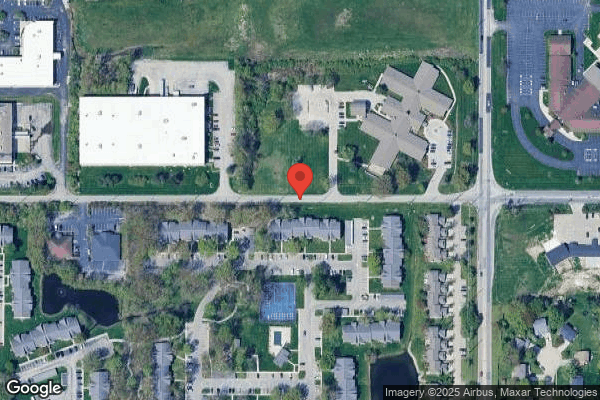
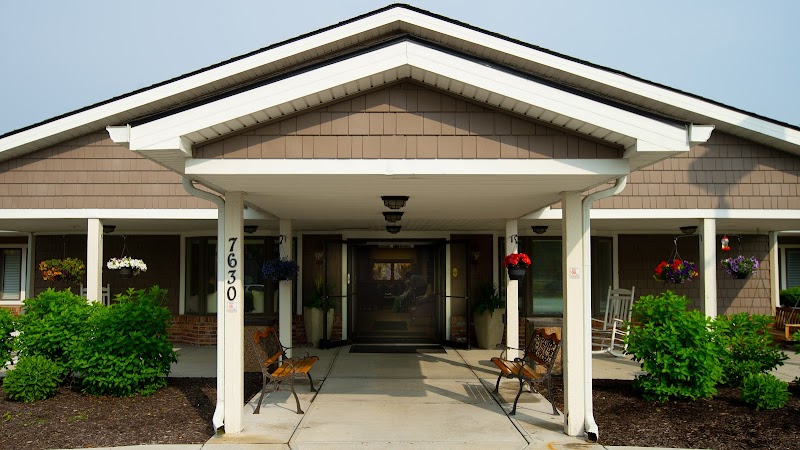
7630 E 86TH ST, INDIANAPOLIS, IN 46256 (317) 845-0032
For profit - Corporation 109 Beds Independent Data: November 2025
Trust Grade
20/100
#440 of 505 in IN
Last Inspection: September 2024

Within standard 12-15 month inspection cycle. Federal law requires annual inspections.

Overview

Castleton Health Care Center in Indianapolis has received a Trust Grade of F, indicating significant concerns about its operations and care. Ranking #440 out of 505 facilities in Indiana places it in the bottom half, and #42 out of 46 in Marion County suggests that there are very few local options that are worse. The facility's situation is worsening, with issues increasing from 7 in 2024 to 12 in 2025. While staffing is a weakness with a turnover rate of 65%, which is notably high compared to the state average of 47%, there have been no fines reported, which is a positive sign. However, inspector findings revealed serious issues, including a resident not receiving prescribed eye drops for several days and another developing a urinary tract infection due to poor catheter care, highlighting significant gaps in resident care.

Trust Score
F
20/100
In Indiana
#440/505
Bottom 13%
Safety Record
High Risk
Review needed
Inspections
Getting Worse
7 → 12 violations
Staff Stability
⚠ Watch
65% turnover. Above average. Higher turnover means staff may not know residents' routines.
Penalties
✓ Good
No fines on record. Clean compliance history, better than most Indiana facilities.
Skilled Nurses
⚠ Watch
Each resident gets only 26 minutes of Registered Nurse (RN) attention daily — below average for Indiana. Fewer RN minutes means fewer trained eyes watching for problems.
Violations
⚠ Watch
55 deficiencies on record. Higher than average. Multiple issues found across inspections.
★☆☆☆☆
1.0
Overall Rating
★☆☆☆☆
1.0
Staff Levels
★★★☆☆
3.0
Care Quality
★☆☆☆☆
1.0
Inspection Score
Stable
2024: 7 issues
2025: 12 issues

The Good

  • Full Sprinkler Coverage · Fire safety systems throughout facility
  • No fines on record

Facility shows strength in fire safety.

The Bad

1-Star Overall Rating

Below Indiana average (3.1)

Significant quality concerns identified by CMS

Staff Turnover: 65%

19pts above Indiana avg (46%)

Frequent staff changes - ask about care continuity

Staff turnover is elevated (65%)

17 points above Indiana average of 48%

The Ugly 55 deficiencies on record

3 actual harm
Sept 2025 4 deficiencies
CONCERN (D) 📢 Someone Reported This

A family member, employee, or ombudsman was alarmed enough to file a formal complaint

Potential for Harm - no one hurt, but risky conditions existed

Deficiency F0558 (Tag F0558)

Could have caused harm · This affected 1 resident

Based on observation, interview, and record review, the facility failed to ensure a resident's call light was within reach for 1 of 2 residents reviewed for call devices in reach. (Resident N)Findings...

Read full inspector narrative →
Based on observation, interview, and record review, the facility failed to ensure a resident's call light was within reach for 1 of 2 residents reviewed for call devices in reach. (Resident N)Findings include:The clinical record for Resident N was reviewed on 9/17/25 at 12:30 p.m. Her diagnoses included, but were not limited to, chronic obstructive pulmonary disease, chronic kidney disease, heart failure, and arthritis. The ADL (activities of daily living) care plan, revised 8/18/25, indicated he had an ADL self-care performance deficit related to impaired balance, limited mobility, pain, and shortness of breath, and she would refuse to get out of bed. An intervention was to encourage her to use bell to call for assistance. The 8/29/25 Quarterly MDS (Minimum Data Set) assessment indicated she was moderately cognitively impaired. An observation and interview were conducted with Resident N in her room on 9/17/25 at 12:18 p.m. She was lying in bed. Her call light cord was tied around the right side rail, hanging down the right side of her bed, eight inches from the floor. Resident N had a wooden stick, one inch wide, one and half feet long on her bedside table in front of her. She used it to attempt to reach her call light, but she was unsuccessful. She indicated staff were in the room about an hour and a half earlier, but they didn't adjust her call light to be within reach. She stated, Most of the time I can't reach my call light. I don't suffer too much [sic] not being able to reach it. I take my stick and start beating on the table, and they can hear me, and then they come. She indicated she couldn't get her hand around to reach the call light cord, and she couldn't turn over to reach the light. Resident N again tried to reach her call light cord, but she couldn't. She stated, I can't get it in my hand and do anything. When she soiled her brief, she hit the bedside table or side rail with her wooden stick to get staff's attention. Resident N demonstrated this at this time. An observation and interview with Resident N were conducted on 9/17/25 at 1:55 p.m. She was lying in bed, eating her lunch. No one else was in the room at this time. Her call light remained in the same position, wrapped around the right side rail of her bed, hanging down, eight inches from the floor. Resident N indicated she wasn't sure who brought her lunch tray to her, but they did not ensure her call light was in reach. An observation of Resident N and interview with UM (Unit Manager) 6 was conducted on 9/17/25 at 1:57 p.m. UM 6 untangled her call light from the side rail and placed it within reach of Resident N. UM 6 indicated her call light should always be within her reach, and they may need to get a clip for the call light or a different type of call light. The Use of Call Light policy was provided by NC (Nurse Consultant) 1 on 9/19/25 at 10:54 a.m. It indicated, It is the policy of this home to ensure residents have a call light within reach that they are physically able to access and that they have been instructed on its use .All nursing personnel must always be aware of call lights. Ensure call light is within reach of resident prior to leaving the residents room .Be sure call lights are placed near the resident, never on the floor or bedside stand.This citation relates to Intakes 2605799 and 2613777. 3.1-3(v)(1)
CONCERN (D) 📢 Someone Reported This

A family member, employee, or ombudsman was alarmed enough to file a formal complaint

Potential for Harm - no one hurt, but risky conditions existed

ADL Care (Tag F0677)

Could have caused harm · This affected 1 resident

Based on observation, interview and record review, the facility failed to ensure facial hair trimming and nail care was provided for 2 of 6 residents reviewed for Activities of Daily Living. (Resident...

Read full inspector narrative →
Based on observation, interview and record review, the facility failed to ensure facial hair trimming and nail care was provided for 2 of 6 residents reviewed for Activities of Daily Living. (Residents Q and W) Findings include: 1. The clinical record for Resident W was reviewed on 9/17/25 at 1:00 p.m. The diagnoses included, but were not limited to, heart failure. An Annual Minimum Data Set (MDS) assessment, dated 9/2/25, indicated Resident W was moderately cognitively impaired. An Activity of Daily Living (ADLs) care plan for Resident W, dated 12/14/24, indicated the staff was to during “BATHING: Check nail length and trim and clean on bath day and as necessary.” An observation was conducted of Resident W on 9/17/25 at 2:16 p.m. The resident was sitting in her wheelchair in the dining room. The resident's nails were observed to be long in length and a black substance underneath them. The resident indicated at that time; she would like them trimmed. An observation was conducted of Resident W in bed on 9/18/25 at 9:32 a.m. Resident W's nails were observed long in length. August and September 2025 bathing sheets were provided, for Resident W, by the Assistant Director of Nursing (ADON) on 9/22/25 at 2:00 p.m. The following days indicated nail care was not documented as provided: 8/5/25, 8/29/25, 9/2/25, 9/4/25, and 9/15/25. An interview was conducted with the ADON on 9/22/25 at 2:58 p.m. She indicated nail care should be provided on bathing days. She would trim Resident W's nails at that time. 2. The clinical record for Resident Q was reviewed on 9/18/25 at 10:00 a.m. His diagnoses included, but were not limited to, Parkinson's disease and history of fractures. The ADL care plan, revised 7/1/25, indicated he had an ADL self-care performance deficit. He required assistance with bathing and personal hygiene. The 8/10/25 Quarterly MDS assessment indicated he was moderately cognitively impaired. An observation of Resident Q was conducted on 9/18/25 at 10:08 a.m. He had long, unkempt facial hair. An interview was conducted with Resident Q on 9/18/25 at 10:34 a.m. He indicated he'd been asking to be shaved for the past three weeks. An observation of Resident Q was conducted on 9/22/25 at 12:58 p.m. His facial hair was freshly shaven. The September 2025 shower sheets indicated he was last shaved on 9/15/25. An interview was conducted with Resident Q on 9/22/25 at 3:18 p.m. He indicated staff just shaved his facial hair yesterday, but he'd been asking for last two or three weeks. A Quality-of-life resident rights policy was provided by the Executive Director on 9/22/25 at 2:46 p.m. It indicated, “To ensure that all residents are treated with the level of dignity they are entitled to while residing at the facility…Each resident shall be cared for in a manner that promotes and enhances the quality of life, dignity, respect and individuality…” The Shaving policy was provided by the ED (Executive Director) on 9/23/25 at 9:52 a.m. It indicated, I. The Facility provides for the removal of facial hair as a component of the resident's hygienic program. II. Male residents may be shaved daily, and female resident may be shaved as needed. This citation relates to Intakes 2605799 and 2613777. 3.1-38(a)(3)(D) 3.1-38(a)(3)(E)
CONCERN (D) 📢 Someone Reported This

A family member, employee, or ombudsman was alarmed enough to file a formal complaint

Potential for Harm - no one hurt, but risky conditions existed

Deficiency F0697 (Tag F0697)

Could have caused harm · This affected 1 resident

Based on interview and record review, the facility failed to ensure a resident with chronic pain and polyosteoarthritis had a care plan to address her pain; administer as needed pain medication timely...

Read full inspector narrative →
Based on interview and record review, the facility failed to ensure a resident with chronic pain and polyosteoarthritis had a care plan to address her pain; administer as needed pain medication timely; and document vital signs and non-pharmacological interventions for as needed pain medication administrations, as ordered, for 2 of 2 residents reviewed for pain. (Resident N and Resident BB)Findings include:1. The clinical record for Resident N was reviewed on 9/17/25 at 12:30 p.m. Her diagnoses included, but were not limited to, chronic pain, polyosteoarthritis, chronic obstructive pulmonary disease, chronic kidney disease, and heart failure. There was no care plan to address Resident N's chronic pain. An interview was conducted with Resident N on 9/17/25 at 12:18 p.m. She indicated she had arthritis in her legs. It hurt to sit in her wheelchair. She wasn't currently in pain, only if she moved. The physician's orders indicated to administer one 25 milligram (mg) tablet of tramadol every eight hours as needed for chronic pain. They indicated, Pain assessment Before and After PRN [as needed] Meds [medications:] Utilize 0-10 Pain Scale or PAINAD [pain assessment in advanced dementia.] Document Pain Scale Results, v/s [vital signs,] interventions, outcomes, in Progress Notes. Utilize the non-pharmacological Pain Treatment code: P-Position R- Relaxation H-Heat C-Cold M-Music O-Other as needed for Pain. Document Interventions both non-med and Medications in Progress Notes in [name of electronic health record,] effective 12/23/24. The September 2025 MAR (medication administration record) indicated she was administered the tramadol on 9/4/25 and 9/19/25. The September 2025 TAR (treatment administration record) was blank for the 9/4/25 and 9/19/25 PRN tramadol administrations regarding the pain assessment order. The corresponding 9/4/25 and 9/19/25 progress notes in the electronic health record did not include vital signs or non pharmacological interventions. The 9/4/25 corresponding progress note indicated the effect of the medication was unknown. An interview was conducted with the Director of Nursing (DON) on 9/22/25 at 12:00 p.m. She indicated they just created a pain care plan today, but she had an old one from a previous stay. 2. The clinical record for Resident BB was reviewed on 9/17/25 at 2:00 p.m. His diagnoses included, but were not limited to: cancer, right femur fracture, peripheral vascular disease, inguinal hernia, and spinal stenosis. The pain management care plan, revised 8/20/25, indicated two of the goals were for him to not have any interruption in normal activities due to pain and for him to verbalize adequate relief of pain or ability to cope with incompletely relieved pain through the review date. Interventions were to anticipate his need for pain relief and respond immediately to any complaint of pain, and to encourage him to try different pain-relieving methods like positioning, relaxation, therapy, bathing, health and cold application, and muscle stimulation. The 8/15/25 admission Minimum Data Set assessment indicated he was cognitively intact. An interview was conducted with Resident BB on 9/17/25 at 2:32 p.m. He indicated he asked for a pain pill at 9:00 p.m. last night, and no one gave it to him. He asked again at 11:00 p.m., and didn't get it until 1:37 a.m. He had pain in his hip, knee, and heel. He hurt all over. He received his sleeping pill at the same time, so he didn't get that until 1:37 a.m. either. He stated, It's ridiculous. This happened daily, especially at night. The physician's orders indicated to administer one tablet of oxycodone-acetaminophen every four hours as needed for chronic pain, effective 9/3/25. They indicated, Pain assessment Before and After PRN Meds [medications:] Utilize 0-10 Pain Scale or PAINAD [pain assessment in advanced dementia.] Document Pain Scale Results, v/s [vital signs,] interventions, outcomes, in Progress Notes. Utilize the non-pharmacological Pain Treatment code: P-Position R- Relaxation H-Heat C-Cold M-Music O-Other as needed for Pain. Document Interventions both non-med and Medications in Progress Notes in [name of electronic health record,] effective 8/9/25. The September 2025 MAR indicated he was administered the oxycodone-acetaminophen as needed on the following dates: twice on 9/3/25, once on 9/5/25, three times on 9/7/25, twice on 9/8/25, twice on 9/9/25, twice on 9/10/25, once on 9/13/25, twice on 9/14/25, three times on 9/15/25, twice on 9/16/25, twice on 9/17/25, three times on 9/18/25, once on 9/19/25, twice on 9/20/25, and three times on 9/21/25. One of the administrations, on 9/17/25, was documented as given at 1:41 a.m., which coincided with Resident BB's interview of when he received the medication. The September 2025 TAR was blank for the above PRN oxycodone-acetaminophen administrations regarding the pain assessment order. The corresponding progress notes in the electronic health record did not include vital signs or non- pharmacological interventions. An interview was conducted with the DON on 9/22/25 at 10:56 a.m. She indicated they obtained vital signs when a resident complained of pain, because their temperature or blood pressure could change. They documented in the MAR/TAR, but not necessarily anywhere else. The DON reviewed Resident BB's electronic clinical record and indicated she was unable to locate any verification of vital signs or non-pharmacological interventions attempted for his PRN pain medication administrations. The Pain Management policy was provided by the ED (Executive Director) on 9/22/25 at 11:30 a.m. It indicated, The Licensed Nurse will administer pain medication as ordered and document medication administered on the Medication Administration Record (MAR) .Nursing Staff will implement timely interventions to reduce the increase in severity of pain .Nursing Staff will also utilize non-pharmacological interventions by adjusting the resident's environment to reduce pain. This citation relates to Intake 2613777. 3.1-37(a)
CONCERN (E) 📢 Someone Reported This

A family member, employee, or ombudsman was alarmed enough to file a formal complaint

Potential for Harm - no one hurt, but risky conditions existed

Resident Rights (Tag F0550)

Could have caused harm · This affected multiple residents

Based on interview and record review, the facility failed to ensure residents were respected and their dignity was maintained for 15 of 71 residents reviewed for resident rights (Residents' B, C, D, E...

Read full inspector narrative →
Based on interview and record review, the facility failed to ensure residents were respected and their dignity was maintained for 15 of 71 residents reviewed for resident rights (Residents' B, C, D, E, F, G, H, J, K, N, Q, T, V, FF, and ZZ).Findings include: 1. The clinical record for Resident V was reviewed on 9/18/25 at 9:30 a.m. The diagnoses for Resident V included, but were not limited to, kidney disease. An Annual 7/18/25 Minimum Data Set (MDS) assessment indicated Resident V was cognitively intact. An interview was conducted with Resident V on 9/18/25 at 9:47 a.m. She indicated first shift (day shift) Certified Nurse Aides (CNAs) were rude, sarcastic and frequently on their cell phones during care. She had been in the mechanical lift transferring to her wheelchair, and the CNA put her phone on speaker to speak to someone. 2. The clinical record for Resident ZZ was reviewed on 9/18/25 at 9:30 a.m. The diagnoses for Resident ZZ included, but were not limited to, anxiety disorder. A Quarterly MDS assessment, dated 8/20/25, indicated Resident ZZ was cognitively intact. During an interview with Resident ZZ on 9/18/25 at 1:18 p.m., he indicated the CNA staff were rude, disrespectful, and had bad attitudes. 3. The clinical record for Resident T was reviewed on 9/18/25 at 9:30 a.m. The diagnoses for Resident T included, but were not limited to, obstructive and reflux uropathy (any condition that affects urinary tract, kidneys and bladder). A Quarterly MDS assessment, dated 8/20/25, indicated Resident T was cognitively intact. An interview was conducted with Resident T on 9/18/25 at 9:25 a.m. She indicated Licensed Practical Nurse (LPN) 20 was rude and argumentative. LPN 20 will slam doors when she gets mad. 4. A resident council meeting was conducted on 9/18/25 at 10:30 a.m. The attendees were the following: Residents' B, C, D, E, F, G, H, J, K, Q, and V. During the council meeting, the council indicated the staff were “rude, arrogant, and dismissive” toward the residents. The staff often times were on their cell phones during care. The council felt like they were treated like children. The staff speak in a tone as “do what we say and do it on our time not the residents' time. The residents were pushed to their rooms and forgotten. There were long delays in responding to call lights. Staff don't answer them. There were times, the residents would go to sleep with their call lights on and wake up to the call light still on. The council complained, but do not see any change in the mannerisms of the staff. 5. The clinical record for Resident FF was reviewed on 9/17/25 at 11:56 a.m. The resident's diagnosis included, but were not limited to, diabetes and delusional disorder. A Quarterly MDS assessment, completed 8/15/25, indicated he was cognitively intact. He rejected care four to six times during the look back period and displayed behaviors not directed at others. During an interview on 9/17/25 at 11:56 a.m., Resident FF indicated some of the CNAs were rude and loud mouthed and would call him out of his name at times. Some of the staff refused to heat up food items for him. 6. The clinical record for Resident Q was reviewed on 9/18/25 at 10:00 a.m. His diagnoses included, but were not limited to, Parkinson's disease. The 8/10/25 Quarterly MDS assessment indicated he was moderately cognitively impaired. An interview and observation were conducted with Resident Q on 9/18/25 at 10:05 a.m. He indicated the staff in the facility did not treat him with respect and dignity. He could be in the hallway and say Hey nurse, to the staff, and they just ignored you and acted like you didn't say anything. It took 45 minutes for his call light to be answered. It's embarrassing to have to have someone wipe me. He'd always been independent. Now he just went to the restroom by himself. Perhaps he wasn't supposed to, but that's what happened, because they don't come. Staff left him in a soiled brief all morning about three weeks ago. He and the bed were soaked. The staff said they had other patients, but they're just in the hallway bull sh***** and laughing. An interview was conducted with Resident Q on 9/18/25 at 10:03 a.m. He indicated the staff limited him to two cups of coffee a day. An anonymous interview was conducted with a staff member. They indicated if a resident asked for coffee on the evening shift, They ain't gonna get nothin' in the evening time. They don't give 'em (expletive.) 7. The clinical record for Resident N was reviewed on 9/17/25 at 12:30 p.m. Her diagnoses included, but were not limited to, chronic obstructive pulmonary disease, chronic kidney disease, heart failure, and arthritis. The 8/29/25 Quarterly MDS assessment indicated she was moderately cognitively impaired. An interview was conducted with Resident N on 9/17/25 at 12:18 p.m. She indicated staff were rough during care at times. She had arthritis in her legs and you can't just move me too quickly. It hurt and sometimes she complained. Staff would say they were getting it done. They acted like they were in a rush. It hurt her physically and mentally. She stated, I don't feel like they have to be that rough. An interview was conducted with the Executive Director (ED), Director of Nursing (DON), and the Nurse Consultant (NC) on 9/23/25 at 2:53 p.m. The ED indicated she expected the residents to be treated respectfully. A Resident Rights Quality of Life policy was provided by the ED on 9/22/25 at 2:46 p.m. It indicated, “Purpose. To ensure that all residents are treated with the level of dignity they are entitled to while residing at the Facility. Policy. Each resident shall be cared for in a manner that promotes and enhances the quality of life, dignity, respect and individuality…VII. Facility Staff speaks respectfully to residents at all times, including addressing the resident by his or her name of choice…XII. Demeaning practices and standards of care that compromise dignity are prohibited…” A resident rights policy was provided by the ED on 9/22/25 at 2:46 p.m. It indicated, “…Employees are to treat all residents with kindness, respect, and dignity and honor the exercise of resident's rights…” This citation relates to Intakes 2605799 and 2613777. 3.1-3(t)
Aug 2025 4 deficiencies
CONCERN (D) 📢 Someone Reported This

A family member, employee, or ombudsman was alarmed enough to file a formal complaint

Potential for Harm - no one hurt, but risky conditions existed

Free from Abuse/Neglect (Tag F0600)

Could have caused harm · This affected 1 resident

**NOTE- TERMS IN BRACKETS HAVE BEEN EDITED TO PROTECT CONFIDENTIALITY** Based on interview and record review, the facility failed to protect the residents' right to be free from physical abuse by a re...

Read full inspector narrative →
**NOTE- TERMS IN BRACKETS HAVE BEEN EDITED TO PROTECT CONFIDENTIALITY** Based on interview and record review, the facility failed to protect the residents' right to be free from physical abuse by a resident-to-resident altercation for 2 of 2 residents reviewed for abuse. (Residents CC and Resident J) Findings include: The clinical record for Resident CC was reviewed on 8/5/25 at 10:00 a.m. The diagnoses included, but were not limited to, paranoid schizophrenia. A care plan, dated 3/30/25, indicated Resident CC had a behavior of being obsessive compulsive. The interventions included, but were not limited to, Intervene as necessary to protect the rights and safety of others. Approach/Speak in a calm manner. Divert attention. Remove from situation and take to alternate location as needed.A care plan, dated 4/3/25, indicated the resident had difficulties with changes. The clinical record for Resident J was reviewed on 8/5/25 at 10:15 a.m. The diagnoses included, but were not limited to, schizoaffective disorder and bipolar disorder.A care plan, dated 7/9/25 with revision date of 7/11/25, indicated Resident J had anxiety disorder. A reportable incident to the Indiana Department of Health, dated 7/9/25, indicated a resident-to-resident altercation had occurred between Resident CC and Resident J in the dining room. Both residents were cognitively intact. Resident CC hit Resident J on the upper right chest and upper lip. Resident CC believed Resident J was sitting in his chair in the dining room. The follow up to the incident indicated, .[Resident CC] became upset when [Resident J] sat down at the table in the dining room that [Resident CC] considered his table. [Resident CC] tried to get [Resident J] to move and when he did not move [Resident CC] struck [Resident J] on the chest and upper lip. [Resident J] did not reciprocate. Staff immediately intervened and separated both residents. Interview conducted with both residents [Resident CC].admitted striking [Resident J] .for sitting at his table. [Resident CC] admitted that striking out was inappropriate. [Resident CC] was placed on 1:1 [one-on-one supervision] until transfer to psych [psychiatric facility], social services conducted psychosocial follow ups and subsequent transfer to psych facility.[Resident J] requested to file a report with the police department. IPD [Indianapolis Police Department] notified per social services and police came to the facility for [Resident J]'s statement. Police department reported to Director of Nursing that no arrest was going to occur as the facility was handling the situation appropriately.An incident investigation file between Resident CC and Resident J was provided by the Executive Director (ED) on 8/5/25 at 10:42 a.m. It included, but was not limited to, the following documentations: A skin assessment dated [DATE] indicated Resident J's lip and right upper chest was red. A statement written by Licensed Practical Nurse (LPN) 4, dated 7/9/25, indicated, At about 6:00 a.m. [Resident CC] was sitting at the table with [Resident J] at the dining area. [Resident CC] got upset because he thought [Resident J] was not supposed to be sitting at the table with him. [Resident CC] stated ‘you are not supposed to be sitting here. This is where I sit every day. I don't want you here.' Writer [LPN 4] intervened and spoke to both men to sit together or move to another table. [Resident CC] stepped forward and punched [Resident J] with his fist at the right chest area. Writer separated both and removed the table to avoid further fight. [Resident CC] went back to [Resident J] and punched him again after being separated. A progress note for Resident CC written by the Director of Nursing (DON), dated 7/9/25, indicated resident [CC] had poor interaction with another resident [J]. This resident struck other resident on residents headphones hanging around other resident's neck/chest with a closed hand. Residents immediately separated, and nurse came to tell writer that incident had occurred, on writers [DON's] way to residents to conduct interviews and assessments for resident safety, this writer saw this resident struck the other resident in the face with a closed fist. Residents were immediately separated and this resident was placed on one on one care, this resident [Resident CC] was noted to have slight skin tear to left picky, this resident denies pain .working on referral to [psych facility] .A progress note for Resident J written by the DON, dated 7/9/25, indicated .This resident [Resident J] educated to stay separated from other resident [Resident CC] at this time. This resident was noted to have edema to upper lip following incident. An interview was conducted with the DON on 8/5/25 at 11:23 a.m. She indicated she had witnessed an altercation, on the morning of 7/9/25, between Resident J and Resident CC. That morning, she was in a resident's room providing care. During that time, LPN 4 came to the room and reported Resident CC had gotten upset about Resident J sitting at his table. Resident CC had hit Resident J with his fist in the chest area. She immediately left the resident's room and went to the dining room where Resident J and Resident CC were located. After entering the dining area, she observed Resident CC with his closed fist hit Resident J in the face. The residents were immediately separated. LPN 4 was the only staff person present at that time in the dining room when Resident CC got upset and hit Resident J in the chest. LPN 4 left the dining area and found her in another resident's room to report the incident. LPN 4 should have called her via phone and reported the incident. He should not have left the residents unattended in the dining room. After the incident, Resident CC was discharged . An abuse policy was provided by the DON on 8/5/25 at 11:25 a.m. It indicated, .To ensure the facility establishes, operationalizes, and maintains an abuse prevention and prohibition program designed to screen and train employees, protect residents, and to ensure a standardized methodology for the prevention, identification, investigation, and reporting of abuse.in accordance with federal and state requirements.Policy. I. Each resident has the right to be free from mistreatment, neglect, abuse .Staff must not permit anyone to engage in verbal, mental . physical abuse.3.1-27(a)(1)
CONCERN (D) 📢 Someone Reported This

A family member, employee, or ombudsman was alarmed enough to file a formal complaint

Potential for Harm - no one hurt, but risky conditions existed

Report Alleged Abuse (Tag F0609)

Could have caused harm · This affected 1 resident

Based on interview and record review, the facility failed to timely report an allegation of missing funds to the Indiana Department of Health for 1 of 4 residents reviewed for misappropriation. (Resid...

Read full inspector narrative →
Based on interview and record review, the facility failed to timely report an allegation of missing funds to the Indiana Department of Health for 1 of 4 residents reviewed for misappropriation. (Resident C)Findings include: The clinical record for Resident C was reviewed on 8/4/25 at 10:00 a.m. The diagnoses included, but were not limited to, cognitive communication deficit. A Quarterly Minimum Data Set assessment, dated 7/4/25, indicated Resident C was moderately cognitively impaired. A list of grievances for the month of June and July of 2025 was provided by the Executive Director (ED) on 8/4/25 at 10:15 a.m. Resident C was not listed on the list for missing items or funds.During an interview on 8/4/25 at 2:40 p.m., Resident C's Representative indicated he brought $80.00 into the facility and gave it to the previous Business Office Manager (BOM) over Easter weekend in April, and the money was put into a safe. He indicated the current BOM did not know where the funds were after he inquired about them later in April and was not aware of any money being held in the safe.On 8/4/25 at 3:00 p.m. an interview was conducted with the ED, she indicated she did not have any reportable incidents logged for missing funds, and if money had been missing, she would have reported it.An interview was conducted, on 8/4/25 at 3:20 p.m., with the current BOM. She indicated a meeting took place, on 7/10/25, with herself, Resident C's Representative, the Ombudsman, and the Social Services Director. The current BOM indicated Resident C's Representative made the allegation of missing funds during that meeting, afterward she notified the ED. During an interview on 8/5/25 at 12:18 p.m., the ED indicated she was on vacation for ten days around the time of the meeting held, on 7/10/25, and could not say for certain that she was notified of the alleged missing funds. She indicated if she were made aware she would report it to the Department of Health. The ED indicated, on the evening of 8/4/25, she was able to locate the missing funds for Resident C, and Resident C's Representative had been notified.On 8/5/25 at 2:05 p.m., an interview was conducted with the ED. She indicated as soon as missing funds were mentioned, it should have been reported, regardless of whether she was in the building or not. The ED indicated she would be reporting the allegation of missing funds to the Department of Health that day (8/5/25).An undated Abuse Prevention and Prohibition Program Policy was provided by the Director of Nursing on 8/5/25 at 11:25 a.m. It indicated .Reporting/Response. D. The Facility will report allegations of abuse, neglect, exploitation, mistreatment, injuries of unknown source, misappropriation of resident property, or other incidents that qualify as a crime.ii. No later than 24 hours after forming the suspicion - if the alleged violation (e.g., misappropriation of property, neglect) does not involve abuse and does not result in serious bodily injury to the state survey agency, adult protective services, law enforcement, and the Ombudsman.This citation is related to Complaint 2571677. 3.1-28(c)
CONCERN (D) 📢 Someone Reported This

A family member, employee, or ombudsman was alarmed enough to file a formal complaint

Potential for Harm - no one hurt, but risky conditions existed

Pharmacy Services (Tag F0755)

Could have caused harm · This affected 1 resident

**NOTE- TERMS IN BRACKETS HAVE BEEN EDITED TO PROTECT CONFIDENTIALITY** Based on interview and record review, the facility failed to ensure the disposition of a resident's Percocet (oxycodone-acetamin...

Read full inspector narrative →
**NOTE- TERMS IN BRACKETS HAVE BEEN EDITED TO PROTECT CONFIDENTIALITY** Based on interview and record review, the facility failed to ensure the disposition of a resident's Percocet (oxycodone-acetaminophen) medication was handled securely; which included ensuring staff were implementing accurate monitoring, tracking and timely destroying a not needed narcotic medication. This resulted in the facility missing 44 white tablets of 10-325 milligram tablets of Percocet medication for 1 of 4 residents reviewed for narcotic medications. (Resident L) Findings include: The clinical record for Resident L was reviewed on 8/4/25 at 1:00 p.m. The diagnoses included, but were not limited to, osteoarthritis. A physician's order, dated 5/19/25, indicated Resident L was to receive 10-325 milligrams of Percocet every six hours. A pharmacy delivery form, dated 7/14/25, indicated delivery of 56 tablets of 10-325 milligrams of Percocet for Resident L. There was a written note on the form indicated, resending yellow. A reportable incident to the Indiana Department of Health, dated 7/21/25, indicated the facility was missing a card of 44 white tablets of 10-325 milligrams of Percocet for Resident L.During change of shift, narcotics were being counted. During the count between day and night shift (leaving) ADON [Assistant Director of Nursing] asked where the card of white Percocet for the resident was. At this time meds were unaccountable for.investigation and interviews initiated.police reported.Follow up: 7/24/25 Investigation completed and thoroughly investigated. On 7/21/25, the DON [Director of Nursing] was notified of missing Percocet, who notified Executive Director [ED] and Regional Nurse Consultant [RNC]. The ADON and Executive Director went to the medication cart that housed the medication, all the medication carts were thoroughly inspected. All narcotics were counted by 2 licensed nurses and correct counts were identified. No narcotic sheet or medication found on the white card of Percocet. Resident receives Percocet 4 x [times] a day, on July 14, 2025, pharmacy sent a card of 56 white tabs [tablets]. Resident prefers using yellow Percocet and therefore after a few doses of white, the resident stated they don't work like the yellow ones. [NAME] tabs were the same dosage. The physician was notified of the inability of facility to locate the card of white Percocet., and the resident wish to only be administered the yellow Percocet. July 16, 2025, pharmacy notified and sent a new card of 56 yellow tabs. The resident was notified. During the interviews with nurses, 2 nurses recalled seeing them when she counted the white card of 44 tabs. On the morning of July 21st during the shift change from nights to days, ADON was counting narcotics and noted the white card of Percocet was not present. She queried the night nurse; her response was that the medication was not there/recalled seeing them when she counted at 11pm [11:00 p.m.]. The nurse stated she called them on Sunday counting with the evening nurse. The evening nurse on 7/20/25, stated she could not recall if white Percocet was there. The police and ombudsman, AG [Attorney General] were notified. Pharmacy notified to bill facility for white card of 56 Percocet, not resident. Nurses/QMA [Qualified Medication Aide] were suspended and will be [NAME]-serviced on control narcotic competencies. ADON was in-serviced on destruction of narcotics. The medical director was contacted by DON. Audits were conducted with residents to determine satisfaction with pain medications, effectiveness, and administered as ordered. No residents reported concerns with pain medication administration. Medication administration records reviewed for those residents that received pain medication from 7-19 through 7-20-25. No discrepancies were identified. Review of narcotic counts for any discrepancy will be reviewed during morning/clinical meeting. Identified areas narcotic count records will be reviewed 5 times weekly to include all three shifts by the Director of Nursing/designee/ADON and per Regional Nurse consultant during weekly scheduled visits to the facility. Narcotic sheets will be dated and initiated by those that review them for 6 months and until audits reflect 100 percent compliance and IDT [Intradisciplinary team] determines audits can be discontinued. Nursing staff will be educated on narcotic destruction and correct signage. Identified issues of non-compliance will result in disciplinary action.The reportable incident investigation file was provided by the ED on 8/4/25 at 11:30 a.m. It included, but was not limited to, the following documents: A witness statement by the ED, dated 7/21/25, indicated the pharmacy was notified. The pharmacy reported 56 yellow 10-325 milligrams of Percocet were delivered to the facility on 7/14/25. A statement by Licensed Practical Nurse (LPN) 1, dated 7/21/25, indicated Received call from DON. DON asked about oxycodone. I worked day/evening on Sat [Saturday] (7/19/25) and Sun [Sunday] (7/20/25) 7 a.m. - 11:00 p.m. Sat. I was on Sunset [hallway] and 1/2 of Boardwalk [hallway] when I worked. [Resident L] had cards of yellow and white. 11:00 a.m. - 11:30 p.m. I was relieved by [LPN 3] and cards were present. Sunday - day shift worked Sunset. Resident still had both cards. On evening, Sunday, I went to Shoreline [hallway]. On days, [LPN 2] relieved me from Sunset. When I counted with [LPN 2] meds were still available white and yellow on Sunday before going to Shoreline. A statement by LPN 2, dated 7/21/25, indicated I worked Sunday [7/20/25] evening shift 3:00 p.m. - 11:00 p.m. I worked on LTC [long term care] on Sunset. I relieved [LPN 1]. We counted, I don't recall about white oxycodone, but do recall about yellow as I administered one at 6:00 p.m. 11:00 p.m. - 7:00 a.m. [LPN 3] relieved me. I'm only recalling counting the yellow oxycodone. A statement by LPN 3, dated 7/21/25, indicated I worked the weekend of the 19th and 20th of July at 11:00 p.m. - 7:00 a.m. I relieved [LPN 1] on Sat 19th at 11:00 p.m. We both counted narcs [narcotics] on hall of which [Resident L] resides. I cannot remember if the white oxycodone was present. On the 20th I counted narcs with [LPN 2] the yellow oxycodone was present, as I administered schedule dose at 12:00 a.m. midnight and 6:00 a.m. At this time there was no white oxycodone, as I did not see any papers. A statement by the ADON, dated 7/21/25, indicated I counted the cart with the off going nurse and noticed that the card of Percocet that needed destroyed for this resident [Resident L] was missing. The night nurse stated they were not there when her and the evening shift nurse counted at the beginning of her shift. Called the DON to see if she knew if these had been destroyed and she told me no. I let the DON know the card of narcotics was missing. A statement by the ED, dated 7/21/25, indicated I was notified via text from DON at 8:05 a.m. that a card of narcotics were missing on LTC. I went to LTC and spoke to ADON. She confirmed white oxycodone were missing for [Resident L]. [ADON] and I checked the med cart all meds, including overflow. Checked narcs on other cart. None found. A July 2025 Narcotic Count Sheet indicated the following information the nursing staff was to document to track and monitor narcotic medications in the medication cart: the date, shift, number of narcotic medication cards in the cart, number of added or removal of narcotic medication cards, number of narcotic medication cards given for destruction, total ending of the narcotic medication cards in the medication cart, and the nurse signatures of who was taking over the medication cart and leaving the medication cart. The form indicated in 11 days of three shifts from 7/10/25 thorough 7/20/25 there was missing documentation by the nursing staff 16 times out of 33 shifts. An interview was conducted with the DON on 8/5/25 at 11:23 a.m. She indicated the nursing staff were to fill out the narcotic count sheets. It was recognized during the investigation the nursing staff were not consistently documenting on the form. She had started in-servicing the staff and auditing as of 7/30/25; to ensure the nursing staff were documenting on the narcotic count sheet. An interview was conducted with the ED, RNC, and DON on 8/5/25 at 11:45 a.m. They indicated Resident L had received 56 white tablets of 10-325 milligrams of Percocet. The resident's preference was to take yellow tablets of 10-325 milligrams of Percocet. There was no difference in dosage by the color of the tablets. That was his preference only. The pharmacy was aware of his preference. The white tablets were sent by error from the pharmacy. The staff were administering the white tablets until Resident L recognized or was told the Percocet medication was white tablets and not yellow tablets. The pharmacy was aware of the facility receiving white Percocet tablets instead of the yellow Percocet tablets as the resident prefers. The pharmacy then sent another supply of 56 yellow Percocet tablets and had instructed staff to destroy the remaining white Percocet tablets. The nursing staff that weekend was interviewed. Only one of the nurses can recall seeing the white tablets. The other two nurses can't remember if they did or not. After it was recognized, the white tablets were missing, the pharmacy was notified. The pharmacy reported they had not received a destruction form with confirmation the facility staff had destroyed the remaining 44 white tablets of Percocet medication. The ADON was the staff person that should have destroyed the white tablets of the Percocet medication. She had gotten busy and had not destroyed the white tablets. Education has been provided to the ADON about destruction of narcotic medication. An education form for destruction of narcotic medication, dated 7/24/25, indicated Narcotics must be wasted in a timely fashion. If for some reason the DON is unavailable to waste medications please utilize another nurse, such as floor nurse, MDS [Minimum Data Set], or UM [Unit Manager]. If there is knowledge that a cart has certain medications waiting to be destroyed, they must be destroyed that day. This is to prevent the likelihood of drug diversions. If there are extra/unused cards of narcotics this could allow for the possibility of drug diversions. Please ensure you are auditing carts weekly for dcd [discontinued] or unnecessary narcotics. A controlled substance disposal policy was provided by the DON on 8/5/25 at 11:25 a.m. It indicated Medications classified as controlled by the Drug Enforcement Administration (DEA) are subject to special handling, storage, disposal, and record keeping in the facility in accordance with federal and state laws and regulations.6. Accountability records for controlled substances that are disposed of or destroyed are maintained with the unused supply until is destroyed or disposed of and then stored for two years or per applicable law and regulation.This citation is related to Incident 2567857.3.1-25(e)(2) 3.1-25(e)(3)
CONCERN (E) 📢 Someone Reported This

A family member, employee, or ombudsman was alarmed enough to file a formal complaint

Potential for Harm - no one hurt, but risky conditions existed

Safe Environment (Tag F0921)

Could have caused harm · This affected multiple residents

Based on observation, interview, and record review, the facility failed to ensure floors were clean as evidenced by spillage of unknown substances on the floors for 1 of 5 units and 14 of 14 residents...

Read full inspector narrative →
Based on observation, interview, and record review, the facility failed to ensure floors were clean as evidenced by spillage of unknown substances on the floors for 1 of 5 units and 14 of 14 residents reviewed for environment. (Shoreline Unit, Resident B, Resident C, Resident E, Resident J, Resident M, Resident N, Resident O, Resident P, Resident Q, Resident R, Resident S, Resident T, Resident U, and Resident V). Findings include: An observation was conducted, on 8/4/25 at 10:01 a.m., of the flooring by the nurse's station and Shoreline hallway. Dirt and spots of spillage of an unknown black substance were observed on the flooring in the hallway and adjacent nurse's station. During an interview on 8/4/25 at 10:35 a.m. with Resident G's Representative, he indicated the housekeeping was bad at the facility and the building was dirty. An observation was conducted, on 8/4/25 at 12:23 p.m., of the flooring by the nurse's station and the Shoreline hallway. The flooring appeared dirty with spillage of an unknown black substance.The Director of Nursing (DON) provided documentation of the Resident Council minutes on 8/5/25 at 8:45 a.m. On 7/8/25 at 2:30 p.m., the following residents were in attendance of a Resident Council meeting: Resident B, Resident C, Resident E, Resident J, Resident M, Resident N, Resident O, Resident P, Resident Q, Resident R, Resident S, Resident T, Resident U, and Resident V. The Resident Council minutes indicated old business included rooms not getting clean with it being worse on the weekends. New business included trays being left in rooms, housekeeping not cleaning on the weekend, and bathrooms not being cleaned. Resident Council meeting minutes, dated 6/10/25, indicated housekeeping concerns provided by Resident N. She indicated residents had gone a whole weekend with no one cleaning the room, and Certified Nurse Aides (CNAs) indicated it was housekeeping staff's responsibility while housekeeping staff indicated it was the CNAs responsibility. During an interview on 8/5/25 at 10:30 a.m. with the Executive Director (ED), she indicated the facility had a bad weekend with housekeeping, but her employee who worked on the floors was in the building that day.A confidential interview was conducted on 8/5/25 at 2:10 p.m. They indicated when they visited the facility a couple months ago the floors were dirty. During an interview on 8/5/25 at 3:06 p.m. with the Housekeeping Supervisor, she indicated over the past weekend there was a problem with housekeeping, but she rectified the situation. A Resident Rooms and Environment Policy, last revised 8/2020, indicated .The Facility provides residents with a safe, clean, comfortable, and homelike environment.Procedure I. Facility Staff aim to create a personalized, homelike atmosphere, paying close attention to the following: A. Cleanliness and order. This citation related to complaint 2574380.3.1-19(f)(5)
Jul 2025 3 deficiencies
CONCERN (D) 📢 Someone Reported This

A family member, employee, or ombudsman was alarmed enough to file a formal complaint

Potential for Harm - no one hurt, but risky conditions existed

Quality of Care (Tag F0684)

Could have caused harm · This affected 1 resident

Based on observation, interview, and record review, the facility failed to perform post fall assessments timely, obtain blood sugar readings and administer insulin as ordered by the physician, and tim...

Read full inspector narrative →
Based on observation, interview, and record review, the facility failed to perform post fall assessments timely, obtain blood sugar readings and administer insulin as ordered by the physician, and timely update physician's orders for a diabetic foot ulcer for 1 of 3 residents reviewed for falls and 2 of 3 residents reviewed for medication administration. (Resident B, Resident F, and Resident H)Findings include: 1. The clinical record for Resident B was reviewed on 7/16/25 at 11:00 a.m. The diagnoses included, but were not limited to, encephalopathy (brain dysfunction) and heart failure. An Annual Minimum Data Set (MDS) assessment, completed 3/14/25, indicated Resident B was cognitively impaired. A nursing progress note, dated 3/11/25 at 11:44 p.m., indicated Resident B had sustained a fall. “Resident had a fall this shift in bedroom, CNA [Certified Nurse Aide] was doing her rounds when resident was found laying on his belly with right foot tangled in sheet. When asked [what happened] resident stated he was trying to get something off the floor. Floor was clear. CNA had last seen resident 15 minutes prior to fall to change resident. Neuro [neurological] sheet form completed. No injuries noted at this time. PRN [as needed] pain med [medication] was given. Family, NP [Nurse Practitioner], and DON [Director of Nursing] notified.” An incident report, dated 3/11/25, indicated Resident B had sustained a fall in his bedroom and no injuries were noted. The incident report indicated it was “Not part of the medical record”. A nursing progress note, dated 3/13/25 at 8:32 a.m., indicated Resident B had sustained a fall. “Resident [Resident B] had fall 3/13/25 at approx [approximately] 1408 [2:08 p.m.], observed resident on the floor with blanket on top of him. Resident stated 'that he was trying to find something on the floor'. Used Hoyer [a mechanical lift] to transfer resident from the floor [to] the wheelchair. No noted injuries, resident intervention was to move bed against wall, all parties aware of resident updates, will continue to observe resident.” An incident report, dated 3/12/25 at 2:08 p.m., indicated Resident B’s Representative arrived and yelled for help. Staff ran to the room and found the resident on the floor with a blanket on top of him. No injuries were noted. The incident report indicated it was “Not part of the medical record”. The clinical record did not contain a nursing progress note indicating a fall had occurred on 3/12/25 and did not include a post fall assessment after the fall sustained on 3/11/25 or 3/12/25. During an interview with the Director of Nursing (DON) on 7/17/25 at 1:50 p.m., she indicated the second fall Resident B sustained was on 3/12/25, and not 3/13/25. The DON indicated a fall risk evaluation is considered the post fall assessment within the electronic health record and did not know why a fall risk evaluation was not completed after either fall on 3/11/25 or 3/12/25. On 7/17/25 at 1:50 p.m., the DON provided the current Fall Management Program Policy which indicated “…IV. Post-Fall A. Following a resident’s fall, the licensed nurse will complete an incident report and a Post Fall Assessment and Investigation within 24 hours or as soon as practicable. B. The Licensed Nurse will review the circumstances of the fall, review the plan of care, implement new interventions as appropriate and revise the plan as indicated…” 2a. The clinical record for Resident H was reviewed on 7/16/25 at 2:10 p.m. The diagnoses included, but were not limited to, diabetes with foot ulcer, repeated falls, and dementia. An admission MDS assessment, completed 5/8/25, indicated he was severely cognitively impaired. He required substantial assistance with bathing, lower body dressing, and in donning and doffing footwear. He received insulin injections daily. A physician’s order, dated 6/10/25, indicated he was to have Hydrogel (type of wound treatment) applied to his left foot wound topically one time a day every Monday, Wednesday, and Friday for wound care. A Podiatry progress note, dated 6/12/25, indicated his left fourth toe had been treated with Gentian violet (type of wound medication), iodosorb (type of wound dressing) and covered with gauze and loose Coban (type of wound dressing). The dressing was to be changed weekly at the podiatry visits. A Podiatry progress note, dated 6/26/25, indicated his left fourth toe had been treated with collagen with silver (type of wound dressing) and covered with gauze and loose Coban (type of wound dressing). The dressing was to be changed weekly at the podiatry visits A care plan, initiated 7/1/25, indicated Resident H had a diabetic ulcer on his left fourth toe. The goal was for him to have blood sugar levels controlled and for him to have no complications related to the ulcer. The interventions included, but were not limited to, determine and treat cause: poor fitting shoes, poor blood sugar control, pressure area, and/or infections, monitor blood sugar levels, and monitor pressure areas for color, sensation, and temperature. A care plan, initiated 7/1/25, indicated Resident H needed assistance with his activities of daily Living (ADL) care due to his dementia and history of falls. The goal was for him to maintain current functioning. The interventions included, but were not limited to, observing skin for redness, open areas, scratches, cuts, bruises and report changes to the nurse. Staff were to provide assistance with dressing and make sure shoes were comfortable and not slippery. A Podiatry Progress note, dated 7/3/25, indicated Resident H had wounds to his bilateral lower extremities. His left fourth toe had a diabetic ulcer which measured 0.4 centimeters (cm) in length, 0.3 cm in width, and was 0.1 cm in depth. There was no drainage present at the wound site. The wound was cleansed with soap and water, and moisturizing cream was applied. The wound was treated with an Iodine based product and wrapped with a soft gauze roll and covered with a stretch netting. The dressing was to be changed weekly. The dressing was to be kept dry and intact. A Podiatry Progress note, dated 7/10/25, indicated Resident H’s left fourth toe diabetic ulcer had healed, measuring zero cm in length, width, and depth. The area was cleansed with soap and water. No dressing was applied to Resident H’s left foot. The clinical record did not contain a physician’s order for the left foot dressing to be changed weekly at the podiatry visit. The June 2025 and July 2025 Medication Administration Record (MAR) indicated that Hydrogel had been applied topically to the left foot on 6/23/25, 6/27/25, 6/30/25, 7/2/25, 7/4/25, 7/9/25, 7/11/25, and 7/16/25. During an interview on 7/17/25 at 10:18 a.m., Licensed Practical Nurse (LPN) 2 indicated the nursing staff did not change the dressings on Resident H’s feet. The dressings were changed weekly at his wound appointments. The dressings were only to be reinforced or changed if they were dislodged. On 7/17/25 at 11:25 a.m., Resident H’s left foot was observed with LPN 2. LPN 2 removed Resident H’s left sock, and a large amount of dried skin flakes fell from the sock onto the floor. LPN 2 questioned Resident H where his dressing was. Resident H indicated his wound was healed. His left foot had no dressing present on it. His toes were painted a purple color, which LPN 2 indicated was from being treated with gentian violet. There was dried skin, and a whitish substance caked between his toes. There was a piece of dried skin hanging from the bottom of his foot just above his heel. The dried skin was shaped like a bowl and contained dried skin flakes. The ankle and top of the foot had dried, cracked skin present. LPN indicated Resident H’s foot was dry and needed to be soaked. She was unsure how long the flap of dried skin had been present on his foot or what had caused it. On 7/18/25 at 11:38 a.m., the DON provided a Skin Monitoring Comprehensive CNA Shower Review, dated 7/11/25, that indicated Resident H had extremely dry skin to his left foot. The right foot was wrapped with treatment. The area was washed, and personal lotion was applied per Resident H’s request. The dry skin was discussed with the Nurse Practitioner (NP). During an interview on 7/18/25 at 11:38 a.m., the DON indicated the wound nurse had observed Resident H’s left foot, on 7/11/25, and had informed the NP about his dry skin. The NP had not written any new orders but had told the wound nurse to continue to use house lotion for the dry skin. There was no documentation that lotion had been applied to Resident H’s left foot. On 7/17/25 at 2:30 p.m., the DON provided the current Foot- Care of policy which indicated “…Purpose To provide hygienic care of the feet, to prevent skin breakdown or infections and to promote comfort…I. Foot care is provided to residents as a component of a resident’s hygienic program. II. Residents with impaired peripheral circulation such as diabetes, vascular, or arterial disease will have their feet inspected during scheduled treatments, hygiene i.e. Bathing schedule and adl’s such as dressing, and as needed…” 2b. A physician’s order, dated 6/10/25, indicated Resident H was to receive Lantus Solostar (long-acting insulin) 30 units subcutaneously once daily. A physician’s order, dated 6/18/25, indicated to check Resident H’s blood sugar before meals and at bedtime. The June 2025 and July 2025 MAR indicated that Resident H did not receive his Lantus Solostar insulin on the following days: 6/17/25 - blood sugar 107; not given due to vital signs outside parameters, 6/19/25 - blood sugar 129; not given due to vital signs outside parameters, 7/4/25 - blood sugar 87; not given due to vital signs outside parameters, and 7/9/25 - blood sugar 73; not given due to vital signs outside parameters. The clinical record did not contain documentation that the physician had been notified that the Lantus Solostar had been held due to blood sugar readings. The June 2025 and July 2025 MAR indicated Resident H’s blood sugar checks had been completed before meals and at bedtime, however, only the 9:00 a.m. blood sugar reading was recorded in the clinical record. During an interview on 7/17/25 at 10:18 a.m., LPN 2 indicated she did not believe Resident H had hold orders for his insulin. The standard was to hold insulin if blood sugar readings were below 70 and call the physician. During an interview on 7/17/25 at 3:10 p.m., the DON indicated there were no additional blood sugar readings and documentation of notification of the physician when the insulin was held in the clinical record. 3. The clinical record for Resident F was reviewed on 7/16/25 at 2:20 p.m. The diagnoses included, but were not limited to, diabetes. A physician’s order, dated 3/27/25, indicated Resident F was to have their blood sugar checked every six hours and as needed. The physician was to be notified if blood sugar was less than 70 or greater than 350. A physician’s order, dated 3/27/25, indicated she was to receive insulin lispro (short acting insulin) subcutaneously every six hours per sliding scale: blood sugar (BS) of 150 to 200 give 2 units, 201 to 250 give 4 units, 251 to 300 give 6 units, 301 to 350 give 8 units, and 351 to 400 give 10 units. A care plan, last revised on 4/3/25, indicated Resident F had diabetes. The goal was for her to have no complications related to diabetes. The interventions included, but were not limited to, administering diabetes medications as ordered by the doctor. The July 2025 MAR did not contain blood sugar readings or insulin administration documentation on the following days and times: 7/1/25 at 5:00 a.m., 7/2/25 at 5:00 a.m., 7/3/25 at 5:00 a.m., 7/6/25 at 5:00 a.m., 7/8/25 at 5:00 a.m. 7/11/25 at 5:00 a.m., and 7/13/25 at 5:00 a.m. and 5:00 p.m. During an interview on 7/17/25 at 3:10 p.m., the DON indicated the blood sugar and insulin administered should have been recorded on the MAR. On 7/18/25 at 12:41 p.m., the DON provided the current Medication Administration Policy that indicated “…VI. Tests and taking of vital signs, upon which administration of medication or treatments are conditioned, may be performed as required by state law, and the results recorded. VII. When administration of the drug is dependent upon vital signs or testing, the vital signs/ testing will be completed prior to administration of the medication and recorded in the medical record [i.e., BP, pulse, finger stick blood glucose monitoring etc .] … Procedure…XVI. The Licensed Nurse will chart the drug, time administered and initial his/her name with each medication administration…XVII. Holding Medications A. Whenever a medication is held for any reason, the Licensed Nurse will initial the appropriate area on the MAR and circle his/ her initials. The Licensed Nurse will document the reason the medication was held on the back of the MAR…” This citation relates to Complaint 1258043 and Complaint 1258045. 3.1-37(a)
CONCERN (D) 📢 Someone Reported This

A family member, employee, or ombudsman was alarmed enough to file a formal complaint

Potential for Harm - no one hurt, but risky conditions existed

Laboratory Services (Tag F0770)

Could have caused harm · This affected 1 resident

Based on interview and record review, the facility failed to obtain laboratory services timely for 1 of 3 residents reviewed for falls. (Resident B)Findings include: The clinical record for Resident B...

Read full inspector narrative →
Based on interview and record review, the facility failed to obtain laboratory services timely for 1 of 3 residents reviewed for falls. (Resident B)Findings include: The clinical record for Resident B was reviewed on 7/16/25 at 11:00 a.m. The diagnoses included, but were not limited to, encephalopathy (brain dysfunction) and heart failure. An Annual Minimum Data Set (MDS) assessment, completed 3/14/25, indicated Resident B was cognitively impaired. A progress note, dated 3/16/25 at 5:53 a.m., indicated Resident B was experiencing signs and symptoms of confusion and restlessness. A progress note, dated 3/16/25 at 6:31 a.m., indicated nursing staff had received new orders for STAT (immediate) laboratory testing from the on-call Nurse Practitioner/Physician. Laboratory testing ordered included a complete blood count (CBC) and complete metabolic panel (CMP). A physician's order, initiated on 3/16/25, indicated to obtain a CBC and CMP STAT for altered mental status. The clinical record for Resident B did not contain laboratory results for the CBC and CMP ordered on 3/16/25. During an interview on 7/17/25 at 2:35 p.m., the Director of Nursing (DON) indicated the laboratory testing, ordered on 3/16/25, for Resident B was never drawn.A Laboratory, Diagnostic and Radiology Services Policy, last revised 06/2020, was provided by the DON on 7/17/25 at 3:25 p.m. It indicated .I. Laboratory, diagnostic and radiology services will be coordinated pursuant to an order by a physician, physician assistant, nurse practitioner or clinical nurse specialist in accordance with the scope of practice under state law.II. The Facility is responsible for the quality and timeliness of services provided by the laboratory, diagnostic or radiology provider.This citation relates to Complaint 1258045. 3.1-49(a)
CONCERN (D) 📢 Someone Reported This

A family member, employee, or ombudsman was alarmed enough to file a formal complaint

Potential for Harm - no one hurt, but risky conditions existed

Medical Records (Tag F0842)

Could have caused harm · This affected 1 resident

Based on interview and record review, the facility failed to ensure a resident's fall, notification of physician of the fall, and notification of the responsible party of the fall were documented in t...

Read full inspector narrative →
Based on interview and record review, the facility failed to ensure a resident's fall, notification of physician of the fall, and notification of the responsible party of the fall were documented in the clinical record for 1 of 3 residents reviewed for falls (Resident H).Findings include: The clinical record for Resident H was reviewed on 7/16/25 at 2:10 p.m. The diagnoses included, but were not limited to, diabetes with foot ulcer, repeated falls, and dementia.An admission Minimum Data Set (MDS) assessment, completed 5/8/25, indicated he was severely cognitively impaired. He required substantial assistance with bathing, lower body dressing, and donning and doffing footwear. A care plan, last revised 7/1/25, indicated Resident H had an actual fall with minor injury due to poor balance. The goal was for him to resume usual activities without further incident. The interventions included, but were not limited to, monitor, document and report as needed for 72-hours to the physician regarding signs and symptoms of pain, bruises, and changes in mental status. On 7/17/25 at 1:50 p.m., the Director of Nursing (DON) provided a Fall Incident report, dated 7/8/25, that identified the report as not a part of the medical record. The incident report indicated Registered Nurse (RN) 3 had prepared the report on 7/8/25 at 5:00 p.m. Resident H had fallen forward out of the wheelchair onto his knees. There were no injuries noted, and the resident did not hit his head. Resident H reported that he was reaching for a fork that had dropped and lost his grip. The fall was not witnessed. The immediate action taken was that staff assisted the resident to his wheelchair. His mental status was alert and oriented to person, place, and time. The predisposing physiological factor was weakness/ fainting. The family member had been notified on 7/8/25 at 5:00 p.m., and the DON had been notified on 7/9/25 at 2:15 p.m.A Health Status Note, dated 7/9/25 at 2:15 p.m., written by RN 3, indicated he was informed by the unit manager that Resident H had an unwitnessed fall yesterday. The resident said he was sitting in his wheelchair and reached for a fork he had dropped and lost the grip he had on the arm of the wheelchair. The clinical record did not contain documentation on 7/8/25 that Resident H had fallen or that the physician and/or family had been notified of the fall. During an interview on 7/17/25 at 2:30 p.m., the DON indicated the fall on 7/8/25 had been documented in risk management. The documentation in risk management can be used as a progress note. She normally would cut and paste the notes from risk management into the progress notes in the clinical record. It was best practice to document falls in the resident's clinical record. On 7/17/25 at 2:30 p.m., the DON provided the current Response to Falls Policy that indicated .Documentation. A. Document notification of physician and responsible party. B. Document notification of physician and responsible party. C. Complete an incident report and a detailed progress note. G. Document residents condition in the medical record every shift for 72 hours .This citation relates to Complaint 1258043 and Complaint 1258045. 3.1-50(a)(1)3.1-50(a)(2)
Jun 2025 1 deficiency
CONCERN (D) 📢 Someone Reported This

A family member, employee, or ombudsman was alarmed enough to file a formal complaint

Potential for Harm - no one hurt, but risky conditions existed

Pharmacy Services (Tag F0755)

Could have caused harm · This affected 1 resident

Based on interview and record review, the facility failed to ensure the disposition of a resident's oxycodone-acetaminophen medication that had been delivered by pharmacy was handled and stored secure...

Read full inspector narrative →
Based on interview and record review, the facility failed to ensure the disposition of a resident's oxycodone-acetaminophen medication that had been delivered by pharmacy was handled and stored securely; resulting in missing 60 tablets of a resident's narcotic medication for 1 of 4 residents reviewed for medication reconciliation. (Resident B) Findings include: The clinical record for Resident B was reviewed on 6/11/25 at 2:00 p.m. The diagnoses included, but were not limited to, stroke, heart disease, and kidney disease. A physician's order, dated 1/1/25, indicated Resident B was to receive oxycodone-acetaminophen (narcotic pain medication; also known as Percocet) 10-325 milligrams (mg) every four hours as needed for pain. A pharmacy control drug record, dated 1/17/25, indicated, on 2/18/25 at 4:32 p.m., Resident B had 29 tablets remaining in a medication bubble card of the 10-325 milligrams of oxycodone-acetaminophen. A pharmacy delivery form, dated 2/19/25 at 10:15 a.m., indicated Registered Nurse (RN) 2 had received the pharmacy delivery that morning of 60 tablets of 10-325 milligrams of oxycodone-acetaminophen for Resident B. An incident reported to the Indiana Department of Health, dated 2/20/25, indicated the facility was missing 60 tablets of narcotic medication for Resident B that was delivered on 2/19/25, day shift. The evening and night shift nurses, on 2/19/25, did not observe the 60 narcotic tablets for Resident B on their shift. The day shift nurse (RN 1), who worked on 2/19/25, had not returned to work on 2/20/25. The resident had reported he was not in pain and had not missed any doses of his oxycodone-acetaminophen medication. The resident's oxycodone-acetaminophen 10-325 mg medication had been replaced by the pharmacy. The Indianapolis Metropolitan Police Department and Attorney General's office had been notified. The incident investigation file was provided by the Executive Director (ED) on 6/12/25 at 9:30 a.m. The file included, but was not limited to, the following: A text message document by Former ED to RN 1's phone dated 2/20/25 at 7:03 p.m. It indicated the facility was trying to reach her to get a statement regarding an investigation going on at the facility. The message stated she was suspended, and he had requested her to call into the facility. A written statement by RN 2, dated 2/20/25, indicated On 2/19/25, I received a shipment of medications I received 3 narcotic gave 2 to QMA [Qualified Medication Aide] and 1 to the nurse [RN 1] on the carts. Received 60 pills and on the next morning I counted the cart and the narcotic was not in the cart. All cart was checked and the med [medication] room and narcotics was nowhere to be found. Call and reported this to DON [Director of Nursing] at the start of the shift. A written statement by QMA 4, on 2/20/25, indicated On 2/19/25, @ approx [at approximately] 1530 [3:30 p.m.] I counted the cart with [RN 1], and I did not see [Resident B]'s 60 count oxy [oxycodone-acetaminophen] in the narcotic box. A written statement by Licensed Practical Nurse (LPN) 5, on 2/20/25, indicated Came into work on 2/19/25 @ 16:00 [at 4:00 p.m.] to start the shift. After my shift on 2/20/25, I received a call from [DON] asking if I seen [Resident B] oxycodone in cart a card of 60 and I stated I couldn't recall what the amount was but he does have oxycodone in cart. She stated yes, but it was a new card delivered on 2/19/25 am [a.m.] shift. I stated I didn't see that card once I started my shift on 2/19/25. She stated [QMA 4] didn't see it either [with] her count. An interview was conducted with RN 2 on 6/11/25 at 3:11 p.m. She indicated, on 2/19/25, the pharmacy delivered 60 tablets of oxycodone-acetaminophen for Resident B. She handed the narcotic record sheet and the 60 tablets of oxycodone to RN 1 to place in the medication cart. The next day, on 2/20/25, RN 1 was supposed to work, but did not show up that morning. The mediation cart was counted. The new card of 60 tablets of oxycodone-acetaminophen nor the narcotic record sheet for that medication was able to be located in the medication cart. There was no record the medication was added to the medication cart. The other medication carts and the medication supply room were searched. The narcotic medication was unable to be located. The DON and ED were notified. The pharmacy delivered another supply. Resident B did have a supply of oxycodone, so he did not go without his medication. The surveillance video was reviewed. The video footage confirmed after pharmacy delivered, she handed off the narcotic record sheet and the resident's oxycodone-acetaminophen to RN 1. It did not show what she did with the medication after. An investigation was started. RN 1 would not return phone calls to give any explanation of what happened to Resident B's 60 tablets of oxycodone-acetaminophen. RN 1 worked in the facility for approximately a week. An interview was conducted with QMA 4 on 6/11/25 at 3:15 p.m. She indicated RN 1 had started employment with the facility on 2/13/25. RN 1 had worked the day shift, on 2/19/25, but did not return for her day shift on 2/20/25. The medication cart was counted. Resident B's 60 tablets of oxycodone-acetaminophen nor the narcotic record sheet that was delivered on 2/19/25, were in the medication cart. An interview was conducted with the Regional Director of Operations (RDO) on 6/12/25 at 9:00 a.m. He indicated the video surveillance footage was reviewed. The footage showed RN 2 had handed Resident B's oxycodone-acetaminophen medication card of 60 tablets and narcotic record sheet to RN 1. RN 1 placed the medication that had been handed to her in a folder/envelope on top of the medication cart. The footage did not show her removing the folder from the medication cart. The video footage was no longer available to review due to the authorities now have possession of it. An interview was conducted with the DON on 6/12/25 at 11:13 a.m. She indicated she currently had been confirming when narcotic medications were delivered by the pharmacy they were recorded and placed in the medication cart. An interview was conducted with RN 1 on 6/12/25 at 11:38 a.m. She indicated she had worked at the facility for approximately a week and a half to two weeks. The last day she worked at the facility was on 2/19/25. She was supposed to work on 2/20/25, but did not return to the facility. The facility was very unorganized. I was worried about my license. She had terminated her position without notice. On 2/19/25, she cannot recall being given a resident's 60 tablets of oxycodone. If she was handed a resident's medication; she would have added the narcotic medications on the narcotic sheet the staff were required to count daily on each shift. A Controlled Medications - Administration policy was provided by the ED on 6/12/25 at 9:22 a.m. It indicated, .Medications included in the Drug Enforcement Administration (DEA) classification as controlled substances are subject to special handling, storage, disposal, and record keeping in the facility, in accordance with federal and state laws and regulations .Medications listed in Schedules II are stored under double lock in a locked cabinet or safe designed for that purpose, separate from all other medications. A controlled medication accountability record is prepared when receiving or checking in a Schedule II . The following information is completed. Name of resident, Prescription number, Name, strength ., and dosage form of medication, Date received, Quantity received, Name of person receiving medication supply . The Past Noncompliance began on 2/19/25. The deficient practice was corrected, on 2/21/25, after the facility implemented a systemic plan that included the following: audits completed of all medication carts that contained narcotic medication; nurses and qualified medication aides were educated on narcotic medication administration, misappropriation of property, and abuse policy; and medication was reordered from the pharmacy. This citation relates to Complaint IN00454025. 3.1-25(e)(2) 3.1-25(e)(3)
Sept 2024 6 deficiencies
CONCERN (D)

Potential for Harm - no one hurt, but risky conditions existed

Quality of Care (Tag F0684)

Could have caused harm · This affected 1 resident

Based on observation, interview, and record review, the facility failed to ensure an insulin flex pen was primed prior to administration of an insulin dosage for 1 of 3 residents observed for medicati...

Read full inspector narrative →
Based on observation, interview, and record review, the facility failed to ensure an insulin flex pen was primed prior to administration of an insulin dosage for 1 of 3 residents observed for medication administration. (Resident 104) Findings include: The clinical record for Resident 104 was reviewed on 9/10/24 at 11:00 a.m. The diagnoses included, but were not limited to, type 1 diabetes mellitus. A physician order, dated 8/24/24, indicated the resident was to receive 8 units of Humulin N insulin (intermediate acting insulin) twice a day. An observation was made of Resident 104's medication administration with Licensed Practical Nurse (LPN) 3 on 9/9/24 at 8:27 p.m. LPN 3 was observed preparing the resident's 8 units of Humulin N insulin utilizing an insulin flex pen. LPN 3 used the dosage knob on the flex pen to dial up 8 units of insulin. LPN 3 entered the resident's room and administered the 8 units of insulin to the resident. There was no observation of priming the flex pen prior to dialing up the 8 unit dosage the resident was to receive. An interview was conducted with LPN 3 on 9/9/24 at 8:38 p.m. She indicated she normally primed the insulin flex pen with two units of insulin but had forgotten. Eli Lilly and Company, Humulin N Pen manufacture instructions at website www.pi.lilly.com dated 6/2022, was retrieved on 9/15/24. It indicated the following, Instructions for Use .Priming your Pen. Prime before each injection. Priming your pen means removing the air from the needle and cartridge that may collect during normal use and ensures the pen is working correctly. If you do not prime before each injection, you may get too much or too little insulin. Step 8: To prime your pen, turn the dose knob to select 2 units. Step 9: Hold your pen with the needle pointing up. Tap the cartridge holder gently to collect air bubbles to top. Step 10: Continue holding your pen with needle pointing up. Push the dose knob in until it stops, and 0 is seen in the dose window. Hold the dose knob in and count to 5 slowly. You should see insulin at the tip of the needle. If you do not see insulin, repeat priming steps 8 to 10, no more than 4 times. If you still do not see insulin, change the needle and repeat priming steps 8 to 10 . 3.1-37(a)
CONCERN (D)

Potential for Harm - no one hurt, but risky conditions existed

Deficiency F0740 (Tag F0740)

Could have caused harm · This affected 1 resident

**NOTE- TERMS IN BRACKETS HAVE BEEN EDITED TO PROTECT CONFIDENTIALITY** Based on observation, interview, and record review, the facility failed to timely develop and implement an individualized behavi...

Read full inspector narrative →
**NOTE- TERMS IN BRACKETS HAVE BEEN EDITED TO PROTECT CONFIDENTIALITY** Based on observation, interview, and record review, the facility failed to timely develop and implement an individualized behavior plan of care for 1 of 1 resident reviewed for behaviors (Resident 15). Findings include: The clinical record for Resident 15 was reviewed on 9/10/24 at 1:52 p.m. The diagnoses included, but were not limited to, dementia, stroke, aphasia (decreased ability to express and understand language), major depressive disorder with psychotic symptoms. He was admitted to the facility from a psychiatric hospital on 8/5/24. A physician's order, dated 8/5/24, indicated he was to receive quetiapine (anti-psychotic medication) 100 milligrams (mg) three times daily. A physician's order, dated 8/5/24, indicated he was to receive divalproex sodium (seizure medication and mood stabilizer) delayed release tablet 500 mg twice daily. A physician's order, dated 8/5/24, indicated Resident 15 exhibited a target behavior. Each shift was to chart the number of episodes the targeted behavior had occurred, interventions utilized, and the outcome of the interventions. The target behavior was not identified in the physician's order. A Speech Therapy Evaluation and Plan of Treatment, dated 8/6/24, indicated he had a dx of major depressive disorder, recurrent, severe with psychotic symptoms, mild cognitive impairment, cognitive communication deficit, and aphasia. He was unable to successfully complete formal aphasia assessment because he became upset and cried. An admission Minimum Data Set (MDS) assessment, dated 8/12/24, indicated he was able to make himself understood and understand others. His speech was clear, and he was cognitively intact. He spoke English and did not need an interpreter. A care plan, initiated 8/12/24, indicated Resident 15 had impaired cognitive function and impaired thought process related to his vascular dementia with behavioral disturbances. The goal was for him to be able to communicate his basic needs daily. The interventions included to administer his medications as ordered, initiated 8/12/24, to use his preferred name, identify yourself at each interaction, face him when speaking and make eye contact, reduce distraction, use simple direct sentences, provide him with necessary cues, stop and return if he became agitated, initiated 8/12/24, and provide constant routine and care givers as much as possible. The clinical record did not contain a care plan addressing Resident 15's diagnosis of aphasia. A general progress noted, dated 8/13/24, indicated Resident 15 was cleaning out his billfold. He was asked how he was doing by the staff member, and he started yelling at them. The staff member asked Resident 15 if he wanted a cup of coffee and Resident 15 became more combative with the staff member, who then left the room. Resident 15 was reapproached fifteen minutes later, and he was in a different mood and indicated he would love a big cup of coffee with cream and sugar. A mood and behavior note, dated 8/14/24, indicated Resident 15 had an aggressive verbal tone when medications were given. He then instantly began talking in a pleasant way. A care plan progress note, dated 8/14/24, indicated a care plan meeting was held with Resident 15's power of attorney (POA). The Interdisciplinary team (IDT) expressed Resident 15 had been pleasant at the facility and had not exhibited any behaviors like those exhibited at the hospital. Mental health services were offered and the POA agreed and gave consent. A general progress note, dated 8/14/24, indicated that a STAT (to be done right away) order for a urinalysis with culture and sensitivity, a complete blood count (CBC), and a basic metabolic panel (BMP) had been received. The 8/14/24 urinalysis was completed with no significant findings and no culture was indicated on the report. A mood and behavior note, dated 8/24/24, indicated Resident 15 became extremely upset with a certified nurse aide (CNA) for assisting him while showering. Resident 15 was educated as to why someone from the staff had to be able to ensure his safety while showering. Resident 15 yelled and cursed at the writer but stated understanding. A social services note, dated 8/26/24, indicated Resident 15 was heard yelling and was found pointing a finger in CNA's face and yelling, that is not it!. Attempts were made to calm Resident 15 down. He was frustrated, indicating the denture adhesive the CNA had was not denture adhesive. Resident 15 continued to yell. He was calmed by putting the denture adhesive onto the dentures and having Resident 15 put the dentures in his mouth and indicated the adhesive had not worked. Resident 15 was informed not to yell and get into staff's faces as it scared the staff due to his stature. Approximately 30 minutes later, Resident 15 had come to the social services office and started sobbing. He indicated he was sorry. He also apologized to CNA. Resident 15 would be seen by the in-house mental health services on the next visit. Resident 15 was admitted to an acute care hospital due to a change in condition on 8/27/24. The Nurse Administration Record for August 2024 did not contain documentation of any behaviors occurring, interventions utilized, or outcomes of interventions. The clinical record did not contain a care plan related to behaviors or resident specific interventions to be attempted when behaviors occurred. Resident 15 was readmitted from the acute care hospital, on 9/1/24, following a hospital stay for a possible stroke. A physician's order, dated 9/1/24 at 2:46 p.m., indicated he was to receive amoxicillin (antibiotic) tablet 500 mg every eight hours for 10 days for a urinary tract infection. A physician's order, dated 9/1/24 at 2:46 p.m., indicated Resident 15 exhibited anxiety and agitation as target behaviors. Each shift was to chart the number of episodes the targeted behavior had occurred, interventions utilized, and the outcome of the interventions. A general progress note, dated 9/1/24 at 7:09 p.m., indicated that Resident 15 was going up to staff members, hugging and kissing them on the face and head excessively. He was going back and forth between laughing, crying, and expressing great thanks and love for the staff members. He was hard to redirect until he let go by himself. He had wrapped his arms around a staff member's neck and held the staff member while he kissed all over their head and face. Resident 15 then began crying very hard expressing love and thanks. Staff member was finally able to convince Resident 15 to let go of their neck and to go to their room to rest. The physician, Director of Nursing (DON) were notified, and a new order was received to obtain a STAT urinalysis, CBC, and complete metabolic panel (CMP). The urine was obtained. A physician's order, dated 9/1/24 at 11:45 p.m., indicated Resident 15 was to receive a psychiatric consultation. A medical practitioner note, dated 9/3/24, indicated that Resident 15's quetiapine was discontinued at the acute care hospital, and he was being weaned off the divalproex sodium. Resident 15 was agitated at the time during the visit and stated he needed to go somewhere. Nursing staff reported frequent emotion lability and agitated to tearful throughout the day. Power of Attorney was aggregable to starting Nuedexta (medication to treat emotional lability). Resident 15 displayed depression, agitation, and confusion. He did not refuse medications or care. A physician's order, dated 9/3/24 at 2:15 p.m., indicated Resident 15 was to receive Nuedexta capsule 20-10 mg daily for seven days. A care plan, initiated 9/8/24, indicated Resident 15 had an alteration in his neurological status related to his history of a stroke. He had aphasia. The goal was for him to be able to communicate his needs daily. The interventions included, but were not limited to, administer medications as ordered, provide cues, and reorientation as needed. A mood and behavior note, dated 9/9/24 at 5:49 a.m., indicated Resident 15 was observed going into the front office, picking up papers, envelopes, and batteries and putting them inside a black paper bag, taking them into his room. He yelled and raised his voice, cursing and telling staff to leave him alone. He refused redirection from staff. A social services note, dated 9/10/24 at 8:10 a.m., indicated Resident 15 had stated he moved himself because he liked another room better. He had settled in without difficulty and his POA was notified. On 9/10/24 at 1:52 p.m., Resident 15 was observed in his room. He was talking in a pleasant tone with an accent. He then became upset and started to yell he just wants to be happy. He indicated he wanted to go home, and the facility would not let him. He denied the need for an interpreter and indicated he could speak and understand both English and Spanish. A medical practitioner note, dated 9/10/24 at 2:41 p.m., indicated Resident 15 was seen for an acute visit. Nursing had reported frequent behaviors. His emotional lability had improved. The plan was to restart the quetiapine for vascular dementia with behavior disturbance and to continue his Nuedexta. A Psychiatric Telehealth Diagnostic Evaluation, dated 9/10/24, indicated he was referred for assessment of mood, cognitive assessment, and follow up to allegations made. Staff report resident showed labile mood, some confusion, and disorientation. A referral was reportedly prompted by accusations of concerns during a previous hospital stay. He was admitted to the facility in August after an inpatient hospital stay for dementia related behaviors. A Psychiatric Initial Consult, dated 9/11/24, indicated since admission to the facility, he had frequent episodes of agitation and verbal aggression. The review of systems indicated he had psychotic symptoms of paranoid delusions. His mood symptoms included agitation, crying, angry and depressed mood, and lability. He displayed anxiety symptoms of being irritable. He had displayed verbal aggression and severe restlessness. His cognition was impaired. The plan was for him to have an increase in his dose of anti-depressant medications, continue to receive Nuedexta, continue quetiapine as ordered. Lorazepam (anti-anxiety medication) 0.5 mg tablets was to be started twice daily, as needed for agitation, for fourteen days. A care plan, initiated 9/12/24, indicated Resident 15 would become anxious and agitated. He would curse at staff, throw items in room, and yell. He experienced mood swings. He would yell about needing to leave the facility for appointments that were not scheduled and wanting to go home. The goal was for Resident 15 to have fewer episodes of anxiousness. The interventions included, but were not limited to, administer medications as ordered, allow him to go out on the porch per his preference, anticipate and meet his needs, and to call his son to allow him to speak to him. Also, offer consolation by offering a hug when asked, mental health services as indicated, monitor behavior episodes and attempt to determine underlying cause, and to consider location, time of day, persons involved, and situations. Document behaviors and potential causes. Offer his music on the compact disk player and headphones in his room, praise any indication of progress or improvement in behaviors, and provide a program of activities of interest and accommodate his status. The Nurse Administration Record for September 2024 did not contain documentation of any behaviors occurring, interventions utilized, or outcomes of interventions. During an interview on 9/12/24 at 11:06 a.m., the Social Services Director (SSD) indicated Resident 15 had been admitted in August. He was receiving quetiapine and divalproex sodium when he was admitted on [DATE]. These medications had been changed during his hospitalization on 8/27/24. Resident15's mood was very labile; he would go from one mood to another very quickly. Behavior documentation was normally found in the nursing notes. During an interview on 9/12/24 at 2:17 p.m., the SSD indicated Resident 15 had been seen by the psychiatric provided for an initial evaluation on 9/11/24. During an interview on 9/13/24 at 11:32 a.m., the SSD indicated Resident 15 had been referred to the psychiatric provider on 8/14/24. The psychiatric provider was normally at the facility every Tuesday. Resident 15 had not been seen on Tuesday, 8/20/24, because the nursing staff accidently told the psychiatric provider Resident 15 was no longer a resident at the facility. Resident 15 had a change in condition and was sent to the hospital on Tuesday 8/27/24. Resident 15 readmitted to the facility, on 9/1/24, and was not seen by the psychiatric provider on Tuesday, 9/3/24, due to the psychiatric provider not being able to see him due to time constraints. He had been seen by the psychiatric provider via telehealth, on 9/10/24, and in person on 9/11/24. Resident 15 had not displayed behaviors when he first admitted in August. She would have preferred Resident 15 be seen by a psychiatric provider earlier than 9/11/24. During an interview on 9/13/24 at 11:42 a.m., the Regional Nurse Consultant (RNC) indicated that Resident 15's explosions were short in durations and then he would go back to normal. During an interview on 9/13/24 at 1:50 p.m., the Regional Reimbursement Nurse (RRN) indicated that Resident 15 was admitted to an inpatient psychiatric hospital in June of 2024, after being hospitalized for a stroke. Resident 15 had expressive aphasia from his stroke. While hospitalized , Resident 15 had refused to use a communication board and while at the psychiatric hospital, when he had aggressive episodes or outburst, he would go to his room and calm down. Resident 15 continued to display that pattern at the facility. He had been re-evaluated by speech therapy, on 9/4/24, but had refused to participate. Resident 15 had been more ramped up than normal this week. His tone had become more aggressive since the discontinuation of his quetiapine and divalproex sodium during his most recent hospital stay. Resident 15 seemed to become frustrated and upset when he was unable to express his wants or needs. There had not been a care plan addressing his aphasia until 9/8/24. On 9/13/24 at 9:46 a.m., the RNC provided the Behavior Management policy, last revised 6/2020, which read .The concept of behavior management is an interdisciplinary process. The key components of this process are: identifying residents whose behaviors may pose a risk to self or others; developing individual and practical care strategies based on assessed needs; implementing the behavior management program; and ongoing assessment, monitoring, and evaluation of the effectiveness of the behavior management program including the effectiveness of psychoactive drugs. The goal of any behavior management process is to maintain function and improve quality of life. The goal of the interdisciplinary team is to promptly identify behavior management issues and develop and effective management program . When a resident displays adverse behavioral symptoms [e.g., crying, yelling, hitting, biting etc ], Licensed Nursing Staff will assess the behavioral symptoms to determine a possible causal factor, contact the Attending Physician, and implement non-drug interventions to alleviate the behavioral symptoms before initiating any psychotherapeutic agent[s] . Assess Causal Factor A. When a resident exhibits adverse behavioral symptoms [e.g., crying, yelling, hitting, biting, etc ], Licensed Nursing Staff will document the behavior in the medical record, noting the time the behavior[s] occurred. antecedent events, possible causal factors and interventions . 3.1-37(a)
CONCERN (D)

Potential for Harm - no one hurt, but risky conditions existed

Deficiency F0757 (Tag F0757)

Could have caused harm · This affected 1 resident

Based on interview and record review, the facility failed to ensure a resident's blood pressure was within the parameter to administer midodrine (a medication to treat low blood pressure) for 1 of 5 r...

Read full inspector narrative →
Based on interview and record review, the facility failed to ensure a resident's blood pressure was within the parameter to administer midodrine (a medication to treat low blood pressure) for 1 of 5 residents reviewed for unnecessary medications. (Resident 16) Findings include: The clinical record for Resident 16 was reviewed on 9/12/24 at 11:30 a.m. The diagnoses included, but were not limited to, hypertension (high blood pressure). A physician order, dated 8/28/24, indicated the resident was to receive 5 milligrams of midodrine twice a day for hypotension (low blood pressure). The staff was to hold the medication if the resident's systolic blood pressure (pressure your blood is pushing against your artery walls when the heart beats/first number of blood pressure) was greater than 110. The September 2024 Medication Administration Record (MAR) indicated the resident's midodrine medication was administered in the mornings and nightly, on 9/1/24, through the morning of 9/12/24. The MAR did not include blood pressure readings obtained prior to administration of the midodrine medication. An interview was conducted with the Regional Nurse Consultant (RNC) on 9/12/24 at 1:38 p.m. He indicated the staff should have been obtaining blood pressures for Resident 16 prior to the administration of midodrine medication. The Administration Procedures for All Medications policy, was provided by the RNC on 9/12/24 at 9:20 a.m. It indicated .III. 5 rights .1. Prior to removing the mediation package/container from the cart/drawer .d. check for vital signs or other tests to be done during or prior to medication administration . 3.1-48(a)(3)
CONCERN (D)

Potential for Harm - no one hurt, but risky conditions existed

Infection Control (Tag F0880)

Could have caused harm · This affected 1 resident

Based on observation, interview, and record review, the facility failed to ensure enhanced barrier precautions were implemented during a wound dressing change for 1 of 2 residents observed for pressur...

Read full inspector narrative →
Based on observation, interview, and record review, the facility failed to ensure enhanced barrier precautions were implemented during a wound dressing change for 1 of 2 residents observed for pressure ulcers. (Resident 25) Findings include: The clinical record for Resident 25 was reviewed on 9/11/24 at 11:20 a.m. The diagnoses included, but were not limited to, type 2 diabetes mellitus. A care plan, dated 8/19/24, indicated the resident was in enhanced barrier precautions related to a wound. A care plan, dated 5/9/24, indicated the resident's right ankle had a diabetic ulcer. A physician order, dated 8/14/24, indicated the resident's right ankle wound was to be cleansed with Dakins (antiseptic solution), apply Santyl (ointment that removes dead tissue from wounds) and calcium alginate (dressing for wounds), and cover with a gauze dressing twice a day. An observation was conducted of a wound dressing change to Resident 25 with the Director of Nursing (DON) and License Practical Nurse (LPN) 1 on 9/11/24 at 2:11 p.m. LPN 1 and the DON utilized hand hygiene and donned gloves prior to the wound dressing change. During the dressing change, the DON and LPN 1 had doffed gloves and donned on new set of gloves. There was no observation of the DON and LPN 1 donning any other personal protective equipment (PPE) that included a gown prior or during the wound dressing change. An interview was conducted with the Regional Nurse Consultant (RNC) on 9/12/24 at 9:45 a.m. He indicated there had been a misunderstanding on how long to keep a resident in enhanced barrier precautions. Resident 25 no longer had an infection in her wound. The facility staff were under the impression, once Resident 25's infection to the wound was resolved, the enhanced barrier precautions could be discontinued. An infection control policy was provided by the Administrator on 9/10/24 at 11:20 a.m. It indicated, Purpose. The (sic) ensure the Facility establishes and maintains an infection control program designed to provide a safe, sanitary and comfortable environment to help prevent the development and transmission of disease and infection in accordance with Federal and State requirements . 3.1-18(b)(1)(A) 3.1-18(j)
CONCERN (F)

Potential for Harm - no one hurt, but risky conditions existed

Food Safety (Tag F0812)

Could have caused harm · This affected most or all residents

Based on observation, interview, and record review, the facility failed to ensure the kitchen was maintained clean and in good repair; the food was stored with a label and dated; the water temperature...

Read full inspector narrative →
Based on observation, interview, and record review, the facility failed to ensure the kitchen was maintained clean and in good repair; the food was stored with a label and dated; the water temperatures were monitored for the dishwasher; and the kitchen staff did not store personal drinks in the walk-in-refrigerator. This had a potential to affect 52 of 53 residents that consume food from the kitchen. Findings include: An observation was made of the kitchen on 9/9/24 at 7:18 p.m. The dishwasher area and the dry storage area flooring tiles were observed cracked and broken. The wall behind the dishwasher and in the back of the oven had a yellow substance dripping down the wall. During the tour, Dietary Aide (DA) 2 was observed running the dishwasher. The dishwasher was running three times, and each time the rinse cycle had reached 165 degrees Fahrenheit (F). A manufacture plate on the dishwasher indicated the wash cycle should reach 150 degrees F, and the rinse cycle should reach 180 degrees F. DA 2 indicated he doesn't look at the gauges while he was running the dishwasher. After, a rack that contained dishes was observed. The bottom rack with the dishes had food debris scattered on the bottom rack with the dishes. The DA indicated the dishes on the rack were clean. During the tour, refrigerators were observed. The refrigerator in the food prep area had the following food items in the refrigerator that were not labeled or dated: One package of turkey lunch meat, One block of butter, A medical tray of several pudding cups, Four packages of cheese, One bowl of oranges, and Five bowls of salads. A walk-in-refrigerator was observed with the following food times not labeled or dated: Four cups of orange juice, Three 16 ounces bottles of Pepsi, One 16-ounce bottle of tea, One cup of red juice substance, and Five cups of apple dessert. A kitchen tour was conducted with Regional Nurse Consultant (RNC) on 9/9/24 at 7:43 p.m. During the tour, DA 2 was observed walking in the walk-in-refrigerator and retrieving the 16-ounce bottle of tea. After, DA 2 drank the tea. The dishwasher log hanging on the wall was observed with the RNC. The dishwasher log did not include wash or rinse cycle water temperatures recorded on 9/8/24 for breakfast, lunch, or dinner. On 9/9/24, there were no recordings of the water temperature readings for breakfast or lunch. An interview was conducted with Registered Dietitian on 9/10/24 at 10:34 a.m. She indicated the dishwasher was reaching the rinse water temperature of 180 degrees F, but the rinse cycle gauge was broken. All food items should be labeled and dated. The staff's personal drinks should not be stored in the walk-in-refrigerators. The kitchen flooring, and the walls in the dishwasher area and behind the oven would be addressed. A Cleaning Schedule policy was provided by the Director of Nursing on 9/11/24 at 9:55 a.m. It indicated the following, .Policy The nutrition services staff will maintain a sanitary environment in the nutrition services department by complying with the routine cleaning schedule developed by the Nutrition services manager . A dish machine temperature recording policy was provided by the RNC on 9/11/24 at 9:38 a.m. It indicated Purpose. To establish guidelines for temperature monitoring and recording during the use of the dish machine. Policy. The dish machine will be routinely monitored during use to ensure appropriate temperatures. A record of the dish machine's temperatures will be maintained in the nutrition services department .II. Allow the dish machine to run through several cycles in order to bring the water temperatures up to the proper level by sending several empty racks through the machine. III. Reach temperature gauges on the machine while racks are in the machine. IV. Record temperatures daily on Dish Machine Temperature Log. V. Any temperatures that are below the required levels as outlined by the manufacture's guidelines, must be brought to the attention of the Nutrition services manager promptly .VII. High temperature dish machine wash period should be at least 40 seconds with a temperature of no less than 160 degrees. The sanitizing period should be at least 15 seconds with a temperature of 180 degrees, but not to exceed 190 degrees .IX. Dish machine temperature log must be completed by a nutrition services staff member directly involved in the dishwasher process. A. Entries will be made daily .C. Wash and rinse temperatures must be observed and logged during the dishwashing period. D. Actual temperatures should be entered on the dish machine temperature log by the dish machine operator at the start of each meal period . A food storage policy was provided by the RNC on 9/11/24 at 9:38 a.m. It indicated, Purpose. To establish guidelines for storing, thawing, and preparing food. Policy. Food items will be stored, thawed, and prepared in accordance with good sanitary practice .C. Storage .i. Label and date all food items . 3.1-21(i)(2) 3.1-21(i)(3)
CONCERN (F)

Potential for Harm - no one hurt, but risky conditions existed

Antibiotic Stewardship (Tag F0881)

Could have caused harm · This affected most or all residents

Based on interview and record review, the facility failed to implement an antibiotic stewardship program to ensure infections involving antibiotic usage in the facility were tracked and monitored. Thi...

Read full inspector narrative →
Based on interview and record review, the facility failed to implement an antibiotic stewardship program to ensure infections involving antibiotic usage in the facility were tracked and monitored. This had a potential to affect 53 of 53 residents that reside in the facility. Findings include: The antibiotic stewardship binder was provided by the Director of Nursing (DON) on 9/13/24 at 9:00 a.m. It included the facility's monthly tracking and monitoring of residents' infections that had utilized antibiotics. The binder did not include monthly tracking from January 2024 through May 2024 to indicate the facility was tracking or monitoring the residents' antibiotic usage. The months of June 2024, July 2024, and August 2024's antibiotic tracking sheets did not include the infection the resident had nor a method of tracking locations where the residents' with an infection were located throughout the facility. An interview was conducted with the Regional Nurse Consultant (RNC) on 9/13/24 at 10:00 a.m. He indicated the building had changed corporations in March of 2024. Unfortunately, he was unable to provide documentation from January 2024 through March 2024. The previous corporation staff were tracking and monitoring the residents' antibiotic usage. The DON started tracking and monitoring antibiotic usage in June 2024. She had not been logging the type of infection nor tracking the location of residents with an infection. It was being addressed. An Infection Prevention and Control Program policy was provided by the Administrator on 9/10/24 at 11:00 a.m. It indicated, Purpose. The (sic) ensure the Facility establishes and maintains an infection control program designed to provide a safe, sanitary and comfortable environment to help prevent the development and transmission of disease and infection in accordance with Federal and State requirements. Policy. The facility must establish an Infection Prevention and Control Program under which it 1. Identifies, investigates, controls, and prevents infections in the facility .E. Collects, analyzes and provides infection data and trends to Nursing Staff and Physicians .II. Infection Control Committee .G. Meetings .iii. Over time, committee meetings will cover at least .i. antibiotic utilization patterns and emergence of antibiotic-resistant organisms An Antibiotic Stewardship Program policy was provided by the DON on 9/13/24 at 9:00 a.m. It indicated the following, Purpose. To limit antibiotic resistance in the post-acute are setting, improve treatment efficacy and resident safety, and reduce treatment-related costs. Policy. The Antibiotic Stewardship Program (ASP) is designed to promote appropriate use of antibiotics while optimizing the treatment of infections and simultaneously reducing the possible adverse events associated with antibiotic use .V. Tracking .A. The IP [Infection Preventionist] will be responsible for infection surveillance and MDRO [multidrug-resistant organism] tracking. The IP will utilize Antibiotic Tracking Sheet
Feb 2024 1 deficiency
CONCERN (D) 📢 Someone Reported This

A family member, employee, or ombudsman was alarmed enough to file a formal complaint

Potential for Harm - no one hurt, but risky conditions existed

Pressure Ulcer Prevention (Tag F0686)

Could have caused harm · This affected 1 resident

Based on interview and record review, the facility failed to ensure treatment changes for a pressure ulcer were implemented for Residents B and C and ensure a treatment for an identified pressure ulce...

Read full inspector narrative →
Based on interview and record review, the facility failed to ensure treatment changes for a pressure ulcer were implemented for Residents B and C and ensure a treatment for an identified pressure ulcer was initiated for Resident C. Findings include: 1. The clinical record for Resident B was reviewed on 2/10/24 at 7:15 p.m. The diagnoses included, but were not limited to, malnutrition, congestive heart failure, asthma, seizures, and atrial fibrillation. A physician order, dated 1/18/24, indicated to cleanse coccyx with wound cleanser, pat dry, apply medihoney and cover with bordered foam daily. A wound progress note, dated 1/24/24, indicated a stage 3 pressure ulcer to the coccyx that was identified on 12/20/23. The plan was to cleanse the coccyx with 1/4 strength Dakins solution, apply medihoney to promote autolytic debridement, cover with a foam dressing daily and as needed. The additional instructions included, but were not limited to, .Ensure dressing changed per RX [physician orders] to promote maximum efficacy The electronic treatment administration record (ETAR), January 2024, indicated the physician order, dated 1/18/24, was implemented from 1/18/24 until 2/7/24. The recommendations to cleanse the coccyx wound with Dakins was not implemented on 1/24/24. A wound progress note, dated 1/31/24, indicated the plan for the coccyx wound was to cleanse with 1/4 strength Dakins solution, apply Hydrofera blue to the wound bed, and change the dressing daily and as needed. The additional instructions included, but were not limited to, .Ensure dressing changed per RX to promote maximum efficacy The recommendations to cleanse the coccyx wound with Dakins and apply Hydrofera blue was not implemented on 1/31/24. A document titled Wound Rounds, dated 2/7/24, was provided by the Director of Nursing (DON) on 2/10/24 at 9:05 p.m. The document indicated Resident B's coccyx wound had worsened. There was no documentation under treatment orders in regards to plan and/or recommendations. A physician order, start date of 2/8/24, indicated to cleanse the coccyx wound with 1/4 strength Dakins solution, apply crushed Flagyl to wound bed, apply Hydrofera blue into the wound bed, and cover with bordered foam daily and as needed. An interview conducted with DON, on 2/10/24 at 8:00 p.m., indicated the treatment orders are to be implemented. She was in the process of getting the documentation in the electronic medical record to reflect the wound round notes. 2. The clinical record for Resident C was reviewed on 2/10/24 at 7:45 p.m. The diagnoses included, but were not limited to, multiple sclerosis, stage 4 pressure ulcer of left buttock, stage 3 pressure ulcer of sacral region, muscle weakness, and need for assistance with personal care. A pressure ulcer care plan, revised 11/16/23, indicated the following, .[Name of Resident C] has pressure ulcer(s) .and has potential for pressure ulcer development r/t [related to] Dx [diagnosis] of MS [multiple sclerosis] .Interventions .Administer treatments as ordered A current physician order, dated 12/21/23, indicated the following, .Wound to L. [left] gluteus and sacrum: Clean with Dakins 0.25% and pat dry, Wound Vac Intermittently @ [at] 125mm/Hg [millimeters of mercury] - place hydrocolloid on the superficial areas before applying wound vac to Stage 4 area, bridge to buttock wound. Change MWF [Monday, Wednesday, and Friday] A current physician order, dated 2/2/24, indicated the following, .Acetic Acid Irrigation Solution 0.25% .Use 1 application via irrigation two times a day for wound care cleanse sacral and left gluteal fold pressure ulcers using acetic acid, pack using acetic acid moistened gauze and cover using bordered foam These physician orders were both active and current as of 2/10/24 at 9:00 p.m. The ETAR for January of 2024 indicated the wound vac order was on hold on 1/19/24, 1/22/24, and 1/24/24. It was not signed off, as completed, on 1/26/24 and 1/29/24. A wound progress note, dated 1/31/24, indicated the plan for the sacral and left gluteal wound was to utilize acetic acid moistened gauze to lightly fill the wound space, cover with an abdominal pad, change twice daily and as needed. A document titled Wound Rounds, dated 2/7/24, was provided by the DON on 2/10/24 at 9:05 p.m. The document indicated, under treatment orders, to cleanse the sacral and left gluteal wound with Dakins, apply Dakins moistened gauze, and cover with bordered foam twice a day and as needed. The document noted a new pressure ulcer to Resident C's right hip. The treatment listed was to paint the right hip with Betadine and cover with a bordered foam. The ETAR for February of 2024 indicated the wound vac order was being signed off, as administered, on 2/2/24, 2/7/24 and 2/9/24. The order for Acetic Acid solution and Acetic Acid packed gauze to the sacrum and left gluteus wounds were signed off, as administered, from 2/3/24 to 2/10/24 in the morning. There were no order changes implemented for the treatment change to Dakins of the sacrum and/or the left gluteal wound. There were no treatment orders initiated for the newly identified pressure ulcer to Resident C's right hip on the ETAR of February 2024. An interview conducted with the DON, on 2/10/24 at 8:58 p.m., indicated the wound vac for Resident C was on hold at the time of interview. A policy titled Pressure Ulcer Overview, revised March of 2020, was provided by the Director of Nursing (DON), on 2/10/24 at 9:35 p.m. The policy indicated the following, .Avoidable .means that the resident developed a pressure ulcer/injury and that one or more of the following was not completed .Definition or implementation of interventions that are consistent with resident needs, resident goals, and professional standards of practice .Monitoring or evaluation of the impact of the interventions; or .Revision of the interventions as appropriate A policy titled Negative Pressure Wound Therapy, revised February 2014, was provided by the DON on 2/10/24 at 9:23 p.m. The policy indicated the following, .Preparation .1. Verify that there is an order for this procedure .General Guidelines .1. NPWT [Negative Pressure Wound Therapy] is contraindicated in residents who have wounds with necrotic tissue with eschar, untreated osteomyelitis, non-enteric fistula or a malignancy in the wound This citation relates to Complaint IN00427922. 3.1-40(a)(2)
Sept 2023 13 deficiencies 1 Harm
SERIOUS (G) 📢 Someone Reported This

A family member, employee, or ombudsman was alarmed enough to file a formal complaint

Actual Harm - a resident was hurt due to facility failures

Quality of Care (Tag F0684)

A resident was harmed · This affected 1 resident

**NOTE- TERMS IN BRACKETS HAVE BEEN EDITED TO PROTECT CONFIDENTIALITY** 2. The clinical record for Resident 23 was reviewed on 9/27/23 at 10:00 a.m. The resident's diagnosis included, but was not limi...

Read full inspector narrative →
**NOTE- TERMS IN BRACKETS HAVE BEEN EDITED TO PROTECT CONFIDENTIALITY** 2. The clinical record for Resident 23 was reviewed on 9/27/23 at 10:00 a.m. The resident's diagnosis included, but was not limited to, anxiety disorder. A Quarterly MDS (Minimum Data Set) assessment dated [DATE] indicated Resident 26 was cognitively intact. A physician order dated 8/30/23 indicated Resident 23 was to receive 1 drop in each eye of carboxymethylcellulose sodium ophthalmic solution for dry eyes. The September 2023 Medication/Treatment Administration Record (MAR/TAR) indicated the following days the resident did not receive her eye drops due to medication was not available: 9/2/23 - day shift, 9/4/23 - day shift, 9/5/23 - day and evening shift, 9/6/23 - day shift, 9/7/23 - day shift, 9/11/23 - day and evening shift, 9/12/23 - day and evening shift, 9/13/23 - day shift, and 9/14/23 - day shift An interview was conducted with Resident 23 on 9/28/23 at 1:34 p.m. She indicated she does not routinely receive her eye drops. An interview was conducted with the Director of Nursing on 9/29/23 at 9:02 p.m. She indicated Resident 23 was running out of her eye drops prior to her insurance covering the cost for more. She was unaware of the resident not receiving her eye drops. She would address. 3. The clinical record for Resident 32 was reviewed on 9/27/23 at 1:00 p.m. The resident's diagnosis included, but was not limited to, depression. A physician order dated 6/14/23 indicated Resident 32 was to receive 25 milligrams of zoloft daily. The September 2023 Medication Administration Record indicated the following days the resident had not received the 25 milligrams of zoloft due to unavailable medication: 9/11/23, 9/12/23, 9/13/23 An interview was conducted with the Director of Nursing on 9/29/23 at 9:02 a.m. She indicated Resident 32 had missed the 25 milligrams zoloft for 3 days due to unavailable. A Medication Ordering and Receiving From Pharmacy policy was provided by Director of Nursing on 9/27/23 at 10:29 a.m Policy: Medications and related products are received from the dispensing pharmacy on a timely basis. The facility maintains accurate records of medication and receipt .2. If not automatically refilled by the pharmacy, repeat medications (refills) are written on a medication order form/ordered by utilizing the pharmacy provided reorder sticker and placing it in the appropriate area on the order form provided by the pharmacy for that purpose and or ordered electronically order as follows: .c. Reorder medication five days in advance of need, as directed by the pharmacy order and delivery schedule, to assure an adequate supply is on hand . This Federal tag relates to complaint IN00418378. 3.1-37 3.1-37(a) Based on observation, interview, and record review, the facility failed: to provide routine suprapubic catheter care and to provide routine nephrostomy tube care to a resident, resulting in a hospitalization for sepsis, acute kidney injury, and UTI (urinary tract infection) associated with his nephrostomy catheter for 1 of 3 residents reviewed for urinary catheter care (Resident 36); and ensure the residents' medications were administered as ordered for 2 of 6 residents reviewed for unnecessary medications (Resident 23 and Resident 32). Findings include: 1. The clinical record for Resident 36 was reviewed on 9/26/23 at 2:00 p.m. His diagnoses included, but were not limited to: metastatic prostate cancer, bladder cancer, deep vein thrombosis, type 2 diabetes, and hypertension. He was readmitted to the facility from the hospital on 8/13/23. The 8/13/23 hospital discharge paperwork read, admission Date: 8/2/2023. discharge date : [DATE] .I need my outpatient team to followup on the following issues: 1. Confusion caused by UTI - You had an infection which was making you confused when you came in. You were treated for UTI with ampicillin and ceftriaxone, and then a change of your suprapubic catheter was carried out. 2. Acute kidney injury - You had an acute injury to your kidney when you came in. You were treated with fluids and we held medications that could worsen your kidney function. 3. Metastatic Prostate Cancer - We held your cancer medication while you were in patient. We would like you to follow up with your hematologist to restart your medication. You were still taking your prednisone while in patient, and this should be carried on after your discharge. 4. Excess fluid in your kidney - You were found to have an increased amount of fluid in both your kidneys due to a back up of urine. Two tubes were placed close to your kidneys to help them drain this increased fluid. Fluid collected should be drained regularly. You will need to have these tubes checked in 4 weeks time. The facility physician's orders indicated to provide urinary catheter care every shift and as needed, to include emptying of the drain bag, peri-care, ensuring positioning of the catheter bag and tubing was below the level of the bladder, to ensure tubing was free of kinks and securement device was in place, and to notify the physician of any abnormalities, starting 8/14/23. The August, 2023 TAR (treatment administration record) indicated this order was carried out every shift from 8/14/23 through 8/31/23. The 8/13/23, 5:11 p.m. nurse's note read, resident came back from the hospital, vital sign is within the normal range. resident has has [sic] a nephrostomy tube Right and left that need to be change every shift. There were no care plans to address Resident 36's nephrostomy tubes. The 8/15/23, NP (Nurse Practitioner) note, written by NP 12, read, .Pt [Patient] was admitted to hospital 8/2 during hematology/oncology appointment. Pt with AMS [altered mental status] and confusion. With E.Coli and E. Faecalis UTI. Treated with ampicillin and ceftriaxone. SPT [suprapubic catheter] exchanged. AKI [acute kidney injury] with hydronephrosis. Bilateral nephrostomy tubes placed 8/8. Pt did require one unit PRBC [packed red blood cell] and 1g IV iron. Pt with metastatic prostate cancer; secondary sites include bone and bladder. Goals of care were discussed and pt was changed to DNR [do not resucitat.] Hospitalization complicated by pt testing Covid +. Medications adjusted: metoprolol increased, glargine decreased to 10U qhs [every evening], mirtazapine added. Today, pt seen resting in bed. VSS [vital signs stable.] Patient denies any complaints at the time of visit. Denies c/o [complaints of] pain. Pt would not sign POST [physician orders for scope of treatment] form when reviewed with this provider. Nursing aware. Nursing reports no acute concerns. A change in condition is likely at any time and without 24-hour care there is a reasonable likelihood that untoward outcomes may occur. Faxes, Laboratory studies, and imaging studies reviewed. Nursing notes, orders, medications noted. Chart reviewed. Labs ordered .Genitourinary: Suprapubic Cath [catheter,] Bilateral nephrostomy tubes .Genitourinary: SPT draining clear urine; SPT site with out erythema or drainage, Bilateral nephrostomy tubes - draining clear, yellow urine, scant blood noted .GeriCare Assessment/Treatment Plan Diagnosis .Breakdown (mechanical) of nephrostomy catheter The physician's orders indicated to empty his nephrostomy catheter every shift to drain urine, starting 8/14/23. The August TAR indicated this order was carried out every shift from 8/14/23 through 8/31/23. There were no physician's orders to ensure his left and right nephrostomy catheters were in place; to provide left and right nephrostomy catheter care; or to monitor and record output of his left and right nephrostomy catheters after his 8/13/23 readmission with nephrostomy tubes until 8/31/23. The physician's orders read, Nephrostomy Left side : Indwelling Catheter in place. Catheter Care Q [every] shift and PRN [as needed] every shift for Catheter Care related to MALIGNANT NEOPLASM OF OVERLAPPING SITES OF URINARY ORGANS (C68.8) Empty drain bag & provide peri-care. Position catheter bag & tubing below level of the bladder, check tubing is free of kinks & securement device in place. Notify MD of abnormalities (unusual urine appearance, burning, pain, feeling of full bladder), with a start date of 8/31/23. The physician's orders indicated the same for his right side nephrostomy tube, starting 8/31/23. The 8/18/23 NP note read, .Genitourinary: SPT draining clear urine; SPT site with out erythema or drainage, Bilateral nephrostomy tubes - draining clear, yellow urine. scant blood noted. The 8/21/23, 3:33 p.m. nursing note read, Resident resting in bed at this time. Bilateral nephrostomy tubes remain intact and patent. Suprapubic catheter intact and patent. Resident continues to deny any pain. Assisted with all adls [activities of daily living] as needed. Call light within reach. Will continue to monitor. The 9/1/23 NP note read, .seen today for a federally mandated visit for management of chronic diseases. Resident is alert and oriented, requires assist with transfers, medication management, and ADLs [activities of daily living.] PMH [past medical history] of DM [diabetes mellitus,] prostate cancer with mets [metastisis] to bladder, bone, and lung, anemia, HTN [hypertension], depression. All are reviewed and stable. No acute concerns reported by resident at this time. Labs reviewed and stable. Full Code status. VSS. Weight stable. Regular Diet. Pt with significant overall decline due to cancer. Continues to defer DNR or hospice services. Today, nursing stating bilateral nephrostomy tubes were clamped. Upon opening, urine malodorous and thick in appearance. DON [Director of Nursing] aware. Order to flush bilateral nephrostomy tubes and SPT. Ordered UA, C+S [urinalysis, culture and sensitivity,] PICC [peripherally inserted central catheter] placement, IVF [intravenous fluids] and rocephin via PICC until C+S results. CrCl [Creatinine clearance] 32.87. Pt alert and oriented. VSS. Denies c/o pain or nausea. Afebrile. NAD [no abnormality detected.] Pt. seen at this time for scheduled ECF regulatory visit. This is a complex patient with complex co-morbidities. As a result, Pt. continues to reside in ECF. A change in condition is likely at any time and without 24hr care there is a reasonable likelihood that untoward outcomes may occur. Faxes, laboratory studies, and imaging studies reviewed. Nurses notes, orders, meds noted. Chart reviewed. The 9/1/23, 10:34 p.m. nurse's note read, Resident was sent to the hospital at 20:50 Pm. Resident appears lethargy. Bp [blood pressure:] 71/35, pulse: 136 and was having difficulty following direction . Family, Doctor and DON were notified. The 9/1/23 hospital admission note read, Patient presents with Fatigue BIBA [brought in by ambulance] from ECF [extended care facility.] Per medics, patient has been sick for the past week. Increased weakness over the past 24 hrs [hours.] Patient is typically verbal + can hold conversations, but is currently not answering questions. Hx [History] kidney cancer, has nephrostomy and suprapubic in place Assessment and Plan 1. Urosepsis: Febrile, tachycardic, initially hypertensive. No leukocytosis. UA shows [greater than sign] 100 WBCs [white blood cells,] large leuks. CT shows distended urinary bladder. Last Ucx [urine culture] on 7/11 negative for growth. Resume broad-spectrum Vanc [Vancomyocin,] Zosyn monitor renal function closely. BP still low normal s/p 3 L IVF. Consider pressors if necessary 2. Bilateral nephrostomy tubes: Previously had chronic indwelling Foley. S/p [Status post] bilateral nephrostomy tubes at VA [Veterans Affairs] last month, per daughter. Urology consulted for management History of Present Illness .presenting to [name of hospital] with a chief complaint of shortness of breath. Brought in by EMS [emergency medical services] from skilled nursing facility. Per EMS, is normally responsive however has not been responsive in the ED [emergency department.] Staff reported increased weakness for the past 24 hours. Was febrile on arrival at 102. Was additionally hypotensive however responded well to IV fluids The 9/6/23 hospital note read, presents for routine bilateral nephrostomy exchange. 1. Sepsis, due to unspecified organism .2. AKI (acute kidney injury) .3. Urinary tract infection associated with nephrostomy catheter .4. Abnormal EKG [electro cardiogram.] The 9/10/23 hospital discharge summary read, Caring for your nephrostomy tube. Your care team will instruct you on how to care for your nephrostomy tube. You'll have to inspect your tube on a daily basis as well as empty any urine that has collected in the drainage bag. Inspection of your nephrostomy tube. When you inspect your nephrostomy tube, you should check the following: Verify that your dressing is dry, clean, and secure. If it's wet, dirty, or loose, it will need to be changed. Check your skin around the dressing to make sure there's no redness or rash. Look at the urine that has collected in your drainage bag. It shouldn't have changed in color. Be sure there are no kinks or twists in the tubing that leads from your dressing to the drainage bag. The 9/10/23 hospital discharge Medication List indicated to start taking IV Zosyn 4.5 gram/100 mL, inject into the vein every 6 hours for 8 doses. The 9/10/23, 11:55 p.m. facility nurse's note read, Resident returned to facility per [name of ambulance company.] The facility physician's orders did not include orders for urinary catheter care or nephrostomy tube care after his 9/10/23 return from the hospital. An interview and observation was conducted with Resident 36 on 9/26/23 at 2:15 p.m. He was lying in bed in his room. His catheter tubing was draining dark, sedimentary looking urine into the bag. Resident 36 indicated staff did not regularly come in to provide him catheter care. An interview was conducted with LPN (Licensed Practical Nurse) 5 on 9/28/23 at 3:15 p.m. She indicated she provided catheter care to Resident 36 when she worked, but she hadn't worked in a while. She reviewed Resident 36's orders and indicated he went out to the hospital, and the catheter and nephrostomy care orders were not put back into the computer upon his return. He used to have orders for care of both every shift. She indicated there was no way to verify the care was being done. She was going to inform the DON and unit manager now, so that orders could be placed. An interview was conducted with the NC (Nurse Consultant) on 9/29/23 at 2:08 p.m. She indicated she did not see any nephrostomy tube care orders after Resident 36's 8/13/23 readmission with nephrostomy tubes until 8/31/23 and there was no care plan referencing the nephrostomy tubes. The September, 2023 MAR (medication administration record) indicated Resident 36 only received 7 of the 8 ordered doses of Zosyn. An interview was conducted with LPN 1 on 9/29/23 at 2:40 p.m. She indicated she administered the noon dose of Zosyn on 9/12/23, to equal a total of 8 doses administered, but was unable to sign off on it, because a QMA (Qualified Medication Aide) already signed it off as medication on order. An interview was conducted with NP 12 on 9/29/23 at 12:47 p.m. She indicated Resident 36 should have had orders for his nephrostomy tube care upon his 8/13/23 hospital return and his 9/10/23 hospital return, including to flush as needed, routine dressing changes, monitoring of the site, and recording of output every shift. On 9/1/23, one of the nurses came to get her to look at one of the outputs from the tube and one of the tubes was clamped. After opening, the urine output was thick and white in color. The tubes should always be open. She had no idea how they got clamped, maybe during care. She saw him this morning to look at one of his nephrostomy tubes, because there were concerns one of the sutures came out of one side, but the tube was still in place, with output flowing freely. An observation of Resident 36's right side nephrostomy tube care was made on 9/29/29 at 11:49 a.m. The care was performed by LPN 1. There was no redness at the site and no kinks in the tubing. The urine draining from the tubing was dark yellow. Betadine was used to clean the surrounding skin and tubing. The tubing was irrigated with 3 ml of saline. Gauze/drain sponges were placeed on the site and tegiderm dressing was placed on top. The Care of Nephrostomy Tube policy was provided by the DON on 9/29/23 at 9:15 a.m. It read, 1. Verify that there is a physician's order for this procedure. 2. Review the resident's care plan to assess for any special need of the resident .Check placement of the tubing and integrity of the tape during assessments .Empty drainage bag once per shift and as needed Measure output as follows: a. Initially every hour x [times] 4 hours; then b. Every 4 hours x 24 hours; then c. Every 8 hours Measure output from the right and left kidneys separately. (Record urinary and nephrostomy output separately ) Change dressings every 1-3 days, or as ordered
CONCERN (D)

Potential for Harm - no one hurt, but risky conditions existed

Deficiency F0565 (Tag F0565)

Could have caused harm · This affected 1 resident

**NOTE- TERMS IN BRACKETS HAVE BEEN EDITED TO PROTECT CONFIDENTIALITY** Based on interview and record review, the facility failed to ensure grievances were addressed and followed up timely for 1 of 1 ...

Read full inspector narrative →
**NOTE- TERMS IN BRACKETS HAVE BEEN EDITED TO PROTECT CONFIDENTIALITY** Based on interview and record review, the facility failed to ensure grievances were addressed and followed up timely for 1 of 1 residents reviewed for grievances and 12 of 12 residents attended in a resident council meeting. (Residents' 3, 7, 8, 9, 14, 18, 19, 23, 25, 31, 32, 39) Findings include: 1. The clinical record for Resident 39 was reviewed on 9/27/23 at 11:00 a.m. The resident's diagnosis included, but was not limited to, stroke. Resident 39 was admitted to facility on 7/21/23. An interview was conducted with Resident 39 and Family Friend 22 on 9/27/23 at 11:06 a.m. They indicated Resident 39 was missing 2 blankets since admission on [DATE]. The first blanket that had been brought in on admission was sent to laundry and never has returned. A second blanket was brought in and sent to laundry and it also has not been returned. The resident was on his third blanket. After discussion with the former Administrator about the missing blankets he reported the laundry supervisor was on medical leave, and the laundry was mixed up. There was no other discussion about if the blankets would be looked for by the Administrator. The discussion with the Administrator was weeks ago. An interview was conducted with the Director of Nursing (DON) and Executive Director (ED) on 9/27/23 at 3:41 p.m. The ED nor the DON indicated they were unaware of Resident 39's missing blankets. The ED indicated he did not have any grievances as he should of Resident 39's missing blankets. If they were unable to be found; the facility would replace. This incident had happened prior to the current ED taking over the building. The laundry supervisor was on medical leave. An interview was conducted with ED, DON, Resident 39, and Family Friend 22 on 9/27/23 at 3:50 p.m. Family Friend 22 and Resident 39 indicated Family Friend 22 had spoken to Maintenance Director about the missing blankets that day. He was able to locate 1 of the missing blankets. At this time, the resident was only missing 1 cream blanket. 2. During a resident council meeting conducted on 9/26/23 at 2:00 p.m., the council indicated they were not receiving snacks. The Resident Council President (Resident 23) indicated after reading the resident council minutes from July, August and September, the concerns that was discussed about the availability of snacks have repeatedly been mentioned in resident council meetings. The July 2023, August 2023, and September 2023 resident council minutes were provided by the Activities Director on 9/26/23 at 2:53 p.m. The following minutes indicated the discussions the residents reporting concerns with not receiving snacks: The July 2023 resident council minutes indicated the residents were not getting snacks at 4:00 p.m. The kitchen would make snack bags and give to nursing staff to pass out . The August 2023 resident council minutes indicated residents asked again for snacks to be passed at 4:00 p.m. The grievance indicated resolution dietary to put snacks in nutrition pantry daily and nursing will pass snacks as necessary. The July 2023 and August 2023 resident council grievances regarding the availability of snacks was not followed up on with resident council to ensure it was addressed. An interview was conducted with the Director of Nursing (DON) and Executive Director (ED) on 9/27/23 at 3:50 p.m. They indicated the former ED was not following up with residents and/or resident council concerns to ensure the grievances were addressed. 3.1-3(l)
CONCERN (D)

Potential for Harm - no one hurt, but risky conditions existed

Investigate Abuse (Tag F0610)

Could have caused harm · This affected 1 resident

Based on interview and record review, the facility failed to maintain documentation of a thorough investigation for 1 of 1 resident reviewed for abuse. (Resident 41) Findings include: The clinical rec...

Read full inspector narrative →
Based on interview and record review, the facility failed to maintain documentation of a thorough investigation for 1 of 1 resident reviewed for abuse. (Resident 41) Findings include: The clinical record for Resident 41 was reviewed on 9/27/23 at 3:07 p.m. Her diagnoses included, but were not limited to, chronic obstructive pulmonary disease, fibromyalgia, and major depressive disorder. She discharged from the facility on 6/27/23. On 9/27/23 at 11:40 a.m., the DON (Director of Nursing) provided the 5/26/23 reportable incident report for Resident 41. It read, Brief Description of Incident .[Name of Resident 41] stated that a staff member was tired the other day. And that we were all tired the other day. [Name of Resident 41] stated that they all looked a little tired. This morning [name of Resident 41] was asleep in her room. A female entered her room. [Name of Resident 41] was not able to identify her, and this person was verbally coming at [name of Resident 41.] [Name of Resident 41] stated that she has a history of being abused while she is asleep. [Name of Resident 41] stated she reacts badly when people speak to her in an ill manner. [Name of Resident 41] thinks this happened because she stated to staff the other day that they were tired Follow up added - 6/2/2023 Psycho-social support provided to resident. [Name of Resident 41] with no signs or symptoms of distress or anxiety. Statements obtained by this writer from employees and none indicate that their was verbal abuse or that anyone has witnessed abuse of any kind. All residents that reside in the same hall as resident [name of Resident 41] interviewed and none indicated that they had ever been abused or have ever seen any other resident be abused. Abuse education provided to all employees. This writer concludes that this allegation cannot be substantiated. The ED provided the investigative file into the above allegation on 9/27/23 at 3:04 p.m. The file included an interview with Resident 41 by the previous ED and 7 resident interviews regarding abuse. There were no staff interviews included in the file or evidence of the abuse training provided that was referenced in the 6/2/23 follow-up section of the 5/26/23 incident report. An interview was conducted with the ED on 9/27/23 at 3:04 p.m. He indicated this was all the evidence of the investigation that he could find. He contacted the previous ED to see if there was more and was awaiting a return call. An interview was conducted with the ED and Administrator Consultant on 9/28/23 at 11:17 a.m. The ED indicated the previous ED conducted the investigation. From what he gathered, he believed the previous ED did the things he said he did in the 6/2/23 follow-up, but he was unable to locate evidence of that, including any employee statements/interviews or abuse in-service logs. The Abuse Investigation and Reporting policy was provided by the ED on 9/28/23 at 10:33 a.m. It read, Interview staff members (on all shifts) who have had contact with the resident during the period of the alleged incident. 3.1-28(d)
CONCERN (D)

Potential for Harm - no one hurt, but risky conditions existed

Comprehensive Care Plan (Tag F0656)

Could have caused harm · This affected 1 resident

Based on record review and interview, the facility failed to ensure a care plan was initiated for a resident who was totally dependent on the assistance of others for ADL (Activities of Daily Living) ...

Read full inspector narrative →
Based on record review and interview, the facility failed to ensure a care plan was initiated for a resident who was totally dependent on the assistance of others for ADL (Activities of Daily Living) care for 1 of 16 care plans reviewed. (Resident 12) Findings include: The clinical record for Resident 12 was reviewed on 9/28/23 at 11:31 a.m. Resident 12's diagnoses included, but not limited to, hemiplegia (paralysis of one side of body), diabetes type II, anxiety, and aphasia (loss of ability to understand or express speech) Resident 12's quarterly MDS (Minimum Data Set) dated 8/6/23 indicated, she required extensive assistance of two persons for bed mobility; totally dependent on assistance of two persons for transfers, toileting, and bathing; and totally dependent on assistance of one person for personal hygiene. Resident 12's Care Plan initiated on 5/4/23 and last revised on 8/17/23 did not contain a care plan related to her total dependence for ADL care nor any interventions with the specific care and services that would be implemented. An interview with MDSC (Minimum Data Set Coordinator) conducted on 9/28/23 at 3:47 p.m. indicated, Resident 12's care plan should have contained a care plan with interventions and services to be provided for a resident who requires assistance with ADLs. A Comprehensive Person-Centered Care Plans policy received on 9/29/23 at 9:13 a.m. from DON (Director of Nursing) indicated, A comprehensive, person-centered care plan that included measurable objectives and timetables to meet the resident's physical, psychosocial and functional needs is developed and implemented for each resident .7. The comprehensive, person-centered care plan: a. includes measurable objectives and timeframes b. describes the services that are to be furnished to attain or maintain the resident's highest practicable physical mental, and psychosocial well-being . c. includes the resident's stated goals upon admission and desired outcomes . e. reflects currently recognized standards of practice for problem areas and conditions . 11. Assessments of residents are ongoing and care plans are revised as information about the residents and the residents' conditions change . 3.1-35(a)
CONCERN (D)

Potential for Harm - no one hurt, but risky conditions existed

Deficiency F0657 (Tag F0657)

Could have caused harm · This affected 1 resident

**NOTE- TERMS IN BRACKETS HAVE BEEN EDITED TO PROTECT CONFIDENTIALITY** Based on interview and record review, the facility failed to ensure care plan meetings were conducted for 1 of 1 residents revie...

Read full inspector narrative →
**NOTE- TERMS IN BRACKETS HAVE BEEN EDITED TO PROTECT CONFIDENTIALITY** Based on interview and record review, the facility failed to ensure care plan meetings were conducted for 1 of 1 residents reviewed for care plan meetings. (Resident 26) Findings include: The clinical record for Resident 26 was reviewed on 9/26/23 at 12:00 p.m. The resident's diagnosis included, but was not limited to, Autistic disorder. A Quarterly MDS (Minimum Data Set) assessment dated [DATE] indicated Resident 26 was moderately cognitively impaired. A care plan meeting dated 4/13/23 indicated the social worker and family attended the care plan meeting that day. An interview was conducted with Resident 26 on 9/26/23 at 12:03 p.m. He indicated he has not had a care plan meeting in a long time. An interview was conducted with the Social Services Director on 9/28/23 at 11:06 a.m. She indicated the resident's last care plan meeting was conducted in April 2023. He should have had a care plan meeting after the quarterly July 2023 MDS. 3.1-35(d)(2)(B)
CONCERN (D) 📢 Someone Reported This

A family member, employee, or ombudsman was alarmed enough to file a formal complaint

Potential for Harm - no one hurt, but risky conditions existed

ADL Care (Tag F0677)

Could have caused harm · This affected 1 resident

**NOTE- TERMS IN BRACKETS HAVE BEEN EDITED TO PROTECT CONFIDENTIALITY** Based on interview and record review, the facility failed to provide the necessary services to maintain good grooming and person...

Read full inspector narrative →
**NOTE- TERMS IN BRACKETS HAVE BEEN EDITED TO PROTECT CONFIDENTIALITY** Based on interview and record review, the facility failed to provide the necessary services to maintain good grooming and personal hygiene for a resident who was unable to carry out activities of daily living by not ensuring twice weekly showers/complete bed baths for 2 of 3 residents and at least weekly hair washing for 1 of 3 residents reviewed for activities of daily living (ADLs). (Residents 12 and 26 ) Findings include: 1. The clinical record for Resident 12 was reviewed on 9/28/23 at 11:31 a.m. Resident 12's diagnoses included, but not limited to, hemiplegia (paralysis of one side of body), diabetes type II, anxiety, and aphasia (loss of ability to understand or express speech) Resident 12's quarterly MDS (Minimum Data Set) dated 8/6/23 indicated, she required extensive assistance of two persons for bed mobility; totally dependent on assistance of two persons for transfers, toileting, and bathing; and totally dependent on assistance of one person for personal hygiene. An interview with Resident 12's husband was conducted on 9/26/23 at 3:48 p.m. He indicated, his wife, Resident 12, was not receiving showers/complete bed baths at least twice weekly. Resident 12's bathing sheets for August and September 2023 were provided by DON (Director of Nursing) on 9/27/23 at 2 p.m. The bathing sheets indicated, Resident 12 received a bed bath on the following dates: 8/1; 8/11; 8/18; 9/8; 9/12; 9/19; 9/21; and 9/22. None of the shower sheets indicated, Resident 12 received a shower during August or September of 2023. An interview with DON conducted on 9/28/23 at 3:18 p.m. indicated, she was unable to locate any additional bathing sheets for Resident 12 during the months of August and September 2023. She further stated, showers or complete bed baths should be done at least twice weekly or per the residents' preference. 2. The clinical record for Resident 26 was reviewed on 9/26/23 at 12:00 p.m. The resident's diagnosis included, but was not limited to, Autistic disorder. A Quarterly MDS (Minimum Data Set) assessment dated [DATE] indicated Resident 26 was moderately cognitively impaired. The resident was a total dependence with 1 staff person for bathing and personal hygiene. A September 2023 shower schedule indicated Resident 26 was to receiving showers on day shift Wednesdays and Saturdays. An observation was made of Resident 26 on 9/26/23 at 11:59 a.m. The resident's hair was observed greasy and his face was unkempt with food splatter around his mouth and eyes had yellow substance on eyelashes. An interview was conducted with Resident 26 on 9/26/23 at 12:00 p.m. He indicated he does not receive hair washings. The following days in August 2023 and September 2023, the resident had not receive bathing that included hair washing: August: 8/9/23, 8/12/23, 8/16/23, 8/26/23, 8/30/23, September: 9/2/23, 9/6/23, 9/9/23, and 9/27/23. An interview was conducted with the Director of Nursing on 9/27/23 at 2:00 p.m. She indicated she was unable to provide any additional shower sheets that included hair washing for Resident 26. An observation was made of Resident 26 on 9/28/23 at 3:09 p.m. Resident 26's hair was observed to be greasy and had white flaky substance in it. A Supporting Activities of Daily Living (ADLs) policy received on 9/29/23 at 9:13 a.m. from DON indicated, Residents will be provided with care, treatment and services to ensure that their activities of daily living (ADLs) do not diminish .Appropriate care and services will be provided for residents who are unable to carry out ADLs independently .including appropriate support and assistance with: a. hygiene(bathing, dressing, grooming, and oral care) . 7. The resident's response to interventions will be monitored, evaluated and revised as appropriate. This Federal tag relates to complaint IN00417109. 3.1-38(a)(2) 3.1-38(a)(3) 3.1-38(b)(2)
CONCERN (D)

Potential for Harm - no one hurt, but risky conditions existed

Medical Records (Tag F0842)

Could have caused harm · This affected 1 resident

**NOTE- TERMS IN BRACKETS HAVE BEEN EDITED TO PROTECT CONFIDENTIALITY** 2. The clinical record for Resident 32 was reviewed on 9/27/23 at 1:00 p.m. The resident's diagnosis included, but was not limit...

Read full inspector narrative →
**NOTE- TERMS IN BRACKETS HAVE BEEN EDITED TO PROTECT CONFIDENTIALITY** 2. The clinical record for Resident 32 was reviewed on 9/27/23 at 1:00 p.m. The resident's diagnosis included, but was not limited to, depression. A physician order dated 6/14/23 indicated Resident 32 was to receive 25 milligrams of zoloft daily. The September 2023 Medication Administration Record indicated the following days the resident had not received the 25 milligrams of zoloft due to unavailable medication: 9/11/23 - documented medication unavailable, 9/12/23 - documented as administered as ordered, and 9/13/23 - documented as medication unavailable An interview was conducted with the Director of Nursing on 9/29/23 at 9:02 a.m. She indicated Resident 32 had missed the 25 milligrams zoloft for 3 days due to unavailable. On 9/12/23, the zoloft was not administered as ordered. It was signed off in error. This Federal tag relates to Complaint IN00418378. 3.1-50(a)(2) Based on observation, interview and record review, the facility failed to ensure accurate documentation of a resident's MAR (medication administration record) for 1 of 1 resident reviewed for hospice (Resident D) and 2 of 6 residents reveiwed for unnecessary medications (Resident 23 and Resident 32). Findings include: 1. The clinical record for Resident D was reviewed on 9/26/23 at 12:20 p.m. His diagnoses included, but were not limited to, delusional disorder and dyskinesia. He was admitted to the facility on [DATE] and to hospice services on 3/10/23. An interview was conducted with Family Member 6 on 9/28/23 at 5:48 p.m. He indicated he was Resident D's Medical POA (power of attorney.) Hospice Nurse 7 called him to inform him a nurse from the facility had contacted her about discontinuing one of his medications. He had a meeting with Hospice Nurse 7 and the facility's Wound Nurse at the facility on Monday, 9/25/23, to discuss it. Family Member 6 questioned why the discontinuation of the medication was suggested and was told it had something to do with how expensive the medication was. During the meeting, the staff checked Resident D's record and informed him that Resident D was still receiving the medication, as it had not been discontinued. He was uncertain who the nurse was at the facility who first called hospice to discuss it. He asked the Wound Nurse on 9/25/23 to have the facility's ED (Executive Director) call him to discuss further, but had yet to receive a call. An interview was conducted with Hospice Nurse 7 on 9/29/23 at 10:25 a.m. She indicated hospice received a phone call from the facility, LPN 1 she believed, wanting to know if they could discontinue the Ingrezza medication. Discontinuation of the medication was not necessarily a hospice decision. She called Family Member 6 a couple of hours later to see if the facility had discussed it with him and what he'd decided. She just wanted to know what he'd decided to do with the medication, so they'd both be on the same page, but Family Member 6 hadn't received a phone call about it at this point. Resident D had tremors and needed the medication. Hospice Nurse 7 told the hospice on call nurse that all medication and treatment changes were to be reviewed with Family Member 6 first. Since she wasn't the on call nurse at the time, she informed the on call nurse on duty that they needed to contact Family Member 6. It was currently her understating the Ingrezza continued and never was discontinued. Resident D was on the same medications he'd been on when he was admitted to hospice. She stated, I'm his hospice nurse and responsible for him. If LPN 1 had called her, she would have called Family Member 6 first to see what he thought, then contact the nurse practitioner, if Family Member 6 wanted to move forward with discontinuing the medication. When she spoke with Family Member 6, he informed her that he did not want anything changed. After she, Family Member 6, and the Wound Nurse met at the facility, she thought the facility was on the same page as far as order of discussion for a treatment change. She stated, Since we don't cover the medication, we felt like the facility needed to contact [name of Family Member 6.] Hospice Nurse 7 suggested they all meet at the facility on 9/25/23 to discuss it. It was all very civil. I think we left on the same page. An interview was conducted with the Wound Nurse on 9/29/23 at 9:38 a.m. in the presence of the DON (Director of Nursing.) She indicated the meeting on 9/25/23 was because Family Member 6 had a concern about one of Resident D's medications, the Ingrezza. One of the facility nurses wanted to know if the Ingrezza could be discontinued, but hospice said no. Family Member 6 was happy and pleasant when he left the meeting. The Wound Nurse thought LPN (Licensed Practical Nurse) 1 was the nurse who originally contacted hospice about discontinuing the medication. Then Hospice Nurse 7 contacted Family Member 6 to discuss it. At the meeting, Family Member 6 informed he would like the DON to contact him to discuss it further. The DON indicated, during this interview, that she hadn't had a chance to call him back yet, as this just happened 4 days ago. An observation of a conversation between Family Member 6 and the DON was conducted on 9/29/23 at 1:13 p.m. Family Member 6 reiterated to the DON that he was bothered by a facility nurse suggesting a medication be discontinued for Resident D. The DON reassured Family Member 6 that Resident D was still on the Ingrezza and that she would talk to Hospice Nurse 7 and reeducate nursing that communication needed streamlined. The physician's orders indicated for two 40 mg capsules of Ingrezza to be administered at bedtime for dyskinesia (uncontrolled, involuntary muscle movement,) starting 9/14/22. The order read, Medication located in separate white bottle - second drawer inside medication cart. (CALL DON BEFORE RE-ORDERING.) The August and September, 2023 MARs (medication administration records) indicated the Ingrezza was administered everyday each month from 8/1/23 through 9/28/23. An interview was conducted with LPN 1 on 9/29/23 at 2:42 p.m. She indicated she called hospice about discontinuing the Ingrezza, because the nurse that was to administer the medication said she couldn't find it. LPN 1 looked for it too, but couldn't find it either. I said let me call pharmacy to see if I can get it in STAT [immediately.] They said they were going to send it out, but then the pharmacist said they were not sending it out, because it cost $8000. I called hospice and they said we're not paying $8000 for the med [medication.] An observation of the medication cart that held Resident D's medications was made with LPN 1 and the DON on 9/29/23 at 2:55 p.m. They could not find any Ingrezza in the cart for Resident D. LPN 1 reviewed Resident D's Ingrezza order in the computer and indicated it was last filled by the pharmacy on 6/28/23. LPN 1 stated, Hospice wont pay for it. They're supposed to pay for it. On 9/29/23 at 3:15 p.m., the DON provided the 6/29/23, 2:03 a.m. pharmacy manifest. An interview was conducted with her at this time. The manifest indicated ninety 40 mg capsules of Ingrezza was delivered to the facility for Resident D. The DON indicated if 90 capsules were delivered at the end of June, 2023, the medication would have ran out in the middle of August, 2023, yet nursing was documenting they're still giving it. The DON asked, At what point is hospice responsible for paying for it? An interview was conducted with the Pharmacy Consultant on 9/29/23 at 3:34 p.m. She indicated a quantity of 30 capsules of Ingrezza was delivered to the facility for Resident D on 6/29/23, not 90 capsules, and it didn't make sense that the manifest provided by the DON indicated 90. On 9/29/23 at 3:40 p.m., the Pharmacy Consultant emailed a copy of the 6/29/23, 2:03 a.m. pharmacy manifest. Everything on the manifest matched the manifest the DON provided, except the quantity of Ingrezza capsules, which indicated 30, a 15 day supply, on the pharmacy provided manifest. The Administering Medications policy was provided by the DON on 9/29/23 at 3:20 p.m. It read, The individual administering the medication initials the resident's MAR on the appropriate line aftter giving each medication and before administering the next ones.
CONCERN (D)

Potential for Harm - no one hurt, but risky conditions existed

Deficiency F0849 (Tag F0849)

Could have caused harm · This affected 1 resident

**NOTE- TERMS IN BRACKETS HAVE BEEN EDITED TO PROTECT CONFIDENTIALITY** Based on observation, interview and record review, the facility failed to coordinate the provision of a medication with hospice ...

Read full inspector narrative →
**NOTE- TERMS IN BRACKETS HAVE BEEN EDITED TO PROTECT CONFIDENTIALITY** Based on observation, interview and record review, the facility failed to coordinate the provision of a medication with hospice to ensure administration, as ordered, for 1 of 1 resident reviewed for hospice. (Resident D) Findings include: The clinical record for Resident D was reviewed on 9/26/23 at 12:20 p.m. His diagnoses included, but were not limited to, delusional disorder and dyskinesia. He was admitted to the facility on [DATE] and to hospice services on 3/10/23. The 3/22/23 hospice care plan, revised 9/8/23, indicated the goal was for resident's comfort to be maintained through the review date. An interview was conducted with Family Member 6 on 9/28/23 at 5:48 p.m. He indicated he was Resident D's Medical POA (power of attorney.) Hospice Nurse 7 called him to inform him a nurse from the facility had contacted her about discontinuing one of his medications. He had a meeting with Hospice Nurse 7 and the facility's Wound Nurse at the facility on Monday, 9/25/23, to discuss it. Family Member 6 questioned why the discontinuation of the medication was suggested and was told it had something to do with how expensive the medication was. During the meeting, the staff checked Resident D's record and informed him that Resident D was still receiving the medication, as it had not been discontinued. He was uncertain who the nurse was at the facility who first called hospice to discuss it. He asked the Wound Nurse on 9/25/23 to have the facility's ED (Executive Director) call him to discuss further, but had yet to receive a call. An interview was conducted with Hospice Nurse 7 on 9/29/23 at 10:25 a.m. She indicated hospice received a phone call from the facility, LPN 1 she believed, wanting to know if they could discontinue the Ingrezza medication. Discontinuation of the medication was not necessarily a hospice decision. She called Family Member 6 a couple of hours later to see if the facility had discussed it with him and what he'd decided. She just wanted to know what he'd decided to do with the medication, so they'd both be on the same page, but Family Member 6 hadn't received a phone call about it at this point. Resident D had tremors and needed the medication. Hospice Nurse 7 told the hospice on call nurse that all medication and treatment changes were to be reviewed with Family Member 6 first. Since she wasn't the on call nurse at the time, she informed the on call nurse on duty that they needed to contact Family Member 6. It was currently her understating the Ingrezza continued and never was discontinued. Resident D was on the same medications he'd been on when he was admitted to hospice. She stated, I'm his hospice nurse and responsible for him. If LPN 1 had called her, she would have called Family Member 6 first to see what he thought, then contact the nurse practitioner, if Family Member 6 wanted to move forward with discontinuing the medication. When she spoke with Family Member 6, he informed her that he did not want anything changed. After she, Family Member 6, and the Wound Nurse met at the facility, she thought the facility was on the same page as far as order of discussion for a treatment change. She stated, Since we don't cover the medication, we felt like the facility needed to contact [name of Family Member 6.] Hospice Nurse 7 suggested they all meet at the facility on 9/25/23 to discuss it. It was all very civil. I think we left on the same page. An interview was conducted with the Wound Nurse on 9/29/23 at 9:38 a.m. in the presence of the DON (Director of Nursing.) She indicated the meeting on 9/25/23 was because Family Member 6 had a concern about one of Resident D's medications, the Ingrezza. One of the facility nurses wanted to know if the Ingrezza could be discontinued, but hospice said no. Family Member 6 was happy and pleasant when he left the meeting. The Wound Nurse thought LPN (Licensed Practical Nurse) 1 was the nurse who originally contacted hospice about discontinuing the medication. Then Hospice Nurse 7 contacted Family Member 6 to discuss it. At the meeting, Family Member 6 informed he would like the DON to contact him to discuss it further. The DON indicated, during this interview, that she hadn't had a chance to call him back yet, as this just happened 4 days ago. An observation of a conversation between Family Member 6 and the DON was conducted on 9/29/23 at 1:13 p.m. Family Member 6 reiterated to the DON that he was bothered by a facility nurse suggesting a medication be discontinued for Resident D. The DON reassured Family Member 6 that Resident D was still on the Ingrezza and that she would talk to Hospice Nurse 7 and reeducate nursing that communication needed streamlined. The physician's orders indicated for two 40 mg capsules of Ingrezza to be administered at bedtime for dyskinesia (uncontrolled, involuntary muscle movement,) starting 9/14/22. The order read, Medication located in separate white bottle - second drawer inside medication cart. (CALL DON BEFORE RE-ORDERING.) The August and September, 2023 MARs (medication administration records) indicated the Ingrezza was administered everyday each month from 8/1/23 through 9/28/23. An interview was conducted with LPN 1 on 9/29/23 at 2:42 p.m. She indicated she called hospice about discontinuing the Ingrezza, because the nurse that was to administer the medication said she couldn't find it. LPN 1 looked for it too, but couldn't find it either. I said let me call pharmacy to see if I can get it in STAT [immediately.] They said they were going to send it out, but then the pharmacist said they were not sending it out, because it cost $8000. I called hospice and they said we're not paying $8000 for the med [medication.] An observation of the medication cart that held Resident D's medications was made with LPN 1 and the DON on 9/29/23 at 2:55 p.m. They could not find any Ingrezza in the cart for Resident D. LPN 1 reviewed Resident D's Ingrezza order in the computer and indicated it was last filled by the pharmacy on 6/28/23. LPN 1 stated, Hospice wont pay for it. They're supposed to pay for it. On 9/29/23 at 3:15 p.m., the DON provided the 6/29/23, 2:03 a.m. pharmacy manifest. An interview was conducted with her at this time. The manifest indicated ninety 40 mg capsules of Ingrezza was delivered to the facility for Resident D. The DON indicated if 90 capsules were delivered at the end of June, 2023, the medication would have ran out in the middle of August, 2023, yet nursing was documenting they're still giving it. The DON asked, At what point is hospice responsible for paying for it? An interview was conducted with the Pharmacy Consultant on 9/29/23 at 3:34 p.m. She indicated a quantity of 30 capsules of Ingrezza was delivered to the facility for Resident D on 6/29/23, not 90 capsules, and it didn't make sense that the manifest provided by the DON indicated 90. On 9/29/23 at 3:40 p.m., the Pharmacy Consultant emailed a copy of the 6/29/23, 2:03 a.m. pharmacy manifest. Everything on the manifest matched the manifest the DON provided, except the quantity of Ingrezza capsules, which indicated 30, a 15 day supply, on the pharmacy provided manifest. The 3/10/23 Hospice Services Agreement between Resident D's hospice company and the facility was provided by the ED via email on 10/2/23 at 1:23 p.m. It read, With respect to Resident who are under Hospice's care, Hospice shall be responsible for providing the following in accordance with applicable law: .drugs necessary for the palliation of pain and symptoms associated with the terminal illness and related conditions .Hospice shall designate an interdisciplinary group member who shall be responsible for coordinating with Facility the provision of hospice services to each Resident under Hospice's care and communicating with facility and other health care providers participating in the provision of care for the Resident's terminal illness and related conditions, and other conditions, to ensure quality of care for the Resident and family Facility shall maintain responsibility for care planning for any Resident conditions that are not related to the Resident's terminal illness Facility shall continue to provide to Residents who are under Hospice's care, notwithstanding their admission to Hospice, all services normally provided to Residents who are not under Hospice care, based on each Resident's plan of care, except those services that are otherwise being provided pursuant to the hospice plan of care. The Hospice Program policy was provided by the DON on 9/29/23 at 3:39 p.m. It read, In general, it is the responsibility of the facility to meet the resident's personal care and nursing needs in coordination with the hospice representative, and ensure that the level of care provided is appropriately based on the individual resident's needs. These responsibilities include the following: .b. Administering prescribed therapies, including those therapies determined appropriate by the hospice and delineated in the hospice plan of care. This Federal tag relates to Complaint IN00418378.
CONCERN (D)

Potential for Harm - no one hurt, but risky conditions existed

Infection Control (Tag F0880)

Could have caused harm · This affected 1 resident

2. The clinical record for Resident 12 was reviewed on 9/28/23 at 11:31 a.m. Resident 12's diagnoses included, but not limited to, hemiplegia (paralysis of one side of body), diabetes type II, anxiety...

Read full inspector narrative →
2. The clinical record for Resident 12 was reviewed on 9/28/23 at 11:31 a.m. Resident 12's diagnoses included, but not limited to, hemiplegia (paralysis of one side of body), diabetes type II, anxiety, and aphasia (loss of ability to understand or express speech) A current physician's order without a date indicated, Resident 12 was in Enhanced Barrier Precautions. An observation of LPN (Licensed Practical Nurse) 26's medication administration for Resident 12 was conducted on 9/27/23 at 11:33 a.m. Resident 12's room had an enhanced barrier precautions sign indicating staff were to wear isolation gown and gloves when administering anything into the G-tube. LPN 26 had pushed the medication cart in front of Resident 12's doorway. On the medication cart, LPN 26 had some plastic medication cups facing upward already on her cart. LPN 26 proceeded to grab one of the medication cups to move it closer to her. LPN 26 pinched the medication cup by inserting her index finger with a long artificial nail inside the cup and held it against her thumb. LPN 26 did not perform any hand hygiene prior to picking up the cup with her right hand. She then, still with her right hand, touched the computer mouse, put her hand into her pocket, pulled out her cell phone, and dialed teammate. After attempting to call a teammate, she opened a drawer on the medication cart and retrieved a medication card containing Resident 12's Zinc 50 mg (milligram) tablets. She popped one Zinc tablet into the medication cup she had previously inserted her index finger into and then grabbed a disposable, plastic pouch which the facility uses to crush medications. In order to open the plastic sleeve, LPN 26 stuck her right index finger inside the plastic sleeve and then poured the Zinc tablet from cup into sleeve. After crushing the Zinc tablet, she again inserted the right index finger inside the sleeve to open it up and pour the contents into the same medication cup. No hand hygiene had been performed. She then pushed her medication cart down the hallway near the medication room. She entered the med room and came out with a bottle of liquid Lansoprazole for Resident 12. She grabbed another medication cup which was already face up on her med cart and when grabbing it, she pinched it the same way she had previously done with her index finger inside the cup. LPN 26 then poured the correct dose of Lansoprozole into that cup and spilling some onto the top of the med cart. She grabbed some paper towels and wiped up what had spilled. Without performing any hand hygiene, LPN 26 grabbed another med cup, using the same technique as the previous two cups and then popped Resident 12's Vitamin C and Vitamin D3 tablets into the cup. She again, grabbed a disposable, plastic sleeve and inserted her index finger into it to open it, poured the tablets into it, crushed the medications. After crushing the medications, she inserted the index finger again into the sleeve to open the pouch then pour the contents back into the med cup. She had not performed hand hygiene at any point during the process. Once the medications were ready, LPN 26 pushed the med cart down the hallway to Resident 12's doorway. LPN 26 performed hand hygiene, touched the computer mouse, knocked on the door, locked her cart, and entered Resident 12's room and donned an isolation gown and gloves. Resident 12 had a G-tube for medication administration. LPN 26 prepped the G-tube and had administered some medications, when she realized she had not added water to one of the medication cups that contained crushed tablets in it. With her one gloved hand holding the G-tube with a syringe attached to it, she took the other hand and poured some water into the dry med cup. She attempted to mix the contents by swirling the cup around on the bedside table but, was unsuccessful and spilled some of the contents on the table. LPN 26 then placed her gloved finger into the medication cup and attempted to mix the contents with her finger. LPN 26 stopped, removed her finger, took off her gloves, performed handy hygiene, and got a spoon from the medications cart, and used the spoon to completely mix the contents of the cup. After administering Resident 12's medications, LPN 26 removed her isolation gown and gloves at the doorway and disposed of them in the trash, however, prior to performing hand hygiene, after removing the gown and gloves, she touched her hair to push it out of her face. An interview with DON (Director of Nursing) was conducted on 9/27/23 at 12:23 p.m. DON indicated, LPN 26 should not have placed fingers and/or fingernails inside of a medication cup or the plastic sleeve pouches. At no time should a nurse used a gloved finger to mix contents within a medication cup, and hand hygiene should be done prior to setting up medications for administration and after removing gloves. A Handwashing/Hand Hygiene policy received on 9/27/23 at 2:50 p.m. from DON indicated, Use an alcohol-based hand rub .or .soap and water for the following situations . b. Before and after direct contact with residents . c. Before preparing or handling medications . e. Before and after handling an invasive device . l. After contact with objects .in the immediate vicinity of the resident . 8. Hand Hygiene is the final step after removing and disposing of personal protective equipment . 10. Single use disposable gloves should be used . b. when anticipating contact with blood or body fluids; and c. when in contact with a resident, or the equipment or environment of a resident, who is on contact precautions. 11. Wearing artificial fingernails is strongly discouraged among staff members with direct resident-care responsibilities, and is prohibited among those caring for severely ill or immunocompromised residents Procedure . Applying and removing gloves 1. Perform hand hygiene before applying non-sterile gloves. 3.1-18(b) 3.1-18(l) Based on observation, interview and record review, the facility failed to ensure infection control was maintained during tracheostomy care for 1 of 1 residents reviewed for tracheostomy (artificial airway in neck) (Resident 14); and maintain an infection prevention and control program by staff touching the insides of medication cups, not performing hand hygiene at appropriate times, mixing contents of a medication cup with a gloved finger for 1 of 4 reviewed for medication administration (Resident 12). Findings include: 1. The clinical record for Resident 14 was reviewed on 9/26/23 at 11:55 a.m. The resident's diagnosis included, but was not limited to, tracheostomy. An observation was made with Registered Nurse (RN) 2 and License Practical Nurse (LPN) 1 providing tracheostomy care for Resident 14 on 9/29/23 at 11:09 a.m. During the care, RN 2 was observed donning sterile gloves. She indicated her left hand would be non-sterile and her right hand would be sterile during the procedure. Using her left sterile hand, RN 2 removed the resident's inner cannula of her tracheostomy and discarded it. She then using the same left hand reached into her sterile field; picked up the new inner cannula to prep for insertion, cleaned the resident's site and inserted the new inner cannula. After completing the tracheostomy care she removed her gloves. An interview was conducted with RN 2 and LPN 1 on 9/29/23 at 11:30 a.m. LPN 1 indicated RN 2 had mixed up her hands and broke sterile field. A tracheostomy care policy was provided by the Nurse Consultant on 9/29/23 at 2:08 p.m. It indicated .Purpose: The purpose of this procedure is to guide tracheostomy care and the cleaning of reusable tracheostomy cannulas .General Guidelines. 1. Aseptic technique must be used: c. During tracheostomy tube changes, either reusable or disposable .
CONCERN (D)

Potential for Harm - no one hurt, but risky conditions existed

Safe Environment (Tag F0921)

Could have caused harm · This affected 1 resident

Based on observation, interview, and record review, the facility failed to provide a safe comfortable environment for 2 of 4 resident rooms reviewed for environment and 1 of 2 facility dryers reviewed...

Read full inspector narrative →
Based on observation, interview, and record review, the facility failed to provide a safe comfortable environment for 2 of 4 resident rooms reviewed for environment and 1 of 2 facility dryers reviewed for environment. (Resident 5 and 26). Findings include: On 9/26/23 at 11:38 a.m., Resident 5's room was observed. The wall by the Resident 5's bed was marred and the paint was chipped. Resident 5 indicated the wall had been that way for a while. On 9/26/23 at 12:07 p.m., Resident 26's room was observed. The walls of the room had multiple areas of chipped paint. On 9/29/23 at 1:50 p.m., environmental tour of the facility was conducted the DM (Director of Maintenance). Resident 5's room was observed with the DM who indicated the wall by Resident 5's bed was scrapped and had missing paint due to the bed scrapping against the wall and should be repainted. Resident 26's room was observed with the DM, who indicated that Resident 26's room did have multiple areas of chipped pain and should be repainted. During the environmental round the laundry area of the facility was observed. The DM was observed to open the lint area of the dryer by the door. The lint area of the dryer had square of lint, approximately 3 inches thick, that had fallen to the floor of the lint collection area. The DM used both hands to gather the lint from the dryer area and removed a ball of lint that was approximately the size of a soccer ball. The DM used both hands to take the lint to the trash bin. During an interview on 9/29/23 at 2:10 p.m., the DM indicated it appeared that the lint had not been removed from the dryer lint area for a day or two. He checked the dryer lint areas every week on Monday's but did not check them daily. On 9/29/23 at 3:10 p.m., the Executive Director provided the manufactures instructions for use for the facility dryer which read .Clean any lint from the lint compartment and screen daily to maintain proper airflow and avoid overheating . 3.1-19(a)(4) 3.1-19(f)(5)
CONCERN (E) 📢 Someone Reported This

A family member, employee, or ombudsman was alarmed enough to file a formal complaint

Potential for Harm - no one hurt, but risky conditions existed

Food Safety (Tag F0812)

Could have caused harm · This affected multiple residents

Based on observation, interview, and record review, the facility failed to properly store foods in the kitchen. This affected 38 of 41 residents in the facility who eat food from the kitchen. Findings...

Read full inspector narrative →
Based on observation, interview, and record review, the facility failed to properly store foods in the kitchen. This affected 38 of 41 residents in the facility who eat food from the kitchen. Findings include: A tour of the kitchen and interview was conducted with the Dietician on 9/26/23 at 11:00 a.m. During the tour, the clean dish racks were observed. There was an open, half bottle of water and an open sandwich bag containing small candies and suckers on one of the shelves next to clean dishes. The dietician indicated the bag of candy and water bottle were not supposed to be there. The dietician removed the bag of candy and water bottle from the shelf and placed it elsewhere in another part of the kitchen. During the tour the dry storage room was observed. There was an open bottle of lemon juice with 2/3 of the contents remaining on a shelf. The label on the bottle indicated to refrigerate after opening. The dietician indicated there was some lemon juice missing, so it needed tossed out. The dietician removed the lemon juice from the shelf. During the tour, a counter near the stove was observed. There were four, clear bins with blue lids on the bottom shelf of the counter. One contained flour; one contained brown sugar; one contained powdered sugar; and one contained white sugar. None of the 4 blue lids were sealed to their respective bins, open to air. The dietician sealed each blue lid, one at a time, to their respective bins. The Food Receiving and Storage policy was provided by the ED (Executive Director) on 9/27/23 at 2:00 p.m. It read, Foods shall be received and stored in a manner that complies with safe food handling practices Dry foods that are stored in bins will be removed from original packaging, labeled and dated (use by date). Such foods will be rotated using a first in-first out system Refrigerated foods must be stored below 41 F [Fahrenheit] unless otherwise specified by law. The Mechanical Cleaning and Sanitizing of Utensils and Portable Equipment policy was provided by the ED on 9/28/23 at 2:43 p.m. It read, Store all cleaned and sanitized utensils and equipment and all single-service articles at least 6 inches above the floor in a clean, dry location in a way that protects the from contamination by splash, dust and other means. 3.1-21(i)(3)
MINOR (C)

Minor Issue - procedural, no safety impact

Abuse Prevention Policies (Tag F0607)

Minor procedural issue · This affected most or all residents

Based on interview and record review, the facility failed to have written procedures for investigating abuse, neglect, misappropriation, and exploitation that included providing complete and thorough...

Read full inspector narrative →
Based on interview and record review, the facility failed to have written procedures for investigating abuse, neglect, misappropriation, and exploitation that included providing complete and thorough documentation of the investigation. This affected 41 of 41 residents in the facility. Findings include: The clinical record for Resident 41 was reviewed on 9/27/23 at 3:07 p.m. Her diagnoses included, but were not limited to, chronic obstructive pulmonary disease, fibromyalgia, and major depressive disorder. She discharged from the facility on 6/27/23. On 9/27/23 at 11:40 a.m., the DON (Director of Nursing) provided the 5/26/23 reportable incident report for Resident 41. It read, Brief Description of Incident .[Name of Resident 41] stated that a staff member was tired the other day. And that we were all tired the other day. [Name of Resident 41] stated that they all looked a little tired. This morning [name of Resident 41] was asleep in her room. A female entered her room. [Name of Resident 41] was not able to identify her, and this person was verbally coming at [name of Resident 41.] [Name of Resident 41] stated that she has a history of being abused while she is asleep. [Name of Resident 41] stated she reacts badly when people speak to her in an ill manner. [Name of Resident 41] thinks this happened because she stated to staff the other day that they were tired Follow up added - 6/2/2023 Psycho-social support provided to resident. [Name of Resident 41] with no signs or symptoms of distress or anxiety. Statements obtained by this writer from employees and none indicate that their was verbal abuse or that anyone has witnessed abuse of any kind. All residents that reside in the same hall as resident [name of Resident 41] interviewed and none indicated that they had ever been abused or have ever seen any other resident be abused. Abuse education provided to all employees. This writer concludes that this allegation cannot be substantiated. The ED provided the investigative file into the above allegation on 9/27/23 at 3:04 p.m. The file included an interview with Resident 41 by the previous ED and 7 resident interviews regarding abuse. There were no staff interviews included in the file or evidence of the abuse training provided that was referenced in the 6/2/23 follow-up section of the 5/26/23 incident report. An interview was conducted with the ED on 9/27/23 at 3:04 p.m. He indicated this was all the evidence of the investigation that he could find. He contacted the previous ED to see if there was more and was awaiting a return call. An interview was conducted with the ED in the presence of the Administrator Consultant and DON on 9/28/23 at 11:17 a.m. The ED indicated the previous ED conducted the investigation. From what he gathered, he believed the previous ED did the things he said he did in the 6/2/23 follow-up, but he was unable to locate evidence of that, including any employee statements/interviews or abuse in-service logs. They indicated they would continue to look for a policy referencing provision of complete and thorough documentation of the investigation. The Abuse, Neglect, Exploitation and Misappropriation Prevention Program policy was provided by the DON on 9/26/23 at 11:09 a.m. It did not reference provision of complete and thorough documentation of the investigation. The Abuse Investigation and Reporting policy was provided by the ED on 9/28/23 at 10:33 a.m. It did not reference provision of complete and thorough documentation of the investigation. The Investigating Allegations of Abuse policy was provided by the ED on 9/28/23 at 12:08 p.m. It did not reference provision of complete and thorough documentation of the investigation. 3.1-28(a)
MINOR (C)

Minor Issue - procedural, no safety impact

Staffing Information (Tag F0732)

Minor procedural issue · This affected most or all residents

Based on interview and record review, the facility failed to accurately post the actual hours worked by direct care staff with the potential to affect 41 of 41 residents residing at the facility. Fin...

Read full inspector narrative →
Based on interview and record review, the facility failed to accurately post the actual hours worked by direct care staff with the potential to affect 41 of 41 residents residing at the facility. Findings include: On 9/29/23 at 10:53 a.m., the Director of Nursing provided the Direct Care Staffing Postings for June 23, 24, and 25, 2023 which indicated there were no Registered Nursing hours that were worked on those dates. On 9/29/23 at 10:53 a.m., the Director of Nursing provided the daily schedules as worked for June 23, 24, and 25, 2023 which indicated the following: 6/23/23-2 Registered Nurses had provided direct patient care on the day shift and 1 Registered Nurse had provided direct patient care on the evening shift. 6/24/23- 1 Registered Nurse had provided direct patient care on the day shift and 1 Registered Nurse had provided direct patient care on the evening shift. 6/25/23 -1 Registered Nurse had provided direct patient care on the day shift and1 Registered Nurse had provided direct patient care on the evening shift. During an interview on 9/29/23 at 11:26 a.m., the Nurse Consultant indicated the Direct Care Staffing Postings should have included the Registered Nursing hours. On 9/29/23 at 11:26 a.m., the Nurse Consultant provided the Posting Direct Care Daily Staffing Numbers policy, last revised August 2022, which read .Daily, the number of licensed nurses [RNs, LPNs, and LVNs] and the number of unlicensed nursing personnel .directly responsible for resident care is posted in a prominent location [accessible to residents and visitors] and in a clear and readable format .
Mar 2023 7 deficiencies
CONCERN (D) 📢 Someone Reported This

A family member, employee, or ombudsman was alarmed enough to file a formal complaint

Potential for Harm - no one hurt, but risky conditions existed

Resident Rights (Tag F0550)

Could have caused harm · This affected 1 resident

**NOTE- TERMS IN BRACKETS HAVE BEEN EDITED TO PROTECT CONFIDENTIALITY** Based on observation, interview and record review, the facility failed to ensure a resident's dignity was maintained while a sta...

Read full inspector narrative →
**NOTE- TERMS IN BRACKETS HAVE BEEN EDITED TO PROTECT CONFIDENTIALITY** Based on observation, interview and record review, the facility failed to ensure a resident's dignity was maintained while a staff member was assisting a resident with eating her meal for 1 of 1 random observations in the dining room. (Resident M) Findings include: The clinical record for Resident M was reviewed on 3/8/23 at 12:00 p.m. The resident's diagnoses included, but were not limited to, multiple sclerosis and Alzheimer's Disease. A Quarterly MDS(Minimum Data Set) assessment dated [DATE] indicated Resident M was cognitively impaired. The resident's functional status for eating was extensive assistance by 1 staff person. During an observation of a lunch meal in the dining room on 3/28/23 at 12:53 p.m., Certified Nursing Assistant (CNA) 10 was observed assisting Resident M with eating her lunch meal. CNA 10 was sitting next to the resident with a flat affect facial expression. During that time, there was no observation of any conversation between CNA 10 and the resident. CNA 10 would pick up spoons full of food and in an unfriendly tone make statements to the resident, open your mouth. During a Confidential Interview 25, they indicated some of the CNAs are rude toward the residents. CNA 10 was one of them. She speaks to the residents speaking in a loud voice, and rushes the residents to eat their meals when she has to assist. They have observed CNA 10 assist Resident M with eating and has heard her make rude statements to Resident M, come on and I don't have time for this. An interview was conducted with the Director of Nursing (DON) on 3/28/23 at 3:35 p.m. She indicated she had been conducting in-servicing training with the staff regarding customer service with the residents. A Resident Rights policy was provided by the DON on 3/28/23 at 1:17 p.m. It indicated Employees shall treat all residents with kindness, respect, and dignity .1. Federal and state laws guarantee basic rights to all residents of this facility. These rights include the resident's right to: a. a dignified existence; b. be treated with respect, kindness, and dignity . A Quality of Life-Dignity policy was provided by the DON on 3/28/23 at 1:17 p.m. It indicated .Each resident shall be cared for in a manner that promotes and enhances quality of life, dignity, respect and individuality .1. Residents shall be treated with dignity and respect at all times . This Federal Tag relates to Complaint IN00403417, IN00402037 and IN00400232. 3.1-3(a)
CONCERN (D) 📢 Someone Reported This

A family member, employee, or ombudsman was alarmed enough to file a formal complaint

Potential for Harm - no one hurt, but risky conditions existed

Comprehensive Care Plan (Tag F0656)

Could have caused harm · This affected 1 resident

Based on observation, interview and record review, the facility failed to implement a resident's tracheostomy (trach) care plan for 1 of 1 residents reviewed for tracheostomy. (Resident E) Findings in...

Read full inspector narrative →
Based on observation, interview and record review, the facility failed to implement a resident's tracheostomy (trach) care plan for 1 of 1 residents reviewed for tracheostomy. (Resident E) Findings include: The clinical record for Resident E was reviewed on 3/8/23 at 12:00 p.m. The resident's diagnosis included, but was not limited to, tracheostomy. A care plan with a revision date of 2/24/23 for Resident E indicated The resident has a tracheostomy r/t [related to] impaired breathing mechanics, bronchus disease .Goal: The resident will have clear and equal breath sounds bilaterally through the review date . Interventions: Ensure that trach ties are secured at all times .Monitor/document for restlessness, agitation, confusion, increased heart rate .Monitor/document respiratory rate, depth and quality. Check and document q [every] shift/as ordered .Provide adequate oral/trach care daily and PRN [as needed] .Provide means of communication and procedural information .Reassure that help is available immediately. A physician order dated 12/20/22 indicated Provide trach care every shift and PRN. Check oxygen saturation, change inner cannula or cleanse inner cannula with sterile technique. Monitor skin around tracheostomy for breakdown. Assure tracheostomy tie is present, tracheostomy ties are secure, and clean. If soiled replace tracheostomy ties. every 8 hours as needed related to tracheostomy status . The March 2023 Medication/Treatment Administration Record (MAR/TAR) did not indicate Resident E's respiratory rate was taken every shift per the plan of care except on day shifts' 3/9/23, 3/16/23, and 3/23/23 that were included in the weekly assessments. The vitals record did not indicate Resident E's respiratory rate was taken every shift on the following days and shifts per the plan of care: 3/1/23 - day, evening and night shift, 3/2/23 - day shift, 3/3/23 - day, evening and night shift, 3/4/23 - day and evening shift, 3/5/23 - day and night shift, 3/6/23 - day, evening and night shift, 3/7/23 - day, evening and night shift, 3/8/23 - evening and night shift, 3/9/23 - evening and night shift, 3/10/23 - evening and night shift, 3/11/23 - day, evening and night shift, 3/12/23 - day, evening and night shift, 3/13/23 - day, evening and night shift, 3/14/23 - day, evening and night shift, 3/15/23 - day, evening and night shift, 3/16/23 - evening and night shift, 3/17/23 - day, evening and night shift, 3/18/23 - day and evening shift, 3/19/23 - day, evening and night shift, 3/20/23 - evening and night shift, 3/21/23 - day, evening and night shift, 3/22/23 - day, evening and night shift, 3/23/23 - evening shift, 3/24/23 - day, evening and night shift, 3/25/23 - day, evening and night shift, 3/26/23 - day, evening and night shift, 3/27/23 - day, evening and night shift, and 3/28/23 - day, evening and night shift, The residents clinical record did not include documentation of Resident E's trach care procedure that included condition of site, and the resident's response to the procedure per the trach care policy. An interview was conducted with License Practical Nurse (LPN) 6 on 3/28/23 at 2:41 p.m. She indicated she was Resident E's nurse and had already provided trach care to the resident during morning medication administration that day. LPN 6 indicated she signs off trach care that she completed on the trach care completed forms that were located in the resident's room, and she documents on the MAR/TAR after completion of the resident's trach care. An observation was made of Resident E's trach care that included replacement of the inner cannula with LPN 7 on 3/29/23 at 11:45 a.m. After the procedure, LPN 7 indicated she signs off on the trach care completed forms that were located in the resident's room, and she initials the resident's MAR/TAR. Some nurses do put a nurses note in the resident's clinical record as well, but she does not. She believed that it was excessive charting. A tracheostomy care policy was provided by the Director of Nursing on 3/28/23 at 1:17 p.m. It indicated .Purpose. The purpose of this procedure is to guide tracheostomy care and the cleaning of reusable tracheostomy cannulas Site and Stoma Care: .11. Document the procedure, condition of the site, and the resident's response . This Federal Tag relates to Complaint IN00400232. 3.1-35(a)(b)(1)(g)(2)
CONCERN (D) 📢 Someone Reported This

A family member, employee, or ombudsman was alarmed enough to file a formal complaint

Potential for Harm - no one hurt, but risky conditions existed

Quality of Care (Tag F0684)

Could have caused harm · This affected 1 resident

Based on interview and record review, the facility failed to notify a resident's physician of elevated blood glucose readings as per physician's order for 1 of 3 residents reviewed for medication avai...

Read full inspector narrative →
Based on interview and record review, the facility failed to notify a resident's physician of elevated blood glucose readings as per physician's order for 1 of 3 residents reviewed for medication availability. (Resident J ) Findings include: The clinical record for Resident J was reviewed on 3/28/23 at 2:05 p.m. Resident J's diagnoses included, but not limited to, diabetes type II. A Physician's order dated 9/14/22 indicated, to check Resident J's blood glucose two times a day and call the physician if the blood glucose was greater than 400 mg/dL (milligrams per deciliter). A review of Resident J's March 2023 MAR (medication administration record) conducted on 3/28/23 indicated, her blood glucose was greater than 400 mg/dL on the following dates and times: - 3/21/23 at 5 p.m.; blood glucose reading was 440 - 3/24/23 at 5 p.m.; blood glucose reading was 411 - 3/26/23 p.m. shift; blood glucose reading was 405 The March 2023 MAR did not indicate if the physician was notified. Resident J's progress notes for March 2023 did not contain information regarding the notification of the physician for the above mentioned blood glucose readings. An interview with DON (Director of Nursing) conducted on 3/29/23 at 11:04 a.m. indicated, she was unable to identify when/if Resident J's physician was notified of the elevated blood glucose levels on the dates and times listed above but indicated, the physician should have been notified. This Federal tag relates to complaints IN00402037 and IN00400232. 3.1-37
CONCERN (D) 📢 Someone Reported This

A family member, employee, or ombudsman was alarmed enough to file a formal complaint

Potential for Harm - no one hurt, but risky conditions existed

Deficiency F0687 (Tag F0687)

Could have caused harm · This affected 1 resident

**NOTE- TERMS IN BRACKETS HAVE BEEN EDITED TO PROTECT CONFIDENTIALITY** Based on observation, interview, and record review, the facility failed to follow a podiatry treatment order for 1 of 7 resident...

Read full inspector narrative →
**NOTE- TERMS IN BRACKETS HAVE BEEN EDITED TO PROTECT CONFIDENTIALITY** Based on observation, interview, and record review, the facility failed to follow a podiatry treatment order for 1 of 7 residents reviewed for ADLs (activities of daily living.) (Resident F) Findings include: The clinical record for Resident F was reviewed on 3/28/23 at 12:39 p.m. His diagnoses included, but were not limited to: hemiplegia, hemiparesis, heart failure, hypertension, atrial fibrillation, and contractures. He was admitted to the facility on [DATE]. The ADL care plan, last revised 12/28/22, indicated he required total assistance with his ADLs. The goal was for him to present a neat, clean, odor free appearance daily. Interventions indicated he required total assistance with personal hygiene and extensive to total assistance with dressing. An interview was conducted with Family Member 5 on 3/28/23 at 1:57 p.m. He indicated he visited Resident F twice a week. He was currently receiving hospice services and was unsure if he was receiving podiatry services in the facility. A month ago at the end of February, 2022, Resident F's feet were despicable when he saw them. It looked like his feet hadn't been taken care of in a while, as dry skin was falling out of his sock, when he took it off. He saw Resident F's feet earlier today, and they were still dry, but better than a month earlier. An interview was conducted with Resident F on 3/28/23 at 1:01 p.m. He indicated he was seen by podiatry and they cut his toenails. Prior to being seen by podiatry, his toenails were hurting him. The Assessment/Plan section of the 12/16/22 podiatry note read, 1. Assessment Nail dystrophy .Patient Plan .All dystrophic nails were debrided in length and thickness as needed to prevent pain and other symptoms. 2. Assessment Tinea unguium .Patient Plan .All of the mycotic nails described were debrided in both length and thickness as needed. 3. Assessment Corns and callosities .Patient Plan All of the calluses were debrided/pared to prevent further tissue breakdown and pain. 4. Assessment Peripheral vascular disease, unspecified .Patient Plan .I will follow up in 2-3 months for continued at risk foot care. 5. Assessment Xerosis cutis [dry skin] .Patient Plan .Ammonium lactate cream to feet and legs twice daily for two weeks Follow Up: At Risk Footcare established patient exam in 2-3 months. The facility physician's orders indicated for the ammonium lactate cream to be applied to Resident F's feet two times a day every 14 day(s), starting 12/16/22 until 12/30/22, rather than twice a day for 14 days as per the 12/16/22 podiatry note. The December, 2022 MAR (medication administration record) indicated the ammonium lactate cream was applied twice on 12/16/22 and twice on 12/30/22 only. An interview was conducted with the DON (Director of Nursing) on 3/28/23 at 2:25 p.m. She reviewed Resident F's MAR and indicated nursing transcribed the ammonium lactate cream order incorrectly as twice every 14 days instead of twice daily for 14 days, so it was only applied twice on 2 days instead of twice daily for 14 days. There were no podiatry notes in Resident F's clinical record subsequent the 12/16/22 podiatry note that referenced 2-3 month follow up for at risk foot care. An interview was conducted with the DON on 3/29/23 at 10:57 a.m. She indicated she'd requested the podiatry notes from their podiatry provider's most recent visit, but hadn't yet received a response. Resident F may have been seen since his 12/16/22 visit, but it couldn't be verified right now. She expected Resident F to continue to be seen by podiatry. An observation of Resident F's feet was made and interview was conducted with UM (Unit Manager) 4 on 3/28/23 at 1:11 p.m. His right big toenail was very long and curved around the tip of his toe. Both feet were very dry, covered with white flakes. His feet did not appear as moisturized as his legs. UM 4 indicated she thought Resident F was seen by podiatry recently, because his left toenail was longer last week. UM 4 rubbed Resident F's legs and indicated it looked to her like the CNAs (Certified Nursing Assistants) lotioned his legs, but not his feet. UM 4 applied some lotion that was on his bedside table to both of his feet. His feet then appeared more moisturized. Some of the white flakes from his feet came off during the lotioning and fell onto the white bed sheet underneath his feet. UM 4 indicated the flaky debris came from his feet. She then swept the flaky debris from the bed into her hand and threw it into the trash. An interview was conducted with the DON (Director of Nursing) on 3/28/23 at 2:25 p.m. She indicated she expected nursing staff to apply lotion daily when providing ADL care, when getting a resident dressed for the day. The Foot Care policy was provided by the DON on 3/28/23 at 3:17 p.m. It read, Residents will receive appropriate care and treatment in order to maintain mobility and foot health 1. Residents will be provided with foot care and treatment in accordance with professional standards of practice. 2. Overall foot care will include the care and treatment of medical conditions associated with foot complications. This Federal tag relates to Complaint IN00402601 and IN00400232. 3.1-47(a)(7)
CONCERN (E) 📢 Someone Reported This

A family member, employee, or ombudsman was alarmed enough to file a formal complaint

Potential for Harm - no one hurt, but risky conditions existed

Deficiency F0565 (Tag F0565)

Could have caused harm · This affected multiple residents

Based on interview and record review, the facility failed to provide follow up with resolutions to grievances that were reported in resident council meetings for 9 of 34 residents that attend resident...

Read full inspector narrative →
Based on interview and record review, the facility failed to provide follow up with resolutions to grievances that were reported in resident council meetings for 9 of 34 residents that attend resident council (Residents' J, L, M, S, T, FF, MM, NN, and ZZ) Findings include: During a Confidential Interview 18, they indicated grievances are brought up in the resident council meeting all the time, but the council are not notified of resolutions to the grievances discussed. Some of the grievances that have been reported in the meetings were food concerns and unprofessional and disrespectful staff. Food was always served cold from the kitchen, and some Certified Nursing Assistance (CNA)s have bad attitudes and disrespectful. If they don't like the resident they will not help the resident. The Activities Director provided the monthly Resident Council Minutes binder on 3/28/23 at 3:28 p.m. It indicated the following months, grievances that were reported by the council and action forms indicating resolutions: Council Meeting dated November 8, 2022, indicated .Nursing: .night shift passing medications at 3:30 a.m. Medications that are timed for a specific time are not given within the timelines are being missed . Council Action Form dated 11/8/22 indicated .Educate staff on timeliness of medications Please return to the council by date 11/15/22 .Mandatory Nursing Inservice held 11/10/22. Staff educated on 5 rights of medication administration & correlating time frames for medication administration . December Council Meeting canceled, Council Meeting dated January 10, 2023 indicated .dietary: Residents would like coffee available after meals and not thrown away. Residents would like menus available before meals. Residents want jello and liver added to menu. Resident concerns about night shift cooks and foul language. Dietary Manager present in this meeting. Council Action Form dated 1/10/23 indicated .Please return to the council by date 1/16/23 .Will order liver and onions for special meal. coffee at the nurse's station. Will order jello. inservice the staff about language . Council Meeting dated February 14, 2023 indicated .Nursing: .We don't know our nurses half the time. CNAs are on the phones and have earbuds so they can't hear the residents requests. The council members reported CNA staff are being forceful with feeding during mealtimes. They are standing over the residents and speaking in loud voices, eat and open their mouth. Resident asking to be changed and being told 'you can wait.' Residents are concerned with the smell from some of the residents' rooms and asking what can be done about the foul odor Dietary: Residents would like menus available before meals. Residents want jello and liver added to menu. Resident concerned about night shift cooks and foul language and that female CNAs are hanging out in the kitchen with the male dietary staff instead of in the dining room while residents are eating. Residents concerned with [Cook 13], evening cook, that his attention isn't in the kitchen to serve the residents as he is talking to women instead of doing his job. Residents would like more consistency with their orders. Food is cold and doesn't (sic) tastes bad. Council Action Form dated 2/14/23, indicated Dietary: .Please return to the council by 2/21/23 .Ordered Jello, liver and spoke with nursing 'but' also noted we have to interact with nursing to provide quality service . Council Action Form dated 2/14/23, indicated Nursing: Recommendations/solutions: Educate staff on Resident Rights! Please return to the council by date 2/21/23 .Staff education for customer service: including phone usage, volume in hallways & nurse stations introducing themselves when providing care. Dignity & Respect to be educated about intermittent odors due to different types of residents receive extensive/dependent care. Odors are intermittent trash to be removed @ the end of each shift. Council Meeting dated March 14, 2023 indicated .Nursing: Some CNAs don't like certain residents and won't help them. One CNA caught going through residents' personal belongings in his dresser drawers .Housekeeping and Laundry: .Resident noticed another resident wearing her clothes .Dietary: Residents concerned with notice on the door that says only kitchen staff allowed in kitchen, yet, all staff enter kitchen and have loud inappropriate conversations. Residents do not like the food on the menus. Food is served cold and burnt. Residents concerned with food being taken out of kitchen because delivery is made on Tuesday and by Thursday the residents are being told the kitchen is out of said food . Council Action Form dated 3/14/23 indicated Dietary .Recommendations/Solutions: Stop staff from entering kitchen. change menu. Teach cooks to watch food while cooking. Please return to the council by date 3/15/23 .Will address volume. This is a team building. we work together some of the staff will be in the kitchen. Will watch food for quality will ask nurses to pool trans footer . Council Action Form dated 3/14/23 indicated Nursing: .Recommendations/solutions: Teach CNA about Resident Rights. Respect. Please return to the council by 3/15/23 .On customer service/resident rights on 2/27/23. Education attached . The Council Action Forms for November 2022, January 2023, February 2023 and March 2023 does not indicate resident council was provided resolutions to the grievances reported in the resident council meetings. An interview was conducted with the Activities Director on 3/28/23 at 3:16 p.m. She indicated she does not go over the resolutions to the grievances reported in the council meetings with the resident council. An interview was conducted with the Director of Nursing on 3/28/23 at 3:35 p.m. She indicated the Activities Director should be discussing the resolutions to the grievances the resident council had reported in the meetings. A grievance policy was provided by the Director of Nursing on 3/29/23 at 11:04 p.m. It indicated .All grievances and complaints filed with the facility will be investigated and corrective actions will be taken to resolve the grievance(s) 7. The resident, or person acting on behalf of the resident, will be informed of the findings of the investigation, as well as any corrective actions recommended, within [blank space] working days of the filing of grievance or complaint . This Federal Tag relates to Complaint IN00400232. 3.1-3(l)
CONCERN (E) 📢 Someone Reported This

A family member, employee, or ombudsman was alarmed enough to file a formal complaint

Potential for Harm - no one hurt, but risky conditions existed

Deficiency F0804 (Tag F0804)

Could have caused harm · This affected multiple residents

Based on observation, interview, and record review, the facility failed to serve meals at palatable temperatures for 4 of 4 reviewed for food temperatures (Residents' F, G, H, and L) Findings include...

Read full inspector narrative →
Based on observation, interview, and record review, the facility failed to serve meals at palatable temperatures for 4 of 4 reviewed for food temperatures (Residents' F, G, H, and L) Findings include: On 3/28/23 at 11: 53 a.m., the kitchen was observed with the Dietary Manager. During the observation the Dietary Manager indicated the plate warmer was not functioning correctly. During an interview on 3/28/23 at 11:54 a.m., Resident G indicated that they ate in their room. The food was always cold when it was served. During an interview on 3/28/23 at 12:18 p.m., Resident H indicated they ate in their room, and the food was rarely warm when it was served. During an interview on 3/28/23 at 1:01 p.m., Resident F indicated that they ate in their room and the food was sometimes cold. It was random as to which meals were cold. During an interview on 3/28/23 at 1:14 p.m., Resident L indicated the food was always cold when it was served. On 3/28/23 at 3:28 p.m., the Activities Director provided the monthly Resident Council Minutes Binder. The Resident Council minutes from February 12, 2023, indicated the food was served cold. The Resident Council meeting minutes, dated March 14, 2023, indicated that the food was served cold and burnt. On 3/29/23 at 12:23 p.m., a test tray was received from the hallway food cart. The test tray contained chicken, rice, and brussel sprouts. At the time the tray was served the Registered Dietician took the temperatures of the food. The rice temperature was 121.9 and the brussel sprout temperature was 132. During an interview with the Dietary Manager on 3/29/23 at 12:23 p.m., food temperatures, at serving, should be at least 135 degrees. On 3/29/23 at 11:04 a.m., the Director of Nursing provided the current Food Preparation and Service policy, which read .Food and nutrition service employees shall prepare and serve food in a manner that complies with safe food handling practices . This Federal tag relates to complaints IN00402037, IN00403540 and IN00403417. 3.1-21(a)(2)
CONCERN (E) 📢 Someone Reported This

A family member, employee, or ombudsman was alarmed enough to file a formal complaint

Potential for Harm - no one hurt, but risky conditions existed

Food Safety (Tag F0812)

Could have caused harm · This affected multiple residents

Based on observation, interview, and record review, the facility failed to store, prepare, distribute, and serve food in accordance with professional standards for food service safety by not utilizing...

Read full inspector narrative →
Based on observation, interview, and record review, the facility failed to store, prepare, distribute, and serve food in accordance with professional standards for food service safety by not utilizing hair restraints properly, having a personal item on a food prep table, not utilizing disinfection/sanitation solutions for kitchen rags, storage of an ice scoop in a cooler of ice, lack of hand hygiene with glove use, storing food at improper temperature in a reach-in cooler, and lack of general cleanliness of kitchen surfaces and floors for 33 of 34 residents who consume food served from the kitchen. Findings include: 1. A kitchen tour was conducted on 3/28/23 at 11:53 a.m. with DM (Dietary Manager). During the kitchen tour the following was observed: - The DM's mustache, which was longer than a 1/4 inch, was not covered with a hair restraint. - KS (kitchen staff) 2 was observed with his beard restraint not covering the majority of his beard. - A personal cell phone was located sitting on top of a food prep table near food being prepared. - On a food prep table, was a bucket containing several kitchen rags. KS (kitchen staff) 2 removed one of the rags from the bucket then wiped down the sink area located behind the prep table. When he was asked to test the bucket for the sanitation solution level, he indicated, there wasn't any sanitation solution in the bucket and that it was just water. DM indicated, they don't use a sanitation solution any more and were instructed to use food code compliant wipes which were single use instead of kitchen rags. DM also indicated, they used kitchen rags to wipe down the clean side of the ware washing area. - KS 2 was observed donning gloves to open a package of rolls. After opening the package of rolls, he went to the walk-in fridge, touched the door handle and door with the gloves still on; grabbed serving spoons and placed them on the service line for lunch; and then pulled apart the rolls with the same gloves. KS 2 had not performed hand hygiene prior to donning or after doffing the gloves. - The reach-in cooler temperature was noted to be 44 degrees Fahrenheit during the entirety of the tour. It contained a tray full of mixed fruit cups (which were not labeled or dated), a yogurt, and several pre-made salads. - The kitchen floors appeared dirty with food crumbs, lids from drinks, and straws in corners, along walls, and under prep tables. - The shelves under prep tables had crumbs and dust present. - In the walk- in fridge, under the shelving on the right side was a large dried, red substance spilled on the floor. - Inside the plate heater were crumbs and debris near clean dishes and the top insulated base had crumbs on it. The dishes were stored face up in the warmer leaving them exposed to dust and debris. DM indicated, the plate warmer was not functioning. A Refrigerators and Freezers policy was received on 3/29/23 at 11:04 a.m. from DON (Director of Nursing). The policy indicated, the acceptable temperature ranges are 35 degrees Fahrenheit to 40 degrees Fahrenheit for refrigerators, monthly tracking sheets will include time, temperature, initials, and action taken. The last column will be completed only if temperatures are not acceptable. The supervisor will take immediate action if temperatures are out of range. All food shall be appropriately dated to ensure proper rotation by expiration dates. Use by dates will be completed with expiration dates on all prepared food in refrigerators. Refrigerators and freezers will be kept clean, free of debris, and mopped with sanitizing solution on a scheduled basis and more often as necessary. A Sanitization policy was received on 3/29/23 at 11:04 a.m. from DON. The policy indicated, the food service area shall be maintained in a clean and sanitary manner. All kitchens, kitchen areas shall be kept clean, free from litter, and rubbish. All utensils, counters, shelves and equipment shall be kept clean, maintained in good repair. All equipment, food contact surfaces and utensils shall be washed to remove or completely loosen soils and sanitized using hot water and/or chemical sanitizing solutions. Sanitizing of environmental surfaces must be performed with one of the following solutions: a. 50-100 ppm (parts per million) chlorine solution; b. 150-200 ppm quaternary ammonium compound; or c. 12.5 ppm iodine solution. Between uses, cloths and towels used to wipe kitchen surfaces will be soaked in containers filled with approved sanitizing solution. Bare hand contact with food is prohibited. Gloves must be worn when handling food directly. However, gloves can become contaminated and/or soiled and must be changed between tasks. Disposable gloves are single use item and shall be discarded after each use. Food and nutrition services staff shall wear hair restraints (hair net, hat, beard restraint, etc.) so that hair does not contact food.2. During a dining observation on 3/28/23 at 12:53 p.m., an observation was made of a cooler full of ice by the kitchen door in the dining room. Receptionist 14 was observed opening the lid to the cooler and placing her bare hands inside and grabbing an ice scoop that was sitting on top of the ice. She then scooped up a scoop full of ice and filled her cup. After, she placed the ice scoop back inside the cooler and left the dining room. An observation was made of the cooler of ice in the dining room with the Registered Dietitian (RD) on 3/28/23 at 2:22 p.m. The ice scoop was observed sitting on top of the ice in the cooler. The RD indicated the ice scoop should be stored outside of the cooler not in the ice. An Ice Machine and Ice Storage Chest policy was provided by the Director of Nursing on 3/29/23 at 11:04 a.m. It indicated Ice machines and ice storage/distribution containers will be used and maintained to assure a safe and sanitary supply of ice .2. To help prevent contamination of ice machines, ice storage chests/containers or ice, staff shall follow these precautions: e. Keep the ice scoop/bin in a covered container not in use . This Federal Tag relates to Complaint IN00403540 and IN00402037. 3.1-21(i)(3)
Apr 2022 16 deficiencies 2 Harm
SERIOUS (G)

Actual Harm - a resident was hurt due to facility failures

Incontinence Care (Tag F0690)

A resident was harmed · This affected 1 resident

**NOTE- TERMS IN BRACKETS HAVE BEEN EDITED TO PROTECT CONFIDENTIALITY** Based on observation, interview, and record review, the facility failed to coordinate care to address a resident's continued use...

Read full inspector narrative →
**NOTE- TERMS IN BRACKETS HAVE BEEN EDITED TO PROTECT CONFIDENTIALITY** Based on observation, interview, and record review, the facility failed to coordinate care to address a resident's continued use of a Foley catheter resulting in the resident developing a urinary tract infection for 1 of 1 residents reviewed for catheter care. (Resident 25) Findings include: The clinical record for Resident 25 was reviewed on 4/20/22 at 11:51 a.m. Resident 25's diagnoses included, but not limited to, chronic kidney disease, diabetes mellitus, and hypertension. Resident 25 was admitted to the facility on [DATE]. At the time of admission, Resident 25 had a Foley catheter in place. An observation of Resident 25 occurred on 4/19/22 at 11:17 a.m. Resident 25 had a Foley catheter and the drainage bag was hanging on the side of his bed. An interview with Resident 25 was conducted on 4/19/22 at 11:17 a.m. Resident 25 indicated, he was not sure why he had a Foley catheter. He stated, prior to his admission to the facility, he lived at an Assisted Living and did not have a urinary catheter. A Discharge summary dated [DATE] from [local hospital's name] was received on 4/21/22 from NC (Nurse Consultant). It indicated, Resident 25's discharge diagnoses included, but not limited to, pneumonia, acute kidney injury, acute respiratory failure, diabetes mellitus, and chronic kidney disease. Under the section Hospital course, it indicated, Urology was consulted for hematuria [sic, blood in urine] s/p [sic, status post] traumatic Foley placement, and Foley was hand irrigated .Will need eventual cystoscopy [sic, endoscopy of the urinary bladder via the urethra] and stent removal versus exchange . Post discharge instructions indicated, Resident 25 had a follow up appointment with Urology physician on 2/9/22 at 9:10 a.m. Resident 25 was unable to attend the Urology appointment on 2/9/22 because he was re-admitted to the hospital on [DATE]. An interview with NC was conducted on 4/21/22 at 2:01 p.m. When asked what the clinical indication for Resident 25's Foley catheter was, she was unable to identify why he still had a Foley catheter. She then indicated, she remembered having a conversation with the Nurse Practitioner regarding the indication for the continued use of a Foley catheter for Resident 25. NC indicated, the Nurse Practitioner wanted to keep the Foley catheter in until Resident 25 was seen by Urology and they would determine when and if to remove the Foley catheter. A physician's progress note dated, 3/15/2022 at 3:55 p.m. indicated, He does have Urology appt today for f/u [sic, follow up] on Foley catheter/possible voiding trial. A Urology visit note dated 3/15/22 was provided on 4/21/22 by SCH (scheduler) 51. It did not indicate the reason for continued use of Resident 25's Foley catheter. It did indicate, with his chronic Foley, he will need a urine culture at least 10-14 days preoperatively and be placed on culture specific antibiotics. The visit note did not address when or if the Foley should be removed or a voiding trial. A physician's order placed on 3/18/22 indicated, perform a complete blood count and a urinalysis with reflux and culture as stat (immediate) labs. Resident 25's urinalysis report dated 3/19/22 indicated, Resident 25's urine was orange, cloudy, contained large amount of blood and a large amount of white blood cells. The results were abnormal. A physician's order placed on 3/22/22 indicated, nursing needed to request the results of the urine culture that was performed on 3/18/22 from the laboratory and notify physician of results. A copy of Resident 25's urine culture result dated 3/23/22 at 4:30 p.m. was received from NC on 4/21/22 at 3:45 p.m. The urine culture result indicated, the culture could not be performed as the specimen quality was inadequate .Test not performed. The specimen exceeds stability for the test requested. Resident 25's clinical record did not contain a progress note indicating the results of the urine culture from 3/23/22 were communicated to the physician. An interview with NP was conducted on 04/21/22 at 3:31 p.m. NC indicated, the nurse should have notified the physician of the result of the urine culture and ask if they wanted to repeat the order and get it sent out. On 4/5/22, a physician to facility message was sent. A copy of the message was received on 4/21/22 at 3:45 p.m. from NC. The message indicated, Resident 25's urine was yellow but a little cloudy and to order a urinalysis for the next lab day. A physician's order was placed on 4/19/22. The order indicated, to administer one 500 mg Cipro (an antibiotic) tablet once a day for 7 days for a urinary tract infection. An interview with Resident 25's Urologist was conducted on 4/21/22 at 3:49 p.m. Urology indicated, when a new patient comes in with a urinary catheter already in place, they usually do not inquire about the indication for its use. They were not given any information from the facility which indicated they wanted Urology to address the indication for continued use or determine when/if it could be removed nor had Urology ordered the Foley. As of 4/21/22, Resident 25 still had a Foley catheter. Resident 25's care plan dated 3/30/22 indicated, he was at risk for a urinary tract infection related to Foley catheter use and cystitis (inflammation of bladder). The interventions included, but not limited to: encourage fluids, monitor for signs/symptoms of urinary tract infection, and to monitor labs as ordered. 3.1-41(a)
SERIOUS (G)

Actual Harm - a resident was hurt due to facility failures

Deficiency F0697 (Tag F0697)

A resident was harmed · This affected 1 resident

**NOTE- TERMS IN BRACKETS HAVE BEEN EDITED TO PROTECT CONFIDENTIALITY** Based on interview and record review, the facility failed to adequately address a resident's pain after a fall with hip fracture...

Read full inspector narrative →
**NOTE- TERMS IN BRACKETS HAVE BEEN EDITED TO PROTECT CONFIDENTIALITY** Based on interview and record review, the facility failed to adequately address a resident's pain after a fall with hip fracture resulting in continued extreme pain for 1 of 1 residents reviewed for death. (Resident 36) Findings include: The clinical record for Resident 36 was reviewed on 4/20/22 at 10:53 a.m. The diagnoses included, but were not limited to, chronic obstructive pulmonary disease and Covid-19. She was admitted to the facility on [DATE]. The 1/16/22 progress note read, Resident tested positive for covid 19, resident moved immediately with N95 into red zone precautions, MD and family notified. The 1/21/22, 10:02 p.m. nurse's note, written by the NC (Nurse Consultant) read, Resident alert to self with moderate to severe confusion. Severe tremors in all extremities. Unable to hold drink or use eating utensils. respirations 21 BP [blood pressure] =118/94 HR [heart rate] =100. Resident appears fearful. She doesn't know where she is and does not answer direct questions such as her DOB [DATE of birth .] Needs reassurance and coaching to help slow her breathing and calm her. Periods of calm are brief and she begins to panic again. Called on-call provider who ordered STAT [immediately, without delay] CBC [complete blood count,] BMP [basic metabolic panel,] and UA [urinalysis.] Daughter of resident notified and states the she has noticed a decline in the resident's status. She also states her mother does have a history of anxiety. DON [Director of Nursing] also notified of resident's current status. The 1/22/22, 5:41 a.m. nurse's note, written by LPN (Licensed Practical Nurse) 19, read, Resident resting in bed at this time. Frequently wakes up due to a productive cough. No SOB [shortness of breath] noted. Resident has significant weakness in her lower extremities. Requires assistance with sitting up in bed, transfers, and ADLs [activities of daily living.] The 1/22/22, 2:25 p.m. nurse's note, written by LPN 19, read, Res [Resident] was heard yelling out in room. Upon entering room, res had gotten out of bed by self and fallen to floor. Res was asked where she was going, and res stated she was getting ready for her first day of school. Increased anxiety and confusion continues. Res was assessed for injuries and a skin tear to R elbow was noted. Res was transferred back to bed and vitals were taken., BP 139/78, P [Pulse] 96, R [Respirations] 20, 02 95% 1 L 02, T. [Temperature] 98.4. Pain noted to R [right] side. Skin tear to R elbow was cleaned and bandaged. Res repositioned to L [left] side in bed and bed is in lowest position. Family notified and is at bedside, and NP [Nurse Practitioner] aware. Neuros [Neurological checks] will be started and will continue to monitor. The 1/22/22, 2:54 p.m. nurse's note, written by LPN 19, read, NP was made aware of the pain res is having to R hip, writer asked if a R hip xray was able to be obtained and NP agreed. Writer ordered STAT xray from [name of lab company. The 1/22/22, 6:29 p.m. nurse's note, written by LPN 19, read, Res is resting in room at this time. Neuros continues and family continues to be at bedside. Awaiting Lab to obtain test. Vitals WNL [within normal limits.] Pain continues to R side. Lying on L to alleviate pain. Continues with ATB [antibiotic.] No a/r d/t ATB. T. 9.78. Fluids encouraged. Cough and congestion continues. Will continue to monitor. The 1/22/22, 6:45 p.m. nurse's note, written by LPN 19, read, Res had a fall this afternoon and had an order to obtain a xray to R hip, unable to obtain xray until tomorrow and res is having increased pain to R side. Family in agreeance to send to ER [emergency room] for further eval [evaluation] and tx [treatment.] 911 called and EMT [emergency medical technicians] on way to transport. Family at bedside. The 1/22/22, 7:05 p.m. nurse's note, written by LPN 19, read, Resident transported to the hospital by EMS [emergency medical services.] The 1/22/22 evening shift pain level was a 5 on a scale of 1 to 10, and that nonpharmacological interventions were not applicable. The physician's orders indicated as 650 mg of as needed Acetaminophen could be given every 4 hours for pain or fever, effective 1/1/22. The January, 2022 MAR (medication administration record) indicated Resident 36 did not receive any as needed Acetaminophen or any other pain medication to address her continued pain after her fall. The last pain medication given, prior to going to the hospital, was 650 mg of regularly scheduled Tylenol at 8:00 a.m., before her fall. An interview was conducted with the NC on 4/20/22 at 1:35 p.m. in the presence of the ADON (Assistant Director of Nursing). She indicated, if she were the nurse on duty during Resident 36's fall, she would normally have given pain medication afterwards to address her pain. An interview was conducted with the NC on 4/20/22 at 3:45 p.m. She indicated she couldn't find any verification that pain medication was given to address Resident 36's continued pain after her fall. An interview was conducted with LPN 19 on 4/22/22 at 10:08 a.m. She indicated she found Resident 36 on the floor. She was complaining of hip pain, so she called the physician and got an order for an x-ray. She called the NP back, because the lab wasn't coming to do the x-ray, so the NP told her to go ahead and send her out to the hospital. Resident 36 she was very confused prior to the fall, agitated, antsy, and not understanding what was going on. LPN 19 was working the Covid-19 unit at the time and only caring for a total of 3 residents, including Resident 36. The fall occurred while she was caring for another resident. It was the weekend, and she got the order for the x-ray, but the lab was unable to come. She made sure Resident 36 left to go to the hospital, before she ended her shift. She stated, I felt really bad for her, because we waited for so long. If you had to move her, she let me know she hurt. When you moved her, she was guarding the area and would say ouch. I don't know if she had any scheduled pain medications. Tylenol was able to be given, but she couldn't remember if she gave any, and she didn't think she had any as needed pain medications that were available to be given. She couldn't recall exactly what she told the on call physician/NP, but she'd been a nurse for a while and she didn't feel right leaving the without her being sent out. Her shift was over at 6:00 p.mm. and she didn't leave until Resident 36 actually left in the ambulance. She had a feeling something was wrong. Either her hip was really, really bruised, if not broken. An interview was conducted with NP 18 on 4/22/22 at 9:39 a.m. She suggesting reviewing the facility's paging system records to find out whether the on call provider was notified of the pain. She stated, I can't tell you why they wouldn't administer pain meds [medicatins] in that time frame. I would have been off that day, so it would have been the on call NP who would have responded. The 1/22/22 paging system records were provided by the ADON on 4/22/22 at 10:47 a.m. They indicated the thread between LPN 19 and the NP began on 1/22/22 at 2:11 p.m. There was a total of 5 communications as follows: LPN 19 - Res had a fall this afternoon.Vitals WNL. Confusion and anxiety is increasing. Stated she was going to get ready for first day of school. Skin tear to R elbow measuring 2 cm X 1 cm. Found on R side and is complaining of pain. Can we obtain xray of R hip? NP - Yes LPN 19 - Thank you LPN 19 - [Name of x-ray company] won't be able to be here until tomorrow, can we go ahead and send to ER. Res is in extreme pain? NP - Yes!! The 1/23/22, 5:56 a.m. progress note read, Resident admitted to [name of hospital] with hip fracture. The 1/22/22 hospital notes indicated, Assessment/Plan: Principal Problem: Closed fracture of right hip, initial encounter .1. Right Closed fracture right hip: 2/2 [secondary to] Unwitnessed fall. Orthostatic hypotension with debility likely contributing. X-ray right hip shows acute mildly displaced right femur transcervical neck fracture Ortho consulted with no surgical plans at this time. Trend troponins. Echo in the morning. NPO [nothing by mouth.] Pain control 4. Hypertensive emergency: Blood pressure 200 systolic. Does have AKI [acute kidney injury,] likely pain contributing On arrival she is alert but not oriented. Not following commands or answering questions. She is moaning in pain .moving all extremities except right hip due to pain The 1/25/22 Palliative Care Consult Note from the hospital read, Plan: 1) acute pain/closed R hip fracture - continues comfort care. 2) Palliative care - placed hospice consult - will continues support pt [patient] and family as able. The Pain - Clinical Protocol was provided by the ED (Executive Director) on 4/20/22 at 4:05 p.m. It read, 2. The nursing staff will assess each individual for pain upon admission to the facility, at the quarterly review, whenever there is a significant change in condition, and when there is onset of new pain or worsening of existing pain. 3.1-37(a)
CONCERN (D)

Potential for Harm - no one hurt, but risky conditions existed

Deficiency F0561 (Tag F0561)

Could have caused harm · This affected 1 resident

Based on observation, interview, and record review, the facility failed to honor a resident's preference to be out of bed daily and to ensure bathing time preference were honored for 1 of 3 residents ...

Read full inspector narrative →
Based on observation, interview, and record review, the facility failed to honor a resident's preference to be out of bed daily and to ensure bathing time preference were honored for 1 of 3 residents reviewed for Activities of Daily Living and 1 of 1 resident reviewed for choices (Resident 15 and Resident 30). Findings include: 1. The clinical record for Resident 15 was reviewed on 4/19/22 at 9:30 a.m. The Resident's diagnosis included, but were not limited to, traumatic brain injury and epilepsy. A care plan, revised on 12/5/21, indicated he required total assistance with ADL (Activities of Daily Living) care. The goal, revised on 2/9/22, was for him to be clean and odor free daily. The interventions included, but were not limited to, he required total assistants with transfers, toileting, and eating. An Annual MDS (Minimum Data Set) Assessment, completed 2/25/22, indicated he had short and long term memory problems and severly impaired decision making skills. On 4/19/22 at 9:47 a.m., He was observed laying in his bed with his television on. During an interview on 4/19/22 at 11:20 a.m., FM (Family Member) 20 indicated he was in bed a lot. She wanted him to get up every day and go out of his room for some stimulation. She had told the facility that she preferred he sit in his chair daily. On 4/20/22 at 10:40 a.m., he was observed laying in bed wearing a hospital gown. On 4/20/22 at 1:54 p.m., he was observed laying in bed. During an interview on 4/20/22 at 2:10 p.m., CNA (Certified Nursing Assistant) 12 indicated that he did not get out of bed very often. When he did it was usually just for a little while. He didn't tolerate sitting up in his chair very long. On 4/21/22 at 8:37 a.m., the ED (Executive Director) provided the Follow Up Questions Report from 3/6/22 through 4/20/22. The report indicated he had not been transferred out of bed on the following days: March 9th, 11th, 15th, 17th, 18th, 19th, 20th, 23rd, 25th, 29th, 30th, April 1st, 3rd, 5th, 6th, 7th, 8th, 9th, 10th, 13th, 14th, 15th, 16th, 17th, 19th, and 19th, 2022. On 4/21/22 at 10:10 a.m., He was observed laying in his bed with his eyes closed. During an interview on 04/21/22 at 2:51 p.m., CNA 11 indicated he did not get up every day. When he did get up, it was usually on the evening shift. He should be in his chair every day 2. The clinical record for Resident 30 was reviewed on 4/19/22 at 11:40 a.m. The resident's diagnoses included, but were not limited to, vascular dementia and hemiplegia following a stroke. A care plan dated 2/4/22 indicated ADL's [Activity of Daily Living]: Resident requires up to extensive assist with ADL's r/t [related to] dx [diagnosis] of hemiplegia and hemiparesis .Resident/family aware of ability to use spa room for personal and toileting needs. Interventions: .Showers on per resident/family preference The CNA (Certified Nursing Assistant) Report Sheet indicated Resident 30 was scheduled to receive showers Tuesdays and Fridays in the evening. An interview was conducted with Resident 30's representative on 4/19/22 at 11:54 a.m. She indicated she would like the resident to receive a shower 3 to 4 times a week. She does not believe Resident 30 was provided showers. An interview was conducted with the Executive Director on 4/21/22 at 3:37 p.m. She indicated the Activities Director had assisted with nursing regarding residents' preferences and had spoken to families/representatives and residents regarding preferences with ADLs a couple of months ago. An interview was conducted with CNA 10 on 4/21/22 at 2:08 p.m. She indicated Resident 30 receives showers Tuesdays and Fridays on the evening shift. A preference sheet was provided by the Activities Director on 4/22/22 at 12:19 p.m. It indicated as of 2/11/22, Resident 30's Representative requested the resident to receive showers twice a week on day shift. A accommodation of needs policy was provided on 4/21/22 at 2:55 p.m. It indicated .Our facility's environment and staff behaviors are directed toward assisting the resident in maintaining and/or achieving safe independent functioning, dignity and wellbeing .1. The resident's individual needs and preferences will be accommodated to the extent possible, except when the health and safety of the individual or other residents would be endangered . 3.1-3(u)(1)(3)
CONCERN (D)

Potential for Harm - no one hurt, but risky conditions existed

Deficiency F0602 (Tag F0602)

Could have caused harm · This affected 1 resident

Based on interview and record review, the facility failed to ensure a medication that was prescribed to a resident was not diverted by a staff person for 1 of 4 reportable incidents reviewed. (Residen...

Read full inspector narrative →
Based on interview and record review, the facility failed to ensure a medication that was prescribed to a resident was not diverted by a staff person for 1 of 4 reportable incidents reviewed. (Resident 18) Findings include: The clinical record for Resident 18 was reviewed on 4/19/22 at 12:30 p.m. The resident's diagnoses included, but were not limited to, chronic kidney disease, cancer of tonsil. A pharmacy form dated 11/25/21, indicated a request for a prescription from the medical provider for Resident 18's 5-325 milligrams of hydrocodone. A prescription written by Medical Provider 35 dated 11/29/21, indicated Resident 18 was to receive 1 to 2 tablets of 5-325 milligrams of hydrocodone/Acetaminophen every 4 hour to 6 hours PRN. The quantity total of 120 tablets. A pharmacy form dated 1/18/22, indicated a request for a prescription from the medical provider for Resident 18's 5-325 milligrams of hydrocodone. A prescription written by Medical Provider 35 dated 1/19/22, indicated Resident 18 was to receive 1 to 2 tablets of 5-325 milligrams of hydrocodone/Acetaminophen every 4 hour to 6 hours PRN. The quantity total of 240 tablets. A pharmacy form dated 3/21/22, indicated a request for a prescription from the medical provider for Resident 18's 5-325 milligrams of hydrocodone. A prescription written by Medical Provider 35 dated 3/22/22, indicated Resident 18 was to receive 1 to 2 tablets of 5-325 milligrams of hydrocodone/Acetaminophen every 4 hour to 6 hours PRN. The quantity total of 240 tablets. Resident 18's clinical record did not have documentation a physician order for 5-325 milligrams of hydrocodone was placed on November 2021, December 2021 January 2022, February 2022, March 2022 and/or April 2022. The record did not include a controlled drug count record for the administration of 5-325 milligrams of hydrocodone to the resident on January 2022, February 2022, March 2022, and April 2022. An incident reported to Indiana Department of Health dated 4/13/22 indicated .incident date 4/12/22 .Brief Description of Incident .4/13/22 .Interim DON [Director of Nursing] was reviewing PRN [as needed] medications, utilizing the ADU [Automatic Dispensing Unit] Controlled Dispense Report. Interim DOM {sic} noted that [Resident 18]'s Hydro/APAP [hydrocodone/Acetaminophen] tab [tablets]5-325 mg [milligrams] that had been dispensed through the [name of pharmacy] and noted a discrepancy with medication amounts being dispensed. No documentation of resident receiving medications was recorded .Immediate Action taken .Physician notified. Police contacted and report obtained. Facility is requesting information from pharmacy. Family notified. Investigation initiated .Prevention [License Practical Nurse (LPN) 7] is suspended pending investigation. Investigation is ongoing at this time. Continue to monitor narcotic report daily. Pharmacy has been contacted to submit facility requested information. Resident [18] had no negative outcome . The investigation file for the reported incident was provided by the Executive Director (ED) on 4/20/22 at 8:45 a.m. It included the following: An ADU Controlled Dispenses report dated 4/8/22 indicated at 7:50 a.m., LPN 7 had pulled 3 tablets of 5-325 milligrams of Hydrocodone PRN for Resident 18 from the ADU. LPN 7 had pulled at 12:39 p.m., 4 tablets of 5-325 milligrams of hydrocodone PRN for Resident 18 from the ADU. A pharmacy report dated January 2022, February 2022, March 2022, and April 2022 indicated the following dates and total of tablets LPN 7 had pulled 5-325 milligrams of hydrocodone for Resident 18 from the ADU: January 2022 1/12/22, 1/17/22, 1/19/22, 1/21/22, 1/23/22, 1/24/22, 1/26/22 and 1/31/22= total of 16 tablets pulled by LPN 7. February 2022 2/1/22, 2/5/22, 2/6/22, 2/18/22, 2/19/22, 2/20/22, 2/21/22, 2/23/22, and 2/25/22 = total of 33 tablets pulled by LPN 7, March 2022 3/6/22, 3/7/22, 3/9/22, 3/11/22, 3/14/22, 3/18/22, 3/19/22, 3/20/22, 3/21/22, 3/23/22, 3/25/22, 3/28/22, 3/30/22 = total of 70 tablets pulled by LPN 7, April 2022 4/1/22, 4/3/22, 4/6/22, and 4/8/22 = total of 28 tablets pulled by LPN 7, A total of 147 tablets of 5-325 milligrams of hydrocodone was pulled by LPN 7 for Resident 18 from January 2022 - April 2022. The file indicated LPN 7's nursing license was placed on probation as of of 2/8/21, due to a regulation violation. The court documentation by the Indiana Professional Licensing Agency file date 3/9/20 indicated LPN 7's nursing license was placed on probation indefinitely. The findings concluded were inappropriate handling of narcotic medications at two other nursing facilities LPN 7 had previously had employment with. The occurrences were unwitnessed counting of narcotic medication and unwitnessed destruction of narcotic medications. She was ordered by the licensing board which included, but was not limited to, onsite supervision while working. A signed statement by LPN 7 dated 4/13/22 indicated [LPN 7] came into review the text messages sent to [ED] to confirm accuracy. [LPN 7] did confirm that they were from her and were accurate and signed off that they were from her. [LPN] 7 did come to the facility willingly to provide her statement of the events in question. [LPN 7] did admit to taking the medications; however could not recall the date she actually started taking them. [LPN 7] stated that she did not feel she was taking medications from a resident as it was an order that the resident was not using at the time. She was asked what prompted her to take the medications and she explained she was having issues from a previous medical procedure and that her husband was out of work and they could not afford the medications. [LPN] was asked about her license being on probation and she explained that the allegations were unfounded and they put her license on probation and she has never been part of an ISNAP program [Indiana State Nursing Program]. [ED] explained that they are looking at about 150 pills that are missing. [LPN 7] explained that she did not believe she took that many and that it was more around 40 pills. It was explained that all the missing medications were signed out under her name .[LPN 7] did express remorse for her actions but that it was purely for medical reasons that she took the medications and that at no time were any of the missing medications sold. An interview was conducted with the Director of Nursing [DON] 1 on 4/20/22 at 1:33 p.m. She indicated she had recognized the medication discrepancy within three days of her employment to the facility. The pharmacy sends an ADU Controlled Dispense Report daily. The report indicates the removal of medications from the ADU. The DON had reviewed a daily report dated 4/8/22, and thought it was weird LPN 7 had removed 3 tablets of 5-325 milligrams of hydrocodone for Resident 18, and then a few hours later that same day removed 4 more tablets of 5-325 milligrams of hydrocodone for the same resident. The total that day was 7 tablets. The medication was PRN, and it was uncommon for a nurse to remove 3 tablets at one time. After further investigation, the resident did not have a physician order for the 5-325 milligrams of hydrocodone nor was it on his Medication Administration Record (MAR). There also was no documentation of a controlled count record for Resident 18's hydrocodone. During the investigation, it had been identified the pharmacy had directly sent requests for prescriptions for the resident's hydrocodone to the medical provider. The medical provider had written prescriptions for the resident's hydrocodone and directly sent them back to the pharmacy. The facility was unaware Resident 18 had been prescribed the PRN hydrocodone, and the availability of the medication was in the ADU. He had previously taken hydrocodone medication in the past, but it was believed the hydrocodone was discontinued. After reviewing of the pharmacy reports, LPN 7 had pulled multiple dosages of the PRN hydrocodone for Resident 18, and she did not work on the unit he resides. An interview was conducted with ED on 4/20/22 at 3:44 p.m. She indicated LPN 7's hire date was on 1/10/22. As of 1/12/22, LPN 7 was working on the floor. She had previously worked in the facility in October 2021, and was familiar with the processes in the facility. LPN 7 upon hire date, did have a drug screen prior to working, and it had come back negative. The former DON was responsible for verification of her nursing license, and she should have looked into why her nursing license was on probation. LPN 7 had not indicated her nursing license was on probation upon hire date. It was not identified until during the investigation of the incident with the medication discrepancy. During the investigation, the pharmacy had sent a report that indicated the dispensing of Resident 18's PRN hydrocodone from January 2022 through April 2022. The report had indicated LPN 7 had pulled a total of 147 tablets of 5-325 milligrams of hydrocodone that was prescribed to Resident 18 PRN from 1/12/22 through 4/8/22. There was no record the resident had received any of the tablets. LPN 7 was cooperative during the investigation with the facility and the authorities. She was remorseful for taking the medication that was prescribed to Resident 18. The abuse policy was provided by the ED on 4/19/22 at 2:52 p.m. It indicated, .Policy: Abuse, Neglect, Exploitation, Mistreatment and Misappropriation of Property, collectively known and referred to as ANEMM and as hereafter defined, will not be tolerated by anyone, including staff, patients, volunteers, family members or legal guardians, friends or any other individuals .Definitions: .Misappropriation of patient property: the deliberate misplacement, exploitation, or wrongful, temporary or permanent use of a patient's belongings or money without the patient's consent . 3.1-28(a)
CONCERN (D)

Potential for Harm - no one hurt, but risky conditions existed

Investigate Abuse (Tag F0610)

Could have caused harm · This affected 1 resident

Based on interview and record review, the facility failed to maintain documentation of a thorough investigation for 1 of 2 residents reviewed for abuse. (Resident 14) Findings include: The clinical re...

Read full inspector narrative →
Based on interview and record review, the facility failed to maintain documentation of a thorough investigation for 1 of 2 residents reviewed for abuse. (Resident 14) Findings include: The clinical record for Resident 14 was reviewed on 4/20/22 at 9:45 a.m. The diagnoses included, but were not limited to, asthma, hypertension, and bipolar disorder. The 2/18/22 Quarterly MDS (Minimum Data Set) assessment indicated he required extensive assistance of 2 staff persons for transfers. It indicated he had a BIMS (brief interview for mental status) score of 15, indicating he was cognitively intact. An interview was conducted with Resident 14 on 4/19/22 at 10:38 a.m. He indicated a CNA (Certified Nursing Assistant) was abusive with him about a month ago. She threw him into his wheel chair, which caused a bruise to his left leg, and his game controller was broken during the transfer. The NC (Nurse Consultant) addressed the incident. His game controller was replaced, and the CNA was terminated. An interview was conducted with Resident 14 on 4/20/22 at 1:55 p.m. He indicated the incident occurred in his room. CNA 14 came in with a bad attitude and started yelling. He was in bed and she was assisting him into his wheel chair by herself. He got a bruise on the left side of his leg. No one else was in the room. She was slamming his stuff into his white, 3 drawer bins near the wall, and his stuff hit the floor. He informed RN (Registered Nurse) 17 about the incident that same day, but no one came to discuss the incident with him for at least a week. An interview was conducted with RN 17 on 4/21/22 at 3:55 p.m. He indicated he'd been working full time at the facility for a year, and he cared for Resident 14 a couple weeks ago. He didn't recall a situation where Resident 14 informed him of being thrown into his wheel chair, but Resident 14 did inform him about a staff member breaking his Nintendo Switch, but Resident 14 didn't give any specific details at the time. Resident 14 wanted to talk to the SSD (Social Services Director) about it, but the SSD was already gone for the day. RN 17 didn't inform anyone about Resident 14's concerns at the time, because I thought they already knew about it. This was the first time anyone had inquired with him (RN 17) about this incident. An interview was conducted with CNA 14 on 4/20/22 at 10:16 a.m. She indicated she remembered the incident in Resident 14's room. She did not break his Nintendo Switch. Someone else broke it. CNA 15 was also present in the room and was the one who transferred him into his wheel chair, while she stood back and watched. She thought it was the controller to his Nintendo that was broken. She was straightening up his room, when Resident 14 informed her that it dropped and broke when one of the other aides who was cleaning his room. She asked him if he told anyone, but he didn't know who to tell. She thought she told the ED about the situation. An interview was conducted with CNA 15 on 4/21/22 at 10:57 a.m. She indicated she worked at the facility through an agency for about 8 months, Monday through Friday. She did not recall transferring Resident 14 while CNA 14 was present in his room. Resident 14 never reported any allegations of abuse to her or anything about his Nintendo Switch or other belongings getting broken. An interview was conducted with the NC on 4/21/22 at 4:03 p.m. She indicated she couldn't recall why she was in Resident 14's room on 3/11/22, but he informed her that CNA 14 threw him into his wheel chair, and broke his phone and Nintendo Switch. She then informed the ED and they went to interview him. The investigative file into the above incident was provided by the ED (Executive Director) on 4/20/22 at 8:30 a.m. The file included a 3/15/22 follow-up incident report. The report read, Resident reported on 3/11/2022 [name and title of CNA 14] was transferring him and threw him into chair approximately 2 weeks ago. Resident stated he obtained a bruise on left leg. Resident also reported his Nintendo Switch was damaged Social Service interviewing alert/oriented residents Follow up added - 3/15/2022 Facility replaced Nintendo Switch which arrived 3/15/22. CNA was terminated prior to resident voicing concern to Executive Director. Resident was happy with outcome and has not voiced any further concerns. No other resident voiced any concerns through interviews. Resident Rights and Abuse in-service is ongoing. Resident has not shown any psychosocial distress. Resident does feel safe in facility. The investigative file included multiple resident interviews, an interview with Resident 14, Resident 14's face sheet, CNA 14's license, the 3/1/22 corrective action form for CNA 14 indicating she was terminated, the residents rights and abuse inservice sign in sheet, the residents rights policy, and the abuse policy. The file did not include interviews with any staff who may have witnessed or had information regarding the alleged incident or an interview or attempted interview with the alleged perpetrator or an interview with the NC who received the initial allegation. An interview was conducted with the ED on 4/20/22 at 2:31 p.m. She indicated Resident 14 initially reported the incident to the NC on 3/11/22. They both immediately went to interview him about it. She did not obtain a direct statement from the NC, because they both went to interview him immediately. She did not interview any other staff who was working at the time of the alleged incident, because Resident 14 identified CNA 14 as the alleged perpetrator, so she didn't see the need to interview other staff members. She attempted to contact CNA 14 for an interview, but CNA 14 hung up on her. She did not document and include this attempted interview in the investigative file, and was unsure as to why not. The Abuse, Neglect, Exploitation, and Misappropriation of Property Prevention, Protection and Response Policy and Procedure was provided by the ED on 4/19/22 at 2:52 p.m. It read, Investigative Issues: .Policy: All events reported as possible ANEM will be investigated to determine whether ANEM occurred. Procedure: THE ANEM PREVENTION COORDINATOR will initiate investigative action. 3.1-28(d)
CONCERN (D)

Potential for Harm - no one hurt, but risky conditions existed

Transfer Requirements (Tag F0622)

Could have caused harm · This affected 1 resident

Based on interview and record review, the facility failed to send transfer paperwork to the hospital with a resident for 1 of 2 residents reviewed for hospitalization. (Resident 35) Findings include: ...

Read full inspector narrative →
Based on interview and record review, the facility failed to send transfer paperwork to the hospital with a resident for 1 of 2 residents reviewed for hospitalization. (Resident 35) Findings include: The clinical record for Resident 35 was reviewed on 4/22/22 at 12:21 p.m. His diagnoses included, but were not limited to, chronic respiratory failure and hypertension. The 3/28/22, 10:13 a.m. progress note read, Called to residents room by niece who stated that resident is diabetic and needs his blood sugar checked. Writer checked residents blood sugar and it is 190 after breakfast. VSS [Vital signs stable] at this time and resident resting in bed with eyes closed no s/s [signs/symptoms] of any distress noted. While in the room residents daughter called neices [sic] phone and stated that he has pneumonia and this is how he acted right before he bottomed out and things got real bad.' Residents daughter requesting that resident be sent to ER [emergency room] for eval [evaluation] and tx [treatment.] Writer contacted MD who gave the order to send resident per family request. Called [sic] placed and EMS [emergency medical services] in route family requesting that resident be sent to [name of hospital.] There was no information in the clinical record to indicate what information was sent to the hospital with Resident 35. An interview was conducted with the NC (Nurse Consultant) on 4/22/22 at 12:43 p.m. She indicated when a resident was transferred to the hospital, they sent the face sheet, orders, code status, bed hold policy, immunizations, and recent labs. It should be documented in the progress notes that the information was sent. The NC reviewed Resident 35's clinical record at this time and indicated, I see the bed hold policy scanned in there, but nothing else. 3.1-12(a)(3)
CONCERN (D)

Potential for Harm - no one hurt, but risky conditions existed

Deficiency F0657 (Tag F0657)

Could have caused harm · This affected 1 resident

**NOTE- TERMS IN BRACKETS HAVE BEEN EDITED TO PROTECT CONFIDENTIALITY** 2. The clinical record for Resident 25 was reviewed on 4/20/22 at 11:51 a.m. Resident 25's diagnoses included, but not limited t...

Read full inspector narrative →
**NOTE- TERMS IN BRACKETS HAVE BEEN EDITED TO PROTECT CONFIDENTIALITY** 2. The clinical record for Resident 25 was reviewed on 4/20/22 at 11:51 a.m. Resident 25's diagnoses included, but not limited to, chronic kidney disease, diabetes mellitus, and hypertension. An Ddmission MDS (minimum data set) Assessment was completed on 2/20/22 indicating he was cognitively intact. A quarterly MDS was completed on 3/22/22. An interview with Resident 25 was conducted on 4/19/22 at 11:13 a.m. He indicated, he had not been invited to his interdisciplinary care plan meetings, but would like to be involved as he had questions regarding his discharge plan. Resident 25's clinical record did not contain any documentation which indicated, he had been invited to his care plan meeting nor an explanation if he refused participation or was determined to be impracticable. An interview with SSD (Social Services Director) was conducted on 4/21/22 at 10:20 a.m. SSD indicated, she had not documented any evidence of an IDT (Interdisciplinary team) care plan meeting had occurred for Resident 25, the members who where in attendance, or if he was involved. SSD further stated there should have been documentation in the clinical record. A Comprehensive Person-Centered Care Plan policy was received on 4/20/22 at 10:52 a.m. from DON (Director of Nursing). The policy indicated, .1. The interdisciplinary team (IDT), in conjunction with the resident and his/her family or legal representative, develops and implements a comprehensive, person-centered care plan for each resident .3. The IDT includes: a. the attending physician; b. a licensed or registered nurse who has responsibility for the resident; c. a nurse aide who has responsibility for the resident; d. a member of the food and nutrition service staff; e. the resident and the resident's legal representative (to the extent practicable); and f. other appropriate staff or professionals as determined by the resident's needs or as requested by the resident. Each resident's comprehensive person-centered care plan will be consistent with the resident's rights to participate in the development and implementation of his or her plan of care .5. A resident will be informed of his or her right to participate in her of her treatment. 6. An explanation will be included in a resident's medical record if the participation of the resident and his/her resident representative for developing the resident's care plan is determined to not be practicable .14. The interdisciplinary team must review and update the care plan: a. when there has been a significant change in the residents condition; b. when the desired outcome is not met; c. when the resident has been readmitted to the facility from a hospital stay; and d. at least quarterly, in conjunction with the required quarterly MDS assessment . 3.1-35(c)(2)(C) 3.1-35(d)(2)(B) 3.1-35(e) Based on interview and record review, the facility failed to ensure that care plan conferences were completed timely for 2 of 2 residents reviewed for care planning (Resident 25 and 29). Findings include: 1. The clinical record for Resident 29 was reviewed on 4/19/22 at 1:30 p.m. The Resident's diagnosis included, but were not limited to, heart failure and hemiplegia (paralysis) of the left side. He was admitted to the facility on [DATE]. A Quarterly MDS (Minimum Data Set) Assessment, completed 3/23/22, indicated he was cognitively intact. During an interview on 4/19/22 at 1:45 p.m., he indicated he had not attended a care plan meeting since he had been at the facility. On 4/21/22 at 9:35 a.m., the Executive Director provided the most recent Multidisciplinary Care Conference Note, dated 12/29/21 and indicated there were no other Multidisciplinary Care Confrence Notes in his clinical record.
CONCERN (D)

Potential for Harm - no one hurt, but risky conditions existed

Quality of Care (Tag F0684)

Could have caused harm · This affected 1 resident

2. The clinical record for Resident 22 was reviewed on 4/19/22 at 10:02 a.m. The Resident's diagnosis included, but were not limited to, Parkinson's disease and protein calorie malnutrition. A care pl...

Read full inspector narrative →
2. The clinical record for Resident 22 was reviewed on 4/19/22 at 10:02 a.m. The Resident's diagnosis included, but were not limited to, Parkinson's disease and protein calorie malnutrition. A care plan, initiated on 2/4/22, indicated she was a risk for skin tears and bruises related to a decreased subcutaneous skin layer secondary to the aging process. The goal was to reduce risk factors in order to attempt to avoid skin tears and bruising. The interventions, initiated on 2/4/22, included to administer medications as ordered, apply lotion as needed, notify the physician and the family as needed and to keep nails trimmed and filed as needed. A Hospice Communication note, dated 3/31/22, indicated she had a sore on her left check that she had scratched. There was dried blood on the pillowcase when it was changed. A Weekly Wound Observation, dated 4/6/22, indicated there was an area on her left check, acquired 4/6/22, which was 1.6 cm (Centimeter) long x 1.0 cm wide x 0.2 cm deep. The current treatment plan was to cleanse with normal saline, pat dry, apply betadine (antiseptic solution) and cover with calcium alginate/ Abd pad (type of dressing) and wrap with kerlix (gauze wrap) secured with tape daily and as needed. A Hospice Physician Order, dated 4/8/22, indicated that her left check was to be cleaned and an antibiotic ointment applied. It was to be covered with a transparent film dressing with a pad every other day and as needed for dislodgement. This was to start on 4/8/22. A physician's order, dated 4/8/22, indicated to apply bacitracin ointment (antibiotic) to the left cheek every other day on the evening shift for wound care and as needed every 24 hours. The April 2022 TAR (Treatment Administration Record) indicated the bacitracin had been applied to her left cheek on 4/10/22 and 4/12/22. She had refused the treatment on 4/14/22. The order was discontinued on 4/15/22. A Weekly Wound Observation, dated 4/13/22 at 4:44 p.m., indicated that the area on her left cheek was 1.5cm x 1.5 cm x 0.2 cm. The current treatment plan was to cleanse with normal saline, pat dry and apply Bactroban (antibiotic ointment) to wound twice daily. A physician's order, dated 4/15/22, indicates to apply Mupirocin (antibiotic cream equivalent to Bactroban) to left cheek topically two times a day for skin irritation. The start date of the order was 4/19/22. The April 2022 TAR indicated the Mupirocin cream had not been applied to her left cheek from 4/15/22 through 4/19/2022 at 9:00 a.m. During an interview on 4/20/22 at 10:29 a.m., HN (Hospice Nurse) 3 indicated that Resident 22 tended to pick at her face often. She had written an order for the antibiotic order and a transparent dressing on 4/8/22 due to the open area on her left cheek. She was unsure why the order had not been completed by the nursing staff. She had communicated the order to one of the staff nurses when she wrote it. She was unaware that it had not been completed or that it had been changed. On 4/20/22 at 10:49 a.m., Resident 22 was observed sitting in a wheelchair at her bed side. She had a red, scratched area on her left cheek which appeared to be the size of a dime and was scabbed. During an interview on 4/20/22 at 1:10 p.m., the Executive Director indicated she was unsure why the area on her left cheek had not been addressed when it was discovered. On 4/20/22 at 1:10 p.m., the Executive Director provided the Pressure Ulcers/ Skin Breakdown- Clinical Protocol, revised 4/2018, which read .Treatment/ Management 1. The physician will order pertinent wound treatments, including pressure reduction surfaces, wound cleansing and debridement approaches, dressings .and application of topical agents . 3.1-37 Based on observation, interview, and record review, the facility failed to administer an antibiotic as ordered and to timely address a skin conditionfor 1 of 5 residents reviewed for unnecessary medications and 1 of 1 resident reviewed for skin conditions (Resident 18 and Resident 22). Findings include: 1. The clinical record for Resident 18 was reviewed on 4/19/22 at 12:30 p.m. The resident's diagnoses included, but were not limited to, chronic kidney disease, cancer of tonsil. A physician order dated 3/24/22 indicated Resident 18 was to receive 100 milligrams of diffucan once daily for 14 days for a Urinary Tract Infection (UTI). The March 2022 Medication Administration Record (MAR) indicated Resident 18 had received the daily diffucan on the following days: 3/26/22, 3/27/22, 3/28/22, 3/29/22, 3/30/31 and 3/31/22 (6 dosages) The April 2022 MAR indicated Resident 18 had received the daily diffucan on the following days: 4/1/22, 4/3/22, 4/4/22 and 4/5/22 (4 dosages) A nursing progress note dated 4/2/22 indicated the medication was unavailable. A nursing progress note dated 4/6/22 indicated the staff was waiting arrival for medication. A nursing progress note dated 4/7/22 indicated the diffucan medication was on order. A nursing progress note dated 4/8/22 indicated the diffucan medication had been sent 4 days ago and medication supply exhausted. An interview was conducted on 4/21/22 at 3:00 p.m. She indicated she was unsure why the resident had not received the diffucan medication 14 days as ordered.
CONCERN (D)

Potential for Harm - no one hurt, but risky conditions existed

Pressure Ulcer Prevention (Tag F0686)

Could have caused harm · This affected 1 resident

**NOTE- TERMS IN BRACKETS HAVE BEEN EDITED TO PROTECT CONFIDENTIALITY** Based on observation, interview, and record review, the facility failed to prevent the development of a pressure ulcer and provi...

Read full inspector narrative →
**NOTE- TERMS IN BRACKETS HAVE BEEN EDITED TO PROTECT CONFIDENTIALITY** Based on observation, interview, and record review, the facility failed to prevent the development of a pressure ulcer and providing the necessary treatment to promote the healing of a pressure ulcer for 1 of 1 residents reviewed for pressure ulcers. (Resident 25) Findings include: The clinical record for Resident 25 was reviewed on 4/20/22 at 11:51 a.m. Resident 25's diagnoses included, but not limited to, chronic kidney disease, diabetes mellitus, and hypertension. Resident 25 was admitted to the facility on [DATE]. At the time of admission, Resident 25 did not have a pressure wound to his right heel. A Baseline Care plan for Resident 25 dated 2/4/22 indicated, Resident 25 required the assistance of two staff members for bed mobility, transfers, and bathing. It also indicated, Resident 25 had the following skin issues: fragile skin, risk for pressure injuries, and a current pressure injury to his sacrum and buttocks. The interventions in place were to turn and repositition and treatments as ordered. An Admit/Readmit Screen dated 2/4/22 indicated, under the skin integrity section the following was listed: - right buttock had redness - left bottock had redness - right lower leg (front) had moist fragile skin and edema - left lower leg (front) had moist fragile sking and edema The facility completed a weekly summary with weekly skin checks on the following dates: 2/14/22, 2/21/22, 3/7/22, 3/14/22 and 3/15/22. None of the weekly summary with weekly skin checks noted any changes to Resident 25's right heel. A weekly wound observation was performed on 3/16/22. At that time, it indicated, a right heel wound was first observed. It was listed as unstageable; measured 4 cm x 4.5 cm; had 67-100% necrotic tissue including eschar in wound bed; and necrotic tissue was present. A physician's order dated 3/16/22 indicated, encourage the resident to float heels when in bed and document compliance or refusal each shift. A physician's order dated 3/16/22 indicated, to cleanse the wound on the right heel with normal saline, pat dry, paint with betadine, cover with abdominal pad, and wrap with kerlix every day shift and as needed for soilage or dislodgement Resident 25's care plan dated 3/30/22 indicated, he had an unstageable area to his right heel. The interventions included, but not limited to, apply treatment as ordered, float heels when in bed, and measure area weekly. An observation of Resident 25's right heel was made on 4/19/22 at 11:22 a.m. Resident 25 had a pressure wound on the bottom of his right heel. The wound appeared black in color and left open to air. Resident 25 did not have his heels floated nor was there anything in place at the end of his bed to float his heels on. An observation of Resident 25 was made on 4/20/22 at 11:42 a.m. Resident 25 had on non-slip socks on both feet and the right sock was pushed down to his ankle. A dressing to the heel was not observed. An interview with Resident 25, conducted at the same time as the observation, indicated, his right heel wound treatment was not done yet that day. Resident 25's Medication Administration Report (MAR) was reviewed 4/20/22 at 11:42 a.m. while in the resident's room. The MAR indicated, the right heel wound treatment had been completed. An interview with ADON (Assistant Director of Nursing) and Resident 25 was conducted on 4/20/22 at 11:44 a.m. in Resident 25's room. ADON had asked Resident 25 again, if his heel treatment had been completed for the day and Resident 25 indicated, it had not been done. ADON indicated, the wound treatment should not have been documented as completed when it was not completed. 3.1-40(a)(1) 3.1-40(a)(2)
CONCERN (D)

Potential for Harm - no one hurt, but risky conditions existed

Accident Prevention (Tag F0689)

Could have caused harm · This affected 1 resident

Based on observation, interview and record, the facility failed to ensure a fall intervention was implemented for 1 of 1 residents reviewed for positioning. (Resident 30) Findings include: The clinic...

Read full inspector narrative →
Based on observation, interview and record, the facility failed to ensure a fall intervention was implemented for 1 of 1 residents reviewed for positioning. (Resident 30) Findings include: The clinical record for Resident 30 was reviewed on 4/19/22 at 11:40 a.m. The resident's diagnoses included, but were not limited to, vascular dementia and hemiplegia following a stroke. A care plan dated 2/4/22 indicated Fall Risk: Resident is at risk of injury related to falls due to dx [diagnosis] of hemiplegia and hemiparesis .Interventions: dycem to w/c [wheelchair] . A nursing progress note dated 3/9/22, indicated .fall from 3/8/2022. Resident had fall from w/c. Resident witnessed to slide from w/c to floor. Resident observed for injuries with none noted, nurse stated resident did not hit her head. Resident unable to state what she was attempting to do. Interventions in place at time of fall: call light within reach, non-skid footwear on, environment well lit and clutter free. Resident assisted up and into bed. Dycem to be placed in w/c. An interview was conducted with Resident 30's Representative on 4/19/22 at 2:23 p.m. She indicated the resident slides out of her chair. An observation was made of Resident 30's wheelchair on 4/20/22 at 9:53 a.m. The resident's wheelchair did not have dycem placed in her chair. An observation was made with Certified Nursing Assistant (CNA) 10 of Resident 30's wheelchair on 4/21/22 at 2:08 p.m. There was no observation of dycem placed in the chair. CNA 10 indicated at that time, she can not recall if dycem was ever placed in the resident's chair. She had only seen the pad, and that was placed for the resident to have additional comfort while she sits in the chair. An observation was made of Resident 30's wheelchair with the Rehabilitation Director on 4/21/22 at 2:33 p.m. The resident's wheelchair was observed in the bathroom with no dycem placed under the pad on the wheelchair. She indicated at that time, the pad on the wheelchair does have material that will help with sliding, but there was no dycem. She does recall giving the nursing staff dycem to place in her chair after she fell, but unsure what happened to it. 3.1-45(a)(1) Based on interview and record review, the facility failed to transfer a resident with 2 staff members, as care planned, for 1 of 2 residents reviewed for abuse. (Resident 14) Findings include: The clinical record for Resident 14 was reviewed on 4/20/22 at 9:45 a.m. The diagnoses included, but were not limited to, asthma, hypertension, and bipolar disorder. The 2/18/22 Quarterly MDS (Minimum Data Set) assessment indicated he required extensive assistance of 2 staff persons for transfers. It indicated he had a BIMS (brief interview for mental status) score of 15, indicating he was cognitively intact. The fall risk care plan indicated he required extensive assistance of 2 staff for transfers, effective 11/5/21. An interview was conducted with Resident 14 on 4/19/22 at 10:38 a.m. He indicated a CNA (Certified Nursing Assistant) threw him into his wheel chair about a month ago, which caused bruising to his left leg. The investigative file into the above incident was provided by the ED (Executive Director) on 4/20/22 at 8:30 a.m. The file included a 3/15/22 follow-up incident report. The report read, Resident reported on 3/11/2022 [name and title of CNA 14] was transferring him and threw him into chair approximately 2 weeks ago. Resident stated he obtained a bruise on left leg. An interview was conducted with Resident 14 on 4/20/22 at 1:55 p.m. He indicated the incident occurred in his room. He was in bed, and CNA 14 was assisting him into his wheel chair by herself. She did not use a gait belt, and would lift him from underneath his arms. Sometimes one staff member would assist him into transferring him into his wheel chair, and sometimes it was 2 staff members. The transfers went more smoothly when done with 2 staff members. An interview was conducted with CNA 14 on 4/20/22 at 10:16 a.m. She indicated she recalled the incident with Resident 14. She thought CNA 15 was present at the time, and CNA 15 was the one who transferred him, while she (CNA 14) stood back and watched. CNA 15 informed her Resident 14 was able to transfer himself. CNA 15 put her arm under his arm and transferred him into his wheel chair. She stated, There were times I transferred him by myself, maybe once a week. They went smoothly for the most part. An interview was conducted with CNA 15 on 4/21/22 at 10:57 a.m. She indicated she worked at the facility through an agency, for approximately 8 months, Monday through Friday. She was familiar with Resident 14 and he transferred pretty well. She didn't think he needed 2 staff members to transfer him. He tries to act like he needs lifted, but he can transfer by himself. She did not recall assisting CNA 14 with transferring Resident 14, as they only worked together like twice. 3.1-45(a)(2)
CONCERN (D)

Potential for Harm - no one hurt, but risky conditions existed

Respiratory Care (Tag F0695)

Could have caused harm · This affected 1 resident

Based on observation, interview, and record review, the facility failed to administer humidification, as ordered by a physician, to 1 of 1 resident reviewed for tracheostomy care (Resident 26). Findin...

Read full inspector narrative →
Based on observation, interview, and record review, the facility failed to administer humidification, as ordered by a physician, to 1 of 1 resident reviewed for tracheostomy care (Resident 26). Findings include: The clinical record for Resident 26 was reviewed on 4/19/22 at 11:50 a.m. The Resident's diagnosis included, but were not limited to, chronic obstructive pulmonary disease and tracheostomy. A physician's order, dated 2/19/2020, indicated to apply humidification collar for tracheostomy. Apply it every night at bedtime. Use distilled water only. A physician's order, dated 2/19/2020, indicated to remove the humidification collar every morning. A Quarterly MDS (Minimum Data Set) Assessment, dated 3/23/22, indicated she was cognitively intact. A care plan, revised on 3/30/22, indicated she had a tracheostomy. The goal was for her to have clear and equal breath sounds. An intervention, dated 12/31/2019, was to provide adequate oral/ tracheostomy care daily and as needed. The April 2022 TAR (Treatment Administration Record) indicated the humidity collar had been applied on the following days: 4/2/22, 4/3/22, 4/5/22, 4/6/22, 4/7/22, 4/8/22, 4/12/22, 4/13/22, 4/14/22, 4/16/22, 4/18/22, 4/19/22, and 4/20/22. On 4/21/22 at 3:46 p.m., her room was observed with LPN 4. There was no humidification machine present in the room. During an interview on 4/21/22 at 3:50 p.m., Resident 26 indicated that she did not have a humidity machine anymore. It had been gone for a while and she was doing fine without it. She did not want to use it. During an interview on 4/21/22 at 3:55 p.m. LPN 4 indicated the order for humidification should have been discontinued when the machine was removed from the room. 3.1-47(a)(6)
CONCERN (D)

Potential for Harm - no one hurt, but risky conditions existed

Pharmacy Services (Tag F0755)

Could have caused harm · This affected 1 resident

Based on observation, interview and record review, the facility failed to timely recognize an irregularity of a resident's medication regarding inappropriate monitoring/tracking and handling of a narc...

Read full inspector narrative →
Based on observation, interview and record review, the facility failed to timely recognize an irregularity of a resident's medication regarding inappropriate monitoring/tracking and handling of a narcotic medication that was removed from an automatic drug dispensing unit (ADU). (Resident 18) Findings include: The clinical record for Resident 18 was reviewed on 4/19/22 at 12:30 p.m. The resident's diagnoses included, but were not limited to, chronic kidney disease, cancer of tonsil. A physician order dated 7/27/21 indicated Resident 18 was to receive 1 tablet of 5-325 milligrams of hydrocodone every 6 hours PRN (as needed) for pain. A physician order dated 11/12/21 indicated Resident 18's PRN 5-325 milligrams of hydrocodone medication was to be discontinued due to the resident was not using. A pharmacy form dated 11/25/21, indicated a request for a prescription from the medical provider for Resident 18's 5-325 milligrams of hydrocodone. A prescription written by Medical Provider 35 dated 11/29/21, indicated Resident 18 was to receive 1 to 2 tablets of 5-325 milligrams of hydrocodone/Acetaminophen every 4 hour to 6 hours PRN. The quantity total of 120 tablets. A pharmacy form dated 1/18/22, indicated a request for a prescription from the medical provider for Resident 18's 5-325 milligrams of hydrocodone. A prescription written by Medical Provider 35 dated 1/19/22, indicated Resident 18 was to receive 1 to 2 tablets of 5-325 milligrams of hydrocodone/Acetaminophen every 4 hour to 6 hours PRN. The quantity total of 240 tablets. A pharmacy form dated 3/21/22, indicated a request for a prescription from the medical provider for Resident 18's 5-325 milligrams of hydrocodone. A prescription written by Medical Provider 35 dated 3/22/22, indicated Resident 18 was to receive 1 to 2 tablets of 5-325 milligrams of hydrocodone/Acetaminophen every 4 hour to 6 hours PRN. The quantity total of 240 tablets. Resident 18's clinical record did not have documentation a physician order for a 5-325 milligrams of hydrocodone PRN was placed on November 2021, December 2021 January 2022, February 2022, March 2022 and/or April 2022. The record did not include a controlled drug count record for the administration of 5-325 milligrams of hydrocodone to the resident on January 2022, February 2022, March 2022, and April 2022. An incident reported to Indiana Department of Health dated 4/13/22 indicated .incident date 4/12/22 .Brief Description of Incident .4/13/22 .Interim DON [Director of Nursing] was reviewing PRN [as needed] medications, utilizing the ADU [Automatic Dispensing Unit] Controlled Dispense Report. Interim DOM {sic} noted that [Resident 18]'s Hydro/APAP [hydrocodone/Acetaminophen] tab [tablets]5-325 mg [milligrams] that had been dispensed through the [name of pharmacy] and noted a discrepancy with medication amounts being dispensed. No documentation of resident receiving medications was recorded .Immediate Action taken .Physician notified. Police contacted and report obtained. Facility is requesting information from pharmacy. Family notified. Investigation initiated .Prevention [License Practical Nurse (LPN) 7] is suspended pending investigation. Investigation is ongoing at this time. Continue to monitor narcotic report daily. Pharmacy has been contacted to submit facility requested information. Resident [18] had no negative outcome . The investigation file for the reported incident was provided by the Executive Director (ED) on 4/20/22 at 8:45 a.m. It included the following: An ADU Controlled Dispenses report dated 4/8/22 indicated at 7:50 a.m., LPN 7 had pulled 3 tablets of 5-325 milligrams of Hydrocodone PRN for Resident 18 from the ADU. LPN 7 had pulled at 12:39 p.m., 4 tablets of 5-325 milligrams of hydrocodone PRN for Resident 18 from the ADU. A pharmacy report dated January 2022, February 2022, March 2022, and April 2022 indicated the following dates and total of tablets LPN 7 had pulled 5-325 milligrams of hydrocodone for Resident 18 from the ADU: January 2022 1/12/22, 1/17/22, 1/19/22, 1/21/22, 1/23/22, 1/24/22, 1/26/22 and 1/31/22= total of 16 tablets pulled by LPN 7. February 2022 2/1/22, 2/5/22, 2/6/22, 2/18/22, 2/19/22, 2/20/22, 2/21/22, 2/23/22, and 2/25/22 = total of 33 tablets pulled by LPN 7, March 2022 3/6/22, 3/7/22, 3/9/22, 3/11/22, 3/14/22, 3/18/22, 3/19/22, 3/20/22, 3/21/22, 3/23/22, 3/25/22, 3/28/22, 3/30/22 = total of 70 tablets pulled by LPN 7, April 2022 4/1/22, 4/3/22, 4/6/22, and 4/8/22 = total of 28 tablets pulled by LPN 7, A total of 147 tablets of 5-325 milligrams of hydrocodone was pulled by LPN 7 for Resident 18 from January 2022 - April 2022. A signed statement by LPN 7 dated 4/13/22 indicated [LPN 7] came into review the text messages sent to [ED] to confirm accuracy. [LPN 7] did confirm that they were from her and were accurate and signed off that they were from her [LPN 7] did admit to taking the medications; however could not recall the date she actually started taking them. [LPN 7] stated that she did not feel she was taking medications from a resident as it was an order that the resident was not using at the time .[ED] explained that they are looking at about 150 pills that are missing, [LPN 7] explained that she did not believe she took that many and that it was more around 40 pills. It was explained that all the missing medications were signed out under her name . An interview was conducted with the Director of Nursing [DON] 1 on 4/20/22 at 1:33 p.m. She indicated she had recognized the medication discrepancy within three days of her employment to the facility. The pharmacy sends an ADU Controlled Dispense Report daily. The report indicates the removal of medications from the ADU. On 4/12/22, the DON had reviewed a daily report dated 4/8/22, and thought it was weird LPN 7 had removed 3 tablets of 5-325 milligrams of hydrocodone for Resident 18, and then a few hours later that same day removed 4 more tablets of 5-325 milligrams of hydrocodone for the same resident. The total that day was 7 tablets. The medication was PRN, and it was uncommon for a nurse to remove 3 tablets at one time. After further investigation, the resident did not have a physician order for the 5-325 milligrams of hydrocodone nor was it on his Medication Administration Record (MAR). There also was no documentation of a controlled medication count record for Resident 18's hydrocodone. During the investigation, it had been identified the pharmacy had directly sent requests for prescriptions for the resident's hydrocodone to the medical provider. The medical provider had written prescriptions for the resident's hydrocodone and directly sent them back to the pharmacy. She was unaware Resident 18 had been prescribed the PRN hydrocodone, and the availability of the medication was in the ADU. The resident had previously taken hydrocodone medication in the past, but it was believed the hydrocodone was discontinued. After reviewing of the pharmacy reports, LPN 7 had pulled multiple dosages of the PRN hydrocodone for Resident 18, and she did not work on the unit he resides. During the interview, an observation was made of the ADU with DON 1. It was revealed during the investigation some residents' PRN medications are pulled from the ADU. LPN 7 had been pulling the hydrocodone utilizing the ADU and not recording the removal on a narcotic count record. At that time, the DON was observed utilizing the ADU. She indicated if you type the residents name all the medications that are available to that resident are listed. The ADU will allow nursing to remove the entire day of medications the residents were able to receive that day per the physician orders; regardless if the medications are PRN or scheduled. Since the incident she has requested pharmacy to send all PRN medications in bubble cards (medication punch card) instead of using the ADU unit so the facility was able to track the medications. An interview was conducted with ED on 4/20/22 at 3:44 p.m. She indicated the pharmacy had sent a report that indicated the dispensing of Resident 18's PRN hydrocodone from January 2022 through April 2022. The report had indicated LPN 7 had pulled a total of 147 tablets of 5-325 milligrams of hydrocodone that was prescribed to Resident 18 PRN from 1/12/22 through 4/8/22. There was no record the resident had received any of the tablets. An interview was conducted with the Nurse Consultant on 4/21/22 at 9:00 a.m. She indicated she had previously been acting as the DON prior to DON 1 after LPN 7's hire date. The pharmacy does send an ADU Controlled Dispense Report daily, but she had not utilized and/or reviewed the report to track medications that were removed the from the ADU. She did not believe reconciliation of medications removed from the ADU was being done. An interview was conducted with the Pharmacy Technician Supervisor (PTS), Pharmacy Representative (PR) 31 and the Nurse Consultant on 4/21/22 at 9:38 a.m. PTS indicated the pharmacy had received a discontinue order of Resident 18's PRN hydrocodone on 11/12/21. On 11/22/21, the pharmacy had then received another order by an ears, nose throat medical provider (Otolaryngology). Resident 18 was to receive 12 tablets of 5-325 milligrams of hydrocodone. The order was then put into their electronic system, and at that time, the availability of the hydrocodone was in the ADU for Resident 18. The pharmacy did fax over requests for Medical Provider 35 for prescriptions if he would like to continue with the resident's hydrocodone order on 11/25/21, 1/18/22, and 3/21/22. The pharmacy had received prescriptions to continue the PRN hydrocodone for Resident 18 by Medical Provider 35, so the hydrocodone continued to be available in the ADU for the resident to receive. The Nurse Consultant indicated she was unaware the resident was provided an order from an ears, nose and throat medical provider for 12 tablets of 5-325 milligrams of hydrocodone, and the continued availability of the PRN hydrocodone in the ADU for the resident. PR 31 and PST indicated the pharmacy staff do not reconcile the ADU, but the pharmacy does send daily ADU Controlled Dispense Reports, and the facility staff should receive a report that indicates excess usage by one staff person removing multiple medications out of the ADU. The Nurse Consultant indicated the facility does receive the excess usage report. The agency staff utilized in the facility are unable to remove medications from the ADU, so it is not uncommon that one individual would pull multiple medications out of the ADU. The report was lengthy, so it would be difficult to identify irregularities. A nursing progress note dated 11/18/2021 at 2:11 p.m., indicated Resident 18 was having a laryngoscopy with biopsy on 11/22/21. An after visit summary from an Otolaryngology medical provider that included pre and post operative instructions and a post operative instructions was provided by the Nurse Consultant on 4/21/22 at 10:51 a.m. The visit summary dated 11/22/22, indicated Resident 18 was seen, and the information on the summary included pre and post-operative instructions for a procedure the resident would be having. The visit summary did not address the ordered 5-325 milligrams of PRN hydrocodone. An Otolaryngology post operative instructions form dated 11/29/21 indicated Resident 18 had a direct laryngoscopy with biopsy that day. The post instructions had not address the ordered 5-325 milligrams of PRN hydrocodone. An interview was conducted with the Nurse Consultant on 4/21/22 at 10:55 a.m. She indicated the otolaryngology office had not sent paperwork that notified the facility staff PRN hydrocodone had been ordered for Resident 18 after his procedure. The nursing staff should have clarified with the clinic if there new orders after the resident's procedure. A Controlled Substances policy was provided by the ED on 4/21/22 at 10:28 p.m. It indicated .Medications included in the Drug Enforcement Administration (DEA) classification as controlled substances are subject to special handling, storage, disposal, and recordkeeping in the facility, in accordance with federal and state laws and regulations. Procedures: A. The Director of Nursing and the consultant pharmacist in collaboration maintain the facility's compliance with federal and state laws and regulations in the handling of controlled medications .E. Accurate accountability of the inventory of all controlled drugs is maintained at all times. When a controlled substance is administered, the licensed nurse administrating the medication immediately enters the following information on the accountability record and the medication administration record (MAR): 1) Date and time of administration (MAR, Accountability Record). 2) Amount administered (Accountability Record). 3) Remaining quantity (Accountability Record). 4) Initials of the nurse administrating the dose, completed after the medication is actually administered (MAR, Accountability Record) . 3.1-25(b)(3)(e)(2)(3)
CONCERN (D)

Potential for Harm - no one hurt, but risky conditions existed

Medication Errors (Tag F0758)

Could have caused harm · This affected 1 resident

**NOTE- TERMS IN BRACKETS HAVE BEEN EDITED TO PROTECT CONFIDENTIALITY** 2. The clinical record for Resident 32 was reviewed on 4/20/22 at 3:13 p.m. Resident 32's diagnoses included, but not limited to...

Read full inspector narrative →
**NOTE- TERMS IN BRACKETS HAVE BEEN EDITED TO PROTECT CONFIDENTIALITY** 2. The clinical record for Resident 32 was reviewed on 4/20/22 at 3:13 p.m. Resident 32's diagnoses included, but not limited to, acute appendicitis with perforation, chronic obstructive pulmonary disease, emphysema, and anxiety. Resident 32's diagnoses list indicated, the anxiety was identified during his stay at the facility. Resident 32 was cognitively intact. Resident 32 was re-admitted to the facility following a hospitalization on 4/12/22. A physician's order placed on 4/13/22 indicated, to administer one 20 mg Prozac capsule once a day for panic attacks. Resident 32's April Medication Administration Report (MAR) was reviewed on 4/20/21. It indicated, Resident 32 received the Prozac tablet on the following dates: 4/13/22, 4/14/22, 4/15/22, 4/16/22, 4/17/22, 4/18/22, 4/19/22, 4/20/22, and 4/21/22. Resident 32's physician orders did not contain an order to monitor and document sign/symptoms of anxiety or to monitor and document the potential side effects related to the use of a psychotropic medication. Resident 32's care plan dated 4/13/22 indicated, he required supervision with activities of daily living and supervision of bed mobility related to anxiety. Resident 32's care plan did not address any non-pharmacological interventions to use prior to the administration of a psychotropic medication nor a care plan for anxiety. An interview with DON (Director of Nursing) was conducted on 4/20/22 at 10:21 a.m. DON indicated, Resident 32's care plan should have contained non-pharmacological interventions to use prior to use of anti-anxiety medication as well as monitoring and documentation of any adverse side effects. A Comprehensive Person-Centered Care Plan policy was received from DON on 4/20/22 at 10:52 a.m. It indicated, the care plan should include, but not limited to: identified problem areas; reflect treatment goals, timetables and objectives in measurable outcomes; aid in preventing or reducing decline in the resident's functional status and/or functional levels. Care plan interventions should address the underlying source(s) of the problem areas and not just addressing only symptoms or triggers. The resident's care plan should be reviewed and updated when there has been a significant change in the resident's condition, when the desired outcome is not met, when the resident has been readmitted to the facility from a hospital stay and at least quarterly, in conjunction with quarterly MDS (minimum data set) assessment. 3.1-48(a)(3) 3.1-48(b)(2) Based on interview and record review, the facility failed to monitor and document behaviors, as ordered, and develop and implement behavioral interventions prior to use of a medication for 2 of 5 residents reviewed for unnecessary medications. (Resident 5 and Resident 32). Findings include: 1. The clinical record for Resident 5 was reviewed on 4/22/22 at 10:36 a.m. The diagnoses included, but were not limited to, dementia with behavioral disturbance, major depressive disorder, and psychotic disorder with delusions. The physicians orders indicated to monitor and document the following behaviors every shift, as follows: invading others personal space, effective 2/23/22; agitation, effective 2/23/22; combative, effective 2/23/22; delusions, effective 2/23/22; refusal of care, effective 12/7/21; and wandering, effective 2/23/22. The April, 2022 MAR (medication administration record) indicated the monitoring and documenting of the following behaviors was not completed as ordered: invading others personal space on the night shift of 4/7/22 and the evening shift of 4/19/22; agitation on the night shift of 4/7/22, day shifts of 4/13/22, 4/16/22, and 4/19/22, and evening shift of 4/19/22; combative on the night shift of 4/7/22, day shifts of 4/13/22 and 4/16/22, and evening shift of 4/19/22; delusions on the night shift of 4/7/22, day shifts of 4/13/22 and 4/16/22, and evening shift of 4/19/22; refusal of care on the evening shifts of 4/1/22, 4/4/22, and 4/19/22 and the day shifts of 4/2/22 and 4/6/22; and wandering on the night shift of 4/7/22 and evening shift of 4/19/22. The physician's orders indicated for 250 mg of depakote sprinkles (mood stabilizer/anticonvulsant medication) to be administered twice daily, effective 11/4/20; for 0.5 mg of risperdal (antipsychotic medication) to be administered at bedtime; and for 1 mg of risperdal to be administered in the morning. They indicated to monitor for and document side effects of the mood stabilizer/anticonvulsant medication every shift, effective 2/23/22, and to monitor for side effects of the antipsychotic medication every shift, effective 2/23/22. The April, 2022 MAR indicated the ordered monitoring and documenting of the mood stabilizer/anticonvulsant medication was not completed as follows: day shifts of 4/2/22, 4/13/22, and 4/16/22, evening shift of 4/19/22, and the night shift of 4/7/22. The ordered monitoring and documenting of the antipsychotic medication was not completed as follows: day shift of 4/16/22, the evening shift of 4/19/22, and the night shift of 4/7/22. An interview was conducted with the NC (Nurse Consultant) on 4/22/22 at 12:40 p.m. She indicated she was unsure why the behavior monitoring was not completed as ordered. The 2/23/22 9:49 a.m. activities note read, On Friday 2/18/22 resident was being rude towards other residents in activities. Writer explained to resident that's not nice and we all need to get along resident stated she can do what she wants to do. Writer asked [name of Resident 5] to leave activities. On Monday 2/21/22 during activities residents stated to me the past weekend some of them were playing cards at the table on long-term dining room. [NAME] took the resident [name of another resident] cookie that was in front of her. When [name of other resident] asked for her cookie back [name of Resident 5] told [name of other resident] she out [sic] her cookie in between her legs. [Name of other resident] told [name of Resident 5] I don't need it then. During activities on 2/22/22 residents were in the activities room writer walked by with a bag, [name of Resident 5] asked writer is that my stuff and writer said no is not. [Name of Resident 5] started getting upset being rude to the other residents writer asked [name of Resident 5] to leave and [name of Resident 5] said I will leave when I get ready. Writer asked [name of Resident 5] to leave again [name of Resident 5] turned her chair around and said no and then stood up grabbed writer arm and then hand and squeezed her nails in writer left hand skin. Then [name of Resident 5] hit writer in the left eye with a magazine and cursed at writer. The 3/16/22, 9:21 p.m. nurses note read, CNA [Certified Nursing Assistant] and one resident saw her hit and kicked [room number of another resident,] patients separated and educated. Management noticed. will report to the next shift and keep monitoring. The 3/25/22, 3:05 p.m. nurse's note read, I witnessed [name of Resident 5] throw a cup of punch in the CNA [name of CNA] face and she also hit him in the head with a plastic stand up sign holder. An interview was conducted with the SSD (Social Services Director) on 4/22/22 at 11:44 a.m. She indicated she was only aware of 1 or 2 incidents of resident to resident physically aggressive behaviors. She was unaware of her being physically aggressive with staff, as indicated in the nurse's and activities notes. She monitored behaviors by pulling behavior notes, not nurse's notes or activities notes, or reviewing the MAR. They probably needed to do some training to document behaviors under behavior notes instead of activities. She knew nursing monitored behaviors in the MAR, but she did not monitor those. It was good to find out the behavior monitoring was in multiple places, so she didn't rely on behavior notes. If she had known about her behaviors during activities, she'd have followed up with her, talked to her, made sure everything was okay, see what happened, or try another intervention.
CONCERN (D)

Potential for Harm - no one hurt, but risky conditions existed

Deficiency F0761 (Tag F0761)

Could have caused harm · This affected 1 resident

**NOTE- TERMS IN BRACKETS HAVE BEEN EDITED TO PROTECT CONFIDENTIALITY** Based on observation, interview and record review, the facility failed to ensure medications stored in the medication carts had ...

Read full inspector narrative →
**NOTE- TERMS IN BRACKETS HAVE BEEN EDITED TO PROTECT CONFIDENTIALITY** Based on observation, interview and record review, the facility failed to ensure medications stored in the medication carts had open dates on 1 of 2 medications observed. (Resident 32) Findings include: The clinical record for Resident 32 was reviewed on 4/22/22 at 10:00 a.m. The resident's diagnosis included, but was not limited to, chronic kidney disease. Resident 32 was admitted on [DATE]. A physician order dated 4/13/22 indicated Resident 32 was to receive 50 mcg (micrograms) of flonase in both nostrils once a day. A physician order dated 4/13/22 indicated Resident 32 was to receive 2 drops in each eye every 2 hours. This order was discontinued on 4/19/22. An observation was made of the rehab medication cart with License Practical Nurse (LPN) 4 on 4/22/22 at 10:09 a.m. Resident 32's lubricating tears bottle had been used, and there was no open date observed. The resident's flonase was observed opened but there was no open date on it. At that time, LPN 4 indicated all medications stored in the medication cart should be labeled when the staff open the medication. Resident 32's lubricating had been discontinued a few days ago and should have been removed from the cart. An interview was conducted with the Assistant Director of Nursing (ADON) on 4/22/22 at 10:38 a.m. He indicated all meds stored in the medication carts should be dated with open dates. A labeling of medication containers policy was provided by the Assistant Director of Nursing (ADON) on 4/22/22 at 10:57 a.m. It indicated .All medications in the facility are properly labeled in accordance with current state and federal guidelines and regulations .3. Labels for individual resident medications include all necessary information, such as: h. the expiration date when applicable . 3.1-25(j)(k)(6)
CONCERN (D)

Potential for Harm - no one hurt, but risky conditions existed

Laboratory Services (Tag F0770)

Could have caused harm · This affected 1 resident

**NOTE- TERMS IN BRACKETS HAVE BEEN EDITED TO PROTECT CONFIDENTIALITY** 2. The clinical record for Resident 15 was reviewed on 4/19/22 at 9:30 a.m. The Resident's diagnosis included, but were not limi...

Read full inspector narrative →
**NOTE- TERMS IN BRACKETS HAVE BEEN EDITED TO PROTECT CONFIDENTIALITY** 2. The clinical record for Resident 15 was reviewed on 4/19/22 at 9:30 a.m. The Resident's diagnosis included, but were not limited to, traumatic brain injury and epilepsy. An Annual MDS (Minimum Data Set) Assessment, completed 2/25/22, indicated he had short- and long-term memory problems and severely impaired decision-making skills. A health status note dated 1/19/22 at 1:55 a.m., indicated he was noted to have a slight, non-productive, cough. He was afebrile and was given cough medication. The physician and his power of attorney was notified. A physician's order, dated 1/19/22, indicated a BMP (Basic Metabolic Panel), CBC (Complete Blood Count) and UA (Urinalysis) were to be completed STAT (right away) due to his cough and weakness A health status note, dated 1/19/22 at 1:00 p.m., indicated a new order was received for STAT labs. A urine sample had been obtained and was awaiting pick up. The clinical record did not contain any laboratory results for 1/19/22. A physician's progress noted, dated 1/21/22 at 2:35 p.m., indicated he had been seen, at the request of the family, due to decreased mentation (mental activity) and dark urine. A STAT CMP, CBC, and UA were to be obtained. Laboratory results for 1/21/22, indicated abnormal results as follows: elevated sodium level, low creatinine level, elevated BUN (Blood Urea Nitrogen)/ creatinine ration, elevated white blood cells, low hemoglobin, and low hematocrit. Urinalysis results indicated the urine color was amber and the clarity was turbid. There was blood and protein found in the urine and a culture was indicated. The urine culture results were completed on 1/24/22 and indicated there was MRSA (Methicillin Resistance Staphylococcus Aureus) and Stenotrophomonas Maltephilia (type of bacteria). A physician's progress note, dated 1/25/22 at 3:49 p.m., indicated that Bactrim (Antibiotic) was started due to the bacteria present in the urinalysis and his water intake was to be increased for 72 hours due to mild hypernatremia (high sodium level). During an interview on 4/22/22 at 12:32 p.m., the NC (Nurse Consultant) indicated there were no laboratory results present in the clinical record for 1/19/22 and that STAT laboratory orders should be completed within 4 hours of being ordered. On 4/22/22 at 10:57 a.m., the Assistant Director of Nursing provided the Lab and Diagnostic Test Results Policy, revised 11/2018) which read .Assessment and Recognition 1. The physician will identify, and order diagnostic and lab testing based on the resident's diagnostic and monitoring needs. 2. The staff will process test requisitions and arrange for tests. 3. The laboratory, diagnostic radiology provider, or other testing sources will report test results to the facility . 3.1-49(a) Based on interview and record review, the facility failed to obtain STAT (immediately, without delay) labs, as ordered, for 1 of 2 residents reviewed for death and 1 of 2 residents reviewed for hospitalization (Resident 36 and Resident 15) Findings include: 1. The clinical record for Resident 36 was reviewed on 4/20/22 at 10:53 a.m. The diagnoses included, but were not limited to, chronic obstructive pulmonary disease and Covid-19. She was admitted to the facility on [DATE]. The 1/16/22 progress note read, Resident tested positive for covid 19, resident moved immediately with N95 into red zone precautions, MD and family notified. The 1/18/22 NP (Nurse Practitioner) note, written by NP 18, NP read, .seen for evaluation following positive COVID POC [point of care] test on 1/15/22. Patient is at high risk for poor outcomes d/t [due to] underlying comorbidities outlined in PMH to include long-Covid or patient mortality. VSS [vital signs stable] on baseline O2 [oxygen] today. Patient was started on Keflex last week for UTI [urinary tract infection,] Z-pak added following COVID diagnosis. Urinary symptoms have improved. Patient seen while resting in bed .She reports that she is feeling better today than yesterday, but still feels very tired. Lungs diminished with course rhonchi/wheezing throughout Bloodwork was not obtained last week as ordered for unclear reasons, request stat today. Medications, labs, and chart reviewed. There were no lab results in the clinical record referenced in the 1/18/22 NP note as not having been obtained last week for unclear reasons. The 1/21/22, 10:02 p.m. nurse's note read, Resident alert to self with moderate to severe confusion. Severe tremors in all extremities. Unable to hold drink or use eating utensils. respirations 21 BP [blood pressure] =118/94 HR [heart rate] =100. Resident appears fearful. She doesn't know where she is and does not answer direct questions such as her DOB [DATE of birth .] Needs reassurance and coaching to help slow her breathing and calm her. Periods of calm are brief and she begins to panic again. Called on-call provider who ordered STAT CBC [complete blood count,] BMP [basic metabolic panel,] and UA [urinalysis.] Daughter of resident notified and states the she has noticed a decline in the resident's status. She also states her mother does have a history of anxiety. DON [Director of Nursing] also notified of resident's current status. There were no CBC, BMP, or UA results from the 1/21/22 NP note in Resident 36's clinical record. The 1/22/22, 6:45 p.m. nurse's note indicated Resident 36 was sent to the emergency room for further evaluation after a fall. The 1/22/22, 7:05 p.m. nurse's note read, Resident transported to the hospital by EMS [emergency medical services.] An interview was conducted with the ADON (Assistant Director of Nursing) and the NC (Nurse Consultant) on 4/20/22 at 1:35 p.m. The NC indicated the STAT labs ordered on 1/21/22 should have been done. She reviewed lab results on her laptop and stated, I don't see that the STAT labs were done. They'd been having a lot of issues with the lab, like them not coming to do STAT labs. If unable to obtain the labs, she'd have sent the resident out or notified the physician to see what they wanted to do. An interview was conducted with NP 18 on 4/22/22 at 9:39 a.m. She indicated she couldn't recall if she was told about not being able to obtain the STAT labs on 1/21/22, but she knew the facility was having issues with the lab not showing up and was still having issues. Ideally, nursing would call and let her know and she could reorder them. She suggested reviewing the paging system records to see if the facility notified her about the inability to obtain labs. The 1/22/22 paging system records were provided by the ADON on 4/22/22 at 10:47 a.m. It did not reference the STAT labs.
CONCERN (D)

Potential for Harm - no one hurt, but risky conditions existed

Dental Services (Tag F0791)

Could have caused harm · This affected 1 resident

Based on interview and record review, the facility failed to timely follow up on dental services for 1 of 3 residents reviewed for dental services. (Resident 32) Findings include: The clinical record ...

Read full inspector narrative →
Based on interview and record review, the facility failed to timely follow up on dental services for 1 of 3 residents reviewed for dental services. (Resident 32) Findings include: The clinical record for Resident 32 was reviewed on 4/20/22 at 3:13 p.m. Resident 32's diagnoses included, but not limited to, acute appendicitis with perforation, chronic obstructive pulmonary disease, emphysema, and anxiety. Resident 32 was cognitively intact. An interview with Resident 32 was conducted on 4/19/22 at 10:42 a.m. Resident 32 indicated, he used to have dentures but, when he had returned from a hospitalization, his dentures were missing. He stated, the facility had arranged for him to see the dentist and they took dental impressions back in December 2021. He has not received his dentures to date nor had he heard anything about them. A social services note dated 12/14/2021 at 5:04 p.m. indicated, Writer contacted [name, address and phone number of dentist] this date to request appointment for resident for new dentures. [sic]Scheduled appointment is Wednesday, 12/15/21, at 4:00 pm. [sic]Family will transport. Per ED[sic, Executive Director]/Administrator, this facility will assume cost of new dentures as original dentures were lost here. An interview with SSD (Social Services Director) was conducted on 4/20/22 at 10:49 a.m. SSD indicated, she was not the Director of Social Services when Resident 32 had gone to the dentist in December 2021 nor had She been made aware of Resident 32's dental issue or the need to follow up. A Consultants policy was received on 4/20/22 at 4:25 p.m. from Regional Director. The policy indicated, Our facility may use as needed outside resources to furnish specific services to residents and to the facility .Consultant services may be utilized in the following areas: .Medical and dental services .Consultants provide the administrator with written, dated, and signed reports of each consultation visit. Such reports contain the consultant's: a. recommendations; b. plan for implementation of his/her recommendations; c. findings; and d. plan for continued assessments. 5. The facility retains the professional and administrative responsibility for all services provided by consultants. A Social Services policy was received on 4/20/22 at 4:25 p.m. from Regional Director. The policy indicated, 1. The Director of Social Services is a qualified social worker and is responsible for: .d. An adequate record system for obtaining, recording, and filing of social service data .4. The social services department is responsible for: .g. Maintaining appropriate documentation of referrals and providing social service data summaries to such agencies. 3.1-24(a)
Understanding Severity Codes (click to expand)
Life-Threatening (Immediate Jeopardy)
J - Isolated K - Pattern L - Widespread
Actual Harm
G - Isolated H - Pattern I - Widespread
Potential for Harm
D - Isolated E - Pattern F - Widespread
No Harm (Minor)
A - Isolated B - Pattern C - Widespread

Questions to Ask on Your Visit

  • "Why is there high staff turnover? How do you retain staff?"
  • "Can I speak with families of current residents?"
  • "What's your RN coverage like on weekends and overnight?"

Our Honest Assessment

Strengths
  • • No fines on record. Clean compliance history, better than most Indiana facilities.
Concerns
  • • Multiple safety concerns identified: 3 harm violation(s). Review inspection reports carefully.
  • • 55 deficiencies on record, including 3 serious (caused harm) violations. Ask about corrective actions taken.
  • • Grade F (20/100). Below average facility with significant concerns.
  • • 65% turnover. Above average. Higher turnover means staff may not know residents' routines.
Bottom line: Trust Score of 20/100 indicates significant concerns. Thoroughly evaluate alternatives.

About This Facility

What is Castleton Health's CMS Rating?

CMS assigns CASTLETON HEALTH CARE CENTER an overall rating of 1 out of 5 stars, which is considered much below average nationally. Within Indiana, this rating places the facility higher than 0% of the state's 100 nursing homes. A rating at this level reflects concerns identified through health inspections, staffing assessments, or quality measures that families should carefully consider.
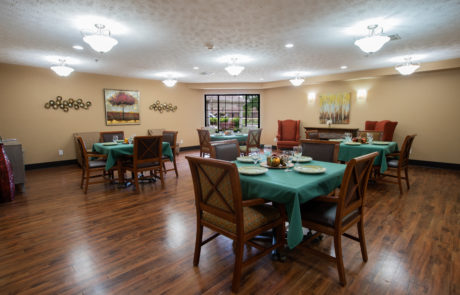
How is Castleton Health Staffed?

CMS rates CASTLETON HEALTH CARE CENTER's staffing level at 1 out of 5 stars, which is much below average compared to other nursing homes. Staff turnover is 65%, which is 19 percentage points above the Indiana average of 46%. High turnover can affect care consistency as new staff learn residents' individual needs. RN turnover specifically is 89%, which is notably high. RNs provide skilled clinical oversight, so turnover in this role can affect medical care quality.

What Have Inspectors Found at Castleton Health?

State health inspectors documented 55 deficiencies at CASTLETON HEALTH CARE CENTER during 2022 to 2025. These included: 3 that caused actual resident harm, 50 with potential for harm, and 2 minor or isolated issues. Deficiencies causing actual harm indicate documented cases where residents experienced negative health consequences.
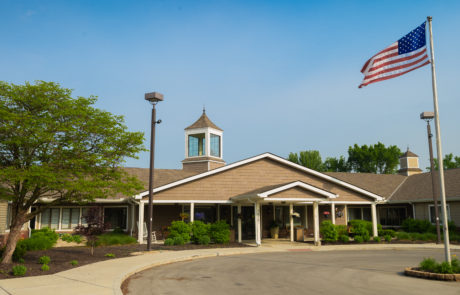
Who Owns and Operates Castleton Health?

CASTLETON HEALTH CARE CENTER is owned by a for-profit company. For-profit facilities operate as businesses with obligations to shareholders or private owners. The facility operates independently rather than as part of a larger chain. With 109 certified beds and approximately 72 residents (about 66% occupancy), it is a mid-sized facility located in INDIANAPOLIS, Indiana.
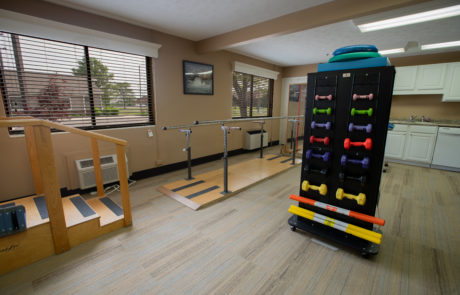
How Does Castleton Health Compare to Other Indiana Nursing Homes?

Compared to the 100 nursing homes in Indiana, CASTLETON HEALTH CARE CENTER's overall rating (1 stars) is below the state average of 3.1, staff turnover (65%) is significantly higher than the state average of 46%, and health inspection rating (1 stars) is much below the national benchmark.

What Should Families Ask When Visiting Castleton Health?

Based on this facility's data, families visiting should ask: "How do you ensure continuity of care given staff turnover, and what is your staff retention strategy?" "Can you walk me through typical staffing levels on day, evening, and night shifts?" "Can I visit during a mealtime to observe dining assistance and food quality?" "How do you handle medical emergencies, and what is your hospital transfer rate?" These questions are particularly relevant given the facility's high staff turnover rate and the below-average staffing rating.

Is Castleton Health Safe?

Based on CMS inspection data, CASTLETON HEALTH CARE CENTER has a clean safety record: no substantiated abuse findings (meaning no confirmed cases of resident harm), no Immediate Jeopardy citations (the most serious violation level indicating risk of serious injury or death), and is not on the Special Focus Facility watch list (a federal program monitoring the lowest-performing 1% of nursing homes). The facility has a 1-star overall rating and ranks #100 of 100 nursing homes in Indiana. While no facility is perfect, families should still ask about staff-to-resident ratios and recent inspection results during their visit.

Do Nurses at Castleton Health Stick Around?

Staff turnover at CASTLETON HEALTH CARE CENTER is high. At 65%, the facility is 19 percentage points above the Indiana average of 46%. Registered Nurse turnover is particularly concerning at 89%. RNs handle complex medical decisions and coordinate care — frequent RN changes can directly impact care quality. High turnover means new staff may not know residents' individual needs, medications, or preferences. It can also be disorienting for residents, especially those with dementia who rely on familiar faces. Families should ask: What is causing the turnover? What retention programs are in place? How do you ensure care continuity during staff transitions?

Was Castleton Health Ever Fined?

CASTLETON HEALTH CARE CENTER has no federal fines on record. CMS issues fines when nursing homes fail to meet care standards or don't correct problems found during inspections. The absence of fines suggests the facility has either maintained compliance or corrected any issues before penalties were assessed. This is a positive indicator, though families should still review recent inspection reports for the full picture.

Is Castleton Health on Any Federal Watch List?

CASTLETON HEALTH CARE CENTER is not on any federal watch list. The most significant is the Special Focus Facility (SFF) program, which identifies the bottom 1% of nursing homes nationally based on persistent, serious quality problems. Not being on this list means the facility has avoided the pattern of deficiencies that triggers enhanced federal oversight. This is a positive indicator, though families should still review the facility's inspection history directly.