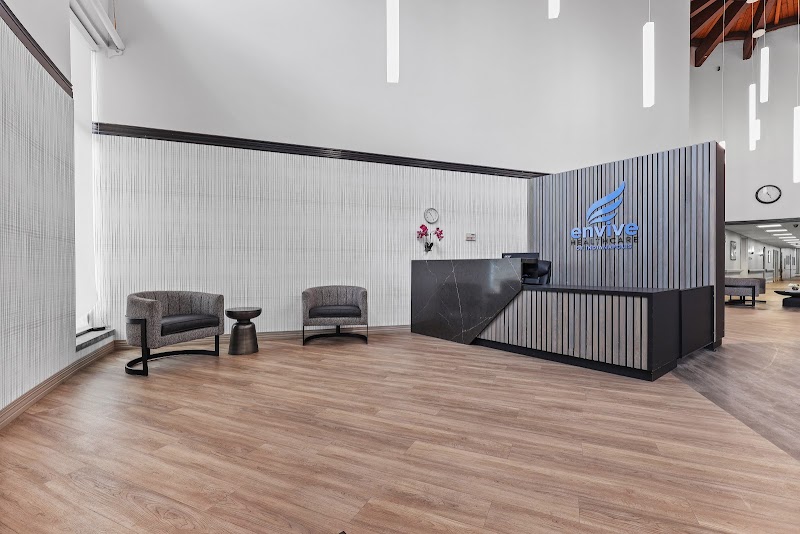
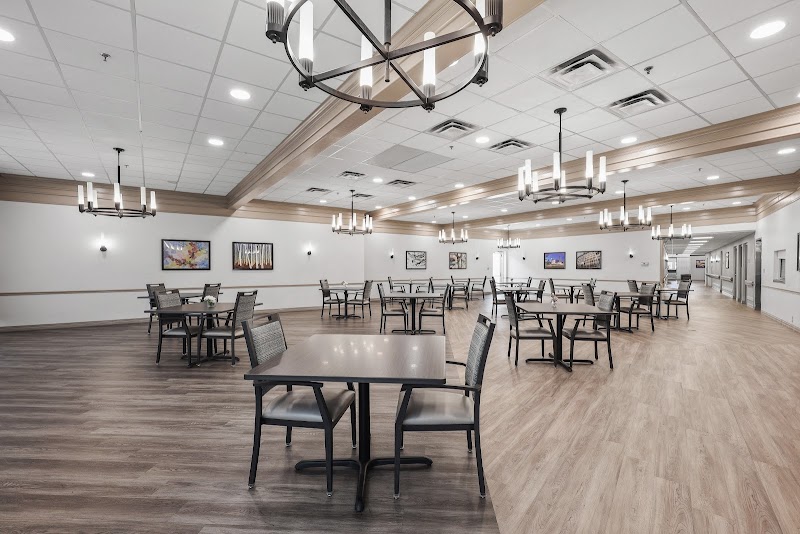
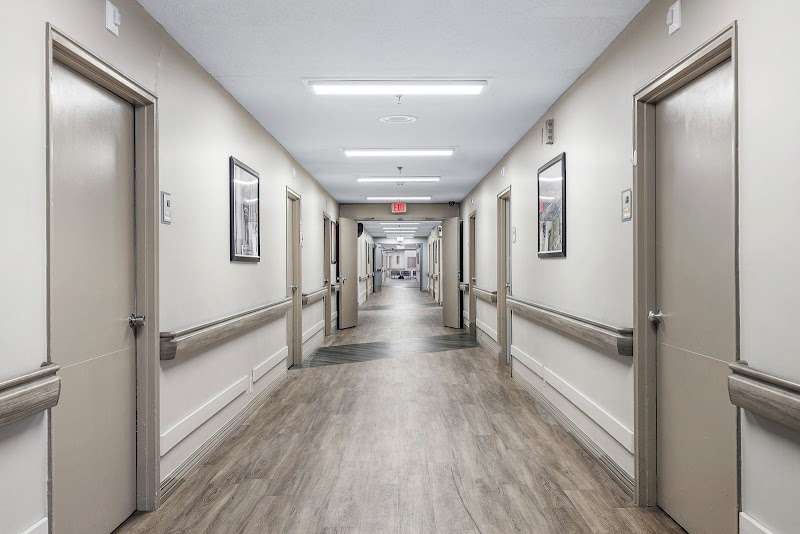
ENVIVE OF INDIANAPOLIS

45 BEACHWAY DR, INDIANAPOLIS, IN 46224 (317) 243-3721
For profit - Corporation 184 Beds ENVIVE HEALTHCARE Data: November 2025 1 Immediate Jeopardy citation
Trust Grade
0/100
#343 of 505 in IN
Last Inspection: February 2025

Within standard 12-15 month inspection cycle. Federal law requires annual inspections.

Overview

Envive of Indianapolis has received a Trust Grade of F, indicating significant concerns about the quality of care in this facility. It ranks #343 out of 505 nursing homes in Indiana, placing it in the bottom half of all facilities in the state, and #29 out of 46 in Marion County, showing limited local options for better care. Unfortunately, the facility is worsening, with the number of health and safety issues increasing from 16 in 2024 to 19 in 2025. Staffing ratings are below average at 2 out of 5 stars, but the turnover rate of 38% is somewhat better than the state average. However, there are concerning incidents, such as a resident suffering a serious burn due to a nurse not checking water temperature and a failure to ensure that serving dishes were properly sanitized, putting residents at risk of contamination. Overall, while the facility has some strengths, such as a good turnover rate, the significant issues and poor rankings raise serious red flags for potential residents and their families.

Trust Score
F
0/100
In Indiana
#343/505
Bottom 33%
Safety Record
High Risk
Review needed
Inspections
Getting Worse
16 → 19 violations
Staff Stability
○ Average
38% turnover. Near Indiana's 48% average. Typical for the industry.
Penalties
✓ Good
$8,614 in fines. Lower than most Indiana facilities. Relatively clean record.
Skilled Nurses
⚠ Watch
Each resident gets only 25 minutes of Registered Nurse (RN) attention daily — below average for Indiana. Fewer RN minutes means fewer trained eyes watching for problems.
Violations
⚠ Watch
63 deficiencies on record. Higher than average. Multiple issues found across inspections.
★★☆☆☆
2.0
Overall Rating
★★☆☆☆
2.0
Staff Levels
★★★★★
5.0
Care Quality
★☆☆☆☆
1.0
Inspection Score
Stable
2024: 16 issues
2025: 19 issues

The Good

  • 5-Star Quality Measures · Strong clinical quality outcomes
  • Full Sprinkler Coverage · Fire safety systems throughout facility
  • No fines on record
  • Staff turnover below average (38%)

    10 points below Indiana average of 48%

Facility shows strength in quality measures, fire safety.

The Bad

2-Star Overall Rating

Below Indiana average (3.1)

Below average - review inspection findings carefully

Staff Turnover: 38%

Near Indiana avg (46%)

Typical for the industry

Federal Fines: $8,614

Below median ($33,413)

Minor penalties assessed

Chain: ENVIVE HEALTHCARE

Part of a multi-facility chain

Ask about local staffing decisions and management

The Ugly 63 deficiencies on record

1 life-threatening 8 actual harm
Sept 2025 1 deficiency
CONCERN (D) 📢 Someone Reported This

A family member, employee, or ombudsman was alarmed enough to file a formal complaint

Potential for Harm - no one hurt, but risky conditions existed

Investigate Abuse (Tag F0610)

Could have caused harm · This affected 1 resident

Based on interview and record review, the facility failed to complete a thorough investigation of a resident-to-resident allegation of abuse for 1 of 3 residents reviewed for abuse. (Resident D)Findin...

Read full inspector narrative →
Based on interview and record review, the facility failed to complete a thorough investigation of a resident-to-resident allegation of abuse for 1 of 3 residents reviewed for abuse. (Resident D)Findings include:Review of a facility reported incident, dated 8/24/25, indicated Resident D and Resident E were outside in the smoking area. There was a disagreement between them, and Resident E made contact with Resident D's cheek. The two residents were separated. Resident D was assessed with no injuries observed by the nurse. Resident D indicated he had moderate pain to the area and was treated for pain management. Both residents returned to their rooms. The physician, Director of Nursing, Administrator and resident's representatives were notified. A follow-up report was added on 8/19/25 and indicated Resident E and Resident D were doing well. During the interview process, Resident E indicated he had been upset with Resident D because he felt he was making fun of another resident. Resident D believed he had not said anything and did not know why it happened. Resident E indicated he was wrong to behave that way. Both residents had made up their differences and have interacted with each other. No other issues between residents had occurred and no psychosocial concerns had been noted.1. The clinical record for Resident D was reviewed on 9/5/25 at 10:28 a.m. Diagnoses included left-sided hemiplegia and hemiparesis following a stroke, anxiety disorder, and right above knee amputation. A quarterly Minimum Data Set (MDS) assessment, dated 6/19/25, indicated the resident was cognitively intact. The resident had no hallucinations or delusions, rejection of care, and had no physical or verbal behaviors. A nursing progress note, dated 8/23/25 at 10:15 p.m., indicated Resident D reported that another resident had punched him with a closed fist on the left cheek while not facing him, after having a small disagreement. The resident reported pain to his left cheek where he was punched. The resident was assessed for pain, skin injury and vital signs. He reported his pain as 5 out of 10. No injuries were noted. Vitals signs were within normal limits. The residents were separated and reminded to maintain distance. The Administrator was notified immediately.During an interview on 9/5/25 at 10:28 p.m., Resident D indicated the incident was embarrassing for him, to be hit over a misunderstanding. He was left with swelling on the left side of his face and felt like he could not see as well out of his left eye. He felt the staff were unconcerned about his feelings following the incident. The Administrator and Social Services Director had asked him how he was doing, but only in common areas where there was no privacy. He had been smoking in his truck following the incident because he was concerned the resident might misunderstand him again. He was just not comfortable. Resident E had apologized to him, but he remains uncomfortable around him.2. The clinical record for Resident E was reviewed on 9/5/25 at 10:25 a.m. Diagnoses included paranoid schizophrenia, antisocial personality disorder, and hypertensive heart disease with heart failure. A quarterly MDS assessment, dated 7/2/25, indicated the resident was cognitively intact. The resident had no hallucinations or delusions, rejection of care, and had no physical or verbal behaviors.A nursing progress note, dated 8/23/25 at 6:38 p.m., indicated Resident E was observed walking back to his room from the smoking area when a few seconds later, Resident D was observed coming down the hallway on his electric wheelchair, yelling, and accusing Resident E to have bashed me in my face. Resident E exited his room into the hallway and started to argue with Resident D. Staff members intervened and de-escalated the incident, directing residents to their rooms.During an interview on 9/5/25 at 10:25 a.m., Resident E indicated he made a mistake during the incident and apologized to Resident D. He had misunderstood what Resident D had said and had hit him. He felt the two were fine to be around each other now.During an interview on 9/5/25 at 11:45 a.m., the Nurse Practitioner (NP) indicated she had seen Resident D on 8/25/25 and observed no swelling, redness or bruising to the left side of his face. He had not mentioned he was fearful or concerned about Resident E or feeling in danger. She had observed him in the common areas and outside smoking with residents. She was confident Resident D would have talked to her about any discomfort in being around Resident E.During an interview on 9/5/25 at 10:52 a.m., the Administrator indicated Resident E was protective of other residents and staff. He indicated Resident E had heard Resident D say something inappropriate about someone and had slapped Resident D on the left side of his face. He was on the phone with the nurse when Resident D was at the nurses' station and had requested to call the police. He had instructed the nurse to call the police if that was what Resident D requested. However, Resident D changed his mind and indicated to the nurse he did not want the police called. He observed Resident D the following day and could not see any redness or swelling to the left side of his face.The Administrator provided the incident investigation information on 9/5/25 at 11:15 a.m., containing a written statement by an LPN 4 and a document signed by the Administrator.The written statement was signed by LPN 5, who had not witnessed or observed the residents on the date of the incident. The statement indicated she had been notified by other residents that Resident E had made physical contact with Resident D due to Resident D picking and calling other residents names. Resident E was protecting other residents and became defensive on or about 8/23/25.Another document contained in the investigation file, signed by the Administrator, and dated 8/29/25, included the following:a. 8/25 I (Administrator) spoke with [Resident D] about incident with [Resident E]. [Resident D] didn't know why he was hit by [Resident E].b. 8/25 I spoke with Resident E about incident. Resident E said he was upset about Resident D talking bad about other residents.c. 8/28 [Resident D] stated he did not say anything wrong about other residentsd. 8/29 [Resident E] informed staff member, LPN 5 that they had apologized and there were no issues between them.During an interview on 9/5/25 at 2:00 p.m., the Administrator indicated the residents were both cognitively intact and he felt the investigation was as thorough as it needed to be and that the resident's had worked things out. He was unaware that Resident D remained uncomfortable around Resident E. He had not interviewed other residents or staff regarding the incident/behavior.A current facility policy, dated 8/2024, titled, Accidents and Incidents - Investigating and Reporting, provided by the Administrator on 9/5/25 at 2:03 p.m., included the following: Policy Statement All accidents or incidents involving residents, employees, visitors, vendors, etc., occurring on our premises shall be investigated and reported to the administrator.The Administrator indicated on 9/5/25 at 2:28 p.m., the policy provided was the only policy regarding resident-to-resident or resident-to-staff incidents. The facility follows the Indiana Department of Health guidelines.This citation relates to Incident 2600099.3.1-28(d)
Jun 2025 2 deficiencies 2 Harm
SERIOUS (G) 📢 Someone Reported This

A family member, employee, or ombudsman was alarmed enough to file a formal complaint

Actual Harm - a resident was hurt due to facility failures

Quality of Care (Tag F0684)

A resident was harmed · This affected 1 resident

**NOTE- TERMS IN BRACKETS HAVE BEEN EDITED TO PROTECT CONFIDENTIALITY** Based on interview and record review, the facility failed to obtain timely treatment and assessments of a full thickness burn to...

Read full inspector narrative →
**NOTE- TERMS IN BRACKETS HAVE BEEN EDITED TO PROTECT CONFIDENTIALITY** Based on interview and record review, the facility failed to obtain timely treatment and assessments of a full thickness burn to a resident's left foot resulting in actual harm when the resident required hospitalization and surgical interventions at an acute care hospital for 1 of 4 reviewed for timely care and treatment (Resident B). Findings include: During an interview on 6/2/25 at 12:07 p.m., Resident B indicated on 5/19/25 his left foot was burned when the nurse was providing wound care. He indicated the nurse brought over a basin of water for him to soak his foot in prior to applying a treatment to the sore on the bottom of his left foot. When he put his foot into the water, he felt like it was too hot and pulled his foot out. The nurse told him she had felt the water, and it was not too hot, but to hold on and she would go get some supplies. She had been out of the room for a couple of minutes when she passed by his door and told him to go ahead and try again. She had not checked the water temperature. When he returned his foot into the water, it felt hot but tolerable. When she returned about five minutes later, she was surprised to see a blister on the top of his foot. His feet were numb a lot because of his diabetes, and he had not realized the water was still hot. Cross reference F689. A review of Resident B's clinical record was completed on 6/2/25 at 10:53 a.m. Diagnoses included burn of unspecified degree of left foot, diabetes mellitus type II, and degenerative disease of the nervous system. A nurse practitioner progress note completed by Nurse Practitioner (NP) 2, dated 5/19/25 at 3:30 p.m. and created on 5/24/25 at 8:18 p.m., included Resident B was seen at the request of nursing for a blister to his left foot. The resident .was found seated with both feet resting on a towel and a wash basin visibly placed in front of the patient. Nursing indicated that foot washing was initiated as a preparatory measure before the administration of previous treatment .for an unrelated skin condition. Nurse reports that she facilitated foot washing by preparing water and directing the patient to immerse his feet. Subsequently, the patient raised concerns regarding the water temperature. Nurse reports, 'the water temperature was found to be within an acceptable range.' Following this, the nurse advised the patient to 'hold on' while she retrieved treatment supplies. Nurse reports, upon her return to the room, the patient presented with a fluid-filled blister on the top of left foot, after removing his foot from the water. Notable clinical findings included the presence of loose skin and mild erythema on the affected foot. A Weekly Skin Assessment, dated 5/19/25 at 6:58 p.m., indicated the resident had a new impairment of skin integrity. The description indicated a fluid filled blister to the top of the left foot. Wound interventions indicated the NP/physician was notified, a treatment as ordered, and monitor for signs or symptoms of infection. A current physician's order, dated 5/19/25 at 7:00 p.m., indicated to cleanse left foot with sterile water, pat dry, and apply a non-adherent dressing. Staff were to wrap foot with gauze and secure with tape. Treatment was to be completed every day and night shift. A Weekly Skin Assessment, dated 5/20/25 at 6:01 a.m., indicated the resident had a new impairment of skin integrity. The description indicated left toes. Wound interventions indicated the NP/physician was notified and treatment as ordered. The clinical record lacked documentation regarding an assessment and description of the resident's burn wound on 5/20/25. A nursing progress note by LPN 7, dated 5/21/25 at 5:06 p.m., indicated the dressing to Resident B's left foot was hard to get off and had blisters noted to top of all five toes, sloughing, copious amount of serous drainage, skin peeling, and very painful to touch. The wound NP was notified, and treatment was completed as ordered. A NP progress note completed by NP 2, dated 5/21/25 at 7:46 p.m. and created on 5/25/25 at 9:15 p.m., included Resident B was seen at the request of nursing for pain to his left foot. The patient seen for a follow-up visit concerning their left foot pain, which presented with new symptoms during recent care. The patient has a significant history of diabetes and frequent cellulitis episodes, necessitating careful management of skin integrity and related complications. The patient reports new onset pain in the affected area (Left foot). The patient describes the pain as moderate but constant, located specifically to the left foot where he has a previous blister .The treatment plan includes continued monitoring and education, with an emphasis on prompt notification of any acute changes, underscoring the need for vigilance given the patient's predisposition to complications due to his underlying conditions. Nursing staff have been briefed on these updates and are prepared to report any further developments promptly .Derm: Dressing intact to left foot A nursing progress note completed by RN 3, dated 5/21/25 at 10:03 p.m., indicated the resident had complained of excruciating pain to his left foot. The resident indicated his foot was submerged in hot water prior to the scheduled treatment on 5/19/25. RN 3 had changed the dressing and indicated the foot appears to be a 3rd degree burn, yellow slough, red, draining & toes matted. RN 3 contacted 911 and the resident was taken to an acute care burn unit for further evaluation and treatment. A Clinically at Risk report, dated 5/23/25 at 12:51 p.m., indicated the reason for review was for a chronic wound. Team members in attendance were listed as the DON and registered dietician. The comment included that the resident had been admitted to the hospital on [DATE] for a diabetic foot ulcer. Under the Skin/Wounds section of the report, concerns were listed regarding left foot plantar, diabetic foot ulcer. Cleanse with wound cleanser, apply hydrogel and bordered gauze. The report indicated the care plan had been updated and was signed on 5/25/25. The report lacked indication of the resident sustaining and being hospitalized due to a burn sustained during care at the facility. During an interview on 6/2/25 at 11:46 a.m., LPN 4 indicated she was preparing to complete Resident B's wound care orders, and she wanted to complete foot care prior to his left foot treatment. As she was running the water into the basin for the resident to soak his foot, she ran her hand under the running water and felt it was warm and finished filling the basin. She had not checked the temperature of the water in the basin after it was filled. She instructed the resident to put his left foot in the water. Resident B placed his foot in the water and indicated the water was hot and removed his foot. She indicated to him that she had just checked the water and told him to hang on and she would go get his wound care supplies. She was gone for about five minutes and when she returned to his room his foot was in the basin. She noticed his skin had developed a small lemon sized blister on the top of his foot. She had not intended for the resident to put his foot in the basin when she left the room. He indicated to her his foot hurt and she administered an as needed dose of pain medication. She requested another staff member inform NP 2, and she called the unit's manager who both came to the resident's room. She had not documented in a progress note, as the NP was going to document. During an interview on 6/2/25 at 12:40 p.m., NP 2 indicated she had been called to Resident B's room. She had not noticed a blister, but the resident's left foot was sorta red with a small open area. She had visualized the resident's foot following the incident, but had not had staff remove the resident's dressing during her follow-up visits. She had not examined the wound during her 5/21/25 visit with the resident for increased pain. The physician was completing rounds the following day (5/22/25), and she wanted the physician to look at the left foot at that time. During a telephone interview on 6/2/25 at 2:41 p.m., RN 3 indicated Resident B had been in so much pain and his wound looked bad. He had not been in a lot of pain the night before. When she had completed his wound treatment on 5/21/25, she had been unaware the resident had sustained a burn to his left foot. She had prepared to complete his treatment for his diabetic ulcer to the bottom of his left foot. The resident had a hard time tolerating the treatment. She had called the DON and received approval to send him to the emergency room for treatment. A Burn Service Team History and Physical Note, dated 5/22/25, from the acute care provider, indicated the resident had presented with scald burns to his left foot, sustained three days ago. The Assessment/Plan indicated the patient had a three day old full thickness scald burn to the left foot. An Inpatient Discharge summary, dated [DATE], from the acute care provider, indicated the resident had two surgical procedures on 5/22/25 and 5/27/25 for debridement of left foot and skin graft application. A current facility policy, dated 8/2024, titled, Change in a Resident's Condition or Status, provided by the Corporate Nurse on 6/3/25 at 12:06 p.m., included the following: .Policy Interpretation and Implementation .8. The nurse will record in the resident's medical record information relative to changes in the resident's medical/mental condition or status This citation relates to Complaint IN00460578. 3.1-37(a)
SERIOUS (G) 📢 Someone Reported This

A family member, employee, or ombudsman was alarmed enough to file a formal complaint

Actual Harm - a resident was hurt due to facility failures

Accident Prevention (Tag F0689)

A resident was harmed · This affected 1 resident

**NOTE- TERMS IN BRACKETS HAVE BEEN EDITED TO PROTECT CONFIDENTIALITY** Based on interview and record review, the facility failed to protect a resident during care resulting in actual harm when the re...

Read full inspector narrative →
**NOTE- TERMS IN BRACKETS HAVE BEEN EDITED TO PROTECT CONFIDENTIALITY** Based on interview and record review, the facility failed to protect a resident during care resulting in actual harm when the resident sustained a full thickness burn to his left foot requiring surgical interventions for 1 of 4 reviewed for accidents (Resident B). The deficient practice was corrected on 5/23/25, prior to the start of the survey, and was therefore past noncompliance. Findings include: A review of Resident B's clinical record was completed on 6/2/25 at 10:53 a.m. Diagnoses included burn of unspecified degree of left foot, diabetes mellitus type II, and degenerative disease of the nervous system. A quarterly Minimum Data Set (MDS) assessment, dated 4/11/25, indicated the resident was cognitively intact, used a wheelchair for mobility, required partial to moderate assistance of staff to put on and remove footwear, complete lower body dressing, transfer from chair to bed, and had a diabetic foot ulcer and received dressings to his feet. A health care plan, initiated 2/4/25, indicated Resident B had diabetes mellitus with neuropathy. Interventions included to avoid exposure to extreme heat or cold. A nurse practitioner progress note completed by Nurse Practitioner (NP) 2, dated 5/19/25 at 3:30 p.m., included Resident B was seen at the request of nursing for a blister to his left foot. The resident was found seated with both feet resting on a towel and a wash basin visibly placed in front of the patient. Nursing indicated that foot washing was initiated as a preparatory measure before the administration of previous treatment .for an unrelated skin condition. Nurse reports that she facilitated foot washing by preparing water and directing the patient to immerse his feet. Subsequently, the patient raised concerns regarding the water temperature. Nurse reports, the water temperature was found to be within an acceptable range.' Following this, the nurse advised the patient to 'hold on' while she retrieved treatment supplies. Nurse reports, upon her return to the room, the patient presented with a fluid-filled blister on the top of left foot, after removing his foot from the water. Notable clinical findings included the presence of loose skin and mild erythema on the affected foot A nursing progress note by LPN 7, dated 5/21/25 at 5:06 p.m., indicated the dressing to Resident B's left foot was hard to get off and had blisters noted to top of all five toes, sloughing, copious amount of serous drainage, skin peeling, and very painful to touch. The wound NP was notified, and treatment was completed as ordered. A NP progress note completed by NP 2, dated 5/21/25 at 7:46 p.m., included Resident B was seen at the request of nursing for pain to his left foot. The patient seen for a follow-up visit concerning their left foot pain, which presented with new symptoms during recent care. The patient has a significant history of diabetes and frequent cellulitis episodes, necessitating careful management of skin integrity and related complications. The patient reports new onset pain in the affected area (Left foot). The patient describes the pain as moderate but constant, located specifically to the left foot where he has a previous blister .The treatment plan includes continued monitoring and education, with an emphasis on prompt notification of any acute changes, underscoring the need for vigilance given the patient's predisposition to complications due to his underlying conditions. Nursing staff have been briefed on these updates and are prepared to report any further developments promptly .Derm: Dressing intact to left foot A nursing progress note completed by RN 3, dated 5/21/25 at 10:03 p.m., indicated the resident had complained of excruciating pain to his left foot. The resident indicated his foot was submerged in hot water prior to the scheduled treatment on 5/19/25. RN 3 had changed the dressing and indicated the foot appears to be a 3rd degree burn, yellow slough, red, draining & toes matted. RN 3 contacted 911 and the resident was taken to an acute care burn unit for further evaluation and treatment. During an interview on 6/2/25 at 11:33 a.m., the DON indicated there was no order as part of Resident B's wound care to soak his foot. LPN 4 wanted to make sure the area was clean prior to completing the ordered treatment to the diabetic ulcer on the bottom of his left foot. She should not have soaked his foot as this was not part of his wound care treatment orders. During an interview on 6/2/25 at 11:46 a.m., LPN 4 indicated she was preparing to complete Resident B's wound care orders, and she wanted to complete foot care prior to his left foot treatment. As she was running the water into the basin for the resident to soak his foot, she ran her hand under the running water, and it felt warm. She finished filling the basin. She had not checked the temperature of the water in the basin after it was filled. She instructed the resident to put his left foot in the water. Resident B placed his foot in the water and indicated the water was hot and removed his foot. She indicated to him that she had just checked the water and told him to hang on and she would go get his wound care supplies. She was gone for about five minutes and when she returned to his room his foot was in the basin. She noticed his skin had developed a small lemon sized blister on the top of his foot. She had not intended for the resident to put his foot in the basin when she left the room. He indicated to her his foot hurt and she administered an as needed dose of pain medication. She informed NP2 and the unit manager and both came to the resident's room. During an interview on 6/2/25 at 12:07 p.m., Resident B indicated his left foot was burned when LPN 4 was providing wound care. He indicated the nurse brought over a basin of water for him to soak his foot in prior to applying a treatment to the sore on the bottom of his left foot. When he put his foot into the water, he felt like it was too hot, and he pulled his foot out. The nurse told him she had felt the water, and it was not too hot, but to hold on and she would go get some supplies. She had been out of the room for a couple of minutes when she passed by his door and told him to go ahead and try again. She had not checked the water temperature. He put his foot into the water, it felt hot but tolerable. When she returned about five minutes later, she was surprised to see a blister on the top of his foot. His feet were numb a lot because of his diabetes, and he had not realized the water was still hot. During an interview on 6/2/25 at 12:40 p.m., NP 2 indicated she had been called to Resident B's room on 5/19/25. She had not noticed a blister, but the resident's left foot was sorta red with a small open area. She had visualized the resident's foot following the incident, but had not had staff remove the resident's dressing during her follow up visit on 5/21/25 due to increased pain. The physician was completing rounds the following day (5/22/25), and she wanted the physician to look at the left foot at that time. During a telephone interview on 6/2/25 at 2:41 p.m., RN 3 indicated Resident B had been in so much pain and his wound looked bad on 5/21/25. He had not been in a lot of pain the night before. When she had completed his wound treatment on 5/21/25, she had been unaware the resident had sustained a burn to his left foot. She had prepared to complete his treatment for his diabetic ulcer to the bottom of his left foot. The resident had a hard time tolerating the treatment. She had called the DON and received approval to send him to the emergency room for treatment. A Burn Service Team History and Physical Note, dated 5/22/25, from the acute burn unit provider, indicated the resident had presented with scald burns to his left foot, sustained three days ago. The Assessment/Plan indicated the patient had a three day old full thickness scald burn to the left foot. An Inpatient Discharge summary, dated [DATE], from the acute burn care provider, indicated the resident had two surgical procedures on 5/22/25 and 5/27/25 for debridement of left foot and skin graft application. A current facility policy, dated 8/2024, titled, Change in a Resident's Condition or Status, provided by the Corporate Nurse on 6/3/25 at 12:06 p.m., included the following: .Policy Interpretation and Implementation .8. The nurse will record in the resident's medical record information relative to changes in the resident's medical/mental condition or status. The deficient practice was corrected by 5/23/25 after the facility implemented a systemic plan that included the following actions: water temperature adjustments and monitoring, resident interviews, staff interviews, resident skin assessments, education of staff, and continued monitoring. Cross reference F684. This citation relates to Complaint IN00460578. 3.1-45(a)
Feb 2025 2 deficiencies
CONCERN (D) 📢 Someone Reported This

A family member, employee, or ombudsman was alarmed enough to file a formal complaint

Potential for Harm - no one hurt, but risky conditions existed

Transfer Requirements (Tag F0622)

Could have caused harm · This affected 1 resident

Based on interview and record review, the facility failed to ensure a resident was able to appeal a facility initiated discharge and failed to document why the facility was discharging the resident in...

Read full inspector narrative →
Based on interview and record review, the facility failed to ensure a resident was able to appeal a facility initiated discharge and failed to document why the facility was discharging the resident instead of allowing them to return to the facility after a hospital stay for 1 of 3 residents reviewed for discharges (Resident D). Findings include: On 2/18/25 at 11:32 a.m., a record review was completed for Resident D. He had the following diagnoses which included but were not limited to antisocial personality disorder (a mental health condition characterized by a persistent pattern of disregard for and violation of the rights of others, often leading to problems in relationships, work, and legal issues), bipolar disorder (a chronic mental health condition characterized by extreme shifts in mood, energy, and behavior, alternating between periods of mania and depression), pseudobulbar affect (a neurological disorder characterized by uncontrollable episodes of laughing or crying that are often inappropriate or exaggerated), insomnia, attention-hyperactivity disorder (a neurodevelopmental disorder characterized by persistent patterns of inattention, hyperactivity, and/or impulsivity that interfere with daily functioning in multiple areas), and traumatic brain injury (an injury to the brain caused by an external physical force, such as a blow, bump, fall, or car accident). During a review of his hospital note, dated 10/27/24, prior to admission to the Skilled Nursing Facility, indicated Resident D became aggressive in the emergency department and threw his colostomy bag. Also, he had spent time at another hospital and had some issues with social work and placement issues. He was banned from that hospital due to bad behaviors and history of being abusive to staff. A Brief Interview for Mental Status (BIMS) assessment score, completed on 12/10/24, indicated he scored 15 out of 15, and was cognitively intact. A care plan, dated 11/20/24, indicated Resident D had a diagnosis of anti-social personality disorder (ASHD). A care plan, dated 11/21/24, indicated Resident D had a diagnosis of bipolar disorder. A care plan, dated 11/21/24, indicated Resident D had a diagnosis of mild intellectual disabilities. A care plan, dated 11/20/24, indicated Resident D had a mood problem related to diagnosis of paranoid schizophrenia. A care plan, dated 12/5/24, indicated Resident D had made sexually inappropriate behaviors such as asking staff to have sex with him. A care plan, dated 12/5/24, indicated Resident D was physically aggressive as evidenced by throwing his colostomy bag at staff, throwing the remote control at staff related to poor impulse control, antisocial personality disorder, schizophrenia, autism, cursing at staff, places himself on the floor, spitting at staff, throwing bowls and plates on the floor causing them to shatter, and manipulative behaviors towards staff. A care plan, dated 12/5/24, indicated Resident D was verbally aggressive as evidenced by yelling out frequently when he wants something related to mental, emotional illness, poor impulse control and had made false allegations toward staff. A care plan, dated 12/11/24, indicated Resident D had behaviors of refusal of care, medications, wound treatment, non-compliant with wound treatment, digging and picking into his wound repetitively removing his dressing. Resident D was observed poking a fork into his wound and a straw to his stoma. He was non-compliant with the smoking policy and was found smoking cigarettes in his room. A care plan, dated 12/24/24, indicated Resident D had a history of making false allegations against staff. A care plan, dated 12/26/24, indicated Resident D exhibited restlessness, nervousness, and/or anxiety symptoms, agitation, attention and concentration deficit due to diagnosis of ASHD. A progress note, dated 2/2/25, indicated Resident D used another resident's cell phone to call 911, paramedics arrived and stated resident want to be transferred to a local hospital, and it was his right to transfer. There was no indication of why Resident D wanted to transfer as his needs were being met at the facility. A progress note, dated 2/3/25, indicated a nurse from the local hospital call and indicated Resident D had been admitted with swollen testicles. A hospital progress note, dated 2/3/25, indicated Resident D had numerous hospitalizations at multiple systems over the last 6 months. He was seen in the emergency room. The resident's record lacked documentation of a reason for the discharge of the resident by the physician. The resident's record lacked documentation of how the resident was a danger to other residents or himself. The resident's record lacked documentation of why the facility was not honoring the resident's right to return to the facility pending an appeal of any facility-initiated discharge. During an interview with the Social Services Director (SSD) on 2/18/25 at 10:53 a.m., she indicated Resident D did not have a discharge assessment completed because he was leaving 911. She indicated the company decided not to take him back because of his behaviors. They were worried about the overall safety of other residents and staff. On 2/18/25 at 10:55 a.m., during an interview with the Executive Director (ED), he indicated they admitted Resident D to administer some antibiotics. He was aware that residents would not always be accepting to care. He threw his colostomy bag at the staff. He hit a staff member in the face. He called the police around 36 times. Resident D finally handed his phone off to management to lock up. The police did not want to arrest him due to the wounds he had on his buttocks. He dug in his wounds with silver ware. He destroyed his room and pulled a handrail off the wall. They attempted 1 on 1 supervision because he was consuming so much time with his call light and hollering at staff. It took 2 to 3 staff members to care for him at a time due to safety concerns. He indicated when he reviewed Resident D's admission documentation prior to admission at the facility, it did not indicate the resident had these behaviors. There were no specific incidents causing a denial to readmit Resident D. The ED was unaware of the resident's current condition at the hospital. On 2/18/25 at 12:40 p.m., during an interview with the ombudsman, she indicated she witnessed Resident D's behaviors herself. He dug in his colostomy bag and acted like he was going to throw feces on her. She told the facility they would have to give a 30-day notice of intent to discharge. On 2/18/25 at 1:03 p.m., an interview by phone was attempted but Resident D did not answer his phone. On 2/18/25 at 1:03 p.m., during an interview, Resident D's mother indicated she was unaware of the reason why Resident D was not allowed to return to the facility. She worried about his belongings and cell phone. On 2/19/25 at 10:31 a.m., a policy titled, Transfer or Discharge, Facility Initiated was provided by the Special Projects and Interim Administrator. It indicated, .Once admitted to the facility, residents have the right to remain in the facility. Facility-initiated transfers and discharges, when necessary, must meet specific criteria and require resident/representative notification and orientation, and documentation as specified in this policy This deficiency relates to Complaint IN00453734.
CONCERN (D) 📢 Someone Reported This

A family member, employee, or ombudsman was alarmed enough to file a formal complaint

Potential for Harm - no one hurt, but risky conditions existed

Safe Transfer (Tag F0626)

Could have caused harm · This affected 1 resident

Based on interview and record review, the facility failed to follow the policy by not allowing the resident to return to the facility after a hospitalization for 1 of 3 resident reviewed for discharge...

Read full inspector narrative →
Based on interview and record review, the facility failed to follow the policy by not allowing the resident to return to the facility after a hospitalization for 1 of 3 resident reviewed for discharged (Resident D). Findings include: On 2/18/25 at 11:32 a.m., a record review was completed for Resident D. He had the following diagnoses which included but were not limited to antisocial personality disorder (a mental health condition characterized by a persistent pattern of disregard for and violation of the rights of others, often leading to problems in relationships, work, and legal issues), bipolar disorder (a chronic mental health condition characterized by extreme shifts in mood, energy, and behavior, alternating between periods of mania and depression), pseudobulbar affect (a neurological disorder characterized by uncontrollable episodes of laughing or crying that are often inappropriate or exaggerated), insomnia, attention-hyperactivity disorder (a neurodevelopmental disorder characterized by persistent patterns of inattention, hyperactivity, and/or impulsivity that interfere with daily functioning in multiple areas), and traumatic brain injury (an injury to the brain caused by an external physical force, such as a blow, bump, fall, or car accident). . A progress note, dated 2/2/25, indicated Resident D used another resident's cell phone to call 911, paramedics arrived, stated resident want to be transferred to a local hospital, and it was his right to transfer. There was no indication of why Resident D wanted to transfer as his needs were being met at the facility. A progress note, dated 2/3/25, indicated a nurse from the local hospital call and indicated Resident D had been admitted with swollen testicles. A hospital progress note, dated 2/3/25, indicated Resident D had numerous hospitalizations at multiple systems over the last 6 months. The resident's record lacked documentation of how the resident was a danger to other residents or himself. The resident's record lacked documentation of why the facility was not honoring the resident's right to return to the facility pending an appeal of any facility-initiated discharge. During an interview with the Social Services Director (SSD) on 2/18/25 at 10:53 a.m., she indicated Resident D did not have a discharge assessment completed because he was leaving 911. She indicated the company decided not to take him back because of his behaviors. They were worried about the overall safety of other residents and staff. On 2/18/25 at 10:55 a.m., during an interview, the Executive Director (ED) indicated they admitted Resident D to administer some antibiotics. He was aware that the resident would not always be accepting to care. He threw his colostomy bag at the staff. He hit a staff member in the face. He called the police around 36 times. Resident D finally handed his phone off to management to lock up. The police did not want to arrest him due to the wounds he had on his buttocks. He dug in his wounds with silver ware. He destroyed his room and pulled a handrail off the wall. They attempted 1 on 1 supervision because he was consuming so much time with his call light and hollering at staff. It took 2 to 3 staff members to care for him at a time due to safety concerns. He indicated when he reviewed Resident D's admission documentation prior to his admission at the facility, it did not indicate the resident had these behaviors. There were no specific incidents causing a denial to readmit Resident D. The ED was unaware of the resident's condition at the hospital. On 2/18/25 at 12:40 p.m., during an interview, the ombudsman indicated she witnessed his behavior herself. He dug in his bag and acted like he was going to throw feces on her. She told the facility they would have to give a 30-day notice of intent to discharge. On 2/18/25 at 1:03 p.m., an interview by phone was attempted but Resident D did not answer his phone. On 2/18/25 at 1:03 p.m., during an interview, Resident D's mother indicated she was unaware of the reason why Resident D was not allowed to return to the facility. She worried about his belongings and cell phone. On 2/19/25 at 10:31 a.m., a policy titled, Transfer or Discharge, Facility Initiated was provided by the Special Projects and Interim Administrator. It indicated, .Once admitted to the facility, residents have the right to remain in the facility. Facility-initiated transfers and discharges, when necessary, must meet specific criteria and require resident/representative notification and orientation, and documentation as specified in this policy This deficiency relates to Complaint IN00453734.
Feb 2025 14 deficiencies
CONCERN (D) 📢 Someone Reported This

A family member, employee, or ombudsman was alarmed enough to file a formal complaint

Potential for Harm - no one hurt, but risky conditions existed

Resident Rights (Tag F0550)

Could have caused harm · This affected 1 resident

**NOTE- TERMS IN BRACKETS HAVE BEEN EDITED TO PROTECT CONFIDENTIALITY** Based on observation, interview, and record review, the facility failed to ensure a resident had the right to privacy during inc...

Read full inspector narrative →
**NOTE- TERMS IN BRACKETS HAVE BEEN EDITED TO PROTECT CONFIDENTIALITY** Based on observation, interview, and record review, the facility failed to ensure a resident had the right to privacy during incontinent care for 1 of 4 residents reviewed for dignity (Resident B). Findings include: On 2/7/25 at 10:30 a.m., Resident B was observed from the hallway, through her open door, in bed on her left side, faced away from the door, and her privacy curtain was not closed. Registered Nurse (RN) 6 stood at the right side of her bed, and Certified Nursing [NAME] (CNA) 22 was on the left side of her bed. CNA 22 was observed as she removed a brief from under the resident, rolled it up, and placed it in a trash bag. RN 6 stepped toward the head of the resident's bed, so that her bare bottom and several wounds of varying conditions were visible from the hallway. On 2/7/25 at 10:35 a.m., an unidentified male resident ambulated past Resident B's open door. On 2/7/25 at 10:37 a.m., a second unidentified male resident ambulated past Resident B's open door. On 2/7/25 at 10:39 a.m., an unidentified Houskeeper (HK) stepped into the open door frame and asked if she could clean the room. RN 6 indicated, patient care, and the HK went to the next room. During an interview on 2/7/25 at 10:45 a.m., after RN 6 exited the room, he indicated the door should have been closed, but he was in the middle of providing wound care treatment when one of the aides left to get a hoyer lift and must have forgot to close the door. During an interview on 2/7/25 at 10:52 a.m., Resident B indicated staff leaves the doors open a lot of the time and it bothered her that another resident might have seen her bottom because she considered herself to be a modest religious person. On 2/13/25 at 1:35 p.m., Resident B's medical record was reviewed. She was a long-term care resident with diagnoses which included, but were not limited to, spina-bifida (a birth defect of the spinal cord), borderline intellectual functioning, and anxiety. A comprehensive care plan, dated 2/22/22, indicated Resident B had a diagnosis of borderline intellectual functioning and an intervention for this plan of care included, but was not limited to, treat me with dignity and respect. On 2/14/25 at 9:30 a.m., the [NAME] President of Clinical Services (VPCS) provided a copy of current facility policy titled, Dignity, revised 8/2024. The policy indicated, Each resident shall be cared for in a manner that promotes and enhances his or her sense of well-being, level of satisfaction with life, and feelings of self-worth and self-esteem . residents are treated with dignity and respect at all times . staff promote, maintain and protect resident privacy, including bodily privacy during assistance with personal care and during treatment procedures This deficiency relates to Complaint IN00451140. 3.1-3(a) 3.1-3(p)(4)
CONCERN (D)

Potential for Harm - no one hurt, but risky conditions existed

Deficiency F0578 (Tag F0578)

Could have caused harm · This affected 1 resident

**NOTE- TERMS IN BRACKETS HAVE BEEN EDITED TO PROTECT CONFIDENTIALITY** Based on interview and record review, the facility failed to ensure a resident's advance directive wishes were updated in her me...

Read full inspector narrative →
**NOTE- TERMS IN BRACKETS HAVE BEEN EDITED TO PROTECT CONFIDENTIALITY** Based on interview and record review, the facility failed to ensure a resident's advance directive wishes were updated in her medical record for 1 of 3 residents reviewed for advance directive (Resident 53). Findings include: On 2/7/25 at 11:13 a.m., Resident 53 medical record was reviewed. She was a long-term care resident with diagnoses which included, but were not limited to dementia, schizoaffective disorder and peripheral vascular disease. An original Physician Scope of Treatment (POST) form, dated 10/2/23, indicated the resident wished to have a full code advance directive status. An updated POST form, dated 7/20/24, indicated Resident 53's wishes to change her advanced directive status to Do Not Resuscitate. Resident 53's physician's orders included but were not limited to an active order for a full code status, and not been revised to reflect her most recent POST orders. Resident 53's comprehensive care plans were reviewed and included but were not limited to a care plan, dated 10/4/23, which indicated she wished to be a full code. The care plan lacked revision to update her advanced directive wishes after her POST form was completed on 7/20/24. During an interview on 2/14/25 at 1:10 p.m., the Social Service Director, (SSD) reviewed Resident 53's two post forms, care plans and physician order. She indicated, it appeared that the physician order and care plan had not been updated as they should have been after the POST form was changed. On 2/14/25 at 1:32 p.m., the [NAME] President of Clinical [NAME] (VPCS) provided a copy of current facility policy titled, Advance Directive, revised 2/2024. The policy indicated, .Advance directives are honored in accordance with state law and facility policy . the director of nursing services (DNS) or designee notifies the attending physician of advance directives (or changes in advance directives) to that appropriate orders can be documented in the resident medical record and plan of care 3.1-4(f)(7)
CONCERN (D)

Potential for Harm - no one hurt, but risky conditions existed

Deficiency F0679 (Tag F0679)

Could have caused harm · This affected 1 resident

Based on observation, interview, and record review, the facility failed to provide an ongoing program of 1 on 1 activities for 1 of 1 residents (Resident 55) reviewed for activities. Findings include...

Read full inspector narrative →
Based on observation, interview, and record review, the facility failed to provide an ongoing program of 1 on 1 activities for 1 of 1 residents (Resident 55) reviewed for activities. Findings include: On 2/6/25 at 10:46 a.m. Resident 55 was observed as she lay in her bed. Resident 55 indicated she did not like to get up in her wheelchair because it would cause her pain, but she did want to participate in activities. She indicated sometimes activity staff would come to visit her but they wouldn't leave her anything to do and they wouldn't stay long, so most of the time she laid in bed and watched tv. On 2/11/25 at 1:30 p.m., Resident 55's medical record was reviewed. She was a long-term care resident whose diagnoses included but were not limited to, hemiplegia (a medical condition that causes paralysis or weakness on one side of the body), cerebral infarction (stroke), and major depressive disorder. A care plan, dated 12/18/23, indicated Resident 55 was on a 1 on 1 activity schedule. The interventions for this care plan included but were not limited to, provide 1 on 1 activities as desired and tolerated. On 2/14/25 at 2:00 p.m., the Administrator provided a copy of Resident 55's individual activity visit records from December 2024 to February 2025. For the month of December, the record indicated she was visited 10 times, for the month of January the record indicated she was visited 7 times and from February 1st to February 14th she was visited 5 times. In an interview, Activity Aide 22 indicated there was a weekly schedule of activities specifically for residents who did not or could not come out of their rooms. She indicated that activity staff should be going to each of those residents rooms every day to attempt to provide activities. If the resident refused the visit that should be reflected in their 1 on 1 visit record and a revisit should have been attempted and recorded. On 2/14/25 at 2:00 p.m., a policy specific to 1 on 1 activities and visits were requested, but it was not provided. The [NAME] President of Clinical Services indicated they only have a policy related to activity evaluation. 3.1-33(a)
CONCERN (D)

Potential for Harm - no one hurt, but risky conditions existed

Quality of Care (Tag F0684)

Could have caused harm · This affected 1 resident

Based on interview and record review, the facility failed to ensure a resident requesting to be sent to the hospital was assessed by a nurse and prepared to be transferred to the hospital for 1 of 3 r...

Read full inspector narrative →
Based on interview and record review, the facility failed to ensure a resident requesting to be sent to the hospital was assessed by a nurse and prepared to be transferred to the hospital for 1 of 3 residents reviewed for hospitalization (Resident E). Findings include: On 2/10/25 at 1:32 p.m., Resident E's medical record was reviewed. He was a long-term care resident with diagnoses which included, but were not limited to, schizoaffective disorder, bipolar disorder, tobacco use, dementia with psychotic disturbance, paranoid schizophrenia, recurrent major depressive disorder, and dependence on supplemental oxygen. A nursing progress note, dated 1/12/25 at 2:07 a.m., indicated Resident E was at the reception area and went outside to smoke. He returned to the desk and informed the Receptionist that he wanted to go to the hospital. The receptionist called 911 at 11:40 p.m., and the emergency medical technician (EMT) transported the resident to a local hospital. The record lacked documentation Residnet E had been assessed and prepared for his transfer. The record lacked documentation of vital signs, patient condition, or reason for request to go to the hospital. The progress note lacked documentation that the nurse and/or the physician was notified of his transfer to the hospital. Resident E's Leave of Absence (LOA) log was reviewed and revealed, he had not signed himself out to smoke and/or go to the hospital on the evening of 11/11/24 or the morning of 11/12/24. A Transfer-to-the-Hospital form, dated 1/12/25 at 6:37 a.m., indicated the Resident E was transferred to the hospital at 6:33 a.m. A corresponding hospital ER summary was dated 1/12/24 and indicated the Resident arrived at the ER at 12:04 in the morning, 6 hours and 33 minutes prior to facility's Transfer Form. A Nurse Practitioner (NP) progress note was entered late on 1/15/25 at 8:46 a.m., but dated effective for 1/13/25 at 3:16 p.m. The NP saw Resident E in follow up after a hospital stay. Resident E's nursing progress notes were reviewed and revealed, Resident E frequently called 911 himself for complaints of shortness of breath and/or difficulty breathing. His LOA logs were reconciled with the dates he called and transfered himself to the hopsital, and revealed he did not follow LOA policy. Resident E's care plans were reviewed and lacked implementation and/or revision of details related to his history of calling 911 himself and requests to be sent to the hospital without notifying the nurse. The Care Plans lacked implementation and/or revision or Residnet E's inconsistent utalization of the LOA policy. On 2/12/25 at 11:25 a.m., the [NAME] President of Clinical Services (VPCS) provided a copy of current facility policy titled, Discharging Resident, revised 8/2024. The policy indicated, .the resident should be consulted about the discharge . if the resident is being discharged to a hospital or another facility, ensure that a transfer summary is completed and telephone report is called to the receiving facility. Assess and document the resident's condition at discharge, including skin assessment, if medical condition allows 3.1-12(a)(21)
CONCERN (D)

Potential for Harm - no one hurt, but risky conditions existed

Pressure Ulcer Prevention (Tag F0686)

Could have caused harm · This affected 1 resident

Based on observation, interview, and record review, the facility failed to ensure that a resident received necessary treatments and services to promote the healing of a pressure ulcer and prevent a ne...

Read full inspector narrative →
Based on observation, interview, and record review, the facility failed to ensure that a resident received necessary treatments and services to promote the healing of a pressure ulcer and prevent a new pressure ulcer from developing for 1 of 5 residents reviewed for pressure ulcers (Resident 1). Findings include: On 2/6/25 at 10:46 a.m. Resident 1 was observed in his room as he sat in his wheelchair. Resident 1 indicated the sores on his bottom just popped up one day and he was not sure what caused them. On 02/13/25 at 10:33 a.m. Resident 1's medical record was reviewed. He was a long-term care resident whose diagnoses included but were not limited to hemiplegia (a medical condition that causes paralysis or weakness on one side of the body) and dementia. A skin and wound note, on 12/12/24, indicated Resident 1 had an abscess on the back of his left thigh, an unstageable pressure ulcer to his right buttock and a stage 3 (full thickness tissue loss where subcutaneous fat is visible) pressure ulcer to the back of his right thigh in the gluteal fold (space between the buttocks and upper thigh). The note indicated the treatment recommendations included but were not limited to, the need for a LAL mattress. A skin and wound note from 12/19/24 indicated that Resident 1 had a new stage 2 (partial thickness skin loss which presents as a shallow open area with a pink or red wound bed) pressure ulcer on the left buttock. It was again recommended that the resident have a LAL mattress. Resident 1 had a active order for a low air loss (LAL) mattress dated 12/20/24. On 2/14/25 at 2:00 p.m., the Administrator provided a copy of a current facility policy titled, Support Surface Guidelines dated 8/2024. The policy indicated, .7. Any individual at risk for developing pressure ulcers should be placed on a redistribution support surface such as foam, gel, static air, alternating air, air loss or gel when lying in bed On 2/14/25 at 2:00 p.m., the administrator provided a copy of a current facility policy titled, Prevention of Pressure Injuries dated 8/2024. The policy indicated, .20. Select appropriate support surfaces based on the residents risk factors in accordance with current clinical practice . 3.1-40
CONCERN (D)

Potential for Harm - no one hurt, but risky conditions existed

Deficiency F0687 (Tag F0687)

Could have caused harm · This affected 1 resident

Based on observation, interview, and record review, the facility failed to ensure a resident recieved assistance with toenail care provided by podiatry (a medical specialty that focuses on feet, ankle...

Read full inspector narrative →
Based on observation, interview, and record review, the facility failed to ensure a resident recieved assistance with toenail care provided by podiatry (a medical specialty that focuses on feet, ankles and legs) for 1 of 3 residents reviewed for ADL care (Resident 66). Findings include: On 2/6/25 at 10:46 a.m., Resident 66 was observed. He appeared to be unkempt and there was a strong cigarette odor. His toenails on both feet were long, rough, thick and discolored. His fingernails were long and discolored. The Resident indicated podiatry was supposed to come and cut his toenails, but they had not come yet. Resident 66 indicated the last time he had to rip his toe nails off because no one would come to cut them. On 2/12/25 at 9:42 a.m., Resident 66 was observed as he smoked outside. He indicated he still had not gotten his finger or toenails cut. On 2/11/25 at 9:55 a.m., Resident 66's medical record was reviewed. He was a long-term care resident whose diagnoses included but were not limited to chronic obstructive pulmonary disorder (COPD) and schizophrenia. He had an active physician's order to recieve podiatry services. A skin and wound note, dated 1/9/25, indicated the Nurse Practitioner (NP) recommended a podiatry consult for nail trimming and thickened toenails. An NP progress note, dated 1/17/25, indicated Resident 66 was seen by the NP for right foot pain between his toes. The note indicated the NP placed the resident on the podiatry list. On 2/12/25 at 9:30 a.m., a podiatry schedule was provided by the Administrator (ADM). The podiatry schedule indicated they came to the facility on 1/21/25 and on 2/6/25. Podiatry was due to come again on 3/24/25. Resident 66 was not on the list to be seen. On 2/14/25 at 2:20 p.m., the ADM provided a copy of a current facility policy titled, Care of Fingernails, Toenails, dated 8/2024. The policy indicated, .4. Proper nail care can aide in the prevention of skin problems around the nail bed . On 2/14/25 at 2:20 p.m., the ADM provided a copy of a current facility policy titled, Activities of Daily Living (ADLs), Supporting, dated 8/2024. The policy indicated, . Residents who are unable to carry out activities of daily living independently will receive the services necessary to maintain good nutrition, grooming and personal and oral hygiene 3.1-47(a)(7)
CONCERN (D)

Potential for Harm - no one hurt, but risky conditions existed

Deficiency F0692 (Tag F0692)

Could have caused harm · This affected 1 resident

Based on observation, interview, and record review, the facility failed to evaluate and address the nutritional status of a resident which resulted in an 11.26 percent (%) weight loss in two months fo...

Read full inspector narrative →
Based on observation, interview, and record review, the facility failed to evaluate and address the nutritional status of a resident which resulted in an 11.26 percent (%) weight loss in two months for 1 of 5 residents reviewed for nutrition (Resident 1). Findings include: On 2/6/25 at 10:46 a.m., Resident 1 was observed in his room as he sat in his wheelchair. The resident indicated he had sores on his bottom that just popped up one day, and he was not sure how they started. On 2/13/25 at 10:33 a.m., Resident 1's medical record was reviewed. He was a long-term care resident whose diagnoses included but were not limited to hemiplegia (a medical condition that causes paralysis or weakness on one side of the body), major depressive disorder, dementia, and obsessive-compulsive disorder. His vital records were reviewed and revealed, on 11/12/24, the resident weighed 231 pounds. On 1/13/25, the resident weighed 205 pounds which was an 11.26 % loss in two months. Resident 1's physician orders were reviewed. There were no active orders for any nutritional supplements. A critical risk assessment (CAR), dated 1/2/25, indicated Resident 1's weight was 231 pounds, nutritional supplements were not needed, monthly weights were to be obtained, and the nutritional plan of care was to be continued. A CAR note dated 1/15/25 indicated, Resident 1's weight was down to 205 pounds. The Registered Dietician (RD) wrote a note which indicated, .obtain reweight to verify weight loss from 231 to 205 lbs. New scale being used this month, which may be more accurate. No weight x 60 days A CAR note dated 1/24/25 indicated the identical information from 1/15/25, .obtain reweight to verify weight loss from 231 to 205 lbs. New scale being used this month, which may be more accurate. No weight x 60 days A CAR note dated 1/31/25 indicated the identical information from 1/15/25 and 1/24/25, .obtain reweight to verify weight loss from 231 to 205 lbs. New scale being used this month, which may be more accurate. No weight x 60 days A CAR note dated 2/7/24 indicated the identical information from the three previous notes, .obtain reweight to verify weight loss from 231 to 205 lbs. New scale being used this month, which may be more accurate. No weight x 60 days Resident 1 had a comprehensive care plan, dated 8/11/23 and revised 8/7/24, which indicated he had nutritional problems related to his diagnoses and his weights fluctuated with the use of a diuretic. Intervetnions included, but were not limited to, RD to evaluate and make diet change recommendations as needed, weight as ordered. Resident 1's vital records for weight logs were reviewed and revealed he refused to be weighed on multiple occasions. The residents record lacked documentation that the weight discrepancy had been assessed by the Dietician The residents record lacked documentation the physician was notified of the weight loss and no additional supplements were added. The residents record lacked documentation of new care plan interventions to address his weight loss, or that he often refused to be weighed. On 2/14/25 at 2:00 p.m. the Administrator (ADM) provided a copy of a current facility policy titled, Nutrition (Impaired)/Unplanned Weight Loss- Clinical Protocol, dated 8/2024. The policy indicated, . 4. The staff will report to the physician significant weight gains or losses or any abrupt or persistent change from baseline appetite or food intake 3.1-22(a)
CONCERN (D)

Potential for Harm - no one hurt, but risky conditions existed

Deficiency F0698 (Tag F0698)

Could have caused harm · This affected 1 resident

Based on record review and interview, the facility failed to complete pre and post dialysis assessments for a resident that received dialysis from an outside facility for 1 of 1 resident reviewed (Res...

Read full inspector narrative →
Based on record review and interview, the facility failed to complete pre and post dialysis assessments for a resident that received dialysis from an outside facility for 1 of 1 resident reviewed (Resident 79). Findings include: On 2/6/25 at 2:15 p.m. Resident 79's medical record was reviewed. She was a long-term care resident with diagnoses which incuded, but were not limited to, diabetes mellitus type 2, heart failure, end stage renal disease (ESRD), muscle weakness, and anxiety disorder. Resident 79's Pre-Dialysis assessments were reviewed and lacked documetation that assessments had been completed on the following dates: 1/27/25, 1/24/25, 1/13/25, 1/8/25, 1/6/25, 1/3/25, 1/1/25, 12/30/24, 12/27/24, 12/25/24, 12/23/24, 12/18/24, 12/16/24, 12/11/24, 12/9/24, 12/6/24, 12/4/24, 12/2/24, 11/27/24, 11/20/24, and 11/11/24. Resident 79's Post-Dialysis assessments were reviewed and lacked documetation that assessments had been completed on the following dates: 1/22/25, 1/17/25, 1/13/25, 1/8/25, 1/6/25, 1/3/25, 1/1/25, 12/30/24, 12/27/24, 12/25/24, 12/23/24, 12/18/24, 12/16/24, 12/11/24, 12/9/24, 12/6/24, 12/4/24, 12/2/24, 11/29/24, 11/27/24, 11/25/24, 11/20/24, 11/18/24, and 11/11/24. A comprehensive care plan, dated 7/31/24, indicated Residnet 79 required hemodialysis due to ESRD. She had an intervention indicating she would have no complications from dialysis and appropriate assessments would be completed before and after her return from the Dialysis center. During an interview on 2/6/25 at 2:30 p.m., the [NAME] President of Clinical Services (VPCS) provided paperwork from the Dialysis center which had not been obtained until request, and lacked documentation in the residents's medical record. The VPCS indicated Pre/Post assessments completed by the facility staff could not be located. A policy titled, Dialysis Monitoring, dated 11/22, was provided by the VPCS on 2/12/25 at 12:25 p.m. It indicated, .Obtain vital signs (blood pressure and pulse) at a minimum following dialysis treatment. Assessment of the fistula site for presence or absence of bruit and thrill every shift. Assessment of the dialysis catheter site for any signs of drainage and condition of the dressing to the site. Document and notify the physician of any signs or symptoms of complications observed during assessment such as bleeding, swelling, infection, redness, warmth, etc 3.1-37(a)
CONCERN (D)

Potential for Harm - no one hurt, but risky conditions existed

Deficiency F0761 (Tag F0761)

Could have caused harm · This affected 1 resident

**NOTE- TERMS IN BRACKETS HAVE BEEN EDITED TO PROTECT CONFIDENTIALITY** Based on observation and interview, the facility failed to date medications with time limitations and failed to remove medicatio...

Read full inspector narrative →
**NOTE- TERMS IN BRACKETS HAVE BEEN EDITED TO PROTECT CONFIDENTIALITY** Based on observation and interview, the facility failed to date medications with time limitations and failed to remove medications from use when they expired for 2 of 3 medication rooms reviewed and 4 of 7 medication carts reviewed. Findings include: On [DATE] at 10:42 a.m., the A wing medication room was observed. A bottle of tubersol was inside the refrigerator and it lacked a date to indicate when it was opened. The A wing front cart had an insulin pen, lantus, with a date opened of [DATE] belonging to Resident 99. The B wing front cart had an insulin pen that lacked a date to indicate when it was opened belonging to Resident 7. The B wing back cart had a vial of amikacin that was opened and lacked a date to indicate when it was opened belonging to Resident 29. Licensed Practical Nurse (LPN) 11 indicated she just opened the vial that morning. A policy titled, Medication Labeling and Storage, was provided by the Director of Nursing (DON) on [DATE] at 1:26 p.m. It indicated, .Mult-dose vials that have been opened or accessed (e.g. needle punctured) are dated and discarded within 28 days unless the manufacturer specified a shorter or longer date for the open vial 3.1-25(j) 3.1-25(m) 3.1-24(n)
CONCERN (D)

Potential for Harm - no one hurt, but risky conditions existed

Medical Records (Tag F0842)

Could have caused harm · This affected 1 resident

Based on observation, interview, and record review, the facility failed to maintain complete and accurate medical records for 1 of 1 residents (Resident 3) reviewed for medical record accuracy. Findi...

Read full inspector narrative →
Based on observation, interview, and record review, the facility failed to maintain complete and accurate medical records for 1 of 1 residents (Resident 3) reviewed for medical record accuracy. Findings include: On 2/6/25 at 10:46 a.m., Resident 3 was observed in her room yelling out nonsensical things at anyone who walked by her room. On 2/6/25 at 11:30 a.m., Qualified Medication Aide (QMA) 5 indicated Resident 3 was usually out at the nurses' station because she would often get lonely. On 2/11/25 at 2:42 p.m., Resident 3's medical record was reviewed. She was a long-term care resident whose diagnoses included but were not limited to, schizoaffective disorder (a mental health condition that combines symptoms of schizophrenia and a mood disorder), unsteadiness on feet, and difficulty in walking. An Interdisciplinary Team (IDT) note, dated 1/8/25 at 10:00 a.m., indicated Resident 3 had a fall on 1/7/25. The intervention for this fall was to implement 15-minute safety checks for 72 hours to reduce falls and increase resident safety. A nursing progress note, dated 1/8/25 at 7:20 p.m., indicated the resident had a fall. On 2/14/25 at 10:45 p.m. the [NAME] President of Clinical Services indicated they could not provide documentation proving 15-minute safety checks were completed for 72 hours for Resident 3. On 2/14/25 at 2:00 p.m. the administrator provided a copy of a current facility policy titled, Falls and Fall Risk Management, dated 8/2024. The policy indicated . The staff will monitor and document each resident's response to interventions intended to reduce falling or the risks of falling . 3.1-13(u) 3.1-13(v)
CONCERN (E)

Potential for Harm - no one hurt, but risky conditions existed

Assessment Accuracy (Tag F0641)

Could have caused harm · This affected multiple residents

**NOTE- TERMS IN BRACKETS HAVE BEEN EDITED TO PROTECT CONFIDENTIALITY** Based on record review and interview, the facility failed to code Minimum Data Set (MDS) correctly for residents who required a ...

Read full inspector narrative →
**NOTE- TERMS IN BRACKETS HAVE BEEN EDITED TO PROTECT CONFIDENTIALITY** Based on record review and interview, the facility failed to code Minimum Data Set (MDS) correctly for residents who required a level II according to Pre-admission screening and resident review (PASRR) for 4 of 5 residents reviewed for MDS accuracy (Residents 52, 49, 9, and 14). Findings include: 1. On 2/11/25 at 10:58 a.m., a record review was completed for Resident 52. He had the following diagnoses which included but were not limited to schizophrenia, muscle weakness, and hyperlipidemia (high cholesterol). Resident 52 had a level II PASRR dated 8/8/23. His Minimum Data Set (MDS) assessment, dated 4/4/24, indicated he did not require a level II PASRR. Resident 52 had a care plan, dated 7/26/23, indicated he required a level II PASRR. 2. On 2/11/24 at 11:04 a.m., a record review was completed for Resident 49. He had the following diagnoses which included but were not limited to schizophrenia, bipolar disorder, and arthritis. Resident 49 had a level II PASRR, dated 8/11/22. His MDS, dated [DATE], indicated he did not require level II PASRR. Resident 49 had a care plan, dated 7/26/23, that indicated he required level II PASRR. 3. On 2/11/24 at 11:01 a.m., a record review was completed for Resident 9. He had the following diagnoses which included but were not limited to hyperlipidemia, delusional disorder, psychotic disorder, generalized anxiety, and major depressive disorder. Resident 9 had a level II PASRR, dated 9/12/23. His MDS, dated [DATE], indicated he did not require level II. Resident 9 had a care plan, dated 12/11/23, indicating he required a level II PASRR. On 2/11/25 at 11:07 a.m., a record review was completed for Resident 14. He had the following diagnoses which included but were not limited to mood disorder with major depressive-like episode, anxiety disorder, adjustment disorder, psychotic symptoms, and asthma. Resident 14 had a level II PASRR dated 3/7/24. His MDS, dated [DATE], indicated he did not require a level II. Resident 14 had a care plan, dated 4/5/24, that indicated he required a level II PASRR. On 2/14/25 at 11:00 a.m., during an interview, the MDS Coordinator indicated she was new to the facility and could not explain why the level IIs were not coded accurately. A policy titled, Resident Assessments dated 8/24 was provided by the [NAME] President of Clinical Services (VPCS). It indicated, .Information in the MDS assessments will consistently reflect information in the progress notes, plan of care, and resident observations/interviews
CONCERN (E) 📢 Someone Reported This

A family member, employee, or ombudsman was alarmed enough to file a formal complaint

Potential for Harm - no one hurt, but risky conditions existed

Accident Prevention (Tag F0689)

Could have caused harm · This affected multiple residents

**NOTE- TERMS IN BRACKETS HAVE BEEN EDITED TO PROTECT CONFIDENTIALITY** Based on observation, interview, and record review, the facility failed to ensure that residents who chose to smoke had accurate...

Read full inspector narrative →
**NOTE- TERMS IN BRACKETS HAVE BEEN EDITED TO PROTECT CONFIDENTIALITY** Based on observation, interview, and record review, the facility failed to ensure that residents who chose to smoke had accurate and current Smoking Safety assessments and interventions; and the facility failed to have clear, concise, and consistent policies and procedures for independent versus supervised smokers, and storage and accountability of smoking materials. These deficient practices had the potential to affect 30 of 56 residents reviewed for smoking (Residents D, E, G, J, K, 1, 6, 8, 13, 14, 19, 21, 28, 35, 44, 46, 49, 52, 56, 62, 66, 76, 78, 80, 81, 88, 92, 103, 264 and 309). Findings include: During a confidential interview, the interviewee indicated the facility supposedly had a strict smoking policy, but the policy was never enforced. There were many residents who were unsafe to smoke who continued to make bad smoking choices and got away with it. Every resident was allowed to keep their own materials, so it was impossible to know who had what, and how much they had at any given time. Residents were supposed to sign out on Leave of Absence (LOA) to go smoke. Maybe they did, maybe they didn't. There was no way to know if they signed LOA. Several residents would sit or stand under the front entrance awning to smoke right by the front doors so that EMS couldn't get in without having to shuffle everyone around. No one enforced the smoking policy and many of the nurses were fed up with the behaviors, arguments and complications that arose from the issue of smoking. It was indicated, staff were afraid to come to work sometimes because how widespread the smoking problem was, and they were afraid a Resident might blow up the building. Resident E even after his accident with smoking continued to try and sneak around to get cigarettes and smoke. It was indicated, if nursing was notified that Resident E had smoking material, they would go down and tell him to hand it over. He would rummage through his pockets, his walker basket and bedside drawers and hand over cigarettes and lighters. Resident E was just another accident waiting to happen. 1. An Indiana Department of Health (IDOH) Facility Reported Incident report, dated 1/13/25, indicated the local hospital called the facility and informed the facility that Resident E received a facial burn during the resident's transport back to the facility. The report indicated, resident was being transported back to his ECF [extended care facility] when he lit a cigarette in the transport vehicle causing burns to his face. The resident was returned to the hospital for treatment. On 1/14/25 the resident returned to the facility with deep partial thickness burns to the face. Preventive measures added on 1/14/25 indicated the resident's care plan had been reviewed and revised, and the resident was educated on oxygen safety. During a confidential interview, the interviewee indicated, Resident E was very impulsive and changed his mind a lot about wanting to smoke, verses, wanting to quit. Even since his accident he still tried to get away with smoking and had been caught several times with cigarettes and the nurses had to confiscate the material. It was impossible to know when or who he got smoking material from because so many other residents smoked and kept their materials with them, he could easily steal it, or just ask his friends and they would give him smoking materials. Resident E was not consistent with signing out to go Leave of Absence (LOA) and because there were so many unsafe smokers in the building, Resident E could get hurt again very easily. During a confidential interview, the interviewee indicated Resident E was sometimes confused. Some days he seemed normal, but other days he would say things or forget things and do things that made him seem more confused than normal. He still tried to go out with everyone to smoke, but staff were not supposed to let him smoke since his accident until his burns healed. Lighters and cigarettes had been confiscated from Resident E, even after his accident. During a confidential interview, the interviewee indicated Resident E was confused a lot of the time. He was also noncompliant with a lot of his orders. For example, he would ask repeatedly for his breathing treatment, but then only take the treatment for a couple minutes before he got up and left his room. He would complain of shortness of breath but then go outside to smoke. One day he would want to quit smoking and request nicotine patches, then the next day he would be right back to demanding cigarettes to go smoke. Resident E was not a safe smoker, obviously because he lit a cigarette when he was wearing oxygen on his face and got burned up. After his accident he was allowed only to go outside to smoke with supervision, but he was a friendly guy, and he asked his peers for help, and they gave him cigarettes and lights. Staff had to go and take away smoking supplies. He still signed himself out LOA, but he did not always sign the book or tell the nurses where he was going or when he would be back. During an interview on 2/11/25 at 10:49 a.m., with the Administrator (ADM) and Director of Nursing (DON) present, the ADM indicated, Resident E was a difficult case because of his psychiatric behaviors. He was indecisive and changed his mind often and frequently about his desire to quit smoking. He would want to quit and then demand more smoking materials and time to smoke. Resident E was on again off again with his requests for nicotine patches, and he even came to the ADM's window, knocked on the glass with a lit cigarette in his mouth and pointed to the nicotine patch on his arm in jest to the ADM. The ADM indicated after the accident staff talked to Resident E about what happened and did a search of his room but found nothing. The ADM indicated there was no documentation related to the conversation or room search, and no further investigation had been conducted related to his accident. During an interview on 2/12/25 at 10:01 a.m., Resident H indicated he was fed up with Resident E, whom he shared an adjoining bathroom with. Resident H knew Resident E smoked in his room because the bathroom would smell very strongly of smoke that would leak into his room. Resident E was not supposed to smoke after he blew his face up, but that did not stop him from sneaking cigarettes at night. Resident H would find cigarette butts and ash in and/or on the toilet. He complained to nursing staff who just said they would check it out. Resident H indicated he was afraid to be next door to Resident E in case he tried to smoke with his oxygen on again and cause an explosion. During an interview on 2/12/25 at 10:37 a.m., the ADM confirmed Resident E was not allowed to smoke until his burns were fully healed. Resident E's record lacked documentation that he had been educated, and/or agreed to quit smoking while his facial injuries healed and lacked documentation that any smoking assessment/evaluation had been completed as he continued to be non-compliant. During an interview on 2/12/25 at 10:40 a.m., the Social Service Director (SSD) indicated the majority of Resident E's behaviors were related to his psychiatric diagnoses. His behavior patterns were intermittent and random. One minute he might scream down the hallway, then in the next few minutes smile and act like nothing happened. Especially with his bipolar, it was all very random. Smoking was definitely one of his biggest triggers before his accident. In the past Resident E had been pretty slick and persuasive with his peers and/or visitors to ask for and get smoking materials from them. He would go back and forth from wanting to quit smoking and asking for nicotine patches, then demanded cigarettes. The SSD indicated staff talked with Resident E after the accident and the room was searched, but did not see that it had been documented. The SSD reviewed Resident E's record and indicated she did not see documentation of a smoking safety assessment upon his return to the facility after burning his face smoking with oxygen. The SSD then reviewed Resident E's care plans and indicated they had not been revised to include details of the accident and/or interventions to prevent something like that from happening again. On 2/10/25 at 1:32 p.m., Resident E's medical record was reviewed. He was a long-term care resident with diagnoses which included, but were not limited to, schizoaffective disorder, bipolar disorder, tobacco use, dementia with psychotic disturbance, paranoid schizophrenia, recurrent major depressive disorder, dependence on supplemental oxygen, and burn of third degree of head, face and neck. A care plan, initiated on 8/31/23 and revised on 7/29/24, indicated he had impaired cognitive function and impaired thought processes related to his diagnoses of unspecified dementia, psychotic disturbance, mood disturbance and anxiety. He was at risk for decline and had a history of scoring low on BIMS (brief interview for mental status) cognitive test. Interventions included, but were not limited to, assist him to make safe decisions, discuss concerns about confusion and assess cognition on quarterly, annual and as needed with significant changes. The care plan lacked revision to address poor safety choices related to smoking while wearing oxygen after the incident on 1/13/25. A care plan, initiated on 10/24/23 and revised on 7/29/24 indicated he had behaviors of becoming verbally aggressive towards others, used abusive language, cursed at others, physically aggressive towards others, agitated, refused care, refused medications, refused to wear oxygen, had impulsive behaviors, manipulation and non-compliance with his diet. He had a history of behaviors of pulling cigarette butts from ash tray and reusing them. He frequently changed his decision about smoking cigarettes and continued to have outbursts when his wants were not provided as quickly as he preferred. He asked for a nicotine patch to assist with smoking cessation but continued to smoke and express frustrations. Interventions for this plan of care included, but were not limited to, assess and anticipate his needs and assess his understanding of the situation. The care plan lacked revision to address poor safety choices related to smoking while wearing oxygen after the incident on 1/13/25. A care plan, initiated on 7/19/25 and revised on 4/30/24, indicated he desired to use tobacco products i.e. Cigarettes and had a history of pulling cigarette butts from ash tray to reuse. He frequently changed his decisions about smoking cigarettes. Interventions for this plan of care included, but were not limited to, smoking assessments as indicated and to ensure smoking materials are stored per facility policy. The care plan lacked revision to address poor safety choices related to smoking while wearing oxygen after the incident on 1/13/25. A care plan, initiated on 1/15/25, indicated he required the use of oxygen therapy related to his respiratory failure. The care plan lacked revision to include safe smoking practices to prevent the potential for accidents while using oxygen. The full care plan set lacked documentation of implementation and/or revision to include the IDT decision that Resident E should not smoke until his facial burns and injuries healed. The care plan lacked revision/documentation that Resident E had been educated and demonstrated safe smoking habits. The care plan lacked implementation/revision to address Resident E's ability to appropriately adhere to the LOA policy. A quarterly [NAME] Data Set assessment, dated 10/12/24, indicated Resident E was cognitively intact with a Brief Interview for Mental Status (BIMS) score of 15. Resident E had a quarterly Safe Smoking Evaluation dated 10/28/24. The record lacked documentation that an additional Safe Smoking Evaluation had been completed after the incident on 1/13/25. A nursing progress note, dated 1/12/25 at 2:07 a.m., indicated Resident E was at the reception area and went outside to smoke. He informed the Receptionist that he wanted to go to the hospital. The receptionist called 911 at 11:40 p.m., and the emergency medical technician (EMT) transported the resident to a local hospital. A hospital summary, dated 1/13/25, indicated, .he was being transported back to his ECF [extended care facility] when he lit a cigarette in the transport vehicle causing a small explosion and burns to his face. He was [NAME] immediately back to the ED [emergency department] for evaluation A Nurse Practitioner (NP) progress note was entered late on 1/15/25 at 8:46 a.m., but dated effective for 1/13/25 at 3:16 p.m. The NP saw Resident E in follow up after a hospital stay.Nursing reports that patient sustained a full thickness burn to the face in the EMS while being transported back to the facility. Nursing reports that patient lit a cigarette while in the ambulance. Patient taken back to ER and released back to the facility after assessment and treatment. Patient returned from hospital with head and face bandaged with gauze dressing. The NP provided smoking cessation education .patient continues to ask for Nicotine patches and smokes when given patches. Patches discontinued .Patient educated on the following risk factors: Acute risks: Continued shortness of breath and risk of respiratory infection. Long-term risks: Heart attacks and strokes, lung and continued exacerbation of chronic obstructive pulmonary diseases. Patient reports that he is not ready to quit smoking. Patient continues to smoke cigarettes. Patient has had several attempts at Nicotine Patches. Patient continues to smoke during attempts The NP note lacked documentation that education had been provided to Resident E about the dangers of smoking while wearing oxygen. A nursing progress note, dated 1/13/25 at 7:38 p.m., indicated Resident E returned from the hospital with new burns to his face. The NP saw the resident and Resident E was educated that he could not smoke but lacked documentation of the Resident's agreement and/or refusal to comply. A nursing progress note, dated 1/14/25 at 6:45 p.m., indicated Resident E was found to have a cigar in his possession. The Charge nurse was instructed to confiscate the cigar as the Interdisciplinary team (IDT) had determined he was not allowed to smoke until his injuries had healed from his recent injuries related to smoking with oxygen in use. The Charge Nurse was able to retrieve cigar, lighter, and additional cigarettes from Resident E after several attempts. The record lacked documentation of a smoking assessment/evaluation, a BIMS evaluation and/or implementation/revision of the Resident's care plan to address his ability to obtain smoking materials, agreement to comply with temporary no-smoking and/or mental capacity to continue to makes safe smoking choices after he was found with smoking materials that he refused to give up without several attempts at redirection on 1/14/25. A nursing progress note, dated 1/15/25 at 12:52 p.m., indicated Resident E made several attempts to go outside and smoke with his portable oxygen still in place as well as kerlix dressings to his face. Resident E was difficult to redirect and yelled and cursed at staff. He blocked the entrance to the facility preventing anyone else from coming in or out. He became physically aggressive with the nurse as he repeatedly pushed his wheelchair into the nurse's legs. Eventually he was assisted back to his room. This note lacked documentation the physician had been notified. The record lacked documentation of a smoking assessment/evaluation, a BIMS evaluation and/or implementation/revision of the Resident's care plan to address his ability to obtain smoking materials, agreement to comply with temporary no-smoking and/or mental capacity to continue to makes safe smoking choices after he exhibited aggressive behaviors and attempted to go outside to smoke with his portable oxygen still in place on 1/15/25. A nursing progress note, dated 1/15/25 at 1:11 p.m., indicated Resident E continued to be upset and was initially unsuccessful to redirect him. He yelled and cured and made threatening gestures. Staff attempted to call his girlfriend, but she was unavailable and Resident E walked away cussing. An IDT progress note, dated 1/15/25 at 2:12 p.m., indicated Resident E was recommended for in-patient psychiatric care due to his non-compliance with his smoking cessation regimen. The record lacked documentation of neuro-psych hospital records. During an interview on 2/12/25 at 10:33 a.m., the ADM and RNC indicated Resident E was in transport to neuro-psych but became agitated and began to remove his bandages and facial dressing. Upon arrival to neuro-psych they declined to accept him due to the severity of his wounds and clinical needs. He was then transported to a local ER and returned to the facility shortly after. A NP progress note was entered late on 1/19/25 at 11:23 a.m., but dated effective for 1/16/25 at 11:30 a.m., The NP saw Resident E in follow up for another ER visit which occurred on 1/15/25. Nursing staff reported he went out to the ER with shortness of breath, but returned with no new orders. During the NP's assessment, Resident E was noted to be alert and oriented, but had periods of delusions, confusion and aggression. A Social Service progress note, dated 1/17/25 at 3:39 p.m., indicated Resident E had continued to be non-compliant with wound care and the smoking policy. The SSD spoke with Neuro-psych about intake/referral on 1/15/25 but found out when Resident E arrived at their hospital, they did not realize how medically complex he was regarding the recent burns on his face. Resident E would continue to be seen by the rounding Psych NP. A Psych NP note, dated 1/17/25 at 4:22 p.m., indicated Resident E was seen in his bed, in a good mood, and continued to recover from the burns on his face sustained by smoking on oxygen. Per his medical chart review, Resident E had recently attempted multiple times to smoke inside or while on oxygen. He was transferred to the hospital and neuro-psych hospital, but was not admitted for evaluation and instead transferred to a local medical hospital for SOB. The dangers of smoking while on oxygen was reiterated, and he appeared to listen. Resident was encouraged him to participate with medical staff in wound care. The Psych NP note lacked clarification that there were not medical records from a neuro-psych in-patient stay on 1/15/25 as he had not been admitted . The NP note, and Resident E's medical record lacked documentation of Resident E's understanding after re-education, and lacked implementation of new goals/interventions in an attempt to keep him safe even after he demonstrated increased aggressive behaviors, obtained smoking material and attempted to smoke with oxygen still in place. A NP progress note, dated 1/20/25 at 5:23 p.m., indicated Resident was noted to be alert and orients, but had periods of delusions, confusion and aggression. A nursing progress note, dated 1/26/25 at 11:58 p.m., indicated Resident E returned from the hospital awake and alert with confusion. A NP progress note, dated 1/30/25 at 1:37 p.m. indicated Resident was noted to be alert and oriented, but had periods of delusions, confusion and aggression. A NP progress note, dated 1/31/25 at 2:00 p.m., indicated, Resident E was seen for follow up to lab work and a pulmonary appointment, .patient continues to be dyspneic related to COPD and continued smoking Resident E's physician orders were reviewed and lacked documentation of the physician's awareness and/or order to use tobacco products and that he was safe to do so. He had a current physician's order to wear oxygen via a nasal canula at 4 liters with a note that he might remove it at times and no specification not to smoke while wearing his oxygen. Resident E's physician orders lacked documentation for monitoring safe smoking habits after his accident on 1/13/25, and continued behaviors on 1/14/25 and 1/15/25. Resident E's record lacked documentation that a comprehensive Smoking Safety evaluation was completed to determine his appropriateness and ability to continue to smoke independently. A Quarterly/Annual nursing assessment, dated 1/27/25, which included a smoking evaluation section, indicated Resident E did not smoke, therefore, no further evaluation was conducted. A Clinical Risk Assessment, dated 1/15/25, was conducted upon his return from the hospital. A section for behaviors indicated to check any that applied and/or select and describe other. No behaviors were selected or described. The assessment lacked documentation of the behaviors documented in the progress notes for 1/14 and 1/15 and his continued attempts to smoke and becoming aggressive when redirected. No new recommendations, modifications and/or notifications were noted. Resident E had a signed smoking policy scanned in, but it was undated and did not indicate if it was for routine review, or after the accident re-education. Further, the policy lacked specifications for using the LOA policy to sign out and smoke. Resident E's LOA logs were reviewed and revealed, he continued to sign himself out LOA on a frequent basis. The log had sections for the date, time with a.m. or p.m., yes or no if the oxygen tank was full or na if no oxygen in use, signature of person accepting responsibility for resident, anticipated date/time of return, date (2nd time), time (second time), and signature of person assisting resident back to facility or facility staff witnessing resident return. The January log indicated Resident E had filled out the sections on the LOA form or the sections were left blank. The log lacked signature of staff witnessing resident return. The form lacked documentation of if Resident E left his oxygen inside when he smoked outside. During an interview on 2/12/25 at 1:43 p.m., VPCS indicated the facility's LOA policy was all incumbent and initially reviewed on admission and quarterly thereafter. Residents that were independent smokers signed out LOA. The smoking policy did not reference the LOA policy, and the LOA policy did not reference the smoking policy. Resident E used to have a physician's statement which indicated, MD is aware of resident choice to use tobacco products, but he did not have a current physician statement. Residents that used oxygen and still chose to smoke, should take their oxygen off at the door and leave it inside before going out to smoke. During an interview on 2/12/25 at 4:38 p.m., the Chief Operating Officer indicated the facility could not be held responsible for that happened off facility property, and because Resident E had not been adjudicated by a court and deemed incompetent to make his own choices, therefore the facility could not take away his rights, which included his right to smoke. 2. On 2/14/25 at 10:00 a.m., Resident 6's medical record was reviewed. He was a long-term care resident with diagnoses which included, but were not limited to, traumatic brain injury, paranoid schizophrenia, psychoactive substance abuse, and mild intellectual disabilities. An admission MDS assessment, dated 12/11/24, indicated he was cognitively intact with a BIMS score of 15. A Safe Smoking Evaluation, dated 11/20/24, indicated Resident 6 understood the Smoking Policy and could not store smoking materials in his room. The Evaluation did not specify he was safe to be an independent smoker. A nursing progress note, dated 11/21/24 at 5:52 p.m., indicated Resident 6 began to repeatedly ask to be taken outdoors to smoke cigarettes outside of scheduled smoke breaks. Staff assisted with taking outdoors during scheduled smoke breaks, but Resident 6 was noted to be rude to staff when unable to smoke outside of scheduled time. He yelled at staff with profanity. He was unable to be re-directed and had to be removed from other residents for safety concerns. A nursing progress note, dated 12/7/24 at 6:49 p.m., indicated Resident 6's mother did not want him to smoke anymore and she preferred him to have nicotine gum instead.he shouldn't be going outside to smoke, per her request. His mother spoke with him, and convinced him to stop smoking, at least until his wound healed. Resident 6 agreed to stop smoking temporarily. The record lacked documentation of any court determination that Resident 6 had deemed incompetent, and his mother had been made his guardian. The record lacked documentation of revision to his care plan to temporarily stop smoking until his wound healed. A nursing progress note, dated 12/10/24 at 7:04 p.m., indicated Resident 6 obtained smoking materials from a delivery person who was unaware of his medical history. When staff attempted to take the smoking material from him, it caused him to have increased behaviors. He cursed and called staff names and became very belligerent toward staff. He continued to ambulate through the facility looking for ways to smoke. His mother was notified, but the progress note lacked documentation the physician had been notified. A nursing progress note, dated 12/17/24 at 10:55 a.m., indicated Resident 6 returned from a hospital stay and immediately began to yell for the Executive Director (ED). Resident 6 indicated, I want my cigarettes and all of my shit . I don't give a f*** what my mother says. A nursing progress note, dated 12/17/24 at 11:38 a.m., indicated Resident 6 continued to have behaviors and put himself on the floor and screamed for the ED. He continued to yell, .I want my F****** cigarettes, [ED's name] is not by Dad! He was unable to be redirected, he refused to calm down and refused to return to bed and cover up as he was completely naked. The note lacked documentation the physician had been notified. A nursing progress note, dated 1/17/25 at 3:47 a.m., indicated Resident 6 was found to be smoking a cigarette in his room. He was reminded smoking in the facility was strictly not allowed, but he refused to put it on. He became very upset and refused to give up the cigarettes. The note lacked documentation, the physician and or the ED were notified. A nursing progress note, dated 1/21/25 at 7:02 a.m., indicated staff found Resident 6 to have a cigarette pack with a lighter in it, and was suspected of smoking in his room. The note lacked documentation, the physician and or the ED were notified. A nursing progress note, dated 1/24/25 at 6:23 p.m., Resident 6 was found in his room smoking a cigarette. The nurse attempted to confiscate the lighter, but he became combative and the light was not retrieved. After Resident 6 was witnessed smoking in his room on 1/17, 1/21, and 1/24, the record lacked revision to his care plans to include new interventions to address his non-compliance with the smoking policy. The resident's record lacked reassessment of Resident 6's preference to smoke. Resident 6's care plan lacked documentation/revision to specify the Resident's mother was allowed to make decisions for him and/or was his guardian. The care plan lacked revision to include his history of smoking in the facility. Resident 6's record lacked documentation of a Smoking Safety evaluation after he was discovered smoking in his room. The record lacked documentation of any implemented consequences as outlined by the Smoking Policy if residents were found to be non-compliant. 3. On 2/14/25 at 10:00 a.m., Resident 80's medical record was reviewed. He was a long-term care resident with diagnoses which included but were not limited to chronic obstructive pulmonary disease (COPD), schizophrenia, and major depressive disorder. A nursing progress note, dated 12/18/24 at 5:52 a.m., indicated Resident 80 was witnessed with hair on fire from cigarette. His hair on the left top side of his head was noted to be frizzed. The note lacked documentation the physician and or the ED had been notified. A late NP progress note, dated 12/19/24 at 2:30 p.m. (created 12/26/24), indicated the NP visited Resident 80 for a routine visit and follow up to the incident where he set his hair on fire.Patient reports that his hair caught on fire while he was smoking. Patient stated, 'I will not do it again.' Patient educated regarding safety during smoking. Patient educated going forward he will need to be supervised while smoking for his safety. Patient very upset. Patient stated, 'Everyone needs to be supervised then.' Writer again educated the patient that he will be allowed to go and smoke but he will have to be supervised . The record lacked documentation that a Smoking Safety evaluation had been completed after his accident on 12/18/24. 4. On 2/14/24 at 10:00 a.m., as part of an expanded sample related to a pattern of unsafe smoking procedures observed throughout the survey period, it was discovered that 5 residents refused to sign the Smoking Policy. On 2/12/24 Residents D, 21, 52, 56, and 80 refused to sign the facility's Smoking Policy. The resident's records were reviewed and lacked documentation a person-centered, individualized plan of care to address their refusal to acknowledge the Smoking Policy and a plan on how to move forward to protect them and the other residents of the community. 5. On 2/6/25 at 10:27 a.m., Resident 49 was observed as he independently ambulated through the hallway with an unlit cigarette hanging from his mouth. On 2/6/25 at 10:30 a.m., Resident 8 was observed in his room. He indicated he had a vape that he kept with him and he and his girlfriend both vaped in their rooms whenever they wanted. On 2/6/25 at 11:42 a.m., during an interview with Resident 66, a fresh, strong odor of cigarette smoke was noted. On 2/7/25 at 1:18 p.m., Resident 309 was observed in the hallway as he talked with 4 unidentified staff members. A pack of cigarettes was observed in his breast pocket. On 2/11/25 at 9:21 a.m., Resident 264 was observed at the B Hall nurses station and a red lighter was plainly visible on top of his lap. On 2/11/25 at 2:50 p.m., Resident 62 was observed as he walked down the hall with an unlit self-rolled cigarette in his mouth. On 2/12/25 at 9:24 a.m., Resident 28 was observed, as he independently ambulated in his wheelchair into the therapy gym. A black and white patterned lighter was observed clipped to a retractable key chain lanyard clipped to the outside of his jacket. During an interview on 2/12/25 at 10:57 a.m., Resident 92 indicated he kept his cigarettes in his pocket so he would not lose them. As he walked out of his room and stepped into the hallway at the back of C Hall, he indicated, wow, it smells like marijuana out here. During a confidential interview, it was indicated there was one resident, Resident 6, who smoked in his room a lot. He was at the hospital now, but if he returned, he would probably still smoke in his room. During an interview on 2/12/25 at 11:03 a.m., Resident 35 indicated the activity department kept his cigarettes for him, but he was allowed to keep his own lighter. On 2/12/25 at 11:47 a.m., Resident G was observed. She was in the common activity area and had a purse hanging from her walker, she opened it and showed that she kept some cigarettes. She indicated she shared cigarettes with other residents who were her friends, because they shared with her too. On 2/14/24 at 10:00 a.m., as part of an expanded sample related to a pattern of unsafe smoking procedures observed throughout the survey period, the records of those residents who smoke were reviewed for up-to-date Smoking Safety Evaluations. During the survey entrance conference on 2/6/25 at 10:06 a.m., a current list of residents that smoke provided by the ED. There were 56 residents on the list. Residents E, J and K were listed as residents who currently smoked but also required the use of ox[TRUNCATED]
CONCERN (E)

Potential for Harm - no one hurt, but risky conditions existed

Infection Control (Tag F0880)

Could have caused harm · This affected multiple residents

**NOTE- TERMS IN BRACKETS HAVE BEEN EDITED TO PROTECT CONFIDENTIALITY** Based on observations, interviews and record review, the facility failed to ensure staff who were symptomatic with illness were ...

Read full inspector narrative →
**NOTE- TERMS IN BRACKETS HAVE BEEN EDITED TO PROTECT CONFIDENTIALITY** Based on observations, interviews and record review, the facility failed to ensure staff who were symptomatic with illness were tested and/or wore source control to prevent the potential for spreading infection throughout the community, and the facility failed to ensure staff donned personal protective gear, (PPE) while providing high-contact resident care to those residents who required enhanced barrier precautions (EBP) in order to protect them from the potential of infection, and failed to ensure PPE was readily available outside and/or just inside of the resident's rooms who required EBP. This deficient practice had the potential to affect 11 of 102 resident who required EBP. Findings include: 1a. On 2/6/25 shortly after the conclusion of the exit conference, the former Regional Nurse Consultant (RNC) arrived onsite. She apologized for being late, she indicated she did not feel well. Her voice was hoarse, she sniffled and had a rattling cough. She indicated she had not tested for illness, but thought it was just a cold. She intended to stay to help on survey. On 2/7/25 at 9:27 a.m., the former RNC was observed as she wiped down and cleaned out a medication cart in the secured memory care unit. The RNC had a rattling cough and runny nose. She coughed and sniffled repeatedly. She sneezed into her elbow several times. She was not observed to wear a mask. During an interview on 2/7/25 at 9:30 a.m., the RNC indicated, she didn't feel well, I'm sick, she did not know what she had, but it must be whatever was going around. During an interview on 2/10/25 at 9:06 a.m., the Memory Care Coordinator (MCC) indicated, she did not feel well that morning, but felt better than she had over the weekend. She spent the weekend in bed sick and had experienced chills and diarrhea. She indicated, because she did not have a fever she decided to come into work. She indicated she had not taken any tests to rule out Covid and/or flu, because it was probably whatever was going around. She was not observed to wear a mask throughout the survey period. On 2/10/25 at 9:46 a.m., the Cooperate Business Office Manager (CBOM) was observed as she coughed several times. Her voice was hoarse as she indicated, she was getting over a bought of bacterial pneumonia. She was not observed to wear a mask throughout the survey period. During an interview on 2/10/25 at 9:47 a.m., with the CBOM present, the Director of Nursing Services (DNS) indicated, she still did not feel well and was still getting over an illness. She was not observed to wear a mask throughout the survey period. During a random observation on 2/10/25 at 11:18 a.m., the MCC spoke with Resident 97. She did not perform hand hygiene before she shook his hand and patted his cheek, then did not perform hand hygiene as she continued to assist other residents with room trays. On 2/10/25 at 10:32 a.m., the [NAME] President of Clinical Services (VPCS) provided a copy of current facility policy titled, Coronavirus Disease (Covid-19) - Work Restrictions and Return to [NAME] Criteria for Staff, revised 8/2024. The VPCS indicated, although the policy specifically mentioned Covid-19, it was applicable for other highly contagious illnesses as well. The policy indicated, Staff who have symptoms of Covid-19 [and/or other highly contagious illness'] or have tested positive for [Covid-19] infection follow CDC guidelines and facility policy for work restrictions and return-to-work-criteria . staff will follow all recommended infection prevention and control practices, including wearing a well-fitted source control, monitoring themselves for fever or symptoms consistent with Covid-19, and not reporting to work when ill or it testing positively for Covid-19 infection If symptoms recur . these staff will be restricted from work and follow recommended practices to prevent transmission to others (e.g. use of well-fitting source control) until they again meet criteria to return to work unless an alternative diagnosis is identified. 1b. On 2/7/25 at 10:30 a.m., Resident B was observed from the hallway, through her open door, she was in bed on her left side, faced away from the door, and her privacy curtain was not closed. Registered Nurse (RN) 6 stood at the right side of her bed, and Certified Nursing [NAME] (CNA) 22 was on the left side of her bed. Neither nursing staff was observed to EBP PPE. CNA 22 was observed as she removed a brief from under the resident, rolled it up and placed it in a trash bag. RN 6 stepped toward the head of the resident's bed, so that her bare bottom and several wounds of varying conditions were visible from the hallway. RN 6 continued to provide wound care treatment. On 2/11/25 at 10:14 a.m., Resident B's door was knocked on with no answer. She was briefly observed through the cracked door, with RN 9 and CNA 23 present, when RN 9 indicated, patient care. Neither nursing staff member had on PPE. During an interview on 2/11/25 at 10:28 a.m., RN 9 indicated, she did not know if Resident B still required EBP or not. There was a sign on her door, but there had not been any PPE outside of any of the resident's rooms for a long time. On 2/13/25 at 1:35 p.m., Resident B's medical record was reviewed. She was a long-term care resident with diagnoses which included, but were not limited to, a history of necrotizing fasciitis, (a rare but life-threatening bacterial infection that rapidly destroys the soft tissues and fascia (connective tissue) beneath the skin), open pressure and arterial wounds, colostomy status, and requirement of an indwelling catheter for neurogenic bladder. Resident B had a comprehensive care plan dated 10/9/24 which indicated, she required the use of Enhanced Barrier Precautions related to her chronic wounds, indwelling medical devices (an enteral tube and indwelling urinary catheter) to reduce the risk of transmission of multi-drug-resistant organisms (MDROs). Interventions for this plan of care included, but were not limited to, ensure PPE is available, follow CDC guidelines for EBP when performing the following high-contact resident care activities . providing hygiene, changing briefs and wound care . precautions should be in place until discontinuation of the indwelling medical devise . precautions should be in place until resolution of the wound(s) 3. On 2/11/25 at 2:55 p.m., Resident D's wounds were observed with Licensed Practical Nurse (LPN) 11 and Certified Nursing Assistant (CNA) 16 present. CNA 16 turned Resident D to his side, while LPN 11 removed dressings from Resident's sacrum. LPN 11 and CNA 16 did not wear PPE during the procedure. There was an orange sign in the top right corer of his door which indicated he was in EBP. On 2/13/24 at 11:39 a.m., Resident D was observed. CNA 16 was in his room and assisted Resident D, as he prepared for a shower. CNA 16 did not don PPE. Throughout the survey week, no PPE was observed to be avilable inside or outside of Resident D's room. On 2/11/25 at 11:28 a.m., Resident D's medical record was reviewed. He was a long-term care resident with diangoses which inclucded, but were not limited to, neuromusculare dysfunction of the bladder which required the use of in indwelling urinary catheter, and chronic wounds. He had current physician's which included, but were not limited to, EBP related to his wounds and the use of a urinary catheter. His Comprehenisve Care Plans were reviewed, and included, but were not limite to, a care plan which indicated he required EBP until his wounds resolved and his indwelling medical device was discontinued. A policy titled Enhanced Barrier Precautions dated 8/24 was provided by the [NAME] President of Clinical Services (VPCS) on 2/7/25 at 1:00 p.m. It indicated, .EBPs are utilized to prevent the spread of multi-drug-resistant organisms (MRDOs) to residents. PPE is available outside of the residents' rooms . This deficiency relates to Complaint IN00452206. 3.1-18(a) 2. On 2/6/25 at 10:46 a.m. the room of Resident 1 was observed. Resident 1's room did not have an Enhanced Barrier Precaution sign on the door and there was no Personal Protective Equipment (PPE) available. Resident 1 had multiple pressure injuries which require the use of EBP. On 2/6/25 at 10:50 a.m. the room of Resident 90 was observed. Resident 90's room did not have an EBP sign on the door and there was no PPE available. Resident 90 had a gastrointestinal tube which requires the use of EBP. On 2/7/25 11:15 a.m. The Regional Nurse Consultant was observed as she cleaned the medication carts out. At the time she was not wearing a face mask, and she was coughing and sneezing regularly.
CONCERN (F)

Potential for Harm - no one hurt, but risky conditions existed

Deficiency F0838 (Tag F0838)

Could have caused harm · This affected most or all residents

Based on observation, interview, and record review, the facility failed to ensure the Facility Assessment Tool was updated in a timely manner to reflect the specific nursing needs, care and treatments...

Read full inspector narrative →
Based on observation, interview, and record review, the facility failed to ensure the Facility Assessment Tool was updated in a timely manner to reflect the specific nursing needs, care and treatments services for the identified resident population. This deficient practice had the potential to affect 102 of 102 residents who resided in and received nursing care, services and treatments in the facility. Findings include: The Facility Assessment Tool is used to identify, quantify, and outline the resident population in order to effectively provide materials, equipment, care and services in order to attain or maintain the highest practicable physical, mental and psychosocial well-being of the residents who reside in the facility. During the survey entrance conference on 2/6/25 at 10:06 a.m., a copy of the facility's Assessment Tool was requested and provided by the Administrator (ADM). On 2/6/24 at 11:07 a.m., the ADM provided a Facility Assessment, dated November 2023, which reflected data and assessment for the year 2023. On 2/14/25 at 1:00 p.m., the most recent Facility Assessment tool, reflective of the year 2024 was requested. On 2/14/25 at 1:15 p.m., the ADM provided a Facility assessment dated for November 2024, but the information was identical. During an interview on 2/14/25 at 1:22 p.m., the ADM indicated, he used the previous 2023 as a template and updated the date, therefore the data might not be a direct reflect of the current population and resident needs. The following discrepancies were reviewed with the Administrator: In general, the facility's average daily census ranged from 105-115. Common diagnoses of the resident population included, but were not limited to, psychosis, impaired cognition, mental disorder, depression, bipolar disorder, schizophrenia, post-traumatic stress disorder and anxiety. a. The Facility Assessment tool used the Resource Utilization Group (RUG) Version IV, (which is a system used to classify long-term care residents into groups based on their care needs,) to identify the acuity of care required based on population averages. One area of identified acuity needs was for Behavioral Symptoms and Cognitive Performance, which was quantified as, 6. However, the facility identified Special Treatment and Conditions which included, but was not limited to Mental Health, listed 0 active or current substance use disorders, and Behavioral Health Needs, was left blank. b. The Facility Assessment Tool Part 2: Services and Care we Offer Based on our Resident Needs, indicated, .Mental Health and Behavior- Manage the medical conditions and medication-related issues causing psychiatric symptoms and behavior, identify and implement interventions to help support individuals with issues such as dealing with anxiety, care of someone with cognitive impairment, care of individuals with depression, trauma/PTSD, other psychiatric diagnoses, intellectual or developmental disabilities . However the Facility Assessment did not document or specify who the Psychiatric provider was. How often they were available to the residents, or how/who determined a residents needs for psychiatric services and what provisions would/could be made if the provider was unavailable. c. The Facility Assessment Tool Part 3: Facility Resources Needed to Provide Competent Support and Care for Our Resident Population Every Day and During Emergencies, identified the following types of staff members and/or other health professionals needed to care for the residents, (included, but not limited to) Behavioral and mental health providers, but again, lacked specification/identification of those staff members designated and or other contracted rounding providers. It lacked specification of how often these staff members would be available to the residents and to what degree of serves could/should be provided. In order to provide person-centered/directed care: Psycho/social/spiritual support the Facility Assessment indicated, .identify hazards and risks for residents . However during the QAPI interview, identification of cited concerns related to infection control practices and accident hazards related to resident's smoking procedures had not been identified and/or discussed. Cross Reference F880 and F689.
Oct 2024 1 deficiency
CONCERN (E) 📢 Someone Reported This

A family member, employee, or ombudsman was alarmed enough to file a formal complaint

Potential for Harm - no one hurt, but risky conditions existed

Safe Environment (Tag F0584)

Could have caused harm · This affected multiple residents

Based on interview, observation, and record review, the facility failed to ensure call light devices with a pull cord were installed in the residents' bathrooms for 7 of 60 of the residents' bathrooms...

Read full inspector narrative →
Based on interview, observation, and record review, the facility failed to ensure call light devices with a pull cord were installed in the residents' bathrooms for 7 of 60 of the residents' bathrooms without a call light device and 9 of 60 residents' bathrooms without a pull cord on the bathroom call light devices reviewed. Findings include: On 10/29/24 at 10:48 a.m., Resident B indicated there was not a pull cord on his bathroom call light in the bathroom. If he fell while in the bathroom, he would not be able to reach the bathroom call light to call for staff assistance. The bathroom call light was observed without a pull cord. On 10/29/24 at 11:11 a.m., Resident C was observed in her room and indicated her bathroom did not have a call light device to call for staff, if needed. Resident C's bathroom was observed without a call light device. During an environmental tour with the Executive Director (ED) and Maintenance Director, on 10/29/24 at 1:45 p.m., the ED indicated all the residents' bathrooms should have a call light switch and a pull cord for the residents to call for staff assistance. The ED and Maintenance Director observed the following residents' bathrooms without a call light device in the bathrooms: A2, C1, C2, C3/C5 shared bathroom, C4/C6 shared bathroom, C8/C10 shared bathroom, and C7/C9 shared bathroom. The ED observed the following bathrooms with call light devices, but no pull cords on the device in the residents' bathrooms: A3, A10, A19/A21 shared bathroom, B7/B9 shared bathroom, B8/B10 shared bathroom, B14/B16 shared bathroom, C12/C14 shared bathroom, D17/D19 shared bathroom, D18/D20 shared bathroom. On 10/29/24 at 3:10 p.m., the ED indicated the facility was being renovated, including the residents' bathrooms. The facility staff were assigned residents' rooms and bathrooms to review weekly, but no one had mentioned the bathrooms call lights and pull cords were not installed in the bathrooms. All the residents' bathrooms should have a bathroom call light with a pull cord. The ED provided and identified a document as a current facility policy, on 10/29/24 at 12:00 p.m., titled Envive Healthcare Policies and Procedures Manual, dated 8/2024. The policy indicated, .Scope: Applies to all buildings .Subject: Answering the Call Light .Purpose: The purpose of this procedure is to ensure timely responses to the resident's requests and needs .General Guidelines .1. Upon admission and periodically as needed, explain and demonstrate use of the call light to the resident .2. Ask the resident to return the demonstration .3. Explain to the resident that a call system is also located in his/her bathroom .4. Be sure that the call light is plugged in and functioning at all times .5. Ensure that the call light is accessible to the resident when in bed, from the toilet, from the shower or bathing facility and from the floor .6. Report all defective call lights to the nurse supervisor promptly This citation relates to Complaint IN00444564. 3.1-9(a) 3.1-19(f)
Mar 2024 1 deficiency
CONCERN (D) 📢 Someone Reported This

A family member, employee, or ombudsman was alarmed enough to file a formal complaint

Potential for Harm - no one hurt, but risky conditions existed

Resident Rights (Tag F0550)

Could have caused harm · This affected 1 resident

Based on observation, record review, and interviews, the facility failed to protect a resident's right to smoke cigarettes which had the potential to affect 1 of 4 residents reviewed for smoking (Resi...

Read full inspector narrative →
Based on observation, record review, and interviews, the facility failed to protect a resident's right to smoke cigarettes which had the potential to affect 1 of 4 residents reviewed for smoking (Resident B). Findings include: On 3/13/24 at 11:30 a.m., Resident B was observed sitting in his wheelchair in the lounge with his phone in his hand. He indicated he was getting ready to call the state because he was upset over not being able to smoke cigarettes. He indicated one time he was out front, smoking with a friend and he was told to come back inside. Resident indicated he wanted to smoke. A record review was completed for Resident B on 3/13/24 at 12:00 p.m. He had the following diagnoses, which included but were not limited to, cerebral palsy (a group of conditions that affect movement and posture caused by damage that occurs to the developing brain, most often before birth), paraplegia (paralysis of legs but not arms), obstructive sleep apnea (OSA), gastro-esophageal reflux disease (GERD), nicotine dependence, hyperlipidemia (HLD), peripheral vascular disease (PVD), type 2 diabetes mellitus, and osteoarthritis (OA). Resident B had a care plan dated 8/11/22. It indicated, I desire to use tobacco products: nicotine dependence .Current smoking privileges had been suspended at this time due to unsafe smoking. Interventions included informing the resident and his visitors of the smoking policy as needed, immediately inform management of smoking, offer a stop smoking aid as appropriate, provide resident/resident representative with smoking policy, and storage of smoking material per living center policy. On 3/13/24 at 12:05 p.m., the [NAME] President of Clinical Services (VPCS) indicated Resident B was assessed by the inter-disciplinary team (IDT) and decided he was no longer safe to smoke. On 3/13/24 at 3:03 p.m., the VPCS provided a copy of the IDT note, dated 8/11/22 at 10:21 a.m. It indicated Social Worker (SS) was notified by the Activity Director of Resident B becoming lethargic and nodding off during a smoke break. IDT discussed safety concerns regarding smoking. IDT discussed Resident B was unsafe to smoke at current time. Resident B was educated on risks of smoking while nodding off, discussed safety concerns, discussed it was no longer safe to smoke. Discussed smoking privileges had been suspended. Resident B became upset but expressed understanding of no longer being able to smoke. Resident B was offered a smoking patch or gum. Resident B requested gum. On 3/13/24 at 3:05 p.m., Resident B indicated he never was given any gum to help him quit smoking. On 3/14/24 at 9:40 a.m., the VPCS indicated he could not find where an order was put in to provide Resident B with a stop smoking aid, such as gum. He indicated a new smoking assessment was completed for Resident B and his care plan was updated allowing him to smoke. New interventions were to provide supervision with smoking and a smoking apron. On 3/14/24 at 11:30 a.m. Resident B indicated he was happy and smoked a cigarette yesterday evening. A policy titled; Resident Rights revised 2/11 was provided by the VPCS on 3/14/24 at 12:00 p.m. It indicated, .Residents will be supported by the facility in exercising his or her rights . A policy titled; Smoking Policy revised 8/22 was provided by the VPCS on 3/14/24 at 12:00 p.m. It indicated, .The facility must establish an area designated for residents to smoke . This citation relates to Complaint IN00429920. 3.1-3(a)
Jan 2024 14 deficiencies
CONCERN (D)

Potential for Harm - no one hurt, but risky conditions existed

Transfer Notice (Tag F0623)

Could have caused harm · This affected 1 resident

**NOTE- TERMS IN BRACKETS HAVE BEEN EDITED TO PROTECT CONFIDENTIALITY** Based on record review and interview, the facility failed to ensure a notice of transfer/discharge was sent with residents when ...

Read full inspector narrative →
**NOTE- TERMS IN BRACKETS HAVE BEEN EDITED TO PROTECT CONFIDENTIALITY** Based on record review and interview, the facility failed to ensure a notice of transfer/discharge was sent with residents when they left the facility for 2 of 7 residents reviewed for discharges (Resident 99 and 47). Findings include: 1. On 1/10/24 at 2:56 p.m., a comprehensive record review was completed for Resident 99. He had the following diagnoses which included but were not limited to unspecified psychosis, essential hypertension, gastro-esophageal reflux disease, chronic kidney disease, benign prostatic hypertrophy, and schizoaffective disorder. Resident 99 was discharged from the facility on 11/18/24. His record indicated he passed away. On 1/11/24 at 2:10 p.m., the DON indicated they did not send any notices with Resident 99 because he went out emergently and passed away at the hospital. On 1/11/24 at 2:50 p.m., the SSD (Social Service Director) indicated she was made aware the nursing staff did not send a notice of transfer/discharge with the residents. 2. On 1/9/23 at 2:03 p.m., Resident 47's record was reviewed. He was admitted on [DATE]. His diagnoses included, but were not limited to, chronic kidney disease, occlusion (partial blockage) and stenosis (narrowing) of bilateral (both) carotid arteries (supply blood and oxygen to the brain), and Moyamoya disease (rare vascular disease of the brain with the main arteries that supply blood to the brain become narrowed and blocked). On 7/21/23 at 2:03 p.m., Resident 47 was found to have slurred speech, confused, and altered level of consciousness. He was unable to follow commands. The nurse notified the Director of Nursing Services (DNS), the physician, and his family. Per the physician order, 911 was called and the resident was sent via ambulance to a local hospital. On 12/5/23 at 11:21 p.m., a nursing note indicated the resident's family called the facility at 8:30 p.m. and requested the resident's blood pressure (BP) be checked. It was 161/ 95. His 9:00 p.m., medications were administered at this time. At 9:20 p.m., he requested to go to the emergency room because he had pain on the left side of his head and was not feeling well. NP 20 was notified at 9:30 p.m., and an order was given to send him to the ER for evaluation. The nurse called 911 at 9:40 p.m. He left the facility at 9:55 p.m. The DNS and family were notified. On 1/11/24 at 2:49 p.m., the DNS indicated the facility did not have any discharge documentation for when Resident 47 went to the hospital on 7/21/23 and 12/5/23. A current policy titled, Emergency Discharge, dated 5/2022, was provided by the DNS on 1/12/24 at 10:45 a.m. A review of the policy indicated, .to make an emergency transfer or discharge to the hospital .Send completed copy of Nursing Home Transfer and Discharge Form .Transfer and Discharge From [sic] and Bedhold [sic] Form, when appropriate, will be attached to the Patient Transfer Form 3.1-12(a)(9)(A) 3.1-12(a)(9)(B) 3.1-12(a)(9)(C) 3.1-12(a)(9)(D) 3.1-12(a)(9)(E) 3.1-12(a)(9)(F)
CONCERN (D)

Potential for Harm - no one hurt, but risky conditions existed

Deficiency F0625 (Tag F0625)

Could have caused harm · This affected 1 resident

**NOTE- TERMS IN BRACKETS HAVE BEEN EDITED TO PROTECT CONFIDENTIALITY** Based on record review and interview, the facility failed to send a bed-hold with residents when they left the facility for 2 of...

Read full inspector narrative →
**NOTE- TERMS IN BRACKETS HAVE BEEN EDITED TO PROTECT CONFIDENTIALITY** Based on record review and interview, the facility failed to send a bed-hold with residents when they left the facility for 2 of 7 residents reviewed bed-hold (Resident 99 and 47). Findings include: 1. On 1/10/24 at 2:56 p.m., a comprehensive record review was completed for Resident 99. He had the following diagnoses which included but were not limited to unspecified psychosis, essential hypertension, gastro-esophageal reflux disease, chronic kidney disease, benign prostatic hypertrophy, and schizoaffective disorder. Resident 99 was discharged from the facility on 11/18/24. His record indicated he passed away. On 1/11/24 at 2:10 p.m., the DON indicated they did not send a bed-hold with Resident 99 because he went out emergently and passed away at the hospital. On 1/11/24 at 2:50 p.m., the SSD (Social Service Director) indicated she was made aware the nursing staff did not send a bed-hold with the residents. 2. On 1/9/23 at 2:03 p.m., Resident 47's record was reviewed. He was admitted on [DATE]. His diagnoses included, but were not limited to, chronic kidney disease, occlusion (partial blockage) and stenosis (narrowing) of bilateral (both) carotid arteries (supply blood and oxygen to the brain), and Moyamoya disease (rare vascular disease of the brain with the main arteries that supply blood to the brain become narrowed and blocked). On 7/21/23 at 2:03 p.m., Resident 47 was found to have slurred speech, confused, and altered level of consciousness. He was unable to follow commands. The nurse notified the Director of Nursing Services (DNS), the physician, and his family. Per the physician order, 911 was called and the resident was sent via ambulance to a local hospital. On 12/5/23 at 11:21 p.m., a nursing note indicated the resident's family called the facility at 8:30 p.m. and requested the resident's blood pressure (BP) be checked. It was 161/ 95. His 9:00 p.m., medications were administered at this time. At 9:20 p.m., he requested to go to the emergency room because he had pain on the left side of his head and was not feeling good. NP 20 was notified at 9:30 p.m., and an order was given to send him to the ER for evaluation. The nurse called 911 at 9:40 p.m. He left the facility at 9:55 p.m. The DNS and family were notified. On 1/11/24 at 2:49 p.m., the DNS indicated the facility did not have any discharge documentation for when Resident 47 went to the hospital on 7/21/23 and 12/5/23. A current policy, titled, Emergency Discharge, dated 5/2022, was provided by the DNS on 1/12/24 at 10:45 a.m. A review of the policy indicated, .to make an emergency transfer or discharge to the hospital .Send completed copy of Nursing Home Transfer and Discharge Form .Transfer and Discharge From [sic] and Bedhold [sic] Form, when appropriate, will be attached to the Patient Transfer Form 3.1-12(a)(9)(A) 3.1-12(a)(9)(B) 3.1-12(a)(27)(A)
CONCERN (D)

Potential for Harm - no one hurt, but risky conditions existed

Deficiency F0692 (Tag F0692)

Could have caused harm · This affected 1 resident

Based on record review and interview, the facility failed to maintain residents Ideal Body Weight (IDW) who had no desire to lose weight for 1 of 5 residents reviewed for weight loss and gain (Residen...

Read full inspector narrative →
Based on record review and interview, the facility failed to maintain residents Ideal Body Weight (IDW) who had no desire to lose weight for 1 of 5 residents reviewed for weight loss and gain (Resident 14), and failed to montior weight as ordered for 2 of 5 residents reviewed for weight loss and gain (Residents 14 and 16). Findings include: 1. On 1/10/24 at 12:40 p.m., a comprehensive record review was completed for Resident 14. He had the following diagnoses which included but were not limited to viral hepatitis B, alcohol abuse, major depressive-like episodes, schizoaffective disorder bipolar type, anxiety, and mood disorders. The resident's medical record lacked assessments from the RD (Registered Dietician). Resident was not weighed as ordered during the month of 11/23. Resident 14's weights were as follows: 6/11/23: 160.0 7/8/23: 158.0 8/1/23: 155.3 9/8/23: 151.3 10/20/23: 146.0 10/23/23: 149.0 12/8/23: 138.0 Resident had an overall weight loss of 7.38% in 30 days and 13.7% in 180 days. Resident 14 consumed a regular diet. He had a care plan that indicated he had a nutritional problem related to increased protein needs related to COPD (chronic obstructive pulmonary disease) and that his weight would be maintained at 140 pounds. The NP (Nurse Practitioner) was made aware of the weight loss on 1/8/24. The NP indicated to continue his diet as ordered. 2. On 1/4/24 at 2:12 p.m., a comprehensive record review was completed for Resident 16. He had the following diagnoses which included but were not limited to anemia, vitamin D deficiency, hyperlipidemia, alcohol abuse, sleep disorder, constipation, and repeated falls. Resident 16 had an order for weekly weights. He was missing weights from 11/10/23 through 1/4/24. He had the following weights: 9/26/23: 116.5 10/2/23: 118.5 10/7/23: 118.5 11/10/23: 156.0 RD recommended a re-weight on 11/15/23. This was not addressed. Resident 16 had a care plan indicating he had nutritional problems related to increased protein needs related to COPD. The goal was for resident to have a gradual weight gain of 1 to 2 pounds per month. On 1/11/24 at 11:00 a.m., the Corporate Consultant indicated she would look for additional documentation to support the residents were followed for their weights. No further documentation was provided. A policy titled, Clinically at Risk, dated 5/2023 was provided the VP of Clinical Services on 1/10/24 at 10:42 a.m. It indicated, .Criteria for residents who will be followed by the CAR (Clinically at Risk) team: Residents who have experienced a significant weight change. Significant weight change is defined as a variance of 5% in 30 days, 7.5% in 90 days and 10% in 180 days. Resident is to be discussed in CAR meeting until weight is stabilized for 4 weeks or weight loss is determined to be unavoidable/expected due to the resident's diagnosis and/or medical condition per physician progress note. If terminal condition or end of life, the palliative care form should be completed by the attending MD . 3.1-46
CONCERN (D)

Potential for Harm - no one hurt, but risky conditions existed

Deficiency F0740 (Tag F0740)

Could have caused harm · This affected 1 resident

**NOTE- TERMS IN BRACKETS HAVE BEEN EDITED TO PROTECT CONFIDENTIALITY** Based on observation, interview, and record review, the facility failed to ensure a resident received adequate mental health ser...

Read full inspector narrative →
**NOTE- TERMS IN BRACKETS HAVE BEEN EDITED TO PROTECT CONFIDENTIALITY** Based on observation, interview, and record review, the facility failed to ensure a resident received adequate mental health services, interventions and/or therapeutic programming to prevent the potential for a continued resident-to-resident altercations, increasing anxiety and aggressive outburst towards residents and staff and failed to provide the opportunity for age-appropriate past time activities and interests for 1 of 1 resident reviewed for behavioral health ( Resident 80) Findings include: On 1/4/24 at 12:10 p.m., Resident 80 was initially observed. He appeared to be asleep in his bed and the bedroom lights were off. There was a visitor chair directly in front of his bed and Certified Nursing Aide (CNA) 22 was seated in the chair. During an interview on 1/4/24 at 12:11 p.m., CNA 22 indicated Resident 80 was on 24/7 one-to-one (1:1) safety supervision due to his behaviors towards other residents and staff members. Resident 80 had frequent and unpredictable outbursts of paranoia, anger and aggression. He had a serious mental illness and had just been born that way. He was only [AGE] years old and was too young to be in a nursing home, but there was no where else for him to go. Mostly he did what typical young people like to do like stay up late, play on his phone, and slept all day. He did not like to participate in group activities and that had become a trigger for behaviors. Sometimes the noise would overstimulate him and he would lash out. Other times, it could be really quiet and be would just stare up at the mirror and that was a sign he might start acting out too. Resident 80 had a guardian who was supposed to be looking for more appropriate placement because there was nothing for him to do. On 1/5/24 at 9:23 a.m., Resident 80 was observed as he paced the halls with a male CNA. Resident 80 held a Smartphone which played rap music. He had a flat affect, appeared to be very young, and did not engage with other passing residents as he paced back and forth from the locked door at the front of the hall, to the locked door at the end of the hall. During an interview on 1/5/24 at 9:19 a.m., Registered Nurse (RN) 12 indicated Resident 80 was much too young to be in a nursing home. It often made him mad that the doors were locked because she believed he must have been homeless before and liked to walk all night long. He did not get a long well with the other residents and had to have a sitter 100% of the time to prevent him from wanting to fight everyone. On 1/8/24 at 10:42 a.m., Resident 80 appeared to be asleep in his bed. CNA 22 sat in the visitor chair and indicated she was his 1:1 sitter for the morning. She had gotten report that he was up late last night, he had become aggravated that he could not go off the unit and he had walked around a lot, so he was tired and she expected him to sleep a while longer. On 1/8/24 at 1:39 p.m., Resident 80 was observed as he paced up and down the hall. CNA 22 walked beside him. She indicated, staff had to stay with him very close, and could not follow at a distance because he had the tendency to flip like a switch, so they had to be close to keep him from getting at other residents. On 1/8/24 at 2:00 p.m., the Social Service Director, (SSD) entered the unit and approached Resident 80. She remarked at how nice he looked after his shower, and asked what he was playing on his phone. Resident 80 did not smile as he turned his phone to show the SSD and he did not give a verbal response. The SSD continued down the hall, and Resident 80 continued up the hall to the locked door. On 1/8/24 at 2:45 p.m., Resident 80 was observed as he continued to pace up and down the hall. He stopped at the locked door and stood there as if waiting to be let out. The 1:1 CNA indicated he could not leave the unit. Resident 80 turned around and paced back down the hall. On 1/8/24 at 2:53 p.m., 12 residents had gathered in the back lounge/activity/dining room area for a game of Bingo. There was an Activity Assistant, and two nurses. The area was crowded, loud and lively as the gathered resident enjoyed the game. Resident 80 was observed as he continued to pace up and down the hall. With the ongoing activity, it appeared to capture his attention and he lingered at the end of the hall. He approached a resident and his 1:1 aide, stepped in between them. Resident 80 pointed to the chair, and the aide asked the seated resident if Resident 80 could sit down. The seated resident shrugged his shoulders and got up. Resident 80 sat down momentarily but then got back up and continued to walk up and down the hall. During an interview on 1/8/24 at 3:00 p.m., Qualified Medication Aide (QMA) 24 indicated, if there were more than 3-4 residents gathered in the activity lounge it was advised to have a nurse supervise, especially if Resident 80 was awake because he was unpredictable and would lash out at residents or staff. She liked to supervise louder activities just in case because it would overstimulate Resident 80. During an interview on 1/9/24 at 11:05 a.m., the Executive Director (ED) indicated, what he preferred to call the secured Wellness Unit, had been an inherited behavioral health unit, before he started at the facility. At that time, the ED and other executive staff were in the process of assessing and transitioning the Wellness Unit, away from admissions/programming for behavioral health and wanted to turn the unit into a secured Memory Care unit. It needed to be a slow and careful transition so that each resident could have/find appropriate placement, whether that meant staying there in the unit, or at the facility but transferred to the general community or transferring to a different facility. The ED indicated, the facility was still required and responsible for appropriate services and programming which they fulfilled through resources such as; regular Nurse Practitioner visits, contracted Psychiatric practitioner visits, an involved Social Service Director, and specialized activity programming. The ED indicated, Resident 80's admission should not have been approved because he was too young for a nursing home and had serious safety risk behaviors, however the decision had not been his, but as they looked for more appropriate placement (which was difficult and ongoing) the facility should do anything they could within their means to satisfy and ensure his health and safety. He required 24/7 1:1 safety supervision after several behavioral outbursts and psychiatric in-patient hospitalizations. Throughout the survey period, the main activity room remained locked and inaccessible to residents. Doors to the fenced in outdoor courtyard and designated smoking areas were locked with wrapped bike locks except for prescheduled smoking breaktimes. There were no at-will activities available such as; magazines to browse, books, coloring, card games, computer/internet access etc. The newly renovated hallways had not been redecorated with pictures/art/clocks etc. There were two newly installed observation mirrors for the nurses' station for visual supervision down the length of each hall. There were no lounge chairs or benches for visitors or residents to sit. During an interview on 1/11/24 at 11:03 a.m., the SSD indicated, there used to be some magazines and other lose paper type activities but much of it had been put up for the renovation and she was not sure where they were now. During an interview on 1/11/24 at 11:10 a.m., the Activity Director (AD) indicated, the activity room on the secured unit always remained locked because the lock on the door to the courtyard was not working so it was considered a safety hazard. It had been broken for a while, and she did not know when it would be fixed. The AD indicated the activity room was an essential area for the behavior unit because it provided more space and room for more activities. At that time, the activity calendar was the same for both the secured unit and the general population, but it was her wish and goal to make more specialized programming for the Wellness Unit. She had not been able to get to it yet since she was newer to her position, still training new housekeeping staff (as she recently transferred from that department) and she also serviced as the facilities supply coordinator. The SSD had been helping her maintain the activity program, but she too was busy with her other required duties as the SSD. On 1/8/24 at 10:40 a.m., Resident 80's medical record was reviewed. He was a twenty-four-year-old long-term care resident with diagnoses which included, but were not limited to, schizophrenia and schizoaffective disorder, depressive type, unspecified psychosis not due to substance abuse and adjustment disorder with anxiety. He was admitted on [DATE] from an extended in-patient psychiatric hospitalization. The corresponding hospital record, dated 7/13/22 ,indicated, .presented to the Emergency Department [ED] for altered mental status. History was limited . patient was seen at a bus stop coming from Chicago with a layover here in Indianapolis going to Danville IL According to the ED note, EMS stated that he was acting abnormally, difficult to orient, not answering questions correctly or demonstrating linear thought .He did try to elope while in the ED . during assessment, patient has been saying 'I don't know' or not answering majority of the questions asked. He did state that he is [AGE] years old, from Danville, IL, and that when he grows up he 'wants to be normal.' When asked to elaborate on what he meant, he said he wants to 'stop seeing things' Plan: continue hospitalization for stabilization of symptoms and safety planning After his admission on [DATE], he had subsequently been transferred to the hospital on 6 separate occasions for physical aggression. A care plan meeting was held on 11/15/22 at 3:11 p.m., where the SSD and Resident 80's guardian were present. The guardian discussed discharge plans and applying for a Bureau of Developmental Disabilities Services' (BDDS-) waiver but stated it may take up to 22 months. A nursing progress note, dated 12/31/22 at 7:22 p.m., indicated, Resident 80 had become aggressive to staff members, EMT's and policeman. He was unable to be redirected, and the Psych NP did not return the call and message about his increased behaviors. The in-house NP gave an order to send him to the ED for psychiatric evaluation and treatment. He returned to the facility the following morning. A nursing progress note, dated 1/5/23 at 5:58 p.m., indicated Resident 80 requested a roommate because he was lonely. He was introduced to another resident and they agreed to be roommates. A Psychiatric NP progress note dated 1/13/2023 3:57 p.m., indicated, .he disclosed that he often worries, is 'scared,' and he has had difficulty adjusting to living in this facility A nursing progress note, dated 1/14/23 at 1:30 p.m., indicated. Resident 80 was restless and agitated and showed frustration over not being about to go outside to smoke due to the weather and facility policy. He was noted to listen to his music and played with his game, but he was unable to focus on one task for a long time. He continued pacing in the unit back and forth and stated he just wants to take a walk. A nursing progress note, dated 1/15/23 at 12:02 p.m., indicated Resident 80 was noted to have increased anxiety and aggressiveness due to not being able to smoke due to the weather and per facility policy. He was hard to be re-direct and it took multiple attempts and interventions to calm him down. Management aware, NP aware. A nursing progress note, dated, 1/22/23 at 1:00 p.m., indicated Resident 80 had increased agitation and paced back and forth in the unit hallway and started to have physical altercations with staff members and tried to fight other resident too. When asked why he was acting that way, he stated he had no cigarette to smoke. He was given as needed agitation medication, given per order and one on one care provided per facility protocol. Administration aware, NP aware. A Psychiatric NP progress note, dated 1/27/23 at 7:27 p.m., indicated, Resident 80 admitted that he was frustrated at times. He asked if someone could call his sister and tell her that he can be discharged . He was encouraged to talk to staff and ask questions. A nursing progress note, dated 1/28/23 at 10:50 a.m., indicated, Resident 80 had multiple physical altercations with other residents and staff members. Redirection was attempted, but he kept going on fighting. He claimed that some of the other residents took the skin from his face and arm and he wanted it back. He was placed on 15-minute safety checks until he was transferred to an in-patient psychiatric hospital on 1/28/23 at 3:30 p.m. He returned to the facility on 2/10/23. Upon his return, a care plan meeting was held on 2/15/2023 at 11:48 a.m., where the SSD and Resident 80's guardian were present. His guardian stated she will apply for BDDS waiver application but discussed an up to two-year waiting list. A nursing progress note, dated 4/8/23 at 4:30 p.m., indicated, Resident 84 asked for a drink of water, but the QMA told him to wait just a second since she was busy with another resident. As a CNA came back onto the unit, Resident 80 saw her and began to swing at her. The CNA, QMA, and another resident tried to calm him down, but they had to get a male CNA to redirect him to his room. Although the DON was notified, the progress note lacked documentation the physician had been notified. A nursing progress note, dated 4/11/23 at 4:32 p.m., indicated Resident 84 had increased aggressive behaviors towards other residents and staff members. On 4/11/23 at 5:38 p.m., the Psych NP was notified of his increased behaviors and he was started back on Divalproex, (An anticonvulsant medication that can be used to treat seizures and bipolar disorder). A nursing progress note dated 4/30/23 at 5:05 p.m., indicated Resident 80 was involved in physical contact with another resident. The resident were separated and neither sustained injuries. All parties were notified, and Resident 80 was made to remain within eyesight of staff at all times until further notice. A nursing progress note dated 5/2/23 at 10:50 p.m., indicated Resident 80 had increased physical aggressiveness towards staff members and other residents and he vandalized facility property by breaking a glass window, and threw his personal staff all over his room. He was to remain within eyesight of staff at all times until he could be transferred to the ED that evening. He returned to the facility the following morning on 5/3/23. A re-admission nursing progress note, dated 5/3/23 at 1:15 a.m., indicated, Resident 80 returned and was moved to another room due to aggression towards his roommate and broken glass from window still present in room. Housekeeping and maintenance will be notified by day shift nurse. The Nurse contacted a local Psych facility to try and find placement due to his aggressive behavior during the prior shift, but was told he was too young. A SSD progress note, dated 5/3/23 at 9:36 a.m., indicated, Resident 80's guardian consented to a transfer to in-patient psych due to his aggression and behaviors, and he was sent out that day. He returned on 5/17/23. A nursing progress note, dated 6/13/23 at 11:50 p.m., indicated Resident 80 was physically aggressive towards staff members. He ran behind the nurse station, kicked the door and broke the nob, he removed the whiteboard off the wall and threw it on the floor. He took the unit phone and through it on the floor too. He ran towards staff and tried to hit them, but a nurse and another staff member managed to redirect him and took him to his room. He stayed calm and fell asleep before midnight. The progress note lacked documentation the physician had been notified of his physical aggression and outbursts. A nursing progress note, dated 6/14/23 at 10:05 p.m., indicated Resident 80 was physically aggressive with staff members and ran through the nurse's station door and into the office where he swung at a staff member. The nurse was able to intervene and allowed for the staff member to remove themselves from the situation and redirected to him to his room to calm down. The progress note lacked documentation the physician had been notified of his physical aggression and outbursts. A psychiatric NP progress note, dated 6/15/23 at 7:20 p.m., indicated Resident 80 was being actually for increased aggressive behaviors and request for cognitive testing. Staff report aggressive behavior at night when patient is bored. He currently does not have a TV, radio, or phone. He does go out to smoke, but that is it. A nursing progress note, dated 6/23/23 at 5:03 a.m., indicated Resident 80 had been up most of the night and paced the hallways. He continued to pace the hallway and was observed to lay down on the floor and stared up into the corner mirrors. While lying on the floor looking at the mirrors he said, leave me alone just go away and leave me alone. Staff intervened and offered resident snack and a shower. The progress note lacked documentation the physician had been notified of his hallucinations. A nursing progress note, dated 6/24/23 at 6:30 p.m., indicated Resident 80 tried to fight other residents, but staff members were able to redirect him to smoke and go to his room. The progress note lacked documentation the physician was notified of behaviors towards other residents. A nursing progress note, dated 6/24/23 at 9:37 p.m., indicated Resident 80 returned from a smoke break and unprovoked, attacked a staff member. Another staff intervened to stop the attack so the staff member could remove themselves from the situation. When the staff member left, Resident 80 ran up to another staff member and began to hit. Staff again intervened and redirected him to his room to calm down. The progress note lacked documentation the physician had been notified of his unprovoked attack of two staff members. A nursing progress note, dated 6/25/23 at 1:06 a.m., indicated Resident 80 called 911. Paramedics arrived and while they spoke with Resident 80, the resident expressed he was having anxiety, felt angry and was having a hard time dealing with it. He then expressed he had been feeling suicidal for the past month but had not told anyone. He was transferred to the hospital but returned later the same day. A care plan, dated 11/10/22, indicated he had an intellectual/developmental disability with a goal of meeting his developmental and psychosocial needs through the next review. Interventions included, but were not limited to, community-based services as indicated. The record lacked documentation of outreach to local community services for identification of possible resources/services. A care plan, dated 11/10/22, revised 4/5/23 indicated Resident 80 had a mood problem related to his diagnoses with a goal of having improved mood state through the next review date. Interventions included, but were not limited to, encourage and provide opportunities for exercise/physical activity. Apart from pacing the unit hallways, the record lacked documentation of the implementation of any meaningful form of physical activity/exercise. A care plan dated 11/11/22 indicated, Resident 80 was dependent on staff for meeting emotional, intellectual, physical and social needs related to his cognitive deficits. Interventions included, but were not limited to, ensure that the activities the resident attends are age-appropriate, provide a program of activities that is of interest and empowers the resident by encouraging/allowing choice, self-expression and responsibility. The record lacked documentation of a comprehensive, specialized, person-centered and age-appropriate activities/services/materials were available. A care plan, initiated on 11/10/22 and revised 5/15/23, indicated Resident 80 planned to remain in the nursing facility for long-term care. The care plan lacked revision of his discharge wishes to go home and/or his guardian's plan to apply for a BDDS waiver. A care plan, initiated on 7/21/23 and revised 8/23/23, indicated Resident 80 was at risk for ineffective coping due to traumatic history and psychiatric mental illness. [Resident 80] is intellectually disabled and parents/family have lost communication and involvement per their choice Interventions included, but were not limited to, encourage physical activity and exercise. The care plan lacked revision to include Resident 80's fathers attempt to bring him home and/or reasons why or why not a discharge to his father was not feasible, or revision to include his sister's attempt at outreach to him and/or reasons why or why not a relationship with her would or would not be beneficial. The record lacked documentation of specialized activities, programming, or services to be provided for residents under the age of 55, especially significantly younger than 65. On 1/11/24 at 12:37 p.m., the DON provided a copy of current facility policy titled, Activity Program, dated 8/2022. The policy indicated, Activity programs are designed to meet the interests of and support the physical, mental and psychosocial well-being of each resident . reflect the cultural and religious interests, hobbies, life experiences and personal preference of the resident, appeal to men and women as well as those of various age groups residing in the facility On 1/9/24 at 11:15 a.m., the ED provided a copy of current facility policy titled, Secured Unit Program, dated 6/2023. The policy indicated, Envive Healthcare is committed to providing secured unit services with consistent and therapeutic interventions designed to help individuals acquire the skills necessary to function with as much self-determination as possible in the least restrictive environment. Therapeutic programming and treatment are effective if it is accessible to the people who need it most . Secured Unit Expectations . d. There are natural/logical positive and negative consequences for all behaviors and actions. e. Advancement, rehabilitation and self-determination, and eventual successful transition to a less structured environment, are only possible if everyone takes personal responsibility for engaging in treatment . n. the following are inappropriate and unacceptable behaviors and will result in immediate pass suspension: Smoking in non-designated areas, stealing and/or any illegal acts, damage to community property, and physical aggression or excessive verbal aggression, refusing medication without conferring with your physician, using non-prescribed drugs and/or alcohol and/or intimidating or harassing other residents or staff . Staff Expectations: a. Training: Upon orientation, all newly hired staff shall receive abuse preventions, mental health diagnoses, how to use appropriate interventions skills while interacting with residents, managing aggressive behaviors, professional boundaries, Relias and any other training deemed appropriate. The policy lacked revision to include requirements for ongoing staff training and education related to the Wellness Unit and its unique resident population. On 1/9/24 at 11:15 a.m., the ED provided a copy of an educational power-point presentation which had been conducted 6/6/23. The ED indicated it had been the only specialized training provided for staff related to the Wellness Unit's unique residents and design, and he wanted education to be provided at least annually, but was still working on details and getting more training scheduled. The power-point was titled, Dementia Specific Approaches when Dealing with Behaviors and those of Bipolar/Schizophrenia. The power point was written in narrative voice and summarized general interventions for dementia, bipolar and/or mania with three key elements; 1. Understanding the history and medical records for knowing the best ways to respond to behavior, 2. Communication and 3. Body language . 3.1-37 3.1-43
CONCERN (D)

Potential for Harm - no one hurt, but risky conditions existed

Deficiency F0760 (Tag F0760)

Could have caused harm · This affected 1 resident

Based on observation, interview, and record review, the facility failed to ensure insulin was administer correctly by insulin flex pen for 1 of 1 resident observed for insulin administration (Resident...

Read full inspector narrative →
Based on observation, interview, and record review, the facility failed to ensure insulin was administer correctly by insulin flex pen for 1 of 1 resident observed for insulin administration (Resident 38). Findings include: On 1/12/24 at 9:19 a.m., Resident 38's record was reviewed. He was admitted to on 2/22/19. His diagnoses included, but were not limited to, diabetes mellitus (blood sugar disorder), long term use of insulin (injection medication to control blood sugar levels), and long term use of oral hypoglycemic drugs (low blood sugar medication). His care plan for diabetes mellitus, dated 12/8/23, indicated to provided his diabetes medication as order by his doctor. His care plan for nutritional problems, dated 12/8/23, indicated to administered medications as ordered and to obtain and monitor lab/diagnostic work as ordered. On 1/10/24 at 3:20 p.m., Resident 38's blood test results (labs), dated 1/9/24, were reviewed. His serum glucose level was 158 with a reference range (high and lows of a normal result) of 70-99. His A1C (measured average blood sugar over 3 months) was 9.2%. The lab's reference range indicated 4.0 to 5.6%. His estimated average glucose over the past 3 months was 217 mg/dL (milligram/deciliter). The reference range was equal to/or less than 114. On 1/10/24 at 12:30 p.m., Registered Nurse (RN) 12 indicated Resident 38's accu-check (device to measure blood sugar) was taken at 12:21 p.m., the results were 189. His physician ordered sliding scale indicated he needed 2 units of insulin. She was indicated he used a Novolog Flex Pen (insulin delivery device) 100 units/mL (milliliter). She was observed to use hand gel and apply disposable gloves. She turned the flex pen to 2 units and administered the insulin. She did not prime the needle with 2 units before the administration of the Novolog. She held the flex pen needle in his abdomen for about 5 seconds. On 1/10/24 at 12: 40 p.m., RN 12 indicated she did not prime the needle with 2 units before trying to administer 2 units. On 1/10/24 at 12:46 p.m., the Director of Nursing Services (DNS) indicated to give the correct dose, the nurse should have added 2 units to the dosage amount required, wasted only 2 units to prime the needle. Then, after confirming the correct amount was on the insulin flex pen, administer the dosage. A current policy, titled, Subcutaneous Injection Administration, was provided by the [NAME] President of Clinical Operations (VPCO), on 1/10/23 at 3:01 p.m. A review of the document, indicated insulin injection information was included, but not insulin administration with an insulin flex pen. A current policy, titled, Resident Rights, with no date, was provided by the VPCO, on 1/12/24 at 9:37 a.m. A review of the policy indicated, .The resident has the right to .health care consistent with his or her interests, assessments, and plans of care 3.1-48(c)(2)
CONCERN (D)

Potential for Harm - no one hurt, but risky conditions existed

Laboratory Services (Tag F0770)

Could have caused harm · This affected 1 resident

Based on record review and interview, the facility failed to obtain labs as ordered by the physician for 2 of 2 residents (Residents 14 and 61). Findings include: 1. On 1/10/24 at 12:40 p.m., a compr...

Read full inspector narrative →
Based on record review and interview, the facility failed to obtain labs as ordered by the physician for 2 of 2 residents (Residents 14 and 61). Findings include: 1. On 1/10/24 at 12:40 p.m., a comprehensive record review was completed for Resident 14. He had the following diagnoses which included but were not limited to viral hepatitis B, alcohol abuse, major depressive-like episodes, schizoaffective disorder bipolar type, anxiety, and mood disorders. Resident 14 had lab orders for a CBC (complete blood count), CMP (complete metabolic profile), TSH (thyroid stimulating hormone), vitamin B12 level, Hgb A1C (average of blood sugars), iron, and liver panel dated 12/12/23. These labs were not obtained. On 1/8/24 at 1:25 p.m., the DON (Director of Nursing) indicated he refused and provided a progress note from the NP (Nurse Practitioner) dated 1/8/24 indicating he refused and will allow the lab to draw his blood next time. 2. On 1/9/24 at 10:20 a.m., a comprehensive record review was completed for Resident 61. She had the following diagnoses which included but were not limited to Alzheimer's disease, diabetes mellitus type 2, essential hypertension, hyperlipidemia, hypothyroidism, and anxiety. Resident 61 had orders for labs which included a CBC, BMP, A1C, TSH and lipid panel on 10/29/23. On 1/9/24 3:00 p.m., the DON provided a progress note from the NP dated 1/9/24 indicating the resident refused her labs and she was educated via google translate on the purpose of labs and resident continued to refuse. A policy titled, Laboratory Orders, Timely Draws dated 10/2014, was provided by the Corporate Consultant on 1/11/24 at 1:52 p.m. It indicated, .If not specified now or stat or in a given time frame (e.g., 14 days), any laboratory blood work ordered to be drawn shall be drawn on the next regularly scheduled facility lab day. 3.1-49(a) 3.1-49(b)
CONCERN (E)

Potential for Harm - no one hurt, but risky conditions existed

Deficiency F0565 (Tag F0565)

Could have caused harm · This affected multiple residents

Based on observation, interview, and record review, the facility failed to ensure residents from the Wellness unit had the opportunity to attend each Resident Council meeting for 40 of 97 residents wh...

Read full inspector narrative →
Based on observation, interview, and record review, the facility failed to ensure residents from the Wellness unit had the opportunity to attend each Resident Council meeting for 40 of 97 residents who resided on the Secured Wellness unit, and the facility failed to ensure Resident Council requests/suggestions were responded to and/or addressed for 3 of 12 months reviewed. Findings include: On 1/9/24 at 11:00 a.m., the Activity Director provided a copy of the Resident Council Minutes for review. A Resident Council Meeting was held on 7/27/23 for the general population of A and B halls. No residents from the Wellness unit were in attendance. There were no additional minutes or documentation that a Resident Council meeting had been conducted for the Wellness Unit for the month of July. There was no documentation or evidence that a Resident Council meeting had been conducted for the general population A and B halls, or the Wellness Unit for the months of August and September. Instead, there was a typed memo, dated 10/27/23, written by the Social Service Director (SSD) which indicated, the previous Resident Council minutes could not be located after the former Activity Director left. A Resident Council Meeting was held on 10/12/23 for the Wellness Unit. Seven residents were present. Old business was noted, unknown. New business included, but was not limited to: a. request for Popcorn at night b. requested an additional morning smoke break for 9:30 a.m. c. requested that wheelchairs needed to be cleaned. A Resident Council Meeting was held on 11/15/23 for the Wellness Unit. Ten residents were present. Old business was discussed, but the only area of response was that the wheelchairs still needed to be cleaned, and the heater in D18 had been repaired. The minutes lacked a response to requests for popcorn and an additional smoke break. New business included, but was not limited to: a. wheelchairs that needed to be cleaned b. the automatic door opener to the courtyard was broken. A Resident Council Meeting was held on 12/28/23 for the general population of A and B halls. No residents form the Wellness unit were in attendance. There were no additional minutes or documentation that a Resident Council meeting had been conducted for the Wellness Unit for the month of December. During an interview on 1/9/24 at 2:32 p.m., Cooperate Consultant 4 and the Director of Nursing (DON) indicated there was no facility policy or procedure related to Resident Council. The facility should follow federal and state regulations. On 1/10/24 at 11:40 a.m., a Resident Council Meeting was held on the Wellness Unit and 5 residents were present. The residents indicated they used to meet once every month, but it had been a couple months where there had not been a meeting. They did not know why the meetings were missed. The residents indicated the thing they wanted most was to be able to go back on outings. They never got to leave the unit and did not have anything else to do. They also requested that food from different restaurants to be considered instead of always ordering Chinese food. They suggested Mexican food and sub sandwiches. Mostly all they got to do was smoke, play Bingo and card games. Although they knew the weather was too cold at that time, the residents all agreed that access to the outdoor courtyard had been restricted for a very long time, and they wished they could go outside when they wanted, and the weather permitted. The residents also indicated they wanted the popcorn machine back. It had been gone for a while, but they missed having fresh popcorn with movies and the bags of popcorn that got popped were often burnt. The residents indicated they wished they could have access to the big Activity Room and wanted things like a ping-pong table, a tabletop computer for internet browsing, magazines of interest, snack-parties like hot dogs and chips, popcorn and movie on the new nice big screen TV or make-your-own-sandwich. Throughout the survey period the main Activity Room on the connector hall of C and D halls, was locked and inaccessible to the residents. On 1/11/24 at 10:25 a.m., the following wheelchairs were observed in need of cleaning and repair. a. Resident 56's wheelchair was dirty with dust, dirt and debris. The padded arm rests were tattered and in poor repair. The chair wheels were loose and when pushed the chair rocked from side to side. The pressure reducing cushion to the seat of the chair was tattered, stained, and ripped. b. Resident 55's wheelchair was observed with only one foot pedal attached. There was a long black strap tied in between the frame, and Resident 55 indicated he tied the strap on to rest his other foot when he needed. There were no padded arms rests, and the frame was dirty with dirt, dust and debris. c. Resident 3's wheelchair frame was dirty with dust, dirt and debris. d. Resident 13's wheelchair frame was dirty with dust, dirt and debris and the padded arms rests were in poor repair, crack and ripped. During an interview on 1/11/24 at 12:24 p.m., the Executive Director (ED) indicated, there was a room with a wheelchair washing machine, but it had been primarily used for storage. It was unclear if the washing machine worked, or if it had just not been used because of all the other items being stored in the room. The ED indicated night shift staff were supposed to help with routine wheelchair cleaning during their shifts. During an interview on 1/11/24 at 11:10 a.m., the Activity Director (AD) indicated she was new to the Activity Department, but not new to the building as she used to be the Housekeeping Supervisor. During her transition into the AD position, she still functioned as the central supply coordinator for the whole building and was training the new HK Supervisor. In the meantime, the Social Service Director (SSD) had helped her with Resident Council Meetings and programming. When asked about the residents' ability to access the outdoor courtyard, the AD indicated the main activity room on the secured unit was always locked because unsupervised access to the courtyard was considered a safety hazard. The AD indicated the main activity room would be an essential area for the Wellness Unit because it provided more space and room for more activities. At that time, the activity calendar was the same for both the Wellness Unit and the general population, but it was her wish and goal to implement more specialized programming for the Wellness Unit for the future. During an interview on 1/11/24 at 11:15 a.m., the SSD indicated she helped fill in for the Activity Department when the former director left. She attempted to conduct the meetings and realized when looking at the minutes, a couple months had been missed for the Wellness Unit. Moving forward, it was the goal to hold two meetings, one for A and B halls, and a separate meeting for the Wellness Unit. The SSD indicated, in general, the resident's repeated concerns were requests to start going back on outings, which there was not foreseeable solution at that time due to safety risks and the facility only had one bus which was used for medical transportation appointments. The second issue was that most residents on the Wellness Unit wanted an extra morning smoke break because they liked to get up and have a smoke with their morning coffee but a decision about adding a smoke break had not been made yet. Finally, the SSD indicated the concern related to cleaning residents' wheelchairs was ongoing. During an interview on 1/9/24 at 11:05 a.m., the ED indicated what he preferred to call the secured Wellness Unit, had been an inherited Behavioral Health Unit, before he started at the facility. At that time, the ED and other executive staff were in the process of assessing and transitioning the Wellness Unit, away from admissions/programming for behavioral health and were working towards the goal of turning the unit into a secured Memory Care unit. The ED indicated, during the transition, the facility was still responsible for appropriate services and programming for the residents who resided on the unit. It was a work in progress and many of the resident's behaviors were challenging. When asked about the above Resident Council Requests, the ED indicated the issues would be evaluated from a safety standpoint to make a plan moving forward. On 1/11/24 at 12:37 p.m., the DON provided a copy of current facility policy titled, Resident Concern/Grievance, dated 8/2022. The policy indicated, Purpose: to provide a process for handling, tracking and resolving customer concerns to provide excellence in customer service . the facility will provide an open customer friendly atmosphere for residents and their families and representatives to voice concerns and problems with the assurance that their concerns will be heard and acted upon On 1/11/24 at 12:37 p.m., the DON provided a copy of current facility policy titled, Activity Program, dated 8/2022. The policy indicated, Activity programs are designed to meet the interests of and support the physical, mental and psychosocial well-being of each resident . Our activity program consists of individual, small group and large group activities that are designed to meet the needs and interests of each resident. Activity program include activities that promote: self-esteem, comfort, pleasure, education, creativity, success and independence . Individualized and group activities are provided that: reflect the schedules, choices and rights of the residents, are offered at hours convenient to the residents, including evenings, holidays and weekends, reflect the cultural and religious interests, hobbies, life experiences and personal preference of the resident, appeal to men and women as well as those of various age groups residing in the facility and incorporate family, visitor and resident ideas of desired appropriate activities 3.1-3(g) 3.1-3(l)
CONCERN (E)

Potential for Harm - no one hurt, but risky conditions existed

Deficiency F0577 (Tag F0577)

Could have caused harm · This affected multiple residents

Based on observation, interview, and record review, the facility failed to ensure Residents on the Wellness Unit had access and ability to review the most recent state survey results which had the pot...

Read full inspector narrative →
Based on observation, interview, and record review, the facility failed to ensure Residents on the Wellness Unit had access and ability to review the most recent state survey results which had the potential to effect 40 of 97 residents who resided on the secured Wellness Unit. Findings include: On 1/4/24 at 10:14 a.m., during an initial observation of the secured Wellness Unit, an available copy of the most recent state survey findings was not able to be located. On 1/5/24 at 1:25 p.m., a copy of the most recent state survey findings was not able to be located on the secured Wellness unit. During an interview on 1/8/24 at 10:43 a.m., the Activity Assistant indicated she did not know if a copy of the state survey results were available on the Wellness Unit, but a copy was at the reception desk. On 1/8/24 at 11:12 a.m., a copy of the most recent state survey findings was not able to be located on the secured Wellness unit. During an interview on 1/8/24 at 2:30 p.m., The Assistant Director of Nursing (ADON) indicated residents from the Wellness Unit could not leave unit without staff assistance and supervision. Throughout the remainder of the survey period, a copy of the most recent state survey findings was not able to be located on the secured Wellness unit. On 1/10/24 at 11:40 a.m., a Resident Council meeting was held in the Wellness Unit and Residents 28, 37, 48, 62 and 84 were present. The residents all indicated, they did not know they were able to read the survey results because no one told them, and they did not know where to find the results. During an interview on 1/11/24 at 12:37 p.m., the Executive Director (ED) indicated the state survey results had previously been available on the Wellness Unit but was misplaced in an office behind the nurse's station during recent renovations. The binder of survey results had not been replaced upon the completion of the renovations, and since it had been brought to his attention, he would update the binder and replace it for the resident's access on the Wellness Unit. The ED indicated there was no policy related to required postings, but the facility followed the state and federal regulations. 3.1-3(b)(1)
CONCERN (E)

Potential for Harm - no one hurt, but risky conditions existed

Safe Environment (Tag F0584)

Could have caused harm · This affected multiple residents

Based on observation, interview, and record review, the facility failed to maintain a clean, comfortable, and homelike environment for residents who resided on the secured Wellness Unit which had the ...

Read full inspector narrative →
Based on observation, interview, and record review, the facility failed to maintain a clean, comfortable, and homelike environment for residents who resided on the secured Wellness Unit which had the potential to effect 40 of 97 residents who resided on the secured Wellness Unit. Findings include: Upon initial entrance to the facility on 1/4/24 at 9:40 a.m., evidence of underway construction was noted throughout the A and B hallways. Some floors had been replaced, walls were patching and appeared to be prepped for new paint and constructions signs were hung. There was a general odor of old carpet and musty airs, but no pungent or foul-smelling odors were noted. Upon initial entrance onto the secured Wellness Unit on 1/4/24 at 10:14 a.m., an immediate and strong odor of urine permeated throughout the unit. The smell was strongest near the end of the Long D-Hall, near the only common area which served as a lounge, activity nook, and dining room. During an interview on 1/4/24 at 10:17 a.m., an Activity Assistant conducted a morning activity with 5 residents. She read from the Daily chronicle and offered coffee. The smell of urine overpowered the smell of coffee and snacks. When asked about the odor, the Activity Assistant indicated there was one resident in particular that would use the bathroom anywhere, and the smell came from his room. During an interview on 1/4/24 at 10:30 a.m., Qualified Medication Aide (QMA) 27 indicated there was always a smell on the unit because the residents had behaviors of peeing anywhere and did not always use the bathroom or did not always flush their toilets. Sometimes the toilets or sinks leaked and that also made the bathrooms smell. During an interview on 1/4/24 at 10:35 a.m., Certified Nursing Aide (CNA) 28 indicated she was a newer employee, but since she started, she had mostly worked on the A and B halls. When she filled in on the Wellness Unit, she noticed the smell was always worse and always there. The residents were on the unit because of their behaviors though, so there was not much they could do. On 1/4/24 at 10:58 a.m., several residents were lined up at the courtyard door and waited to go outside for a smoke break. A steel-wired wrapped in vinyl security cable and/or bike lock chain was observed wrapped around the door handle. There were no seats available for the residents to use as they waited. Some residents used their rollator walker seats and Resident 57 sat himself on the floor. On 1/4/24 at 11:00 a.m., the Activity Assistant came with a rolling cart of locked smoking materials. She assisted Resident 57 off the floor and used a key to unlock the cable from the door. The Activity Assistant indicated the handicapped button for the door no longer worked and the door lock mechanism was broken, so they used the cable to secure the door shut. The Activity Assistant indicated the only times residents were allowed outside was during the smoke breaks, and she did not know why they could not come and go as they pleased since there was a 6-foot-tall wooden privacy which fenced in the courtyard. During the initial tour and observation of the Wellness Unit on 1/4/24, residents were observed to use the chorded phone at the nurse's station to make all their calls. When asked why they used a public access phone, QMA 27 indicated the phone in the resident's rooms were not working at that time due to renovation and not all residents had a cell phone. During an interview on 1/4/24 at 1:56 p.m., Resident 3 indicated her phone did not work. She was observed in her room seated in her wheelchair. She pointed to a long white, lose chord in the corner of her room on the floor. It was a landline for a phone and the phone on her over-bed table was unplugged. Resident 3 indicated she wished someone would come and fix the phone and she wanted her clock back. Resident 3 indicated someone took her clock because it had a glass face, and it could be used to cut someone. On 1/5/24 at 1:59 p.m., the Wellness Unit was visited. Odors of urine and body odor permeated the hallways and at that time, several residents returned inside from a smoke break, so the smell of cigarette smoke was noted as well. On 18/24 at 2:14 p.m., Resident 62 complained that she had no hot water in her bathroom and there were no blinds or curtains in her window for privacy. Upon observation and after she ran her sink water for an excess of 3 minutes, no hot water was available. There were no blinds on her window, and she had to pull the hanging privacy curtain in front of the window. On 1/8/24 at 2:18 p.m., Resident 68's bathroom was observed. Neither of his faucets turned hot or cold water on, so that no running water was available in his room. He indicated he had been told to walk up to the shower room if he needed water. The rubber/vinyl baseboard was observed to have been peeled full off the wall and laid loosely on the floor. Resident 68 indicated they were supposed to get his bathroom fixed but had not come back to do it. Resident 68 did not have a roommate and on the empty wall of the other side of the room, there was a red/pink stain that looked like wax had been splashed and dried on the wall. There was also a large area of the bare floor, which was sticky, discolored and appeared to be a dried spill of some kind. On 1/8/24 at 2:20 p.m., Resident 66's restroom was observed. There was an overpowering and intolerable odor of urine. There was a soiled brief on the floor and his toilet bowl water was dark yellow. On 1/8/24 at 2:53 p.m., a game of Bingo was observed. It took place in the lounge/activity/dining nook on the back of Long-D hallway. There was not enough room for the 12-15 gathered residents, so three residents watched. When asked why they could not play games with staff supervision in the main activity lounge, the Activity Assistant indicated the door to the outside courtyard was broken. On 1/10/24 at 8:53 a.m., the water fountain (which was out of service) located on the end of the connector hall between D and C wings was observed. The front metal panel had been removed and rested unsecured on the floor in front of a resident's room. There were towels which had been taped to the water fountain to cover the inner working of the unit. In front of the locked main Activity Room door, there was a rolling cart with an ice chest. The ice chest leaked profusely from the back plug, so that the cart was draped and padded with towels and sat on a heap of wet towel on the floor. During an interview on 1/10/24 at 8:55 a.m., CNA 28 indicated, the cart must have started to leak the night before, it was like that when she got in. She indicated the nursing staff did not do anything about it because it was the Housekeeping departments responsibility to clean up spills. Throughout the survey period, the newly renovated main Activity Room in the connector hallway was observed locked and inaccessible to the residents. During a final observation walk-through of the wellness unit on 1/11/24 the following was noted/observed: a. upon entrance, the overwhelming odor of urine and body odor remained. b., Resident 58's headboard of the bed, was broke, laid lose and lopsided and wobbled with moved. c. in room D6, the bathroom sink appeared to be falling away from the wall. The sealing and caulking were severely cracked and crumbled. d. Resident 56 had been without a TV in the room throughout the survey period, and Resident 56 complained that he would like it to be put back since he did not like to do any of the activities. His bathroom was noted to have an intolerable odor of urine and the toilet bowl was observed to be saturated dark yellow/orange almost red colored urine. e. room D15's bathroom was observed. The toilet water ran but had not been flushed. The Resident indicated it always ran and leaked. The vinyl baseboard had been completed removed and old orange glue and other unidentified debris were noted along the wall where the cover had been. f. room D14 was noted to have an intolerable and very pungent odor of urine. A housekeeper was in the room at the time with a mop and indicated, the Resident would pee on the floor. She mopped the floor but neglected to mop under the bed. Although she was using soapy water, no smell of disinfectant or cleaning solution was noted. g. room D12's bathroom was observed. There was an uncovered bathtub which was observed to have a very large dried dark stain. The Housekeeping Supervisor (HKS) entered D12 and when asked about the stain in the tub, he indicated he did not know what it was, but would need a stronger cleaning agent to get it up. He indicated bathrooms should be cleaned daily and as needed. He did not know why the stain had not been cleaned sooner. h. room D17 was observed. There were crumbs of food at the baseboard of her room which had attracted ants. There was a pot of dead and dried out flowers, which when disturbed, several gnats were observed to fly from it. i. room C23 remained with no running water available in the bathroom, and the lose/removed vinyl baseboard remained on the floor. The red stain remained on the wall, and it did not appear that his floor had been mopped. j. Resident 35's bed was observed. The headboard was completely detached and merely laid against the wall behind his bed. k. Resident 13's fitted bedsheet was tattered and had several small holes all over it. The siderails of the bed were wobbly and needed to be wiped clean and there was a layer of built-up debris and unidentified food crumbs stuck to the rail. Resident 13 did not have a TV. During an interview on 1/9/24 at 11:05 a.m., the Executive Director (ED) indicated what he preferred to call the secured Wellness Unit, had been an inherited Behavioral Health Unit, before he started at the facility. At that time, the ED and other executive staff were in the process of assessing and transitioning the Wellness Unit, away from admissions/programming for behavioral health and were working towards the goal of turning the unit into a secured Memory Care unit. The ED indicated, during the transition, the facility was still responsible for appropriate services and programming for the residents who resided on the unit. It was a work in progress and many of the resident's behaviors were challenging. During an interview on 1/11/24 at 2:27 p.m., the above observations were shared with the ED. The ED reiterated how the slow but purposeful transition from Behavioral Health Unit to a secured memory care unit was a work in progress. The ED and his staff had many ideas and goals for the unit moving forward, and in the meantime, especially during the construction and renovations, some things had not been fixed yet. On 1/11/24 at 11:00 a.m., the Director of Nursing (DON), provided a copy of current facility policy titled, Homelike environment, dated 8/2022. The policy indicated, Residents are provided with a safe, clean, comfortable and homelike environment and encouraged to use their personal belongings to the extent possible. Staff shall provide person-centered care that emphasizes the residents' comfort, independence and personal needs and preferences. The facility staff and management shall maximize, to the extent possible, the characteristics of the facility that reflect a personalized, homelike setting. These characteristics include . clean, sanitary and orderly environment . inviting color and décor . clean bed and bath linens in food condition . pleasant neutral scents . The facility staff and management shall minimize, to the extent possible, the characteristics of the facility that reflect a depersonalized, institutional setting. These characteristics include . institutional odors On 1/9/24 at 11:15 a.m., the ED provided a copy of current facility policy titled, Secured Unit Program, dated 6/2023. The policy indicated, Envive Healthcare is committed to providing secured unit services with consistent and therapeutic interventions designed to help individuals acquire the skills necessary to function with as much self-determination as possible in the least restrictive environment. Therapeutic programming and treatment are effective if it is accessible to the people who need it most 3.1-19(f)(5)
CONCERN (E)

Potential for Harm - no one hurt, but risky conditions existed

Accident Prevention (Tag F0689)

Could have caused harm · This affected multiple residents

**NOTE- TERMS IN BRACKETS HAVE BEEN EDITED TO PROTECT CONFIDENTIALITY** 4A. On 1/9/23 at 3:03 p.m., Resident 10's record was reviewed. He had the following diagnoses which included but was not limited...

Read full inspector narrative →
**NOTE- TERMS IN BRACKETS HAVE BEEN EDITED TO PROTECT CONFIDENTIALITY** 4A. On 1/9/23 at 3:03 p.m., Resident 10's record was reviewed. He had the following diagnoses which included but was not limited to hypothyroidism, vitamin D deficiency, nicotine dependence, major depression disorder, generalized anxiety disorder, unspecified mood disorder, hypertension, heart failure and hypertension. Resident 10's last smoking assessment was completed on 10/4/22. The DON was informed and completed a new smoking assessment on 1/5/24 indicating he required supervision with smoking. Resident 10 had a care plan dated 3/31/22 indicating he desired to use tobacco products. 4B. During an observation on 1/5/24 at 10:45 a.m., Resident 14 was outside smoking a cigarette. He was sitting on a curb and lighting a second cigarette with the first one still burning. During an observation on 1/10/24 Resident 14 was observed coming in from the A hall exit door with no supervision from smoking. On 1/10/24 at 12:40 p.m., a comprehensive record review was completed for Resident 14. He had the following diagnoses which included but were not limited to viral hepatitis B, alcohol abuse, major depressive-like episodes, schizoaffective disorder bipolar type, anxiety, and mood disorders. Resident 14' s smoking assessment, dated 11/28/, indicated he required supervision with smoking. 4C. On 1/10/24 at 9:19 a.m., Resident 71 was observed returning from outside the A hall entrance. She indicated she did not have any staff with her while smoking. On 1/10/24 at 11:48 a.m., a comprehensive record review was completed. She had the following diagnoses which included but were not limited to schizophrenia, constipation, and essential hypertension. She had a smoking assessment, dated 12/1/23 which indicated she did not smoke. A policy titled; Smoking Policy was provided by the DON (Director of Nursing) on 1/5/23 at 11:54 a.m. It indicated, .Supervision of residents who smoke on the facility grounds will be supervised. Each resident who smokes must have a smoking assessment completed upon admission, quarterly, and with significant change in condition by Social Services or designee 3.1-45(a) Based on observations, interview and record review, the facility failed to prevent the potential for accidents by implementing new fall interventions for a resident with a history of falls, (Resident 56) for 1 of 3 residents reviewed for fall, the facility failed to ensure the only shower room for the secured Wellness Unit was free from standing water and lose items on the floor for 40 of 97 residents who resided on the unit, the facility failed to ensure medications were not stored in a resident's room for 2 of 2 random observations (Resident 100), and failed to ensure residents who required supervision while smoking were supervised in appropriate and designated smoking areas and failed to ensure residents who smoked had a current smoking assessment for 3 of 7 residents reviewed for smoking (Residents 10, 14, and 71). Findings include: 1. On 1/10/24 at 9:08 a.m., Resident 56 was observed at the nurse's station. He was seated in his wheelchair but, had slid down and appeared more reclined than seated upright. There was no bright colored tape to his wheelchair brake handles. On 1/11/24 at 11:30 a.m., Resident 56's medical record was reviewed. He was a long-term care resident with diagnoses which included but were not limited to, unspecified dementia. A nursing progress note, dated, 9/12/23 at 10:11 p.m., indicated, Resident 56 had been found lying on the floor next to his bed and wheelchair. He stated he was trying to self-transfer from bed to wheelchair forgot to lock the brakes on his wheelchair and slipped. No apparent injuries were sustained, and vital signs were within normal limited. The record lacked documentation the physician had been notified. An Interdisciplinary team (IDT) progress note dated 9/13/23 at 10:04 a.m., reviewed Resident 56's fall from the previous evening. The new intervention placed was to put high visibility tape to his wheelchair brakes. The Nurse Practitioner (NP) conducted a routine visit on 9/14/23 7:13 p.m., however the NP entered a late progress note for the visit on 10/10/23 at 7:13 p.m., which was 26 days after the visit. The NP note lacked documentation that Resident 56's fall from 9/12/23 had been reviewed. Resident 56 had a comprehensive care plan dated 10/20/23 which was revised to include the new intervention of high visibility tape to his breaks, but it was not observed in place throughout the survey period. 2. On 1/11/24 at 10:40 a.m., the shower room for the Wellness Unit was observed. There was standing water in front of the sink, in the middle of the shower room, and smaller puddles around the foot of the toilet. There was a long white rubber tubing that laid lose and cured on the floor in between the shower tiles and bathroom floor. During an interview on 1/11/24 at 10:45 a.m., the Housekeeping Supervisor (HKS) observed the shower room and indicated staff should mop up standing water so that residents do not slip in the puddles. When asked about the rubber tubing, the HKS indicated it had been installed as an attempt to help keep water from spreading to the bathroom floor from the shower since the drain would often clog or drained too slow. The tubing had been cut in half because staff found they were unable to get wheelchairs over the bump it created. The HKS indicated it should be pulled out and not left curled on the floor, so residents did not trip on the tubing. The HKS indicated since the C wing was closed, and there were more Residents on the D hall, it was the only shower available for the unit and a high traffic area. On 1/11/24 at 2:00 p.m., the Director of Nursing (DON) provided a copy of current facility policy titled, Fall Program Guidelines, dated 12/2022. The policy indicated, to screen all residents to identify possible risk factors that could place a resident at risks for falls, evaluate those risks, implement interventions to reduce risk and monitor the interventions for effectiveness . should a resident have a fall the attending physician or medical director in the absence of the attending physician and the responsible party should be notified 3. On 1/4/24 at 11:56 a.m., Resident 100 was observed to be absent from her room. Her door was wide open. Two medication cups were observed in her room. They were on her over-the-bed table. One medication cup had a pill in it, later to be identified as Eliquis (anti-coagulant). On 1/4/24 at 11:59 a.m., Qualified Medication Aide (QMA) and Certified Nursing Aide (CNA) 8 entered Resident 100's empty room and moved the medication cup with the pill in it so he could put down her lunch tray. He indicated medications should not be left in the resident's room. He left the medication in her room and exited. On 1/4/24 at 12:45 p.m., a white pill was observed on the floor, near the trash can, of Resident 100's room. Resident 100 indicated that was not good. The pill was identified as Tylenol. Resident 100 indicated she did take Tylenol, but did not know if she took it today or not. On 1/4/24 at 1:09 p.m., QMA 10 indicated she did not provide Eliquis or Tylenol to Resident 100 today. She indicated Resident 100 did not want to take Eliquis at this time due to a uterine cancer diagnosis with active uterine bleeding. On 1/5/24 at 11:46 a.m., Resident 100's record was reviewed. She was admitted [DATE]. Her diagnoses included, but were not limited to, unspecified psychosis (severe mental condition with thought and emotion are so affected that contact is lost wit external reality), anxiety disorder, and PTSD (post-traumatic stress disorder) (persistent mental and emotional stress occurring as a result of injury or severe psychological shock). A care plan, dated 1/4/24, indicated Resident 100 had a serious mental illness, without specialized services, and was followed by a local psychiatric service. A care plan, dated 8/14/23, indicated Resident 100 had a diagnosis of unspecified psychosis. An intervention indicated to observe and report symptoms of hallucinations, delusion, change in sleep pattern, irritability, and mood fluctuations. A care plan, dated 11/18//23, indicated she was on anti-coagulant therapy related to atrial fibrillation (rapid flutter of the heart) and history of stroke (interruption of blood flow in the brain). An intervention indicated to administer the anti-coagulant medication as ordered by the physician. A care plan, dated 8/14/23, indicate she had impaired cognitive function. An intervention indicated to administer the medication as ordered and to assist the resident with making safe decisions. A care plan, dated 8/7/23, indicated she was at risk for pain. An intervention indicated to administer the analgesic as ordered. Her physician orders indicated to provide apixaban (Eliquis) anti-coagulant medication 5 mg, twice a day and acetaminophen (Tylenol), two 325 mg tablets, four times a day as needed. On 1/5/24 at 10:20 a.m., the Executive Director (ED) indicated medication should not be left in the resident rooms unless they have a self-administration assessment. On 1/5/24 at 10:21 a.m., the Director of Nursing Services (DNS) indicated Resident 100 did not have a self-administration assessment for Eliquis or Tylenol. On 1/9/24 at 10:10 a.m., the DNS indicated the first QMA (QMA/CNA 8) who delivered Resident 100's lunch tray should have removed the Eliquis from her room. A current policy, titled, Medication Storage in the Facility, with no date, was provided by the Corporation Consultant (CC), on 1/10/24 at 12:01 p.m. A review of the policy indicated, .Only licensed nurses, the Consultant Pharmacist, and those lawfully authorized to administer medication (e.g. medication aides) are allowed unsupervised access to medications. Medication rooms, carts, and medication supplies are locked or attended by persons with authorized access
CONCERN (E)

Potential for Harm - no one hurt, but risky conditions existed

Deficiency F0711 (Tag F0711)

Could have caused harm · This affected multiple residents

**NOTE- TERMS IN BRACKETS HAVE BEEN EDITED TO PROTECT CONFIDENTIALITY** Based on record review and interview, the facility failed to ensure timely charting and documentation was completed by the Nurse...

Read full inspector narrative →
**NOTE- TERMS IN BRACKETS HAVE BEEN EDITED TO PROTECT CONFIDENTIALITY** Based on record review and interview, the facility failed to ensure timely charting and documentation was completed by the Nurse Practitioner (NP) who functioned as an authoritative designee under the Medical Director (MD) for routine and acute needs of the residents. This deficient practice had the potential to effeect 4 of 20 residents whose medical records were reviewed, (Residents 36, 51, 56, and 47). Findings include: 1. Throughout the survey period, Resident 36 was observed laying in his bed. He was selected for review due to a chronic wound on his stomach which became infected and required a wound vac. On 1/9/24 at 10:43 a.m., a preventative treatment was conducted by Registered Nurse (RN) 12 with no concern for technique noted. During the treatment observation, RN 12 indicated at one point the wound had been infected and the consideration for palliative care was suggested, but it had since healed, and he was doing great. Resident 36 was a long-term care resident with diagnoses which included, but were not limited to, necrotizing fasciitis, history of cancer of the large intestine and dementia. On 1/10/24 at 8:41 a.m., Resident 36's NP routine and acute visit progress notes were reviewed for timeliness of documentation. Several notes were entered late which included but were not limited to the following examples: a. On 1/23/23 at 12:36 p.m., the NP was asked to see Resident 36 for an acute visit due to an unidentified object in his abdominal wound. Resident has an unidentified object sticking out of his umbilical area. Patient has some drainage from the area, and he was referred to a gastrointestinal (GI) surgeon. The note was entered late on 2/16/23 at 12:37 p.m., a month after the visit. b. On 1/24/23at 12:37 p.m., the NP entered a note which indicated, Facility nurse reported difficulty getting ultrasound scheduled due to questioning of proper imaging type. Discussed with floor nurse and [Infection Preventionist (IP) nurse] today about having primary care NP evaluate patient and gather her opinion on preferred imaging for evaluation. I don't believe an x-ray would be helpful. If ultrasound not able to be completed, I would consider at CT scan for eval and referral to general surgeon. Or possibly just refer to surgeon first and let them order what imaging they feel is appropriate. Whatever the primary care team believes is best, but the note was not entered until 2/16/23 at 12:37 p.m., a month after the visit. c. On 10/3/23 at 10:55 p.m., the NP was asked to see Resident 36 due to complaints of diarrhea, and the plan was to follow up with patient tomorrow regarding diarrhea. d. On 10/4/23 at 7:54 p.m., the NP followed up as noted above. Resident 36 was still having diarrhea and the plan was to provide him with Nutrisource (a fiber supplement) for 5 days and Loperamide (an anti-diarrheal) for diarrhea and follow up with the patient in a week. The note was not entered until 11/4/2023 7:54 p.m., a month after the visit. 2. Throughout the survey period, Resident 51 was observed laying in her bed most of the time, with the exceptional occasion she was seated in her wheelchair in the frame of her door for medication administration times. She was automatically selected a medication regimen review, and recent rehospitalizations. Resident 51 was a long-term care resident with diagnoses which included, but were not limited to, hallucinations, delusions and unspecified psychosis. On 1/10/24 at 8:41 a.m., Resident 51's NP routine and acute visit progress notes were reviewed for timeliness of documentation. Several notes were entered late which included but were not limited to the following: a. On 8/14/23 at 3:33 p.m., the NP was asked to visit Resident 51 for complaints of left knee pain. She is being seen in her room, she is lying in her bed where she is most of the time . The patient reports that she rolled over in bed 'last week' and her knee 'popped' and she has been having pain since that time. She reports that she has been having pain for a week or so. The NP placed an order to obtain an x-ray. An NP note, dated 8/16/23 at 7:52 a.m., indicated, Left knee x-ray is still pending. Will follow up next week. Nursing is aware. The note was created 8/25/23 at 7:53 a.m. An NP note, dated 8/17/23 at 7:18 p.m., indicated, Memo X-ray is not resulted [sic] Writer will follow up when x-ray of knee resulted [sic]. The note was created 9/10/23 at 7:19 p.m. An NP note, dated 8/26/23 at 7:30 p.m., indicated, Memo X-ray is not resulted [sic] Writer will follow up when x-ray of knee resulted [sic]. The note was created 9/16/23 at 7:31 p.m. The results were available on 8/28/23 and did not reveal any acute injury. 3. On 1/10/24 at 9:08 a.m., Resident 56 was observed at the nurse's station. He was seated in his wheelchair but, had slid down and appeared more reclined than seated upright. There was no bright colored tape to his wheelchair brake handles. Her was selected for review related to falls and falls with injuries. He was a long-term care resident with diagnoses which included but were not limited to, unspecified dementia. On 1/11/24 at 11:30 a.m., Resident 56's NP routine and acute visit progress notes were reviewed for timeliness of documentation. Several notes were entered late which included but were not limited to the following: a. An NP note, dated 6/12/23 at 3:56 p.m., indicated Resident 56 was being seen for a follow-up to a fall. He had a witnessed fall of this resident observed by staff member outside in smoking area. Resident was standing up to pull his shirt down, lost balance and fell on ground. Resident 56 reported left knee pain and it was swollen and tender to touch. The plan was to follow up in a week to monitor swelling. The note was created 7/9/2023 3:57 p.m., 27 days after the visit. b. The follow up visit was not conducted until 6/20/23 at 10:07 p.m the knee was no longer swollen and he reported feeling much better. The note was created 7/25/23 at 10:07 p.m., 35 days after the visit. c. Resident 56 was seen for a routine visit on 8/16/23 at 2:54 p.m., but the note was note created until 9/10/23 at 2:55 p.m., 25 days after the visit. d. On 10/16/23 at 12:55 p.m., the NP was asked to see Resident 56 due to altered mental status. He complained of left hip pain which may have been contributed to a previous fall. The NP ordered an X-ray. The note was created 12/7/23 at 12:56 p.m., which was 52 days after the visit. A nursing progress note, dated 10/16/23 at 10:07 p.m., indicated the x-ray results have been received a revealed a hip fracture. An order was obtained and he was sent to the hospital for evaluation and treatment. He returned to the facility on [DATE] with no surgical intervention required. An NP note, dated 10/17/23 at 9:06 a.m., indicated .[Resident 56] is seen laying in bed, although he had been transferred to the hospital the evening before and had not returned yet. The note was created 12/7/23 at 9:06 a.m., 51 days after the visit. 5. On 1/9/24 at 2:59 p.m., Resident 47's chart was reviewed. He was admitted on [DATE]. His progress notes were reviewed for late charting. a. On 12/18/23 at 2:28 p.m., NP 20 created a progress note, as a late entry, for Resident 47. She indicated the effective date of the note was 12/8/24 at 2:28 p.m. The note was not charted for electronic access until 10 days later. It included, but was not limited to the following notes. It indicated, .Writer called per nursing regarding patient's refusal of medications during the evening. Patient will be added to the rounding list on 12/11/2023 b. On 12/18/23 at 2:27 p.m., NP 20 created a progress note, as a late entry, for Resident 47. She indicated the effective date of the note was 12/15/23 at 2:27 p.m. The note was not charted for electronic access until 3 days later. It included, but was not limited to the following notes. It indicated, .Writer called per nursing. Patient refused all night medications. Patient will be added to the rounding list for 12/18/2023 . c. On 12/29/23 at 3:46 p.m., NP 20 created a progress note, as a late entry, for Resident 47. She indicated the effective date of the note was 12/4/24 at 3:46 p.m. The note was not charted for electronic access until 25 days later. It included, but was not limited to the following notes. It indicated Resident 47 was being seen today to follow-up to complaint of a headache. He reported that his headache started this morning on the bridge of his nose and had been hurting all morning. He denied any fever, chills, falls, trauma or hematomas (bruising) noted. He denied any lightheadedness or dizziness. He reported that he was smoking this morning and his headache started shortly after. His blood pressure during this visit was 112/55. He did not seem to be in any acute distress during this visit. Contributing factors include smoking tobacco. Smoking cessation education completed. Occlusion (blockage or closure of a blood vessel) and stenosis (narrowing of a blood vessel) of bilateral (both sides) carotid arteries (two main blood vessels carrying blood to the brain) started 11/15/22. Moyamoya disease (rare condition in which the blood vessels that supply blood to the brain become narrowed) started 11/15/22. Hemiplegia (paralysis effecting one side of the body) following cerebral infarction (stroke) affecting left non-dominant side, started 11/15/22. Resident 47 was examined and seen by NP 20 and discussed with nursing. Chart reviewed and evaluated. Acute (sudden onset) headache. Nursing to administer hydrocodone (narcotics analgesic) for headache and to continue to monitor for lightheadedness, dizziness and blood pressures. To control BP (blood pressure) and adhere with antihypertensive medications (reduces high blood pressure), lisinopril (treats high blood pressure), and metoprolol (treats high blood pressure). d. On 12/30/23 at 12:40 p.m., NP 20 created a progress note, as a late entry, for Resident 47. She indicated the effective date of the note was 12/11/23 at 12:40 p.m. The note was not charted for electronic access until 19 days later. It included, but was not limited to the following notes. It indicated, .He had chronic, but stable spastic hemiplegia (paralysis) affecting his left non-dominant side. He was using appropriate assistive devices. He had a history of cerebral infarction (stroke), depressive disorder that was managed by psychiatric nursing NP. The facility staff should monitor for headaches, jaw pain, vision loss, fever or fatigue. The resident should continue with diclofenac and hydrocodone. The staff should continue to monitor for changes. e. On 1/2/24 at 8:35 a.m., Nurse Practitioner (NP) 20 created a progress note, as a late entry, for Resident 47. She indicated the effective date of the note was 12/18/23 at 8:35 a.m. for refusal of medication that happened on 12/15/23. The note was not charted for electronic access until 18 days later. It included, but was not limited to the following notes. It indicated Resident 47 was being seen today per nursing request for refusal of medications on 12/15/2023. Nursing reports he did not take his medications but had been taking his medications since that time. When asked why he did not take his medications, patient reported, He didn't know. He had been counseled on the risks of not adhering to his medication regimen and had expressed an understanding of these risks. His medications were reviewed for potential risks associated with non-compliance with medications. His chart was reviewed for blood pressure levels over the weekend. His blood pressures were WNL (within normal limits). plan was to control BP and adhere with antihypertensive medications. f. On 1/4/24 at 12:15 p.m., the Director of Nursing Services (DNS) created a progress note, as a late entry, for Resident 47. She indicated the effective date of the note was 12/29/23 at 12:15 p.m. The note was not charted for electronic access until 6 days later. It included, but was not limited to the following notes. It indicated, The family reported the resident received the wrong medication on multiple occasions. The medication was a pink oval with G and 678 identifiers. This writer looked up the medication and identified the medication as lacosamide 50 mg (anticonvulsant to treat seizures) which the resident had ordered BID (twice a day). The writer showed the medication card to the family. They agreed that the tablet matched the ones provided to resident. The family then expressed concerns related to the resident's glucose levels (blood sugar). The writer spoke with NP 20. The resident's last A1C (3 month average of blood sugar levels) was 5.9 per NP 20. There were no current concerns with glucose levels. Daily blood glucose monitoring was ordered to verify glucose levels remain in an acceptable range. A new order to reinitiate Jardiance (lowers blood sugar) related heart failure given and initiated by NP 20. The family was also concerned that resident was taking ferrous sulfate. An order was received to discontinue the ferrous sulfate. The family was satisfied with explanations and left to visit with the resident. On 1/9/24 at 10:18 a.m., the NP indicated the nurses should have been charting that she was contacted per resident issue. She indicated she put her notes on paper and put her electronic notes in later. If it is not something really critical, she had 2 weeks to get electronic notes put in. She indicated it was not a delay in treatment to put her electronic notes in later. She indicated she ended up double charting and she liked it that way. She usually charted when she was talking with the nurses. The most recent notes were from 12/28/23 and her notes were in for yesterday. She indicated if the electronic note was not put in at the time of the exam or evaluation, she would go back to her paper notes and add them if questioned. NP 20 was observed reviewing her multiple pages of paper notes. She indicated she had further pages of paper notes in her bag. After reviewing, she indicated she wrote her notes as tickler notes. She further indicated she made all her notes in tickler notes. She indicated she knew the residents and she knew what the abbreviated notes meant. Pages of incomplete notes were observed in her paper notes. She indicated the continuity of her notes were in her memory and everyone used notes. On the day she visited the residents, the notes would not be put in that day and she was a week behind in putting in her electronic notes. On 1/9/24 at 10:35 a.m., the Director of Nursing Services (DNS) indicated NP 20 communicates with her daily with verbal communication and then the DNS would have verbal communicate with the floor staff. She indicated she understood the lack of continuity of care if the NP notes were put in 1-2 weeks late. On 1/9/24 at 10:51 a.m., the Corporate Consultant (CC) indicated with the recent holidays, NP 20 was typically 3 days behind in her electronic charting. She would go back and identify and reference her hand-written documentation. What she was doing was legal. She agreed with the component of lack of nursing notes, and there was an opportunity for the facility to do better. She indicated the NP had 72 hours to get her electronic notes in, not a week or two. On 1/9/24 at 12:26 p.m., the CC indicated she spoke with NP 20, and she was unable to provided documentation of a 2 week windows to add electronic notes for residents under her care. CC indicated NP 20's resident charting may have been going out 4 days without electronic documentation. If she saw a resident on Monday, she would have had electronic documentation in by Friday. It all boiled down to follow-up and nursing documentation, the staff nurse should have provided an electronic note, and the NP was, falling on the [NAME]. It simply wasn't done and was an opportunity to improve. She indicated they needed to, tweak their Quality Assurance and Performance Improvement (QAPI) plan. The facility provided the F711 Regulations, Intent, and Guidance as there policy. It was provided on 1/10/24 at 12:01 p.m., by the CC. A review of the document indicated, .Except where the regulation specifies the task must be completed personally by the physician, the term attending physician or physician: also includes a non-physician practitioner (NPP) involved in the management of the resident's care, to the extent permitted by State law .Progress notes must be written, signed and dated at each physician visit, which may be done in a physical chart or electronic record, in keeping with facility practices 3.1-22(c)(1) 3.1-22(c)(2) 3.1-22(c)(3)
CONCERN (E)

Potential for Harm - no one hurt, but risky conditions existed

Food Safety (Tag F0812)

Could have caused harm · This affected multiple residents

Based on observation, interview, and record review, the facility failed to ensure the kitchen was maintained under generally clean conditions, food was covered as it sat underneath a dirty blowing air...

Read full inspector narrative →
Based on observation, interview, and record review, the facility failed to ensure the kitchen was maintained under generally clean conditions, food was covered as it sat underneath a dirty blowing air vent, and failed to ensure the dishwashing machine was maintained in a neat and clean fashion for 1 of 1 observation of the kitchen. Findings include: On 1/4/24 at 9:38 a.m., an initial kitchen tour was conducted with the Dietary Manager (DM). Upon entrance to the kitchen at 9:38 a.m., three large pans of uncovered and individually plated pieces of cake, were observed on a preparation table in the middle of the kitchen. There was a large blowing air vent above the food preparation isle and the pans of cake rested on a table directly underneath the vent. The grates of the vent were observed to have a thick layer of built-up debris/dust. At the conclusion of the kitchen tour, around approximately 9:50 a.m., the pans of cake remained uncovered under the dirty blowing vent. The dishwashing machine was observed. The edges/seals of the dishwasher were built up with lime/hard water and appeared textured white and green in color. There was copious amounts of macerated food particles splashed on the surfaces of the machine and on the surface of the disposal motor. The walls behind the dish machine were spotted with food particles and other unidentified discolorations. Dish Washer 21 indicated, the dishwasher was supposed to be wiped clean at the end of each day deep cleaned at least once a month, but sometimes it was hard to get to it with everything else that needed to be done. In between the walk-in refrigerator and freezer, there was a copper metal pipe which leaked and dripped onto an already standing puddle of water. The pipe was disconnected from itself in the middle, and when asked about the leak, the DM indicated, the pipe sometimes became disconnected in the middle and would leak. Staff had reported it to maintenance, but it had not been repaired yet. The DM did not know where the water came from or if it was fresh water or dirty water. She and her staff tried to keep it mopped up as often as possible. The DM provided a copy of the daily//weekly/monthly kitchen cleaning schedule and indicated the dish machine should be cleaned well at the end of each day, and deep cleaned/de-limed at least once a month. Her kitchen tasks did not include monitoring of the intake/output ceiling vents and maintenance should clean them as needed. 3.1-21(i)(1) 3.1-21(i)(3)
CONCERN (E)

Potential for Harm - no one hurt, but risky conditions existed

Deficiency F0883 (Tag F0883)

Could have caused harm · This affected multiple residents

**NOTE- TERMS IN BRACKETS HAVE BEEN EDITED TO PROTECT CONFIDENTIALITY** 3. On 1/10/24 at 12:40 p.m., a comprehensive record review was completed for Resident 14. He had the following diagnoses which i...

Read full inspector narrative →
**NOTE- TERMS IN BRACKETS HAVE BEEN EDITED TO PROTECT CONFIDENTIALITY** 3. On 1/10/24 at 12:40 p.m., a comprehensive record review was completed for Resident 14. He had the following diagnoses which included but were not limited to viral hepatitis B, alcohol abuse, major depressive-like episodes, schizoaffective disorder bipolar type, anxiety, and mood disorders. Resident 14's immunization record was reviewed. Resident 14's record lacked a pneumococcal consent to administer an additional dose of the vaccine. He did not receive an additional dose of the vaccination as recommended by the CDC (Centers of Disease Control). 4. On 1/9/24 at 3:03 p.m., a comprehensive record review was completed for Resident 10. He had the following diagnoses which included but were not limited to hypothyroidism, vitamin D deficiency, nicotine dependence, major depressive disorder, mood disorder, generalized anxiety disorder and chronic pain. Resident 10's immunization was reviewed. Resident 10 had documentation for a pneumococcal vaccination consent, but it lacked the resident's signature. The vaccination was not administered. Resident had only 1 previous pneumococcal vaccination which was a Prevnar 13. He did not receive an additional dose of the vaccination as recommended by the CDC. 5. On 1/9/24 at 3:07 p.m., a comprehensive record review was completed for Resident 35. He had the following diagnoses which included but were not limited to hyperlipidemia, schizophrenia, major depression, generalized anxiety disorder, sleep disorder, GERD (gastro-esophageal reflux disease), and muscle weakness. Resident 35's immunization was reviewed. Resident 35's record lacked a pneumococcal consent. The last one noted in the medical record was from 2019. Resident 35 had no previous pneumococcal vaccinations recorded. On 1/11/24 at 3:05 p.m., the DON (Director of Nursing) was interviewed. She indicated the facility needed to improve with vaccination of their residents. A policy titled, Infection Prevention and Control Program, with a date of 8/2022, was provided by the ED (Executive Director) on 1/4/24. It indicated, .The community has a system for preventing, identifying, reporting, investigating, and controlling infections and communicable diseases that: covers all residents, staff, volunteers, visitors, and other individuals providing services under a contractual arrangement, is based on the facility assessment, and follow accepted national standards 3.1-13(a) Based on observation, interview, and record review, the facility failed to ensure residents received annual influenza and/or pneumococcal vaccinations per their requirements and consent for 5 of 8 residents reviewed for vaccinations (Residents 32, 56, 14, 10, and 35). Findings include: 1. 1/4/24 at 10:58 a.m., Resident 32 was observed as he waited with several peers to go outside and smoke. He was seated in a wheelchair and in conversation with a peer when he began to cough. When asked about his cough, Resident 31 indicated it was mostly from smoking but seemed to have gotten worse since he got pneumonia. On 1/11/24 at 11:52 a.m., Resident 32's medical record was reviewed. He was a [AGE] year-old, long-term care resident with diagnoses which included, but were not limited to, chronic obstructive pulmonary disease (COPD), major depressive disorder and pneumonia. His immunization history revealed he had received two Pneumonia vaccinations, the PPSV23 on 11/5/2011 and a Prevnar 13 on 9/15/2017. A late Nurse Practitioner (NP) progress note dated 3/3/23 at 3:40 p.m., (created 3/5/23 at 3:40 p.m.), indicated Resident 32 required an acute visit to be seen for a cough and complaints of fatigue. Resident 31 indicated, I feel like I have something in my lungs. The NP ordered a chest x-ray. A nursing progress note, dated 3/5/23 at 4:16 p.m., indicated the chest x-ray results had been received and confirmed a diagnosis of pneumonia. The record lacked documentation Resident 32 had declined the pneumococcal vaccine, and/or had received the next scheduled dose as outline per the Centers for Disease Control, (CDC) recommendations, which indicated, for people 65 and older who have .previously received both PCV13 and PPSV23x, and the PPSV23 was received at age [AGE] years or older: based on shared clinical decision-making, 1 dose of PCV20 at least 5 years after the last pneumococcal vaccine dose On 1/11/24 at 3:50 p.m., the Director of Nursing (DON) provided a copy of Resident 32's immunization record and indicated Resident 31 should have received the next pneumococcal dose in 2023 as it would have been 5 years after his last dose. 2. On 1/11/24 at 11:30 a.m., Resident 56's medical record was reviewed. He was a long-term care resident with diagnoses which included, but were not limited to, hypertensive heart disease, atrial fibrillation and heart failure. The record lacked documentation of consent and/or declination for up-to-date pneumococcal vaccination. On 1/11/24 at 3:50 p.m., the DON indicated she could not find a declination for the pneumococcal vaccine and provided a copy of Resident 56's immunization record. The record revealed he had only received one dose of the PVC13 on 8/20/2020. The DON indicated, and should have received the next scheduled vaccination per the CDC recommendations which indicate, .for people 65 and older who have . previously received only PCV13: 1 dose PCV20 OR 1 dose PPSV23- if PCV20 is selected, administer at least 1 year after the PCV13 dose. If PPSV23 is selected, administer at least 1 year after the last PSCV13 dose
MINOR (B)

Minor Issue - procedural, no safety impact

Assessment Accuracy (Tag F0641)

Minor procedural issue · This affected multiple residents

**NOTE- TERMS IN BRACKETS HAVE BEEN EDITED TO PROTECT CONFIDENTIALITY** 4. On 1/9/23 at 11:02 a.m., a comprehensive record review was completed for Resident 82. She had the following diagnoses which i...

Read full inspector narrative →
**NOTE- TERMS IN BRACKETS HAVE BEEN EDITED TO PROTECT CONFIDENTIALITY** 4. On 1/9/23 at 11:02 a.m., a comprehensive record review was completed for Resident 82. She had the following diagnoses which included but were not limited to essential hypertension, bipolar disorder, aphasia (difficulty speaking), psychotic disorder, and gastro-esophageal reflux disease. Based on Resident 82's diagnoses she required a level II. A level II was completed but was not coded on resident's annual MDS (Minimum Data Set) dated 9/4/23. She had a care plan dated 7/26/23 indicating she required a level II. On 1/11/24 at 2:15 p.m., the MDS Coordinator indicated he was aware Resident 82's MDS was not coded correctly and corrected the MDS. During an interview with the MDS Coordinator on 1/12/24 at 11:30 a.m., he indicated he followed the RAI (Resident Assessment Instrument) for accuracy of assessments. 2. a. On 1/4/24 at 12:57 p.m., Resident 13's medical record was reviewed. She was a long-term care resident with diagnoses which include, but were not limited to, schizophrenia, anxiety and major depressive disorder. She had a Pre-admission Screen and Resident Review (PASRR) Level II, dated 10/7/20, which indicated she had a serious mental health illness which should be coded on Section A of her most recent comprehensive Minimum Data Set (MDS) assessment. Resident 13's most recent MDS was an Annual assessment dated [DATE]. Section A was not coded accurately to reflect the Level II determination for her mental health illness. 3. On 1/11/24 at 11:00 a.m., Resident 22's medical record was reviewed. She was a long-term care resident with diagnoses which include, but were not limited to, bipolar disorder, schizoaffective disorder, psychotic disturbance and mood disorder. She had a PASRR Level II, dated 9/8/22, which indicated she had a serious mental health illness which should be coded on Section A of her most recent comprehensive Minimum Data Set (MDS) assessment. Resident 22's most recent MDS was an annual assessment dated [DATE]. Section A was not coded accurately to reflect the Level II determination for her mental health illness. During an interview on 1/11/24 at 11:15 a.m., the MDS Coordinator (MDSC) indicated, Resident 13's and 22's annual assessments should be amended to accurately reflect the Level II determinations. Based on record review and interview, the facility failed to ensure Minimum Data Set (MDS) assessment was accurately coded for Preadmission Screening and Resident Review (PASRR) for 4 of 4 residents reviewed for accuracy of MDS assessments (Resident 100, 13, 22, and 82). Findings include: 1. On 1/5/24 at 11:46 a.m., Resident 100's record was reviewed. She was admitted [DATE]. Her diagnoses included, but were not limited to, unspecified psychosis (severe mental condition with thought and emotion are so affected that contact is lost wit external reality), anxiety disorder, and PTSD (post-traumatic stress disorder) (persistent mental and emotional stress occurring as a result of injury or severe psychological shock). A care plan, dated 1/4/24, indicated Resident 100 had a serious mental illness, without specialized services, and was followed by a local psychiatric service. A care plan, dated 8/14/23, indicated Resident 100 had a diagnosis of unspecified psychosis. An intervention indicated to observe and report symptoms of hallucinations, delusion, change in sleep pattern, irritability, and mood fluctuations. On 1/9/23 at 2:33 p.m., her admission MDS assessment, dated 8/14/23, was reviewed. It indicated she did not have a PASRR and did not have a serious mental illness or related condition. On 1/9/24 at 3:31 p.m., the MDS Coordinator (MDSC) provided the corrected MDS assessment, dated 8/14/23, that indicated Resident 100 had a PASRR assessment. On 1/10/24 at 11:11 a.m., the MDSC indicated he would review a resident's chart to get accurate information for the MDS assessments. On 1/15/24 at 11:38 a.m., the Director of Nursing Services (DNS) indicate the facility followed the RAI (Resident Assessment Instrument) manual. She provided a document titled, A1500: Preadmission Screening and Resident Review (PASRR), dated 10/2023. It indicated, .Code 1, yes: if PASRR Level II screening determined that the resident has a serious mental illness
Nov 2023 4 deficiencies
CONCERN (D) 📢 Someone Reported This

A family member, employee, or ombudsman was alarmed enough to file a formal complaint

Potential for Harm - no one hurt, but risky conditions existed

Pharmacy Services (Tag F0755)

Could have caused harm · This affected 1 resident

Based on observation, interview, and record review, the facility failed to ensure medications were available, administered, and documented the disposition of controlled medications accurately for 2 of...

Read full inspector narrative →
Based on observation, interview, and record review, the facility failed to ensure medications were available, administered, and documented the disposition of controlled medications accurately for 2 of 11 residents observed for medication administration. (Residents JJ and D). Findings include: 1. During a random medication pass observation with Qualified Medication Aide (QMA) 16, on 10/31/23 at 11:55 a.m., Resident JJ's Floconazole 150 milligram (mg) (used to treat and prevent fungal infections) was observed to be highlighted in red on the electronic medication administration record (eMAR). QMA 16 indicated medications highlighted in red meant the medication was past due for the ordered administration time. A physician's order for Resident JJ, dated 10/27/23, indicated to administer Fluconazole 150 milligram (mg) give 1 tablet by mouth one time daily every 3 days for yeast infection until 11/3/23. During an interview on 11/1/23 at 12:42 p.m., the Director of Nursing Services (DNS) indicated, Resident JJ's Fluconazole had not arrived from the pharmacy until 10/31/23, the time frame for administration of the medication had to be reset. The resident record lacked documentation the facility back-up pharmacy had been contacted to timely obtain the medication. 2. During a random medication pass observation on 10/31/23 at 12:15 p.m., QMA 16 indicated Resident D's Oxycodone (narcotic analgesic) 5 mg was ordered to be administered 4 times daily at 12:00 a.m., 6:00 a.m., 12:00 p.m., and 6:00 p.m., but the medication was not available because she needed a new script. QMA 16 was not observed to call the physician or retrieve the medication from the emergency drug kit (EDK - small quantity of medications available to dispense when pharmacy services were not available). A physician's order, dated 10/8/23, Oxycodone 5 mg give 1 tablet by mouth four times a day for pain. An October 2023 eMAR for Resident D, documented on 10/31/23 at 12:00 a.m. the resident refused medication, on 10/31/23 at 6:00 a.m. the resident refused, and a 2nd line indicated resident received her medication. At 12:00 p.m., and 6:00 p.m., the resident received her medication. On 11/1/23 at 9:00 a.m., observation of a new card of Oxycodone 5 mg for Resident D in the narcotic box, dated 10/31/23. A narcotic count sheet indicated 2 doses had been administer on 10/31/23 at 6:00 p.m. and 11/1/23 at 6:00 a.m. The DNS indicated, on the evening of 10/31/23 the times for administration had been changed from four times daily to two times daily. On 11/1/23 at 10:51 a.m., observation of an electronic EDK log for Resident D with Licensed Practical Nurse (LPN) 18 and the DNS. The log indicated 2 separate doses of Oxycodone 5 mg had been taken out on 10/31/23 at 3:35 a.m. and 10/31/23 at 9:52 a.m. LPN 18 indicated, although the order was 12:00 a.m., 6:00 a.m., 12:00 p.m., and 6:00 p.m., the resident was not always available on the floor. During an interview on 11/1/23 at 12:47 p.m., the DNS indicated, when observing the eMAR medications highlighted white meant the medication was not due, green meant the medication had been administered, yellow meant the medication was due to be administered, and red indicated the medication was past due. Medication times were set up on the hour, with a window of an hour either way to administer. When new medication orders were written it would automatically transmit to the pharmacy for the medication to be sent. Nurses were responsible for timely re-ordering medications using the eMAR and making sure they were available for administration. On 11/1/23 at 1:45 p.m., the [NAME] President of Clinical Services (VPCS) provided a Medication Administration and General Guidelines policy, dated 7/10/23, and indicated the policy was the one currently being used by the facility. The policy indicated, Medications are administered in accordance with written orders of the attending physician .Medications are administered within one hour of the scheduled time .If a dose of regularly scheduled medication is withheld, refused, or given at other that the scheduled time .the space provided on the front of the MAR is for that dosage administration is initialed and circled. An explanatory note is entered on the reverse side of the record .The physician must be notified when a dose of medication has not been given . This citation relates to Complaint IN00419669. 3.1-25(a)
CONCERN (D) 📢 Someone Reported This

A family member, employee, or ombudsman was alarmed enough to file a formal complaint

Potential for Harm - no one hurt, but risky conditions existed

Unnecessary Medications (Tag F0759)

Could have caused harm · This affected 1 resident

Based on observation, interview, and record review, the facility failed to ensure a medication error rate of less than 5% when staff failed to follow standard nursing principles and facility policy to...

Read full inspector narrative →
Based on observation, interview, and record review, the facility failed to ensure a medication error rate of less than 5% when staff failed to follow standard nursing principles and facility policy to prepare narcotic medication, and failed to ensure medications were administered on time for 2 of 11 residents observed for medication administration (Resident GG and PP). Findings include: 1. During a random medication pass on 10/31/23 at 11:42 a.m., Qualified Medication Aide (QMA )16 was observed to remove a Hydrocodone (narcotic analgesic) 10/325 milligram (mg) tablet from a locked narcotic box on the back hallway medication cart on hallway A for Resident GG. QMA 16 read the order from the electronic medication administration record (eMAR), found the medication bubble card in the narcotic box, popped the pill into a medication cup, and then Registered Nurse (RN) 17 took the cup of medication, walked down the hallway, and entered Resident GG's room. QMA 16 indicated, RN 17 would give the Hydrocodone to the resident after the nurse completed an assessment. QMA 16 was questioned three times to verify, and each time indicated the medication she had prepared would be administered by RN 17. QMA 16 was observed to electronically sign as having administered the medication on the eMAR. A physician's order for Resident GG, dated 7/18/23, Hydrocodone 10/325 mg give 1 tablet four times a day for pain. 2. During a random medication pass observation with QMA 19 on 11/1/23 at 10:10 a.m., Resident GG was overheard asking the QMA to remove a Lidocaine patch from her lower back so she could go take a shower. Resident GG indicated she showered every morning and then wanted her new patch put on afterwards. The resident indicated staff routinely removed the old patch before her shower in the am, not in the evening. QMA 19 could not answer as to why the evening staff would leave the medicated patch on the resident for longer than ordered. A physician's order indicated Lidocaine (medicated patch used to relieve nerve pain or help reduce itching and pain from certain skin conditions) 1% skin patch on in am, off in p.m. The resident record lacked documentation Resident GG routinely wore a Lidocaine 1% patch for approximately 24 hours versus removing at bedtime per physician's orders, assessment for possible side effects, or physician notification. 3. During a random medication pass observation with Registered Nurse (RN) 20, on 11/1/23 at 9:35 a.m., Resident PP's Acetaminophen 500 mg (analgesic and anti-inflammatory) with label instructions to give 2 tablets three times daily, was observed to be highlighted in red on the eMAR. RN 20 indicated the medication was ordered to be administered at 8:00 a.m., but staff passed meal trays at that time. During an interview on 11/1/23 at 12:47 p.m., the Director of Nursing Services (DNS) indicated when observing the eMAR medications highlighted red indicated the medication was past due. Medication times were set up on the hour, with a window of an hour either way to administer. Nursing staff were not allowed to set up a narcotic medications and have another nurse staff member administer the mediation due to the need to verify for the correct resident, physician's order, and medication being administered. On 11/1/23 at 1:45 p.m., the [NAME] President of Clinical Services (VPCS) provided a Medication Administration and General Guidelines policy, dated 7/10/23, and indicated the policy was the one currently being used by the facility. The policy indicated, Medications are administered in accordance with written orders of the attending physician .Medications are administered within one hour of the scheduled time .Except for single unit dose packet distribution systems, only the licensed or legally authorized personnel who prepare a medication may administer it. This person then records the administration on the residents MAR at the time the medication is given . This citation relates to Complaint IN00419669. 3.1-25(b)(3) 3.1-25(b)(4) 3.1-25(b)(9) 3.1-25(b)(o) 3.1-48(a)(2)
CONCERN (D) 📢 Someone Reported This

A family member, employee, or ombudsman was alarmed enough to file a formal complaint

Potential for Harm - no one hurt, but risky conditions existed

Deficiency F0761 (Tag F0761)

Could have caused harm · This affected 1 resident

Based on observation, interview, and record review, the facility failed to ensure medications were stored properly in 1 of 2 medication carts observed on the A hallway (back hallway cart), and medicat...

Read full inspector narrative →
Based on observation, interview, and record review, the facility failed to ensure medications were stored properly in 1 of 2 medication carts observed on the A hallway (back hallway cart), and medicated patches were destroyed properly for 1 of 1 medication observed being destroyed (Residents B and GG). Findings include: 1. During a random narcotic count observation of the back hallway medication cart on the A hallway, a medication bubble pack for Resident B of Zolpidem 1 milligram (mg) (sedative to treat insomnia) with labeled instruction to give 1 tablet at bedtime was observed to have 6 pills on the card; 5 in a row and 1 loosely taped onto the card on a separate row. Qualified Medication Aide (QMA) 16 indicated she had no answer as to who had taped the pill onto the back of the card or why. Physician's order for Resident B, dated October 2023, indicated the resident had no current order for Zolpidem. A second observation of a medication bubble pack for Resident B of Zolpidem 1 mg in the narcotic box on the back hallway medication cart on the A hallway with QMA 19. One of 6 pills continued to be loosely taped out of order onto the back of the package. On 11/1/23 at 12:47 p.m., the Director of Nursing Services (DNS) indicated Resident B was not currently taking Zolpidem and had no current physician's orders. The resident took the medication only when she was receiving chemotherapy (chemo) and staff kept the medication locked up for when the resident resumed chemo to prevent wasting her medications. DNS acknowledged taping a medication onto the back of a medication card was not good nursing practice as staff could not guarantee the identity or integrity of the meditation. 2. During a random medication pass observation with QMA 19 on 11/1/23 at 10:10 a.m., Resident GG was overheard asking the QMA to remove a Lidocaine patch from her lower back so she could go take a shower. Resident GG indicated, she showered every morning and then wanted a new patch put on afterwards. Resident indicated staff routinely removed the old patch before her shower in the am, not in the evening. QMA 19 was observed to remove the medicated patch and dispose of it in an open trash can positioned at the end of the resident's bed near the divider curtain separating her from the roommate. A physician's order indicated Lidocaine 1% (medicated patch used to relieve nerve pain or help reduce itching and pain from certain skin conditions) skin patch on in a.m. and off in p.m On 11/1 23 at 10:15 a.m., when questioned QMA 19 indicated she should not have left the Lidocaine patch in the resident's room. She was observed to retrieve the patch and disposed of the patch in a clear trash bag tied onto the side of the medication cart. During an interview on 11/1/23 at 12:47 p.m., the DNS indicated, Resident GG's patch should have been discarded in the resident's trash can and left in the room. The patch when removed should have been placed in the resident's trash can, the trash bag removed, and the bag containing the patch carried to the soiled utility room to be disposed of. A medication destruction policy was not provided during the survey process. This citation relates to Complaint IN00419669. 3.1-25(j) 3.1-25(o)
CONCERN (E) 📢 Someone Reported This

A family member, employee, or ombudsman was alarmed enough to file a formal complaint

Potential for Harm - no one hurt, but risky conditions existed

Infection Control (Tag F0880)

Could have caused harm · This affected multiple residents

Based on observation, interview, and record review, the facility failed to ensure proper sanitation procedures of glucometers (instrument for measuring blood glucose concentration), and to ensure gluc...

Read full inspector narrative →
Based on observation, interview, and record review, the facility failed to ensure proper sanitation procedures of glucometers (instrument for measuring blood glucose concentration), and to ensure glucometers were not shared between residents to prevent possible cross contamination for 7 of 7 residents observed for blood glucose monitoring, to include a HIV (human immunodeficiency virus) positive resident (Residents FF, JJ, QQ, C, RR, SS, and TT). Findings include: 1. During a random observation on 10/31/23 at 11:58 a.m., Registered Nurse (RN) 15 was observed to check the blood glucose level of 6 residents on the A hallway using a single glucometer (Residents FF, JJ, QQ, C, RR, and SS). RN 15 was followed going from one resident room to the next carrying a small plastic basket containing lancets, glucose strips, and 1 glucometer. After checking each resident's glucose levels by pricking their finger with a lancet, putting blood onto a glucose strip that was inserted into the glucometer, and obtaining the reading, the nurse would write down the reading on a piece of paper she was carrying, and then go to the next resident room. RN 15 was never observed to clean the glucometer before or after each resident use. The glucometer was laid among clean supplies in the basket. RN 15 indicated, she had checked 7 resident's glucose levels in the morning around breakfast time, and she had 6 residents to check at lunch time. RN 15 indicated glucometers were to be cleaned between resident use with alcohol preps. During an interview on 10/31/23 at 12:22 p.m. RN 15 indicated nurses and Qualified Nursing Assistants (QMA's) were allowed to check blood sugar levels with a glucometer. Only nurses were allowed to administer insulin. There were multiple glucometers stored in the front medication cart on the A hallway, but the glucometers were for multi-use and not assigned resident specific. RN 15 indicated there were no residents with an infectious communicable disease diagnoses. During an interview on 10/31/23 at 12:23 p.m., the DNS indicated, there were multiple glucometers available in the medication carts, so nurses did not need to stop between residents and wait for the glucometers to dry between cleanings. 1a. Resident FF's record was reviewed on 11/1/23 at 10:30 a.m. Diagnoses on Resident FF's profile included type 2 diabetes mellitus with diabetic chronic kidney disease. A physician's order for Resident FF, dated 8/31/23, indicated check blood sugar before meals and inject Novolog FlexPen (rapid acting insulin) subcutaneous per sliding scale: if 0 - 199 = 0; 200 - 250 = 3; 251 - 300 = 4; 301 - 350 = 5; 351 - 400 = 6; 401 - 450 = 7, call physician if less than 70 or greater than 451. 1b. Resident JJ's record was reviewed on 11/1/23 at 10:50 a.m. Diagnoses on Resident JJ's profiled included type 2 diabetes mellitus. A physician's order for Resident JJ, dated 8/31/23, indicated check blood sugar before meals and bedtime, inject Lispro (fast-acting insulin) solution per sliding scale: if 151 - 200 = 1 unit; 201 - 250 = 2 unit; 251 - 300 = 3 unit; 301 - 350 = 4 unit; 351 - 400 = 5 unit, call physician if less than 70 or over 400. 1c. Resident QQ's record was reviewed on 11/1/23 at 11:15 a.m. Diagnoses on Resident QQ's profile included type 2 diabetes mellitus. A physician's orders for Resident QQ, dated 10/19/23, indicated check blood sugar in the morning, Metformin 1000 mg give 1 tablet by mouth twice daily, and Jenuvia 100 mg give 1 table by mouth in the morning for hyperglycemia (high blood sugar). 1d. Resident C's record was reviewed on 11/1/23 at 11:30 a.m. Diagnoses on Resident C's profile included diabetes mellitus due to underlying diabetic chronic kidney disease. A physician's order for Resident C, dated 4/19/23, indicated check blood sugar before meals and at bedtime. Humalog kwikpen (fast-acting insulin) subcutaneous, inject as per sliding scale: if 0 - 199 = 0; 200 - 250 = 3u; 251 - 300 = 4u; 301 - 350 = 5u; 351 - 400 = 6u; 401 - 450 = 7u, call physician if over 450. A physician's order for Resident C, dated 10/7/23, indicated Glargine solution, inject 30 units subcutaneous twice a day, hold for accucheck (glucose monitoring) less than 100 and notify Nurse Practitioner (NP). A physician's order for Resident C, dated 10/28/33, Empagliflozin 25 mg give 1 table by mouth daily for diabetes mellitus. 1e. Resident RR's record was reviewed on 11/1/23 at 11:45 a.m. Diagnoses on Resident RR's profile included type 2 diabetes mellitus. A physician's order for Resident RR, dated 6/15/23, check blood sugar/accucheck twice daily before meals and at bedtime for diabetes mellitus, and call provider if any blood sugar less than 70 or greater than 400. 1f. Resident SS's record was reviewed on 11/1/23 at 11:55 a.m. Diagnoses on Resident SS's profile included type 2 diabetes mellitus with hyperglycemia. A physician's order for Resident SS, dated 8/31/23, Lispro solution inject per sliding scale: if 151 - 200 = 2 units; 201 - 250 = 4 units; 251 - 300 = 6 units; 301 - 350 = 8 units; 351 - 400 = 10 units. Check blood sugar before meals for diabetes mellitus, call physician if less than 70 or greater than 400. During an interview on 11/1/23 at 9:48 a.m., QMA 19 indicated, when performing blood glucose monitoring, staff were to change gloves before and after each resident. The resident's finger was to be cleaned with an alcohol prep, let the finger dry, puncture the finger of resident's choice with a lancet, apply blood to the glucose stick, wait for the monitor to read, then tell the resident his/her reading. Remove gloves and wash hands. QMA 19 indicated there were enough glucometers available on the hallway for each resident to have their own, but the monitors were not labeled. Glucometers were supposed to be cleaned with alcohol and then use Sani wipes between each resident that contained bleach. When questioned if she let the glucometer dry, indicated yes but not sure for how long. There were no residents on the A hallway with a communicable disease diagnosis. 2. During a random observation of the B hallway on 11/1/23 at 11:58 a.m., RN 21 indicated she had 7 residents who had orders for blood glucose monitoring at lunch time. There were 2 residents on the front hallway to include Resident TT and another resident who was unavailable, then she would check the 5 residents on the back of the hallway. On 11/1/23 at 12:00 p.m., RN 21 was observed to perform a blood glucose monitoring for Resident TT. RN 21 took a small basket from the top of the front medication cart of B hallway containing a glucometer, alcohol wipes and lancets, entered Resident TT's room, and set the basket on the residents over the bed table. RN 21 donned (put on) gloves, wiped the resident's finger with alcohol, immediately poked his finger, and told the resident the reading when it became available. RN 21 was observed to remove her gloves and used alcohol based hand sanitizer (ABHS) to cleanse her hands as she left the resident room. RN 21 immediately picked up the basket containing the same glucometer and supplies and went down the hallway to do a blood glucose reading for another resident. As RN 21 started to enter Resident Z's room, QMA 19 informed her she had completed all the remaining blood sugar monitoring due at lunch to include Resident Z's. RN 21 was not observed to clean the glucometer she was carrying before or after use on Resident TT and laying it among clean supplies in the basket. Resident TT's record was reviewed on 11/1/23 at 1:00 p.m. Diagnoses on Resident TT's profiled included type 2 diabetes and HIV disease. A physician's order for Resident TT, dated 3/16/23, Semglee solution (long-acting insulin) inject 45 units subcutaneously one time every Thursday for diabetes mellitus. A physician's order for Resident TT, dated 10/18/23, Dulaglutide solution (stimulates the pancreas to release insulin when blood glucose was high) inject 45 units subcutaneously at bedtime. The resident record lacked a physician's order for blood glucose monitoring. The resident record contained documentation blood glucose monitoring was completed on 10/31/23 at 8:48 a.m., 12:48 p.m., 5:13 p.m., and 11:16 p.m., and on 11/1/23 at 9:00 a.m. During an interview on 11/1/23 at 12:13 p.m., RN 21 indicated, she had 2 glucose monitoring machines available on B hallway, one for each medication cart, there were no resident's that had a glucometer individually assigned. RN 21 indicated, glucometers were supposed to be cleaned with alcohol swabs after each use. When questioned, indicated she was aware Resident TT was diagnosed HIV positive, and he did not have his own glucometer. It was not a problem as lancets and blood glucose sticks contaminated with blood were disposed of in a sharps container. During an interview on 11/1/23 at 12:27 p.m., QMA 16 indicated glucometers and other nursing equipment were cleaned with an alcohol pad before and after use. Indicated there was a tub of Sani wipes (label indicated for use in killing HIV) in the cart for use in cleaning off the top of the medication cart. Indicated she had performed blood sugar testing on Resident TT, indicated she thought he had his own glucometer. During an interview on 11/1/23 at 12:47 p.m., DNS indicated there was one resident in the facility with a known communicable disease, Resident TT. Although there were many glucometers available in the hallways, the glucometers were not assigned to individual residents. The process of testing resident glucose levels included, gathering supplies and a glucometer from the medication cart, sanitize hands, don gloves, wipe the resident site to be tested with an alcohol wipe and allow to dry without fanning or blowing, put a strip in the glucometer, prick a finger with a lancet, put blood on the strip and put it into the glucose machine, wait for reading, wipe site to assure not continuing to bleed, and bandage if needed. To cleanse the glucometer, it was to be wiped off with Sani wipes and wait for contact time, she was not sure of time. Remove gloves and sanitize hands with ABHS in room. Soiled lancet and glucose stick were to be disposed of in sharps box. Resident TT diagnosed with HIV did not have his own glucometer. On 11/1/23 at 1:45 p.m., the [NAME] President of Clinical Services (VPCS) indicated, the facility did not have a specific policy for cleaning of glucometers, they used the Centers for Disease Control (CDC) guidelines. An American Society of Clinical Pathology Summary of Glucometer Cleaning Guidelines - February 2010, indicated, Be sure you are familiar with which glucometer manufacturer[s] your facility[ies] use[s] and the cleaning procedures recommended by that manufacturers[s] .If the manufacturer does not provide specific cleaning recommendations or as a conservative approach to infection control for glucometers with minimal cleaning requirements, facilities may want to consider cleaning glucometers with high -level disinfectants .Be familiar with the amount of time the disinfectant solution is supposed to contact the equipment or how long active cleaning should be performed to ensure complete disinfection . CDC recommends a 1:100 dilution of household bleach for cleaning blood-contaminated environmental surfaces that have been previously cleansed of visible material . On 11/1/23 at 2:01 p.m., the DNS provided a Competency for Blood Glucose Monitoring checklist, and indicated the list was currently used during the skills fair yearly. The list indicated, 1. Cleanse the machine with designated disinfecting wipe and allow for kill time .2. Knock on door .bring in supplies. 3. Wash hands and apply gloves. 4. Allow resident to wash his/her hands with soap and water if able, if unable, wipe finger with alcohol swab and allow to air dry .7. Use a new lancet and apply it to the side of the chosen finger and let it puncture the skin. 8. Let it form a small round blood drop and apply it to the top of the test strip .11. Remove the used test strip by hand or by pushing the ejector button .12. Wash hands. 13. Clean the machine with designated disinfecting wipe and allow for kill time . This citation relates to Complaint IN00419669. 3.1-18(b)(1)
Mar 2023 1 deficiency
CONCERN (D) 📢 Someone Reported This

A family member, employee, or ombudsman was alarmed enough to file a formal complaint

Potential for Harm - no one hurt, but risky conditions existed

Accident Prevention (Tag F0689)

Could have caused harm · This affected 1 resident

**NOTE- TERMS IN BRACKETS HAVE BEEN EDITED TO PROTECT CONFIDENTIALITY** Based on interview and record review, the facility failed to ensure a resident was transferred in according to the resident's pl...

Read full inspector narrative →
**NOTE- TERMS IN BRACKETS HAVE BEEN EDITED TO PROTECT CONFIDENTIALITY** Based on interview and record review, the facility failed to ensure a resident was transferred in according to the resident's plan of care for transfers for 1 of 3 residents reviewed for accidents (Resident B), the facility failed to ensure neurological checks and post fall assessments were completed after a resident was hit by a dietary cart for 1 of 3 residents reviewed for accidents (Resident C), and the facility also failed to complete fall assessments with correct documentation for 1 of 3 residents reviewed for accidents (Resident D). Findings include: 1. On 3/27/23 at 10:00 a.m., the medical record was reviewed for Resident B. The diagnoses included but was not limited to hemiplegia and hemiparesis (paralysis on one side of the body) following cerebral infarction (stroke) affecting the left non-dominant side and diabetes. a). A Nurse Practitioner (NP) note, dated 3/13/23 at 2:20 p.m., indicated, Per nursing request for left knee pain/ankle. HPI [history]: Resident is being seen today per nursing request for c/o pain to the left knee/ankle. No facial grimacing noted during palpation of the bilateral right and left lower extremities. Patient reports that she twisted her leg when, they were moving me. Nursing reports that patient reported pain of the left knee and ankle yesterday. Patient asked if she could have some pain medication but denies being in pain during examination. Patient does not seem to be in any acute distress during this visit. Will order an x-ray of the left knee/ankle. An NP note, dated 3/14/23 at 1:23 p.m., indicated, Follow-up to diagnostics: 3/14/2023. KNEE AP OR LAT 1- 2V, LEFT Results: There is a fracture involving left DISTAL LATERAL FEMUR with no displacement. The joint shows no dislocation. There is associated joint effusion. Conclusion: Acute left knee fracture as described above. ANKLE AP and LAT 2V, LEFT Results: There is joint space narrowing, osteophytes, and osteopenia. There is no fracture or dislocation. The soft tissues are unremarkable. Conclusion: osteoarthritis of the left ankle. Due to the type of fracture (distal lateral femur) and the residents low calcium/vitamin D level it is believed that the knee buckled due to hypocalcemia and osteopenia. Order given to send the resident to ER for treatment of the fracture and upon return to facility a DEXA scan will be completed for possible osteoporosis. On 3/14/23 at 4:54 p.m., an IDT [interdisciplinary] team note indicated, After interviews/investigation [sic] it appears res [resident] left knee buckled during transfer, res fell and landed on bilateral knees. x-ray was obtained and results noted left knee fracture [sic]. Res sent to ER [emergency room] for furhter [sic] eval/tx. All parties notified. Careplan will be reviewed/updatd [sic] upon res return. An event/incident note indicated witnessed fall 3/12/23 at 1:08 p.m., the writer was notified on 3/13/23 that the resident was complaining of pain to the left knee related to a transfer. Resident stated she bumped her knee on the wheelchair during transfer on Sunday. Injury type: fracture. The family member (name), Physician, and Director of Nursing were notified. A care plan dated 11/4/22 indicated, At risk for falls/injury due to: weakness, need for assistance with transfers. The goal, with a target date of 5/1/23 indicated, Resident will not sustain serious injury through the review date. A care plan dated 11/4/22 indicated, The resident has an ADL [activities of daily living] self-care performance deficient r/t [related to] hemiplegia, COPD [chronic obstructive pulmonary disease], polyneuropathy, dysphagia, osteoarthritis, neuralgia and weakness. The goal, with a target date of 5/1/23, indicated, Resident will remain clean and well groomed through stay. The resident will maintain current level of function through the review date. The interventions included, but were not limited to, .Bed Mobility: provide extensive assistance x 2 staff. Transfer: Transfer the resident requires mechanical lift with 2 staff assistance for transfers The most recent quarterly Minimum Data Set (MDS) assessment, dated 2/24/23, indicated in section G, Functional Status, Resident B required an extensive assist of 2 person or more (+) physical assist for bed mobility and transfers, and was total dependence of 2 person + physical assist for toilet use. b). On 2/7/23 at 7:20 p.m., an event/incident note indicated, writer was informed Resident B had slipped to the floor during transfer. No injuries observed at time of incident. The DON and Physician were notified. The ADL self-care performance care plan intervention was updated on 2/8/23, and indicated, Staff education provided. A Fall Risk Assessment, dated 02/7/23 at 7:31 p.m., indicated Resident B had no history of falls in the past 3 months. c). A local hospital emergency room (ER) Report, dated 12/22/22, indicated Resident B presented to the ER after a mechanical fall. The resident lived at an ECF (nursing home) and was reportedly being turned by ECF caregivers when she accidentally rolled off her bed. Patient indicated she hit her head. Complained of headache, neck pain, chest pain, left elbow and abdominal pain since the fall. The diagnosis was trauma from fall with an abrasion and hematoma to left orbit (eye area). X-ray reports were negative for any fractures. The resident was discharged back to the facility on [DATE]. There were no nurse progress notes in related to this hospital visit or the incident. Additional records were requested but not provided. d). On 11/7/23 at 9:30 p.m., an event/incident note indicated, Resident B was receiving care from the Certified Nursing Assistant (CNA) when she rolled out of bed to the floor. The writer helped the CNA complete the care to the resident. No injuries observed at the time of the incident. The family member, DON and Physician were notified. A Fall Risk Assessment, dated 11/7/23 at 9:30 p.m., indicated Resident B had no history of falls in the past 3 months. On 3/28/23 at 10:45 a.m., during an interview, the [NAME] President of Clinical Operations indicated the resident sometimes wanted transferred without the lift. She did not know how the resident was being transferred when she became injured. It should have said in the event documentation and/or IDT notes. She was not aware of a fall from the bed in December. 2. On 3/27/23 at 11:30 a.m., Resident D's medical record was reviewed. The diagnoses included, but were not limited to, hypertensive heart disease with heart failure, anxiety and depression. On 3/20/23 at 8:30 a.m., a Nurses' Note indicated witnessed fall in hallway by dining room. Activity director seen Res collid [sic] with food cart and fell onto right hip and right arm. A Nurses' Note, dated 3/20/23 at 8:35 a.m., indicated DON and MD made aware of fall. Res in charge of self On 3/20/23 at 10:00 a.m., a Nurses' Note indicated, Res at this [sic] states that when he fell onto floor he also hit the back of his head and is now having nausea and HA [headache]. MD called. Still having pain 4 on scale 1-10 to right hip and right arm and back of head. new order to sent to ER to eval. Res is not on blood thinners. DON made aware. 911 called. when ambulance here res at that time stated thr [sic] food cart bumped the back of his head then he fell. called MD back. Res stated he did not want to go to the hospital. MD and DON aware. Res in charge of self. An Interdisciplinary Team (IDT) note dated 3/21/2023 at 9:30 a.m., indicated Review of fall on 3/20/2023. Pt [patient] was ambulating in hallway when he collided with meal service cart. Pt fell and back of head made contact with the ground. Pt was immediately assessed by Nursing staff and 911 was contacted. Pt refused EMS evaluation. Staff member pushing cart has been educated and care plan is up to date. On 3/20/23 at 5:13 p.m., a NP progress note indicated, .Clinical Narrative: [Name of Resident D] is being seen today for a F/U [follow-up] to fall without injury. Reports, the food cart hit the back of my head. I did not fall. When the Ambulance came I told them that and I told the nurse. Reports hitting head. AROM [active range of motion] to all extremities. Neuro checks WNL [with in normal limits] . Reports pain to his right arm and knee but states that he has had that for a while. Denies any bruising, laceration, skin tears, or swelling. Patient does not appear to be in acute distress during this visit .Vitals: 99/77 [blood pressure] Neuro checks and any additional assessment documentation related to the incident/fall was requested and not received. On 3/27/23 at 2:15 p.m., the VPCO indicated the resident refused care when the ambulance arrived. No further evaluation, neuro checks were done in the facility. 3. On 3/28/23 at 11:00 a.m., the medical record was reviewed for Resident C. The diagnoses included but were not limited to epilepsy (seizure disorder) and diabetes. An IDT note, dated 3/17/23 at 10:24 a.m., indicated the IDT met to discuss Resident C's fall on 3/17/23. Resident C was trying to open door while on motor scooter. Intervention was for OT (Occupational Therapy) to screen for safety awareness on scooter. The NP and DON were made aware. Care plan and assessments were updated. A review of Resident C's Fall Risk Assessment, dated 3/21/23, indicated No falls in the past 3 months. On 3/28/23 at 12:13 p.m., the VPCO provided a current policy, dated 12/2022, titled Fall Program Guidelines. This policy indicated .The resident will be assessed for fall risk upon admission and quarterly. Interventions will be implemented if resident is determined to be at risk. Should a fall occur, the nurse shall complete an assessment of the resident and circumstances surrounding the fall, incident. The Interdisciplinary Team (IDT) should determine root cause and evaluate to ensure appropriate interventions are implemented. The attending physician or medical director, in the absence of the attending physician, and the responsible party should be notified. The resident care plan should be revised to reflect any new change in interventions. Effectiveness of interventions will be monitored through the Clinically at-risk program. On 3/28/23 at 12:13 p.m., the VPCO provided a current policy, dated 8/2022, titled Mechanical Lift Policy. This policy indicated, A mechanical lift enables nursing personnel to lift a resident to and from bed as safely and as easy as possible. A mechanical lift is to be utilized for residents who are too heavy to be moved by one person, or who are disabled to the point of inability to assist with transfers. Two (2) personnel members must be present when a mechanical lift is utilized. The number of nursing personnel required to lift a resident is dependent upon the specific resident's plan of care and instructions from the nurse along with the manufacturer guidelines This Federal tag relates to Complaint IN00404604. 3.1-45(a)(2)
Jan 2023 5 deficiencies 2 Harm
SERIOUS (G) 📢 Someone Reported This

A family member, employee, or ombudsman was alarmed enough to file a formal complaint

Actual Harm - a resident was hurt due to facility failures

Quality of Care (Tag F0684)

A resident was harmed · This affected 1 resident

**NOTE- TERMS IN BRACKETS HAVE BEEN EDITED TO PROTECT CONFIDENTIALITY** Based on observation, interview, and record review, the facility failed to ensure a resident received treatment that was in acco...

Read full inspector narrative →
**NOTE- TERMS IN BRACKETS HAVE BEEN EDITED TO PROTECT CONFIDENTIALITY** Based on observation, interview, and record review, the facility failed to ensure a resident received treatment that was in accordance with professional standards of practice when they failed to assess, document, provide timely diagnostic testing after a fall with severe injury, withhold blood thinning medication, and update the care plan with individualized interventions, for 1 of 2 residents reviewed for falls with severe injury (Resident B). Findings include, On 1/3/23 at 2:33 p.m., Resident B's responsible party indicated, on 12/25/22, she came to take the resident home for the holiday and found the resident to have a black and blue eye and a white bandage beside her right eye. Staff told her Resident B had fallen the night before, but staff had not contacted her about the fall, and she had doubts about the date and time of the fall due to the extent of the injury. The Responsible Party called the Executive Director (ED) at home and demanded details of the fall and why staff had not contacted her. The ED indicated she was unaware of the fall but would contact the facility immediately. Resident B told her staff would not answer her call light, and she fell out of bed while attempting to self-transfer hitting her head and side on an oxygen concentrator. Complainant did not know at that time but later found out the resident had a large and to her disturbing bruise on her right side. To her knowledge the physician was not immediately notified of the fall or injuries, and there were no immediate orders for x-rays or a CT scan to rule out a concussion or broken ribs until after the holidays. The resident did not have a CT scan scheduled until 1/5/23 almost 2 weeks after her fall. A Report of Concern/Grievance Log, dated 12/26/22, indicated documentation Resident B's daughter was concerned the resident's call light was not being answered or not being answered timely. On 1/3/23 at 3:40 p.m., Resident B was observed sitting in a wheelchair at bedside receiving oxygen per nasal cannula from a soft sided pack on the back of the wheelchair. An oxygen concentrator was sitting near the top of the bed turned off. The resident was alert, talkative and soft spoken. A bandaid was positioned vertically beside the right eye, dark discoloration and edema was observed around the top and bottom of the right eye. Resident B indicated she had attempted to get up alone and fell hitting the oxygen concentrator. They don't pay any attention to me. They don't answer my call light when I call. When asked if she had any other injury, pointed down to the right side of her torso and indicated, somewhere down there. During an observation of Resident B with the Regional [NAME] President of Nursing Services, on 1/4/23 at 2:45 p.m., resident was sitting in her wheelchair near the nurse's desk with her coat on preparing to leave for an outside nephrology appointment unrelated to her fall and injuries. The Regional VP of Nursing Services observed a bandaid on right side of resident's face near the eye extending across and stuck to the eyebrow, and with permission from the resident removed the bandaid revealing a half inch horizonal scab at the outer end of the eyebrow. When questioned by the Regional VP of Nursing Services, Resident B indicated she had fallen due to waiting on staff to answer her call light and they kept walking by and ignoring her, so she attempted to self-transfer and fell. She got a black eye and hurt her side, and staff immediately put a bandaid on her eye so her daughter would not get mad. She had blurred right eye vision since the fall. When the Regional VP of Nursing Services asked Resident B if it would be okay with her to move up the CT scan by a day, Resident B got visibly upset and indicated what made her mad was nobody did anything when she fell and now they were asking to treat her. Resident B's record was reviewed on 1/4/23 at 10:54 a.m. Diagnoses on Resident B's profile included, but were not limited to, end stage renal disease, vascular dementia moderate with agitation and anxiety, restlessness and agitation, repeated falls, and dependence on supplemental oxygen. A quarterly Minimum Data Set (MDS) assessment, completed on 10/26/22, assessed Resident B as having the ability to make herself understood and to understand others. A Brief Interview for Mental Status (BIMS) score of 9 indicated moderately impaired cognition. Extensive assistance of one person physical assist for bed mobility, transfers, dressing, and eating. No physical help from staff for walking in room. Limited assistance of one person physical assist for locomotion on or off the unit, and personal hygiene. Supervision of one person physical assist for toilet use. 1 fall since admission/readmission or prior assessment with no injury. A care plan for Resident B dated 3/29/22 indicated, the resident was at risk for falls/injury due to a history of falls, impaired cognition/safety awareness, incontinence, and weakness/disability. The goal was for the resident to not sustain serious injuries. Interventions included dycem to the wheelchair, maintenance to elevate refrigerator to safer height to prevent resident from bending over, re-educate resident to use call light and request assistance for transfers, anticipate and meet the resident needs, call light within reach, keep personal items in reach, anti-rollbacks to wheelchair, and non-skid/gripper socks. 12/28/22 revision: PT/OT/ST to evaluate and treat. A care plan for Resident B dated 10/20/22 indicated, resident is on anticoagulant therapy related to blood clot prevention. The goal was for the resident to be free from discomfort or adverse reactions related to anticoagulant use. Interventions included administer anticoagulant medications as ordered by physician and monitor for side effects and effectiveness every shift. Daily skin inspection and report abnormalities to the nurse. Labs as ordered and report abnormal labs to the physician. Monitor/document/report adverse reactions of anticoagulant therapy: blood tinged or red blood in urine, black tarry stools, dark or bright red blood in stools, sudden severe headaches, nausea, vomiting, diarrhea, muscle joint pain, lethargy, bruising, blurred vision, shortness of breath, loss of appetite, sudden change in mental status, significant or sudden changes in vital signs. A Physician's order, dated 5/10/22, indicated oxygen at 2 liters (L) via nasal cannula, resident may remove at times. A Physician's order, dated 5/10/22, indicated Clopidogrel Bisulfate Tablet (Plavix a blood thinner) 75 milligrams (MG) give 1 tablet by mouth one time a day for blood clot. A Physician's order, dated 12/27/22 at 9:51 a.m., indicated obtain facial/skull x-ray. A physician's script, dated 12/29/22, indicated no contrast CT of the head, recent fall, hit head, patient on Plavix. Radiology Report Results, dated 12/28/22 at 9:30 a.m., indicated no acute findings considering the inherent limitations of skull radiology. If there was persistent clinical concern, consider CT. The resident record lacked documentation staff timely alerted the physician to Plavix use after the resident fell on [DATE] and developed extensive facial and torso bruising, or held the medication related to the extensive bruising or potential for internal bleeding. Pictures of Resident B, dated 12/25/22, indicated varying shades of purple and black discoloration and swelling to the right eye and eyebrow extending from top of the eyebrow, around the entire eye, down past the right cheekbone, and towards the right ear, white gauze taped on the right side of the face near the eye and over part of the eyebrow. Varying shades of dark to lighter purple bruising on the right side/flank area extending from bottom of the bra line down past the waistline, on the back and around towards the front of the torso. A skin assessment, dated 1/24/22, indicated some new discoloration or impaired skin integrity. Face small bruising on side of head. A fall risk assessment, dated 12/24/2022, indicated low risk for falls. Alert and oriented, 1-2 falls in the past 3 months. Ambulatory, continent, and gait normal. The resident record lacked documentation to describe the extent of Resident B's injures, treatment of the injuries, on-going monitoring of the injuries, or resident tolerance of injuries. Additional pain medication was documented in December as administered 1 time on 12/26/22. A Nurse's Note, dated 12/24/22 at 7:34 a.m., indicated Resident B had an unwitnessed fall. The nurse found the resident on the floor in room during hourly rounding, resident stated I was trying to get my robe. Full head to toe assessment done, resident had small bruising to head. Called family but no answer. Resident educated on the importance of the use of call light for anything. A Nurse's Note, dated 12/24/22 at 8:15 a.m., indicated no injures noted. A Nurse's Note, dated 12/26/22 at 12:01 a.m., indicated noticed right side of patients face and black eye bruised from recent fall. A Nurse's Note, dated 12/26/22 at 8:51 a.m., indicated observed pinpoint laceration to eyebrow and bruising to right eye and to right side. MD aware and was to put in a new order for X-ray, will notify family. A Nurse Practitioner's Note, dated 12/26/22 at 11:36 a.m., indicated resident seen today for follow up to a fall with injury. Resident complaint of right eye being sore. Resident reports she fell over the oxygen tank in her room trying to go to the bathroom. Resident reports hitting her head on the oxygen tank and hitting her side. Will order a stat chest X ray. Bruise around the right eye and right flank. An Interdisciplinary Note, dated 12/27/2022 at 10:41 a.m., indicated review of fall on 12/24/22. Patient reported fall while attempting to dress self, sustaining minor injuries. Nursing staff provided care for the resident upon notification and notified provider, family, and updated plan of care accordingly. Occupational Therapy/Physical Therapy/Speech Therapy (OT/PT/ST) will screen patient for any deficits and treat accordingly as intervention. A Psychotherapy Note, dated 12/27/22 at 3:55 p.m., indicated resident presented as fatigued, tearful, and depressed. She had a black eye and cut above her eye, which she reported that she fell and hit her oxygen tank. Speech rate slow and less talkative than usual. A Nurse Practitioner progress note, dated 12/28/22 at 11:58 a.m., indicated resident seen today for follow up to diagnostics. Resident denies any pain to the right eye, reports that the right eye was sore. Resident reported that her right flank continued to be sore, no fracture noted, bruise remains. On 12/28/22 a chest x-ray conclusion indicated modest cardiomegaly with mild congestive heart failure worse than 9/19/2022, fluid noted in minor fissure. Plan: repeated falls, continue to monitor. A Nurse's Note, dated 12/29/22 at 8:30 a.m., indicated small laceration remains to right brow area and bruising remains to right eye and right side. Discomfort noted with some movement but normal for baseline. A note on a calendar at nurse's desk indicated 1/6/23 at 10:10 a.m., Resident B had an appointment at a nearby radiology center for a CT scan of the head due to complaint of a fall. A Risk Management Report, dated 12/24/22 at 4:30 a.m., indicated Resident B was found on the floor by nurse during hourly rounding. Resident stated she was trying to go get her robe. Head to toe assessment completed. Resident educated on importance of using the call light whenever she needed anything. Bruise and laceration to face, bruise to right trochanter (hip). Resident alert and oriented to person, place, and time. Injury observed post fall. Notes: pinpoint 2 centimeter (cm) x 2 cm laceration right eyebrow. 5.5 cm x 8 cm dark purple bruising around eye. 7 cm x 9 cm dark purple bruising to right side. Director of Nursing (DON) notified 12/24/22 at 4:45 a.m., on-call MD notified 12/24/22 at 7:30 a.m. A radiology electronic ordering system report indicated, on 12/26/22 at 8:49 a.m., the DON ordered skull x-rays, and on 12/26/22 at 11:40 a.m. ordered chest x-rays. Reason for portability: patient weak/non-ambulatory (altered mental status/behavior issues). MRI results for Resident B, dated 1/4/23, indicated, there were compression fractures at thoracic (T)11, lumbar (L)3, L4, L5, age of these compression fractures was indeterminate. During an interview on 1/4/23 at 9:54 a.m., Qualified Medication Aide (QMA) 7 indicated, Resident B had skin discoloration due to a fall about a week ago. The resident required assistance for transfers, would put on her call light most of the time, but would get up alone. During an interview on 1/4/23 at 9:57 a.m., Registered Nurse (RN) 5 indicated, Resident B was fairly proficient in transfers, needed assist with dressing due to limited range of motion in her shoulders, and was one of the few that would use the bathroom call light. During an interview on 1/4/23 at 10:26 a.m., Certified Nursing Assistant (CNA) 6 indicated, he could not say when Resident B fell, he worked Christmas Eve and when he came back, she had bruises. The resident had told him she was reaching for a robe on her chair and fell out of bed. During an interview on 1/5/23 at 10:08 a.m., Licensed Practical Nurse (LPN) 18 indicated, on 12/24/22 when she arrived to work at 7:00 a.m., she was informed Resident B had fallen around 4:00 a.m. When the resident was assessed and left the facility that morning for dialysis, the resident had no injury to her face or dressing to her eye. When LPN 18 returned to work on 12/26/22 Resident B was observed to have extensive dark purple bruising on her right eyebrow with edema and bruising around the eye. LPN 18 asked the NP to exam the resident. LPN 18 indicated, there was no documentation of the resident's condition in the medical record on 12/25/22. Indicated, she could not answer if Resident B had another fall between 12/24 and 12/26 but knew there had been no injury found on 12/24/22. LPN 18 indicated, Resident B's right eye looked to have dark deep purple bruising in a circle approximately 1-2 inches around the entire eye, with edema. The right eyebrow was raised and sticking out due to edema with a white dressing. A pinpoint open area on outer right brow area, all swollen. During the eye exam Resident B was grimacing, moaning, and guarding her right side as she was being moved around, and her right side was found to have dark deep purple bruising raised with edema from under her right arm extending to torso and around her back, down towards her waistline. Measurements at the time for her right eye started above brow down to cheek bone then over toward ear. Her right side/rib area darker bruising approx. 8 in diameter x 3 length, and purple bruising fading around it. The NP was supposed to put in orders for skull and chest x-rays. During an interview on 1/6/23 at 12:33 p.m., CNA 14 indicated, she had worked on 12/23 and 12/24 7:00 a.m. - 7:00 p.m. and Resident B was not injured. When she arrived at work on 12/25/22 at 7:00 a.m., the resident was observed to have injuries on her face. On 1/5/23 at 1:01 p.m., the Executive Director (ED) provided a Fall Program Guidelines, dated 12/2022, and indicated the policy was the one currently being used by the facility. The policy indicated, To screen all residents to identify possible risk factors that could place a resident at risk for falls, evaluate those risks, implement interventions to reduce the risk and monitor the interventions for effectiveness .1. The resident will be assessed for fall risk upon admission and quarterly. 2. Interventions will be implemented if resident is determined to be at risk. 3. Should a fall occur, the nurse shall complete an assessment of the resident and circumstances surrounding the fall incident. The interdisciplinary team [IDT] should determine root cause and evaluate to ensure appropriate interventions are implemented. 4. The attending physician or medical director in the absence of the attending physician and the responsible party should be notified. 5. The resident care plan should be revised to reflect any new or change in interventions. 6. Effectiveness of interventions will be monitored through the Clinically At-Risk program . On 1/5/23 at 1:01 p.m., the ED provided a Call Lights policy and indicated the policy was the one currently being used by the facility. The policy indicated, Purpose: To respond to resident's requests and needs in a timely manner .All staff should assist in answering call lights. Nursing staff members shall go to resident's room to respond to call system and promptly cancel the call light when the room is entered . This Federal tag relates to Complaint IN00393356. 3.1-37(a) 3.1-37(b)
SERIOUS (G) 📢 Someone Reported This

A family member, employee, or ombudsman was alarmed enough to file a formal complaint

Actual Harm - a resident was hurt due to facility failures

Accident Prevention (Tag F0689)

A resident was harmed · This affected 1 resident

**NOTE- TERMS IN BRACKETS HAVE BEEN EDITED TO PROTECT CONFIDENTIALITY** Based on observation, interview, and record review, the facility failed to follow professional standards of practice to prevent ...

Read full inspector narrative →
**NOTE- TERMS IN BRACKETS HAVE BEEN EDITED TO PROTECT CONFIDENTIALITY** Based on observation, interview, and record review, the facility failed to follow professional standards of practice to prevent potential for accidents while using a mechanical lift, resulting in a fall with fracture, delay of diagnosis of a fracture despite resident continued complaints of severe pain, and ensuring individualized care plan interventions were implemented for 1 of 3 residents reviewed for accidents (Resident G). Findings include: An Indiana State Department of Health Survey Report System report, dated 11/16/22 at 5:01 p.m., indicated Resident G had a change in condition/shortness of breath so was transferred to the emergency room where they found a fracture of the distal femoral metadiaphysis (end of the bone near the growth plate, commonly caused by a fall from a height). On 1/5/23 at 10:30 a.m., Resident G indicated, on 11/3/22 around 7:00 p.m., Certified Nursing Assistants (CNA) 8 and 9 had come into her room with the Hoyer (a mechanical lift) to transfer her from the bed to a shower chair. She was placed on a lift pad, the pad hooked to the lift, and as they swung her around in front of the TV, she suddenly fell from the lift pad and landed on the metal feet of the Hoyer lift and bounced onto the floor. Resident G indicated, she was approximately 4 - 5 feet in the air at the time of the fall as her bed was in high position when they lifted her off it, and it happened so fast she only started to yell out when she hit the floor. It was her opinion the aides did not check the Hoyer pad to make sure it was in good working order before transferring her, and upon inspection the broken strap was dry rotted, the pad ripped, and it came apart causing the strap to break. Resident G indicated the lift pad should never have been in use since it was rotten. Observation of Resident G's Hoyer pad showed it to have frayed and missing binding around the perimeter, the strap material was frayed, and there was one broken strap the resident indicated had caused her fall. Resident G indicated, when she was dropped, she instantly felt pain from her mid upper right arm down through her right leg stump. Initially staff only gave her a mild pain medicine which did nothing for the pain and they ordered an x-ray of her upper body but not her lower body. The resident indicated, she would scream out every time staff touched her for care and refused dialysis due to not being about to stand the pain of being transferred. They let me suffer for 2 weeks, kept telling me nothing was wrong. Resident G indicated, she finally saw the Nurse Practitioner (NP) walking past her door one day and asked to be seen at the hospital, where she was diagnosed with a hairline fracture and kept for several days. The resident indicated, the NP said she was not told the resident had fallen from a Hoyer lift. Resident G indicated, she reported to the hospital staff the nursing home had ignored her complaints that something was wrong. Resident G's record was reviewed on 1/5/23 at 11:01 a.m. Diagnoses on Resident G's profile included, but were not limited to, acquired absence of right and left leg below the knee (amputation), end stage renal disease with dependence on renal dialysis, hemiplegia and hemiparesis (paralysis) following cerebral infarction affecting left non-dominant side, and chronic pain. A Physician's order, dated 11/4/22, indicated Ibuprofen tablet (anti-inflammatory/analgesic) 600 milligrams (mg) give 600 mg by mouth one time only for pain. A Physician's order, dated 11/4/22, indicated Hydrocodone -Acetaminophen (narcotic pain medication) tablet 5-325 mg give 1 tablet by mouth three times a day for 7 days related to pain to right leg. A Physician's order from the hospital, dated 11/15/22, indicated oxycodone HCl (narcotic pain medication) tablet 5 mg give 0.5 tablet by mouth three times a day for pain. A fall assessment for Resident G, dated 11/3/22, indicate the resident was a low risk for falls. She was alert and oriented and required assistive devices with transfers. A Nurse's Note, dated 11/3/22 at 8:29 p.m., indicated Resident G had a witnessed fall. Resident fell while aides were in the process of transferring her from the bed to the shower chair via Hoyer lift. No injury, denied hitting head, complained of right-side pain, took PRN (as needed or requested) Tylenol (analgesic). New X-ray order per the NP for right upper extremities, hip, and pelvis. Director of Nursing (DON) notified. A Nurse's Note, dated 11/4/22 at 6:11 a.m., indicated resident complained of right hip pain due to earlier fall, she refused hospital visit and requested for stronger pain medication than Tylenol. NP gave order for ibuprofen 600 mg one (1) time now then follow up by NP in the morning. An Interdisciplinary (IDT) note, dated 11/4/22 at 9:21 a.m., indicated recent fall on 11/3/22. Resident was being transferred from bed to shower chair and fell. No injuries noted. X-rays ordered. Discussed intervention of staff education on safe transfers. Family/MD notified. Assessments and care plans updated. A late entry NP note, dated 11/4/22 at 12:42 p.m., indicated the resident was seen today for follow up fall without injury, reports fall during transfer from bed to chair. Right lower extremity slightly swollen related to fall. A NP note, dated 11/7/22 at 3: 35 p.m., indicated patient being seen today to follow-up to right hip, arm and knee pain after a fall. Resident receiving Norco (narcotic) 5/325 mg. Resident is having breakthrough pain. Norco will be increased and Tylenol for breakthrough pain. Resident is crying today and stated, I am really hurting, and I need something stronger for the pain. Resident encouraged to move in bed as she is complaining on being stiff. Patient will be referred to Physical Therapy (PT). A NP note, dated 11/9/22 at 11:08 a.m., indicated resident seen today for follow-up to a fall without injury. Right lower extremity swelling resolving. Assessment/Plan for pain, Biofreeze (topical pain relief) to right hip, knee and arm. A Nurse's Note, dated 11/10/22 at 1:03 p.m., indicated slight edema to face and arm. Refused blood pressure and has been refusing dialysis. A Nurse's Note, dated 11/16/22 at 8:08 a.m., indicated resident seen today for follow-up to hospitalization. Patient discharge diagnosis was fluid overload and a commuted fracture involving the distal femoral metadiaphysis. Refer to Ortho within 1 to 2 weeks. Oxycodone (narcotic pain medication) discussed with nursing. The resident record lacks documentation of the resident being sent to the hospital on [DATE] or reason for the transfer. A hospital History and Physical, dated 11/14/22, indicated resident resented to the emergency department with over one (1) week of right and hip pain, being admitted for hyperkalemia and a right distal femur fracture. Right hip/leg pain due to a distal femur fracture. Complaining that current pain regimen ineffective. Orthopedic surgery was consulted and recommended posterior splint and clinic follow up. Patient will need outpatient with follow up and supportive care for pain control and bowel regimen. Pain control with scheduled low dose Percocet (narcotic) 2.5 mg three times daily (TID) and PRN, oxycodone 5-325 mg for breakthrough pain. Hospital In-Patent Discharge Summary indicated, in house 1-11-22 - 11/15/22, diagnosis fracture of distal end of right femur. A hospital instructions for care x-ray report, dated 11/11/22 at 10:40 a.m., indicated fell out of Hoyer lift 9 days ago, via emergency medical service (EMS) from facility, was dropped out of Hoyer lift last week. X-rays done by facility last week were unremarkable. Bilateral below the knee (BTK) amputee. On 1/6/23 at 10:45 a.m., the ED provided documentation of education she indicated was presented to the nursing staff due to prior citation related to Hoyer use to include, a. On 1/20/22 mechanical lift education. The policy was presented and verbal direction on use. CNA 9 signed as having received the education. b. On 5/9/22 mechanical lift education. Use of the Hoyer lift was presented. CNA's 8 and 9 signed as having received the education. A quarterly Minimum Data Set (MDS) assessment completed 10/21/22, assessed Resident G as having the ability to make herself understood and to understand others. A Brief Interview for Mental Status (BIMS) score of 15/15 indicated cognitively intact. Extensive assistance of 2+ persons physical assistance for bed mobility. Total dependence of 2+ persons physical assist for transfers. Mobility devices included a wheelchair. No history of falls. A care plan for Resident G indicated the resident had an assistance with daily living (ADL) deficit related to diabetes mellitus, osteoarthritis, and hemiplegia or hemiparesis of the left side. The goal was for the resident to remain clean and well groomed. Interventions included, but were not limited to, the resident required a mechanical lift with 2 staff assistance for transfers. A care plan for Resident G, dated 10/21/22, indicated the resident was at risk for falls/injury due to bilateral amputee, diabetes mellitus, and hemiplegia or hemiparesis of the left side. The goal was for the resident to be free from falls. Interventions included, anticipate and meet the resident's needs, call light within reach, and ensure pathways were free of clutter. Revision dated 11/4/22 staff education provided related to safe transfer techniques. Resident record lacked documentation the care plan was updated with individualized interventions to include, but not limited to, use of a right leg splint. During an interview on 1/4/23 at 10:05 a.m., Qualified Medication Aide (QMA) 7 indicated, staff would go in every morning at 7:00 a.m. to set the resident up for am care, she required ADL assistance for bathing, dressing, and transfers due to being a double amputee. During an interview on 1/5/22 at 12:02 p.m., the DON and Regional VP of Nursing Services indicted, Resident G had fell during a transfer with staff and a Hoyer (mechanical lift).The Regional VP of Nursing Services indicated, during her investigation the resident had told them she fell from the Hoyer due to a frayed Hoyer pad but would not give staff the pad or show it to them. On-going staff education on Hoyer lift use was presented on 11/5/22 to include how to use the lift, only keeping the Hoyer pads for one (1) year and dating the pad when they were put out for use. Indicated, the housekeeping/laundry supervisor was responsible for the monitoring and replacing of Hoyer pads. During an interview on 1/5/23 at 12:18 p.m., the housekeeping/laundry supervisor indicated, she ordered Hoyer pads when told to by the DON or when the pads were outdated. When new Hoyer pads were received they were initially kept in her office, where she dated them before they went to the floor for resident use. Laundry staff checked the dates on the pads when laundering, and at 12 months threw them away. She was hired in February 2022, from that date she knew she dated new Hoyer pads and the 2 or 3 that had been in the laundry room, she was not sure about the pads that were already in use on the floor. Indicated she could guess the number of Hoyer pads in use on the wings, but there was no system currently in place to track the Hoyer pads. Ultimately laundry and nursing were responsible for the residents having usable, safe Hoyer pads. During an interview on 1/5/23 at 12:25 p.m., CNA 8 indicated, she had worked in the facility for a year. On 11/3/22 she and CNA 9 had gone to give Resident G a shower. They placed a Hoyer pad under the resident, hooked her up to the mechanical lift, and when they went the lift without warning the pad broke and the resident fell hitting the metal feet of the lift. At the time of the fall the resident was about four (4) feet off the floor. Observation of the Hoyer pad indicated it had a broken strap. CNA 8 indicated, she did not remember paying an attention to the condition of the Hoyer pad prior to the fall. As for prior education on mechanical lift transfers, she had been told to always use 2 persons for transfers per Hoyer but thought the actual training for Hoyer use and examining pads started after the fall on 11/3/22 during an in-service. When Resident G fell, she complained of her legs/hips being sore, but she did not want to go out to the doctor. It was the responsibility of laundry to make sure Hoyer pads were inspected and someone went in there and got rid of those that were not safe. During an interview on 1/5/23 at 2:30 p.m., the Executive Director (ED) indicated, her understanding was that Resident G fell from the Hoyer pad onto the bed, so she had not questioned staff regarding the incident. The housekeeping supervisor was responsible for ordering and monitoring Hoyer pads and replacing them. The ED indicated she had followed up with the resident the day after the fall due to being told it involved a fall from a Hoyer, but she was not told the resident fell to the floor. Resident G had not shown or given the ED the Hoyer pad that supposedly broke. The ED indicated, she was not sure how long Hoyer pads were to be kept, but she approved to replace them anytime needed. On 11/5/22 the ED presented a staff in-service regarding customer service and phone use, and the DON added Hoyer use to the in-service. The DON told her she had spoken to the aides, but she was not sure which ones. Checking the Hoyer pad should be the first thing the aides did before using the mechanical lift, safety should always come first. It was the responsibility of the CNA's using the Hoyer lifts to report when the lift pads were ripped or no longer safe. During an interview on 1/6/23 at 12:07 p.m., the DON indicated on 11/3/22 a nurse (she did not remember the name) called and reported Resident G had fallen from a Hoyer lift due to a problem with the sling (Hoyer pad). CNA 8 had told her the sling broke. Resident G indicated the staff turned her when up in the lift going towards the shower chair and the sling broke. On 11/4/22 she and Resident G spoke with the Regional VP of Nursing Services on the phone, and the resident told them the same story about the sling breaking and how she fell on the floor. The resident would not show the sling to the staff. Upon inspection of the Hoyer slings currently in use on the floor some had been dated and some not. Nurse documentation of a fall was to be entered in the electronic medical record to include in a risk management form, fall assessment, and Skin assessment. Once the risk management form was done, the IDT notes were made and populates into the progress notes for others to see. The MDS nurse was responsible for updates to the care plan. During an interview on 1/6/23 at 12:12 p.m., the ED indicated, the details of Resident G's fall from a Hoyer lift had not been put on the state reportable incident as she was not aware she had to put all detail on the report. Reportable incidents were sent to corporate for approval before being sent. On 1/5/23 at 1:01 p.m., the ED provided a Fall Program Guidelines, dated 12/2022, and indicated the policy was the one currently being used by the facility. The policy indicated, To screen all residents to identify possible risk factors that could place a resident at risk for falls, evaluate those risks, implement interventions to reduce the risk and monitor the interventions for effectiveness .1. The resident will be assessed for fall risk upon admission and quarterly. 2. Interventions will be implemented if resident is determined to be at risk. 3. Should a fall occur, the nurse shall complete an assessment of the resident and circumstances surrounding the fall incident. The interdisciplinary team [IDT] should determine root cause and evaluate to ensure appropriate interventions are implemented. 4. The attending physician or medical director in the absence of the attending physician and the responsible party should be notified. 5. The resident care plan should be revised to reflect any new or change in interventions. 6. Effectiveness of interventions will be monitored through the Clinically At-Risk program . On 1/6/22 at 11:30 a.m., ED provided Invacare Patient Sling Owner's Manual, revised 7/99, and indicated this was the Hoyer manual currently being used in the facility. The manual indicated, warning: after each laundering, inspect sling(s) for wear, tears, and loose stitching. Warranty 1 year. Dawn Regional indicated to her this meant to replace after one year. On 1/6/23 at 11:55 p.m., the ED provided a Mechanical Lift Policy, dated 8/2022, and indicated it was the policy currently being used by the facility. The policy indicated, A mechanical lift is to be utilized for residents who are too heavy to be moved by one person, or who are disabled to the point of inability to assist with transfers. Two [2] personnel members must be present when a mechanical lift is utilized .1. Inspect the mechanical lift before each use . The policy lacked documentation for mechanical lift sling monitoring and maintenance. This Federal tag relates to Complaint IN00393356. 3.1-45(a)(2)
CONCERN (D) 📢 Someone Reported This

A family member, employee, or ombudsman was alarmed enough to file a formal complaint

Potential for Harm - no one hurt, but risky conditions existed

Transfer Requirements (Tag F0622)

Could have caused harm · This affected 1 resident

**NOTE- TERMS IN BRACKETS HAVE BEEN EDITED TO PROTECT CONFIDENTIALITY** Based on interview, and record review, the facility failed to ensure information regarding a facility initiated discharge to the...

Read full inspector narrative →
**NOTE- TERMS IN BRACKETS HAVE BEEN EDITED TO PROTECT CONFIDENTIALITY** Based on interview, and record review, the facility failed to ensure information regarding a facility initiated discharge to the hospital was provided to the receiving facility for 2 of 3 residents reviewed for transfer discharge (Resident D and Resident G). Findings include: 1. On 1/3/22 at 11:00, the closed medical record was reviewed for Resident D. The diagnoses included, but were not limited to Parkinson's disease, schizoaffective disorder, bipolar type, psychotic disorder with delusions, diabetes, and anxiety disorder. On 12/2/22 at 3:10 p.m., an Interdisciplinary Care Team (IDT) note indicated Resident D was sent out to a local hospital for a Psychiatric (psych) evaluation and placement due to agitation and aggressive behavior. The rounding providers and psych physician discussed safety concerns with Resident D's continued residing at the facility. IDT and the facility's corporate leaders discussed the rounding providers and psych physician's recommendations regarding safety concerns with Resident D's returning to the facility and discussed the recommendation to not accept Resident D back at facility per MD (doctor) order due to safety concerns. This decision was communicated in full detail to all parties involved at the local hospital. On 12/2/22 at 11:15 a.m., a nurses' note indicated Resident D was sent to the local hospital for psychiatric evaluation. On 12/2/22 at 6:18 a.m., a nurses' note indicated Resident D was up for the entire night shift, was agitated and verbally aggressive all-night shift. He attempted to attack other residents, threatening to kill them. Staff maintained safety of other residents. No discharge assessment or transfer documents were found in the resident's record. On 12/2/22 at 1:47 p.m., the hospital's emergency room record indicated Resident D was a [AGE] year old male who presented to the emergency room for a psych evaluation. The patient had no complaints, and no paperwork was sent with him. A history was unobtainable from the patient due to his mental status. His work-up was unremarkable. The hospital had limited information related to the resident's medications, other than discharge summaries from outside hospitals found in the electronic record history. The patient was in no distress, alert, and voiced no complaints. Upon contact, the nursing home facility indicated they would not take the resident back under any circumstances. On 1/4/23 at 9:45 a.m., during an interview with the Executive Director (ED) and the Regional VP of Clinical Services (RVPSN), the RVPSN indicated Resident D had been given a 30 day notice to move out previously, when the facility had sent him to the local mission, back in April. No notices were provided on his return. The plan was for him to remain in the facility. The facility had a copy of his bed hold but no other paperwork. They were attempting to reach the Social Service Director (SSD), but she was not in the facility. The ED indicated she did not know what happened to the resident after he left the facility, maybe he was still at the hospital. They had not done any follow-up. She did not know what happened to his belongings. On 1/4/23 at 10:09 a.m., during an interview, the RVPSN indicated the facility had done everything they could do for this resident. Their physician refused to accept him back because he had homicidal tendencies. He was too dangerous to be around other residents. He had multiple incidents with other residents. They had to send him out to the hospital. There was no other choice. She had checked and his belongings were packed up. On 1/4/22 at 11:29 a.m., during an interview, the ED indicated the day after transferring it was identified the transfer/discharge assessment form had not been completed in the computer prior to sending the resident out because the nurse was in a hurry. She printed it off, blank, and manually marked it the next day. They should have given a history and diagnoses on the phone when they called report, to the emergency room. On 1/4/23 at 11:43 a.m., during an interview the RVPSN indicated the nurse said the next day they realized, during an IDT meeting, the assessment had not been completed. The nurse knew she could not document on a closed record, so she printed the form out and marked it with ink. It was not sent with the resident to the hospital. 2. On 1/5/22 at 10:30 a.m., the medical record was reviewed for Resident G. The diagnoses included, but were not limited to end stage renal disease, peripheral vascular disease and diabetes. On 11/16/22 Resident G was sent out to the hospital for evaluation from a previous fall, on 11/3/22. There was no documentation in the progress notes at that time, related to having been sent out. On 11/16/22 at 8:08 a.m., a Nurse Practitioner's note, date of visit 11/16/2022, indicated follow-up to hospitalization. Resident was seen today for follow-up to hospitalization. Patient discharge diagnosis was fluid overload and a commuted fracture involving the distal femoral metadiaphysis. The Assessment and Plan related to the fracture was to refer the resident to an Orthopedic specialist within 1 to 2 weeks and administer Oxycodone (pain medication). The Minimum Data Set (MDS) assessment indicated Resident G had discharged to the hospital on [DATE] with return anticipated. She returned on 11/15/23. The medical record lacked documentation of the resident's discharge to the hospital. Documentation was requested. On 11/22/23 the resident again went to the hospital with return anticipated. She returned on 11/26/22. On 1/5/23 at 3:37 p.m., the Director of Nursing (DON), in the presence of the RVPSN, indicated the bed hold policy was sent with the resident but the interact transfer discharge summaries had not been completed in the computer system. The required documents were not sent to the hospital with the resident. Cross Reference F689. On 1/4/23 at 11:56 a.m., the RVPSN provided a current policy, dated 8/2022, titled Hospital Discharge/Transfer. This policy indicated, It is the policy of this facility to make the transition for residents transferring from one facility to another safe and to provide for continuity of care and services in a manner that minimizes resident anxiety as much as possible. Residents will be discharged /transferred from the facility as per physician order, and that a review of the resident's acute needs, brief plan of care, and medications are completed and communicated to the acute care hospital .Nursing will complete an Emergency transfer observation and attach copies of the following information from the resident medical record: Face Sheet, H&P [history and physical]/physician's notes, Current orders, CCD (Continuity of Care) document: medication list, diagnoses codes, allergies, most recent vital signs, advanced directives, and vaccination records. Advanced directive form as applicable, comprehensive care plan, pertinent labs, notice of transfer/discharge, bed hold policy, Nursing notes/social service notes pertinent to behavior issues may be warranted for psychiatric hospitalizations .Nursing will provide a thorough report to the receiving hospital .the resident must be permitted to return to the facility unless the facility determines that circumstances outlined in the Involuntary Discharge policy exist. In that case the procedures in the policy must be followed This Federal tag relates to Complaints IN00396127 and IN00397568. 3.1-12(a)(3) 3.1-12(a)(4) 3.1-12(a)(5)(a) 3.1-12(a)(5)(b)
CONCERN (D) 📢 Someone Reported This

A family member, employee, or ombudsman was alarmed enough to file a formal complaint

Potential for Harm - no one hurt, but risky conditions existed

Transfer Notice (Tag F0623)

Could have caused harm · This affected 1 resident

**NOTE- TERMS IN BRACKETS HAVE BEEN EDITED TO PROTECT CONFIDENTIALITY** Based on interview, and record review, the facility failed to ensure a resident in the locked behavioral unit received proper no...

Read full inspector narrative →
**NOTE- TERMS IN BRACKETS HAVE BEEN EDITED TO PROTECT CONFIDENTIALITY** Based on interview, and record review, the facility failed to ensure a resident in the locked behavioral unit received proper notice of discharge for a facility initiated discharge for 1 of 3 residents reviewed for discharge (Resident D). Findings include: On 1/3/22 at 11:00, the closed medical record was reviewed for Resident D. The diagnoses included, but were not limited to Parkinson's disease, schizoaffective disorder, bipolar type, psychotic disorder with delusions, diabetes, and anxiety disorder. On 10/19/22 at 12:03 p.m., a nurses' note indicated Staff witnessed Resident D get into a disagreement with another resident. The resident became verbally and physically aggressive and made contact with the other resident. Both residents were immediately separated. Resident D was redirected with non-pharmacological interventions. On 10/19/22 at 6:29 p.m., a nurses' note indicated Resident D was sent to Neuropsychic facility (Neuropsych) for in-patient care per recommendation. Report was given to the RN who would be receiving the resident. Vital Signs were stable per baseline at time of discharging resident. Management was aware. A State Reportable #415, dated 10/19/22, indicated Resident D got upset with another Resident over their shared bathroom not being clean. No injuries were noted to either resident and Resident D's room was changed. He was sent out for a neuropsych evaluation. On 10/28/22 at 10:20 a.m., a nurses' note indicated Resident D returned from neuropsych hospital readmitted to room on the C Hall. On 11/13/22 at 00:42 a.m., a nurses' note indicated Resident D was verbally aggressive towards another resident threatening them as well as staff. Tried to redirect was unsuccessful. Resident was sent out to hospital for psychiatric (psych) eval. On 11/26/22 at 12:30 p.m., a nurses' note indicated Resident D had increased agitation and aggressiveness towards other residents. The Nurse Practitioner (NP) was notified and an order for PRN (as needed) Lorazepam (anti-anxiety medication) obtained. Order was given to send resident out for Psych evaluation. Management notified. A state reportable #421, dated 11/26/22, indicated Resident D got upset with another resident who refused to give him money. There were no negative outcomes identified to either resident. On 11/26/22 at 2:15 p.m., a nurses' note indicated Paramedics came to the facility to take Resident D to the emergency room (ER) for a Psych evaluation. Resident refused to go to the hospital. 911 for police department called to come help but resident continued refusing to go to the ER. Resident was his own responsible party. Management notified and aware of the situation. NP notified and aware of the situation. One on one care provided started at 2:00 p.m. by management. Resident continued being compliant with one-on-one care. On 11/30/22 11:05 Plan of Care Note: IDT Clan plan meeting was held with Social Services, Activity Director, Dietary Manager, Administrator, Director of Nursing, State Ombudsman in person, and Resident D. Resident voiced there was no family and preferred for only himself to be present. Activity Director discussed current activities of bingo, games, outdoors when weather permits, smoke break, discussed Resident's funds, discussed his choice to spend most of his funds on cigarettes then he would become upset/angry when staff did not provide him more cigarettes or give him money. Educated resident and recommended he manage/budget funds for cigarettes should he choose to continue to purchase cigarettes. Activity Director informed resident of current funds in account. Resident expressed understanding of cigarettes and budgeting funds, voiced no issues/concerns. Dietary Manager discussed current diet, meals, regular texture, thin liquid consistency, no issues/concerns were voiced. Discussed recent behaviors, agitation, threatening behaviors towards others, yelling out, physical behaviors towards others. Discussed these inappropriate behaviors towards others. Resident D expressed understanding of his behaviors and stated he would be good. Discussed options for alternate placement to better meet his needs. Discussed resident had toured a group home which he was interested in, then declined placement at group home due to not having a room to himself. Discussed a less restrictive environment for resident at group home. Resident stated he would think about the group home but still wanted a room to himself. Discussed the potential for Assisted Living Facility depending on meeting criteria, discussed CICOA. Resident agreed to apply for Medicaid Waiver. Discussed various methods of interventions, Resident continued to say he wanted a family and a woman, said people were jealous of him for what he had. Discussed interventions of setting personal goals for himself, discussed assisting Resident D with personal goals in a positive manner, resident expressed understanding of his behaviors, stated he was willing to be open minded with starting fresh with his behaviors and will work on his personal goals. Resident D stated he wants a good friend by his side, discussed appropriate ways of interacting with others. Resident expressed understanding of everything discussed, expressed understanding and recognition of his behaviors, expressed understanding of recommendations and agreed with these. Ombudsman also discussed his appropriate behaviors towards others in a positive environment. Offered to review medications, Resident D declined. Discussed recent discontinuing of psych medications, being followed by Rounding Providers medication management as well as new psychologist through Rounding Providers. Staff will continue to monitor behaviors, mood, and psychosocial well-being. No issues/concerns/questions voiced from Resident D. Staff will continue to encourage and support Resident D. On 12/2/22 at 3:10 p.m., an Interdisciplinary Care Team (IDT) note indicated Resident D was sent out to a local hospital for a Psych evaluation and placement due to agitation and aggressive behavior. The rounding providers and psychiatric physician discussed safety concerns with Resident D's continued residence at the facility. IDT and the facility's corporate leaders discussed the rounding providers and psych physician's recommendations regarding safety concerns with Resident D's returning to the facility, discussed recommendation to not accept Resident D back at facility per MD (doctor) order due to safety concerns. This decision was communicated in full detail to all parties involved at the local hospital. On 12/2/22 at 11:15 a.m., a nurses' note indicated sent to (name of local hospital) for psych evaluation. On 12/2/22 at 6:18 a.m., a nurses' note indicated Resident D was up for the entire night shift, was agitated and verbally aggressive all-night shift. He attempted to attack other residents, threatening to kill them. Staff maintained safety of other residents. State reportable #424, dated 12/2/22, indicated Resident D had been up all night, came to the common area and made contact with another resident's hand. No abnormalities to the resident's hand were identified. No sign of symptoms or emotional distress. State reportable #425, dated 12/2/22, indicated Resident D made verbal threats to another resident. There was no signs or symptoms of distress. Resident D was sent to the emergency room for evaluation. No discharge assessment or transfer documents were found in the resident's record. On 12/2/22 at 1:47 p.m., the hospital's emergency room record indicated Resident D was a [AGE] year old male who presented to the emergency room for a psych evaluation. The patient had no complaints, and no paperwork was sent with him. A history was unobtainable from the patient due to his mental status. His work-up was unremarkable. The hospital had limited information related to the resident's medications, other than discharge summaries from outside hospitals found in the electronic record history. The patient was in no distress, alert and voiced no complaints. Upon contact, the nursing home facility indicated they would not take the resident back, under any circumstances. On 1/4/23 at 9:45 a.m., during an interview with the Executive Director (ED) and the Regional VP of Clinical Services (RVPSN), the RVPSN indicated Resident D had been given a 30 day notice to move out previously, when the facility had sent him to the local mission, back in April. No notices were provided on his return. The plan was for him to remain in the facility. The facility had a copy of his bed hold but no other paperwork. They were attempting to reach the Social Service Director (SSD), she was not in the facility. The ED indicated she did not know what happened to the resident after he left the facility, maybe he was still at the hospital. They had not done any follow-up. She did not know what happened to his belongings. On 1/4/23 at 10:09 a.m., during an interview, the RVPSN indicated the facility had done everything they could do for this resident. Their physician refused to accept him back because he had homicidal tendencies. He was too dangerous to be around other residents. He had multiple incidents with other residents. They had to send him out to the hospital, there was no other choice. She had checked and his belongings were packed up. On 1/4/22 at 11:29 a.m., during an interview, the ED indicated the day after transferring it was identified the transfer/discharge assessment form had not been completed in the computer prior to sending the resident out because the nurse was in a hurry. She printed it off, blank, and manually marked it the next day. They should have given a history and diagnoses on the phone when they called report, to the emergency room. On 1/4/23 at 11:43 a.m., during an interview the RVPSN indicated the nurse said the next day they realized, during an IDT meeting, the assessment had not been completed. The nurse knew she could not document on a closed record, so she printed the form out and marked it with ink. It was not sent with the resident to the hospital. On 1/4/23 at 11:56 a.m., the RVPSN provided a current policy, dated 8/2022, titled, Hospital Discharge/Transfer. This policy indicated, .It is the policy of this facility to make the transition for residents transferring from one facility to another safe and to provide for continuity of care and services in a manner that minimizes resident anxiety as much as possible. Residents will be discharged /transferred from the facility as per physician order, and that a review of the resident's acute needs, brief plan of care, and medications are completed and communicated to the acute care hospital .Nursing will complete an Emergency transfer observation and attach copies of the following information from the resident medical record: Face Sheet, H&P [history and physical]/physician's notes, Current orders, CCD (Continuity of Care) document: medication list, diagnoses codes, allergies, most recent vital signs, advanced directives, and vaccination records. Advanced directive form as applicable, comprehensive care plan, pertinent labs, notice of transfer/discharge, bed hold policy, Nursing notes/social service notes pertinent to behavior issues may be warranted for psychiatric hospitalizations .Nursing will provide a thorough report to the receiving hospital .the resident must be permitted to return to the facility unless the facility determines that circumstances outlined in the Involuntary Discharge policy exist. In that case the procedures in the policy must be followed This Federal tag relates to Complaints IN00396127 and IN00397568. 3.1-12(a)(3) 3.1-12(a)(4) 3.1-12(a)(5)(a) 3.1-12(a)(5)(b) 3.1-12(a)(6)(A)
CONCERN (D) 📢 Someone Reported This

A family member, employee, or ombudsman was alarmed enough to file a formal complaint

Potential for Harm - no one hurt, but risky conditions existed

Deficiency F0624 (Tag F0624)

Could have caused harm · This affected 1 resident

**NOTE- TERMS IN BRACKETS HAVE BEEN EDITED TO PROTECT CONFIDENTIALITY** Based on observation, interview, and record review, the facility failed to ensure a resident was oriented and prepared for disch...

Read full inspector narrative →
**NOTE- TERMS IN BRACKETS HAVE BEEN EDITED TO PROTECT CONFIDENTIALITY** Based on observation, interview, and record review, the facility failed to ensure a resident was oriented and prepared for discharge, with no plan with the receiving facility, the resident was not in possession of his belongings, and the hospital did not have a record of his current medications, for 1 of 3 residents reviewed for discharge (Resident D). Findings include: On 1/3/22 at 11:00, the closed medical record was reviewed for Resident D. The diagnoses included, but were not limited to Parkinson's disease, schizoaffective disorder, bipolar type, psychotic disorder with delusions, diabetes and anxiety disorder. On 4/22/22 12:21 a.m., the Nurse Practitioner (NP) indicated in a late entry that she had a discharge visit with Resident D. She indicated he was being seen for discharge planning to the Local homeless shelter per the facility. He had a past medical history of psychotic disorder, Alzheimer's disease, Schizoaffective disorder, Parkinson's disease, diabetes mellitus type 2, age-related cognitive decline, anxiety disorder, tremor, muscle weakness, difficulty in walking, and insomnia. He did not appear to be in any acute distress at this time or during this visit. He was resting quietly in a chair. He was oriented to person and place with periods of confusion. He was pleasant and cooperative. Medications were sent with Resident D upon his discharge. On 4/25/22 at 5:56 p.m., the Staffing Coordinator/Unit Manager indicated Resident D returned to facility at 5:15 p.m. today. Resident returned with medications and his belongings. He was placed in a room on the locked behavior unit. Physician's orders were received to give him his 9:00 a.m. medication now per the NP. He was alert and oriented x3. He ambulated on own without assistive device. His gait was steady. On 4/25/22 at 6:00 p.m., Resident D's Admission/readmission form indicated he was admitted from Local homeless shelter. He was oriented to person, place, time, and situation. He had a diagnosis of dementia and used 9 or more medication. His cognition was intact. On 4/25/22 at 5:56 p.m., the Staffing Coordinator/Unit Manager indicated Resident D returned to facility at 5:15 p.m. today. Resident returned with medications and his belongings. He was placed in a room on the locked behavior unit. Physician's orders were received to give him his 9:00 a.m. medication now per NP 40. He was alert and oriented x 3. He ambulated on own without assistive device. His gait was steady. On 4/25/22 at 6:00 p.m., Resident D's Admission/readmission form indicated he was admitted from Local homeless shelter. He was oriented to person, place, time, and situation. He had a diagnosis of dementia and used 9 or more medication. His cognition was intact. On 4/26/22 with no time noted, the SSD (Social Service Director) indicated she spoke with the Local homeless shelter Director. He indicated the facility send Resident D back to the facility as no one contacted them to inform them of Resident D being dropped off. SSD informed Local homeless shelter Director that she was unaware of needing to inform them of residents' arrival because they took walk-ins. The Local homeless shelter Director indicated that was no longer the case. On 10/19/22 at 12:03 p.m., a nurses' note indicated Staff witnessed Resident D get into a disagreement with another resident. Resident D became verbally and physically aggressive and made contact with the other resident. Both residents were immediately separated. Resident D was redirected with non-pharmacological interventions. On 10/19/22 at 6:29 p.m., a nurses' note indicated Resident D was sent to Neuropsychiatry for in-patient care per recommendation. Report given to (Name) RN who would be receiving the resident. Vital Signs stable per baseline at time of discharging resident. Management aware. A State Reportable #415 indicated Resident D got upset with another Resident over their shared bathroom not being clean. No injuries were noted to either resident and Resident D's room was changed. He was sent out for a neuropsychiatry evaluation. On 10/28/22 at 10:20 a.m., a nurses' note indicated Resident D returned from neuropsychiatry hospital readmitted to room on the C Hall. On 11/13/22 at 00:42 a.m., a nurses' note indicated Resident D was verbally aggressive towards another resident threatening them as well as staff. Tried to redirect was unsuccessful. Resident was sent out to hospital for psych eval. On 11/26/22 at 12:30 p.m., a nurses' note indicated Resident D had increased agitation and aggressiveness towards other residents. The Nurse Practitioner (NP) was notified and an order for PRN (as needed) Lorazepam (anti-anxiety medication) obtained. Order given to send resident out for Psych evaluation obtained. Management notified. On 11/26/22 at 2:15 p.m., a nurses' note indicated Paramedics came to the facility to take Resident D to the emergency room (ER) for a Psych evaluation. Resident refused to go to the hospital. 911 for police department called to come help but resident continue refusing to go to the ER. Resident self POA (own responsible party). Management notified and aware of the situation. NP notified and aware of the situation. One on one care provided from 2:00 p.m. today by management. Resident continued being compliant with one-on-one care. On 11/30/22 11:05 Plan of Care Note: IDT Clan plan meeting was held with Social Services, Activity Director, Dietary Manager, Administrator, Director of Nursing, State Ombudsman in person, and Resident D. Resident voiced there was no family and preferred for only himself to be present. Activity Director discussed current activities of bingo, games, outdoors when weather permits, smoke break, discussed Resident's funds, discussed his choice to spend most of his funds on cigarettes then he would become upset/angry when staff did not provide him more cigarettes or give him money. Educated resident and recommended he manage/budget funds for cigarettes should he choose to continue to purchase cigarettes. Activity Director informed resident of current funds in account. Resident expressed understanding of cigarettes and budgeting funds, voiced no issues/concerns. Dietary Manager discussed current diet, meals, regular texture, thin liquid consistency, no issues/concerns were voiced. Discussed recent behaviors, agitation, threatening behaviors towards others, yelling out, physical behaviors towards others. Discussed these inappropriate behaviors towards others. Resident D expressed understanding of his behaviors and stated he would be good. Discussed options for alternate placement to better meet his needs. Discussed resident had toured a group home which he was interested in, then declined placement at group home due to not having a room to himself. Discussed a less restrictive environment for resident at group home. Resident stated he would think about the group home but still wanted a room to himself. Discussed the potential for Assisted Living Facility depending on meeting criteria, discussed CICOA. Resident agreed to apply for Medicaid Waiver. Discussed various methods of interventions, Resident continued to say he wanted a family and a woman, said people were jealous of him for what he had. Discussed interventions of setting personal goals for himself, discussed assisting Resident D with personal goals in a positive manner, resident expressed understanding of his behaviors, stated he was willing to be open minded with starting fresh with his behaviors and will work on his personal goals. Resident D stated he wants a good friend by his side, discussed appropriate ways of interacting with others. Resident expressed understanding of everything discussed, expressed understanding and recognition of his behaviors, expressed understanding of recommendations and agreed with these. Ombudsman also discussed his appropriate behaviors towards others in a positive environment. Offered to review medications, Resident D declined. Discussed recent discontinuing of psych medications, being followed by Rounding Providers medication management as well as new psychologist through Rounding Providers. Staff will continue to monitor behaviors, mood, and psychosocial well-being. No issues/concerns/questions voiced from Resident D. Staff will continue to encourage and support Resident D. On 12/2/22 at 3:10 p.m., an Interdisciplinary Care Team (IDT) note indicated Resident D was sent out to a local hospital for a Psych evaluation and placement due to agitation and aggressive behavior. The rounding providers and psych physician discussed safety concerns with Resident D's continued residing at the facility. IDT and the facility's corporate leaders discussed the rounding providers and psych physician's recommendations regarding safety concerns with Resident D's returning to the facility, discussed recommendation to not accept Resident D back at facility per MD (doctor) order due to safety concerns. This decision was communicated in full detail to all parties involved at the local hospital. On 12/2/22 at 11:15 a.m., a nurses' note indicated sent to (name of local hospital) for psych evaluation. On 12/2/22 at 6:18 a.m., a nurses' note indicated Resident D was up for the entire night shift, was agitated and verbally aggressive all-night shift. He attempted to attack other residents, threatening to kill them. Staff maintained safety of other residents. No discharge assessment or transfer documents were found in the resident's record. On 12/2/22 at 1:47 p.m., the hospital's emergency room record indicated Resident D was a [AGE] year old male who presented to the emergency room for a psych evaluation. The patient had no complaints, and no paperwork was sent with him. A history was unobtainable from the patient due to his mental status. His work-up was unremarkable. The hospital had limited information related to the resident's medications, other than discharge summaries from outside hospitals found in the electronic record history. The patient was in no distress, alert and voiced no complaints. Upon contact, the nursing home facility indicated they would not take the resident back, under any circumstances. As such patient placed on emergency detention. Given his known neurocognitive issues, inability to care for himself, potential to harm others, I am worried that he is gravely disabled and would not do well if we discharge to the street or the shelter. A hospital note, dated 12/2/22 at 4:34 p.m., indicated the Hospital Social Worker (HSS) 17 met with Resident D in his room. The patient wanted to call the facility about his belongings. HSS 17 explained to him the nursing staff had been directed by the facility not to call or allow him to call due to them refusing to take him back and wanting to avoid any miscommunication or escalation of the current situation. In a hospital physician note, also dated 12/2/22, the resident expressed he wanted to go back to the facility to attend a Christmas party and be with other residents there and BINGO. A hospital note, dated 12/5/22 at 11:16 a.m., Resident D was standing in the doorway of his hospital room requesting access to a washing machine for the sweatpants. He was upset he can't wash the pants he wore into the hospital 3 days ago. A hospital note, dated 12/29/22, indicated Resident D had no acute events over night. He asked if he could obtain glasses somehow, since he left his glasses at (Name of Facility). A hospital note, dated 1/2/23, indicated Resident D was asking when he will be leaving, asking if it will be today. He needed all of his stuff that was at the facility. A hospital note, dated 1/6/23, indicated no acute events over night. No report of agitation. Asking about his money that he left at his facility. He had acquired a collection of Lays baked potato chips on his couch. On 1/3/23 at 3:50 p.m., during an email exchange with Hospital Social Worker (HSS) 16, she indicated she was no longer following Resident D's case. She was assigned to the Emergency Room, crisis and psych patients. The physicians had determined Resident was not in need of a crisis psychiatric intervention. He had been transferred up to the medical surgical unit for housing until they could find placement for him. The facility refused him back when they had tried to call report. HSS 17 had been assigned to his case on the medical /surgical unit. On 1/6/23 at 10:00 a.m., during an interview, on the locked behavior care unit, Registered Nurse (RN) 10 indicated he had worked at the facility for 4 years and was familiar with Resident D. Resident D had outbursts a lot. He would go from calm and fine to screaming and yelling. If he respected you, he would listen and calm down. RN 10 would take him to his room and talk to him. He would deescalate. He was just loud. No one was afraid of him. He just made a lot of disruption. Most of his outbursts had to do with his girlfriend. He had identified a female resident as his girlfriend and would become very worked up when talking about her. He did not know what happened to the resident's belongings. They had moved his room to the other hall when he returned from the mission. On 1/6/23 at 10:30 a.m., Residents J and K were observed seated in a common area having a snack. They were both interviewed regarding Resident D, at that time. Resident J indicated she had been at the facility about 9 months. Resident D was not at the facility anymore they had kicked him out. He would yell and scream all the time. One time he threatened to kick my ass. She chuckled and indicated she wasn't afraid of him That's just the way he was when he got loud. The staff would take him to his room, then he would be okay. Resident K indicated she remembered Resident D. He always wanted that girl (name of another resident) to be his girlfriend. He was always talking about her being his girlfriend. He never hurt anybody, he would just get loud and yell a lot. Resident K wasn't afraid of him. On 1/4/23 at 9:45 a.m., during an interview with the Executive Director (ED) and the Regional VP of Clinical Services (RVPSN), the RVPSN indicated Resident D had been given a 30 day notice to move out previously, when the facility had sent him to the local mission, back in April. No notices were provided on his return. The plan was for him to remain in the facility. The facility had a copy of his bed hold but no other paperwork. They were attempting to reach the Social Service Director (SSD), she was not in the facility. The ED indicated she did not know what happened to the resident after he left the facility, maybe he was still at the hospital. They had not done any follow-up. She did not know what happened to his belongings. On 1/4/23 at 10:09 a.m., during an interview, the RVPSN indicated the facility had done everything they could do for this resident- their physician refused to accept him back because he had homicidal tendencies. He was too dangerous to be around other residents. He had multiple incidents with other residents. They had to send him out to the hospital, there was no other choice. She had checked and his belongings were back there packed up. On 1/4/22 at 11:29 a.m., during an interview, the ED indicated the day after transferring it was identified the transfer/discharge assessment form had not been completed in the computer prior to sending the resident out because the nurse was in a hurry. She printed it off, blank, and manually marked it the next day. They should have given a history and diagnoses on the phone when they called report, to the emergency room. On 1/4/23 at 11:43 a.m., during an interview the RVPSN indicated the nurse said the next day they realized, during an IDT meeting, the assessment had not been completed. The nurse knew she could not document on a closed record, so she printed the form out and marked it with ink. It was not sent with the resident to the hospital. On 1/8/23 at 11:46 a.m., during a telephone interview from his hospital room, Resident D indicated while at the facility he had got into a verbal confrontation with another man there. If they would let him come back and stay there he would just have to mind his own business. He wanted to go back there, to his home. That was his home. There was a lady who worked there that did not like him. She was always trying to make him leave. The facility had all his belongings. He had nothing at the hospital. On 1/4/23 at 11:56 a.m., the RVPSN provided a current policy, dated 8/2022, titled Hospital Discharge/Transfer. This policy indicated, It is the policy of this facility to make the transition for residents transferring from one facility to another safe and to provide for continuity of care and services in a manner that minimizes resident anxiety as much as possible. Residents will be discharged /transferred from the facility as per physician order, and that a review of the resident's acute needs, brief plan of care, and medications are completed and communicated to the acute care hospital .Nursing will complete an Emergency transfer observation and attach copies of the following information from the resident medical record: Face Sheet, H&P [history and physical]/physician's notes, Current orders, CCD (Continuity of Care) document: medication list, diagnoses codes, allergies, most recent vital signs, advanced directives, and vaccination records. Advanced directive form as applicable, comprehensive care plan, pertinent labs, notice of transfer/discharge, bed hold policy, Nursing notes/social service notes pertinent to behavior issues may be warranted for psychiatric hospitalizations. Nursing will provide a thorough report to the receiving hospital .the resident must be permitted to return to the facility unless the facility determines that circumstances outlined in the Involuntary Discharge policy exist. In that case the procedures in the policy must be followed This Federal tag relates to Complaints IN00396127 and IN00397568. 3.1-12(a)(3) 3.1-12(a)(4) 3.1-12(a)(5)(a) 3.1-12(a)(5)(b) 3.1-12(a)(6)(A)
Sept 2022 18 deficiencies 1 IJ (1 affecting multiple)
CRITICAL (K)

Immediate Jeopardy (IJ) - the most serious Medicare violation

Food Safety (Tag F0812)

Someone could have died · This affected multiple residents

A. Based on observation, interview, and record review, the facility failed to ensure dishes, trays, and pots and pans (serving- ware) were cleaned and sanitized as directed by the dishwasher instructi...

Read full inspector narrative →
A. Based on observation, interview, and record review, the facility failed to ensure dishes, trays, and pots and pans (serving- ware) were cleaned and sanitized as directed by the dishwasher instructions and dried according to regulation which resulted in 82 of 83 residents who received food from the kitchen being at risk of contamination from improperly cleaned serving-ware including the potential of exposure from kitchen serving trays being cleaned from isolation rooms. The immediate jeopardy began on 9/12/22 when the facility's industrial dishwashing machine was observed to only reach a wash temperature of 80 degrees Fahrenheit (F). When asked, the kitchen staff were unaware if the machine was a high or low temperature machine and were unaware they should test the chemical concentration of the dishwasher water to ensure proper sanitation was attained. The kitchen staff indicated cloth dish towels were used to wipe off and dry dishes as they came out of the dishwasher because the serving-ware took too long to air dry due to the cool water temperatures. The 3-compartment wash sink was observed to be missing the chemical disinfectant solution and lacked the tubing hook-up which should connect to a pump to dispense the sanitizing solution. The 3-compartment sink was not observed to be utilized, despite the dishwasher being too cold. A blank dishwashing monitor log was observed posted on the front of the machine for the month of September. Dishwashing logs from June-August were reviewed and lacked documentation that the chemical concentration had been monitored and there were multiple days with low temperature readings. Large serving trays were observed to be in use in transmission-based precaution (TBP) isolation rooms which were returned to the kitchen to be cleaned in the dishwasher. During a follow up observation on 9/13/22, the dishwashing machine was observed to not reach the required temperature. The 3-compartment sink was observed to be filled and in use with dishes soaking but was not at the proper concentration of sanitizing solution. The Administrator, Regional Director of Clinical Operations, and Chief Operations Office were notified of the immediate jeopardy at 2:33 p.m. on 9/13/22. The immediate jeopardy was removed on 9/14/22, but noncompliance remained at a lower scope and severity of pattern, no actual harm with potential for more than minimal harm that is not immediate jeopardy. B. Based on observation, interview, and record review, the facility failed to ensure the employee handwashing sink in the kitchen was supplied with soap, bulk items in food storage were labeled and dated to be easily identified and failed to ensure long-handled scoops were not left in bulk storage bins which had the potential to effect 82 of 83 residents who were served from the kitchen. Finding include: A. During an initial kitchen tour on 9/12/22 from 9:15 a.m., until 9:45 a.m., the following was observed: There was a standing puddle of water near the dishwashing area. The Dietary Manager (DM) indicated the water was leaking from the dishwasher, which had been giving them problems on and off again for several months. A dishwasher monitoring log for the month of September was posted on the front of the machine but was observed to be blank. The DM indicated the log had not been filled out because the dishwasher had not been getting up to temperature and the temperatures varied too widely. She was unsure if the dishwasher was a high or low temperature machine. The DM ran several wash cycles back-to-back. The wash temperature was monitored by an external thermometer that never read more than 80 degrees Fahrenheit (F). No dishes were in the wash cycle for the observation, so the water tested by physical touch was lukewarm. The water ran clear. No detergent, or disinfectant was observed to be dispensed from the tubing into the front drain compartment which allowed it to be cycled through the machine. When asked how the dishes were sanitized if the dish machine did not get up to temperature, the DM indicated the 3-compartment sink was rarely used and the sanitizer was not even hooked up. She did not know what parts per million (PPM) (a measurement of the mass of a chemical or contaminate per unit volume of water) was or how to check the concentration. The DM indicated because the water was too cold during the wash cycle the dishes took too long to air dry, so the staff used cloth towels to wipe off and dry any equipment out of the machine as needed. After the dishwasher cycles were observed, [NAME] 12 loaded the dishwasher with serving-ware to include a large cooking pot and several burgundy trays. As he ran the dishes through the cycle, the machine did not reach temperature. [NAME] 12 indicated the dish machine had been having problems since he started in March, specifically that the water was always cold, and they had to use cloth towels to dry the serving-ware. He did not know what PPM was or how to check the concentration. On 9/12/22 at 9:50 a.m., a rolling cart with breakfast trays was observed on the A-hall. All food items and beverages were observed to be plated on regular, reusable serving-ware and set on top of large plastic burgundy food trays. Meal tickets which remained on the trays included the names of residents in isolation as new admission for COVID-19 precautions. During an interview on 9/12/22 at 9:50 a.m., Qualified Medication Aide (QMA) 14 indicated there was one resident who had admitted and was COVID-19 positive (Resident 286) but he was out of the facility at that time for Dialysis. When asked how he was served meals, she indicated all his food was prepared and served in Styrofoam containers but brought in on a burgundy tray. The tray was returned to the kitchen like all the others. During an interview on 9/12/22 at 9:55 a.m., QMA 15 indicated there was one resident who was COVID-19 positive on the D-hall (Resident 4). Her food was served in all paper containers but taken into the room on a regular tray. At this time, she donned the appropriate PPE (personal protective equipment) and entered the room. Through the open door, Resident 4 was observed sitting in a chair, with her over-bed table in front of here where she ate her breakfast off a Styrofoam plate that rested on one of the burgundy food trays. During a follow up visit to the kitchen on 9/12/22 from 11:53 a.m., until 12:15 p.m., the following was observed: Dietary Aide (DA) 16 was observed at the dishwasher running equipment and serving-ware through. She indicated the dishwasher had been broken for a while, and because it did not dry the dishes well, the staff used cloth towels to wipe off and dry dishes after the wash. The dishwasher was observed for several more cycles. There was an instructional panel on the top right corner of the machine which indicated the dish washer was a low temperature machine and should reach a minimum of 120 degrees F for both the wash and rinse cycles. Additionally, the wash water should be tested to ensure a minimum of 50 PPM of chlorine sanitizer was concentrated into the water. The DM indicated she had not been testing for PPM. She was observed to get a small container of test strips and dip the strip into the water reserve as the dishwasher was running. She removed the strip and compared it to the guide on the side of the strip container. The side of the testing strips had PPM concentrations to match the testing strip with, but 50 PPM was not listed on the side of the bottle. The strip was not observed to change colors. The DM indicated she may need to prime the tubing and she held the control on the machine to prime the tubing. No liquid was observed to be dispensed into the dishwasher water reservoir. The DM attempted to the prime the machine multiple times without liquid being dispensed. She retested the concentration of the water, and the strip did not change colors. During an interview on 9/12/22 at 12:05 p.m., the dish washing machine logs from June through August of 2022 were reviewed with the DM. At this time, she indicated the logs were temperature recordings, even though the log was for PPM monitoring. She did not know the staff should be checking the PPM ,so she has instructed them to record temperatures only. Upon review of the logs, the following days were recorded below the required minimum of 120 F. a. June 12, 13, 14, 16, 18, 19, 21, 22, 23 and 31, 2022. b. July 1, 3, 5, 7, 9, 11, 12, 17, 18, 24, 25, 26, 27, 29 and 30, 2022. c. August 2, 3, 4, 5, 7, 8, 10, 16, 17, 18, 20, 28 and 29, 2022. During an interview on 9/12/22 at 12:09 p.m., the Maintenance Director indicated the kitchen staff had let him know that the dishwasher was not getting up to temperature. He suspected the hot water heater was the problem. They had previously had other issues with the dishwasher related to plumbing and leaking so they had a contracted company come out for repairs. Other than small, simple technical repairs, the Maintenance Director was not qualified or certified to service the dishwasher when it broke which was why he needed to call someone else to come look at it. When he went to assess the machine after the DM let him know it was not up to the correct temperature, he observed that the temperature did not get over 80 degrees F. During an interview on 9/12/22 at 12:17 p.m., the Administrator indicated she had been informed of concerns with the dishwasher from earlier that morning. The dishwasher had issues that come and go, and were repaired as needed. During an interview on 9/12/22 at 12:33 p.m., the DM indicated she had repeatedly reported concerns about the disrepair of the dishwasher to the Administrator and knew that the Administrator had contacted cooperate about the issues. She had even witnessed the Administrator calling corporate and had not been given a final answer on repairs. When asked about the burgundy trays serving trays that meals were sent out on, the DM indicated every room received their meals on the serving trays except the two COVID-19 positive rooms. On 9/12/22 at 12:56 p.m., a rolling cart with lunch trays was observed on the A-hall. All food items and beverages were observed to be plated on Styrofoam or plastic disposable serving-ware but were placed on top of large plastic burgundy food trays. Meal tickets which remained on the trays included the names of residents in isolation as new admission for COVID-19 precautions. On 9/12/22 at 1:00 p.m., an unidentified Certified Nursing Assistant (CNA) delivered a Styrofoam lunch box to Resident 4, who was COVID-19 positive. After she donned the appropriate PPE, she entered the room, and through the open door, she was observed to set the lunch box on top of a burgundy serving tray that was on Resident 4's over-bed table. During an interview on 9/12/22 at 1:25 p.m., the Administrator indicated staff had been instructed to wipe off the burgundy serving trays before taking them out of the COVID-19 positive rooms. During an interview on 9/12/22 at 3:07 p.m., the Maintenance Director indicated he had determined that the kitchen staff had accidently turned off a switch under the dishwashing sink, that turned the hot water off. He had already called and gotten someone out to check the hot water heater which was being repaired as well. Additionally, he identified the tubing on the dish machine was not properly dispensing chemicals into the tank, so he needed to contact someone else to come and get that fixed. There was no way to determine how long the tubing had been compromised and not properly dispensing the dishwashing chemicals. During a follow-up observation of the dish washing machine on 9/12/22 at 4:47 p.m., a Contracted Technician was observed as he put final pieces of a repair on the dishwashing machine. At this time, he indicated the squeeze tubes for the chloride and rinse solutions had worn to disrepair and needed to be replaced. Upon replacement, the dish washer cycle was observed. Steaming hot water poured into the water basin, and bubbles gathered on the top of the water which indicated soapy water was present. The technician had tested the water and it was coming out to the correct PPM. He indicated he replaced the pump and chemical disinfectant solution for the 3 compartment sink as well as it had been missing. The DM who was present at that time, indicated she had no idea the squeeze tubes were able to be replaced, who, or how often they should be replaced. On 9/13/22 from 9:14 a.m., until 9:40 a.m., a return visit was conducted in the kitchen to observe the dishwashing machine. The DM indicated she had been instructed to let the machine run 5-6 times to ensure it got up to temperature before running dishes through it. She began the machine. After 10 back-to-back cycles, the machine only reached 112 degrees F. The DM indicated she did not know why it was acting up again. It had been fixed the previous night. While the dish machine ran, the DM used a purple PPM test strip to dip in the wash water. The test strip turned to indicate the appropriate amount of disinfectant had been dispensed into the dish machine wash water and it was 50 PPM. The DM indicated someone from corporate had come in and explained the repairs, but she had gone home and Googled some research on PPM testing and figured it out on her own. She had used the incorrect test strips on 9/12/22. While still waiting for the dish machine to get up to temperature, it was requested to test the PPM of the 3-compartment sink, as dishes were observed in the wash sink soaking. The DM used several of the same purple test strips she had used for the dishwasher. The strip did not turn colors. The DM indicated she needed to add the disinfectant and explained that two new hoses had needed to be installed last night to hook the pump back up properly. She pressed a button which started the pump to dispense the chemical sanitizer. She dipped a purple strip in the water several more times, but the strip did not turn colors. When prompted to test the water with a different type of test strip that the PPM strip registered and changed color to indicate the water was 100 PPM. The Dietary Manager was unaware this PPM was not appropriate for the 3 compartment sink. During an interview on 9/13/22 at 9:29 a.m., DA 18 indicated she had not received any new education or in-service the day before. The DM added at this time, she was in the process of getting her DAs re-educated. The DM indicated she had not signed any in-service material either, but she had been present for the repairs and had been told by the technicians what to do. On 9/13/22 at 9:46 a.m., the Administrator was notified that the dishwashing machine was still not getting to the correct temperature. Copies of the in-service and/or education that was provided the day before were requested at this time. During an interview on 9/13/22 at 10:11 a.m., the DM indicated the Administrator had just asked her to have the kitchen staff sign an in-service sheet and to provide education on the dishwasher temperatures, so she had called all her kitchen staff to come in to receive the education. On 9/13/22 at 10:37 a.m., the DM provided a copy of an in-service sign-in and a current policy titled, Cleaning Dishes and Dish Machine. She was in the process of educating her staff. A corporate consultant came last night and educated her and the staff that were present. On 9/13/22 at 10:40 a.m., the above policy was reviewed [and detailed below] and lacked information/instruction on low versus high temperature dish machines, PPM sanitizing procedure, and referred to the dish washing manufacture's recommendations, but no manufacture's recommendations were included. On 9/13/22 at 11:12 a.m., the dish washer was observed with the DM, the Regional Director of Maintenance (RDM) and two other technicians. During the wash and rinse cycle the internal thermometer registered 130 degrees F. The RDM indicated an electric valve to the hot water tank had gone bad and was replaced, which was different than the repair the Maintenance Director had completed the previous day. On 9/13/22 at 12:13 p.m., the previously mentioned policy was reviewed with the Administrator. She was notified at this time, that the policy lacked information/instruction related to the sanitation intent/specifications/requirements. Additionally, as the provided policy referred to the dish machine manufacture's recommendations and the dish washing manual, those documents were requested at this time as well. The Administrator indicated she had looked for the manual, but the machine was so old, and had had so many repairs, they did not have a copy of the manual so she would look online. On 9/13/22 at 1:50 p.m., the Administrator provided typed instructions, which were noted to have been copied onto a policy template, titled, Kitchen Culinary Sanitation Facts. The Administrator also provided a copy of the dishwashing manual and indicated she had printed a copy from online. The Kitchen Culinary Sanitation Facts, dated 8/2021, indicated, .to test a sanitation bucket OR to test the 3-compartment sink, use the Hydrion Quat strips. Peel off a strip and immerse it in the sanitizer being tested for ten (10) seconds. Compare the strip to the key on the outside of the strip container while wet. Sanitizer concentration is read in parts per million (ppm). Ideal concentration is 200 ppm, but concentration is acceptable between 150-400 ppm . low temperature dish machines should have a chemical chlorine concentration of 50 ppm The dishwashing manual provided by the ADMINISTRATOR on 9/13/22 at 1:50 p.m. was titled, American Dish Service [ADS] Low Temperature Dishwasher Model: 5-AG-S Parts Manual, dated 7/2013. The manual indicated, .NOTICE: before you begin . keep all instructions for future reference . should you desire to make sure that you have the most up-to-date information, we would direct you to the appropriate document on our website: www.americadish.com . it is your obligation as the customer to ensure that the replacement parts for the machine are installed safely and properly, and when completed, the machine is left in proper and safe working order . failure to provide adequate water quantity, pressure and temperature to the machine will cause the machine to function improperly . On 9/14/22 at 7:50 a.m., additional recommendations for the 5-AG-S dish machine model were reviewed on the manufactures' website at: https://www.americandish.com/WhatsNew/Installation%20Manual%205-AGS.pdf. A document titled, American Dish Service, INSTALLATION INSTRUCTIONS Model 5-AGS or 5-AG, dated 5/2017 indicated, .Water heaters or boilers must provide the minimum temperature of 120F for this model of machine, which demands an hourly minimum of 118.4 GPH. Temperatures above 150F degrees exceed the operational design limits for this model. While the supply water must have a minimum of 120F degrees, 130/140F degrees is recommended for best results. CHEMICAL FEEDER PUMPS ADS provides three (3) peristaltic pumps to dispense liquid chemicals Chemical feed lines are color coded Red Detergent , Green Sanitizer, Blue Rinse aid .Pick up tubes are provided for chemical product containers Sanitizer (chlorine) concentrations should be set at 50 parts per million. Inspect the transfer tubing for any cuts or holes, keep them protected and secured . CHEMICAL LINES - Squeeze tubes should be replaced at least every six months On 9/13/22 at 10:35 a.m., the DM provided a copy of the in-service material and sign-in sheet she had provided to her staff. A current facility policy titled, Cleaning Dishes and Dish Machines, dated 8/2022. The policy indicated, Dishes and cookware will be washed and sanitized after each meal . make sure detergent and sanitizers are properly loaded . check temperatures and pressure. Follow manufactures' recommendations . air dry all items . Keep your ware washing machine in good repair The immediate jeopardy that began on 9/12/22 was removed on 9/14/22 when the facility had the water heater and dishwasher repaired by outside companies, the Dietary Manager and dietary staff were educated on how to use and monitor the temperature and chemical concentration of the dishwasher and the chemical concentration of the 3 compartment sink, and a process to monitor the dishwasher was implemented, but the noncompliance remained at a lower scope and severity of pattern, no actual harm with potential for more than minimal harm that is not immediate jeopardy because the need for additional monitoring of dishwasher temperatures, chemical concentrations of the dishwasher and 3 compartment sink, and ongoing training of kitchen staff. B. Upon entrance into the kitchen, for an initial kitchen tour on 9/12/22 at 9:15 a.m., the employee handwashing station was observed. The soap dispenser was out of soap, and the paper towels were set horizontally on top of the paper towel dispensing box. The Dietary Manager (DM) came over and indicated she was unaware that the station was out of soap. She did not have a replacement and would call Housekeeping to replace it. Instead, the DM grabbed a bottled of alcohol-based hand rub from her office desk, used it, and placed it on the sink for employee use. The DM indicated all the staff had hand gel as needed. The dry storage area was observed. There were three extra-large, standing plastic tubs. The tubs were not labeled or dated and the substance inside could not easily be identified. The DM indicated there was one tub each of flour, sugar and thickener. There were large, long-handled scoops laying on top of the substances inside each tub. When asked about scoops being left in bulk storage, the DM indicated she did not know that should not be allowed and asked why. It was explained, the scoop handles could be a potential source of contamination after being handled by several different kitchen staff members. On 9/17/22 at 3:45 p.m., the Administrator provided a copy of current facility policy titled, Food Receiving and Storage, dated 8/2022. The policy indicated, .Foods shall be received and stored in a manner that complies with safe food handling practices .Dry foods that are stored in bins will be removed from original packaging, labeled and dated ('use by' date). Such foods will be rotated using a 'first in - first out' system On 9/17/22 at 3:45 p.m., the Administrator provided a copy of current facility policy titled, Preventing Foodborne Illness - Food Handling, dated 8/2022. The policy indicated, .Food and nutrition services employees will follow appropriate hygiene and sanitary procedures to prevent the spread of foodborne illness . Antimicrobial hand gel CANNOT be used in place of handwashing in food service areas . food service employees will be trained in the proper use of utensils such as tongs, [scoops], gloves, deli paper and spatulas as tools to prevent foodborne illness 3.1-21(i)(1) 3.1.21(i)(3)
SERIOUS (G)

Actual Harm - a resident was hurt due to facility failures

Transfer Requirements (Tag F0622)

A resident was harmed · This affected 1 resident

**NOTE- TERMS IN BRACKETS HAVE BEEN EDITED TO PROTECT CONFIDENTIALITY** B. A record review was completed for Resident 81 on 9/20/22 at 9:41 a.m. She had the diagnoses including, but not limited to chr...

Read full inspector narrative →
**NOTE- TERMS IN BRACKETS HAVE BEEN EDITED TO PROTECT CONFIDENTIALITY** B. A record review was completed for Resident 81 on 9/20/22 at 9:41 a.m. She had the diagnoses including, but not limited to chronic obstructive pulmonary disease, atrial fibrillation, acute kidney failure, type 2 diabetes mellitus, congestive heart failure, and edema. A Nurse Practitioner progress note, dated 9/2/22 at 12:32 p.m., indicated a blood pressure of 99/58. It indicated that Resident 81 had pitting edema in her lower extremities and hands. Torsemide (diuretic) was increased on 8/29/22. A nursing progress note, dated 9/3/22 at 10:13 a.m., indicated that the resident refused to be weighed indicating that she did not feel good and did not want to be rolled (turned) yet. A nursing progress note, dated 9/3/33 at 2:33 p.m., indicated that Resident 81 refused torsemide indicating that the side effects, unusual dry mouth/thirst of torsemide and uncontrollable hand movement making it hard for her to eat. A nursing progress note, dated 9/4/22 at 1:36 p.m., indicated that the resident refused torsemide (a diuretic) indicating that she thought that the medication made her shake. There was no documentation to indicate that the physician was notified. A nursing progress note, dated 9/4/22 at 4:21 p.m., indicated that Resident 81 had a blood pressure of 129/84. A nursing progress note, dated 9/6/22 at 6:17 p.m., indicated a blood pressure reading of 109/57 and that resident was on daily diuretics but had to receive 80mg of Lasix intramuscular due to increased swelling. She was noted to be anxious with no shortness of breath and oxygen saturation of 96% on room air. It indicated that her blood pressure was slightly low the day prior and her metoprolol (a medication used to treat high blood pressure) was held as a result. She had labs ordered for later in the day, BMP (basic metabolic profile), CBC (complete blood count) and BNP (b-natriuretic profile) to evaluate volume status. Resident 81 was sent to the local hospital on 9/7/22 for unstable vital signs, weakness, dilated pupil, and difficulty speaking. There were no vital signs documented at time of transfer. Resident 81 was admitted to the hospital with hypotension (low blood pressure) and altered mental status. The VP of Clinical Services was interviewed on 9/20/22 at 12:49 p.m. She indicated that a discharge/transfer summary was not completed upon transfer of Resident 81 to the hospital to communicate Resident 81's pertinent information and assessment of her condition. A policy titled, Discharge/Transfer/Death with a date of 8/2022, was provided by the Administrator on 9/21/22 at 1:06 p.m., it indicated, .A copy of the following will be provided to the resident and receiving facility and a copy will be filed in the resident's medical records: a. An evaluation of the resident's discharge needs, b. The post-discharge plan, c. The discharge summary . 3.1-12(a)(4) 3.1-12(a)(6)(A) A. Based on observation, interview, and record review, the facility failed to ensure a resident admitted to the behavior unit with diagnoses of Alzheimer's disease, psychotic disorder with delusions, and schizoaffective disorder was not threatened to be discharged due to behaviors without documentation of failed interventions which resulted in psychosocial harm when Resident D was discharged from the facility to a homeless shelter due to not controlling his behaviors for 1 of 3 residents reviewed for discharge (Resident D). B. Based on observation, interview, and record review, the facility failed to communicate pertinent information, COVID status, and an assessment of a resident's condition to a receiving hospital for a change in condition for 1 of 3 residents reviewed for transfer and discharge (Resident 81). Findings include: A. During an interview, on 9/20/22 at 10:11 a.m., Resident D indicated the Social Services Director (SSD) did not like him. He came in from outside and the SSD indicated to him he needed to go to the local homeless shelter for no reason. He indicated he was given documents that were a 30 day notice and a right to appeal. He provided the documents to review. Resident D began shaking badly and indicated this conversation was upsetting to him. He said he received the papers but did not understand what the notice of discharge or request for a hearing meant. On the day of his discharge, he was in his room at the facility and the SSD indicated it was time to go. He had just been laying down. He indicated he was sent to the local homeless shelter and the staff at local homeless shelter indicated the facility had no right to send him there. He indicated the SSD used to say that she would send him to the local homeless shelter as a threat to get him to go the psych hospital. On the local homeless shelter day, he was mad and he faced the wall. The police came and got him to go to the front door. The police said if he didn't go to the local homeless shelter then he would go to jail in the police car. He had 3 or 4 big bags of clothes and medications. He indicated he did not know how to take medications or when. The people at local homeless shelter told him they do not dispense medications. He did not take any medications during his stay at local homeless shelter because he didn't know how to take it. The local homeless shelter staff called the facility and put all his stuff in a van and brought him back to the nursing facility. One resident at local homeless shelter tried to start something with him, he just turned and walked away. His medication remained locked in his locked locker the whole time he was at Local homeless shelter. Resident D indicated with his occasional severe shaking he was unable to read. He indicated he did not try to read the medication packaging. He did not know how to take the medication, he did not know what kind of medications he takes now, so he left them alone. He indicated sometimes he thought about killing people. He had never killed anyone or tried to kill anyone. He only thought about killing his brother and sister because they took his money and threw him out. He indicated he was mad at the SSD but had not thought about killing her. Sometimes he felt like fighting, but not fighting to kill them. During an interview on 9/20/22 at 10:47 a.m., the Administrator (ED) and SSD indicated they were trying to discharge Resident D from the facility because of his behaviors. The psych physician indicated he had a personality disorder, not behaviors. His behaviors were at a very high level compared to the other residents. The facility was trying to care for his needs. They were able to care for his needs. But this was a personality disorder. He did not need to be around other people. On 9/15/22 at 11:50 a.m., Resident D's record was reviewed. Resident D was admitted on [DATE]. His diagnoses included, but were not limited to, Parkinson's disease (progressive deterioration of motor function), Alzheimer's disease(progressive mental deterioration), Homicidal Ideations (thinking about, considering, or planning a homicide), Psychotic disorder with delusions (a mental disorder with a disconnection from reality with a belief in altered reality), anxiety disorder (mental health disorder of feelings of worry, or fear that interfere with daily activities), diabetes mellitus (blood sugar disorder), cognitive decline (reduction in cognitive ability such as memory, awareness, judgment and/or mental acuity), and Schizoaffective disorder, bipolar type (includes features of both schizophrenia, affects a person's thinking, sense of self, and perceptions, and a mood disorder such as bipolar disorder which includes mania and depression). He resided on the locked behavior unit. On 9/15/22 at 11:54 a.m., a review of Resident D's care plans was completed. They were created on 5/4/22. The care plans lacked documentation of no revisions after the resident's 2 psychiatric hospital stays, 2/24 to 3/11/22 and 7/20 to 7/29/22, and 5 incidents with other residents. The care plan problems were: 1. Resident D had a diagnosis of homicidal behavior. 2. The resident uses anti-anxiety medication related to anxiety disorder. 3. The resident uses anti-psychotic medications related to schizoaffective disorder, bipolar type. Behavior management, Potential for injury to self or others. 4. Resident D exhibits restlessness, nervousness and/or other anxiety symptoms related to a diagnosis of anxiety. 5. Resident D had impaired cognitive function/impaired thought process related to diagnosis of Alzheimer's and is at risk for decline. 6. Impaired thought processes/altered mental status related to diagnoses of schizoaffective disorder, bipolar type and Psychotic disorder with delusions due to known physiological condition. A care plan, revised on 9/22/22, indicated the problem was Resident D had (Auditory, Visual) hallucinations (perception of something not present), delusional episodes, talking to himself in hallway and in his room, he had a history of threatening behaviors towards others, history of verbal aggression towards others, abusive language, history of throwing items, making statements about females and wanting a girlfriend. He was manipulative towards others, lunging at staff making threats, and making threatening gestures. The goal and interventions had not been updated since the care plan was created on 5/4/22. Resident D's reportable incidents to the Indiana Department of Health for the last 8 months were as follows: a. On 2/17/22, it was reported that Resident D wanted to borrow Resident 16's cell phone. She denied him and he called her a b***h. b. On 5/10/22, it was reported that Resident D made contact with Resident 17. Resident 17 was hallucinating and was sent to the hospital. c. On 5/17/22, it was reported that Resident 83 made racial comments to Resident D, and Resident D made contact with Resident 83. d. On 6/2/22, it was reported that Resident 17 made racial comments to Resident D, and Resident D pushed Resident 17. It was known that Resident 17 was in need of psych services. e. On 6/22/22, it was reported that Resident 83 made contact with Resident D for no reason. f. On 7/16/22, it was reported that Resident D pushed Resident C. Resident C fell and fractured his wrist. On 9/15/22 at 11:50 a.m., Resident D's soft file was provided by the SSD. These were dated paragraphs of information regarding Resident D and his progress to discharge. No times were noted. - On 2/23/22 with no time noted, the Social Services Director (SSD) indicated she had a conversation with the Ombudsman 41. She recommended the SSD to schedule a discharge care plan meeting, issue 30-day notice and allow Resident D to make an appeal within 10 days. She stated if an appeal had not been made within 10 days, then the facility had the right to discharge Resident D to the local homeless shelter. She recommended the SSD set the resident up with an appointment with the local mental health outpatient center. SSD had told the Ombudsman 41 the resident had made sexual comments, verbal and physical aggression towards staff and peers, but was independent with all ADLs, scored high on BIMS (brief interview for mental status) and inquired about discharge to the local homeless shelter. -On 3/9/22 with no time noted, SSD indicated she contacted the office of the Ombudsman but was unable to get through, left a voicemail and emailed Ombudsman 43. The SSD received a phone number for the local homeless shelter. -On 3/9/22 with no time noted, SSD received a call from Ombudsman 42 who stated she was filling in. SSD provided information to Ombudsman 42 on Resident D. She explained safety concerns with the resident returning to the facility. She stated that the facility should decide based on the safety of the patients in the facility but indicated to understand that the psych hospital can call the board of health to file a complaint and there could be repercussions. Ombudsman 42 recommended that SSD try to work with psych hospital to find alternative placement that would agree to accept him, especially all male facility. -On 3/11/22 with no time noted, Resident D scored 13/15 on BIMS. SSD contacted Ombudsman 42 to discuss the facility's right to discharge Resident D to Local homeless shelter due to concerns with him. She stated the facility had the right to discharge him to the Local homeless shelter. SSD informed Ombudsman 42 that Resident D was independent with all ADLs, recommended for medication management, and informed Ombudsman 42 that SSD had already contacted the local mental health outpatient center regarding scheduling an appointment. The SSD had contacted the transportation number that was provided to SSD from the mental health outpatient center. SSD provided information of the discharge location to the transportation provider, and transportation stated they just needed a contact number at the local homeless shelter to inform them of pick-up times for Resident D on appointment days. The transportation provider stated the local mental health outpatient center would contact transportation to schedule transport with date and time, they stated SSD does not need to schedule this with them. -On 3/11/22 with no time noted, a care plan meeting was held with SSD, Assistant Director of Nursing (ADON) and Resident D. SSD discussed recently being readmitted to facility this morning from an inpatient psychiatric (psych) stay. SSD asked Resident D if he recalled the reason for the psych stay, Resident D indicated he got into a fight. SSD agreed and discussed behaviors of becoming very loud with threatening behavior yelling and screaming out. We discussed his ADL (activity of daily living) status of being independent with all ADLS except medication management., discussed his potential 30-day notice to Local homeless shelter due to safety concerns of other residents. Resident D became very agitated and began yelling and screaming at SSD and ADON, stated he's not leaving, and he wanted to stay at the facility. SSD had difficulty speaking to Resident D due to yelling, screaming out. SSD educated Resident D on current verbal behavior and disruption to other peers. Resident continued to yell and scream. SSD attempted to redirect him but was unsuccessful. He screamed at SSD and ADON to leave his room. - On 3/16/22 at 2:53 p.m., the SSD was notified by the DON of Resident D had become agitated with staff regarding the smoking time. He slammed his jacket on the chair in hallway. SSD spoke with Resident D this afternoon regarding his behaviors. He denied having these behaviors. SSD re-educated him on appropriate behaviors. He expressed understanding. No behaviors noted during this visit. - On 3/18/22 at 12:54 p.m., a Social Services (SS) note indicated Resident D was visited by Psych therapist on this day with no concerns regarding behavior, psychosocial well-being, or mood. The Social Service Director (SSD) also visited with Resident D who was pleasant. No signs or symptoms of psychosocial well-being, mood concerns, or behaviors noted. - On 3/21/22 with no time noted, the SSD was notified Resident D was upset with a female peer and told her she cannot have another boyfriend. SSD and ADON spoke with him. He admitted to having this behavior and state he was jealous. SSD educated Resident D of previous conversation of him having behaviors and the potential for a 30-day discharge. He expressed understanding that this behavior could cost him a 30-day notice. He asked for a second chance. SSD stated she would speak with the Administrator. They would speak to him again next week. - On 3/23/22 at 1:33 p.m., an SSD note indicated the SSD visited with Resident D who was in good spirits. He showed no behaviors, no signs or symptoms of psychosocial well-being or mood concerns. - On 3/24/2022 at 2:34 p.m., an SSD note indicated the SSD and ADON visited with Resident D. SSD discussed threatening behaviors towards staff with yelling and screaming out, his impulsive outbursts, and safety concerns. Resident D was educated on 30 Day Discharge Notice that was issued to him on this day. He was educated on the right to file an appeal, and provided details on how to do so, and educated Resident D that he would discharge to the local homeless shelter. Educated Resident D on being followed by the local mental health outpatient center for medication management after his discharge. Resident D became agitated and began to raise his voice, he continued to ask for another chance. SSD educated Resident D again on his behaviors. Writer emailed a 30-Day Notice to Discharge Resident D to the Ombudsman. -On 4/8/22 at 10:46 a.m., a nursing note indicated the Assistant Director of Nursing (ADON), currently the Interim DON, indicated Resident D scored at a high risk on an elopement assessment due to being independently mobile and having dementia. -On 4/22/22 12:21 a.m., the Nurse Practitioner (NP) 40 indicated in a late entry that she had a discharge visit with Resident D. She indicated he was being seen today for discharge planning to the local homeless shelter per the facility. He had a past medical history of psychotic disorder, Alzheimer's disease, Schizoaffective disorder, Parkinson's disease, diabetes mellitus type 2, age-related cognitive decline, anxiety disorder, tremor, muscle weakness, difficulty in walking, and insomnia. He did not appear to be in any acute distress at this time or during this visit. He was resting quietly in a chair. He was oriented to person and place with periods of confusion. He was pleasant and cooperative. Medications were sent with Resident D upon his discharge. - On 4/22/22 at 2:53 p.m., the Discharge Summary indicated the SSD had spoken with Resident D several times throughout this week regarding his upcoming discharge on [DATE]. She informed Resident D of the clinic providing transportation from the facility to their clinic for an initial appointment on 4/22/22, then would be transported to the local homeless shelter. Resident D became agitated throughout these visits and asked on different occasions for another chance. SSD attempted to redirect Resident D by educating him but was unable to due to him yelling at writer. Staff members visited with Resident D on this day regarding his discharge to the local homeless shelter related to the 30-day discharge notice. Resident refused to leave facility. He was yelling and screaming, with threatening behaviors. He told the staff the only way he was leaving was if the cops were called. Non-emergency police were contacted to assist with escorting Resident D to an outpatient clinic's vehicle. The police escorted Resident D outside and into van. He was discharged with medications, contact numbers, and discharge information. - On 4/25/22 at 5:56 p.m., the Staffing Coordinator/Unit Manager indicated Resident D returned to facility at 5:15 p.m. today. Resident returned with medications and his belongings. He was placed in a room on the locked behavior unit. Physician's orders were received to give him his 9:00 a.m. medication now per NP 40. He was alert and oriented times 3. He ambulated on own without an assistive device. His gait was steady. - On 4/25/22 at 6:00 p.m., Resident D's Admission/readmission form indicated he was admitted from the local homeless shelter. He was oriented to person, place, time, and situation. He had a diagnosis of dementia and used 9 or more medication. His cognition was intact. - On 4/26/22 with no time noted, the SSD indicated she spoke with the local homeless Shelter Director. He indicated the shelter sent Resident D back to the facility as no one contacted them to inform them of Resident D being dropped off. - On 5/26/22 SSD was notified of Resident D smacking a Certified Nursing Aide (CNA) on the buttocks. SSD asked Resident D why he did it, educated him on appropriate behaviors and explained this behavior was inappropriate. Resident D apologized. - On 6/1/22 with no time noted, SSD was notified of Resident D becoming agitated and verbally aggressive as he stated he was jealous of the other peers wanting a girlfriend. SSD was able to redirect him with conversation, walking on the unit and offered activities of interest. He appeared in a better mood with no further behaviors noted. - On 7/20/22 with no time noted, the SSD, DON and the Rounding Psych physician and the Rounding Psych NP discussed Resident D and his behaviors. Possible in-patient referral was discussed. The Rounding Psych physician who also works at the local inpatient Psych denied him for inpatient psych stating medications would not help his behaviors. This was his personality and medication would not change or help him. He recommended the facility send Resident D to the local mental health outpatient center emergency room and recommended the facility to not accept him back to the facility. - On 8/4/22 with no time noted, the SSD attempted to contact the local mental health outpatient center to discuss group home placement but was unable to get through and unable to leave a voice message. - On 8/9/22 with no time noted, SSD spoke with Ombudsman 44 and requested recommendations and thoughts regarding placement for Resident D. Ombudsman 44 indicated a place to try who accepted residents with behaviors. - On 9/19/22 at 8:31 a.m., Administrator indicated she received a call from the local homeless shelter, and he indicated they would not accept him. He said you must have our permission; we will not accept him. - On 9/19/22 at 2:32 p.m., the SSD indicated she had provided all transfer documents to Resident D. He did not sign any transfer or discharge documents. - On 9/19/22 at 2:35 p.m., the Administrator indicated Resident D did not have a behavioral contract with the facility. On 9/19/22 at 3:13 p.m., the Activity Director (AD) indicated Activity Aide 36 had a good relationship with Resident D and was able to redirect him. Resident D liked to do crafts, loved newspapers, and activity staff talked to him. She indicated she did not know if the evening/night shift or weekends had special activities for him, but they did know where the activity room key was kept so they could have had access to supplies for his leisure. The facility also bought him cigarettes when he was out. Activity personnel were in the building 7 days a week until 7:00 p.m. On 9/19/22 at 3:14 p.m., the SSD indicated Resident D loved cleaning and organizing things in his room. The staff knew the resident very well. He liked to talk about cars. He liked to compare prices. The AD indicated she would take a computer to him to look at ads. The SSD indicated she was looking into making a binder of activities of interest for him. On 9/20/22 at 10:53 a.m., the SSD indicated the psych physician indicated to the facility to send Resident D to the local mental health outpatient center emergency room and not accept him back. They did not follow these instructions. On 9/20/22 at 11:00 a.m., the SSD provided a list of referred facilities to whom she had applied to send Resident D. Many of these buildings did not have a locked unit. Her documentation indicated she referred him to 37 buildings, 3 of them twice. On 9/20/22 at 11:16 a.m., the SSD indicated the Director of the Local homeless shelter called and talked to SSD and Administrator. He was very upset about Resident D arriving at the homeless shelter. He indicated the facility had to have permission. He called on 4/25/22 and insisted Resident D come back to the facility. On 9/12/22, the Admissions Agreement was provided by the facility. A document within the admission Agreement titled, Indiana Resident Rights and Facility Responsibilities, was reviewed. It indicated, .The resident has the right to be cared for in a manner and in an environment that maintains or enhances each resident's dignity and respect in full recognition of his or her individuality .A copy of the resident's rights must be available in a publicly accessible area. The copy must be at least 12-point type .The transfer and discharge rights of residents of a facility are as follows .before an interfacility transfer or discharge occurs, the facility must .place a copy of the notice in the resident's clinical record and transmit a copy to the following .the local long term care ombudsman program for involuntary relocations or discharges only .the notice of transfer or discharge .must be made by the facility at least thirty (30) days before the resident is transferred or discharged .At the planning conference, the resident's medical, psychosocial, and social needs with respect to the relocation shall be considered and a plan devised to meet these needs .If the relocation plan is disputed, a meeting shall be held prior to the relocation with the administrator or his or her designee, the resident, and the resident's legal representative .The purpose of the meeting shall be to discuss possible alternatives to the proposed relocation plan
SERIOUS (G)

Actual Harm - a resident was hurt due to facility failures

Deficiency F0624 (Tag F0624)

A resident was harmed · This affected 1 resident

**NOTE- TERMS IN BRACKETS HAVE BEEN EDITED TO PROTECT CONFIDENTIALITY** Based on observation, interview, and record review, the facility failed to ensure a resident was oriented and prepared for disch...

Read full inspector narrative →
**NOTE- TERMS IN BRACKETS HAVE BEEN EDITED TO PROTECT CONFIDENTIALITY** Based on observation, interview, and record review, the facility failed to ensure a resident was oriented and prepared for discharge with no plan with the receiving facility, the resident experienced psychosocial harm for 1 of 3 residents reviewed for discharge (Resident D). Findings include: On [DATE] at 11:50 a.m., Resident D's chart and the soft file from the Social Services Director (SSD) were reviewed. The soft file, was provided by the SSD. These were dated paragraphs of information regarding Resident D and his progress to discharge. No times were noted. Resident D was admitted on [DATE]. His diagnoses included, but were not limited to, Parkinson's disease (progressive deterioration of motor function), Alzheimer's disease(progressive mental deterioration), Homicidal Ideations (thinking about, considering, or planning a homicide), Psychotic disorder with delusions (a mental disorder with a disconnection from reality with a belief in altered reality), anxiety disorder (mental health disorder of feelings of worry, or fear that interfere with daily activities), diabetes mellitus (blood sugar disorder), cognitive decline (reduction in cognitive ability such as memory, awareness, judgment and/or mental acuity), and Schizoaffective disorder, bipolar type (includes features of both schizophrenia, affects a person's thinking, sense of self, and perceptions, and a mood disorder such as bipolar disorder which includes mania and depression). He resided on the locked behavior unit. On [DATE] at 11:54 a.m., a review of Resident D's care plans were completed. They were created on [DATE], with no revisions, even with 2 psych hospital stays, 2/24-[DATE] and 7/20-[DATE], and 5 incidents with other residents. Resident C sustained a fractured wrist after he was pushed by Resident D. The care plan problems were: 1. Resident D had a diagnosis of homicidal behavior. 2. The resident uses anti-anxiety medication related to anxiety disorder. 3. The resident uses anti-psychotic medications related to schizoaffective disorder, bipolar type. Behavior management, Potential for injury to self or others. 4. Resident D exhibits restlessness, nervousness and/or other anxiety symptoms related to a diagnosis of anxiety. 5. Resident D had impaired cognitive function/impaired thought process related to diagnosis of Alzheimer's and is at risk for decline. 6. Impaired thought processes/altered mental status related to diagnoses of schizoaffective disorder, bipolar type and Psychotic disorder with delusions due to known physiological condition. A care plan was revise dated [DATE], it indicated the problem was Resident D had (Auditory, Visual) hallucinations (perception of something not present), delusional episodes, talking to himself in hallway and in his room, he had a history of threatening behaviors towards others, history of verbal aggression towards others, abusive language, history of throwing items, making statements about females and wanting a girlfriend. He was manipulative towards others, lunging at staff making threats, and making threatening gestures. The goal and interventions had not been updated since the care plan was created on [DATE]. Resident D's reportable incidents to the Indiana Department of Health for the last 8 months were as follows: a. On [DATE], it was reported that Resident D wanted to borrow Resident 16's cell phone. She denied him and he called her a b***h. b. On [DATE], it was reported that Resident D made contact with Resident 17. Resident 17 was hallucinating and was sent to the hospital. c. On [DATE], it was reported that Resident 83 made racial comments to Resident D, and Resident D made contact with Resident 83. d. On [DATE], it was reported that Resident 17 made racial comments to Resident D, and Resident D pushed Resident 17. It was known that Resident 17 was in need of psych services. e. On [DATE], it was reported that Resident 83 made contact with Resident D for no reason. f. On [DATE], it was reported that Resident D pushed Resident C. Resident C fell and fractured his wrist. On [DATE] with no time noted, the SSD indicated she had a conversation with the Ombudsman 41. She recommended the SSD to schedule a discharge care plan meeting, issue 30-day notice and allow Resident D to make an appeal within 10 days. She stated if an appeal had not been made within 10 days, then the facility had the right to discharge Resident D to the [NAME] Mission. She recommended the SSD set the resident up with Midtown [NAME] (mental health center). SSD had told the Ombudsman 41 the resident had made sexual comments, verbal and physical aggression towards staff and peers, but was independent with all ADLs, scores high on BIMS (brief interview for mental status) and inquired about discharge to the [NAME] Mission. On [DATE] with no time noted, SSD indicated she contact the office of the Ombudsman but was unable to get through, left a voicemail and emailed Ombudsman 43. The SSD received a phone number for [NAME] Mission. On [DATE] with no time noted, SSD indicated she was asked to contact Midtown once a discharge date was established and she would set up an initial appointment. Midtown provided their transportation number through [NAME] to contact. Resident would be seen once every 3 months by a psychiatrist, and a therapist twice a month. On [DATE] with no time noted, SSD received a call from Ombudsman 42 who stated she is filling in. SSD provided information to Ombudsman 42 on Resident D. She explained safety concerns with the resident returning to the facility. She stated that the facility should decide based on the safety of the patients in the facility but indicated to understand that the psych hospital can call the board of health to file a complaint and there could be repercussions. Ombudsman 42 recommended that SSD try to work with psych hospital to find alternative placement that would agree to accept him, especially all male facility. On [DATE] with no time noted, SSD referred Resident D to several facilities, most have denied him. On [DATE] with no time noted, Resident D scored 13/15 on BIMS. SSD contacted Ombudsman 42 to discuss the facility's right to discharge Resident D to [NAME] Mission due to concerns with him. She stated the facility had the right to discharge him to the [NAME] Mission. SSD informed Ombudsman 42 that Resident D was independent with all ADLs, recommended for medication management, and informed Ombudsman 42 that SSD had already contacted Midtown [NAME] regarding scheduling an appointment. The SSD had contacted the transportation number that was provided to SSD from Midtown. SSD provided information of the discharge location to the transportation provider, and transportation stated they just needed a contact number at the [NAME] Mission to inform them of pick-up times for Resident D on appointment days. The transportation provider stated Midtown [NAME] will contact transportation to schedule transport with date and time, they stated SSD does not need to schedule this with them. On [DATE] with no time noted, a care plan meeting was held with SSD, ADON and Resident D. SSD discussed recently being readmitted to facility this morning from Assurance Psych. SSD asked Resident D if he recalls the reason for the psych stay, Resident D indicated he got into a fight. SSD agreed and discussed behaviors of becoming very loud with threatening behavior yelling and screaming out. We discussed his ADL (activity of daily living) status of being independent with all ADLS except medication management., discussed his potential 30-day notice to [NAME] Mission due to safety concerns of other residents. Resident D became very agitated and began yelling and screaming at SSD and ADON, stated he's not leaving, and he wants to stay at the facility. SSD had difficulty speaking to Resident D due to yelling, screaming out. SSD educated Resident D on current verbal behavior and disruption to other peers. Resident continued to yell and scream. SSD attempted to redirect him but was unsuccessful. He screamed at SSD and ADON to leave his room. [DATE] at 2:53 p.m., the SSD was notified by the DON of Resident D had become agitated with staff regarding the smoking time. He slammed his jacket on the chair in hallway. SSD spoke with Resident D this afternoon regarding his behaviors. He denied having these behaviors. SSD re-educated him on appropriate behaviors. He expressed understanding. No behaviors noted during this visit. On [DATE] at 12:54 p.m., a Social Services (SS) note indicated Resident D was visited by Greenhouse Psych therapist on this day with no concerns regarding behavior, psychosocial well-being, or mood. The Social Service Director (SSD) also visited with Resident D who was pleasant. No signs or symptoms of psychosocial well-being, mood concerns, or behaviors noted. On [DATE] with no time noted, the SSD was notified Resident D was upset with a female peer and told her she cannot have another boyfriend. SSD and ADON spoke with him. He admitted to having this behavior and state he was jealous. SSD educated Ray of previous conversation of him having behaviors and the potential for a 30-day discharge. He expressed understanding that this behavior could cost him a 30-day notice. He asked for a second chance. SSD stated she would speak with the Executive Director (ED). They will speak to him again next week. On [DATE] at 1:33 p.m., a SS note indicated the SSD visited with Resident D who was in good spirits. He showed no behaviors, no signs or symptoms of psychosocial well-being or mood concerns. On [DATE] at 2:34 p.m., a SS note indicated the SSD and ADON visited with Resident D. SSD discussed threatening behaviors towards staff with yelling and screaming out, his impulsive outbursts, and safety concerns. Resident D was educated on 30 Day Discharge Notice that was issued to him on this day. He was educated on the right to file an appeal, and provided details on how to do so, and educated Resident D that he would discharge to [NAME] Mission. Educated Resident D on being followed by Midtown [NAME] Health for medication management after his discharge. Resident D became agitated and began to raise his voice, he continued to ask for another chance. SSD educated Resident D again on his behaviors. Writer emailed a 30-Day Notice to Discharge Resident D to the Ombudsman. On [DATE] at 12:29 p.m., a SS note indicated the SSD contacted Oak St. Health and attempted to schedule an initial primary care physician (PCP) appointment. Oak St. Health stated someone from admissions will contact SSD next week to schedule initial appointment. Oak St. Health would provide transportation to and from his appointments. On [DATE] at 10:46 a.m., a nursing note indicated the Assistant Director of Nursing (ADON), currently the Interim DON, indicated Resident D scored at a high risk on an elopement assessment due to being independently mobile and having dementia. On [DATE] 12:21 a.m., the Nurse Practitioner (NP) 40 indicated in a late entry that she had a discharge visit with Resident D. She indicated he was being seen today for discharge planning to the [NAME] Mission per the facility. He had a past medical history of psychotic disorder, Alzheimer's disease, Schizoaffective disorder, Parkinson's disease, diabetes mellitus type 2, age-related cognitive decline, anxiety disorder, tremor, muscle weakness, difficulty in walking, and insomnia. He did not appear to be in any acute distress at this time or during this visit. He was resting quietly in a chair. He was oriented to person and place with periods of confusion. He was pleasant and cooperative. Medications were sent with Resident D upon his discharge. On [DATE] at 2:53 p.m., the Discharge Summary indicated the SSD had spoken with Resident D several times throughout this week regarding his upcoming discharge on [DATE]. She discussed scheduling an initial PCP appointment through Oak St. Health, informed Resident D of Oak St. Health providing transportation from the facility to their clinic for an initial appointment on [DATE], then will be transported to [NAME] Mission. Oak St. Health would refill his medications monthly. She provided Resident D with the transportation number to Southeast Trans for transportation. She contacted Midtown [NAME] Health to schedule initial appointment, they indicated they can transport him to and from appointments, Midtown to contact writer back with initial appointment date as writer left a voice mail at Midtown [NAME]. Resident D became agitated throughout these visits and asked on different occasions for another chance. SSD attempted to redirect Resident D by educating him but was unable to due to him yelling at writer. Staff members have visited with Resident D on this day regarding his discharge to the [NAME] Mission related to the 30-day discharge notice. Resident refused to leave facility. He was yelling and screaming, with threatening behaviors. He told the staff the only way I'm leaving was if the cops were called. Non-emergency police were contacted to assist with escorting Resident to an Oak St. Health vehicle. The police escorted Resident D outside and into van. SSD had made contact Oak St. Health regarding Resident D's initial appointment; they stated Resident D had arrived and would be checked in. He was discharged with medications, contact numbers, and discharge information. On [DATE] with no time noted, the SSD contacted [NAME] Midtown to follow up regarding scheduling an appointment for Resident D's transportation. Midtown indicated she recalled speaking with SSD in March and informed SSD that their policy had changed for scheduling appointments and scheduling transportation for clients. She stated they do not schedule appointments or transportation because it is all now walk-ins only on Monday - Friday, from 9:00 a.m. to 12:00 p.m. Midtown provided SSD a transportation number to contact to schedule for pick up to and from Midtown. Midtown indicated patient would now need to schedule their own appointments. On [DATE] at 5:56 p.m., the Staffing Coordinator/Unit Manager indicated Resident D returned to facility at 5:15 p.m. today. Resident returned with medications and his belongings. He was placed in a room on the locked behavior unit. Physician's orders were received to give him his 9:00 a.m. medication now per NP 40. He was alert and oriented x 3. He ambulated on own without an assistive device. His gait was steady. On [DATE] at 6:00 p.m., Resident D's Admission/readmission form indicated he was admitted from [NAME] Mission. He was oriented to person, place, time, and situation. He had a diagnosis of dementia and used 9 or more medication. His cognition was intact. On [DATE] with no time noted, the SSD indicated she spoke with the [NAME] Mission Director (WMD). He indicated the facility send Resident D back to the facility as no one contacted them to inform them of Resident D being dropped off. SSD informed WMD that she was unaware of needing to inform them of residents' arrival because they took walk-ins. The WMD indicated that was no longer the case. On [DATE] SSD was notified of Resident D smacking a Certified Nursing Aide (CNA) on the buttocks. SSD asked Resident D why he did it, educated him on appropriate behaviors and explained this behavior was inappropriate. Resident D apologized. On [DATE] with no time noted, SSD was notified of Resident D becoming agitated and verbally aggressive as he stated he was jealous of the other peers wanting a girlfriend. SSD was able to redirect him with conversation, walking on the unit and offered activities of interest. He appeared in a better mood with no further behaviors noted. On [DATE] with no time noted, the SSD, DON and the Rounding Psych physician and the Rounding Psych NP discussed Resident D and his behaviors. Possible in-patient referral was discussed. The Rounding Psych physician who also works at Assurance Psych denied him at Assurance stating medications will not help his behaviors, stat this was his personality and medication will not change or help him. He recommended the facility send Resident D to [NAME] ER and recommended the facility to not accept him back to the facility. On [DATE] with no time noted, the SSD attempted to contact [NAME] Midtown to discuss group home placement but was unable to get through and unable to leave a voice message. On [DATE] with no time noted, SSD emailed Ombudsman office and attempted to contact Ombudsman 44 and left a voice mail. On [DATE] with no time noted, SSD spoke with Ombudsman 44 and requested recommendations and thoughts regarding placement for Resident D. Ombudsman 44 indicated a place to try who accepted residents with behaviors. On [DATE] at 8:31 a.m., ED indicated she received a call from the WMD and he indicated they would not accept him. He said you must have our permission, we will not accept him. On [DATE] at 2:32 p.m., the SSD indicated she had provided all transfer documents to Resident D. He did not sign any transfer or discharge documents. On [DATE] at 2:35 p.m., the ED indicated Resident D did not have a behavioral contract with the facility. On [DATE] at 2:36 p.m., the SSD indicated she believed Resident D left with a 30-day supply of all April MAR medications because he was a Medicaid recipient. 1. Aripiprazole tab 20 mg (milligram), take 1 tablet by mouth once daily for schizophrenia. 2. Quetiapine fumarate (anti-psychotic) tab 50 mg, take 1 tablet by mouth every morning. 3. Quetiapine fumarate tab 300 mg, take 1 tablet by mouth every night at bedtime. 4. Buspirone Hcl (anti-anxiety) tab 5 mg, take 5 mg by mouth 3 times a day for anxiety. 5. Lactulose (laxative) 10 gr (grams)/15 mL, take 30 mL by mouth once daily for hyperammonemia (high ammonia). 6. Trazodone Hcl (antidepressant/sedative) tab 50 mg, take 1 tablet by mouth every night at bedtime for insomnia. 7. Carbidopa/Levodopa (dopamine promotor for Parkinson's disease) tab 25-100 mg, take 1 tablet by mouth once daily. 8. Amantadine Hcl (dopamine promotor) cap 100 mg, take 100 mg by mouth once daily at 9:00 a.m. for Parkinson's. 9. Amlodipine Besylate (calcium channel blocker for high blood pressure) tab 10 mg, take 1 tablet by mouth once daily for hypertension. 10. Donepezil Hcl tab 10 mg, take 1 tablet by mouth at bedtime for major depressive disorder. 11. Gabapentin cap 300 mg, take 1 capsule by mouth three times daily for bipolar disorder. 12. Hydrochlorothiazide tab 25 mg, take 1 tablet by mouth daily for hypertension. 13. Lamotrigine tab 200 mg, take 1 tablet by mouth once daily for bipolar disorder. 14. Vitamin D cap 1.25 mg (50,000 units), take q capsule by mouth every week for vitamin daily deficiency. 15. Acetaminophen tabs 325 mg, take 2 tablets by mouth every 6 hours as needed for pain. On [DATE] at 3:12 p.m., the ED indicated Resident D did not have a self-administration assessment, but the resident had no narcotics. On [DATE] at 3:13 p.m., the Activity Director (AD) indicated Activity Aide 36 had a good relationship with Resident D and was able to redirect him. Resident likes to do crafts, loves newspapers, and we talked to him. She indicated she did not know if the evening/night shift or weekends had special activities for him, but they did know where the activity room key was kept so they could have had access to supplies for his leisure. The facility also buys him cigarettes when he is out. Activity personnel are in the building 7 days a week until 7:00 p.m. On [DATE] at 3:14 p.m., the SSD indicated Resident D loved cleaning and organizing things in his room. The staff knows the resident very well. He likes to talk about cars. He like to compare prices. The AD indicated she would take a computer to him to look at ads. The SSD indicated she was looking into making a binder of activities of interest for him. On [DATE] at 3:19 p.m., the ED indicated the Staff Coordinator was trained to run the locked behavior health unit and for the most part there was a dedicated staff on the behavioral health unit. The ED provided the specific training the Staff Coordinator did to be over the locked behavior unit. She watched 6 YouTube videos, totally 62.5 minutes. Then, she educated the behavioral health staff, who also watched the 6 videos. The YouTube videos were provided online by BJC Behavioral Health. They were called, Do This Not That: Providing Care for Medical Patients with Psychiatric Issues. 1. The video to educate about anxiety issues was 9:09 minutes long. 2. The video to educate about anger and aggression issues was 11:57 minutes long. 3. The video to educate about delusions issues was 9:37 minutes long. 4. The video to educate about suicide risk issues was 11:52 minutes long. 5. The video to educate about depression issues was 10:15 minutes long. 6. The video to educate about hallucination issues was 9:47 minutes long. On [DATE] at 2:17 p.m., the SSD indicated she provided the Notice of Transfer or Discharge to Resident D on [DATE] at 4:30 p.m. It was at the end of the business day and did not count as day 1. It indicated the effective date for the discharge was [DATE]. Resident D was removed from the locked unit and escorted by the police out of the building on [DATE]. The SSD indicated she did not realize the date was different on the Notice of Transfer/Discharge. The reason indicated the safety of the individuals in the facility was endangered. Resident D was removed from the building after 28 days had expired on [DATE]. A Discharge Information document with Resident D name and dated [DATE] indicated Resident D would be discharged with 30 days' worth of medications. His prescriptions would be filled monthly by Oak St. Health. Part of his discharge information was a copy of his April MAR. On [DATE] at 2:20 p.m., the ED indicated Resident D did not sign any discharge documents. The ombudsman had indicated the resident would have 10 days to appeal. She believes he was not appealing by screaming and yelling when escorted out of the building by the police. On [DATE] at 2:22 p.m., the SSD indicated during a [DATE] meeting with the psychiatric physician 47 and the NP, it was disclosed Resident D was denied at admission to Assurance. Physician 47 indicated to send Resident D to [NAME] ER and not accept him back. On [DATE] at 2:26 p.m., the SSD indicated the ombudsman correspondence was with Ombudsman 42, 43, and 44. A review of documents provided by the SSD on [DATE] at 2:17 p.m., provided typed narratives of several conversations. On [DATE] at 3:11 p.m., the SSD indicated that the information regarding the contact with the ombudsman program was in the soft file narrative. On [DATE] at 9:41 a.m., the DON indicated she was the Assistant Director of Nursing (ADON) when Resident D left for [NAME] Mission on [DATE]. His ride was here and he did not want to go, His 30 days was over and he had to go. He sat up front in a lobby chair. The police indicated he had to leave the building or the police would arrest him. He was not aware he was asked to leave before the 30 days were over. He was yelling in the lobby about how he didn't want to go and he wanted to stay here. In the begin, he was offered to make an appeal of the 30 day notice, the SSD, ED, and ADON, were present. It probably would have been an appropriate idea to begin an appeal if he had said or was yelling he did not want to leave here. She indicated she didn't know of anyone was advocating for the resident's wants and needs. He had his medications with him in bubble pack cards. He did not have any narcotics with him. During an interview, on [DATE] at 10:11 a.m., Resident D indicated the SSD doesn't like him. He came in from outside and the SSD indicated to him he needed to go to the [NAME] Mission for no reason. He indicated he was given documents that were a 30 day notice and a right to appeal. He provided the documents to review. Resident D began shaking badly, this conversation was upsetting to him. He said he received the papers but did not understand what the notice of discharge or request for a hearing meant. He indicated he was send to [NAME] Mission and they (the staff at [NAME] Mission) indicated the facility had no right to send him there. He was in room at the facility and the SSD indicated it was time to go. He had been laying down. He indicated she used to say that she would send him to [NAME] Mission as a threat to get him to go the (psych) hospital. On the [NAME] Mission day, he was mad and he faced the wall. The police came and got him to go to the front door. The police said if he didn't go to the [NAME] Mission then he would go to jail in the police car. He had 3-4 big bags of clothes and medications. He indicated he did not know how to take medications or when. The people at [NAME] Mission told him they do not dispense medications. He did not take any medications during his stay at [NAME] Mission because he didn't know how to take it. The [NAME] Mission staff called the facility and put all his stuff in a van and brought him back to Envive. On arrival, the ED indicated he could stay at the facility. Resident D did not know why the ED let him come back. He came back with his medications. At the [NAME] Mission, his medications were locked in a locker, he had the key. One resident at [NAME] Mission tried to start something with him, he just turned and walked away. His medication remained locked in his locked locker the whole time he was at [NAME] Mission because didn't know how to take the medications, so he left them alone. Resident D indicate with his sometime severe shaking he was unable to read. He indicated he did not try to read the medication packaging. He didn't know how to take the medication, he did not know what kind of medications he takes now. He indicated sometimes he thought about killing people. He had never killed anyone or tried to kill anyone. He only thought about killing his brother and sister because they took his money and threw him out. He indicated he was mad at the SSD but had not thought about killing her. Sometimes he felt like fighting, but not fighting to kill them. He indicated he did not know he could have called the health department to make a complaint. If he knew that, he would have never gone to [NAME] Mission. He was not aware of any elder agencies to help him. On [DATE] at 10:46 a.m., the SSD indicated she provided the 30 day notice to discharge to Resident D on [DATE] at 4:34 p.m She indicated she provided the notice and immediately put the progress note in his chart. On [DATE] at 10:47 a.m., the ED and SSD were trying to get him to leave the facility because of his behaviors. The psych physician indicate he had a personality disorder, not behaviors. His behaviors were at a very high level compared to the other residents. The facility was trying to care for his needs. We were able to care for his needs. But this was a personality disorder. He didn't need to be around other people. On [DATE] at 10:53 a.m., the SSD indicated the psych physician indicated to the facility to send Resident D to [NAME] ER and not accept him back. They did not follow these instructions. On [DATE] at 11:00 a.m., the SSD provided a list of referred facilities to whom she had applied to send Resident D. Many of these buildings did not have a locked unit. Her documentation indicated she referred him to 37 buildings, 3 of them twice. On [DATE] at 11:16 a.m., the SSD indicated the Director of the [NAME] Mission called and talked to SSD and ED. He was very upset about Resident D arriving at [NAME] Mission. He indicated the facility had to have permission. He called on [DATE] and insisted Resident D come back to the facility. On [DATE] at 12:03 p.m., the DON indicated the list of medications were on the April MAR provided in Resident D's discharge documents, but the quantity of medications we not part of the discharge summary. She indicated the facility did not count they medications given to Resident D upon his discharge. On [DATE] at 12:05 p.m., the VPCS indicated the facility did not need to count the non-narcotic medications. Those medications belonged to Resident D. If we would have destroyed them, we would have completed a disposition of the medications. On [DATE] at 12:29 p.m., the [NAME] President of Clinical Services (VPCS) indicated the SSD believed because Resident D was a Medicaid recipient he left here with a 30 day supply of all his medications. The VPCS indicated the facility did not count how many medications Resident D left with on [DATE] and did not count how many medications he returned with on [DATE]. She indicated we do not know how many pills went out or came [NAME] in. There are no regulations requiring we do so. On [DATE] at 12:32 p.m., the DON indicated when the medications were returned to the building after being at the [NAME] Mission they were put back in use for Resident D. On [DATE] at 2:44 p.m., the Ombudsman Leader (OL) indicated Ombudsman 41 was not employed by the Ombudsman program on [DATE] and believed the SSD entry for that date was invalid. The OL indicated she had been in the facility several times for other residents but information or questions regarding Resident D's discharge never came up. She indicated they never received a Notification of Discharge document from the facility for Resident D. Whenever they get a notice of discharge, they will go to the facility to advocate for the resident. In our training, we learn to not send people to specific places, and we do not approve transfer discharges. No ombudsman spoke with Resident D. If the Ombudsman would have known they planned to discharge Resident D to [NAME] Mission they would not have agreed to this placement. The SSD never asked us to see Resident D. She only asked questions about how to help the facility discharge residents, nothing about how to advocate for the residents. On [DATE] at 4:03 p.m., Ombudsman 42 indicated she talked with the SSD on [DATE]. The SSD provided no name and gave no specific information, she just indicated they had a resident who had aggressive behaviors, especially with women. The SSD indicated they wanted to discharge him to [NAME] Mission. Ombudsman 42 indicated she did not think that was appropriate to send him there, and the SSD needed to talk to them first because he was aggressive and had behaviors. Ombudsman 42 indicated it was apparent that the SSD did not like that information. Ombudsman 42 indicated she did not advise or tell them to send him to [NAME] Mission, she told them to call [NAME] Mission. She warned the SSD of the possibility of consequences if she refused to take him back, someone could call the Board of Health and file a complaint because that was considered dumping (residents suffering from mental illness are often released even thought they are unable to care form themselves). On [DATE], the Admissions Agreement was provided by the facility. A document within the admission Agreement, titled, Indiana Resident Rights and Facility Responsibilities, was reviewed. It indicated, .The resident has the right to be cared for in a manner and in an environment that maintains or enhances each resident's dignity and respect in full recognition of his or her individuality .A copy of the resident's rights must be available in a publicly accessible area. The copy must be at least 12-point type .The transfer and discharge rights of residents of a facility are as follows .before an interfacility transfer or discharge occurs, the facility must .place a copy of the notice in the resident's clinical record and transmit a copy to the following .the local long term care ombudsman program for involuntary relocations or discharges only .the notice of transfer or discharge .must be made by the facility at least t[TRUNCATED]
SERIOUS (G)

Actual Harm - a resident was hurt due to facility failures

Pressure Ulcer Prevention (Tag F0686)

A resident was harmed · This affected 1 resident

**NOTE- TERMS IN BRACKETS HAVE BEEN EDITED TO PROTECT CONFIDENTIALITY** Based on observation, interview, and record review, the facility failed to monitor for new or worsening wounds which resulted in...

Read full inspector narrative →
**NOTE- TERMS IN BRACKETS HAVE BEEN EDITED TO PROTECT CONFIDENTIALITY** Based on observation, interview, and record review, the facility failed to monitor for new or worsening wounds which resulted in actual harm when a change of condition in his skin integrity led to his hospitalization and a diagnosis of a necrotic decubitus ulcer and coccygeal osteomyelitis; and the facility failed to ensure interventions to prevent the wound from worsening were in place per his plan of care and infection control techniques were taken during wound treatments for 1 of 1 resident reviewed for wounds (Resident B). Findings include: On 9/12/22 at 11:36 a.m., Resident B was observed. He was lying in bed, flat on his back. Although his eyes were open, he did not respond appropriately to questions and closed his eyes and appeared to sleep. His bed was a low air loss mattress bed and was observed to be operating at the appropriate setting. On 9/13/22 at 10:56 a.m., Resident B was observed. He was lying flat on his back. On 9/13/22 at 11:33 a.m., Resident B remained on his back. On 9/13/22 at 11:51 a.m., Resident B was observed and remained lying flat on his back. On 9/14/22 at 9:57 a.m., Resident B was observed. He was lying in bed flat on his back. On 9/14/22 at 2:10 p.m., Resident B remained flat on his back. On 9/15/22 at 10:00 a.m., Resident B was observed. He was lying flat on his back. On 9/15/22 from 11:45 a.m., Resident B was observed. He was lying flat on his back. On 9/15/22 from 1:05 p.m., until 2:35 p.m., a continuous observation was conducted for Resident B. Although he had been assisted to try and eat lunch, Resident B was never turned or repositioned to offload the pressure from his bottom. On 9/16/22 at 12:13 a.m., Resident B was observed. He remained in bed, flat on his back. During an interview on 9/16/22 at 12:33 a.m., LPN 23 indicated Resident B should be turned or repositioned to offload the sore on him bottom at least every two hours. On 9/19/22 at 3:05 p.m., Resident B's medical record was reviewed. His record indicated he had been a long-term care resident for many years, and previously resided on the Behavioral Health Unit. He had chronic disease diagnoses which included, but were not limited to schizoaffective disorder, type II diabetes, and chronic obstructive pulmonary disease (COPD). He had an active order for weekly skin assessments to be completed every Wednesday on day shift. On 9/16/22 at 10:28 a.m., the Director of Nursing (DON) provided copies of Resident B's weekly skin assessments and were reviewed at this time. On 3/30/22, no skin alterations were noted on the weekly skin check log. However, a Nurse Practitioner (NP) progress note, dated 3/31/22 at 10:33 a.m., indicated Resident B was being seen per nursing request for rash on buttocks. Nursing was unclear of onset of rash, and Resident B reported tenderness, local pain and itching, down there. The NP diagnosed Resident B with genital herpes and prescribed Acyclovire (an oral antiviral medication). The skin assessment logs indicated from 3/16/22 to 4/20/22 indicated LPN 23 had conducted the assessments and no new alterations in his skin integrity were noted. The record lacked documentation of a change in condition related to the development of a new wound/skin area. The record lacked documentation of continued monitoring of the outbreak area. The record lacked documentation that the diagnosis was added to his comprehensive plan of care. On 9/19/22 at 9:30 a.m., the DON provided copies of Resident B's March and April Certified Nursing Assistant (CNA) Point of Care (POC) documentation for March indicated: Resident B was at risk for behaviors and monitored each shift with no refusal of care noted. Resident B was at risk for alterations in skin integrity but only monitored as needed. March 1st-24th were all blank, NA (not applicable), or 5 (none observed). March 25, 26 and 27th were left blank. On March 30th, a new area of discoloration was noted but also coded no, it was not a new area. March 31st, was coded NA (not applicable). It appeared no bed baths or showers had been provided as each observation was blank or coded NA. Shower sheets were requested for March but were not able to be provided by survey exit. Point of care Documentation for the month of April indicated: Resident B was at risk for behaviors and monitored each shift with no refusal of care noted. Resident B was at risk for alterations in skin integrity but still only monitored as needed. On April 24th, 25th and 26th, no new areas were noted. On the 27th an open area was noted but not coded a new. A nursing progress note, dated 4/24/22 at 5:52 a.m., indicated Resident B had an open wound on his coccyx. The nurse assessed the area and applied a dressing. The Resident was repositioned on his left side and the nurse educated the resident about the importance of being turned every two hours. An NP progress note, dated 4/25/22 at 1:46 p.m., indicated Resident B was being seen for a new open area on his intergluteal cleft. Alleyn ([ALLEVYN]] is a range of moist wound environment dressings designed specifically for the management of chronic and exuding fluid from the wounds) currently covering open area. A small amount of serosanguinous dressing was noted on the dressing. No slough was noted within wound. An order was given for silver alginate and to cover with Alleyn. The NP note did not include measurements. A Pressure Ulcer Skin Log, dated 4/27/22, indicated Resident B had three areas that were acquired on 4/24/22. Wound 1: Stage III (full thickness skin loss where fat is visible) pressure ulcer to the coccyx with moderate serosanguinous drainage that measured 3 cm (centimeters) long by 3 cm side and 0.5 cm deep. Wound 2: Unstageable (full thickness skin loss where the wound bed is not visible due to slough or eschar) to the left buttock, purple in color which measured 11 cm long by 6.8 cm wide. Wound 3: Unstageable to the left glute, red/purple in color which measured 8 cm long by 6 cm wide. A nursing progress note, dated 5/1/22 at 6:15 a.m., indicated Resident B was noted to have difficulty swallowing pills and was shaking uncontrollably with signs/symptoms of shortness of breath. The On-Call doctor was notified and gave no new orders, just continue to monitor. His O2 (oxygen) was not in place and his 02 saturation (sats) was 87%. When his 02 was placed his sats increased to 94%. A Pressure Ulcer Skin Log, dated 5/4/22, indicated Resident B's areas were improved. Wound 1: Unstageable to the left glute, purple/red in color and measured 7.5 cm long by 5.5 cm wide, being treated with skin prep. Wound 2: Unstageable to the sacrum, red in color with slough and serosanguineous drainage that now measured 13 cm long by 9 cm wide. A NP progress note, dated 5/4/22 at 2:28 a.m., indicated Resident B was being seen after nursing staff reported he had a decreased level of orientation for the last day, and she ordered labs for a CBC (complete blood count) and Urinalysis. A nursing progress note, dated 5/6/22 at 11:11 a.m., indicated Resident B was sent to the ER (emergency room) for further evaluation due to continued decreased levels of conscious. On 5/16/22 Resident B remained at the hospital and required a surgical debridement of the wound and a bone biopsy was conducted which revealed necrosis of the bone. A hospital Discharge summary dated [DATE] indicated, .Collateral was obtained via his nurse at his ECF [extended care facility]. His nurse stated that normally patient is AAx4 [alert and oriented to person, time, place and situation] at baseline but this morning he woke up and remained somnolent and would not open his eyes or swallow his medicines. He stated that he was overall sluggish and had to manually remove the medication from his mouth after he administered them. When asking patient regarding his symptoms he did endorse feeling confused The primary diagnosis was a necrotic decubitus ulcer and coccygeal osteomyelitis (infection of the bone). An MRI completed on 5/8/22 revealed findings consistent with osteomyelitis of coccygeal segments with subjacent cellulitis. Resident B's current CNA assignment sheet was reviewed and indicated, up for all meals, however throughout the surveyor timeframe, Resident B was never observed out of bed. The record lacked documentation of Resident B's refusals to get out of bed. The pressure ulcer wound treatments were observed twice. 1. A wound treatment observation occurred on 9/14/22 from 3:15 p.m., until 4:00 p.m. The following was observed: Licensed Practical Nurse (LPN 23) indicated she would be changing the wound vacuum (vac) dressing to Resident B's coccyx wound. Certified Nursing Assistant (CNA) 23, CNA 51, and CNA 22 were present for the treatment of wounds. CNAs 23 and CNA 51 entered room after using hand sanitizer in the hall and applied a clean pair of gloves. CNA 23 indicated it usually took two people to hold and position the resident during the treatment. The CNAs stood on the right side of the resident and held him over to his left side. LPN 23 put on a clean pair of gloves at the door, then opened sani-wipes and wiped off the overbed table surface, placed a plastic barrier on the table and set up station with supplies to provide wound care. LPN 23 removed the old dressing dated with yesterday's date from the resident's ischium. There was a minimal amount of yellow fluid on the old dressing. LPN 23 did not have the ordered dressing present to apply to the wound. LPN 23 received the xeroform dressing and applied it to the wound to the intact skin around the peri-wound. She applied a dressing over the xeroform and secured the dressing with a white adhesive tape over the xeroform. CNA 23 was waving away gnats during the treatment. LPN 23 indicated that resident had a wound on his sacrum and was going to change the wound vac dressing. LPN 23 exited the room and came back into the room with linens. She placed a new pair of gloves on and did not perform hand hygiene prior to putting on gloves. LPN 23 cleaned a pair of scissors with a disinfectant. LPN 23 called Resident B by name, adjusted his nasal cannula tubing and lowered the head of his bed. LPN 23 measured from the peri-wound to the opposite peri-wound instead of the wound edges. LPN 23 removed the wound vac dressing. She measured the wound that was a stage 4 pressure ulcer (full thickness skin and tissue loss with muscle, bone, and/or tendon visible). She used a saline syringe and pushed saline into the wound on his sacrum to clean the wound. LPN 23 adjusted the resident's indwelling catheter. She used hand sanitizer and then applied a new pair of gloves. She used a saline syringe and pushed the saline into the wound on his sacrum. She opened the wound vac dressing. LPN 23 indicated that the depth of the sacral wound was 2.2 centimeters and used a cotton tipped applicator to obtain the depth. There was undermining around the entire the wound. The VP of clinical operations came into the room to assist LPN 23. LPN 23 was cutting a clear adhesive dressing to the peri-wound after applying skin prep to the peri-wound. LPN 23 was using the clear adhesive dressing and placing on the dressing to border of the wound (windowpane) instead of using the clear dressing sheet and covering the entire wound. LPN 23 cut the foam dressing and placed the foam dressing against her uniform. On 9/14/22 at 3:56 p.m., the [NAME] President (VP) of Clinical Operations was summoned to the room. She attempted to identify tunneling of the wound with a tongue depressor. The VP of Clinical Operations placed gloved fingers into the wound. She cut the foam dressing with scissors that were laying on the bed on and placed the foam dressing into the wound. The VP of Clinical Operations stayed with LPN 23 and finished the dressing change. As Resident B was lying on his side, there were abnormal areas observed on the back of his left calf. LPN 23 indicated that the areas were bruising and shearing. One area was open and had a black edge at the top of the wound. These areas were identified as deep tissue injuries by the VP of Clinical Operations. When asked when the last time Resident B had been turned or repositioned, CNA 51 started to give an answer, but was interrupted by the LPN 23 who indicated, it's 4:00 p.m. now, so he would have been turned at 2:00 p.m. 2. A second wound treatment observation occurred on 9/16/22. The following was observed: At 1:18 p.m., Resident B's active sacral pressure ulcer change order was reviewed. It indicated to cleanse with normal saline (NS) and apply the wound vac on every dayshift on Mondays, Wednesdays, and Fridays for wound care related to a stage 4 sacral pressure ulcer. At 1:38 p.m., Certified Nursing Assistant (CNA) 22 entered Resident B's room to assist the Director of Nursing (DON) with positioning the resident during the sacral wound dressing change. She did not wash her hands before putting on disposable gloves that she had in her pocket. At 1:38 p.m., the DON did not wash her hands before she put on gloves. She used a Super Sani cloth to wipe the resident's over-the-bed table and laid a white trash bag on it. The DON's table set up included wound vac supplies, hand sanitizer, an Optifoam gentle dressing, and a pink bin of dressing supplies. The DON removed her gloves and did not wash her hands but used hand sanitizer gel on her hands. The resident's door was left wide open and the resident's privacy curtain was left partially open. When CNA 22 removed Resident B's hip pillow, the resident's body did not shift to center. The DON and CNA 22 moved the resident onto his left side. Bodily fluids were observed on the resident's calf pillow that was used to relieve pressure on his heels. A weeping wound was observed on his left posterior-lateral calf. The bodily fluids were a tannish color, some fluids were dried on the pillowcase in several places, some were still wet. The wound was not dressed, and it was slightly larger than the size of a quarter. At 1:43 p.m., LPN 23 did not knock and wait for permission to enter the resident's room, she just called out knock knock. She requested to assist with holding the resident in position for the sacral dressing change. She did not wash her hands or use hand sanitizer gel. She put on gloves and held the resident's legs. The DON removed the outer portion of the previous sacral dressing and indicated it did not have the date, time, or initials for the staff person who placed it. It should have been labeled correctly. She removed her gloves, sanitized her hands, and put on new gloves. She laid a white towel on the resident's bed as a clean area. She removed the soiled black sponge from the resident's deep wound. She removed her gloves, sanitized her hands, and put on new gloves. The DON indicated she would clean the resident's wound with normal saline (NS). She was observed digging in the pink bin of dressing supplies with her gloved hands. She retrieved a 10 mL syringe of NS and opened it. Without changing gloves, she squirted the NS into the surface of the center of the wound. She indicated there was undermining of the wound from 3:00 to 6:00. She did not clean the undermined areas. With the same soiled gloves, she put a gauze square over the end of her index finger and wiped the center of the resident's wound, she did not wipe the undermined area. She the indicated the wound measured 3 cm (centimeter) x 6 cm and she would measure the depth of wound after she changed her contaminated gloves. She removed the gloves and sanitized her hands. After putting on new gloves she opened the sterile packaging for the wound vac dressing and suction system. She reached back into the bin of dressing supplies and pulled out a pair of scissors. She did not clean them before cutting the plastic adhesive part of the wound vac system into strips. Then, she cut the black sponge into 2 round circles and a long black strip. She placed the cut wound supplies inside the sterile packaging to keep them clean. The DON indicated the resident's wound was 70% granulation tissues and 30% slough. She indicated she forgot to measure the depth. At 1:53 p.m., the DON began placing adhesive plastic strips on the resident skin around the sacral wound. The first strip was from 9:00 to 12:00, the second strip, slightly over the wound was from 12:00 to 6:00 o'clock position. She placed the round black sponge in the wound. She placed another long plastic strip and adhesive plastic from the top of the wound to the left lateral hip. Then placed the long black sponge over it. She began placing cut adhesive plastic strips over the black sponges but was not able to make a seal. LPN 23 lifted her hand off of the resident's unwashed legs and pressed her unwashed gloved hand on the long plastic covered sponge before it was sealed. She pressed down with her hand trying to affect a seal. The DON was cutting more adhesive plastic strips with the unwashed scissors and continued to place them, trying the get a seal on the wound vac. The DON placed a suction device with tubing attached to it at the end of the long plastic covered black sponge. She attached additional tubing and then attached it to the wound vac machine. She checked the wound vac machine again. She placed an additional plastic adhesive strip over the wound. She pressed down on the plastic covered sponges many times trying to create a seal. She continued to push on the wound and the long plastic covered foam strip in several places for 3 minutes, from 2:05 to 2:08 p.m. She was unable to create a seal and was out of the plastic strips. At 2:09 p.m., LPN 23 opened the resident's curtain, removed her gloves, washed her hands, and left to get more adhesive plastic for the wound. She did not close the door when she left. The Nurse Practitioner (NP) did not knock and entered the room, she was in a position to see the resident exposed in his bed. She wanted the keys to the QMA's cart. As soon as the NP left, an x-ray technician did not knock and came into the room, she was in a position to see the resident exposed in his bed. She wanted to know if we were almost finished with him. At 2:12 p.m., the DON indicated the wound on Resident B's left lower leg area was open with a stage 3 pressure wound. This open area was not over a bony prominence. The three raised, irregular, deep purple areas around the wound, she indicated were pressure ulcers at stage 2. These areas were not over a bony prominence. CNA 22, with her unwashed gloves hands that had been holding the resident on his side, pressed on the purple areas to see if they wound blanch. They did not. CNA 22 removed her gloves, sanitized her hands, and put on new gloves. At 2:15 p.m., the [NAME] President of Clinical Services (VPCS) came in the room to see if the staff needed assistance, she was in a position to see the resident exposed in his bed. At 2:17 p.m., the DON indicated there was an issue with privacy during Resident B's dressing change. The door and privacy curtains should have remained closed. At 2:18 p.m., after asking about hand washing during dressing changes, the DON left to wash her hands. She was observed to wash her hands correctly, but she rubbed the paper towels on water running from her hands to her elbows, then finished drying her hands with contaminated paper towels. At 2:21 p.m., LPN 23 provided another packaged wound vac system. The DON opened it, cut more adhesive plastic strips with the contaminated scissors, and used them on the resident's new wound vac dressing to complete the seal. During an interview on 9/16/22 at 9:20 a.m., the Former DON (who was DON at the time Resident B developed the wound) indicated at the time of the development of the wound, weekly skin assessments were being conducted by the nurse on the floor and documented on paper. During an interview on 9/16/22 at 10:30 a.m., with the DON and Administrator present, the DON indicated weekly skin assessments should have been conducted by the floor nurse on duty. Any new break in skin integrity were reported to the DON for follow up. A turning and repositioning program was standard practice. In the weeks leading up to the development of the area he was wanting to stay in bed more, and he did refuse a lot of care. Care plans were put into place for continuity of care so that all the nursing staff could have a complete picture of the resident and their specific needs. During an interview on 9/16/22 at 10:36 a.m., with the Administrator present, LPN 23 indicated she typically did not work on the floor. Every now and then she would be called to help the nurse on the floor with insulin if needed or would be pulled to the floor for call-ins. It was the floor nurses' responsibility to complete the weekly skin assessments. She had not assessed Resident B on a weekly basis, and only saw the area on his bottom after it had opened up, and at that time there was a dressing in place. So, she never visualized the wound until the resident returned from the hospital During an interview on 9/16/22 at 11:07 a.m., the DON indicated it was the nurse on duty's responsibility to conduct the weekly skin assessments and it was important for the direct care nurse to complete skin checks to maintain continuity of care. During a follow up interview on 9/16/22 at 11:22 a.m., LPN 23 indicated she had reviewed the weekly skin check log with her signature and indicated, oh, well if I signed it I did it. LPN 23 indicated if she was called down for a skin assessment, it was usually just a quick look over as the CNA would have been cleaning him up. During an interview on 9/19/22 at 8:40 a.m., the Former DON indicated, after a discussion with the current DON, Administrator, and VPCO, it was assumed that Resident B's osteomyelitis infection must have come from the genital herpes outbreak. Unfortunately, it looked like the new diagnosis had not been added to his medical record which meant it was missed for care planning. A current policy, titled, Handwashing/Hand Hygiene, dated 9/2022, was provided by the VPCS, on 9/19/22 at 10:53 a.m. A review of the policy indicated, .Handwashing is the single most important factor in preventing transmission of infections .All healthcare workers shall utilize hand hygiene frequently and appropriately A current policy, titled, Dressing Change, dated 9/2022, was provided by the VPCS, on 9/19/22 at 3:45 p.m. A review of the policy indicated, .to ensure measure that will promote and maintain good skin integrity while maintaining standard measures that will minimize/control contamination . create a clean field .Wash hands with soap and water. Open dressing pack. Put on first pair of disposable gloves. Remove soiled dressing and discard in plastic bag or trash can. Dispose of gloves in plastic bag or trash can. Wash hands with soap and water. Put on second pair of disposable gloves. Follow doctor's recommendations for treatment. Apply dressing and secure with tape when done with treatment if necessary. If using scissors make sure, it is clean with antiseptic .Removes gloves and discard. Wash hands with soap and water On 9/12/22, the Admissions Agreement was provided by the facility. A document titled, Federal Resident Rights and Facility Responsibilities, was reviewed. It indicated, .The resident has a right to personal privacy .includes accommodations, medical treatment This Federal tag related to Complaint IN00389598. 3.1-37
SERIOUS (G)

Actual Harm - a resident was hurt due to facility failures

Deficiency F0740 (Tag F0740)

A resident was harmed · This affected 1 resident

**NOTE- TERMS IN BRACKETS HAVE BEEN EDITED TO PROTECT CONFIDENTIALITY** 2. Resident C was interviewed on 9/13/22 at 11:35 a.m. He wanted to speak in private about a situation that occurred in the faci...

Read full inspector narrative →
**NOTE- TERMS IN BRACKETS HAVE BEEN EDITED TO PROTECT CONFIDENTIALITY** 2. Resident C was interviewed on 9/13/22 at 11:35 a.m. He wanted to speak in private about a situation that occurred in the facility. He indicated that Resident D had gotten in his face. He had asked Resident D to get out of his personal space when Resident D pushed him down and broke his wrist. The police came and told Resident C that they could not arrest Resident D. He indicated that it happened in the hallway, just outside his room. The nursing staff arrived and told him to stay on the ground. The ambulance was notified, and he was taken to the emergency room for evaluation and treatment of his left wrist. Resident C pointed to a splint on his arm and indicated that he must wear it to help the fracture heal. He indicated that incident had had no effect on him. Since the incident, he did not do anything except play his video game system and smoke. The staff gave him nerve pills. On 9/13/22 at 3:00 p.m., Resident C's record review was completed. Resident C had the following diagnoses but not limited to schizophrenia, bipolar disorder, anxiety disorder, hypertension, and GERD (gastroesophageal reflux disease). A progress note, dated 7/16/22, indicated that Resident C and Resident D had an altercation on 7/16/22 resulting in Resident C being pushed down. Resident C had orders to send him to the emergency room for left arm evaluation. A note, dated 7/16/22 at 9:41 p.m., indicated Resident C returned from the emergency room with a new diagnosis of fracture of left ulnar, distal radius, and a splint to his left arm. A radiology report was reviewed from the emergency room. It indicated that there was a comminuted fracture of the distal radial surface and nondisplaced ulnar styloid fracture on 7/16/22 at 11:33 a.m. Resident C had orders, dated 7/21/22, for a left arm immobilizer to be on except for skin checks, OT (Occupational Therapy) services 5 days per week for 60 days for ADL (Activities of Daily Living) retraining, therapeutic exercise, therapeutic activity, patient/caregiver education, and group therapy due to decline in function following a fall with left wrist fracture. Resident had a care plan, dated 7/19/22. It indicated that resident had a wrist fracture with a goal of returning to his prior level of function after healing and rehabilitation. A policy title Behavior Assessment/Monitoring with a date of 8/2022 provided by the ED on 9/19/22 at 3:45 p.m. indicated, .The facility will provide, and residents will receive behavioral health services as needed to attain or maintain the highest practicable physical, mental, and psychosocial well-being in accordance with the comprehensive assessment and plan of care. Behavioral symptoms will be identified using facility-approved behavioral screening tools and the comprehensive assessment. The interdisciplinary team will evaluate behavioral symptoms in residents to determine the degree of severity, distress, and potential safety risk to the resident and develop a plan of care accordingly. Safety strategies will be implemented immediately if necessary to protect the resident and others from harm. Interventions will be individualized and part of an overall care environment that supports physical, functional and psychosocial needs, and strives to understand, prevent or relieve the resident's distress or loss of abilities 3.1-37(a) Based on observation, interview, and record review, the facility failed to ensure a resident on the behavior unit with Alzheimer's disease, psychotic disorder with delusions, and schizoaffective disorder was supervised and had interventions implemented to prevent resident to resident altercations which resulted in Resident D pushing Resident C, and Resident C breaking his arm for 1 of 2 residents reviewed for abuse (Residents D, C, 16, 17, and 83). Findings include: 1. On 9/15/22 at 11:50 a.m., Resident D's record was reviewed. Resident D was admitted on [DATE]. His diagnoses included, but were not limited to, Parkinson's disease (progressive deterioration of motor function), Alzheimer's disease(progressive mental deterioration), Homicidal Ideations (thinking about, considering, or planning a homicide), Psychotic disorder with delusions (a mental disorder with a disconnection from reality with a belief in altered reality), anxiety disorder (mental health disorder of feelings of worry, or fear that interfere with daily activities), diabetes mellitus (blood sugar disorder), cognitive decline (reduction in cognitive ability such as memory, awareness, judgment and/or mental acuity), and Schizoaffective disorder, bipolar type (includes features of both schizophrenia, affects a person's thinking, sense of self, and perceptions, and a mood disorder such as bipolar disorder which includes mania and depression). He resided on the locked behavior unit. On 9/15/22 at 11:54 a.m., a review of Resident D's care plans was completed. They were created on 5/4/22. The care plans lacked documentation of no revisions after the resident's 2 psychiatric hospital stays, 2/24 to 3/11/22 and 7/20 to 7/29/22, and 5 incidents with other residents. The care plan problems were: 1. Resident D had a diagnosis of homicidal behavior. 2. The resident uses anti-anxiety medication related to anxiety disorder. 3. The resident uses anti-psychotic medications related to schizoaffective disorder, bipolar type. Behavior management, Potential for injury to self or others. 4. Resident D exhibits restlessness, nervousness and/or other anxiety symptoms related to a diagnosis of anxiety. 5. Resident D had impaired cognitive function/impaired thought process related to diagnosis of Alzheimer's and is at risk for decline. 6. Impaired thought processes/altered mental status related to diagnoses of schizoaffective disorder, bipolar type and Psychotic disorder with delusions due to known physiological condition. A care plan, revised on 9/22/22, indicated the problem was Resident D had (Auditory, Visual) hallucinations (perception of something not present), delusional episodes, talking to himself in hallway and in his room, he had a history of threatening behaviors towards others, history of verbal aggression towards others, abusive language, history of throwing items, making statements about females and wanting a girlfriend. He was manipulative towards others, lunging at staff making threats, and making threatening gestures. The goal and interventions had not been updated since the care plan was created on 5/4/22. Resident D's reportable incidents to the Indiana Department of Health for the last 8 months were as follows: a. On 2/17/22, it was reported that Resident D wanted to borrow Resident 16's cell phone. She denied him and he called her a b***h. b. On 5/10/22, it was reported that Resident D made contact with Resident 17. Resident 17 was hallucinating and was sent to the hospital. c. On 5/17/22, it was reported that Resident 83 made racial comments to Resident D, and Resident D made contact with Resident 83. d. On 6/2/22, it was reported that Resident 17 made racial comments to Resident D, and Resident D pushed Resident 17. It was known that Resident 17 was in need of psych services. e. On 6/22/22, it was reported that Resident 83 made contact with Resident D for no reason. f. On 7/16/22, it was reported that Resident D pushed Resident C. Resident C fell and fractured his wrist. On 9/15/22 at 11:50 a.m., Resident D's soft file was provided by the SSD. These were dated paragraphs of information regarding Resident D and his progress to discharge. No times were noted. - On 2/23/22 with no time noted, the Social Services Director (SSD) indicated the resident had made sexual comments, verbal and physical aggression towards staff and peers, but was independent with all ADLs, scored high on BIMS (brief interview for mental status) and inquired about discharge to the local homeless shelter. -On 3/11/22 with no time noted, a care plan meeting was held with SSD, Assistant Director of Nursing (ADON) and Resident D. SSD discussed recently being readmitted to facility this morning from an inpatient psychiatric (psych) stay. SSD asked Resident D if he recalled the reason for the psych stay, Resident D indicated he got into a fight. SSD agreed and discussed behaviors of becoming very loud with threatening behavior yelling and screaming out. We discussed his ADL (activity of daily living) status of being independent with all ADLS except medication management., discussed his potential 30-day notice to Local homeless shelter due to safety concerns of other residents. Resident D became very agitated and began yelling and screaming at SSD and ADON, stated he's not leaving, and he wanted to stay at the facility. SSD had difficulty speaking to Resident D due to yelling, screaming out. SSD educated Resident D on current verbal behavior and disruption to other peers. Resident continued to yell and scream. SSD attempted to redirect him but was unsuccessful. He screamed at SSD and ADON to leave his room. - On 3/16/22 at 2:53 p.m., the SSD was notified by the DON of Resident D had become agitated with staff regarding the smoking time. He slammed his jacket on the chair in hallway. SSD spoke with Resident D this afternoon regarding his behaviors. He denied having these behaviors. SSD re-educated him on appropriate behaviors. He expressed understanding. No behaviors noted during this visit. - On 3/18/22 at 12:54 p.m., a Social Services (SS) note indicated Resident D was visited by Psych therapist on this day with no concerns regarding behavior, psychosocial well-being, or mood. The Social Service Director (SSD) also visited with Resident D who was pleasant. No signs or symptoms of psychosocial well-being, mood concerns, or behaviors noted. - On 3/21/22 with no time noted, the SSD was notified Resident D was upset with a female peer and told her she cannot have another boyfriend. SSD and ADON spoke with him. He admitted to having this behavior and state he was jealous. SSD educated Resident D of previous conversation of him having behaviors and the potential for a 30-day discharge. He expressed understanding that this behavior could cost him a 30-day notice. He asked for a second chance. SSD stated she would speak with the Executive Director (ED). They would speak to him again next week. - On 3/23/22 at 1:33 p.m., an SSD note indicated the SSD visited with Resident D who was in good spirits. He showed no behaviors, no signs or symptoms of psychosocial well-being or mood concerns. - On 3/24/2022 at 2:34 p.m., an SSD note indicated the SSD and ADON visited with Resident D. SSD discussed threatening behaviors towards staff with yelling and screaming out, his impulsive outbursts, and safety concerns. Resident D was educated on 30 Day Discharge Notice that was issued to him on this day. Resident D became agitated and began to raise his voice, he continued to ask for another chance. SSD educated Resident D again on his behaviors. -On 4/8/22 at 10:46 a.m., a nursing note indicated the Assistant Director of Nursing (ADON), currently the Interim DON, indicated Resident D scored at a high risk on an elopement assessment due to being independently mobile and having dementia. -On 4/22/22 12:21 a.m., the Nurse Practitioner (NP) 40 indicated in a late entry that she had a discharge visit with Resident D. She indicated he was being seen today for discharge planning to the local homeless shelter per the facility. He had a past medical history of psychotic disorder, Alzheimer's disease, Schizoaffective disorder, Parkinson's disease, diabetes mellitus type 2, age-related cognitive decline, anxiety disorder, tremor, muscle weakness, difficulty in walking, and insomnia. He did not appear to be in any acute distress at this time or during this visit. He was resting quietly in a chair. He was oriented to person and place with periods of confusion. He was pleasant and cooperative. Medications were sent with Resident D upon his discharge. - On 4/22/22 at 2:53 p.m., the Discharge Summary indicated the SSD had spoken with Resident D several times throughout this week regarding his upcoming discharge on [DATE]. She informed Resident D of the clinic providing transportation from the facility to their clinic for an initial appointment on 4/22/22, then would be transported to the local homeless shelter. Resident D became agitated throughout these visits and asked on different occasions for another chance. SSD attempted to redirect Resident D by educating him but was unable to due to him yelling at writer. Staff members visited with Resident D on this day regarding his discharge to the local homeless shelter related to the 30-day discharge notice. Resident refused to leave facility. He was yelling and screaming, with threatening behaviors. He told the staff the only way he was leaving was if the cops were called. Non-emergency police were contacted to assist with escorting Resident D to an outpatient clinic's vehicle. The police escorted Resident D outside and into van. He was discharged with medications, contact numbers, and discharge information. - On 4/25/22 at 5:56 p.m., the Staffing Coordinator/Unit Manager indicated Resident D returned to facility at 5:15 p.m. today. Resident returned with medications and his belongings. He was placed in a room on the locked behavior unit. Physician's orders were received to give him his 9:00 a.m. medication now per NP 40. He was alert and oriented times 3. He ambulated on own without an assistive device. His gait was steady. - On 5/26/22 SSD was notified of Resident D smacking a Certified Nursing Aide (CNA) on the buttocks. SSD asked Resident D why he did it, educated him on appropriate behaviors and explained this behavior was inappropriate. Resident D apologized. - On 6/1/22 with no time noted, SSD was notified of Resident D becoming agitated and verbally aggressive as he stated he was jealous of the other peers wanting a girlfriend. SSD was able to redirect him with conversation, walking on the unit and offered activities of interest. He appeared in a better mood with no further behaviors noted. - On 7/20/22 with no time noted, the SSD, DON and the Rounding Psych physician denied him for inpatient psych stating medications would not help his behaviors. This was his personality and medication would not change or help him. - On 9/19/22 at 2:35 p.m., the ED indicated Resident D did not have a behavioral contract with the facility. On 9/19/22 at 2:36 p.m., the April MAR medications indicated Resident D took the following medications: 1. Aripiprazole tab 20 mg (milligram), take 1 tablet by mouth once daily for schizophrenia. 2. Quetiapine fumarate (anti-psychotic) tab 50 mg, take 1 tablet by mouth every morning. 3. Quetiapine fumarate tab 300 mg, take 1 tablet by mouth every night at bedtime. 4. Buspirone Hcl (anti-anxiety) tab 5 mg, take 5 mg by mouth 3 times a day for anxiety. 5. Lactulose (laxative) 10 gr (grams)/15 mL, take 30 mL by mouth once daily for hyperammonemia (high ammonia). 6. Trazodone Hcl (antidepressant/sedative) tab 50 mg, take 1 tablet by mouth every night at bedtime for insomnia. 7. Carbidopa/Levodopa (dopamine promotor for Parkinson's disease) tab 25-100 mg, take 1 tablet by mouth once daily. 8. Amantadine Hcl (dopamine promotor) cap 100 mg, take 100 mg by mouth once daily at 9:00 a.m. for Parkinson's. 9. Amlodipine Besylate (calcium channel blocker for high blood pressure) tab 10 mg, take 1 tablet by mouth once daily for hypertension. 10. Donepezil Hcl tab 10 mg, take 1 tablet by mouth at bedtime for major depressive disorder. 11. Gabapentin cap 300 mg, take 1 capsule by mouth three times daily for bipolar disorder. 12. Hydrochlorothiazide tab 25 mg, take 1 tablet by mouth daily for hypertension. 13. Lamotrigine tab 200 mg, take 1 tablet by mouth once daily for bipolar disorder. 14. Vitamin D cap 1.25 mg (50,000 units), take q capsule by mouth every week for vitamin daily deficiency. 15. Acetaminophen tabs 325 mg, take 2 tablets by mouth every 6 hours as needed for pain. On 9/19/22 at 3:13 p.m., the Activity Director (AD) indicated Activity Aide 36 had a good relationship with Resident D and was able to redirect him. Resident D liked to do crafts, loved newspapers, and activity staff talked to him. She indicated she did not know if the evening/night shift or weekends had special activities for him, but they did know where the activity room key was kept so they could have had access to supplies for his leisure. The facility also bought him cigarettes when he was out. Activity personnel were in the building 7 days a week until 7:00 p.m. On 9/19/22 at 3:14 p.m., the SSD indicated Resident D loved cleaning and organizing things in his room. The staff knew the resident very well. He liked to talk about cars. He liked to compare prices. The AD indicated she would take a computer to him to look at ads. The SSD indicated she was looking into making a binder of activities of interest for him. On 9/19/22 at 3:19 p.m., the ED indicated the Staff Coordinator was trained to run the locked behavior health unit and for the most part there was a dedicated staff on the behavioral health unit. The ED provided the specific training the Staff Coordinator did to be over the locked behavior unit. She watched 6 YouTube videos, totally 62.5 minutes. Then, she educated the behavioral health staff, who also watched the 6 videos. The YouTube videos were provided online by BJC Behavioral Health. They were called, Do This Not That: Providing Care for Medical Patients with Psychiatric Issues. 1. The video to educate about anxiety issues was 9:09 minutes long. 2. The video to educate about anger and aggression issues was 11:57 minutes long. 3. The video to educate about delusions issues was 9:37 minutes long. 4. The video to educate about suicide risk issues was 11:52 minutes long. 5. The video to educate about depression issues was 10:15 minutes long. 6. The video to educate about hallucination issues was 9:47 minutes long. During an interview, on 9/20/22 at 10:11 a.m., Resident D indicated the SSD did not like him. He came in from outside and the SSD indicated to him he needed to go to the local homeless shelter for no reason. He indicated he was given documents that were a 30 day notice and a right to appeal. He provided the documents to review. Resident D began shaking badly and indicated this conversation was upsetting to him. He said he received the papers but did not understand what the notice of discharge or request for a hearing meant. On the day of his discharge, he was in his room at the facility and the SSD indicated it was time to go. He had just been laying down. He indicated he was sent to the local homeless shelter and the staff at local homeless shelter indicated the facility had no right to send him there. He indicated the SSD used to say that she would send him to the local homeless shelter as a threat to get him to go the psych hospital. On the local homeless shelter day, he was mad and he faced the wall. The police came and got him to go to the front door. The police said if he didn't go to the local homeless shelter then he would go to jail in the police car. He had 3 or 4 big bags of clothes and medications. He indicated he did not know how to take medications or when. The people at local homeless shelter told him they do not dispense medications. One resident at local homeless shelter tried to start something with him, he just turned and walked away. Resident D indicated with his occasional severe shaking he was unable to read. He indicated he did not try to read the medication packaging. He did not know how to take the medication, he did not know what kind of medications he takes now, so he left them alone. He indicated sometimes he thought about killing people. He had never killed anyone or tried to kill anyone. He only thought about killing his brother and sister because they took his money and threw him out. He indicated he was mad at the SSD but had not thought about killing her. Sometimes he felt like fighting, but not fighting to kill them. During an interview on 9/20/22 at 10:47 a.m., the ED and SSD indicated they were trying to discharge Resident D from the facility because of his behaviors. The psych physician indicated he had a personality disorder, not behaviors. His behaviors were at a very high level compared to the other residents. The facility was trying to care for his needs. They were able to care for his needs. But this was a personality disorder. He did not need to be around other people. On 9/20/22 at 10:53 a.m., the SSD indicated the psych physician indicated to the facility to send Resident D to the local mental health outpatient center emergency room and not accept him back. They did not follow these instructions.
CONCERN (D)

Potential for Harm - no one hurt, but risky conditions existed

Deficiency F0578 (Tag F0578)

Could have caused harm · This affected 1 resident

**NOTE- TERMS IN BRACKETS HAVE BEEN EDITED TO PROTECT CONFIDENTIALITY** Based on record review and interview, the facility failed to ensure that residents had orders for advanced directives for 2 of 2...

Read full inspector narrative →
**NOTE- TERMS IN BRACKETS HAVE BEEN EDITED TO PROTECT CONFIDENTIALITY** Based on record review and interview, the facility failed to ensure that residents had orders for advanced directives for 2 of 2 residents (Residents 286 and 45). Findings include: 1. On [DATE] at 11:08 a.m. Resident 286's record was reviewed. Diagnoses included, but were not limited to chronic kidney disease, hyperlipidemia, iron deficiency anemia, and unspecified tremors. Resident 286's record lacked an order for advanced directives. On [DATE] at 9:36 a.m., Registered Nurse (RN) 27 was interviewed. He was unable to find an order for Resident 286's advanced directive. In the absence of an order for an advanced directive, Resident 286 would be considered a full code. 2. On [DATE] at 11:44 a.m., Resident 45's record was reviewed. His diagnoses included, but were not limited to chronic obstructive pulmonary disease, weakness, and hypertension. Resident 45's face sheet indicated that his advanced directive was for a Do Not Resuscitate (DNR). He had a physician's order, dated [DATE], for DNR. Resident 45 had a Physician's Order for Scope and Treatment (POST) dated [DATE]. The POST assessment indicated that the resident desired to have Cardiopulmonary Resuscitation (CPR). On [DATE] at 11:00 a.m., the [NAME] President (VP) of Clinical Operations indicated that a building wide audit of resident records was being conducted. Resident 45's order was corrected to indicate that he was to have CPR. On [DATE] at 4:21 p.m., a current policy, dated 9/2022, titled, Cardiopulmonary Resuscitation, was provided by the VP of Clinical Operations. The policy indicated, .A physician order shall be obtained to correspond with the resident/responsible party's wishes 3.1-4(d) 3.1-38(f)
CONCERN (D)

Potential for Harm - no one hurt, but risky conditions existed

Deficiency F0582 (Tag F0582)

Could have caused harm · This affected 1 resident

Based on observation, interview, and record review, the facility failed to ensure a resident (Resident 11) who received Medicare services, was provided appropriate and timely notification when her Med...

Read full inspector narrative →
Based on observation, interview, and record review, the facility failed to ensure a resident (Resident 11) who received Medicare services, was provided appropriate and timely notification when her Medicare services came to an end for 1 of 3 resident reviewed for Notice of Medicare Non-Coverage (NOMNC). Findings include: On 9/12/22 at 10:55 a.m., Resident 11 was observed in her room. She was sitting upright in her wheelchair with her body hunched forward and leaned to the right. Her head was also tilted to the right. She was unable to answer simple yes/no questions, she was unable to maintain eye contact, and she stared off during conversation. On 9/13/22 at 11:53 a.m., a second attempt was made to interview Resident 11. She remained alert and occasionally made eye contact, but she was unable to state her name, or answer simple yes/no questions. On 9/14/22 at 2:11 p.m., Resident 11's medical record was reviewed. She had a current diagnosis of Cerebral Palsy (a disorder that affect a person's ability to move and maintain balance and posture). A Nurse Practitioner (NP) progress note, dated 2/9/22, indicated Resident 11 had a history of seizures and epilepsy after a left hemisphere stroke at an early age which also resulted in a developmental delay. The most recent comprehensive Minimum Data Set (MDS) assessment was an annual assessment, dated 6/24/22. The MDS indicated Resident 11 was rarely able to understand or make herself understood and was severely mentally impaired. Resident 11's mother had legal guardianship as declared by the local Superior Court on 5/10/2002. A NP progress note, dated 6/29/22 at 10:24 p.m., indicated the NP had been contacted to review labs, however, could not discuss the results with Resident 11 due to her cerebral palsy disease process. Resident 11 was issued a Notice of Medicare Non-Coverage (NOMNC) notice. The notice indicated her skilled Medicare services would end on 4/8/22. The form lacked the date the notice was received. The noticed was signed electronically with Resident 11's name in cursive. During an interview, on 9/20/22 at 10:15 a.m., with the Social Service Director (SSD) and the Administrator present, the SSD indicated Resident 11 was not competent to sign her name and the notice should have been provided to Resident 11's guardian. The Administrator indicated the Business Office Manager was responsible for providing NOMNC notifications, but there had been several changes in the department. The Administrator was not sure who had incorrectly issued the notice. Resident 11's guardian was very involved and should have received the notice instead. During an interview on 9/20/22 at 10:30 a.m., the SSD indicated there was no specific policy for the NOMNC notification, but the instructions were included on each form and should be issued with at least 48 hours' notice. If the resident was incompetent, it should be provided to the guardian/representative and/or next of kin. 3.1-4(f)(3)
CONCERN (D)

Potential for Harm - no one hurt, but risky conditions existed

Deficiency F0604 (Tag F0604)

Could have caused harm · This affected 1 resident

Based on observation, interview, and record review, the facility failed to ensure a resident, (Resident 12) who was in a fully enclosed bed was assessed on a regular basis and provided with stimulus t...

Read full inspector narrative →
Based on observation, interview, and record review, the facility failed to ensure a resident, (Resident 12) who was in a fully enclosed bed was assessed on a regular basis and provided with stimulus to prevention isolation while in her bed and failed to assess safety precautions of the enclosed bed on a regular basis for 1 of 2 residents reviewed for restraints. Findings include: On 9/12/22 at 10:52 a.m., Resident 12 was observed sitting up in her Broda chair in her room. Her bed was a solid wood frame, with four fully enclosed walls, with blue plastic covered padding. The front wall was hinged at the bottom of the frame to swing down to open and close. There was a keyless latch which secured the wall in its upright position. The bed looked like a crib, but without slats, windows, or mesh. Attached to the ceiling at the foot of the bed, was a long metal wire that hung down into the enclosed bed. There was also a noted gap between the head of the bed frame and the mattress. There was no television (T.V.) within line of sight for Resident 12 if she were in the bed. There were no personal items, pictures, posters, comfort items posted on the surrounding walls or ceilings, and the blinds to her window remained closed throughout the survey timeframe. Additionally, there was way for staff could visualize Resident B from the hallway if she were in bed. During an interview on 9/19/22 at 10:39 a.m., Certified Nursing Assistant (CNA) 52 indicated Resident B used the padded bed to prevent her from falling. During an interview on 9/19/22 at 10:40 a.m., CNA 52 indicated she usually worked the night shift with Resident B. The bed had been put in to keep her from falling since she had lots of spasms. She was usually put in bed after dinner around 6 p.m., and got up around 6 a.m. During an interview in 9/19/22 at 10:44 a.m., CNA 51 indicated Resident B's bed was to help keep her from falling. The long metal wire that hung at the foot of the bed used to hold personal items like teddy bears or familiar objects, but he did not know where they went, and it was no longer utilized. On 9/19/22 at 12:39 p.m., the Director of Nursing (DON) provided additional documentation from Resident 12's hard chart. At this time, she indicated she had provided all she could find, but she did not have a revised care plan, the initial assessment or additional safety screenings or assessments which should have been conducted at least quarterly. The initial care plan she located in medical records had not been transcribed into the electronic record and the nursing staff did not have 24-7 access to the medical records. On 9/19/22 at 12:14 p.m., Resident 12's bed was observed with the Maintenance Director. At this time, he measured the gap between the head of the frame and the mattress as the mattress was positioned flat. It measured 4 inches. When the head of the bed was elevated to an approximate 30-degree angle, the measurements increased to 7.5 to 8 inches. The Maintenance Director indicated the gap was too wide. On 9/19/22 at 2:23 p.m., Resident 12's medical record was reviewed. Her primary active diagnosis was Huntington's disease. She had a current physician order for padded side rails and an order to elevate the head of her bed per resident comfort to alleviate shortness of breath while lying flat, and to keep the head of bed elevated at a 34-40 degree angle 1-hour after her tube feedings. There was no order for a crib/cradle-bed. A nursing progress note, dated 2/27/20, indicated, . new bed arrived assessed for safety in bed . bed is fully enclosed with padded siding . full enclosure will prevent falls . TV relocated so she may be able to see and provide stimulus. Mirror hung on wall so staff may visualize with bed walls up from the hall . MD in agreement with bed choice will continue to evaluate to further mitigate risks A side rail screen, dated 5/31/21, was provided but lacked specification for the intent which should be check marked for one of the three following reasons: Enabler, Provide Bed Parameters or Seizure Precautions. Parameters for the gap allowed between the rails and the mattress were restricted to less than 4 and 3/4 inches. The record lacked quarterly assessments and screening. The record lacked additional safety checks. The record lacked documentation less restrictive measures had been tried by the interdisciplinary team and shown to be ineffective. A comprehensive care plan, initiated 1/21/19 but last revised 2/20/22, indicated Resident 12 had Huntington's disease and required a fully enclosed bed with padded sides. On 9/19/22 at 3:45 p.m., the Administrator provided a copy of current facility policy titled, Bed Rails/Side Rails, dated 8/2022. The policy indicated, .the resident's sleeping environment shall be assess by the interdisciplinary team, considering the resident's safety, medical conditions, comfort, and freedom of movement .try to prevent deaths/injuries and problems from the eds and related equipment (including frame, mattress, side rails, headboards, footboards, and bed accessories), the facility shall promote the follow approaches; Inspection by maintenance staff of all beds and related equipment as part of our regular bed safety program to identify risks and problems including potential entrapment risks; Review gaps within the bed system are within the dimension established by the FDA (note: the review shall consider situations that could be caused by the resident's weight, movement or bed position) . side rails should not be used as protective restraints On 9/19/22 at 3:45 p.m., the Administrator provided a copy of current facility policy titled, Restraints, dated 8/2022. The policy indicated, . Restraints shall only be used to treat the resident's medical symptoms and never for discipline or staff convince, or for the prevention of falls 3.1-26(a) 3.1-26(s)
CONCERN (D)

Potential for Harm - no one hurt, but risky conditions existed

Transfer Notice (Tag F0623)

Could have caused harm · This affected 1 resident

**NOTE- TERMS IN BRACKETS HAVE BEEN EDITED TO PROTECT CONFIDENTIALITY** Based on observation, interview, and record review, the facility failed to ensure a resident in the locked behavioral unit recei...

Read full inspector narrative →
**NOTE- TERMS IN BRACKETS HAVE BEEN EDITED TO PROTECT CONFIDENTIALITY** Based on observation, interview, and record review, the facility failed to ensure a resident in the locked behavioral unit received proper notice of discharge and failed to notify the ombudsman of a facility initiated resident discharge for 1 of 3 residents were reviewed for discharge (Resident D). Findings include: During an interview on [DATE] at 2:17 p.m., the Social Service Director (SSD) indicated she provided the Notice of Transfer or Discharge to Resident D on [DATE] at 4:30 p.m. It was at the end of the business day and did not count as day 1. It indicated the effective date for the discharge was [DATE]. Resident D was removed from the locked unit and escorted by the police out of the building on [DATE]. The SSD indicated she did not realize the date was different on the Notice of Transfer/Discharge. The reason indicated the safety of the individuals in the facility was endangered. Resident D was removed from the building after 28 days had expired on [DATE]. A Discharge Information document with Resident D name and dated [DATE] indicated Resident D would be discharged with 30 days' worth of medications. His prescriptions would be filled monthly by a local clinic. Part of his discharge information was a copy of his April MAR. During an interview on [DATE] at 2:20 p.m., the Administrator indicated Resident D did not sign any discharge documents. The ombudsman had indicated the resident would have 10 days to appeal. She believed he was not appealing by screaming and yelling when escorted out of the building by the police. On [DATE] at 11:50 a.m., Resident D's record was reviewed. Resident D was admitted on [DATE]. His diagnoses included, but were not limited to, Parkinson's disease (progressive deterioration of motor function), Alzheimer's disease(progressive mental deterioration), Homicidal Ideations (thinking about, considering, or planning a homicide), Psychotic disorder with delusions (a mental disorder with a disconnection from reality with a belief in altered reality), anxiety disorder (mental health disorder of feelings of worry, or fear that interfere with daily activities), diabetes mellitus (blood sugar disorder), cognitive decline (reduction in cognitive ability such as memory, awareness, judgment and/or mental acuity), and Schizoaffective disorder, bipolar type (includes features of both schizophrenia, affects a person's thinking, sense of self, and perceptions, and a mood disorder such as bipolar disorder which includes mania and depression). He resided on the locked behavior unit. Resident D's reportable incidents to the Indiana Department of Health for the last 8 months were as follows: a. On [DATE], it was reported that Resident D wanted to borrow Resident 16's cell phone. She denied him and he called her a b***h. b. On [DATE], it was reported that Resident D made contact with Resident 17. Resident 17 was hallucinating and was sent to the hospital. c. On [DATE], it was reported that Resident 83 made racial comments to Resident D, and Resident D made contact with Resident 83. d. On [DATE], it was reported that Resident 17 made racial comments to Resident D, and Resident D pushed Resident 17. It was known that Resident 17 was in need of psych services. e. On [DATE], it was reported that Resident 83 made contact with Resident D for no reason. f. On [DATE], it was reported that Resident D pushed Resident C. Resident C fell and fractured his wrist. On [DATE] at 11:50 a.m., Resident D's soft file was provided by the SSD. These were dated paragraphs of information regarding Resident D and his progress to discharge. No times were noted. - On [DATE] with no time noted, the Social Services Director (SSD) indicated she had a conversation with the Ombudsman 41. She recommended the SSD to schedule a discharge care plan meeting, issue 30-day notice and allow Resident D to make an appeal within 10 days. She stated if an appeal had not been made within 10 days, then the facility had the right to discharge Resident D to the local homeless shelter. She recommended the SSD set the resident up with an appointment with the local mental health outpatient center. SSD had told the Ombudsman 41 the resident had made sexual comments, verbal and physical aggression towards staff and peers, but was independent with all ADLs, scored high on BIMS (brief interview for mental status) and inquired about discharge to the local homeless shelter. -On [DATE] with no time noted, SSD indicated she contacted the office of the Ombudsman but was unable to get through, left a voicemail and emailed Ombudsman 43. The SSD received a phone number for the local homeless shelter. -On [DATE] with no time noted, SSD indicated she was asked to contact local mental health outpatient center once a discharge date was established and she would set up an initial appointment. The local mental health outpatient center provided their transportation number to contact. Resident would be seen once every 3 months by a psychiatrist, and a therapist twice a month. -On [DATE] with no time noted, SSD received a call from Ombudsman 42 who stated she was filling in. SSD provided information to Ombudsman 42 on Resident D. She explained safety concerns with the resident returning to the facility. She stated that the facility should decide based on the safety of the patients in the facility but indicated to understand that the psych hospital can call the board of health to file a complaint and there could be repercussions. Ombudsman 42 recommended that SSD try to work with psych hospital to find alternative placement that would agree to accept him, especially all male facility. -On [DATE] with no time noted, SSD referred Resident D to several facilities, most have denied him. -On [DATE] with no time noted, Resident D scored 13/15 on BIMS. SSD contacted Ombudsman 42 to discuss the facility's right to discharge Resident D to Local homeless shelter due to concerns with him. She stated the facility had the right to discharge him to the Local homeless shelter. SSD informed Ombudsman 42 that Resident D was independent with all ADLs, recommended for medication management, and informed Ombudsman 42 that SSD had already contacted the local mental health outpatient center regarding scheduling an appointment. -On [DATE] with no time noted, a care plan meeting was held with SSD, Assistant Director of Nursing (ADON) and Resident D. SSD discussed recently being readmitted to facility this morning from an inpatient psychiatric (pysch) stay. SSD asked Resident D if he recalled the reason for the psych stay, Resident D indicated he got into a fight. SSD agreed and discussed behaviors of becoming very loud with threatening behavior yelling and screaming out. We discussed his ADL (activity of daily living) status of being independent with all ADLS except medication management., discussed his potential 30-day notice to Local homeless shelter due to safety concerns of other residents. Resident D became very agitated and began yelling and screaming at SSD and ADON, stated he's not leaving, and he wanted to stay at the facility. SSD had difficulty speaking to Resident D due to yelling, screaming out. SSD educated Resident D on current verbal behavior and disruption to other peers. Resident continued to yell and scream. SSD attempted to redirect him but was unsuccessful. He screamed at SSD and ADON to leave his room. - On [DATE] at 2:53 p.m., the SSD was notified by the DON of Resident D had become agitated with staff regarding the smoking time. He slammed his jacket on the chair in hallway. SSD spoke with Resident D this afternoon regarding his behaviors. He denied having these behaviors. SSD re-educated him on appropriate behaviors. He expressed understanding. No behaviors noted during this visit. - On [DATE] at 12:54 p.m., a Social Services (SS) note indicated Resident D was visited by Psych therapist on this day with no concerns regarding behavior, psychosocial well-being, or mood. The Social Service Director (SSD) also visited with Resident D who was pleasant. No signs or symptoms of psychosocial well-being, mood concerns, or behaviors noted. - On [DATE] with no time noted, the SSD was notified Resident D was upset with a female peer and told her she cannot have another boyfriend. SSD and ADON spoke with him. He admitted to having this behavior and state he was jealous. SSD educated Resident D of previous conversation of him having behaviors and the potential for a 30-day discharge. He expressed understanding that this behavior could cost him a 30-day notice. He asked for a second chance. SSD stated she would speak with the Executive Director (ED). They would speak to him again next week. - On [DATE] at 1:33 p.m., a SSD note indicated the SSD visited with Resident D who was in good spirits. He showed no behaviors, no signs or symptoms of psychosocial well-being or mood concerns. - On [DATE] at 2:34 p.m., a SS note indicated the SSD and ADON visited with Resident D. SSD discussed threatening behaviors towards staff with yelling and screaming out, his impulsive outbursts, and safety concerns. Resident D was educated on 30 Day Discharge Notice that was issued to him on this day. He was educated on the right to file an appeal, and provided details on how to do so, and educated Resident D that he would discharge to the local homeless shelter. Educated Resident D on being followed by the local mental health outpatient center for medication management after his discharge. Resident D became agitated and began to raise his voice, he continued to ask for another chance. SSD educated Resident D again on his behaviors. Writer emailed a 30-Day Notice to Discharge Resident D to the Ombudsman. - On [DATE] at 12:29 p.m., an SSD note indicated the SSD contacted an outpatient clinic and attempted to schedule an initial primary care physician (PCP) appointment the outpatient clinic stated someone from admissions would contact SSD next week to schedule initial appointment. The outpatient clinic would provide transportation to and from his appointments. -On [DATE] at 10:46 a.m., a nursing note indicated the Assistant Director of Nursing (ADON), currently the Interim DON, indicated Resident D scored at a high risk on an elopement assessment due to being independently mobile and having dementia. -On [DATE] 12:21 a.m., the Nurse Practitioner (NP) 40 indicated in a late entry that she had a discharge visit with Resident D. She indicated he was being seen today for discharge planning to the local homeless shelter per the facility. He had a past medical history of psychotic disorder, Alzheimer's disease, Schizoaffective disorder, Parkinson's disease, diabetes mellitus type 2, age-related cognitive decline, anxiety disorder, tremor, muscle weakness, difficulty in walking, and insomnia. He did not appear to be in any acute distress at this time or during this visit. He was resting quietly in a chair. He was oriented to person and place with periods of confusion. He was pleasant and cooperative. Medications were sent with Resident D upon his discharge. - On [DATE] at 2:53 p.m., the Discharge Summary indicated the SSD had spoken with Resident D several times throughout this week regarding his upcoming discharge on [DATE]. She discussed scheduling an initial PCP appointment through local outpatient clinic, informed Resident D of the clinic providing transportation from the facility to their clinic for an initial appointment on [DATE], then would be transported to the local homeless shelter. The outpatient clinic would refill his medications monthly. She provided Resident D with the transportation number. She contacted the local mental health outpatient center to schedule initial appointment, they indicated they would transport him to and from appointments. The local mental health outpatient center was to contact writer back with initial appointment date as writer left a voice mail. Resident D became agitated throughout these visits and asked on different occasions for another chance. SSD attempted to redirect Resident D by educating him but was unable to due to him yelling at writer. Staff members visited with Resident D on this day regarding his discharge to the local homeless shelter related to the 30-day discharge notice. Resident refused to leave facility. He was yelling and screaming, with threatening behaviors. He told the staff the only way he was leaving was if the cops were called. Non-emergency police were contacted to assist with escorting Resident D to an outpatient clinic's vehicle. The police escorted Resident D outside and into van. SSD had made contact the outpatient clinic regarding Resident D's initial appointment; they stated Resident D had arrived and would be checked in. He was discharged with medications, contact numbers, and discharge information. - On [DATE] at 5:56 p.m., the Staffing Coordinator/Unit Manager indicated Resident D returned to facility at 5:15 p.m. today. Resident returned with medications and his belongings. He was placed in a room on the locked behavior unit. Physician's orders were received to give him his 9:00 a.m. medication now per NP 40. He was alert and oriented times 3. He ambulated on own without an assistive device. His gait was steady. - On [DATE] at 6:00 p.m., Resident D's Admission/readmission form indicated he was admitted from the local homeless shelter. He was oriented to person, place, time, and situation. He had a diagnosis of dementia and used 9 or more medication. His cognition was intact. - On [DATE] with no time noted, the SSD indicated she spoke with the local homeless Shelter Director. He indicated the shelter sent Resident D back to the facility as no one contacted them to inform them of Resident D being dropped off. SSD informed the Shelter Director that she was unaware of needing to inform them of residents' arrival because they took walk-ins. The Shelter Director indicated that was no longer the case. On [DATE] at 2:44 p.m., the Ombudsman Leader indicated Ombudsman 41 was not employed by the Ombudsman program on [DATE] and believed the SSD entry for that date was invalid. The Ombudsman Leader indicated she had been in the facility several times for other residents but information or questions regarding Resident D's discharge never came up. Her office never received a Notification of Discharge document from the facility for Resident D. Whenever they got a notice of discharge, they would go to the facility to advocate for the resident. In our training, we learn to not send people to specific places, and we do not approve transfer discharges. No ombudsman spoke with Resident D. If the Ombudsman would have known they planned to discharge Resident D to the local homeless shelter they would not have agreed to this placement. The SSD never asked us to see Resident D. She only asked questions about how to help the facility discharge residents, nothing about how to advocate for the residents. On [DATE] at 4:03 p.m., Ombudsman 42 indicated she talked with the SSD on [DATE]. The SSD provided no name and gave no specific information, she just indicated they had a resident who had aggressive behaviors, especially with women. The SSD indicated they wanted to discharge him to the local homeless shelter. Ombudsman 42 indicated she did not think that was appropriate to send him there, and the SSD needed to talk to them first because he was aggressive and had behaviors. Ombudsman 42 indicated it was apparent that the SSD did not like that information. Ombudsman 42 indicated she did not advise or tell them to send him to the local homeless shelter, she told them to call the local homeless shelter. She warned the SSD of the possibility of consequences if she refused to take him back, someone could call the Board of Health and file a complaint because that was considered dumping (residents suffering from mental illness are often released even though they are unable to care for themselves). On [DATE], the Admissions Agreement was provided by the facility. A document within the admission Agreement, titled, Indiana Resident Rights and Facility Responsibilities, was reviewed. It indicated, .The resident has the right to be cared for in a manner and in an environment that maintains or enhances each resident's dignity and respect in full recognition of his or her individuality .A copy of the resident's rights must be available in a publicly accessible area. The copy must be at least 12-point type .The transfer and discharge rights of residents of a facility are as follows .before an interfacility transfer or discharge occurs, the facility must .place a copy of the notice in the resident's clinical record and transmit a copy to the following .the local long term care ombudsman program for involuntary relocations or discharges only .the notice of transfer or discharge .must be made by the facility at least thirty (30) days before the resident is transferred or discharged .At the planning conference, the resident's medical, psychosocial, and social needs with respect to the relocation shall be considered and a plan devised to meet these needs .If the relocation plan is disputed, a meeting shall be held prior to the relocation with the administrator or his or her designee, the resident, and the resident's legal representative .The purpose of the meeting shall be to discuss possible alternatives to the proposed relocation plan A current policy, titled, Discharge, dated 8/2022, was provided by the VPCS on [DATE] at 1:03 p.m. A review of the policy indicated, .The discharge summary will include a recapitulation of the resident's stay at this facility and a final summary of the resident's status at the time of the discharge in accordance with established regulations governing release of resident information and as permitted by the resident. The discharge summary shall include a description of the resident's .As part of the discharge summary, the nurse will reconcile all pre-discharge medication with the resident's post-discharge medications. The medication reconciliation will be documented .The post-discharge plan will be developed by the Care Planning/Interdisciplinary Team with the assistance of the resident .A description of the resident's stated goals; the degree of caregiver/support person availability, capacity and capability to perform required care .what factors may make the resident vulnerable to preventable readmission .The discharge plan will be re-evaluated based on changes in the resident's condition or needs prior to discharge .The resident/representative will be involved in the post-discharge planning process and informed of the final post-discharge plan .Residents will be asked about their interest in returning to the community. If the resident indicates an interest in returning to the community, he or she will be referred to local agencies and support services that can assist in accommodating the resident's post-discharge preferences .If it is deterred that returning to the community is not feasible, it will be documented why this is the case and who made the determination .A member of the IDT (interdisciplinary team) will review the final post-discharge plan with the resident and family at least twenty-four (24) hours before the discharge is to take place .A copy of the following will be provided to the resident and receiving facility and a copy will be filed in the resident's medical records: An evaluation of the resident's discharge needs; the post-discharge pan; and the discharge summary 3.1-12(a)(6)(A)(iv) 3.1-12(a)(7)
CONCERN (D)

Potential for Harm - no one hurt, but risky conditions existed

Deficiency F0657 (Tag F0657)

Could have caused harm · This affected 1 resident

Based on record review and interview, the facility failed to failed to revise care plans for 3 of 5 residents reviewed for care plans (Residents 23, 78, and 55). Findings include: 1. On 9/16/22 at 12:...

Read full inspector narrative →
Based on record review and interview, the facility failed to failed to revise care plans for 3 of 5 residents reviewed for care plans (Residents 23, 78, and 55). Findings include: 1. On 9/16/22 at 12:08 p.m., a record review was completed for Resident 23. Resident 23 had diagnoses including but not limited to cerebral infarction, muscle weakness, difficulty in walking, history of venous thrombosis, history of falling, psychotic disorder with delusions, major depression, Alzheimer's disease, and hypertension. Resident 23 had a current care plan indicating that he exhibited signs and symptoms of depression. An intervention was to administer medications as ordered. Resident 23's medication administration record indicated to observe for anti-depressant side effects every shift. Resident 23's record lacked a current order for an antidepressant medication. 2. On 9/16/22 at 10:03 a.m., a record review was completed for Resident 56. He had the diagnoses including but not limited to chronic obstructive pulmonary disease (COPD), pneumonia, type 2 diabetes, major depression, nicotine dependence, and vitamin D deficiency. Resident 56 had an order, dated 9/15/22, for nicotine 14mg/24hour transdermal patch one time a day for smoking cessation remove per schedule. Resident 56's care plan lacked a care plan addressing the nicotine patch or smoking cessation. Resident 56 had a care plan indicating that he had emphysema/COPD related to smoking. He had a care plan indicating that he had a history of nicotine dependence. The goal indicated that he would adhere to the smoking policy. Interventions included to assist him to the designated smoking area during scheduled time. 3. On 9/14/22 at 11:47 a.m., a record review was completed for Resident 78. She had diagnoses including but not limited to schizophrenia, hypertension, chronic obstructive pulmonary disease, obesity, and difficulty swallowing. Resident 78 recently quit smoking. A nicotine patch 21mg/24hour one time daily for 6 weeks was ordered on 8/29/22. Resident 78 had a care plan indicating that she had shortness of breath related to chronic obstructive pulmonary disease. Non adherent to wearing oxygen during the day due to smoking. Resident 78's record lacked a care plan to address the nicotine patch or smoking cessation. On 9/20/22 at 12:30 p.m., an interview was conducted with Resident 78. She indicated she had a patch on her left shoulder. She indicated that she wanted to stop smoking and that it had been a month since she quit smoking. A policy titled; Comprehensive Care Plan dated 9/2022 was provided by the ED on 9/19/22 at 3:45 p.m. It indicated .care plan problems, goals and interventions will be updated on changes in resident assessment/condition, resident preference or family input. 3.1-35(a)
CONCERN (D)

Potential for Harm - no one hurt, but risky conditions existed

Deficiency F0661 (Tag F0661)

Could have caused harm · This affected 1 resident

**NOTE- TERMS IN BRACKETS HAVE BEEN EDITED TO PROTECT CONFIDENTIALITY** 2. On [DATE] at 11:55 a.m., a record review was completed for Resident 74. He had the following diagnoses but no limited to chro...

Read full inspector narrative →
**NOTE- TERMS IN BRACKETS HAVE BEEN EDITED TO PROTECT CONFIDENTIALITY** 2. On [DATE] at 11:55 a.m., a record review was completed for Resident 74. He had the following diagnoses but no limited to chronic obstructive pulmonary disease, heart failure, hypertensive heart, chronic kidney disease, anxiety hyperlipidemia, and chronic pain. Resident 74 admitted to the facility on [DATE]. He discharged from the facility to an assisted living facility on [DATE]. A progress note, dated [DATE] at 11:49 a.m., indicated that resident was being seen for discharge planning. All medications were sent to the assisted living with Resident 74. He was sent 3 days of clonazepam (a medication to treat anxiety) and oxycodone (a medication to treat pain). During an interview on [DATE] at 3:05 p.m., the VP of Clinical Services indicated she was unable to provide disposition and accountability of non-controlled medications. She also indicated that she was unaware of the need to account for non-controlled medications. On [DATE], the Admissions Agreement was provided by the facility. A document within the admission Agreement, titled, Indiana Resident Rights and Facility Responsibilities, was reviewed. It indicated, .The resident has the right to be cared for in a manner and in an environment that maintains or enhances each resident's dignity and respect in full recognition of his or her individuality .A copy of the resident's rights must be available in a publicly accessible area. The copy must be at least 12-point type .The transfer and discharge rights of residents of a facility are as follows .before an interfacility transfer or discharge occurs, the facility must .place a copy of the notice in the resident's clinical record and transmit a copy to the following .the local long term care ombudsman program for involuntary relocations or discharges only .the notice of transfer or discharge .must be made by the facility at least thirty (30) days before the resident is transferred or discharged .At the planning conference, the resident's medical, psychosocial, and social needs with respect to the relocation shall be considered and a plan devised to meet these needs .If the relocation plan is disputed, a meeting shall be held prior to the relocation with the administrator or his or her designee, the resident, and the resident's legal representative .The purpose of the meeting shall be to discuss possible alternatives to the proposed relocation plan A current policy, titled, Discharge, dated 8/2022, was provided by the VPCS on [DATE] at 1:03 p.m. A review of the policy indicated, .The discharge summary will include a recapitulation of the resident's stay at this facility and a final summary of the resident's status at the time of the discharge in accordance with established regulations governing release of resident information and as permitted by the resident. The discharge summary shall include a description of the resident's .As part of the discharge summary, the nurse will reconcile all pre-discharge medication with the resident's post-discharge medications. The medication reconciliation will be documented .The post-discharge plan will be developed by the Care Planning/Interdisciplinary Team with the assistance of the resident .A description of the resident's stated goals; the degree of caregiver/support person availability, capacity and capability to perform required care .what factors may make the resident vulnerable to preventable readmission .The discharge plan will be re-evaluated based on changes in the resident's condition or needs prior to discharge .The resident/representative will be involved in the post-discharge planning process and informed of the final post-discharge plan .Residents will be asked about their interest in returning to the community. If the resident indicates an interest in returning to the community, he or she will be referred to local agencies and support services that can assist in accommodating the resident's post-discharge preferences .If it is deterred that returning to the community is not feasible, it will be documented why this is the case and who made the determination .A member of the IDT (interdisciplinary team) will review the final post-discharge plan with the resident and family at least twenty-four (24) hours before the discharge is to take place .A copy of the following will be provided to the resident and receiving facility and a copy will be filed in the resident's medical records: An evaluation of the resident's discharge needs; the post-discharge pan; and the discharge summary 3.1-36(a)(1) 3.1-36(a)(2) Based on observation, interview, and record review, the facility failed to ensure a resident's medications were counted pre-discharge and post-discharge for 2 of 2 residents reviewed for medication upon discharge (Residents D and 57). Findings include: 1. On [DATE] at 11:50 a.m., Resident D's was reviewed. Resident D was admitted on [DATE]. His diagnoses included, but were not limited to, Parkinson's disease (progressive deterioration of motor function), Alzheimer's disease (progressive mental deterioration), Homicidal Ideations (thinking about, considering, or planning a homicide), Psychotic disorder with delusions (a mental disorder with a disconnection from reality with a belief in altered reality), anxiety disorder (mental health disorder of feelings of worry, or fear that interfere with daily activities), diabetes mellitus (blood sugar disorder), cognitive decline (reduction in cognitive ability such as memory, awareness, judgment and/or mental acuity), and Schizoaffective disorder, bipolar type (includes features of both schizophrenia, affects a person's thinking, sense of self, and perceptions, and a mood disorder such as bipolar disorder which includes mania and depression). He resided on the locked behavior unit. On [DATE] at 2:53 p.m., the Discharge Summary indicated the SSD had spoken with Resident D several times throughout this week regarding his upcoming discharge on [DATE]. She discussed scheduling an initial Primary Care Provider (PCP) appointment through the clinic, informed Resident D of the clinic providing transportation from the facility to their clinic for an initial appointment on [DATE], then would be transported to the local homeless shelter. The clinic would refill his medications monthly. She provided Resident D with the transportation number. She contacted local clinic to schedule initial appointment, they indicated they would transport him to and from appointments. Resident D became agitated throughout these visits and asked on different occasions for another chance. SSD attempted to redirect Resident D by educating him but was unable to due to him yelling at writer. Staff members visited with Resident D on this day regarding his discharge to the local homeless shelter related to the 30-day discharge notice. Resident refused to leave the facility. He was yelling and screaming, with threatening behaviors. He told the staff the only way he was leaving was if the cops were called. Non-emergency police were contacted to assist with escorting Resident to the local health clinic's vehicle. The police escorted Resident D outside and into van. SSD had made contact with the local health clinic regarding Resident D's initial appointment. They stated Resident D had arrived and would be checked in. He was discharged with medications, contact numbers, and discharge information. On [DATE] 12:21 a.m., the Nurse Practitioner (NP) 40 indicated in a late entry that she had a discharge visit with Resident D. She indicated he was being seen today for discharge planning to the homeless shelter per the facility. He had a past medical history of psychotic disorder, Alzheimer's disease, Schizoaffective disorder, Parkinson's disease, diabetes mellitus type 2, age-related cognitive decline, anxiety disorder, tremor, muscle weakness, difficulty in walking, and insomnia. He did not appear to be in any acute distress at this time or during this visit. He was resting quietly in a chair. He was oriented to person and place with periods of confusion. He was pleasant and cooperative. Medications were sent with Resident D upon his discharge. A Discharge Information document, with Resident D name and dated [DATE], indicated Resident D would be discharged with 30 days' worth of medications. His prescriptions would be filled monthly by the local health clinic. Part of his discharge information was a copy of his April MAR. The Social Services Director (SSD) provided a soft file which was dated paragraphs of information regarding Resident D and his progress to discharge. No times were noted. On [DATE] at 5:56 p.m., the Staffing Coordinator/Unit Manager indicated Resident D returned to facility at 5:15 p.m. today. Resident returned with medications and his belongings. He was placed in a room on the locked behavior health unit. Physician's orders were received to give him his 9:00 a.m. medication now per Nurse Practitioner (NP) 40. He was alert and oriented times 3. He ambulated on own without an assistive device. His gait was steady. On [DATE] at 6:00 p.m., Resident D's Admission/readmission form indicated he was admitted from the local homeless shelter. He was oriented to person, place, time, and situation. He had a diagnosis of dementia and used 9 or more medication. His cognition was intact. On [DATE] at 11:54 a.m., a review of Resident D's care plans were completed. They were created on [DATE], with no revisions. The care plan problems included: 1. Resident D had a diagnosis of homicidal behavior. 2. The resident used anti-anxiety medication related to anxiety disorder. 3. The resident used anti-psychotic medications related to schizoaffective disorder, bipolar type. Behavior management, Potential for injury to self or others. 4. Resident D exhibited restlessness, nervousness and/or other anxiety symptoms related to a diagnosis of anxiety. 5. Resident D had impaired cognitive function/impaired thought process related to diagnosis of Alzheimer's and was at risk for decline. 6. Impaired thought processes/altered mental status related to diagnoses of schizoaffective disorder, bipolar type and Psychotic disorder with delusions due to known physiological condition. A care plan, revision date of [DATE], indicated the problem was Resident D had (Auditory and Visual) hallucinations (perception of something not present), delusional episodes, talking to himself in hallway and in his room, he had a history of threatening behaviors towards others, history of verbal aggression towards others, abusive language, history of throwing items, making statements about females and wanting a girlfriend. He was manipulative towards others, lunging at staff making threats, and making threatening gestures. The goal and interventions had not been updated since the care plan was created on [DATE]. During an interview on [DATE] at 2:32 p.m., the SSD indicated she had provided all transfer documents to Resident D. He did not sign any transfer or discharge documents. On [DATE] at 2:36 p.m., the SSD indicated she believed Resident D left with a 30-day supply of all April MAR medications because he was a Medicaid recipient. 1. Aripiprazole tab 20 mg (milligram), take 1 tablet by mouth once daily for schizophrenia. 2. Quetiapine fumarate (anti-psychotic) tab 50 mg, take 1 tablet by mouth every morning. 3. Quetiapine fumarate tab 300 mg, take 1 tablet by mouth every night at bedtime. 4. Buspirone Hcl (anti-anxiety) tab 5 mg, take 5 mg by mouth 3 times a day for anxiety. 5. Lactulose (laxative) 10 gr (grams)/15 mL, take 30 mL by mouth once daily for hyperammonemia (high ammonia). 6. Trazodone Hcl (antidepressant/sedative) tab 50 mg, take 1 tablet by mouth every night at bedtime for insomnia. 7. Carbidopa/Levodopa (dopamine promotor for Parkinson's disease) tab 25-100 mg, take 1 tablet by mouth once daily. 8. Amantadine Hcl (dopamine promotor) cap 100 mg, take 100 mg by mouth once daily at 9:00 a.m. for Parkinson's. 9. Amlodipine Besylate (calcium channel blocker for high blood pressure) tab 10 mg, take 1 tablet by mouth once daily for hypertension. 10. Donepezil Hcl tab 10 mg, take 1 tablet by mouth at bedtime for major depressive disorder. 11. Gabapentin cap 300 mg, take 1 capsule by mouth three times daily for bipolar disorder. 12. Hydrochlorothiazide tab 25 mg, take 1 tablet by mouth daily for hypertension. 13. Lamotrigine tab 200 mg, take 1 tablet by mouth once daily for bipolar disorder. 14. Vitamin D cap 1.25 mg (50,000 units), take q capsule by mouth every week for vitamin daily deficiency. 15. Acetaminophen tabs 325 mg, take 2 tablets by mouth every 6 hours as needed for pain. On [DATE] at 3:12 p.m., the Administrator indicated Resident D did not have a self-administration assessment, but the resident had no narcotics. On [DATE] at 2:17 p.m., the SSD indicated she provided the Notice of Transfer or Discharge to Resident D on [DATE] at 4:30 p.m. It was at the end of the business day and did not count as day 1. It indicated the effective date for the discharge was [DATE]. Resident D was removed from the locked unit and escorted by the police out of the building on [DATE]. The SSD indicated she did not realize the date was different on the Notice of Transfer/Discharge. The reason indicated the safety of the individuals in the facility was endangered. Resident D was removed from the building after 28 days had expired on [DATE]. During an interview on [DATE] at 9:41 a.m., the DON indicated she was the Assistant Director of Nursing (ADON) when Resident D left for the homeless shelter on [DATE]. She indicated he had his medications with him in bubble pack cards. He did not have any narcotics with him. On [DATE] at 12:03 p.m., the DON indicated the list of medications were on the April MAR provided in Resident D's discharge documents, but the quantity of medications we not part of the discharge summary. She indicated the facility did not count they medications given to Resident D upon his discharge. On [DATE] at 12:05 p.m., the [NAME] President of Clinical Services (VPCS) indicated the facility did not need to count the non-narcotic medications. Those medications belonged to Resident D. If we would have destroyed them, we would have completed a disposition of the medications. On [DATE] at 12:29 p.m., the VPCS indicated the SSD believed because Resident D was a Medicaid recipient he left here with a 30 day supply of all his medications. The VPCS indicated the facility did not count how many medications Resident D left with on [DATE] and did not count how many medications he returned with on [DATE]. She indicated we do not know how many pills went out or came back in. There were no regulations requiring they count the medications. On [DATE] at 12:32 p.m., the DON indicated when the medications were returned to the building after being at the [NAME] Mission they were put back in use for Resident D. On [DATE] at 2:44 p.m., the Ombudsman Leader (OL) indicated Ombudsman 41 was not employed by the Ombudsman program on [DATE] and believed the SSD entry for that date was invalid. The OL indicated she had been in the facility several times for other residents but information or questions regarding Resident D's discharge never came up. She indicated they never received a Notification of Discharge document from the facility for Resident D. Whenever they get a notice of discharge, they will go to the facility to advocate for the resident. In our training, we learn to not send people to specific places, and we do not approve transfer discharges. No ombudsman spoke with Resident D. If the Ombudsman would have known they planned to discharge Resident D to the homeless shelter they would not have agreed to this placement. The SSD never asked them to see Resident D. She only asked questions about how to help the facility discharge residents, nothing about how to advocate for the residents.
CONCERN (D)

Potential for Harm - no one hurt, but risky conditions existed

Deficiency F0728 (Tag F0728)

Could have caused harm · This affected 1 resident

Based on interview and record review, the facility failed to ensure 2 of 10 employees reviewed for employee records (CNAs 49 and 50) had a current active licenses. Findings include: 1. Certified Nurs...

Read full inspector narrative →
Based on interview and record review, the facility failed to ensure 2 of 10 employees reviewed for employee records (CNAs 49 and 50) had a current active licenses. Findings include: 1. Certified Nursing Assistant (CNA) 49 was hired by the facility as a CNA on 8/1/21. She had an active license in Florida with an expiration date of 5/31/2024. CNA 49 worked as a CNA on dayshift, 7:00 a.m. until 7:00 p.m., on the B wing unit on the following days in September: 9/2/22, 9/3/22, 9/4/22, 9/9/22, 9/10/22, and 9/11/22. 2. CNA 50 was hired by the facility as a CNA on 8/1/22. CNA 50 was considered PRN (as needed) and had not yet worked for the facility. During an interview on 9/19/22 at 12:22 p.m., the ED, VP of Clinical Operations and Senior VP of Clinical Operations indicated that CNAs 49 and 50 were hired during the COVID-19 waiver and they facility was under the understanding that the waiver was still active. CNAs 49 and 50 were scheduled to take state testing on 10/29/22. The Administrator notified CNAs 49 and 50 that they were no longer able to work until they gain a state license. 3.1-14(b)
CONCERN (D)

Potential for Harm - no one hurt, but risky conditions existed

Drug Regimen Review (Tag F0756)

Could have caused harm · This affected 1 resident

Based on record reviews and interviews, the facility failed to timely respond to the pharmacist's monthly drug regimen review recommendations for 2 of 5 residents reviewed for unnecessary medications ...

Read full inspector narrative →
Based on record reviews and interviews, the facility failed to timely respond to the pharmacist's monthly drug regimen review recommendations for 2 of 5 residents reviewed for unnecessary medications (Residents 57 and 36). Findings include: 1. On 9/15/22 at 2:01 p.m., Resident 57's record was reviewed. He had the following diagnoses but not limited to type 2 diabetes, schizoaffective disorder, seizures, depression, hyperlipidemia, hypotension, anemia, and gastro-esophageal reflux disease. On 1/31/22 the pharmacist recommended to consider decreasing Lexapro to 5 milligrams (mg) from 10g due to duplicate therapy. Resident was also prescribed Zoloft. Both medications were used to treat depression. On 3/4/22, the IDT (interdisciplinary team) met, and Lexapro was discontinued on 3/4/22. 2. On 9/15/22 at 2:53 p.m., Resident 36's record was reviewed. He had the following diagnoses but not limited to tremors, vascular dementia, delirium, chronic kidney disease, anorexia, anemia, unspecified psychosis, insomnia, and hyperlipidemia. On 12/26/21 the pharmacist recommended to consider an increase in Aricept (a medication used to treat dementia) from 5 mg to 10 mg for a maintenance dose for his diagnosis of vascular dementia. During an interview on 9/16/22 at 10:00 a.m., the VP of Clinical Operations indicated that the physician responded to the recommendation on 2/9/22 and denied the request to increase the dosage. During an interview on 9/16/22 at 2:05 p.m., the DON indicated that pharmacy recommendations were expected to be responded to within 7 days. On 9/19/22 at 3:45 p.m., the Administrator provided a copy of the current facility policy. The policy was titled, Medication Regimen Review dated 9/2022. The policy indicated .if the physician does not provide a timely or adequate response, or the consultant pharmacist identifies that no action has been taken, he/she contacts the medical director or (if the medical director is the physician of record) the Administrator . 3.1-25(h)
CONCERN (E)

Potential for Harm - no one hurt, but risky conditions existed

Safe Environment (Tag F0584)

Could have caused harm · This affected multiple residents

B. On 9/13/22 at 11:35 a.m., Resident C's room was observed. Resident C had his curtain pulled to his side of the bed. A hole with chipping material in the ceiling was observed in the corner of the ro...

Read full inspector narrative →
B. On 9/13/22 at 11:35 a.m., Resident C's room was observed. Resident C had his curtain pulled to his side of the bed. A hole with chipping material in the ceiling was observed in the corner of the room. A large amount of hard, white foam was observed behind the bed. The toilet seat was broken and attached by only one pin. During an interview on 9/13/22 at 11:35 a.m., Resident C indicated that he reported his broken toilet seat to maintenance. He indicated that the toilet seat was unsafe to sit on. During an interview on 9/13/22 at 12:05 p.m., the Administrator was made aware of the toilet seat being broken. During an observation on 9/14/22 at 11:00 a.m., the toilet seat remained broken. A. Based on observation and interview, the facility failed to ensure the Behavioral Health Unit was maintained in a clean, comfortable, homelike environment by establishing an effective preventative maintenance and housekeeping program resulting in carpets that were growing what appeared to be mold, an empty resident room not cleaned after the ceiling caved in, a room with feces smeared on the mattress and carpet after the resident vacated, and an infestation of gnats. This deficient practice had the potential to effect 43 of 43 residents who resided on the Behavioral Health Unit. B. Based on observation and interview, the facility failed to ensure a resident on the C hall of the Behavioral Health Unit had a safe functioning toilet seat for 1 of 1 resident reviewed for a broken toilet seat (Resident C). C. Based on observation and interview, the facility failed to ensure 1 of 2 hallways on the Behavioral Health unit were maintained in a homelike environment (Residents 66 and 83). Findings include: A1. During a tour of the Behaviors Health Unit (BHU) on 9/12/22 from 1:04 p.m., until 1:15 p.m., the following was observed. Upon entrance onto the BHU, D-hall, there was a smell of stagnant, musty humid air. The door to room D3 was closed but unlocked and opened freely. The back corner ceiling had completely caved in. Parts of drywall, insulation, and splintered wood still hung down from the ceiling, and were scattered across the floor and all remaining furniture. When stepped on, the carpet was spongey and saturated with moisture, and there were irregular shaped patches of green/yellow/white substances growing on the carpet which appeared to be mold. The door to room D13 was closed but unlocked and opened freely. Upon opening the door, a putrid odor was noted, the carpeted floor was observed to be fully discolored with large patches of green/yellow/white substances that sprouted up from the carpet and appeared to be mold. A copious amount of gnats were observed flying throughout the room. The door to room D15 was closed but unlocked and opened freely. Although the room appeared neat and cleaned, the carpets were spongey and saturated underfoot. There were patches of discoloration throughout the carpet that appeared to be mold. The door to room D22 was closed and locked. A potted plant was placed in front of the door, however, the bathroom door shared between D22 and D20 was unlocked. The bathroom door opened into D22 and there was a foul odor of excrement as a brown smeared substances was noted on the mattress and enmeshed in the carpet. The D-Hall common area where residents gathered for activities, television (T.V.), and use of the vending machines was observed. The majority of the floor surface area was discolored and damp with moisture. The wall under the T.V. was densely speckled with gnats too great in number to count. When a nearby trash can was disturbed, the gnats took to flight and needed to be swatted away. During an interview on 9/12/22 at 2:15 p.m., the Administrator indicated there had been several leaks previously and when it rained really hard it leaked in several places. When there was a leak or an issue with the roof, the Maintenance Director would usually patch the repairs as best he could at that time, but he had the rest of the building to keep up with as well. The Administrator indicated to her knowledge the roof had been outsourced by corporate for replacement and they had still not determined a definitive timeframe to complete the replacement. Additionally, there had been a malfunction in the sprinkler system several weeks ago which caused water to be released and affected several areas of the building. In the meantime, the Administrator did not want to replace the carpet/flooring until the roof was fixed so that the new flooring would not be ruined. During an interview on 9/12/22 at 3:07 p.m., the Maintenance Director indicated there had been an issue with the sprinkler system weeks ago when a pressurized test had been conducted which caused a backup and had sprung leaks in the system throughout the facility. There had been several areas in the ceiling that the Maintenance Director cut out, so when the repairs were made the contractor could get to the pipes. As for the roof, it continued to leak when it rained and was badly in need of replacement. However, he was not qualified to do it and could not to it by himself. He did not know if or when the roof would be repaired. In the meantime, he made trips to the hardware store to get materials to patch as needed, sometimes daily. A2. On 9/12/22 at 3:15 p.m., an environmental tour was conducted with the Maintenance Director. The above areas of concern were reviewed. At room D3 the Maintenance Director indicated he could not identify if the ceiling had caved due to the sprinkler system or the leaking roof. At room D13 the Maintenance Director indicated he had been notified by Housekeeping (HK) the previous Friday that the carpet needed to be replaced, but he had not been given any specifics. When he observed the room and carpet he indicated it was really bad and needed to come up as soon as possible (ASAP) but he had not seen it until now. At room D15 the Maintenance Director indicated sometimes the Packaged Terminal Air Conditioner (PTAC) units leaked and it was a quick easy repair. It appeared that the PTAC unit in D15 had not been turned off when the resident left, so it had continued to leak which had caused the carpets to become saturated. In the D-Hall common area, the Maintenance Director indicated he was not able to locate the source of the leak which had caused the carpets to become wet, but he assumed it had probably come from the sprinkler malfunction. He indicated the carpets needed to be cleaned. At room D22 the Maintenance Director indicated he had shut and locked the entrance to that room because when the sprinkler system malfunctioned it had caused some water to leak around some electrical cords and he did not want any residents to get into the room because of the potential for accidents. He observed the smeared substance on the mattress and floor and indicated he was aware of the issue because he saw it when he came in to repair the sprinkler. He had let HK know, but evidently it had not been cleaned yet. A3. On 9/12/22 at 3:48 p.m., an environmental tour was conducted with the Administrator and [NAME] President of Clinical Operations (VPCO) to observe the above areas of concern. At room D3, the Administrator indicated she did know there had been leaks but not specifically that D3 had been affected, and was unaware the ceiling had caved in. She indicated it needed to be repaired and the room should have been cleaned up immediately. At room D13, the Administrator indicated she had been notified on the previous Friday that the carpet needed to be replaced but was unaware of the extent of the concern. She raised her arm to her face due to the smell and left the room. At room D15, the Administrator indicated the floors were wet from the PTAC unit and the Maintenance Director was usually able to fix that if he had been notified. She indicated the carpet would need to be pulled up. At room D22, the Administrator indicated the door from the joining room needed to be locked to protect the other resident from going in and when she observed the smeared brown substance, she indicated it was stool and rooms should be deep cleaned as soon as a resident vacated. During an interview on 9/12/22 at 4:00 p.m., the Administrator was asked about the roof being replaced since during a previous complaint survey on 12/4/21, the Chief Operation Officer at that time had indicated a large budget had been granted with the specific intention to replace the roof and sprinkler system. The Administrator indicated she had asked repeatedly but, every month, it is supposed to be next month. On 9/13/22 at 9:50 a.m., D3, D13, D15 and D22 had locks on the door with a sign that indicated, out of order. During an interview on 9/13/22 at 10:00 a.m., the HK Supervisor indicated, she split her time between being HK Supervisor, Laundry Supervisor, and Central Supply Coordinator. Even though more HK staff had been hired, they still struggled to maintain daily tasks given the overall condition of the building and behavior of the residents. She had just been able to hire a floor tech, and a new carpet shampooer had arrived the previous week. She had been walking down D-Hall when she noted, a funky smell. She traced it to D13 and when she opened the door, she was surprised to see how bad it had gotten. Approximately two months ago, the Administrator had made the decision to move residents around on the BHU to make a male and female hall. So, when a resident was moved out of their room on the D-hall, they were to deep clean the room and then close it up. No one had made regular checks into the closed rooms since there were no residents. On 9/21/22 at 1:06 p.m., the VPCO provided a copy of current facility policy title, Clean Carpet Furn [Furniture], dated 8/2022. The policy indicated, .Carpeting and cloth furnishings shall be cleaned regularly and repaired promptly .Carpets shall be deep-cleaned periodically (approximately once per month), or more often as needed .Carpet that becomes wet shall be dried thoroughly within 72 hours C. On 9/12/22 at 10:21 a.m., a large water stain around the ceiling light fixture to the right of the C Hall nurse's station was observed. The water stain was around 3 sides of the light, one side had a large hole in the ceiling. The ceiling tiles were observed bowing out with brown stains on the water stain. The hole in the ceiling was approximately 3 inches () by (x) 7 in size. On 9/12/22 at 10:26 a.m., another large, unfinished ceiling repair was observed in the C hall between rooms C13 and C15. It was plastered, not sanded smooth, and not painted. On 9/19/22 at 8:48 a.m., Resident 66's wall was observed to be peeled. The paint and paper covering the plaster were missing. Scrapes and small gouges were observed in the plaster. The area was about 15 x 10. A numerous amount of peeled and curled wallboard paper was on the floor under the resident's bed. A white powder was observed on top of it all. Resident 66 indicated he had a habit of pulling on the wallboard. On 9/19/22 at 8:54 a.m., the C Hall light fixture with bowing, stained tiles had not been repaired. The hole in the ceiling had not been covered. On 9/19/22 at 8:59 a.m., the large, unfinished ceiling repair was observed in the C hall between rooms C13 and C15. The repaired was not finished. The plaster was not sanded, and it was not painted. On 9/19/22 at 9:10 a.m., a large stain was observed outside of a resident room C15. There was a new hole in the ceiling. On 9/19/22 at 9:38 a.m., a large, partially repaired hole, about 10 x 10, was observed in Resident 83's bedroom. A large piece of wallboard had been secured in the hole but did not cover it completely. Two holes were still visible, one hole was about 1 x 2, the other hole was approximately 1 x 3. No plaster had been applied and it was not painted. On 9/20/22 at 10:07 a.m., during a short tour of the behavior unit, the Maintenance Director indicated the large area of peeled wallboard in Resident 66's room was vandalism. No one had reported it to him, and he did not have a work order for it. The uncompleted repair in Resident 83's room happened because the resident punched the hole in the wall about a month ago. He indicated this hole was vandalism too. He indicated he had been busy the last 3 days pulling up carpet in 3 rooms in the D Hall. The issues in the resident's rooms were a low priority. He indicated the two large water stains in the C Hall were related to the sprinkler system leaking. The sprinkler system worked but did not drain correctly. An outside company was going to complete the repairs with the sprinkler system drainage and repair the water stains. Since they had not started the work yet, he would only be able to put a temporary patch on the hole. On 9/21/22 at 1:06 p.m., the VPCO provided a copy of current facility policy title, Homelike Environment, dated 8/2022. The policy indicated, .Residents are provided with a safe, clean, comfortable and homelike environment .The facility staff and management shall maximize, to the extent possible, the characteristics of the facility that reflect a personalized, homelike setting. These characteristics include .Clean, sanitary and orderly environment .Pleasant, neutral scents 3.1-9(a) 3.1-19(a)(4) 3.1-19(f) 3.1-19(f)(5)
CONCERN (E)

Potential for Harm - no one hurt, but risky conditions existed

Grievances (Tag F0585)

Could have caused harm · This affected multiple residents

Based on observation, interview, and record review, the facility failed to ensure resident's rights, and elder advocacy agencies information were posted in the locked Behavioral Health Unit. This pote...

Read full inspector narrative →
Based on observation, interview, and record review, the facility failed to ensure resident's rights, and elder advocacy agencies information were posted in the locked Behavioral Health Unit. This potential deficiency had the potential to affect 43 of 43 residents who resided in the locked Behavioral Health Unit. Findings include: On 9/12/22 at 10:34 a.m., the locked Behavioral Health Unit was observed for resident rights and elder advocacy group information posted. None were observed. On 9/13/22 at 12:34 p.m., the locked Behavioral Health Unit was observed for resident rights and elder advocacy agencies information posted. None were observed. During an interview, on 9/20/22 at 10:11 a.m., Resident D indicated the Social Services Director (SSD) did not like him. He came in from outside and the SSD indicated to him he needed to go to the local homeless shelter for no reason. He was given documents that were a 30 day notice and a right to appeal. He provided the documents to review. Resident D began shaking badly and indicated this conversation was upsetting to him. He said he received the facility papers but did not understand what the notice of discharge or request for a hearing meant. He was sent to local homeless shelter and the staff at homeless shelter indicated the facility had no right to send him there. The SSD used to say that she would send him to homeless shelter as a threat to get him to go the psychiatric hospital. He had 3 to 4 big bags of clothes and medications sent with him but he did not know how to take medications or when. The homeless shelter staff called the facility and put all his stuff in a van and brought him back to nursing facility. He indicated he did not know he could have called the health department to make a complaint. If he known that, he would have never gone to the local homeless shelter. He was not aware of any elder agencies to help him. He resided on the locked Behavioral Health Unit. On 9/20/22 at 10:39 a.m., Certified Nursing Assistant (CNA) 48 indicated the elderly agencies information was in the Behavioral Health Unit activity room. On 9/20/22 at 10:41 a.m., the Activity Director indicated the resident's rights were on the wall in the Behavioral Health Unit activity room. On 9/20/22 at 10:43 a.m., a folder was observed stapled to the wall. It was labeled resident's rights. In the folder were several pages stapled together with elderly advocacy agencies on the last page. On 9/20/22 at 11:09 a.m., the Administrator indicated the resident rights and elder agency posting were in the main part of the building. The residents in the locked behavior unit could have come to the main activity area to see further information about resident rights and elder information. She indicated some residents cannot leave the behavior unit. The Administrator indicated she thought it was enough to have that information posted in one place in the building and for the Behavioral Health Unit in the activity room. On 9/19/22 at 3:13 p.m., the Activity Director indicated the evening/night shift and weekends did know where the Behavioral Health Unit activity room key was kept. The activity personnel were in the building 7 days a week until 7:00 p.m. On 9/12/22, the Admissions Agreement was provided by the facility. A document within the admission agreement was titled, Federal Resident Rights and Facility Responsibilities, was reviewed. It indicated, .Required Postings .A list of names, addresses (mailing and email), and telephone numbers of all pertinent State agencies and advocacy groups, such as the State Survey Agency, the State licensure office, adult protective services where state law provides for jurisdiction in long-term care facilities, the Office of the State Long-Term Care Ombudsman program, the protection and advocacy network, home and community based services programs, and the Medicaid Fraud Control Unit; and a statement that the resident may file a complaint with the State Survey Agency concerning any suspected violation of state or federal nursing facility regulations, include but not limited to resident abuse, neglect, exploitation, misappropriation of resident property in the facility, non-compliance with the advanced directives requirements .and requests for information regarding returning to the community .Survey Results: Posting and Access. The facility must post in a place readily accessible to residents, and family members and legal representative of residents, the results of the most recent survey of the facility 3.1-3(l) 3.1-3(t)
CONCERN (E)

Potential for Harm - no one hurt, but risky conditions existed

Assessment Accuracy (Tag F0641)

Could have caused harm · This affected multiple residents

Based on record review and interview, the facility failed to accurately code the Preadmission Screening and Resident Review (PASRR) section (Residents 7, 57, 39, and 56) and restraints section (Reside...

Read full inspector narrative →
Based on record review and interview, the facility failed to accurately code the Preadmission Screening and Resident Review (PASRR) section (Residents 7, 57, 39, and 56) and restraints section (Resident 11) on the Minimum Data Set (MDS) assessment for 5 of 5 residents reviewed for MDS assessments Findings include: 1. On 9/14/22 at 2:22 p.m. a record review was completed for Resident 7. She had diagnoses of schizoaffective disorder, bipolar disorder, and anxiety. Resident 7 had a Notice of PASRR Level II Outcome on 5/13/21. It indicated that the facility should mark yes for question A1500 on the MDS, is the resident currently considered by the state level II PASRR process to have serious mental illness and/or intellectual disability or a related condition? A comprehensive MDS with an assessment reference date (ARD) of 3/8/22 was reviewed. Question A1500 was marked no, indicating that resident did not require a level II. 2. On 9/15/22 at 3:15 p.m., a record review was completed for Resident 57. He had diagnoses of schizoaffective disorder, unspecified mood disorder, delirium, anxiety, major depressive disorder, and insomnia. Resident 57 had a Notice of PASRR Level II Outcome on 2/16/21. It indicated that the facility should mark yes for question A1500 on the MDS, is the resident currently considered by the state level II PASRR process to have a serious mental health illness and/or intellectual disability or a related condition?'. A comprehensive MDS with an ARD of 8/5/22 was reviewed. Question A1500 was marked no, indicating that the resident did not require a level II. 3. On 9/14/22 at 12:25 p.m., a record review was completed for Resident 39. He had the following diagnoses but not limited to schizophrenia and depression. Resident 39 had a level II that indicated he was approved for short term without specialized services. The date short term approval ended on 8/2/22. A comprehensive MDS with an ARD of 8/5/22 was reviewed. Question A1500 was marked no, indicating that resident C did not require a level II. 5. On 9/12/22 at 10:55 a.m., Resident 11 was observed in her room. Although she was sat upright in her wheelchair, her body was hunched forward and leaned to the right. Her head was also tilted to the right. She was unable to answer simple yes/no questions, she was unable to maintain eye contact, and stared off during conversation. No restraint device was observed in place. On 9/13/22 at 11:53 a.m., a second attempt was made to interview Resident 11. Although she remained alert and occasionally made eye contact, she was unable to state her name, or answer simple yes/no questions. No restraint device was observed in place. On 9/14/22 at 2:11 p.m., Resident 11's medical record was reviewed. She had a current diagnosis of Cerebral Palsy (a disorder that affect a person's ability to move and maintain balance and posture). She had a current physician's order for an abdominal binder, to be used to secure her tube feeding. A nursing progress note 7/1/22 at 3:58 p.m., indicated Resident 11's guardian agreed to use the abdominal binder even though it was a restraint. The annual MDS assessment, dated 6/24/22, indicated Resident 11 required the use of other type of restraints on a daily basis. During an interview on 9/19/22 at 11:00 a.m., the [NAME] President of Clinical Operations (VPCO) indicated abdominal binders were not considered a restraint and should not be coded on the MDS. The CMS (Centers for Medicaid and Medicare Services) RAI (Resident Assessment Instrument) Version 3.0 Manual, dated October 2017, indicated, .A1500: Preadmission Screening and Resident Review (PASRR) .Coding Instructions .Code 1, yes: if PASRR Level II screening determined that the resident has a serious mental illness .and continue to A1510, Level II Preadmission Screening and Resident Review Conditions 3.1-31(i) 4. On 9/16/22 at 10:15 a.m., Resident 56's record was reviewed. His Pre-admission Screening and Resident Review (PASRR), dated 11/22/21, indicated his Level II screening indicated he had Long Term Approved without Services Resident 56 was discharged from 2/26/22 to 3/17/22. The mental healthcare documentation, dated 3/18/22, indicated he had new onset of mental health issues on 2/17/22 of visual hallucinations, severe major depression with psychotic features, generalized anxiety disorder, and suicidal thoughts. The severity indicated he had no desire to continue living, had made a suicide plan, and had access to means to carry out suicide plan. A Minimum Data Set (MDS) assessment, dated 1/5/22, indicated Resident 56 was not considered by the state level II PASRR process to have serious mental illness. His active diagnoses included, but were not limited to, anxiety disorder, depression, and psychotic disorder. On 9/13/22 at 10:00 a.m., the Administrator and Social Service Director (SSD) were interviewed. They indicated that an audit was completed for level II assessments and there was a plan in place to address level II's on 8/22/22. On 9/19/22 at 3:45 p.m., a policy titled, Indiana PASRR was provided by the ED. It indicated, .Screening levels, the level I screen is completed to identify residents who may have a mental illness (MI), mental retardation/development disability (MR/DD), mental illness/mental retardation/developmental disability (MI/MR/DD), or related conditions. The Ascend generated outcome letter will indicate if a level II is necessary. The NF (nursing facility) (if a resident is at home or community setting at the time of the assessment) or hospital (if resident is currently in the hospital) is responsible for referring the resident to the appropriate agency, such as a community mental health center (CMHC) or Bureau of Developmental Disability Services (BDDS). The level II assessment typically involves an in-depth clinical evaluation by a trained mental health professional to verify whether an individual has a serious mental illness. The level II assessment must be completed within seven to nine days from the date of the referral. If the level II screen is positive for serious mental illness, a two-pronged determination is made as to whether the individual requires a.) specialized mental health services and b.) nursing facility services (specific to the facility where that application is made). The same process is followed for residents with mental retardation/developmental disability or dually diagnosed with MI and MR/DD; D&E teams complete these in-depth evaluations
CONCERN (E)

Potential for Harm - no one hurt, but risky conditions existed

Deficiency F0761 (Tag F0761)

Could have caused harm · This affected multiple residents

**NOTE- TERMS IN BRACKETS HAVE BEEN EDITED TO PROTECT CONFIDENTIALITY** Based on observation, interview, and record review, the facility failed to label medications, destroy expired vials and solution...

Read full inspector narrative →
**NOTE- TERMS IN BRACKETS HAVE BEEN EDITED TO PROTECT CONFIDENTIALITY** Based on observation, interview, and record review, the facility failed to label medications, destroy expired vials and solution of medications, and monitor the temperature of refrigerators used to store medications and vaccinations for 3 of 4 units with medication storage. (Residents 71, 33, 52, 5, and 64) Findings include: On [DATE] at 2:50 p.m. medication carts and medication storage rooms were observed with the Director of Nursing (DON). B wing front medication cart was observed to have the following unlabeled medications: 1. Resident 71's albuterol inhaler that was opened [DATE]. The order read 2 puffs inhale orally every 6 hours as needed for shortness of breath/wheezing. Resident 71 had dorzolamide eye drops with no date to indicate when the bottle was opened. Resident 71 had latanoprost solution 0.005% solution with no date to indicate when the bottle was opened. 2 . Resident 33 had an open bottle of tears eye drops with no date opened on the bottle. She had another bottle of tears eye drops with no date open on the bottle. A bottle of ciprofloxacin eye drops was in the cart for Resident 33. The order was times and ended on [DATE]. 3. Resident 52 had a bottle of artificial tears in the medication cart with no label to indicate when the bottle was opened. Resident 52 had a bottle of pilocarpine solution 4% in the cart with no date to indicate when it was opened. Resident 52 had a combivent inhaler with no date to indicate when it was opened. 4. Observed a container of breo in the medication cart. There was no label on the medication to indicate who the container belonged to. The C wing medication cart contained his artificial tears in its original box along with another bottle of artificial tears. One was opened and lacked a date to indicate when it was opened. The C wing medication room observed. The refrigerator had a temperature log with the date of [DATE]. It contained tuberculin serum sent from the pharmacy on [DATE]. The bottle lacked a date when it was opened and had expired. The B wing medication room was observed to have no temperature log present on the refrigerator. Inside the refrigerator contained Engerix B (hepatitis B vaccination) that expired on [DATE]. Resident 64 had 2 containers of clorpactin solution in the refrigerator. One bottle was opened on [DATE] and another bottle was opened on [DATE]. On [DATE] at 3:00 p.m., a policy for medication storage was requested. It was not provided by exit on [DATE] at 4:00 p.m. 3.1-25(j) 3.1-25(m) 3.1-25(n)
CONCERN (F)

Potential for Harm - no one hurt, but risky conditions existed

Deficiency F0802 (Tag F0802)

Could have caused harm · This affected most or all residents

Based on observation, interview, and record review, the facility failed to ensure the kitchen staff were knowledgeable of the daily tasks and responsibilities required to maintain the kitchen in a cle...

Read full inspector narrative →
Based on observation, interview, and record review, the facility failed to ensure the kitchen staff were knowledgeable of the daily tasks and responsibilities required to maintain the kitchen in a clean and safe operating condition which had the potential to effect 82 of 83 residents served from the kitchen. Findings include: 1. Upon entrance into the facility, an initial, and subsequent kitchen visits were conducted. The facility's industrial dish washing machine was observed to only reach a wash temperature of 80 degrees Fahrenheit (F). When asked, the kitchen staff were unaware if the machine was a high or low temperature machine and were unaware they should test the chemical concentration of the dishwasher water to ensure proper sanitation was attained. The kitchen staff indicated cloth dish towels were used to wipe off and dry dishes as they came out of the dishwasher because the serving-ware took too long to air dry due to the cool water temperatures. The 3-compartment wash sink was observed to be missing the chemical disinfectant solution and lacked the tubing hook-up which should connect to a pump to dispense the sanitizing solution. The 3-compartmnet sink was not observed to be utilized, despite the dishwasher being too cold. A blank dishwashing monitor log was observed posted on the front of the machine for the month of September. Dishwashing logs from June-August were reviewed and lacked documentation that the chemical concentration had been monitored and there were multiple days with low temperature readings. Large serving trays were observed to be in use in transmission-based precaution (TBP) isolation rooms which were returned to the kitchen to be cleaned in the dishwasher. During a follow up observation on 9/13/22, the dishwashing machine was observed to not reach the required temperature. The 3-compartment sink was observed to be filled and in use with dishes soaking but was not at the proper concentration of sanitizing solution. These deficient practices resulted in an immediate jeopardy which was removed during the survey period. Cross Reference F812. 2. Upon entrance into the facility for the annual recertification survey, an initial kitchen tour was conducted with the Dietary Manager (DM). the employee sink was out of soap, and the paper towels sat on top of the soap dispenser. The DM indicated it ran out sometimes and she needed to call Housekeeping to restock the soap. In the meantime, she and her staff were observed to use an alcohol-based hand gel instead of soap and water. Three bulk storage bins were observed in use for flour, sugar and thickener. The bins were not dated or label so that substances could be easily identified, and the DM was unaware why the scoops should not be left in the bins. Cross reference F812. 3. During an interview on 9/13/22 at 9:46 a.m., the DM indicated she and her staff were still on a big learning curve since almost everyone was pretty new. She had taught herself a lot of things, most recently, she had googled research about checking the PPM (parts per million- a concentration level of sanitizer in water). She trained her staff to what she knew. Upon hire, orientation was just a checklist they signed, then learned as they went. On 9/12/22 at 4:54 p.m., the Administrator (ADM) provided copies of the kitchen staff's job-specific orientations and they were reviewed at this time. The document was titled, Dietary Aid/Server/Cook Job Specific Orientation. The orientation was 6-page packet with a 90-day timeframe (from the date of employment) to complete the skills check off. The packet was divided into three sections: 1. Facility Orientation, 2. General Food Service and 3., Dining Room. At the end of each section, there was a place for the initials or signature of the supervisor confirming the orientation items and the date those items were reviewed. Dietary aid 12 was hired on 3/15/22. His job-specific orientation was dated and signed as completed the same day as his hire on 3/15/22. The three sections for supervisor/trainer initials and dates of completion were blank. Dietary Aid 16 was hired on 5/20/22. Her job-specific orientation was dated and signed as completed the same day as her hire on 5/20/22. The three sections for supervisor/trainer initials and dates of completion were blank. Dietary Aid 18 was hired on 3/14/22. Her job-specific orientation was dated and signed as completed the same day as her hire on 3/14/22. The three sections for supervisor/trainer initials and dates of completion were blank. Dietary Aid 20 was hired on 8/15/22. Her job-specific orientation was dated and signed as completed the same day as her hire on 8/15/22. The three sections for supervisor/trainer initials and dates of completion were blank. Dietary Aid 21 was hired on 5/11/22. Her job-specific orientation was dated and signed as completed the same day as her hire on 5/11/22. The three sections for supervisor/trainer initials and dates of completion were blank. On 9/17/22 at 3:45 p.m., the Administrator provided a copy of current facility policy titled, Food Receiving and Storage, dated 8/2022. The policy indicated, .Foods shall be received and stored in a manner that complies with safe food handling practices .Dry foods that are stored in bins will be removed from original packaging, labeled and dated (use by date). Such foods will be rotated using a first in - first out system On 9/17/22 at 3:45 p.m., the Administrator provided a copy of current facility policy titled, Preventing Foodborne Illness - Food Handling, dated 8/2022. The policy indicated, .Food and nutrition services employees will follow appropriate hygiene and sanitary procedures to prevent the spread of foodborne illness . Antimicrobial hand gel CANNOT be used in place of handwashing in food service areas . food service employees will be trained in the proper use of utensils such as tongs, [scoops], gloves, deli paper and spatulas as tools to prevent foodborne illness . All employees who handle, prepare or serve food will be trained in the practices of safe food handling and preventing foodborne illness. Employees will demonstrate knowledge and competency in these practices prior to working with food or serving food to residents 3.1-20(h)
Understanding Severity Codes (click to expand)
Life-Threatening (Immediate Jeopardy)
J - Isolated K - Pattern L - Widespread
Actual Harm
G - Isolated H - Pattern I - Widespread
Potential for Harm
D - Isolated E - Pattern F - Widespread
No Harm (Minor)
A - Isolated B - Pattern C - Widespread

Questions to Ask on Your Visit

  • "What changes have you made since the serious inspection findings?"
  • "Can I speak with families of current residents?"
  • "What's your RN coverage like on weekends and overnight?"

Our Honest Assessment

Strengths
  • • 38% turnover. Below Indiana's 48% average. Good staff retention means consistent care.
Concerns
  • • Multiple safety concerns identified: 1 life-threatening violation(s), 8 harm violation(s). Review inspection reports carefully.
  • • 63 deficiencies on record, including 1 critical (life-threatening) violation. These warrant careful review before choosing this facility.
  • • Grade F (0/100). Below average facility with significant concerns.
Bottom line: Trust Score of 0/100 indicates significant concerns. Thoroughly evaluate alternatives.

About This Facility

What is Envive Of Indianapolis's CMS Rating?

CMS assigns ENVIVE OF INDIANAPOLIS an overall rating of 2 out of 5 stars, which is considered below average nationally. Within Indiana, this rating places the facility higher than 0% of the state's 100 nursing homes. A rating at this level reflects concerns identified through health inspections, staffing assessments, or quality measures that families should carefully consider.

How is Envive Of Indianapolis Staffed?

CMS rates ENVIVE OF INDIANAPOLIS's staffing level at 2 out of 5 stars, which is below average compared to other nursing homes. Staff turnover is 38%, compared to the Indiana average of 46%. This relatively stable workforce can support continuity of care. RN turnover specifically is 69%, which is notably high. RNs provide skilled clinical oversight, so turnover in this role can affect medical care quality.

What Have Inspectors Found at Envive Of Indianapolis?

State health inspectors documented 63 deficiencies at ENVIVE OF INDIANAPOLIS during 2022 to 2025. These included: 1 Immediate Jeopardy (the most serious level, indicating potential for serious harm or death), 8 that caused actual resident harm, 53 with potential for harm, and 1 minor or isolated issues. Immediate Jeopardy findings are rare and represent the most serious regulatory concerns. They require immediate corrective action.

Who Owns and Operates Envive Of Indianapolis?

ENVIVE OF INDIANAPOLIS is owned by a for-profit company. For-profit facilities operate as businesses with obligations to shareholders or private owners. The facility is operated by ENVIVE HEALTHCARE, a chain that manages multiple nursing homes. With 184 certified beds and approximately 105 residents (about 57% occupancy), it is a mid-sized facility located in INDIANAPOLIS, Indiana.

How Does Envive Of Indianapolis Compare to Other Indiana Nursing Homes?

Compared to the 100 nursing homes in Indiana, ENVIVE OF INDIANAPOLIS's overall rating (2 stars) is below the state average of 3.1, staff turnover (38%) is near the state average of 46%, and health inspection rating (1 stars) is much below the national benchmark.

What Should Families Ask When Visiting Envive Of Indianapolis?

Based on this facility's data, families visiting should ask: "What changes have been made since the serious inspection findings, and how are you preventing similar issues?" "Can you walk me through typical staffing levels on day, evening, and night shifts?" "Can I visit during a mealtime to observe dining assistance and food quality?" "How do you handle medical emergencies, and what is your hospital transfer rate?" These questions are particularly relevant given the facility's Immediate Jeopardy citations and the below-average staffing rating.

Is Envive Of Indianapolis Safe?

Based on CMS inspection data, ENVIVE OF INDIANAPOLIS has documented safety concerns. Inspectors have issued 1 Immediate Jeopardy citation (the most serious violation level indicating risk of serious injury or death). The facility has a 2-star overall rating and ranks #100 of 100 nursing homes in Indiana. Families considering this facility should ask detailed questions about what corrective actions have been taken since these incidents.

Do Nurses at Envive Of Indianapolis Stick Around?

ENVIVE OF INDIANAPOLIS has a staff turnover rate of 38%, which is about average for Indiana nursing homes (state average: 46%). Moderate turnover is common in nursing homes, but families should still ask about staff tenure and how the facility maintains care continuity when employees leave.

Was Envive Of Indianapolis Ever Fined?

ENVIVE OF INDIANAPOLIS has been fined $8,614 across 1 penalty action. This is below the Indiana average of $33,165. While any fine indicates a compliance issue, fines under $50,000 are relatively common and typically reflect isolated problems that were subsequently corrected. Families should ask what specific issues led to these fines and confirm they've been resolved.

Is Envive Of Indianapolis on Any Federal Watch List?

ENVIVE OF INDIANAPOLIS is not on any federal watch list. The most significant is the Special Focus Facility (SFF) program, which identifies the bottom 1% of nursing homes nationally based on persistent, serious quality problems. Not being on this list means the facility has avoided the pattern of deficiencies that triggers enhanced federal oversight. This is a positive indicator, though families should still review the facility's inspection history directly.