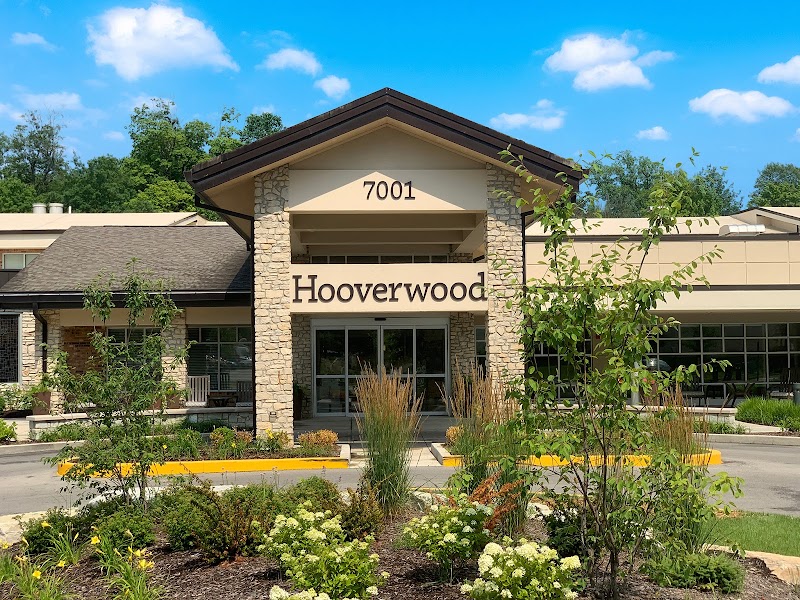
HOOVERWOOD

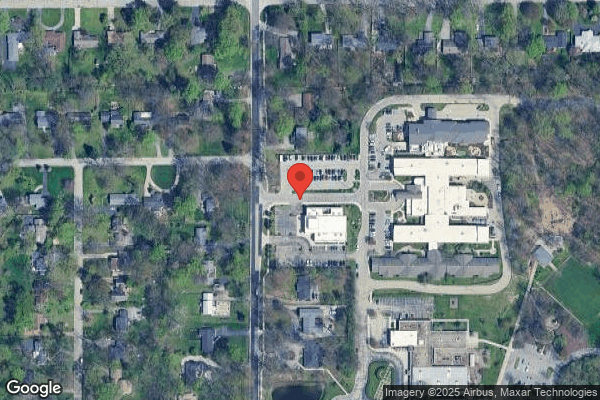
7001 HOOVER RD, INDIANAPOLIS, IN 46260 (317) 251-2261
Non profit - Corporation 155 Beds Independent Data: November 2025 1 Immediate Jeopardy citation
Trust Grade
0/100
#458 of 505 in IN
Last Inspection: March 2025

Within standard 12-15 month inspection cycle. Federal law requires annual inspections.

Overview

Hooverwood has a Trust Grade of F, indicating significant concerns regarding care quality. Ranked #458 out of 505 facilities in Indiana, it falls in the bottom half of nursing homes, and at #43 out of 46 in Marion County, only two local options are worse. The facility is improving, with issues decreasing from 15 in 2024 to 11 in 2025, but it still faces serious challenges, including a concerning $34,216 in fines, which is higher than 91% of Indiana facilities. Staffing is rated average, with a 3/5 star rating and a low turnover of 0%, which means staff remain consistent; however, RN coverage is below average, as it has less RN presence than 78% of state facilities. Specific incidents include a resident being sexually assaulted by a housekeeping staff member and a resident suffering a femur fracture due to improper transfer protocols, highlighting serious safety and care issues alongside a few strengths.

Trust Score
F
0/100
In Indiana
#458/505
Bottom 10%
Safety Record
High Risk
Review needed
Inspections
Getting Better
15 → 11 violations
Staff Stability
○ Average
Turnover data not reported for this facility.
Penalties
✓ Good
$34,216 in fines. Lower than most Indiana facilities. Relatively clean record.
Skilled Nurses
○ Average
Each resident gets 38 minutes of Registered Nurse (RN) attention daily — about average for Indiana. RNs are the most trained staff who monitor for health changes.
Violations
⚠ Watch
42 deficiencies on record. Higher than average. Multiple issues found across inspections.
★☆☆☆☆
1.0
Overall Rating
★★★☆☆
3.0
Staff Levels
★★★☆☆
3.0
Care Quality
★☆☆☆☆
1.0
Inspection Score
Stable
2024: 15 issues
2025: 11 issues

The Good

  • Full Sprinkler Coverage · Fire safety systems throughout facility
  • No fines on record

Facility shows strength in fire safety.

The Bad

1-Star Overall Rating

Below Indiana average (3.1)

Significant quality concerns identified by CMS

Federal Fines: $34,216

Above median ($33,413)

Moderate penalties - review what triggered them

The Ugly 42 deficiencies on record

1 life-threatening 4 actual harm
Mar 2025 8 deficiencies
CONCERN (D)

Potential for Harm - no one hurt, but risky conditions existed

Deficiency F0554 (Tag F0554)

Could have caused harm · This affected 1 resident

Based on observation, interview and record review, the facility failed to ensure residents had self-medication administration assessments completed by the interdisciplinary team for 2 of 2 residents r...

Read full inspector narrative →
Based on observation, interview and record review, the facility failed to ensure residents had self-medication administration assessments completed by the interdisciplinary team for 2 of 2 residents reviewed for self-medication administration. (Resident 73 and 77) Findings include: 1. During an observation, on 3/20/25 at 12:21 p.m., Resident 73 had Afrin nasal spray (a decongestant) on her bedside table. The clinical record for Resident 73 was reviewed on 3/20/25 at 12:47 p.m. The diagnoses included, but were not limited to, unspecified edema, bilateral cataract, and hypertension. The clinical record did not contain a self-administration evaluation completed by the interdisciplinary team for the resident to self-administer medications or keep them in her room. 2. During an observation, on 3/20/25 at 12:34 p.m., Resident 77 had lubricant eye drops and diclofenac/lidocaine cream (anti-inflammatory cream) on her bedside table. During an observation, on 3/24/25 at 10:22 a.m., Resident 77 had lubricant eye drops on her bedside table. The clinical record for Resident 77 was reviewed on 3/24/25 at 9:15 a.m. The diagnoses included, but were not limited to, type 2 diabetes, unspecified pain, and low back pain. The clinical record did not contain a self-administration evaluation completed by the interdisciplinary team for the resident to self-administer medications or keep them in her room. During an interview, on 3/24/25 at 10:29 a.m., Licensed Practical Nurse (LPN) 6 indicated she did not see a self-administer medication evaluation for Resident 73 or 77 in their records and they should have one if they had medications in their room. During an interview, on 3/24/25 at 10:43 a.m., Unit Manager (UM) 7 indicated the residents should have had self-administration evaluations if they had medications in their rooms. A current facility policy, titled Medication Administration-Self Administration Evaluation, dated as last revised in May 2022 and received from the Director of Nursing (DON) on 3/26/25 at 1:05 p.m., indicated .If the resident wishes to administer their own medications, they will be assessed by the nursing staff as to their capability. The IDT and physician will review the assessment and decide if the resident will be allowed to administer their medications. 2. If it is the decision not to allow the resident to administer their medications, then all medications shall be removed from the resident's room and kept in the nursing station 3.1-11(a)
CONCERN (D)

Potential for Harm - no one hurt, but risky conditions existed

Transfer Notice (Tag F0623)

Could have caused harm · This affected 1 resident

Based on interview and record review, the facility failed to ensure the ombudsman and resident, or resident's representative was notified in writing of the reason for the resident's transfer and disch...

Read full inspector narrative →
Based on interview and record review, the facility failed to ensure the ombudsman and resident, or resident's representative was notified in writing of the reason for the resident's transfer and discharge to the hospital for 2 of 6 residents reviewed for transfer and discharge. (Resident 80 and 9) Findings include: 1. The clinical record for Resident 80 was reviewed on 3/24/25 at 10:52 a.m. The diagnoses included, but were not limited to, diabetes, bipolar disorder, anxiety, borderline personality disorder, seizures, transient ischemic attack, and cerebrovascular accident. A nursing progress note, dated 8/14/24 at 11:00 a.m., indicated the resident was sent to the hospital for a psychiatric evaluation. A social service progress note, dated 8/14/24 at 1:23 p.m., indicated Resident 80 had an active plan to harm himself. The crisis center was contacted, and the resident was willing to go for a psychiatric stay. There was no documentation found in the resident's clinical record to indicate the resident and resident's representative were given information in writing regarding the reason for the resident's transfer to the hospital. There was no documentation found in the resident's clinical record to indicate the ombudsman was notified of the resident's hospitalization. 2. The clinical record for Resident 9 was reviewed on 3/24/25 at 10:01 a.m. The diagnoses included, but were not limited to, osteomyelitis, muscle weakness, and fracture of the left fibula. The clinical record indicated Resident 9 experienced a fall, on 6/14/24, and she was transferred out of the facility by emergency services to the hospital and was expected to return to the facility. Resident 9 was discharged from the facility 6/14/24 through 6/17/24. There was no documentation found in the resident's clinical record to indicate the ombudsman was notified of the resident's hospitalization. During an interview, on 3/25/25 at 9:31 a.m., the Social Service Director indicated the facility did not notify the ombudsman and was under the impression if residents were expected to return to the facility, they did not need to send notification of the transfer or discharge to the ombudsman. A policy the facility was currently using, titled Ombudsman Notification, last updated 3/2023 and received from the Director of Nursing on 3/26/25 at 1:05 p.m., indicated .The facility will notify the Ombudsman office on a monthly basis all residents who are sent out to the Hospital who the facility does not anticipate a return A document, titled Family of Social Service Administration, last updated October 2024, indicated .Dear Nursing Home Administrator: As you know, CMS requires nursing facilities to notify the Long-Term Care (LTC) Ombudsman of the majority of residents' transfers and discharges .When a resident is transferred on an emergency basis to an acute care facility and expected to return, the SLTCO must be notified. Information from facilities regarding emergency transfers should be provided in a monthly list to the SLTCO, which should include residents' names, dates of transfer, facilities to which residents were transferred, and reasons for the transfers. Please make sure your facility's name is included on the monthly list 3.1-12(a)(6)(A)(i) 3.1-12(a)(6)(A)(ii) 3.1-12(a)(6)(A)(iii) 3.1-12(a)(6)(A)(iv)
CONCERN (D)

Potential for Harm - no one hurt, but risky conditions existed

ADL Care (Tag F0677)

Could have caused harm · This affected 1 resident

Based on observation, interview and record review, the facility failed to ensure staff dressed a resident in a manner to avoid allowing her breast to be exposed and to provide incontinence care in a t...

Read full inspector narrative →
Based on observation, interview and record review, the facility failed to ensure staff dressed a resident in a manner to avoid allowing her breast to be exposed and to provide incontinence care in a timely manner for 1 of 1 dependent resident reviewed for activities of daily living (ADL) care. (Resident 28) Findings include: The clinical record for Resident 28 was reviewed on 3/24/25 at 11:29 p.m. The diagnoses included, but were not limited to, dementia and depression. A care plan, dated as revised on 6/20/24, indicated Resident 28 was dependent on staff for activities of daily living. Interventions included, but were not limited to, assistance by 1 staff for personal hygiene and dressing, and assistance by 2 staff for toileting. A quarterly Minimum Data Set (MDS) assessment, dated 2/10/25, indicated Resident 28 was severely cognitively impaired. 1. During an observation, on 3/20/25 at 2:25 p.m., Resident 28 was sitting in the lounge across from the nurse's station with another resident. Resident 28's shirt was pulled up and her left breast was exposed. The Director of Nursing (DON) entered the room, noticed the resident's breast, and pulled her shirt down. During an observation, on 3/25/25 at 9:47 a.m., Resident 28 was sitting in the lounge with two residents. Resident 28's shirt was pulled up exposing half of her left breast. The Assistant Director of Nursing (ADON) entered the room, approached the resident, noticed the resident's exposed breast, and pulled her shirt down. During an interview, on 3/25/25 at 10:09 a.m., the ADON indicated she was not aware the resident's shirt was pulled up and they needed to make sure she was covered. During an interview, on 3/25/25 at 11:29 a.m., the DON indicated the ADON had told her the resident's breast was exposed again and the resident needed to be watched closely. 2. During an observation, on 3/20/25 at 10:30 a.m., Resident 28 was sitting in the lounge across from the nurse's station with bath blankets wrapped around the resident. During an observation, on 3/20/25 at 12:10 p.m., Resident 28 continued to sit in the lounge across from the nurse's station. A strong bowel movement and urine odor came from the resident. The resident was leaning to the right side trying to get off her buttock. The Unit Manager walked by the resident and was informed of the resident condition. The resident was taken to her room for care. During an observation, on 3/20/25 at 12:30 p.m., the Unit Manager told Certified Nursing Assistant (CNA) 9 she would help her change the resident's brief. CNA 9 gathered her supplies and unfastened the resident's brief. The brief was soaked with urine and a large loose bowel movement. A Certified Nursing Assistant job description, dated as revised 8/2007, indicated to visually check each assigned resident at least every two hours, or more frequently if their condition is required, to assist in identifying care needs. During an interview, on 3/20/25 at 12:37 p.m., the Unit Manager indicated the resident's brief was soaked with urine and bowel movement and the resident needed to be checked more often. During an interview, on 3/26/25 at 3:38 p.m., CNA 8 indicated residents needed to be checked and changed every 2 hours or when needed. A current facility policy, titled Incontinence, dated 2021 and received from the Regional Director of Clinical Operations on 4/25/22 at 1:31 p.m., indicated .Based on the resident's comprehensive assessment, all residents that are incontinent will receive appropriate treatment and services .Residents that are incontinent of bladder or bowel will receive appropriate treatment to prevent infections and to restore continence to the extent possible A current facility policy, titled Resident Care-Perineal Care, dated as revised 7/18 and received from the DON on 3/24/25 at 1:59 p.m., indicated .To provide cleanliness and comfort, prevent infection and skin irritation, and to observe the skin condition of the resident .Perineal cleansing and care is performed as a part of the daily hygiene routine as well as after episodes of incontinence A current facility policy, titled Resident Right Know Your Rights under Federal Nursing Home Regulations, dated 3/15/17 and received from the DON on 3/24/25 at 1:59 p.m., indicated .You have the right to a dignified existence, self-determination, and communication with and access to the persons and services inside and outside the facility .You have the right to be treated with respect and dignity 3.1-38(a)(2)(A) 3.1-38(a)(2)(C)
CONCERN (D)

Potential for Harm - no one hurt, but risky conditions existed

Accident Prevention (Tag F0689)

Could have caused harm · This affected 1 resident

Based on observation, interview and record review, the facility failed to ensure a dependent resident was evaluated prior to being transferred with a sit-to-stand mechanical lift to ensure a safe tran...

Read full inspector narrative →
Based on observation, interview and record review, the facility failed to ensure a dependent resident was evaluated prior to being transferred with a sit-to-stand mechanical lift to ensure a safe transfer for 1 of 3 residents reviewed for accidents hazards. (Resident 28) Findings include: During an observation, on 3/20/25 at 12:10 p.m., Resident 28 was sitting in the lounge across from the nurse's station. A strong bowel movement and urine odor came from the resident. Unit Manager 10 walked by the resident and was informed of the resident condition. The resident was taken to her room for care. During an observation, on 3/20/25 at 12:30 p.m., Unit Manager 10 informed CNA 8 she would help transfer the resident into bed. CNA 8 left the room and returned with a sit-to-stand mechanical lift. Unit Manager 10 put the sling strap for the sit-to-stand lift behind the resident's back and attached it to the lift. CNA 8 instructed Resident 28 to hold on to the handlebars on the top of the lift. The resident was yelling at the staff and refused to hold onto the handlebars. Unit Manager 10 instructed CNA 8 to lift the resident while she guided the resident to bed. The resident was not holding onto the handlebars when CNA 8 started using the lift. While the resident was being lifted, the strap slipped under the resident's armpits and the resident was not using her legs to stand. Unit Manager 10 took the resident by the waist and assisted her to the bed. The clinical record for Resident 28 was reviewed on 3/24/25 at 11:29 p.m. The diagnoses included, but were not limited to, hypertension, dementia, and depression. A quarterly Minimum Data Set (MDS) assessment, dated 2/10/25, indicated the resident was severely cognitively impaired. A care plan, dated 5/31/23, indicated Resident 28 had a self-care deficit related to dementia and blindness. Interventions included, but were not limited to, Resident 28 required total dependence and assistance by 2 staff members to transfer between surfaces. The care plan did not indicate Resident 28 should be transferred with a sit-to-stand lift. The clinical record did not indicate a sit-to-stand mechanical lift evaluation had been completed for safety prior to the resident being transferred using the lift. During an interview, on 3/20/25 at 12:40 p.m., Unit Manager 10 indicated the sit-to-stand mechanical lift was probably not a safe way to transfer the resident. During an interview, on 3/20/25 at 12:43 p.m., CNA 8 indicated the resident had not always held on to the handlebars when the sit-to-stand lift was used. During an interview, on 3/24/25 at 11:11 a.m., Unit Manager 7 indicated when a resident was admitted , they had an evaluation for transfers. If a resident was a 2 person assist and a gait belt (a transfer belt placed around the waist to aid in safe movement during transfers) must be used. During an interview, on 3/24/25 at 12:31 p.m., the Director of Nursing (DON) indicated the unit manager told her the resident was transferred by using the wrong lift. The CNA assignment sheet (a document used to guide CNAs care specific to each resident) was incorrect. The resident should not have been transferred using the sit-to-stand mechanical lift. During an interview, on 3/26/25 at 3:38 p.m., CNA 8 indicated the CNA assignment sheet had all the information needed to take care of the residents. The sheet would instruct you how the resident transferred. The facility Certified Nursing Assistant job description, dated as revised 8/2007 and received from the DON on 3/24/25 at 2:00, indicated to correctly follow all unit routines as assigned by a supervisor, secure and maintain resident safety devices as needed, correctly transfer the resident in accordance with the CNA assignment sheet and report changes in the resident's transfer abilities to the Unit Manager. A current facility policy, titled Mechanical Lift-Sit to Stand, dated as revised 3/2022 and received from the DON on 3/24/25 at 2:00 p.m., indicated .To provide guidelines for staff to safely transfer residents .The staff shall safely transfer residents using mechanical lifts .Check assignment sheet for appropriate and approved transfer method .Check the lift and sling before transfer to ensure all safety belts are intact and functioning .Ensure the second staff person required for transfer is present .Apply sling to resident .Fasten leg belts to both legs before transfer takes place Instruct the resident to place hands on handle bars, grip for duration of transfer and use his/her upper body to help support their body .Begin transfer with remote control. The person operating the controls should stand closest to the resident being transferred .Raise the resident only as high as necessary to clear his/her body from the transfer surface .Lower the resident to his/her destination surface .Carefully release resident from sling and leg belts A current facility policy, titled Gait Belt Use, dated as revised 3/2022 and received from the DON on 3/24/25 at 2:00 p.m., indicated .To provide stability for a resident during ambulation or transfer .If the resident is not able to independently self-transfer, the resident shall be transferred utilizing a gait belt 3.1-45(a)(1)
CONCERN (D)

Potential for Harm - no one hurt, but risky conditions existed

Drug Regimen Review (Tag F0756)

Could have caused harm · This affected 1 resident

Based on interview and record review, the facility failed to ensure residents medications were reviewed monthly by the pharmacist for 3 of 5 residents reviewed for unnecessary medications. (Resident 5...

Read full inspector narrative →
Based on interview and record review, the facility failed to ensure residents medications were reviewed monthly by the pharmacist for 3 of 5 residents reviewed for unnecessary medications. (Resident 55, 91 and 92) Findings include: 1. The clinical record for Resident 55 was reviewed on 3/24/25 at 11:49 a.m. The diagnoses included, but were not limited to, Alzheimer's disease, psychotic disorder with delusions, peripheral vascular disease, severe kidney disease, diabetes mellitus with diabetic polyneuropathy, depression, anxiety disorder, and hypertension. The physician's orders indicated Resident 55 received lorazepam (an anti-anxiety medication), sertraline (an antidepressant medication), and Zyprexa (an antipsychotic medication). The clinical record included pharmacy reviews for Resident 55's medications on 3/24, 4/24, 5/24, 6/24, 8/24, 9/24, 10/24, 11/24, 12/24, 1/25, 2/25, and 3/25. There were no pharmacist reviews for July of 2024 between the dates of 6/18/24 and 8/9/24. During an interview, on 3/25/25 at 1:35 p.m., the Director of Nursing (DON) indicated the facility had changed pharmacy providers in August. She could not find a record of a pharmacist review of the resident's medications for the month of July. She contacted the previous pharmacy provider, but they did not have a record of a review for Resident 55 for July. 2. The clinical record for Resident 91 was reviewed on 3/25/25 at 3:18 p.m. The diagnoses included, but were not limited to, seizure disorder, anxiety disorder, and depression. The physician's orders indicated Resident 91 received aripiprazole (an antipsychotic medication) and Cymbalta (an antidepressant medication). The clinical record included pharmacy reviews for Resident 91's medications on 4/24, 5/24, 8/24, 9/24, 10/24, 11/24, 12/2024. There were no pharmacist reviews for 6/24, 7/24, 1/25 and 2/25. During an interview, on 3/26/25 at 3:13 p.m., the DON indicated the facility changed pharmacies and she had contacted the old pharmacy. They provided all the monthly pharmacy reviews the facility had for the Resident 91 and several months were missing. 3. The clinical record for Resident 92 was reviewed on 3/25/25 at 11:05 a.m. The diagnoses included, but were not limited to, hypertension, anxiety disorder, and manic depression. The physician's orders indicated Resident 92 received olanzapine (an antipsychotic medication). The clinical record included pharmacy reviews for Resident 92's medications on 6/17/24, 8/14/24, 9/6/24, 10/17/24, 11/12/24, 12/17/24, 1/17/25, 2/11/25. There were no pharmacist reviews for July of 2024. During an interview, on 3/26/25 at 3:15 p.m., the DON indicated the monthly pharmacy review for July of 2024 could not be found. A current facility policy, titled Psychoactive Medications, dated as last revised in November 2018 and received from the DON on 3/26/25 at 1:05 p.m., indicated .Psychoactive medications shall be prescribed at the lowest possible dosage for the shortest period of time and are subject to gradual dose reduction and review in accordance with regulatory requirements 3.1-25(h)
CONCERN (D)

Potential for Harm - no one hurt, but risky conditions existed

Medication Errors (Tag F0758)

Could have caused harm · This affected 1 resident

Based on observation, interview, and record review, the facility failed to ensure an as needed (PRN) psychotropic medication was limited to 14 days and an Abnormal Involuntary Movement Scale (AIMS) as...

Read full inspector narrative →
Based on observation, interview, and record review, the facility failed to ensure an as needed (PRN) psychotropic medication was limited to 14 days and an Abnormal Involuntary Movement Scale (AIMS) assessment was completed for a resident taking a psychotropic medication for 2 of 5 residents reviewed for unnecessary medications. (Residents 137 and 91) Findings include: 1. The clinical record for Resident 137 was reviewed on 3/24/25 at 10:08 a.m. The diagnoses included, but were not limited to, anxiety disorder, depression, and major depressive disorder. A physician's order, with a start date of 2/27/25, indicated to give lorazepam (an anti-anxiety medication) 0.5 milligrams (mg) every 8 hours as needed with an indefinite stop date. The medication order had gone past the 14 days without changes or a physician's rationale for extending the medication. During an interview, on 3/24/25 at 11:09 a.m., Unit Manager (UM) 6 indicated there was no stop date on the lorazepam order. 2. The clinical record for Resident 91 was reviewed on 3/25/25 at 3:18 p.m. The diagnoses included, but were not limited to, anxiety disorder, depression, and seizure disorder. A physician's order, with a start date of 2/11/25, indicated to give Aripiprazole (an antipsychotic medication) in the evening. An admission/annual/quarterly evaluation, dated 10/30/24, had an open AIMS assessment which was not completed. An admission/annual/quarterly evaluation, dated 11/22/24, had an open AIMS assessment which was not completed. The last completed AIMS assessment was on 2/27/24. During an interview, on 3/26/25 at 3:10 p.m., the Director of Nursing (DON) indicated she could not find any other completed AIMS assessment. During an interview, on 3/26/25 at 3:13 p.m., the Assistant Director of Nursing (ADON) indicated she could not find any other AIMS assessment and they should have been completed. A current facility policy, titled Psychoactive Medications, dated as last revised in November 2018 and received from the DON on 3/26/25 at 1:05 p.m., indicated .PRN orders for psychoactive drugs are limited to 14 days, unless the attending physician/consultant believes that it is appropriate for the PRN medication to be extended beyond the 14 days, he should document the rationale in the medical record and indicate the duration for the PRN order A current facility policy, titled admission Assessment, dated as revised in October 2024 and received from the DON on 3/26/25 at 4:59 p.m., indicated .The admission process will include a complete assessment of the individual in order to determine the care treatment and services that will be required by the resident .Other evaluations include, but not limited to .AIMS-(if on psychotropics) .The above assessments are repeated every 4 months 3.1-48(a)(2) 3.1-48(a)(3)
CONCERN (D)

Potential for Harm - no one hurt, but risky conditions existed

Deficiency F0804 (Tag F0804)

Could have caused harm · This affected 1 resident

Based on observation, interview and record review, the facility failed to ensure a resident was alerted and awakened when her meal delivery occurred so the meal could be consumed at an appetizing temp...

Read full inspector narrative →
Based on observation, interview and record review, the facility failed to ensure a resident was alerted and awakened when her meal delivery occurred so the meal could be consumed at an appetizing temperature for 1 of 1 resident reviewed for room trays. (Resident 34) Findings include: During an interview, on 3/21/25 at 9:12 a.m., Resident 34 indicated her meals were served cold. During an observation, on 3/25/25 at 1:39 p.m., Resident 34's lunch, which included grilled cheese and tomato soup, had been delivered and was sitting on her bedside table. The surveyor knocked on Resident 34's door and asked permission to enter. Resident 34 was asleep but woke up and gave the surveyor permission to enter. Resident 34 indicated she was unaware her lunch had been delivered and indicated the staff did not always wake her up when they delivered her meals. During an observation, on 3/26/25 at 9:12 a.m., Resident 34 was asleep in her recliner. Her breakfast, which included, two eggs prepared over easy, oatmeal, and French toast, had been delivered and was sitting on her bedside table. The surveyor knocked on Resident 34's door and asked permission to enter. Resident 34 was asleep but woke up and gave the surveyor permission to enter. Once again, Resident 34 indicated she was unaware her meal had been delivered. A request was made to check the food temperature on Resident 34's breakfast tray. During an interview, on 3/26/25 at 9:12 a.m., Unit Manager 3 indicated it was Resident 34's preference not to be woken up for tray delivery. During an interview, on 3/26/25 at 9:15 a.m., Certified Nursing Assistant 2 indicated she delivered Resident 34's room tray. She indicated the resident preferred not to be woken up for meal delivery. During an interview, on 3/26/25 at 9:17 a.m., Resident 34 indicated she wanted the staff to wake her up when they delivered her meal trays. During an interview, on 3/26/25 at 9:30 a.m., Unit Manager 3 indicated the kitchen manager had indicated the kitchen staff were not allowed to enter a resident's room and would not be able to check the temperature of the breakfast tray. During an interview, on 3/26/25 at 9:36 a.m., the Director of Nursing (DON) indicated the Executive Chef would check the temperature of the breakfast tray and they were not sure why the staff member did not check the temperature of the food at the time it was requested to be checked. During an interview, on 3/26/25 at 9:40 a.m., the Executive Chef indicated the breakfast tray had been sitting in the resident's room for a while now and the food would be cold. The tray should not be served to her if the food had been sitting this long. During an observation, on 3/26/25 at 9:40 a.m., with the DON and General Manager, the Executive Chef obtained the temperature of Resident 34's breakfast tray, and indicated the oatmeal was 108.3 degrees, the eggs were 83 degrees, and the French toast was 78.9 degrees. The Executive Chef indicated the food was below the required temperature and more specifically, the eggs should have been over 140 degrees Fahrenheit. The temperature of her food was checked 28 minutes after the request was made. The clinical record for Resident 34 was reviewed on 3/25/25 at 11:41 a.m. The diagnoses included, but were not limited to, anxiety disorder, tracheostomy status, and chronic obstructive pulmonary disease. A care plan, dated 9/12/24, indicated the resident had a self-care performance deficit. Interventions included, but were not limited to, Resident 34 required set-up assistance by staff to eat. The care plan did not include preferences regarding meal delivery. A care plan, dated 10/8/24, indicated Resident 34 had preferences and refusals. Interventions included, but were not limited to, staff would maintain consistency in timing, caregivers, and routine as much as possible. The care plan did not include preferences regarding meal delivery. A care plan, dated 3/25/25, indicated Resident 34 had verbal aggression toward staff. Interventions included, but were not limited to, assessing and anticipating Resident 34's needs, which included food. The care plan did not include preferences regarding meal delivery. During an interview, on 3/25/25 at 10:10 a.m., the resident council attendees indicated they had received cold food delivered to their rooms. They could ask for the food to be reheated but believed they should not have to ask. The food should be served hot. A facility document, titled Meal Delivery, dated 9/7/22 and received from the General Manager on 9/26/25 at 11:37 a.m., indicated .Meals will be delivered to all residents/patients in a timely, organized, safe and sanitary manner .Positions resident/patient to ensure comfort and safety while eating and drinking. Aids with meal set-up as appropriate and assists residents/patients who require assistance A facility document, titled Meal Temperature Records Meal Service, dated 9/7/22 and received from the General Manager on 9/26/25 at 11:37 a.m., indicated .Food is maintained at proper temperatures during services to meet resident expectations for palatability and to ensure that food safety principles are maintained to prevent foodborne illness The facility did not have a policy related to delivery of room trays. 3.1-21(a)(2)
CONCERN (E)

Potential for Harm - no one hurt, but risky conditions existed

Deficiency F0625 (Tag F0625)

Could have caused harm · This affected multiple residents

5. The clinical record for Resident 138 was reviewed on 3/24/25 at 11:47 a.m. The diagnoses included, but were not limited to stage 5 kidney disease, heart failure, and end stage renal disease. A prog...

Read full inspector narrative →
5. The clinical record for Resident 138 was reviewed on 3/24/25 at 11:47 a.m. The diagnoses included, but were not limited to stage 5 kidney disease, heart failure, and end stage renal disease. A progress note, dated 2/18/25 at 4:28 p.m., indicated the spouse wanted the resident to be sent out to the hospital due to continual decline and complaints of back pain. The resident was sent to the emergency room. A notice of transfer or discharge form was reviewed and observed to be not filled out. There was no documentation in the clinical record to indicate Resident 138 or Resident 138's representative was provided with notice of the facility bed hold policy at the time of transfer, or in cases of emergency transfer, within 24 hours. During an interview, on 3/26/25 at 4:43 p.m., the Director of Nursing indicated the facility staff did not document in the clinical record the bed hold policy had been provided to the resident or resident's representative. The facility did not provide a policy and procedure related to sending and documenting a notice of bed hold policy to the resident or resident's representative for transfers and discharges. 3.1-12(a)(25)(A) 3.1-12(a)(25)(B) 3.1-12(a)(26) 2. The clinical record for Resident 9 was reviewed on 3/24/25 at 10:01 a.m. The diagnoses included, but were not limited to, osteomyelitis, bacteremia, and fracture of the left fibula. The clinical record indicated Resident 9 experienced a fall, on 6/14/24, and she was transferred out of the facility by emergency services to the hospital and was expected to return to the facility. Resident 9 was discharged from the facility 6/14/24 through 6/17/24. A skilled nursing facility to hospital transfer form, a notice of transfer or discharge, an appeal rights, a notice of transfer or discharge request for hearing, and a bed hold policy, dated 6/14/24, were reviewed. The clinical record did not include documentation to indicate the above documents were given to Resident 9 or Resident 9's family representative at the time of transfer, or in cases of emergency transfer, within 24 hours. 3. The clinical record for Resident 66 was reviewed on 3/24/25 at 3:51 p.m. The diagnoses included, but were not limited to, gastrostomy status, interstitial pulmonary disease, and cerebral infarction. The clinical record indicated Resident 66 was transferred to the hospital after the resident's gastrostomy tube (a tube inserted into the stomach to provide nutrition) had become dislodged, on 1/2/25. A progress note, dated 1/2/25, indicated the nurse contacted Resident 66's POA (Power of Attorney) about the dislodged gastrostomy tube. The POA requested Resident 66 be sent to the hospital. A skilled nursing facility to hospital transfer form, a notice of transfer or discharge, an appeal rights, a notice of transfer or discharge request for hearing, and a bed hold policy, dated 1/2/25, were reviewed. The clinical record did not include documentation to indicate the above documents were given to Resident 66 or Resident 66's family representative at the time of transfer, or in case of emergency transfer, within 24 hours. During an interview, on 3/21/25 at 11:49 a.m., Resident 66's POA indicated the facility contacted him about the dislodged G-tube. The facility did not provide him with a notice of the facility bed hold policy when Resident 66 was transferred to the hospital. He was unaware the facility was supposed to provide him with a notice of the facility bed hold policy. 4. The clinical record for Resident 108 was reviewed on 3/24/25 at 12:10 p.m. The diagnoses included, but were not limited to, benign prostatic hyperplasia, retention of urine, and congestive heart failure. a. The clinical record indicated Resident 108 was transferred to the hospital due to issues which arose while staff attempted to re-insert his urinary catheter, on 11/20/24. A progress note, dated 11/20/24, indicated Resident 108's wife was present at the time and requested the resident be sent to the hospital. A skilled nursing facility to hospital transfer form, a notice of transfer or discharge, an appeal rights, a notice of transfer or discharge request for hearing, and a bed hold policy, dated 11/20/24, were reviewed. The clinical record did not include documentation to indicate the above documents were given to Resident 108 or Resident 108's wife at the time of transfer. b. The clinical record indicated Resident 108 was transferred to the hospital again for hypertension (high blood pressure) and low oxygen saturation, on 11/26/24. A skilled nursing facility to hospital transfer form, a notice of transfer or discharge, an appeal rights, and a notice of transfer or discharge request for hearing, dated 11/26/24, were reviewed. A bed hold policy was not included. The clinical record did not include documentation to indicate the above documents were given to Resident 108 or Resident 108's wife at the time of transfer, or in cases of emergency transfer, within 24 hours. During an interview, on 3/25/25 at 9:58 a.m., the Director of Nursing (DON) indicated the facility could not find the bed hold policy provided for the hospital transfer, dated 11/26/24. Based on interview and record review, the facility failed to ensure residents and/or residents' representatives were provided a notice of the facility bed hold policy at the time of transfer, or in cases of emergency transfer, within 24 hours for 5 of 6 residents reviewed for transfer and discharge. (Resident 80, 9, 66, 108 and 138) Findings include: 1. The clinical record for Resident 80 was reviewed on 3/24/25 at 10:52 a.m. The diagnoses included, but were not limited to, diabetes, bipolar disorder, anxiety, borderline personality disorder, seizures, transient ischemic attack, and cerebrovascular accident. A nursing progress note, dated 8/14/24 at 11:00 a.m., indicated the resident was sent to the hospital for a psychiatric evaluation. A social service progress note, dated 8/14/24 at 1:23 p.m., indicated Resident 80 had an active plan to harm himself. The crisis center was contacted, and the resident was willing to go for a psychiatric stay. There was no documentation in the clinical record to indicate the resident or resident's representative was provided with notice of the facility bed hold policy at the time of transfer, or in cases of emergency transfer, within 24 hours.
Jan 2025 3 deficiencies
CONCERN (D) 📢 Someone Reported This

A family member, employee, or ombudsman was alarmed enough to file a formal complaint

Potential for Harm - no one hurt, but risky conditions existed

Resident Rights (Tag F0550)

Could have caused harm · This affected 1 resident

Based on interview and record review, the facility failed to ensure residents were treated with respect and dignity for 2 of 12 residents reviewed for resident rights. (Resident J and K). The deficien...

Read full inspector narrative →
Based on interview and record review, the facility failed to ensure residents were treated with respect and dignity for 2 of 12 residents reviewed for resident rights. (Resident J and K). The deficient practice was corrected on 11/5/24, prior to the start of the survey, and was therefore past noncompliance. Findings include: A document, titled Indiana State Department of Health Survey Report System, dated 11/4/24, indicated Resident J had indicated CNA 1 was rough with her when she got her up on 10/31/24 at 9:01 a.m. A facility resident questionnaire document indicated on 10/31/24 at 9:01 a.m., Resident J indicated CNA 1 was grouchy with her. CNA 1 told the resident to do this, do that. Resident J indicated she hurt my feelings. A facility written statement, dated 10/31/24, indicated a telephone interview was conducted with CNA 1. CNA 1 indicated she was not mean, hateful or rough with the resident when she provided care for her. The CNA was suspended pending an investigation. A facility written statement, dated 10/31/24, signed by LPN 2 indicated CNA 1 was asked to get Resident J out of bed. CNA 1 brought Resident J to the nurses' station to sit with LPN 2. While sitting at the desk, Resident J indicated to LPN 2 that CNA 1 was hateful, and CNA 1 ignored her. A document, titled Take off Payroll, dated 11/5/24, indicated CNA 1 was terminated for being mean and nasty with Resident J. The facility yielded on the side of safety to keep their residents safe from perceptions of abuse. The clinical record for Resident J was reviewed on 1/21/25 at 12:43 p.m. The diagnoses included, but were not limited to, major depressive disorder, pain, anxiety disorder, frontotemporal neurocognitive disorder, moderate protein-calorie malnutrition, and difficulty walking. Resident J was unable to be interviewed. 2. A document, titled Indiana State Department of Health, dated 11/8/24, indicated Resident K reported she had a care concern with CNA 5 on 11/3/24. A typed facility statement dated 11/3/24 at 8:02 p.m., CNA 5 indicated she took Resident K to the bathroom. Resident K wore a brief with a pull up over the brief. The resident turned on her light at around 10:30 a.m., indicating she was in pain. The CNA informed the nurse the resident was complaining of pain. During the last bed check, CNA 5 took the resident to the bathroom, and she observed the pullup was off. The nurse had removed the pullup because it was too tight with the brief and the resident was complaining of pain in her private area. CNA 5 indicated the resident requested to have two briefs placed on her and CNA 5 informed the resident she was not able to. This was the only conversation she had with the resident. A handwritten statement, dated 11/3/24, CNA 6 indicated when she went to Resident K's room to get her for dinner, the resident started crying and said she was tired of being mistreated. She did not want CNA 5 to take care of her again. Resident K indicated CNA 5 yelled at her roommate as well. A handwritten statement, dated 11/3/24, LPN 7 indicated Resident K did not want CNA 5 to care for her anymore because CNA 5 yelled at her and told her she could not wear two briefs. A typed statement, dated 11/6/24, Resident K indicated CNA 5 yelled at her because she had to go to the bathroom. She scolded her for being wet and wanting to wear two briefs. A document, titled Take off Payroll, dated 11/7/24, indicated CNA 5 was terminated on 11/7/24. The clinical record for Resident K was reviewed on 1/21/25 at 11:36 a.m. The diagnoses included, but were not limited to, psychotic disorder with hallucinations, major depressive disorder, type II diabetes mellitus, dementia, and frontotemporal neurocognitive disorder. On 1/21/25 at 3:03 p.m., Resident K was unable to be interviewed. A current facility policy, titled Resident Rights, dated 10/18 and provided by the Director of Nursing (DON) on 1/21/25 at 12:45 p.m., indicated .The facility shall use Resident's Rights (as identified by the Federal and State Guidelines) as the basis for their services to residents in providing care that meets the needs and rights of the residents The deficient practice was corrected by 11/5/24, after the facility implemented a systemic plan that included the following actions: resident interviews were conducted, facility staff were in-serviced, and CNA 1 and 5 were terminated. This citation relates to Complaints IN00446410, IN00446579, and IN00450262. 3.1-3(t)
CONCERN (D) 📢 Someone Reported This

A family member, employee, or ombudsman was alarmed enough to file a formal complaint

Potential for Harm - no one hurt, but risky conditions existed

Accident Prevention (Tag F0689)

Could have caused harm · This affected 1 resident

Based on interview and record review, the facility failed to ensure two staff members completed a Hoyer lift transfer to prevent an accident for 1 of 3 residents reviewed for accidents. (Resident J) T...

Read full inspector narrative →
Based on interview and record review, the facility failed to ensure two staff members completed a Hoyer lift transfer to prevent an accident for 1 of 3 residents reviewed for accidents. (Resident J) The deficient practice was corrected on 11/11/24, prior to the start of the survey, and was therefore past noncompliance. Findings include: A facility typed statement, dated 11/11/24, indicated the Director of Nursing (DON) spoke to CNA 9 regarding transferring Resident J with a Hoyer Lift (mechanical lift machine) without using a second person for the transfer. CNA 9 indicated she knew she was supposed to use a second person to transfer residents with the Hoyer lift. Because of the education CNA 9 had received related to transfers of residents with a Hoyer lift and choosing not to wait for a second person to transfer Resident J, CNA 9 was terminated from the facility. The clinical record for Resident J was reviewed on 1/21/25 at 12:43 p.m. The diagnoses included, but were not limited to, major depressive disorder, pain, anxiety disorder, frontotemporal neurocognitive disorder, moderate protein-calorie malnutrition, and difficulty walking. A nursing progress note, dated 11/9/24 at 11:22 a.m., indicated LPN 8 was notified Resident J was on the floor. CNA 8 indicated during a Hoyer lift transfer Resident J moved her hands and slid out of the Hoyer lift onto her recliner, then CNA 8 slid the resident onto the floor due to bad positioning on the recliner. Resident J had complaints of pain all over. The resident was given as needed pain medication. An IDT (Interdisciplinary Team) progress note, dated 11/12/24 at 10:27 a.m., indicated Resident J was assisted to the floor by CNA 9 during a Hoyer lift transfer. The resident repositioned her hand which caused her to slide from the Hoyer lift onto the recliner. The resident's positioning was bad in the recliner, so CNA 9 assisted the resident to the floor. The root cause of the fall was related to CNA 9 performing the Hoyer lift transfer without another staff member to assist with the transfer. A document, titled Employee Communication Form, dated 11/11/24, indicated CNA 9 was terminated, on 11/11/24, because she transferred a resident with a Hoyer lift without a second person as a spotter. She was educated to use two staff members with all mechanical lifts. A document, titled Take off Payroll, dated 11/11/24, indicated CNA 9 was terminated for a significant policy violation resulting in a resident falling from the Hoyer lift on 11/11/24. A current facility policy, titled Mechanical Lift-Hoyer, dated 5/2022 and provided from the DON on 1/22/25 at 11:39 a.m., indicated .To provide guidelines regarding the safe transfer of residents .The staff shall safely transfer resident's using mechanical lifts .Ensure the second staff person is present for transfer .Instruct the resident to place arms and hands inside sling for duration of the lift The deficient practice was corrected by 11/11/24, after the facility implemented a systemic plan that included the following actions: All staff members were in-serviced on ensuring two staff members were present for all Hoyer lift transfers and CNA 9 was terminated. This citation relates to Complaint IN00449484. 3.1-45(a)(2)
CONCERN (D) 📢 Someone Reported This

A family member, employee, or ombudsman was alarmed enough to file a formal complaint

Potential for Harm - no one hurt, but risky conditions existed

Pharmacy Services (Tag F0755)

Could have caused harm · This affected 1 resident

Based on interview and record review, the facility failed to ensure a staff member followed the policy and procedure when administering narcotics to 2 of 7 residents reviewed for pharmaceutical servic...

Read full inspector narrative →
Based on interview and record review, the facility failed to ensure a staff member followed the policy and procedure when administering narcotics to 2 of 7 residents reviewed for pharmaceutical services. (Residents C, D and H) The deficient practice was corrected on 10/15/24, prior to the start of the survey, and was therefore past noncompliance. Findings include: A document, titled Intake Information, dated 10/14/24 at 2:36 p.m., indicated several residents reported they did not receive their medications from the evening before, on 10/13/24, from RN 10. The agency nurse, RN 10, was placed on the do not return to the facility list. The following Electronic Medication Administration Record (EMAR) did not have the narcotic medication documented for the dates and times the narcotic count sheet indicated the medication was administered: 1. The clinical record for Resident C was reviewed on 1/22/25 at 2:30 p.m. The diagnoses included, but were not limited to, anxiety disorder, hypertension, and vitamin deficiency. Resident C's physician's orders included, but were not limited to, the following: Cyclobenzaprine HCL 10 mg by mouth every six hours as needed for muscle spasms. Norco 5-325 mg by mouth every four hours as needed for moderate-severe pain. The resident's Electronic Medication Administration Record (EMAR), dated 10/1/24 to 10/31/24, had no documentation to indicate the resident received any as needed doses of the medications on 10/11/24. A document, titled Med Script, indicated the Norco was signed out on the narcotic sheet on 10/11/24 at 8:00 a.m., 12:00 p.m., and 5:00 p.m., by RN 10. 2. The clinical record for Resident D was reviewed on 1/22/25 at 2:00 p.m. The diagnoses included, but were not limited to, aphasia, protein-calorie malnutrition, and vitamin deficiency. Resident D's physician's orders included, but were not limited to, the following: Oxycodone HCL 5 mg by G-tube every four hours as needed for severe pain. The resident's Electronic Medication Administration Record (EMAR), dated 10/1/24 to 10/31/24, had no documentation to indicate he received any as needed doses of this medication on 10/11/24. A document, titled Med Script, indicated the Oxycodone was signed out on the narcotic sheet on 10/11/24 at 8:00 a.m., 12:00 p.m., 4:00 p.m., and 8:00 p.m., by RN 10. A handwritten document, dated 10/15/24 at 10/30 a.m., indicated Resident D and his caregiver had indicated RN 10 acted strange the whole day. Resident D indicated he had received Tylenol during that day and did not receive any Oxycodone. During an interview, on 1/21/25 at 1:30 p.m., Resident D indicated there was a night a while back when an agency nurse did not give him his medications. She lied and said he took narcotics when he did not take them. He only took Tylenol for pain. 3. The clinical record for Resident H was reviewed on 1/22/25 at 2:45 p.m. The diagnoses included, but were not limited to, depression, hypertension, and anemia. Resident H's physician's orders included, but were not limited to, the following: Oxycodone HCL 10 mg by mouth every four hours as needed for severe pain. The resident's EMAR, dated 10/1/24 to 10/31/24, had no documentation to indicate the resident had received any as needed doses of this medication on 10/11/24. A document, titled Med Script, indicated the Oxycodone was signed out on the narcotic sheet on 10/11/24 at 8:00 a.m., 2:00 p.m., and 8:00 p.m., by RN 10. A current facility policy, titled Medication Administration, dated 8/2022 and provided by the Director of Nursing (DON) on 1/21/25 at 12:45 p.m., indicated .To assure that medication and treatments are administered safely and correctly .Documentation of all medications given to the resident shall be documented by the person administering the medicine after the medication has been administered .IF YOU ARE GIVING A PRN NARCOTIC MEDICATION, YOU MUST DOCUMENT IN THE E-MAR AND ON THE NARCOTIC SHEET The deficient practice was corrected by 10/15/24, after the facility implemented a systemic plan that included the following actions: all staff were in-serviced, a medication competency was scheduled to be completed by the pharmacy, and RN 10 was placed on the do not return to the facility list. This citation relates to Complaint IN00445292. 3.1-25(b)(3)
Dec 2024 1 deficiency 1 IJ
CRITICAL (J) 📢 Someone Reported This

A family member, employee, or ombudsman was alarmed enough to file a formal complaint

Immediate Jeopardy (IJ) - the most serious Medicare violation

Free from Abuse/Neglect (Tag F0600)

Someone could have died · This affected 1 resident

**NOTE- TERMS IN BRACKETS HAVE BEEN EDITED TO PROTECT CONFIDENTIALITY** Based on interview and record review, the facility failed to protect the resident's right to be free from sexual abuse by a staf...

Read full inspector narrative →
**NOTE- TERMS IN BRACKETS HAVE BEEN EDITED TO PROTECT CONFIDENTIALITY** Based on interview and record review, the facility failed to protect the resident's right to be free from sexual abuse by a staff member for 1 of 1 resident reviewed for abuse. (Resident B) Resident B was sexually assaulted by a contracted housekeeping staff member. The immediate jeopardy began on 12/21/24, when Housekeeper 2 was observed to be laying on top of Resident B. Housekeeper 2's pants were down, and his private parts were exposed. Resident B's gown was pulled up, her brief was open, and her private area was exposed. The Interim Executive Director (ED) and Interim Director of Nursing were notified of the immediate jeopardy on 12/26/24 at 2:42 p.m. The Immediate Jeopardy was removed, and the deficient practice corrected on 12/22/24, prior to the start of the survey and was therefore Past Noncompliance. Finding includes: An Indiana Department of Health intake form indicated, on 12/21/24, a staff member walked into a resident's room and witnessed a housekeeping employee on top of a resident in the dementia unit. An untimed facility obtained statement, dated 12/21/24, from the Housekeeping Supervisor indicated, at 8:30 a.m., he was doing his rounds and went to the C-wing (the dementia unit) where Housekeeper 2 was working. He witnessed Housekeeper 2 on top of a female resident while she was laying in the bed. He yelled what the f*** are you doing Housekeeper 2 then jumped up with his pants and draws down and his d*** out. Housekeeper 2 then snatched his pants and his draws up. The Housekeeping Supervisor told Houskeeper 2 he was calling the police. The Housekeeping Supervisor then got the nurse for that unit, who checked the resident and noticed her gown was up and her brief was pulled down. An untimed facility obtained statement, dated 12/21/24, from RN 3 indicated the Housekeeping Supervisor called for her and indicated he had found Housekeeper 2 in Resident B's room with his pants down and the resident's brief down. An untimed facility obtained statement, dated 12/21/24, from LPN 4 indicated around breakfast time the Housekeeping Supervisor came to the nurse's station asking to speak to her and RN 3. He had Housekeeper 2 with him and indicated I just caught him having sex with a resident. LPN 4 went to the resident's room and the resident was in bed with her brief down and her vaginal area was exposed. The clinical record for Resident B was reviewed on 12/26/24 at 11:05 a.m. The diagnoses included, but were not limited to, Alzheimer's disease, psychotic disorder with delusions, dementia with psychotic disturbance, and anxiety. A quarterly Minimum Data Set (MDS) assessment, dated 11/14/24, indicated the resident was severely impaired cognitively, she was rarely understood, and had no issues with her mood or behaviors. The resident had a functional limitation in her range of motion to both lower extremities. A care plan, dated as last revised on 7/17/24, indicated the resident had a self-care performance deficit due to her dementia and she did not always understand how to assist or help with her care. Interventions included, but were not limited to, the resident required maximum assistance with bathing, dressing, personal hygiene and transferring. She required limited assistance with bed mobility and eating. A care plan, dated as last revised on 7/18/24, indicated the resident's primary language was not English and when speaking with a translator, her speech was often unclear, she was rarely understood and could rarely understand others. A care plan, dated as last revised on 7/18/24, indicated the resident was severely impaired cognitively. Interventions included, but were not limited to, to utilize family, communication board, google translate and [NAME] as needed for assistance with translation. A care plan, dated as last revised on 11/14/24, indicated the resident was alert to self and was able to converse in a non-English language with translators and family members. A facility nursing progress note, dated 12/21/24 at 8:30 a.m., indicated staff found another staff member in the resident's bed. The staff member was immediately removed from the resident's room. A skin assessment was performed on the resident with no skin issues found and no signs and symptoms of pain were noted. A facility nursing progress note, dated 12/21/24 at 10:34 a.m., indicated Resident B was transferred to the hospital for further evaluation. A facility nursing progress note, dated 12/21/24 at 5:05 p.m., indicated the resident returned to the facility via ambulance with her son and daughter. The resident's son reported the resident did not recall the incident. A facility social services progress note, dated 12/21/24 at 5:15 p.m., indicated Resident B returned to the facility with family present. Resident B had no recollection from the incident. Family was at bedside and provided interpretation and indicated all Resident B kept saying was help me followed by nonsensical conversation. A hospital progress note, dated 12/21/24, indicated the resident arrived at the emergency room from the nursing home after an alleged sexual assault by a housekeeper. The note indicated the housekeeper was observed lying on top of Resident B with his pants down in the resident's room. A hospital discharge note, dated 12/21/24, indicated the resident was seen for a reported sexual assault and a sexual assault examination was performed. During an observation, on 12/26/24 at 1:30 p.m., Resident B was observed sitting in her wheelchair, in the dining room at a table. Resident B showed no signs of distress. A staff member approached the resident and stated her name, the resident then responded to the staff member in a different language. During an observation, on 12/26/24 at 1:32 p.m., Resident B's room was observed. The resident's bed was not visible from the entrance of the resident's room. During an interview, on 12/26/24 at 10:20 a.m., the Housekeeping Supervisor indicated he was rounding to make sure everyone was doing their job. This was normally something he did. About 8:30-8:40 a.m., he went to the C wing to look for Housekeeper 2 and saw his housekeeping cart at the end of the hallway outside of room [ROOM NUMBER]. The room was dark, but the door was open. He walked in and saw Houskeeper 2 laying on top of the bed. He asked, what the h*** are you doing? Housekeeper 2 jumped up, his private parts were out, and pants/boxer were to his knees. He removed Housekeeper 2 and went for the nurse. The resident's gown was up, and her brief was open. The police were called, and the employee was kept secure away from other residents until the police arrived. During an interview, on 12/26/24 at 1:45 p.m., LPN 4 indicated the Housekeeping Supervisor came to her with Housekeeper 2 and indicated he found Housekeeper 2 with his pants pulled down and laying on top of Resident B. They placed Housekeeper 2 in an empty room and had another staff member guard him while she went to assess Resident B. Resident B was observed lying in bed with her gown pulled up, her brief pulled down and her private area was exposed. The resident was just lying there, staring blankly at the ceiling. She did not appear in any distress. During an interview, on 12/27/24 at 11:27 a.m., the Interim Executive Director indicated the staff on duty kept Housekeeper 2 secured and away from other residents, called the police, and called the weekend supervisor who was on duty and in the building. The weekend supervisor called the Director of Nursing (DON) and the DON called him. They immediately came to the facility and also called two social services staff members to come into the facility along with all unit managers. The management staff began interviewing residents, completing skin sweeps, sent the resident out to be evaluated, and met with the resident's family. The employee file for Housekeeper 2 indicated he began his employment at the facility in August of 2024. He received a verbal warning, on 10/18/24, for excessive tardiness and another verbal warning, on 12/20/24, for unsatisfactory job performance due to not taking care of and cleaning his cart. A current facility policy, titled Abuse, Neglect and Exploitation, dated 1/2024 and received from the Executive Director on 12/26/24 on 10:50 a.m., indicated .Each resident has the right to be free from abuse .The facility shall: a. Not use verbal, mental, sexual or physical abuse The Past Noncompliance Immediate Jeopardy began on 12/21/24. The Immediate Jeopardy was removed and corrected by 12/22/24 after the facility implemented a systemic plan that included the following actions: the facility completed interviews with all cognitively intact residents, skin sweeps on all non-interviewable residents, audits of all employee files to ensure background checks and abuse training had been completed, all staff were in-serviced on abuse, the resident was evaluated at the hospital and placed on 15-minute checks, and the employee was terminated and arrested. This citation relates to Complaint IN00449779. 3.1-27(a)(1)
Oct 2024 3 deficiencies
CONCERN (D) 📢 Someone Reported This

A family member, employee, or ombudsman was alarmed enough to file a formal complaint

Potential for Harm - no one hurt, but risky conditions existed

Free from Abuse/Neglect (Tag F0600)

Could have caused harm · This affected 1 resident

Based on interview and record review, the facility failed to ensure a resident was free from physical abuse related to a staff member who grabbed a resident with dementia, who was residing on the memo...

Read full inspector narrative →
Based on interview and record review, the facility failed to ensure a resident was free from physical abuse related to a staff member who grabbed a resident with dementia, who was residing on the memory care unit, by his ears and pulled him out of another resident's room for 1 of 4 residents reviewed for abuse. (Resident D) The deficient practice was corrected on 9/23/24, prior to the start of the survey, and was therefore past noncompliance. Finding includes: A document, titled Indiana State Department of Health Survey Report System report, indicated on 9/19/24 at 7:30 p.m., CNA 1 was observed by CNA 2 pulling' on Resident D's ears. CNA 2 intervened to protect the resident. The type of injury was the top of the resident's ears had redness. CNA 1's employment from the facility was terminated. The clinical record for Resident D was reviewed on 10/11/24 at 12:45 p.m. The diagnoses included, but were not limited to, dementia, chronic obstructive pulmonary disease, anemia, and peripheral vascular disease. A nursing progress note, dated 9/19/24 at 10:05 p.m., indicated the resident's left ear was slightly red. A nursing progress note, dated 9/20/24 at 8:19 a.m., indicated the resident had redness to his ear. He denied any pain or discomfort. A nursing progress note, dated 9/20/24 at 8:50 a.m., indicated the Nurse Practitioner (NP) was notified the resident had redness observed to the ear last night. A facility document, untitled and undated, indicated CNA 2 reported to the DON, she witnessed a resident being abused. Resident D had gone into another resident's room to use the restroom. CNA 1 went into that resident's room and grabbed Resident D by his ear and pulled it causing him to become very angry and he started cursing and yelling. CNA 2 immediately told LPN 4, who went to check on the resident. LPN 4 observed redness to Resident D's left ear. A handwritten document written by LPN 4, dated 9/19/24 at 8:00 p.m., indicated she heard Resident D yelling and screaming profanity as if he was angry. He did sometimes have these behaviors as normal behaviors for him. She did not go assess him at that time. She asked the staff what was wrong with him. She received an alleged abuse report from CNA 2 related to CNA 1 pulling on the resident's ear to get him out of a female resident's room. She assessed the resident and observed his left ear to be redder than the right ear. A document, titled Take Off Payroll, indicated CNA 1 was terminated on 9/23/24. Her last day worked was 9/19/24. She was not eligible for rehire. She was terminated related to allegations of abuse. The performance section indicated CNA 1 was witnessed by another aide (CNA 2), pulling the ears of Resident D. CNA 1 indicated she was attempting to shave the resident and was pulling his ear back to shave that area. Both ears were noted by the nurse to be red. During an interview, on 10/11/24 at 1:42 p.m., CNA 1 indicated she did not remember the date of the incident, but it was around 7:00 p.m., and she was putting her residents to bed. She was paying close attention to where Resident D was going because he had already been incontinent of his bowels in another resident's bed twice. She observed him going into a female resident's room and she went to get him out of the room. She took him by the hand and led him out of the room. She had shaved him earlier in the day, so that was why his ears were red because she held his ears back to shave him. CNA 2 reported her for abusing Resident D. During an interview, on 10/11/24 at 2:27 p.m., CNA 2 indicated she had just finished placing a resident to bed and she was able to see Resident D's room. She observed Resident D standing by the bathroom sink with CNA 1 beside him. She observed CNA 1 twisting his ear saying to him, that she had told him not to go into other residents' rooms to pee. CNA 2 immediately went to LPN 4 and informed her of what she observed between CNA 1 and Resident D. She indicated LPN 4 indicated she heard Resident D yelling and cursing, but she did not know why. A facility document, titled Relias Abuse and Neglect: Abuse, dated 2022 and provided by the DON on 10/10/24 at 4:40 p.m., indicated .The goal of this course is to explain how direct care workers can notice and respond to signs of abuse in the home setting. Type of Abuse: Abuse is when someone harms or hurts another person. Abuse can happen by accident. It can also be done on purpose to gain something or control someone. There are many types of abuse. Here are the most common types: Physical which can be: slapping, punching, restraining someone .Reporting Signs of Abuse: Everyone has the right to be safe from abuse. Sadly, anyone can be abused by people they know and by strangers. A current policy, titled Abuse, Neglect and Exploitation, dated as revised 1/2024 and provided by the DON on 10/10/24 at 3:20 p.m., indicated .Each resident has the right to be free from abuse, neglect, misappropriation of resident property and exploitation .Policy Explanation and Compliance Guidelines: 1. The Administrator is the Abuse Coordinator. 2. The facility shall: a. Not use verbal, mental, sexual or physical abuse, corporal punishment or involuntary seclusion The deficient practice was corrected by 9/23/24, after the facility implemented a systemic plan that included CNA 1 was terminated for allegations of abuse and all staff was educated on Abuse and Neglect by 9/23/24. This citation relates to Complaint IN00443672. 3.1-27(a)(1)
CONCERN (D) 📢 Someone Reported This

A family member, employee, or ombudsman was alarmed enough to file a formal complaint

Potential for Harm - no one hurt, but risky conditions existed

Deficiency F0602 (Tag F0602)

Could have caused harm · This affected 1 resident

Based on interview and record review, the facility failed to ensure residents' personal property and credit card was kept safe and secure during their admission for 2 of 3 residents reviewed for misap...

Read full inspector narrative →
Based on interview and record review, the facility failed to ensure residents' personal property and credit card was kept safe and secure during their admission for 2 of 3 residents reviewed for misappropriation of property. (Residents E and F) The deficient practice was corrected on 8/23/24, prior to the start of the survey, and was therefore past noncompliance. Findings include: 1. A document, titled Indiana State Department of Health Survey Report System, indicated Resident E's daughter was visiting the resident yesterday (8/20/24). She went to get his airpods and realized they were missing from his room. She did not report them missing until 8/21/24. The police were notified, and an investigation was started. The daughter was able to ping the airpods to an address. The facility looked through all their employee records to identify which employees lived at that address. They identified the address matched CNA 5. CNA 5 denied having the airpods or having any information about the whereabouts of the airpods. Due to the airpods pinging to her exact address and the airpods had not been physically found, CNA 5 was terminated. A facility document, untitled and undated, indicated on 8/22/24, the Administrator and Unit Manager spoke to CNA 5 regarding the missing airpods. She indicated she did not know anything about any missing items. She confirmed her address. She was informed the missing airpods pinged at her address. She indicated there was another employee that lived in that complex also and gave the employee's name. The other employee was called. Resident E's daughter was called, and she confirmed again where the airpods pinged was at CNA 5's address, but they had not pinged since late yesterday (8/22/24). The investigation was concluded. Since the airpods pinged at CNA 5's exact address, she was terminated. A facility document, titled Take Off Payroll, dated 8/23/24, indicated CNA 5 was terminated on 8/23/24. Her last day worked was 8/20/24. She was not eligible for rehire. The remarks section indicated she was terminated for the theft of a resident's airpods which were pinged to her exact address. 2. A document, titled Indiana State Department of Health Survey Report System, indicated an incident occurred on 9/10/24 at 12:01 p.m. Resident F's son called the facility, on 9/10/24, and informed he had received the resident's credit card statement, and he noticed a charge, on 8/8/24, to a restaurant. Resident F was unable to go out to a restaurant by herself. He had called the restaurant and someone at the restaurant indicated the purchase was an in-person purchase. The police were notified and an investigation was started. On 9/10/24, the resident was encouraged to lockup any money and/or credit cards she may have in her possession. A typed facility social service note, untitled and undated, indicated Resident F refused to take a key from the Maintenance Director to lock her valuables up in her nightstand. She agreed to hiding the wallet in a special spot in her room, which she would be able to get to. Her son was notified she refused to lockup her valuables. A typed document, titled Interview with resident [Resident F] & family member [Name of Son], indicated on 9/10/24 at 10:30 a.m., Resident E reported to the Social Service Director her son called her earlier that morning as he found an unauthorized charge on her credit card. Someone had charged $14 and a few cents on 8/8/24, around 5:20 p.m., at a restaurant. The Social Service Director checked the resident's purse and verified her credit card was in her wallet. Resident F indicated I believe someone removed it from my wallet, used it and then put it back in my wallet without me realizing it. The resident was unable to give any further information. The son indicated he had called the bank customer service and was informed the credit card transaction was in person at a restaurant about 10 minutes away from the facility. He canceled the card and applied for a new one. A facility document, titled Misappropriation/Financial Abuse Education, undated and provided by the DON on 10/10/24 at 4:40 p.m., indicated .Financial abuse/misappropriation involves taking something that belongs to someone else, including taking or borrowing money without a person's consent. One common example is using a resident's money for something other than their expenses. Other examples include: Stealing or borrowing money or property, Stealing someone's identity, Forcing someone to change legal documents, convincing someone to give you access to their financial accounts. You should never ask a resident to lend you money or personal items. Financial abuse must be reported and includes: Stealing from a resident, Using their money without permission, Using their property without permission, Forcing them to give money or personal items to someone A current facility policy, titled Abuse, Neglect and Exploitation, dated as revised 1/2024 and provided by the DON on 10/10/24 at 3:20 p.m., indicated .Each resident has the right to be free from abuse, neglect, misappropriation of resident property and exploitation . The deficient practice was corrected by 9/10/24, after the facility implemented a systemic plan that included CNA 1 was terminated for theft of a resident's airpods on 8/23/24 and all staff were educated on Misappropriation of Property. 3.1-28(a)
CONCERN (D) 📢 Someone Reported This

A family member, employee, or ombudsman was alarmed enough to file a formal complaint

Potential for Harm - no one hurt, but risky conditions existed

Medical Records (Tag F0842)

Could have caused harm · This affected 1 resident

Based on interview and record review, the facility failed to ensure a resident's medication list was kept private during her admission for 1 of 5 residents reviewed for resident-identifiable informati...

Read full inspector narrative →
Based on interview and record review, the facility failed to ensure a resident's medication list was kept private during her admission for 1 of 5 residents reviewed for resident-identifiable information. (Resident C) The deficient practice was corrected on 9/30/24, prior to the start of the survey, and was therefore past noncompliance. Finding includes: A document, titled Intake Information, dated 9/17/24, indicated Resident C's medication information sent to the hospital was incorrect. The hospital used the medication list for Resident C, and it caused a major delay of the correct medications being given. The error was caught and reported to the facility. During an interview, on 10/10/24 at 3:30 p.m., the Director of Nursing (DON) indicated LPN 8 and LPN 9 were getting Resident C ready to be transferred to an appointment. They were both printing off the paperwork to send with the resident. LPN 8 printed off Resident C's face sheet and placed it in the envelope. LPN 9 printed off the medication list for Resident N and handed it to LPN 8, who placed it in the envelope without looking at the name on the medication sheets. The envelope was sent to the hospital with the resident. Somehow the niece had received the information, and she never gave it to the nurses in the emergency room. She opened the envelope at 2:00 a.m. and discovered the face sheet had Resident C's name on it, but the medication sheet had Resident N's name on it. She took the envelope to the nurse's station at the hospital and a nurse called the facility. The facility faxed over the correct medication list for Resident C. A typed facility document, titled HIPPA, undated and provided by the DON on 10/10/24 at 4:01 p.m., indicated .HIPPA is a federal law that protects individually identifiable health information that is transmitted electronically, in writing, or by spoken word. This is called protected health information or PHI. This includes any information related to someone's past present or future physical or mental condition, health treatment services received, and payment for those services. Under HIPAA, no consent is needed to share PHI with the team that is directly involved in the case of the patient. Usually, it is okay to share PHI with the person it involves. PHI can also be shared for payment purposes related to the care of an individual and for purposes of healthcare operations. Outside of the above circumstances, you must get authorization to share a resident's PHI. When in doubt, get consent .A breach occurs when a person's information is shared without their permission. It doesn't matter if it is intentional or not, if you inappropriately disclose PHI, you will be in violation of HIPAA! Some tips to keep personal information safe .ALWAYS double check that you are sending or giving the correct information to the correct recipient! A typed facility document, untitled, dated 9/17/24 and provided by the Executive Director (ED) on 10/11/24 at 12:45 p.m., indicated HIPPA (Health Insurance Portability and Accountability Act) education by the DON regarding sending appropriate and correct paperwork with residents when they go on appointments or sent to the hospital. By signing the form LPN'S 8 and 9 agreed to have a second nurse verify proper paperwork being sent before placing the paperwork in the envelope. Both LPNs agreed to complete the HIPPA training which had been assigned to them both. A current facility policy, titled HIPPA, dated as revised on 6/2020 and provided by the DON on 10/11/24 at 3:28 p.m., indicated .to assure that individuals' health information is properly protected in accordance with the Health Insurance Portability and Accountability Act while allowing the flow of health information needed to provide and promote high quality health care and to protect the public's health and well-being. All individually identifiable health information whether electronic, paper, oral or media is considered protected .Licensed personnel must check the medical record for before releasing information to anyone to ensure the person has been authorized to receive medical information about the client .Any medical information sent with a client to an appointment must be sent in a sealed envelope The deficient practice was corrected by 9/30/24, after the facility implemented a systemic plan that included educating all staff including LPN 8 and 9 on HIPPA and all responsible parties and residents were notified via a letter explaining there had been a breach in HIPPA at the facility and the actions they had taken to correct the incident. This citation relates to Complaint IN00443457. 3.1-50(d)
Mar 2024 11 deficiencies 1 Harm
SERIOUS (G) 📢 Someone Reported This

A family member, employee, or ombudsman was alarmed enough to file a formal complaint

Actual Harm - a resident was hurt due to facility failures

Quality of Care (Tag F0684)

A resident was harmed · This affected 1 resident

4a. The clinical record for Resident 99 was reviewed on 3/1/23 at 3:30 p.m. The diagnoses included, but were not limited to, diabetes mellitus (DM), congestive heart failure (CHF), and right above the...

Read full inspector narrative →
4a. The clinical record for Resident 99 was reviewed on 3/1/23 at 3:30 p.m. The diagnoses included, but were not limited to, diabetes mellitus (DM), congestive heart failure (CHF), and right above the knee amputee. A care plan, dated 2/27/23, indicated the resident had diabetes mellitus. The interventions included, but were not limited to, diabetes mellitus medications as ordered per the physician, and fasting serum blood sugar as ordered by the physician. A physician's order, dated 2/25/23, indicated to obtain blood sugars twice a day and notify the nurse practitioner or physician if the blood sugar was less than 70 or greater than 350. The following blood glucose levels were out of the physician call orders: a. On 11/11/23 at 5:53 p.m., the blood sugar level was 399. b. On 11/14/23 at 5:00 p.m., the blood sugar level was 385. c. On 2/19/24 at 5:18 p.m., the blood sugar level was 358. There was no documentation the physician was notified of the blood sugar out of the call parameter. 4b. A care plan, dated 2/27/23, indicated the resident had congestive heart failure. The interventions included, but were not limited to, monitoring weights daily as ordered. A physician's order, dated 10/13/23, indicated to notify the nurse practitioner or physician daily if the resident's weight was greater than 3 pounds in 24 hours or greater than 5 pounds in one week. The following daily weights were missing: a. The daily weights were missing on 11/7, 11/8, 11/11, 11/16, 11/17, 11/18, 11/24, 11/25, 11/27, 11/29 and 11/30/2023. b. The daily weights were missing on 12/1, 12/6, 12/7, 12/8, 12/9, 12/13, 12/14, 12/15, 12/17, 12/18, 12/21, 12/22, 12/23, 12/25, 12/28, 12/29 and 12/31/23. c. The daily weights were missing on 1/1, 1/6, 1/7, 1/8, 1/12, 1/13, 1/14, 1/15, 1/17, 1/18, 1/22, 1/23, 1/25, 1/28, 1/29 and 1/31/24. There was no documentation the physician was notified of the missing daily weights. During an interview, on 3/4/24 at 11:18 a.m., the ADNS indicated they did not have a CHF policy and the facility followed the weight policy for residents with CHF. During an interview, on 3/5/24 at 4:30 p.m., the DNS indicated the staff followed the physician's orders and called the physician if the blood glucose was above the call orders. The staff should follow the physician's order and get a daily weight and chart them. A current policy, titled Glucose Testing, dated 1/2023 and received from the ADNS on 3/1/24 at 11:30 a.m., indicated .To provide nursing staff with guidelines for the testing of residents glucose level .Verify the physician's orders for blood glucose testing .The nurse shall notify the physician of the results in accordance with physician's orders and/or facility protocols for hyper/hypoglycemia A current policy, titled Physician Orders, dated as revised 3/2022 and received from the ADNS on 3/4/24 at 1:00 p.m., indicated .All activities (medications, activities, lab orders, x-rays, diet, etc) that effect the resident shall be ordered by the physician/designee. No orders shall be changed or discontinued by anyone other than the physician/designee. Nursing shall follow all orders as written. If there is a question or concern, the physician/designee shall be contacted for clarification A current policy, titled Weights, dated as revised 10/2023 and received from the ADNS on 3/1/24 at 11:30 p.m., indicated .Residents shall be monitored for adequate nutritional status to ensure each one is able to maintain the highest practicable level of well-being .CHF Diagnoses: Weights for these residents are often performed on a daily basis as ordered by the physician. Any weight change of three (3) pounds (gain) in (24) twenty-four or five (5) pounds in a week shall be documented. The physician shall be notified of any weights changes that exceed the ordered parameters This citation relates to Complaints IN00425592. 3.1-37(a) Based on observation, interview, and record review, the facility failed to ensure services were provided to effectively administer back blows for a choking resident in accordance with treatment guidelines established by the facility and failed to ensure the plan of care was effectively revised with accurate care information (Resident S). This deficient practice resulted in Resident S experiencing a choking episode with a change in the level of consciousness which required emergent treatment. The facility also failed to ensure residents maintained upright positioning while sitting in chairs (Resident V and F), to ensure the physician was notified for blood sugars above specified parameters and to ensure weights were completed daily (Resident 99) for 4 of 4 residents reviewed for quality of care. Findings include: 1. A Facility Reported Incident (FRI) report, dated 1/4/24 at 12:40 p.m., indicated Resident S was in the dining room eating lunch when the nursing staff observed the resident choking on her food and her color was changing. The resident was not able to cough or clear her airway. The Heimlich maneuver and suctioning were performed. Food particles were suctioned from the resident's mouth. The resident's code status was confirmed as do not resuscitate (DNR). The Power of Attorney (POA) was called to notify of the situation and authorization was obtained to call 911 to send the resident out of the facility for care. The resident was not responsive after the Heimlich and suctioning were performed. The Registered Nurse (RN) manager attempted the sternal rub, elevated the resident's arms above her head and leaned the resident forward in her dining chair. The resident was observed not breathing and two staff verified the resident's respirations had ceased and there was no pulse. The Emergency Management Services (EMS) arrived and confirmed the DNR code status and lack of pulse. No other actions were performed. The report did not include documentation to indicate the specific steps performed by staff during the provision of the Heimlich Maneuver. Google-Merriam Webster-indicated the definition of the Heimlich maneuver was the manual application of sudden upward pressure on the upper abdomen of a choking victim to force a foreign object from the trachea. The website page https://www.redcross.org/content/dam/redcross/atg/PDFs/Take_a_Class/Adult_Ready_Reference_Card.pdf indicated .Conscious Choking Cannot cough, speak, or breathe .Give 5 [five] back blows .Give 5 abdominal thrusts .Continue care Give sets of 5 back blows and 5 abdominal thrusts until the object is forced out, the person can cough forcefully or breathe, or the person becomes unconscious . The clinical record for Resident S was reviewed on 2/29/24 at 10:56 a.m. The diagnoses included, but were not limited to, Alzheimer's disease, anxiety disorder, and dysphagia (difficulty swallowing). A quarterly Minimum Data Set (MDS) assessment, dated 11/7/2023, indicated the signs and symptoms of a potential swallowing disorder were positive for the resident holding food in her mouth/cheeks or positive for the resident to have residual food in her mouth after meals. A physician's order, dated 8/4/23, indicated the resident was to receive a regular diet, regular texture, and thin consistency. A physician's order, dated 9/14/23, indicated speech therapy to evaluate and treat oral dysphagia. A speech therapy note, dated 9/14/23, indicated the resident's diagnoses included, but were not limited to, dementia and dysphagia. The resident was referred to speech therapy for a swallowing assessment due to an increase in oral pocketing which placed the resident at an increased risk for aspiration and compromised airway protection. The clinical impression indicated the resident was recommended for treatment of dysphagia to facilitate airway protection and to maximize airway protection on the least restrictive diet. The resident's plan of care was not revised to include the swallowing concerns from the speech therapy note. A speech therapy note, dated 10/13/23, indicated the discharge recommendation were supervision for all meals with meal tray set up and to cut whole foods into bite sized pieces. The diet recommendation was for a regular texture and thin liquids. The resident's plan of care was not revised to include the swallowing concerns from the speech therapy note. A nursing progress note, dated 1/31/24 at 12:41 p.m., indicated the resident had to be reminded to chew and swallow the food she had left in her mouth once she made it to the television room. The care plans were reviewed and there was no care plan for dysphagia, food pocketing or the need to cut the resident's food into bite sized pieces. A witness statement obtained by the facility, dated 1/4/24, indicated RN 16 was called by a staff CNA due to Resident S being cyanotic (blue or purplish discoloration due to deficient oxygenation of the blood). The Heimlich maneuver was done by CNA 9 and a chewed piece of meat was dislodged. The resident's color changed to pale although there were still no respirations. The Heimlich was continued, and suction was done. The resident did not have respirations and the code status of DNR was verified. A witness statement obtained by the facility, dated 1/4/24, indicated CNA 17 was assisting the residents with lunch. CNA 17 heard another CNA ask if Resident S was okay. Resident S's face looked pale, and she was holding onto a walker. CNA 17 went to get a nurse. The nurses came into the dining room to assist, and CNA 17 assisted to take other residents out of the dining room to clear the area. A witness statement obtained by the facility, dated 1/4/24, indicated CNA 21 was in the dining room during lunch. A staff indicated Resident S was choking and CNA 21 saw CNA 9 had already started doing the Heimlich maneuver on the resident. A witness statement obtained by the facility, dated 1/5/24, indicated CNA 20 saw Resident S's face turn purplish and yelled for help. Another staff had started doing the Heimlich maneuver. A witness statement obtained by the facility, dated 1/5/24, indicated CNA 9 had been told Resident S was changing colors in her face. CNA 9 thought the resident was choking so CNA 9 started to do the Heimlich on the resident and kept doing the Heimlich. A witness statement obtained by the facility, dated 1/5/24, indicated Unit Manager (UM) 8 had arrived onto the unit and saw staff doing the Heimlich on Resident S. The crash cart was present, and suctioning was completed. The staff had suctioned food particles from the resident's mouth. The resident was nonresponsive, had no respiration, and no pulse. A witness statement obtained by the facility, dated 1/5/24, indicated UM 22 had entered the dining room on 1/4/24 and saw a CNA administering the Heimlich maneuver to Resident S. UM 22 helped the CNA to try to get the resident to cough the food up. CNA 22 was using the suction machine while the CNA continued to do the Heimlich. CNA 22 was able to get pieces of food and phlegm suctioned from the resident's mouth. The resident had no pulse and no respiration. The witness statements from RN 16, CNA 17, CNA 21, CNA 20, CNA 9, UM 8, and UM 22 did not include documentation to determine the staff had completed back blows in accordance with the Red Cross conscious choking protocol. During an interview, on 2/29/24 at 11:48 a.m., CNA 9 indicated, on 1/4/24, he was assisting another resident to eat. Speech Therapist (ST) 10 was in the dining room and indicated Resident S did not look right. Resident S stood up and looked like she was choking. CNA 9 got behind the resident and did the Heimlich. CNA 9 had both hands under the resident's breasts and was pushing up doing the Heimlich. One of the nurses had the tube thing to get the food out of the resident's mouth. ST 10 assisted to do the Heimlich. CNA 9 and ST 10 kept switching back and forth from behind the resident to push up her abdomen. CNA 9 indicated the resident's abdomen continued to be pushed up whether she was sitting or standing. The only time CNA 9 and ST 10 stopped pushing on the abdomen was when the nurse was using the suction machine. CNA 9 indicated the resident was going to eventually choke since she stuffed her mouth so much and was in a rush to eat. CNA 9 indicated he felt since the resident got regular food and stuffed her mouth, she should have received chopped up food. The food she got was too big. During an interview, on 2/29/24 at 12:09 p.m., RN 15 indicated CNA 9 said Resident S was choking and all the staff went into the dining room right away. RN 15 indicated she thought they had got the food out although the resident did not breathe again. CNA 9 did the Heimlich by pressing on the resident's abdomen. Then RN 15 tried to suction. There was food removed from the resident's mouth which looked like beef or bacon and it was one chunk about the size of a 50-cent piece. The resident had trouble chewing in the past. The resident would hold food in her mouth and the staff had to be careful to make sure she swallowed everything. During an interview, on 3/1/24 at 11:31 a.m., UM 8 indicated she was at the facility the day the resident choked. The staff was doing the Heimlich when UM 8 arrived at the unit. CNA 9 and another staff were switching back and forth to do the Heimlich. The resident was a DNR, so cardiopulmonary resuscitation (CPR) was not performed. The resident was sitting in the chair and the staff were leaning over the resident and doing abdominal thrusts. When CNA 9 was tired of doing the abdominal thrusts then the other person would do the abdominal thrusts. UM 8 was not familiar with the diet the resident was prescribed. UM 8 reviewed the electronic health record (EHR) and indicated the resident was on a regular diet, regular texture. The care plan only included setting up the meal tray and providing assistance as needed. The care plan did not have any other instructions for Resident S other than to assist with meals as needed. UM 8 indicated if the resident was at high risk while eating then there should be something on the care guide assignment sheet. During an interview, on 3/1/24 at 1:26 p.m., the ST 10 indicated Resident S had resided on the memory care and was nonverbal. ST 10 indicated she was one of the staff who was alternating doing the Heimlich with CNA 9. The Heimlich standard procedure was to grab the person around the waist and do upward thrusts. The resident's airway was completely obstructed. ST 10 saw a piece of food about the size of a dime. The resident was not able to manipulate a knife or fork to cut up food into bite size pieces. The resident had advanced dementia and had lost awareness of food in her mouth. Resident S ate way too fast and did not chew food adequately to safely swallow. She had the ability to chew although she did not have the cognitive awareness of food being present in her mouth and the need to grind to chew the food. ST 10 indicated she would not change the diet since there was a lot of pleasure with eating. The resident needed supervision since she did not have the cognition to recognize there was food in her mouth. ST 10 educated the charge nurse and the unit manager on the need to cut the food into small bites and to take small sips of fluid. A resident care guide, provided by the Assistant Director of Nursing (ADNS), on 3/1/24 at 2:32 p.m., indicated the resident needed to be toileted every 2 hours and was incontinent of bowel and bladder. The guide indicated Resident S required the total assistance of for ADLs (Activities of Daily Living). The resident was nonverbal although could understand when spoken to. The resident's care guide did not include interventions for supervision with meals or for cutting the resident's food into bite sized pieces. During an interview, on 3/1/24 at 2:39 p.m., UM 22 indicated, on 1/4/24, she saw a CNA doing the Heimlich maneuver on the resident. The CNA kept doing the Heimlich maneuver and the nursing staff grabbed the crash cart. The staff were able to get some of the food particles out of the resident's mouth, but not all of them. The food particles looked like corned beef and were less than half an inch in size. CNA 9 was doing the Heimlich and alternated with ST 10. The Heimlich maneuver was when CNA 9 stood behind the resident with his arms wrapped under her arms and was thrusting up under her breasts and under her sternum. The resident would rush to eat, and we would need to tell her to slow down and chew her food up. The staff had to empty her mouth out and one time she was sleeping and had food in her mouth. The resident had a mechanical soft diet for a while and then went back up to a regular diet. The daughter had requested no turkey sausage or bacon because the resident had trouble with those foods. The staff would only cut up the resident's food if they felt like it needed to be cut up. The staff interviews did not include information to determine CNA 9, ST 10, or RN 10 provided back blows during emergent care for choking for Resident S in accordance with the Red Cross conscious choking protocol. During an interview, on 3/1/24 at 3:18 p.m., RN 24 indicated she was the facility CPR instructor. The facility utilized the American Red Cross for First Aid and CPR training. The training for the adult choking victim included assessing the person for choking, then doing back blows and abdominal thrust and continue until the person could expel what was in their throat. Then call 911 and do CPR if unconscious. The staff were to start with 5 back blows, then 5 abdominal thrusts and continue to do back blows and abdominal thrusts until the person became unconscious and then do CPR if applicable. The American Red Cross did not use the word Heimlich anymore. The sequence was to use back blows then abdominal thrusts. During an interview, on 3/1/24 at 3:38 p.m., the ADNS and Administrator indicated the staff should use the method for a choking victim by using back blows and abdominal thrusts as taught at the facility. The Administrator indicated there was no documentation in the care plan or resident care guide to show the resident needed her food cut into bite sized pieces. A current policy, titled First Aid, dated 10/2023 and received by the DNS on 3/6/24 at 5:05 p.m., indicated .POLICY: See attached procedure from American Red Cross Manual for First Aid CPR and AED An American Red Cross First Aid, CPR and AED Instructor Manual, not dated and received from the ADNS on 2/29/24 at 4:48 p.m., indicated .Caring for a Choking Adult .Tell participants they will now practice giving back blows and abdominal thrusts to an adult A current policy, titled Caring for Choking by the American Red Cross, not dated and received from the DNS on 3/6/24 at 5:05 p.m., indicated .If the person is unable to speak, cry or cough, CALL 9-1-1 and get equipment, or tell someone to do so .Give 5 back blows .Position yourself to the side and slightly behind the choking person. Place one arm diagonally across a person's chest and bend them forward at the waist .Firmly strike the person between the shoulder blades with heel of your hand. Each back blow should be separate from the others .Give 5 abdominal thrusts .Have the person stand up and find their navel with two fingers. Move behind the person and place your front foot in between the person's feet with your knees slightly bent .Make a fist with your other hand and place the thumb side against the person's stomach right above your fingers. Cover your fist with your other hand .Pull inward and upward to give an abdominal thrust. Each abdominal thrust should be forceful and separate from the other .Alternatively, you may give chest thrusts to a person who is too large to wrap your arms around, pregnant or in a wheelchair .Continue giving sets of 5 back blows and 5 abdominal thrusts until .The person can cough forcefully, speak, cry or breathe .The person becomes unresponsive .If the person becomes unresponsive, gently lower them to the floor and begin, CPR, starting with compressions .After each set of compression and before attempting breaths, open the person's mouth, look for the object and, if seen, remove with a finger sweep 2. During an observation, on 2/27/24 at 2:11 p.m., Resident V was sitting up in her Broda chair (chair for positioning) and her body was leaned to the left. She was trying to grasp a cup of water with her right hand and was not able to pick up the cup. During an observation, on 2/28/24 at 3:45 p.m., the resident was sitting up in her Broda chair in the common area at the end of hall 100, she was leaned towards the left side. There were no staff present in the common area. During an observation, on 3/5/24 at 11:10 a.m., the resident was sitting up in a high back wheelchair. Her head was leaning to the left almost touching the hand piece of the chair and there was a small pillow on the left side of the wheelchair which did not support the resident's head. During an observation, on 3/6/24 at 11:27 a.m., the resident was sitting up in a high back wheelchair, her head was leaning towards the left with her head tilted towards her chest. There was a pillow by her left arm tucked into the left side of the wheelchair. The pillow did not support the resident's head. During intermittent observations, the resident did not attempt to reposition herself in the Broda or high back wheelchair. The clinical record for Resident V was reviewed on 3/1/24 at 3:38 p.m. The diagnoses included, but were not limited to, systemic lupus, unspecified fracture of the right pubis (one of three bones which make up the hip bone), displaced fracture of the left femur, and unspecified dementia. A care plan, dated 11/17/23, indicated the resident had severely impaired cognitive function and decision-making skills related to dementia. The interventions included, but were not limited to, cue, reorient, and supervise as needed. A care plan, dated 4/5/23 and last revised on 12/1/23, indicated the resident had an activities of daily living (ADL) self-care performance deficit related to limited mobility, musculoskeletal impairment, pain from a history of a left femur fracture, and lack of coordination. The interventions included, but were not limited to, the resident required extensive staff assistance with turning and repositioning in bed and required extensive staff assistance with personal hygiene and oral care. A care plan, dated 4/5/23 and last revised on 1/17/24, indicated the resident was at a high risk for falls related to balance, unaware of safety needs, and unsteadiness on feet. The interventions included, but were not limited to, anticipating, and meeting the resident's needs and a body pillow when in bed. During an interview, on 3/6/24 at 11:27 a.m., CNA 5 indicated the resident did have a Broda chair, but the facility gave the chair back to the hospice provider. The resident was still able to pivot during a transfer and it was too difficult to get the resident out of the Broda chair. The resident favored the left side and even leaned towards the left while she was in bed. CNA 5 did not try to reposition the resident. 3. During an observation, on 2/28/24 at 3:53 p.m., Resident F was sitting up in her wheelchair, her head was tilted to the right. There was no positioning cushion in her wheelchair. During an observation, on 2/29/24 at 11:44 a.m., the resident was sitting up in her wheelchair in the common area, her head was tilted to the right. There was a cushion on the bottom of her wheelchair and no other type of device in the chair. During an observation, on 3/1/24 at 11:12 a.m., the resident was sitting up in her wheelchair close to the common area. Her head was tilted to the right with her chin tilted towards her chest. There was no positioning cushion in her wheelchair. During an observation, on 3/4/24 at 3:48 p.m., the resident was sitting up in the common area and her head was leaning to the right. There was no positioning cushion in her wheelchair. During an observation, on 3/5/24 at 11:14 a.m., the resident was sitting up in the common area in her wheelchair. Her head was tilted down and there was a positioning cushion on the left side of her wheelchair. The clinical record for Resident F was reviewed on 3/1/24 at 3:04 p.m. The diagnoses included, but were not limited to, unspecified dementia, generalized muscle weakness, and unsteadiness in her feet. A physician's order, dated 4/25/23, indicated the resident was to always have a right lateral support in her chair to ensure an upright sitting position. An Occupational Therapy (OT) progress report, dated 4/12/23, indicated the resident was awaiting a neck brace to encourage proper seated alignment and the resident was given a high back chair with a right lateral support. A care plan, dated 6/27/21 and last updated on 11/29/23, indicated the resident was at risk for altered range of motion to the bilateral lower extremities due to a diagnoses of muscle weakness and dementia which had progressed. The resident required restorative nursing to walk with a front wheeled walker and to perform trunk flexion before standing. The care plans did not include the resident's positioning and the need for a neck brace or a lateral support in her chair. During an interview, on 3/4/24 at 3:55 p.m., QMA 6, indicated she did not know what type of support the resident was supposed to have in her wheelchair. The resident did not have any support in her wheelchair. During an observation, on 3/4/24 at 3:56 p.m., with QMA 6, there was no type of lateral support located in the resident's room. During an interview, on 3/4/24 at 4:17 p.m., the Occupational Therapist (OT) 7 indicated the resident was seen by OT due to the resident leaning to one side. The lateral support was an L shaped cushion. OT 7 did not know what was going on with the cushion. At the time of exit, the facility did not provide a positioning and mobility policy.
CONCERN (D)

Potential for Harm - no one hurt, but risky conditions existed

Deficiency F0554 (Tag F0554)

Could have caused harm · This affected 1 resident

Based on observation, interview and record review, the facility failed to ensure a resident had a self-medication administration assessment and to ensure medications were not left unattended in a resi...

Read full inspector narrative →
Based on observation, interview and record review, the facility failed to ensure a resident had a self-medication administration assessment and to ensure medications were not left unattended in a resident's room for 1 of 3 residents reviewed for medication administration. (Resident 99) Finding includes: During an observation, on 2/28/24 at 10:00 a.m., Resident 99 had a box of Refresh Tears Ophthalmic Solution eye drops (for dry eyes) and 16 pills spread out on his bedside table. The resident indicated he was missing 2 pills. During an observation, on 2/28/24 at 10:09 a.m., RN 14 entered the resident's room. Resident 99 informed the nurse he was missing two pills. The nurse indicated the pills were there and the resident asked the nurse to show him the pills. RN 14 could not show him the two pills and left the room leaving the pills and eye drops on the bedside table. During an observation, on 2/28/24 at 10:12 a.m., RN 14 entered the resident's room carrying a medication cup. The nurse informed the resident she had his metformin (a blood pressure medication) and did not have his torsemide (a diuretic medication used to treat edema). The nurse indicated she would have to take it out of the emergency drug kit (EDK). The clinical record for Resident 99 was reviewed on 3/1/23 at 3:30 p.m. The diagnoses included, but were not limited to, diabetes mellitus (DM), congestive heart failure, and right AKA (above the knee amputation). A review of the physician's orders for Resident 99 included: a. magnesium oxide (a dietary supplement) 400 mg (milligram) tablet, give 1 tablet by mouth two times a day. b. aspirin 81 mg chewable tablet, give 1 tablet by mouth every dayshift. c. folic acid (a dietary supplement) 1 mg tablet, give 1 tablet by mouth one time a day. d. ferrous sulfate (for anemia) tablet 325 mg, give 1 tablet by mouth three times a day for anemia. e. potassium chloride extended release (a supplement) 20 milliequivalent (MEQ) tablet, give 1 tablet by mouth one time a day. f. refresh tears ophthalmic solution (for dry eyes), instill 1 drop in both eyes four times a day. g. vitamin A (a dietary supplement) 3 mg tablet, give 1 tablet by mouth two times a day. h. vitamin C (a dietary supplement) 250 mg, give 1 tablet by mouth two times a day. i. zinc sulfate (a dietary supplement) 220 mg, give 1 tablet by mouth two times. j. vitamin D (a dietary supplement) 50 micrograms (mcg), give 1 tablet by mouth one time a day. k. a multivitamin tablet, give 1 tablet by mouth one time a day. l. Tylenol extra strength 500 mg, give 1 tablet by mouth three times a day. m. clopidogrel bisulfate (a blood thinner) 75 mg, tablet give 1 tablet by mouth in the morning. n. senna-docusate sodium 8.6-50 mg tablet, give 1 tablet by mouth every 12 hours as needed a maximum of 2 tablets. o. metformin HCL (for diabetes mellitus) 500 mg tablet, give 2 tablets by mouth two times a day. p. torsemide (a diuretic) 40 mg tablet, give 2 tablets by mouth one time a day. q. glipizide (for diabetes mellitus) 5 mg tablet, give 2 tablets by mouth two times a day. A self-medication assessment was not found during the record review or provided by the facility upon exit. During an interview, on 2/28/24 at 10:06 a.m., the resident indicated he always poured his pills out on the bedside table to make sure he received the right ones. There had been several times he was missing pills. The resident was missing one of his diabetes pills and one of his diuretic pills. The resident indicated this was not the first time he was missing pills. During an interview, on 2/28/24 at 10:10 a.m., RN 14 indicated she did not leave the pills with the resident. The nurse had to get the resident some water to take his medication. The pills on the bedside table were his morning medication. RN 14 did not know why his box of eye drops were left on the table and the pills should not be left with the resident. During an interview, on 2/28/24 at 10:14 a.m., Unit Manager (2A UM) indicated the pills were not supposed to be left alone in the resident's rooms. The resident did not have a self-medication administration assessment and no order to keep medications at bedside. The medication should not be left in the room. During an interview, on 3/1/24 at 9:25 a.m., RN 12 indicated residents should not have medication left in the room unless a self-medication assessment was completed. During an interview, on 3/5/24 at 4:32 p.m., the Administrator indicated the resident did not have a self-medication assessment and he did not give his own medication. During an interview, on 3/13/23 at 3:55 p.m., the Director of Nursing (DON) indicated the nurses should never leave medication in a resident's room unattended. A current facility policy, titled Medication Administration-Self Administration Evaluation, dated as revised 9/2019 and received by the DON on 3/5/24 at 10:35 p.m., indicated .Medication administration shall utilize the following guidelines: If the resident wishes to administer their own medications, they will be assessed by the nursing staff as to their capability. The Interdisciplinary team (IDT) and physician will review the assessment and decide if the resident will be allowed to administer their medication. If it is the decision to not allow the resident to administer their medications, then all medication shall be removed from the resident's room and kept in the nursing station. An evaluation when the resident requests to self-medicate, upon a change of condition and every 6 months A current facility policy, titled Medication Administration, dated as revised 8/2022 and received by the Assistant Director of Nursing (ADON) on 3/1/24 at 11:30 p.m., indicated .To assure that medication and treatments are administered safely and correctly .All medications and treatments shall be ordered by the physician and given by a licensed nurse or qualified medication aide (QMA) .Remain with the resident while they are taking medications. Do not leave medications in the resident room 3.1-11(a)
CONCERN (D)

Potential for Harm - no one hurt, but risky conditions existed

Deficiency F0642 (Tag F0642)

Could have caused harm · This affected 1 resident

2. The clinical record for Resident 58 was reviewed on 2/29/24 at 9:40 a.m. The diagnoses included, but were not limited to, schizoaffective disorder bipolar type, schizophrenia, major depressive diso...

Read full inspector narrative →
2. The clinical record for Resident 58 was reviewed on 2/29/24 at 9:40 a.m. The diagnoses included, but were not limited to, schizoaffective disorder bipolar type, schizophrenia, major depressive disorder single episode, and dementia. A notice of PASARR Level II outcome, dated 4/6/2020, indicated Resident 58 was approved without specialized services. The resident met the criteria for PASARR determination with the diagnoses of schizoaffective disorder, depressive type, schizophrenia, dementia, and bipolar disorder. A MDS assessment, with a target date of 4/3/23, indicated the resident was not currently considered by the state level II PASRR process to have a serious mental illness and/or an intellectual disability or a related condition. During an interview, on 3/6/24 at 10:34 a.m., the SSD (Social Services Director) indicated the annual MDS assessment in 2023 should have been marked as the resident had a current level II PASARR determination. A current policy, titled PASARR Program, dated as revised in November 2018 and received from the Director of Nursing on 3/6/24 at 5:05 p.m., indicated .The facility coordinates assessments with the preadmission screening and resident review (PASARR) program under Medicaid to ensure that individuals with a mental disorder, intellectual disability, or a related condition receives care and services in the integrated setting appropriate to their needs 3.1-31(d) Based on interview and record review, the facility failed to ensure a resident with a PASARR (Preadmission Screening and Resident Review) level II was recorded on the Minimum Data Set (MDS) assessment for 2 of 3 residents reviewed for PASARR Minimum Data Set assessments. (Resident 105 and 58) Findings include: 1. The clinical record for Resident 105 was reviewed on 3/6/24 at 2:26 p.m. The diagnoses included, but were not limited to, bipolar disorder, major depressive disorder, and generalized anxiety disorder. A notice of PASARR Level II outcome, dated 1/3/22, indicated the determination was long term approval without specialized services. A notice of PASARR Level II outcome, dated 11/2/23, indicated the resident review was because of a change in mental health medications. The determination was long term approval without specialized services. An MDS assessment, dated 9/13/23, indicated the resident did not have a PASARR level II.
CONCERN (D) 📢 Someone Reported This

A family member, employee, or ombudsman was alarmed enough to file a formal complaint

Potential for Harm - no one hurt, but risky conditions existed

Deficiency F0676 (Tag F0676)

Could have caused harm · This affected 1 resident

**NOTE- TERMS IN BRACKETS HAVE BEEN EDITED TO PROTECT CONFIDENTIALITY** Based on observation, interview and record review, the facility failed to develop and implement resident specific interventions ...

Read full inspector narrative →
**NOTE- TERMS IN BRACKETS HAVE BEEN EDITED TO PROTECT CONFIDENTIALITY** Based on observation, interview and record review, the facility failed to develop and implement resident specific interventions to address the identified limitations in the ability to effectively communicate requests and needs, to listen to others, and to participate in social conversation for 1 of 3 residents reviewed for activities of daily living (ADL) care related to communication. (Resident K) Finding includes: During an observation, on 2/27/24 at 4:05 p.m., Resident K walked up to Certified Nursing Aide (CNA) 5 and spoke in another language. CNA 5 laughed at the resident and did not try to find out what the resident wanted. The resident walked away. CNA 5 indicated the resident spoke Russian. The CNA did not try to use any type of translation service. During an observation, on 3/4/24 at 3:51 p.m., Resident K was sitting up in the common area with other residents. The television was on and in English. A staff member had offered water to the other residents but did not offer Resident K any water. During an interview and observation, on 3/4/24 at 3:58 p.m., Qualified Medication Aide (QMA) 6 was asked about the staff not offering Resident K any water. QMA 6 indicated she could usually figure out if the resident wanted water by trying to hand it to the resident. QMA 6 handed the resident a cup of water, the resident accepted the cup, took a few sips, and handed the cup back. QMA 6 indicated she thought the water might be too cold, so she added some warm water. The resident had continued to speak in Russian. The resident handed the water back. QMA 6 then indicated she thought the resident wanted something sweet to drink although she did not offer the resident a sweet drink. The staff did not try to use any type of translation service to figure out what the resident wanted to drink. The clinical record for Resident K was reviewed on 3/5/24 at 9:59 a.m. The diagnoses included, but were not limited to, anemia in chronic kidney disease, unspecified dementia, depression, a cognitive communication deficit, and anxiety disorder. A care plan, dated 12/31/22, indicated the resident's life story included the resident only spoke Russian. The interventions included, to encourage the resident to share her life story with staff for person centered care. A care plan, dated 6/10/22 and last revised on 2/27/24, indicated the resident's primary language was Russian. The resident's speech was clear when speaking with a Russian translator and could be understood without difficulty. The interventions included anticipating and meeting needs, promoting proper communication with others, utilizing family, and using [NAME] (a language translation agency) to help with translation. A care plan, dated 6/10/22 and last revised on 11/10/23, indicated the resident presented with severely impaired cognitive function related to the diagnosis of dementia. The interventions included, but were not limited to, asking yes/no questions to determine needs, utilize the family, and use [NAME] as needed for assistance with translation. A care plan, dated 6/10/22 and last revised on 6/14/23, indicated the resident's strengths included, she could ambulate on her own with a walker, could feed herself, and could appropriately converse with translators and family members in Russian. The resident care guide, not dated, indicated the resident was a fall risk and to remind her to always use her walker and to cue for activities of daily living. The resident needed extensive assistance with bathing and dressing. The care guide did not include information on the resident's language. During an interview, on 3/1/24 at 1:44 p.m., the Speech Therapist (ST) 10 indicated she was fluent in Spanish but not Russian. ST 10 indicated it was ideal for the family to translate for the resident and when the family could not then the facility would use Google translate. The family needed to take the initiative and make a board with certain phrases or words. During an interview, on 3/4/24 at 4:07 p.m., the memory care Social Services Director (SSD) indicated the resident's family was utilized to translate for the resident. The staff would call the resident's son which was more successful than using the language service called [NAME]. The [NAME] translator on the phone did not understand the resident. The family would visit often. The facility had a Russian communication board where the resident could point to things, but the SSD was not sure if it was ever utilized for the resident. The staff were trained to use [NAME] as the translation provider and the number to [NAME] was at the nurses' desk. The staff had also been taught to utilize the resident's family and would call them if the resident was upset or tearful. During an environmental tour with the Director of Maintenance, the Administrator, the Chief Community Operations Officer, and the Director of Nursing, on 3/5/24 at 12:05 p.m., the following was observed: Resident K was sitting in the common area close to her room. Staff were attempting to get permission from the resident to tour her room by asking in English and pointing to her room. The Director of Maintenance indicated the resident spoke Russian and would not understand the staff was asking for permission to enter the resident's room. The staff on the tour started to walk into the resident's room. The facility staff had to be asked again how to confirm the resident was giving permission to walk into her room. The Chief Community Operation Officer indicated he could use his phone to translate. The resident looked at the phone and nodded her head. A current policy, titled Resident Rights, dated as revised on 10/2018 and received from the Administrator upon entrance to the facility, indicated .The facility shall use Resident Rights [as identified by the Federal and State Guidelines] as the basis for their services to the residents in providing care that meets the needs and rights of the residents .Employees shall be provided education of Resident's Rights in orientation, annually thereafter and on a prn basis .You have the right to a dignified existence, self-determination, and communication with and access to the persons and services inside and outside the facility .You have the right to be informed, and participate in, your treatment. This includes the right to .Be fully informed in language that you can understand .You have the right to be treated with respect and dignity, including .The right to reside and receive services in the facility with reasonable accommodation of your needs and preferences except when to do so would endanger the health or safety of you or other residents This citation relates to Complaint IN00425592. 3.1-38(a)(2)(E)
CONCERN (D) 📢 Someone Reported This

A family member, employee, or ombudsman was alarmed enough to file a formal complaint

Potential for Harm - no one hurt, but risky conditions existed

ADL Care (Tag F0677)

Could have caused harm · This affected 1 resident

Based on observation, interview and record review, the facility failed to develop and implement resident specific interventions to ensure a cognitively impaired resident with a past history of elderly...

Read full inspector narrative →
Based on observation, interview and record review, the facility failed to develop and implement resident specific interventions to ensure a cognitively impaired resident with a past history of elderly abuse received the necessary services to meet her grooming, bathing, and clothing needs for 1 of 2 residents reviewed for activities of daily living (ADL) care. (Resident T) Finding includes: During an interview, on 3/5/24 at 5:16 p.m., the Social Services Director indicated Resident T was considered an elder abuse patient and was very private with showering. The resident would clean herself up at the sink. During an observation, on 2/27/24 at 1:38 p.m., Resident T had facial hair above her top lip which looked like a mustache. Her longer than shoulder length hair was not combed and was oily and dirty. She had on a gray zip up sweatshirt and gray pants with a white stripe down the side. During an observation, on 2/29/24 at 11:40 a.m., the resident was sitting up in a regular chair in the common area. She had on a gray zip up sweatshirt and gray pants with a right stripe going down the side of them. The resident's hair was still oily. During an observation, on 3/1/24 at 11:16 a.m., the resident was sitting up in a chair in the common area, her hair was not combed and was dirty. She was wearing a gray zip up sweatshirt and gray pants with a white stripe down the side of them. The resident still had facial hair above her lip which looked like a mustache. During an observation, on 3/4/24 at 4:29 p.m., the resident was sitting up in a chair in the common area. Her hair was not brushed and was dirty. She was still wearing the same gray zip up sweatshirt and gray pants with the white stripe down the side. She still had facial hair above her upper lip which looked like a mustache. During an observation, on 3/5/24 at 11:16 a.m., the resident was still wearing gray pants with the white stripe down the side and the gray zip up sweatshirt. The resident's hair was still dirty. The clinical record for Resident T was reviewed on 3/5/24 at 3:35 p.m. The diagnoses included, but were not limited to, unspecified dementia with agitation and repeated falls. A care plan, dated 3/27/23, indicated the resident had an ADL self-performance deficit related to dementia. The interventions included, but were not limited to, the resident required extensive assistance with bathing and showering and required staff assistance with dressing. The care plan did not include the resident would bathe herself in the sink or having a history of elder abuse. The care plan did not document any new interventions or alternate ways to assist the resident with bathing, showering, or dressing since 3/27/23. A care plan, dated 4/3/23 and last revised on 2/27/24, indicated the resident had moments of refusing showers and ADL care. The resident would not let the staff shave her face and would refuse to change clothes for several days. The goal was for the resident to cooperate with care. The interventions included, but were not limited to, administering anti-anxiety medication prior to showers, allowing the resident to make choices about her treatment, and to provide a sense of control. The care plan did not include the resident would bathe herself in the sink or having a history of elder abuse. The care plan did not document any new interventions or alternate ways to clean the resident's hair or address the refusals of showers since 12/12/23. The Task section of the Electronic Health Record (EHR) indicated the resident refused showers on 2/12/24, 2/15/24, 2/19/24 and 2/22/24. The Task section did not include if an alternative type of bathing was completed or if a different staff tried to assist the resident with care. During an interview, on 3/5/24 at 4:20 p.m., the Assistant Director of Nursing Services (ADNS) indicated the resident had refusals of care. The resident refused her shower on February 29th and the documentation did not include if another type of bathing was completed. During an interview, on 3/5/24 at 5:16 p.m., the Social Services Director indicated the resident's care plan did not include the resident would clean herself up at the sink, was considered an elder abuse patient, and was very private with showering. The facility had not considered alternate methods to cleanse the resident's hair other than showering. A current policy, titled Activities of Daily Living, dated as revised on 1/2023 and received from the Director of Nursing Services (DNS) on 3/6/24 at 5:05 p.m., indicated .Residents will receive assistance with activities of daily living based on their needs, keeping in mind that safety is always a consideration .The ability of the resident to perform activities of daily living is determined by an assessment of the resident. Based on that assessment, the amount of assistance the resident requires is planned .independent, stand-by assist, one assist or two assist .Those activities include, but are not limited to .Personal hygiene .Dressing This citation relates to Complaint IN00425592. 3.1-38(a)(2)(A) 3.1-38(a)(3)(B) 3.1-38(a)(3)(D)
CONCERN (D) 📢 Someone Reported This

A family member, employee, or ombudsman was alarmed enough to file a formal complaint

Potential for Harm - no one hurt, but risky conditions existed

Accident Prevention (Tag F0689)

Could have caused harm · This affected 1 resident

Based on interview and record review, the facility failed to determine the root cause and implement new interventions for falls for 1 of 8 residents reviewed for accidents. (Resident R) Finding includ...

Read full inspector narrative →
Based on interview and record review, the facility failed to determine the root cause and implement new interventions for falls for 1 of 8 residents reviewed for accidents. (Resident R) Finding includes: During an interview, on 2/29/24 at 9:29 a.m., Resident R's family member indicated the resident had several falls. The resident complained of weakness in both her arms and legs. The clinical record for Resident R was reviewed on 2/29/24 at 10:07 a.m. The diagnoses included, but were not limited to, vascular dementia with unspecified severity with agitation, insomnia, anxiety, and depression. A nursing progress note, dated 9/30/23 at 1:46 p.m., indicated the resident was found sitting on the floor in front of her bed. There was no documentation the Interdisciplinary Team (IDT) had reviewed the root cause or implemented a new intervention for the fall. A progress note, dated 9/30/23 at 11:22 p.m., indicated the resident was found on the bathroom floor. There was no documentation the IDT had reviewed the root cause or implemented a new intervention for the fall. A progress note, dated 10/1/23 at 3:40 p.m., indicated the resident was found on the floor in the resident's room. The resident's daughter was notified, and she wanted the resident taken off Zyprexa (an antipsychotic) due to the adverse effects and the possibility of permanent side effects. The daughter indicated the resident was feeling increased weakness in her arms and legs. A progress note, dated 10/5/23 at 6:20 p.m., indicated the resident was found on the floor next to bed in her room. There was no documentation the IDT had reviewed the root cause or implemented a new intervention for the fall. A care plan, dated 2/28/23, indicated the resident was a high risk for falls. The interventions included, but were not limited to, anticipating, and meeting the resident's needs, the nurse practitioner to do medication reviews, review information on past falls and attempt to determine cause of falls. Record possible root causes and remove any potential causes if possible. There were no documentation new interventions were added to the plan of care for the falls between 9/30/23 and 10/5/23. A care plan, dated 9/12/23, indicated the resident used anti-psychotropic medication. The interventions included, but were not limited to, monitor, document and report any adverse reactions and frequent falls. There were no documentation new interventions were added to the plan of care for the falls between 9/30/23 and 10/5/23. During an interview, on 3/6/24 at 3:41 p.m., the Assistant Director of Nurse Services (ADNS) indicated there was no IDT documentation for the falls or no new interventions. A current policy, titled Fall Management Program, dated as revised 1/2023 and received by the ADNS on 3/6/24 at 5:05 p.m., indicated .Residents will be protected from fall related injuries by providing a safe environment through environmental alterations and provision of interventions to reduce and/or eliminate internal/external risk factors .Post Fall: Any resident experiencing a fall will be assessed immediately by the nurse assigned for possible injuries, any treatment required will be provided .All falls will be discussed by the Interdisciplinary Team (IDT) in the first meeting after the fall in order to determine the root cause of the fall and appropriate interventions. An IDT note shall be written by the responsible manager or designee and include the following information .Were previous interventions in place at the time of the fall. Root cause of the fall. New intervention to prevent future falls, if appropriate 3.1-45(a)
CONCERN (D)

Potential for Harm - no one hurt, but risky conditions existed

Respiratory Care (Tag F0695)

Could have caused harm · This affected 1 resident

Based on observation, interview and record review, the facility failed to label the oxygen tubing and to administer the correct liters of oxygen flow for 2 of 4 residents reviewed for respiratory care...

Read full inspector narrative →
Based on observation, interview and record review, the facility failed to label the oxygen tubing and to administer the correct liters of oxygen flow for 2 of 4 residents reviewed for respiratory care. (Resident 117 and 3) Findings include: 1. During an observation, on 2/27/24 at 12:55 p.m., Resident 117 was wearing an unlabeled nasal cannula tubing connected to a portable oxygen container. The humidity bottle for his oxygen condenser was also not dated. During an observation, on 2/28/24 at 10:13 a.m., Resident 117 was in bed with no oxygen being administered. The nasal cannula tubing and the humidity bottle were not labeled with the date it was last changed. During an observation, on 2/29/24 at 11:24 a.m., Resident 117 was asleep in bed. 1.5 liters of oxygen was being administered through a nasal cannula. During an observation, on 3/1/24 at 2:16 p.m., Resident 117 was asleep in bed. 1.5 liters of oxygen was being administered through a nasal cannula. During an observation, on 3/4/24 at 11:22 a.m., Resident 117 was wearing 2 liters of oxygen through an unlabeled nasal cannula tubing while sleeping in front of the television in the common area. During an observation, on 3/5/24 at 11:50 a.m., Resident 117 was asleep in bed. 1.5 liters of oxygen was being administered. During an observation, on 3/6/24 at 2:25 p.m., Resident 117 was asleep in bed. 1.5 liters of oxygen was being administered through an unlabeled nasal cannula tubing. The clinical record for Resident 117 was reviewed on 3/1/24 at 1:36 p.m. The diagnoses included, but were not limited to, pneumonia, malignant neoplasm of prostate, malignant neoplasm of skin, depression, and dementia. A care plan, initiated on 2/6/24, indicated Resident 117 had altered respiratory status and difficulty breathing related to a history of pneumonia and hypoxia. It was last revised on 2/28/24. A physician's order, dated 2/15/24, indicated to change and date oxygen tubing weekly on Mondays. A physician's order, dated 2/15/24, indicated to change and date humidified water weekly on Mondays. A physician's order, dated 2/15/24, indicated to administer oxygen at 2 liters per nasal cannula each shift. A physician's progress note, dated 2/16/24, indicated the chief complaint was pneumonia. Resident 117 had recurrent pneumonia and a repeat chest x-ray showed moderate right pleural effusion (a buildup of fluid between the tissues which line the lungs and the chest) and right basilar airspace disease (air was replaced with fluid, pus, cells, or other material in the lungs). During an interview, on 2/28/24 at 10:15 a.m., LPN 1 indicated Resident 117 frequently took his oxygen off and the staff encouraged him to let them put it back on. LPN 1 indicated the oxygen tubing and humidifiers should be changed and labeled on Mondays. 2. During an observation, on 2/27/24 at 12:34 p.m., Resident 3 was sitting in the dining room wearing oxygen at 2 liters via nasal cannula. The oxygen tubing was not dated or initialed. The concentrator oxygen tubing in the resident's room was not dated or initialed. The clinical record for Resident 3 was reviewed on 3/1/24 at 3:10 p.m. The diagnoses included, but were not limited to, chronic obstructive pulmonary disease (COPD), depression, hypertension, anxiety disorder, and neurocognitive disorder. A physician's order, dated 11/20/23, indicated to change and date oxygen tubing weekly on Monday's. During an interview, 2/27/24 at 12:28 p.m., CNA 13 indicated the tubing on the portable oxygen tank or concentrator were not dated or initialed. During an interview, on 2/27/24 at 12:45 p.m., RN 12 indicated oxygen tubing needed to be dated when it was put on. Monday night was when the tubing was replaced. During an interview, on 2/27/24 at 1:45 p.m., the 2A Unit Manager indicated the humidity bottle was dated but the oxygen tubing for the portable tank and concentrator did not have dates or initials. A current facility policy, titled Oxygen Therapy, dated 1/2023 and received from the Assistant Director of Nursing on 2/27/24 at 3:30 p.m., indicated .The licensed nurse is responsible to check oxygen level when making rounds to ensure physician orders and the actual setting are the same. The licensed nurse is responsible for the liter flow .The oxygen tubing needs to be changed weekly on Monday night shift 3.1-47(a)(6)
CONCERN (D)

Potential for Harm - no one hurt, but risky conditions existed

Food Safety (Tag F0812)

Could have caused harm · This affected 1 resident

Based on observation, interview and record review, the facility failed to keep stored food items covered in 1 of 1 cold storage room reviewed for safe and sanitary conditions in the kitchen. (cold sto...

Read full inspector narrative →
Based on observation, interview and record review, the facility failed to keep stored food items covered in 1 of 1 cold storage room reviewed for safe and sanitary conditions in the kitchen. (cold storage room) Finding includes: During an initial kitchen tour, on 2/27/24 at 12:13 p.m., the cold storage room was reviewed. There was raw chicken observed which was sitting open to air and uncovered. During an interview, on 2/27/24 at 12:14 p.m., Dietary Manager 25 indicated the chicken should not be open to air. A current policy, titled FOOD STORAGE FOOD SAFETY & INFECTION CONTROL 6.024, dated 9/7/22 and received from the Dietary Manager on 3/6/24 at 4:08 p.m., indicated .All raw and prepared foods are to be covered, labeled, and dated when stored. Partially used food items in opened cans must be transferred to an appropriate storage container, covered, labeled, and dated A policy, titled Storage Standards, received from Dietary Manager 25 on 3/6/24 at 4:08 p.m., indicated .Ensure refrigerated and frozen TCS foods are properly stored .keep all items covered and loosely cover cooling items stored in a refrigerator 3.1-21(i)(3)
CONCERN (E) 📢 Someone Reported This

A family member, employee, or ombudsman was alarmed enough to file a formal complaint

Potential for Harm - no one hurt, but risky conditions existed

Deficiency F0679 (Tag F0679)

Could have caused harm · This affected multiple residents

**NOTE- TERMS IN BRACKETS HAVE BEEN EDITED TO PROTECT CONFIDENTIALITY** Based on observation, interview and record review, the facility failed to ensure there was an ongoing program of cognitively sti...

Read full inspector narrative →
**NOTE- TERMS IN BRACKETS HAVE BEEN EDITED TO PROTECT CONFIDENTIALITY** Based on observation, interview and record review, the facility failed to ensure there was an ongoing program of cognitively stimulating activities for residents diagnosed with dementia for 4 of 9 residents reviewed for activities. (Resident I, F, U and V) Findings include: 1. During an observation, on 2/27/24 at 2:44 p.m., Resident I was wandering in the hallway. During an observation, on 2/28/24 at 11:23 a.m., Resident I was wandering in the hallway. During an observation, on 2/28/24 at 3:44 p.m., the resident was sitting in a recliner in the hallway, music was playing in the room next to the hallway and the resident was rocking her body back and forth. During an observation, on 2/29/24 at 12:06 p.m., the resident was sitting up in a chair in the dining room and waiting for her food and drink. During an observation, on 3/1/24 at 11:18 a.m., the resident was sitting up in the common area with a female staff and other residents. The staff was hitting a purple balloon back and forth at the residents. During an observation, on 3/4/24 at 4:03 p.m., the resident was sitting up in a chair in the common area close to the nurse's station. No other residents or staff were present in the area. During an observation, on 3/5/24, the resident was in room [ROOM NUMBER] which was a different resident's room, and the staff was trying to redirect her out of the room. During an observation, on 3/5/24 at 11:35 a.m., the resident continued to wander in the hallway while other residents were in the common area with the activity staff. During an observation, on 3/6/24 at 11:14 a.m., the resident was wandering in the hallway. The clinical record for Resident I was reviewed on 3/5/24 at 4:45 p.m. The diagnoses included, but were not limited to, unspecified dementia with other behavioral disturbance, delusional disorder, chronic pain, adult failure to thrive, insomnia, and the need for assistance with personal care. A physician's order, dated 11/10/23, indicated the resident had a wander guard placed for safety. A care plan, dated 8/21/21 and last revised on 11/20/23, indicated the resident was at risk for elopement related to attempts to get off the unit. The interventions included, but were not limited to, distracting from wandering by offering pleasant diversions, the resident was best redirected with 1:1 staff, she enjoyed reading books, listening to music, and going on walks. A care plan, dated 1/27/22 and last revised on 7/3/23, indicated the resident enjoyed being out in nature, listening to country music, reading, and bird watching. A care plan, dated 11/21/22 and last revised on 12/26/22, indicated the resident had to be reminded of the location and the time of activities. The resident enjoyed being around peers with similar interests. The goal was for the resident to participate in activity groups daily with encouragement and directions from staff. The interventions included, but were not limited to, five short and simple instructions, demonstrate task, inform of the times of activities, walk to and from Bible study and other groups and put the resident in groups with peers she could socialize with. The activity logs for Resident I were reviewed and indicated the following: a. December 2023, there were 11 days no activities were marked as completed for the entire day. b. January 2024, there were 10 days no activities were marked as completed for the entire day. c. February 2024, there were 7 days no activities were marked as completed for the entire day. 2. During an observation, on 2/28/24 at 3:48 p.m., Resident F was propelling herself in the wheelchair. The only activity occurring on the memory care unit was the television was on. During an observation, on 2/29/23 at 11:44 a.m., Resident F was sitting up in her wheelchair in the common area. There was one female staff present and she was looking at her cellular phone. The television was on in the common area. During an observation, on 3/1/24 at 11:12 a.m., the resident was sitting up in her wheelchair in the common area. She had her eyes closed and her left hand was resting against the side of her face. The staff was trying to wake up the resident so she would look at the purple balloon the staff was holding. The resident continued to keep her eyes closed. During an observation, on 3/4/24 at 3:48 p.m., the resident was sitting up in the common area. The television was on, and CNA 27 was in the room. During an observation, on 3/5/24 at 11:14 a.m., the resident was sitting up in the common area with other residents in the room. The resident had her head tilted down and the staff was not interacting with her. There was music playing which had no words to it. The female staff in the room was singing words to the song to a different female resident in the room. The staff was not engaging residents other than the one she was singing to. The clinical record for Resident F was reviewed on 3/1/24 at 3:04 p.m. The diagnoses included, but were not limited to, unspecified dementia with unspecified severity, generalized muscle weakness, insomnia, anxiety, and depressive episodes. A care plan, dated 2/10/21 and last reviewed on 1/22/24, indicated the resident enjoyed listening to music, socializing with other residents, and participating in daily activities only when she was up to it. The goal was for the resident to attend 3-4 group activities on the unit per week. The interventions included, but were not limited to, asking the resident if she wanted to come to activities, reminding the resident what time the activities start, and taking the resident to and from the activities. The activity logs for Resident F were reviewed and indicated the following: a. December 2023, there were 11 days which had no activities checked as completed for the entire day. b. January 2024, there were 10 days which had no activities checked as completed for the entire day. c. February 2024, there were 9 days which had no activities checked as completed for the entire day. 3. During an observation, on 2/27/24 at 2:56 p.m., Resident U was sitting up in her wheelchair in the hallway outside of her room. There were other residents in the activity area at the end of the hall with one activity staff and one CNA working on a word search on the white eraser board. The resident had her head tilted down towards her chest. During an observation, on 2/28/24 at 11:07 a.m., Resident U was sitting up in her wheelchair in the common area, her chin was tilted down towards her chest, and her eyes were closed. There were no staff present in the common area. During an observation, on 2/29/24 at 12:05 p.m., the resident was sitting up in her wheelchair in the dining room. During an observation, on 3/1/24 at 11:10 a.m., the resident was sitting up in the wheelchair in the common area. There was one staff present in the room. No activity was occurring and then the staff picked up the newspaper and started reading it to the residents in the room. During an observation, on 3/4/24 at 3:45 p.m., the resident was sitting up in the common area at the end of the hall. The television was on and there was one female staff in the room. The staff was not providing an activity or engaging with the residents. During an observation, on 3/6/24 at 11:25 a.m., the resident was sitting up in her wheelchair in the hallway outside of her room. Her eyes were closed, and her head was tilted towards her chest. The clinical record for Resident U was reviewed on 3/1/24 at 9:42 a.m. The diagnoses included, but were not limited to, Alzheimer's disease, urinary tract infection, abnormal weight loss, and major depressive disorder. A care plan, dated 8/16/23, indicated the resident had a diagnosis of insomnia. The interventions included, but were not limited to, encouraging the resident to remain active in the evening hours to help sleep at night and limit naps to the early part of the day. A care plan, dated 8/8/23, indicated the resident loved to travel. The interventions included encouraging the resident to be active in activities, invite to activities of interest, and to provide with a monthly activity calendar. The activity logs for Resident U were reviewed and indicated the following: a. December 2023, there were 10 days which had no activities marked as completed for the entire day. b. January 2024, there were 10 days which had no activities marked as completed for the entire day. c. February 2024, there were 5 days which had no activities marked as completed for the entire day. 4. During an observation, on 2/27/24 at 2:02 p.m., Resident V was slumped to the left side in her Broda chair (chair used for positioning). CNA 5 was also in the common area. The television was on, and the resident was not positioned towards the television. During an observation, on 2/28/24 at 3:45 p.m., Resident V was sitting up in her Broda chair, the television was on, and one staff was present in the room. There was no activity other than the television. During an observation, on 3/1/24 at 11:22 a.m., the resident was sitting up in a high back wheelchair at a table in the common area at the end of the hallway. There were no staff in the common area and the television was turned on. During an observation, on 3/5/24 at 11:10 a.m., the resident was sitting up in a high back wheelchair in the common area at the end of the hall. There was no staff present and the television was on. During an observation, on 3/6/24 at 11:27 a.m., the resident was sitting up in the high back wheelchair in the common area at the end of the hall. CNA 5 was in the common area and the television was on. There were no other activities. The clinical record for Resident V was reviewed on 3/1/24 at 3:38 p.m. The diagnoses included, but were not limited to, fracture of the left femur (the thigh bone), major depressive disorder, and unspecified dementia. A care plan, dated 1/22/23, indicated the resident loved country music, basketball, coloring, and drawing. The interventions included, but were not limited to, encourage the resident to participate in group activities, remind the resident of musical events, provide with coloring materials, invite to activities of interest, and provide a monthly activity calendar. The activity logs for Resident V were reviewed and indicated the following: a. December 2023, there were 9 days which had no activities marked as completed for the entire day. b. January 2024, there were 8 days which had no activities marked as completed for the entire day. c. February 2024, there were 7 days which had no activities marked as completed for the entire day. During an interview, on 3/6/24 at 2:08 p.m., the Activity Director indicated there would be one activity staff scheduled for each unit. The staff would alternate working on weekends. On the dementia unit, the activity staff offered regular programming in the morning and again in the afternoon after lunch. The Certified Nursing Aides (CNAs) were to engage with the residents for activities. The CNAs were taught to do table ball, reminiscing activities, offer nail care, and help in exercise. Music was another activity along with activities familiar to residents. They have had some residents fold hand towels and have baby dolls for other residents. The Activity Director did not have a regular schedule to check the activities in the memory care unit. Since there were 42 residents on the memory care unit, the CNAs were supposed to engage the residents who were not in the activity group. The CNAs had been provided education and materials. During an interview, on 3/6/24 at 11:25 a.m., Activity staff 28 indicated she covered the memory care unit with 42 residents. Resident I would usually not stay for the group activities, and she liked to rearrange the closet and to walk. Resident U would attend morning activities and had been sleeping a lot the last couple of weeks and would not stay awake for activities. Resident V stayed on the other side of the hall and would only do sensory activities. Activity staff 28 was by herself and could not get everyone to the activities by herself. The CNAs were supposed to provide activities for Resident V. Resident F had declined and would sleep a lot. A current facility policy, titled Activity Program, dated as revised on 1/2023 and received from the Director of Nursing Services on 3/6/24 at 5:05 p.m., indicated .The facility will provide an activities program appropriate to the abilities and interests of the residents being served .Staff will assist residents to participate in social and recreational activities .There are opportunities for family of residents with dementia to be involved in activity program, both planned and unplanned .For residents with dementia, activities will be provided that accomplish the following .Recognize the resident with dementia as a mature adult .Encompass both small groups with similar cognitive levels and one-to-one opportunities .Match the resident's cognitive, sensory and physical capabilities .Promote engagement in a manner that supports the resident's communication ability .Match the resident's past and current interests .Promote creative artistic expression .Meet the resident's spiritual and religious needs .Allow for flexibility based on the resident's sleep and wake pattern .Allow for planned and unplanned participation .The life story of residents with dementia will be documented to create opportunities for engagement that includes major life events, hobbies, interests, favorite foods, cultural and spiritual practices This citation relates to Complaint IN00425592. 3.1-33(a) 3.1-33(b)(1) 3.1-33(c)
CONCERN (E)

Potential for Harm - no one hurt, but risky conditions existed

Deficiency F0761 (Tag F0761)

Could have caused harm · This affected multiple residents

Based on observation, interview and record review, the facility failed to ensure medications were stored according to the pharmacy directions, were labeled and dated, and schedule II medication cards ...

Read full inspector narrative →
Based on observation, interview and record review, the facility failed to ensure medications were stored according to the pharmacy directions, were labeled and dated, and schedule II medication cards were not compromised for 4 of 5 carts reviewed for medication storage. (2A east, 2A west, 2B east and 2B west) Findings include: 1. During a medication cart observation on 2A east, on 3/1/24 at 9:40 a.m., there were 6 loose pills in the first drawer and 5 loose pills in the second drawer. 2a. During a medication cart observation on 2A west, on 3/1/24 at 9:37 a.m., with LPN 11, there was a brown plastic bag with an unopened bottle of Latanoprost Ophthalmic Solutions 0.005% eyedrops. A blue sticker on the plastic bag indicated the eyedrops should have been stored in the refrigerator until it was opened. There were 3 loose pills in the top drawer and 2 loose pills in the second drawer. 2b. The narcotic drawer contained the following: a. A medication card containing Norco 5-325 mg (milligram) tablets with one slot (slot 9) not sealed and containing a tablet. b. A medication card containing Lyrica 50 mg capsules with one slot (slot 6) not sealed and containing a capsule which had tape over the opening. c. A medication card containing Lyrica 50 mg capsules with 4 slots (slot 11, 10, 9 and 2) not sealed and containing a capsule which had tape over the opening. d. A medication card containing Lyrica 75 mg capsules with 1 slot (slot 21) not sealed and containing a capsule which had tape over the opening. e. A medication card containing Lyrica 100 mg capsules with 1 slot (slot 4) not sealed and containing a capsule which had tape over the opening. f. A medication card containing Lyrica 150 mg capsules with 1 slot (slot 18) not sealed and containing a capsule. g. A medication card containing Tramadol 50 mg tablets with 1 slot (slot 6) not sealed and containing a tablet. During an observation, on 3/1/24 at 10:54 a.m., the Unit Manager and an RN were observed destroying the whole card of narcotics which were observed to have been compromised and not just the pills in the slots which were was compromised. 3. During a medication cart observation on 2B east, on 3/1/24 at 1:37 p.m., with LPN 17, there were labeled plastic bags containing Lumigan 0.01% eye drops, artificial tears, and atropine 1% eye drops. The bottles were open with no date when they were opened on the bottle or plastic bag containing the medication. The first and second drawers of the cart contained 11 loose various medications. 4. During a medication cart observation on 2B west, on 3/1/24 at 1:37 p.m., with LPN 18, the narcotic drawer contained the following: a. A medication card containing hydrocodone 5-325 mg tablets with 1 slot (slot 5) not sealed and containing a tablet. b. A medication card containing hydrocodone 5/325 mg tablets with 3 slots (slot 8, 13 and 21) not sealed and containing a tablet which had tape over the opening. c. A medication card containing hydrocodone 5/325 mg tablets with 1 slot (slot 5) not sealed and containing a tablet. During an interview, on 3/4/24 at 10:40 a.m., the RN indicated there should not be loose pills in the bottom of the drawers, and compromised pills should be destroyed. A current policy, titled Medication Storage, with a revision date of 4/2022 and received from the Assistant Director of Nursing on 3/4/24 at 9:35 a.m., indicated .drugs shall be stored in a clean and orderly manner in cabinets, drawers, or carts of sufficient size to prevent crowding .all schedule II drugs individually prescribed shall be kept in individual containers under double lock and stored in a substantially constructed box, cabinet or mobile drug storage unit .Medications requiring storage in a refrigerator shall be kept at temperatures maintained between 36-46 degrees Fahrenheit A current policy, titled Medication Administration, with a revision date of 4/2022 and received from the Assistant Director of Nursing on 3/1/24 at 11:30 a.m., indicated .once a multi dose container is opened, the date opened shall be written on the label or container 3.1-25(g)(1) 3.1-25(k)(6) 3.1-25(n) 3.1-25(o) 3.1-25(p)
CONCERN (E) 📢 Someone Reported This

A family member, employee, or ombudsman was alarmed enough to file a formal complaint

Potential for Harm - no one hurt, but risky conditions existed

Infection Control (Tag F0880)

Could have caused harm · This affected multiple residents

Based on observation, interview and record review, the facility failed to ensure infection control practices were in place for residents with transmission based precautions (TBP), to ensure staff perf...

Read full inspector narrative →
Based on observation, interview and record review, the facility failed to ensure infection control practices were in place for residents with transmission based precautions (TBP), to ensure staff performed hand hygiene, disinfected equipment, and used the appropriate personal protective equipment (PPE), to ensure infection control policies were reviewed and updated annually, and to ensure indwelling urinary catheter bags were not contaminated for 4 of 7 residents reviewed for infection control. (Resident Q, 14, 106 and 96) Findings include: 1. During an observation, on 2/28/24 at 10:53 a.m., Licensed Practical Nurse (LPN) 2 and Certified Nursing Aide (CNA) 3 entered the room of Resident Q to transfer her from the wheelchair to the bed. No hand hygiene was observed, and gowns were not put on as they entered the room. LPN 2 exited the room pushing the mechanical lift with her gloves in her hand and did not perform hand hygiene. There were no disinfecting wipes seen on the machine or in the room. LPN 2 passed the lift to LPN 1 to use in the next resident's room. Neither staff member was observed disinfecting the lift before it went down the hall and into another resident's room. During an interview, on 2/28/24 at 11:00 a.m., LPN 2 indicated Resident Q required enhanced barrier precautions (EBP) which meant the staff used gowns and gloves when in possible contact with the resident's urine due to something was found in her urine. During an interview, on 3/5/24 at 11:20 a.m., LPN 1 and CNA 3 indicated Resident Q was on EBP for an extended spectrum beta-lactamase producing organism (ESBL) which could not be killed by many common antibiotics. The staff wore gowns when they were going to have direct contact with her urine, like incontinent care and changing her brief. LPN 1 indicated the staff were to clean equipment after each resident using disinfecting wipes and were to perform hand hygiene after each resident. The clinical record for Resident Q was reviewed on 3/1/24 at 03:44 p.m. The diagnoses included, but were not limited to, extended spectrum beta lactamase (ESBL) resistance, multiple sclerosis, bipolar, and dementia. A care plan, initiated on 8/10/23, indicated Resident Q required enhanced barrier precautions related to ESBL and the staff were to wear gowns and gloves when providing incontinence care. A physician's order, dated 3/7/23, indicated Resident Q was in enhanced barrier precautions related to ESBL. Proper PPE (gown and gloves) should be worn while high-contact resident care activities are being performed. 2. During an observation, on 3/5/24 at 11:38 a.m., two (2) reusable isolation gowns were hanging on hooks at the door in the room of Resident 14. Social Services 23 was sitting on the resident's bed with no gown on. The clinical record for Resident 14 was reviewed on 3/5/24 at 3:44 p.m. The diagnosis included, but was not limited to, extended spectrum beta lactamase (ESBL) resistance. A physician's order, dated 12/15/23, indicated Resident 14 was in enhanced barrier precautions related to ESBL. Proper PPE (gown and gloves) should be worn while high-contact resident care activities are being performed. A care plan, initiated on 8/10/23, indicated Resident 14 had ESBL in her urine and required enhanced barrier precautions. 3. During an observation, on 3/5/24 at 11:40 a.m., a single isolation gown was hanging on a hook in the room of Resident 106. The clinical record for Resident 106 was reviewed on 3/5/24 at 4:00 p.m. The diagnoses included, but were not limited to, ESBL resistance. A physician's order, dated 1/19/24, indicated Resident 106 was in enhanced barrier precautions related to ESBL. Proper PPE (gown and gloves) should be worn while high-contact resident care activities are being performed. A care plan, initiated on 1/29/24, indicated Resident 106 had ESBL in her urine and required enhanced barrier precautions. During an interview, on 3/6/24 at 10:15 a.m., Unit Manager 8 indicated staff reused the reusable isolation gowns during their shift and then sent them to the laundry at the end of their shift unless they were visibly soiled. They did not reuse disposable gowns. During an interview, on 3/6/24 at 11:20 a.m., the Assistant Director of Nursing Services (ADNS) indicated the facility had instructed the staff to reuse isolation gowns for a single shift for all precautions if the gowns were reusable. Disposable gowns were not to be reused. 4. The facility policies, titled Hand Hygiene, Infection Prevention System of Surveillance, Antibiotic Stewardship Program, Influenza Immunization-Residents, Pneumococcal Vaccine, Covid-19 Vaccination-Residents, and Medical Devices/Supplies-Cleaning, were all dated as last reviewed on 1/2023. During an interview, on 3/6/24 at 11:20 a.m., the ADNS indicated the received policies were up-to-date and currently used by the facility infection control program. 5. During an observation, on 2/27/24 at 2:15 p.m., Resident 96's catheter bag touched the fall mattress on the ground next to the resident's bed. During an observation, on 2/28/24 at 10:36 a.m., Resident 96's catheter bag was still touching the fall mattress. During an observation, on 3/5/24 at 11:35 a.m., CNA 25 was stepping on the resident's fall mattress. The clinical record for Resident 96 was reviewed on 2/29/24 at 3:51 p.m. The diagnoses included, but were not limited to, retention of urine, history of urinary tract infection, and obstructive and reflex uropathy. A physician's order, dated 12/19/23, indicated the resident may have a urinary catheter related to retention of urine. A current care plan, dated 8/8/23, indicated a current intervention was to place a fall mattress on the floor of the open side of the resident's bed. During an interview, on 2/28/24 at 10:38 a.m., Unit Manager 8 indicated the catheter should not be touching the fall mattress or the ground. A current policy, titled Urinary Drainage Bag/ Tubing Care, dated as revised in July of 2022 and received from the DON (Director of Nursing) on 3/6/2024 at 5:05 p.m., indicated .The drainage bag shall be attached to the bed frame so that it does not touch the floor A current policy, titled Hand Hygiene, dated as approved on 1/2023 and received from the Administrator upon entrance, indicated hand hygiene was to be performed .before having direct contact with a resident and/or equipment .before entering a resident's room, after leaving a resident's room .before and after removing gloves . A current policy, titled Enhanced Barrier Precaution, dated as approved on 10/2023 and received from the ADNS on 2/29/24 at 3:45 p.m., indicated .Enhanced Barrier Precautions (EBP) requires the use of gown and gloves during high-contact resident care activities that provide opportunities for transfer of MDROs (Multi drug resistant organisms) to staff hands and clothing .Examples of high-contact resident care activities include: 1. Dressing 2. Bathing/showering 3. Transferring 4. Providing Hygiene 5. Changing linens 6. Changing briefs or assisting with toileting The CDC website page, https://www.cdc.gov/niosh/topics/pandemic/strategies-gowns, dated as revised on May 9, 2023 and accessed on 3/7/24 at 5:45 p.m., indicated .disposable gowns generally should NOT be reused, and reusable gowns should NOT be reused before laundering, because reuse poses risks for transmission among HCP (healthcare personnel) and patients that likely outweigh any potential benefits .gown reuse has the potential to facilitate transmission of organisms among patients .repeatedly donning and doffing a contaminated gown may increase risk for HCP self-contamination. Reusing gowns were part of crisis and contingency PPE availability strategies during a pandemic and had not been found in routine strategies prior to the pandemic crisis. 3.1-18(b) 3.1-18(l)
Oct 2023 1 deficiency
CONCERN (D) 📢 Someone Reported This

A family member, employee, or ombudsman was alarmed enough to file a formal complaint

Potential for Harm - no one hurt, but risky conditions existed

Deficiency F0760 (Tag F0760)

Could have caused harm · This affected 1 resident

Based on interview and record review, the facility failed to ensure residents were free of significant medication errors for 3 of 6 residents reviewed for medication administration. (Residents B, C an...

Read full inspector narrative →
Based on interview and record review, the facility failed to ensure residents were free of significant medication errors for 3 of 6 residents reviewed for medication administration. (Residents B, C and D) Findings include: 1. The record for Resident B was reviewed on 10/12/23 at 2:10 p.m. Diagnoses included, but were not limited to, vascular dementia, type 2 diabetes, and hypertension. A physician's order, with a start date of 12/3/22, indicated to give Humalog (also known as Lispro insulin) per sliding scale. A physician's order, with a start date of 2/18/23, indicated to give Lantus 6 units at bedtime every day. A nurses' note, dated 9/4/23 at 10:14 p.m., indicated the resident was given the wrong insulin at the beginning of the shift. The physician was contacted, and an order was given to hold the Lantus insulin that evening, to give 10 units of Humalog insulin, and to recheck the blood sugar in one hour. A facility document, titled HOOVERWOOD IN-SERVICE, was provided by the Director of Nursing on 10/12/23 at 4:45 p.m. The form indicated the subject was insulin and an education video was reviewed by RN 3. The education also included a review of an insulin chart and a verbal return demonstration. The form was dated 9/4-9/7/23. RN 3 and another staff member were the only ones noted on the educational in-service form. The facility was not able to provide documentation to show other staff were educated on medication administration and medication errors after this medication error event. During a telephone interview, on 10/12/23 at 4:32 p.m., RN 3 indicated she administered the wrong insulin to Resident B. She administered the long-acting insulin, Lispro, instead of the insulin Humalog. She did keep checking the Medication Administration Record and did not know why she had gotten confused. It was her first time with insulin, and she was a new nurse. She did not ask another nurse to recheck/verify the medication prior to administering it. She indicated when administering medications, she needed to ensure it was the correct resident, the correct medication, the correct dose, and the correct time of the medication administration. 2. The record for Resident C was reviewed on 10/12/23 at 5:15 p.m. Diagnoses included, but were not limited to, pneumonia, malignant neoplasm of female breast (breast cancer), and cerebral infarction (stroke). The hospital discharge order indicated to start taking Xeloda (capecitabine) 500 milligrams, take three (3) tablets by mouth two times a day. Days 1-14 of every 21-day cycle. The date of the order was 9/5/23. An order summary, dated 9/6/23, indicated Xeloda (an antineoplastic medication for cancer) oral tablet 500 milligrams was to be given by mouth twice a day for breast cancer for 14 days. The order had a hold date of 9/6/23 at 4:11 p.m., to 9/7/23 at 4:10 p.m. The reason for the hold order indicated per hospital orders. A physician's order, with a start date of 9/11/23 at 9:00 a.m., indicated to give Xeloda 500 mg by mouth two times a day for breast cancer for 14 days (total dose 1500 milligrams) twice a day. The order also included a hold date from 9/6/23 at 4:11 p.m., to 9/7/23 at 4:10 p.m., and a discontinue date of 9/9/23 at 6:19 p.m. A nursing note, dated 9/9/23 at 6:28 p.m., indicated .Two tabs of Xeloda given today on day shift by floor nurse. Res A&O x 3 [resident alert and oriented to person, place, and time], no complaints voiced. Vitals taken and WNL [within normal limits] .Staff to monitor for any s/s [signs and symptoms] of adverse reaction There was no documentation on the Medication Administration Record to show the administration of the medication was given on 9/9/23. A physician's order, with a start date of 9/13/23 at 6:00 p.m., indicated to give Xeloda 500 mg. Give three (3) tablets by mouth two times a day for breast cancer for 14 days, off for seven (7) days then restart. The order had a discontinue date of 9/15/23 at 8:52 a.m. A physician's order, with a start date of 9/15/23, indicated to give Xeloda 500 milligrams (mg), three tablets by mouth two times a day for breast cancer for 14 days, off for seven (7) days then restart. A facility document, titled HOOVERWOOD EMPLOYEE COMMUNICATION FORM EDUCATION, was provided by the Director of Nursing on 10/12/23 at 4:45 p.m. The document indicated .On 9/6/23 orders were clarified with a residents outside provider re: Xeloda. Med was to be held until 9/13/23. order was placed on hold . 9/6/23. The hold timed out by 9/9/23 then showing active. Floor nurse then gave med x 1 administration in error .Action .when receiving hold orders ensure time duration matches orders received from outside provider and/or Medical Director The document was signed by the Director of Nursing and the Assistant Director of Nursing on 9/11/23. There were no other employees noted on the form to have been included in the education. During an interview, on 10/12/23 at 4:48 p.m., the Director of Nursing indicated the cancer drug, Xeloda, came from the hospital. Resident C was not to start the medication and the facility placed the order on hold. The order fell off hold and showed up on the Medication Administration Record, but the resident was not to start the medication. 3. The record for Resident D was reviewed on 10/12/23 at 1:29 p.m. Diagnoses included, but were not limited to, pain in right foot, pain in left foot, and low back pain. A physician's order, dated 9/19/23, indicated to apply 12 microgram (mcg) fentanyl transdermal patch 72 hour, every 72 hours for pain related to intervertebral disc degeneration of the lumbar region. A nursing note, dated 10/1/23 at 9:20 p.m., indicated two (2) fentanyl 12 mcg patches were removed from the right side of Resident B's chest. A new patch was applied. The resident was alert and oriented and no adverse reaction were noted. A facility document, titled HOOVERWOOD EMPLOYEE COMMUNICATION FORM, indicated LPN 2 would ensure the facility policy and procedure were followed in relation to medication administration and treatment orders. The form did not indicate if education was provided. The form was signed by the Director of Nursing and LPN 2 on 10/3/23. The facility was not able to provide any further education to staff related to medication administration or medication errors after this medication error event. During an interview, on 10/12/23 at 4:17 p.m., the Director of Nursing indicated when it was time to administer a new fentanyl (a narcotic) patch to Resident B, two fentanyl patches were found on the resident. LPN 2, who had placed the second narcotic patch, had been educated on the facilities medication policy and procedure. The facility did have an all staff meeting at the end of September and they discussed medications and medication administration with the nurses and QMAs. The facility did not conduct observations of medication pass or audits of medication pass or medication errors. During a telephone interview, on 10/12/23 at 4:31 p.m., LPN 2 indicated she did check Resident B for other fentanyl patches, she did not see or feel one on the resident. She was informed two patches were found on the resident and she was educated by the Director of Nursing and indicated she rattled off education. LPN 2 indicated when administering medication, she was to check the medication, ensure it was the correct resident, the correct dose of medication, the correct time for the medication and when applying a medication patch (to the skin) rotate the site (put the medication patch in a different area from the last medication patch). During an interview, on 10/12/23 at 4:01 p.m., LPN 1 indicated when prepping medications for administration you need to check for the right resident, right medication, the right dose of medication and the right time for the administration of the medication, also check for medication patches on the resident's body before applying another medication patch. A current facility policy, titled Medication Administration, dated as last revised 8/2022 and provided by the Director of Nursing on 10/12/23 at 5:36 p.m., indicated .All medications will be administered utilizing the five (5) rights of medication passing .RIGHT PATIENT .RIGHT DRUG .RIGHT DOSE .RIGHT ROUTE .RIGHT TIME A current facility procedure, titled SPECIFIC MEDICATION ADMINISTRATION PROCEDURES, dated as effective 5/2016 and provided by the Director of Nursing on 10/12/23 at 5:36 p.m., indicated .Purpose .To administer medication through the skin through proper placement of the patch and care of the application sites .Remove old patch from body .Cleanse area of old patch .Cleanse area where new patch will be placed .Label patch with date and nurse's initials .Apply new patch This Federal Tag relates to Complaint IN00419026. 3.1-48(a)(1)
Jul 2023 1 deficiency 1 Harm
SERIOUS (G) 📢 Someone Reported This

A family member, employee, or ombudsman was alarmed enough to file a formal complaint

Actual Harm - a resident was hurt due to facility failures

Accident Prevention (Tag F0689)

A resident was harmed · This affected 1 resident

Based on observation, interview and record review, the facility failed to protect a resident from injury during a transfer when the CNA did not follow transfer instructions for 1 of 3 residents review...

Read full inspector narrative →
Based on observation, interview and record review, the facility failed to protect a resident from injury during a transfer when the CNA did not follow transfer instructions for 1 of 3 residents reviewed for accidents. (Resident 2) Resident 2 sustained a fracture to her femur when she was lowered to the floor. Finding includes: An incident report filed with the Indiana Department of Health indicated Resident 2 sustained a fall, on 06/05/23 at approximately 2:00 p.m., when she became weak during a transfer. The Nurse Practitioner assessed the resident, and a STAT (immediate) x-ray was ordered. The x-ray showed an acute right transverse distal femur fracture (a fracture to the leg bone between the hip and the knee). Per the report, Resident 2 was sent out to the hospital and had to have surgery and rehabilitation therapy before returning to the facility. During an observation, on 07/17/23 at 9:00 a.m., Resident 2 was observed sitting up in bed and leaning slightly to her left. She had a palm protector in her right hand and her right arm was propped up with a pillow. Resident 2 was eating her meal with her left hand. An interview was attempted, but Resident 2 was nonverbal. The record for Resident 2 was reviewed on 07/14/23 at 11:01 a.m. Diagnoses included, but were not limited to, history of falling, difficulty walking, and hemiplegia and hemiparesis affecting the right side (weakness and paralysis on the right side of the body). A nurses' note, dated 06/05/2023 at 3:04 p.m., indicated .Nurse called to residents room due to resident falling on the floor in her bathroom. Writer went into room and observed the resident on the floor with her right leg folded under her. Nurse assessed resident for injuries from fall, stabilized resident's right leg and took vital signs T.97.2, P.89 R.16 B/P 188/83. Resident assisted off the floor by nurse and CNA and into her wheelchair and then into her bed A care plan, undated, indicated Resident 2 was a high risk for falling and to have 2 staff members for weight bearing assist with all transfers using a gait belt. The care plan indicated to use 2 people to assist with toileting. The physician's orders were reviewed and did not include orders on use of a full body mechanical lift or transfers using 2 people and a gait belt. A current CNA assignment sheet, provided by the Assistant Director of Nursing on 07/14/23 at 11:20 a.m., indicated .High fall risk .2 person assist with gait belt/wheelchair .Extensive assist .Rt (right) side hemiparesis During an interview, on 07/14/23 at 11:14 a.m., CNA 1 indicated Resident 2 could be transferred by a full body lift with two (2) staff or by gait belt with two (2) staff. She did transfer Resident 2, in the bathroom, by herself and did not use a gait belt. She indicated the proper way to transfer Resident 2 was documented on the CNA assignment sheet, but she did not have her assignment sheet with her that day, she was in a hurry. She was aware the resident required two (2) people and a gait belt for transfers. It was not the first time she had worked with the resident, prior to the incident. CNA 1 indicated when she was transferring Resident 2 in the bathroom, the resident had her good hand on the assist bar. CNA 1 placed her weak hand on the bar, and when she stood Resident 2 up, the resident went limp, and they both went down. CNA 1 indicated the resident was weak on one side. She did call the nurse and together they assisted the resident to her bed. During an interview, on 07/14/23 at 11:25 a.m., the Assistant Director of Nursing indicated CNA 1 was interviewed to find out why she did not follow the CNA assignment sheet. During an interview, on 07/14/23 at 11:38 a.m., TX 3 (Therapy Staff) indicated Resident 2 was to transfer using two (2) people and a gait belt. She was assessed on 04/24/23 (prior to the event) upon her admit to facility and was totally dependent on staff for transfers, meaning a full body mechanical lift was to be used or two (2) staff members with a gait belt for transfers. How the resident was transferred was determined by the resident's pain level and the resident's weight bearing status. He indicated the CNA assignment sheet needed to be updated. During an interview, on 07/14/23 at 1:01 p.m., LPN 2 indicated she was at her medication cart parked across the hall. She did not hear anything. CNA 1 came out of the room and asked her to come into the room. LPN 2 entered the room and found Resident 2 on the floor with her leg bent behind her. She had the CNA remain with Resident 2 and left to get the vital sign instruments. Once she had finished assessing the resident, both her and CNA 1 transferred the resident to her bed via two people and a gait belt. She indicated it was more of a lift and carry to the bed due to the observation of the leg and the resident was not able to assist with transfer. Once the resident was in bed, she displayed seizure activity. LPN 2 indicated she knew how to transfer the resident because it was documented on the care card. During a telephone interview, on 07/17/23 at 3:15 p.m., the family member of Resident 2 indicated her mother did not self-transfer due to weakness and paralysis on her right side. She was dependent on 2 staff members and a gait belt to be transferred. The resident had at least three (3) gait belts in her room. A facility document, titled Job Description .CERTIFIED NURSING ASSISTANT, dated as last reviewed in August 2007 and received from the Executive Director on 07/14/23 at 1:47 p.m., indicated .To receive and complete resident care assignments .in accordance with facility policies .To perform all nursing procedures in accordance with facility policy .These procedures/tasks include but are not limited to the following .Correctly transfers the resident in accordance with the CNA Assignment Sheet A current policy, titled Transferring Residents, dated as last reviewed in 04/2022 and received from the Executive Director on 07/14/23 at 1:47 p.m., indicated .C.N.A.s assigned to the resident need to review the assignment sheet/care plan to determine if the resident requires more than a one person assist 3.1-45(a)(2)
Dec 2022 14 deficiencies 2 Harm
SERIOUS (G)

Actual Harm - a resident was hurt due to facility failures

Pressure Ulcer Prevention (Tag F0686)

A resident was harmed · This affected 1 resident

**NOTE- TERMS IN BRACKETS HAVE BEEN EDITED TO PROTECT CONFIDENTIALITY** Based on observation, interview and record review, the facility failed to ensure a resident at risk for development of pressure ...

Read full inspector narrative →
**NOTE- TERMS IN BRACKETS HAVE BEEN EDITED TO PROTECT CONFIDENTIALITY** Based on observation, interview and record review, the facility failed to ensure a resident at risk for development of pressure ulcers received the necessary care, treatment, and services, consistent with professional standards of practice, to prevent a pressure ulcer and promote healing and failed to ensure the correct dose of Dakin's (an antimicrobial cleanser) was used during wound care for 3 of 7 residents reviewed for pressure ulcers. (Resident 299, 21, 112) Resident 299 acquired a stage 3 presure ulcer while in the facility. Findings include: 1. The record for Resident 299 was reviewed on 12/19/22 at 3:00 p.m. Diagnosis included, but were not limited to, end stage renal disease, diabetes, and heart failure. An admission summary, dated [DATE] at 6:35 p.m., indicated Resident 299 was admitted to the facility for rehabilitation due to altered mental status. She ambulated with an assist of two with a gait belt, walker, and wheelchair. A nurse-to-nurse report, dated 11/26/22, indicated Resident 299 had a red area to the coccyx which was blanchable. A skilled evaluation, dated 11/27/22 to 11/29/2022 at 5:04 p.m., indicated Resident 299's skin was warm, dry, normal skin color and turgor. A Braden Scale was conducted, on 11/27/22, and indicated Resident 299 was at risk for skin breakdown. A progress note, dated 11/30/22 at 4:26 p.m., indicated a family member had concerns regarding a cushion patch on Resident 299's coccyx was soiled which was applied at the hospital prior to her discharging to the facility on [DATE]. The patch was removed, and the skin was intact beneath. A wound progress note, dated 12/2/22, indicated Resident 299 had a stage 3 pressure wound on her coccyx which measured 1 cm by 1.3 cm by 0.1 cm with 100 percent granulation, and a small amount of serosanguinous drainage. Treatment indicated to cleanse wound with wound cleanser or normal saline, apply collagen, cover with foam, and secure. Change every Monday, Wednesday, Friday, and as needed. The wound progress notes indicated therapy would be notified to upgrade the wheelchair cushion for Resident 299. A communication progress note, dated 12/2/22, indicated family member was notified of treatment orders to coccyx. A progress note, dated 12/2/22, indicated a coccyx wound was observed, and was facility acquired. The progress note indicated epithelial tissue was present and pink in color. The wound measured 3.2 cm by 3.4 by 0.1 cm. Wound care included applying triad cream and to cover with Duoderm every three days. A care plan, dated 12/6/22, indicated Resident 299 had acquired a stage one pressure ulcer on her coccyx. Interventions included, but were not limited to, administer treatments as ordered, follow facility policies and protocols for prevention and treatment of skin breakdown, monitor nutritional status and serve diet as ordered, monitor intake, and record, and use a pressure relieving device on the bed and in the wheelchair. An admission MDS assessment, dated 12/7/22, indicated Resident 299 was at risk for pressure ulcers and she currently had a stage 2 pressure wound which was not present upon entry and required extensive assistance from staff for all activities of daily living. She had a pressure relieving device to the chair and bed, was not receiving pressure care and was not on a turning and repositioning schedule. A Care Area Assessment, dated 12/7/22, indicated Resident 299 triggered the CAA due to requiring assistance with bed mobility, incontinence, impaired skin integrity. A care plan would be developed to monitor complications and the risk of developing pressure ulcers. A physician progress note, dated 12/7/22 at 4:00 p.m., indicated it was his first visit for the wound. The pressure wound on the coccyx was due to pressure and classified as a stage 3. A small layer of fat was exposed and measured 1 cm by 1.3 cm by 0.1 cm. A small amount of serosanguineous drainage was noted and a large area of pink granulation within the wound bed. The wound care order included to clean the wound with wound cleanser, or normal saline, apply collagen, cover with foam dressing, and secure. Change Monday through Friday, and as needed. Provide offloading to Resident 299, do not sit for long periods of time, turn, and reposition per policy, and upgrade cushion in her wheelchair. A wound care note, dated 12/15/22, indicated Resident 299 was seen on wound rounds for a stage 3 pressure wound on coccyx which was acquired on 12/2/22. The pressure wound area measured 0.9 cm by 1.2 cm by 0.1 cm and had 100 percent granulation tissue with a small serosanguinous drainage. Treatment to the area included to cleanse with wound cleanser or normal saline, apply collagen powder followed with Triad daily. The facility would notify therapy to upgrade wheelchair cushion. Resident 299's [NAME] indicated she required assistance by staff to turn and reposition in bed and as necessary. Physician orders included, but were not limited to: a. On 12/2/22 at 7:00 a.m., to clean area of coccyx, apply triad, and cover with Duoderm change every three days for open area. b. On 12/9/22, to cleanse with wound cleanser or normal saline, apply collagen, cover with foam, and secure. Change one time a day every Monday, Wednesday, Friday, and as needed for pressure wound. c. On 12/15/22 at 3:00 p.m., to cleanse the wound with wound cleanser or normal saline, apply collagen powder, and a layer of triad daily for a pressure wound. A review of Resident 299's Treatment Administration Record, dated 12/22, lacked indication wound care was provided on 12/7/22. A review of Resident 299's Occupational Therapy progress note, dated 11/29/22 to 12/19/22, lacked indication a pressure relieving device for her wheelchair was requested or needed to be upgraded. A review of Resident 299's Physical Therapy progress note, dated 11/30/22 to 12/19/22, lacked indication a pressure relieving device for her wheelchair was requested or needed to be upgraded. During an interview, on 12/14/22 at 2:30 p.m., a family member indicated she came into the facility to visit Resident 299 and she could smell an odor. She observed her back and coccyx area she noticed her bandage was soiled and she had concerned the bandage was the same one when she was discharged from the hospital. During an interview, on 12/20/22 at 3:53 p.m., the ADON indicated no measurement of the redness was documented when Resident 299 was admitted to the facility for the coccyx. The pressure wound was found on 12/2/22. During an interview, on 12/21/22 at 11:12 a.m., the ADON indicated the nurse did not document an accurate assessment and finding of the pressure wound. 2. The record for Resident 21 was reviewed on 12/14/22 at 10:55 a.m. Diagnoses included, but were not limited to, cerebral infarction (stroke), urinary tract infection, kidney transplant, pancreas transplant, diabetes, dementia, and pressure ulcer (injury which breaks down the skin). A care plan, dated 2/28/22, indicated Resident 21 was at high risk for pressure ulcer development related to decreased mobility, nutritional status, and a history of pressure ulcers. Interventions included, but were not limited to, administer treatments as ordered and monitor for effectiveness, educate the resident, family, and caregivers as to causes of skin breakdown, including transfer, positioning, importance of taking care during ambulating, mobility, good nutrition, and frequent repositioning, and if the resident refused treatment, discuss with the resident, Interdisciplinary team, and family to determine why, and try alternative methods to gain compliance. Document alternative methods. Inform Resident 21, family, and caregivers of any new area of skin breakdown, provide a low air loss mattress to the bed with settings as ordered by physician, monitor nutritional status, and serve diet as ordered, monitor and record intake, monitor, document, and report as needed any changes in skin status: appearance, color, wound healing, signs and symptoms of infection, wound size (length by width by depth), and stage. Obtain and monitor lab or diagnostic work as ordered. Report results to physician and follow up as indicated. Teach Resident 21 and family the importance of changing positions for prevention of pressure ulcers and encourage small frequent position changes. The care plan indicated he had an unstageable pressure ulcer to the right heel and right ankle. Interventions included, but were not limited to, administer treatments as ordered and monitor for effectiveness, and assess, record, and monitor wound healing as ordered. A Care Area Assessment (CAA), dated 5/18/22, indicated Resident 21 triggered for pressure injury and required extensive assist with ADL's, transfers, and mobility, which could lead to or contribute to increased risk of developing pressure ulcers. A care plan would be developed to monitor for complications related to the pressure ulcer risk. A Braden Scale was conducted, on 6/3/22, and indicated Resident 21 was at a high risk for skin breakdown. A quarterly Minimum Data Set (MDS) assessment, dated 11/3/22, indicated Resident 21 was at risk for pressure injuries and had no pressure wounds at the time of assessment. Current treatments were pressure reducing device for the chair, and pressure reducing device for bed. Resident 21 required extensive assistance of two staff to provide physical assist for locomotion, dressing, eating, toilet use, bed mobility. He was totally dependent on staff for personal hygiene and bathing. During an observation, on 12/15/22 at 11:07 a.m., Licensed Practical Nurse (LPN) 15 and LPN 12 entered Resident 21's room to provide wound care to his right heel. Resident 21 was lying in his bed as LPN 15 removed his Prevalon boot (a cushioned bottom boot which floats the heel off the surface of the mattress) from his right lower extremity. Resident 21 made a grunting noise and pointed to his right foot. LPN 15 continued to remove the bandage from his right foot, cleanse the foot, and applied the ointment to the back of the heel/ankle. She placed a foam pad, wrapped with gauze, and secured with that had the date 12/15/22. The Prevalon boot was than replaced on the right foot. Resident 21 begun to grunt out and point to his right foot and shake his head with the look of frustration. During an interview, on 12/15/22 at 11:20 a.m., LPN 15 indicated she performed wound care to Resident 21's left heel. When asked what the order indicated for wound care she did not respond. Resident 21's Medication Administration Record (MAR), dated 12/22, indicated: a. On 12/8/22 to 12/14/22, start betadine solution to his right heel every day related to changes in skin texture. b. On 12/15/22, apply Santyl ointment to right heel wound for dislodgement. c. On 12/16/22 to 12/19/22, apply Santyl ointment to Resident 21's right heel for a pressure ulcer. Physician orders included, but were not limited to, a. On 12/15/22, staff were to apply Santyl ointment 250 unit/gram (Collagenase.) Apply to the right heel wound bed topically, cover and secure one time a day and as needed. A skin/wound progress note, dated 11/24/22 at 1:36 p.m., indicated Resident 21 had a 3.0 cm (centimeter) by 2.5 cm intact firm eschar noted to his right ankle. No signs or symptoms of pain or discomfort. He had a low air loss mattress and utilized Prevalon boots while in bed. A progress note, dated 11/24/22 at 1:40 p.m., indicated Nurse Practitioner gave an order for betadine ointment to right ankle wound and leave open to air. A progress note, dated 11/30/22, indicated Resident 21 presented with an unstageable pressure wound to the right heel measuring 1.8 by 1.6 by 0.1, and 100 percent necrotic tissue with no drainage. Treatment would be betadine daily and pressure reducing boot. A progress note, dated 12/7/22, indicated Resident 21 had an unstageable pressure wound to the right heel measuring 1.7 cm by 1.5 cm by 0.1 cm, and 100 percent necrotic tissue with no drainage. The pressure wound was facility acquired on 11/24/22. A progress note, dated 12/14/22, indicated Resident 21 had an unstageable pressure to right heel measuring 1.4 cm by 1.5 cm by 0.1 cm, and 100% necrotic tissue with no drainage.3. During an observation, on 12/20/22 at 10:12 a.m., RN 5 was observed to put two 3 milliliter (ml) containers of normal saline into a medication cup. She then poured a one-quarter concentration of Dakin's solution into the cup for a total of 10 ml of fluid. She placed a gauze dressing into the cup and once finished cleaning the wound, packed the wound with the Dakin's and normal saline soaked gauze. The record for Resident 112 was reviewed on 12/19/22 at 2:36 p.m. Diagnoses included, but were not limited to, Alzheimer's disease with late onset, disorder of the skin and subcutaneous tissue and muscle weakness. A physician's order, dated 12/1/2022, indicated to use Dakin's (1/4 strength) 0.125 % Solution; cleanse wound with wound cleaner or normal saline and pack lightly with fluffed gauze moistened with 1/4 strength Dakin's, cover and secure daily. During an interview, on 12/20/22 at 1:43 p.m., RN 5 indicated she did add 6 ml of normal saline to the Dakin's because it was to be at 1/4 strength per the order. RN 5 reviewed the label of the solution which indicated the solution was 1/4 strength. She indicated she was not aware the solution (in the bottle) was 1/4 strength. During an interview, on 12/21/22 at 10:25 a.m., the Assistant Director of Nursing indicated she expected nursing to follow the physician's orders and check medications prior to using/administering. A facility policy, titled Skin Management Program, dated 6/22, indicated the facility would ensure each resident received care consistent with the professional standards of practice to prevent pressure ulcers and did not develop a pressure ulcer. The policy described a stage 3 pressure ulcer as a full thickness skin loss were fat may be visible in the ulcer and granulation tissue and epibole (rolled wound edges) are often present. A facility policy, titled Physician Orders, dated as revised in 03/2022 was provided by the Assistant Director of Nursing on 12/20/22 at 2:30 p.m., indicated .No orders shall be changed .by anyone other than the physician .Nursing shall follow all orders as written 3.1-40(a)(2)
SERIOUS (G)

Actual Harm - a resident was hurt due to facility failures

Incontinence Care (Tag F0690)

A resident was harmed · This affected 1 resident

**NOTE- TERMS IN BRACKETS HAVE BEEN EDITED TO PROTECT CONFIDENTIALITY** Based on interview and record review, the facility failed to ensure residents received treatment and care in accordance with pro...

Read full inspector narrative →
**NOTE- TERMS IN BRACKETS HAVE BEEN EDITED TO PROTECT CONFIDENTIALITY** Based on interview and record review, the facility failed to ensure residents received treatment and care in accordance with professional standards of practice for 2 of 2 residents reviewed for catheter care. (Resident 21 and 86) Resident 21 and Resident 86 was not provided care to address concerns which developed after a urinary catheter was not changed for multiple months. Findings include: 1. During an observation, on 12/12/22 at 2:12 p.m., when entering Resident 21's room a strong odor of urine was in the room. He was lying in his hospital bed and his catheter bag hung from the side with dark amber colored urine. The clear extension catheter tubing was lined inside with sediment. During an observation, on 12/13/22 at 1:31 p.m., Resident 21's room had an odor of strong urine as you entered the room. The clear extension catheter tubing was lined inside with sediment and amber colored urine was in the Foley bag. During an observation, on 12/14/22 at 2:30 p.m., Resident 21's urine appeared amber in colored, and sediment lined the inside of the catheter extension tubing. During an observation, on 12/15/22 at 9:33 a.m., Resident 21's room had a strong urine odor. The clear extension catheter tubing was lined inside with sediment and dark amber colored urine was in the Foley bag. During an observation and interview, on 12/15/22 at 9:40 a.m., nursing assistant (NA) indicated she did not smell urine in Resident 21's room and had no concerns to report to the nurse. She indicated maybe the tubing needs to be changed because of the white build up. During an observation and interview, on 12/15/22 at 9:49 a.m., Licensed Practical Nurse (LPN) indicated she had not had any report of concerns for Resident 21's catheter tubing or the odor in his room. The LPN entered his room and indicated there was a strong odor of concentrated urine and Resident 21 may need more fluids. The LPN indicated the catheter extension tubing was coated on the inside with white sediment and the tubing should be changed. The record for Resident 21 was reviewed on 12/14/22 at 10:55 a.m. Diagnoses included, but were not limited to, cerebral infarction (stroke), urinary tract infection, kidney transplant, pancreas transplant, diabetes, dementia, and pressure ulcer (injury which breaks down the skin). A care plan, dated 4/13/21, indicated Resident 21 had an indwelling catheter related to a neuromuscular dysfunction of bladder. Interventions included, but were not limited to, position catheter bag and tubing below the level of the bladder and away from entrance room door, monitor and document intake and output as per facility policy, monitor for signs and symptoms of discomfort on urination and frequency, and monitor and document for pain or discomfort due to catheter. Monitor, record, report to the medical doctor signs and symptoms of urinary tract infection such as pain, burning, blood-tinged urine, cloudiness, no output, deepening of urine color, increased pulse, increased temp, urinary frequency, foul smelling urine, fever, chills, altered mental status, change in behavior, and change in eating patterns. A Care Area Assessment, dated 5/18/22, indicated Resident 21 triggered for catheter, and diagnoses of UTI, neuromuscular dysfunction of the bladder, and status post kidney transplant. He required extensive assist with activities of daily living, transfers, and mobility, which could lead to or contribute complications related to catheter. Resident 21's CAA indicated his care plan would be developed to monitor for complications related to a Foley catheter. A Quarterly Minimum Data Set (MDS) dated [DATE], indicated he had an indwelling catheter and was totally dependent on staff for personal hygiene. Physician's orders, included, but were not limited to, a. On 4/13/21, change catheter as needed for leakage or decreased output. b. On 4/13/21, provide catheter care daily. c. On 6/11/21, change catheter on the 8th day of every month one time a day every 30 days related to chronic kidney disease. The order was entered as a diagnostic order. d. On 9/23/21, irrigate the Foley catheter with 60 milliliters (ml) of sterile water as needed every 8 hours as needed for hematuria. e. On 9/24/21, Resident 21 had an order indicating he may have a Foley catheter. The catheter size was a 16 French with a 10 ml bulb for neuromuscular dysfunction of bladder. Staff were to document urine output. Resident 21's hospital progress note, indicated he was hospitalized on [DATE] related to sepsis (life-threatening complication of an infection), pneumonia, and UTI. A physician's progress note, dated 5/13/22, indicated he was seen for a readmission visit after having an UTI. A hospital history and physical, dated 5/20/22, indicated he was diagnosed with sepsis related to aspiration pneumonia and urinary tract infection possible Foley associated. He had a recent Serratia (bacteria in urine) UTI, history of klebsiella (bacteria in urine) UTI, and Enterobacter aerogenes (bacteria in urine) UTI. Resident 21's hospital Discharge summary, dated [DATE], indicated he was hospitalized from [DATE] to 5/26/22, related to sepsis, UTI, positive for Methicillin-resistant Staphylococcus aureus (MRSA), and impacted stool. A hospital history and physical, dated 10/23/22, indicated the resident was treated for sepsis, UTI with a chronic foley catheter. Resident 21 had also had a history of UTI on 5/5/20, and 5/20/22 with hospitalizations. During an interview, on 12/15/22 at 3:54 p.m., the Assistant Director of Nursing (ADON) indicated Resident 21's catheter order was entered as a diagnostic order, nursing staff would not see this, and it would not direct staff to change the order which had been entered 6/11/21. During an interview, on 12/15/22 at 4:34 p.m., the ADON indicated Resident 21 last had his catheter changed when he was admitted in the hospital in 10/22, when he was treated for sepsis related to UTI. Staff should have changed the catheter per the physician's order, and there was no order to specify the frequency to change the catheter. She had observed the catheter tubing and indicated the significant amount of sediment caked on the tubing and this put Resident 21 at risk for urinary tract infection. During an interview, on 12/15/22 at 5:30 p.m., the Director of Nursing (DON) indicated Resident 21 did not have his catheter changed since his last hospitalization in 10/22, when he had been hospitalized for sepsis related to UTI. He had multiple UTI since 5/22, and indicated the catheter not being change put Resident 21 at risk for another hospitalization and UTI. During an interview, on 12/16/22 at 8:57 a.m., the ADON and Risk Management Nurse indicated the nurse should clarify with the Physician upon admission or as needed the frequency of the catheter change if not indicated in the orders. Nursing staff should follow standing orders for on how and when catheter care should be provided. Nursing staff should report concerns immediately when they discover concerns regarding with the catheter such as strong odor or buildup of sediment in the urine. The ADON indicated she was unsure if the provider was notified of the concerns of the buildup in the extension tubing. Resident 21 had been hospitalized for UTI with sepsis and been treated for UTI which put him at risk. During an interview, on 12/19/22 at 9:00 a.m., the Transplant Coordinator indicated Resident 21 was at an increased risk for UTI which could cause an infection in his transplant kidney. She recommended good catheter care was provided including changing the catheter as ordered. During an interview, on 12/19/22 at 11:45 a.m., the Nurse Practitioner indicated she was notified, on 12/15/22, concerns regarding the catheter. Her recommendations for Resident 21 were to have monthly catheter changes because of chronic urinary retention and with his history of UTI with sepsis. She was not made aware Resident 21 had not had monthly catheter changes and his hospitalizations related to UTI and sepsis could have been from not having routine catheter changes. It was a concern for him not having routine catheter care. Staff should notify her if they were made aware of, or observed concerns related to odorous urine, blood in the urine, and sediment. 2. During an observation, on 12/12/22 at 1:30 p.m., upon exiting the second-floor elevator on Unit 2A, a strong foul smell of urine permeated into the hallway. The smell of urine became stronger as you walked towards Resident 86's room. During an observation, on 12/13/22 at 9:49 a.m., a strong foul smell of urine permeated into the hallway outside Resident 86's room. During an observation, on 12/13/22 at 1:30 p.m., a strong foul smell of urine permeated Resident 86's room. During an observation and interview, on 12/13/22 at 2:00 p.m., Resident 86 was observed lying her bed with the Foley catheter bag attached on the left side of the bed facing the door. The strong foul urine smell filled the room. Resident 86 indicated she notified the nurse the other day when staff emptied her catheter the urine had smelled strong. The resident had a history of urinary tract infections and required antibiotics. The record for Resident 86 was reviewed on 12/14/22 at 10:55 a.m. Diagnoses included, but were not limited to, urinary retention, chronic kidney disease, heart failure, urinary tract infections, and diabetes. Physician's orders, included, but were not limited to, a. On 8/12/22, provide catheter care daily. b. On 8/12/22, place a dignity bag. c. On 8/12/12, the order indicated Resident 86 may have a Foley catheter, 16 French bulb size 10 ml, every shift for retention of urine. d. On 12/14/22, give Ciprofloxacin HCL (antibiotic to treat urinary tract infection) by mouth two times a day until 12/21/22. e. On 12/16/22, change catheter as needed. A review of Resident 86's physician orders lacked indication staff were directed to change her catheter from 8/12/22 to 12/16/22. A Care Area Assessment, dated 1/17/22, indicated Resident 86 triggered for catheter and had a diagnosis of UTI and urinary retention. She required extensive assist with activities of daily living, transfers, and mobility, which could lead to or contribute complications related to Foley catheter. Her care plan would be developed to monitor for complications related to Foley catheter. Resident 86's care plan lacked indication she had an indwelling catheter for urinary retention or direction to staff to provide catheter related care. A Treatment Administration Record (TAR), dated 1/22, indicated Resident 86 had her catheter changed on 1/3/22. A TAR, dated 2/22, indicated Resident 86 had refused her catheter change on 2/2/22 and staff did not change of offer any other days in the month. A progress note, dated 2/2/22, indicated Resident 86 refused to have her catheter changed. A progress note, dated 2/24/22, indicated Resident 86 had a catheter inserted related to dislodgement. A TAR, dated 3/22, indicated Resident 86 had a catheter change on 3/18/22. A TAR, dated 5/22, indicated Resident 86 had been hospitalized on [DATE], and no catheter changed was completed. A urine culture, dated 5/9/22, indicated she had a positive urine culture for urinary tract infection. A urine culture, dated 5/26/22, indicated she had a positive urine culture for urinary tract infection. A progress note, dated 7/4/22 at 8:23 p.m., indicated Resident 86 had her catheter changed while in the hospital. A progress note, dated 7/6/22 at 6:16 p.m., indicated Resident 86 was to have her Foley catheter changed once a month. She indicated to staff she had just got back from the hospital where the catheter was changed. A progress note, dated 7/10/22 at 10:02 p.m., indicated Resident 86 had her catheter changed while at the hospital. A progress note, dated 7/13/22 at 10:35 p.m., indicated Resident 86 had her catheter changed while at the hospital. A Long-Term Care Evaluation, dated 7/16/22, indicated Resident 86 last had her catheter changed on 6/27/22. A progress note, dated 7/26/22 at 10:35 p.m., indicated Resident 86 refused to have her catheter changed due to having it changed when she was in the hospital. A Hospital History and Physical, dated 8/9/22, indicated Resident 86 had a Foley catheter related to urinary retention and facility staff indicated it was changed monthly. The progress notes indicated it was unclear when the catheter was last changed. A progress note, dated 9/1/22 at 6:04 a.m., indicated Resident 86 had her catheter changed due to low urine output. A urine culture, dated 9/8/21, indicated she had a positive urine culture for urinary tract infection. A TAR, dated 10/22, indicated she had a catheter changed on 10/14/22, related to leukocytosis. A communication progress note, dated 12/16/22 at 11:11 a.m., indicated the resident was notified she had her catheter changed on 12/13/22, when the nurse sent out a laboratory sample of urine to obtain an analysis, culture, and sensitivity. A TAR, dated 12/22, indicated Resident 86 had a Foley catheter and to document urine output every shift. On four different occasions, the TAR lacked documentation of urine output. An order was placed for staff to change the Foley catheter on 12/16/22. During an interview, on 12/15/22 at 5:04 p.m., the ADON indicated Resident 86 had not had a catheter change since 10/14/22. Resident 86's order did not indicate the frequency of when the catheter should be changed. During an interview, on 12/15/22 at 5:38 p.m., the Director of Nursing indicated the catheter should be change per physician order's and going two months was probably too long not to have the catheter changed. The facility policy, titled Urinary Catheter Insertion and Removal, dated as revised 7/18, indicated an indwelling urinary catheter shall be inserted only, when necessary, based upon physician's order. 3.1-41(a)(2)
CONCERN (D) 📢 Someone Reported This

A family member, employee, or ombudsman was alarmed enough to file a formal complaint

Potential for Harm - no one hurt, but risky conditions existed

Notification of Changes (Tag F0580)

Could have caused harm · This affected 1 resident

Based on record review and interview, the facility failed to notify the physician and responsible party when a medication was not given or available for 1 of 1 resident reviewed for notification. (Res...

Read full inspector narrative →
Based on record review and interview, the facility failed to notify the physician and responsible party when a medication was not given or available for 1 of 1 resident reviewed for notification. (Resident 21) Finding includes: The record for Resident 21 was reviewed on 12/13/22 at 11:00 a.m. Diagnoses included, but were not limited to, kidney and pancreas transplant on 5/23/14. An administration note, dated 12/6/22 at 7:01 p.m., indicated the facility was awaiting delivery from pharmacy and Tacrolimus (a drug which suppresses the immune system and was used to prevent rejection of a transplant organ) was not given. An administration note, dated 12/7/22 through 12/9/22, indicated the medication was on order and Tacrolimus was not given. An administration note, dated 12/8/22 at 6:27 p.m., indicated the facility was awaiting delivery from pharmacy. A pharmacy document, received on 12/9/22 at 3:50 p.m., indicated the pharmacy needed transplant dates. An administration note, dated 12/10/22 at 10:39 a.m., indicated the medication was not available to give. A progress note, dated 12/11/22 at 10:35 a.m., indicated the facility contacted the Pharmacist to get Resident 21's Tacrolimus medication sent as soon as possible. The form was completed and sent back to the pharmacy. A progress note, dated 12/11/22 at 12:20 p.m., indicated the pharmacy brought the medication for Resident 21 and the medication was given. A facility document, with an effective date of 12/13/22, indicated Tacrolimus 0.5 mg (milligram) capsule for kidney transplant rejection prevention had been reordered for Resident 21 on 12/6/22. The record lacked indication Resident's 21 transplant physician, primary physician, or his representative was notified Tacrolimus was not given. During an interview, on 12/13/22 at 3:00 p.m., the Assistant Director of Nursing (ADON) indicated she was unsure if the physician, transplant coordinator, or family were notified the medication was not given or available to be administered to Resident 21. During an interview, on 12/13/22 at 3:45 p.m., the Consulting Pharmacist indicated the insurance company required a transplant date which was missing so the medication could not be billed. The pharmacy contacted the facility on 12/9/22, requesting the date, and finally received a response back on 12/11/22. The Consulting Pharmacist indicated it was a communication error. During an interview, on 12/13/22 at 4:20 p.m., the ADON indicated the insurance company would not allow a cycle fill for transplant medication. Staff would need to request a refill of the medication two days before the resident was out of the medication. The family, physician, and transplant coordinator were not notified the medication was not given or available for administration. During an interview, on 12/14/22 at 1:04 p.m., a family member of Resident 21 indicated she had not been notified Resident 21's Tacrolimus medication was not given or available. It was important for him to receive his medication after his kidney and pancreas transplant. A facility policy, titled Change of Condition, dated as revised 12/22, indicated the facility must inform the resident's physician and or notify the resident's family member when there was a change requiring such notification. The policy identified notification was required when a need to alter treatment and the inability to provide service, treatment, or medication occurred. A facility policy, titled Medication Errors, indicated the attending physician shall be notified promptly of any error. This Federal tag relates to Complaint IN00394199. 3.1-5(a)(3)
CONCERN (D)

Potential for Harm - no one hurt, but risky conditions existed

Comprehensive Care Plan (Tag F0656)

Could have caused harm · This affected 1 resident

Based on observation, interview and record review, the facility failed to ensure a comprehensive care plan was developed for 1 of 3 residents reviewed for person centered care plans. (Resident 50) Fin...

Read full inspector narrative →
Based on observation, interview and record review, the facility failed to ensure a comprehensive care plan was developed for 1 of 3 residents reviewed for person centered care plans. (Resident 50) Finding includes: During an observation, on 12/15/22 at 8:11 a.m., Resident 50 was seated, in her wheelchair, in the dining room. Her eyes were closed. Her body leaned to the left side of her wheelchair with the left side of her back and shoulder pressing into the side support of her wheelchair. During the observation, no staff repositioned Resident 50. During an observation, on 12/15/22 at 11:56 a.m., Resident 50 was seated, in her wheelchair, in the dining room. Her eyes were closed. Her body leaned to the left side of her wheelchair with the left side of her back and shoulder pressing into the side support of her wheelchair. During the observation, no staff repositioned Resident 50 as they walked by her and through the dining room. The record for Resident 50 was reviewed on 12/15/22 at 10:00 a.m. Diagnoses included, but were not limited to, osteogenesis imperfecta, fracture, muscle weakness, pain, and dementia. A Significant Change Minimum Data Set (MDS) assessment, dated 11/16/22, indicated the resident had a moderate cognitive impairment, minimal depression symptoms, and demonstrated no behaviors. Resident 50 required extensive assistance of staff for all activities of daily living. A Care Area Assessment (CAA), dated 11/16/22, indicated the resident triggered for activities of daily living and required assistance from staff related to an unsteady gait and her diagnoses. The CAA indicated staff would assist with daily care, Resident 50 would participate in therapy programs, and her care plan would be developed to monitor for complications. A care plan, dated 12/6/19, indicated the resident had an alteration in comfort and pain related to osteogenesis imperfecta, fibromyalgia, left calcaneus fracture, and left radial nerve palsy. Interventions included, but were not limited to, administer pain medication as ordered, apply a walking boot to the left lower extremity, encourage rest periods as desired, and notify the physician if pain persists and interventions are unsuccessful. During an interview, on 12/13/22 at 4:00 p.m., Resident 50's family member indicated she had a concern the staff did not know how to properly care for her mom with her diagnosis of osteogenesis imperfecta. During an interview, on 12/15/22 at 9:42 a.m., Nursing Assistant (NA) 11 indicated Resident 50 had a diagnosis of brittle bone disease. The education provided did not specifically direct staff to provide activities of daily living care differently than other residents with her level of assistance. During an interview, on 12/15/22 at 9:50 a.m., Licensed Practical Nurse (LPN) 15 indicated nursing staff should provide assistant of one or two staff members. The resident's care sheet indicated she had fractures but was not specific how to provide care to Resident 50 in order to reduce the risk for fractures or injuries. During an interview, on 12/19/22 at 1:16 p.m., the Nurse Educator indicated staff were educated on how to handle and manage care for Resident 50 with her diagnoses of Osteogenesis imperfecta. She indicated the care plan did not specify how to provide care but did indicate staff were made aware of the diagnosis and to notify the physician. The care guide for the resident lacked indication and direction specifically on the care of Resident 50 and her brittle bone disease. The care plan and care guide should be specific to reflect the care needed with a specific diagnosis. Staff also should be educated on specific care and how to handle Resident 50 when providing care. A facility policy, titled Care Plan - Comprehensive, dated 3/22, indicated the facility would develop and implement a comprehensive person-centered care plan for each resident which included measurable objectives and timeframes to meet the resident's medical, nursing, and mental and psychological needs which are identified in the comprehensive assessment. 3.1-35(a)
CONCERN (D) 📢 Someone Reported This

A family member, employee, or ombudsman was alarmed enough to file a formal complaint

Potential for Harm - no one hurt, but risky conditions existed

ADL Care (Tag F0677)

Could have caused harm · This affected 1 resident

Based on observation, interview and record review, the facility failed to provide assistance with activities of daily living (ADL's), related to nail care, for 1 of 2 residents reviewed for ADL care. ...

Read full inspector narrative →
Based on observation, interview and record review, the facility failed to provide assistance with activities of daily living (ADL's), related to nail care, for 1 of 2 residents reviewed for ADL care. (Resident 21) Finding includes: During an observation, on 12/12/22 at 2:12 p.m., Resident 21was found in his room, lying in his bed, and an odor of urine filled the room. His hair was disheveled with a quarter inch long beard and mustache, and his fingernails extended past his fingertips. During an observation and interview, on 12/13/22 at 1:30 p.m., Resident 21 fingernails extended past his fingertips. An unidentified nursing assistant indicated Resident 21 was diabetic and the nursing staff needed to cut his nails. During an observation and interview, on 12/15/22 at 11:07 a.m., Resident 21 was found, in his room, lying in his bed. He was dressed and had fingernails extending past his fingertips. Licensed Practical Nurse (LPN) 15 indicated Resident 21's fingernails were long and needed to be trimmed. The record for Resident 21 was reviewed on 12/19/22 at 3:00 p.m. Diagnoses included, but were not limited to, urinary tract infection, cerebral infarction, diarrhea, aphasia, dementia, cognitive communication deficit, and neuromuscular dysfunction of bladder. A Minimum Data Set (MDS) assessment, dated 11/3/22, indicated he was totally dependent on staff for personal hygiene. A Care Area Assessment (CAA), dated 5/18/22, indicated Resident 21 triggered for activity for daily living (ADL) and required extensive assistance for ADLs, transfers, and mobility. A Care Plan would be developed to monitor for complications related to ADLs. A care plan, dated 9/26/22, indicated Resident 21 required staff to provide assistance with personal hygiene. The record lacked an indication Resident 21 refused or was offered to have his fingernails trimmed. During an interview, on 12/14/22 at 2:15 p.m., Resident 21's family member indicated the facility was responsible for ensuring he was groomed including cutting his nails when they were long. During an interview, on 12/15/22 at 3:30 p.m., the Assistant Director of Nursing (ADON) indicated nursing staff should provide nail care as needed. A policy on ADLs for Dependent Residents was requested and the Risk Managment Nurse indicated the facility did not have one. This Federal tag relates to Complaint IN00385997. 3.1-38(a)(3)(E)
CONCERN (D)

Potential for Harm - no one hurt, but risky conditions existed

Quality of Care (Tag F0684)

Could have caused harm · This affected 1 resident

**NOTE- TERMS IN BRACKETS HAVE BEEN EDITED TO PROTECT CONFIDENTIALITY** Based on interview and record review, the facility failed to provide the necessary care and services for a resident who had a ch...

Read full inspector narrative →
**NOTE- TERMS IN BRACKETS HAVE BEEN EDITED TO PROTECT CONFIDENTIALITY** Based on interview and record review, the facility failed to provide the necessary care and services for a resident who had a change of condition and required hospitalization, failed to follow physician's orders to administer Tacrolimus (an antirejection medication), and failed to implement the bowel protocol for a resident experiencing constipation for 2 of 2 residents reviewed for bowel and bladder elimination. (Resident 21 and 9) Findings include: 1. The record for Resident 21 was reviewed on 12/15/22 at 8:35 a.m. Diagnoses included, but were not limited to, a kidney and pancreas transplant on 5/23/14. Resident 21's hospital progress note indicated he was hospitalized on [DATE] related to sepsis (life-threatening complication of an infection), pneumonia, and UTI (Urinary Tract Infection). Resident 21's hospital Discharge summary, dated [DATE], indicated he was hospitalized from [DATE] to 5/26/22, related to sepsis, UTI, positive for Methicillin-resistant Staphylococcus aureus (MRSA), and impacted stool. A Hospital history and physical, dated 10/23/22, indicated Resident 21 had been hospitalized multiple times this year for sepsis. Most recently he was discharged in May 22 for aspiration pneumonia and UTI. He had cultures which had been positive for VRE. On 5/20/22, he had a diagnosis of Systemic inflammatory response syndrome (SIRS), sepsis, UTI with a chronic foley catheter. The UTI was positive for VRE. A progress note, dated 10/27/22, indicated Resident 21 had been hospitalized from [DATE] to 10/27/22, for altered mental status. Physician's orders included, but were not limited to, on 3/11/22, staff were to give Tacrolimus capsule 0.5 mg by mouth two times a day for transplant rejection prevention related to kidney transplant. On 11/24/21, an order indicated to fax Tacrolimus transplant medication labs to the transplant coordinator every four weeks. A review of Resident 21's Medication Administration Record (MAR), dated 12/22, indicated he did not receive his Tacrolimus antirejection medication on the following 9 occasions: a. On 12/6/22 at 5:00 p.m. b. On 12/7/22 at 7:30 a.m., and 5:00 p.m. c. On 12/8/22 at 7:30 a.m., and 5:00 p.m. d. On 12/9/22 at 7:30 a.m., and 5:00 p.m. e. On 12/10/22 at 7:30 a.m., and 5:00 p.m. f. On 12/11/22 at 7:30 a.m. An administration note, dated 12/6/22 at 7:01 p.m., indicated the facility was awaiting delivery from pharmacy and Tacrolimus was not given. An administration note, dated 12/7/22 through 12/9/22, indicated the medication was on order and Tacrolimus was not given. An administration note, dated 12/8/22 at 6:27 p.m., indicated the facility was awaiting delivery from pharmacy. A pharmacy document, received on 12/9/22 at 3:50 p.m., indicated the pharmacy needed transplant dates. An administration note, dated 12/10/22 at 10:39 a.m., indicated the medication was not available to given. A progress note, dated 12/11/22 at 10:35 a.m., indicated the facility contacted the Pharmacist to get Resident 21's Tacrolimus medication sent as soon as possible. The form was completed and sent back to the pharmacy. A progress note, dated 12/11/22 at 12:20 p.m., indicated the pharmacy brought medication for Resident 21 and the medication was given. A facility document, with an effective date of 12/13/22, indicated Tacrolimus 0.5 mg capsule for kidney transplant rejection prevention was reordered for Resident 21 on 12/6/22. During an interview, on 12/13/22 at 3:00 p.m., the Assistant Director of Nursing (ADON) indicated she was unsure if the physician, transplant coordinator, or family were notified the medication was not given or available to be administered to Resident 21. During an interview, on 12/13/22 at 3:45 p.m., the Consulting Pharmacist indicated the insurance company required a transplant date which was missing so the medication could not be billed. The pharmacy contacted the facility on 12/9/22, requesting the date and finally received a response back on 12/11/22. The Consulting Pharmacist indicated it was a communication error. During an interview, on 12/13/22, at 4:20 p.m., the ADON indicated the insurance company would not allow a cycle fill for transplant medication. Staff would need to request a refill of the medication two day before the resident was out of medication. The family, physician, and transplant coordinator were not notified the medication was not given or available for administration. During an interview, on 12/14/22 at 1:04 p.m., a family member indicated she had not been notified Resident 21's Tacrolimus medication was not given or available. It was important for him to receive his medication after his kidney and pancreas transplant. During an interview, on 12/19/22 at 9:00 a.m., the Transplant Coordinator indicated she had not received notification Resident 21 had missed doses of his Tacrolimus medication. Tacrolimus was important to take daily as scheduled to reduce the risk of rejecting the organ transplant. During an interview, on 12/19/22 at 11:45 a.m., the Nurse Practitioner indicated she was not notified when Resident 21 was not given his Tacrolimus medications or concerns with sediment in his catheter tubing. The physician should be notified with concerns about any order or change of condition a resident may have. Resident 21 had a history of kidney and pancreas transplant and needed his medication daily without a missed dose. The medication was needed for the resident to not reject his transplant organs, and he will need it for the rest of his life. 2. During an interview, on 12/20/22 at 3:32 p.m., Resident 9 indicated she had been taking narcotics to help with pain management of her wounds on her legs and she had been suffering from constipation. It had been more than a week since her last bowel movement. She had informed the Hospice staff of her concerns for constipation and still had no treatment or medications administered to help relieve her pain in her stomach from the constipation. The record for Resident 9 was reviewed on 12/20/22 at 1:30 p.m. Diagnoses included, but were not limited to, constipation, chronic pain, diabetes, muscle weakness, and spinal enthesopathy (inflammation of a ligament, cartilage, or tendon at the point it inserts into a bone which forms part of the spine). A Significant Change in Status Minimum Data Set (MDS) assessment, dated 11/21/22, indicated she had no bowel toileting program and no bowel patterns or constipation. She required extensive assistance of two staff for transfers, toilet use, and one-person physical assist for personal hygiene. A Care Area Assessment (CAA), dated 11/21/22, indicated she triggered the CAA because she required assistance with toileting, and she was incontinent. Staff were to assist her with toileting and incontinence care as needed. A review of Resident's 9 Bowel Elimination Task Record, dated 12/8/22 to 12/20/22, indicated she had no bowel movements. A physician's order indicated staff could administer Miralax Powder 17 grams. One scoop every 24 hours as needed for constipation. Resident 9's Medication Administration Record (MAR), dated 12/22, lacked indication Miralax was administered. During an interview, on 12/20/22, at 12:02 p.m., the Nurse Educator indicated Resident 9 had no bowel movements documented and the MAR lacked indication Miralax was given. Her expectation for staff when caring for a resident who was taking narcotics which could make constipation worse was to ensure a bowel program was in place, to document bowel movements, and to administer medications as needed for relief. A facility policy, titled Physician Orders, dated 3/22, indicated no orders shall be changed or discontinued by anyone other than the physician. Nursing shall follow all orders as written. The physician would be contacted for any concerns, questions, or for clarification. A facility policy, titled Prevention of Hospitalizations, dated 12/22, indicated an effort to avoid hospitalizations of the resident, monitoring of abnormal symptoms, assessment on an ongoing basis, consultation with the physician shall be standard practice. A facility policy, titled Bowel Protocol, dated 3/22, indicated the facility should monitor the frequency of residents' bowel movements in order to prevent constipation, fecal impaction, or possible complication. Resident bowel shall move on a regular basis at least every three days. 3.1-37(a)
CONCERN (D)

Potential for Harm - no one hurt, but risky conditions existed

Accident Prevention (Tag F0689)

Could have caused harm · This affected 1 resident

**NOTE- TERMS IN BRACKETS HAVE BEEN EDITED TO PROTECT CONFIDENTIALITY** Based on observation, interview and record review, the facility failed to ensure kitchenettes cleaning chemicals were locked and...

Read full inspector narrative →
**NOTE- TERMS IN BRACKETS HAVE BEEN EDITED TO PROTECT CONFIDENTIALITY** Based on observation, interview and record review, the facility failed to ensure kitchenettes cleaning chemicals were locked and secured away in a cabinet for 1 of 5 units reviewed for accident hazards. (Unit 2B) Findings include: During an observation, on 12/12/22 at 2:20 p.m., of the 2B Unit Kitchenette, a container of Diversity Descaler detergent, a container of Keystone Liquid Rinse Additive, and a spray bottle of glass cleaner was in the kitchenette, under the two-compartment sink, in a cabinet unlocked and unsecured. Five residents were observed seated in the dining room with no staff present. During an observation, on 12/12/22 at 2:35 p.m., a Nursing Assistant (NA) indicated the chemicals were under the kitchen sink, in a cabinet, unsecured and unlocked. He indicated it was difficult to observe residents in the dining room, near the kitchen, because a wall blocked the view when staff were seated at the nurse's station. He did not remove the chemicals, secure the cabinet, or block the entrance to the kitchen when residents were observed in the dining room within 10 feet of the opening to the kitchen. He indicated the residents did have some cognitive impairment and were able to propel themselves. During an interview, on 12/12/22 at 2:44 p.m., the Dietary Aide indicated she did not have the key to the cabinet and the chemicals should not be in the cabinet unsecured. During an observation and interview, on 12/12/22 at 2:44 p.m., the Registered Dietitian indicated the chemicals were unsecured and unlocked in the kitchenette on Unit 2B. She indicated quite a few residents on the unit had cognitive impairment, were able to propel themselves, and could get in the kitchenette. During an observation and interview, on 12/12/22 at 2:46 p.m., the Registered Dietitian indicated two bottles of Diversity Descaler, and a bottle of mechanical detergent was observed under the kitchenette two compartment sink with the door jarred open. In a cabinet directly across from the sink was a bottle of glass cleaner. The chemicals should be kept secured in a cabinet when not in use. During an interview, on 12/13/22 at 8:45 a.m., the Corporate Environmental Service and Maintenance Director indicated all chemicals should be secured in a locked cabinet or cart away from access to residents. During an interview, on 12/13/22 at 9:03 a.m., the Kitchen Manager indicated he would expect the chemicals be locked up and secured for resident safety related to accidental ingestion of chemicals. During an interview, on 12/15/22 at 12:23 p.m., the Corporate staff indicated chemicals should remain secured in a locked cabinet for resident's safety. The Diversey Glass and Multi Surface Cleaner Safety Data Sheet (SDS), dated 7/25/18, indicated the Glass and Multi Surface Cleaner was hazardous to a person's health. The SDS indicated to avoid contact with skin, eyes, or ingestion. The Diversey [NAME] Calc D5 Descaler SDS, dated 3/21/18, indicated the Descaler was hazardous to a person's health. The SDS indicated to avoid contact with skin, eyes, or ingestion. The Diversey [NAME] A10 Mid-range Rinse Aide SDS, dated 1/28/15, indicated the Descaler was hazardous to a person's health. The SDS indicated to avoid contact with skin, eyes, or ingestion. A facility policy, titled Chemical Storage, dated as revised 10/1/18, indicated the inventory of cleaning chemical supplies shall be properly stored at all times. The policy highly recommended all storage areas always remain locked and opened only by a manager or supervisor to allow supplies to be issued. 3.1-45(a)(1)
CONCERN (D)

Potential for Harm - no one hurt, but risky conditions existed

Respiratory Care (Tag F0695)

Could have caused harm · This affected 1 resident

Based on observation, interview and record review, the facility failed to ensure oxygen tubing was changed weekly and failed to ensure a resident received the correct amount of oxygen per liter as ord...

Read full inspector narrative →
Based on observation, interview and record review, the facility failed to ensure oxygen tubing was changed weekly and failed to ensure a resident received the correct amount of oxygen per liter as ordered by the physician for 2 of 3 residents reviewed for respiratory care. (Resident 24 and 48) Findings include: 1. During an observation, on 12/20/22 at 10:01 a.m., Resident 24's nasal cannula tubing was found to be dated 12/07/22. The record for Resident 24 was reviewed on 12/21/22 at 8:57 a.m. Diagnoses included, but were not limited to, Alzheimer's disease, obstructive sleep apnea and chronic obstructive pulmonary disease. A physician's order, dated 05/17/21, indicated to provide oxygen at 3 liters/minute via nasal cannula to maintain oxygen saturation at greater than 90 percent. During an interview, on 12/20/22 at 12:10 p.m., the Quality Assurance Coordinator indicated oxygen lines were to be changed weekly on Sunday. 2. During an observation, on 12/12/22 at 12:05 p.m., Resident 48 was receiving oxygen at 3L (liters) a minute via nasal cannula. During an observation, on 12/13/22 at 12:11 p.m., Resident 48 was receiving oxygen at 3L a minute via nasal cannula. During an observation, on 12/19/22 at 4:20 a.m., Resident 48 was receiving oxygen at 3L a minute via nasal cannula. The record for Resident 48 was reviewed on 12/15/22 at 3:00 p.m. Diagnoses included, but were not limited to, COPD (chronic obstructive pulmonary disease), dementia, and anxiety. A current physician's order, dated 12/05/22, indicated Resident 48 was to receive oxygen at 2L via nasal cannula. During an interview, on 12/19/22 at 6:31 a.m., LPN 1 indicated Resident 48 should have received oxygen at 2L as ordered by the physician. During an interview, on 12/19/22 at 7:30 a.m., the Assistant Director of Nursing indicated it was her expectation for nursing to follow physician's orders. A current policy, titled Physician Orders, dated 3/2022 and provided by the Assistant Director of Nursing on 12/19/22 at 11:00 a.m., indicated .Nursing shall follow all physician orders as written A facility policy, titled Oxygen Therapy, dated as revised 05/2022 and provided by the Quality Assurance Coordinator on 12/20/22 at 12:10 p.m., indicated .The oxygen tubing needs to be changed weekly on Sunday night shift 3.1-47(a)(6)
CONCERN (D)

Potential for Harm - no one hurt, but risky conditions existed

Deficiency F0757 (Tag F0757)

Could have caused harm · This affected 1 resident

Based on interview and record review, the facility failed to ensure a resident's blood sugar was taken and insulin was given per physician's orders and failed to ensure a resident's pain was assessed ...

Read full inspector narrative →
Based on interview and record review, the facility failed to ensure a resident's blood sugar was taken and insulin was given per physician's orders and failed to ensure a resident's pain was assessed by a licensed nurse prior to a QMA (qualified medication aide) administering an as needed pain medication for 1 of 5 residents reviewed for unnecessary medications. (Resident 120) Finding includes: The record for Resident 120 was reviewed on 12/15/22 at 1:30 p.m. Diagnoses included, but were not limited to, depression, mood disorder, DM (diabetes mellitus), and pain in the joints. A current physician's order, dated 12/07/22, indicated the resident was to receive 5 units of Novolog insulin (medication used to lower the blood sugar within 15 minutes) after meals for DM. A current physician's order, dated 12/07/22, indicated the resident was to have her blood sugar checked with each meal. A current physician's order, dated 12/07/22, indicated the resident was able to receive 10 mg (milligram) of oxycodone (a medication used to treat pain) every four hours as needed for pain. The resident's Medication Administration Record, for December 2022, was reviewed and the following was noted: a. There was no documentation the resident received 5 units of Novolog insulin as ordered on 12/09/22 after lunch and 12/14/22 after dinner. b. There was no documentation the resident's blood sugar was checked on 12/13/22 with her dinner. c. The resident received 10 mg of oxycodone on 12/09/22 at 11:12 a.m., and 6:03 p.m., on 12/12/22 at 7:38 a.m., on 12/14/22 at 7:56 p.m., and on 12/15/22 at 8:30 a.m., by QMA 10. A current care plan, dated 7/25/22, indicated the resident had DM and was at risk for alterations in her blood sugar. Interventions included, but were not limited to, give DM medications as ordered. A current care plan, dated 12/08/22, indicated the resident was receiving pain medication related to her knee replacement. Interventions included, but were not limited to, report to nurse when the resident complaints of pain or requests pain treatment. During an interview, on 12/19/22 at 1:40 p.m., the Assistant Director of Nursing indicated she could not find documentation the resident received 5 units of Novolog insulin on 12/09/22 and 12/14/22 or documentation the resident's blood sugar was checked on 12/13/22. She could also not provide documentation QMA 10 reported the resident's pain medication request to the nurse so the resident pain level could be assessed prior to administering the resident's as needed pain medication. A licensed nurse should be notified, and the resident assessed prior to any as needed medication be administered by a QMA. If a medication or treatment was not documented in the resident's medication and treatment administration record, then it was not completed. A current policy, titled Physician Orders, dated 3/2022 and provided by the Assistant Director of Nursing on 12/19/22 at 11:00 a.m., indicated .Nursing shall follow all physician orders as written A current policy, titled Qualified Medication Assistants, dated as revised on 5/2022 and provided by the Assistant Director of Nursing on 12/19/22 at 4:00 p.m., indicated .The QMA will have a nurse assess the resident before giving any prn [as needed] medication 3.1-48(a)(3)
CONCERN (D)

Potential for Harm - no one hurt, but risky conditions existed

Medication Errors (Tag F0758)

Could have caused harm · This affected 1 resident

**NOTE- TERMS IN BRACKETS HAVE BEEN EDITED TO PROTECT CONFIDENTIALITY** Based on observation, interview and record review, the facility failed to ensure there was an appropriate diagnosis for the use ...

Read full inspector narrative →
**NOTE- TERMS IN BRACKETS HAVE BEEN EDITED TO PROTECT CONFIDENTIALITY** Based on observation, interview and record review, the facility failed to ensure there was an appropriate diagnosis for the use of an anti-psychotic medication for 1 of 5 residents reviewed for unnecessary medications. (Resident 50) Finding includes: During an observation and interview, on 12/14/22 at 1:45 p.m., Resident 50 was observed lying in her bed with her eyes closed. An Occupational Therapist (OT) entered her room and asked her to participate in therapy, Resident 50 shook her head side to side indicated no. The OT indicated she had been working with Resident 50 for a while and had noticed her sleeping more during the day. During an observation, on 12/15/22 at 8:11 a.m., Resident 50 was observed in her wheelchair at the dining room table. She was leaning to the left side of her wheelchair and her head and chin were positioned down to her chest. Her eyes were closed, and she appeared to be sleeping. During an observation, on 12/15/22 from 11:55 a.m., to 12:17 p.m., she was observed in her wheelchair at the dining room table. She was leaning to the left side of her wheelchair and her head and chin were positioned down to her chest. Her eyes were closed, and she appeared to be sleeping. The record for Resident 50 was reviewed on 12/15/22 at 10:00 a.m. Diagnoses included, but were not limited to, dementia and mood disorder with depressive features. Resident 50's physician's orders included, but were not limited to, a. Olanzapine tablet 5 milligrams (mg), one tablet by mouth in the evening related to unspecified dementia without behavioral disturbances. b. Zoloft tablet 25 mg, one tablet by mouth once a day related to mood disorder due to known physiological condition with depressive features. Resident 50's behavior task record, dated from 11/16/22 to 12/15/22, indicated she had no behaviors or behavior symptoms. Resident 50's [NAME], dated 12/15/22, indicated she required staff to monitor, document, and report as needed any adverse reactions of psychotropic and antidepressant medications. Resident 50's Significant Change in Status Minimum Data Set (MDS) assessment, dated 11/16/22, indicated she had moderate cognitive impairment, minimal depression symptoms, and demonstrated no behaviors. Resident 50 required extensive assistance of staff for all activities of daily living. She took antipsychotic and antidepressant medications. Resident 50's Care Area Assessment (CAA), dated 11/16/22, indicated she triggered for dementia and psychotropic drug use. Due to the use of psychotropic medications and diagnosis placed Resident 50 at risk for medication side effects and falls. Her care plan would be developed to monitor for complications associated with psychotropic medication. Resident 50's care plan indicated she had a mood disorder and reported feeling tired during the day. Interventions included, but were not limited to, administer medications as ordered, monitor and document for side effects and effectiveness, assist the resident, family, and caregivers to identify strengths, positive coping skills and reinforce these, monitor, record mood to determine if problems seem to be related to external causes such as medications, treatments, or concern over diagnosis, monitor, record, and report to physician as needed acute episode feelings or sadness; loss of pleasure and interest in activities; feelings of worthlessness or guilt; change in appetite or eating habits, or change in sleep patterns, and monitor, record, and report to physician as needed mood patterns, sign and symptoms of depression, anxiety, sad mood as per facility behavior monitoring protocols. Resident 50's nurse progress notes were reviewed and indicated she refused her medications on 11/11/22 and 11/14/22 and demonstrated no other behaviors. During an interview, on 12/14/22 at 4:00 p.m., Resident 50's family member indicated she had a concern with consistent solomonce and sleepiness throughout the day. She reported her concerns to the nursing staff and did not feel Resident 50 should be on an antipsychotic medication since she did not have a diagnosis to support the medication use. During an interview, on 12/19/22 at 9:54 a.m., the Consulting Pharmacist indicated sleepiness could be a side effect from the Olanzapine and should continue to be monitored. The diagnosis of dementia was not the appropriate diagnosis for the use of olanzapine as an FDA approved medication use and should be reviewed by the facility and Resident 50's provider. A current facility policy, titled Unnecessary Mediations, with a revised date of 4/22, indicated every effort should be made to avoid residents receiving any unnecessary medication by checking orders, evaluating for side effects, and having pharmacy consultation or evaluation on a regular basis. 3.1-48(a)(4)
CONCERN (D)

Potential for Harm - no one hurt, but risky conditions existed

Deficiency F0761 (Tag F0761)

Could have caused harm · This affected 1 resident

Based on observation, interview and record review, the facility failed to ensure oral medications were stored separately from eye and ear medications, failed to ensure medications were stored in their...

Read full inspector narrative →
Based on observation, interview and record review, the facility failed to ensure oral medications were stored separately from eye and ear medications, failed to ensure medications were stored in their packaging and failed to label medications with an open date in 3 of 5 medication carts reviewed for medication storage and labeling. (1A East, 2B, and 2A medication carts) Findings include: 1. During an observation of the 1A East medication cart with QMA 10, on 12/15/22 at 3:21 p.m., one 5 milliliter bottle of atropine oral drops for Resident 48 was found stored in a top-drawer compartment with Neomycin, polymyxin B ear drops for Resident 120. Also found loose and unpackaged in the drawers of the cart were a small white rectangular tablet, a medium sized round white tablet, a small round yellow tablet, a large white oblong tablet, a white capsule with a green band and a medium sized round white tablet. At that time, QMA 10 indicated the night shift was responsible for cleaning the medication carts and there should not have been any medications out of their packaging. 2. During an observation of the 2B medication cart with QMA 11, on 12/20/22 at 8:08 a.m., one Novolog insulin flex pen for Resident 21 was found open and without a date stored in the top drawer along with a 10-milliliter bottle of Lantus insulin for Resident 75. It was also found open without a date. During an interview, on 12/20/22 at 8:10 a.m., LPN 12 indicated if the insulins were found open without a date opened, she would get new insulin and put a date on it when she opened it. 3. During an observation of a 2A medication cart with LPN 13, on 12/20/22 at 8:17 a.m., a container of Neomycin Polymyxin Dexamethasone eye ointment for Resident 28 was found stored, in the same compartment, with prednisolone eye drops for Resident 4 and Debrox ear drops for Resident 299. During an interview, on 12/20/22 at 8:19 a.m., LPN 13 indicated eye and ear medications need to be stored separately and to label all medications with the date they are opened. A facility policy, titled Medication Labeling, dated as revised in 05/2022 and provided by the Assistant Director of Nursing on 12/19/22 at 11:16 a.m., indicated .The facility shall maintain accurately labeled medications to assure safe and effective medication administration to the residents A facility policy, titled Medication Storage, dated as revised in 04/2022 and provided by the Assistant Director of Nursing on 12/19/22 at 11:16 a.m., indicated .Drugs shall be stored in a clean and orderly manner in cabinets, drawers or carts .Oral medications are stored separately from other medications. Eye drops are stored separately from ear drops 3.1-25(j)
CONCERN (D)

Potential for Harm - no one hurt, but risky conditions existed

Deficiency F0883 (Tag F0883)

Could have caused harm · This affected 1 resident

Based on record review and interview, the facility failed to ensure a resident received the pneumococcal immunization after the responsible party had consented for the pneumococcal immunization to be ...

Read full inspector narrative →
Based on record review and interview, the facility failed to ensure a resident received the pneumococcal immunization after the responsible party had consented for the pneumococcal immunization to be given for 1 of 5 residents reviewed for influenza and pneumococcal immunizations. (Resident 303) Finding includes: The record for Resident 303 was reviewed on 12/20/22 at 9:24 a.m. The admission date into the facility was 11/28/22. The immunization was complete for the COVID -19 vaccine but lacked indication she had received the Pneumococcal or Influenza vaccination. During an interview, on 12/21/22 at 10:55 a.m., the Infection Preventionist indicated the pneumococcal and influenza vaccination had not been given or offered to Resident 303. The Center for Disease Control recommended one dose of Pneumococcal vaccine for all adults aged 65 years or older and annual influenza vaccination. The facility policy, titled Influenza Immunization Residents, dated as revised 7/19, indicated the influenza vaccine will be routinely offered annually to residents to aid in the previous prevention and control of infections from influenza. The facility policy, titled Pneumococcal Vaccine, dated as revised 7/19, indicated the facility would offer pneumococcal vaccine in accordance with the current CDC guidelines and recommendations. 3.1-18(b)(5)
CONCERN (E)

Potential for Harm - no one hurt, but risky conditions existed

Food Safety (Tag F0812)

Could have caused harm · This affected multiple residents

Based on observation, interview and record review, the facility failed to properly handle and store potentially hazardous foods in a manner which was intended to prevent the spread of food borne illne...

Read full inspector narrative →
Based on observation, interview and record review, the facility failed to properly handle and store potentially hazardous foods in a manner which was intended to prevent the spread of food borne illnesses, maintain equipment and kitchen areas in a manner to prevent microbial growth and cross contamination, and label and date containers of refrigerated products when opened in the main kitchen and 2 of 4 kitchenettes. Findings include: 1. During the initial tour of the main kitchen, on 12/19/22 at 10:24 a.m., the following were observed: During an observation, the walk-in freezer had a built up of ice around the left fan and fan cage. The area of built-up ice was from the 6 o'clock position to the 12 o'clock position and measured 4 inches wide by 2 inches thick. a. A bag labeled liver was freezer burnt with chunks of ice throughout and dated 11/8/22. b. A carton of mighty shake was found under the metal rack shelf on the floor of the freezer. During an observation and interview, of the dry storage room: a. A large blue 17-liter plastic container was sitting on the bottom shelf next to containers of oil. The blue container had a greasy appearance to the outside and was undated and unlabeled. The Corporate Chef indicated the blue container had used oiled in it and should not be put on the shelf unlabeled and undated. The used oil should be stored away from the new oil. b. A 105-ounce container of mustard on the shelf with a 2-inch-long area of dried mustard on the outside of the container. c. A container of shelled sunflower seeds was found undated and unlabeled. d. An open bag of pancake mix was found undated and unlabeled. During an observation and interview, in a drain to the left side of the dishwasher on the floor was a hard plastic cup, a disposable plastic cup, and a white straw. No grate was found over the drain. The Corporate Chef indicated the staff should ensure no debris was in the drains. During an observation and interview, the walk-in cooler had the following: a. A cardboard box, half filled with red bell peppers which were wrinkled and had fluffy white and gray colored mold in multiple spots. More than 75 percent of the peppers left in the box had mold on them. b. Two 5-gallon buckets of kosher dill pickles had black colored mold on the outside container and on the handle. c. A pan of red marinara sauce unlabeled and undated. d. Half of an onion undated. e. A plastic container of pineapple was undated and unlabeled. f. A container of pumpkin puree dated 12/11. g. A container of cheese sauce undated. h. Two containers of sour cream dated 12/8/22. During an interview, on 12/12/22 at 12:04 p.m., the Corporate Chef indicated the red bell peppers and the containers of pickles had mold on them. The last time the red bell peppers were used was on 12/11/22. The facility received the peppers on 11/27/22. All open items should be labeled and dated when it was placed in the cooler. 2. During an observation with the Registered Dietitian, on 12/12/22, at 2:40 p.m., of the kitchenette on Unit 2B the following was observed: a. The cabinets had greasy and white stained fingerprints and smeared marks all around the handles. b. The cooler had greasy and white stained fingerprints and smeared marks all around the handle and door. c. A container of brown sugar in the cupboard with the plastic wrap half covered was undated and unlabeled. d. In the refrigerator were small plastic cups with lids with white colored cream. The containers were undated and unlabeled. e. 2 black induction heat surface tops had large cracks run through from side to side. Inside the cracks was dirt and food crumbs. f. The gray colored gasket on the inside of the refrigerator door had black colored mold. 3. During an observation and interview, on 12/12/22 at 2:47 p.m., the Registered dietitian indicated the kitchenette on Unit 2A and Unit 2B had cabinets which were greasy with white stained fingerprints and smeared marks all around the handles, the cooler had greasy and white stained fingerprints and smeared marks all around the handle and door, a container of brown sugar in the cupboard with the plastic wrap half covered was undated and unlabeled, and the gray colored gasket on the inside of the refrigerator door had black colored mold. During an interview, on 12/12/22 at 2:48 p.m., the Registered Dietitian indicated there was undated and unlabeled food items, black colored mold on the gasket, cracked induction heat surfaces, and dirty cabinets. It was the responsibility of the dietary department to ensure the area was clean and in good repair. During an interview, on 12/13/22 at 9:03 a.m., the Kitchen Manager indicated the staff were expected to ensure the kitchenettes were kept clean and in good repair. The staff should report concerns for any equipment which may need to be fixed. During an interview, on 12/15/22 at 12:23 p.m., the Corporate Kitchen Support indicated vegetables were good for 10 to 14 days and if mold was visible on food items it must be discarded. During an interview, on 12/19/22 at 11:00 a.m., the Culinary Director indicated the dietary staff should be monitoring and reporting concerns regarding the freezer or equipment repair. If dishes fall in the drain, they should be picked up and the drain kept free of debris. Staff should throw out items with mold on them and all items should be dated and labeled to keep residents from getting sick. A facility document, titled Refrigerated Storage Life of Food, dated 1/18, indicated sour cream was good once opened for six days, pickles was good for two months once opened, and canned fruit was good for three days. 3.1-21(i)(3)
CONCERN (E)

Potential for Harm - no one hurt, but risky conditions existed

Infection Control (Tag F0880)

Could have caused harm · This affected multiple residents

Based on observation, interview and record review, the facility failed to follow the Centers for Disease Control (CDC) guidelines to prevent and/or minimize the risk of transmission of Methicillin-res...

Read full inspector narrative →
Based on observation, interview and record review, the facility failed to follow the Centers for Disease Control (CDC) guidelines to prevent and/or minimize the risk of transmission of Methicillin-resistant Staphylococcus aureus (MRSA) (a cause of a staph infection difficult to treat because of resistance to some antibiotics), to ensure the implementation of infection control practices and precautions on the proper use of Personal Protective Equipment (PPE), failed to follow the CDC guidance for contact precautions to ensure infection control practices during a meal service for resident who had an active cough and tested positive for Influenza A, and failed to ensure the proper disinfection and cleanup of a blood spill within a residents room who was at risk for the spread of blood borne pathogens for 3 of 3 residents reviewed for infection control. (Resident 9, 4, 41 and 47) Findings include: 1. During an observation, on 12/19/22 at 3:40 p.m., Resident 9 was observed in her room lying in bed with the door open. No precautions bin was outside the door of the resident room or a sign on the door indicating Resident 9 was on precautions. During an observation, on 12/20/22 at 9:45 a.m., Resident 9 was observed in her room lying in bed with the door open. No precautions bin was outside the door of the resident room or a sign on door indicating Resident 9 was on precautions. During a wound care observation and interview, on 12/20/22 at 3:20 p.m., a large amount of yellow green colored drainage was noted soaked through the dressing onto the pillowcase were her leg rested. Licensed Practical Nurse (LPN) 19 indicated she had not observed Resident 9 was on precautions for MRSA until 12/20/22. A care plan, dated as revised 5/26/22, indicated the resident was at risk for infection due to an open area from her left lower leg venous ulcer, and she was being treated for MRSA with oral antibiotics. Interventions included, but were not limited to, maintain universal precautions when providing resident care. A Discharge Report, printed date 11/11/22, indicated Resident 9 had a resistant organism MRSA per lab result on 11/4/22. A Wound Clinic progress note, dated 12/7/22, indicated Resident 9 was prescribed cefuroxime 500 mg by mouth twice a day for 10 days. A physician's order, dated 12/13/22, indicated Resident 9 was on Doxycycline 100 milligrams by mouth twice a day for MRSA in the wound for 12 days. A Weekly Non-Pressure Skin Condition Report, dated 12/14/22, lacked indication Resident 9 had MRSA and needed to be on precautions. A Medication Administration Record (MAR), dated 12/22, lacked indication Resident 9 was on precautions for MRSA. Resident 9's Treatment Administration Record (TAR), dated 12/22, indicated Resident 9 received the following wound care orders: a. On 12/15/22, to cleanse wound to left posterior calf. b. On 11/16/22, to cleanse wound to right posterior calf. c. Resident's 9 TAR lacked indication she was on precautions for MRSA. During an interview, on 12/20/22 at 11:49 a.m., the Infection Preventionist indicated the resident was not placed on precautions for MRSA and should have once the facility was made aware she was positive for MRSA. The Center for Disease Control and Prevention article, titled Healthcare Settings - Preventing the Spread of MRSA, dated 2/28/19, indicated MRSA was usually spread by direct contact with an infected wound or from contaminated hands, usually those of healthcare providers. 2. During an observation, on 12/15/22 at 8:41 a.m., multiple areas in Resident 4's room were observed to have dry red blood stains on the floor in her room and bathroom. a. An area of a red blood smear was located to the left exit side of her bed measured one foot long by 6 inches wide. b. Two areas of red blood smear were in front of the door to the bathroom measured 2 inches by 3 inches. c. An area on the green mattress draw sheet had a two inch by one inch blood stain on the left edge. d. An area in front of the garbage can measured a four inch by three-inch red blood smear. e. Directly in front of the toilet, on the floor was an eight inch by eight-inch red blood smear. The record for Resident 4 was reviewed on 12/15/22 at 8:35 a.m. Diagnoses included, but were not limited to, pulmonary hypertension, anemia, heart failure, atrial fibrillation, and chronic ulcer. During an observation and interview, on 12/15/22 at 8:45 a.m., Licensed Practical Nurse (LPN) 13 indicated there was blood on the floor of Resident 4's bedroom and bathroom and it was an infection control problem. Nursing staff should have notified housekeeping to clean up the blood immediately when it was observed on the floor. The night nursing staff changed the bandage on Resident 4's foot because it bled last night. During an observation and interview, on 12/15/22 at 8:49 a.m., the Nurse Educator indicated dry red blood was on the floor of Resident 4's bedroom and bathroom. Nursing staff should have notified housekeeping to clean up blood immediately when it was observed on the floor. During an interview, 12/14/22 at 2:07 p.m., the Infection Preventionist indicated there was a concern for infection control and staff should have reported the blood stains to housekeeping to clean up immediately. 3. During an observation of the lunch meal service of Unit 2B, on 12/15/22 from 12:10 p.m., to 1:10 p.m., Resident 41 was seated at a table facing the windows with no mask on. To the right of Resident 41 was an unidentified resident within 4 feet of each other. To the left of Resident 41 was Resident 47 who was facing the opposite direction. Resident 41 had a dry tight sounding cough with flushed red colored cheeks throughout the whole meal service. Multiple residents were within 6 feet of Resident 41. No staff were observed to space residents away from each other more as Resident 41 had an active cough. During an observation of the 2B unit, on 12/20/22 at 9:01 a.m., three resident had signs for Droplet precautions with precautions bin outside the door. Staff were observed to bring in breakfast meals to residents using Styrofoam boxes and disposable dishware. A nurse progress note, dated 12/19/22 at 10:00 a.m., indicated Resident 41 had a positive influenza test. A physician's order, dated 12/19/22, indicated staff were to administer Tamiflu 30 mg capsules by mouth two times a day. During an interview, on 12/15/22 at 12:59 p.m., Licensed Practical Nurse (LPN) 12 indicated Resident 41 had a cough for a little while but it appeared to be getting worse as the day went on. During an interview, on 12/15/22 at 2:30 p.m., the Infection Preventionist indicated staff should attempt to space residents six feet apart when an active cough or sign of infection was possible. During an interview, on 12/20/22 at 9:03 a.m., LPN 12 indicated three residents total tested positive with Influenza A on Unit 2B. During an interview, on 12/21/22 at 9:30 a.m., the Infection Preventionist indicated Resident 41, Resident 47, and another resident had tested positive for Influenza A and was started on precautions. A facility policy, titled Infection Prevention and Control Program, dated as revised on 2/22, indicated the facility would monitor and identify occurrence of infection and implement control measures to prevent outbreaks. A facility policy, titled Blood Borne Pathogens, dated 7/22, indicated contaminated work surfaces should be decontaminated with the facility approved disinfectant after completion of the procedure immediately after any spill of blood. 3.1-18(b)
Understanding Severity Codes (click to expand)
Life-Threatening (Immediate Jeopardy)
J - Isolated K - Pattern L - Widespread
Actual Harm
G - Isolated H - Pattern I - Widespread
Potential for Harm
D - Isolated E - Pattern F - Widespread
No Harm (Minor)
A - Isolated B - Pattern C - Widespread

Questions to Ask on Your Visit

  • "What changes have you made since the serious inspection findings?"
  • "What safeguards are in place to prevent abuse and neglect?"
  • "Can I speak with families of current residents?"
  • "What's your RN coverage like on weekends and overnight?"

Our Honest Assessment

Strengths
  • • Licensed and certified facility. Meets minimum state requirements.
Concerns
  • • Multiple safety concerns identified: Federal abuse finding, 1 life-threatening violation(s), 4 harm violation(s), $34,216 in fines. Review inspection reports carefully.
  • • 42 deficiencies on record, including 1 critical (life-threatening) violation. These warrant careful review before choosing this facility.
  • • $34,216 in fines. Higher than 94% of Indiana facilities, suggesting repeated compliance issues.
  • • Grade F (0/100). Below average facility with significant concerns.
Bottom line: This facility has a substantiated abuse finding. Extreme caution advised. Explore alternatives.

About This Facility

What is Hooverwood's CMS Rating?

CMS assigns HOOVERWOOD an overall rating of 1 out of 5 stars, which is considered much below average nationally. Within Indiana, this rating places the facility higher than 0% of the state's 100 nursing homes. A rating at this level reflects concerns identified through health inspections, staffing assessments, or quality measures that families should carefully consider.

How is Hooverwood Staffed?

CMS rates HOOVERWOOD's staffing level at 3 out of 5 stars, which is average compared to other nursing homes.

What Have Inspectors Found at Hooverwood?

State health inspectors documented 42 deficiencies at HOOVERWOOD during 2022 to 2025. These included: 1 Immediate Jeopardy (the most serious level, indicating potential for serious harm or death), 4 that caused actual resident harm, and 37 with potential for harm. Immediate Jeopardy findings are rare and represent the most serious regulatory concerns. They require immediate corrective action.

Who Owns and Operates Hooverwood?

HOOVERWOOD is owned by a non-profit organization. Non-profit facilities reinvest revenue into operations rather than distributing to shareholders. The facility operates independently rather than as part of a larger chain. With 155 certified beds and approximately 127 residents (about 82% occupancy), it is a mid-sized facility located in INDIANAPOLIS, Indiana.

How Does Hooverwood Compare to Other Indiana Nursing Homes?

Compared to the 100 nursing homes in Indiana, HOOVERWOOD's overall rating (1 stars) is below the state average of 3.1 and health inspection rating (1 stars) is much below the national benchmark.

What Should Families Ask When Visiting Hooverwood?

Based on this facility's data, families visiting should ask: "What changes have been made since the serious inspection findings, and how are you preventing similar issues?" "What safeguards and monitoring systems are in place to protect residents from abuse or neglect?" "Can I visit during a mealtime to observe dining assistance and food quality?" "How do you handle medical emergencies, and what is your hospital transfer rate?" These questions are particularly relevant given the facility's Immediate Jeopardy citations and the substantiated abuse finding on record.

Is Hooverwood Safe?

Based on CMS inspection data, HOOVERWOOD has documented safety concerns. The facility has 1 substantiated abuse finding (meaning confirmed case of resident harm by staff or other residents). Inspectors have issued 1 Immediate Jeopardy citation (the most serious violation level indicating risk of serious injury or death). The facility has a 1-star overall rating and ranks #100 of 100 nursing homes in Indiana. Families considering this facility should ask detailed questions about what corrective actions have been taken since these incidents.

Do Nurses at Hooverwood Stick Around?

HOOVERWOOD has not reported staff turnover data to CMS. Staff turnover matters because consistent caregivers learn residents' individual needs, medications, and preferences. When staff frequently change, this institutional knowledge is lost. Families should ask the facility directly about their staff retention rates and average employee tenure.

Was Hooverwood Ever Fined?

HOOVERWOOD has been fined $34,216 across 3 penalty actions. The Indiana average is $33,421. While any fine indicates a compliance issue, fines under $50,000 are relatively common and typically reflect isolated problems that were subsequently corrected. Families should ask what specific issues led to these fines and confirm they've been resolved.

Is Hooverwood on Any Federal Watch List?

HOOVERWOOD is not on any federal watch list. The most significant is the Special Focus Facility (SFF) program, which identifies the bottom 1% of nursing homes nationally based on persistent, serious quality problems. Not being on this list means the facility has avoided the pattern of deficiencies that triggers enhanced federal oversight. This is a positive indicator, though families should still review the facility's inspection history directly.