NORTHWEST MANOR HEALTH CARE CENTER

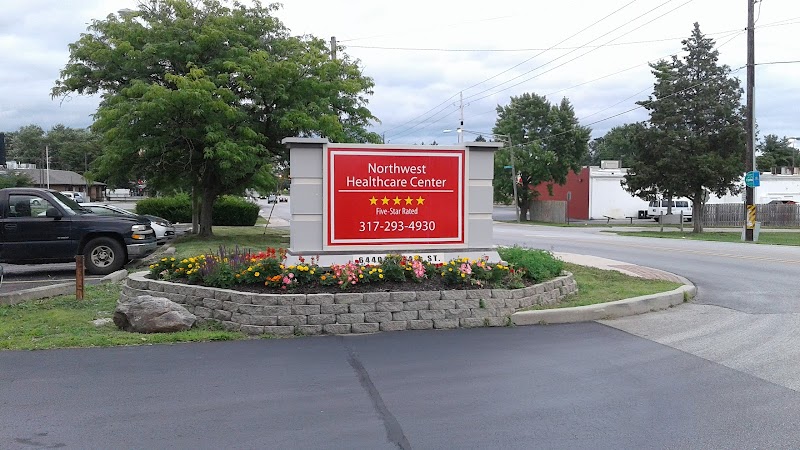
6440 W 34TH ST, INDIANAPOLIS, IN 46224 (317) 293-4930
Government - County 126 Beds ADAMS COUNTY MEMORIAL HOSPITAL Data: November 2025
Trust Grade
70/100
#274 of 505 in IN
Last Inspection: June 2025

Inspected within the last 6 months. Data reflects current conditions.

Overview

Northwest Manor Health Care Center has a Trust Grade of B, indicating it is a good choice, though not among the best facilities. It ranks #274 out of 505 in Indiana, placing it in the bottom half, and #21 out of 46 in Marion County, suggesting there are only a few better options locally. The facility is currently worsening, with issues increasing from 3 in 2024 to 6 in 2025. Staffing is a strong point, with a rating of 4 out of 5 stars and a low turnover rate of 24%, well below the state average, which means the staff tends to remain long-term and is familiar with residents' needs. Notably, there are no fines on record, which is a positive sign of compliance. However, there have been concerning incidents, such as a failure to implement fall prevention measures for several residents and inadequate preparation of pureed food, which could affect nutritional quality. Additionally, care plans were not properly initiated for multiple residents, indicating potential oversight in individual care management. While there are strengths in staffing and compliance, families should weigh these issues when considering this facility for their loved ones.

Trust Score
B
70/100
In Indiana
#274/505
Bottom 46%
Safety Record
Low Risk
No red flags
Inspections
Getting Worse
3 → 6 violations
Staff Stability
✓ Good
24% annual turnover. Excellent stability, 24 points below Indiana's 48% average. Staff who stay learn residents' needs.
Penalties
✓ Good
No fines on record. Clean compliance history, better than most Indiana facilities.
Skilled Nurses
○ Average
Each resident gets 36 minutes of Registered Nurse (RN) attention daily — about average for Indiana. RNs are the most trained staff who monitor for health changes.
Violations
⚠ Watch
19 deficiencies on record. Higher than average. Multiple issues found across inspections.
★★★☆☆
3.0
Overall Rating
★★★★☆
4.0
Staff Levels
★★★★☆
4.0
Care Quality
★★★☆☆
3.0
Inspection Score
Stable
2024: 3 issues
2025: 6 issues

The Good

  • 4-Star Staffing Rating · Above-average nurse staffing levels
  • 4-Star Quality Measures · Strong clinical quality outcomes
  • Low Staff Turnover (24%) · Staff stability means consistent care
  • Full Sprinkler Coverage · Fire safety systems throughout facility
  • No fines on record
  • Staff turnover is low (24%)

    24 points below Indiana average of 48%

Facility shows strength in staffing levels, quality measures, staff retention, fire safety.

The Bad

3-Star Overall Rating

Near Indiana average (3.1)

Meets federal standards, typical of most facilities

Chain: ADAMS COUNTY MEMORIAL HOSPITAL

Part of a multi-facility chain

Ask about local staffing decisions and management

The Ugly 19 deficiencies on record

Jul 2025 2 deficiencies
CONCERN (D) 📢 Someone Reported This

A family member, employee, or ombudsman was alarmed enough to file a formal complaint

Potential for Harm - no one hurt, but risky conditions existed

Deficiency F0558 (Tag F0558)

Could have caused harm · This affected 1 resident

**NOTE- TERMS IN BRACKETS HAVE BEEN EDITED TO PROTECT CONFIDENTIALITY** Based on observation, interview, and record review, the facility failed to provide or document showers for 2 of 3 residents revi...

Read full inspector narrative →
**NOTE- TERMS IN BRACKETS HAVE BEEN EDITED TO PROTECT CONFIDENTIALITY** Based on observation, interview, and record review, the facility failed to provide or document showers for 2 of 3 residents reviewed for bathing preferences (Residents B, and H).Findings include:1. During an interview on 7/21/25 at 10:15 a.m., Resident Representative 1 indicated Resident B had not received a shower for the past year, until after the family had complained and met with administrative staff. A Resident/Family Concern Form, dated 6/22/25 at 11:30 a.m., indicated Resident Representative 1 verbalized to the Weekend Supervisor she had a concern regarding Resident B not getting showers. The resolution, dated 6/23/25, indicated the resident got a shower and staff were educated on the use of a shower bed.On 7/21/25 at 11:00 a.m., Certified Nursing Assistant (CNA) 6 and an unidentified female staff member were observed using a mechanical lift to transfer Resident B out of bed into a specialized tilt and recline wheelchair. Resident B was observed to be wearing a green dress, black cap over her braided hair, a beaded bracelet, and gray socks. CNA 6 indicated he had not recently cared for the resident, but he was filling in and Resident B was on his assignment list to give a bath.On 7/22/25 at 9:15 a.m., Resident B was observed lying flat on her back in bed, eyes opened and covers to her chest. The resident was wearing a bright yellow tunic/dress and a beaded bracelet on her right wrist. The resident's braided hair was observed to be flattened and frizzy, it did not look as if it had been recently braided. The resident indicated she liked getting showers but did not remember if she'd had one recently.Resident B's clinical record was reviewed on 7/21/25 at 2:00 p.m. Resident B was admitted on [DATE] with diagnoses to include vascular dementia, hemiplegia and hemiparesis (paralysis on one side of the body) following a cerebral infarction affecting the left non-dominant side, morbid obesity, and dysphasia (neurological disorder that affects the ability to understand, produce, or use language). The annual MDS (Minimum Data Set) assessment, completed on 6/27/25, assessed Resident B as having severe cognitive impairment, and she B was dependent on staff for bathing, showers, and toileting. The resident utilized a mechanical lift for transfers and was propelled by staff in a manual wheelchair. It was very important to the resident to choose between a tub bath, shower, bed bath, or sponge bath. A Preferences for Customary Routine and Activities assessment, dated 6/24/25, indicated it was very important to the resident to choose between a tub bath, shower, bed bath, or sponge bath. The assessment lacked documentation of Resident B's preference(s). A care plan, dated 6/22/24, indicated the resident liked to choose bathing options, what to wear, listening to religious music, watching tv/comedies, and usually to be up by 10:00 a.m., and in bed by 3:00 a.m. Resident B's goal was to have her preferences met daily, and the approach was to be offered bathing options and what to wear.A Care Plan Attendance Forms with dates of 4/29/25 and 6/30/25 were signed as the plan of care meeting expectations and issues addressed. There was no documentation to describe what the issues might have been, how the issues were resolved, and no care plan update. CNA Assignment Sheets indicated Resident B was scheduled for showers on Wednesday and Saturday day shift.A typed note, dated 6/30/25, indicated in-service for all staff and Resident B specifically, included, Make sure the resident is getting her showers on Wednesday and Saturday day shift .Use the soap/hygiene products in her room .Use a Hoyer pad and shower bed .When the shower is done and the resident returns to her room, place 3-4 towels on the bed before lying the resident on the mattress .Once the resident is in bed, remove the towels and continue care .On shower days, the night CNA should not dress the resident, leave her in a gown since a shower will be done .The family prefers regular clothes instead of gowns Point of Care (POC - electronic documentation system) History report, indicated the resident was totally dependent on staff for bathing, showers, toilet use, and personal hygiene. The report indicated there was no documentation for showers or refusal of showers from 6/20/24 to 6/25/25. During an interview on 7/21/25 at 2:39 p.m., CNAs 10 and 11 indicated Resident B's shower day was documented in the shower book and on the daily CNA assignment sheet.During an interview on 7/21/25 at 2:43 p.m., Licensed Practical Nurse (LPN) 5 indicated Resident B had some confusion and did not always make her own decisions. Shower preferences were documented during care plan conferences between the resident/resident representative, Unit Manager (UM), and Social Service Director (SSD). If a resident could not make their own decisions, then the staff would follow family preference decisions to provide care. If a resident was combative and refused care or showers, that behavior would be documented, the refusals discussed with family, and care plan decisions documented. During an interview on 7/21/25 at 3:12 p.m., UM 1 indicated she shared duties with another nurse on a rotating schedule. Both nurses were responsible for attending care plan conferences for Wings 1 and 2, dependent on who was working. UM 1 indicated Resident B's resident preference form had been completed, but it was vague. Resident bathing preferences should have been on the care plan and then linked to the CNA profile. A resident preference could also be set up to be clicked off/documented as completed on POC. All department heads or department representatives had the capability to add resident specific wishes on the care plan. If a confused resident was refusing care the family had specified, then a conversation would be had with the family to try and resolve, and the conversation and outcome would be documented in the resident record.During an interview on 7/22/25 at 9:47 a.m., CNA 12 indicated she had helped give Resident B a shower the prior Saturday, and that documentation could be found in POC. During an interview on 7/22/25 at 8:56 a.m., Resident Representative 2 indicated Resident B had dementia, but had always been a very clean person, and was not known for refusing care or a shower. Resident Representative 2 indicated she knew the standard procedure for nursing home residents was to be offered showers on a weekly basis, and the family had no reason to believe their mother was not being given showers. On 6/21/25, Resident Representative 1 gave Resident B a bath and observed her to be dirty in hard-to-reach places. On 6/21/25, when she questioned staff, she received different responses about when the resident's shower day was, and the last time she'd been given a shower, and finally was told the resident had never been given a shower as the facility did not have the equipment to give her a shower. She also observed the residents' few toiletries were not opened, and Resident Representative 2 went that day to the store and purchased more toiletries to include shampoo and bath gel. Before leaving that evening, staff were asked to give the resident a shower. On 6/22/25 Resident Representative 2 visited again, and when staff were asked if Resident B had gotten a shower, she was told the resident was not given a shower as the staff thought she was clean enough. Resident Representative 1 then made a formal complaint, and Resident B did not receive a shower until Wednesday 6/25/25.On 7/22/25 at 9:51 a.m., observation of Resident B's record with LPN 5, who indicated she was the charge nurse in Resident B's hallway. The resident record lacked documentation of the resident having received a shower before 6/25/25.During an interview on 7/22/25 at 10:19 a.m., the Director of Nursing (DON) indicated on Saturday 6/21/25, Resident B's family was in the facility and asked about showers, and the resident was given a shower that day. On Monday 6/30/25, there was a care plan meeting with the family who were alleging the resident was not getting showers. The DON indicated she thought the resident had been getting showers, if not consistently, before the concern was brought forth by family. Aides should notify the charge nurse any time a resident refused a bath or shower, then the nurse could make sure the bath or shower was offered again at a later time. If the resident still refused to be bathed, the incident should be documented in the clinical record.2. On 7/21/25 at 10:55 a.m., Resident H was observed lying in a bariatric bed watching television. The resident indicated she liked getting a shower and thought she'd had one last week. On 7/22/25 at 9:24 a.m., Resident H was observed lying in the bed listening to a portable boom box. The resident indicated that she liked getting a shower and her hair washed, and she was supposed to be getting a shower that day. The resident indicated she was unable to stand to transfer, and the staff had to mechanically lift her to a shower chair.Resident H's clinical record was reviewed on 7/21/25 at 2:59 p.m. Diagnoses on the resident's profile included encephalopathy (a group of conditions that cause brain dysfunction) and obesity. A quarterly MDS assessment, completed on 6/7/25, assessed the resident as being cognitively intact, and she had no refusals of care. The resident required assistance for transfers, bathing, dressing, and toileting. A Preferences for Customary Routine and Activities assessment, dated 5/23/25, indicated it was very important to the resident to choose between a tub bath, shower, bed bath, or sponge bath. The assessment lacked documentation of Resident H's bathing preference(s).A care plan, dated 6/20/23, indicated the resident liked to choose bathing options, word searches, bingo, listening to music R & B, watching tv/soap operas, religious activities, and checkers. Resident H's goal was to have her preferences met daily, and the approach was to be offered bathing options.A Point of Care History report indicated the resident was totally dependent on staff for bathing and showers. The report indicated there was no documentation for showers or refusal of showers between 1/1/25 and 7/14/25. On 7/22/25 at 10:00 a.m., observation of Resident H's clinical record with the Assistant Director of Nursing (ADON). The resident record lacked documentation, in POC or on paper shower/skin monitoring sheets, that the resident had received or refused a shower in 2025.During an interview on 7/22/25 at 10:16 a.m., the DON, ADON, and UM 1 indicated Resident H was known to change her mind about care. If she had refused to have a shower, an alternative shower method would have been given, and the refusal documented. The DON indicated Resident H had not come forward and indicated she wanted or was not getting a shower.During an interview on 7/22/25 at 10:42 a.m., UM 1 and LPN 5 indicated Resident H had been given a shower the prior week, but there was no documentation of the shower. UM 1 indicated CNA 7 had been told before she needed to document care. The ADON indicated when pulling the report for the prior week, Resident H was documented as having bed baths.On 7/22/25 at 11:01 a.m., the DON indicated Resident H had refused her shower that day, and that did not surprise her as the resident often changed her mind about the care she wanted. The CNA had been instructed to document the refusal.On 7/22/25 at 12:47 p.m., the Administrator (ADM) provided comprehensive shower sheets, dated 6/28/25 and 7/9/25, with a handwritten note that said shower. Shower sheets dated 3/8/25 and 6/25/25 had no documentation to indicate a shower had been given. On 7/22/25 at 11:01 a.m., the ADM provided a Resident Bathing/Showering policy, undated, and indicated the policy was the one currently being used by the facility. The policy indicated, the purpose of the policy was to ensure that each resident was afforded the right to personal hygiene and dignity through routine and individualized bathing/showering. It was the policy of the facility to provide residents with bathing or showering services in accordance with their comprehensive care plan. 1. Each resident will be assessed upon admission and quarterly [or with significant changes] to determine bathing preferences.Residents' specific bathing preferences may be identified on the resident care plan or facility shower schedule.2. Residents shall be offered a bath or shower at least twice per week or more often as desired by the resident.Changes in frequency based on resident refusal or medical need must be documented ad addressed in care planning.All refusals and re-approach attempts must be documented.Daily documentation must include: Type of bath provided. Time and staff involved. Resident tolerance and any refusals.Changes in bathing routine, refusals, and clinical concerns ae to be reported to the charge nurse and IDT [Interdisciplinary Team].This citation relates to Complaint 1627127. 3.1-3(v)(1)
CONCERN (D) 📢 Someone Reported This

A family member, employee, or ombudsman was alarmed enough to file a formal complaint

Potential for Harm - no one hurt, but risky conditions existed

Deficiency F0657 (Tag F0657)

Could have caused harm · This affected 1 resident

**NOTE- TERMS IN BRACKETS HAVE BEEN EDITED TO PROTECT CONFIDENTIALITY** Based on observation, interview, and record review, the facility failed to ensure care plan interventions were personalized and ...

Read full inspector narrative →
**NOTE- TERMS IN BRACKETS HAVE BEEN EDITED TO PROTECT CONFIDENTIALITY** Based on observation, interview, and record review, the facility failed to ensure care plan interventions were personalized and updated to include changes in shower preferences for 2 of 3 residents reviewed for bathing preferences (Residents B, and H). Findings include:1. During an interview on 7/21/25 at 10:15 a.m., Resident Representative 1 indicated Resident B had not received a shower for the past year, until after the family had complained and met with administrative staff. A Resident/Family Concern Form, dated 6/22/25 at 11:30 a.m., indicated Resident Representative 1 verbalized to the weekend supervisor she had a concern regarding Resident B not getting showers. The resolution, dated 6/23/25, indicated the resident got a shower and staff were educated on the use of a shower bed.On 7/21/25 at 11:00 a.m., Certified Nursing Assistant (CNA) 6 and an unidentified female staff member were observed using a mechanical lift to transfer Resident B out of bed into a specialized tilt and recline wheelchair. Resident B was observed to be wearing a green dress, black cap over her braided hair, a beaded bracelet, and gray socks. CNA 6 indicated he had not recently cared for the resident, but he was filling in for staffing today and had Resident B on his assignment list to give a bath.Resident B's clinical record was reviewed on 7/21/25 at 2:00 p.m. Resident B was admitted on [DATE] with diagnoses to include vascular dementia, hemiplegia and hemiparesis (paralysis on one side of the body) following a cerebral infarction affecting the left non-dominant side, morbid obesity, and dysphasia (neurological disorder that affects the ability to understand, produce, or use language). A Preferences for Customary Routine and Activities assessment, dated 6/24/25, indicated it was very important to the resident to choose between a tub bath, shower, bed bath, or sponge bath. The assessment lacked documentation of Resident B's preferences. A care plan, dated 6/22/24, indicated the resident liked to choose bathing options, what to wear, listening to religious music, watching tv/comedies, and usually to be up by 10:00 a.m., and in bed by 3:00 a.m. Resident B's goal was to have her preferences met daily, and the approach was to be offered bathing options and what to wear. The care plan lacked documentation of chosen bathing options. A Care Plan Attendance Form with dates of 4/29/25 and 6/30/25 was signed as the plan of care meeting expectations and issues addressed. There was no documentation to describe what the issues might have been, how the issues were resolved, and no care plan update. Observation of CNA Assignment Sheets indicated Resident B was scheduled for showers on Wednesday and Saturday day shift.During an interview on 7/21/25 at 2:43 p.m., Licensed Practical Nurse (LPN) 5 indicated, Resident B had some confusion and did not always make her own decisions. Shower preferences were documented during care plan conferences between the resident/resident representative, Unit Manager (UM), and Social Service Director (SSD). If a resident could not make their own decisions, then the staff would follow family preference decisions to provide care. If a resident was combative and refused care or showers, that behavior would be documented, the refusals discussed with family, and care plan decisions documented. During an interview on 7/21/25 at 3:12 p.m., UM 1 indicated she shared duties with another nurse on a rotating schedule. Both nurses were responsible for attending care plan conferences for Wings 1 and 2, dependent on who was working. UM 1 indicated, Resident B's resident preference form had been completed, but it was vague. Resident bathing preferences should have been on the care plan and then linked to the CNA profile. A resident preference could also be set up to be clicked off/documented as completed on POC. All department heads or department representatives had the capability to add resident specific wishes on the care plan. If a confused resident was refusing care the family had specified, then a conversation would be had with the family to try and resolve, and the conversation and outcome would be documented in the resident record.2. On 7/21/25 at 10:55 a.m., Resident H was observed lying in a bariatric bed watching television. The resident indicated she liked getting a shower and thought she'd had one last week.On 7/22/25 at 9:24 a.m., Resident H was observed lying in the bed listening to a portable boom box. The resident indicated that she liked getting a shower and her hair washed, and she was supposed to be getting a shower that day. The resident indicated she was unable to stand to transfer, and the staff had to Hoyer her to the shower chair.Resident H's clinical record was reviewed on 7/21/25 at 2:59 p.m. Diagnoses on the resident's profile included, encephalopathy (a group of conditions that cause brain dysfunction) and obesity.A Preferences for Customary Routine and Activities assessment, dated 5/23/25, indicated it was very important to the resident to choose between a tub bath, shower, bed bath, or sponge bath. The assessment lacked documentation of Resident H's preferences.A care plan, dated 6/20/23, indicated the resident liked to choose bathing options, word searches, bingo, listening to music R & B, watching tv/soap operas, religious activities, and checkers. Resident H's goal was to have her preferences met daily, and the approach was to be offered bathing options. The care plan lacked documentation of resident's refusal for showers.A Point of Care History report indicated the resident was totally dependent on staff for bathing and showers. The report indicated there was no documentation for showers or refusal of showers between 1/1/25 and 7/14/25. On 7/22/25 at 10:00 a.m., observation of Resident H's clinical record with the Assistant Director of Nursing (ADON). The resident record lacked documentation, in POC or on the paper shower/skin monitoring sheets, that the resident had received or refused a shower in 2025,During an interview on 7/22/25 at 10:16 a.m., the DON, ADON, and UM 1 indicated Resident H was known to change her mind about care. If she had refused to have a shower, an alternative shower method would have been given, and the refusal documented. The DON indicated, Resident H had not come forward and indicated she wanted or was not getting a shower.On 7/22/25 at 12:47 p.m., the ADM provided a Care Plans, Comprehensive Person-Centered policy, undated, and indicated the policy was the one currently being used by the facility. The policy indicated, A comprehensive, person-centered care than that includes measurable objectives and timetables to meet the resident's physical, psychosocial and functional needs is developed and implemented for each resident.1. The interdisciplinary team [IDT], in conjunction with the resident and his/her family or legal representative, develops and implements a comprehensive, person-centered care plan for each resident.11. Assessments of residents are ongoing and care plans are revised as information about the residents and residents' condition change. 12. The interdisciplinary team reviews and updates the care plan.This citation relates to Complaint 1627127. 3.1-35(d)(2)(B)
Jun 2025 4 deficiencies
CONCERN (D)

Potential for Harm - no one hurt, but risky conditions existed

Assessment Accuracy (Tag F0641)

Could have caused harm · This affected 1 resident

On 6/9/25 at 9:24 a.m., a record review was completed for Resident 25. She had the following diagnoses which included but were not limited to chronic kidney disease, heart failure, high cholesterol, h...

Read full inspector narrative →
On 6/9/25 at 9:24 a.m., a record review was completed for Resident 25. She had the following diagnoses which included but were not limited to chronic kidney disease, heart failure, high cholesterol, hypertension and overactive bladder. Her most recent Minimum Data Set (MDS) quarterly assessment indicated she had a fall with major injury. Resident 25's record lacked documentation of a fall with major injury. On 6/9/25 at 1:20 p.m., during an interview, the Director of Nursing (DON) indicated Resident 25 only had one fall on 4/25/25 and it did not result in an injury. On 6/9/25 at 2:00 p.m., during an interview, the MDS Coordinator indicated it must have been an entry error, and she would correct it. On 6/10/25 at 10:40 a.m. the Executive Director provided a copy of a current facility policy titled, MDS Error Correction undated. This policy only discussed what staff was to do if an error was discovered by a facility staff member, and how to correct the error. Based on observation, interview, and record review, the facility failed to accurately code a resident's fall status for 1 of 21 residents reviewed for assessment accuracy (Resident 25). Findings include:
CONCERN (D)

Potential for Harm - no one hurt, but risky conditions existed

Pressure Ulcer Prevention (Tag F0686)

Could have caused harm · This affected 1 resident

**NOTE- TERMS IN BRACKETS HAVE BEEN EDITED TO PROTECT CONFIDENTIALITY** Based on observation, interview, and record review, the facility failed to conduct a thorough skin assessment upon admission to ...

Read full inspector narrative →
**NOTE- TERMS IN BRACKETS HAVE BEEN EDITED TO PROTECT CONFIDENTIALITY** Based on observation, interview, and record review, the facility failed to conduct a thorough skin assessment upon admission to identify and put a pressure ulcer treatment in place for 1 of 6 residents reviewed for pressure ulcers (Resident 100). Findings include: During an interview on 6/5/25 at 12:17 p.m., Resident 100's family member indicated several days after the resident admitted to the facility, they got a call from the facility to inform them there was a large wound on the back of the resident's head. From what the facility told them, the resident's hair was badly matted at the back of her head and when the staff went to wash her hair they noticed this wound. The family member indicated the resident had been in the hospital for nearly a month after her stroke, was unable to move at all, and kept on her back, so the wound started at the hospital. On 6/5/25 at 2:00 p.m., Resident 100 was observed. She was seated in a broda chair in the therapy gym. She was alert to her surroundings, but unable to hold a conversation. She was able to shake her head yes or no to answer questions and smiled at jokes. On 6/5/25 at 2:30 p.m., Resident 100's medical record was reviewed. She admitted to the facility on [DATE] with diagnoses which included, but were not limited to cerebral infarction (stroke) which resulted in full body hemiparesis/hemiplegia (muscle weakness/paralysis) and total dependence for all activities of daily living (ADLs). An admission nursing assessment, dated 4/22/25 at 1:03 a.m., indicated Resident 100 did not have any pressure ulcers upon her admission on [DATE]. An admission full body assessment, dated 4/22/25 at 12:30 a.m., indicated Resident 100 did not have any pressure ulcers upon her admission on [DATE]. An admission nursing progress note, dated 4/22/25 at 2:05 a.m., indicated Resident 100 was noted to have excoriation on her right thigh, bruises to her abdomen and the left thigh, a small laceration on the right inner elbow, and additional bruises on both her upper extremities. She required tube feeding for nutrition and was bedbound. A nursing progress note, dated 4/22/25 at 4:10 a.m., indicated Resident 100 was unable to move and had to be turned every two hours. A Physician Services progress note was documented late on 4/29/25 at 9:57 a.m., made effective for 4/24/25 at 9:57 a.m. The Physician visit was for an acute concern related to a wound on the back of the resident's head. Acute visit for wound. Therapies expressed concern over new wound after attempting to brush out matted area to back of head. Upon further inspection, found 5.5 x [by] 4.3 cm [centimeters] necrotic area with slough noted underneath . A nursing progress note, dated 4/24/25 at 4:00 p.m., indicated Resident 100 admitted to the facility on [DATE] with several skin impairments which included, but was not limited to, .area that appears to be related to pressure to back of head The wound team was notified and treatments were put in place. A new skin event titled, Skin Integrity Events - Pressure Sore/Statis Ulcer was opened on 4/24/25 at 3:19 p.m. and indicated Resident 100 had a new unstageable pressure ulcer (a pressure ulcer where the base of the wound is obscured by slough [yellow, tan, grey, green, or brown tissue] and/or eschar [tan, brown, or black tissue] which prevents a healthcare professional from accurately assessing the depth and true stage of the ulcer), to the back of her head which measured 5.5 cm long by 4.3 cm wide. A new treatment order was put in place to cleanse posterior occiput (back of head) with NS (normal saline), apply Santyl to necrotic area and cover with non-adherent dressing, secure with kerlix. Treatment was to do done every day and as needed (PRN) if soilage or dislodgement. A Wound Doctor and Interdisciplinary Team (IDT) progress note, dated 4/29/25 at 8:38 a.m., indicated Resident 100 was seen on wound rounds on 4/28/25 for an initial assessment. The wound doctor classified the wound as an unstageable pressure ulcer and proceeded to debried the wound. After the debridement procedure, the wound was reclassified as a stage IV pressure ulcer (full-thickness tissue loss with exposure of muscle, tendon, or bone) with a goal to heal. The Wound Doctor updated the treatments orders to, cleanse wound to posterior head with wound cleanser, pat dry and apply honey, then pack lightly with fluffed gauze as needed, cover with bordered gauze. Change daily and as needed. During an interview on 6/9/25 at 11:32 a.m., the Wound Doctor indicated he could not confirm the wound was acquired at the hospital because it was not identified or documented on any of her hospital records. At the time of his initial assessment, judging by the condition of the wound, it was most likely acquired at the hospital and was just missed on the facility's nursing admission assessments. After the wound was identified, she received routine treatments and was healed out during his visit that morning (6/9/25). On 6/9/25 at 11:45 a.m., the Administrator provided a copy of current but undated facility policy titled, Resident Skin Assessment Upon Admission. The policy indicated, Purpose: to ensure a thorough skin assessment is performed on each resident upon admission to identify existing conditions, prevent pressure injuries . The facility shall perform a comprehensive skin assessment on each resident within 24 hours of admission . The goal is early identification of ant existing wounds or skin integrity issues and prompt implementation of preventative and therapeutic interventions . conduct a full head-to-toe visual skin inspection 3.1-40(a)(2)
CONCERN (D)

Potential for Harm - no one hurt, but risky conditions existed

Deficiency F0761 (Tag F0761)

Could have caused harm · This affected 1 resident

The facility failed to date medications for 1 of 3 medication carts observed. (100 hall Cart 1 and 2). Findings include: 1. Medication cart 1 on 100-hall was observed. Resident 92 had a bottle of l...

Read full inspector narrative →
The facility failed to date medications for 1 of 3 medication carts observed. (100 hall Cart 1 and 2). Findings include: 1. Medication cart 1 on 100-hall was observed. Resident 92 had a bottle of latanoprost (used to treat glaucoma) in the medication cart that should be stored in the refrigerator until it was opened. She had a bottle of ofloxacin eye drops 0.3% (used for eye infections) with no date on it to indicate when it was opened. Resident 79 had a bottle of fluticasone nasal spray (used to treat allergies) 50 mcg in the medication cart with no date on it to indicate when it was opened. 2. Medication cart 2 on 100-hall was observed. Resident 40 had a bottle of Systane balance (used to treat dry eyes) in the medication cart with no date to indicate when it was opened. On 6/11/25 during a conversation with the Director of Nursing (DON), she indicated it was very difficult to keep up with dating of medications. A policy titled, Storage of Medications and Biologicals was provided by the Executive Director (ED) on 6/10/25 at 10:30 a.m. It indicated, .In accordance with State and Federal laws, manufacturer recommendations or supplier recommendations, the facility must store all medications and biological in locked compartments or storage rooms under proper temperature controls, and permit only authorized personnel to have access to the keys 3.1-25(j) 3.1-25(m) 3.1-25(n)
CONCERN (E)

Potential for Harm - no one hurt, but risky conditions existed

Accident Prevention (Tag F0689)

Could have caused harm · This affected multiple residents

Based on observation, interview, and record review, the facility failed to ensure fall interventions were in place as outlined in the residents' plan of care for 3 of 4 residents reviewed for falls (R...

Read full inspector narrative →
Based on observation, interview, and record review, the facility failed to ensure fall interventions were in place as outlined in the residents' plan of care for 3 of 4 residents reviewed for falls (Residents 88, 96, and 85). Findings include: 1. On 6/5/25 at 2:22 p.m., Resident 88 was observed in the main dining room during a group activity. She was seated in a wheelchair and although she had a personal storage pouch, it was attached to the back of her wheelchair out of reach. She was not observed to have a reacher. On 6/9/25 at 8:35 a.m., Resident 88 was observed. She was seated in her wheelchair in the main dining room, in front of the nurses' station. Her eyes were closed and there was a stack of papers and a word search booklet which rested on her lap. Upon approach and calling her name, she raised her head and opened her eyes as the stack of papers began to slide from her lap. Resident 88 did not have a reacher. The personal storage pouch was attached to the back of her chair. Resident 88 indicated she must have nodded off asleep while she waited for the housekeepers to finish sweeping in the dining room. She indicated she was tired and wouldn't mind a nap. Resident 88 indicated she had a couple falls from out of her wheelchair because she would attempt to lean forward and reach for things that fell. She indicated she had a reacher before but did not know where it was and that it had been missing for a while. She indicated she did have a personal storage pouch but it was on the back of her wheelchair, and she could not reach it, when asked if staff would assist her to get things or put things away, she indicated, I ask, but you know how that goes. They are so busy, I don't bother them with the small stuff. A plastic chair alarm was observed underneath her pressure reducing cushion and when asked if that caused her cushion to slide, she demonstrated he ability to slough down and slide forward in the seat. She was able to reposition herself back up to an upright position and indicated, I try not to do that because I've learned the hard way. During a continuous observation from 6/9/25 at 8:40 a.m., until 9:00 a.m., Resident 88 was left unsupervised by nursing staff in the main dining room as two housekeepers swept, mopped, and wiped down tables. On 6/9/25 at 8:10 a.m., Resident 88's medical record was reviewed. She was a long-term care resident with diagnoses which included, but were not limited to, repeated falls, fracture of first and third lumbar vertebra and fracture of mandible (jaw). A nursing progress note, dated 9/19/24 at 6:28 p.m., indicated Resident 88 had been in the dining room with a peer when a loud noise was heard. Resident 88 was found on the floor with her face down. She was assisted back into her wheelchair with help from staff and taken back to her room where she was assessed and found to have sustained a skin tear to the middle of her nose and a hematoma to her forehead. Her vital signs and neuro checks were within normal limits, and the doctor was notified. An Interdisciplinary team (IDT) progress note, dated 9/20/24 at 12:35 p.m., indicated Resident 88 had an unwitnessed fall in the dining room after she attempted to reach something on the floor. A new intervention was put in place to ensure she was not left unattended in the dining room. Her care plan was updated. A nursing progress note, dated 1/11/25 at 7:29 p.m., indicated Resident 88 was found on the floor after she attempted to transfer from her wheelchair into her bed. An IDT progress note, dated 1/13/25 at 7:08 p.m., indicated a new intervention for fall prevention was to ensure Resident 88 was laid down after meals. Her care plan was updated. A nursing progress note, dated 5/11/25 at 6:51 p.m., indicated Resident 88 fell form her wheelchair while she was sitting in the dining room and she attempted to pick up an item that had fallen onto the floor. She sustained a laceration to the right eyebrow and was bleeding. She was transported to a local trauma hospital. A nursing progress note, dated 5/12/25 at 8:33 a.m., indicated Resident 88 returned form the hospital after she sustained right sided mandible fracture and thoracic spine fractures. An IDT progress note, dated 5/12/25 at 12:28 p.m., indicated Resident 88 sustained a fall on 5/11/25 after she was witnessed to attempt to pick up personal items from the dining room floor. Active bleeding was noted at the time of the fall, first aide was provided and after the resident complained of a headache she was sent to the emergency room for further evaluation and treatment. She was diagnosed with a right-side mandible fracture and fracture of the first and third thoracic spine. The IDT determined new interventions to be put in place were: a wheelchair side storage bag for personal items, a reacher to keep with and utilize while in her wheelchair and she was referred to therapy for wheelchair positioning. Her care plan was updated. Resident 88's comprehensive care plan was reviewed. She had a care plan, dated 4/1/24, which indicated she was at risk for falls related to her diagnoses. Interventions for this plan of care included, but were not limited to: therapy to procure reacher for resident's use created on 7/1/24 and reacher for resident to keep with wheelchair and utilize while in wheelchair created 5/12/25. An intervention in all caps, DO NOT LEAVE UNATTENDED IN DINING ROOM, created on 9/20/24 and PLEASE LAY RESIDENT DOWN AFTER MEALS, created 9/20/24. Resident 88's fall care plan also included interventions created on 9/11/24 for wheelchair and bed alarms to be placed. The record lacked documentation of a comprehensive fall risk assessment before the wheelchair and bed alarms were installed. The record lacked documentation that the resident and/or representatives were educated on the use of and/or alternatives before installing the alarms. The record lacked documentation that the resident and/or representative gave informed consent for the use of alarms before installation. 2. On 6/5/25 at 10:25 a.m. Resident 96 was observed as he laid in bed watching TV. There was a fall mat on floor next to the resident's bed, his call light was within reach, and there was a regular mattress on his bedframe. On 6/9/25 at 9:35 a.m. Resident 96's medical record was reviewed. He was a long-term care resident whose diagnoses included but were not limited to, dementia and unspecified psychosis. A progress note, dated 4/14/25 at 7:15 a.m., indicated the resident was found on the floor by his bed. No pain was noted, and the resident only indicated he was ready to get up. An Interdisciplinary Team (IDT) note, dated 4/15/25 at 9:10 p.m., indicated the new fall intervention for Resident 96's fall on 4/14/25 was to put a perimeter mattress (a mattress that features raised foam bolsters along its sides to help prevent Residents from rolling out of bed or accidentally falling) on his bedframe. On 6/9/25 at 1:05 p.m. Resident 96 was observed as he laid in bed with the bed in the lowest position and the floor mat was next to his bed. It was found that there was a regular mattress on his bedframe, no bolsters or perimeter mattress were present. 3. On 6/10/25 at 1:56 p.m. Resident 85's medical record was reviewed. She was a long-term care resident whose diagnoses included but were not limited to, type 2 diabetes, weakness, and repeated falls. A progress note, dated 9/8/24 at 12:13 a.m., indicated Resident 85 was found sitting on the floor next to her bed and wheelchair. An IDT note, dated 9/9/24 at 12:59 p.m., indicated the new fall intervention for Resident 85's fall on 9/8/25 was to educate her on the importance of call light use and not attempting to toilet herself. A progress note, dated 3/4/25 at 12:54 p.m., indicated the writer of the note was going to check Resident 85's blood sugar when they found the resident lying on the floor next to her bed. An IDT note, dated 3/5/25 at 5:28 p.m., indicated the new fall intervention for Resident 85's fall on 3/4/25 was to utilize a bed alarm. On 6/10/25 at 3:40 p.m. Resident 85 was observed as she laid in bed resting with her eyes closed. The door was closed upon entering the room. The resident's call light was found on the floor next to the bed. Licensed Practical Nurse (LPN) 10 who usually worked with Resident 85 came to observe the room. LPN 10 indicated they normally kept her door cracked because the resident liked the door closed, but they never closed it all the way. LPN 10 indicated the resident's call light should have been in bed with the resident within reach. When asked about Resident 85's bed alarm LPN 10 indicated it was a pad that goes on the bed that they could also use on the wheelchair. Upon observation of the bed alarm pad, it was found that the pad was not plugged into the alarm box. LPN plugged the bed pad into the alarm box and indicated it should always be plugged in to work properly. On 6/9/25 at 11:45 a.m., the Administrator provided a copy of current but undated facility policy titled, Assessing Falls and Their Causes. The policy indicated, .Falls are a leading cause of morbidity and mortality among the elderly in nursing homes . falling may be related to underlying clinical or medical conditions, overall functional decline, medication side effects, and/or environmental risk factors . When a resident falls, the following information should be recorded in the resident's medical record . interventions and appropriate interventions taken to prevent future falls On 6/9/25 at 11:45 a.m., the Administrator provided a copy of current but undated facility policy titled, Use of Chair [and Bed] Alarms. The policy indicated, .conduct a comprehensive fall risk assessment before initiating [an alarm] . consider alternatives to alarm use before implementation . discuss proposed alarm use with the resident and/or representative to obtain informed consent 3.1-45(a)(1) 3.1-45(a)(2)
Apr 2024 3 deficiencies
CONCERN (D)

Potential for Harm - no one hurt, but risky conditions existed

Deficiency F0761 (Tag F0761)

Could have caused harm · This affected 1 resident

Based on observation, interview, and record review, the facility failed to ensure expired medications were discarded and a resident's supplements were labeled for 2 of 2 medication storage areas revie...

Read full inspector narrative →
Based on observation, interview, and record review, the facility failed to ensure expired medications were discarded and a resident's supplements were labeled for 2 of 2 medication storage areas reviewed for medication storage (Resident 72). Findings include: During a medication storage observation on 4/4/24 at 11:05 a.m., the Wing 1 medication room was observed. Inside the refrigerator was a bottle of tuberculin serum (used to test for tuberculosis (TB)). The bottle was undated and was a multidose vial. The Wing 2 Medication cart was observed. A bottle of pro-stat (a supplement used to aid in wound healing) which belonged to Resident 72 was not labeled with the required minimum information. During an interview on 4/4/24 at 11:01 a.m., the Director of Nursing (DON) indicated, all medications for residents should be properly labeled, and the TB serum should have been discarded. On 4/4/24 at 12:58 p.m., the DON provided a copy of current facility policy titled, Storage of Medications, dated 9/18. The policy indicated, .Drugs dispensed in the manufacturer's original container will carry the manufacturer's original expiration date. Once opened, these products will be acceptable to use until the manufacturer's expiration date is reached and unless the medication is: 1. In a multi-dose vial, 2 an ophthalmic medication, 3. An item for which the manufacturer has specified an unstable duration after opening 3.1-25(j) 3.1-25(m) 3.1-25(n)
CONCERN (D)

Potential for Harm - no one hurt, but risky conditions existed

Medical Records (Tag F0842)

Could have caused harm · This affected 1 resident

**NOTE- TERMS IN BRACKETS HAVE BEEN EDITED TO PROTECT CONFIDENTIALITY** Based on observation, record review, and interview, the facility failed to accurately stage a pressure ulcer for 1 of 1 resident...

Read full inspector narrative →
**NOTE- TERMS IN BRACKETS HAVE BEEN EDITED TO PROTECT CONFIDENTIALITY** Based on observation, record review, and interview, the facility failed to accurately stage a pressure ulcer for 1 of 1 resident reviewed for pressure ulcers (Resident 71). Findings include: On 4/3/24 at 11:20 a.m., a record review was completed for Resident 71. She had the following diagnoses which included, but were not limited to, anemia (a condition in which the body does not have enough healthy red blood cells), hypertension (HTN), hyperlipidemia (HLD), type 2 diabetes, hypothyroidism, history of stroke (CVA), difficulty speaking, and depression. On 7/1/22, her pressure ulcer to her sacrum was referred to as an unstageable (full thickness tissue loss where the depth of the wound is completely obscured by eschar or dead tissue in the wound bed) pressure ulcer. On 7/3/23, a Wound Assessment Report indicated the resident had a stage IV (full thickness tissue loss that extends through the fascia and may expose the muscle, bone, tendon, or joint) pressure ulcer to her sacrum. A Minimum Data Set (MDS) assessment, dated 7/8/23, was coded as resident having a stage IV pressure ulcer. On 7/28/22, her pressure ulcer to her sacrum was referenced as a stage IV. Resident 71 had a care plan dated 8/30/23. It indicated she had a pressure ulcer stage III to her sacrum. The goal indicated the wound would resolve with treatment. An intervention included to treat wound as ordered and weekly skin assessment. On 10/5/23, a Wound Assessment Report indicated resident had a stage III pressure ulcer to her sacrum. A MDS, dated [DATE], was coded as resident having a stage II (partial thickness loss of dermis that presents as a shallow open ulcer with a red or pink wound bed or an intact or ruptured blister) pressure ulcer. A MDS, dated [DATE], was coded as resident having a stage IV pressure ulcer. On 1/9/24, a Wound Assessment Report indicated resident had a stage III pressure ulcer to her sacrum. Resident's 1/7/24 MDS was coded as resident having a stage IV pressure ulcer. On 1/30/24, a Wound Assessment Report indicated resident had a stage III pressure ulcer to her sacrum. On 2/6/24, a physician's progress note indicated resident had a stage III pressure ulcer to her sacrum that measured 1.4 centimeters (cm) in length by (x) 1.0cm in width x 0.5cm in depth. Resident's 2/9/24 MDS was coded as resident having a stage IV pressure ulcer. On 2/27/24, a Wound Assessment Report revealed a sacrum wound, stage III (full thickness tissue loss where subcutaneous fat may be visible, but bone, tendon, or muscle was not exposed). On 3/19/24, a Wound Assessment Report revealed a sacrum wound, stage III. She had a current physician's note, dated 4/1/24, which indicated Resident 71 had a stage III pressure ulcer to her sacrum. The wound was named number 3. The treatment was changed to collagen powder to promote extracellular matrix formation [an intricate network composed of an array of multidomain macromolecules organized in a cell/tissue specific manner] and autolytic debridement [a natural process by which endogenous phagocytic cells and proteolytic enzymes break down necrotic tissue] as no odor remains and, as such, no indication for Dakin's solution remains. During an interview with the Director of Nursing on 4/4/24 at 1:00 p.m., the DON indicated the MDS did not down stage pressure ulcers for the purpose of the MDS. They down staged according to current assessment of pressure ulcers. The RAI manual was referenced for accurate coding. A policy titled, Pressure Ulcer Prevention and Managing Skin Integrity, was provided by the DON on 4/4/24 at 12:58 p.m. It lacked documentation surrounding reverse staging or back staging. The NPUAP Position Statement on Staging, 2017 Clarifications January 24, 2017, indicated, .The NPUAP has long maintained this position and issued a position statement recommending against 'down staging' as early as the year 2006. One of the unintended consequences of identifying numerical stages of pressure injuries is that it invites the misinterpretation that 'stage' implies a progression (forward or backward). NPUAP's system implies no progression in any direction According to CMS RAI version 3.0 manual, dated October 2023, .M0300, Step 1: determine the deepest anatomical stage. Pressure ulcers do not heal in reverse sequence, that is the body does replace the types and layers of tissue that were lost during pressure ulcer development before they re-epithelize. Clinical standards do not support reverse staging or back staging as a way to document healing, as it does not accurately characterize what is occurring physiologically as the ulcer heals 3.1-50(a)(1) 3.1-50(a)(2)
CONCERN (E)

Potential for Harm - no one hurt, but risky conditions existed

Food Safety (Tag F0812)

Could have caused harm · This affected multiple residents

Based on observation, interview, and record review, the facility failed to ensure puree food items were properly prepared and mixed according to the recipe and the equipment was thoroughly washed and ...

Read full inspector narrative →
Based on observation, interview, and record review, the facility failed to ensure puree food items were properly prepared and mixed according to the recipe and the equipment was thoroughly washed and sanitized. This deficient practice had the potential to affect 8 of 8 residents who received pureed food from the kitchen. Findings include: On 4/4/24 at 9:24 a.m., [NAME] 13 was observed as he prepared pureed lunch for the afternoon meal service. Cook 13 was not observed to conduct hand hygiene. He indicated he had already measured out the vegetables and added water and a blender was observed full of mixed vegetables submerged in water. Cook 13 turned on the blender and after several minutes, indicated the vegetables were done. He did not add any additional ingredients. When he poured the mixture into a pan, it was observed to be very thin and watery. When asked what texture the puree should be, [NAME] 13 indicated, just like this. When asked if he was going to add anything to the mixture, he indicated no, it was done, and he would put it on the stove to bring it to temperature and hold until lunch. When he finished with the vegetables, [NAME] 13 took the blender container and top to a 2-compartment sink. He turned on the tap water, rinsed the food particles from the blender, squeezed some down detergent into the container and used his bare, unwashed hands to swipe out the suds and remaining food particles. He did not allow for drying time and placed the dripping wet blender container back onto the base. When asked where/how he usually washed his equipment, [NAME] 13 indicated, sometimes he would take it across the hall to the dish room, but if he was in a hurry, he would just rinse it out there in the kitchen sink. Next, [NAME] 13 dumped pre-measured ground beef into the blender. He poured a large, unmeasured quantity of tap water in until the meat was covered and turned the blender on. After several minutes, he indicated it was done, and as he poured the pureed meat into a pan, it was observed to be very thin and watery. When asked about the texture, [NAME] 13 indicated, most of the water would steam out before lunch to create a thicker texture. During an interview on 4/4/24 at 9:35 a.m., the Dietary Manager (DM) was notified of the puree observations. The DM indicated that all dishes, utensils, and equipment should be run through the dish washing machine to ensure proper cleaning and sanitization. The DM indicated, pureed texture foods should not be too thin like a liquid, but more of the consistency of applesauce or pudding. At this time, copies of the vegetables and ground meat were requested. During a second observation on 4/4/24 at 10:04 a.m., [NAME] 13 was provided the recipes for the vegetables and ground meat, however he failed to properly measure out the ingredients and added an unknown quantity of bread with an unmeasured amount of gravy into the blender. He pureed the bread and gravy, then added it to the ground meat on the stove. The meat was still thin, so [NAME] 13 added an unmeasured amount of thickener into the pan and stirred until it reached an appropriate texture. Next, he added an unmeasured amount of thickener into the pan of mixed vegetables and stirred until it reached an appropriate texture. On 4/4/24 at 9:50 a.m., the DM provided copies of the recipes for mixed vegetables and cooked roast beef which provided specific and detailed instructions and measurements of ingredients, per serving size, that had not been followed during the observation. On 4/4/24 at 1:47 p.m., the Executive Director (ED) provided a copy of the current, but undated facility policy. The policy indicated, .Those residents who need pureed food shall receive a diet containing the same nutrient value as a regular diet. The pureed food will be seasoned as a regular diet and served at appropriate temperature and as attractively as possible. There is a menu written specifically for pureed diets. The recipe book details the method for preparation and serving size of pureed foods 3.1-21(a)
Jan 2023 10 deficiencies
CONCERN (D)

Potential for Harm - no one hurt, but risky conditions existed

Deficiency F0578 (Tag F0578)

Could have caused harm · This affected 1 resident

Based on observation, interview, and record review, the facility failed ensure advanced directives were legally signed and available on the resident record for 2 of 3 residents reviewed for advanced d...

Read full inspector narrative →
Based on observation, interview, and record review, the facility failed ensure advanced directives were legally signed and available on the resident record for 2 of 3 residents reviewed for advanced directives (Residents 198 and 202). Findings include: 1. On 1/17/23 at 11:03 a.m., Resident 198 was observed and interviewed as she rested in bed watching television. On 1/18/23 at 9:54 a.m., Resident 198's medical record was reviewed. The diagnoses included, but were not limited to chronic kidney disease, hypertension (high blood pressure) and hyperlipidemia (high cholesterol). A physician's order, dated 12/29/22, indicated Do Not Resuscitate (DNR). Resident 198 did not have an advanced directive document in the medical record. Documentation was requested. On 1/19/23 the Executive Director (ED) provided an out of hospital do not resuscitate order and declaration form for Resident 198. The form was dated 1/19/23 and signed by the resident, 2 witnesses and the physician on 1/19/23. 2. On 1/17/23 at 11:29 a.m., Resident 202 was observed and interviewed as he was seated in a wheelchair in his room watching television. The resident was somewhat confused. He did not know how long he had been at the facility and kept asking what he was supposed to do next. On 1/17/23 at 1:55 p.m., Resident 202's medical record was reviewed. The diagnoses included, but were not limited to, urinary tract infection, sepsis (infection in the blood stream), encephalopathy (deterioration of the brain), kidney failure and malignant neoplasm of the prostate (cancer). Resident 202 had an out of hospital do not resuscitate declaration order, dated 1/5/23. The document indicated it had been obtained over the telephone with Resident 202's court appointed guardian. The document had a place for 2 witness signatures, but only had one witness signature. The physician signature was dated 1/5/23. On 1/20/23 at 10:16 a.m., during an interview, the Director of Nursing (DON) indicated Residents 198 and 202 should have had all DNR documents and care plans in the medical record. She did not know if an out of hospital do not resuscitate order taken over the phone required 2 witness signatures, she would have to check the policy. On 1/20/23 at 9:00 a.m., the ED provided a current, undated policy, titled Do not Resuscitate Orders. This policy indicated .The facility will document in the resident's record whether or not he or she has an executed DNR. When the resident has executed a DNR, a copy of that document will be made part of the resident's record . 3.1-4(d) 3.1-4(l)(4) 3.1-38(f)
CONCERN (D)

Potential for Harm - no one hurt, but risky conditions existed

Assessment Accuracy (Tag F0641)

Could have caused harm · This affected 1 resident

**NOTE- TERMS IN BRACKETS HAVE BEEN EDITED TO PROTECT CONFIDENTIALITY** Based on observation, interview, and record review, the facility failed to ensure the Minimum Data Set (MDS) assessments were ac...

Read full inspector narrative →
**NOTE- TERMS IN BRACKETS HAVE BEEN EDITED TO PROTECT CONFIDENTIALITY** Based on observation, interview, and record review, the facility failed to ensure the Minimum Data Set (MDS) assessments were accurately coded for 3 of 19 residents reviewed for MDS accuracy (Residents 59, 45 and 79). Findings include: 1. Resident 59's medical record was reviewed on 1/19/23 at 8:00 a.m. His diagnoses included, but were not limited to retention of urine, urinary tract infection, cerebral infarction (stroke), vision deficit, and sepsis (a serious condition resulting from the presence of harmful microorganism in the blood or other tissue). Resident 59 had a Notice of PASRR level II outcome dated 1/17/2020. The PASSR indicated Resident 59 required a level II due to diagnoses of bipolar disorder, anxiety disorder, depressive disorder, and history of alcohol abuse. His comprehensive MDS, dated [DATE], indicated he was not currently considered by the State level II PASRR process to have a serious mental illness and/or intellectual disability or a related condition. 2. Resident 45's medical record was reviewed on 1/19/23 at 10:04 a.m. His diagnoses included but were not limited to cerebral infarction (stroke), protein-calorie malnutrition, major depressive disorder, heart disease, vascular dementia, spinal stenosis (this happens when the space inside the backbone spine is too small, placing pressure on the spinal cord and nerves) and flexion deformity of the left hip (the hip cannot be straightened actively or passively. Resident 45 was receiving hospice services through a local hospice company. He was admitted to hospice on 1/22/22. His MDS, dated [DATE], did not indicate that he was receiving hospices services. His care plan, dated 1/3/22, indicated he was receiving hospice services related to severe protein calorie malnutrition and vascular dementia. During an interview with the MDS Coordinator, on 1//19/23 at 10:24 a.m., she indicated she was not aware that Resident 59 had a level II. She indicated she would provide a corrected MDS for Resident 59 to reflect he had a level II. During the interview regarding the lack of coding for a fall for Resident 47 and lack of coding hospice for Resident 45; the MDS Coordinator indicated It is what it is, I guess. The MDS Coordinator indicated she would follow up if she had any additional documentation. 3. During an interview, on 1/17/23 at 10:59 a.m., Licensed Practical Nurse (LPN) 4 indicated Resident 79's Foley catheter was out, and had been out for a while. On 1/18/23 at 9:08 a.m., during an observation of Resident 79 while up in her Broda chair, no Foley catheter bag was observed. An unidentified staff member who was on the medication cart, indicated her Foley catheter was out. During a conversation, on 1/18/23 at 3:00 p.m., the MDS Coordinator (MDSC) indicated the most recent MDS (Minimum Data Set) sent indicated Resident 70 had an indwelling catheter with treatment. She reviewed Resident 79's chart and indicated the indwelling Foley catheter was removed on 11/1/22, and it should not have been on the 1/6/23 MDS. On 1/20/23 at 1:46 p.m., the Director of Nursing (DON) indicated the process used by the facility was to have all physician's orders reviewed, the original was saved for the physician to sign, and the yellow copy was to update the care plans and then all orders go to MDS for them to do updates. On 1/19/23 at 12:41 p.m., the MDSC provided Section Z from the MDS. It indicated, .I certify that the accompanying information accurately reflects resident assessment information for this resident .As a basis for payment from federal funds. I further understand that payment of such federal funds and continued participation in the government-funded health care programs is conditioned on the accuracy and truthfulness of this information On 1/19/23 at 12:41 p.m., the MDSC provided a page from, CMS's RAI Version 2.0 Manual. A review indicated, Federal requirements .required that facilities use an RAI that has been specified by the State. The assessment system provides a comprehensive, accurate, standardized, reproducible assessment of each long-term care facility resident 3.1-31(i)
CONCERN (D)

Potential for Harm - no one hurt, but risky conditions existed

Pressure Ulcer Prevention (Tag F0686)

Could have caused harm · This affected 1 resident

Based on observations, interviews and record review, the facility failed to identify the potential for the development of pressure ulcers for a resident, (Resident 83) who preferred to use thick layer...

Read full inspector narrative →
Based on observations, interviews and record review, the facility failed to identify the potential for the development of pressure ulcers for a resident, (Resident 83) who preferred to use thick layers of blankets which caused weight and friction to his toes for 1 of 2 residents reviewed for pressure ulcers. Findings include: On 1/17/23 at 9:56 a.m., Resident 83 was initially observed. He laid in bed on his back, his eyes were open, and he answered questions appropriately. He was observed to be covered with three layers, a sheet, a fleece blanket, and a third top blanket. He indicated he was often cold and liked the weight of the blankets. He had pressure reliving boots to both of his feet but wore no socks so that his toes were in direct contact with the weight of the blankets. On 1/18/23 at 2:06 p.m., Resident 83 was observed. He remained in bed, covered with layers of blankets. His toes remained in contact with the weight of the blankets as they stuck out past his pressure reliving boots. He indicated his feet did not hurt, but sometimes his toes tingled. On 1/19/23 at 9:14 a.m., Resident 83 was observed. He remained in bed, covered with layers of blankets that laid across the top of his toes. During an interview, on 1/19/23 at 11:37 a.m., Unit Manager (UM) 9, indicated Resident 83 was on hospice and needed extra close attention in all aspects of his care because he as very fragile. He had a history of pressure ulcers, so the staff took care to keep his pressure boots on at all times, and he needed to be turned and repositioned at least every two hours. At this time, Certified Nursing Assistant (CNA) 15 approached the nurse's station an indicated she was going to Resident 83's room to reposition him before lunch. On 1/19/23 at 11:42 a.m., CNA 15 entered Resident 83's room. She indicated, Resident 83 liked to keep a lot of blankets over him because he got cold and when she removed his blankets so that his feet were uncovered, the following was observed: a. redness at the corner of his left big toe, approximately the size of dime. b. a red blister-like area to the knuckle of his left big toe, approximately the size of a pencil eraser. c. a smaller, red blister area to the knuckle of his right big toe. During an interview on 1/19/23 at 12:03 p.m., the Wound Nurse (WN) indicated Resident 83 was at a greater risk for pressure ulcers since he had a history of wounds and was on hospice. She reviewed his comprehensive care plans at that time and indicated the care plan for an open area on his coccyx should not still be active as that wound had been healed months ago. She indicated there did not appear to be any revisions in place to address the Resident's preference for additional blankets and how to prevent new areas from developing as a result of the blankets. During an interview on 1/19/23 at 12:30 p.m., the WN indicated she was not aware of any new areas to Resident 83's toes and was available to go observe them at this time. When she pulled his blankets back, the WN indicated it appeared there were three new areas, two to his left big toe, and one on his right big toe. Upon her initial assessment, she indicated all three areas were blanchable so they were not pressure ulcers at that time, but if left untreated could turn into pressure ulcers. It appeared the areas had developed from the weight of the sheets and from the sheets being tucked in, under his feet which pulled and put pressure to the areas. The WN indicated she would get new orders for skin prep to the areas, possibly order new pressure boots that would go higher over his toes to prevent the sheets from touching, and she would educate the aids not to tuck the sheets too tight. On 1/18/23 at 2:25 p.m., Resident 83's medical record was reviewed. He was a long-term care resident who received hospice care and diagnoses which included, but not limited to, Parkinson's disease. A nursing progress note dated 1/19/23 at 4:17 p.m., indicated, noted slightly red area to left great to, this area measures 0.5 cm (centimeters) x 0.6cm x 0.0 cm and is blanchable. Denies pain or discomfort upon assessment. Resident noted to have several blankets on bed per preference as resident is often cold. MD (Medical Doctor) family, and wound nurse made aware of new area. New orders received and noted for skin prep to bilateral great toes every shift and to not tuck linens under feet or bed and check placement and skin every shift. Foot cradle placed at foot of bed to keep blankets off feet An initial wound assessment report dated 1/19/23 indicated new redness to left great toe, and some pain with wound treatment noted by facial grimacing. His comprehensive care plans were reviewed. He had a care plan, initiated 7/31/22, for an open area to his coccyx which had not been revised to indicate the area was healed. He had a care plan which was initiated on 3/18/22 for being at risk of developing pressure ulcers related to incontinence, impaired mobility and medications, but had not been revised to address the Resident's preferences for his use of additional blankets. On 1/20/23 at 9:15 a.m., the Administrator provided a copy of current, but undated, facility policy titled, Treatment/Services to Prevent/Heal Pressure Ulcers. The policy indicated, It is the policy of the facility to ensure it identifies and provides needed care and services that are resident centers, in accordance with the resident's preferences, goals for care and professional standards of practice that will meet each resident's physical, mental, and psychosocial needs . a resident receives care, consistent with professional standards of practice, to prevent pressure ulcers and does not develop pressure ulcers unless the individual's clinical condition demonstrates that they were unavoidable . interventions will be implemented in the resident's plan of care to prevent pressure sore development when the resident has no areas of concern On 1/20/23 at 9:15 a.m., the Administrator provided a copy of current, but undated facility policy titled, Updating Care Plans. The policy indicated, .actual or potential problems may be addressed . care plans will be continually reviewed and revised as needed 3.1-40(a)(2)
CONCERN (D)

Potential for Harm - no one hurt, but risky conditions existed

Deficiency F0761 (Tag F0761)

Could have caused harm · This affected 1 resident

**NOTE- TERMS IN BRACKETS HAVE BEEN EDITED TO PROTECT CONFIDENTIALITY** Based on observation, interview, and record review, the facility failed to date and remove expired multi-dose vials of Tubersol ...

Read full inspector narrative →
**NOTE- TERMS IN BRACKETS HAVE BEEN EDITED TO PROTECT CONFIDENTIALITY** Based on observation, interview, and record review, the facility failed to date and remove expired multi-dose vials of Tubersol (a liquid medication that is injected under the skin to test for tuberculosis) from 2 of 2 medication room refrigerators and failed to remove an expired insulin pen and date eye drops that were opened for 1 of 3 medication carts reviewed (Resident 38 and 41). Findings include: During an observation of 100 hall medication room on [DATE] at 11:33 a.m. a multi-dose vial of Tubersol was observed inside the refrigerator. The vial lacked a date to indicate when it was opened. During an observation of 200 hall medication room on [DATE] at 11:46 a.m., a multi-dose vial of Tubersol was observed in the refrigerator with a date opened of [DATE]. The vial expired 30 days after opening. During an observation of 200 hall medication cart (cart 4) on [DATE] at 12:00 p.m., a transparent bag with Resident 41's name contained a medication, artificial tears 0.2-0.2-1% drops lacked a date the bottle was opened. An insulin pen was observed in a side drawer of the medication cart. The pen was labeled with Resident 38's name and contained insulin glargine 100unit/ml with a date opened [DATE]. The insulin had expired. A policy was provided by the Administrator on [DATE] at 9:15 a.m. It was titled, Control of Medications, indicated .labeling requirements for medications and biologicals used in the facility must be labeled in accordance with currently accepted professional principles, and include the appropriate accessory and cautionary instructions, manufacturer's expiration date, and opened dated, when applicable 3.1-25(j) 3.1-25(m) 3.1-25(n)
CONCERN (E)

Potential for Harm - no one hurt, but risky conditions existed

Comprehensive Care Plan (Tag F0656)

Could have caused harm · This affected multiple residents

**NOTE- TERMS IN BRACKETS HAVE BEEN EDITED TO PROTECT CONFIDENTIALITY** Based on observation, interview, and record review, the facility failed to ensure comprhensive care plans were initiated and imp...

Read full inspector narrative →
**NOTE- TERMS IN BRACKETS HAVE BEEN EDITED TO PROTECT CONFIDENTIALITY** Based on observation, interview, and record review, the facility failed to ensure comprhensive care plans were initiated and implement for 6 of 19 residents reviewed for comprehensive care planning (Residents 1, 46, 45, 198, 202, and 5). Findings include: 1. Resident 1's medical record was reviewed on 1/9/23 at 2:49 p.m. She was admitted on [DATE]. Her diagnoses included, but were not limited to fracture of right femur, chronic kidney disease, major depressive disorder, chronic heart failure, hypothyroidism, and protein-calorie malnutrition. Resident 1's Minimum Data Set (MDS), dated , 10/2/22 indicated she received extensive assistance with bed mobility. Her side rail assessment, dated 9/21/22, indicated she used her side rails as an enabler (the rail is used to promote independence with bed mobility). During an observation on 1/18/23 at 10:25 a.m., Resident 1 was observed lying on her right side in bed with her eyes closed. She had a half side rail on both sides of her bed. During an observation on 1/19/23 at 9:10 a.m., Resident 1 was observed lying on her right side with her eyes closed. She had a half side on both sides of her bed. Resident 1's care plan lacked a problem, goal, and interventions to address the use of side rails. 2. Resident 46's medical record was reviewed on 1/19/23 at 11:59 a.m. She was admitted on [DATE]. Her diagnoses included, but were not limited to epilepsy (a disorder in which nerve cell activity in the brain is disturbed, causing seizures), pneumonia (an infection of the lungs), acute embolism of deep veins of the lower extremities, anorexia (an eating disorder), autistic disorder (a broad range of conditions characterized by challenges with social skills, repetitive behaviors, speech and non-verbal communication), contracture of muscle, multiple sites (permanent tightening of the muscles, tendon, skin and nearby tissues that causes the joints to shorten and become very stiff) and pressure ulcer of sacral region. Resident 46's MDS, dated [DATE], indicated she was dependent on two persons with bed mobility. Her side rail assessment, dated 12/13/22, indicated she used her side rails as an enabler. During an observation on 1/16/23 at 9:30 a.m., Resident 46 was observed lying in bed, facing her window. She was holding a stuffed animal. She has a low air loss mattress. She had her eyes opened, but she was non-verbal. She had one half side rails on both sides of her bed. During an observation on 1/19/23 at 10:16 a.m., Resident 46 was non-verbal. She was observed lying on her left side, holding a small stuffed animal in her right hand. She was able to make eye contact. She had one half side rails on both sides of her bed. Resident 46's care plan lacked a problem, goal, and interventions to address the use of side rails. 3. Resident 45's medical record was reviewed on 1/19/23 at 10:04 a.m. He was admitted on [DATE]. His diagnoses included, but were not limited to cerebral infarction (stroke), protein-calorie malnutrition, major depressive disorder, heart disease, vascular dementia, spinal stenosis (this happens when the space inside the backbone is too small, placing pressure on the spinal cord and nerves) and flexion deformity of the left hip. His MDS dated [DATE] indicated he was dependent on two persons for bed mobility. His side rail assessment, dated 11/15/22, indicated he was able to use the grab bars as an enabler. Resident 45 was observed on 1/17/23 at 9:38 a.m., lying in bed with his head pushing against a pad attached to his grab bar on the right side of his bed. He had an unpadded grab bar on the left side of the bed. He was unable to reposition himself in bed. Resident 45 was observed on 1/19/23 at 2:15 p.m. He was sitting up in his reclining chair. His head was leaning into the padded frame of the chair. He was unable to reposition in the chair. Resident 45's care plan lacked a problem, goal, and interventions to address the use of grab bars. During an interview on 1/20/23 at 9:40 a.m., with the Owner, Administrator and Director of Nursing, the DON indicated that Residents 1, 45 and 46 could use their rails as an enabler. The DON indicated the resident's medical record lacked a care plan to address the side rails on resident's bed. During an interview on 1/20/23 at 11:05 a.m., the DON indicated she would have Resident 46's one half rails changed to a grab bar. The DON demonstrated that Resident 46 could hold onto her bed rail. The DON demonstrated that Resident 45 could hold a blanket and shake her hand to indicate he could hold his grab bars, because he was able to grasp with his hand 4. On 1/17/23 at 11:03 a.m., Resident 198 was observed and interviewed as she rested in bed watching television. On 1/18/23 at 9:54 a.m., Resident 198's medical record was reviewed. The diagnoses included, but were not limited to chronic kidney disease, hypertension (high blood pressure) and hyperlipidemia (high cholesterol). A physician's order, dated 12/29/22, indicated DNR, do not resuscitate. Resident 198 did not have an advanced directive care plan. On 1/19/23 the Executive Director provided an out of hospital do not resuscitate order and declaration form for Resident 198. The form was dated 1/19/23. 5. On 1/17/23 at 11:29 a.m., Resident 202 was observed and interviewed as he was seated in a wheel chair in his room watching television. The resident was somewhat confused. He did not know how long he had been at the facility and kept asking what he was suppose to do next. On 1/17/23 at 1:55 p.m., Resident 202's medical record was reviewed. The diagnoses included, but were not limited to, urinary tract infection, sepsis (infection in the blood stream), encephalopathy (deterioration of the brain), kidney failure and malignant neoplasm of the prostate (cancer). Resident 202 had a out of hospital do not resuscitate declaration order, dated 1/5/23. Resident 202 did not have an advanced directive care plan. On 1/20/23 at 10:16 a.m., during an interview, the Director of Nursing (DON) indicated Residents 198 and 202 should have had all DNR documents and care plans in the medical record. 6. On 1/19/23 at 2:16 p.m., Resident 5's record was reviewed. She was admitted on [DATE]. Her diagnoses included, but were not limited to, chronic respiratory failure (failure of the lungs to bring in enough oxygen and eliminate carbon dioxide), and cerebral infarction (stroke). Her physician's orders included, but were not limited to, administer 4 L oxygen via NC every shift, dated 7/22/22 and change oxygen tubing weekly, dated 7/24/22. Resident 5 did not have an oxygen care plan. On 1/19/23, the facility provided one, it indicated to administer oxygen, change the oxygen tubing per protocol and provide humidification. During an interview, on 1/20/23 at 1:52 p.m., the Director of Nursing (DON) indicated when a physician's order comes through, she reviewed it and it was mentioned in clinical morning meeting. The orders were distributed, reviewed, and an assessment would be completed. Recently, the facility added more assistance with physician orders with the DON writing further notes on the orders as PRN (as needed) reminders. All management staff wrote care plans. It was human error that Resident 5's oxygen care plan was missed.
CONCERN (E)

Potential for Harm - no one hurt, but risky conditions existed

Deficiency F0657 (Tag F0657)

Could have caused harm · This affected multiple residents

**NOTE- TERMS IN BRACKETS HAVE BEEN EDITED TO PROTECT CONFIDENTIALITY** Based on observation, interview, and record review, the facility failed to ensure comprehensive care plans were revised and/or u...

Read full inspector narrative →
**NOTE- TERMS IN BRACKETS HAVE BEEN EDITED TO PROTECT CONFIDENTIALITY** Based on observation, interview, and record review, the facility failed to ensure comprehensive care plans were revised and/or updated for 4 of 19 residents reviewed for comprehensive care planning (Residents 23, 45, 59 and 83). Finding include: 1. Resident 23's medical record was reviewed on 1/19/23 at 2:10 p.m. Her diagnoses included, but were not limited to, hyperlipidemia (high cholesterol), hypothyroidism (abnormally low activity of the thyroid gland), osteoarthritis, anxiety, anemia, depression, and acute embolism of the deep veins of the upper extremity. Resident 23 had a care plan, dated 5/21/21, addressing an acute UTI (Urinary Tract Infection). Her medical record lacked evidence of a UTI. Her care plan, dated 5/21/21, indicated she received two diuretics. Her physician orders lack orders for diuretic medications. Her Minimum Data Set (MDS), dated [DATE], indicated she did not receive any diuretics during the assessment period. Her care plan, dated 5/21/21, indicated she had difficulty with sleep due to insomnia. An intervention included to monitor the effectiveness of medication therapy. Her medication orders lacked an order for a medication to treat insomnia. Her MDS dated [DATE] did not indicate she received medication to treat insomnia during the assessment period. Her care plan, dated 5/21/21, indicated she received an anticoagulant medication. Her physician's orders lacked an order for an anticoagulant medication. Her MDS dated [DATE] did not indicate she received an anticoagulant during the assessment period. 2. Resident 45's medical record was reviewed on 1/19/23 at 10:04 a.m. His diagnoses included but were not limited to cerebral infarction (stroke), protein-calorie malnutrition, major depressive disorder, heart disease, vascular dementia, spinal stenosis (this happens when the space inside the backbone is too small, placing pressure on the spinal cord and nerves), and flexion deformity of the left hip (the hip cannot be straightened actively or passively). His care plan, dated 4/22/21, indicated he had a pressure ulcer to his sacrum. The medical record lacked orders or documentation to treat or address a pressure ulcer. His MDS, dated [DATE], indicated he does not have a pressure ulcer. His care plan, dated 4/22/21, indicated he used an antidepressant medication. His current physician orders lacked an antidepressant medication. His MDS, dated [DATE], did not indicate he received an antidepressant during the assessment period. 3. Resident 59's medical record was reviewed on 1/19/23 at 8:00 a.m. His diagnoses included, but were not limited to retention of urine, urinary tract infection, cerebral infarction (stroke), vision deficit, and sepsis (a serious condition resulting from the presence of harmful microorganism in the blood or other tissue). Resident 59's indwelling catheter was discontinued on 1/9/23. His care plan indicated he had a urinary catheter, indwelling, related to urinary retention. During an interview with the Owner, Administrator and Director of Nursing (DON) on 1/20/23 at 9:20 a.m., the DON indicated the UM (Unit Managers) are responsible for initiating and revising residents care plans with changes. The DON indicated herself and the Transitional Care Nurse will revise care plans also. The DON indicated they do a great job at initiating care plans, but need to do better at updating them. 4. On 1/17/23 at 9:56 a.m., Resident 83 was initially observed. He laid in bed on his back, his eyes were open, and he answered questions appropriately. He was observed to be covered with three layers, a sheet, a fleece blanket, and a third top blanket. He indicated he was often cold and liked the weight of the blankets. He had pressure reliving boots to both of his feet but wore no socks so that his toes were in direct contact with the weight of the blankets. On 1/18/23 at 2:06 p.m., Resident 83 was observed. He remained in bed, covered with layers of blankets. His toes remained in contact with the weight of the blankets as they stuck out past his pressure reliving boots. He indicated his feet did not hurt, but sometimes his toes tingled. On 1/19/23 at 9:14 a.m., Resident 83 was observed. He remained in bed, covered with layers of blankets that laid across the top of his toes. On 1/19/23 at 11:42 a.m., CNA 15 entered Resident 83's room. She indicated Resident 83 liked to keep a lot of blankets over him because he got cold and when she removed his blankets so that his feet were uncovered, the following was observed: a. redness at the corner of his left big toe, approximately the size of dime. b. a red blister-like area to the knuckle of his left big toe, approximately the size of a pencil eraser. c. a smaller, red blister area to the knuckle of his right big toe. During an interview on 1/19/23 at 12:03 p.m., the Wound Nurse (WN) indicated Resident 83 was at a greater risk for pressure ulcers since he had a history of wounds and was on hospice. She reviewed his comprehensive care plans at that time and indicated the care plan for an open area on his coccyx should not still be active as that wound had been healed months ago. She indicated there did not appear to be any revisions in place to address the Resident's preference for additional blankets and how to prevent new areas from developing as a result of the blankets. During an interview on 1/19/23 at 12:30 p.m., the WN indicated she was not aware of any new areas to Resident 83's toes and was available to go observe them at this time. When she pulled his blankets back, the WN indicated it appeared there were three new areas, two to his left big toe, and one on his right big toe. Upon her initial assessment, she indicated all three areas were blanchable so they were not pressure ulcers at that time, but if left untreated could turn into pressure ulcers. It appeared the areas had developed from the weight of the sheets and from the sheets being tucked in, under his feet which pulled and put pressure to the areas. The WN indicated she would get new orders for skin prep to the areas, possibly order new pressure boots that would go higher over his toes to prevent the sheets from touching, and she would educate the aids not to tuck the sheets too tight. On 1/18/23 at 2:25 p.m., Resident 83's medical record was reviewed. He was a long-term care resident who received hospice care and diagnoses which included, but not limited to, Parkinson's disease. His comprehensive care plans were reviewed. He had a care plan which was initiated 7/31/22 for an open area to his coccyx which had not been revised to indicate the area was healed. He had a care plan which was initiated on 3/18/22 for being at risk of developing pressure ulcers related to incontinence, impaired mobility and medications, but had not been revised to address the Resident's preferences for his use of additional blankets. On 1/20/23 at 9:15 a.m., the ADM provided a copy of current, but undated facility policy titled, Updating Care Plans. The policy indicated, .actual or potential problems may be addressed . care plans will be continually reviewed and revised as needed 3.1-35(c)(2)
CONCERN (E)

Potential for Harm - no one hurt, but risky conditions existed

Deficiency F0688 (Tag F0688)

Could have caused harm · This affected multiple residents

**NOTE- TERMS IN BRACKETS HAVE BEEN EDITED TO PROTECT CONFIDENTIALITY** Based on observation, interview, and record review, the facility failed to provide range of motion for 4 of 4 residents reviewed...

Read full inspector narrative →
**NOTE- TERMS IN BRACKETS HAVE BEEN EDITED TO PROTECT CONFIDENTIALITY** Based on observation, interview, and record review, the facility failed to provide range of motion for 4 of 4 residents reviewed for limitations in range of motion of joints (Residents 23, 1, 45, and 46). Findings include 1. Resident 23's medical record was reviewed on 1/19/23 at 2:10 p.m. Her diagnoses included, but were not limited to, hyperlipidemia (high cholesterol), hypothyroidism (abnormally low activity of the thyroid gland), osteoarthritis, anxiety, anemia, depression, and acute embolism (blood clot) of the deep veins of the upper extremity. Resident 23's Minimum Data Set (MDS) assessment, dated 10/19/22, indicated she required extensive assistance of 1 person to complete her personal hygiene (combing hair, brushing teeth, shaving, applying makeup, washing/drying face and hands). The MDS indicated that she was not receiving restorative nursing services. Resident 23's care plan indicated she required assistance with all activities of daily living (ADLs) due to weakness and debility. An active goal indicated to refer the resident to occupational therapy to work on ADL retraining, dated 5/21/21. On 1/17/23 at 2:25 p.m., Resident 23 was observed in her room sitting in a chair. She indicated she just finished brushing her hair. She had arthritis in upper arms and shoulders making it difficult for her to brush her hair, but she pushed through and brushed her hair independently. Resident 23 indicated she had therapy, but since they stopped seeing her she had not had anyone help her with range of motion of her upper arms and shoulders. 2. Resident 46's medical record was reviewed on 1/19/23 at 11:59 a.m. Her diagnoses included, but were not limited to epilepsy (a disorder in which nerve cell activity in the brain is disturbed, causing seizures), pneumonia (an infection of the lungs), acute embolism (blood clot) of deep veins of the lower extremities, anorexia (an eating disorder), autistic disorder (a broad range of conditions characterized by challenges with social skills, repetitive behaviors, speech and non-verbal communication), contracture of muscle, multiple sites (permanent tightening of the muscles, tendon, skin and nearby tissues that causes the joints to shorten and become very stiff), and pressure ulcer (bed sore) of sacral region. Her medication orders were reviewed. Resident 46's MDS, dated [DATE], indicated that she was totally dependent on staff to provide ADLs for her. The MDS indicated that she was not receiving restorative nursing and she was not receiving therapy services. Resident 46's care plan, dated 3/21/22, indicated she had an alteration in comfort/pain related to contractures. She had a care plan indicating she required assistance for all ADL's (bed mobility, transfers, toileting, and eating) related to intellectually disabled, contractures and dependent for all care. During an observation on 1/16/23 at 9:30 a.m., Resident 46 was observed lying in bed, facing her window. She was holding a stuffed animal. She had a low air loss mattress. She had her eyes opened, but she was non-verbal. During an observation on 1/19/23 at 10:16 a.m., Resident 46 was non-verbal. She was observed lying on her left side, holding a small stuffed animal in her right hand. She was able to make eye contact. 3. Resident 1's medical record was reviewed on 1/9/23 at 2:49 p.m. Her diagnoses included, but were not limited to fracture of right femur, chronic kidney disease, major depressive disorder, chronic heart failure, hypothyroidism, and protein-calorie malnutrition. Resident 1's MDS, dated , 10/2/22, indicated she received extensive assistance with her ADLs. Her MDS indicated she was not receiving a restorative nursing program. Her care plan, dated 9/22/22, indicated she required assistance for all ADLs bed mobility, transfers, toileting, and eating related to visual impairment and chronic pain. During an observation on 1/18/23 at 10:25 a.m., Resident 1 was observed lying on her right side in bed with her eyes closed. During an observation on 1/19/23 at 9:10 a.m., Resident 1 was observed lying on her right side with her eyes closed. 4. Resident 45's medical record was reviewed on 1/19/23 at 10:04 a.m. His diagnoses included but were not limited to cerebral infarction (stroke), protein-calorie malnutrition, major depressive disorder, heart disease, vascular dementia, spinal stenosis (this happens when the space inside the backbone is too small, placing pressure on the spinal cord and nerves), and flexion deformity of the left hip. His MDS, dated [DATE], indicated he was dependent of staff to complete his ADLs. The MDS indicated he was not receiving a restorative nursing program. His care plan dated 10/19/20 indicated he required assistance with all ADLs, bed mobility, transfers, toileting and eating related to dementia, CVA (cerebral vascular accident (stroke) with left sided weakness and impaired mobility. Resident 45 was observed on 1/17/23 at 9:38 a.m., lying in bed with his head pushing against a pad attached to his grab bar. He was unable to reposition himself in bed. Resident 45 was observed on 1/19/23 at 2:15 p.m. He was sitting up in his reclining chair. His head was leaning into the padded frame of the chair. He was unable to reposition in the chair. During an interview with the Owner, Administrator (ADM), Director of Nursing (DON) on 1/20/23 at 9:20 a.m., the DON indicated that range of motion was supposed be done during resident's ADL care. The staff did this to prevent further limitations and contractures for their residents. The DON indicated she could not provide any documentation indicating range of motion was completed. The Owner indicated the staff were to document range of motion on the electronic medical record. On 1/20/23 at 9:1454 a.m., the ADM provided a copy of current, but undated facility policy titled, Increase/Prevent Decrease in ROM/Mobility. The policy indicated, It is the policy of the facility to ensure it identifies and proves needed care and services that are resident centered, in accordance with the resident's preferences, goals for care and professional standards of practice that will meet each residents physical, mental and psychosocial needs 3.1-47(a)(1)
CONCERN (E)

Potential for Harm - no one hurt, but risky conditions existed

Respiratory Care (Tag F0695)

Could have caused harm · This affected multiple residents

4. On 1/18/23 at 10:45 a.m., during an observation and interview, Resident 29 was in his room wearing oxygen per nasal cannula (tube). The tubing and humidifier bottle, which was on the oxygen concent...

Read full inspector narrative →
4. On 1/18/23 at 10:45 a.m., during an observation and interview, Resident 29 was in his room wearing oxygen per nasal cannula (tube). The tubing and humidifier bottle, which was on the oxygen concentrator, were not dated. On 1/18/23 at 2:22 p.m., Resident 29 was observed as he sat on the side of his bed. He wore oxygen per nasal cannula, connected to a concentrator with humidification. He indicated sometimes they put a date on them but the last time they changed it it had not been marked. On 1/18/23 at 2:29 p.m., the medical record for Resident 29 was reviewed. The diagnoses included, but were not limited to, chronic respiratory failure, COPD (chronic obstructive pulmonary disease, diabetes and obstructive sleep apnea. A physician order, dated 6/23/22, indicated 5 liters of oxygen per nasal cannula. change oxygen tubing and humidifier weekly. On 1/19/23 at 12:15 p.m., during an interview, Licensed Practical Nurse (LPN) 9, Unit Manager, indicated oxygen tubing and humidifier bottles should have had a date marked on them when they were changed. She did not know when Resident 29's tubing or humidifier bottle was changed. On 1/19/23 at 12:05 p.m., the Executive Director (ED) provided a current, undated policy, titled Departmental (Respiratory Therapy)- Prevention of Infection. This policy indicated The purpose of this procedure is to guide prevention of infection associated with respiratory therapy tasks and equipment, including ventilators, among residents and staff .Distilled water used in respiratory therapy must be dated and initialed when opened, and discarded after 14 days or as needed .Mark bottle with date and initials upon opening and discard after 14 days, or as needed .Change the oxygen cannulae and tubing every seven (7) days, or as needed .Keep oxygen cannulae and tubing used PRN [as needed] in a plastic bag when not in use 3.1-47(a)(6) Based on observation, interview, and record review, the facility failed to ensure resident respiratory durable medical equipment (DME) was stored according to policy, oxygen tubing was dated correctly, and oxygen was humidified according to facility policy for 4 of 4 residents reviewed for respiratory equipment use (Resident 5, 60, 26 and 29). Findings include: 1. On 1/17/23 at 11:38 a.m., Resident 5 was observed in bed with a nasal cannula (NC), eyes closed. Her oxygen was set at 4 liters (L), it was not humidified. Her oxygen tubing was dated 12/29/22. On 1/18/23 at 9:27 a.m., Resident 5 was observed in bed with a NC, eyes closed. Her oxygen was set at 4 liters (L), it was not humidified. Her oxygen tubing was dated 12/29/22. On 1/18/23 at 2:20 p.m., Resident 5 was observed in bed with a NC, eyes closed. Her oxygen was set at 4 liters (L), it was not humidified. Her oxygen tubing was dated 12/29/22. On 1/19/23 at 2:16 p.m., Resident 5's record was reviewed. She was admitted on 5/5/22. Her diagnoses included, but were not limited to, chronic respiratory failure (failure of the lungs to bring in enough oxygen and eliminate carbon dioxide), and cerebral infarction (stroke). Her physician's orders included, but were not limited to, administer 4 L oxygen via NC every shift, dated 7/22/22, and change oxygen tubing weekly, dated 7/24/22. Resident 5 did not have an oxygen care plan. On 1/19/23, the facility provided one, it indicated to change oxygen tubing per protocol and provide humidification. 2. On 1/17/23 at 11:21 a.m., Resident 60's unbagged NC was observed rolled up and laid on top of his oxygen concentrator. He was in his room utilizing a portable canister for oxygen. On 1/18/23 at 2:16 p.m., Resident 60's unbagged NC was observed rolled up and laid on top of his oxygen concentrator. He was in his room utilizing a portable canister for oxygen. On 1/19/23 at 12:07 p.m., his record was reviewed. His diagnoses included, but were not limited to, chronic respiratory failure and chronic cough, His physician orders included, but were not limited to, oxygen 2 L via nasal cannula, dated 12/23/22, and change oxygen tubing and humidifier weekly, dated 12/26/22. His oxygen care plan, dated 12/25/22, indicated he was at risk for respiratory complications and administer oxygen therapy as ordered. 3. In 1/18/23 at 2:30 p.m., Resident 26's NC was observed unbagged and undated. hanging on the oxygen concentrator. On 1/19/23 at 11:02 a.m., Resident 26's record was reviewed. Her diagnoses included, but were not limited to, chronic respiratory failure and diabetes mellitus. Her physician orders included, but were not limited to, administer 2 L oxygen via NC, dated 12/28/20, and change oxygen tubing weekly, dated 6/23/22. Her oxygen care plan, dated 2/5/21, indicated she received oxygen therapy due to respiratory failure and to administer oxygen therapy as ordered and change tubing per protocol. During an interview, on 1/18/23 at 2:33 p.m., Unit Manager (UM) 9 indicated NC and oxygen tubing should have been changed weekly and dated, NC when not in use should have been bagged, and if a resident was over 2 L of oxygen, then it should have been humidified. On 1/18/23 at 2:41 p.m., UM 9 was observed preparing and dating bags for Residents 26 and 60 oxygen tubing/NC. Licensed Practical Nurse (LPN) 4 was observed dating tubing for Resident's 26, 60, and 5, and dating a humidifier bottle for Resident 5. On 1/18/23 at 2:57 p.m., LPN 4 was observed to change the oxygen concentrator for one that would humidify the oxygen for Resident 5. On 1/18/23 at 1:48 p.m., the Director of Nurses (DON) indicated the nurses should have checked the oxygen tubing and changed and dated it as needed. The nurse should have been aware, if a resident was on 4 L of oxygen, the oxygen should have been humidified.
CONCERN (E)

Potential for Harm - no one hurt, but risky conditions existed

Deficiency F0757 (Tag F0757)

Could have caused harm · This affected multiple residents

**NOTE- TERMS IN BRACKETS HAVE BEEN EDITED TO PROTECT CONFIDENTIALITY** Based on interview, and record review, the facility failed to ensure each resident medication order had a diagnosis included for...

Read full inspector narrative →
**NOTE- TERMS IN BRACKETS HAVE BEEN EDITED TO PROTECT CONFIDENTIALITY** Based on interview, and record review, the facility failed to ensure each resident medication order had a diagnosis included for 7 of 19 residents reviewed for medication orders with diagnoses (Resident 1, 16, 23, 37, 45, 46, and 59). Findings include: 1. Resident 23's medical record was reviewed on 1/19/23 at 2:10 p.m. She was admitted on [DATE]. Her diagnoses included, but were not limited to, hyperlipidemia (high cholesterol), hypothyroidism (abnormally low activity of the thyroid gland), osteoarthritis, anxiety, anemia, depression, and acute embolism (blood clot) of the deep veins of the upper extremity. Her medication orders were reviewed. a. Her sertraline75mg (used to treat depression) lacked an indication for use. b. Her I-vite tablet (used as a vitamin supplement) lacked an indication for use. c. Her acetaminophen 325mg (used to treat pain) two tablets two times daily lacked an indication for use. d. Her buspirone HCL 5mg (used to treat anxiety) lacked an indication for use. e. Her acidophilus X-STR captab (used as a supplement for the stomach) lacked an indication for use. 2. Resident 1's medical record was reviewed on 1/9/23 at 2:49 p.m. She was admitted on [DATE]. Her diagnoses included, but were not limited to fracture of right femur, chronic kidney disease, major depressive disorder, chronic heart failure, hypothyroidism, and protein-calorie malnutrition. Her medication orders were reviewed. a. Her levothyroxine 25mcg (used to treat hypothyroidism) lacked an indication for use. b. Her acetaminophen 500mg (used to treat pain) lacked an indication for use. c. Her amlodipine besylate (used to treat high blood pressure) lacked an indication for use. d. Her aspirin 81mg (used to prevent heart attacks) lacked an indication for use. e. Her latanoprost 0.005% eye drops (used to treat glaucoma) lacked an indication for use. f. Her dorzolamide 2% eye drops (used to treat glaucoma) lacked an indication for use. g. Her stimulant laxative plus (used to treat constipation) lacked an indication for use. 3. Resident 46's medical record was reviewed on 1/19/23 at 11:59 a.m. She was admitted on [DATE]. Her diagnoses included, but were not limited to epilepsy (a disorder in which nerve cell activity in the brain is disturbed, causing seizures), pneumonia (an infection of the lungs), acute embolism (blood clot) of deep veins of the lower extremities, anorexia (an eating disorder), autistic disorder (a broad range of conditions characterized by challenges with social skills, repetitive behaviors, speech and non-verbal communication), contracture of muscle, multiple sites (permanent tightening of the muscles, tendon, skin and nearby tissues that causes the joints to shorten and become very stiff) and pressure ulcer (bed sore) of sacral region. Her medication orders were reviewed. a. Her valproic acid 250mg (used to treat seizures) lacked an indication for use. b. Her lacosamide 250mg (used to treat seizures) lacked an indication for use. c. Her as needed Tylenol 120mg (used to treat pain or fever) lacked an indication for use. d. Her amatadine 100mg (used to treat shakiness) lacked an indication for use. e. Her multivitamin (used as a vitamin supplement) lacked an indication for use. f. Her baclofen 10mg (used to treat muscle spasms) lacked an indication for use. g. Her Eliquis 5mg (used as a blood thinner, to treat blood clots) lacked an indication for use. 4. Resident 45's medical record was reviewed on 1/19/23 at 10:04 a.m. He was admitted on [DATE]. His diagnoses included, but were not limited to cerebral infarction (stroke), protein-calorie malnutrition, major depressive disorder, heart disease, vascular dementia, spinal stenosis (this happens when the space inside the backbone is too small, placing pressure on the spinal cord and nerves) and flexion deformity of the left hip. His medication orders were reviewed. a. His losartan potassium 100mg (used to treat high blood pressure) lacked an indication for use. 5. Resident 59's medical record was reviewed on 1/19/23 at 8:00 a.m. He was admitted on [DATE]. His diagnoses included, but were not limited to retention of urine, urinary tract infection, cerebral infarction (stroke), vision deficit, and sepsis (a serious condition resulting from the presence of harmful microorganism in the blood or other tissue). His medication orders were reviewed. a. His atrorvastain 80mg (used to treat high cholesterol) lacked an indication for use. b. His mirtazapine 30mg lacked an indication for use c. His olanzepiine 5mg (used to treat psychiatric disorders) lacked an indication for use. d. His tamsulosin 0.4mg (used to treat urine flow problems) lacked an indication for use. e. His lactulose 10gm/15ml (used to treat constipation) lacked an indication for use. f. His aspirin 81mg (used to prevent heart attacks) lacked an indication for use. g. His azathioprine (used to lower the body's natural immunity) lacked an indication for use. h. His metoprolol succinate ER 50mg (used to treat high blood pressure) lacked an indication for use. i. His tradjenta 5mg (used to treat diabetes) lacked an indication for use. j. His venlafaxine HCL 262.5mg (used to treat depression) lacked an indication for use. k. His vitamin B-1 100mg (used as a vitamin supplement) lacked an indication for use. 7. On 1/18/23 at 2:39 p.m., the medical record for Resident 37 was reviewed. The admission date was listed as 7/16/21. The diagnoses included but were not limited to, Covid -19, diabetes, intracardiac thrombus (a blood clot in the heart),and malignant neoplasm (a cancer) , lower lobe, left bronchus or lung. A review of Resident 37's physican orders listed the following medications, and their order dates, without a diagnosis listed for use: a. APLISOL 5T UNIT/0.1 ML VIAL, ADMINISTER 0.1 CC INTRADERMALLY EVERY YEAR, 5/4/23, 12:30 AM [used for tuberculin testing] b. MORPHINE SULF ER 15 MG TABLET GIVE ONE TABLET BY MOUTH EVERY 8 HOURS, 1/20/23, 12:00 AM [narcotic pain medication] c. ATORVASTATIN 40 MG TABLET TAKE ONE TABLET BY MOUTH DAILY AT 8PM, 12/26/22, 8:00 PM [treats high cholesterol] d. MELATONIN 3 MG TABLET TAKE ONE TABLET BY MOUTH ONCE A DAY AT BEDTIME, 12/23/22, 8:00 PM [enhances sleep] e. TRAZODONE 50 MG TABLET TAKE ONE TABLET BY MOUTH DAILY AT BEDTIME, 11/22/22, 9:00 PM [antidepressant] f. BUSPIRONE HCL 15 MG TABLET GIVE ONE TABLET BY MOUTH THREE TIMES A DAY, 11/17/22, 2:30 PM [anti-anxiety] g. DULOXETINE HCL DR 30 MG CAP GIVE ONE CAP BY MOUTH ONCE A DAY, 11/10/22, 9:00 AM [antibiotic] h. INJ INSULIN GLARGINE-YFGN U100 PEN INJECT 17 UNITS SUBCUTANEOUSLY TWICE A DAY, 11/7/22, 11:26 AM [(treats elevated blood sugars] i. GABAPENTIN 100 MG CAPSULE GIVE 2 CAPSULES BY MOUTH AT BEDTIME, 10/22/22, 9:00 PM [treats nerve pain] j. INSULIN LISPRO 100 UNIT/ML PEN INJECT 12 UNITS SUBCUTANEOULSY WITH MEALS 10/22/22, 12:00 PM [treats elevated blood sugars] k. POLYETHYLENE GLYCOL 3350 POWD MIX 17 GRAMS IN 8OZ FLUID, TAKE BY MOUTH TWICE A DAY 10/22/22, 10:00 AM [treats/prevents constipation] l. SENNA PLUS 8.6-50 MG TABLET 50MG/8.6MG 2 TABS AT BEDTIME 10/21/22, 9:00 PM [treats/prevents constipation] m. LOSARTAN POTASSIUM 25 MG TAB GIVE ONE TABLET BY MOUTH ONCE A DAY 10/21/22, 12:00 PM [treats elevated blood pressure] n. ZOFRAN 4 MG TABLET GIVE ONE TABLET EVERY 4 HOURS AS NEEDED FOR NAUSEA/VOMITING 10/21/22, 12:00 PM o. NALOXONE HCL 4 MG NASAL SPRAY ONE SPRAY IN EACH NOSTRIL AS NEEDED FOR DROWZINESS. MAY REPEAT TIMES ONE AFTER 4 MINUTES 10/21/22, 12:00 PM [narcotic blocker used in overdose] p. GLUCAGON 1 MG EMERGENCY KIT GIVE 1MG SUBCUTANEOULSY TIMES ONE IF GLUCOSE LESS THAN 70 AND REPEAT AS NEEDED TIME ONE IN 15 MINUTES 10/21/22, 12:00 PM [increases sugar level in blood, treats low blood sugar] q. ACETAMINOPHEN 325 MG TABLET GIVE 2 TABLETS TO EQUAL 650MG BY MOUTH EVERY 4 HOURS AS NEEDED FOR PAIN 10/21/22, 12:00 PM [treats pain and/or fever] r. HYOSCYAMINE 0.125 MG ODT GIVE ONE TABLET BY MOUTH EVERY 6 HOURS AS NEEDED FOR ABDOMINAL CRAMPING 10/21/22, 12:00 PM [antispasmotic] s. NITROGLYCERIN 0.4 MG TABLET SL GIVE SUBLINGUALY EVERY 5 MINUTES AS NEEDED FOR CHEST PAIN, NOT TO EXCEED 3 DOSES IN 15 MINUTES, IF CHEST PAIN PERSISTS, CALL MD 10/21/22, 12:00 PM t.FOLIC ACID 1 MG TABLET 1 TAB BY MOUTH ONCE A DAY 10/21/22, 10:00 AM [nutritional supplement] u. INSULIN LISPRO 100 UNIT/ML PEN INSULIN LISPRO PER SLIDIMG SCALE BEFORE MEALS 150-200=1 UNIT 201-250=2 UNITS 251-300=3 UNITS 301-350=4 UNITS 351-400=5 UNITS >400=6 UNITS AND NOTIFY MD, 10/21/22, 9:45 AM [use to treat high blood sugars] v. ELIQUIS 5 MG TABLET GIVE ONE TABLET BY MOUTH TWICE A DAY, 10/21/22, 9:11 AM [thins the blood] w. METOPROLOL SUCC ER 25 MG TAB 1 TAB BY MOUTH ONCE A DAY, 10/21/22, 8:00 AM [treats high blood pressure] x. ALLERGY (LORATADINE) 10 MG TAB 10MG BY MOUTH ONCE A DAY, 10/21/22, 8:00 AM [prevents or treats allergy symptoms] On 1/20/23 at 1:25 p.m., during an interview, the Director of Nursing (DON) indicated the physician's orders should have all had an indication for use on each of the entered medication orders. A current policy, titled, Medication Orders, with no date, was provided by the Director of Nursing (DON), dated 1/20/23 at 3:30 p.m. A review of the policy indicated, .Elements of the Medication Order .Name of medication .Strength of medication .Dosage and dosage form .Time of Frequency of Administration .Route of Administration Duration of therapy .Diagnosis or indication for use 3.1-48(a)(4) 6. Resident 16's record was reviewed on 1/19/23 at 11:24 a.m. He was admitted on [DATE]. His diagnoses included, but were not limited to, epilepsy (seizure disorder), coronary heart disease, and diabetes mellitus (blood sugar disorder). His Medication Administration Record (MAR) was reviewed. a. His fluticasone (treats allergies) 50 mcg spray order had no physician's indication for use. b. His laxative stimulant (treats constipation) had no physician's indication for use. c. His Levemir FlexTouch injection (treats diabetes) had no physician's indication for use. d. His pantoprazole sodium (treats heartburn) 40 mg had no physician's indication for use. e. His ferrous gluconate (supplement) 324 mg had no physician's indication for use. f. His clopidogrel (reduce the risk of blood clots) 75 mg had no physician's indication for use. g. His metoprolol ER (extended release) (treats high blood pressure) 25 mg had no physician's indication for use. h. His levothyroxine (treats low thyroid function) 125 mcg had no physician's indication for use. i. His atorvastatin (treats high cholesterol) 40 mg had no physician's indication for use. j. His tamsulosin (treats symptoms of enlarged prostate) 0.4 mg had no physician's indication for use. k. His lamotrigine (treats epilepsy) 150 mg had no physician's indication for use. l. His melatonin (assists with sleep) 1 mg had no physician's indication for use. m. His Novolog Flex Pen (treats diabetes) had no physician's indication for use. n. His Gabapentin (treats epilepsy) 100 mg had no physician's indication for use. o. His acetaminophen (treats pain)500 mg had no physician's indication for use. p. His albuterol (treats bronchospasms) via nebulizer had no physician's indication for use. q. His levetiracetam (treats seizures) 750 mg had no physician's indication for use. s. His Novolin R Flex Pen (treats diabetes) 10 units for injection had no physician's indication for use. t. His Tramadol (treats pain) 50 mg had no physician's indication for use. u. His Eliquis (blood thinner) 2.5 mg had no physician's indication for use.
CONCERN (E)

Potential for Harm - no one hurt, but risky conditions existed

Medication Errors (Tag F0758)

Could have caused harm · This affected multiple residents

Based on record review and interview, the facility failed to ensure appropriate indications for use were documented with antipsychotic medications for 2 of 5 residents reviewed for unnecessary medicat...

Read full inspector narrative →
Based on record review and interview, the facility failed to ensure appropriate indications for use were documented with antipsychotic medications for 2 of 5 residents reviewed for unnecessary medications (Residents 36 and 80). Findings include: 1. On 1/19/23 at 9:05 a.m., Resident 36's medical record was reviewed. He was a long-term care resident with diagnoses which included but were not limited to, unspecified dementia, psychotic disorder with hallucinations and major depressive disorder. His most recent current physician's orders included an order for Risperidone (an antipsychotic medication) 0.5 mg (milligrams). Although the order included instructions to take one tablet by mouth at bedtime, the order lacked documentation of its indication for use. 2. On 1/19/23 at 9:52 a.m., Resident 80's medical record was reviewed. He was a long-term care resident with diagnoses which included but were not limited to undifferentiated schizophrenia. His most recent current physician's orders included an order for Olanzapine (an antipsychotic medication) 5mg. Although the order included instructions to give one tablet a day through his G/J tube, the order lacked documentation of its indication for use. During an interview on 1/20/23 at 9:20 a.m., the Director or Nursing (DON) indicated, she was unaware that the orders did not have diagnoses nor was she aware the indication for the medications use was required. On 1/20/23 at 9:15 a.m., the Administrator (ADM) provided a copy of current, but undated facility policy titled, Behavior and Psychoactive Management. The policy indicated, .The Behavior Management team will meet monthly to review those residents receiving psychoactive medications . The Behavior Management Committee will ensure the prescriber's order for the Dose of medication is based on the following: a. Resident's diagnosis 3.1-48(a)(4)
Understanding Severity Codes (click to expand)
Life-Threatening (Immediate Jeopardy)
J - Isolated K - Pattern L - Widespread
Actual Harm
G - Isolated H - Pattern I - Widespread
Potential for Harm
D - Isolated E - Pattern F - Widespread
No Harm (Minor)
A - Isolated B - Pattern C - Widespread

Questions to Ask on Your Visit

  • "Can I speak with families of current residents?"
  • "What's your RN coverage like on weekends and overnight?"

Our Honest Assessment

Strengths
  • • No major safety red flags. No abuse findings, life-threatening violations, or SFF status.
  • • No fines on record. Clean compliance history, better than most Indiana facilities.
  • • 24% annual turnover. Excellent stability, 24 points below Indiana's 48% average. Staff who stay learn residents' needs.
Concerns
  • • 19 deficiencies on record. Higher than average. Multiple issues found across inspections.
Bottom line: Mixed indicators with Trust Score of 70/100. Visit in person and ask pointed questions.

About This Facility

What is Northwest Manor Health's CMS Rating?

CMS assigns NORTHWEST MANOR HEALTH CARE CENTER an overall rating of 3 out of 5 stars, which is considered average nationally. Within Indiana, this rating places the facility higher than 0% of the state's 100 nursing homes. This mid-range rating indicates the facility meets federal standards but may have areas for improvement.

How is Northwest Manor Health Staffed?

CMS rates NORTHWEST MANOR HEALTH CARE CENTER's staffing level at 4 out of 5 stars, which is above average compared to other nursing homes. Staff turnover is 24%, compared to the Indiana average of 46%. This relatively stable workforce can support continuity of care.

What Have Inspectors Found at Northwest Manor Health?

State health inspectors documented 19 deficiencies at NORTHWEST MANOR HEALTH CARE CENTER during 2023 to 2025. These included: 19 with potential for harm.

Who Owns and Operates Northwest Manor Health?

NORTHWEST MANOR HEALTH CARE CENTER is owned by a government entity. Government-operated facilities are typically run by state, county, or municipal agencies. The facility is operated by ADAMS COUNTY MEMORIAL HOSPITAL, a chain that manages multiple nursing homes. With 126 certified beds and approximately 107 residents (about 85% occupancy), it is a mid-sized facility located in INDIANAPOLIS, Indiana.

How Does Northwest Manor Health Compare to Other Indiana Nursing Homes?

Compared to the 100 nursing homes in Indiana, NORTHWEST MANOR HEALTH CARE CENTER's overall rating (3 stars) is below the state average of 3.1, staff turnover (24%) is significantly lower than the state average of 46%, and health inspection rating (3 stars) is at the national benchmark.

What Should Families Ask When Visiting Northwest Manor Health?

Based on this facility's data, families visiting should ask: "Can I visit during a mealtime to observe dining assistance and food quality?" "How do you handle medical emergencies, and what is your hospital transfer rate?" "Can I speak with family members of current residents about their experience?"

Is Northwest Manor Health Safe?

Based on CMS inspection data, NORTHWEST MANOR HEALTH CARE CENTER has a clean safety record: no substantiated abuse findings (meaning no confirmed cases of resident harm), no Immediate Jeopardy citations (the most serious violation level indicating risk of serious injury or death), and is not on the Special Focus Facility watch list (a federal program monitoring the lowest-performing 1% of nursing homes). The facility has a 3-star overall rating and ranks #100 of 100 nursing homes in Indiana. While no facility is perfect, families should still ask about staff-to-resident ratios and recent inspection results during their visit.

Do Nurses at Northwest Manor Health Stick Around?

Staff at NORTHWEST MANOR HEALTH CARE CENTER tend to stick around. With a turnover rate of 24%, the facility is 22 percentage points below the Indiana average of 46%. Low turnover is a positive sign. It means caregivers have time to learn each resident's needs, medications, and personal preferences. Consistent staff also notice subtle changes in a resident's condition more quickly.

Was Northwest Manor Health Ever Fined?

NORTHWEST MANOR HEALTH CARE CENTER has no federal fines on record. CMS issues fines when nursing homes fail to meet care standards or don't correct problems found during inspections. The absence of fines suggests the facility has either maintained compliance or corrected any issues before penalties were assessed. This is a positive indicator, though families should still review recent inspection reports for the full picture.

Is Northwest Manor Health on Any Federal Watch List?

NORTHWEST MANOR HEALTH CARE CENTER is not on any federal watch list. The most significant is the Special Focus Facility (SFF) program, which identifies the bottom 1% of nursing homes nationally based on persistent, serious quality problems. Not being on this list means the facility has avoided the pattern of deficiencies that triggers enhanced federal oversight. This is a positive indicator, though families should still review the facility's inspection history directly.