WESTMINSTER VILLAGE NORTH
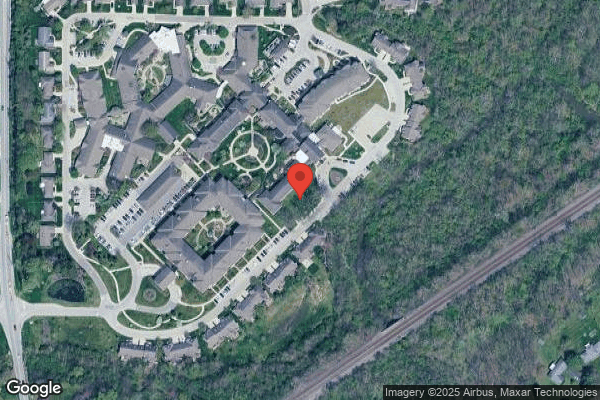
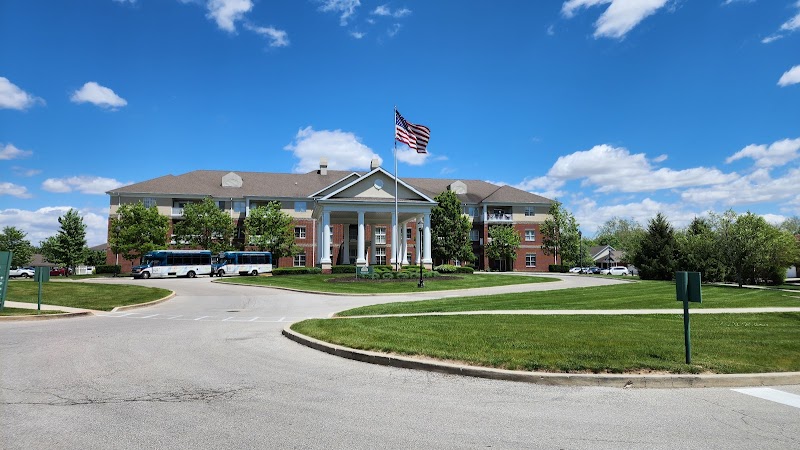
11050 PRESBYTERIAN DR, INDIANAPOLIS, IN 46236 (317) 823-6841
Government - County 148 Beds BHI SENIOR LIVING Data: November 2025
Trust Grade
40/100
#503 of 505 in IN
Last Inspection: July 2024

Within standard 12-15 month inspection cycle. Federal law requires annual inspections.

Overview

Westminster Village North has a Trust Grade of D, indicating below-average performance with several concerns. It ranks #503 out of 505 facilities in Indiana, placing it in the bottom tier statewide, and #46 out of 46 in Marion County, meaning there are no better local options. The facility is showing improvement, reducing its issues from 18 in 2024 to 3 in 2025, but it still has a lot of room for growth, as it recorded 48 concerns in total. Staffing is relatively stable with a 0% turnover rate, which is significantly better than the state average, but it only received a 2/5 rating for staffing overall. While there are no fines on record, some troubling incidents have been reported, including residents feeling neglected when their call lights were turned off without assistance and grievances not being addressed in a timely manner. Overall, while there are some strengths, like low fines and stable staffing, families should weigh these against the significant issues surrounding resident care and responsiveness.

Trust Score
D
40/100
In Indiana
#503/505
Bottom 1%
Safety Record
Low Risk
No red flags
Inspections
Getting Better
18 → 3 violations
Staff Stability
○ Average
Turnover data not reported for this facility.
Penalties
✓ Good
No fines on record. Clean compliance history, better than most Indiana facilities.
Skilled Nurses
○ Average
Each resident gets 34 minutes of Registered Nurse (RN) attention daily — about average for Indiana. RNs are the most trained staff who monitor for health changes.
Violations
⚠ Watch
48 deficiencies on record. Higher than average. Multiple issues found across inspections.
★☆☆☆☆
1.0
Overall Rating
★★☆☆☆
2.0
Staff Levels
★★★★☆
4.0
Care Quality
★☆☆☆☆
1.0
Inspection Score
Stable
2024: 18 issues
2025: 3 issues

The Good

  • 4-Star Quality Measures · Strong clinical quality outcomes
  • Full Sprinkler Coverage · Fire safety systems throughout facility
  • No fines on record

Facility shows strength in quality measures, fire safety.

The Bad

1-Star Overall Rating

Below Indiana average (3.1)

Significant quality concerns identified by CMS

Chain: BHI SENIOR LIVING

Part of a multi-facility chain

Ask about local staffing decisions and management

The Ugly 48 deficiencies on record

Aug 2025 3 deficiencies
CONCERN (D) 📢 Someone Reported This

A family member, employee, or ombudsman was alarmed enough to file a formal complaint

Potential for Harm - no one hurt, but risky conditions existed

Accident Prevention (Tag F0689)

Could have caused harm · This affected 1 resident

Based on observation, interview, and record review, the facility failed to ensure adequate supervision was provided to prevent a cognitively impaired resident from leaving a secured memory unit unsupe...

Read full inspector narrative →
Based on observation, interview, and record review, the facility failed to ensure adequate supervision was provided to prevent a cognitively impaired resident from leaving a secured memory unit unsupervised for 1 of 3 residents reviewed for dementia care. (Resident B)Findings include: The clinical record for Resident B was reviewed on 8/18/25 at 11:10 a.m. The diagnoses included, but were not limited to, vascular dementia and anxiety. She resided on the secured memory care unit. A care plan, last revised on 5/7/25, indicated Resident B had behavior problems related to repetitive movements such as pacing and rummaging, rearranging her room, taking and leaving items in others rooms, wandering, and exit seeking. The goal was for her to have fewer behavioral episodes. The interventions included, but were not limited to, address wandering behavior by walking, redirect from inappropriate areas, engage in diversional activity, be calm and self-assured and anticipate and meet Resident B's needs.An Elopement Evaluation, with an effective date of 7/8/25, indicated she had a history of elopement or attempted while at home and while at the facility. She wandered aimlessly or non-goal directed. Her wandering behavior was likely to affect the privacy of others. A score value of 1 or higher indicated being at risk for elopement.A Quarterly Minimum Data Set (MDS) assessment, completed 7/8/25, indicated she did not speak. She was sometimes able to make herself understood and sometimes able to understand others. She had poor short- and long-term memory. She could not recall the season, location of her room, staff names or faces and did not know she was in a long-term care facility. She had severely impaired decision-making abilities. She wandered without purpose for one to three days during the look back period of the assessment. She was able to walk 150 feet with supervision.An Incident Note, dated 7/25/25 at 6:15 p.m., indicated Resident B was observed sitting on a bench outside by staff. When staff spoke with Resident B she pointed toward the unit stating, that's my home. Resident immediately brought back inside. Resident assessed head- to- toe for injuries. No injuries were noted. The Director of Nursing, Executive Director, Nurse Practitioner and Power of Attorney were notified of the incident. A care plan, initiated 7/28/25, indicated Resident B was an elopement risk/ wanderer related to impaired safety awareness. The goal was for her safety to be maintained. The interventions were to distract her from wandering by offering pleasant diversions, structured activities, food, conversation, television, and books. Engage her in purposeful activities. Provide care in a calm and reassuring manner and provide clear simple instructions. Resident may attempt to follow others out of the door. Redirect her by offering to listen to music or watch television.On 8/18/25 at 1:00 p.m., the Executive Director (ED) provided the Incident Report, submitted to the Indiana Department of Health on 7/25/25, and the investigation file of the incident. The Incident Report, dated 7/25/25, indicated that Resident B had been observed by a staff member sitting on a bench outside. When the staff member asked Resident B what she was doing, Resident B stated that she needed to go back there and pointed toward the building. Resident B had been observed sitting in the building approximately 10 minutes prior to being found outdoors. Her elopement risk score was five on 7/8/25. The preventative measures, on 7/26/25, were an assessment of the unit revealed that the automatic closure of the doorway had an extended delay. The delay was immediately shortened to a five second egress. The codes for all doors on the unit were changed. All families were notified to ask for assistance when exiting the unit. Elopement risks had been completed for all residents residing on the unit. The follow up, added 7/30/25, indicated elopement assessments for all residents in the facility were completed. Care plans were updated as needed related to elopement risk. Elopement Risk Alert forms were completed for all residents at risk for elopement and elopement books were updated on all units. All staff were in-serviced regarding the elopement policy, elopement protocol, and elopement risk alert forms. Resident B continued to show no signs of injury and had no noted signs of psychosocial distress and no exit seeking. During an interview on 8/18/25 at 1:58 p.m., Registered Nurse (RN) 2 indicated, on 7/25/25, Resident B had been found outside of the secured memory care unit unsupervised. The facility security cameras were reviewed. The family member of another resident had left and used the handicap button to open the door. The family member had not paid attention, and Resident B had followed them out at 4:03 p.m. When staff found Resident B, she told the staff member she needed to go back in the same door she had used to leave. The family members had been educated, and the door had been changed to close more quickly. Family members no longer had the codes to the doors and staff were to let them in and out. On 8/18/25 at 3:45 p.m., the exit doors of the secured memory unit were observed with Licensed Practical Nurse (LPN) 3. LPN 3 opened the first exit door of the unit using a code and pushing the handicap accessible button. The first exit door opened and was observed to stay open for approximately five seconds before beginning to close. The entry area to the unit had a second door to access the outside. There was an additional keypad which controlled the second exit door. LPN 3 indicated the second keypad for the exit door to the outdoors had been added after Resident B had eloped. There was not a wander guard system on the exit doors of the unit. On 8/19/25 at 10:34 a.m., the bench that Resident B was found sitting on was observed with Certified Nurse Aide (CNA) 4. The bench was located around a half circle corner at the back of the memory care unit, away from the secured memory unit exit doors. The bench was not visible from the exit doors; however, it was visible from the road which enters the facility campus. CNA 4 indicated, on 7/25/25 at approximately 4:15 p.m., she had driven into the facility campus and saw Resident B sitting on the bench. CNA 4 had recognized Resident B as a resident of the memory care unit and wondered if she was okay. CNA 4 stopped her car and approached Resident B, who was sitting on the bench with a book, and assisted Resident B back to the secured memory care unit and informed the staff on the unit that she had found Resident B outside. On 8/18/25 at 2:47 p.m., the Director of Nursing provided the Elopement Prevention and Intervention Policy, dated 7/26/25, which indicated .It is the policy of Westminster Village to protect vulnerable residents from wandering into unsafe areas or from leaving the facility without appropriate supervision. Procedure: 1. Residents admitted with a diagnosis or signs/ symptoms of cognitive impairment will be screened for elopement risk at the time of admission, and with each MDS Assessment .4. The interdisciplinary team will develop and implement a plan of care to protect residents who are assessed to be at-risk, or otherwise demonstrate exit seeking behavior .This deficient practice was corrected on 8/1/25, prior to the start of the survey, and was therefore past noncompliance. The facility implemented a systemic plan that included the following actions: in-service education to nursing staff related to the policy and procedure regarding elopement, evaluated all residents to identity potential residents at risk for elopement, serviced the exit door regarding a keypad code and egress time, and conducted an elopement program evaluation to ensure assessments have been completed and documented with ongoing review presented to the Quality Assessment and Assurance (QAA) Committee for review.This citation relates to Intake 2572780 and Intake 2583098.3.1-45(a)(1)3.1-45(a)(2)
CONCERN (D) 📢 Someone Reported This

A family member, employee, or ombudsman was alarmed enough to file a formal complaint

Potential for Harm - no one hurt, but risky conditions existed

Pharmacy Services (Tag F0755)

Could have caused harm · This affected 1 resident

Based on interview and record review, the facility failed to ensure a newly ordered medication was received timely from the facility contracted pharmacy and administered, as ordered by the physician, ...

Read full inspector narrative →
Based on interview and record review, the facility failed to ensure a newly ordered medication was received timely from the facility contracted pharmacy and administered, as ordered by the physician, for 1 of 3 residents reviewed for unnecessary medications. (Resident E)Findings include: The clinical record for Resident E was reviewed on 8/18/25 at 11:17 a.m. The diagnoses included, but were not limited to, congestive heart failure. A Quarterly Minimum Data Set assessment, dated 6/9/25, indicated she was severely cognitively impaired. A Skin/Wound Note, dated 7/25/25 at 12:03 p.m., indicated Resident E had swelling present to the left lower extremity and foot. Upon assessment, Resident E's limb had redness with areas that appeared to be blistering. The Nurse Practitioner (NP) was notified and would assess.A physician's order, dated 7/25/25 at 1:16 p.m., indicated Resident E was to receive furosemide (a diuretic medication used to help remove excess fluids from the body) 20 milligrams (mg) given twice a day for edema (swelling) for four days. A Health Status Note, dated 7/26/25 at 6:24 a.m., indicated Resident E continued to have edema in left lower extremity with no complaints of pain or discomfort. A Health Status Note, dated 7/26/25 at 11:14 p.m., indicated Resident E continued to have edema in her left lower extremity with redness in both legs. She had no complaints of pain or discomfort. The July 2025 Medication Administration Record (MAR) did not contain documentation that the furosemide 20 mg was administered on 7/25/25 in the evening, or 7/26/25 in the morning or in the evening. The first dose of furosemide 20 mg was documented as being given on 7/27/25 in the morning. Resident E's clinical record did not contain information that the facility pharmacy had been contacted about the delivery of Resident E's furosemide.During an interview on 8/19/25 at 11:20 a.m., the DON indicated furosemide 20 mg was available for use in the Emergency Drug Kit at the facility. On 8/19/25 at 12:50 p.m., the Director of Nursing (DON) provided the Packing Slip Proof of Delivery form that indicated Resident E's furosemide 20 mg tablets were delivered to the facility on 7/27/25 at 6:31 p.m. The facility pharmacy was unavailable for interview.On 8/19/25 at 1:11 p.m., the DON provided the facility pharmacy instructions for ordering and reordering medications which indicated Monday through Friday new orders needed to be received by 7:00 p.m., Eastern Standard Time. On Saturday and Sunday, new orders need to be received by 3:00 p.m., Eastern Standard Time.During an interview on 8/19/25 at 1:11 p.m., the DON indicated the pharmacy required new orders to be sent to the pharmacy by the listed times to be included in the nightly drug delivery. She was unsure why Resident E's furosemide had not been delivered until 7/27/25. There was no documentation available that furosemide 20 mg had been removed from the Emergency Drug Kit machine for Resident E. This citation relates to Intake 2583098. 3.1-25(a)
CONCERN (D) 📢 Someone Reported This

A family member, employee, or ombudsman was alarmed enough to file a formal complaint

Potential for Harm - no one hurt, but risky conditions existed

Infection Control (Tag F0880)

Could have caused harm · This affected 1 resident

Based on observation, interview, and record review, the facility failed to ensure personal protective equipment (PPE) was worn during a wound treatment and to ensure hand hygiene was performed after d...

Read full inspector narrative →
Based on observation, interview, and record review, the facility failed to ensure personal protective equipment (PPE) was worn during a wound treatment and to ensure hand hygiene was performed after doffing disposable gloves for 1 of 3 residents reviewed for wound care (Resident E).Findings include: The clinical record for Resident E was reviewed on 8/18/25 at 11:17 a.m. The diagnoses included, but were not limited to, congestive heart failure. A Quarterly Minimum Data Set assessment, dated 6/9/25, indicated she was severely cognitively impaired. A physician's order, dated 8/12/25, indicated to cleanse the area on the top of the right foot with wound cleanser, apply bacitracin to the wound bed, top with xeroform (petroleum gauze), cover with an ABD pad (type of wound dressing), wrap with kerlix (type of wound dressing) and secure with tape. On 8/19/25 at 10:05 a.m., Registered Nurse (RN) 2 was observed providing wound care to Resident E. RN 2 donned disposable gloves and removed the old dressing from Resident E's right foot. RN 2 went to the bathroom and removed her disposable gloves and applied a new pair. RN 2 did not perform hand hygiene after removing her used disposable gloves. RN 2 then cleansed the wound on the top of Resident E's right foot, applied xeroform gauze and wrapped Resident E's right foot with kerlix, securing the dressing with tape. RN 2 did not don a gown prior to beginning the treatment on Resident E's right foot. During an interview on 8/19/25 at 10:15 a.m., RN 2 indicated Resident E was in Enhanced Barrier Precautions (EBP) and she would normally wear a gown during a wound dressing change. Gowns were available on the back of the room door for use. She would normally perform hand hygiene after doffing a pair of gloves, prior to putting on a new pair of gloves. On 8/19/25 at 1:20 p.m., the Director on Nursing provided the current Enhanced Barrier Precautions Policy that indicated .It is the policy of the facility to ensure that additional and appropriate PPE [Personal Protective Equipment] is utilized, when indicated, to prevent the spread of Multidrug-resistant Organisms also known as MDRO's .Who is at 'High Risk' for acquiring or spreading a MDRO .Residents with wounds regardless of MDRO status .Examples of 'High Contact' Resident Care Activities at which time EBP is to be practiced are .Wound Care .Procedure: 1) When engaging in any of the afore mentioned 'High Contact' Resident Care Activities with a resident who has a known MRDO, or a colonized MRDO, or who would be at a high risk to contract a MRDO- use gloves and gowns [EPB] .This includes all required Hand Hygiene before and after donning/doffing gloves and gowns .3.1-18(b)(2)3.1-18(j)
Jul 2024 16 deficiencies
CONCERN (D)

Potential for Harm - no one hurt, but risky conditions existed

Deficiency F0558 (Tag F0558)

Could have caused harm · This affected 1 resident

**NOTE- TERMS IN BRACKETS HAVE BEEN EDITED TO PROTECT CONFIDENTIALITY** Based on observation, interview, and record review, the facility failed to timely provide a resident with a wheelchair that acco...

Read full inspector narrative →
**NOTE- TERMS IN BRACKETS HAVE BEEN EDITED TO PROTECT CONFIDENTIALITY** Based on observation, interview, and record review, the facility failed to timely provide a resident with a wheelchair that accommodated his height for 1 of 1 resident reviewed for positioning. (Resident D) Findings include: The clinical record for Resident D was reviewed on 7/10/24 at 2:20 p.m. The diagnoses included, but were not limited to, left sided hemiplegia (paralysis of left side) and dependence on wheelchair. He was admitted to the facility on [DATE]. A care plan, dated 5/9/24, indicated Resident D had a potential for falls related to a history of traumatic brain injury, immobility, non-ambulatory, and abnormal posture due to hemiplegia (unilateral paralysis) affecting his left dominant side. The goal was for him to be free of falls. An admission MDS (Minimum Data Set) Assessment, dated 5/14/24, indicated Resident D was cognitively intact and used a wheelchair for mobility. On 7/10/24 at 2:20 p.m., Resident D was observed in his room sitting in his wheelchair. He would lean back in the wheelchair with his hips not touching the back of the wheelchair seat. His feet were on the floor with his left ankle turning inward and his left foot flat on the ground. Resident D indicated his wheelchair was too small for him. He was 6 foot 8 inches tall and needed a bigger chair because the one he utilized was very uncomfortable and caused him to hurt all over. He had been using that wheelchair since he admitted to the facility in May. On 7/12/24 at 1:08 p.m., Resident D was observed in the dining room, sitting in his wheelchair. His hips were against the back of the chair and his feet were on the floor. The end of the wheelchair seat was at his mid-thigh. The back of the wheelchair seat was at his mid back, below his shoulder blades. During an interview, on 7/12/24 at 1:31 p.m., QMA (Qualified Medication Aide) 2 indicated Resident D could propel himself in his wheelchair sometimes, but his wheelchair was too small for him. He needed a bigger chair, and the facility was working on getting him one. During an interview, on 7/12/24 at 2:10 p.m., the ADM (Administrator) indicated the facility thought Resident D admitted with a wheelchair from the previous facility. When he arrived, he did not have his own wheelchair. The therapy department had contacted an outside vendor for a specialty wheelchair. The facility had inquired about the possibility of a more expensive chair that was sturdier for long term use, but no quote had been received yet. The ADM had followed up with an outside vendor about Resident D's specialty wheelchair that day, 7/12/24. On 7/12/24 at 2:10 p.m., the ADM provided the Quote Acknowledgement and emails regarding a specialty wheelchair for Resident D. The Quote Acknowledgement was dated, 5/15/24, and included details about the type of chair that was quoted. An email, sent by TM (Therapy Manager) to the outside vendor, was dated 6/10/24, and inquired about follow up on Resident D's custom wheelchair. An email, sent by TM to the outside vendor, was dated 6/19/24, and, again, inquired about follow up about Resident D's specialty wheelchair. An email from the outside vendor to the TM, dated 6/20/24, included the price of Resident D's specialty wheelchair and cushion. An email, dated 6/24/24, from TM to the outside vendor indicated the ADM had been spoken to about the quote and the ADM had asked if there was a wheelchair available that would be better for Resident D and may last him longer, even if the wheelchair was more expensive up front. An email, dated 6/24/24, from the outside vendor to TM, indicated the chair previously quoted would suffice, but he would contact some additional manufacturers to confirm. During an interview, on 7/15/24 at 10:32 a.m., the TM indicated she had started working on wheelchair positioning with Resident D right after he admitted on [DATE]. Due to Resident D's height, none of the wheelchairs available at the facility were a good fit for him and she had given Resident D the largest wheelchair available at the facility. The TM had contacted an outside vendor who had previously provided wheelchairs for Resident D when he lived in the community. The TM had received the quotes for Resident D's specialty wheelchair and handed them off to the Administrator on 6/24/24. The facility had to order Resident D's wheelchair because it needed to be a capital expense due to the cost. On 7/15/24 at 12:48 p.m., Resident D was observed in the dining room sitting in his wheelchair at a table. He was leaning to the right in his wheelchair with his left leg extended out. He utilized his wheelchair and using his right hand to feed himself. When he took a bite, he would lean forward to bring his body closer to the spoon. During an interview, on 7/15/24 at 1:40 p.m., Resident D indicated that he had a hard time feeding himself because of his wheelchair. He was unable sit upright at the table because the wheelchair positioning and felt frustrated because his wheelchair was so uncomfortable and did not fit him correctly. 3.1-3(v)(1)
CONCERN (D) 📢 Someone Reported This

A family member, employee, or ombudsman was alarmed enough to file a formal complaint

Potential for Harm - no one hurt, but risky conditions existed

Notification of Changes (Tag F0580)

Could have caused harm · This affected 1 resident

Based on interview and record review, the facility failed to notify a resident's representative of a fall event for 1 of 8 residents reviewed for accidents. (Resident F) Findings include: The clinical...

Read full inspector narrative →
Based on interview and record review, the facility failed to notify a resident's representative of a fall event for 1 of 8 residents reviewed for accidents. (Resident F) Findings include: The clinical record for Resident F was reviewed on 7/10/24 at 2:00 p.m. The diagnosis included, but was not limited to, Alzheimer's disease. An admission Minimum Data Set (MDS) assessment, dated 6/13/24, indicated Resident F was cognitively impaired. A care plan, dated 6/10/24, indicated Resident F had a potential for falls r/t [related to] deconditioning gait/balance problems, unaware of safety needs. fall in the home, down unknown length of time, seen in ER [emergency room] and admit to hospital. Fall in facility impulsive. no injuries . During a Confidential Interview, they indicated Resident F's Representative was not notified the resident had more than one fall at the facility. A nursing progress note for Resident F, dated 6/21/24, indicated the following, .Resident was on the floor in Aspen activity room. She said she got up from her wheel chair and sat on the floor. She denied falling. She was taken back to the room. A medical provider note for Resident F, dated 6/21/24, indicated the following, .She had a fall a few days today [sic] and another one today unwitnessed without injury. Per nursing, patient was found in activity room and reported getting up from her wheelchair to sit on the floor .Patient resting in bed, does not recall fall earlier today. She reports no current pain . The clinical record did not include notification of Resident F's representative regarding the fall on 6/21/24. A written statement by License Practical Nurse (LPN) 3, dated 7/9/24, indicated, .I was walking to the unit where I was to work on that day and I saw this lady [Resident F] sitting upright on the floor, I asked if she was okay, she said yes, I asked if she fell, she answered no. I saw the aid walking towards her and I asked the aid if he knew who she was, the aid said yes and that he was going to get her to her room and then for breakfast. I walked pass [sic]. I reported to the NP [Nurse Practitioner] that day how I met the resident and that I went ahead to check her v.s. [vital signs] when I realized she was in the unit I was assigned to work that day. She denied falling and denied having any pain at the time I asked. An interview was conducted with the Director of Nursing (DON) on 7/15/24 at 2:46 p.m. She indicated, on 6/21/24, Resident F did have a fall. The nurse did not consider the resident had fallen after observing Resident F sitting on the floor in the activity's room. During an interview, LPN 3 had stated to the DON she had arrived on the unit and had observed a resident sitting on the floor in the activity's room. She had placed herself on the floor, all the time, so she did not consider it a fall. A notification of resident change in condition policy was provided by the DON on 7/15/24 at 9:30 a.m. It indicated .Purpose: To establish guidelines for assuring residents, their legal representatives and attending physicians are informed of resident changes in the resident's condition .Standards: 1. A licensed nurse shall immediately inform the resident, consult with the resident's physician and if known, notify the resident's legal representative or an interested family member of: a. An accident involving the resident which there is a potential for or actual injury which could require nursing or medical interventions .9. Resident representative(s) notifications and attempts will be made promptly and documented in the nurse's notes. In the event the licensed nurse is unable to contact the resident's representative, after a reasonable time period, the Director of Nursing will be notified . This citation relates to Complaint IN00437923. 3.1-5(a)(1)
CONCERN (D) 📢 Someone Reported This

A family member, employee, or ombudsman was alarmed enough to file a formal complaint

Potential for Harm - no one hurt, but risky conditions existed

Report Alleged Abuse (Tag F0609)

Could have caused harm · This affected 1 resident

Based on interview and record review, the facility failed to ensure that all alleged violations involving abuse or neglect were timely reported to IDOH (Indiana Department of Health) for 1 of 2 reside...

Read full inspector narrative →
Based on interview and record review, the facility failed to ensure that all alleged violations involving abuse or neglect were timely reported to IDOH (Indiana Department of Health) for 1 of 2 residents investigated for dignity. (Resident N) Findings include: The clinical record for Resident N was reviewed on 7/11/24 at 10:04 a.m. The diagnoses included, but were not limited to, unspecified injury of the cervical spinal cord and diabetes. A Significant Change of Status MDS (Minimum Data Set) Assessment, dated 4/8/24, indicated she was cognitively intact. On 7/12/24 at 2:05 p.m., the SSD (Social Services Director) provided Investigation and Follow-up of Grievance/ Complaint forms for Resident N dated 5/21/24. The Follow-up of Grievance/ Complaint form, dated 5/21/24, indicated the following, .Detailed description of complaint: NOC [night] 5/21/24 Res [resident] had complaint related to customer service issues. Department Involved: Nursing. Corrective Measures: Initiated in-service R/T [related to] resident's concern-proper transfers, following CNA [certified nurse aide] assignment sheet R/T [sic] transfers. Always use 2 nrsg [nursing] staff for hoyer transfers, ice water pass q [every] shift and prn [as needed] .Manager of Department Involved Must Complete Steps Below: Date of follow-up response: [blank]. Date written notification regarding action needed to be offered per policy: [blank]. Signature of individual responsible for follow-up and notification [Director of Nursing signature present], Signature of Social Service Manager or designee [SSD signature]. Signature of Administrator [ADM signature] . A copy of a note was attached to the Follow-up of Grievance/ Complaint form dated 5/21/24. The note indicated Resident N had asked for ice water on the NOC (night shift) and had not received the water. A CNA had told Resident N not to drink as much so she did not need changed as often. During an interview, on 7/17/24 at 11:15 a.m., the DON (Director of Nursing) indicated that she would consider a CNA telling a resident not to drink so much so that they did not need changed as often to be abusive. The DON did not have any other notes or documentation from the investigation of the grievance, dated 5/21/24, from Resident N. The nursing staff had denied the allegation. The DON was unsure if the Administrator had reported the incident to IDOH or initiated an investigation. During an interview, on 7/17/24 at 2:25 p.m., the SSA (Social Service Assistant) indicated she had written the note attached to the Follow-up of Grievance/Complaint form dated 5/21/24. SSA could not recall if Resident N had provided names of the staff members involved. Resident N did not have a history of making false allegations. During an interview, on 7/18/24 at 12:02 p.m., the ADM (Administrator) indicated the facility did not report the grievance, dated 5/21/24, by Resident N to IDOH. There was no report and/or file for that incident. On 7/10/24 at 12:21 p.m., the ADM provided the Abuse Policy, last updated 11/15/17, which indicated the following, .It is the policy of [name of facility] to protect residents from all abusive acts and to comply with state and federal laws and regulations for reporting suspected or actual acts . 15. All reports of suspected or known abuse shall be reported immediately or within 24 hours via telephone to the Indiana /state Department of Health Initial reports will include names of residents, staff or others involved, brief description of the alleged or actual occurrence, description of investigative and protective actions taken .Zero Tolerance Campaign . Not assisting a resident with specific needs when a resident clearly cannot help themselves .Making a resident feel bad when asking for help because you feel overworked or tired .These are true examples of abuse . Abuse is anything that could potentially harm a resident .Also, Neglect is abuse . This citation relates to Complaint IN00430036. 3.1-28(c)
CONCERN (D) 📢 Someone Reported This

A family member, employee, or ombudsman was alarmed enough to file a formal complaint

Potential for Harm - no one hurt, but risky conditions existed

Quality of Care (Tag F0684)

Could have caused harm · This affected 1 resident

**NOTE- TERMS IN BRACKETS HAVE BEEN EDITED TO PROTECT CONFIDENTIALITY** 4. The clinical record for Resident N was reviewed on 7/11/24 at 10:04 a.m. The diagnoses included, but were not limited to, uns...

Read full inspector narrative →
**NOTE- TERMS IN BRACKETS HAVE BEEN EDITED TO PROTECT CONFIDENTIALITY** 4. The clinical record for Resident N was reviewed on 7/11/24 at 10:04 a.m. The diagnoses included, but were not limited to, unspecified injury of the cervical spinal cord and diabetes. A Significant Change of Status MDS Assessment, dated 4/8/24, indicated she was cognitively intact. A Health Status Note, dated 4/9/2024 at 2:33p.m., indicated Resident N had missed a follow-up appointment with neurosurgery due to transportation issues. A Progress note, dated 6/11/2024 at 1:35 p.m., indicated that Resident N's neurosurgery follow up appointment had been rescheduled and transportation had been scheduled. Resident N had been notified of the appointment date and time and the calendar had been updated. During an interview, on 7/11/24 at 2:05 p.m., Resident N indicated that she had missed several neurology appointments. The last one she missed was, June 2024, and she had missed the appointment because the facility staff did not have her ready in time. During an interview, on 7/17/24 at 11:15 a.m., the DON indicated Resident N had missed a neurology appointment on 6/10/24 due to the nurse not checking the schedule. The transportation driver had been at the building to transport Resident N to the appointment but would not wait for her to get ready. On 7/18/24 at 9:30 a.m., the DON provided the current Transportation Services Policy which indicated the following, .Duties and Obligations of the Facility to arrange transportation to/from medical appointments .Nursing staff, or designee, to make arrangements with the transportation vendor to supply ambulance and/or wheelchair transportation in the even [sic] that family cannot transport .Nursing staff to ensure resident is ready for appointment . This citation relates to Complaint IN00437923. 3.1-37(a) 3.1-37(b) Based on interview and record review, the facility failed to ensure vital signs were obtained prior to administering a medication with parameters to hold for blood pressure measurements (Resident 32), ensure a urinalysis was followed up with and obtained per physician/nurse practitioner (NP) recommendations (Resident 80) for 2 of 5 residents reviewed for unnecessary medications, and failed to ensure residents attended a neurology appointment (Resident N and Resident F) for 1 of 1 resident reviewed for rehabilitation services and 1 of 8 residents reviewed for falls. Findings include: 1. The clinical record for Resident 32 was reviewed on 7/17/24 at 2:49 p.m. The diagnoses included, but were not limited to, chronic kidney disease, congestive heart failure, and diabetes mellitus. A Significant Change Minimum Data Set (MDS) assessment, dated 5/23/24, indicated Resident 32 received diuretic medication. A care plan for congestive heart failure, revised 6/16/24, indicated the intervention to give cardiac medications as ordered. A care plan for diuretic therapy, revised 4/18/24, indicated the intervention to monitor vital signs as ordered. A physician order, dated 7/2/24, was noted for torsemide (diuretic medication) 10 milligrams daily related to congestive heart failure. The order indicated to hold the medication if systolic blood pressure (the first number that measures the pressure your blood is pushing against your artery walls when the heart beats) was less than 100. The electronic medication administration record (EMAR), dated July of 2024, did not indicate a blood pressure was obtained prior to administration of torsemide 10 milligrams from 7/2/24 through 7/17/24. The vitals documented for Resident 32 indicated a blood pressure was obtained daily but in the evening time, on 7/2/24, and 7/4/24 through 7/16/24. A policy titled Blood Pressure, Measuring, revised September 2010, was provided by the Director of Nursing (DON) on 7/17/24 at 4:50 p.m. The policy indicated the following, .1. Review the resident's care plan to assess for any special needs of the resident 2. The clinical record for Resident 80 was reviewed on 7/17/24 at 2:03 p.m. The diagnoses included, but were not limited to, dementia, depression, anxiety disorder, and chronic kidney disease. An incontinence care plan, revised 8/21/23, indicated to monitor for signs and symptoms of a urinary tract infection (UTI) such as pain, burning, altered mental status, change in behavior, and/or change in eating patterns. A nurse practitioner (NP) note, dated 11/14/23, indicated Resident 80 was being evaluated due to dementia with behaviors, depression, loose stools, and anxiety. Resident 80 was refusing care and combative with staff. A UA [urinalysis] ordered today. Physician orders, dated 11/13/23, 11/15/23, and 11/16/23, indicated a urinalysis with culture and sensitivity (test that checks for bacteria in the urine that could be causing an infection in the urinary tract) to be obtained. A progress note, dated 11/15/23, indicated a urine specimen was unable to be collected after several attempts. A progress note, dated 11/17/23, indicated a urine specimen was unable to be collected due to resident being aggressive and agitated. A NP note, dated 11/30/23, indicated the following, .being evaluated acutely today for dementia with behaviors, loose stools, and anxiety. Nursing staff reports that patient has been refusing care and was combative with staff .Has dementia and staff reports she does sundown [refers to a state of confusion that occurs in the late afternoon and lasts into the night. Sundowning can cause various behaviors, such as confusion, anxiety, aggression or ignoring directions. Sundowning also can lead to pacing or wandering]. UA ordered today There were no laboratory results regarding a urinalysis, dated November 2023, for Resident 80 in the hard chart. An interview conducted with the Assistant Director of Nursing (ADON), on 7/17/24 at 4:58 p.m., indicated there were no urinalysis results in the hard chart for Resident 80. An interview conducted with the ADON, on 7/18/24 at 10:30 a.m., indicated that there was no urinalysis results for Resident 80 in November of 2023. She indicated Resident 80 was combative and did not allow staff to collect the urine sample for the urinalysis. There were no progress notes to indicate follow up regarding the urinalysis for Resident 80 that was not collected due to agitation and the NP note, dated 11/30/23, indicating a urinalysis order. A policy titled Obtaining Lab Policy, undated, was provided by the DON on 7/17/24 at 4:50 p.m. The policy indicated the following, .Culture and sensitivity lab results are monitored as part of the facility's antibiotic stewardship program .1. Laboratory testing, including culture and sensitivity testing, shall be in accordance with physician/practitioner orders and current standards of practice 3. The clinical record for Resident F was reviewed on 7/10/24 at 2:00 p.m. The resident's diagnosis included, but was not limited to, Alzheimer's disease. The resident was admitted on [DATE]. An admission MDS assessment, dated 6/13/24, indicated Resident F was cognitively impaired. A hospital Discharge summary, dated [DATE], indicated Resident F was referred for a neurology consultation. The summary provided the neurology contact information. A care plan meeting summary for Resident F, dated 6/10/24, indicated the resident's representatives had requested a neurology consultation, since it had been discussed in the hospital prior to discharge. The resident's clinical record did not include documentation date and time of the neurology consultation nor arrangement of transportation to the appointment. During a Confidential Interview, they indicated Resident F was to be seen by neurology, and the facility had not made arrangements to be seen nor transportation. The facility staff had told Resident F's Representative 2 the neurology appointment was scheduled for 6/25/24. Resident F's Representative 2 had gone to the neurology appointment, on 6/25/24, expecting to meet Resident F there. On arrival, the neurology office staff had indicated Resident F did not have an appointment that day. Resident F was also not present in the office. Resident F's Representative 2 had contacted the facility staff that day prior to the appointment to confirm the resident had an appointment and transportation was made. Registered Nurse (RN) 25 assured her the appointment was set and transportation was made. One of the conversations via phone with RN 25, RN 25 had indicated Resident F had already been transported to the appointment. Resident F's Representative 2 was worried Resident F was missing. She had not arrived at the appointment. She had to notify RN 25 the resident did not have a scheduled appointment. Finally, Resident F's Representative 2 had located Resident F. She was in her pajamas in the facility. An email written by RN 25, dated 6/25/24, indicated the following, The appointment was set on June 10th. I called the office today to see what happened once it was brought to my attention that she wasn't scheduled. The office said it was a mistake on their end because they never completed the full scheduling .I did speak to the [Resident F's Representative] on 3 different occasions today and ensured her everything was set because I was under the impression it was . A written statement by RN 25, not dated, indicated the following, On June 10th , Resident [F] had a care plan meeting where I attended. [Resident F's Representatives 1 and 2] voiced concerns of wanting a neurology consult due to her newly diagnosed of dementia. I called neurology [office] that day. Spoke with someone in the office who told me they scheduled her for Tuesday, June 25th @ 2 pm [at 2:00 p.m.] .On June 25th, [Resident F' Representative 2] called a few times making sure we had the proper paperwork to send. I told her everything was ready. [Resident F's Representative] called a 4th time but I missed the call as I wasn't sitting at the nurse's station. She then called [Resident F's] cell phone. The [Certified Nursing Assistant] CNA brought me a cell phone stating someone wanted to talk to me never told me who phone it was [sic]. I answered on speaker phone saying this is [RN 25] . [Resident F's Representative] 2 asked me is [Resident F] there with you. I said I'm not sure, I'm on another side of Aspen. The other nurse I was giving report to said he will go to her room to check. She kept asking me is [Resident F] there with you. I said one of my co-workers is going to check. She said, you are talking to me on [Resident F]'s cell phone. I said, oh, I didn't know who phone I was on but if this [Resident F's] phone I'm going to assume she's here then. I proceeded to just figure out what happened and explained to [Resident F's Representative] 2 we would figure out what happened and notify her. An interview was conducted with the DON on 7/15/24 at 3:30 p.m. She indicated the staff document outside scheduled appointments on a calendar with appointment and transportation information. An interview was conducted with the Administrator (ADM) on 7/16/24 at 8:50 a.m. She indicated there had been an error in scheduling the neurology consultation for Resident F. The facility staff had contacted the neurology office and scheduled the appointment for 6/25/24. The neurology staff had made an error in their system which caused the appointment to not be scheduled. Transportation did not come that day to transport the resident to the appointment. An interview was conducted with RN 25 on 7/16/24 at 9:30 a.m. She indicated she did schedule transportation to transport Resident F to her neurology appointment. She believed she canceled it.
CONCERN (D)

Potential for Harm - no one hurt, but risky conditions existed

Respiratory Care (Tag F0695)

Could have caused harm · This affected 1 resident

Based on observation, interview, and record review, the facility failed to ensure a resident who was on continuous oxygen therapy had a physician's order for the oxygen in the electronic health record...

Read full inspector narrative →
Based on observation, interview, and record review, the facility failed to ensure a resident who was on continuous oxygen therapy had a physician's order for the oxygen in the electronic health record (EHR) and was provided the necessary care and services by not changing the humidification container as per policy for 1 of 2 residents reviewed for respiratory care. (Resident C) Findings include: An observation of Resident C's oxygen humidification container was conducted on 7/11/24 at 10:03 a.m. The humidification container was dated, 6/1/24, and the water that was left in the container was cloudy. During the observation, Resident C was wearing her nasal cannula and was receiving humidified oxygen from that container however the water in the humidifier container was not bubbling. A review of Resident C's clinical record conducted, on 7/16/24 at 1:49 p.m., indicated Resident C's diagnoses included, but was not limited to, congestive heart failure, dementia, chronic bronchitis, and anxiety disorder. A review of Resident C's hospice binder was conducted on 7/17/24 at 3:09 p.m. The hospice binder contained written orders, from 4/12/24, which included an order for continuous oxygen at 2 liters via a nasal cannula. The most recent care plan for Resident C did not include a care plan for the use of continuous oxygen nor was the continuous oxygen noted on the Significant Change Minimum Data Set (MDS) assessment completed on 4/19/24. An interview with Licensed Practical Nurse (LPN) 9, on 7/17/24 at 3:09 p.m., indicated Resident C was on hospice and when a resident was on hospice services, they usually would place an order for continuous oxygen. She indicated, when hospice places an order for a resident, they will handwrite the order for the facility's nursing staff to place into the electronic health record. It is the responsibility of the facility staff to ensure all hospice orders are placed into the computer system. LPN 9 verified that Resident C's continuous oxygen order was not in their EHR system, but the order was listed on the admission orders from the hospice provider. LPN 9 indicated the oxygen tubing and humidification bottle were to be changed weekly. An interview conducted with Assistant Director of Nursing (ADON), on 7/17/24 at 3:25 p.m., indicated Resident C's care plan should contain a plan of care regarding the use of continuous oxygen and the care services needed. The ADON indicated the care services with the use of oxygen are to be completed by the facility's staff and not the hospice company. An Oxygen Administration policy was provided by Director of Nursing (DON) on 7/17/24 at 3:59 p.m. The policy indicated; the purpose of the procedure was to provide guidelines for safe oxygen administration. Preparation 1. Verify that there is a physician's order for this procedure. Review the physician's orders or facility protocol for oxygen administration. 2. Review the resident's care plan to assess for any special needs of the resident .General Guidelines .b. The nasal cannula is a tube that is placed approximately one-half into the resident's nose .Equipment and Supplies The following equipment and supplies will be necessary when performing this procedure .3. Humidifier bottle .Steps in the Procedure .12. Be sure these is water in the humidifying jar and that the water level is high enough that the water bubbles as oxygen flows through. 3.1-47(a)(6)
CONCERN (D) 📢 Someone Reported This

A family member, employee, or ombudsman was alarmed enough to file a formal complaint

Potential for Harm - no one hurt, but risky conditions existed

Deficiency F0697 (Tag F0697)

Could have caused harm · This affected 1 resident

Based on observation, interview and record review, the facility failed to administer a pain-relieving patch as ordered for 1 of 4 residents reviewed for pain. (Resident K) Findings include: 1. The cl...

Read full inspector narrative →
Based on observation, interview and record review, the facility failed to administer a pain-relieving patch as ordered for 1 of 4 residents reviewed for pain. (Resident K) Findings include: 1. The clinical record for Resident K was reviewed on 7/10/24 at 11:00 a.m. The diagnosis included, but was not limited to, low back pain. A care plan for pain, dated 7/11/24, indicated Resident K was to receive medications as ordered. A physician order, initiated on 7/5/24 and implemented on 7/9/24, indicated the resident was to receive an Aspercreme lidocaine patch for her lower back. The patch was to be applied for 12 hours and removed after 12 hours. The Treatment Administration Record (TAR), dated July 2024, indicated the lidocaine patch was to be applied at 8:00 a.m., and removed at 8:00 p.m. The TAR was documented by the staff the patch was applied, as ordered, from 7/9/24 through 7/17/24. The staff documented the removal of the lidocaine patch, as ordered, from 7/9/24 through 7/16/24. An interview was conducted with Resident K and Resident K's Representative on 7/10/24 at 11:58 a.m. Resident K indicated she does not receive the pain patch as ordered for her lower back at times. At the time of the interview, she did not have a pain patch on her lower back. An observation and interview was conducted of Resident K on 7/17/24 at 2:30 p.m. The resident indicated she had not received a pain patch that day. She still had the patch in place that was applied 7/16/24. She was supposed to receive the patch in the morning, and then it was to be removed in 12 hours. Resident K's lower back was observed with a lidocaine patch dated 7/16/24. An interview was conducted with Registered Nurse (RN) 6 on 7/17/24 at 2:51 p.m. She indicated she had not had time to apply the scheduled 8:00 a.m., lidocaine patch for Resident K that day. She indicated she would apply the patch after the interview. After the interview with RN 6, an observation was made of RN 6 removing a lidocaine patch, dated 7/16/24, and applied a new lidocaine patch. This citation relates to Complaint IN00437923. 3.1-37(a)
CONCERN (D)

Potential for Harm - no one hurt, but risky conditions existed

Deficiency F0698 (Tag F0698)

Could have caused harm · This affected 1 resident

Based on interview and record review, the facility failed to ensure pre and post assessments were conducted to a resident receiving dialysis for 1 of 1 resident reviewed for dialysis. (Resident 176) F...

Read full inspector narrative →
Based on interview and record review, the facility failed to ensure pre and post assessments were conducted to a resident receiving dialysis for 1 of 1 resident reviewed for dialysis. (Resident 176) Findings include: The clinical record for Resident 176 was reviewed on 7/10/24 at 3:00 p.m. The diagnosis included, but was not limited to, chronic kidney disease. The resident's admission date was 7/5/24. A care plan for Resident 176, dated 7/8/24, indicated the resident needs hemodialysis r/t [related to] renal failure. A physician order, dated 7/10/24, indicated Resident 176 was to receive dialysis every Monday, Wednesday, and Friday. The residents clinical record did not include pre or post assessments on the following dialysis days: 7/12/24 - Friday, and 7/15/24 - Monday An interview was conducted with the Director of Nursing on 7/18/24 at 9:19 a.m. She indicated staff should be conducting pre and post assessments with Resident 176 on dialysis days. A dialysis policy was provided by the Assistant Director of Nursing on 7/18/24 at 10:36 a.m. The policy indicated the following, .Policy: This facility will provide the necessary care and treatment, consistent with professional standards of practice, physician orders, the comprehensive person-centered care plan, and the resident's goals and preferences, to meet the special medical, nursing, mental, and psychosocial needs of resident's receiving dialysis . 3.1-37(a)
CONCERN (D)

Potential for Harm - no one hurt, but risky conditions existed

Deficiency F0761 (Tag F0761)

Could have caused harm · This affected 1 resident

**NOTE- TERMS IN BRACKETS HAVE BEEN EDITED TO PROTECT CONFIDENTIALITY** Based on observation, interview, and record review, the facility failed to ensure medications stored in the facility's medicatio...

Read full inspector narrative →
**NOTE- TERMS IN BRACKETS HAVE BEEN EDITED TO PROTECT CONFIDENTIALITY** Based on observation, interview, and record review, the facility failed to ensure medications stored in the facility's medication carts were not expired for 1 of 6 medication carts observed within the facility. (Facility) Findings include: A review of the facility's medication storage rooms and medication carts was conducted on [DATE] at 10:05 a.m. The following was observed: On the [NAME] hallway with LPN (Licensed Practical Nurse) 3, on [DATE] 10:10 a.m., the medication cart contained a multi-dose vial of Humalog insulin with an open date, of [DATE], for Resident P without an expiration date on vial or prescription medication bottle that housed vial of insulin. An interview conducted with LPN 3, on [DATE] at 10:12 a.m., she indicated all opened insulin vials should have an open date and expiration date. The open insulin vials expire after 28 days from opening. The clinical record for Resident P was reviewed on [DATE] at 1:32 p.m. The diagnosis included, but was not limited to, type 2 diabetes mellitus. A physician order, dated [DATE], indicated Resident P was on a sliding scale of Humalog injection solution 100 UNIT/ml (milliliters) (insulin lispro). The sliding scale was the following: 151 - 200 blood sugar readings = 2 units of insulin, 201 - 250 blood sugar readings = 4 units of insulin, 251 - 300 blood sugar readings = 6 units of insulin, 301 - 350 blood sugar readings = 8 units of insulin, 351 - 400 blood sugar readings = 10 units of insulin If greater than 450, repeat in 20 minutes and report the second reading if >450, subcutaneously before meals for diabetes mellitus. The Medication Administration Record (MAR), dated [DATE], for Resident P was reviewed on [DATE] at 1:40 p.m. The MAR indicated that insulin was administration by LPN 3 on [DATE] at 7:00 a.m. LPN 3 administered 2 units of Humalog to Resident P for a blood sugar of 160. An interview was conducted with LPN 3 on [DATE] at 11:10 a.m. She indicated she did not give the 7:00 a.m. dose of insulin from the expired vial of Humalog but from another source and looked in the medication cart and in the medication room for several minutes but was unable to provide the vial in which the insulin was given from. A guideline for Medication Labeling and Storage policy, received on [DATE] at 1:32 p.m., from the ADON (Assistant Director of Nursing) indicated the following, Medication and biologicals are stored in the packaging, containers or other dispensing systems in which they are received .Multi-dose vials that have been opened or accessed (e.g., needle punctured) are dated and discarded within 28 days .If the facility has discontinued, outdated or deteriorated medications or biologicals, the dispensing pharmacy is contacted for instructions regarding returning or destroying these items. 3.1-25(o)
CONCERN (D)

Potential for Harm - no one hurt, but risky conditions existed

Deficiency F0804 (Tag F0804)

Could have caused harm · This affected 1 resident

**NOTE- TERMS IN BRACKETS HAVE BEEN EDITED TO PROTECT CONFIDENTIALITY** Based on interview and record review, the facility failed to provide residents with a palatable grilled cheese sandwich for 2 of...

Read full inspector narrative →
**NOTE- TERMS IN BRACKETS HAVE BEEN EDITED TO PROTECT CONFIDENTIALITY** Based on interview and record review, the facility failed to provide residents with a palatable grilled cheese sandwich for 2 of 5 residents reviewed for food. (Residents 62 and 93) Findings include: The clinical record for Resident 62 was reviewed on 7/18/24 at 10:40 a.m. An Annual Minimum Data Set (MDS) assessment, dated 7/3/24, indicated Resident 62 was cognitively intact. The clinical record for Resident 93 was reviewed on 7/18/24 at 10:45 a.m. A Quarterly MDS, dated [DATE], indicated Resident 93 was cognitively intact. An interview conducted with Resident 62, on 7/11/24 at 11:08 a.m., indicated she recently had ordered a grilled cheese sandwich from the always available menu and when she received the sandwich, she described it as two pieces of toast with a cold slice of cheese in the middle. Resident 62 indicated the sandwich was not appetizing since the cheese was not even melted on the sandwich nor had it been grilled at all. An interview conducted with Resident 93, on 7/18/24 at 12:05 p.m., indicated, about a week ago, she had ordered a grilled cheese sandwich from the always available menu and what she received was two pieces of toast with a slice of cheese that was microwaved so the cheese would melt. When asked why she believed they had placed the sandwich in a microwave, Resident 93 indicated it was because it was hard like a hockey puck. A review of the Dining Committee Meeting notes, from 6/4/24, indicated they discussed what is always available on the menus and talked about feedback regarding food. An interview conducted with the Director of Dietary Service, on 7/18/24 at 1:12 p.m., indicated they have had two food council meetings, and the last one was at the beginning of June. He indicated, previously, the procedure to make a grilled cheese sandwich was to utilize the toaster and not to grill the sandwich. He indicated with the new dietary company's changes, now the grilled cheese sandwiches will be made by utilizing a pan or grill and will no longer use the toaster to make the sandwiches. 3.1-21(a)(1) 3.1-21(a)(2)
CONCERN (D)

Potential for Harm - no one hurt, but risky conditions existed

Infection Control (Tag F0880)

Could have caused harm · This affected 1 resident

Based on observation, interview, and record review, the facility failed to ensure infection control practices were maintained during medication administration by picking up dropped pills with bare han...

Read full inspector narrative →
Based on observation, interview, and record review, the facility failed to ensure infection control practices were maintained during medication administration by picking up dropped pills with bare hands and not cleaning a blood pressure device in-between resident use for 2 of 3 medication administration observations. (Residents 275, 176, 173, 72, and K) Findings include: 1. A medication administration observation was conducted on, 7/11/24 at 8:20 a.m., with Qualified Medication Aide (QMA) 2. QMA 2 was in the process of removing medication cards to prepare morning medications for Resident 275. QMA 2 prepared metoprolol (blood pressure medication) and pressed down on the medication card for Senna (medication used to treat constipation) to where a pill of Senna was dropped on the medication cart. QMA 2 picked up the pill with her bare hands and placed the Senna pill into the medication cup. QMA 2 proceeded to prepare glycopyrrolate (medication for secretions) 2 milligrams by pressing the medication card and one pill fell onto the medication cart. QMA 2 proceeded to pick up the pill with her bare hands and placed it into the medication cup. QMA 2 opened a drawer to the medication cart to remove a bottle containing pyridostigmine (medication used to treat muscle weakness/muscle disease), shook the bottle to place a pill in the medication lid, and then took the pill with her bare hands to place into the medication cup. QMA 2 proceeded to administer all prepared medications to Resident 275. 2. A medication administration observation was conducted on, 7/12/24 from 8:50 a.m. to 9:05 a.m., with Registered Nurse (RN) 3. RN 3 utilized a wrist blood pressure device to obtain the blood pressure for Resident 176. RN 3 then proceeded to prepare morning medications for Resident 173. Before administering medications to Resident 173, RN 3 obtained blood pressure with the same wrist blood pressure device. Resident 72 approached RN 3 and requested their blood pressure be checked in the hallway. RN 3 proceeded to utilize the same wrist blood pressure device on Resident 72. RN 3 then prepared morning medications for Resident K. Prior to administering the morning medications for Resident K, RN 3 obtained blood pressure utilizing the same wrist blood pressure device. The wrist blood pressure device was not cleaned and/or disinfected before or after being utilized on Residents 176, 173, 72, and K. An interview conducted with RN 3, on 7/12/24 at 9:00 a.m., indicated the wrist blood pressure device was her own. She had the device for so many years and was unsure if there were instructions on how often to clean and what to clean it with. RN 3 indicated she usually cleans the wrist blood pressure device between every other resident. A policy titled SPECIFIC MEDICATION ADMINISTRATION PROCEDURES, revised 01/17, was provided by the Administrator on 7/15/24 at 9:48 a.m. The policy indicated the following, .ORAL MEDICATION ADMINISTRATION .Procedures .C. For solid medications .1) Pour or push the correct number of tablets or capsules into the souffle cup, taking care to avoid touching the tablet or capsule, unless wearing gloves 3.1-18(b)(1) 3.1-18(l)
CONCERN (E)

Potential for Harm - no one hurt, but risky conditions existed

Resident Rights (Tag F0550)

Could have caused harm · This affected multiple residents

Based on interview and record review the facility failed to assure residents were treated with dignity and respect for 3 of 9 residents interviewed during Resident Council and 2 of 2 residents reviewe...

Read full inspector narrative →
Based on interview and record review the facility failed to assure residents were treated with dignity and respect for 3 of 9 residents interviewed during Resident Council and 2 of 2 residents reviewed for dignity. (Resident B, P, 52, N, and K) Findings include: 1. The clinical record for Resident N was reviewed on 7/11/24 at 10:04 a.m. The diagnoses included, but were not limited to, unspecified injury of the cervical spinal cord and diabetes. A Significant Change of Status MDS (Minimum Data Set) Assessment, dated 4/8/24, indicated she was cognitively intact. During an interview for Resident Council, on 7/11/24 at 2:30 p.m., Resident N indicated the CNAs (Certified Nurse Aides) would come into her room and turn the call light off, telling her they would be back in a minute, but they never came back. When the staff does not assist with her needs, when her call light was on, she felt neglected and uncared for. She was to the point where she just lets it roll. 2. The clinical record for Resident P was reviewed on 7/10/24 at 10:49 p.m. The diagnoses included, but were not limited to, diabetes and cervical spinal stenosis. A Quarterly MDS Assessment, dated 5/1/24, indicated Resident P was cognitively intact. During an interview, on 7/10/24 at 10:49 a.m., Resident P indicated, a couple of months ago, a nurse had answered her call light. She asked the nurse to assist her with wiping and the nurse asked her what in the world did she (Resident P) do at home, and told her that she had never done this for someone before. 3. The clinical record for Resident 52 was reviewed on 7/11/24 at 2:45 p.m. The diagnoses included, but were not limited to, hypertension and stroke. A Quarterly MDS Assessment, dated 4/19/24, indicated she was cognitively intact. During Resident Council meeting, on 7/11/24 at 2:35 p.m., Resident 52 indicated she felt as if the residents in the health center were being treated like step children. The other parts of the campus had tablecloths on the tables, but the health center did not. 4. The clinical record for Resident B was reviewed on 7/11/24 at 2:50 p.m. The diagnoses included, but were not limited to, diabetes and hypertension. A Quarterly MDS assessment, dated 4/12/24, indicated Resident B was cognitively intact. An interview conducted with Resident B, on 7/11/24 at 9:49 a.m., indicated there were long delays with toileting. He would turn the call light on, and staff would enter his room rather quickly. The staff would turn off the call light and state they would return but would never return. He felt like the residents here were treated like the ugly step children. 5. An interview conducted with Resident K, on 7/10/24 at 11:41 a.m., indicated she had been waiting a long time for incontinent care. She had voiced her concerns to the CNA when she finally came in to provide care. The CNA's response was, I at least deserve a thirty minute break. A resident rights policy was provided on 7/17/24 at 4:00 p.m. The policy indicated the following, .The resident has a right to a dignified existence, self-determination, person centered care, communication with and access to persons and services inside and outside the facility, including: treating each resident with respect and dignity and care for each resident in a manner and in an environment that promotes maintenance or enhancement of his or her quality of life, recognizing each resident's individuality. It is the responsibility of the facility to protect and promote the rights of the resident . 3.1-3(a) 3.1-3(t)
CONCERN (E)

Potential for Harm - no one hurt, but risky conditions existed

Deficiency F0565 (Tag F0565)

Could have caused harm · This affected multiple residents

Based on observation, interview, and record review, the facility failed to promptly act on a resident council grievance about tablecloths in the dining room. This had the potential to affect 9 of 123 ...

Read full inspector narrative →
Based on observation, interview, and record review, the facility failed to promptly act on a resident council grievance about tablecloths in the dining room. This had the potential to affect 9 of 123 residents who attend resident council. Findings include: On 7/11/24 at 1:24 p.m., the ADM (Administrator) provided the resident council minutes for April, May, and June 2024. The Resident Council Minutes, dated April 11, 2024, indicated that Resident 52 did not like the tablecloths removed from the dining rooms and the Administrator (ADM) had encouraged her to give the changes of the dining room experience a chance. A Resident Council meeting was held on 7/11/24 at 2:30 p.m. There were 9 residents in attendance. The council indicated the facility had stopped utilizing tablecloths in the health center dining rooms. The assisted living and the independent living dining rooms had tablecloths. The council had expressed concerns about not utilizing tablecloths in resident council meetings. They had not received any follow-up on the grievance of not having tablecloths, other than the new company had decided to stop using them. The council felt that they were being treated differently because they were in the health center. On 7/17/24 at 8:47 a.m., the dining room was observed in the assisted living part of the facility. There were white tablecloths on the tables. DS (Dietary Staff) 12 indicated that the dining room had tablecloths for each meal served. During an interview, on 7/17/24 at 10:28 a.m., the ADM indicated there were no grievances from resident council for April, May, or June 2024. During an interview, on 7/17/24 at 10:34 a.m., the AD (Activity Director) indicated she assisted with the resident council each month. She had not filled out grievance forms in resident council. She heard the residents' concerns about not having tablecloths in the dining room. The AD had never filled out grievance for the resident council as a general concern. On 7/15/24 at 9:30 a.m., the DON (Director of Nursing) provided the Resident and Family Grievances policy, updated 3/2020, and indicated the following, .Complaints and concerns expressed by the Resident Council will be promptly addressed by the department manager, and a follow-up response will be provided to the Council . 3.1-3(l)
CONCERN (E) 📢 Someone Reported This

A family member, employee, or ombudsman was alarmed enough to file a formal complaint

Potential for Harm - no one hurt, but risky conditions existed

Grievances (Tag F0585)

Could have caused harm · This affected multiple residents

Based on interview and record review, the facility failed to timely address resident grievances, provide dates that grievances were resolved, provide dates that follow up was done with the individual ...

Read full inspector narrative →
Based on interview and record review, the facility failed to timely address resident grievances, provide dates that grievances were resolved, provide dates that follow up was done with the individual who brought forward the grievance, indicate that grievances were confirmed or not confirmed, and to provide a means for residents to file a grievance anonymously for 7 of 7 grievances reviewed. (Residents N, P, and R) Findings include: 1. The clinical record for Resident N was reviewed on 7/11/24 at 10:04 a.m. The diagnoses included, but were not limited to, unspecified injury of the cervical spinal cord and diabetes. A Significant Change of Status MDS (Minimum Data Set) Assessment, dated 4/8/24, indicated she was cognitively intact. A care plan, last revised on 4/23/24, indicated Resident N had a potential for alteration in mood related to depression, flat affect, reports little interest in doing things, tearful episodes, and critical of staff and routine. The goal was for her to demonstrate an improved mood. The interventions included, but were not limited to, encourage and allow open expression of feelings, initiated 11/8/23, and support my strengths and coping skills, initiated 11/8/23. During an interview, on 7/11/24 at 10:03 a.m., Resident N indicated she expressed concerns to the SSA (Social Services Assistant) about the CNAs (Certified Nursing Assistants) being rude and disrespectful. She did not always receive follow up about her concerns. On 7/12/24 at 2:05 p.m., the SSD (Social Services Director) provided Investigation and Follow-up of Grievance/ Complaint forms for Resident N dated 5/7/24 and 5/21/24. The Follow-up of Grievance/Complaint form, dated 5/7/24, indicated the following, .Detailed description of complaint: Res [Resident] reported CNA on evening shift 5/6/24 had poor customer service [sic]. Department Involved: Nursing. Corrective Measures: CNA educated on customer service and providing proper care. Manager of Department Involved Must Complete Steps Below: Date of follow-up response: 5/10/24. Date written notification regarding action needed to be offered per policy: [blank] There were no documents attached to the Follow-up of Grievance/Complaint form, dated 5/7/24, and the form did not contain information if the grievance had been confirmed or not confirmed. The Follow-up of Grievance/ Complaint form, dated 5/21/24, indicated the following, .Detailed description of complaint: NOC [night] 5/21/24 Res[sic] had complaint related to customer service issues. Department Involved: Nursing. Corrective Measures: Initiated in-service R/T [related to] resident's concern- proper transfers, following CNA assignment sheet R/T transfers. Always use 2 nrsg [nursing] staff for hoyer transfers, ice water pass q [every] shift and prn [as needed] .Manager of Department Involved Must Complete Steps Below: Date of follow-up response: [blank]. Date written notification regarding action needed to be offered per policy: [blank]. Signature of individual responsible for follow-up and notification [Director of Nursing signature present], Signature of Social Service Manager or designee [SSD signature]. Signature of Administrator [ADM signature] . The Follow-up of Grievance/Complaint form, dated 5/21/24, did not contain information if the grievance had been confirmed or not confirmed. A copy of a note was attached to the Follow-up of Grievance/Complaint form dated 5/21/24. The note indicated evening shift did not utilize 2 staff when putting Resident N in the mechanical lift. Resident N had asked for water on the NOC (night shift) and had not received the water. Resident N was told not to drink as much so she did not need changed as often. An evening shift CNA had complained about how she had to work a double and being overworked. The NOC shift had been very disruptive when changing Resident N. An education/ training sign-in form was attached to the Follow-up of Grievance/Complaint form dated 5/21/24. The education/ training form was signed by six staff members and indicated the topics discussed were proper transfers, following the CNA assignment sheets, water and fluids, ice water was to be passed every shift and as needed, and work concerns/complaints are not to be discussed with residents. During an interview, on 7/17/24 at 11:15 a.m., the DON (Director of Nursing) indicated she normally responded to the grievance forms within 48 hours. She did not usually put a date of when she followed up on the concern. She did not offer copies of the grievance forms to the person filing the grievance. Customer service concerns could indicate not addressing a concern properly. The note attached to the Follow-up of Grievance/Complaint form, dated 5/21/24, could have been written by the SSA (Social Service Assistant). The DON did not have any other notes or documentation from the investigation of the grievance from Resident N, dated 5/21/24. During an interview, on 7/17/24 at 2:25 p.m., the SSA indicated she had written the note attached to the Follow-up of Grievance/Complaint form dated 5/21/24. SSA could not recall if Resident N had provided names of the staff members involved. Resident N did not have a history of making false allegations. 2. The clinical record for Resident P was reviewed on 7/10/24 at 10:49 p.m. The diagnoses included, but were not limited to, diabetes and cervical spinal stenosis. A Quarterly MDS Assessment, dated 5/1/24, indicated Resident P was cognitively intact. During an interview, on 7/10/24 at 10:49 a.m., Resident P indicated she had filed grievances about an evening shift nurse. The nurse had refused to give her insulin correctly and had a disagreement with her and her son about blood pressure medications. The nurse had yelled at her son and was rude. Resident P had requested to speak to a supervisor but was told there was no supervisor. The disagreement about her blood pressure medications had happened on a Friday evening and she had filed the grievance on a Monday. No one had followed up with her regarding a resolution to the grievances. Resident P would prefer that she had another nurse rather than Licensed Practical Nurse (LPN) 11, but there was no one else available. Resident P did not always file grievances about concerns because the nurses could care for her again. On 7/12/24 at 2:05 p.m., the SSD (Social Services Director) provided Investigation and Follow-up of Grievance/ Complaint forms for Resident P dated 5/7/24, 5/24/24, and 6/10/24. The Investigation and Follow-up of Grievance/Complaint form, dated 5/7/24, indicated the following, .Detailed description of complaint: Res [resident] reported customer service issue w/ [with] nurse evening of 5/6/24. Department Involved: Nursing. Corrective Measures: Verbal one on one education given to nurse in training on customer care and following MD [physician] orders. Manager of Department Involved Must Complete Steps Below: Date of follow-up response: 5/7/24. Date written notification regarding action needed to be offered per policy: [blank]. Signature of individual responsible for follow-up and notification [ADON signature present], Signature of Social Service Manager or designee [SSD signature]. Signature of Administrator [ADM signature] . There were no documents attached to the Follow-up of Grievance/ Complaint form, dated 5/7/24, and did not contain information if the grievance had been confirmed or not confirmed. The Investigation and Follow-up of Grievance/Complaint form, dated 5/24/24, indicated the following, .Detailed description of complaint: Res [resident] reported issues with insulin timing. Department Involved: Nursing. Corrective Measures: Education and risk were explained to nurse . Nurse reports offering her insulin at different times and resident will refuse but will then sometimes ask for her insulin after the meal. Educated nurse on documentation .Manager of Department Involved Must Complete Steps Below: Date of follow-up response: [blank]. Date written notification regarding action needed to be offered per policy: [blank]. Signature of individual responsible for follow-up and notification [DON signature present], Signature of Social Service Manager or designee [SSD signature]. Signature of Administrator [ADM signature] . There were no documents attached to the Follow-up of Grievance/Complaint form, dated 5/24/24, and did not contain information if the grievance had been confirmed or not confirmed. The Investigation and Follow-up of Grievance/ Complaint form, dated 6/10/24, indicated the following, .Detailed description of complaint: Res [resident] reported issues w/ [with] medication delivery and issues w/ [sic] customer service evening of 6/7/24 . Department Involved: Nursing. Corrective Measures: Investigated situation. Per charge nurse she did hold her [Resident P] medication that could lower her BP even more which was the direction of the NP [nurse practitioner]. Nurse acknowledged the resident was not prescribed the med for BP [blood pressure], but it could cause hypotension .resident wanted to argue the situation and continued to demand the medication, but nurse refused. Nurse reports son came to the facility and when it was explained to him, he voiced understanding. The charge nurse did ask evening supervisor to come to unit and per supervisor . she went to discuss situation. Charge nurse reports the conversation with son was not disruptive to any other residents and was not heated. Manager of Department Involved Must Complete Steps Below: Date of follow-up response: [blank]. Date written notification regarding action needed to be offered per policy: [blank]. Signature of individual responsible for follow-up and notification [DON signature present], Signature of Social Service Manager or designee [SSD signature]. Signature of Administrator [ADM signature] . The Follow-up of Grievance/Complaint form, dated 6/10/24, did not contain information if the grievance had been confirmed or not confirmed. A typed note was attached to the Investigation and Follow-up of Grievance/ Complaint form, dated 6/10/24, which indicated that Resident P reported that LPN 11 had brought Resident P her evening medications and checked her vital signs. Resident P's blood pressure was low, and LPN 11 had prepared her medications. Resident P noticed her orange pills were not there and told LPN 11 the 3 orange pills were prescribed for heart rate, not blood pressure. LPN 11 had indicated she was going to mark down that Resident P refused the medication. Resident P had asked to speak to the supervisor and was told by LPN 11 she did not have a supervisor. LPN 11 had come back into the room a few minutes later to administer medication to the roommate. Resident P had attempted to speak to LPN 11, but LPN 11 had ignored Resident P. Resident P had called her son to come help diffuse the situation. When the son arrived and asked to speak to LPN 11. LPN 11 had loudly replied to the son that She was being rude to me. Resident P's son had told LPN 11 not to raise her voice at him. LPN 11 and Resident P's son had gone to the hallway and were yelling at each other for several minutes. LPN 11 continued to provide care for Resident P. During an interview, on 7/17/24 at 11:15 a.m., the DON indicated she had investigated the grievance on 6/10/24. DON had spoken with LPN 11 and the evening supervisor about the grievance. She had documented the information about the investigation on the grievance form and signed the form on the back. The DON did not have any other information or documentation about the grievance resolution. During an interview, on 7/17/24 at 2:34 p.m., the SSA indicated she remembered the grievance from 5/7/24 and 6/10/24. The SSA believed the nurse involved in both incidents was LPN 11. The incident, dated 5/7/24, was regarding insulin administration. LPN 11 had offered the insulin sooner than Resident P preferred to take it. Later, Resident P had asked for the insulin and LPN 11 had told her she had already documented it as refused. The incident, dated 6/10/24, was about blood pressure medications. Resident P and LPN 3 had a disagreement about blood pressure medications. Resident P had become upset with LPN 11 over her blood pressure medication. Resident P had called her son about the disagreement. When the son came in, Resident P reported that LPN 11 and her son had yelled at each other in the hallway. The SSA had offered to look into Resident P administering her own medication or to look into an assisted living environment for her. Resident P did not want to pursue either of those options. During an interview, on 7/17/24 at 2:50 p.m., the ADON (Assistant Director of Nursing) indicated she had investigated and followed up on Resident P's grievance, dated 5/7/24. The ADON found out that Resident P had not wanted to take insulin when it was offered from LPN 11. Resident P requested later that LPN 11 administer the insulin that had been offered earlier in the shift, and LPN 11 had told Resident P that she could not receive the insulin because the insulin was documented as refused. LPN 11 was new to the facility at the time and the ADON had educated LPN 11 on getting a one-time order from the physician to give the insulin if that scenario happened again. The grievance form had been filled out by the SSA. The SSA had indicated customer service issue on the grievance form but had come to the ADON and verbally explained the grievance in greater detail. 3. The clinical record for Resident R was reviewed on 7/12/14 at 11:29 a.m. The diagnoses included, but were not limited to, adult failure to thrive and severe dementia with psychotic disturbance. On 7/12/24 at 2:05 p.m., the SSD (Social Services Director) provided two Investigation and Follow-up of Grievance/Complaint forms for Resident R dated 3/4/24. The first Investigation and Follow-up of Grievance/Complaint form, dated 3/4/24, indicated the following, .Detailed description of complaint: Res [resident] family concerned of nursing communication, in regards to res [sic] care and res [sic] being NPO [nothing by mouth]. Department Involved: Nursing. Corrective Measures: Family has posted signs r/t [related to] NPO. CNA Assignment sheet, care plan, and orders updated. Manager of Department Involved Must Complete Steps Below: Date of follow-up response: [blank]. Date written notification regarding action needed to be offered per policy: [blank]. Signature of individual responsible for follow-up and notification [DON signature present], Signature of Social Service Manager or designee [SSD signature]. Signature of Administrator [ADM signature] . The second Investigation and Follow-up of Grievance/Complaint form, dated 3/4/24, indicated the following, .Detailed description of complaint: Residents family has complaints in regards to requesting x-ray for res [sic] back due to res. complaining to family of back pain. Department Involved: Nursing. Corrective Measures: upon investigation with nursing staff resident did not c/o [complaints of] [sic] pain to them. She was transferring and ambulating without complaints. No request for x-rays per charge nurse. Manager of Department Involved Must Complete Steps Below: Date of follow-up response: [blank]. Date written notification regarding action needed to be offered per policy: [blank]. Signature of individual responsible for follow-up and notification [DON signature present], Signature of Social Service Manager or designee [SSD signature]. Signature of Administrator [ADM signature] . The Follow-up of Grievance/Complaint forms, dated 3/4/24, did not contain information if the grievances had been confirmed or not confirmed On 7/16/24 at 2:01 p.m., the bulletin board on the [NAME] unit was observed. The bulletin board had a sign which indicated Grievance Officer Information, which indicated the Grievance Officer was the SSD, and to file a grievance in person or anonymously, to contact the SSD. On 7/16/24 at 2:15 p.m., the [NAME] unit was observed with RN (Registered Nurse) 7. RN 7 indicated there were grievance forms behind the nurses' station, but not out on the unit. On 7/17/24 at 10:15 a.m., the Heatherwood unit was observed with CNA 10. CNA 10 indicated that grievance forms were available behind the nurses' desk in a drawer. There were no grievance forms available on the unit. On 7/17/24 at 10:17 a.m., the Juniper unit was observed with RN 5. RN 5 indicated that there were no grievance forms available in the common areas of the unit. On 7/17/24 at 10:09 a.m., the Cedar Unit was observed with SSA 3. SSA 3 indicated that there were no grievance forms available without asking staff. During an interview, on 7/17/24 at 10:34 a.m., the SSD indicated her role in the grievance process is to track and make sure the managers are addressing the grievances and completing the forms. She provided information about grievances to the Quality Assurance committee. The individual managers of the departments are responsible for addressing the concerns. If a resident or family would like to file a grievance anonymously, they could use a piece of paper and put it under my door. There are no grievance forms available on the units without asking for one. During an interview, on 7/17/24 at 11:15 a.m., the DON indicated she normally responded to the grievance forms within 48 hours. She did not usually put a date of when she followed up on the concern. She did not offer copies of the grievance forms to the person filing the grievance. Customer service concerns could mean not addressing a concern properly. On 7/15/24 at 9:30 a.m., the DON provided a copy of the Resident and Family Grievance Policy, last updated 3/2020, which indicated the following, .Policy: It is the policy of [name of facility] that residents may voice complaints and grievances with respect to treatment and care that is or fails to be furnished, and recommend changes in policy and services without fear of discrimination, reprisal or interference . The Grievance Official is responsible for overseeing the grievance process; receiving and tracking grievances through to their conclusion; leading any necessary investigations by the facility; maintaining the confidentiality of all information associated with grievances; issuing written grievance decisions to the resident; and coordinating with state federal agencies as necessary in light of specific allegations. Concern/ Suggestions forms are available at the nurse's station, at the customer service in the Social Services offices and upon request. Staff members must report the concern/ suggestion and complete a concern/ suggestion form. Residents or family members may complete the form personally . If the complaint is not resolved within five [5] days, the Director of Health Center Operations, Executive Director or a Designee determine the reason for the delay .The findings of each investigation and actions taken in response to those findings will be reported in writing the individual[s] who registered the original complaint or concern upon request. Ensuring that all written grievance decisions include the date the grievance was received a summary statement of the resident's grievance, the steps taken to investigate the grievance, a summary of the pertinent findings or conclusions regarding the resident's concern[s], a statement as to whether the grievance was confirmed or not confirmed, any corrective action taken or to be taken by the facility as a result of the grievance, and the date the written decision was issued . The individual voicing the complaint or concern will receive follow-up information .Resolution conference reports will be signed by all involved parties . This citation relates to Complaint IN00430036. 3.1-7(a)(1) 3.1-7(a)(2) 3.1-7(a)(3) 3.1-7(b)
CONCERN (E) 📢 Someone Reported This

A family member, employee, or ombudsman was alarmed enough to file a formal complaint

Potential for Harm - no one hurt, but risky conditions existed

Accident Prevention (Tag F0689)

Could have caused harm · This affected multiple residents

Based on observation, interview, and record review, the facility failed to ensure incident reports were completed after each fall event, post fall assessments were completed on every shift (morning, e...

Read full inspector narrative →
Based on observation, interview, and record review, the facility failed to ensure incident reports were completed after each fall event, post fall assessments were completed on every shift (morning, evening, and night) for 72 hours, and fall interventions were in place for 5 of 8 residents reviewed for accidents. (Residents E, C, F, M, and D) Findings include: 1. The clinical record for Resident E was reviewed on 7/12/24 at 10:30 a.m. The diagnoses included, but was not limited to, dementia and a displaced comminuted (broken in at least two places) fracture of the right femur. A Quarterly Minimum Data Set (MDS) assessment, dated 2/4/24, indicated Resident E required substantial/maximal assistance with transfers to and from bed/chair, toileting, and moving from a sit to stand/stand to sit position. Resident E was not cognitively intact. 1a. A nursing note, dated 12/24/23 at 12:23 p.m., indicated Resident E's Certified Nursing Assistant (CNA) had observed Resident E walking back from her bathroom and witnessed her fall in the bedroom. Resident E complained of a headache and left leg pain. No further progress notes from that day indicated what/if any new interventions were put in place to prevent another fall. Resident E's post fall assessment, dated 12/24/23 at 12:00 p.m., indicated the post fall assessments were to be completed every shift for three days post fall event. Resident E only had one other post fall assessment completed regarding the fall, on 12/24/23, and it was dated 12/24/23 at 10:06 p.m. 1b. A nursing note, dated 1/28/24 at 5:52 p.m., indicated Resident E was sitting in the dayroom with other residents when she got up from her chair to follow another resident, and got tangled in an oxygen line, tripped, and fell onto her left side. The note stated, initially, Resident E did not complain of pain but then complained of right knee pain at a 3 or 4 out of 10 on a numeric pain scale. Her right knee had a small area that looked like a rug burn on her knee. No x-ray was ordered at the time. No further progress notes from that day indicated what/if any new interventions were put in place to prevent another fall. A fall incident report, dated 1/28/24 at 5:42 p.m., indicated the immediate action was to obtain vital signs and assist resident off the floor; injuries observed at time of incident were none; level of pain was 3 out of 10; the predisposing factor was other; nothing was check marked for predisposing environmental factors; predisposing psychological factors were: impaired memory, confusion, and other with no description; and predisposing situation factors were: active exit seeker, ambulating without assistance and wandering. The incident report did not include if any new interventions were put into place to prevent Resident E from further falls nor was the incident report part of Resident E's clinical record. At the bottom of the incident report it indicated, the report was Not part of the Medical Record. An IDT note, dated 1/29/24, indicated Resident E ambulates and tripped over another resident's oxygen tubing in the activity common area. Nursing staff and activities directed to be more mindful of environment, although resident with oxygen does frequently get up and move about. Resident E's post fall assessments (every shift for three days) were completed on: 1/29/24 at 4:57 a.m., 1/29/24 at 8:46 p.m., and 1/30/24 at 6:12 a.m. The post fall assessments for Resident E's fall, on 1/28/24, were not completed every shift for three days. Resident E's fall care plan, last revised on 5/20/22, included but not limited to, a fall intervention, dated 9/2/19, to ensure that floors are free of clutter and spills. Resident E's care plan was not updated with a new intervention for falls following the fall on 1/28/24. 1c. A nursing note, dated 2/10/24 at 7:35 p.m., indicated Resident E had an unwitnessed fall at about 5:55 p.m. Resident E had attempted to throw out some food her family had brought in for her. Resident E denied pain and was assisted back into her chair. The nursing note made no mention of starting neurological assessments on Resident E following an unwitnessed fall. No further nursing notes from that day indicated what/if any new interventions were placed to prevent another fall. The fall incident report, dated 2/10/24 at 6:42 p.m., indicated Resident E fell out of her wheelchair and onto her knees while trying to throw away food. Immediate actions taken were: vital signs taken, body inspection, no noted swelling or bruises, and resident denied having any pain. No injuries were noted at the time and the predisposing factor was impaired memory. The fall incident report did not indicate neurological assessments were to be conducted following an unwitnessed fall. An IDT note, dated 2/12/24, indicated Resident E had poor safety awareness and lost her balance while trying to throw away food. Resident E was in her wheelchair at the time of the fall. The IDT note indicated the following, Will continue with close observation. Resident E's post fall assessments were completed on: 2/10/24 at 7:54 p.m. and 8:09 p.m., 2/11/24 at 4:41 a.m., 2/12/24 at 6:28 a.m., and 2/12/24 at 6:26 p.m. The post fall assessments for Resident E's fall, on 2/10/24, were not completed every shift for three days. Resident E's fall care plan, last revised on 5/1/2022, included, but were not limited to, a fall intervention, dated 9/2/19, to ensure personal items were within reach and anti-roll back to wheelchair to reduce falls, dated 3/3/20. Resident E's care plan was not updated with a new intervention following the fall event on 2/10/24. 1d. A nursing note, dated 2/14/24 at 2:35 p.m., indicated Resident E was sitting in a chair by the activity room door and, when the nurse returned to the area approximately five minutes later, Resident E was found sitting on the floor. Her wheelchair was still next to the activity room door and Resident E was leaning on the wall next to the dining room door, which was approximately six feet away from her wheelchair. She was tapping on the door to the dining room and was unable to explain what had occurred but denied pain. Resident E was assisted back into the wheelchair and assessed. No injuries were noted, and neurological checks were initiated per protocol. No further nursing notes from that day indicated what/if any new interventions were placed to prevent another fall. A fall incident report, dated 2/14/24 at 2:30 p.m., indicated Resident E was noted to be sitting on the floor, with her back against the wall and tapping on the dining room door which was approximately six feet from where her wheelchair was located. Immediate actions taken were: assisted resident up off the floor back into her wheelchair and was placed next to a CNA, she was assessed for injuries and vital signs, and neurological checks were initiated. A predisposing factor was crowding. The post fall assessments for Resident E were completed on 2/14/24 at 2:45 p.m. and 10:57 p.m., 2/15/24 at 4:09 a.m., 2/16/24 at 6:04 a.m. and 9:33 p.m. The post fall assessments for Resident E's fall, on 2/14/24, were not completed every shift for three days. An IDT note, dated 2/15/24, indicated Resident E attempted self-ambulation from her wheelchair. The IDT note indicated the following, Will continue with close observation and activities of choice .encouraged to spend time in the activity room for closer observation, but will wander off . Resident E's fall care plan, last revised on 5/1/2022, included, but were not limited to, a fall intervention, dated 9/2/19, to ensure personal items were within reach and anti-roll back to wheelchair to reduce falls, dated 3/3/20; encourage resident to attend activities, initiated on 2/5/20, and Resident transfers and attempts self-ambulation. Resident E's care plan was not updated with a new intervention following the fall event on 2/14/24. 1e. A nursing note, dated 3/19/24 at 5:00 p.m., indicated Resident E was up walking around in her room when staff attempted to redirect her towards her wheelchair. She became aggressive towards the staff and fell from her waist down onto her left side. No injuries were noted, and staff called Resident E's daughter to see if she would come to the facility to be with the resident. A nursing note, dated 3/19/24 at 7:15 p.m., indicated Resident E was up walking around in her room when a CNA asked her to use her wheelchair. Resident E became aggressive with staff members and was cursing at them when she fell on her left side from her waist down. Resident E's daughter was called to come to the facility. No further nursing notes from that day indicated what/if any new interventions were placed to prevent another fall. A fall incident report, dated 3/19/24 at 8:31 p.m., indicated Resident E had been up walking around her room without the use of her wheelchair and when staff asked her to use her wheelchair, she became aggressive with staff when she fell onto her left side. Resident indicated the two staff members were telling her what to do. Immediate actions taken included assisting the resident off the floor, called her daughter, and attempted to get vital signs but the resident was not allowing them by moving her hands around. No injuries were noted, predisposing environmental factors were poor lighting, and predisposing situation factors was ambulating without assistance. An IDT note, dated 3/20/24, indicated Resident E was upset with staff for attempting to redirect her to sit in her wheelchair for safety when she fell. The note indicated the following, Behaviors/mood will be observed for any necessary interventions. Staff is aware to give her space when anxious .Poor safety awareness due to impaired cognition Resident E's fall care plan, last revised on 5/1/2022, included, but was not limited to, interventions, dated 9/2/2019, were to ensure that resident wears non-skid footwear when ambulating or propelling the wheelchair and maintain adequate lighting with room and hallways. Resident E's care plan was not updated with new interventions following the fall event on 3/19/24. 1f. A nursing note, dated 3/20/24 at 5:29 p.m., indicated Resident E was sitting in the common area with staff and peers present, when a staff member had got up to assist another resident, and Resident E got up from her wheelchair at the same time then walked from the dining room door to the activity room door and fell into the activity room. Resident E was not able to explain what had occurred but did report pain in her knee. The note indicated neurological checks were initiated per protocol and range of motion was maintained. A fall incident report, dated 3/20/24 at 5:15 p.m., indicated Resident E was sitting in common area when she got up and walked toward the activity room and fell in the doorway of the activity room landing on her side. Immediate actions taken were: vital signs taken, resident assessed, pain medication given, and neurological checks were initiated per protocol. Predisposing physiological factors were confusion, gait imbalance, and impaired memory. Predisposing situation factors were ambulating without assistance. A nursing note, dated 3/20/24 at 11:22 p.m., indicated, Resident E, while resting in her bed, complained of knee pain rating a 7 out of 10 on the numeric scale. Her right knee was noted to be swollen, tender to touch, and would only move her leg when necessary. The note indicated the knee did not look out of place and no signs of broken bones. No further nursing notes from that day indicated what/if any new interventions were placed to prevent another fall. An IDT note, dated 3/21/24, indicated the following, continue with close observations and keeping her busy as possible with activities. Resident is impulsive and [sic, has] poor safety awareness. A nursing note, dated 3/21/24 at 6:40 a.m., indicated Resident E fell the previous evening and called Resident E's physician. An order for a portable x-ray was received for the right knee which was swollen and painful. A nursing note, dated 3/21/24 at 4:13 p.m., indicated Resident E had a displaced comminuted fracture of the distal femur. The nurse practitioner and family were notified and would be in to see the resident that day. A nursing note, dated 3/21/24 at 5:15 p.m., indicated Resident E's family requested she be sent to the local emergency department related to the fracture of the distal femur. Resident E was later sent to the local emergency room and did not return to the facility until 3/28/24. No further progress notes, from 3/21/24 until 4/1/24, indicated what/if any new interventions were put in place to prevent another fall. A nursing note, dated 4/1/24 at 7:47 p.m., indicated Resident E remained on increased monitoring for recent hospitalization for right distal femur fracture secondary to a fall. Dressings to Right femur and Right knee removed this day revealing 49 staples to R [sic, right] femur and 4 staples noted to R [sic] knee . An interview conducted with Resident E's family member, on 7/15/24 at 12:28 p.m., indicated Resident E's repeated falls were concerning. She indicated she could possibly understand the first fall, on the day before Christmas, because she was in her room ,but when her mom was still falling in the common area where more supervision was supposed to occur then they were concerned. Resident E's daughter indicated she was told the facility was going to have her mom spend more time in the common area with peers so more staff would be able to watch her, but that didn't seem to prevent her from falling. Resident E's daughter further indicated they themselves requested for Resident E to be sent to the hospital as the facility was going to treat her fracture medically. She indicated not only was Resident E sent to surgery to repair the fractures, but she also had a brain bleed. 2. The clinical record for Resident C was reviewed on 7/16/24 at 1:49 p.m. The diagnoses included, but was not limited to, congestive heart failure (CHF), dementia with anxiety and mood disturbance, and anxiety disorder. A Quarterly MDS assessment, dated 2/16/24, indicated she had moderate cognitive impairment and required supervision/touching assistance with toileting, personal hygiene, transferring on/off toilet, moving from a lying to sitting position/sitting to lying position, transferring from chair to bed/bed to chair, and was independent to walk 10 feet. A Significant Change MDS assessment, dated 4/19/24, indicated her cognitive status declined and was totally dependent on assistance for toileting, personal hygiene, transferring on/off toilet, moving from a lying to sitting position/sitting to lying position, transferring from chair to bed/bed to chair and walking 10 feet was not attempted due to safety concerns. A physician's order, dated 4/12/24, indicated Resident C was to be admitted to hospice. 2a. A nursing note, dated 4/2/24 at 8:30 a.m., indicated Resident C continued to cry out that morning, asking her roommate to call for help, and yelling for her roommate. Resident C also attempted to get out of her recliner several times while the writer of the note attempted to put her back in chair several times, and explained for her to call for staff assistance, and not her roommate as the roommate was being disturbed. Resident C indicated, she understood, but continued to call for roommate. Resident C attempted to get out of chair and attempted to fall onto the ground, when the writer had to hold resident's arm to prevent and break the fall. Resident C was placed in her wheelchair and taken to the dining room for breakfast. An IDT note for the fall event, dated 4/2/24, was not located by DON. 2b. On 4/4/24 at 6:45 p.m., a nursing note indicated facility staff was alerted that Resident C had fallen out of the recliner and was in front of the recliner lying flat on her back and had pulled her oxygen off. Resident C was assessed, and a neurological assessment was within normal limits. No injuries or pain were noted. The 72-hour neurological assessments were initiated. No further progress notes from that day indicated what/if any new interventions were put in place to prevent another fall. An IDT note, dated 4/5/24, indicated positioning in the chair was assessed and the resident was checked on frequently through the night. The call light was within reach. The post fall assessments for Resident C were completed on 4/4/24 at 6:45 p.m., 4/5/24 at 10:44 p.m., 4/6/24 at 2:39 p.m., and 4/6/24 at 5:42 p.m., and then Resident C had another fall. The post fall assessment were not completed as the form indicated which was every shift for three days (72 hours). On 4/6/2024 at 2:33 p.m., a nursing note indicated Resident C had been up in her wheelchair and had tried to stand up from the wheelchair multiple times. At 3:20 p.m., a nursing note indicated Resident C was on fall follow-up with neurological checks and vital signs being completed. The nursing note indicated the following, Will continue monitoring and report changes per protocol. The note did not indicate what/if any new interventions were put in place to prevent another fall. 2c. On 4/6/2024 at 5:38 p.m., a nursing note indicated Resident C had been sitting in her big chair in her room when she got up, with no shoes on, and was wearing her anti-embolism stockings when she had an unwitnessed fall. Resident C was unable to explain what had occurred. Her range of motion, neurological status, and vitals were assessed. A new 72-hour neurological assessment was initiated, and the resident was transferred to her wheelchair and taken to the television lounge. A nursing note, dated 4/6/24 at 10:32 p.m., indicated her daughter had visited and placed footies on her mom. No further progress notes from that day indicated what/if any new interventions were put in place to prevent another fall. A post fall assessment for Resident C was completed on 4/6/24 at 5:42 p.m. and 4/7/24 at 7:22 a.m., then Resident C had another fall. The post fall assessments were not completed every shift. 2d. A nursing note, dated 4/7/24 at 7:14 a.m., indicated Resident C was found on the floor after walking into her neighbor's room without a walker. Resident C was found to have a knot to the back of head and was complaining of a slight headache. No further progress notes from that day indicated what/if any new interventions were put in place to prevent another fall. 2e. A nursing note, dated 4/8/24 at 2:00 a.m., indicated Resident C was found on the floor of her room naked. She had taken off her incontinent brief and had an incontinent episode on the floor which was beside her. Resident C was confused and speaking incoherently. She was assisted off the floor into her wheelchair and taken to the common area where she could be more closely monitored by staff. The writer of the nursing note indicated they were instructed to just continue to monitor resident per facility protocol. Will continue to monitor. Later that day, on 4/8/24, Resident C was found to have a urinary tract infection. No further progress notes from that day indicated what/if any new interventions were put in place to prevent another fall. Post fall assessments for Resident C were completed on 4/8/24 at 2:00 a.m., 4/8/24 at 8:02 p.m., 4/9/24 at midnight, and 4/10/24 at 11:55 p.m. The post fall assessments were not completed every shift. An IDT note, dated 4/8/24, indicated Resident C had an increase in anxiety and behaviors. The note indicated the following, Frequent checks in place and the resident was brought to the common area for closer observation. Another IDT note, dated 4/8/24, indicated Resident C had poor safety awareness and was brought to the dining room for the morning meal. 2f. A nursing note, dated 6/30/24 at 10:00 a.m., indicated Resident C was found on the floor in her room. A post fall assessment, dated 6/30/24, indicated Resident C's fall was unwitnessed. She was attempting to toilet herself. Resident C's electronic health record (EHR) nor her physical chart contained the 72-hour neurological assessments for the falls on 4/6/24, 4/7/24, or 4/8/24. An interview conducted with DON, on 7/17/24 at 1:19 p.m., indicated no further neurological assessments were found for Resident C's fall events. Resident C's fall care plan, dated 5/16/23, indicated to ensure the resident was wearing non-skid footwear when ambulating or propelling wheelchair, initiated on 5/16/23, and had not been revised to include new interventions to prevent a future fall. 5. The clinical record for Resident D was reviewed on 7/10/24 at 2:20 p.m. The diagnoses included, but were not limited to, left sided hemiplegia (paralysis of left side) and dependence on wheelchair. A care plan, dated 5/9/24, indicated Resident D had a potential for falls related to a history of traumatic brain injury, immobility, non-ambulatory, and abnormal posture due to hemiplegia affecting his left dominant side. He was non-compliant with transferring self and refused the Hoyer lift. The goal was for him to be free of falls. The interventions included, but were not limited to, ensure non-skid footwear when ambulating or propelling wheelchair, initiated 5/9/24, reacher at bedside, initiated 5/15/24, and reacher at bedside and personal items in reach, revised 6/17/24. A Health Status Note, dated 5/12/24, indicated that Resident D had been found sitting on the floor. Resident D indicated he was reaching for a pair of pants on the back of his chair and slid out of his wheelchair. Resident D had denied pain and discomfort at the time. The physician and family were notified. An admission MDS assessment, dated 5/14/24, indicated Resident D was cognitively intact and used a wheelchair for mobility. He had a history of falls in the 6 months prior to admission and had experienced 1 fall without injury since his admission to the facility. A Fall Note, dated 6/16/24 at 11:50 a.m., indicated Resident D was found on the floor with a laceration to the back of the scalp. Resident D indicated he was trying to fix his shoe when he fell, although both of the resident's shoes appeared to be on his feet appropriately. The physician and the family had been notified and Resident D had been sent to an acute care hospital due to his head laceration. A Health Status Note, dated 6/19/24 at 9:38 p.m., indicated Resident D was found on the floor lying on his back in front of his bed. Resident D indicated that he was trying to turn off his light when he fell. The physician was notified, and the facility had attempted to notify the family. An Incident Note, dated 7/12/24 at 3:05 p.m., indicated Resident D was transferring to the toilet with a CNA (Certified Nursing Assistant) and slipped off. The clinical record did not contain IDT (Interdisciplinary Team) notes regarding the review to the fall events for 6/16/24, 6/19/24, and 7/12/24. During an interview, on 7/15/24 at 10:32 a.m., the TM (Therapy Manager) indicated that falls were discussed in the morning meetings. During an interview, on 7/16/24 at 10:09 a.m., the DON indicated that the IDT notes about falls were not in the clinical record. The incident reports/ fall risk assessments were internal documents and not part of the clinical record. The IDT notes were on the incident reports. An incident report should be filled out after each fall occurrence. The IDT team informed staff of new interventions and added the interventions to the assignment sheet. On 7/16/24 at 10:21 a.m., the DON provided the incident reports for Resident D's falls. There was not an incident report completed for the fall that happened on 6/19/24. During an interview, on 7/16/24 at 10:53 a.m., Resident D indicated he did not have a reacher in his room. He used to have a reacher but could not find it. He would use one if he had it. Resident D had fallen in the bathroom on 7/12/24. He did not use the toilet riser that was present in his bathroom because it was too small for him. He would like to have a bar on the right side of his toilet so that he could pull himself up from the wheelchair when he needed to use the toilet. On 7/16/24 at 12:44 p.m., Resident D's room was observed with the DON. The DON indicated she did not see a reacher in his room and would get him a new reacher. During an interview, on 7/16/24 at 12:52 p.m., the DON indicated that post fall assessments should be conducted each shift for three days following a fall. On 7/15/24 at 9:30 a.m., the DON provided the current Fall Risk and Post Fall Assessment Policy which indicated the following, . Purpose: To identify treatable conditions and improve the overall quality of life for the resident. To conduct appropriate assessments prior to and after falls. To intervene when possible to break a fall. To detect reversible causes of falls and to identify supportive aids/ interventions to prevent falls. Policy: A Fall Risk and other appropriate Assessments will be completed at the time of admission, reviewed/ updated quarterly. When residents continue to have falls, the inter-disciplinary team, including the physician, will conduct additional evaluations to identify any additional measures to reduce or prevent further occurrences .Procedure . 4. Conduct Physical and Mental Status Assessment .h. Assess any other areas not previously Evaluated, including completely checking skin and scalp Check to assess for bruises, abrasions, etc . under clothing. i. Document assessment findings in nursing notes and make necessary notifications. j. Complete Incidents Report On 7/15/24 at 12:54 p.m., the DON provided the current Fall Prevention and Management Policy which indicated the following, .It is the policy of [facility] to assess and identify potential fall risk for each resident to implement person centered interventions with the goal of preventing falls and fall related injuries. Definition: Unintentional change in position coming to rest on the ground, floor or onto the next lower surface . The fall may or may not be witnessed, reported by the resident or an observation or identified when a resident is found on the floor or ground . Procedure .b. The Interdisciplinary Team [IDT] will: i. initiate fall prevention review. The review will include and is not limited to, the medical record review and review of environment. ii. The resident-centered care plan will be initiated with fall preventions and reviewed with the IDT at morning meeting and with each fall. iii. Complete education of staff, IDT members, and update CNA assignment sheets regarding interventions and actions implemented to decrease the risk of the resident experiencing a fall and fall related injury .3. Fall Occurrence: a. Resident will not have significant movement or a transfer until the licensed nurse assesses for injuries and gives direction to move and or transfer the resident. If a significant injury is present which will be impacted by movement such as a possible hip fracture, the resident will be made comfortable and will not be moved. Physician and emergency transport services will be contacted immediately. b. The licensed nurse will: i. Assess the Resident for injuries . And provide first aid as needed. ii. Notify the appropriate individuals as directed on the incident accident report form .iii. Obtain vital sign .iv. Fully Complete the Resident Incident in the electronic medial[sic] record. This will include new intervention[s] initiated following the fall. v. Complete a Fall Risk Assessment. vi. Review and revise resident care plan and point of care to ensure interventions[s] are in place to reduce the risk of future occurrences. These interventions should be based on the findings of the initial review and assessment This citation relates to Complaints IN00437923 and IN00431844. 3.1-45(a)(1) 3.1-45(a)(2) 3. The clinical record for Resident F was reviewed on 7/10/24 at 2:00 p.m. The diagnosis included, but was not limited to, Alzheimer's disease. An admission MDS assessment, dated 6/13/24, indicated Resident F was cognitively impaired. A care plan, dated 6/10/24, indicated Resident F had a potential for falls r/t [related to] deconditioning gait/balance problems, unaware of safety needs. fall in the home, down unknown length of time, seen in ER [emergency room] and admit to hospital. Fall in facility impulsive. no injuries . During a Confidential Interview, they indicated Resident F had fallen, on 6/10/24, and the staff had not assessed or monitored the resident after her fall. A fall incident report for Resident F, dated 6/10/24, indicated the following, .Writer found resident sitting on the floor while doing his rounds inside her room beside her bed. Resident's back is leaning on her wheelchair .When writer asked resident why she is sitting on the floor, resident replied 'I am trying to transfer myself to my bed, I slid down from my wheelchair .Resident was assessed for any injury, resident claimed that she did not hurt herself and she is not in any pain. Neuro check was started, vitals was taken, after assessing the resident is free from pain or injury, resident was helped get back to her bed safety by two person using a gait belt . The medical provider and the resident's Power of Attorney was made aware of the incident. A nursing progress note, dated 6/11/24, indicated the following, .Writer found resident inside her room sitting on the floor with legs spread apart, she was beside her bed and she is leaning back on her wheelchair, she said she was trying to transfer her self from chair to bed, she said she slid down from her wheelchair, no injury, no pain noted as of this time, neuro check, skin assessment started, notified [Power of Attorney] .ADON [Assistant Director of Nursing] notified. Resident was transferred back safely to her bed using two person assist with gait belt, placed call light within reach. Endorsed to oncoming nurse. The post fall assessments for Resident F were provided by the DON on 7/15/24 at 9:30 a.m. The assessments indicated the staff were to assess the resident after a fall, every shift, for three days. The following dates and times indicated a post fall assessment was conducted on Resident F: 6/10/24 at 11:13 p.m., 6/11/24 - there were no post fall assessments conducted, 6/12/24 at 10:59 a.m., and 6/13/24 at 2:33 a.m. The resident's clinical record did not include post fall assessments that were conducted on every shift for Resident F's fall that had occurred on 6/10/24. A nursing progress note for Resident F, dated 6/21/24, indicated the following, .Resident was on the floor in Aspen activity room. She said she got up from her wheel chair and sat on the floor. She denied falling. She was taken back to the room. The resident's clinical record did not include assessments and monitoring of the resident at the time of the fall, on 6/21/24, or post fall assessments, every shift, for 3 days. A medical provider note for Resident F, dated 6/21/24, indicated the following, .She had a fall a few days today [sic] and another one today unwitnessed without injury. Per nursing, patient was found in activity room and reported getting up from her wheelchair to sit on the floor .Patient resting in bed, does not recall fall earlier today. She reports no current pain A written statement by License Practical Nurse (LPN) 3, dated 7/9/24, indicated the following, .I was walking to the unit where I was to work on that day and I saw this lady [Resident F] sitting upright on the floor, I asked if she was okay, she said yes, I asked if she fell, she answered no. I saw the aid walking towards her and I asked the aid if he knew who she was, the aid said yes and that he was going to[TRUNCATED]
CONCERN (E)

Potential for Harm - no one hurt, but risky conditions existed

Food Safety (Tag F0812)

Could have caused harm · This affected multiple residents

**NOTE- TERMS IN BRACKETS HAVE BEEN EDITED TO PROTECT CONFIDENTIALITY** Based on observation, interview, and record review, the facility failed to ensure a clean, sanitized, and well maintained kitche...

Read full inspector narrative →
**NOTE- TERMS IN BRACKETS HAVE BEEN EDITED TO PROTECT CONFIDENTIALITY** Based on observation, interview, and record review, the facility failed to ensure a clean, sanitized, and well maintained kitchen by staff who failed to wear beard restraints to prevent hair from contacting food, ensure proper storage of food products by keeping track of when to discard perishable foods stored in the refrigerator, maintain a minimum washing temperature in 1 of 2 dishwashers in the facility, and failed to sanitize rolling kitchen carts before placing them in the storage room in kitchen 1 of 2 where food products are stored with the potential to affect 97 of 123 residents who receive food from the kitchen. (Facility) Findings include: 1. An observation of the facility kitchens 1 and 2 was conducted, on 7/10/24 at 10:20 a.m., with the Kitchen Manager (KM 2) and the Dining Service Director (DSD). An observation was conducted of kitchen 1, on 7/10/24 at 10:20 a.m., of the walk-in refrigerator. There was an open box containing individual Jello cups with the expiration date, of 6/29/24, and an open box of exposed hot dogs with the expiration date of 6/27/24. A Production, Purchasing, Storage Policy was received, on 7/16/24 at 12:10 p.m., from the Assistant Director of Nursing (ADON). The policy indicated the following, Foods past the use by, sell by, best by, or enjoy by date should be discarded .Cover, label and date unused portions and open packages .All food shall be stored in such a manner as to prevent contamination to maintain the safety and wholesomeness of the food for human consumption. 2. An observation was conducted of kitchen 2, on 7/10/24 at 10:55 a.m., with KM 2 and DSD. It was observed that the dishwasher wash cycle temperature reached 147 degrees Fahrenheit (F). An interview was conducted with DSD, and he indicated that the machine needed to be at least 150 degrees and he would put in a work order. A second attempt to reach the proper temperature was made, on 7/11/24 at 9:25 a.m., after the maintenance man had been in to service the dishwasher and the dishwasher temperature reached 148 degrees F. [NAME] 2 placed an out of order sign on the dishwasher and the manufacturer was called. During an interview, on 7/15/24 at 12:44 p.m., Resident 22 indicated her silverware was dirty when she unwrapped it from the cloth napkin. An observation was conducted on 7/15/24 at 1:40 p.m. The dietary staff brought in two test trays with five plates, three of which were dirty with food debris. A [NAME] manufacturers instruction manual for the dishwasher located in kitchen 2 was provided, on 7/16/24 at 12:10 p.m., by ADON. The manual indicated the following, Operating temperatures for all models are as follows: Hot Water minimum wash temperature is 150 degrees F, and the recommended wash temperature is 150 degrees F. 3. A tour of kitchen 1 was conducted, on 7/10/24 at 10:20 a.m., with KM 2 and DSD. Three soiled rolling carts were observed in the food storage area. An interview conducted, on 7/10/24 at 10:25 a.m., with KM 2 indicated that the carts should be cleansed prior to being placed in the storage area. An observation conducted of kitchen 1, on 7/12/24 at 9:57 a.m., noted 5 soiled rolling carts found in the storage area. A Diversey Food Carts cleansing guide was provided, on 7/16/24 at 12:10 p.m., by ADON. The guide indicated recommended products, frequency, time required and procedures for cleaning the rolling carts. A Sanitation and Infection Prevention / Control for the Cleaning of Food and Nonfood Contact Surfaces policy was provided, on 7/16/24 at 12:10 p.m., by ADON. The policy indicated the following, To prevent cross-contamination, kitchenware and food-contact surfaces of equipment shall be washed, rinsed, and sanitized after each use and following any interruption of the operations during which time contamination may have occurred. 4. An observation and interview were conducted, on 7/12/24 at 9:57 a.m., in kitchen 1. [NAME] 2 and Kitchen Aid 2 (KA 2) were observed standing in the food preparation area without beard coverings. Both [NAME] 2 and KA 2 had facial hair and beards exceeding ¼ of an inch in length. An interview conducted, on 7/12/24 at 9:59 a.m., with [NAME] 2 indicated he was unaware beard covers were needed. An observation and interview were conducted of kitchen 2 on 7/12/24 at 10:34 a.m. Chef 2 indicated he was unaware beard covers were needed and he would check with the new supply company to get beard covers that are appropriate. An Associate Conduct Personal Appearance and Handwashing policy received, on 7/16/24 at 12:10 p.m., from the ADON indicated the following, For Associates working in food service restrain all facial hair with a beard net/restraint. 3.1-21(i)(2) 3.1-21(i)(3)
CONCERN (E)

Potential for Harm - no one hurt, but risky conditions existed

Deficiency F0925 (Tag F0925)

Could have caused harm · This affected multiple residents

Based on observation and interview, the facility failed to maintain an effective pest control program so that it remained free of flying insects in a food storage area within 1 of 2 kitchens potential...

Read full inspector narrative →
Based on observation and interview, the facility failed to maintain an effective pest control program so that it remained free of flying insects in a food storage area within 1 of 2 kitchens potentially affecting 97 out of 123 residents. (Facility) Findings include: A tour of kitchen 1 was conducted, on 7/10/24 10:20 a.m., with Kitchen Manager (KM 2) and Dining Service Director (DSD). Tiny flying insects, resembling gnats, were observed flying around in the air and on products in storage area. There were several seen and observation reflected a count of 9 seen in immediate area. An interview was conducted with KM 2 on 7/10/24 at 10:33 a.m. She indicated that there should not be any flying insects in the kitchen or storage area. 3.1-19(f)(4)
Feb 2024 2 deficiencies
CONCERN (D) 📢 Someone Reported This

A family member, employee, or ombudsman was alarmed enough to file a formal complaint

Potential for Harm - no one hurt, but risky conditions existed

Notification of Changes (Tag F0580)

Could have caused harm · This affected 1 resident

**NOTE- TERMS IN BRACKETS HAVE BEEN EDITED TO PROTECT CONFIDENTIALITY** Based on interview and record review, the facility failed to timely notify a cognitively impaired resident's POA (Power of Attor...

Read full inspector narrative →
**NOTE- TERMS IN BRACKETS HAVE BEEN EDITED TO PROTECT CONFIDENTIALITY** Based on interview and record review, the facility failed to timely notify a cognitively impaired resident's POA (Power of Attorney) of a new medication order for 1 of 3 residents reviewed for change in condition (Resident B). Findings include: The clinical record for Resident B was reviewed on 2/22/24 at 1:30 p.m. The Resident's diagnosis included, but were not limited to, dementia with agitation and obstructive uropathy (retention of urine). He was admitted to the facility on [DATE] and was discharged from the facility on 12/24/23. A care plan, initiated 11/18/23, indicated Resident B had impaired cognition and thought processes related to dementia with severe agitation. The goal was for him to maintain his current level of cognitive function. The interventions included, but were not limited to, administer medications as ordered and to monitor for side effects and effectiveness, initiated 11/18/23, and to communicate with the resident, family, and caregivers regarding resident's capabilities and needs. A Physician's Progress Note, dated 11/20/23, indicated Resident B had dementia and did become agitated. When agitated, he would engage in activities such as pulling on his urinary catheter, which was detrimental for him. He was positive for agitation and behavioral problems, negative for dysphoric mood. He was not nervous and/or anxious. The plan indicated that he had severe dementia with agitation and Ativan (anti-anxiety medication) for his agitation as he had shown by his issues that his catheter, he was at risk for harming himself or others. A physician's order, dated 11/20/23, indicated he was to receive Lorazepam (generic for Ativan) 0.5 mg (milligram) tablet, 1 tablet every 4 hours, as needed, for anxiety/ agitation for 14 days. An admission MDS (Minimum Data Set) Assessment, completed 11/24/23, indicated that he had impaired long and short-term memory, could recognize staff faces and/or names, understood he was in a nursing home, had moderately impaired decision-making skills (needing cues and supervision due to poor decision making). He required substantial assistance with toileting, had an indwelling urinary catheter, and received anti-anxiety medications. The Controlled Drug Use Record, dated 11/20/23, indicated that Resident B had received a Lorazepam 0.5 mg tablet on 11/22/23 at 6:00 p.m., 11/24/23 at 3:05 a.m., and 11/30/23 at 10:30 p.m. A Health Status Note, dated 11/22/23 at 9:59 p.m., indicated Resident B had become increasingly restless as the shift had progressed and was looking for his wife. Ativan was administered and was effective. An Order Administration Note, dated 11/24/23 at 3:05 a.m., indicated that Lorazepam (Ativan) 0.5 mg was administered due to Resident B wandering on the unit and into other rooms. The follow- up Orders Administration Note, dated 11/24/23 at 5:28 a.m, indicated that the Lorazepam had been ineffective. A Health Status Note, dated 11/24/23 at 6:23 a.m., indicated Resident B was alert and oriented to person only. He was able to state his name and his birthdate. He had been attempting to get out of bed without assistance and was frequently pulling his pants up and down and adjusting his catheter. He had been given as needed Lorazepam (Ativan) for restlessness with no effect other than to making his gait more unstable. Resident B was under direct supervision due to increased unsteadiness after Lorazepam. A Nurse Practitioner Note, dated 11/29/23 at 4:58 p.m., indicated the Nurse Practitioner had spoken with Resident B's son about Resident B's plan of care. Resident B's son had requested that his Lorazepam be discontinued due Resident B's history of taking Lorazepam in the past with adverse side effects such as anxiety, aggression, and lethargy. During an interview on 2/22/24 at 3:18 p.m., FM (Family Member) 3 indicated that they had not been made aware of Resident B being started on Ativan. If FM 3 had known they would have immediately informed the facility that Resident B had a history of adverse side effects from Ativan, such as increased confusion, increased agitation and making him worse. FM 3 had not been made aware that Resident B was receiving Ativan until after Resident B had already received at least 2 doses. During an interview on 2/23/24 at 11:23 a.m., UM 5 indicated when the physician gave a new order for a medication, the order was entered into the electronic health record. The electronic health record system would automatically inform the pharmacy of the new order. The family or representative of the Resident were to be informed of the new physician's order and the notification of the family or representative would be documented in the electronic health record. During an interview on 2/23/24 at 12:20 p.m., the DON (Director of Nursing Services) indicated there was no documentation in the electronic health record that Resident B's family and/ or Power of Attorney had been made aware of the 11/20/23 physician's order for Lorazepam. On 2/23/24 at 11:33 a.m., the DON provided the current Notification of Resident Change in Condition Policy which read .A licensed nurse shall immediately inform the resident, consult with the resident's physician and if known, notify the resident's legal representative or an interested family member of .A need to alter treatment significantly i.e.[sic] a need to discontinue an existing form of treatment due to adverse consequences or to begin a new form of treatment .Resident representative[s] notifications and attempts will be made promptly and documented in the nurse's notes . This Federal tag relates to Complaint IN00428586. 3.1-5(a)(3)
CONCERN (D) 📢 Someone Reported This

A family member, employee, or ombudsman was alarmed enough to file a formal complaint

Potential for Harm - no one hurt, but risky conditions existed

Incontinence Care (Tag F0690)

Could have caused harm · This affected 1 resident

**NOTE- TERMS IN BRACKETS HAVE BEEN EDITED TO PROTECT CONFIDENTIALITY** Based on interview and record review, the facility failed to accurately monitor urinary output and urine characteristics for a r...

Read full inspector narrative →
**NOTE- TERMS IN BRACKETS HAVE BEEN EDITED TO PROTECT CONFIDENTIALITY** Based on interview and record review, the facility failed to accurately monitor urinary output and urine characteristics for a resident with a indwelling urinary catheter resulting in hospitalization for acute urinary tract infection and urinary obstruction for 1 of 3 resident reviewed for change in condition. (Resident B). Findings include: The clinical record for Resident B was reviewed on 2/22/24 at 1:30 p.m. The Resident's diagnosis included, but were not limited to, dementia with agitation and obstructive uropathy (retention of urine). He was admitted to the facility on [DATE] and was discharged from the facility on 12/24/23. A care plan, initiated 11/18/23, indicated Resident B had impaired cognition and thought processes related to dementia with severe agitation. The goal was for him to maintain his current level of cognitive function. The interventions included, but were not limited to, administer medications as ordered and to monitor for side effects and effectiveness, initiated 11/18/23, and to communicate with the resident, family, and caregivers regarding resident's capabilities and needs. An admission MDS (Minimum Data Set) Assessment, completed 11/24/23, indicated that he had impaired long and short-term memory, could recognize staff faces and/or names, understood he was in a nursing home, had moderately impaired decision-making skills (needing cues and supervision due to poor decision making). He required substantial assistance with toileting, had an indwelling urinary catheter, and received anti-anxiety medications. A care plan, initiated 11/24/23, indicated that Resident B had an indwelling catheter related to obstructive uropathy and gross hematuria (blood in urine). The goal was for him to remain free of catheter-related trauma and for him to show no signs or symptoms of a urinary tract infection. The interventions included, but were not limited to, administer medications as ordered, initiated 11/24/23, position catheter bag and tubing below the level of the bladder and away from entrance to room door, initiated 11/24/23, check tubing for kinks during care each shift, initiated 11/24/23, monitor and document intake and output as per facility policy, initiated 11/24/23, monitor for signs and symptoms of discomfort on urination and frequency, initiated 11/24/23, monitor, record, and report to physician for signs and symptoms of urinary tract infections, such as pain, blood tinged urine, cloudiness, no output, deepening of urine color, increased pulse, increased temperature, urinary frequency, foul smelling urine, fever, chills, altered mental status, change in behavior, or change in eating patterns, initiated 11/24/23. A physician's order, dated 11/30/23, indicated to review the I &O (Intake and Output) administration record for the past 24 hours and enter totals. A physician's order, dated 11/30/23, indicated to empty Foley (urinary) catheter every shift. The December 2023 MAR (Medication Administration Record) indicated that Resident B's Foley (urinary) catheter was emptied, and urine output was recorded as the following: 12/20/23- day shift 500 ml(milter), evening shift 350 ml, and night shift 350 ml, 12/21/23- day shift 400 ml, evening shift 300 ml, night shift 700 ml, 12/22/23- day shift 500 ml, evening shift- no output recorded, night shift 400ml, 12/23/23- day shift 100 ml, evening shift- no output recorded, night shift 400 ml, and 12/24/23- day shift 300 ml. The December 2023 MAR indicated that Resident B's total intake and output were recorded as follows: 12/20/23- intake 1400 ml and output 1100 ml, 12/21/23- intake 860 ml and output not applicable, 12/22/23- intake 1060 ml and output not applicable, 12/23/24- intake not applicable and and output 1500 ml, and 12/24/24- intake 1160ml, and output 850ml. A Health Status Note, dated 12/23/23 at 10:13 p.m., indicated that Resident B had a little blood in his urine. He was not agitated. A Health Status Note, dated 1:48 p.m., indicated Resident B had received his morning medications at lunch time. His blood pressure before receiving his medications was 149/64 and his heart rate was 66. A Certified Nursing Assistant reported that Resident B had become lethargic and was not eating lunch. Resident B was not responding when staff called his name and sternal rub (firmly rubbing knuckles across the middle of the chest). Blood pressure was taken and was 70/46 and heart rate was not measured. Resident B was assisted to bed and did awaken during transfer, his legs were elevated. Blood pressure was rechecked and was 111/44 and heart rate was 44. At 1:42 p.m., Resident B's blood pressure was recorded as 104/53 and heart rate was 54. The physician was notified and gave a new order to hold Resident B's evening blood pressure medications. A Health Status Note, dated 12/24/23 at 4:43 p.m., indicated Resident B's family member had raised his voice and become aggressive, stating that Resident B's lips were blue. Resident B's family member had called 911. Resident B's lips were observed to be pink and red. Respirations were even and non-labored, lung sounds were clear. Resident B responded to a sternal rub and was able to tell me his name, his vital signs were temperature 98.2, heart rate 60, blood pressure 142/80 and blood oxygen saturations were 97%. A Health Status Note, dated 12/24/23 at 4:46 p.m., indicated Resident B was transferred to an acute care emergency room. The electronic health record for Resident B did not contain any further descriptions or assessment of Resident B's urine appearance from 12/23/23 until discharge on [DATE]. During an interview on 2/22/24 at 3:18 p.m., FM (Family Member) 3 indicated that on 12/24/23, they had gone visited Resident B and found him laying in his bed and not responding. FM 3 could not wake Resident B and had thought his lips were turning blue. FM 3 was alarmed because they had seen him just a couple of days before, and he was acting normal. They had told the nurse on duty they wanted Resident B sent to the hospital and the nurse on duty had told them she would decide if Resident B needed to go the hospital, FM 3 could not demand that Resident B went to the hospital. FM 3 had called 911, because they were concerned for Resident B's well-being. Resident B was admitted to the hospital on [DATE] after being taken from the facility by emergency medical services. An ED (Emergency Department) note, dated 12/24/23 at 6:29 p.m., read .This RN [Registered Nurse] noticed pts[sic] abd[sic] is distended, this RN bladder scanned pt[sic] which showed 919 ml in bladder, provider notified and ordered to inset a foley at this time, upon going to insert foley pt already had a foley in place with leg bag which was full with over 500 ml in leg bag. Provider ordered to remove existing foley and replace with new one at this time. The Acute Care Hospital History and Physical, dated 12/24/23 at 7:58 p.m., read .Altered mental status: Patent more drowsy and intermittently agitated per family .Dementia at baseline . WBC [White Blood Cells] 22.1 .Complicated UTI: Patient with recurrent UTI's since being admitted for cystitis at the beginning of November. Foley was placed at that time for obstructive BPH [sic] and patient was following for urology. Continues to have foley. Retaining 1L [Liter], cloudy urine with sediment on admission due to obstructed foley . On 2/23/24 at 11:33 a.m., the Director of Nursing provided the Catheter Care, Urinary Policy, last revised September 2014, which read .The purpose of this procedure is to prevent catheter-associated urinary tract infections .Maintain an accurate record of the resident's daily output, per facility policy and procedure .Check the resident frequently to be sure he or she is not lying on catheter or to keep the catheter and tubing free of kinks . This Federal tag relates to Complaint IN00428586.
Mar 2023 9 deficiencies
CONCERN (D)

Potential for Harm - no one hurt, but risky conditions existed

ADL Care (Tag F0677)

Could have caused harm · This affected 1 resident

Based on observation, interview, and record review, the facility failed to carry out activities of daily living (ADLs) for a resident who was unable to perform oral hygiene by not providing the approp...

Read full inspector narrative →
Based on observation, interview, and record review, the facility failed to carry out activities of daily living (ADLs) for a resident who was unable to perform oral hygiene by not providing the appropriate oral care as prescribed by a dentist and/or dental hygienist for 1 of 3 residents reviewed for ADLs. (Resident 11) Findings include: The clinical record for Resident 11 was reviewed on 3/22/23 at 3:47 p.m. Resident 11's diagnoses included, but not limited to, Alzheimer's disease, diabetes type II, and chronic obstructive pulmonary disease. Resident 11's quarterly MDS (minimum data set) dated 2/20/23 indicated, Resident 11 required extensive assistance of one person for dressing, toileting, and personal hygiene. Resident 11 had an upper denture with natural teeth lower teeth. An observation of Resident 11's teeth was made on 3/21/23 at 2:45 p.m. Resident 11's lower teeth appeared unbrushed. She had a white substance built up on her lower teeth next to her gums. A physician's order dated 12/13/18 indicated, to assist Resident 11 with daily oral hygiene every day shift. A dental evaluation performed on 12/9/22 indicated, Resident 11's periodontal health as light plaque on teeth and upper denture .Recommended Cleaning: prophy (sic, a medical term used to describe any treatment which prevents a disease from occurring) and denture cleaning. A dental hygienist's note dated 2/7/23 indicated, 2/7/23 Patient is not able to care for her own daily dental hygiene (sic) needs of brushing her teeth and gums and cleaning and soaking her denture-(sic)nursing staff needs to do this .Patient was seen in the dental room in a wheel chair. Patient presented with generalized- moderate plaque, light calculus (sic, when plaque stays on teeth for 2-3 days, it hardens and mineral to form tartar on teeth), moderate bleeding, generalized moderate gingivitis-gingiva red, swollen and sensitive-patient has poor oral hygiene .Maxillary denture presented with moderate plaque. A dental evaluation performed on 2/13/23 indicated, Resident 11's periodontal health as poor, oral hygiene as poor, and calculus/tartar accumulation as moderate. Oral hygiene instructions indicated, Brush teeth 2 x/day (sic, two times per day). Floss 1 x/day (sic, one time per day), mouth rinse as appropriate. Resident 11's care plan dated 4/18/22 indicated, she will have adequate oral care daily and included, but not limited to the following interventions: assist with oral care during a.m./p.m. care and as needed and ensure that dentures are clean and available daily for resident. An interview with DON (Director of Nursing) on 3/22/23 at 3:38 p.m. indicated, Resident 11's dental hygiene order should have been changed to reflect the required dental care needed. DON indicated, Social Services should have forwarded the dental recommendations to the unit managers regarding the needed change to oral care. A Dental Services policy was received on 3/22/23 at 4:03 p.m. from DON. The policy indicated, the purpose was to ensure that each resident receives adequate dental services and assures facility staff are providing proper oral hygiene .11. The attending dentist will provide a written progress note and orders for care as appropriate for each resident visit, which will be included in the medical record. The attending physician will be notified of orders for medications, treatments, and authorization for administration requested. 3.1-38(a)(3)
CONCERN (D)

Potential for Harm - no one hurt, but risky conditions existed

Accident Prevention (Tag F0689)

Could have caused harm · This affected 1 resident

2. The clinical record for Resident 35 was reviewed on 3/21/23 at 3:19 p.m. The Residents diagnosis included, but were not limited to, osteoporosis and vascular dementia. A physician's order, last rev...

Read full inspector narrative →
2. The clinical record for Resident 35 was reviewed on 3/21/23 at 3:19 p.m. The Residents diagnosis included, but were not limited to, osteoporosis and vascular dementia. A physician's order, last revised on 9/22/21, indicated she could transfer with gait belt, 2 person assistance, and use pivot disc to decrease risk for falls. This order was discontinued on 3/7/2023. A physician's order, sated 9/24/21, indicated she was to have a soft touch call light. Ensure call light is clipped to resident while she is in her room. A care plan, initiated 9/28/21, indicated Resident 35 had a potential for falls related to gait and balance problems, unaware of safety needs, and visual problems. The goal was for her to be free of falls. The interventions included, but were not limited to, ensure soft touch call light is clipped to resident while in the room and transfer with gait belt and 2 person assist using a pivot disk to decrease risk for falls, last revised 3/10/23. A Quarterly MDS (Minimum Data Set) Assessment, completed 12/26/22, indicated she was severely cognitively impaired and required extensive assistance of 2 staff members for transfers. A physician's order, dated 3/7/23, indicated she was to transfer with assist of 2 persons, using a gait belt. A health status note, dated 3/9/23 at 7:25 a.m., indicated that Resident 35 had been lowered to the floor during a transfer. The CNA (Certified Nursing Assistant) had been transferring her when Resident 35 began pushing against the CNA and was lowered to the floor to prevent her from falling. On 3/21/23 at 3:19 p.m., Resident 35 was observed sitting in her wheelchair in her room. The soft touch call light was laying on the bed and not attached to her. On 3/22/23 at 2:21 p.m., Resident 35 was observed sitting in her wheelchair in her room. She was watching television and her call light was laying on her bed, not attached to her. On 3/23/23 at 9:35 a.m., Resident 35 was observed sitting in her wheelchair in her room. Her call light was laying on her bed and not attached to her. During an interview on 3/23/23 at 9:37 a.m., UC (Unit Coordinator) 3 indicated Resident 35 should have her call light attached to her while she is in her room. During an interview on 3/23/23 at 10:51 a.m., UC 3 indicated had been working on 3/9/23 when Resident 35 was lowered to the floor. The CNA had transferred Resident 35 without a second person present and that Resident 35 requires 2 people to transfer her. On 3/23/23 at 1:50 p.m., the Director of Nursing provided the current Accident/ Incident and Unusual Occurrence Policy which read .It is the policy that all accidents and incidents are recorded in writing and thoroughly investigated to prevent, when possible, future occurrences . 3.1-45(a) Based on observation, interview, and record review, the facility failed to recognize and address an issue with a resident's fall intervention and to assure fall interventions were implemented for 2 of 2 residents reviewed for accidents. (Resident 51 and 35). Findings include: 1. The clinical record for Resident 51 was reviewed on 3/21/23 at 12:07 p.m. Her diagnoses included, but were not limited to: Alzheimer's disease, anxiety, and major depressive disorder. She resided on the memory care unit of the facility. The 2/13/23 Significant Change MDS (Minimum Data Set) assessment indicated she was severely cognitively impaired and required extensive assistance of 2 persons for bed mobility, transfers, and toilet use. She required extensive assistance of 1 person for dressing and personal hygiene. When moving from a seated to standing position, she was not steady and only able to stabilize with human assistance. The fall care plan, revised 2/20/23, indicated she was at high risk for falls with injuries related to impaired cognition, gait/balance problems, and unaware of safety needs. She would transfer herself and ambulate independently without seeking assistance and had repeat falls. An intervention was for her to have an anti-roll back device to her wheel chair to reduce falls. An observation of Resident 51 was made on 3/22/23 at 3:57 p.m. She was in the common area in her wheel chair entering the activity room. The left anti rollback prong was not over the left wheel. The edge of the prong was along the side of the wheel. An observation of Resident 51 was made on 3/23/23 at 9:54 a.m. She was in her wheel chair in the common area of the facility. The left anti rollback prong was in the same position, not over the wheel, rather along the side of the wheel. An interview was conducted with PTA (Physical Therapy Assistant) 10 on 3/23/23 at 10:09 a.m. She indicated anti rollback devices were used for residents who didn't remember to lock their regular wheel chair brakes. They were attached underneath the wheel chair seat and the prongs went over the wheels, so the brakes on the wheels would lock the wheel chair upon the resident standing. As far as the required position of the prongs, they needed to be positioned so they could actually lock the wheels. Maintenance attached anti rollback devices to wheel chairs, so they would know better than her, as far as the exact positioning on the wheel chair. An interview was conducted with MT (Maintenance Technician) 12 on 3/23/23 at 10:18 a.m. He indicated he'd worked at the facility for 35 years and attached anti rollback devices to residents' wheel chairs. There was a pole in the back of the wheel chair, and the rest went underneath the wheel chair seat. If the resident got out of the seat, the prongs over the wheels would go down onto the wheels and clamp the wheels. Maintenance inspected wheel chairs quarterly for proper functioning and as needed, but they relied on nursing to inform maintenance of any problems with a resident's wheel chair. He stated, We really rely on that. An observation of Resident 51's wheel chair was made with MT 12 on 3/23/23 at 10:24 a.m. MT 12 looked at the left anti rollback brake prong. It was not touching the left wheel at all, as it was positioned completely to the left of the wheel. MT 12 manually fiddled with the brake mechanism a bit in an attempt to position the prong over the wheel, but was unsuccessful. An interview was conducted with MT 12 on 3/23/23 at 10:24 a.m. after the above observation. He indicated he was unsure how the prong became positioned like that. He stated, I've never seen that before. He would need to fix it, when Resident 51 was not in her wheel chair, by taking the anti rollback mechanism off of the chair and adjusting it, so that the prong was positioned over the wheel. In the current position, the prong could not lock the wheel, so if Resident 51 stood up, only the right wheel would lock. No one informed him the anti rollback mechanism needed adjusted and was just now seeing and hearing about it for the first time.
CONCERN (D)

Potential for Harm - no one hurt, but risky conditions existed

Incontinence Care (Tag F0690)

Could have caused harm · This affected 1 resident

Based on observation, interview, and record review, the facility failed to assure an indwelling urinary catheter bag and tubing were not touching the floor for 1 of 2 residents reviewed for urinary ca...

Read full inspector narrative →
Based on observation, interview, and record review, the facility failed to assure an indwelling urinary catheter bag and tubing were not touching the floor for 1 of 2 residents reviewed for urinary catheters (Resident 12). Findings include: The clinical record for Resident 12 was reviewed on 3/22/23 at 10:35 a.m. The Resident's diagnosis included, but were not limited to, neuromuscular disfunction of the bladder and urinary tract infection. A care plan, last revised 8/9/22, indicated she had an indwelling urinary catheter due to neuromuscular dysfunction of the bladder. The goal was for her to remain free from catheter-related trauma. the interventions included, but were not limited to, position the catheter bag and tubing below the level of the bladder, initiated 8/9/22, and check tubing for kinks during care times each shift, initiated 8/9/22. A Quarterly MDS (Minimum Data Set) Assessment, completed 1/4/2023, indicated she was severely cognitively impaired and had a urinary catheter present. On 03/22/23 10:35 a.m., Resident 12 was observed sitting in her recliner in her room. Her catheter bag and tubing were touching the floor. On 3/22/22 at 2:25 p.m., Resident 12 was observed sitting in her recliner. Her catheter tubing and bag were touching the floor. LPN (Licensed Practical Nurse) 5 was observed entering the room and asking Resident 12 if she still had her lunch tray. LPN 5 exited the room. Resident 12's catheter bag and tubing were still touching the floor. During an interview on 3/24/23 at 11:40 a.m., CNA (Certified Nursing Assistant) 4 indicated that urinary catheter bags and tubing should be positioned so that they do not touch the floor. On 3/24/23 at 9:50 a.m., the Infection Preventionist provided the current Urinary Catheter Care policy which read .To establish guidelines to reduce the risk of, or prevent infections in the resident with an indwelling catheter . Urinary drainage bags and tubing shall be positioned to prevent either from touching the floor .
CONCERN (D)

Potential for Harm - no one hurt, but risky conditions existed

Deficiency F0692 (Tag F0692)

Could have caused harm · This affected 1 resident

Based on observation, interview, and record review, the facility failed to provide a supplement, as ordered by the physician, for 1 of 1 resident reviewed for nutrition (Resident 35). Findings include...

Read full inspector narrative →
Based on observation, interview, and record review, the facility failed to provide a supplement, as ordered by the physician, for 1 of 1 resident reviewed for nutrition (Resident 35). Findings include: The clinical record for Resident 35 was reviewed on 3/21/23 at 3:19 p.m. The Residents diagnosis included, but were not limited to, osteoporosis and vascular dementia. An Annual MDS (Minimum Data Set) Assessment, completed on 9/25/22, indicated she needed supervision and set up assistance with eating and that she weighed 113 pounds. She had not had weight loss. A Quarterly MDS Assessment, completed on 12/26/22, indicated she needed limited assistance of 1 person with eating and that she weighed 103 pounds. She had lost a significant amount of weight and was not on a physician prescribed weight loss regimen. She was severely cognitively impaired. A care plan, last revised on 12/26/22, indicated Resident 35 had a nutritional problem and had a significant weight loss with a BMI (Body Mass Index) less than 22. The goal was for her to maintain adequate nutritional status as evidenced by maintaining weight as medically appropriate. The interventions included, but were not limited to, provide, and serve supplements and fortified foods as ordered, initiated 6/27/22, and RD (Registered Dietician) to evaluate and make diet change recommendations as needed, initiated 9/20/21. A nutrition/ dietary note, dated 3/1/23 at 12:18 p.m., indicated Resident 35 was reviewed in the SWAT (Skin and Weight Assessment Team) meeting due to having a wound. Her weight on 9/1/22 was 112.8 pounds. Her weight on 12/7/22 was 104.8 pounds. On 2/28/23 she had weighed 104.1 pounds. Her oral intake was usually between 50 and 100 %. She had a new pressure area to her left outer foot, a venous area on her left great toe and a traumatic area on her left bunion. The recommendations from the meeting were to add 8 ounces of milk three times a day. A physician's order, dated 3/1/23, indicated she was to receive 8 ounces of milk three times a day. On 3/24/23 at 9:37 a.m., the DM provided the Nutritional and Dietary Supplements policy, dated 1/31/2023, which read .The facility will provide nutritional and dietary supplements to each resident, consistent with the resident's assessed needs and physician orders . 3.1-46(a)(2)
CONCERN (D)

Potential for Harm - no one hurt, but risky conditions existed

Tube Feeding (Tag F0693)

Could have caused harm · This affected 1 resident

Based on observation, interview, and record review, the facility failed to follow the appropriate guidelines for tube feedings per facility policy by not labeling tube feeding bags as required, not ca...

Read full inspector narrative →
Based on observation, interview, and record review, the facility failed to follow the appropriate guidelines for tube feedings per facility policy by not labeling tube feeding bags as required, not capping a tube feeding properly when not in use, and not administering the tube feeding as ordered for 1 of 1 residents with tube feedings. (Resident 20) Findings include: The clinical record for Resident 20 was reviewed on 3/23/23 at 1:57 p.m. Resident 20's diagnoses included, but not limited to, Parkinson's disease, dementia, dysphagia (difficulty with eating/swallowing), stage IV pressure ulcer, and moderate protein-calorie malnutrition. An observation of Resident 20 was made on 3/22/23 at 9:43 a.m. Resident 20 was lying in her bed and had her tube feeding running. The tube feeding bag nor the water flush bag contained a label indicating the contents of each bag, the resident's name, the date and time of administration, nor the initials of the nurse who prepped the feed. A 60 ml (milliliter) syringe was dated 3/21/23 was on the bedside table in its opened package. An observation of Resident 20 was made on 3/23/23 1:27 p.m. Resident 20 was sitting in a broda chair in front of the TV in the common area. Resident 20 did not have the tube feeding present with her in the common area. An observation of Resident 20's room was made immediately following and in Resident 20's room, her tube feeding tubing was hanging from the IV pole without a cap on the end of the tubing. The cap was located on the IV pole pushed down upon on the hook top IV holder. The bag containing the tube feeding was not labeled with the time the feeding was hung and the water flush bag was not labeled. A physician's order for Resident 20 dated 1/8/22 indicated, to change the feeding administration set with each new bottle, label the formula container, syringe, and the administration set with resident's name, date, time, and nurse's initials on every night shift. Another physician's order from the same date indicated, for Jevity 1.2(tube feeding) to run continuously at 60 ml/hour. Resident 20's physician order dated 1/10/22 indicated, the change the syringe daily. An interview conducted on 3/23/23 at 1:38 p.m. with ADON (Assistant Director of Nursing) indicated, if the tube feeding order was for a continuous feeding then, Resident 20's tube feeding should have been continued while sitting in her broda chair while in the common area of the unit. Resident 20's care plan dated 1/10/22 indicated, she required tube feedings related to dysphagia and Parkinson's disease. Interventions included, but not limited to, serve diet as ordered. A Tube Feeding policy was received on 3/24/23 at 9:22 a.m. from ED (Executive Director). The policy indicated, its purpose was to promote guidelines for the appropriate labeling of tube feeding administration and provide evidence-based treatments in accordance with current standards of practice and physician orders. The licensed staff member should set up the pump appropriately with prescribed rate and volume (continuous or intermittent) and the appropriate labeling for the medication prepared or compounded for tube feeding must include: a. Name of the solution b. The resident's name; c. The infusion rate (present on pump) d. The date and time of administration e. The initials of the nurse preparing the feed 3.1-44(a)(2)
CONCERN (D)

Potential for Harm - no one hurt, but risky conditions existed

Deficiency F0697 (Tag F0697)

Could have caused harm · This affected 1 resident

**NOTE- TERMS IN BRACKETS HAVE BEEN EDITED TO PROTECT CONFIDENTIALITY** Based on interview and record review, the facility failed to assess a location of a resident's pain, and develop and implement n...

Read full inspector narrative →
**NOTE- TERMS IN BRACKETS HAVE BEEN EDITED TO PROTECT CONFIDENTIALITY** Based on interview and record review, the facility failed to assess a location of a resident's pain, and develop and implement non-pharmacological interventions to address a resident's pain for 1 of 3 residents reviewed for pain. (Resident 88) Findings include: The clinical record for Resident 88 was reviewed on 3/21/23 at 11:40 a.m. Diagnosis included, but was not limited to, chronic pain, skin changes, and heart disease. The Quarterly Minimum Data Set (MDS) assessment dated [DATE], indicated Resident 88 was cognitively intact. A physician order dated 1/30/23 indicated Resident 88 was to receive 2 tablets of 325 milligrams of Tylenol every 4 hours for pain as needed. The March 2023 Medication Administration Record indicated Resident 88 had received the two tablets of Tylenol as needed utilizing a pain scale of 1 being the least amount of pain to 10 being the most amount pain on the following days: 3/12/23 - pain level 3 - no documented pain location - documented as follow up pain level of a 2, 3/15/23 - pain level 10 - leg pain - documented as effective, 3/17/23 - pain level 6 - no documented pain location - documented as follow up pain level of a 2, and 3/23/23 - pain level 10 - headache - documented as effective, The resident's clinical record did not include non-pharmacological interventions that were attempted to address the resident's pain or location of the resident's pain on 3/12/23 and 3/17/23. An interview was conducted with Resident 88 on 3/21/23 at 11:31 a.m. He indicated when the staff change the bandage on his leg it was painful. During the changing of the bandage, the staff touch his leg, and it hurts like the devil. The staff do not offer any other methods to address his pain other than Tylenol. An interview was conducted with Resident 88 on 3/23/23 at 3:17 p.m. He indicated last night he had the worst headache. It was a 10! He yelled out for staff to give him some Tylenol. The staff never offered to provide any other methods to help with his pain relief. After receiving the Tylenol, he had to then ask staff for a cold rag to put on his head to try anything to get rid of his headache. An interview was conducted with the Director of Nursing on 3/24/23 at 10:28 a.m. She indicated the staff should be provided non-pharmacological interventions to address residents' pain. It should be documented in the progress notes. A pain management policy was provided by the Director of Nursing on 3/23/23 at 1:51 p.m. It indicated, .Policy: The facility must ensure that pain management is provided to residents who require such services, consistent with professional standards of practice, the comprehensive person-centered care plan and the residents' goals and preferences .Pain assessment: .2. Based on professional standards of practice, an assessment or evaluation of pain by appropriate members of the interdisciplinary team (e.g., nurses, practitioner, pharmacist, and anyone else with direct contact with the resident) may necessitate gathering the following information, as applicable to the resident: .e. Identifying key characteristics of the pain: i. duration of pain ii. frequency iii. location iv. timing v. pattern .vi. radiation of pain .6. Non-pharmacological interventions will include but are not limited to: a. environmental comfort measures .b. loosening any constrictive bandage, clothing or device, c. applying splinting, d. physical modalities, e. exercises to address stiffness and prevent contractures as well as restorative nursing programs to maintain joint mobility, f. cognitive/behavioral interventions . 3.1-37(a)
CONCERN (D)

Potential for Harm - no one hurt, but risky conditions existed

Deficiency F0761 (Tag F0761)

Could have caused harm · This affected 1 resident

Based on observation, interview, and record review, the facility failed to ensure medications were stored in a secure location for 1 of 5 medication carts reviewed. Findings include: An observation w...

Read full inspector narrative →
Based on observation, interview, and record review, the facility failed to ensure medications were stored in a secure location for 1 of 5 medication carts reviewed. Findings include: An observation was conducted of 1 of 2 medication carts on [NAME] Commons on 3/21/23 at 10:35 a.m. There were 4 medication cards containing Coumadin (blood thinning medication) for Resident 73 located within the narcotic log binder on the medication cart. An observation conducted on 3/21/23 at 11:22 a.m., still noted the 4 medication cards within the narcotic log binder for Resident 73. An interview conducted with Unit Coordinator 2, on 3/22/23 at 10:45 a.m., indicated she was organizing the medication cart and realized that Resident 73 no longer took Coumadin and she removed such from the medication cart. A policy titled Medication Storage Policy, revised November 2017, was provided by the Director of Nursing on 3/24/23 at 8:48 a.m. The policy indicated the following, .Policy .It is the policy of this facility to ensure all medications housed on our premises will be stored in the pharmacy and/or medication rooms according to the manufacturer's recommendations .1. General Guidelines .a. All drugs and biologicals will be stored in locked compartments (i.e., medication carts, cabinets, drawers, refrigerators, medication rooms) under proper temperature controls 3.1-25(m)
CONCERN (D)

Potential for Harm - no one hurt, but risky conditions existed

Dental Services (Tag F0791)

Could have caused harm · This affected 1 resident

Based on observation, interview, and record review, the facility failed to timely follow up on a dental recommendation for 1 of 1 resident reviewed for dental services (Resident 73). Findings include:...

Read full inspector narrative →
Based on observation, interview, and record review, the facility failed to timely follow up on a dental recommendation for 1 of 1 resident reviewed for dental services (Resident 73). Findings include: The clinical record for Resident 73 was reviewed on 3/21/23 at 3:29 p.m. The Resident's diagnosis included, but were not limited to, cerebrovascular disease and heart failure. A Quarterly MDS (Minimum Data Set) Assessment, completed 1/24/23, indicated she was cognitively intact. During an interview on 3/21/23 at 3:29 p.m., Resident 73 indicated she had a broken tooth and that it had been broken quite a while. She pointed to her right front tooth, which had a chip at the bottom of the tooth. She would like to have it fixed because she did not like how it looked. She had seen the dentist since chipping her tooth, but it had not been fixed yet. On 3/23/23 at 10:43 a.m., the Director of Nursing provided a dental consult report dated 9/30/22, which indicated that Resident 73 had her natural upper and lower teeth. Tooth # 8 presented with a chip which was to be restored. The recommendations for follow-up were to continue regular cleanings and restoration of tooth #8. On 3/23/23 at 10:43 a.m., the Director of Nursing provided a care plan for Resident 12 which indicated she had accepted dental services at the facility. The goal was for her to have medical ancillary needs met. 3.1-24
CONCERN (E)

Potential for Harm - no one hurt, but risky conditions existed

Quality of Care (Tag F0684)

Could have caused harm · This affected multiple residents

**NOTE- TERMS IN BRACKETS HAVE BEEN EDITED TO PROTECT CONFIDENTIALITY** 2. The clinical record for Resident 21 was reviewed on 3/23/23 at 9:52 a.m. Resident 21's diagnoses included, but not limited to...

Read full inspector narrative →
**NOTE- TERMS IN BRACKETS HAVE BEEN EDITED TO PROTECT CONFIDENTIALITY** 2. The clinical record for Resident 21 was reviewed on 3/23/23 at 9:52 a.m. Resident 21's diagnoses included, but not limited to, traumatic subdural hemorrhage, gastrostomy (G-tube), dysphagia (difficulty with eating/swallowing), and Alzheimer's disease. Resident 21's significant change MDS (minimum data set) dated 2/4/23 indicated, he required extensive assistance of one person for bed mobility, dressing, and toileting; limited assistance of one person for personal hygiene; and was totally dependent on one person for bathing. An observation of and interview with Resident 21 was conducted on 3/21/23 at 12:06 p.m. Resident 21 was sitting in his wheelchair getting ready to go to lunch. He was wearing a grey T-shirt that had a dried spot, the size of a baseball, on it. When asked, what got on his shirt, he replied, it was from the wound on his stomach area. He proceeded to lift up his shirt and reveal an abdominal dressing which was saturated with green/yellow drainage. He indicated, he had his G-tube (feeding tube) removed the previous day (3/20/23). The dressing did not have a date or initials on it. An observation of Resident 21's dressing was made on 3/22/23 at 2:31 p.m. with Resident 21's wife. The wound had a new dressing over the previous site of his G-tube. The dressing did not have a date or initials on it of when it was placed. A review of Resident 21's current orders was performed on 3/21/23 at 12:10 p.m. and 3/22/23 at 2:33 p.m. At those dates and times, Resident 21's orders did not contain a physician's order for the wound's care and/or dressing. An interview with DON (Director of Nursing) was conducted on 3/22/23 at 3:28 p.m. DON indicated, when Resident 21 returned from having his G-tube removed, the site should have assessed/observed not only at that time, but on each shift; any wound dressings should be dated with date applied as well as nursing initials of who applied the dressing. She indicated, if no treatment orders were noted, the nurse should have contacted the surgery department the same day for physician's order regarding wound care. A physician's order for wound care and dressing changes required for Resident's 21 former G-tube site weren't received until 3/22/23. 3. The clinical record for Resident 59 was reviewed on 3/23/23 at 10:29 a.m. Resident 59's diagnoses included, but not limited to, Alzheimer's disease, generalized anxiety disorder, and adjustment disorder with depressed mood. Resident 59's quarterly MDS dated [DATE] indicated, she required extensive assistance of two persons for bed mobility and transfers; and extensive assistance of one person for toileting and personal hygiene. An observation of Resident 59 was made on 3/21/23 at 3:05 p.m. Resident 59 was lying in her bed and had an adhesive bandage across her nose with a date of 3/17 handwritten on it. The adhesive bandage appeared greasy. An observation of Resident 59 was made on 3/23/23 at 10:41 a.m. in her wheelchair in the activity area. Resident 59 had an adhesive bandage on her nose with the date of 3/17 on it. A physician's order dated 11/10/22 indicated to perform a weekly skin assessment on Resident 59 every Thursday day shift. The weekly skin assessments dated 3/9/23 and 3/16/23 indicated, Resident 59 had a lesion on her nose. An interview with DON was conducted on 3/23/23 at 11:06 a.m. DON indicated, there should be an order for the dressing on Resident 59's nose. An interview with LPN (Licensed Practical Nurse) 11 conducted on 3/23/23 at 11:07 a.m. indicated, at that time, Resident 59 did not have an order for the skin lesion on her nose. A Dermatology note dated 3/24/23 and received on 3/24/23 at 8:47 a.m. from ADON (Assistant Director of Nursing) indicated, This is to certify that [sic, Resident 59's name and date of birth ] was seen in office on 2/20/23 at which time a biopsy of right nasal ala [sic, lower, lateral surface of the nose] was performed. Patient will be receiving radiation for the lesion with [sic, name of radiology/oncology center]. Until patient starts radiation please provide wound care to lesion. you will clean site with warm water and soap then apply a thick coating of Vaseline or Aquaphor ointment followed by a bandage. Please do this daily. Further wound care instructions will be provided from [sic, initials of oncology/radiology center] once patient starts radiation. 4. The clinical record for Resident 29 was reviewed on 3/21/23 at 3:35 p.m. His diagnoses included, but were not limited to, Parkinson's disease and dementia. The 2/22/21 potential for alteration in skin integrity care plan indicated he was to have geri-sleeves to bilateral arms, remove for hygiene, effective 2/20/23. The physician's orders for Resident 29 indicated to apply xerofoam to a skin tear on his left hand one time a day from 2/14/23 to 3/16/23 and Geri-sleeves to bilateral arms, may remove for hygiene. Check placement Q [every] shift. Every shift for protection, starting 2/20/23. An interview with Family Member 7 and observation of Resident 29 was conducted with Family Member 7 on 3/21/23 at 3:30 p.m. in Resident 29's room. Family member 7 was assisting Resident 29 with eating donut holes and coffee. Resident 29 had darkened areas on both of his hands. Family Member 7 pointed to Resident 29's left hand and indicated his hands were all black and blue and he had areas on his hands. Family Member 7 indicated it was described to her as compromised. Family Member 7 pointed to Resident 29's top drawer and indicated he'd been wearing those brown sleeves in the drawer, but he didn't have them on today. Upon observation, there was one geri-sleeve in the top drawer. An observation of Resident 29 was made on 3/22/23 at 3:45 p.m. He was sitting in his Broda chair in the common area of the unit, rubbing his right hand with his left hand. He was not wearing geri-sleeves on either hand. The tops of both hands still had darkened areas. On 3/22/23 at 3:47 p.m., one of the staff members reorganized some items on Resident 29's lap, but did not address his lack of geri-sleeves. An interview was conducted with CNA (Certified Nursing Assistant) 8 on 3/22/23 at 3:48 p.m. She indicated she was unsure whether Resident 29 was supposed to wear geri-sleeves and suggested speaking with CNA 9, who knew him better. An interview and observation was conducted with CNA 9 on 3/22/23 at 3:50 p.m. She indicated she'd worked at the facility for almost 2 years, and Resident 29 normally wore geri-sleeves, but he didn't like them. She was unsure if they were placed on him today or what happened. They were supposed to be on in the morning and off at night. She liked to leave them on him during the day, especially if he had skin tears or his hands were bruised, like they are now. She would check the supply closet to see if there were any in there, so she could put them on him. CNA 9 left the common area to check the supply closet, returned to the common area, and indicated there were no geri-sleeves in there, so she would check his room. An observation of Resident 29's room was made with CNA 9. CNA 9 found one geri sleeve in his top drawer and another one in the top bedside chest drawer. CNA 9 then returned to the common area and applied the geri-sleeves to Resident 29. After application, Resident 29 rubbed his right hand a bit then folded them. He did not try to take them off. A wound policy was provided by the DON 3/23/23 at 8:34 a.m. It indicated .Policy: To promote wound healing of various types of wounds, it is the policy of this facility to provide evidence-based treatments in accordance with current standards of practice and physician orders. Policy Explanation and Compliance Guidelines: 2. In the absence of treatment orders, the lisenced nurse will notify physician to obtain treatment orders .5. Treatment decisions will be based on: a. Etiology of the wound: iii. Incidental (i.e. skin tear .) b. Characteristics of the wound: i. Pressure injury stage (or level of tissue destruction if not a pressure in jury). ii. Size - including shape, depth, and presence of tunneling and/or undermining. iii. Volume and characteristics of exudate. iv. Presence of pain. v. Condition of the tissue in the wound bed. vii. Condition of peri-wound skin. c. Location of the wound . 7. Treatments will be documented on the Treatment Administration Record . 8. The effectiveness of treatments will be monitoring will be monitored through ongoing assessment of the wound. Considerations for needed modifications include: a. Lack of progression towards healing. b. Changes in the characteristics of the wound . 5. The clinical record for Resident 178 was reviewed on 3/24/23 at 1:00 p.m. Diagnosis included, but was not limited to, dementia, restlessness and agitation. A physician order dated 3/14/23 indicated Resident 178 was to receive 50 milligrams of Seroquel at bedtime for anxiety for 5 days. The March 2023 Medication Administration Record (MAR) for Resident 178 indicated the 50 milligrams of Seroquel was administered to the resident on 3/14/23, 3/15/23, 3/16/23, 3/17/23 and 3/18/23. The MAR did not include any other administrations of the 50 milligrams of Seroquel after 3/18/23. A nursing progress note dated 3/18/2023 at 6:51 a.m., indicated .res [resident] awake since 0500 [a.m.] being combative smacking, punching, trying to kick staff. BS [blood sugar] under 70, trying to get res to take shake, refusing 2 staff at bedside. after 40 min was able to get 1/3 of shake down. BS recheck et was 149. assisted res up into w/c [wheelchair]. requested et given water to drink. demanding breakfast and was given PB&J [peanut butter and jelly], took approx [approximately] 6 bites. hydroxyzine given with scheduled Tylenol. res started begging to go back to bed and was assisted into bed. did fall asleep, but approx 0640 [a.m.] came walking down the hall after removing his pants and shoes. assisted into w/c. A nursing progress note dated 3/21/23 indicated Note Text: Resident [178] continues to be anxious and trying to get out of wheelchair, and standing while in common area Staffs attempted couple times to calm resident but he refused and started yelling at staffs and being combative towards staffs and throwing his drinks on staff. Resident was taken away from common area and 1:1 [with] staff . A medical provider visit note for Resident 178 dated 3/21/23 indicated visit per staff request due to inability to keep resident safe .He is requiring 1 on 1 care for safety .Plan: .Cont [continue] Seroquel 50 mg [milligrams] QHS [every night] The resident's clinical record did not indicate clarification with the medical provider if the resident was to continue and/or restart receiving 50 milligrams of Seroquel after 3/18/23. An interview was conducted with the DON on 3/24/23 at 10:28 a.m. She indicated she would clarify with medical provider if she wanted to restart the 50 milligrams of Seroquel for Resident 178. The 3/14/23 Seroquel order was only written for 5 days. She was unaware the medical provider visit note on 3/21/23 indicated to continue the 50 milligrams of Seroquel. 3.1-37 Based on observation, interview, and record review, the facility failed to monitor and assess the condition of a resident's wound, ensure two residents with wounds were provided wound care in accordance with their physician's orders, and to ensure timely application of a resident's geri-sleeves, as ordered, for 4 of 4 residents reviewed for skin conditions and to timely clarify with the medical provider to restart a medication for 1 of 5 residents reviewed for unnecessary medications. (Resident 21, 29, 59, 88 and Resident 178) Findings include: 1. The clinical record for Resident 88 was reviewed on 1/30/23 at 11:40 a.m. Diagnosis included, but was not limited to, Alzheimer's Disease, chronic kidney disease and methicillin resistant staphylococcus (MRSA) infection, and abscess of buttock. A progress note dated 2/5/23 indicated CNA [Certified Nursing Assistant] was putting Res [Resident 88] to bed. Res. sat on the edge of the bed and could not move self back further and could not get his feet under himself. H (sic) was starting to slide off - CNA spun Res. body around into the bed. Res hit wheelchair with his L [left] leg and got a skin tear on outer lower part of the L leg . A skin observation assessment dated [DATE] indicated Resident 88 had a skin tear on left lower outer leg. The measurements were 2 centimeters by 2 centimeters. A physician order dated 2/5/23 indicated the staff was to place a polyment every 3 days to Resident 88's skin tear wound every 3 days until healed. The March 2023 treatment record for Resident 88 indicated the staff were changing the dressing every 3 days. The most recent treatment was on 3/22/23. The resident's clinical record did not include continuing staff monitoring and assessing the resident's skin tear wound that included measurements and appearance of the wound. An interview was conducted with Director of Nursing (DON) on 3/24/23 at 10:28 a.m. She indicated the nursing staff should be monitoring and assessing Resident 88's skin tear wound that included measurements and wound characteristics. The wound team would not be monitoring the skin tear. The wound assessments conducted by the nursing staff should be documented in the nursing progress notes.
Jan 2023 4 deficiencies
CONCERN (D) 📢 Someone Reported This

A family member, employee, or ombudsman was alarmed enough to file a formal complaint

Potential for Harm - no one hurt, but risky conditions existed

Comprehensive Care Plan (Tag F0656)

Could have caused harm · This affected 1 resident

**NOTE- TERMS IN BRACKETS HAVE BEEN EDITED TO PROTECT CONFIDENTIALITY** Based on interview and record review, the facility failed to develop a care plan that included interventions addressing a reside...

Read full inspector narrative →
**NOTE- TERMS IN BRACKETS HAVE BEEN EDITED TO PROTECT CONFIDENTIALITY** Based on interview and record review, the facility failed to develop a care plan that included interventions addressing a resident's pain and to implement a resident's fall care plan intervention for 2 of 3 residents reviewed for accidents. (Resident B and H) Findings include: 1. The clinical record for Resident B was reviewed on 1/30/23 at 11:40 a.m. Diagnosis included, but was not limited to, Alzheimer's Disease, chronic kidney disease and methicillin resistant staphylococcus (MRSA) infection, and abscess of buttock. Resident B was admitted on [DATE]. The admission Minimum Data Set (MDS) assessment dated [DATE], indicated Resident B was moderately cognitively impaired. A physician order dated 12/8/22 indicated Resident B was to receive 2 tablets of 325 milligrams Tylenol for pain as needed every 4 hours. A physician order dated 12/8/22 indicated Resident B was to receive 1 tablet of 500 milligrams of Tylenol for pain as needed every 6 hours. A physician order dated 12/8/22 indicated Resident B was to receive 1 tablet of 5-325 milligrams of Percocet every 4 hours as needed for pain. The December 2022 Medication Administration Record (MAR) for Resident B indicated the following days the resident had complaints of pain utilizing the pain scale of 1 being the least and 10 being the most pain: 12/13/22 - 5 out of 10 pain = 5-325 milligrams of Percocet was administered, 12/14/22 - 5 out of 10 pain = 5-325 milligrams of Percocet was administered, 12/17/22 - 8 out of 10 pain = 5-325 milligrams of Percocet was administered, 12/18/22 - 2 out of 10 pain = 5-325 milligrams of Percocet was administered, 12/19/22 - 5 out of 10 pain = 5-325 milligrams of Percocet was administered, 12/20/22 - 5 out of 10 pain = 5-325 milligrams of Percocet was administered, 12/21/22 - 5 out of 10 pain = 5-325 milligrams of Percocet was administered, 12/22/22 - 5 out of 10 pain = 5-325 milligrams of Percocet was administered, 2/21/22 - 2 out of 10 pain = 500 milligrams of Tylenol was administered, and 12/22/22 - 3 out of 10 pain = 325 milligrams of Tylenol was administered Pain assessments dated 12/16/22 and 12/17/22 indicated Resident B had pain occasionally. Pain assessments dated 12/21/22 and 12/22/22 indicated Resident B had pain occasionally and Pain Effect on Function .2. Ask resident: 'Over the past 5 days, have you limited your day-to-day activities because of pain? The resident responded with yes. A pain assessment dated [DATE] indicated Resident B had mild pain occasionally and Pain Effect on Function .2. Ask resident: 'Over the past 5 days, have you limited your day-to-day activities because of pain? The resident responded with yes. The resident's clinical record did not have a developed care plan that addressed Resident B's pain. An interview was conducted with the Director of Nursing on 1/31/23 at 12:35 p.m. She indicated Resident B should have had a pain care plan developed. A pain management policy was provided by the Director of Nursing on 1/31/23 at 9:12 a.m. It indicated .Policy: the facility must ensure that pain management is provided to residents who require such services, consistent with professional standards of practice, the comprehensive person-centered care plan, and the resident's goal and preferences .Based upon the evaluation, the facility in collaboration with the attending physician/prescriber, other health care professionals and the resident and/or the resident's representative will develop, implement, monitor and revise as necessary interventions to prevent or manage each individual resident's pain beginning at admission . 2. The clinical record for Resident H was reviewed on 1/30/23 at 11:59 a.m. His diagnoses included, but were not limited to, atrial fibrillation and history of CVA (cerebral vascular accident.) He was admitted to the facility on [DATE] from the hospital. The 1/17/23 nurse's note indicated he was discharged from the hospital after treatment for a urinary tract infection with frequent falls. The 1/24/23 admission MDS (Minimum Data Set) assessment indicated he had a BIMS (brief interview for mental status) score of 13, indicating he was cognitively intact. The 1/18/23 fall care plan indicated he had a potential for falls related to deconditioning, gait/balance problems, and unaware of his safety needs. Contributing factors were generalized weakness with complication of left foot drop and left leg weakness following a 2016 CVA. He overestimated his abilities and disregarded safety. He had numerous falls in his apartment and refused assistance at times. The goal was for him to be free of falls through the next review. An intervention was to have personal items within his reach. The 1/21/23 risk management tool/fall evaluation indicated he had an unwitnessed fall on 1/21/23. He called reception to report he had fallen. He was found partially sitting with his legs extended and his head resting on the bed frame under the mattress. Two staff assisted to move him out from under the bed and lift him into bed. He was wearing dress socks and no shoes at the time. His bed was at the highest height, and the head of his bed was fully up. It read, res [resident] just kept saying I don't know. An observation of Resident H was made on 1/31/23 at 11:25 a.m. He was lying in bed in his room. The head of his bed was in an upward position. There was a night stand next to his bed to his left. The night stand had a telephone resting on top of it on the far side of the night stand, 6 feet away and out of reach to Resident H while lying in bed. An interview was conducted with Resident H during the above observation on 1/31/23 at 11:25 a.m. He indicated when he fell, he slipped out of bed onto the floor when trying to use the telephone. While on the floor, he was able to call 911 and the facility staff came to assist him off the floor. He was unable to reach the phone while lying in bed. He had a cell phone too, but it was not charged/working and hadn't used it since he'd been in the facility. He indicated it would be better if the telephone were placed elsewhere, like his bedside table. An interview was conducted with OTA (Occupational Therapy Assistant) 7 on 1/31/23 at 11:35 a.m. She indicated she was currently working with Resident H in therapy. He was pretty noncompliant with getting up on his own and was supposed to ask for assistance. Her understanding of his 1/21/23 fall was that he was trying to use the restroom on his own. An interview and observation of Resident H in his room was made with OTA 7 on 1/31/23 at 11:35 a.m. Upon entrance to his room, Resident H was standing next to his bed and indicated he was on his way to the bathroom. His call light was not on at this time. OTA 7 assisted him into the restroom. When OTA 7 returned into his room from the restroom, she observed the location of his telephone on the night stand. OTA 7 indicated his telephone could be a little closer to him, so he could reach it from his bed. She didn't think it should be on the bedside table though, because it could be a trip hazard if located there. An interview was conducted with the DON (Director of Nursing) on 1/31/23 at 12:35 p.m. She indicated Resident H hadn't previously voiced any concern over his telephone being out of reach, but they could look at it to see if it could be moved closer to him. This Federal Tag relates to Complaint IN00399777. 3.1-35(a)(b)(1)(g)(2)
CONCERN (D) 📢 Someone Reported This

A family member, employee, or ombudsman was alarmed enough to file a formal complaint

Potential for Harm - no one hurt, but risky conditions existed

Deficiency F0657 (Tag F0657)

Could have caused harm · This affected 1 resident

**NOTE- TERMS IN BRACKETS HAVE BEEN EDITED TO PROTECT CONFIDENTIALITY** Based on interview and record review, the facility failed to update residents' fall care plans with identified interventions for...

Read full inspector narrative →
**NOTE- TERMS IN BRACKETS HAVE BEEN EDITED TO PROTECT CONFIDENTIALITY** Based on interview and record review, the facility failed to update residents' fall care plans with identified interventions for 2 of 3 residents reviewed for accidents. (Resident B and Resident G) Findings include: 1. The clinical record for Resident B was reviewed on 1/30/23 at 11:40 a.m. Diagnosis included, but was not limited to, Alzheimer's Disease, chronic kidney disease and methicillin resistant staphylococcus (MRSA) infection, and abscess of buttock. The admission Minimum Data Set (MDS) assessment dated [DATE], indicated Resident B was moderately cognitively impaired. A fall care plan for Resident B dated 12/8/22 indicated .The resident is high risk for falls r/t [related to] debility . Goals .The resident will be free of falls through the review date Interventions: .Anticipate and meet the resident needs. date initiated 12/8/22, .Be sure the resident's call light is within reach and encourage the resident to use it for assistance as needed. The resident needs prompt response to all requests for assistance date initiated 12/8/22, .Educate the resident/family/caregivers about safety reminders and what to do if a fall occurs, .Pt [patient] evaluate and treat as ordered or PRN [as needed] date initiated 12/8/22 . A nursing progress note dated 12/20/22 at 10:19 p.m. indicated Resident had two unwitnessed falls within one hour of each other, no noted injury from either fall . A Risk Management document dated 12/20/22 at 7:45 p.m., indicated .Resident called out and staff ran to her room to find her on floor in front of her wheelchair with arms resting at top of the footrest .She claims she doesn't know how it happened .12//21/22 Resident is alert, but has cognitive impairment. Per [family] report she becomes tired when sitting in w/c [wheelchair] for extended amount of time. Will offer and encourage resident to lay down after meals. [family] reports she is brining in a reclining chair for her and then she will not mind sitting up for extended time. A Risk Management document dated 12/20/22 at 8:54 p.m., indicated .Nurse was on floor passing medicine and heard resident scream, entered room and found resident on far side of bed on floor .She was unable to tell how she got out of bed and fell .She has rolled out of bed to far side of bed near windows. was incontinent at time she was picked up. She had been changed less than hour before when previous fall .Resident unable to tell how she fell or what she was trying to do. [Family] reports resident has pain, but will not always voice it. She has prn pain management (sic). Pain assessment was done per charge nurse report and administered pain medication. MD [medical doctor] will be contacted to see if med can be scheduled. Resident may have been repositioning to get comfortable and fell from bed. Resident B's fall care plan had not been updated after falls on 12/20/22. A interview was conducted with Director of Nursing on 1/31/23 at 12:35 p.m. She indicated the risk management documents dated 12/20/22 for Resident B's falls indicated new interventions regarding laying resident down after meals and pain management. The resident's fall care plan should have updated. 2. The clinical record for Resident G was reviewed on 1/30/23 at 11:59 a.m. Her diagnoses included, but were not limited to: Alzheimer's disease, dementia with psychotic disturbance, and chronic kidney disease. The 1/14/23, 8:35 a.m. nurse's note read, Called to this resident's room with report that she was on the floor. Pt [Patient] noted to be lying on her L. [left] side with her head near the foot of the bed, on the floor. Pt c/o [complained of] hitting her head and pain. Assessed skin and ROM [range of motion,] which were at her baseline. Transferred her to bed with 2X [two times] staff, she did not bear any weight for us. Brief was noted to be slightly wet, changed same and dressed her. Called [name of physician] on-call at 0845 [8:45 a.m.] and reported above. Received order to send to ED [emergency department] to eval [evaluate] and treat. Notified Resident's daughter of all the above. Called 911 at approximately 0850 [8:50 a.m.] to request transport. Fire Dept. [Department] arrived at approximately 0900 [9:00 a.m.] Report was given to the paramedics as well as 2 copies of her face sheet and med [medication] list. Paramedics took over care at that time and transferred her to their cot and left. Called Report to [name of hospital] ED Charge Nurse [name of charge nurse.] Called residents' daughter back and reported to her that [name of Resident G] has developed a bruise on her L. temple by the time she left. The 1/14/23 risk management tool/fall evaluation read, Resident is assist of 1 with transfers. Brief was slightly wet. Resident does not have a specific time to get up. She sometimes eat [sic] in bed due to refusal to get up. Will continue to encourage her to come to meals. The fall care plan, revised 12/2/22, indicated she had a potential for falls related to unaware of safety needs. There was no intervention to encourage her to come to meals. An interview was conducted with the DON (Director of Nursing) on 1/31/23 at 12:35 p.m. She indicated sometimes Resident G would come to meals and sometimes she won't, so if she didn't come to the dining room, staff didn't know if she was getting up unassisted. The DON reviewed Resident G's fall care plan at this time and indicated she did not see the intervention to encourage her to come to meals, but it should be updated to be on there. This Federal Tag relates to Complaint IN00399777. 3.1-35(d)(2)(B)
CONCERN (D) 📢 Someone Reported This

A family member, employee, or ombudsman was alarmed enough to file a formal complaint

Potential for Harm - no one hurt, but risky conditions existed

Quality of Care (Tag F0684)

Could have caused harm · This affected 1 resident

**NOTE- TERMS IN BRACKETS HAVE BEEN EDITED TO PROTECT CONFIDENTIALITY** Based on interview and record review, the facility failed to notify the medical provider a resident's systolic blood pressure wa...

Read full inspector narrative →
**NOTE- TERMS IN BRACKETS HAVE BEEN EDITED TO PROTECT CONFIDENTIALITY** Based on interview and record review, the facility failed to notify the medical provider a resident's systolic blood pressure was less than 90 and a nutrition recommendation timely for 1 of 3 residents reviewed for falls and nutrition. (Resident B) Findings include: 1. The clinical record for Resident B was reviewed on 1/30/23 at 11:40 a.m. Diagnosis included, but was not limited to, Alzheimer's Disease, chronic kidney disease and methicillin resistant staphylococcus (MRSA) infection, and abscess of buttock. The resident was admitted on [DATE]. The admission Minimum Data Set (MDS) assessment dated [DATE], indicated Resident B was moderately cognitively impaired. A physician order dated 12/8/22 indicated the staff was to take vitals every shift. A physician order dated 12/9/22 indicated the staff was to administered 5 milligrams of amlodipine besylate to Resident B daily. A physician order dated 12/9/22 indicated the staff was to administered 50 milligrams of atenolol once a day. A Nurse Practitioner Note for Resident B dated 12/17/22 indicated the plan .6. HTN (hypertension), benign .BP [blood pressure] 107/60 this am (sic), Cont [continue] amlodipine and atenolol, notify provider if SBP [systolic blood pressure] [less than] 90 or [greater than] 180, pulse is [greater than] 110 or [less than] 55 . The December 2022 Medication/Treatment Administration Record indicated the following days and shifts Resident B's systolic blood pressure was less than 90: 12/17/22 - evening shift - 88/41, 12/18/22 - evening shift - 74/50 and night shift - 81/57, 12/20/22 - evening shift -86/63, and 12/21/22 - evening shift - 82/51, The residents clinical record did not indicate the staff had notified the medical provider the resident's systolic was less than 90 on the following days: 12/17/22, 12/18/22, 12/20/22, and 12/21/22. An interview was conducted with the Director of Nursing on 1/31/23 at 12:35 p.m. She indicated she was unable to find the staff had notified the medical provider regarding the less than 90 systolic blood pressures on 12/17/22, 12/18/22, 12/20/22, and 12/21/22. 2. A Nutritional Assessment for Resident B dated 12/9/22 at 10:04 a.m., indicated .Will recommend Ensure TID [three times a day] and multivitamin (in place of standard wound protocol) to ensure that needs for wound healing and weight maintenance are met . A physician order dated 12/14/22 indicated Resident B was to receive a multivitamin daily. A physician order dated 12/13/22 indicated Resident B was to receive ensure after meals and at bedtime. An interview was conducted with RD 2 on 1/31/23 at 10:31 a.m. She indicated the RDs will enter nutritional assessments with recommendations, and then it will go to the nursing department to address. The expectations for the recommendations are to be implemented soon after they are made. If it is over a weekend there might be a delay. An interview was conducted with the Director of Nursing on 1/31/23 at 12:35 p.m. She indicated dietary recommendations are not entered over the weekend. The medical providers would be notified to give the approval of the recommendation the next available business day. This Federal Tag relates to Complaint IN00399777. 3.1-37(a)
CONCERN (D) 📢 Someone Reported This

A family member, employee, or ombudsman was alarmed enough to file a formal complaint

Potential for Harm - no one hurt, but risky conditions existed

Deficiency F0697 (Tag F0697)

Could have caused harm · This affected 1 resident

**NOTE- TERMS IN BRACKETS HAVE BEEN EDITED TO PROTECT CONFIDENTIALITY** Based on interview and record review, the facility failed to develop and implement non-pharmacological interventions to address ...

Read full inspector narrative →
**NOTE- TERMS IN BRACKETS HAVE BEEN EDITED TO PROTECT CONFIDENTIALITY** Based on interview and record review, the facility failed to develop and implement non-pharmacological interventions to address a resident's pain for 1 of 3 residents reviewed for change in condition. (Resident B) Findings include: The clinical record for Resident B was reviewed on 1/30/23 at 11:40 a.m. Diagnosis included, but was not limited to, Alzheimer's Disease, chronic kidney disease and methicillin resistant staphylococcus (MRSA) infection, and abscess of buttock. The admission Minimum Data Set (MDS) assessment dated [DATE], indicated Resident B was moderately cognitively impaired. The resident's clinical record did not include a developed care plan that included interventions to address Resident's B pain. A physician order dated 12/8/22 indicated Resident B was to receive 2 tablets of 325 milligrams Tylenol for pain as needed every 4 hours. A physician order dated 12/8/22 indicated Resident B was to receive 1 tablet of 500 milligrams of Tylenol for pain as needed every 6 hours. A physician order dated 12/8/22 indicated Resident B was to receive 1 tablet of 5-325 milligrams of Percocet every 4 hours as needed for pain. The December 2022 Medication Administration Record (MAR) for Resident B indicated the following days the resident had complaints of pain utilizing the pain scale of 1 being the least and 10 being the most pain: 12/13/22 - 5 out of 10 pain = 5-325 milligrams of Percocet was administered - no documented pain location, 12/14/22 - 5 out of 10 pain = 5-325 milligrams of Percocet was administered - no documented pain location, 12/17/22 - 8 out of 10 pain = 5-325 milligrams of Percocet was administered - no documented pain location, 12/18/22 - 2 out of 10 pain = 5-325 milligrams of Percocet was administered - location of pain - Family reported resident moaning and tense no location of pain documented, 12/19/22 - 5 out of 10 pain = 5-325 milligrams of Percocet was administered - no documented pain location, 12/20/22 - 5 out of 10 pain = 5-325 milligrams of Percocet was administered - location of pain - back and bottom, 12/21/22 - 5 out of 10 pain = 5-325 milligrams of Percocet was administered - location of pain - back and leg pain, 12/22/22 - 5 out of 10 pain = 5-325 milligrams of Percocet was administered - no documented pain location, 2/21/22 - 2 out of 10 pain = 500 milligrams of Tylenol was administered - no documented pain location, and 12/22/22 - 3 out of 10 pain = 325 milligrams of Tylenol was administered - no documented pain location Pain assessments dated 12/16/22 and 12/17/22 indicated Resident B had pain occasionally. Pain assessments dated 12/21/22 and 12/22/22 indicated Resident B had pain occasionally and Pain Effect on Function .2. Ask resident: 'Over the past 5 days, have you limited your day-to-day activities because of pain? The resident responded with yes. A pain assessment dated [DATE] indicated Resident B had mild pain occasionally and Pain Effect on Function .2. Ask resident: 'Over the past 5 days, have you limited your day-to-day activities because of pain? The resident responded with yes. During a confidential interview on 1/30/23, she indicated she had concerns with Resident B's pain medication that had been provided. She believed, the staff would frequently administer the as needed Percocet to Resident B without the resident asking. The resident had a high tolerance to pain. While At home, the resident would take Tylenol for pain relief, and it would be effective. An interview was conducted with the Director of Nursing on 1/31/23 at 12:35 p.m. She indicated if the staff used non-pharmacological interventions to address a resident's pain; it should be documented in the progress notes. The resident's clinical record did not include non-pharmacological interventions attempted to address Resident B's pain. A pain management policy was provided by the Director of Nursing on 1/31/23 at 9:12 a.m. It indicated .Policy: the facility must ensure that pain management is provided to residents who require such services, consistent with professional standards of practice, the comprehensive person-centered care plan, and the resident's goal and preferences .Based upon the evaluation, the facility in collaboration with the attending physician/prescriber, other health care professionals and the resident and/or the resident's representative will develop, implement, monitor and revise as necessary interventions to prevent or manage each individual resident's pain beginning at admission .4. Factors influencing the choice of treatments include: a. The cause, location and severity of resident's pain, .6. Non-pharmacological interventions will include but are not limited to: a. Environmental comfort measures (e.g., adjusting room temperature, smoothing linens, comfortable seating, assistive devices or pressure redistributing mattress and positioning), b. loosening any constrictive bandage, clothing or device, c. Applying splinting ., d. Physical modalities ., e. Exercises to address stiffness and prevent contractures as well as restorative nursing programs to maintain joint mobility, f. Cognitive/behavioral interventions ., 7. Pharmacological interventions will follow a systematic approach for selecting medications and doses to treat pain. The interdisciplinary team is responsible for developing a pain management regimen that is specific to each resident who has pain or who has the potential for pain. The following are general principles the facility will utilize for prescribing analgesics: .e. use lower doses of medication initially and titrate slowly upward until comfort is achieved . This Federal Tag relates to Complaint IN00399777. 3.1-37(a)
Mar 2020 14 deficiencies
CONCERN (D)

Potential for Harm - no one hurt, but risky conditions existed

Grievances (Tag F0585)

Could have caused harm · This affected 1 resident

Based on interview and record review, the facility failed to address a grievance timely for 1 of 3 residents reviewed for property. (Resident 63) Findings include: The clinical record for Resident 63...

Read full inspector narrative →
Based on interview and record review, the facility failed to address a grievance timely for 1 of 3 residents reviewed for property. (Resident 63) Findings include: The clinical record for Resident 63 was reviewed on 2/26/20 at 2:15 p.m. The resident's diagnosis included, but was not limited to, dementia. An interview was conducted with Family Member 25 on 2/26/20 at 2:33 p.m. She indicated Resident 63 had been missing some clothing for weeks and had not heard anything about them. Family Member 25 does his laundry at home, so clothing should not be sent to the facility's laundry room. Resident 63 was missing 5 shirts and 1 pair of exercise pants. An interview was conducted with Social Services 19 on 2/28/20 at 3:54 p.m. She indicated she did not have a grievance for Resident 63 nor was she aware of any missing clothing. The facility will replace the clothing in 30 days after searching and unable to locate them. During an interview with the Environmental Services (ES) on 2/28/20 at 4:15 p.m., she indicated someone had pinned a grievance form for Resident 63 on the board in the laundry room about 2 weeks ago. Laundry personnel had been looking for the listed missing items. We have not reported back to Family Member 25 about the items, because we were still looking for them. The items will be replaced if unable to find the clothing. Usually, Social Services will have a copy of the grievance and after 30 days of searching for the missing items, staff will turn in a claim to replace them. Most of the time the clothing will turn up. A grievance form dated 12/30/19, was provided by the ES on 2/28/20 at 4:30 p.m. It indicated Family Member 25 had a concern regarding Resident 63 had missing clothing items. The missing items were the following: 6 short sleeve golf shirts, 1 pair of blue jeans, 2 pair of long exercise pants, and 5 white undershirts The grievance form did not have documented staff member taking the complaint nor follow-up response or corrective measures. A grievance policy was provided by the Director of Nursing on 3/2/20 at 2:00 p.m. It indicated .Purpose: To ensure that residents and sponsors have the opportunity to have complaints heard, reviewed, and, when possible, receive resolution and/or appropriate disposition. Responsibility: Executive Director, Administrator, Director of Nursing, Social Service Director and all facility staff. Policy: It is the policy of [name of facility] that residents may, throughout the period of the stay, voice complaints and grievances with respect to treatment and care or concerns of any other nature and recommend changes in policy and services without fear of discrimination, reprisal or interference. Prompt efforts will be made by facility staff to review and resolve, when possible, grievances identified by residents and others, including those involving other residents. Standards: .6. Any facility staff member receiving a concern/suggestion is responsible to report the concern/suggestion to their supervisor and/or Department Manager, the Charge Nurse on duty and to complete a Concern/Suggestion Report. If a resident or family member desires, they may complete the form personally or request a staff member to do so on their behalf. 7. The staff member, depending upon the circumstances, will take immediate interventions to correct the concern, including contacting other departments, visiting with the resident or gathering additional related information. Interventions shall be documented on the form .12. The date resolution was reported to the person who made the initial complaint or to the resident will be documented on the form by staff involved. Individual department managers will be responsible for documenting information on actions. taken. 13. In the event the complaint is not resolved within 5 days, the Executive Director, Administrator or Designee will meet with staff responsible for addressing, and/or resident, to determine reason for delay . 3.1-7(a)(2)
CONCERN (D)

Potential for Harm - no one hurt, but risky conditions existed

Investigate Abuse (Tag F0610)

Could have caused harm · This affected 1 resident

**NOTE- TERMS IN BRACKETS HAVE BEEN EDITED TO PROTECT CONFIDENTIALITY** Based on interview and record review, the facility failed to thoroughly investigate a reportable incident for 1 of 1 residents r...

Read full inspector narrative →
**NOTE- TERMS IN BRACKETS HAVE BEEN EDITED TO PROTECT CONFIDENTIALITY** Based on interview and record review, the facility failed to thoroughly investigate a reportable incident for 1 of 1 residents reviewed for abuse. (Resident 103) Findings include: The clinical record for Resident 103 was reviewed on 2/27/20 at 3:15 p.m. The resident's diagnosis included, but was not limited to, Alzheimer's disease. A quarterly Minimum Data Set (MDS) assessment dated [DATE] indicated Resident 103 was cognitively impaired. An incident reported to Indiana State Department Health for Resident 103 indicated .Incident date: 2/15/20 Incident Time: 5:35 p.m .Brief Description: .Resident [103] was ambulating in the dining room with her rollator. Dietary staff was exiting the kitchen the same time resident was walking by. Door hit resident's rollator and she lost her balance .Acute minimally displaced fracture through the left pubic rams . The investigation file for Resident 103 and Dietary Aide (DA) 31 was provided on 2/27/20 at 9:00 a.m. It included the following documentation: incident report, Resident 103's face sheet, x-ray, progress note written by License Practical Nurse (LPN) 30, witnessed fall event, and medication list sent to hospital. The investigation file lacked a written statement from Dietary Aide 31 or Certified Nurse Assistant (CNA) 32. An interview was conducted with LPN 30 on 3/2/20 at 1:45 p.m. She indicated she had not witnessed the incident regarding Resident 103 and Dietary Aide 31. She was told Resident 103 had ambulated with her rollator in the dining room. As DA 31 opened the kitchen door, Resident 103 was standing directly behind the door and hit the resident's rollator causing her to lose her balance and fall. CNA 32 had notified her of the fall. DA 31 was the only staff member in the area at the time of the incident. An interview was conducted with the Administrator on 3/2/20 at 2:15 p.m. She indicated she was under the impression the fall had been witnessed by LPN 30. If an incident was reportable a full investigation should have been conducted. An interview was conducted with DA 31 on 3/3/20 at 4:03 p.m. She indicated after Resident 103 had fallen she went and told CNA 32 who was in the kitchen at the time of the fall. Then LPN 30 was notified. There were a couple of non-interviewable residents in the dining room at the time of the fall. The Abuse policy was provided by the Administrator on 2/26/20 at 1:00 p.m. It indicated .Purpose: To establish guidelines for assuring the residents are free of all abusive acts and to establish guidelines for investigating, resolving and reporting abuse .Policy: It is the policy of [name of facility] to protect residents from all abusive acts and to comply with state and federal laws and regulations for reporting suspected or actual acts .14. An Accident/Incident Report will be initiated by a licensed nurse or other individual who observed/or has first-hand knowledge of an abuse incident. The Director of Health Center Operations, Director of Nursing and Manager of Social Services are responsible for reviewing the report as well as other investigate reports and developing interventions to care for the resident's medical and psychosocial needs. As per policy, the incident will be communicated immediately to the resident's representative and and physician by telephone. All notifications will be documented in the nurse's notes and any assessments completed will be contained in the medical chart .16. The Director of Health Center Operations shall immediately identify and investigate all incidents of suspected resident abuse , neglect, or mistreatment or misappropriation of property where by staff or others. 3.1-28(d)
CONCERN (D)

Potential for Harm - no one hurt, but risky conditions existed

Accident Prevention (Tag F0689)

Could have caused harm · This affected 1 resident

Based on observation, interview and record review, the facility failed to ensure a sling pad used on a mechanical stand up lift was not defected prior to transferring a resident for 1 of 2 residents r...

Read full inspector narrative →
Based on observation, interview and record review, the facility failed to ensure a sling pad used on a mechanical stand up lift was not defected prior to transferring a resident for 1 of 2 residents reviewed for accidents, (Resident 53) Findings include: The clinical record for Resident 53 was reviewed on 2/27/20 at 10:00 a.m. The resident's diagnosis included, but was not limited to, osteoarthritis. A quarterly Minimum Data Set (MDS) assessment, dated 12/20/19, indicated Resident 53 was cognitively intact and needed extensive assistance with transfers and toileting. An Activities of Daily Living (ADL)s care plan, dated 11/19/19 with a revision date of 1/3/20, indicated Resident 53's transfer plan of care was .The resident usually requires mechanical lift or stand up lift and 2 staff to move between surfaces example to bed to wheelchair .Toilet use: The resident usually requires extensive assistance by staff for toileting . A Restorative progress note dated 11/8/19, indicated Resident 53 needed moderate to maximum assistance of 2 staff persons. A progress note dated 12/3/19 at 4:35 p.m., indicated Resident 53 was using the stand up lift, and the pad snapped. The resident had hit her head during the incident and was sent to the emergency room. A pain level score was documented on 12/3/20 at 4:45 p.m. The resident's pain level was a 7 out of 10. An interview was conducted with Resident 53 on 2/27/20 at 9:16 a.m. She indicated in December she had fallen using the stand up lift. The strap had broken while being transferred to the bathroom using the lift. She had hit her head and her back. It was painful, and she was sore afterwards. There was only one staff member in the room at the time of the transfer. An interview was conducted with CNA 35 and the Administrator on 3/3/20 at 4:38 p.m. CNA 35 indicated License Practical Nurse (LPN) 50, and she were transferring Resident 53 to the bathroom. They were at the doorframe of the bathroom when the plastic buckle of the sling had broken. CNA 35 was able to grab Resident 53 and lower her to the floor. The Administrator indicated the root cause of the fall was the plastic buckle of the sling pad had snapped. The plastic piece was defective. During an observation of a stand up lift with Resident 53 on 3/4/20 at 8:30 a.m., CNA 44 and CNA 35 indicated the sling pads for the lifts are inspected by the laundry department. The sling pad used during the transfer was not observed to be defected. An interview was conducted with the Laundry Aide (LA)15 on 3/4/20 at 8:45 a.m. She indicated she does wash the sling pads for the lifts. She inspected the sling pads for soilage, and then places them into the washing machine. Then the pads are dried on low in the dryer. If they are dried to high they could shrink. There are times, depending on the soilage the pads had to be washed more than once. If the pad was observed to be damaged, the pad would be thrown away. 3.1-45(a)
CONCERN (D)

Potential for Harm - no one hurt, but risky conditions existed

Deficiency F0692 (Tag F0692)

Could have caused harm · This affected 1 resident

Based on interview and record review, the facility failed to ensure daily weights were obtained per physician orders for 1 of 3 residents reviewed for nutrition. (Resident 88) Findings include: The cl...

Read full inspector narrative →
Based on interview and record review, the facility failed to ensure daily weights were obtained per physician orders for 1 of 3 residents reviewed for nutrition. (Resident 88) Findings include: The clinical record for Resident 88 was reviewed on 3/3/20 at 12:11 p.m. The diagnoses included, but were not limited to, congestive heart failure, end stage renal disease, and pulmonary edema. A physician's order, dated 8/19/19, indicated the following, .Daily Weight one time a day The Electronic Medication Administration Record (EMAR), dated January of 2020, indicated 3 occurrences to where no daily weight was obtained for the resident. The EMAR, dated February of 2020, indicated 5 occurrences to where no daily weight was obtained. A care plan for dialysis, revised 8/22/19, indicated the following, .[name of Resident 88] needs dialysis hemotoneal [sic] r/t [related to] renal failure .Interventions .Monitor VITAL SIGNS per protocol and as needed. Notify MD of significant abnormalities An interview conducted with the Director of Nursing (DON), on 3/4/20 at 2:50 p.m., she indicated she was unsure why Resident 88's weights were not documented on the EMAR or under the vital signs tab in the electronic health record. There should have been documentation as to why the weights were not signed off as completed. A policy titled Weight Policy, undated, was provided by the Director of Nursing on 3/4/20 at 2:25 p.m. The policy indicated the following, .Procedure: .2. Unit Coordinators are responsible for getting monthly or weekly weights and maintaining documentation in PCC [Point Click Care] 3.1-46(a)(1)
CONCERN (D)

Potential for Harm - no one hurt, but risky conditions existed

Tube Feeding (Tag F0693)

Could have caused harm · This affected 1 resident

Based on observation, record review and interview, the facility failed to ensure the appropriate treatment and services were provided to prevent a possible complication of a feeding tube by not flushi...

Read full inspector narrative →
Based on observation, record review and interview, the facility failed to ensure the appropriate treatment and services were provided to prevent a possible complication of a feeding tube by not flushing the feeding tube after checking for a residual amount. (Resident 54) Findings include: An observation of Licensed Practical Nurse (LPN) 15 checking Resident 54's residual volume, on 3/3/20 at 4:18 p.m., indicated the following: Prior to entering the resident's room, she retrieved her stethoscope from her personal bag, which was in one of the drawers in the nursing station. She then walked into the resident's room, donned gloves, grabbed the syringe which was in an opened, unlabeled plastic bag. The LPN then attached the syringe to gastric tube port and pulled back the syringe until it was full, detached the syringe from the port and placed residual contents into a measured cup. She then repeated the procedure 3 more times until no more gastric contents could be aspirated. The total amount of residual gastric contents was 290 milliliters. She then re-instilled the full 290 milliliters back through the gastric tube. She then capped the gastric tube, rinsed the syringe and measured cup, doffed gloves, and performed hand hygiene prior to leaving the room. LPN 15 did not aspirate the tube for placement, flush Resident 54's gastric tube after re-instilling the residual thus leaving the gastric contents within the tube nor was the plastic bag which contained the syringe labeled with the resident's name or dated. A physician's order, placed on 11/20/19, indicated staff were to check and record the resident's residuals every shift and if residual amount > (grater) than 60 milliliters, staff were to hold the feeding and administer reglan. A physician's order, placed on 11/20/19, indicated staff were to, on every shift, check tube placement before initiation of formula, medication administration, and flushing of the tube or at least every 8 hours. An interview with Director of Nursing (DON) was conducted on 3/3/20. The DON could not answer the question of when checking a resident's residual amount, if the gastric tube should have been flushed after re-instilling the residual. A Gastrostomy or Jejunostomy Feeding procedure provided by the DON on 3/3/20 at 4:49 p.m., indicated, 7. Insert barrel of syringe into tube. Aspirate tube to check for placement and for excess residual. Because amount of residual may affect volume of formula to be given, consult with physician regarding orders for specific resident . Under the Rationale/Amplification for number 7 it stated, b. If there is no excess residual, return gastric contents into the stomach and flush tube first with 30 cc [sic, cubic centimeter] of tap water. Give slowly . In the Guidelines for Cleansing and Storage Syringe section, Wash syringe after each use by flushing thoroughly with tepid water. Store clean syringe in a covered container labeled with resident's name, or in a plastic bag. You may utilize syringe if it can be closed. Replace syringe and storage container every 24 hours or more often if needed. 3.1-44
CONCERN (D)

Potential for Harm - no one hurt, but risky conditions existed

Deficiency F0697 (Tag F0697)

Could have caused harm · This affected 1 resident

Based on observation, interview, and record review, the facility failed to timely address a resident's pain for 1 of 2 residents reviewed for pain. (Resident 200) Findings include: The clinical record...

Read full inspector narrative →
Based on observation, interview, and record review, the facility failed to timely address a resident's pain for 1 of 2 residents reviewed for pain. (Resident 200) Findings include: The clinical record for Resident 200 was reviewed on 2/26/20 at 11:00 a.m. The resident's diagnoses included, but were not limited to, right clavicular and secondary fracture. The nurse's note, dated 2/26/20 at 8:00 a.m., indicated the Res. [Resident] arrived from [name of hospital] 2/25/20 at 6 pm per ambulance service on stretcher. A/O [alert and oriented,] able to communicate needs. Res. fell at home and has a fx. [fracture] right clavicle. Has a sling to right arm . An interview and observation was conducted with Resident 200 on 2/26/20 at 11:35 a.m. She indicated she hurt everywhere, but mostly her right shoulder. She arrived at the facility at approximately 6:00 p.m. the previous night and was supposed to get a pain pill that night after arriving, but did not receive a pain pill until 9:00 this morning. The physician's order for Resident 200 indicated she was prescribed oxycodone-acetaminophen 5-325 mg tablets to be administered every 6 hours as needed for pain, effective 2/25/20 through 2/27/20. The Controlled Drug Use Record for the above medication indicated the first dose was administered at 9:00 a.m. on 2/26/20. The Weights and Vitals Summary indicated Resident 200's pain level was a 2 on a scale of 1 to 10 on 2/25/20 at 7:12 p.m. An interview was conducted with Resident 200 on 2/28/20 at 3:14 p.m. She indicated she was in so much pain when she admitted to the facility, she didn't know what was going on, but she remembered telling staff her pain was a 10 that first night. An interview was conducted with resident's Family Member 10, on 3/3/20 at 11:48 a.m. He indicated he was present at the facility with his family member was admitted and for several hours on the evening of 2/25/20. The resident was in constant pain that night. An interview was conducted with UC (Unit Coordinator) 9 on 2/28/20 at 3:21 p.m. She indicated, if a resident was in pain and had a PRN pain medication ordered, nursing should ask where the pain was located, the level of the pain, offer the PRN medication, and follow up for effectiveness. If a resident was moaning or it was obvious they were in pain, then nursing could assess that way as well. LPN (Licensed Practical Nurse) 11 was Resident 200's admitting nurse on 2/25/20. An interview was conducted with LPN 11 on 2/28/20 at 3:40 p.m. She indicated she remembered Resident 200 having pain in her shoulder after admission, when she and other nursing staff went into her room to reposition her in bed. She did not offer any pain medication, because her medication orders weren't in the system yet. An observation of Resident 200 was made in the dining room on 2/28/20 at 8:35 a.m. A nurse was present in the dining room. Resident 200 had a grimace on her face, looking down towards her lap. On 2/28/20 at 9:45 a.m., another resident in the dining room informed the nurse in the dining room that Resident 200 was in pain. The nurse then informed Resident 200 that she would get her nurse. On 2/28/20 at 9:50 a.m., a nurse came to the dining room and assisted the resident to the nurses station for pain medication. An interview was conducted with Family Member 10, on 3/3/20 at 11:48 a.m. He indicated the facility couldn't seem to stay ahead of her pain. His family member would tell the aides, but they weren't sure the information was being communicated to the nurses. The Pain Assessment and PRN Medication Administration policy was provided by the DON (Director of Nursing) on 3/2/20 at 10:20 a.m. It indicated, Procedure: 1. Upon knowledge of a resident voicing complaints of pain and/or exhibiting non-verbal signs/symptoms of pain the licensed nurse or QMA (Qualified Medication Aide) shall be notified. 2. If the resident is verbal, the licensed nurse/QMA shall be responsible to inquire as to the location and the intensity of the resident's pain. If the resident is non-verbal he/she should be observed for non-verbal indications of pain (i.e. grimacing, moaning, crying, etc.) 3. The licensed nurse/QMA shall then review the physician's orders for appropriate PRN medication to be given in response to the severity of pain. 3.1-37(a)
CONCERN (D)

Potential for Harm - no one hurt, but risky conditions existed

Drug Regimen Review (Tag F0756)

Could have caused harm · This affected 1 resident

Based on record review and interview, the facility failed to ensure a pharmacist's irregularity report was acted upon in a timely manner for 1 of 5 residents reviewed for unnecessary medications. (Res...

Read full inspector narrative →
Based on record review and interview, the facility failed to ensure a pharmacist's irregularity report was acted upon in a timely manner for 1 of 5 residents reviewed for unnecessary medications. (Resident 48) Findings include: Resident 48's clinical record was reviewed on 3/3/20 at 1:26 p.m. The resident's diagnoses included, but not limited to, Parkinson's disease, dementia, Alzheimer's, anxiety, and voice/resonance disorders. The resident was severely cognitively impaired. A physician's order, was placed on 10/10/2019, for Ativan Tablet 0.5 MG (milligrams) every 8 hours as needed for pain or severe anxiety. A physician's order, was placed on 10/3/2019, for Ativan Tablet 0.5 MG once a day for anxiety. A Pharmacist's Medication Regimen Review dated 1/10/20, indicated to, recommend assessing the psychotropic PRN (as needed) medications: Ativan 2 mg/ml (milligram per milliliter) every 2 hours for anxiety and shortness of breath and Ativan 0.5 mg tablet every 8 hours for pain and severe anxiety, which had been active since 6/7 and 6/27. The facility could not provide any information indicating Resident 48's physician had acted upon, provided rationale, or provided a stop date per the pharmacy recommendation as of 3/4/20. An interview with the Director of Nursing (DON) conducted on 3/3/20 indicated a rationale and stop date are needed when responding to the Pharmacist's Medication Regime Reviews. 3.1-25(i)
CONCERN (D)

Potential for Harm - no one hurt, but risky conditions existed

Deficiency F0760 (Tag F0760)

Could have caused harm · This affected 1 resident

Based on observation, interview, and record review, the facility failed to prime an insulin pen before administering the dose of insulin for 1 of 5 residents randomly observed for medication administr...

Read full inspector narrative →
Based on observation, interview, and record review, the facility failed to prime an insulin pen before administering the dose of insulin for 1 of 5 residents randomly observed for medication administration (Resident 25) Findings include: The clinical record for Resident 25 was reviewed on 2/27/2020 at 11:00 a.m. The resident's diagnosis included, but was not limited to, diabetes. On 2/27/2020 at 10:58 a.m., UC (Unit Coordinator) 1 was observed administering insulin to Resident 25. She removed the Basaglar (type of insulin) pen injector from the drawer in the medication cart. She attached the needle to the pen injector. She indicated Resident 25 was to receive 18 units of Basaglar insulin. She dialed the pen injector to read 18 units. She then entered the room and administered the injected the insulin into his abdomen. She did not prime the insulin pen injector prior to dialing the dosage amount. During an interview on 2/27/2020 at 11:15 a.m., UC 1 indicated she did not prime the insulin pen injector prior to use. During an interview on 2/28/2020 at 10:35 a.m., Pharmacist 2 indicated Basaglar pen injectors should be primed with 2 units of insulin prior to each use to assure the accurate dose of insulin is administered to the resident. 3.1-48(c)(2)
CONCERN (D)

Potential for Harm - no one hurt, but risky conditions existed

Deficiency F0761 (Tag F0761)

Could have caused harm · This affected 1 resident

**NOTE- TERMS IN BRACKETS HAVE BEEN EDITED TO PROTECT CONFIDENTIALITY** Based on observation, interview and record review, the facility failed to discard 1 resident's expired insulin prior to administ...

Read full inspector narrative →
**NOTE- TERMS IN BRACKETS HAVE BEEN EDITED TO PROTECT CONFIDENTIALITY** Based on observation, interview and record review, the facility failed to discard 1 resident's expired insulin prior to administration and to ensure medications were not preset for 3 residents that receive medications for 2 of 5 medication carts observed. (Residents 88, 53, 42, and 63) Findings include: 1. An observation of the [NAME] front medication cart with RN 20, on 3/4/20 at 12:45 p.m., the following was observed: Resident 88 had a basaglar (insulin) pen with an open date of 1/24/20. The RN indicated she works day shift and did not administer Resident 88's evening time insulin so she would not have looked to see the expiration date. A physician's order, dated 1/23/20, indicated the resident was prescribed .Basaglar KwikPen .Inject 14 unit subcutaneously in the evening The February and March, 2020 medication administration record (MAR) indicated Resident 88 had received 10 different doses of basaglar insulin since 2/23/20. 2. During an observation of the [NAME] back medication cart with RN 22, on 3/4/20 at 12:35 p.m., 3 medication cups were observed stacked in the narcotic locked compartment. The RN indicated the medications were noon medications that were preset for Resident's 53, 42, and 63. a. A medication cup was identified as Resident 53's lactase caplet. A physician's order, dated 4/18/19, indicated the resident received lactase 3000 units, caplet, three times a day with meals. b. A medication cup was identified as Resident 42's gabapentin and duloxetine capsules. A physician's order, dated 11/26/18, indicated the resident received gabapentin 400 milligrams, capsule, three times a day. A physician's order, dated 11/26/18, indicated the resident received duloxetine 20 milligrams, capsule, three times a day. c. A medication cup was identified as Resident 63's two tablets of accetaminophen. A physician's order, dated 2/6/20, indicated the resident was prescribed 2 Tylenol (acetaminophen) tablets of 325 milligrams every 6 hours. On 3/4/20 at 12:36 p.m., RN 22 indicated she usually did not preset her medications for administration An interview conducted with the Director of Nursing (DON), on 3/4/20 at 2:13 p.m., she indicated nurses should not preset medications. The nurses and pharmacy should audit the carts for expired medications. A policy titled Medication Storage, dated 11/17, was provided by the DON on 3/4/20 at 3:23 p.m. The policy indicated the following, .Medications housed on our premises are stored in the pharmacy and/or medication rooms according to the manufacturer's recommendations 3.1-25(b)(5) 3.1-25(o)
CONCERN (D)

Potential for Harm - no one hurt, but risky conditions existed

Infection Control (Tag F0880)

Could have caused harm · This affected 1 resident

3. An observation, on 3/4/20 at 9:32 a.m., of Certified Nursing Assistant (CNA) 13 performed incontinent care on Resident 93. The CNA had washed her hands upon entering the resident's room, donned her...

Read full inspector narrative →
3. An observation, on 3/4/20 at 9:32 a.m., of Certified Nursing Assistant (CNA) 13 performed incontinent care on Resident 93. The CNA had washed her hands upon entering the resident's room, donned her gloves, placed towels in tub of warm water, and removed the resident's pillow that was under her right side. She washed the resident's face, moved to lower abdomen and then noticed the resident had a bowel movement so she rolled the resident onto her left side and provided incontinent care. She removed the soiled coccyx dressing and cleansed the area. She then applied a cream around the wound area with the same gloves she had used to perform incontinent care. A cleaning spray was used during the incontinent care and she handled the spray bottle without changing her gloves. She placed the spray bottle on the resident's sheets. Upon completion of care and still wearing the same gloves, she placed a sheet and blanket on the resident and touched the resident's bedside table 3 times. An interview with the Director of Nursing (DON), on 3/4/20 at 11:34 a.m., she indicated the CNA should have changed her gloves after performing incontinent care and used clean gloves to apply cream to a wound site. She should not place soiled items on a resident's bed or touched a resident's bed side table with dirty gloves. Proper hand hygiene should be practiced throughout the facility. On 3/4/20 at 10:11 a.m., an observation was made of Licensed Practical Nurse 14 entering Resident 93's room carrying a cup. LPN 14 asked the resident if she would like some of the shake and when the resident indicated she would. The LPN donned one glove to assist the resident with drinking. LPN 14 then donned another glove and proceeded to apply the resident's pain patches. When she was done, she doffed her gloves and performed hand hygiene. LPN 14 had not performed hand hygiene prior to entering Resident 93's room nor prior to donning gloves. A Complete Bed Bath procedure policy received on 3/4/20, by DON indicated, 31. Conduct handwashing procedure before and after direct resident care. Wear non-sterile disposable gloves in the presence of visible blood, gross contamination or potential exposure, and other protective equipment or clothing as indicated. Wash hands after removing gloves. A glove use policy could not be provided by the facility. The Handwashing/Hand Hygiene policy received on 3/4/20, from DON indicated, Hand hygiene shall be maintained as per CDC guidance addressing handwashing as well as per guidance addressing alcohol-based hand rubs . The CDC guidance provided by the CDC website indicated, Gloves are not a substitute for hand hygiene. If your task requires gloves, perform hand hygiene prior to donning gloves, before touching the patient or the patient environment. Perform hand hygiene immediately after removing gloves. Change gloves and perform hand hygiene during patient care, if gloves become damaged, gloves become visibly soiled with blood or body fluids following a task, moving from work on a soiled body site to a clean body site on the same patient or if another clinical indication for hand hygiene occurs. 3.1-18(a) 3.1-18(l) Based on observation, interview, and record review, the facility failed to follow appropriate infection control guidelines related to glove use, medical equipment cleaning, hand hygiene, and wound care for 3 of 4 residents reviewed for infection prevention. ( Resident 25, 78 and 93) Findings include: 1. The clinical record for Resident 25 was reviewed on 2/27/2020 at 11:00 a.m. The resident's diagnosis included, but was not limited to, diabetes. On 2/27/2020 at 10:58 a.m., UC (Unit Coordinator) 1 was observed administering insulin to Resident 25. She entered Resident 25's room and placed the Lantus (type of insulin) pen injector on the table next to his bed. She cleansed in abdomen with an alcohol swab, removed the top of the pen injector and administered the medication to him. She wiped the injection area with an alcohol swab. She did not wear gloves prior to administering the injection. She then preformed hand hygiene and left the room. She went to the medication cart and obtained a temporal thermometer. She dropped the temporal thermometer on the floor, picked it up and entered the room. She sat the thermometer on the resident's bedside table and washed her hands. She then obtained Resident 25's temperature, using the temporal thermometer. She did no cleanse the thermometer prior to using it. During an interview on 2/27/2020 at 11:15 a.m., UC 1 indicated she should have worn gloves while administering the insulin injection and that she should have cleansed the temporal thermometer, after it fell of the floor, prior to using it. 2. The clinical record for Resident 78 was reviewed on 2/28/2020 at 8:26 a.m. The resident's diagnoses included, but were not limited to, dementia and osteoporosis. On 2/28/2020 at 8:26 a.m., RN 3 was observed administering medications to Resident 78. She obtained the medications from the medication cart and put them into a medication cup. She indicated that Resident 78 needed to have her medications crushed to aide in swallowing them. She then obtained a plastic sleeve from the medication crushing device. She had difficulty opening the plastic sleeve, she licked her fingers and attempted to open the plastic sleeve with the fingers she had licked. She was able to open the plastic sleeve and put the medications from the medication cup into the plastic sleeve, crushed them, and then emptied them into another medication cup. She mixed the medications with applesauce and administered them to Resident 78. During an interview on 2/28/2020 at 10:25 a.m., the DON (Director of Nursing) indicated RN 3 should not have licked her fingers to assist her in opening the plastic medication sleeve. On 2/27/2020 at 1:32 p.m., the DON provided the Hand Washing/ Hand Hygiene Policy which read Purpose: Hand washing is the single most important measure for preventing the spread of infection .Note: Remember, when a Resident's body is weakened by illness of any kind, even his/her own germs can be a danger to him/her. It is your responsibility to minimize the spread of germs in the nursing facility by keeping the Resident, his/her surroundings, and yourself as clean and free of germs as possible .
CONCERN (E)

Potential for Harm - no one hurt, but risky conditions existed

ADL Care (Tag F0677)

Could have caused harm · This affected multiple residents

2. A record for Resident 23 was reviewed on 3/4/20 at 1:01 p.m. The resident's diagnoses included, but were not limited to, chronic congestive heart failure, endocarditis, major depressive disorder, h...

Read full inspector narrative →
2. A record for Resident 23 was reviewed on 3/4/20 at 1:01 p.m. The resident's diagnoses included, but were not limited to, chronic congestive heart failure, endocarditis, major depressive disorder, hypertensive heart disease, and polyneuropathy. The Quarterly Minimum Data Set (MDS) assessment, dated 2/28/20, indicated the resident's cognition was intact and and required physical help in part with the assistance of one staff member for bathing. The resident's shower sheets for the months of January and February, 2020 were provided by the Administrator on 3/4/20 at 1 p.m. Resident 23's shower sheets for the following dates could not be located by the facility: 1/7, 1/24, 2/7. 2/14, and 2/28/20 Resident 23 had not received her two showers per week for 5 out of 8 weeks reviewed. An interview with Resident 23 on 2/26/20 at 2:02 p.m., indicated her shower days were Tuesdays and Fridays, but she had not received two showers a week for a while now. An interview with the DON on 3/4/20 at 1:21 p.m., she indicated It is the expectation that residents get two showers a week unless the resident refused a shower. The shower sheets should be filled out each shower day even if the resident refused or had a bed bath. Based on observation, interview and record review, the facility failed to ensure activities of daily living (ADLS) were provided to residents that required assistance related to the use of a stand up lift, showers, glasses, and hair blow dryer for 4 of 7 residents reviewed for ADLs. (Resident 23, 53. 73, 88 and 94) Findings include: 1. The clinical record for Resident 88 was reviewed on 2/26/20 at 11:00 a.m. The resident's diagnosis included, but was not limited to, heart failure. A quarterly Minimum Data Set (MDS) assessment, dated 1/20/20, indicated Resident 88 was cognitively intact and needed extensive assistance with transfers and toileting. An interview was conducted with Resident 88 on 2/26/20 at 11:15 a.m. She indicated there was only 1 stand up lift, and she had to wait a long time to use it. She liked to lay down after lunch, but there was a long wait time to be assisted to lay down using the stand up lift. 2. An observation was made of Resident 53 and Resident 50 on 2/27/20 at 10:00 a.m. Resident 53 was observed sitting in her wheelchair in her room, and Resident 50 was in her bed. Resident 53 indicated she had been waiting to go the bathroom. She could not be taken, because she had to wait until the stand up lift was available. They only had one stand up lift, and there were other residents that used it too. At that time, Qualified Medication Aide (QMA) 35 was standing outside Resident 53's room and indicated to Resident 53 that Resident 42 was using the stand up lift, and she would be assisted to the bathroom afterwards. Resident 53 indicated I have to go so bad. I'm trying to hold it. Resident 53 then began to yell out to Resident 42 she needed to hurry and get done using the stand up lift. As of 10:16 a.m., Resident 42 yelled out from her room, she had finished, and it was taken down the hall to someone else. Resident 50 indicated Resident 53 had to go through this all the time. As of 10:20 a.m., the stand up lift was brought into Resident 53's room by Certified Nursing Assistant (CNA) 40 to assist the resident to the bathroom. The clinical record for Resident 53 was reviewed on 2/27/20 at 10:00 a.m. The resident's diagnosis included, but was not limited to, osteoarthritis. A quarterly Minimum Data Set (MDS) assessment, dated 12/20/19, indicated Resident 53 was cognitively intact and needed extensive assistance with transfers and toileting. An interview was conducted with QMA 35 on 2/27/20 at 10:15 a.m. She indicated the unit had 1 stand up lift and 4 residents that use it. They use to have 2 stand up lifts, but another unit had taken it. She had repeatly requested for a 2nd stand up lift. We need one in the front hall and one in the back hall. We get the backlash of only having one stand up lift by the residents. The residents have to go to the bathroom at the same time after meals, and it always is a waiting game. An interview was conducted with the Unit Coordinator 1 on 2/27/20 at 10:25 a.m. She indicated it had been over a month since the 2nd stand up lift had been removed from the unit. The staff are struggling with getting the residents to the bathrooms with 1 stand up lift. We are suppose to get one, but haven't gotten one yet. A list of all residents that use a stand up lift for transfers on the willow unit was provided by the Administrator on 3/4/20 at 9:34 a.m. There were 4 residents that use the stand up lift. Resident 42, 88, 53 and 104 were on list. 3. The clinical record for Resident 94 was reviewed on 2/27/20 at 2:00 a.m. The resident's diagnoses included, but were not limited to, dementia and Parkinson's disease. The vision care plan, dated 9/16/19, indicated Resident 94 had impaired vision and had eye glasses. An intervention was to maintain eye glasses in good condition and keep within reach for use. The Annual MDS assessment, dated 9/18/19; the Quarterly MDS assessment, dated 10/21/19; and the Quarterly MDS assessment, dated 1/21/20; indicated the resident had impaired vision, and no corrective lenses were used for the assessments. The Quarterly MDS assessment, dated 1/21/20, indicated the resident had moderately impaired cognition. An interview and observation was conducted with Resident 94 on 2/27/20 at 2:10 p.m. He indicated he wore glasses, but they were lost, and nothing had been done about it. He was not wearing glasses at this time. There was an empty glasses case on the dresser with Resident 94's name and facility name written on the case. An observation of Resident 94 was made on 2/28/20 at 1:49 p.m. He was sitting in his wheel chair in a circle in the common area of the unit during a word game activity that used a white board. He was not wearing his glasses. The resident was looking down and not looking at the white board. An interview was conducted with UC (Unit Coordinator) 12 on 2/28/20 at 1:54 p.m. She indicated Resident 94 had glasses, but had chose not to wear them sometimes. He was able to put them on and take them off himself, and were either in his room or in the medication cart. An observation of Resident 94's room was made with UC 12 on 2/28/20 at 1:55 p.m. UC 12 picked up the empty glasses case from Resident 94's dresser, then proceeded to look through his drawers, but was unable to locate the glasses. UC 12 then went to the medication cart on the unit. After unlocking the cart, UC 12 looked through several pairs of glasses and retrieved Resident 94's glasses from the cart. The glasses had his last name written on the side. UC 12 walked over to Resident 94 in the common area of the unit and asked him if he wanted to wear his glasses. Resident 94 responded and affirmed he wanted his glasses. After retrieving his glasses from the medication cart, Resident 94 was observed wearing his glasses on the following dates and times: 2/28/20 at 2:16 p.m., 3/2/20 at 11:09 a.m., 3/2/20 at 11:50 a.m., and 3/3/20 at 9:58 a.m. The Hearing and Vision Services policy was provided by the DON (Director of Nursing) on 2/28/20 at 3:20 p.m. It indicated, 5. Employees will assist the resident with the use of any devices or adaptive equipment needed to maintain vision or hearing. 6. Assistive devices to maintain vision include, but are not limited to, glasses, contact lenses, and magnifying lens or other devices that are used by the resident. 4. The clinical record for Resident 73 was reviewed on 2/27/20 at 9:30 a.m. The diagnoses for Resident 73 included, but were not limited to, Alzheimer's disease and major depressive disorder. The admission MDS (Minimum Data Set) assessment, dated 1/17/20, indicated an interview for her mental status was not conducted, as she was rarely/never understood. She required extensive assistance of one staff member for personal hygiene and was totally dependent on one staff member for bathing. An observation of Resident 73 and interview with FM (Family Member) 6, was conducted on 2/27/20 at 9:57 a.m. He indicated staff showered the resident the previous day, but they did not blow dry her hair. The CNA (Certified Nursing Assistant) informed him they did not have a blow drier to use, and would come back with a towel to dry her hair, but she never returned, so Family Member 6 retrieved a towel. He would prefer the facility blow dry her hair as a hair drying preference and because he was afraid she would catch a cold with wet hair. An interview was conducted with FM 6 and FM 7, on 3/2/20 at 11:22 a.m. FM 6 indicated he hadn't noticed before her shower on 2/26/20 that the facility hadn't been blow drying her hair. FM 7 indicated she thought the facility was blow drying her hair, before she moved to her current unit. The shower sheet, dated 2/2/20, for Resident 73 was reviewed with UC (Unit Coordinator) 12 on 3/2/20 at 11:37 a.m. The sheet was signed off by UC 12. It indicated she was given a shower by CNA (Certified Nursing assistant) 8 and her hair was washed. An interview was conducted with UC 12 on 3/2/20 at 11:37 a.m. She indicated staff were to ask residents, if they wanted their hair blow dried after receiving a shower. If not, it could be towel dried, then styled as usual. They would especially ask the residents with shorter hair, if they wanted it blow dried, because they knew they got cold. Family would be asked to bring a blow drier in, because there was no community blow drier. Resident 73 did not have a blow drier in the facility and didn't ask, so her hair wasn't blow dried on 1/26/20. If a resident wanted their hair blow dried and had no blow drier, staff could ask the beautician, if the beautician was in the facility. She would have expected CNA 8 to notify her that the resident wanted her hair blow dried after her 2/26/20 shower, so she could contact the family about bringing one in, but CNA 8 did not inform her of this. This was the first she'd heard of it. An interview was conducted with CNA 8 on 3/2/20 at 4:12 p.m. She indicated FM 6 asked for Resident 73's hair to be blow dried on 2/26/20. She informed him she would ask the nurse for a blow drier, but she never asked, because FM 6 informed her he'd just bring one in next time. An interview was conducted with FM 6, FM 7, and UC 12 on 3/2/20 at 11:42 a.m. UC 12 explained to FM 6 and FM 7 that residents needed to have their own personal hair dryers on the unit. FM 7 indicated they would bring one in for her. FM 6 indicated before now, no one, including CNA 8, had ever discussed needing to bring in a hair dryer for her. 3.1-38(b)(2) 3.1-38(b)(3)(B)
CONCERN (E)

Potential for Harm - no one hurt, but risky conditions existed

Quality of Care (Tag F0684)

Could have caused harm · This affected multiple residents

3. An observation on 2/26/20 at 11:39 a.m., Resident 3 was sitting in his wheelchair and his legs were not wrapped with ace wraps. An observation on 3/3/20 at 4:04 p.m., the resident was sitting in hi...

Read full inspector narrative →
3. An observation on 2/26/20 at 11:39 a.m., Resident 3 was sitting in his wheelchair and his legs were not wrapped with ace wraps. An observation on 3/3/20 at 4:04 p.m., the resident was sitting in his wheelchair in the common area and his legs were not wrapped with ace wraps. An observation on 3/4/20 at 9:13 a.m., the resident was sitting in his wheelchair looking out his window and his legs were not wrapped with ace wraps. The resident's clinical record was reviewed on 3/3/20. The diagnoses included, but were not limited to, heart failure, chronic kidney disease, lymphadema, edema, and cerebral infarction. The resident's cognition was severely impaired. A physician's order, placed on 9/19/19, indicated the resident was to have ace wraps to bilateral lower extremities to be applied daily in the morning and to be removed at bedtime for edema. The resident's Treatment Administration Record (TAR) indicated the following: - On 2/26/20, the ace wraps were applied - On 2/27/20, the ace wraps were not applied - On 3/3/20, the ace wrap was coded as 9 which indicated to see the progress notes, however there was no progress note in the chart regarding the ace wraps that day. - On 3/4/20, the ace wraps were applied An interview with the DON, on 3/4/20, indicated the expectation is for nursing to follow the physician's orders for treatment. A Provision of Physician Ordered Services policy received on 3/4/20, from the Director of Nursing (DON) indicated The purpose of this policy is to provide a reliable process for the proper and consistent provision of physician services according to professional standards of quality. Based on interview and record review, the facility failed to ensure the physician was notified of an x-ray result and address a resident's skin condition in a timely manor, to ensure a physician's order was followed for wrapping a resident's legs with ace wraps daily, and to obtain a CBC (complete blood count) lab within 24 hours, as ordered, for 4 of 4 residents reviewed for Quality of Care. (Resident 3, 103, 109 195) Findings include: 1. The clinical record for Resident 103 was reviewed on 2/27/20 at 3:15 p.m. The resident's diagnosis included, but was not limited to, Alzheimer's disease. An x-ray imaging, dated 2/15/20, indicated the resident had an .acute minimally displaced fracture on left side of pubic bone. The x-ray was signed by imaging staff on 2/16/20 at 12:03 a.m. The fax activity log indicated the staff had received the x-ray imaging results by fax on 2/16/20 at 1:51 a.m. The facility faxed the results to the provider on 2/16/20 at 3:14 a.m. A progress note, dated 2/15/20 at 10:03 p.m., indicated Resident 103 had fallen that evening. The medical provider was notified, and staff received an order for an x-ray due to the resident's complaint of pain in her buttock and left leg. A progress note, dated 2/16/20 at 2:42 a.m., indicated Resident 103's x-ray had been faxed to the provider's office and placed in the physician binder. A progress note, dated 2/16/20, indicated nursing staff had spoken to the medical provider at 7:40 a.m., and Resident 103 was to be sent to the emergency room for evaluation and treatment due to a fracture to left pubic bone. An interview was conducted with License Practical Nurse (LPN) 30 on 3/2/20 at 1:45 p.m. She indicated Resident 103 had fallen in the dining room on 2/15/20 at approximately 5:40 p.m. She had notified the provider and received an order for an x-ray. An interview was conducted with the Administrator on 3/2/20 at 4:16 p.m. She indicated the staff should have notified the on call medical provider by phone when they received the x-ray results. The provider's office was closed when the staff had faxed the results. 2. The clinical record for Resident 109 was reviewed on 2/26/20 at 10:15 a.m. The resident's diagnosis included, but was not limited to, muscular dystrophy. A skin assessment, dated 2/24/20, indicated Resident 109's .skin remains intact with no redness or bruising . A skin assessment, dated 2/29/20, indicated Resident 109 had a new area to left buttocks. A skin assessment, dated 3/2/20, indicated Resident 109 had a stage 2 open area to left inner thigh. The measurements were 2.5 centimeters by length, 2.5 centimeters by width and 0.1 centimeters by depth. The notes indicated .wound bed red/pink. 100% granulation tissue. Well defined wound margins, periwound intact. Resident rates pain 3/10. Mepilex dressing change q (every) 3 days and prn (as needed) for soilage or dislodgement . A physician's order, dated 11/20/19, indicated Resident 109 was to receive bag balm ointment to perineal (peri) area every shift for contact dermatitis. The February 2020 Medication and Treatment Administration (MAR/TAR) for Resident 109 indicated the staff had applied bag balm ointment to peri area every shift as ordered. An interview was conducted with Resident 109 on 2/26/20 at 11:46 a.m. She indicated she had a red welted blister on the inner part of her thigh for about a month that hurts. She had addressed it with the nursing staff and requested the wound team to look at it. No one has came to look it, and she did not feel anyone was addressing the problem. The staff do apply the bag balm ointment to her thighs, but it did not help the blistered area. An interview was conducted with the Director of Nursing on 3/2/20 at 8:15 a.m. She indicated she had the Unit Coordinator assessed Resident 109's skin over the weekend. There was a blister, and she was calling the doctor to address. 4. The clinical record for Resident 195 was reviewed on 2/26/20 at 2:00 p.m. The resident's diagnosis included, but was not limited to, chronic kidney disease. The nurse's note, dated 2/20/20 at 9:37 p.m., indicated Resident was sent to he hospital and family not happy ? however she was sent back around 9:30 p.m. and has new orders for 2.5 mg [milligram] of valium scheduled q [every] 12 hours and cbc in the next 2 days due to her hemoglobin being 7.2. while at the hospital she received valium, 50 mg of fentanyl and they placed an 18 inch french catheter and is draining yellow uring [sic.] resident received prn hydro [hydrocodone] 7.5 mg along with sleeping pill after return. resident still complaining of pain 6/10 after return. will continue to monitor. The hospital emergency department instructions, dated 2/20/20, indicated to Please have a repeat CBC in next 24 hours to ensure your hemoglobin is stable. The progress note, dated 2/21/20 at 2:12 p.m., progress note indicated Orders - Administration Note Text: CBC one time only for LOW HEMOGLOBIN until 02/21/2020 .not drawn placed in lab book for it to be drawn on Monday. The CBC lab results, dated 2/24/20, was entered into the system/requested on 2/21/20 at 5:07 p.m. the results indicated the resident's hemoglobin was 6.8. A note at the bottom of the results indicated a repeat H/H (hemoglobin/hematocrit or HGB/HCT.) The HGB/HCT lab results, dated 2/25/20, indicated a hemoglobin of 6.9. A note at the bottom of the results indicated a new order was received. The nurse's note, dated 2/25/20 at 1:37 p.m., written by UC (Unit Coordinator) 9, indicated Resident had a critical lab today of HGB 6.9, yesterday HGB was 6.8. [Name of physician] had visited and had ordered this lab to be redrawn today. [Name of nurse practitioner] NP made aware of. The nurse's note, dated 2/25/20 at 4:02 p.m., written by UC 9, indicated Received new orders from [name of NP] due to most recent labs. [family member] made aware of and had reported that resident had been having periodic nosebleeds. Resident made aware of orders. Resident had also been having loose stools. NP made aware of all of the above. An interview was conducted with the DON (Director of Nursing) on 3/4/20 at 2:20 p.m. She indicated the CBC lab was entered into the system on 2/21/20, instead of 2/20/20 when Resident 195 returned from the hospital, likely because it was an agency nurse who readmitted her on 2/20/20. An interview was conducted with UC 9 on 3/4/20 at 1:40 p.m. She indicated if there was an order for a CBC within 24 hours, it should have been done. The new order, dated 2/25/20, was for an iron lab. The current physician's orders for Resident 195 indicated Ferous Sulfate 325 mg twice daily for decreased hemoglobin, effective 2/25/20. The admission of a Resident policy was provided by the DON on 3/4/20 at 2:54 p.m. The policy indicated, Call for any labs or Xrays & make follow up appointments, if applicable. 3.1-37(a)
CONCERN (E)

Potential for Harm - no one hurt, but risky conditions existed

Dental Services (Tag F0791)

Could have caused harm · This affected multiple residents

**NOTE- TERMS IN BRACKETS HAVE BEEN EDITED TO PROTECT CONFIDENTIALITY** 3. The clinical record for Resident 118 was reviewed on 3/3/20 at 1:14 p.m. The diagnoses included, but were not limited to, Par...

Read full inspector narrative →
**NOTE- TERMS IN BRACKETS HAVE BEEN EDITED TO PROTECT CONFIDENTIALITY** 3. The clinical record for Resident 118 was reviewed on 3/3/20 at 1:14 p.m. The diagnoses included, but were not limited to, Parkinson's disease, epilepsy, and gastro-esophageal reflux disease. A Quarterly Minimum Data Set (MDS) assessment, dated 2/8/20, indicated the resident was cognitively intact. An interview conducted with Resident 118, on 2/26/20 at 1:48 p.m., she indicated it has been over a year since she had seen the dentist. A form titled Dental Services, dated 11/23/18, indicated the following, .Pt. [patient] complaints of upper denture moving during biting .Recommendations: File PA [term for authorization] for reline upper denture which may improve fit slightly There were no further dental consult forms noted in Resident 118's clinical record. A care plan, revised 8/21/19, indicated the following, .[name of Resident 118] at risk for oral/dental health problems .8/9/19 [name of Resident 118] has upper denture and lower natural teeth .Interventions .Coordinate arrangements for dental care An interview conducted with the Social Service Assistant, on 3/4/20 at 9:27 a.m., indicated Resident 118 was not seen by the dentist in 2019 because the company the provided dental services did not add her to their list. Based on interview and record review, the facility failed to ensure dental services were provided timely, and to coordinate a resident's dental appointment for 4 of 6 residents reviewed for dental services. (Resident 53, 74, 94 and 118) Findings include: 1. The clinical record for Resident 53 was reviewed on 2/27/20 at 10:00 a.m. The resident's diagnosis included, but was not limited to, osteoarthritis. A quarterly Minimum Data Set (MDS) assessment dated [DATE], indicated Resident 53 was cognitively intact. A dental consent indicated Resident 53's representative signed a consent, on 1/22/20, for dental services. A nursing progress note, dated 1/3/20, indicated Res (Resident 53) informed nurse at 11:20 a.m. that while eating the breakfast casserole this morning she felt something hard in her mouth. She put the pieces aside and continued eating. By the time she thought to look at it closer it was gone. Res thinks it may have been an old filling. Res denies all pain and discomfort. Social services will be notified . A quarterly dental assessment, dated 2/12/20, indicated Resident 53 had natural teeth and no decay. The resident .wishes to see dentist when available, she feels she might of lost a filling in natural upper tooth .SS (Social Services) aware . An interview was conducted with Resident 53 on 2/27/20 at 9:25 a.m. She indicated she needed to see the dentist. She had lost a filling about a month ago and have been waiting to see the dentist. On 2/28/20 at 3:05 p.m., Social Services 25 provided the following past dental visits and the future dental visits. The dental visit, dated 1/23/20, indicated Resident 53 had not been seen. The dental hygienist visit, dated 2/19/20, indicated a hand written note to add Resident 53. The resident had not been seen. The dental hygienist visit, dated 3/3/20, indicated the resident was not on the list to be seen. An interview was conducted with Social Services (SS) 25 on 3/2/20 at 8:56 a.m. She indicated Resident 53 had not been seen. The facility had just changed dentists. She had written the note on 2/19/20 to add Resident 53 on the next visit. An interview was conducted on SS 25 at 3/20/20 at 9:15 a.m. She indicated Resident 53 would be seen on 3/3/20 by the hygienist, and on 3/31/20 to see the dentist. 2. The clinical record for Resident 74 was reviewed on 2/27/20 at 9:00 a.m. The resident's diagnosis included, but was not limited to, stroke. An Annual MDS Assessment, dated 11/27/19, indicated the resident was cognitively intact. An interview was conducted with Resident 74 on 2/27/20 at 8:57 a.m. She indicated she would like to see the dentist, but she had not seen the dentist in a while. The facility had just changed dentists and she had not seen him yet. A staff dental assessment, dated 11/27/19, indicated Resident 74 had front right lower tooth obvious decay . A staff dental assessment, dated 1/21/20, indicated Resident 74 had front right lower tooth obvious decay A dental treatment consult, dated 12/18/19, indicated an oral exam was conducted. The recommendations were for Resident 74 to have .extract problematic root tips if pt (patient) desires, repair decay if pt desires . An interview was conducted with SS 25 and Social Services Assistant (SSA) on 3/2/20 at 8:56 a.m. SS 25 indicated Resident 74 had not been seen by the dentist, because she did not have a signed consent. Social Services were having trouble reaching Resident 74's family member to sign the consent for dental services. The facility had changed dentist and needed consents to be signed for the new dentist. SSA indicated we have tried to discuss dental services with the family member, but unable to get a response from him. SSA indicated Resident 74 had voiced in the past, she liked for her family member to go over services prior to signing. The next step would be to send a certified letter to the family or we could talk with Resident 74 to see if there was another family member we could reach out too. 4. The clinical record for Resident 94 was reviewed on 2/27/20 at 2:00 p.m. The diagnoses for Resident 94 included, but were not limited to, edentulous and dementia. The Annual MDS assessment, dated 9/18/20, indicated the resident had broken or loosely fitting full or partial dentures. The Quarterly MDS assessment, dated 1/21/20, indicated he had moderately impaired cognition. An interview and observation was conducted with Resident 94 on 2/27/20 at 2:09 p.m. He indicated his dentures did not fit properly, and slid around in his mouth. He had informed staff, but was unsure if anything was done about it. He had dentures in his mouth at this time. The dental care plan, revised 10/2/19, indicated Resident 94 was edentulous. His dentures were loose fitting, and he did not wear them. An intervention was to coordinate arrangements for dental care and transportation as needed. The dental note, dated 1/23/20, indicated on 1/23/20 Attempt #1-pt [patient] was at church. Attempt #2-Pt was getting ready to leave for a doctor's appointment and will be rescheduled per facility. An interview was conducted with UC 12 on 3/3/20 at 2:33 p.m. She indicated, when she confirmed Resident 23's 1/23/20 dermatology appointment, she was unaware of the dental appointment was scheduled for the same day. An interview was conducted with the SSA (Social Services Assistant) on 3/3/20 at 2:25 p.m. She indicated she was responsible for scheduling dental appointments on the unit. She tried to coordinate appointments with nursing by emailing the unit coordinators a list of residents who will be seen by dental to avoid any conflicts. She did not recall being notified of Resident 94's dermatology appointment date of 1/23/20. An observation of Resident 94 was made on 3/2/20 at 11:09 a.m. He was not wearing his dentures. An observation and interview was conducted with Resident 94 on 3/2/20 at 11:50 a.m. He was not wearing his dentures and suggested they may be in one of his drawers. Several drawers were observed, but the dentures could not be located. An observation of Resident 94 eating lunch in the dining room was made on 3/3/20 at 1:22 p.m. He was not wearing his dentures. An interview was conducted with UC 9 on 3/3/20 at 1:37 p.m. She indicated she was unsure why Resident 94 did not wear his dentures, but she knew he had a history of removing them. A Dental Services policy was provided by the Director of Nursing on 3/4/20 at 2:30 p.m. It indicated .Purpose: To ensure that each resident receives adequate dental services and assure facility staff are providing proper oral hygiene Policy: It is the policy of [name of facility] that each resident will be provided assistance in obtaining routine and emergency dental care. It is further the policy that an agreement will be maintained with a consulting dentist .A licensed nurse and/or the Social Services Director will assist in arranging preventative, restorative and emergency dental services upon need or at the request of the resident and in coordination with the attending physician. 3.1-24(a)(1) 3.1-24(b)
CONCERN (E)

Potential for Harm - no one hurt, but risky conditions existed

Food Safety (Tag F0812)

Could have caused harm · This affected multiple residents

Based on observation, interview and record review, the facility failed to ensure that food was stored properly and that thermometers were present in a cold bar refrigerator. This had the potential to ...

Read full inspector narrative →
Based on observation, interview and record review, the facility failed to ensure that food was stored properly and that thermometers were present in a cold bar refrigerator. This had the potential to affect 135 of 135 residents who eat food out of the kitchen. Findings include: On 2/27/2020 at 9:10 a.m., kitchen 1 was observed with the HCD (Health Center Dietician). A rolling bin with storage containers was present under the counter. One of the storage containers was labeled as containing gelatin. The lid was removed and a silver scoop was present inside the container, with the handle of the scoop touching the gelatin. A container, labeled as containing sugar, was opened and a clear measuring cup was present inside the container with the handle touching the sugar. During an interview on 2/27/2020 at 9:20 a.m., the HCD indicated scoops and measuring cups should not be stored inside of the containers, with handles touching the food items. On 2/28/2020 at 11:30 a.m., kitchen 2 was observed with the HCD. The sandwich bar refrigerator was observed. There was no thermometer present in the refrigerator to measure the temperature. During an interview on 2/28/2020 at 11:45 a.m., the KM (Kitchen Manager) 3 indicated that a thermometer should have been present in the sandwich bar refrigerator. On 2/28/2020 at 1:00 p.m., the HCD provided the Monitoring of Cooler/ Freezer Temperature Policy, revised 1/1/2020, which read Policy: It is the policy of this facility to maintain temperatures of coolers and freezers at appropriate temperature to promote food safety. This policy also addresses refrigerated storage. Policy Explanation and Compliance Guidelines .2. Thermometers shall be placed inside each cooler/ freezer and calibrated at least once per week . 410 IAC 7-24-234 In-use utensils; between-use storage Sec. 234. (a) During pauses in food preparation or dispensing, food preparation and dispensing utensils shall be stored in one (1) of the following ways: (1) Except as specified under subdivision (2), in the food with their handles above the top of the food and the container. (2) In food that is not potentially hazardous with their handles above the top of the food within containers or equipment that can be closed, such as bins of ice, sugar, flour, or cinnamon. (3) On a clean portion of the food preparation table or cooking equipment if both the in-use utensil and food-contact surfaces of food preparation tables or cooking equipment are cleaned and sanitized at a frequency specified under section 296, 297, or 303 of this rule. (4) In running water of sufficient velocity to flush particulates to the drain if used with moist food, such as ice cream or mashed potatoes. (5) In a clean, protected location if the utensils, such as ice scoops, are used only with a food that is not potentially hazardous. (6) In water maintained clean and at a temperature of at least one hundred thirty-five (135) degrees Fahrenheit. (b) For purposes of this section, a violation of subsection (a) is a noncritical item. 3.1-21(i)(3)
Understanding Severity Codes (click to expand)
Life-Threatening (Immediate Jeopardy)
J - Isolated K - Pattern L - Widespread
Actual Harm
G - Isolated H - Pattern I - Widespread
Potential for Harm
D - Isolated E - Pattern F - Widespread
No Harm (Minor)
A - Isolated B - Pattern C - Widespread

Questions to Ask on Your Visit

  • "Can I speak with families of current residents?"
  • "What's your RN coverage like on weekends and overnight?"

Our Honest Assessment

Strengths
  • • No major safety red flags. No abuse findings, life-threatening violations, or SFF status.
  • • No fines on record. Clean compliance history, better than most Indiana facilities.
Concerns
  • • 48 deficiencies on record. Higher than average. Multiple issues found across inspections.
  • • Grade D (40/100). Below average facility with significant concerns.
Bottom line: Trust Score of 40/100 indicates significant concerns. Thoroughly evaluate alternatives.

About This Facility

What is Westminster Village North's CMS Rating?

CMS assigns WESTMINSTER VILLAGE NORTH an overall rating of 1 out of 5 stars, which is considered much below average nationally. Within Indiana, this rating places the facility higher than 0% of the state's 100 nursing homes. A rating at this level reflects concerns identified through health inspections, staffing assessments, or quality measures that families should carefully consider.
How is Westminster Village North Staffed?

CMS rates WESTMINSTER VILLAGE NORTH's staffing level at 2 out of 5 stars, which is below average compared to other nursing homes.

What Have Inspectors Found at Westminster Village North?

State health inspectors documented 48 deficiencies at WESTMINSTER VILLAGE NORTH during 2020 to 2025. These included: 48 with potential for harm.

Who Owns and Operates Westminster Village North?

WESTMINSTER VILLAGE NORTH is owned by a government entity. Government-operated facilities are typically run by state, county, or municipal agencies. The facility is operated by BHI SENIOR LIVING, a chain that manages multiple nursing homes. With 148 certified beds and approximately 127 residents (about 86% occupancy), it is a mid-sized facility located in INDIANAPOLIS, Indiana.
How Does Westminster Village North Compare to Other Indiana Nursing Homes?

Compared to the 100 nursing homes in Indiana, WESTMINSTER VILLAGE NORTH's overall rating (1 stars) is below the state average of 3.1 and health inspection rating (1 stars) is much below the national benchmark.

What Should Families Ask When Visiting Westminster Village North?

Based on this facility's data, families visiting should ask: "Can you walk me through typical staffing levels on day, evening, and night shifts?" "Can I visit during a mealtime to observe dining assistance and food quality?" "How do you handle medical emergencies, and what is your hospital transfer rate?" "Can I speak with family members of current residents about their experience?" These questions are particularly relevant given the below-average staffing rating.

Is Westminster Village North Safe?

Based on CMS inspection data, WESTMINSTER VILLAGE NORTH has a clean safety record: no substantiated abuse findings (meaning no confirmed cases of resident harm), no Immediate Jeopardy citations (the most serious violation level indicating risk of serious injury or death), and is not on the Special Focus Facility watch list (a federal program monitoring the lowest-performing 1% of nursing homes). The facility has a 1-star overall rating and ranks #100 of 100 nursing homes in Indiana. While no facility is perfect, families should still ask about staff-to-resident ratios and recent inspection results during their visit.

Do Nurses at Westminster Village North Stick Around?

WESTMINSTER VILLAGE NORTH has not reported staff turnover data to CMS. Staff turnover matters because consistent caregivers learn residents' individual needs, medications, and preferences. When staff frequently change, this institutional knowledge is lost. Families should ask the facility directly about their staff retention rates and average employee tenure.

Was Westminster Village North Ever Fined?

WESTMINSTER VILLAGE NORTH has no federal fines on record. CMS issues fines when nursing homes fail to meet care standards or don't correct problems found during inspections. The absence of fines suggests the facility has either maintained compliance or corrected any issues before penalties were assessed. This is a positive indicator, though families should still review recent inspection reports for the full picture.

Is Westminster Village North on Any Federal Watch List?

WESTMINSTER VILLAGE NORTH is not on any federal watch list. The most significant is the Special Focus Facility (SFF) program, which identifies the bottom 1% of nursing homes nationally based on persistent, serious quality problems. Not being on this list means the facility has avoided the pattern of deficiencies that triggers enhanced federal oversight. This is a positive indicator, though families should still review the facility's inspection history directly.