WILDWOOD HEALTHCARE CENTER
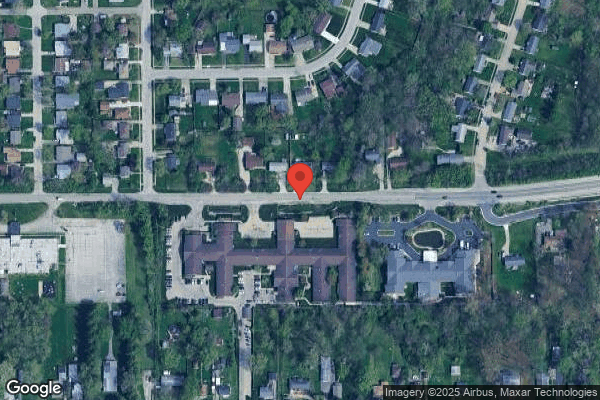
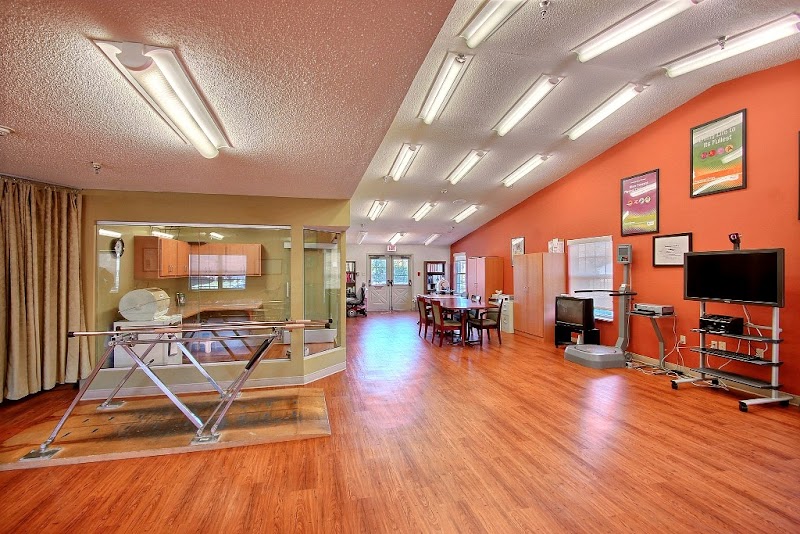
7301 E 16TH ST, INDIANAPOLIS, IN 46219 (317) 353-1290
For profit - Corporation 160 Beds COMMUNICARE HEALTH Data: November 2025
Trust Grade
20/100
#408 of 505 in IN
Last Inspection: October 2024

Within standard 12-15 month inspection cycle. Federal law requires annual inspections.

Overview

Wildwood Healthcare Center has received a Trust Grade of F, indicating significant concerns about the facility's quality of care. It ranks #408 out of 505 nursing homes in Indiana, placing it in the bottom half of facilities in the state, and #39 out of 46 in Marion County, meaning there are very few local options that are worse. However, the facility is improving, with issues decreasing from 8 in 2024 down to 2 in 2025. Staffing is a concern here with a low rating of 1 out of 5 stars, and while the turnover rate of 42% is better than the state average, there is less RN coverage than 98% of Indiana facilities, which can impact resident care. Specific incidents of concern include a resident suffering a burn due to improper maintenance of a heating device, another resident falling and fracturing a femur because they did not receive the proper assistance during a transfer, and a delay in addressing complications from a urinary catheter that resulted in hospitalization. Overall, while there are some positive trends, families should weigh the serious deficiencies against the improvements being made.

Trust Score
F
20/100
In Indiana
#408/505
Bottom 20%
Safety Record
High Risk
Review needed
Inspections
Getting Better
8 → 2 violations
Staff Stability
○ Average
42% turnover. Near Indiana's 48% average. Typical for the industry.
Penalties
✓ Good
No fines on record. Clean compliance history, better than most Indiana facilities.
Skilled Nurses
⚠ Watch
Each resident gets only 16 minutes of Registered Nurse (RN) attention daily — below average for Indiana. Fewer RN minutes means fewer trained eyes watching for problems.
Violations
⚠ Watch
51 deficiencies on record. Higher than average. Multiple issues found across inspections.
★★☆☆☆
2.0
Overall Rating
★☆☆☆☆
1.0
Staff Levels
★★★★★
5.0
Care Quality
★★☆☆☆
2.0
Inspection Score
Stable
2024: 8 issues
2025: 2 issues

The Good

  • 5-Star Quality Measures · Strong clinical quality outcomes
  • Full Sprinkler Coverage · Fire safety systems throughout facility
  • No fines on record
  • Staff turnover below average (42%)

    6 points below Indiana average of 48%

Facility shows strength in quality measures, fire safety.

The Bad

2-Star Overall Rating

Below Indiana average (3.1)

Below average - review inspection findings carefully

Staff Turnover: 42%

Near Indiana avg (46%)

Typical for the industry

Chain: COMMUNICARE HEALTH

Part of a multi-facility chain

Ask about local staffing decisions and management

The Ugly 51 deficiencies on record

3 actual harm
Apr 2025 2 deficiencies
CONCERN (D) 📢 Someone Reported This

A family member, employee, or ombudsman was alarmed enough to file a formal complaint

Potential for Harm - no one hurt, but risky conditions existed

Deficiency F0554 (Tag F0554)

Could have caused harm · This affected 1 resident

Based on interview and record review, the facility failed to ensure a resident was administered medications per their policy for 1 of 3 residents reviewed for medication compliance. (Resident B) Find...

Read full inspector narrative →
Based on interview and record review, the facility failed to ensure a resident was administered medications per their policy for 1 of 3 residents reviewed for medication compliance. (Resident B) Findings include: The clinical record for Resident B was reviewed on 4/15/2025 at 1:35 p.m. The medical diagnoses included stroke and heart failure. A Quarterly Minimum Data Set Assessment, dated 2/6/2025, indicated Resident B had moderate cognitive impairment. A heart failure care plan, revised 9/18/2024, indicated Resident B was at risk for complications related to heart failure, and an intervention of administering medications as ordered. During an interview on 4/15/2025 at 1:15 p.m., Resident B indicated a few weeks ago a nurse came into his room and gave him medications which were not his. She put the medications on his bedside table and left. When she was gone, he got out of bed and took the medications up to the night shift supervisor but could not recall her name. The night shift supervisor told him the medications were not his and disposed of them. During an interview on 4/15/2025 at 1:58 p.m., Licensed Practical Nurse (LPN) 2 indicated she worked with Resident B regularly. Resident B does not have a history of making false allegations to her knowledge and the staff were to administer his medications to him, including watching Resident B consume the medications. During an interview on 4/15/2025 at 2:15 p.m., the Director of Nursing (DON) indicated she was aware of a concern about potential medication compliance issues regarding Resident B. The last weekend of March, Resident B brought a cup for a medications to the nurse's station, and gave them to LPN 3. The medications were believed to be prepared by LPN 4, who was not present when Resident B provided the medications to LPN 3. It was determined there was one additional medication in the cup provided, but the facility determined no medication error had happened due to Resident B not consuming the incorrect medication. During an interview on 4/16/2025 at 1:55 p.m., the DON indicated Resident B does not self-administer medications and it was the expectation of the facility that staff should have stayed with Resident B until he takes his medications. A policy entitled Medication Administration was provided by the Executive Director on 4/16/2025 at 11:00 a.m. The policy indicated, . Licensed or authorized personnel may administer prescribed medications . which included to, .Never leave medications unattended . This citation relates to Complaint IN00457238. 3.1-11(a)
CONCERN (D) 📢 Someone Reported This

A family member, employee, or ombudsman was alarmed enough to file a formal complaint

Potential for Harm - no one hurt, but risky conditions existed

Free from Abuse/Neglect (Tag F0600)

Could have caused harm · This affected 1 resident

Based on observation, interview, and record review, the facility failed to ensure a resident was free from verbal abuse by staff for 1 of 3 residents reviewed for abuse. (Resident D) Findings include:...

Read full inspector narrative →
Based on observation, interview, and record review, the facility failed to ensure a resident was free from verbal abuse by staff for 1 of 3 residents reviewed for abuse. (Resident D) Findings include: The clinical record for Resident D was reviewed on 4/16/25 at 10:00 a.m. Her diagnoses included, but were not limited to, bipolar disorder, anxiety, depression, and attention deficit disorder. The 2/12/25 Significant Change MDS (Minimum Data Set) Assessment indicated she was cognitively intact. She required partial/moderate assistance for upper body dressing, substantial/maximal assistance for lower body dressing, putting on and taking off footwear, and transferring from the chair to bed. The behavior care plan for Resident D, revised 3/30/25, indicated she had a behavior problem and refused to be checked and changed at times. Resident D and her spouse would panhandle off property at times, would hoard items, refused medications at times, made false statements/allegations, and sought male attention. Interventions included to approach and speak in a calm manner and to honor resident's preferred choices. An interview was conducted with Resident D in her room on 4/16/25 at 10:08 a.m. Resident D was lying in bed at this time. Her roommate, Resident Z, was not present in the room during this interview. Resident D indicated Certified Nurse Aide (CNA) 7 called her a b**** the previous day, prior to going out for an appointment. This started when CNA 7 came into her room to see if she was done eating breakfast. Resident D requested CNA 7 move her bedside table. Resident D first yelled at CNA 7 and called CNA 7 a b****. Then CNA 7 stated to her, I got your b****, b****. Resident D reported this to UM (Unit Manager) 8. UM 8 informed Resident D that she would handle it. Resident D informed UM 8 that she did not want CNA 7 in her room anymore. No one came to speak with Resident D about the incident before right now. An interview was conducted with UM 8 in her office on 4/16/25 at 10:15 a.m. She indicated she spoke with Resident D several times yesterday. There was a CNA (CNA 7) who went into Resident D's room yesterday, but Resident D did not inform UM 8 that the CNA was rude, just that Resident D did not like the CNA. UM 8 switched assignments for CNA 7, so that she did not provide care for Resident D. UM 8 was unsure who the CNA was at this time, as she could not remember her name. Resident D did not inform UM 8 as to why Resident D did not like the CNA. Resident D did not report to UM 8 that the CNA cursed at her. UM 8 spoke with the CNA about it, and the CNA informed UM 8 that Resident D yelled at her, so CNA 7 told Resident D that wasn't nice and left the room. An interview was conducted with the Executive Director (ED) and DON (Director of Nursing) on 4/16/25 at 10:20 a.m. After being informed of Resident D's allegation of verbal abuse against CNA 7, he indicated this was the first time hearing of it. He was going to report it and start an investigation. An interview was conducted with CNA 7 on 4/16/25 at 10:40 a.m. She indicated she only cared for Resident Z the previous day, because Resident D refused care. CNA 7 never worked that particular unit before yesterday. CNA 7 was back and forth into their room two to three times, because they both had doctor appointments to go to that day. Resident D wanted to get up around 12:45 p.m., but her appointment was around that time, and lunch trays also needed passed around that time. CNA 7 went into their room every thirty minutes to prompt them to get up. The last time she went into the room was around 11:45 a.m., when Resident D informed her, she did not want her in the room and was tired of her waking her up. I said fine. You don't have to, so she left and got UM 8. Resident D was telling CNA 7 she was getting on her nerves, calling her a b****, saying get out of here, and don't come back, and I'm sick of you. CNA 7 thought perhaps Resident D had her confused, because she'd never cared for Resident D before. Resident Z was present in the room while all this was going on. UM 8 heard the yelling and came into the room as CNA 7 was exiting. The other nurse, LPN 9, came in too. LPN 9 finished up care with Resident D and told CNA 7 to leave the room. I was told I needed to switch another aide for a resident. This was the first time she ever cared for Resident D. I think she got my face mixed up with someone else. I did not call her a b**** back. Her roommate (Resident Z) was there, so she would know how I responded. The 2/11/25 Quarterly MDS Assessment indicated Resident Z was cognitively intact, her hearing was adequate with no hearing aid or hearing appliance, and her ability to understand others was understood, with clear comprehension. The 3/31/25 behavior care plan indicated Resident Z had sexually inappropriate behaviors, refusal of care/showers, yelled at staff, hoarded, and kept room messy/cluttered. The care plan did not reflect a history of false allegations. An interview was conducted with SSD (Social Services Director) 10 on 4/16/25 at 10:54 a.m. She indicated Resident Z had been at the facility for at least six months, and SSD 10 was pretty familiar with Resident Z. SSD 10 didn't think Resident Z had any behaviors or a history of making false allegations that she was aware of but needed to look at her care plans. After reviewing Resident Z's care plans, SSD 10 indicated she saw a behavior care plan for Resident Z regarding sexually inappropriate behaviors, but nothing about a history of false allegations. If SSD 10 were aware of a resident having a history of false allegations, or if staff made her aware of it, she would make a care plan to address it. If Resident Z told her something, she would tend to believe it, as Resident Z had never given me a reason not to believe her. An interview was conducted with Resident Z, Resident D's roommate, on 4/16/25 at 10:36 a.m. in the outside smoking area of the facility by herself. Resident D was not present in the smoking area during this interview. She indicated she'd definitely witnessed verbal abuse in the facility. Her roommate, Resident D, jumps on staff when they try to do their job. Yesterday morning, Resident Z woke up to CNA 7 and Resident D yelling. Resident D called CNA 7 a b****. CNA 7 called Resident D a b**** back, saying to Resident D that, You can't just be in here calling people b****** that take care of you. Resident Z did not see anything wrong with what CNA 7 said to Resident D, because CNA 7 was right about not being able to talk to the people who take care of you like that. Resident Z heard the whole thing, which could also be heard at the nurses station, because LPN (Licensed Practical Nurse) 9 and UM 8 came to the room. No one had asked Resident Z about this incident prior to right now. CNA 7 cared for Resident Z later in the day, but not Resident D. An interview was conducted with Licensed Practical Nurse (LPN) 9 on 4/16/25 at 11:45 a.m. She indicated she went into Resident D's and Z's room yesterday close to their appointment times, as they were hard to get up sometimes. When LPN 9 entered the room, the only people in the room were Resident D, Resident Z, and CNA 7. Resident Z and CNA 7 were in the bathroom when LPN 9 entered the room. LPN 9 went to see if Resident Z wanted her foot dressing changed before or after her appointment. LPN 9 heard Resident D mumbling and cussing, going on about not wanting CNA 7 in the room and calling CNA 7 a bitch. CNA 7 was in the room at the time LPN 9 heard Resident D mumbling and cussing, as CNA 7 was assisting Resident Z with getting dressed. Resident D's voice was raised, but she wasn't yelling. LPN 9 motioned for UM 8 to come into the room. UM 8 could hear what Resident D was saying and LPN 9 informed UM 8 that Resident D did not want CNA 7 to work with her, because she'd worked with her before. The only thing LPN 9 heard CNA 7 say to Resident D was that she'd never worked with her before. If LPN 9 hadn't gone down to check on Resident Z's foot, she wouldn't have known that anything was going on. The ED provided the 4/16/25 statement from Resident Z, written and conducted by SSD 10, on 4/16/25 at 12:40 p.m. It read, Yesterday, [name of CNA 7] the CNA came in our room to get us up for our appointments. While she was taking care of [name of Resident D,] [name of Resident D] became mad, and called [name of CNA 7] a 'B**** and to f*** off.' [Name of CNA 7] snapped back, 'Don't call me a b****, that's not right, I am just trying to care for you.' The statement was signed by Resident Z. The statement did not indicate Resident Z heard CNA 7 call Resident D a b****, as she indicated in the above 4/16/25, 10:36 a.m. interview. On 4/16/25 at 12:45 p.m., an interview was conducted with Resident Z in another resident's room, while the other resident waited outside of the open door. She indicated CNA 7 did call Resident D a b****, and that CNA 7 had the right to defend herself. SSD 10 came and spoke with Resident Z about the incident, but SSD 10 did not ask her if CNA 7 called Resident D a b****, so that part wasn't in her statement. Resident Z requested UM 8 be asked to assist her to SSD 10's office to clarify with SSD 10 what happened yesterday between CNA 7 and Resident D. An observation of an interview conducted by SSD 10 with Resident Z was made on 4/16/25 at 12:49 p.m. SSD 10 requested clarification from Resident Z regarding her signed interview from earlier. Resident Z informed SSD 10 that [Name of CNA 7] did call her a bitch, but that was only in retaliation, as Resident D was refusing to get up, and Resident D first called CNA 7 a b****, and to get the f*** out of her room. CNA 7 was just trying to do her job.The reason [name of LPN 9] came down to our room is because she heard the screaming match. 'You ain't gonna call me a b****, b****. I'm just tryna [sic] take care of you.' During the interview, SSD 10 retyped Resident Z's statement and had her sign it afterwards. Resident Z took the statement from SSD 10 and immediately signed it. The ED provided a copy of Resident Z's revised statement on 4/16/25 at 1:10 p.m. It read, Yesterday, [name of CNA 7] the CNA came in our room to get us up for our appointments. While she was taking care of [name of Resident D,] [name of Resident D] became mad, and called [name of CNA 7] a 'B**** and to f*** off.' [Name of CNA 7] snapped back, 'Don't call me a b****, that's not right, I am jut tring [sic] to take care of you.' Then [Name of CNA 7] did say, 'You ain't going to call me no b****, b****, I am just trying to take care of you.' [Name of Resident D] said, 'Get the f*** out of my room.' [Name of Resident D] has done that before. The other CNA came in, when things had quieted down some. [Name of CNA 7] did not provide care to [name of Resident D] for the rest of the day. The ED provided a copy of Qualified Medication Aide (QMA) 12's typed and signed statement, dated 4/17/25, via e-mail on 4/22/25 at 12:02 p.m. The statement indicated the following, I [QMA 12] was at the nurses station charting. I started hearing something from that direction- I asked [name of LPN 9] to go check on them- I heard [name of CNA 7] say, 'don't call me a b****, don't talk to me like that. I didn't come in here and call you out of your name.' I didn't hear [name of CNA 7] call her [Resident D] a name, just said, 'don't call me a b****.' Once [name of UM 8] came in she had [CNA 7] leave and swapped out that room- so I took those 2 residents [Resident D and Resident Z]. [Name of Resident D] didn't tell me [QMA 12] [CNA 7] called her a b****- but she didn't want her [CNA 7] back in the room and said she [Resident D] was happy [QMA 12] was there helping her A copy of the facility's floor plan was reviewed and indicated the nurse's station was in the center of the unit where Resident D and Resident Z reside and included a total of three hallways with resident rooms. Resident D and Resident Z's room was located down the hallway East of the nurse's station and was the last room at the end of the hallway. The Abuse & Neglect & Misappropriation of Property policy was provided by the Administrator on 4/16/25 at 12:40 p.m. It indicated, Verbal Abuse: In Indiana, oral, written, and/or gestured language that includes disparaging and/or derogatory terms to the residents or their families either directly or within their hearing. This may include resident to resident verbal threats of harm but excludes random statements of a cognitively impaired resident such as repetitive name calling or nonsensical language. Verbal abuse includes any staff to resident episodes It is the policy of this facility to provide resident centered care that meets the psychosocial, physical and emotional needs and concerns of the residents. This citation relates to Complaint IN00457650. 3.1-27(b)
Oct 2024 6 deficiencies
CONCERN (D)

Potential for Harm - no one hurt, but risky conditions existed

Deficiency F0559 (Tag F0559)

Could have caused harm · This affected 1 resident

Based on interview and record review, the facility failed to ensure notification and documentation was provided to Resident 23 regarding a room change for 1 of 1 resident reviewed for room change. Fi...

Read full inspector narrative →
Based on interview and record review, the facility failed to ensure notification and documentation was provided to Resident 23 regarding a room change for 1 of 1 resident reviewed for room change. Findings include: The clinical record for Resident 23 was reviewed on 10/29/2024 at 1:20 p.m. The medical diagnoses included chronic obstructive pulmonary disease. A Significant Change Minimum Data Set Assessment, dated 8/27/2024, indicated Resident 23 was cognitively intact. A census report provided by the Director of Nursing, on 10/30/2024 at 9:45 a.m., indicated Resident 23 moved rooms on 7/1/2024. During an interview and observation on 10/23/2024 at 12:36 p.m., Resident 23 indicated a couple months ago, they were coming back from lunch and their items had been moved from their room to a room across the hall. When they asked the Certified Nurse Aide (CNA), unable to recall CNA name, they were told they were moved across the hall for a little bit so their room could be renovated. Resident 23 stated, I was never told about coming over here [to the new room] before it happened and they wished to go back to their old room but, the facility already moved other people in. Resident 23's previous room was noted to have two other residents residing there. During an interview and observation on 10/29/2024 at 1:52 p.m., Social Services Director (SSD) 3 indicated she did not notify Resident 23 of the room move, but she believed the Unit Manager did. She did not complete the Room Change Notification, because the move was supposed to be temporary, and she was not sure why Resident 23 was not moved back to their pervious room after renovations were completed. A policy entitled Resident Room Change Policy was provided by the Director of Nursing on 10/30/2024 at 9:45 a.m. The policy indicated, .Social Services will discuss room change options with resident . and .Social Services will complete Notification of Room Change .in the EMR [electronic medical record] . 3.1-3(v)(2)
CONCERN (D)

Potential for Harm - no one hurt, but risky conditions existed

ADL Care (Tag F0677)

Could have caused harm · This affected 1 resident

Based on observation, interview, and record review, the facility failed to ensure accurate care planning of Resident 56's bathing preferences, failed to assist a resident with shaving (Resident 120), ...

Read full inspector narrative →
Based on observation, interview, and record review, the facility failed to ensure accurate care planning of Resident 56's bathing preferences, failed to assist a resident with shaving (Resident 120), and failed to provide nail care (Resident 39) for 3 of 5 residents reviewed for activities of daily living (ADLs). Findings include: 1.) The clinical record for Resident 56 was reviewed on 10/28/2024 at 1:20 p.m. The medical diagnoses included multiple sclerosis. A Quarterly Minimum Data Set (MDS) assessment, dated 8/21/2024, indicated Resident 56 was cognitively intact. A care plan, last revised on 2/5/2024, indicated Resident 56 was dependent on helper for bathing tasks and wished to have showers on Friday mornings. A care plan, last revised on 2/5/2024, indicated Resident 56 was dependent on helper for bathing tasks and wished to have showers on Wednesday and Saturdays. Review of the care tasks, last updated 9/13/2024, indicated Resident 56 was to receive showers on Fridays. During an interview and observation, on 10/24/2024 at 12:45 p.m., Resident 56 indicated they would like to have a bed bath daily and shower on Fridays. During an interview with the Director of Nursing (DON) on 10/29/2024 at 11:45 a.m., she indicated she goes to each resident to routinely assess their bathing preferences, updated their care plan, tasks, and Certified Nurse Aide (CNA) shower assignment sheets. She indicated Resident 56 should have only one shower preference care plan, the second was likely not updated during the last assessment, and she would go reassess Resident 56's preferences. 2.) During an observation and interview with Resident 39 on 10/23/24 at 12:45 p.m., the resident's fingernails were long with a dark substance underneath them. Resident 39 indicated he had not refused to have his fingernails trimmed and cleaned. The resident indicated he would like to have them trimmed and cleaned. During an observation on 10/24/24 at 11:43 a.m., Resident 39's fingernails were long with a dark substance underneath them. During an observation on 10/25/24 at 1:02 p.m., Resident 39's fingernails were long with a dark substance underneath them. During an observation on 10/28/24 at 12:42 p.m., Resident 39's fingernails were long with a dark substance underneath them. During an observation and interview on 10/29/24 at 11:53 a.m., Resident 39's fingernails were long with a dark substance underneath them. Resident 39 indicated the staff had not offered to trim and clean his fingernails and he would like to have them cleaned and trimmed. During an interview with the DON on 10/29/24 at 11:55 a.m., she indicated it was the responsibility of the nurse to trim Resident 39's fingernails because he was diabetic. The DON offered to trim and clean Resident 39's fingernails at that time and the resident agreed. Review of the record of Resident 39, on 10/28/24 at 1:20 p.m., indicated the diagnoses included, but were not limited to, diabetes, acute respiratory failure, psychoactive substance abuse, hypertension, and acquired absence for right and left leg below the knee. The activities of daily living (ADLs) plan of care for Resident 39, dated 9/13/24, indicated ADL self-care performance related to encephalopathy, diabetes, and respiratory failure with hypoxia. The interventions included, but were not limited to, shower and bathing the resident was substantial/maximal assistance. The helper did more than half the effort. 3.) During an observation on 10/24/24 at 11:40 a.m., Resident 120 had a moderate amount of facial hair During an observation on 10/25/24 at 1:01 p.m., Resident 120 had a moderate amount of facial hair. During an observation on 10/28/24 at 12:41 p.m., Resident 120 had a moderate amount of facial hair. During an observation on 10/29/24 at 11:52 a.m., Resident 120 had a moderate amount of facial hair. During an interview with the DON on 10/29/24 at 11:56 a.m., she indicated CNAs were responsible to provide Resident 120 with shaving during their bath. Review of the record of Resident 120, on 10/29/24 at 12:37 p.m., indicated the diagnoses included, but were not limited to, major depressive disorder, hypertension, hemiplegia and hemiparesis following cerebral infarction (stroke) affecting the right dominant side, dysphagia, and gastrostomy (feeding tube) status. The plan of care for Resident 120, dated 10/7/24, indicated the resident had Activities of Daily Living (ADL) self-care performance deficit. The interventions included, but were not limited to, the resident was totally dependent of one person for personal hygiene. The helper did all the effort, and the resident did none of effort. The admission MDS for Resident 120, dated 10/10/24, indicated the resident was severely cognitively impaired for daily decision making. The resident did not speak. The resident was totally dependent for personal hygiene, including shaving. The routine resident care policy provided by the DON, on 10/29/24 at 12:15 p.m., indicated the routine resident care that was not necessarily medically or clinically based but necessary for quality of life to promote dignity and independence. The licensed staff would provide the following services based on their scope of practice, but not limited to, provide a nursing assessment, nursing diagnosis, care planning, implementation and evaluation. 3.1-38(a)(3)(D) 3.1-38(a)(3)(E)
CONCERN (D)

Potential for Harm - no one hurt, but risky conditions existed

Quality of Care (Tag F0684)

Could have caused harm · This affected 1 resident

2. The clinical record for Resident 14 was reviewed on 10/29/2024 at 11:40 a.m. The medical diagnoses included cerebral palsy. A Quarterly Minimum Data Set assessment, dated 8/10/2024, indicated Resi...

Read full inspector narrative →
2. The clinical record for Resident 14 was reviewed on 10/29/2024 at 11:40 a.m. The medical diagnoses included cerebral palsy. A Quarterly Minimum Data Set assessment, dated 8/10/2024, indicated Resident 14 was cognitively intact, was at risk for developing skin alternations, but did not currently have skin alternations. A skin alternation care plan, last revised on 5/10/2024, indicated Resident 14 was at risk for skin alternations with an intervention of utilizing on off-loading cushion. During an interview and observation on 10/24/2024 at 12:36 p.m., Resident 14 was sitting in their wheelchair with a folded white linen under them. Resident 14 stated, The girl took my cushion out to wash last night and it is out there [the hallway] somewhere. During an interview and observation on 10/30/2024 at 12:48 p.m., Resident 14 was observed sitting in their wheelchair without a cushion in place. Resident 14 indicated it was still missing after the staff person cleaned it. During an interview with Certified Nurse Aide (CNA) 4, on 10/30/2024 at 12:49 p.m., they indicated Resident 14's cushion was wet, but they would place a cushion under Resident 14 next time Resident 14 utilized the toilet. A policy entitled, Use of Supportive Surfaces, was provided by the Director of Nursing on 10/29/2024 at 10:20 a.m. The policy indicated, .The standard seat cushion for wheelchairs are pressure redistribution seat cushions . 3.1-37(a) Based on interview and record review, the facility failed to hold a resident's insulin, as ordered, and ensure a resident had an off-loading cushion in her wheelchair, as care planned, for 1 of 1 resident reviewed for insulin and 1 of 1 resident reviewed for skin integrity. (Residents 11 and 14) Findings include: 1. The clinical record for Resident 11 was reviewed on 10/25/24 at 11:41 a.m. His diagnoses included, but were not limited to, diabetes mellitus. The diabetes care plan for Resident 11, revised 8/18/23, indicated to administer insulin injections per physician orders. The active physician's orders indicated to inject seven units of Humalog (fast acting insulin) solution subcutaneously in the morning with breakfast, in the afternoon with lunch, and in the evening with dinner. The orders indicated to Hold for results less than 100. The October 2024 medication administration record (MAR) indicated his blood sugar was 72 on 10/6/24 at dinner, 87 on 10/7/24 at breakfast, 70 on 10/8/24 at breakfast, 78 on 10/12/24 at breakfast, 96 on 10/16/24 at dinner, 91 on 10/21/24 at breakfast, 80 on 10/22/24 at breakfast, 76 on 10/23/24 at breakfast, and 76 on 10/24/24 at dinner, but the seven units of Humalog was still administered with meals for all of these blood sugar readings. An interview was conducted with the Director of Nursing (DON) on 10/28/24 at 10:27 a.m. She indicated Resident 11 was the only resident in the facility with an insulin hold order, as all other residents had call orders instead. The Medication Administration policy was provided by the DON on 10/28/24 at 10:27 a.m. It read, Administer medication only as prescribed by the provider.
CONCERN (D)

Potential for Harm - no one hurt, but risky conditions existed

Deficiency F0688 (Tag F0688)

Could have caused harm · This affected 1 resident

2. The clinical record for Resident 99 was reviewed on 10/25/24 at 12:45 p.m. The medical diagnoses included, but were not limited to, quadriplegia, acute infarction of the spinal cord, neuralgia (ner...

Read full inspector narrative →
2. The clinical record for Resident 99 was reviewed on 10/25/24 at 12:45 p.m. The medical diagnoses included, but were not limited to, quadriplegia, acute infarction of the spinal cord, neuralgia (nerve pain) and neuritis (inflamed nerves), and anxiety disorder. During an interview with Resident 99 on 10/24/24 at 1:10 p.m., the resident indicated they would like to receive restorative therapy and was not receiving any. A Quarterly Minimum Data Set (MDS) assessment, dated 9/9/24, indicated Resident 99 was cognitively intact, had limited range of motion to both upper and lower extremities, and used a wheelchair. An Activities of Daily Living (ADL) care plan, dated 12/14/23, indicated Resident 99 was totally dependent of two or more helpers for toileting, rolling left to right, sit to lying position, lying to sitting on the side of the bed, chair to bed and bed to chair, and all hygiene activities were total assistance of one person. An occupational discharge summary note, dated 9/25/24, indicated Resident 99 was referred for Restorative Nursing Therapy (RNP) for Range of Motion (ROM) and brace management. During an interview with the Physical Therapy Director on 10/29/24 at 10:45 a.m., they indicated if a resident was to be set up with restorative services after they were discharged from physical or occupational therapy, the MDS nurse receives a list of the case load and was responsible for the restorative program. During an interview with the MDS Coordinator on 10/29/24 at 11:44 a.m., they indicated Resident 99 had been given the order for splints and the MDS Coordinator should have received a Therapy Referral to Restorative document with type of program ordered, goals, times, amount of assistance required, and special instructions. The MDS Coordinator indicated she did not receive this form from the Physical Therapy Director. A Restorative Program Policy provided by the Director of Nursing (DON), on 10/29/24 at 12:15 p.m., indicated the following, .The purpose of this policy is to provide direction and guidance to the clinical team to assess and implement a plan of action for resident-specific care to maintain or improve mobility with the maximum practicable independence . 3.1-42(a)(2) Based on observation, interview, and record review, the facility failed to ensure a resident's palm guard was applied, as ordered, and initiate a range of motion (ROM) program for 1 of 3 residents reviewed for positioning and mobility and 1 of 1 resident reviewed for rehabilitation and restorative services. (Residents 99 and 109) Findings include: 1. The clinical record for Resident 109 was reviewed on 10/23/24 at 12:30 p.m. Her diagnoses included, but were not limited to, right side hemiparesis. The activities of daily living (ADLs) care plan, revised 8/19/24, indicated Resident 109 had a self-care performance deficit related to cerebral vascular accident, right side hemiparesis, depression, insomnia, substance abuse, and hypertension. The goal was for her to maintain her current level of function. An intervention was provision of substantial/maximal assistance with upper body dressing. The undated Therapy Referral Restorative nursing form indicated Resident 109 was to participate in the Range of Motion and Splint/Brace Care program to prevent further contracture and maintain functional status. Her splint was to be on for four hours a day and wear a palm guard when the splint was off. The 10/11/24 physician's order indicated, Pt [Patient] to wear slim grip hand splint on R [right] hand 4 hours on, 4 hours off as pt tolerates. Pt should wear palm guard when splint is off. Check for redness/irritation when donning/doffing and inform charge nurse if any issues are noted. An observation of Resident 109 was made on 10/23/24 at 12:43 p.m. She was sitting in her wheelchair in her room. Her right hand was flaccid, resting in her lap. She was not wearing her right-hand splint or palm guard at that time. The palm guard was observed in a bin on the nightstand next to her bed. An observation of Resident 109 was made on 10/29/24 at 12:09 p.m. She was sitting in her wheelchair in her room. Her right hand was flaccid, resting in her lap. She was not wearing her right-hand splint or palm guard at that time. The palm guard was observed in a bin on the nightstand next to her bed. An observation and interview were conducted with Licensed Practical Nurse (LPN) 7 on 10/29/24 at 12:13 p.m. Resident 109 was still sitting in her wheelchair in her room, not wearing her splint or palm guard. Resident 109 kept pointing to her right hand. After inquiry with LPN 7 regarding Resident 109's palm guard, LPN 7 retrieved Resident 109's palm guard from the bin on her nightstand and applied it to Resident 109's right hand. Resident 109 smiled and gave the thumbs up with her left hand and thanked LPN 7 for applying her palm guard. LPN 7 indicated restorative nursing usually applied splints and palm guards, but they're not here today.
CONCERN (D)

Potential for Harm - no one hurt, but risky conditions existed

Deficiency F0740 (Tag F0740)

Could have caused harm · This affected 1 resident

Based on interview and record review, the facility failed to ensure a resident had a care plan to address her individualized needs related to substance use disorder for 1 of 2 residents reviewed for h...

Read full inspector narrative →
Based on interview and record review, the facility failed to ensure a resident had a care plan to address her individualized needs related to substance use disorder for 1 of 2 residents reviewed for hospitalization. (Resident 93) Findings include: The clinical record for Resident 93 was reviewed on 10/24/24 at 10:30 a.m. Her diagnoses included, but were not limited to, depression and substance use disorder (SUD). The 9/25/24 Quarterly Minimum Data Set (MDS) assessment indicated she was cognitively intact. An interview was conducted with Resident 93 on 10/24/24 at 10:46 a.m. She indicated she smoked weed in the facility in the back area. In December 2023, she smoked a joint outside in the smoking area and then sat in the gazebo. It was her own weed that she smoked, but she and a couple other residents usually put weed together to smoke, so she couldn't say for sure where the weed in the joint she smoked that day came from. Staff kept coming outside but left her in the gazebo throughout the night. Eventually they brought her inside with her rollator walker. Nursing took her blood pressure a couple of times, and it was low, so they called an ambulance, and she went to the emergency room of a nearby hospital. She was given Narcan (medication used to treat narcotic overdose in an emergency situation) twice, and Suboxone (medication used to treat narcotic dependence) was found in her system. She stated, I don't do drugs. When she woke up at the hospital, there was blood everywhere, and she couldn't remember anything that happened, and couldn't remember where she lived. She was giving hospital staff a hard time, kept asking where I was and why I'm here. One of the hospital staff let her out the back door and told her to go towards the direction of a nearby bus stop. She was walking around for two days afterwards. She remembered she had a friend who lived on the other side of town, so a lady she ran into took her to the bus stop to go to her friend's house. Once she got to the other side of town, it was dark, and she didn't know where she was, and ended up finding a church. She knocked on the door of the church and was let inside, where they called the police. The police came and took her to a different hospital. The psychiatrist at that hospital took her off her medications and eventually she came back to the facility. There was no place else for her to go. The facility told residents to sign out and smoke weed off the property, but staff knew they were doing it on the property. The 12/2/23 Change of Condition progress note read, Altered mental status Tired, Weak, Confused, or Drowsy .Mental Status Evaluation: Unresponsiveness Altered level of consciousness (hyperalert, drowsy but easily aroused, difficult to arouse) Increased confusion (e.g. disorientation) - Functional Status Evaluation: General weakness .Respiratory Status Evaluation: Other respiratory changes. Cardiovascular Status Evaluation: Resting pulse greater than 100 or less than 50 .Neurological Status Evaluation: Altered level of consciousness (hyperalert, drowsy but easily aroused, difficult to arouse) Nursing observations, evaluation, and recommendations are: Resident was reported to have stayed out all night at thee [sic] Gazebo and was extremely tired and sleepy when she was back in the building. Nursing report given was that resident has been resting mostly in bed all day, but responsive and verbal when awake. Primary Care Provider Feedback: Primary Care Provider responded with the following feedback: A. Recommendations: Gave order for resident to be sent out to [name of hospital] for Evaluation & TX [treatment] of change in LOC [level of consciousness,] & [and] rapid increase in Hyper-Glycemia. Was also informed that while waiting for return response from MD felt that resident's condition began to decline so rapidly a decision was made in the best interest of the resident was to send resident to [name of hospital] ER [emergency room] for TX [treatment] & evaluation. Nurse practitioner stated that she agreed. The 12/3/23 1:58 a.m. nurses' note read, Resident was sent to [name of hospital] for TX & evaluation R/T [related to] change in LOC. Exited Building per two EMT [emergency medical technicians] & ambulance. per MD orders. 6:30PM vital signs-BP [blood pressure] 102/68, P. [pulse] 78, 02 [oxygen saturation] 92%, R. [respirations] 18, T. [Temperature] 97.5. Resident was groggy & sleepy around 6:30 p.m., this writer checked on resident and took vital signs since it was given in report that resident had stayed outside on the Gazebo all night & was exhausted. but responded to touch and refused her meal saying she wasn't hungry, this nurse tried to encourage resident to take few bites. BS [blood sugar] 257 was given scheduled insulin with her consent. Resident declined and told this writer to let her sleep. At approx. [approximately] 21:00hr [9:00 p.m.]-Resident BS [blood sugar] had increased to 357, BP 85/67, P.109, 02 90% R/A, R.14, T.97.3. Still in the ER being evaluated at this time. The 12/2/23 11:15 p.m. Drug Screen results from the hospital indicated she was positive for Cannabinoids and Buprenorphine [opioid medication used to treat pain and opioid addiction.] The 12/3/23 11:00 p.m. hospital emergency department physician note read, Brought in by EMS from [name of facility] for altered mental status first reported tonight. Not [sic] be hypoxic 50% on room air. Suspect this is due to some type of ingestion. Initially patient was quite somnolent and nearly unresponsive. Did receive Narcan prior to arrival and in the hospital with some improvement. Patient admits to taking half of Suboxone tonight not prescribed to her but denies additional ingestions including alcohol although she was found surrounded by alcohol bottles. Initial presentation quite consistent with narcotic overdose . The 12/4/23, 8:47 a.m. nurse's note read, Writer called [name of hospital] to get update on this resident, [name of hospital] staff stated resident left hospital AMA [against medical advice]. The 12/8/23 hospital discharge summary, from the second hospital to which Resident 93 went, indicated she presented to the emergency room with altered mental status on 12/5/23. The History of Present Illness section indicated she was reportedly picked up by emergency medical services in a church parking lot. She was just admitted to another hospital, on 12/2/23, with encephalopathy and concern for opioid overdose. A urine drug screen was notably positive for Cannabinoids and Buprenorphine. She apparently left AMA as she wanted to smoke a cigarette. The hospital course section indicated she had a repeat urine drug screen and was positive for Buprenorphine and Cannabinoids. Her encephalopathy resolved and believed that this was caused by drug intoxication. The Barriers to Care section referenced substance use disorder. There was an Illegal Drug in Facility policy scanned into Resident 93's clinical record and signed by Resident 93, on 12/8/23, via fax from the hospital. Resident 93's physician's orders did not include an order for Narcan in an emergency situation and Resident 93 had no substance use disorder care plan at the facility that referenced encouraging her to participate with SUD programming; encouraging her to explore and identify triggers and feelings regarding addiction; what her specific triggers were; educating her on following her prescribed treatment regimen and the leave of absence policy; providing her with structured activities and diversional tasks; or encouraging a support system of family and friends. An interview was conducted with Social Services Director (SSD) 2 and SSD 3 on 10/28/24 at 1:25 p.m. SSD 3 indicated she was pretty sure Resident 93 had a history of SUD and signed a consent that she would not use drugs and alcohol in the facility. Resident 93 also saw their psyche nurse practitioner. SSD 3 reviewed Resident 93's clinical record and indicated she did not see where she signed a consent to receive or refuse drug and alcohol treatment, nor did she see an order for Narcan in an emergency situation. SSD 2 indicated when they knew a resident had SUD, they offered video meetings or in person meetings via an outside provider for drug and alcohol counseling. Typically, they have the resident sign a consent form to either receive or decline SUD services. SSD 2 reviewed Resident 93's clinical record and indicated she did not see a care plan regarding her substance use disorder, but she should have one. SSD 2 also did not see they had Resident 93 sign a consent to receive or refuse drug and alcohol treatment while in the facility, but she should have one. SSD 2 was unsure whether Resident 93 having an order for Narcan was discussed. An interview was conducted with the Director of Nursing (DON) on 10/28/24 at 2:00 p.m. She indicated Resident 93 did not have an order for Narcan, and the facility was not currently providing AA (Alcoholics Anonymous) or NA (Narcotics Anonymous) in the facility, because none of the residents wanted to participate at that time. On 10/29/24 at 10:17 a.m., the DON provided a Drug and Alcohol Assistance form signed by Resident 93 and, dated 12/8/23, that indicated she declined AA or NA provided in the facilities activities room. The Resident Substance abuse in facility policy was provided by SSD 3 on 10/28/24 at 1:45 p.m. It read, It is the policy of this facility to provide resident centered care that meets the psychosocial, physical and emotional needs and concerns of the residents. Safety is a primary concern for our residents, staff and visitors. The purpose of this policy is to provide guidance to the staff when substance abuse is confirmed or suspected in a resident and not intended by be a step-by-step procedure. Each resident will be provided care based on their individual medical and emotional needs and on their physical ability to self-perform or have assistance to perform the operation .Procedure: I. Information .b. For suspected or known substance abusers consider obtaining a physician order to provide naloxone (brand name Narcan) in the event of an emergency, if required .IV. Follow up care for a resident abusing substances .b. Care plan and education i. Provide options for treatment available to resident/representative including but not limited to: 1. Psychological evaluation and/or counseling 2. Medical evaluation and/or counseling ii. Care plan resident specific triggers for abusing drugs, if known. 3.1-37(a)
CONCERN (D)

Potential for Harm - no one hurt, but risky conditions existed

Deficiency F0761 (Tag F0761)

Could have caused harm · This affected 1 resident

**NOTE- TERMS IN BRACKETS HAVE BEEN EDITED TO PROTECT CONFIDENTIALITY** Based on observation, interview, and record review, the facility failed to ensure 1 of 2 medical storage rooms were free of expi...

Read full inspector narrative →
**NOTE- TERMS IN BRACKETS HAVE BEEN EDITED TO PROTECT CONFIDENTIALITY** Based on observation, interview, and record review, the facility failed to ensure 1 of 2 medical storage rooms were free of expired supplies. Findings include: During an observation of the storage room on the 700 hall on [DATE] at 11:50 a.m., with Licensed Practical Nurse (LPN) 5, there were multiple expired items. Items included the following: three packages of twenty-two gauge by one inch BD Insyte Autoguard IV catheter- expired [DATE], five packages of BD Vacutainer push button blood collection set twenty-one gauge by three fourths inch by twelve inch- expired [DATE], nine packages of BD Vacutainer safety-lok blood collection set, twenty-three gauge by three fourths inch by one inch (six expired [DATE] and three expired [DATE]), two packages of Progressive Medical Administration set with flow controller- expired [DATE], and one package of disposable inner cannula for use with tracheotomy tube - expired [DATE]. During an interview with Registered Nurse (RN) 6 on [DATE] at 12:00 p.m., they indicated the pharmacy sends a pharmacy consultant to the facility quarterly to check for expired tubing, syringes, and other miscellaneous items. RN 6 did not know why the expired items were not removed. A Storage of Medications Policy provided by the Director of Nursing (DON), on [DATE] at 1:01 p.m., indicated the following, .10. Medication storage conditions are monitored on a regular basis by the consultant pharmacist and corrective action is taken if problems are identified . 3.1-25(j)
May 2024 2 deficiencies 1 Harm
SERIOUS (G) 📢 Someone Reported This

A family member, employee, or ombudsman was alarmed enough to file a formal complaint

Actual Harm - a resident was hurt due to facility failures

Accident Prevention (Tag F0689)

A resident was harmed · This affected 1 resident

**NOTE- TERMS IN BRACKETS HAVE BEEN EDITED TO PROTECT CONFIDENTIALITY** Based on observation, interview, and record review, the facility failed to implement interventions to eliminate and/or reduce a ...

Read full inspector narrative →
**NOTE- TERMS IN BRACKETS HAVE BEEN EDITED TO PROTECT CONFIDENTIALITY** Based on observation, interview, and record review, the facility failed to implement interventions to eliminate and/or reduce a resident's risk of being burned by a therapy modality by not ensuring the maintenance/inspection of a hydrocollater (a temperature controlled water bath for placing heating pads) was up to date, not maintaining a current temperature log for the hydrocollater, not testing the temperature of the hydrocollator prior to use on a resident, and not following the policy and/or procedure for use of a hydrocollator and heat pads resulting in a resident receiving a blistering burn on his hand for 1 of 3 residents reviewed for wounds. (Resident H) Findings include: The clinical record for Resident H was reviewed on 5/22/24 at 1:29 p.m. Resident H's diagnoses included, but not limited to, type II diabetes, anxiety disorder, major depressive disorder, and paranoid schizophrenia. A Quarterly Minimum Data Set ( MDS) dated [DATE] indicated, Resident H was had a moderate cognitive impairment. A Facility Reported Incident was received by IDOH (Indiana Department of Health) on 5/16/24. It indicated, on 5/15/24, Resident H had participated in an occupational therapy session, which included, but not limited to, the application of a moist heat pack from the hydrocollator on his contractured (a tightening of muscles, tendons, skin, or other tissues causing joints to shorten and become stiff, preventing normal movement) left hand. The incident report indicated, upon the third inquiry from the OT (Occupational Therapist), Resident H indicated, the moist heat pack felt too warm and OT immediately removed it from his hand. Resident H's hand was inspected after removing the heat pack and no irregularities were observed. The next morning, a fluid-filled intact blister was noted on his left lower palm near the thumb. A Nursing note dated 5/16/24 at 8:24 a.m. indicated, Resident H was noted to have a blister at the base of left thumb which when questioned, he stated he had therapy yesterday and the therapist had applied heat pad to his thumb and after a while it became uncomfortable. The area presented as a blister measuring 3 cm (centimeters) by 3 cm. An observation of the facility's hydrocollator machine conducted on 5/22/24 at 3:06 p.m. with DT (Director of Therapy) found the maintenance sticker on the machine had an inspection date of 2/21/20 and a valid until date of 2/2021. The machine also had a handwritten sign taped to it that read, Do Not Use which DT indicated he had placed on the machine since the incident. An interview with DT conducted at the same time as the hydrocollater observation indicated, since the incident with Resident H, he attempted to reach out to the company that does the maintenance/inspections on the machine but that company was no longer in business to complete an inspection/maintenance on that hydrocollater. When asked if there was a current temperature log for the hydrocollator, he indicated, there wasn't one that was current. When asked if the temperature log for the hydrocollator had a temperature recorded for the day of the incident, he indicated, no temperatures were recorded on that date. DT indicated, he had tested the hydrocollator temperature after learning of the incident with Resident H. He indicated the temperature of the hydrocollator was 180 degrees Fahrenheit. An interview with Resident H conducted on 5/22/24 at 1:58 p.m. indicated, when OT had placed the moist heat pack on his left hand that day, it was the first time that modality had been used on his hand. He indicated, at first, it wasn't hot or uncomfortable but eventually it had. He stated, he told OT and he immediately removed the pack. Resident H indicated, the blister did not show up immediately but rather developed later the same day. An interview with OT conducted on 5/22/24 at 2:58 p.m. indicated, he works at the facility as an Occupational Therapist on a part-time basis as needed. He indicated, when he worked with Resident H that day, he had not performed a temperature check on the hydrocollator that day or prior to its use on Resident H. When asked to explain the procedure he followed that day, he indicated, he removed a hot pack out of the hydrocollator, placed the heat pack into a blue-bag (a cover), and wrapped the covered pack with two towels. He further explained how he had utilized the two towels, he explained he wrapped the two towels around the pack so that the towels wrapped around the pack twice. When asked how many layers of towel were between Resident H's hand and the heat pack, he stated, two towels times two times around is 4 layers. He stated, he had checked on Resident H multiple times by asking the resident if the hot pack felt too warm or was uncomfortable. When Resident H had indicated, he felt the hot pack was too warm, he removed the hot pack and inspected Resident H's skin then and denied seeing any signs and/or symptoms of blistering or a burn at that time. An Occupational Therapy Evaluation and Plan of Treatment for Resident H was provided by DT on 5/23/24 at 9:39 a.m. It indicated, Resident H's plan of treatment approaches may include: therapeutic activities, moderate complexity, self care management training, orthotic management and training, therapeutic exercises, neuromuscular reeducation, manual therapy techniques, group therapeutic procedure, and modality application diathermy (a treatment option that uses energy sources [like sound and electricity] to deep heat areas of the body. A Hydrocollator User Manual received on 5/23/24 at 10:57 a.m. from Director of Nursing (DON) indicated, under Safety Precautions, Never adjust the thermostat to high. The thermostat is extremely sensitive and the slightest adjustment will alter the temperature sever degrees. The recommended operating temperature is 160 degrees Fahrenheit to 165 degrees Fahrenheit. The temperature of the water should be checked with a thermometer after every adjustment, before using the HotPac .Constantly monitor HotPac application to ensure that the skin is not becoming too hot .Warranty .All repairs to the Product must be performed by a service center authorized by the Company. A Procedure: Moist Heat (Hydrocollator) Packs received on 5/22/24 at 2:26 p.m. from DON indicated, Supplies: Six-Layer terry cloth cover for hot pack .Contraindications: Impaired sensation, Impaired circulation, Impaired cognition .Procedure .2. Verify orders .6. Check the water temperature in the tank with a thermometer to verify that it meets manufacturer's guidelines for you specific model of hydrocollator .8. Wrap the moist hot pack using a commercial moist heat pack cover and two thick towels folded so that six to eight layers of toweling are between the skin and the pack .10. Apply the wrapped pack to the area to be treated. Adjust the towel thickness .You should never have less than six layers of toweling (or a commercial cover) on the hot pack .12. Check the resident's skin every 5-10 minute [sic, minutes] . 3.1-45
CONCERN (D) 📢 Someone Reported This

A family member, employee, or ombudsman was alarmed enough to file a formal complaint

Potential for Harm - no one hurt, but risky conditions existed

Quality of Care (Tag F0684)

Could have caused harm · This affected 1 resident

Based on interview and record review, the facility failed to ensure a resident's wound dressing was completed twice a day per physician's order for 1 of 3 residents reviewed for wounds. (Resident T) F...

Read full inspector narrative →
Based on interview and record review, the facility failed to ensure a resident's wound dressing was completed twice a day per physician's order for 1 of 3 residents reviewed for wounds. (Resident T) Findings include: The clinical record for Resident T was reviewed on 5/22/24 at 9:03 a.m. Resident T's diagnoses included, but not limited to, obsessive compulsive disorder, anxiety disorder, schizophrenia, and alcohol-induced dementia. A Quarterly Minimum Data Set (MDS) completed on 5/1/24 indicated, Resident T's cognition was moderately impaired. An interview with Resident T's family member (FM) conducted on 5/21/24 at 10:24 a.m. indicated, Resident T's post surgical follow up notes from the Orthopedic physician indicated that the facility had not been changing Resident T's dressing to the right elbow were not being done twice a day like they were ordered. She stated, she had received a call from the facility on 3/22/24 concerning that Resident T had developed an open area on his left foot's second toe and this was when she had informed the person on the phone that her father complained of pain to his right elbow. She indicated, he had pushed down on his elbows in an effort to scoot himself up in his wheelchair and experienced pain when doing so. She stated, the staff member on the phone told her the wound care nurse will look at the toe and elbow when she makes her rounds on Monday or Thursday of the next week. FM indicated, the next week she received a phone call from the facility's wound care nurse who asked if her father had hardware placed in his arm in the past because Resident T's elbow had an opened area with drainage and what looked like metal hardware. A Skin and Wound note dated 3/29/24 at 9:54 a.m. indicated, Resident T was noted to have an open area to his right elbow with yellow drainage to the site. There was redness and swelling to periwound and was warm to touch. Resident T was to have a stat (immediately) x-ray and labs were ordered. A Nurses note dated 4/2/24 at 12:29 p.m. indicated, Resident T's elbow wound had increased in size and now had moderate amount of yelllow/green drainage. Resident T was sent to the emergency room for evaluation and treatment. Resident T's hospitalization summary indicated, he had an irrigation and debridement of the wound and had the hardware was removed . Resident T's physician's orders dated 4/17/24 indicated, to cleanse the right elbow with wound cleanser then pat dry. Wet a corner of gauze with normal saline and place in the wound, cover with an ABD (abdominal) pad and wrap with Kerlix every morning and at bedtime. Resident T's Treatment Administration Record (TAR) for April and May 2024 indicated, the elbow dressing changes were charted as follows: 4/30/24 - day shift was left blank 4/30/24 - night shift charted as completed 5/1/24 - day shift coded as 9; according to chart codes, 9 means to see nursing notes/other 5/1/24 - night shift was left blank 5/3/24 - day shift was left blank An order sheet from Resident T's Orthopedic Nurse Practitioner (Ortho NP) dated 5/1/24 indicated, Continue TWICE DAILY wet to dry dressing changes. The TWICE DAILY was underlined twice. A 5/1/24 Office Visit note from Ortho NP provided by Director of Nursing (DON) on 5/22/24 at 1:04 p.m. indicated, The facility did not change his dressing since 4/29/24. He should be having twice daily wet to dry dressing changes .twice daily wet to dry dressing changes to aid in healing the wound. An interview with Resident T's Ortho NP conducted on 5/23/24 at 3:35 p.m. indicated, when Resident T arrived at his follow-up appointment that day, she personally observed that his elbow dressing was dated 4/29 on the piece of tape holding the Kerlix end in place. She stated, there was no indication of the time of day the dressing was completed on 4/29/24 since there was just the date on it which is why she underlined the TWICE DAILY on the order. This tag relates to complaint IN00431891. 3.1-37(a)
Sept 2023 15 deficiencies
CONCERN (D)

Potential for Harm - no one hurt, but risky conditions existed

Deficiency F0557 (Tag F0557)

Could have caused harm · This affected 1 resident

Based on observation, interview, and record review, the facility failed to maintain a resident's dignity regarding possession of medications provided to him by nursing for 1 of 4 residents reviewed fo...

Read full inspector narrative →
Based on observation, interview, and record review, the facility failed to maintain a resident's dignity regarding possession of medications provided to him by nursing for 1 of 4 residents reviewed for abuse. (Resident 39) Findings include: The clinical record for Resident 39 was reviewed on 9/7/23 at 9:50 a.m. His diagnoses included, but were not limited to: vascular dementia, post-traumatic stress disorder, chronic pain syndrome, and anxiety disorder. The 8/17/23 admission MDS (Minimum Data Set) assessment indicated Resident 39 had a BIMS (brief interview for mental status) score of 13, indicating he was cognitively intact. An interview and observation was conducted with Resident 39 on 9/7/23 at 9:58 a.m. in the smoking area of the facility. He appeared upset while patting his stomach with his hands and indicated he felt assaulted by LPN (Licensed Practical Nurse) 5, who was also in the smoking area at this time. He was pointing at LPN 5, who was assisting another resident in the smoking area. He indicated it happened last Saturday, 9/2/23, and he told everyone about it and filed a grievance. At this time, Resident 39 provided a 9/5/23 Grievance/Complaint Form that he had on him. The 9/5/23 Grievance/Complaint Form read, Nurse aggressively searched inside my pockets without permission for medication I did not have. On 9/7/23 at 9:56 a.m., an interview was conducted with the ED (Executive Director) who provided a copy of the 9/5/23 Resident Rights In Service Sign in Sheets and curriculum at this time. He indicated Resident 39 did not report this incident as abuse and kept changing his story. Education was provided to staff in regards to not searching a resident without permission. Resident 39 was planning to leave the facility LOA (leave of absence) on that day, but changed his mind after having been provided with his medications for the day, including narcotics. He did not go, so the nurse asked for the medications back, but he refused to give them back. An observation and interview was conducted with Resident 39 on 9/7/23 at 12:08 p.m. While rubbing and patting on his stomach, he indicated LPN 5 aggressively searched him. He stated, She cant grab me, and wanted her arrested. He didn't care if she was searching for pills. She should have called the police and had them search him. It wasn't her job to do that. The 9/2/23, 3:07 a.m. nurse's note read, Approximately 2:30 am when patient came back inside from smoking,I went into patient room to give pain pill. I stated to the patient that it was hydrocodone and is due at 2am. Patient said no, I asked again did he not want pain pill. He said no, patient then stated that he only takes medicine he can see be popped out. I gave patient a hydroxyzine at 23:00 with no issues or asking for me to pop out medication in front of the patient. Patient stated all his medication was to be done in front of him, I explained I did not know that because I had never had to do that for the patient before. I apologize and stated how I wouldn't be able to do that for this medication because I had already popped it out and told patient I could do it for future medications and would communicate to next shift as well. Patient opened his hand so I assumed after what I stated he would now take pain medication, patient then took the cup and did not take medication said he would hold on to it until morning. I stated to patient that he could not have medication stay in the room that he would have to either take the medication or I would have to waste it. Patient stated no began yelling, I then took the medication cup with the hydrocodone. Patient then hit me in the stomach and stood up. I walked out the room and then alerted the nigh [sic] supervisor of the situation. The 9/2/23, 8:11 p.m. behavior note, written by LPN 5, read, Resident not in pleasant mood this shift and not cooperative with nursing staff. Resident stated at 9am that he would be leaving LOA with his family and would need all his medication for the day. Around 2pm resident was still in facility, at this time writer educated resident that if he was not going LOA that writer would need the medication back and will admin [administer] at HS [noc] d/t [due to] narcotics in evening medication. Resident refused and became verbally aggressive and physical aggressive trying to push writer out the way with w/c [wheel chair.] At this time writer found other medication packets in his bookbag on w/c that resident had been saving. Resident is being dishonest saying he is leaving LOA to keep medication for the day. Management updated about occurrence. Will continue with current plan of care. An interview was conducted with LPN 5 on 9/11/23 at 10:43 a.m. She indicated she was currently off work, because Resident 39 made an allegation that she inappropriately searched him. Earlier in the day on 9/2/23, Resident 39 informed her that he was going LOA with family. She'd also received information in report from the previous shift's nurse that that he would say he was going LOA, but keeping his medications. She took Resident 39's word for it that day, that he would be going LOA, and gave him his medications around 8:30 a.m. for the day to last through 10:00 p.m. Around 2:00 p.m., she saw that he was still in the facility. When she saw him, she told him he could not keep the medications, if he was not leaving. Resident 39 became upset with her, asking why he had to give the medications back. She educated him that she could administer them, since he was still in the facility and that narcotics were to be kept on the medication cart. She would give the medications back to him, if he went out. Resident 39 started charging at me with his wheel chair to get out of his pathway. This was occurring in the hallway. Another staff member, CNA (Certified Nursing Assistant) 28, intervened, trying to diffuse the situation. Resident 39 had a fanny pack on his wheel chair and you could see what was inside, because it was opened. When she gave him the medications at 8:30 a.m., they were in a packet and she saw him put the packet in the fannypack. She saw the packet, but the medications were not the medications she gave him at 8:30 a.m. that morning. They were from several days prior. She never touched him and she never got the medications back that she gave him that day. She did retrieve 5 packets of medications from the fanny pack, but they were from a previous day, which included 3 Hydrocodone 5/325s and 2 Lyrica. She did not want him to be walking around with narcotics, especially given some of things she'd heard, him not leaving when he said he was, and not giving medications back when asked. Afterwards, staff was inserviced on resident rights, she believed in regards to this and other situations with Resident 39. An interview was conducted with CNA 28 on 9/11/23 at 1:42 p.m. She indicated LPN 5 was trying tell Resident 39 that she needed the pills back, because she thought he was going to leave. This occurred after 2:00 p.m., by the back door near the therapy department. Resident 39 was by the door, waiting on his ride. LPN 5 was telling him she needed the medication back. Resident 39 was saying no, no, no. LPN 5 grabbed plastic bags of pills, 3 or 4 of them, from his wheel chair, opened the packets and said they were not the pills she gave him earlier that day, so she held onto them. Resident 39 was cussing. He kept saying leave me alone, but she didn't touch him. Eventually his ride came and he left the facility that day. An interview was conducted with the ED on 9/12/23 at 10:49 a.m. He indicated the inservicing was done as a result of the searching. An interview was conducted with the DON (Director of Nursing) on 9/12/13 at 10:16 a.m. She indicated generally, residents told nursing if they would be leaving for the day and when they were coming back. The nurse could look to see what medications they would be taking and send the medication with them. The medications would be given to the resident, unless they had a guardian. The medications should be given to a resident upon leaving. As far as the Resident Extended Leave of Absence with Medications policy, she guessed Resident 39's physician was not notified in advance and no release of responsibility was signed, because it was not an extended leave, 24 hours or greater. She understood the medications were in his possession at the time LPN 5 took them from him. It could have gone the other way and he left the facility, when he said he was going to, and all of this wouldn't even have happened. They administered his medications when he was there and LPN 5 took his word for it that he was leaving the facility when he said he was going to leave. Sure, she received report about him being dishonest and some behaviors, but what was wrong with her taking his word for it and having a clean slate with him. The Resident Extended Leave of Absence with Medications policy was provided by the ED on 9/11/23 at 12:24 p.m. It read, Extended Leave of Absence: For the purpose of this policy, means when a resident leaves the facility for 24 hours or greater with consent from the primary provider, not as a discharge but as a therapeutic leave with the full intention of returning to the facility Due to insurance regulations that limit the number of prescriptions written for a medication during specific time frames, residents will need to take their medications with them .The physician/provider will be notified in advance and will determine which medications and how many, including controlled substances will be permitted to be given to the resident for home visits The resident/representative will sign a Release of Responsibility form for leave of absence with medications. 3.1-9(a)
CONCERN (D)

Potential for Harm - no one hurt, but risky conditions existed

Free from Abuse/Neglect (Tag F0600)

Could have caused harm · This affected 1 resident

Based on interviews and record review, the facility failed to protect the resident's right to be free from physical abuse by a resident for 1 of 4 residents reviewed for abuse (Residents 119). Findin...

Read full inspector narrative →
Based on interviews and record review, the facility failed to protect the resident's right to be free from physical abuse by a resident for 1 of 4 residents reviewed for abuse (Residents 119). Findings include: 1 a. The clinical record for Resident 119 was reviewed on 9/12/23 at 10:29 a.m. The Resident's diagnosis included, but were not limited to, intermittent explosive disorder and depression. A Quarterly MDS (Minimum Data Set) Assessment, completed 6/26/23, indicated he was cognitively intact. A care plan, initiated 5/30/23, indicated Resident 119 had a behavior problem of losing his temper easily, banging his arm on the desk, alcohol use, and verbal aggression. The goal was for him to have fewer episodes of behaviors. The interventions, initiated 5/30/23, were to administer his medication as ordered, approach and speak in a calm manor, behavioral health consults as needed, communicate with resident and resident representative regarding behaviors and treatment, encourage him to express his feelings, intervene as necessary to protect the rights and safety of others, monitor behavioral episodes and attempt to determine underlying causes, notify medical provider of increased episodes of behaviors, and praise him for any indication of progress in behaviors. 1 b. The clinical record for Resident 109 was reviewed on 9/12/23 at 10:40 a.m. The Resident's diagnosis included, but were not limited to, anxiety disorder and intermittent explosive disorder. A Quarterly MDS Assessment, completed 6/30/23, indicated he was cognitively intact. Resident 109's clinical record contained a nursing progress note, dated 6/29/2023 at 8:12 p.m., which indicated Resident 109 had gotten into a verbal disagreement with a male peer (Resident 119) while in the courtyard, Resident 109 had hit male peer (Resident 119) with an open hand, making contact with his nose. Both residents were immediately separated. An investigation was initiated. The physician and the Executive Director were notified. The psychiatric Nurse Practitioner was in the facility and assessed both residents. Resident 109 was educated on proper interactions with peers. On 9/12/23 at 11:55 a.m., the ED (Executive Director) provided the investigation file for the incident between Resident 109 and Resident 119. The investigation file included the Reportable Incident which read . Brief Description of Incident .Resident [119] and Resident [109] got into a verbal disagreement in the courtyard. Resident [109] then hit Resident [119] with an open hand making contact with his nose Follow up added 7/6/23 Investigation completed. No further issues at this time. Residents both remain at psychosocial baseline with no new concerns. Both residents educated on proper interaction with others. Care plan updated for both residents. Psych [sic] provider has seen both residents. Staff educated on resident-to-resident interactions . During an interview on 9/12/23 at 1:01 p.m., SSD (Social Service Director) 2 indicated that Resident 119 and Resident 109 had an altercation in the courtyard on 6/29/23. The altercation had started because Resident 109 had been speaking inappropriately about a female resident of the facility and Resident 109 had taken offense at what Resident 109 was saying about the female resident. Resident 109 had hit Resident 119. The female resident in question had not been present when the incident occurred. On 9/6/23 at 12:59 p.m., the ED provided the current Abuse and Neglect and Misappropriation of Property policy which read .Definitions .Physical Abuse: In Indiana, is defined as a willful act against a resident by another resident, staff, or other individuals. Examples: hitting, beating, slapping, punching, shoving, spitting, striking with an object .Policy: It is the policy of this facility to provide resident centered care that meets the psychosocial, physical and emotional needs and concerns of the residents. It is the intent of the facility to prevent the abuse, mistreatment, or neglect of residents or the misappropriation of their property, corporal punishment and/or involuntary seclusion and to provide guidance to direct staff to manage any concerns or allegations of abuse, neglect or misappropriation of their property . 3.1-27(a)(1)
CONCERN (D)

Potential for Harm - no one hurt, but risky conditions existed

Transfer Requirements (Tag F0622)

Could have caused harm · This affected 1 resident

Based on interview and record review, the facility failed to ensure a resident's facility-initiated discharge information was conveyed to the resident/resident representative and the discharge summary...

Read full inspector narrative →
Based on interview and record review, the facility failed to ensure a resident's facility-initiated discharge information was conveyed to the resident/resident representative and the discharge summary contained a complete recapitualization of the resident's stay, a final summary of the resident's status, the efforts to assist the resident in locating a continuing care provider, and the reconciliation of medications for 1 of 3 residents reviewed for discharge. (Resident 348) Findings include: The clinical record for Resident 348 was reviewed on 9/13/23 at 10:21 a.m. Resident 348's diagnoses included, but not limited to, metabolic encephalopathy (an issue in the brain caused by a chemical imbalance related to an illness or organs that are not working as well as they should) and alcoholic cirrhosis of the liver (liver damage). An admission MDS (minimum data set) dated 7/22/23 indicated, Resident 348 was cognitively intact and could make medical decisions himself. A letter from Resident 348's insurance company dated 7/25/23 indicated, Resident 348's rehabilitation needs could be met at a lower level of care and for that reason any further skilled nursing facility (SNF) care was not medically necessary. A Service Note dated 7/27/2023 at 10:28 a.m. indicated, Resident 348's denial of coverage letter was received and indicated, his the last covered date was 7/24/23 and the IDT (Interdisciplinary team) was made aware. An interview with SSD (Social Services) 1 conducted on 9/14/23 at 9:36 a.m. indicated, the facility received a cut letter from Resident 348's insurance company near the end of July 2023. SSD 1 stated, when she called the resident's mother to inform her of his discharge and to confirm the address he had listed as his last place of residence, Resident 348's mother said to her that he had not lived at that address in a while and later confirmed he was homeless and had been living at a homeless shelter. SSD 1 had spoke to Resident 348 after the phone call and he admitted he had been living at the homeless shelter until his mom was able to save up money for a bus ticket out of state. SSD 1 indicated, Resident 348 had agreed to go back to the homeless shelter until his mother could send the money. Resident 348's clinical record did not indicate he had agreed to go to a homeless shelter nor the method of transportation to the homeless shelter. Additionally, the clinical record failed to indicate the following information was conveyed to the resident/resident representative as close as possible to the time of discharge: - The contact information of the practitioner who was responsible for his care. - Special instructions and/or precautions for ongoing care such as, sign/symptoms of infection related to a wound on his spine that required dressing changes three times per week and when to seek medical attention. - Information necessary to meet his needs such as, medications (including when last received). Resident 348's discharge summary was provided by Infection Preventionist (IP) on 9/14/23 at 11:12 a.m. The discharge summary was completed on 7/27/23. The discharge summary failed to contain: - A completed recapitulation (a concise summary of the resident's stay and course of treatment in the facility) that included: course of illness/treatment. - A final summary of the resident's status which must include: customary routine, cognitive patterns, communication, vision, mood/behavior patterns, psychosocial wellbeing, continence, disease diagnosis and health conditions, dental and nutritional status, skin condition, activity pursuit, medications, special treatments, and procedures. Resident 348's care plan dated 7/15/23 indicated, Resident 348 wished to return to the community upon discharge and interventions included, but no limited to, make arrangements with required community resources to support independence post-discharge. A late entry nursing note dated 7/28/2023 at 5:59 p.m. indicated Resident 348 was discharged from the facility that day with all medications, discharge summary, and medication list. A disposition of the medications (other than the Oxycodone) was not included in the clinical record. A Social Services note dated 8/1/2023 at 10:32 a.m. indicated, Resident 348 discharged from the facility on 7/28/23 to a homeless shelter. A Discharge Planning policy received on 9/14/23 at 11:12 a.m. from IP indicated, .to ensure that the facility has a discharge planning process in place which addresses each resident's discharge goals and needs . 3.1-12(a) 3.1-25(p) 3.1-25(s)
CONCERN (D)

Potential for Harm - no one hurt, but risky conditions existed

Transfer Notice (Tag F0623)

Could have caused harm · This affected 1 resident

Based on interview and record review, the facility failed to send a copy of the notice of transfer or discharge to the representative of the Office of the State Long-Term Care (LTC) Ombudsman at the s...

Read full inspector narrative →
Based on interview and record review, the facility failed to send a copy of the notice of transfer or discharge to the representative of the Office of the State Long-Term Care (LTC) Ombudsman at the same time the notice was provided to the resident and/or resident representative for 1 of 3 residents reviewed for discharge. (Resident 348) Findings include: The clinical record for Resident 348 was reviewed on 9/13/23 at 10:21 a.m. Resident 348's diagnoses included, but not limited to, metabolic encephalopathy (an issue in the brain caused by a chemical imbalance related to an illness or organs that are not working as well as they should) and alcoholic cirrhosis of the liver (liver damage). An admission MDS (minimum data set) dated 7/22/23 indicated, Resident 348 was cognitively intact and could make medical decisions themselves. A letter from Resident 348's insurance company dated 7/25/23 indicated, Resident 348's rehabilitation needs could be met at a lower level of care and for that reason any further skilled nursing facility (SNF) care was not medically necessary. A Service Note dated 7/27/2023 at 10:28 a.m. indicated, Resident 348's denial of coverage letter was received and indicated, his the last covered date was 7/24/23 and the IDT (Interdisciplinary team) was made aware. An interview with SSD (Social Services) 1 conducted on 9/14/23 at 9:36 a.m. indicated, the facility received a cut letter from Resident 348's insurance company near the end of July 2023. SSD 1 stated, when she called the resident's mother to inform her of his discharge and to confirm the address he had listed as his last place of residence, Resident 348's mother said to her that he had not lived at that address in a while and later confirmed he was homeless and had been living at a homeless shelter. SSD 1 had spoke to Resident 348 after the phone call and he admitted he had been living at the homeless shelter until his mom was able to save up money for a bus ticket out of state. SSD 1 indicated, Resident 348 had agreed to go back to the homeless shelter until his mother could send the money. When asked if the Long-Term Ombudsman's office had been sent a copy of Resident 348's discharge notice, she indicated, there was no indication a notice had been sent and it probably should have been sent. Resident 348's care plan dated 7/15/23 indicated, Resident 348 wished to return to the community upon discharge and interventions included, but no limited to, make arrangements with required community resources to support independence post-discharge. A late entry nursing note dated 7/28/2023 at 5:59 p.m. indicated Resident 348 was discharged from the facility that day with all medications, discharge summary, and medication list. A Social Services note dated 8/1/2023 at 10:32 a.m. indicated, Resident 348 discharged from the facility on 7/28/23 to a homeless shelter. A Discharge Planning policy was received on 9/14/23 at 11:12 a.m. from IP (Infection Preventionist). The policy effective 7/17/2020 indicated, The requirement intends to ensure that the facility has a discharge planning process in place which addresses each resident's discharge goals and needs, including caregiver support and referrals to local contact agencies .and involves the resident and if applicable, the resident representative and the interdisciplinary team in developing the discharge plan. 3.1-12(a)(6)(A) 3.1-12(a)(9)(G)
CONCERN (D)

Potential for Harm - no one hurt, but risky conditions existed

PASARR Coordination (Tag F0644)

Could have caused harm · This affected 1 resident

Based on interview and record review, the facility failed to accurately complete a Preadmission Screening and Resident Review (PASRR) level I for 2 of 2 residents PASRR reviewed. (Resident 64 and Resi...

Read full inspector narrative →
Based on interview and record review, the facility failed to accurately complete a Preadmission Screening and Resident Review (PASRR) level I for 2 of 2 residents PASRR reviewed. (Resident 64 and Resident 82) Findings include: 1. The clinical record for Resident 64 was reviewed on 9/13/23 at 8:50 a.m. The resident's diagnoses included, but were not limited to, post-traumatic stress disorder, major depressive disorder and cocaine abuse. The resident's admission date was 11/24/21. A PASRR level I screening dated 12/8/21 indicated the resident did not have a substance abuse disorder. An interview was conducted with Social Services Director 1 on 9/13/23 at 1:39 p.m. She indicated the resident's cocaine diagnosis in error was not included on the level 1 screening that was completed on 12/8/21. 2. The clinical record for Resident 82 was reviewed on 9/13/23 at 2:11 p.m. The resident's diagnoses included, but were not limited to, crohn's disease and schizophrenia. The resident's admission date was 6/30/20. A PASRR level I screening dated 11/3/20 indicated the resident did not have a mental health diagnosis. The screen outcome indicated The level I screen indicates that a PASRR disability is not present because of the following reason: There is no evidence of a PASRR condition of an intellectual/development disability or a serious behavioral health condition. If changes occur or new information refutes these findings, a new screen must be submitted. The resident's clinical record indicated the resident was diagnosed with schizophrenia on 4/16/21. The medical record did not include a new level I screening had been completed due to the resident' diagnosis of schizophrenia. An interview was conducted with the Social Services Director 1 on 9/13/23 at 1:39 p.m. She indicated a new Level I screening should have been conducted after the resident was diagnosed with schizophrenia. It was missed.
CONCERN (D)

Potential for Harm - no one hurt, but risky conditions existed

Comprehensive Care Plan (Tag F0656)

Could have caused harm · This affected 1 resident

Based on observation, interview, and record review, the facility failed to ensure a resident had care plans to address her dementia, edema, and hypertension for 1 of 33 residents reviewed for care pla...

Read full inspector narrative →
Based on observation, interview, and record review, the facility failed to ensure a resident had care plans to address her dementia, edema, and hypertension for 1 of 33 residents reviewed for care plan creation. (Resident 41) Findings include: The clinical record for Resident 41 was reviewed on 9/8/23 at 2:43 p.m. Her diagnoses included, but were not limited to: vascular dementia, hypertension, heart failure, and edema. The Diagnosis Information section on Resident 41's admission Record tab from the electronic health record indicated diagnoses of acute pulmonary edema, vascular dementia, and hypertension, all with onset dates of 1/23/23. The physician's orders indicated she was to receive one 5 mg tablet of Amlodipine every morning for hypertension, starting 6/1/23; one 25 mg tablet of Carvedilol every morning and at bedtime for hypertension, starting 5/31/23; and one 20 mg tablet of Furosemide in the morning for edema, starting 1/24/23. Review of Resident 41's care plans indicated no care plans to address her dementia, hypertension, or edema. An interview was conducted with the MDSC (Minimum Data Set Coordinator) on 9/14/23 at 1:36 p.m. She indicated the MDS department created care plans, usually based on the MDS assessments. As due diligence, they added to care plans on a quarterly basis, but worked on care plans as a team. The MDSC reviewed Resident 41's care plans and indicated she did not see care plans to address Resident 41's dementia, hypertension, or edema. Some of the interventions necessary to address Resident 41's edema would be to monitor her weight, and to observe for shortness of breath and swelling. As far as her dementia, social services would be responsible for that care plan. An interview was conducted with SSD (Social Services Director) 1 on 9/14/23 at 1:49 p.m. She indicated nursing or the MDS department would generally be responsible for creating a dementia care plan. She reviewed Resident 41's care plans and indicated she didn't have one, but was creating one right now. Interventions to address her dementia would be to administer her medication as ordered; to communicate with family regarding her capabilities and needs; discuss concerns about confusion/disease process; involve Resident 41 in daily decision making and activities; and to keep her routine as constant as possible. The Plan of Care Overview policy was provided by the AIT (Administrator in Training) on 9/14/23 at 3:29 p.m. It read, The facility will: .Review care plans quarterly and/or with significant changes in care Nurses are expected to participate in the resident plan of care for reviewing and revising the care plan of residents they provide care for as the resident's condition warrants Care Plan documents .Care plan documents are resident specific/resident focused and reflect resident/representative opportunities for participation and preferences. 3.1-35(a)
CONCERN (D)

Potential for Harm - no one hurt, but risky conditions existed

Deficiency F0657 (Tag F0657)

Could have caused harm · This affected 1 resident

Based on interview and record review, the facility failed to ensure a resident's care plan was reviewed and revised quarterly and/or with significant changes in care by the interdisciplinary team and ...

Read full inspector narrative →
Based on interview and record review, the facility failed to ensure a resident's care plan was reviewed and revised quarterly and/or with significant changes in care by the interdisciplinary team and to the extent practicable, the participation of the resident and/or resident's representative for 1 of 1 resident reviewed for care planning (Resident 14). Findings include: The clinical record for Resident 14 was reviewed on 9/11/23 at 3:18 a.m. The Resident's diagnosis included, but were not limited to, diabetes. A Quarterly MDS (Minimum Data Set) Assessment, completed 8/16/23, indicated she was cognitively intact. During an interview on 9/6/23 at 3:04 p.m., Resident 14 indicated she had not attended an interdisciplinary care plan meeting for awhile. The clinical record did not contain any interdisciplinary care plan notes since 9/28/22. During an interview on 9/11/23 at 3:47 p.m., SSD (Social Services) 2 indicated, if a care plan meeting had been scheduled and/or conducted, the care plan meeting notes would be in the EHR (Electronic Health Record) under the progress notes section. She further indicated, if there weren't any care plan meeting notes in the resident's EHR then it hadn't been done. On 9/12/23 at 8:30 a.m., the Director of Nursing provided the Plan of Care Overview policy, it indicated, It is the policy of this facility to provide resident centered care .to support the inclusion of the resident or resident representative in all aspects of person centered care planning .The facility will: Review care plans quarterly and/or with significant changes in care .Attendees will sign and date care plan meeting agenda/documents. 3.1-35(d)(2)(B)
CONCERN (D)

Potential for Harm - no one hurt, but risky conditions existed

Deficiency F0688 (Tag F0688)

Could have caused harm · This affected 1 resident

Based on observation, interview and record review, the facility failed to ensure an orthotic (splint) hand device was provided for 1 of 1 residents reviewed for range of motion. (Resident 47) Findings...

Read full inspector narrative →
Based on observation, interview and record review, the facility failed to ensure an orthotic (splint) hand device was provided for 1 of 1 residents reviewed for range of motion. (Resident 47) Findings include: The clinical record for Resident 47 was reviewed on 9/6/23 at 2:40 p.m. The resident's diagnosis included, but was not limited to, stroke. Observations were made of Resident 47 on 9/6/23 at 2:50 a.m. and 9/13/23 at 12:03 p.m. The resident's left hand was not observed with a orthotic device. An observation was made of Resident 47 with License Practical Nurse (LPN) 10 on 9/14/23 at 1:30 p.m. The resident was observed with no orthotic device on her left hand. An interview was conducted with LPN 50 on 9/14/23 at 1:35 p.m. She indicated the resident's clinical record did not indicate the resident had an order to wear an orthotic device. She does not receive restorative services to provide range of motion exercises. An Occupational Therapy Discharge Summary for Resident 47 dated 7/25/22 indicated the resident was to wear an orthotic device daily for contracture management. A therapy screen conducted on 11/28/22 indicated Resident 47's contracture management was to continue. An interview was conducted with the Minimum Data Set (MDS) Coordinator on 9/14/23 at 2:58 p.m. She indicated the therapy department was to conducted evaluations every quarter. Resident 47's Occupational discharge summary indicated the resident was to wear an orthotic device for contracture management. The nursing department had not received the referral. The therapy department will be reevaluating resident's contracture management. 3.1-42(a)(2)
CONCERN (D)

Potential for Harm - no one hurt, but risky conditions existed

Menu Adequacy (Tag F0803)

Could have caused harm · This affected 1 resident

Based on observation, interview, and record review, the facility failed to honor food choices of a resident for 1 of 1 resident reviewed for choices (Resident 89). Findings include: The clinical recor...

Read full inspector narrative →
Based on observation, interview, and record review, the facility failed to honor food choices of a resident for 1 of 1 resident reviewed for choices (Resident 89). Findings include: The clinical record for Resident 89 was reviewed on 9/6/23 at 1:17 p.m. The Resident's diagnosis included, but were not limited to, diabetes. A Quarterly MDS (Minimum Data Set Assessment), completed 8/4/23, indicated Resident 89 was cognitively intact. On 9/6/23 at 1:17 p.m., Resident 89 was observed sitting in his room with his lunch tray on his bedside table in front of him, with a meal ticket on the tray that listed dislikes as pork, beef, and grilled cheese and to send chicken, fish, or turkey, chef salad instead. CNA (Certified Nursing Assistant) 30 entered the room to pick up Resident 89's lunch tray. CNA 30 took the lid off of the tray and asked Resident 89 if he was finished. Resident 89 asked CNA 30 why his ravioli did not come with any sauce on it. CNA 30 indicated the sauce had meat in it and offered a substitute of a cheeseburger or grilled cheese. Resident 89 declined the offered substitutes. During an interview on 9/6/23 at 1:20 p.m., Resident 89 indicated he was a partial vegetarian and had not eaten pork or beef since 1972. Resident 89 had made the kitchen staff aware that he did not like grilled cheese and was frustrated because he was always offered either a grilled cheese or a cheeseburger as a substitute, but he did not eat either of them. Resident 89 also did not like egg salad and kept getting it as well. He had attended food council meetings and had let the kitchen staff know of his preferences but kept getting offered items he did not like as a substitute. During an interview on 9/14/23 at 1:31 p.m., Resident 89 indicated he had gotten an egg salad sandwich for lunch and was frustrated because he had told the kitchen that he didn't like egg salad. He has asked for chicken or fish as a daily alternative, but his request had not been honored. He had been served peanut butter and jelly for lunch the day before, but he didn't eat those either. During an interview on 9/14/23 at 3:17 p.m., the Dietary Manager indicated that Resident 89 changed his preferences often and she updated his tray card with the preferences each time she was made aware of a change. She was not aware that Resident 89 did not like egg salad but would update his card now that she knew. The dietary manager was not aware that he when he refused foods, he was often offered grilled cheese or a cheeseburger. She had not been made aware that Resident 89 had refused his egg salad at lunch and that if the nursing staff would make the kitchen aware of refusals, the kitchen would send an alternative that Resident 89 would prefer. On 9/14/23 at 3:42 p.m., the Administrator in Training provide a copy of Resident 89's most recent tray card which indicated he did not want pork, beef, cheese, or ham. He would eat turkey sausage at breakfast. He was to be sent chicken, fish or turkey chef salad on days which beef or pork was served. On 9/14/23 at 3:42 p.m., the Administrator in Training provide the Dining and Food Preferences policy, last revised 9/2017, which read .7. The individual tray assembly ticket will identify all food items appropriate for the resident/ patient based on diet order, allergies & intolerance's and preferences. 8. Upon meal service, any resident/ patient with expressed or observed refusal of food and/ or beverage will be offered an alternate selection of comparable nutrition value. 8. The alternate meal and/or beverage selection will be provided in a timely manner .
CONCERN (D)

Potential for Harm - no one hurt, but risky conditions existed

Infection Control (Tag F0880)

Could have caused harm · This affected 1 resident

Based on observation, and record review, the facility failed to maintain an infection prevention and control program designed to provide a safe, sanitary and comfortable environment and prevent the tr...

Read full inspector narrative →
Based on observation, and record review, the facility failed to maintain an infection prevention and control program designed to provide a safe, sanitary and comfortable environment and prevent the transmission of communicable diseases and infections by not disposing of a lancet properly, wearing gloves when administering insulin, using only one alcohol pad to cleanse two different locations for subcutaneous injections, and not performing hand hygiene after removal of gloves for 1 of 2 residents observed during medication administration (Resident 59) and 1 of 2 residents reviewed for transmission-based precautions (Resident 2). Findings included: 1. An observation of Resident 2's room was conducted on 9/7/23 at 2:48 p.m. Resident 2's room had two signs on her door. One sign indicated the room was under contact precautions-droplet isolation (yellow stop-light sign) and the other sign indicated contact precautions. The door also had an isolation station hanging on the door with personal protection equipment (PPE) stored in it. During the observation, HSK (housekeeper) was preparing to go into Resident 2's room. HSK donned an isolation gown, gloves, and a mask then entered the room. She later came out of Resident 2's room to the housekeeping cart which was in front of Resident 2's doorway. HSK reached under her isolation gown still wearing the same gloves, and retrieved some keys. She rifled through the housekeeping cart for a moment, replaced the keys on her person, and re-entered the room. HSK then went into Resident 2's bathroom, retrieved the garbage, and placed the trash inside the housekeeping cart while still wearing the same PPE. When exiting the room, she removed the mask first, then her gloves, and finally took off the isolation gown and placed them in the trash compartment in the housekeeping cart. HSK did not doff the PPE correctly nor did she perform hand hygiene after removing her gloves or after disposing of the isolation gown. HSK then grabbed a broom from the cart, pushed the cart down the hallway, and entered another resident's room without performing hand hygiene. An interview with LPN (Licensed Practical Nurse) 3 was conducted on 9/7/23 at 3:13 p.m. LPN 3 was Resident 2's nurse for the day. LPN 3 indicated, having two different isolation signs on the door was very confusing as they did not say the same thing. She was unaware why Resident 2 was under isolation precautions. An interview with IP (Infection Preventionist) conducted on 9/7/23 at 3:18 p.m. indicated, Resident 2 was no longer on isolation precautions. IP stated, it was from a while ago, but she still should have done hand hygiene after removing gloves and/or prior to entering a residents room. A review of Resident 2's clinical record was conducted immediately following the interview with IP. Resident 2 had been diagnosed with ESBL (Extended-spectrum beta-lactamase Esherichia coli, an anti-biotic resistant bacteria) in her urine in July 2023. 2. An observation of a blood sugar check for Resident 59 was conducted on 9/8/23 at 9:20 a.m. with LPN 7. After performing a blood sugar check on Resident 59, LPN 7 had placed the used lancet on a paper towel and then grabbed the paper towel with her gloved hand and proceeded to remove her gloves so that the contents in her hand was inside the inside-out glove. LPN 7 then tossed the used gloves in her trash receptacle on the medication cart. LPN 7 failed to place the used sharp in the sharps container. 3. An observation of insulin administration for Resident 59 was conducted on 9/8/23 at 9:20 a.m. with LPN 7. After performing the blood glucose check on Resident 59, LPN 7 prepared two insulin pens for administration. Resident 59 was to receive 4 units of Lantus via insulin pen and 4 units of Lispro insulin. LPN 7 entered Resident 59's room and explained what she was going to do and asked if the resident wanted to sit down for the injections, but the resident refused and remained standing. Without any gloves on, LPN 7 opened one alcohol pad and wiped one location on the resident's abdomen and she then administered the first injection. LPN 7 then again grabbed the same alcohol pad that was previously used and wiped a second location on the resident's abdomen and injected the insulin. A Standard Precautions policy, effective 10/21/14 last revised on 4/1/17 and last reviewed on 6/24/21, was received on 9/14/23 at 4:26 p.m. from DON (Director of Nursing). It indicated, When to perform Hand Hygiene .B. Before and after direct contact with a residents intact skin .after contact with inanimate objects including medical equipment in the immediate vicinity of the residents .before care between residents .after glove removal . A BioHazardous Waste Management Plan, effective on 8/1/21 and reviewed on 8/2/21, was provided by DON on 9/8/23 at 10:12 a.m. It indicated, in the section BioHazardous Waste Assessment, lancets should be collected in rigid containers. Containers should be puncture-proof and fitted with covers. An Injection Subcutaneous policy was received on 9/8/23 at 10:12 a.m. from DON. It indicated, Prepare for the procedure .d. Perform hand hygiene and don gloves .iii Cleanse selected injection site with alcohol wipe using a circular motion . 3.1-18(b) 3.1-18(l)
CONCERN (D)

Potential for Harm - no one hurt, but risky conditions existed

Smoking Policies (Tag F0926)

Could have caused harm · This affected 1 resident

Based on observation, interview, and record review, the facility failed to ensure residents extinguished cigarettes in proper receptacles. This had a potential to affect 64 of 64 residents that smoke....

Read full inspector narrative →
Based on observation, interview, and record review, the facility failed to ensure residents extinguished cigarettes in proper receptacles. This had a potential to affect 64 of 64 residents that smoke. Findings include: Observations were made of the designated smoking area in the courtyard on 9/07/23 at 10:52 a.m., 9/11/23 at 9:30 a.m., and 9/11/23 at 7:52 p.m. The courtyard was observed with multiple cigarette butts all over the ground. An observation was made of the smoking area in the courtyard with the Executive Director on 9/13/23 at 1:51 p.m. There were multiple cigarette butts observed all over the ground in the courtyard. There were ashtrays observed on the porch and in the gazebo. An interview was conducted with the Executive Director on 9/13/23 at 2:00 p.m. He indicated the staff sweep up the cigarette butts several times a day. A smoking guidelines policy was provided by the Executive Director on 9/12/23 at 9:00 a.m. It indicated .It is the policy of this facility to promote resident centered care by providing a safe smoking area for residents that request to smoke and are capable of safe smoking behaviors either independently or with supervision unless the facility is a designated non-smoking facility .10. Safe designated smoking area(s) will include immediate access to: c. Appropriate Safety Ashtrays i. Quantity appropriate for volume of smokers, ii. safety features such as non-combustible material, heavy to avoid tipping. iii. Regular emptying of ash trays by staff into appropriate receptacles .
CONCERN (E)

Potential for Harm - no one hurt, but risky conditions existed

Resident Rights (Tag F0550)

Could have caused harm · This affected multiple residents

4. The clinical record for Resident 20 was reviewed on 9/7/23 at 2:57 p.m. The Resident's diagnosis included, but were not limited to, hypertension, anxiety, and depression. A Quarterly MDS (Minimum ...

Read full inspector narrative →
4. The clinical record for Resident 20 was reviewed on 9/7/23 at 2:57 p.m. The Resident's diagnosis included, but were not limited to, hypertension, anxiety, and depression. A Quarterly MDS (Minimum Data Set) Assessment, completed 8/19/23, indicated Resident 20 was cognitively intact and could understand what was being said to her and make herself understood. During an interview on 9/07/23 at 2:57 p.m., Resident 20 indicated she had a grievance within last month that involved a nurse calling her a name. Resident 20 and the nurse were working through it, but Resident 20 hoped it wouldn't happen again. On 9/8/23 at 9:58 a.m., the ED (Executive Director) provided an investigation file for a reportable incident between Resident 20 and LPN 3, dated 8/10/23. The reportable investigation file included a copy of the Incident Report, dated 8/10/23 at 3:01 p.m. which read .Brief Description of Incident . Resident is reporting a nurse got upset with her in a common area and used profanity around her .Immediate Action Taken . Nurse placed on suspension. MD notified. Investigation initiated .Follow up added 8/11/23 . after facility investigation that included staff and resident interviews. Allegation is unsubstantiated. Nurse was in conversation with another employee when she stood up and said she needed to take a break. Resident took offense and became upset. Staff educated on abuse policy and nurse educated on customer service . The investigation file included an interview with Resident 20, dated 8/10/23, which read Around 12:15 p.m. today I put my light on and at 12:30 an aide came in and told the nurse . that I needed my pain pill. At 1:00 p.m. I went to the nurse's station and asked her when got my last pain pill. She [LPN 4] said she'll take care of it. I [Resident 20] said I want to know when I had my last one and [LPN4] said 4:15 a.m. Then I [Resident 20] said So I could have had it at 12:00. She [LPN 4] said no I don't want to deal with you [Resident 20] right now go back to your room. I [Resident 20] said no I want to talk about how your [LPN 4] way isn't working for me [Resident 20]. She [LPN 4] kept telling me to go back the room and how she [LPN 4]is tired of people and their pain medicine The aides were saying she [LPN 4] was just upset with people earlier and their pain meds. I [Resident 20] was still up there and while I [Resident 20] was trying to talk to her she [LPN 4] was getting upset and said B****, loud enough for everyone to hear it and turned around and walked away . The investigation file included an interview with LPN 3 dated 8/11/23, which read I [LPN 3] was at the nurses' station having a conversation with one of the aides, because I [LPN 3] was already upset because of another issue with a resident yelling at me [LPN3]. [Resident 20] came up to the desk and I [LPN 3] asked her to give her a minute . I [LPN 3] continued my conversation with the aide and [Resident 20] kept trying to interrupt. I [LPN 3] kept saying I would be there in a minute, and if she [Resident 20] could give a little bit as I [LPN 3] was talking with this aide. Finally I [LPN3] told the aide I [LPN 3] had to get out and take a break. I [LPN3] stood up and walked outside for a minute. I [LPN3] didn't say anything out of the way to any residents. I [LPN 3] came back and got [Resident 20] her pain pill she was requesting. During an interview on 9/8/23 at 9:50 a.m., LPN 3 indicated she had cared for Resident 20 on 8/10/23 during the day shift. On 8/10/23, LPN 3 had just been yelled at by another resident when Resident 20 approached the desk to speak with LPN 3 about a pain pill. LPN 3 had been made aware of Resident 20's request for a pain pill and gave Resident 20 the pain pill when she approached the medication cart. Resident 20 had stayed at the nurses' station after getting her pain pill and wanted to talk to LPN 20 about the last time the pain pill had been given. LPN 3 had asked Resident 20 to go back to her room but Resident 20 had stayed at the nurses' station and continued to chime in to a conversation LPN 3 was having with a co-worker. LPN 3 had gotten up and left the nursing station to take a break. 3.1-3(t) 2. The clinical record for Resident 54 was reviewed on 9/7/23 at 11:00 a.m. The resident's diagnosis included, but was not limited to, diabetes mellitus. A Quarterly MDS (Minimum Data Set) Assessment, completed on 8/15/23, indicated she was cognitively intact. An interview was conducted with Resident 54 on 9/7/23 at 11:15 a.m. She indicated all the staff are rude in the facility. 3. The clinical record for Resident 64 was reviewed on 9/7/23 at 11:00 a.m. The resident's diagnosis included, but was not limited to, diabetes mellitus. A Quarterly MDS (Minimum Data Set) Assessment, completed on 6/22/23, indicated he was cognitively intact. An interview was conducted with Resident 64 on 9/7/23 at 10:40 a.m. He indicated the staff are on their cell phones all the time. They are argumentative, disrespectful and speak to the residents as if they are stupid. Based on observation, interview, and record review, the facility failed to maintain the dignity of residents in the facility for 4 of 7 residents reviewed for dignity. (Residents 20, 37, 54, and 64) Findings include: 1. The clinical record for Resident 37 was reviewed on 9/6/23 at 1:45 p.m. Her diagnoses included, but were not limited to, intellectual disabilities, borderline personality disorder, and anxiety disorder. The 8/15/23 Quarterly MDS (Minimum Data Set) assessment indicated Resident 37 had a BIMS (brief interview for mental status) score of 13, indicating she was cognitively intact. An interview was conducted with Resident 37 on 9/6/23 at 1:55 p.m. She indicated one of the CNAs (Certified Nursing Assistants) talk to me crazy, and gave a physical description of the CNA. The CNA accused Resident 37 of always messing around. Resident 37 informed another CNA, CNA 25, about it and stated, I tell her all the time. Resident 37 indicated she told the nurses about it too, and they say she's all right. Resident 37 had not discussed her treatment by this CNA with the social services department and no one had followed up with her about it after informing nursing. An interview was conducted with CNA 25 on 9/13/23 at 3:24 p.m. She indicated Resident 37 hadn't said anything to her about other staff being rude lately. Resident 37 informed her she'd rather have her as an aide, because she wasn't always assigned to her, but Resident 37 never told her any specific staff member was rude to her. An interview was conducted with SSD (Social Services Director) 2 on 9/13/23 at 2:03 p.m. She indicated the CNA that Resident 37 was referencing was CNA 26. She found this out last week after speaking to Resident 37 and UM (Unit Manager) 27. UM 27 informed SSD 2 that CNA 26 was moved to another area of the facility. UM 27 had already moved CNA 26 to another hall by the time SSD 2 went to speak with UM 27 about Resident 37's concerns with CNA 26. I was gonna stop [name of UM 27] to talk to her about what [name of Resident 37] told me, but [name of UM 27] stopped me and told me she already took care of it. The CNA was [name of CNA 26] and she moved her. An interview was conducted with UM 27 on 9/13/23 at 2:38 p.m. She indicated sometimes residents say they don't want a certain CNA caring for them, but she didn't remember moving CNA 26 last week. If she did move her, she couldn't' remember why. The 9/7/23 Social Services Note, written as a late entry by SSD 2, read, Resident had a negative verbal interaction with a staff member. Staff member was put in a different area. [Name of Resident 37] has had no change in mood, behaviors or psychosocial wellbeing. She is up and about the facility per her norm. So far interventions have been effective. Observation will continue. The 9/7/23 Grievance/Complaint form for Resident 37 was provided by SSD 2 on 9/13/23 at 2:10 p.m. It read, Summary of Interview: Writer met with resident @ 2:40 this date. She stated that CNA was rude to her everytime she cared for resident. She went on to share that this was demonstrated by the CNA being loud and fast. She said the CNA just moves her too fast. She could not give anymore specifics other than she works 2-10 p.m. Does not know CNA's name. The Resolution of Grievance/Complaint section indicated the resolution was CNA moved to another assignment. A telephone interview was attempted with CNA 26 on 9/13/23 at 3:52 p.m., but was unavailable for interview.
CONCERN (E)

Potential for Harm - no one hurt, but risky conditions existed

Deficiency F0740 (Tag F0740)

Could have caused harm · This affected multiple residents

**NOTE- TERMS IN BRACKETS HAVE BEEN EDITED TO PROTECT CONFIDENTIALITY** Based on interview and record review, the facility failed to develop and implement a plan of care for a resident with intermitte...

Read full inspector narrative →
**NOTE- TERMS IN BRACKETS HAVE BEEN EDITED TO PROTECT CONFIDENTIALITY** Based on interview and record review, the facility failed to develop and implement a plan of care for a resident with intermittent explosive disorder after a physical altercation with another resident; update a plan of care with new interventions for a resident with intermittent explosive disorder after an incident of verbal aggression against another resident; develop and implement a plan of care, upon admission, for a resident with known active substance use disorder; update and revise a resident's plan of care with individualized new interventions to address his behaviors; and provided a resident his leave of absence medication, including narcotics, in advance, instead of upon leaving the facility, for a resident with a history of physically aggressive behavior related to his narcotic medication for 1 of 4 residents reviewed for abuse and 4 of 5 residents reviewed for behaviors. (Residents 39, 99, 109, 119, and 310). Findings include: 1. The clinical record for Resident 109 was reviewed on 9/12/23 at 10:40 a.m. The Resident's diagnosis included, but were not limited to, anxiety disorder, intermittent explosive disorder and psychoactive substance abuse. A Quarterly MDS Assessment, completed 6/30/23, indicated he was cognitively intact. Resident 109's clinical record contained a nursing progress note, dated 6/29/2023 at 8:12 p.m., which indicated Resident 109 had gotten into a verbal disagreement with a male peer (Resident 119) while in the courtyard, Resident 109 had hit male peer (Resident 119) with an open hand, making contact with his nose. Both residents were immediately separated. An investigation was initiated. The physician and the Executive Director were notified. The psychiatric Nurse Practitioner was in the facility and assessed both residents. Resident 109 was educated on proper interactions with peers. An Initial Psych Med Management Visit note, dated 6/29/23, indicated Resident 109 had been seen due to hitting a peer (Resident 119) in the nose while outside in the smoking area. His past psychiatric history includes being in prison many times and being in solitary confinement while in prison. His behavior during the exam was calm and seemed remorseful. Resident 109 indicated his temper can go from 0 to 60 in a minute. He has a history of violence but had done well here. The plan was to add diagnosis of intermittent explosive disorder and begin Depakote (mood stabilizer) 500mg daily at bedtime. A Follow Up Psych Med Management Visit note, dated 7/13/23, indicated the visit had been to follow up on mood and anger. Resident 109 indicated he had a long history. He admitted that anything could send him into anger. The plan was to continue Depakote use and to follow up the next month. During an interview on 9/12/23 at 1:33 p.m., LPN (Licensed Practical Nurse) 4 indicated Resident 109 had displayed behaviors such as verbal aggression with the staff. Resident 109 would flip out over anything. When Resident 109 was first admitted to the facility the behaviors had been worse. When Resident 109 had behaviors, the staff would normally just leave him alone. During an interview on 9/14/23 at 10:14 a.m., SSD (Social Services Director) 2 indicated she had not been aware of Resident 109 explosive behaviors prior to the incident between Resident 109 and Resident 119. Resident 109 had not been previously offered services the Psychiatric Nurse Practitioner. There had not been a care plan developed for Resident 109's explosive behaviors and new diagnosis of intermittent explosive disorder. A behavioral plan of care should have been developed. 2. The clinical record for Resident 119 was reviewed on 9/12/23 at 10:29 a.m. The Resident's diagnosis included, but were not limited to, intermittent explosive disorder, depression, opioid dependence, and alcohol dependence, in remission. A Quarterly MDS (Minimum Data Set) Assessment, completed 6/26/23, indicated he was cognitively intact. A care plan initiated 4/3/23 indicated Resident 119 had a history of substance use disorder related to history of drug and alcohol abuse. Alcoholics Anonymous and Narcotics Anonymous had been made available. The goal was for him to articulate the risks of continued alcohol use. The interventions included, but were not limited to, administer medications as ordered, initiated 4/3/23, educate resident and/or resident representative on following the prescribed treatment regime and leave of absence policy, initiated 4/3/23, evaluate him for symptoms such as nodding off while in mid conversation, incoherent speech/ slurred speech, erratic behavior, rambling, sweaty, unruly appearance and report to medical provider, initiated 4/3/23, offer emotional support regarding choices with treatment plan, initiated 4/3/23. A care plan, initiated 5/30/23, indicated Resident 119 had a behavior problem of losing his temper easily, banging his arm on the desk, alcohol use, and verbal aggression. The goal was for him to have fewer episodes of behaviors. The interventions, initiated 5/30/23, were to administer his medication as ordered, approach and speak in a calm manor, behavioral health consults as needed, communicate with resident and resident representative regarding behaviors and treatment, encourage him to express his feelings, intervene as necessary to protect the rights and safety of others, monitor behavioral episodes and attempt to determine underlying causes, notify medical provider of increased episodes of behaviors, and praise him for any indication of progress in behaviors. A Follow up Psych Med Management Visit note, dated 6/2/23, indicated staff documented that Resident 109 had been on a leave of absence and acted intoxicated with slurred speech and that his narcotic medications had been held after notifying the physician. Resident 119 had been moved after issues with his roommate. Resident 119 had displayed excessive outburst of anger and cursing with peers and staff. A Follow up Psych Med Management Visit note, 6/29/23, indicated Resident 119 and a peer (Resident 109) had a verbal episode and Resident 119 had ended up with a nosebleed. Resident 119 had long history of substance use disorder, temper issues with staff, roommates and peers. Resident 119 had polysubstance abuse and had been using here off and on. It was hard to tell if he was intoxicated or coming off an agent. Resident 119 was encouraged to take the high road if arguments start and to leave the area. The plan was to encourage Resident 119 to return to his room when he felt angry. Resident 119 loved music. A nursing progress note dated 8/26/23 at 11:04 p.m. by LPN 5 read .Resident [119] returned to facility very lethargic but easily aroused. Resident [119] had no shirt or shoes on and a small skin tear to the bottom of left foot. Moderated blood noted. Left food cleansed and secured with bandage. Resident resting in bed at this time with call light in reach. Will continue with current plan of care . During an interview on 9/12/23 at 10:39 a.m., LPN 5 indicated she had cared for Resident 119 on the evening shift 8/29/23. LPN 5 was not sure if Resident 119 was intoxicated when he returned from leave of absence that night. LPN 5 had wondered if Resident 119 and his brother may have gotten into a tussle, it was hard to tell. LPN 5did not recall if she called the physician or if the physician had been informed the next day. During an interview on 9/12/23 at 1:35 p.m., LPN 4 indicated the Resident 119 would go on leave of absence and come back intoxicated. Resident 119 would also go to the smoking area and upon returning would have increased behaviors such as yelling. Resident 119 had displayed behaviors such as hitting the nurses' station counter with such force that Resident 119 sustained a broken arm. LPN 4 had informed management of the behaviors and was told to continue to educate. During an interview on 9/14/23 at 10:14 a.m., SSD (Social Services Director) 2 indicated Resident 119's behavior plan of care should have been updated after the incident with Resident 109 in the courtyard. 3. The clinical record for Resident 310 was reviewed on 9/12/23 at 1:45 p.m. The Resident's diagnosis included, but were not limited to, psychoactive substance abuse, opioid dependence, fractured right wrist and hand, fractured left femur, and accidental discharge from unspecified firearms or gun. He was admitted to the facility on [DATE] and discharged from the facility on 8/6/23. Resident 310's clinical record contained a History and Physical Note from the admitting acute care hospital, dated 7/19/23, which read .Patient is a 25 yo[sic] male arrived to .ED[sic] after suffering multiple GSWs[sic] at a house known for drug consumption .Per EMS[sic] and patient he is positive for recent Meth[sic] use tonight .Takes Klonopin and Roxicodone recreationally .Polysubstance abuse- daily meth [sic] use- klonopin and roxi[sic] recreationally- anticipated patient will be very difficult wean without agitation issues . The clinical record contained the acute hospital's Discharge Information, dated 7/31/23, which read .Patient is currently homeless as he was living with his grandfather, but under house arrest .Meth [sic] daily since 2020 . The clinical record contained the On-Boarding Clinical Evaluation which indicated Resident 310 was admitted to the acute care hospital on 7/19/23. The reasons for skilled nursing facility admission were wound care, IV (Intravenous) antibiotic therapy, ostomy care and physical and occupational therapy. The clinical synopsis of his hospital admission included his polysubstance abuse of daily meth use as well as klonopin and roxi (narcotic pain medication) recreationally, and marijuana daily. The admission Initial Evaluation, dated 7/31/23 at 11:07 p.m., indicated was alert and oriented to person, place, and time. He had a history of substance use disorder. The Baseline Care Plan, dated 7/31/23, indicated no behavior concerns. A physician's order, dated 8/1/23, indicated Resident 310 was to receive Naloxone (opiate antagonist) liquid 4mg(milligram) per 0.1 ml (milliliter) in nostril as needed for opioid use upon signs of opioid overdose. May repeat in alternating nostrils every 2 to 3 minutes until resident responds or additional medical assistance arrives. An Initial Psych Med Management Visit note, dated 8/3/23, indicated Resident 310 was seen as a new resident. Resident 310 had not been cooperative with the interview and had become defensive and hostile during the exam. Resident 310 had denied having a drug problem. A nursing progress note, dated 8/3/23 at 5:37 p.m., read .patient was unresponsive in the courtyard [sic] was administered Narcan [Naloxone] times 2. vitals signs Stable. Patient refused a room search. Patient aroused became combative with staff pulled of his colostomy and threw it on the floor. Refusing to go the hospital. Patient is his own POA [sic] and did not want staff to notify anyone on his contact list. MD notified new order to hold all narcotics for 24 hours. A social service progress note, dated 8/4/23 at 3:31 p.m., indicated the facility Drug and Alcohol Policy had been reviewed with Resident 310, who denied that he has used since his admission to the facility. The clinical record did not contain a plan of care for Resident 310's substance use disorder. During an interview on 9/13/23 at 9:45 a.m., LPN 6 indicated that if a resident had a history of SUD (substance use disorder), it was normally communicated through the hospital discharge paperwork. The staff were not normally informed of how recently the resident with a history of SUD had last used the substance. LPN 6 was unaware if any extra monitoring or interventions had been implemented for Resident 310 after he was given the Naloxone at the facility. During an interview on 9/13/23 at 10:20 a.m., LPN 4 indicated she had been the nurse assigned to Resident 310's care on 8/3/23 during the day shift. LPN 4 had been made aware that Resident 310 had a history of SUD but was not aware that he was actively using methamphetamine prior to his admission to the acute care hospital on 7/19/23. During an interview on 9/13/23 at 10:34 a.m., LPN 5 indicated that she had taken report from the acute care hospital when Resident 310 was admitted to the facility on [DATE]. During the report the acute care hospital had informed her that Resident 310 had a real bad drug problem and that when it was time for Resident 310 to discharge from the facility the police department was to be informed due to Resident 310 having active warrants due to the gunshot incident. LPN 5 had written out a report sheet and verbally informed the oncoming nurse of the report she was given. Due to the report she had received from the acute care hospital, she was not surprised that Narcan (Naloxone) had been administered to Resident 310. During an interview on 9/13/23 at 11:15 a.m., the Director of Nursing indicated that she was not involved in the decision making process for potential admission. She had not been made aware of Resident 310's active drug history or of his need to have the police informed of his discharge from the facility prior to his admission on [DATE]. The nursing staff at the facility had not informed her of the information obtained in report from the acute care hospital about Resident 310 drug use and the need for police to be called upon discharge from the facility. She would have liked to have known prior to his admission. During an interview on 9/14/23 at 11:29 a.m., SSD 1 indicated that normally, she does not have access to any hospital information prior to a resident's admission to the facility. SSD 1 was aware that Resident 310 had a history of SUD but was not made aware that he had actively been using illegal substances prior to his acute hospital admission. SSD 1 would have liked to have known prior to Resident 310's admission to the facility. SSD 1 was unable to assist with the care of resident's if she did not know the whole story. SSD 1 would have put a plan into place upon admission if she had known the accurate history. On 9/12/23 at 2:32 p.m., the AIT (Administrator in Training) provided the current Behavior Management General policy which read .Policy: 1. It is the policy of the facility to identify and safely manage residents who are exhibiting behaviors related to psychiatric diagnoses or who may present a danger to themselves or others. 2. Resident will be provided with a resident centered behavior management plan to safely manage the resident and others. 3. Direct caregivers for residents who exhibit psychiatric, or dementia behaviors will receive in-service training on orientation, annually and as needed. Procedure: 1. Assess for problematic/ dangerous behaviors 2. Safety of the resident and others is a high priority .g. Problematic/ dangerous behaviors may include but are not limited to: i. Yelling/ screaming ii. Fighting iii. cursing iv. arguing v. biting v1. posing a danger to self or others v11. threatening self or others .7. Complete a Care Plan a. Update with changes and/or new behaviors b. involve social service and activities department as appropriate c. review pharmacologic and non-pharmacologic interventions d. include resident specific interventions e. alert staff to changes f. discuss plan of care with resident and family . On 9/12/23 at 2:32 p.m., the AIT provided the Resident Substance Abuse in Facility policy, last revised 11/9/22, which read .It is the policy of this facility to provide resident centered care that meets the psychosocial, physical and emotional needs and concerns of the residents. Safety is a primary concern for our resident, staff and visitors. The purpose of this policy is to provide guidance to the staff when substance use is confirmed or suspected in a resident and not intended to be a step-by-step procedure. Each resident will be provided care based on their individual medical and emotional needs and on their physical ability to self-perform or have assistance to perform the operation .The facility will safeguard the resident under the influence of illicit or illegal drugs to the extent possible, as well as provide a safe environment for other residents, staff, and visitors. This may include up to discharge of the substance abusing resident . On 9/12/23 at 2:32 p.m., the AIT provided the current Baseline Care Plan / 48 Hour Care Plan policy, which read .The baseline or 48 hour Care Plan will include at a minimum: a. Healthcare information necessary to properly care for each resident immediately upon their admission .b. Identify need for supervision, behavioral interventions, and assistance with daily living .e. Provides for the resident's immediate health and safety needs .h. Includes Therapy and social services . 5. The clinical record for Resident 99 was reviewed on 9/14/23 at 11:31 a.m. The resident's diagnoses included, but was not limited to, major depressive disorder and paraplegia. A care plan dated 11/5/21 for Resident 99 indicated .mood problem disease .interventions: Administer medications as ordered .Encourage to maintain as much independence and control/decision making as possible . A behavior care plan dated 5/16/22 indicated Approach, speak in calm manner .Communicate with resident/resident representative regarding behaviors, and treatment .Intervene as necessary to protect the rights and safety of others .Minimize potential for disruptive behaviors by offering tasks that divert attention .Monitor behavioral episodes, and attempt to determine underlying causes .Notify medical provider of increased episodes of behaviors . A behavior note for Resident 99 dated 8/17/23 indicated CNA [Certified Nursing Aide] approached writer and stated resident was waiting on HS [night] medication. When writer entered resident room, marijuana smell noted. Writer asked did resident call for medications? Informed resident nursing staff wasn't made aware of any request from resident. Resident became upset when writer explained about the miscommunication. Normally resident will come to nurse and make needs and requests known. Around 5 minutes later resident approached writer in a very aggressive manor and tone stating if writer said anything else to him that he would 'go the f*** off, resident making physical threats and stated this was writer fare warning!' Resident educated at this time that threating staff and using inappropriate language is completely inappropriate. Res [resident] stated, 'I don't give a f***, I don't like you' and continued to make aggressive threats to writer. Resident not easily redirected at this time, after several attempts to educate resident on appropriate conversations with nursing staff, res finally left nursing station. Resident in common smoking area at this time, will continue with current plan of care. A behavior note dated 9/10/23 indicated the resident shouted loudly 'I need a pain pill!' .Resident was informed nicely that medications were being counted and he would receive analgesic with assessment in a few minutes . resident screaming 'They know I was shot and bullets are still in my body!' 'These b****** know I hurt!' . The resident's clincal record did not include new interventions to address the resident's behavior. An interview was conducted with the Social Services Director 2 on 9/14/23 at 1:05 p.m. She indicated the resident's plan of care should be revised with new interventions to address behaviors. 3.1-37(a) 3.1-43-(a)(1) 4. The clinical record for Resident 39 was reviewed on 9/7/23 at 9:50 a.m. His diagnoses included, but were not limited to: vascular dementia, nicotine dependence, post-traumatic stress disorder, chronic pain syndrome, and anxiety disorder. The 9/2/23, 3:07 a.m. nurse's note read, Approximately 2:30 am when patient came back inside from smoking,I went into patient room to give pain pill. I stated to the patient that it was hydrocodone and is due at 2am. Patient said no, I asked again did he not want pain pill. He said no, patient then stated that he only takes medicine he can see be popped out. I gave patient a hydroxyzine at 23:00 with no issues or asking for me to pop out medication in front of the patient. Patient stated all his medication was to be done in front of him, I explained I did not know that because I had never had to do that for the patient before. I apologize and stated how I wouldn't be able to do that for this medication because I had already popped it out and told patient I could do it for future medications and would communicate to next shift as well. Patient opened his hand so I assumed after what I stated he would now take pain medication, patient then took the cup and did not take medication said he would hold on to it until morning. I stated to patient that he could not have medication stay in the room that he would have to either take the medication or I would have to waste it. Patient stated no began yelling, I then took the medication cup with the hydrocodone. Patient then hit me in the stomach and stood up. I walked out the room and then alerted the nigh [sic] supervisor of the situation. The 8/17/23 admission MDS (Minimum Data Set) assessment indicated Resident 39 had a BIMS (brief interview for mental status) score of 13, indicating he was cognitively intact. An interview and observation was conducted with Resident 39 on 9/7/23 at 9:58 a.m. in the smoking area of the facility. He appeared upset while patting his stomach with his hands and indicated he felt assaulted by LPN (Licensed Practical Nurse) 5, who was also in the smoking area at this time. He was pointing at LPN 5, who was assisting another resident in the smoking area. He indicated it happened last Saturday, 9/2/23, and he told everyone about it and filed a grievance. At this time, Resident 39 provided a 9/5/23 Grievance/Complaint Form that he had on him. The 9/5/23 Grievance/Complaint Form read, Nurse aggressively searched inside my pockets without permission for medication I did not have. On 9/7/23 at 9:56 a.m., an interview was conducted with the ED (Executive Director) who provided a copy of the 9/5/23 Resident Rights In Service Sign in Sheets and curriculum at this time. He indicated Resident 39 did not report this incident as abuse and kept changing his story. Education was provided to staff in regards to not searching a resident without permission. Resident 39 was planning to leave the facility LOA (leave of absence) on that day, but changed his mind after having been provided with his medications for the day, including narcotics. He did not go, so the nurse asked for the medications back, but he refused to give them back. An observation and interview was conducted with Resident 39 on 9/7/23 at 12:08 p.m. While rubbing his stomach, he indicated LPN 5 aggressively searched him. He stated, She cant grab me, and wanted he arrested. He didn't care if she was searching for pills. She should have called the police and had them search her. It wasn't her job to do that. The 9/2/23, 8:11 a.m. behavior note read, Resident not in pleasant mood this shift and not cooperative with nursing staff. Resident stated at 9am that he would be leaving LOA with his family and would need all his medication for the day. Around 2pm resident was still in facility, at this time writer educated resident that if he was not going LOA that writer would need the medication back and will admin [administer] at HS [noc] d/t [due to] narcotics in evening medication. Resident refused and became verbally aggressive and physical aggressive trying to push writer out the way with w/c [wheel chair.] At this time writer found other medication packets in his bookbag on w/c that resident had been saving. Resident is being dishonest saying he is leaving LOA to keep medication for the day. Management updated about occurrence. Will continue with current plan of care. An interview was conducted with LPN 5 on 9/11/23 at 10:43 a.m. She indicated she was currently off work, because Resident 39 made an allegation that she inappropriately searched him. Earlier in the day, Resident 39 informed her that he was going LOA with family. She'd also received information in report from the previous shift's nurse that that he would say he was going LOA, but keeping his medications. LPN 5 took his word for it that day, that he would be going LOA, and gave him his medications around 8:30 a.m. for the day to last through 10:00 p.m. Around 2:00 p.m., she saw that he was still in the facility. When she saw him, she told him he could not keep the medications, if he was not leaving. Resident 39 became upset with her, asking why he had to give the medications back. She educated him that she could administer them, since he was still in the facility and that narcotics were to be kept on the medication cart. She would give the medications back to him, if he went out. Resident 39 started charging at me with his wheel chair to get out of his pathway. This was occurring in the hallway. Another staff member, CNA (Certified Nursing Assistant) 28, intervened, trying to diffuse the situation. Resident 39 had a fanny pack on his wheel chair and you could see what was inside, because it was opened. When she gave him the medications at 8:30 a.m., they were in a packet and she saw him put the packet in the fannypack. She saw the packet, but the medications were not the medications she gave him at 8:30 a.m. that morning. They were from several days prior. She never touched him and she never got the medications back that she gave him that day. She did retrieve 5 packets of medications from the fanny pack, but they were from a previous day, which included 3 Hydrocodone 5/325s and 2 Lyrica. She did not want him to be walking around with narcotics, especially given some of the things she'd heard, him not leaving when he said he was, and not giving medications back when asked. Afterwards, staff was inserviced on resident rights, she believed in regards to this and other situations with Resident 39. An interview was conducted with CNA 28 on 9/11/23 at 1:42 p.m. She indicated LPN 5 was trying tell Resident 39 that she needed the pills back, because she thought he was going to leave. This occurred way after 2:00 p.m., by the back door near the therapy department. Resident 39 was by the door, waiting on his ride. LPN 5 was telling him she needed the medication back. Resident 39 was saying no, no, no. LPN 5 grabbed plastic bags of pills, 3 or 4 of them, from his wheel chair, opened the packets and said they were not the pills she gave him earlier that day, so she held onto them. Resident 39 was cussing. He kept saying leave me alone, but she didn't touch him. Eventually his ride came and he left the facility that day. An interview was conducted with the ED on 9/12/23 at 10:49 a.m. He indicated the inservicing was done as a result of the searching. An interview was conducted with the DON (Director of Nursing) on 9/12/13 at 10:16 a.m. She indicated generally, residents told nursing if they would be leaving for the day and when they were coming back. The nurse could look to see what medications they would be taking and send the medication with them. The medications would be given to the resident, unless they had a guardian. The medications should be given to a resident upon leaving. As far as the Resident Extended Leave of Absence with Medications policy, she guessed Resident 39's physician was not notified in advance and no release of responsibility was signed, because it was not an extended leave, 24 hours or greater. She understood the medications were in his possession at the time LPN 5 took them from him. It could have gone the other way and he left the facility, when he said he was going to, and all of this wouldn't even have happened. They administered his medications when he was there and LPN 5 took his word for it that he was leaving the facility when he said he was going to leave. Sure, she received report about him being dishonest and some behaviors, but what was wrong with her taking his word for it and having a clean slate with him. The Resident Extended Leave of Absence with Medications policy was provided by the ED on 9/11/23 at 12:24 p.m. It read, Extended Leave of Absence: For the purpose of this policy, means when a resident leaves the facility for 24 hours or greater with consent from the primary provider, not as a discharge but as a therapeutic leave with the full intention of returning to the facility Due to insurance regulations that limit the number of prescriptions written for a medication during specific time frames, residents will need to take their medications with them .The physician/provider will be notified in advance and will determine which medications and how many, including controlled substances will be permitted to be given to the resident for home visits The resident/representative will sign a Release of Responsibility form for leave of absence with medications.
CONCERN (E)

Potential for Harm - no one hurt, but risky conditions existed

Deficiency F0761 (Tag F0761)

Could have caused harm · This affected multiple residents

Based on observation, interview and record review, the facility failed to ensure medications stored in the medication carts and medication rooms were labeled with the residents' names, dated with open...

Read full inspector narrative →
Based on observation, interview and record review, the facility failed to ensure medications stored in the medication carts and medication rooms were labeled with the residents' names, dated with open dates, not expired, and discharged residents' medications removed for 4 of 8 medications carts and 2 of 4 medication rooms observed. (Residents 1, 11, 15, 24, 46, 56, 92, 123, 143, and 351) Findings include: 1. Medication Carts a. An observation was made of a Windsor unit medication cart with Qualified Medication Assistant (QMA) 8 on 9/11/23 at 10:48 a.m. The medication cart was observed included, but was not limited to the following medications: 1 opened Lantus insulin pen - labeled with Resident 11's name, but no opened date on pen 1 opened Humalog insulin pen - labeled with Resident 11's name, but no opened date on pen 1 opened artificial tears bottle- labeled with Resident 46's name, but no opened date on bottle 1 opened prednisolone 1% opthamolic solution bottle- labeled with Resident 46's name, but no opened date on bottle b. An observation was made of a Cambridge South unit medication with Licensed Practical Nurse (LPN) 10 on 9/11/23 at 11:46 a.m. The medication cart was observed included, but was not limited to the following medications: 1 opened albuterol sulfate inhaler in a box- box labeled with Resident 56's name, but no resident name on inhaler itself 1 opened bottle of fluticasone nasal spray in a box- box labeled with Resident 15's name, but no resident name on bottle itself c. An observation was made of a Cambridge unit medication cart with Licensed Practical Nurse (LPN) 3 and IP (Infection Preventionist) on 9/11/23 at 11:58 a.m. The medication cart was observed included, but was not limited to the following medications: 1 opened Breo inhaler in a box- the box was labeled with Resident 92's name, but no resident name on the inhaler itself 4 unidentified, loose tablets were located in the 3rd medication cart drawer 1 opened bottle of aluminum hydroxide-magnesium hydroxide-simethicone (generic Maalox)- labeled with Resident 24's name, but no opened date 1 opened vial of lorazepam (anti anxiety medication) in a plastic bag- the plastic bag was labeled with Resident 1's name, but no opened date and no resident information vial itself 2. Medication rooms a. An observation of the Windsor medication room was conducted on 9/11/23 at 11:00 a.m. with LPN 23. The medication room observed included, but was not limited to the following medications: In a drawer in the medication room were 5 lidocaine patches, but no resident label In the medication fridge: was an unopened Basaglar pen- labeled for Resident 349, but was discharged on 9/19/22; a clear, locked box containing 2 unopened lorazepam 2 mg/ml (milligram per milliliter) bottles, but the locked, clear box was not permanently affixed inside the refrigerator. b. An observation of the Regent units medication room was conducted on 9/11/23 at 11:17 a.m. with LPN 9. The medication room observed included, but was not limited to the following medications: In the fridge: 1 unopened, expired Aspart insulin pen- labeled with Resident 143's name, but Resident 143 was discharged on 8/14/23 In a drawer in the medication room were: 13 unopened vials of heparin- labeled for Resident 123, but the order for heparin was discontinued on 12/30/22 1 unopened vial of ceftriaxone (an antibiotic)- labeled with Resident 143's name, but Resident 143 was discharged on 8/14/23 2 boxes of Narcan 4 mg nasal spray (which contain two bottles in each box), but no resident labels 1 opened vial of Haldol Decanoate (medication for Schizophrenia)- labeled with Resident 45's name, but order was discontinued on 4/16/23 2 unopened vials of ceftriaxone 1 gm (gram), but no resident labels 2 boxes of Narcan 4 mg nasal spray- labeled with Resident 351's name, but Resident 351 was discharged on 10/20/22 1 unopened bottle of artificial tears, but no resident label 1 opened vial of Narcan 0.4 mg/1 ml, but no resident label with an expiration date of 3/23 1 unopened vial of Narcan, but no resident label with an expiration date of 3/23 1 unopened vial of Nitroglycerin tablets, but no resident label 1 unopened bottle of Moxifloacin 0.5 mg eye drops, but no resident label with an expiration date of 7/23 20 unopened vials of Lasix (a diuretic), but no resident labels with an expiration date of 3/1/22 1 opened vial of lidocaine 1%- labeled with Resident 143's name, but resident discharged on 8/14/23 An interview with DON (Director of nursing) was conducted on 9/11/23 at 2:09 p.m. DON indicated, the facility does not have floor stock medications at the facility; and was unaware of the controlled medications stored in the unit refrigerators needing to be permanently affixed. A Storage of Medication Policy, effective on 9/18 and last revised on 8/20, was received from DON on 9/8/23 at 10:20 a.m. It indicated, 1. The provider pharmacy dispenses medication in container that meets regulatory requirements, including standards set forth by the United States Pharmacopoeia. Medications are kept in these containers .8. Outdated, contaminated, or deteriorated medications .are immediately removed from inventory, disposed of according to procedures for medication disposal .5. When the original seal of manufacturer's container or vial is initially broken, the container or vial will be dated. a. The nurse shall place a date opened sticker on the medication and record the date opened and the new date of expiration .7. No expired medication will be administered to a resident. 8. All expired medications will be removed from the active supply and destroyed in accordance with facility policy, regardless of amount remaining. A discontinued medication policy, effective 9/18 and last revised on 8/20), was received on 9/11/23 at 1:39 p.m. from DON. It indicated, When medication are discontinued by the prescriber or the resident is discharged and medications are not sent with the resident, the medications are marked as discontinued and stored in a secure and separate area from the active medications until destroyed .or returned to the pharmacy . 3.1-25(b) 3.1-25(j) 3.1-25(k) 3.1-25(n) 3.1-25(o) 3.1-25(q)
CONCERN (E)

Potential for Harm - no one hurt, but risky conditions existed

Safe Environment (Tag F0921)

Could have caused harm · This affected multiple residents

Based on observation and interview, the facility failed to ensure a safe, functional, sanitary, and comfortable environment for residents by: room curtains not properly hung or torn from hooks, holes ...

Read full inspector narrative →
Based on observation and interview, the facility failed to ensure a safe, functional, sanitary, and comfortable environment for residents by: room curtains not properly hung or torn from hooks, holes in a residents' room wall, a fly strip hanging in a residents room, cracked and discolored ceilings, buckled ceilings in hallway, room thresholds taped down, baseboard not affixed to wall, missing dresser drawer and dried food on walls for residents who reside on the 100, 200, 300, and 700 hallways. Findings include: An environmental tour was conducted on 9/14/23 at 2:06 p.m. with MM (Maintenance Manager), AIT (Administer in training), and ED (Executive Director). During the environmental tour the following observations were made: - Resident 73's and Residents' 96 and 114's rooms had window treatments that were hung properly and/or torn from their hooks - Residents' 116 and 80's room had a hole in the wall large enough to fit a shoe through - Resident 134's room had a sticky, fly strip hanging in his room that he did not place himself - The 00 hallway has two areas were the ceiling appears to be falling down/buckled - Residents' 107 and 126's threshold into their room is taped down with black tape - Residents' 96 and 114's baseboard in the bathroom was ripped off the wall - Resident 60's dresser was missing a drawer - Resident 59's ceiling contains a large crack with discoloration - Resident 7's wall under her TV has dried yogurt on it An interview with ED conducted on 9/14/23 at 2:34 p.m. at the end of the environmental tour indicated, all items observed should be repaired and/or replaced, and cleaned. 3.1-19(f) 3.1-18(m)(4)
Jun 2023 1 deficiency
MINOR (B) 📢 Someone Reported This

A family member, employee, or ombudsman was alarmed enough to file a formal complaint

Minor Issue - procedural, no safety impact

Deficiency F0804 (Tag F0804)

Minor procedural issue · This affected multiple residents

Based on observation, interview, and record review, the facility failed to provide palatable, attractive meals to 11 of 143 residents in the facility. (Residents H, J, L, M, N, P, Q, R, and 3 Anonymou...

Read full inspector narrative →
Based on observation, interview, and record review, the facility failed to provide palatable, attractive meals to 11 of 143 residents in the facility. (Residents H, J, L, M, N, P, Q, R, and 3 Anonymous Residents) Findings include: An interview was conducted with Resident H on 6/27/23 at 2:50 p.m. She indicated she didn't mess with the food from the kitchen, because it was horrible, and served cold. An interview was conducted with Resident J on 6/27/23 at 3:10 p.m. He indicated the food was not thoroughly cooked. It was horrible, and he chose not to eat it. He stated, I don't think it's too sanitary. An interview was conducted with Family Member 5 on 6/28/23 at 10:04 a.m. She indicated the food served to residents in the facility was not fit for an animal and the cups they used were dirty. A sample tray of the 6/28/23 lunch meal was observed for taste on 6/28/23 at 1:12 p.m. It included chopped pork, spinach, instant mashed potatoes and gravy, and a roll. The pork was described as terrible, disgusting, and tasting rotten. The spinach was described as mushy. The potatoes were described as not good and watered down. An interview was conducted with Resident L on 6/28/23 at 1:00 p.m. She indicated she had the lunch meal today. The pork was dry and the potatoes were undercooked. An interview was conducted with Resident N on 6/28/23 at 1:21 p.m. He indicated he had the above lunch meal and found it bland with no taste and kind of cold. An interview was conducted with Resident Q on 6/28/23 at 1:17 p.m. He indicated the lunch meal today tasted like trash. An interview was conducted with Resident R on 6/28/23 at 1:20 p.m. She indicated the lunch meal today was not good at all. She would rate it a 3 on a scale of 1 to 10, with 1 being the least good and 10 being the best food ever. An anonymous interview was conducted with a resident. They indicated they'd lived at the facility for 6 months, and the state needed to do something about the food served in the facility, because it's something horrible. They had the lunch meal today, except the pork, because they didn't eat pork, so they asked for a substitute, but was told they didn't have anymore substitutes. During this anonymous interview, another resident was present, nodded his head in agreement, and indicated the food was horrible. An anonymous interview was conducted with a resident. They indicated they did not want to comment on any dietary concerns, because they had to continue to live there. An interview was conducted with Resident M on 6/28/23 at 11:35 a.m. She indicated all of the cups from the kitchen had stains on them, were all yucky, and the food is nasty. An interview was conducted with Resident P on 6/28/23 at 11:35 a.m. She indicated the food was not good. Food was always discussed in resident council, because it was so bad. There were lots of kitchen concerns, and the head of the kitchen laughed during council when all of the kitchen and food concerns were discussed. An interview was conducted with Resident L on 6/28/23 at 11:36 a.m. She indicated the food was cold. The cups were stained. They needed new cups. The food portions were small, and the food committee didn't do any good. The Food Committee Meeting Minutes for March, April, and May, 2023 were provided by the ED (Executive Director) on 6/28/23 at 1:47 p.m. All 3 months indicated the food tasted good. A tour of the kitchen and interview was conducted with the DM (Dietary Manager) on 6/28/23 at 11:00 a.m., prior to service of the lunch meal. There were 3 beverage carts lined up along the wall. There were pitchers of lemonade and a coffee container on the top shelf of each cart and a tray of clear cups and colored coffee mugs on the second shelf of each cart. The clear cups had a significant amount of a white, filmy substance on them. The clean dish rack area had 2 trays of clear cups stored upside down with the same white, filmy substance on them. There was a clear pitcher on the top shelf with a significant amount of the white, filmy substance, and 3 adaptive cups on the bottom shelf with a significant amount of the white, filmy substance. One of the racks contained 8 stacks of clear food containers, all with the white filmy substance. The DM pointed to a brown tray on one of the racks that had the white, filmy substance on it and indicated even some of the trays had it on them. The DM indicated the substance was hard water spots/stains and they used a specific chemical on the items to get rid of the hard water spots/stains. They put the chemical in the 3 compartment sink with the items, then ran all the items through the dishwasher. They used the chemical whenever they noticed the items needed it, but it was not used as part of their regular cleaning schedule. It had been about 3 months since they'd used it. She stated, It's about time now. The DM displayed a box of the chemical, located in the cleaning/chemical room of the kitchen. She stated, It works really well, and would get the cups really clean. An interview was conducted the ED on 6/28/23 at 1:37 p.m. He indicated he saw the dishware in the kitchen with hard water stains, but the dishware was clean. The Warewashing policy was provided by the ED on 6/28/23 at 1:37 p.m. It read, All dishware, serviceware, and utensils will be cleaned and sanitized after each use. It did not reference stained dishware. This Federal tag relates to Complaint IN00404065. 3.1-21(a)(2)
Feb 2023 4 deficiencies 1 Harm
SERIOUS (G) 📢 Someone Reported This

A family member, employee, or ombudsman was alarmed enough to file a formal complaint

Actual Harm - a resident was hurt due to facility failures

Accident Prevention (Tag F0689)

A resident was harmed · This affected 1 resident

Based on interview and record review, the facility failed to provide a resident with adequate assistance of 2 staff members during a transfer. This deficient practice resulted in a fall with a fractur...

Read full inspector narrative →
Based on interview and record review, the facility failed to provide a resident with adequate assistance of 2 staff members during a transfer. This deficient practice resulted in a fall with a fractured femur for 1 of 3 resident reviewed for activities of daily living (Resident T). Findings include: The clinical record for Resident T was reviewed on 2/14/22 at 10:30 a.m. The Resident's diagnosis included, but were not limited to, spina bifida (spine abnormality), below knee amputation of the left leg, and fracture of the right femur. A care plan, last revised 8/19/21, indicated that Resident T needed assistance performing ADL (Activities of Daily Living) care due to her limited mobility, weakness, and unsteadiness. The goal was for all her ADL needs to be anticipated and met. The interventions included, but were not limited to, required a use of a mechanical lift with assistance of 2 staff for transfers, initiated 10/25/17 and last revised on 1/20/23. A care plan, last revised 8/19/21, indicated that Resident T was at risk for falls due to her diagnosis of spina bifida. The goal was for her to be free of falls. An Annual MDS (Minimum Data Set) Assessment, completed 1/8/23, indicated that her cognition was intact and that she required extensive assistance of 2 staff members to assist with transfers. A nurses note, dated 1/19/23 at 9:27 a.m., indicated the nurse was called to Resident T's room and upon entering found her laying on her back of the floor. Resident T complained of right high and knee pain. An X-Ray of the right hip and knee was ordered by the physician. A nurses note, dated 1/19/23 at 3:31 p.m., indicated that Resident T was sent to an acute care hospital related to a right femur fracture. The acute care hospital History and Physical, dated 1/22/23 at 6:41 p.m., read .presented with a right femur fracture after a fall from a Hoyer lift at her ECF [sic] Pt[sic] presented on 1/19 and underwent surgery on 1/20 . During an interview on 2/14/23 at 10:24 a.m., Resident T indicated she had just gotten back from the hospital. She had fallen and broken her knee. During an interview on 2/15/23 at 9:29 a.m., Resident T indicated that she had fallen behind the door in her room. She had just gotten a shower and a CNA (Certified Nursing Assistant) dropped her from the lift. She had landed on the lift feet and had to go to the hospital and have surgery on her right knee. During an interview on 2/15/23 at 9:51 a.m., CNA 7 indicated she had been coming to Resident T's room to assist with the mechanical lift transfer on 1/19/23. CNA 7 was unable to get into the room because the mechanical lift was blocking the door. CNA 7 put her head inside the room and saw Resident T's left stump (amputated leg) come out of the lift sling and her body slide out of the lift pad to the floor. CNA 7 normally had 2 staff members present when she used the mechanical lift or the stand-up lift. During an interview on 2/15/23 at 9:56 a.m., CNA 8 indicated he was caring for Resident T when the fall happened on 1/19/23. He had just finished giving Resident T a shower and had asked CNA 7 to assist him in getting Resident T back to bed. He had started raising the mechanical lift arm prior to CNA 7 getting to the room because he knew she was on her way and Resident T had wanted to get back into bed quickly. The mechanical lift pad had become stuck on the shower chair seat. CNA 8 had lowered the mechanical lift arm and repositioned the mechanical lift pad under Resident T. He then started raising the mechanical lift arm again, he did not realize the lift pad was still stuck to the seat of the shower chair, and Resident 7 slipped out of the lift pad onto the floor. CNA 7 was unable to get into the room to assist because the mechanical lift was position blocking the door. CNA 8 normally had 2 people present when he used the mechanical lift. On 2/16/23 at 9:27 a.m., The Director of Nursing Services provided the Mechanical Lifts and Transfer policy, approved on 10/19/22, which read .It is the policy of this facility to provide resident centered care that meets the psychosocial, physical and emotional needs and concerns of the residents. Safety is a primary concern for our residents, staff and visitors. The use of mechanical lifts requires a competent and skilled user and requires the use of two [2] employees to perform the lift safely, for both the resident and the employees . The deficient practice was corrected by 1/31/2023 , prior to the start of the survey, and was therefore Past Non compliance. The facility implemented a systemic plan that included the following actions: interviewing and auditing facility residents who required mechanical lifts for transfers, completed in-servicing certified nursing assistance on the proper technique for mechanical lift transfers, which included return demonstrations, and implemented ongoing weekly audits for residents who utilize mechanical lifts for transfers. This Federal tag relates to Complaint IN00395905. 3.1-45(a)(2)
CONCERN (D) 📢 Someone Reported This

A family member, employee, or ombudsman was alarmed enough to file a formal complaint

Potential for Harm - no one hurt, but risky conditions existed

Deficiency F0774 (Tag F0774)

Could have caused harm · This affected 1 resident

Based on interview and record review, the facility failed to follow their resident transportation policy when assisting a resident in making transportation arrangements to and from a physician's visit...

Read full inspector narrative →
Based on interview and record review, the facility failed to follow their resident transportation policy when assisting a resident in making transportation arrangements to and from a physician's visit for 1 of 3 residents reviewed for assistance with transportation needs. (Resident B) Findings include: The clinical record for Resident B was reviewed on 2/14/23 at 2:52 p.m. Resident B's diagnoses included, but not limited to, vascular dementia with behavioral disturbance, anxiety disorder, and delirium. Resident B's quarterly MDS (minimum data set) dated 1/26/23 indicated, Resident B's cognitive ability was unable to be established; and she required extensive assistance of two persons for bed mobility, transfers, and toileting. A physician's order dated 11/28/22 indicated, Resident B had an appointment with her cardiologist on 11/28/22 at 2:20 p.m. and must have staff to go with her to assist. A nursing note dated 11/30/22 at 8:51 a.m. indicated, when the writer of the note called the cardiologist office to inform them of a recent lab result and attempted to reschedule the cardiology appointment, the cardiologist office stated, If something opens up sooner I'll call you, but right now I just don't have anything available. An interview with UM (unit manager) 4 was conducted on 2/14/23 at 3:21 p.m. UM 4 indicated, she was the nurse who had spoke to the cardiologist's office on 11/30/22. When asked if Resident B went to her cardiologist appointment on 11/28/22 she indicated, Resident B often has sun downing (a state of confusion occurring in the late afternoon and lasting into the night often with different behaviors, such as confusion, anxiety, aggression or ignoring directions among others) and can be resistant to care and she may have been having a sun downing episode that day and can become combative when in that state. An interview with Resident B's cardiologist's office was conducted on 2/14/23 at 3:30 p.m. indicated, Resident B was a no call/no show for her appointment on 11/28/22. Resident B's progress notes did not contain information regarding if/when she went to the cardiology appointment on 11/28/22 nor did it contain information regarding a possible change in condition or refusal. An interview with MR (medical records manager) 9, who also assists to set up transportation for residents' appointments, was conducted on 2/15/23 at 2:05 p.m. MR 9 indicated, if a resident refuses to go to an appointment, the nurse should place a nursing note in the progress notes with the reason for the refusal. She admitted , the facility has had issues when the transportation provider call and cancels the day of the appointment. She indicated, if that happens, nursing should document such an issue in progress notes. A Refusal of Care and Treatment policy was received on 2/14/23 at 3:43 p.m. The policy indicated, It is the policy of this facility to provide resident centered care that meets the psychosocial, physical and emotional needs of the residents .Procedure .c. The facility will make considerations for resident to the extent possible who are cognitively impaired and attempt to determine the reason for the refusal and provide potential solutions .iii. Document attempts at solutions in progress notes .IV. Document .b. Attempts made to resolve the refusal including but not limited to other routes, other times, other methods that the resident is in agreement with . A Resident Transportation policy was received on 2/13/23 at 2:32 p.m. The policy indicated, Policy .The facility will assist the resident in making transportation arrangements to and from the source of any needed service .Procedure .D .1. Provide an escort with a cell phone, as needed to contact the facility in event of an emergency .F. Document the time of expected departure and the expected time of arrival back to facility. G. Nursing will document time of leaving the unit and the time the resident returns to the unit. This Federal tag relates to complaints IN00397001 and IN00396983. 3.1-49(f)(3)
CONCERN (E) 📢 Someone Reported This

A family member, employee, or ombudsman was alarmed enough to file a formal complaint

Potential for Harm - no one hurt, but risky conditions existed

Smoking Policies (Tag F0926)

Could have caused harm · This affected multiple residents

Based on observation, interview, and record review, the facility failed to implement the facility smoking policy by not assuring residents did not share smoking materials, not assuring a resident was ...

Read full inspector narrative →
Based on observation, interview, and record review, the facility failed to implement the facility smoking policy by not assuring residents did not share smoking materials, not assuring a resident was supervised and wore a safety smoking apron, as assessed, while smoking, not assuring a resident using oxygen was not in the area of a resident who was smoking, not providing functional safety ashtrays on stable surfaces in the designated smoking area, not assuring resident extinguished cigarettes in proper receptacles, and not assuring that residents' smoking materials were stored by the facility, per policy, for 4 of 4 residents reviewed for smoking (Resident C, D, E, and F). Findings include: 1. The clinical record for Resident C was reviewed on 2/15/23 at 11:15 a.m. The Resident's diagnosis included, but were not limited to, weakness and diabetes. A Smoking Assessment, dated 11/24/22, indicated she used cigarettes and that she smoked between 6 and 10 times daily. She was able to light her own cigarettes and to dispose of cigarettes appropriately. She was independent with smoking. A Quarterly MDS (Minimum Data Set) Assessment, completed 12/15/22, indicated she had moderate cognitive impairment. A care plan, last revised on 12/20/22, indicated that Resident C utilized nicotine products. The goal was for her to be able to articulate the risks of continued cigarette use. The approaches included, but were not limited to, educate her to the facility smoking policy, initiated 10/27/22. On 2/15/23 at 11:15 a.m., Resident C was observed in the designated smoking area with multiple other residents. There were no facility staff present in the designated smoking area. Resident B was observed being offered a half smoked, lit cigarette by another resident. Resident B took the cigarette from the other resident, placed to her mouth, and finished smoking it. 2. The clinical record for Resident D was reviewed on 2/15/23 at 11: 20 a.m. The Resident's diagnosis included. but were not limited to, nicotine dependence and heart failure. A care plan, last revised on 5/27/22, indicated Resident D utilized nicotine products. The goals were for her to be safe while smoking independently, last revised on 2/3/23, and that she would be able to articulate the risks of cigarette use. The interventions were to complete smoking evaluation and educate her on designated smoking areas and side effects of extended nicotine use. A Smoking Assessment, dated 10/2/22, indicated Resident D used cigarettes and that she smoked between 3 and 5 times daily. She was able to light her own cigarette and to dispose of cigarettes appropriately. She was independent with smoking. A Quarterly MDS Assessment, completed on 11/26/22, indicated she was cognitively intact. On 2/15/23 at 11:20 a.m., Resident D was observed in the designated smoking area. She had finished smoking a cigarette and was attempting to re-enter the building. She had her pack of cigarettes in her hand. There were no staff members present in the designated smoking area. Resident D asked the other residents in the smoking area if someone would hold the doors for her so that she could get back into the building. 3. The clinical record for Resident E was reviewed on 2/15/23 at 12:44 p.m. The Resident's diagnosis included, but were not limited to, spinal stenosis and depression. A care plan, last revised on 5/27/22, indicated Resident E utilized nicotine products and was an independent smoker. The goal was for her to remain safe while smoking. The interventions included, but were not limited to, smoking evaluations to be completed as scheduled, revised on 5/27/22. An Annual MDS Assessment, completed 11/18/22, indicated she was cognitively intact. A Smoking Assessment, dated 11/24/22, indicated Resident E used cigarettes and that she smoked between 3 and 5 times daily. She was able to light her own cigarette and to dispose of cigarettes appropriately. She was independent with smoking. A physician's order, dated 1/4/23, indicated she was to use oxygen at 4 litter/minute each shift continuously. On 2/15/23 at 12:44 p.m., Resident F was observed sitting on a patio by the ambulance entrance of the facility. She was sitting close to the entrance door to the facility and talking with another resident who smoking a cigarette and sitting by the round metal table on the patio, approximately 6 to 8 feet from the entrance door. Resident C had her oxygen on and a portable oxygen tank hanging from the back of her wheelchair. She was holding a fast-food bag on her lap. The entrance door was opened by an employee and Resident F entered the building. During an interview on 2/15/23 at 12:50 p.m., the ED (Executive Director) indicated that the patio by the ambulance entrance was not a designated smoking area, however, some of the residents would smoke there if they were waiting for transportation. 4. The clinical record for Resident F was reviewed on 2/14/23 at 11:51 a.m. The Resident's diagnosis included, but were not limited to, diabetes and history of stroke. A care plan, last revised on 3/29/22, indicated Resident F was a smoker and prefers to wear a smiling apron while smoking. The goal was for her to be able to articulate the risks of continued cigarette use. The interventions included, but were not limited to, educate her on the designated smoking area and the facility smoking policy, initiated 3/29/22, and provide safe smoking devices such as smoke apron, initiated 3/29/22. A Quarterly MDS Assessment, completed 12/8/22, indicated she was cognitively intact. A Smoking Assessment, dated 12/12/22, indicated Resident F used cigarettes and that she smoked between 6 and 10 times daily. She was able to light her own cigarettes and needed adaptive equipment of a smoking apron. She had tremors that could impact her ability to manage her own nicotine use and could not dispose of her cigarette appropriately On 2/15/23 at 1:25 p.m., Resident F was observed sitting in the designated smoking area. She was talking with another resident and asked him to get her cigarettes for her out of her dresser drawer. The other resident went inside of the building and came back to the designated smoking area with Resident F's cigarettes. He assisted her with opening the pack and got a cigarette out for her and then lit it for her. She was not wearing a smoking apron and there were not staff members present in the smoking area when her cigarette was lit. On 2/15/23 at 1:45 p.m., LPN (Licensed Practical Nurse) 6 indicated that she was unaware that Resident D or E were smokers. She had never given them their cigarettes or kept any for them at the nurses' station. On 2/15/23 at 2:00 p.m., the designated smoking area was observed with the DM (Director of Maintenance). The gazebo in the smoking area had an ashtray which had a lid that did not close. The DM indicated that it was a safety ashtray, which would allow the cigarette buts to fall into the ashtray and the lid should then automatically close after the but falls in. The lid to the ashtray needed replaced because it was broken. He was unaware how often the covered metal outdoor ashtray was emptied. There were 3 open round ashtrays sitting on milk cartoons in different parts of the designated smoking area. The ground at the end of the cement patio was littered with more than 30 cigarette buts. The DM indicated that the round ashtrays needed to have new safety lids, as the old lids must have broken and that the ground around the area was cleared of cigarette buts daily. He was unsure if it had already been done. On 2/15/23 at 2:25 p.m., the MD, ED, MA (Maintenance Assistant) were interviewed. The MA indicated he had cleaned the cigarette buts from the ground that morning and routinely cleaned up the cigarette buts from the ground in the smoking area on Mondays, Tuesdays, Wednesdays, and Fridays. The cigarette buts on the ground accumulated very quickly. The DM indicated that it was an ongoing problem. The ED indicated that the residents did not use the ashtrays as they should. On 2/15/23 at 1:05 p.m., the DNS (Director of Nursing Services) provided the Resident/Patient Smoking policy, last revised 9/20/22, which read .Definitions .Smoking Apron: a fire-resistant apron used to cover the torso or body and lap to aid in preventing cigarette ashes or dropped cigarettes from igniting clothing. Smoking Materials: Smoking materials include but are not limited to cigarettes, cigars, electronic cigarettes . lighters and matches .Independent Smoker: a resident that is able to demonstrate safe smoking habits including smoking materials management, lighting, controlling cigarette ash and extinguishing smoking materials .Supervised Smoker: A resident that is unable to demonstrate safe smoking habits including smoking materials management, lighting, controlling cigarette ash and extinguishing smoking materials and requires staff supervision when smoking .Procedure .2. Assessment for independent or supervised smoking determination is performed by the IDT [sic] team that includes but is not limited to direct observations of smoking performance to assess for: a. Level of Cognition for safe smoking b. Level of dexterity to manage smoking and smoking materials c. Assessment of ability to understand and comply with policy d. Assessment of ability to smoke safely .5. Smokers will be permitted to smoke only in designated smoking areas a. For supervised Smokers: smoking times will be posted by the facility 7. Sharing, bartering, or selling of smoking materials with others, including other resident, is not permitted .8. Facility staff will: a. Secure smoking materials in a locked area when not in use by the resident .for both independent and supervised smokers .9 .b. Smoking will only be in designated area .10. Safe designated smoking area[s] will include access to .c. Appropriate safety ashtrays .Safety features such as non-combustible materials, heavy to avoid tipping . This Federal tag relates to Complaint IN00401802.
CONCERN (F) 📢 Someone Reported This

A family member, employee, or ombudsman was alarmed enough to file a formal complaint

Potential for Harm - no one hurt, but risky conditions existed

Food Safety (Tag F0812)

Could have caused harm · This affected most or all residents

Based on observation, record review, and interview, the facility failed to ensure food was stored and prepared under sanitary conditions related to: trash cans not having tight fitting lids; not label...

Read full inspector narrative →
Based on observation, record review, and interview, the facility failed to ensure food was stored and prepared under sanitary conditions related to: trash cans not having tight fitting lids; not labeling, dating, and/or covering items in coolers; not ensuring foods are not expired; foods not in original containers not clearly labeled for contents, dated or stored with tight fitting lids; kitchen staff not wearing beard protectors in the kitchen; and not ensuring general cleanliness of the kitchen for 147 of 148 residents served meals from the kitchen. Findings include: A brief kitchen tour was conducted on 2/15/23 at 11:28 a.m. with DS (dietary staff) 2. During the kitchen tour, the following was observed: In the main kitchen area was: -DS 3 was preparing salads while not wearing a beard guard or face mask while in the kitchen and his beard/mustache was longer than 1/4 inches. -DS 2 had dreadlocks which were hanging past his shoulders and was wearing a hair net that did not cover all of his hair. -An uncovered trash can was next to the prep table that was not being used at the time. -The floor was littered with debris such as old french fries, opened sweetener packets, and unidentifiable black debris under prep tables, stove, bulk bins, steam table, and caked in corners. -Crumbs on shelves under prep tables with clean pans and baking ware. -Bulk storage of brown sugar and white sugar bin's lid cracked and missing a piece leaving contents open to air and debris. In the dry goods room was a serving tray with 6 covered bowls without a label or dates. DS 2 identified the contents in the bowls as cereal. In the refrigerator was: -A metal pan with a lid without a label or date. The contents of the pan looked like sawdust but was identified as pulled pork. -3 half gallons of buttermilk with expiration dates of 2/1/23. -A large bucket of whole peeled eggs with the lid peeled up on one corner leaving the contents open to air. On a shelf under the steam table was a large, white bucket containing a yellow, milky fluid. There was a green hose going from the bucket up to the drain from the steam table and a crusty yellow/brown stained towel wrapped around a pipe sitting on the shelf. An interview with DS 3 during the tour, indicated, the steam table drain has a leak and that is why there was a towel wrapped around the pipe on the shelf and since there is a leak in the pipe they are now using the green hose and bucket to drain the steam table. A Food: Preparation policy was received on 2/15/23 at 2:27 p.m. from ED. It indicated, 2. Dining services staff will be responsible for food preparation procedures that avoid contamination by potentially harmful physical, biological, and chemical contamination .17. All TCS [sic, time/temperature control for safety) foods that are to be held for more than 24 hours .will be labeled and dated with a 'prepared date' .and a 'use by date. A Staff Attire policy was received on 2/15/23 at 2:27 p.m. from ED. It indicated, 1. All staff members will have their hair off the shoulders, confined in a hair net or cap, and facial hair properly restrained. The Indiana Retail Food Manual indicated, 410 IAC 7-24-174 Food storage containers; identified with common name of food Sec. 174. (a) Working containers holding food or food ingredients that are removed from their original packages for use in the retail food establishment, such as: (1) cooking oils; (2) flour; (3) herbs; (4) potato flakes; (5) salt; (6) spices; and (7) sugar; shall be identified with the common name of the food, except that containers holding food that can be readily and unmistakably recognized, such as dry pasta, need not be identified .410 IAC 7-24-392 Covering receptacles Sec. 392. (a) Receptacles and waste handling units for refuse, recyclables, and returnable's shall be kept covered: (1) inside the retail food establishment if the receptacles and units: (A) contain food residue and are not in continuous use; or (B) after they are filled; and (2) with tight-fitting lids or doors if kept outside the retail food establishment. This Federal tag relates to complaint IN00401802. 3.1-21(i)(3)
Mar 2022 21 deficiencies 1 Harm
SERIOUS (G)

Actual Harm - a resident was hurt due to facility failures

Incontinence Care (Tag F0690)

A resident was harmed · This affected 1 resident

Based on interview and record review, the facility failed to timely identify and address an indwelling urinary catheter complication resulting in hospitalization. (Resident 147) Findings included: The...

Read full inspector narrative →
Based on interview and record review, the facility failed to timely identify and address an indwelling urinary catheter complication resulting in hospitalization. (Resident 147) Findings included: The clinical record for Resident 147 was reviewed on 3/2/22 at 10:30 a.m. Resident 147's diagnoses included, but not limited to, quadriplegia, infarction (obstruction of blood supply) of spinal cord, neuromuscular dysfunction of bladder (lack of bladder control due to spinal cord, brain or nerve problems), and neuralgia (intense pain along a nerve). Resident 147 was last weight recorded on 2/23/22 was 184 lbs. Resident 147's care plan dated 1/27/22 indicated, he had an indwelling catheter for neurogenic bladder. Interventions included, to provide catheter care every shift and as needed and to notify the medical provider if urine is of abnormal color, consistency, or odor. Physician orders placed on 1/26/22, indicated, to change the Foley catheter every 30 days on day shift; after removal of indwelling urinary (Foley) catheter, assess for spontaneous voiding; and measure and record Foley catheter output every shift. The February TAR (treatment administration record) for Resident 147 was received on 3/2/22 at 1:33 p.m. from DON (Director of Nursing) It indicated, Resident 147's Foley catheter was changed on 2/26/22. A nursing note dated 2/26/2022 at 4:46 p.m. indicated, Patient called nurse into room with complaints of no output since Foley cath [sic, catheter] changed this morning. During assessment and attempt at repositioning[sic] patient began coiding[sic, voiding] copious amounts of thick bright red blood between 500 and 750 ml. Patient continued to produce output after initial measurement. Emergency services called and patient transported out for evaluation per family request. A physician's note dated 2/26/22 at 4:33 p.m. indicated, Resident 147 had large, copious amounts of bleeding and clotting coming from around the catheter after being repositioned. The resident's mother was at bedside and requested for resident to be sent to the ED (emergency department) for further evaluation. Resident 147's blood pressure was noted to be 153/109. A nursing note dated 2/27/2022 at 5:36 a.m. indicated, Patient was admitted to [sic, hospital name] hospital due to rupture of urethra and is placed under observation. Nurse at hospital reports massive amount of bloody discharge and are monitoring hemoglobin. As of 3/2/22, Resident 147 still remains at the hospital. emergency room physician notes were received on 3/2/22 at 1:33 p.m. from DON. The emergency room notes are dated, 2/26/22 at 5:40 p.m. They indicated, they (the facility) attempted to routinely change Resident 147's Foley catheter today. He reports that they did not have urine return, they adjusted it several times, they never obtained urine return but that the catheter started bleeding. Resident 147 was tachycardic upon arrival to the 120's and hypotensive at 90/70. A bedside ultrasound was not able to visualize Foley bulb (balloon) in the bladder. The Foley catheter bulb should have been in the bladder. Urology was consulted and called to bedside immediately after nursing removed Foley catheter from outside facility for bright red bleeding from the urethral meatus (sic, urinary opening). Resident 147 received 1000 ml of Lactated Ringers (IV fluid) by pressure bag (used for quick infusion of fluids). Resident 147 was admitted for increased monitoring, hematuria (blood in urine), and hypotension (low blood pressure). The consult Urologist emergency room notes were received on 3/2/22 at 1:33 p.m. from DON. They indicated, when the catheter was removed, copious bloody discharge as well as intermittent release of what appears to be bloody urine from the meatus. The Urologist inserted another catheter and noted significant resistance at the sphincter (muscles surrounding an opening) although the catheter passed beyond this point when the patient was instructed to take deep breaths .could be developing detrusor schpincter dyssynergia [sic, bladder outlet obstruction from detrusor muscle contraction along with involuntary sphincter contraction). suspect [sic] he was in overflow incontinence prior to successfully anchoring catheter. An interview with LPN (Licensed Practical Nurse) 10 was conducted on 3/2/22 at 11:17 a.m. LPN 10 indicated, she changed Resident 147's Foley catheter at 12 something. She stated prior to removing the previous catheter, Resident 147 had 1000 ml (milliliters) of urine in his collection bag. She emptied the collection bag and recorded the amount in the clinical record. LPN 10 indicated when she inserted the new Foley catheter, she got urine return and did not have any issues with the insertion of the catheter and did not witness any blood. LPN 10 indicated she did not empty Resident 147's catheter bag prior to the end of her shift nor had she assessed if the resident had any urine output in the 3 hours since the catheter change. The clinical record did not contain nursing/progress notes concerning the 2/26/22 urinary catheter change procedure, size, type of catheter, amount of urine obtained, urine appearance, or abnormalities. The CDC (Centers for Diseases and Control) website last accessed 3/3/22 indicated normal urine output is 0.5 to 1.5 ml/kg/hour (milliliters per kilogram of weight per hour). Based on Resident 147's last recorded weight of 184 lbs and using the CDC's formula for normal urine production, Resident 147 should have produced 41 ml of urine per hour or 125 ml of urine in 3 hours. An interview with FM (family member of Resident 147) 11 was conducted on 3/2/22 at 11:26 a.m. FM 11 indicated, she visited Resident 147 on 2/26/22 around 1-2 p.m. When she arrived, Resident 147 informed her that the facility changed his Foley catheter earlier that day. FM 11 stated, she looked at the collection bag and did not see any urine in there. At 4:30 p.m., FM 11 looked again at the collection bag and still there was no urine observed. She was concerned and went to find the nurse to have them and look at the catheter and reposition Resident 147. She indicated, when the nurse adjusted the resident in bed, lots of blood started coming out around the catheter and she asked for him to go to the hospital. An interview with DON was conducted on 3/2/22 at 1:44 p.m. indicated, as a professional nurse herself, she would have ensured there was urine output in the collection bag after changing a Foley catheter on a resident. A confidential interview was conducted. They indicated, on 2/26/22, they entered into Resident 147's room and Resident 147 asked them to pull him up in the bed and mentioned about his catheter being changed earlier in the day by LPN 10 and how he had no output of urine since the catheter change. When this staff member looked at Resident 147's urine collection bag and the tubing, he indicated, it was bone dry, not a drop of urine in the bag or even the tubing'. They then tried to adjust the catheter by attempting to move it in and out but it would not move. They suspected a urethral rupture and decided to deflate the Foley bulb and that was when the blood came flowing out. They indicated, the blood was bright red with clots and the amount of blood that initially came out filled up a urinal. Because of the amount of what they described as pure blood and not urine with blood, they sent Resident 147 to the hospital. They indicated, they had spoke to the nurse at the hospital who was caring for Resident 147 who indicated Resident 147 had a urethral rupture. An Indwelling Catheterization policy and standard procedure was received from DON on 3/2/22 at 1:33 p.m. The policy indicated, IV Insertion of indwelling Catheter .iii .2. ask the resident to inhale to improve passage by relaxing the sphincter .If pain or bleeding occurs, stop the procedure and contact the provider .VI .Document in progress notes, procedure, size and type of catheter, amount of urine obtained, appearance and any other abnormalities. VII. Document time of catheterization and urine appearance. 3.1-41(a)(2)
CONCERN (D)

Potential for Harm - no one hurt, but risky conditions existed

Deficiency F0554 (Tag F0554)

Could have caused harm · This affected 1 resident

Based on observation, interview, and record review, the facility failed to do a self-administration assessment for a resident who self-administers medications for 1 of 1 resident randomly observed for...

Read full inspector narrative →
Based on observation, interview, and record review, the facility failed to do a self-administration assessment for a resident who self-administers medications for 1 of 1 resident randomly observed for self-administration of medications (Resident 92). Findings include: The clinical record for Resident 92 was reviewed on 2/23/22 at 11:50 a.m. The Resident's diagnosis included, but were not limited to, cerebral infarct (stroke) and aphasia (inability to speak). A readmission assessment, dated 2/16/22, indicated he did not prefer to self-administer his own medications. On 2/23/22 at 11:50 a.m., he was observed in his room standing by his bedside table. On the bedside table was a clear plastic medication cup, which contained multiple pills. He picked up the medication cup and took the pills which were in it. The nursing staff were not present in the room. During an interview on 2/23/22 at 12:01 p.m., LPN (Licensed Practical Nurse) 19 indicated she had left the medication at his bedside. He had become verbally aggressive with her, and she stepped back to diffuse the situation, leaving the pills at bedside. She did not see a self-administration assessment in his clinical record. On 2/24/22 at 12:44 p.m., Executive Director 1 provided the Resident Self- Administration of Medications Policy, reviewed 1/5/22, which read . the facility will assess the resident for safety through an IDT [sic] Care planning team prior to the resident exercising their right of self-administration of drugs . 3.1-11
CONCERN (D)

Potential for Harm - no one hurt, but risky conditions existed

Deficiency F0558 (Tag F0558)

Could have caused harm · This affected 1 resident

Based on observation, interview, and record review, the facility failed to provide a working bed control remote for 1 of 6 residents reviewed for environment (Resident 64). Findings include: The clini...

Read full inspector narrative →
Based on observation, interview, and record review, the facility failed to provide a working bed control remote for 1 of 6 residents reviewed for environment (Resident 64). Findings include: The clinical record for Resident 64 was reviewed on 2/23/22 at 2:51 p.m. The Resident's diagnosis included, but were not limited to, hypertension and peripheral vascular disease. A Quarterly MDS (Minimum Data Set) Assessment, completed 12/29/21, indicated he was cognitively intact. During an interview on 2/23/22 at 2:32 p.m., he indicated that his bed control remote was not working. It had not worked for about 4 months. He had to wait for someone to come and move the head of the bed for him using the controls on the foot board. On 2/23/22 at 2:35 p.m., the foot board of his bed was observed. The bed control remote was disabled on the foot board bed controls. On 2/25/22 at 9:37 a.m., the foot board of his bed was observed. The bed control remote continued to be disabled. On 2/28/22 at 9:50 a.m., the foot board of his bed was observed. The bed control remote continued to be disabled. On 3/2/22 at 11:45 a.m., the foot board of his bed was observed with the Environmental Supervisor. She was unsure why the bed control remote had been disabled. During an interview on 3/2/22 at 12:10 p.m., Unit Manager 25 indicated that she was unsure why the bed control remote had been disabled. She wondered if someone may have bumped it. There was no medical reason for it to be turned off and that it would be turned back on. 3.1-3(v)(1)
CONCERN (D)

Potential for Harm - no one hurt, but risky conditions existed

Comprehensive Care Plan (Tag F0656)

Could have caused harm · This affected 1 resident

**NOTE- TERMS IN BRACKETS HAVE BEEN EDITED TO PROTECT CONFIDENTIALITY** Based on observation, interview, and record review, the facility failed to care plan a resident's BKA (below knee amputation) fo...

Read full inspector narrative →
**NOTE- TERMS IN BRACKETS HAVE BEEN EDITED TO PROTECT CONFIDENTIALITY** Based on observation, interview, and record review, the facility failed to care plan a resident's BKA (below knee amputation) for 1 of 32 residents whose care plans were reviewed. (Resident 134) Findings include: The clinical record for Resident 134 was reviewed on 2/24/22 at 10:35 a.m. The diagnoses included, but were not limited to, below knee amputation, diabetes mellitus, and peripheral vascular disease. He was admitted to the facility on [DATE]. An observation and interview was conducted with Resident 134 on 2/24/22 at 10:40 a.m. He was lying in bed. He was rubbing his right stump below the knee, which was wrapped. He indicated he was in pain, and he'd been asking to get the dressing changed on his right BKA for 3 days and they hadn't done it yet, but were supposed to be doing it daily. The physician's orders indicated a daily dressing change to his right leg stump, effective 1/19/22, and assessment of the site daily, effective 1/21/22. They indicated 5 mg of oxycodone to be administered every 12 hours, effective 2/23/22, and as needed every 4 hours, effective 2/10/22. There was no care plan addressing his right BKA. An interview was conducted with the MDS (Minimum Data Set) Coordinator on 3/1/22 at 11:39 a.m. She reviewed his care plans and indicated he did not have a care plan regarding his right BKA, but should have. He did not trigger for pain from his MDS assessment, so he did not have a pain care plan either. The 2/28/22 nurse's note read, Writer received a call advised res [resident] was admitted for wound dehiscence. 3.1-35(a)
CONCERN (D)

Potential for Harm - no one hurt, but risky conditions existed

Deficiency F0657 (Tag F0657)

Could have caused harm · This affected 1 resident

**NOTE- TERMS IN BRACKETS HAVE BEEN EDITED TO PROTECT CONFIDENTIALITY** 3. The clinical record for Resident 92 was reviewed on 2/23/22 at 11:50 a.m. The Resident's diagnosis included, but were not lim...

Read full inspector narrative →
**NOTE- TERMS IN BRACKETS HAVE BEEN EDITED TO PROTECT CONFIDENTIALITY** 3. The clinical record for Resident 92 was reviewed on 2/23/22 at 11:50 a.m. The Resident's diagnosis included, but were not limited to, cerebral infarct (stroke) and aphasia (inability to speak). He was admitted to the facility on [DATE]. A care plan, revised on 11/1/21, indicated he had a problem with communications related to his aphasia. The goal was for him to improve current level of communication function. The interventions, initiated 11/1/21, included, but were not limited to, allow him adequate time to respond. Request feedback and clarification from him to ensure understanding. Turn off the radio and television as needed to reduce environmental noise, ask yes and no questions, and ensure the availability and function of adaptive communication equipment, such as message board, telephone amplifier, computer, or pocket talker. An admission MDS (Minimum Data Set) Assessment, completed 11/4/21, indicated his hearing was adequate and he did not use hearing aids. He had unclear speech and was sometimes able to make himself understood and sometimes able to understand what was said to him. He was receiving speech therapy. The speech therapy Discharge summary, dated [DATE], indicated the discharge recommendations included to use concrete, one step directions to increase comprehension, to use non-verbal language to increase communication. The speaker should use direct, rather than open ended questions to facilitate his receptive communication skills. and to use appropriate redirection with him. The staff were trained on the recommendations. During an interview on 2/28/22 at 11:36 a.m., Speech Therapist 14 indicated that he had expressive and receptive aphasia. He becomes frustrated easily due to his aphasia. He had made improvements in his spontaneous language. He communicates better when asked yes and no questions. He was unable to write due to his right arm being flaccid. She had made some communication boards for him, but they frustrated him more than helped him communicate. She had adapted the communication boards to be very simple to not overwhelm him, but he did not always like to use the communication boards. On 2/28/22 at 2:59 p.m., the ADON provided the communication binder for Resident 92. It included communication ideas such as ask yes and no questions, use text and pictures, keep speech simple, slow and at a normal level, offer options, give him time to respond and do not finish his sentences or offer words, and allow him to show you what he is talking about. The communication care plans had not been updated with these interventions. On 3/2/22 at 12:10 p.m., the Director of Nursing provided the Plan of Care Overview Policy, reviewed 5/30/19, which read .PoC: For the purposes of this policy the Plan of Care, also Care Plan is the written treatment provided for a resident that is resident-focused and provides for optimal personalized care .Procedure: General Care Planning (PoC) Goals and Guidelines. a. Residents/representative will be offered to voice their view .c. Resident/representative will have the right to participate in the development and implementation of his/her own PoC including including but not limited to: i. Right to request meetings. vii. support and encourage resident/representative participation including but not limited to working cooperative to: .2. hold meetings at a time when resident functioning at his/her best. 3. schedule meeting to accommodate a resident's representative that may include conference calls, video conference sessions, or live sessions . 3.1-35(c)(2)(C) 3.1-35(d)(2)(B) 2. The clinical record for Resident 31 was reviewed on 2/23/22 at 1:00 p.m. Resident 31's diagnosis included, but was not limited to, Alzheimer's Disease. An interview was conducted with Resident 31's representative on 2/23/22 at 1:03 p.m. She indicated care plan meetings had been scheduled, but then the facility staff had canceled them. She would like to have a meeting. An interview was conducted with Social Services Director 2 on 2/28/22 at 11:46 a.m. She indicated after review of the resident's clinical record, the last care plan meeting held for Resident 31 was on 1/9/20. She was unsure why Resident 31 had not had one. Care plan meetings should be conducted quarterly. Based on interview and record review, the facility failed to have a care plan meeting and to timely update a communication care plan for 2 of 3 residents reviewed for care plan meetings and 1 of 32 residents whose care plans were reviewed. (Residents 31, 92, and 135) Findings include: 1. The clinical record for Resident 135 was reviewed on 2/23/22 at 12:00 p.m. The diagnoses included, but were not limited to, anxiety and schizoaffective disorder. He was admitted to the facility on [DATE]. An interview was conducted with Resident 135 at 12:06 p.m. He indicated he hadn't had a care plan meeting, but would be interested in going to one. He stated, It could only help. The 10/21/21 Care Management Strategies note referenced his readmission to the facility from the hospital. It did not indicate participation of Resident 135. The 11/24/21 social services note read, .IDT team met for care plan review and update 11/24/21 Writer contacted [name of representative and phone numbers.] One number was to a lawn care service and the other disconnected. Writer will follow up with contacts in order to reschedule care plan meeting. The clinical record did not reference a rescheduled care plan meeting before 2/7/22. The 2/7/22 social services note read, Review of Care Plan: IDT [Interdisciplinary Team] team met with Resident to review and update care plan. Resident reports that he has no nursing or social services concerns and that he is not currently on therapy caseload Writer will follow up with Resident as needed . An interview was conducted with SSD (Social Services Director)1 on 2/28/22 at 11:06 a.m. She indicated social services was responsible for scheduling care plan meetings. She reviewed Resident 135's electronic health record and indicated there was a care management strategy, which was not an actual care plan meeting, on 10/21/21 and the next meeting was 2/7/22. At the care management strategy, We go over everything, but he should have had one between 10/21/21 and 2/7/22.
CONCERN (D)

Potential for Harm - no one hurt, but risky conditions existed

Deficiency F0679 (Tag F0679)

Could have caused harm · This affected 1 resident

Based on observation, interview, and record review, the facility failed to provide in room activities of interest for 1 of 4 residents reviewed for activities (Resident 64). Findings include: The clin...

Read full inspector narrative →
Based on observation, interview, and record review, the facility failed to provide in room activities of interest for 1 of 4 residents reviewed for activities (Resident 64). Findings include: The clinical record for Resident 64 was reviewed on 2/23/22 at 2:51 p.m. The Resident's diagnosis included, but were not limited to, hypertension and peripheral vascular disease. A Quarterly MDS (Minimum Data Set) Assessment, completed 12/29/21, indicated he was cognitively intact. The clinical record contained the current activities care plan which indicated he attended activities of interest and engaged in self- initiated leisure activities. The goal was for him to accept and participate in 1:1 visits and social stimulation such as hand massages, music, and manicures. The approaches included, but were not limited to, providing 1:1 in room visits if he was unable to attend out of room events and that his preferences were snacks, music, and conversations. On 2/23/22 at 2:51 p.m., Resident 64 was observed lying in bed in a hospital gown. He indicated that he did not get up in his wheelchair very much, and that no one came in to just talk with him or do activities with him. He discussed his love of country music. On 2/28/22 at 9:37 a.m., He was observed lying in bed in his hospital gown. He indicated that he had not had anyone come in and do activities with him. On 2/28/22 at 12:01 p.m., the Activity Director provided his activity calendars for January and February 2022. He had received in room activities on 1/1, 1/4, 1/5, 1/7, 1/10, 1/19, 1/20, 1/24, 2/24 and 2/25/22. The facility did not provide documentation for February 1 through February 12, 2022. During an interview on 2/28/22 at 10:58 a.m., the Activity Director indicated that the residents who receive 1:1 activities should be visited 2 to 3 times a week. On 3/1/22 at 3:39 p.m., Executive Director 1 provided the Activity Program Policy, reviewed 5/30/2019, which read .Policy: It is the policy of this facility to provide resident centered care that meets the psychosocial, physical and emotional needs and concerns of the residents .Procedure .c. Consists of individual and small and large group activities which are designed to meet the needs and interest of each resident and includes, at a minimum .vii. Individual activities ix. In-room activities . 3.1-33(a)
CONCERN (D)

Potential for Harm - no one hurt, but risky conditions existed

Quality of Care (Tag F0684)

Could have caused harm · This affected 1 resident

**NOTE- TERMS IN BRACKETS HAVE BEEN EDITED TO PROTECT CONFIDENTIALITY** 2. Resident 104's clinical record was reviewed on 3/1/22 at 12:25 p.m. Resident 104's diagnoses included, but not limited to, di...

Read full inspector narrative →
**NOTE- TERMS IN BRACKETS HAVE BEEN EDITED TO PROTECT CONFIDENTIALITY** 2. Resident 104's clinical record was reviewed on 3/1/22 at 12:25 p.m. Resident 104's diagnoses included, but not limited to, displaced fracture of left humerus, fracture of left radius, weakness, diabetes type II, and osteoarthritis. Resident 104 was admitted to the facility on [DATE] following the left arm fractures. An interview with Resident 104 was conducted on 2/24/22 at 11:42 a.m. She indicated, she was over due for her Orthopedic physician's follow up visit. She commented, because she has to wear the arm sling and arm brace all the time per the Orthopedic physician, she had not received physical therapy yet. An Orthopedic progress note dated 1/20/22 was received on 3/1/22 from ADON (Assistant Director of Nursing) at 2:48 p.m. It indicated, X-rays of left wrist showed the distal radius fracture appeared to be healing in an acceptable position while, X-rays of the left shoulder showed a slight increased displacement of the fracture. The plan was for Resident 104 to continue wear the arm sling and brace to left wrist until her next visit. She was to return to the Orthopedic clinic in 2 weeks, around 2/3/22. An interview with PO (Orthopedic Physician's office staff member) 9 was conducted on 3/01/22 at 3:33 p.m. PO 9 indicated Resident 104 had a follow up appointment set up on 2/3/22 but was later canceled due to inclement weather and was rescheduled for 2/15/22. However, the 2/15/22 appointment was later canceled related to issues with obtaining transportation. Currently, Resident 104 has an appointment set up for 3/3/22. PO 9 indicated, the 3/3/22 appointment was just made on 2/25/22. Resident 104's nursing notes did not contain any information regarding any attempts to obtain or issues preventing a follow-up Orthopedic appointment from 2/15/22 to 2/25/22. 3.1-37(a) 3.1-37(b) Based on interview and record review, the facility failed to administer a resident's medication, as ordered, and asssist a resident in making an orthopedic physician follow-up visit timely for 1 of 9 residents reviewed for unnecessary medications and 1 of 2 resident reviewed for rehabilitation and restorative services. (Residents 46 and 104) Findings include: 1. The clinical record for Resident 46 was reviewed on 2/23/22 at 4:00 p.m. The diagnoses included, but were not limited to, glaucoma and convulsions. He was admitted to the facility on [DATE]. The 12/20/21 impaired visual function care plan indicated the goal was for him to be without injury related to poor vision with an intervention to review his medications. An interview was conducted with Resident 46 on 2/23/22 at 4:05 p.m. He indicated the facility ran out of his seizure medication, and he didn't get it for a couple of days. An observation and interview was conducted with Resident 46 on 2/25 at 11:06 a.m. He was wearing glasses and indicated he was on 3 different eye drops at night. The facility ran out of a couple of his eye drops for a while. The physician's orders indicated to instill 1 drop of Brimonidine Tartrate Solution 0.2% in both eyes every morning and at bedtime, starting 12/8/21; to instill 1 drop of Dorzolamide HCl-Timolol Mal Solution 22.3-6.8 MG/ML in both eyes every morning and at bedtime, starting 12/7/21; and to instill 1 drop of Latanoprost Solution 0.005% in both eyes at bedtime, starting 12/7/21. They indicated to give one 1000 mg tablet of Levetiracetam every morning and at bedtime for seizures, starting 12/7/21. The February, 2022 MAR (medication administration record) indicated he did not receive the Latanoprost Solution 0.005% eye drops on 2/11/22, 2/12/22, 2/13/22, and 2/18/22, nor did he receive the Brimonidine Tartrate Solution 0.2% eye drops, Dorzolamide HCl-Timolol Mal Solution 22.3-6.8 MG/ML eye drops, or Levetiracetam at bedtime on 2/11/22, 2/12/22, 2/13/22, and 2/18/22. The MAR did not indicate he was absent from the facility, refused the medications, or any other reason for not receiving them. An interview was conducted with the ADON (Assistant Director of Nursing) on 2/25/22 at 1:40 p.m. She indicated Resident 46 was out of the facility a lot, so perhaps that was why he did not receive his medications on those dates, but the nurse could have documented as such on the MAR, if that were the case. The Medication Administration policy was provided by the ADON on 2/25/22 at 1:08 p.m. It read, Medication will be administered as prescribed If medication is not given, indicate on MAR reason it was withheld and physician notified (if applicable.)
CONCERN (D)

Potential for Harm - no one hurt, but risky conditions existed

Deficiency F0685 (Tag F0685)

Could have caused harm · This affected 1 resident

**NOTE- TERMS IN BRACKETS HAVE BEEN EDITED TO PROTECT CONFIDENTIALITY** 3. The clinical record for Resident 149 was reviewed on 2/23/22 at 4:20 p.m. The Resident's diagnosis included, but were not lim...

Read full inspector narrative →
**NOTE- TERMS IN BRACKETS HAVE BEEN EDITED TO PROTECT CONFIDENTIALITY** 3. The clinical record for Resident 149 was reviewed on 2/23/22 at 4:20 p.m. The Resident's diagnosis included, but were not limited to, paraplegia and diabetes. She was admitted to the facility on [DATE]. A physician's order, dated 5/6/21, indicated she could see opthamlmology services as needed. A Quarterly MDS (Minimum Data Set) Assessment, completed 2/2/22, indicated she was cognitively intact. During an interview on 2/23/22 at 4:26 p.m., she indicated that she had not seen the eye doctor since she was admitted to the facility. She was having trouble with her vision, and she need to see them. She had told the nurses that she would like to see the eye doctor. The clinical record did not contain any optometry visit records. During an interview on 2/25/22 at 10:26 a.m., ED (Executive Director) 1 indicated she had not seen the optometrist since she had been admitted . There was no consent to see the optometrist present in the clinical record. During an interview on 2/25/22 at 4:05 p.m., the Admissions Director indicated that when a resident is admitted she has then fill out the vendor consultation consent form, which includes optometry services. The consent is either completed electronically or scanned in the clinical record. On 3/1/22 at 10:11 a.m., ED 1 provided the Optometry Last Date of Service Report, which indicated the last time the optometrist provided services in the building was 1/25/22. She had not seen the optometrist since her admission to the facility. 3.1-39(a)(1) 2. The clinical record for Resident 75 was reviewed on 2/23/22 at 11:30 a.m. Resident 75's diagnosis included, but was not limited to, multiple sclerosis. Resident 75 was admitted on [DATE]. A consent dated 12/31/21 indicated Resident 75 wanted to received audiology, dental, optometry and podiatry services. An optometry visits list was provided by Executive Director 1 on 3/1/22 at 10:11 a.m. It indicated the eye doctor was in the facility providing services on 1/5/22, 1/20/22 and 1/25/22. Resident 75 was not on the list. An interview was conducted with Resident 75 on 2/23/22 at 11:54 a.m. She indicated she needed to see an eye doctor to get glasses. She was unable to see what was going on when the television was on. She had been using her cell phone to project the television screen to clearly see the show she was watching. She has not seen a eye doctor since she has been in the facility. The facility was aware of needing eye glasses. An interview was conducted with Social Services Director 2 on 2/28/22 at 10:30 a.m. She indicated Resident 75 had not seen an eye doctor. The last time the eye doctor was in the facility providing services was on 1/5/22. Based on observation, interview, and record review, the facility failed to timely refer residents to optometry services for 3 of 6 residents reviewed for vision and hearing services. (Residents 46, 75, and 149) Findings include: 1. The clinical record for Resident 46 was reviewed on 2/23/22 at 4:00 p.m. The diagnoses included, but were not limited to, glaucoma. He was admitted to the facility on [DATE]. An observation and interview was conducted with Resident 46 on 2/24/22 at 10:50 a.m. He indicated he needed an eye appointment for his glaucoma. He was wearing glasses during this interview. The 12/20/21 vision care plan indicated he had impaired visual function related to his glaucoma disease process. An intervention was to arrange consultation with the eye care practitioner as needed. The physician's orders indicated an optometry consult as needed, starting 12/7/21. There was no consent or referral for optometry services in his clinical record. An interview was conducted with Resident 46 on 2/25/22 at 11:06 a.m. He indicated no one at the facility ever asked him about seeing the eye doctor or signing a consent for services upon admission or prior to 2/24/22. An interview was conducted with the Admissions Director on 2/25/22 at 4:05 p.m. She indicated she began working at the facility in September, 2021. Every resident had an admission agreement, which included the Vendor Consultation Consent form for vision and other ancillary services. She completed the admission agreement electronically or scanned it into the electronic health record. She reviewed Resident 46's electronic health record and indicated she did not see an admission agreement for him. She would verbally inform social services in morning meeting of a newly admitted resident's consent to receive ancillary, including vision, services. She would expect social services to move forward with services from there. An interview was conducted with SSD (Social Services Director) 2 on 2/25/22 at 11:20 a.m. She indicated she'd worked at the facility since November, 2020. Social Services was responsible for scheduling optometry appointments for residents. The resident or nursing needed to inform them they wanted to be seen for services. Then they would complete a referral and send to the optometry provider, who came monthly. She was uncertain if optometry services was addressed upon admission. Admissions had never come to social services informing them a resident consented to ancillary, including optometry, services. She did not have an optometry referral for Resident 46 at this point, but could add him to the list to be seen. A list of optometry facility visits was provided by ED (Executive Director) 1 on 3/1/22 at 10:11 a.m. It included visit dates of 1/5/22, 1/20/22, and 1/25/22. An interview was conducted with SSD 1 on 2/28/22 at 10:51 a.m. She indicated when a resident was admitted to the facility, if they consented to be seen for ancillary services, the Admissions Director would let them know and social services would send a referral to the provider for the resident to be seen for an initial visit the next time they were in the facility. If a consent for optometry services had been obtained for Resident 46 upon his 12/7/21 admission, he could have been seen when optometry was in the facility on 1/5/22, 1/20/22, or 1/25/22.
CONCERN (D)

Potential for Harm - no one hurt, but risky conditions existed

Deficiency F0687 (Tag F0687)

Could have caused harm · This affected 1 resident

**NOTE- TERMS IN BRACKETS HAVE BEEN EDITED TO PROTECT CONFIDENTIALITY** Based on interview and record review, the facility failed to provide timely podiatry services for 1 of 1 residents reviewed for ...

Read full inspector narrative →
**NOTE- TERMS IN BRACKETS HAVE BEEN EDITED TO PROTECT CONFIDENTIALITY** Based on interview and record review, the facility failed to provide timely podiatry services for 1 of 1 residents reviewed for foot care (Resident 149). Findings include: The clinical record for Resident 149 was reviewed on 2/23/22 at 4:20 p.m. The Resident's diagnosis included, but were not limited to, paraplegia and diabetes. She was admitted to the facility on [DATE]. A physician's order, dated 5/6/21, indicated she could see podiatry services as needed. A Quarterly MDS (Minimum Data Set) Assessment, completed 2/2/22, indicated she was cognitively intact. During an interview on 2/23/22 at 4:26 p.m., she indicated that she had not seen the podiatrist since she was admitted to the facility. Her toenails were getting long, and she need to see them. She had told the nurses that she would like to see the podiatrist. The clinical record did not contain any podiatrist visit records. During an interview on 2/25/22 at 10:26 a.m., ED (Executive Director) 1 indicated she had not seen the podiatrist since she had been admitted . There was no consent to see the podiatrist present in the clinical record. During an interview on 2/25/22 at 4:05 p.m., the Admissions Director indicated that when a resident is admitted she has then fill out the vendor consultation consent form, which includes podiatry services. The consent is either completed electronically or scanned in the clinical record. On 3/1/22 at 10:11 a.m., ED 1 provided the Podiatry Last Date of Service Report, which indicated the last time the podiatrist provided services in the building was 1/17/22. She had not seen the podiatrist since her admission to the facility. 3.1-47(a)(7)
CONCERN (D)

Potential for Harm - no one hurt, but risky conditions existed

Accident Prevention (Tag F0689)

Could have caused harm · This affected 1 resident

**NOTE- TERMS IN BRACKETS HAVE BEEN EDITED TO PROTECT CONFIDENTIALITY** Based on observation, interview, and record review, the facility failed to assess a resident's capabilities and deficits to dete...

Read full inspector narrative →
**NOTE- TERMS IN BRACKETS HAVE BEEN EDITED TO PROTECT CONFIDENTIALITY** Based on observation, interview, and record review, the facility failed to assess a resident's capabilities and deficits to determine whether or not supervision was required to safely smoke for 1 of 1 resident reviewed for smoking. (Resident 46) Findings include: The clinical record for Resident 46 was reviewed on 2/23/22 at 4:00 p.m. The diagnoses included, but were not limited to, nicotine dependence. He was admitted to the facility on [DATE]. An interview was conducted with Resident 46 on 2/23/22 at 4:06 p.m. He indicated he smoked cigarettes, and there were not specific smoking times at the facility. Residents could go out whenever we want. He kept his own lighter, cigarettes, and smoking materials. There was no smoking assessment or smoking care plan in Resident 46's clinical record. An observation of Resident 46 was made on 2/24/22 at 11:10 a.m. He was outside smoking on the patio area. An interview was conducted with the ADON (Assistant Director of Nursing) on 2/25/22 at 11:27 a.m. She indicated smoking assessments were completed when a resident was identified as a smoker. The purpose of the assessment was to determine if a resident could smoke independently. The Resident/Patient Smoking policy was provided by the ADON on 2/25/22 at 12:49 p.m. Smoking Assessments for those residents requesting to smoke will be completed or re-evaluated: i. On admission ii. Quarterly iii. Any change in clinical condition. 2. Assessment for independent or supervised smoking determination is performed by the IDT [Interdisciplinary Team] that includes, but is not limited to, direct observation of smoking performance to assess for: a. Level of Cognition for safe smoking b. Level of dexterity to manage smoking and smoking materials. c. Assessment of ability to understand and comply with policy d. Assessment of ability to smoke safely. 3.1-45(a)(1)
CONCERN (D)

Potential for Harm - no one hurt, but risky conditions existed

Respiratory Care (Tag F0695)

Could have caused harm · This affected 1 resident

**NOTE- TERMS IN BRACKETS HAVE BEEN EDITED TO PROTECT CONFIDENTIALITY** Based on observation, interview and record review, the facility failed to ensure an additional inner cannula was at the bedside ...

Read full inspector narrative →
**NOTE- TERMS IN BRACKETS HAVE BEEN EDITED TO PROTECT CONFIDENTIALITY** Based on observation, interview and record review, the facility failed to ensure an additional inner cannula was at the bedside per the plan of care for 1 of 1 residents reviewed for tracheostomy (trach). (Resident 16) Findings include: The clinical record for Resident 16 was reviewed on 2/24/22 at 1:30 p.m. Resident 16's diagnosis included, but was not limited to, tracheostomy. The resident was admitted on [DATE]. A care plan dated 11/16/21 indicated Resident 16 is currently receiving tracheostomy care .Interventions .Keep extra trach(s) at bedside: Current size and one size smaller . A physician order dated 2/18/22 indicated Resident 16's trach was a portex size 6. An observation was made of Resident 16's room with License Practical Nurse (LPN) 5 and Certified Nursing Aide (CNA) 6 on 3/1/22 at 10:47 a.m. LPN 5 and CNA 6 was unable to locate an additional inner cannula for the resident's trach in his room. LPN 5 indicated there should be an extra inner cannula stored in his room. An interview was conducted with Medical Supply on 3/1/22 at 11:04 a.m. She indicated the facility did have portex number 6 inner cannulas in the respiratory supply room. At that time, she was observed placing an inner cannula in Resident 16's room. 3.1-47(a)(4)
CONCERN (D)

Potential for Harm - no one hurt, but risky conditions existed

Deficiency F0740 (Tag F0740)

Could have caused harm · This affected 1 resident

**NOTE- TERMS IN BRACKETS HAVE BEEN EDITED TO PROTECT CONFIDENTIALITY** Based on observation, interview, and record review, the facility failed to develop an individualized behavior management plan fo...

Read full inspector narrative →
**NOTE- TERMS IN BRACKETS HAVE BEEN EDITED TO PROTECT CONFIDENTIALITY** Based on observation, interview, and record review, the facility failed to develop an individualized behavior management plan for 1 of 2 residents reviewed for mood and behavior (Resident 92). Findings include: The clinical record for Resident 92 was reviewed on 2/23/22 at 11:50 a.m. The Resident's diagnosis included, but were not limited to, cerebral infarct (stroke) and aphasia (inability to speak). He was admitted to the facility on [DATE]. A physician's order, dated 11/1/21, indicated he was to receive sertraline hydrochloride (antidepressant) 25 mg (Milligram) daily for depression. A care plan, revised on 11/1/21, indicated he had a problem with communications related to his aphasia. The goal was for him to improve current level of communication function. The interventions, initiated 11/1/21, included, but were not limited to, allow him adequate time to respond. Request feedback and clarification from him to ensure understanding. Turn off the radio and television as needed to reduce environmental noise, ask yes and no questions, and ensure the availability and function of adaptive communication equipment, such as message board, telephone amplifier, computer, or pocket talker. An admission MDS (Minimum Data Set) Assessment, completed 11/4/21, indicated his hearing was adequate and he did not use hearing aids. He had unclear speech and was sometimes able to make himself understood and sometimes able to understand what was said to him. His cognitive status and mood were unable to be assessed. He had displayed verbal behaviors directed toward others, such as screaming and cursing at others, and he had displayed behaviors not directed at others, such as pacing and verbal or vocal symptoms like screaming and disruptive sounds. A Psychiatric NP (Nurse Practitioner) progress note, dated 11/4/21, indicated he was being seen due to staff reporting he was angry and then crying. He had multiple falls and had a new CVA (stoke). He was unable to communicate. He was cursing and screaming at staff and refusing care. He was agitated and depressed. He was frustrated that he could not communicate. His affect was labile, angry, and depressed. The plan for treatment was to discontinue the antidepressant and start Depakote (anti-seizure medication). A physician's order, dated 11/4/21, indicated to discontinue the sertraline hydrochloride. A physician's order, dated 11/4/21, indicated he was to receive Depakote ER (Extended Release) 250 mg daily at bedtime. A social service progress note, dated 11/8/21 at 10:54 a.m., indicated that he had been seen by the psychiatric NP on 11/4/21 and that the note had been attached to the clinical record. He would continue to be observed. A physician's progress note, dated 11/10/21, indicated he was being seen due to refusing to take his medications. The physician had educated him on the importance of taking his medications as prescribed. The clinical record did not contain a care plan related to his behaviors or his refusal to take medications. A psychiatric NP noted, dated 12/2/21 at 2:28 p.m., indicated she was asked to see him by the medical NP. He was beating at the door the night before, wanting to leave and screaming, He curses often, and staff were unable to redirect him. He had been started on Depakote, but it had not made any significant benefits. He was refusing labs. He had been heard cursing as staff tried to assist him in the hallway. Her plan was to increase his Depakote ER to 500mg each evening. A physician's progress noted, dated 12/2/21 at 2:29 p.m., indicated she had discussed his care with the NP and agreed with the NP's assessment and medication change to Depakote ER 500 mg daily at 5:00 p.m. A psychiatric NP noted dated 12/2/21 at 3:40 p.m., indicated she had been called by UM (unit Manager) 17 due to him attempting to exit building and being very agitated. She had given an order for Ativan (anti- anxiety medication) 2mg to be given orally once for extreme agitation. A psychiatric NP noted dated 12/2/21 at 3:49 p.m., indicated the facility had called back and asked for a routine low dose of scheduled Ativan be given each evening, when his behaviors escalated. An order for 0.5 mg of Ativan be given by mouth daily at 4 p.m. for 14 days. The clinical record did not contain physician's order for Depakote ER 500 mg or for Ativan 2 mg by mouth once on 12/2/21. A physician's order, dated 12/3/21, indicated to give Ativan 0.5 mg by mouth each evening for anxiety. It did not include a stop date for the medication. The December 2021 MAR (Medication Administration Record) did not contain documentation that the Ativan 2mg had been given to or refused by Resident 92 on 12/2/21. The December 2021 MAR indicated that Ativan .5 mg had been either administer or refused from 12/3/21 through 12/19/21, and that he had continued to either receive or refuse Depakote ER 250 mg from 12/1/21 through 12/19/21. The clinical record did not contain information about an assessment of the behavior or any non-pharmacological interventions that had been attempted prior to initiating Ativan. A social service progress noted, dated 12/4/21 at 10:57 a.m., indicated he had been seen by the psychiatric NP on 12/2/21 and that the note had been attached to the clinical record. He would continue to be observed. A nurses note, dated 12/16/21 at 10:49 a.m., indicated the physician had been notified of his refusal of all his medications daily. He had stated he did not care and was not going to do it. A care plan, initiated 12/17/21, indicated he had impaired psychosocial wellbeing due to a lack of acceptance of current condition, lack of motivation, a language barrier and loss of independence. The goal was for him to feel safe, comfortable, and well cared for. The intervention, initiated 12/17/21, was to assist, encourage, and support him to set realistic self-initiated goals. A care plan, initiated 12/17/21, indicated he used anti-anxiety medications due to his anxiety disorder. The goal was that he would be without complications of anti-anxiety medications side effects. The intervention, dated 12/17/21, was to provide anti-anxiety medications as ordered by the provider. A care plan, initiated on 12/17/21, indicated he had behavior problems due to loss of independence, nursing home admission, and psychosocial issues. He would refuse medications and treatments and had behaviors such as cursing, yelling, standing on chairs, and refusing care. The goal was for him to have fewer episodes of behaviors. The interventions, dated 12/17/21, included to approach him and speak to him in a calm manner, and to consult behavioral health as needed. Interventions added on 12/20/21, included to encourage active support by family, encourage him to take his medications as ordered and to observe and document signs or symptoms of effectiveness and side effects. encourage him to express his feelings, and encourage him to maintain as much independence, control, and decision making as possible, and to observe and anticipate resident's needs such as thirst, food, body positioning, pain, or toileting needs. A nurses note, dated 12/19/21 at 11:00 p.m., indicated he was being combative and agitated. He was attempting to hit at staff, yelling and cursing. He was pale and cool and clammy to touch and complaining of chest pain. A physician's order had been obtained to transfer him the emergency department. Resident was readmitted to the facility on [DATE]. A physician's order, dated 12/21/21, indicated he was to receive Depakote ER 500 mg each evening for mental health. A physician's progress note, dated 12/22/21, indicated he had been readmitted to facility after a recent hospitalization for altered mental status. The clinical record did not contain documentation that his behaviors were being monitored following his readmission to the facility on [DATE]. A behavior note, dated 1/20/22 at 12:41 p.m., indicated he had become belligerent and was heard to cursing at a hospice aide. He was approached in an attempt to understand what he needed, and he became even more hostile. He threw his cane against the wall and walked toward the DON (Director of Nursing) office. He was unable to be redirected. A psychiatric NP note, dated 1/20/22 at 3:28 p.m., indicated he had been agitated all day. He had severe aphasia and became frustrated easily. Multiple staff members had tried to intervene, but nothing had worked. He had been pacing with his cane and looked unsettled, upset, and agitated. He was discussed in behavior meeting and Ativan 2 mg by mouth would be attempted due to his agitation being out of control. A behavior note, dated 1/20/21 at 7:29 p.m., indicated he was walking through the facility, continuously screaming, yelling, cursing and throwing his cane. He threw his cane into the front lobby and then picked it up and used it to pound on the front door glass. He also pushed on the door attempting to get out of the building. He was unable to exit, and the doors remained locked and secure. A behavior note, dated 1/20/22 at 7:59 p.m., indicated he had thrown water and his cane at staff, hitting them in the lower extremities. He was screaming at the top of his voice. He was not redirectable. He had refused medication from 3 staff nurses and was cursing at everyone. A behavior note, dated 1/20/22 at 8:53 p.m., indicated he had been screaming at staff. He had been waving and throwing his cane several times. All attempts to redirect him were unsuccessful and he had not accepted any attempt to redirection or calming. A behavior note, dated 1/20/22 at 9:11 p.m., indicated he was in his room and calm at that time. A SBAR (Situation Background Assessment Recommendation) Summary, dated 1/21/11 at 12:30 a.m., indicated that he was having physical and verbal aggression and was a danger to himself or others. He had been observed being verbally aggressive and pacing, trying to leave the facility. The provider's recommendation was to send him to the emergency room for an evaluation. A behavior note, dated 1/21/22 at 1:49 a.m., indicated he was verbally aggressive with staff. A physician's order was obtained to send him to the emergency room. The Emergency Medical Technicians had arrived at 1:15 a.m. He had refused to go. The police had spoken with him, and he then agreed to go the emergency room for an evaluation. A behavior note, dated 1/21/22 at 7:31 a.m., indicated that he returned from the emergency room and was calm. The behavior care plans were not updated after his return from the emergency department. A psychiatric NP note, dated 1/27/22, indicated he was not taking his oral medications on a regular basis. During an interview on 2/25/22 12:48 p.m., SSD (Social Services Director) 2 indicated that the residents with behaviors were reviewed in the monthly GDR (Gradual Dose Reduction) meeting. During an interview on 2/25/22 at 12:10 p.m., CNA (Certified Nursing Assistant) 18 indicated he has had some behaviors like yelling out, getting upset, cursing. The staff attempt to talk him down when it happened and to see if we could figure out what he is upset about. He did not like use his communication board. During an interview on 2/28/22 at 10:39 a.m., SSD 1 indicated that when behaviors occur, typically social service will talk with the patient or others and to find the root cause of the behavior. It should then be document and the care plan should be updated. She was unsure why his care plans had not been updated. He had a good relationship with PTA 15 and the admission Coordinator. During an interview on 2/28/22 at 11:17 a.m., PTA (Physical Therapy Assistant) 15 indicated that he had been treating him for about 2 or 3 months. He tried to help as much as he could when he noticed him having behavioral problems. In the last week his behaviors had been better. He usually gets upset because he can't express himself. We tried to give him a communication board and he did not want to use them. During an interview on 2/28/22 at 11:36 a.m., Speech Therapist 14 indicated that he had expressive and receptive aphasia. He becomes frustrated easily due to his aphasia. During an interview on 2/28/22 at 2:19 p.m., CNA 16 indicated that she worked with him often. He does become upset and gets angry but usually it's because he can't communicate. He usually just wanted something simple and can't get it out. He will say he wants milk but really wants something else. He has trouble communicating. I try to work with him and try to understand what he really wants. During an interview on 3/1/22 at 3:43 p.m., SSD 1 indicated that behaviors and issues with residents were verbally reported to the psychiatric NP. She routinely visits the facility each Thursday. She meets with social services, the Director of Nursing, and each unit manager to discuss patients and then adjusts medications as needed. She could not recall being involved in discussions about the root cause of his behaviors. She agreed that he had been having behaviors since his admission in November 2021. On 2/25/22 at 4:18 p.m., the MDS Coordinator provided the Behavior Management General Policy, reviewed 6/2/21, which read .Policy: 1. It is the policy of this facility to identify and safely manage residents who are exhibiting behaviors related to psychiatric diagnosis or who may present a danger to themselves or others. 2. Residents will be provided with a resident centered behavior management plan to safety manage the resident and others .Procedure: 1. Assess for problematic/ dangerous behaviors 2. Safety of the resident and others is a high priority .3. Document the assessment of the behavior in the electronic medical records .7. Complete a Care Plan a. Update with changes and/or new behaviors 2. Involve social services and activities department as appropriate c. review pharmacologic and non-pharmacologic interventions d. includes resident specific interventions e. Alert staff to changes . 3.1-43
CONCERN (D)

Potential for Harm - no one hurt, but risky conditions existed

Medication Errors (Tag F0758)

Could have caused harm · This affected 1 resident

**NOTE- TERMS IN BRACKETS HAVE BEEN EDITED TO PROTECT CONFIDENTIALITY** Based on interview and record review, the facility failed to implement non-pharmalogical interventions prior to starting an anti...

Read full inspector narrative →
**NOTE- TERMS IN BRACKETS HAVE BEEN EDITED TO PROTECT CONFIDENTIALITY** Based on interview and record review, the facility failed to implement non-pharmalogical interventions prior to starting an anti-anxiety medications for the treatment of agitation for 1 of 7 residents reviewed for unnecessary medication (Resident 92). Findings include: The clinical record for Resident 92 was reviewed on 2/23/22 at 11:50 a.m. The Resident's diagnosis included, but were not limited to, cerebral infarct (stroke) and aphasia (inability to speak). He was admitted to the facility on [DATE]. A physician's order, dated 11/1/21, indicated he was to receive sertraline hydrochloride (antidepressant) 25 mg (Milligram) daily for depression. A care plan, revised on 11/1/21, indicated he had a problem with communications related to his aphasia. The goal was for him to improve current level of communication function. The interventions, initiated 11/1/21, included, but were not limited to, allow him adequate time to respond. Request feedback and clarification from him to ensure understanding. Turn off the radio and television as needed to reduce environmental noise, ask yes and no questions, and ensure the availability and function of adaptive communication equipment, such as message board, telephone amplifier, computer, or pocket talker. An admission MDS (Minimum Data Set) Assessment, completed 11/4/21, indicated his hearing was adequate and he did not use hearing aids. He had unclear speech and was sometimes able to make himself understood and sometimes able to understand what was said to him. His cognitive status and mood were unable to be assessed. He had displayed verbal behaviors directed toward others, such as screaming and cursing at others, and he had displayed behaviors not directed at others, such as pacing and verbal or vocal symptoms like screaming and disruptive sounds. A physician's order, dated 11/4/21, indicated to discontinue the sertraline hydrochloride. A physician's order, dated 11/4/21, indicated he was to receive Depakote ER (Extended Release) 250 mg daily at bedtime. A social service progress note, dated 11/8/21 at 10:54 a.m., indicated that he had been seen by the psychiatric NP on 11/4/21 and that the note had been attached to the clinical record. He would continue to be observed. A physician's progress note, dated 11/10/21, indicated he was being seen due to refusing to take his medications. The physician had educated him on the importance of taking his medications as prescribed. The clinical record did not contain a care plan related to his behaviors or his refusal to take medications. A psychiatric NP noted, dated 12/2/21 at 2:28 p.m., indicated she was asked to see him by the medical NP. He was beating at the door the night before, wanting to leave and screaming, He curses often, and staff were unable to redirect him. He had been started on Depakote, but it had not made any significant benefits. He was refusing labs. He had been heard cursing as staff tried to assist him in the hallway. Her plan was to increase his Depakote ER to 500mg each evening. A physician's progress noted, dated 12/2/21 at 2:29 p.m., indicated she had discussed his care with the NP and agreed with the NP's assessment and medication change to Depakote ER 500 mg daily at 5:00 p.m. A psychiatric NP noted dated 12/2/21 at 3:40 p.m., indicated she had been called by UM (unit Manager) 17 due to him attempting to exit building and being very agitated. She had given an order for Ativan (anti- anxiety medication) 2mg to be given orally once for extreme agitation. A psychiatric NP noted dated 12/2/21 at 3:49 p.m., indicated the facility had called back and asked for a routine low dose of scheduled Ativan be given each evening, when his behaviors escalated. An order for 0.5 mg of Ativan be given by mouth daily at 4 p.m. for 14 days. The clinical record did not contain physician's order for Depakote ER 500 mg or for Ativan 2 mg by mouth once on 12/2/21. A physician's order, dated 12/3/21, indicated to give Ativan 0.5 mg by mouth each evening for anxiety. It did not include a stop date for the medication. The December 2021 MAR (Medication Administration Record) did not contain documentation that the Ativan 2mg had been given to or refused by Resident 92 on 12/2/21. The December 2021 MAR indicated that Ativan .5 mg had been either administer or refused for 22 days, from 12/3/21 through 12/19/21, and that he had continued to receive or refuse Depakote ER 250 mg from 12/1/21 through 12/19/21. The clinical record did not contain information about an assessment of the behavior or any non-pharmacological interventions that had been attempted prior to initiating Ativan. During an interview on 2/28/22 at 10:39 a.m., SSD 1 indicated that when behaviors occur, typically social service will talk with the patient or others and to find the root cause of the behavior. It should then be document and the care plan should be updated. She was unsure why his care plans had not been updated. During an interview on 3/1/22 at 3:43 p.m., SSD 1 indicated that behaviors and issues with residents were verbally reported to the psychiatric NP. She routinely visits the facility each Thursday. She meets with social services, the Director of Nursing, and each unit manager to discuss patients and then adjusts medications as needed. She could not recall being involved in discussions about the root cause of his behaviors. She agreed that he had been having behaviors since his admission in November 2021. During an interview on 3/1/22 at 4:00 p.m., the DON (Director of Nursing) indicated that non-pharmalogical interventions should have been initiated prior to starting the resident on an anti-anxiety medication. On 2/25/22 at 4:18 p.m., the MDS Coordinator provided the Behavior Management General Policy, reviewed 6/2/21, which read .Policy: 1. It is the policy of this facility to identify and safely manage residents who are exhibiting behaviors related to psychiatric diagnosis or who may present a danger to themselves or others. 2. Residents will be provided with a resident centered behavior management plan to safety manage the resident and others .Procedure: 1. Assess for problematic/ dangerous behaviors 2. Safety of the resident and others is a high priority .3. Document the assessment of the behavior in the electronic medical records .7. Complete a Care Plan a. Update with changes and/or new behaviors 2. Involve social services and activities department as appropriate c. review pharmacologic and non-pharmacologic interventions d. includes resident specific interventions e. Alert staff to changes .
CONCERN (D)

Potential for Harm - no one hurt, but risky conditions existed

Deficiency F0800 (Tag F0800)

Could have caused harm · This affected 1 resident

Based on interview and record review, the facility failed to ensure a residents food preference was incorporated into their diet for 1 of 2 residents reviewed for choices. (Resident 359) Findings incl...

Read full inspector narrative →
Based on interview and record review, the facility failed to ensure a residents food preference was incorporated into their diet for 1 of 2 residents reviewed for choices. (Resident 359) Findings include: The clinical record for Resident 359 was reviewed on 2/28/22 at 10:23 a.m. Resident 359's diagnoses included, but not limited to, osteoarthritis, end stage renal disease, diabetes type II, and heart failure. An interview with Resident 359 was conducted on 2/23/22 at 3:55 p.m. She indicated, she wanted hard boiled eggs for breakfast and is tired of scrambled eggs. She had spoke with the facility's dietician previously about her preference, but only received hard boiled eggs once. An interview with RD 12 was conducted on 2/28/22 at 9:56 a.m. RD 12 indicated, she had a conversation with Resident 359 on 2/16/22 regarding her food preference for hard boiled eggs for breakfast more often and that she was tired of scrambled eggs. She indicated, the process to include a resident's food preference is to include it with the diet order. She usually communicates the change to the dietary manager but, the facility currently doesn't have a dietary manager and she failed to place the preference in for Resident 359. A dining and food preference policy was received from ED (Executive director) on 3/2/22 at 2:45 p.m. It indicated, .2. The Dining Services Director, or designee, will interview the resident or resident representative to complete a Food Preference Interview within 48 hours of admission 3. The Food Preference Interview will be entered into the medical record. 4. Food allergies, food intolerance, food dislikes, and food and fluid preferences will be entered into the resident profile in the menu management software system .7. The individual tray assembly ticket will identify all food items appropriate for the resident/patient based on diet orders, allergies & intolerances, and preferences. 3.1-3(v)(1)
CONCERN (D)

Potential for Harm - no one hurt, but risky conditions existed

Deficiency F0825 (Tag F0825)

Could have caused harm · This affected 1 resident

Based on interview and record review, the facility failed to ensure a resident received physical therapy services upon re-admission to the facility for 1 of 2 residents reviewed for rehabilitation and...

Read full inspector narrative →
Based on interview and record review, the facility failed to ensure a resident received physical therapy services upon re-admission to the facility for 1 of 2 residents reviewed for rehabilitation and restorative services. (Resident 359) Findings include: The clinical record for Resident 359 was reviewed on 2/28/22 at 10:23 a.m. Resident 104's diagnoses included, but not limited to, osteoarthritis of hip, end stage renal disease, diabetes type II, weakness, and heart failure. An interview with Resident 359 was conducted on 2/23/22 at 4:04 p.m. Resident 104 indicated, she had been recently hospitalized and was receiving physical therapy services prior to going to the hospital. She stated, since her readmission to the facility, she is now only seeing Occupational Therapy and can't understand why she didn't get picked back up by physical therapy. A physician's order dated 2/11/22 indicated for physical therapy and occupational therapy to evaluate. An order dated 2/8/22 and discontinued on 2/9/22 indicated, physical therapy recertification to be seen 3 times a week for 4 weeks to treat for therapeutic exercise, therapeutic activities, gait training and neuromuscular re-education. An interview with PTA (physical therapy assistant) 15 was conducted on 2/28/22 at 11:11 a.m. PTA 15 indicated, he wasn't sure why physical therapy did not pick her up upon return from the hospital. Usually what happens when a resident re-admits to the facility, another physical therapy evaluation/screening is conducted to determine needs. He indicated, the physical therapist they usually have was out related to an injury and currently don't have therapy manager. They facility has since been utilizing physical therapists from other sister buildings until their physical therapist can return to work. An interview with PT (physical therapist) 8 was conducted on 2/28/22 at 11:37 a.m. PT 8 indicated, he is not the facility's usual PT but was here to assist the therapy department. He stated, Resident 359 should have been re-evaluated for physical therapy services upon her return to the facility but did not see that a re-evaluation had been completed since her re-admission. He further indicated, just prior to her unplanned discharge (from the facility to the hospital), the resident was re-evaluated for continued physical therapy services on 2/5/22 per physical therapy notes. An interview with RT (Rehabilitation Technician) 24 was conducted on 2/28/22 at 11:46 a.m. RT 24 indicated, she reviewed the physical therapy evaluations that had not been uploaded into the electronic record yet and verified the absence of a PT evaluation for Resident 359. Resident 359's care plan dated 1/11/22 indicated, she had an activities of daily living deficit and required assistance with activities of daily living. Interventions included, but not limited to, physical therapy and occupational therapy services to evaluate and treat per physician's orders. 3.1-23(a)
CONCERN (E)

Potential for Harm - no one hurt, but risky conditions existed

Abuse Prevention Policies (Tag F0607)

Could have caused harm · This affected multiple residents

Based on interview and record review, the facility failed to ensure staff were trained on abuse upon hire for 6 of 10 staff reviewed for abuse training. (CNA-Certified Nursing Assistant 20, CNA 21, CN...

Read full inspector narrative →
Based on interview and record review, the facility failed to ensure staff were trained on abuse upon hire for 6 of 10 staff reviewed for abuse training. (CNA-Certified Nursing Assistant 20, CNA 21, CNA 22, CNA 23, CNA 24, and CNA 25) Findings include: The Employee Records form and employee files for CNA 20, CNA 21, CNA 22, CNA 23, CNA 24, and CNA 25) were provided by ED (Executive Director) 1 on 3/2/22 at 11:10 a.m. CNA 20 began working at the facility full time on 7/28/21. There was no verification of abuse training upon hire in her file. CNA 21 began working at the facility full time on 10/13/21. There was no verification of abuse training upon hire in her file. CNA 22 began working at the facility part time on 11/24/21. There was no verification of abuse training upon hire in her file. CNA 23 began working at the facility as needed on 10/20/21. There was no verification of abuse training upon hire in her file. CNA 24 began working at the facility full time on 10/6/21. There was no verification of abuse training upon hire in her file. CNA 25 began working at the facility part time on 12/8/21. There was no verification of abuse training upon hire in her file. An interview was conducted with ED 1 on 3/2/22 at 1:27 p.m. He indicated they were unable to verify any abuse training upon hire for CNA 20, CNA 21, CNA 22, CNA 23, CNA 24, and CNA 25. The Abuse & Neglect & Misappropriation of Property policy was provided by ED 1 on 2/23/22 at 3:10 p.m. It read, Training 1. Provide education and training upon hire, annually, and as needed for re-training to include but not limited to: a. Definition of abuse/neglect/misappropriate [sic] of personal property b. Prohibition of such acts in facility (including corporal punishment and involuntary seclusion) c. Methods of protecting residents from verbal, mental, sexual and physical abuse, misappropriation. d. No employment of those convicted of abuse/neglect or mistreatment of individuals e. Observations that may identify abuse or neglect f. Reporting allegations of abuse/neglect/misappropriation without fear of reprisal g. Interventions to deal with aggressive behaviors h. Recognition of burn out, frustration/stress in self and others i. Timely and appropriate reporting of reasonable suspicion of crime in the facility. 3.1-28
CONCERN (E)

Potential for Harm - no one hurt, but risky conditions existed

Assessment Accuracy (Tag F0641)

Could have caused harm · This affected multiple residents

**NOTE- TERMS IN BRACKETS HAVE BEEN EDITED TO PROTECT CONFIDENTIALITY** 5. The clinical record for Resident 113 was reviewed on 2/24/22 at 9:18 a.m. The Resident's diagnosis included, but was not limi...

Read full inspector narrative →
**NOTE- TERMS IN BRACKETS HAVE BEEN EDITED TO PROTECT CONFIDENTIALITY** 5. The clinical record for Resident 113 was reviewed on 2/24/22 at 9:18 a.m. The Resident's diagnosis included, but was not limited to, schizoaffective disorder. An Annual MDS (Minimum Data Set) Assessment, completed 7/18/21, indicated that she did not have a PASARR (preadmission screening and resident review) level 2 which indicated she had a serious mental illness. On 2/25/22 at 10:01 a.m., Executive Director 1 provided her PASARR level 2 assessment, dated 11/20/2020, which indicates that she was approved for long term care without specialized services. During an interview on 2/25/22 at 10:22 a.m., the MDSC (Minimum Data Set Coordinator) indicated that the Annual MDS, completed 7/18/21, should have indicated she did have a level 2 present, indicating she had a serious mental illness, and that the facility uses the RAI (Resident Assessment Instrument) Manual as the policy for completing the MDS Assessments. 4. The clinical record for Resident 158 was reviewed on 2/28/22 at 12:00 p.m. Resident 158's diagnosis included, but was not limited to, acute kidney failure. The discharge MDS assessment dated [DATE] indicated Resident 158 had discharged to the hospital. A nursing progress noted dated 2/2/22 indicated Resident 158 had discharged to home with family. An interview was conducted with the MDS Coordinator on 2/28/22 at 2:30 p.m. She indicated Resident 158's discharge MDS assessment was coded in error. She would modify. An interview was conducted with MDS Coordinator on 02/25/22 at 10:22 a.m. She indicated she utilizes the Resident Assessment Instrument (RAI) manual as the policy. Based on observation, interview, and record review, the facility failed to ensure accuracy of MDS (Minimum Data Set) assessments for 5 of 32 residents whose MDS assessments were reviewed. (Residents 61, 113, 127, 135, and 158) Findings include: 1. The clinical record for Resident 135 was reviewed on 2/23/22 at 12:00 p.m. The diagnoses included, but were not limited to, anxiety and schizoaffective disorder. He was admitted to the facility on [DATE]. An interview and observation was conducted with Resident 135 on 2/23/22 at 12:08 p.m. He had no teeth or dentures in his mouth. He indicated he needed his dentures redone, because he lost them prior to coming to the facility. He had not seen the dentist since admission to the facility, and there were lots of foods he could not chew. The 10/26/21 admission MDS (Minimum Data Set) assessment indicated he was not edentulous. Resident 135 had no dental care plan. An interview was conducted with the MDS Coordinator on 2/28/22 at 11:57 a.m. She indicated she looked in a resident's mouth when completing the dental section of MDS assessments. If Resident 135 didn't have any teeth, his 10/26/21 admission MDS assessment should have indicated edentulous. If it had indicated edentulous, it would have triggered a dental care plan for him. An observation of Resident 135's oral cavity was made with the MDS Coordinator on 2/28/22 at 12:02 p.m. He had no teeth in his mouth. An interview was conducted with the MDS Coordinator on 2/28/22 at 12:02 p.m. She indicated she missed his edentulous status and needed to correct his 10/26/21 admission MDS assessment. 2. The clinical record for Resident 127 was reviewed on 2/24/22 at 11:00 a.m. The diagnoses included, but were not limited to, heart failure. She was admitted to the facility on [DATE]. An interview and observation was conducted with Resident 127 on 2/24/22 at 11:02 a.m. She had no teeth or dentures in her mouth. She indicated she needed dentures. The 1/21/22 Annual MDS (Minimum Data Set) assessment indicated she was not edentulous. Resident 127 had no dental care plan. An interview was conducted with the MDS Coordinator on 2/28/22 at 11:59 a.m. She indicated she looked in a resident's mouth when completing the dental section of MDS assessments. If Resident 127 didn't have any teeth, her 1/21/22 Annual MDS assessment should have indicated edentulous. If it had indicated edentulous, it would have triggered a dental care plan for her. An observation of Resident 127's oral cavity was made with the MDS Coordinator on 2/28/22 at 12:03 p.m. She had no teeth in her mouth. An interview was conducted with the MDS Coordinator on 2/28/22 at 12:03 p.m. She indicated she missed her edentulous status and needed to modify her 1/21/22 Annual MDS assessment. 3. The clinical record for Resident 61 was reviewed on 2/24/22 at 9:40 a.m. The diagnoses included, but were not limited to, chronic obstructive pulmonary disease and amputation of left great toe. An interview and observation was conducted with Resident 61 on 2/24/22 at 9:43 a.m. He indicated his feet, back, neck, and shoulders hurt. He was holding his left foot at this time. The 12/27/21 admission MDS assessment indicated he had not used any as needed pain medications in the last 5 days. The December, 2020 MAR (medication administration record) indicated he received as needed acetaminophen administrations on the following dates: 12/21/21 for a pain level of 8/10, 12/25/21 for a pain level of 3/10, 12/25/21 for a pain level of 6/10, and 12/27/21 for a pain level of 8/10. An interview was conducted with the MDS Coordinator on 3/2/22 at 9:52 a.m. She reviewed Resident 61's December, 2020 MAR and indicated his 12/27/21 admission MDS assessment should indicate he received as needed pain medications in the last 5 days.
CONCERN (E)

Potential for Harm - no one hurt, but risky conditions existed

Dental Services (Tag F0791)

Could have caused harm · This affected multiple residents

**NOTE- TERMS IN BRACKETS HAVE BEEN EDITED TO PROTECT CONFIDENTIALITY** 4. The clinical record for Resident 149 was reviewed on 2/23/22 at 4:20 p.m. The Resident's diagnosis included, but were not lim...

Read full inspector narrative →
**NOTE- TERMS IN BRACKETS HAVE BEEN EDITED TO PROTECT CONFIDENTIALITY** 4. The clinical record for Resident 149 was reviewed on 2/23/22 at 4:20 p.m. The Resident's diagnosis included, but were not limited to, paraplegia and hypertension. She was admitted to the facility on [DATE]. A physician's order, dated 5/6/21, indicated she could see dental services as needed. A care plan, initiated 5/6/21, indicated she had dental problems and cavities in her teeth. The goal was for her to not have weight loss due to dental complications. The interventions, initiated 5/6/21, included, but were not limited to, arrange dental consults as needed and to observe for dental problems. A Quarterly MDS (Minimum Data Set) Assessment, completed 2/2/22, indicated she was cognitively intact. During an interview on 2/23/22 at 4:26 p.m., she indicated that she had not seen the dentist since she was admitted to the facility. She had a hole in her tooth which she wanted the dentist to look at. She had told the nurses that she would like to see the dentist. The clinical record did not contain any dental visit records. During an interview on 2/25/22 at 10:26 a.m., ED (Executive Director) 1 indicated she had not seen the dentist since she had been admitted . There was no consent to see the dentist present in the clinical record. On 3/1/22 at 10:43 a.m., ED 1 provided the Dental Last Date of Service Report, which indicated she had not seen the dentist since her admission. On 2/25/22 at 12:05 p.m., ED 1 provided the Dental Services Policy, reviewed 2/17/22, which read . Policy .Dental and Oral health can impact the physical as well as the mental/ emotional and psychological health of a resident . Procedure: I. The facility will assist the resident in a. obtaining routine Dental services .c. Obtaining services to the resident to meet the needs of each resident .d. Making appointments . 3.1-24(a)(1) 3.1-24(a)(2) 3.1-24(a)(3) 3. The clinical record for Resident 75 was reviewed on 2/23/22 at 11:30 a.m. Resident 75's diagnosis included, but was not limited to, multiple sclerosis. Resident 75 was admitted on [DATE]. A consent dated 12/31/21 indicated Resident 75 wanted to receive audiology, dental, optometry and podiatry services. The dental visits list was provided by Executive Director 1 on 3/1/22 at 10:11 a.m. It indicated the dentist was in the facility and provided services on 1/5/22. Resident 75 was not on the list. An interview was conducted with Resident 75 on 2/23/22 at 11:51 a.m. She indicated she needed to see a dentist. She had broken a tooth a while back while chewing on some meat. She had requested to see a dentist, but had not see one yet. An interview was conducted with Social Services Director 2 on 2/28/22 at 10:30 a.m. She indicated Resident 75 had not been seen by a dentist.Based on observation, interview, and record review, the facility failed to refer edentulous residents to the dentist and timely provide dental services for 4 of 4 residents reviewed for dental status and services. (Residents 75, 127, 135, and 149) Findings include: 1. The clinical record for Resident 135 was reviewed on 2/23/22 at 12:00 p.m. The diagnoses included, but were not limited to, anxiety and schizoaffective disorder. He was admitted to the facility on [DATE]. The 10/26/21 admission MDS (Minimum Data Set) assessment indicated he was not edentulous. There was no dental care plan. The 10/19/21 dental referral assessment completed by SSD (Social Services Director) 1 indicated he did not need a dental referral. The reason was, not at this time. An interview and observation was conducted with Resident 135 on 2/23/22 at 12:08 p.m. He had no teeth or dentures in his mouth. He indicated he needed his dentures redone, because he lost them prior to coming to the facility. He had not seen the dentist since admitted to the facility, and there were lots of foods he could not chew. An interview was conducted with SSD 1 in the presence of SSD 2 on 2/28/22 at 11:12 a.m. She indicated she was unsure how it was determined that he didn't need referred to the dentist during his 10/19/21 dental referral assessment. He hadn't been seen by the dentist since admission. SSD 1 reviewed her ancillary referral binder and found an undated dental referral for Resident 135 completed by SSD 2. The dentist last visited the facility on 1/5/22. SSD 1 indicated she assumed the referral was not completed prior to 1/5/22, since he wasn't seen at that visit. An interview was conducted with SSD 2 on 2/28/22 at 11:14 a.m. She indicated she was unsure when she completed Resident 135's dental referral. It had to be after November, 2021, because that was when she began working at the facility. She normally dated referrals. A list of facility dental visits was provided by ED (Executive Director) 1 on 3/1/22 at 10:11 a.m. It indicated they were in the facility on 1/5/22. 2. The clinical record for Resident 127 was reviewed on 2/24/22 at 11:00 a.m. The diagnoses included, but were not limited to, heart failure. She was admitted to the facility on [DATE]. The 1/21/22 Annual MDS (Minimum Data Set) assessment indicated she was not edentulous. There was no dental care plan. An interview and observation was conducted with Resident 127 on 2/24/22 at 11:02 a.m. She had no teeth or dentures in her mouth. She indicated she needed dentures. An interview was conducted with SSD (Social Services Director) 1 on 2/28/22 at 11:36 a.m. She indicated she was referred for dental services on 12/31/21. Receiving dental services while at the facility should have been revisited periodically, since Resident 127 had been there so long. She didn't trigger for a dental assessment and was unsure as to the reason. A list of facility dental visits was provided by ED (Executive Director) 1 on 3/1/22 at 10:11 a.m. It indicated they were in the facility on 10/8/21 and 1/5/22.
CONCERN (E)

Potential for Harm - no one hurt, but risky conditions existed

Food Safety (Tag F0812)

Could have caused harm · This affected multiple residents

**NOTE- TERMS IN BRACKETS HAVE BEEN EDITED TO PROTECT CONFIDENTIALITY** Based on observation, record review, and interview, the facility failed to ensure food was stored and prepared under sanitary co...

Read full inspector narrative →
**NOTE- TERMS IN BRACKETS HAVE BEEN EDITED TO PROTECT CONFIDENTIALITY** Based on observation, record review, and interview, the facility failed to ensure food was stored and prepared under sanitary conditions related to: trash cans not having tight fitting lids; not labeling, dating, and/or covering items in coolers, freezers, or on multi-shelf racks; storing an oven rack on the ground; not ensuring foods are not expired; foods not in original containers not clearly labeled for contents, dated or stored with tight fitting lids; inability to ensure proper sanitation levels for quat buckets; kitchen staff not wearing beard protectors in the kitchen; and not ensuring unit refrigerators are monitored for food safety for 151 of 156 residents served meals from the kitchen. Findings include: A brief kitchen tour was conducted on 2/24/22 at 11:47 a.m. with DS (dietary staff) 13. During the kitchen tour, the following was observed: In the main kitchen area was: -An uncovered trash can was next to the prep table that was not being used at the time. -A multi-shelf cart contained a tray with 5 salads with lids not securely attached with salad exposed to open air and lacking dates; 6 bologna sandwiches wrapped in plastic without dates. -An opened box of bread mix with a use by date of 5/12/21. -An oven rack was stored on the floor next to the stove. -An uncovered trash can without a trash can liner which had food debris on the bottom with flying insects inside and around the can. -A bulk bin of a white substance, determined to be thickener, was not labeled or dated. In the cold loader were 2 glasses of milk, 14 glasses of red liquid, 2 glasses of orange liquid, 1 glass of clear liquid, and 4 peanut butter and jelly sandwiches all items were undated. In the reach in refrigerator was: -A container of tuna dated 2/18. -A carton of lactose free milk with a use by date of 1/27/22. -9 cups of applesauce undated. -12 cups of cottage cheese undated. An observation of the kitchen was made on 2/24/22 at 12:25 p.m. DS 20 was wiping the prep table, the food processor base, and the serving area using a white rag. She then placed the white rag in a bucket. An interview with DS 13 was conducted on 2/24/22 at 12:30 p.m. He indicated, he was unable to test the red bucket for adequate sanitation levels due to them not having any test strips at the time. An observation of the kitchen was made at lunch time on 2/25/22. The following was observed: -At 11:42 a.m. DS 21 was not wearing a beard guard while in the kitchen and his beard was longer than 1/4 inches. -At 11:55 a.m. DA (dietary aide) 3 was in the kitchen without a hair net on. -At 11:56 a.m. DS 13 was not wearing a beard guard while in the kitchen and his beard was longer than 1/4 inches. -At 1:10 p.m. DS 20 with gloved hands was assisting with plating food using the utensils. She then, with the same gloved hands, reached into a bag of buns and grabbed one, then grabbed a slice cheese with the same gloved hand. An observation of the Cambridge South unit's refrigerator was made on 2/25/22 at 3:27 p.m. with LPN ( Licensed Practical Nurse) 23. The following was observed: -In the freezer was a half gallon of vanilla ice cream with an expiration date of 1/14/22; a container of [NAME] Daaz ice cream without a resident label/name; a party pail of vanilla ice cream without a resident label/name; a frozen chicken fried rice meal without a resident label/name A Storage of Resident Food policy was received from ED (Executive Director) on 2/24/22 at 10:26 p.m. It indicated, food brought into the facility by residents or visitors will be determined if the food is for immediate consumption or to be stored for later. Food not for immediate consumption will be properly prepared and labeled for storage. Foods will be stored in a closed container with sealable lids and staff will date the container and discard food when non-safe. Food may be reheated only once then discarded. III. The Dietary staff will monitor refrigerator contents for food safety and reserve the right to dispose of expired, unsafe foods. A Food: Preparation policy was received on 2/28/22 at 11:06 a.m. from ED. It indicated, 2. Dining services staff will be responsible for food preparation procedures that avoid contamination by potentially harmful physical, biological, and chemical contamination. 3. All utensils, food contact equipment, and food contact surfaces will be cleaned and sanitized after every use .15. All staff will use serving utensils appropriately to prevent cross contamination .17. All TCS [sic, time/temperature control for safety) foods that are to be held for more than 24 hours .will be labeled and dated with a 'prepared date' .and a 'use by date. A Staff Attire policy was received on 2/28/22 at 10:17 a.m. from ED. It indicated, 1. All staff members will have their hair off the shoulders, confined in a hair net or cap, and facial hair properly restrained. The Indiana Retail Food Manual indicated, 410 IAC 7-24-174 Food storage containers; identified with common name of food Sec. 174. (a) Working containers holding food or food ingredients that are removed from their original packages for use in the retail food establishment, such as: (1) cooking oils; (2) flour; (3) herbs; (4) potato flakes; (5) salt; (6) spices; and (7) sugar; shall be identified with the common name of the food, except that containers holding food that can be readily and unmistakably recognized, such as dry pasta, need not be identified .410 IAC 7-24-392 Covering receptacles Sec. 392. (a) Receptacles and waste handling units for refuse, recyclables, and returnables shall be kept covered: (1) inside the retail food establishment if the receptacles and units: (A) contain food residue and are not in continuous use; or (B) after they are filled; and (2) with tight-fitting lids or doors if kept outside the retail food establishment. 3.1-21(i)(3)
CONCERN (F)

Potential for Harm - no one hurt, but risky conditions existed

Deficiency F0885 (Tag F0885)

Could have caused harm · This affected most or all residents

Based on interview and record review, the facility failed to ensure weekly notifications of the facility's COVID-19 positive status were provided to residents, representatives and families. This had a...

Read full inspector narrative →
Based on interview and record review, the facility failed to ensure weekly notifications of the facility's COVID-19 positive status were provided to residents, representatives and families. This had a potential to effect 156 of 156 residents that reside in the facility. Findings include: An interview was conducted with Executive Director 1 on 2/28/22 at 9:00 a.m. He indicated the last weekly notification to residents, representatives, and families for the facility's COVID-19 positive status had been on 12/22/21. The staff that were responsible for notification had tested positive for COVID-19, and no one had been sending notifications since that date. During a review of staff COVID-19 testing on 2/28/22 at 2:00 p.m., the following staff had tested positive for COVID-19 on the following days: Employee 1 - 12/21/21, Employee 2 - 12/29/21 and Employee 3 - 1/11/22. A Nursing Facility COVID-19 Plan dated 1/21/22 was provided by the Director of Nursing on 3/2/22 at 1:24 p.m. It indicated .Notification: The facility must - Inform residents, their representatives, and families of those residing in facilities by 5:00 p.m. the next calendar day following the occurrence of either a single confirmed infection of COVID-19, or three or more residents or staff with new-onset of respiratory symptoms occurring within 72 hours of each other. This information must - a. Not include personally identifiable information; b. Include information on mitigating actions implemented to prevent or reduce the risk of transmission, including if normal operations of the facility will be altered; c. and include any cumulative updates for residents, their representatives, and families at least weakly or by 5 p.m. the next calendar day following the subsequent occurrences of either each time a confirmed infection of COVID-19 is identified, or whenever three or more residents or staff with new onset of respiratory symptoms occur within 72 hours of each other .
MINOR (C)

Minor Issue - procedural, no safety impact

Deficiency F0888 (Tag F0888)

Minor procedural issue · This affected most or all residents

Based on interview and record review, the facility's vaccination policy did not include the process of tracking and securing COVID-19 vaccination status documentation of 2 of 5 staff reviewed for COVI...

Read full inspector narrative →
Based on interview and record review, the facility's vaccination policy did not include the process of tracking and securing COVID-19 vaccination status documentation of 2 of 5 staff reviewed for COVID-19 vaccination status. (Employee 1 and 4) Findings include: The Employee Covid-19 Required Vaccination policy was provided by the Executive Director (ED) 1 on 2/24/22 at 9:19 a.m. It indicated, .Policy for Current Staff/New Hire staff. A. Requirements .B. Vaccine Availability .C. Proof of vaccination: Staff vaccinated at a CommuniCare facility do not need to submit proof of vaccination. To the extent the vaccine is not administered at a Communitycare facility, Current staff .must upload proof of the first dose of a two-dose vaccine series or a one-dose COVID-19 vaccination in Workday [facility software utilized by staff] .New Staff hire must upload proof of the first dose of a two-dose vaccine or a one-dose before providing any care, treatment, or other services for the facility and/or its patients. All staff must also upload proof of the second dose of a two dose vaccination to Workday within 24 hours of receiving the second dose at that time recommended by the vaccine manufacturer. Acceptable forms of proof include photos or scans of: CDC [Centers for Disease Control] vaccination card, Documentation of vaccination from a health care provider or electronic health record, or State immunization information system record .D. Accommodation Requests: .E. Failure to Comply: .F. Testing/Personal Protective Equipment Requirements: .G. Unvaccinated or partially vaccinated staff additional requirements: .Policy for Contractors: . The vaccination policy did not include a process of tracking and securing of documentation of staffs' COVID-19 vaccination status. The COVID-19 staff vaccination matrix was provided by Executive Director (ED) 1 on 2/23/22 at 4:00 p.m. It indicated Employee 1 and Employee 4 had religious exemptions. 1. An interview was conducted with Employee 4 on 2/25/22 at 4:30 p.m. She indicated she had received her 1st dose of a Covid vaccine in January 2022. She did have a religious exemption she completed some time last year, but had decided to go back to nursing school which required her to be vaccinated. The vaccine was administered in a different building, but with the same corporation. She did not recall reading over the facility's vaccination policy, but she was aware she needed to provide proof of her vaccination if she chose to do so. She was told someone from the other building would notify this facility she had received her 1st dose. An interview was conducted with the Infection Preventionist Consultant on 2/25/22 at 4:45 p.m. She indicated she had completed the COVID-19 vaccination matrix. She was unaware of Employee 4's change in vaccination status. The staff are to upload on Workday if they received the COVID vaccine. Human resources keeps track of the COVID vaccination status for the staff. A vaccination immunization record for Employee 4 was provided by ED 1 on 2/28/22 at 9:58 a.m. It indicated Employee 4 had received 1 dose of Moderna vaccine on 1/19/22. 2. An interview was conducted with Employee 1 on 3/1/22 at 4:08 p.m. She indicated she did have a religious exemption, but she has now received 1st and 2nd dose of COVID-19 vaccine. She thought the facility was aware. An interview was conducted with ED 1 on 3/2/22 at 9:00 a.m. He indicated Employee 1 had not made the facility aware of her change in her vaccination status. At that time, he had provided the vaccination immunization record for Employee 1. It indicated Employee 1 had received 1st dose of Moderna on 6/11/21 and 2nd dose of Moderna on 1/21/22.
Understanding Severity Codes (click to expand)
Life-Threatening (Immediate Jeopardy)
J - Isolated K - Pattern L - Widespread
Actual Harm
G - Isolated H - Pattern I - Widespread
Potential for Harm
D - Isolated E - Pattern F - Widespread
No Harm (Minor)
A - Isolated B - Pattern C - Widespread

Questions to Ask on Your Visit

  • "What safeguards are in place to prevent abuse and neglect?"
  • "Can I speak with families of current residents?"
  • "What's your RN coverage like on weekends and overnight?"

Our Honest Assessment

Strengths
  • • No fines on record. Clean compliance history, better than most Indiana facilities.
  • • 42% turnover. Below Indiana's 48% average. Good staff retention means consistent care.
Concerns
  • • Multiple safety concerns identified: Federal abuse finding, 3 harm violation(s). Review inspection reports carefully.
  • • 51 deficiencies on record, including 3 serious (caused harm) violations. Ask about corrective actions taken.
  • • Grade F (20/100). Below average facility with significant concerns.
Bottom line: This facility has a substantiated abuse finding. Extreme caution advised. Explore alternatives.

About This Facility

What is Wildwood Healthcare Center's CMS Rating?

CMS assigns WILDWOOD HEALTHCARE CENTER an overall rating of 2 out of 5 stars, which is considered below average nationally. Within Indiana, this rating places the facility higher than 0% of the state's 100 nursing homes. A rating at this level reflects concerns identified through health inspections, staffing assessments, or quality measures that families should carefully consider.
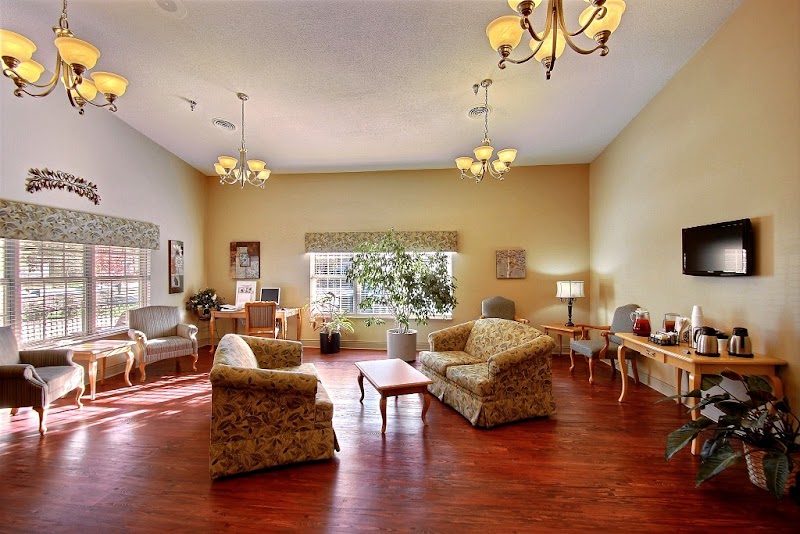
How is Wildwood Healthcare Center Staffed?

CMS rates WILDWOOD HEALTHCARE CENTER's staffing level at 1 out of 5 stars, which is much below average compared to other nursing homes. Staff turnover is 42%, compared to the Indiana average of 46%. This relatively stable workforce can support continuity of care. RN turnover specifically is 57%, which is notably high. RNs provide skilled clinical oversight, so turnover in this role can affect medical care quality.

What Have Inspectors Found at Wildwood Healthcare Center?

State health inspectors documented 51 deficiencies at WILDWOOD HEALTHCARE CENTER during 2022 to 2025. These included: 3 that caused actual resident harm, 46 with potential for harm, and 2 minor or isolated issues. Deficiencies causing actual harm indicate documented cases where residents experienced negative health consequences.
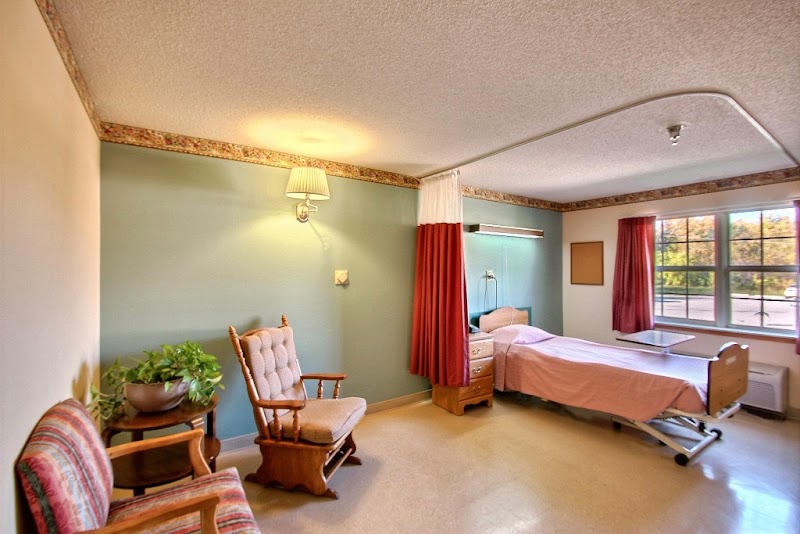
Who Owns and Operates Wildwood Healthcare Center?

WILDWOOD HEALTHCARE CENTER is owned by a for-profit company. For-profit facilities operate as businesses with obligations to shareholders or private owners. The facility is operated by COMMUNICARE HEALTH, a chain that manages multiple nursing homes. With 160 certified beds and approximately 137 residents (about 86% occupancy), it is a mid-sized facility located in INDIANAPOLIS, Indiana.
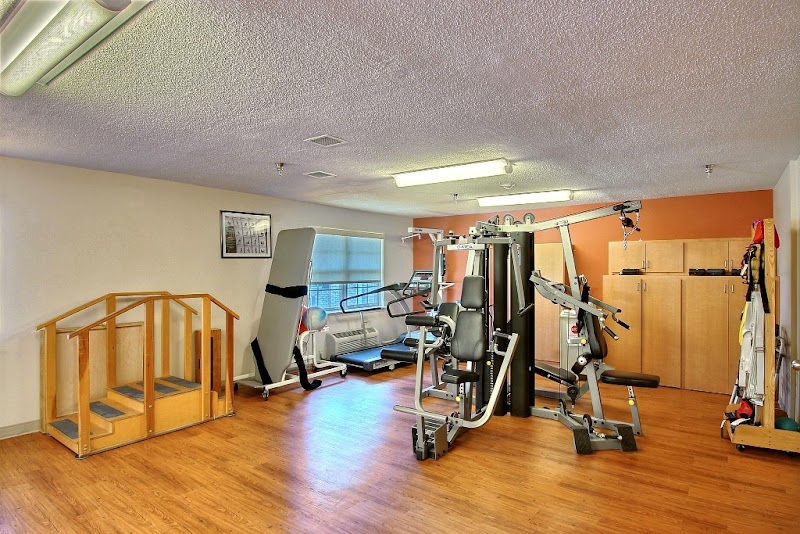
How Does Wildwood Healthcare Center Compare to Other Indiana Nursing Homes?

Compared to the 100 nursing homes in Indiana, WILDWOOD HEALTHCARE CENTER's overall rating (2 stars) is below the state average of 3.1, staff turnover (42%) is near the state average of 46%, and health inspection rating (2 stars) is below the national benchmark.

What Should Families Ask When Visiting Wildwood Healthcare Center?

Based on this facility's data, families visiting should ask: "What safeguards and monitoring systems are in place to protect residents from abuse or neglect?" "Can you walk me through typical staffing levels on day, evening, and night shifts?" "Can I visit during a mealtime to observe dining assistance and food quality?" "How do you handle medical emergencies, and what is your hospital transfer rate?" These questions are particularly relevant given the substantiated abuse finding on record and the below-average staffing rating.

Is Wildwood Healthcare Center Safe?

Based on CMS inspection data, WILDWOOD HEALTHCARE CENTER has documented safety concerns. The facility has 1 substantiated abuse finding (meaning confirmed case of resident harm by staff or other residents). The facility has a 2-star overall rating and ranks #100 of 100 nursing homes in Indiana. Families considering this facility should ask detailed questions about what corrective actions have been taken since these incidents.

Do Nurses at Wildwood Healthcare Center Stick Around?

WILDWOOD HEALTHCARE CENTER has a staff turnover rate of 42%, which is about average for Indiana nursing homes (state average: 46%). Moderate turnover is common in nursing homes, but families should still ask about staff tenure and how the facility maintains care continuity when employees leave.

Was Wildwood Healthcare Center Ever Fined?

WILDWOOD HEALTHCARE CENTER has no federal fines on record. CMS issues fines when nursing homes fail to meet care standards or don't correct problems found during inspections. The absence of fines suggests the facility has either maintained compliance or corrected any issues before penalties were assessed. This is a positive indicator, though families should still review recent inspection reports for the full picture.

Is Wildwood Healthcare Center on Any Federal Watch List?

WILDWOOD HEALTHCARE CENTER is not on any federal watch list. The most significant is the Special Focus Facility (SFF) program, which identifies the bottom 1% of nursing homes nationally based on persistent, serious quality problems. Not being on this list means the facility has avoided the pattern of deficiencies that triggers enhanced federal oversight. This is a positive indicator, though families should still review the facility's inspection history directly.