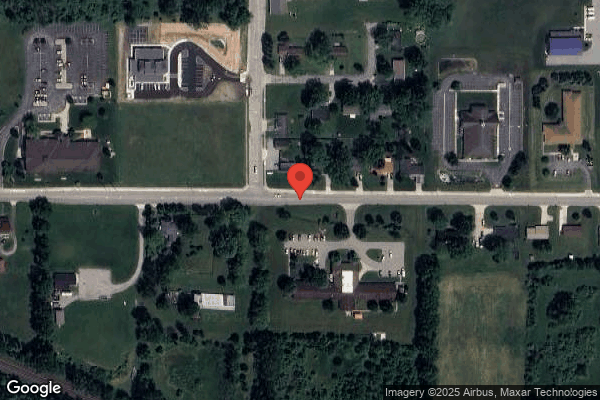
KENDALLVILLE MANOR

1802 E DOWLING ST, KENDALLVILLE, IN 46755 (260) 347-4374
For profit - Corporation 60 Beds IDE MANAGEMENT GROUP Data: November 2025
Trust Grade
75/100
#154 of 505 in IN
Last Inspection: January 2025

Within standard 12-15 month inspection cycle. Federal law requires annual inspections.

Overview

Kendallville Manor has earned a Trust Grade of B, indicating it is a good choice for families seeking care, but there are areas for improvement. It ranks #154 out of 505 facilities in Indiana, placing it in the top half, but it is #4 out of 5 in Noble County, suggesting limited local options. The facility is currently improving, having reduced its issues from 4 in 2024 to 3 in 2025. However, staffing is a concern, with a low rating of 1 out of 5 and a turnover rate of 59%, which is higher than the state average. On the positive side, the facility has reported no fines, indicating compliance with regulations, and it offers a good level of RN coverage. That said, there are some significant weaknesses. For instance, residents experienced uncomfortable living conditions, with missing paint and exposed drywall in several rooms. Additionally, there were concerns about the kitchen operations, as the facility failed to conduct necessary chemical checks on dishwashers. Another incident highlighted that one resident was not receiving the correct amount of oxygen as prescribed, which could impact their health. Overall, while Kendallville Manor has strengths, potential residents should weigh these against the identified issues.

Trust Score
B
75/100
In Indiana
#154/505
Top 30%
Safety Record
Low Risk
No red flags
Inspections
Getting Better
4 → 3 violations
Staff Stability
⚠ Watch
59% turnover. Above average. Higher turnover means staff may not know residents' routines.
Penalties
✓ Good
No fines on record. Clean compliance history, better than most Indiana facilities.
Skilled Nurses
○ Average
Each resident gets 31 minutes of Registered Nurse (RN) attention daily — about average for Indiana. RNs are the most trained staff who monitor for health changes.
Violations
⚠ Watch
12 deficiencies on record. Higher than average. Multiple issues found across inspections.
★★★★☆
4.0
Overall Rating
★☆☆☆☆
1.0
Staff Levels
★★★★★
5.0
Care Quality
★★★★☆
4.0
Inspection Score
Stable
2024: 4 issues
2025: 3 issues

The Good

  • 5-Star Quality Measures · Strong clinical quality outcomes
  • Full Sprinkler Coverage · Fire safety systems throughout facility
  • No fines on record

Facility shows strength in quality measures, fire safety.

The Bad

Staff Turnover: 59%

13pts above Indiana avg (46%)

Frequent staff changes - ask about care continuity

Chain: IDE MANAGEMENT GROUP

Part of a multi-facility chain

Ask about local staffing decisions and management

Staff turnover is elevated (59%)

11 points above Indiana average of 48%

The Ugly 12 deficiencies on record

Jan 2025 3 deficiencies
CONCERN (D)

Potential for Harm - no one hurt, but risky conditions existed

Respiratory Care (Tag F0695)

Could have caused harm · This affected 1 resident

**NOTE- TERMS IN BRACKETS HAVE BEEN EDITED TO PROTECT CONFIDENTIALITY** Based on observation, interview, and record review the facility failed to ensure oxygen orders were obtained and implemented for...

Read full inspector narrative →
**NOTE- TERMS IN BRACKETS HAVE BEEN EDITED TO PROTECT CONFIDENTIALITY** Based on observation, interview, and record review the facility failed to ensure oxygen orders were obtained and implemented for 1 of 3 residents reviewed (Resident 47). Findings include: During an observation, on 1/21/25 at 11:02 AM, Resident 47 was observed lying in bed wearing a nasal cannula attached to an oxygen concentrator running at 1.75 liters per minute (lpm). A piece of tape attached to the concentrator read 3.5 lpm. Resident 47's record was reviewed on 1/21/25 at 1:16 PM. Diagnoses included adult failure to thrive and personal history of pulmonary embolism. Resident 47's current quarterly Minimum Data Set (MDS), dated [DATE], indicated their Basic Interview for Mental Status (BIMS) score was 15 (cognitively intact). The MDS indicated Resident 47 used supplemental oxygen. Resident 47's current care plan titled alteration in respiratory status . indicated the resident had a problem of difficulty breathing, with a goal date of 3/19/25. Interventions included providing oxygen as ordered. Physician orders, dated 12/23/24 ,indicated oxygen tubing and a respiratory bag should be changed weekly on Mondays, oxygen humidification water levels should be checked each shift and replaced as needed. No physician orders for oxygen administration and rate of flow were available for review. In an interview, on 1/21/25 at 11:26 AM, Licensed Practical Nurse (LPN) 2 indicated an oxygen flow rate is determined and ordered by the physician. LPN 2 indicated he reviewed the current physician's orders and was unable to find any current orders. He indicated the oxygen was currently running at 1.75 lpm and he did not know what the oxygen flow rate should be. In an interview, on 1/21/25 at 11:30 AM, the Director of Nursing (DON) indicated Resident 47's oxygen order may not have carried over after a recent hospitalization. She indicated a physician's order for administration of oxygen and a flow rate should be present in the medical record for all residents receiving oxygen. In an interview, on 1/21/25 at 11:55 AM, the DON indicated she reviewed readmission orders from the hospital and Resident 47 should have been receiving oxygen at 1 lpm. A current policy dated October 2010, provided by the DON on 1/21/25 at 12:07 PM indicated staff should verify the physician's order before administering oxygen. 3.1-47(a)(6)
CONCERN (D)

Potential for Harm - no one hurt, but risky conditions existed

Drug Regimen Review (Tag F0756)

Could have caused harm · This affected 1 resident

**NOTE- TERMS IN BRACKETS HAVE BEEN EDITED TO PROTECT CONFIDENTIALITY** Based on interview and record review, the facility failed to ensure pharmacy recommendations were followed for 1 of 5 residents ...

Read full inspector narrative →
**NOTE- TERMS IN BRACKETS HAVE BEEN EDITED TO PROTECT CONFIDENTIALITY** Based on interview and record review, the facility failed to ensure pharmacy recommendations were followed for 1 of 5 residents reviewed (Resident 1). Findings include: Resident 1's record was reviewed on 1/24/25 at 7:46 AM. Diagnoses included primary hypertension and diabetes. Resident 1's Annual Minimum Data Set, (MDS) dated [DATE], indicated the resident's Brief Interview for Mental Status (BIMS) score was 12 (cognitively intact). A physician order, dated 2/5/24, indicated Resident 1 was to be administered Maxitrol Ophthalmic Suspension (antibiotic eye drops) to each eye 4 times a day for eye inflammation. A pharmacy note, dated 2/29/24, indicated Resident 1's antibiotic eye drops should be stopped on 3/7/24. Resident 1's physician agreed the antibiotic eye drops should be stopped on 3/7/24. Resident 1's Medication Administration Record, (MAR) dated 3/1/24 through 3/31/24 indicated the resident had been administered antibiotic eye drops 4 times a day every day through 3/31/24. A pharmacy note, dated 4/22/24, indicated Resident 1's antibiotic eye drops were to be stopped on 3/7/24. The pharmacy note indicated the antibiotic eye drops should be discontinued. Resident 1's MAR, dated 4/1/24 through 4/30/24, indicated the resident had been administered the eye drops 4 times a day from 4/1/24 through 4/22/24. A pharmacy note, dated 10/22/24, indicated the pharmacist recommended discontinuing Resident 1's sliding scale insulin and decreasing Resident 1's blood sugar checks from 4 times a day to once a day. The physician agreed. Resident 1's MAR, dated 10/1/24 through 10/31/24, indicated the resident's orders for reduction of blood sugar checks and sliding scale insulin had not been discontinued. The resident's blood sugar had been assessed 4 times a day every day from 10/1/24 through 10/31/24. The MAR indicated Resident 1 had been administered sliding scale insulin 22 times from 10/23/24 until 10/31/24. A pharmacy note, dated 11/19/24, indicated the pharmacist recommended Resident 1's sliding scale insulin be discontinued and their blood sugar checks decreased from 4 times a day to once daily. The physician agreed. Resident 1's MAR, dated 11/1/24-11/30/24, indicated Resident 1 had their blood sugar assessed 4 times a day from 11/1/24 until 11/20/24. The MAR indicated Resident 1 had been administered sliding scale insulin 19 times from 11/1/24 until 11/20/24. In an interview, on 1/24/25 at 3:00 PM, the Director of Nursing (DON) indicated they did not know the reason Resident 1's eye drops did not get discontinued as the pharmacist had recommended. The DON indicated Resident 1's sliding scale insulin should have been discontinued and blood sugar tests should have been decreased as recommended by the pharmacist on 10/22/24. In an interview, on 1/27/25 at 9:18 AM, the DON indicated Resident 1 had brought the antibiotic eye drops with them when they were admitted on [DATE]. The DON indicated the eye drops did not have a stop date on the prescription bottle. The DON indicated the facility had ordered more eye drops on 3/7/24. The DON indicated Resident 1's daughter had reported the resident had been on the eye drops intermittently since the resident's eye surgery. The DON indicated the facility should have clarified the stop date for the eye drops. A current facility policy, titled Guidelines for Notifying Physicians of Clinical Problems, dated 2005 and revised 2/2014, provided by the DON on 1/24/25 at 2:05 PM indicated the facility should notify the physician of significant medication errors immediately. The policy indicated the physician should be notified of medication errors that did not affect the resident's condition during the next routine communication with the physician. 3.1-25(h) 3.1-25(i)
CONCERN (E)

Potential for Harm - no one hurt, but risky conditions existed

Safe Environment (Tag F0921)

Could have caused harm · This affected multiple residents

**NOTE- TERMS IN BRACKETS HAVE BEEN EDITED TO PROTECT CONFIDENTIALITY** Based on observation, interview and record review, the facility failed to ensure a comfortable environment was maintained for re...

Read full inspector narrative →
**NOTE- TERMS IN BRACKETS HAVE BEEN EDITED TO PROTECT CONFIDENTIALITY** Based on observation, interview and record review, the facility failed to ensure a comfortable environment was maintained for residents in 4 of 7 resident rooms observed. During an observation on 01/21/25 at 10:04 AM, in room [ROOM NUMBER], the wall nearest the bed headboard had missing paint and exposed drywall in vertical marks too many to count approximately 3 feet from the floor, in 3 feet wide by 12 inches to less than 1 inch in length. The opposite wall had scrape marks 12 inches from the floor and approximately 5 feet wide. The exterior bathroom wall was missing 12 inches of cove base trim. The interior bathroom wall was missing 4 inches of cove base trim. During an observation on 1/21/25 at 10:29 AM, in the bathroom of room [ROOM NUMBER], the floor had black specks at the square tile seams and a heavier distribution in the corners of tiles. The interior bathroom wall had missing paint and drywall down to the wire mesh measuring approximately 4 inches x 1.5 inches. 1 of 5 light bulbs over the mirror were not functioning. Caulk was missing between the counter and the vertical trim to both sides of the counter. In an interview on 1/22/25 at 2:25 PM, LPN 3 indicated she would report bed, oxygen, or equipment malfunction to maintenance using verbal communication or written work order. During an interview on 1/22/25 from 2:30-2:40 PM, the Maintenance Director indicated no knowledge of the missing cove base pieces nor problems with the walls in rooms 209-217. He indicated replacing cove bases would be quick and there would be no need to vacate a resident from a room. He also indicated that The Administrator and Director of Nursing (DON) try to plan for vacant room maintenance, but this had been difficult. In a continuous interview and observation on 1/24/25 at 09:50-10:05, Housekeeper 9 indicated the black substance on the bathroom floor of room [ROOM NUMBER] was likely wax build up or glue from underneath the tile and may be removed with scrapping. Housekeeper 9 indicated there were stains on the tile floor unable to be removed. Housekeeper 9 indicated wall damage such as cracks or holes, water leaks, or lights not working would be reported with a written work order. Housekeeper 9 indicated resident beds have caused damage to the walls. During an observation on 1/24/25 at 10:00 AM, the 200s hall wall had a thin crack approximately 3 feet long from the ceiling. During an observation on 1/27/25 at 11:01 AM, room [ROOM NUMBER] had an exterior bathroom wall with a section of scrapped paint approximately 2 feet x 3 inches approximately 9-12 inches from the floor. During an observation on 01/27/25 at 11:03 AM, room [ROOM NUMBER] had missing paint and white primer approximately 4 inches x 0.5 inch at approximately 5 feet from the floor. In an interview, on 01/27/25 at 09:31 AM the DON indicated, residents need to be vacated from a room for larger repairs. The DON indicated, the facility replaced a bed that damaged the wall. The DON indicated, the facility has one maintenance employee. In an interview, on 1/27/25 at 10:30 AM, the Maintenance Director indicated the Administrator, would review work orders entered into the TELS program (TELS is a building management platform designed for Asset Management, Life Safety, and Maintenance solutions). A regional consultant for maintenance within the cooperation would also be able to see work orders. The Maintenance Director indicated he had a repair list for every room except 2 rooms completed since he started in August, 2024. The Maintenance Director indicated the facility had been approved to get new flooring in 3 residents' rooms. The Maintenance Director was unable to produce repair list or list of work orders for review. A current policy received on 01/27/25 at 09:36 AM titled Maintenance/Environmental Policy and Procedures, from the Maintenance Director, indicated all room shall be maintained in a clean and good order without defect or damage that effects usability and provide a homelike environment for the residents. For minor touch ups to scrapes and damaged paint in occupied rooms, every effort will be made to conduct minor repairs without inconvenience or displacement to the resident. All maintenance issues must have a work order entered in the TELS program. A monthly audit will be conducted by maintenance to identify any areas that need attention. The areas that need attention will be added to a project list to address in a timely manner. (Not to exceed 30 days.) When a room becomes vacant, an assessment will be conducted (room turn) to determine any necessary repairs. A current policy, received on 1/22/25 at 3:30 PM, from the Maintenance Director, titled Work Order Policy dated 9/1/2022, indicated all work order be either written on the log in front of the maintenance office or entered into TELS program. Work orders that are properly entered into the system will be acted upon within 72 hours and reviewed by The Administrator daily through the TELS logs. Telling the maintenance director or anyone else on the floor something is broken will not get it fixed. It MUST be in writing and include the exact location of the problem and the date of that finding. 3.1-19(e)
Aug 2024 1 deficiency
CONCERN (D) 📢 Someone Reported This

A family member, employee, or ombudsman was alarmed enough to file a formal complaint

Potential for Harm - no one hurt, but risky conditions existed

Free from Abuse/Neglect (Tag F0600)

Could have caused harm · This affected 1 resident

**NOTE- TERMS IN BRACKETS HAVE BEEN EDITED TO PROTECT CONFIDENTIALITY** Based on interview and record review the facility failed to ensure residents were free from abuse for 2 of 6 residents reviewed ...

Read full inspector narrative →
**NOTE- TERMS IN BRACKETS HAVE BEEN EDITED TO PROTECT CONFIDENTIALITY** Based on interview and record review the facility failed to ensure residents were free from abuse for 2 of 6 residents reviewed (Resident A and Resident B). Findings include: A report to the Indiana Department of Health dated 8/6/24 indicated there was a concern about residents being abused by a staff member. 1. Resident A's record was reviewed on 8/27/24 at 10:00 AM. Diagnoses included cerebral palsy, aphasia, (inability to speak) major depressive disorder, anxiety disorder and mood disorder. Resident A's Quarterly Minimum Data Set, (MDS) dated [DATE], indicated the resident's Brief Interview for Mental Status (BIMS) score was 8 (moderate cognitive impairment). The MDS indicated Resident A required extensive assistance for activities of daily living (ADLs). The MDS indicated Resident A had a suprapubic indwelling urinary catheter and a feeding tube. A progress note date 8/5/24 at 9:10 PM indicated a staff member had made physical contact with the resident's right arm. A Trauma Evaluation, dated 8/6/24 at 8:53 AM, indicated Resident A had stuck their arm out in front of Certified Nurse Aide (CNA) 10 as CNA 10 was walking by. The progress note indicated CNA 10 flung Resident A's arm out of their way. The progress note indicated Resident A had been known to place their arm in front of other residents and staff members to gain their attention due to Resident A being nonverbal. An undated, written statement by CNA 10, indicated CNA 10 had pushed Resident A's hand down to pass by the resident to answer a call light. A written statement by CNA 30, dated 8/5/24, indicated they witnessed CNA 10 push Resident B's arm away. In an interview on 8/27/24 at 1:17 pm, CNA 10 indicated they had worked a stressful shift at the facility on 8/5/24. CNA 10 indicated the shift was stressful due to unproductive staff members and numerous residents with mental health disorders. CNA 10 indicated they did not abuse residents. CNA 10 indicated they did not hit Resident A. CNA 10 indicated they pushed Resident A's hand out of the way to pass by. 2. Resident B's record was reviewed on 8/27/24 at 10:45 AM. Resident B's diagnoses included cognitive communication deficit, unspecified mild dementia, major depressive disorder, anxiety disorder and behavioral disorders. Resident B had resided at a homeless shelter prior to admission to the facility. Resident B's Quarterly MDS, date 6/19/24, indicated the resident's BIMS score was 15 (cognitively intact). The MDS indicated Resident B required minimal assistance for ADLs. A Nursing Note, dated 8/6/24 at 9:17 AM, indicated on 8/5/24 CNA 10 had been attempting to enter Resident B's room to provide care for their roommate. Resident B had told CNA 10 they were not permitted to enter their room, slammed the door and held the door shut. CNA 10 then pushed the door open forcefully. A Trauma Evaluation, dated 8/6/24 at 10:28 AM, indicated Resident B had closed and held their room door shut to prevent CNA 10 from entering the room to care for their roommate. CNA 10 had pushed on the door while Resident B was holding the door shut. An identified trigger was Resident B's resistance to interacting with others they perceived as having lower function. Resident B indicated they became upset with others when others were stupid. A Behavior Note, dated 8/9/24 at 2:18 PM, indicated Resident B had displayed unkind behaviors to others as evidenced by sticking their tongue out, yelling, using profane language and raising their middle finger. Resident B had been angry with a staff member, refused a rational explanation and had refused alternate accommodations. In an interview on 8/27/24 at 12:05 PM, Resident B indicated they did not feel like talking. Resident B reported they were angry with another resident who didn't know anything. A written statement by CNA 20, dated 8/5/24, indicated CNA 10 had engaged in a verbally abusive conservation with Resident B. Resident B held their room door closed. CNA 10 then placed both hands on the door and pushed with excessive force. CNA 20 prevented the door from striking Resident B. In an interview on 8/27/24 at 1:17 pm CNA 10 indicated on 8/5/24 Resident B had an attitude all day. CNA 10 indicated Resident B was abusive when slamming the door in CNA 10's face. CNA 10 indicated they could have handled themselves better. CNA 10 indicated they regretted using foul language. In an interview on 8/27/24 at 11:45 AM, Licensed Practical Nurse (LPN) 40 indicated CNA 10 could be impatient with the residents. In an interview on 8/27/24 at 12:29 PM, Resident C indicated CNA 10 was scary when they were mad. Resident C indicated CNA 10 displayed negative body language when they were angry. In an interview on 8/27/24 at 12:39 PM, the Director of Nursing (DON) indicated they were aware of the abuse allegations being supported by evidence. A current facility policy, dated 9/2022, provided by the DON on 8/27/24 at 10:40 AM indicated residents should not be abused by other residents, volunteers, family members, legal guardians, friends or facility staff. This citation relates to Complaint IN00440431. 3.1-27(a)
Feb 2024 3 deficiencies
CONCERN (D) 📢 Someone Reported This

A family member, employee, or ombudsman was alarmed enough to file a formal complaint

Potential for Harm - no one hurt, but risky conditions existed

Deficiency F0761 (Tag F0761)

Could have caused harm · This affected 1 resident

**NOTE- TERMS IN BRACKETS HAVE BEEN EDITED TO PROTECT CONFIDENTIALITY** Based on observation, interview, and record review the facility failed to ensure medications were secured for 1 of 4 residents r...

Read full inspector narrative →
**NOTE- TERMS IN BRACKETS HAVE BEEN EDITED TO PROTECT CONFIDENTIALITY** Based on observation, interview, and record review the facility failed to ensure medications were secured for 1 of 4 residents reviewed (Resident 17). Findings include: During an observation on 2/6/24 at 8:36 AM a cup containing 6 white pills was observed sitting on top of the medication cart beside a cup containing applesauce. The pills were in plain sight of anyone passing by the cart. No staff member was attending to the cart. 3 unidentified residents passed by during the observation. During an observation and interview on 2/6/24 at 8:39 AM, the Administrator shook his head when informed of the presence of pills accessible on top of the cart and indicated he would stay at the cart and supervise the pills until the staff member in charge of the cart returned to the area. Resident 17's record was reviewed on 2/6/24 at 9:55 AM. Diagnoses included cerebral palsy, chronic obstructive pulmonary disease, and aphasia. Resident 17's current quarterly Minimum Data Set (MDS) dated [DATE] indicated his Basic Interview for Mental Status (BIMS) score was 7 (cognitively impaired). Current physician's orders included orders for the following medications to be administered at 9:00 AM on 2/6/24: Bumex 1 mg, 1 tablet (a diuretic, or medication to release excess fluid from the body) Simethicone 80 mg, 2 tablets (digestive aid) Buspirone 10 mg, 1 tablet (anti-anxiety medication) Lamotrigine 25 mg, 2 tablets (anti-convulsant or seizure medication). In an interview on 2/6/23 at 9:09 AM, the Director of Nursing (DON) indicated staff should not leave pills unattended on top of the medication cart. She indicated she had interviewed Qualified Medicine Aide (QMA)4. She indicated QMA 4 had prepared the medication for Resident 17 and left the cart to assist another staff member. A current policy titled Medication Administration General Guidelines dated 5/20/20 provided by the DON on 2/4/24 at 10:04 AM indicated medications should not be left on top of the cart unattended. 3.1-25 (m)
CONCERN (D) 📢 Someone Reported This

A family member, employee, or ombudsman was alarmed enough to file a formal complaint

Potential for Harm - no one hurt, but risky conditions existed

Safe Environment (Tag F0921)

Could have caused harm · This affected 1 resident

**NOTE- TERMS IN BRACKETS HAVE BEEN EDITED TO PROTECT CONFIDENTIALITY** Based on observation, interview, and record review the facility failed to ensure the facility was maintained in a clean and sani...

Read full inspector narrative →
**NOTE- TERMS IN BRACKETS HAVE BEEN EDITED TO PROTECT CONFIDENTIALITY** Based on observation, interview, and record review the facility failed to ensure the facility was maintained in a clean and sanitary manner for 2 of 24 residents reviewed (Resident 30 and Resident 31). Findings include: 1. During an observation on 2/5/24 at 9:23 AM, a urinal containing 150 ml of yellow fluid was observed on the bedside stand beside Resident 30's bed. Resident 30's mattress was uncovered, and no linens were on the bed. Resident 30's roommate indicated Resident 30 had left the building for some appointments and was not expected to return until around 5:00 PM. During an observation on 2/5/24 at 10:47 AM, an unidentified housekeeper was observed cleaning Resident 30's room. The urinal, containing the yellow fluid, was visible from the doorway in the same position on the bedside stand. During an observation on 2/5/24 at 1:49 PM, Resident 30's bed was made up with linens and the urinal, with yellow fluid, was observed on the bedside stand. During an observation and interview on 2/5/24 at 2:30 PM, Qualified Medicine Aide (QMA) 2 indicated the urinal should have been emptied and put away. During an interview on 2/6/24 at 2:41 PM, Resident 30 indicated he had left the building around 8:00 AM on 2/5/24 to attend appointments and returned around 5:00 PM. Resident 30's record was reviewed on 2/7/24 at 9:40 AM. Diagnoses included chronic kidney disease stage 5, diabetes mellitus with foot ulcer, and dependence on renal dialysis. Resident 30's current quarterly Minimum Data Set (MDS), dated [DATE], indicated his Basic Interview for Mental Status (BIMS) score was 15 (cognitively intact). In an interview, on 2/5/24 at 2:33 PM, the Director of Nursing (DON) indicated residents who could independently use urinals should be checked for needs at least every 2 hours. She indicated staff who are in the room to clean or make the bed should empty and clean urinals when they had been used. A current policy titled Bedpan/Urinal Offering/Removing dated 2/2018 provided by the Director of Nursing (DON) indicated urinals should be emptied, cleaned, dried, and put away after use. 2. During an observation in Resident 31's room on 2/2/24 at 2:40 PM, a dark brown substance measuring about 2 inches by 4 inches was viewed on the wall adjacent to the bathroom, about 2 feet from the bathroom door and about 6 inches from the floor. When standing next to the wall, a smell consistent with bowel movement was detected. During an observation in Resident 31's room on 2/5/24 at 10:18 AM, a dark brown substance was viewed on the wall in the same location as the 2/2/24 observation with a slightly smaller and darker appearance. During an observation and interview on 2/5/24 at 2:30 PM Qualified Medicine Aide (QMA) 2 indicated the substance in Resident 31's room appeared to be dried bowel movement and should have been cleaned off the wall. Resident 31's record was reviewed on 2/7/24 at 10:10 AM. Diagnoses included schizophrenia, post-traumatic stress disorder, chronic, and chondrocostal junction syndrome. A review of Resident 31's current Minimum Data Set (MDS) dated [DATE] indicated her Basic Interview for Mental Status (BIMS) score was 15 (cognitively intact). The MDS indicated Resident 31 used substantial assistance with toileting hygiene. In an interview on 2/5/24 at 2:33 PM, the DON indicated walls in resident rooms should be clean and staff should wash off any visible debris when present. A current policy titled Cleaning Spills or Splashes of Blood or Body Fluids dated 1/2012 provided by the Assistant Director of Nursing (ADON) on 2/6/24 at 10:23 AM indicated appropriately trained staff should clean any surfaces contaminated with body fluids as soon as practical to prevent exposure. 3.1-19(f)5
CONCERN (E) 📢 Someone Reported This

A family member, employee, or ombudsman was alarmed enough to file a formal complaint

Potential for Harm - no one hurt, but risky conditions existed

Food Safety (Tag F0812)

Could have caused harm · This affected multiple residents

Based on observation, interview, and record review the facility failed to ensure dishwasher chemical checks were completed consistently. 47 of 50 residents residing in the facility were served food pr...

Read full inspector narrative →
Based on observation, interview, and record review the facility failed to ensure dishwasher chemical checks were completed consistently. 47 of 50 residents residing in the facility were served food prepared in the kitchen. Findings include: During an observation and interview on 2/2/24 at 9:57 AM, [NAME] 3 was observed washing dishes in the dishwasher. The Dietary Manager (DM) indicated he was unable to locate the test strips to test the dishwasher sanitizer levels. In a record review beginning 2/2/24 at 9:55 AM a document titled Dishwashing temp (temperature)/PPM (parts per million) Feb (February) 2024 was reviewed. The document contained a grid with dates and columns labeled breakfast reading/initial, lunch reading/initial, and dinner reading/initial. The document indicated the temperature should be 120-140 degrees and PPM should be 50-100. The 2/1/24 breakfast temperature reading was 121, but no ppm reading was recorded. The 2/1/24 lunch temperature reading was 125, but no ppm reading was recorded. No ppm readings were recorded for 2/1/24 dinner or 2/2/24 breakfast. In an interview, on 2/2/24 at 9:57 AM, [NAME] 3 indicated the employee assigned to do the dishes was assigned to fill out the dishwasher log. She indicated she was frequently assigned to do the dishes, but she did not know how to test the chemicals. In an observation and interview, on 2/2/24 at 12:11 PM, the DM indicated he had obtained test strips from another facility. During the chemical test, the strips registered 0 ppm. In an observation and interview, on 2/2/24 at 1:10 PM, the DM indicated he had used incorrect strips on the previous test. The test strips were labeled QT Hydrion and had 5 color indicator strips. The strips were labeled 0, 150, 200, 400, and 500. The DM indicated he was unable to determine whether the PPM reading was between 50 and 100, so he estimated a reading. A current policy titled Dish Machine Temperatures (Low Temperature Machines) and Sanitizer Testing dated 7/2003 provided by the DM on 2/2/24 at 10:07 AM indicated the dish machine should be checked at each meal cycle using a chlorine test strip. Sanitizer strength should be 50-100 PPM hypochlorite. 3.1-21(i)3
Mar 2023 1 deficiency
CONCERN (D) 📢 Someone Reported This

A family member, employee, or ombudsman was alarmed enough to file a formal complaint

Potential for Harm - no one hurt, but risky conditions existed

Deficiency F0604 (Tag F0604)

Could have caused harm · This affected 1 resident

Based on interview and record review, the facility failed to ensure a resident was free from physical restraints for 1 of 1 residents reviewed (Resident B). Findings include: A facility reported incid...

Read full inspector narrative →
Based on interview and record review, the facility failed to ensure a resident was free from physical restraints for 1 of 1 residents reviewed (Resident B). Findings include: A facility reported incident to the Indiana Department of Health, dated 3/11/23 at 1:06 p.m., indicated Resident B had been secured in her wheelchair with use of a gait belt. On 3/22/23 at 10:15 A.M., Resident B's record was reviewed. Diagnoses included recent hemorrhagic stroke (brain bleed), altered mental status, and diabetes. An admission MDS (Minimum Data Set) assessment, dated 3/13/23, indicated the resident had severely impaired cognition. Her speech was clear and able to be understood. She had no hallucinations or delusions but had 1-3 days of physical behaviors towards others. She required extensive assistance from 2 staff for transfers, bed mobility, and toileting. An initial fall care plan, dated 3/8/23, indicated the resident was at high risk for falls due to being unaware of safety needs with history of falls. Interventions included: anticipate and meet the residents needs, follow fall protocol, therapy to evaluate and treat, and use a bed/chair alarm. A physician order, dated 3/6/23, indicated the resident was to participate in activities, social, nursing and restorative, therapy, and psychosocial programs as tolerated. There was no order for a physical restraint. Nurse progress notes indicated: -3/7/23 at 4:55 p.m., a Nurse Practitioner (NP) note indicated the resident had poor safety and environmental awareness due to a hemorrhagic stroke. This put her at high risk for falls and/or injuries. -3/9/23 at 8:10 p.m., the resident had a fall in the hallway after standing up from her wheelchair. -3/10/23 at 10:01 a.m., the resident had a fall the previous evening when she had been agitated and kept attempting to get up by herself. Fall interventions were for the NP to review her medications and check labs. At 1:58 p.m., the resident was alert but disoriented. She was wheelchair dependent but could stand and then would fall. At 9:24 p.m., the resident was continuously getting out of her chair. -3/11/23 at 4:37 p.m., staff had secured Resident B into her wheelchair because she had been unsteady on her feet. She was released from the gait belt that secured her in the chair and was assessed with no injuries observed. Staff involved in the incident were removed from the schedule and family and physician were notified. A facility investigation, initiated on 3/11/23 indicated RN 2 (Registered Nurse) instructed QMA 3 (Qualified Medication Aide) to assist her in placing a gait belt around Resident B's abdomen and wheelchair. The gait belt was secured at the back of the resident's wheelchair where she was unable to reach it. A written statement by RN 2, dated 3/11/23 indicated she and QMA 3 placed the gait belt around the resident and her wheelchair at 7:25 a.m. The resident kept standing up and she believed it was safer for the resident rather than she falling and sustaining injury. She indicated she had needed to get her medications passed and had a job to do. A written statement by QMA 3, dated 3/11/23 indicated she had followed the direction of her nurse-RN 2, to assist her in placing a gait belt around the resident and her wheelchair at 7:25 a.m. Resident B was repeatedly standing, sitting and would not stay seated. QMA 3 believed she was going to fall and get hurt. She indicated everyone was busy trying to do their jobs and protect her. On 3/22/23 at 11:18 A.M., Resident B and her spouse were interviewed. Her speech was clear and easily understood. She had no memory of having a gait belt placed around her in her wheelchair. Her spouse indicated the resident had some improvements with her memory and her anxiety had decreased but she continued with intermittent confusion. On 3/22/23 at 1:07 P.M., the Director of Therapy was interviewed. She indicated on 3/11/23 at approximately 7:40 a.m., RN 2 told her she had placed a gait belt around Resident B because she kept trying to get up from her wheelchair. RN 2 was stressed and indicated she knew they weren't supposed to restrain the residents but she needed to get things done and was unable to sit with the resident. The Therapy Director indicated she went to the dining room where the resident sat and assisted her to eat her breakfast. After breakfast, she took the resident to the therapy room, removed the gait belt and placed her in a different wheelchair. She then contacted the Director of Nursing to report the incident. She indicated the resident had the gait belt around her for 45-60 minutes and hadn't seemed to notice something was around her waist. On 3/22/23 at 2:45 P.M., the Director of Nursing was interviewed. She indicated on 3/11/23, during the day shift when the incident occurred, the facility was fully staffed with 2 RN's, 1 QMA, and 5 CNA's working and caring for 46 residents. She indicated staff were never allowed to restrain a resident for purposes of convenience. RN 2 and QMA 3 were both terminated for their actions. A current Abuse Policy, provided by the Administrator on 3/22/23 at 9:40 A.M., stated the following: The resident has the right to be free from abuse, neglect, misappropriation of resident property, and exploitation .This includes but is not limited to freedom from corporal punishment, involuntary seclusion and any physical or chemical restraint not required to treat the resident's medical symptoms .Definitions: Convenience is defined as the result of any action that has the effect of altering a resident's behavior such that the resident requires a lesser amount of effort or care, and is not in the resident's best interest .Physical restraint is defined as any manual method, physical or mechanical device, equipment, or material that meets all of the following criteria: Is attached or adjacent to the resident's body; Cannot be removed easily by the resident; and Restricts the resident's freedom of movement or normal access to his/her body This Federal tag relates to Complaint IN00403856. 3.1-3(w)
Feb 2023 3 deficiencies
CONCERN (D)

Potential for Harm - no one hurt, but risky conditions existed

Deficiency F0697 (Tag F0697)

Could have caused harm · This affected 1 resident

**NOTE- TERMS IN BRACKETS HAVE BEEN EDITED TO PROTECT CONFIDENTIALITY** 2) On 2/1/23 at 10:36 AM, Resident 10's record was reviewed. Diagnoses included chronic kidney disease, acute of chronic combine...

Read full inspector narrative →
**NOTE- TERMS IN BRACKETS HAVE BEEN EDITED TO PROTECT CONFIDENTIALITY** 2) On 2/1/23 at 10:36 AM, Resident 10's record was reviewed. Diagnoses included chronic kidney disease, acute of chronic combined systolic congestive heart failure, emphysema, type 1 diabetes mellitus with unspecified complications and chest pain. Resident 10's comprehensive Minimum Data Set (MDS) assessment, dated 1/3/23, indicated the resident's BIMS score was 11 (moderate cognitive impairment), she was orient but not interviewable. The MDS indicated she had no pain at the time of assessment. A review of the resident's order, dated 12/23/22, indicated Resident 10 could receive a 500mg Acetaminophen tablet every 6 hour as needed for pain or fever not to exceed 3 grams in 24 hours, The order indicated NPIs of : 1) relaxation /massage, 2) reposition 3) food/fluid 4) diversional activity 5) toilet, 6) adjust room temperature, 7) adjust lighting in room, 8) quite place were to be implemented first and documented as effective/ineffective. An order, dated 1/26/23, indicated Resident 10 could receive a 5-325mg Percocet tablet every 4 hours as needed for chest pain not to exceed 4 grams in 24 hours from all sources. The order indicated NPIs of: 1) relaxation /massage, 2) reposition 3) food/fluid 4) diversional activity 5) toilet, 6) adjust room temperature, 7) adjust lighting in room, 8) quite place were to be implemented first and documented as effective/ineffective. A review of Resident 10's MAR indicated the resident was administrated a 500mg Acetaminophen tablet on 1/5/23 at 2:36 AM for a pain level of 6 and at 1:56 PM for a pain level of 5. There was no documentation in the MAR identifying NPIs implemented or refused prior to the administration of the pain medication. The resident's MAR indicated she was administered a 5-325mg Percocet tablet on 1/4/23 at 8:42 AM for pain level of 3, on 1/16/23 at 11:39 AM for pain level of 5 and on 1/16/23 at 2:44 PM for pain level of 5 (1-10 scale). There was no documentation in the MAR identifying NPIs implemented or refused prior to the administration of the pain medication. A review of the resident's progress notes, dated 1/5/23, indicated a 500mg Acetaminophen tablet was administered for pain to Resident 10 at 2:36 AM and 1:56 PM; there was no documentation of NPIs implemented or refused prior to the administration of the pain medication. Resident 10's progress notes, dated 1/4/23, indicated the resident had returned from the emergency room following a fall and reported pain. A progress note, at 8:42 AM, indicated a 5-325mg Percocet tablet was administered to control pain; there was no documentation of any NPIs implemented or refused prior to the administration of pain medication. Resident 10's progress note, date 1/16/23, indicated the resident was administered 5-325mg Percocet tablet at 11:39 AM and at 2:44 PM for complaint of generalized pain; there was no documentation of NPIs implemented or refused prior to the administration of the pain medication. Based on record review and interview, the facility failed to implement non-pharmaceutical interventions (NPIs) regarding pain relief for 3 of 3 residents reviewed (Resident 99, Resident 10, and Resident 8). Findings include: 1) Resident 99's record was reviewed on 1/31/2023 at 2:50 PM. Diagnoses included age related osteoporosis without current pathological fracture, age related physical debility, diabetes mellitus due to underlying condition with diabetic neuropathy, and unspecified chronic kidney disease. A Brief Interview for Mental Status (BIMS) Assessment, dated 11/16/2022, indicated Resident 99 had a score of 10 (moderate cognitive impairment). A physician order, dated 1/17/2023, indicated to monitor for pain every shift, attempt non-pharmacological interventions for pain management such as: relaxation, light touch, imagery, exercise, music, etc., every shift. A physician order, dated 12/10/2022, indicated to give Acetaminophen tablet 650 milligrams (mg) (medication used to treat pain and/or fever), 1 tablet by mouth every 4 hours as needed for general discomfort, not to exceed 3000 mg of acetaminophen daily. The order indicated to document non-pharmacological interventions effective/ineffective: 1. relaxation/massage, 2. reposition, 3. food/fluid, 4. diversional activity, 5. toilet, 6. adjust room temperature, 7. adjust lighting in the room, 8. quiet place. A physician order, dated 8/24/2022, indicated to give Tramadol HCl tablet 50mg (narcotic medication used to treat pain), 1 tablet by mouth every 8 hours as needed for pain. The order indicated to document non-pharmacological interventions effective/ineffective: 1. relaxation/massage, 2. reposition, 3. food/fluid, 4. diversional activity, 5. toilet, 6. adjust room temperature, 7. adjust lighting in the room, 8. quiet place. A current care plan, dated 1/31/2023, indicated Resident 99 had acute pain/chronic pain related to osteoporosis. The goal was Resident 99 would not have an interruption in normal activities due to pain through the review date. Interventions included administer analgesia (medications used to treat pain) as ordered, give ½ hour before performing treatments or care, anticipate Resident 99's need for pain relief and respond immediately to any complaint of pain or non-verbal sign of pain, encourage Resident 99 to call for assistance when in pain, reposition self, ask for medication, tell staff how much pain was experienced, tell staff what increased or alleviated pain, and encourage Resident 99 to try different pain-relieving methods (positioning, relaxation therapy, progressive relaxation, bathing, snack or drink). A Medication Administration Record (MAR), dated January 2023, indicated Resident 99 received Acetaminophen tablet 650mg, 1 tablet by mouth on 1/13/23 at 9:09 PM, 1/19/23 at 1:45 AM, 1/19/23 at 7:12 AM. There was no documentation of the nonpharmacological interventions (NPI) attempted before administering Acetaminophen tablet 650mg on 1/13/23 at 9:09 PM (NPI marked 0), 1/19/23 at 1:45 AM (NPI marked NA), and 1/19/23 at 7:12 AM (NPI marked NA). A review of progress notes, dated 1/1/23 to 2/1/23, indicated no documentation of the nonpharmacological interventions attempted or attempted before administering Acetaminophen tablet 650mg to Resident 99. A MAR, dated January 2023, indicated Resident 99 received Tramadol HCl tablet 50mg, 1 tablet by mouth on 1/1/23 at 7:48 PM, 1/3/23 at 5:16 AM, 1/4/23 at 7:27 PM, 1/5/23 at 7:18 PM, 1/6/23 at 7:13 AM, 1/6/23 at 8:23 PM, 1/7/23 at 9:30 AM, 1/7/23 at 7:37 PM, 1/8/23 at 8:05 PM, 1/9/23 at 9:09 PM, 1/14/23 at 3:00 AM, 1/15/23 at 7:53 AM, 1/21/23 at 2:15 AM, 1/21/23 at 9:24 PM, 1/23/23 at 8:47 PM, 1/24/23 at 8:28 PM, 1/25/23 at 8:39 PM, 1/26/23 at 8:53 PM, 1/28/23 at 12:20 AM, 1/28/23 at 7:23 PM, 1/29/23 at 8:50 PM, and 1/31/23 at 8:41 PM. The MAR indicated no documentation of the nonpharmacological interventions attempted before administering Tramadol HCl tablet 50mg to Resident 99. A review of progress notes, dated 1/1/23 to 2/1/23, indicated no documentation of the nonpharmacological interventions attempted or attempted and refused by Resident 99 before administering Tramadol HCl tablet 50mg to Resident 99 on 1/1/23 at 7:48 PM, 1/3/23 at 5:16 AM, 1/4/23 at 7:27 PM, 1/5/23 at 7:18 PM, 1/6/23 at 7:13 AM, 1/7/23 at 9:30 AM, 1/8/23 at 8:05 PM, 1/9/23 at 9:09 PM, 1/15/23 at 7:53 AM, 1/21/23 at 9:24 PM, 1/23/23 at 8:47 PM, 1/24/23 at 8:28 PM, 1/25/23 at 8:39 PM, 1/26/23 at 8:53 PM, and 1/31/23 at 8:41 PM.3) A record review on 1/31/23 at 9:27 am indicated Resident 8's diagnoses included dementia, diabetes mellitus, chronic kidney disease dependent on dialysis, congestive heart failure, morbid obesity, and major depressive disorder. A quarterly Minimum Data Assessment (MDS) dated [DATE] indicated the resident had a slight cognitive deficit. The MDS pain assessment was blank. A physician order dated 1/25/23 indicated the resident was to be administered Norco every 6 hours as needed for pain. The physician order indicated the resident was to be monitored for pain every shift and alternate NPIs were to be offered. A care plan focus dated 4/9/21 and revised 1/25/23 indicated the resident was at risk for acute and chronic pain. An intervention for pain initiated on 1/19/23 indicated the resident was to be encouraged to attempt pain relief methods of positioning, relaxation therapy, progressive therapy, bathing, and having a snack or drink. The resident's MAR for January 2023 indicated the resident was administered hydrocodone on 6 occasions. The MAR did not indicate NPIs were offered when the resident was administered Norco. During an interview on 1/2/23 at 10:37 am the Assistant Director of Nursing (ADON) indicated NPIs were recorded on the MAR as to which NPI was offered and whether the NPI was effective. During an interview on 2/1/23 at 10:04 AM, the Director of Nursing (DON) indicated NPIs were on the resident's January 2023 MAR for acetaminophen. She indicated NPIs were not on the resident's January 2023 MAR for Norco. In an interview on 2/1/23 at 2:24 PM, the DON indicated the physician order for Resident 8 to offer NPIs probably did not get entered as it should have due to the resident's late return from the hospital In an interview on 2/1/2023 at 3:13 PM, the Director of Nursing (DON) indicated documentation of non-pharmacological interventions should be done on the MAR/Treatment Administration Record (TAR) or in a progress note. On the MAR/TAR, the documentation of the non-pharmacological intervention attempted should be the number corresponding to the number of the non-pharmacological intervention listed on the order. An entry of 0 or NA should not be used. The documentation in a progress note should be the description of the nonpharmacological intervention attempted. On 2/1/23 at 2:00 PM, a current procedure titled Pain Assessment and Management, revised March 2015, provided by the DON indicated the procedure's purpose was to help the staff identify pain and develop interventions. The procedure indicated pain management was a multidisciplinary care process that included the developing and implementing approaches to pain management, identifying and using specific strategies for different levels and sources of pain, monitoring for effectiveness and modifying approaches as necessary. 3.1-37(a)
CONCERN (D)

Potential for Harm - no one hurt, but risky conditions existed

Deficiency F0742 (Tag F0742)

Could have caused harm · This affected 1 resident

**NOTE- TERMS IN BRACKETS HAVE BEEN EDITED TO PROTECT CONFIDENTIALITY** Based on observation, interview, and record review, the facility failed to identify and manage triggers relative to psychogenic ...

Read full inspector narrative →
**NOTE- TERMS IN BRACKETS HAVE BEEN EDITED TO PROTECT CONFIDENTIALITY** Based on observation, interview, and record review, the facility failed to identify and manage triggers relative to psychogenic nonepileptic seizures for 1 of 1 resident reviewed for behavioral health services (Resident 37). Findings include: On 1/30/23 at 11:15 AM Resident 37 was observed coloring in his room. He indicated he had been admitted to the facility during the summer of 2022. He indicated he was anticipating being discharged to his own apartment soon. He indicated he had lived in his car for 3 years prior to being admitted to the hospital. During a record review on 1/31/23 at 11:14 AM the resident's demographic sheet indicated his diagnoses included anemia, aneurysm of other precerebral arteries, hypertension, nonspecific intraventricular block, diabetes mellitus, morbid obesity, muscle weakness, skin infection, overactive bladder, other seizures, and constipation. A hospital discharge summary printed on 7/21/22 at 12:45 PM indicated the resident had diagnoses of anxiety, panic attacks, and psychogenic nonepileptic seizures (PNS). The summary indicated the PNS were thought to be related to a conversion disorder secondary to trauma. The summary indicated the resident had normal neurological testing in 2015. The summary indicated the PNS episodes were exacerbated by increased anxiety. A quarterly Minimum Data Set (MDS) assessment dated [DATE] indicated the resident did not have a diagnosis of anxiety. The MDS indicated the resident was able to be interviewed. An admission Social Service Evaluation dated 7/22/22 indicated the resident had been living in his car and was unsure about discharge plans. The admission evaluation indicated the resident had a diagnosis of anxiety. The admission evaluation indicated the resident had been feeling sad and had concentration difficulties. The evaluation indicated the resident felt sad and was easily distracted on his father's birthday A Trauma Related Events Interview dated 7/21/22 indicated the resident did not have a diagnosis of Post-Traumatic Stress Disorder or trauma associated event. A quarterly Social Service Evaluation dated 10/27/22 indicated the resident had lived in his car for 3 years. The quarterly evaluation indicated the resident had been feeling sad due to his mother being sick. The quarterly evaluation indicated the resident did not need mental health services. A quarterly Social Service Evaluation dated 1/27/23 indicated the resident was on a waiting list for an apartment. The resident was in the process of obtaining a landlord statement. The evaluation indicated the resident had been feeling a little down, had difficulty sleeping, and felt tired. The evaluation indicated the resident did not need mental health services. The resident's care plan dated 7/21/22 did not indicate the resident had anxiety, panic attacks, feeling sad, difficult concentration, or trouble sleeping. A care plan focus dated 1/17/23 indicated the resident had PNS. An intervention indicated the staff was to attempt to identify possible triggers of PNS. The care plan did not indicate the PNS were secondary to trauma. A progress note dated 11/22/22 at 3:34 PM indicated the resident had been frequently experiencing episodes of being dizzy and sweating profusely after meals. The note indicated the resident's vital signs and blood sugar were stable during the episodes. The Nurse Practitioner (NP) was made aware of the resident's symptoms and blood tests were ordered. A progress noted dated 11/22/22 at 4:12 PM indicated the resident had an episode of slurred speech, having a hot flash and feeling a rapid drain of energy. The resident's vital signs and blood sugar were stable. A progress note dated 11/23/22 at 5:11 PM indicated the resident was to have an evaluation by the psychiatric NP due to the resident having a history of PNS. A progress note dated 11/28/22 at 10:00 AM indicated the resident had been evaluated by a psychiatric NP due to having a history of PNS secondary to trauma. The progress note indicated he had been struggling due to recently learning his mother had been admitted to a nursing home. The note indicated the resident was diagnosed with panic disorder. The resident indicated he had been quite emotional last week due to his mother being admitted to a nursing home. The resident indicated it was his mother's birthday. The resident indicated he had not seen his mother in 3 years due to a series of unfortunate events. The resident indicated in 2019 his trailer was condemned, he was evicted, and his nephew went to jail. The resident lived in his car until he was hospitalized . A progress note dated 11/30/22 at 12:51 PM indicated the resident had an episode of being more lethargic and continued to lie in bed while lunch trays were being passed. The resident was fluttering his eyes open, and then half shut. The resident's vital signs and blood sugar were stable. The episode resolved when resident was advised he would not be able to smoke if he were unable to stay awake and sit upright. The resident's NP was notified, the nurse was reminded of the resident's diagnosis of PNS. A progress note dated 12/5/22 at 10:30 AM indicated the resident had been in a bad mood due to his breakfast being wrong. The resident reported that he said to take him out back and shoot him. The resident denied suicidal ideation or plan. He indicated he was speaking out of frustration. A progress note dated 12/15/22 at 5:31 PM indicated the resident had another episode of dizziness in the dining room. The progress note indicated the resident has previously had a few spells in the dining room. The progress note indicated the resident's vital signs and blood sugar were stable and the episodes seem to always occur during meals. A progress note dated 12/21/22 at 5:31 PM indicated the resident had a history of PNS secondary to trauma. The resident had an episode while eating dinner. Vital signs and blood sugar were stable. During an interview on 2/1/22 at 11:45 AM the ADON (Assistant Director of Nursing) indicated the resident's PNS were stress induced. She indicated the resident zones out, lowers his head and does not respond to verbal cueing. She indicated he had recovered from a PNS after staff suggested he would not being able to smoke in that condition. She indicated she was aware of the resident's mother being a trigger for the PNS episodes. She indicated the known trigger should have been added to the resident's care plan. She indicated she was unaware of the resident having past trauma in reference to the diagnosis of PNS secondary to trauma. She indicated the trauma screen assessment was negative upon admission. She indicated the trauma screen assessment was not specific for the resident's situation. During an interview on 2/3/23 at 10:19 AM the DON (Director of Nursing) indicated the resident's diagnosis of PNS secondary to trauma was not on the MDS or care plan due to it was not an admission diagnosis. She indicated diagnoses could be added at admission if the diagnoses were listed on the hospital discharge summary. She indicated the resident's diagnoses of anxiety, panic attacks, and PNS should have been included in the admission assessment. She indicated she was unaware of the NP progress note dated 11/28/22 adding panic disorder as a diagnosis. She indicated the NP did not write an order for the diagnosis of panic disorder. She indicated the nurses should have made the SSD of the resident's new diagnosis of panic disorder. She indicated new issues were discussed at daily morning meetings. She indicated there is no documentation to indicate the issues discussed at the daily morning meetings. She indicated the morning meetings consisted of a verbal report and staff generally took their own notes. She indicated panic disorder and anxiety should have been added to the resident's care plan. During an interview on 2/2/23 at 11:17 AM the SSD (Social Services Director) indicated the resident's admission trauma screening was negative for trauma. She indicated she had a care plan meeting with the resident earlier in the day and he did not voice any traumatic events. She indicated she had not witnessed a PNS and was unaware of any possible triggers. She indicated the nursing staff advises her of new diagnoses or behaviors. During an interview on 2/3/23 at 9:15 AM with Resident 37 indicated he was unaware of any specific events prior to the PNS. He indicated he knows he usually experienced the PNS when he is feeling overwhelmed or stressed out. He indicated he would get overwhelmed and black out. He indicated he did not recall the events during the PNS or afterwards. The resident indicated he did not remember what happened or how he got where he is. He indicated he started having PNS in 2014 or 2015. He indicated he had been evicted from a condemned trailer that belonged to his parents. He indicated both his parents were now in a nursing home. He indicated he lived with his nephew briefly before the nephew went to jail, then he indicated he lived in his car approximately 3 years. He indicated he no longer had access to his car as the car had also been condemned after he was admitted to the hospital in the summer of 2022. During an interview on 2/3/23 at 10:52 AM the Assistant Director of Nursing (ADON) indicated she was unable to locate a policy for mental health services. 3.1-43(a)(1)
CONCERN (D)

Potential for Harm - no one hurt, but risky conditions existed

Dental Services (Tag F0791)

Could have caused harm · This affected 1 resident

**NOTE- TERMS IN BRACKETS HAVE BEEN EDITED TO PROTECT CONFIDENTIALITY** Based on interview, observation and record review, the facility failed to arrange dental services to treat an abscessed tooth fo...

Read full inspector narrative →
**NOTE- TERMS IN BRACKETS HAVE BEEN EDITED TO PROTECT CONFIDENTIALITY** Based on interview, observation and record review, the facility failed to arrange dental services to treat an abscessed tooth for 1 of 1 resident reviewed for dental care. (Resident 37). Findings include: During an interview on 1/30/23 at 11:15 AM Resident 37 indicated he had an infected tooth. He indicated the facility was arranging a dental appointment. The resident's lower teeth were observed to be black. During a record review on 1/31/23 at 11:14 AM the resident's demographic sheet indicated his diagnoses included anemia, aneurysm of other precerebral arteries, hypertension, nonspecific intraventricular block, diabetes mellitus, morbid obesity, muscle weakness, skin infection, overactive bladder, other seizures, and constipation. A quarterly Minimum Data Set (MDS) assessment dated [DATE] indicated the resident did not have dental pain. The MDS indicated the resident had not received pain medications. The MDS indicated the resident had received antibiotics for 2 of the last 7 days. The resident's care plan initiated 7/21/22 indicated the resident was at risk for dental problems due to having some decay and broken teeth. An intervention revised 8/2/22 indicated dental pain was to be reported to a physician. A progress note dated 10/9/22 at 4:27 AM indicated the resident received acetaminophen for tooth pain. The progress note indicated the resident's tooth was decayed and broken. A progress noted dated 10/9/22 at 10:40 AM indicated the resident's right upper tooth was black. The progress note indicated the resident was to begin an antibiotic and tramadol for tooth pain. A progress note dated 10/18/22 at 7:49 AM indicated the facility attempted to make a dental appointment for the resident but the resident did not have dental coverage. A progress note dated 10/25/22 at 8:00 PM indicated the resident received acetaminophen. A progress note dated 10/25/22 at 8:37 PM indicated the resident's antibiotic for a tooth infection was completed. The resident was encouraged to perform oral care after meals. A progress note dated 11/9/22 at 1:38 PM indicated the resident received tramadol for abscessed tooth pain. A progress note dated 11/11/22 at 5:51 PM indicated the resident received tramadol for abscessed tooth pain. A progress note dated 11/17/22 at 7:25 PM indicated the resident received tramadol for abscessed tooth pain. A progress note dated 11/20/22 at 11:44 AM indicated the resident received tramadol for abscessed tooth pain. A progress note dated 12/3/22 at 2:25 AM indicated the resident received tramadol for abscessed tooth pain. A progress note dated 12/4/22 at 8:03 AM indicated the resident received tramadol for abscessed tooth pain. A progress note dated 12/26/22 at 8:30 PM indicated the resident received tramadol for abscessed tooth pain. A progress note dated 1/15/23 at 4:18 PM indicated the resident received tramadol for abscessed tooth pain. A progress note dated 1/23/23 at 4:33 PM indicated the resident received tramadol for abscessed tooth pain. During an interview on 2/3/23 at 10:19 AM the DON indicated she was unaware of the resident's need for a dental appointment. She indicated the Social Service Director (SSD) was responsible for scheduling appointments. She indicated the nurses should have made the SSD of the resident's need for dental care. She indicated new issues were discussed at daily morning meetings. She indicated there is no documentation to indicate the issues discussed at the daily morning meetings. She indicated the morning meetings consisted of a verbal report and staff generally took their own notes. During an interview on 2/3/23 at 11:37 AM the SSD indicated she was unaware of the resident's continued need to see a dentist. During an interview on 2/3/23 at 11:40 AM the Business Office Manager (BOM) indicated the resident got approved for full Medicaid which covered dental services on 12/1/22. She indicated the coverage was retroactive starting 8/1/22. She indicated she made staff aware of policy changes via electronic mail. During an interview on 2/3/23 at 10:52 AM the Assistant Director of Nursing (ADON) indicated she was unable to locate a policy for dental services. She indicated an attempt was made to schedule a dental appointment, but the resident had an outstanding bill. She indicated she would call a different dentist. 3.1-24
Nov 2022 1 deficiency
CONCERN (D) 📢 Someone Reported This

A family member, employee, or ombudsman was alarmed enough to file a formal complaint

Potential for Harm - no one hurt, but risky conditions existed

Incontinence Care (Tag F0690)

Could have caused harm · This affected 1 resident

Based on interview and record review, the facility failed to ensure interventions were initiated related to bowel incontinence and constipation for 1 of 3 residents reviewed. (Resident B). Findings in...

Read full inspector narrative →
Based on interview and record review, the facility failed to ensure interventions were initiated related to bowel incontinence and constipation for 1 of 3 residents reviewed. (Resident B). Findings include: On 11/28/22 at 10:58 A.M., Resident B's record was reviewed. Diagnoses included left sided hemiplegia/hemiparesis due to stroke, diabetes with polyneuropathy, chronic kidney failure, constipation, history of fall with clavicle fracture, and history of recurrent sepsis due to urinary tract infections. The resident was currently hospitalized following a diagnosis of ileus (temporary lack of muscle contractions of the intestines) which could be caused from a blockage, certain medications such as narcotics, infections, kidney or lung disease, or decreased blood supply to the intestines. A significant change MDS (Minimum Data Set) assessment, dated 8/4/22, indicated the resident had a BIMS (Brief Interview Mental Status) of 15, no cognitive impairment. She had no behaviors or rejection of care. She was dependent on 2 staff members and hoyer lift for transfers. She required extensive assistance of 2 for toileting and personal hygiene. Resident B was frequently incontinent of bowel and was not on a bowel toileting program. The resident was prescribed a narcotic medication for pain she received all days of the assessment. A Comprehensive Bladder and Bowel Evaluation form, dated 6/7/22 at 11:45 a.m., indicated the resident was incontinent of bowel with symptoms of constipation. The assessment indicated that a stroke and diabetes could affect her bowel function as well as use of anti-depressant medication. There was no further evaluation completed to restore her bowel function, if possible. Her bowel incontinence was to be managed with scheduled incontinence care. A Comprehensive Bladder and Bowel Evaluation form, dated 7/27/22 at 3:32 p.m., indicated the resident was continent of bowel but required extensive assistance to total dependence with bowel management, a risk factor for bowel incontinence. The evaluation hadn't addressed how the resident's change in mobility (from a stand up lift to a hoyer lift) would affect her ability to use the toilet nor how the use of routine narcotics would impact her constipation. Review of care plans indicated there was no plan developed to address the cause or management of the resident's bowel incontinence, diagnosis of constipation, use of constipation causing medications, or change in ability to sit on the toilet for bowel elimination. On 11/28/22 at 3:14 P.M., the Director of Nursing was interviewed. She indicated Resident B should've had interventiona implemented for her bowel incontinence and constipation. A current facility policy, titled Bowel and Bladder Evaluation, revised 6/1/2019, stated the following:Residents are evaluated for continence on admission/readmission, quarterly, and with significant change in status. Residents who have been determined to be incontinent without a documented irreversible cause .will be further evaluated for potential for bowel or bladder management .On admission, residents without a documented reversible cause for bowel and bladder incontinence will have a bowel and bladder evaluation completed and will have bowel and bladder elimination pattern evaluation completed .Scheduled toileting programs, re-training programs, and routine incontinent care will be added to the resident care plan. This Federal tag relates to Complaint IN00394874. 3.1-35(a)
Understanding Severity Codes (click to expand)
Life-Threatening (Immediate Jeopardy)
J - Isolated K - Pattern L - Widespread
Actual Harm
G - Isolated H - Pattern I - Widespread
Potential for Harm
D - Isolated E - Pattern F - Widespread
No Harm (Minor)
A - Isolated B - Pattern C - Widespread

Questions to Ask on Your Visit

  • "Why is there high staff turnover? How do you retain staff?"
  • "Can I speak with families of current residents?"
  • "What's your RN coverage like on weekends and overnight?"

Our Honest Assessment

Strengths
  • • No major safety red flags. No abuse findings, life-threatening violations, or SFF status.
  • • No fines on record. Clean compliance history, better than most Indiana facilities.
Concerns
  • • 12 deficiencies on record. Higher than average. Multiple issues found across inspections.
  • • 59% turnover. Above average. Higher turnover means staff may not know residents' routines.
Bottom line: Generally positive indicators. Standard due diligence and a personal visit recommended.

About This Facility

What is Kendallville Manor's CMS Rating?

CMS assigns KENDALLVILLE MANOR an overall rating of 4 out of 5 stars, which is considered above average nationally. Within Indiana, this rating places the facility higher than 99% of the state's 100 nursing homes. This rating reflects solid performance across the metrics CMS uses to evaluate nursing home quality.

How is Kendallville Manor Staffed?

CMS rates KENDALLVILLE MANOR's staffing level at 1 out of 5 stars, which is much below average compared to other nursing homes. Staff turnover is 59%, which is 13 percentage points above the Indiana average of 46%. High turnover can affect care consistency as new staff learn residents' individual needs. RN turnover specifically is 60%, which is notably high. RNs provide skilled clinical oversight, so turnover in this role can affect medical care quality.

What Have Inspectors Found at Kendallville Manor?

State health inspectors documented 12 deficiencies at KENDALLVILLE MANOR during 2022 to 2025. These included: 12 with potential for harm.

Who Owns and Operates Kendallville Manor?

KENDALLVILLE MANOR is owned by a for-profit company. For-profit facilities operate as businesses with obligations to shareholders or private owners. The facility is operated by IDE MANAGEMENT GROUP, a chain that manages multiple nursing homes. With 60 certified beds and approximately 48 residents (about 80% occupancy), it is a smaller facility located in KENDALLVILLE, Indiana.

How Does Kendallville Manor Compare to Other Indiana Nursing Homes?

Compared to the 100 nursing homes in Indiana, KENDALLVILLE MANOR's overall rating (4 stars) is above the state average of 3.1, staff turnover (59%) is significantly higher than the state average of 46%, and health inspection rating (4 stars) is above the national benchmark.

What Should Families Ask When Visiting Kendallville Manor?

Based on this facility's data, families visiting should ask: "How do you ensure continuity of care given staff turnover, and what is your staff retention strategy?" "Can you walk me through typical staffing levels on day, evening, and night shifts?" "Can I visit during a mealtime to observe dining assistance and food quality?" "How do you handle medical emergencies, and what is your hospital transfer rate?" These questions are particularly relevant given the facility's high staff turnover rate and the below-average staffing rating.

Is Kendallville Manor Safe?

Based on CMS inspection data, KENDALLVILLE MANOR has a clean safety record: no substantiated abuse findings (meaning no confirmed cases of resident harm), no Immediate Jeopardy citations (the most serious violation level indicating risk of serious injury or death), and is not on the Special Focus Facility watch list (a federal program monitoring the lowest-performing 1% of nursing homes). The facility has a 4-star overall rating and ranks #1 of 100 nursing homes in Indiana. While no facility is perfect, families should still ask about staff-to-resident ratios and recent inspection results during their visit.

Do Nurses at Kendallville Manor Stick Around?

Staff turnover at KENDALLVILLE MANOR is high. At 59%, the facility is 13 percentage points above the Indiana average of 46%. Registered Nurse turnover is particularly concerning at 60%. RNs handle complex medical decisions and coordinate care — frequent RN changes can directly impact care quality. High turnover means new staff may not know residents' individual needs, medications, or preferences. It can also be disorienting for residents, especially those with dementia who rely on familiar faces. Families should ask: What is causing the turnover? What retention programs are in place? How do you ensure care continuity during staff transitions?

Was Kendallville Manor Ever Fined?

KENDALLVILLE MANOR has no federal fines on record. CMS issues fines when nursing homes fail to meet care standards or don't correct problems found during inspections. The absence of fines suggests the facility has either maintained compliance or corrected any issues before penalties were assessed. This is a positive indicator, though families should still review recent inspection reports for the full picture.

Is Kendallville Manor on Any Federal Watch List?

KENDALLVILLE MANOR is not on any federal watch list. The most significant is the Special Focus Facility (SFF) program, which identifies the bottom 1% of nursing homes nationally based on persistent, serious quality problems. Not being on this list means the facility has avoided the pattern of deficiencies that triggers enhanced federal oversight. This is a positive indicator, though families should still review the facility's inspection history directly.