COLONIAL OAKS HEALTH CARE CENTER
1725 S COLONIAL OAKS DR, MARION, IN 46953 (765) 674-9791
For profit - Corporation 127 Beds TLC MANAGEMENT Data: November 2025
Trust Grade
93/100
#23 of 505 in IN
Last Inspection: July 2024

Within standard 12-15 month inspection cycle. Federal law requires annual inspections.

Overview

Colonial Oaks Health Care Center in Marion, Indiana, has an impressive Trust Grade of A, indicating it is highly recommended and offers excellent care. It ranks #23 out of 505 facilities in Indiana, placing it in the top half, and is the top-rated facility out of 6 in Grant County. The overall trend appears to be improving, as the facility has reduced issues from 2 in 2023 to none in 2024. Staffing is rated as average with a 3/5 star rating and a turnover rate of 29%, which is significantly lower than the state average, suggesting that staff are generally stable and familiar with the residents. However, the facility does have less RN coverage than 96% of Indiana facilities, which is concerning as it may limit the oversight of resident care. While there are strengths, there are also notable weaknesses. For instance, there have been multiple concerns raised, including a failure to attempt nonpharmacological interventions before administering psychoactive medication to a resident with dementia, which raises questions about appropriate care. Additionally, there was an incident where a resident did not receive necessary incontinent care, leading to the termination of a staff member involved. Overall, families should weigh these strengths and weaknesses carefully when considering Colonial Oaks for their loved ones.

Trust Score
A
93/100
In Indiana
#23/505
Top 4%
Safety Record
Low Risk
No red flags
Inspections
Getting Better
2 → 0 violations
Staff Stability
✓ Good
29% annual turnover. Excellent stability, 19 points below Indiana's 48% average. Staff who stay learn residents' needs.
Penalties
✓ Good
No fines on record. Clean compliance history, better than most Indiana facilities.
Skilled Nurses
⚠ Watch
Each resident gets only 19 minutes of Registered Nurse (RN) attention daily — below average for Indiana. Fewer RN minutes means fewer trained eyes watching for problems.
Violations
✓ Good
Only 5 deficiencies on record. Cleaner than most facilities. Minor issues only.
★★★★★
5.0
Overall Rating
★★★☆☆
3.0
Staff Levels
★★★★★
5.0
Care Quality
★★★★★
5.0
Inspection Score
Stable
2023: 2 issues
2024: 0 issues

The Good

  • 5-Star Quality Measures · Strong clinical quality outcomes
  • Low Staff Turnover (29%) · Staff stability means consistent care
  • Full Sprinkler Coverage · Fire safety systems throughout facility
  • No fines on record
  • Staff turnover is low (29%)

    19 points below Indiana average of 48%

Facility shows strength in quality measures, staff retention, fire safety.

The Bad

Chain: TLC MANAGEMENT

Part of a multi-facility chain

Ask about local staffing decisions and management

The Ugly 5 deficiencies on record

Aug 2023 1 deficiency
CONCERN (D)

Potential for Harm - no one hurt, but risky conditions existed

Deficiency F0744 (Tag F0744)

Could have caused harm · This affected 1 resident

Based on observation, interview, and record review, the facility failed to ensure nonpharmacological interventions were attempted prior to the administration of an as needed (PRN) psychoactive medicat...

Read full inspector narrative →
Based on observation, interview, and record review, the facility failed to ensure nonpharmacological interventions were attempted prior to the administration of an as needed (PRN) psychoactive medication for 1 of 2 residents reviewed for dementia care (Resident 6). Finding includes: During an observation on 8/21/23 at 11:50 a.m., Resident 6 sat in her wheelchair in the hall and yelled help repeatedly. She indicated she wanted someone to get her car keys. During an observation on 8/23/23 at 11:32 a.m., the resident sat in her room in her wheelchair and made repeated nonsensical sounds which were followed by utterances of oh, oh, oh repeatedly. During an observation on 8/24/23 at 10:50 a.m., the resident yelled help repeatedly. She indicated she wanted someone to help her with a note to give the people in the house down the street. Resident 6's clinical record was reviewed on 8/24/23 at 9:32 a.m. Her diagnoses included dementia, unspecified severity, without behavioral disturbance, psychotic disturbance, mood disturbance and anxiety, recurrent depressive disorders, and anxiety disorder. Her current physician's orders included buspirone (antianxiety) 5 mg two times a day and escitalopram (antidepressant) 2.5 mg daily. Her 6/24/23 quarterly Minimum Data Set (MDS) assessment indicated the resident was moderately cognitively impaired and had verbal behavioral symptoms that were directed toward others and occurred one to three days of the seven-day assessment period. A care plan for anxiety, initiated on 5/28/19 and revised on 4/20/22, indicated the resident had anxiety as evidenced by chronic disease process and depression. The resident would become easily agitated when anxious or become anxious when she did not know what she was to be doing. She preferred to keep busy. Interventions included incorporate the resident's daily routine as much as possible during her stay (initiated 4/29/20), medications as ordered (initiated 5/30/19), and reassurance as needed (initiated 5/30/19). A care plan for behavioral symptoms, initiated on 12/20/17 and revised on 4/18/22, indicated the resident had behavioral symptoms related to cognitive deficit and dementia such as wandering, resistance to care, easily agitated, yelling/screaming, hitting at others, crying/tearful and cursing when she became confused. The resident would sometimes have repetitive questions such as I don't know what I am supposed to be doing when staff were letting her know it was time for bed, breakfast, or to get dressed. Interventions included allow the resident plenty of time to process what is being said before beginning the resident's care (initiated and revised 4/7/22), allow the resident to express her feelings (initiated 12/20/17), approach resident from the front and get her attention (initiated 12/20/17), diversional activity such as going to the next activity on the activities calendar (initiated 12/20/17), reassure and comfort resident when needed to calm her down (8/28/19), redirect the resident's behavior by offering her a crossword puzzle, word search, or offer to take her for a walk, or start a conversation with her about her daughter or her past job (initiated 8/28/19), remove her from stimuli when indicated (initiated 8/28/19), and when the resident becomes agitated allow her time to calm and reapproach at a later time (initiated 12/20/17). A Physician's Note, dated 6/13/23 at 7:57 a.m., indicated the resident was COVID-19 positive and placed on droplet isolation. The resident was very anxious and yelled out to get into her wheelchair to visit her brothers (who were not there). She appeared more dyspneic (short of breath) due to her anxiety. The resident experienced increased anxiety due to COVID-19 isolation restrictions and did not want to remain in her room. Lorazepam (antianxiety) 0.25 mg every 6 hours PRN for 10 days was prescribed. The resident's Medication Administration record for June 2023 indicated the resident received the PRN 0.25 mg lorazepam on 6/13/23 at 2:00 p.m. and 9:00 p.m., on 6/16/23 at 11:48 a.m., 6/19/23 at 4:13 p.m., and 6/23/23 at 12:07 p.m. A Nurse Note, dated 6/16/23 at 1:40 p.m., indicated the resident had anxiety due to not being able to leave her room. Lorazepam was given. A Nurse Note, dated 6/23/23 at 1:52 p.m., indicated the resident had anxiety and lorazepam was given. The clinical record lacked documentation of interventions provided prior to administration of lorazepam. During an interview, on 8/25/23 at 2:00 p.m., the Social Services Assistant (SSA) indicated the resident did not have any behavior reports for June 2023 for the resident. During an interview, on 8/25/23 at 2:53 p.m., LPN 51 indicated a resident should be assessed for anxiety symptoms and interventions should be attempted prior to giving a PRN antianxiety medication. If the non-medication interventions were not successful, then the PRN antianxiety medication would be given. The behaviors and interventions should be documented. She usually filled out a behavior sheet when a resident had behaviors and required a PRN psychoactive medication. During an interview, on 8/25/23 at 3:00 p.m., the Director of Nursing (DON) indicated behavior sheets should be completed for residents who had behaviors. Non-pharmacological interventions should be attempted prior to administration of PRN psychoactive medications. She was unable to locate documentation of the interventions provided for the resident prior to administration of the PRN lorazepam in June 2023. A current facility policy, dated 11/10 and revised 4/23, provided by the DON on 8/25/23 at 3:51 p.m., titled Psychoactive Medications/Gradual Dose Reduction (GDR)/Unnecessary Medications Policy, indicated the following: .Prior to the administration of a prn psychoactive medication, the nurse will attempt non-pharmacological interventions document the interventions attempted and outcomes of the interventions 3.1-37(a)
Feb 2023 1 deficiency
CONCERN (D) 📢 Someone Reported This

A family member, employee, or ombudsman was alarmed enough to file a formal complaint

Potential for Harm - no one hurt, but risky conditions existed

Free from Abuse/Neglect (Tag F0600)

Could have caused harm · This affected 1 resident

Based on interview and record review the facility failed to prevent neglect of 1 of 3 residents reviewed for neglect. (Resident D) Findings include: The clinical record for Resident D was reviewed on ...

Read full inspector narrative →
Based on interview and record review the facility failed to prevent neglect of 1 of 3 residents reviewed for neglect. (Resident D) Findings include: The clinical record for Resident D was reviewed on 2/14/2023 at 8:33 a.m. Diagnoses included chronic pain syndrome, paraplegia, acute cystitis with hematuria, anemia, hypertension, anxiety disorder, idiopathic peripheral autonomic neuropathy, ileostomy, stage 4 left hip pressure ulcer, stage 4 sacral region pressure ulcer, stage 4 left buttocks pressure ulcer, stage 4 right buttocks pressure ulcer, stage 3 left heel pressure ulcer, and stage 2 right heel pressure ulcer. The resident was assessed as cognitively intact. A facility self-reportable, dated 2/5/2023, indicated on 2/4 and 5/2023 CNA (Certified Nursing Aide) 1 failed to provide incontinent care to Resident D. The facility investigation substantiated the allegation and CNA 1 self-terminated employment from the facility. A written statement by QMA (Qualified Medication Aide) 2 indicated on 2/4/2023, between 12:30 p.m. and 1:30 p.m., CNA 1 came to her and asked her to follow him. He led her to the hallway for Resident D. On the way, they encountered LPN 4, and CNA 1 and LPN 4 started having an argument. QMA 2 and LPN 4 went to the resident's room and began doing his dressing changes, and provided incontinence care. CNA 1 told the QMA he had been taught he could not provide incontinence care to a resident with wounds. A written statement by the DON (Director of Nursing) indicated on 2/4/2023 she received a phone call from QMA 2 stating CNA 1 told staff he was taught he was unable to provide cares to a resident with wounds. The DON indicated she had been CNA 1's instructor and this was not taught in the class. QMA 2 then told the CNA he could provide cares to a resident with wounds. On 2/5/2023, around 5:30 p.m. to 6:00 p.m., the DON stated she received another phone call from QMA 2 indicating CNA 1 was still not providing incontinence care to Resident D. Staff were instructed to send CNA 1 home. A written statement by the DON indicated she had spoken with LPN 4 on 2/6/2023 about the incidents alleged on 2/4 and 2/5/2023. LPN 4 told the DON that between 9:00 a.m. and 10:00 a.m. on 2/4/2023, CNA 1 told her Resident D needed to be changed. LPN 4 told the CNA to go ahead and change the resident and she would do treatments when she completed her medication pass. Sometime after lunch, CNA 1 asked LPN 4 when she was going to do the resident's treatment, because the resident had not been changed all day. LPN 4 told the CNA he was supposed to have provided his care already. Sometime between 1:30 p.m. and 2:00 p.m., the nurse provided care and treatments for the resident. The resident had been incontinent of stool. A written statement by LPN 4 indicated, at approximately 4:30 p.m., she and LPN 5 were doing wound care for Resident D. The resident stated he had not been changed since 4:30 a.m. The resident was soiled up to the middle of his back with stool. The resident told them CNA 1 had come in several times throughout the day, and said they would come and change him, but they never did. A written statement by LPN 5 indicated on 2/5/2023, at approximately 4:30 p.m., he and LPN 4 went to provide wound care to Resident D's multiple pressure areas on his coccyx and hips. The resident told them he had not been changed since around 5:00 a.m. The resident told them he put his call light on and asked to be changed, and was told by CNA 1 they would be back to change him. LPN 5 indicated when they started the wound care, the resident had stool all over his bed, up his back and caked in his wounds. During an interview, on 2/14/2023 at 8:00 a.m., Resident D indicated he did not want to talk about the incident involving CNA 1. During an interview, on 2/14/2023 at 1:02 p.m., the DON indicated she had taught CNA 1 in class for the CNA certification about a year ago. The CNA told her he was taught in clinicals he could not care for a resident with wounds. She told him that was not taught and that he could provide care to a resident with wounds, he just could not remove the dressings. I had not worked with him in about a year. I have no idea where he got that. I do not know why he did not do what he should have done. During an interview, on 2/14/2023 at 1:17 p.m., CNA 8 indicated she was working the weekend of 2/4/2023. She was asked to assist with a dressing change for the resident by LPN 5. The CNA indicated she rolled the resident to his side, he had stool everywhere, and his dressings had come off. She indicated the stool appeared fresh. During an interview, on 2/14/2023 at 1:34 p.m., LPN 4 indicated she was the nurse for both halls. CNA 1 asked if she had looked at Resident D's wounds. She told him she would when she finished the medication pass. The CNA indicated the resident needed to be provided care. She told him to go ahead and change him, the dressings were foam, and if the water proof one came off to let her know. This was about around 9:00 a.m. At 1:00 p.m., she started doing the treatments. He had BM up his back, and some of it was dry. The resident said he had not been touched all day. Then, the next day, the same thing happened. The CNA did not touch resident all day. They called the administrator and he was sent home. Review of a current policy, dated 10/17/2022, titled Freedom from Abuse, Neglect, Exploitation and Misappropriation of Property indicated the following: Definitions: Neglect - the failure of the facility, it's employees or service providers to provide goods and services to a resident that are necessary to avoid physical harm, pain, mental anguish, or emotional distress No other information was provided prior to exit. This Federal tag relates to complaint IN00401111. 3.1-27(a)(3)
Jun 2022 3 deficiencies
CONCERN (D)

Potential for Harm - no one hurt, but risky conditions existed

Transfer Notice (Tag F0623)

Could have caused harm · This affected 1 resident

Based on record review and interview, the facility failed to provide notification of transfer or discharge to a resident or the resident's representative and failed to provide notification to the Long...

Read full inspector narrative →
Based on record review and interview, the facility failed to provide notification of transfer or discharge to a resident or the resident's representative and failed to provide notification to the Long Term Care Ombudsman for 1 of 5 residents reviewed for hospitalizations (Resident 66). Findings include: Resident 66's clinical record was reviewed on 6/15/22 at 9:12 a.m. Her nurses notes indicated, but was not limited to the following: On 4/27/22 at 9:20 a.m., she had a leave of absence to a hospital for surgery. On 4/28/22 at 8:03 p.m., she returned to the facility by ambulance. On 5/30/22 at 4:45 a.m., she had increased confusion, an order was received to send her to the emergency room. On 6/2/22 at 10:36 p.m., she returned to the facility by ambulance. Her clinical record lacked a transfer or discharge notification for both hospitalizations. During an interview, on 6/17/22 at 9:03 a.m., the Social Service Director indicated when residents were discharged to home or another facility, she completed the transfer or discharge notification form and it was included in the discharge packet. For residents who were sent to the hospital she ran a report at the end of the month and completed a transfer or discharge form was sent to the Ombudsman. She was observed running a hospitalization report for both hospitalizations for Resident 66 and neither hospitalizations were on the report. She indicated it maybe something they need to figure out and the Ombudsman had not been notified for either hospitalizations. During an interview with the Interact Nurse, on 6/17/22 at 11:23 a.m., she indicated when a resident was sent to the hospital the resident's code status, medication list, last physician notes, recent labs and x-rays, and the transfer/discharge and bedhold policy was sent with the resident. A current policy, titled Notice of Transfer or Discharge, provided by the DON, on 6/17/22 at 1:28 p.m., indicated the following: .Procedure .8. The nursing facility must place a copy of the notice in the resident's medical record and transmit/provide a copy to the following: a. The resident/resident representative; b. A family member of the resident, if known; c. The resident's legal representative, if known; d. The local Long Term Care Ombudsman program for any facility-initiated transfer 3.1-12(a)(6)(A)
CONCERN (D)

Potential for Harm - no one hurt, but risky conditions existed

Medication Errors (Tag F0758)

Could have caused harm · This affected 1 resident

**NOTE- TERMS IN BRACKETS HAVE BEEN EDITED TO PROTECT CONFIDENTIALITY** Based on observation, interview, and record review, the facility failed to ensure residents did not receive psychotropic medicat...

Read full inspector narrative →
**NOTE- TERMS IN BRACKETS HAVE BEEN EDITED TO PROTECT CONFIDENTIALITY** Based on observation, interview, and record review, the facility failed to ensure residents did not receive psychotropic medications without indication for use for 1 of 5 residents reviewed for unnecessary medications (Resident 67). Findings include: On 6/14/22 at 2:07 p.m., Resident 67 was observed in bed. On 6/15/22 at 9:31 a.m., she was in bed. During a wound observation, on 6/15/22 at 10:51 a.m., she asked the nurse for a pain pill for pain in her bottom and her shoulder. On 6/15/22 at 1:12 p.m., she was standing up at the side of her bed holding onto her overbed table talking with roommate. On 6/16/22 at 9:51 a.m., she was in bed. On 6/17/22 at 10:56 a.m., she was in bed. Resident 67's clinical record was reviewed on 6/14/22 at 1:59 p.m. Diagnoses included, but was not limited to, major depressive disorder single episode, anxiety disorder, cognitive communication deficit, unspecified dementia without behavioral disturbance, other malaise, abnormal weight loss, low back pain and chronic pain syndrome. She admitted to the facility on [DATE]. Her orders included but, were not limited to, sertraline (anti-depressant) 75 mg (milligram) daily for major depressive disorder single episode (9/30/21) and mirtazapine (anti-depressant) 30 mg daily for major depressive disorder single episode (9/30/21). A quarterly MDS (Minimum Data Set), dated 5/18/22, indicated she was moderately cognitively impaired. A resident mood interview indicated she felt tired or having little energy two to six days and she had a poor appetite or overeating seven to eleven days (half or more of the days). She did not exhibit behaviors. Her PHQ9 (Patient Health Questionnaire) score indicated she had normal or minimal depression. She received an anti-depressant. A 10/1/21 revised care plan indicated she had a diagnosis of depression and presented with signs/symptoms of depression such as poor appetite. Depression may be related to loss of loved one and/or disease process. Her goal was she would not display major depressive signs/symptoms such as self isolation; crying/tearful revised on 5/5/22. Her interventions were initiated on 10/1/21 and included, she would receive her medications as ordered, she would receive psychiatric services as needed, family involvement would be encouraged, emotional support and assistance would be provided as needed. A 10/4/21 revised care plan indicated she had anxiety as evidenced by history of anxiety, depression; change in environment and health status. Her goal was that her care plan interventions would maintain her anxiety as evidenced by her PHQ-9 score of five or less revised on 5/5/22. Her interventions were initiated on 10/1/21 and included medications as ordered and mental health services. A 3/18/22 revised care plan, indicated she had behavioral symptoms such as asking my roommate to feed her, repetitive verbalizations, delusions, yelling/screaming, cursing, related to cognitive deficit and major depression. Her goal was her behavioral symptoms would be managed through her care plan interventions as evidenced by three or less episodes through her care plan interventions revised on 5/5/22. Her interventions were initiated on 2/14/22 and included, allow her to express her feelings, approach her from the front and make sure you had her attention, encourage her family to actively participate with her behavior plan and medications as ordered Her interdisciplinary psychopharmacological reviews, nurses notes and behavioral sheets included the following: An interdisciplinary psychopharmacological review, dated 10/25/21 at 3:50 p.m., indicated she received mirtazapine 30 mg at bedtime for depression and sertraline HCL (Hydrochloride) 75 mg one time daily for depression. Her behavior target(s) to quantify was adjustment to new environment. Her antidepressant criteria was she was withdrawn to self. The IDT (Interdisplinary Team) reviewed her medications and did not recommend a GDR (Gradual Dose Reduction) at that time. She was new to the facility and was still trying to adjust to her long term stay at the facility. An interdisciplinary psychopharmacological review, dated 11/30/21 at 4:23 p.m., indicated she received mirtazapine 30 mg at bedtime for depression and sertraline HCL 75 mg one time daily for depression. Her behavior target(s) to quantify was adjustment to new environment and poor appetite. Her antidepressant criteria was she was withdrawn from interests and withdrawn to self. The IDT team reviewed her medications and did not recommend a GDR at that time. She was still trying to adjust to her long term stay in the facility. On 12/31/21 at 4:20 a.m., she had been sleeping throughout the night. No depression noted but the nurse had noted some crying off and on during the day. On 1/2/22 at 9:06 a.m., she remained on alert charting due to monitoring for signs and symptoms of depression. She remained in bed and slept most of the day. On 1/3/22 at 3:11 a.m., she remained on alert charting for signs of depression. She had slept through the night without difficulty. She remained friendly and cooperative with staff, and showed no signs of depression at that time. On 1/4/22 at 1:35 p.m., she stayed in room and mostly in bed. She lacked motivation to get up and made frequent negative statements. (nobody cares, why should I do anything, i.e.) On 1/5/22 at 1:37 p.m., she stayed in bed most of day, did not have any interest in doing anything, she said what was the point, there was nothing she wanted to do. On 1/21/22 at 1:30 p.m., Resident 67's sister telephoned the facility because Resident 67's roommate called her and told her that Resident 67 was very ill. The nurse explained the conversation that was had at the noon med pass. Resident 67's sister stated that she believed Resident 67 was depressed because she had not been able to visit and that her sister would be coming that afternoon to see Resident 67. No further concerns were voiced. The nurse would alert social services of the issue with roommate calling Resident 67's family member. A behavior sheet, dated 1/27/22 at 1:02 p.m., roommate was found feeding Resident 67 in their room and said she couldn't feed herself because her bottom hurt too much. Staff offered to feed her and she said her roommate would feed her. The roommate finished feeding her but she said she might want staff to feed her more later. She tried to get others to do things she was able to do herself. On 2/21/22 at 2:32 p.m., the pharmacy recommended a GDR of sertraline and was denied by the nurse practitioner. An interdisciplinary psychopharmacological review, dated 2/21/22 at 2:42 p.m., indicated she received mirtazapine 30 mg at bedtime for depression and sertraline HCL 75 mg one time daily for depression. Her behavior target(s) to quantify was adjustment to new environment and poor appetite. Her antidepressant criteria was withdrawn from interests and withdrawn to self. The IDT team reviewed resident's medications and a GDR was not indicated at that time. She struggled with being in the facility and not at home. She has had some attention seeking behaviors. A behavior sheet, dated 3/5/2022 at 8:23 a.m., indicated upon giving resident medication that a.m., she became very aggressive, yelling Why are you holding me hostage? Why have you kidnapped me? Are you broke? What's wrong with you? I had to pi-- in the bucket over there because you are keeping me here! I hope you all get the electric chair and they fry your a----! The writer calmly explained to her, she was here currently for wound healing and the writer had some medications for her to take. She was resistive and she insisted staff was trying to poison her. A behavior sheet, dated 3/6/22 at 12:31 p.m., indicated she walked around her room unassisted and unsteady on feet. Her roommate alerted staff to the situation. Staff entered the room to assist her to bed. She yelled at staff members, proclaiming Why are you holding me hostage? Are you broke? Why are you keeping me here? Unable to reorient resident at that time, but was able to assist her safely to bed. On 3/16/22 at 1:42 p.m., she took off her wound vac that a.m. She said she did not know what it was for and it was replaced by the wound nurse. It was reiterated to her how important it was to keep it on. She was very confused and argumentative. A social service behavior note, dated 3/18/22 at 12:31 p.m., indicated as per behavior sheet written on 3/5 at 8:23 a.m. and 3/6 at 12:31 p.m.; she had repetitive questions, delusions, yelling/screaming, cursing - on 3/5 she became aggressive during a.m. med pass, yelled why are you holding me hostage? why have you kidnapped me?, what's wrong with you?, are you broke?, I had to pi-- in the bucket over there because you were keeping me here! and numerous other accusations. (see behavior note). On 3/6 she walked around unassisted and unsteady on her feet. Staff alerted to room by roommate. When staff entered room to assist her to her bed she yelled at them, why are you holding me hostage, why are keeping me here, are you broke?. Staff unable to be reoriented but was able to assist her safely to bed. Interventions used for both behaviors; approached in calm manner, identified self, established eye contact, called her by name, explained what they were going to do, used simple sentences, tasks broken down in small steps, non-verbal cues given, didn't argue or confront, offer fluids, offered a snack, changed a position, talk with her, validated her feelings, left alone and re-approached, medication was given. The outcome and prevention was the interventions were tried and the behavior was unchanged, her behaviors were care planned. She was to be seen by the nurse practitioner. On 3/20/22 at 5:02 a.m., she remained on alert charting for behaviors, for pulling off wound vac. No behaviors noted at that time. She asked about the wound vac, but it was causing some minor discomfort from her brief being bunched up in the back. The wound vac was in place and functioned at that time. An interdisciplinary psychopharmacological review, dated 3/28/22 at 2:27 p.m., indicated she received mirtazapine 30 mg at bedtime for depression and sertraline HCL 75 mg one time daily for depression. Her behavior target(s) to quantify was adjustment to new environment and poor appetite. Her antidepressant criteria was she was withdrawn from interests and withdrawn to self. The IDT team reviewed her medications and a GDR was not indicated at that time. She continued to adjust to the nursing home. A GDR would cause emotional harm to her. On 3/29/22 at 1:39 p.m., the pharmacy recommendation for GDR of mirtazapine was denied by the nurse practitioner. The reason being that a GDR was not indicated at that time. She continued to adjust to the nursing home. A GDR would cause emotional harm to the resident. An interdisciplinary psychopharmacological review, dated 5/31/22 at 5:45 p.m., indicated she received mirtazapine 30 mg at bedtime for depression and sertraline HCL 75 mg one time daily for depression. Her behavior target(s) to quantify was adjustment to new environment and poor appetite. Her antidepressant criteria was she was withdrawn from interests and withdrawn to self. The IDT team reviewed her current medications and did not recommend a GDR at that time. During an interview with the SSD (Social Service Director), on 6/17/22 at 9:14 a.m., she indicated Resident 67 had not had any behaviors since March when she was agitated. She had two behaviors in March and one in January, yelled at staff that she was kidnapped and why was she at the facility. She came to facility on the antidepressants. During an interview with the SSA (Social Service Assistant), on 6/17/22 at 9:22 a.m., she indicated she thought she was on remeron for appetite but she was on it for depression, she should had been on it for appetite. Her appetite was poor and couldn't get hungry. She still struggled with being at the facility and her family says she still wanted to go home. She liked to lay in bed. The behaviors since she had been at the facility was on 1/27/22, 3/5/22 and 3/6/22. She would be looked at again for GDR in August. The new psychiatric provider may see her sooner. She was not wanting to eat and not motivated and did not socialize, family brought in snacks that she liked and she liked her cokes. She self isolated. Her previous stay at the facility she was friendly, carried on conversations and talked to others. Since she readmitted she was not very happy that she was at the facility. During and interview with the DON, ADON, SSD and SSA, on 6/17/22 at 11:41 a.m., the SSA indicated Resident 67 slept a lot and was hard to stir, she stopped into see her but it was hard to stir around and wake her up. The DON thought she was depressed and she wanted to stay in bed all the time, loss of her role and was not going home. Her family and activities had tried to get her out of the room. SSA indicated she believed Resident 67 was depressed and had not adapted to the facility, for along time she said she wanted to go back home and felt like she just lost her will. Her appetite was almost non existent. A current policy titled, Psychoactive Medications/Gradual Dose Reduction Policy, provided by the DON, on 6/17/22 at 11:34 a.m., indicated the following: Policy: It is the policy of this facility that a resident will receive psychoactive medications only when it is necessary to improve the resident's overall psychosocial health status. To ensure the resident is receiving the necessary medication at the lowest effective dose with an appropriate diagnosis. To ensure gradual dose reduction attempts are made unless contraindicated 3.1-48(a)(1) 3.1-48(a)(4)
CONCERN (D)

Potential for Harm - no one hurt, but risky conditions existed

Infection Control (Tag F0880)

Could have caused harm · This affected 1 resident

Based on observation, interview, and record review, the facility failed to ensure a urinary catheter was managed in a hygienic manner for 1 of 1 residents reviewed with a urinary catheter (Resident 33...

Read full inspector narrative →
Based on observation, interview, and record review, the facility failed to ensure a urinary catheter was managed in a hygienic manner for 1 of 1 residents reviewed with a urinary catheter (Resident 33). Findings include: On 6/13/22 at 10:04 a.m., he was in the hallway, in his wheelchair. His urinary catheter tubing was coming from the leg of his pants and the urinary catheter tubing was lying on the floor On 6/13/22 at 11:02 a.m., he sat in his room, in his wheelchair. His urinary catheter tubing was coming from the leg of his pants and the urinary catheter tubing was lying on the floor, he indicated his catheter leaks at night. On 6/16/22 at 9:48 a.m., he sat in his room, in his wheelchair. His tubing from his urinary catheter was coming from the leg of his pants. His urinary catheter drainage bag was partially lying on the floor. On 6/16/22 at 2:10 p.m., he sat in his room in his wheelchair. His tubing from his catheter was coming from the bottom of his pant leg and his urinary catheter tubing was lying on the floor. On 6/16/22 at 2:18 p.m., Nursing Assistant 22 indicated she would lift his tubing up a little higher and it was not supposed to be on the floor. On 6/16/22 at 2:51 p.m., he sat in his room, in his wheelchair. His urinary catheter tubing was coming from the bottom of his pant leg and his left foot was on top of the urinary catheter tubing lying on the floor. On 6/16/22 at 3:31 p.m., LPN 14 was taking his blood pressure as he sat in his wheelchair in his room. His urinary catheter tubing was lying on the floor. She indicated he just wiggles and she would take care of it. Resident 33's clinical record was reviewed on 6/15/22 at 10:23 a.m. Diagnoses included, but was not limited to, type 2 diabetes mellitus with diabetic chronic kidney disease, chronic kidney disease stage 3, malignant neoplasm of prostate, hematuria and other obstructive and reflux uropathy. His current orders included, but were not limited to, cleanse area of supra pubic placement daily and cover with fenestrated boarder dressing daily and as needed, maintain suprapubic catheter and to be changed by doctor monthly and change catheter collection bag every 30 days and as needed. A quarterly MDS (Minimum Data Set) dated 4/27/22, indicated he was moderately cognitively impaired. He was totally dependent with toileting. He required extensive assistance with one staff member for personal care. He had an indwelling catheter. A 1/27/22, revised care plan indicated he had a suprapubic catheter related to diagnosis of malignant neoplasm of prostate. His interventions included, but was not limited to, catheter care every shift, change catheter system when clinically indicated or ordered, he would receive teaching on how to care for my catheter and personal hygiene needs, proper positioning of the drainage bag dated 4/14/2022. A current policy titled, Catheter use care policy, provided by the Interact Nurse, on 6/17/22 at 11:31 a.m., indicated the following: .General Considerations .6. The drainage bag and tubing should not touch the floor at any time 3.1-18(a)
Understanding Severity Codes (click to expand)
Life-Threatening (Immediate Jeopardy)
J - Isolated K - Pattern L - Widespread
Actual Harm
G - Isolated H - Pattern I - Widespread
Potential for Harm
D - Isolated E - Pattern F - Widespread
No Harm (Minor)
A - Isolated B - Pattern C - Widespread

Questions to Ask on Your Visit

  • "Can I speak with families of current residents?"
  • "What's your RN coverage like on weekends and overnight?"

Our Honest Assessment

Strengths
  • • Grade A (93/100). Above average facility, better than most options in Indiana.
  • • No major safety red flags. No abuse findings, life-threatening violations, or SFF status.
  • • No fines on record. Clean compliance history, better than most Indiana facilities.
  • • Only 5 deficiencies on record. Cleaner than most facilities. Minor issues only.
Concerns
  • • No significant concerns identified. This facility shows no red flags across CMS ratings, staff turnover, or federal penalties.
Bottom line: Generally positive indicators. Standard due diligence and a personal visit recommended.

About This Facility

What is Colonial Oaks Health's CMS Rating?

CMS assigns COLONIAL OAKS HEALTH CARE CENTER an overall rating of 5 out of 5 stars, which is considered much above average nationally. Within Indiana, this rating places the facility higher than 99% of the state's 100 nursing homes. This rating reflects solid performance across the metrics CMS uses to evaluate nursing home quality.

How is Colonial Oaks Health Staffed?

CMS rates COLONIAL OAKS HEALTH CARE CENTER's staffing level at 3 out of 5 stars, which is average compared to other nursing homes. Staff turnover is 29%, compared to the Indiana average of 46%. This relatively stable workforce can support continuity of care.

What Have Inspectors Found at Colonial Oaks Health?

State health inspectors documented 5 deficiencies at COLONIAL OAKS HEALTH CARE CENTER during 2022 to 2023. These included: 5 with potential for harm.
Who Owns and Operates Colonial Oaks Health?

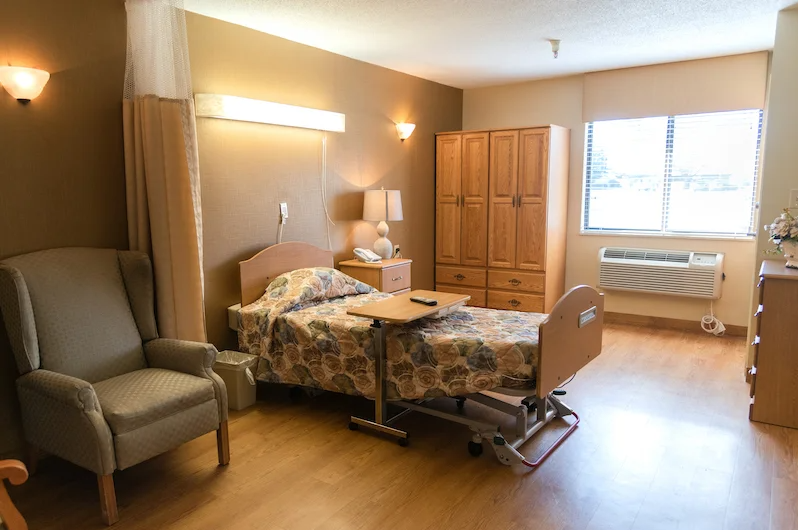
COLONIAL OAKS HEALTH CARE CENTER is owned by a for-profit company. For-profit facilities operate as businesses with obligations to shareholders or private owners. The facility is operated by TLC MANAGEMENT, a chain that manages multiple nursing homes. With 127 certified beds and approximately 99 residents (about 78% occupancy), it is a mid-sized facility located in MARION, Indiana.
How Does Colonial Oaks Health Compare to Other Indiana Nursing Homes?

Compared to the 100 nursing homes in Indiana, COLONIAL OAKS HEALTH CARE CENTER's overall rating (5 stars) is above the state average of 3.1, staff turnover (29%) is significantly lower than the state average of 46%, and health inspection rating (5 stars) is much above the national benchmark.

What Should Families Ask When Visiting Colonial Oaks Health?

Based on this facility's data, families visiting should ask: "Can I visit during a mealtime to observe dining assistance and food quality?" "How do you handle medical emergencies, and what is your hospital transfer rate?" "Can I speak with family members of current residents about their experience?"

Is Colonial Oaks Health Safe?

Based on CMS inspection data, COLONIAL OAKS HEALTH CARE CENTER has a clean safety record: no substantiated abuse findings (meaning no confirmed cases of resident harm), no Immediate Jeopardy citations (the most serious violation level indicating risk of serious injury or death), and is not on the Special Focus Facility watch list (a federal program monitoring the lowest-performing 1% of nursing homes). The facility has a 5-star overall rating and ranks #1 of 100 nursing homes in Indiana. While no facility is perfect, families should still ask about staff-to-resident ratios and recent inspection results during their visit.

Do Nurses at Colonial Oaks Health Stick Around?

Staff at COLONIAL OAKS HEALTH CARE CENTER tend to stick around. With a turnover rate of 29%, the facility is 17 percentage points below the Indiana average of 46%. Low turnover is a positive sign. It means caregivers have time to learn each resident's needs, medications, and personal preferences. Consistent staff also notice subtle changes in a resident's condition more quickly. Registered Nurse turnover is also low at 17%, meaning experienced RNs are available to handle complex medical needs.

Was Colonial Oaks Health Ever Fined?

COLONIAL OAKS HEALTH CARE CENTER has no federal fines on record. CMS issues fines when nursing homes fail to meet care standards or don't correct problems found during inspections. The absence of fines suggests the facility has either maintained compliance or corrected any issues before penalties were assessed. This is a positive indicator, though families should still review recent inspection reports for the full picture.

Is Colonial Oaks Health on Any Federal Watch List?

COLONIAL OAKS HEALTH CARE CENTER is not on any federal watch list. The most significant is the Special Focus Facility (SFF) program, which identifies the bottom 1% of nursing homes nationally based on persistent, serious quality problems. Not being on this list means the facility has avoided the pattern of deficiencies that triggers enhanced federal oversight. This is a positive indicator, though families should still review the facility's inspection history directly.