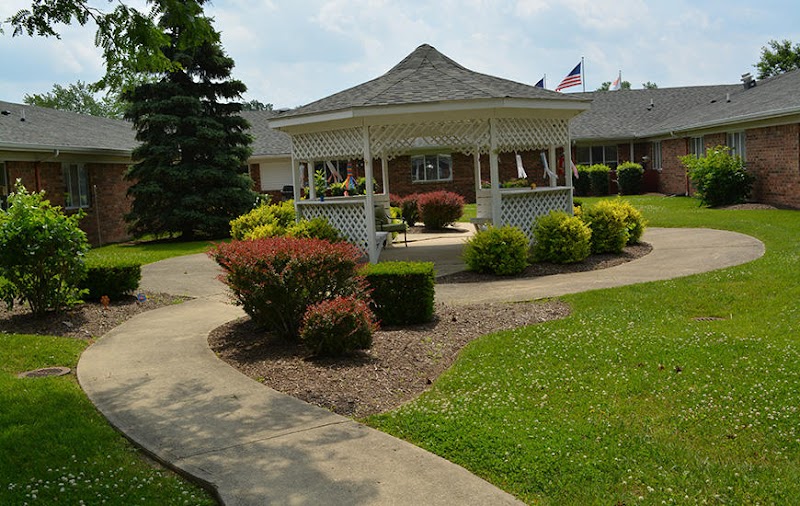
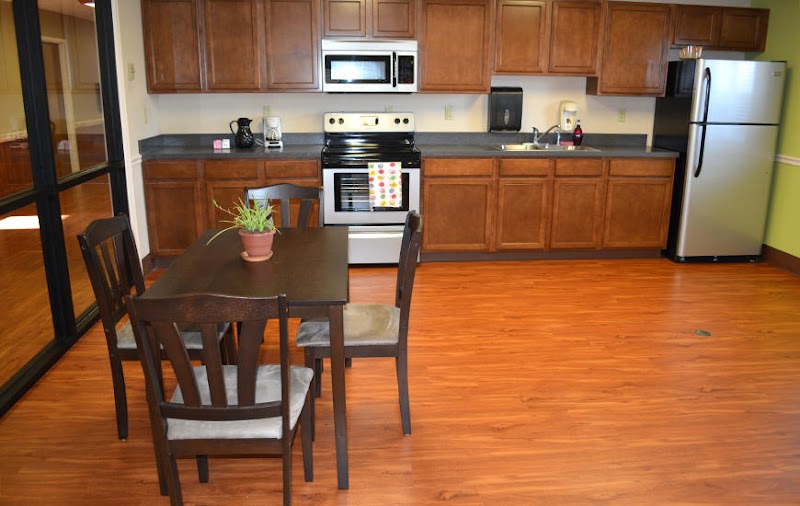
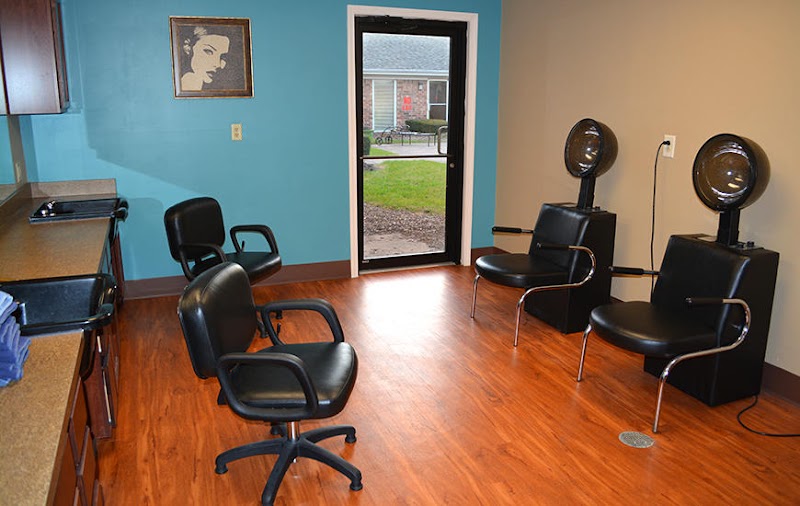
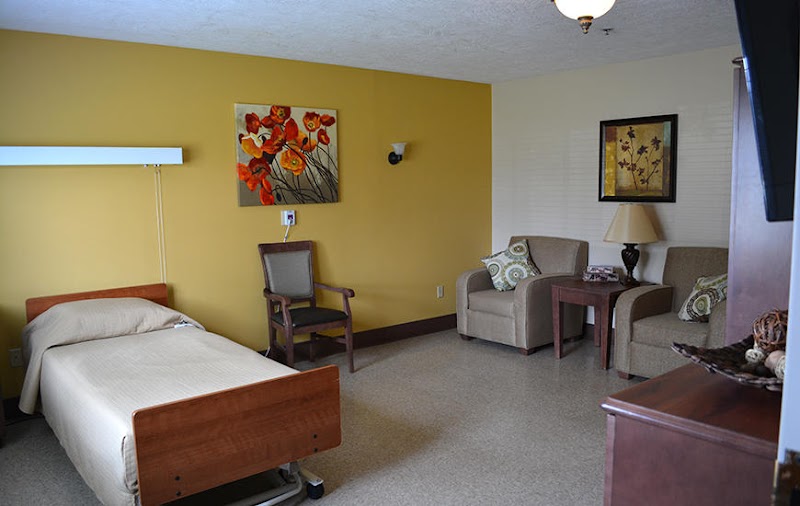
ROSEBUD VILLAGE

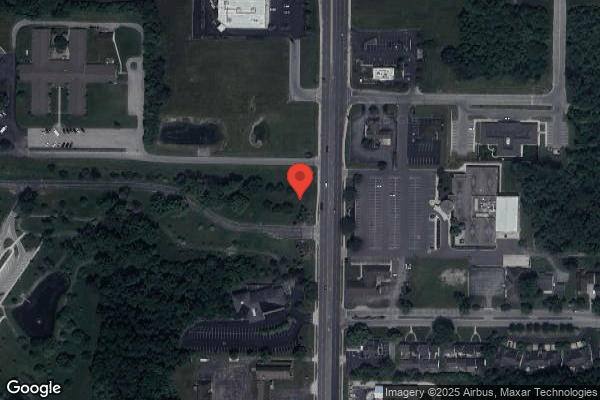
2050 CHESTER BLVD, RICHMOND, IN 47374 (765) 935-4440
Government - County 110 Beds AMERICAN SENIOR COMMUNITIES Data: November 2025
Trust Grade
48/100
#385 of 505 in IN
Last Inspection: June 2024

Within standard 12-15 month inspection cycle. Federal law requires annual inspections.

Overview

Rosebud Village in Richmond, Indiana has a Trust Grade of D, indicating below-average performance and some concerns about care. With a state rank of #385 out of 505, they are in the bottom half of nursing facilities in Indiana, and as the #4 of 8 in Wayne County, only three local options are better. The facility is showing improvement, with issues decreasing from 8 in 2024 to just 2 in 2025. Staffing is a strength here, rated 3 out of 5 stars with a turnover rate of 26%, which is well below the state average of 47%. While there have been no fines, which is a positive sign, recent inspections revealed serious concerns, including a resident suffering spinal fractures during a transfer and multiple residents being left without access to water, highlighting the need for better attention to individual needs and safety protocols.

Trust Score
D
48/100
In Indiana
#385/505
Bottom 24%
Safety Record
Moderate
Needs review
Inspections
Getting Better
8 → 2 violations
Staff Stability
✓ Good
26% annual turnover. Excellent stability, 22 points below Indiana's 48% average. Staff who stay learn residents' needs.
Penalties
✓ Good
No fines on record. Clean compliance history, better than most Indiana facilities.
Skilled Nurses
○ Average
Each resident gets 39 minutes of Registered Nurse (RN) attention daily — about average for Indiana. RNs are the most trained staff who monitor for health changes.
Violations
⚠ Watch
28 deficiencies on record. Higher than average. Multiple issues found across inspections.
★★☆☆☆
2.0
Overall Rating
★★★☆☆
3.0
Staff Levels
★★★★☆
4.0
Care Quality
★★☆☆☆
2.0
Inspection Score
Stable
2024: 8 issues
2025: 2 issues

The Good

  • 4-Star Quality Measures · Strong clinical quality outcomes
  • Low Staff Turnover (26%) · Staff stability means consistent care
  • Full Sprinkler Coverage · Fire safety systems throughout facility
  • No fines on record
  • Staff turnover is low (26%)

    22 points below Indiana average of 48%

Facility shows strength in quality measures, staff retention, fire safety.

The Bad

2-Star Overall Rating

Below Indiana average (3.1)

Below average - review inspection findings carefully

Chain: AMERICAN SENIOR COMMUNITIES

Part of a multi-facility chain

Ask about local staffing decisions and management

The Ugly 28 deficiencies on record

1 actual harm
Apr 2025 2 deficiencies
CONCERN (D) 📢 Someone Reported This

A family member, employee, or ombudsman was alarmed enough to file a formal complaint

Potential for Harm - no one hurt, but risky conditions existed

Deficiency F0602 (Tag F0602)

Could have caused harm · This affected 1 resident

2. During an interview with the DON on 4/15/25 at 12:08 p.m., she indicated there were only seven hydrocodone-acetaminophen 7.5-325 milligrams (mg) and there should have been eight on the controlled s...

Read full inspector narrative →
2. During an interview with the DON on 4/15/25 at 12:08 p.m., she indicated there were only seven hydrocodone-acetaminophen 7.5-325 milligrams (mg) and there should have been eight on the controlled substance record for Resident E. The DON indicated she corrected the count before she handed the medication cart key over to the nurse on duty for Resident E. The DON indicated she was not able to verify that QMA 2 had taken the narcotic, but one pill was missing. Review of the clinical record of Resident E, on 4/16/25 at 9:30 a.m., indicated the diagnoses included, but were not limited to, systemic lupus, chronic pain, contracture of the left and right knee, lower back pain, and a history of a right femur fracture. The Quarterly MDS assessment for Resident E, dated 3/7/25, indicated the resident was moderately impaired for daily decision making. The resident received scheduled and PRN pain medication in the past five days. The resident experienced pain almost constantly in the past five days. The resident's pain was rated as moderate. The physician recapitulation order for Resident E, dated March 2025, indicated the resident was ordered hydrocodone-acetaminophen (narcotic pain medication) 7.5-325 mg every six hours for chronic pain. The plan of care for Resident E, dated 10/10/21 and recently reviewed on 3/20/25, indicated the resident was at risk for pain related to chronic pain and received routine pain medication. The March 2025 EMAR for Resident E indicated QMA 2 administered hydrocodone-acetaminophen 7.5-325 mg to the resident on 3/7/25 at 11:00 a.m. The controlled substance record for Resident E, dated 3/7/25, did not indicate QMA 2 administered the hydrocodone-acetaminophen 7.5-325 mg to the resident. The controlled substance log was one pill short. The DON documented she corrected the count from eight pills of hydrocodone-acetaminophen to seven pills. The controlled substance policy was provided by the ED on 4/15/25 at 12:07 p.m. The policy indicated when a controlled substance was administered to a resident, it must be recorded in the resident's Medication Administration Record (MAR) as well as in the resident's controlled substance inventory record at the time of administration. The abuse policy was provided by the ED on 4/16/25 at 10:40 a.m. The policy indicated the facility would prohibit and prevent misappropriation of the resident property. The misappropriation of resident property was the deliberate misplacement, exploitation, or wrongful, temporarily, or permanent use of a resident's property. This citation relates to Complaint IN00455066. 3.1-28(a) Based on interview and record review, the facility failed to ensure misappropriation of residents' medication did not occur for 2 of 4 residents reviewed for abuse. (Resident B and Resident E) This deficient practice was corrected on 3/13/25, prior to the start of the survey, and was therefore past noncompliance. The facility implemented a systematic plan that included the following actions: in-service education to nursing staff on medication administration and documentation, assessment of residents, and signing out controlled medications. The facility conducted an audit of all narcotic count sheets for all residents receiving narcotic medications and conducted interviews and assessments of all residents for pain with ongoing review presented to the Quality Assessment and Assurance (QAA) Committee for review. Findings include: 1. The clinical record for Resident B was reviewed on 4/15/25 at 12:00 p.m. The diagnoses included, but were not limited to, squamous cell carcinoma of the skin and dementia. A Significant Change Minimum Data Set (MDS) assessment, dated 2/11/25, indicated Resident B was moderately cognitively impaired, received pain medication regimen, and received PRN (as needed) pain medications. The plan of care for Resident B, dated 8/14/24, indicated the resident was at risk of pain due to squamous cell carcinoma and general discomfort. The interventions included, but were not limited to, administer medications as ordered and to document the effectiveness of PRN medications. A physician's order for Resident B, dated 10/24/24, indicated to administer hydrocodone-acetaminophen (narcotic pain medication) 5-325 milligrams (mg), every six hours, as needed for moderate to severe pain. An incident report, dated 3/7/25, indicated Qualified Medication Aide (QMA) 2 was observed placing something into a bottle and then placing the bottle into her pocket. It also indicated a medication reconciliation was completed and one discrepancy was discovered. During an interview with the Executive Director (ED) on 4/16/25 at 10:23 a.m., she indicated, on 3/7/25, she reviewed the camera footage on the D hallway. The ED indicated she observed QMA 2 standing at the medication cart as she had been passing medications. She then shut and locked the cart and walked behind the nurse's desk. She picked up her backpack and took out a medication bottle, and then she could see QMA 2 putting something into the bottle into her pocket. The ED indicated she took QMA 2 into her office and asked her if she had anything in her pockets. QMA 2 then pulled out a medication bottle for omeprazole (medication used for heartburn). The ED then asked QMA 2 if she could see what was in the bottle. QMA 2 then shook the bottle onto her desk and one pill came out and that appeared to be a hydrocodone 5-325 mg tablet. She indicated it was her medication. The ED indicated she could still hear more pills in the bottle. So, QMA 2 shook one more pill out onto the desk and it was a Zyrtec pill (allergy pill). The ED told QMA 2 she could still hear more medications in the bottle. So, she emptied the bottle onto the desk and there were two pills. One was a hydrocodone 7.5-325 mg tablet, and the other was a hydrocodone 5-325 mg tablet. The ED indicated QMA 2 was then suspended, escorted off the premises, and a police report was filed. During an interview with Certified Nurse Aide (CNA) 3 on 4/16/25 at 10:42 a.m., she indicated she worked with QMA 2 on 3/7/25. CNA 3 indicated she saw QMA 2 walk behind the nurse's desk from her medication cart with pills in her hand. CNA 3 indicated she asked QMA 2 what she was doing, and she said, nothing, I'm just putting my pills back in my bottle from home. CNA 3 indicated something did not seem right, so she notified the ED that she had seen QMA 2 putting pills into a bottle from her hand from her work bag. A controlled drug administration record for February and March 2025 was reviewed for Resident B on 4/15/25 at 1:15 p.m. It indicated Resident B received hydrocodone-acetaminophen 5-325 mg on the following dates: - 2/12/25 at 10:00 p.m., - 2/14/25 at 3:00 p.m. and 9:00 p.m., - 2/19/25 at 8:00 p.m., - 2/20/25 at 8:30 p.m., & - 3/5/25 at 8:30 p.m. The Electronic Medication Administration Record (EMAR), for February and March 2025, was reviewed for Resident B on 4/15/25 at 1:25 p.m. It indicated Resident B had no documentation of any pain medications given on the above dates. During an interview with the Director of Nursing (DON) on 4/16/25 at 10:07 a.m., she indicated QMA 2 was omitting to document Resident B's PRN (as needed) pain medication on the EMAR.
CONCERN (D) 📢 Someone Reported This

A family member, employee, or ombudsman was alarmed enough to file a formal complaint

Potential for Harm - no one hurt, but risky conditions existed

Deficiency F0697 (Tag F0697)

Could have caused harm · This affected 1 resident

Based on interview and record review, the facility failed to complete pain assessments for 1 of 4 residents reviewed for pain medication and assessments. (Resident B) This deficient practice was corre...

Read full inspector narrative →
Based on interview and record review, the facility failed to complete pain assessments for 1 of 4 residents reviewed for pain medication and assessments. (Resident B) This deficient practice was corrected on 3/13/25, prior to the start of the survey, and was therefore past noncompliance. The facility implemented a systematic plan that included the following actions: in-service education to nursing staff on medication administration and documentation, assessment of residents, and signing out controlled medications. The facility conducted an audit of all narcotic count sheets for all residents receiving narcotic medications and conducted interviews and assessments of all residents for pain with ongoing review presented to the Quality Assessment and Assurance (QAA) Committee for review. Findings include: The clinical record for Resident B was reviewed on 4/15/25 at 12:00 p.m. The diagnoses included, but were not limited to, squamous cell carcinoma of the skin and dementia. A physician's order, dated 10/24/24, indicated to administer hydrocodone-acetaminophen (narcotic pain medication) 5-325 milligrams (mg), every six hours, as needed (PRN) for moderate to severe pain. The plan of care for Resident B, dated 8/14/24, indicated the resident was at risk of pain due to squamous cell carcinoma and general discomfort. The interventions included, but were not limited to, documenting the effectiveness of PRN (as needed) pain medications. A controlled drug administration record, for February and March 2025, was reviewed for Resident B on 4/15/25 at 1:15 p.m. It indicated Resident B received hydrocodone-acetaminophen 5-325 mg on the following dates: - 2/12/25 at 10:00 p.m., - 2/14/25 at 3:00 p.m. and 9:00 p.m., - 2/19/25 at 8:00 p.m., - 2/20/25 at 8:30 p.m., & - 3/5/25 at 8:30 p.m. The February and March 2025 Electronic Medication Administration Record (EMAR) was reviewed for Resident B on 4/15/25 at 1:25 p.m. It indicated Resident B had no documentation of the medication given nor pain assessments to go along with the medication administration. During an interview with the Director of Nursing (DON) on 4/16/25 at 10:07 a.m., she indicated the facility's expectation when a Qualified Medication Aide (QMA) was indicating a need for PRN (as needed) pain medication, would be to report their findings to the nurse, the nurse would give verbal authorization for the medication to be given, the QMA would sign it off in the EMAR, then the nurse would co-sign the administration, and do the follow-up assessment. The DON indicated QMA 2 was omitting to document Resident B's PRN (as needed) pain medication on the EMAR, so it did not prompt the nurse to do a pain assessment. During an interview with the DON on 4/16/25 at 10:20 a.m., she indicated no pain assessments were completed for Resident B for the following dates: - 2/12/25 at 10:00 p.m., - 2/14/25 at 3:00 p.m. and 9:00 p.m., - 2/19/25 at 8:00 p.m., - 2/20/25 at 8:30 p.m., & - 3/5/25 at 8:30 p.m. A Pain Management policy was provided by the Executive Director (ED) on 4/15/25 at 12:07 p.m. The policy indicated .11. The licensed nurse will monitor the efficacy of the analgesia . A QMA Parameters and Scope of Practice policy was provided by the ED on 4/15/25 at 12:07 p.m. The policy indicated .(D) Ensure that the licensed nurse is to complete the assessment and document the effectiveness of the prn medication administered . This citation is related to Complaint IN00455066. 3.1-37(a)
Jun 2024 7 deficiencies
CONCERN (D)

Potential for Harm - no one hurt, but risky conditions existed

Grievances (Tag F0585)

Could have caused harm · This affected 1 resident

Based on interview and record review, the facility failed to fill out a grievance regarding missing items for 1 of 2 residents interviewed for missing items. (Resident 92) Findings include: An intervi...

Read full inspector narrative →
Based on interview and record review, the facility failed to fill out a grievance regarding missing items for 1 of 2 residents interviewed for missing items. (Resident 92) Findings include: An interview conducted with Family Member 9 on 05/30/24 at 12:18 p.m., indicated Resident 92 was missing her bottom dentures since 5/28/24 and a pair of tennis shoes since 5/14/24. Family Member 9 indicated that she reported both of these missing items to the Dementia Care Director on 5/28/24. An interview conducted with Dementia Care Director on 06/03/24 at 12:14 p.m., indicated that she was made aware of the missing items for Resident 92 by Family Member 9 and she, as well as other staff, had been looking for them. She indicated that she was not sure if a grievance was filled out. She indicated that she did not fill out a grievance because she was new and did not know the policy about filling out a grievance for a resident. An interview conducted with Executive Director (ED) on 06/03/24 12:19 p.m., indicated that anyone can fill out a grievance. That included residents, family, or staff members. She indicated that once the ED looks at the form she determines whether it goes to the department manager or if she needs to handle it herself. The ED indicated that they try to address them immediately but it can take up to 72 hours. And they educate staff on how to initiate grievances for residents. The clinical record of Resident 92 was reviewed on 5/31/24 at 2:00 p.m. The diagnosis included, but was not limited to, unspecified dementia. The clinical record reviewed on 6/3/24 at 1:45 p.m., indicated that there were no progress notes entered into the resident's record for the month of May regarding any missing items reported or noted. Resident grievance reports for the month of May 2024 were reviewed on 06/03/24 at 12:03 p.m., and indicated there were no grievances filled out for Resident 92 for the month of May. A Resident Concerns and Grievance policy provided by the ED, on 6/03/24 at 11:12 a.m., indicated resident, representative, or family concerns/grievances occurring during the resident's stay shall be responded to promptly. The Executive Director/Grievance Official shall review all complaints and agree with the actions taken towards resolution. Responses to resident, representative, and/or family shall be made as soon as possible and preferably immediately. 3.1-7(a)(2) 3.1-7(b)
CONCERN (D) 📢 Someone Reported This

A family member, employee, or ombudsman was alarmed enough to file a formal complaint

Potential for Harm - no one hurt, but risky conditions existed

Free from Abuse/Neglect (Tag F0600)

Could have caused harm · This affected 1 resident

4. The clinical record for Resident B was reviewed on 5/31/24 at 11:30 a.m. His diagnoses included, but were not limited to: Alzheimer's disease, major depressive disorder, bipolar disorder, and anxie...

Read full inspector narrative →
4. The clinical record for Resident B was reviewed on 5/31/24 at 11:30 a.m. His diagnoses included, but were not limited to: Alzheimer's disease, major depressive disorder, bipolar disorder, and anxiety. The 4/24/23 care plan, last reviewed/revised 5/23/24, indicated Resident B would cry or yell at times when attention seeking. He was not aware of others' personal space and would often reach out and try to grab others as they walked by. The 4/28/23 behavioral symptoms care plan, last reviewed/revised 5/23/24, indicated Resident B would come out in the hallway in his brief to get help with re-dress; would bang on the table with a soda can to get ice for soda; and would bang on the unit door when he wanted a snack for the store at times. The 5/17/24 behavioral symptoms care plan, last reviewed/revised 5/17/24, indicated Resident B would repeat the same phrase until he got someone's attention and then would continuously move his mouth hands/arms with absence of words. The behavioral symptoms care plan, last reviewed/revised 5/23/24, indicated he exhibited signs and symptoms of attention seeking behavior such as intrusive behavior at times regarding his care as well as other residents' care. He also followed staff around at times. The investigative file into an allegation of abuse involving Resident B was provided by the Administrator on 6/3/24 at 10:00 a.m. The file included the 5/17/24 follow up incident report to the IDOH (Indiana Department of Health.) It indicated on 5/13/24 Resident B was in the activity area exhibiting behaviors towards others when AA (Activity Assistant) 3 raised her voice and used inappropriate language with Resident B. An interview was conducted with the Administrator on 6/3/24 at 1:33 p.m. She indicated it was her understanding AA 3 was in the common area of the Cottage with another resident trying to provide redirection for him. Resident B kept coming over, so she was redirecting him to the television. After several times, AA 3 got frustrated and used a curse word, not to him, but in the sentence that she said. The sentence was Stop it [name of Resident B,] G** D***. Multiple staff witnessed it, including the DCD, who made sure Resident B was safe. CNA 4 called the Administrator who interviewed AA 3 in the DCD's office and escorted her to the time clock to punch out and leave. On 6/4/24 at 10:20 a.m., the Administrator provided a timeline of the investigation and documented Staff Abuse Questionnaires with the DCD (Dementia Care Director,) CNA (Certified Nursing Assistant) 4, LPN (Licensed Practical Nurse) 5, and OT (Occupational Therapist) 6. The 5/13/24 Staff Abuse Questionnaire for the DCD indicated she'd witnessed an employee abusing or mistreating a resident. It read, [Name of AA 3] yelled when talking with a resident & said G.D. [G** D***] The 5/13/24 Staff Abuse Questionnaire for LPN 5 indicated she'd witnessed an employee abusing or mistreating a resident. It read, Activities Assist raised voice at resident to get away and said G.D. The 5/13/24 Staff Abuse Questionnaire for CNA 4 indicated she'd witnessed an employee abusing or mistreating a resident. It read, I was giving a shower, & heard [name of AA 3] raise her voice, and said a curse word! The curse word was G.D. The 5/13/24 Staff Abuse Questionnaire for OT 6 indicated she'd witnessed an employee abusing or mistreating a resident. It read, While in the Cottage area I saw the activity aide become upset with a resident and then yelled at the resident. The timeline included the 5/13/24 interview with AA 3 conducted by the Administrator. It read, [Name and title of AA 3] states that she raised her voice and used inappropriate language with resident. [Name and title of AA 3] states that she said D*****. The Abuse Prohibition, Reporting, and Investigation policy was provided by the Administrator on 5/30/24 at 12:25 p.m. It read, It is the policy of [name of facility] to provide each resident with an environment that is free from abuse, neglect, misappropriation of resident property, and exploitation. This includes but is not limited to verbal abuse, sexual abuse, physical abuse, mental abuse, corporal punishment, and involuntary seclusion Sexual Abuse - Nonconsensual sexual contact of any type with a resident. Examples may include but not be limited to fondling, touching, rubbing, exposing, licking, kissing, gestures, sharing pornography, assault, rape, harassment, seduction, coercion, photographing a resident's rectal, genital, or breast areas, and/or exhibitionism. Verbal Abuse - The use of oral, written, and/or gestured language that willfully includes disparaging and derogatory terms to residents or their families or within their hearing distance, regardless of their age, ability to comprehend, or disability. This includes any episode of staff to resident, and verbal threats of harm by resident to resident. This does not include random statements of a cognitively impaired resident such as repetitive name calling or nonsensical language. This Federal tag relates to Complaint IN00434485. 3.1-27(a)(1) 3.1-27(b) Based on observation, interview and record review the facility failed to prevent sexual abuse of two residents (Resident C and Resident F) perpetrated by (Resident E) and failed to prevent verbal abuse for (Resident B) for 3 of 5 residents reviewed for abuse. Findings include: 1. During an observation and interview with CNA 13 on 5/30/24 at 12:57 p.m., indicated she was 1:1 with Resident E because he had touched Resident C inappropriately. Resident E was lying in bed and talked with me but was unable to be understood. During an interview with Resident C on 5/30/24 at 1:50 p.m., indicated about a month ago Resident E grabbed her right breast while she was sitting at the nursing station. It did not bother her that much because she felt like he did not know what he was doing, but it was disrespectful. The resident indicated the Executive Director and Social Services had talked with her about the incident. Review of the incident report provided by the Executive Director (ED) on 6/3/24 at 10:00 a.m., indicated Resident E extending his hand out and made contact with Resident C on 4/29/24. The residents were separated, and Resident E was placed on 1:1. During an interview with the Executive Director (ED) on 6/3/24 at 1:49 p.m., indicated Resident C had not showed any signs of psychosocial response or fearfulness from the incident with Resident E. The ED indicated in the last year Resident E had sexually inappropriate behaviors toward Resident F in March 2024. During an interview with the Social Service Director (S.S.D.) on 6/3/24 at 1:55 p.m., indicated Resident C had not showed any signs of psychosocial response or fearfulness from the incident with Resident E. Review of the record of Resident C on 6/4/24 at 2:15 p.m., indicated the resident's diagnoses included, but were not limited to, hemiplegia, depression, anxiety, muscle weakness and unsteady on feet. The Quarterly Minimum Data Set (MDS) for Resident C, dated 3/12/24, indicated the resident was cognitively intact for daily decision making. The resident was consistent and reasonable. The progress note for Resident C, dated 4/29/24 at 10:36 a.m., (late entry recorded on 5/2/24 at 10:38 a.m.,) indicated the resident was being seen for an initial evaluation and treatment of psyche symptoms per the facility's request. Addressed staff's reports of inappropriate touching by another resident. Applied Cognitive Behavioral Therapy (CBT) (talking therapy) to her manage her anxiety about the situation. The plan was for individual therapy every 2 weeks or as needed, supportive approach, active/emphatic listening, monitor mood and behaviors, motivational interviewing, modified CBT, ongoing consultation with staff. The plan of care for Resident C, dated 4/30/24, indicated the resident was at risk for psychosocial distress related to other resident behaviors. The interventions included, follow up with resident daily for 5 days and monitor for signs and symptoms of psychosocial distress. 2. Review of the incident report provided by the ED on 6/3/24 at 10:00 a.m., indicated on 3/25/24 Resident E grabbed Resident F's breast while in the common area. During an interview with Resident F on 6/04/24 at 10:06 a.m , indicated Resident E grabbed her breast in the hallway while they were talking. The resident reported it to the nurse because she did not want him to do it to anyone else. The ED and S.S.D. did talk with her about the situation. The resident indicated she was not fearful to be at the facility, that was the first time anything like had happened to her there. Resident E had not bothered her anymore, the resident had seen him in the hallway and just said hi and go on. The resident indicated she was very sensitive when someone touched her when she did not want them to. The resident indicated she did not feel like she any psychosocial harm from this incident. Review of record of Resident F on 6/4/24 at 3:40 p.m., indicated the resident's diagnoses included, but were not limited to, major depressive disorder, anxiety, lack of coordination and muscle weakness. The Quarterly MDS assessment for Resident F, dated 5/24/24, indicated the resident was cognitively intact for daily decision making. The resident was reasonable and consistent. The progress note for Resident F, dated 3/25/24 at 5:26 p.m., indicated the Executive Director (ED) met at length with resident related to the occurrence. No signs or symptoms of psychosocial distress noted. The facility would continue to observe. The progress note for Resident F, dated 4/3/24 at 8:32 p.m., indicated the Nurse Practitioner (NP) was seeing resident per staff request for recent incident taking place. The provider would be evaluating for any psychosocial distress. The resident denied any distress relating to the recent incident. 3. During an observation on 6/04/24 at 10:17 a.m., Resident E was asleep in bed remained 1:1 with staff. Review of the record of Resident E on 6/4/24 at 3:10 p.m , indicated the resident's diagnoses included, but were not limited to, vascular dementia, psychotic disturbance, mood disturbance, depression, bipolar disorder, high risk for heterosexual behavior and sexual inappropriate behaviors. The Significant Change Minimum Data Set (MDS) for Resident E, dated 5/24/24, indicated the resident had unclear speech, rarely/never was understood. The resident had the ability to understand others. The resident was cognitively intact for daily decision making. The care plan for Resident E, dated 6/17/22, indicated the resident was observed making inappropriate contact with another resident. The resident had a history of alleged contact with other residents. The interventions included, redirect resident to a different activity if he is in close proximity to female residents, provide space between and other female resident if he was observed to be close in proximity, provide resident with at least 4 feet of distance between him and other residents, follow up with Psych Nurse Practitioner (NP), encourage resident to participate in activities, room change to different hallway, medication change per Psych NP, remove resident from area of female residents when his was within reaching distance and Speech Therapy (ST) to evaluate and collaborate with the Activity Director on activity plan. The progress note for Resident E, dated 3/26/24 at 3:00 p.m., indicated the resident had inappropriate sexual behaviors. The resident was currently taking medroxyprogesterone (hormone) 10 milligrams (mg) once a day discontinue and increase to 20 mg a day for compulsive sexual behaviors. The progress note for Resident E, dated 3/26/24 at 5:22 p.m., indicated another resident alleged this resident touched her inappropriately. The residents were immediately separated and increased checks initiated. The progress note for Resident E, dated 3/28/24 at 10:19 a.m., another resident alleged that resident touched her inappropriately. The root cause was the resident had a companion most of his life and was seeking a companion. The staff increased checks on the resident. The progress note for Resident E, dated 4/4/24 at 6:24 a.m., frequent checks discontinued. The resident had been on increased dose of medication for 7 days with no other incidents noted. The progress note for Resident E, dated 4/29/24 at 12:34 p.m., the resident was started on 15-minute checks. The progress note for Resident E, dated 4/29/24 at 1:07 p.m., the resident's family and NP was notified of the resident behavior of reaching out and making contact with another resident. The resident was placed on 1:1. The progress note for Resident E, dated 4/30/24 at 9:47 a.m., the resident reached out and made contact with another resident's breast. The residents were immediately separated, the resident was placed on 1:1. The resident had a history of sexual inappropriateness.
CONCERN (D)

Potential for Harm - no one hurt, but risky conditions existed

Quality of Care (Tag F0684)

Could have caused harm · This affected 1 resident

Based on interview, observation, and record review, the facility failed to ensure a resident had compression stockings in place without wrinkles for 3 of 4 observations of Resident 94's compression st...

Read full inspector narrative →
Based on interview, observation, and record review, the facility failed to ensure a resident had compression stockings in place without wrinkles for 3 of 4 observations of Resident 94's compression stockings. Findings include: The clinical record for Resident 94 was reviewed on 6/4/2024 at 11:00 a.m. The medical diagnosis included heart failure. A physician order for 94, dated 4/29/2024, indicated to place thigh high bilateral lower extremity TED hose (compression stockings) in the morning and remove them at night. A care plan intervention, dated 3/29/2024, indicated for Resident 94 to utilize bilateral thigh high TED hose in the morning and remove them at night. An observation and interview on 5/31/2024 at 11:25 a.m. indicated that Resident 94 was sitting in his wheelchair at this time. He was wearing a pair of white compression stockings. The stockings were noted to be wrinkled at the knee joints on both legs. Two additional wrinkles were noted to the left stocking at about a third of the way between the ankle and knee and halfway between the ankle and knee. An additional wrinkle was noted halfway between the ankle and knee on the right leg. Resident 94 indicated the girls, in reference to the staff, placed his compression stockings in the morning. He stated he could fix the wrinkles at the top, but he is not able to straighten the ones lower in his legs. He stated these stockings typically have wrinkles. During this interview and observation, CNA 2 knocked and came into the room to remind Resident 94 that it was almost lunch time. An observation and interview with Resident 94 on 6/3/2024 at 11:47 a.m. indicated he was sitting in his wheelchair with his compression stockings in place. The stockings were noted to be wrinkled at the knee joints on both legs. Two additional wrinkles were noted to the left stocking at about a third of the way between the ankle and knee and halfway between the ankle and knee. He stated that the wrinkles do not hurt, but there are lines on his legs when they take them off at bedtime. He exhibited how he was able to smooth the tops of the stockings around the knee joints but was unable to smooth the wrinkles lower in his legs. An observation on 6/4/2024 at 9:40 a.m. indicated Resident 94 was sitting in wheelchair at this time. Resident 94 was self-propelling in his wheelchair at this time with his bilateral compression stockings wrinkled at the top. Two additional wrinkles were noted to the right stocking at about a third of the way between the ankle and knee and halfway between the ankle and knee. An additional wrinkle was noted halfway between the ankle and knee on the left leg. An interview with the Director of Nursing on 6/4/2024 at 11:40 a.m. indicated that there was not a specific policy for TED hose, but it is the expectation that TED hose would be applied when ordered and be without wrinkles due to the increased risk of developing skin impairments. 3.1-37(a)
CONCERN (D)

Potential for Harm - no one hurt, but risky conditions existed

Accident Prevention (Tag F0689)

Could have caused harm · This affected 1 resident

Based on interview, observation, and record review, the facility failed to implement a fall intervention of a sign in Resident 88's room to encourage the use of a call light for a resident with a mode...

Read full inspector narrative →
Based on interview, observation, and record review, the facility failed to implement a fall intervention of a sign in Resident 88's room to encourage the use of a call light for a resident with a moderate fall risk and recent history of a fall for 1 of 2 residents reviewed for falls. Findings include: The clinical record for Resident 88 was reviewed on 6/4/2024 at 1:30 p.m. The medical diagnosis included malignant neoplasm of the kidney. A Significant Change Minimum Data Set Assessment, dated 5/2/2024, indicated that Resident 88 was cognitively intact. A fall risk assessment, dated 4/25/2024, indicated that Resident 88 was at moderate risk for falls. A fall intradisciplinary note, dated 5/20/2024, indicated that Resident 88 had a fall on 5/19/2024 with an intervention put in place of a sign in room to encourage resident to use his call light for assistance. A fall care plan intervention, dated 5/20/2024, indicated for Resident 88 to have a sign in his room to encourage resident to use a call light for assistance. An observations and interview with Resident 88, on 5/20/2024, indicated that he has a recent fall from his bed when he was trying to reach his trash can. When asked what interventions were placed after his fall, he indicated he was not sure. No sign to encourage the use of a call light was present in Resident 88's room. An observation and interview on 5/31/2024 at 12:54 p.m. indicated that no sign to encourage the use of a call light was present in Resident 88's room. Resident 88 stated that he had never seen a sign to encourage the use of his call light. An observation and interview on 6/3/2024 at 1:40 p.m. completed with LPN 1 in Resident 88's room indicated that no sign to encourage the use of a call light was present in his room. LPN 1 indicated she had not ever seen that sign in his room. A policy, entitled Fall Management Policy, was provided by the Administrator on 6/4/2024 at 10:30 a.m. The policy indicated, .Facilities must implement comprehensive, resident-centered fall preventions plans for each resident at risk for falls or with a history of falls . and Residents who are categorized as moderate to high risk should have fall interventions implements based on resident specific risk factors . 3.1-45(a)(2)
CONCERN (D)

Potential for Harm - no one hurt, but risky conditions existed

Deficiency F0692 (Tag F0692)

Could have caused harm · This affected 1 resident

Based on observation, interview, and record review, the facility failed to provide adaptive eating equipment, fortified juice, and whole milk to 3 of 6 residents reviewed for nutrition. (Residents 6, ...

Read full inspector narrative →
Based on observation, interview, and record review, the facility failed to provide adaptive eating equipment, fortified juice, and whole milk to 3 of 6 residents reviewed for nutrition. (Residents 6, 58, and 65) Findings include: 1. The clinical record for Resident 58 was reviewed on 5/31/24 at 11:40 a.m. Her diagnoses included, but were not limited to, dementia, severe protein calorie malnutrition, and dysphagia. The 5/23/24 Follow Up Nutrition Review indicated the current nutrition prescription was a regular diet with divided plate and cup with lid for hot beverages and fortified juice at all meals. It read, Trending weight loss has occurred at 30, 90, and 180 days. The physician's orders indicated for her to be served a regular diet and read, Special Instructions: Large entree at dinner. Divided plate and cup with lid for hot beverages. Fortified juice with all meals, starting 5/24/24. The 4/16/21 nutritional status care plan indicated she had unintended weight loss and a BMI (body mass index) less than 22 due to pain with swallowing causing decreased oral intake. Approaches were fortified juice with all meals, starting 1/19/24 and divided plate, starting 12/4/23. An observation of Resident 58's lunch meal was made on 5/31/24 at 12:10 p.m. in her room. She had a sandwich, beans, and ice cream. Her food was served on a regular plate, not a divided plate. There was no fortified juice on her tray. An interview and observation of Resident 58's lunch meal was conducted with LPN (Licensed Practical Nurse) 8 on 5/31/24 at 12:14 p.m. in Resident 58's room. She indicated Resident 58 was supposed to have a divided plate and fortified juice but didn't. The Administrator provided a copy of Resident 58's 5/31/24 lunch meal ticket on 5/31/24 at 1:00 p.m. It read, FORTIFIED JUICE - 6 OZ .DIVIDED PLATE. 2. The clinical record for Resident 6 was reviewed on 5/31/24 at 11:45 a.m. Her diagnoses included, but were not limited to, dementia and dysphagia. The 4/15/24 care plan indicated she required an eating program to maintain current functional status and prevent further weight loss. The goal was for her to feed herself at least 50% of meals daily with cues for small bites and slow rate. An approach was for her to use a divided plate, starting 4/17/24. An observation of Resident 6 was made on 5/31/24 at 12:00 p.m. in the dining room during the lunch meal. Her meal was served on a regular plate, not a divided plate. An interview and observation of Resident 6's meal was made with LPN (Licensed Practical Nurse) 8 on 5/31/24 at 12:16 p.m. She indicated she was unsure if Resident 6 was supposed to have a divided plate or not, so she reviewed the above 4/15/24 care plan in the electronic health record and indicated she now saw the divided plate approach. The Administrator provided a copy of Resident 6's 5/31/24 lunch meal ticket on 5/31/24 at 1:00 p.m. It did not reference a divided plate. 3. The clinical record for Resident 65 was reviewed on 5/31/24 at 11:50 a.m. Her diagnoses included, but were not limited to, dementia, severe protein calorie malnutrition, and dysphagia. The 5/17/24 Follow Up Nutrition Review indicated the current nutrition prescription was a regular diet with whole milk at meals, ice cream at lunch and dinner, regular consistency per family choice. The physician's orders indicated for her to be served a regular diet and read, Special Instructions: Whole milk with meals, ice cream with lunch & dinner. Regular consistency, per resident/family choice, starting 3/7/24. The 8/11/20 nutritional status care plan indicated she was at risk for unintentional weight loss related to progressive dementia, dysphagia, and severe protein calorie malnutrition. The goal was for her to have a gradual weight gain towards her usual body weight of 125-130 pounds. An approach was whole milk with meals. The Vitals Section of the electronic health record indicated her most recent weight was 120 pounds on 5/7/24. An observation of Resident 65's lunch meal was made on 5/31/24 at 12:08 p.m. in the dining room. She did not have whole milk. An interview and observation of Resident 65's lunch meal was conducted with LPN (Licensed Practical Nurse) 8 on 5/31/24 at 12:18 p.m. in the dining room. She reviewed the electronic health record and indicated Resident 65 was supposed to have whole milk with meals. Then she observed Resident 65's meal tray and pointed to her meal ticket which read, WHOLE MILK - 8 OZ. The Adaptive Eating Devices policy was provided by the Administrator on 6/3/24 at 10:10 a.m. It read, Adaptive eating devices are available for those who need them. PROCEDURE 1. Residents are reviewed on admission, and as needed for need of adaptive devices. Referrals for equipment may come from Therapy, Nursing, Physician, Registered Dietitian and/or the Culinary Manager. 2. Physician order is needed for all adaptive eating devices and the need for the adaptive equipment will be documented/care planned. 3. The type of adaptive equipment needed will be listed on the tray ticket and culinary will provide as ordered. The Supplements and Nourishments policy was provided by the Administrator on 6/3/24 at 10:10 a.m. It read, It is the policy of this facility to ensure residents receive supplements and nourishments appropriate to their nutritional needs, physician's order, and preferences .The Nursing Department is responsible for providing the items to the residents A physician's order: .Is not required but is encouraged, to improve communication, for nourishments that are regular foods, i.e. ice cream, whole milk, fortified foods and shakes. 3.1-46(a)(2)
CONCERN (E)

Potential for Harm - no one hurt, but risky conditions existed

Deficiency F0558 (Tag F0558)

Could have caused harm · This affected multiple residents

Based on interview, observation, and record review, the facility failed to ensure residents had water or beverages of choice available for 4 of 4 residents reviewed for accommodation of needs. (Reside...

Read full inspector narrative →
Based on interview, observation, and record review, the facility failed to ensure residents had water or beverages of choice available for 4 of 4 residents reviewed for accommodation of needs. (Resident 2, Resident 89, Resident 54, and Resident C) Findings include: 1. The clinical record for Resident 2 was reviewed on 6/3/2024 at 1:55 p.m. The clinical diagnosis included dementia. A Minimum Data Set (MDS) Assessment, dated 3/28/2024, indicated Resident 2 was cognitively impaired and needed set up assistance for eating tasks. A care plan intervention, dated 5/4/2015, indicated to encourage fluids for Resident 2. An observation and interview on 6/4/2024 at 11:30 a.m., indicated Resident 2 laying in bed at this time with her television on. Resident 2 stated she was very thirsty and hungry. No drink was available in Resident 2's room at this time. 2. During an observation on 5/30/24 at 12:53 p.m., Resident 54 was sitting in a wheelchair in his room, there were no fluids available in his room, the resident had an a empty medication cup on the bedside table. During an observation on 5/31/24 at 11:20 a.m., Resident 54 had no fluids available in room his room, the resident had an empty medication cup on the bedside table. During an observation on 6/3/24 at 10:46 a.m., Resident 54 had no fluids available in his room. During an observation on 6/3/24 at 2:26 p.m., Resident 54 was lying in bed, there were no fluids available in his room. During an observation on 6/4/24 at 9:58 a.m., Resident 54 had no fluids available in his room. Review of the record of Resident 54 on 6/5/24 at 12:11 a.m., indicated the resident's diagnoses included, but were not limited to, osteoarthritis, cognitive communication deficit, moderate intellectual disabilities, vitamin D deficiency, hypomagnesemia, hypokalemia, gastro-esophageal reflux, and seizures. 3. During an interview with Resident C on 5/30/24 at 1:53 p.m., indicated the facility was not good to provide fresh water daily. The resident indicated she bought pop but would rather have fresh water provided. During an observation on 5/30/24 at 2:00 p.m., Resident C did not have any fluids in her room. During an observation on 5/31/24 at 11:29 a.m., Resident C did not have any fluids in her room. During an observation and interview on 6/3/24 at 10:48 a.m., Resident C had a water pitcher in her room that was half full and warm to the touch. Resident C indicated the water was from two days ago. During an observation on 6/3/24 at 12:10 p.m., Resident C had a water pitcher in her room that was half full and warm to the touch. During an observation and interview on 06/04/24 at 9:59 a.m., Resident C had a water pitcher in her room that was half full and warm to the touch. Resident C indicated the water was from yesterday. Review of the record of Resident C on 6/4/24 at 2:15 p.m., indicated the resident's diagnoses included, but were not limited to, hemiplegia, depression, anxiety, muscle weakness and unsteady on feet. The Quarterly Minimum Data Set (MDS) for Resident C, dated 3/12/24, indicated the resident was cognitively intact for daily decision making. The resident was consistent and reasonable. 4. During an observation on 5/31/24 at 11:26 a.m., Resident 89 was lying in bed, the resident had no fluids available in her room. During an observation on 6/03/24 at 10:46 a.m., Resident 89 had no fluids available in her room. During an observation on 6/03/24 at 12:09 p.m., Resident 89 had no fluids available in her room. During an observation on 6/04/24 at 9:58 a.m., Resident 89 had no fluids available in her room. Review of the record of Resident 89 on 6/5/24 at 12:20 p.m., indicated the resident's diagnoses included, but were not limited to, diabetes, dementia, constipation, anxiety, unsteady on feet, muscle weakness and anxiety. During an interview with the Director of Nursing (DON) on 6/4/24 at 11:30 a.m., indicated the Certified Nursing Assistants (CNAs) were responsible to ensure residents were provided fresh water. The facilities protocol was fresh water would be passed to residents once a shift. The hydration management policy provided by the DON on 6/4/24 at 1:40 p.m., indicated fresh water would be passed to all residents. 3.1-3(v)(1)
CONCERN (E)

Potential for Harm - no one hurt, but risky conditions existed

Deficiency F0744 (Tag F0744)

Could have caused harm · This affected multiple residents

Based on observation, interview, and record review, the facility failed to provide their scheduled activity program on the Cottage Unit of the facility; implement and educate staff regarding a residen...

Read full inspector narrative →
Based on observation, interview, and record review, the facility failed to provide their scheduled activity program on the Cottage Unit of the facility; implement and educate staff regarding a residents' individualized activity care plan; and redirect a resident with a history of wandering into other residents' rooms for 7 of 28 residents on the Cottage Unit of the facility. (Residents 6, 49, 35, 52, 60, 65, and 92) Findings include: 1. An observation of the common area of the Cottage Unit was conducted on 5/31/24 at 11:36 a.m. The common area of the unit was a very large room that consisted of a television area in the front corner with recliners around it. There was a sink and counter space in the opposite front corner of the room. It also served as the dining room with enough tables to accommodate the current census of 28 residents on the unit. Several of the tables were pushed together and served as the group activity tables as well as dining room tables. There were couches in the back of the common area. There were 17 residents in the common area at this time, and there were no group activities occurring. Staff were passing out drinks to residents in the dining room just prior to lunch service. The group activity schedule on the wall indicated Dining Room Helpers at 11:30 a.m., but no residents were observed helping at this time. An interview was conducted with Family Member 10 in the common area of the Cottage Unit on 5/31/24 at 11:51 a.m. She was sitting at a dining room table with her husband prior to the lunch meal. She indicated she came to the facility daily around 11:00 a.m. and would stay for lunch and dinner. Group activities weren't usually going on while she was there. She'd seen bingo after lunch before, but that's it. An observation of the common area of the Cottage Unit was made on 6/4/24 at 11:23 a.m. The group activity calendar on the wall indicated Baking as an activity at 11:00 a.m., but there was no baking or any other group activity occurring at this time. Resident 35 was sitting at the activity/dining room table with a soda. Resident 35's cognitive loss/dementia care plan, last reviewed/revised 5/16/24, indicated an approach was to encourage participation in daily activities particularly regarding orientation, socialization, and stimulation. An observation of the common area of the Cottage Unit was made on 6/4/24 at 1:36 p.m. The group activity calendar on the wall indicated Paint & Polish as an activity at 1:00 p.m. Resident 35 was observed sitting at the activity/dining room table, but there was no Paint & Polish or other group activity occurring at this time. There were 8 other residents in the area at this time, but none of them were participating in any activity. Resident 60 was sitting in a chair by the window with the back of his head against the window with his eyes closed and snoring. On 6/4/24 at 1:51 p.m., Receptionist 11 was observed standing at a dining room table in the common area with nail/polish supplies but was not currently providing nail/polish to any of the residents. An interview was conducted with her at this time. She indicated she used to work in the activity department, but now normally worked at the front desk, and was just filling in for the afternoon, because there was a shortage of activity assistants. She did nails for 2 residents today but the rest of the residents refused. This morning, AA (Activity Assistant) 12 was doing activities on the unit. An observation of Resident 35 was made on 6/4/24 at 1:54 p.m. He remained at the activity/dining room table, but now his eyes were closed. The television was on in the corner of the room, but he was not watching it, and it was quite a distance away from him. An interview was conducted with LPN (Licensed Practical Nurse) 8 on 6/4/24 at 1:48 p.m. She indicated the DCD (Dementia Care Director) was in charge of the activity program on the unit. An interview was conducted with the DCD on 6/4/24 at 2:04 p.m. She indicated she'd been in her position since December 2023, and was previously an activity assistant, mostly on other units of the facility. The activity program on the Cottage Unit was different than the rest of the facility. It was more routine and geared towards residents with dementia. She did not believe the baking activity occurred at 11:00 a.m. earlier today, because AA 12 said she ran out of time. They lost 3 of their activity staff in the last 6 weeks. There used to be a consistent activity assistant on the Cottage Unit from 9:00 a.m. to 8:30 p.m., who conducted mostly group activities. During nail time today, they had a movie playing on the television for the rest of the residents. Of the current census, in her opinion, roughly 8-15 residents were able to participate in bingo. Some just didn't like it and some didn't come out of their room. The activity care plan for Resident 6, last reviewed/revised 6/3/24, indicated she enjoyed independent activity pursuits such as watching television, reading, listening to music, and coloring. An approach was Offer items for room (Books, magazines, puzzles.) An observation and interview with Resident 6 in her room was made on 6/4/24 at 11:27 a.m. She was lying awake in bed. Her eyes were open. The television was on a sports channel, but the volume was not audible, and Resident 6 was facing the opposite direction of the television. She requested one grab a chair. Her request was obliged. There was a coloring book and markers in a bin on an end table near her bed. There were no puzzles, magazines, or other books. Resident 6 indicated she needed a magazine. After an attempt to exit the room, Resident 6 stated, Don't leave. During this observation, LPN 8 entered the room to inform Resident 6 it was time for lunch. Resident 6 communicated to LPN 8 that she wanted a magazine. An observation of the common area of the Cottage Unit was made on 6/5/24 at 10:48 a.m. AA 12 was tossing a large purple ball with one resident near the television area. Eventually 2 other residents joined for a total of 3 residents participating, including Resident 52 and Resident 65. There were 3 other residents sitting on couches in the back, 2 other residents sitting in the television area, and 2 residents by the window. The activity calendar on the wall indicated Front Porch Time (GAZEBO) at 10:30 a.m. There were no residents in the outside courtyard/gazebo area of the unit, which was visible from the unit. Upon observation of the courtyard area, it was sunny, not raining, and not windy. An interview was conducted with the DCD on 6/5/24 at 10:52 a.m. She indicated AA 12 asked the residents if they wanted to go outside. The residents asked about the weather and said no. According to weather.com on 6/5/24 at 10:55 a.m. the current weather in the city where the facility was located was 76 degrees Fahrenheit and partially sunny. An interview was conducted with the Administrator and DON (Director of Nursing) on 6/5/24 at 12:25 p.m. The Administrator indicated the activity assistant who was previously assigned full time to the Cottage Unit was let go recently, and they didn't have enough CNAs (Certified Nursing Assistants) to have them do activities. They were recently hired, but still had one open position for activities. The Administrator and DON indicated they understood why the group Front Porch Time (Gazebo) activity not being done was a concern and that perhaps staff needed more education on how to approach the residents with the idea versus simply asking them if they'd like to go outside. They both agreed it was a nice day out. 2. a) The clinical record for Resident 49 was reviewed on 5/30/24 at 12:35 p.m. His diagnoses included, but were not limited to, dementia. The cognitive loss/dementia care plan, last reviewed/revised 4/2/24, indicated he was severely cognitively impaired Approaches were to give him choices throughout the day regarding decisions as able and to provide him with prompts and cues as needed. The activities care plan, last reviewed/revised 4/2/24, indicated he enjoyed independent activity pursuits such as independent activity box with fidget toys, a deck of cards, a blanket, and a stuffed animal. Approaches were to offer items from activity box. Resident 49 was observed wandering throughout the Cottage Unit on 5/30/24 at 12:20 p.m., 5/30/24 at 2:31 p.m., and 6/4/24 at 1:38 p.m. He walked up and down the hallway, into the common area, and into another resident's room. An observation of Resident 49 was made on 6/4/24 at 3:15 p.m. He was standing near the nurse's desk. An observation and interview was conducted with the DCD on 6/4/24 at 3:15 p.m. Resident 49's activity box was located in the back corner of the common area, near the piano. The box had his name printed on the outside and it contained several fidget toys. There was no blanket, stuffed animal, or deck of cards inside. The DCD retrieved a new deck of cards from her office to place in the box. She was unable to locate the blue stuffed animal or blue blanket. She gave CNA 7 a description of the blue fuzzy blanket for which she was looking. On 6/4/24 at 3:19 p.m., CNA 7 indicated she thought she saw the blanket in the linen closet of Station 1, located just outside of the unit. An observation and interview was conducted with the DCD and CNA 7 on 6/4/24 at 3: 22 p.m. at the Station 1 linen closet, where a blue fuzzy blanket was retrieved. CNA 7 indicated the blanket was on the top shelf and she'd seen it there earlier this morning. She did not know it belonged to Resident 49 or belonged in his activity box. She was aware of his activity box, but not what went inside it. An interview was conducted with the DON and Administrator on 6/5/24 at 12:25 p.m. The DON indicated she remembered making Resident 49's activity box and the blanket was supposed to be in there. The ED indicated they would educate staff on this. 2. b) The clinical record for Resident 49 was reviewed on 5/30/24 at 12:35 p.m. His diagnoses included, but were not limited to, dementia. The care plan, last reviewed/revised 4/2/24, indicated he would go into others rooms/bathrooms at times. Approaches were to redirect him away from others rooms and to redirect him with a snack. An observation was made on 5/30/24 at 12:20 p.m. in Resident 92's room while conducting an interview with Family Member 9. During the interview, Resident 49 came into Resident 92's room. Resident 49 stood near the doorway and began to speak nonsensically. Family Member 9 indicated, He pops in from time to time and it upsets her. Resident 92 was lying in bed at this time. After a few moments of Resident 49 being in her room, Resident 92 stated very loudly to Resident 49, I said out. Resident 49 eventually left the room. Staff were not around for this observation and did not intervene to redirect him elsewhere. Resident 49 was observed wandering throughout the Cottage Unit on 5/30/24 at 2:31 p.m. and 6/4/24 at 1:38 p.m. The Activities policy was provided by the Administrator on 6/4/24 at 10:30 a.m. It read, It is the policy of this facility to provide for an ongoing program of activities designed to meet the interests and the physical, mental, and psychosocial well-being of each resident in accordance with the comprehensive assessment. 3.1-37(a)
Feb 2024 1 deficiency 1 Harm
SERIOUS (G) 📢 Someone Reported This

A family member, employee, or ombudsman was alarmed enough to file a formal complaint

Actual Harm - a resident was hurt due to facility failures

Accident Prevention (Tag F0689)

A resident was harmed · This affected 1 resident

**NOTE- TERMS IN BRACKETS HAVE BEEN EDITED TO PROTECT CONFIDENTIALITY** Based on interview and record review, the facility failed to ensure a fall from a mechanical lift did not occur during a transfe...

Read full inspector narrative →
**NOTE- TERMS IN BRACKETS HAVE BEEN EDITED TO PROTECT CONFIDENTIALITY** Based on interview and record review, the facility failed to ensure a fall from a mechanical lift did not occur during a transfer from the bed to the chair, resulting in cervical and thoracic fractures of the spine, for 1 of 3 residents reviewed for falls. (Resident B) The deficient practice was corrected on 1-10-24, prior to the start of the survey, and was therefore past noncompliance. The facility had completed assessments of the resident who had experienced a fall, conduct neurological checks, and audits related to fall events. Findings include: The clinical record of Resident B was reviewed on 2-13-24 at 5:40 p.m. His diagnoses included, but were not limited to, Alzheimer's disease, dementia, anxiety, depression, insomnia, aphasia and, nondisplaced fracture of the 7th cerebral vertebra and fracture of the 1st and 2nd thoracic vertebrae (neck area and upper spine area), sustained on 12-30-23. In an interview with CNA 3 on 2-13-24 at 4:26 p.m., she indicated she and CNA 4, were working on the secured memory care unit (MCU) and had entered Resident B's room to provide incontinence care, prior to getting him up from bed and into his chair. CNA 3 indicated she connected the hook of the sling to the mechanical lift of the bottom left hook and CNA 4 connected all the other hooks. Once they had the sling connected to the mechanical lift, they raised him up off the bed. As [name of CNA 4] was starting to move him towards the [tradename of the chair], more of turning his body in the sling toward the [tradename of the chair], not really moving the actual mechanical lift and he was kind of between the bed and the chair, the hook on the top left, came undone. He literally did a flip in midair backwards and landed on his head. He let out some kind of a scream and I saw blood. I wouldn't call it a ton of blood, but some blood and I ran out to get the nurse at the desk on the unit while [name of CNA 4] stayed with him. It was [staff name], I think she is a QMA. The next thing I know a nurse and aide from A Hall came to help and check him out. The nurse was holding pressure to his head where he was bleeding. He got sent out to the hospital pretty quick. The EMS [emergency medical services] people were here pretty quick. I am [age under 18] .There seems to be some conflicting information as to if I'm allowed to help with the mechanical lifts or just not even touch them. So, that evening, I did hook up the one bottom hook. After I did that, I did tell [name of CNA 4] she should be the one to hook up the rest of the hooks on the mechanical and she did. From what I was told after this, we aren't allowed to operate the mechanical lifts until we are 18 now. Indicated she has worked at the facility for about 5 months. In an interview on 2-14-24 at 11:45 a.m., with CNA 4, she recalled Resident B's fall. She could not recall the exact date, but indicated the fall occurred at approximately 4:30 p.m. to 5:00 p.m., prior to dinner. She indicated Resident B's normal routine is to be assisted up into a chair for every meal and then returns to bed. She explained she and CNA 3 provided incontinence care prior to assisting him up via the mechanical lift. I did all the mechanical lift operation because the other aide is [under 18]. If you are under 18, you can't operate the lifts, but you can be the helper. We got the sling hooked up to the lift like we normally would do. Then one of the upper hooks on the sling came undone .We had him between the bed and chair with the chair closer to the bathroom and he fell onto the floor near the dresser. He was about 4 to 5 feet in the air when it happened. He fell from sling. I cannot recall if he flipped in the air or fell straight to the ground. He usually makes a 'shhhew' noise and he immediately stopped. I don't remember him yelling after the fall, but he might have. I was pretty upset and traumatized by the whole thing. He doesn't really keep his eyes open most of the time and I don't remember him opening his eyes. Plus, he is pretty much non-verbal except for the 'shhew' sound he makes. When he landed on the floor, he was in the fetal position and bleeding from his head. The other aide immediately ran to get the QMA at the desk on the MCU and then the A Hall nurse came and checked him out. We left him in the same position he landed and didn't try to move him. Somebody, not sure who, got a washcloth to cover his head where it was bleeding and to put pressure on it. Don't know who called for an ambulance, but the EMT's were there pretty quick. They didn't move him until they were ready to put him on their cart and transport him to the hospital. I remember one of the EMT's did ask what happened and I remember we told them that he fell about 4 or 5 feet from the [mechanical lift] when we were in the middle of moving him from the bed to his chair. Feedback from hospital was he had some type of broken back and the place on his head did not get any stitches to his head. The laceration looked really bad at the beginning because he seemed to be bleeding a lot. It looked much better after they cleaned it up at the hospital. After all of this, I spoke with Administrator and Director of Nursing. I had to write out a statement and got training for the mechanical lift. I think they did do some type of inspection of the mechanical lifts and tried to do a re-enaction of what happened. I don't know what they found out about any problems with the [mechanical lifts]. She indicated she has been employed at the facility for less than a year. Never happened to me before. In an interview on 2-14-24 at 10:40 a.m., with the Assistant Director of Nursing (ADON) and the Corporate Staff, they indicated they wished to clarify a statement of the policy and procedure related to mechanical lifts. They indicated for the statement of staff under [AGE] years of age, not being able to operate the mechanical lifts, staff under 18, may assist with the use of the mechanical lift, such as connecting the straps to the the lift, but cannot operate the machine itself. A document entitled, Fall Reviews-Event 1-2-24, indicated on 12-30-23 at 5:00 p.m., Resident B had a fall from a mechanical lift while being transferred from his bed and into his chair while being assisted by two staff members. He did strike his head during the event and landed on his left side. Immediate care was provided of pressure held to a sustained laceration to his head, contacting emergency transport services and notification to the medical director and the family. Initial neurochecks indicated he were within normal limits for this resident. At the emergency room visit, a CT scan detected moderate age-indeterminate compression of T3 [third thoracic vertebra] and nondisplaced fractures of the posterior transverse processes of the C7 [seventh cervical vertebra], T1 [first thoracic vertebra], T2 [second thoracic vertebra].' It indicated a notation from the emergency room physician stated, He has a moderate size posterior scalp hematoma with superficial overlying abrasion not requiring repair. Have recommended gentle soap and water and triple antibiotic ointment. Family wanted to proceed with initial workup despite being on hospice .As patient is on hospice and they would like him to remain on hospice no specific spine follow-up is required and patient will use p.r.n. [as needed or desired] pain medications as needed to remain comfortable. Return instructions were discussed with family however patient is on hospice and lengthy conversation was had regarding need for return and respecting patient's hospice based wishes. Patient will return to the extended care facility at this time. Family comfortable with plan. It indicated the following day, hospice changed pain medication orders from prn to Norco every 6 hours, plus every 4 hours as needed. Hospice and family chose not to refer to therapy for eval [evaluation] or possible C [cervical] collar. Hospice/family would like neck pillow while up as tolerated for comfort only. Provided pillow, and resident is tolerating well. It indicated the facility's immediate actions, included, but were not limited to, conducting staff interviews with staff involved in event, removing the mechanical lift used for Resident B from use, inspecting the mechanical lift for any obvious functional issues, conducting skills check offs of the mechanical lift with the two staff members involved in the event on the day of occurrence, conducting skills validation of mechanical lifts with all clinical staff, including sling safety check and proper latching, Additional actions included an on-site inspection of all of the facility's mechanical lifts by the manufacturer on 1-9-24. No issues with malfunction were identified with the specific mechanical lift involved in the incident. In an interview with the Corporate Staff on 2-15-24 at 5:40 p.m., she indicated, As far as the root cause analysis is concerned with the fall and the lift, we still cannot say exactly what happened. It could have been equipment failure or human error. On 2-15-24 at 2:20 p.m., the ADON provided a copy of a document entitled, Fall Management Policy, with a revision date of August, 2022. This policy was indicated to be the current policy utilized by the facility. It is the policy of American Senior Communities to ensure residents residing within the facility receive adequate supervision and or assistance to prevent injury related to falls .Post Fall: Any resident experiencing a fall will be assessed immediately by the charge nurse for possible injuries and necessary treatment will be provided .A neurological assessment will be initiated on all residents with a suspected head injury based upon the fall. If the resident experienced an injury from the fall, contact facility DNS [Director of Nursing Services]/ED [Executive Director] per facility policy. The physician will be contacted immediately, if there are injuries, and orders will be obtained .The family will be notified immediately by the charge nurse of falls with injury .A fall event will be initiated as soon as the resident has been assessed and cared for. The report must be completed in full in order to identify possible root causes of the fall and provide immediate interventions. All falls will by discussed by the interdisciplinary team at the 1st IDT meeting after the fall to determine root cause and other possible interventions to prevent further falls. On 2-14-24 at 9:14 a.m., the ADON provided a copy of an undated document entitled, Mechanical Lift/Hoyer Lift Safety, and it was identified as a training document. This document indicated, I understand that all mechanical lifts .require the use of 2 trained people to operate safely .I understand that I must inspect the sling for any defects or wear and tear prior to applying the sling on a resident .I understand that if I am under the age of 18, I am not able to operate a mechanical lift but may be the second person assisting for safety. This Federal tag relates to Complaint IN00427546. 3.1-45(a)(1) 3.1-45(a)(2)
May 2023 8 deficiencies
CONCERN (D)

Potential for Harm - no one hurt, but risky conditions existed

ADL Care (Tag F0677)

Could have caused harm · This affected 1 resident

Based on observation, interview and record review the facility failed to provide oral care for a dependent resident and nail care for a dependent resident for 2 of 5 residents reviewed for Activities ...

Read full inspector narrative →
Based on observation, interview and record review the facility failed to provide oral care for a dependent resident and nail care for a dependent resident for 2 of 5 residents reviewed for Activities Of Daily Living (ADL) (Resident 49 and Resident 27). Findings include: 1.) During an observation on 5/03/23 at 12:24 p.m., Resident 49's teeth were dirty and had a thick film over her teeth, with mouth odor when speaking. During an observation on 5/4/23 at 12:00 p.m., Resident 49 was sitting in front of the nursing station, the resident smiles and has a thick film with white substance between her teeth. Review of the record of Resident 49 on 5/8/23 at 11:40 p.m., indicated the resident's diagnoses, included but were not limited to, Alzheimer's disease, dementia, depression and hypertension. The plan of care for Resident 49, dated 3/16/23, indicated the resident required assistance with ADL's. The interventions included, but were not limited to, assist with oral care twice a day. The admission Minimum Data (MDS) assessment for Resident 49, dated 3/21/23, indicated the resident was severely cognitively impaired. The resident required extensive assistance of one personal hygiene to include brushing teeth. During an interview with the Director Of Nursing (DON) on 5/8/23 at 3:00 p.m., CNA's are responsible for oral care. The customer care representatives are suppose to checking routinely also. The nursing policy provided by the Administrator on 5/9/23 at 10:55 a.m., indicated the purpose was to ensure residents care was provided in a safe and sanitary manner to prevent the spread of infection. The general resident care included provide or assist with oral care at least two times a day or as needed. 2.) During an observation on 5/03/23 at 2:04 p.m., Resident 27 was laying in bed, the resident's fingernails were long. During an observation on 5/04/23 at 10:05 a.m., Resident 27's left and right hand contracture with no splint in place or device in place. Resident 27's fingernails were long. During an observation on 5/5/23 at 12:06 p.m., Resident 27 was sitting in the dining room, the resident's fingernails were long. Review of record of Resident 27 on 5/9/23 at 12:50 p.m., indicated the resident's diagnoses included, but were not limited to, dementia, Parkinson's disease, quadriplegia, hypertensive heart disease, neurocognitive disorder with Lewy bodies, anxiety, age related physical debility, right and left hand contracture, reduced mobility, seizures, muscle weakness and traumatic brain injury. The Significant Change MDS assessment for Resident 27, dated 4/18/23, indicated the resident was severely impaired for daily decision making. The resident was totally dependent for personal hygiene of one person. The resident had functional limitation in range of motion in range of motion on one side of the upper extremity. During an interview with Director Of Nursing (DON) on 5/5/23 at 1:10 p.m., CNA's and hospice staff were responsible to ensure Resident 27's fingernails were kept trimmed. During an observation and interview with the DON on 5/5/23 at 1:17 p.m., Resident 27's left palm had slight redness with no open areas and no open areas on right palm. The resident had long fingernails on both hands. Resident 27 indicated it was ok for staff to cut his fingernails. The DON indicated she would have staff cut his fingernails. 3.1-38(a)(3)(C) 3.1-38(a)(3)(E)
CONCERN (D)

Potential for Harm - no one hurt, but risky conditions existed

Quality of Care (Tag F0684)

Could have caused harm · This affected 1 resident

Based on observation, interview, and record review, the facility failed to assess and document abrasions on a cognitively impaired resident. This affected 1 of 2 residents reviewed for non-pressure re...

Read full inspector narrative →
Based on observation, interview, and record review, the facility failed to assess and document abrasions on a cognitively impaired resident. This affected 1 of 2 residents reviewed for non-pressure related skin conditions. (Resident 73) Findings include: On 5/03/23, at 12:30 p.m., Resident 73 was observed to have three abrasions on the back of his left hand. A family member, sitting with the resident, indicated she didn't know how it happened. On 5/05/23, at 9:46 a.m., Resident 73 sat in the activity/dining area, fully dressed, in a wheelchair with foot rests. He was confused and spoke few words. The scratched areas on his left hand were fading. Resident 73's record was reviewed on 5/05/23 at 10:05 a.m., and indicated diagnoses that included, but were not limited to, Alzheimer's disease, dementia, generalized muscle weakness, need for assistance with personal care, and history of transient ischemic attacks. An admission Minimum Data Set (MDS) assessment, dated 1/17/23, indicated Resident 73 was severely impaired in cognitive skills for daily decision making, had no behaviors, and no skin issues, and required extensive assistance of 1-2 staff for activities of daily living. A Quarterly MDS assessment, dated 4/11/23, indicated Resident 73 was severely impaired in cognitive skills for daily decision making, he had no behaviors, he had skin tears, required extensive assistance of 1-2 staff for activities of daily living, and has had 2 or more falls since admission. There was no documentation in the clinical record that addressed the scratched areas on the back of his left hand. On 5/8/23, at 2:08 p.m., the Director of Health Services indicated the scratches were not in their wound management to follow, and they added them in wound management to follow them. She said that, from the staff interviewed, it sounded like they occurred from the last fall. A Policy for Skin Management Program was provided by the Director of Nursing Services on 5/9/23 at 3:00 p.m. The policy included, but was not limited to, 6. Any skin alterations noted by direct care givers during daily care and/or shower days must be reported to the licensed nurse for further assessment, to include, but not limited to bruises, open areas, redness, skin tears, blisters, and rashes. The licensed nurse is responsible for assessing all skin alterations by the direct caregivers on the shift reported 3.1-37(a)
CONCERN (D)

Potential for Harm - no one hurt, but risky conditions existed

Deficiency F0688 (Tag F0688)

Could have caused harm · This affected 1 resident

Based on observation, interview and record review the facility failed to assess and implement an intervention for a resident with bilateral hand contractures for 1 of 2 residents reviewed for limited ...

Read full inspector narrative →
Based on observation, interview and record review the facility failed to assess and implement an intervention for a resident with bilateral hand contractures for 1 of 2 residents reviewed for limited range of motion (Resident 27). Finding include: During an observation on 5/03/23 at 2:04 p.m., Resident 27 was laying in bed his left and right hand contractures, the resident had no splint or device in his hands. During an observation on 5/04/23 at 10:05 a.m., Resident 27's left and right hand contractures with no splint in place or device in place. Resident 27's fingernails were long. During an observation on 5/5/23 at 12:06 p.m., Resident 27 was sitting in the dining room with right and left contractures with no splint or device in place. Resident 27's fingernails were long. Review of record of Resident 27 on 2/9/23 at 12:50 p.m., indicated the resident's diagnoses included, but were not limited to, dementia, Parkinson's disease, quadriplegia, hypertensive heart disease, neurocognitive disorder with Lewy bodies, anxiety, age related physical debility, right and left hand contracture, reduced mobility, seizures, muscle weakness and traumatic brain injury. The plan of care for Resident 27, dated 9/22/2019, indicated the resident had impaired mobility related to spastic quadraparesis, contracture to the left and right hand. The intervention included, but were not limited to, washcloth or ADB pads to bilateral hand contractures (5/5/23). The Significant Change MDS assessment for Resident 27, dated 4/18/23, indicated the resident was severely impaired for daily decision making. The resident was totally dependent for personal hygiene of one person. The resident had functional limitation in range of motion in range of motion on one side of the upper extremity. During an interview with the Director Of Nursing on 5/5/23 at 1:10 p.m., indicated she was unsure why Resident 27 did not have a carrot, washcloth or splint in place for bilateral hand contractures. During an observation and interview with the DON on 5/5/23 at 1:17 p.m., Resident 27's left palm had slight redness with no open areas and no open areas on right palm. The resident with long fingernails on both hands were long. Resident 27 indicated it was ok for staff to cut his fingernails and it was ok to place a washcloth in his contracted hands. During an interview with the DON on 5/8/23 at 2:45 p.m., indicated the Interdisciplinary Team (IDT) was responsible to assess and implement an intervention with the quarterly care plan assessment for Resident 27's bilateral hand contractures. The DON indicated that Resident 27 use to propel himself in the wheelchair with his right hand and the resident has declined and no longer does this, the resident's right hand contracture was fairly new. The wound care prevention and intervention policy provided by the Administrator on 5/9/23 at 10:55 a.m., indicated the foundation of pressure injury management is prevention. The purpose of the recognition and assessment phases for residents who have not developed a pressure injury is to provide the framework for implementation of prevention strategy that reduces the risk of pressure injury occurrence. Implement wound care prevention measures for all residents who are risk based on root cause analysis. The resident at risk for developing pressure injury, included, but were not limited to, impaired or decreased mobility. Residents with contractures should be assessed routinely. 3.1-42(a)(2)
CONCERN (D)

Potential for Harm - no one hurt, but risky conditions existed

Accident Prevention (Tag F0689)

Could have caused harm · This affected 1 resident

Based on interview and record review, the facility failed to promote an environment to safeguard potentially hazardous chemicals by leaving a bottle of covid reagent solution on Resident 58's table fo...

Read full inspector narrative →
Based on interview and record review, the facility failed to promote an environment to safeguard potentially hazardous chemicals by leaving a bottle of covid reagent solution on Resident 58's table for 1 of 1 residents reviewed for accidental hazards. (Resident 58) Findings include: The clinical record for Resident 58 was reviewed on 5/5/2023 at 11:43 a.m. The medical diagnoses included schizophrenia and cataracts. An Annual Minimum Data Set Assessment, dated 3/16/2023, indicated that Resident 58 was cognitively intact. An interview on 5/4/2023 at 11:48 a.m. indicated that a few months ago, a nurse put covid reagent solution into her eyes after a cataract surgery. She indicated the nurse came in, sat a medicated nose spray and what the resident believed was her eye drops in front of her then the nurse went around to give her roommate medicine. The nurse then came back and administered the solution to Resident 58's eyes, which the nurse then stated was covid solution. A written statement from RN 1 indicated on 12/27/2022, that she went into Resident 58's room with her nasal spray and what the nurse believed were her eye drops. Prior to administering, the nurse realized that the bottle was covid reagent solution. She then sat the covid reagent solution and medicated nasal spray on the bedside table then told the resident not to touch anything. The nurse stepped out to the hallway to get the correct eye drops, leaving the medicated nasal spray and covid reagent solution at the bedside. When the nurse returned, Resident 58 stated she had given herself the nasal spray and what the resident believed were eye drops. The nurse notified the on-call provider to notify that Resident 58 has reported administering covid reagent in her eyes. A policy entitled LTC Facility's Pharmacy Services and Procedure Manual, was provided by the Executive Director on 5/9/2023 at 11:45 a.m. The policy indicated, .Facility should ensure that medications and biologicals are stored in an orderly manner . An interview with the executive director on 5/9/2023 at 11:45 a.m. indicated that chemicals should not be left unattended by staff at the bedside. 3.1-45(a)
CONCERN (D)

Potential for Harm - no one hurt, but risky conditions existed

Incontinence Care (Tag F0690)

Could have caused harm · This affected 1 resident

Based on interview, observation, and record review, the facility failed to ensure that urinary catheter tubing remained off of the floor for Resident 32 while sitting in the wheelchair for 1 of 3 resi...

Read full inspector narrative →
Based on interview, observation, and record review, the facility failed to ensure that urinary catheter tubing remained off of the floor for Resident 32 while sitting in the wheelchair for 1 of 3 residents reviewed for urinary catheters. (Resident 32) Findings included: The medical record for Resident 32 was reviewed on 5/8/2023 at 1:22 p.m. The medical diagnosis included obstructive uropathy and weakness. A Significant Change of Condition Minimum Data Set Assessment, dated for 2/13/2023, indicated that Resident 32 was cognitively intact and needed extensive assistance of two staff members for toileting tasks. A urinary catheter care plan for Resident 32, dated 1/12/2023, indicated to not allow the tubing or drainage system to contact the floor. An observation on 5/3/2023 at 12:45 p.m. indicated that Resident 32 was sitting in her wheelchair in her room with her urinary catheter tubing contacting the ground. An observation on 5/3/2023 at 2:30 p.m. indicated that Resident 32's spouse was propelling her in the wheelchair in the common hallway with her urinary catheter tubing touching the ground. A skills competency, entitled Urinary Catheter Insertion (Indwelling), was provided by the Executive Director on 5/9/2023 at 11:00 a.m. The competency indicated, .Place foley catheter bag below the level of the bladder without allowing bag or tubing to touch the floor . 3.1-37(a)
CONCERN (D)

Potential for Harm - no one hurt, but risky conditions existed

Deficiency F0694 (Tag F0694)

Could have caused harm · This affected 1 resident

Based on interview, observation, and record review, the facility failed to ensure a physician order for parenteral fluids had the correct route and included a rate and failed to document total volume ...

Read full inspector narrative →
Based on interview, observation, and record review, the facility failed to ensure a physician order for parenteral fluids had the correct route and included a rate and failed to document total volume of fluids infused for Resident 6 for 1 of 1 reviewed for parenteral fluids. (Resident 6) Findings included: The clinical record for Resident 6 was reviewed on 5/5/2023 at 11:02 a.m. The medical diagnoses included chronic kidney disease and endometrial cancer. A Significant Change of Condition Minimum Data Set Assessment, dated 2/14/2023, indicated Resident 6 had a mild cognitive impairment. A provider progress note, dated 5/2/2023, indicated that Resident 6 was having gastrointestinal upset related to her radiation treatment and that a fluid bolus of normal saline would be administered at 50 milliliters an hour (ml/hr) for a total of 500 ml (an anticipated run time of 10 hours). A nursing progress note, dated 5/2/2023 at 2:25 p.m., indicated that Resident 6 had a subcutaneous button placed. A subcutaneous button is an indwelling subcutaneous catheter used for administration of medication or fluids into the fatty tissue under the skin. A physician order for Resident 6, dated 5/2/2023, stated to have normal saline 500 ml intravenously (to be administered through a vein). No rate was indicated on this order. The medication administration record for Resident 6 indicated that the order for normal saline was signed off for 2:00 p.m. on 5/2/2023. A nursing progress note, dated 5/2/2023 at 8:51 p.m., indicated Resident 6 was receiving fluids subcutaneous button. The medication administration record for Resident 6 indicated on 5/3/2023 at 5:29 a.m. that fluids were still infusing (between 14 to 15 hours after initiation of fluids). A nursing progress note, dated 5/3/2023 at 5:41 a.m., indicated Resident 6 was receiving fluids intravenously to the right lower abdomen at 50 ml/hr. An interview and observation on 5/3/2023 at 12:47 p.m., indicated Resident 6 laying in bed at this time with a 500 ml bag of normal saline being administered through a subcutaneous button attached to her abdomen. The bag of fluids level was between 100- and 200-ml. Resident 6 indicated she was getting fluids due to recent gastrointestinal upset related to her cancer treatment since yesterday evening and beginning to be able to keep down oral fluids. No total volume of parenteral fluids was documented on the medical record for Resident 6 on 5/2/2023 or 5/3/2023. A policy entitled, Subcutaneous IV Insertion for Fluid Administration, was provided by the Executive Director on 5/9/2023 at 11:00 a.m. The policy indicated, .Verify the physician's order, route, IV solution, flow rate of administration . 3.1-47(a)(2)
CONCERN (D)

Potential for Harm - no one hurt, but risky conditions existed

Menu Adequacy (Tag F0803)

Could have caused harm · This affected 1 resident

Based on interview and observation, the facility failed to follow dietary menus as written for 2 of 5 meals observed. Findings include: The lunch menu for 5/3/2023, indicated the meal would consist ...

Read full inspector narrative →
Based on interview and observation, the facility failed to follow dietary menus as written for 2 of 5 meals observed. Findings include: The lunch menu for 5/3/2023, indicated the meal would consist of cream of potato soup, saltine crackers, chicken salad fruit plate, a blueberry muffin, and butter. An observation and interview with Resident 95 on 5/3/2023 at 12:02 p.m., indicated that she was served cream of potato soup, grilled cheese, and canned pineapple. She indicated that her meal was missing her muffin and chicken salad. She stated that it is hit and miss with the kitchen, that sometimes they are good about making sure they give you what is on the menu and sometimes it is bad. An observation and interview with Resident 32 on 5/3/2023 at 1:14 p.m., indicated the lunch meal consisted of cream of potato soup, canned pineapple, and a grilled cheese sandwich. She stated that she did not get the chicken salad fruit plate nor muffin and that that the kitchen does not serve what is ordered. An observation and interview with Resident 52 on 5/3/2023 at 1:42 p.m. indicated that she was served cream of potato soup, grilled cheese, and canned pineapple. She indicated that her meal was missing a muffin. She stated she feels like that the kitchen just makes whatever they want, and they are always out of something. The lunch menu for 5/5/2023 indicated the meal would consist of taco salad, sour cream and salsa, tortilla chips, and tropical fruit salad. An observation of the kitchen staff on 5/5/2023 at 11:45 a.m., Dietary Staff 3 instructed the other staff to put the tortilla chips up because they were not on the menu. An observation on 5/5/2023 at 12:10 p.m. indicated that hall trays being passed consisted of taco salad mandarin oranges. An interview with Resident 95 on 5/5/2023 at 1:43 p.m., indicated she did not receive tortilla chips with her lunch. An interview with Resident 52 on 5/5/2023 at 1:45 p.m. indicated she did not receive tortilla chips with her lunch. An interview with the Dietary Manager on 5/9/2023 at 1:45 p.m. indicated she was not sure why 5/3/2023's lunch meal was not as indicated on the menu, but on 5/5/2023 the staff omitted the tortilla chips due to it being the staff's first-time making taco salad and she was nervous. She was not sure why the tropical fruit salad was substituted for mandarin oranges. It is the expectation that they would follow the menu as provided unless she was unable to get an item, then a substitution would be made. 3.1-20(a)
CONCERN (D)

Potential for Harm - no one hurt, but risky conditions existed

Medical Records (Tag F0842)

Could have caused harm · This affected 1 resident

Based on interview and record review, the facility failed to accurately complete a weekly skin assessment for 1 of 36 residents reviewed for complete and accurate records. (Resident 73) Findings inclu...

Read full inspector narrative →
Based on interview and record review, the facility failed to accurately complete a weekly skin assessment for 1 of 36 residents reviewed for complete and accurate records. (Resident 73) Findings include: Resident 73's record was reviewed, on 5/4/23, at 2:04 p.m. The record indicated Resident 73 had diagnoses that included, but were not limited to, stroke, dementia, type 2 diabetes mellitus, weakness and generalized muscle weakness. A Significant Change Minimum Data Set assessment, dated 3/9/23, indicated Resident 73 was moderately cognitively impaired, required set up and supervision for activities of daily living, was not at risk for developing pressure ulcers, and had no pressure ulcers. A care plan was in place, dated 4/26/2023, with a problem that resident has impaired skin integrity due to pressure wound to left buttock. She is at risk for skin breakdown due to impaired tissue perfusion from type 2 diabetes, history of wound to coccyx, and decline in mobility due to stroke. A progress note, dated 4/26/2023 at 2:27 p.m., indicated: Res (resident) noted to have new pressure ulcer to left buttock. Sig (significant) change assessment has been scheduled. A weekly skin assessment, dated 4/27/23, indicated Resident 73 had no areas of skin integrity alterations: no skin issues, including skin tears, open areas, or bruises. She is compliant with being turned and repositioned, had a specialty mattress on her bed and a pressure reducing cushion in her wheelchair. On 5/05/23 at 1:45 p.m., a dressing change was observed with RN 4 and LPN 5. LPN 5 removed the old dressings from the left buttocks, cleansed the area with normal saline and patted dried it with gauze. There were 2 areas, almost side by side, that were shallow, and she dressed both of them with the maxsorb and covered them with a dressing. Both areas had a small, slightly darker center area and the surrounding area had whitened areas and reddened areas with no open areas. On 5/8/23, at 2:12 p.m., the Director of Nursing Services indicated the nurses were not putting in the existing skin conditions and they have done education about documenting the existing areas on the weekly skin assessments. She said they can document in wound management, but they should be putting it on the existing skin conditions part of the weekly skin assessments also. Wound management notes indicated two stage 3 pressure ulcers on her left buttock, that were identified on 4/25/23 at 3:02 p.m. One pressure ulcer measured 0.5 length, 0.6 width, 0.1 depth, had no drainage, or tunneling and had granulated tissue type. The second pressure ulcer measured 0.5 by 0.4, was a stage 2, and had no drainage or tunneling, and the surrounding skin was reddened. A Policy for Skin Management Program was provided by the Director of Nursing Services on 5/9/23 at 3:00 p.m. The policy included, but was not limited to, Procedure for Alterations in Skin Integrity - Pressure and Non-Pressure .5. b) The wound nurse/designee will complete further evaluation of the wounds identified and complete the appropriate skin evaluation on the next business day. The 'observed' date indicated on the Wound Management document is the date the wound was assessed,, including but not limited to measurements, staging, condition of tissue, and drainage 3.1-50(a)(1) 3.1-50(a)(2)
Mar 2023 4 deficiencies
CONCERN (D) 📢 Someone Reported This

A family member, employee, or ombudsman was alarmed enough to file a formal complaint

Potential for Harm - no one hurt, but risky conditions existed

ADL Care (Tag F0677)

Could have caused harm · This affected 1 resident

Based on observation, interview, and record review, the facility failed to provide the necessary services to maintain good grooming, oral care, personal hygiene, and nail care for residents who are un...

Read full inspector narrative →
Based on observation, interview, and record review, the facility failed to provide the necessary services to maintain good grooming, oral care, personal hygiene, and nail care for residents who are unable to carry out activities of daily living (ADLs) for 3 of 4 residents reviewed for activities of daily living. (Resident C, Resident D, and Resident F) Findings include: 1. The clinical record for Resident C was reviewed on 3/29/23 at 3:24 p.m. The diagnoses included, but were not limited to, end stage renal disease, dementia, diabetes mellitus, major depressive disorder, and gastrostomy (feeding tube) status. An ADL care plan, revised 3/2/23, indicated Resident C required assistance with ADLs including bed mobility, transfers, eating, and toileting. The approach was listed to assist with bathing as needed per resident preference and offer showers two times per week. A Quarterly Minimum Data Set (MDS) assessment, dated 2/14/23, indicated Resident C needed total assistance with one staff for personal hygiene and bathing. An observation conducted of Resident C, on 3/29/23 at 11:45 a.m., with his hair appearing greasy. An observation conducted of Resident C, on 3/29/23 at 3:58 p.m., with his hair still appearing greasy. An observation conducted of Resident C, on 3/30/23 at 10:48 a.m., with his hair still appearing greasy. The ADL charting for bathing was reviewed and indicated the following date(s) to where Resident C was documented as having a bath: - A shower on 2/2/23, - A shower of 2/6/23, - A complete bed bath on 2/13/23, - A shower on 2/16/23, - A shower on 2/20/23, - A complete bed bath on 2/23/23, - A complete bed bath on 3/9/23, - A complete bed bath on 3/13/23, - A complete bed bath on 3/20/23, & - A complete bed bath on 3/27/23. 2. The clinical record for Resident D was reviewed on 3/30/23 at 1:40 p.m. The diagnoses included, but was not limited to, dementia, weakness, diabetes mellitus, and osteoarthritis. An ADL care plan, revised 3/14/23, indicated Resident D required assistance with ADLs including bed mobility, transfers, eating, and toileting. The approach was listed to assist with bathing as needed per resident preference, offer showers two times per week, and assist with oral care at least two times daily. A Quarterly MDS assessment, dated 2/16/23, indicated Resident D was cognitively intact, required extensive assistance with dressing and personal hygiene, and total assistance for bathing. An observation and interview conducted of Resident D, on 3/29/23 at 12:07 p.m., indicated she preferred to have bed baths, but the staff do not provide her with a full bed bath, and it's scattered on when she received a bed bath. She had an automatic toothbrush that family provided for her to brush her teeth, but it was in the nightstand and the nursing staff does not provide nor offer oral care. Resident D indicated it's been a while since oral care was provided. Resident D's hands were observed to where she had 2 long fingernails and the others were filed down by Resident D. She indicated it's hard to keep the dirt out from underneath them. The ADL charting for bathing was reviewed and indicated the following date(s) to where Resident D was documented as having a bath: - A complete bed bath on 2/4/23, - A complete bed bath on 2/18/23, - A complete bed bath on 2/22/23, - A complete bed bath on 3/8/23, - A complete bed bath on 3/11/23, - A complete bed bath on 3/15/23, - A complete bed bath on 3/18/23, & - A complete bed bath on 3/26/23. 3. The clinical record for Resident F was reviewed on 3/30/23 at 11:54 a.m. The diagnoses included, but were not limited to, chronic obstructive pulmonary disease, dementia, diabetes mellitus, weakness, and atrial fibrillation. The ADL care plan, revised 2/24/23, indicated Resident F required assistance with ADLs including bed mobility, transfers, eating, and toileting. The approach was listed to assist with bathing as needed per resident preference, offer showers two times per week, and assist with dressing/grooming/hygiene as needed. A Significant Change MDS assessment, dated 3/1/23, indicated Resident F was cognitively intact, required extensive assistance with dressing and personal hygiene, and total assistance for bathing. An observation and interview with Resident F, on 3/29/23 at 12:27 p.m., indicated she liked her nails trimmed and filed. Resident F's nails appeared longer with growth and indicated she could not recall the last time staff trimmed her nails. Her niece would come in and trim her nails for her. The ADL charting for bathing was reviewed and indicated the following date(s) to where Resident F was documented as having a bath: - A complete bed bath on 2/2/23, - A complete bed bath on 2/6/23, - A complete bed bath on 2/16/23, - A complete bed bath on 2/27/23, - A complete bed bath on 3/2/23, - A complete bed bath on 3/9/23, - A complete bed bath on 3/13/23, - A complete bed bath on 3/16/23, & - A complete bed bath on 3/23/23. A podiatry note, dated 12/20/22, indicated resident refused treatment due to Niece just trimmed nails yesterday. A policy titled NURSING, reviewed 02/2012, was provided by the Executive Director (ED), on 3/30/23 at 2:48 p.m. The policy indicated the following, .1. GENERAL RESIDENT CARE .a. Bathe or assist to bathe resident at least 2 times per week or per state regulations .b. Provide or assist in shampoo at least 1 time per week or as needed .c. Provide or assist in oral care at least 2 times per day or as needed This Federal tag relates to complaint number IN00403143. 3.1-38(a)(3)(A) 3.1-38(a)(3)(B) 3.1-38(a)(3)(C) 3.1-38(a)(3)(E)
CONCERN (D) 📢 Someone Reported This

A family member, employee, or ombudsman was alarmed enough to file a formal complaint

Potential for Harm - no one hurt, but risky conditions existed

Quality of Care (Tag F0684)

Could have caused harm · This affected 1 resident

**NOTE- TERMS IN BRACKETS HAVE BEEN EDITED TO PROTECT CONFIDENTIALITY** Based on interview and record review, the facility failed to ensure a change in condition was followed up with regarding a resid...

Read full inspector narrative →
**NOTE- TERMS IN BRACKETS HAVE BEEN EDITED TO PROTECT CONFIDENTIALITY** Based on interview and record review, the facility failed to ensure a change in condition was followed up with regarding a resident with vomiting with a gastrostomy tube for 1 of 3 residents reviewed for change in condition. (Resident B) Findings include: The clinical record for Resident B was reviewed on [DATE] at 2:40 p.m. The diagnoses included, but were not limited to, chronic obstructive pulmonary disease, diabetes mellitus, irritable bowel syndrome without diarrhea, epilepsy, reflux uropathy, weakness, ileus, muscle weakness, and gastrostomy tube [feeding tube] status. A Significant Change Minimum Data Set (MDS) assessment, dated [DATE], indicated Resident B required extensive assistance with bed mobility, total assistance with dressing, eating, personal hygiene, bathing, and toilet use. Resident B exhibited weight loss and had a feeding tube. An anonymous interview conducted during the survey indicated a resident had a change in condition that sounds concerning regarding a resident that ended up passing away recently. A progress note, dated [DATE] at 1:14 a.m., indicated the following, .Res [resident] roommate called staff to rm [room], stating that her roommate didn't sound like she was breathing well. Upon assessing resident, res had audible, coarse breath sounds. Res assisted into upright sitting position, and Sp02 checked, and was noted to be between 40-60% on RA [room air] .Received order from resident on-call .to send to ER [emergency room] for eval [evaluation] .Call placed to 911, and EMS [emergency medical services] arrived within just a few mins [minutes]. Upon EMS entering rm, resident was noted to have stopped breathing .res was pronounced deceased at 12:55 a.m There were no previous progress notes, dated [DATE], to indicated Resident B had any concerns with her condition prior to passing away. Interview conducted with Resident B's former roommate, Resident G, on [DATE] at 2:00 p.m., indicated Resident B was coughing more in a different tone the day prior to her passing away. Resident B vomited twice that day. Resident G stated she went to sleep around 11:00 p.m., on [DATE], and she woke up, after 12:00 a.m., on [DATE], and went to the bathroom. Resident G noticed a gurgling noise and went to Resident B's side of the room and noticed the gurgling noise was coming from her chest. Resident G turned on the call light and the CNA (Certified Nursing Assistant) came in first, followed by the nurse, and it all started. Resident G indicated more loose stools have occurred with Resident B in the past few months. An interview conducted with Nurse 2, on [DATE] at 4:02 p.m., indicated Resident B's abdomen was always distended. She would vomit at times, and we would hold the gastrostomy tube feedings. An interview conducted with the Director of Nursing (DON), on [DATE] at 4:10 p.m., indicated Resident B never had a full bowel obstruction. She would continue to have abdominal distension. The Nurse Practitioner worked her up several times and we attempted to try a different feeding solution to see if that would help with her situation. An interview conducted with CNA 3, on [DATE] at 10:30 a.m., indicated she worked first shift on [DATE]. Resident B did not vomit during her shift and having loose stools was rather normal. There didn't appear to be a change in Resident B's condition during day shift. An interview conducted with Nurse 4, on [DATE] at 10:42 a.m., indicated she worked day shift on [DATE]. Resident B was having loose stools, which was normal for them. Resident B had a distended abdomen, but the Nurse Practitioner was aware of that. Resident B didn't have any episodes of vomiting during day shift. An interview conducted with CNA 5, on [DATE] at 12:00 p.m., indicated on her last round, before the end of her shift on [DATE] at 10:00 p.m., Resident B had vomited and had a large loose bowel movement. Another CNA assisted with cleaning Resident B and when they proceeded to roll Resident B, she kept continuously having a loose bowel movement, which wasn't normal for Resident B. She would have loose bowel movements but it going continuously was not normal. CNA 5 reported the situation to Nurse 6 about Resident B vomiting and having 3 bowel movements back-to-back. CNA 5 indicated when she got report from day shift, they had told her Resident B had vomited earlier that day, [DATE], so CNA 5 was continuously checking on Resident B throughout the shift. When CNA 5 reported the vomiting and excessive loose stools to Nurse 6, he instructed us to clean Resident B and Nurse 6 paused the feeding for Resident B's feeding tube. An interview conducted with Nurse 6, on [DATE] at 10:57 a.m., indicated he did not notice Resident B being sick. The CNAs reported to me that Resident B had gotten sick in the previous shift and was having diarrhea on our shift (evening time). Nurse 6 went in to assess Resident B and she was resting without distress and appeared peaceful. Nurse 6 administered a medication for the diarrhea and over 30 minutes later he got a call from the roommate and that's when Nurse 6 found Resident B in distress. Nurse 6 administered anti-diarrhea medication around 11:10 p.m. on [DATE] and Resident B seemed okay then. Resident B didn't have vomiting on his shift that started at 6:00 p.m. on [DATE]. There was no documentation in Resident B's clinical record to reflect any change in her condition, episodes of vomiting, excessive loose stools, or disconnecting the gastrostomy tube feeding prior to the passing of Resident B on [DATE] at 12:55 a.m. There was no follow up documented regarding Resident B's change in condition. A policy titled Documentation Guidelines for Nursing, revised 7/2020, was provided by the Executive Director on [DATE] at 2:48 p.m. The policy indicated the following, .PURPOSE: To accurately document in an organized manner all information related to the resident in the medical record .3. Hot Charting .A hot charting event will be opened in EMR [electronic medical record] based upon resident's status i.e., any change or condition that requires follow up assessment and documentation .4. SBAR [situation, background, assessment, recommendation] .Completed for any change in resident condition that requires assessment with physician notification This Federal tag relates to complaint number IN00404720. 3.1-37(a)
CONCERN (D) 📢 Someone Reported This

A family member, employee, or ombudsman was alarmed enough to file a formal complaint

Potential for Harm - no one hurt, but risky conditions existed

Respiratory Care (Tag F0695)

Could have caused harm · This affected 1 resident

Based on observation, interview, and record review, the facility failed to ensure oxygen tubing was contained when not in use along with a date, a humidifier bottle was labeled, and had water for use ...

Read full inspector narrative →
Based on observation, interview, and record review, the facility failed to ensure oxygen tubing was contained when not in use along with a date, a humidifier bottle was labeled, and had water for use for 3 of 4 resident reviewed for respiratory services. (Resident C, Resident E, and Resident F) Findings include: 1. The clinical record for Resident C was reviewed on 3/29/23 at 3:24 p.m. The diagnoses included, but were not limited to, chronic obstructive pulmonary disease, end stage renal disease, dementia, diabetes mellitus, major depressive disorder, and gastrostomy (feeding tube) status. A hospital document, dated 3/19/23, indicated discharge orders for oxygen at 2 liters via nasal cannula continuous. An observation conducted of Resident C, on 3/29/23 at 12:30 p.m., with no dates on the humidifier bottle or nasal cannula. There was no bag for his nasal cannula. An observation conducted of Resident C, on 3/29/23 at 3:58 p.m., with no dates on the humidifier bottle or nasal cannula. There was no bag for his nasal cannula. 2. The clinical record for Resident E was reviewed on 3/30/23 at 1:48 p.m. The diagnoses included, but were not limited to, encephalopathy, chronic obstructive pulmonary disease, diabetes mellitus, chronic kidney disease, and congestive heart failure. A respiratory care plan, revised 2/17/23, indicated Resident E was at risk for impaired gas exchange. The approach was to apply oxygen at 2 liters via nasal cannula. An observation conducted of Resident E, on 3/29/23 at 12:23 p.m., of an oxygen concentrator along with a humidifier bottle dated for 3/26/23. The oxygen tubing was without a bag nor date along with the nasal cannula making contact with the floor. An observation conducted of Resident E, on 3/29/23 at 4:00 p.m., of the nasal cannula making contact with the floor and without a bag. 3. The clinical record for Resident F was reviewed on 3/30/23 at 11:54 a.m. The diagnoses included, but were not limited to, chronic obstructive pulmonary disease, dementia, diabetes mellitus, weakness, and atrial fibrillation. A respiratory care plan, revised 2/24/23, indicated Resident F was at risk for impaired gas exchange. The approach was listed to apply oxygen at 3 liters via nasal cannula. An observation conducted of Resident F, on 3/29/23 at 12:27 p.m., of an oxygen concentrator along with a humidifier bottle dated for 3/20/23. The oxygen tubing was without a bag nor date. A policy from Specialized Medical Services, undated, was provided by the Executive Director (ED), on 3/30/23 at 2:48 p.m. The policy indicated the following, .Oxygen Concentrator .Procedure .8) If prescribed, attach the humidifier bottle to the oxygen outlet connection, and ensure there is water in the bottle .Daily Maintenance .1) Check the water level in the humidity bottle. Change the bottle as needed or every 7 days .Oxygen Devices .1) Nasal cannula .e. Change out weekly and PRN [as needed] .f. Place in a labeled bag when not in use This Federal tag relates to Complaint number IN00403143. 3.1-47(a)(6)
CONCERN (D) 📢 Someone Reported This

A family member, employee, or ombudsman was alarmed enough to file a formal complaint

Potential for Harm - no one hurt, but risky conditions existed

Medical Records (Tag F0842)

Could have caused harm · This affected 1 resident

**NOTE- TERMS IN BRACKETS HAVE BEEN EDITED TO PROTECT CONFIDENTIALITY** Based on interview and record review, the facility failed to ensure a resident's change in condition was documented in the clini...

Read full inspector narrative →
**NOTE- TERMS IN BRACKETS HAVE BEEN EDITED TO PROTECT CONFIDENTIALITY** Based on interview and record review, the facility failed to ensure a resident's change in condition was documented in the clinical record for 1 of 3 residents reviewed for change in condition. (Resident B) Findings include: The clinical record for Resident B was reviewed on [DATE] at 2:40 p.m. The diagnoses included, but were not limited to, chronic obstructive pulmonary disease, diabetes mellitus, irritable bowel syndrome without diarrhea, epilepsy, reflux uropathy, weakness, ileus, muscle weakness, and gastrostomy tube [feeding tube] status. A Significant Change Minimum Data Set (MDS) assessment, dated [DATE], indicated Resident B required extensive assistance with bed mobility, total assistance with dressing, eating, personal hygiene, bathing, and toilet use. Resident B exhibited weight loss and had a feeding tube. A progress note, dated [DATE] at 1:14 a.m., indicated the following, .Res [resident] roommate called staff to rm [room], stating that her roommate didn't sound like she was breathing well. Upon assessing resident, res had audible, coarse breath sounds. Res assisted into upright sitting position, and Sp02 checked, and was noted to be between 40-60% on RA [room air] .Received order from resident on-call .to send to ER [emergency room] for eval [evaluation] .Call placed to 911, and EMS [emergency medical services] arrived within just a few mins [minutes]. Upon EMS entering rm, resident was noted to have stopped breathing .res was pronounced deceased at 12:55 a.m There were no previous progress notes, dated [DATE], to indicated Resident B had any concerns with her condition prior to passing away. Interview conducted with Resident B's former roommate, Resident G, on [DATE] at 2:00 p.m., indicated Resident B was coughing more in a different tone the day prior to her passing away. Resident B vomited twice that day. Resident G stated she went to sleep around 11:00 p.m., on [DATE], and she woke up, after 12:00 a.m., on [DATE], and went to the bathroom. Resident G noticed a gurgling noise and went to Resident B's side of the room and noticed the gurgling noise was coming from her chest. Resident G turned on the call light and the CNA (Certified Nursing Assistant) came in first, followed by the nurse, and it all started. Resident G indicated more loose stools have occurred with Resident B in the past few months. An interview conducted with CNA 5, on [DATE] at 12:00 p.m., indicated on her last round, before the end of her shift on [DATE] at 10:00 p.m., Resident B had vomited and had a large loose bowel movement. Another CNA assisted with cleaning Resident B and when they proceeded to roll Resident B, she kept continuously having a loose bowel movement, which wasn't normal for Resident B. She would have loose bowel movements but it going continuously was not normal. CNA 5 reported the situation to Nurse 6 about Resident B vomiting and having 3 bowel movements back-to-back. CNA 5 indicated when she got report from day shift, they had told her Resident B had vomited earlier that day, [DATE], so CNA 5 was continuously checking on Resident B throughout the shift. When CNA 5 reported the vomiting and excessive loose stools to Nurse 6, he instructed us to clean Resident B and Nurse 6 paused the feeding for Resident B's feeding tube. An interview conducted with Nurse 6, on [DATE] at 10:57 a.m., indicated he did not notice Resident B being sick. The CNAs reported to me that Resident B had gotten sick in the previous shift and was having diarrhea on our shift (evening time). Nurse 6 went in to assess Resident B and she was resting without distress and appeared peaceful. Nurse 6 administered a medication for the diarrhea and over 30 minutes later he got a call from the roommate and that's when Nurse 6 found Resident B in distress. Nurse 6 administered anti-diarrhea medication around 11:10 p.m. on [DATE] and Resident B seemed okay then. Resident B didn't have vomiting on his shift that started at 6:00 p.m. on [DATE]. There was no documentation in Resident B's clinical record to reflect any change in her condition, episodes of vomiting, excessive loose stools, or disconnecting the gastrostomy tube feeding prior to the passing of Resident B on [DATE] at 12:55 a.m. A policy titled Documentation Guidelines for Nursing, revised 7/2020, was provided by the Executive Director on [DATE] at 2:48 p.m. The policy indicated the following, .PURPOSE: To accurately document in an organized manner all information related to the resident in the medical record .3. Hot Charting .A hot charting event will be opened in EMR [electronic medical record] based upon resident's status i.e., any change or condition that requires follow up assessment and documentation .4. SBAR [situation, background, assessment, recommendation] .Completed for any change in resident condition that requires assessment with physician notification This Federal tag relates to Complaint number IN00404720. 3.1-50(a)(1) 3.1-50(a)(2)
Feb 2022 6 deficiencies
CONCERN (D)

Potential for Harm - no one hurt, but risky conditions existed

Resident Rights (Tag F0550)

Could have caused harm · This affected 1 resident

**NOTE- TERMS IN BRACKETS HAVE BEEN EDITED TO PROTECT CONFIDENTIALITY** Based on observation, interview, and record review, the facility failed to promote dignity by covering the contents of a urinary...

Read full inspector narrative →
**NOTE- TERMS IN BRACKETS HAVE BEEN EDITED TO PROTECT CONFIDENTIALITY** Based on observation, interview, and record review, the facility failed to promote dignity by covering the contents of a urinary catheter bag for 1 of 2 residents reviewed for urinary catheters. (Resident 40) Findings include: The medical record for Resident 40 was reviewed on 2/17/2022 at 12:45 p.m. Diagnoses included, but were not limited to, cognitive communication deficit and neuromuscular dysfunction of the bladder. A Significant Change Minimum Data Set, dated [DATE], indicated that Resident 40 had memory issue, had a urinary catheter, and needed assistance of 2 staff members for toileting needs. A care plan for Resident 40, dated 5/29/2020, indicated indwelling catheter used for urinary retention related to neurogenic bladder. An intervention indicated to keep the urinary collection bag inside a protective pouch. During an observation on 2/14/2022 at 1:32 p.m., Resident 40's urinary collection bag was visible from the doorway with the dignity bag bunched at the top of the bag. Contents of the urinary collection bag were visible. During an observation on 2/17/2022 at 10:43 a.m., Resident 40's urinary collection bag was visible from the doorway with the dignity bag bunched at the top of the bag. Contents of the urinary collection bag were visible. An interview with the Administrator on 2/17/2022 at 3:49 p.m., indicated it was the expectation that Resident 40's urinary catheter bag would be covered with a urinary dignity bag. 3.1-3(t)
CONCERN (D)

Potential for Harm - no one hurt, but risky conditions existed

Deficiency F0679 (Tag F0679)

Could have caused harm · This affected 1 resident

Based on observation, interview and record review the facility failed to provide an ongoing activity program for 1 of 1 resident's reviewed for activities (Resident 66). Finding include: During an ob...

Read full inspector narrative →
Based on observation, interview and record review the facility failed to provide an ongoing activity program for 1 of 1 resident's reviewed for activities (Resident 66). Finding include: During an observation on 2/15/22 at 11:21 a.m., Resident 66 was sitting in his room in the dark in a wheelchair. There was no music playing, no TV on or any type of activity for the resident. During an observation on 2/16/22 at 1:26 p.m., Resident 66 was laying in bed, there was no music playing and no TV on. During an observation on 2/17/22 at 11:04 a.m., Resident 66 was in the common area sitting in his wheelchair with two other residents sitting in their wheelchair. There was a TV on playing a religious program. None of three residents were engaged in the TV program. During an observation on 2/17/22 at 2:10 p.m., the facility was having bingo in the main dining room, Resident 66 was sitting in his wheelchair in the hallway. During an observation on 2/18/22 at 10:30 a.m., Resident 66 was sitting in his room in the dark in a wheelchair. There was no music playing, no TV or any type of activity for the resident. During an observation on 2/18/22 at 2:10 p.m., Resident 66 was laying in bed with no music playing and no TV on. The resident indicated the Director Of Nursing Services (DNS) that he would like to get out of bed. During an observation on 2/21/22 at 11:30 a.m., Resident 66 was sitting in front of the nursing station in his wheelchair. The resident was not engaged in any conversation and did not have on head phones to listen to music. Review of the record of Resident 66 on 2/18/22 at 1:30 p.m., indicated the resident's diagnoses included, but were not limited to, dementia with Lewy bodies, Parkinson's disease, hypertensive heart disease with heart failure, physical debility, generalized anxiety disorder, contracture of the left hand, muscle weakness, traumatic brain injury and reduced mobility. The plan of care, revision date 1/24/22, indicated the resident enjoyed watching TV, being outdoors and listening to music. The resident frequently sits in TV room and enjoyed listening to his headphones in this area. The Significant Change Minimum Data Set (MDS) assessment, dated 1/28/22, indicated the resident was moderately impaired for daily decision making and required cues/supervision. The resident required extensive assistance of two people for transfers, did not ambulate and was totally dependent of one person for locomotion on and off the unit. The resident felt it was very important to listen to music, be around pets, join in group activities and go outside and to religious services. During an interview with the Administrator on 2/21/22 at 10:25 a.m., indicated Resident 66 had not participated in activities in January 2022 or February 2022, the resident only attended one activity in December 2021 which was the facility Christmas party. The Activity Director was new to this role and the facility had difficulty keeping activity aides. The Administrator indicated it was the activity staff and nursing staff who were responsible to ensure the resident had his head phones, TV on and whatever else his activity preference was. The Administrator had requested for the Activity Director to review his care plans and preferences with the resident today. During an interview with Resident 66's family on 2/21/22 at 11:15 a.m., indicated his family member always liked being in groups of people and was was always social. The resident enjoyed playing cards, listening to music, watching TV, loved basketball, going outside and being around animals. The activity policy provided by the Administrator on 2/21/22 at 10:38 a.m., indicated the facility was to provide an ongoing program of activities designed to meet the interests and the physical, mental, and psychosocial well being of each resident. 3.1-33(a)
CONCERN (D)

Potential for Harm - no one hurt, but risky conditions existed

Incontinence Care (Tag F0690)

Could have caused harm · This affected 1 resident

**NOTE- TERMS IN BRACKETS HAVE BEEN EDITED TO PROTECT CONFIDENTIALITY** Based on interview, observation, and record review, the facility failed to completely administer a course of antibiotics as orde...

Read full inspector narrative →
**NOTE- TERMS IN BRACKETS HAVE BEEN EDITED TO PROTECT CONFIDENTIALITY** Based on interview, observation, and record review, the facility failed to completely administer a course of antibiotics as ordered by a physician to treat a urinary tract infection for 1 of 3 residents reviewed for urinary tract infections. (Resident 72) Findings include: The medical record for Resident 72 was reviewed on 12/18/2022 at 2:09 p.m. The diagnoses included, but were not limited to, hemiplegia and dementia. A Quarterly Minimum Data Set, dated [DATE], indicated Resident 72 was cognitively impaired and needed total assistance with toileting and hygiene tasks. A urinary incontinence care plan, dated 5/4/2015, indicated an intervention for staff to observe Resident 72 of signs or symptoms of a urinary tract infection, including but not limited to, abdominal pain, painful urination, and change in mental status. A physician order for Resident 72, dated 1/10/2022, indicated to give tetracycline capsule (antibiotic) 500 mg (milligrams) by mouth every 6 hours for 40 doses. The medication administration record for Resident 72 indicated she had received 28 of the 40 prescribed doses of tetracycline in January 2022. During an observation on 2/18/2022 at 1:43 p.m., Resident 72 stated it stings a little when asked if she had pain during urination. A policy last entitled, General Dose Preparation and Medication Administration, was provided by the Director of Nursing Services on 2/18/2022 at 10:30 a.m. The policy, last revised on 1/1/2013, indicated that staff were to document when medications were administered. A policy last entitled, Antibiotic Stewardship Program, was provided by the Director of Nursing Services on 2/18/2022 at 10:30 a.m. The policy, dated Nov. 2017, indicated the facility was to monitor and manage antibiotic use in the commitment to optimize treatments of infections with reducing the adverse events associated with antibiotic use. 3.1-41(a)(2)
CONCERN (D)

Potential for Harm - no one hurt, but risky conditions existed

Deficiency F0697 (Tag F0697)

Could have caused harm · This affected 1 resident

**NOTE- TERMS IN BRACKETS HAVE BEEN EDITED TO PROTECT CONFIDENTIALITY** 2. The medication record for Resident 48 was reviewed on 2/18/2022 at 12:58 p.m. The diagnoses included, but were not limited to...

Read full inspector narrative →
**NOTE- TERMS IN BRACKETS HAVE BEEN EDITED TO PROTECT CONFIDENTIALITY** 2. The medication record for Resident 48 was reviewed on 2/18/2022 at 12:58 p.m. The diagnoses included, but were not limited to, low back pain, repeated falls, and chronic pain syndrome. A Significant Change Minimum Data Set, dated [DATE], indicated Resident 48 was cognitively intact and used as needed pain medication. A pain care plant, dated 10/10/2021, indicated Resident 48 was to receive as needed pain medications as ordered and to document the effectiveness of pain medications. A physician order for Resident 48, dated 1/4/2022, indicated Tylenol 650 milligrams (mg) every 6 hours as needed for pain. A physician order for Resident 48, dated 1/4/2022, indicated Norco 5/325 mg every 6 hours as needed for moderate to severe pain. The medication administration record (MAR) indicated Resident 48 received 7 doses of Tylenol between 1/1/2022 and 2/18/2022. No indicated of severity of pain documented with these administrations of Tylenol. The MAR indicated Resident 48 received 101 doses of Norco between 1/1/2022 and 2/18/2022. No indicated of severity of pain documented with these administrations of Norco. An interview with LPN 3, on 2/17/2022 at 10:53 a.m., indicated that the pain severity, either with numeric value or nonverbal pain scale, should be documented in the administration comments for as needed pain medication. An interview with Director of Nursing Services on 2/21/2022 at 3:38 p.m., indicated that the pain severity, either with numeric value or nonverbal pain scale, should be documented in the administration comments for as needed pain medication. Resident 49 received Norco without prior assessment for indication of use or post assessment for effectiveness of pain medication 12 times between 1/1/2022 and 2/8/2022. On 2/13/2022, Norco was administered at 9:30 a.m. At 2:49 p.m., QMA 7 marked that as needed dose as effective then administered a subsequent dose of Norco at 2:50 p.m. A policy entitled, Paint Management, was provided by the Director of Nursing Services on 2/17/2022 at 10:35 a.m. The policy, last revised on 10/20, indicated that residents should be assessed for pain during medication administration. For interviewable residents, pain medication was to be prescribed and given based on the intensity of the pain using a verbal description, numerical scale (1-10), or Wong-Baker FACES Scale. For Non-Interviewable Residents, pain medication was to be prescribed and given based on nursing assessment of non-verbal sounds, vocal complaints, facial expressions, protective body movements, and [NAME]-Bake FACES Scale. The policy also indicated that document of the administration of as needed medications for pain would be initiated on the MAR. 3.1-37(a) Based on interview and record review, the facility failed to monitor residents' severity of pain when administering PRN (as needed) pain medications, failed to complete MAR (mediation administration record) documentation for PRN pain medications, and failed to ensure a licensed nurse documented the effectiveness of the PRN pain medication. This affected 2 of 6 residents reviewed for unnecessary medications related to pain medication use. (Resident 61 and 48) Findings include: 1. Resident 61's record was reviewed on 2/21/22 at 10:21 a.m. The record indicated Resident 61 had diagnoses that included, but were limited to, wedge compression fracture of second thoracic vertebra with routine healing, dementia, multiple fractures of ribs with routine healing, fracture of sternum with routine healing, wedge compression fracture of T5-T6 vertebra with routine healing, cervical disc degeneration, age-related physical debility, pain in right ankle and joints of right foot. An Annual Minimum Data Set assessment, dated 1/14/22, indicated Resident 61 had occasional pain and received scheduled and PRN pain meds. A Quarterly Minimum Data Set assessment, dated 11/10/21, indicated Resident 61 was moderately cognitively impaired and had a pain assessment that indicated no pain. Physician's orders included, but were not limited to: Oxycodone - Schedule II, tablet; 5 mg; amount: 10 mg; oral Indications: severe pain (7 out of 10) Every 4 Hours - PRN Date started: 2/05/2022 Monitor for effectiveness of routine pain medication every shift. If not effective, complete a pain assessment and notify MD and/or Hospice for every shift. Date started: 2/05/2022 and ended on 2/12/22 Review of February 2022 MARs indicated the following days the oxycodone was given without monitoring the severity of the pain: 2/6/22 at 3:50 a.m., 9:37 a.m., 3:17 p.m. and 7:22 p.m. 2/7/22 at 2:04 p.m. and 8:54 p.m. 2/8/22 at 7:01 a.m., 12:40 p.m., and 8:09 p.m. 2/9/22 at 8:23 a.m., 12:38 p.m., and 6:49 p.m. 2/10/22 at 5:42 a.m., 12:52 p.m., and 11:52 p.m. 2/11/22 at 9:49 p.m. 2/12/22 at 11:12 a.m. and 9:50 p.m. The order for Oxycodone - Schedule II, tablet; 5 mg; amount: 10 mg; oral Indications: severe pain (7 out of 10) Every 4 Hours - PRN was continued on 2/13/22, and was given on these days without monitoring the severity of the pain: 2/13/22 at 12:42 p.m. and 10:43 p.m. 2/14/22 at 9:01 a.m. and 10:58 p.m. 2/15/22 at 9:59 a.m. 2/16/22 at 6:13 p.m. 2/17/22 6:14 p.m. 2/18/22 at 5:54 p.m. On 2/21/22 at 11:38 a.m., LPN 1 indicated Resident 61's pain management is doing very well, she just still has a little pain in her ribs and she receives the oxycodone for severe pain. LPN 1 puts in 'severe pain' then a number like '9'. It is documented on the MARs and she can put it in a nursing note too. She said there is a box that comes up in the computer to show them what to do, [how to document] like if it is pain, loose stools, or upset stomach.
CONCERN (D)

Potential for Harm - no one hurt, but risky conditions existed

Drug Regimen Review (Tag F0756)

Could have caused harm · This affected 1 resident

Based on record review and interview, the facility failed to ensure a clinical rationale was documented after a recommendation for a gradual dose reduction was declined, for 1 of 5 residents reviewed ...

Read full inspector narrative →
Based on record review and interview, the facility failed to ensure a clinical rationale was documented after a recommendation for a gradual dose reduction was declined, for 1 of 5 residents reviewed for unnecessary medications. (Resident 61) Findings include: Resident 9's record was reviewed on 2/16/22 at 2:02 p.m. The record indicated Resident 9 had diagnoses that included, but were not limited to, Alzheimer's disease with late onset, wedge compression fracture of T11-T12 vertebra, vascular dementia, anorexia, major depressive disorder, psychotic disorder with delusions, cognitive communication deficit, high blood pressure, and aphasia. A Quarterly Minimum Data Set assessment, dated 12/3/21, Resident 9 was severely cognitively impaired, and received antidepressants. A pharmacy review, dated August 23, 2021 through August 24, 2021, indicated a recommendation to reevaluate the continued need for mirtazapine, or consider a trial discontinuation. The physician responded on 8/25/21 to decline the recommendation and did not provide a rational for the declination. On 2/21/22 at 4:10 p.m., the Administrator indicated it is not part of their policy to have a rationale. A policy for Medication Regimen Reviews and Pharmacy Recommendations was provided by the Director of Nurses on 2/21/22. The policy included, but was not limited to, Purpose: it is the policy of ASC that the facility maintains the resident's highest practicable level of physical, mental, and psychosocial well-being and prevents or minimizes adverse consequences related to medication therapy to the extent possible by providing oversight by a licensed Pharmacist, Attending Physician, Medical Director, and Director of Nursing .Pharmacy recommendations should be reviewed with follow up by the physician within 30 days of the facility receiving 3.1-25(i)
CONCERN (D)

Potential for Harm - no one hurt, but risky conditions existed

Unnecessary Medications (Tag F0759)

Could have caused harm · This affected 1 resident

**NOTE- TERMS IN BRACKETS HAVE BEEN EDITED TO PROTECT CONFIDENTIALITY** Based on interview, observation, and record review, the facility failed to follow special instructions to avoid drug reactions b...

Read full inspector narrative →
**NOTE- TERMS IN BRACKETS HAVE BEEN EDITED TO PROTECT CONFIDENTIALITY** Based on interview, observation, and record review, the facility failed to follow special instructions to avoid drug reactions between tetracycline and Caltrate resulting in a medication error rate of 21.88% for 1 of 3 residents reviewed for urinary tract infections. (Resident 72) Findings include: The medical record for Resident 72 was reviewed on 12/18/2022 at 2:09 p.m. The diagnoses included, but were not limited to, hemiplegia and dementia. A Quarterly Minimum Data Set, dated [DATE], indicated Resident 72 was cognitively impaired and needed total assistance with toileting and hygiene tasks. A urinary incontinence care plan, dated 5/4/2015, indicated an intervention to observe Resident 72 of signs or symptoms of a urinary tract infection, including but not limited to, abdominal pain, painful urination, and change in mental status. A physician order for Resident 72, dated 1/10/2022, indicated to give tetracycline capsule (antibiotic) 500 mg (milligrams) by mouth every 6 hours for 40 doses. Special instructions included to give Caltrate 3 hours after administration of antibiotic until completed. A physician order for Resident 72, dated 9/22/2020, indicated to give Caltrate 600 mg by mouth once a day. The medication administration record for Resident 72 indicated administration dates and times for tetracycline included, but were not limited to the following: 1/13/2022 at 7:26 a.m., 1/14/2022 at 6:34 a.m., 1/15/2022 at 12:10 p.m., 1/16/2022 at 8:19 a.m., 1/17/2022 at 9:16 a.m., 1/18/2022 at 7:48 a.m., and 1/19/2022 at 7:24 a.m. The medication administration record for Resident 72 indicated administration dates and times for Caltrate included, but were not limited to the following: 1/13/2022 at 7:26 a.m., 1/14/2022 at 8:16 a.m., 1/15/2022 at 12:10 p.m., 1/16/2022 at 9:53 a.m., 1/17/2022 at 9:16 a.m., 1/18/2022 at 7:48 a.m., and 1/19/2022 at 7:24 a.m. Resident 72 received Caltrate within the 3 hour window post administration of tetracycline on 7 occurrences. A policy last entitled, General Dose Preparation and Medication Administration, was provided by the Director of Nursing Services on 2/18/2022 at 10:30 a.m. The policy, last revised on 1/1/2013, indicated that staff should verify the correct medication at the correct time, as well as confirm the medication administration record reflects the most current order. 3.1-48(c)(1)
Understanding Severity Codes (click to expand)
Life-Threatening (Immediate Jeopardy)
J - Isolated K - Pattern L - Widespread
Actual Harm
G - Isolated H - Pattern I - Widespread
Potential for Harm
D - Isolated E - Pattern F - Widespread
No Harm (Minor)
A - Isolated B - Pattern C - Widespread

Questions to Ask on Your Visit

  • "Can I speak with families of current residents?"
  • "What's your RN coverage like on weekends and overnight?"

Our Honest Assessment

Strengths
  • • No fines on record. Clean compliance history, better than most Indiana facilities.
  • • 26% annual turnover. Excellent stability, 22 points below Indiana's 48% average. Staff who stay learn residents' needs.
Concerns
  • • 28 deficiencies on record, including 1 serious (caused harm) violation. Ask about corrective actions taken.
  • • Grade D (48/100). Below average facility with significant concerns.
Bottom line: Trust Score of 48/100 indicates significant concerns. Thoroughly evaluate alternatives.

About This Facility

What is Rosebud Village's CMS Rating?

CMS assigns ROSEBUD VILLAGE an overall rating of 2 out of 5 stars, which is considered below average nationally. Within Indiana, this rating places the facility higher than 0% of the state's 100 nursing homes. A rating at this level reflects concerns identified through health inspections, staffing assessments, or quality measures that families should carefully consider.

How is Rosebud Village Staffed?

CMS rates ROSEBUD VILLAGE's staffing level at 3 out of 5 stars, which is average compared to other nursing homes. Staff turnover is 26%, compared to the Indiana average of 46%. This relatively stable workforce can support continuity of care.

What Have Inspectors Found at Rosebud Village?

State health inspectors documented 28 deficiencies at ROSEBUD VILLAGE during 2022 to 2025. These included: 1 that caused actual resident harm and 27 with potential for harm. Deficiencies causing actual harm indicate documented cases where residents experienced negative health consequences.

Who Owns and Operates Rosebud Village?

ROSEBUD VILLAGE is owned by a government entity. Government-operated facilities are typically run by state, county, or municipal agencies. The facility is operated by AMERICAN SENIOR COMMUNITIES, a chain that manages multiple nursing homes. With 110 certified beds and approximately 100 residents (about 91% occupancy), it is a mid-sized facility located in RICHMOND, Indiana.

How Does Rosebud Village Compare to Other Indiana Nursing Homes?

Compared to the 100 nursing homes in Indiana, ROSEBUD VILLAGE's overall rating (2 stars) is below the state average of 3.1, staff turnover (26%) is significantly lower than the state average of 46%, and health inspection rating (2 stars) is below the national benchmark.

What Should Families Ask When Visiting Rosebud Village?

Based on this facility's data, families visiting should ask: "Can I visit during a mealtime to observe dining assistance and food quality?" "How do you handle medical emergencies, and what is your hospital transfer rate?" "Can I speak with family members of current residents about their experience?"

Is Rosebud Village Safe?

Based on CMS inspection data, ROSEBUD VILLAGE has a clean safety record: no substantiated abuse findings (meaning no confirmed cases of resident harm), no Immediate Jeopardy citations (the most serious violation level indicating risk of serious injury or death), and is not on the Special Focus Facility watch list (a federal program monitoring the lowest-performing 1% of nursing homes). The facility has a 2-star overall rating and ranks #100 of 100 nursing homes in Indiana. While no facility is perfect, families should still ask about staff-to-resident ratios and recent inspection results during their visit.

Do Nurses at Rosebud Village Stick Around?

Staff at ROSEBUD VILLAGE tend to stick around. With a turnover rate of 26%, the facility is 20 percentage points below the Indiana average of 46%. Low turnover is a positive sign. It means caregivers have time to learn each resident's needs, medications, and personal preferences. Consistent staff also notice subtle changes in a resident's condition more quickly. Registered Nurse turnover is also low at 12%, meaning experienced RNs are available to handle complex medical needs.

Was Rosebud Village Ever Fined?

ROSEBUD VILLAGE has no federal fines on record. CMS issues fines when nursing homes fail to meet care standards or don't correct problems found during inspections. The absence of fines suggests the facility has either maintained compliance or corrected any issues before penalties were assessed. This is a positive indicator, though families should still review recent inspection reports for the full picture.

Is Rosebud Village on Any Federal Watch List?

ROSEBUD VILLAGE is not on any federal watch list. The most significant is the Special Focus Facility (SFF) program, which identifies the bottom 1% of nursing homes nationally based on persistent, serious quality problems. Not being on this list means the facility has avoided the pattern of deficiencies that triggers enhanced federal oversight. This is a positive indicator, though families should still review the facility's inspection history directly.