MAJESTIC CARE OF TERRE HAUTE
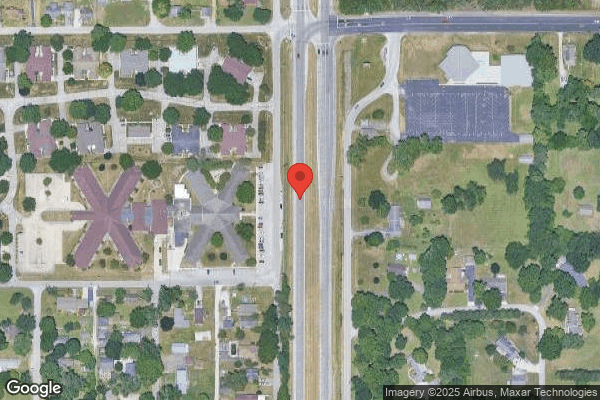
3150 N SEVENTH ST, TERRE HAUTE, IN 47804 (812) 466-5217
Government - County 104 Beds MAJESTIC CARE Data: November 2025
Trust Grade
75/100
#160 of 505 in IN
Last Inspection: August 2024

Within standard 12-15 month inspection cycle. Federal law requires annual inspections.

Overview

Majestic Care of Terre Haute has a Trust Grade of B, indicating it is a good but not exceptional choice for families considering nursing homes. It ranks #160 out of 505 facilities in Indiana, placing it in the top half, and #2 out of 9 in Vigo County, meaning there is only one local facility rated higher. The trend is improving, with issues decreasing from 6 in 2024 to just 1 in 2025. Staffing is a weakness, rated at 2 out of 5 stars, with a turnover rate of 52%, which is average, indicating staff do not stay long-term. However, there have been no fines recorded, which is a positive sign, though RN coverage is concerning, being below that of 79% of Indiana facilities. Specific incidents of concern include a failure to prepare food in a sanitary manner, potentially affecting up to 38 residents, and inadequate staffing in the kitchen, which led to the use of paper plates due to a shortage of dietary staff. Most troubling is an incident where a resident was left without monitoring for 8 hours, ultimately leading to their death, which raises serious questions about the care provided. Overall, while there are strengths, such as the absence of fines, families should be aware of the staffing issues and serious incidents reported.

Trust Score
B
75/100
In Indiana
#160/505
Top 31%
Safety Record
Low Risk
No red flags
Inspections
Getting Better
6 → 1 violations
Staff Stability
⚠ Watch
52% turnover. Above average. Higher turnover means staff may not know residents' routines.
Penalties
✓ Good
No fines on record. Clean compliance history, better than most Indiana facilities.
Skilled Nurses
⚠ Watch
Each resident gets only 27 minutes of Registered Nurse (RN) attention daily — below average for Indiana. Fewer RN minutes means fewer trained eyes watching for problems.
Violations
⚠ Watch
17 deficiencies on record. Higher than average. Multiple issues found across inspections.
★★★★☆
4.0
Overall Rating
★★☆☆☆
2.0
Staff Levels
★★★★★
5.0
Care Quality
★★★☆☆
3.0
Inspection Score
Stable
2024: 6 issues
2025: 1 issues

The Good

  • 5-Star Quality Measures · Strong clinical quality outcomes
  • Full Sprinkler Coverage · Fire safety systems throughout facility
  • No fines on record

Facility shows strength in quality measures, fire safety.

The Bad

Staff Turnover: 52%

Near Indiana avg (46%)

Higher turnover may affect care consistency

Chain: MAJESTIC CARE

Part of a multi-facility chain

Ask about local staffing decisions and management

The Ugly 17 deficiencies on record

Jul 2025 1 deficiency
CONCERN (D) 📢 Someone Reported This

A family member, employee, or ombudsman was alarmed enough to file a formal complaint

Potential for Harm - no one hurt, but risky conditions existed

Free from Abuse/Neglect (Tag F0600)

Could have caused harm · This affected 1 resident

**NOTE- TERMS IN BRACKETS HAVE BEEN EDITED TO PROTECT CONFIDENTIALITY** Based on interview and record review, the facility failed to protect the resident's right to be free from neglect, when the faci...

Read full inspector narrative →
**NOTE- TERMS IN BRACKETS HAVE BEEN EDITED TO PROTECT CONFIDENTIALITY** Based on interview and record review, the facility failed to protect the resident's right to be free from neglect, when the facility failed to ensure a resident was provided adequate monitoring and care for 8 hours for 1 of 3 residents reviewed for neglect (Resident B). Findings include: During a confidential interview, on [DATE] at 6:33 p.m., the interviewee indicated Resident B was not provided monitoring or care from 7:14 p.m. the night of [DATE] until 4:06 a.m. the morning of [DATE]. Resident B was found deceased in her bed in her room by staff at 4:06 a.m. on [DATE]. The family was notified of the death at 4:12 a.m. The family arrived at the facility 21 minutes after they received the call, and Resident B was cold and hard to the touch. The family had installed motion sensor video cameras in the room that verified staff had not checked on the resident for 8 hours. The video was only activated on [DATE] at 7:13 p.m. and then again at [DATE] at 4:06 a.m. Those were the only 2 times staff were noted to be in the resident's room. Review of motion censor camera footage time stamped on [DATE] at 7:13 p.m. indicated staff was in Resident B's room providing care. Resident was resting in bed. Review of motion censor camera footage time stamped on [DATE] at 4:06 a.m. indicated RN 6 entered Resident B's room and found her deceased . On [DATE] at 7:47 p.m., Resident B's record was reviewed, her diagnoses included, but were not limited to, fracture of head and neck of right femur (a break in the bone near the hip joint), acute respiratory failure with hypoxia (a life threatening condition where the lungs cannot adequately oxygenate blood, resulting in low blood oxygen levels), chronic diastolic (congestive) heart failure (a condition where the heart's left ventricle doesn't relax and fill properly during diastole [the filling phase], despite having normal ejection fraction [the amount of blood pumped out with each beat]), and chronic kidney disease stage 3 (moderate kidney damage, where the kidneys are not filtering waste and excess fluid as efficiently as they should). Facility census information indicated Resident B was admitted to the facility on [DATE]. A 5-day Minimum Data Set (MDS) assessment, dated [DATE], indicated Resident B had severe cognitive impairment and was frequently incontinent of urine. A care plan, dated [DATE], indicated the resident needed assistance with activities of daily living due to fracture of the right hip, congestive heart failure, and chronic kidney disease. Interventions included, but were not limited to, assisting with incontinent care, requiring assistance from staff with bed mobility, requiring assistance from staff with personal hygiene, requiring assistance from staff with transfers, and require assistance from staff for toilet use. The record lacked documentation of any nurse's progress notes from 7:14 p.m. on [DATE] till 4:06 a.m., on [DATE]. During an interview, on [DATE] at 7:31 p.m., Certified Nurse's Aide (CNA) 2 indicated that she mostly worked evening shift at the facility and would sometimes work over into night shift as well. She completed bed checks every 2 to 3 hours during her shift. During an interview, on [DATE] at 7:40 p.m., CNA 3 indicated that she mostly worked the evening shift at the facility and would sometimes work over into the night shift as well. She completed 3 bed checks during her 8-hour shift. She indicated most of the staff that she worked with were in the residents' rooms at least every 3 hours. During an interview, on [DATE] at 8:15 p.m., CNA 4 indicated she had gotten to the facility at 8 p.m. on [DATE] and worked through the night shift until morning of [DATE]. CNA 4 indicated she was in Resident B's room at around 9 to 9:30 p.m. on [DATE] and her eyes were closed, but she was breathing (shallow). CNA 4 completed bed checks every 2 hours. CNA 4 was back in Resident B's room around 1:00 a.m. and she wasn't wet (incontinent) and was breathing. The next time she was in the resident's room would have been after 4:00 a.m. and the resident was deceased , and she was cold to touch. During a phone interview, on [DATE] at 8:20 p.m., Registered Nurse (RN) 6 indicated she had obtained Resident B's vitals at the beginning of her shift on [DATE] and entered them into the computer later in the shift on [DATE]. She indicated she no longer waited to enter vitals in the computer anymore and documented them right after they were obtained. RN 6 found Resident B deceased on [DATE] at 4:06 a.m., she indicated the resident was cold to the touch at that time. RN 6 was not made aware of a change in condition for Resident B by any staff members throughout the shift. Review of a staff statement, on [DATE] at 5:50 p.m., indicated CNA 4 was in Resident B's room at 2:00 a.m. on [DATE] and she was still breathing but it was shallow. She advised the nurse at that time of the resident's breathing. Review of a staff statement, on [DATE] with no time stamp, indicated CNA 7 had arrived at the facility at 2:00 a.m. on [DATE] for her shift and she saw CNA 4 leaving Resident B's room at that time. Review of an undated staff statement, indicated RN 6 had arrived to the facility at 6:00 p.m. the night of [DATE] and obtained vital signs from the residents. She was in Resident B's room at 10:00 p.m. with CNA 4 and they were changing her. The next time she was in the resident's room was 4:00 a.m. on [DATE] and she was found deceased and cold to the touch. RN 6 had assumed that CNA 4 had checked on Resident B during the night. Review of an undated staff statement, indicated CNA 8 had worked at the facility from 6-10 p.m. on [DATE]. He was at the doorway for Resident B when he gave report to CNA 4 before he left for the night. During an interview, on [DATE] at 9:58 a.m., the Administrator indicated they had a facility video surveillance that was reviewed by her, and she was unable to verify that staff members were in Resident B's room during the times they had stated in their statements. The Administrator had started an investigation due to the facility becoming aware that the family had a camera in the room and indicated that Resident B was not attended to throughout the night. The facility was unable to verify anyone had entered the room for 8 hours. The family was aware that Resident B was not in good health but had concerns about the care that was not received. CNA 4 was no longer working at the facility as of the evening of [DATE]. During an interview, on [DATE] at 10:04 a.m., the Director of Nursing (DON) indicated it was not okay that staff had not been in Resident B's room for 8 hours. She indicated it was upsetting that staff had lied to them on their statements about how often they were in the resident's room. During an interview, on [DATE] at 10:59 a.m., the DON indicated CNA 8 and RN 6 were currently suspended and not on the schedule pending their investigation. On [DATE] at 10:47 a.m., the Administrator provided a document, dated [DATE], titled, Resident Rights, and indicated it was the policy currently being used by the facility. The policy indicated, .The resident has the right to a dignified existence, self-determination and communication with and access to persons and services inside and outside the facility.c. The right to reside and receive services in the facility with reasonable accommodation of resident needs and preferences. On [DATE] at 10:47 a.m., the Administrator provided a document with a revised date of [DATE], titled, Abuse, Mistreatment, Neglect, Exploitation, and Misappropriation, and indicated it was the policy currently being used by the facility. The policy indicated, .Neglect is the failure of the facility, it's Care Team Members or facility service providers to provide goods and services to a resident/patient necessary to avoid physical harm, pain, mental anguish, or emotional distress. This citation relates to Complaint 2571065. 3.1-27(a)3.1-27(b)
Aug 2024 6 deficiencies
CONCERN (D)

Potential for Harm - no one hurt, but risky conditions existed

Respiratory Care (Tag F0695)

Could have caused harm · This affected 1 resident

Based on observation, record review, and interview, the facility failed to ensure proper storage of respiratory equipment, and the facility failed to ensure a physician order was obtained for nebulize...

Read full inspector narrative →
Based on observation, record review, and interview, the facility failed to ensure proper storage of respiratory equipment, and the facility failed to ensure a physician order was obtained for nebulizer treatments for 2 of 4 residents reviewed for respiratory care (Residents 22 and 4). Findings include: 1. On 8/23/24 at 3:03 p.m., Resident 22's unbagged nebulizer mouthpiece and tubing were observed on the resident's side table, there was a clear liquid in the medication chamber (small plastic bowl where medication is placed). The nebulizer machine was observed on the resident's bed. Resident 22's record was reviewed on 8/26/24 at 11:00 a.m. The profile indicated the resident diagnoses included, but were not limited to, chronic obstructive pulmonary disease (COPD- a group of diseases that cause airflow blockage and breathing related problems) and acute respiratory failure with hypoxia (acute or chronic impairment of gas exchange between the lungs and the blood causing hypoxia [inadequate supply of oxygen] with or without hypercapnia [too much carbon dioxide in your blood]). An admission Minimum Data Set (MDS) assessment, dated 6/19/24, indicated the resident was cognitively intact and was not on oxygen therapy at the time. A care plan, dated 6/13/24, indicated the resident was at risk for respiratory distress related to chronic respiratory failure. Interventions included but were not limited to, administer medication as ordered and oxygen as ordered. A physician order, dated 8/16/24 with a discontinue date of 8/21/24, indicated ipratropium-albuterol inhalation solution (a medication that can help people with lung problems, like asthma or obstructive pulmonary disease, breathe easier); 0.5-2.5mg (milligrams) 3 ml (milliliters). Order was to administer 1 vial inhale orally four times a day for pneumonia (infection that inflames air sacs in one or both lungs, which may fill with fluid) for 5 days. The record lacked a physician order for a nebulizer treatment beyond 8/21/24. During an interview, on 8/27/24 at 9:38 a.m., Resident 22 indicated she was getting breathing treatments for a few days due to her having pneumonia. She was also using oxygen at night per nasal cannula (a device that delivers extra oxygen through a tube and into your nose). During an interview, on 8/28/24 at 9:15 a.m., Qualified Medication Aide (QMA) 8 indicated she had given Resident 22 a nebulizer treatment on the morning of 8/28/24. During an interview, on 8/28/24 at 9:20 a.m., Resident 22 indicated she had received a breathing treatment this morning. During an interview, on 8/28/24 at 9:36 a.m., the Director of Nursing (DON) indicated Resident 22 did not have an order currently for routine or as needed breathing treatments and staff should not administer a medication without a physician order. During an interview, on 8/28/24 at 9:57 a.m., Licensed Practical Nurse (LPN) 4 indicated nebulizer equipment should be placed in a dated bag for storage while not in use. 2. On 8/23/24 at 9:05 a.m., a nebulizer unit (a machine that turns liquid medicine into a mist that can be inhaled through a mouthpiece or mask) was observed sitting on Resident 4's bed side table. At the same time, the resident indicated she had as needed (PRN) breathing treatments. The nebulizer mouthpiece and tubing were unbagged. During a random observation, on 8/26/24 at 12:02 p.m., the resident's nebulizer remained on the bed side table. The nebulizer mouthpiece and tubing were unbagged. During a random observation, on 8/27/24 at 9:12 a.m., the resident's nebulizer remained on the bed side table. The nebulizer mouthpiece and tubing were unbagged. Resident 4's record was reviewed on 8/27/24 at 8:56 a.m. The profile indicated the resident's diagnoses included, but were not limited to, chronic obstructive pulmonary disease (COPD- a group of diseases that cause airflow blockage and breathing related problems). A quarterly Minimum Data Set (MDS) assessment, dated 7/17/24, indicated the resident had no cognitive deficit, had shortness of breath or trouble breathing when lying flat, and was not on oxygen therapy at the time. A care plan, dated 6/23/23, indicated the resident was at risk for respiratory distress related to COPD and was unable to lie flat due to it causing shortness of breath. Interventions included, but were not limited to, administer medications as ordered. A physician's order, dated 6/22/23, indicated to administer 2 puffs of albuterol sulfate (a medication that treats and prevents breathing problems caused by lung diseases like asthma and COPD) HFA inhalation aerosol solution (a type of propellant spray) 108 (90 base) micrograms (mcg), every 4 hours as needed for shortness of breath or oxygen saturation (the amount of oxygen circulating in the blood) less than 95%. A historical review of the physician orders lacked documentation of an order for nebulizer treatments. A review of the resident's progress notes from January 2024 through August 2024 lacked documentation that any nebulizer treatments had been administered or that the resident had any order for nebulizer treatments. During an interview, on 8/27/24 at 9:00 a.m., Licensed Practical Nurse (LPN) 3 indicated she had never given the resident a nebulizer treatment because she did not believe the resident had an order for a nebulizer. She did have a PRN inhaler ordered, but she rarely requested it. During an interview, on 8/27/24 at 9:18 a.m., Resident 4 indicated she had an inhaler that she would usually use. There had been a day, a couple months ago, that she had a very difficult time breathing and the nurse brought in the nebulizer and gave her a breathing treatment. She was unable to remember what nurse had administered the nebulizer treatment for her. During an interview, on 8/27/24 at 10:17 a.m., the Director of Nursing (DON) indicated she was not aware that the resident had a nebulizer treatment ordered. The nebulizer should not be at the bedside if the resident did not have an order for it and the resident should never be given a nebulizer treatment if there was no order for it. The proper storage of a nebulizer was to ensure the mouthpiece and tubing were stored in a plastic bag when not in use. On 8/27/24 at 10:46 a.m., the Executive Director (ED) provided a document, dated 12/12/23, titled. Medication Administration, and indicated it was the policy currently being used by the facility. The policy indicated, Policy: Medications are administered .as ordered by the physician .Procedure: .10. Review MAR to identify medication to be administered. 11. Compare medication source .with MAR to verify resident name, medication .14. Administer medications as ordered .,17. Sign MAR after administration On 8/27/24 at 10:55 a.m., the ED provided a document, dated 12/12/23, titled, Oxygen Administration, and indicated it was the policy currently being used by the facility. The policy indicated, .Procedure: .5 .e. Keep delivery devices covered in plastic bag when not in use 3.1-47(a)(6)
CONCERN (D)

Potential for Harm - no one hurt, but risky conditions existed

Deficiency F0697 (Tag F0697)

Could have caused harm · This affected 1 resident

Based on observation, interview, and record review, the facility failed to follow physician orders for 1 of 4 residents observed for medication administration (Resident 126). Findings include: During...

Read full inspector narrative →
Based on observation, interview, and record review, the facility failed to follow physician orders for 1 of 4 residents observed for medication administration (Resident 126). Findings include: During an observation of medication pass, on 8/27/24 at 9:48 a.m., observed Licensed Practical Nurse (LPN 5) confirm Resident 126's order and prepared a Lidocaine patch (patch wore on the skin for pain relief) by initialing and dating it. When the LPN went to apply the new patch, she had to remove an undated Lidocaine skin patch that was located on the resident's back, then she applied the new one. During an interview on 8/27/24 at 9:50 a.m., LPN 5 indicated that the patch she removed from the resident's back before placing the new one was not labeled, did not have a date on it, and should have been removed last night. The patch was only to be left on for 12 hours at a time then left off for 12 hours. She reviewed the medication administration record and determined that the last patch was documented as being applied on 8/26/24 at 8:54 a.m. There was not a place in the MAR to document that patches were removed. On 8/29/24 at 9:02 a.m., a record review for Resident 126 was completed. Her diagnoses included, but were not limited to, osteoporosis (a disease that causes bones to become fragile and more likely to break), and pain. A physician's order, dated 8/22/24, indicated to apply Lidocaine 5% patch, 1 patch to low back daily, every morning for pain. On for 12 hours then off for 12 hours. A Medicare 5-day Minimum Data Set (MDS) assessment, dated 6/8/24, indicated the resident had a brief interview for mental status (BIMS) score of 12, indicating she had moderate cognitive impairment. On 8/27/24 at 10:46 a.m., the Executive Director (ED) provided and identified a document as current facility policy titled, Medication Administration, dated 1/2/24. The policy indicated, .Medications are administered by licensed nurses, or other staff who are legally authorized to do so in this state, as ordered by the physician and in accordance with professional standards of practice .10. Review MAR to identify medication to be administered. 11. Compare medication source (bubble pack, vial, etc.) with MAR to verify resident name, medication name, form, dose, frequency, rout, and time .14. Administer medication as ordered 3.1-37(a)
CONCERN (D)

Potential for Harm - no one hurt, but risky conditions existed

Deficiency F0757 (Tag F0757)

Could have caused harm · This affected 1 resident

Based on record review and interview, the facility failed to ensure pharmacy recommendations were reviewed, addressed, and dated in a timely manner and failed to ensure documented rationale of pharmac...

Read full inspector narrative →
Based on record review and interview, the facility failed to ensure pharmacy recommendations were reviewed, addressed, and dated in a timely manner and failed to ensure documented rationale of pharmacy recommendations for 1 of 5 residents reviewed for unnecessary medications (Resident 45). Finding includes: Resident 45's record was reviewed on 8/16/24 at 2:16 p.m. The profile indicated the resident's diagnoses included, but were not limited to, type 2 diabetes mellitus (a chronic condition that affects the way the body processes blood sugar), chronic obstructive pulmonary disease (COPD- a group of diseases that cause airflow blockage and breathing related problems), chronic diastolic congestive heart failure (occurs when left ventricle of the heart becomes still and can't relax properly. This prevents the heart from filling with enough blood between beats, resulting in several symptoms), and end stage renal disease (a condition in which the kidneys lose the ability to remove waste and balance fluids). An annual Minimum Data Set (MDS) assessment, dated 6/17/24, indicated the resident received medications which included, but were not limited to, insulin injections (medication use to lower blood sugar), anti-depressants (used to treat depressive symptoms), anti-coagulants (used to prevent or reduce blood clots from forming in the bloodstream), diuretics (increase the amount of urine produced in the kidneys) and opioid (prescription pain relief medication). a. A pharmacy recommendation, dated 8/6/23, recommended to reduce midodrine (a medication used to treat low blood pressure that causes severe dizziness or fainting) dose to 2.5 milligrams (mg) three times a day or discontinue if possible. The pharmacy recommendation was not signed, dated, or addressed by the physician. The resident's record lacked documentation of the pharmacy recommendation being accepted or denied and the rationale for the decision. A current physician order, dated 4/5/24, indicated to administer midodrine 5 mg, give one tablet by mouth three times a day. b. A pharmacy recommendation, dated 8/6/23, recommended to discontinue the medication Hiprex (used to treat bladder and kidney infections) because the medication was contraindicated with any degree of renal impairment. The pharmacy recommendation was not signed, dated, or addressed by the physician. The resident's record lacked documentation of the pharmacy recommendation being accepted or denied and the rationale for the decision. A current physician order, with an original start date of 2/7/23, indicated to administer Hiprex 1 gram, give one tablet twice a day. c. A pharmacy recommendation, dated 8/6/23, recommended to obtain lab work for the following drugs: atorvastatin (used to treat high cholesterol and triglyceride levels) obtain lipid profile (lab test that measures level of cholesterol and other fats in your blood) every 6 months, insulin obtain Hgb (hemoglobin) a1c (lab test that measures a person's blood sugar level over the past two to three months) every 3 months, furosemide (diuretic medication) obtain BMP (basic metabolic panel [a blood sample test that measures eight different substances in your blood]) every 6 months, cholecalciferol (vitamin D) obtain vitamin D every 6 months, cyanocobalamin (vitamin b12) obtain vitamin b12 yearly, and a CBC (complete blood count [medical test that measures the number and types of cells in your blood]) The pharmacy recommendation was not signed, dated, or addressed by the physician. Review of a physician progress note, dated 8/21/23, indicated to continue medication as prescribed. The record lacked documentation of which medications the doctor reviewed to continue or a rationale behind continuing the medications. d. A pharmacy recommendation, dated 11/5/23, recommended to reduce the dose or attempt to hold the dose for 2 weeks and if no gastrointestinal symptoms occur, discontinue the medication. The resident was currently on Protonix (used to treat acid reflux and a damaged esophagus) 40 mg twice a day. The physician signed and dated the recommendation on 12/20/23 to reduce the medication to 40 mg daily. A current physician order, dated 12/23/23, indicated to administer Protonix 40 mg, give one tablet by mouth daily. e. A pharmacy recommendation, dated 6/6/24, recommended to attempt a dose reduction of Cymbalta (antidepressant medication). The physician signed and dated the recommendation on 8/9/24 to discontinue the Cymbalta. A social service note, dated 6/11/24 at 9:02 a.m., indicated a behavior meeting was conducted due to gradual dose reduction was due on Resident 45's Cymbalta. Social Service Director (SSD) indicated the facility would request the medication to be discontinued. A physician order, with a discontinued date of 8/13/24, indicated to administer Cymbalta 30 mg, give one capsule by mouth daily. f. A second request pharmacy recommendation, dated 6/7/24, recommended labs to be obtained. These were the same labs as advised above. The physician signed and dated the recommendation on 8/9/24. He agreed with recommendation. During an interview, on 8/26/24 at 2:49 p.m., the Director of Nursing (DON) indicated she was not aware of how long it took for some physicians to respond to pharmacy recommendations but should be timely. During an interview, on 8/26/24 at 2:52 p.m., the SSD indicated they had one physician that did not respond to pharmacy recommendations in a timely manner. During an interview, on 8/26/24 at 3:15 p.m., the DON indicated she understood the pharmacy recommendations were not addressed timely, and they may had to involve the Medical Director when physicians were not addressing them in a timely manner. On 8/27/24 at 9:48 a.m., the Administrator provided a document, with a revised date of 2/8/19, titled, Pharmacy Products and Services, and indicated it was the policy currently being used by the facility. The policy indicated, .iii) .For those issues that require provider intervention, the provider must identify whether they accept or reject part or the whole of the recommendation and must document rationale of why they recommendation is rejected in the resident's medical record .iv) The responsible provider will respond to the identified irregularities/recommendations within the time frame listed in the facility's policy or at most 30 days 3.1-48(a)(5)
CONCERN (D)

Potential for Harm - no one hurt, but risky conditions existed

Deficiency F0761 (Tag F0761)

Could have caused harm · This affected 1 resident

Based on observation, interview, and record review, the facility failed to ensure multi-dose bottle of eye drops and multi-dose vial of tuberculin solution were dated when opened for 1 of 2 medication...

Read full inspector narrative →
Based on observation, interview, and record review, the facility failed to ensure multi-dose bottle of eye drops and multi-dose vial of tuberculin solution were dated when opened for 1 of 2 medication carts, and 1 of 1 medication rooms observed for medication storage (Resident 126). Findings include: 1. On 8/27/24 at 10:00 a.m., the 200-hall medication cart contained a multi-dose bottle of Latanoprost (treats high pressure in the eye, also known as glaucoma) eye drops for Resident 126. The bottle was opened and not dated. During an interview on 8/27/24 at 10:01 a.m., Licensed Practical Nurse (LPN) 5 indicated that the bottle and the container both should be dated when opened in case they get separated. On 8/29/24 at 9:02 a.m., a record review for Resident 126 was completed. Her diagnoses included, but were not limited to, glaucoma (a chronic eye disease that can cause vision loss and blindness by damaging the optic nerve). A physician's order, dated 8/21/24, indicated to administer Latanoprost solution 0.005%, one drop in both eyes at bedtime for glaucoma. During an interview with the Director of Nursing (DON) on 8/29/24 at 11:53 a.m., she indicated that the Latanoprost eye drops were only good for 6 weeks after opening. 2. On 8/27/24 at 10:06 a.m., the 200-hall medication storage room refrigerator contained a multi-dose vial of Tuberculin Aplisol solution (injectable medication used to test for tuberculosis) that was opened and not dated. On 8/27/24 at 10:07 a.m., LPN 5 indicated that normally the box was dated when opened and the vials had recently been delivered. The package indicated that medication was ordered on 6/5/24, the lot number was 77298. She did not know when the vial could have been opened. During an interview with the Director of Nursing (DON) on 8/29/24 at 11:53 a.m., she indicated that the Tuberculin solution was only good for 30 days after opening. On 8/27/24 at 10:46 a.m., the Executive Director (ED) provided and identified a document as current facility policy, titled, Medication Administration, dated 5/20/2022. The policy indicated, .To ensure that the facility, in coordination with the licensed pharmacist, provide for accurate labeling to facilitate safe administration of medications and consideration of precautions in accordance with the currently accepted professional principles, and include the appropriate accessory and cautionary instructions, and the expiration date when applicable .1. Medication labeling must be typed or printed and clearly indicate .3. Multi-dose medication vials/devices .a. should be labeled with date opened/accessed .ii. Once opened/accessed the vial/device should be dated and discarded within 28 days unless the manufacturer specifies a different (shorter or longer) date for vial/device after opened/accessed On 8/29/24 at 1:54 p.m., the DON provided and identified a document as current facility policy, titled, Drug Expiration Dating, dated 2/22/2022. The policy indicated, .**ALL medication(s) with shortened expiration dates after opening must be marked with the date opened** .Aplisol/Tubersol .Expiration date * .28 days from date opened** On 8/29/24 at 2:12 p.m., the DON provided and identified a document as the manufacturing package insert from Pfizer for Resident 126's Latanoprost eye drop solution with a revised date of August 2011. The package insert indicated, .Package insert for the 2.5 mL fill - package of 1 bottle: Xalatan, latanoprost ophthalmic solution 0.005% .Storage .Once a bottle is opened for use, it may be stored at room temperature up to 25 degrees C (77 degrees F) for 6 weeks 3.1-25(j) 3.1-25(k)
CONCERN (D)

Potential for Harm - no one hurt, but risky conditions existed

Medical Records (Tag F0842)

Could have caused harm · This affected 1 resident

Based on observations, interviews, and record review, the facility failed to accurately document medication administration for 1 of 1 resident reviewed for peritoneal dialysis (Resident 43). Findings...

Read full inspector narrative →
Based on observations, interviews, and record review, the facility failed to accurately document medication administration for 1 of 1 resident reviewed for peritoneal dialysis (Resident 43). Findings include: On 8/23/24 at 3:03 p.m., observed a peritoneal dialysis (PD) machine (a treatment for kidney failure that uses the lining of your abdomen, or belly, to filter your blood inside your body), on Resident 43's bedside table. On 8/27/24 at 11:41 a.m., a record review was completed for Resident 43. His diagnoses included, but were not limited to, chronic kidney disease stage 5 (end stage kidney failure), and dependence on renal dialysis (treatment that helps people whose kidneys are no longer able to filter blood properly). A current physician's order, updated 4/25/24, indicated to follow PD orders through the dialysis center. The physician orders were ongoing and could change daily based on clinical assessments reported to the provider. A physician's order, dated 8/16/24, indicated to administer PD treatment: 1.5 (yellow) x 2 (6 Liter) bags (dialysis solutions) via cycler (PD machine) at bedtime. A quarterly Minimum Data Set (MDS) assessment, dated 8/17/24, indicated the resident had a primary medical condition, chronic kidney disease, stage 4, severe. Had an additional diagnosis of dependence on renal (kidney) dialysis, and received dialysis while a resident. On 8/27/24 at 12:16 p.m., a review of the June 2024 Medication Administration Record (MAR) indicated that on 6/9/24, QMA 17 documented that the PD had been administered. On 6/21/24, QMA 18 documented that the PD had been administered. On 8/27/24 2:44 p.m., a review of the July 2024 MAR indicated that on 7/16/24, QMA 16 documented that the PD dialysis had been administered. On 7/18/24, QMA 18 documented that the PD had been administered. On 7/19/24 QMA 16 documented that the PD had been administered. On 7/20/24, QMA 15 documented that the PD had been administered. During an interview on 8/27/24 at 3:11 p.m., QMA 12 indicated that as a QMA he was not trained to administer PD, so the nurse came and set it up for him at night. He was not allowed to get certified. The nurse must call the dialysis center every day to give them an assessment report and receive new orders based on outflow and recorded vitals. Only someone who was certified was allowed to hook up and administer the PD. During an interview on 8/27/24 at 3:20 p.m., Licensed Practical Nurse (LPN) 5 indicated that the dialysis company came to train nursing staff on every new resident who received PD, the training included parameters they wanted them to follow. It was mandatory training to be able to give PD to that patient. During an interview on 8/29/24 at 9:32 p.m., QMA 15 indicated that Resident 43 received PD every day. To her knowledge, QMA's were not allowed to be trained to do it. When the nurse came to set up the PD, it was the nurse's responsibility to chart that it was completed. When asked about the MAR dated 7/20/24 where she had charted the PD as being completed, she confirmed that they were her initials documented that day. She was not sure if she just accidently clicked the button. Then indicated she thought that it was possible that she did not sign out of the computer on the medication cart that they parked outside of the resident's room they were working in. She indicated that it was possible that the nurse did not realize that it was logged in under someone else's credentials before going in to sign off that the PD was completed. It had happened before with insulin, and they had to go back and strike it out in an addendum. During an interview on 8/29/24 at 9:46 a.m., when asked about the dates the PD was documented by a QMA, the Director of Nursing (DON) indicated that it was likely that the computer was still logged in under the QMAs when the nurse came and hooked up the PD. QMA 17 and QMA 18 no longer work at the facility. During an interview on 8/29/24 at 11:34 a.m., the Unit Manager indicated that staff should not leave themselves logged into the computers and unlocked to leave it up to possible give access to information or for someone to potentially get in and document something that you did not do. Staff should never document something that they did not do. Staff should not document under someone else's login, it was their credentials, they should not give anyone their login or password information. Everyone had their own access information. If something like that did happen, they should let someone know as soon as they realize it happened so they could amend it. She was not sure what happened on the days that the QMAs signed off on the PD but they know their scope and what they should and should not sign off on. A QMA cannot do assessments of bruit and thrill, cannot do before and after treatment assessments, and only nurses were trained to administer PD. On 8/27/24 at 10:46 a.m., the Executive Director (ED) provided and identified a document as current facility policy, titled, Medication Administration, dated 5/20/2022. The policy indicated, .Medications are administered by licensed nurses, or other staff who are legally authorized to do so in this state, as ordered by the physician and in accordance with professional standards of practice, in a manner to prevent contamination or infection 3.1-50(a)
CONCERN (E)

Potential for Harm - no one hurt, but risky conditions existed

Food Safety (Tag F0812)

Could have caused harm · This affected multiple residents

**NOTE- TERMS IN BRACKETS HAVE BEEN EDITED TO PROTECT CONFIDENTIALITY** Based on observation, interview, and record review, the facility failed to ensure food was prepared in a sanitary manner for 1 o...

Read full inspector narrative →
**NOTE- TERMS IN BRACKETS HAVE BEEN EDITED TO PROTECT CONFIDENTIALITY** Based on observation, interview, and record review, the facility failed to ensure food was prepared in a sanitary manner for 1 of 2 kitchen observations. This had the potential to affect 35-38 residents who ate meals from the kitchen. Finding includes: During a continuous kitchen observation of the puree (a smooth, crushed, or blended food that has the consistency of a creamy paste or liquid) food preparation, on 8/27/24 at 10:31 a.m. to 10:50 a.m., [NAME] 11 washed her hands at the sink for less than 20 seconds and began to scoop vegetables into a plastic container to puree them. She proceeded to scoop chicken broth into the container as well. [NAME] 11 turned on the puree blender and then went over to the steam table to scoop roasted potatoes and chicken broth into another plastic container to puree that was drying on the counter, she grabbed a paper towel to dry it further. She turned on the potatoes and then went back to the vegetables to see if they were completed. The cook had to add thickener to the vegetables because they were too runny. She went back to the potatoes and emptied them into a pan and took the plastic container they were pureed in and began to clean it at the three-compartment sink (manual procedure for cleaning and sanitizing dishes in commercial settings) along with a spatula. She went back to the other counter to check on the vegetables. She grabbed the spatula that was still wet from where she had washed it and used it to place the vegetables in another container and place in oven. [NAME] 11 took the container that she pureed the vegetables and washed in the 3-compartment sink, she then grabbed a paper towel and dried the container with the paper towel. The cook went back to the steam table and obtained 4 slices of ham and 4 slices of bread with a glove on one hand. The cook finished the ham and placed it into another container and placed in oven. During this entire observation the cook washed her hands at the start of the puree process and no other hand hygiene was observed. During a kitchen observation, on 8/27/24 at 10:55 a.m., Dietary Aide 10 was preparing lemonade into a [NAME] pitcher by using lemonade powder and water. The dietary aid placed his ungloved finger on the inside of the pitcher rim to remove a small particle and in doing so he touched the inside of the pitcher along with the lemonade as it began to splash out. He then placed a lid on the pitcher along with a sticker that contained a date of when it was prepared. The lemonade was being prepared for the lunch meal service. During an interview, on 8/27/24 at 11:00 a.m., the Dietary Manager indicated staff should not touch the inside of a drink pitcher with ungloved hands and she would be throwing out the lemonade that was contaminated this morning. The Dietary Manager indicated staff should be performing hand hygiene during the puree process when they go from a dirty to clean environment. [NAME] 11 would have cross contaminated the food going from the clean utensils to dirty utensils to clean again. She further indicated the utensils should be left to air dry and not used if still wet to puree with. On 8/27/24 at 12:28 p.m., the Dietary Manager provided a document, dated 12/12/23, titled, Dietary Personnel, and indicated it was the policy currently being used by the facility. The policy indicated, .The dietary department will employ sufficient and qualified staff to prepare and serve meals and maintain a sanitary environment On 8/27/24 at 12:28 p.m., the Dietary Manager provided a document, dated 12/12/23, titled, Food Production, and indicated it was the policy currently being used by the facility. The policy indicated, .4. Bare hands should never touch raw or ready to eat food directly .Gloves will be worn for single task preparation then removed and hand hygiene performed On 8/27/24 at 1:55 p.m., the Administrator provided a document, dated 12/23/23, titled, Hand Hygiene, and indicated it was the policy currently being used by the facility. The policy indicated, .1. Staff will perform hand hygiene when indicated, using proper technique consistent with accepted standards of practice .c. rub hands together vigorously for at least 20 seconds, covering all surfaces of the hands and fingers 3.1-21(i)(3)
Jun 2023 6 deficiencies
CONCERN (D)

Potential for Harm - no one hurt, but risky conditions existed

Safe Environment (Tag F0584)

Could have caused harm · This affected 1 resident

Based on observation, interview, and record review, the facility failed to ensure a resident was provided a comfortable and sanitary environment for 1 of 24 residents reviewed for a home-like environm...

Read full inspector narrative →
Based on observation, interview, and record review, the facility failed to ensure a resident was provided a comfortable and sanitary environment for 1 of 24 residents reviewed for a home-like environment (Resident 6). Finding includes: On 6/26/23 at 8:05 a.m., Resident 6 was observed lying in bed with the bed against the wall. The wall was marked and scratched up significantly with a large area of the white drywall showing on the wall. On 6/27/23 at 10:18 a.m., Resident 6 was observed lying in bed with the bed against the wall. The wall was marked and scratched up significantly with a large area of the white drywall showing on the wall. On 6/29/23 at 9:25 a.m., Resident 6 was observed lying in bed with the bed against the wall. The wall was marked and scratched up significantly with a large area of the white drywall showing on the wall. On 6/29/23 at 12:29 p.m., the Maintenance Supervisor indicated the staff got the bed too close to the wall and the bed should be pulled out away from the wall. The wall needed to be repaired and painted. Staff should have sent him a work order to have the wall repaired, but he had not received a work order about the wall being marked up. On 6/29/23 at 2:30 p.m., the Maintenance Supervisor provided and identified an undated document as a current facility policy titled, Resident Environmental Quality. The policy indicated, .It is the policy of this facility to be designed, constructed, equipped, and maintained to provide a safe, functional, sanitary and comfortable environment for residents, staff and the public .12. All facility personnel are responsible for reporting broken, defective or malfunctioning equipment or furnishings immediately upon identification of the issue 3.1-9(a) 3.1-19(f)
CONCERN (D)

Potential for Harm - no one hurt, but risky conditions existed

Investigate Abuse (Tag F0610)

Could have caused harm · This affected 1 resident

Based on record review and interview, the facility failed to ensure the complete investigation of a resident-to-resident abuse allegation for 2 of 2 residents reviewed for abuse allegations (Residents...

Read full inspector narrative →
Based on record review and interview, the facility failed to ensure the complete investigation of a resident-to-resident abuse allegation for 2 of 2 residents reviewed for abuse allegations (Residents 20 and 18). Findings include: On 6/28/23 at 2:04 p.m., a document titled, Indiana Department of Health (IDOH) Survey Report System, dated 6/18/23 at 9:35 a.m., was provided by the Executive Director (ED). The document indicated Resident 20 had reported to a nurse that Resident 18 had touched her inappropriately. No physical injury had been noted. The immediate action taken was to place Resident 18 on one on one (1:1) observation while out of bed and every 15-minute checks while in bed. The ED, Director of Nursing (DON), family, and physician had all been made aware. On 6/19/23, Resident 18 was sent out to a behavioral health facility. The document lacked any further follow-up information. 1. Resident 20's record was reviewed on 6/28/23 at 1:33 p.m. The profile indicated the resident's diagnoses included, but were not limited to, cerebral infarction (occurs as a result of disrupted blood flow to the brain due to problems with the blood vessels that supply it) and metabolic encephalopathy (a problem in the brain caused by a chemical imbalance in the blood). A quarterly Minimum Data Set (MDS-a standardized assessment tool that measures health status in nursing home residents) assessment, dated 5/23/23, indicated the resident had moderate cognitive deficit. A progress note, dated 6/18/23 at 10:20 a.m., indicated the resident had come to the nurse's station in her wheelchair and was crying. The nurse took the resident to her room where she told the nurse the Resident 18 had pulled up her shirt and touched her breast, then pulled on her pants out and stuck his hand down the front of her pants. The resident demonstrated how the incident had happened. The nurse provided reassurance and notified the ED and DON. 2. Resident 18's closed record was reviewed on 6/28/23 at 2:06 p.m. The profile indicated the resident's diagnoses included, but were not limited to, cellulitis of left lower limb (a common bacterial skin infection that causes redness, swelling, and pain in the infected area of the skin), chronic kidney disease (a condition in which the kidneys are damaged and cannot filter blood as well as they should) and alcohol dependence uncomplicated (a chronic disease in which a person craves drinks that contain alcohol and is unable to control his or her drinking). A quarterly Minimum Data Set (MDS-a standardized assessment tool that measures health status in nursing home residents) assessment, dated 5/21/23, indicated the resident had severe cognitive deficit and had no documented behaviors. A Social Services Director (SSD) progress note, dated 6/19/23 at 9:49 a.m., indicated the resident had presented with sexually inappropriate behavior towards another resident. He was immediately placed on one on one. Family and doctor notified. Patient being admitted to behavioral health for evaluation and treatment. During an interview, on 6/29/23 at 8:34 a.m., Certified Nurse Aide (CNA) 5 indicated she had just heard about the incident from Resident 20. No one had ever interviewed her about the incident. During an interview, on 6/29/23 at 8:38 am, Licensed Practical Nurse (LPN) 7 indicated she only heard about the incident from other staff. No one had ever interviewed her about the incident. During an interview, on 6/29/23 at 8:39 am, CNA 8 indicated she had been at the nurse's station when the resident reported it to the nurse. No one had ever interviewed her about the incident. During an interview, on 6/29/23 at 9:00 a.m., the SSD indicated she and the ED made the decision to send the resident out. The physician had no questions or concerns and gave the order to send the resident to the behavioral health facility. There had been no other behaviors with the resident towards other residents reported. There had been a report of an inappropriate request for sexual favors from a female staff on 2/10/23, when he had attempted to reach up a staff's shirt and requested the staff perform oral sex on him. The resident had a care plan addressing this behavior. She further indicated she had not been a part of the investigation process. During a telephone interview, on 6/29/23 at 9:32 a.m., LPN 11 indicated she was working the unit where the incident happened but did not witness the incident. She was a new nurse at the facility, and the resident went to another nurse to report it. She may have been on a break or at lunch when it happened. She was told about it from the other nurse who the resident reported it to. The other nurse had already contacted the ED and DON. No one had ever interviewed her about what she knew about the incident prior to this call today. During a telephone interview, on 6/29/23 at 9:40 a.m., CNA 10 indicated she was walking down the hall and Resident 20 told her what had happened. She immediately reported it to her nurse on the unit and to another nurse who had been a nurse at the facility longer than the nurse on her hall. The male resident was immediately placed on 1:1 and he was in constant sight of the staff the entire shift. As far as she was aware of, the male resident had never done anything like that to another resident in the facility before. She had been told he had made suggestive comments to other staff during his shower times but had not done so to her personally. No one had ever interviewed her regarding the incident. During an interview, on 6/29/23 at 10:14 a.m., the Business Office Manager (BOM) indicated she had come into the facility, on the date of the incident, because she lived close to the facility, and interviewed all female residents in the facility. At the same time, she provided a document with names of the residents on it. The document had handwritten notes next to the female names on the document. The document was not presented as part of the investigation packet by the ED on 6/28/23 at 2:04 p.m., when the investigation report information had been initially presented. During an interview, on 6/28/23 at 11:10 a.m., the ED indicated the male resident had not ever acted out towards any of the other residents before this incident. The incident happened in a common area of the facility. No one witnessed the incident. The female resident approached staff and was upset and told them what had happened. They immediately placed the male resident on 1:1. A full skin assessment was completed on the female resident, with no findings, and support was provided for her. After contacting the physician, the physician gave the order for a psych evaluation on the resident. The resident was placed in a behavioral health facility for evaluation and treatment. On 6/28/23 at 2:04 p.m., the ED provided a document, with a revision date of March 2021, titled, Abuse Prevention Program, and indicated it was the policy currently being used by the facility. The policy indicated, .Protection of the Resident .Should an incident or suspected incident of resident abuse .be reported, the Administrator, or his/her designee, will appoint a member of management to investigate the alleged incident. The individual conducting the investigation will, at a minimum .Interview the person(s) reporting the incident; Interview witnesses to the incident; Interview the resident (as medically appropriate); Interview the resident's attending physician as needed to determine the resident's current level of cognitive function and medical condition; Interview staff members (on all shifts) who have had contact with the resident during the period of the alleged incident .A completed copy of the incident report and written statements .must be provided .The Administrator will provide a written report of the results of all abuse investigations 3.1-28(a) 3.1-28(d)
CONCERN (D)

Potential for Harm - no one hurt, but risky conditions existed

Respiratory Care (Tag F0695)

Could have caused harm · This affected 1 resident

Based on observation, record review, and interview, the facility failed to ensure proper storage of respiratory equipment and failed to obtain and follow physician orders for 2 of 2 residents reviewed...

Read full inspector narrative →
Based on observation, record review, and interview, the facility failed to ensure proper storage of respiratory equipment and failed to obtain and follow physician orders for 2 of 2 residents reviewed for respiratory care (Residents 25 and 10). Findings include: 1. On 6/26/23 at 10:28 a.m., Resident 25's unbagged nebulizer mouthpiece and tubing were observed on the resident's nightstand table next to the nebulizer machine. The resident was resting in her recliner. On 6/28/23 at 9:10 a.m., Resident 25 was observed to be sitting in her recliner talking with her spouse. An unbagged nebulizer mouthpiece and tubing were observed on the resident's nightstand table next to the nebulizer machine. On 6/29/23 at 9:40 a.m., Resident 25 was observed to be resting in her recliner. An unbagged nebulizer mouthpiece and tubing were observed on the resident's nightstand table next to the nebulizer machine. Resident 25's record was reviewed on 6/27/23 at 3:08 p.m. The profile indicated the resident diagnoses included, but were not limited to, chronic obstructive pulmonary disease (COPD-a group of diseases that cause airflow blockage and breathing-related problems) and chronic and acute respiratory failure (acute or chronic impairment of gas exchange between the lungs and the blood causing hypoxia [inadequate supply of oxygen] with or without hypercapnia [too much carbon dioxide in your blood]). A significant change in status Minimum Data Set (MDS) assessment, dated 6/4/23, indicated the resident was cognitively intact and received oxygen therapy. A care plan, dated 6/16/23, indicated the resident was at risk of respiratory distress related to chronic respiratory failure and COPD. Interventions included but were not limited to, administer medications as ordered and oxygen as ordered. A physician's order, dated 6/1/23, indicated albuterol sulfate nebulization solution (a medication that can help people with lung problems, like asthma or obstructive pulmonary disease, breathe easier); 2.5 milligrams (mg)/3 milliliters (ml) 0.83%. 1 vial orally via nebulizer 4 times a day. During an interview, on 6/29/23 at 2:25 p.m., Licensed Practical Nurse (LPN) 12 indicated after the resident had completed their nebulizer treatment, the nurse was to rinse out the nebulizer equipment and then place in a plastic bag for storage while not in use. During an interview, on 6/30/23 at 8:23 a.m., the Regional Nurse Consultant indicated nebulizer tubing and mouthpiece should be placed in a bag after use. On 6/30/23 at 9:32 a.m., the Regional Nurse Consultant provided an undated document, titled, Oxygen Administration, and indicated it was the policy currently being used by the facility. The policy indicated, .e. Keep delivery devices covered in plastic bag when not in use 2. On 6/27/23 at 10:06 a.m., Resident 10 was observed to be resting in bed, the resident was receiving oxygen through a nasal cannula at 3.5 liters (L). No date was noted to be on the oxygen tubing. On 6/28/23 at 10:14 a.m., Resident 10 was observed to be resting in bed, the resident was receiving oxygen through a nasal cannula at 3.5L. No date was noted to be on the oxygen tubing. On 6/29/23 at 12:11 p.m., Resident 10 was observed to be resting in bed, the resident was receiving oxygen through a nasal cannula at 3.5L. No date was noted to be on the oxygen tubing. On 6/29/23 at 2:40 p.m., Resident 10 was observed to be resting in bed, the resident was receiving oxygen through a nasal cannula at 3.5L. No date was noted to be on the oxygen tubing. On 6/30/23 at 08:23 a.m., Resident 10 was not noted to be in her room. The Oxygen concentrator in her room was on and the oxygen level was set at 3.5L. Resident 10's record was reviewed on 6/28/23 at 11:23 a.m. The profile indicated the resident diagnoses included, but were not limited to, COPD and chronic and acute respiratory failure with or without hypercapnia. An admission Minimum Data Set (MDS) assessment, dated 4/28/23, indicated the resident was cognitively intact and received oxygen therapy. A care plan, dated 5/1/23, indicated the resident was at risk for respiratory distress related to chronic respiratory failure and COPD. Interventions included but were not limited to, administer medications as ordered and oxygen as ordered. A physician's order, dated 5/1/23, indicated Oxygen at 5L per nasal cannula at all times due to COPD. The record lacked a physician order for tubing to be dated and changed out weekly. During an interview, on 6/27/23 at 10:06 a.m., Resident 10 indicated she had an order for 5L of oxygen to be administered per nasal cannula. During an interview, on 6/29/23 at 2:20 p.m., LPN 14 indicated oxygen tubing was changed and dated weekly unless soiled and needed to be changed out before then. LPN 14 indicated resident 10 had an order for 5L of oxygen per nasal cannula. During an interview, on 6/30/23 at 8:23 a.m., the Regional Nurse Consultant indicated Resident 10's oxygen concentrator did show a level of 3.5L of oxygen, she was unsure why the resident was not being administered the 5L as ordered by the physician. On 6/30/23 at 9:32 a.m., the Regional Nurse Consultant provided an undated document, titled, Oxygen Administration, and indicated it was the policy currently being used by the facility. The policy indicated, .1. Oxygen is administered under orders of a physician .b. Change oxygen tubing and mask/cannula weekly and as needed if it becomes soiled or contaminated 3.1-47(a)(6)
CONCERN (D)

Potential for Harm - no one hurt, but risky conditions existed

Deficiency F0725 (Tag F0725)

Could have caused harm · This affected 1 resident

Based on record review and interview, the facility failed to accurately report weekend staffing hours in the PBJ (payroll-based journal) reporting during the second quarter of 2023 for 1 of 2 quarters...

Read full inspector narrative →
Based on record review and interview, the facility failed to accurately report weekend staffing hours in the PBJ (payroll-based journal) reporting during the second quarter of 2023 for 1 of 2 quarters of staffing reviewed. Finding includes: During review of CASPER (Community Assessment for Public Health Emergency Response) report on 6/26/23 at 07:00 a.m., the CASPER report indicated the facility had reported low weekend staffing and a 1-star staffing rate for the second quarter of 2023. During an interview, on 6/30/23 at 10:48 a.m., the Administrator indicated the facility triggered low weekend staffing on the PBJ report due to the facility not reporting salaried staff employees' hours when they worked and performed direct patient care. She indicated the Social Service Director was also a certified nurse's aide and a qualified medication aide, her hours were not reported accurately when she worked in the direct patient care area. The administrator also indicated they had hired weekend staff to help facilitate the low weekend staffing issue. The facility also moved a licensed nursing staff member to work weekends to help with coverage. During an interview, on 6/30/23 at 2:00 p.m., the Administrator indicated the facility did not have a policy regarding the PBJ reporting and the facility follows the state regulation regarding this. The deficient practice was corrected by 5/15/23 prior to the start of the survey and was therefore Past Noncompliance. The facility implemented a systemic plan that included hiring more licensed and unlicensed staff for the weekends, moving staff to work the weekends, and accurately reporting staffing hours. 3.1-17(a)
CONCERN (D)

Potential for Harm - no one hurt, but risky conditions existed

Deficiency F0761 (Tag F0761)

Could have caused harm · This affected 1 resident

Based on observation, interview, and record review, the facility failed to ensure proper labeling on a medication card for 1 of 7 residents reviewed for medication administration (Resident 33). Findi...

Read full inspector narrative →
Based on observation, interview, and record review, the facility failed to ensure proper labeling on a medication card for 1 of 7 residents reviewed for medication administration (Resident 33). Finding includes: During a medication administration observation, on 6/29/23 at 9:00 a.m., Resident 33's medication card indicated the resident was to receive one half of a tablet of 20 miligrams (mg) of Lexapro (a medication used to treat depression and/or anxiety) daily. A current physician's order, dated 6/21/23, indicated Lexapro 20 mg, give one tablet by mouth daily for depression. A discontinued physician's order, dated 2/7/23, indicated Lexapro 20 mg, give one half tablet by mouth daily for depression. During an interview, on 6/29/23 at 9:05 a.m., Licensed Practical Nurse (LPN) 12 indicated Resident 33's order had changed recently for her Lexapro medication and her dose had increased. She indicated the medication label on the card was not correct and that staff was supposed to go by what their computer said for medication dosage and directions. During an interview, on 6/29/23 at 10:20 a.m., LPN 13 indicated when there was a change in a medication order, the facility had stickers that should be placed on the medication card to indicate a direction change. Staff also used a black marker on the medication label to mark out the old directions, so staff were aware of a change to the order. She indicated the pharmacy would also send a new medication card with a new label to indicate the change. On 6/29/23 at 11:22 a.m., the Regional Nurse Consultant provided a document, with a revised date of April 2019, titled, Administering Medications, and indicated it was the policy currently being used by the facility. The policy indicated, .10. The individual administering the medication checks the label Three (3) times to verify the right resident, right medication, right dosage, right time, and right method (route) of administration before giving the medication 3.1-25(k)(5)
CONCERN (E)

Potential for Harm - no one hurt, but risky conditions existed

Deficiency F0802 (Tag F0802)

Could have caused harm · This affected multiple residents

Based on observation, interview, and record review, the facility failed to provide sufficient dietary support personnel in the kitchen for 72 of 73 residents who received food from the kitchen for 1 o...

Read full inspector narrative →
Based on observation, interview, and record review, the facility failed to provide sufficient dietary support personnel in the kitchen for 72 of 73 residents who received food from the kitchen for 1 of 1 week of the survey. Findings include: During an observation of lunch service in the main dining room, on 6/26/23 at 11:30 a.m., the residents received their lunch meals on paper plates. On 6/26/23 at 11:44 a.m., the Dietary Manager (DM) indicated they were using paper plates for the residents' lunches because there was only two dietary staff for the kitchen. On 6/28/23 at 2:31 p.m., the Registered Dietician Consultant (RD) indicated the facility had challenges for staffing in the kitchen. There used to be three to four dietary staff for each shift, not two staff for a shift, which made it hard for the staff to complete all the kitchen duties. The paper plates were used in the dining room because the facility did not have enough dietary staff to wash the dishes. On 6/28/23 at 3:23 p.m., the RD provided and identified a document as a current facility policy titled, Dietary Services-Staffing, dated February 2023. The policy indicated, .Policy: The facility employs sufficient staff with the appropriate competencies and skill sets to carry out the functions of the Food and Nutrition Services .6. The facility will provide sufficient support personnel to safely and effectively carry out the supportive functions of the Food and Nutrition Services 3.1-20(h) 3.1-35(c)(2)(C)
Apr 2022 4 deficiencies
CONCERN (D)

Potential for Harm - no one hurt, but risky conditions existed

Accident Prevention (Tag F0689)

Could have caused harm · This affected 1 resident

Based on observation, record review, and interview, the facility failed to prevent repeated falls in 1 of 3 residents reviewed for accidents (Resident 11). Findings include: On 3/28/22 at 12:04 p.m., ...

Read full inspector narrative →
Based on observation, record review, and interview, the facility failed to prevent repeated falls in 1 of 3 residents reviewed for accidents (Resident 11). Findings include: On 3/28/22 at 12:04 p.m., Resident 11 was observed in her wheelchair with a chair alarm in place. There was an anti-roll back device (a mechanism preventing the wheelchair from rolling back when the user sits down or stands up without locking the wheels) on the right side of the chair but was missing on the left. There were anti-tipper devices (a stabilization mechanism to prevent the chair from flipping over) on both sides of the wheelchair, but the right side was missing the small wheels. On 3/30/22 at 11:29 a.m., Resident 11 was observed lying in bed, with her call light out of reach in a bedside chair, and a bed alarm in place. The resident's wheelchair was observed in the hallway with an anti-roll back device on the right side of the chair but missing on the left. There were anti-tipper devices on both sides of the wheelchair, but the right side was missing the small wheels. On 3/31/22 at 11:09 a.m., Resident 11 was observed lying in bed, with her call light out of reach in a bedside chair, and a bed alarm in place. The resident's wheelchair had been repaired, and there was an anti-roll back device on each side of the wheelchair, and both sides of the anti-tippers had the small wheels intact. Resident 11's record was reviewed on 3/30/22 at 1:27 p.m. Diagnoses on the resident's profile included, but were not limited to, Alzheimer's disease (a progressive disease that destroys memory and other important mental functions) unspecified. A quarterly Minimum Data Set (MDS) assessment, dated 1/7/22, indicated the resident had a severe cognitive impairment, required extensive assistance of one staff member for transfers, and bed and chair alarms were used daily. A post fall assessment progress note, dated 2/16/22, indicated the resident had a fall witnessed by another resident. The resident fell after trying to stand up from the wheelchair with the brakes unlocked. The resident self-toileted and was wearing slippers. The assessment lacked documentation of an intervention initiated to prevent another fall. A nurse's note, dated 2/16/22, indicated the resident was sent to the emergency room (ER) to rule out internal head injuries. A nurse's note, dated 2/17/22, indicated the resident returned from the hospital with a urinary catheter (a tube inserted through the urethra to drain the bladder) and a diagnosis of urinary retention. A nurse's note, dated 3/4/22, indicated the resident was found sitting on the floor next to her bed with no shoes on. The bed was in the lowest position. The resident frequently takes herself to the bathroom and had a urinary tract infection (UTI) and was assisted back to bed. The root cause of the fall was due to the resident's actions. She had no shoes or nonskid socks on at the time of the fall. The bed alarm was sounding. The intervention was to continue with fall risk protocols. The note lacked documentation of a new intervention to prevent further falls. An interdisciplinary team (IDT) note, dated 3/4/22, indicated post fall follow up. The resident frequently took herself to the bathroom and was found on the floor next to the bed with no shoes or nonskid socks. The probable root cause was due to the resident's actions. The note indicated interventions were updated on the care plan but lacked documentation of new interventions put in place to prevent further falls. A care plan, revised 3/4/22, indicated the resident was a high risk for falls. Interventions, dated 3/4/22, indicated ensure resident was wearing appropriate footwear, nonskid socks when ambulating or mobilizing in wheelchair. A fall follow up note, dated 3/6/22, indicated the resident was found on the floor at the edge of the bed with her feet under the bed. The resident stated she was going to the bathroom. She did have nonskid socks on, bed in lowest position. The bed alarm was sounding. An IDT note, dated 3/6/22, indicated post fall follow up note. Resident 11 attempted to get out of bed on her own this morning. She was found sitting on the floor next to her bed with the alarm sounding, and call light was not on. The resident used to self-toilet up until recently. The resident was confused and unaware of her own personal limitations. Staff assisted her to the bathroom the back to bed. Nonskid socks were in place. The root cause analysis is the fall was a result of the resident's actions. Intervention was to continue with at risk care plan. Assist with toileting and observe for resident's needs. The care plan was reviewed and noted. The note lacked documentation a new intervention was put in place to prevent further falls. A nurse's note, dated 3/11/122, indicated at 11:15 p.m., the resident was heard yelling out. When the nurse entered the resident's room, the resident was found on the floor and stated, I broke everything. Upon assessment, the resident complained of head pain, pelvic pain, and bilateral hip pain. The right hip was protruded and right leg shorter with inward rotation. The bed alarm was not sounding. When checked, it was plugged in and in place, but not functioning. The resident was sent to the ER for evaluation and treatment. A nurse's note, dated 3/12/22, indicated the resident returned from the hospital with no report given or notification of return. No fractures were found on x-rays. An IDT note, dated 3/12/22, indicated post fall follow up note. The resident was found lying on the floor in her room, next to her bed. The bed alarm was in place, but not sounding. She complained of hip and head pain. Upon assessment, the nurse noted the leg looked shorter with inward rotation. The assessment determined a possible hip fracture and head injury. The resident was sent to the ER and returned to the facility at 4:00 a.m. No injury was noted. The resident had always taken herself to the bathroom. She had no safety awareness and had a UTI with diminished strength and increased confusion. Staff frequently toileted her and encouraged her to use the call light for assistance. At the time of the fall, she was in bed with no nonskid socks on and had not turned on the light. The root cause of the fall was several factors, including lack of nonskid socks, bed alarm failure, poor lighting, and resident confusion. Interventions were to put on a toileting schedule and replace bed alarm. An incident and accident report, dated 3/27/22, indicated the resident got up from bed, walked into the hallway, and fell trying to get into her wheelchair. The bed alarm failed to sound. An IDT note, dated 3/28/22, indicated a post fall follow up note. The resident was ambulating in the hall and attempted to sit in her wheelchair. The chair was not locked, and the resident fell onto the floor. The resident had no safety awareness and was not aware of need to lock the chair or that she was unable to ambulate on her own. The intervention was to continue with the fall risk care plan. The note lacked documentation of a new intervention put in place to prevent further falls. A care plan, revised on 3/28/22, indicated the resident had an actual fall with no injury on 3/27/22. An intervention, initiated 3/29/22, indicated occupational therapy (OT)/physical therapy (PT) to consult for anti-roll backs to wheelchair on 3/27/22. The care plans lacked documentation of the anti-roll backs prior to this date and lacked documentation of the anti-tippers. During an interview, on 3/31/22 at 11:11 a.m., the Maintenance Director indicated he had repaired the anti-roll backs on the resident's wheelchair that morning. She had one on the wheelchair, but one was missing. He also fixed the anti-tippers because one was missing the wheels. He received a work order from the therapy department requesting the repairs be completed. He was not sure how fall interventions were monitored to make sure they were not in need of repair. He was notified of any repairs needed through the work order system. During an interview, on 3/31/22 at 11:27 a.m., Licensed Practical Nurse (LPN) 12 indicated Certified Nursing Assistants (CNA) were made aware of fall interventions through their assignment sheets and care plans in the electronic system. They checked alarms each shift and documented the check on the treatment administration record (TAR). Other interventions, such as anti-roll backs and anti-tippers, were not required to be checked regularly. Since they were not checked routinely, she was unsure how they would become aware of problems with them. If she noticed a problem, she would have notified the maintenance director. During an interview, on 3/31/22 at 11:39 a.m., Occupational Therapist (OT) 11 indicated she was familiar with the resident and had evaluated her the prior day. This was the first time she was asked to evaluate the resident. She noticed during the evaluation there was only one anti-roll back on the wheelchair, and one side of the anti-tippers was missing the wheels. The anti-roll backs lock the chair in place if a resident tries to stand up or sit down with the wheels unlocked. With only one side in place, the other side would be able to roll back if the resident sat down. The anti-tippers prevented the wheelchair from tipping over. She was not sure of the reason why the interventions were placed initially or how long they were in place incorrectly. During the clinical meeting, after the last fall, they decided a therapy evaluation should have been completed. The therapy company was new but was in the process of putting in a system for each resident to be screened quarterly. At the time of the screening all fall interventions would have been checked. The resident needed nonskid socks and required assistance with dressing. She was not sure if the resident removed clothes. The call light should have been within the resident's reach, but she was not sure if the resident would use it related to her cognition. The resident was impulsive and had a lack of safety awareness. She used to be able to toilet herself and had recently been placed on a toileting program. During an interview, on 3/31/22 at 11:49 a.m., CNA 10 indicated the resident required nonskid socks and needed assistance to put them on. Once the nonskid socks were in place, she did not remove them. The nurse verbally communicated fall interventions with him and any changes. The resident only had one anti-roll back and one of the anti-tippers was missing the wheels prior to yesterday. He was not sure why it was that way. He was now aware the resident required anti-roll backs and anti-tippers with wheels on each side, so if he noticed a problem with the devices, he would report it. There was no specific routine or requirement for them to be checked. On 3/31/22 at 12:19 p.m., the resident was lying in bed with her call light out of reach in a bedside chair. At the same time, the Unit Manager served the resident her lunch tray. The Unit Manager indicated the resident was able to get up and take herself to the bathroom and could get the call light then if she wanted to. The resident was not supposed to take herself to the bathroom, but she did regularly. The call light probably should have been with the resident on the bed, but she was unsure if the resident would use it. During an interview, on 3/31/22 at 12:35 p.m., the Executive Director (ED) indicated the anti-roll backs and anti-tippers were not used as fall interventions for this resident until after the OT evaluation was completed 3/30/22. They were on the wheelchair from the resident who used the wheelchair before Resident 11. On 3/31/22 at 1:59 p.m., the ED provided a document titled, Fall Management, and indicated it was the policy currently being used by the facility. The policy indicated, .Policy: It is the policy .to ensure residents residing within the facility will maintain maximum physical functioning. PROCEDURE: .Post fall: .4. All falls will be discussed by the interdisciplinary team at the 1st IDT meeting after the fall to determine root cause and other possible interventions to prevent further falls. The fall will be reviewed by the team. IDT note will be written 3.1-45(a)(2)
CONCERN (D)

Potential for Harm - no one hurt, but risky conditions existed

Deficiency F0698 (Tag F0698)

Could have caused harm · This affected 1 resident

**NOTE- TERMS IN BRACKETS HAVE BEEN EDITED TO PROTECT CONFIDENTIALITY** Based on observation, interview, and record review, the facility failed to ensure assessments were completed for a dialysis port...

Read full inspector narrative →
**NOTE- TERMS IN BRACKETS HAVE BEEN EDITED TO PROTECT CONFIDENTIALITY** Based on observation, interview, and record review, the facility failed to ensure assessments were completed for a dialysis port for 1 of 1 resident reviewed for dialysis (Resident 20). Findings include: On 3/30/22 at 2:05 p.m., Resident 20 was observed with a perma-catheter in his abdomen. Resident 20 indicated he was on peritoneal dialysis each night from 7 p.m. to 7 a.m. and he set up his own dialysis in his room with facility staff assistance, if needed. Resident 20's record was reviewed on 4/4/22 at 8:30 a.m. Diagnoses included, but not limited to, end stage renal disease (kidney failure) and encounter for fitting and adjustment of peritoneal dialysis catheter. A quarterly Minimum Data Set (MDS) assessment, dated 1/26/22, indicated the resident was cognitively intact and received dialysis. A care plan, initiated on 11/1/21 and revised on 4/2/22, indicated the resident needed peritoneal dialysis (PD) related to renal failure. Interventions included but were not limited to check and change dressing daily at access and document. A physician's order, dated 2/9/22, indicated PD manual drain every morning before unhooking him from PD. A physician's order, dated 3/14/22, indicated every shift exit site care to PD catheter, everyone must wear a mask including roommate and resident. Close door and follow instructions on PD catheter exit site care handout. Gentamicin 0.1% cream topical small amount to exit site every shift with dressing change. A physician's order, revision dated 3/28/22, indicated resident may administer PD with assistance of nurse to establish home care administration. The clinical record lacked documentation daily PD exit site care and a dressing change were completed. On 4/4/22 at 1:31 p.m., the Director of Nursing (DON) indicated Resident 20 had been on PD dialysis since his admission on [DATE]. Resident 20's dialysis port should have been assessed and documented daily by a nurse. The facility's computer system had a glitch and staff were not able to document the port access assessments. The DON indicated she was not able find a PD assessment order prior to 3/14/22. At that time, the DON provided and identified an undated document as a current facility policy, titled Peritoneal Dialysis Coordination Agreement. The policy indicated, .ECF (Extended Care Facility) will have sole responsibility for the appropriate care and treatment of all PD Patients while such persons are not in the Company Facility, including, without limitation, assisting with PD fluid exchanges as requested by individual PD patients. ECF's licensed nursing staff will receive and implement all treatment orders from attending physicians and nephrologist in a timely fashion 3.1-37(a)
CONCERN (D)

Potential for Harm - no one hurt, but risky conditions existed

Food Safety (Tag F0812)

Could have caused harm · This affected 1 resident

Based on observation, interview, and record review, the facility failed to ensure leftover and opened foods were disposed of in the required time frame and to store staff food separately from resident...

Read full inspector narrative →
Based on observation, interview, and record review, the facility failed to ensure leftover and opened foods were disposed of in the required time frame and to store staff food separately from resident food items during 1 of 3 kitchen observations. Findings include: During an initial kitchen tour, on 3/28/22 at 10:02 a.m., a container of honey opened 10/28 was observed in the dry storage area. The walk in refrigerator contained an opened container of leftover pizza sauce dated 3/21/22, an opened container of leftover sweet and sour chicken dated 3/2/221, an opened container of leftover tomato soup dated 3/15/22, an opened container of leftover cream corn dated 3/14/22, an opened bag of green onions dated 1/23/22, a tray of 17 individual dessert bowls containing pudding and apple crisp uncovered and dated 2/23/22, a tray of nine bowls of puree dessert uncovered and dated 3/21/22, a tray of six bean salad bows and four puree desserts uncovered and dated 3/22/22. An upper rack contained three bags with food items inside. At the same time, [NAME] 7 removed all items past date from the walk in refrigerator and the honey from dry storage for disposal and indicated they should have already been removed. The bags on the upper rack were employee lunches, and she thought they were able to be in the walk in refrigerator for storage. During an interview, on 3/29/22 at 1:28 p.m., the Registered Dietitian (RD) indicated they allowed staff to store their food in the walk in refrigerator. Leftovers were generally removed after 72 hours, but it depended on what the food was. She did not think they had a specific facility policy for how long leftovers could be kept, but generally should not be kept longer than a week. She did not think there was a specific facility policy for cleaning out the walk in refrigerator. There was a break room with a refrigerator where staff was able to store food. On 3/29/22 at 2:21 p.m., the RD provided a document titled, Refrigerators and Freezers, and indicated it was the policy currently being used by the facility. The policy indicated, .Policy Statement: This facility will ensure safe refrigerator and freezer .sanitation, and will observe food expiration guidelines. Policy Interpretation and Implementation: .6. Information regarding acceptable storage periods for perishable foods will be kept in the supervisor's office. A condensed version will be posted by each refrigerator and freezer for reference .8. Supervisors will be responsible for ensuring food items in pantry, refrigerators .are not expired or past perish dates On 3/29/22 at 2:58 p.m., the RD provided a document titled, Food Dating and Labeling Guidelines for Storage, and indicated it was the policy being used by the facility. The policy indicated, .This facility generally utilizes guidelines that refrigerated leftovers be utilized within 3 days of storage date 3.1-21(i)(3)
CONCERN (D)

Potential for Harm - no one hurt, but risky conditions existed

Medical Records (Tag F0842)

Could have caused harm · This affected 1 resident

Based upon record review and interview, the facility failed to ensure accurate documentation of a wound to ensure proper staging of a wound for 1 of 2 residents reviewed for pressure ulcers (Resident ...

Read full inspector narrative →
Based upon record review and interview, the facility failed to ensure accurate documentation of a wound to ensure proper staging of a wound for 1 of 2 residents reviewed for pressure ulcers (Resident 17). Findings include: Resident 17's record was reviewed on 3/30/22 at 2:19 p.m. The profile indicated the resident's diagnoses included but were not limited to pressure ulcer of sacral region, stage 4 (a wound characterized by a deep wound that reaches the muscles, ligaments, or even bone). A significant change Minimum Data Set (MDS) assessment, dated 7/21/21, indicated the resident was at risk from the development of pressure ulcers and had an unhealed stage 4 pressure ulcer/injury that was present upon admission. A quarterly MDS assessment, dated 1/21/22, indicated the resident was at risk from the development of pressure ulcers and had an unhealed stage 4 pressure ulcer/injury that was present upon admission. A care plan, initiated on 10/21/21, and revised on 1/21/22, indicated the resident had a sacral pressure ulcer. Interventions included, but were not limited to monitor, and document skin status and stage. A document titled, Diagnosis Report, dated 2/3/22, signed by the physician on 2/24/22, indicated the resident had diagnoses which included, but were not limited to pressure ulcer of sacral region, stage 4. A skin and wound evaluation, dated 2/10/22, completed by the Assistant Director of Nursing Services (ADNS)/wound nurse indicated the wound had been staged as a stage 4. A hospital wound center note, dated 2/14/22, indicated the resident had participated in treatment at the wound center for 50 weeks. The wound documentation described the wound as a stage 4 pressure ulcer. A wound evaluation document, dated 2/24/22, indicated the Nurse Practitioner (NP) had performed an initial assessment of the resident's wound. The NP had identified the wound as a stage 3. A document titled, Order Summary Report, dated and signed by the physician, on 3/3/22, indicated the resident had diagnoses which included, but were not limited to, pressure ulcer of sacral region, stage 4. A skin/wound note, documented by the NP on 3/29/22 at 2:16 p.m., indicated a visit for comprehensive skin and wound evaluation. The note indicated the NP had described the wound as a sacral pressure injury, stage 3. During an interview, on 3/31/22 at 10:11 a.m., the ADNS/wound nurse indicated the NP had assessed the resident's wound for the first time on 2/24/22. She had not communicated any information about the resident's wound to the NP, prior to the initial assessment. During an interview, on 3/31/22 at 12:29 p.m., the Executive Director (ED) indicated the wound specialists had access to facility resident's electronic medical records and all of the historical record related to all wounds. During an interview, on 3/31/22 at 2:36 p.m., the NP indicated prior to her initial assessment, she had reviewed a visit note, dated October 2021, when the resident had seen a surgeon to be evaluated for a possible wound flap procedure (a procedure where a section of skin with an intact blood supply and placing it over the injured area). The wound had been described as a stage 3 on the document. She had not been provided any other information from facility staff or reviewed any other wound history prior to completing her initial assessment. During an interview, on 4/01/22 at 9:07 a.m., the ED indicated the facility would not have any control over what the wound consultant's determination that the stage of a resident's wound should be. At the same time, the ED provided documentation from the resident's facility physician, dated 2/3/22 and 3/3/22, which indicated the wound was a stage 4. On 3/31/22 at 11:30 a.m., the ED provided an undated document, titled, Wound Care, and indicated it was the policy currently being used by the facility. The policy indicated, .Documentation .6. All assessment data .obtained when inspecting the wound .Reporting and Communication .2. Communication to MD/NP will be completed 3.1-50(a)(2)
Understanding Severity Codes (click to expand)
Life-Threatening (Immediate Jeopardy)
J - Isolated K - Pattern L - Widespread
Actual Harm
G - Isolated H - Pattern I - Widespread
Potential for Harm
D - Isolated E - Pattern F - Widespread
No Harm (Minor)
A - Isolated B - Pattern C - Widespread

Questions to Ask on Your Visit

  • "Can I speak with families of current residents?"
  • "What's your RN coverage like on weekends and overnight?"

Our Honest Assessment

Strengths
  • • No major safety red flags. No abuse findings, life-threatening violations, or SFF status.
  • • No fines on record. Clean compliance history, better than most Indiana facilities.
Concerns
  • • 17 deficiencies on record. Higher than average. Multiple issues found across inspections.
Bottom line: Generally positive indicators. Standard due diligence and a personal visit recommended.

About This Facility

What is Majestic Care Of Terre Haute's CMS Rating?

CMS assigns MAJESTIC CARE OF TERRE HAUTE an overall rating of 4 out of 5 stars, which is considered above average nationally. Within Indiana, this rating places the facility higher than 99% of the state's 100 nursing homes. This rating reflects solid performance across the metrics CMS uses to evaluate nursing home quality.

How is Majestic Care Of Terre Haute Staffed?

CMS rates MAJESTIC CARE OF TERRE HAUTE's staffing level at 2 out of 5 stars, which is below average compared to other nursing homes. Staff turnover is 52%, compared to the Indiana average of 46%. RN turnover specifically is 62%, which is notably high. RNs provide skilled clinical oversight, so turnover in this role can affect medical care quality.

What Have Inspectors Found at Majestic Care Of Terre Haute?

State health inspectors documented 17 deficiencies at MAJESTIC CARE OF TERRE HAUTE during 2022 to 2025. These included: 17 with potential for harm.

Who Owns and Operates Majestic Care Of Terre Haute?

MAJESTIC CARE OF TERRE HAUTE is owned by a government entity. Government-operated facilities are typically run by state, county, or municipal agencies. The facility is operated by MAJESTIC CARE, a chain that manages multiple nursing homes. With 104 certified beds and approximately 62 residents (about 60% occupancy), it is a mid-sized facility located in TERRE HAUTE, Indiana.

How Does Majestic Care Of Terre Haute Compare to Other Indiana Nursing Homes?

Compared to the 100 nursing homes in Indiana, MAJESTIC CARE OF TERRE HAUTE's overall rating (4 stars) is above the state average of 3.1, staff turnover (52%) is near the state average of 46%, and health inspection rating (3 stars) is at the national benchmark.

What Should Families Ask When Visiting Majestic Care Of Terre Haute?

Based on this facility's data, families visiting should ask: "Can you walk me through typical staffing levels on day, evening, and night shifts?" "Can I visit during a mealtime to observe dining assistance and food quality?" "How do you handle medical emergencies, and what is your hospital transfer rate?" "Can I speak with family members of current residents about their experience?" These questions are particularly relevant given the below-average staffing rating.

Is Majestic Care Of Terre Haute Safe?

Based on CMS inspection data, MAJESTIC CARE OF TERRE HAUTE has a clean safety record: no substantiated abuse findings (meaning no confirmed cases of resident harm), no Immediate Jeopardy citations (the most serious violation level indicating risk of serious injury or death), and is not on the Special Focus Facility watch list (a federal program monitoring the lowest-performing 1% of nursing homes). The facility has a 4-star overall rating and ranks #1 of 100 nursing homes in Indiana. While no facility is perfect, families should still ask about staff-to-resident ratios and recent inspection results during their visit.

Do Nurses at Majestic Care Of Terre Haute Stick Around?

MAJESTIC CARE OF TERRE HAUTE has a staff turnover rate of 52%, which is 5 percentage points above the Indiana average of 46%. Moderate turnover is common in nursing homes, but families should still ask about staff tenure and how the facility maintains care continuity when employees leave.

Was Majestic Care Of Terre Haute Ever Fined?

MAJESTIC CARE OF TERRE HAUTE has no federal fines on record. CMS issues fines when nursing homes fail to meet care standards or don't correct problems found during inspections. The absence of fines suggests the facility has either maintained compliance or corrected any issues before penalties were assessed. This is a positive indicator, though families should still review recent inspection reports for the full picture.

Is Majestic Care Of Terre Haute on Any Federal Watch List?

MAJESTIC CARE OF TERRE HAUTE is not on any federal watch list. The most significant is the Special Focus Facility (SFF) program, which identifies the bottom 1% of nursing homes nationally based on persistent, serious quality problems. Not being on this list means the facility has avoided the pattern of deficiencies that triggers enhanced federal oversight. This is a positive indicator, though families should still review the facility's inspection history directly.