UNIVERSITY NURSING CENTER
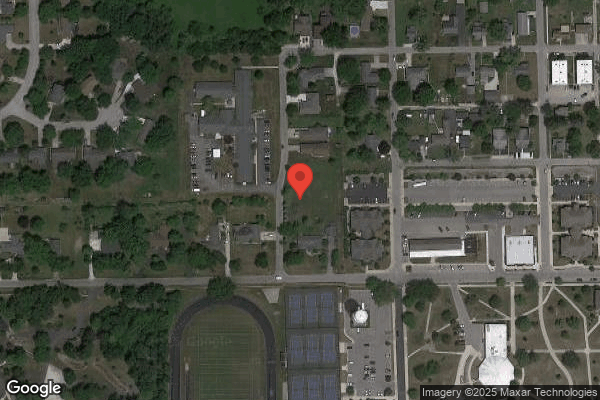
1564 S UNIVERSITY BLVD, UPLAND, IN 46989 (765) 998-2761
Non profit - Corporation 75 Beds AMERICAN SENIOR COMMUNITIES Data: November 2025
Trust Grade
30/100
#487 of 505 in IN
Last Inspection: October 2024

Within standard 12-15 month inspection cycle. Federal law requires annual inspections.

Overview

University Nursing Center in Upland, Indiana has received a Trust Grade of F, indicating significant concerns about the quality of care provided. It ranks #487 out of 505 facilities in the state, placing it in the bottom half and #6 out of 6 in Grant County, meaning only one local option is better. The facility's performance has remained stable, with 5 issues identified in both 2024 and 2025, but it has serious problems, including two incidents that caused harm to residents. Staffing is a significant weakness, with a poor rating of 1 out of 5 stars and a troubling 60% turnover rate, meaning many staff members leave quickly. On the positive side, there have been no fines recorded, which suggests some compliance with regulations; however, the facility lacks adequate RN coverage, being below the standard of 93% of Indiana facilities. Specific incidents noted include a resident developing a severe pressure injury due to inadequate assessments and another resident experiencing emotional distress from an involuntary transfer. Overall, while there are some strengths, the significant issues highlighted may concern families seeking care for their loved ones.

Trust Score
F
30/100
In Indiana
#487/505
Bottom 4%
Safety Record
Moderate
Needs review
Inspections
Holding Steady
5 → 5 violations
Staff Stability
⚠ Watch
60% turnover. Above average. Higher turnover means staff may not know residents' routines.
Penalties
✓ Good
No fines on record. Clean compliance history, better than most Indiana facilities.
Skilled Nurses
⚠ Watch
Each resident gets only 20 minutes of Registered Nurse (RN) attention daily — below average for Indiana. Fewer RN minutes means fewer trained eyes watching for problems.
Violations
⚠ Watch
19 deficiencies on record. Higher than average. Multiple issues found across inspections.
★☆☆☆☆
1.0
Overall Rating
★☆☆☆☆
1.0
Staff Levels
★★★★☆
4.0
Care Quality
★★☆☆☆
2.0
Inspection Score
Stable
2024: 5 issues
2025: 5 issues

The Good

  • 4-Star Quality Measures · Strong clinical quality outcomes
  • Full Sprinkler Coverage · Fire safety systems throughout facility
  • No fines on record

Facility shows strength in quality measures, fire safety.

The Bad

1-Star Overall Rating

Below Indiana average (3.1)

Significant quality concerns identified by CMS

Staff Turnover: 60%

14pts above Indiana avg (46%)

Frequent staff changes - ask about care continuity

Chain: AMERICAN SENIOR COMMUNITIES

Part of a multi-facility chain

Ask about local staffing decisions and management

Staff turnover is elevated (60%)

12 points above Indiana average of 48%

The Ugly 19 deficiencies on record

2 actual harm
Sept 2025 1 deficiency
CONCERN (D) 📢 Someone Reported This

A family member, employee, or ombudsman was alarmed enough to file a formal complaint

Potential for Harm - no one hurt, but risky conditions existed

Resident Rights (Tag F0550)

Could have caused harm · This affected 1 resident

Based on observation, interview, and record review, the facility failed to ensure staff treated a physically dependent resident with respect and dignity when the resident requested assistance for 1 of...

Read full inspector narrative →
Based on observation, interview, and record review, the facility failed to ensure staff treated a physically dependent resident with respect and dignity when the resident requested assistance for 1 of 1 residents reviewed for dignity. (Resident 40)Findings include:On 9/3/25 at 11:43 a.m., Resident 40 was resting in bed with her eyes closed. The room lights were off. On 9/9/25 at 1:40 p.m., the resident was seated in a wheelchair, wearing a knitted cap on her head. Resident 40's clinical record was reviewed on 9/9/25 at 12:49 p.m. Diagnoses included epilepsy, muscle weakness, visual loss in both eyes and need for assistance with personal care.A 7/16/25, annual, Minimum Data Set (MDS) assessment indicated Resident 40 was mildly cognitively impaired. Resident 40's vision was highly impaired where she could follow objects but object identification was in question.During an interview, on 9/9/25 at 9:20 a.m., LPN 7 indicated, on 9/8/25, Resident 40 was upset that her headband was not covering the bald spot on her scalp and wanted a hat. CNA 8 stated to Resident 40 that she was already wearing a headband that covered the bald spot and if Resident 40 didn't wear headbands and hats, she wouldn't have the bald spot on her scalp. CNA 8 aggressively took the headband off Resident 40's scalp and went to retrieve a hat from the resident's room. LPN 7 reported the incident to the nurse manager.On 9/9/25 at 9:30 a.m., CNA 8 indicated Resident 40 had been mean to staff lately and the CNA felt there was something going on with Resident 40. The CNA had educated Resident 40 about not putting herself in bed alone due to a risk for falls. CNA 8 felt that was the reason why Resident 40 was upset with her. The facility had been short staffed lately. She was already running behind when the incident occurred at the nurses' station on 9/8/25. CNA 8 was propelling Resident 40 down the hallway toward the dining room when the resident asked where her hat was. CNA 8 told the resident she was wearing a headband and didn't need to wear a hat. Resident 40 insisted on wearing a hat, as her bald spot was not covered. CNA 8 told Resident 40 that they needed to get down to the dining room for lunch. Resident 40 asked CNA 8 to grab her hat from her room. CNA 8 took the headband off Resident 40's head and grabbed a hat from the resident's room. CNA 8 came back and placed the hat on resident 40's head before propelling her down to the dining room. CNA 8 indicated they were already 30 minutes behind, and other residents needed assistance. She was in a hurry when the incident took place; it was a very crazy and hectic day.During a video observation, on 9/9/25 at 9:54 a.m., with the Administrator, Corporate Nurse Consultant, and the DON present, the following was observed:12:36:05 p.m. - CNA 8 exited the shower room door adjacent to the nurses station while Resident 40 sat in her wheelchair at the nurse's station. CNA 8 approached Resident 40. 12:36:19 p.m. - CNA 8 reached up with her left hand and grasped Resident 40's headband from the top of Resident 40's head. CNA 8 looked towards her right, where LPN 7 was at in the nurses' station. Without looking back at Resident 40, CNA 8 abruptly pulled the headband backwards off of Resident 40's head. At the same time, Resident 40 was attempting to fix her hair. As CNA 8 removed Resident 40's headband backwards off Resident 40's head, Resident 40's arm was jerked away. CNA 8's hand gestured up to her face as she walked to edge of the nurses' station. CNA 8 looked directly in Resident 40's direction as she walked past her in the direction of the resident's room. CNA 8 returned and reapproached Resident 40.12:37:18 p.m. - CNA 8 abruptly placed the hat on Resident 40's head and propelled Resident 40 in her wheelchair down the hallway. During an interview, on 9/9/25 at 10:09 a.m., Resident 40 indicated she felt CNA 8 removed the headband aggressively from her head. CNA 8 did not verbalize she was removing the headband before she took it off of her head. She was visually impaired and could only make out shadows.On 9/9/25 at 10:43 a.m., the Administrator indicated CNA 8 could have taken more time switching out the headband for a hat. She felt CNA 8 was rushed and seemed a little bit irritated during the incident. CNA 8 did not take the best approach with a visually impaired resident. The Administrator felt CNA 8 took the headband off abruptly. Resident 40 is known for wearing hats, while the headbands were newer. Resident 40 didn't complain often and had no other issues with CNA 8. Resident 40 was visually impaired and only saw shadows.On 9/9/25 at 10:50 a.m., the DON indicated CNA 8 abruptly removed the headband from Resident 40's head. CNA 8 was frustrated and was in a hurry. She didn't feel it was related to staffing ratios.On 9/9/25 at 10:55 a.m., the Corporate Nurse Consultant indicated the facility was being proactive in providing abuse in-servicing. Abuse education was offered both verbally and individually. On 9/9/25 at 1:27 p.m., CNA 11 indicated CNA 8 has had attitudes with Resident 40 in the past. CNA 11 had notified the DNS last week about CNA 8's attitude toward Resident 40.On 9/9/25 at 1:51 p.m., the DON indicated CNA 8 had no prior disciplinary actions and was never notified by staff members of any concerns with CNA 8.A current policy, titled Abuse Prohibition, Reporting and Investigation, provided by the Administrator, on 9/9/25 at 12:24 p.m., indicated the following: .Neglect. Failure to provide goods and services to a resident(s) necessary to avoid physical harm, pain, mental anguish, or emotional distress.This citation relates to Intake 2611663.
Jul 2025 1 deficiency
CONCERN (D) 📢 Someone Reported This

A family member, employee, or ombudsman was alarmed enough to file a formal complaint

Potential for Harm - no one hurt, but risky conditions existed

Quality of Care (Tag F0684)

Could have caused harm · This affected 1 resident

**NOTE- TERMS IN BRACKETS HAVE BEEN EDITED TO PROTECT CONFIDENTIALITY** Based on record review and interview the facility failed to provide physician ordered wound treatment for 1 of 3 residents revie...

Read full inspector narrative →
**NOTE- TERMS IN BRACKETS HAVE BEEN EDITED TO PROTECT CONFIDENTIALITY** Based on record review and interview the facility failed to provide physician ordered wound treatment for 1 of 3 residents reviewed for physician order compliance. (Resident B) Findings include:Resident B's closed clinical record was reviewed on 7/21/25 at 10:10 a.m. Diagnoses included chronic congestive heart failure, osteoarthritis, atrial fibrillation, peripheral vascular disease, stage 3 chronic kidney disease, type 2 diabetes mellitus with diabetic chronic kidney disease, malignant melanoma of skin, hypertensive heart and chronic kidney disease with heart failure, severe morbid obesity, obstructive sleep apnea, chronic respiratory failure with hypoxia, and gout. The resident was admitted to the facility on [DATE] and discharged on 7/9/25.A care plan, dated 7/3/25, indicated the resident had impaired skin integrity as evidenced by venous ulcer to the mid lower left leg, medial mid leg and right foot. Diabetic ulcer to the right plantar foot and left second toe. Interventions included: Assess for pain and treat as ordered. Review of physician orders and the Medication/Treatment Administration Record for 6/9/25 through 7/9/25 indicated the following:a. Antifungal powder to bottom of right foot. Place in non-skid sock. Twice daily. Start date: 6/2/25. End date: 7/2/25. No documentation or rationale for missed treatments on evening shift 6/25/25 and evening shift 6/30/25. b. Change socks-due to socks becoming wet causing maceration of feet. Every shift. Start date: 6/5/25. End date: 7/2/25. No documentation or rationale for missed treatments on evening shift 6/25/2025 and evening shift 6/30/25. c. Cleanse left 2nd toe wound and peri wound with wound cleanser. Apply xeroform to wound, cover with 4 x 4 gauze and secure with tape. Change daily. Start date: 7/3/25. End date: 7/8/25. No documentation or rationale for missed treatments on 7/6/2025. d. Cleanse wound and peri wound on left medial mid lower leg with wound cleanser, apply Aquacel Ag Advantage (antimicrobial dressing) to wound bed, cover with ABD pad, then secure with 2 layers of tubigrip size F (base of toes to knee). Change daily. Start date: 7/3/25. End date: 7/8/25. No documentation or rationale for missed treatments on 7/6/25. e. Cleanse wounds and peri wounds to right foot with wound cleanser. Apply mix of calmoseptine (skin barrier) and miconazole powder (antifungal powder) to wound beds. Apply Aquacel Ag Advantage to base of foot and weave between toes. Cover with ABD pads, wrap with kerlix, and secure with paper tape. Apply two layers of tubigrip size F for compression wrap from base of toes to knee. Once daily. Start date: 7/3/25 End date: 7/8/25. No documentation or rationale for missed treatments on 7/6/25.Review of facility the Wound Management Detail Report, dated 7/10/25, indicated on 6/18/25 a venous ulcer to the left shin was identified. Measurements were documented as 0.8 cm x 1.8 cm x 0.1 cm. The wound was described as full thickness with amber colored serous exudate. Comments indicated the area had been healed and had reopened. On 6/26/25, the wound measured 2 cm x 1.5 cm x 0.1 cm. The wound was described as full thickness with serosanguineous exudate. The wound status as documented as improving. On 7/1/25, the wound measured 4 cm x 1.5 cm x 0.1 cm. The wound was described as full thickness with serosanguineous exudate. Comments indicated the resident had been seen at the wound clinic and measurements were post debridement.Review of the visit notes and treatment orders from the wound clinic, dated 7/1/25 through 7/8/25 indicated the following:a. 7/1/25 visit note indicated the resident presented with a venous leg ulcer located on the left medial mid lower leg, venous ulcer to the right foot, a diabetic ulcer on the right plantar foot, and a diabetic ulcer on the left second toe. The diabetic ulcer to the right plantar foot was identified as limb threatening. Procedure: excisional debridement of the subcutaneous tissue. The venous ulcer on the left medial mid lower leg measured 4 cm x 1.5 cm x 0.1 cm with a moderate amount of serous and serosanguineous exudate. The diabetic ulcer located on the left second toe measured 0.4 cm x 0.4 cm x 0.1 cm with a large amount of serous and serosanguineous exudate. Post procedure: the venous ulcer on the left medial mid lower leg measured 4 cm x 1.5 cm x 0.1 cm after 90 % of the wound underwent debridement. The diabetic ulcer on the left second toe measured 0.5 cm x 0.5 cm x 0.1 cm after 100% of the wound underwent debridement. b. Post visit treatment orders: left medial mid lower leg: Aquacel Ag Advantage. ABD pad daily for 1 week. Compression wrap - 2 layers of tubigrip size F. Venous ulcer to the right foot: Calmoseptine to peri wound. Aquacel Ag Advantage with ABD pad, kerlix and paper tape. This treatment was to be done daily for 1 week. Compression wrap with 2 layers of tubigrip. Use tubigrip size F - mix calmoseptine and miconazole powder, Aquacel Ag Advantage and weave between toes and to base of foot. Change twice daily if dressing is soaked through. Check every shift x 2. Elevate legs x 2 hours twice daily.c. Diabetic ulcer right plantar foot: Cleanse the peri-wound and wound area with Wound Cleanser. Treat peri wound are with calmoseptine. Use tubigrip size F - mix calmoseptine and miconazole powder, Aquacel Ag Advantage and weave between toes and to base of foot. Change twice daily if dressing is soaked through. Check every shift x 2. Elevate legs x 2 hours twice daily.d. Diabetic ulcer to left second toe: Cleanse the peri-wound and wound area with Wound Cleanser. Primary dressing: Xeroform with 4 x 4 gauze. Secure with mepitac tape. This treatment will be done every other day for 1 week.e. Edema to right leg treatment: 2 layers of tubigirp size F. This treatment will be done daily for 1 week. Prescriptions: Dankin's Solution: Apply a small amount once daily for 30 days. This order was not transcribed.f. Plan: Cleanse all areas with 1/4 strength Dankins [sic](rx [prescription] sent), Aquacel Ag between toes, antifungal powder mixed with Calmoseptine to R [right] plantar foot, ABD pad, kerlix. Tubigrip for this week until cleared by cards/vasc [sic].g. Visit dated 7/8/25: Venous ulcer located on the left medial lower leg had worsened since the initial visit. Measurements were 9 cm x 4 cm x 0.1 cm. The venous ulcer located on the right foot had worsened since the initial visit and remained limb threatening. Measurements were 14 cm x 14 cm x 0.1 cm. The diabetic ulcer located on the right plantar foot had shown improvement. Measurements were 7 cm x 5 cm x 0.1 cm. The diabetic ulcer on the left second toe was documented as having shown improvement. Measurements were 0.3 cm x 0.2 cm x 0.1 cm. The edema in the right leg status had not changed. Case Management Comments indicated the facility had not followed treatment orders. The resident arrived to clinic with xeroform to all wounds and felt roll to legs and feet. Left 2nd toe had xeroform and gentec (adhesive dressing), again not what was ordered by provider[sic]. Note that if the SNF [skilled nursing facility] does not have aquacel AG [sci] available, they should be using calcium alginate as an alternative for absorption.During an interview on 7/22/25 at 9:46 a.m., the DON and Corporate Clinical Consultant indicated the facility did not have an order for Dakin's Solution during the resident's stay. During an interview on 7/22/25 at 12:19 p.m., LPN 1 indicated medications and treatments were to be documented in the clinical record. If something was missed, it should have a note.During an interview on 7/22/25 at 1:21 p.m., the Corporate Clinical Consultant indicated medications and treatments should be documented in the MAR/TAR. Refusals should be documented. If a treatment or medication was missed or not given/provided per the physician order, there should be a documented rationale. The Corporate Clinical Consultant was unable to provide a policy for documenting refusals or missed medications or treatments. A skills competency, dated 4/2025, titled Medication Administration (Medication Pass Procedure) was provided by the Corporate Clinical Consultant on 7/22/2025 at 1:21 p.m. The competency indicated medications administered would be recorded on the electronic medication administration record after administered. The Corporate Clinical Consultant indicated it was the expectation of the facility that this standard also applied to treatments. This citation relates to complaint 1428035.3.1-37(a)
Feb 2025 2 deficiencies 1 Harm
SERIOUS (G) 📢 Someone Reported This

A family member, employee, or ombudsman was alarmed enough to file a formal complaint

Actual Harm - a resident was hurt due to facility failures

Pressure Ulcer Prevention (Tag F0686)

A resident was harmed · This affected 1 resident

**NOTE- TERMS IN BRACKETS HAVE BEEN EDITED TO PROTECT CONFIDENTIALITY** Based on interview and record review, the facility failed to implement skin assessments to identify pressure injury, failed to o...

Read full inspector narrative →
**NOTE- TERMS IN BRACKETS HAVE BEEN EDITED TO PROTECT CONFIDENTIALITY** Based on interview and record review, the facility failed to implement skin assessments to identify pressure injury, failed to obtain orders for a medical device that increased the risk of skin impairment, and failed to develop and implement interventions to prevent pressure injury for 1 of 3 residents reviewed for pressure injury. (Resident B) This deficient practice resulted in Resident B developing an unstageable pressure injury to the right knee requiring hospitalization and eventual amputation of the lower leg. The deficient practice was corrected on February 10, 2025, prior to the start of the survey, and was therefore past noncompliance. Findings include: Resident B's closed clinical record was reviewed on 2/25/25 at 1:26 p.m. Diagnoses included fracture of neck of right femur, subsequent encounter for closed fracture with routine healing, acute posthemorrhagic anemia, and dementia with other behavioral disturbance. The resident admitted to the facility on [DATE] following surgical repair of the right femur fracture and obstructive and reflux uropathy (urinary obstruction). A care plan, dated 12/31/24, indicated Resident B was at risk for skin breakdown due to weakness, incontinence and right leg immobilizer. Interventions included assess and document skin condition weekly and as needed. A care plan, dated 12/31/24, indicated the resident was at risk for falls due to weakness, history of falls, advanced age, medications, tethering equipment, incontinence, impaired cognition, and right leg immobilizer. Review of the 12/30/24 admission assessment indicated Resident B presented with a dressing to the right thigh and a right leg immobilizer. An assessment of the skin under the immobilizer was not completed. Review of a progress note, dated 12/31/24 at 2:12 a.m., indicated Resident B had a brace to the right leg in place. The resident's skin was not assessed. Review of a Skin and Wound note by the Wound Nurse Practitioner, dated 1/3/25 at 11:38 a.m., indicated the resident admitted with a right heel deep tissue injury (intact skin with localized area of persistent non-blanchable deep red, maroon, purple discoloration due to damage of underlying soft tissue) and skin tears to the right elbow and left upper forearm. A dressing to the right hip/thigh surgical area was in place and was to be left in place until resident was seen by the surgeon. The care plan lacked interventions to support healing of the right heel deep tissue injury. The care plan lacked interventions specific to the management of the leg immobilizer, including prevention of pressure injury. Review of a progress note, dated 1/3/25 at 2:30 p.m., indicated the resident required assistance of two people for all activities of daily living and tolerated the use of assistive devices. The most recent admission Minimum Data Set (MDS) assessment, dated 1/6/25, indicated Resident B was at risk for pressure injuries and had impairment to one side on the lower extremity. The resident required partial/moderate assistance for eating, oral hygiene, upper body dressing, roll left to right. Substantial/max assistance for personal hygiene, sit to stand, lying to sitting, picking up an object. He was dependent for toilet/shower transfer, sit- to-stand, footwear application and removal, dressing lower body, showers, and toilet hygiene. He was incontinent of bowel and admitted with an indwelling catheter. An orthopedic surgeon progress note, dated 1/14/25, indicated a necrotic (dead tissue) wound was identified on the resident's right knee, which may have had full-thickness involvement. A petrolatum (for wound care) dressing was applied to the knee wound and its use was added to the plan of care. The wound required monitoring by a wound care provider. An absorbent dressing to the right knee was to be managed by the wound care provider. There was concern about the pressure injury to the right knee and treatment was aimed at healing. An order written by the orthopedic surgeon, dated 1/14/25 during a follow up appointment indicated wound care to the open area on the right knee was to start on 1/17/25. An event progress note, dated 1/17/25, indicated an open area (wound) measuring 4.0 centimeters (cm) long by 3.0 cm wide on the right knee was identified on 1/14/25. Resident B's physician orders, Medication Administration Records (MAR), and Treatment Administration Records (TAR) for 1/14/25 through 1/17/25 lacked orders for right knee wound care until 1/17/25. Resident B transferred to another long-term care facility on 2/17/25 per their choice. A wound management note from the receiving long term care facility indicated Resident B presented with an unstageable (full-thickness skin and tissue loss in which the extent of tissue damage within the ulcer cannot be confirmed because the wound bed is obscured by slough or eschar) pressure injury to the right knee, measuring 2.0 cm long with a depth of 0.5 cm. The width could not be accurately measured. The wound was covered with slough (non-viable yellow, tan, gray, green or brown tissue; usually moist, can be soft, stringy and mucinous in texture) and eschar (dead or devitalized tissue that is hard or soft in texture; usually black, brown, or tan in color, and may appear scab-like). An orthopedic hospital consultation note, dated 1/29/25, indicated Resident B presented on 1/28/25 with a necrotic wound on the right knee. The wound was identified during an orthopedic follow-up appointment on 1/14/2025 and had developed purulent drainage and then visible bone and hardware (from previous knee replacement). The resident underwent right leg above-the-knee amputation on 1/29/25. During a phone interview on 2/24/25 at 10:25 a.m., the orthopedic surgeon's nurse indicated the surgeon's office note from the hospital to another hospital following surgery (no date provided) did not include the use of an immobilizer brace to Resident B's right leg. During an interview on 2/24/25 at 11:13 a.m., LPN 1 indicated Resident B admitted to the facility with a right leg immobilizer brace in place. No orders for an immobilizer were in place at admission to the facility. LPN 1 did not call to get clarification for the missing order for the immobilizer in place to Resident B's right leg. Residents were to have weekly skin assessments completed and documented in the clinical record. LPN 1 was unable to locate skin assessments completed for Resident B in the clinical record since his admission to the facility on [DATE]. During an interview on 2/24/25 at 11:30 a.m., Physical Therapist (PT) 2 indicated Resident B was on therapy caseload. The resident admitted to the facility with a right leg immobilizer. The immobilizer needed to be adjusted on occasion due to it slipping out of place. PT 2 was not sure but believed the admission orders included non-weight bearing status and a right leg immobilizer. During an interview on 2/24/25 at 12:01 p.m., the DON indicated Resident B's clinical record lacked an order for the use of a right leg immobilizer. The DON thought she had called for clarification but had no documentation of the call. She may have confused two similar residents who admitted around the same time. LPN 1 should have caught the lack of orders for the leg immobilizer and clarification should have been completed and documented. During an interview with CNA 3 and 1 on 2/24/25 at 1:00 p.m., CNA 3 indicated Resident B had a brace on his right leg from his thigh to his ankle during his stay. It had been removed during sleep and for showers. CNA 1 indicated they had given the resident a shower once during their stay and did not notice any new skin impairments. A shower sheet, dated 1/12/25, indicated CNA 3 did not find any new skin impairments. During an interview on 2/24/25 at 1:52 p.m., the Wound Nurse Practitioner (NP) indicated surgeons usually did not want anyone to remove a surgical dressing until the first follow-up visit. She did not have the authority to write orders in the facility. The facility should have gotten a clarification from the surgeon. A current policy, dated 7/24, titled Admission/Return admission Policy Procedure was provided by the DON on 2/25/25 at 1:57 p.m. The policy indicated the following: Policy: It is the policy of American Senior Communities to provide baseline and accurate documentation of the mental, physical condition of each resident admitted or readmitted to the facility and to assist the resident and family with adjusting to the facility. admission procedures will be followed for all new admissions including respite care. Initial nursing assessment: admission Observation 5. A thorough head to toe assessment (including skin) must be done at admission. Any altercations in skin integrity must be identified on nursing assessment. The physician must be notified for specific treatment orders. Physician orders: Verification of orders: 1. The admitting nurse must call the attending physician to verify all orders upon admission. A current policy, dated 7/24, titled Documentation Guidelines for Nursing: was provided by the DON on 2/25/25 at 1:57 p.m. The policy indicated the following: Resident Assessments Completed Weekly skin and vital signs assessment observation (All new skin areas must be reported to the wound nurse with new skin event completed) Review of Resident B's progress notes and assessments in the clinical record lacked weekly skin assessments. During an interview on 2/24/25 at 2:07 p.m., the DON and the Corporate Consultant indicated the facility should have noted the lack of orders related to the surgical wound and the leg immobilizer. This deficient practice was corrected by February 10, 2025 after the facility implemented a systemic plan that included the following actions: assessment of all residents for pressure injuries, in-servicing education to staff related to completion of skin assessments and clarification of or obtaining treatment orders, and ongoing monitoring by Quality Assurance and Performance Improvement (QAPI) activities. This citation relates to Complaint IN00452401. 3.1-40 (a)(1)
CONCERN (D) 📢 Someone Reported This

A family member, employee, or ombudsman was alarmed enough to file a formal complaint

Potential for Harm - no one hurt, but risky conditions existed

Quality of Care (Tag F0684)

Could have caused harm · This affected 1 resident

**NOTE- TERMS IN BRACKETS HAVE BEEN EDITED TO PROTECT CONFIDENTIALITY** Based on record review and interview, the facility failed to identify and implement interventions for care of a surgical wound f...

Read full inspector narrative →
**NOTE- TERMS IN BRACKETS HAVE BEEN EDITED TO PROTECT CONFIDENTIALITY** Based on record review and interview, the facility failed to identify and implement interventions for care of a surgical wound for 1 of 3 resident reviewed for wound care. (Resident B) The deficient practice was corrected on February 10, 2025, prior to the start of the survey, and was therefore past noncompliance. Findings include: Resident B's closed clinical record was reviewed on 2/25/25 at 1:26 p.m. Diagnoses included fracture of neck of right femur, subsequent encounter for closed fracture with routine healing, acute posthemorrhagic anemia, and dementia with other behavioral disturbance. The resident admitted to the facility on [DATE] following surgical repair of the right femur fracture (on 12/24/24) and obstructive and reflux uropathy (urinary obstruction). A care plan, dated 12/31/24, indicated Resident B was a new admission to the facility and required implementation of services to promote physical, emotional, and psychosocial well-being including assistance with activities of daily living related to chronic obstructive pulmonary disease, weakness, right femur fracture with immobilizer. Interventions included an intervention to provide special treatments or devices. A care plan, dated 12/31/24, indicated Resident B was at risk for skin breakdown due to weakness, incontinence and right leg immobilizer. Interventions included assess and document skin condition weekly and as needed. A care plan, dated 12/31/24, indicated the resident was at risk for falls due to weakness, history of falls, advanced age, medications, tethering equipment, incontinence, impaired cognition, and right leg immobilizer. A care plan, dated 1/8/25, indicated the resident had impaired skin (surgical). Interventions included assessing wounds weekly and documenting measurements and description. Notify MD of change in wound such as worsening or signs of infection. Wound location: right hip. Observe for sings of infection: redness, pain, drainage, malodorous drainage, fever, increase in size/depth of wound. Review of the 12/30/24 admission assessment indicated Resident B presented with a dressing to the right thigh and a right leg immobilizer. An assessment of the skin under the immobilizer was not completed. Review of a progress note, dated 12/31/24 at 2:12 a.m., indicated Resident B had a brace to the right leg in place. The resident's skin was not assessed. Review of the progress notes from 12/20/24 through 1/3/2025 indicated the surgical wound was assessed, but the dressing to the surgical wound was not removed. Review of a Skin and Wound note by the Wound Nurse Practitioner (NP), dated 1/3/25 at 11:38 a.m., indicated a dressing to the right hip/thigh surgical area was in place and was to be left in place until the resident was seen by the surgeon. The dressing was not removed. Review of a progress note, dated 1/3/25 at 2:30 p.m., indicated the resident required assistance of two people for all activities of daily living and tolerated the use of assistive devices. The most recent admission Minimum Data Set (MDS) assessment, dated 1/6/25, indicated Resident B was at risk for pressure injuries and had impairment to one side on the lower extremity. The resident required partial/moderate assistance for eating, oral hygiene, upper body dressing, roll left to right. Substantial/max assistance for personal hygiene, sit to stand, lying to sitting, picking up an object. He was dependent for toilet/shower transfer, sit- to-stand, footwear application and removal, dressing lower body, showers, and toilet hygiene. He was incontinent of bowel and admitted with an indwelling catheter. An orthopedic surgeon progress note, dated 1/14/25, indicated Resident B's right leg surgical site had the staples removed and steri-strips were placed. Resident B's physician orders, Medication Administration Records (MAR), and Treatment Administration Records (TAR) for 12/30/24 through 1/17/25 lacked orders for care of the resident's surgical site. Resident B transferred to another long-term care facility on 2/17/25 per their choice. During a phone interview on 2/24/25 at 10:25 a.m., the orthopedic surgeon's nurse indicated the surgeon's office note from the hospital indicated the dressing to Resident B's right leg surgical site should have been changed five days following the surgery. During an interview on 2/24/25 at 11:13 a.m., LPN 1 indicated Resident B admitted to the facility with a right leg immobilizer brace in place and a surgical wound to the right thigh. No orders for an immobilizer nor for surgical wound care were in place at admission to the facility. LPN 1 did not call to get clarification for the missing orders. Residents were to have weekly skin assessments completed and documented in the clinical record. LPN 1 was unable to locate skin assessments completed for Resident B in the clinical record since his admission to the facility on [DATE]. During an interview on 2/24/25 at 12:01 p.m., the DON indicated, during the NP's surgical wound assessment of Resident B, the dressing was not removed. The NP recommended the dressing to stay in place until the resident was seen by the surgeon. The DON indicated she thought she had called the surgeon's office for order clarification, but she may have confused the resident with another who had similar care needs. The DON could not indicate why weekly skin assessments were not completed for Resident B. During an interview on 2/24/25 at 1:52 p.m., the Wound Nurse Practitioner (NP) indicated surgeons usually did not want anyone to remove a surgical dressing until the first follow-up visit. She did not have the authority to write orders in the facility. The facility should have gotten a clarification from the surgeon. A current facility policy, dated 7/24, titled Admission/Return admission Policy Procedure was provided by the DON on 2/25/25 at 1:57 p.m. The policy indicated the following: Policy: It is the policy of American Senior Communities to provide baseline and accurate documentation of the mental, physical condition of each resident admitted or readmitted to the facility and to assist the resident and family with adjusting to the facility. admission procedures will be followed for all new admissions including respite care. Initial nursing assessment: admission Observation 5. A thorough head to toe assessment (including skin) must be done at admission. Any altercations in skin integrity must be identified on nursing assessment. The physician must be notified for specific treatment orders. Physician orders: Verification of orders: 1. The admitting nurse must call the attending physician to verify all orders upon admission. A current facility policy, dated 7/24, titled Documentation Guidelines for Nursing: was provided by the DON on 2/25/25 at 1:57 p.m. The policy indicated the following: Resident Assessments Completed Weekly Weekly skin and vital signs assessment observation (All new skin areas must be reported to the wound nurse with new skin event completed) Review of Resident B's progress notes and assessments in the clinical record lacked weekly skin assessments. During an interview on 2/24/25 at 2:07 p.m., the DON and the Corporate Consultant indicated the facility should have noted the lack of orders related to the surgical wound and the leg immobilizer. This deficient practice was corrected by February 10, 2025 after the facility implemented a systemic plan that included the following actions: assessment of all residents for wounds, in-servicing education to staff related to completion of skin assessments and clarification of or obtaining treatment orders, and ongoing monitoring by Quality Assurance and Performance Improvement (QAPI) activities. This citation relates to Complaint IN00452401. 3.1-(37)(a)
Jan 2025 1 deficiency
CONCERN (D) 📢 Someone Reported This

A family member, employee, or ombudsman was alarmed enough to file a formal complaint

Potential for Harm - no one hurt, but risky conditions existed

Report Alleged Abuse (Tag F0609)

Could have caused harm · This affected 1 resident

Based on interview and record review, the facility staff failed to report an allegation of abuse to the Administrator per facility policy for 1 of 4 residents reviewed for abuse. (Resident C) The defi...

Read full inspector narrative →
Based on interview and record review, the facility staff failed to report an allegation of abuse to the Administrator per facility policy for 1 of 4 residents reviewed for abuse. (Resident C) The deficient practice was corrected on 12/2/24, prior to the start of the survey, and was therefore past noncompliance. Finding includes: During an interview on 1/29/25 at 9:55 a.m., Resident C indicated Resident D had entered her room several times. Resident D continued to open and shut her door several times and then enter the room again. Resident C asked her to leave her alone and Resident D began to argue and yell, then kicked Resident C in the left shin. Staff came in and escorted Resident D out of her room. Her leg was sore, but had no open wound. She was unsure what specific day the incident occurred, but indicated it was in the evening before she went to bed. During an interview on 1/29/25 at 11:13 a.m., with the DON and Administrator, the DON indicated she had not been informed of any incident between Resident C and Resident D in November 2024. The Administrator also indicated she had not been informed of any incident between Resident C and Resident D. During an interview on 1/29/25 at 12:25 p.m., the DON indicated she had reviewed the resident's electronic health record and found no information regarding an incident in November 2024. She had been unable to determine, based on staff interviews, what date the incident had occurred, but had determined it was on the evening shift. During an interview on 1/29/25 at 2:18 p.m., RN 6 indicated Resident C told her that Resident D had entered her room several times and kicked her in the left shin the night before. RN 6 was unable to clarify if this report was on the morning of 11/13/24 or 11/24/24. RN 6 asked the resident if she had reported this to anyone and resident replied no. Upon finishing her morning medication administration that day, she reported Resident C's statement to the Administrator and DON. She had not documented the allegation in the residents clinical record. During a telephone interview on 1/29/25 at 3:18 p.m., LPN 4 indicated she had not witnessed an altercation between Resident C or Resident D. She worked the evening shift on 11/13/25. Resident C had told her about Resident D coming in her room, but no specifics. LPN 4 had not asked any questions of Resident C regarding her statement. During a telephone interview on 1/29/25 at 3:58 p.m., CNA 3 indicated she had not witnessed any altercation between Resident C or Resident D. She had not seen Resident D in Resident C's room. She had worked on the evening shift on 11/12/24 and 11/13/24 on the 300 hall. Another staff member, whom she could not identify, told her that the residents had words and Resident D kicked Resident C in the leg. She was not aware if any staff had reported the altercation to the Administrator. She could not recall if the other staff member had indicated the night the incident occurred. Resident C's clinical record was reviewed on 1/29/25 at 10:58 a.m. Resident C was cognitively intact. Diagnoses included lymphedema, venous insufficiency, peripheral vascular disease, major depressive disorder, and cellulitis. Resident C's progress notes and event charting lacked an entry of an incident with Resident D or assessment following the incident. Resident D's clinical record was reviewed on 1/30/25 at 11:35 a.m. Resident D had moderate cognitive impairment. Diagnoses included vascular dementia with mood disturbance and major depressive disorder. Resident D's progress notes and event charting lacked an entry of an incident with Resident C or assessment following the incident. A current facility policy, revised June 2023, titled, Abuse Prohibition, Reporting, and Investigation, provided by the Corporate Nurse Consultant on 1/28/25 at 2:50 p.m., included the following: .Reporting/Response: 1. All abuse allegations must be report to the Executive Director immediately The deficient practice was corrected by 12/2/24 after the facility implemented a systemic plan that included a facility inservice regarding abuse, report of abuse, and investigation. This citation relates to complaint IN00447542. 3.1-28(c)
Oct 2024 3 deficiencies
CONCERN (D)

Potential for Harm - no one hurt, but risky conditions existed

Quality of Care (Tag F0684)

Could have caused harm · This affected 1 resident

A. Based on interview and record review, the facility failed to administer medications according to physician order for 2 of 9 residents reviewed for medication administration. (Residents 19 and 51) B...

Read full inspector narrative →
A. Based on interview and record review, the facility failed to administer medications according to physician order for 2 of 9 residents reviewed for medication administration. (Residents 19 and 51) B. Based on interview and record review, the facility failed to obtain daily weights according to physician order for 1 of 3 residents reviewed for nutrition. (Resident 65) Findings include: A1. Resident 19's clinical record was reviewed on 10/4/24 at 7:20 a.m. Diagnoses included flaccid hemiplegia (decreased muscle tone) affecting left nondominant side, spastic hemiplegia (muscle tightness) affecting right dominant side, dysphagia (difficulty speaking) following cerebral infarction, aphasia (loss of ability to communicate) following cerebral infarction, and contracture of left hand. Current medications included, depakote sprinkles (anticonvulsant) 125 milligram (mg) twice daily via gastric tube, Eliquis (anticoagulant) 2.5 mg twice daily via gastric tube, gabapentin (anticonvulsant and nerve pain) 100 mg twice daily, and hydrocodone- acetaminophen (pain) 7.5-325 mg every four hours via gastric tube. A September 2024 Medication Administration Report (MAR) indicated she did not receive her dose of hydrocodone- acetaminophen 7.5-325 mg on 9/18/24 at 12:00 a.m., and 9/24/24 at 12:00 a.m. A September 2024 narcotic count sheet indicated the medication was not removed for her 12:00 a.m. dose on 9/18/24. A2. Resident 51's clinical record was reviewed on 10/7/24 at 9:45 a.m. Diagnoses included Parkinson's disease, dementia, type 2 diabetes, chronic pain syndrome, and long-term use of anticoagulants. Current medications included, but were not limited to, furosemide (antidiuretic) 40 mg once daily, hydrocodone-acetaminophen (pain) 7.5-325 mg every 6 hours, warfarin (anticoagulant) 3 mg on Monday, Wednesday, Friday, and Saturday, and warfarin 6 mg on Sunday, Tuesday and Thursday. A September 2024 MAR indicated on 9/18/24 and 9/24/24 he did not receive his 12:00 a.m. doses of hydrocodone- acetaminophen 7.5-325 mg. On 9/24/24 and 9/26/24 he did not receive his 8:00 p.m. doses of Warfarin 6 mg. A September 2024 narcotic count sheet indicated the medication was not signed out on 9/18/24 at 12:00 a.m. On 9/24/24 at 12:00 a.m., it showed the medication was signed out, but the electronic medical record did not show the medication was administered. During an interview, on 10/7/25 at 10:35 a.m., RN 4 indicated the narcotic was to be removed from the mediation card. Staff then sign, along with the date and time the medication was removed on the narcotic count sheet. After administration of the medication, staff was to document in the electronic medical record (eMAR). In the eMAR, staff was to click that the medication was prepped, given, and completed before the medication would show it was administered. Since the medication had been signed out on the narcotic count, he assumed the medication had been administered to the resident. But, he indicated it could have been a drug diversion. During an interview, on 10/7/24 at 10:38 a.m., LPN 7 indicated there were three steps staff must complete before the medication shows it was administered. To document that a medication was given in the eMAR, staff clicked on the prep box, given box, and then the complete box. Once all three steps have been completed, the medication would show it had been administered. If the narcotic count matches the count sheet, it has theoretically been given. It could indicate a possible drug diversion since the eMAR doesn't show the medication was administered. During an interview, on 10/7/24 at 11:35 a.m., the DON indicated scheduled medications that were not marked completed would disappear from the medications to be done list after an hour had elapsed. Staff could have amended the eMAR to show the medication had been administered. She was unable to go back to see if the medication had been marked as prepped but not signed off as administered. If the medication hadn't been signed out of the narcotic book, it indicated it hadn't been administered. Medical Records usually completed the monitoring process for narcotics, but the current staff member was new to the position. A current facility policy was requested for administering mediations per physician orders but was not received prior to facility exit on 10/8/24. B1. Resident 65's clinical record was reviewed on 10/3/24 at 4:06 p.m. Diagnoses included acute respiratory failure with hypoxia, acute on chronic diastolic congestive heart failure, and pulmonary embolism (blood clot in the lungs). A current physician order, dated 9/5/24, indicated to obtain daily weights for congestive heart failure and notify the physician of a weight gain of three pounds in a day or five pounds in a week. The clinical record lacked daily weights, refusals, or clinical notes indicating why the weights were not obtained on the following dates: 9/7/24, 9/8/24, 9/13/24, 9/14/24, 9/15/24, and 9/16/24. An admission Minimum Data Set (MDS) assessment, dated 9/11/24, indicated the resident had mild cognitive impairment. The resident required partial to substantial assistance with activities of daily living and mobility. A care plan, dated 9/5/24, indicated the resident was at risk for ineffective tissue perfusion related to congestive heart failure and pulmonary embolism. Interventions included, nursing staff were required to monitor vital signs (9/5/24) and obtain daily weights (9/9/24). The care plan lacked indication of resident non-compliance with daily weights. During an interview on 10/4/24 at 6:00 a.m., the DON indicated she would review the resident's daily weights. Evidence of missing daily weights was not provided. During an interview on 10/4/24 at 1:10 p.m., RN 6 indicated she was familiar with Resident 65 and he was not known to refuse any daily weights. Daily weights were obtained first thing in the morning by the CNAs and reported to the nurse on the unit so they could be recorded and reviewed by the nurse. Weights were documented in the Medication Administration Record (MAR) /Treatment Administration Record (TAR). She was not aware of any other area in which daily weights were recorded. At times, CNAs did not obtain daily weights. The weights should have been obtained by the nurse if they were not obtained by the CNA, prior to the end of the shift when the daily weight task was due. During an interview on 10/7/24 at 10:56 a.m., RN 4 indicated daily weights triggered as a task to be completed by the nurse and were documented in the MAR/TAR. He was unaware of any other place in which daily weights were charted. At times, the CNAs did not obtain the daily weights. When daily weights were not completed on his shift, the information was passed on in report to the next shift to obtain the daily weights. During review of the resident's MAR/TAR for September 2024, he indicated several days lacked daily weights. The daily weights should have been completed according to the physician order. During an interview on 10/7/24 at 3:37 p.m., the DON indicated daily weights should have been obtained according to the Physician's order unless the resident refused. Daily weights were typically monitored by the Medical Records staff member, but this position was vacant until recently. The Unit Managers were also responsible for monitoring that daily weights were obtained. The facility's process for monitoring the completion of daily weights was ineffective. A current facility policy, last revised 9/2024, titled Resident Weight Monitoring, provided by the DON on 10/7/24 at 3:33 p.m., indicated the following: POLICY . It is the policy of this facility to weigh residents no less than monthly or per physician orders 3.1-37(a)
CONCERN (D)

Potential for Harm - no one hurt, but risky conditions existed

Accident Prevention (Tag F0689)

Could have caused harm · This affected 1 resident

**NOTE- TERMS IN BRACKETS HAVE BEEN EDITED TO PROTECT CONFIDENTIALITY** Based on observation, interview, and record review, the facility failed to provide directed supervision and implement immediate,...

Read full inspector narrative →
**NOTE- TERMS IN BRACKETS HAVE BEEN EDITED TO PROTECT CONFIDENTIALITY** Based on observation, interview, and record review, the facility failed to provide directed supervision and implement immediate, resident-centered interventions to prevent falls for a cognitively impaired resident for 1 of 3 residents reviewed for accidents. (Resident 14) Finding includes: On 10/2/24 at 4:01 p.m., Resident 14 was observed in the memory care unit hallway with a rollator walker (walker with wheels) and shoes on her feet. A staff member accompanied her as she ambulated towards her room. She had a laceration with sutures on her midline forehead near the hair line. The skin on the bridge of her nose was purple and her nostrils contained a dried, dark red substance. Her bilateral eyes had a circular purple discoloration underneath them. During an interview on 10/3/24 at 10:32 a.m., Resident 14's representative indicated the resident had several falls because the resident takes off without her walker. The facility recently notified her of injuries when the resident tripped and fell. On 10/3/24 at 12:00 p.m., Resident 14 was observed in bed with her eyes closed. Her rollator walker was not within reach. The rollator walker in the room was across the room and in front of the closet along the wall, by her roommate's bed. Resident 14's clinical record was reviewed on 10/4/24 at 12:12 p.m. Diagnoses included, vascular dementia, Alzheimer's disease, and anxiety disorder. A current physician's order, dated 3/9/22, indicated the resident could be up with her walker for mobility. Current physician medication orders included the following: hydrocodone-acetaminophen (narcotic pain medication) 5-325 milligrams (mg) tablet by mouth twice daily, amlodipine (blood pressure) 5 mg tablet by mouth once daily, Lexapro (depression/anxiety) 10 mg by mouth once daily, propranolol (blood pressure/heart rate) extended release 60 mg tablet by mouth once daily, and Eliquis (blood thinner) 5 mg tablet by mouth twice daily. Review of a quarterly Minimum Data Set (MDS) assessment, dated 9/11/24, indicated the resident had severe cognitive impairment. Mobility devices were not used during the assessment period. She required substantial assistance from staff for footwear, lower body dressing, toileting, and bathing. The resident required partial assistance from staff for transfers and supervision for walking. The resident had 2 or more falls with injury (except major) during the assessment period. A current care plan, initiated 4/29/21, indicated the resident required assistance with activities of daily living including bed mobility, transfers, and toileting related to osteoarthritis, muscle weakness, and abnormalities of gait and mobility. Interventions include, assist with ambulation as needed - walker for mobility on the unit (4/29/21) and may be up ad lib with a walker for mobility (8/16/23). A current care plan, dated 4/29/21, indicated the resident was at risk for elopement per the Elopement Risk Assessment related to cognitive impairment. Interventions included, provide one on one attention and conversation as needed (2/17/23). A current care plan, initiated 5/6/22, indicated the resident exhibited severe cognitive impairment related to Alzheimer's disease and dementia. Interventions included, provide the resident with prompts and cues as needed (5/6/22). A current care plan, initiated 4/29/21, indicated the resident was at risk for falls due to age, high fall risk drugs, an unsteady gait, altered awareness of immediate physical environment, lack of understanding of one's physical and cognitive limitations, and a high fall risk score of 21. Interventions included the following: keep personal items within reach (4/29/21), place non-skid strips to extend the length of the bed (9/28/22), offer to assist the resident to rest in between meals (4/29/24), offer to assist the resident out of the dining room and into the lounge after meals (5/28/24), obtain a therapy referral to screen for appropriate equipment for ambulation (6/3/24), staff to encourage the resident to use the walker during ambulation (8/8/24), obtain a therapy referral related to balance, for continued walker use/wheelchair (10/2/24), and continue to discourage the resident from entering other resident's rooms (10/2/24). A Physician Progress Note, dated 10/3/24 at 1:44 p.m., indicated the resident had a fall a few days ago with facial injuries due to unsteadiness. On 4/26/24 at 1:40 p.m., Resident 14 had an unwitnessed fall on the South end of the 200 Unit hallway in front of the exit doors. The resident indicated she walked into the exit doors with her walker and fell to the floor. The immediate intervention was to monitor her. On 5/24/24 at 6:06 p.m., the resident had a witnessed fall and hit her head with no injury. The resident was walking in the dining room, tripped, and fell down. She hit her head on the refrigerator. An environmental factor was the hall tray cart in the dining room. No immediate new interventions were put into place. On 6/2/24 at 6:00 p.m. , the resident had an unwitnessed fall without injury. The resident was at the counter in the kitchen lying on her back. The resident indicated she was looking at cookies on the counter and had planned to sit down on her walker. The walker was not locked and rolled out from under her. The immediate intervention was a therapy referral. The resident had a recent therapy referral on 5/30/24, before this fall occurred. On 8/6/24 at 4:00 p.m., the resident had a witnessed fall with no injury. The resident was in the television lounge and tripped on another resident's walker and fell to the floor. The immediate intervention was to remind the resident to use her walker and walk slowly. On 9/2/24 at 3:15 p.m., the resident had a witnessed fall with no injuries in front of room [ROOM NUMBER]. The CNA was redirecting the resident from entering room [ROOM NUMBER] when the resident lost her balance, hit her left shoulder on the door frame, and landed on her buttocks. The immediate intervention was a therapy referral. The clinical record lacked and order for a therapy referral for this date. On 10/1/24 at 11:00 a.m., the resident had an unwitnessed fall with injuries that included a laceration to the forehead and a nasal fracture. The resident was exiting room [ROOM NUMBER] in the South end of the 200 unit hallway. As she turned while closing the door she lost her balance and fell to the floor. The immediate intervention was redirection when the resident wandered and encourage activities. During a review of video surveillance footage, without volume, for 10/1/24 from 10:49 a.m. to 11:17 a.m., the following was observed: At 10:49 a.m., the resident walked out of her room, without her walker, on the North end of the memory care unit down towards the South end of the unit. She had a shirt in her left hand on a hanger and gave it to LPN 3, then turned around an ambulated back to her room past the Nurse's Station at 10:52 a.m. No staff assisted her back to her room so they could redirect her to use the walker. The resident ambulated back out of her room at 10:58 a.m., past LPN 3 at the medication cart, and without her walker. As she walked towards the South end of the unit, she met CNA 5 who continued walking towards the Nurse's Station. Neither LPN 3 nor CNA 5 attempted to assist the resident back to her room to get her walker. The resident continued on, past four administrative staff members who did not assist the resident to get her walker. She proceeded on to room [ROOM NUMBER] where she wandered into the room at 11:02 a.m. and remained in the room out of the surveillance camera view until 11:15 a.m. No staff entered the room and redirected her from wandering nor assisted her back to get her walker. Then the resident wandered out of room [ROOM NUMBER] and entered room [ROOM NUMBER]. She remained in room [ROOM NUMBER] for 1 minute until she exited room [ROOM NUMBER] at 11:16 a.m. The resident walked across the hallway, without her walker, to room [ROOM NUMBER]. Hooks were on the door frame to hold a stop sign, but the stop sign was not in place. She attempted to open the door of room [ROOM NUMBER] at 1:17 p.m. when she lost her balance as she turned, and fell to the floor in the 200 Unit hallway resulting in injuries. During an interview on 10/4/24 at 12:33 p.m., LPN 3 indicated Resident 14 was known to wander frequently and required frequent redirection from staff everyday. Staff also had to constantly remind her to use her walker because she self ambulated without her walker. On 10/1/24, LPN 3 was on the computer, near the dining room, when she heard a resident in room [ROOM NUMBER] yell get out. She saw Resident 14 at the door of room [ROOM NUMBER], reached for the door knob, and the door slammed shut. At the same time, Resident 14 turned away from the door and lost her balance as she turned. She fell onto her left side. LPN 3 was uncertain if the door slammed as a result of her pulling the door shut with the door handle, or if the door was pushed shut from a resident inside the room. She fell out into the hallway on her left side and hit her face on the floor. The fall resulted in a broken nose and a laceration to her forehead. Resident 14 had her shoes on when she fell but did not have her walker with her. The resident did not have any staff with her or by her when she fell. She believed Resident 14 went to room [ROOM NUMBER] because she had resided in that room in the past. During an observation on 10/7/24 at 12:57 p.m., the door was closed to room [ROOM NUMBER]. Hooks were on the door frame used for placing a stop sign across the doorway, but the stop sign was not in place. During an interview on 10/8/24 at 1:32 p.m., CNA 5 indicated Resident 14 was a high risk for falls and had a fallen recently on 10/1/24, during her shift. Interventions in place to prevent falls prior to her fall on 10/1/24 included the following: mesh stop signs across doorways, redirection with wandering into other residents' room, redirection for the resident to always use her walker, frequent reminders of her room location, offered snacks, be vigilant with monitoring, and ensure non-skid socks or shoes were on the resident's feet. The stop signs used across residents' doorways had been an effective method of redirection for Resident 14. On 10/1/24, CNA 5 saw Resident 14 headed towards the opposite end of the Unit from where she resided. She was unable to get to her before she fell due to providing assistance to another resident. When Resident 14 fell by the door of room [ROOM NUMBER], the mesh stop sign was not across the doorway and she did not have her walker with her. CNA 5 indicated she had been in room [ROOM NUMBER], prior to Resident 14's fall with injury, and failed to place the stop sign on the hooks when she exited the room. The resident had fallen due to her loss of balance when she turned after she started to enter room [ROOM NUMBER] without the use of her walker. During an interview on 10/8/24 at 2:33 p.m., the DON indicated Resident 14 had frequent falls. She continued to have falls since her fall with injuries on 10/1/24. During an interview on 10/8/24 at 3:13 p.m., the Administrator indicated Resident 14 ambulated without her walker, wandering into other residents' rooms throughout the review of the surveillance footage for 10/1/24 from 10:49 a.m. to 11:17 a.m. The staff had not redirected the resident from wandering into other residents' rooms. A stop sign was not in place across room [ROOM NUMBER]'s door when the resident started to enter the room before the resident fell on [DATE]. The stop sign was ordered after the fall occurred on 10/1/24. A current facility policy, revised 3/24, titled Fall Management Policy, provided by the Administrator on 10/8/24 at 3:20 p.m., indicated the following: Policy: It is the policy . to ensure residents residing within the community have adequate assistance to prevent injury related falls . Communities will implement resident-centered fall prevention plans for each resident at risk for falls or with a history of falls 3.1-45(a)(2)
CONCERN (E)

Potential for Harm - no one hurt, but risky conditions existed

Pharmacy Services (Tag F0755)

Could have caused harm · This affected multiple residents

Based on observation, interview, and record review, the facility failed to ensure reconciliation of controlled medications was completed for 2 of 3 medication carts reviewed. (200 Unit and 300 Unit me...

Read full inspector narrative →
Based on observation, interview, and record review, the facility failed to ensure reconciliation of controlled medications was completed for 2 of 3 medication carts reviewed. (200 Unit and 300 Unit medication carts). Findings include: Review of the 200 Unit Shift Change Verification of Controlled Substances (12 hour) log from 10/1/24 to 10/4/24 lacked the following information: a. 10/1/24 Night shift- on-coming and ff-going shift signature and count completion b. 10/1/24 Day shift - reconciliation of controlled medication count c. 10/2/24 Night shift- reconciliation of controlled medication count d. 10/2/24 Day shift - reconciliation of controlled medication count During an observation at the time of interview, on 10/4/24 at 6:38 a.m., LPN 3 indicated the night shift nurse on 10/1/24 had not signed the Shift Change Verification of Controlled Substances log on the 200 unit. She recalled who had been on duty when she took over on day shift and placed the night shift nurse's initials on the sheet for both blank spots. Four different shifts on the log for 10/1/24 and 10/2/24 lacked the count completion. Both the on-coming and off-going signatures as well as the count completion should have been on the log for each shift. During an interview on 10/4/24 at 8:48 a.m., the DON indicated the shift to shift log was not signed for night shift on 10/1/24 because she believed they had signed on the wrong log. The Shift Change Verification of Controlled Substances log lacked documentation of count completion for each shift during shift change in October 2024. Both staff members that exchanged keys for a medication cart were required to complete the counts and the logs. Review of the 300 Unit Shift Change Verification of Controlled Substances (8 hour) log from 10/1/24 to 10/7/24 lacked the following information: a. 10/1/24 Night shift- on-coming and off-going shift signatures b. 10/2/24 Night shift- on-coming and off-going shift signatures and reconciliation of controlled medication count c. 10/4/24 Evening shift- reconciliation of controlled medication count d. 10/5/24 Day shift- reconciliation of controlled medication count e. 10/5/24 Evening shift - reconciliation of controlled medication count f. 10/5/24 Night shift- reconciliation of controlled medication count A current facility policy, dated 2/1/18, titled Inventory of Controlled Substances, provided by the DON on 10/7/24 at 3:33 p.m., indicated the following: .Policy: It is the policy . to ensure that the incoming and outgoing nurses count all controlled substances at the change of each shift and document on the Shift Change Verification of Controlled Substances form 3.1-25(e)(2)
May 2024 2 deficiencies
CONCERN (D) 📢 Someone Reported This

A family member, employee, or ombudsman was alarmed enough to file a formal complaint

Potential for Harm - no one hurt, but risky conditions existed

Free from Abuse/Neglect (Tag F0600)

Could have caused harm · This affected 1 resident

Based on observation, interview, and record review, the facility failed to prevent verbal abuse by a staff member to a resident for 1 of 3 resident's reviewed for abuse. (NA (Nurse Aide) 6 and Residen...

Read full inspector narrative →
Based on observation, interview, and record review, the facility failed to prevent verbal abuse by a staff member to a resident for 1 of 3 resident's reviewed for abuse. (NA (Nurse Aide) 6 and Resident C) Findings include: A Facility Reported Incident, dated 4/23/24 at 4:30 p.m., indicated a staff member was allegedly rude to Resident C. The follow up report was added on 4/28/24 and indicated an interview with the CNA who reported the incident indicated Resident C did not hear or respond to employee's inappropriate language. NA 6 was disciplined per policy. During an interview with the DON and the Administrator, on 5/13/24 at 11:20 a.m., the Administrator indicated a CNA was in Resident C's room and heard NA 6 use inappropriate language when the NA whispered Shut the f--k up regarding Resident C. This was witnessed by CNA 8, who reported it to the ADON, and the Administrator was called immediately. NA 6 was suspended, and the next day during a phone interview, NA 6 admitted to the statement. NA 6's employment was terminated for the use of inappropriate language. Resident C did not hear it and she was not alert and oriented. A review of the facility's investigation, on 5/13/24 at 12:07 p.m., indicated the following: A summary of the findings, dated 4/28/24, indicated on 4/23/24, CNA 8 reported to ADON that she overheard NA 6 use inappropriate language in Resident C's room. NA 6 was interviewed by the Administrator and the DON on 4/24/24 and admitted to using inappropriate language. CNA 8 and NA 6 reported Resident C did not hear the inappropriate language, as she did not respond or react. Staff and resident interviews were completed, and there were no findings or negative trends. Social Service followed Resident C with no signs or symptoms of distress. NA 6 was disciplined per policy. A typed interview with NA 6, dated 4/24/24, indicated he was interviewed regarding allegations of using inappropriate language in a resident's room. He acknowledged using inappropriate language. A typed statement for CNA 8, dated 4/24/24, indicated on 4/23/24, she witnessed NA 6 whisper, under his breath Shut the f---k up while providing care to Resident C. The CNA immediately looked up and said, Excuse you? After repositioning Resident C, NA 6 took the trash and linens down to the shower room and the CNA immediately notified the ADON of NA 6's statement. During an interview with CNA 8, on 5/13/24 at 1:37 p.m., she indicated she was put in the Memory Care Unit, and it was the second time she had worked there and didn't really know the residents. She worked alone for the first couple of hours that evening because NA 6 didn't show up for work. NA 6 showed up a couple hours into the shift. He had a poor attitude from the beginning, he indicated to her that he was not on schedule, he wasn't in his uniform, and he had just come from a doctor's appointment. She asked him just to tell her who needed change and what they needed, and she would go do it. He indicated they would just tag team the residents and they did not split the hall. NA 6 asked her for help with Resident C while she was giving another resident a shower, Resident C needed cleaned up and changed because her family was coming to the facility. Resident C was on hospice, CNA 8 changed her and turned her, while NA 6 stood at Resident C's bedside looking at his phone. Resident C moaned in pain, and she was uncomfortable. NA 6 looked at Resident C and said out loud to her Shut the f--k up. CNA 8 pulled Resident C's pants up and had him help her move her up in bed. She bagged up the linens and the brief at the end of Resident C's bed. NA 6 stood by the open door to Resident C's room and said, Resident C and Resident L are the most annoying bit---s here. CNA 8 gave him the linen and brief bag and went to her nurse and told her she was going to take a 15-minute break, CNA 8 then went straight to the ADON and told her what happened. When CNA 8 came back from break, the ADON was walking NA 6 out of the building. CNA 8's original statement, dated 4/23/24, was provided by the Administrator, on 5/14/24 at 8:56 a.m., indicated on the evening of 4/23/24, she was assigned to work the cottage (Memory Care Unit) with NA 6, he was late due to a miscommunication with the schedule, he arrived on the unit between 3:00 p.m. and 3:30 p.m. during that time he would not assist with resident care he would just tell her what needed done. The nurse asked NA 6 to change Resident C because her family would be at the facility soon. CNA 8 thought he went ahead changed Resident C, while she gave the last shower, but he came in during the shower and told her she needed to change Resident C next. CNA 8 replied didn't the nurse just tell you to do that. NA 6 told CNA 8 that Resident C was a two person assist and they went to her room. NA 6 stood to the right of Resident C's bed the whole time while CNA 8 changed her, and CNA 8 even pulled her up in bed alone. While CNA 8 rolled Resident C to pull up her pants she started to yell. NA looked down at Resident C and said, Shut the f--k up. CNA 8 immediately looked up and said, Excuse me? Then he went to mumble something about Between Resident C and Resident L they were the most annoying bi----s. CNA 8 had NA 6 grab her incontinent pad so she could put a pillow under her hip, and they went to the nurses' station together. CNA 8 had him deal with the linen and trash from them changing Resident C and told him she needed a 15-minute break. CNA 8 went straight to the ADON's office and told her about NA 6's attitude and actions that had just occurred. During an interview with NA 6, on 5/14/24 at 12:39 p.m., he indicated he had been called in on his day off. He told the facility he would come in when he had a chance to, because he was at a doctor's appointment. They told him that it was urgent, and he was frustrated. He had mumbled something under his breath that he shouldn't have had to Resident C. He mumbled Shut the f--k up because she had been screaming at him. When he mumbled this to Resident C, she was asleep, and he didn't think she heard him. He said it out of frustration of having to come into work after he was supposed to have Tuesday, Wednesday, and Thursday off. He considered it inappropriate and verbal abuse. His nurse told him to change Resident C because her family was coming into the facility, she needed rolled and changed. She yelled and he lost all his bearings. The CNA that helped him change her went to break and then 20 minutes later the ADON came to the unit and told him she needed to send him home and she walked him out. A current facility policy, titled Abuse, Prohibition, Reporting, and Investigation, provided by the Administrator, on 5/14/24 1:17 p.m., indicated the following: .Definitions/Example of Abuse . Verbal Abuse - The use of oral, written, and/or gestured language that willfully includes disparaging and derogatory terms to residents or their families or within their hearing distance, regardless of their age, ability to comprehend, or disability This citation relates to Complaints IN00433340 and IN00433367. 3.1-27(b)
CONCERN (D) 📢 Someone Reported This

A family member, employee, or ombudsman was alarmed enough to file a formal complaint

Potential for Harm - no one hurt, but risky conditions existed

Deficiency F0658 (Tag F0658)

Could have caused harm · This affected 1 resident

Based on observation, interview, and record review, the facility failed to ensure controlled medications were accounted for at the time of administration for 1 of 3 narcotic count observations. (Memor...

Read full inspector narrative →
Based on observation, interview, and record review, the facility failed to ensure controlled medications were accounted for at the time of administration for 1 of 3 narcotic count observations. (Memory Care Unit). Findings include: During a narcotic count observation with LPN 13, on 5/13/24 at 1:06 p.m., she indicated she needed to sign off the controlled drugs given that morning before she could complete a narcotic count. She had been sidetracked and one of the residents was screaming. The following resident's medications were signed out during the observation on 5/13/24 for the following times: Resident E's lorazepam (treat anxiety) 0.5 mg (milligram) and tramadol (treat pain) 50 mg for 9:00 a.m. Resident F's tramadol 50 mg for 10:00 a.m. Resident G's hydrocodone-acetaminophen (narcotic pain reliever) 5-325 mg for 7:00 a.m. Resident H's tramadol 50 mg for 9:00 a.m. Resident J's hydrocodone-acetaminophen 7.5-325 mg and lorazepam 0.5 mg for 10:00 a.m. Resident K's hydrocodone-acetaminophen 7.5-325 mg for 8:00 a.m. Resident M's tramadol 100 mg for 10:00 a.m. Resident N's hydrocodone-acetaminophen 5-325 mg for 8:00 a.m. Resident P's tramadol 50 mg for 10:00 a.m. and lorazepam 1 mg for 11:00 a.m. Resident Q's tramadol 50 mg for 11:00 a.m. Resident R's hydrocodone-acetaminophen 5-325 mg for 10:00 a.m. Resident T's buprenorphine (narcotic pain reliever) 10 mcg/hr (microgram/hour) patch and hydrocodone-acetaminophen 7.5-325 mg for 10:00 a.m. Resident V's hydrocodone-acetaminophen 5-325 mg for 9:00 a.m. During an interview with the DON on 5/13/24 at 1:46 p.m., she indicated she would expect the nurses to sign off their medications/narcotics as they gave them. They did not have a policy for signing off controlled medications. The DON provided a skills check off that they would follow, titled Medication Administration Observation and indicated the following: .Documentation Standards . E . 1. Controlled medications are signed out at time of removal This citation relates to Complaint IN00433743. 3.1-35(g)(1)
Nov 2023 3 deficiencies
CONCERN (D)

Potential for Harm - no one hurt, but risky conditions existed

Deficiency F0558 (Tag F0558)

Could have caused harm · This affected 1 resident

Based on observation, record review, and interview, the facility failed to ensure light cords were within reach for 2 of 6 residents interviewed for accommodation of needs. (Residents 58 and 166) Find...

Read full inspector narrative →
Based on observation, record review, and interview, the facility failed to ensure light cords were within reach for 2 of 6 residents interviewed for accommodation of needs. (Residents 58 and 166) Finding includes: During an observation on 11/14/23 at 4:10 p.m., Resident 58 and Resident 166 lacked reachable cords to their overbed lights. The overhead lights were turned on by utilizing a chain approximately one half the width of a piece of loose-leaf paper. During an interview, on 11/15/23 at 2:30 p.m., Resident 166's representative indicated the resident was unable to reach the light cord to turn on the light as the cord was too short. He could turn it on for her while he was there. During an interview, on 11/16/23 at 3:49 p.m., Resident 58 indicated she could not reach the light cord. She asked the staff to turn the light on and off. During an interview, on 11/17/23 at 11:33 a.m., the Maintenance Director indicated he had not noticed the light cord strings were missing. A review of Resident 58's clinical record, on 11/20/23 at 2:53 p.m., indicated the resident was cognitively intact and independent with ambulation and transfers. She required partial/moderate assistance moving from lying to sitting on the side of the bed. A review of Resident 116's clinical record, on 11/20/23 at 3:06 p.m., indicated, in the admission Observation on 11/11/23, the resident was alert and oriented to person, time, place, and situation. She had weakness and limitation to her range of motion to her left upper extremity including her middle finger, ring finger, pinky, thumb, and index finger. Her right side did not have limitations or weakness. A current facility document titled Resident Rights, dated 10/23 and provided on 11/13/23 with the entrance conference papers in the resident's admission packet by the Administrator, indicated .The resident has a right to care in an environment that promotes maintenance or enhancement of each resident's quality of life. The resident has the right to a safe, clean, comfortable, and homelike environment, including but not limited to receiving treatment and supports for daily living safely A current facility policy, provided by the Maintenance Director on 11/16/23 at 3:25 p.m., dated 11/15, titled Maintenance Work Orders, indicated .Our Community provides routine maintenance for tenants and is responsible for the overall management of the physical plant 3.1-3(v)(1)
CONCERN (D) 📢 Someone Reported This

A family member, employee, or ombudsman was alarmed enough to file a formal complaint

Potential for Harm - no one hurt, but risky conditions existed

Accident Prevention (Tag F0689)

Could have caused harm · This affected 1 resident

Based on interviews and record review, facility failed to ensure a dependent resident who required two person assist during transfers was transferred according to their care plan for of 1 of 5 residen...

Read full inspector narrative →
Based on interviews and record review, facility failed to ensure a dependent resident who required two person assist during transfers was transferred according to their care plan for of 1 of 5 residents reviewed for accidents (Resident 21). Findings Include: During an interview, on 11/14/23 at 9:24 a.m., Resident 21 indicated CNA 5 transferred her alone and caused an injury. Her injury had improved, but continued with soreness. She did not let this CNA transfer her in any type of lift since the incident. The clinical record for Resident 21 was reviewed on 11/14/23 at 3:08 p.m. The diagnoses included, but were not limited to, pain in joints, repeated falls, chronic diastolic heart failure, muscle weakness, age related physical debility, and cognitive communication deficit. Current physician orders included Hoyer (mechanical) lift with two person assist, dated 5/31/23. A quarterly Minimum Data Set (MDS) assessment, dated 8/29/23, indicated the resident required extensive assistance with bed mobility, transfer, dressing, shower, eating, sit to stand, chair to bed, and toilet transfer. She was cognitively intact. A care plan initiated 8/16/17, revealed she was at an increased risk for falls due to age. Interventions included Hoyer lift of two person assistance with transfers and therapy screens for appropriate transfer methods. A progress note, dated 10/2/23 at 3:32 p.m., indicated Resident 21 was transferred from a shower chair to a wheelchair during a one person transfer with a stand up lift and slid out of lift onto the floor, hitting the back of her head. A hematoma was noted to the back of her head after the incident, along with complaints of headache, neck pain, and increased confusion. She was sent to the emergency room for evaluation. A progress note, dated 10/2/23 at 11:55 p.m., indicated she returned from the emergency room where CT of head/cervical spine showed no signs of fracture and no internal bleeding. An X-ray of her left hip showed no signs of fracture. No evidence of a urinary tract infection was found. No new areas of concern were noted after the skin assessment. During an interview, on 11/15/23 at 9:33 a.m., the DON and Nurse Consultant (NC) indicated all staff members had completed job specific training including lift transfers. The DON provided a copy of CNA 5's mechanical stand lift skills competency form, last reviewed date was 6/2023, noting mechanical lifts required two staff members. During an interview, on 11/15/23 at 1:44 p.m., CNA 5 indicated the incident occurred due to her neglect in transferring resident alone. The CNA took full responsibility for the incident and not following residents required orders of two person assistance with transfers. There were cultural issues where you were expected to cut corners and there was difficulty getting help from other staff members. The CNA still provided care to the resident, with the exception of transferring her in any type of lift. During an interview, on 11/15/23 at 4:06 p.m., CNA 6 indicated they follow caresheets for residents' care. They used a buddy system when residents required two staff members for care and transfers. A review of Point of Care (POC) charting, on 11/17/23 at 3:08 p.m., indicated staff members had documented the resident as a one person transfer. Five staff members, between 10/1/23 and 11/16/23, documented she required one person assistance with transfers using the Hoyer lift. During an interview, on 11/17/23 at 3:20 p.m., DON and NC indicated they needed to perform an inservice with staff members on accurate charting. A current facility policy, titled FALL MANAGEMENT POLICY, last revised on 8/2022 and provided by the DON on 11/20/23 at 2:25 p.m., indicated .Policy It is the policy of American Senior Communities to ensure residents residing within the facility receive adequate supervision and or assistance to prevent injury related to falls .Procedure Fall risk .3. A care plan will be developed at time of admission with specific care plan interventions to address each resident's fall risk factors. Care plan including interventions and fall risks will be reviewed at least quarterly .6. The resident specific care requirements will be communicated to the assigned caregiver utilizing resident profile or CNA assignment sheet This Federal tag relates to complaint IN00418930. 3.1-45(a)
CONCERN (E)

Potential for Harm - no one hurt, but risky conditions existed

Safe Environment (Tag F0921)

Could have caused harm · This affected multiple residents

**NOTE- TERMS IN BRACKETS HAVE BEEN EDITED TO PROTECT CONFIDENTIALITY** Based on observation, interview, and record review, the facility failed to maintain a safe and homelike environment for 5 of 17 ...

Read full inspector narrative →
**NOTE- TERMS IN BRACKETS HAVE BEEN EDITED TO PROTECT CONFIDENTIALITY** Based on observation, interview, and record review, the facility failed to maintain a safe and homelike environment for 5 of 17 resident rooms reviewed for environment when black television cable cords were strung haphazardly on the walls of the rooms (Rooms 101, 103, 104, 106, and 107) and the chair rail and baseboards were damaged for 1 of 17 rooms. (room [ROOM NUMBER]) Findings include: During a random observation, on 11/14/23 at 4:10 p.m., resident rooms 101, 103, 104, 106, and 107 had black cable cords strung from the cable outlet along the walls with gaps between the wall and the cable cord. room [ROOM NUMBER] had a damaged chair rail above the head of the bed near the window. The chair rail was cracked and [NAME] out from the wall slightly with sharp edges. The baseboard below the damaged chair rail was pulling away from the wall in two places. During on observation on 11/15/23 at 2:30 p.m., room [ROOM NUMBER] had a black cable television cord strung with gapes between the wall and the cord from the cable outlet along the wall, above the door, to the television on the wall by the door. A resident representative interview, at the time of the observation, indicated he did not know why the cords were there. He had tried to turn on the television, but it did not work. During an interview, on 11/15/23 at 3:06 p.m., the Maintenance Director indicated his practice was to tack the black television cable cords to the wall. He had not been told how to properly conceal them. During an interview, on 11/15/23 at 3:25 p.m., the Maintenance Director indicated he had spoken with his corporate manager. He should have run the cables through the ceiling and dropped them where they needed to be. During an observation, on 11/16/23 at 3:49 p.m., the chair rail in room [ROOM NUMBER] remained broken with sharp edges. During an interview, at the time of the observation, CNA 51 indicated she had not noticed the broken chair rail above the headboard of the bed by the window in room [ROOM NUMBER]. She touched the trim and indicated it was sharp. During an observation, on 11/16/23 at 3:49 p.m., the black television cable cords remained visible and strung haphazardly in Rooms 101, 103, 104, 106, and 107. During an observation, on 11/17/23 at 9:41 a.m., in room [ROOM NUMBER], the baseboard was pulled away from the wall directly below the chair rail behind the bed near the window in two places. The area near the side near the window was approximately the half the size of a loose-leaf paper pulled away from the wall approximately the length of three quarters. The area nearer to the door was approximately the length of three quarters and pulled away from the wall approximated the length of a quarter. The bed frame was resting on the pulled away areas. During an interview, on 11/17/23 at 11:33 a.m., the Maintenance Director indicated he had noticed the baseboards pulling away from the wall yesterday, but had not had time to repair them yet. During an observation, on 11/20/23 at 2:33 p.m., room [ROOM NUMBER] continued to have the black cable cords hanging on the wall on both sides of the room with gaping between the wall and the cord approximately as long as the width of a loose-leaf paper in some areas. The cord went over the door. During an observation, on 11/20/23 at 2:35 p.m., room [ROOM NUMBER] continued to have black cable cords strung haphazardly around the walls. One cord went over the door then hung down the wall un-tacked with the end connected to nothing. During an observation, on 11/20/23 at 2:38 p.m., room [ROOM NUMBER] continued to have black cable cords strung about the room along the wall. A cord going over the door was not tacked down along the wall and went behind the dresser. During an observation, on 11/20/23 at 2:43 p.m., room [ROOM NUMBER] continued to have black cable cords strung along wall with gaps between wall and cord. The cord hung down just above the door and connected to a television beside the door. A current facility document titled Resident Rights, dated 10/23 and provided on 11/13/23 by the Administrator with the entrance conference papers in the resident admission packet, indicated .The resident has a right to care in an environment that promotes maintenance or enhancement of each resident's quality of life. The resident has the right to a safe, clean, comfortable, and homelike environment, including but not limited to receiving treatment and supports for daily living safely A current facility policy, provided by the Maintenance Director on 11/16/23 at 3:25 p.m., dated 11/15 and titled Maintenance Work Orders, indicated .Our Community provides routine maintenance for tenants and is responsible for the overall management of the physical plant A current facility policy, provided by the Administrator on 11/20/23 at 2:57 p.m., dated 11/15 and titled Preventative Maintenance Plan, indicated .The Community shall provide preventative maintenance for the Community 3.1-19(f)(5)
Sept 2023 1 deficiency 1 Harm
SERIOUS (G) 📢 Someone Reported This

A family member, employee, or ombudsman was alarmed enough to file a formal complaint

Actual Harm - a resident was hurt due to facility failures

Transfer Requirements (Tag F0622)

A resident was harmed · This affected 1 resident

**NOTE- TERMS IN BRACKETS HAVE BEEN EDITED TO PROTECT CONFIDENTIALITY** Based on interview and record review, the facility failed to ensure a resident was free from involuntary transfers without ident...

Read full inspector narrative →
**NOTE- TERMS IN BRACKETS HAVE BEEN EDITED TO PROTECT CONFIDENTIALITY** Based on interview and record review, the facility failed to ensure a resident was free from involuntary transfers without identified necessity for 1 of 1 resident reviewed for involuntary transfers (Resident C). This deficient practice resulted in emotional distress to the resident requiring an extra dose of psychoactive medication, the resident experiencing a stressful life change, the resident being moved to a facility not of the family's choosing, and the resident now residing in a facility a greater distance for the family to drive to for visit. Findings include: The current CMS 672 Census and Condition Detail report, provided by the RN Consultant on [DATE] at 2:00 p.m., indicated the following regarding mental status for the current resident population: 34 of the current 67 residents had depression, 25 of the current 67 residents had a psychiatric diagnoses, 42 of the current 67 residents had a diagnoses of dementia or a related disorder. During an interview on [DATE] at 12:27 p.m., Resident C's family indicated the following: The facility discharged the resident and it was not the family's request. The facility did not provide the paper work or opportunity for a 30-day notice of involuntary transfer. They were not told they could appeal or object to the transfer. On or around [DATE], the facility called and said they were going to have to transfer their loved one, as they could not met his needs. The family and facility had 30 days to work all this out. On [DATE], the facility called and said they were transferring Resident C tomorrow. The family was not given a choice, it felt like it was a done deal. The family member told the facility she wanted to inform the resident about the transfer. The Administrator told the resident before the family arrived at the facility and led the resident to believe the move was the family's idea, which upset him even more. After the facility informed the resident , he was very upset and couldn't be calmed. The resident indicated he couldn't calm down and needed medication. An as needed psychoactive medication had to be ordered and given to try to calm him down. He did not deal well with change, and it could make his condition worse. The family had chosen University Nursing Center because it had a good reputation, good star scores, the family had a history with the facility, it was close enough for regular visits. The family did not choose the facility Resident C was transferred to, it was only a three (3) star facility. The new facility was in a different town and further away, making it difficult to visit. Since the transfer, the resident was doing okay and was in the process of adjusting. He was not a danger to himself or others at the new facility. Review of a map search, retrieved from www.maps.google.com, indicated the new facility was 22 miles and approximately 34 minutes' drive from University Nursing Center. During an interview on [DATE] at 2:21 p.m., the psychiatric Nurse Practitioner (NP), who offered in house counseling and psychiatric services to Resident C, indicated the following: She believed the regional or corporate office of the nursing home had been concerned about the resident's mental health needs and had requested more frequent rounding visits. The NP and psychiatric Doctor had both visited regularly. The resident had not been deemed a danger to himself or others at any time following his [DATE] discharge from a mental health facility. He had been doing well during her last visit, and was out of his room and playing Yahtzee with two ladies. He indicated he knew he needed to get out of his room and socialize more for his mental health and well-being and had a positive outlook. According to the doctor's notes, the resident was calm and in a good disposition. She had been told the family was requesting the transfer. The resident had experienced atrial fibrillation (A-Fib) recently and was showing manic symptoms during the event. Research has shown A-Fib can impact bipolar and manic episodes, and she was concerned if that could be the case and sent the resident to the emergency room (ER). As often happened, the resident was out of A-Fib when he arrived to the ER. She would have liked to explore that issue further. The transfer out had been very quick, and she had not been aware it was happening. The resident was regimented and negatively impacted by change, which could potentially cause an increase in manic episodes. Resident C's clinical record was reviewed on [DATE] at 11:10 a.m. The resident was admitted to the facility on [DATE] and discharged from the facility on [DATE]. The resident's admission and discharge diagnoses included dementia, paranoid schizophrenia, major depressive disorder, bipolar disorder, and anxiety disorder. No additional mental health-related diagnoses were received or added during the residents stay in the facility. An [DATE], Preadmission Screening and Resident Review-Level 1 form, completed as part of the admission process, indicated he had a history of suicide attempts or gestures greater than five years prior to the assessment and a history of hallucinations or delusions currently or within the past 30 days. Diagnoses included dementia, schizophrenia, depression, anxiety, and diabetes. He was no longer appropriate to stay in a group home setting and was admitted to the skilled nursing facility for long term placement. The resident's admission orders, dated [DATE], indicated diagnoses of paranoid schizophrenia, bipolar disorder, dementia, and anxiety. The resident received six (6) psychoactive medications for the treatment of paranoid schizophrenia as follows: benztropine( improve the movement side effects caused by antipsychotic drugs), buspirone (an anti-anxiety medication), clonazepam (medication used for panic disorders and anxiety), Risperdal Consta (an injected antipsychotic medication), risperidone (an antipsychotic medication), and sertraline (an antidepressant medication). A [DATE], quarterly, Minimum Data Set (MDS) assessment indicated the resident understood others and was understood by others, was cognitively intact, and displayed no hallucination, delusions or maladaptive behaviors during the assessment period. An [DATE], discharge with return anticipated, MDS assessment did not contain a cognitive assessment and indicated the resident was delusional. He was not rejecting care nor displaying maladaptive behaviors towards himself or others. The resident had the following current care plan problems/needs at the time of his discharge: Mood State: Risk for alteration in mood status: depression/depressive symptoms due to placement in nursing facility, loss of independence. This problem originated at the time of his admission on [DATE], and continued throughout the resident's stay at the facility. Mood State: Resident at risk for signs and symptoms of anxiety as evidenced by worried facial expression, repetitive movements, SOB (shortness of breath), nausea, sweating, tremors, irritability, insomnia, reports of anxiety, etc. Resident had a diagnosis of anxiety. This problem originated at the time of his admission on [DATE] and continued throughout the resident's stay at the facility. Mood State: Resident at risk for signs and symptoms of depression as evidenced by sad facial expression, withdrawal, decreased appetite, tearfulness, insomnia, verbalization of depression, etc. Resident had a diagnosis of major depressive disorder and received antidepressant medication. This problem originated at the time of his admission on [DATE], and continued throughout the resident's stay at the facility. Behavioral Symptoms: Resident exhibited hallucinations and delusions as evidenced by .law enforcement wants to kill him, cop was coming after him, he was locked in a truck and beat him, someone was going to kill him with a gun. Resident had diagnosis of paranoid schizophrenia and received antipsychotic medication. This problem originated on [DATE], and continued throughout the resident's stay at the facility. Resident had a suicide attempt on [DATE], when he was noted to place a trash bag over his head. He was sent for a behavioral health stay, with a return to the building on [DATE]. The physician at the health facility stated the resident was not a threat of self-harm or suicide attempts. This problem originated [DATE] and continued throughout the resident's stay at the facility. Resident had increased manic behaviors. He was sent for a behavioral health stay, with a return to the facility of [DATE]. The psychiatric Nurse Practitioner who rounded at the facility stated the resident was not a threat of self harm or suicide attempts. This problem originated [DATE], following a mental health stay to treat manic behaviors associated with bipolar disorder and continued throughout his stay at the facility. Approaches to this problem included the following: Invite resident to be social with others, involve in activities, and recommend resident to participate in group activities. Review of Progress Notes from [DATE] to [DATE], lacked any documentation that the resident was a danger to himself of others. A [DATE] at 10:09 a.m., Progress Note by the Social Services Director indicated they spoke with the resident's family and discussed the need for resident to transfer to another facility that was able to better meet the resident's needs. A [DATE] at 4:18 p.m., Progress Note by the Social Services Director indicated they referred the resident to a facility that could better meet the resident's needs. A [DATE] at 8:00 a.m., Progress Note made by the doctor from the psychiatric service provider indicated the resident had lost his roommate (who had died). He seemed more relaxed. When asked, he reported that he was taking his medication and getting himself out of his room to get more involved in activities. His mood was stable and his speech continued to be pressured, but he was more able to change topics today. A [DATE] at 4:18 p.m., Progress Note indicated the resident was informed by staff that he would be transferred to a facility in a neighboring city, and then called his daughter and the resident stated he was told that there was another facility to better care for him due to resident diagnoses. The resident was on the phone with his daughter and staff heard the resident crying and he was highly upset with the information. He stated he wasn't going to lose his life and he was not moving. Staff encouraged the resident to calm down and that everything would be alright, to no avail. The resident remained upset and stated [Administrator's name] is going to pay . A [DATE] at 7:32 p.m., Progress Note indicated the resident's family member approached the nurse and stated that the resident was very anxious and agitated over being told that he would be transferring facilities on [DATE]. They asked if the resident could be given a medication to calm his anxiety and agitation, as he had experienced episodes of crying and verbalizing anger this afternoon. The family member had spent a few hours visiting to help calm the resident, but he was still agitated. The nurse received an order to administer his next dose of Seroquel [an antipsychotic medication] at this time and continue to monitor. A [DATE] at 8:30 p.m., Progress Note indicated the resident continued to have anxiety and to be agitated. He stated that he was going to see [Administrators name] in court and sue him! because the resident was being transferred to another facility tomorrow. No interventions were effective. A new order was received to give Seroquel 50 mg orally right now for increased anxiety and agitation. During an interview on [DATE] at 12:55 p.m., with the Administrator and DON, the facility indicated the resident was not a danger to himself or others at the time of his transfer from the facility. He had not been a danger to himself or others at any time since his readmission to the facility on [DATE], following an inpatient mental health stay. The resident had displayed an increase in manic behaviors such as talking quickly and standing too close. The facility was unable to identify how they could not meet the resident's needs, and felt the other facility could better meet the resident's needs due to their experience with mental illness and mental health needs. During an interview on [DATE] at 1:31 p.m., with the Social Services Director and DON, the facility indicated the facility believed the residents needs would be better met at the other facility that had more skills for dealing with major mental illnesses. The resident had the same mental health diagnoses he had upon admission, when they had indicated they could met the resident's needs. He had three recent inpatient psychiatric stays, and the facility believed moving the resident to a facility with more mental health experience would reduce the chances of additional inpatient mental health stays. The facility could not identify any needs the resident had that the facility was unable to meet. Review of a current, 2/2020, facility policy titled Facility Initiated Discharge, provided by the RN Consultant on [DATE] at 2:09 p.m., indicated the following: .It is the policy of this facility that residents be permitted to continue to reside in the facility and will only be involuntarily transferred/discharged from the facility in the following circumstances: a. The transfer or discharge is necessary for the welfare of the resident's welfare and the resident's needs cannot be met in the facility .1. Documentation .b In cases when the resident's needs cannot be met (reason above), documentation must be made by the resident's attending Physician and include specific resident need(s) that cannot be met, facility attempts to meet the resident needs, and services available at the receiving facility to meet the need(s) This Federal tag relates to complaint IN00418458. 3.1-12(a)(4)(A)
Aug 2023 3 deficiencies
CONCERN (D) 📢 Someone Reported This

A family member, employee, or ombudsman was alarmed enough to file a formal complaint

Potential for Harm - no one hurt, but risky conditions existed

Deficiency F0604 (Tag F0604)

Could have caused harm · This affected 1 resident

Based on interview and record review, the facility failed to ensure a resident was free from physical restraint for 1 of 3 residents reviewed for restraints (Resident B). Findings include: Resident B'...

Read full inspector narrative →
Based on interview and record review, the facility failed to ensure a resident was free from physical restraint for 1 of 3 residents reviewed for restraints (Resident B). Findings include: Resident B's clinical record was reviewed on 8/17/23 at 9:50 a.m. Diagnoses included Parkinson's disease, unspecified dementia, unspecified severity, with other behavioral disturbance, repeated falls, other abnormalities of gait and mobility, generalized anxiety disorder, insomnia, cognitive communication deficit, and muscle weakness (generalized). His medications included lorazepam (treat anxiety) 0.5 mg (milligram) every eight hours, carbidopa-levodopa (treat Parkinson's disease) 25-100 mg three times daily and trazodone (treat insomnia) 50 mg at bedtime. His orders included touch pad call light (5/30/23) and a scoop mattress to bed to provide tactile bed boundaries (7/19/23). His admission MDS (Minimum Data Set) assessment, dated 6/3/23, indicated he was severely cognitively impaired. He required extensive assistance of two staff members for bed mobility and transfers. A 5/28/23 fall risk assessment indicated he was at a high risk for falls. Review of his nurses notes indicated the following: On 7/16/23 at 7:15 a.m., the nurse and the CNA heard Resident B hollering for help. They entered his room and found him in bed with his body against the wall and one side of his mattress was higher than the other. There were pillows and blankets under his mattress on the left side. He was flailing/swinging his right arm and he received a skin tear, due to his body being against the wall. On 7/16/23 at 7:27 a.m., the skin tear was cleaned with wound wash and steri-strips were applied. The area measured 1.7 cm (centimeters) x 1.2 cm and had sanguineous (bloody) drainage. An IDT (Interdisciplinary Team) note, dated 7/18/23 at 2:45 p.m., indicated an assessment of Resident B was completed due to identification of his need for bed boundaries. The physical therapist indicated Resident B could benefit from a scoop mattress for balance and it was to be initiated. During an interview with LPN 13, on 8/17/23 at 10:50 a.m., she indicated she heard Resident B hollering for help. His mattress had a pillow and blanket under it, which raised the mattress on the one side. He was half on the bed and half off of the bed, between the mattress and the wall. He was flailing his arms. They did not typically use pillows and blankets under the mattresses, and she would not use them. During an interview with CNA 9, on 8/17/23 at 12:47 p.m , she indicated she had seen the blankets and pillows under Resident B's mattress. He was hollering out and flailing his arms and legs trying to get up, but couldn't. His head was at the foot of his bed and he was on his right hand side, against the wall. She felt using the pillows and blankets under his mattress was a restraint. During an interview with LPN 25, on 8/17/23 at 11:21 p.m., she indicated Resident B needed to be kept on one on ones and busy with activities. They gave him frequent snacks. They monitored him until he was really tired and he would nap in his chair. He was on a three day cycle. He slept terrible for two days, then the last day he slept hard. His family suggested to make a concave mattress from his regular mattress. She thought it was a restraint, but he could easily climb over it. They used a touch pad call light, and that gave them enough time to know he was trying to get up. During an interview with CNA 5, on 8/17/23 at 11:34 p.m., she indicated Resident B was basically a one on one. Everyone was under the understanding that his family was ok with using the pillow under his mattress. He was such a high fall risk. There were two CNAs and one nurse on the night shift to do one on ones with him. But if they were in another resident's room, they were unable to watch him. If he were to roll onto or touch his touchpad call light, they knew he was moving and they were able to get to his room. During an interview with CNA 19, on 8/17/23 at 11:46 p.m., she indicated they had to keep an eye on Resident B. They had to keep him distracted with toys and snacks, and they just tried to keep him busy. They used a blanket and pillow under his mattress and his call light while he was in bed. They had been doing it since he first came to the facility. She didn't feel like it was a restraint, as he was able to climb over the mattress. During an interview with RN 4, on 8/18/23 at 9:58 a.m., she indicated they had to check on Resident B often. They kept him busy with a busy board, a clock, activities and a snack. The other nurse had indicated to her that he was screaming in his room. When she entered the room, he was laying on his right side and his arm was pressed up against the wall. There was a pillow and a blanket between his mattress and the frame of the bed. He had a skin tear on his elbow and there was blood on his sheet and on the wall. She felt like it restrained him, and she reported it to the DON and the Administrator. At night there were two aides and one nurse for the whole side of the facility. Resident B had his days and nights mixed up. If they were busy on day shift, there was someone in the facility to watch him and keep him occupied. The night shift did not have that option. During an interview with the DON, on 8/18/23 at 2:41 p.m., she indicated they reported using the blanket and pillows under his mattress to her that morning and she instructed the nurse to call the Administrator. She didn't feel like it was a restraint, as they told her the resident was able to get out of bed. It gave him some bed boundaries, and the staff were not trying to restrain him in bed, according to the interviews they had completed. A current facility policy, titled Abuse, Prohibition, Reporting, and Investigation, revised 6/2023 and provided by the Nurse Consultant on 8/17/23 at 3:27 p.m., indicated the following: .Definitions/Examples of Abuse .Restraints - either physical or chemical restraints used for reasons other than treating medical symptoms. Bed rail may be considered a physical restraint if the bed rail keeps a resident from voluntarily getting out of bed in a safe manner due to the resident's cognitive inability to lower the bed rail independently This Federal tag relates to complaint IN00415021. 3.1-3(w)
CONCERN (D) 📢 Someone Reported This

A family member, employee, or ombudsman was alarmed enough to file a formal complaint

Potential for Harm - no one hurt, but risky conditions existed

Report Alleged Abuse (Tag F0609)

Could have caused harm · This affected 1 resident

**NOTE- TERMS IN BRACKETS HAVE BEEN EDITED TO PROTECT CONFIDENTIALITY** Based on interview and record review the facility failed to ensure staff reported abuse immediately to the Administrator or desi...

Read full inspector narrative →
**NOTE- TERMS IN BRACKETS HAVE BEEN EDITED TO PROTECT CONFIDENTIALITY** Based on interview and record review the facility failed to ensure staff reported abuse immediately to the Administrator or designee for 2 of 2 residents reviewed for abuse allegations (Resident B and Resident E). Findings include: Resident B's clinical record was reviewed on 8/17/23 at 9:50 a.m. Diagnoses included Parkinson's disease, unspecified dementia, unspecified severity, with other behavioral disturbance, repeated falls, other abnormalities of gait and mobility, generalized anxiety disorder, insomnia, cognitive communication deficit, and muscle weakness (generalized). His admission MDS (Minimum Data Set), dated 6/3/23, indicated he was severely cognitively impaired. Resident E's clinical record was reviewed on 8/17/23 at 3:48 p.m. Diagnoses included cognitive communication deficit, unspecified dementia, unspecified severity, without behavioral disturbance, psychotic disturbance, mood disturbance, and anxiety. A quarterly MDS, dated [DATE], indicated she was severely cognitively impaired. Confidential interviews were conducted during the course of the survey. During a confidential interview, it was indicated QMA 6 was getting super heated and had pushed Resident B into his chair. She told him to sit down and she was not messing with him. The nurse told her to calm down and it was thought she took a five to ten minute break. It was indicated QMA 6 was in Resident E's room, and Resident E had something in her mouth. QMA 6 was trying to see what was in her mouth, and Resident E acted like she was going to spit on QMA 6. QMA 6 told Resident E not to f--king spit on her. The confidential interview indicated they had not reported this to the Administrator or the DON in fear of retaliation. During an interview with CNA 5, on 8/17/23 at 11:34 p.m., she indicated Resident E was combative and was spitting. As CNA 5 was taking another resident to the bathroom, Resident E threw a cup at the resident and said she was going to kill her. The cup did not hit the other resident and she reported it to the ADON. They thought Resident E had something in her mouth and QMA 6 went to check her mouth and Resident E was going to spit at her. QMA 6 told Resident E Don't you f--king spit on me! CNA 5 did not report it to the Administrator or the DON, she was leaving the room and wondered if she heard QMA 6 correctly. During an interview with RN 4, on 8/18/23 at 9:58 a.m., she indicated Resident B had been in his recliner and he kept trying to get up. QMA 6 told him she was done with it, he had the right to fall, so he could fall. She felt it was inappropriate the way she spoke to him, she understood the frustration, but the facility was their home. She did not report this to the Administrator or the DON. A current facility policy, tilted Abuse Prohibition, Reporting, and Investigation, revised 6/2023 and provided by the Nurse Consultant on 8/17/23 at 3:27 p.m., indicated the following: .Definitions/Examples of Abuse .Verbal Abuse - The use of oral, written, and/or gestured language that willfully includes disparaging and derogatory terms to residents or their families or within their hearing distance, regardless of their age, ability to comprehend, or disability. This includes any episode of staff to resident .Resident abuse - Staff member, volunteer or visitor .2. Any individual who witnesses abuse, or has suspicion of abuse, shall immediately notify the charge nurse of the unit, which the resident resides and to the Executive Director 3.1-28(c)
CONCERN (D) 📢 Someone Reported This

A family member, employee, or ombudsman was alarmed enough to file a formal complaint

Potential for Harm - no one hurt, but risky conditions existed

Accident Prevention (Tag F0689)

Could have caused harm · This affected 1 resident

Based on observation, interview and record review, the facility failed to provide supervision for a resident who was at a high risk for falls to prevent multiple, recurrent falls for 1 of 3 residents ...

Read full inspector narrative →
Based on observation, interview and record review, the facility failed to provide supervision for a resident who was at a high risk for falls to prevent multiple, recurrent falls for 1 of 3 residents reviewed for falls (Resident B). Findings include: On 8/17/23 at 2:08 p.m., Resident B was observed sitting in his wheelchair at the nurse's station eating with a staff member was sitting next to him in a recliner. On 8/18/23 at 8:45 a.m., he was observed sitting in a recliner across from the nurses station, eating breakfast. Resident B's clinical record was reviewed on 8/17/23 at 9:50 a.m. Diagnoses included Parkinson's disease, unspecified dementia, unspecified severity, with other behavioral disturbance, repeated falls, other abnormalities of gait and mobility, generalized anxiety disorder, insomnia, cognitive communication deficit, and muscle weakness (generalized). His medications included lorazepam (treat anxiety) 0.5 mg (milligram) every eight hours, carbidopa-levodopa (treat Parkinson's disease) 25-100 mg three times daily, and trazodone (treat insomnia) 50 mg at bedtime. His orders included a call before you fall sign in room (5/30/23), cushion in wheelchair (5/30/23), non skid strips at bedside and in front of the toilet (5/30/23), touch pad call light (5/30/23), activity level: up in wheelchair with assist, but may ambulate short distances with a walker and assist (6/23/23), positioning/devices: scoop mattress to bed to provide tactile bed boundaries (7/19/23), and occupational therapy to treat five times a week for four weeks (7/21/23). His admission MDS (Minimum Data Set) assessment, dated 6/3/23, indicated he was severely cognitively impaired. He required extensive assistance of two staff members for bed mobility and transfers. He required extensive assistance of one staff member for walking in his room and corridor, locomotion on and off the unit, dressing and personal hygiene. He used a walker and a wheelchair. He had one fall with injury. A 5/28/23 fall risk assessment indicated he was at a high risk for falls. Review of his fall event reports indicated the following: On 5/29/23 at 6:45 p.m., he had a witnessed fall. Prior to the fall, he was trying to get up out of his wheelchair to get to the front door. He tried to stand up out of his wheelchair and his knees were bent in a sitting position and he was unable to stand up. He had hold of the railing and then lowered himself to the floor, first onto his right knee, then onto his right buttock. On 6/1/23 at 11:30 p.m., he had a witnessed fall. Prior to the fall, he was at the nurses station in his wheelchair and repeatedly got up out of his wheelchair stating he needed to milk the cows. He went down on his knees, and his right hand held himself in an upward position. He received a skin tear to the posterior side of his left arm measuring 2 centimeters (cm) long (L) x 1 cm width (W) and an abrasion to his knee. On 6/7/23 at 5:33 a.m., he had an unwitnessed fall. Prior to the fall, he was sitting in his wheelchair and was very restless. He was found on the floor, laying on his stomach, in front of the nurses station. On 6/13/23 at 12:19 a.m., he had an unwitnessed fall. Prior to the fall, he was sitting in his wheelchair in the hallway. He was found laying on his stomach in front of his wheelchair in the hallway by the TV lounge. On 6/22/23 at 7:30 p.m., he had a witnessed fall. Prior to the fall, he was sitting in his wheelchair eating snacks. The nurse witnessed his fall from his wheelchair in front of the nurses's station and he landed on his right side. He received a bruise and a 4.5 cm L x 0.1 cm W, V-shaped skin tear to his right elbow. On 7/7/23 at 9:11 a.m., he had a witnessed fall. Prior to the fall, he was standing unassisted. He stood up from his wheelchair unassisted, lost his balance, and fell in front of his wheelchair by the nurses station. On 8/3/23 at 8:52 p.m., he had an unwitnessed fall. Prior to the fall, he was sitting in his wheelchair engaged in a peg-board activity. He was found laying on his left buttocks/hip, leaning on his left side in front of the nurse's station. On 8/7/23 at 7:00 a.m., he had an unwitnessed fall. Prior to the fall, he was resting in bed. He was found lying with his buttocks and legs on the floor and his shoulders and head sideways on his bed, with his sheet wrapped around his legs. On 8/17/23 at 12:25 a.m., he had a witnessed fall. Prior to the fall, he was sitting up at the nurse's station in his wheelchair attempting to get up without assistance, and he landed on his buttocks. During an interview with LPN 16, on 8/17/23 at 2:21 p.m., he indicated Resident B needed to be kept in eye sight when he was out of bed. They needed to pay attention to him. If he was antsy, and tried to get up, he may need to use the bathroom, have a drink, or get something to eat. During an interview with LPN 25, on 8/17/23 at 11:21 p.m., she indicated Resident B needed to be kept on one on ones and busy with activities. They gave him frequent snacks. They monitored him until he was really tired and he napped in his chair. He was on a three day cycle; he slept terrible for two days then last day he slept hard. His family suggested to make a concave mattress from his mattress. She thought it was a restraint but he could easily climb over it, they used a touch pad call light and that gave them enough time to know he was trying to get up. During an interview with CNA 5, on 8/17/23 at 11:34 p.m., she indicated Resident B was basically a one on one. Everyone was under the understanding that his family was ok with using the pillow under his mattress. He was such a high fall risk. There were two CNAs and one nurse on the night shift to do one on ones with him. But if they were in another resident's room, they were not able to watch him. While he was in bed, if he were to roll onto or touch his touchpad call light they knew he was moving and they were able get to his room. During an interview with CNA 19, on 8/17/23 at 11:46 p.m., she indicated they had to keep an eye on Resident B. They had to keep him distracted with toys and snacks, and just tried to keep him busy. A current facility policy, titled Fall Management Policy, revised on 8/2022 and provided by the Nurse Consultant on 8/17/23 at 3:27 p.m., indicated the following: Policy: It is the policy of American Senior Communities to ensure residents residing within the facility receive adequate supervision and or assistance to prevent injury related to falls 3.1-45(a)(2)
Oct 2022 2 deficiencies
CONCERN (D)

Potential for Harm - no one hurt, but risky conditions existed

Unnecessary Medications (Tag F0759)

Could have caused harm · This affected 1 resident

**NOTE- TERMS IN BRACKETS HAVE BEEN EDITED TO PROTECT CONFIDENTIALITY** Based on observation, interview, and record review the facility failed to ensure a medication error administration rate under 5%...

Read full inspector narrative →
**NOTE- TERMS IN BRACKETS HAVE BEEN EDITED TO PROTECT CONFIDENTIALITY** Based on observation, interview, and record review the facility failed to ensure a medication error administration rate under 5% with 27 opportunities of medication administration observed where 3 of 27 medications were not administered in accordance with physician's orders. (Resident 22) Findings include: On 10/6/22 at 8:31 a.m., Registered Nurse (RN) 52 prepared Resident 22's medications. She placed two capsules of MegaRed Omega-3 [NAME] oil (supplement), one aspirin 81 milligram (mg) tablet, one clopidogrel (blood thinner) 75 mg tablet, one levetiracetam (for seizures) 500 mg tablet, one lisinopril (for blood pressure) 20 mg tablet, one pantoprazole (for gastro-esophageal reflux disease) 20 mg tablet, one Thera M (multivitamin) tablet and one vitamin D3 1000 units tablet in a medicine cup. She added applesauce to the cup. She gave the resident the pills floated in applesauce, a few pills at time. Resident 22's medication orders were reviewed on 10/6/22 at 11:00 a.m. His orders included, but were not limited to, aspirin 81 mg daily - special instructions: must be crushed (4/22/22), clopidogrel 75 mg - special instructions: must be crushed (4/22/22) and vitamin D3 - special instructions: must be crushed (4/22/22). During an interview, on 10/6/22 at 11:02 a.m., RN 52 indicated she did not know the clopidogrel, aspirin, or vitamin D were ordered to be crushed. She indicated she always floated Resident 22's medications in applesauce and did not crush them. During an interview, on 10/6/22 at 11:06 a.m., the Director of Nursing (DON) indicated was unaware of the resident's crush orders and would investigate it. During an interview, on 10/6/22 at 12:27 p.m., the administrator indicated the crush orders were probably ordered during the screening process when the resident was receiving speech therapy. She indicated the nurse should have seen the order before giving the medication. A current policy, titled General Dose Preparation and Medication Administration and provided by the administrator on 10/7/22 at 2:30 p.m., indicated .Facility staff should verify each time the medication is administered that it is the correct medication, at the correct dose, at the correct route, at the correct rate, at the correct time, for the correct resident . 3.1-48(c)(1)
CONCERN (E)

Potential for Harm - no one hurt, but risky conditions existed

Accident Prevention (Tag F0689)

Could have caused harm · This affected multiple residents

**NOTE- TERMS IN BRACKETS HAVE BEEN EDITED TO PROTECT CONFIDENTIALITY** 4. The clinical record for Resident 63 was reviewed on 10/6/22 at 12:39 p.m. The resident was admitted on [DATE] and discharged ...

Read full inspector narrative →
**NOTE- TERMS IN BRACKETS HAVE BEEN EDITED TO PROTECT CONFIDENTIALITY** 4. The clinical record for Resident 63 was reviewed on 10/6/22 at 12:39 p.m. The resident was admitted on [DATE] and discharged on 7/18/22. Diagnoses included, but were not limited to, Alzheimer's disease, dementia, delusional disorders, generalized anxiety disorder and depression. Medication orders included, but were not limited to, quetiapine (antipsychotic) 25 milligrams (mg) daily at bedtime (12/29/22 through 5/12/22), quetiapine 12.5 daily at bedtime (5/13/22 through 6/22/22), alprazolam (antianxiety) 0.25 mg twice a day (3/12/22), sertraline (antidepressant) 75 mg daily (4/5/22 through 5/15/22), sertraline 25 mg daily (5/16/22) and sertraline 50 mg daily at bedtime (5/16/22). The resident's quarterly Minimum Data Set assessments (MDS) dated [DATE] and 6/9/22 indicated the resident was severely cognitively impaired. He required extensive assistance of two persons for transfers, limited assistance of one person for walking in his room and limited assistance of one person for walking in the corridor. John Hopkins Fall Risk Assessment Tools were completed 12/30/21, 6/1/22 and 6/3/22. Each indicated the resident had a high fall risk with the corresponding scores: 18, 24 and 31. A score of 13 indicated a high fall risk according to the tool. A Nursing Progress Note, dated 4/7/22 at 3:10 a.m., indicated the resident sat down short of the bed and was lowered to the floor by the nurse. No injuries were identified. An Interdisciplinary (IDT) Fall Review Note, dated 4/8/22 at 2:38 p.m., indicated the fall, on 4/7/22, happened when the staff assisted the resident back to bed. The resident sat short of the bed. The staff was unable to prevent the resident from falling and lowered him to the floor. The root cause was the resident's roommate did not like bright lights during the sleeping hours and, the room was dimly lit. The resident was provided a battery-operated night light. A Nursing Progress Note, dated 4/13/22 at 1:20 p.m., indicated the resident stood up from a recliner in the lounge and tried to sit back down. He sat on the arm of the recliner and fell to the floor onto his buttocks. No injuries were identified. An IDT Fall Review Note, dated 4/14/22 at 3:18 p.m., indicated the root cause of the fall, on 4/13/22, was the resident was incontinent at the time of the fall. An intervention to toilet the resident after lunch was put into place. A Nursing Progress Note, dated 4/14/22 at 3:20 p.m., indicated the resident was observed sitting on the floor on his buttocks leaning against the unit entry doors. A skin tear to his right hand and a hematoma to his right forehead was identified. The resident had been observed ambulating in the hallway prior to the fall. An IDT Fall Review Note, dated 4/15/22 at 11:54 a.m., indicated the root cause of the fall, on 4/14/22, was the resident was bending over toward the floor and lost his balance. An intervention to seek permission from the family for a vision or audiology screen was added. A Nursing Progress Note, dated 5/15/22 at 1:44 p.m., indicated the resident was found sitting on the floor in the dining room. No injuries were identified. An IDT Fall Review Note, dated 5/17/22 at 1:44 p.m., indicated the root cause of the fall, on 5/15/22 at 1:44 p.m., was the resident has dementia, poor safety awareness and an inability to understand education. An intervention to assist to recliner after meals was added to the care plan. No new interventions were put into place. A Nursing Progress Note, dated 5/19/22 at 12:04 a.m., indicated the resident was observed sitting on the floor of the lounge area. A skin tear was noted to the left thumb. An IDT Fall Review Note, dated 5/20/22 at 2:00 p.m., indicated the root cause of the fall was the resident went to sit down in the recliner and missed the recliner. An intervention for staff to offer the resident assist with sitting was added. No new interventions were put into place A Nursing Progress Note, dated 5/30/22 at 3:10 p.m., indicated the resident was sitting in the recliner when he stood up, attempted to sit back down, slid to the floor and hit the left side of his forehead on the floor. A laceration, skin tear and hematoma with moderate amount of bleeding were identified. A Nursing Progress Note, dated 5/30/22 at 4:15 p.m., indicated the hospice nurse assessed the resident. The resident was sent to the hospital. An Emergency Department Physician Progress Note, dated 5/30/22, indicated the resident had a laceration to the frontal forehead and required four staples. A Nursing Progress Note, dated 5/31/22 at 2:46 a.m., indicated the resident returned from the hospital at 2:15 p.m. and was unconscious. The resident had been given Ativan (antianxiety) and Ziprasidone (antipsychotic) at the hospital. A Nursing Progress Note, dated 5/31/22 at 3:49 a.m., indicated the resident had four staples to the left side of his forehead. An IDT Fall Review Note, dated 6/1/22 at 10:48 a.m., indicated the IDT felt the resident will continue to fall related to cognitive impairment. The current interventions at the time were continued. No new interventions to prevent falls were put into place. A Nursing Progress Note, dated 6/2/22 at 2:54 a.m., indicated the resident was observed sitting on the floor of the lounge area. No new injuries were identified. An IDT Fall Review Note, dated 6/2/22 at 2:52 p.m., indicated the IDT felt the resident would continue to fall. A care plan meeting was scheduled with the family and hospice to see if therapy could be considered or if they would consider hipsters and a helmet if falls continued, but no new interventions to prevent falls or injury were put into place. A Nursing Progress Note, dated 6/7/22 at 11:50 a.m., indicated the resident got up from a chair in the lounge. He started to walk, turned around and fell onto his buttocks beside the recliner. He hit his lip on the back of the chair resulting in a laceration to the lower lip. An IDT Fall Review Note, dated 6/8/22 at 8:42 p.m., indicated the root cause of the fall was the resident had poor safety awareness and was poor at judging the object behind him when sitting due to a decline in cognition. An intervention to have the resident wear hipsters when available was added. A Nursing Progress Note, dated 6/20/22 at 5:25 p.m., indicated the resident was observed to walk in the dining room and fell between the wall and a recliner. Skin tears were identified to the bridge of the nose, the left thumb, and the right elbow. An IDT Fall Review Note, dated 6/21/22 at 2:38 p.m., indicated the resident has no safety awareness related to his cognitive decline. No onew interventions to prevent falls or injury were put into place. A care plan, dated 12/30/21, indicated the resident was at risk for falls related to history of falls, age greater than 80, 1 fall within previous 6 months, incontinence, 2 two or more high fall risk drugs, requires assistance or supervision for mobility, transfers, or ambulation, altered awareness of immediate physical environment, end stage dx and was receiving hospice services. The interventions included, but were not limited to, nonskid strips next to bed with approach start date 4/8/22, nonskid strips in front of toilet with approach start 4/8/22, assist resident to recliner after meals with approach start date 5/17/22, offer resident sitting assistance with approach start date 5/20/22, helmet to be worn with approach date 6/21/22 and hipsters on when available with approach start date 6/21/22. During an interview, on 10/7/22 at 12:42 p.m., Registered Nurse (RN) 51 indicated the interventions for falls began with checking the resident's physical needs such as being cold, hungry, or needing to go to the bathroom. He had a lot of excess energy. They would walk with him up and down the hall and that seemed to help the most. They also called his wife to sit with him. Sometimes, if nothing else helped, one of the staff would sit with him which seemed to help calm him down. A current policy, titled Fall Management Policy and provided by the administrator on 10/7/22 at 1:52 p.m., indicated It is the policy of American Senior Communities to ensure residents residing within the facility receive adequate supervision or assistance to prevent injury related to falls. This Federal tag relates to Complaint IN00387633. 3.1-45(a)(2) Based on observation, record review and interview, the facility failed to provide adequate supervision and interventions to prevent falls for 4 of 6 residents reviewed with falls (Residents 37, Resident 36, Resident 48 and Resident 63). Findings include: 1. On 10/3/22 at 10:09 a.m., Resident 37 was in the common area sitting in a wheel-chair on the secure memory unit. On 10/4/22 at 1:47 p.m., she was lying in bed, non-skid strips were on the floor beside her bed and her call light was within reach. On 10/5/22 at 9:14 a.m., she was lying in bed. On 10/5/22 at 11:26 a.m., she was lying in bed, and called out to the nurse as he walked by her room. Resident 37's record was reviewed on 10/4/22 at 3:29 p.m. Diagnoses included, but were not limited to, abnormalities of gait and mobility and dementia with behavioral disturbance. Current physician orders included the following; a. Non-skid strips beside bed, in front of recliner and in front of toilet. The order was dated 7/1/22. b. Scoop mattress, dated 8/10/22. c. An appointment at an orthopedic center was scheduled for 10/19/22. An admission MDS (Minimum Data Set) assessment, dated 7/4/22, indicated she had moderate cognitive impairment. She required extensive assistance with bed mobility, transfers, dressing, personal hygiene, to walk in room and with locomotion on the unit. A current care plan, dated 6/27/22, indicated she was at risk for falls and required assistance or supervision for mobility, transfer, or ambulation, unsteady gait and lack of understanding of one's physical and cognitive limitations. The goal, with a target date of 12/1/22, indicated her risk factors would be reduced in an attempt to avoid significant fall related injury. Interventions included, but were not limited to, non-skid strips beside bed, in front of recliner and in front of toilet and non-skid footwear, approach start date was 6/27/22. Resident reminded to call for staff assist, approach start date was 7/8/22. Scoop mattress, approach start date was 8/9/22. Touch-pad call light when available, approach start date was 8/10/22. Sleep/wake cycle, remind/encourage non-skid footwear and extend non-skid strips at bedside, approach start date was 8/22/22. Ensure non-skid socks at bedtime, approach start date was 9/6/22. Offer to toilet at 6:00 a.m. shift change, night light in room and physician to review medications related to blood pressure, approach start date was 9/21/22. A progress note, dated 6/27/22 at 3:45 p.m., indicated she had admitted from a nearby hospital and was oriented to self only. A progress note, dated 6/27/22 at 6:45 p.m., indicated staff assisted to walk her to the bathroom with assist of a gait belt. She was noted to be weaker on the right side and leaning to the right. She was able to follow simple step instructions only. Resident walked from bathroom back to bed with assist of a four-wheeled walker, gait belt and staff assistance. A Fall Event Note, dated 6/29/22 at 9:23 p.m., indicated she had an unwitnessed fall. She had been found sitting on her buttocks in front of recliner in her room. She had indicated she thought she could take herself to the bathroom. No injuries were noted and there was no change to range of motion status. The interventions initiated to prevent another fall included the resident was placed in a low bed, encouraged to use call light and keep within reach. An IDT (Interdisciplinary Team) Fall Review Note, dated 6/30/22 at 4:22 p.m., indicated she had fallen on 6/29/22 at 9:23 p.m. The immediate intervention included she had been assessed for injury and assisted up to the bathroom. Intervention in place at the time of the fall was non-skid footwear. Root cause of the fall was determined to be that the resident had slipped. Interventions put in place to address the root cause of the fall: non-skid strips beside bed and in front of recliner. A Fall Event Note, dated 7/7/22 at 3:30 p.m., indicated she had an unwitnessed fall, had been found on the floor in the hallway on her back, shoes on and a wheeled walker beside her. She indicated she had been making a turn and decided to sit down. No injuries noted. The intervention initiated to prevent another fall was for close monitoring. An IDT Fall Review Note, dated 7/8/22 at 10:35 a.m., indicated she had fallen on 7/7/22 at 3:30 p.m. The immediate intervention included she had been assessed for injury, was assisted up, denied dizziness with standing and able to bear weight. No injury had been noted at the time of the fall, on 7/8/22 she was noted to have a skin tear and bruise to the top of her left hand that measured 0.2 cm (centimeters). Interventions in place at the time of the fall were non-skid footwear, non-skid strips at bedside, in front of recliner and in front of toilet. Root cause of the fall was determined to be she had lost her balance/weakness when she had attempted to sit on the rollator walker. Intervention put in place to address the root cause of the fall: she was on therapy caseload and therapy had been asked to screen her related to the type of walker and ability to sit on walker. A Fall Event Note, dated 8/2/22 at 12:30 a.m., indicated she had an unwitnessed fall. She had been found lying on her left side a few feet from her bed, she had taken her shoes off. No injury noted. She had started antibiotics for an UTI (Urinary Tract Infection) on 8/1/22. The intervention initiated to prevent another fall indicated she had been re-oriented to call light use and was to be bed-checked every hour. An IDT Fall Review Note, dated 8/2/22 at 8:33 p.m., indicated she had fallen on 8/2/22 at 4:25 a.m. The immediate interventions included she had been assessed for injury, assisted to the bathroom and then back to bed. Interventions in place at the time of the fall were non-skid strips beside bed, in front of recliner and in front of toilet and non-skid footwear. Root cause of the fall was determined to be the bed was not at an adequate level, she was being treated for an UTI that required two antibiotics for two different organisms and she had increased confusion. Intervention put in place to address the root cause of the fall: occupational therapy to screen for proper bed height. A Fall Event Note, dated 8/4/22 at 7:00 p.m., indicated she had an unwitnessed fall. She had been found lying on her back beside her bed, she was not wearing shoes. She indicated she had been sitting on the side of her bed and slipped off onto the floor. The intervention initiated to prevent another fall indicated she had been sent to the emergency room for evaluation and treatment and was placed on one-on-one until emergency medical technicians arrived. A progress note, dated 8/4/22 at 7:17 p.m., indicated there had been no visible injury noted from fall, she had been assisted to recliner with two staff, noted she was not able to bear weight on her right hip and she reported severe pain to there right hip since the fall. A progress note, dated 8/4/22 at 7:50 p.m., indicated she had been transported to the emergency room, continued to be unable to bear weight to right lower extremity but tolerated the transfer well. A progress note, dated 8/5/22 at 6:40 a.m., indicated emergency room nurse reported the resident had been transported to another hospital. An IDT Fall Review Note, dated 8/5/22 at 3:45 p.m., indicated she had fallen on 8/4/22 at 7:00 p.m. The immediate intervention included she was assessed and physician was notified of right hip pain and order received to sent to the emergency room for evaluation and treatment. Interventions in place at the time of the fall were to ensure bed height in position marked by therapy, reminded to call for assist, non-skid footwear, non-skid strips beside her bed, in front of recliner and in front of toilet and was on occupational and physical therapy caseload. Root cause of the fall was determined to be UTI with confusion with antibiotic therapy in progress and low hemoglobin and red blood cells. Intervention put in place to address the root cause of the fall: all fall interventions to be reviewed and updated upon her return from the hospital. A progress note, dated 8/8/22 at 6:15 p.m., indicated she had returned from the hospital after right hip fracture with surgical pining completed on 8/6/22. Encouraged several times by staff to use call light for any needs and reminded her to wait for staff assistance before she got up. A Fall Risk assessment, dated 8/8/22 at 6:15 p.m., indicated her total fall risk score was 28 points. The scoring key indicated scoring greater than 13 points indicated high fall risk. A progress note, dated 8/9/22 at 10:31 a.m., indicated the IDT had reviewed her related to re-admission, she had re-admitted on [DATE] from the hospital after right hip fracture with surgical pining completed on 8/6/22 and was at risk for falls with interventions in place. A progress note, dated 8/10/22 at 1:58 p.m., indicated the IDT had reviewed fall interventions since the resident's readmission to the facility. Recommendations included to have bed in lowest position when occupied, touch-pad call light when available for easy activation, scoop mattress for bed boundaries, therapy screen for positioning in wheel-chair, wheel-chair cushion and assistive devices. Maintenance to readjust the non-skid strips to the length of the side of the bed and to place in front of the recliner that was no longer right beside her bed. An 8/15/22 significant change MDS assessment indicated she had severe cognitive impairment. She required extensive assistance with bed mobility, transfers, locomotion on the unit, dressing, toilet use and with personal hygiene. A progress note, dated 8/19/22 at 1:10 p.m., indicated the IDT had reviewed the resident. She was noted to have increased confusion. Discussed option for transferring her to the secure memory care unit with her family and they agreed to the transfer. The resident had been notified and also agreed to the transfer. A Fall Event Note, dated 8/19/22 at 2:30 p.m., indicated she had an unwitnessed fall. She had been found lying on the floor towards the end of her bed. No injury noted. A progress note, dated 8/19/22 at 7:05 p.m., indicated she had been transferred from the skilled unit to the memory care unit. A Fall Event Note, dated 8/19/22 at 10:52 p.m., indicated she had an unwitnessed fall. She had been found sitting on the floor with her back against the recliner, no injuries noted. 15 minute safety checks started. An IDT Fall Review Note, dated 8/22/22 at 2:42 p.m., indicated she had fallen on 8/19/22 at 2:30 p.m. The immediate intervention indicated she had been assessed by the nurse and brought to the common area. Interventions in place at the time of the fall were touch-pad call light, scoop mattress, bed in lowest position, resident reminders of call light, non-skid footwear, non-skid strips at bedside, in front of recliner and in front of toilet. Root cause of the fall was determined to be recent move to the secure unit, new environment, new routine and possibly slipped of the edge of the mattress. Interventions put in place to address the root cause of the fall: extend non-skid strips at bedside toward end of bed and continue previous fall interventions. An IDT Fall Review Note, dated 8/22/22 at 2:48 p.m., indicated she had fallen on 8/19/22 at 10:52 p.m. The immediate intervention indicated she had been assessed by a nurse and 15 minute safety checks had been started. Interventions in place at the time of the fall were low bed, call light reminders, touch-pad call light, scoop mattress, non-skid footwear, non-skid strips beside bed, in front of toilet and recliner. Root cause of the fall was determined to be new environment, recent move to the secure unit, not resting/sleeping well causing increased confusion. Interventions put in place to address the root cause of the fall: sleep/wake cycle initiated and reminders/encouragement to utilize non-skid footwear. A Fall Event Note, dated 8/24/22 at 6:10 p.m., indicated she had an unwitnessed fall. She had been found sitting on her buttocks in her room near the bed and wheel-chair. An abrasion had been noted to her left elbow, red, no drainage and measured less than 1.0 cm. Environmental factors that had been observed in area of the fall indicated a recent room change. The intervention initiated to prevent another fall indicated she had been re-educated about getting help for transfers. No other interventions were put into place. An IDT Fall Review Note, dated 8/25/22 at 4:08 p.m., indicated she had fallen on 8/24/22 at 6:10 p.m. The immediate intervention indicated she had been assessed for injury and assisted up from the floor. She had sustained an abrasion to her left elbow. Interventions in place at the time of the fall included low bed, call light reminders, touch-pad call light, scoop mattress, non-skid footwear, non-skid strips to beside and in front of toilet. Root cause of the fall was determined to be she was self-transferring out of wheel-chair and the wheel-chair was not locked. Interventions put in place to address the root cause of the fall: anti-rollback device to wheel-chair. A Fall Event Note, dated 9/4/22 at 9:20 p.m., indicated she had a witnessed fall. She had been seen exiting the bathroom and did not have shoes on. The witness indicated she did not have her walker with her, had turned to shut the bathroom door and stumbled. The intervention initiated to prevent another fall indicated non-skid socks had been applied. No injuries noted. NO new interventions were put into place. An IDT Fall Review Note, dated 9/6/22 at 12:43 p.m., indicated she had fallen on 9/4/22 at 9:20 p.m. The immediate intervention indicated she had been assessed for injury, assisted up from floor and back to bed. Interventions in place at the time of the fall included anti-rollback device to wheel-chair, non-skid strips beside bed and in front of toilet and recliner, encourage non-skid footwear, touch-pad call light, low bed and scoop mattress. Root cause of the fall was determined to be she had lost her balance and was without shoes or socks. Intervention put in place to address the root cause of the fall: non-skid socks at bedtime. No new interventions were put into place. A Fall Event Note, dated 9/20/22 at 6:50 a.m., indicated she had an unwitnessed fall. She had been found lying on her right side on the floor of her room. She was fully clothed and had socks on. No injury noted. The interventions initiated to prevent another fall indicated to keep room door open and a night light. A Fall Event Note, dated 9/21/22 at 5:00 a.m., indicated she had an unwitnessed fall. She had been found outside of the bathroom, lying on her left side. Her pajamas and booties were on, her a walker was on its side, a water pitcher was behind her and she was lying on a blanket with a brief under her head. No injury noted. Environmental factors that had been observed in area of the fall indicated no lights were on. The intervention initiated to prevent another fall indicated neuro checks had been started. No new interventions were put into place. An IDT Fall Review Note, dated 9/21/22 at 1:00 p.m., indicated she had fallen on 9/20/22 at 6:50 a.m. The immediate interventions in place at time of the fall indicated she had been assisted with incontinent care and door opened to provide light in the room. Root cause of the fall was determined to be she had needed to void, was on toileting program and would re-evaluate to meet her needs. Intervention put in place to address the root cause of the fall: she was on a toileting program upon rising, before and after meals and at bedtime. To offer assistance with toileting around 6:00 a.m. An IDT Fall Review Note, dated 9/21/22 at 1:12 p.m., indicated she had fallen on 9/21/22 at 5:00 a.m. She was wearing pajamas and booties and was continually encouraged to wear non-skid footwear. Her blood pressure was noted to be low at the time of the fall. The immediate interventions in place at time of the fall indicated she would be provided with a night light due to dim environment when room door is shut per resident's preference. Root cause of the fall was determined to be a low blood pressure at the time of the fall, staff reported decline in oral intake, intakes reviewed and lower consumption had been noted. Intervention put in place to address the root cause of the fall: blood pressure checked daily, physician to review to ensure no medication changes are indicated. Registered dietician reviewed resident to ensure no new recommendations indicated. Continue with toileting program and therapy caseload with occupational and physical therapy. No new interventions were put into place. During an interview, on 10/6/22 at 10:10 a.m., CNA 21 indicated the resident walked with assistance and the use of a gait belt. During an interview, on 10/6/22 at 10:51 a.m., LPN 7 indicated the resident got up on her own, ambulated with a rolling walker and at times used a wheel-chair. 2. On 10/3/22 at 1:59 p.m., Resident 36 was lying in bed on the secure memory unit, a touch-pad call light was within reach, there were non-skid strips beside the bed, the other side of the bed was against the wall, non-skid strips were also in front of her recliner, in front of the toilet, leading to the bathroom and there was an over the toilet safety frame. On 10/4/22 at 9:36 a.m., she was sitting in a lounge chair in a common area. Her clinical record was reviewed on 10/4/22 at 1:54 p.m. Diagnoses included, but were not limited to, vascular dementia with behavioral disturbance and need for assistance with personal care. Current physician orders included, but were not limited to, the following; a. Non-skid strips in bathroom in front of toilet, the order date was 10/2/20. b. Non-skid strips on floor next to bed, the order date was 10/2/20. c. Non-skid socks while in bed as a fall risk, the order date was 7/1/22. d. Touch-pad call light, the order date was 7/29/22. e. Activity level: Resident transferred with staff assist with use of walker to rise up from sitting position then to use walker to pivot and sit in wheel chair and was to use the wheel chair to move about propelling self most distances, the order date was 8/1/22. f. Non-skids in front of recliner, the order date was 10/4/22. g. Over the toilet safety frame, the order date was 10/4/22. An 4/14/22 quarterly MDS assessment indicated she had moderate cognitive impairment. She required extensive assistance with bed mobility, transfers, dressing, eating, toilet use and personal hygiene, supervision to walk in room and corridor and with locomotion on and off the unit. A current care plan, dated 10/2/20, indicated she was at risk for falls due to history of falls, required assistance or supervision for mobility, transfer or ambulation, unsteady gait and altered awareness of immediate physical environment. The goal, with a target date of 11/3/22, indicated her risk factors would be reduced in an attempt to avoid significant fall related injury. Interventions included, but were not limited to, non-skid strips in bathroom in front of toilet, non-skid footwear, approach start date was 10/2/20. Encourage non-skid socks when in bed, approach start date was 7/13/21. Therapy to to screen for appropriate assistive device/balance and three day void to identify any changes in urinary status, approach start date was 6/30/22. Up with assist and wheel-chair for mobility, night light, and ensure pathways are clear, approach start date was 7/5/22. Non-skid strips in front of recliner, next to bed and in front of toilet, approach start date was 7/22/22. Touch-pad call light, offer toileting assistance every two hours during hours of sleep, approach start date was 7/29/22. A current care plan, dated 10/2/20, indicated she required assistance with ADLs (Activities of Daily Living), including bed mobility, transfers, eating and toileting related to dementia, anxiety, paranoid disorder and muscle weakness. The goal, with a target date of 11/3/22, indicted she desired to maintain her current functional status. Interventions included, but were not limited to, two assist with toileting, bathing and dressing, approach start date was 4/22/22. Staff assist with transfers while resident utilized walker surface to surface transfers and wheel-chair for mobility on the unit, approach start date was 7/5/22. Over the toilet safety frame, approach start date was 7/22/22 and bed against wall for environmental space, approach start date was 8/24/22. A current care plan, dated 7/1/22, indicated she had a non-displaced fracture to the left hip. The goal, with a target date of 11/3/22, indicated the fracture would heal without complications. Interventions included, but were not limited to, weight bearing as ordered, approach start date was 7/1/22. A Fall Event Note, dated 6/29/22 at 11:04 p.m., indicated the resident had an unwitnessed fall when she returned from the bathroom. She was found beside her bed lying on her left side with her left arm under her upper body, she was dressed and had shoes on. She complained of pain in her left hip. Environmental factors that had been observed in area of the fall included poor lighting. She was unable to to put pressure on her left leg and was unable to walk. Order received to send to emergency room for evaluation and treatment. A progress note, dated 6/30/22 at 1:30 p.m., indicated the resident had been admitted to the hospital related to non-displaced fracture to her left hip. She would not have surgery and therapy was to assess that day. An IDT Fall Review Note, dated 6/30/22 at 2:43 p.m., indicated she had fallen on 6/29/22 at 11:04 p.m. She complained on left hip pain and was transferred to emergency room for evaluation and treatment. Interventions in place at the time of the fall included her bed against the wall, encourage non-skid socks, non-skid footwear, non-skid strips beside bed and in front of toilet, keep shoes in easy access for resident, call light within reach and personal items in reach. Root cause of the fall was determined to be the resident. Interventions put in place to address the root cause of the fall: therapy screened for assistive device and loss of balance, complete IDT pain review and three day void upon return to the facility and monitor for signs or symptoms of psychosocial distress and effective pain medication upon return to facility. A progress note, dated 6/30/22 at 5:18 p.m., indicated the resident would be discharged back to the facility that evening, to be WBAT (Weight Bearing As Tolerated) to left lower leg with walker assistance. A progress note, dated 6/30/22 at 9:30 p.m., indicated she had returned to the facility. A progress note, dated 7/5/22 at 11:49 a.m., indicated IDT reviewed her after her return post fall. She had been screened by therapy with a new order for transfer with assist and wheel-chair for mobility. She was provided a night light. A Fall Event Note, dated 7/28/22 at 5:51 a.m., indicated she had an unwitnessed fall, she had been found sitting on the floor in her room. She was wearing her pajamas and non-skid socks. No injuries noted at that time. Environmental factors that had been observed in area of the fall indicated lights were on. The intervention that had been put in place to prevent another fall was the re-education of the need for two assist when up and to use the call light for help. NO new interventions to prevent falls were put into place. An IDT Fall Review Note, dated 7/29/22 at 3:07 p.m., indicated she had fallen on 7/28/22 at 5:51 a.m. No injuri[TRUNCATED]
Understanding Severity Codes (click to expand)
Life-Threatening (Immediate Jeopardy)
J - Isolated K - Pattern L - Widespread
Actual Harm
G - Isolated H - Pattern I - Widespread
Potential for Harm
D - Isolated E - Pattern F - Widespread
No Harm (Minor)
A - Isolated B - Pattern C - Widespread

Questions to Ask on Your Visit

  • "Why is there high staff turnover? How do you retain staff?"
  • "Can I speak with families of current residents?"
  • "What's your RN coverage like on weekends and overnight?"

Our Honest Assessment

Strengths
  • • No fines on record. Clean compliance history, better than most Indiana facilities.
Concerns
  • • 19 deficiencies on record, including 2 serious (caused harm) violations. Ask about corrective actions taken.
  • • Grade F (30/100). Below average facility with significant concerns.
  • • 60% turnover. Above average. Higher turnover means staff may not know residents' routines.
Bottom line: Trust Score of 30/100 indicates significant concerns. Thoroughly evaluate alternatives.

About This Facility

What is University Nursing Center's CMS Rating?

CMS assigns UNIVERSITY NURSING CENTER an overall rating of 1 out of 5 stars, which is considered much below average nationally. Within Indiana, this rating places the facility higher than 0% of the state's 100 nursing homes. A rating at this level reflects concerns identified through health inspections, staffing assessments, or quality measures that families should carefully consider.
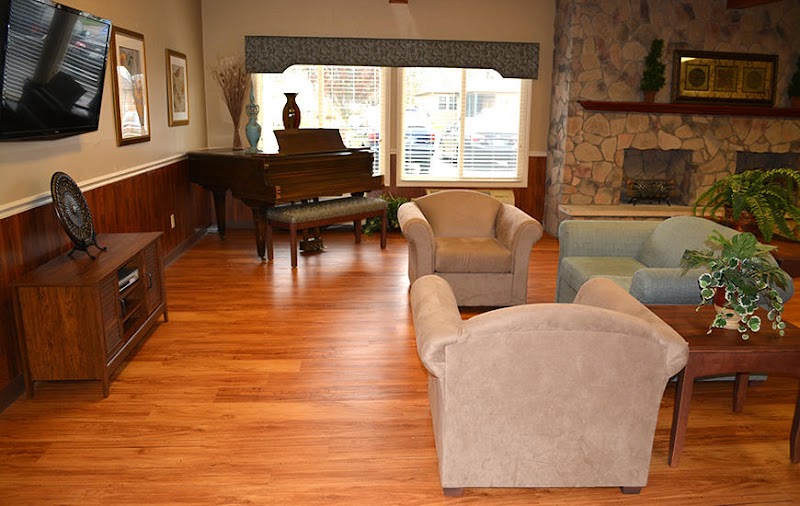
How is University Nursing Center Staffed?

CMS rates UNIVERSITY NURSING CENTER's staffing level at 1 out of 5 stars, which is much below average compared to other nursing homes. Staff turnover is 60%, which is 14 percentage points above the Indiana average of 46%. High turnover can affect care consistency as new staff learn residents' individual needs. RN turnover specifically is 67%, which is notably high. RNs provide skilled clinical oversight, so turnover in this role can affect medical care quality.

What Have Inspectors Found at University Nursing Center?

State health inspectors documented 19 deficiencies at UNIVERSITY NURSING CENTER during 2022 to 2025. These included: 2 that caused actual resident harm and 17 with potential for harm. Deficiencies causing actual harm indicate documented cases where residents experienced negative health consequences.
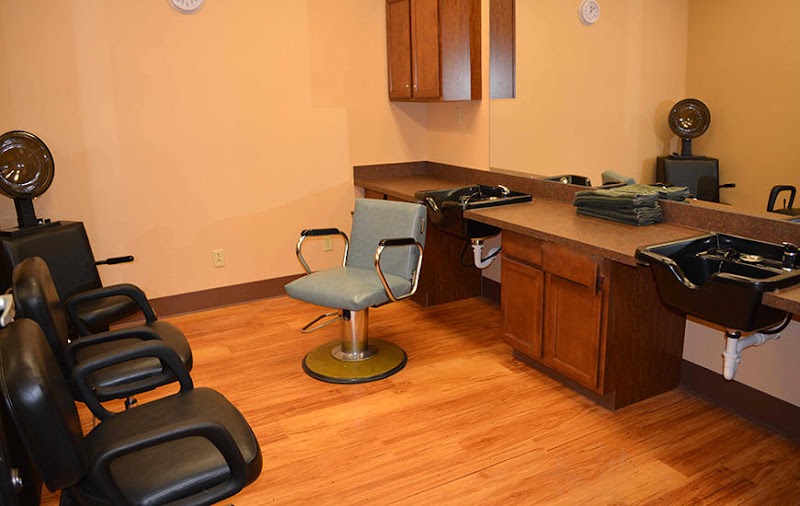
Who Owns and Operates University Nursing Center?

UNIVERSITY NURSING CENTER is owned by a non-profit organization. Non-profit facilities reinvest revenue into operations rather than distributing to shareholders. The facility is operated by AMERICAN SENIOR COMMUNITIES, a chain that manages multiple nursing homes. With 75 certified beds and approximately 64 residents (about 85% occupancy), it is a smaller facility located in UPLAND, Indiana.
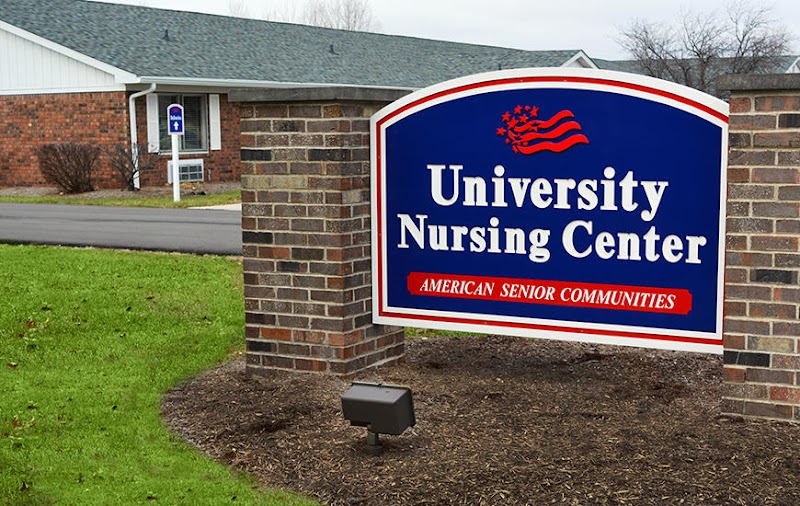
How Does University Nursing Center Compare to Other Indiana Nursing Homes?

Compared to the 100 nursing homes in Indiana, UNIVERSITY NURSING CENTER's overall rating (1 stars) is below the state average of 3.1, staff turnover (60%) is significantly higher than the state average of 46%, and health inspection rating (2 stars) is below the national benchmark.

What Should Families Ask When Visiting University Nursing Center?

Based on this facility's data, families visiting should ask: "How do you ensure continuity of care given staff turnover, and what is your staff retention strategy?" "Can you walk me through typical staffing levels on day, evening, and night shifts?" "Can I visit during a mealtime to observe dining assistance and food quality?" "How do you handle medical emergencies, and what is your hospital transfer rate?" These questions are particularly relevant given the facility's high staff turnover rate and the below-average staffing rating.

Is University Nursing Center Safe?

Based on CMS inspection data, UNIVERSITY NURSING CENTER has a clean safety record: no substantiated abuse findings (meaning no confirmed cases of resident harm), no Immediate Jeopardy citations (the most serious violation level indicating risk of serious injury or death), and is not on the Special Focus Facility watch list (a federal program monitoring the lowest-performing 1% of nursing homes). The facility has a 1-star overall rating and ranks #100 of 100 nursing homes in Indiana. While no facility is perfect, families should still ask about staff-to-resident ratios and recent inspection results during their visit.

Do Nurses at University Nursing Center Stick Around?

Staff turnover at UNIVERSITY NURSING CENTER is high. At 60%, the facility is 14 percentage points above the Indiana average of 46%. Registered Nurse turnover is particularly concerning at 67%. RNs handle complex medical decisions and coordinate care — frequent RN changes can directly impact care quality. High turnover means new staff may not know residents' individual needs, medications, or preferences. It can also be disorienting for residents, especially those with dementia who rely on familiar faces. Families should ask: What is causing the turnover? What retention programs are in place? How do you ensure care continuity during staff transitions?

Was University Nursing Center Ever Fined?

UNIVERSITY NURSING CENTER has no federal fines on record. CMS issues fines when nursing homes fail to meet care standards or don't correct problems found during inspections. The absence of fines suggests the facility has either maintained compliance or corrected any issues before penalties were assessed. This is a positive indicator, though families should still review recent inspection reports for the full picture.

Is University Nursing Center on Any Federal Watch List?

UNIVERSITY NURSING CENTER is not on any federal watch list. The most significant is the Special Focus Facility (SFF) program, which identifies the bottom 1% of nursing homes nationally based on persistent, serious quality problems. Not being on this list means the facility has avoided the pattern of deficiencies that triggers enhanced federal oversight. This is a positive indicator, though families should still review the facility's inspection history directly.