Martin Health Center, INC
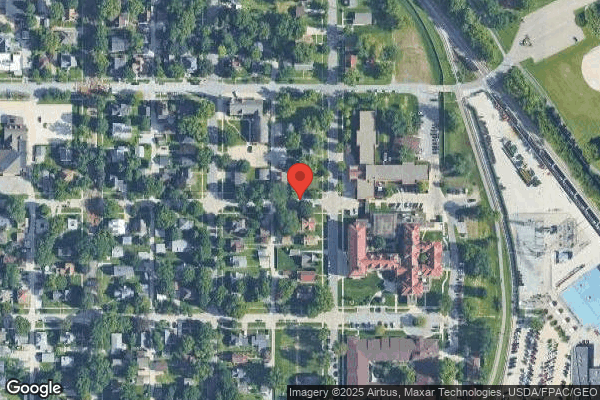

410 East 10th Street, Cedar Falls, IA 50613 (319) 277-2141
Non profit - Corporation 50 Beds Independent Data: November 2025
Trust Grade
65/100
#208 of 392 in IA
Last Inspection: May 2025

Inspected within the last 6 months. Data reflects current conditions.

Overview

Martin Health Center in Cedar Falls, Iowa has a Trust Grade of C+, indicating it is slightly above average in quality but not without its shortcomings. It ranks #208 out of 392 nursing facilities in Iowa, placing it in the bottom half, and #6 out of 12 in Black Hawk County, meaning there are only a few better local options available. The facility is on an improving trend, as it saw a decrease in issues from 4 in 2024 to 3 in 2025. Staffing at Martin Health Center is a strong point, with a rating of 4 out of 5 stars and a turnover rate of 41%, which is below the state average. While the center has no fines on record, which is a positive sign, there have been some serious concerns. One incident involved a resident who fell during a Hoyer lift transfer, resulting in significant injuries. Additionally, there were issues with food storage and staff hygiene practices in the kitchen, along with failures to complete required assessments for residents who experienced significant changes in their health status. Overall, the facility shows promise with strong staffing and no financial penalties, but families should be aware of the safety and procedural concerns that have been documented.

Trust Score
C+
65/100
In Iowa
#208/392
Bottom 47%
Safety Record
Moderate
Needs review
Inspections
Getting Better
4 → 3 violations
Staff Stability
○ Average
41% turnover. Near Iowa's 48% average. Typical for the industry.
Penalties
✓ Good
No fines on record. Clean compliance history, better than most Iowa facilities.
Skilled Nurses
○ Average
Each resident gets 41 minutes of Registered Nurse (RN) attention daily — about average for Iowa. RNs are the most trained staff who monitor for health changes.
Violations
⚠ Watch
11 deficiencies on record. Higher than average. Multiple issues found across inspections.
★★★☆☆
3.0
Overall Rating
★★★★☆
4.0
Staff Levels
★★★☆☆
3.0
Care Quality
★★★☆☆
3.0
Inspection Score
Stable
2024: 4 issues
2025: 3 issues

The Good

  • 4-Star Staffing Rating · Above-average nurse staffing levels
  • Full Sprinkler Coverage · Fire safety systems throughout facility
  • No fines on record
  • Staff turnover below average (41%)

    7 points below Iowa average of 48%

Facility shows strength in staffing levels, fire safety.

The Bad

3-Star Overall Rating

Near Iowa average (3.1)

Meets federal standards, typical of most facilities

Staff Turnover: 41%

Near Iowa avg (46%)

Typical for the industry

The Ugly 11 deficiencies on record

1 actual harm
May 2025 3 deficiencies
CONCERN (D)

Potential for Harm - no one hurt, but risky conditions existed

Tube Feeding (Tag F0693)

Could have caused harm · This affected 1 resident

**NOTE- TERMS IN BRACKETS HAVE BEEN EDITED TO PROTECT CONFIDENTIALITY** Based on observation, clinical record review, policy review and staff interview, the facility failed to check gastronomy tube (g...

Read full inspector narrative →
**NOTE- TERMS IN BRACKETS HAVE BEEN EDITED TO PROTECT CONFIDENTIALITY** Based on observation, clinical record review, policy review and staff interview, the facility failed to check gastronomy tube (g-tube, a tube inserted through the belly that brings nutrition directly to the stomach and is sometimes referred to as a feeding-tube) placement prior to flushing water and administering medications down the g-tube for 1 of 1 resident observed (Resident #21). The facility identified a census of 48 residents. Findings include: Resident #21's Minimum Data Set (MDS) assessment dated [DATE] identified he rarely/never understood, he had no memory recall of current season, location of room, staff names and/or faces, or that he lived in a nursing home. The MDS reflected he had severely impaired daily decision making skills. Resident #21 had upper and lower extremity impairments on both sides of the body. The MDS listed him as dependent for care (oral care, toileting, dressing, bathing, turning in bed). The MDS included diagnoses of Parkinson's, unspecified, end stage renal disease, non Alzheimer's Dementia, and dysphagia (difficulty swallowing). The MDS documented Resident #21 received 51% or more of nutrition and 501 cubic centimeters (CC's, unit of measure) per day or more through a feeding-tube. A Nursing Facility Physician Visit Note dated 4/15/25 documented Resident #21 had diagnoses of dementia, gastrointestinal hemorrhage (excessive bleeding in the stomach) associated with peptic ulcer (an injury inside the body usually caused by increased acid production), colon ulcer of the large intestine and utilizing a feeding-tube. An Order Review History Report electronically signed by the Provider on 5/14/25 documented the following orders: a. Jevity 1.2 Calorie Oral Liquid give 105 milliliters (ML) via g-tube two times a day for tube feeding. Run the feeding for 14 hours. b. Flush g-tube with 60 ML water before and after medication administration. c. Measure g-tube from insertion site to the end of g-tube daily to check the tube placement. Notify the primary care provider if the measurements are off. d. Flush the g-tube with 150 ML water before and after the feeding two times a day. e. Medications may be crushed and cocktailed per g-tube (administration) every shift. f. Change piston syringe, graduate, feeding bag, and tubing every 24 hours. Document date and resident initials one time a day. On 5/14/25 at approximately 8:10 AM Staff A, Licensed Practical Nurse (LPN), reported Resident #21 tube feeding as not done and she would check it again soon. Around 8:20 AM Staff A reported Resident #21 feeding as almost done and she would disconnect his feeding soon. On 5/14/25 at 9:02 AM observed Staff A donned (put on) gloves and an isolation gown, then entered Resident #21's room to administer his morning medications. Staff A obtained a syringe dated 5/14/25 with a graduate (container used to collect fluid usually with measurements) dated 5/12/25 and proceeded to fill the graduate with water to perform the post feeding and medication flush prior to medication administration. Staff A opened the g-tube, attached the syringe and poured water into the syringe without checking for g-tube placement by aspirating (using the syringe to suck out contents) gastric (stomach) contents or measuring from the insertion site to the end of the g-tube. In addition, witnessed Staff A couldn't get the water to flow in the syringe and pushed the water with resistance into the g-tube to complete the remaining water flush, administer Resident #21's medications, and complete the final water flush. During an interview on 5/14/25 at 9:14 AM Staff A explained they aspirate for gastric contents but she didn't do that prior to administering his medication; or she could have used a stethoscope and listened to the resident's abdomen. Interview on 5/14/25 at 3:34 PM Staff B, LPN, reported the nurses are required to check placement of a g-tube by auscultating (listen to) the abdomen with a stethoscope and measuring the length on the g-tube. Staff B explained the nurse should check g-tube placement before administering medications down the feeding-tube. Staff B stated Resident #21 couldn't communicate if he had any issues with his feeding-tube. During an interview on 5/15/25 at 8:05 AM the Director of Nursing (DON) reported she needed to check the facility policy. After reviewing the policy, the DON stated the nurses check the g-tube placement by measuring the insertion site to the end of the tube daily. After reviewing the medication policy with the DON, she verbalized she expected the nurses to measure the g-tube placement to ensure the placement of the tube prior to medication administration. The Medication Administration Policy, revised October 2024 directed the nurse to check for tube placement per policy before administering medications down the g-tube. The Feeding-tube Placement Check Policy, revised October 2024 under Procedure directed the following: a. Feeding-tubes will have placement checks at least daily. b. Measure from insertion site to end of tube and document on the Medication Administration Record.
CONCERN (D)

Potential for Harm - no one hurt, but risky conditions existed

Deficiency F0800 (Tag F0800)

Could have caused harm · This affected 1 resident

**NOTE- TERMS IN BRACKETS HAVE BEEN EDITED TO PROTECT CONFIDENTIALITY** Based on observation, clinical record review, policy review and staff interview the facility failed to serve the physician order...

Read full inspector narrative →
**NOTE- TERMS IN BRACKETS HAVE BEEN EDITED TO PROTECT CONFIDENTIALITY** Based on observation, clinical record review, policy review and staff interview the facility failed to serve the physician ordered diet for 1 of 3 residents on a carbohydrate-controlled diet (Resident #47). The facility identified a census of 48 residents. Findings include: Resident #47's Minimum Data Set (MDS) assessment dated [DATE] identified she had short/long term memory impairment with moderate impaired daily decision making. The MDS included a diagnosis of type two diabetes mellitus (DM) with diabetic polyneuropathy (a condition where multiple peripheral nerves in the body are damaged from high blood sugar levels). The MDS reflected Resident #47 received insulin injections seven days a week and hypoglycemic (blood sugar lowering) medications while a resident. An Order Review History Report electronically signed by the Provider on 4/29/25 documented the following physician orders: a. Toujeo Solostar (insulin) subcutaneous solution pen injector 300 Units (U)/Milliliter (ML) inject 16 units subcutaneously one time a day related to DM with diabetic neuropathy. b. Metformin hydrochloride oral tablet 500 MG give 2 tablets by mouth two times a day related to DM with diabetic neuropathy. c. Humalog KwikPen (insulin) Subcutaneous Solution Pen Injector 100 U/ML. Inject per sliding scale: i. if 150 - 200 = 1; 201 - 250 = 2; 251 - 300 = 3; 301 - 350 = 4; 351 - 400 = 5, and above 400 call Provider. d. Free Style Libre 3 Reader Device (continuous glucose monitor) inject 1 applicator subcutaneously every day shift, every 15 days. e. Provide a consistent carbohydrate diet (CCHO, a diet that focuses on consuming the same amount of carbohydrate at each meal to enhance blood sugar control), 60 - 75 grams of carbohydrates per meal. Resident #47's May 2025 Electronic Medication Administration Record (EMAR) showed indicated her Toujeo Solostar insulin increased to 20 Units subcutaneously in the morning of 5/2/25. The Care Plan Focus dated 5/2/25 identified Resident #47 had a nutritional problem related to type two DM with diabetic chronic kidney disease. The Care Plan directed to provide the diet per physician orders. The Week 1 Tuesday Noon 2/11/25 Dietician approved menu directed the following CCHO diet: a. 3 ounces of boneless barbeque ribs b. A #16 scoop (2 ounces) mashed sweet potatoes c. 4 ounces green beans with bacon and red onions d. One flakey biscuit e. One teaspoon margarine f. 4 ounces vine ripened watermelon g. 6 fluid ounces of milk On 5/13/25 at 12:07 PM watched Staff C, Dining Hospitality Coordinator, review Resident #47's meal ticket which listed her diet as a CCHO diet. Staff C plated 3 ounces of ribs, 4 ounces of sautéed green beans with bacon and red onion, 4 ounces of sweet potato, one flakey biscuit with margarine and a 4 ounce bowl of watermelon. On 5/13/25 at 12:40 PM Staff C reviewed Resident #47's meal ticket with the Surveyor and verbalized she had served the 4 ounce serving of sweet potatoes to Resident #47 and it should have been the #16 (2 ounce) scoop of sweet potatoes as listed on the meal ticket. She voiced she checked the menu extensions prior to meal service and she served Resident #47 the regular diet, not the CCHO diet. During an interview 5/14/25 at 1:00 PM the Certified Dietary Manager explained staff are to follow the diet as posted on the approved Menus as the serving sizes are on the menus to eliminate serving mistakes. The extensions are printed onto the daily menu, so the actual serving sizes are posted on the meal ticket. She expected the staff to follow the menus. During an interview on 5/14/25 at 1:37 PM the Dietitian reported Staff C made an honest mistake and she expected staff to serve the approved dietary menu. The Food Production and Service Policy, revised December 2023, directed the Registered Dietitian Nutritionist Supervisor of Dining Services and/or the Lead Hospitality Coordinator are responsible for seeing the menu is followed.
CONCERN (E)

Potential for Harm - no one hurt, but risky conditions existed

Food Safety (Tag F0812)

Could have caused harm · This affected multiple residents

Based on observation, clinical record review, policy review and staff interview the facility failed to properly store food according to manufacturer's directions, ensure staff contain hair in hairnets...

Read full inspector narrative →
Based on observation, clinical record review, policy review and staff interview the facility failed to properly store food according to manufacturer's directions, ensure staff contain hair in hairnets when in the kitchen, and failed to ensure hot food is held at 135 degrees Fahrenheit (F) for safety. The facility reported a census of 48 residents. Findings include: The initial kitchen observation completed on 5/12/25 at 9:48 AM on the second floor kitchen revealed the following: a. One ¾ full carton of Ready Care thickened orange juice dated 4/18/25. The Manufacturer Directions on the side of the carton directed to discard 7 days after opening. b. One ¼ full bottle of Thick It Clear Advantage Thickened Water, level 2, mildly thick, dated 4/15/25. The Manufacturer Label on the bottle directed to use within 14 days after opening. During a follow up inspection of the second floor kitchen on 5/13/25 at 10:54 AM the following observations were made: a. One ¾ full carton of Ready Care thickened orange juice dated 4/18/25. The Manufacturer Directions on the side of the carton directed to discard 7 days after opening. b. One ¼ full bottle of Thick It Clear Advantage Thickened Water, level 2, mildly thick, dated 4/15/25. The Manufacturer Label on the bottle directed to use within 14 days after opening. Interview on 5/13/25 at 11:00 AM Staff A, Dining Hospitality Coordinator, reported she was trained juices could only be used for three days, then they were to dispose of them. During an interview on 5/13/25 at 11:01 AM the Dietitian reported they follow the label directions from the manufacturer for discarding fluids. She couldn't answer if the date on the bottle was the delivery stock date or the open date as they date all food items when they come in for delivery. She expected the staff to date food and fluid items when opening and follow the label instructions. On 5/13/25 at 11:35 AM witnessed Staff D and Staff E, Certified Nursing Assistants (CNAs), prepare drinks in the kitchen with approximately 4-5 inches of side tendrils of hair hanging out of the sides of their hairnets. On 5/13/25 at 12:13 PM saw Staff D come out of the back kitchen with 4-5 inches of side hair hanging out of the sides of the hairnet, they opened a bag of Doritos and put it on the counter top for the cook to serve out to a resident. On 5/13/25 at 12:18 PM saw Staff D entered the kitchen with approximately 4-5 inches of side hair hanging out of her hairnet to get a resident pop from the pop machine. On 5/13/25 at 12:32 PM witnessed Staff D in the kitchen with 4-5 inches of hair hanging out the sides of her hair net as she obtained butter from the kitchen for a resident's sweet potato. The post meal temperatures completed on 5/13/25 at 12:37 PM revealed the temperature of the green beans at 123.1 degrees Fahrenheit. The green beans sat in a steam pan throughout the entire meals service from 12:04 PM to 12:37 PM with the stove burner in the off position. Staff C turned the oven down to 300 degrees Fahrenheit at 11:59 AM, then down to 250 degrees at 12:02 PM and finally turned the oven to the warm position at 12:04 PM. Interview on 5/13/25 at 12:41 Staff C verbalized hot food should be held at 135 degrees or higher. During an interview 5/14/25 at 1:00 PM the Certified Dietary Manager voiced staff are to have all hair contained in a hairnet when in the kitchens. The staff are trained to keep hot food temperatures above 140 degrees, but the staff know the actual requirement is to keep at a minimum of 135 degrees. If there is a lull in the meal service, the steam pans of food should be put back in the over to keep the food hot. During an interview on 5/14/25 at 1:37 PM the Dietitian reported she expected the hot food to be held at 135 degrees Fahrenheit or higher. In addition, she expected the staff to ensure all hair is covered with a hairnet before entering the kitchens. The Food Storage Policy, reviewed December 2023, under Procedure directed foods held in the refrigerator shall be appropriately covered, labeled and dated. The Food Temperature/Food Safety Policy, reviewed December 2023, directed to maintain all foods served at proper temperatures including during food preparation and service. The Policy directed food temperatures should be taken periodically to assure hot foods stay above 135 degrees Fahrenheit during the holding and plating process. The Infection Control Staff Related Preventive Measures Policy, revised October 2024, directed dietary staff will wear hair restraints while in the kitchen areas to prevent hair from contacting exposed food.
Dec 2024 1 deficiency 1 Harm
SERIOUS (G) 📢 Someone Reported This

A family member, employee, or ombudsman was alarmed enough to file a formal complaint

Actual Harm - a resident was hurt due to facility failures

Accident Prevention (Tag F0689)

A resident was harmed · This affected 1 resident

**NOTE- TERMS IN BRACKETS HAVE BEEN EDITED TO PROTECT CONFIDENTIALITY** Based on record review, resident and staff interviews the facility failed to provide a safe mechanical lift (Hoyer) transfer for...

Read full inspector narrative →
**NOTE- TERMS IN BRACKETS HAVE BEEN EDITED TO PROTECT CONFIDENTIALITY** Based on record review, resident and staff interviews the facility failed to provide a safe mechanical lift (Hoyer) transfer for 1 of 3 residents reviews (Resident #1). The Hoyer strap came unhooked on the right upper side of the sling and Resident #1 fell from the Hoyer. The fall resulted in a right femur fracture and left rib fractures of the 3rd, 4th and 5th ribs. The facility reported a census of 46 residents. Findings include: Resident #1's Minimum Data Set (MDS) assessment dated [DATE] identified a Brief Interview for Mental Status (BIMS) score of 15, indicating intact cognition. Resident #1 listed as dependent (Helper does all the effort. Resident does none of the effort to complete the activity. Or, the assistance of 2 or more helpers is required for the resident to complete the activity) for all transfers. The Care Plan Focus revised 3/27/24 indicated Resident #1 had an activities of daily living (ADL) self-care performance and transfer assistance deficit related to the need for a Hoyer transfer, gout, and wound to left plantar foot. The Interventions directed staff that Resident #1 required 2 staff and a Hoyer for transfers. An Incident Report dated 8/22/24 at 3:20 PM documented Resident #1 had a witnessed a fall from the Hoyer. Resident #1 had a laceration to the back of the head and skin tear to the elbow. He reported pain to the right side, left shoulder, and chest area. The nurse called 911 and at approximately 4:10 PM the facility transferred him to the hospital. A Progress Note dated 8/22/24 at 8:36 PM documented Resident #1's radiology report indicated he had a right periprosthetic femur (type of hip fracture) fracture and left rib fractures of 3rd, 4th, and 5th ribs. In an interview on 12/16/24 at 10:20 AM, Resident #1 reported it all happened so fast. He reported they were not in a rush and had hooked him up right as far as he could tell. He said they lifted him off the recliner and began to move him to the bed. He didn't make it to the bed and he just fell out of the sling all of a sudden. Resident #1 reported the staff didn't jerk or make any moves to make it happen that he could feel. He just felt the shoulder area giving out and down he went. It all happened so fast that no one could react to help. He reported he went to the hospital and had a broken leg and ribs. He reports he still has pain in the areas. He reported the facility ended up getting a totally different sling because they wanted to not use the same kind of sling on him. During an interview on 12/16/24 at 12:53 PM Staff A, Certified Nurse Aide (CNA), reported Resident #1 already had the sling under him in the recliner. Staff A got the Hoyer from by the bed, turned it on, opened the legs and pushed it up to the recliner. Staff A hooked it up the upper extremity straps and right leg strap of the sling to the Hoyer. Staff B, CNA hooked up the leg strap on the left side to the Hoyer. Staff A reported both Staff B, CNA, and himself triple checked to make sure it was strapped well and then they began lifting Resident #1. In the process of moving Resident #1 they got halfway to the bed and the sling came unhooked on the right upper side. Staff A reported he was guiding the legs and right upper side when it happened. Staff A reported it all happened so fast he could not catch Resident #1 and he fell to the floor. Staff A reported they didn't move Resident #1 and called for the nurse. The Hoyer was still up and the sling was still hooked to the Hoyer for the 3 straps that were still hooked when the nurse came in the room. It was the right shoulder part of the sling that came unhooked. During an interview on 12/16/24 at 1:06 PM, Staff B reported Resident #1 already had the sling under him in the recliner and Staff A put the Hoyer up to the chair. Staff B reported she went and put gloves on in the bathroom and came back and hooked Resident #1 left leg area strap of the sling to the machine. Staff B reported Staff A hooked up the rest. Staff B reported it all happened so fast. Staff B reported Resident #1 sat in the sling fine and everything went good, until all of a sudden, the right-side upper strap came off and he fell to the floor. Staff B reported it happened about half way from the recliner to the bed. Staff B reported they didn't move Resident #1 and called the nurse. Staff B reported they both triple checked the sling and Hoyer prior to moving Resident #1 all was correctly hooked. During an interview on 12/16/24 at 1:26 PM Staff C, Licensed Practical Nurse (LPN), reported Staff A came and reported Resident #1 fell from the sling. Staff C reported as she entered Resident #1's rooms, she found him lying on the floor with his head on the Hoyer frame. The Hoyer sling was still hooked to the machine at 3 of the points the right upper strap was not hooked. She reported Resident #1 bled from a head laceration and skin tear to his elbow. Resident #1 reported pain to his upper extremities, so she called 911. Resident #1 transferred to the hospital via ambulance. Review of the personal file for Staff A identified a hire date of 5/2/24. He completed orientation checklist training on 7/16/24. The orientation checklist had transfers with a mechanical lift. Directing staff must demonstrate how to use the Hoyer as operator and patient guide. Review of the personal file for Staff B identified a hire date of 2/5/24. She completed orientation checklist training on 2/25/24. The orientation checklist had transfers with a mechanical lift. Directing staff must demonstrate how to use the Hoyer as operator and patient guide. Review of the facility lift inspection reports the Hoyer machine indicated the last inspections happened on 2/4/24 and 9/3/24. On 9/3/24 the Hoyer company listed the machine as in good condition, with no concerns noted according to the documentation. In an interview on 12/16/24 at 3:15 PM the Administrator reported the staff hooked up the sling using the middle hooks when transferred. She reported sling size was what therapy recommended when they determined him to be a Hoyer. She reported the facility acted right away to ensure it would not happen again. The facility corrected the deficiency by implementing the following: a. 8/22/24 after the incident took the Hoyer out of commission until inspected by EZ-Way on 9/3/24 b. The facility completed staff education and testing on 8/23/24. C. Ongoing facility audits of staff with the Hoyer lifts. D. 9/10/24 the Hoyer company representative reviewed the proper procedures and demonstrated how to use the Hoyer lift.
Jul 2024 3 deficiencies
CONCERN (D)

Potential for Harm - no one hurt, but risky conditions existed

Transfer Notice (Tag F0623)

Could have caused harm · This affected 1 resident

**NOTE- TERMS IN BRACKETS HAVE BEEN EDITED TO PROTECT CONFIDENTIALITY** Based on clinical record review and staff interview the facility failed to notify the state ombudsman as required for emergency ...

Read full inspector narrative →
**NOTE- TERMS IN BRACKETS HAVE BEEN EDITED TO PROTECT CONFIDENTIALITY** Based on clinical record review and staff interview the facility failed to notify the state ombudsman as required for emergency transfers for 2 of 3 residents reviewed (Residents #2 and #8). The facility reported a census of 46 residents. Findings include: 1. Resident #2's Minimum Data Set (MDS) assessment dated [DATE] identified a Brief Interview for Mental Status (BIMS) score of 15, indicating intact cognition. The Progress Note written on 12/24/23 at 11:12 PM reflected Resident #2 transferred to the hospital. The Progress Note on 12/25/23 at 7:06 AM listed Resident #2 admitted to the hospital. Review of the December 2023 Ombudsman notification form lacked documentation of Resident #2's discharged to the hospital on [DATE]. 2. Resident #8's MDS assessment dated [DATE] identified a BIMS score of 10, indicating moderately impaired cognition. Resident #8's Census listed statuses of hospital leave on the following dates: 8/30/23, 9/15/23, 12/21/23, 4/12/24, and 7/4/24. The Progress Note on 8/29/23 at 9:05 PM indicated Resident #8 admitted to the hospital. The Progress Note on 9/15/23 at 2:16 PM reflected Resident #8 admitted to the hospital. The Progress Note on 12/21/23 at 2:12 PM identified Resident #8 admitted to the hospital. Review of the August, September and December 2023 Ombudsman notification form lacked documentation of Resident #8 discharged to the hospital on 8/29/23, 9/15/23, and 12/21/23. During an interview on 7/9/24 at 11:43 AM the Administrator reported the facility didn't complete the 2023 Ombudsman reports correctly. On 7/9/24 at 5:11 PM the Administrator reported the facility didn't have a policy related to Ombudsman notification.
CONCERN (D)

Potential for Harm - no one hurt, but risky conditions existed

PASARR Coordination (Tag F0644)

Could have caused harm · This affected 1 resident

**NOTE- TERMS IN BRACKETS HAVE BEEN EDITED TO PROTECT CONFIDENTIALITY** Based on clinical record review and staff interview, the facility failed to complete a new level I Preadmission Screening and Re...

Read full inspector narrative →
**NOTE- TERMS IN BRACKETS HAVE BEEN EDITED TO PROTECT CONFIDENTIALITY** Based on clinical record review and staff interview, the facility failed to complete a new level I Preadmission Screening and Resident Review (PASRR) for Level I on 12/30/22 for 1 of 1 resident reviewed (Resident #26). The facility reported a census of 46 residents. Findings include: Resident #26's Minimum Data Set (MDS) assessment dated [DATE] identified a Brief Interview for Mental Status (BIMS) score of 15, indicating intact cognition. The MDS included diagnoses of anxiety, bipolar disorder, psychotic disorder, and non-Alzheimer's disease. Review Resident #26's PASRR Level 1 Screening Outcome dated 11/30/20 reflected a PASRR Level I Determination, No Level II required. Review of the clinical chart revealed this PASRR came with Resident #26 from another facility, but the current facility failed to submit a new PASRR due to new diagnosis and medication. The Progress Notes dated 6/19/24, and 7/2/24 for Resident #26 revealed follow up psychiatric visits related to bipolar. The Pre admission Screening and Resident Review (PASRR) policy dated November 2022 revealed: To ensure the identification of nursing facility applicants and residents with serious mental illness and/or intellectual and developmental disability (MI/MR) receive appropriate placement, admission, or the ability to remain in the facility, but only if the facility can appropriately serve and provide the services they need. 1. Prior to admission, the referring entity completes the Level I process. 2. The admission Director or designee reviews the Level I evaluation. 3. If Level I evaluation indicated the need for a Level II, the facility will suspend the admission until the completion of the Level II evaluation or until such time the facility received an exemption. 4. If the resident received a negative Level I evaluation, the facility may admit the resident as long as they can meet the needs of the individual according to the admission Policy. In an interview on 7/9/24 at 3:29 PM, the Administrator reported the facility missed it. They should have submitted a new PASRR, and they would submit a new one that day.
CONCERN (E) 📢 Someone Reported This

A family member, employee, or ombudsman was alarmed enough to file a formal complaint

Potential for Harm - no one hurt, but risky conditions existed

Deficiency F0637 (Tag F0637)

Could have caused harm · This affected multiple residents

**NOTE- TERMS IN BRACKETS HAVE BEEN EDITED TO PROTECT CONFIDENTIALITY** Based on record review, staff interview, and Resident Assessment Instrument (RAI) Manual the facility failed to complete Signifi...

Read full inspector narrative →
**NOTE- TERMS IN BRACKETS HAVE BEEN EDITED TO PROTECT CONFIDENTIALITY** Based on record review, staff interview, and Resident Assessment Instrument (RAI) Manual the facility failed to complete Significant Change Minimum Data Set (MDS) assessment for 4 of 4 residents (Residents #14, #32, #35, and #37) within 14 days of identifying a significant change occurred. The facility reported a census of 46 residents. Findings include: 1. Resident #14's MDS assessment dated [DATE] indicated he didn't receive hospice care while a resident. The Hospice Certification and Plan of Care dated 4/12/24 identified Resident #14 elected to receive Hospice services. The Hospice Medicare Benefit Revocation dated 4/16/24 indicated Resident #14 choose to revoke hospice services. Resident #14's Clinical - MDS record reviewed on 7/11/24 indicated the facility completed an entry MDS assessment on 4/11/24 and a quarterly MDS assessment on 5/22/24. The review lacked documentation of a significant change MDS assessment following Resident #14's election of Hospice benefits or when he revoked his Hospice benefits. Interview on 7/10/24 at 4:00 PM Staff A, Nurse Mentor, stated they didn't have to do a significant change due to Resident #14 went off of hospice within the 14 days and didn't trigger 2 of the significant changes. The RAI Manual dated October 2023 instructed if a nursing home resident elects to receive the hospice benefit, the Centers for Medicare and Medicaid Services (CMS) requires the nursing home complete an MDS Significant Change in Status Assessment (SCSA). In addition, CMS requires a nursing home complete an SCSA when the resident comes off the hospice benefit (revoke). It is a CMS requirement to have an SCSA completed every time someone elects to use their hospice benefit, even if the facility completed a recent MDS and the only change is the election of the hospice benefit. The Significant Change MDS date must be within 14 days from the effective date of the hospice election (which can be the same or later than the date of the hospice election statement, but not earlier than). The assessment reference date (ARD) must be less than or equal to 14 days after the IDT's determined the resident met the criteria for an SCSA (determination date + 14 calendar days). The MDS completion date (item Z0500B) must be no later than 14 days from the ARD (ARD + 14 calendar days) and no later than 14 days after the determination the resident met the criteria for a SCSA. This date may be earlier than or the same as the CAA(s) completion date, but not later than. 2. The Hospice admission Consent form dated 6/19/24 identified Resident #32 started receiving Hospice services on 6/19/24. The Progress Note dated 6/20/24 at 3:08 PM reflected Resident #32 admitted to hospice on 6/19/24. The Clinical Record Review included an incomplete SCSA dated 7/2/24, greater than 14 days after the determination Resident #32 met the criteria for a SCSA. 3. The Medicare Hospice Election Statement dated 5/18/23 listed Resident #35 started Hospice services on 5/18/23. Resident #35's SCSA dated 5/30/23 reflected a completion date of 6/12/23, 11 days past the 14 days after the determination date of 5/18/223. 4. The Medicare Hospice Election Statement dated 11/21/23 reflected Resident #37 started Hospice services on 11/21/23. The clinical record review reflected Resident #35's SCSA dated 12/4/23 reflected a late completion date of 12/18/23. During an interview on 7/10/24 at 10:45 AM, Staff B, Nurse Mentor, reported when doing the MDS she followed the ARD when Staff A, Nurse Mentor, set them up. She reported the facility followed the regulations directed in the RAI manual. During an interview on 7/10/24 at 11:30 AM, Staff A, Nurse Mentor, reported when someone went on hospice she set the ARD out a little way to catch everything they need. She reported she didn't know the Hospice MDS SCSA needed completed within 14 days of going on hospice. She reported the facility followed the RAI manual.
Jun 2023 4 deficiencies
CONCERN (D)

Potential for Harm - no one hurt, but risky conditions existed

Resident Rights (Tag F0550)

Could have caused harm · This affected 1 resident

**NOTE- TERMS IN BRACKETS HAVE BEEN EDITED TO PROTECT CONFIDENTIALITY** Based on observations, interview, policy review and record review, the facility failed to provide one resident (Resident (R) 4) ...

Read full inspector narrative →
**NOTE- TERMS IN BRACKETS HAVE BEEN EDITED TO PROTECT CONFIDENTIALITY** Based on observations, interview, policy review and record review, the facility failed to provide one resident (Resident (R) 4) of 15 sampled residents, out of total sample of 46 residents, respect and dignity. Specifically, R4 was allowed to sit in, urine-soaked garments for over 90 minutes, while sitting in the dining room, during an activity and in the TV room with other residents. Findings include: Review of the undated Patients' Rights Policy revealed The resident has a right to a dignified existence, . A facility must treat each resident with respect and dignity and care for each resident in a manner and in an environment that promotes maintenance or enhancement of his or her quality of life. The record review on 06/13/23 at 4:45 PM revealed the Care Plan dated for 05/24/23, and found under the Care Plans tab in the Electronic Medical Record (EMR), did not include concerns for ADLs (Activity of Daily Living) for frequent soaking of garments. Review of R4 quarterly Minimum Data Set (MDS), with an Assessment Reference Date (ARD) of 05/12/23, revealed R4 was admitted on [DATE] with diagnoses that included renal insufficiency and hyperlipidemia. The MDS revealed R4 scored a 3 out of 15 on the Brief Interview for Mental Status (BIMS), indicating R4 was severely cognitively impaired. The MDS recorded R4 required extensive assistance with all Activities of Daily Living (ADL) except eating where he required limited assistance. R4 was frequently incontinent of urine, indicating R4 had seven or more episodes of urinary incontinence. Observation on 06/12/23 at 3:49 PM R4 was observed being in his room sitting in front of the TV with soiled wet jeans that were soaked through with a strong urine odor. Observation on 06/12/23 at 5:00 PM, R4 was being pushed to the dining room for dinner by Certified Nurse Aide (CNA)2. He had on jeans that were visibly soaked in urine and had a strong odor of urine. Observation on 06/13/23 at 8:25 AM, R4 was observed in his wheelchair eating, there was a strong odor of urine. Observation on 06/13/23 at 9:47 AM revealed, R4 in his room in front of the TV dressed in lighter blue jeans and noted to have a wet area to groin area soaked through his jeans with a strong urine odor. Observation on 06/13/23 at 1:05 PM, revealed R4 in his room sleeping. He has jeans on with wetness to his groin area. Urine odor persists in the room. Observation on 06/13/23 at 3:29 PM, revealed R4 in the dining room at a table with other residents playing bingo. He appeared to have the same jeans on as earlier that had wet area to groin area. Spouse was here visiting with R4 at the table. Interview on 06/13/23 at 3:51 PM, Certified Nurse Aide (CNA) 3 stated R4's cognition varies and some days better than others. CNA3 stated R4 received two showers weekly and required one to two-person to assist. She stated R4 was frequently incontinent. Interview on 06/13/23 at 4:00 PM with R4's Family Member (FM1), she stated she was aware that R4 was incontinent. R4 returned to his room, during the interview, from the dining area, jeans were again visibly soaked with urine. Interview on 06/13/23 at 4:21 PM with CNA3 and CNA4 in the room with R4. Both CNAs stated R4 required his briefs to be changed every one to two hours. They stated his brief remained an issue. They stated they were not sure what else could be done to prevent R4 from soaking through his jeans. They said R4 was soaked every time they changed him. Interview on 06/15/23 at 12:35 PM, with the Director of Nursing (DON). She stated she was aware of R4's incontinence. She stated he was on a diuretic called Bumex which caused him to urinate frequently. She says they are going to research further products that can be used for R4.
CONCERN (D)

Potential for Harm - no one hurt, but risky conditions existed

Deficiency F0553 (Tag F0553)

Could have caused harm · This affected 1 resident

Based on record review, interview, and policy review, the facility failed to ensure two residents (Resident (R) 35 and 10) of 15 sample residents, out of a total of 46 sample residents, was afforded t...

Read full inspector narrative →
Based on record review, interview, and policy review, the facility failed to ensure two residents (Resident (R) 35 and 10) of 15 sample residents, out of a total of 46 sample residents, was afforded the opportunity to be included in all aspects of person-centered care planning. Findings include: Review of the facility policy titled, Care Plan Interdisciplinary Team, revised on 03/2023, read in pertinent part, Each resident's care plan shall be reviewed every 3 months or PRN (as needed) with changes in health/condition. Interdisciplinary team will meet to review with resident, resident's family/representative, and others who may be involved in the resident' care. 1. Review of R35's Face Sheet, located in Electronic Medical Record (EMR) under the Profile tab, revealed an admission date of 10/21/19 with diagnoses which included pulmonary embolism without acute coronary pulmonale, cardiovascular and coagulations. Review of R35's quarterly Minimum Data Set (MDS), located in the EMR under the MDS tab, with an Assessment Reference Date (ARD) of 04/14/23 revealed R35's was cognitively intact with a Brief Interview for Mental Status (BIMS) score of 15 out of 15. Review of R35's Care Plan, original date of 11/05/19 and updated on 04/21/23, revealed a focus of [R35] remains Immediate Care Facility Level of Care (ICF/LOC). R35 is independent in decision making and makes her wants and needs known. Memory is intact. There was no documentation of R35's participation in the care planning meetings, nor being invited to the care planning meeting. During an interview on 06/12/23 at 12:52 PM, R35 revealed, I have not been invited or told about a care planning meeting. R35 revealed I am my own decision maker, I do not have a resident representative, although I do have family. 2. Review of R10's Face Sheet, in the EMR under the Profile tab, revealed an admission date of 08/18/22 with diagnoses of major depressive disorder, recurrent, in partial remission and polyneuropathy, unspecified. Review of R10's quarterly MDS, located in the EMR under the MDS tab, with an ARD) of 05/19/23 revealed R10 was cognitively intact with a Brief Interview for Mental Status (BIMS) score of 15 out of 15. Review of R10's Care Plan, original date of 08/19/22 and updated on 05/26/23, revealed a focus of R10 will remain in ICF/LOC and would like her stay permanently. R10 does not want information on alternate placement and only wants to be asked on comprehensive assessments. R10, has adequate memory and can make their own decisions. During an interview on 06/12/23 at 12:46 PM with R10, the resident stated she was not invited or had discussed with staff care planning meetings. During an interview on 06/14/23 at 08:41 AM with the Household Coordinator (HHC), she stated she managed everything non-clinical in the unit. She stated it included activities and Social Service duties. The HHC stated this included scheduling care plan meetings, which were scheduled every quarter, and when there is a significant change. The process included reaching out to the resident representative and getting a date and time in place. The resident was involved in all the care conferences. During an interview on 06/14/23 at 12:57 PM with the HHC and Director of Nursing (DON), they stated they were not able to find any documentation of R35 or R10 attending a care planning conference. They stated they would be in the process of setting them up as soon as possible. During an interview on 06/14/20 at 2:37 PM with the Administrator, The Administrator stated they both have a BIMS of 15 and should be attending their care planning conference and involved in their care planning.
CONCERN (D)

Potential for Harm - no one hurt, but risky conditions existed

Safe Environment (Tag F0584)

Could have caused harm · This affected 1 resident

Based on observation, staff interview, and policy review, the facility failed to ensure one of one resident (Resident (R) 4) of 15 sampled residents, out of total sample of 46 residents, had a clean a...

Read full inspector narrative →
Based on observation, staff interview, and policy review, the facility failed to ensure one of one resident (Resident (R) 4) of 15 sampled residents, out of total sample of 46 residents, had a clean and homelike environment. Specifically, housekeeping staff failed to ensure R3's room did not have a strong scent of urine. Findings include: Observation on 06/13/23 at 8:45 AM, R4's room has an odor in the sitting area and bathroom, Observation on 06/13/23 at 1:05 PM, revealed R4 in his room, there was a strong odor of urine. Interview on 06/13/23 at 12:35 PM, with the Director of Nursing (DON) who stated she was aware of the strong urine odor in R4's room. She stated they have been trying different products and continue to investigate new products that can be used. Interview on 06/13/23 at 1:00 PM, with the Household Coordinator (HHC), stated she was aware of the strong urine odor in R4's room and had been trying different products. She stated she had steam cleaned the carpet at least once per month. She indicated it was difficult to remove the odor when R4 continued to urinate on the floor. She planned on looking for other solutions. Interview on 06/13/23 at 4:21 PM, with Certified Nursing Assistant (CNA) 3 and CNA 4, both stated R4's room had a strong urine odor unlike other resident's rooms on the 2nd floor that have incontinent issues. They also stated the carpet cleaning does not help. Policy review, revised 12/2022, 'General Guidelines and Cleaning Procedures revealed Resident's rooms will be thoroughly cleaned .to include a deep cleaning to resident's room on the first day of each month.
CONCERN (D)

Potential for Harm - no one hurt, but risky conditions existed

ADL Care (Tag F0677)

Could have caused harm · This affected 1 resident

Based on observation, interview, and record review, the facility failed to assist residents with Activities of Daily Living (ADL) care for one of one resident (Resident (R) 3) of 15 sampled residents,...

Read full inspector narrative →
Based on observation, interview, and record review, the facility failed to assist residents with Activities of Daily Living (ADL) care for one of one resident (Resident (R) 3) of 15 sampled residents, out of a total sample of 46 residents reviewed for ADL's. Specifically the facility failed to ensure R3's chin hair was removed while receiving a shower. Findings include: 1. Review of R3's Face Sheet, located in the Electronic Medical Record (EMR) under the admission record tab, revealed an admission date of 02/10/23 with medical diagnoses that included Type 2 Diabetes, Acute Diastolic Heart Failure, Reduced mobility, and Muscle Weakness. Review of R3's quarterly Minimum Data Set (MDS), located in the EMR under the MDS tab with an assessment reference date (ARD) of 05/19/23, revealed a Brief Interview for Mental Status score (BIMS), of 15 out of 15, indicating R3 was cognitively intact. The MDS revealed R3 required extensive physical assistance of two persons for her personal hygiene needs. Review of R3's care plan, located in the EMR under the Care Plan tab last updated 05/29/23 read, .requires assistance with ADL care needs related to weakness and impaired mobility. The care plan goal read, will continue to assist w/her activities of daily living by requiring staff assistance through next review. One of the interventions included in the care plan was, Provide assistance with daily grooming, oral care, hair care. R3 care plan reviewed also did not indicate addressing resident's chin hair. Review of R3's Point of Care (POC) record, located in the EMR under the Tasks tab dated as recent as 06/07/23 indicated R3 required extensive assistance with her personal hygiene needs. During an initial observation on 06/12/23 at 10:20 AM, R3 was found in her room sitting up in her w/c (wheelchair). The surveyor noted while talking to her that she had a moderate amount of chin hair and dirty fingernails. During an observation on 06/13/23 at 08:50 AM, R3 was in her room, sitting up in w/c, had her oxygen in place per nasal canula. The surveyor asked R3 if she liked having chin hair, R3 animatedly responded no I do not. The surveyor asked R3 if she wishes for them to be removed, she responded yes. Record review on 06/13/23 at 4:55 PM, revealed resident shower schedule which confirmed Wednesday and Saturday. Interview on 06/13/23 at 4:50 PM, with Certified Nurse Aide (CNA)3 indicated that R3 has shower days on Wednesday and Saturday mornings or may get showers in between as needed, and that shaving needs are usually addressed with shampooing at that time. CNA3 did not seem aware that R3 has unwanted chin hair that was not addressed.
Understanding Severity Codes (click to expand)
Life-Threatening (Immediate Jeopardy)
J - Isolated K - Pattern L - Widespread
Actual Harm
G - Isolated H - Pattern I - Widespread
Potential for Harm
D - Isolated E - Pattern F - Widespread
No Harm (Minor)
A - Isolated B - Pattern C - Widespread

Questions to Ask on Your Visit

  • "Can I speak with families of current residents?"
  • "What's your RN coverage like on weekends and overnight?"

Our Honest Assessment

Strengths
  • • No fines on record. Clean compliance history, better than most Iowa facilities.
  • • 41% turnover. Below Iowa's 48% average. Good staff retention means consistent care.
Concerns
  • • 11 deficiencies on record, including 1 serious (caused harm) violation. Ask about corrective actions taken.
Bottom line: Mixed indicators with Trust Score of 65/100. Visit in person and ask pointed questions.

About This Facility

What is Martin Health Center, Inc's CMS Rating?

CMS assigns Martin Health Center, INC an overall rating of 3 out of 5 stars, which is considered average nationally. Within Iowa, this rating places the facility higher than 0% of the state's 100 nursing homes. This mid-range rating indicates the facility meets federal standards but may have areas for improvement.
How is Martin Health Center, Inc Staffed?

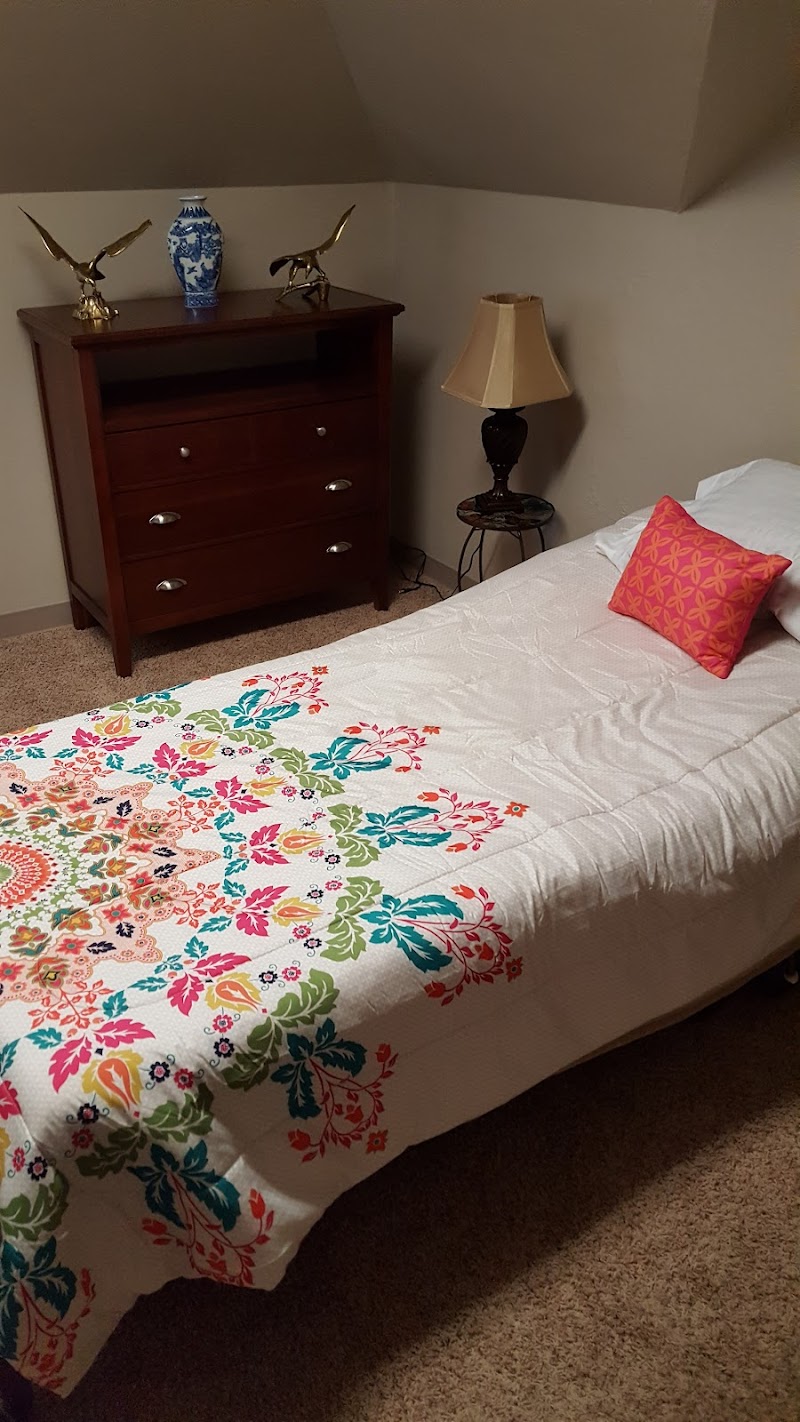
CMS rates Martin Health Center, INC's staffing level at 4 out of 5 stars, which is above average compared to other nursing homes. Staff turnover is 41%, compared to the Iowa average of 46%. This relatively stable workforce can support continuity of care.

What Have Inspectors Found at Martin Health Center, Inc?

State health inspectors documented 11 deficiencies at Martin Health Center, INC during 2023 to 2025. These included: 1 that caused actual resident harm and 10 with potential for harm. Deficiencies causing actual harm indicate documented cases where residents experienced negative health consequences.
Who Owns and Operates Martin Health Center, Inc?

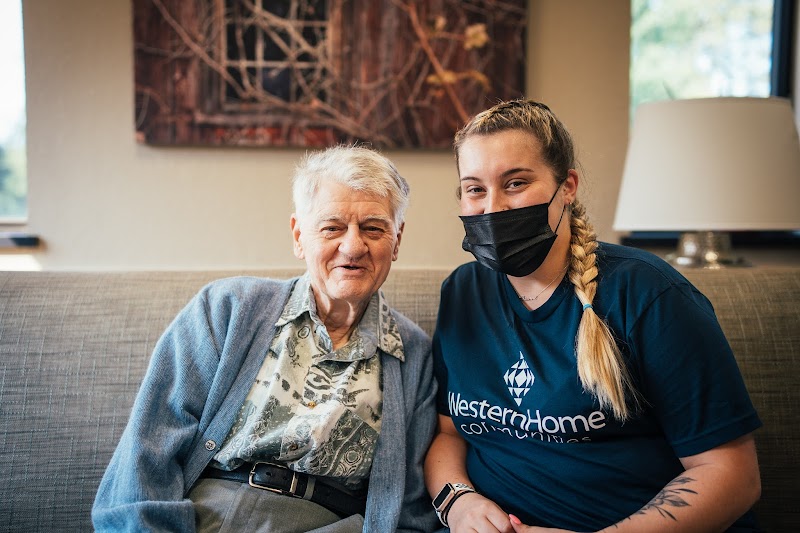
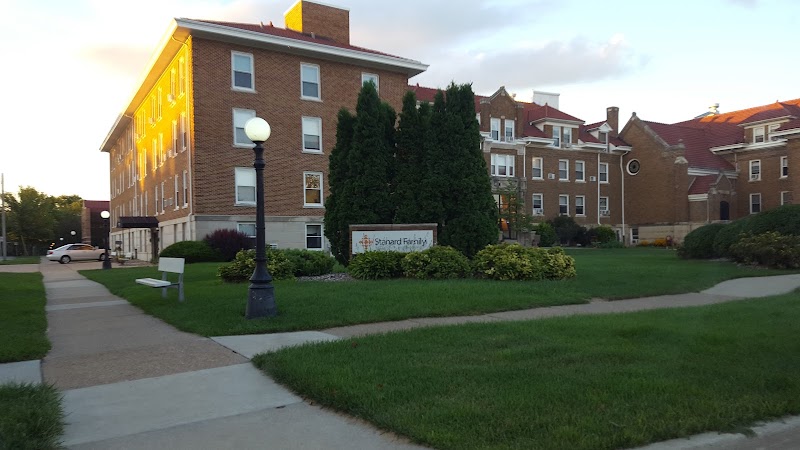
Martin Health Center, INC is owned by a non-profit organization. Non-profit facilities reinvest revenue into operations rather than distributing to shareholders. The facility operates independently rather than as part of a larger chain. With 50 certified beds and approximately 46 residents (about 92% occupancy), it is a smaller facility located in Cedar Falls, Iowa.
How Does Martin Health Center, Inc Compare to Other Iowa Nursing Homes?

Compared to the 100 nursing homes in Iowa, Martin Health Center, INC's overall rating (3 stars) is below the state average of 3.1, staff turnover (41%) is near the state average of 46%, and health inspection rating (3 stars) is at the national benchmark.

What Should Families Ask When Visiting Martin Health Center, Inc?

Based on this facility's data, families visiting should ask: "Can I visit during a mealtime to observe dining assistance and food quality?" "How do you handle medical emergencies, and what is your hospital transfer rate?" "Can I speak with family members of current residents about their experience?"

Is Martin Health Center, Inc Safe?

Based on CMS inspection data, Martin Health Center, INC has a clean safety record: no substantiated abuse findings (meaning no confirmed cases of resident harm), no Immediate Jeopardy citations (the most serious violation level indicating risk of serious injury or death), and is not on the Special Focus Facility watch list (a federal program monitoring the lowest-performing 1% of nursing homes). The facility has a 3-star overall rating and ranks #100 of 100 nursing homes in Iowa. While no facility is perfect, families should still ask about staff-to-resident ratios and recent inspection results during their visit.

Do Nurses at Martin Health Center, Inc Stick Around?

Martin Health Center, INC has a staff turnover rate of 41%, which is about average for Iowa nursing homes (state average: 46%). Moderate turnover is common in nursing homes, but families should still ask about staff tenure and how the facility maintains care continuity when employees leave.

Was Martin Health Center, Inc Ever Fined?

Martin Health Center, INC has no federal fines on record. CMS issues fines when nursing homes fail to meet care standards or don't correct problems found during inspections. The absence of fines suggests the facility has either maintained compliance or corrected any issues before penalties were assessed. This is a positive indicator, though families should still review recent inspection reports for the full picture.

Is Martin Health Center, Inc on Any Federal Watch List?

Martin Health Center, INC is not on any federal watch list. The most significant is the Special Focus Facility (SFF) program, which identifies the bottom 1% of nursing homes nationally based on persistent, serious quality problems. Not being on this list means the facility has avoided the pattern of deficiencies that triggers enhanced federal oversight. This is a positive indicator, though families should still review the facility's inspection history directly.