Ridgecrest Village

4130 NORTHWEST BOULEVARD, DAVENPORT, IA 52806 (563) 391-3430
Non profit - Corporation 137 Beds Independent Data: November 2025 2 Immediate Jeopardy citations
Trust Grade
0/100
#376 of 392 in IA
Last Inspection: September 2024

Within standard 12-15 month inspection cycle. Federal law requires annual inspections.

Overview

Ridgecrest Village in Davenport, Iowa, has received a Trust Grade of F, indicating significant concerns about the quality of care provided. They rank #376 out of 392 facilities in Iowa, placing them in the bottom half of all nursing homes in the state, and #11 out of 11 in Scott County, meaning there are no better local options. While the facility's issues have improved recently, decreasing from 33 in 2024 to just 1 in 2025, the staffing turnover rate is concerning at 68%, which is much higher than the state average. The facility's fines amounting to $67,900 raise red flags, as this is higher than 80% of Iowa facilities. Notably, there have been critical incidents, including a failure to hold a resident's anticoagulant medication, leading to a hospital admission, and a delayed response to a resident eloping from the facility, which could have endangered others.

Trust Score
F
0/100
In Iowa
#376/392
Bottom 5%
Safety Record
High Risk
Review needed
Inspections
Getting Better
33 → 1 violations
Staff Stability
⚠ Watch
68% turnover. Above average. Higher turnover means staff may not know residents' routines.
Penalties
✓ Good
$67,900 in fines. Lower than most Iowa facilities. Relatively clean record.
Skilled Nurses
✓ Good
Each resident gets 52 minutes of Registered Nurse (RN) attention daily — more than average for Iowa. RNs are trained to catch health problems early.
Violations
⚠ Watch
41 deficiencies on record. Higher than average. Multiple issues found across inspections.
★☆☆☆☆
1.0
Overall Rating
★★★☆☆
3.0
Staff Levels
★★★☆☆
3.0
Care Quality
★☆☆☆☆
1.0
Inspection Score
Stable
2024: 33 issues
2025: 1 issues

The Good

  • Full Sprinkler Coverage · Fire safety systems throughout facility
  • No fines on record

Facility shows strength in fire safety.

The Bad

1-Star Overall Rating

Below Iowa average (3.0)

Significant quality concerns identified by CMS

Staff Turnover: 68%

22pts above Iowa avg (46%)

Frequent staff changes - ask about care continuity

Federal Fines: $67,900

Well above median ($33,413)

Moderate penalties - review what triggered them

Staff turnover is elevated (68%)

20 points above Iowa average of 48%

The Ugly 41 deficiencies on record

2 life-threatening
Mar 2025 1 deficiency
CONCERN (D) 📢 Someone Reported This

A family member, employee, or ombudsman was alarmed enough to file a formal complaint

Potential for Harm - no one hurt, but risky conditions existed

Resident Rights (Tag F0550)

Could have caused harm · This affected 1 resident

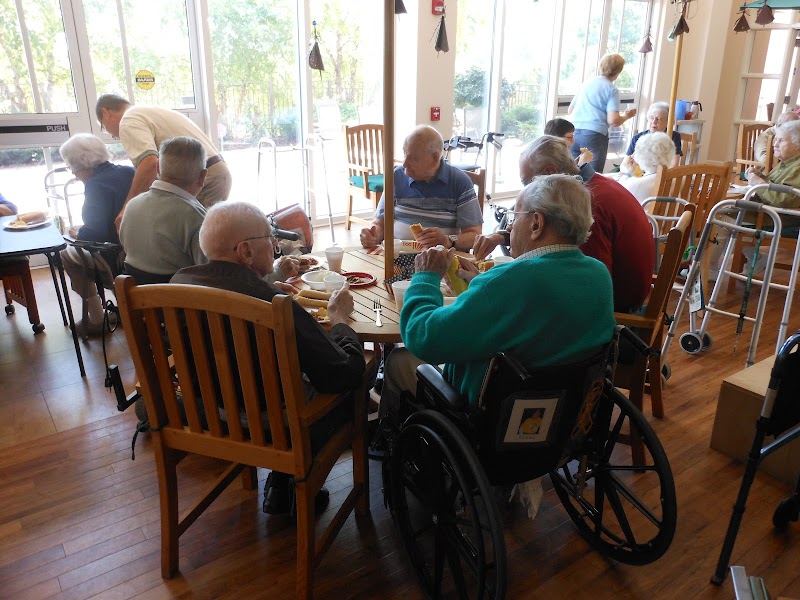
Based on observations, clinical record review, and staff interviews, the facility failed to ensure staff assisted 3 of 6 residents (Resident #5, #6, and #8) to eat in a dignified manner, and promoted ...

Read full inspector narrative →
Based on observations, clinical record review, and staff interviews, the facility failed to ensure staff assisted 3 of 6 residents (Resident #5, #6, and #8) to eat in a dignified manner, and promoted their individuality while during a meal service. The facility reported a census of 61 residents. Findings include: 1. The 2/12/25 Minimum Data Set (MDS) assessment tool revealed Resident #5 diagnoses included: cerebrovascular accident (a stroke), non-Alzheimer's dementia, anxiety and malnutrition. Resident #5 Brief Interview for Mental Status (BIMS) exam result of 5 out of 15 indicated a severe cognize impairment. The MDS indicated the resident dependent on staff for most activities of daily living (ADL's) and required staff supervision or touch assistance for eating. Review of the Care Plan revealed a Focus area to address [Name redacted} has an ADL self-care performance deficit r/t Dementia, Fatigue, Impaired balance. Date Initiated: 10/6/23; Date Revised: 11/15/24. Interventions included, in part: a. [Name redacted] needs x1 assist for dining. Needs cueing as well as physical assist .Date Initiated: 10/6/23; Date Revised: 11/15/24. During an observation on 3/12/25 at 12:31 p.m., during the lunch meal, Resident #5 sat in a Broda Chair (name brand of a type of wheelchair that reclines). Staff B, Certified Nursing Assistant (CNA) stood next to the resident and fed her 4 bites, and assisted the resident take a drink. Staff B then walked away from the table. During an observation on 3/18/25 at 9:10 a.m., during breakfast Staff D, CNA, stood next to Resident #5, who sat at the table in a Broda Chair in the Station 2 Dining Room. Staff D fed the resident her breakfast. Staff D walked away at 9:13 a.m., leaving Resident #5 and one other resident alone at the table. During the same meal, at 9:17 a.m., Staff C, CNA stood next to Resident #5 and fed her with a spoon until Staff D, CNA returned at 9:23 a.m. Staff D then proceeded to stand next to Resident #5 and assisted her to eat. During an interview on 3/18/25 at 12:50 p.m., the Director of Nursing (DON) stated she expected nursing staff to sit next to a resident while proving assistance to eat rather than stand over the resident. She stated she expected staff to interact with the resident while providing eating assistance. 2. The 2/19/25 MDS assessment Tool revealed Resident #6 had diagnoses that included Alzheimer's disease, anxiety and glaucoma, had severe cognitive impairment. The MDS indicated Resident #6 dependent on staff for to eat. Review of the Care Plan revealed a Focus area to address [Name redacted} has an ADL self-care performance deficit r/t Dementia. Date Initiated: 7/31/23; Date Revised: 11/20/24. Interventions included, in part: a. EATING: Set up Assist x1 for direct eating assistance. Date Initiated: 3/1/25; Date Revised: 3/1/25. During an observation on 3/17/25 at 11:35 a.m., Resident #6 sat in a Broda Chair, asleep in the Station 3 Dining Room. The resident remained reclined as meals were served to other seated residents. At 12:07 p.m., 2 staff repositioned the resident in the chair, the resident remained reclined as staff C, CNA stood next to the resident, held the resident's beverage and offered a drink at 12:08 p.m., and the resident coughed. Staff C then lifted the back of the Broda Chair to position the resident more upright. Staff C continued to stand as she fed the resident with a spoon. At 12:11 p.m., Staff C called the resident's name and stated you need to wake up (resident's name redacted). Staff C repeated the statement two more times, then walked away from the resident at 12:12 p.m. During a continuous observation, at 12:23 p.m., the resident had not had any additional feeding assistance, and remained asleep in the Broda chair as other residents ate their meal. During an observation on 3/18/25 at 11:48 a.m., Resident #6 at a Station 3 Dining Room table for the noon meal. The resident sat in a reclined position in a Broda chair, asleep. At 12:09 p.m. the resident remained at the table, asleep in the Broda Chair. At 12:29 p.m., the resident remained asleep and reclined and had ate very little of her meal. 3. The 12/10/24 MDS Assessment Tool revealed Resident #8 had diagnoses that included Alzheimer's disease, anxiety, severe cognitive impairment. The MDS indicated Resident #8 dependent on staff for all ADL care that included feeding assistance. Review of the Care Plan revealed a Focus area to address [Name redacted} has an ADL self-care performance deficit r/t dementia Fatigue, Limited Mobility, Musculoskeletal impairment. Date Initiated: 6/25/23; Date Revised: 9/19/24. Interventions included, in part: a. EATING: The resident is totally dependent on x1 staff for eating. Date Initiated: 6/25/23; Date Revised: 7/11/23. During an observation on 3/12/25 at 11:33 a.m., Resident #8 positioned reclined in a Broda Chair, asleep in the Station 3 Dining Room for the lunch meal with 15 other seated residents. The resident remained asleep in the Broda Chair as the lunch meal was delivered to her table and left uncovered at 12:19 p.m. At 12:26 p.m. Staff C, CNA came to the resident's table, lifted the back of the Broda Chair to position the resident more upright, and stood by the resident as she fed her with a spoon. The facility's Certified Nursing Assistant Job Description dated August, 2022 stated the CNA was to provide personal care to residents in a manner conducive to their safety and comfort, consistent with the facility policy. and demonstrate competency in skills mandated by required education and training. The facility's Assistance with Meals policy, dated revised March, 2022, directed: 1. Residents shall receive assistance with meals in a manner that meets the individual needs of each resident. 2. Residents who cannot feed themselves will be fed with attention to safety, comfort and dignity, for example: a. not standing over residents while assisting them with meals; b. keeping interactions with other staff to a minimum while assisting residents with meals.
Sept 2024 15 deficiencies 1 IJ
CRITICAL (J)

Immediate Jeopardy (IJ) - the most serious Medicare violation

Deficiency F0757 (Tag F0757)

Someone could have died · This affected 1 resident

**NOTE- TERMS IN BRACKETS HAVE BEEN EDITED TO PROTECT CONFIDENTIALITY** Based on observation, interview, and record review the facility failed to hold warfarin, an anticoagulant medication (Coumadin, ...

Read full inspector narrative →
**NOTE- TERMS IN BRACKETS HAVE BEEN EDITED TO PROTECT CONFIDENTIALITY** Based on observation, interview, and record review the facility failed to hold warfarin, an anticoagulant medication (Coumadin, brand name for warfarin) following a documented International Normalized Ratio (INR) documented as 7.8 on 4/8/24 for one of one resident reviewed for warfarin administration (Resident #19). The resident received doses of warfarin on 4/8/24 and 4/9/24 when the medication was to be held. The resident's INR was documented as 9.3 on 4/10/24. The resident was found with blood on their arms and legs on 4/13/24. Resident sent to the hospital and admitted for INR of 8.2, Hemoglobin (Hgb) of 8.6, and treated with Vitamin K (antidote). This deficient practice resulted in an Immediate Jeopardy (IJ) to the health and safety of the resident. The facility reported a census of 51 residents. Findings include: The State Agency informed the facility of the Immediate Jeopardy (IJ) on 9/25/24 at 4:20 PM. The IJ began on 4/8/24, when warfare administered to the resident following an INR of 7.8. Facility staff removed the IJ on 9/25/24 at 11:36 AM through the following actions: 1. The identified resident's Coumadin/warfarin was discontinued on 5/9/24 2. All other residents with Coumadin/warfarin orders were reviewed for accuracy on 9/25/24. 3. Implemented new procedure regarding Coumadin/warfarin administration 9/25/24. 4. Coumadin/warfarin Procedure New orders or New Admit with orders for Coumadin/warfarin the Nurse will: 4a. Enter Coumadin/warfarin order into Electronic Health Record. 4b. Nurse will document order on Coumadin/warfarin log located at each station. 4c. DON (Director of Nursing)/Designee will check all new Coumadin/warfarin orders and the log within 24 hours to ensure dosing and follow-up labs are entered as ordered on the log and in Electronic Health Record. 5. The Nurse who took the order to hold Coumadin/warfarin on 4/8/24 is no longer employed at the facility. 6. All nurses will be educated on the new procedure on 9/26/24. Additionally, all nurses will be educated on how to properly enter orders in Electronic Health Records. 7. New employees and agency staff will be trained on how to complete this procedure including entering orders in Electronic Health Records during their orientation. 8. Audit tool implemented to ensure nurses are administering Coumadin/warfarin according to physician orders. 9. Audits will be completed weekly for one month and then monthly ongoing as needed. 10. The audit results will be brought to the Quarterly QA (Quality Assurance) meeting. The scope and severity lowered from a J to a D during the survey. Review of the Minimum Data Set (MDS) assessment dated [DATE] for Resident #19 revealed the resident scored 14 out of 15 on a Brief Interview for Mental Status exam, which indicated intact cognition. Per this assessment, the resident took anticoagulant medication. On 9/24/24, review of the resident's Care Plan revised 7/18/23 revealed, The resident is on anticoagulant therapy; Coumadin. Review of the Intervention dated 7/18/24 revealed, Administer ANTICOAGULANT medications as ordered by physician. Monitor for side effects and effectiveness Q-SHIFT (every shift). Review of Medical Diagnoses for Resident #19 revealed, in part, cardiac arrythmia. Review of the Health Status Note dated 4/1/24 at 4:16 PM revealed, Dr. [Name Redacted] aware of residents INR of 3.7 new orders given for Coumadin 3mg (milligram) on Thursday and Sundays and Coumadin 1.5mg on all other days, recheck INR on 4/8/24. The Physician Order present on Resident #19's MAR (Medication Administration Record) dated April 2024 revealed the following: a. (Start Date 4/1/24, with hold and discontinuation date 4/10/24): Coumadin Oral Tablet (warfarin sodium) Give 1.5 mg by mouth in the evening every Mon, Tue, Wed, Fri, Sat related to LONG TERM (CURRENT) USE OF ANTICOAGULANTS . 3mg on Thursday and Sundays recheck INR 4/8/24. The Orders-General Note from eRecord dated 4/8/24 at 3:03 PM authored by Staff L, Licensed Practical Nurse (LPN) revealed, [Lab Name Redacted] called with STAT lab results; Verbal report received from [Lab Name Redacted] staff [Name Redacted], PT (prothrombin, test for blood clotting): 73.4, INR: 7.8. Coumadin Clinic notified by this nurse. <sic>Comedian <sic> Clinc staff verbal response received from [Name Redacted]; Hold Coumadin for today and tomorrow. Check INR EARLY Wednesday. Watch out for bleeding. Any continuous bleeding, send resident out to the ER for further evaluation. Review of the fax sheet to Provider for Resident #19 dated 4/8/24 revealed, Please review labs. Coumadin clinic notified and gave orders to hold meds today & tomorrow. Draw labs early Wednesday send resident to ER if any continuous bleeding noticed. Review of the Lab Report for Resident #19 dated 4/8/24 revealed INR result 7.8 and Hgb 9.9. The Lab Report noted standard anticoagulant INR range 2.0-3.0 INR, and aggressive anticoagulant range 2.5-3.5 INR. Review of the Coumadin Dosage Schedule chart dated 4/8/24 from the clinic managing the resident's Coumadin revealed the resident not to receive Coumadin on 4/8/24 or 4/9/24. The Medication Administration Record (MAR) dated April 2024 revealed Resident #19 was administered Coumadin 1.5 mg on 4/8/24 and 4/9/24. The Health Status Note dated 4/8/24 at 4:05 PM revealed, Response received from [Anticoagulation clinic name redacted] goes as follows: Continue same meds and follow up 4/30/24 as planned. Staff will continue to monitor. The Communication-with Physician note dated 4/10/24 at 10:59 AM revealed, Call received from [Name Redacted] at [Facility Redacted]/Coumadin clinic. Has concerns about Coumadin dosing/staff. Relayed to supervisor ([Name Redacted], ADON). The Lab Note dated 4/10/24 at 3:00 PM revealed, Call placed to Coumadin clinic RE: INR 9.3, PT 86.3. Spoke with [Name Redacted]. Has to speak to Dr. [Name Redacted] and will call back. The Order Note dated 4/10/24 at 3:30 PM revealed, ANY S/S (signs/symptoms) OF BLEEDING or FALLS - TO ER IMMEDIATELY. INR 9.3 PT 86.3 HOLD COUMADIN THROUGH SUNDAY RETEST INR 04/15/22. DO NOT GIVE COUMADIN UNTIL SPEAKING WITH CLINIC 04/15!!!!! every shift until 04/15/2024 18:00 (6:00 PM) Start Date: 4/10/2024 End Date: 4/15/2024 .Lab updated, wanted to d/c (discontinue) INR 04/11 and place the INR for 04/15. Pharmacy aware. The Health Status Note dated 4/13/24 at 5:25 AM revealed, Resident has a standing order to be sent to ED (emergency department) for eval (evaluation) if any bleeding. Resident found in bed with blood on her arms and legs. BP (blood pressure) 80/40. 02 (oxygen) sat 88% on room air. Placed on oxygen . Have standing order to be sent to ED for eval and treat for any bleeding. Left message with POA (Power of Attorney) daughter. Called medic for transport they are on their way. Paperwork prepared. Review of ED admission Paperwork from Resident #19's Hospital Records dated 4/13/24 at 6:43 AM revealed the following per Chief Complaint: pt (patient) arrived from [Facility Name Redacted] d/t (due to) staff finding dry blood, skin tear on left forearm, and INR 9.3. has gallbladder infection. Review of the resident's vital signs revealed blood pressure documented as 102/50 mm hg. Review of the Physician Progress Note dated 4/14/24 revealed the following documented Hemoglobin levels of 8.6 on 4/13 and 4/14, with INR documented as 8.2 on 4/13 and 2.6 on 4/14. The Progress Note dated 4/13/24 at 11:40 AM revealed, Spoke to nurse [Name Redacted] at [Name Redacted] ER. admitted for an INR 8.2. Positive for blood in stool. Hemoglobin 8.6. Administered Vitamin K in ER. Bp (blood pressure) low, and not moving very well due to weakness. Coumadin clinic faxed, [Facility Name] on-call made aware. On 9/24/24 at 8:31 AM, Resident #19 observed in their room. The resident was wearing a nasal cannula, with oxygen concentrator set to 4 Liters. On 9/25/24 at 12:54 during an interview with Staff K, Medical Assistant from anticoagulation clinic, Staff K explained the following about Resident #19: Per Staff K, the resident's INR on 4/8 was 7.8, and at that point guidance was to hold the resident's warfarin on 4/8 and 4/9, and test on 4/10. Per Staff K, test on 4/10 revealed INR 9.3, and the resident ended up taking the warfarin on those nights when was supposed to be held. Per Staff K, Dr.[Name Redacted] said to hold Wednesday through Sunday (4/10-4/14), and test on Monday (4/15). Staff K explained the clinic did not get test on 4/15 because the resident was in the hospital. Staff K further explained the clinic would call (facility) after every INR, every single one. When queried as to a set number for a critical value, Staff K responded it would depend on the person's range. Staff K explained for Resident #19, anything over 4.6 INR would hold the resident's warfarin. Staff K further explained she believed a lab would come in and draw the INR, and the clinic did not get it until the next day. Per Staff K, a schedule faxed with every INR which told whatever orders given. On 9/25/24 at 1:48 PM, interview conducted with Staff M, Licensed Practical Nurse (LPN). Staff M explained if INR was followed by the Coumadin clinic, the clinic would give the orders unless had an on-call for the weekend, but still should be the Coumadin clinic. Staff M explained the nurse would input the orders, usually would come with a print out and would have a calendar week with dosing and when to recheck. Per Staff M, the order would continue until the day of the INR, and would not give Coumadin that day until got orders. Staff M further explained needed to get the result (INR) to have orders, and not supposed to give Coumadin until go INR drawn. On 9/25/24 at 2:01 PM, the facility's Assistant Director of Nursing (ADON) queried about Resident #19's Progress Note which said the Coumadin clinic called with concerns, and phone call directed to the ADON. The ADON explained, in part, it was regarding the resident's high INR and she believed it was just an informative call. When queried if she was made aware of any Coumadin medication errors for Resident #19, the ADON responded no. When queried who would draw INRs at the facility, the ADON explained there was a lab, and that they would come in and draw. When queried how the Coumadin clinic communicated with the facility, the ADON responded sometimes sent a fax, and sometimes gave (facility) a call too. The ADON explained the following about critical lab values: The tab would call (facility), and a fax would come in from the lab after lab called. The ADON acknowledged staff should be on the phone and call any critical lab either to Coumadin clinic or PCP (Primary Care Physician). When queried how quickly INR results turned around to the facility, the ADON explained they had it now if the lab was not going to get back in a timely manner, the facility would take to a local lab. The ADON explained had not been doing too bad with INRs, and had not had to implement local lab process yet. The ADON explained INR supposed to be turned around and present before 3 PM because medication had to be given at 4 PM. The ADON explained unless result was critical, as would call immediately for those labs, and if not needed to be on the phone Dr, calling lab, and needed to be checking in on that. The ADON explained INRs were usually drawn about 5:00 AM/6:00 AM. When queried who would input the orders for Coumadin dosing, the ADON responded the nurses. Per the ADON, they would either get a fax back or if called, get a telephone order. The Coumadin clinic would give a telephone order and they would send a fax too. When queried about coordination between the Coumadin clinic and the provider, the ADON explained usually the nurses were the drivers, and they were going to make sure communication with the Coumadin clinic, info needed, and right dose. Per the ADON, they needed to make sure everything was in, everything on hold, and needed to be calling back, putting everything on hold, whatever the orders were. When queried if staff would wait until had the INR result to give the drug that day, the ADON acknowledged they would. Per the ADON, on INR days would not give until get those results, and waited until got the results which is why wanted by 3 (PM) or would call the doctor. Per the ADON, she had never had a doctor say to give without results. The ADON was asked to pull up Resident #19's MAR for 4/8/24 and 4/9/24. When queried if she had been made aware of any errors, the ADON responded no. On 9/25/24 at 2:45 PM during an interview with Staff L, former Licensed Practical Nurse (LPN) at the facility (who had charted the note to hold the medication on 4/8/24 and 4/9/24), Staff L explained she hardly worked down the hall where resident resided. Staff L explained she could not enter labs because she did not have access to labs. Per Staff L, the she was never given access to labs, and the facility kept turning over directors. Staff L explained she went by word of mouth to get lab results. When queried if she was able to put in orders, Staff L expressed the following: Like meds and stuff like that, [Staff L] didn't ever do any of those things there (facility), [Staff L] couldn't do anything. Staff L explained they emailed human resources with concerns. Staff L expressed being able to do the bare minimum with the electronic health record system. Per Staff L, the former Director of Nursing (DON) was supposed to work on her computer access, and Staff L further explained she would show (facility) things she (Staff L) could not do, and (facility) said they would do it. Staff L explained she currently knew how to get into the computer system and put (order) on hold due to other employment, and then (prior) didn't know how to do those things and would pass information on to the ADON. Per Staff L, the ADON was aware Staff L could not access things. On 9/25/24 at 3:21 PM, interview conducted with the facility's DON. The DON explained she started in the position on 4/8/24. When queried if there were any concerns with Coumadin (warfarin) in April, the DON responded no. When queried if notified about blood on resident's arms/legs, the DON responded no. When queried if she was made aware of any concerns with Resident #19's Coumadin, the DON responded no. When queried about the situation, the DON acknowledged the following expectation: write the order to stop the Coumadin, stop the Coumadin, signs/symptoms of bleeding go the the ER (emergency department), watch for INR in 2 days, and make sure to discontinue on the MAR (Medication Administration Record), absolutely. When queried if she was aware of computer access concerns, the DON responded no, and the DON knew agency staff did not have access to lab. During the interview, the DON was made aware of the resident's INR of 7.8 followed by Coumadin administration, INR of 9, then hospitalization. The DON acknowledged the situation could have ended very poorly. When queried if the orders would be handled by the anticoagulation clinic if resident saw them, the DON acknowledged they would be, and further explained would usually do a verbal asked to fax them, they would do either. The DON further explained she would really think with 7.8 (INR) would send the resident out because facility was not a hospital. The DON further explained they would have sent the resident out that day with the INR of 9. On 9/26/24 at 10:47 AM the ADON queried about any computer issues, and responded the [electronic health record] system was kind of new for the facility, and the facility had only been using it for a year at present time. When queried if Staff L, LPN had computer issues, the ADON responded she did. The ADON explained she remembered Staff L received education on a few things. The ADON further explained Coumadin levels were kind of hard to put in too, and wanted to make sure right dose each day. Per the ADON, everyone got education on the first day they came and as needed. Review of the Facility Policy dated Administering Medications, dated 2001 and revised 4/19, revealed the following: Medications are administered in a safe and timely manner, and as prescribed.
CONCERN (D)

Potential for Harm - no one hurt, but risky conditions existed

Resident Rights (Tag F0550)

Could have caused harm · This affected 1 resident

Based on observation, interview, and record review the facility failed to ensure residents treated in a dignified manner for one of three residents reviewed for dignity (Resident #5). The facility rep...

Read full inspector narrative →
Based on observation, interview, and record review the facility failed to ensure residents treated in a dignified manner for one of three residents reviewed for dignity (Resident #5). The facility reported a census of 51 residents. Findings include: Review of the Minimum Data Set (MDS) assessment for Resident #5 revealed the resident was rarely to never understood and used a wheelchair and/or scooter. Review of Resident #5's Care Plan dated 9/20/23, revised 5/9/24, revealed, [Resident #5] has an ADL (activities of daily living) self-care performance deficit r/t (related to) dementia and impaired balance. An Intervention dated 9/26/23, revised 5/9/23, revealed Resident #5 utilizes a rolling Broda Chair (brand name of a type of chair that allows a resident to tilt or recline) for mobility. She is able to propel herself with her feet. During an observation on 9/24/24 at 12:11 PM Resident #5 pulled backwards down the hallway in a Broda chair with a staff member, Staff A, Certified Nursing Assistant (CNA) holding the resident's feet while the resident being transported backwards. The resident was being assisted rapidly backwards down the hallway. On 9/26/24 at 8:22 AM during an interview with Staff O, CNA, queried which way resident should be facing, backward or forward, when assisted in Broda chair and acknowledged forward. When queried about foot pedals. Staff O responded foot pedals should always be on when assisting/pushing a resident. On 9/26/24 at 10:49 AM, when queried what direction the resident should face when moving, the Assistant Director of Nursing (ADON) responded forward, and no back pulling of anyone. When queried about if it would be appropriate to hold the resident's feet, the DON acknowledged would not be. On 9/26/24 at 11:02 AM when queried about the above observation, the DON responded need foot pedals on, and to move forwards not backwards. The DON responded no pedal, no push. Review of the Facility Policy titled Dignity, dated 2001 and revised 2/21, revealed the following: Residents are treated with dignity and respect at all times.
CONCERN (D)

Potential for Harm - no one hurt, but risky conditions existed

Comprehensive Assessments (Tag F0636)

Could have caused harm · This affected 1 resident

Based on interview, clinical record review, and facility policy review the facility failed to ensure timely completion of an admission Minimum Data Set (MDS) assessments for one of two residents revie...

Read full inspector narrative →
Based on interview, clinical record review, and facility policy review the facility failed to ensure timely completion of an admission Minimum Data Set (MDS) assessments for one of two residents reviewed for Resident Assessment Task (Resident #38). The facility reported a census of 51 residents. Findings include: Review of Resident #38's Electronic Health Record (EHR) revealed the resident admitted to the facility 1/16/24. Review of the resident's admission Minimum Data Set (MDS) assessment with Assessment Reference Date 1/23/24 revealed the assessment completed on 2/16/24. On 9/26/24 at 10:30 AM, the MDS Coordinator confirmed the assessment was late. On 9/25/24 at 3:02 PM, a Facility Policy to address MDS completion requested. On 9/25/24 at 4:07 PM, the Administrator explained the facility did not have a policy.
CONCERN (D)

Potential for Harm - no one hurt, but risky conditions existed

Deficiency F0638 (Tag F0638)

Could have caused harm · This affected 1 resident

**NOTE- TERMS IN BRACKETS HAVE BEEN EDITED TO PROTECT CONFIDENTIALITY** Based on clinical record review and staff interview the facility failed to ensure timely completion of quarterly Minimum Data Se...

Read full inspector narrative →
**NOTE- TERMS IN BRACKETS HAVE BEEN EDITED TO PROTECT CONFIDENTIALITY** Based on clinical record review and staff interview the facility failed to ensure timely completion of quarterly Minimum Data Set (MDS) assessments for two of two residents reviewed for Resident Assessment Task (Resident #13, Resident #38). The facility reported a census of 51 residents. Findings include: 1. Review of Resident #13's Quarterly MDS assessment with Assessment Reference Date (ARD) 6/25/24 completed on 7/11/24. 2. Review of Resident #38's Quarterly MDS assessment with ARD 4/23/24 completed on 5/9/24. On 9/26/24 at approximately 10:30 AM, the MDS Coordinator queried if there were issues completing quarterly assessments timely. Per the MDS Coordinator, it was pipped (part of Performance Improvement Project) for QAPI (Quality Assurance Performance Improvement). When queried about the specific MDS above, the MDS Coordinator explained for MDS 4/23/24 was waiting on other people to do their section, and for the MDS dated [DATE] MDS Coordinator had other matters she was attending to and there was not a back-up. On 9/25/24 at 3:02 PM, a Facility Policy to address MDS completion requested. On 9/25/24 at 4:07 PM, the Administrator explained the facility did not have a policy.
CONCERN (D)

Potential for Harm - no one hurt, but risky conditions existed

MDS Data Transmission (Tag F0640)

Could have caused harm · This affected 1 resident

Based on clinical record review and staff interview the facility failed to ensure Minimum Data Set assessments submitted timely for one of two residents reviewed for Resident Assessment Task (Resident...

Read full inspector narrative →
Based on clinical record review and staff interview the facility failed to ensure Minimum Data Set assessments submitted timely for one of two residents reviewed for Resident Assessment Task (Resident #13). The facility reported a census of 51 residents. Findings include: Review of Resident #13's Quarterly MDS assessment with Assessment Reference Date (ARD) 4/2/24 was completed 4/16/24. The assessment was submitted 5/16/24. On 9/26/24 at approximately 10:30 AM the MDS Coordinator explained they submitted every other week on Friday. When queried about Resident #13's MDS, the MDS Coordinator acknowledged it was late. A Facility Policy to address submitting MDS requested via email to the facility's Administrator. On 4/26/24 at 1:25 PM, the Administrator explained via email the facility did not have a policy.
CONCERN (D)

Potential for Harm - no one hurt, but risky conditions existed

Assessment Accuracy (Tag F0641)

Could have caused harm · This affected 1 resident

**NOTE- TERMS IN BRACKETS HAVE BEEN EDITED TO PROTECT CONFIDENTIALITY** Based on clinical record review and staff interview the facility failed to ensure accurate coding of medications on the Minimum ...

Read full inspector narrative →
**NOTE- TERMS IN BRACKETS HAVE BEEN EDITED TO PROTECT CONFIDENTIALITY** Based on clinical record review and staff interview the facility failed to ensure accurate coding of medications on the Minimum Data Set (MDS) assessment for one of five residents reviewed for unnecessary medications (Resident #23). The facility reported a census of 51 residents. Findings include: Review of the Minimum Data Set (MDS) assessment dated [DATE] for Resident #23 revealed the resident scored 15 out of 15 on a Brief Interview for Mental Status (BIMS) exam, which indicated intact cognition. Per this assessment, the resident took antianxiety, anticoagulant, opioid, and antiplatelet medication. Review of the resident's Medication Administration Record (MAR) dated August 2024 revealed the resident only took anticoagulant medication from the medication classes listed above. On 9/26/24 at 10:59 AM, the MDS Coordinator explained she looked at the wrong person, and acknowledged that was why the mistake occurred. On 9/25/24 at 3:02 PM, a Facility Policy to address MDS accuracy requested. On 9/25/24 at 4:07 PM, the Administrator explained the facility did not have a policy.
CONCERN (D)

Potential for Harm - no one hurt, but risky conditions existed

Deficiency F0655 (Tag F0655)

Could have caused harm · This affected 1 resident

**NOTE- TERMS IN BRACKETS HAVE BEEN EDITED TO PROTECT CONFIDENTIALITY** Based on clinical record review, resident and staff interview, the facility failed to complete a Baseline Care Plan within 48 ho...

Read full inspector narrative →
**NOTE- TERMS IN BRACKETS HAVE BEEN EDITED TO PROTECT CONFIDENTIALITY** Based on clinical record review, resident and staff interview, the facility failed to complete a Baseline Care Plan within 48 hours of admission for 2 of 2 newly admitted residents reviewed (Resident #32 and Resident #53). The facility reported a census of 51 residents. Findings include: 1. The Minimum Data Set (MDS) assessment dated [DATE] identified Resident #32 was cognitively intact with a Brief Interview for Mental Status (BIMS) score of 13. The MDS listed diagnoses included: acute chronic systolic heart failure (commonly called congestive heart failure), type 2 diabetes mellitus with unspecified complications. The MDS documented Resident #32 was admitted on [DATE]. A review of the Clinical admission Assessment, dated 8/19/24, revealed the Care Planning section did not identify Focus Areas, Goals or Interventions for the risk factors, diagnoses or care needs for Resident # 32. During an interview on 9/25/24 10:22 AM, the MDS Coordinator reported she does not complete the Baseline Care Plans and these should be completed by the admitting nurse. During an interview on 9/25/24 at 3:38 PM, Staff J, RN disclosed she did not complete the Care Planning section of the Clinical admission Assessment as this is completed by the MDS Coordinator. 2. The MDS assessment, dated 9/1/24, identified Resident #53 with a moderate cognitive impairment as a result of a BIMS score of 9 out of 15. The MDS listed diagnoses included: atrial fibrillation (an abnormal heart rhythm), coronary artery disease and respiratory failure. The MDS documented Resident #53 admitted to the facility on [DATE]. A review of the N Adv- Skilled Evaluation, dated 8/26/24, revealed the Care Planning section did not identify revealed the Care Planning section did not identify Focus Areas, Goals or Interventions for the risk factors, diagnoses or care needs for Resident # 53. During an interview on 9/26/24 at 11:59 AM, the Director of Nursing (DON) reported she would expect the Nurses who took care of the Resident in the first 48 hours to develop the Baseline Care Plan within 48 hours. During an interview on 9/25/24 at 4:07 PM, the Administrator reported the facility did not have a policy on Baseline Care Plans.
CONCERN (D)

Potential for Harm - no one hurt, but risky conditions existed

Deficiency F0657 (Tag F0657)

Could have caused harm · This affected 1 resident

**NOTE- TERMS IN BRACKETS HAVE BEEN EDITED TO PROTECT CONFIDENTIALITY** Based on interview and record review the facility failed to update the resident's Care Plan following discontinuation of anticoa...

Read full inspector narrative →
**NOTE- TERMS IN BRACKETS HAVE BEEN EDITED TO PROTECT CONFIDENTIALITY** Based on interview and record review the facility failed to update the resident's Care Plan following discontinuation of anticoagulant medication for one of seventeen residents reviewed for care plans (Resident #19). The facility reported a census of 51 residents. Findings include: Review of the Minimum Data Set (MDS) assessment dated [DATE] for Resident #19 revealed the resident scored 13 out of 15 on a Brief Interview for Mental Status exam, which indicated intact cognition. Per this assessment, the resident did not take anticoagulant medication. On 9/24/24, review of the resident's Care Plan, revised date 7/18/23, revealed the resident is on anticoagulant therapy; Coumadin (brand name of blood thinner medication, commonly known as warfarin.) Review of Resident #19's Physician Orders for revealed Coumadin discontinued on 5/9/24. On 9/26/24 at 10:43 AM, the MDS Coordinator explained she had recently figured out how to use the review history in [electronic health record system brand name redacted]. The MDS Coordinator acknowledged when she looked at the resident's current Care Plan saw Coumadin still on there, realized yesterday, and explained would take it off. On 9/26/24 at 11:06 AM when queried if the MDS Coordinator did all the care plans, the Director of Nursing (DON) responded yes. When queried about Care Plan revision, the DON responded they should be revised any time a change, and definitely should be looked at quarterly. On 9/25/24 at 3:02 PM, a Facility Policy to address care plan revision requested. On 9/25/24 at 4:07 PM, the Administrator explained did not have a policy. 2. The MDS assessment, dated 8/20/24, revealed a BIMS score of 15 out of 15 for Resident #23, indicating the resident cognitively intact. The MDS listed diagnoses included: spinal stenosis, paroxysmal atrial fibrillation (an abnormal heart rhythm) and left foot drop. The MDS assessed Resident #23 dependent on staff for assistance with oral hygiene, toileting hygiene, showering, lower body dressing and transfers. The MDS also identified Resident #23 as having an impairment to one side of his body. A review of the Physician Orders revealed an order dated 12/27/23 OT (Occupational Therapy) to evaluate for a left hand brace. A review of the Care Plan, dated 11/29/23, included a Focus Area to address ADL (activities of daily living) self-care performance deficit r/t (related to) Impaired balance and limited mobility r/t spinal stenosis. Interventions included [resident name redacted] has left sided weakness of the upper and lower extremity. [Resident name redacted} is dominant on the right side. The Interventions did not address a brace for the left hand, including when to apply and remove. An observation on 9/25/24 at 12:48 PM revealed Resident #23 sat up in a wheelchair in his room eating lunch, and wore a brace on his left hand. Therapy evaluation and recommendation notes requested. The facility did not not produce the requested documentation. During an interview on 9/26/24 at 8:57 AM, Staff O, Certified Nursing Assistant (CNA) stated Resident #23 is to have his left hand brace put on when he gets up in the morning. Staff stated she did not recall when the brace should be removed. She also stated she did not know where to find information as to when the brace should be applied or removed. During an interview on 9/26/24 at 10:01 AM, Staff F, Registered Nurse stated Resident #23 is to have his left hand brace applied in the first part of the morning. Staff F stated the CNA's will usually remove the left hand brace at bedtime. She stated she could not explain why the left hand brace was not addressed on the Care Plan. Staff F explained the MDS Coordinator is primarily the one who makes changes to Care Plans, and she may not have been notified of the order for the brace. During an interview on 9/26/24 at 11:59 AM, the Director of Nursing (DON) stated Resident #23 is to have his left hand splint applied in the morning and removed at night. The DON stated she could not recall where the aides documented this as they are the ones who put it on and take it off. She stated she would expect the left hand brace to be addressed on the Care Plan. The DON stated any Nurse can update a Care Plan.
CONCERN (D)

Potential for Harm - no one hurt, but risky conditions existed

Quality of Care (Tag F0684)

Could have caused harm · This affected 1 resident

Based on observation, staff interviews, and clinical record review the facility failed to ensure ongoing coordination of care between facility staff and hospice staff for one of one resident reviewed ...

Read full inspector narrative →
Based on observation, staff interviews, and clinical record review the facility failed to ensure ongoing coordination of care between facility staff and hospice staff for one of one resident reviewed for hospice (Resident #19). The facility reported a census of 51 residents. Findings include: The Minimum Data Set (MDS) assessment, dated 8/6/24, revealed Resident #19 scored 13 out of 15 on a Brief Interview for Mental Status exam, which indicated intact cognition. Per the assessment the resident received hospice care while a resident. On 9/25/24, review of Resident #19's Physician Orders present in the electronic health record (EHR) lacked an order for when the resident admitted to hospice services. Review a Transfer to Hospital Summary Note, dated 6/9/24 at 11:00 PM, revealed Resident was found by this nurse calling out help. Resident was checked on previously five minutes prior, was stable, comfortable, expressed no needs. Resident was found on floor on right side with bump to head and bleeding from top right forehead. Oxygen saturation at 87% on 3L (3 Liters), medic came to evaluate resident, resident wanted to be evaluated at the hospital. Said I do not feel right. I . The Progress Note lacked documentation hospice staff were notified. Review of the resident's Hospice IDG (Interdisciplinary Group) Comprehensive Assessment and Plan of Care Update Report with SOC (Start of Care) date 5/2/24 revealed, At 2300 (11:00 PM) on 06/09/2024 pt (patient) had unwitnessed fall. The facility had difficulty getting the bleeding to stop, patient recently on Coumadin (anticoagulant medication), and she was severely dyspneic (short of breath) and hypoxic (having too little oxygen) saturating at 86% on 3L/min (liters per minute) continuous O2 (oxygen). The facility sent patient to [Hospital Name Redacted] at 2300 and did not inform hospice. Call from triage at 0249 (2:49 AM) from patient's daughter, [Name Redacted] to inform. Contacted [Hospital Name] ER (emergency room) PA (Physician Assistant), [Name Redacted] with update. Provided DNR (Do Not Resuscitate), med, and allergy list. Per [PA Name Redacted] the patient's head is fine, bleeding stopped, negative for fractures are the concern and she has agreed to IV (intravenous) Lasix (medication to treat fluid retention), DuoNebs (brand name for combination of two medications to open up the airways), labs and a chest X-ray. Review of the Hospice IDG Comprehensive Assessment and Plan of Care Update Report for IDG Meeting Date 6/21/24 revealed, Order date 6/17/24 Patient to discharge from hospice due to moved out of service territory. Patient admitted to non contracted facility for treatment. On 9/24/24 at 8:31 AM, Resident #19 observed in their room. The resident was wearing a nasal cannula with oxygen concentrator set to 4 Liters. On 9/25/24 at 10:55 AM during an interview with Staff N, Hospice Case Manager, explained the following when queried about sending the resident out of the facility and not calling hospice: Per Staff N, she thought it happened maybe one time, she knew the resident had gone to the hospital a couple of times, and it might have happened maybe once, she didn't specifically recall. Per Staff N, she was pretty sure the resident requested to go to the ER, the resident had fallen or rolled out of bed something maybe, the resident was sent to the hospital, hospice was unaware, and resident was admitted . Per Staff N, the resident came off services and had to admit to services. When queried what should happen when resident sent out, Staff N responded supposed to notify hospice, and if the patient competent and could make decisions and requested ER was their right. Staff N explained most of the time hospice tried to send a nurse out immediately to assess, and if could not manage, then would send the resident out. Staff N explained hospice asked facility notified them, hospice would give report to the hospital, so everyone was on the same page and hospice would have people follow up. On 9/26/24 at 11:09 AM when queried about a resident on hospice going to the hospital, the Director of Nursing (DON) explained staff should first call hospice, see what they say. Per the DON, the family would be called and let them know, and generally if the patient, family, wanted resident to go out and nursing would go out. Per the DON, if not, someone would come from hospice to see the resident. When queried if hospice should be notified if all parties in agreement to send the resident out, the DON responded yes, and if didn't, then missed it. When queried about hospice saying they were not notified, the DON responded that did happen, and there was serious re-education done about calling hospice with any condition change, concern, any falls, and any of those. A Facility Policy to address hospice requested via email to the facility's Administrator. On 4/26/24 at 1:25 PM, the Administrator explained via email the facility did not have a policy.
CONCERN (D)

Potential for Harm - no one hurt, but risky conditions existed

Deficiency F0865 (Tag F0865)

Could have caused harm · This affected 1 resident

Based on the Centers for Medicare and Medicaid Services (CMS) Statement of Deficiencies forms, the facility Quality Assessment and Performance improvement (QAPI) Plan, and staff interview the facility...

Read full inspector narrative →
Based on the Centers for Medicare and Medicaid Services (CMS) Statement of Deficiencies forms, the facility Quality Assessment and Performance improvement (QAPI) Plan, and staff interview the facility failed to carry out Quality Assurance (QA) activities to ensure effective measures had been taken to prevent reoccurrence of deficiencies. The facility reported a census of 51 residents. Findings include: The CMS 2567, dated 1/03/24 listed, in part, the following deficiencies cited during Recertification Survey and Complaint Survey: F550, F641, F657, F812, and F880. The current Recertificaton survey, conducted 9/23/24-9/26/24, also identified the above citations. During an interview on 9/26/24 at 10:18 AM, the Administrator reported the staff had been educated on all of the above tags and could not explain why the problems have re-occurred. The facility policy titled Quality Assurance Process Improvement Plan for the Facility, revised 8/29/24 instructed the following: a. The Facility monitors provider and facility adherence to quality standards through ongoing review of complaints, adverse events, and sanctions and limitations on licensure. The purpose of the peer review program is to monitor accessibility, quality, adequacy, and outcomes of services delivered. b. The Facility performs audits to review clinical and administrative policies and procedures, clinical records against standards, adherence to timely access to care requirements, and administrative practices for the purpose of monitoring compliance with the Facility contract, including state and federal requirements. If the practitioner or facility treatment record review fails to meet an established goal, corrective action and/or re-audit is required. Follow-up reviews measure progress on corrective actions until the goal is met.
CONCERN (D)

Potential for Harm - no one hurt, but risky conditions existed

Infection Control (Tag F0880)

Could have caused harm · This affected 1 resident

**NOTE- TERMS IN BRACKETS HAVE BEEN EDITED TO PROTECT CONFIDENTIALITY** Based on observation, staff interview, and policy review the facility failed to wear appropriate Personal Protective Equipment (...

Read full inspector narrative →
**NOTE- TERMS IN BRACKETS HAVE BEEN EDITED TO PROTECT CONFIDENTIALITY** Based on observation, staff interview, and policy review the facility failed to wear appropriate Personal Protective Equipment (PPE) when providing care for residents with COVID-19, a tracheostomy and when performing wound care for 3 of 3 residents reviewed (Residents #257, #15 and #53). The facility reported a census of 51 residents. Findings include: 1. The Minimum Data Set (MDS) report for Resident #257 indicated a Brief Interview for Mental Status (BIMS) score of 10 out of 15 indicating moderate cognitive impairment. The MDS listed diagnoses included: pulmonary fibrosis, and pneumoconiosis due to asbestos and other mineral fibers (lung disease). The Care Plan, updated 9/20/24, indicated the resident had been diagnosed with COVID-19. The Care Plan instructed staff to follow contact and airborne isolation precautions. It further instructed staff to keep the door closed at all times unless safety was a concern. A review of the a Progress Note dated 9/19/20 at 12:19 PM revealed the resident tested positive for COVID-19. During an observation on 9/24/24 at 8:27 AM Staff C, Licensed Practical Nurse (LPN) while wearing a regular surgical type mask, gloves, gown, and goggle knocked on Resident #257's door and entered the room. Staff C did not use a NIOSH (National Institute for Occupational Safety and Health) 95 mask (an N95 respirator is a protective device designed for a very close facial fit with efficient filtration of airborne particles). Staff C took in the resident's medication and left the door open. Upon exiting, Staff C did not change her mask. The cart of supplies outside the room contained the required PPE, including a box N95 masks. During an observation on 9/24/24 at 8:30 AM, Staff D, Certified Nursing Aide (CNA) entered Resident #257 room without goggle over her eyeglasses. At 8:53 AM Staff D knocked on Resident #257 door and entered with a breakfast tray. Staff D did not don a gown, gloves, N95 mask, or goggles prior to entering the residents room. Staff D delivered the meal tray, assisted the resident to a sitting position, and exited the room. During an observation on 9/24/24 at 12:16 PM, Staff H, Physical Therapist Assistant entered Resident #257 room without goggles. During an interview on 9/24/24 at 2:12 PM Staff C, LPN acknowledged Resident #257 was on contact isolation. Staff C stated PPE is to be worn included, gloves, an N95 mask, and a gown. That is for any time staff enter the room. During an interview on 9/25/24 at 12:38 PM, Staff D, CNA explained she was not sure why the resident was in isolation but thought he had COVID-19. She was not sure when he would come off precautions. She explained staff must wear gloves, a gown, goggles, and an N95 mask when entering the room. She noted they usually have signs on the doors to indicate who is on precautions. During an interview on 9/25/24 at 1:08 PM, the Director of Nursing (DON) explained she expected staff to wear a full gown, gloves, and an N95 mask when entering a COVID-19 room. Staff can wear goggles if they think something will be in their eyes or there is a risk of splashing. They have been watching staff to make sure it is being worn. When staff exit the room, they must take off the gown and gloves, and the mask needs to be removed and changed. A facility policy, reviewed on 7/25/23, titled Infection Control instructed staff to follow Contact Precautions for COVID-19. This includes hand hygiene, gloves, and the use of a gown. It further instructed staff to follow Droplet Precautions for COVID-19. This includes hand hygiene, gloves, gown, plus the use of a surgical mask within at least 6 feet of the resident. A facility policy, revised on 6/16/23, titled Infection Control COVID-19 instructed all healthcare providers to utilize standard precautions for all patient-care encounters according to policies and procedures. If a resident/tenant is suspected or confirmed to have COVID-19 healthcare providers must utilize transmission-based precautions including an N95 or higher-level respirator, gloves, isolation gown, and eye protection. 2. The MDS assessment dated [DATE] identified Resident #15 with a moderate cognitive impairment as a result of a BIMS score of 9 out of 15. The MDS listed diagnoses included: non-Alzheimer's dementia, anxiety disorder and respiratory failure. The MDS identified Resident #15 required respiratory treatments of suctioning and tracheotomy care. The MDS identified Resident #15 required partial/moderate staff assistance with toileting, putting on and taking off footwear and lower body dressing. The MDS also identified Resident #15 required substantial/maximal staff assistance with showering. The Care Plan, dated 7/21/23, identified Resident #15 with a tracheostomy and directed staff to use universal precautions [for infection control] as appropriate, and to provide suction as necessary. The Care Plan did not address the need for Enhanced Barrier Precautions. A review if Physician Orders revealed an order, dated 9/4/24, to change split dressings and change inner cannula to tracheostomy every day shift. During an observation of tracheostomy care on 9/25/24 at 2:03 PM, Staff F, Registered Nurse entered Resident #15 room. On the outside of the room, a sign indicated Enhanced Barrier Precautions in place. Staff F donned a mask, gown and gloves upon entering the room. At 2:08 PM, after suctioning and cleansing tracheostomy, Staff F removed the soiled split dressing. Without completing hand hygiene or changing gloves, Staff F placed a new dressing around the tracheostomy. During an interview on 9/26/24 at 10:01 AM, Staff F, RN reported when changing the dressings around a resident's tracheostomy, after she removes the soiled dressing she would not need to change her gloves in between putting new dressings on if the old dressing did not have a lot of drainage on it. During an interview on 9/26/24 at 11:59 AM, the Director of Nursing reported she would expect the nurse to change gloves during tracheostomy care after removing the dressings, then use hand sanitizer or wash hands and don new gloves. The nurse should have changed her gloves after removing the old dressing and before putting the new dressing on. 3. The Minimum Data Set, dated [DATE] identified Resident #53 as cognitively impaired with a BIMS of 09 and had the following diagnoses: respiratory failure, and atrial fibrillation (an abnormal heart rhythm). The MDS identified Resident #53 required partial/moderate staff assistance with showers and required substantial/maximal staff assistance with personal hygiene. On 9/12/24, the Care Plan identified Resident #53 with a lesion to her back. During an observation of wound care on 9/24/24 at 10:49 AM, Staff F, RN entered room (which did not have a sign posted to indicate the resident was on Enhanced Barrier Precautions) wearing a mask, placed dressing items on top of paper towels on top of tray table. Then Staff F washed her hands and left the room. At 10:52 AM, Staff F returned to the room, washed her hands and donned gloves, however, failed to don an isolation gown before providing wound care. After Staff F cleansed the wound, she did not change her gloves before she applied a Xeroform dressing and Optifoam dressing on the wound. During an interview on 9/25/24 at 10:18 AM, Staff G, LPN stated when providing wound care, the nurse should don an isolation gown, gloves and mask. During In an interview on 9/25/24 at 1:03 PM, Staff F, RN stated the Resident #53 should have been in Enhanced Barrier Precautions and staff should wear an isolation gown and gloves when providing cares. She stated she did not put on a gown when she provided wound care. Staff F stated she posted a sign outside Resident #53's room today. During an interview on 9/26/24 at 11:59 AM, the Director of Nursing stated Resident #53 should be on Enhanced Barrier Precautions and when providing cares, she would expect staff to don an isolation gown and gloves. Residents that would require to be placed on Enhanced Barrier Precautions would include those with pressure ulcers, catheters, Pleurex (chest tubes), GTs (gastric tubes), tracheostomies and catheters. A review of the facility policy, dated 2022, titled Enhanced Barrier Precautions dated 2022 documented: The purpose of Enhanced Barrier Precautions is to prevent opportunities for transfer of MDRO (Multi-Drug Resistant Organism) to employees' hands and clothing during cares beyond situations in which staff anticipate exposure to blood or body fluids. Gown and gloves are required during device care or use (ie: tracheostomy) and wound care.
CONCERN (E)

Potential for Harm - no one hurt, but risky conditions existed

Deficiency F0804 (Tag F0804)

Could have caused harm · This affected multiple residents

**NOTE- TERMS IN BRACKETS HAVE BEEN EDITED TO PROTECT CONFIDENTIALITY** Based on observation, facility policy review, and staff interviews, the facility failed to serve food that maintained a safe and...

Read full inspector narrative →
**NOTE- TERMS IN BRACKETS HAVE BEEN EDITED TO PROTECT CONFIDENTIALITY** Based on observation, facility policy review, and staff interviews, the facility failed to serve food that maintained a safe and appetizing temperature. The facility reported a census of 51 residents. Findings include: During the observation on 9/24/24 of the noon meal results of temperatures, in part, taken by Staff B, [NAME] were as follows: a. At 11:12 AM, pureed lasagna temperature at 148.4 degrees F (Fahrenheit.) At 1:09 PM after the last meal served, pureed lasagna temperature at 127 degrees F. b. At 11:14 AM, ground meat temperature at 153.6 degrees F. At 1:08 PM after the last meal served, ground meat temperature at 130 degrees F. Temperatures from a test tray for the noon meal on 9/24/24 at 1:17 PM were as follows: a. [NAME] beans temperature at 120.1 degrees F. B. Potato wedges temperature at 114.4 degrees F. The State Agency tested the tray, and the above food tasted lukewarm. During an interview on 9/25/24 at 9:20 AM, Staff B, Cook, stated when taking the temperature of the food after the meal is served, warm foods should have a temperature of at least 165 degrees Fahrenheit. The [NAME] stated there have been problems in the past with keeping foods at the required temperatures. She believed one of the problems is that the steam table did not have a heat lamp. She added residents have complained about low food temperatures and they are usually the ones who have room trays. Yesterday, there were 25 room trays served. During an interview on 9/25/24 at 9:44 AM, the Director of Dining Services stated when taking the temperature of the food after the meal is served, warm foods should have a temperature of above 145 to 165 degrees Fahrenheit. The Director stated on occasion, there have been problems with foods being above the required temps in the past. He stated there are as many as 40 to 50% room trays. Both the steam table and warmers are very old and getting replaced [DATE] with induction heat. The Director stated there have been resident complaints about the temperature of the food at resident council meetings, however, the last one was months ago. A review of the facility policy titled: Food Handling Guidelines, revision date January 2024, documented food should be held hot for service at a temperature of 135 degrees Fahrenheit or higher.
CONCERN (E)

Potential for Harm - no one hurt, but risky conditions existed

Food Safety (Tag F0812)

Could have caused harm · This affected multiple residents

Based on observation, facility policy review and staff interviews, the facility failed to use standard food handling practices of washing hands and glove changes between tasks to prevent the potential...

Read full inspector narrative →
Based on observation, facility policy review and staff interviews, the facility failed to use standard food handling practices of washing hands and glove changes between tasks to prevent the potential for cross contamination during meal service. The facility reported a census of 51 residents. Findings include: Observations of the 9/24/24 noon meal revealed: At 11:44 AM Staff B, [NAME] while wearing gloves, picked up a bun. The staff, with the same gloved hand touched the edge of the tray that she placed a plate upon. Without a glove change, Staff B picked up the bun again. At 11:47 AM after hand hygiene and a change of gloves, Staff B touched the edge of tray, picked up the phone, and then picked up another plate and bun with the same gloves on. At 12:07 PM with gloved hands Staff B touched multiple surfaces, then picked up a piece of bread with same gloved hands and placed the bread on a plate. Staff B then opened a can of soup, poured it into a bowl, touching the handle and buttons on the microwave placed the soup in the microwave. With the same gloved hands, Staff B picked up another piece of bread. During an interview on 9/25/24 at 9:20 AM, Staff B, Cook, reported when using gloves, she would change them when she touches her face, hair or other surfaces. During an interview on 9/25/24 at 9:44 AM, the Director of Dining Services reported when using gloves, he would expect staff wash hands and change gloves any time they switch items, any time they touch their face, and any time they touch any surface. A review of the facility policy titled: Food Handling Guidelines, revised January 2024, documented: Single use disposable gloves are worn when preparing foods that will not be not be cooked again (ready to eat foods) and while serving food. Gloves are changed between tasks.
MINOR (C)

Minor Issue - procedural, no safety impact

Deficiency F0868 (Tag F0868)

Minor procedural issue · This affected most or all residents

Based on clinical record review, and policy review, and staff interview the facility failed to have the minimum required members participate in the facility Quality Assessment and Assurance (QAA) comm...

Read full inspector narrative →
Based on clinical record review, and policy review, and staff interview the facility failed to have the minimum required members participate in the facility Quality Assessment and Assurance (QAA) committee meetings. The facility reported a census of 51. Findings include: A review of the Facility QAA sign in sheet dated 2/21/24 revealed the Director of Nursing (DON), and Infection Preventionist failed to attend the quarterly meeting. The QAA sign in sheet dated 7/18/24 revealed the Medical Director, or an appointed designee, failed to attend the quarterly meeting. During an interview on 9/25/24 at 7:24 AM, the Administrator confirmed neither the DON or Infection Preventionist attended the February QAA meeting, and the Medical Director did not attend the July 2024 meeting. The facility policy titled Quality Assurance and Performance Improvement (QAPI) Program - Governance and Leadership, revised 3/2020 instructed the QAA committee to be composed of the following individuals: a. Administrator, or a designee who is in a leadership role; b. Director of nursing services; c. Medical director; d. Infection Preventionist; and e. Representatives of the following departments, as requested by the administrator: (1) Pharmacy; (2) Social services; (3) Activity services; (4) Environmental services; (5) Human resources; and (6) Medical records. It further instructed the committee to meet at least quarterly (or more often as necessary).
MINOR (C)

Minor Issue - procedural, no safety impact

Deficiency F0944 (Tag F0944)

Minor procedural issue · This affected most or all residents

Based on record review, staff interview and policy review the facility failed to document nursing education on the QAPI (Quality Assurance Performance Improvement) program for 4 out of 4 staff members...

Read full inspector narrative →
Based on record review, staff interview and policy review the facility failed to document nursing education on the QAPI (Quality Assurance Performance Improvement) program for 4 out of 4 staff members reviewed. The facility reported a census of 51 residents. Findings include: A review of the human resources files for Staff F, RN, Staff G, LPN, Staff R, LPN and Staff S, LPN revealed the facility failed to document documentation these nurses received education on the QAPI program. The Administrator provided statement saying all above were trained, with the exception of the QAPI program. During an interview on 9/26/24 at 1:33 PM, the Administrator reported the facility did not have a policy on training staff on QAPI.
Aug 2024 3 deficiencies 1 IJ
CRITICAL (J) 📢 Someone Reported This

A family member, employee, or ombudsman was alarmed enough to file a formal complaint

Immediate Jeopardy (IJ) - the most serious Medicare violation

Accident Prevention (Tag F0689)

Someone could have died · This affected 1 resident

Based on observations, clinical record review, and resident and staff interviews the facility failed to identify and respond to an elopement in a timely manner for 1 of 1 residents reviewed for elopem...

Read full inspector narrative →
Based on observations, clinical record review, and resident and staff interviews the facility failed to identify and respond to an elopement in a timely manner for 1 of 1 residents reviewed for elopement (Resident #1). Resident #1 eloped from the facility on 7/20/24 at approximately 3:00 a.m., was found at 7:20 a.m. by facility staff on a neighboring business property approximately 100 yards from the facility. Facility staff initially identified the resident was missing at 6:50 a.m., notified management staff at 7:08 a.m., and staff went outside and looked for the resident at 7:15 a.m. The facility failed to follow appropriate precautions when a door alarm sounded on 7/20/24, they did not assess the area around the door for residents and did not take action to ensure that all residents were accounted for that resulted in a resident's elopement and fall with injuries. Residents that were cognitively impaired but independently mobile could potentially have been impacted by the facility's failure. The facility reported a census of 51 residents. The State Agency informed the facility of the Immediate Jeopardy (IJ) on 8/6/24 at 2:00 p.m. The IJ began on 7/20/24. The facility staff removed the IJ on 8/6/24 by implementing the following actions: 1. Staff educated to account for all residents when a door alarm is sounded, effective 2:00 p.m. on 7/20/24. All door alarms were checked for correct operation; concerns were identified on the Station 2 door and beauty shop door, and a staff member was positioned by the doors and designated as a door watch until the security alarm company arrived on 7/22/24 and assessed alarm functions on all exit doors. Adjustments to the alarm sensitivity were made at that time, replacement parts ordered, the company returned on 7/24/24 and completed repairs on the effected exit doors. The door watch was discontinued after alarm functions were verified on all WanderGuard alarmed doors. 2. Staff educated on 7/22/24, 7/23/24, 7/24/24, 7/25/24, 7/26/24 and 7/30/24 regarding proper head counts of residents when the door alarm sounds, including visual confirmation that they are present in the facility. Additionally, staff were educated to respond to every door alarm. If there is an unwitnessed alarm activation staff have been educated to check the area around the door on both sides of the door and surrounding areas within proximity of the door that alarmed, and initiate an immediate headcount if the resident is not found near the door and completed prior to deactivating the alarm. 3. Nursing staff were educated that all residents should be accounted for, including visual verification, on the change of shift rounds at every shift change 4. Responsible staff have been educated to complete door alarm checks every shift. 5. Nursing staff educated they are required to verify placement of the WanderGuard bracelet on each of the resident's that have them, on every shift, and document on the resident's Treatment Administration Record (TAR). The WanderGuard alarm bracelets are also checked to ensure proper working order daily on the night shift using the remote checking device, also documented on the TAR. The IJ was removed on 8/6/24 at 5:30 p.m., the scope was lowered from a J to a G verified by onsite survey. Findings include: The Minimum Data Set (MDS) Assessment tool dated 6/4/24 revealed Resident #1 had short and long term memory deficits and severe cognitive impairment, had a diagnosis of non-Alzheimer's dementia, was able to make himself understood and understood others, able to ambulate independently and required staff supervision to maintain his safety. A Wandering Risk Scale assessment form completed 6/6/24 revealed the resident scored between 0 and 8 points, in the low risk category for wandering. A score of 9-10 indicated the resident was at risk for wandering, and a score of 11 or greater indicated the resident was at high risk for wandering. A Risk for Wandering/Elopement problem initiated 6/15/23 on the resident's Nursing Care Plan directed staff: 1. Engage resident in purposeful activity, initiated 7/15/23. 2. Identify if there is a certain time of day when wandering/elopement attempts occur, initiated 6/15/23. 3. Resident wears a WanderGuard bracelet (a device that activates an audible alarm when it is near an exit door). Staff to check placement every shift and 3rd shift to check if working properly, initiated 6/11/24. 4. Clearly identify resident's room and bathroom, initiated 6/15/23. The resident's July, 2024 Treatment Administration Record (TAR) revealed staff were directed to check for placement/confirmation that the WanderGuard bracelet was on the resident every shift (3 times a day, on the day shift, evening shift and night shift). Staff were also directed to check the functioning of the resident's WanderGuard bracelet daily on the night shift. The July, 2024 TAR revealed staff did not check for placement of the WanderGuard bracelet on the evening shift on 7/19/24, and the night shift on 7/20/24, and staff did not check the functioning of the WanderGuard bracelet on the night shift on 7/20/24. The posted daily schedule for 7/19/24 revealed scheduled employees on the night shift that started at 10 p.m., and ended at 6 p.m. on 7/20/24 included Staff D, CNA, Staff E, CNA, Staff F, LPN (Licensed Practical Nurse) through a staffing agency, and Staff G, LPN, also through a staffing agency. The posted daily schedule for the 6 a.m. to 2 p.m. day shift on 7/20/24 revealed Staff J, CNA, assigned to the resident, Staff A, CNA, also assigned to the resident's station, Station 3, and Staff C, RN assigned to Station 2. A Nursing Progress Note transcribed by Staff C, Registered Nurse (RN) on 7/20/24 at 1:33 p.m. stated: Alerted by staff that the resident was not in his room and staff unable to find the resident. All the CNA's (Certified Nursing Assistants) went around the facility to look for the resident, this nurse went around the health center looking for the resident door to door, at 7:08 a.m. notified the manager on call that the resident was missing and was advised to call the police if the resident could not be located. This nurse took their car and drove around the facility campus looking for the resident, while driving staff called and notified this nurse the resident was located by staff (Staff A, CNA and Staff B, CNA) at 7:20 a.m. at an adjacent property. This employee notified the manager on call the resident was located and drove to the resident's location. The 2 CNA'a were with the resident, reported they found him face down on the pavement facing the direction of the facility. Staff A said the resident was bleeding; this employee knelt down and assessed the resident, his eyes were open, he was breathing, his pulse was racing, blood was on the pavement approximately 12 inches away from where he was laying. The resident was able to move, turned him over to his back for comfort and let him rest his head on the employee's leg. The resident did not did not cry or yell out in pain, appeared anxious and his hands were shaking. His forehead had a laceration, nose had dried blood and had debris covering his face. This nurse asked the resident if he was okay, the resident kept looking at this employee and did not respond (the resident's normal status due to his dementia) and called EMS right away (Emergency Medical Services). The 3 staff remained with the resident until EMS arrived at 7:37 a.m. and transported the resident to hospital. A hospital Discharge Summary report dated 7/22/24 revealed the resident presented to the Emergency Department on 7/20/24 after a fall that resulted in: 1. A right sided triquetral fracture (bone in the wrist) that required application of a splint to be worn at all times, and follow-up with an orthopedic physician. 2. Forehead and facial abrasions from fall. The facility's Wandering and Elopement policy, dated as last revised March, 2019 directed staff: 1. The facility will identify residents who are at risk of unsafe wandering. 2. If identified as at risk for wandering, elopement, or other safety issues, the resident's care plan will include strategies and interventions to maintain the resident's safety plan. 3. If an employee observes a resident leaving the premises, he/she should: a. attempt to prevent the resident from leaving in a courteous manner, b. get help from other staff members in the immediate vicinity, if necessary; and c. instruct another staff member to inform the charge nurse or director of nursing services that a resident is attempting to leave or has left the premises. 4. If a resident is missing, initiate the elopement/missing resident emergency procedure: a. Determine if the resident is out on an authorized leave or pass; b. If the resident was not authorized to leave, initiate a search of the building(s) and premises; and c. If the resident is not located, notify the administrator and the director of nursing services, the resident's legal representative, the attending physician, law enforcement officials, and (as necessary) volunteer agencies. 5. When the resident returns to the facility, the director of nursing services or charge nurse shall: a. examine the resident for injuries; b. contact the attending physician and report findings and conditions of the resident; c. notify the resident's legal representative; d. notify search teams that the resident has been located; e. complete and file an incident report; and f. document relevant information in the resident's medical record. Observations revealed: 8/1/24 at 3:15 p.m. revealed Staff H, Support Services Coordinator had a WanderGuard testing device by the Station 2 exit doors, the first set of exit doors alarmed when the device was near the door, and allowed the doors to open, as intended. The alarm continued to sound until a passcode was entered by staff. The second set of doors were equipped with magnetic locks, when the WanderGuard device activated the door alarm, the door became locked and required continuous pressure applied to the bar for 15 seconds in order for the door to open, also as intended. The alarm continued to sound until a passcode was entered by staff. The second set of doors opened to a hall that led directly to an unalarmed exit door. Staff H stated at that time she checked all door alarms daily from Monday through Friday, the doors alarmed with the device she used to check the alarms, but they found the alarms didn't always work with a resident that wore a WanderGuard bracelet. 8/1/24 at 3:24 p.m. the first set of exit doors by Station 1 alarmed when a WanderGuard device was near it, and continued to sound until a passcode was entered by staff. The second set of exit doors had a magnetic lock activated when a WanderGuard device was near, and required 15 seconds of continuous pressure on the bar for the door to open, as intended. The alarm continued to sound until reset by staff. The 2nd set of exit doors led to an area between administrative offices and an attached independent living facility, both areas led to unalarmed exit doors to the outside. 8/2/24 at 11:41 a.m., Resident #1 ambulated independently in the hall with regular gait, had shoes on and wore a splint on the right lower arm. Staff interviews revealed: 8/1/24 at 2:56 p.m., Staff D, CNA, stated he worked the night shift that started at 10 p.m. on 7/19/24 and ended at 6 a.m. on 7/20/24, there was usually 3 CNA's on the night shift but that night 1 of them had called in, and the other one (Staff E) arrived late, around 10:45 p.m. Staff D stated he was the only aide there for the night shift until Staff E arrived, he took report on all residents and saw Resident #1 laying down in his bed around 10:30 p.m. Once Staff E arrived, she had the Station 3 residents (the resident's area), Staff D had Station 2 residents, and the 2 aides split the Station 1 residents. The resident was still in his bed between 10:50 p.m. and 11 p.m. when he gave report to Staff E, CNA and rounded with her. He went past his room around 12 a.m. and the resident was still in bed. Between 2 a.m. and 2:30 a.m., he heard water running in the sink in the resident's bathroom and the resident was in there. Around 3 a.m. he went to Station 3 to assist Staff E, saw Staff G, LPN (Licensed Practical Nurse) as she came back from break and the door alarm at Station 1 was going off. Prior to that time that night, Resident #3 was up in her wheelchair, self-propelled and wandered throughout the facility, a usual activity for her, and activated the WanderGuard alarms at both Station 1 and Station 2 as she wandered. He followed Staff G, LPN to Station 1, Resident #3 self-propelled her wheelchair away from the exit door area and towards Station 2, Staff G told him to turn the door alarm off because she didn't know how to. Staff D stated he went out the first set of exit doors to turn the alarm off, the alarm on the 2nd set of doors was not activated, he didn't know the code to reset the alarm and silenced the alarm by inserting an ink pen into a whole located on the bottom of the alarm box, that was the only way he knew to silence the alarm. Staff D stated he thought Resident #3 had activated the door alarm because she was moving away from the door as they came down the hall from the Station 3 area. Staff D stated he had not seen Resident #1 out of his room that night. 8/1/24 at 3:44 p.m., Staff E, CNA, stated when she worked the night shift on 7/19/24 to 7/20/24, she saw the resident in bed in his room around 2 a.m. The resident will get up by himself and use the bathroom, she thought she saw the bathroom light on with the bathroom door shut around 4:30 a.m. and thought the resident was in the bathroom. Resident #3 was up in her wheelchair that night, she goes around in her wheelchair and sets the door alarms off and had been doing that on that night. When she made rounds with the day shift that morning, she thought the resident was in the bathroom because the bathroom door was shut, the bathroom light was on, and did not see the resident at that time. She did not see the resident out of his room that night, and did not know the resident got out of the facility until she got a call that day about it. 8/2/24 at 9:36 a.m., Staff F, LPN from a staffing agency, stated when she worked on the 7/19/24-7/20/24 night shift the resident was assigned to her, she saw him around 2 a.m., he was lying in his bed. She didn't see him in the halls that night. 8/1/24 at 5:06 p.m., Staff G, LPN from a staffing agency, stated the door alarm at Station 1 was going off that night (7/20/24), as she returned from break at approximately 3:00 a.m. There was a resident that self-propels in her wheelchair throughout the night and had set door alarms off earlier that shift, she was going towards Station 2 from Station 1 at the time (Resident #3). The agency staff received little instruction on specifics to the facility, she did not know the passcode or how to reset the door alarm, Staff D knew how to reset the alarm and did. Staff G stated she wasn't assigned to the resident that night, had no observations of him and had not seen him in the hall that night. 8/2/24 at 5:42 a.m., Staff I, CNA, stated she had worked on the night shift for several years, knew Resident #1 well, he didn't sleep very good and was up and down at night. He usually came out of his room, sat in a recliner across from the Nurse's Station, he ate a snack and has something to drink, then goes back to bed. He always puts his shoes on or had his shoes on when he came out of his room, she has seen him wander towards Station 2 and will get to the door if staff don't intervene and redirect him back to Station 3. She had not seen him go towards Station 1. 8/2/24 at 3:40 p.m., Staff J, CNA, stated he worked the day shift on 7/20/24. When he got report from the night shift, the resident wasn't in his bed, the bathroom door was shut, the light was on in the bathroom, and the staff that gave report to him said he was in the bathroom. As he assisted his residents that morning he could not find the resident in his room, he wasn't in the bathroom and he couldn't find him in the area, so he asked his coworker if she had seen him, she had not, and everyone started looking for him. 8/6/24 at 11:32 a.m., Staff A, CNA, stated she worked the day shift on 7/20/24, around 6:50 a.m. Staff J came to her and asked if she had seen the resident, she had not, she told him they needed to alert all staff and she notified staff at Station 2, then went to Station 1 and alerted them. Staff looked from room to room and she even went to the attached Assisted Living facility and did not see the resident. She went outside, saw 1 of the other aides outside looking for the resident (Staff B, CNA) who said she hadn't found him in the area, they went to the road that went around the facility, the gate on the fence line by the road was open so they went through it, she thought she saw someone in the distance on the ground, moved toward them and as she got closer she knew it was the resident. He was on the pavement, face down, he had dried blood on his face and on the ground by him, he was awake, his eyes were open, and she called the facility to tell them where he was. They stayed with the resident, the nurse, Staff C, RN, came in her car, she assessed him and called 911. Staff A stated she knew the resident well, he had walked towards Station 1 a couple of times but was easy to redirect. 8/5/24 at 11:34 a.m., Staff C, RN, stated she worked the day shift on 7/20/24, around 7 a.m. that day staff said they couldn't find the resident and they all started looking for him. They didn't find him in the facility, she called the manager on call to notify her, and got in her car to drive around the property to see if she could find him. She got a call that he was found in a business parking lot and drove there. The aides that found him were with him, he was laying on the ground face down, there was dried blood on his face and on the ground near him. He was awake, his eyes were open, she tried to talk to him, he didn't respond but that was normal for him. He could move everything and didn't act like he was in pain so they turned him to his back so he would be more comfortable, she didn't see injuries other than cuts/abrasions on his face. She called 911 and the manager on call. Prior to that day, she had seen the resident walk to Station 2 a couple of times in the last year, and when he was first in the facility he had gone to the Station 1 door. He was always easy to redirect. 8/2/24 at 2:20 p.m., the Director of Nursing (DON) stated staff called her on the morning of 7/20/24, notified her the resident had eloped, she went to the facility immediately, spoke with staff and implemented education that day on the expectations of what staff were supposed to do when a door alarm went off. They also assigned a staff member to each of the exit doors to monitor the doors in case there was an alarm malfunction until their service provider could inspect the alarm system. The facility was equipped with several surveillance security cameras and she thought she could review how the resident exited and the time, however, it was right after the computer software crash on 7/19/24, and their security cameras did not function because of that. One of the employee's there had connections to a neighboring business and how the facility had access to their security surveillance videos, that showed the resident walked across the parking lot at 3:13 a.m., headed south, to the corner of a business, then he turned, walked towards the facility, walked along a fence line that separated the parking lot from a business, the resident fell where staff found him that morning. The DON didn't know if the time on the video was correct, but she didn't think the resident was in the bathroom or in the building when staff said he was at 4:30 a.m., she thought the resident left through the Station 1 door when it alarmed at 3 a.m. and staff didn't check to see if anyone had gone out the door, or check for missing residents when the door alarmed and staff should have done that. All staff were educated to look on both sides of the door and around the area when a door alarm sounded, to make sure a resident hadn't left, do a headcount and make sure all residents were accounted for before the door alarm was reset. Staff were also educated to account for all residents, visually see each one when they gave the shift to shift report, and staff had not done this on that day. 8/2/24 at 10:33 a.m., a representative from the facilities contracted WanderGuard service provider was interviewed and stated they were at the facility on 7/23/24 to assess the system. They found all door alarms functioned but had to adjust the sensitivity of the signal on 1 of the doors due to electrical interference in the area. He stated the doors/alarms were normally set to alarm when a WanderGuard was within 6 feet of the door, but due to the interference at that door, it was sensitive and alerted when the WanderGuard was within 2 feet of the door. They returned on 7/25/24 and made additional adjustments to the sensitivity settings for the alarms, all alarms worked.
CONCERN (D) 📢 Someone Reported This

A family member, employee, or ombudsman was alarmed enough to file a formal complaint

Potential for Harm - no one hurt, but risky conditions existed

Incontinence Care (Tag F0690)

Could have caused harm · This affected 1 resident

Based on observation, record review, and resident and staff interviews, the facility failed to provide appropriate urinary catheter care, and failed to follow standard infection control practices duri...

Read full inspector narrative →
Based on observation, record review, and resident and staff interviews, the facility failed to provide appropriate urinary catheter care, and failed to follow standard infection control practices during 2 of 2 observations of urinary catheter care, for 2 of 2 resident's reviewed for catheter care (Resident #5 and Resident #7). The facility reported a census of 51 residents. Findings include: 1. The Minimum Data Set (MDS) Assessment tool dated 4/30/24 revealed Resident #5 had diagnoses that included anxiety and generalized weakness, scored 15 out of 15 points on the Brief Interview for Mental Status (BIMS) cognitive assessment, that indicated no cognitive impairment or symptoms of delirium present, and required extensive support of staff for transfers to and from chair and bed, dressing, toileting, a urinary catheter used and the resident was unable to ambulate. A Physician Order date 5/19/23 directed staff to change the resident's urinary catheter monthly and as needed (PRN). An Indwelling Catheter problem initiated 6/1/23 on the resident's Nursing Care Plan directed staff: 1. Catheter care per facility protocol. Be sure catheter is placed below bladder, initiated 2/8/24. 2. Check tubing for kinks each shift, initiated 6/1/23. 3. Monitor and document intake and output as per facility policy, initiated 6/1/23. 4. Monitor for signs or symptoms of discomfort on urination and frequency, initiated 6/1/23. 5. Monitor/record/report to MD signs or symptoms of Urinary Tract Infection (UTI) that include pain, burning, blood tinged urine, cloudiness, no output, increased pulse, increased temperature, foul smelling urine, chills, altered mental status, change in behavior. Observation on 8/8/24 at 5:51 a.m. revealed a sign on the resident's door that directed staff to follow Enhanced Barrier Precautions isolation practices, that included gown and gloves required when staff provided catheter care or had close physical contact with the resident. Observation on 8/8/24 at 6:25 a.m. revealed Staff K, Certified Nursing Assistant (CNA) entered the resident's room without a gown on, applied gloves, uncovered the resident, unsecured the incontinence brief, pushed the front portion of the brief down between the resident's legs, grabbed a wet wash cloth that was folded in fourths and used the taco method with the cloth, wiped from front to back to the left groin, right groin, middle twice, placed the wash cloth in a bag and continued to wear the same gloves as he used the bed controls to lower the head of the bed. Staff K then rolled the resident to her right side that revealed the resident had a dressing on the sacral area and another dressing on the lower buttocks/thigh area. Staff K used another folded wet washcloth, the taco method used, wiped from front to back on the resident's buttocks, 4 passes, and placed the washcloth in a bag. He continued to wear the same gloves, positioned a new brief behind the resident, assisted the resident to roll to her left side, pulled the brief through that side, then assisted the resident to her back and pulled the brief up between the residents legs, secured the new brief and covered the resident. Staff K removed the gloves at that time. The facility's Urinary Catheter Care policy dated as revised August, 2022, directed staff: 1. Place the clean equipment on the bedside stand or over-bed table. Arrange the supplies so they can be easily reached. 2. Wash and dry hands thoroughly. 3. Fill the wash basin 1/2 full with warm water, or use bathing wipes. Place basin or bathing wipes on the bedside stand within easy reach. 4. Apply gloves. 5. Place bed protector under resident. 6. Cover the resident with a sheet or towel, exposing only the perineal area. 7. Remove catheter from securement device on leg if used. 8. With non-dominant hand separate the labia of the female resident, maintain the position of this hand throughout the procedure. 9. Use a washcloth with warm water and soap, or bathing wipe to cleanse the labia. Use one area of the washcloth or wipe for each downward, cleansing stroke. 10. Change the position of the washcloth or wipe and cleanse around the urethral meatus. Do not allow the washcloth/wipe to drag on the resident's skin or bed linen. 11. With a clean washcloth or wipe, rinse using the same procedure. 12. Use a clean washcloth with warm water and soap or bathing wipe to cleanse and rinse the catheter from insertion site to approximately four inches outward. 13. Secure catheter with catheter securement device. The facility's Enhanced Barrier Precautions policy, dated July 27, 2022 directed staff: 1. Enhanced Barrier Precautions, in addition to Standard and Contact Precautions will be implemented during high-contact resident care activities when caring for residents that have an increased risk for acquiring a multi-drug-resistant organism, such as with indwelling medical devices. 2. High-Contact resident care activities include bathing/showering, providing hygiene, changing briefs and device care use that included urinary catheter, and require application of gown and gloves. 3. Provide isolation cart with Personal Protective Equipment immediately outside resident room. 2. The MDS Assessment tool dated 5/7/24 revealed Resident #7 had diagnoses that included obstructive uropathy and non-Alzheimer's dementia, the resident scored 8 out of 15 points possible on the BIMS cognitive assessment that indicated moderate cognitive impairment, without symptoms of delirium, required moderate staff assistance to reposition in bed or transfer to and from bed, dressing, toileting, and bathing, and urinary catheter used. A Physician Order dated 2/27/24 directed staff to change the urinary catheter monthly. An Indwelling 16 French Foley Catheter, 10 milliliter balloon related to Obstructive Uropathy problem initiated 2/15/24 on the resident's Nursing Care Plan directed staff: 1. Be sure resident has a leg bag when not in bed, initiated 2/15/24. 2. Catheter care per facility protocol. Be sure catheter is placed below bladder, initiated 2/15/24. 3. Monitor and document intake and output as per facility policy, initiated 2/15/24. 4. Monitor for signs or symptoms of discomfort on urination and frequency, initiated 2/15/24. 5. Monitor/document for pain/discomfort due to catheter, initiated 2/15/24. 6. Monitor/record/report to MD signs or symptoms of Urinary Tract Infection (UTI) that include pain, burning, blood tinged urine, cloudiness, no output, increased pulse, increased temperature, foul smelling urine, chills, altered mental status, change in behavior, initiated 2/15/24. 7. Position catheter bag and tubing below the level of the bladder and away from entrance room door, initiated 2/15/24. Observation on 8/8/24 at 6:48 a.m. revealed no Enhanced Barrier Precaution sign posted on the resident's door, and no isolation cart near the resident's room. Observation on 8/8/24 at 6:55 a.m. revealed Staff L brought a bag that contained green washcloths and white washcloths and placed the bag on the over-bed table by the bed. Staff L did not have a gown on, applied gloves, obtained a brief from a package and placed it on the same table, used the bed controls and elevated the bed, uncovered the resident, unsecured the incontinence brief, pushed the front of the brief down and between the resident's legs, and assisted the resident to turn to her left side. From behind the resident, Staff L continued to wear the same gloves as she used a green washcloth that she explained had soap and water on it, cleansed the resident's buttocks area from front to back, made 1 pass, turned the cloth, then made at least 2 passes without changing the surface of the cloth, and placed the cloth in the bag with the other washcloths that had not been used as of that time. Staff L used a white wash cloth from the bag, she stated had only water on it, wiped the buttocks area and did not change the surface of the cloth. Staff L placed that cloth in the bag with the other washcloths, used a towel to pat the area dry, then squeezed barrier cream from a tube onto her finger and applied to the buttocks area. Staff L continued to wear the same gloves and assisted the resident to turn to her back. Staff L used a green cloth, wiped down the left groin twice without changing the surface of the cloth, changed the surface and wiped again, changed the surface of the cloth and wiped down between the labia twice without changing the surface of the cloth and placed the cloth in the same bag. Staff L used a white washcloth and wiped down the right groin, changed the surface of the washcloth and wiped again, and placed the washcloth in the bag, used a towel and patted the area dry, then applied barrier cream to her gloved finger and applied to the resident's frontal groin area. Staff L assisted the resident to roll to her left side, pulled the brief out from under the resident and positioned a new brief behind the resident as she continued to wear the same gloves. Staff L assisted the resident to turn to her right side, pulled the brief through, positioned the resident on her back and pulled the brief up between her legs, secured the brief, covered the resident and removed her gloves. During an interview on 8/8/24 at 8:21 a.m., the Director of Nursing (DON) stated staff should follow Enhanced Barrier Precautions, apply clean gloves after the resident is uncovered and brief removed, should always change the surface of the cloth with every pass, should change the gloves if they are soiled and before a new brief was applied, and start personal hygiene care from the front and not the back.
CONCERN (D) 📢 Someone Reported This

A family member, employee, or ombudsman was alarmed enough to file a formal complaint

Potential for Harm - no one hurt, but risky conditions existed

Pharmacy Services (Tag F0755)

Could have caused harm · This affected 1 resident

Based on record review, and staff and resident interviews, the facility failed to ensure that residents received medications as ordered and directed by the physician, and resulted in a resident's tran...

Read full inspector narrative →
Based on record review, and staff and resident interviews, the facility failed to ensure that residents received medications as ordered and directed by the physician, and resulted in a resident's transfer to a hospital Emergency Department for treatment of symptoms associated to medication withdrawal for 1 of 9 resident's reviewed (Resident #5). The facility reported a census of 51 residents. Findings include: The Minimum Data Set (MDS) Assessment tool dated 4/30/24 revealed Resident #5 had diagnoses that included anxiety and bipolar disorder, scored 15 out of 15 points on the Brief Interview for Mental Status (BIMS) cognitive assessment, that indicated no cognitive impairment or symptoms of delirium present, and required extensive support of staff for transfers to and from chair and bed, dressing, toileting, and unable to ambulate. Physician Orders directed staff to administer medications that included: 1. Chlorpromazine (an antipsychotic medication) 220 milligrams (mg) administered oral daily, ordered 3/17/24. 2. Ingrezza 40 mg administered oral daily, ordered 5/14/23. Ingrezza is a medication used to treat tardive dyskinesia, that are a variety of repetitive, involuntary muscle movements caused by the long-term use of antipsychotic, antianxiety and selected antidepressant medications. A Psychotropic Medication Use related to Bipolar Disease Process problem, initiated 6/1/23 on the Nursing Care Plan had a goal that the resident would remain free of psychotropic drug related complications, including movement disorder, and directed staff: 1. Administer psychotropic medications as ordered by the physician. Monitor for side effects and effectiveness, initiated 6/1/23. The resident's May, 2024 Medication Administration Record (MAR) revealed Ingrezza was not administered on 5/1/24, 5/2/24, 5/3/24, 5/6/24, and 5/7/24. The Hospital Emergency Department physician Progress Note dated 8/8/24 revealed the resident presented with symptoms that included involuntary head movements (tardive dyskinesia) that was relieved by the administration of benzatropine medication (an anticholinergic medication used to treat tremors). An invoice from the facility's pharmacy dated 5/8/24 revealed 30 Ingrezza 40 mg tablets were dispensed to the facility, for Resident #5. During an interview 8/7/24 at 2:33 p.m., Resident #5 stated the facility didn't have her Ingrezza medication, she didn't have it for about a week and had to go to the emergency room because she had continuous movements of her head and neck that made her uncomfortable. She got medicine in the emergency room that made it stop. During an interview 8/5/24 at 3:13 p.m., the resident's Power of Attorney (POA) stated she got a call on 5/8/24, they said the resident had stroke-like symptoms and they had to send her to the hospital, it was quite upsetting. Once at the hospital they determined she didn't have a stroke, it was all because they hadn't given her the medication that was ordered, for almost a month, had symptoms caused by the withdrawal of the medication and had to have an extra medication as a result. The Director of Nursing (DON) told them the resident hadn't received the medication. During an interview 8/5/24 at 4:05 p.m., the DON stated the facility changed pharmacies on 5/1/24, and the new pharmacy overlooked the order for the resident's Ingrezza. The nursing staff did send requests to the pharmacy daily, that said they didn't have her Ingrezza, and the staff had not reported the issue to her. Pharmacy wouldn't send the medication due to the medication cost and without special authorization, from the facility, and once she was involved the pharmacy sent the medication. The DON stated the resident did not have the medication for 7 days because it was not delivered by the pharmacy, and it was not available in their Emergency Medication supply. The DON stated she spoke to the resident's POA about the over-site with her sincere apologies, and the POA remained upset about the situation.
Jan 2024 15 deficiencies
CONCERN (D) 📢 Someone Reported This

A family member, employee, or ombudsman was alarmed enough to file a formal complaint

Potential for Harm - no one hurt, but risky conditions existed

Abuse Prevention Policies (Tag F0607)

Could have caused harm · This affected 1 resident

Based on personnel record review, staff interview, and facility policy review, the facility failed to ensure one of three newly hired Nurses completed the Mandatory Reporter Abuse Training within the ...

Read full inspector narrative →
Based on personnel record review, staff interview, and facility policy review, the facility failed to ensure one of three newly hired Nurses completed the Mandatory Reporter Abuse Training within the required timeframe of 6 months within hire (Staff M). The facility reported a census of 50 residents. Findings Include: 1. A review of the Human Resources (HR) file for Staff M, Registered Nurse (RN) revealed the following: a. A hire date of 10/12/22. b. Certificate of completion of Dependent Adult Abuse Mandatory Reporter Training dated 5/14/23 In an interview on 12/28/23 at 10:59 AM, the Director of Nursing (DON) reported Staff M is due to complete the Abuse Training. The DON also reported the HR manager will usually send out e-mails to department heads to inform them of which new employees need to complete the abuse training. The DON had just received an e-mail to inform her of the need a few days ago. A review of the facility policy titled: Abuse Prevention dated as last revised March 31, 2022 documented the following: Upon initial employment, each employee shall be required to complete two hours of training relating to the identification and reporting of dependent adult abuse within six months of initial employment.
CONCERN (D)

Potential for Harm - no one hurt, but risky conditions existed

Assessment Accuracy (Tag F0641)

Could have caused harm · This affected 1 resident

**NOTE- TERMS IN BRACKETS HAVE BEEN EDITED TO PROTECT CONFIDENTIALITY** 2. The MDS assessment dated [DATE], revealed Resident #36 scored a 13 out of 15 on the Brief Interview of Mental Status (BIMS) e...

Read full inspector narrative →
**NOTE- TERMS IN BRACKETS HAVE BEEN EDITED TO PROTECT CONFIDENTIALITY** 2. The MDS assessment dated [DATE], revealed Resident #36 scored a 13 out of 15 on the Brief Interview of Mental Status (BIMS) exam which indicated cognition intact. The MDS charted a diagnosis of Diabetes Mellitus (DM). The MDS revealed the resident received an injection 7 out of 7 days. The MDS documented the resident received an insulin injection 1 out of the last 7 days since admission/entry or reentry if less than 7 days. The Care Plan identified a focus area dated 11/2/23 for DM. The interventions dated 11/2/23 documented diabetes medication as ordered by doctor and monitor/document side effects and effectiveness; and resident took Lispro to assist with managing blood glucose levels. The Electronic Medical Record (EMR) revealed a diagnosis of Type II DM without complications. The Physician Orders dated 10/13/23 revealed the following medications: a. Insulin Lispro Protamine and insulin Lispro subcutaneous suspension (75-25) 100 units/ml (milliliter)- Inject 12 units subcutaneously in the morning for DM. b. Insulin Lispro Protamine and insulin Lispro subcutaneous suspension (75-25) 100 units/ml (milliliter)- Inject 10 units subcutaneously in the evening for DM with meal. During an interview on 12/21/23 at 2:33 PM, the MDS Coordinator queried how she was trained on MDS completion and she stated no one at the facility trained her, but she took some classes and never knew the classes were needed to be certified. The MDS Coordinator asked about Resident #36 MDS documenting the resident only received insulin 1 day out of 7 days and she stated she needed to look at the chart and she charted what she saw. During an interview on 12/21/23 at 3:37 PM, the DON (Director of Nursing) queried on the expectation for the accuracy of the MDS and she stated the MDS needed to be accurate. The Comprehensive Assessments Facility Policy dated March 2022 revealed the following information: a. Comprehensive Assessments conducted in accordance with criteria and timeframes established in the Resident Assessment Instrument (RAI) User Manual. Based on clinical record review, observations, staff interviews, and facility policy review, the facility failed to ensure accurate coding on the Minimum Data Set (MDS) Assessment for catheter use, activities of daily living, and receipt of insulin injections for two of two residents reviewed for MDS accuracy (Residents #36 and #45). The facility reported a census of 50 residents. Findings Include: 1. The MDS Assessment for Resident #45 dated 11/16/23 revealed the resident rarely to never understood. Per this Assessment, the resident had an indwelling and external catheter. The Resident #45's Care Plan in the resident's Electronic Health Record (EHR) did not address presence of a catheter for the resident. The Physician Order dated 10/17/23, documented - Urinary Catheter: 16 French (F) 10 milliliter (ml) bulb one time a day starting on the 20th and ending on the 20th every month for cath care and as needed for occlusion or leakage as needed. On 12/20/23 at approximately 7:50 AM, Resident #45 observed in a Broda Chair in the dining room. The resident's catheter tubing exited the resident's left pant leg then moved upwards towards the left arm of the chair, then into a dignity bag. On 12/21/23 at 2:36 PM, the MDS Coordinator explained the resident had an indwelling catheter, and explained she was not sure why it said external unless it got clicked at the same time. On 12/21/23 at 3:11 PM when asked if appropriate for the both internal and external catheter selected, the Director of Nursing (DON) responded no. 3. A review of the facility policy titled: Comprehensive Assessments and dated as last revised March 2022 documented the following: a. Comprehensive assessments are conducted in accordance with criteria and timeframes established in the Resident Assessment Instrument (RAI) User Manual. b. Comprehensive assessments are conducted and coordinated by a registered nurse with appropriate participation of other health professionals on the interdisciplinary team. In an interview on 12/28/23 at 1:29 PM, the Administrator reported the facility did not have a policy on accurate completion of the MDS or a policy on Assessments.
CONCERN (D)

Potential for Harm - no one hurt, but risky conditions existed

PASARR Coordination (Tag F0644)

Could have caused harm · This affected 1 resident

**NOTE- TERMS IN BRACKETS HAVE BEEN EDITED TO PROTECT CONFIDENTIALITY** Based on clinical record review, staff interviews, and the facility policy the facility failed to Care Plan specialized services...

Read full inspector narrative →
**NOTE- TERMS IN BRACKETS HAVE BEEN EDITED TO PROTECT CONFIDENTIALITY** Based on clinical record review, staff interviews, and the facility policy the facility failed to Care Plan specialized services for the Preadmission Screening and Resident Review (PASRR) Level II and ensure residents received psychiatric services as recommended by the psychiatric provider for 1 of 1 residents reviewed for PASRR (Resident #25). The facility reported a census of 50 residents. Findings Include: The MDS (Minimum Data Set) assessment dated [DATE] revealed Resident #25 scored an 11 out 15 on the Brief Interview for Mental Status (BIMS) exam indicating moderately impaired cognition. The MDS identified diagnoses for anxiety disorder and bipolar disorder. The MDS documented resident received antipsychotic and antidepressant. The PASRR Level II dated [DATE] and expired on [DATE] (short term approval) revealed the following: a. Specialized services for service and support: 1. Ongoing psychiatric medication management by a Psychiatrist, (to evaluate response and effectiveness of psychotropic medications on target symptoms, modify medication orders, and to evaluate ongoing need for additional behavioral health services) this service must be delivered by a Psychiatrist in order to be compliant. b. Rehabilitative services: You will need to be provided the following services and/or supports: 1. The individual needs to designate Power of Attorney for Healthcare and Financial matters in order to serve as substitute decision makers in the event of incapacity, assist with decision making, and support the individuals health, resource management, and/or safety 2. Facilitate family involvement in the individual's care and care planning, including inviting family for regular visitation, and participation in care conferences 3. Obtain archived psychiatric/behavioral health treatment records to clarify history and them make those past records available to all medical and behavioral services providers. The PASRR Level II dated [DATE] and expired [DATE] (short term approval) revealed the following: a. Specialized services for Service and support: 1. Ongoing psychiatric medication management by a psychiatrist or a psychiatrist Advanced Registered Nurse Practitioner (ARNP), (to evaluate response and effectiveness of psychotropic medications on target symptoms, modify medication orders, and to evaluate ongoing need for additional behavioral health services) b. Rehabilitative services: You will need to be provided the following services and/or supports: 1. The individual needs to designate Power of Attorney for Healthcare and Financial matters in order to serve as substitute decision makers in the event of incapacity, assist with decision making, and support the individuals health, resource management, and/or safety 2. Services to assist the individual in preparing to pursue supported community living 3. Referral or Application for eligibility determination for Medicaid coverage including Home and Community Based (HCBS) waivers, which would be appropriate as a person works toward return to the community from a nursing facility. 4. Obtain archived psychiatric/behavioral health treatment records to clarify history and them make those past records available to all medical and behavioral services providers. The Care Plan revealed a Focus Area revised on [DATE] for Resident #25 had little activity involvement related to anxiety, depression, disinterest, immobility, and resident wished not to participate. The interventions dated [DATE] revealed encouraged the family members to attend activities with resident in order to support participation. The Care Plan revealed a Focus Area dated on [DATE] for the use of psychotropic medications chlorpromazine related to bipolar disorder. The interventions dated [DATE] revealed administration of psychotropic medications as ordered by the physician. The Care Plan lacked documentation for the specialized services for the PASRR Level II. The Electronic Medical Record (EMR) revealed the following diagnoses: a. Bipolar disorder, current episode depressed, mild or moderately severity, unspecified; b. Generalized anxiety disorder. The Physician Orders charted the following medications: a. Chlorpromazine HCL (hydrochloride) oral tablet 25 milligrams (mg) - give two tablets by mouth one time a day. b. Chlorpromazine HCL oral tablet 25 mg- give one tablet by mouth as needed for anti-anxiety twice a day. c. Chlorpromazine HCL oral tablet 100 mg- give 2 tablets by mouth one time a day for antianxiety. d. Zoloft (sertraline) oral tablet 25 mg- give one tablet by mouth one time a day. e. Zoloft oral tablet 100 mg- give two tablet by mouth one time a day. The Psychiatry Program Note dated [DATE] revealed the plan of care documented resident to return in 8 weeks. The Psychiatry Program Note dated [DATE] revealed the plan of care documented resident to return in 8 weeks. The facility lacked documentation for any Psychiatry Doctor appointments after [DATE]. During an interview on [DATE] at 2:08 PM, the Social Worker (SW) queried on the resident's psychiatric appointments and she stated the Psychiatric Clinic usually called the facility and set up the appointments and after the last appointment they didn't. She stated normally the nurse tracked the appointments but she would take them over so she could keep track of them. She stated she just noticed Resident #25 didn't have an psychiatric appointment in awhile. The SW asked if she documented on the Care Plans and she stated yes. SW queried if the PASRR Level II should be on the Care Plan and she stated yes and it probably wasn't there and she usually put a mood Care Plan in. During an interview on [DATE] at 3:30 PM, the Director of Nursing (DON) queried on the expectation of the PASRR Level II addressed on the Care Plan and she stated the PASRR Level II definitely needed addressed. The DON asked how often a resident needed seen for psychiatric appointments when the plan of care revealed return in 8 weeks and she stated the resident should return in 8 weeks and the resident provider moved on and the facility should have followed up and scheduled an appointment. The Comprehensive Person Centered Care Plan Facility Policy dated [DATE] revealed the following information: a. The Care Plan interventions derived from thorough analysis of the information gathered as part of the comprehensive assessment. b. Each resident Comprehensive Person Centered Care Plan consistent with the resident's rights to participate in the development and implementation of his or her Care Plan, including the right to: 1. Receive the services and/or items including in the plan of care c. The Comprehensive Person Centered Care Plan: 1. Described the services that needed to be furnished to attain or maintain the resident's highest practicable physical, mental, and psychosocial well being, including any specialized services to be provided as a result of the PASRR recommendations and which professional services responsible for each element of care.
CONCERN (D)

Potential for Harm - no one hurt, but risky conditions existed

Deficiency F0657 (Tag F0657)

Could have caused harm · This affected 1 resident

**NOTE- TERMS IN BRACKETS HAVE BEEN EDITED TO PROTECT CONFIDENTIALITY** Based on observation, clinical record review, staff interviews, and facility policy review, the facility failed to update Care P...

Read full inspector narrative →
**NOTE- TERMS IN BRACKETS HAVE BEEN EDITED TO PROTECT CONFIDENTIALITY** Based on observation, clinical record review, staff interviews, and facility policy review, the facility failed to update Care Plans of two of ten residents reviewed (Residents #20 and #45). The facility reported a census of 50 residents. Findings Include: 1. The Minimum Data Set (MDS) assessment dated [DATE], identified Resident #20 as severely cognitively impaired with a Brief Interview for Mental Status (BIMS) score of 0 and had the following diagnoses: Coronary Artery Disease, Heart Failure and Renal Insufficiency (kidney failure). The MDS documented Resident #20 required staff supervision or touching assistance with lower body dressing only and independent with the other activities of daily living. An observation of Resident #20 on 12/20/23 at 1:18 PM, revealed she sat in her wheelchair in her room which also had her bed with one ½ side rail up on the right side of the bed. A review of the Care Plan dated as last revised 8/9/23, revealed the Care Plan failed to have documentation the resident had side rails on her bed and proper interventions. 2. The MDS dated [DATE], identified Resident #45 as severely cognitively impaired with a BIMS score of 0 and had the following diagnoses: Coronary Artery Disease, Deep Venous Thrombosis and Diabetes Mellitus. The MDS also identified Resident #45 as dependent on staff for most activities of daily living. A review of the Physician Orders revealed an order dated 12/21/23- Lorazepam 0.5 milligrams (mg) every 4 hours as needed for anxiety. A review of the Care Plan dated as last revised 12/4/23 failed to address the order for Lorazepam and precautions to take. In an interview on 12/28/23 at 9:35 AM, Staff D, Licensed Practical Nurse (LPN) reported if a resident has side rails on the bed, on admission, the nurse should ask the resident if she would like to have them on the bed and complete a Side Rail Assessment form which is included in the admission Packet. The assessment and education on side rails should be documented in the Progress Notes or in the Side Rail Assessment. The Care Plan should include the use of side rails and Lorazepam In an interview on 12/28/23 at 9:59 AM, Staff J, Registered Nurse (RN) reported if a resident has side rails on the bed, on admission, the nurse should ask the resident if she would like to have them on the bed and complete a Side Rail Assessment form which is included in the admission Packet. The assessment and education on side rails should be documented in the Progress Notes or in the Side Rail Assessment. The Care Plan should include the use of side rails and Lorazepam. In an interview on 12/28/23 at 10:59 AM, the Director of Nursing (DON) reported if a resident has side rails on the bed, the nurse should document education on the Side Rail Consents. The education and assessment should be documented in the progress notes or on the side rail assessments. The Care Plan should include the use of side rails and Lorazepam Review of the Facility Policy titled: Comprehensive Person-Centered Care Plans dated as last revised March 2022 documented the following: 1. Care Plan interventions are chosen only after data gathering, proper sequencing of events, careful consideration of the relationship between the resident's problem areas and their causes, and relevant clinical decision making. 2. The Interdisciplinary Team reviews and updates the Care Plan: a. When there has been a significant change in the resident's condition; b. When the desired outcome is not met; c. When the resident has been readmitted to the facility from a hospital stay.
CONCERN (D) 📢 Someone Reported This

A family member, employee, or ombudsman was alarmed enough to file a formal complaint

Potential for Harm - no one hurt, but risky conditions existed

Deficiency F0658 (Tag F0658)

Could have caused harm · This affected 1 resident

**NOTE- TERMS IN BRACKETS HAVE BEEN EDITED TO PROTECT CONFIDENTIALITY** 2. The MDS assessment dated [DATE], revealed Resident #36 scored a 13 out of 15 on the Brief Interview for Mental Status (BIMS) ...

Read full inspector narrative →
**NOTE- TERMS IN BRACKETS HAVE BEEN EDITED TO PROTECT CONFIDENTIALITY** 2. The MDS assessment dated [DATE], revealed Resident #36 scored a 13 out of 15 on the Brief Interview for Mental Status (BIMS) exam which indicated cognition intact. The MDS identified a diagnosis of diabetes mellitus (DM), and the resident received an injection 7 out of 7 days. The MDS documented the resident received an insulin injection 1 out of the last 7 days since admission/entry or reentry if less than 7 days. The Care Plan documented a focus area dated 11/2/23 for diabetes mellitus. The interventions dated 11/2/23 documented diabetes medication as ordered by doctor and monitored and documented for side effects and effectiveness; and resident took Lispro to assist with managing blood glucose levels. The Electronic Medical Record (EMR) identified a diagnosis of Type II DM without complications. The Physician Orders dated 10/13/23 revealed the following medication: a. Insulin Lispro Protamine and insulin Lispro subcutaneous suspension (75-25) 100 units/ml (milliliter)- Inject 10 Units subcutaneously in the evening for DM with a meal. During an observation on 12/20/23 at 4:37 PM, Staff C, Licensed Practical Nurse (LPN) administered 10 Units of Lispro into Resident #36 abdomen. Prior to administration Staff C did not prime the needle of the Insulin pen and during administration did not leave the needle in place for at least 10 seconds after the medication injected into the abdomen. During an interview 12/20/23 at 4:40 PM, Staff C queried if the insulin needle needed primed prior to administration and she stated yeah, she usually primed it with one unit. Staff C asked if she primed the needle prior to administration with Resident #36 and she stated no. Staff C asked if the insulin needle needed left in place after administration and she stated she usually counted to two. During an interview on 12/21/23 at 3:37 PM, the DON queried on if the insulin pen needed primed prior to insulin administration and she stated the pen needed primed to 2 units prior to administration. The DON asked how long the pen stayed in place after administration and she stated for at least 5 seconds. Review of the Lispro Kwikpen instructions revealed the following information: a. Prime your Pen means removing the air from the Needle and Cartridge that may collect during normal use and ensures that the Pen worked correctly. If you do not prime before each injection, you may get too much or too little insulin. 1. To prime your Pen, turn the dose knob to select 2 units. You should see insulin at the tip of the needle. If you do not see insulin, repeat priming no more than 4 times. b. Administration: 1. Insert the Needle into your skin. 2. Push the Dose Knob all the way in. 3. Continue to hold the Dose Knob in and slowly count to 5 before removing the needle. 3. The MDS assessment dated [DATE] revealed Resident #38 scored a 13 out of 15 on the BIMS exam which indicated cognition intact. The Physician Order dated 12/13/23 revealed the following medication: a. Pantoprazole sodium oral tablet delayed release 40 milligrams (mg) - Give 40 mg by mouth one time a day related to acute duodenal ulcer with perforation The Order Note dated 12/13/23 at 11:56 PM, documented the following the order you have entered Pantoprazole sodium oral tablet delayed release 40 mg- Give 40 mg by mouth one time a day related to acute duodenal ulcer with perforation. During an observation on 12/20/23 at 7:48 AM, Staff D, LPN performed medication administration with Resident #38. Staff D crushed all of her medications prior to administration including Pantoprazole and mixed them in pudding. During an interview on 12/20/23 at 10:55 AM, Staff D queried if he knew of any medications that couldn't be crushed and he stated yes, he knew the enteric coated couldn't be. Staff D asked if Pantoprazole could be crushed and he stated he had to look it up. Staff D confirmed he crushed all of Resident #38 medications and stated crushed them because of her difficulty with swallowing pills. During an interview on 12/21/23 at 3:37 PM, the DON queried if Pantoprazole can be crushed and she stated no the medication is enteric coated. The [Manufacture Name redacted] Information Guide revealed the following information: a. Protonix (Pantoprazole) delayed-release tablets- swallow Protonix delayed-release tablets whole, with or without food in the stomach. The Administering Medication Facility Policy dated April 2019 revealed the following information: a. Each Nurse's Station stocks a Physician's Desk Reference (PDR) and/or other medication reference. Manufacturer's instructions or user's manuals related to any medication administration devices kept with the devices or at the Nurse's Station. Based on clinical record review, observations, staff interviews, and review of insulin manufacturer's instructions and facility policy review, the facility failed to ensure administration of sliding scale insulin per Physician Orders, failed to appropriately prime an insulin pen and hold the pen in place post administration for the appropriate amount of time, and failed to ensure Pantoprazole not crushed for four of nine residents reviewed for medication orders (Residents #31, #36, #38, and #45). The facility reported a census of 50 residents. Findings Include: 1. The Minimum Data Set (MDS) Assessment for Resident #45 dated 11/16/23 revealed the resident was rarely to never understood. Per this assessment, the resident received insulin for 7 of 7 days. The Physician Order dated 9/10/23 documented, Insulin Lispro Injection Solution 100 UNIT/ML (Insulin Lispro) Inject as per sliding scale: if the Blood Sugar is 0 - 139 = 0 Units; 140 - 164 = 1 Unit; 165 - 189 = 2 Units; 190 - 214 = 3 Units; 215 - 239 = 4 Units; 240 - 264 = 5 Units; 265 - 289 = 6 Units; 290 - 314 = 7 Units; 315 - 339 = 8 Units, subcutaneously before meals and at bedtime for diabetes. The Care Plan dated 9/19/23 documented, The resident has Diabetes Mellitus. The Intervention dated 9/19/23 documented, Diabetes medication as ordered by doctor. Monitor/document for side effects and effectiveness. Review of the resident's Medication Administration Record (MAR) dated December 2023 revealed the following dates, times, and blood sugar documentation blood sugar greater than 140 and a code of 13, no insulin required, documented: a. On 12/15/23 at 7:30 AM: blood sugar 144. b. On 12/15/23 at 11:00 AM: blood sugar 149. c. On 12/16/23 at 11:00 AM: blood sugar 146. On 12/21/23 at 3:12 PM, when queried about insulin not given with the resident's blood sugar greater than 140, the Director of Nursing (DON) explained she would check and see, acknowledged insulin should be given, and explained she would look into it.
CONCERN (D)

Potential for Harm - no one hurt, but risky conditions existed

Incontinence Care (Tag F0690)

Could have caused harm · This affected 1 resident

**NOTE- TERMS IN BRACKETS HAVE BEEN EDITED TO PROTECT CONFIDENTIALITY** 2. The MDS assessment dated [DATE], revealed Resident #25 scored a 11 out 15 on the Brief Interview of Mental Status (BIMS) exam...

Read full inspector narrative →
**NOTE- TERMS IN BRACKETS HAVE BEEN EDITED TO PROTECT CONFIDENTIALITY** 2. The MDS assessment dated [DATE], revealed Resident #25 scored a 11 out 15 on the Brief Interview of Mental Status (BIMS) exam which indicated cognition moderately impaired. The MDS identified the resident dependent with toileting and needed substantial/maximal assistance with upper and lower body dressing and rolling from right to left. The MDS documented an indwelling catheter for the resident. The Care Plan revealed a Focus Area dated 6/10/23 for an indwelling catheter. The interventions dated 6/1/23 to monitor and document intake and output as per facility policy. During an observation on 12/19/23 at 2:00 PM, Resident #25 sat in her recliner with the catheter bag hooked to the trash can with dark yellow urine and the bottom of the catheter bag touched the floor. During an observation on 12/20/23 at 12:38 PM, Resident #25 catheter bag laid on the floor next to the recliner while resident sat in the recliner with her feet elevated in her room. During an interview on 12/21/23 at 11:30 AM, Staff F, Registered Nurse, (RN) queried where a urinary catheter bag needed to be placed and she stated below the resident's bladder and when a resident up in a chair they hung it up or placed it in a receptacle. Staff F asked if the catheter could ever touch the floor and she stated no. During an interview on 12/21/23 at 1:12 PM, Staff G, Certified Nurse Aide (CNA) queried where a catheter bag needed to be placed and she stated no higher than the bladder and the bag needed placed on the lower part of the bed and covered in a privacy bag. Staff G asked the catheter bag could touch the floor and she stated no they were not supposed to. During an interview on 12/21/23 at 3:30 PM, the DON queried if the catheter bag should be on the floor and she stated no. Review of the Catheter Care, Urinary Facility Policy dated August 2022 revealed the following information: a. Infection Control - 1. Be sure the catheter tubing and drainage bag kept off the floor. Based on observation, clinical record review, staff interviews, and facility policy review, the facility failed to ensure proper placement of urinary catheter tubing and catheter drainage bags for two of two residents reviewed for catheters (Resident #25, and #45). The facility reported a census of 50 residents. Findings Include: 1. The Minimum Data Set (MDS) assessment for Resident #45 dated 11/16/23 revealed the resident was rarely to never understood. Per this assessment, the resident with both an indwelling and external catheter marked on the assessment. The resident's Care Plan in the resident's Electronic Health Record (EHR) did not address presence of a catheter for the resident. The Physician Order dated 10/17/23 documented, Urinary Catheter: 16 French (F) 10 milliliter (ml) bulb one time a day starting on the 20th and ending on the 20th every month for cath care and as needed for occlusion or leakage As needed (PRN). On 12/20/23 at approximately 7:50 AM, Resident #45 observed in a Broda Chair in the dining room. The resident's catheter tubing exited the resident's left pant leg then moved upwards towards the left arm of the chair, then into a dignity bag. On 12/20/23 at 8:04 AM, Resident #45 observed at the table in the dining room. The resident's catheter tubing remained in the same position as observed at 7:50 AM. On 11/21/23 at 3:29 PM, during an interview with the facility's Administrator, Director of Nursing (DON), and Staff H, Consultant, it was acknowledged catheter tubing should never be uphill, and should be down.
CONCERN (D)

Potential for Harm - no one hurt, but risky conditions existed

Deficiency F0700 (Tag F0700)

Could have caused harm · This affected 1 resident

**NOTE- TERMS IN BRACKETS HAVE BEEN EDITED TO PROTECT CONFIDENTIALITY** Based on observation, clinical record review, staff interviews, and facility policy review, the facility failed to document an a...

Read full inspector narrative →
**NOTE- TERMS IN BRACKETS HAVE BEEN EDITED TO PROTECT CONFIDENTIALITY** Based on observation, clinical record review, staff interviews, and facility policy review, the facility failed to document an assessment and education provided for one of two residents reviewed with side rails. (Resident #20). The facility reported a census of 50 residents. Findings Include: 1. The Minimum Data Set, dated [DATE] identified Resident #20 as severely cognitively impaired with a Brief Interview for Mental Status (BIMS) score of 0 and had the following diagnoses: Coronary Artery Disease, Heart Failure and Renal Insufficiency (kidney failure). It also identified Resident #20 required staff supervision or touching assistance with lower body dressing only and independent with the other activities of daily living. An observation of Resident #20 on 12/20/23 at 1:18 PM, revealed Resident #20 sat in her wheelchair in her room which also had her bed with one ½ side rail up on the right side of the bed. A review of the Care Plan dated as last revised 8/9/23 revealed the Care Plan did not have documentation the resident had side rails on her bed and proper interventions. A review of the Assessments completed and Progress Notes revealed no documentation to show that an Assessment had been completed or education provided. In an interview on 12/28/23 at 9:35 AM, Staff D, Licensed Practical Nurse, (LPN) reported if a resident has side rails on the bed, on admission, the nurse should ask the resident if she would like to have them on the bed and complete a Side Rail Assessment Form which is included in the admission Packet. The assessment and education on side rails should be documented in the Progress Notes or in the Side Rail Assessment. The Care Plan should include the use of side rails. In an interview on 12/28/23 at 9:59 AM, Staff J, Registered Nurse (RN) reported if a resident has side rails on the bed, on admission, the nurse should ask the resident if she would like to have them on the bed and complete a Side Rail Assessment form which is included in the admission Packet. The assessment and education on side rails should be documented in the Progress Notes or in the side rail assessment. The Care Plan should include the use of side rails. In an interview on 12/28/23 at 10:59 AM, the Director of Nursing (DON) reported if a resident has side rails on the bed, the nurse should document education on the Side Rail Consents. The education and assessment should be documented in the progress notes or on the Side Rail Assessments. The Care Plan should include the use of side rails. A review of the facility policy titled: Beds Safety and Bed Rails and dated as last revised August 2022 documented the following: 1. The use of bed rails (including temporarily raising the side rails for episodic use during care) is prohibited unless the criteria for use of bed rails have been met, including attempts to use alternatives, interdisciplinary evaluation, resident assessment, ad informed consent. 2. Prior to the installation or use of a side or bed rail, alternatives to the use of side or bed rails are attempted. Alternatives include: a. Roll guards; b. Foam bumpers; c. Lowering the bed; and/or d. Use of concave mattresses to reduce rolling off the bed. 3. If attempted alternatives do not adequately meet the resident's needs the resident may be evaluated for the use of bed rails. This interdisciplinary evaluation includes: a. An evaluation of the alternatives to bed rails that were attempted and how these alternatives failed to meet the resident's needs; b. The resident's risk associated with the use of bed rails. c. Input from the resident and/or representative; and d. Consultation with the attending physician. 4. Before using bed rails for any reason, the staff shall inform the resident or representative about the benefits and potential hazards associated with bed rails and obtain informed consent. The following information will be included in the consent: a. The assessed medical needs that will be addressed with the use of bed rails; b. The resident's risks from the use of bed rails and how these will be mitigated; c. The alternatives that were attempted but failed to meet the resident's needs; and d. The alternatives that were considered but not attempted and the reasons.
CONCERN (D) 📢 Someone Reported This

A family member, employee, or ombudsman was alarmed enough to file a formal complaint

Potential for Harm - no one hurt, but risky conditions existed

Deficiency F0726 (Tag F0726)

Could have caused harm · This affected 1 resident

Based on record review, state on-line licensure verification and staff interviews, the facility failed to obtain a current nursing license for one of three nurses reviewed for new hires (Staff L). The...

Read full inspector narrative →
Based on record review, state on-line licensure verification and staff interviews, the facility failed to obtain a current nursing license for one of three nurses reviewed for new hires (Staff L). The facility reported a census of 50 residents. Findings Include: A review of the Human Resources (HR) file for Staff L, Registered Nurse (RN) revealed the following: a. Hire date of 10/17/23. b. New Employee Orientation Checklist (reviewed 12/21/23) did not have documentation to show a copy of the RN license had been obtained. c. Iowa Board of Nursing verification of RN licensure dated as completed 12/27/23. In an interview on 12/28/23 at 10:38 AM , Staff I, Certified Nursing Assistant (CNA) reported she has seen Staff L toilet residents and answer call lights. In an interview on 12/28/23 at 10:59 AM, Staff L, RN reported upon hire, no one made a copy of her nursing license. She had a temporary license as she was a nurse in another state. She had driven to Des Moines where they issued her a temporary license. When asked how often she helps with resident cares on the floor, she reported not often. In an interview on 12/28/23 11:55 AM, the Administrator reported the HR Director is responsible for completion of the hiring process for new employees. When hiring a nurse, one of the first things that should be checked is a current nursing license. When asked why Staff L's HR file did not have a copy of her nursing license and documentation of verification through the Board of Registered Nursing website, he reported when she was first hired, she did not have an active Iowa license, but she had been working on it, and she had not been working on the floor with residents. A review of the facility undated form titled: Processing Background Check Paperwork at Interview directed: a. Jobs are posted through Human Resources who then checks with the Department of Inspections, Appeals, & Licensing (DIAL) for CNA Certification and the Board of Nursing for Licensed Practical Nurse (LPN) and RN's and notifies the Hiring Manager whether they are eligible for employment. b. Packets are outside of the Human Resources office for the Hiring Manager to complete once they make the job offer to applicant. c. When doing background check paperwork with the new hire, please make sure they fill out background check paperwork completely. Full addresses need to be written down which includes city, state, and zip code. When everything is completed, return to HR. Time Frame Process from the HR Director receiving paperwork to Orientation directed: a. The HR Director will start with running the SING (which is an Iowa background check). If that comes back with a hit, it will be anywhere from a day to a week before the HR Director receives a response. b. The HR Director will complete a national background check. If they have lived in other states, it may take longer. Depending on State, it may take several weeks. c. After the HR Director receives all the required information, she will call the potential employee to set up the Tuberculosis (TB) test, physical, drug screen and orientation.
CONCERN (D)

Potential for Harm - no one hurt, but risky conditions existed

Deficiency F0790 (Tag F0790)

Could have caused harm · This affected 1 resident

**NOTE- TERMS IN BRACKETS HAVE BEEN EDITED TO PROTECT CONFIDENTIALITY** Based on clinical record review, staff and family interviews, and facility policy review, the facility failed to offer or obtain...

Read full inspector narrative →
**NOTE- TERMS IN BRACKETS HAVE BEEN EDITED TO PROTECT CONFIDENTIALITY** Based on clinical record review, staff and family interviews, and facility policy review, the facility failed to offer or obtain routine dental services for 3 of 3 residents (Residents #8, #37, and #40) reviewed for dental services. The facility reported a census of 50 residents. Findings Include: 1. The Minimum Data Set (MDS), dated [DATE], revealed Resident #8 required set up assistance for oral hygiene and had obvious or likely cavity or broken natural teeth. Resident #8 coded as rarely or never understood, had both short term and long term memory problems, and indicated moderate impairment in ability to make decisions regarding tasks of daily life. Diagnoses included: Leukemia (in relapse), atrial fibrillation, arthritis, asthma, and depression. The Care Plan, initiated 7/10/23, revealed a Focus Area for self-care performance deficit in Activities of Daily Living (ADL) related to musculoskeletal impairment and indicated Resident #8 required assistance with oral care and had a partial dental plate. An additional Care Plan focus area revealed impaired cognitive function/dementia or impaired thought processes related to dementia. The Progress Note, dated 09/19/23, revealed Resident #8 had returned from Dentist appointment and family would set another appointment. A follow up appointment had been held on 10/11/23. a. On 12/05/23, indicated Oral Surgeon's office had notified facility of an appointment for 12/14/23, set by family. b. On 12/20/23 the rounding Physician ordered mechanical soft diet for three weeks following dental procedure to remove teeth. c. Health records lacked documentation of obvious or likely cavity or broken natural teeth. The Medication Administration Record (MAR), dated December 2023, revealed the order to hold Xarelto (blood thinning medication) between the dates 12/13/23 and 12/16/23, and again between 12/20/23 and 12/23/23. Order for Amoxicillin (antibiotic) 500 milligrams (mg), 4 capsules, one time only for dental extraction to be given an hour before dental appointment on both 12/14/23 and 12/21/23. On 12/18/23 at 2:59 PM, family member of Resident #8 reported concern for lack of oral care provided by facility and stated resident had lost at least 2 caps off teeth since September 2023. Family member informed that facility had not assisted with the arrangement of dental services related to missing caps but did provide transportation to appointments. Family stated Resident #8 required extraction of 6 teeth in December 2023. 2. The MDS, dated [DATE], revealed Resident #37 dependent on staff for oral hygiene and with obvious or likely cavity or broken natural teeth. Resident #37 coded as rarely or never understood, had both short term and long term memory problems, and indicated severely impaired decision making regarding tasks of daily life. Diagnoses included: Non-Alzheimer's dementia, Cerebral Vascular Accident (CVA or stroke), malnutrition, and cognitive communication deficit. The Care Plan, initiated 10/06/23, Focus Area revealed Resident #37 with an ADL self-care performance deficit related to dementia, fatigue, and impaired balance. Interventions indicated resident had their own teeth and required dependence on staff assistance for brushing teeth. Additional focus area revealed Resident #37 had impaired cognitive function/dementia, or impaired thought processes related to dementia. Review of Electronic Health Record (EHR), Progress Notes, revealed lack of documentation related to the notification of physician or family regarding the dental concern for obvious or likely cavity or broken natural teeth. 3. The MDS, dated [DATE], revealed Resident #40 dependent on staff for oral hygiene and had obvious or likely cavity or broken natural teeth. Resident #40 coded as rarely or never understood, had both short term and long term memory problems, and indicated severely impaired decision making regarding tasks of daily life. Diagnoses included: Alzheimer's disease, Cerebral Vascular Accident (stroke), traumatic brain injury, anxiety, and depression. The Care Plan, initiated 7/31/23, Focus Area revealed Resident #40 with an ADL self-care performance deficit related to dementia. Interventions indicated resident had their own teeth and required one person staff assistance for oral hygiene. An additional focus area revealed Resident #40 had impaired cognitive function/dementia, or impaired thought processes related to dementia. Review of EHR, and Progress Notes, revealed lack of documentation related to the notification of physician or family regarding the dental concern for obvious or likely cavity or broken natural teeth. On 12/21/23 at 2:30 PM, the Administrator revealed the lack of current dental screening services and stated the facility had a contract with a Dentist in the past, but did not work out, and had not pursued another contract since. On 12/28/23 at 9:20 AM, the Social Worker, revealed the lack of dental screening services offered by the facility to residents since her employment began approximately 2 years ago and indicated the family would be responsible for arrangement of resident dental screening services, facility would be responsible in certain situations. On 12/28/23 at 11:00 AM, the Director of Nursing (DON), stated the expectation for obvious or likely cavity or broken natural tooth coded on a MDS Assessment would be for staff to notify the physician and see if family wanted to pursue dental services. The DON reported if not documented in progress notes, notification had not occurred. Review of the facility policy titled: Dental Services dated as last revised December 2016 documented the following: 1. Routine and 24-hour emergency dental services are provided to our residents through: a. A contract agreement with a licensed Dentist that comes to the facility monthly; b. referral to the resident's personal Dentist; c. referral to community dentists; or d. referral to other health care organizations that provide dental services. 2. Social Services Representatives will assist residents with appointments, transportation arrangements, and for reimbursement of dental services under the state plan, if eligible.
CONCERN (D) 📢 Someone Reported This

A family member, employee, or ombudsman was alarmed enough to file a formal complaint

Potential for Harm - no one hurt, but risky conditions existed

Infection Control (Tag F0880)

Could have caused harm · This affected 1 resident

**NOTE- TERMS IN BRACKETS HAVE BEEN EDITED TO PROTECT CONFIDENTIALITY** Based on observation, clinical record review, staff interviews, and facility policy review, the facility failed to follow the pr...

Read full inspector narrative →
**NOTE- TERMS IN BRACKETS HAVE BEEN EDITED TO PROTECT CONFIDENTIALITY** Based on observation, clinical record review, staff interviews, and facility policy review, the facility failed to follow the proper transmission based precautions for one of one residents reviewed with contact precautions (Resident #14) and failed to follow the recommendations required for Legionella. The facility reported a census of 50 residents. Findings Include: 1. The Minimum Data Set (MDS) dated [DATE] identified Resident #14 as severely cognitively impaired with a Brief Interview for Mental Status (BIMS) score of 0 out of 15 and had the following diagnoses: Pneumonia, Urinary Tract Infection and Respiratory Failure. The MDS also identified Resident #14 required set up or clean up assistance with most activities of daily living and required tracheostomy care with suctioning. The Nurse Practitioner Note dated 12/15/23 documented the following: Post inpatient hospitalization for acute Encephalopathy secondary to Urinary Tract Infection (UTI) and Clostridium Difficile (C-Diff) colitis. She was discharged back to the facility on oral Vancomycin for C. difficile (Clostridium Difficile) and probiotic. Observations of the resident revealed the following: a. On 12/20/23 at 1:32 PM, Staff P, Certified Nursing Assistant (CNA) entered the room (with a placard on the door labeled Contact Isolation) wearing only gloves and emptied out the linen bin inside the room without donning isolation gown and carried back out of the room down the hall. b. On 12/20/23 at 1:34 PM, Staff P CNA returned to room, donned only a pair of gloves, did not don isolation gown, went into room and removed a food tray covered in red bag and walked down the hall. c. On 12/27/23 10:07 AM, Staff I, CNA entered the room without donning gown or gloves and said she just walked in without wearing anything, opened up the closet door and walked right out of the room without washing her hands or use alcohol hand sanitizer and walked down the hall. d. On 12/27/23 which began at 11:11 AM Staff O, Registered Nurse (RN) and the Director of Nursing (DON) entered the room wearing isolation gowns and gloves. Staff O used the correct technique to open up the trachea kit. After using the correct technique to cleanse the skin surrounding the trachea and suctioned, Staff O did not disinfect her hands after removing her gloves. Staff O used a suction catheter to suction the inner trachea and upon removing it, the tip of the suction catheter touched the resident's shoulder. She did not change the suction catheter before she re-inserted the suction catheter into the trachea again. After suctioning, Staff O did not change her gloves before applying new dressings around the trachea site. A review of the Care Plans revealed the following: a. On 12/4/23 did not address the need for contact isolation. b. On 1/1/24 the care plan identified the resident with the problem of C. Difficile related to recurrent antibiotic use and directed staff to wear gown and masks when changing contaminated linens. In an interview on 12/27/23 at 11:36 A, Staff O, RN reported she would disinfect her hands before and after trachea care. In an interview on 12/28/23 at 10:24 AM, Staff B, CNA reported when entering a room of a resident with C-Diff, staff should wash hands and put on an isolation gown and gloves. In an interview on 12/28/23 at 9:35 AM, Staff D, Licensed Practical Nurse (LPN) reported when entering a room of a resident with C-Diff, staff should don gown and gloves. When providing trachea care, the nurse should change gloves before and after removing the dressing, before he does anything different, especially after suctioning. In an interview on 12/28/23 at 9:59 AM, Staff J, RN reported when entering a room of a resident with C-Diff, staff should wash their hands and don gown and gloves. When providing trachea care, the nurse should change gloves whenever they become soiled. If the suction catheter touches anything, should change gloves and the suction catheter In an interview on 12/28/23 at 10:59 AM, the DON reported when entering a room of a resident with C-Diff, staff should don gloves and gown. When providing trachea care, the nurse should change gloves when going from dirty to clean. If the suction catheter touched the resident's clothing she would expect the nurse to change the catheter A review of the facility policy titled: Tracheostomy Care dated as last revised August 2013 documented the following for Site and Stoma Care: a. Apply clean gloves. b. Clean the stoma with two peroxide-soaked gauze pads (using a single sweep for each side). c. Rinse the stoma with saline-soaked gauze pads (using a single sweep for each side). d. Wipe with dry gauze (using a single sweep for each side). e. Disinfect the stoma with the antiseptic-soaked gauze pads (using a single sweep for each side). Allow to air dry or wipe with clean, dry gauze. f. Remove neck ties and replace with clean ones. g. If the resident's condition is unstable, or if the stoma is less than two weeks old, apply new ties before removing old ones. h. Apply a fenestrated gauze pad around the insertion site. i. Replace supplemental oxygen mask over tracheostomy. j. Remove gloves and discard into appropriate receptacle. k. Wash hands. l. Document the procedure, condition of the site, and the resident's response. A review of the facility policy titled: clostridium Difficile dated as last revised 7/26/21 documented the following: a. Isolation items for Contact precautions will be made available for staff and visitors. However, additional precautions will be taken to ensure containment of the bacteria. b. Gloves should always be worn if you come in direct contact and if you are providing incontinent care to a resident who has diarrhea caused by C. Difficile. c. A gown should be worn if you come in direct contact and if you are providing incontinent care to a resident who has diarrhea caused by C. Difficile or if substantial contact with the resident or environmental surfaces is anticipated. d. All laundry shall be isolated, bagged separately in a water-soluble bag within a red biodegradable bag, and walked down to laundry. Hold away from body. 2. In an interview on 12/28/23 11:55 AM, the Administrator reported the facility did not have a diagram of the facility water systems where Legionella could possibly grow and spread. The facility Maintenance Director is responsible for testing the water, but do not know that it has been done. In an interview on 12/28/23 at 12:59 PM, the Maintenance Director reported the facility did not have a diagram of the facility water systems where Legionella could possibly grow and spread. The facility has not been testing for Legionella, they do test the water for temperature. A review of the undated facility policy titled: Legionella Policy and Procedures documented the following on 1. Environmental Culturing: a. The Maintenance Director in conjunction with the Infection Control Preventionist, Director of Environmental Services, Nursing and others as deemed necessary by the facility, shall perform a clinical and environmental risk assessment of the facility utilizing the approved facility assessment. b. The facility will conduct Legionella culture sampling and analysis as necessary/indicated. c. The facility will keep all assessments and testing records for a minimum of 3 years. d. The facility will report any positive Legionella testing results to the appropriate health officials. 2. Remediation: a. Should a culture show positive for Legionella bacterium: - The Infection Control Preventionist will be notified. - Decontamination of the affected system will be implemented, under the direction of an authorized agency. 3. Consideration will be given to further restrictions on the use of potable water for high risk residents: a. Restrictions on showering. b. Use bottled or sterile water for drinking and bathing. 4. Cultures will be monitored every two (2) weeks for three (3) months and, if negative, monthly sampling will be done for another three (3) months or as deemed necessary by state and local health departments.
CONCERN (E) 📢 Someone Reported This

A family member, employee, or ombudsman was alarmed enough to file a formal complaint

Potential for Harm - no one hurt, but risky conditions existed

Resident Rights (Tag F0550)

Could have caused harm · This affected multiple residents

**NOTE- TERMS IN BRACKETS HAVE BEEN EDITED TO PROTECT CONFIDENTIALITY** 2. The Minimum Data Set (MDS), dated [DATE], revealed Resident #37 rarely or never understood, had both short term and long term...

Read full inspector narrative →
**NOTE- TERMS IN BRACKETS HAVE BEEN EDITED TO PROTECT CONFIDENTIALITY** 2. The Minimum Data Set (MDS), dated [DATE], revealed Resident #37 rarely or never understood, had both short term and long term memory problems, and indicated severe impairment in making decisions regarding tasks of daily life. Resident #37 required dependence on staff for hygiene, transferring, toileting, and bathing tasks. Diagnoses included: Non-Alzheimer ' s dementia, Cerebral Vascular Accident (CVA or stroke), malnutrition, and cognitive communication deficit. The Care Plan, revised 10/06/23, revealed a Focus Area for Activities of Daily Living (ADL) self-care performance deficit related to dementia, fatigue, and impaired balance. An additional Focus Area revealed cognitive function/dementia or impaired thought processes related to dementia with the following interventions: Identify self at each interaction, face resident when speaking, make eye contact, and reduce any distractions; Provide the resident with necessary cues, stop and return if agitated; Use task segmentation to support short term memory deficits. On 12/18/23 at 11:34 AM, within hearing distance, a staff member assisting Resident #37 in her room told the resident to stop screaming, staff member said you're just screaming to be screaming, you're doing all that screaming and I can't focus. Resident #37 apologized and staff member replied, you don't have to be sorry, just don't do it, staff member informed Resident #37, nothing is hurting you, you're just sitting there. Resident #37 heard crying during interaction. On 12/28/23 at 9:39 AM, Staff D, Licensed Practical Nurse (LPN) informed Resident #37 often had tearful or crying behaviors at least a couple times per week. Staff D indicated triggers for these behaviors had included events on the television or newspaper that upset resident and revealed staff interventions for behavior included comforting, communicating, and redirecting resident. Staff D denied knowledge of any staff making rude or disrespectful comments to Resident #37. On 12/28/23 at 11:00 AM, Director of Nursing (DON) informed the comments spoken to Resident #37 would not be an appropriate staff response. Based on observations, clinical record review, staff interviews and facility policy review, the facility failed to provide residents with an environment that maintains or enhances each resident's dignity by using the term and labeling residents as feeders. The facility failed to ensure residents were treated in a dignified manner for four residents within hearing distance in the dining area. The facility reported a census of 50 residents. Findings Include: 1. On 12/19/23 at 11:30 AM, during an observation of the dining area one of the two Dietary Aides plating the food, Staff Q, Server was heard referring to the resident's who need more assistance as the Feeder's. On 12/20/23 at 11:36 AM, during a dining observation a staff member stated, We need to make sure we get the Feeders. On 12/20/23 at 1:10 PM Staff P, Certified Nursing Assistant (CNA) was queried about food intake and advised, if the resident is a feeder we chart their food intake in Point Click Care, (PCC). Other residents are watched to make sure there are no concerns. 3. A review of the facility policy titled: Dignity and dated as last revised February 2021 documented the following: a. Residents are treated with dignity and respect at all times. b. Staff speak respectfully to residents at all times, including addressing the resident by his or her name of choice and not labeling or referring to the resident by his or her room number, diagnosis or care needs. c. Staff are expected to treat cognitively impaired residents with dignity and sensitivity; for example: a. Addressing the underlying motives or root causes for behavior, and b. Not challenging or contradicting the resident's beliefs or statements.
CONCERN (E) 📢 Someone Reported This

A family member, employee, or ombudsman was alarmed enough to file a formal complaint

Potential for Harm - no one hurt, but risky conditions existed

ADL Care (Tag F0677)

Could have caused harm · This affected multiple residents

**NOTE- TERMS IN BRACKETS HAVE BEEN EDITED TO PROTECT CONFIDENTIALITY** 4. The MDS, dated [DATE], revealed Resident #40 required supervision or touching assistance with eating and had obvious or likel...

Read full inspector narrative →
**NOTE- TERMS IN BRACKETS HAVE BEEN EDITED TO PROTECT CONFIDENTIALITY** 4. The MDS, dated [DATE], revealed Resident #40 required supervision or touching assistance with eating and had obvious or likely cavity or broken natural teeth. Resident #40 coded as rarely or never understood, had both short term and long term memory problems, and indicated severely impaired decision making regarding tasks of daily life. Diagnoses included: Alzheimer's disease, Cerebral Vascular Accident (stroke), traumatic brain injury, anxiety, depression, and glaucoma. The Care Plan, initiated 7/31/23, identified a Focus Area for Resident #40 with an ADL self-care performance deficit related to dementia. Interventions indicated resident required assistance of one staff for dining and can assist at times with cueing. Additional focus areas for Resident #40: a. Impaired cognitive function/dementia, or impaired thought processes related to dementia. b. Risk for impaired communication and intervention to incorporate visual prompting, cues, or gestures. c. Resident had CVA (stroke) with the intervention to monitor and document resident's abilities for ADL's and assist resident as needed. d. Resident had nutritional problem or potential nutritional problem with variable or inadequate oral intake related to dementia and Alzheimer's disease. e. Impaired visual function related to Glaucoma and the intervention to tell Resident #40 where items are placed. On 12/18/23 at 12:25 PM, Resident #40 attempted to feed self spaghetti noodles with bare hands while silverware remained rolled up in napkin. After 33 minutes, at 12:58 PM, a staff member removed Resident #40's silverware from napkin and handed fork to resident. On 12/19/23 at 12:02 PM, Staff delivered lunch plate and handed Resident #40 a spoon, resident took 1 bite of soup and set spoon down. No further cueing or assistance noted throughout lunch service. On 12/20/23 at 12:13 PM, Resident #40 sat with full plate at dining table, staff member stated it doesn't look like you're eating and handed Resident #40 a cookie before they walked away. Resident took one bite of cookie then put it back down. Lunch plate noted with a full sandwich, a full serving mashed potatoes, and a full serving of uneaten corn. On 12/28/23 at 10:24 AM, Staff B, CNA, stated Resident #40 required staff assistance to either sit and give her bites of food or provide verbal and/or physical cueing while eating. On 12/28/23 at 11:00 AM, the DON revealed the expectation that staff provide supervision throughout dining services and stated, no one should be eating alone in the dining room. 2. The Quarterly MDS assessment dated [DATE] revealed Resident #9 scored 3 out of 15 on a BIMS exam, indicating severe cognitive impairment. Diagnoses for Resident #9 included cognitive impairment/dementia or Alzheimer's and congestive heart failure. The Care Plan initiated 12/12/2023 revealed the resident with nutritional problem or potential nutritional problem inadequate oral intakes R/T not making adequate food choices. Interventions include: a. Invite the resident to activities that promote additional intake. b. Monitor/document/report as needed (PRN), any signs or symptoms of dysphagia. c. Monitor/record/report to the Doctor PRN, signs or symptoms of malnutrition: Emaciation, muscle wasting, significant weight loss: 3 lbs in 1 week, > 5% in 1 month, > 7.5% in 3 months, > 10% in 6 months. d. Provide and serve supplements as ordered: ice cream with lunch and dinner, nutritional juice daily at breakfast, mighty shakes twice daily. e. Provide and serve diet as ordered. Monitor intake and record meals. f. Resident is on a No Added Salt (NAS) diet. g. Weigh and record as ordered. An observation of Resident #9 on 12/19/23 at 12:30 PM, revealed the resident ate very little of his meal. Resident ate the ice cream and did not eat the rest of the meal. No staff assisted the resident and the resident was not prompted to eat more of the meal, with no indication that consumption of meal was monitored. On 12/20/23 at 11:35 AM, Resident #9 again observed in the dining room. Resident did not have any staff assistance. Resident ate most of the meat portion but did not eat his potatoes, corn or soup. Resident got up from the table and left the dining room. No staff assistance provided. On 12/20/23 at 12:30 PM Staff C, LPN was queried and reported 2 CNA's are assigned to the dining room at each meal. The CNA's responsible to chart the resident's food intake in their chart. On 12/20/23 at 1:10 PM Staff P, CNA was queried and reported - if the resident is a feeder we chart their food intake in Point Click Care, (PCC). Other residents watched to make sure no concerns observed. On 12/21/23 at 3:15 PM Staff L, RN/DON was queried and explained CNA's assist residents in the dining area and required to monitor consumption and document. 3. The MDS assessment dated [DATE], revealed Resident #25 scored a 11 out 15 on the BIMS exam which indicated cognition moderately impaired. The MDS identified the resident dependent with toileting and needed substantial/maximal assistance with upper and lower body dressing and rolling from right to left. The MDS documented an indwelling catheter. The Care Plan documented a Focus Area dated 6/1/23 for ADL self-care performance deficit related to disease process of bilateral lower extremities contractors, and fatigue. The interventions dated 6/1/23 revealed resident required extensive assistance of one staff with bathing and grooming and totally dependent on two staff for toilet use. During an observation on 12/21/23 at 9:48 AM, Staff G, CNA, and Staff E, CNA performed incontinent cares on Resident #25. During incontinent cares Staff E instructed Staff G to wipe the resident's left leg from the mid thigh up and across the abdomen and down the right leg. Staff G then used a soapy washrag and wiped the front of the left middle thigh up to the abdomen and then Staff E took the washrag and wiped the abdomen and down the front of the right middle thigh. Staff G then used a wet washrag and wiped the resident's front left middle thigh up to the abdomen and across down the front of the right thigh and then wiped off the resident's front left thigh using a dry towel up the abdomen, across the abdomen and down the front of the right middle thigh. Staff E and Staff G then repositioned and rolled the resident to the left and Staff E wiped up the back of the right middle thigh with a soapy washcloth went across the lower back and then wiped down the left middle back thigh. Staff E then used a wet washcloth and wiped from the middle back left thigh up, across the lower back, and then down the back of the left back middle thigh. During an interview on 12/21/23 at 10:04 AM, Staff E queried the reason she wiped the Resident #25 leg from up to across the abdomen and lower back and back down the other leg and she stated she believed they called it a 7 and someone told her to wipe in this motion to prevent scrubbing all over. She stated she didn't use to do and it was hard to get used to. During an interview on 12/21/23 at 1:12 PM, Staff G, queried on incontinent cares and she stated she was taught to do all four counters and to wipe from front to back. Staff G stated Staff E wanted her to go up the leg and across the stomach and down the leg, she had never done that before. Staff G stated going up can caused an infection. Staff G stated she didn't know why the other CNA wanted her to do it that way. During an interview on 12/21/23 at 3:30 PM, the DON queried how staff should wipe when they performed incontinent cares and she stated from front to back. The Perineal Care Facility Policy dated February 2018 revealed the following information: a. Wash the perineal area, wiped from front to back. Based on observations, clinical record review, staff interviews, and facility policy review, the facility failed to provide residents assistance with dining and/or incontinence care for four of seventeen sampled residents (Residents #9, #25, #40, and #45). The facility reported a census of 50 residents. Findings Include: 1. The Minimum Data Set (MDS) Assessment for Resident #45 dated 11/16/23 revealed the resident was rarely to never understood. Per this assessment, Resident #45 was dependent for eating. The Care Plan dated 9/19/23 documented, The resident has an Activities of Daily Living (ADL) self-care performance deficit related to (R/T) Dementia. The Intervention dated 9/19/23 revised 10/18/23 documented, Resident #45 needs assist x 1 with dining. On 12/19/23 at 8:27 AM, Resident #45 observed in the dining room. The resident had his spoon positioned upside down with the curved part of spoon faced down, and attempted to get food out of a dish. On 12/19/23 at 8:30 AM, the resident had a spoon in one hand and reached for a dish. The resident brought the spoon to his mouth, and scooped the table at times then brought the spoon to his mouth. The resident was successful at times with movement of the spoon with food on it to his mouth. On 12/19/23 at 8:31 AM, the resident had a large amount of food present on the spoon, dropped some, and got the spoon to his mouth. Staff were not observed to assist the resident with the meal service at the time of the above observations. Observation on 12/20/23 at approximately 7:50 AM, revealed Resident #45 in the dining room at a table in a Broda Chair. Observation on 12/20/23 at 8:04 AM, revealed Resident #45 present in a Broda Chair at the table in the dining room. The resident did not have food or drinks present in front of him. Silverware was present in front of the resident. Another resident present at the table with food and beverage in front of them. On 12/20/23 at 8:08 AM, Resident #45's tray delivered to the resident, and staff then placed a chair next to the resident, assisted the resident with the meal, and staff picked up the utensil and brought the food to the resident's mouth. On 12/21/23 at 8:46 AM, when queried about Resident #45's required level of assistance with eating, Staff B, Certified Nursing Assistant (CNA), explained it varied day to day, there were times when the resident would come out and would feed himself and eat everything, and other times the resident was so tired he was a total assist. On 12/21/23 at 3:13 PM when queried if the resident should have had someone to assist him, the Director of Nursing (DON) responded yes. A review of the facility policy titled: Assistance with Meals dated as last revised March 2022 had documentation of the following: Dining Room Residents: 1. Facility staff will serve resident trays and will help residents who require assistance with eating. 2. Residents who cannot feed themselves will be fed with attention to safety, comfort and dignity, for example: a. Not standing over residents while assisting them with meals; b. Keeping interactions with other staff to a minimum while assisting residents with meals; c. Avoiding the use of labels when referring to residents (e.g., feeders); and d. Avoiding the use of bibs or clothing protectors instead of napkins, unless requested by the resident. A review of the facility policy titled: Perineal Care and dated as last revised February 2018 documented the following for when providing cares for the female resident: a. Wet washcloth and apply soap or skin cleansing agent. b. Wash perineal area, wiping from front to back: (1) Separate labia and wash downward from front to back. (2) Continue to wash the perineum moving from inside outward to the thighs. Rinse perineum thoroughly in same direction,using fresh water and a clean washcloth. (3) Gently dry perineum. c. Ask the resident to turn on her side with her top leg slightly bent, if able. d. Rinse washcloth and apply soap or skin cleansing agent. e. Wash the rectal area thoroughly, wiping from the base of the labia towards and extending over the buttocks. f. Rinse and dry thoroughly.
CONCERN (E) 📢 Someone Reported This

A family member, employee, or ombudsman was alarmed enough to file a formal complaint

Potential for Harm - no one hurt, but risky conditions existed

Accident Prevention (Tag F0689)

Could have caused harm · This affected multiple residents

**NOTE- TERMS IN BRACKETS HAVE BEEN EDITED TO PROTECT CONFIDENTIALITY** 3. The MDS, dated [DATE], revealed Resident #32 required a walker and wheelchair assistive devices for mobility and had impairme...

Read full inspector narrative →
**NOTE- TERMS IN BRACKETS HAVE BEEN EDITED TO PROTECT CONFIDENTIALITY** 3. The MDS, dated [DATE], revealed Resident #32 required a walker and wheelchair assistive devices for mobility and had impairment on one side of lower extremities. Resident dependent on staff assistance with toileting hygiene, bathing, lower body dressing and substantial/maximal staff assistance with transferring and ambulation. Diagnoses included: diseases of spinal cord, spinal stenosis of lumbar region, arthritis, neoplasm in right side of brain, left foot drop, and ataxia (loss of muscle control or coordination). The BIMS, dated 11/15/23 revealed a score of 14 out of 15, indicating intact cognition. The Care Plan, initiated 11/18/23, revealed a Focus Area for safety concerns with a goal that resident will remain safe and an intervention to implement safety measures, including strategies to reduce the risk of infection, falls, and injury as appropriate. An additional Focus Area showed Resident #32 had an ADL self-care performance deficit related to impaired balance and limited mobility, interventions included: Assist of one staff required for sit to stand transfers and bathing/showering; Resident required wheelchair for long distance transport and needed assistance with locomotion due to left sided weakness. On 12/20/23 at 9:35 AM, Resident #32 transported by Staff G, CNA, from a shower room via wheeled shower chair backwards through the 200 hallway to resident's room. The shower chair lacked foot pedals or a place for feet to rest resulting in Resident #32's feet rubbing against the floor while being transported. On 12/28/23 at 10:00 AM, Staff J, RN, stated staff must never push or pull a chair without pedals and referred to the signs posted in hallways that notify staff: no pedals, no push. On 12/28/23 at 10:24 AM, Staff B, CNA, reported the shower chairs did not have pedals or platforms for feet and stated residents should not be pulled backwards or without pedals during a transport. 4. The MDS, dated [DATE], revealed Resident #34 had 2 or more falls since last assessment and had behaviors that occurred 1-3 days during the 7 day reference period which included verbal behaviors directed towards others and behavioral symptoms not directed towards others. Resident #34 required a wheelchair for locomotion, unable to ambulate, and required dependence on staff for transferring, toileting, and hygiene tasks. Diagnoses included: Alzheimer's Disease, Diabetes Mellitus, depression, and arthritis. The BIMS assessment, dated 11/30/23, revealed a score of 3 out of 15, indicating severe cognitive impairment. The Care Plan, revised 12/13/23, revealed the following Focus Areas: Risk for wandering/elopement; Impaired physical mobility; Impaired cognitive function, dementia, or impaired thought process; and ADL self-care performance deficit with intervention that indicated Resident #34 had ability to self propel in wheelchair but needed supervision due to wander risk and fall risk. An additional Focus Area for falls related to poor balance, psychoactive drug use, and unsteady gait revealed the following interventions in place for fall prevention: reclining wheelchair, wedged cushion when available, non-slip surface in wheelchair, and camera monitoring in room. Review of Progress Notes revealed the following documentation on Resident #34: a. On 8/28/23: admission to facility, determined to be at risk for falls due to history of falls and admitting diagnoses. b. A total of 12 falls charted between admission 8/28/23 and 12/18/23: 7 unwitnessed and 5 witnessed. Falls resulted in various skin tears, bruises, and abrasions. c. Nurse documentation, dated 8/30/23, informed that Resident #34 required close monitoring at all times, and charted that Resident #34 could not be in his room alone, unless he is resting. d. Various Progress Notes charted between 10/07/23 and 12/18/23 documented Resident #34 required one on one with staff to monitor due to impulsive or agitated behaviors and attempts to self-transfer for the prevention of falls. e. Incident notes, Post Fall Evaluation Notes, and Fall Risk Evaluation Notes lacked documentation of a root cause analysis to determine cause of falls, the interventions attempted, or an evaluation of intervention effectiveness. On 12/18/23 at 11:50 AM, Resident #34 observed on the floor in Station 2 common area, Staff D, Licensed Practical Nurse (LPN), assessed vital signs and assisted resident up from floor with the aid of another staff member. On 12/20/23 at 8:54 AM, Staff N, CNA, transported Resident #34 into Station 2 common area via reclining wheelchair and set breakfast tray in front of resident. Various staff walked by Resident #34 as he ate his meal in common area, or had briefly conversed with resident in passing, Consistent observation from 8:54 AM until 9:31 AM of Resident #34 in Station 2 common area, noted the resident without staff supervision. On 12/20/23 at 12:13 PM, Staff N, revealed Resident #34 brought out to Station 2 common area for more eyes on him to help prevent falls. On 12/28/23 at 11:00 AM, the DON revealed a fall intervention for Resident #34 is to bring to Station 2 common area for increased and frequent monitoring. The DON reported Resident #34 had not required one on one monitoring but revealed the expectation that staff would supervise before 20 minutes had passed. 2. The MDS assessment dated [DATE] revealed Resident #4 scored a 15 out of 15 on the BIMS exam which indicated cognition intact. The MDS revealed resident used a wheelchair and walker. The MDS revealed resident required substantial/maximal assistance with sit to standing and with toilet transfers. The MDS revealed diagnosis of unspecified dementia, unspecified severity without behavioral/psychotic/mood/anxiety disturbance. The Care Plan revealed a Focus Area dated 7/23/23 for Activities of Daily Living (ADL) self-care performance deficit related to dementia, impaired balance, and limited mobility. The interventions revised on 9/20/23 documented Resident #4 required one assist for transfers and ambulation and used a front wheeled walker for ambulation and required a wheelchair for long distances. Resident self propelled when disconnected from tube feeding, required one assist with locomotion in wheelchair when connected to tube feeding. During an observation on 12/20/23 at 12:57 PM, a CNA and Staff F, Registered Nurse (RN) transferred a resident from her recliner chair to the bathroom. After the CNA transferred Resident #4 to the wheelchair she pushed her to the resident's bathroom with no foot pedals on the wheelchair. Resident #4 held her feet up in the air during the transfer. During an interview on 12/21/23 at 11:30 AM, Staff F queried if a resident could be pushed in a wheelchair without foot pedals and she stated no, the foot pedals are to prevent any foot injuries and the residents always need foot pedals. Staff F asked about the transfer yesterday with Resident #4 when they took her to the bathroom and Staff F stated she didn't think about the foot pedals and typically the resident kept her feet up when it was a short distance. During an interview on 12/21/23 at 1:12 PM, Staff G, CNA queried if a resident could be pushed in a wheelchair without foot pedals and she stated they were not supposed to because the resident's feet would get caught and they would fall forward. During an interview on 12/21/23 at 3:37 PM, the DON queried if a resident could be pushed in a wheelchair without foot pedals and she stated no, the facility had signs posted everywhere in the building. Based on observation, clinical record review, and staff interviews, the facility failed to ensure fall interventions consistently implemented, determine root cause analysis for falls, ensure residents at risks for falls provided appropriate supervision by staff, and ensure appropriate transport in a shower chair and wheelchair for four of twelve residents reviewed for accidents (Residents #4, #32, #34, and #45). The facility reported a census of 50 residents. Findings Include: 1. The Minimum Data Set (MDS) Assessment for Resident #45 dated 11/16/23, revealed the resident was rarely to never understood. Per this assessment, the resident had fallen since admit, entry, or reentry, and had two or more falls with no injury. The Care Plan for Resident #45 dated 9/19/23, revised 11/30/23, documented, the resident is high risk for falls related (R/T) deconditioning, gait/balance problems, incontinence, psychoactive drug use. The Intervention dated 9/19/23 documented, ensure the resident is wearing appropriate footwear non skid shoes or gripper socks when ambulating or mobilizing in wheelchair. The Incident Report dated 10/28/23 at 6:45 AM, for an unwitnessed event documented - Resident noted to be lying on floor next to bed. No apparent injuries. Range of Motion (ROM) to all extremities intact. Denies pain when asked. Hoyer lifted to wheelchair. Foley Catheter patent and draining yellow/clear urine. States he doesn't know what he was trying to do. Area clean/dry. Nothing on feet. Intervention: Sign up to have non skid socks on at all times in bed. Intervention initiated by placing sign on closet door. The Immediate Action Taken section of the form documented - Intervention: Sign up to have non skid socks on at all times in bed. Intervention initiated by placing sign on closet door. The Incident Report dated 10/29/23 at 6:10 AM, documented, Resident noted to be lying on ground during rounds between 3rd and 1st shift. Resident lying on mat next to bed. Denies pain. States he was trying to get everything together. In nightgown with bare feet. Signage to have non-skid socks on in bed still on closet door. Appears resident had taken off socks. Hoyered to wheelchair. Vital Signs within normal limits (WNL), see neuro assessment and fall assessment for details. The Incident Report dated 12/4/23 at 5:00 PM, for an unwitnessed event documented, Resident observed on floor in front of wheelchair at the Nurse's Station near the birds. The Other Info section of the Incident Report documented, resident is very confused and unaware of his own limitations, was seated in a regular wheelchair and placed in Broda Chair. The Incident Report dated 12/11/23 at 2:50 PM, for an unwitnessed event documented, Nurse called into room by Activity Aide. Resident noted to be lying on right side next to bed. No apparent injuries. Area well lit, no debris/clutter on floor. Call light in place and not activated. Catheter patent and draining yellow/clear urine. Socks with no non-skid, no shoes in place. Day clothes on. Intervention: Repositioning call light for better access. The Notes section of the Incident Report documented, Certified Nursing Assistant (CNA) assigned- Stated she did not do rounds and had not been on the station since shift change. Asked why she didn't do rounds, stated she had a meeting with the DON (Director of Nursing). Nobody informed the Floor Nurse where the CNA was and another CNA for the other part of hall also had not been on Station 3 since approximately 1400 (2:00 PM). On 12/20/23 at approximately 7:50 AM, Resident #45 observed in a Broda Chair in the dining room. On 12/21/23 at 3:27 PM, when queried about falls, the Director of Nursing (DON) explained for the resident's fall on 12/11/23, staff looked for the wrong CNA, and further explained the other CNA was there. A review of the facility policy titled: Falls - Clinical Protocol - dated as last revised March 2018, documented the following: Cause Identification - 1. For an individual who has fallen, the staff and practitioner will begin to try to identify possible causes within 24 hours of the fall. a. Often, multiple factors contribute to a falling problem. 2. If the cause of a fall is unclear, or if a fall may have a significant medical cause such as a stroke or an adverse drug reaction (ADR), or if the individual continues to fall despite attempted interventions, a physician will review the situation and help further identify causes and contributing factors. a. After a fall, the physician should review the resident's gait, balance, and current medications that may be associated with dizziness or falling. b. Many categories of medications, and especially combinations of medications in several of those categories, increase the risk of falling. 3. The staff and physician will continue to collect and evaluate information until either the cause of the falling is identified, or it is determined the cause cannot be found or is not correctable. Treatment/Management - 1. Based on the preceding assessment, the staff and physician will identify the pertinent interventions to try to prevent subsequent falls and to address the risks of clinically significant consequences of falling. a. Examples of such interventions may include calcium and vitamin D supplementation to address osteoporosis, use of hip protectors, addressing medical issues such as Hypotension and dizziness, and tapering, discontinuing, or changing problematic medications (for example, those that could make the resident dizzy or cause blood pressure to drop significantly on standing). In an interview on 12/28/23 at 1:29 PM, the Administrator reported the facility did not have policies related to transporting residents in a wheelchair or shower chair.
CONCERN (E)

Potential for Harm - no one hurt, but risky conditions existed

Medication Errors (Tag F0758)

Could have caused harm · This affected multiple residents

**NOTE- TERMS IN BRACKETS HAVE BEEN EDITED TO PROTECT CONFIDENTIALITY** 4. The MDS, dated [DATE], revealed Resident #40 required anti-depressant medications. Resident #40 coded as rarely or never unde...

Read full inspector narrative →
**NOTE- TERMS IN BRACKETS HAVE BEEN EDITED TO PROTECT CONFIDENTIALITY** 4. The MDS, dated [DATE], revealed Resident #40 required anti-depressant medications. Resident #40 coded as rarely or never understood, had both short term and long term memory problems, and indicated severe impairment in ability to make decisions regarding tasks of daily life. Diagnoses included: Alzheimer's Disease; Cerebral Vascular Accident (CVA or stroke); Traumatic brain injury; anxiety disorder; depression; insomnia; and unspecified signs and symptoms with cognitive functions and awareness. The Care Plan, initiated 7/31/23, revealed a Focus Area for use of the anti-depressant medications Escitalopram and Bupropion related to depression with a goal that resident will be free from discomfort or adverse reaction related anti-depressant therapy. The Medication Administration Record, dated December 2023, revealed the order for Escitalopram Oxalate 20 milligrams (mg), 1 tablet daily for depression, initiated 4/14/23. Review of Progress Notes revealed: a. On 7/27/23: A Gradual Dose Reduction (GDR) requested by Pharmacist to Physician to reduce Escitalopram from 20 mg to 10 mg daily. b. On 8/23/23: Pharmacist documented GDR for Escitalopram 20 mg to 10 mg not acted upon, no change in dosage. On 12/27/23 at 11:15 AM, Staff K, Pharmacy Consultant, provided documentation of monthly visits and recommendations charted in Resident #40's Electronic Health Records (EHR). Staff K explained there had been a gap between Pharmacist requests and Physician response for GDR of psychotropic medications, unsure where requests had been lost in the process. Staff K informed Resident #40's Escitalopram GDR requested 7/27/23 had not received response from Physician or follow up by facility. Based on clinical record review, Pharmacy record review, staff interviews, and facility policy review, the facility failed to document a rationale or response to the Consultant Pharmacist's attempts for a Gradual Dose Reduction (GDR) for four of five residents reviewed (Residents #6, #31, #40 and #45). The facility reported a census of 50 residents. Findings Include: 1. The Minimum Data Set (MDS) dated [DATE], identified Resident #6 as severely cognitively impaired with a Brief Interview for Mental Status (BIMS) score of 0 out of 15 and had the following diagnoses: Arthritis, Non-Alzheimer's Dementia and Encephalopathy. The MDS also identified Resident #6 required substantial/maximal assistance with oral hygiene, showers, upper and lower body dressing, personal hygiene and repositioning in bed and also totally dependent on staff for toileting, putting on and removing footwear and transfers. A review of the Consultant Pharmacist's notes to the Physician revealed the following without a response from the Physician: a. On 9/22/23, resident admitted on Quetiapine 25 milligrams (mg) daily for agitation, since admit she has only had one documented episode of agitation, please consider either discontinuing the medication or decreasing the dosage to 12.5 mg daily a a GDR b. On 10/19/23, about the GDR suggestion from Quetiapine 25 mg daily to 12.5 mg daily due to lack of behaviors from last month c. On 12/26/23, resident is on Duloxetine 30 mg daily. In following federal guidelines, we would like to attempt a GDR to 2 mg daily. A review of the Physician Orders revealed the following: a. On 9/6/23, Quetiapine Fumarate Oral Tablet 25 mg, give 1 tablet by mouth one time a day for dementia. b. On 10/11/23, Citalopram Hydrobromide Oral Tablet 20 mg, give 1 tablet by mouth one time a day for depression. On 9/26/23, the Care Plan identified Resident #6 with the problem of use of psychotropic medications Seroquel related to behavior management and directed staff to administer psychotropic medications as ordered by the physician. Monitor for side effects and effectiveness each shift. Discuss with physician, family regarding the ongoing need for use of medication. Review behaviors/interventions and alternate therapies attempted and their effectiveness as per facility policy. 2. The MDS dated [DATE] identified Resident #31 as severely cognitively impaired with a BIMS score of 5 out of 15 and had the following diagnoses: Cancer, Heart Failure and Alzheimer's Disease. The MDS also identified Resident #31 required substantial/maximal assistance with toileting, showering, lower body dressing and transfers. A review of the Pharmacy recommendations for GDR to the physician revealed the following without a response from the Physician: a. On 8/25/23, resident is using Tramadol 50 mg twice a day prior to therapy. Resident is no longer participating with therapy. b. On 9/24/23, resident is using Tramadol 50 mg twice a day prior to therapy. Resident is no longer participating with therapy. c. On 12/23/23, resident is on Sertraline 50 mg daily since admit 5/23. In following Federal Guidelines, we would like to attempt a dose reduction to Sertraline 25 mg daily. A review of the December 2023 Physician Orders revealed the following: a. On 5/12/23 Sertraline 50 mg one time a day. b. On 12/12/23 Tramadol 50 mg three times a day. On 5/1/23 the Care Plan identified Resident #31 used Sertraline and did not direct the staff to follow up on GDR recommendations by pharmacy. 3. The MDS dated [DATE], identified Resident #45 as severely cognitively impaired with a BIMS score of 0 out of 15 and had the following diagnoses: Coronary Artery Disease, Deep Venous Thrombosis and Diabetes Mellitus. The MDS also identified Resident #45 as dependent on staff for most activities of daily living. A review of the Pharmacy Recommendations for GDR revealed the following without a response from the Physician: a. On 9/24/23, resident admitted to facility on Quetiapine 25 mg daily at bedtime for sun downing. He has had no behaviors while at the facility, please consider a dosage reduction to 12.5 mg daily at bedtime. A review of the physician orders revealed the following: a. On 9/8/23 Quetiapine Fumarate Oral Tablet 25 MG (Quetiapine Fumarate) Give 1 tablet by mouth one time a day for dementia b. On 12/21/23 Lorazepam 0.5 mg every 4 hours as needed for anxiety. In an interview on 12/28/23 at 9:35 AM, Staff D, Licensed Practical Nurse (LPN) reported when asked who is responsible for following up with the physician when the pharmacist has recommendations for GDRs, he reported the Director of Nursing (DON) wanted them sent to her. Then they would fax the recommendation to the doctor. Nurses should check with the Physician on GDR recommendations whenever he receives one and he would send it to the doctor. If he does not receive a response, he would resend another facsimile. If the Doctor does not want to change anything, there should be a reason why. The above should be documented on the GDR form that Pharmacy sent to the facility. In an interview on 12/28/23 at 9:59 AM, Staff J, Registered Nurse (RN) reported when asked who is responsible for following up with the Physician when the Pharmacist has recommendations for GDRs, she reported the nurse should fax the form over to the doctor. If they do not receive a response from the doctor in a few days, would need to refax again. Sometimes the pharmacist will fax the doctor directly without telling the nurses. The nurses should be checking the clipboard that needs followed up on, on a daily basis. This would include pharmacy recommendations. In an interview on 12/28/23 at 10:59 AM, the DON reported the MDS Coordinators are responsible for following up with the physician when the pharmacist has recommendations for GDRs. Since they have resigned, she will be following up until the new MDS Coordinators hired. She would expect nurses to check on recommendations by Pharmacy for GDRs on a daily basis. If they do not hear back from the doctor, they need to call the doctor daily and follow up. If the physician decides not to follow GDR recommendations, need to document the risk versus benefits of not changing A review of the Facility Policy titled: Tapering Medications and Gradual Drug Dose Reduction dated as last revised July 2022 documented the following: a. When a medication is tapered or stopped, the staff and Practitioner shall document the rationale for any decisions to restart a medication or reverse a dose reduction; for example, because of a return of clinically significant symptoms. b. Residents who use psychotropic medications shall receive gradual dose reductions, unless clinically contraindicated, in an effort to discontinue the use of such rugs. Pertinent behavioral interventions will also be attempted. (Behavioral interventions refer to non-pharmacological attempts to influence an individual's behavior, including environmental alterations and staff approaches to care.
CONCERN (E)

Potential for Harm - no one hurt, but risky conditions existed

Food Safety (Tag F0812)

Could have caused harm · This affected multiple residents

Based on observations and staff interviews the facility failed to distribute and serve food under sanitary conditions, when facility staff failed to wear hair restraints (hairnet, hat) that covered al...

Read full inspector narrative →
Based on observations and staff interviews the facility failed to distribute and serve food under sanitary conditions, when facility staff failed to wear hair restraints (hairnet, hat) that covered all exposed hair including long hair to prevent hair from contacting food, per current Food Code requirements. The facility reported a census of 50 residents. Findings Include: On 12/19/23 at approximately 11:45 AM, Staff R, Server- came into the kitchen to take a food cart to the dining area. Staff R had on a hair net which covered the top and sides of the head but did not cover the long dreadlocks. On 12/20/23 at 11:36 AM, Staff A, Server was observed behind the serving counter with long hair not contained in a hair net. On 12/18/23 11:15 AM, when queried, the Director of Culinary Services advised all staff are required to wear hair nets when in the kitchen or serving food. Observation on 12/19/23 at 8:11 AM, revealed Staff A, Server sneezed while behind the kitchenette/meal service area in the dining room, had gloves on, hand hygiene not observed, and the staff member proceeded to assist with meal service. On 12/19/23 at 8:19 AM, Staff A observed behind the kitchenette/meal service area with hair not contained by the employee's hair net. Review of the facility policy titled: Hair Restraints/Beard Guards dated as last revised February 2018 documented hair nets must be worn by all who are in the kitchen production areas. As an alternative, team members may wear an approved Unidine hat.
Apr 2022 7 deficiencies
CONCERN (D)

Potential for Harm - no one hurt, but risky conditions existed

Resident Rights (Tag F0550)

Could have caused harm · This affected 1 resident

Based on clinical record review, personnel record review, resident and staff interviews, the facility failed to treat a resident with dignity by telling her she would be charged $10 each time she used...

Read full inspector narrative →
Based on clinical record review, personnel record review, resident and staff interviews, the facility failed to treat a resident with dignity by telling her she would be charged $10 each time she used the call light for 1 of 14 residents reviewed (Resident #3). The facility reported a census of 43. Findings Include: Review of Resident #3's Minimum Data Set (MDS) Assessment Tool dated 10/20/21, showed the resident had diagnosis including anxiety, chronic obstructive pulmonary disease (COPD) and hypertension. The Assessment documented a Brief Interview for Mental Status (BIMS) score of 14 out of 15, indicating the resident cognitively intact. The MDS documented the resident needed extensive assistance from staff for bed mobility, transfers, walking, locomotion in wheelchair, dressing, toilet use, personal hygiene and had moderately impaired vision. During an interview on 4/12/22 at 12:28 PM, the resident stated back around December 13, 2021, Staff L, Certified Nurse Aide (CNA) came into her room and told her she used the call light more than anyone else in the building. The resident stated she agreed that she does use the call light more than others because of her impaired vision. She stated Staff L raised her voice and told her she was going to have to pay to use the call light. Resident #3 stated she was shocked that she would have to pay to be cared for, she thought she would be taken care of in this facility. She stated she felt like her rights were being taken away. Resident #3 stated she had just singed her finances over to her daughter so she called her daughter to tell her of the extra costs. She stated her daughter reported the incident to Administration. During an interview on 4/13/22 at 9:50 AM, Staff M, CNA reported on December 13, 2021, Staff L told her I told her (Resident #3) she was going to have to pay $10 to use her call light. Staff M stated Staff L appeared to laugh about what she said jokingly. During an interview on 4/13/22 at 4:50 PM, the Administrator stated he would expect all residents to be treated with dignity and respect and reported Staff L no longer worked at the facility.
CONCERN (D)

Potential for Harm - no one hurt, but risky conditions existed

Deficiency F0561 (Tag F0561)

Could have caused harm · This affected 1 resident

**NOTE- TERMS IN BRACKETS HAVE BEEN EDITED TO PROTECT CONFIDENTIALITY** Based on clinical record review, observation, document review, resident and staff interviews, the facility failed to provide cho...

Read full inspector narrative →
**NOTE- TERMS IN BRACKETS HAVE BEEN EDITED TO PROTECT CONFIDENTIALITY** Based on clinical record review, observation, document review, resident and staff interviews, the facility failed to provide choice of meal options on the Menu Slips for 3 of 3 residents reviewed (Residents #14, #15, and #50). The facility identified a census of 43 residents. Findings Include: 1. The Minimum Data Set (MDS) assessment dated [DATE] showed a Brief Interview for Mental Status (BIMS) score of 12 indicating mild cognitive loss. The resident required no assistance with eating and the MDS listed a diagnosis of end stage renal disease, coronary artery disease and hypertension. During an interview on 4/11/21 at 1:08 p.m., Resident #14 reported she received a Menu Slip for breakfast but had not received a Menu Slip for lunch to fill out. She reported this happens frequently and then food just gets shoved onto a plate and that is what you get whether you can eat it or not. She stated she had not filled out a Menu Slip. Someone else must have filled it out for her. She reported she prefers to eat in her room. Observation on 4/11/22 at 1:30 p.m., revealed a plate with one serving of broccoli casserole. Resident #14 reported she had not received a menu slip to fill out and she doesn't like broccoli. No other items from the menu were observed on the plate. She stated she hasn't said anything to the Certified Nursing Assistants (CNA's) because they can't do anything about it. Resident #14 stated it is already 1:30 p.m They will serve food again at 4:30 p.m. so why bother. So much for lunch. The Menu Slip laying on the resident's lunch tray had the 8 ounce (oz) broccoli and cheese casserole, 4 oz. chilled apple slices, 6 fluid oz. hot tea and water circled on the menu slip. The Resident stated she doesn't know who filled out her Menu Slip, but she had not received a Menu Slip. She reported she would have taken the chilled apple slices, but those had not come on her lunch tray. The Menu Slip documented Mrs. Dash on all trays. No Mrs. Dash observed on Resident #14's meal tray at this time. During an observation on 4/11/22 at 1:46 p.m. noted staff leaving the residents room. Staff had offered her a alternate item off of the everyday menu for special order. The Resident stated they are now bringing her a grilled cheese sandwich. During an observation on 4/11/22 at 2:13 p.m. Resident #14 sat in her room eating a grilled cheese sandwich. She reported the grilled cheese sandwich tasted good. 2. The MDS dated [DATE] for Resident #15 showed a BIMS of 15 indicating no cognitive impairment. The resident required no assistance for eating. The MDS listed a diagnosis of diabetes mellitus, anxiety and hypertension. The MDS showed having snacks available between meals was very important to the Resident. The Nutritional assessment dated [DATE] completed by the Consulting Dietician documented to honor the resident's food preferences. During an interview on 4/11/22 at 12:56 a.m. Resident #15 reported the food is cold. Sometimes they bring a meal ticket other times they just bring food and that is what you get. She would just like to get what she ordered as this has been going on a long time. She reported she has bowel and bladder issues and prefers to eat in her room. Observation on 4/11/22 at 1:32 p.m. revealed the resident sitting in her room. Her lunch plate had an approximate 1.5 oz. serving of salmon and 4 oz. of mash potatoes and gravy. During an interview on 4/11/22 at 1:33 p.m. Resident #15 reported she doesn't like salmon. She stated she never got a Menu Slip before lunch. She doesn't know who filled out her Menu Slip, but she didn't. They did offer her other food items of grilled cheese with tomato soup. They were making her a new lunch tray. She stated she would like to get the food that she actually orders. Observation of the Menu Slip laying on the Resident's lunch tray showed the 3 oz. of herb crusted salmon fillet, 1 fluid oz. of gravy, 4 oz. mash potatoes and 8 fluid oz. of coffee circled on the menu slip. The resident reviewed the Menu Slip and stated she had not filled out the Menu Slip. 3. The MDS assessment dated [DATE] showed a BIMS score of 14 indicating intact cognitive functioning. The resident required no assistance for eating. The MDS listed a diagnosis of heart failure, diabetes mellitus, anxiety disorder, frequency of micturition, history of falling and chronic obstructive pulmonary disease. The Nutritional Assessment completed 3/21/22 by the Consulting Dietician documented to honor the resident's food preferences. During an interview on 4/11/22 at 12:05 p.m., the Consulting Dietician stated they just started a new dining process last Monday with residents coming out of rooms to the dining room. She stated prior to that residents were given the Menu Slips a week in advance to fill out. She stated getting the Menu Slips back had been a problem. Now the residents are assisted with filling out Menu Slips right before the meal when they get to the table so it is much better. During an interview on 4/11/22 at 12:59 p.m., Resident #50 reported they get the tail end of the food on their trays. She doesn't know why they make out a Menu Slip when they run out of the food or the portions. Sometimes you only get a tablespoon of food. They don't make them a priority if you are independent and choose to eat in your room. You can ask for things but you don't get that. The food is cold. The food is covered and the drinks have plastic wrap, but is cold. Coffee comes and is only half a cup when you finally get served last. She tries to be kind about it but it just keeps happening. Resident #50 reported she is still waiting for lunch. She reported she had bowel issues and prefers to eat meals in her room. Observation on 4/11/22 at 1:32 p.m. revealed a plate with approximately 3 oz. of salmon. She reported she had not received a Lunch Menu. She did not fill out a Lunch Menu Slip. Someone else must have filled out her Menu Slip for her. A review of the Menu Slip on the lunch tray showed 8 oz. broccoli and cheese casserole, 4 oz. of chilled apple slices and 6 fluid oz. of coffee circled on the menu slip. Resident #50 had written in pen on the Menu Slip, This was not given for me to make out, and signed her name. She reported she would like to get the food she orders to be the food that comes on her meal tray. Observation on 4/11/22 at 1:31 p.m., revealed a CNA offered the resident other food items to substitute for the lunch tray she did not want. Further observation at 1:47 p.m. revealed the resident eating a sandwich from a new lunch tray that had been served. During an interview on 4/13/22 at 9:39 a.m., Staff D, Dietary Server, reported she had been working in the dining area (Station 3) since she had been hired in February 2022 serving out drinks. She reported the Meal Tickets are always missing. She doesn't know what happens to the Meal Tickets, but it has been a long standing problem. She reported she is not sure how residents that eat in their room get their tickets filled out. A review of the Resident Council Minutes completed on 4/13/22 noted the 1/28/22 notes documented one resident would like the food service staff to provide what is circled on their menu. During an interview on 4/14/22 at 6:59 a.m., Staff J, CNA, reported she has worked at the facility for some time covering multiple Nursing Stations. She stated prior to the recent change, a packet of Menus for breakfast, lunch and dinner would go out one week at a time for the resident to fill out. She reported the aides would help some of the resident fill out the Menu Slips because they were not able to do. She reported there were issues with Menu Slips getting lost and not making it back to the kitchen. When that happened, most times the Dietary Staff would just serve out a plate to the resident versus going back and having the resident fill out a new Menu Slip. During an interview on 4/14/22 at 7:06 a.m., Staff K, Licensed Practical Nurse, (LPN), stated it has been the responsibility of the nurses and CNA's to take Menus to the resident rooms and have them filled. There had been a change in the system right before survey due to the remodeling. Prior a weeks worth of Menus for breakfast, lunch and dinner were taken to the resident's room and filled out on Fridays. Family or the CNA's would help the residents fill out the Menus and then return to the kitchen. She stated there were issues with Nursing or the Kitchen Staff losing the Menu Slips. If the Menu Slips were lost, they might go check with the resident again before the meal, but most of the time Dietary would just serve them a tray of food or the Nurse/CNA staff would just fill the Menu Slip out or tell dietary what they wanted because they usually knew what the resident liked. She voiced it the system had problems. Many residents could not remember what they had ordered from a week ago or didn't want what they had from a week ago. Not all residents or staff are aware there is an Everyday Menu available. She reported sometimes the Menu Slips only had one entree listed and not the full menu items listed so resident's didn't have much of a choice. She stated they have changed to helping resident fill out the Menu right before the meal which is better but there are still a lot of problems with resident getting a choice of menu items. During an interview on 4/14/22 at 9:39 a.m., the Assistant Director of Nursing (ADON) reported prior to last week they were taking Menus in once a week for the resident's to fill out. The Nurses and CNA's had the primary responsibility to assist the resident with filing out the Menus. She reported if the Menu Slip is lost, staff should go back to the resident and have them fill out a new Menu Slip. She expects that if a resident is able to make their own menu choices, they be allowed to make their own menu choices. Staff should not fill out the Menu Slip if the resident's can make their own choices. She reported the facility did not have a policy on the Menu Slips.
CONCERN (D)

Potential for Harm - no one hurt, but risky conditions existed

Deficiency F0657 (Tag F0657)

Could have caused harm · This affected 1 resident

**NOTE- TERMS IN BRACKETS HAVE BEEN EDITED TO PROTECT CONFIDENTIALITY** Based on interview and clinical record review the facility failed to complete Resident Care Conferences on a quarterly basis for...

Read full inspector narrative →
**NOTE- TERMS IN BRACKETS HAVE BEEN EDITED TO PROTECT CONFIDENTIALITY** Based on interview and clinical record review the facility failed to complete Resident Care Conferences on a quarterly basis for one of one residents reviewed for Care Planning (Resident #36). The facility reported a census of 43 residents. Findings Include: The Quarterly Minimum Data Set (MDS) dated [DATE] revealed Resident #36 scored 3 out of 15 on the Brief Interview for Mental Status (BIMS) exam, which indicated severe cognitive impairment. Care Conference dates for the past year were requested for Resident #36 from Staff B, Social Services. On 4/13/22 at 12:03 PM, Staff B explained they had started in October 2021, and acknowledged when they came they had revamped the process. Per Staff B, Care Conferences had occurred on 12/1/21, 2/23/22, 8/4/21, and 1/20/21. Staff B acknowledged this had been all they could find. Staff B acknowledged Care Conferences were to be done every quarter, and they would do the Quarterly MDS, then set the schedule for Care Conferences. The facility provided Care Conference Summary documents dated 1/20/21, 8/4/21, 12/1/21, and 2/23/22 for Resident #36. On 4/14/22 at 9:42 AM, the Assistant Director of Nursing (ADON) acknowledged Care Conferences were to be held regularly and at least quarterly. On 4/14/22 at 10:50 AM, the ADON acknowledged they could not locate a Comprehensive Care Plan Policy.
CONCERN (D)

Potential for Harm - no one hurt, but risky conditions existed

Deficiency F0807 (Tag F0807)

Could have caused harm · This affected 1 resident

Based on observation, interview, and record review the facility failed to provide thickened fluids and failed to ensure resident fluids were prepared without the use of a straw for one of five residen...

Read full inspector narrative →
Based on observation, interview, and record review the facility failed to provide thickened fluids and failed to ensure resident fluids were prepared without the use of a straw for one of five residents reviewed during medication administration (Resident #7). The facility reported a census of 43 residents. Findings Include: The Annual Minimum Data Set (MDS) for Resident #7 dated 3/16/22 revealed the resident scored 7 out of 15 on a Brief Interview for Mental Status (BIMS) exam, which indicated severe cognitive impairment. The Care Plan dated for Resident #7, identified the resident has a nutrition problem of varying meal intake, chewing/swallowing problem in the past related to (r/t) very poor dentition, mild confusion evidenced by history of weight loss, but has regained the past 6 months. The Care Plan interventions dated 3/18/21 documented the following: a. Provide mechanical soft textured diet with nectar thickened liquids and Frazier water protocol as ordered. b. Monitor food/fluid intake. The Speech Therapy SLP Evaluation & Plan of Treatment for Certification Period 7/26/21-8/23/21 documented the following Background Assessment per the medical section: Precautions/Contraindications: Mechanical soft diet, nectar thick liquids Patient to remain upright during and for 30 minutes after meals. Compensatory swallow strategies. High Aspiration Risk. The signed Physician's Order sheet dated 4/01/22 documented the following for diet: mechanical soft with nectar thick liquids, use Frazier Water Protocol, magic cup twice a day (BID) with meals. On 4/12/22 at approximately 4:10 PM, observation revealed Staff A, Registered Nurse (RN), prepared four medications to administer to Resident #7. Staff A also prepared regular water and had a straw present in a small drink carton to administer to Resident #7. While present with Staff A in the resident's room, observation revealed a sign on the wall of the room which documented, no mugs, no straws and nectar thick fluids only. Staff A was stopped prior to administration of the fluids to Resident #7. On 4/14/22 at 9:42 AM, when queried whether the resident should have had regular water for the pills, the Assistant Director of Nursing (ADON) acknowledged probably not. On 4/14/22 at 10:28 AM, the ADON explained they had talked to the Speech Therapist who felt the resident should not have straws. A facility policy was requested which addressed thickened liquids. The facility provided a policy titled Liquid Diets, which did not address the area of concern. The undated Facility Policy titled Department of Speech Pathology Frazier Water Protocol, revealed: Medication Rules -Do not take medications with water.
CONCERN (E)

Potential for Harm - no one hurt, but risky conditions existed

Food Safety (Tag F0812)

Could have caused harm · This affected multiple residents

**NOTE- TERMS IN BRACKETS HAVE BEEN EDITED TO PROTECT CONFIDENTIALITY** Based on observation, policy review, resident and staff interviews the facility failed to ensure food preparation equipment had ...

Read full inspector narrative →
**NOTE- TERMS IN BRACKETS HAVE BEEN EDITED TO PROTECT CONFIDENTIALITY** Based on observation, policy review, resident and staff interviews the facility failed to ensure food preparation equipment had been sanitized between each preparation, maintain clean fans in the dishware area, date food and drink items when opened and utilize proper gloving and hand washing during meal service. The facility identified a census of 43 residents. Findings Include: During initial tour of the kitchen on 4/11/22 at 10:49 a.m., observations revealed the following concerns: a. One bag of Kikkoman panko crumbs, ¾ full bag, open, undated, unsealed with a 4 inch wide opening at the top of the bag. b. One large bag of brown rice, 3/4 full, open, with large lid open on the bin. c. The dish rack for bowls and plates contained a black and white gritty substance throughout the bottom of rack. During an observation on 4/11/22 at 11:51 a.m., Staff D, Dietary Server, set up drinks for resident meal service to the Main Dining Room, Assistive Dining Room and room tray. She wore a mask below her nose and handled cups with gloves holding the cups/coffee mug by the drinking rim as she served them out to the 12 resident in the dining room. During an interview on 4/11/22 at 12:56 a.m., Resident #15 reported the food is cold. During an interview on 4/11/22 at 12:59 p.m., Resident #50 reported the food is cold. During an observation on 4/12/22 at 9:57 a.m., Staff E, Dietary Cook, performed hand hygiene, placed four 4 ounce (oz.) servings of carrots into the robo mixture to puree. After preparing the carrot puree, Staff E took the robo pan and blade to the dish sprayer and sprayed out the pan and blade. Staff E then placed the robo pan and blade to drain next to the dish sprayer sink. Staff E failed to wash and sanitize the robo mixer pan and blade prior to the next food preparation. During an observation on 4/12/22 at 10:04 a.m., Staff E placed two chicken breasts into the robo mixer. After preparing the mechanical soft chicken mixture, Staff E took the robo pan and blade to the dish sprayer and sprayed off the robo pan and blade. Staff E failed to properly wash and sanitize the robo pan and blade prior to the next food preparation. During an observation on 4/12/22 at 10:06 a.m., Staff E prepared three servings of pureed green beans in the robo mixer. Once completed, staff E took the robo pan and blade to the dish sprayer and sprayed the pan and blade off. Staff E failed to properly wash and sanitize the robo pan and blade prior to the next food preparation. During an observation on 4/12/22 at 10:23 a.m., Staff E prepared two serving of mechanical soft chicken and dumplings in the robo mixer. Once completed, staff E took the robo pan and blade to the dish sprayer and sprayed the robo pan and blade off. She then placed the robo pan and blade on the metal drain rack next to the double compartment sink at the dish sprayer. During an observation on 4/12/22 at 10:35 a.m., Staff F, Dietary Cook, obtained the robo pan and blade from the metal drain rack by the double compartment sink with the dish sprayer, placed the robo pan on the robo stand and attached the blade. Staff F prepared two servings of pureed fruit cocktail. Staff F used the same robo pan and blade from the prior food preparation that had not been washed or sanitized. During an observation on 4/12/22 at 11:43 a.m., the Consulting Dietician performed hand hygiene with use of hand sanitizer, entered the kitchenette and removed the lid from a container of Thick-It food thickener. She used a spoon to pick the scoop up out of the Thick-it powder from inside the container touching the scoop with her bare hands. She prepared a thickened beverage for a resident, placed the Thick-it scoop that she touched with her bare hands back inside the container of Thick-it and delivered the beverage out to the dining area. During an observation on 4/12/22 at 11:59 a.m., Staff E's gloves came into contact with food. She removed her gloves, used hand sanitizer to perform hand hygiene instead of washing her hands and donned a new set of gloves to continue food service. On 04/12/22 at 12:13 p.m., The Consulting Dietician utilized hand sanitizer, entered the kitchenette and removed the lid to the Thick-it container. She used a spoon to lift the scoop out of the Thick-it powder from inside the container. She touched the scoop with her bare hands to prepare thickened ice tea for a resident. She placed the scoop that she handled with her bare hands back inside the Thick-it container. She failed to wash her hands prior to preparation and placed the scoop that had contacted her bare hand back into contact with the Thick-it powder inside the container. A Test Tray on 4/12/22 at 12:35 p.m., checked for food temperatures after the last room tray had been delivered revealed the following temperatures: a. Chicken and dumplings at 151 degrees Fahrenheit. b. Carrots at 145 degree Fahrenheit. c. Mashed potatoes and gravy at 124 degrees. The mashed potatoes with gravy were stirred and then temperatures rechecked at 133 degrees and fell within a few seconds to 124 degrees, failing to maintain an holding temperature for food safety of 135 degrees. During an observation on 4/12/22 at 12:44 p.m., Staff D wearing gloves took a napkin from the counter and wiped up a food spill from a serving tray. Without changing her gloves or performing hand hygiene she removed the lid from the Thick-it container. Grabbed the scoop out of the Thick-it powder inside the container and continued to prepare a cup of thickened liquids for Resident #17. Continuing to wear the same gloves, she place her hand over the top of the cup where the Resident would drink from the cup and moved the cup to the serving tray. She then proceeded to roll a set of silverware in a napkin wearing the same gloves and placed on the serving tray. Staff D continued on to the next serving tray and poured coffee into a mug and placing her hand over the top of the coffee mug touching the drink surface of the cup moved the cup to the serving tray for Resident #41. During an observation on 4/12/22 at 12:48 p.m., Staff D poured a glass of cranberry juice for Resident #11, then placed her hand over the top of the drink handling glass by the lip of the cup and moved to the serving tray continuing to wear the same gloves. She then rolled a set of silverware into a napkin and placed on the serving tray for Resident #11. During an observation on 4/12/22 at 12:51 p.m., Staff G, Certified Nursing Assistant, (CNA), returned a coffee cup containing pudding thick cranberry juice to the Station 3 kitchenette. She stated the resident could not drink the cranberry juice. Staff D removed the lid from the Thick-it container, using her gloved hands grabbed the scoop up out of the Thick-it powder inside the container. Staff D stated she had only put one tablespoon of Thick-it in the cup of cranberry juice when she mixed it. Staff G entered the kitchenette without performing hand hygiene. She read the label on the Thick-it container and stated to Staff D it is one teaspoon for four oz. of fluid for nectar consistency fluids. Staff G finished stirring to prepare the thickened fluids, then placed the scoop back inside the container of Thick-it. She then delivered the cup of cranberry juice to Resident #17. A test tray on 4/12/22 at 1:06 p.m., checked for food temperatures after the last tray had been delivered to the Assistive Dining Room revealed the following temperatures: a. Mash potatoes with gravy at 126. b. Beef Burgundy at 145 degrees. c. Carrots at 130.5 degrees. The mashed potatoes with gravy and carrots failed to maintain a safe serving temperature at 135 degrees or higher. Final Steam table food temperatures and drink cooler temperatures checked on 4/12/22 at 1:08 p.m. by Staff E revealed the following temperatures: a. Beef Burgundy at 170 degrees. b. Carrots at 150 degrees c. Mash potatoes at 156 degrees. d. [NAME] beans at 149 degrees e. Mechanical soft chicken and dumplings at 124.3 degrees. f. Pureed carrots at 122 degrees. g. Gravy at 146 degrees. h. Milk at 43.2 at degrees. Staff E reported the chicken and dumplings and carrot were not hot enough and the milk temperature too warm. The mechanical soft chicken and dumplings, pureed carrots and milk failed to maintain at appropriate safe food temperatures for serving. During an observation on 4/12/22 at 2:28 p.m., the following concerns were noted concerning the kitchen: a. The Kitchen milk cooler with one ½ gallon of milk not dated. b. At 2:28 p.m., 1 large stock pot and 5 cutting board sat on carts drying. Staff I, Dietary Dishwasher, stated she had just finished washing and sanitizing the dishes and have left them on the carts to dry. Observation revealed a large fan with a build-up of a black grime and dust on the fan blades and guard blowing directly on the clean dishes. c. Dry pantry had a pack of 5 buns not dated. d. The Station 3 refrigerator had 9 pieces of chocolate pie sitting uncovered on the top shelf of a cart. The cart contained 7 additional trays of uncovered various types of pie slices. At 2:33 p.m. the Culinary Director reported they will be serving the pie in the Station Three refrigerator in the kitchen tonight (4/12/22). E. One bag of containing three bread begets not dated. f. A 1/4 bag cinnamon raisin bread not dated. g. A 1/2 bag of rye bread not dated. During an observation on 4/12/22 at 2:43 p.m., the following concerns were noted in the Station 3 Kitchenette: a. 1- Thick and Easy Honey Consistency Juice 3/4 full not dated. Directions for use state to discard if not used in 10 days. b. 1- Sysco Imperial thickened nectar consistency apple juice 1/2 full, not dated. Directions for use directed after opening may be kept up to 7 days. c. 1 - [NAME] Honey Thickened Water 1/2 full, not dated. Directions for use directed may be kept up to 7 days. d. 1 - Gallon milk 1/2 full, not dated. e. 1 - Gallon skim milk 1/2 full, not dated. f. 1 - Gallon milk 1/2 full, not dated. g. 2 containers of buttermilk, one 1/8 full and one 1/2 full, not dated. h. 1 - box Sysco Imperial nectar consistency milk 1/4 full, not dated. i. 1 - box Sysco Imperial Honey Consistency Orange Juice 1/2 full, not dated. j. 1 - box Sysco Nectar Thick Pomegranate Berry, half full, not dated. k. A 1/4 bag wheat bread, not dated. l. 1 loaf white bread, 3/4 bag full, not dated. m. A 1/2 full bag of wheat bread, not dated. n. A 1/2 full bag of white bread, not dated. o. A 1/2 full bag of white buns, not dated. A sign posted on the Station 3 refrigerator door, dated 4/11/22, documented the following: Thickened pre-thickened boxes - use by 7 days after opening. (If you open it, you mark it). Observation at 2:43 p.m., revealed two thick-it scoops in a coffee mug, uncovered with white residue still on the scoops. During an interview on 4/13/22 at 9:39 a.m., Staff D, Dietary Server, reported she does not know what temperature food and drinks have to be held at pertaining to food safety. She stated she had not had any education on labeling and dating of food until the Dietician spoke to her yesterday on 4/12/22 right before lunch. She stated she had not received any education on hand washing or gloving until the the Dietician had mentioned something about it this morning (4/13/22). She stated she had been working in the dining area (Station 3) since she had been hired in February 2022 serving out drinks. On 4/13/22 at 9:55 a.m., observed a large fan in the clean dish areas with black grime coating the outside of each fan blade and a fan guard covered with a coating of black fuzzy particles blowing directly onto two racks of clean dishes. During an interview on 4/13/22 at 10:11 a.m., the Culinary Manager stated that Staff D had received training on food temperatures, label/dating of food items and gloving in March (2022). She stated she would expect any food items stored to be covered and dated. She produced a document dated 3/18/22 that showed Staff D signed she attended an educational meeting regarding food temperatures, label/dating of open food items and gloving. During an interview on 4/13/22 at 10:15 a.m., the Culinary Manager reported she would expect all food to be held at the appropriate temperatures to keep hot food hot and cold food cold. She stated hot food should be above 135 degrees and cold foods should be at 36-38 degrees. She expected any food items stored to be covered and dated. Staff should wash hands before and after donning gloves and expected gloves to be used for single tasks only and then changed for safety. Food equipment should be sanitized between each food preparation. She reported the dirty fans should not be blowing air directly onto clean dishes. She would expect staff to maintain a clean, sanitary kitchen. The Sanitation of Kitchen and Equipment Policy, dated 6/04/08, provided by the facility documented sanitation of the kitchen equipment shall be conducted as outlined by state and local health department. The Procedure, under #3 documented equipment and supplies shall be available for proper cleaning and sanitizing of dishes. a. Wash temperature for high temperature dish machine shall be a minimum of 140 - 160 degrees Fahrenheit. Rinse temperature for high temperature dish machine will be a minimum of 170-180 degrees. b. Wash temperature for chemical dish machine shall be a minimum of 120 degrees Fahrenheit. Sanitizer in chemical dish machine is not less than 50 parts per million available chloride. c. Under Step #11 documented all ice scoops and containers shall be washed daily in the dish machine. The Policy lacked direction for the use of the Thick-it scoops. The Food Mixer Policy, dated 3/28/21, provided by the facility documented food mixers will be maintained in clean and sanitized condition. The Policy lacked direction to the staff to wash and sanitize the robo mixture between each food preparation. The 24-5 Minute Weekly Training Script for Hand Hygiene, dated December 2010, provided by the facility directed for staff to wash hands before putting on gloves, and then again when changing them. The Safety and Sanitation, Glove Usage Policy, dated 11/18/13, provided by the facility, documented disposable gloves shall be utilized as necessary during food service operations when handling read to eat foods and when preparing food for use. Gloves are also required when serving ready to eat foods from grills, [NAME] and all serveries. The Policy outlined the value to prevent contamination of food products from bacteria and to prevent the possibility of foodborne illness. The Procedure documented single use gloves shall be used for one task, and then discarded. Single use gloves should always be changed when moving from one task to another task and to always wash and dry hands before and after gloving. The Storage of Food and Supplies Policy, dated 12/15/20, provided by the facility, included a description that all food, non-food items and supplies used in food preparation shall be stored in such a manner as to prevent contamination to maintain the safety and wholesomeness of the food for human consumption. The Procedure detailed he following: a. Cover, label and date unused portions and open packages. b. Refrigerated food stored at 41 degrees or below. c. Store bulk materials in approved containers that have tight fitting lids. Label both the bin and the lid. d. Cover food stored on ladder/speed racks to prevent contamination from airborne contaminants as well as from dripping condensation. Either use a bag that covers the entire cart or cover each tray individually. The Meal Temperature Policy, dated 1/1/21, provided by the facility, lacked documentation of the regulatory requirements for food temperatures. The Fan Policy, dated 1/08/09, documented fans will be kept clean. The Policy lacked direction dirty fans should not be used over clean dishes.
MINOR (B)

Minor Issue - procedural, no safety impact

Deficiency F0625 (Tag F0625)

Minor procedural issue · This affected multiple residents

**NOTE- TERMS IN BRACKETS HAVE BEEN EDITED TO PROTECT CONFIDENTIALITY** Based on clinical record review, staff interview and policy review, the facility failed to address a Bed Hold for 1 of 1 residen...

Read full inspector narrative →
**NOTE- TERMS IN BRACKETS HAVE BEEN EDITED TO PROTECT CONFIDENTIALITY** Based on clinical record review, staff interview and policy review, the facility failed to address a Bed Hold for 1 of 1 residents reviewed for hospitalization (Resident #50). The facility identified a census of 43 residents. Findings include: The Minimum Data Set (MDS) assessment dated [DATE] showed a Brief Interview for Mental Status (BIMS) score of 14 indicating intact cognitive functioning. The MDS listed a diagnosis of diabetes mellitus, anxiety disorder chronic obstructive pulmonary disease. A Nurses Note dated 3/08/22 documented Resident #50 exhibited wheezes with her lower lung lobes diminished and edema of bilateral lower extremities. The Nurses Note documented the physician had been called and responded with an order to send the Resident to the emergency room. A Telephone Order dated 3/08/22 documented a physician order to send the Resident to the emergency room (ER). A Nurses Note dated 3/9/22 at 12:15 a.m. documented the Resident had been admitted to the hospital. A Nurses Notes dated 3/11/22 documented the resident readmitted to the facility on [DATE]. The Nurses Notes dated 3/9/22 - 3/11/22 lacked documentation that a Bed Hold Notice had been given to the resident or the resident representative. During an interview on 4/13/22 at 12:03 p.m., Staff C, Licensed Practical Nurse, (LPN)/Administration Nurse, reported she could not find a Bed Hold for Resident #50. During an interview on 4/13/22 at 1:35 p.m., the Assistant Director of Nursing, (ADON), reported she could not find a Bed Hold on Resident #50 but there should have been one. She states it is the responsibility of the nurse to address the Bed Hold with the family at the time of the resident's transfer. The nurse should have addressed the Bed Hold form with the family. The ADON provided a copy of the Bed Hold Policy. The undated Bed Hold Information Policy provided by the facility, documented the Nursing staff will be required to document in the Nursing Notes information and forms provided at the time of transfer/discharge to resident/resident representative.
MINOR (B)

Minor Issue - procedural, no safety impact

MDS Data Transmission (Tag F0640)

Minor procedural issue · This affected multiple residents

Based on clinical record review, document review and staff interview the facility failed to transmit Minimum Data Set (MDS) Assessments within 14 days of completion date for 5 of 5 residents sampled (...

Read full inspector narrative →
Based on clinical record review, document review and staff interview the facility failed to transmit Minimum Data Set (MDS) Assessments within 14 days of completion date for 5 of 5 residents sampled (Resident #11, #12, #14, #16, #17). The facility identified a census of 43 residents. Findings Include: 1. A Matrix MDS Assessment Look-up for Resident #11 showed a MDS with an Assessment Reference Date (ARD) dated 8/25/21 with a completion date 9/03/21. A Center for Medicare and Medicaid (CMS) Submission Validation Report dated 1/12/22 showed Resident #11's MDS with a target date of 8/25/21 with a 3810c warning the record had been submitted late: the submission date is more than 14 days after the V0200C2 (completion date) for the Comprehensive Assessment. 2. A Matrix MDS Assessment Look-up for Resident #12 showed a MDS with an ARD dated 9/01/21 with a completion date 9/06/21 at Z0500B (completion date). A CMS Submission Validation Report dated 1/12/22 showed Resident #12 MDS with a target date of 9/01/21 with a completion date of 9/06/21 with a 3810c warning the record had been submitted late: the submission date is more than 14 days after the Z0500B date for the Assessment. 3. A Matrix MDS Assessment Look-up for Resident #14 showed a MDS with an ARD date of 9/01/21 with a completion date of 9/06/21 at Z0500B. A CM submission Validation Report dated 1/12/22 showed Resident #14 MDS with a target date of 9/01/21 with a completion date of 9/06/21 with a 3810c warning the record had been submitted late: the submission date is more than 14 days after the Z0500B date for the Assessment. 4. A Matrix MDS Assessment Look-up for Resident #16 showed a MDS with an ARD date of 9/01/21 with a completion date of 9/06/21 at Z0500B. A CMS Submission Validation Report dated 1/12/22 showed Resident #16 MDS with a target date of 9/01/21 with a completion date of 9/06/21 with a 3810c warning the record had been submitted late: the submission date is more than 14 days after the Z0500B date for the Assessment. 5. A Matrix MDS Assessment Look-up for Resident #17 showed a MDS with an ARD date of 9/07/21 with a completion date of 9/15/21. A CMS Submission Validation Report dated 1/12/22 showed Resident #17 MDS with a target date of 9/07/21 with a completion date of 9/15/21 with a 3810c warning the record had been submitted late: the submission date is more than 14 days after the V0200C2 date for the Comprehensive Assessment. During an interview on 4/13/22 at 1:35 p.m., the Assistant Director of Nursing (ADON) reported the facility had been without an MDS Coordinator from August 2021 until the new MDS Coordinator had been hired on 3/7/22. In that time the Consulting Nurse had not been submitting MDS Assessments. On 4/14/22 at 8:07 a.m. Staff C, Licensed Practical Nurse/Administration, reported the MDS Coordinator left and there really hadn't been a back up person. She had only received two days of training to take over the MDS processing. She did not have access in to the Quality Improvement and Evaluation System (QIES) Assessment Submission and Processing (ASAP) system and had not received any training in how to submit the MDS Assessments. She reported they had a MDS Coordinator hired on contract. It had been her understanding the contracted MDS Coordinator had not been submitting the MDS Assessments. She tried but did not receive the training she needed to be able to submit MDS assessments. On 4/14/22 at 9:33 a.m., the ADON reported she expects the MDS Assessments will be submitted in on time. She reported the facility does not have a MDS Policy, but follows the Resident Assessment Instrument (RAI) Manual. The Long Term Care Facility Resident Assessment Instrument 3.0 User's Manual, Version 1.17.1, October 2019, Chapter 5, page 5-3 documents submission files are transmitted to the QIES ASAP system using the CMS wide area network. Providers must transmit all sections of the MDS 3.0 required for their State-specific instrument, including the Care Area Assessment (CAA) Summary (Section V) and all tracking or correction information. Transmission requirements apply to all MDS 3.0 records used to meet both federal and state requirements. Assessment Transmission: Comprehensive Assessments must be transmitted electronically within 14 days of the Care Plan Completion Date (V0200C2 + 14 days). All other MDS Assessments must be submitted within 14 days of the MDS Completion Date (Z0500B + 14 days). The Center for Clinical Standards and Quality/Quality, Safety & Oversight Group letter Ref: QSO-21-17-NH, dated 4/08/21, documented the end of the CMS Emergency Blanket Waiver of the timeframe requirements for completing and transmitting Resident Assessment Information (Minimum Data Set (MDS).
Understanding Severity Codes (click to expand)
Life-Threatening (Immediate Jeopardy)
J - Isolated K - Pattern L - Widespread
Actual Harm
G - Isolated H - Pattern I - Widespread
Potential for Harm
D - Isolated E - Pattern F - Widespread
No Harm (Minor)
A - Isolated B - Pattern C - Widespread

Questions to Ask on Your Visit

  • "What changes have you made since the serious inspection findings?"
  • "What safeguards are in place to prevent abuse and neglect?"
  • "Why is there high staff turnover? How do you retain staff?"
  • "Can I speak with families of current residents?"
  • "What's your RN coverage like on weekends and overnight?"

Our Honest Assessment

Strengths
  • • Licensed and certified facility. Meets minimum state requirements.
Concerns
  • • Multiple safety concerns identified: Federal abuse finding, 2 life-threatening violation(s), $67,900 in fines. Review inspection reports carefully.
  • • 41 deficiencies on record, including 2 critical (life-threatening) violations. These warrant careful review before choosing this facility.
  • • $67,900 in fines. Extremely high, among the most fined facilities in Iowa. Major compliance failures.
  • • Grade F (0/100). Below average facility with significant concerns.
Bottom line: This facility has a substantiated abuse finding. Extreme caution advised. Explore alternatives.

About This Facility

What is Ridgecrest Village's CMS Rating?

CMS assigns Ridgecrest Village an overall rating of 1 out of 5 stars, which is considered much below average nationally. Within Iowa, this rating places the facility higher than 0% of the state's 100 nursing homes. A rating at this level reflects concerns identified through health inspections, staffing assessments, or quality measures that families should carefully consider.

How is Ridgecrest Village Staffed?

CMS rates Ridgecrest Village's staffing level at 3 out of 5 stars, which is average compared to other nursing homes. Staff turnover is 68%, which is 22 percentage points above the Iowa average of 46%. High turnover can affect care consistency as new staff learn residents' individual needs. RN turnover specifically is 73%, which is notably high. RNs provide skilled clinical oversight, so turnover in this role can affect medical care quality.

What Have Inspectors Found at Ridgecrest Village?

State health inspectors documented 41 deficiencies at Ridgecrest Village during 2022 to 2025. These included: 2 Immediate Jeopardy (the most serious level, indicating potential for serious harm or death), 35 with potential for harm, and 4 minor or isolated issues. Immediate Jeopardy findings are rare and represent the most serious regulatory concerns. They require immediate corrective action.

Who Owns and Operates Ridgecrest Village?

Ridgecrest Village is owned by a non-profit organization. Non-profit facilities reinvest revenue into operations rather than distributing to shareholders. The facility operates independently rather than as part of a larger chain. With 137 certified beds and approximately 58 residents (about 42% occupancy), it is a mid-sized facility located in DAVENPORT, Iowa.

How Does Ridgecrest Village Compare to Other Iowa Nursing Homes?

Compared to the 100 nursing homes in Iowa, Ridgecrest Village's overall rating (1 stars) is below the state average of 3.0, staff turnover (68%) is significantly higher than the state average of 46%, and health inspection rating (1 stars) is much below the national benchmark.

What Should Families Ask When Visiting Ridgecrest Village?

Based on this facility's data, families visiting should ask: "What changes have been made since the serious inspection findings, and how are you preventing similar issues?" "What safeguards and monitoring systems are in place to protect residents from abuse or neglect?" "How do you ensure continuity of care given staff turnover, and what is your staff retention strategy?" "Can I visit during a mealtime to observe dining assistance and food quality?" These questions are particularly relevant given the facility's Immediate Jeopardy citations, the substantiated abuse finding on record, and the facility's high staff turnover rate.

Is Ridgecrest Village Safe?

Based on CMS inspection data, Ridgecrest Village has documented safety concerns. The facility has 1 substantiated abuse finding (meaning confirmed case of resident harm by staff or other residents). Inspectors have issued 2 Immediate Jeopardy citations (the most serious violation level indicating risk of serious injury or death). The facility has a 1-star overall rating and ranks #100 of 100 nursing homes in Iowa. Families considering this facility should ask detailed questions about what corrective actions have been taken since these incidents.

Do Nurses at Ridgecrest Village Stick Around?

Staff turnover at Ridgecrest Village is high. At 68%, the facility is 22 percentage points above the Iowa average of 46%. Registered Nurse turnover is particularly concerning at 73%. RNs handle complex medical decisions and coordinate care — frequent RN changes can directly impact care quality. High turnover means new staff may not know residents' individual needs, medications, or preferences. It can also be disorienting for residents, especially those with dementia who rely on familiar faces. Families should ask: What is causing the turnover? What retention programs are in place? How do you ensure care continuity during staff transitions?

Was Ridgecrest Village Ever Fined?

Ridgecrest Village has been fined $67,900 across 2 penalty actions. This is above the Iowa average of $33,758. Fines in this range indicate compliance issues significant enough for CMS to impose meaningful financial consequences. Common causes include delayed correction of deficiencies, repeat violations, or care failures affecting resident safety. Families should ask facility leadership what changes have been made since these penalties.

Is Ridgecrest Village on Any Federal Watch List?

Ridgecrest Village is not on any federal watch list. The most significant is the Special Focus Facility (SFF) program, which identifies the bottom 1% of nursing homes nationally based on persistent, serious quality problems. Not being on this list means the facility has avoided the pattern of deficiencies that triggers enhanced federal oversight. This is a positive indicator, though families should still review the facility's inspection history directly.