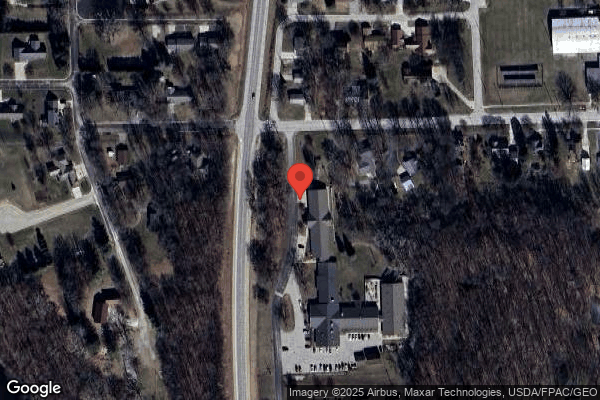

Maple Crest Manor

100 Bolger Drive, Fayette, IA 52142 (563) 425-3336
For profit - Corporation 46 Beds Independent Data: November 2025
Trust Grade
70/100
#125 of 392 in IA
Last Inspection: May 2025

Inspected within the last 6 months. Data reflects current conditions.

Overview

Maple Crest Manor in Fayette, Iowa, has a Trust Grade of B, indicating it is a good choice for families considering nursing home options. It ranks #125 out of 392 facilities in Iowa, placing it in the top half, and #3 out of 4 in Fayette County, meaning only one nearby facility is rated higher. The facility is improving, with issues decreasing from 6 in 2023 to just 2 in 2025. Staffing is average with a 3/5 star rating and a turnover rate of 36%, which is lower than the state average, suggesting a relatively stable workforce. However, the facility has concerning fines totaling $97,178, higher than 95% of Iowa facilities, indicating potential compliance issues. On the downside, there are some specific incidents noted in recent inspections, such as failing to complete required pre and post dialysis assessments for a resident, which could affect their care. Another incident involved not using enhanced barrier precautions for a resident with a urinary catheter, which could lead to infection risks. Additionally, a resident with diabetes did not receive proper insulin administration as required, which poses a significant health risk. Overall, while Maple Crest Manor has strengths in its good rating and improving trend, these compliance concerns highlight areas needing attention.

Trust Score
B
70/100
In Iowa
#125/392
Top 31%
Safety Record
Moderate
Needs review
Inspections
Getting Better
6 → 2 violations
Staff Stability
○ Average
36% turnover. Near Iowa's 48% average. Typical for the industry.
Penalties
○ Average
$97,178 in fines. Higher than 58% of Iowa facilities. Some compliance issues.
Skilled Nurses
○ Average
Each resident gets 31 minutes of Registered Nurse (RN) attention daily — about average for Iowa. RNs are the most trained staff who monitor for health changes.
Violations
○ Average
8 deficiencies on record. Average for a facility this size. Mostly minor or procedural issues.
★★★★☆
4.0
Overall Rating
★★★☆☆
3.0
Staff Levels
★★★☆☆
3.0
Care Quality
★★★★☆
4.0
Inspection Score
Stable
2023: 6 issues
2025: 2 issues

The Good

  • Full Sprinkler Coverage · Fire safety systems throughout facility
  • No fines on record
  • Staff turnover below average (36%)

    12 points below Iowa average of 48%

Facility shows strength in fire safety.

The Bad

Staff Turnover: 36%

Near Iowa avg (46%)

Typical for the industry

Federal Fines: $97,178

Well above median ($33,413)

Moderate penalties - review what triggered them

The Ugly 8 deficiencies on record

May 2025 2 deficiencies
CONCERN (D)

Potential for Harm - no one hurt, but risky conditions existed

Deficiency F0698 (Tag F0698)

Could have caused harm · This affected 1 resident

Based on clinical record review, and resident and staff interview the facility failed to complete pre and post dialysis assessments for 1 of 1 resident reviewed for dialysis services (Resident #24). T...

Read full inspector narrative →
Based on clinical record review, and resident and staff interview the facility failed to complete pre and post dialysis assessments for 1 of 1 resident reviewed for dialysis services (Resident #24). The facility reported a census of 38 residents. Findings include: The Minimum Data Set (MDS) for Resident #24 dated 4/9/25 documented the Resident's diagnoses included hypertension, renal insufficiency, and diabetes mellitus. The MDS documented the Resident received dialysis while a resident at the facility. The Care Plan for Resident #24 included a focus area of care of a resident on dialysis services. The interventions included dialysis 3 times a week. It also included to document and monitoring of complications, pre and post dialysis weights and access site. The Care Plan directed nurses to complete pre and post dialysis assessment twice a day on Mondays, Wednesdays, and Fridays before and after her dialysis treatments. During an interview on 5/20/25 at 9:34 AM, Resident #24 explained she went to dialysis 3 times a week, on Monday, Wednesday, and Friday. She further explained she rides the public transit bus Monday and Wednesday but on Friday her kids take her. Review of the clinical record including assessments and the Progress Notes revealed the pre-dialysis assessment had not been completed on 11/22/24, 12/2/24, 2/17/25, 5/5/25, 5/7/25 and 5/9/25. Further review of the clinical record revealed the post-dialysis assessment had not been completed on 8/5/24, 9/9/24, 9/16/24, 10/4/24, 10/14/24, 12/9/24, 1/17/25, 2/17/25, 2/26/25, 2/28/25, 3/3/25, 4/4/25, 4/7/25 and 5/9/25. During an interview on 5/21/25 at 2:35 PM the Assistant Director of Nursing (ADON) explained she expects both pre and post dialysis assessments to be completed. She acknowledged the clinical record was lacking assessments as listed above.
CONCERN (D)

Potential for Harm - no one hurt, but risky conditions existed

Infection Control (Tag F0880)

Could have caused harm · This affected 1 resident

**NOTE- TERMS IN BRACKETS HAVE BEEN EDITED TO PROTECT CONFIDENTIALITY** Based on observation, clinical record review, staff interview, and facility policy review the facility failed to utilize enhance...

Read full inspector narrative →
**NOTE- TERMS IN BRACKETS HAVE BEEN EDITED TO PROTECT CONFIDENTIALITY** Based on observation, clinical record review, staff interview, and facility policy review the facility failed to utilize enhanced barrier precaution for 1 of 1 residents reviewed (Resident #39). The facility reported a census of 38 residents. Findings include: The Minimum Data Set (MDS) assessment for Resident #39 dated 4/24/25, listed diagnoses of hypertension, coronary artery disease (CAD), and depression. The MDS included a Brief Interview for Mental Status (BIMS) score of 5 (severe cognitive impairments). The MDS identified an indwelling urinary catheter for Resident #39. The Care Plan for Resident #39 dated 5/1/2025, revealed the diagnosis for the indwelling catheter as hydronephrosis with ureteropelvic junction (UPJ) obstruction occurs when a blockage at the point where the kidney connects to the ureter (the tube that carries urine to the bladder) causes urine to back up and swell the kidney. The Care Plan failed to direct the use of enhanced barrier precautions (EBP). The Treatment Administration Record (TAR) dated 5/2025, directed to monitor catheter output every shift. On 5/21/25 at 11:31 AM, a sign hung on the wall outside of Resident #39's room door undated that read STOP ENHANCED BARRIER PRECAUTIONS EVERYONE MUST: The sign direct providers and staff must: Wear gloves and a gown for the following high contact resident care activities, that included device care or use: urinary catheter. The bottom of the sign identified the guidance came from the United States Department of Health and Human Services Centers for Disease Control (CDC) and Prevention. On 5/21/25 at 11:32 AM, Staff A, Certified Nurses Aid (CNA) entered Resident #39's room, explained the need to empty his urinary catheter bag. She completed hand hygiene applied gloves and emptied the urine from the catheter bag. She took the urine into the bathroom and dumped it into the toilet. Staff A failed to wear the gown for the EBP as she completed the high contact activity with Resident #39. On 5/22/25 at 10:22 AM, the Assistant Director of Nursing (ADON) Infection Preventionist (IP) reported she expected staff to use EBP with cares for any resident with a catheter. The need to wear gloves, gowns, and face shield in case of a splash. The ADON stated Staff A reported to her after she completed the cares for Resident #39, that she failed to use the needed EBP. On 5/22/25 at 2:30 PM, the ADON/IP reported the EBP needed to be included in the Care Plan, then it would show on the [NAME]. On 5/22/25 at 1:31 PM Staff A reported she forgot to use a gown when she emptied Resident #39's catheter leg bag. The facility provided Enhanced Barrier Precaution Policy undated that directed, Purpose: EBP require the use of gowns and gloves during high-contact resident cares. Implementation: The policy is particularly relevant for residents with chronic wounds or indwelling medical devices. This policy aligns with guidelines from the Center for Disease Control (CDC) and Centers for Medicare & Medicaid Services (CMS) to ensure safety and infection control in long-term care facilities. She stated they follow the CDC guidelines.
Dec 2023 6 deficiencies
CONCERN (D)

Potential for Harm - no one hurt, but risky conditions existed

Deficiency F0658 (Tag F0658)

Could have caused harm · This affected 1 resident

**NOTE- TERMS IN BRACKETS HAVE BEEN EDITED TO PROTECT CONFIDENTIALITY** Based on observation, clinical record review, policy review, Novolog highlights of prescribing information (manufacturer's direc...

Read full inspector narrative →
**NOTE- TERMS IN BRACKETS HAVE BEEN EDITED TO PROTECT CONFIDENTIALITY** Based on observation, clinical record review, policy review, Novolog highlights of prescribing information (manufacturer's directions for use) review, and staff interview, the facility failed to prime an insulin pen with 2 units of insulin prior to the administration of the physician ordered dose of insulin for 1 of 1 residents observed for insulin administration (Resident #4). The facility identified a census of 37 residents. Findings include: Resident #4 Minimum Data Set assessment dated [DATE] showed a Brief Interview for Mental Status score of 8 indicating moderate cognitive loss. The MDS listed a diagnosis of diabetes mellitus and documented Resident #4 received insulin injections 7 days per week. The Care Plan dated 9/18/23 noted a diagnosis of diabetes mellitus and directed the staff to administer medications as ordered by the doctor. The December 2023 Medication Administration Record (MAR) detailed the following physician orders: a. Blood sugar check four times a day before meals and hour of sleep for diabetes mellitus management. b. Novolog Flex Pen Subcutaneous Solution Pen-injector 100 units (U)/milliliter (ML). Inject as per sliding scale: if 0 - 149 = 0; 150 - 199 = 2 units; 200 - 249 = 5 units; 250 - 299 = 6 units; 300 - 399 = 8 units; 400 - 499 = 10 units, subcutaneously four times a day related to type two diabetes without complications. During an observation on 12/19/23 at 7:12 AM Staff B, Licensed Practical Nurse (LPN) completed a blood sugar as ordered with a result of 190. Staff B obtained a Novolog Flex insulin pen, attached the needle without wiping the connection site with an alcohol swab, then set the dial to 2 units. Staff B locked the medication cart and walked two feet into Resident #4's room doorway when she was stopped by the Surveyor. Staff B reported she didn't know how to prime the insulin pen and would have to go ask the Director of Nursing (DON). Staff B walked up to the nurse station and asked the Assistant Director of Nursing (ADON) if she knew how to prime the insulin pen. The ADON explained to Staff B to set the insulin pen to 2 units and express the insulin pen until you see a drop of insulin come out of the tip which indicates the pen is working, then set the pen to the amount of insulin that you need. The ADON primed the insulin pen. Staff B set the pen to 2 units after the pen was primed. At 7:20 AM Staff B administered Resident #4 Novolog 2 units of insulin holding the pen to Resident #4 abdomen, pressing the dose knob down and immediately removing the needle from the abdomen after depressing the insulin pen. Staff B failed to hold the insulin pen for a full 6 seconds to ensure all the insulin had been fully administered. On 12/20/23 at 7:14 AM the ADON reported she expects the nurses to administer the insulin medication as ordered by the physician and per the manufacturer's direction for use. The Administration of Insulin via Insulin Pen Policy dated 1/17/19 provided by the facility documented a purpose to provide medication regimen safely and effectively. The Policy Procedure directed the nurse to wipe the rubber seal with an alcohol swab before pushing the capped needle straight onto the pen, prime the insulin pen by turning the dose knob to 2 units, holding the pen with the needle pointing up, push the dose knob until it stops and a zero is seen in the dose window, hold the dose knob in until insulin is seen at the tip of the needle. If an insulin drop is not seen after the first attempt, repeat the process. The Novolog Highlights of Prescribing Information under priming the Novolog Flex Touch Pen instructed the following: a. Turn the pen dose selector to select 2 units. b. Hold the pen with the needle pointing up. Tap the top of the pen gently a few times to let any air bubbles rise to the top. c. Hold the pen with the needle pointing up. Press and hold in the dose button until the dose counter shows 0. The 0 must line up with the dose pointer. d. A drop of insulin should be seen at needle tip. If an insulin drop is not seen, repeat the priming steps, no more than 6 times. e. If an insulin drop is still not seen, change the needle and repeat the priming steps. f. Under giving the injection the following steps were listed: keep the needle in the skin after the dose counter has returned to 0 and slowly count to 6. When the dose counter returns to 0, the full dose of insulin is not administered until 6 seconds later. If the needle is removed before the count to 6, a stream of insulin may be seen coming from the needle tip. If a stream of insulin comes from the needle tip, the full dose has not been administered.
CONCERN (D)

Potential for Harm - no one hurt, but risky conditions existed

Deficiency F0865 (Tag F0865)

Could have caused harm · This affected 1 resident

Based record review, document review, staff interviews, and the facilities Quality Assurance Performance Improvement (QAPI) Plan the facility failed to implement a successful QAPI program for 1 of 1 r...

Read full inspector narrative →
Based record review, document review, staff interviews, and the facilities Quality Assurance Performance Improvement (QAPI) Plan the facility failed to implement a successful QAPI program for 1 of 1 repeated citations. The facility reported a census of 37 residents. Findings include: A Summary Statement of Deficiencies and plan of corrections dated 2/25/21 and 6/23/22 documented citation F582 Beneficiary Notices cited from the two prior recertification surveys. The facility submitted plans of correction which included ongoing monitoring of the process to ensure compliance. On 12/19/23 at 9:00 AM Staff C, Registered Nurse reported the facility has 2 -4 skilled residents receiving Medicare Services at any given time. The Summary Statement of Deficiencies dated 12/21/23 included the following repeat deficiency of F582. On 12/21/23 at 10:04 AM the Administrator acknowledged the facility had addressed their beneficiary notices through the QAPI program from the prior annual survey and had not fully fixed the process. She reported going forward they will be putting processes in place through the QAPI program to address and correct their system. The Quality Assurance and Performance Improvement (QAPI) Plan Policy, undated, provided by the facility documented the QAPI program aimed for safety and high standards of quality of care with all clinical interventions. The facility ensures all data collection and monitoring systems to gather accurate data and promote quality using the best available evidence-based practice material to define and measure goals. The Facility tracks, investigates, and monitors adverse events and implements action plans through the plan, do, study, act cycle of improvement to prevent recurrence of issues. The Facility approach comprehensively assesses all involved systems to prevent further events and promotes sustained quality of improvement.
MINOR (B)

Minor Issue - procedural, no safety impact

Deficiency F0582 (Tag F0582)

Minor procedural issue · This affected multiple residents

Based on clinical record review, document review, and staff interview, the facility failed to provide a Medicare Notice of Non-Coverage (NOMNC) notification to the resident or their legal representati...

Read full inspector narrative →
Based on clinical record review, document review, and staff interview, the facility failed to provide a Medicare Notice of Non-Coverage (NOMNC) notification to the resident or their legal representative two days prior to the ending of services and failed to provide the Skilled Facility Advanced Beneficiary Notice of Non-coverage (SNF ABN) notice for 2 of 3 residents sampled (Resident #4 and #21). The facility identified a census of 37 residents. Findings include: 1. A Point Click Care (PCC) Electronic Census record showed Resident #4 admitted to Medicare Part A skilled services on 10/20/23 and discharged off of Medicare services on 10/26/23. A SNF ABN detailed Resident #4 would incur out of pocket expenses as of 10/28/23 due to no longer requiring care by a licensed therapist and no longer requiring skilled level of nursing care at $410 per day. The Resident Representative indicated the Resident did not want the care listed. The Resident representative signed the notice on 10/31/23. A NOMNC form detailed Medicare services would end on 10/27/23 explaining the Resident's appeal rights if they did not agree with the decision to end Medicare services. The Legal Representative signed the notice without a date indicating when they had been notified of their rights. The facility failed to provide a two day notice to the Resident's legal representative. 2. A PCC Electronic Census record showed Resident #21 admitted to Medicare Part A skilled services on 7/10/23 and discharge from service on 7/18/23. A Discharge of Therapies Notice detailed Resident #21 planned discharge from physical and occupational therapy services on 7/18/23. The Notice documented the facility as notified on 7/14/23. The Facility lacked documentation of a SNF ABN or NOMNC being provided to the resident or their legal representative. On 12/20/23 at 10:17 AM the Administrator reported the facility did not have a beneficiary notice policy. During an interview on 12/20/23 at 10:20 AM the Administrator reported she had been in the social services position prior to taking the Administrator position. She had been serving the beneficiary notices prior to September 2023. The MDS Coordinator took over serving the beneficiary notices in September 2023. The Administrator reported therapy provides them with a notice of when therapy will be ending. They try to call the legal representative/family the same day as the notice and see if they can come to the facility to sign the notices. If not, they mail the notices out to the legal representative/family. She reported they try to give a two day notice.
MINOR (B)

Minor Issue - procedural, no safety impact

Deficiency F0625 (Tag F0625)

Minor procedural issue · This affected multiple residents

**NOTE- TERMS IN BRACKETS HAVE BEEN EDITED TO PROTECT CONFIDENTIALITY** Based on clinical record review, staff interview, and policy review, the facility failed to provide a bed hold notice for 2 of 2...

Read full inspector narrative →
**NOTE- TERMS IN BRACKETS HAVE BEEN EDITED TO PROTECT CONFIDENTIALITY** Based on clinical record review, staff interview, and policy review, the facility failed to provide a bed hold notice for 2 of 2 residents reviewed (Resident #10 and #21). The facility reported a census of 37 residents. Findings include: 1. The Minimum Data Set (MDS) assessment tool dated 11/22/23 for Resident #10 documented a Brief Interview for Mental Status (BIMS) score of 15 indicating cognitively intact. Review of the Clinical Census revealed Resident #10 transferred to the hospital on 1/07/23, 1/17/23, and 4/8/23. The clinical records for Resident #10 lacked documentation of any explanation of the bed hold notification to the resident or the resident's representative when the resident discharged to the hospital on 1/07/23, 1/17/23, and 4/8/23. On 12/20/23 at 8:43 AM, the Administrator reported she did not have a bed hold for the January and April transfers to the hospital. She reported the nurses do the bed holds when a resident transfers either with the resident or calls the family and gets a verbal consent to hold the bed and documents it. On 12/20/23 at 8:47 AM, the DON reported the bed hold is in the transfer packets and she expects the nurses to complete them. If it is not completed and she gets a verbal with the family then she should document it. A review of the facility Bed Hold Policy lacked documentation on when the resident or the resident's representative is provided a bed hold form upon transfer to the hospital. 2. A Health Status Note dated 5/12/23 documented Resident #21 went from the clinic to the local emergency room. The facility was notified the Resident had been moved to the medical surgical floor. A Nurses Note dated 5/15/2023 at 11:42 AM documented Resident #21 returned to the facility at 11:28 AM with a notation the resident admitted to the hospital on [DATE] and discharged on 5/15/23. A review of the May 2023 electronic medical record progress notes and assessments revealed no documentation of a bed hold completed. A review of the paper medical record on 12/19/23 revealed no documentation of a bed hold for 5/12/23. On 12/20/23 at 8:45 AM the Administrator reported she did not have a May 2023 bed hold for Resident #21.
MINOR (B)

Minor Issue - procedural, no safety impact

MDS Data Transmission (Tag F0640)

Minor procedural issue · This affected multiple residents

Based on record review and staff interviews, the facility failed to electronically transmit Minimum Data Set (MDS) assessments to the Centers for Medicare and Medicaid (CMS) system timely for 3 of 3 r...

Read full inspector narrative →
Based on record review and staff interviews, the facility failed to electronically transmit Minimum Data Set (MDS) assessments to the Centers for Medicare and Medicaid (CMS) system timely for 3 of 3 residents reviewed (Resident #6, #15 and #28). The facility reported a census of 37 residents. Findings include: The review of Resident #6, Resident #15, and Resident #28 MDS assessments dated 10/17/23 documented a transmission date of 12/15/23. On 12/19/23 at 2:20 PM, the DON reported she expected any MDS to be transmitted in the timely manner. During an interview on 12/19/23 at 3:49 PM, the MDS coordinator reported MDS assessments should be transmitted in a timely manner. She reported within 24-hours of submission she gets a report if they are accepted or not. She verbalized she was aware of the late transmissions on the 3 residents. She verbalized she goes by the Resident Assessment Instrument (RAI) for reference for submission times. The CMS Long-Term Care Facility Resident Assessment Instrument (RAI) 3.0 User's manual revised on October 2023 instructs MDS assessments must be submitted within 14 days of the MDS Completion Date.
MINOR (B)

Minor Issue - procedural, no safety impact

Assessment Accuracy (Tag F0641)

Minor procedural issue · This affected multiple residents

**NOTE- TERMS IN BRACKETS HAVE BEEN EDITED TO PROTECT CONFIDENTIALITY** Based on clinical record review, document review, Center for Medicare and Medicaid Services (CMS) Long-Term Care (LTC) Facility ...

Read full inspector narrative →
**NOTE- TERMS IN BRACKETS HAVE BEEN EDITED TO PROTECT CONFIDENTIALITY** Based on clinical record review, document review, Center for Medicare and Medicaid Services (CMS) Long-Term Care (LTC) Facility Resident Assessment Instrument (RAI) 3.0 User's Manual, Resident and staff interviews, the facility failed to accurately complete the Minimum Data Set (MDS) Assessment to accurately reflect the status and care needs of the resident for 2 of 12 residents reviewed (Resident #9 & Resident #2). The facility identified a census of 37 residents. Findings include: 1. Resident #9's MDS dated [DATE] documented a Brief Interview for Mental Status (BIMS) score of 15 indicating intact cognition. The Resident required limited assistance of one staff for bed mobility and extensive assistance of one staff for transfers. The MDS listed a diagnosis of Parkinson's Disease and indicated Resident #9 utilized bed rails on a daily basis as a physical restraint. The Care Plan with revised intervention date 2/20/22 detailed Resident #9 utilized two half bed rails up to assist with bed mobility/repositioning. A Bed Rail assessment dated [DATE] documented the following: a. Resident is able to make own decisions. b. Resident requested side rails. c. Resident has history of falls. d. Resident has problems with balance or poor trunk control. e. Recommended device for assistance with bed mobility. f. Side rails do not impede resident's freedom of movement. A review of the 802 Matrix provided by the facility on 12/18/23 revealed Resident #9 did not utilize restraints. On 12/18/23 Resident #9 reported she uses the half bed rails and the bed trapeze bar to move in bed, but it doesn't restrict her freedom of movement. During an interview on 12/20/23 at 9:45 AM Staff A, Licensed Practical Nurse (LPN) reported Resident #9 uses her half rails for bed mobility and positioning. She does not utilize restraints. On 12/20/23 at 12:56 PM the MDS Coordinator reported there are no residents that use restraints in the facility. She reviews the MDS information, signs the MDS and then submits the assessment. They have an MDS tool that they use to collect information. The DON would have collected the information on Resident #9 for that MDS. The MDS Coordinator reported she probably didn't go through the MDS with a fine tooth comb, but it is a coding error that she should have caught. She reported they don't have any audits for MDS accuracy. They have a nurse consultant but they are not familiar with the MDS. She reported she has one side rail up for bed positioning. Section P would only be coded as a restraint if they had a physician order for a restraint. It was a coding error. She uses the RAI Manual to ensure she is coding correctly. On 12/20/23 at 1:21 PM the Director Of Nursing (DON) reported she completed Resident #9's MDS and miscoded the bed rails as a restraint in section P. She reported she must not have caught it. She reported it was clearly a miscoding error and the RAI should be utilized for coding accuracy on the MDS. On 12/20/23 at 1:50 PM the MDS Coordinator provided a MDS Checklist reporting she used it as a tool to collect MDS data. The Checklist listed side rails and hospice areas to review. She reported she followed the RAI Manual for coding accuracy. The CMS LTC Facility RAI 3.0 User's Manual Version 1.18.11, Chapter 1, page 1-4 documents the RAI process has multiple regulatory requirements. Federal regulations at 42 Code of Federal Regulations 483.20 (b)(1)(xviii), (g), and (h) require that the assessment accurately reflects the resident's status. 2. Resident #2's MDS assessment dated [DATE] showed a BIMS score of 1 indicating severe cognitive loss with diagnoses of Non-Alzheimer's Disease and diabetes mellitus. The MDS detailed Resident #2 required scheduled and as needed pain medication for mild occasional pain and documented a chronic condition with a prognosis of life expectancy of six months or less to live. The MDS lacked documentation of Resident #2's hospice level of care. Resident #2's Significant Change in Status (SCSA) MDS assessment dated [DATE] showed a BIMS score of 7 indicating severe cognitive loss and a diagnosis of Non-Alzheimer's Dementia. The Resident required extensive assistance with bed mobility, transfers, eating, toilet use, dressing, and personal hygiene. The resident needed scheduled and as needed pain medications for vocalized daily pain. The MDS lacked documentation Resident #2 had a prognosis of life expectancy of less than six months to live and lacked documentation of hospice level of care services. A Hospice Comprehensive Assessment and Plan of Care dated 12/14/23 documented Resident #2 admitted into hospice care services on 10/02/19. A review of the Point Click Care Electronic Census Record on 12/19/23 showed Resident #2 had been a resident at the facility since 2017. The CMS LTC Facility RAI 3.0 User's Manual Version 1.18.11, Chapter 2, Page 2-25 defines an SCSA is required to be performed when a terminally ill resident enrolls in a hospice program (Medicare-certified or State-licensed hospice provider) or changes hospice providers and remains a resident at the nursing home. An SCSA must be performed regardless of whether an assessment was recently conducted on the resident. This is to ensure a coordinated plan of care between the hospice and nursing home is in place. A Medicare-certified hospice must conduct an assessment at the initiation of its services. This is an appropriate time for the nursing home to evaluate the MDS information to determine if it reflects the current condition of the resident, since the nursing home remains responsible for providing necessary care and services to assist the resident in achieving their highest practicable well-being at whatever stage of the disease process the resident is experiencing.
Understanding Severity Codes (click to expand)
Life-Threatening (Immediate Jeopardy)
J - Isolated K - Pattern L - Widespread
Actual Harm
G - Isolated H - Pattern I - Widespread
Potential for Harm
D - Isolated E - Pattern F - Widespread
No Harm (Minor)
A - Isolated B - Pattern C - Widespread

Questions to Ask on Your Visit

  • "Can I speak with families of current residents?"
  • "What's your RN coverage like on weekends and overnight?"

Our Honest Assessment

Strengths
  • • 36% turnover. Below Iowa's 48% average. Good staff retention means consistent care.
Concerns
  • • $97,178 in fines. Extremely high, among the most fined facilities in Iowa. Major compliance failures.
Bottom line: Mixed indicators with Trust Score of 70/100. Visit in person and ask pointed questions.

About This Facility

What is Maple Crest Manor's CMS Rating?

CMS assigns Maple Crest Manor an overall rating of 4 out of 5 stars, which is considered above average nationally. Within Iowa, this rating places the facility higher than 99% of the state's 100 nursing homes. This rating reflects solid performance across the metrics CMS uses to evaluate nursing home quality.

How is Maple Crest Manor Staffed?

CMS rates Maple Crest Manor's staffing level at 3 out of 5 stars, which is average compared to other nursing homes. Staff turnover is 36%, compared to the Iowa average of 46%. This relatively stable workforce can support continuity of care.

What Have Inspectors Found at Maple Crest Manor?

State health inspectors documented 8 deficiencies at Maple Crest Manor during 2023 to 2025. These included: 4 with potential for harm and 4 minor or isolated issues.

Who Owns and Operates Maple Crest Manor?

Maple Crest Manor is owned by a for-profit company. For-profit facilities operate as businesses with obligations to shareholders or private owners. The facility operates independently rather than as part of a larger chain. With 46 certified beds and approximately 39 residents (about 85% occupancy), it is a smaller facility located in Fayette, Iowa.

How Does Maple Crest Manor Compare to Other Iowa Nursing Homes?

Compared to the 100 nursing homes in Iowa, Maple Crest Manor's overall rating (4 stars) is above the state average of 3.1, staff turnover (36%) is near the state average of 46%, and health inspection rating (4 stars) is above the national benchmark.

What Should Families Ask When Visiting Maple Crest Manor?

Based on this facility's data, families visiting should ask: "Can I visit during a mealtime to observe dining assistance and food quality?" "How do you handle medical emergencies, and what is your hospital transfer rate?" "Can I speak with family members of current residents about their experience?"

Is Maple Crest Manor Safe?

Based on CMS inspection data, Maple Crest Manor has a clean safety record: no substantiated abuse findings (meaning no confirmed cases of resident harm), no Immediate Jeopardy citations (the most serious violation level indicating risk of serious injury or death), and is not on the Special Focus Facility watch list (a federal program monitoring the lowest-performing 1% of nursing homes). The facility has a 4-star overall rating and ranks #1 of 100 nursing homes in Iowa. While no facility is perfect, families should still ask about staff-to-resident ratios and recent inspection results during their visit.

Do Nurses at Maple Crest Manor Stick Around?

Maple Crest Manor has a staff turnover rate of 36%, which is about average for Iowa nursing homes (state average: 46%). Moderate turnover is common in nursing homes, but families should still ask about staff tenure and how the facility maintains care continuity when employees leave.

Was Maple Crest Manor Ever Fined?

Maple Crest Manor has been fined $97,178 across 16 penalty actions. This is above the Iowa average of $34,051. Fines in this range indicate compliance issues significant enough for CMS to impose meaningful financial consequences. Common causes include delayed correction of deficiencies, repeat violations, or care failures affecting resident safety. Families should ask facility leadership what changes have been made since these penalties.

Is Maple Crest Manor on Any Federal Watch List?

Maple Crest Manor is not on any federal watch list. The most significant is the Special Focus Facility (SFF) program, which identifies the bottom 1% of nursing homes nationally based on persistent, serious quality problems. Not being on this list means the facility has avoided the pattern of deficiencies that triggers enhanced federal oversight. This is a positive indicator, though families should still review the facility's inspection history directly.