Oelwein Health Care Center
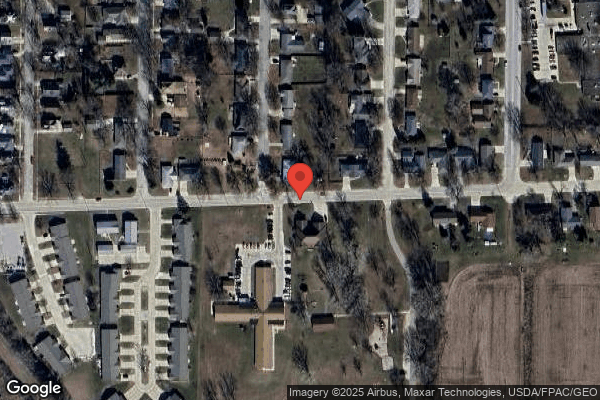
600 SEVENTH STREET SE, OELWEIN, IA 50662 (319) 283-2794
For profit - Corporation 61 Beds LEGACY HEALTHCARE Data: November 2025
Trust Grade
80/100
#134 of 392 in IA
Last Inspection: March 2025

Within standard 12-15 month inspection cycle. Federal law requires annual inspections.

Overview

Oelwein Health Care Center has a Trust Grade of B+, which means it is above average and recommended for families seeking care. It ranks #134 out of 392 facilities in Iowa, placing it in the top half, but it is #4 out of 4 in Fayette County, indicating there are no better local options. Unfortunately, the facility is experiencing a worsening trend, with the number of reported issues increasing from one in 2023 to four in 2025. Staffing is a mixed bag, with a 3/5 star rating and a 30% turnover rate, which is good compared to the state average, but it has less RN coverage than 90% of Iowa facilities, raising concerns about oversight. While the facility has no fines on record, there were specific incidents noted, such as failing to update care plans for residents in hospice and improper food handling that could risk foodborne illness, highlighting areas that need improvement despite its strengths.

Trust Score
B+
80/100
In Iowa
#134/392
Top 34%
Safety Record
Low Risk
No red flags
Inspections
Getting Worse
1 → 4 violations
Staff Stability
○ Average
30% turnover. Near Iowa's 48% average. Typical for the industry.
Penalties
✓ Good
No fines on record. Clean compliance history, better than most Iowa facilities.
Skilled Nurses
⚠ Watch
Each resident gets only 21 minutes of Registered Nurse (RN) attention daily — below average for Iowa. Fewer RN minutes means fewer trained eyes watching for problems.
Violations
✓ Good
Only 5 deficiencies on record. Cleaner than most facilities. Minor issues only.
★★★★☆
4.0
Overall Rating
★★★☆☆
3.0
Staff Levels
★★★★☆
4.0
Care Quality
★★★★☆
4.0
Inspection Score
Stable
2023: 1 issues
2025: 4 issues

The Good

  • 4-Star Quality Measures · Strong clinical quality outcomes
  • Full Sprinkler Coverage · Fire safety systems throughout facility
  • No fines on record
  • Staff turnover below average (30%)

    18 points below Iowa average of 48%

Facility shows strength in quality measures, fire safety.

The Bad

Staff Turnover: 30%

16pts below Iowa avg (46%)

Typical for the industry

Chain: LEGACY HEALTHCARE

Part of a multi-facility chain

Ask about local staffing decisions and management

The Ugly 5 deficiencies on record

Mar 2025 4 deficiencies
CONCERN (D)

Potential for Harm - no one hurt, but risky conditions existed

Deficiency F0637 (Tag F0637)

Could have caused harm · This affected 1 resident

**NOTE- TERMS IN BRACKETS HAVE BEEN EDITED TO PROTECT CONFIDENTIALITY** Based on clinical record review, the Centers for Medicare and Medicaid Services (CMS) Long term Care (LTC) Facility Resident Ass...

Read full inspector narrative →
**NOTE- TERMS IN BRACKETS HAVE BEEN EDITED TO PROTECT CONFIDENTIALITY** Based on clinical record review, the Centers for Medicare and Medicaid Services (CMS) Long term Care (LTC) Facility Resident Assessment Instrument (RAI) 3.0 User's Manual, and staff interview, the facility failed to complete a Significant Change Status Assessment (SCSA) Minimum Data Set (MDS) Assessment timely upon hospice election for 1 of 2 residents reviewed on hospice services (Resident #2). The facility reported a census of 45 residents. Findings include: An Electronic Healthcare Record (EHR) Progress Note dated 3/3/25 at 12:18 PM revealed a referral had been made for hospice care services. The hospice care provider scheduled an onsite visit for 3/4/25. An EHR Progress Note dated 3/3/25 at 2:00 PM documented family agreeable to hospice consultation. The EHR census detail page failed to document hospice as the primary payer for Resident #2 effective 3/4/25. An EHR Progress Note on 3/10/25 at 9:03 AM documented Resident #2 had been admitted to hospice care services. The MDS 3.0 Summary page in Resident #2 EHR revealed the facility failed to complete the SCSA MDS when hospice services had been elected within the required timeframe. A review of the hospice clinical record revealed the following: * The Hospice Election Packet signed by Resident #2's family member documented the start of service date as 3/4/25. * The hospice Interdisciplinary Group Meeting dated 3/19/25 at 1:00 PM documented a current admission status for Resident #2 admitted on [DATE]. * The physician Progress Note dated 03/17/25 at 11:57 AM documented the certification of terminal illness for hospice admission. The Progress Note had been electronically signed by the physician on 3/17/25 at 12:13 PM. During an interview on 3/26/25 at 11:09 AM with Staff A, Licensed Practical Nurse (LPN) acknowledged Resident #2 had been on hospice care services. During an interview on 03/26/25 at 11:12 AM, the MDS Coordinator, acknowledged she is responsible for completing all required MDS assessments. The MDS Coordinator revealed Resident #2 elected hospice services on 3/12/25. The MDS Coordinator revealed SCSA MDS had been in process and would be completed on 3/26/25. The MDS Coordinator revealed she follows the RAI manual when completing required assessments. During an interview on 03/26/25 11:20 AM the Director of Nursing (DON) acknowledged Resident #2 had been admitted to hospices services on 3/4/25. The DON revealed she did not know when the SCSA MDS had to be completed and would need to check with the MDS Coordinator. During an interview on 3/26/25 at 11:24 AM with the DON and MDS Coordinator, the MDS Coordinator acknowledged hospice care services had been elected on 3/4/25. The MDS Coordinator acknowledged she failed to complete the SCSA MDS within the required timeframe. The MDS Coordinator revealed the SCSA MDS should have been completed by 3/17/25. The LTC RAI 3.0 User's manual Version 1.19.1 October 2024 documented the RAI states an SCSA is required to be performed when a terminally ill resident enrolls in a hospice program or changes hospice providers and remains a resident at the nursing home. The RAI Manual specified the SCSA MDS completion date is 14 days from the determination that a significant change in resident status occurred (determination date plus 14 calendar days). The Federal regulations at 42 CFR (Code of Federal Regulations) 483.20 (b)(2)(ii) states the facility must conduct a comprehensive assessment of a resident in accordance with the time frames specified.
CONCERN (D)

Potential for Harm - no one hurt, but risky conditions existed

Deficiency F0657 (Tag F0657)

Could have caused harm · This affected 1 resident

**NOTE- TERMS IN BRACKETS HAVE BEEN EDITED TO PROTECT CONFIDENTIALITY** Based on clinical record review and staff interview the facility failed to revise and implement interventions on the comprehensi...

Read full inspector narrative →
**NOTE- TERMS IN BRACKETS HAVE BEEN EDITED TO PROTECT CONFIDENTIALITY** Based on clinical record review and staff interview the facility failed to revise and implement interventions on the comprehensive Care Plan to include hospice services for 1 of 2 residents reviewed on hospice services (Resident #2). The facility reported a census of 45 residents. Findings include: Resident #2 Minimum Data Set (MDS) assessment dated [DATE] identified a Brief Interview for Mental Status (BIMS) score of 09 out of 15, indicating moderate cognitive impairment. The MDS documented non-traumatic brain dysfunction (damage to the brain that does not result from a blow or external force to the head, but rather from internal factors like illness, stroke, or lack of oxygen), heart failure, diabetes mellitus, and non-Alzheimer's dementia. A Hospice Election Packet signed by Resident #2's family member documented the start of service date as 3/4/25. The Care Plan initiated on 4/5/24 for Resident #2 failed to include a focus area for a terminal prognosis with election of hospice care services to include interventions directing staff on cares provided. During an interview on 3/26/2025 at 11:12 AM, the MDS Coordinator acknowledged the Care Plan should have been updated on election of hospice care services. The MDS Coordinator revealed she updates the Care Plan. During an interview on 3/26/25 at 11:20 AM, the DON revealed the MDS Coordinator is responsible for updating/revising the Care Plan.
CONCERN (D)

Potential for Harm - no one hurt, but risky conditions existed

Food Safety (Tag F0812)

Could have caused harm · This affected 1 resident

Based on observation, record review, and staff interview the facility failed to utilize proper food handling to prevent potential cross contamination of food to prevent risk of food borne illness for ...

Read full inspector narrative →
Based on observation, record review, and staff interview the facility failed to utilize proper food handling to prevent potential cross contamination of food to prevent risk of food borne illness for 3 out of 3 meals observed. The facility reported of census 45 residents. Findings include: A review of the Diet Type Report dated 3/24/25 revealed three residents with a diet texture of pureed. During observation of preparation of pureed meals on 3/25/25 at 9:00 AM, Staff B, Dietary [NAME] placed a single glove on her left hand. Staff B removed a green lid from a clear plastic container with her left gloved hand. The container held buttered bread slices. Staff B reached into the container with her left gloved hand and removed 4 slices of buttered bread and placed the bread slices into the food processor and blended them with green beans. Staff B failed to utilize proper food handling to prevent cross contamination to prevent food borne illness. When blended, Staff B placed the blended bread slices and green beans into a steam table pan. During an interview on 3/25/25 at 9:43 AM with Staff B and Staff C, Dietary Manager, Staff C acknowledge she observed Staff B remove the green lid from the clear container containing buttered bread slices with her left gloved hand, reach in and remove 4 slices of buttered bread, placing them into the food processor. Staff C revealed Staff B should have used tongs to remove the bread from the container. Staff B acknowledged she had been instructed to use tongs when handling bread. During an interview on 3/25/25 at 5:13 PM, Staff C, Dietary Manager revealed the facility failed to have a policy for food handling and follows the current Iowa Food Code. A review of the Iowa Administrative Code website (https://www.legis.iowa.gov/law/administrativeRules/rules?agency=481&chapter=34&pubDate=03-19-2025) revealed rule 481-34.6(137D) food preparation and protection. * 34.6(1) Food protection. Foods shall be processed, stored, and distributed in a manner that protects food from contamination, including cross contamination from the environment, and allergen cross contact.
MINOR (B)

Minor Issue - procedural, no safety impact

Assessment Accuracy (Tag F0641)

Minor procedural issue · This affected multiple residents

**NOTE- TERMS IN BRACKETS HAVE BEEN EDITED TO PROTECT CONFIDENTIALITY** Based on observation, clinical record review, Long-Term Care (LTC) Resident Assessment Instrument (RAI) 3.0 User's Manual, and s...

Read full inspector narrative →
**NOTE- TERMS IN BRACKETS HAVE BEEN EDITED TO PROTECT CONFIDENTIALITY** Based on observation, clinical record review, Long-Term Care (LTC) Resident Assessment Instrument (RAI) 3.0 User's Manual, and staff interview, the facility failed to ensure the Minimum Data Set (MDS) Assessment accurately reflected the health status of 1 of 4 residents reviewed for MDS accuracy (Resident #6). The facility identified a census of 45 residents. Findings include: Resident #6's MDS dated [DATE] documented the resident did not use a feeding tube. The MDS documented no calories or fluid intake through a feeding tube. Resident #6's MDS dated [DATE] documented the resident did use a feeding tube. The MDS documented no calories or fluid intake through a feeding tube. During an observation on 3/24/25 at 12:00 PM, Resident #6 did not have a visible feeding tube. During an observation of the Resident's room at the same time, the room lacked feeding tube equipment present. During an interview on 3/26/25 at 10:39 AM, the Director of Nursing (DON) explained Resident #6 does not have and has not had a feeding tube present. During an interview on 3/26/25 at 10:41 AM, the MDS coordinator acknowledged the MDS was coded in error. The resident should not have been coded as having a feeding tube. During an interview on 3/26/25 at 11:12 AM, the MDS coordinator explained the facility does not have a policy for completing the MDS's, they follow the RAI.
Mar 2023 1 deficiency
CONCERN (D)

Potential for Harm - no one hurt, but risky conditions existed

Deficiency F0637 (Tag F0637)

Could have caused harm · This affected 1 resident

**NOTE- TERMS IN BRACKETS HAVE BEEN EDITED TO PROTECT CONFIDENTIALITY** Based on clinical record review, family and staff interview, and document review, the facility failed to complete a Minimum Data...

Read full inspector narrative →
**NOTE- TERMS IN BRACKETS HAVE BEEN EDITED TO PROTECT CONFIDENTIALITY** Based on clinical record review, family and staff interview, and document review, the facility failed to complete a Minimum Data Set (MDS) significant change assessment for a resident discharged from hospice care for 1 of 1 residents reviewed for a significant change (Resident #2). The facility reported a census of 49 residents. Findings include: The Significant Change Minimum Data Set (MDS) assessment dated [DATE] revealed Resident #2 had diagnoses including hip fracture, non-Alzheimer's dementia, and encounter for palliative care. The MDS documented a Brief Interview for Mental Status (BIMS) of 5 indicating severely impaired memory and cognition. The MDS revealed the resident required total dependence of 2 staff for bed mobility and personal hygiene and total dependence of 1 staff member with eating. The MDS further documented the resident received hospice care in the past 14 days. The quarterly MDS assessment dated [DATE] revealed Resident #2 required extensive assistance of 2 staff with bed mobility, extensive assistance of 1 staff member with personal hygiene and required set-up help only with eating. The MDS did not document the resident received hospice care in the past 14 days. Review of Progress Notes dated 4/21/22 revealed Resident #2 was on the floor and could not move her right leg without pain and had a possible fracture of the right hip. The Progress Notes further documented an order was received to transfer the resident to the hospital where the resident was noted to have a broken right hip. Review of the clinical record for Resident #2 revealed she received an order for Hospice referral 4/23/22. A Hospice form dated 5/9/22 at 9:42 PM discharged Resident #2 from Hospice documenting the patient to revoke service due to level of care (LOC) change and signed by the licensed practitioner 5/10/22. The physician orders in the Electronic Health Record (EHR) documented Hospice was discontinued 5/12/22. Review of the MDS schedule for Resident #2 documented the following: 4/21/2022- Discharge Return Anticipated 4/23/2022- Entry 4/28/2022- Significant Change 7/27/2022- Quarterly Review of The Long-Term Care Facility Resident Assessment Instrument 3.0 User's Manual, Version 1.17.1, October 2019 stated in Chapter 2, pages 23-24, directed the following: A Significant Change in Status Assessment (SCSA) is required to be performed when a resident is receiving hospice services and then decides to discontinue those services (known as revoking of hospice care). The Assessment Reference Date (ARD) must be within 14 days from one of the following: 1) the effective date of the hospice election revocation (which can be the same or later than the date of the hospice election revocation statement, but not earlier than); 2) the expiration date of the certification of terminal illness; or 3) the date of the physician's or medical director's order stating the resident is no longer terminally ill. During an interview 3/15/23 at 1:11 PM the Director of Nursing (DON) acknowledged a significant change had not been completed after Resident #2 was discharged from hospice level of care. The DON further revealed the facility does not have a policy for MDS significant changes as they follow the Resident Assessment Instrument (RAI) manual.
Understanding Severity Codes (click to expand)
Life-Threatening (Immediate Jeopardy)
J - Isolated K - Pattern L - Widespread
Actual Harm
G - Isolated H - Pattern I - Widespread
Potential for Harm
D - Isolated E - Pattern F - Widespread
No Harm (Minor)
A - Isolated B - Pattern C - Widespread

Questions to Ask on Your Visit

  • "Can I speak with families of current residents?"
  • "What's your RN coverage like on weekends and overnight?"

Our Honest Assessment

Strengths
  • • Grade B+ (80/100). Above average facility, better than most options in Iowa.
  • • No major safety red flags. No abuse findings, life-threatening violations, or SFF status.
  • • No fines on record. Clean compliance history, better than most Iowa facilities.
  • • Only 5 deficiencies on record. Cleaner than most facilities. Minor issues only.
Concerns
  • • No significant concerns identified. This facility shows no red flags across CMS ratings, staff turnover, or federal penalties.
Bottom line: Generally positive indicators. Standard due diligence and a personal visit recommended.

About This Facility

What is Oelwein Health Care Center's CMS Rating?

CMS assigns Oelwein Health Care Center an overall rating of 4 out of 5 stars, which is considered above average nationally. Within Iowa, this rating places the facility higher than 99% of the state's 100 nursing homes. This rating reflects solid performance across the metrics CMS uses to evaluate nursing home quality.

How is Oelwein Health Care Center Staffed?

CMS rates Oelwein Health Care Center's staffing level at 3 out of 5 stars, which is average compared to other nursing homes. Staff turnover is 30%, compared to the Iowa average of 46%. This relatively stable workforce can support continuity of care.

What Have Inspectors Found at Oelwein Health Care Center?

State health inspectors documented 5 deficiencies at Oelwein Health Care Center during 2023 to 2025. These included: 4 with potential for harm and 1 minor or isolated issues.

Who Owns and Operates Oelwein Health Care Center?

Oelwein Health Care Center is owned by a for-profit company. For-profit facilities operate as businesses with obligations to shareholders or private owners. The facility is operated by LEGACY HEALTHCARE, a chain that manages multiple nursing homes. With 61 certified beds and approximately 47 residents (about 77% occupancy), it is a smaller facility located in OELWEIN, Iowa.

How Does Oelwein Health Care Center Compare to Other Iowa Nursing Homes?

Compared to the 100 nursing homes in Iowa, Oelwein Health Care Center's overall rating (4 stars) is above the state average of 3.1, staff turnover (30%) is significantly lower than the state average of 46%, and health inspection rating (4 stars) is above the national benchmark.

What Should Families Ask When Visiting Oelwein Health Care Center?

Based on this facility's data, families visiting should ask: "Can I visit during a mealtime to observe dining assistance and food quality?" "How do you handle medical emergencies, and what is your hospital transfer rate?" "Can I speak with family members of current residents about their experience?"

Is Oelwein Health Care Center Safe?

Based on CMS inspection data, Oelwein Health Care Center has a clean safety record: no substantiated abuse findings (meaning no confirmed cases of resident harm), no Immediate Jeopardy citations (the most serious violation level indicating risk of serious injury or death), and is not on the Special Focus Facility watch list (a federal program monitoring the lowest-performing 1% of nursing homes). The facility has a 4-star overall rating and ranks #1 of 100 nursing homes in Iowa. While no facility is perfect, families should still ask about staff-to-resident ratios and recent inspection results during their visit.

Do Nurses at Oelwein Health Care Center Stick Around?

Oelwein Health Care Center has a staff turnover rate of 30%, which is about average for Iowa nursing homes (state average: 46%). Moderate turnover is common in nursing homes, but families should still ask about staff tenure and how the facility maintains care continuity when employees leave.

Was Oelwein Health Care Center Ever Fined?

Oelwein Health Care Center has no federal fines on record. CMS issues fines when nursing homes fail to meet care standards or don't correct problems found during inspections. The absence of fines suggests the facility has either maintained compliance or corrected any issues before penalties were assessed. This is a positive indicator, though families should still review recent inspection reports for the full picture.

Is Oelwein Health Care Center on Any Federal Watch List?

Oelwein Health Care Center is not on any federal watch list. The most significant is the Special Focus Facility (SFF) program, which identifies the bottom 1% of nursing homes nationally based on persistent, serious quality problems. Not being on this list means the facility has avoided the pattern of deficiencies that triggers enhanced federal oversight. This is a positive indicator, though families should still review the facility's inspection history directly.