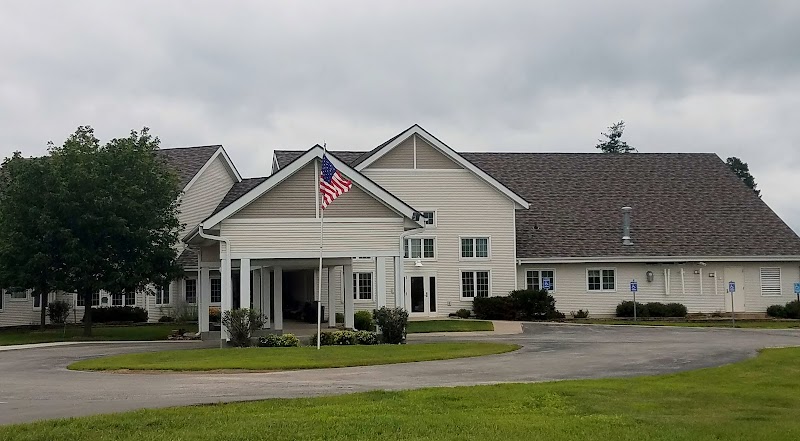
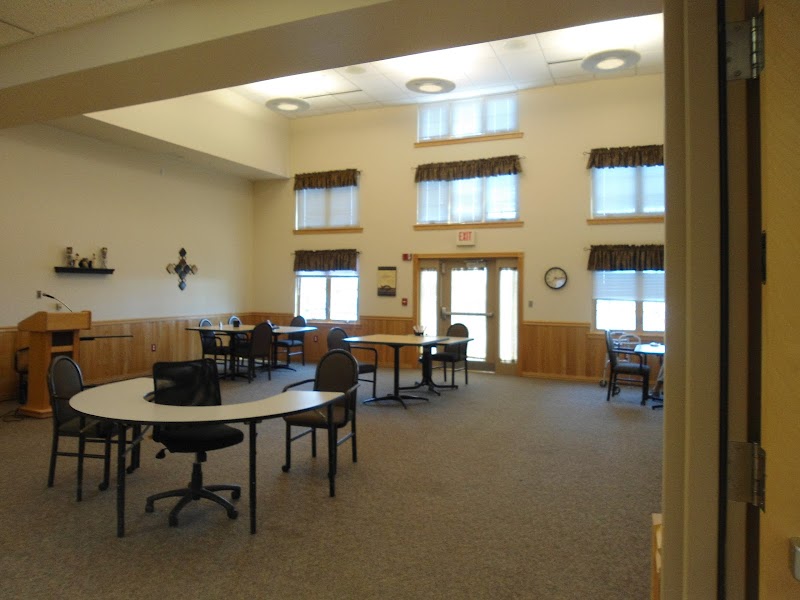
Hubbard Care Center

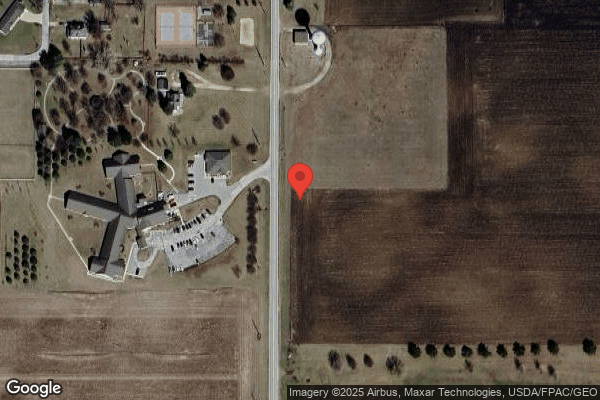
403 South State Street, Hubbard, IA 50122 (641) 864-3264
For profit - Corporation 60 Beds Independent Data: November 2025
Trust Grade
80/100
#37 of 392 in IA
Last Inspection: January 2025

Within standard 12-15 month inspection cycle. Federal law requires annual inspections.

Overview

Hubbard Care Center has a Trust Grade of B+, which means it is recommended and performs above average compared to other facilities. It ranks #37 out of 392 nursing homes in Iowa, placing it in the top half, and #2 out of 4 in Hardin County, indicating only one local option is better. However, the facility is experiencing a worsening trend, increasing from 1 issue in 2022 to 3 in 2025. While staffing is rated 4 out of 5 stars, the turnover rate of 56% is concerning as it is higher than the state average of 44%. The facility also faces significant fines totaling $46,101, which is higher than 86% of Iowa facilities, suggesting ongoing compliance issues. Additionally, RN coverage is average. Specific incidents included hiring a staff member before completing their background check, inaccuracies in electronic health records, and failing to notify a resident about the end of their Medicare coverage in advance. These findings highlight both strengths, such as good overall care ratings, and weaknesses that families should consider.

Trust Score
B+
80/100
In Iowa
#37/392
Top 9%
Safety Record
Low Risk
No red flags
Inspections
Getting Worse
1 → 3 violations
Staff Stability
⚠ Watch
56% turnover. Above average. Higher turnover means staff may not know residents' routines.
Penalties
✓ Good
$46,101 in fines. Lower than most Iowa facilities. Relatively clean record.
Skilled Nurses
✓ Good
Each resident gets 47 minutes of Registered Nurse (RN) attention daily — more than average for Iowa. RNs are trained to catch health problems early.
Violations
✓ Good
Only 4 deficiencies on record. Cleaner than most facilities. Minor issues only.
★★★★★
5.0
Overall Rating
★★★★☆
4.0
Staff Levels
★★★★★
5.0
Care Quality
★★★★☆
4.0
Inspection Score
Stable
2022: 1 issues
2025: 3 issues

The Good

  • 4-Star Staffing Rating · Above-average nurse staffing levels
  • 5-Star Quality Measures · Strong clinical quality outcomes
  • Full Sprinkler Coverage · Fire safety systems throughout facility
  • No fines on record

Facility shows strength in staffing levels, quality measures, fire safety.

The Bad

Staff Turnover: 56%

10pts above Iowa avg (46%)

Frequent staff changes - ask about care continuity

Federal Fines: $46,101

Above median ($33,413)

Moderate penalties - review what triggered them

Staff turnover is elevated (56%)

8 points above Iowa average of 48%

The Ugly 4 deficiencies on record

Jan 2025 3 deficiencies
CONCERN (D)

Potential for Harm - no one hurt, but risky conditions existed

Deficiency F0582 (Tag F0582)

Could have caused harm · This affected 1 resident

**NOTE- TERMS IN BRACKETS HAVE BEEN EDITED TO PROTECT CONFIDENTIALITY** Based on clinical record review and staff interviews, the facility failed to notify a resident 48-hours in advance that their Me...

Read full inspector narrative →
**NOTE- TERMS IN BRACKETS HAVE BEEN EDITED TO PROTECT CONFIDENTIALITY** Based on clinical record review and staff interviews, the facility failed to notify a resident 48-hours in advance that their Medicare Part A coverage would end and services would no longer be covered for 1 of 3 residents reviewed (Resident #50). The facility reported a census of 47 residents. Findings include: Resident #50's Minimum Data Set (MDS) assessment dated [DATE] listed an admission date of 11/14/24. The MDS identified a Brief Interview for Mental Status (BIMS) of 14, indicating intact cognition. The Skilled Nursing Facility (SNF) Beneficiary Protection Notification (BPN) form completed by the facility indicated Resident #50's skilled services started on 11/14/24 and ended on 11/19/24. The SNF Advanced Beneficiary Notice (ABN) with Resident #50's verbal signature dated 11/19/24 revealed beginning 11/20/24 they may have to pay out of pocket for physical therapy (PT), occupational therapy (OT) and daily skilled nursing care. The Notice of Medicare Non-Coverage (NOMNC) form with Resident #50's verbal signature dated 11/19/24 revealed effective 11/19/24 skilled services would end. During an interview on 1/8/25 at 9:45 AM the Social Worker acknowledged residents must receive a 48-hour notice in regards to termination of Medicare Part A coverage. During an interview on 1/8/25 at 12:40 PM, the Administrator reported the facility didn't have a policy regarding the completion of the SNF ABN and NOMNC forms, as they follow Medicare guidelines. During an interview on 1/8/25 at 3:55 PM, the Administrator explained they expected the notification of Medicare non-coverage forms be completed 48-hours in advance.
CONCERN (E) 📢 Someone Reported This

A family member, employee, or ombudsman was alarmed enough to file a formal complaint

Potential for Harm - no one hurt, but risky conditions existed

Abuse Prevention Policies (Tag F0607)

Could have caused harm · This affected multiple residents

Based on personnel record review, policy review and staff interview, the facility failed to prevent an employee from beginning employment prior to completion of their background check for 1 of 5 perso...

Read full inspector narrative →
Based on personnel record review, policy review and staff interview, the facility failed to prevent an employee from beginning employment prior to completion of their background check for 1 of 5 personnel records reviewed (Staff A, Certified Nurse Aide CNA). The facility reported a census of 47 residents. Findings include: Review of Staff A's personnel file listed a start date of 5/28/24. The personnel included Staff A's Single Contact License & Background Check (SING) completed on 5/28/24 at 1:57 PM. The Time Card Report for Staff A dated 5/26/24 to 6/8/24 revealed they worked at the facility on 5/28/24 from 5:55 AM to 2:31 PM. The facility policy title Nursing Facility Abuse Prevention, Identification, Investigation and Reporting Policy dated October 2022 documented the facility will conduct and Iowa criminal record check and dependent adult/child abuse registry check on all prospective employees and other individuals engaged to provide services to residents, prior to hire, in the manner prescribed under 481 Iowa Administrative Code 58.11(3). During an interview 1/9/25 at 10:24 AM the Administrator acknowledged Staff A began working 5/28/24 prior to the completion of their background check.
CONCERN (E) 📢 Someone Reported This

A family member, employee, or ombudsman was alarmed enough to file a formal complaint

Potential for Harm - no one hurt, but risky conditions existed

Medical Records (Tag F0842)

Could have caused harm · This affected multiple residents

Based on interviews, electronic health records, and policy review, the facility failed to document accurate information in a timely manner. Interviews and record review revealed that the facility rout...

Read full inspector narrative →
Based on interviews, electronic health records, and policy review, the facility failed to document accurate information in a timely manner. Interviews and record review revealed that the facility routinely saved documentation as drafts then altered the drafts before finalizing them into the record. During the week of the survey discovered 3 progress notes finalized from drafts with alterations made after the creation date to the finalized note for 3 of 16 residents reviewed (Residents #12, #31 and #99). In addition, 1 resident had an initial fall assessment struck out with no fall assessment added for 1 of 16 residents reviewed (Resident #7). The facility reported a census of 47 residents. Findings include: 1. Resident #99's Plan of Care Nursing Note dated 1/6/25 at 11:49 PM labeled as Draft written by Staff F, Licensed Practical Nurse (LPN), printed 1/7/25 at 12:06 PM documented per speech therapy (ST) evaluation, ST swallowing protocol: Resident received a general diet, whole dense meats ground textures, regular fluids with sip tip (The Sip-Tip Drinking Aid Cup has a leak-proof lid and a mouthpiece valve that helps with lip closure, making it easier for users to drink without spilling) ensuring the sip tip is pumped prior to serving. Resident #50 required one to one (1:1) feeding to max assist. Check lung sounds and temperature after meals until 1/7/25. Resident #99's Plan of Care Nursing Note dated 1/6/25 at 11:49 PM written by Staff F printed 1/9/25 at 2:59 PM documented ST charting ST swallowing protocol: Resident #99 received a general diet, whole dense meat ground textures with small portions, regular fluids with sip tip cup for all beverages, ensuring the sip tip is pumped prior to serving. Continue positioning guidelines and swallowing strategies and cut sandwiches in halves and cut meat in the kitchen prior to serving. Resident #99 required 1:1 feeding to max assist. Check lung sounds and temperature after meals until 1/7/25. 2. Resident #31's Long-Term Nursing Evaluation template (a file that serves as a starting point for a new document. Templates contain placeholder fields you can fill in) dated 1/6/25 at 5:44 PM labeled draft written by Staff F printed 1/7/25 at 12:13 PM documented the following: Mobility/Transfer: Res Dressing/Undressing (assist needed including bilateral lower extremities BLE): Oral Cares/Personal Hygiene (do they have dentures/partial, assist needed): Grooming/Personal Hygiene (assist needed): Toileting assist (including peri care and transfer): Eating (textures/assist/adaptive equipment, swallowing difficulties): Pain: Other: Cognitive/Behaviors: Resident #31's Long-Term Nursing Evaluation dated 1/6/25 at 5:44 PM, written by Staff F printed 1/9/25 at 2:54 PM, documented the following: Mobility/Transfer: Resident #31 self-transferred in manual wheelchair throughout the facility. Resident #31 transferred independently in room with a 4-wheeled walker. Dressing/Undressing (assist needed including BLE): Independent with upper and lower body, staff assist with stockings. Oral Cares/Personal Hygiene (do they have dentures/partial, assist needed): Resident #31 is independent with oral cares. Grooming/Personal Hygiene (assist needed): Resident #31 is independent with personal hygiene cares. Toileting assist (including peri care and transfer): Resident #31 is independent with toileting. Eating (textures/assist/adaptive equipment, swallowing difficulties): Resident #31 eats independent in dining room on general diet with regular liquids. Resident #31 takes medication whole with no difficulty swallowing, coughing or choking noted. Resident #31 ate 0-25% food intake and 249 ml (milliliters) fluid intake. Pain: Resident #31 denied pain or discomfort during the shift. Other: N/A (not applicable) Cognitive/Behaviors: No behavioral changes during the shift. 3. The Plan of Care Nursing Note dated 1/7/25 at 12:12 AM printed 1/7/25 at 12:17 PM labeled draft written by Staff F documented per ST charting ST swallowing protocol: Resident #12 is on a general diet, mechanically soft textures, regular fluids. Resident required 1:1 feeding with all veggies/ fruit cut in bite size pieces. The Plan of Care Nursing Note dated 1/7/25 at 12:12 AM, printed 1/9/25 at 3:19 PM documented per ST charting ST swallowing protocol: Resident is on a general diet, mechanically soft textures, regular fluids. Resident #12 required 1:1 feeding with small portions for lunch and supper. Sandwiches should be cut in half and bite size and all veggies/fruit cut in bite size pieces. Continue to monitor positioning guidelines, set up and post meal cares. Adaptive equipment for use and vision should be modified per OT. Adaptive equipment includes a divided plate and wide mouthed mugs. Serve beverages WITH meal vs before the meal. Resident #12 has been consuming beverages prior to meals being served. 4. The struck-out Fall Nursing Note template dated 10/27/24 at 7:35 AM labeled Incorrect Documentation reflected the date and time of incident occurred on 10/27/24 at 6:10 AM. When a resident called out for help, the nurse got summoned. The nurse discovered Resident #7 on the floor. Resident #7 laid on their back rolling around trying to themselves up. The staff last seen Resident #7 at 5:00 AM when they got changed and wanted to get up for church. They laid on their back with their arms at their sides. The area was clean and dry with good lighting. Resident #7 used a standing mechanical lift for transfers. Resident #7 wore night clothing with gripper socks on. Height of bed was not all the was on ground. The bed had bilateral half side rails up. Resident #7 had a pad on the floor but not alarm and the second shift nurse set it on rounds. Resident #7 had their personal items within reach. Blood pressure 122/70 (average 120/80), temperature 97.6 (average 98.6), respiratory rate 18, and oxygen saturation 94%. Resident #7 reported back pain and had redness on their right side of their back. They could follow commands and neurological assessment (neuros) within normal limits (WNL). Resident #7 had strong hand grips and equal pupils reactive to light. Resident #7 didn't have external rotation or shortening of the hip. The staff assisted Resident #7 with 2 staff and a gait belt. They could bend their knees and helped with bent knees to push up. When asked what happened, Resident #7 stated they got up. No one witnessed the fall. Neuros initiated, and after getting up in chair, they denied pain. The Intervention directed to make sure the alarm and mat on floor bed in low position. Incident Report completed. The Communication - with Family/Physician/Resident dated 10/27/24 at 8:16 AM reflected the nurse sent a secure text to the doctor and son notified of fall by telephone. The struck-out Fall Nursing Note template dated 10/27/24 at 11:00 PM labeled Incomplete Documentation had the template incomplete except secure text to doctor and Assistant Director of Nursing (ADON). The son didn't answer his phone but returned the call at 8:30 AM and the nurse notified him at that time. Note listed [linked]. The progress notes lacked additional documentation related to Resident #7's initial assessment following their fall. The LOA and Return Nursing Note dated draft 1/4/25 at 10:26 AM labeled draft printed 1/7/25 at 12:11 PM documented Resident #7 left facility via private vehicle with their daughters for Christmas at home. Resident #7 is expected to arrive back at 6. The LOA and Return Nursing Note dated 1/4/25 at 10:26 AM labeled Late Entry printed 1/9/25 at 3:18 PM documented Resident #7 left the facility via private vehicle with their daughters for Christmas at home. Resident is expected to arrive back at 18:00. On 1/9/25 at 11:19 AM, Staff B, LPN, reported the facility had the nurses' chart in draft form. She stated they want them to chart falls, transfers to the hospital, injuries, and things like that in draft form. Then they look it over and leave them notes on what to change. They look over it and rewrite what the nurses are supposed to document in the chart. Then they made the changes they wrote and save it as permanent documentation. She stated she had a stack of notes that Staff D, acting DON (Director of Nursing), gave her. Staff D and Staff C, LPN, go over the drafts. Staff B stated that the old DON told Staff B to stop leaving documentation in draft form, that the nurses shouldn't be doing that. Staff B stated the facility wanted the agency nurses to write everything in draft. Staff D and Staff C print off the note, make changes to it and then leave it for the agency nurses to change. Staff B didn't think it was right to do this. Staff B felt they did this to look good for Department of Inspections, Appeals, and Licensing (DIAL). Staff B stated all nurses get notes on how to change their drafts, how to correct them then are expected to change the notes. When asked how long her documentation would sit in draft form, Staff B stated she worked once a week, maybe, and sometimes her documentation sat in draft form for 3 weeks. Staff B stated she had been asked to go back into charting and change eye drops. She stated you can go back into the electronic health record and add documentation. She added you could keep drafts in the electronic record and then edit them later without them showing up as a late entry. She explained incident reports could be changed/edited as well. On 1/9/25 at 12:30 PM, Staff E, Registered Nurse (RN), stated they document in draft notes any communication notes with the provider with any changes with residents, medication changes, etc. Staff E stated they have a few different templates. When asked about the drafts in the electronic records for that day, Staff E stated it had been busy, and they save in draft to try and finish later. Staff E stated the facility is trying to start with getting them done right away. Staff E stated the facility wanted any fall documentation written as a draft to look at interventions. Any time you are the nurse and you have to put in a fall note, they encourage them to come up with an intervention at that time and sometimes interventions are hard to come up with. Staff E stated they told her to keep the documentation in draft form when she first started. She stated they made a change a couple weeks ago and wanted them to finalize the documentation. Staff E stated sometimes the nurses choose to keep documentation in draft form to get input for ideas from others. Staff C and Staff D help come up with interventions for a fall. Staff C can run a report to see if drafts are open. Staff E stated she will get a note of possible ideas on what she can document in her drafts. Staff D will look over the travel nurses' notes to ensure interventions are appropriate and then offer them ideas. Travel nurses keep their documentation in drafts. When asked how travel nurses would know that they need to document in draft form, Staff E stated the travel nurses meet with Staff C and go over it in orientation. When asked how a travel nurse would know if Staff C wasn't there, Staff E stated a nurse would tell them to save a fall in draft form so if it didn't look ok Staff C or Staff D would talk to them. Staff E stated she didn't know of a time when the author's documentation got changed by someone other than the author. Staff C stated she felt confident in how to document on bruises, so she doesn't save documentation on bruises in draft form. She saves documentation regarding transfers out of the facility, falls, and skin tears in draft form. Staff E stated that admission notes can be but don't have to be saved as a draft. Staff E stated she didn't feel the guidance given for documentation altered the picture of what happened. The drafts are kept in draft form until returned to the person who wrote it. Staff E stated she felt best practice was to try and get the draft notes finalized within a couple of days. When asked how the nurses capture what happened at the time of fall for an intervention if you don't finalize the draft the same day, Staff E stated she thought the documentation would show up as a late entry. Staff E didn't know of when a progress note wouldn't show up as a late entry. Staff E stated no has asked her to go back and sign if medication was not given. She added no one asked her to go back and sign something she didn't do. On 1/9/25 at 3:36 PM, Staff F, LPN, stated that she felt neutral about documenting in draft form because nobody is perfect and it was good to see other nurses 'perspectives. Staff F stated documenting in draft form didn't change anything. Staff F stated she appreciated the feedback when it comes to certain documents. She stated the facility welcomed travel nurses to document in draft form to understand what they are documenting, protecting the residents, and following up with the procedures. Staff F stated the facility asked her to document in draft form. Staff F stated she continued to document in draft form when documenting falls, admissions, death notes, and other certain things like destruction of medication. Staff F stated she wanted to make sure she covered everything. Staff F stated she is a travel nurse and worked at the facility for about 2 years. Staff F stated she didn't work at other facilities. She worked for that facility 8 hour shifts 5 days a week. Staff F stated she tried to finalize her drafts as soon as possible. She didn't make a mental note on how quickly notes are finalized. She stated she and the other nurses just try to get the notes finalized as soon as possible. When asked about documentation she started as a draft then finished on a different shift with changes/augmentation in the documentation, Staff F stated she types what she knows at the time and saves as a draft. It's not that the information is not available at that time, it could be that she may get pulled away from the documentation. Staff F stated that she will open a lot of the long-term care documentation so she would know it was her that needed to finish the documentation and then she would go back and fill it out. When asked if there was a concern about the charting being finalized a couple days later, Staff F stated she is not able to chart some of the long-term care charting until the end of shift. Staff F stated one way to resolve that would be to not open that document, but she used the documentation as a checklist. Staff F reported being a nurse since 1996. Staff F stated that in an ideal world, she would love to sit down and focus on the nursing stuff. When asked if it was ok to not finish documentation, she stated the way to handle that is to not open the document. Staff F stated she never worked at a place before this facility where nurses could save their documentation as a draft. On 1/9/25 at 4:03 PM, Staff C stated that with any progress notes they ask that they are signed right away. When it comes to falls or bruising they do have the nurses save the notes in draft form, just in case they forget to put in the size of the bruise, or notifying the doctor of falls. Staff C stated that on more serious notes they ask the nurses to save the progress notes as drafts so they could make sure the note included all of the needed information. Staff C stated they started running reports weekly to make sure the drafts got submitted. She stated when the facility has agency nurses come in, they ask the agency nurses to save the progress notes in drafts. She stated if they have questions for the agency nurses they usually call them and ask them the question. Staff C denied having a situation where an agency nurse saved a draft and then couldn't come back in to save the note to permanent status. Staff C stated she didn't know how they would finalize a progress if written as a draft and they didn't come back. Staff C stated she wouldn't say they altered their original documentation, just making it better. When asked about documenting measurements of a bruise saved in a draft form without the measurements, Staff C responded the nurse could have gotten the measurements but then maybe forgot to document it. She stated she became a nurse in July of 2021. Staff C stated she worked in the facility only as a nurse. She stated that information can be documented as an addendum like the measurements of a bruise if they are missed in the original documentation. On 1/9/25 at 4:25 PM Staff D stated that drafts are in the electronic health records. Staff D stated the nurses saved their documentation as drafts, so someone could review it because they were used to doing that. Staff D stated in her opinion, review of drafts in a timely manner would be within the first 24 hours or if it happened the night before, the next morning. Staff D stated review of drafts, when she was the DON in the past, were done within 24 hours. She stated it depended on the situation sometimes. She stated an example would be the nurse couldn't get ahold of the family, or if they had missing information. Staff D stated this did skew the timeline when you wait to gather the information, such as contacting the family. Staff D stated it should be in the notes to document the family knows. Staff D stated in the past they had problems with families not being notified. Staff D liked to review the drafts to ensure the note had all of the information there. Staff D stated she liked to go over the drafts with the nurses, to let them know what they missed in their documentation such as intervention for falls. They added the interventions to the draft after they have the discussion with the nurse, as sometimes it is very difficult to come up with an intervention. Staff D stated that if someone had an injury, and they don't see the measurements in the draft on the wound, she would have them document the measurements in a separate note. Staff D stated documenting in draft form started with falls. She stated she would let nurses know here are all the steps you need to take and when she would go back and check, nothing was done. Staff D stated she never gone in and changed someone else's documentation as she didn't have their passwords. Staff D stated in the past few months she didn't review records unless asked to do so. When asked about the struck-out entry in Resident #7's chart, Staff D stated she remembered hearing talk about the nurse's documentation not being good. Staff D stated the nurses tried to figure out how to handle the situation. Staff D said they shouldn't have struck the documentation out. Staff D said as a previous DON, she had the nurses document in draft form and the facility did this for years. Staff D described herself as pretty fussy about documentation. Staff D stated one of her passions was coaching/teaching nurses about documentation because it is so important. Staff D stated she didn't know what they would do if agency nurses drafted documentation and did not return to the facility to finalize it. Staff D stated to her knowledge that never happened before. All of the notes she left for agency nurses for their drafts to be documented better, have been able to be documented by the agency nurse who then would finalize the draft when they returned to the facility. An undated Documentation policy listed the licensed nurses or nursing assistants had the responsibility to accurately record all pertinent information regarding resident's care and conditions - mental, physical, psycho-social and all other information, as is required according to State and Federal guidelines. The policy included a guideline to always complete documentation in a timely manner and in accordance with facility policy.
Nov 2022 1 deficiency
CONCERN (D)

Potential for Harm - no one hurt, but risky conditions existed

Assessment Accuracy (Tag F0641)

Could have caused harm · This affected 1 resident

Based on clinical record review, guidance from the Resident Assessment Instrument manual and staff interview, the facility failed to accurately reflect the completion date on the Minimum Data Set asse...

Read full inspector narrative →
Based on clinical record review, guidance from the Resident Assessment Instrument manual and staff interview, the facility failed to accurately reflect the completion date on the Minimum Data Set assessments for three of three residents reviewed in the sample (Resident #32, Resident #33, Resident #37) for MDS accuracy. The facility reported a census of 43 residents. Findings include: Resident #32 had a quarterly MDS with an Assessment Reference Date of 8/14/2022. The completion date (item Z0500) was documented as 8/28/2022. The signature line (item Z0400C) revealed Sections G, GG, H, I, J, M, N, O and P of the MDS were dated as being completed on 9/2/2022, 5 days following the date documented as the MDS being completed. Resident #33 had a quarterly MDS with an Assessment Reference Date of 8/21/2022. The completion date (item Z0500) was documented as 9/4/2022. The signature line (item Z0400C) revealed Sections G, GG, H, I, J, M, N, O and P of the MDS were dated as being completed on 9/12/2022, 8 days following the date documented as the MDS being completed. Resident #37 had an annual MDS with an Assessment Reference Date of 10/23/2022. The completion date (item Z0500) was documented as 11/6/2022. The signature line (item Z0400C) revealed Sections G, GG, H, I, J, M, N, O and P, as well as portions of Section L of the MDS were dated as being completed on 11/14/2022, 8 days following the date documented as the MDS being completed. 1. Per review of the guidelines stated in the Resident Assessment Instrument (RAI) manual, dated October, 2019, both quarterly and annual Minimum Data Set (MDS) assessments must be completed by the Assessment Reference Date plus 14 calendar days. 2. Per review of document from Point Click Care (electronic health record software) titled How to Determine What Date was printed in Z0400 on MDS 3.0 assessment, the document revealed the facility may choose settings for the group signature page, Section Z0400. The options are: Yes: which indicates all MDS items/sections for which a user completes are grouped together on one signature line and the signature line only the most recent completion date No: which indicates all items an/or sections completed by a user are printed according to the completion date. If one user completed items/sections on more than 1 date, then there is a different signature line for each individual date. 3. Further information also revealed the information the system uses the date information as entered into the MDS (Revised date) as the Completion Date if a staff member cannot sign on the same day. If the Revised Date is not the the date the information was collected then provide the collection date that will print in Z0400. On 11/15/22 at 4:37 pm, the Assistant Director of Nursing/MDS Coordinator ADON stated all of the information was collected during the ARD period and she used the feature of Edit collection date (noted above in item 3) through the electronic health record software due to the information was gathered but was not coded on the MDS.
Understanding Severity Codes (click to expand)
Life-Threatening (Immediate Jeopardy)
J - Isolated K - Pattern L - Widespread
Actual Harm
G - Isolated H - Pattern I - Widespread
Potential for Harm
D - Isolated E - Pattern F - Widespread
No Harm (Minor)
A - Isolated B - Pattern C - Widespread

Questions to Ask on Your Visit

  • "Why is there high staff turnover? How do you retain staff?"
  • "Can I speak with families of current residents?"
  • "What's your RN coverage like on weekends and overnight?"

Our Honest Assessment

Strengths
  • • Grade B+ (80/100). Above average facility, better than most options in Iowa.
  • • No major safety red flags. No abuse findings, life-threatening violations, or SFF status.
  • • Only 4 deficiencies on record. Cleaner than most facilities. Minor issues only.
Concerns
  • • $46,101 in fines. Higher than 94% of Iowa facilities, suggesting repeated compliance issues.
  • • 56% turnover. Above average. Higher turnover means staff may not know residents' routines.
Bottom line: Generally positive indicators. Standard due diligence and a personal visit recommended.

About This Facility

What is Hubbard Care Center's CMS Rating?

CMS assigns Hubbard Care Center an overall rating of 5 out of 5 stars, which is considered much above average nationally. Within Iowa, this rating places the facility higher than 99% of the state's 100 nursing homes. This rating reflects solid performance across the metrics CMS uses to evaluate nursing home quality.

How is Hubbard Care Center Staffed?

CMS rates Hubbard Care Center's staffing level at 4 out of 5 stars, which is above average compared to other nursing homes. Staff turnover is 56%, which is 10 percentage points above the Iowa average of 46%. High turnover can affect care consistency as new staff learn residents' individual needs. RN turnover specifically is 62%, which is notably high. RNs provide skilled clinical oversight, so turnover in this role can affect medical care quality.

What Have Inspectors Found at Hubbard Care Center?

State health inspectors documented 4 deficiencies at Hubbard Care Center during 2022 to 2025. These included: 4 with potential for harm.

Who Owns and Operates Hubbard Care Center?

Hubbard Care Center is owned by a for-profit company. For-profit facilities operate as businesses with obligations to shareholders or private owners. The facility operates independently rather than as part of a larger chain. With 60 certified beds and approximately 48 residents (about 80% occupancy), it is a smaller facility located in Hubbard, Iowa.

How Does Hubbard Care Center Compare to Other Iowa Nursing Homes?

Compared to the 100 nursing homes in Iowa, Hubbard Care Center's overall rating (5 stars) is above the state average of 3.1, staff turnover (56%) is significantly higher than the state average of 46%, and health inspection rating (4 stars) is above the national benchmark.

What Should Families Ask When Visiting Hubbard Care Center?

Based on this facility's data, families visiting should ask: "How do you ensure continuity of care given staff turnover, and what is your staff retention strategy?" "Can I visit during a mealtime to observe dining assistance and food quality?" "How do you handle medical emergencies, and what is your hospital transfer rate?" "Can I speak with family members of current residents about their experience?" These questions are particularly relevant given the facility's high staff turnover rate.

Is Hubbard Care Center Safe?

Based on CMS inspection data, Hubbard Care Center has a clean safety record: no substantiated abuse findings (meaning no confirmed cases of resident harm), no Immediate Jeopardy citations (the most serious violation level indicating risk of serious injury or death), and is not on the Special Focus Facility watch list (a federal program monitoring the lowest-performing 1% of nursing homes). The facility has a 5-star overall rating and ranks #1 of 100 nursing homes in Iowa. While no facility is perfect, families should still ask about staff-to-resident ratios and recent inspection results during their visit.

Do Nurses at Hubbard Care Center Stick Around?

Staff turnover at Hubbard Care Center is high. At 56%, the facility is 10 percentage points above the Iowa average of 46%. Registered Nurse turnover is particularly concerning at 62%. RNs handle complex medical decisions and coordinate care — frequent RN changes can directly impact care quality. High turnover means new staff may not know residents' individual needs, medications, or preferences. It can also be disorienting for residents, especially those with dementia who rely on familiar faces. Families should ask: What is causing the turnover? What retention programs are in place? How do you ensure care continuity during staff transitions?

Was Hubbard Care Center Ever Fined?

Hubbard Care Center has been fined $46,101 across 4 penalty actions. The Iowa average is $33,540. While any fine indicates a compliance issue, fines under $50,000 are relatively common and typically reflect isolated problems that were subsequently corrected. Families should ask what specific issues led to these fines and confirm they've been resolved.

Is Hubbard Care Center on Any Federal Watch List?

Hubbard Care Center is not on any federal watch list. The most significant is the Special Focus Facility (SFF) program, which identifies the bottom 1% of nursing homes nationally based on persistent, serious quality problems. Not being on this list means the facility has avoided the pattern of deficiencies that triggers enhanced federal oversight. This is a positive indicator, though families should still review the facility's inspection history directly.