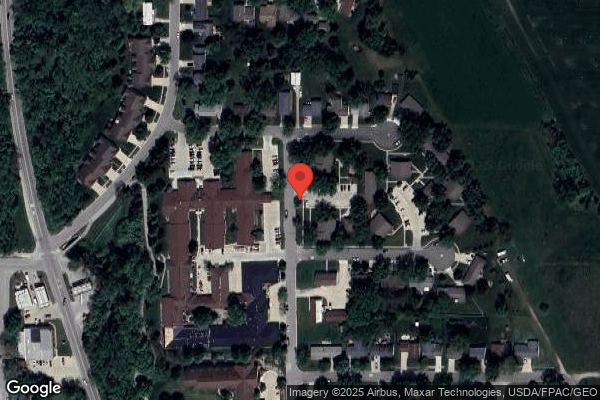
Scenic Manor

1409 FREMONT STREET, IOWA FALLS, IA 50126 (641) 648-4671
For profit - Corporation 77 Beds Independent Data: November 2025
Trust Grade
80/100
#145 of 392 in IA
Last Inspection: May 2025

Inspected within the last 6 months. Data reflects current conditions.

Overview

Scenic Manor has a Trust Grade of B+, indicating it is above average and recommended for families considering care options. It ranks #145 out of 392 facilities in Iowa, placing it in the top half, and #3 out of 4 in Hardin County, meaning there is only one local option rated higher. The facility is improving, having reduced its issues from 7 in 2024 to none in 2025. Staffing is rated at 4 out of 5 stars, though turnover is average at 46%, suggesting that while some staff stay, there is room for stability. There have been no fines reported, which is a positive sign, and the facility offers average RN coverage. However, there are some concerns; for instance, one resident on blood thinner medication did not have their levels monitored for three weeks after admission, leading to dangerously high levels. Additionally, the facility failed to inform a resident's family about a significant change in her condition until several days later, which is concerning for communication and care. There were also issues with medication administration, as insulin was given without proper preparation, which could lead to serious health risks. Overall, while there are notable strengths, families should be aware of these weaknesses when considering Scenic Manor.

Trust Score
B+
80/100
In Iowa
#145/392
Top 36%
Safety Record
Low Risk
No red flags
Inspections
Getting Better
7 → 0 violations
Staff Stability
⚠ Watch
46% turnover. Above average. Higher turnover means staff may not know residents' routines.
Penalties
✓ Good
No fines on record. Clean compliance history, better than most Iowa facilities.
Skilled Nurses
○ Average
Each resident gets 35 minutes of Registered Nurse (RN) attention daily — about average for Iowa. RNs are the most trained staff who monitor for health changes.
Violations
⚠ Watch
11 deficiencies on record. Higher than average. Multiple issues found across inspections.
★★★★☆
4.0
Overall Rating
★★★★☆
4.0
Staff Levels
★★★☆☆
3.0
Care Quality
★★★★☆
4.0
Inspection Score
Stable
2024: 7 issues
2025: 0 issues

The Good

  • 4-Star Staffing Rating · Above-average nurse staffing levels
  • Full Sprinkler Coverage · Fire safety systems throughout facility
  • No fines on record

Facility shows strength in staffing levels, fire safety.

The Bad

Staff Turnover: 46%

Near Iowa avg (46%)

Higher turnover may affect care consistency

The Ugly 11 deficiencies on record

Oct 2024 1 deficiency
CONCERN (D) 📢 Someone Reported This

A family member, employee, or ombudsman was alarmed enough to file a formal complaint

Potential for Harm - no one hurt, but risky conditions existed

Deficiency F0710 (Tag F0710)

Could have caused harm · This affected 1 resident

**NOTE- TERMS IN BRACKETS HAVE BEEN EDITED TO PROTECT CONFIDENTIALITY** Based on clinical record review, staff, and provider interviews, the facility failed to properly obtain a physician order for a ...

Read full inspector narrative →
**NOTE- TERMS IN BRACKETS HAVE BEEN EDITED TO PROTECT CONFIDENTIALITY** Based on clinical record review, staff, and provider interviews, the facility failed to properly obtain a physician order for a resident admitted to the facility on Coumadin/warfarin (an anticoagulant or blood thinner medication) after discharge from the hospital (Resident #3). Resident #3 admitted to the facility from the hospital following an admission related to acute strokes and atrial fibrillation (AF - rapid heart rate caused by poor blood flow). Resident #3 required the use of Coumadin to help prevent blood clots to prevent future strokes. When he admitted to the facility, the facility failed to ensure he had an order on admission to monitor the therapeutic levels of Coumadin. Resident #3 didn't have the thickness of his blood (INR) checked until 3 weeks after his admission to the facility, when he admitted to the hospital for pneumonia. When the hospital checked his INR, the result reflected a level of 8.85 (therapeutic is 2-3), reflecting an INR level 3-4 times higher than therapeutic. The facility reported a census of 65 residents. Findings include: Resident #3's Minimum Data Set (MDS) assessment dated [DATE] listed an admission date of 5/8/24. The MDS included diagnoses of medically complex conditions, nonrheumatic mitral valve insufficiency (causes blood to flow backwards into the heart), nonrheumatic aortic valve stenosis (aortic valve narrowed so blood flow became difficult to get into the heart). The assessment indicated Resident #3 stood 5 foot 6 inches tall and weighed 158 pounds. He used an anticoagulant (blood thinner), anti-platelet (makes the platelets more slippery to prevent sticking) and hypoglycemic (low blood sugar) medications within the lookback period. A Clinical Discharge Summary form dated 5/8/24 indicated Resident #3 arrived at the hospital on 5/1/24 at 12:55 AM with active diagnosis that included AF, Heart Failure (HF), Mitral insufficiency, Aortic Stenosis, an anticoagulation goal of an INR of 2 to 3 and Type 2 Diabetes Mellitus (DM). The History and Physical Final Report dated 5/8/24 listed Resident #3 admitted to the hospital on [DATE] and discharged [DATE]. The report indicated Resident #3's hospital stay included a Magnetic Resonance Imaging (MRI) test that diagnosed him with new strokes. The primary care provider (PCP) ordered a neurology referral. The Neurologist directed to start Aspirin (ASA) therapy. Resident #3's hospital admission included diagnoses of an acute CVA (Cerebrovascular Accident/strokes), AF, chronic anticoagulation with warfarin, elevated troponin (lab test to determine the amount of heart muscle damage), aortic stenosis (narrowing of the aortic value opening, which impedes the flow of blood from the heart to the rest of the body) and scattered subtle acute/subacute bilateral cerebral hemisphere lacunar infarcts (small asymptomatic strokes that occurred in both sides of the brain caused by blockages in tiny penetrating arteries). His lab work reflected an INR result on 5/8/24 at 5:38 AM of a 1.8 ratio (high). The provider changed the following medication for Resident #3 on discharge: a. Aspirin 81 milligrams (mg) every day (QD). b. Coumadin 5 mg QD. The Discharge Plan lacked an order or recommendations related to when to check Resident #3's PT/INR (used to measure therapeutic levels of Coumadin. Resident #3's May 2024 Medication Administration Record (MAR) form included the following physician orders: a. Aspirin 81 mg QD in the morning (for Paroxysmal AF) administered 5/9/24 thru 5/28/24. b. Warfarin Sodium 5 mg tablet every evening (for Paroxysmal AF) administered 5/8/24 thru 5/28/24. Review of a Flowsheet Print Request form with dates that ranged from 5/8/24 thru 5/29/24 revealed the following PT/INR values: a. No PT/INR drawn from 5/8/24 thru 5/28/24. b. 5/29/24 - 8.85 (high) c. 5.30. 24 - 5.86 (high) d. 6/1/24 - 2.54 (high) The undated Mayo Clinic Laboratories Critical Values/Critical Results List defined a critical value or critical result as a value/result that represents a pathophysiological state at such variance with normal (expected values) as to be life-threatening unless something is done promptly and for which some corrective action could be taken. The list reflected a critical high result for an INR as greater or equal to 5.0. An emergency room Note verified by a Physician on 5/29/24 at 5:27 PM indicated Resident #3's INR registered markedly elevated at 8.8. The hospital received a Physician order to hold his Coumadin. The Note included diagnoses of over anticoagulation therapy, chronic AF, and right lower lobe pneumonia. During an interview on 10/10/24 at 2:10 PM the hospital's Licensed Practical Nurse (LPN)/admission and Discharge Nurse indicated the hospital staff held the resident's Coumadin/Warfarin for four (4) days following his readmission on [DATE]. During an interview on 10/10/24 at 3:00 PM the hospital's Nurse Practitioner (NP) who cared for Resident #3 explained the hospital's standard of practice with an elevated and/or unstable PT/INR levels as to check the lab value QD until stable, then every other day (QOD), and eventually 1 time a week. The NP indicated the PCP had the primary responsibility to provide lab draw orders upon discharge from the hospital. She would expect the staff at the facility to follow up with his PCP as high PT/INR levels could cause hemorrhages and/or blood clots. During an interview on 10/11/24 at 9:32 AM Resident #3's primary NP's nurse confirmed the clinic's standard of practice for a resident admitted to a nursing facility on Coumadin. If a resident came without lab orders, the facility staff should have called the PCP to clarify those orders. During an interview on 10/11/24 at 9:53 AM Resident #3's primary NP indicated she would expect the hospital to order the labs, however, if they missed the lab orders, she expected the facility staff to follow up with the PCP, specifically with the PT/INR lab orders/values. The NP confirmed Resident #3's primary medical doctor (MD) performed rounds at the facility on 5/14/24, however, the facility staff failed to report to the MD Resident #3 didn't have PT/INR orders upon admission. The NP reported a drop from an 8.85 PT/INR to 5.86 INR as realistic. The NP also indicated with a PT/INR of 8.85 the resident wouldn't have exhibited signs of bleeding from his leg abrasion, sputum, and etcetera (etc.).
May 2024 5 deficiencies
CONCERN (D)

Potential for Harm - no one hurt, but risky conditions existed

Notification of Changes (Tag F0580)

Could have caused harm · This affected 1 resident

Based on clinical record review, family interview, staff interviews and facility document review, the facility failed to notify a resident representative of a change in condition for 1 of 1 resident r...

Read full inspector narrative →
Based on clinical record review, family interview, staff interviews and facility document review, the facility failed to notify a resident representative of a change in condition for 1 of 1 resident reviewed (Resident #50). Resident #50 was found to have a large raised area on her lower back on 2/2/24. The facility did not notify Resident #50's resident representative of the area until after the primary care provider (PCP) had seen the area on 2/7/24. The facility reported a census of 60 residents. Findings include: The Minimum Data Set for Resident #50 documented a Brief Interview of Mental Status score of 9 indicating moderately impaired cognition. The Clinical Resident Profile for Resident #50 listed her son as the emergency contact #1. A Timeline for Resident #50 provided by the Director of Nursing (DON) during the survey 5/13/24 to 5/14/24, documented the following: 1/17/24- skin review- no new areas of concern noted by nurse 1/24/24- skin review- no new areas of concern noted by nurse 1/31/24- skin review- no new areas of concern noted by nurse 2/2/24- the PCP notified of being put on rounds for 2/7/24, due to area on the back. No complaints of pain or difficulty. 2/5/24- Tylenol administered for pain, no further complaints and rates pain a zero. 2/7/24-Seen by PCP in house. PCP's note documented other than back pain, has no other complaints. Patient seen at bedside and has what appears to be a left low back mass that looks to be about 10 cm (centimeters) in diameter, protruding and stretching left low back skin. The patient only complained of noticing for couple of days as it's causing discomfort. Staff also does not recall seeing an left low back m ass in the past and she is bathed regularly. Flesh colored, mildly warm, no erythema. PCP wants to send to the ER (Emergency Room) for evaluation. 2/7/24- ER notes state psoas (muscle in lower back) muscle mass/abscess extending into abdominal wall and subcutaneous fat. Call clinic in a.m. to make outpatient surgery referral. (Referral indicates no emergency as confirmed by PCP). If symptoms worsen or pain uncontrolled return to ER. 2/8/24 PCP notes he spoke with the son, discharge Hospice Care. discharged from hospice. 2/9/24- surgery scheduled-son (resident representative) took. 2/10/24- notes state likely an obstruction. On 5/13/24 at 1:03 p.m., Resident #50's resident representative stated he had an issue with his mom ending up in the hospital for several days. This representative stated his mother's kidney had erupted, and the urine was going into a pocket causing a lump on her lower back. The resident representative stated that according to the DON it happened over night but when this representative talked to another nurse they said they had been monitoring the area for a couple of weeks. This representative stated the area got to be the size of about 2 soft balls or 1/2 of a basketball. He stated the facility should have let him know when they first seen the area. On 5/15/24 at 11:30 a.m., Staff B, Licensed Practical Nurse (LPN), Stated a Certified Nurse Aide (CNA) was giving this resident a bath on 2/2/24 (Friday) and called Staff B in to look at an area on this resident's back. She stated the skin was intact, there was no redness and it was soft with palpation. The resident had no complaints of pain. The skin was tight around the lump. When asked how large the area was she did not remember. When shown that the provider documented on 2/7/24 (Wednesday) that the area was 10 cm (centimeters). She stated that it was probably that size when she saw it. This LPN stated she didn't feel the area needed to be seen right away or that it was emergent, but she did feel like it needed to be seen by a provider because it was abnormal. When asked if she documented her assessment, she did not remember. She stated she went to the Medical Records person who organizes the doctor's rounds schedules and asked her to put this resident on the schedule for the following week. She stated that she did ask for a different provider to see her on Tuesday but her PCP was scheduled to come on Wednesday, so he went ahead and saw the area on 2/7/24. When this nurse was asked if she notified this resident's representative regarding the area, she stated she did not. She stated she didn't notify him because she wasn't sure what was causing the area, so thought the doctor could take a look and then they would notify him. She stated she should have notified the resident representative the day she first saw the area. She stated she should have told this resident's representative what she observed and that she put this resident on the list to be seen at clinic the following week. Review of the Progress Notes for 2/7/24 revealed no entries regarding the new area. On 5/15/24 at 11:51 a.m., Staff E CNA/CMA (Certified Medication Aide), stated that a lot of times this resident refuses her showers. She stated that they were helping Resident #50 get dressed. Staff E stated when she saw the area she was like oh my gosh, this is a big lump on her back. Staff E stated she then called the nurse and reported it. Staff E stated she was not sure what the nurse did after that. Staff E stated that Staff E had kind of rubbed the area lightly to see if it hurt, and Resident #50 said no, it doesn't hurt. Staff E stated the area wasn't red or anything, you could press on it. Staff E stated the area didn't hurt this resident and it wasn't hard, there was just a lump there. Staff A stated the lump was approximately 4 inches or so and dome shaped, it's been a while since Staff E has seen it but the area was raised. The staff stated the resident didn't have any complaints. On 5/15/24 at 4:21 p.m., the Administrator sent an email stating they do not have a facility policy for family notification. On 5/15/24 at 4:30 p.m., the Administrator acknowledged the concern regarding not notifying Resident #50's representative of the area found on Resident #50's back on the day it was found.
CONCERN (D)

Potential for Harm - no one hurt, but risky conditions existed

Deficiency F0658 (Tag F0658)

Could have caused harm · This affected 1 resident

Based on observations, record review, staff interviews and manufacturer's insert, the facility failed to provide services that met professional standards regarding medication administration for 2 of 8...

Read full inspector narrative →
Based on observations, record review, staff interviews and manufacturer's insert, the facility failed to provide services that met professional standards regarding medication administration for 2 of 8 residents (Resident #30 twice) observed who did not have their insulin flex pen primed prior to administering insulin (to ensure the proper amount of insulin administered). The facility reported a census of 60 residents. Findings include: During an observation on 5/15/24 at 8:28 AM, Staff A, Registered Nurse (RN) administered Novolog 5 units to Resident #22. Staff A gave the shot in the upper right arm. She did not prime the insulin pen prior to administration. During an observation on 5/15/24 at 8:54 AM, Staff B, Licensed Practical Nurse (LPN) administered Novolog 9 units and Tresiba 54 units to Resident #30. Staff B gave both shots in the upper left arm. She did not prime either insulin pens prior to administration. Review of the facility's Insulin Administration policy, revised September 2014, did not have information specific to insulin pen administration. The policy stated the nursing staff will have access to specific instructions (from the manufacturer if appropriate) on all forms of insulin delivery system(s) prior to their use. During an interview with the Director of Nursing (DON) on 5/15/24 at 3:25 PM, revealed the expectation for nurses is to follow facility policy, indicating following manufacturer instructions. Review of the manufacturer insert for Novolog FlexPen revised 2/2023 stated small amounts of air may collect in the cartridge during normal use. An airshot must be done before each injection to avoid injecting air and to make sure the prescribed dose of the medicine is received. This is done by priming the insulin pen by injecting 2 units of insulin through the attached needle prior to administering the prescribed dose. Review of the manufacturer insert for Tresiba Flextouch Pen revised 7/2022 stated small amounts of air may collect in the cartridge during normal use. An airshot must be done before each injection to avoid injecting air and to make sure the prescribed dose of the medicine is received. This is done by priming the insulin pen by injecting 2 units of insulin through the attached needle prior to administering the prescribed dose.
CONCERN (D)

Potential for Harm - no one hurt, but risky conditions existed

Unnecessary Medications (Tag F0759)

Could have caused harm · This affected 1 resident

Based on observations, clinical record review, staff interview, and manufacturer's package insert review, the facility failed to keep their medication error rate less than 5 percent. An observation of...

Read full inspector narrative →
Based on observations, clinical record review, staff interview, and manufacturer's package insert review, the facility failed to keep their medication error rate less than 5 percent. An observation of 39 medications being passed was completed with 3 medication errors noted giving the facility a 7.69% medication error rate. Resident #30 had 2 observations of insulin administration via FlexPen and both observations revealed no priming of the FlexPen. There was no way of knowing if the resident received the appropriate scheduled dose. The facility reported a census of 60 residents. Finding Include: 1. During an observation on 5/15/24 at 8:28 AM, Staff A, Registered Nurse (RN) administered Novolog 5 units to Resident #22. Staff A gave the shot in the upper right arm. She did not prime the insulin pen prior to administration. Review of current physician orders on the May 2024 Medication Administration Record/Treatment Administration Record (MAR/TAR) for Resident #22 revealed the resident to receive the following: a. Novolog Solution 100 UNIT/ML (Insulin Aspart) Inject 5 unit subcutaneous three times daily. Review of the manufacturer insert for Novolog FlexPen revised 2/2023 stated small amounts of air may collect in the cartridge during normal use. An airshot must be done before each injection to avoid injecting air and to make sure the prescribed dose of the medicine is received. This is done by priming the insulin pen by injecting 2 units of insulin through the attached needle prior to administering the prescribed dose. 2. During an observation on 5/15/24 at 8:54 AM, Staff B, Licensed Practical Nurse (LPN) administered Novolog 9 units and Tresiba 54 units to Resident #30. Staff B gave both shots in the upper left arm. She did not prime either insulin pens prior to administration. Review of current physician orders on the May 2024 MAR/TAR for Resident #30 revealed resident was to receive the following: a. Novolog Solution 100 UNIT/ML (Insulin Aspart) Inject 6 units subcutaneous before meals in addition to sliding scale. b. Novolog Solution 100 UNIT/ML (Insulin Aspart) inject as per sliding scale. Based on resident #30's blood glucose reading at the time, resident was to receive an additional 3 units of Novolog for a total of 9 units. c. Tresiba Flextouch Subcutaneous Solution Pen-Injector 100 UNIT/ML Inject 54 units subcutaneous in the morning. Review of the manufacturer insert for Tresiba Flextouch Pen revised 7/2022 stated small amounts of air may collect in the cartridge during normal use. An airshot must be done before each injection to avoid injecting air and to make sure the prescribed dose of the medicine is received. This is done by priming the insulin pen by injecting 2 units of insulin through the attached needle prior to administering the prescribed dose. During an interview with the Director of Nursing (DON) on 5/15/24 at 3:25 PM, revealed the expectation for nurses is to follow facility policy, indicating following manufacturer instructions. Review of facility's Insulin Administration policy, revised September 2014, did not have information specific to insulin pen administration. Policy stated the nursing staff will have access to specific instructions (from the manufacturer if appropriate) on all forms of insulin delivery system(s) prior to their use.
CONCERN (D)

Potential for Harm - no one hurt, but risky conditions existed

Deficiency F0761 (Tag F0761)

Could have caused harm · This affected 1 resident

Based on observations, policy review and staff interview, the facility failed to ensure the medication cart was locked on 2 separate occasions when Staff C, Licensed Practical Nurse (LPN), responsible...

Read full inspector narrative →
Based on observations, policy review and staff interview, the facility failed to ensure the medication cart was locked on 2 separate occasions when Staff C, Licensed Practical Nurse (LPN), responsible for the cart, was not in direct sight of the cart. The facility reported a census of 60 residents. Findings include: 1. Observation on 5/13/24 at 12:29 PM revealed a medication cart unlocked and unoccupied on the west hall. Two residents observed self propelling passed the unlocked medication cart. At 12:34 PM (5 minutes later) Staff C, LPN returned to the cart and continued with the medication pass. During an interview on 5/13/24 at 3:48 PM, the facility Administrator revealed it is expected the nurses lock medication carts and computers when stepping away from the cart. 2. On 5/13/24 at 11:33 AM, a medication cart observed unlocked and unattended in the hallway by the main dining room, the court yard dining room. Several residents observed to walk by the medication cart and several residents were seated near the medication cart. The staff member responsible for the cart was not present in the hallway or in the dining hall. Approximately two minutes later a staff member walking through the hallway noticed the medication cart was not locked, locked the cart and continued to walk down the hallway. At approximately 11:37 AM, Staff C, Licensed Practical Nurse (LPN) responsible for the medication cart, came back to the medication cart from another hallway. Staff C not in the dining room or near the medication cart when the medication cart first observed unlocked at 11:33 AM. Review of facility policy, Storage of Medications, with a revision date of November 2020, documents drugs and biologicals used in the facility are stored in locked compartments and compartments containing drugs and biologicals are locked when not in use. Unlocked medication carts are not left unattended.
CONCERN (D)

Potential for Harm - no one hurt, but risky conditions existed

Infection Control (Tag F0880)

Could have caused harm · This affected 1 resident

Based on observation, staff interview and policy review, the facility failed to use appropriate infection control practices during urinary catheter care for 1 of 2 residents (Resident #46) reviewed. T...

Read full inspector narrative →
Based on observation, staff interview and policy review, the facility failed to use appropriate infection control practices during urinary catheter care for 1 of 2 residents (Resident #46) reviewed. The facility reported a census of 60 residents. Findings include: The Care Plan for Resident #46, with a revision date of 1/5/24, documented under the focus area the resident has an indwelling catheter and instructed under the intervention and task section to maintain enhanced barrier precautions and to observe and document intake and output. During an observation on 5/14/24 at 4:08 PM, Staff D, CNA, prepared to complete the task of emptying the catheter bag for Resident #46, with the Director of Nursing (DON) present. Staff D her washed hands, donned a gown and donned gloves. Staff D used a gait belt, transferred the resident to his bathroom, and placed the resident on the toilet. Staff D lowered the resident's pants to have access to the leg catheter bag. Staff D placed a plastic container to capture the output inside another larger plastic container as a barrier, with a plastic liner in the larger container. Staff D touched several items with her gloved hands, such as the walker, the gait belt, the containers, the hand rail and the toilet, with the original gloves she placed on her hands prior to moving the resident to the bathroom. Staff D used a sanitizing wipe to wipe down the bag port, then began emptying the bag, wearing the same gloves. The container used to capture the urine output fell over, splashed urine onto the floor and on the resident's legs and inside the larger plastic container. Staff D finished emptying the catheter bag, reattached the bag to the resident's leg and then using the same gloved hands, took paper towels and wiped up the spilled urine off the floor. Using the same gloved hands, Staff D grabbed a wipe and cleaned the resident's legs where urine splashed. The CNA pulled the resident's pants back up, took off the gloves and transferred the resident back to the chair in his room. During an interview on 5/14/24 at 4:25 PM, the DON advised she would have expected Staff D to change gloves after placing Resident #46 on the toilet and before beginning to empty the catheter bag. The DON also advised she would have expected Staff D to change gloves after cleaning up the spillage of urine on the floor and prior to using the wipe to clean the resident. The DON advised Staff D did not follow proper infection control practices. Review of facility policy Catheter Care, Urinary, with a revision date September 2014, documents under the section Infection Control, to maintain clean technique when handling or manipulating the catheter, tubing or drainage bag and avoid splashing.
Apr 2024 1 deficiency
CONCERN (D) 📢 Someone Reported This

A family member, employee, or ombudsman was alarmed enough to file a formal complaint

Potential for Harm - no one hurt, but risky conditions existed

Deficiency F0661 (Tag F0661)

Could have caused harm · This affected 1 resident

**NOTE- TERMS IN BRACKETS HAVE BEEN EDITED TO PROTECT CONFIDENTIALITY** Based on clinical record review, family, and staff interview, the facility failed to ensure a resident had prescription medicati...

Read full inspector narrative →
**NOTE- TERMS IN BRACKETS HAVE BEEN EDITED TO PROTECT CONFIDENTIALITY** Based on clinical record review, family, and staff interview, the facility failed to ensure a resident had prescription medication readily available following discharge for 1 of 3 residents reviewed (Resident #3). The facility reported a census of 61 residents. Findings include: The Minimum Data Set (MDS) dated [DATE] revealed Resident #3 had an admission date of 1/8/24 and a planned discharge date of 2/3/24. The Care Plan initiated 1/8/24 revealed Resident #3 planned to return to the community with a goal to successfully return to the community after meeting all goals at the facility and a safe return to the community. Review of undated facility form titled, Discharge Summary/Post Discharge Plan Of Care, reflected the facility arranged pharmacy services for Resident #3 at a pharmacy in [NAME]. Review of an electronic mail (email) correspondence dated 2/5/24 at 8:37 AM to Staff A, admission Coordinator, revealed a family member of Resident #3 inquired about the resident's prescription medication as the discharge papers indicated they would be at the pharmacy, but the pharmacy didn't have anything there. Review of email correspondence dated 2/5/24 at 8:40 AM to Staff A revealed a family member requested Staff A to fax the discontinued orders to the pharmacy as Resident #3 didn't have her medication yesterday. The family member further revealed she was concerned about the resident not having her medication for 2 days. During an interview 4/29/24 at 3:00 PM the Administrator revealed they did not have a policy in place regarding a discharge protocol other than for Care Planning. During an interview 4/30/24 at 10:31 AM, the Director of Nursing (DON) revealed she faxed Resident #3's physician's office the day before (4/29/24) to see if the physician had a note about the pharmacy reaching out to the clinic regarding her discharge medications. The clinic provided documentation revealing the pharmacy had reached out to their clinic on 2/5/24. Review of faxed documentation from Resident #3's primary provider revealed on 2/5/24 at 5:31 PM the provider listed the medications sent to the pharmacy. The provider further documented the pharmacy never received the fax from the nursing home that the nursing home said they sent regarding the medications. During an interview 4/30/24 at 10:31 AM, the DON stated it had never happened before where a resident didn't receive their medication right after discharging. The DON further revealed they don't usually use the pharmacy that Resident #3 used except this one time and stated moving forward they will contact that pharmacy to ensure they have received the order for discharge medications. The DON added they expected residents to have their medication lined up and available when discharging so that they don't miss a dose.
Feb 2023 4 deficiencies
CONCERN (D)

Potential for Harm - no one hurt, but risky conditions existed

Assessment Accuracy (Tag F0641)

Could have caused harm · This affected 1 resident

**NOTE- TERMS IN BRACKETS HAVE BEEN EDITED TO PROTECT CONFIDENTIALITY** Based on observation, record review, staff interview, and review of the Resident Assessment Instrument (RAI) Manual, the facilit...

Read full inspector narrative →
**NOTE- TERMS IN BRACKETS HAVE BEEN EDITED TO PROTECT CONFIDENTIALITY** Based on observation, record review, staff interview, and review of the Resident Assessment Instrument (RAI) Manual, the facility failed to ensure 3 residents out of 10 residents (Resident (R) 8, R19, and R16) reviewed for oxygen administration had an accurate Minimum Data Set (MDS) assessment. Findings include: 1. An observation on 02/21/23 at 2:44 PM, R8 was in a wheelchair near the doorway of the room and an oxygen concentrator was located at the foot of the bed. Review of R8's electronic medical record (EMR) undated admission Record, located under the Profile tab, indicated R8 was admitted to the facility on [DATE] with diagnosis including COVID-19. Review of R8's Orders tab in the EMR revealed a physician's order dated 12/08/22 documented oxygen (O2) 3 liters per minute (lpm) to keep oxygen saturation (SPO2) >90 percent (%) every one hour as needed related to COVID-19. Review of R8's Annual Minimum Data Set (MDS) located in the EMR under the MDS tab with an Assessment Reference Date (ARD) of 12/27/22, failed to document in the Special Treatments section oxygen was administered while a resident in the facility. 2. During an interview on 02/20/23 at 2:51 PM, R19 and the resident's family member explained R19 uses the oxygen concentrator oxygen at night with a nasal canula. Review of R19's EMR undated admission Record, located under the Profile tab, indicated R19 was admitted to the facility on [DATE] and readmitted on [DATE] with a diagnosis of sleep apnea. Review of R19's Quarterly MDS located in the EMR under the MDS tab with an Assessment Reference Date (ARD) of 01/03/23, failed to document in the Special Treatments section oxygen was administered while a resident in the facility. 3. During an interview on 02/21/23 at 2:47 PM, Licensed Practical Nurse (LPN) 2 confirmed R16 had an oxygen concentrator in the resident's room and a bilevel positive airway pressure (BIPAP) machine and used the oxygen at night connected to the BIPAP. Review of R16's EMR undated admission Record, located under the Profile tab, indicated R16 was admitted to the facility on [DATE] and readmitted on [DATE] with diagnosis of sleep apnea. Review of R16's Orders tab in the EMR revealed a physician's order dated 04/01/20 documented check and fill distilled water for bilevel positive airway pressure (BIPAP) machine at bedtime for BIPAP use. Review of R16's Quarterly MDS located in the EMR under the MDS tab with an Assessment Reference Date (ARD) of 02/20/23, failed to document in the Special Treatments section oxygen was administered while a resident in the facility. During an interview on 02/23/23 at 12:43 PM the MDS Coordinator verbalized part of evaluating residents using oxygen was to observe oxygen equipment in resident' room. The MDS Coordinator confirmed the MDS reports for R8, R19, and R16 did not accurately reflect the oxygen therapy care provided by the facility and should have reflected the use of oxygen. During an interview on 02/23/23 at 1:57 PM, the Administrator confirmed the use of the RAI manual guidelines for the accuracy of documentation. Review of the RAI Manual, dated 10/01/19, indicated, . It is important to note here that information obtained should cover the same observation period as specified by the Minimum Data Set (MDS) items on the assessment and should be validated for accuracy (what the resident's actual status was during that observation period) by the Interdisciplinary Team (IDT) completing the assessment .
CONCERN (D) 📢 Someone Reported This

A family member, employee, or ombudsman was alarmed enough to file a formal complaint

Potential for Harm - no one hurt, but risky conditions existed

Accident Prevention (Tag F0689)

Could have caused harm · This affected 1 resident

**NOTE- TERMS IN BRACKETS HAVE BEEN EDITED TO PROTECT CONFIDENTIALITY** Based on observation, interview, and document review, the facility failed to ensure oxygen tanks were secured in resident rooms ...

Read full inspector narrative →
**NOTE- TERMS IN BRACKETS HAVE BEEN EDITED TO PROTECT CONFIDENTIALITY** Based on observation, interview, and document review, the facility failed to ensure oxygen tanks were secured in resident rooms for two of 10 residents (Resident (R) 8 and R47) reviewed for oxygen therapy. This deficient practice had the potential to injure residents in the facility if the unsecured oxygen tank were to have the valve under pressure break the seal. Finding include: Review of the facility policy titled Oxygen Cylinder Safe Handling Training Policy, undated, revealed, The purpose of this policy/procedure is to ensure all staff have a safe working knowledge and adequate training when handling, securing and operating portable oxygen cylinders. 1. Review of R8's electronic medical record (EMR) undated admission Record, located under the Profile tab, indicated R8 was admitted to the facility on [DATE]. An observation on 02/21/23 at 2:44 PM revealed an oxygen tank was not secured and standing next the oxygen concentrator at the end of the bed in R8's room. 2. Review of R57's electronic medical record (EMR) undated admission Record, located under the Profile tab, indicated R8 was admitted to the facility on [DATE] and readmitted on [DATE]. On 02/21/23 at 10:50 AM, an oxygen tank was observed not secured against the wall in R57's room near an oxygen concentrator and an oxygen tank secure in a rolling carrier. On 02/21/23 at 3:07 PM, the Director of Nursing (DON) observed the free-standing oxygen tanks in R8 and R57's rooms and confirmed all oxygen tanks that were in the facility were to be secured, placed in a carrier, holder, or in the pocket on the back of a wheelchair to prevent the oxygen tank from being knocked over accidently.
CONCERN (D)

Potential for Harm - no one hurt, but risky conditions existed

Respiratory Care (Tag F0695)

Could have caused harm · This affected 1 resident

**NOTE- TERMS IN BRACKETS HAVE BEEN EDITED TO PROTECT CONFIDENTIALITY** Based on observation, interview, record review, and document review the facility failed to ensure residents had an active physic...

Read full inspector narrative →
**NOTE- TERMS IN BRACKETS HAVE BEEN EDITED TO PROTECT CONFIDENTIALITY** Based on observation, interview, record review, and document review the facility failed to ensure residents had an active physician order for receiving oxygen therapy for 3 of 10 residents (Resident (R) 19, R16, and R66) reviewed for oxygen therapy. This deficient practice had the potential to provide inaccurate care without a physician's order directing the oxygen care to be provided. Findings include: 1. Review of R19's electronic medical record (EMR) undated admission Record, located under the Profile tab, indicated R19 was admitted to the facility on [DATE] and readmitted on [DATE] with a diagnosis of sleep apnea. During an interview on 02/20/23 at 2:51 PM, R19 and the resident's family member explained R19 used the oxygen concentrator oxygen at night with a nasal canula. Review of R19's Care Plan tab in the EMR initiated focus on 04/05/22 revealed respiratory treatments/oxygen: at risk for impaired gas exchange with the intervention to assess for signs and symptoms of impaired respiratory function and apply [oxygen] nebs and continuous positive airway pressure (CPAP) machine if ordered. Review of R19's Orders tab in the EMR revealed a physician's order dated 11/06/22 to change oxygen tubing on evening shift every 15 days. The physician orders lacked documentation of orders for oxygen administration. During an interview on 02/22/23 at 10:29 AM, Registered Nurse (RN) 1 verified R19 used oxygen by nasal cannula at night and confirmed there was no physician's order for how many liters to set on the oxygen concentrator for oxygen delivery. 2. Review of R16's EMR undated admission Record, located under the Profile tab, indicated R16 was admitted to the facility on [DATE] and readmitted on [DATE] with diagnosis of sleep apnea. During an interview on 02/21/23 at 2:47 PM, Licensed Practical Nurse (LPN) 2 confirmed R16 had an oxygen concentrator in the resident's room and a bilevel positive airway pressure (BIPAP) machine (a machine which facilitates breathing by pushing air into the lungs) and uses the oxygen at night connected to the BIPAP. Review of R16's Care Plan tab in the EMR initiated focus on 11/23/21 revealed I have oxygen therapy [related to] sleep apnea with the interventions for residents who should be ambulatory, provide extension tubing or portable oxygen apparatus and I have oxygen via nasal prongs/mask at two liters as needed. Review of R16's Orders tab in the EMR revealed a physician's order dated 04/01/20 documented check and fill distilled water for bilevel positive airway pressure (BIPAP) machine at bedtime for BIPAP use and lacked documentation of orders for oxygen administration. During an interview on 02/22/23 at 10:26 AM, RN1 verified R16 used the BIPAP machine at night connected to the oxygen concentrator and there was no order for oxygen administration or instructions/orders for BIPAP settings on the machine. RN1 confirmed there should be a physician's order for the oxygen administration, how many liters to set the machine, and orders to clarify the BIPAP settings on the machine. 3. Review of R66's EMR undated admission Record, located under the Profile tab, indicated R16 was admitted to the facility on [DATE] and readmitted on [DATE] with diagnosis of pneumonia. During an observation and interview on 02/21/23 at 2:24 PM, R66 was sitting in the wheelchair next to his bed with a nasal cannula for oxygen administration connected to the concentrator with a setting of 2 liters. R66 verbalized needing the oxygen to be able to breathe, especially with physical exertion. Review of R66's Wt/Vitals tab in the EMR revealed on 02/21/23 at 10:17 AM, the oxygen saturation level was 94 percent (%) with oxygen via nasal cannula and 02/21/23 at 10:38 PM the oxygen saturation level was 96% with oxygen via nasal cannula. Review of R66's Care Plan tab in the EMR initiated focus on 01/12/23 revealed respiratory treatments/oxygen: at risk for impaired gas exchange with the intervention to assess for signs and symptoms of impaired respiratory function and apply [oxygen] nebs and continuous positive airway pressure (CPAP) machine if ordered. Review of R66's Orders tab in the EMR lacked documentation of a physician's order for oxygen administration. During an interview on 02/22/23 at 10:20 AM, Licensed Practical Nurse (LPN) 1 confirmed R66 did not have a physician's order for oxygen administration and there should be an order to identify how many liters of oxygen the physician expected to be administered via nasal cannula. During an interview on 02/23/23 at 11:46 AM, the Director of Nursing (DON) confirmed the expectation that residents receiving oxygen therapy needed to have a written physician's order for the administration of oxygen, including BIPAP/CPAP machine instructions for treatment. Review of the facility policy titled CPAP/BIPAP Support, revised 03/15, revealed [to] review the physician's order to determine the oxygen concentration and flow, and the PEEP [positive end-expiratory pressure] pressure (CPAP, IPAP [inspiratory positive airway pressure] and EPAP [expiratory positive airway pressure]) for the machine. Review of the facility policy titled Oxygen Administration, revised 10/10, revealed [to] verify that there is a physician's order for this procedure. Review the physician's orders . for oxygen administration.
CONCERN (D)

Potential for Harm - no one hurt, but risky conditions existed

Deficiency F0761 (Tag F0761)

Could have caused harm · This affected 1 resident

Based on observation, interview, and document review the facility failed to ensure outdated medications were removed from the medication cart for one of two medication carts reviewed for outdated medi...

Read full inspector narrative →
Based on observation, interview, and document review the facility failed to ensure outdated medications were removed from the medication cart for one of two medication carts reviewed for outdated medications. This deficient practice had the potential to affect any resident on medication receiving an outdated medication and possibly less effective medication. Findings include: On 02/22/23 at 3:58 PM, review of the North Hall medication cart revealed a bubble pack card for Resident (R) 21 for acetaminophen tabs 650 milligrams for an as needed (PRN) usage had an outdate printed on the front of the card of 01/12/23. There were 11 pills left in the bubbles in the card. On 02/23/23 at 3:59 PM, Registered Nurse (RN) 3 confirmed the acetaminophen ordered for R21 was currently outdated and the medication should not be given to the resident if needed. The outdated medication should go back to the pharmacy or be destroyed since it was expired. In an email communication on 02/23/23 at 5:21 PM, the Director of Nursing (DON) explained expired medications should be pulled from the carts and placed in the med rooms for storage until two nurses, DON, Minimum Data Set Coordinator (MDS) or other; were available to destroy the medications. Review of the facility policy titled Storage of Medications, with a revision date of 11/20, revealed drug containers that have missing, incomplete, improper, or incorrect labels are returned to the pharmacy for proper labeling before storing. Discontinued, outdated, or deteriorated drugs or biologicals are returned to the dispensing pharmacy or destroyed.
Understanding Severity Codes (click to expand)
Life-Threatening (Immediate Jeopardy)
J - Isolated K - Pattern L - Widespread
Actual Harm
G - Isolated H - Pattern I - Widespread
Potential for Harm
D - Isolated E - Pattern F - Widespread
No Harm (Minor)
A - Isolated B - Pattern C - Widespread

Questions to Ask on Your Visit

  • "Can I speak with families of current residents?"
  • "What's your RN coverage like on weekends and overnight?"

Our Honest Assessment

Strengths
  • • Grade B+ (80/100). Above average facility, better than most options in Iowa.
  • • No major safety red flags. No abuse findings, life-threatening violations, or SFF status.
  • • No fines on record. Clean compliance history, better than most Iowa facilities.
Concerns
  • • 11 deficiencies on record. Higher than average. Multiple issues found across inspections.
Bottom line: Generally positive indicators. Standard due diligence and a personal visit recommended.

About This Facility

What is Scenic Manor's CMS Rating?

CMS assigns Scenic Manor an overall rating of 4 out of 5 stars, which is considered above average nationally. Within Iowa, this rating places the facility higher than 99% of the state's 100 nursing homes. This rating reflects solid performance across the metrics CMS uses to evaluate nursing home quality.

How is Scenic Manor Staffed?

CMS rates Scenic Manor's staffing level at 4 out of 5 stars, which is above average compared to other nursing homes. Staff turnover is 46%, compared to the Iowa average of 46%. This relatively stable workforce can support continuity of care.

What Have Inspectors Found at Scenic Manor?

State health inspectors documented 11 deficiencies at Scenic Manor during 2023 to 2024. These included: 11 with potential for harm.

Who Owns and Operates Scenic Manor?

Scenic Manor is owned by a for-profit company. For-profit facilities operate as businesses with obligations to shareholders or private owners. The facility operates independently rather than as part of a larger chain. With 77 certified beds and approximately 62 residents (about 81% occupancy), it is a smaller facility located in IOWA FALLS, Iowa.

How Does Scenic Manor Compare to Other Iowa Nursing Homes?

Compared to the 100 nursing homes in Iowa, Scenic Manor's overall rating (4 stars) is above the state average of 3.1, staff turnover (46%) is near the state average of 46%, and health inspection rating (4 stars) is above the national benchmark.

What Should Families Ask When Visiting Scenic Manor?

Based on this facility's data, families visiting should ask: "Can I visit during a mealtime to observe dining assistance and food quality?" "How do you handle medical emergencies, and what is your hospital transfer rate?" "Can I speak with family members of current residents about their experience?"

Is Scenic Manor Safe?

Based on CMS inspection data, Scenic Manor has a clean safety record: no substantiated abuse findings (meaning no confirmed cases of resident harm), no Immediate Jeopardy citations (the most serious violation level indicating risk of serious injury or death), and is not on the Special Focus Facility watch list (a federal program monitoring the lowest-performing 1% of nursing homes). The facility has a 4-star overall rating and ranks #1 of 100 nursing homes in Iowa. While no facility is perfect, families should still ask about staff-to-resident ratios and recent inspection results during their visit.

Do Nurses at Scenic Manor Stick Around?

Scenic Manor has a staff turnover rate of 46%, which is about average for Iowa nursing homes (state average: 46%). Moderate turnover is common in nursing homes, but families should still ask about staff tenure and how the facility maintains care continuity when employees leave.

Was Scenic Manor Ever Fined?

Scenic Manor has no federal fines on record. CMS issues fines when nursing homes fail to meet care standards or don't correct problems found during inspections. The absence of fines suggests the facility has either maintained compliance or corrected any issues before penalties were assessed. This is a positive indicator, though families should still review recent inspection reports for the full picture.

Is Scenic Manor on Any Federal Watch List?

Scenic Manor is not on any federal watch list. The most significant is the Special Focus Facility (SFF) program, which identifies the bottom 1% of nursing homes nationally based on persistent, serious quality problems. Not being on this list means the facility has avoided the pattern of deficiencies that triggers enhanced federal oversight. This is a positive indicator, though families should still review the facility's inspection history directly.