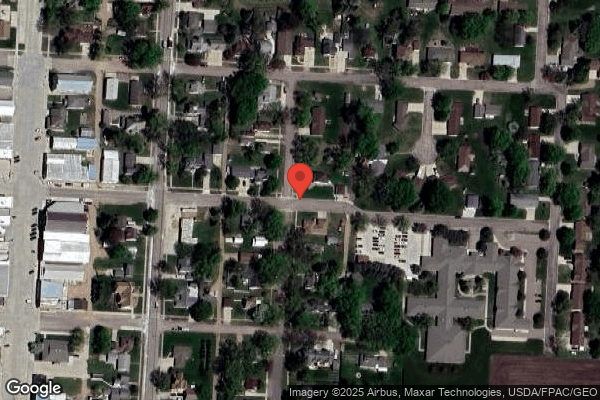
Fellowship Village

300 East Jefferson, Inwood, IA 51240 (712) 753-4663
Non profit - Corporation 40 Beds Independent Data: November 2025
Trust Grade
95/100
#24 of 392 in IA
Last Inspection: September 2024

Within standard 12-15 month inspection cycle. Federal law requires annual inspections.

Overview

Fellowship Village in Inwood, Iowa, has received a Trust Grade of A+, which indicates it is an elite facility offering top-tier care. It ranks #24 out of 392 nursing homes in Iowa, placing it comfortably in the top half, and is the best option among the three facilities in Lyon County. The facility's performance has been stable, with nine identified issues remaining consistent over the past two years. Staffing is a strength, earning a perfect 5/5 rating with a low turnover of 20%, significantly better than the state average of 44%. While there are no fines recorded, there have been some concerning incidents, such as failing to meet nutritional needs for residents by not serving requested items and issues with maintaining kitchen cleanliness and food safety standards. Overall, while Fellowship Village has strong staffing and no fines, families should be aware of its recent concerns regarding quality control in food service and kitchen hygiene.

Trust Score
A+
95/100
In Iowa
#24/392
Top 6%
Safety Record
Low Risk
No red flags
Inspections
Holding Steady
3 → 3 violations
Staff Stability
✓ Good
20% annual turnover. Excellent stability, 28 points below Iowa's 48% average. Staff who stay learn residents' needs.
Penalties
✓ Good
No fines on record. Clean compliance history, better than most Iowa facilities.
Skilled Nurses
✓ Good
Each resident gets 66 minutes of Registered Nurse (RN) attention daily — more than 97% of Iowa nursing homes. RNs are the most trained staff who catch health problems before they become serious.
Violations
○ Average
9 deficiencies on record. Average for a facility this size. Mostly minor or procedural issues.
★★★★★
5.0
Overall Rating
★★★★★
5.0
Staff Levels
★★★★★
5.0
Care Quality
★★★☆☆
3.0
Inspection Score
Stable
2023: 3 issues
2024: 3 issues

The Good

  • 5-Star Staffing Rating · Excellent nurse staffing levels
  • 5-Star Quality Measures · Strong clinical quality outcomes
  • Low Staff Turnover (20%) · Staff stability means consistent care
  • Full Sprinkler Coverage · Fire safety systems throughout facility
  • No fines on record
  • Staff turnover is low (20%)

    28 points below Iowa average of 48%

Facility shows strength in staffing levels, quality measures, staff retention, fire safety.

The Bad

No Significant Concerns Identified

This facility shows no red flags. Among Iowa's 100 nursing homes, only 1% achieve this.

The Ugly 9 deficiencies on record

Sept 2024 3 deficiencies
CONCERN (D)

Potential for Harm - no one hurt, but risky conditions existed

Deficiency F0800 (Tag F0800)

Could have caused harm · This affected 1 resident

**NOTE- TERMS IN BRACKETS HAVE BEEN EDITED TO PROTECT CONFIDENTIALITY** Based on observation, document review, staff interview, and policy review the facility failed to provide a well balanced diet th...

Read full inspector narrative →
**NOTE- TERMS IN BRACKETS HAVE BEEN EDITED TO PROTECT CONFIDENTIALITY** Based on observation, document review, staff interview, and policy review the facility failed to provide a well balanced diet that meets nutritional and special dietary needs by use of incorrect serving size portions for meals for 1 of 31 residents reviewed, (Resident #4). The facility reported a census of 31 residents. Findings include: The Minimum Data Set (MDS) dated [DATE] documented Resident #4 had a Brief Interview for Mental Status (BIMS) of 15 indicating no cognitive impairment. Review of Resident #4's dietary orders documented pureed consistency. Observation of the puree food process on 9/4/24 at 10:00 AM revealed Staff A, [NAME] revealed 1 breaded chicken patty, 1 piece of bread, and 1/2 cup of gravy processed in the food processor together. There was 3/4 a cup of pureed food measured after processed. Observation of lunch meal service on 9/4/24 at 11:20 AM revealed Staff A used a heaping green handled (1/3 cup) scoop of pureed breaded chicken for Resident #4's lunch. Observation revealed Staff A measured remaining pureed breaded chicken with a measurement of greater than 1/4 but less than 1/2 of a cup left. On 9/4/24 at 11:50 AM Staff A stated she usually used the 1/2 scoop but did not have one available so she used a heaping scoop of a 1/3 cup for the pureed portion. Staff A stated the facility used the Document, Diet Portion Sizes / Scoops for pureed sizes and scoops. On 9/4/24 at 11:54 AM Staff B, Certified Dietary Manager stated with one serving being processed for a pureed diet all of the food should be used. Staff B stated there should not have been any leftovers. Staff B acknowledged there was leftover food from the pureed breaded chicken and should not have been any leftover food from the puree process. Staff B stated garlic bread was offered at the lunch hour on the menu on accident and was not served. Review of policy titled, Altered Texture Diets documented altered textures will be provided for residents as needed that have equal nutritive value to the regular texture diet. Each menu item will be portioned into the food processor using the correct portioning Utensil, i.e., if two residents require pureed diets in the facility and ½ c. (#8) was the portion size for fruit cocktail, I c. (2-#8 scoops) would be placed in the processor. After menu items are pureed they will be divided evenly among the portions prepared. I.e. if two portions were pureed, the amount will be divided equally into two servings. This may be done with portion control utensils. On 9/4/24 at 12:10 PM the Administrator stated the facility's expectation was that the appropriate serving would have been served to residents. The Administrator stated the facility's expectation was that the lunch meal on 9/4/24 was served according to the menu.
CONCERN (E)

Potential for Harm - no one hurt, but risky conditions existed

Menu Adequacy (Tag F0803)

Could have caused harm · This affected multiple residents

Based on observation, document review and staff interview the facility failed to follow the menu and prepare food to meet the nutritional needs for 11 of 31 residents reviewed. The facility reported a...

Read full inspector narrative →
Based on observation, document review and staff interview the facility failed to follow the menu and prepare food to meet the nutritional needs for 11 of 31 residents reviewed. The facility reported a census of 31 residents. Findings include: Continuous observation of lunch meal service on 9/4/24 from 11:20 AM - 11:45 AM revealed no bread or garlic bread served to the residents that had requested on the menu sheets. Review of menu sheets revealed 11 residents requested garlic bread. Review of document titled, Week 4 Menu documented bread to be served at lunch meal. On 9/4/24 at 11:54 AM Staff B Certified Dietary Manager (CDM) stated garlic bread was offered at the lunch hour on the menu on accident and was not served. Staff B stated the kitchen staff had forgotten to serve any bread in place of the garlic bread on the menu. Review of policy titled, Nutrition and Menu Planning documented to maintain adequate nutritional status of residents to promote optimum level of functioning through menu planning. Menus must be followed as written with the following exceptions: ethnic, cultural geographic, religious practices, or dislikes of a resident that require substitutions. On 9/4/24 at 12:10 PM the Administrator stated the facility's expectation was that the lunch meal on 9/4/24 was served according to the menu and the residents who wanted bread would have received the bread.
CONCERN (F)

Potential for Harm - no one hurt, but risky conditions existed

Staffing Data (Tag F0851)

Could have caused harm · This affected most or all residents

Based on the Center for Medicare and Medicaid Services (CMS) Payroll Based Journal (PBJ) Staffing Data Report for Quarter 2, 2024 (January 1 - March 31) review, facility staffing reports review, and s...

Read full inspector narrative →
Based on the Center for Medicare and Medicaid Services (CMS) Payroll Based Journal (PBJ) Staffing Data Report for Quarter 2, 2024 (January 1 - March 31) review, facility staffing reports review, and staff interviews, the facility failed to submit accurate staff reports for the PBJ Staffing Data Report. The facility reported a census of 31 residents. Findings include: The PBJ Staffing Data Report run date 8/29/24 triggered for Failure to have Licensed Nursing Coverage 24 Hours/Day-Four or More Days Within the Quarter with less than 24 Hours/Day Licensed Nursing Coverage. Dates of less than 24 hours nursing coverage were documented as 01/27, 02/25, 03/02, 03/10, 03/24, and 03/31. Review of Facility Daily Assignment Sheets for revealed staffing for 01/27, 02/25, 03/02, 03/10, 03/24, and 03/31 had licensed nursing coverage 24 hours a day. Review of document titled, Reporting Direct Care Staffing Information - PBJ documented staffing and census information will be reported electronically to CMS through the Payroll-Based Journal system in compliance with 6106 of the Affordable Care Act. Beginning with the fiscal quarter of 2016 (beginning July 1, 2016), direct-care staffing and census information will be reported electronically to CMS through the Payroll-Based Journal (PBJ) system. Direct-care staffing information includes staff hired directly by the facility, those hired through an agency, and contract employees. On 9/4/24 at 2:42 PM the Administrator stated the PBJ triggered because there were invoices that were not logged for agency staff by the previous administration. The Administrator stated there was a new process for reporting agency staff hours. The Administrator acknowledged the PBJ was submitted inaccurately.
Dec 2023 3 deficiencies
CONCERN (D)

Potential for Harm - no one hurt, but risky conditions existed

Deficiency F0582 (Tag F0582)

Could have caused harm · This affected 1 resident

Based on clinical record review and staff interview, the facility failed to obtain resident/ resident representative signatures or record attempts to obtain resident/resident representative signatures...

Read full inspector narrative →
Based on clinical record review and staff interview, the facility failed to obtain resident/ resident representative signatures or record attempts to obtain resident/resident representative signatures on notification of the Notice of Medicare Non-Coverage (NOMNC) Centers of Medicare & Medicaid (CMS)-10123 for 2 of 3 sampled residents (Resident #8 and #27) and CMS form CMS-10055 for 1 of 3 sampled residents (Residents #27). The facility reported a census of 29 residents. Findings Include: 1. Record review for Resident #8 revealed form CMS 10123-NOMNC with a services end date of 9/12/23. Resident #8 ' s representative gave verbal consent for signature on 9/8/23 however lacked a signature of patient or patient representative and date. Review of Resident Progress Notes dated 9/8/23 at 2:02 p.m., revealed Reviewed the SNFABN and NOMNC with representatives. She chooses option 3 on the SNFABN and signs both. Declines copies of both. 2. Record review for Resident #27 revealed form CMS 10055 with a services end date of 7/11/23. Resident #27 ' s representative gave verbal consent for signature on 7/7/23 however the form lacked a signature of patient or patient representative and date. Review of form CMS 10123-NOMNC with a services end date of 7/10/23. Resident #27 ' s representative gave verbal consent for signature on 7/7/23 with a note date 7/10/23 copy sent to family member, however lacked a signature of patient or patient representative and date. Review of Resident Progress Notes dated 9/8/23 at 5:19 p.m., revealed Resident has met treatment goals, has achieved maximal progress with physical therapy and occupational therapy and her last day of covered services is 7/10/23. Resident #27 ' s representative choses option 3 on the SNFABN and asks that copies of the SNFABN and NOMNC be sent to another family member. Review of the Centers (CMS) Medicare Claims Processing Manual Chapter 30 with a revision date of 1/21/22 revealed the following information under ABN options for Delivery other than in-person revealed ABNs should be delivered in-person and prior to the delivery of medical care which is presumed to be non-covered. In circumstances when in-person delivery is not possible, notifiers may deliver an ABN using another method. Examples include: Direct telephone contact; Mail; Secure fax machine; or Internet e-mail. All methods of delivery require adherence to all statutory privacy requirements under HIPAA. The notifier must receive a response from the beneficiary or his/her representative in order to validate delivery. When delivery is not in-person, the notifier must verify that contact was made in his/her records. In order to be considered effective, the beneficiary should not dispute such contact. Telephone contacts should be followed immediately by either a hand-delivered, mailed, emailed, or a faxed notice. The beneficiary should sign and retain the notice and send a copy of this signed notice to the notifier for retention in the patient ' s record. The notifier must keep a copy of the unsigned notice on file while awaiting receipt of the signed notice. If the beneficiary does not return a signed copy, the notifier should document the initial contact and subsequent attempts to obtain a signature in appropriate records or on the notice itself. Review of the CMS NOMNC form instructions for the NOMNC CMS-10123 revealed the signature line: beneficiary/enrollee or the representative must sign this line and the date line: The beneficiary/enrollee or the representative must fill in the date that he or she signs the document. If the document is delivered, but the enrollee or the representative refuses to sign on the delivery date, then annotate the case file to indicate the date that the form was delivered. CMS requires that notification of changes in coverage for an institutionalized beneficiary/enrollee who is not competent be made to a representative. Notification to the representative may be problematic because that person may not be available in person to acknowledge receipt of the required notification. Providers are required to develop procedures to use when the beneficiary/enrollee is incapable or incompetent, and the provider cannot obtain the signature of the enrollee ' s representative through direct personal contact. If the provider is personally unable to deliver a NOMNC to a person acting on behalf of an enrollee, then the provider should telephone the representative to advise him or her when the enrollee ' s services are no longer covered. The date of the conversation is the date of the receipt of the notice. Confirm the telephone contact by written notice mailed on that same date. When direct phone contact cannot be made, send the notice to the representative by certified mail, return receipt requested. The date that someone at the representative ' s address signs (or refuses to sign) the receipt is the date of receipt. Place a dated copy of the notice in the enrollee ' s medical file. When notices are returned by the post office with no indication of a refusal date, then the enrollee ' s liability starts on the second working day after the provider ' s mailing date. Interview on 12/05/23 at 9:23 a.m., with the Administrator revealed the office staff has always done the verbal verification and recorded that on the form.
CONCERN (D) 📢 Someone Reported This

A family member, employee, or ombudsman was alarmed enough to file a formal complaint

Potential for Harm - no one hurt, but risky conditions existed

Accident Prevention (Tag F0689)

Could have caused harm · This affected 1 resident

**NOTE- TERMS IN BRACKETS HAVE BEEN EDITED TO PROTECT CONFIDENTIALITY** Based on clinical record review, observation, resident interview, staff interviews, and facility record review, the facility fai...

Read full inspector narrative →
**NOTE- TERMS IN BRACKETS HAVE BEEN EDITED TO PROTECT CONFIDENTIALITY** Based on clinical record review, observation, resident interview, staff interviews, and facility record review, the facility failed to provide adequate nursing supervision to prevent a fall for 1 of 3 residents reviewed (Residents #132). The facility reported a total census of 29 residents. Findings include: The Minimum Data Set (MDS) assessment dated [DATE] for Resident #132 documented diagnoses of Alzheimer ' s Disease, hyperlipidemia and depression . The MDS showed the Brief Interview for Mental Status (BIMS) score of 4, indicating severe cognitive impairment. The MDS revealed resident used a bed and chair alarm daily. Review of Resident #132 Care Plan dated 10/12/22 revealed under mobility and safety, personal pressure alarms when in a wheelchair. He has a pressure pad personal alarm under him at night in bed. Floor mat alarm was felt to be unsafe if he was going to attempt to get up alone at night so not used. Staff are to get him ready for bed around 7:00 p.m. to avoid falls as he has fallen in the past trying to get himself ready for bed. Review of facility provided document titled Incident Report Follow-up dated 10/18/22 at 10:10 p.m., revealed Resident #132 had fall in the room, found lying on his right side facing the bathroom door with a wheelchair at his feet. Review of handwritten documentation by Staff D, Certified Nursing Assistant (CNA) revealed Resident on the toilet and his wheelchair next to him locked. Left for 8 minutes. My timer went off, went back. Staff E, CNA was in the room. Resident was on the floor in front of the bathroom wheelchair against the west wall. Assisted in lifting resident to bed. Nurse assessed resident. Handwritten on the side of the page revealed a checklist cheat sheet used and care plan used. Review of cheat sheet revealed in bold print alarms at all times. Review of handwritten documentation by Staff E, CNA revealed resident was lying facing the bathroom door when I came to the room. The wheelchair was at his feet, facing him. Staff asked if he had pain and he complained of pain in his legs and lower back. His walker was by the red chair next to the window. Review of the facility policy titled Personal Alarms with a revision date 9/18 revealed each personal alarm will be attached to the resident and the bed, wheelchair or recliner as ordered. If resident who utilizes alarms who is toileting then the alarm will be attached to the resident or staff will stay with the resident. Interview on 12/05/23 at 3:54 PM with the Administrator revealed the resident should not have been left alone in the bathroom if he had an alarm. Interview on 12/06/23 at 10:26 a.m., with Staff F, Registered Nurse (RN) revealed she was working as a resource nurse at the time of the resident ' s fall and she revealed she would remind staff consistently to make sure if a resident had a personal alarm then they are never to be left alone in the bathroom. Staff F further revealed Staff D should have never left resident in the bathroom alone since he had an alarm.
CONCERN (D)

Potential for Harm - no one hurt, but risky conditions existed

Infection Control (Tag F0880)

Could have caused harm · This affected 1 resident

**NOTE- TERMS IN BRACKETS HAVE BEEN EDITED TO PROTECT CONFIDENTIALITY** Based on observations, facility policy review and staff interviews, the facility failed to perform proper hand hygiene during ro...

Read full inspector narrative →
**NOTE- TERMS IN BRACKETS HAVE BEEN EDITED TO PROTECT CONFIDENTIALITY** Based on observations, facility policy review and staff interviews, the facility failed to perform proper hand hygiene during routine cares for 1 of 12 residents reviewed (Resident #19). The facility reported a total census of 29 residents. Findings included: 1. The The Minimum Data Set (MDS) assessment dated [DATE] for Resident #19 documented diagnosis diabetes mellitus, cerebrovascular accident, hemiplegia. The MDS included a Brief Interview for Mental Status (BIMS) score of 13 indicating no cognitive impairment. Observation on 12/04/23 at 1:15 p.m. Staff B, Certified Nursing Assistant (CNA), applied gloves after entering the room, Staff B failed to perform hand hygiene prior to applying clean gloves. Staff B and Staff C, CNA, proceeded to perform the EZ lift transfer with gloves on and placed Resident #19 in bed. Staff B and Staff C assisted with pulling the resident ' s pants down with soiled gloves. Staff B proceeded to remove the soiled incontinent brief and discarded it into the trash. Staff B with soiled gloves proceeded to use wipes to perform perineal care on Resident #19. Staff B and Staff C removed soiled gloves. Staff B and Staff C did not perform hand hygiene after removal of soiled gloves. Staff B applied a clean brief with the help of Staff C. Staff B and Staff C pulled up the resident ' s pants and then continued to assist him to his recliner. Staff B and Staff C did not perform hand hygiene before leaving the room. In an interview on 12/06/23 at 8:37 a.m., the Director of Nursing (DON) stated that expected staff to change gloves between cares and to sanitize/wash hands after cares are complete. DON stated definitely if gloves are visibly soiled to sanitize/wash hands and change gloves. Review of the facility provided policy titled Handwashing with a revision date of August 2020 revealed the following information: Turn water on to desirable temperature. Wet hands and wrists with water and then lather with soap or detergent. Use 20 seconds of vigorous friction beneath running water to all hand and wrist surfaces, under fingernails, and beneath rings. Rinse hands thoroughly under stream of water pointing fingers downward so water does not drip toward elbows. Note: Do not touch sink and keep splashing to a minimum. Leave faucet running. Dry hands completely with a clean, dry paper towel and discard. Use clean towel to turn off faucets. Discard towel. Use hand lotion if desired. Review of the facility provided policy Peri Care with a revision date of September 2023 revealed the following information: Provide privacy for resident. Place either plastic bag or soaker on end of bed or on floor for soiled linen. Wash hands and put on gloves. Remove soiled pad, clothing, or linen. For men: Cleanse penis and scrotum. Push foreskin back gently, cleanse and pull foreskin back as was. Turn cloth. Wash down one side of groin. Turn cloth. Wash down other side of groin. Using same process, rinse area with clean wet cloth. For women: Lay on back. Separate labia and wash front to back Turn cloth. Wash down one side of groin. Turn cloth. Wash down other side of groin. Using same process, rinse area with clean wet cloth. For both: Turn resident to side and wash buttocks, thigh area, and rectal area (washing front to back). Do not roll cleansed area onto wet/dirty linen or you must re-wash. Using same process, rinse area with clean wet cloth. Dry thoroughly. Place soiled washcloths/towel in plastic bag or on soaker. Review of the CDC document titled Hand Hygiene Guidance states Healthcare personnel should use an alcohol-based hand rub or wash with soap and water for the following clinical indications: Immediately before touching a patient Before performing an aseptic task (e.g., placing an indwelling device) or handling invasive medical devices Before moving from work on a soiled body site to a clean body site on the same patient After touching a patient or the patient ' s immediate environment After contact with blood, body fluids, or contaminated surfaces Immediately after glove removal Healthcare facilities should: Require healthcare personnel to perform hand hygiene in accordance with Centers for Disease Control and Prevention(CDC) recommendations Ensure that healthcare personnel perform hand hygiene with soap and water when hands are visibly soiled Ensure that supplies necessary for adherence to hand hygiene are readily accessible in all areas where patient care is being delivered Unless hands are visibly soiled, an alcohol-based hand rub is preferred over soap and water in most clinical situations due to evidence of better compliance compared to soap and water. Hand rubs are generally less irritating to hands and,in the absence of a sink, are an effective method of cleaning hands.
Jul 2022 3 deficiencies
CONCERN (E)

Potential for Harm - no one hurt, but risky conditions existed

Food Safety (Tag F0812)

Could have caused harm · This affected multiple residents

**NOTE- TERMS IN BRACKETS HAVE BEEN EDITED TO PROTECT CONFIDENTIALITY** Based on observation, facility policy, and staff interview, the facility failed to ensure the kitchen was clean, sanitary, and o...

Read full inspector narrative →
**NOTE- TERMS IN BRACKETS HAVE BEEN EDITED TO PROTECT CONFIDENTIALITY** Based on observation, facility policy, and staff interview, the facility failed to ensure the kitchen was clean, sanitary, and opened food was dated. The facility reported a census of 31 residents. Findings include: Observation on 7/17/22 at 9:43 AM revealed the following: a. Bowls on a shelf to the left of the serving window stored right side up. b. Plate covers to the right of the serving window stored right side up. c. [NAME] 2 door refrigerator with a tray of poured drinks stored uncovered. d. Lower shelf of a table under the window with metal bowls nested and stored right side up. e. Bulk flour and sugar bins without a date label. f. The dry storage room contained 2 bags of cereal that were open and undated, 4 plates of individually wrapped baked goods undated, and an open box of disposable spoons uncovered. g. Walk in freezer with undated and opened bag of breaded patties and green beans. h. Staff B, dietary aide, walked into the kitchen without a hairnet, she then obtained supplies to cut and plate pie, put on gloves without performing hand hygiene, and then cut and plated pie. During the same observation, Staff B, Staff D, and Staff E, all dietary aides, were asked to test the quaternary solution in the bucket. All reported they had no training to do this task. Observation on 7/19/22 at 11:02 AM revealed the bowls, plate covers, and nested mixing bowls were right side up, the box of disposable spoons was still open and unsealed, bulk flour and sugar bins were undated, and the 2 bags of opened frozen foods in the walk in freezer were undated. Observation on 7/19/22 at 11:26 PM revealed Staff F, dietary aide, clean the thermometers used to measure the temperature of food before lunch. She dipped the ends of the 2 thermometers in each of the sink solutions for 15 seconds a piece in the 3 compartment sink and then dried the thermometers with a paper towel. The Food Supply and Storage policy dated 6/89 directed the following: a. All individual packages of food once opened are labeled with the date (day-month and placed in plastic containers with lids. b. All foods in the walk-in cooler or refrigerator must be in a covered container such as a plastic bin, a baking pan covered with plastic wrap or aluminum foil. The Dish and Ware Washing policy dated 6/89 directed the following: a. To immerse utensils in third compartment for one minute and then air-dry before storing. b. A quaternary ammonium product is used as the sanitizing agent. The product is dispensed automatically into the water. In order to verify the solution is at least 160 ppm (parts per million), the concentration is tested each time the sink is filled. In an interview on 7/18/22 at 9:17 AM, the Dietary Manager (DM) reported 2 of the staff working in the kitchen on 7/17/22 did not attend the education session she held on measuring the quaternary solution level and the third staff member in the kitchen on 7/17/22 was a new employee which is why she did not know how to measure quaternary solution levels. In the same interview, the DM reported she would ensure the employees would receive the necessary education, but that she did not view this as an item to keep a log of levels. In an interview on 7/19/22 at 1:13 PM, the DM reported she has told staff to store dishes and kitchen ware right side down, but that someone has continued to store items right side up. In the same interview, the DM was unaware that there were no date labels on some of the food in the kitchen. During the remainder of the interview, the DM responded to questions by nodding her head in agreement.
CONCERN (E)

Potential for Harm - no one hurt, but risky conditions existed

Infection Control (Tag F0880)

Could have caused harm · This affected multiple residents

Based on observations, staff interviews, facility policy, and CDC recommendations the facility staff failed to properly wear face coverings for healthcare workers. The facility reported a census of 31...

Read full inspector narrative →
Based on observations, staff interviews, facility policy, and CDC recommendations the facility staff failed to properly wear face coverings for healthcare workers. The facility reported a census of 31 residents. Findings include: 1. Observation on 7/17/22 at 9:05 AM., Staff C, Certified Nursing Assistant enter Resident #13's room without a mask on. 2. Observation on 7/17/22 at 10:41 AM Staff B, Dietary walked in the kitchen and was moving dishes around. Staff B had a mask underneath their chin exposing mouth and nose area. 3. Observation on 7/17/22 at 12:58 PM of Staff B, dietary in the kitchen placing clean cups onto a serving tray and was noted to have a mask underneath their chin exposing the mouth and nose area. Interview on 7/19/22 at 2:09 PM with the Director of Nursing revealed she expects all staff to wear their mask up at all times when working. Review of facility policy titled COVID-19 Infection Control policy with a revision date of 6/22 revealed the use of source control, including the use of a well-fitting face mask or respirator will be expected at all times unless criteria is met that is later identified in this policy. Centers for Disease Control and Prevention website titled, Recommendations for Healthcare Personnel during the Coronavirus Disease 2019 (COVID-19) Pandemic, visited 6/29/22 and updated 2/2/22, revealed Healthcare Personnel (HCP) should wear well-fitting source control (use of well-fitting face masks to cover a person ' s mouth and nose to prevent spread of respiratory secretions when they are breathing, talking, sneezing, or coughing) at all times while they are in the healthcare facility. The website further revealed, if worn properly a facemask helps block respiratory secretions produced by the wearer from contaminating other persons and surfaces and source control and physical distancing (when physical distancing is feasible and will not interfere with provision of care) are recommended for everyone in a healthcare setting and eye protection (i.e., goggles or a face shield that covers the front and sides of the face) should be worn during all patient care encounters. The Website revealed HCP who enter the room of a patient with suspected or confirmed SARS-CoV-2 infection should adhere to Standard Precautions and use a NIOSH-approved N95 or equivalent or higher-level respirator, gown, gloves, and eye protection (i.e., goggles or a face shield that covers the front and sides of the face).
CONCERN (E)

Potential for Harm - no one hurt, but risky conditions existed

Deficiency F0943 (Tag F0943)

Could have caused harm · This affected multiple residents

Based on personnel file reviews, facility policy review and staff interview, the facility failed to provide dependent adult abuse training within 6 months of hire for 1 of 5 employees reviewed (Staff ...

Read full inspector narrative →
Based on personnel file reviews, facility policy review and staff interview, the facility failed to provide dependent adult abuse training within 6 months of hire for 1 of 5 employees reviewed (Staff A). The facility identified a census of 31 residents. Findings include: The personnel file for Staff A, dietary services documented a hire date of 10/8//21. The file did not contain documentation of dependent adult abuse training. Interview on 7/17/22 at 1:12 p.m., with the Administrator revealed Staff A did not have her dependent adult abuse training done and she would expect her to have completed prior to the 6 month period. Review of facility policy titled Abuse Prevention Policy with a revision date of 5/22 revealed each employee shall be required to complete two hours of training relating to the identification and reporting of dependent adult abuse within six months of initial employment.
Understanding Severity Codes (click to expand)
Life-Threatening (Immediate Jeopardy)
J - Isolated K - Pattern L - Widespread
Actual Harm
G - Isolated H - Pattern I - Widespread
Potential for Harm
D - Isolated E - Pattern F - Widespread
No Harm (Minor)
A - Isolated B - Pattern C - Widespread

Questions to Ask on Your Visit

  • "Can I speak with families of current residents?"
  • "What's your RN coverage like on weekends and overnight?"

Our Honest Assessment

Strengths
  • • Grade A+ (95/100). Above average facility, better than most options in Iowa.
  • • No major safety red flags. No abuse findings, life-threatening violations, or SFF status.
  • • No fines on record. Clean compliance history, better than most Iowa facilities.
  • • 20% annual turnover. Excellent stability, 28 points below Iowa's 48% average. Staff who stay learn residents' needs.
Concerns
  • • No significant concerns identified. This facility shows no red flags across CMS ratings, staff turnover, or federal penalties.
Bottom line: Generally positive indicators. Standard due diligence and a personal visit recommended.

About This Facility

What is Fellowship Village's CMS Rating?

CMS assigns Fellowship Village an overall rating of 5 out of 5 stars, which is considered much above average nationally. Within Iowa, this rating places the facility higher than 99% of the state's 100 nursing homes. This rating reflects solid performance across the metrics CMS uses to evaluate nursing home quality.

How is Fellowship Village Staffed?

CMS rates Fellowship Village's staffing level at 5 out of 5 stars, which is much above average compared to other nursing homes. Staff turnover is 20%, compared to the Iowa average of 46%. This relatively stable workforce can support continuity of care.

What Have Inspectors Found at Fellowship Village?

State health inspectors documented 9 deficiencies at Fellowship Village during 2022 to 2024. These included: 9 with potential for harm.

Who Owns and Operates Fellowship Village?

Fellowship Village is owned by a non-profit organization. Non-profit facilities reinvest revenue into operations rather than distributing to shareholders. The facility operates independently rather than as part of a larger chain. With 40 certified beds and approximately 36 residents (about 90% occupancy), it is a smaller facility located in Inwood, Iowa.

How Does Fellowship Village Compare to Other Iowa Nursing Homes?

Compared to the 100 nursing homes in Iowa, Fellowship Village's overall rating (5 stars) is above the state average of 3.1, staff turnover (20%) is significantly lower than the state average of 46%, and health inspection rating (3 stars) is at the national benchmark.

What Should Families Ask When Visiting Fellowship Village?

Based on this facility's data, families visiting should ask: "Can I visit during a mealtime to observe dining assistance and food quality?" "How do you handle medical emergencies, and what is your hospital transfer rate?" "Can I speak with family members of current residents about their experience?"

Is Fellowship Village Safe?

Based on CMS inspection data, Fellowship Village has a clean safety record: no substantiated abuse findings (meaning no confirmed cases of resident harm), no Immediate Jeopardy citations (the most serious violation level indicating risk of serious injury or death), and is not on the Special Focus Facility watch list (a federal program monitoring the lowest-performing 1% of nursing homes). The facility has a 5-star overall rating and ranks #1 of 100 nursing homes in Iowa. While no facility is perfect, families should still ask about staff-to-resident ratios and recent inspection results during their visit.

Do Nurses at Fellowship Village Stick Around?

Staff at Fellowship Village tend to stick around. With a turnover rate of 20%, the facility is 26 percentage points below the Iowa average of 46%. Low turnover is a positive sign. It means caregivers have time to learn each resident's needs, medications, and personal preferences. Consistent staff also notice subtle changes in a resident's condition more quickly. Registered Nurse turnover is also low at 12%, meaning experienced RNs are available to handle complex medical needs.

Was Fellowship Village Ever Fined?

Fellowship Village has no federal fines on record. CMS issues fines when nursing homes fail to meet care standards or don't correct problems found during inspections. The absence of fines suggests the facility has either maintained compliance or corrected any issues before penalties were assessed. This is a positive indicator, though families should still review recent inspection reports for the full picture.

Is Fellowship Village on Any Federal Watch List?

Fellowship Village is not on any federal watch list. The most significant is the Special Focus Facility (SFF) program, which identifies the bottom 1% of nursing homes nationally based on persistent, serious quality problems. Not being on this list means the facility has avoided the pattern of deficiencies that triggers enhanced federal oversight. This is a positive indicator, though families should still review the facility's inspection history directly.