

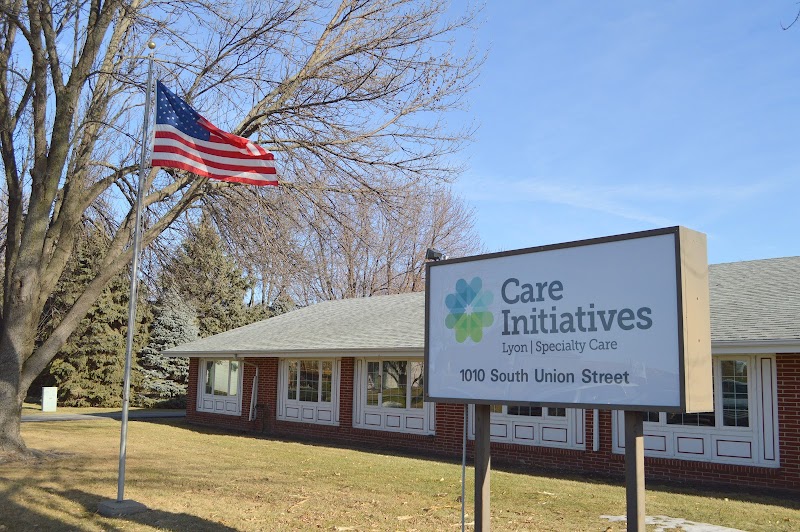

Lyon Specialty Care

1010 SOUTH UNION, ROCK RAPIDS, IA 51246 (712) 472-3748
Non profit - Corporation 45 Beds CARE INITIATIVES Data: November 2025 1 Immediate Jeopardy citation
Trust Grade
51/100
#204 of 392 in IA
Last Inspection: June 2025

Inspected within the last 6 months. Data reflects current conditions.

Overview

Lyon Specialty Care has a Trust Grade of C, which means it is average compared to other nursing homes, ranking in the middle of the pack. In Iowa, it ranks #204 out of 392 facilities, placing it in the bottom half, and #3 out of 3 in Lyon County, indicating that only one local option is better. The facility is improving; it went from five issues in 2024 to none in 2025. Staffing is rated at 4 out of 5 stars, with only 31% turnover, which is better than the state average, suggesting that staff are experienced and familiar with the residents. However, they have faced some concerning incidents, such as a critical failure to provide supervision during resident transportation, which posed an immediate risk to safety, and reports of inadequate staffing leading to delays in answering call lights, causing residents to wait for assistance. Overall, while there are strengths in staffing and improvement trends, families should be aware of these specific weaknesses that have impacted resident care.

Trust Score
C
51/100
In Iowa
#204/392
Bottom 48%
Safety Record
High Risk
Review needed
Inspections
Getting Better
5 → 0 violations
Staff Stability
○ Average
31% turnover. Near Iowa's 48% average. Typical for the industry.
Penalties
✓ Good
$7,446 in fines. Lower than most Iowa facilities. Relatively clean record.
Skilled Nurses
○ Average
Each resident gets 36 minutes of Registered Nurse (RN) attention daily — about average for Iowa. RNs are the most trained staff who monitor for health changes.
Violations
⚠ Watch
19 deficiencies on record. Higher than average. Multiple issues found across inspections.
★★★☆☆
3.0
Overall Rating
★★★★☆
4.0
Staff Levels
★★★☆☆
3.0
Care Quality
★★★☆☆
3.0
Inspection Score
Stable
2024: 5 issues
2025: 0 issues

The Good

  • 4-Star Staffing Rating · Above-average nurse staffing levels
  • Full Sprinkler Coverage · Fire safety systems throughout facility
  • No fines on record
  • Staff turnover below average (31%)

    17 points below Iowa average of 48%

Facility shows strength in staffing levels, fire safety.

The Bad

3-Star Overall Rating

Near Iowa average (3.1)

Meets federal standards, typical of most facilities

Staff Turnover: 31%

15pts below Iowa avg (46%)

Typical for the industry

Federal Fines: $7,446

Below median ($33,413)

Minor penalties assessed

Chain: CARE INITIATIVES

Part of a multi-facility chain

Ask about local staffing decisions and management

The Ugly 19 deficiencies on record

1 life-threatening
Jul 2024 4 deficiencies
CONCERN (D)

Potential for Harm - no one hurt, but risky conditions existed

Deficiency F0625 (Tag F0625)

Could have caused harm · This affected 1 resident

**NOTE- TERMS IN BRACKETS HAVE BEEN EDITED TO PROTECT CONFIDENTIALITY** Based on clinical record review, staff interviews, and facility policy, the facility failed to completed a bed hold notice with ...

Read full inspector narrative →
**NOTE- TERMS IN BRACKETS HAVE BEEN EDITED TO PROTECT CONFIDENTIALITY** Based on clinical record review, staff interviews, and facility policy, the facility failed to completed a bed hold notice with the resident and or the resident's responsible party prior to departing from the facility for a planned therapeutic leave for 1 of 3 residents reviewed (Residents #33). The facility reported a census of 37 residents. Findings include: The Minimum Data Set (MDS) assessment dated [DATE] for Resident #33 documented diagnosis of pelvic mass, pulmonary nodule and muscle weakness. The MDS lacked a score for the Brief Interview for Mental Status (BIMS). The Clinical Census for Resident #33 showed an interruption of care less than three days occurred 3/28/24. The Progress Notes for Resident #33 showed: a. On 3/28/24 at 12:12 PM- Resident #33 taken by family to Mayo Clinic for testing. b. On 3/30/24 at 1:45 PM- Resident #33 returned to the facility. The Bed-Holds and Returns policy dated March 2017 identified residents may return to and resume residence in the facility after hospitalization or therapeutic leave as outlined in the policy. Prior to a transfer, written information will be given to the residents and the resident representatives that explains in detail: a. The rights and limitations of the resident regarding bed-holds; b. The reserve bed payment policy as indicated by the state plan (Medicaid residents); c. The facility per diem rate required to hold a bed (non-Medicaid residents), or to hold a bed beyond the state bed-hold period (Medicaid residents); and d. The details of the transfer (per the Notice of Transfer). Review of the clinical chart on 7/23/24 at 1:40 PM showed the facility lacked a bed hold notice for Resident #33 for the therapeutic leave from 3/28/24 through 3/30/24. Interview on 7/24/24 at 1:17 PM, the Administrator reported the facility failed to complete a bed bed hold notice on 3/28/24 for Resident #33. The Administrator reported he expected staff to complete a bed hold notice when residents leave the facility for therapeutic leave.
CONCERN (D)

Potential for Harm - no one hurt, but risky conditions existed

Accident Prevention (Tag F0689)

Could have caused harm · This affected 1 resident

**NOTE- TERMS IN BRACKETS HAVE BEEN EDITED TO PROTECT CONFIDENTIALITY** Based on observations, record review and interviews the facility failed to properly use a mechanical lift in a manner that preve...

Read full inspector narrative →
**NOTE- TERMS IN BRACKETS HAVE BEEN EDITED TO PROTECT CONFIDENTIALITY** Based on observations, record review and interviews the facility failed to properly use a mechanical lift in a manner that prevented accidents and hazards for 1 of 2 residents reviewed (Resident #23). The facility reported a census of 37 residents. Findings include: 1. The Minimum Data Set (MDS) assessment dated [DATE] for Resident #23 failed to document a Brief Interview for Mental Status (BIMS) score. The MDS showed Resident #23 dependent on staff for care and transfers. The MDS diagnoses included dementia, traumatic brain dysfunction, and an altered mental status. The Care Plan on 10/12/23 for Resident #33 showed the facility initiated use of a mechanical lift for transfers. Observation on 7/24/24 at 11:18 AM revealed Staff A, Certified Nurse's Aide (CNA), and Staff B, CNA used a mechanical lift to transfer Resident #6 from the bed to the wheelchair. Staff failed to lock the wheelchair brakes before lowering the resident down into the wheelchair from the mechanical lift. The Lift- Mechanical policy last revised on 4/8/24 instructed staff to lock the wheelchair brakes before using a mechanical left to lower the resident into the wheelchair. In an interview on 7/24/24 at 11:22 AM, the Director of Nursing (DON) reported staff needed to lock the wheelchair brakes before using a mechanical left to lower the resident into the wheelchair.
CONCERN (D)

Potential for Harm - no one hurt, but risky conditions existed

Infection Control (Tag F0880)

Could have caused harm · This affected 1 resident

Based on observation, infection control policy, clinical record review and staff interview, the facility failed to provide proper hand hygiene with incontinence care with 1 of 2 residents observed (Re...

Read full inspector narrative →
Based on observation, infection control policy, clinical record review and staff interview, the facility failed to provide proper hand hygiene with incontinence care with 1 of 2 residents observed (Resident #38). The facility reported a total census of 37 residents. Findings include: On 7/24/24 at 10:51 a.m., observation of Staff A, Certified Nursing Assistant (CNA) and Staff B, CNA performing perineal care on Resident #35 revealed Staff A was performing perineal care and with their left gloved hand took the trash can from Staff B and sat the trash can on the floor. Staff A did not change their gloves or perform hand hygiene after touching the garbage can. Staff A took a clean wipe into her left gloved hand from Staff B and continued to perform perineal care on Resident #35 with soiled gloves. Staff A touched the soiled catheter tubing and leg strap on Resident #38's leg and did not change gloves or perform hand hygiene and continued perineal care with soiled gloves. Staff A completed perineal care. Staff A with the same soiled gloves cleansed the catheter tubing. When completed with perineal care and catheter tubing care Staff A and Staff B removed their gloves and performed hand hygiene. Review of facility provided policy titled Handwashing or Hand Hygiene with a revised date of August 2019 revealed this facility considers hand hygiene the primary means to prevent the spread of infections. Review of facility provided policy titled Gloves with a revised date of July 2009 revealed employees must receive training relative to the use of gloves and other protective equipment prior to being assigned tasks that involve potential exposure to blood or body fluids and when new or modified protective equipment or procedures have been introduced into the workplace. Interview on 7/24/24 at 12:30 p.m., with the Director of Nursing revealed she expected the staff to have changed their gloves and perform hand hygiene after the gloves became soiled after touching the trash can, soiled catheter tubing and leg strap.
CONCERN (E)

Potential for Harm - no one hurt, but risky conditions existed

Menu Adequacy (Tag F0803)

Could have caused harm · This affected multiple residents

Based on review of the menu, observation, and staff interviews the facility failed to serve the full portions of food and failed to consistently fill and empty scoop utensils when preparing meals for ...

Read full inspector narrative →
Based on review of the menu, observation, and staff interviews the facility failed to serve the full portions of food and failed to consistently fill and empty scoop utensils when preparing meals for residents (Resident #1 and #30). The facility identified a census of 37 residents. Findings included: The facility's Week 1 menu identified the following items as part of the planned menu for the lunch meal on 7/24/24 for residents on a regular diet: Open faced turkey sandwich Mashed potatoes ½ cup Turkey gravy 2 ounces Mixed vegetables ½ cup Melon 1 cup The facility's Week 1 menu identified the following items as part of the planned menu for the lunch meal on 7/24/24 for residents on a mechanical diet: Open faced ground turkey sandwich Mashed potatoes ½ cup Turkey gravy 2 ounces Mixed vegetables ½ cup Melon 1 cup Observation on 7/24/23 at 12:36 PM, revealed mixed vegetables were substituted for wax beans. Staff C, [NAME] used a size #6 scoop to serve a ½ cup of wax beans to residents. Staff C failed to obtain more beans when needed, and served Resident #30 approximately ¼ scoop of beans. Staff C used a size #8 scoop to serve ground turkey. Staff C failed to obtain more ground turkey when needed, and served Resident #1 approximately 1/2 scoop of ground Turkey. Staff C failed to properly fill and empty the scoop when serving waxed beans throughout meal service. Staff C stated, we had enough beans for 40 residents but for some reason I ' m out. The last two residents received carrots as a vegetable substitution. The Kitchen Weights and Measures policy last revised April 2007 identified: 1. Cooks and Food Services staff will be trained in weights and measures, volume and weights, appropriate utensil use, and food can sizes. 2. Staff will be trained in the comparison of volume and weight measures (e.g., 2 cups (volume) water = 1 pound (weight), 1 oz. weight = 1 oz. volume, etc.). 3. Staff will be trained in size conversion of food cans to improve accurate measurements. Can size tables will be prominently posted for reference. 4. Recipes will specify consistent use of metric or U.S. measurement guidelines. 5. Serving utensils used will be consistent with choice of metric or U.S. measure used. 6. Staff will be trained in the appropriate measurement and type of serving utensil to use for each food. Signs or posters explaining coded measurement indicators (e.g., color-coded) on utensils will be prominently displayed for reference. 7. The Food Service Supervisor will ensure cooks prepare the appropriate amount of food for the number of servings required. In an interview on 7/24/24 at 1:09 PM, when asked if the Dietary Manager expected staff to serve correct portions of food by using the scoop utensils appropriately, he replied, absolutely. It's important residents get the proper nutrition.
Mar 2024 1 deficiency
CONCERN (D) 📢 Someone Reported This

A family member, employee, or ombudsman was alarmed enough to file a formal complaint

Potential for Harm - no one hurt, but risky conditions existed

Quality of Care (Tag F0684)

Could have caused harm · This affected 1 resident

**NOTE- TERMS IN BRACKETS HAVE BEEN EDITED TO PROTECT CONFIDENTIALITY** Based on observation, clinical record review, facility policy, Centers for Disease Control (CDC), resident, family, and staff in...

Read full inspector narrative →
**NOTE- TERMS IN BRACKETS HAVE BEEN EDITED TO PROTECT CONFIDENTIALITY** Based on observation, clinical record review, facility policy, Centers for Disease Control (CDC), resident, family, and staff interviews, the facility failed to provide assessment and interventions for the necessary care and services when the facility failed to provide COVID testing for a resident that was symptomatic for 1 of 3 residents reviewed (Resident #4). The facility reported a census of 38 residents. Findings include: The Minimum Data Set (MDS) dated [DATE] for Resident #4 revealed a Brief Interview of Mental Status (BIMS) score of 15 which indicated that the resident had intact cognition. The MDS revealed the resident had diagnoses of obstructive sleep apnea (episodes of partial or complete collapse of the airway) and asthma (chronic obstructive airway disease, COPD) or chronic lung disease (condition involving constriction of the airways and difficulty or discomfort in breathing). The Skilled Evaluation on 1/12/24 at 4:26 PM revealed, in pertinent part, the resident had shortness of breath while lying flat, had cold signs and symptoms, sounded congested, was afebrile (without fever), requested Thera-Flu (over the counter medication) for his cold with order obtained, and that the resident stayed in bed for most of the day. The Temperature Summary revealed a reading of 99.5 degrees Fahrenheit on 1/12/24. The Clinical Record documentation showed a COVID test wasn't performed until 1/16/24. The CDC: Symptoms of COVID-19 last revised 10/26/22 accessed on 3/5/24 at https://www.cdc.gov/coronavirus/2019-ncov/symptoms-testing/symptoms.html revealed, in pertinent part, that the signs of symptoms of COVID included fever or chills, shortness of breath or difficulty breathing, fatigue, and congestion or runny nose. The CDC: Recommendations for Healthcare Personnel During the Coronavirus Disease 2019 (COVID-19) Pandemic last revised 5/8/23 accessed on 3/5/24 at https://www.cdc.gov/coronavirus/2019-ncov/hcp/infection-control-recommendations.html#r2 revealed, in pertinent part, that anyone with even mild symptoms of COVID-19, regardless of vaccination status, should receive a viral test for SARS-CoV-2 as soon as possible. The COVID Policy last updated 5/8/23 directed that anyone with even mild symptoms of COVID-19, regardless of vaccination status, should receive a viral test for SARS-CoV-2 as soon as possible. In an interview on 3/5/24 at 1:10 PM, the Director of Nursing (DON) reported that the signs and symptoms of a COVID infection are cold signs and symptoms which could vary on how they present for each person. If a resident had cold signs and symptoms, she would contact their Primary Care Provider (PCP) to report the change in condition and treat the resident based off of PCP orders. The DON reported that if a resident's cold signs and symtpoms were not improving, she would then perform a COVID test.
May 2023 10 deficiencies
CONCERN (D)

Potential for Harm - no one hurt, but risky conditions existed

Deficiency F0554 (Tag F0554)

Could have caused harm · This affected 1 resident

Based on observation, clinical record, facility policy, and staff interview, the facility failed to safely administer medication to 1 of 39 residents reviewed (Resident #10). The facility reported a c...

Read full inspector narrative →
Based on observation, clinical record, facility policy, and staff interview, the facility failed to safely administer medication to 1 of 39 residents reviewed (Resident #10). The facility reported a census of 39 residents. Findings include: The Minimum Data Set (MDS) for Resident #10 dated 5/3/23 revealed a Brief Interview of Mental Status (BIMS) score of 14 which indicated intact mental status. The MDS revealed the resident had diagnoses of stroke, hypertension (high blood pressure), renal insufficiency, renal failure, ESRD (end stage renal disease), hyperlipidemia (high cholesterol), arthritis, aphasia (loss of ability to understand or express speech, caused by brain damage), hemiplegia or hemiparesis (weakness and/or paralysis on 1 side of the body), depression, post traumatic stress disorder (PTSD), and cataracts, glaucoma, or macular degeneration. Observation on 5/21/23 at 10:09 AM revealed a medication cup with medications in it on the resident's bedside table with the resident in bed. In an interview on5/21/23 at 10:14 AM, Staff A, Registered Nurse (RN) entered the resident's room, saw the medication cup, reported that she was not responsible for leaving medications unattended in the resident's room, and told the resident that she would take the medications. The Medication Administration Record (MAR) for May 2023 revealed the following medications were charted as given in the morning: 1. Amlodipine besylate Tablet 5 milligram (mg) Give 1 tablet by mouth. 2 Sertraline tablet give 100 mg by mouth one time a day. 3. Metoprolol tartrate tablet 50 mg give 50 mg by mouth two times a day. 4. Neurontin oral tablet (gabapentin) give 200 mg by mouth two times a day. 5. Senna tablet 8.6 mg (sennosides) give 1 tablet by mouth two times a day. 6. Tylenol extra strength tablet 500 mg (acetaminophen) give 500 mg by mouth 3 times a day. The Self-Administration of Medications policy with a revision date of 2/21 revealed: 1. Residents have the right to self-administer medications if the interdisciplinary team has determined that it is clinically appropriate and safe for the resident to do so. 2. As part of the evaluation comprehensive assessment, the interdisciplinary team (IDT) assesses each resident ' s cognitive and physical abilities to determine whether self-administering medications is safe and clinically appropriate for the resident. 3. If it is deemed safe and appropriate for a resident to self-administer medications, this is documented in the medical record and the care plan. The decision that a resident can safely self-administer medications is re-assessed periodically based on changes in the resident ' s medical and/or decision-making status. 4. Self-administered medications are stored in a safe and secure place, which is not accessible by other residents. If safe storage is not possible in the resident ' s room, the medications of residents permitted to self-administer are stored on a central medication cart or in the medication room. A licensed nurse transfers the unopened medication to the resident when the resident requests them. 5. Any medications found at the bedside that are not authorized for self-administration are turned over to the nurse in charge for return to the family or responsible party. In an interview on 5/21/23 at 3:44 PM, the Administrator reported that he was disappointed that medications were found on the resident's bedside table because the facility had recently been cited on a state survey for the same issue and he had worked hard at putting measures into place to prevent it from occurring again. In the same interview, the Administrator reported the initials on the May 2023 MAR were that of Staff B.
CONCERN (D)

Potential for Harm - no one hurt, but risky conditions existed

Transfer Notice (Tag F0623)

Could have caused harm · This affected 1 resident

**NOTE- TERMS IN BRACKETS HAVE BEEN EDITED TO PROTECT CONFIDENTIALITY** Based on clinical record review and staff interview the facility failed to notify the Long Term Care (LTC) Ombudsman for 1 of 2 ...

Read full inspector narrative →
**NOTE- TERMS IN BRACKETS HAVE BEEN EDITED TO PROTECT CONFIDENTIALITY** Based on clinical record review and staff interview the facility failed to notify the Long Term Care (LTC) Ombudsman for 1 of 2 residents reviewed who transferred to the hospital (Resident #16). The facility reported a census of 39 residents. Findings include: The Minimum Data Set (MDS) assessment dated [DATE] for Resident #16 documented diagnoses of hypertension, hip fracture and reduced mobility. The MDS showed the Brief Interview for Mental Status (BIMS) score was not assessed. Review of Resident #16 ' s Progress Notes revealed the following information: a. On 2/1/23 at 8:48 p.m., Unable to screen at this time as the resident is out of the facility. Will reassess as indicated upon readmission. b. On 2/6/23 at 12:30 p.m., Resident #16 returned from the hospital on a stretcher. Review of Resident #16 ' s Census tab revealed the following: a. On 1/31/23 Resident #16 on paid hospital leave. b. On 2/6/23 Resident #16 active in facility. Review of the facility provided document titled Notice of Transfer form to Long Term Care Ombudsman dated January 2023 and February 2023 lacked documentation of Resident #16 ' s hospitalization to the Long Term Care Ombudsman. Review of facility provided policy titled Transfer or Discharge Notice with a revision date of March 2021 revealed: A copy of the notice is sent to the Office of the State Long-Term Care Ombudsman at the same time the notice of transfer or discharge is provided to the resident and representative. Interview on 5/24/23 at 8:07 a.m., with the Administrator revealed he was only notifying the Ombudsman of the discharges but will be adding the hospitalizations that return to the facility to the list.
CONCERN (D)

Potential for Harm - no one hurt, but risky conditions existed

PASARR Coordination (Tag F0644)

Could have caused harm · This affected 1 resident

Based on clinical record, facility policy, and staff interview, the facility failed to submit a Preadmission Screening and Resident Review (PASRR) when 2 of 14 residents had a significant change (Resi...

Read full inspector narrative →
Based on clinical record, facility policy, and staff interview, the facility failed to submit a Preadmission Screening and Resident Review (PASRR) when 2 of 14 residents had a significant change (Residents #10 and #5). The facility reported a census of 39 residents. Findings include: 1. The Minimum Data Set (MDS) for Resident #10 dated 5/3/23 revealed a Brief Interview of Mental Status (BIMS) score of 14 which indicated intact mental status. The MDS revealed the resident had diagnoses of depression, post traumatic stress disorder (PTSD). The MDS revealed the resident did not have a PASRR Level II. The PASRR with a reviewed date of 8/26/2015 revealed: 1. The resident did not have a diagnosis of major depression. 2. The resident did not have a diagnosis not listed in sections #1 or #2 of the PASSR form. 3. The resident was prescribed Xanax 0.50 milligrams (mg)/day for a diagnosis of posttraumatic stress disorder (PTSD). 4. The resident was prescribed Celexa 20 milligrams (mg)/day for a diagnosis of posttraumatic stress disorder (PTSD). The Order Summary Report signed by a physician on 4/27/23 revealed: 1. The resident had diagnoses of: a. Posttraumatic stress disorder (PTSD) b. Major Depression 2. Medication order for sertraline tablet give 100 milligrams (mg) by mouth one time a day related to major depressive disorder with a start date of 8/18/22. In an interview on 5/23/23 at 3:54 PM, the Director of Nursing (DON) reported that the Regional Nurse Consultant (RNC) submitted a PASRR change, the resident did not have any other PASRRs in his clinical record, and was in agreement that the resident's condition warranted a PASRR submission. 2. The MDS for Resident #5 dated 4/5/23 revealed a BIMS score of 14 which indicated intact cognition. The MDS revealed the resident took an anti depressant. The Mental Illness/Mental Retardation Screening dated 1/18/11 revealed the resident did not have mental illness or mental retardation. The Order Summary Report signed by a physician on 5/18/23 revealed an order for Celexa 10 milligrams (mg) give 10 mg by mouth one time a day for for anxiety with a start date of 1/28/21. In an interview on 5/23/23 at 3:54 PM, the Director of Nursing (DON) reported that the Regional Nurse Consultant (RNC) submitted a PASRR change, the resident did not have any other PASRRs in his clinical record, and was in agreement that the resident's condition warranted a PASRR submission. In an Electronic Mail (email) on 5/23/23 at 6:27 PM, when asked for a PASRR policy, the Administrator reported that we follow ASCENDs direction booklet. The Maximus PASRR and Level of Care Screening Procedures for Long Term Care Services revised 8/19/20 revealed: 1. The PASRR evaluation must occur prior to admission and whenever a resident experiences a significant change in status. 2. Diagnosis of a major mental illness, such as schizophrenia, schizoaffective disorder, bipolar disorder, major depression, panic disorders, obsessive compulsive disorder rand any other disorder which could lead to a chronic disability which is not a primary diagnosis of neurocognitive disorder (formerly dementia). 3. A resident whose condition or treatment is or will be significantly different than described in the resident ' s most recent PASRR Level II evaluation and determination. (Note that a referral for a possible new Level II PASRR evaluation is required whenever such a disparity is discovered, whether or not associated with a Significant Change in Status (MDS) Assessment.)
CONCERN (D)

Potential for Harm - no one hurt, but risky conditions existed

Deficiency F0655 (Tag F0655)

Could have caused harm · This affected 1 resident

**NOTE- TERMS IN BRACKETS HAVE BEEN EDITED TO PROTECT CONFIDENTIALITY** Based on clinical record review, facility policy and staff interview the facility failed to complete a baseline care plan within...

Read full inspector narrative →
**NOTE- TERMS IN BRACKETS HAVE BEEN EDITED TO PROTECT CONFIDENTIALITY** Based on clinical record review, facility policy and staff interview the facility failed to complete a baseline care plan within 48 hours of admission for 2 of 14 residents reviewed (Resident #6 and #15). The facility reported a census of 39 residents. Findings include: 1. The Minimum Data Set (MDS) assessment dated [DATE] for Resident #6 documented diagnoses of hypertension, anxiety and depression. The MDS showed the Brief Interview for Mental Status (BIMS) score of 3, indicating severe cognitive impairment. Review of Resident #6 ' s Progress Notes dated 2/3/23 at 4:53 p.m., revealed Resident #6 was a new resident here. Review of Resident #6 ' s Census tab revealed an admission date of 2/3/23. Review of Resident #6 ' s chart lacked a baseline care plan. 2. The MDS assessment dated [DATE] for Resident #15 documented diagnoses of non-Alzheimer ' s Dementia, respiratory failure and diabetes mellitus. The MDS showed the BIMS score of 4, indicating severe cognitive impairment. Review of Resident #15 ' s Progress Notes dated 3/31/23 at 4:25 p.m., revealed Resident #15 was admitted here this afternoon. Review of Resident #15 ' s Census tab revealed an admission date of 3/31/22. Review of Resident #15 ' s chart lacked a baseline care plan. Review of facility provided policy titled Care Plans- Baseline with a revision date of December 2016 revealed to assure that the resident ' s immediate care needs are met and maintained, a baseline care plan will be developed within forty-eight (48) hours of the resident ' s admission. Interview on 5/23/23 at 1:53 p.m., with the Administrator revealed that facility has been unable to find the baseline care plans for Resident #6 and Resident #15. He further revealed the baseline care plan should have been completed.
CONCERN (D)

Potential for Harm - no one hurt, but risky conditions existed

Comprehensive Care Plan (Tag F0656)

Could have caused harm · This affected 1 resident

Based on clinical record, facility policy, and staff interview, the facility failed to develop a care plan that reflected a resident's condition for 1 of 14 residents (Resident #17). The facility repo...

Read full inspector narrative →
Based on clinical record, facility policy, and staff interview, the facility failed to develop a care plan that reflected a resident's condition for 1 of 14 residents (Resident #17). The facility reported a census of 39 residents. Findings include: The Minimum Data Set (MDS) for Resident #17 dated 3/29/23 revealed a Brief Interview of Mental Status Score of 15 which indicated intact cognition. The MDS revealed the resident had a diagnosis of lymphedema. The Medication Review Report signed by a physician on 5/14/23 revealed: 1. Continue to elevate lower extremities as much as possible with a start date of 4/14/23. 2. Elevate left wrist/arm as much as possible with a start date of 4/14/23. 3. Lymphedema wraps on AM (morning) off HS (bedtime) with a start date of 11/9/22. 4. PT (physical therapy) and OT (occupational therapy) evaluate and treat as indicated for lymphedema with a start date of 11/15/22. The Recommendations for Restorative/Functional Maintenance Programs signed by an Occupational Therapist dated 4/10/23 directed to apply compression pump to RLE (right lower extremity) and run 1 hour. The Care Plan with an initiated date of 5/24/22 lacked interventions related to the resident's lymphedema. The Care Plans, Comprehensive Person-Centered policy 12/16 revealed: 1. A comprehensive, person-centered care plan that includes measurable objectives and timetables to meet the resident ' s physical, psychosocial and functional needs is developed and implemented for each resident. 2. The care plan interventions are derived from a thorough analysis of the information gathered as part of the comprehensive assessment. 3. The comprehensive, person-centered care plan will: a. Include measurable objectives and timeframes; b. Describe the services that are to be furnished to attain or maintain the resident ' s highest practicable physical, mental, and psychosocial well-being. In an interview on 5/24/23 at 1:28 PM, the DON agreed that the resident's lymphedema diagnosis and interventions to manage this should be on her care plan.
CONCERN (D)

Potential for Harm - no one hurt, but risky conditions existed

Deficiency F0657 (Tag F0657)

Could have caused harm · This affected 1 resident

**NOTE- TERMS IN BRACKETS HAVE BEEN EDITED TO PROTECT CONFIDENTIALITY** Based on clinical record, facility policy, and staff interview, the facility failed to revise care plans to reflect a resident's...

Read full inspector narrative →
**NOTE- TERMS IN BRACKETS HAVE BEEN EDITED TO PROTECT CONFIDENTIALITY** Based on clinical record, facility policy, and staff interview, the facility failed to revise care plans to reflect a resident's current status for 3 of 14 residents reviewed (Residents #10, 22, and #15). The facility reported a census of 39 residents. Findings include: 1. The Minimum Data Set (MDS) for Resident #10 dated 5/3/23 revealed a Brief Interview of Mental Status (BIMS) score of 14 which indicated intact mental status. The MDS revealed the resident had diagnoses of stroke, aphasia (loss of ability to understand or express speech, caused by brain damage), depression, and post traumatic stress disorder (PTSD). The Physician Order Form signed by a physician on 4/20/23 revealed orders: 1. Discontinue trazodone. 2. Melatonin 5 milligrams (mg) oral at HS (bedtime). The Care Plan with an initiated date 11/3/16 revealed: 1. A focus area that the resident took Zoloft and trazadone/doctor's order for depression post traumatic stress disorder (PTSD), anxiety, and insomnia. 2. No interventions for melatonin. In an interview on 5/24/23 at 1:34 PM, the Director of Nursing (DON) reported that she would expect care plans to be updated. 2. The MDS for Resident #22 dated 4/29/23 revealed a BIMS score of 7 which indicated severely impaired cognition. The MDS revealed the resident had diagnoses of neurocognitive disorder with lewy bodies, heart failure, orthostatic hypotension, non Alzheimer's dementia, traumatic brain injury, and oral phase dysphagia. The MDS revealed the resident required the extensive assistance of 2 staff with bed mobility, transfers, and toileting. The MDS revealed the resident had a mechanically altered diet. The MDS revealed the resident used a wheelchair and did not use a walker. Observation on 5/24/23 at 9:49 AM, Staff G, Certified Nurse Assistant (CNA) and Staff H, CNA assisted the resident to use the toilet, right before they attached the EZ Stand, the DON intervened and instructed the CNAs that his care plan changed yesterday and the resident was now able to pivot transfer with assistance of 2 staff. The DON then left the room to get the resident's walker. The Task section, with no date, of the resident's Electronic Health Record (EHR) revealed the resident used an EZ Stand and wheelchair for mobility. The Care Plan revealed: 1. Focus Area with an initiated date of 3/10/23 that the resident was unable to transfer independently. 2. Intervention with an initiated date of 3/10/23 revealed the resident required the assistance of 1 with EZ Stand. 3. Intervention with an initiated date of 3/7/23 that the resident was non-compliant with use of call light. Keep walker within reach. 4. Intervention with an initiated date of 2/10/23 that a colored sign was placed on walker stating Please use. The Order Summary Report signed by a physician on 5/10/23 revealed an order for regular/NAS (no added sodium) diet mechanical soft texture, Level 0, thin consistency with a start date of 4/17/23. The Care Plan interventions with a revealed: 1. A diet order for regular diet, regular texture, thin liquids revision date of 5/17/22. 2. I will follow my diet as ordered revision date of 5/17/22. 3. I will be provided with meals that are within my diet with an initiated date of 9/29/2022. In an interview on 5/23/23 at 10:11 AM, the resident's representative reported she was pleased with the resident's progress with therapy that he was able to walk 8 steps to go to the bathroom today and did not require an EZ Stand for the restroom visit. In an interview on 5/24/23 at 1:34 PM, the DON reported that the resident had 10 falls from 1/23 to 4/23, when he was diagnosed with lewy body dementia and had medication changes, his falls decreased, and his care plan did not get updated as frequently as it could have to reflect the changes. In the same interview, the DON reported that she agreed that the care plan needed to be changed to reflect his current diet order. 3. The MDS assessment dated [DATE] for Resident #15 documented diagnoses of non-Alzheimer ' s Dementia, respiratory failure and diabetes mellitus. The MDS showed the BIMS score of 4, indicating severe cognitive impairment. Observation on 5/21/23 at 10:10 a.m., revealed Resident #15 wearing a wander guard bracelet on her left wrist. Review of Resident #15 ' s May Medication Administration Record and Treatment Administration Record revealed an order for check wander guard every shift day and night shift for wandering with a start date of 1/19/23. Review of Resident #15 ' s Care Plan with a revision date of 4/12/23 lacked information regarding Resident #15 ' s usage of a wander guard. Review of the facility provided policy titled Care Plans, Comprehensive Person Centered with a revision date of December 2016 revealed assessments of residents are ongoing and care plans are revised as information about the residents and the residents ' conditions change. Interview on 5/23/23 at 2:09 p.m., with the Director of Nursing revealed Resident #15 has times where she is happy and others when she hates it here and heads towards the door to leave. The DON revealed the wander guard usage should be on the care plan.
CONCERN (D)

Potential for Harm - no one hurt, but risky conditions existed

Medication Errors (Tag F0758)

Could have caused harm · This affected 1 resident

**NOTE- TERMS IN BRACKETS HAVE BEEN EDITED TO PROTECT CONFIDENTIALITY** Based on clinical record review, facility policy, and staff interview, the facility failed to obtain an stop date for an as need...

Read full inspector narrative →
**NOTE- TERMS IN BRACKETS HAVE BEEN EDITED TO PROTECT CONFIDENTIALITY** Based on clinical record review, facility policy, and staff interview, the facility failed to obtain an stop date for an as needed (PRN) psychotropic medication for 1 of 5 residents reviewed (Resident #6). The facility reported a census of 39 residents. Findings include: The Minimum Data Set (MDS) assessment dated [DATE] for Resident #6 documented diagnoses of hypertension, anxiety and depression. The MDS showed the Brief Interview for Mental Status (BIMS) score of 3, indicating severe cognitive impairment. Review of Resident #6 ' s Medication Administration Record (MAR) revealed an order for lorazepam 0.5 milligrams (mg) every 4 hours PRN for anxiety with an order date of 2/3/23 and no stop date. Review of facility provided policy titled Tapering Medication and Gradual Drug Dose Reduction with a revision date of April 2007 revealed after medications are ordered for a resident, the staff and practitioner shall seek an appropriate dose and duration for each medication that also minimizes the risk of adverse consequences. Interview on 5/24/23 at 11:37 a.m., with the Director of Nursing revealed the PRN psychotropic medication should only be for 14 days unless the physician orders it with a different stop date.
CONCERN (E)

Potential for Harm - no one hurt, but risky conditions existed

Deficiency F0725 (Tag F0725)

Could have caused harm · This affected multiple residents

**NOTE- TERMS IN BRACKETS HAVE BEEN EDITED TO PROTECT CONFIDENTIALITY** Based on facility records, facility policy, resident interview, and staff interview, the facility failed to provide adequate sta...

Read full inspector narrative →
**NOTE- TERMS IN BRACKETS HAVE BEEN EDITED TO PROTECT CONFIDENTIALITY** Based on facility records, facility policy, resident interview, and staff interview, the facility failed to provide adequate staffing to care for residents. The facility reported a census of 39 residents. Findings include: In an interview on 5/24/23 at 12:57 PM, Resident #17 reported that it can take 30 minutes for her call light to be answered, therapy staff answers her call light since her room is next to the therapy room, and that sometimes there is only 2 Certified Nurse Assistants (CNAs) working during daytime hours. In the same interview, the resident reported that her husband does not get toileted frequently due to lack of staffing and as a result has incontinent episodes at least twice daily and has sat in soiled disposable briefs. In an interview on 5/21/23 at 1:37 PM, Resident #4 reported that there was not as much staff on the weekends and it took longer to get call lights answered. In an interview on 5/21/23 at 4:00 PM, Staff A, Registered Nurse (RN) reported that management is pushing admissions and there was not enough staff to keep up. In an interview on 5/23/23 at 10:24 AM, Staff F, Certified Nurse Assistant (CNA) reported that the shift she usually worked was 2:00 PM to 10:00 PM and there were times they work with as few as 2 CNAs. When there was 2 CNAs working, the residents did not get the care they needed, sometimes residents were not toileting frequently enough and when CNAs were able to help these residents they were found incontinent and had been incontinent for a long time. The May 2023 CNA Schedule revealed: 1. On 5/5/23, 1 CNA from 2:00 PM to 8:00 PM , 1 CNA from 3:00 PM to 9:30 PM. 2. On 5/8/23, 1 CNA from 8:00 PM to 9:30 PM. 3. On 5/11/23, 2 CNAs from 2:00 PM to10:00 PM. 4. On 5/13/23, 2 CNAs from 2:00 PM to10:00 PM. 5. On 5/14/23, 2 CNAs from 2:00 PM to10:00PM. 6. On 5/19/23, 2 CNAs from 6:00 AM to 2:00 PM, 1 CNA from 6:00 AM to 9:00 AM. The Facility assessment dated [DATE] revealed facility staffing is based on both census and needs of the resident. In an interview on 5/24/23 at 1:29 PM, the Director of Nursing (DON) reported that the staff and residents do not understand the number of CNAs scheduled depends on an algorithm based off of the number of residents at the facility. When there are 38 residents, 4 CNAs are scheduled for day and evening shifts. In the same interview, the DON reported that let's be realistic, since 2020 we have to use our staff and agency to try to get staffing in place. In the same interview the DON reported that recently, we have not had issues where we've been short staffed for a long period of time, we've not been in a crisis. Corporate office is trying to fill us up, we can have 45 residents and we have 39, so we have room to admit more. In the same interview, the DON reported that we don't have all the staff on the weekends for admits as we do weekday and have had only 1 weekend admission since March 2023.
CONCERN (E)

Potential for Harm - no one hurt, but risky conditions existed

Food Safety (Tag F0812)

Could have caused harm · This affected multiple residents

Based on observations, staff interviews and facility policy the facility failed to ensure dietary staff wore beard nets to cover facial hair in the kitchen. The facility identified a census of 39 resi...

Read full inspector narrative →
Based on observations, staff interviews and facility policy the facility failed to ensure dietary staff wore beard nets to cover facial hair in the kitchen. The facility identified a census of 39 residents. Findings include: Observation on 5/23/23 at 5:45 p.m., Dietary Manager(DM) was in the kitchen serving meal trays and was noted to have facial hair and lacked a beard net. Observation on 5/24/23 at 7:55 a.m., of Staff D, [NAME] was in the kitchen serving food and was noted to have facial hair and lacked a beard net. Observation on 5/24/23 at 8:16 a.m., of Staff E, Dietary Staff was in the kitchen running the dishwasher was noted to have facial hair and lacked a beard net. Review of facility provided policy titled Food Preparation and Service with a revision date of April 2019 revealed food and nutrition services staff wear hair restraints (hair net, hat, beard restraint, etc.) so that hair does not contact food. Interview on 5/24/23 at 8:43 a.m., with the Administrator revealed the kitchen staff should be wearing a beard net.
CONCERN (E)

Potential for Harm - no one hurt, but risky conditions existed

Infection Control (Tag F0880)

Could have caused harm · This affected multiple residents

Based on observation, facility policy, and staff interview, the facility failed to provide infection control in the laundry room. The facility reported a census of 39 residents. Findings include: Obse...

Read full inspector narrative →
Based on observation, facility policy, and staff interview, the facility failed to provide infection control in the laundry room. The facility reported a census of 39 residents. Findings include: Observation on 5/23/23 at 1:01 PM of no paper towels at the handwashing sink in the laundry room and no eye protection in the laundry to use with contaminated laundry. In an interview on 5/23/23 at 1:01 PM, Staff C, Laundry Aide, reported that she just ran out of paper towels and was using rags to dry her hands and that there was no eye protection for use in the laundry room, that she has never used eye protection while doing laundry, was never instructed to use eye protection while doing laundry, and that face masks were no longer needed at the facility. Observation on 5/23/23 at 5:08 PM of no paper towels at the handwashing sink in the laundry room. In an interview on 5/23/23 at 1:01 PM, the Administrator and Regional Nurse Consultant (RNC) reported that rags were permissible to dry hands if a new rag was used each time and that the facility had plenty of paper towels to restock the dispenser with in the laundry room. In the same interview, the Administrator and RNC were unable to locate eye protection in the laundry room and agreed that eye protection should be worn when working with contaminated laundry. The Infection Prevention and Control Committee policy revised 7/16 revealed: 1. Identify all workers whose employment requires performance of tasks that may involve exposure to blood/body fluids; and determine for identified tasks those body fluids to which workers most probably will be exposed and the potential extent and route of exposure. 2. The Infection Control Committee shall oversee training programs for all employees who may have the potential for exposure to blood, or to body fluids containing visible blood, during the course of their workday. 3. How to recognize and determine tasks that involve exposure to blood/body fluids. 4. Types of personal protective equipment (i.e., gowns, gloves, masks, etc.) that are necessary when performing tasks that may involve exposure to blood/body fluids. 5. How to select appropriate barrier equipment. 6. Appropriate actions to take if unplanned potential exposure to blood occurs, or is anticipated. 7. Procedures to follow when personal protective equipment is used. 8. How personal protective equipment maintained in the facility is to be used, decontaminated, and disposed of. 9. Limitations of personal protective equipment (e.g., needlesticks will occur through gloves). The Handwashing/Hand Hygiene policy revised 8/19 revealed: 1. This facility considers hand hygiene the primary means to prevent the spread of infections. 2. Hand hygiene products and supplies (sinks, soap, towels, alcohol-based hand rub, etc.) shall be readily accessible and convenient for staff use to encourage compliance with hand hygiene policies. 3. The following equipment and supplies are necessary for hand hygiene: a. Alcohol-based hand rub containing at least 62% alcohol b. Running water c. Soap (liquid or bar; anti-microbial or non-antimicrobial) d. Paper towels e. Trash can f. Lotion g. Non-sterile gloves
Jan 2023 4 deficiencies 1 IJ
CRITICAL (J) 📢 Someone Reported This

A family member, employee, or ombudsman was alarmed enough to file a formal complaint

Immediate Jeopardy (IJ) - the most serious Medicare violation

Accident Prevention (Tag F0689)

Someone could have died · This affected 1 resident

Based on clinical record, facility policy, family interview, and staff interview, the facility failed to provide supervision during transportation for 1 of 3 residents reviewed (Resident #4). The faci...

Read full inspector narrative →
Based on clinical record, facility policy, family interview, and staff interview, the facility failed to provide supervision during transportation for 1 of 3 residents reviewed (Resident #4). The facility failure resulted in an Immediate Jeopardy to the health, safety, and security of the residents.The facilty reported a census of 40 residents. The facility was notified of the Immediate Jeopardy and given the IJ Template on January 5, 2023 at 5:10 PM. The facility corrected the Immediate Jeopardy on 1/6/23 by educating staff that prior to transportation each resident will be reviewed for accomendation of needs including assistance, if required a family or facility employee will be assigned as escort for the duration of the trip to ensure the residents safety. The transferring facility is respondsible for the safety of the resident till they are handed off to the accepting facility. At the time of exit the scope and severity was lowered to a D after verification of staff's implementation of correction plan. Findings include: The Admission/readmission evaluation for Resident #4 dated 12/21/22 revealed the following: 1. The resident required the assistance of 2 persons with transfers. 2. The resident was dependent for all Activities of Daily Living (ADLs). 3. Received Physical Therapy, Occupational Therapy, and Speech Therapy. 4. The resident's cognition was: a. Short-term memory impairment b. Impaired decision-making ability c. Confused d. Poor Safety Awareness f. Long-term memory impairment The Order Summary Report dated 12/21/22 signed by a physician's assistant revealed Resident #4 admission to the facility occurred on 12/21/22. The resident had diagnoses of altered mental status, Alzheimer's Disease, dementia, psychotic disturbance, mood disturbance, anxiety, hearing loss, and amnesia. The report included an order that the resident may attend supervised outings. An admission Process referral packet completed for Resident #4 to transfer to a unit of a hospital to provide services for geriatric psychiatric patients,(the receiving facility) signed by the Director of Nursing (DON) on 12/27/22, revealed the following: 1. The resident's presenting problem: a. High risk of falls, b. Was non compliant with safety instructions, c. Combative with staff. 2. The resident's last fall was on 12/25/22 with no injury. 3. The resident was admitted to the facility 12/21/22, repeatedly attempts to get up and has no sense of balance. 4. Has fallen twice since admission. 5. Staff has to stay 1:1 with him. 6. He attempts to wander but falls upon standing. 7. Is combative when assisted back into chair. The Request for Inpatient Treatment signed by the DON on 12/27/22 revealed the facility agreed that they are responsible to arrange for transportation to and from the receiving facility. The Transportation, Social Services facility policy dated December 2008, directed that our facility shall help arrange transportation for residents as needed. The facsimile (fax) to the transportation company dated 12/28/22 revealed that the DON requested the transportation service for the resident to go to the receiving facility on 12/29/22. The areas to desginate an attendant to accompany the resident during the trip and special instructions were not completed. The Skilled Evaluation Note dated 12/28/22 at 11:12 PM showed Resident #4 continued to receive skilled PT/OT/ST services for strengthening due to Alzheimer's. Resident awake and sitting in recliner in DR at this time. Has attempted to get up unassisted several times this shift. PRN ativan given at 8:30 PM and somewhat effective as resident continues to be restless. Resident confused. Resident also continues on incident charting for fall. No new injuries noted. No s/s pain or discomfort noted. Will cont to monitor. The History and Physical dated 12/29/22 signed by a physician revealed the following: 1. The resident had orders for lorazepam 0.5 milligrams (mg) every 6 hours as needed (PRN) for anxiety. 2. History of Present Illness: a. The resident had out of control behavior. b. Non-compliant with safety instructions. c. High fall risk. d. Combative with staff with cares and redirection. e. Hits and pushed staff at the NH 3. Oxygen saturation of 80% with oxygen put on after vital signs were taken upon arrival to the receiving facility. 4. The resident was cognitively impaired and unable to make sound judgments for themselves while in a lesser controlled environment. 5. The resident was considered a danger to themselves and others, and due to their cognition and/or behavioral problems, requires hospitalization and treatment for their medical and psychiatric stability. 6. The resident had minimal insight into problems, requires 24 hour care. In an interview on 1/5/23 at 11:53 AM, the Senior DON, accompanied by the Administrator, reported that the corporate policy on transporation of residents was the facility was to give the receiving facility report on the resident's status in order for the transportation company to decide if an attendant was needed for the resident during transporation. The Senior DON also stated the resident was administered lorezapam and toileted prior to deprature in anticipation of a trip that would take just under 2 hours. In an interview on 1/5/23 at 12:58 PM, the Social Worker at the receiving facility reported that she talked with the DON over the telephone on 12/28/22 to inform the DON of the admission process which included: That the resident go to the Emergency department entrance where COVID testing would take place. The resident would require an attendant to stay with him for 20 minutes until the COVID test result was available which would determine whether or not the resident could be admitted to the receiving facility, if the COVID test was positive, the resident would return to the sending facility. The Social Worker stated the DON was in agreement with this process. In an interview on 1/5/23 at 12:29 PM, the DON, accompanied by the Senior DON reported that when he called the transportation company to arrange for the resident to be transported the time of arrival to the sending facility and location of the destination was given and the only additional informaton the transportation company requested was whether or not the resident used a wheelchair. In an interview on 1/5/23 at 10:57 AM, staff at the transportation company reported they are dependent on the information given to them by the facility to know about the status of the resident they are providing transportation. At minimum, their expectation was that the resident be able to tell the driver the medical provider that they have an appointment with or the type of medical procedure that are having performed. The Passenger Guide from the transportation company, with no date, directed: 1. Drivers are instructed and ready to assist passengers as needed. 2. Assistance may include walking support or maneuvering of a wheelchair (excluding wheelchairs on steps). In an interview on 1/10/23 at 2:48 PM, the transportation company driver reported the following; The driver overheard the resident talking with his son at the facility prior to departure and could not understand what the resident was telling the son. During the trip, the resident did not talk to the driver. The resident slept during much of time on the trip, was not restless, did not fidget. The facility staff did not give him report on the resident's status when he picked up the resident. The driver entered a destination into his navigation system that was not correct, when he realized his mistake, he changed the destination which resulted in the trip taking a total of 5 hours. Upon arrival at the destination, he dropped the resident at the front entrance and 2 staff persons received care of the resident. In an interview on 1/5/23 at 12:58 PM, the Social Worker at the receiving facility reported that the resident was expected to arrive at 10:00 AM on 12/29/22. The facility did not call the receiving facility to ensure the resident arrived as expected. When the resident did not arrive, the Social Worker called the nursing home and was told that the resident was administered lorezpam prior to departure and did not have an attendant with him. The nursing home stated would check into the situation with the transportation company and they would call the Social Worker back. The facility did not call the Social Worker back. The Social Worker then called the transporation company to locate the resident. The transportation company called back the Social Worker when they located the resident and reported the driver did not enter the correct locaton into the navigation system and the resident would be arriving to the receiving facility soon. The Social Worker stated the resident was discharged back to the facility 1/6/23 and that the family was worried about the resident's transportation back to the facility. The transportation recording on 12/29/23 revealed the resident in a wheelchair with a seat belt fastened across his lap. The resident attempted to stand, was not able to complete the attempt to stand, and then sat back down. In an interview on 1/5/23 at 11:08 AM, the resident's wife reported that she expressed her concerns about the resident's transportation back to the facility and that the Administrator reported to her that he would transport the resident if needed. In an interview on 1/6/23 at 8:49 AM, the Administrator reported the Senior DON and Business Office Manager (BOM) provided transportation for the resident back to the facility.
CONCERN (D) 📢 Someone Reported This

A family member, employee, or ombudsman was alarmed enough to file a formal complaint

Potential for Harm - no one hurt, but risky conditions existed

Safe Environment (Tag F0584)

Could have caused harm · This affected 1 resident

Based on observations, facility records, resident interview and staff interview, the facility failed to maintain a clean and sanitary environment in resident areas. The facility reported a census of 4...

Read full inspector narrative →
Based on observations, facility records, resident interview and staff interview, the facility failed to maintain a clean and sanitary environment in resident areas. The facility reported a census of 40 residents. Findings include: Observation on 1/6/23 at 8:54 AM of Resident #8's room showed: The flooring around the toilet was stained yellow with the surface tacky when touched with a paper towel. The toilet had a thick black substance around the base. Two soiled incontinence briefs in the waste receptacle next to the toilet. Dark brown particles scattered on the floor around the toilet. Brown dried substance on the window sill. Observation on 1/6/23 at 1:13 PM of Resident #6's room showed: The flooring was stained yellow around the toilet. The toilet had a thick black substance around the base. Brown dried substance on the window sill. Orange and yellow debris, food crumbs along the perimeter of the side of the room that the resident lived in. In an interview on 1/6/23 at 8:54 AM, Resident #8 reported the following: The Certified Nurse Assistants (CNA's) do not clean the toilet when they assist residents in using this toilet that is shared with a total of 4 residents. Resident #8 ststed she is embarrassed about how dirty her windowsill is and will move her decorative items around on the windowsill to obscure the dirt because it bothers her to sit next to the window and think about how her health does not permit her to clean her side of the room. She is afraid to continue to report her concerns because there is only 1 staff person now in the laundry and housekeeping department, 1 staff person can only do so much. She stated the day before (1/5/23) Staff A, Certified Nurse Assistant (CNA), observed the resident on her floor while she was looking for a medication tablet that she misplaced. While she was on the floor looking under her bed, she found a large amount of debris that she scooped out. In an interview on 1/6/23 at 2:24 PM, Staff A reported that he did find Resident #8 on the floor in her room and that she was looking for her sleeping pills. In an interview on 1/6/23 at 10:37 AM, Staff B, Housekeeping and Laundry Supervisor, reported that she has been the only staff member in this department for the past 3 months and that she has worked every day for the past 30 days. In the same interview, Staff B reported the maintenance staff member at the facility attempts to assist her with housekeeping and laundry tasks but is limited in his availability as he provides maintenance for other buildings in this corporation and has his work duties to complete. In an interview on 1/10/23 at 2:37 PM, the facilty Maintenance Director reported that he was aware of the issue with the flooring around the toilets and that the tiles would need to be replaced because of how they were stained and unable to clean. In the same interview, he reported he knew there were issues with housekeeping and cleanliness of resident's rooms because there was only 1 person staffing the housekeeping and laundry department for a long time. The Grievance/Concern/Investigation Form dated 5/23/22 revealed Resident #8 reported her toilet was gross with BM (bowel movement) all over it. The response to the resident ' s concern was that the Administrator and Director of Nursing (DON) called the RDO (Regional Development Office) to follow up with negotiated risk with the resident and her family.
CONCERN (D) 📢 Someone Reported This

A family member, employee, or ombudsman was alarmed enough to file a formal complaint

Potential for Harm - no one hurt, but risky conditions existed

Deficiency F0658 (Tag F0658)

Could have caused harm · This affected 1 resident

Based on clinical record, facility policy, resident interview, and staff interview, the facility failed to obtain a physician order for a resident to self administer medication for 1 of 3 residents re...

Read full inspector narrative →
Based on clinical record, facility policy, resident interview, and staff interview, the facility failed to obtain a physician order for a resident to self administer medication for 1 of 3 residents reviewed (Resident #8). The facility reported a census of 40 residents. Findings include: In an interview on 1/6/23 at 8:54 AM, Resident #8 reported that on the evening of 1/5/23 she went to take her sleeping pills like she routinely does when she is ready to go to sleep when she could not find the pill in her medication cup on her bedside table. The resident thought that maybe it fell on the floor so she got onto the floor and found it by her recliner. In the same interview, the resident reported that while she was on the floor, Staff A, Certified Nurse Assistant (CNA), observed the resident on her floor while she was looking for a medication tablet that she misplaced. In an interview on 1/6/23 at 2:24 PM, Staff A reported that he did find Resident #8 on the floor in her room and that she was looking for her sleeping pills. In the same interview, Staff A reported that in the past 2 months since he had worked at the facility, this was routine for the resident, and that she had physician orders to take medication independently. The Order Summary Report dated 11/10/22 signed by a physician's assistant revealed the resident had orders for the following: 1. Administer nebulizer treatments independently. 2. Ambien 5 milligrams (mg) daily. 3. Trazodone 50 mg daily. The resident's clinic record lacked a completed assessment for her ability to self administer medication or a physician order for the resident to self administer oral medications scheduled for bedtime (hs). The Self-Administration of Medications policy dated February 2021 revealed: 1. As part of the evaluation comprehensive assessment, the interdisciplinary team (IDT) assesses each resident ' s cognitive and physical abilities to determine whether self-administering medications is safe and clinically appropriate for the resident. 2. If it is deemed safe and appropriate for a resident to self-administer medications, this is documented in the medical record and the care plan. The decision that a resident can safely self-administer medications is re-assessed periodically based on changes in the resident ' s medical and/or decision-making status. In an in interview on 1/11/23 at 11:19 AM, the Administrator reported that he was unable to find documentation to support the resident's ability to take bedtime medication or a physician's order for self administration of hs medication. In an interview on 1/11/23 at 11:20 AM, the Regional Nurse Consultant reported that the nurses know they are not to leave medications in the resident's rooms to take at a later time.
CONCERN (D) 📢 Someone Reported This

A family member, employee, or ombudsman was alarmed enough to file a formal complaint

Potential for Harm - no one hurt, but risky conditions existed

ADL Care (Tag F0677)

Could have caused harm · This affected 1 resident

**NOTE- TERMS IN BRACKETS HAVE BEEN EDITED TO PROTECT CONFIDENTIALITY** Based on clinical record review, resident interview, family interview, and staff interview and facility record, the facility fai...

Read full inspector narrative →
**NOTE- TERMS IN BRACKETS HAVE BEEN EDITED TO PROTECT CONFIDENTIALITY** Based on clinical record review, resident interview, family interview, and staff interview and facility record, the facility failed to provide bathing assistance twice weekly and/or per resident preference for 3 of 3 residents reviewed for bathing (Resident #5, #6, and #7). The facility reported a census of 40 residents. Findings include: 1. The Minimum Data Set (MDS) assessment dated [DATE] for Resident #5 revealed a Brief Interview of Mental Status (BIMS) score of 09 which indicated moderately impaired cognition. The same MDS revealed the resident had a diagnosis of stroke with hemiparesis (inability to move one side of the body); was totally dependent on 1 person for physical assistance with toileting and totally dependent on 2 persons for physical assistance with transfers. In an interview on 1/6/23 at 11:24 AM, the resident reported that he would like to get at least 1 bath per week but he knows that the staff can get busy. In an interview on 1/6/23 at 5:43 PM, the resident's wife reported the resident has not been getting bathed or showered since admission to the facility; the resident has only had 2 baths. The TaskList revealed the resident was to have a bath or shower 2 times per week. Review of the bathing records for a 30 day look back period ending 1/6/23 revealed the resident had a bath/shower on 12/19/22 and 1/5/23. The resident's clinical record lacked documentation about why he did not receive a bath or shower more frequently than 2 times in the 30 day look back period. 2. The MDS assessment dated [DATE] for Resident #6 revealed a BIMS score of 10 which indicated moderately impaired cognition. The same MDS revealed the resident had a diagnoses of heart failure (inability of the heart to pump effectively which can cause fluid build up around the heart resulting in shortness of breath) and low back pain; required physical assistance of 1 person with bathing. In an interview on 1/6/23 at 11:52 AM, the resident's daughter reported that she would expect her mother to receive at least 2 baths per week. The Task List revealed the resident was to have a bath or shower 2 times per week. Review of the bathing records for a 30 day look back period from 12/8/22 to 01/5/23 revealed the resident had a bath/shower 3 times. The resident's clinical record lacked documentation about why she did not receive a bath or shower more frequently than 2 times in the 30 day look back period. 3. The Minimum Data Set (MDS) assessment dated [DATE] for Resident #7 revealed a Brief Interview of Mental Status (BIMS) score of 15 which indicated intact cognition. The same MDS revealed the resident had a diagnoses of left shoulder synovium (part of the shoulder swollen and inflamed), disorder of the bone structure of right lower leg, and right knee pain; dependent on 1 person for physical assistance with bathing. In an interview on 1/6/23 at 8:49 AM, the resident reported that she would like to have 2 baths or showers per week, but she knows the facility has staffing problems. The Task List revealed the resident was to have a bath or shower 2 times per week. Review of the bathing records for a 30 day look back period from 12/9/22 to 1/3/23 revealed the resident had a bath/shower 4 times. The resident's clinical record lacked documentation about why she did not receive a bath or shower more frequently than 4 times in the 30 day look back period. The Bath, Shower/Tub policy with a revision date of February 2018 revealed the following: If the resident refused the shower/tub bath, the reason(s) why and the intervention taken. Notify the supervisor if the resident refuses the shower/tub bath. In an interview on 1/10/22 at 11:22 AM, the Administrator reported the facility was doing everything they can to make sure residents get bathed, but sometimes residents refuse to have a bath or staffing issues can be problematic.
Understanding Severity Codes (click to expand)
Life-Threatening (Immediate Jeopardy)
J - Isolated K - Pattern L - Widespread
Actual Harm
G - Isolated H - Pattern I - Widespread
Potential for Harm
D - Isolated E - Pattern F - Widespread
No Harm (Minor)
A - Isolated B - Pattern C - Widespread

Questions to Ask on Your Visit

  • "What changes have you made since the serious inspection findings?"
  • "Can I speak with families of current residents?"
  • "What's your RN coverage like on weekends and overnight?"

Our Honest Assessment

Strengths
  • • 31% turnover. Below Iowa's 48% average. Good staff retention means consistent care.
Concerns
  • • Multiple safety concerns identified: 1 life-threatening violation(s). Review inspection reports carefully.
  • • 19 deficiencies on record, including 1 critical (life-threatening) violation. These warrant careful review before choosing this facility.
  • • Grade C (51/100). Below average facility with significant concerns.
Bottom line: Mixed indicators with Trust Score of 51/100. Visit in person and ask pointed questions.

About This Facility

What is Lyon Specialty Care's CMS Rating?

CMS assigns Lyon Specialty Care an overall rating of 3 out of 5 stars, which is considered average nationally. Within Iowa, this rating places the facility higher than 0% of the state's 100 nursing homes. This mid-range rating indicates the facility meets federal standards but may have areas for improvement.

How is Lyon Specialty Care Staffed?

CMS rates Lyon Specialty Care's staffing level at 4 out of 5 stars, which is above average compared to other nursing homes. Staff turnover is 31%, compared to the Iowa average of 46%. This relatively stable workforce can support continuity of care.

What Have Inspectors Found at Lyon Specialty Care?

State health inspectors documented 19 deficiencies at Lyon Specialty Care during 2023 to 2024. These included: 1 Immediate Jeopardy (the most serious level, indicating potential for serious harm or death) and 18 with potential for harm. Immediate Jeopardy findings are rare and represent the most serious regulatory concerns. They require immediate corrective action.

Who Owns and Operates Lyon Specialty Care?

Lyon Specialty Care is owned by a non-profit organization. Non-profit facilities reinvest revenue into operations rather than distributing to shareholders. The facility is operated by CARE INITIATIVES, a chain that manages multiple nursing homes. With 45 certified beds and approximately 38 residents (about 84% occupancy), it is a smaller facility located in ROCK RAPIDS, Iowa.

How Does Lyon Specialty Care Compare to Other Iowa Nursing Homes?

Compared to the 100 nursing homes in Iowa, Lyon Specialty Care's overall rating (3 stars) is below the state average of 3.1, staff turnover (31%) is significantly lower than the state average of 46%, and health inspection rating (3 stars) is at the national benchmark.

What Should Families Ask When Visiting Lyon Specialty Care?

Based on this facility's data, families visiting should ask: "What changes have been made since the serious inspection findings, and how are you preventing similar issues?" "Can I visit during a mealtime to observe dining assistance and food quality?" "How do you handle medical emergencies, and what is your hospital transfer rate?" "Can I speak with family members of current residents about their experience?" These questions are particularly relevant given the facility's Immediate Jeopardy citations.

Is Lyon Specialty Care Safe?

Based on CMS inspection data, Lyon Specialty Care has documented safety concerns. Inspectors have issued 1 Immediate Jeopardy citation (the most serious violation level indicating risk of serious injury or death). The facility has a 3-star overall rating and ranks #100 of 100 nursing homes in Iowa. Families considering this facility should ask detailed questions about what corrective actions have been taken since these incidents.

Do Nurses at Lyon Specialty Care Stick Around?

Lyon Specialty Care has a staff turnover rate of 31%, which is about average for Iowa nursing homes (state average: 46%). Moderate turnover is common in nursing homes, but families should still ask about staff tenure and how the facility maintains care continuity when employees leave.

Was Lyon Specialty Care Ever Fined?

Lyon Specialty Care has been fined $7,446 across 1 penalty action. This is below the Iowa average of $33,153. While any fine indicates a compliance issue, fines under $50,000 are relatively common and typically reflect isolated problems that were subsequently corrected. Families should ask what specific issues led to these fines and confirm they've been resolved.

Is Lyon Specialty Care on Any Federal Watch List?

Lyon Specialty Care is not on any federal watch list. The most significant is the Special Focus Facility (SFF) program, which identifies the bottom 1% of nursing homes nationally based on persistent, serious quality problems. Not being on this list means the facility has avoided the pattern of deficiencies that triggers enhanced federal oversight. This is a positive indicator, though families should still review the facility's inspection history directly.