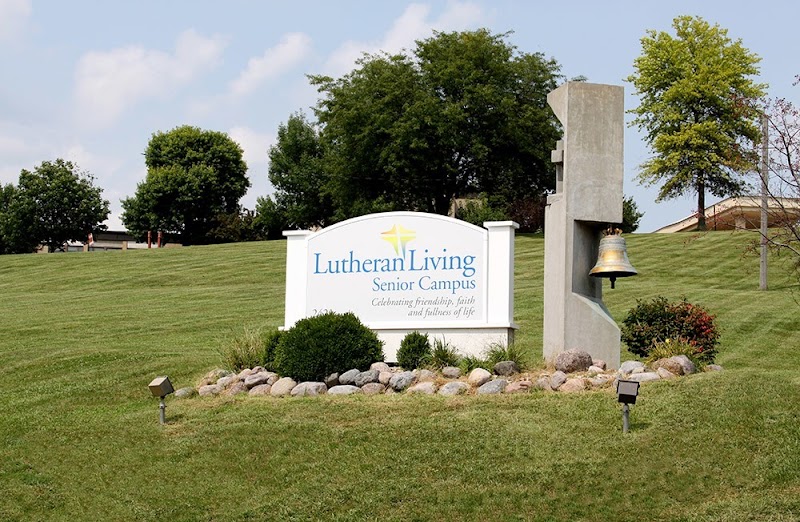
Lutheran Living Senior Campus

2421 Lutheran Drive, Muscatine, IA 52761 (563) 263-1241
Non profit - Church related 155 Beds Independent Data: November 2025 6 Immediate Jeopardy citations
Trust Grade
0/100
#362 of 392 in IA
Last Inspection: December 2024

Within standard 12-15 month inspection cycle. Federal law requires annual inspections.

Overview

Lutheran Living Senior Campus in Muscatine, Iowa has received a Trust Grade of F, indicating significant concerns about the facility's operations and care quality. With a state rank of #362 out of 392, they are in the bottom half of Iowa facilities, and their county rank of #5 out of 5 means there are no better local options. While the trend is improving, having decreased from 10 issues in 2024 to 7 in 2025, the facility still faces serious challenges, including $161,683 in fines, which is higher than 90% of Iowa facilities. Staffing is rated average with a 3/5 and a turnover rate of 46%, but there is concerningly less RN coverage than 87% of facilities in the state, which can impact resident care. Notable incidents include a tragic failure to provide necessary behavioral health assessments for a resident at risk of self-harm, and issues with resident safety protocols, leading to critical situations that jeopardized residents' safety. While some quality measures are rated good, these significant weaknesses warrant careful consideration for families exploring this nursing home.

Trust Score
F
0/100
In Iowa
#362/392
Bottom 8%
Safety Record
High Risk
Review needed
Inspections
Getting Better
10 → 7 violations
Staff Stability
⚠ Watch
46% turnover. Above average. Higher turnover means staff may not know residents' routines.
Penalties
○ Average
$161,683 in fines. Higher than 56% of Iowa facilities. Some compliance issues.
Skilled Nurses
○ Average
Each resident gets 30 minutes of Registered Nurse (RN) attention daily — about average for Iowa. RNs are the most trained staff who monitor for health changes.
Violations
⚠ Watch
51 deficiencies on record. Higher than average. Multiple issues found across inspections.
★☆☆☆☆
1.0
Overall Rating
★★★☆☆
3.0
Staff Levels
★★★★☆
4.0
Care Quality
★☆☆☆☆
1.0
Inspection Score
Stable
2024: 10 issues
2025: 7 issues

The Good

  • 4-Star Quality Measures · Strong clinical quality outcomes
  • Full Sprinkler Coverage · Fire safety systems throughout facility
  • No fines on record

Facility shows strength in quality measures, fire safety.

The Bad

1-Star Overall Rating

Below Iowa average (3.0)

Significant quality concerns identified by CMS

Staff Turnover: 46%

Near Iowa avg (46%)

Higher turnover may affect care consistency

Federal Fines: $161,683

Well above median ($33,413)

Significant penalties indicating serious issues

The Ugly 51 deficiencies on record

6 life-threatening 1 actual harm
Aug 2025 6 deficiencies 2 IJ
CRITICAL (J) 📢 Someone Reported This

A family member, employee, or ombudsman was alarmed enough to file a formal complaint

Immediate Jeopardy (IJ) - the most serious Medicare violation

Deficiency F0740 (Tag F0740)

Someone could have died · This affected 1 resident

**NOTE- TERMS IN BRACKETS HAVE BEEN EDITED TO PROTECT CONFIDENTIALITY** Based on clinical record review, facility self report, State of Iowa Administrative Hearings Findings, and staff interviews, the...

Read full inspector narrative →
**NOTE- TERMS IN BRACKETS HAVE BEEN EDITED TO PROTECT CONFIDENTIALITY** Based on clinical record review, facility self report, State of Iowa Administrative Hearings Findings, and staff interviews, the facility failed to perform behavioral health assessments for Resident #1 after he was served a 30 day involuntary discharge notice following an alleged assault on another resident. Resident #1 had a documented history of major depressive disorder and suicidal ideation and was placed on one to one (1:1) supervision after the alleged assault. On [DATE] the 1:1 supervision was discontinued to address a staffing shortage without Resident #1 being assessed. During the early morning hours of [DATE], with no 1:1 supervision, Resident #1 used items within reach and committed suicide hours before his scheduled discharge from the facility. The facility reported a census of 124 residents. On [DATE] at 5:00 pm, the State Survey Agency informed the facility of the failure to perform behavioral health assessments following notification of an involuntary discharge created an Immediate Jeopardy situation, which resulted in the suicide of a resident. The Immediate Jeopardy began on [DATE]. The facility removed the immediacy on [DATE] at 12:00 pm when the facility staff implemented the following Corrective Actions: Audits of all residents for Psychosocial History compliance Audits of all residents for a history of suicidal ideation or attemptsCreation and Implementation of a Suicide Prevention PolicyCreation and Implementation of a Phone Answering PolicyEducation to all employees of Suicide in Older AdultsEducation to all employees of Recognizing Behavioral Symptoms in Residents at Risk for Self HarmEducation to all employees for Clinical Procedure for Care of Residents with Depression and Assessing and Screening for Suicide RiskEducation to all employees of Resident RightsAudits of all residents behavior documentation for suicidal ideationsDiagnosis report for impulsivenessEducation to managerial staff of Behavior Interventions may only be changed/modified/discontinued by the Executive Director or the Director of NursingThe scope and severity lowered from a J to a G (harm that is not immediate) at the time of the survey after ensuring the facility implemented their policy andprocedures, audits, and staff education.Findings include:The Minimum Data Set (MDS) of Resident #1 dated [DATE] identified a Brief Interview for Mental Status (BIMS) score of 15 which indicated cognition intact. The MDS recorded the resident experienced mood symptoms of feeling down, depressed, or hopeless on one day of the lookback period. The MDS recorded the resident dependent upon staff assistance for chair/bed-to-chair transfers. The MDS documented diagnoses that included: paraplegia, anxiety, depression, and alcohol abuse with alcohol-induced mood disorder. The Care Plan of Resident #1 identified a Focus Area of Mood Behavior, stating Resident #1 had a diagnosis of Major Depressive Disorder. It directed staff to perform BIMS and PHQ-9 (an assessment used to screen for and measure the severity of depression) upon admission, quarterly, annually and as needed and to notify the physician as needed with concerns. The Care Plan additionally directed staff to keep the resident's routine the same as much as able and to offer opportunities for the resident to express feelings. The Care Plan additionally directed for social services to intervene as needed. The Care Plan identified an additional Focus Area of Abuse Vulnerability, history of suicide attempts. The Care Plan directed Staff to observe and provide a safe environment, staff to receive annual training and for Notifications to be made to Immediate Supervisor. The Facility Reported Incident (FRI) dated [DATE] documented that, on [DATE], Resident #3 reported to the facility chaplain that she had been physically assaulted by Resident #1 on [DATE]. According to the FRI, Resident #1 had grabbed and squeezed the upper leg of Resident #3 while he was passing by her in his electric wheelchair. The facility immediately ensured separation of the two residents, assigning a 1:1 Certified Nursing Assistant (CNA) to supervise Resident #1 to maintain that separation. A skin assessment of Resident #3 revealed black and blue bruises consistent with her account of the incident. The Sheriff's Office was contacted and a police report was filed. In a discussion between Resident #1 and the Administrator, Resident #1 displayed an unprompted awareness of the identity of Resident #1. The facility initiated an emergency discharge of Resident #1, and an Emergency Notice of Involuntary Discharge was hand delivered to Resident #1 on [DATE]. With the assistance of the facility's Social Services Director, Resident #1 filed an appeal to the discharge and a hearing took place on [DATE]. On [DATE], the Director of Nursing (DON) stated that she and the Administrator together notified Resident #1 on [DATE] that the discharge had been upheld in the hearing and offered him assistance to file a second appeal. She stated Resident #1 declined her assistance, stating he was resigned to it that he was discharging, and asked for some boxes to pack his belongings. She stated he also requested the facility continue to work on finding alternate placement as another facility that had accepted him was not his first choice of places to transfer to. The DON clarified the resident had received this notice earlier but had failed to open the envelope which contained the findings of the hearing. The Facility Reported Incident (FRI) dated [DATE] documented that at approximately 5:30 am on [DATE], facility staff discovered Resident #1 deceased in his room following a successful suicide attempt. The FRI detailed Staff B, Registered Nurse (RN) was the night shift supervisor on duty. Staff A, Licensed Practical Nurse (LPN), MDS Coordinator, was on call for any staffing issues. On [DATE], two CNAs failed to report for their scheduled shift. Staff A notified Staff B per protocol. The FRI further stated that the two staff members developed a coverage plan to ensure sufficient staffing, which included removing the 1:1 supervision of Resident #1 so the assigned CNA could perform general floor duties. Resident #1 was checked on at least every two hours with no noted concerns during these checks until approximately 5:30 am. On this check, Resident #1 was found on the floor of his room, surrounded by blood. The attending nurse assessed and determined Resident #1 had used a piece of glass from a broken picture frame and a set of scissors to cut himself, severing an artery of his left arm, resulting in death. Staff immediately called 911 and required persons were notified of the incident. During a chart review on [DATE], the Care Plan of Resident #1 failed to reflect any status updates regarding the assault, the involuntary discharge, or the 1:1 supervision. The Progress Notes portion of the resident's Electronic Health Record (EHR) failed to reflect any progress notes that had been entered by either of the facility social services representatives. The EHR additionally failed to document any psychosocial assessments having been completed following the notice of involuntary discharge on [DATE]. On [DATE] at 12:29 pm, Staff A, LPN, MDS Coordinator, stated she was on call the night of [DATE]. She reported she was asleep when Staff B, RN, texted to inform her that two CNAs had not reported for work. Staff A stated she instructed Staff B to call both absent staff members, providing her with phone numbers, and advised her to ask 2pm-10pm shift staff if anyone could stay late to assist. Staff A stated Staff B asked if the 1:1 supervision of Resident #1 could be removed, and she responded that it was acceptable as long as the resident was asleep. She added that a second CNA from the Memory Care Unit (MCU) were also reassigned so that each unit had a CNA on duty. Staff A further stated that there were two additional nurses on duty that night, both in orientation, and therefore she believed there was adequate staffing in the building. Staff A verbalized she felt Staff B would move the available staff around to accommodate the staffing needs. She also added the 1:1 supervision was intended to keep Resident #1 separated from other residents, and noted that on the night shift the 1:1 often sat outside the door while he slept rather than remaining in his room. She added that if the supervision had been for suicide watch, the approach would have been different. On [DATE] at 5:15 pm, Staff B, RN stated her shift began at 6:00 pm on [DATE]. She reported that, although her position was the night shift supervisor, she initially did not perform supervisory duties because she was covering for a nurse at 6:00 pm. Around 8:00 pm, a staffing agency nurse arrived, and from that time until approximately 10:00 pm, she resumed supervisory duties. At 10:00 pm, two CNAs failed to report for their shifts. After unsuccessfully attempting to contact them and asking on-duty staff to stay, she had contacted Staff A, the manager on call, and after informing her of the situation, requested the removal of the 1:1 supervision of Resident #1 as well as moving a second CNA from the MCU. Staff B stated she was aware Resident #1 was paralyzed, unable to get out of bed, and typically asleep by that time of night, which was why she requested the removal of the 1:1. She stated she returned to working the floor at 10:00 pm, and described the shift as busy. Staff B said that at approximately 5:30 am, she heard screaming from another area of the building. Following the sound, she heard staff calling her name regarding Resident #1. Upon entering his room, she observed the resident lying on the floor in a pool of blood. She directed another staff member to call 911, and she assessed the resident for a pulse and breathing, neither being present. Paramedics arrived quickly, and it was confirmed that Resident #1 had a do not resuscitate order; no CPR was performed. On [DATE] at 4:30 pm, the Social Services Director (SSD) stated she had helped Resident #1 file his appeal of the involuntary discharge. She stated she did not participate in the hearing regarding the discharge. The SSD stated she was on vacation from the 19th until the 23rd of July, returning to work on the 24th of July. Upon her return to work, she was informed the discharge was upheld and Resident #1 chose not to file a second appeal. She stated she went to his room to speak with him and told him she was sorry to hear about him losing his appeal and mentioned he would be transferring to another facility. She described Resident #1 would not make eye contact with her, although they normally had a good relationship. She stated she joked with him that at least at the other facility, he would be able to smoke and not get in trouble for it. When Resident #1 did not respond, she turned to leave, and Resident #1 stopped her and told her he did not want her to feel guilty about anything that happened, and that she had done all she could to help him. The SSD voiced that in hindsight, she felt this was a suicidal statement, but at the time he said it, she did not take it that way. The SSD also reported she had experience working a suicide hotline. The SSD stated the hearing regarding the involuntary discharge had taken place on [DATE] and when she had asked facility management if she was to participate in the hearing, she was told no. She explained after assisting him in filing the appeal, she had no further contact with Resident #1 until [DATE]. She stated she works more with the skilled residents in the facility while the other social service representative worked more with the long term care residents. She added his PHQ-9 scores were always zero, indicating no depression, saying he never gave any inclination he was thinking of suicide. She added that while nobody anticipated suicide, more follow up probably should have been provided. She stated there were no protocols in place of daily check ins but reiterated Resident #1 was offered psychiatric services but he declined them. She explained these services were offered after the appeal hearing had taken place, after the ruling was given. She explained the services offered were virtual and the Assistant Director of Nursing (ADON) for his hallway had acomputer, and attempted to get him to participate in the therapy session but the ADON was unaware of why therapy sessions had been set up. Another ADON in the facility explained to the resident the reason for the services and the resident then declined the services. In a second interview on [DATE] at 10:59 am, Staff A clarified she did not give Staff B specific direction for staffing needs in regards to the two nurses who were orientating on the night shift of [DATE]. She stated once she ok'd the removal of the 1:1 and the second CNA from the memory care unit, she assumed Staff B was taking care of the situation. She added she had worked the day shift on Wednesday [DATE] and then had to work the overnight shift as well. She got home around 7:00 am on [DATE]. She stated she received copies of the schedule for [DATE] via text from the facility, looked at the schedule and felt they were fully staffed. She stated in her mind, due to the extra two nurses, they had enough staff. She verified no assessment was completed on Resident #1 prior to removing the 1:1. She stated the reason for this was he was in bed, and she knew staff often sat outside of the room. She felt if he was sleeping, there was no reason for a staff member to be sitting there. She clarified she is the MDS Coordinator, and not an ADON. She was aware the facility required that any staffing changes could only be made at the direction of the DON or an ADON. She stated she normally would call the DON but did not call her that night due to having extra nurses in orientation on duty. She reiterated if they had not been there, she would have come in. On [DATE] at 3:05 pm, Staff D, Social Services designee, stated she had only worked at the facility for a few months. She stated she and Resident #1 had gotten off on the wrong foot when she started due to her needing to speak to him about him driving his electric wheelchair too fast through the halls. She stated once during the appeal process, she checked in with Resident #1 but he had been speaking with someone from Medicaid. She described him as being very closed off when she checked in on him and state that was the only time she had any contact with him after the involuntary discharge notice was given other than briefly saying hello in passing. On [DATE] at 9:04 am, Staff E, LPN stated she was the nurse assigned to Resident #1's hallway on [DATE] for the overnight shift. She stated she had been a nurse for over 20 years but had worked at the facility for a short time. She explained she was assigned to that hallway, as well as the MCU, and additionally needed to help in the Assisted Living part of the facility to administer insulin and cover meal breaks. She was also orienting Staff F, LPN who was a new nurse. She explained it was a very busy shift, and a new resident in the MCU unit was upset and exit seeking and setting off alarms much of the shift. She stated she did not see Resident #1 that shift until the morning. She stated she works throughout the building and did not know Resident #1 well. She added with the staffing pattern of most employees working in multiple areas of the building, she is unable to get to know the residents well or build rapport with them. She felt if she had known Resident #1 better, perhaps he would have confided in her as she had worked with other suicidal patients in the past and had been able to assist. She stated staff F, LPN administered insulin for Resident #1 that shift, and the Medication Aide administered his oral medications. She was aware that Resident #1 was under 1:1 supervision and the reason for the supervision. She stated no staff had informed her the 1:1 person had been removed from his room. She said that to her knowledge, Resident #1 had no prior suicidal ideations. When Staff E was told prior suicide attempt was included on the Resident Care Plan, she stated she is not familiar with the software program the facility uses for the resident's Electronic Health Records and did not know how to retrieve or read a resident care plan. On [DATE] at 10:18 am. Staff F, LPN stated she worked at the facility earlier in the summer as a CNA. She had recently passed the State Boards and obtained her LPN license, and was then training as an LPN. She stated she trained with Staff E on her shift on [DATE]. She stated the only interaction she had with Resident #1 during that shift was approximately 9:30 or 9:45 pm when she administered his night time insulin. She stated the Medication Aide had administered his oral medication. She had been told Resident #1 often refused his nightly scheduled catheter flush, and he did refuse it that night. She stated she attempted to make some small talk with the resident when she was in the room with him, but he only responded with one word answers. She stated she was aware that there had been a CNA removed from the MCU to cover staffing needs but was not aware the 1:1 supervision had been removed from Resident #1. She said some staff sat in his room with him at night and others sat in the hallway. She verified after 10:00 pm, she had not been back in Resident #1's room. The Fire Department Patient Care record dated [DATE] recording the following: Squad 3** responded. Crew was met at the front door by nursing home staff. Staff reported patient was on the *** hallway. Staff reported the patient was a Do Not Resuscitate but this was an unusual instance so they called 911. On arrival to the room, the patient was found on the floor in a large pool of blood. It was noted blood was found all over the room also. Night shift lead nurse was in the room crying. She reported they came into the room and found the patient like this. Staff was not able to provide a last known well time for the crew. It was noted that there was obvious death. The patient was not breathing and had no pulse. Noted that there was a small pair of scissors (with blood on them) on a table and broken glass on the bed. The patient was not disturbed by the EMS crew, no EMS interventions were taken. Crew was able to see multiple cuts to the left wrist from the doorway with a large pool of blood coming from cut site. Nursing home staff reported that the notes taped on the window and refrigerator door appear to be new. They state Thank you Railroad (female name). Crew removed all staff from the room at this time. The Medical Examiner and sheriff's office were called to the scene. While getting information from the staff, it was reported the patient was leaving the facility that day. Staff was able to provide a current DNR status and a face sheet. On arrival of the Sheriff's Office, crew explained the circumstances they walked into. No further actions were taken. The scene was turned over to the Sheriff's Office.On [DATE], the DON stated no staff called her the night of [DATE]. She stated that Staff F, LPN had been a CNA prior to becoming an LPN and she could have been pulled to sit with Resident #1 that night. She stated if staff had called her, that would have been her directive, to not remove the 1:1 but to have Staff F act as the 1:1. In an email dated [DATE] at 1:24 PM, the Administrator indicated the facility follows the nursing standards of practice related to assessments.
CRITICAL (J) 📢 Someone Reported This

A family member, employee, or ombudsman was alarmed enough to file a formal complaint

Immediate Jeopardy (IJ) - the most serious Medicare violation

Deficiency F0741 (Tag F0741)

Someone could have died · This affected 1 resident

**NOTE- TERMS IN BRACKETS HAVE BEEN EDITED TO PROTECT CONFIDENTIALITY** Based on clinical record review, facility self report, State of Iowa Administrative Hearings Findings, staff and family intervie...

Read full inspector narrative →
**NOTE- TERMS IN BRACKETS HAVE BEEN EDITED TO PROTECT CONFIDENTIALITY** Based on clinical record review, facility self report, State of Iowa Administrative Hearings Findings, staff and family interviews, and facility policy review, the facility failed to recognize and address potential statements and behaviors that indicated Resident #1's self harm risk after he was served a 30 day involuntary discharge notice following an alleged assault on another resident. Resident #1 had a documented history of major depressive disorder and suicidal ideation and was placed on one to one (1:1) supervision after the alleged assault. In the days leading up to his discharge, multiple staff members stated they observed Resident #1's potential signs of worsening depression or heard him verbalize comments of potential self-harm but did not report these concerns to facility management. During the early morning hours of [DATE], without 1:1 supervision in place, Resident #1 used items within reach and committed suicide hours before his scheduled discharge from the facility. The facility reported a census of 124 residents. On [DATE] at 5:00 pm, the State Survey Agency informed the facility the staff failure to recognize, address and report potential statements and behaviors of self-harm following the notification of an involuntary discharge created an Immediate Jeopardy situation, which resulted in the suicide of a resident. The Immediate Jeopardy began on [DATE] The facility removed the immediacy on [DATE] at 12:00 pm when the facility staff implemented the following Corrective Actions: Audits of all residents for Psychosocial History compliance Audits of all residents for a history of suicidal ideation or attemptsCreation and Implementation of a Suicide Prevention PolicyCreation and Implementation of a Phone Answering PolicyEducation to all employees of Suicide in Older AdultsEducation to all employees of Recognizing Behavioral Symptoms in Residents at Risk for Self HarmEducation to all employees for Clinical Procedure for Care of Residents with Depression and Assessing and Screening for Suicide RiskEducation to all employees of Resident RightsAudits of all residents behavior documentation for suicidal ideationsDiagnosis report for impulsivenessEducation to managerial staff of Behavior Interventions may only be changed/modified/discontinued by the Executive Director or the Director of NursingThe scope and severity lowered from a J to a G (harm that is not immediate) at the time of the survey after ensuring the facility implemented their policy and procedures, audits, and staff education.Findings include:The Minimum Data Set (MDS) of Resident #1 dated [DATE] identified a Brief Interview for Mental Status (BIMS) score of 15 which indicated cognition intact. The MDS recorded the resident experienced mood symptoms of feeling down, depressed, or hopeless on one day of the lookback period. The MDS recorded the resident dependent upon staff assistance for chair/bed-to-chair transfers. The MDS documented diagnoses that included: paraplegia, anxiety, depression, and alcohol abuse with alcohol-induced mood disorder. The Care Plan of Resident #1 identified a Focus Area of Mood Behavior, stating Resident #1 had a diagnosis of Major Depressive Disorder. It directed staff to perform BIMS and PHQ-9 (an assessment used to screen for and measure the severity of depression) upon admission, quarterly, annually and as needed and to notify the physician as needed with concerns. The Care Plan additionally directed staff to keep the resident's routine the same as much as able and to offer opportunities for the resident to express feelings. The Care Plan additionally directed for social services to intervene as needed. The Care Plan identified an additional Focus Area of Abuse Vulnerability, history of suicide attempts. The Care Plan directed Staff to observe and provide a safe environment, staff to receive annual training and for Notifications to be made to Immediate Supervisor. The Facility Reported Incident (FRI) dated [DATE] documented that, on [DATE], Resident #3 reported to the facility chaplain that she had been physically assaulted by Resident #1 on [DATE]. According to the FRI, Resident #1 had grabbed and squeezed the upper leg of Resident #3 while he was passing by her in his electric wheelchair. The facility immediately ensured separation of the two residents, assigning a 1:1 Certified Nursing Assistant (CNA) to supervise Resident #1 to maintain that separation. A skin assessment of Resident #3 revealed black and blue bruises consistent with her account of the incident. The Sheriff's Office was contacted and a police report was filed. In a discussion between Resident #1 and the Administrator, Resident #1 displayed an unprompted awareness of the identity of Resident #1. The facility initiated an emergency discharge of Resident #1, and an Emergency Notice of Involuntary Discharge was hand delivered to Resident #1 on [DATE]. With the assistance of the facility's Social Services Director, Resident #1 filed an appeal to the discharge and a hearing took place on [DATE]. On [DATE], the Director of Nursing (DON) stated that she and the Administrator together notified Resident #1 on [DATE] that the discharge had been upheld in the hearing and offered him assistance to file a second appeal. She stated Resident #1 declined her assistance, stating he was resigned to it that he was discharging, and asked for some boxes to pack his belongings. She stated he also requested the facility continue to work on finding alternate placement as another facility that had accepted him was not his first choice of places to transfer to. The DON clarified the resident had received this notice earlier but had failed to open the envelope which contained the findings of the hearing. The Facility Reported Incident (FRI) dated [DATE] documented that at approximately 5:30 am on [DATE], facility staff discovered Resident #1 deceased in his room following a successful suicide attempt. The FRI detailed Staff B, Registered Nurse (RN) was the night shift supervisor on duty. Staff A, Licensed Practical Nurse (LPN), MDS Coordinator, was on call for any staffing issues. On [DATE], two CNAs failed to report for their scheduled shift. Staff A notified Staff B per protocol. The FRI further stated that the two staff members developed a coverage plan to ensure sufficient staffing, which included removing the 1:1 supervision of Resident #1 so the assigned CNA could perform general floor duties. Resident #1 was checked on at least every two hours with no noted concerns during these checks until approximately 5:30 am. On this check, Resident #1 was found on the floor of his room, surrounded by blood. The attending nurse assessed and determined Resident #1 had used a piece of glass from a broken picture frame and a set of scissors to cut himself, severing an artery of his left arm, resulting in death. Staff immediately called 911 and required persons were notified of the incident. In the follow up investigation of the incident, the facility stated during the investigation, it was discovered a voicemail had been left on an unattended facility phone. To ensure emergency response protocols, the facility implemented a new policy to address that issue. The follow up further stated the decision to reassign the 1:1 CNA was made by Staff A and Staff B without reporting to or obtaining permission from the DON, as required by facility policy. Using the facility's Just Culture Algorithm, it was determined that this constituted a change due to failure to report and request approval from their supervisor for the staffing change. Both staff members received a suspension. On [DATE] at 12:29 pm, Staff A, LPN, MDS Coordinator stated she was on call the night of [DATE]. She reported she was asleep when Staff B, RN, texted to inform her that two CNAs had not reported for work. Staff A stated she instructed Staff B to call both absent staff members, providing her with phone numbers, and advised her to ask 2pm-10pm shift staff if anyone could stay late to assist. Staff A stated Staff B asked if the 1:1 supervision of Resident #1 could be removed, and she responded that it was acceptable as long as the resident was asleep. She added that a second CNA from the Memory Care Unit (MCU) were also reassigned so that each unit had a CNA on duty. Staff A further stated that there were two additional nurses on duty that night, both in orientation, and therefore she believed there was adequate staffing in the building. Staff A verbalized she felt Staff B would move the available staff around to accommodate the staffing needs. She also added the 1:1 supervision was intended to keep Resident #1 separated from other residents, and noted that on the night shift the 1:1 often sat outside the door while he slept rather than remaining in his room. She added that if the supervision had been for suicide watch, the approach would have been different.On [DATE] at 1:10 pm, Staff G, Certified Nurse Aide (CNA) stated she acted as the 1:1 on the 2:00 pm to 10:00 pm shift on [DATE]. She stated Resident #1 was making a lot of phone calls. She stated she was in the room with him for part of the shift and sitting in the hallway for part of the shift. She stated she thought one of the phone calls he had made had been to a bank. She overheard him stating he wanted money to go to his nephew if anything were to happen to him. She stated otherwise he was acting normal and she did not think anything of the statement. She said she had only been employed at the facility for a month or so and this was her first job as a CNA and she did not know Resident #1 well. She stated after she was sitting in the hallway, she overheard him talking and initially thought he was speaking to her. She stepped into the room and heard him on the phone so she stepped back into the hallway and was relieved by another staff member at 10:00 pm. On [DATE] at 1:55 pm, Staff H, CNA stated she worked with Resident #1 for a short time on [DATE] on the 2-10 shift, when Staff G was on break. She stated Resident #1 asked her to take him outside to smoke, so they went to the far end of the building outdoors and he smoked and then she assisted him back to his room. She stated Resident #1 had been acting depressed for several days. She said once the judgement came back that he had to move out, she knew there was nothing anyone could do about it. She stated she did not bring any concerns of his depression forward to any management or the social worker. She stated everyone knew how depressed he was, all the nurses on the floor, etc. She stated anybody who worked that hallway knew he was depressed. Staff H said she had worked at the facility for several years and knew Resident #1 pretty well. She stated he was very quiet and seemed down, but she had no idea he was contemplating suicide. She stated if she had any idea, she would have reported it and felt any other staff member would have as well. On [DATE] at 5:15 pm, Staff B, RN stated her shift began at 6:00 pm on [DATE]. She reported that, although her position was the night shift supervisor, she initially did not perform supervisory duties because she was covering for a nurse at 6:00 pm. Around 8:00 pm, a staffing agency nurse arrived, and from that time until approximately 10:00 pm, she resumed supervisory duties. At 10:00 pm, two CNAs failed to report for their shifts. After unsuccessfully attempting to contact them and asking on-duty staff to stay, she had contacted Staff A, the manager on call, and after informing her of the situation, requested the removal of the 1:1 supervision of Resident #1 as well as moving a second CNA from the MCU. Staff B stated she was aware Resident #1 was paralyzed, unable to get out of bed, and typically asleep by that time of night, which was why she requested the removal of the 1:1. She stated she returned to working the floor at 10:00 pm, and described the shift as busy. Staff B said that at approximately 5:30 am, she heard screaming from another area of the building. Following the sound, she heard staff calling her name regarding Resident #1. Upon entering his room, she observed the resident lying on the floor in a pool of blood. She directed another staff member to call 911, and she assessed the resident for a pulse and breathing, neither being present. Paramedics arrived quickly, and it was confirmed that Resident #1 had a do not resuscitate order; no CPR was performed. On [DATE] at 11:28 am, Staff I, CNA stated she was working the overnight shift on Resident #1's hallway on [DATE]. She stated she was the one who found him deceased . She stated that around 10:30 or maybe 11:00 pm, the 1:1 was pulled from Resident #1. She stated she was working the floor, following her normal routine. She thought it was around 1:00 am when she checked on him and asked him how he was doing. She stated she completed some charting and then around 2:00 am began her rounding again. She stated she checked on him again during that set of rounds and he was watching TV at that time. She stated at approximately 4:00 am, there was another resident on the same hall who needed to be woken up and gotten ready to go to dialysis. She made a light breakfast for that resident and made sure she ate. She said that around 4:15 she got the resident dressed and then about 4:30 she transported that resident to the front of the building to be picked up for dialysis and then went to do rounds again. She stated she checked on Resident #1 again during these rounds. Following the completion of her rounds, she stated she then needed to empty catheters for the applicable residents. Resident #1 had a catheter. She stated it was around 5:15 or 5:30 when she entered his room to empty his catheter and found him on the floor in a pool of blood and called for help. Staff I stated she knew Resident #1 pretty well. She added that when they found out he had to move out, many staff were upset about it. She said she didn't think he had done it (the assault). She explained that night, when she asked him how he was doing, he replied he was saying his good-byes. She expressed she should have known, when he said that, that something was wrong. She said she just keeps thinking about it. But he was moving to another facility. She stated she was not aware that anyone had reported any concerns to management of his depression. On [DATE] at 4:30 pm, the Social Services Director (SSD) stated she had helped Resident #1 file his appeal of the involuntary discharge. She stated she did not participate in the hearing regarding the discharge. The SSD stated she was on vacation from the 19th until the 23rd of July, returning to work on the 24th of July. Upon her return to work, she was informed the discharge was upheld and Resident #1 chose not to file a second appeal. She stated she went to his room to speak with him and told him she was sorry to hear about him losing his appeal and mentioned he would be transferring to another facility. She described Resident #1 would not make eye contact with her, although they normally had a good relationship. She stated she joked with him that at least at the other facility, he would be able to smoke and not get in trouble for it. When Resident #1 did not respond, she turned to leave, and Resident #1 stopped her and told her he did not want her to feel guilty about anything that happened, and that she had done all she could to help him. The SSD voiced that in hindsight, she felt this was a suicidal statement, but at the time he said it, she did not take it that way. The SSD also reported she had experience working a suicide hotline. The SSD stated the hearing regarding the involuntary discharge had taken place on [DATE] and when she had asked facility management if she was to participate in the hearing, she was told no. She explained after assisting him in filing the appeal, she had no further contact with Resident #1 until [DATE]. She stated she works more with the skilled residents in the facility while the other social service representative worked more with the long term care residents. She added his PHQ-9 scores were always zero, indicating no depression, saying he never gave any inclination he was thinking of suicide. She added that while nobody anticipated suicide, more follow up probably should have been provided. She stated there were no protocols in place of daily check ins but reiterated Resident #1 was offered psychiatric services but he declined them. She explained these services were offered after the appeal hearing had taken place, after the ruling was given. She explained the services offered were virtual and the Assistant Director of Nursing (ADON) for his hallway with a computer, attempting to get him to participate in the therapy session but was unaware of why therapy sessions had been set up. Another ADON in the facility explained to the resident the reason for the services and the resident then declined the services. On [DATE] at 4:47 pm, the DON stated that Staff F, LPN, who was in orientation that night, could have been pulled to be the 1:1 as she had worked as a CNA prior to becoming a nurse. She stated she didn't receive a phone call that night and that would have been her directive if anyone had called her. In regards to the referenced voicemail, she stated each hall of the facility has it's own cell phone that connects to the land lines. She stated after hours, there are prompts to be connected to the hall a person is trying to reach. She said on the night shift, the nurses generally only carry one phone, although they are covering more than one hall as a nurse. She said for instance, on night shift, there is one nurse who covers both the 300 hall and the 500 hall, but may only carry one of those two phones. She stated they found the voicemail on the phone of the hall where Resident #1 resided. She said the family member who left the voicemail also had her own personal cell phone number but she didn't call her, or the police or anyone else that she was aware of. She said when she called the family member the following morning to inform her of Resident #1's death, the family member stated she had left a voicemail the night before. In a second interview on [DATE] at 10:59 am, Staff A, LPN, MDS Coordinator clarified she did not give Staff B specific direction for staffing needs in regards to the two nurses who were orientating on the night shift of [DATE]. She stated once she ok'd the removal of the 1:1 and the second CNA from the memory care unit, she assumed Staff B was taking care of the situation. She added she had worked the day shift on Wednesday [DATE] and then had to work the overnight shift as well. She got home around 7:00 am on [DATE]. She stated she received copies of the schedule for [DATE] via text from the facility, looked at the schedule and felt they were fully staffed. She stated in her mind, due to the extra two nurses, they had enough staff. She verified no assessment was completed on Resident #1 prior to removing the 1:1. She stated the reason for this was he was in bed, and she knew staff often sat outside of the room. She felt if he was sleeping, there was no reason for a staff member to be sitting there. She clarified she is the MDS Coordinator, and not an ADON. She was aware the facility required staffing changes could only be made at the direction of the DON or an ADON. She stated she normally would call the DON but did not call her that night due to having extra nurses in orientation on duty. She reiterated if they had not been there, she would have come in. On [DATE] at 11:17 am, Staff J, RN stated she had worked at the facility for several months. She stated she did not notice a big mood change in Resident #1, but noted he was more quiet. She said right after the allegations of the assault were made against him, she specifically asked him if he had thoughts of suicide. She stated she asked him this because he seemed especially down that day. She said he denied it and laughed and said he would never do that. She said she did not work with him the week of [DATE]. On [DATE] at 11:37 am, Staff K, CNA stated she had been currently working at the facility for about one and a half years, but had also worked her prior and left. She stated she knew Resident #1 well and used to take care of him when he previously lived on another hall of the facility. She said she worked with him nearly every day she was scheduled to work. She described him as being down in the dumps over the last few weeks. She said he was very quiet. She said she occasionally acted as the 1:1 CNA and escorted him on a shopping trip on the local bus. She said recently, he was using his tablet more, and was not as talkative. She said prior to this, he would come to eat in the dining room and roam all over the facility. She said some mornings, she noticed the night shift 1:1 were sitting outside in the hallway with his door shut when she came on shift. She said in her opinion, they needed to be in the room with him but understood he also liked his privacy. She said she often assisted a second staff member to use the full body mechanical lift to transfer from his bed to his chair in the mornings, and he just seemed down. He used to visit with other male residents at meals before he was notified of needing to move out. She said she had noticed recently when it was time for his insulin, he would just park his chair near the medication cart, and sit with his head down and wait for the insulin then go back to his room. She said the nurses were aware of his behaviors, everybody could see it. On [DATE] at 11:45 am, Staff L, Certified Medication Aide (CMA) stated Resident #1 seemed a bit depressed. She said she didn't work his area of the building too often, and in his last week, she maybe only saw him once. She said he just seemed different. He used to be more bubbly, talking to everyone. Then he started staying in his room, not talking as much. She said it was out of the ordinary but she hadn't felt it was alarming. On [DATE] at 11:47 am, Staff M, CNA stated she had sat with him 1:1 a couple of days earlier in the week before the incident. She said he was very quiet. After he was dressed and out of bed, he asked her to just sit in the room and watch TV. She said they left the room once, he wanted to speak with the DON about his leaving. He was telling her he didn't want to go to the facility that had accepted him. There was another facility he wanted to go to instead. She said she asked him if he was nervous and he stated no, he just wanted to go to an alternate facility. She stated he was back in his room at the end of her shift, and just seemed quieter than usual.On [DATE] at 1:57 pm, Staff N, CNA stated she was scheduled to be the 1:1 on the 10:00 pm to 6:00 am shift on 724/25. She stated she was with him for approximately 45 minutes to an hour when she was pulled to work the floor in another area of the facility. She stated she looked in on him and he was watching TV and she sat in the hallway and had no interaction with him. She was not aware of any changes in him. On [DATE] at 3:05 pm, Staff D, Social Services designee, stated she had only worked at the facility for a few months. She stated she and Resident #1 had gotten off on the wrong foot when she started due to her needing to speak to him about him driving his electric wheelchair too fast through the halls. She stated once during the appeal process, she checked in with Resident #1 but he had been speaking with someone from Medicaid. She described him as being very closed off when she checked in and that was the only time she made contact with him other than saying hello in the hallways. On [DATE] at 9:04 am, Staff E, LPN stated she was the nurse assigned to Resident #1's hallway on [DATE] for the overnight shift. She stated she had been a nurse for over 20 years but had worked at the facility for a short time. She explained she was assigned to that hallway, as well as the MCU, and additionally needed to help in the Assisted Living part of the facility to administer insulin and cover meal breaks. She was also orienting Staff F, LPN who was a new nurse. She explained it was a very busy shift, and a new resident in the MCU was upset and exit seeking and setting off alarms much of the shift. She stated she did not see Resident #1 that shift until the morning. She stated she works throughout the building and did not know Resident #1 well. She added with the staffing pattern of most employees working in multiple areas of the building, she is unable to get to know the residents well or build rapport with them. She felt if she had known Resident #1 better, perhaps he would have confided in her as she had worked with other suicidal patients in the past and had been able to assist. She stated staff F, LPN administered insulin for Resident #1 that shift, and the Medication Aide administered his oral medications. She was aware that Resident #1 was under 1:1 supervision and the reason for the supervision. She stated no staff had informed her the 1:1 person had been removed from his room. She said that to her knowledge, Resident #1 had no prior suicidal ideations. When Staff E was told prior suicide attempt was included on the Resident Care Plan, she stated she is not familiar with the software program the facility uses for the resident's Electronic Health Records and did not know how to retrieve or read a resident care plan. Staff E Stated that Staff I, CMA had the phones prior to 10:00 pm as she was passing medications. She said at 10:00 pm, she thought that Staff F had the phones but she did not remember for sure. She said she had difficulty with the phones on prior shifts, she would find a Missed Call notification without the phone ever ringing. She said she would find the ringer volume was turned off but felt it could have been accidental that it got turned off based on the style of the phone and where the ringer switch is. She also stated she was not aware of how to listen to voicemails on the phones as the phones require a code to get into them and she doesn't know the codes. She said one phone in the facility has the code written on the back of the phone but the other ones do not. She said the normal routine for her was to carry both phones, but she did not have them that night as she was orienting another nurse.On [DATE] at 10:18 am, Staff F, LPN stated she worked at the facility earlier in the summer as a CNA. She had recently passed the State Boards and obtained her LPN license, and was then training as an LPN. She stated she trained with Staff E on her shift on [DATE]. She stated the only interaction she had with Resident #1 during that shift was approximately 9:30 or 9:45 pm when she administered his night time insulin. She stated the Medication Aide had administered his oral medication. She had been told Resident #1 often refused his nightly scheduled catheter flush, and he did refuse it that night. She stated she attempted to make some small talk with the resident when she was in the room with him, but he only responded with one word answers. She stated she was aware that there had been a CNA removed from the MCU unit to cover staffing needs but was not aware the 1:1 supervision had been removed from Resident #1. She said some staff sat in his room with him at night and others sat in the hallway. She verified after 10:00 pm, she had not been back in Resident #1's room. Staff F stated after 10:00 pm, she had both sets of keys (to the medication carts) and was given the phone to the MCU. She stated she did not have the phone for the hallway Resident #1 was on. She voiced she did know how to listen to voicemails on the facility phones but she didn't have that phone. On [DATE] at 1:18 pm, a family member of Resident #1 stated their family members all had apps on their phones they used to communicate with each other. She stated on the night of [DATE], Resident #1 had sent a message on the app It's check out time. She stated she did not think anything of it but another family member contacted her and stated she felt that meant he was thinking of suicide. She stated she called the facility but the phone rang to voicemail. She left a voicemail asking staff to keep an eye on him. She stated she had not had direct contact with Resident #1 for some time as he had asked her to sign some paperwork for him regarding something to do with his wheelchair. She had refused to sign the paperwork and he had been angry with her. She said after she called the facility and left the voicemail, she went to sleep. She received a phone call the next morning telling her he had committed suicide. She said he was supposed to be under 24 hour surveillance. She said from what she had heard, the facility was short staffed and they had nobody to watch him. She said she didn't know if Resident #1 knew they were short staffed when he killed himself. She stated maybe if he had surveillance, they could have saved his life. She added if they had just listened to his voicemail, that could have saved his life. On [DATE] at 1:42 pm, Staff O, CNA stated she had worked at the facility for a couple of years. She stated she most often worked on the skilled unit, but Resident #1 came down to visit that part of the building almost daily. She said she last saw him the day before the incident and told him that he looked nice. She said he replied to her that looking nice was only on the outside, not the inside. She stated she asked him if he was ok and he replied he was fine but the whole situation was off. She said she asked him again if he was ok and told him she would talk to him more the next day and he replied ok. She told him she would see him tomorrow and he replied the same. On [DATE] at 2:10 pm, Staff D, Social Services designee, stated her normal routine is to complete the PHQ-9 on residents and the BIMS assessment. She stated there is also a trauma assessment available that is specific to residents who have a history of trauma, but she had never used that assessment. She said the normal routine is only to do these assessments during the MDS period. On [DATE] at 2:55 pm, Staff P, ADON for the hall Resident #1 resided on, stated she had been the ADON for a few months. Prior to that, she worked at the facility for several years but didn't know Resident #1 well. She said she would see him around as he was very mobile through the facility. She said she had not had any conversations with him regarding his discharge and that no staff had brought any concerns to her regarding him. She said if staff had any concerns they should report it to the charge nurse and the charge nurse should report it to her. She said she had attempted to assist him in the virtual therapy sessions but he refused to participate. The Fire Department Patient Care record dated [DATE] recording the following: Squad 3** responded. Crew was met at the front door by nursing home staff. Staff reported patient was on the *** hallway. Staff reported the patient was a Do Not Resuscitate but this was an unusual instance so they called 911. On arrival to the room, the patient was found on the floor in a large pool of blood. It was noted blood was found all over the room also. Night shift lead nurse was in the room crying. She reported they came into the room and found the patient like this. Staff was not able to provide a last known well time for the crew. It was noted that there was obvious death. The patient was not breathing and had no pulse. Noted that there was a small pair of scissors (with blood on them) on a table and broken glass on the bed. The patient was not disturbed by the EMS crew, no EMS interventions were taken. Crew was able to see multiple cuts to the left wrist from the doorway with a large pool of blood coming from cut site. Nursing home staff reported that the notes taped on the window and refrigerator door appear to be new. They state Thank you Railroad (female name). Crew removed all staff from the room at this time. The Medical Examiner and sheriff's office were called to the scene. While getting information from the staff, it was reported the patient was leaving the facility that day. Staff was able to provide a current DNR status and a face sheet. On arrival of the Sheriff's Office, crew explained the circumstances they walked into. No further actions were taken. The scene was turned over to the Sheriff's [TRUNCATED]
CONCERN (D) 📢 Someone Reported This

A family member, employee, or ombudsman was alarmed enough to file a formal complaint

Potential for Harm - no one hurt, but risky conditions existed

Deficiency F0553 (Tag F0553)

Could have caused harm · This affected 1 resident

**NOTE- TERMS IN BRACKETS HAVE BEEN EDITED TO PROTECT CONFIDENTIALITY** Based on clinical record review, family and staff interviews, and policy review, the facility failed to conduct quarterly Care C...

Read full inspector narrative →
**NOTE- TERMS IN BRACKETS HAVE BEEN EDITED TO PROTECT CONFIDENTIALITY** Based on clinical record review, family and staff interviews, and policy review, the facility failed to conduct quarterly Care Conferences (CC) for 1 of 3 residents reviewed (#4). The facility reported a census of 124 residents. Findings include: The Minimum Data Set (MDS) assessment for Resident #4 dated 3/26/25 did not include a Brief Interview for Mental Status (BIMS) score; however, an MDS assessment dated [DATE] revealed a BIMS score of 06 out of 15, which indicated severely impaired cognition. The MDS dated [DATE] included diagnoses of coronary artery disease (CAD), congestive heart failure (CHF), Alzheimer's Disease, non-Alzheimer's dementia, venous insufficiency, and seborrheic dermatitis (a common skin condition that causes a scaly, flaky, itchy rash, often on the scalp, face, and body folds). The Care Plan dated 2/24/23 indicated the resident had potential for complications with impaired skin integrity including skin tears, bruising AND/OR pressure related to current medical and physical status and had lower extremity (LE) edema. There were four (4) modifications made to the Care Plan's skin integrity focus.During an interview on8/04/25 at 12:27 PM, a family member stated Care Conferences were never completed.On 8/05/25 at 5:12 PM, Staff D, Social Services designee (SS) stated Care Conferences (CC) are scheduled 1 -2 weeks after MDS assessments are completed quarterly to ensure the resident's information is current. She also stated the resident and resident's representative are notified by mail and are contacted the day before the scheduled Care Conference if no confirmation is received. She added she has been the SS designee since 5/07/25 and documents CC in the resident's electronic health record (EHR) so she was not aware if previous CC summaries were stored on paper. The EHR indicated MDS assessments were completed 7/23/24, 10/15/24, 12/27/24, 3/26/25, and 6/17/25. The Assessments tab revealed Care Conference Summaries were documented on 7/31/24 and 6/17/25. There were no documented summaries for 10/24, 12/24, or 3/25.During an interview on 8/07/25 at 12:21 PM, the Director of Nursing (DON) stated a Care Plan conference should have occurred every quarter or upon a change of condition.A policy titled Care Plan - Reviews/Conferences reviewed 8/07/25 indicated the community will conduct a care plan review/conference at least quarterly, and as needed, that is interdisciplinary, provides an in-depth review of the resident's plan of care, and provides an opportunity for resident and resident representative and/or family discussion/input.
CONCERN (D) 📢 Someone Reported This

A family member, employee, or ombudsman was alarmed enough to file a formal complaint

Potential for Harm - no one hurt, but risky conditions existed

Notification of Changes (Tag F0580)

Could have caused harm · This affected 1 resident

**NOTE- TERMS IN BRACKETS HAVE BEEN EDITED TO PROTECT CONFIDENTIALITY** Based on clinical record review, family and staff interviews, and policy review, the facility failed to provide timely physician...

Read full inspector narrative →
**NOTE- TERMS IN BRACKETS HAVE BEEN EDITED TO PROTECT CONFIDENTIALITY** Based on clinical record review, family and staff interviews, and policy review, the facility failed to provide timely physician and family notification for 1 of 3 residents (Resident #4) who experienced a newly documented open wound. The facility reported a census of 124 residents. Findings include: The Minimum Data Set (MDS) assessment for Resident #4 dated 3/26/25 did not include a Brief Interview for Mental Status (BIMS) score; however, an MDS assessment dated [DATE] revealed a BIMS score of 06 out of 15, which indicated severely impaired cognition. The MDS dated [DATE] included diagnoses of coronary artery disease (CAD), congestive heart failure (CHF), Alzheimer's Disease, non-Alzheimer's dementia, venous insufficiency, and seborrheic dermatitis (a common skin condition that causes a scaly, flaky, itchy rash, often on the scalp, face, and body folds). It also revealed the resident was independent with rolling left-to-right, sit-to-lying, and lying-to-sitting on the side of the bed, and required supervision with all other mobility. It further revealed, based on clinical assessment, the resident did not have any unhealed pressure ulcers or injuries and did not have any venous or arterial ulcers. It indicated the resident received dressings to his legs and feet.The Care Plan dated 8/29/23 indicated the resident had potential for complications with impaired skin integrity including skin tears, bruising AND/OR pressure related to current medical and physical status and had lower extremity (LE) edema. It directed staff to observe skin with AM/PM cares and with toileting for redness, rashes, open areas, pain, swelling and report them to team leader and review skin concerns with medical doctor (MD).The electronic health record (EHR) included the following physician's order dated 2/06/24: Skin Management: Weekly Body Observation and Form to be completed 1x Week. Open Weekly Skin Check Tool in assessments and complete every evening shift every Tuesday for Prevention. If impairments present, measure and document a skin/wound progress note. Another physician's order dated 10/15/24 directed staff to notify provider if any increase in swelling, scratching or new lesions.A Physician Progress Note dated 4/14/25 indicated an increase in the resident's LEs (lower extremities) and included an order to increase the resident's furosemide (diuretic - medication that increases urination to remove excess water) to 60 milligrams (mg) by mouth twice daily.The Weekly Skin assessment dated [DATE] included additional information of redness to bilateral lower extremities (BLE), left shin has small open area approximately 1.5 in in length x 0.5 in width. Treatments as ordered. It did not include documented MD or family notification.The Weekly Skin Assessment Question History did not include previously measured BLE open areas.Review of the Nurse Progress Notes for 4/15/25 did not include MD (medical doctor) or family notification for the new BLE open area.On 8/06/25 at 12:33 PM, Staff C, Licensed Practical Nurse (LPN) stated the MD, family, and Assistant Director of Nursing (ADON) or Administrator On-Call (AOC) should be notified of newly identified resident skin wounds and notifications are documented in the Nurse Progress Notes. She also stated she didn't recall whether or not she contacted the MD or resident's family.On 8/07/25 at 12:21 PM, the Director of Nursing (DON) stated staff should have called the family and physician. They should have initiated any standing orders and continued attempts to contact the physician and document the call.A policy titled Notification of Change reviewed 8/07/25 indicated the community will consult the resident's physician, nurse practitioner, or physician assistant and notify the resident representative or an interested family member when there is:a. An accident (including falls) which results in injury and has the potential for requiring physician-intervention.b. Acute illness or a significant change in the resident's physical, mental, or psychosocial status (i.e., deterioration in health, mental, or psychosocial status in either life-threatening conditions or clinical complications).c. A need to alter treatment significantly (i.e. a need to discontinue or change an existing form of treatment due to adverse consequences or to commence a new form of treatment).d. A decision to transfer of discharge the resident from the community.e. A change in resident rights.f. Changes in skin integrity, abnormal labs, changes in cognition, signs/symptoms of infection/virus, etc.any change that would constitute the need to alter the resident's orders and care for the resident.
CONCERN (D) 📢 Someone Reported This

A family member, employee, or ombudsman was alarmed enough to file a formal complaint

Potential for Harm - no one hurt, but risky conditions existed

Quality of Care (Tag F0684)

Could have caused harm · This affected 1 resident

**NOTE- TERMS IN BRACKETS HAVE BEEN EDITED TO PROTECT CONFIDENTIALITY** Based on clinical record review, family and staff interviews, the facility failed to provide timely interventions for 1 of 3 res...

Read full inspector narrative →
**NOTE- TERMS IN BRACKETS HAVE BEEN EDITED TO PROTECT CONFIDENTIALITY** Based on clinical record review, family and staff interviews, the facility failed to provide timely interventions for 1 of 3 residents who experienced a newly documented open wound (#4). The facility reported a census of 124 residents. Findings include: The Minimum Data Set (MDS) assessment for Resident #4 dated 3/26/25 did not include a Brief Interview for Mental Status (BIMS) score; however, an MDS assessment dated [DATE] revealed a BIMS score of 06 out of 15, which indicated severely impaired cognition. The MDS dated [DATE] included diagnoses of coronary artery disease (CAD), congestive heart failure (CHF), Alzheimer's Disease, non-Alzheimer's dementia, venous insufficiency, and seborrheic dermatitis (a common skin condition that causes a scaly, flaky, itchy rash, often on the scalp, face, and body folds). It also revealed the resident was independent with rolling left-to-right, sit-to-lying, and lying-to-sitting on the side of the bed, and required supervision with all other mobility. It further revealed, based on clinical assessment, the resident did not have any unhealed pressure ulcers or injuries and did not have any venous or arterial ulcers. It indicated the resident received dressings to his legs and feet.The Care Plan dated 8/29/23 indicated the resident had potential for complications with impaired skin integrity including skin tears, bruising AND/OR pressure related to current medical and physical status and had lower extremity (LE) edema. It directed staff to observe skin with AM/PM cares and with toileting for redness, rashes, open areas, pain, swelling and report them to team leader and review skin concerns with medical doctor (MD).The electronic health record (EHR) included a physician's order dated 10/15/24 that directed staff to notify provider if any increase in swelling, scratching or new lesions.The Weekly Skin assessment dated [DATE] included a redness to bilateral lower extremities (BLE), left shin has small open area approximately 1.5 in in length x 0.5 in width that was not previously identified. Treatments as ordered. The assessment tool lacked a documented intervention.The Nurse Progress Notes for 4/15/25 did not include a documented intervention for the new BLE open area.On 8/06/25 at 12:33 PM, Staff C, Licensed Practical Nurse (LPN) stated the MD, family, and Assistant Director of Nursing (ADON) or Administrator On-Call (AOC) should be notified of newly identified resident skin wounds and get orders from the doctor. She also stated she didn't recall whether or not she contacted the MD or resident's family.On 8/07/25 at 12:21 PM, the Director of Nursing (DON) stated staff should have called the physician, gotten an order, started the order, documented it, and notified the family of the new order.In an email dated 8/07/25 at 1:24 PM, the Administrator indicated the facility follows the nursing standards of practice related to assessments.
MINOR (B) 📢 Someone Reported This

A family member, employee, or ombudsman was alarmed enough to file a formal complaint

Minor Issue - procedural, no safety impact

Deficiency F0628 (Tag F0628)

Minor procedural issue · This affected multiple residents

Based on clinical record review, long term care ombudsman interview, and staff interview, the facility failed to cite the correct chapter of the Iowa Legislature State Regulations when issuing an invo...

Read full inspector narrative →
Based on clinical record review, long term care ombudsman interview, and staff interview, the facility failed to cite the correct chapter of the Iowa Legislature State Regulations when issuing an involuntary discharge notice to 1 of 1 residents (Resident #1) reviewed. The facility reported a census of 124 residents.Findings include:The Minimum Data Set (MDS) of Resident #1 dated 6/4/25 identified a Brief Interview for Mental Status (BIMS) score of 15 which indicated cognition intact. The MDS recorded the resident experienced mood symptoms of feeling down, depressed, or hopeless on one day of the lookback period. The MDS recorded the resident dependent upon staff assistance for chair/bed-to-chair transfers. The MDS documented diagnoses that included: paraplegia, anxiety, depression, and alcohol abuse with alcohol-induced mood disorder.On 6/30/25, the facility addressed and hand delivered an involuntary discharge notice to Resident #1. The document, dated 6/30/25, titled Emergency Notice of Involuntary Discharge referenced Iowa Administrative Code 481-57.14(2) as state rule and regulation governing involuntary transfer. The document advised Resident #1 of being discharged to an appropriate facility or placement that can meet his needs and that he was being discharged due to his behavior posing a threat to the health and safety of other residents. During an interview on 7/31/25, the Long-Term Care Ombudsman stated the facility cited the wrong Iowa Administrative Code on the discharge notice. The LTCO stated Chapter 57 documented on the notice applies to Resident Care Facilities. The LTCO explained the facility should have referenced Chapter 58 for Long Term Care Facilities. She stated this error would normally have made the notice not be applicable and it should have been rewritten and the discharge process started over when this was completed. She added she was out of town during the proceedings, and when Resident #1 appealed the decision, the Administrative Law Judge upheld the discharge due to the facility having substantially complied with the notice requirement and the resident did not argue with the manner of the notice. During an interview on 8/6/25 the Administrator stated he had corrected the verbiage to Chapter 58 for any future involuntary discharges.
Mar 2025 1 deficiency
CONCERN (D) 📢 Someone Reported This

A family member, employee, or ombudsman was alarmed enough to file a formal complaint

Potential for Harm - no one hurt, but risky conditions existed

Notification of Changes (Tag F0580)

Could have caused harm · This affected 1 resident

**NOTE- TERMS IN BRACKETS HAVE BEEN EDITED TO PROTECT CONFIDENTIALITY** Based on clinical record review, legal guardian interview, and staff interviews, the facility failed to notify the resident's gu...

Read full inspector narrative →
**NOTE- TERMS IN BRACKETS HAVE BEEN EDITED TO PROTECT CONFIDENTIALITY** Based on clinical record review, legal guardian interview, and staff interviews, the facility failed to notify the resident's guardian in a timely manner after a fall resulting in injury and transfer to the hospital for 1 of 3 residents reviewed. (Resident #1). The facility reported census was 120. Findings include: According to the Minimum Data Set, dated [DATE], Resident #1 had a Brief Interview for Mental Status score of 3, indicating a severely impaired cognitive status. Resident #3 was independently mobile with using her wheel walker and required moderate assistance with dressing, toilet use and personal hygiene needs. Resident #1's diagnoses included Alzheimer's, age related osteoporosis w/o (without) current pathological fracture, and chronic obstructive pulmonary disease, malnutrition. According to an Incident Report dated 2/13/25 at 6:10 p.m., written by Staff H, Resident #1 was in her bedroom with Staff F, Certified Nursing Assistant, preparing for bed, when Resident #1 tripped and fell onto her right knee and face striking her bed board. The injury resulted in Resident #1 being sent to the hospital, where x-rays discovered a facial fracture and knee fracture. A review of the electronic health record Face sheet revealed Resident #1 had a non-family legally appointed guardian. The Face Sheet indicated the phone number with an extension number to use when the guardian needed to be contacted. During an interview on 3/6/25 at 12:19 p.m. Staff H, Registered Nurse (RN) stated she called the guardian after Resident #1 fell on 2/13/25. Staff H stated she could not recall the number she called or if she used an extension number, but remembers leaving a message. During an interview on 3/6/25 at 9:41 a.m. the Legal Guardian stated the facility called her office phone and left a message regarding the fall Resident #1 had on 2/13/25. The Legal Guardian stated she was not aware of the incident and transfer to the hospital until the following day. She indicated this has been an on-going concern. The Legal Guardian stated an after hours on-call number has been provided to the facility. She stated it is essential the legal guardian be notified promptly when a resident under their care is sent to the hospital. The Legal Guardian stated she had spoken with the Assistant Director of Nursing (ADON) who had told her that the nurse was given direction to call the on-call number that evening. During an interview on 3/6/25 at 11:00 a.m. the ADON stated she is responsible for the Memory Care Unit, 400 and 500 halls. On the evening of 2/13/25 she received a call from Staff H informing her Resident #1 had fallen with injuries and was being sent out to the hospital. The ADON stated she informed Staff H to contact Resident #1's guardian. She stated there was a number at the 400-hall nurse's station, noting there is an on-call number and process posted for after hours. The ADON stated after hearing that the on-call number was not used, she posted bright yellow cards with the number and process at each nurse's station.
Dec 2024 5 deficiencies
CONCERN (D)

Potential for Harm - no one hurt, but risky conditions existed

Report Alleged Abuse (Tag F0609)

Could have caused harm · This affected 1 resident

**NOTE- TERMS IN BRACKETS HAVE BEEN EDITED TO PROTECT CONFIDENTIALITY** Based on record review, interviews, and the facility policy, the facility failed to report an alleged abuse incident for 1 of 1 ...

Read full inspector narrative →
**NOTE- TERMS IN BRACKETS HAVE BEEN EDITED TO PROTECT CONFIDENTIALITY** Based on record review, interviews, and the facility policy, the facility failed to report an alleged abuse incident for 1 of 1 residents reviewed for abuse (Resident #52). The facility reported a census of 124 residents. Findings include: The Minimum Data Set (MDS) assessment dated [DATE] revealed Resident #52 scored an 8 out of 15 on the Brief Interview for Mental Status (BIMS) exam, which indicated cognition moderately impaired. The MDS revealed the resident required partial/moderate assistance with toileting hygiene, upper and lower body dressing; sit to lying; lying to sitting; sit to standing; chair/bed to chair transfer; and toilet transfer. The MDS revealed the resident frequently incontinent of urine and occasionally incontinent of bowel. The MDS revealed medical diagnoses of anxiety disorder and depression. The Care Plan revealed a focus area dated 4/15/19 for risk of side effects of psychotropic medications related to anxiolytic and antidepressant medication therapy. Resident had a diagnosis of major depressive disorder and anxiety disorder and can become tearful at times. Resident had a history of making false statements. The interventions dated 4/15/19 revealed allowing resident to talk about her feelings, or cry/vent. The EMR (Electronic Medical Record) revealed the following Medical Diagnoses: a. unspecified intellectual disabilities b. anxiety disorder, unspecified c. other symptoms and signs involving cognitive functions and awareness d. major depressive disorder, single episode, full remission e. nocturnal enuresis The Incident Progress Note (late entry) dated 12/6/24 at 7:56 AM, revealed this writer was notified via phone by 3rd shift nurse that was on 600 hall of incident, she stated the following: The resident had propelled herself in her WC (wheelchair) to the [skilled unit] side of the building, the CNA (Certified Nurse Aide) over in [skilled unit] reported that Resident #52 was crying and when she asked Resident #52 what was wrong , Resident #52 stated that colored girl made me get up, she hit me and called me a B****.The CNA then told her nurse and the both of them took Resident #52 to their dining room, got her a hot chocolate and a snack to try and calm Resident #52 down. During this time Resident #52 was c/o (complains) her pants being too tight, so the [skilled unit] CNA went to Resident #52 room on 600 hall to get her a more comfortable pair of pants,while over there she told the 600 hall nurse what was going on, she then brought the pants to [skilled unit] and took Resident #52 to the bathroom, helped her change her pants, While assisting the resident in changing her pants she looked over the residents skin/body (as she was instructed to by her nurse) to check for any areas of concern, no areas of concern were noted. [skilled unit] CNA then took her back to the dining room to finish her snack and [NAME]. 600 hall nurse told this writer she had questioned the accused CNA about the situation the CNA [name redacted] stated the following: when she was trying to get the resident the resident wasn't happy about getting up but she needed to d/t (due to) her bedding being completely saturated with urine. She got her cleaned up and put in WC, did the residents hair in a ponytail, gave the resident her glasses and then the resident proceeded down the hall, the resident was not crying at that time. This writer was the nurse on call at the time, I called the DON (Director of Nursing) and Administrator right after I was informed and the DON instructed me to go to the facility and investigate the situation. I did, I got statements from everyone who talk/interacted with the resident that night/morning. I also did a head-to-toe assessment on the resident when I got to the facility, no areas of concern were seen. I then called the administrator and went over all information I had gathered from my investigation. We decided to implement the following as precaution, the accused CNA will no longer be assigned to 600 hall, and I will instruct staff to do cares for this resident in pairs just as precaution. After informing the residents sister of the situation, she requested Resident #52 not be on the 3rd shift get up list, I will take her off that list. The resident's sister [name redacted] is also in agreement to the other two precautions we put in place. We do not think the accusations are true, d/t the resident having a history of making false accusations and the head-to-toe assessment being completed, no issues found. The Incident Report revealed the following information a. Date of Incident: December 6, 2024 b. Time of Incident: Approximately 5:00 AM c. Incident Overview: On December 6, 2024, at approximately 5:00 AM, [name redacted], ADON was notified of a potential incident involving a resident, Resident #52, and [name redacted], CNA. [name redacted] promptly escalated the matter to [name redacted], Administrator, who then notified [name redacted], Director of Nursing (DON). A full investigation into the incident was immediately conducted .Following the initial report, [name redacted] (CNA) was immediately sent home pending the outcome of the investigation to ensure resident safety and to allow for an impartial review. Interviews were conducted with all employees involved, and their statements were documented as part of the investigation. During an observation on 12/11/24 at Resident #52 self propelled herself in her wheelchair in the hallway near the front entrance. She was dressed in clean clothes and her hair combed. During an interview on 12/11/24 at 2:50 PM, Staff A, ADON stated she was notified of the incident at 5:15 AM with Resident #52 and a the CNA that got her up that morning and then Staff A called the DON and Administrator was instructed to come to the facility and get statements on the incident. She stated she got to the facility around 5:50 AM and got statements from everyone involved in the incident. During an interview on 12/12/24 11:58 AM, the Administrator queried on the reason why they did not report the incident on 12/6/24 and he stated the requirements of abuse did not occur and so they did not think they needed to report it. During an interview on 12/12/24 at 12:07 PM, the Administrator stated it seemed to be a pattern with Resident #52 and after we investigated it, it seemed more of a behavior, and that was why we didn't report it. The Facility Abuse Prevention, Reporting, and Investigation Policy (no dated indicated) revealed the following reporting abuse: a. Mandatory Reporting: All abuse allegations must be reported immediately to the Abuse 1. Coordinators: Administrator and DON 2. Timeframe: Within 2 hours if the allegation involves serious harm; Within 24 hours for all other allegations. b. Notification: 1. The Abuse Coordinators will notify the following parties as required: Iowa Department of Inspections, Appeals, and Licensing (DIAL)
CONCERN (D)

Potential for Harm - no one hurt, but risky conditions existed

Transfer Notice (Tag F0623)

Could have caused harm · This affected 1 resident

**NOTE- TERMS IN BRACKETS HAVE BEEN EDITED TO PROTECT CONFIDENTIALITY** 2. The MDS assessment dated [DATE] revealed Resident #37 scored a 13 out of 15 on the BIMS exam, which indicated cognition intac...

Read full inspector narrative →
**NOTE- TERMS IN BRACKETS HAVE BEEN EDITED TO PROTECT CONFIDENTIALITY** 2. The MDS assessment dated [DATE] revealed Resident #37 scored a 13 out of 15 on the BIMS exam, which indicated cognition intact. The MDS revealed medical diagnoses of neurogenic bladder, diabetes mellitus, and heart failure. The MDS revealed the resident used an indwelling catheter. The Care Plan revealed a focus area dated 3/15/23 for suprapubic catheter related to neurogenic bladder. The interventions dated 3/15/23 revealed observation/monitored/documented any signs and symptoms of complications for pain, burning, blood tinged urine, cloudiness, no output, deepening of urine color, increased pulse, increased temperature, urinary frequency, foul smelling urine, fever, chills, altered mental status, change in behavior, change in eating patterns with notification to the MD (Medical Doctor) as needed with concerns. A review of Progress Notes revealed: a. On 9/5/24 at 6:30 AM, Resident #37 went to the emergency room via ambulance on at 7:14 AM. on 9/5/24. The resident returned to the facility at 1:56 PM. b. On 10/11/24 at 3:20 PM, Resident #37 went to the emergency room via ambulance. The facility lacked documentation of the ombudsman notification for Resident #37 for the months of September and October. During an observation on 12/09/24 at 12:31 PM, Resident #37 sat in his electric wheelchair in his room and watched television and dressed in clean clothes. During an interview on 12/12/24 at 11:53 AM, the DON (Director of Nursing) queried on when they notified the ombudsman and she stated when they had a discharge, a transfer to the hospital if they were gone over 24 hours, or a death. The DON informed of Resident #37 two transfer/discharge to the hospital and Resident #110 transfer to the hospital and no documentation found for the ombudsman notification and she stated they would check again. During an interview on 12/12/24 at 12:21 PM, the Administrator stated he looked through records again and he didn't see any documentation the ombudsman notified for Resident #37 or Resident #110. The Administrator stated he expected the notification to be sent. The Facility Ombudsman Notification for Discharges and Transfers (no date indicated) revealed the following: a. The Social Services Director or designee is responsible for notifying the Iowa Long-Term Care Ombudsman within 24 hours of issuing the written notice to the resident. b. Notification will include: 1. Resident name 2. Reason for discharge/transfer 3. Location and date of the planned move 4. A copy of the discharge/transfer notice c. Notification may be sent via secure email, fax, or other approved methods as required by the Ombudsman office. Based on clinical record review, staff interview, and facility policy review the facility failed to ensure the Ombudsman notified of resident transfers to the hospital for 2 of 2 residents reviewed for hospitalization (Resident #37, Resident #110). The facility reported a census of 124 residents. Findings include: 1. The Minimum Data Set (MDS) dated [DATE] revealed Resident #110 scored 15 out of 15 on a Brief Interview for Mental Status (BIMS) exam, which indicated intact cognition. Review of the Progress Note dated 9/20/24 at 11:12 AM revealed, in part, The ambulance was called, and the resident left the facility via non-emergency ambulance at 2022. Review of Ombudsman Notification provided by the facility did not include notification of Resident #110's transfer to the hospital on 9/20/24.
CONCERN (D)

Potential for Harm - no one hurt, but risky conditions existed

Deficiency F0658 (Tag F0658)

Could have caused harm · This affected 1 resident

**NOTE- TERMS IN BRACKETS HAVE BEEN EDITED TO PROTECT CONFIDENTIALITY** Based on record review, interviews, and the facility policy, the facility failed obtain a lab for a hemoglobin A1c per the provi...

Read full inspector narrative →
**NOTE- TERMS IN BRACKETS HAVE BEEN EDITED TO PROTECT CONFIDENTIALITY** Based on record review, interviews, and the facility policy, the facility failed obtain a lab for a hemoglobin A1c per the provider's order for 1 of 25 residents reviewed for professional standards (Resident #35). The facility reported a census of 124 residents. Findings include: 1. The Minimum Data Set (MDS) assessment dated [DATE] revealed Resident #35 scored a 7 out of 15 on the Brief Interview for Mental Status (BIMS) exam, which indicated cognition severely impaired. The MDS revealed a diagnoses for diabetes mellitus (DM). The MDS revealed the resident received insulin injections 7 out of 7 days. The Care Plan revealed a focus area for potential for complication of diabetes with concern of hypoglycemia/hyperglycemia dated 3/30/23. The interventions dated 3/30/23 indicated medications, labs, and treatments as ordered/accepted. The EMR (Electronic Medical Record) revealed a diagnosis for Type II DM with diabetic peripheral angiopathy without gangrene. The Progress Note dated 9/25/24 at 6:29 PM, revealed new orders per [name redacted]: 1) Hgb A1c dx (diagnosis) of dm2 (Type II diabetes mellitus). The EMR revealed an order for an Hgb A1c with a start date of 9/26/24, end date of 9/26/24, and a completed status for the order. The facility lacked documentation of the results of the Hgb A1c completed on 9/26/24. During an interview on 12/11/24 at 2:46 PM, Staff A, ADON (Assistant Director of Nursing) stated she found the Hgb A1c completed in May and she looked everywhere for the Hgb A1c ordered in September. Staff A stated she saw the order for the Hgb A1c in September and doesn't know how it was missed. During an interview on 12/11/24 at 4:55 PM, the Director of Nursing (DON) stated the order placed by an agency nurse and all she could say was they missed it and the lab didn't get completed. The DON stated her expectation was when they got an order we will do 3 checks in place that were not in place prior to the survey. The first check was the nurse noted the order and put the order in and then the next nurse noted the order for the lab, and the last check was the ADON or DON reviewed the ordered and make sure the family knew and the lab knew about the order. The Facility Physician's Order- Recording dated 5/2020 revealed the following: a. If laboratory is involved (or according to facility process): 1. Make out lab slip 2. Notify lab. 3. Enter notation on calendar for any future labs to be drawn. Indicate any special instructions 4. document in nurse's notes
CONCERN (D)

Potential for Harm - no one hurt, but risky conditions existed

Deficiency F0761 (Tag F0761)

Could have caused harm · This affected 1 resident

Based on observation, interview, and facility policy review the facility failed to ensure a medication cart remained locked when not in use for 1 of 7 medication carts. The facility reported a census ...

Read full inspector narrative →
Based on observation, interview, and facility policy review the facility failed to ensure a medication cart remained locked when not in use for 1 of 7 medication carts. The facility reported a census of 124 residents. Findings include: On 12/9/24, observation of the medication cart for 400 hall present across from the nursing station revealed the following: a. On 12/9/24 at approximately 2:12 PM, a staff member walked past the medication cart and the medication cart lock was not depressed. Another staff member then passed by the medication cart and the medication cart lock was not depressed. The cart was unlocked, able to be opened without a staff member present, and medications were observed to be accessible inside the medication cart. b. On 12/9/24 at 2:13 PM, notified Staff B, Registered Nurse (RN) of the medication cart, who was present in the office off of the nursing station. Staff B queried about when medication cart was normally locked, and explained when not here. On 12/12/24 at approximately 11:00 AM, the Director of Nursing (DON) queried when staff should be locking the cart, and responded when not by it, using it, and acknowledged needed to be in their sight. The Facility Policy titled Medications Labeling and Storage, dated April 2008 revised November 2024, revealed the following: 4. All medications will be stored appropriately, either in the locked medication cart or medication room.
CONCERN (E)

Potential for Harm - no one hurt, but risky conditions existed

Deficiency F0804 (Tag F0804)

Could have caused harm · This affected multiple residents

Based on observation, resident and staff interviews, and temperature testing, the facility failed to serve food at a palatable temperature for one dinner meal observed and for several residents served...

Read full inspector narrative →
Based on observation, resident and staff interviews, and temperature testing, the facility failed to serve food at a palatable temperature for one dinner meal observed and for several residents served room trays on the evening meal in the rooms on the 600 Hall. The facility reported a census of 124 residents. Findings include: During an interview on 12/10/24 at 12:26 PM, Staff D, Dietary Aid stated food temperatures are taken once the food has been placed in the steam table and before the first resident is served. Staff D was asked how they keep the room trays hot when taking meal trays to the resident rooms. She advised the plates and food covers are not heated prior to plating. She reported they typically try to get the meals to the resident rooms as soon as possible after they have been plated. When queried Staff D, stated she has heard a few random complaints that sometimes the food is not hot enough. Once the food is delivered to her it is placed in the steam table and temperature taken and logged into a log book prior to starting meal service. The log book was observed and temperatures were documented. On 12/10/24 at 4:10 PM an observation of evening meal temperatures was conducted in the kitchen prior to the food going out to the individual kitchenettes. The temperatures of the food going to Dining Room D were as follows prior to leaving the main kitchen. a. Turkey burgers-178 degrees F (Fahrenheit) b. Sweet potato mashed-166 degrees F c. Baked potatoes-202 degrees F d. Sweet potatoes-172 degrees F e. Pureed turkey burger - 178 degrees F f. Ground turkey burger-166 degrees F g. Mashed potatoes-193 degrees F h. Gravy-204 degrees F i. Alternate vegetable-tomato soup-186 degrees F On 12/10/24 at 5:50 PM the last meal tray was delivered to the residents and the meal items on the test tray were temperature checked by the Culinary Director. The following were the temperature results on the test tray food items. The items were tested with the Culinary Director's thermometer: a. Pea salad - 48 degrees F b. Turkey burger-118 degrees F c. Sweet potato fries-116 degrees F When queried, the Culinary Director advised the above food temperatures were not good. On/10/24 at approximately 6:00 PM Staff C, Certified Nursing Assistant (CNA) stated that she knows that the food temperatures are checked prior to serving but she is unsure what the food temperatures should be. She advised she is a CNA so she just helps out when needed and doesn't know the specifics. During an interview on 12/12/24 at 11:22 AM, the Culinary Director stated the temperatures weren't good, I was expecting the pea salad citation. It did not maintain a cold enough temperature. She stated since the turkey burgers were in juice she was surprised the temperature was as low as it was. The Culinary Director stated she thinks part of the problem was we were running behind. Fries are pretty hard to keep warm. I will meet with management and we will develop an effective system to serve meals at the appropriate temperatures. A review of an undated facility policy, titled The Dining Experience: Staff Responsibilities Policy statement declared The dining experience will be person centered with the purpose of enhancing each individual's quality of life and being supportive of each individual's needs during dining. Individuals will be provided with nourishing, palatable, attractive meals that meet daily nutritional, and/or special dietary needs and food preferences and are served at a safe and appetizing temperature. Individuals will be provided restorative dining services as needed to maintain or improve eating skills. The Procedure section, #14 directed food will be at the proper temperature, texture and/or consistency to meet each individual's needs and desires.
Sept 2024 4 deficiencies 1 IJ
CRITICAL (J) 📢 Someone Reported This

A family member, employee, or ombudsman was alarmed enough to file a formal complaint

Immediate Jeopardy (IJ) - the most serious Medicare violation

Accident Prevention (Tag F0689)

Someone could have died · This affected 1 resident

**NOTE- TERMS IN BRACKETS HAVE BEEN EDITED TO PROTECT CONFIDENTIALITY** Based on clinical record review, observations, facility video and staff interviews, the facility failed to ensure a resident wit...

Read full inspector narrative →
**NOTE- TERMS IN BRACKETS HAVE BEEN EDITED TO PROTECT CONFIDENTIALITY** Based on clinical record review, observations, facility video and staff interviews, the facility failed to ensure a resident with exit seeking behavior did not exit the facility without staff knowledge. (Resident #4) The facility reported census was 125. The State Agency informed the facility of the Immediate Jeopardy (IJ) on 9/17/24 at 3:30 pm. The IJ began on August 4, 2024. Facility staff removed the Immediate Jeopardy on 9/24/24 through the following actions: - Resident placed on 1:1 observation on 8/4/24 until he was moved to the locked Memory Care Unit on 8/5/24. - Neuro checks initiated, witness statement obtained, and notifications made on 8/4/24. - Elopement assessment and care plan updated 8/5/24. - Staff education on elopement and documentation began 8/4/24. - Residents wander guard immediately checked for functionality on 8/4/24. - Staffing was reviewed for time of incident and determined not to be a contributing factor. How will you identify other residents who are at risk for being affected by this alleged deficient practice: All residents at risk for elopement have potential to be affected by this alleged deficient practice. What measures will you put into place or what system changes will you make to ensure that the deficient practice does not recur. - Staff education for elopement began 8/4/24. - All residents with wander guards were reviewed, tested and ensured orders were put in place for monitoring on 8/4/24 and 9/19/24. - Elopement drills were conducted 7/31/24 and 8/5/24. - Elopement Risk Assessments were reviewed on all residents and revised, if necessary, on 8/4/24. - All elopement care plans were reviewed and revised as necessary on 8/4/24. - Elopement Book at front desk was reviewed and updated as necessary on 8/4/24. - All Maintenance logs were reviewed and found in compliance with alarm monitoring on 8/4/24. - TARS reviewed and physician orders updated to include what functionality of the alarm looks like on 9/19/24. - Ideacom, our wander guard service vendor, sent a technician to Lutheran Living on 9/19/24 at approximately 7:30 PM and recalibrated the Wanderguard after the system passed all tests. The technician was unable to duplicate the issue and felt it was a technology glitch. Technician increased the sensitivity of the wander guard zones for optimal coverage. - Main entrance was monitored by staff, until Ideacom technician arrived to evaluate system and increase sensitivity. - Implementation of a Weekend Manager on Duty to ensure we have coverage at the front entrance every day of the week. - Wanderguard alarm on doors will continue to be monitored ongoing. - Wanderguard bracelets on residents will continue to be monitored ongoing. How the corrective action will be monitored to ensure that the deficient practice does not recur. - Negative findings will be corrected immediately and reported at Quality Assurance and Performance Improvement Meeting and conduct education training as needed. - Ongoing random reviews of this system will be incorporated into the monthly - Quality Assurance Performance Improvement Program. The scope lowered from J to D at the time of the survey after ensuring the facility implemented the education, audits and their policy and procedures. Findings include: According to the Minimum Data Set (MDS) dated [DATE], Resident #4 had a Brief Interview for Mental Status (BIMS) score of 5, indicating a severely impaired cognitive status. Resident #4 required maximal to dependent assistance with transfers, mobility, dressing, toilet use and personal hygiene needs and he was frequently incontinent of bladder and bowel. Resident #4's diagnosis included cerebrovascular accident (stroke) with hemiplegia, Non-Alzheimer ' s dementia and atrial fibrillation. According to the facilities Elopement Risk Screen Tool dated 7/8/24, Resident #4 scored 30 and was determined at high risk for elopement. Resident #4's Care Plan indicated he was at risk for elopement with goal to keep resident safe and secure during his stay and interventions to: 1. Complete quarterly and as needed Elopement Assessments. 2. Observe, monitor, document behaviors, and mood exit seeking concerns and notify supervisor, social worker and physician as needed. 3. Notify supervisor if wanderguard (Accutech LC1200) is missing or not functioning properly. 4. Wanderguard bracelet placement-wanderguard is placed on wheelchair. Monitor per facility protocol. According to the August Treatment Administration Record (TAR), staff are to ensure Wanderguards are checked for proper placement and functioning each shift. August TAR indicates Resident #4's wanderguard was recorded as functioning and placed properly on his wheelchair throughout August. In an interview on 9/22/24 at 6:12 p.m. a visitor/witness (MB) stated on the morning of 8/4/24 she was visiting a friend and another resident outside the front entrance. She saw Resident #4 outside in his wheelchair talking on the phone. Resident #4 then began propelling himself down the sidewalk. The visitor (MB) stood and started towards Resident #4 as he began to gain speed down the slope, then tipped over onto his right side, onto the grass. The visitor (MB) turned back to the facility and ran inside to get help. The visitor (MB) stated the staff responded immediately. The visitor (MB) stated there was no alarm sounding or staff present outside during the time Resident #4 was outside. The visitor (MB) stated the alarm sounded when Resident #4 was propelled by staff back into the facility. In an interview on 9/22/24 at 5:56 p.m. Staff G, Certified Nurse Aide, stated she was working the day shift on 600 hall 8/4/24. Staff G stated she was on 300 hall that morning, talking to a resident when a family member ran in stating Resident #4 had tipped his wheelchair over, outside. Staff G stated she hollered for Staff H on 300 hall as they ran to the front entrance to help Resident #4. Staff G stated several staff arrived and took care of Resident #4 and got him back inside. Staff G stated there was no alarm sounding when she got to the front entrance. According to a statement written by Staff H on 8/5/24, Staff H, Certified Nurse Aide, stated she was working on 300 hall on 8/4/24 when she was asked by another staff (Staff G) for help. Staff H stated she ran behind Staff G with her nurse (Staff B) behind her. Staff H stated they all went outside where they found Resident #4 on the ground. They made sure he was okay and helped him back into his wheelchair. Once back inside the nurse took his vital signs and she went back to her hall. In an interview on 9/18/24 at 6:05 p.m. Staff B, Certified Medication Aide, stated after returning to 300 hall following her lunch break, she was informed by Staff H, that Resident #4 was outside on the ground near the tree. Staff B stated she started out, then was directed back in to get the nurse, before returning outside to assist. Staff B stated Resident #4 had tipped his wheelchair onto his right side onto the grass, near a tree along the sidewalk. Staff B stated she helped get Resident #4 back into his wheelchair. Staff B stated there was no alarms sounding when she initially went outside, but upon returning the wanderguard alarm did sound. Staff B stated wander guard tags are checked each shift for functioning and placement and when a wanderguard door alarm sounds it must be coded to disarm. According to a statement written by Staff M, Licensed Practical Nurse, Staff M stated she was alerted by staff to go outside the building as Resident #4 was on the ground with his wheelchair tipped over. Family members explained that Resident #4 was outside sitting area using his phone and the next thing they noticed, he began propelling his wheelchair on the sidewalk and the wheelchair tipped over onto the grass. Staff M stated she immediately instructed one staff to call the assigned nurse (Staff F) to make sure she was aware of the fall incident. Staff M sated Resident #4 was assessed, alert with no facial grimacing or voicing of pain or discomfort. Resident #4 was turned onto his back and active and passive range of motion performed. Resident #4 was then placed in a sitting position with gait belt applied and assisted up with assistance of 4 staff and transferred into his wheelchair. Resident #4 had a wander guard tag attached to his wheelchair and upon entering back into the facility the alarm sounded. Further assessment was conducted in the facility and noted pulse was 49. Verbal report given to staff and the nurse and Resident #4 was propelled to the dining room for lunch. The Assistant Director of Nursing was notified of the incident by text. In an interview on 9/18/24 at 6:42 p.m. Staff J, Certified Nurse Aide, stated she recalls the day before (8/3/24) Resident #4 eloped, she questioned whether the wanderguard was working properly. That day Resident #4 was near the elevator near the memory care unit next to wanderguard door units and the alarm did not sound. Staff J stated normally the elevator wanderguard alarm would sound when residents with Wanderguards get too close. Staff J stated she reported her observation to the nurse. In an interview on 9/18/24 at 6:32 p.m. Staff L, Certified Nurse Aide, stated on the morning of 8/4/24 she was assigned on 400 hall and Resident #4 was already actively trying to exit and stating he was leaving. Staff L stated this behavior had intensified over the last week. Staff L stated she had redirected him several times that morning and propelled him back to 400 hall lounge around 9:30 a.m. Then, while caring for another resident, she was informed Resident #4 had gotten outside. Staff L stated she came up front and several staff were outside with Resident #4. Staff L stated there was no wanderguard alarm sounding. Staff L stated the wanderguard alarm is loud and can easily be heard in the 400 hall. In an interview on 9/19/24 at 9:15 a.m. Staff E, Certified Medication Aide, stated she was working day shift on 400 hall 8/4/24. That morning Resident #4 was adamant about leaving and was exit seeking all morning, requiring redirection and propelling him back to 400 hall several times. During staff break times, the nurse (Staff F) stated she was going to give the resident some medication and that she would keep an eye on him. Staff E stated she went on break and returned 30 minutes later and began helping another aide, when a 300 hall aide came and stated Resident #4 had gotten outside. Staff E stated she got to the front door and by then several staff were already outdoors. Staff E stated there was no wanderguard alarm sounding, however it did sound as Resident #4 was brought back inside. Staff E stated the wanderguard alarm can be heard throughout the facility and requires a code to disarm it. In an interview on 9/19/24 at 11:14 a.m. Staff K, Certified Nurse Aide, stated she was working 400 hall on Saturday, 8/3/24 and noted Resident #4 was insistent on leaving and exit seeking all day. Staff K stated she shared this with the Sunday, 8/4/24 staff. Staff K stated she was working on the 500 hall on Sunday, 8/4/24 and had redirected Resident #4 more than once that morning. Staff K stated on the morning Resident #4 eloped, the alarm sounded briefly, then turned off. Staff K explained that the wander guard will alarm on the phones and display a code. In Resident #4's case, the phone alerted and displayed WG Hall 400, indicating it was a wander guard from someone on 400 hall. Staff K states she remembers that code at the time Resident #4 exited the building and it only lasted a few seconds. Staff K stated she was at the front entrance when Resident #4 was brought back in. Observation of facility video of the front entrance on 8/4/24, noted at 10:51:51 a.m. Resident #4 is observed exiting the front entrance in his wheelchair behind a visitor who had just coded the door open. At 10:57:30 a.m. a visitor is observed coding the front door and exiting. The video shows Resident #4 outside and visitors looking towards Resident #4. One visitor (MB) stands and starts towards Resident #4, then turns and runs into the facility at 11:02:50 to alert staff. At 11:03 a.m., nearly 11 minutes after Resident #4 exited the facility unsupervised and undetected, staff exit to assist Resident #4. Through testing the alarms, interviewing staff and watching the video, it was confirmed the wanderguard alarm never activated when Resident #4 exited the facility. During an observation on 9/19/24 at 10:57 a.m. Staff P, maintenance, was asked to test the wanderguard alarm system at the facilities front entrance. Staff P brought the wanderguard tag in close proximity to the wanderguard monitors and the alarm failed to sound. Minutes later a second attempt activated the wanderguard alarm requiring a code at the front door to disarm the alarm.
CONCERN (D) 📢 Someone Reported This

A family member, employee, or ombudsman was alarmed enough to file a formal complaint

Potential for Harm - no one hurt, but risky conditions existed

Notification of Changes (Tag F0580)

Could have caused harm · This affected 1 resident

**NOTE- TERMS IN BRACKETS HAVE BEEN EDITED TO PROTECT CONFIDENTIALITY** Based on clinical record review the facility failed to notify a resident's physician upon discovering a positive COVID infection...

Read full inspector narrative →
**NOTE- TERMS IN BRACKETS HAVE BEEN EDITED TO PROTECT CONFIDENTIALITY** Based on clinical record review the facility failed to notify a resident's physician upon discovering a positive COVID infection. (Resident #8) The facility reported census was 125. Findings include: According to the Minimum Data Set (MDS) dated [DATE], Resident #8 had a Brief Interview for Mental Status (BIMS) score of 12, indicating a marginally impaired cognitive status. Resident #8 was independent with transfers, mobility, toilet use and personal hygiene needs and needed moderate assistance with dressing. He was continent of bladder and bowel. Resident #8's diagnosis included renal insufficiency. According to Progress Note dated 8/25/24 at 1:51 p.m., Resident #8 tested positive for COVID. The progress note did not indicate the primary care physician was notified of the positive test result. According to a Progress note dictated by the Physician Assistant (PA) on 8/26/24 at 9:46 a.m., Resident #8 was being seen due to testing positive for COVID-19 infection. The PA indicated two days ago the resident developed upper respiratory symptoms: cough, rhinorreha, fatigue, body aches and mild shortness of breath. The PA indicated she was first made aware of covid positive today with a sheet of paper requesting cough syrup. The PA indicated oncall had not been notified. The Director of Nursing and Assisted Director of Nursing made aware today of delay in notification , and the importance of notifying immediately for both orders, and for Paxlovid (medication used to treat COVID-19) consideration.
CONCERN (E) 📢 Someone Reported This

A family member, employee, or ombudsman was alarmed enough to file a formal complaint

Potential for Harm - no one hurt, but risky conditions existed

ADL Care (Tag F0677)

Could have caused harm · This affected multiple residents

**NOTE- TERMS IN BRACKETS HAVE BEEN EDITED TO PROTECT CONFIDENTIALITY** ; Based on observations, clinical record review, resident and staff interviews, the facility failed to ensure residents are prov...

Read full inspector narrative →
**NOTE- TERMS IN BRACKETS HAVE BEEN EDITED TO PROTECT CONFIDENTIALITY** ; Based on observations, clinical record review, resident and staff interviews, the facility failed to ensure residents are provided incontinence care in accordance with professional standards of practice. (Resident #19, #20) The facility reported census was 125. Findings include: During observations on 10/1/24 at 1:00 a.m. upon entering the lounge area between 600 and 700 halls, there were three staff visiting. Two were sitting in recliners (Staff AA) with their feet elevated and one standing between them talking. The TV was on and there were no residents in the proximity of the lounge area. There was a bowl on an end table which appeared to have been recently eaten from. The three aides including Staff AA, Certified Nursing Aide, quickly got up, folded a sheet, picked up the bowl and proceeded to the nurse's station. At 1:30 a.m. Staff AA walked onto 700 hall and returned within two minutes and then 600 hall, again returning in less than 5 minutes. She remained at the nurse's station until 2:24 a.m. at which time she answered a call light accompanied by another aide on 700 hall, both returning within 5 minutes. At 3:00 a.m. Staff AA and another aide entered the 700 hall together, doing what appeared as rounds, but failed to check in every room. The two returned to the nurse's station within 15 minutes where they remained as the surveyor departed at 4:00 a.m. In an interview on 10/1/24 at 2:15 a.m. Staff Z, Registered Nurse, stated most aides do okay, but some have been known to take naps. Staff Z stated she will wake aides up when she sees them sleeping. Staff Z did not provide any names, noting she is an agency nurse and not familiar with everyone's name. According to a [NAME], there were 15 residents on 700 hall and of those 5, including Resident #19 and #20 that were identified as being incontinent and needing assistance with checking and changing. According to the Minimum Data Set (MDS) dated [DATE], Resident #19 had a Brief Interview for Mental Status (BIMS) score of 10, indicating a moderately impaired cognitive status. Resident #9 required moderate assistance with transfers, mobility, dressing, toilet use and personal hygiene needs and he was frequently incontinent of bladder and occasional incontinent of bowel. Resident #19's diagnosis included Non-Alzheimer ' s dementia, cerebrovascular accident (stroke), atrial fibrillation, benign prostatic hypertrophy. In an interview on 10/1/24 at 11:20 a.m. Resident #19 was sitting in his recliner holding a great grand child and visiting with family. Resident #19 queried regarding care at night. Resident #19 stated they don't check him at night until about 4:00 a.m. Resident #19 voiced dissatisfaction with overnight staff. According to the Minimum Data Set (MDS) dated [DATE], Resident #20 had a Brief Interview for Mental Status (BIMS) score of 15, indicating an intact cognitive status. Resident #20 required independent to moderate assistance with transfers, mobility, dressing, toilet use and personal hygiene needs and was occasionally incontinent of bladder and bowel. Resident #20's diagnosis included congestive heart failure, renal insufficiency, respiratory failure, diabetes mellitus, arthritis. In an interview on 10/1/24 at 11:30 a.m. Resident #20 was sitting in her recliner with her TV on. Resident #20 queried regarding care at night. Resident #20 stated they don't check her at night, noting she is often saturated in the morning.
CONCERN (E) 📢 Someone Reported This

A family member, employee, or ombudsman was alarmed enough to file a formal complaint

Potential for Harm - no one hurt, but risky conditions existed

Quality of Care (Tag F0684)

Could have caused harm · This affected multiple residents

**NOTE- TERMS IN BRACKETS HAVE BEEN EDITED TO PROTECT CONFIDENTIALITY** Based on clinical record review and staff interviews, the facility failed to properly identify residents prior to administration...

Read full inspector narrative →
**NOTE- TERMS IN BRACKETS HAVE BEEN EDITED TO PROTECT CONFIDENTIALITY** Based on clinical record review and staff interviews, the facility failed to properly identify residents prior to administration of medications, failed to clarify medication orders, failed to initiate medication orders timely and failed to recognize medication errors when they occur and properly notify physicians of such errors, all in accordance with a professional standards of practice. (Residents #3, #7) The facility reported census was 125. Findings include: 1. According to the Minimum Data Set (MDS) dated [DATE], Resident #3 had a Brief Interview for Mental Status (BIMS) score of 14, indicating an intact cognitive status. Resident #3 was independent with transfers, mobility, dressing, toilet use and personal hygiene needs and continent of bladder and bowel. Resident #3's diagnosis included Non-Alzheimer's dementia, coronary artery disease and seizure disorder. According to a Progress Note dated 9/7/24 at 7:30 a.m. a nurse was informed by Staff Q, Agency Certified Medication Aide, that she had given a Resident #3 another resident's medications. Staff Q had stated while in the dining room she had asked a Resident #3 if his name was Resident #8's, Resident #3 stated yes, and Staff Q gave Resident #8's medications to Resident #3. Staff Q realized her error when Resident #8 came to the dining room table. In a statement written by Staff Q on 9/7/24, Staff Q states at around 7:00 a.m. she entered Resident #3's room and administered his medications. Staff Q stated the room was dark, so she did not get the best view of his face. Staff Q stated at 7:30 a.m. she was passing medications in the dining room and thought the resident (Resident #3) sitting at the dining room table was Resident #8. Staff Q stated she approached the resident (Resident #3) and asked if he was Resident #8. Resident #3 stated yes and then stated he had already taken his medications. Staff Q asked again if he was Resident #8 and Resident #3 shook his head yes and the took the medication which were set up for Resident #8. Staff Q stated she returned to her cart and then witnessed an aide bringing a resident to his dining room table. Staff Q asked the aide who the resident was and she was informed he was Resident #8. Staff Q stated she immediately reported her error to the Director of Nursing (DON). Staff Q stated when looking at the electronic medication administration record (eMAR) picture she thought she had had the right person sitting at his dining room table. According to a Progress Note dated 9/7/24 at 7:45 a.m. the nurse notified Administrative staff and left a message for the primary care physician (PCP). At 8:00 a.m. the PCP returned the call and gave orders for Resident #3 to be sent to the emergency department (ED) to be evaluated. At 8:37 a.m. the ambulance arrived and transported Resident #3 to the ED. According to a progress note dated 9/7/24 at 3:01 p.m. the root cause for the medication error was failure to follow medication administration rights and failure of not listening to a resident who stated he had already received his medications that morning. According to the ED report, Resident #3 was admitted on [DATE] at 8:53 a.m. and discharged at 7:26 p.m. Resident #3 remained stable with no adverse side effects related to an over dose of antihypertensive medications. In an interview on 9/17/24 at 9:05 a.m. Staff C, Licensed Practical Nurse, stated when uncertain of a resident's identity when passing medications, she would use the photo on the eMAR, ask them their name and consult other staff. Staff C stated if a resident states the medication your giving isn't theirs, she would stop and re-verify the resident's identity and correct medication. Staff C stated she was aware of Staff Q's medication error on 9/7/24 involving Resident #3. Staff C stated Resident #3 is known to joke and Staff Q was from an agency and unaware of Resident #3's behaviors. Staff C stated Staff Q is a good aide. 2. According to the Minimum Data Set (MDS) dated [DATE], Resident #7 had a Brief Interview for Mental Status (BIMS) score of 15, indicating an intact cognitive status. Resident #7 required supervision to moderate assistance with transfers, mobility, dressing, toilet use and personal hygiene needs and was occasionally incontinent of bladder. Resident #7's diagnosis included coronary artery disease, peripheral vascular disease, renal insufficiency and fracture. According to the August Medication Administration Record (MAR), Resident #7 had been receiving Hydrocodone/Acetaminophen 5/325 milligrams, 0.5 tablet every 6 hours as needed for vascular foot pain, ordered on 7/29/24. On 8/5/24 the Physician Assistant (PA) wrote an order for Resident #7 for Schedule Hydrocodone 2.5/325 milligrams po daily at bedtime for feet pain and to continue as needed order (prn) for prn Hydrocodone. The order was transcribed incorrectly as (2) 5/325 milligrams at bedtime. 4 times the dose intended. Because of the pharmacy protocol of not sending a separate bubble pack of controlled medication, the prn bubble pack was utilized. This seemed to add to the confusion noting on the Controlled Medication Utilization Record (CMUR) one 0.5 milligram dose was removed for the scheduled dose on 8/6/24 and 8/8/24. Two doses were used on 8/7/24 and 4 doses were used on 8/9/24 and 8/10/24 depleting the doses sent in the prn bubble pack. Despite the variations of doses used, there was no one who stopped to clarify the proper dose. In an interview on 9/26/24 at 8:15 a.m. the Director of Nursing (DON) stated an agency nurse was the one who initially took the scheduled order of Hydrocodone/Acetaminophen for Resident #7 on 8/5/24. The order was unclear and the agency nurse failed to clarify the dose with the PA and transcribed the order incorrectly onto the MAR. The PA failed to provide an eScript to pharmacy and thus no scheduled dose bubble pack was sent. Nurses then improperly used the prn bubble pack to remove scheduled doses. According to the August Medication Administration Record (MAR), Resident #7 had been receiving Lasix 60 milligrams twice daily from 7/31/24 until 8/12/24. The Lasix had been placed on hold from 8/13/24 through 8/19/24 and restarted on 8/20/24 as 40 milligrams in the morning and 20 milligrams at noon. According to an order dated 8/23/24, the PA ordered an additional 40 milligrams of Lasix to be given at noon (60 milligrams total) that day and then change order of Lasix to 40 milligrams twice daily beginning tomorrow (8/24/24). The August MAR indicated that staff failed to initiate the extra 40 milligram dose to be given at noon on 8/23/24, until 8/24/24 and the 40 milligram doses twice daily to be started on 8/24/24 were not started until 8/25/24. The August MAR also indicated the 40 milligram morning and 20 milligram noon doses initiated 8/20/24, were errantly continued along with the 40 milligram twice daily doses started on 8/25/24. The medication errors of additional 40 milligrams of Lasix in the morning and additional 20 milligrams of Lasix at noon on 8/25/24 and 8/26/24 were not identified by staff as medication errors.
Jul 2024 1 deficiency 1 IJ
CRITICAL (J) 📢 Someone Reported This

A family member, employee, or ombudsman was alarmed enough to file a formal complaint

Immediate Jeopardy (IJ) - the most serious Medicare violation

Accident Prevention (Tag F0689)

Someone could have died · This affected 1 resident

**NOTE- TERMS IN BRACKETS HAVE BEEN EDITED TO PROTECT CONFIDENTIALITY** Based on clinical record review, personnel records, medical examiner interview and staff interviews, the facility failed to prov...

Read full inspector narrative →
**NOTE- TERMS IN BRACKETS HAVE BEEN EDITED TO PROTECT CONFIDENTIALITY** Based on clinical record review, personnel records, medical examiner interview and staff interviews, the facility failed to provide adequate staff and supervision to assist a resident who called out for help in a timely manner for 1 of 5 residents (Resident #1) reviewed for safety. Per staff interview, Resident #1 called out for help on [DATE] at approximately 4:30 AM, and staff were unable to respond for up to 10 minutes. The resident subsequently found face down in bed, feet on the floor, unresponsive. The facility reported a census of 129 residents. The State Agency informed the facility of the Immediate Jeopardy (IJ) on [DATE] at 5:35 p.m. The IJ began on February 11, 2024, when Resident #1 found unresponsive. Facility staff removed the Immediate Jeopardy on [DATE] through the following actions: a. The Director of Nursing (DON) or designee will educate On-Call Clinical Staff on responsiveness to staffing calls. b. The DON or designee will educate direct care Licensed Nurses prior to working their next shift on escalation of unanswered attempts related to staffing to contact on call Nurse. c. Labor meeting daily Monday through Friday to review previous days staffing requirements and anticipate staffing needs with Executive Director, DON, Staffing Coordinator and other applicable staff. d. Resident interviews (10) regarding satisfaction with staffing ratios will be conducted by the Executive Director or designee weekly. e. Staff interviews (10) regarding satisfaction with staffing ratios will be conducted by the Executive Director or designee weekly. f. Nursing staff will be educated on responding to resident ' s needs prior to working next shift. (Calling out for assistance). The scope lowered from J to G at the time of the survey after ensuring the facility implemented education and their policy and procedure. Findings include: The Minimum Data Set (MDS) assessment dated [DATE] revealed Resident #1 diagnoses included: arthritis, osteoporosis, Alzheimer's disease, anxiety, and depression. A score of 3 out of 15 on the Brief Interview for Mental Status (BIMS) indicated a severe cognitive impairment. The assessment revealed Resident #1 required substantial/maximal assistance (meaning staff provided more than half of the effort to complete a task) for transfers to and from bed and chair, and to roll from lying on back to left and right side, and to return to lying on back on the bed. The MDS assesses Resident #1 as having clear speech with distinct intelligible words, and sometimes understood, and usually understood others. The Care Plan, created on [DATE], and initiated on [DATE], included a Focus Area for Safety and Falls R/T (related to) current medical and physical status. Poor safety awareness r/t dementia. Interventions included: 1. Body pillow to be placed when I am in bed, initiated [DATE]. 2. Med [NAME] (similar to a mattress) placed next to my bed, initiated on [DATE]. 3. Staff education to ensure placement of medmizer when in bed, initiated on [DATE]. 4. Bed in low position, no initiation date indicated. 5. Call light positioned for easy access, no initiation date indicated 6. Check for unmet needs: pain, toileting, hunger, thirst, temperature, no initiation date indicated A Care Plan Focus Area, initiated on [DATE], for ADL (Activities of Daily Living) Complications with Deficit's with ADL R/T current medical and physical status. Has meds and dx (diagnosis) that can affect ADL's. I have decreased mobility and depend on others to assist me with ADL's. Interventions included Bed Mobility x1 (one staff) extensive assist. I am not consistent with being able to turn side to side. I am dependent with laying to sitting. A Nursing Progress Note transcribed on [DATE] at 4:56 AM. by Staff K, Licensed Practical Nurse (LPN) stated: Resident was found by CNA (Certified Nursing Assistant) at 4:35 a.m. on the mat unresponsive. CNA notified Staff L, LPN about resident. No vitals noted. This nurse and Staff L verified resident's death at 4:35 a.m. This nurse called 911 to notify and speak with the Medical Examiner (ME) about resident. Waiting call back. During an interview on [DATE] at 7:41 AM, Staff H, Certified Nursing Assistant (CNA) stated she worked the night shift on [DATE], assigned to the 600 Hall. She stated she worked on a different hall then where Resident #1 resided. Staff H stated when Staff M, CNA left at 2:00 AM she also covered the 500 hall. She stated while on the 600 Hall, on her way to the 500 Hall around 4:30 AM heard the resident [Resident #1] yell out but didn't think it was anything serious. Staff H stated she headed into a different room a few doors down to provide care and answer the call light. While in this room, Staff I, CNA, came in the room and said Resident #1 was crying. Staff H stated it was about 5 to 10 minutes before they went to Resident #1's room and found her face down, the front part of her lower part of her body was on the fall mattress next to the bed, and the upper part of her body was on the upper part of the bed, chest down with her head face down, between the mattress and the side rail attached to the bed, the bed was in low position, and she was certain that was how the resident was positioned. Staff H stated she thought the resident must have reached for something and how she ended up on her stomach, and thought the resident yelled because her head was stuck there and she couldn't get up. The resident was pale, she didn't think she was breathing and sent Staff I to get the nurse. Staff L, LPN came to the room and directed them to turn the resident over, put her on the fall mattress and to get Staff K, LPN as that was the nurse assigned to the resident. When Staff K got to the room, the resident was on her back on the fall mattress. Staff H reported she had last seen the resident about an hour and a half prior, when provided incontinence care to the resident. At that time, the resident was in her bed, she thought positioned on her side and covered with a blanket. During an interview on [DATE] at 12:57 PM, Staff I, CNA, stated she worked the night shift on [DATE] on the 700 Hall. She stated another staff had left, and she was told by a nurse to cover both halls (assigned 700 Hall, and pick up 600 Hall). Staff I stated she told the nurse she couldn't cover both halls and they came to some sort of agreement to split one of the halls. She needed help for rounds, tried to find Staff H, CNA and as she looked for her saw the resident had slid partway out of the bed and onto a fall mat, her upper body was on the bed and her head was face down. The resident wasn't saying anything. Staff I stated she went to find Staff H, but found Staff L, LPN. Staff I stated Staff L told her it wasn't her hall and she needed to find Staff H. She found Staff H in another room and they went into Resident #1 room together, it didn't look like the resident was breathing so she went to get the nurse (Staff L). Staff L came, said to flip the resident over, they lifted the resident onto the fall mat on the floor and laid her on her back. Then she had to go to the locked unit so Staff K, the other nurse [LPN], could come over, Staff K was in the CCDI Unit because that CNA had also left in the middle of the shift that night. During an interview on [DATE] at 8:18 AM, Staff K, LPN, stated she worked the night shift on [DATE]. She stated she was in the CCDI unit when a CNA got her, told her the resident [Resident #1] had passed and Staff L needed help. When she got to the resident's room the resident was on the fall mattress positioned on her back, they had already moved her. Staff L said the resident was face down when they found her and turned her over, and they both confirmed the resident's death at that time. Staff K called 911 to notify the Medical Examiner (ME), and spoke to the ME when he came to the facility that morning. Staff K stated they were too short staffed that night, the aides that were there had to cover multiple halls so she called the manager on call, Staff S, Assistant Director of Nursing (ADON), to report they were very short staffed and needed help, Staff S refused to come to the facility and directed her to figure it out. During an interview on [DATE] at 4:29 PM, Staff L, LPN, stated she worked on the night shift on [DATE], and couldn't recall the details associated to the resident's death. She stated one of the CNA's came to her for help, the resident [Resident #1] was on the fall mattress and the bed, they had to turn her so she could assess her, but the other nurse, Staff K, had the resident that night, she came and took over, called the ME, notified family and charted it all, and really didn't remember much about it. During another interview on [DATE] at 9:24 AM, Staff L stated she remembered more about the night of [DATE]. She stated one of the aides came and told her the resident [Resident #1] was on a mat and a low bed, she [Staff L] told her it wasn't a fall because they were the same height and directed her to get the other aide to help her get the resident back in bed. Then both aides came and said she needed to come. Staff L stated when she got to the room the resident was face down on the bed, her lower body on the fall mat and her chest was sort of leaned onto the bed. Staff L turned her over onto her back, onto the mat, the resident wasn't breathing. Staff K arrived, and she told Staff K she was face down, and Staff K took over from there and why Staff K charted it. During an interview on [DATE] at 1:51 PM, Staff J, CNA, stated she worked at the facility through agency, a lot of double shifts and cared for the resident several times. On the night of [DATE] she was assigned to a different hall with the nurse, Staff L, and was there when Staff L came back from the resident's room, said the resident was found dead, face down. Staff J stated they were very short staffed that night. She stated she had taken care of the resident the day before and there were no concerns during the shift. During an interview on [DATE] at 9:11 AM, Staff M, CNA, stated she was scheduled to work the night shift on [DATE]. Staff M stated she told the Staff R, Scheduler that she couldn't work due to a family situation, but Staff R begged her to work until 2 a.m., and she agreed. Staff M thought there would be a someone scheduled to relieve her at 2:00 AM, but there was not. Staff M stated she reported off to one of the other aides from another hall before she left. Staff M reported she had last seen the resident [Resident #1] around 12:30 a.m. to check and change her, the resident was in her bed and okay at that time. She stated Staff K, LPN had just been in the room and administered medication to the resident. During an interview on [DATE] at 11:06 AM, Staff O, CNA, stated she had worked on all of the resident halls at the facility, usually on the night shift. When they are short staffed the CNA's have to take two halls, they can't hear call lights from the other Nurse's Station for the other hall they are also assigned to. On the night of [DATE] she was assigned to the CCDI Unit, by herself. She had a medical emergency that night and had to go to the Emergency Room, she thought it was around 3:30 AM. Staff K, LPN had to relieve her because they were so short staffed, the aides were already doubled up on halls that night. During an interview on [DATE] at 12:41 PM, the Investigator from the Medical Examiner office stated he went to the facility on the night of the residents death on [DATE]. He stated the resident was on her back, on a mattress on the floor, with a pillow under her head. The resident was dressed in a blue shirt and covered with a blanket. The Investigator stated staff reported to him the resident was found dead, and did not tell him she was found face down or had been moved. The payroll report and staff interview indicated night shift that started at 10 PM on [DATE] and ended at 6 a.m. on [DATE]. The Daily Night Shift Staffing Assignment Sheet for the 10 p.m. on [DATE] to 6 a.m. on [DATE] night shift revealed: Staff L, LPN, assigned to the 300, 600 and 700 Halls. Staff K, LPN, assigned to the 400 and 500 Halls, and the facility's locked CCDI Unit (Chronic Confusing or Dementing Illness). Staff J, CNA (Certified Nursing Assistant) assigned to the 300 Hall Staff P, CNA assigned to the 400 Hall. Staff M, CNA assigned to the 500 hall with notation went home at 2 a.m. Staff H, CNA assigned to the 600 Hall, with notation went to 500 at 2 a.m. Staff I, CNA, assigned to the 700 Hall, with notation covered 7 and 6 at 2 a.m. Staff O, CNA, assigned to the CCDI Unit. A payroll report for the staff that worked on the night shift on that night revealed Staff M clocked out at 1:57 AM, Staff O clocked out at 3:48 AM, with additional clock ins indicated for the shift. During an interview on [DATE] at 6:29 PM, with the DON and Staff S, ADON, and informed that Staff O clocked out at 3:48 a.m. on [DATE], the DON stated Staff O was a smoker, she probably clocked out for her break and forgot to clock in when she came back. When informed that Staff K reported she contacted Staff S on the [DATE] to [DATE] night shift with requests for assistance due to short staffing, the DON stated there was no proof that Staff K called for assistance, then Staff S stated they called her to notify her of the resident's death, but never asked for assistance. A Written Reprimand in Staff S's personnel file dated [DATE] stated on [DATE] - [DATE] the employee was called two times with concerns over lack of staff on the night shift. Staff S directed the CNA's to split hallways. The immediate supervisor had directed multiple times that the CNA's were not to split halls on the night shift. The employee failed to fulfill their on-call responsibilities and this potentially puts resident care at risk.
Oct 2023 22 deficiencies 2 IJ
CRITICAL (J) 📢 Someone Reported This

A family member, employee, or ombudsman was alarmed enough to file a formal complaint

Immediate Jeopardy (IJ) - the most serious Medicare violation

Deficiency F0603 (Tag F0603)

Someone could have died · This affected 1 resident

Based on interviews, clinical record review, facility policy review and facility investigation review, the facility failed to ensure a resident was not subjected to involuntary seclusion when a staff ...

Read full inspector narrative →
Based on interviews, clinical record review, facility policy review and facility investigation review, the facility failed to ensure a resident was not subjected to involuntary seclusion when a staff member had used verbal threats to impose the understanding to a resident that she was not allowed to leave her room. This deficient practice resulted in Resident #385 displaying behaviors of anxiety, tearfulness, and fear of the staff member that imposed the involuntary seclusion to the residents room for one of four residents reviewed for abuse (Resident #385). This deficient practice resulted in an Immediate Jeopardy (IJ) to the health and safety of a resident who resided at the facility. The facility reported a census of 140 residents. Findings Include: On 10/4/23, the Iowa Department of Inspections and Appeals staff contacted the facility staff to notify them the Department staff determined an Immediate Jeopardy situation existed at the facility. The Immediate Jeopardy had a start date of 5/16/23. The facility staff removed the immediacy on 10/5/23 at 2:55 PM, and decreased the scope from a J to a D level after the facility staff completed the following; a. All staff have been trained on June 23, 2023, August 9, 2023 and September 6, 2023 about how to report abuse b. Building administrator has her personal cell phone number listed on PCC to alert any staff working in the building to call Administrator immediately with any concern of abuse c. Grievances are reviewed in a timely manner, and any resident concerns are immediately followed up on, to prevent any abuse from occurring d. Involuntary seclusion is identified in the abuse policy, and staff have been trained. If a resident is crying, or told they should stay in their room by a staff person, another staff member should immediately intervene, ensure the resident's safety and notify the Executive Director or designee immediately. The Quarterly Minimum Data Set (MDS) assessment for Resident #385 dated 07/05/2023 revealed the resident scored 15 out of 15 on a Brief Interview for Mental Status exam, which indicated the resident was cognitively intact. The Investigation Summary, undated, and unsigned, revealed the following allegation: [Resident #385] filed a grievance with Social Services stating Certified Nursing Assistant (CNA) [Staff V] was mean to her. Stated she put her in room and told her not to come out. Stated she pushed her into her room aggressively with no foot rest so her foot was caught and drug back under her chair hurting her knee. She stated the CNA was very mean and unfriendly. The Section of the Investigation Summary dated 5/17/23 documented as follows; Went to meet with Resident#385. She states that yesterday a CNA got on my case. She states she threw me in my room. She states she was not hurt and has no injures. She does not remember the name of the CNA. When asked if she feels safe here she says she does, but she just hopes it doesn't happen again Encouraged Resident (R) to let me know if there are any other concerns. She agreed. Grievance Form dated 5/16/23 documented a grievance reported to the Director of Social Services was voiced from Resident#385, therapy and activities as follows; Staff V, CNA, was very mean to resident. Put her in her room and told her not to come out. Pushed her into her room aggressively with no foot rest so her foot was caught and drug back under her chair hurting her knee. Resident stated the CNA was very mean and unfriendly. The action plan resolution and date of resolution were left blank. On 09/28/2023 at 7:35 AM, the Executive Director, (ED), stated the resident had talked with the Director of Social Services,(DSS), about her concerns with CNA Staff V. The ED reported the resident had approached the DSS and told her she was afraid of the CNA. Resident#385 reported she felt safe at the facility but not around that specific staff member. The Resident stated the CNA had abruptly pushed her wheelchair into her room and told her she couldn't come out of her room. On 10/02/2023 at 11:58 AM, the ED advised there is not a time specified on the grievance filed by the resident as the facility felt the incident rose to the level of an abuse allegation and was treated it as such. On 10/02/23 5:55 PM, the Director of Social Services (DSS), reported she was given the information for the grievance from another staff member. The DSS did not directly speak with or observe the Resident on the day of the incident. The DSS advised she wrote the information on a grievance form and put it in one of the ADON's mailbox. The ADON brought the grievance and concern up the following morning in their daily meeting. On 10/03/2023 8:45 AM, ED reported there were cameras near the lobby and the front door but she was not aware if there were any cameras in the area where the incident occurred. The ED would follow up with this and get back. The ED reported no cameras were reviewed during the facility investigation. The ED reviewed the resident's records and was unable to locate any documentation regarding any nursing assessment completed. The ED advised she talked to the resident the following day and asked the resident about the incident and she reported she was not in pain. The ED stated she did not believe she documented this anywhere. There was no documentation that the Power of Attorney, family, or medical staff were notified of the incident. During an interview on 10/03/2023 at 10:08 AM., Staff X, Activities Assistant stated she and a co-worker were gathering residents for an activity and went to the Resident #385's room where they found the resident in her wheelchair. The resident looked confused and almost teary eyed, like a kid who got in trouble. The resident advised she needed to use the restroom and the CNA just pushed her into her room and left. That day and the next day the resident seemed to be looking over her shoulder. Staff K interpreted this as she was watching for the CNA that had put her in her room. That same day the resident stated she is mean to me-she told me I needed to stay in my room. During an interview on 10/03/23 at 10:56 AM., Staff HH Director of People and Culture (previously the Activities Director ) reported, the resident told one of my staff, either Staff X or Staff II and one of them came to me and reported that the resident shared she was pushed into her room and told her she couldn't leave. The resident was not coming out her room. On 10/03/23, review of Email documentation received from The Director of People and Culture and formerly the Activities Director revealed the following: a. 5/17/2023 11:16 AM Email from the Director of Life and Community Enrichment sent to the Director of Social Services-Did you write a grievance up for Resident #385? Staff X mentioned she thought you did. She is still very upset about Staff V (CNA) being mean to her. The resident literally never complains or anything so it seem legit. b. 5/17/2023 1:21 PM Email from the Director of Social Services sent to the Director of Life and Community Enrichment-I have not. I will today though. Unfortunately this seems like a very common occurrence. c. 5/17/2023 1:22 PM Email from the Director of Life and Community Enrichment to the Director of Social Services-With the staff member or Resident #385? d. 5/17/2023 1:22 PM Email from the Director of Social Services sent to the Director of Life and Community Enrichment-Staff member e .5/17/2023 Email from the Director of Life and Community Enrichment to the Director of Social Services-That is a shame. When she was Agency working here she seemed great, but I have definitely seen a change. f. 5/17/2023 1:24 PM Email from the Director of Social Services sent to the Director of Life and Community Enrichment-Did the resident mention to you what Staff V did/said? I'm trying to recall what she told me yesterday. Something about she put her in her room and told her not to come out. Then something else. g. 5/17/2023 2:26 PM Director of Life and Community Enrichment sent to the Director of Social Services- Staff II and Staff X said she mentioned that she was bullying her and being mean to her and that this wasn't this first instance and that it happens every time she works. She mentioned she pushed her into her room and told her she couldn't come out. During an interview on 10/03/23 at 2:05 PM., Staff II the current Activities Director advised she was involved with this incident with the resident. It was right before an activity event so it was between one and 1:00 and 1:30 pm. She was getting the residents from their rooms before the activity and Resident #385 was in her room and she wasn't acting normal. She appeared to be upset and when asked the resident said she had to stay in her room. When Staff II inquired about this the resident said the staff member got mad at her and said she had to stay in her room. The resident was able to point out the staff member that reportedly told her she had to stay in her room. Staff II reported this information to her supervisor at the time. The Facility Policy titled Abuse, Neglect, and Exploitation dated April 2008 with the most current revised version dated January 2023 advised the following: It is policy of this community to take appropriate steps to prevent the occurrence of Abuse, Neglect and Misappropriation of resident property. It is also the policy of this community to take appropriate steps to ensure that all alleged violations of federal or state laws which involve mistreatment, neglect, abuse, injuries of unknown source, and misappropriation of resident property (alleged violations) are reported immediately, but not later than 2 hours after the allegation is made, if the events that cause the allegation involve abuse or result in a serious bodily injuring, or not later than 24 hours if the events that cause the allegation do not involve abuse and do not result in serious bodily injury, to the administrator of the facility and to other officials (including to the State Survey Agency and adult protective services where state law provides jurisdiction in long-term are facilities), in accordance with State law through established procedures. Further, The Community investigates each such alleged violation thoroughly and reports the results of all investigations to the administrator or his or her designated representative, and to other officials in accordance with State law, including to the State Survey Agency. The facility policy documented under the sub title Definitions as follows; Abuse: The willful infliction of injury, unreasonable confinement, intimidation, or punishment with resulting physical harm, pain or mental anguish. During an interview on 10/4/23 at 2:46 PM, Staff DD, CNA (Certified Nurse Aide) queried if she knew Resident #385 and she stated yes. Staff DD asked if the resident self propelled or if she needed push in her wheelchair throughout the building and she stated they always pushed her everywhere. During an interview on 10/4/23 at 3:09 PM, Staff EE, CNA queried if she knew Resident #385 and she stated yes, the resident was really nice and didn't really talk much. Staff EE asked if they resident moved around herself and she stated the resident was heavy and really weak and she had trouble when she rolled her. Staff EE asked if the resident self propelled herself in the wheelchair and she stated she didn't recall the resident ever moving her feet by herself and never self propelled. Staff EE asked if the resident ever stated issues with other CNAs and how they treated her and she stated no, she didn't remember that, she stated the resident quiet and didn't talk much, and mainly smiled. During an interview on 10/4/23 3:43 PM, Staff FF, CNA queried if she knew Resident #385 and she stated yes. Staff FF asked if the resident ever self propelled in her wheelchair and she stated she couldn't remember but they always took her to supper in her wheelchair. Staff FF stated the resident used a stand lift and she assumed she didn't move herself around too much. During an interview on 10/04/23 at 07:30 PM, Staff E, CNA queried if she knew Resident #385 and she stated yes. Staff E asked if she propelled herself in the wheelchair and she stated Resident #385 used a stand lift and they always pushed her in the wheelchair. On 10/4/23 at 2:25 PM, when queried whether Resident #385 could self propel in her wheelchair, Staff BB, Certified Nursing Assistant (CNA) responded she did not think so, and further explained she had never seen the resident do it. Staff BB explained she would always push her back to her room when she came in.
CRITICAL (J)

Immediate Jeopardy (IJ) - the most serious Medicare violation

Investigate Abuse (Tag F0610)

Someone could have died · This affected 1 resident

Based on clinical record review, staff interview, Facility Investigation Review and facility policy review the facility failed to thoroughly and timely investigate a resident's allegations of mean/agg...

Read full inspector narrative →
Based on clinical record review, staff interview, Facility Investigation Review and facility policy review the facility failed to thoroughly and timely investigate a resident's allegations of mean/aggressive treatment and involuntary seclusion by a facility staff member, failed to separate residents from an alleged perpetrator after staff had become aware of allegations, and failed to maintain thorough documentation regarding investigation into the resident's allegations for one of four residents reviewed for abuse (Resident #385). This deficient practice resulted in an Immediate Jeopardy to the health and safety of a resident who resided at the facility. The Facility had a census of 140. Findings Include: On 10/4/23 at 3:55 PM, the Iowa Department of Inspections, Appeals, and Licensing staff contacted the facility staff to notify them the Department staff determined an Immediate Jeopardy situation existed at the facility. The Immediate Jeopardy had a start date of 5/16/23. The facility staff removed the immediacy on 10/5/23 at 2:55 PM, and decreased the scope J to D level after the facility staff completed the following: 1. Staff member was immediately suspended, and terminated after investigation 2. All staff have been in-serviced on the abuse policies on the following dates: June 23, 2023, August 9, 2023, September 6, 2023 3. I have attached sign in sheets 4. All new hires are required to complete Iowa Dependent Adult Abuse training prior to working on the floor 5. HR audits employee files to ensure all staff are compliant with renewing adult dependent abuse training. 6. All resident admitted prior to 5/16/23 will be interviewed to determine if they have any concerns about abuse, and any negative findings will be investigated thoroughly. 7. All staff the that worked with employee will be interviewed to determine if they ever witnessed any abuse towards a resident from this employee. 8. Staff will be re-inserviced on abuse, abuse reporting, identifying abuse, beginning 10/4/23. 9. Staff will be in-serviced on actions to take until administrator/designee arrives including ensuring resident ' s safety, separate staff/residents, collect any evidence, calling 9-1-1 if appropriate. 10. The nurse is responsible for ensuring safety until administrator/designee can arrive. 11. The executive Director/Administrator, or designee conducts a thorough investigation which includes interviewing the resident, alleged perpetrator, any witnesses, residents that may have also been affected or witnessed, and staff that may have witnessed. 12. The Executive Director/Administrator is on-call 24/7 for any allegations of abuse. If the Executive Director is unable to be available a designee is responsible for any allegations of abuse. 13. All reports will be submitted within the timeframes outlined in the regulations regardless of time of day. 14. Please see attached training, on September 6, 2023, all staff were trained on grievances and abuse. The Quarterly Minimum Data Set (MDS) assessment for Resident #385 dated 07/05/2023 revealed the resident scored 8 out of 15 on a Brief Interview for Mental Status exam, which indicated the resident was severally cognitively impaired. The Investigation Summary, undated, and unsigned, revealed the following allegation: [Resident #385] filed a grievance with Social Services stating CNA (Certified Nursing Assistant) [Staff V] was mean to her. Stated she put her in room and told her not to come out. Stated she pushed her into her room aggressively with no foot rest so her foot was caught and drug back under her chair hurting her knee. She stated the CNA was very mean and unfriendly. The Section of the Investigation Summary dated 5/17/23 documented, Went to meet with resident. She states that yesterday a CNA got on my case. She states she threw me in my room. She states she was not hurt and has no injures. She does not remember the name of the CNA. When asked if she feels safe here she says she does, but she just hopes it doesn't happen again Encouraged R (resident) to let me know if there are any other concerns. She agreed. On 09/28/2023 a document titled, [Facility Name Redacted] Grievance was reviewed. It provided the following information: Resident # 385 Today's date 5/16/2023 Grievance heard by the Director of Social Services. Voiced by individual resident, therapy and activities. The grievance advised: Staff V, CNA, was very mean to resident. Put her in her room and told her not to come out. Pushed her into her room aggressively with no foot rest so her foot was caught and drug back under her chair hurting her knee. Resident stated the CNA was very mean and unfriendly. Review of the investigation provided by the facility lacked the schedule of employees who worked the same date and or shift as the alleged event, interview with other residents regarding Staff V interview with the resident's roommate, and information regarding availability of cameras in the area. The Investigation file lacked time cards to verify when Staff V had worked, as staff interviews conducted by the State Agency revealed conflicting dates of incident and when further action was taken. Interviews conducted by the State Agency regarding the alleged incident revealed staff members were aware of the resident's allegations prior to the DSS becoming aware (Staff X, Activities Assistant, Staff II, Activities Assistant at time of incident, Staff HH, Director of People and Culture). The Investigation Summary provided by the facility lacked interviews with Staff X, Staff II, and Staff HH who had been aware of the allegations prior to the Director of Social Services. On 09/28/2023 7:35 AM, the Executive Director, (ED), was interviewed. The resident had talked with the Director of Social Services,(DSS), about her concerns with CNA Staff V. The ED advised the resident had approached the DSS and told her she was afraid of the CNA. Resident reported she felt safe at the facility but not around that specific staff member. The Resident reported the CNA had abruptly pushed her wheelchair into her room and told her she couldn't come out of her room. A Facility Investigation was completed by the Executive Director. On 09/28/2023 at 8:00 AM an undated facility report titled Investigation Summary provided and narrated by the Executive Director/Administrator (ED), was reviewed. On 5/17/2023 Social Services gave grievance to the Executive Director. The report summarized an alleged incident with Resident #385 and Staff member V Certified Nursing Assistant (CNA), pushed her into her room aggressively with no foot rest so her foot was caught and drug back under her chair hurting her knee. R states CNA is mean and unfriendly. Corrective Action by facility: Staff V CNA, date of hire is 12/29/2022. The alleged perpetrator is currently suspended pending investigation. The report also advised the ED met with the Resident. The Resident reported yesterday a CNA got on my case. The Resident advised she threw me in my room The Resident reported she was not hurt and she does not have any injuries. She does not remember the name of the staff person. She advised she feels safe here and says she hopes it doesn't happen again. Conclusion-Per recommendation of the Executive Director, employee will be terminated. On 10/02/2023 11:58 AM, the ED reported there is not a time specified on the grievance filed by the resident as the facility felt the incident rose to the level of an abuse allegation and was treated it as such. On 10/02/23 05:55 PM.,the Director of Social Services (DSS), stated she was given the information for the grievance from another staff member. The DSS did not directly speak with or observe the Resident on the day of the incident. The DSS advised she wrote the information on a grievance form and put it in one of the Assistant Director of Nursing's (ADON) mailbox. The ADON brought the grievance and concern up the following morning in their daily meeting. On 10/03/2023 8:45 AM, the ED reported there are cameras near the lobby and front door but she is not aware if there are any cameras in the area where the incident occurred. The ED will follow up with this and get back with this Surveyor. The ED reported no cameras were reviewed during the facility investigation. The ED reviewed the resident's records and was unable to locate any documentation regarding any nursing assessment completed. The ED advised she talked to the resident the following day and asked the resident about the incident and she reported she was not in pain. The ED advised she does not believe she documented this anywhere. The Facility investigation also lacked interviews with other residents and other staff members. The Facility Assessment also lacked nursing assessment or documentation regarding the incident. There was no documentation that the Power of Attorney, family, or medical staff were notified of the incident. On 10/03/2023 at 10:08 AM., Staff X Activities Assistant stated she and a co-worker were gathering residents for an activity and went to the resident's room where they found the resident in her wheelchair. The resident looked confused and almost teary eyed, like a kid who got in trouble. The resident advised she needed to use the restroom and the CNA just pushed her into her room and left. That day and the next day the resident seemed to be looking over her shoulder. Staff X interpreted this as she was watching for the CNA that had put her in her room. That same day the resident stated she is mean to me, she told me I needed to stay in my room. On 10/03/23 at 10:56 AM., Staff HH Director of People and Culture (previously the Activities Director ) reported, what she could remember was the resident told one of my staff, either Staff X or Staff II and one of them came to me and reported that the resident shared she was pushed into her room and told her she couldn't leave. The resident was not coming out her room. 10/03/23 11:20 AM Email documentation was received from The Director of People and Culture and formerly the Activities Director. That email correspondence reads as follows: a. 5/17/2023 11:16 AM Email from the Director of Life and Community Enrichment sent to the Director of Social Services-Did you write a grievance up for Resident #385? Staff X mentioned she thought you did. She is still very upset about Staff V (CNA) being mean to her. The resident literally never complains or anything so it seem legit. b. 5/17/2023 1:21 PM Email from the Director of Social Services sent to the Director of Life and Community Enrichment-I have not. I will today though. Unfortunately this seems like a very common occurrence. c. 5/17/2023 1:22 PM Email from the Director of Life and Community Enrichment to the Director of Social Services-With the staff member or Resident #385? d. 5/17/2023 1:22 PM Email from the Director of Social Services sent to the Director of Life and Community Enrichment-Staff member e. 5/17/2023 Email from the Director of Life and Community Enrichment to the Director of Social Services-That is a shame. When she was Agency working here she seemed great, but I have definitely seen a change. f. 5/17/2023 1:24 PM Email from the Director of Social Services sent to the Director of Life and Community Enrichment-Did the resident mention to you what Staff V did/said? I'm trying to recall what she told me yesterday. Something about she put her in her room and told her not to come out. Then something else. g. 5/17/2023 2:26 PM Director of Life and Community Enrichment sent to the Director of Social Services- Staff II and Staff X said she mentioned that she was bullying her and being mean to her and that this wasn't this first instance and that it happens every time she works. She mentioned she pushed her into her room and told her she couldn't come out. During an interview on 10/03/23 at 2:05 PM., with Staff II the current Activities Director reported she was involved with this incident with the resident. It was right before an activity event so it was between 1:00 and 1:30 pm. She was getting the residents from their rooms before the activity and Resident #385 was in her room and she wasn't acting normal. She appeared to be upset and when asked the resident said she had to stay in her room. When Staff II inquired about this the resident said the staff member got mad at her and said she had to stay in her room. The resident was able to point out the staff member the following day that reportedly told her she had to stay in her room. Staff II reported this information to her supervisor at the time. The Facility Policy titled Abuse, Neglect, and Exploitation dated April 2008 with the most current revised version dated January 2023 advised the following: It is policy of this community to take appropriate steps to prevent the occurrence of Abuse, Neglect and Misappropriation of resident property. It is also the policy of this community to take appropriate steps to ensure that all alleged violations of federal or state laws which involve mistreatment, neglect, abuse, injuries of unknown source, and misappropriation of resident property (alleged violations) are reported immediately. 5. Investigation: a. Any person who knows or has reasonable cause to suspect that a resident has been or is being abused, neglected, or exploited shall immediately report such knowledge or suspicion to the administrator. b. The administrator, director of nursing, or designee will notify the appropriate regulatory. investigative, or law enforcement agencies immediately, in accordance with state regulations. c. Allegations of abuse, neglect, or exploitation will be thoroughly investigated. The investigation will be initiated upon receipt of the allegation. The administrator, or designee, will complete the investigation process. d. The investigation can include, but is not limited to: i. The name(s) of the resident(s) involved ii. The date and time the incident occurred i. The circumstances surrounding the incident iv. Where the incident took place V The names of any witnesses vi. The name of the person(s) alleged with committing the act
SERIOUS (H) 📢 Someone Reported This

A family member, employee, or ombudsman was alarmed enough to file a formal complaint

Actual Harm - a resident was hurt due to facility failures

Accident Prevention (Tag F0689)

A resident was harmed · This affected multiple residents

**NOTE- TERMS IN BRACKETS HAVE BEEN EDITED TO PROTECT CONFIDENTIALITY** 5. The Quarterly Minimum Data Set (MDS) assessment dated [DATE] revealed Resident #60 scored 15 out of 15 on a Brief Interview f...

Read full inspector narrative →
**NOTE- TERMS IN BRACKETS HAVE BEEN EDITED TO PROTECT CONFIDENTIALITY** 5. The Quarterly Minimum Data Set (MDS) assessment dated [DATE] revealed Resident #60 scored 15 out of 15 on a Brief Interview for Mental Status (BIMS) exam, which indicated cognition intact. The MDS documented the resident needed extensive assistance with two plus person physical assist for bed mobility, transfers, and dressing. The MDS revealed medical diagnosis of heart failure, hypertension, and hemiplegia/hemiparesis. The Care Plan identified a focus problem of skin integrity for actual complications with impaired skin integrity including skin tears, bruising and pressure related to current medical and physical status with initiated date of 9/13/22. The interventions were listed as follows; documented medications, labs, and treatments as ordered; and observe skin with AM/PM cares and with toileting for redness, rashes, open areas, pain, swelling and report them to team leader with weekly skin checks. The Care Plan identified a focus problem of Activities of Daily Living (ADL's): Potential for complications with deficits with ADLs related to current medical and physical status that resident didn't ambulate with initiated date 9/13/23. The interventions directed staff as follows; resident required the assist of 2 staff members and the Hoyer lift for transfers. The Electronic Medical Record (EMR) revealed the medical diagnosis of morbid (severe) obesity due to excess calories; and hemiplegia and hemiparesis following cerebral infarction (Stroke) affecting right dominant side. The Progress Note dated 9/19/23 at 4:50 AM documented nurse noted wound on right great toe, resident stated staff put a protective dressing on it. Nurse to notified 1st shift, with a recommendation that resident be placed on Physician Assistant (PA) list to be seen. Peri-wound area noted reddened. Resident stated pain on touch. PRN (as needed) medication given for general discomfort at 4:30 AM. The Incident report #9468 dated 9/19/23 at 5:29 AM revealed the following information: a. Nursing description: Resident had abrasion/scab on right great toe b. Resident's Description: They put a band-aid on it. c. Description of Action Taken: Nurse left open to air (OTA) at this time until PAC assessed and advised. The Skilled Nursing Facility (SNF) - Weekly Wound Round Documentation dated 9/19/23 at 12:33 PM revealed the following information: a. new wound- acquired on 9/15/23 b. type of wound: abrasion c. wound location: right great toe d. 100% eschar tissue e. no drainage f. surrounding tissue intact g. treatment plan of care: band-aid applied h. no odor The Physician Orders revealed the following orders: a. ordered 9/19/23 and discontinued 9/21/23: Wound care: right great toe-trauma wound: Apply skin prep to scab and cover with protective dressing twice weekly and as needed every day shift every Tuesday, Friday for trauma wound care and as needed for trauma wound care and if dressing becomes soiled or loose b. ordered 9/21/23 and discontinued 9/27/23: Maxsorb AS (alginate) to wound Right 1st toe and cover with border gauze, change daily. one time a day for trauma wound care. The PA Notes dated 9/20/23 revealed Resident #60 sustained an injury to right 1st toe. She stated the injury of the right 1st toe occurred on Saturday, 9/16/23, when the toe got bumped on a door. The resident had an abrasion of the medial aspect of the right 1st toe, moist yellow base. The band-aid saturated with serosanguineous drainage. Peri-wound without erythema, warmth, or induration, no odor. No purulent drainage. Plan: Abrasion right 1st toe: Current treatment per wound specialist is skin prep; however, wound now open and moist. Will discontinue current treatment. Use Maxsorb AG to wound and cover with border gauze. Change daily. The resident diabetic and needed watched closely for signs of infection or worsening. Anticipated delayed wound healing with resident's diabetes, immobility, and multiple other comorbidities. Progress report on toe in one week. During an interview on 9/27/23 at 5:03 PM, Resident #60 stated she had sores on her toes. She stated while in the Hoyer lift they turned her around to get into the shower chair and her toes hit the wall. She stated they hit her right foot. She stated they didn't take vitals but assessed her foot and got the nurse and knew what happened and the PA came in Monday and and decided to dress it. During an observation on 9/28/23 at 8:15 AM, Resident #60 wound on the medial side of the right great toe. The wound intact and brownish in color. During an interview on 9/28/23 at 1:09 PM, Staff P, LPN queried on how Resident #60 received the wound on her right foot and she stated it happened over the weekend during a shower. Staff P asked if the accident needed an incident report and she states yes, an incident report would be done and the nurses filled them out. Staff P asked what the documented on the incident report and she stated they described what happened, assessed it, notified the doctor, and requested a treatment, and then notified the Power of Attorney (POA). Staff P asked what she considered incident reports and she stated skin tears, resident fell on the floor, slid out of the recliner, slid out of the wheelchair, aggression towards another resident, any new findings not there before. Staff P stated the incident report went to management. Staff P stated she let the Assistant Director of Nursing (ADON) know and they found an intervention depending on the issue. Staff P queried how an accident got reported and she stated the Certified Nurse Aide (CNA) told her and if someone fell they knew better than to get them off the floor. During an interview dated 9/28/23 at 1:35 PM, Staff L, CNA queried if she knew what happened to Resident #60 and she stated the resident told her the toe got tangled up. Staff L asked what she did when an accident or incident occurred with a resident what would she do and she stated she made sure everything okay and made sure the resident safe and got the charge nurse and let them know what happened. She stated she certainly passed it on to my nurse. During an observation on 9/28/23 at 1:58 PM, Staff P performed a wound treatment to the right great toe. The wound closed and approximately the size of a dime and brownish in color. During an interview on 10/02/23 12:55 PM, Staff J, ADON queried when an incident report needed filled out and she stated falls, wounds, skin tears and that short of thing, and medication errors. Staff J asked who filled out the report and she stated the nurse who found the situation. Staff J asked what happened after an incident report completed and she stated they conducted an investigation and looked into it and requested statements. Staff J queried if she aware of the incident with Resident #60 right great toe and she stated yes she believed it occurred when her toe hit the door frame. She stated she didn't know if the resident transferred during incident or in her chair. During an interview on 10/02/23 at 1:50 PM, Staff J, ADON queried on her expectation of the incident with Resident #60 and she stated to investigate and find out where for sure the wound came from. She guessed her idea behind it was Resident #60 alert and oriented and she could tell her what happened with the wound. She thought they ran into the bed frame and she wished they would of notified her earlier and the nurse working took care of it right away. She stated she spoke to Resident #60 the day she completed the incident report. Staff J asked if the facility conducted training on transfers and she stated yes, they could always do training. During an interview on 10/03/23 at 11:45 AM, the DON (Director of Nursing) queried on when an Incident Report needed completed and she stated for skin tears, resident to resident interactions, falls, any change skin change like a bruise, and anything out of the ordinary. The DON confirmed her expectation needed to be completed for incident with skin issues from transfers. The DON stated she expected the resident assessed and documented, the family, ADON, herself, and doctor notified and alert charting for at least 72 hours or until healed. The DON stated for an investigation, assessment, measurements, wound document sheet needed documented when the incident happened. During an interview on 10/5/23 at 10:40 AM, Staff EE, RN (Registered Nurse) stated one day shift she worked the dementia unit and residents fell and she notified the supervisor and requested a resident be placed on a 1 on 1 and received a text from the DON that the supervisor currently working the floor and would come over when she finished. Staff EE stated she left at 2:00 PM and didn't know if the supervisor ever came and helped on the unit after she left. The Facility Accidents/Hazards/Supervision/Devices Policy dated 8/22 revealed the following information: a. It is the policy of Health Dimensions Group (HDG) communities to implement a culture of safety and commit to implementing systems that address resident risk and environmental hazards to minimize the likelihood of accidents. Furthermore, HDG communities provides an environment that was free from accident hazards over which the facility has control and provides supervision and assistive devices to each resident to prevent avoidable accidents in a manner that helps promote quality of life. This includes respecting residents' rights to privacy, dignity and self determination, and their right to make choices about significant aspects of their life in the facility. This may include: a. identified hazard(s) and risk(s) b. Evaluated and analyzed hazard(s) and risk(s) c. Implemented interventions to reduce hazard(s) and risk(s); d. Developed effective communication methods, included a system for reporting resident risks and environmental hazards; and e. Engaged staff, residents, and families in training on safety, and promoted ongoing discussions about safety with input from staff, as well as residents and families. The Facility Nursing Documentation Policy dated 2/23 revealed the following information: a. The facility will provide documentation in a standardized manner of the care and services provided to a resident. 1. Incident/Risk Management reports completed as appropriate and not part of the medical record and used internally for the facility Quality Assessment Performance Improvement (QAPI) process. Incident/Risk Management reports will not be referenced in the nurse's notes. 4. The Quarterly Minimum Data Set (MDS) assessment dated [DATE] for Resident #48 revealed 15 out of 15 score on a Brief Interview for Mental Status (BIMS) exam, indicating cognition intact. Diagnoses for Resident #48 included traumatic spinal cord dysfunction and quadriplegia. The Care Plan initiated 8/28/22 for Resident #48 documented the intervention for transferring required two staff members, Hoyer transfer (mechanical lift) for all transfers using the large sling and directed staff to assist with maneuvering limbs during the transfer. On 9/25/23 at 11:30 AM Resident #48 in his motorized chair at the nurse station, right great toe has gauze type dressing wrapped around the toe dated today, 9/23/23. On 9/25/23 at 11:40 PM Nurse Staff D acknowledged wrapping Resident #48 toe that was bleeding after he was transferred out of bed this morning. Staff D acknowledged Resident #48 was assisted up by two staff using the Hoyer lift from bed to the motorized wheel chair. On 09/26/23 at 07:54 AM Resident #48 in bed waiting for staff to Hoyer transfer. Resident #48 reported yesterday, he was in the transfer sling and staff let me swing, toe hit the metal on the bed rail causing it to bleed during the transfer. Resident #48 stated, staff have let him bang around in the sling more than once, and contracted staff assisted at that time and could not recall the names of the contracted staff that often come and go. Resident #48 stated staff are often rushed and not careful with transferring. Based on observation, interview, and record review the facility failed to ensure adequate supervision for residents with a known history of falls, failed to ensure residents were safely transported and transferred via wheelchair and/or Hoyer lift for five of nine residents reviewed for accidents (Resident #26, Resident #48, Resident #60, Resident #84, Resident #99). This deficient practice resulted in increased pain, hospital transfer, staples to the back of the head, surgical repair of a hip, a new wound, and bruising. The facility reported a census of 140 residents. Findings include 1. The admission Data Set (MDS) assessment for Resident #26 dated 7/26/23 revealed the resident scored 00 out of 15 on a Brief Interview for Mental Status (BIMS) exam, which indicated severe cognitive impairment. Per this assessment, Resident #26 had falls in the last month prior to admission, entry, or reentry, unable to determine was selected for falls in the last two to six months prior to admission, entry, or reentry, and the resident did have a fracture related to a fall in the six months prior to admission, entry, or reentry. The Care Plan dated 7/31/23 documented, SAFETY/FALLS: I am at risk for falls AEB (as evidenced by) personal history of a fall resulting in left radial and ulnar fractures. Interventions per the Care Plan documented the following: a. (Intervention dated 8/8/23): 8/04/23 fall intervention: pillow to be placed along my side when I am in bed. b. (Intervention created 8/14/23): 8/11/23 fall intervention: Do not bring to meals unless food is ready or family is present. c. (Dated 7/31/23):Ensure floor mat is next to my bed when I am in bed. d. (Date 8/15/23):Floor mat to be placed by my bed when in bed. e. (Created date 7/31/23): Bed in low position. f. (Created date 7/31/23): Check for unmet needs: pain, toileting, hunger, thirst, temperature g. (Created date 7/21/23): Do not leave unattended in the Bathroom. h. (Created date 7/31/23): Encourage / Assist with non-skid shoes / socks i. (Created date 7/31/23): Ensure environment is free of clutter. j. (Created date 7/31/23): Fall review per facility protocol. k. (Created date 7/21/23): Have commonly used articles within easy reach. The resident's After Visit Summary dated 8/9/23 from the orthopedics department of [Hospital Name Redacted] documented the following, noted to occur prior to the resident's admission to the facility: [Resident #26] is an [age redacted] year old female with a medical history significant for diabetes and dementia who sustained a ground level fall in the bathroom on 07/08/2023. She sustained a traumatic subarachnoid hemorrhage, radius/ulna fracture, and T10 anterior vertebral body compression fracture. The Fall Risk Screening Tool dated 7/21/23 revealed Resident #26 had 1-3 falls in the past 3 months, had diabetes, took narcotic, psychotropic, and antihistamine medication, and documented the following narrative per the Functional Status section: Pt is not steady without help, not able to use call light, is cognitively impaired. The Narrative Summary on the Fall Risk Screening Tool documented, Resident gets up without calling, does not use call light, is not steady without assistance. The resident's Admit/Readmit Tool dated 7/21/23 documented Resident #26 alert to person only, and included the following narrative: Pt is confused will make weird comments about going home or babies being taken care of. The Baseline Care Plan dated 7/21/23 locked 7/30/23 identified Resident #26 as a fall risk. The Comprehensive Nursing Note dated 7/23/23 at 12:05 PM documented, in part, Ability to Express Ideas and Wants / Needs - Rarely / Never Understood Up and down trying to get up out of the chair and than the bed this AM. Back pain so pain medication for pain and anxiety given. Calling out the husband's name multiple time and trying to go search for him multiple time before he arrived. The Comprehensive Nursing Note dated 7/26/23 at 10:11 AM documented, in part, Ability to Express Ideas and Wants / Needs - Rarely / Never Understood Resident speech unclear and has difficulty communicating wants and needs at this time. The eMAR-Administration Note dated 7/27/23 at 10:14 PM documented, Anxious all shift, out of bed several times per self and walking in hallway. 1:1 (one to one) most of the evening after her husband left. The Comprehensive Nursing Note dated 7/29/23 at 4:39 PM documented, Ability to Express Ideas and Wants / Needs - Rarely / Never Understood Does not follow instructions or cues. Frequent cueing and assistance provided. The Late Entry Nurse Progress Note dated 8/4/23 at 11:08 AM documented, CNA (Certified Nurse Assistant) doing rounds around 0740 to get everybody up for breakfast, and found Pt on her knees with RUA (right upper extremity) on the mat as well in Pt's room. Nurse was next door by that time, CNA called nurse says she's on the mat. Pt transferred to wheelchair, ROM (range of motion) and VS (vital signs) assessed right away. ROM intact on BLE (bilateral lower extremities), RUA intact as well. VS WNL (within normal limits). ADON (Assistant Director of Nursing) notified, POA (Power of Attorney) notified, PCP (Primary Care Provider) faxed to make aware. Pt then taken to nurse's station after getting dress and uses the restroom. Pt continued to be monitored and offered 1:1 for fall intervention. The Incident Report dated 8/4/23 at 7:50 AM revealed the resident's fall was not witnessed. The IDT (interdisciplinary team) Post Fall Review dated 8/8/23, locked 8/13/23 for a fall which occurred on 8/4/23 at 7:50 AM documented the following per the new preventative intervention section: Fall discussed with members of IDT. Pillow to be placed along my side while in bed. The Incident Progress Note dated 8/8/23 at 11:54 PM documented, CNA [Name Redacted] observed Resident on floor in bedroom at 2240 (10:40 PM), laying supine on fall mat next to bed. [Name Redacted] left room and came to Nurse's station and requested assistance from Nurse. Both staff members returned to [Room Number Redacted] immediately. Nurse able to complete frontal body assessment with no new injuries noted. Resident denied pain initially, however once Resident attempted to sit up, voiced pain 'really bad in my back.' Resident laid back down and with support of staff, cautioned to remain in supine position. Resident frequently moving arms and legs, Nurse notes physical s/s (signs/symptoms) of spasms/pain in back during movement. V/S (vital signs) 98.0 - 179/82 - 92 - 95% RA - 98.0. Nurse notified POA (Power of Attorney) at 2250 (10:50 PM) of fall with possible injury, who requested Resident be seen by the ER(Emergency Room) to see if any further injury occurred since initial fracture. 911 called by Nurse at 2258. Unit CNA sent to front to ensure ambulance is able to enter facility. Nurse in room with Resident and unable to leave room due to there being no other staff in unit. Nurse unable treat initial pain due to lack of staff/Resident not safe to leave alone while still on floor and moving her limbs in ways that are obviously causing her pain. EMTs (Emergency Medical Technicians) arrived to facility at 2210 (10:10 PM). Resident blackboarded at this time. Resident left facilityvia EMTs at 2230. Nurse called report to [Name Redacted Emergency Department] at this time. POA called facility at 2345 and notified that Resident was OOF (out of facility) and en route to hospital. Again Nurse explained that once Resident is out to hospital all updates should come from [Name Redacted] as they will be providing care for Resident. The Incident Report dated 8/8/23 at 10:40 PM revealed the resident's fall was not witnessed. The IDT Post Fall Review dated 8/9/23, locked 8/13/23 for a fall which occurred on 8/8/23 at 10:40 PM documented, Pt incontinent of bladder. Needs assistance with transfers. Unable to use call light independently. The preventative intervention section documented, Fall discussed with members of IDT. Pt sent to ER (Emergency Room) for evaluation. Contour mattress will be placed on bed. The Nurse Progress Note dated 8/9/23 at 2:24 AM documented, Resident returned to the facility at this time via EMTs (Emergency Medical Technicians). No new orders noted. Resident resting in bed without s/s (signs/symptoms) of pain at this time. CT of Head completed in ED (emergency department) with clear results, no s/s or concern of head injury from unwitnessed fall on 8/8/23. POA called at this time and notified of return to facility. The Order Progress Note dated 8/11/23 at 11:58 AM documented, Sustained witnessed fall loc at the dining room. Following order received via verbal order following post fall assessment. POA , Spouse, Assistant Director of Nursing (ADON), PCP aware. Order: Send to ER for further evaluation. And skin laceration. The Nurse Progress Note dated 8/11/23 at 12:01 PM documented by Staff Z, Registered Nurse (RN), revealed the following: Pt fell on the floor, witnessed by fellow Patients nearby @approx. 1050AM. According to witnessed, pt stood up and tried to make a step when immediately leaned sideway to the right and fall. When CNA came around, Pt already on the floor. Pt assisted on her back slowly, with neck sensitively being moved slowly. Some drainage of blood noted on back of head, pressure in placed, VS (vital signs), ROM (range of motion) assessed. No significant findings on ROM, VS BP (blood pressure) 176/91, T 97.7, P 97, R 20, O2 98% RA (room air). Pt alert to self (baseline). Order obtained, 911 then was called. Pt then picked up via emergency medical vehicle on a stretcher. Report given to ER nurse. The ED Provider Note, date of service 8/11/23 at 1:00 PM, HPI (History of Present Illness) patient is an [age redacted]-year-old female who is a poor historian secondary to her dementia. Patient comes in with a fall neck collar and body brace in her left arm in a cast complaining of a fall that happened when she was trying to get up she fell backwards hitting her head. Patient's other injuries had occurred 2 days prior. She had been transferred to the [Hospital Name Redacted] in [City Name] at that time. Patient does have a small parenchymal hemmhorage to her brain. The ED Note Addendum dated 8/11/23 at 1:04 PM documented, Three staples placed in laceration in the back of the head by provider. The Nurse Progress Note dated 8/11/23 at 10:08 PM documented, in part, Pt (patient) returned from ED about 1600 (4:00 PM). Pt alert to self and vitals are stable. Pt had some signs of discomfort this shift and scheduled medication given. The Health Status Note dated 8/11/23 at 11:10 AM documented, Phoned POA regarding fall incident this AM. POA voiced concerns of brain bleed of Pt that happened in the past, stated She had front brain bleed last July, we need to watch it. When called [Hospital Name] emergency room, Nurse at the ER are aware of the head bleed history in the past, ER nurse stated, her head bleed has not increased in size, it is still there but it has not affected with this fall and that no head injury noted other than laceration in the back of head, 3 staples in placed. Phoned POA to f/up (follow up) w (with) any head injury that according to ER report, there is no brain/head injury other than the small laceration on the back of head, and that three staples in placed and that staples will come with an order to be removed in 10 days.POA voiced understanding. The IDT Post Fall Review dated 8/11/23, locked 8/15/23, for a fall which occurred 8/11/23 at 10:50 AM documented the resident had a fall in the dining room, was sitting in her wheelchair prior to the fall, and sustained a laceration to the back of the head. The Post Fall Findings section documented, Pt was out in dining room sitting in wheelchair. She was witnessed to stand up tried to make step when she immediately leaned sideways to the right and fell. The fall prevention interventions section documented, Fall discussed with members of IDT. Do not bring to dining room unless meal is ready or family member present. The Nurse Progress Note dated 8/13/23 at 11:24 AM documented, F/up (follow up) fall 8/11/23- VSS 98.6-98-20-142/85. No changes in LOC (level of conciousness) or signs/symptoms of pain. Resident alert to self and family only as per baseline. Staples to posterior scalp laceration intact. No signs of pain. Cast LUE (left upper extremity) dry and in place. CMS intact. On 10/3/23 at 10: 27 AM, Staff X, Activities Assistant, explained Resident #26 had dementia really bad. Per Staff X, the resident was in the wheelchair and she looked lost. Staff X also explained the resident would lay in her bed and would be squirming. On 10/3/23 at approximately 10:50 AM, when queried about Resident #26's cognition, Staff Y explained the resident was not cognitively intact. Per Staff Y, the resident used a wheelchair. When queried if the resident tried to get up independently, Staff Y explained she did not remember over here (certain part of facility), and explained in a different part of the facility the resident would roll out of bed. On 10/03/23 at 1:31 PM, Staff Z Registered Nurse (RN), who had authored the resident's note on 8/11/23, explained the following for Resident #26: Staff Z explained the resident could not verbalize needs but could sometimes say she was in pain. Staff Q explained the resident could verbalize needs to use the restroom and could answer questions not accurately. Per Staff Z, the resident had Alzheimer's. Staff Z explained she did remember frequent falls, and did a lot of interventions, did a thick mattress on floor, and resident crawled and wanted to go home. Per Staff Z the resident was very restless when her husband was not around, and always looked for him when not around. Staff Z explained that was when the resident wanted to get out/go home. When queried if she was present when the resident fell, Staff Z explained the resident had falls in [certain section of building], and when had a fall she (Staff Z) was working the resident was gotten up a little late and had fallen the night before. Staff Z explained they had the resident up at the nursing station, it was time for lunch, the resident was taken for lunch and stood up and fell. Per Staff Z, she stood up and fell, and all of a sudden happened very very quickly. Per Staff Z, even when staff were around couldn't get to her fast when she stood up, she fell. Staff Z explained she had to send the ER because of a laceration to the back of the skull. Staff Z explained the resident had a skin tar when she had fallen and hit her head. Staff Z explained the resident had stitches done, and returned pretty much back to baseline, very restless. When queried if she saw the resident fall when she got the head laceration, Staff Z responded yes, she stood up and fell ,and she didn't even make a step. Per Staff Z, the resident stood up, lost her balance, and fell. When queried if she was ever on a 1:1, Staff explained yes. Per Staff Z, when she was a 1:1 someone needed to be with her next to her. Per Staff Z, a lot of the time when there was a 1:1 they had that person supervise 100%, and in Resident #26's case Staff Z explained someone needed to be sitting next to her. When queried if the resident had been on 1:1 before the head laceration, Staff Z responded yes. When queried if the resident was on 1:1 the day she got the head laceration, Staff Z responded yes. Per Staff Z, when the resident was taken to the dining room, everybody needed to be brought in the room, and that is when it happened. Staff Z explained nobody was there next to her (Resident #26), and Staff Z explained the facility was so short staffed that day. Per Staff Z, two aides took turns keeping an eye on her, and for that moment when needed to bring everyone down, the resident got left out for seconds, stood up, and fell. Staff Z explained she was even there as well as she needed to give medication to somebody, and was a little far to get to the resident to prevent her from falling. Staff Z explained it would be ideal if enough staff to be a 1:1 with her to be with her the time she was up. On 10/03/23 at 1:45 PM, Staff Z explained explained it seemed like CNA staff were burnt out, something like that, due to short staffing. Staff Z explained in that situation where she had fallen Staff Z did voice needed another person to be with her. Staff Z explained she was thankful the resident was asleep and wasn't restless. Staff Z explained the resident did not get up until 10. Staff Z explained she needed another staff here to work with her so that she could accommodate restless residents. Per Staff Z, prior to report the aide said the resident had not slept and was up all night until 3 in the morning. Staff Z explained most of the time she worked the resident hadn't slept and was very restless. On 10/4/23 at 2:52 PM, Staff DD, CNA explained the following about Resident #26: Per Staff DD, the resident always wanted to try to get up our of bed or stand up out of wheelchair. Staff DD explained there were times when herself and [redacted] would visit, and there were times the resident would be put in the dining room unsupervised. Staff DD explained one time the need to hurry up to her side and tell her to sit down as no one was around the resident. On 10/4/23 at 3:50 PM, Staff FF, CNA explained the following about Resident #26: Per Staff FF, when the resident first moved in she was pretty restless, and was pretty quiet. Staff FF explained towards the end the resident was kind of restless again. On 10/5/23 at 12:48 PM when queried about one to one supervision, the DON explained mostly in [dementia area] the facility tried to staff three and an activity aide. Per the DON, if having behaviors, up and down, they tried to get that person with them. The DON explained she had only seen it twice since she started. The DON also explained hospitality aides were utilized sometimes. Per the DON, the hospitality aids were only at the facility certain hours. The DON explained they knew Resident #26 started in a [certain part of the facility], and ended up long term care. Per the DON, Resident #26 had full blown dementia and should have been in the [dementia area]. When queried about stopping 1:1, the DON explained it would not be stopped if they were still a fall risk, unless behaviors adjusted, or a cause was determined. 2. The MDS for Resident #99 dated 4/17/23 revealed the resident scored 4 out of 15 on a BIMS exam, which indicated severe cognitive impairment. Per this assessment, the resident had not had falls since admission, entry, reentry, or the prior assessment. The Care Plan created 3/31/23 initiated 4/12/23 for Resident #99 documented SAFETY/FALLS: I am at risk for falls AEB (as evidenced by) personal history of a fall resulting in right hip fracture. Interventions per the Care Plan documented the following: a. 10/3/23- 10/2/23 fall intervention: implement standing order for bowel regime. b. 4/02/23 fall intervention: floor mat placed next to bed. c. 4/04/23 fall intervention: keep in common area when restless. d. 5/10/23 0015 fall intervention: Offer to bring me to the common area when I am restless. e. 5/10/23 0645 fall intervention: request UA. f. 5/14/23 fall intervention: Third shift staff to offer AM cares in the morning. g. 6/06/23 fall intervention: request order for UA. h. 7/18/23 fall intervention: staff will redirect me after family visits. i. 7/22/23 fall intervention: Contour mattress placed j. 9/22/23 fall intervention: med review completed. k. Fall intervention for 7/13/23: Dysem to WC. l. 3/31/23: Assistive Device (grabber, toilet seat riser, bathroom bars) m. 3/31/23: Bed in low position. n. 4/4/23: Call light positioned for easy access. o. 3/31/21: Check [TRUNCATED]
CONCERN (D) 📢 Someone Reported This

A family member, employee, or ombudsman was alarmed enough to file a formal complaint

Potential for Harm - no one hurt, but risky conditions existed

Resident Rights (Tag F0550)

Could have caused harm · This affected 1 resident

**NOTE- TERMS IN BRACKETS HAVE BEEN EDITED TO PROTECT CONFIDENTIALITY** Based on observation, resident interview, and staff interviews the facility failed to protect and value resident's private space...

Read full inspector narrative →
**NOTE- TERMS IN BRACKETS HAVE BEEN EDITED TO PROTECT CONFIDENTIALITY** Based on observation, resident interview, and staff interviews the facility failed to protect and value resident's private space when they entered a resident room with a closed door without knocking and waiting for permission to enter and failed to ensure residents were treated in a dignified manner for two of four resident's reviewed for dignity (Resident #8, Resident #56). The facility reported a census of 140. Findings included: 1. The admission Minimum Data Set (MDS) dated [DATE] for Resident #56 listed diagnoses of heart failure, anxiety, and depression. The MDS documented the resident scored 15 on a Brief Interview for Mental Status (BIMS) exam, which indicated intact cognition. On 09/25/23 at 11:18 AM Staff C, Certified Nurses Aid (CNA), opened resident's door and started to come into the resident's room without knocking or announcing herself. She retreated when she saw the resident had company. On 09/25/23 at 11:18 AM the resident stated staff entered the room without knocking or announcing themselves often and it was a generation thing. She stated she would not say anything about it because they do what they want to do. She clarified that staff came in without knocking or waiting all of the time. The resident shrugged her shoulders and frowned, and added comments that they all do it, what can I do, and I am not going to change anything. The resident stated respecting her space wasn't just walking in. Another staff person brought her food when she was sleeping, took it away, and recorded that she declined the meal. At 8:30 PM when the resident asked why she did not get her dinner, the staff told her she declined it and then said well, you were sleeping. The resident asked how a meal could be declined by a sleeping person. The staff person could not answer. The resident indicated that some staff are respectful and some are not. On 9/27/23 at 10:21 AM the Director of Nursing stated that she expected staff to knock, introduce themselves, and wash hands or sanitize before entering. She stated that one agency attended training before working with residents. Another agency chose if they wanted to attend training. On 9/27/23 at 10:48 AM the Administrator stated she expected staff to knock and wait for a response. A policy entitled Resident Rights, revised January 2023, revealed that residents had the right to be treated with dignity and respect in full recognition of the resident's individuality and to be treated in a manner that enhanced the resident ' s quality of life. 2. The Quarterly Minimum Data Set (MDS) assessment dated [DATE] revealed Resident #8 scored 15 out of 15 on a Brief Interview for Mental Status (BIMS) exam, which indicated cognition intact. The MDS revealed an indwelling catheter. The MDS revealed medical diagnosis of neurogenic bladder and renal failure. The Care Plan revealed a focus area dated 6/13/23 of bowel/bladder: resident with a Foley catheter with a diagnosis of neurogenic bladder. The interventions directed staff to follow doctor's order for the catheter changes; and to follow facility policy for catheter cares. The Electronic Medical Record (EMR) revealed medical diagnosis of Stage 3 B chronic kidney disease and neuromuscular dysfunction of bladder, unspecified. The Physician Orders revealed the following orders: a. ordered 6/6/23: Record output of catheter every shift. b. ordered 7/18/23: Flush Foley every week with 60 cc milliliters every day shift every 7 day(s) c. ordered 8/8/23: Change catheter every 30 days every day shift every 30 day(s) for urinary retention, BPH (benign prostate hyperplasia) During an observation on 9/26/23 at 9:38 AM, Resident #8 sat in his recliner feet elevated. The catheter tubing laid on recliner and the drainage bag attached to the side of the recliner and touched the floor with no dignity bag. During an observation on 9/27/23 at 11:36 AM, Resident #8 catheter bag hooked to the bottom of the wheelchair under the seat with no dignity bag. During an observation on 9/27/23 at 7:54 AM, catheter bag hooked to the bottom of the wheelchair, no dignity bag covering the catheter bag. During an observation on 9/27/23 at 9:52 AM, the resident sat in chair with his feet elevated, catheter bag hooked under the recliner foot stool and touched the floor with no dignity bag. During an observation on 9/27/23 at 3:06 PM, the resident sat in recliner and slept with his feet propped up and catheter bag hooked to the metal part of the recliner with no dignity bag covering the catheter bag. During an observation on 9/27/23 at 4:59 PM, the resident sat in his wheelchair and escorted out of the room and his catheter bag hung under the chair with no dignity bag. During an interview on 9/28/23 at 1:09 PM, Staff P, Licensed Practical Nurse (LPN) queried if a catheter bag could touch the floor and she stated no, they should put something under it so it didn't touch the floor. Staff P asked if a catheter bag needed placed in a dignity bag and she stated yes. During an interview on 9/28/23 at 1:35 PM, Staff L, Certified Nurse Aide (CNA) queried if catheter bags could touch the floor and she stated no, they shouldn't. During an interview on 10/2/23 at 11:49 AM, Staff N, CNA asked if catheter bags needed placed in a dignity bag and she stated some residents used dignity bags. During an interview on 10/2/23 at 11:56 AM, Staff O, LPN confirmed the urinary catheter bags needed dignity bags over them. During an interview on 10/2/23 at 12:10 PM, Staff K, Assistant Director of Nursing (ADON) queried if dignity bags needed used for urinary catheter bags and she stated yes, they all should. During an interview on 10/2/23 at 12:55 PM, Staff J, ADON queried if catheters bag could touch the floor and she stated no because of infection control. Staff J queried if catheter bags needed dignity bags and she stated yes, they needed to be used at all times. During an interview on 10/03/23 at 11:45 AM, the Director of Nursing (DON) queried on if dignity needed used all the time and she stated yes anytime they are visible to anyone else, the catheter bag needed a dignity bag. The Facility Foley Catheter Care Policy dated 10/22 documented the following information: a. the Foley bag should be hooked to the metal bed frame when resident in bed and covered with a privacy bag.
CONCERN (D) 📢 Someone Reported This

A family member, employee, or ombudsman was alarmed enough to file a formal complaint

Potential for Harm - no one hurt, but risky conditions existed

Notification of Changes (Tag F0580)

Could have caused harm · This affected 1 resident

Based on clinical record review, staff interview, Facility Investigation Review and facility policy review the facility failed to notify the Power of Attorney or family members regarding allegations o...

Read full inspector narrative →
Based on clinical record review, staff interview, Facility Investigation Review and facility policy review the facility failed to notify the Power of Attorney or family members regarding allegations of mean and aggressive treatment by a facility staff member resulting in a possible injury to her knee and involuntary seclusion, for one of three residents review for notification. (Resident#385). The facility failed to protect resident during the facility investigation. The facility reported a resident census of 140. Findings Include: The Quarterly Minimum Data Set (MDS) assessment for Resident #385 dated 07/05/2023 revealed the resident scored 8 out of 15 on a Brief Interview for Mental Status exam, which indicated the resident was severally cognitively impaired. Grievance Form dated 5/16/23 documented that Resident#385 voiced concerns to Director of Social Services, therapy staff, and activities staff. The statement of concerns documented as follows; Staff V, Certified Nurses Aid (CNA) was very mean to the resident. Put her in her room and told her not to come out. Pushed her into her room aggressively with no foot rest so her foot was caught and drug back under her chair hurting her knee. Resident stated the CNA was very mean and unfriendly. On 09/28/2023 7:35 AM, the Executive Director, (ED), reported the resident had talked with the Director of Social Services,(DSS), about her concerns with CNA Staff V. The ED advised the resident had approached the DSS and told her she was afraid of the CNA. Resident reported she felt safe at the facility but not around that specific staff member. The Resident reported the CNA had abruptly pushed her wheelchair into her room and told her she couldn't come out of her room. A facility investigation was completed by the Executive Director. An undated facility report titled Investigation Summary provided and narrated by the Executive Director/Administrator (ED) revealed the following; On 5/17/2023 Social Services gave grievance to the Executive Director. The report summarized an alleged incident with Resident #385 and Staff member V Certified Nursing Assistant (CNA), pushed her into her room aggressively with no foot rest so her foot was caught and drug back under her chair hurting her knee. R states CNA is mean and unfriendly. Corrective Action by facility: Staff V CNA, date of hire is 12/29/2022. The alleged perpetrator is currently suspended pending investigation. The report also advised the ED met with the Resident. The Resident reported yesterday a CNA got on my case. The Resident advised she threw me in my room The Resident reported she was not hurt and she does not have any injuries. She does not remember the name of the staff person. She advised she feels safe here and says she hopes it doesn't happen again. Conclusion-Per recommendation of the Executive Director, employee will be terminated. On 10/02/2023 11:58 AM, the ED stated there was not a time specified on the grievance filed by the resident as the facility felt the incident rose to the level of an abuse allegation and was treated it as such. On 10/02/23 05:55 PM.,the Director of Social Services (DSS), reported she was given the information for the grievance from another staff member. The DSS did not directly speak with or observe the Resident on the day of the incident. The DSS advised she wrote the information on a grievance form and put it in one of the Assistant Director of Nursing's (ADON) mailbox. The ADON brought the grievance and concern up the following morning in their daily meeting. On 10/03/2023 8:45 AM, the ED reported there are cameras near the lobby and front door but she is not aware if there are any cameras in the area where the incident occurred. The ED will follow up with this and get back with this Surveyor. The ED reported no cameras were reviewed during the facility investigation. The ED reviewed the resident's records and was unable to locate any documentation regarding any nursing assessment completed. The ED advised she talked to the resident the following day and asked the resident about the incident and she reported she was not in pain. The ED advised she does not believe she documented this anywhere. The Facility investigation also lacked interviews with other residents and other staff members. The Facility Assessment also lacked nursing assessment or documentation regarding the incident. There was no documentation that the Power of Attorney, family, or medical staff were notified of the incident. The Facility Policy dated April 2008 with the most current revised version dated January 2023 advised the staff as follows: It is policy of this community to take appropriate steps to prevent the occurrence of Abuse, Neglect and Misappropriation of resident property. It is also the policy of this community to take appropriate steps to ensure that all alleged violations of federal or state laws which involve mistreatment, neglect, abuse, injuries of unknown source, and misappropriation of resident property (alleged violations) are reported immediately. 7. Reporting: a. Any employee who suspects an alleged violation immediately notifies the administrator. The administrator notifies the appropriate state agency of allegations of neglect, exploitation, misappropriation of resident property or mistreatment that do not result in serious bodily injury in no later than 24 hours. Allegations of abuse resulting in serious bodily injury must report immediately, but no later than 2 hours after the allegation is made. Initial reports must include sufficient information to describe the alleged violation with as much information as possible based on the knowledge at the time of the submission and indicate how resident(s) are being protected. b. The results of all investigations are reported to the administrator and to the appropriate state agency, as required by state law and/ or within five (5) working days of the alleged violation. c. The community reports to the State Nurse Aide Registry and licensure authorities any knowiedge it has of any actions by a court of law which would indicate an employee does not or may not meet the requirements to work in a skilled nursing facility. d. The administrator, or his / her designee, notifies the resident's representative regarding the alleged violation and assessment findings and reassures the resident's representative that an investigation has been initiated and appropriate action will be taken.
CONCERN (D)

Potential for Harm - no one hurt, but risky conditions existed

Free from Abuse/Neglect (Tag F0600)

Could have caused harm · This affected 1 resident

During an interview on 10/4/23 at 10:21 AM, Resident #64 queried if remembered any incidents with other staff and she stated that happened a while back. She stated she sat in the dining room, and a la...

Read full inspector narrative →
During an interview on 10/4/23 at 10:21 AM, Resident #64 queried if remembered any incidents with other staff and she stated that happened a while back. She stated she sat in the dining room, and a lady pulled the hair on another lady and then came over pulled my hair and shook my chair. She stated she doesn't remember how long ago it happened and she forgot the resident's name. She stated they moved her out of the dining room. Resident #64 asked how that made her feel and she stated she was kind of shook up afterwards but I am okay. She stated when it happened she was minding her own business and then the resident came around. Based on observation, interview, and record review, the facility failed to protect the resident's right to be free from physical abuse by a resident for two of four residents reviewed for abuse. (Resident #64, Resident #84). The facility reported a census of 140 residents. Findings include: 1. The Quarterly Minimum Data Set (MDS) assessment for Resident #84 dated 9/12/23 revealed the resident scored 8 out of 15 on a Brief Interview for Mental Status (BIMS) exam, which indicated moderate cognitive impairment. The Care Plan identified a focus area as Mood/Behavior; resident at risk for potential complications with mood/behavior due to anxiety and depression. The resident often became agitated and aggressive towards staff and other residents with initiated date of 3/24/23. The Nurse Progress Note dated 7/31/23 at 8:59 AM documented as follows; Called to telehealth this morning and given behavior problem this morning, resident was disruptive, combative with cares, mocking staff when conversing, argumentative and repeating the words, kicking and uncooperative with cares. Resident refused shower at this time. Resident also hit one of the other residents during breakfast accusing resident that she took her place at the dining table. Redirected behaviors but still shaking the table, resident was separated during breakfast. The Behavior Progress Note dated 8/2/23 at 8:57 AM documented, Nurse called [Name Redacted] from [Name Redacted] to let her know that she was trying to run into a lady with her wheelchair. She was anxious when nurse was pulling her away and she ran into the nurse who went between her and the other resident. CNA reported she had also hit this other resident on the head on Monday. The other resident remarked I am nice to everyone and I do not understand why she is doing this to me. Nurse will inform the Assisted Director of Nursing (ADN) and give her a copy of this note to send to phsych and also notify her family of her behaviors. The Behavior Progress Note dated 8/8/23 at 1:28 PM documented, this nurse was in the process of doing a treatment for a resident when the aide informed nurse that [Resident #84] had become physically aggressive with another resident. [Resident #84] wheeled herself around the dining table and grabbed the other resident's right arm and pinched and also pulled resident's hair. The Incident Report dated 8/8/23 for Resident #84 documented the following per the Description of Action Taken: Resident was removed from dining area and provided a place to eat away from other residents while agitated. Review of the Psych Progress Note dated 8/8/23 documented, in part, per facility: in between appts she was agitated, aggressive this AM, hitting staff, at breakfast table this AM patient pulled hair and pinched another resident. Observation on 9/28/23 at 10:29 AM revealed Resident #84 present in their wheelchair at a table in the dining room. The resident was the only resident present at the dining table. On 9/28/23 at 11:15 AM when queried about actions taken for resident to resident incidents, Staff G, Registered Nurse (RN) explained she would immediately separate the two, and depending on the situation she would have one staff with one person and the other with the other til she got the situation diffused. Staff G explained she would immediately notify a supervisor and wait for further direction. Staff G explained she knew it needed to be reported in a very limited time frame. Per Staff G, she would ensure safety and notify a supervisor. On 10/2/23 at 1:10 PM, when queried about resident to resident incidents, Staff J, Assistant Director of Nursing (ADON) explained immediate safety would be of concern, they would be separated, and if one resident continually abusive they would be separated from everyone else. Staff J further explained an incident report would be done for each resident, and then the family and doctor would be notified for both residents. When queried as to Resident #84, Staff J explained she knew of a situation where Resident #84 had a co-resident she seemed to not like, and would go for this certain person. Staff J explained this had been when the resident lived on a different neighborhood. When queried as to the identity of the other resident, Staff J could not recall. Per Staff J, it was another resident who resided on the neighborhood where Resident #84 lived, and they shared a dining room together. On 10/2/23 at 2:34PM, when queried about resident to resident incidents for Resident #84, Staff K, ADON explained Resident #84 and another lady at the dining table had an incident, and she couldn't remember what Resident #84 had done, pushed her or hit her, she did not remember. Per Staff K, it had been the lady who sat across the table from her. When queried as to the identity of the other resident, Staff K identified the other resident as Resident #64. Staff K explained they had not witnessed the events. Staff L explained the Director of Nursing (DON) at the time, noted to not be the current DON, had handled most of it. Following the interview, an incident report for 7/31/23 was requested from Staff K. On 10/2/23 at approximately 2:45 PM, Staff K explained she did not see an incident report for 7/31/23. The incident report for Resident #84 dated 8/8/23 at 7:30 AM for Physical Aggression documented, this nurse was in the process of doing a treatment for a resident when the aide informed nurse that [Resident #84] had become physically aggressive with another resident. [Resident #84] wheeled herself around the dining table and grabbed the other resident's right arm and pinched and also pulled resident's hair. The Description of Action Taken section documented, Resident was removed from dining area and provided a place to eat away from other residents while agitated. 2. The Quarterly Minimum Data Set (MDS) assessment for Resident #64 dated 7/5/23 revealed the resident scored 8 out of 15 on a BIMS exam, which indicated moderately impaired cognition. Review of Progress Notes for Resident #84 documented the following: a. The Nurse Progress Note dated 7/31/23 at 1:23 PM documented, [Name Redacted] was notified over the phone r/t (related to) one of resident hitting her mother on the shoulder during breakfast this morning, and no redness or bruise was noted and denies having pain. The resident's Progress Notes lacked further documentation dated 7/31/23. b. The Communication-with Resident note dated 8/1/23 at 11:19 AM documented, Met with resident to discuss an incident that happened yesterday. Discussed with resident, and she does recall an incident yesterday. She states she was eating, and one of her table mates got a stern look on her face and hit her in the shoulder. Resident states she does not think the other resident was in her right mind. She states she did not sustain any injuries. She denies any pain. She denies any emotional concerns, and is not afraid of the other resident. She feels safe in the building, and denies need for any other interventions. c. The Behavior Progress Note dated 8/8/23 at 2:02 PM documented, this nurse was doing a treatment in another resident room when the CNA (Certified Nurse Assistant) approached and said that resident was sitting at the dining room table eating her breakfast when table mate wheeled around the table and grabbed resident. table mate pinched resident right arm and pulled her hair. resident visibly upset. On 10/2/23 at 3:30 PM Staff Q, CNA, who was listed as a witness to the incident on 8/8/23 per the incident report, was queried about resident to resident incident for Resident #84. Staff Q explained maybe a month or so ago the resident moved to [different area in the facility], explained the resident had started to become more combative, and further explained there were two incidents where Resident #84 had attacked two residents. Staff Q explained for one resident one day pulling on her (later identified as Resident #64), hitting her, and explained she had caught the aftermanth and moved her out of the way. Per Staff Q, the next day the resident had attacked another resident who sat at the table. When queried as to Resident #64's response, Staff Q explained she knew Resident #64 was very upset about it. When asked how she knew the resident was very upset, Staff Q explained she went to do cares later, and the resident kept repeating she hit me, pulled the back of my sweater. Staff Q explained she had not caught the beginning of the incident, the resident wheeled themselves around the table, and the kitchen called for Staff Q. Per Staff Q, Resident #84 had ahold of Resident #64 and was hitting her. On 10/2/23 at approximately 3:20 AM, the Administrator explained she had done four staff meetings about abuse reporting. The Administrator explained she had spoken to Resident #64, and the intervention had been to move Resident #84. When queried as to the date discussed, the Administrator explained 8/1. When queried how she found out about it, the Administrator explained she did not know, and someone had mentioned it. When queried if it should have been reported to her, the Administrator explained she should have been called immediately, and further explained it was not reportable because did not suffer emotional distress or injury. When queried about the incident which occurred 8/8, the Administrator explained that they did not remember. Observation of Resident #64 on 10/03/23 at approximately 11:40 AM revealed the resident present in their wheelchair at the dining table eating lunch. On 10/5/23 at 12:34 PM, the Director of Nursing (DON) explained if had a resident to resident incident, she would report every incident whether culpable or not, would investigate and make sure they were separated, investigate the incident, interview staff, and if the resident interviewable interview them, check for any marks, let the family and doctor know. The Facility Policy titled Freedom From Abuse, Neglect, and Exploitation dated 4/1/08 documented, in part, the following: It is the policy of this facility to take appropriate steps to prevent the occurrence of: a. abuse b. neglect c. misappropriation of resident property
CONCERN (D)

Potential for Harm - no one hurt, but risky conditions existed

Report Alleged Abuse (Tag F0609)

Could have caused harm · This affected 1 resident

2. The Quarterly Minimum Data Set (MDS) assessment for Resident #385 dated 07/05/2023 revealed the resident scored 8 out of 15 on a Brief Interview for Mental Status exam, which indicated the resident...

Read full inspector narrative →
2. The Quarterly Minimum Data Set (MDS) assessment for Resident #385 dated 07/05/2023 revealed the resident scored 8 out of 15 on a Brief Interview for Mental Status exam, which indicated the resident was severally cognitively impaired. On 09/28/2023 a document titled, Lutheran Living Grievance documented as follows: Resident # 385 Today's date 5/16/2023 Grievance heard by the Director of Social Services. Voiced by individual resident, therapy and activities. The grievance advised: Staff V, CNA, was very mean to resident. Put her in her room and told her not to come out. Pushed her into her room aggressively with no foot rest so her foot was caught and drug back under her chair hurting her knee. Resident stated the CNA was very mean and unfriendly. On 09/28/2023 7:35 AM, the Executive Director, (ED), stated that the resident had talked with the Director of Social Services,(DSS), about her concerns with CNA Staff V. The ED advised the resident had approached the DSS and told her she was afraid of the CNA. Resident reported she felt safe at the facility but not around that specific staff member. The Resident reported the CNA had abruptly pushed her wheelchair into her room and told her she couldn't come out of her room. A Facility Investigation was completed by the Executive Director. On 09/28/2023 at 8:00 AM an undated facility report titled Investigation Summary provided and narrated by the Executive Director/Administrator (ED), was reviewed. On 5/17/2023 Social Services gave grievance to the Executive Director. The report summarized an alleged incident with Resident #385 and Staff member V Certified Nursing Assistant (CNA), pushed her into her room aggressively with no foot rest so her foot was caught and drug back under her chair hurting her knee. R states CNA is mean and unfriendly. Corrective Action by facility: Staff V CNA, date of hire is 12/29/2022. The alleged perpetrator is currently suspended pending investigation. The report also advised the ED met with the Resident. The Resident reported yesterday a CNA got on my case. The Resident advised she threw me in my room The Resident reported she was not hurt and she does not have any injuries. She does not remember the name of the staff person. She advised she feels safe here and says she hopes it doesn't happen again. Conclusion-Per recommendation of the Executive Director, employee will be terminated. On 10/02/2023 11:58 AM, the ED advised there is not a time specified on the grievance filed by the resident as the facility felt the incident rose to the level of an abuse allegation and was treated it as such. On 10/02/23 at 1:05 PM Staff J, ADON confirmed being aware that there was a report made that a staff member pushed her just inside her room and the staff member and the resident had words. Staff J knows the incident was reported and stated, (It might have been reported later but did not elaborate. Staff J advised the incident should have been reported right away. When an incident occurs the facility should gather all the information and investigate the incident. The facility conducts abuse training at least once a year and maybe every six months with staff. The DON and ED facilitate the abuse trainings. On 10/02/2023 at 2:35 PM Staff K reported the ED now expects all concerns of abuse to be called to her attention immediately. After that the DON and ADONs are then notified. The facility has two hours to report any abuse concerns to the State. On 10/02/23 at 05:55 PM.,the Director of Social Services (DSS), advised she was given the information for the grievance from another staff member. The DSS did not directly speak with or observe the Resident on the day of the incident. The DSS advised she wrote the information on a grievance form and put it in one of the Assistant Director of Nursing's (ADON) mailbox. The ADON brought the grievance and concern up the following morning in their daily meeting. On 10/03/2023 at 8:45 AM the ED confirmed there are cameras near the lobby and front door but she is not aware if there are any cameras in the area where the incident occurred. The ED will follow up with this and get back with this Surveyor. The ED reported no cameras were reviewed during the facility investigation. The ED reviewed the resident's records and was unable to locate any documentation regarding any nursing assessment completed. The ED advised she talked to the resident the following day and asked the resident about the incident and she reported she was not in pain. The ED stated she does not believe she documented this anywhere. The Facility investigation also lacked interviews with other residents and other staff members. The Facility Assessment also lacked nursing assessment or documentation regarding the incident. There was no documentation that the Power of Attorney, family, or medical staff were notified of the incident. On 10/03/2023 at 10:08 AM., Staff X Activities Assistant stated she and a co-worker were gathering residents for an activity and went to the resident's room where they found the resident in her wheelchair. The resident looked confused and almost teary eyed, like a kid who got in trouble. The resident advised she needed to use the restroom and the CNA just pushed her into her room and left. That day and the next day the resident seemed to be looking over her shoulder. Staff X interpreted this as she was watching for the CNA that had put her in her room. That same day the resident stated she is mean to me, she told me I needed to stay in my room. On 10/03/23 at 10:56 AM., Staff HH Director of People and Culture (previously the Activities Director ) stated, what she could remember was the resident told one of my staff, either Staff X or Staff II and one of them came to me and reported that the resident shared she was pushed into her room and told her she couldn't leave. The resident was not coming out her room. 10/03/23 11:20 AM Email documentation was received from The Director of People and Culture and formerly the Activities Director. That email correspondence reads as follows; a. 5/17/2023 11:16 AM Email from the Director of Life and Community Enrichment sent to the Director of Social Services-Did you write a grievance up for Resident #385? Staff X mentioned she thought you did. She is still very upset about Staff V (CNA) being mean to her. The resident literally never complains or anything so it seem legit. b. 5/17/2023 1:21 PM Email from the Director of Social Services sent to the Director of Life and Community Enrichment-I have not. I will today though. Unfortunately this seems like a very common occurrence. c. 5/17/2023 1:22 PM Email from the Director of Life and Community Enrichment to the Director of Social Services-With the staff member or Resident #385? d. 5/17/2023 1:22 PM Email from the Director of Social Services sent to the Director of Life and Community Enrichment-Staff member e. 5/17/2023 Email from the Director of Life and Community Enrichment to the Director of Social Services-That is a shame. When she was Agency working here she seemed great, but I have definitely seen a change. f. 5/17/2023 1:24 PM Email from the Director of Social Services sent to the Director of Life and Community Enrichment-Did the resident mention to you what Staff V did/said? I'm trying to recall what she told me yesterday. Something about she put her in her room and told her not to come out. Then something else. g. 5/17/2023 2:26 PM Director of Life and Community Enrichment sent to the Director of Social Services- Staff II and Staff X said she mentioned that she was bullying her and being mean to her and that this wasn't this first instance and that it happens every time she works. She mentioned she pushed her into her room and told her she couldn't come out. On 10/03/23 at 2:05 PM., with Staff II (the current Activities Director) reported she was involved with this incident with the resident. It was right before an activity event so it was between 1:00 and 1:30 pm. She was getting the residents from their rooms before the activity and Resident #385 was in her room and she wasn't acting normal. She appeared to be upset and when asked the resident said she had to stay in her room. When Staff II inquired about this the resident said the staff member got mad at her and said she had to stay in her room. The resident was able to point out the staff member that reportedly told her she had to stay in her room. Staff II reported this information to her supervisor at the time. Based on observation, interview, and record review the facility failed to ensure allegations of abuse were reported within required regulatory timeframe for three of four residents reviewed for abuse (Resident #64, Resident #84, Resident #385). The facility reported a census of 140 residents. Findings include: 1. The Quarterly Minimum Data Set (MDS) assessment for Resident #84 dated 9/12/23 revealed the resident scored 8 out of 15 on a Brief Interview for Mental Status (BIMS) exam, which indicated moderate cognitive impairment. The Care Plan with initiated dated 3/24/23 identified a focus area for Resident #84 as follows: MOOD/BEHAVIOR: At Risk or Potential for Complications with Mood/Behavior due to anxiety and depression. I often become agitated and aggressive towards staff and other residents. The Nurse Progress Note dated 7/31/23 at 8:59 AM documented as follows; Called to Telehealth this morning and given behavior problem this morning, resident was disruptive, combative with cares, mocking staffs when conversing , argumentative and repeating the words, kicking and uncooperative with cares. Resident refused shower at this time. Resident also hit one of resident during breakfast accusing resident that she took her place in the dining room. Redirected behaviors but still shaking the table, resident was separated during breakfast. The Behavior Progress Note dated 8/2/23 at 8:57 AM documented, Nurse called [Name Redacted] from [Name Redacted] to let her know that she was trying to run into a lady with her wheelchair. She was anxious when nurse was pulling her away and she ran into the nurse who went between her and the other resident. CNA reported she had also hit this other resident on the head on Monday. The other resident remarked I am nice to everyone and I do not understand why she is doing this to me. Nurse will inform the ADN and give her a copy of this note to send to psych and also notify her family of her behaviors. The Behavior Progress Note dated 8/8/23 at 1:28 PM documented, this nurse was in the process of doing a treatment for a resident when the aide informed nurse that [Resident #84] had become physically aggressive with another resident. [Resident #84] wheeled herself around the dining table and grabbed the other resident's right arm and pinched and also pulled resident's hair. Observation on 9/28/23 at 10:29 AM revealed Resident #84 present in their wheelchair at a table in the dining room. The resident was the only resident present at the dining table. On 9/28/23 at 11:15 AM when queried about actions taken for resident to resident incidents, Staff G, Registered Nurse (RN) explained she would immediately separate the two, and depending on the situation she would have one staff with one person and the other with the other til she got the situation diffused. Staff G explained she would immediately notify a supervisor and wait for further direction. Staff G explained she knew it needed to be reported in a very limited time frame. Per Staff G, she would ensure safety and notify a supervisor. On 10/2/23 at approximately 3:20 AM, the Administrator explained she had done four staff meetings about abuse reporting. The Administrator explained she had spoken to Resident #64, and the intervention had been to move Resident #84. When queried as to the date discussed, the Administrator explained 8/1. When queried how she found out about it, the Administrator explained she did not know, and someone had mentioned it. When queried if it should have been reported to her, the Administrator explained she should have been called immediately, and further explained it was not reportable because did not suffer emotional distress or injury. When queried about the incident which occurred 8/8, the Administrator explained she did not remember. On 10/5/23 at 12:34 PM, the Director of Nursing (DON) explained if had a resident to resident incident, she would report every incident whether culpable or not, would investigate and make sure they were separated, investigate the incident, interview staff, and if the resident interviewable interview them, check for any marks, let the family and doctor know. The Facility Policy titled Freedom From Abuse, Neglect, and Exploitation dated 4/1/08 documented, in part, the following: It is also the policy of this community to take appropriate steps to ensure that all alleged violations of federal or state laws which involve mistreatment, neglect, abuse, injuries of unknown source, and misappropriation of resident property (alleged violations) are reported immediately, but not later than 2 hours after the allegation is made, if the events that cause the allegation involve abuse or result in serious bodily injury, or not later than 24 hours if the events that cause the allegation do not involve abuse and do not result in serious bodily injury, to the administrator of the facility and to other officials (including to the State Survey Agency and adult protective services where state law provides for jurisdiction in long-term care facilities), in accordance with State law through established procedures.
CONCERN (D) 📢 Someone Reported This

A family member, employee, or ombudsman was alarmed enough to file a formal complaint

Potential for Harm - no one hurt, but risky conditions existed

Transfer Requirements (Tag F0622)

Could have caused harm · This affected 1 resident

**NOTE- TERMS IN BRACKETS HAVE BEEN EDITED TO PROTECT CONFIDENTIALITY** 2. The Quarterly MDS assessment dated [DATE] revealed Resident #60 scored 15 out of 15 on a Brief Interview for Mental Status (B...

Read full inspector narrative →
**NOTE- TERMS IN BRACKETS HAVE BEEN EDITED TO PROTECT CONFIDENTIALITY** 2. The Quarterly MDS assessment dated [DATE] revealed Resident #60 scored 15 out of 15 on a Brief Interview for Mental Status (BIMS) exam, which indicated cognition intact. The MDS revealed the resident needed extensive assistance with two plus person physical assist for bed mobility, transfers, and dressing. The MDS revealed medical diagnosis of heart failure, hypertension, and hemiplegia/hemiparesis. The Progress Note dated 7/27/23 at 1:44 PM, revealed the resident complained of shortness of breath (SOB) and contacted Physician Assistant (PA) and provided today's weight and new orders as followed: a. Metolazone 5 milligrams (mg) PO (oral) now and then 2.5 mg daily. b. CXR (Chest X-ray) AP (Anterior/Posterior) and lateral (mobile ok), CBC (complete blood count), probnp (pro b-type natriuretic peptide), and BMP (basic metabolic panel), please draw today. The Progress Note dated 7/27/23 at 2:47 PM, revealed CBC with diff, pro-BNP and BMP drawn from left hand at 2:20 PM, spun, then sent to lab per order. The Progress Note dated 7/27/23 at 5:46 PM, revealed received a call from PA's nurse, who gave order from PA to send Resident #60 to emergency room (ER), if she agreeable, as her WBC (White blood count) elevated along with Congestive Heart Failure (CHF) exacerbation symptoms. Resident #60 agreeable and will go when she finished eating. The Progress Note dated 7/27/23 at 6:32 PM documented Resident #60 left the facility via ambulance. She was on her way to the ER. During an interview on 10/2/23 at 1:50 PM, Staff J, Assistant Director of Nursing (ADON) stated she couldn't find a bed hold for Resident #60. 3. The 5-Day MDS assessment dated [DATE] revealed Resident #7 scored 15 out of 15 on a Brief Interview for Mental Status (BIMS) exam, which indicated cognition intact. The Progress Note dated 7/23/2023 at 10:00 AM, documented as follows; the resident's dressing changed to lower left leg and noted foot and leg to mid calf red and warm to touch. Edema present. resident complained of discomfort to area. Resident #7 stated continued to feel cold and noted upper extremity shaky. The PA (Physician Assistant) paged to transport to ER (Emergency Room). The Progress Note dated 7/23/2023 at 10:35 AM, revealed the PA returned called and info given with order to send to ER. The daughter present and notified of transfer. Called report to nurse at ER. Ambulance called for transfer of patient to ER. The Progress Note dated 8/18/2023 at 7:30 AM, revealed the resident reported in a loud voice, at the same time cried my hands are so cold, I am so cold, I am very thirsty, I'm afraid of infection in my ankle, I can't stop drinking, I want plain water, I am just so thirsty & cold. During assessment, resident noted tachycardia, with chills, hands and both feet cold to touch, and the rest of body are warm. Resident with runny nose, reported arms hurt. VS (vital signs) obtained, BP (Blood pressure) elevated 168/95, Temperature 99, pulse runs from 114 to 107, O2 (oxygen) on RA (room air) ranged between 82% to 92%. Resident continued to deny SOB (shortness of breath), phones PA, gave advised to test for COVID 19 and negative. BG (blood glucose) checked 112 fasting. Resident then reported feeling nauseous and refused to eat due to nausea. Resident did not progress to feeling better after warm blankets, and repositioning. Refused to take medications. Phoned PA for advised. The Progress Note dated 8/18/23 at 12:06 PM, documented verbal order received today following advised from PA to send resident to ER due to resident's condition that worsened overtime and similar symptoms seen with resident in the past that progressed to sepsis. Resident taken to ED (emergency department) via EMT (Emergency Medical Technician) on a stretcher, at approximately 9:00 AM, no belongings with resident, POA (Power of Attorney) will meet that the ER. ADON (Assistant Director of Nursing) notified via voicemail. Verbal order: Send to ED for re-evaluation. The Progress Note dated 9/30/2023 at 12:33 PM, documented Resident #7 at beginning of this shift at her baseline, calm, did not report any concerns of health. As the day progressed, resident observed to be in tears, crying out loud stating I can feel it, I have infection again sobbing with tears and runny nose. When assessed, low fever noted, Acetaminophen (APAP) 650 milligrams (mg) administered. Resident educated and reassured, resident offered no concerns then after warm blankets offered. During reassessment, resident appeared lethargic, clammy, warm to the touch above extremities and cold on distal areas of the body. Temp on 101 to 102 to 103, pulse 110, BP 168/90, respirations 16, O2 with difficulties obtaining it and only reached 85% on RA. When on-call Doctor paged, order then obtained to be sent to ER for further evaluation. Nurse to nurse report were given, 911 called, resident transferred via stretcher without any personal belongings (on nightgowns & covered with blankets). POA will meet resident at the ER. Received a call back from ER nurse that resident admitted with the diagnosis of sepsis with acute renal failure, & cellulitis of lower extremities. During an interview on 10/02/23 at 11:56 AM, Staff O, LPN queried what she completed when a resident transferred to the hospital and she stated when someone transferred to the hospital they made sure all assessments are completed, contact provider, family, power of attorney (POA), and make sure we have all the orders, contact the ADON, if someone got hurt I will let the Administrator know. She stated she documented nursing documentation, make sure IPOST (Iowa Physician Orders for Scope of Treatment), medication sheets, demographic sheets, bed hold policy and verbal or in writing doctor's order. Staff O asked where she documented all the information and she stated the nurse's notes. During an interview on 10/02/23 at 12:10 PM, Staff K, ADON queried on what the nurses completed and documented when a resident transferred to the hospital and she stated usually the nurse's note and sent a copy of the orders, Medication Administration Record (MAR), face sheet, code status, IPOST and the nurse notes that covered the whole event. Staff K asked where they documented the information and she stated it would be in the nurse's notes. Staff K asked about Resident #60 transfer and she looked up her notes and stated she didn't see a bed hold and they needed to put in the bed hold and what paperwork they sent and that they called report to the ER. Staff K asked about the transfer documentation for Resident #7 for dates 7/23/23; 8/18/23; and 9/30/23 and she stated the bed hold not found in the documentation and she stated she hoped they chart what paperwork they gave to the EMT. On 10/02/23 at 12:55 PM, Staff J, ADON queried on what the nurses documented when residents transferred to the hospital and she stated the doctor's order, nurse assessment, bed hold, family notification, nurse to nurse report, time called ambulance and when the resident left the facility and where they went. Staff J stated the nurses sent the face sheet, medications, MAR, IPOST, and order to send to the hospital. During an interview on 10/03/23 at 11:45 PM, the Director of Nursing (DON) queried on what the nurses documented when a resident transferred and she stated with emergency transfers the nurses needed to use the e-interact in the assessment guide for them use. The nurse notes needed to document what the symptoms of the resident, bed hold policy, progress note, family notification, IPOST, MAR, Treatment Administration Record (TAR) and they needed to document the paperwork they sent with the EMT and to show proof of what they sent. The Admission, Transfer, and Discharge Policy dated 10/22 documented the following information: Transfer to alternative provider will include documentation of the following: a. History of present illness; b. Reason for transfer and past medical history: c. Contact information of the practitioner responsible for care of the resident: d. Resident representative information, including contact information; e. Advanced Directive Information; f. All Special instructions or precautions for ongoing care as appropriate; g. Comprehensive care plan goals; h. All other necessary information, including a copy of the resident's discharge summary including the following information: A recapitulation of the resident's stay that includes, but not limited to, diagnoses, course of illness/treatment or therapy, and pertinent lab, radiology, and consultation results. A final summary of the resident's status to include identification and demographic information, customary routine, cognitive patterns, communication, vision, mood and behavior patterns, psychosocial well being, functioning and structural problems, continence, disease diagnoses and health conditions, dental and nutritional status, skin condition, activity pursuit, medications, special treatments and procedures and discharge potential at the time of the discharge, that was available for release to authorized persons and agencies, with the consent of the resident or resident's representative. Reconciliation of all pre-discharge medications with the resident's post discharge medications (both prescribed and over-the-counter). Based on observation, interview, and record review, the facility failed to ensure thorough documentation in the clinical record for a resident's transfer to the hospital for three of seven residents reviewed for hospitalization (Resident #7, Resident #60, Resident #124). The facility reported a census of 140 residents. Findings include: 1. The Quarterly Minimum Data Set (MDS) assessment for Resident #124 dated 9/11/23 revealed the resident had severely impaired cognitive skills for daily decision making. Per the MDS, Resident #124's diagnoses included anxiety disorder and depression. The Nurse Progress Note dated 9/13/23 at 3:23 PM documented, [Name Redacted], Physician Assistant- Certified (PAC) in facility and assessed [Resident #124]. [Resident #124] has not been bearing weight to right lower extremity (RLE) and has been transferred with the stand lift and Hoyer lift recently. NOR: Send to ED (Emergency Department) once brother, [Name Redacted], arrives d/t (due to) not bearing weight to RLE. [Name Redacted], [Name Redacted's] nurse, phoned [Name Redacted] - he stated he would be at facility within 1.5 hours and is aware of new order. Review of the clinical record lacked documentation of what information was shared with the receiving provider for Resident #124.
CONCERN (D)

Potential for Harm - no one hurt, but risky conditions existed

PASARR Coordination (Tag F0644)

Could have caused harm · This affected 1 resident

**NOTE- TERMS IN BRACKETS HAVE BEEN EDITED TO PROTECT CONFIDENTIALITY** Based on clinical record review and staff interviews the facility failed to ensure resubmission of the Preadmission Screening an...

Read full inspector narrative →
**NOTE- TERMS IN BRACKETS HAVE BEEN EDITED TO PROTECT CONFIDENTIALITY** Based on clinical record review and staff interviews the facility failed to ensure resubmission of the Preadmission Screening and Resident Review (PASARR) following change in medical diagnoses for one of two residents reviewed for PASARR (Resident #47). The facility reported a census of 140 residents. Findings include: The Annual Minimum Data Set (MDS), dated [DATE] documented Resident #47 did not receive antipsychotic medications and there was no indication of mood/behavioral instability. The resident scored 15 out of 15 on a Brief Interview for Mental Status (BIMS) exam, which indicated the resident was cognitively intact. Care Plan dated 10/22/2020 and Initiated on 10/22/2020 documented the following; The Resident has psychotropic medications (antidepressant) with a diagnosis of PTSD, generalized anxiety disorder and hallucinations. The following are the facility interventions; a) Administer my medications as ordered. Monitor me for and document side effects and effectiveness. b) Monitor me for and record occurrence of for target behavior symptoms-hallucinations-and document per facility protocol. c) Monitor me for, record, and report to me MD prn side effects and adverse reactions of psychoactive medications: unsteady gait, tardive dyskinesia, EPS (shuffling gait, rigid muscles, shaking), frequent falls, refusal to eat, difficulty swallowing, dry mouth, depression, suicidal ideations, social isolation, blurred vision, diarrhea, fatigue, insomnia, loss of appetite, weight loss, muscle cramps, nausea, vomiting, behavior symptoms not usual to the person. Document dated 10/14/20 titled Notice of PASRR Level I Screen Outcome reported; PASRR Level I Determination: No level II Required-No SMI/ID/RC including No mental health diagnosis is known or suspected. A document titled Medical Diagnosis indicated Resident#47 had the diagnoses including. Post-Traumatic Stress Disorder, Chronic with the date of 11/10/2020. On 09/27/23 9:45 AM., the Director of Nursing (DON), reported a Level II PASRR for Resident #47. The DON advised a Level II PASRR has not been submitted for this resident although the resident had a change in mental health status. On 09/28/23 02:02 PM the Director of Social Services (DSS) was queried in which instances a level one assessment would be resubmitted, and advised this would occur if there was a new diagnosis or a significant change in status. Diagnoses for Resident #47 and the Level 1 PASARR form were reviewed with the SSD, who confirmed it should have been resubmitted. The SSD advised after admission the Resident was diagnosed with PTSD and a Level II PASRR was not submitted although it should have been completed. The Facility Policy titled Pre-admission Screening and Resident Review (PASRR) dated April 2008 and revised January 2017 documented, The resident or resident representative will receive notice (copy of Level 1 Screen) if the resident is suspected of having a serious mental illness or a developmental disability, and therefore will require a Level II Screen. The facility must incorporate communication from PASRR Level II determination into a resident's assessment, care planning, and to his/her level of care.
CONCERN (D)

Potential for Harm - no one hurt, but risky conditions existed

Deficiency F0645 (Tag F0645)

Could have caused harm · This affected 1 resident

**NOTE- TERMS IN BRACKETS HAVE BEEN EDITED TO PROTECT CONFIDENTIALITY** Based on record review, staff interview and facility policy review the facility failed to complete a Preadmission Screening and ...

Read full inspector narrative →
**NOTE- TERMS IN BRACKETS HAVE BEEN EDITED TO PROTECT CONFIDENTIALITY** Based on record review, staff interview and facility policy review the facility failed to complete a Preadmission Screening and Resident Review on 1 out of 1 residents reviewed (Resident #69). The facility reported a census of 140 residents. Findings include: The Significant Change Minimum Data Set (MDS) dated [DATE] revealed Resident #69 had a Brief Interview for Mental Status (BIMS) score of 15 which indicates cognitively intact. Resident #69 MDS listed a diagnosis of Anxiety Disorder, Depression and Bipolar Disorder. Review of the Preadmission Screening and Resident Review (PASARR) dated [DATE] revealed level I outcome exempted hospital discharge. Exempted hospital discharge 30 day approval. - A 30 day or less stay in the nursing facility is authorized. Re-screening must occur by or before the 30th day if the individual is expected to remain in the nursing facility beyond the authorization timeframe. The residents clinical record lacked a PASARR review after the 30 approval expired. On [DATE] at 3:17 PM Director of Social Services states the marketing director previously had been completing the PASARR and after she left the interim was doing it for a while. She will be responsible for it going forward. On [DATE] at 1:58 PM the Director of Social Services stated [DATE] PASARR rescreen must occur by the 30th day. It should have been done on Resident # 69 or been done when she was readmitted . On [DATE] at 2:28 PM the Social Services Director stated she verified Resident # 69 should have had an updated PASARR done on [DATE] and it was not completed. She will do it today. The facility provided a policy Pre-admission Screening and Resident Review (PASARR) with a revision dated [DATE] the policy failed to direct staff on exempted hospital discharge PASARR and need for resubmission on or before day 30.
CONCERN (D)

Potential for Harm - no one hurt, but risky conditions existed

Deficiency F0655 (Tag F0655)

Could have caused harm · This affected 1 resident

**NOTE- TERMS IN BRACKETS HAVE BEEN EDITED TO PROTECT CONFIDENTIALITY** 2. The 5-Day MDS assessment dated [DATE] revealed Resident #7 scored 15 out of 15 on a Brief Interview for Mental Status (BIMS) ...

Read full inspector narrative →
**NOTE- TERMS IN BRACKETS HAVE BEEN EDITED TO PROTECT CONFIDENTIALITY** 2. The 5-Day MDS assessment dated [DATE] revealed Resident #7 scored 15 out of 15 on a Brief Interview for Mental Status (BIMS) exam, which indicated cognition intact. The Progress Note dated 8/22/2023 at 3:30 PM revealed transfer in hospital summary: resident returned from hospital by ambulance. The Electronic Medical Record (EMR) lacked documentation the Baseline Care Plan completed when Resident #7 returned from hospital on 8/22/23. During an interview on 10/02/23 at 11:56 AM, Staff O, Licensed Practical Nurse (LPN) queried on how completed the baseline care plan and she stated she didn't do care plans and completed every 3 months. Staff O asked who completed the admissions and she stated the nurse and if they were too busy the ADON (Assistant Director of Nursing) would do them. During an interview on 10/02/23 at 12:10 PM, Staff K, ADON queried when a baseline care plan needed completed and she stated within 24 hours of an admission/readmission. Staff K asked who completed the baseline care plans and she stated recently the admitting nurse completed them. Staff K confirmed Resident #7 didn't have a baseline care plan on 8/22/23. Staff K informed Resident #124 had 2 incomplete baseline care plans dated 7/18/23 and 8/10/23. She stated she didn't know what happened and to ask another ADON but she guessed they needed completed. During an interview on 10/02/23 at 12:55 PM, Staff J, ADON queried when they completed baseline care plans and she stated within the first 24 hours when admitted to the facility. Staff J asked who completed the baseline care plan and she stated the admitting nurse. Staff J informed Resident #124 baseline plans on 7/18/23 and 8/22/23 not completed and she stated the facility had a horrible problem where too many staff got into the care plan and then it didn't get locked. During an interview on 10/03/23 at 11:45 AM, the DON (Director of Nursing) queried on when baseline care plans needed completed and she stated within 48 hours and its been a struggle because they do them different and one person opened it and then dietary opened it. She stated she checked and one person needed to complete it within 48 hours. The Facility Baseline Resident Centered Care Plan dated 10/22 revealed the following information: a. Baseline care plans developed and implemented for each resident within 48 hours of admission and include, at a minimum, the following information: 1. Initial goals based on admission orders 2. Physician orders 3. Dietary Orders 4. Therapy Services 5. Social Services Based on observation, interview, and record review the facility failed to ensure timely completion of a baseline Careplan for two of twenty-eight residents reviewed for baseline Careplan (Resident #7, Resident #124). The facility reported a census of 140 residents. Findings include: 1. The Quarterly Minimum Data Set (MDS) assessment for Resident #124 dated 9/11/23 revealed the resident had severely impaired cognition. Review of Resident #124's clinical census documentation documented the resident was admitted to the facility on [DATE]. On 9/27/23 at 11:10 AM, review of Resident #124's Baseline Care Plan dated 7/18/23 revealed the assessment marked as incomplete, and in progress.
CONCERN (D) 📢 Someone Reported This

A family member, employee, or ombudsman was alarmed enough to file a formal complaint

Potential for Harm - no one hurt, but risky conditions existed

ADL Care (Tag F0677)

Could have caused harm · This affected 1 resident

**NOTE- TERMS IN BRACKETS HAVE BEEN EDITED TO PROTECT CONFIDENTIALITY** Based on interview, observation, record review, and facility policy review the facility failed to provide showers twice weekly f...

Read full inspector narrative →
**NOTE- TERMS IN BRACKETS HAVE BEEN EDITED TO PROTECT CONFIDENTIALITY** Based on interview, observation, record review, and facility policy review the facility failed to provide showers twice weekly for 1 of 3 residents reviewed for ADLs (Activities of Daily Living) (Resident #7). The facility reported a census of 140. Findings include: The 5-Day MDS assessment dated [DATE] revealed Resident #7 scored 15 out of 15 on a Brief Interview for Mental Status (BIMS) exam, which indicated cognition intact. The MDS documented the resident needed extensive assistance with of one person physical assist with bed mobility and total dependence for bathing performance and two plus person physical assist for bathing support provided. The Care Plan revealed a focus area for assistance with ADLs due to impaired mobility dated 8/16/22. The interventions revealed bathing assist of 1. The POC (Plan of Care) Bathing Task documented Resident #7 received showers on the following dates: a. 8/31/23 b. 9/5/23 c. 9/7/23 d. 9/14/23 e. 9/21/23 f. 9/28/23 The POC Bathing Task documented non applicable for the following dates: a. 9/17/23 b. 9/25/23 The Shower Sheets provided documented the dates the resident received a shower: a. 9/14/23 b. 9/25/23 and noted bed bath given due to one aide on hall During an interview on 9/25/23 at 10:57 AM, Resident #7 stated she didn't always get her showers on her showers days. She stated her hair got bad so quick. She stated 2 showers a week was better. She stated her showers days scheduled on Monday and Thursday and if they miss on Thursday, they try on Friday, or sometimes Saturday. Resident #7 stated the aide already scheduled other residents above her and so she didn't receive her shower yet today. During an observation on 9/25/23 at 11:56 AM, Resident #7 sat in bed in a hospital gown, hair combed, with bangs greasy looking. During an interview on 9/27/23 at 10:31 AM, Resident #7 stated she received a bed bath yesterday morning and looked forward to her shower scheduled tomorrow but she would see if they completed it. During an interview on 9/27/23 at 10:50 AM, Resident #7 stated she didn't want her hair dried washed because it turned out worse than before they washed it. She stated she wanted her hair washed in the shower. During an interview on 9/28/23 at 10:07 AM, Staff U, Certified Nurse Assistant (CNA) stated staff gave her a hard time because she worked on Monday and supposed to give showers and she was on the only one on the hall and instead she gave Resident #7 a bed bath. During an interview on 9/28/23 at 10:36 AM, Staff M, CNA queried how often Resident #7 received a shower and she stated Resident #7 supposed to receive a shower twice a week. Staff M asked when shower sheets completed and she stated they tried to complete them with showers and they charted on the computer. During an interview on 9/28/23 at 1:09 PM, Staff P, Licensed Practical Nurse (LPN) queried if shower sheets completed with showers and she stated yes, they needed filled out for every shower. During an interview on 10/2/23 at 12:10 PM, Staff K, Assistant Director of Nursing (ADON) queried how often residents received showers and she stated it should be twice a week on the scheduled shower days. Staff K asked where the CNA documented it and she stated in the EMR (Electronic Medical Record) and a shower sheet. She stated each resident needed a shower sheet when they received a shower or refused a shower. During an interview on 10/03/23 at 11:45 AM, the Director of Nursing (DON) queried on how often residents received showers and she stated twice a week and if a resident refused and needed documented and offered 3 times by 3 different people. The Facility Activities of Daily Living- ADL Policy dated 10/22 documented the following information: a. A resident unable to carry out activities of daily living received the necessary services to maintain good nutrition, grooming, and personal hygiene.
CONCERN (D)

Potential for Harm - no one hurt, but risky conditions existed

Quality of Care (Tag F0684)

Could have caused harm · This affected 1 resident

**NOTE- TERMS IN BRACKETS HAVE BEEN EDITED TO PROTECT CONFIDENTIALITY** 2. The Quarterly Minimum Data Set (MDS) assessment for Resident #385 dated 07/05/2023 revealed the resident scored 8 out of 15 o...

Read full inspector narrative →
**NOTE- TERMS IN BRACKETS HAVE BEEN EDITED TO PROTECT CONFIDENTIALITY** 2. The Quarterly Minimum Data Set (MDS) assessment for Resident #385 dated 07/05/2023 revealed the resident scored 8 out of 15 on a Brief Interview for Mental Status exam, which indicated the resident was severally cognitively impaired. On 09/28/2023 a document titled, Lutheran Living Grievance was reviewed. It provides the following information: Resident # 385 Today's date 5/16/2023 Grievance heard by the Director of Social Services. Voiced by individual resident, therapy and activities. The grievance documented as follows; Staff V, CNA, was very mean to the resident. Put her in her room and told her not to come out. Pushed her into her room aggressively with no foot rest so her foot was caught and drug back under her chair hurting her knee. Resident stated the CNA was very mean and unfriendly. On 09/28/2023 at 7:35 AM, the Executive Director, (ED), reported that the resident had talked with the Director of Social Services,(DSS), about her concerns with CNA Staff V. The ED advised the resident had approached the DSS and told her she was afraid of the CNA. Resident reported she felt safe at the facility but not around that specific staff member. The Resident reported the CNA had abruptly pushed her wheelchair into her room and told her she couldn't come out of her room. A Facility Investigation was completed by the Executive Director. On 09/28/2023 at 8:00 AM an undated facility report titled Investigation Summary provided and narrated by the Executive Director/Administrator (ED), documented the following; On 5/17/2023 Social Services gave the grievance to the Executive Director. The report summarized an alleged incident with Resident #385 and Staff member V Certified Nursing Assistant (CNA), pushed her into her room aggressively with no foot rest so her foot was caught and drug back under her chair hurting her knee. R states CNA is mean and unfriendly. Corrective Action by facility: Staff V CNA, date of hire is 12/29/2022. The alleged perpetrator is currently suspended pending investigation. The report also advised the ED met with the Resident. The Resident reported yesterday a CNA got on my case. The Resident advised she threw me in my room The Resident reported she was not hurt and she does not have any injuries. She does not remember the name of the staff person. She advised she feels safe here and says she hopes it doesn't happen again. Conclusion-Per recommendation of the Executive Director, employee will be terminated. On 10/02/2023 at 11:58 AM, the ED was interviewed for additional information regarding the grievance. The ED advised there is not a time specified on the grievance filed by the resident as the facility felt the incident rose to the level of an abuse allegation and was treated it as such. During a phone interview on 10/02/23 at 05:55 PM.,the Director of Social Services (DSS), advised she was given the information for the grievance from another staff member. The DSS did not directly speak with or observe the Resident on the day of the incident. The DSS advised she wrote the information on a grievance form and put it in one of the Assistant Director of Nursing's (ADON) mailbox. The ADON brought the grievance and concern up the following morning in their daily meeting. On 10/03/2023 8:45 AM, another interview was conducted with the ED. When asked, the ED advised there are cameras near the lobby and front door but she is not aware if there are any cameras in the area where the incident occurred. The ED will follow up with this and get back with this Surveyor. The ED reported no cameras were reviewed during the facility investigation. The ED reviewed the resident's records and was unable to locate any documentation regarding any nursing assessment completed. The ED advised she talked to the resident the following day and asked the resident about the incident and she reported she was not in pain. The ED advised she does not believe she documented this anywhere. The Facility investigation also lacked interviews with other residents and other staff members. The Facility Assessment also lacked nursing assessment or documentation regarding the incident. There was no documentation that the Power of Attorney, family, or medical staff were notified of the incident. Based on observation, interview, record review, and facility policy review the facility failed to assess the pain in the foot and knee after a reported incident and failed to assess the foot after an incident while transferring a resident in the shower chair for 2 out of 4 residents reviewed for assessment and intervention (Resident #7 and Resident #385). The facility reported a census of 140. Findings include: 1. The 5-Day MDS assessment dated [DATE] revealed Resident #7 scored 15 out of 15 on a Brief Interview for Mental Status (BIMS) exam, which indicated cognition intact. The MDS documented the resident needed extensive assistance with of one person physical assist with bed mobility and total dependence for bathing performance and two plus person physical assist for bathing support provided. The MDS revealed a diagnosis of multiple sclerosis. The Care Plan revealed a focus problem of risk for impaired skin integrity related to impaired mobility and bowel and bladder incontinence and history of venous area to the LLE (left lower extremity) initiated date 7/31/23. The interventions included as follows; observed skin with AM/PM cares and with toileting for redness, rashes, open areas, pain, swelling and reported them to team leader with weekly skin checks and review skin concerns with Medical Doctor (MD). The Care Plan revealed a focus area for assistance with Activities of Daily Living (ADL's) due to impaired mobility dated 8/16/22. The interventions documented locomotion needed an assist of one Certified Nurse Aide (CNA); assist of one staff due to impaired mobility for toilet use; and used Hoyer lift for transfers. Observation 9/25/23 at 11:33 AM revealed, a band-aid placed over the 2nd, 3rd, and 4th toes on the left foot. During an interview on 9/25/23 at 11:45 AM, Resident #7 stated one of the shower aides cut the corner into the shower room and it scuffed off her skin on her toes and they started to bleed. She stated three of her toes got scuffed off in the shower stall. She stated it was a couple of weeks ago, and she didn't know what they looked like under the band-aid. She stated she can't put her feet on the foot of the shower chair because her left leg affected with Multiple Sclerosis (MS) and extra big with no room to bend it and once thigh and calf meet and someone had to bend it, with minimal ability to move it. During an interview on 9/27/23 at 10:31 AM, Resident #7 stated the wounds on her toes happened a couple of weeks ago when they turned the corner in the shower stall. She stated no one assessed it and they would just put a band-aid on it. She stated anyone who saw, applied the band-aid. During an observation on 9/27/23 at 10:31 AM, Resident #7, second, third, and fourth toes on her left foot had scabbed over wounds on the top of the toes. Two wounds on the 2nd toe, and one wound on the 3rd and 4th toes. During an interview on 9/28/23 at 10:36 AM, Staff M, CNA queried on what she did when she saw a new wound or sore on a resident and she stated marked in on the shower sheets and notified the nurse or the Assistant Director of Nursing (ADON). Staff M asked what she would do if an incident occurred with a resident and she stated she reported all incidents. Staff M asked if she knew of any recent incidents with Resident #7 and she stated Resident #7 told her a few times staff ran her feet into the showers. She stated she thought it happened once or twice and it didn't happen when she performed cares, but didn't remember when it happened. During an interview on 9/28/23 at 3:45 PM, the Director of Nursing (DON) stated the last incident report completed on 7/1/22 for Resident #7. During an interview on 10/02/23 at 11:56 AM, Staff O, Licensed Practical Nurse (LPN) queried if she knew about the wounds on Resident #7 left toes and she stated she didn't work Resident #7 hall for a couple of weeks and she didn't hear about incident with her toes. Staff O asked what she did when an incident occurred with a resident and she stated she wrote out the incident report, contacted provider, Power of Attorney (POA), Assistant Director of Nursing (ADON) She confirmed someone definitely should of reported the incident with Resident #7 toes. She stated even if they didn't know the cause of her wounds, they documented unknown cause. Staff O queried if all nurses filled out Incident reports and she stated she seen both ways. During an interview on 10/02/23 at 12:10 PM, Staff K, ADON queried when an incident report needed filled out and she stated anything really, any injury or if we didn't know what happened, a skin tear. She stated she informed her staff to do an incident report for anything out of the ordinary for the resident, falls, or skin tears. Staff K asked if she knew about the band-aid on Resident #7 left toes and she stated no she didn't. She stated they never informed her of any incident with Resident #7. She stated she would of expected an incident report especially if the staff moving the resident when incident occurred. She stated she didn't know why staff wouldn't report the incident. During an interview on 10/02/23 at 12:55 PM, Staff J, ADON queried when an incident report needed filled out and she stated falls, wounds, skin tears and that short of thing, and medication errors. Staff J asked who filled out the report and she stated the nurse who found the situation. Staff J asked what happened after an incident report completed and she stated they conducted an investigation and looked into it and requested statements. Staff J queried if she aware of the incident with Resident #60 right great toe and she stated yes she believed it occurred when her toe hit the door frame. She stated she didn't know if the resident transferred during incident or in her chair. During an interview on 10/03/23 at 11:45 AM, the DON queried on when an Incident Report needed completed and she stated for skin tears, resident to resident interactions, falls, any change skin change like a bruise, and anything out of the ordinary. The DON confirmed her expectation needed to be completed for incident with skin issues from transfers. The DON stated she expected the resident assessed and documented, the family, ADON, herself, and doctor notified and alert charting for at least 72 hours or until healed. The DON stated for an investigation, assessment, measurements, wound document sheet needed documented when the incident happened. The Facility Nursing Documentation Policy dated 2/23 revealed the following information: a. The facility will provide documentation in a standardized manner of the care and services provided to a resident. 1. Incident/Risk Management reports completed as appropriate and not part of the medical record and used internally for the facility Quality Assessment Performance Improvement (QAPI) process. Incident/Risk Management reports will not be referenced in the nurse's notes.
CONCERN (D)

Potential for Harm - no one hurt, but risky conditions existed

Incontinence Care (Tag F0690)

Could have caused harm · This affected 1 resident

**NOTE- TERMS IN BRACKETS HAVE BEEN EDITED TO PROTECT CONFIDENTIALITY** Based on observation, interview, record review, and facility policy review the facility failed to prevent the catheter bag from ...

Read full inspector narrative →
**NOTE- TERMS IN BRACKETS HAVE BEEN EDITED TO PROTECT CONFIDENTIALITY** Based on observation, interview, record review, and facility policy review the facility failed to prevent the catheter bag from touching the floor for 1 of 3 residents reviewed for urinary catheters (Resident #8). The facility reported a census of 140. Findings include: The Minimum Data Set (MDS) assessment dated [DATE] revealed Resident #8 scored 15 out of 15 on a Brief Interview for Mental Status (BIMS) exam, which indicated cognition intact. The MDS revealed an indwelling catheter. The MDS revealed medical diagnosis of neurogenic bladder and renal failure. The Care Plan revealed a focus area dated 6/13/23 of bowel/bladder: resident with a Foley catheter with a diagnosis of neurogenic bladder. The interventions documented followed doctor's order for the catheter changes; and followed facility policy for catheter cares. The Electronic Medical Record (EMR) revealed medical diagnosis of Stage 3 B chronic kidney disease and neuromuscular dysfunction of bladder, unspecified. The Physician Orders revealed the following orders: a. ordered 6/6/23: Record output of catheter every shift. b. ordered 7/18/23: Flush Foley every week with 60 cc (milliliter) every day shift every 7 day(s) c. ordered 8/8/23: Change catheter every 30 days every day shift every 30 day(s) for urinary retention, BPH (benign prostate hyperplasia) On 9/26/23 at 9:38 AM, Resident #8 sat in his recliner feet elevated. The catheter tubing laid on recliner and the drainage bag attached to the side of the recliner and touched the floor with no dignity bag. On 9/27/23 at 9:52 AM, the resident sat in chair with his feet elevated, catheter bag hooked under the recliner foot stool and touched the floor with no dignity bag. On 9/27/23 at 3:06 PM, the resident sat in recliner and slept with his feet propped up and catheter bag hooked to the metal part of the recliner with no dignity bag covering the catheter bag. On 9/27/23 at 4:59 PM, the resident sat in his wheelchair and escorted out of the room and his catheter bag hung under the chair with no dignity bag. On 9/28/23 at 1:09 PM, Staff P, Licensed Practical Nurse (LPN) queried if a catheter bag could touch the floor and she stated no, they should put something under it so it didn't touch the floor. On 9/28/23 at 1:35 PM, Staff L, Certified Nurse Aide (CNA) queried if catheter bags could touch the floor and she stated no, they shouldn't. On 10/2/23 at 11:49 AM, Staff N, CNA queried if a catheter bag can touch the floor and she stated no they usually hung beside the bed on a non-movable part and when they transferred the resident the catheter bag hung on the hook on the machine used to transfer them. On 10/2/23 at 11:56 AM, Staff O, LPN asked if catheter bags could touch the floor and she stated oh, absolutely not. She stated they needed a bag that covered the urinary catheter bag and it needed hooked below the bladder and not touching the floor. On 10/2/23 at 12:10 PM, Staff K, ADON queried if catheter bags could touch the floor and she stated no and if the resident laid in a low bed, she would definitely put a pad or something on the floor under the catheter bag. On 10/2/23 at 12:55 PM, Staff J, ADON queried if catheters bag could touch the floor and she stated no because of infection control. On 10/03/23 at 11:45 AM, the DON (Director of Nursing) queried if catheter bags touch the floor and she stated no, when a resident sat in a recliner the catheter hook placed on a table next to them below the bladder. The Facility Foley Catheter Care Policy dated 10/22 directed staff as follows; a. The Foley bag should not touch the floor.
CONCERN (D)

Potential for Harm - no one hurt, but risky conditions existed

Staffing Information (Tag F0732)

Could have caused harm · This affected 1 resident

Based on observation, staff interview and policy review the facility failed to publicly post the required nursing staff requirements. The facility reported a census of 140 residents. Findings include:...

Read full inspector narrative →
Based on observation, staff interview and policy review the facility failed to publicly post the required nursing staff requirements. The facility reported a census of 140 residents. Findings include: During an observation on 09/26/23 at 4:17 PM surveyor unable to locate nurse staffing posting the receptionist at the front desk states she is not sure where they have this posted. During an observation on 9/27/23 at 12:32 PM surveyor attempted to find daily staff posting and not able to locate. The Director of Nursing (DON) is unsure where this is located and she stated she would have to check with someone else. During an interview on 09/27/23 at 1:20 PM the DON stated staffing is not posted, they have not done it since the last scheduler left her position. She stated she would expect staff to post it daily at the main entrance and in the transitional care center. The facility provided a policy titled Nursing Staff Required Posting with a revised date of 11/2022 which directed the facility will post the following information on a daily basis: · Facility name · Current date · Total number and the actual hours worked by the following categories of licensed and unlicensed nursing staff directly responsible for resident care per shift: 1. Registered nurses 2. Licensed practical nurses or licensed vocational nurses 3. Certified nurse aides · Resident census
CONCERN (D)

Potential for Harm - no one hurt, but risky conditions existed

Medication Errors (Tag F0758)

Could have caused harm · This affected 1 resident

Based on observation, interview, and record review the facility failed to ensure documented non-pharmacological interventions attempted prior to the administration of anti-anxiety medication for one o...

Read full inspector narrative →
Based on observation, interview, and record review the facility failed to ensure documented non-pharmacological interventions attempted prior to the administration of anti-anxiety medication for one of five residents reviewed for unnecessary medications (Resident #124). The facility reported a census of 140 residents. Findings include: The Quarterly Minimum Data Set (MDS) assessment for Resident #124 dated 9/11/23 revealed the resident had severely impaired cognitive skills for daily decision making. Per the MDS, Resident #124's diagnoses included anxiety disorder and depression. The Care Plan revised 9/7/23 at 1:07 PM documented, psychotropic drug use: At risk for complications R/T (related to) use of antianxiety-as needed (PRN), antidepressant - Daily Use, antipsychotic - Daily Use. The Intervention dated 9/7/23 documented, Non Pharmacological Interventions: Snack Remove Stimuli Music Distraction Walk 1:1 Interaction Massage Call to brother who speaks Arabic. The Physician Order dated 8/10/23 at 12:00 PM documented, Lorazepam Oral Tablet 1 MG (Lorazepam) Give 1 tablet by mouth every 4 hours as needed for anxiety/agitation. The Physician Order dated 8/14/23 documented, Lorazepam Oral Concentrate 2 MG/ML (milligram/milliliter) with directions to give 0.5 ml by mouth every 4 hours as needed for anxiety/agitation. Review of Resident #124's Medication Administration Record (MAR) documented the resident received 0.5 mg of PRN Ativan twice on 9/11/23 (documented at 1:00 PM and 7:30 PM) and received one dose on 9/17/23 (documented at 8:33 AM). Review of Progress Notes revealed non-pharmacological interventions attempted were documented via an eMAR-Administration Note date 9/11/23 at 1:00 PM, however Progress Notes lacked documentation of non-pharmacological interventions attempted for the dose administered on 9/11/23 at 7:30 PM. Review of the eMAR-Administration Note dated 9/17/23 at 8:33 AM documented, Lorazepam Oral Concentrate 2 MG/ML Give 0.5 ml by mouth every 4 hours as needed for anxiety/agitation Very agitated et aggressive et combative-Res hit CNA in the face leaving a red mark across her face et knocking her glasses off her face. The note lacked non-pharmacological interventions attempted prior to medication administration. Review of Resident #124's MAR documented the resident received 1 mg of PRN Ativan on 9/18/23 and 9/25/23. The electronic medication record (EMAR)-Administration Note dated 9/18/23 at 3:56 PM documented, Lorazepam Oral Tablet 1 MG Give 1 tablet by mouth every 4 hours as needed for anxiety/agitation increase anxiety. The note lacked documentation of non-pharmacological interventions attempted prior to medication administration. The EMAR-Administration Note dated 9/25/23 8:27 PM documented, Lorazepam Oral Tablet 1 MG Give 1 tablet by mouth every 4 hours as needed for anxiety/agitation res hit the meds out of this nurse hand when attempted to administer at 1930 (7:30 PM), second attempt. The note lacked documentation of non-pharmacological interventions attempted prior to medication administration. On 10/2/23 at 1:13 PM when queried about administration of PRN anti-anxiety medication, Staff J, Assistant Director of Nursing (ADON) explained non-pharmacological interventions, music, toileting, food, water, etc. should be documented under the PRN medication, and what interventions were done prior to giving the mediations should be in the MAR. When queried if this would flow to the progress notes, Staff J explained she believed they did. On 10/3/23 at 12:13 PM when queried about non-pharmacological interventions and PRN antianxiety medication, the Director of Nursing (DON) acknowledged staff were supposed to put at three at least for non-pharmacological interventions. The DON explained this would be in the progress notes, and explained usually under a behavior note would be where she would have put it. The Facility Policy titled Unnecessary Medication-Psychotropic Medication dated 4/1/08, revised 9/22/17, documented, 6. Prior to the administration of a PRN antipsychotic, an evaluation of the justification for use of the medication must be documented in the resident's record. It should include: a. Specific reasons why the medication was to be given b. What other non-pharmaceutical interventions were tried prior c. What other clinical conditions were ruled out, such as pain, urinary tract infection (UTI), etc.
CONCERN (D)

Potential for Harm - no one hurt, but risky conditions existed

Deficiency F0839 (Tag F0839)

Could have caused harm · This affected 1 resident

**NOTE- TERMS IN BRACKETS HAVE BEEN EDITED TO PROTECT CONFIDENTIALITY** Based on staff interview, human resources file review, and document review, the facility failed to ensure a staff member held ne...

Read full inspector narrative →
**NOTE- TERMS IN BRACKETS HAVE BEEN EDITED TO PROTECT CONFIDENTIALITY** Based on staff interview, human resources file review, and document review, the facility failed to ensure a staff member held needed certification and current educational requirements to pass medications in long term care setting for one of three employee files reviewed (Staff JJ). The facility reported a census of 140 residents. Findings include: On [DATE] at approximately 2:30 PM, the human resources file for Staff JJ lacked documentation of direct care worker (DCW) verification or medication aide certificate. During an interview with Staff HH, Director of People and Culture completed [DATE] at 3:00 PM, Staff HH acknowledged staff had to be a CNA to be a med aide. Per Staff HH, Staff JJ used to work and pick up in assisting living, and came upstairs to work in long term care but her Certified Nurisng Assistant (CNA) expired and her med aid expired. Documentation was requested for the employee's Direct Care Worker search and medication aide information. On [DATE] at approximately 3:15 PM during an interview with Staff HH and the facility's Administrator, the following was reported: Staff JJ worked in assisted living, and in the nursing facility section as a med aide. On [DATE], it was discovered the CNA aspect was not current, an investigation was done, and the employee was pulled off. Review of paperwork pertaining to the situation provided by the facility revealed Staff JJ's Certified Nurse Aide expired on [DATE]. Handwritten on the DCW form was the following: LTC (long term care) 8/14-9/17. Review of a document dated [DATE] revealed, One staff member identified as not having current CNA license.
CONCERN (D) 📢 Someone Reported This

A family member, employee, or ombudsman was alarmed enough to file a formal complaint

Potential for Harm - no one hurt, but risky conditions existed

Deficiency F0919 (Tag F0919)

Could have caused harm · This affected 1 resident

**NOTE- TERMS IN BRACKETS HAVE BEEN EDITED TO PROTECT CONFIDENTIALITY** Based on observation, staff interviews and policy review, the facility failed to provide 1 of 4 residents reviewed with accessib...

Read full inspector narrative →
**NOTE- TERMS IN BRACKETS HAVE BEEN EDITED TO PROTECT CONFIDENTIALITY** Based on observation, staff interviews and policy review, the facility failed to provide 1 of 4 residents reviewed with accessibility of a functioning call system device to allow resident to staff communication (Resident #52). The facility reported a census of 140. The Quarterly Minimum Data Set (MDS) for Resident #52 dated 06/27/23 listed diagnoses included renal disease, disc degeneration, pain and dementia. The MDS section for Brief Interview of Mental Status (BIMS) scored 12 indicated resident cognition is moderately intact. On 9/16/23 a new admission MDS documented resident #52 readmitted from acute hospital stay. The care plan was updated 9/16/23 indicated Resident #52 returned from hospital stay related to a left hip fracture. The care plan directed staff to follow physical therapy orders, to provide one or two assistance with bed mobility assistance. The Care Plan documented under the focus area of safety and falls an intervention to reinforce need to use the call light to request assistance. On 09/26/23 at 08:31 AM observed resident #52 lying in her bed, the call light was attached to the chair, out of residents reach. Resident verbalized, I have to pee so bad. Resident acknowledged had no way to summon staff. On 9/26/23 at 08:45 AM Certified Nursing Aide (CNA) Staff #I, came in the room and relayed would get a bed pan, returned within minutes later with a bed pan to Resident #52 room, shut the door to provide care and exited following services. 09/26/23 08:52 AM approached resident in bed, covered with blankets, Resident #52 relayed is on the bedpan. The call light remained on the resident's chair, was not in reach of resident while she lye in bed on the bed pan. 09/26/23 09:18 AM Resident was assisted up in chair, observed at this time eating donuts, has call light tied on the chair within reach, the call light was not be plugged into the wall, the other end of the cord laid on the floor. The call light was inoperable. On 9/26/23 at 9:19 staff reentered per requested and acknowledged that resident call light was not in reach when she was in the bed and acknowledged resident was placed on the bed pan without ensuring her call light in reach. Staff I also acknowledged the call light attached to Resident #52 chair was not plugged into the wall. On 9/26/23 at 9:20 AM Staff I reported that when a call light is not plugged into the wall a blinking light outside the door should alert staff that it is not plugged in. Staff I acknowledged the blinking light was not working to alert staff that the call light is not working. Staff I relayed would alert the charge nurse and put in a work order. On 09/26/23 at 04:53 PM the Director of Nursing, (DON) acknowledged residents should have access to their call light and relayed ensured the work order was addressed to ensure proper functioning. Facility Policy titled Resident Call system, reviewed dated May 2020 documented all residents have call system access while in bed or sitting at their bedside or in the bathroom. The facility assessment dated [DATE] documented resources to protect and promote the health and safety of residents included a nurse call system.
CONCERN (E) 📢 Someone Reported This

A family member, employee, or ombudsman was alarmed enough to file a formal complaint

Potential for Harm - no one hurt, but risky conditions existed

Deficiency F0578 (Tag F0578)

Could have caused harm · This affected multiple residents

**NOTE- TERMS IN BRACKETS HAVE BEEN EDITED TO PROTECT CONFIDENTIALITY** 3. The admission Minimum Data Set (MDS) for Resident #128 dated [DATE] revealed diagnoses of Parkinson's disease, fracture, and ...

Read full inspector narrative →
**NOTE- TERMS IN BRACKETS HAVE BEEN EDITED TO PROTECT CONFIDENTIALITY** 3. The admission Minimum Data Set (MDS) for Resident #128 dated [DATE] revealed diagnoses of Parkinson's disease, fracture, and legal blindness. The MDS documented the resident scored 15 on a Brief Interview for Mental Status (BIMS) exam, which indicated intact cognition. On [DATE] at 4:01 PM the miscellaneous tab of Resident #128's Point Click Care (PCC) electronic health record revealed a cardiopulmonary resuscitation (CPR) preference document dated [DATE] which requested CPR. On [DATE] at 3:05 PM observed the resident's name plate did not have a green dot. On [DATE] at 03:11 PM Staff A, Assistant Director of Nursing (ADON) transitional care center (TCC), stated that green stickers on a resident's name plate meant full code, and that she thought staff looked up code status in the document tab of PCC if there was no sticker in place. On [DATE] at 04:50 PM Staff B stated that code status records were found in PCC and in a binder in the nursing office. On [DATE] at 04:53 PM reviewed the binder in the nursing office. It contained 4 resuscitation related documents and Resident#128 was a current resident. The binder lacked the CPR preference document for this resident. On [DATE] at 04:55 PM Staff A confirmed she was not aware that the binder had not been updated. On [DATE] at 10:21 AM the Director of Nursing (DON) stated that code status is in PCC and books at each nurses station. She was not aware of the issue with the TCC binder and stated they would fix it. She expected documentation for code status to be on the main screen of PCC, in orders, in the Karkex for CNAs, and in the binder. The DON stated that agency staff from Grapetree have an hour of training before working with residents, and agency staff from Clipboard have the choice if they want to come in early for training. 4. The admission Minimum Data Set (MDS) for Resident #438 dated [DATE] revealed diagnoses of coronary artery disease, diabetes, and depression. The MDS documented the resident scored 15 on a Brief Interview for Mental Status (BIMS) exam, which indicated intact cognition. On [DATE] at 3:05 PM observed the resident's name plate did not have a green dot. On [DATE] at 03:11 PM Staff A, Assistant Director of Nursing (ADON) transitional care center (TCC), stated that green stickers on a resident's name plate meant full code, and that she thought staff looked up code status in the document tab of PCC if there was no sticker in place. On [DATE] at 04:50 PM Staff B stated that code status records were found in PCC and in a binder in the nursing office. On [DATE] at 04:53 PM reviewed the binder in the nursing office. It contained 4 resuscitation related documents and Resident #438 was a current resident. The binder lacked a CPR preference document for this resident. On [DATE] at 04:55 PM Staff A confirmed she was not aware that the binder had not been updated. On [DATE] at 10:21 AM the Director of Nursing (DON) stated that code status is in PCC and books at each nurses station. She was not aware of the issue with the TCC binder and stated they would fix it. She expected documentation for code status to be on the main screen of PCC, in orders, in the Karkex for CNAs, and in the binder. The DON stated that agency staff from Grapetree have an hour of training before working with residents, and agency staff from Clipboard have the choice if they want to come in early for training. On [DATE] at 1:28 PM the miscellaneous tab of Resident #438's Point Click Care (PCC) electronic health record revealed a cardiopulmonary resuscitation (CPR) preference document dated [DATE] which requested CPR. On [DATE] at 01:31 PM the PCC main screen indicated that resident does not want resuscitation. On [DATE] at 01:32 PM the resident's orders indicated that the resident does not want resuscitation. Based on interviews, record review, and facility policy review, the facility failed to ensure consistent documentation of code status to direct staff clearly on Cardiopulmonary Resuscitation (CPR) and Do Not Resuscitate (DNR) orders for 4 of 5 residents reviewed for Advance Directives (Resident #48, #118, #128, #438). The facility reported a census of 140 residents. Findings include: 1. The Quarterly Minimum Data Set (MDS) assessment dated [DATE] revealed Resident #118 scored 08 out of 15 on a Brief Interview for Mental Status (BIMS) exam, which indicated moderate cognitive impairment. Diagnoses for Resident #118 included Cerebrovascular Accident (stroke), hemiplegia (paralysis) and aphasia (language disorder). The Care Plan initiated [DATE] documented focus, Advance Directives, I am a full code. The Code status book at the nurse's station included a document titled CPR Preference indicated wanted CPR, signed by Resident #118 responsible party on [DATE] and signed by the physician on [DATE]. The document was also included in the electronic record, miscellaneous file, labeled CPR Preference [DATE]. The electronic record, face sheet viewed [DATE] documented Code Status: Do not Resuscitate (DNR) [DATE] 4:30 PM Interview with the Director of Nursing (DON) acknowledged inconsistency with records and would need to check if there was a revised document not found in the records indicating a change from CPR to DNR. 2. The Quarterly Minimum Data Set (MDS) assessment dated [DATE] revealed Resident #48 scored 15 out of 15 on a Brief Interview for Mental Status (BIMS) exam, indicated intact cognition. Diagnoses for Resident #47 included traumatic spinal cord dysfunction and quadriplegia. The Care Plan updated [DATE] documented focus, Advance Directives, Do not Resuscitate (DNR). The electronic face sheet record viewed [DATE] documented Code Status: Cardiopulmonary Resuscitation (CPR). The electronic file titled miscellaneous included document labeled DNR order, Admit papers. The document titled, Out of Hospital, Do not Resuscitate, order dated [DATE] signed by a physician. The electronic file titled miscellaneous included document labeled IPOST referring to Iowa Physician orders for scope of treatment dated [DATE]. The Advance directive dated [DATE] directed DNR signed by resident and physician. On [DATE] at 04:53 PM in an interview with the DON, acknowledged documents in residents records direct DNR yet the electronic face sheet directs CPR. The Assistant Director or Nursing (ADON) present, voiced she recalled a change of Resident #48 choice directing CPR and relayed that documentation is missing from the electronic file. The DON relayed they are working on improved systems with record management and acknowledged need for consistency. The facility policy titled Cardiopulmonary Resuscitation (CPR) policy revised [DATE] relayed emergency care to be provided in accordance with residents advance directives. Each resident's choice regarding CPR or DNR code status to be readily available for quick identification
CONCERN (E) 📢 Someone Reported This

A family member, employee, or ombudsman was alarmed enough to file a formal complaint

Potential for Harm - no one hurt, but risky conditions existed

Deficiency F0657 (Tag F0657)

Could have caused harm · This affected multiple residents

**NOTE- TERMS IN BRACKETS HAVE BEEN EDITED TO PROTECT CONFIDENTIALITY** Based on observation, clinical record review, policy review, and staff interview the facility failed to complete comprehensive c...

Read full inspector narrative →
**NOTE- TERMS IN BRACKETS HAVE BEEN EDITED TO PROTECT CONFIDENTIALITY** Based on observation, clinical record review, policy review, and staff interview the facility failed to complete comprehensive care plans to reflect care given and failed to consistently provide care conferences on a quarterly basis for 4 of 7 residents reviewed for care plan conferences and care plan revision (Resident #101, Resident #5, Resident #7, Resident #24). The care plan for Resident #101 did not include goals and interventions for 12 focus areas identified. The care plan for Resident #5 did not include interventions for activities of daily living (ADL). The facility reported a census of 140 residents. Findings included: 1. The admission Minimum Data Set (MDS) assessment dated [DATE] for Resident #101 listed diagnoses of heart failure, obstructive uropathy, and muscle wasting and atrophy. The MDS identified a BIMS score of 15 which indicated intact cognition. Section G revealed limited assistance of 1 for bed mobility, locomotion on and off of the unit, and personal hygiene and extensive assistance of 1 for transfers, dressing, and toileting. The Daily Skilled Comprehensive Note, dated 9/26/23, revealed the resident had impaired vision with glasses, an indwelling catheter, urostomy, received antibiotics, and was unsteady on her feet. The Comprehensive Care Plan (CCP) for Resident #101, with focus areas dated 8/25/23, included sections for COVID 19 psychosocial well being, communication, advanced directives, abuse prevention, safety/falls, skin integrity, pain, vision, ADLs, bowel and bladder care, dental, and discharge plan that failed to include goals or interventions. On 09/25/23 at 10:41 AM Resident #101 stated she remembered talking about her care plan with staff but did not recall getting a copy of the plan. 2. The admission Minimum Data Set (MDS) assessment dated [DATE] for Resident #5 listed diagnoses of right hip abscess of bursa, weakness, and difficulty walking. Section G revealed bed mobility, transfers, walking, dressing, and toileting had only occurred once or twice at the time of the assessment. Locomotion and personal hygiene had not occurred or family/non-facility staff provided care. The Comprehensive Care Plan (CCP) for Resident #5, focus area for ADL dated 9/18/23, failed to include interventions for ambulation, bathing, bed mobility, dressing, eating, hygiene, locomotion, toilet use, and transfers. On 09/27/23 at 10:48 AM the Administrator stated that the nurses and the MDS coordinator are responsible for care plans and associated time frames for completion. A policy entitled Care Plan Reviews and Conferences, revised 10/2022, indicated the community would conduct a care plan review/conference at least quarterly, and as needed, that was interdisciplinary, and provided an in-depth review of the resident ' s plan of care. It did not address initial care plans. It did not address transitional center care plans for skilled care and short term stays. 3. The Quarterly Minimum Data Set (MDS) assessment dated [DATE] revealed Resident #24 scored 15 out of 15 on a Brief Interview for Mental Status (BIMS) exam, which indicated cognition intact. The last documented Skilled Nursing Facility (SNF) - Interdisciplinary Team (IDT)- Care Conference Summary for Resident#24 had the documented date of 10/14/22 at 12:27 PM and locked on 11/1/22 at 5:40 PM. On 9/25/23 at 2:41 PM, Resident #24 stated the facility just hired an assistant social services and his last care conference been past the last 3 or 4 months. During an interview on 10/2/23 at 12:55 PM, Staff J, ADON (Assistant Director of Nursing) queried how often care conferences needed completed and she stated quarterly. Staff J asked if Resident #24 should of been provided a care conference since October 2022 and she stated oh, absolutely. During an interview on 10/2/23 at 1:50 PM, Staff J stated she couldn't provide any additional information for his care conferences. 4. The 5-Day MDS assessment dated [DATE] revealed Resident #7 scored 15 out of 15 on a Brief Interview for Mental Status (BIMS) exam, which indicated cognition intact. The last documented SNF - IDT - Care Conference Summary for Resident#7 was dated 10/28/22 at 3:50 PM and locked on 11/8/22 at 2:36 PM. On 9/25/23 at 11:20 AM, Resident #7 stated she didn't remember when they conducted a care conference with her and she knew she didn't do one in quite awhile. During an interview on 9/27/23 at 5:44 PM, Resident #7 stated she thought maybe in February or March she had a care conference but didn't know for sure. She stated she didn't remember the facility ever doing care conferences every 3 or 4 months. During an interview on 10/2/23 at 12:10 PM, Staff K, ADON queried on when care conferences conducted with residents and she stated her understanding was upon admission and then quarterly and social services set up the appointments. During an interview on 10/2/23 at 6:08 PM, Staff W, Social Services queried on when care conferences got completed and she stated every 3 months and with any significant change. She stated she knew they were behind but since August she was the only social services personnel for 150 residents. Staff W informed the last care conference documented for Resident #7 dated last October and she stated she didn't realize they were that far behind but it must be right. Staff W stated Resident #24 last documented care conference dated October of last year and she stated he had one scheduled and coming up. She stated he visited her office quite a bit and they conducted care conference that were informal. She confirmed nothing was documented and the meeting were between the two of them. During an interview on 10/03/23 at 11:45 AM, the Director of Nursing (DON) queried on how often care conferences needed completed and she stated quarterly and as needed. The DON asked if they needed documented when completed and she stated yes. The Facility Care Plan - Reviews/Conferences dated 10/22 revealed the following information: a. The community conducted a care plan review/conference at least quarterly, and as needed, that is interdisciplinary, provided an in-depth review of the resident ' s plan of care, and provided an opportunity for resident and resident representative and/or family discussion/input.
CONCERN (E) 📢 Someone Reported This

A family member, employee, or ombudsman was alarmed enough to file a formal complaint

Potential for Harm - no one hurt, but risky conditions existed

Deficiency F0725 (Tag F0725)

Could have caused harm · This affected multiple residents

**NOTE- TERMS IN BRACKETS HAVE BEEN EDITED TO PROTECT CONFIDENTIALITY** 5. The Minimum Data Set (MDS) assessment dated [DATE] revealed Resident #60 scored 15 out of 15 on a Brief Interview for Mental ...

Read full inspector narrative →
**NOTE- TERMS IN BRACKETS HAVE BEEN EDITED TO PROTECT CONFIDENTIALITY** 5. The Minimum Data Set (MDS) assessment dated [DATE] revealed Resident #60 scored 15 out of 15 on a Brief Interview for Mental Status (BIMS) exam, which indicated cognition intact. The MDS revealed the resident needed extensive assistance with two plus person physical assist for bed mobility, transfers, and dressing. The Progress Note dated 9/18/23 at 6:36 PM revealed Resident #60 requested to be moved from bed to reclining chair this evening. Staff unable to complete request due to staffing. Management aware of staffing on unit. During an interview on 9/28/23 at 10:07 AM, Staff U, CNA (Certified Nurse Aide) queried about staffing and she stated the facility short staffed. Staff U asked what she considered short staffed and she stated one aide for each hall. She stated it needed to be two. She stated they told her when she was hired they would have 2 CNA for each hall. During an interview on 9/28/23 at 10:36 AM, Staff M, CNA queried on staffing and she stated this week they were staffed okay because State came. She stated since October she ran the hall with minimal help. She stated she the facility had a scheduling issue. She stated they needed 2 CNAs for each hall due to the Hoyer lifts required 2 staff members. She stated some of the residents waited over an hour to get out of bed because they needed a Hoyer transfer. They schedule 3 nurses on midnights and they each covered 3 halls. During an interview on 9/28/23 at 1:09 PM, Staff P, LPN (Licensed Practical Nurse) queried on staffing and she stated yes, the facility short staffed and the facility tried and provided agency staff but agency staff called off a lot. Staff P stated they should be scheduled 2 CNA and 1 nurse for each hall but when someone called off they will split two halls and have 3 CNA for 2 halls. During an interview on 9/28/23 at 1:35 PM, Staff L, CNA queried about staffing and she stated hadn't been good around here for a couple of months. She stated in the time she worked here, this was the lowest she seen. She stated she didn't see it getting better and they needed more teamwork in the whole building and not just the CNAs. She stated when state came everyone came out of the office and not now. She stated when short staffed, short cuts happened such as instead of a shower the residents received a bed bath. She stated when 3 CNAs scheduled for 2 halls one goes to lunch at 10:00 AM, then the second one goes at 10:15 AM, and the third one goes at 10:30 AM which leaves one CNA to do both halls for 15 minutes and that can't be done. She stated when she worked the hall by herself and went to the dining room, they didn't have a CNA in the hall to watch for lights. 6. The MDS assessment dated [DATE] revealed Resident #7 scored 15 out of 15 on a Brief Interview for Mental Status (BIMS) exam, which indicated cognition intact. The eMAR (electronic Medication Administration Record) Administrations Note dated 9/28/2023 at 3:14 PM documented for Resident #7- Per wound physician: Cleanse left tibia with NS (normal saline). Apply Xeroform to wound bed. Cover with 4x4/ABD/wrap 2 times per week and PRN. Shower days every day shift every Monday, Thursday on shower days. Worked both halls, did not have time to do treatment. The eMAR (electronic Medication Administration Record) Administrations Note dated 9/28/2023 at 3:15 PM documented for Resident #7- Per wound physician: Left posterior thigh: Apply skin repair cream with lotrisone and apply to skin BID (twice a day) every shift and PRN x 14 days until 10/5/23 at 11:59 PM. Worked both halls, did not have time to do treatment. The eMAR (electronic Medication Administration Record) Administrations Note dated 9/28/2023 at 3:15 PM documented for Resident #7- Blood pressure check BID every day and evening shift. Worked both halls, did not have time. The eMAR (electronic Medication Administration Record) Administrations Note dated 9/28/2023 at 3:15 PM documented for Resident #7- Daily Skilled Comprehensive note assessment to be completed by Nurse daily while receiving skilled services effective 8/22/23. Every day shift for skilled documentation. Worked both halls, did not have time to do. The eMAR (electronic Medication Administration Record) Administrations Note dated 9/28/23 at 3:16 PM documented for Resident #7 apply Triad hydrophilic to left ankle wound daily and PRN (as needed) one time a day for wound care. Worked both halls, did not have time to do treatment. The eMAR (electronic Medication Administration Record) Administrations Note dated 9/28/23 at 3:16 PM documented for Resident #7 clotrimazole-Betamethasone External Cream 1-0.05 %- apply to peri wound on left ankle topically one time a day for wound care. Worked both halls, did not have time to do treatment. During an interview 10/5/23 at 10:23 AM, Staff T, RN (Registered Nurse) queried if she ever couldn't complete her work due to staffing and she stated yes, last Thursday she worked two halls and couldn't get all her work done. Staff T asked if she charted she didn't complete the treatments and she stated yes. Staff T asked if her supervisor aware she couldn't complete her duties and she stated she let the ADON know and the nursing supervisor checked on her frequently and aware. During an interview on 10/5/23 at 10:40 AM, Staff EE, RN queried if the dementia unit staffed for adequate supervision and she stated no, she stated on one day shift she worked the dementia unit she gave medications on her unit and then went and administered insulin to residents in two other halls because they were staffed with medication aides. She stated when she came on shift, she didn't receive report and the couldn't get into the computer. Based on staff interviews, resident interviews, record review and policy review. The facility failed to ensure sufficient staffing to meet resident's needs for 6 of 29 residents reviewed in the sample (#7, #26, #27, #48, #52, #60). The facility reported a census of 140. Findings include: 1. The Quarterly Minimum Data Set (MDS) assessment dated [DATE] for Resident #48 revealed 15 out of 15 score on a Brief Interview for Mental Status (BIMS) exam, indicating cognition intact. Diagnoses included traumatic spinal cord dysfunction and quadriplegia. The Care Plan initiated 8/28/22 for Resident #48 documented the intervention for transferring required two staff members with Hoyer transfer (mechanical lift) for all transfers using the large sling and directed staff to assist with maneuvering limbs during the transfer. On 09/26/23 08:05 AM Resident in bed, stated that Certified Nurse Assistant (CNA) reported they must finish feeding and then would help him up for a shower. Resident expressed anger that he had to wait for others to eat before getting up. The Resident stated he wanted to be up before 8:00 AM every morning. and on 9/25/23 it was 10:00 AM before he was assisted out of bed due to short staff. On 9/26/23 at 8:15 AM Nurse Staff D Relayed Residents that required two-person assistance must wait longer because there is only one aide for the hall. Staff D relayed another CNA expected at 8:30 AM that will share work with two halls. Staff D acknowledged Resident #48 wanted to get up before 8:00 AM but has to wait due to unavailable two person to assist. Nurse D relayed she had medication administration obligations and resident required Hoyer lift transfer, required two people. On 9/26/23 3:20 PM Nurse staff D relayed there are staffing issues, staff don't come in, we use a lot agency staff and the agency staff do not care. On 9/26/23 at 03:45 PM Nurse staff D relayed there is supposed to be two CNA staff on hallway 400 and two on hallway 500 and rarely happened. Staff D stated usually will have one on each hall and one that shares the two halls. Staff D relayed on Monday (9/25/23) there was only one aide on 400 and one on 500 because staff called in sick. Staff D relayed residents that required assistance of two, waited much longer as a result. On 9/27/23 at 4:42 PM Resident #48 stated on Monday (9/25/23) it was about 10:00 AM before received help up. Relayed, turned the call light on to get assistance out of bed and felt ignored. Resident #48 relayed short staffing is usual and staff often relay they have to feed people before he can be assisted out of bed. 9/27/23 04:45 PM Nurse staff D relayed I asked the contracted CNA staff to lye a Resident down before the end of their shift, they just left and did not do it, they don't care. 2. The Quarterly Minimum Data Set (MDS) for Resident #52 dated 06/27/23 listed diagnoses included renal disease, disc degeneration, pain and dementia. The MDS section for Brief Interview of Mental Status (BIMS) scored 12 indicated resident cognition is moderately intact. On 9/16/23 a new admission MDS documented resident #52 readmitted to the facility from acute hospital stay. The care plan was updated 9/16/23 indicated Resident #52 returned from hospital after a left hip fracture surgery. The care plan directed staff to follow physical therapy orders, to provide one or two assistance with bed mobility assistance. On 9/28/23 at 8:10 AM Observed Resident #52 in bed had taken gown off and was naked and incontinent, legs off the bed, in low position, call light on, two aides at end of the hall assisting another resident. On 9/28/23 at 8:14 AM Staff E,CNA walked by the resident's room with the call light on did not look in the room, did not respond to resident's light, relayed is working on 400 hall and 500 hall, needed to go back to the 500 hall. On 9/28/23 at 8:18 AM Staff H, CNA responded to resident light, relayed is only one assigned to the hall, relayed does not know the residents only what is on the paper. Relayed resident needs two people to transfer. Relayed is short staff, is the only one for this hall the other girl had to leave to help those in the other hall. Stated resident will have to wait until I can get another person to help me before she can get up. On 9/23/23 at 8:50 AM Staff F, Registered Nurse (RN-Contracted staff) I don't usually work this hall. Staff F relayed is usually two CNA's per hall and acknowledged several that require two-person transfers must wait. Relayed, was told, today scheduling was done incorrectly, did not know if they can find another person to come in and help. Relayed she had to give medication and residents that need two staff assist, will have to wait. . On 9/28/23 at 8:55 AM Staff E, CNA reported breakfast is usually until 9:15 We have residents over there waiting to eat. We can't bring them to the dining room. Relayed they need direct feeding assistance and staff observation. They have to wait until we can get everyone up. 09/28/23 12:50 PM Staff F, RN reported it is usual to be short staffed and work over hours. On 9/26/23 at 05:00 PM Interview with the Administrator and Dietary Director who explained that they are short kitchen staff because two assistant cooks are on medical leave. The Administrator relayed high school kitchen staff often stay for a few years and leave. The Administrator acknowledged staffing problems. 3. The Minimum Data Set (MDS) assessment dated [DATE] revealed Resident #26 scored 00 out of 15 on a Brief Interview for Mental Status (BIMS) exam, which indicated severe cogntive impairment. Per this assessment, Resident #26 had falls in the last month prior to admission, entry, or reentry, unable to determine was selected for falls in the last two to six months prior to admission, entry, or reentry, and the resident did have a fracture related to a fall in the six months prior to admission, entry, or reentry. The Care Plan dated 7/31/23 documented, SAFETY/FALLS: I am at risk for falls AEB (as evidenced by) personal history of a fall resulting in left radial and ulnar fractures. The Incident Progress Note dated 8/8/23 at 11:54 PM documented, in part, CNA [Name Redacted] observed Resident on floor in bedroom at 2240 (10:40 PM), laying supine on fall mat next to bed. [Name Redacted] left room and came to Nurse's station and requested assistance from Nurse. Both staff members returned to [Room Number Redacted] immediately. Nurse able to complete frontal body assessment with no new injuries noted. Resident denied pain initially, however once Resident attempted to sit up, voiced pain 'really bad in my back.' Resident laid back down and with support of staff, cautioned to remain in supine position. Resident frequently moving arms and legs, Nurse notes physical s/s (signs/symptoms) of spasms/pain in back during movement .Nurse notified POA (Power of Attorney) at 2250 (10:50 PM) of fall with possible injury, who requested Resident be seen by the ER(Emergency Room) to see if any further injury occurred since initial fracture. 911 called by Nurse at 2258 (10:58 PM). Unit CNA sent to front to ensure ambulance is able to enter facility. Nurse in room with Resident and unable to leave room due to there being no other staff in unit. Nurse unable to treat initial pain due to lack of staff/Resident not safe to leave alone while still on floor and moving her limbs in ways that are obviously causing her pain. EMTs (Emergency Medical Technicians) arrived to facility at 2210 (10:10 PM). On 10/3/23 at 12:11 PM, the Director of Nursing (DON) explained she knew staffing had been a big issue, and explained she added [Agency Staffing Company Name] when she started as getting no agency staff from [Another Staffing Company Name]. 4. Review of the Quarterly Minimum Data Set for Resident #27 dated 9/5/23 revealed a Brief Interview for Mental Score of 13 indicating the resident is cognitively intact. On 9/26/23 at 9:19 AM Resident #27 stated she waited over 2 hours one night for assistance with toileting after having a loose stool. She stated a Certified Nursing Assistant came in and turned her light off and then never came back. No one told the next shift and so no one came in to assist for 2 hours. On 09/28/23 at 12:25 PM Staff S, Certified Medication Aide (CMA) states I work 1st and 2nd shift staffing has been crazy. It was terrible at one point we were doing a hall by herself then they got more people hired and brought agency in and now the agency have calling in sick also. Typical staff down a wing is 2 certified nurse aides, one medication aide and one nurse. When there is a call in they think we can run with one aide and we really can't because need 2 staff for Hoyer lifts. Not on our shift am I aware On third shift they have to do more than one station if there is a call off. On 09/28/23 12:33 PM Staff T, Registered Nurse (RN) stated it has been busy because I am trying to cover two halls and it is impossible to get medications and treatments done on two halls. The staffing problems have been happening quite a bit. CNA staffing have been times when there is only one CNA per hall. They changed the Hoyers from one assist to two assist so it makes it difficult to get people up and then everyone gets behind, I try to help but trying to do two halls as a nurse and help CNA out with transfers then that puts me behind even further. When I was working as a CNA the third shift aides were having to cover 3 different halls. On 09/28/23 12:42 PM Staff U, CNA reported the staffing has been bad. It is to the point where on days we only have one aide on each hall or split halls. Sometimes we don't have a nurse they have to split halls also because they don't have a nurse for every hall. There are times when I can't get showers or bath done due to not enough help. On 09/28/23 at 12:48 PM Staff M, CNA stated there have been times we are are very short staffed we have to split halls and one CNA per wing. Then they will have one other CNA go between halls so there would be 3 aides between the two halls. When there is only one of us here sometimes we can't get all the showers done I have had residents who are Hoyers for 2 person assist so they will have to wait up to an hour to get up while I find help. On 09/28/23 at 1:10 PM the Director of Nursing stated staffing has been a challenge since I started they use a daily staff sheet and that is what I know from here. I do not feel like it is adequate staffing. Since I started it has been an issue. I actually just mentioned yesterday to get contract staff for 90 days, they also have a recruitment firm they are working with to obtain staff. The assistant director of nursing are required to come in if they are short and the minimum data set nurse. We have moved some people around to help with staffing. The facility provided a policy titled Nursing Administration Staffing with a revision date of May, 2020 the policy states the facility ensures that services are provided by sufficient numbers of staff 24 hours a day,7 days a week. A registered nurse is on site for a least 8 consecutive hours a day, 7 days a week, except when under a waiver from the state. The facility must designate a registered nurse to serve as the director of nursing on a full-time basis except when under a waiver from the state. 1. Director of nursing oversees the nursing budget, including staffing. 2. The director of nursing may serve as a charge nurse only when the facility has an average daily occupancy of 60 or fewer residents. 3. A PPD for each shift is set for the facility. 4. Staffing coordinator or designee establishes schedules for the facility, using the staffing ratios. 5. Designated nursing staff is educated on how to fill staffing vacancies when call-ins occur.
MINOR (C)

Minor Issue - procedural, no safety impact

Deficiency F0865 (Tag F0865)

Minor procedural issue · This affected most or all residents

Based on staff interview, review of CMS-2567 reports, and facility QAPI (Quality Assurance and Performance Improvement) Plan, the facility failed to ensure an effective QAPI (Quality Assurance Perform...

Read full inspector narrative →
Based on staff interview, review of CMS-2567 reports, and facility QAPI (Quality Assurance and Performance Improvement) Plan, the facility failed to ensure an effective QAPI (Quality Assurance Performance Improvement) process to address previously identified quality deficiencies, resulting in multiple repeat deficiencies identified on the facility's current recertification and complaint survey previously identified during surveys completed in the last fifteen months. The facility reported a census of 38 residents. Findings include: a. The CMS-2567 form from a recertification survey dated 6/6/22 to 6/15/22 revealed the facility issued a deficient practice for no actual harm level citation for reporting of alleged violations; assessment and interventions; free from accidents/hazards/supervision; and urinary catheter care. b. Review of the facility's CMS-2567 form from a complaint survey which occurred 4/12/23 to 4/26/23 revealed the facility received a no actual harm level citation for notification to physician/family; and free from accidents/hazards/supervision. The facility's current recertification survey, entrance date 9/25/23, resulted in an Immediate Jeopardy deficient practice for failure to investigate/prevent/correct alleged violation and a harm level deficient practice for free from accidents/hazards/supervision no actual harm citation for assessment and intervention and urinary catheter care. During an interview on 10/5/23 at 3:22 PM, the Administrator queried how long a QA (Quality Assurance) process kept in process and she stated until the project resolved. Discussed with the Administrator the recurrent citations over the last complaint survey and recertification survey and asked her the steps they took to prevent the issues from reoccurring and she stated they conducted a meeting every Thursday and assigned a representative for financial, people, quality, and clinical and each representative brought concerns to the meeting. She stated they picked a new topic, or brought family concerns, sentinel event, grievances, or QAPI (Quality Assurance and Performance Improvement). She stated they conducted audits and made sure processes still in place, and filled out score cards to see what they tracked. The Facility Quality Council - Quality Assurance and Performance Improvement Program Policy Dated 8/29/22 revealed the following information: a. The Quality Council: 1. Meets monthly to identify issues with respect to necessary quality assessment, quality assurance, and improvement activities. 2. Develops and implements appropriate plans of action to correct identified quality deficiencies.

Apr 2023 2 deficiencies
CONCERN (D) 📢 Someone Reported This

A family member, employee, or ombudsman was alarmed enough to file a formal complaint

Potential for Harm - no one hurt, but risky conditions existed

Notification of Changes (Tag F0580)

Could have caused harm · This affected 1 resident

**NOTE- TERMS IN BRACKETS HAVE BEEN EDITED TO PROTECT CONFIDENTIALITY** Based on record review, and staff, physician and resident family member interviews, the facility failed to notify the physician ...

Read full inspector narrative →
**NOTE- TERMS IN BRACKETS HAVE BEEN EDITED TO PROTECT CONFIDENTIALITY** Based on record review, and staff, physician and resident family member interviews, the facility failed to notify the physician of a change in resident condition or condition of concern, and failed to make appropriate assessments of the resident with the identified condition of concern, for 1 of 8 resident records reviewed (Resident #8). The facility reported a census of 133 residents. Findings include: The 4/17/23 Minimum Data Set (MDS) Assessment tool revealed Resident #8 admitted to the facility on [DATE] at a skilled level of care, with diagnoses that included hypertension (high blood pressure), atrial fibrillation (irregular heart beat), urinary tract infection and generalized muscle weakness, required 1 staff assistance for repositioning in bed, transfer to and from bed and chair, ambulation, dressing and toileting. An at risk and/or potential for complications with falls related to current medical and physical status, medications and diagnoses that can/may affect falls risk problem initiated 4/12/23 on the Nursing Care Plan directed staff: 1. Assistive devices (grabber, toilet seat riser, bathroom bars). 2. Bed in low position. 3. Call light positioned for easy access. Physician orders directed: 4/12/23 - Physical, Occupational and Speech Therapy services to screen, evaluate and treat per service plan. 4/12/23 - Metoprolol Succinate (a strong anti-hypertension medication) Extended Release (ER) 25 milligrams (mg) administered oral daily. 4/12/23 - Furosemide (a diuretic medication) 20 mg administered oral daily. All blood pressures (BP's) recorded in millimeters of mercury (mmHg) by nursing staff revealed: 4/12/23 at 3:46 p.m. 144/65 4/12/23 at 4:14 p.m. 101/70 standing left arm 4/13/23 at 9:27 a.m. 162/63 4/13/23 at 8:22 p.m. 152/52 lying right arm 4/1423 at 1:13 p.m. 122/68 sitting left arm 4/15/23 at 10:14 a.m. 121/55 4/16/23 at 7:33 a.m. 141/61 4/17/23 at 12:23 p.m. 129/58 4/18/23 at 9:11 a.m. 111/61 4/19/23 at 10:40 a.m. 148/68 4/20/23 at 8:32 a.m. 124/62 Nursing Progress Notes revealed the following entries: 4/13/23 at 8:23 p.m. Staff E, Registered Nurse (RN) stated: Status post hospitalization for weakness, falls, vitals monitoring, at risk for falls, at risk for worsening condition. Continue to monitor/observe/document as needed. 4/15/23 at 4:37 p.m. Staff F, RN, stated: Patient states she still has some slight dizziness when she gets up sometimes. 4/16/23 at 2:57 p.m. Staff G, RN, stated: Patient states she still has some slight dizziness when she gets up sometimes. 4/19/23 at 4:16 p.m. Staff F, RN, stated: Continues to have orthostatic hypotension. Primary care physician aware. Staff interviews revealed: 4/26/23 at 12:10 p.m., Staff H, Therapy Director, interviewed with Staff I, Physical Therapist (PT), stated Staff I had provided therapy services for the resident. On 4/14/23, Staff I's therapy note stated BP drop noted with standing, (a condition known as orthostatic hypotension) resident light headed. Sitting BP 135/55, standing BP 92/41. Notified nurse, Staff F, of BP drop. On 4/17/23, Staff I's therapy note stated resident reported dizziness with standing, sitting BP 118/58, standing BP 81/43. Resident ambulated 200 feet with contact/guard assistance (1 person staff assistance). Staff I checked with the nurse on 4/17/23 who reported there had not been any physician order changes. Staff I stated he instructed the resident she should be a 1 staff assist due to concern for weakness with her BP drop when she stood. 4/26/23 at 9:18 a.m., Staff J, Assistant Director of Nursing, (ADON), stated on 4/19/23 she notified the physician, Staff K, of the resident's orthostatic hypotension. The doctor wanted to review the resident's cardiac history and said would get back to the facility if there were order changes. On 4/20/23, Staff K ordered the Furosemide discontinued and discharged the resident per the resident's request. 4/26/23 at 1:05 p.m., Staff F, RN, stated therapy notified her the resident had orthostatic hypotension, that put the resident at increased risk for falls, she thought she notified the physician of the condition on 4/14/23 and the physician's office would have a record of it, but she could have up to 18 patients so may not have notified the physician, and the skilled unit usually staffed with a Med Aide that took vital signs mid-day and she wouldn't have to do more frequent BP checks on the resident. 4/26/23 at 10:48 a.m., the Director of Nursing, (DON), stated if a resident had orthostatic hypotension, she expected staff to do orthostatic BP checks (check BP with resident seated, then when standing), and notify the physician of the condition. She expected nursing staff to document the orthostatic BP checks in the resident's record. The DON stated Staff K, physician, discharged the resident per her request on 4/20/23, and made some medication changes for the resident to implement that included discontinuation of Furosemide, and reduction of Metoprolol dose to 12.5 mg ER administered oral daily, and to follow up with an appointment in 1 week. 4/26/23 at 3:08 p.m., Staff K, the resident's Internal Medicine physician, stated she was not notified of the resident's orthostatic hypotension or symptoms until 4/19/23, when she rounded on the resident at the facility. During an interview 4/25/23 at 4:20 p.m., the resident's family member stated the resident had repeated falls when at home and why she was hospitalized , then transferred to the nursing home for therapy and strengthening. They were very concerned about the resident's dizziness and light headedness with the orthostatic hypotension and worried the resident would have serious injuries from continued falls if they couldn't get her BP problem addressed.
CONCERN (D) 📢 Someone Reported This

A family member, employee, or ombudsman was alarmed enough to file a formal complaint

Potential for Harm - no one hurt, but risky conditions existed

Accident Prevention (Tag F0689)

Could have caused harm · This affected 1 resident

Based on record review and staff interviews, the facility failed to ensure resident safety and prevent undetected elopement of residents confined to a locked CCDI Unit (Chronic Confusion and Dementia ...

Read full inspector narrative →
Based on record review and staff interviews, the facility failed to ensure resident safety and prevent undetected elopement of residents confined to a locked CCDI Unit (Chronic Confusion and Dementia Illness) for Resident #1. The facility reported a census of 133 residents. Findings include: The Minimum Data Set (MDS) Assessment tool dated 7/7/22 revealed Resident #1 had severe cognitive impairment with symptoms of delirium present, admitted to the facility's locked CCDI Unit on 6/28/22 with diagnoses that included Alzheimer's disease, non-Alzheimer's dementia, anxiety and depression, able to ambulate independently, and had daily behaviors that included wandering, physical and other behaviors directed at others, and the behaviors put the resident at risk for injury. An Elopement/Unit Placement: At risk for elopement and disruptive behaviors requiring Code Alert Bracelet and secured area due to behavioral symptoms/wandering/elopement concerns problem, initiated 6/30/22 on the Nursing Care Plan, directed staff: 1. Wandering/Elopement Assessment upon admission, quarterly, CCDI Unit and prn (as needed). 2. Observe/Monitor/Document behaviors/mood exit seeking concerns and notify supervisor, Social Worker and/or physician as needed. 3. Social Worker to intervene as needed. 4. Wanderguard bracelet (a transponder that alerts when the resident is near an exit door) to left ankle. Check placement and function per policy. Nursing Progress Notes revealed the following entries: 6/28/22 at 9:26 p.m. Resident wandering about and pacing in halls, exit seeking and opened the door to unit several times and was in hallway in front of door resistive to redirection, tried to open fire escape door and sounded the alarms. 6/29/22 at 2:36 p.m. Resident attempting to exit seek majority of shift and when redirected would start crying briefly. Resident also resistant when redirecting from the doors, pulling away from staff calling No! No! No! Resident did reach fire exit doorway at end of hallway and was able to go down 2 - 3 steps before staff reached her with 2 assist needed to get her back up the steps as resident was very resistant. 6/30/22 at 5:01 p.m., the Director of Nursing (DON) documented: Notified by Maintenance Director that resident was observed by a contractor outside at 3:57 p.m. The contractor had observed the resident exit the building through a fire exit door from a stair well. He called the Maintenance Director who responded and assisted the resident back up the stairs into the building, into a wheelchair and back up to the CCDI unit. An Elopement Risk Screening tool dated 6/30/22 at 3:57 p.m. identified the resident at risk for elopement, the resident on a secured unit, a transponder on her left ankle, and 1 to 1 staffing initiated at that time. The facility's Elopement/Missing Resident policy directed staff: 1. Elopement is defined as a situation in which a resident leaves the premises or a safe area without the facility's knowledge and supervision, if necessary. This situation presents a risk to the resident's health and safety. 2. Upon admission, all residents will be assessed for risk of elopement. Residents will be reassessed for elopement risk if the resident makes attempts to elope and/or as needed. 3. If a resident is found to be at risk for elopement, the resident's care plan will include interventions for the prevention of elopement. At the time of the elopement, the Fire Exit doors on the CCDI unit were equipped with magnetic locks, a bar in the middle of the door had to be pushed and held for 15 seconds to release the magnet lock and allow the door to open. Each of the Fire Exit doors also had 2 magnetic alarm boxes positioned towards the top of the door, a loud alarm sounded when the door was opened, and normally required staff to put a key in the alarm box to reset it if sounding. The 6/30/22 staff schedule for the CCDI Unit on the evening (2:00 p.m. to 10:00 p.m.) shift revealed Staff A Licensed Practical Nurse (LPN), and 2 Certified Nursing Assistants (CNA's), Staff B and Staff C. The National Weather Service reported sunny conditions with a temperature of 88 degrees Fahrenheit at 3:52 p.m. on 6/30/22, with winds from the south at up to 18 miles per hour, and 42 percent humidity. Written staff statements related to the resident's elopement revealed: Staff B, CNA, stated: Resident #1 was walking around the unit as she normally would. I went to take another resident to the restroom before supper. The last time I saw Resident #1 was right before I waked into the other resident's room. I did not hear any alarms while in the restroom with the other resident. Once I came out of the room, the Maintenance Director walked through the double doors with Resident #1 and said she was found outside by the air conditioning units. Staff C, CNA, stated: On June 30th, 2022, I was a CNA in the CCDI unit. I saw Resident #1 in the lounge as I was taking another resident into the showerroom. When I came out of the shower room with the resident I had just showered, Resident #1 was sitting in a wheelchair. Staff D, Maintenance Director, stated: On 6/30/22 at approximately 3:57 p.m. I received a call from a contractor telling me one of our residents was outside at the north stairwell door, by the air conditioning units on the back side of the building. I immediately went to the location, the contractor was with the resident. I unlocked the door, and we went up the stairs into Assisted Living where I got a wheelchair to transport her back up to the CCDI Unit. Staff in the Unit didn't know she was missing and said they didn't hear any alarms. After doing some investigation I found that the alarm boxes on the door in question only sounded for approximately 10 seconds when the door was opened, then turned off. The door is on the 2nd floor in the CCDI Unit and goes to the ground floor with access to the outside. The remedy is to program the alarm boxes to sound indefinitely until reset, completed 6/30/22. Staff interviews revealed: 4/25/23 at 12:48 p.m., Staff B, CNA, stated she remembered the resident's elopement down the Fire Stairs on 6/30/22. She saw the resident walking in the common area on the Unit before she took a different resident to the bathroom in the resident's room, and when she did that she left the door open a little bit so she could hear alarms and didn't hear anything. When she came out of the bathroom with the resident, the Maintenance Man was standing there with Resident #1 seated in a wheelchair and he said she was found outside by the air conditioner vents. She remembered the 3 staff on the Unit (Staff A, LPN, Staff C and herself) looked at each other because they didn't know the resident had exited and they had not heard any door alarms. 4/25/23 at 9:38 a.m., Staff C, CNA, stated she worked on the Unit on 6/30/22, she remembered in shift report they said the resident had only been there a couple of day and was saying she wanted to go home. Some time before supper Resident #1 was seated in a chair in the lounge area. Staff C went to give another resident a shower, Staff B was going to get residents up and the nurse, Staff A, was giving medications and out in the common area to supervise the residents. When she came out from giving the resident's shower, Resident #1 was seated in a wheel chair and they said she'd gone down the Fire Exit stairs and went outside. Staff C stated she did not hear any alarms going off during that time. 4/25/23 at 6:28 p.m., Staff A, LPN, stated she vaguely remembered the day she worked on the CCDI Unit when Resident #1 eloped as it was a long time ago. She remembered they did not hear any door alarms when the resident had exited and staff didn't know she had gotten outside. Normally the door alarms had to be reset with a key that the nurse had. If a door alarm sounded, staff had to check to see if anyone went out the door, do a headcount if unsure to make sure all residents were there. No alarms had gone off when the resident eloped that day. 4/24/23 at 12:34 p.m., Staff D, Maintenance Director, stated on 6/30/22, a contractor replacing windows was outside by the air conditioning units by the fire escape door, called him and said there was someone outside, he didn't think they were supposed to be outside because she had a bracelet around her ankle. He went to the area, the resident agreed to go back inside, he took her into the building through the same Fire Exit door to the stairwell, went up to first floor where Assisted Living was located, got a wheelchair for the resident and put her in it, then got her on the elevator and took her back up to the CCDI Unit. Once in the Unit he asked if they were missing anyone, the staff said no, they didn't realize Resident #1 was found outside, the alarm boxes on the Fire Exit doors were not sounding. The staff said they hadn't heard any alarms. 4/12/23 at 2:02 p.m., the DON stated she was notified by the Maintenance Director that a construction worker found Resident #1 outside, and he brought her back into the facility through the Assisted Living section. Staff in the CCDI Unit were in rooms with other residents at the time and couldn't get to the resident before she was found outside.
Jun 2022 10 deficiencies
CONCERN (D)

Potential for Harm - no one hurt, but risky conditions existed

Report Alleged Abuse (Tag F0609)

Could have caused harm · This affected 1 resident

**NOTE- TERMS IN BRACKETS HAVE BEEN EDITED TO PROTECT CONFIDENTIALITY** Based on clinical record review, staff interviews, and facility policy review, the facility failed to report an injury of unknow...

Read full inspector narrative →
**NOTE- TERMS IN BRACKETS HAVE BEEN EDITED TO PROTECT CONFIDENTIALITY** Based on clinical record review, staff interviews, and facility policy review, the facility failed to report an injury of unknown origin to the State Agency (SA) for one of five residents reviewed for supervision (Resident #56). The facility reported a census of 129. Findings included: 1. Resident #56's Minimum Data Set (MDS) assessment dated [DATE] listed diagnoses that included traumatic brain dysfunction (TBI), quadriplegic, and seizure disorder. The MDS reflected Resident #56 as nonverbal and that she rarely/never made herself understood. The MDS documented Resident #56 as dependent on staff for bed mobility, transfers, dressing, eating and personal hygiene. The resident's Care Plan dated 7/28/21 directed staff to provide bilateral lower extremity (BLE) passive range of motion (PROM)/stretching of the resident's hips, knees, ankles, and toes 5 - 10 times with a 45-second hold for 15 minutes, one to six times a week. The Progress Note (PN) for Resident # 56 dated 4/6/22 at 3:08 PM reflected a new order to send the resident to the emergency department (ED) for left lower leg swelling/pain, increased heart rate, and temperature. The PN dated 4/6/22 at 8:09 PM recorded staff called the ED and they reported the Resident # 56 went to another hospital for treatment of a femur fracture. The PN reflected the nurse notified the Director of Nursing (DON). The PN dated 4/12/22 at 10:28 PM documented Resident # 56 returned from the hospital with a closed displaced fracture of the left femur. The resident's Computerized Tomography (CT) Scan of 4/6/22 reflected diffuse osteopenia (a lower-than-normal bone mass or bone mineral density). The CT also showed an acute impacted distal left femoral shaft fracture 2.4 cm (centimeter) displaced X-ray Left femur. On 6/8/22 at 10:21 AM, Staff F, Certified Nurses Aid (CNA)/Restorative Aid assisted Resident # 56 out of bed for the day. Staff F stated she first noticed Resident 56's pain the her leg. On 6/13/22 at 11:50 AM, the Director of Nursing (DON) reported for injuries of unknown origin, the facility made a soft filed that included a head-to-toe assessment and statements. The DON said the interdisciplinary team (IDT) team decided the cause of the injury, if they are not able to figure out the cause, they will interview other residents to see if they have concerns. The DON stated if they feel abuse occurred, the report to the SA in the 2 hours. The SA had no record the facility reported the resident's injury of unknown origin, as required. On 6/13/22 at 11:55 AM, the DON said she had no indication that any abuse occurred. Investigation Summary, dated 4/7/2022, showed that due to resident's past medications and bone scans Resident #56 had a history of osteiopenia, osteoporosis and steroid usage the resident was susceptible to pathological fractures. The facility policy titled Freedom from Abuse, Neglect, and Exploitation dated 4/19, read Injuries of unknown source: Any injury should be classified as injury of unknown source when both of the following conditions are met: The source of the injury was not observed by any person or the source of the injury could not be explained by the resident, and the injury is suspicious because of the extent of the injury the location of the injury, or the number of injuries observed at one point in time or the incident of injuries over time.
CONCERN (D)

Potential for Harm - no one hurt, but risky conditions existed

Comprehensive Assessments (Tag F0636)

Could have caused harm · This affected 1 resident

**NOTE- TERMS IN BRACKETS HAVE BEEN EDITED TO PROTECT CONFIDENTIALITY** Based on clinical record review, and resident and staff interviews, the facility failed to complete a Minimum Data Set assessmen...

Read full inspector narrative →
**NOTE- TERMS IN BRACKETS HAVE BEEN EDITED TO PROTECT CONFIDENTIALITY** Based on clinical record review, and resident and staff interviews, the facility failed to complete a Minimum Data Set assessment accurately for one of two residents reviewed identified as receiving dialysis on the facility matrix (Resident #85). The facility reported a census of 129 residents. Findings included: The Minimum Data Set (MDS) assessment dated [DATE] identified Resident #85 as cognitively intact with a BIMS (brief interview for mental status) of 15 and with the following diagnoses: coronary artery disease, heart failure and diabetes mellitus. The MDS also identified that she received dialysis treatments. The MDS assessment of 4/16/22 did not identify that Resident #85 received dialysis treatments. In an interview on 6/6/22 at 2:22 PM, Resident #85 reported she had never received dialysis treatments. In an interview on 6/8/22 at 3:25 PM, the MDS Coordinator verified the MDS assessment of 5/5/22 documented that Resident #85 received dialysis. The MDS Coordinator stated she made an error and meant to mark the resident as receiving Hospice services and not dialysis and said she would make a correction. In an interview on 6/14/22 at 2:55 PM, the Director of Nursing reported the MDS Coordinator obtained resident information to enter into the MDS by reviewing the chart and talking to the nurses and Certified Nursing Assistants. If the resident was a new admission, she would review the hospital records. The Director of Nursing also verified Resident #85 had never received dialysis.
CONCERN (D)

Potential for Harm - no one hurt, but risky conditions existed

Comprehensive Care Plan (Tag F0656)

Could have caused harm · This affected 1 resident

**NOTE- TERMS IN BRACKETS HAVE BEEN EDITED TO PROTECT CONFIDENTIALITY** Based on clinical record review, observation, staff interviews, and facility policy review the facility failed to implement a co...

Read full inspector narrative →
**NOTE- TERMS IN BRACKETS HAVE BEEN EDITED TO PROTECT CONFIDENTIALITY** Based on clinical record review, observation, staff interviews, and facility policy review the facility failed to implement a comprehensive care plan to include care issues for two of four residents reviewed as new admissions (#129 and #179). The care plan for Resident #129 did not include the presence of orthopedic care items. The care plan for Resident #179 did not include the presence of an indwelling catheter. The facility reported a census of 129 residents. Findings include: 1. The admission Minimum Data Set (MDS) assessment dated [DATE] identified Resident #129 had moderate memory and cognitive impairment, as evidenced by a BIMS (brief interview for mental status) of 12. The assessment documented she had diagnoses that included other fractures and orthopedic aftercare. The MDS also identified the resident required extensive staff assistance with most activities of daily living. The assessment did not identify the resident required surgical skin care. The MDS documented she entered the facility on 9/27/21. A review of the physician orders dated 9/27/21 did not contain orders to address the care of the splint to the left arm and hardware to the resident's left hand. The orders showed documentation of the following orders (which had not been addressed on the care plan): a. No showering for 48 hours, no soaking incisions (to the scalp) for two weeks. b. Miami J collar care: aa. Should be continued to be worn full time for the next two weeks, then can transition to soft collar for a total of six weeks post injury. bb. The only time the collar can be removed is when laying flat without a pillow. cc. Look at her skin for areas of redness, pressure marks, rash or blisters. The care plan created 9/28/21 did not identify the resident with the Miami J collar or with the splint to her left arm with orthopedic hardware to her hand. The nursing admission assessment dated [DATE] did not identify the resident with the orthopedic hardware to her left hand, the splint to her left arm. admission nursing notes dated 9/27/21 at 7:08 PM documented Resident #129 arrived to the facility via ambulance. Her left arm had a dressing from her fingers to arm pit, no noted drainage on dressing, to stay intact until appointment in two weeks. Miami J collar at all times and may remove for cares. Laceration to top of head began on the forehead with 18 staples intact; Xeroform to area. The nurse faxed the physician for treatment order to continue. A review of the 10/21 TAR (treatment administration record) revealed an order dated 10/20/21 the resident's left hand splint needed to be worn at all times however, it needs to be removed for skin checks twice daily and with twice daily wound care. In an interview on 6/6/22 at 1:57 PM, the hospital Occupational Therapist (OT) reported he made the splint for Resident #129 and she returned to him two to six weeks later for a check up. The resident reported that no one from the facility removed the splint to check her skin. The splint appeared bloody on the thumb side and on her wrist. When the OT removed the splint, he found a blister. In an interview on 6/8/22 at 3:18 PM, Staff O, LPN (Licensed Practical Nurse)/MDS Coordinator reported the following: a. When a resident is admitted with a splint to the arm, nurses should remove it at least once a shift to assess the site and document it in the nurse's notes. b. Documentation of the assessment should include color, sensation, range of motion, any skin concerns, any pain. c. When asked about Resident #129, Staff O recalled the resident had a splint to her left arm, it was completely wrapped with gauze and had pins sticking out. The resident also had a gauze over the upper arm with dried blood on the dressing. d. Upon admission, Staff O stated she completed the re-admission assessment and reported if the resident came in with a splint, this should be addressed in the nurse's notes or admission assessment. In an interview on 6/13/22 at 10:22 AM, Staff T, RN (Registered Nurse) reported the following: a. When a resident is admitted with a splint to the arm, the nurse should remove the splint at least once a shift to assess the skin underneath. b. The nurse caring for the resident would be responsible for completing the assessments which should include: the presence or absence of skin breakdown, any changes, skin color, temperature, moisture, especially anything abnormal, and measuring any open areas . c. Staff T stated she remembered Resident #129, but could not recall any specifics of the order for the splint or if staff had enough support from administration regarding safe patient care. d. The last time she took care of the resident, she recalled Resident #129 had the beginnings of a pressure ulcer or spot of irritation to the pin sites with redness and irritation noted. In an interview on 6/14/22 at 2:55 PM, the Director of Nursing (DON) reported the following: a. When a resident has a splint to her arm, she would expect the nurses to assess the skin underneath it at least once a shift and this should be addressed on the care plan. b. The admitting nurse or ADON would be responsible to ensure the orders are in place and on the care plan. c. She would expect the nurse to document they removed the splint on the TAR to check if the skin was intact as long as the physician ordered it. 2. Resident #179 did not have a completed MDS assessment at the time of the review. The demographic sheet identified her with the following diagnoses: other pulmonary embolism (blood clot in the lung), chronic atrial fibrillation (an abnormal heart rhythm) and kidney failure. Review of the resident's physician orders revealed: a. 6/2/22 admission orders did not address the indwelling catheter. b. 6/13/22, direction to change a Foley 18 French (urinary catheter) with 10 cubic centimeter (cc) bulb every 30 days and as needed. Review of the nurse's admission assessment dated [DATE] did not identify the resident with an indwelling catheter, however, a note stated no order at this time for catheter. Review of the nurse's notes revealed no documentation upon admission to address the resident's indwelling catheter until 6/3/22 at 3:11 PM when staff documented orders received from Hospice - Foley catheter inserted 5/27/22. Observations of Resident #179 from 6/6/22 through 6/8/22 revealed the resident with an indwelling catheter. A review of the care plan created 6/9/22 revealed no documentation to address the resident had an indwelling catheter. In an interview on 6/14/22 at 2:55 PM, the DON reported if a resident had an indwelling catheter on admission, she would expect the admitting nurse to obtain an order from the physician and this should be addressed on the care plan. In an interview 6/15/22 10:25 AM, Staff Z, MDS Coordinator reported the long term care MDS Coordinator is currently on vacation and that Staff Z completes the MDS and care plans for the skilled unit. Staff Z reported the following: a. If a resident admitted with an indwelling catheter and staff didn't see an order for it, she would ask the ADON (assistant director of nursing) to get the order. b. The baseline care plan was usually completed by the ADONs. After hours or on the weekend, the admitting nurse would initiate the care plan. The comprehensive care plans were completed by MDS coordinators. c. If a resident had an indwelling catheter, this should have been addressed on the comprehensive care plan by day 14. d. Any of the nurses can update the care plans; however, it is the MDS Coordinators that will normally update them.
CONCERN (D)

Potential for Harm - no one hurt, but risky conditions existed

Quality of Care (Tag F0684)

Could have caused harm · This affected 1 resident

**NOTE- TERMS IN BRACKETS HAVE BEEN EDITED TO PROTECT CONFIDENTIALITY** Based on clinical record review and staff interview, the facility failed to assess and document the resident's skin beneath an a...

Read full inspector narrative →
**NOTE- TERMS IN BRACKETS HAVE BEEN EDITED TO PROTECT CONFIDENTIALITY** Based on clinical record review and staff interview, the facility failed to assess and document the resident's skin beneath an arm splint following fracture for one of one residents reviewed with an arm splint (Resident #129). The facility reported a census of 129 residents. Findings included: The admission Minimum Data Set (MDS) assessment dated [DATE] identified Resident #129 had moderate memory and cognitive impairment, as evidenced by a BIMS (brief interview for mental status) of 12. The assessment documented she had diagnoses that included other fractures and orthopedic aftercare. The MDS also identified the resident required extensive staff assistance with most activities of daily living. The assessment did not identify the resident required surgical skin care. The MDS documented she entered the facility on 9/27/21. The physician orders dated 9/27/21 did not contain orders to address the care of the splint to the left arm and hardware to her left hand. The admission orders instructed: a. No showering for 48 hours, no soaking incisions (to the scalp) for two weeks. b. Miami J collar care. aa. Should be continued to be worn full time for the next two weeks, then can transition to soft collar for a total of six weeks post injury bb. The only time the collar can be removed was when laying flat without a pillow cc. Look at skin for areas of redness, pressure marks, rash or blisters The care plan created 9/28/21 did not identify the resident with the Miami J collar or with the splint to her left arm with orthopedic hardware to her hand. The nursing admission assessment dated [DATE] did not identify the resident with the orthopedic hardware to her left hand, the splint to her left arm. The resident's admission on the nurse's notes documented that on 9/27/21 at 7:08 PM, she arrived to the facility via ambulance, her left arm had a dressing from fingers to arm pit, no noted drainage on dressing, to stay intact until appointment in two weeks. Miami J collar at all times, may remove for cares. Laceration to top of head beginning on the forehead with 18 staples intact and Xeroform to area. The nurse sent a fax to the resident's physician for the treatment order to continue. The resident's 10/21 TAR (treatment administration record) documented an order dated 10/20/21 instructing the left hand splint needed to be worn at all times; however, it needed to be removed for skin checks twice daily and with wound care. two times a day. Staff signed the treatments were completed once on 10/20/21 on second shift, twice on 10/21/21 on first and second shift and once on 10/22/21 on first shift. In an interview on 6/6/22 1:57 PM, the hospital Occupational Therapist (OT) reported he made the splint for the resident and she returned to him two to six weeks later for a check up. The resident reported no one removed the splint to check her skin. The splint appeared bloody on the thumb side and on her wrist. When he removed the splint, he found a blister. In an interview on 6/8/22 at 3:18 PM interview with Staff O, LPN, MDS Coordinator reported the following: a. When a resident is admitted with a splint to the arm, the nurses should remove it at least once a shift to assess the site and document it in the nurse's notes b. Documentation of the assessment should include: color, sensation, range of motion, any skin concerns, any pain. In an interview on 6/13/22 at 10:22 AM, Staff T, RN (Registered Nurse) reported the following: a. When a resident is admitted with a splint to the arm, the nurse should remove the splint at least once a shift to assess the skin underneath. b. The nurse caring for the resident is responsible for completing the assessments which should include: the presence or absence of skin breakdown, any changes, skin color, temperature, moisture, especially anything abnormal, measuring any open areas . c. She recalled the resident, however, could not recall any specifics of the order for the splint, of the staff had enough support from administration regarding safe patient care. d. The last time she took care of the resident, she recalled the resident had the beginnings of a pressure ulcer or spot of irritation to the pin sites with redness and irritation noted. In an interview on 6/14/22 at 2:55 PM, the Director of Nursing reported the following: a. When a resident has a splint to her arm, she would expect the nurses to assess the skin underneath it at least once a shift and this should be addressed on the care plan. b. The admitting nurse or ADON (Assistant Director of Nursing) would be responsible to ensure the orders are in place and on the care plan. c. She would expect the nurse to document they removed the splint on the TAR to check if the skin was intact as long as the physician ordered it.
CONCERN (D)

Potential for Harm - no one hurt, but risky conditions existed

Accident Prevention (Tag F0689)

Could have caused harm · This affected 1 resident

**NOTE- TERMS IN BRACKETS HAVE BEEN EDITED TO PROTECT CONFIDENTIALITY** Based on observation, record review and staff and resident interview the facility failed to provide safe transfers to prevent in...

Read full inspector narrative →
**NOTE- TERMS IN BRACKETS HAVE BEEN EDITED TO PROTECT CONFIDENTIALITY** Based on observation, record review and staff and resident interview the facility failed to provide safe transfers to prevent injury from a fall for 1 out of 5 residents reviewed (Residents #33). The facility reported a census of 129 residents. Findings include: 1. The MDS assessment dated [DATE] indicated that Resident # 33 had severely impaired cognition with a BIMS score of 4. The MDS listed Resident # 33 active diagnoses including schizophrenia, heart failure and hypertension. The MDS also indicated that Resident #33 required total assist of one with transfers and was not able to ambulate. Review of Resident #33 care plan with an initiated date of 11/28/16 directed staff to provide one assist with Hoyer lift for transfers. Use a medium sling. During an observation on 06/08/22 at 9:38 AM Staff J, Certified Nursing Assistant (CNA) and Staff K, CNA used a Hoyer lift to transfer Resident #33 to shower chair. Appropriate use of Hoyer for transfer without any issues. Staff J stated staff use the task sheet to know how much assist a resident needs with a transfer. Review of the Nurse Progress Notes dated 6/7/22 revealed a CNA was transferring resident with a gait belt to the shower chair and Resident #33 fell to the ground. The other CNA helping to get her up stated she's a Hoyer lift. CNA showering was told to remember to refer to the task sheet or ask for help. During an interview on 06/08/22 at 11:38 AM Staff L , Licensed Practical Nurse (LPN) stated I was texted over night by an employee informed me Resident #33 fell and their was an agency aide did a stand pivot transfer and dropped the resident. I informed the Director of Nursing. The incident report was filled out the second day. Typically for a fall I go into the room assess the resident on the floor and then would do vitals and would use 2 assist to get her up off the floor and initiate neurological checks depending on witnessed or unwitnessed. I would do a full set of range of motion (ROM) as part of the assessment and document in the progress note and the incident report. I then would notify the power of attorney, Director of Nursing, family and the primary care physician. Resident #33 had no injury I am aware of no new pain. She does have limited ROM and this appears to be her baseline. During an interview on 06/08/22 at 1:49 PM Staff M, LPN states a CNA was transferring Resident # 33 for a shower her and she tried to transfer her with 1 assist she should have been a Hoyer lift. During an interview on 6/8/22 at 4:34 PM Staff N, CNA stated I thought Resident #33 could help me a little bit and when I went to transfer her with a gait belt we slipped and I lowered her to the ground. I was transferring her from the wheelchair to the shower chair. I did not know where to find the task sheet for the 700 hall to determine the resident transfer status. They told me after she should have been a mechanical lift. I was going to pivot her to shower chair and she slipped so I lowered her to the ground. After they educated me on the sheets and where they were located. No disciplinary action. The education was provided by Staff M, LPN. During an interview on 06/14/22 at 2:56 PM with the Director of Nursing Resident # 33 fell related to a certified nursing assistant incorrectly providing a transfer. She stated she would expect the staff to follow the task sheet provided for transfer status to provide a correct amount of assist with transfers.
CONCERN (D)

Potential for Harm - no one hurt, but risky conditions existed

Incontinence Care (Tag F0690)

Could have caused harm · This affected 1 resident

**NOTE- TERMS IN BRACKETS HAVE BEEN EDITED TO PROTECT CONFIDENTIALITY** 3. The MDS assessment dated [DATE] listed diagnoses for Resident # 10 included Alzheimer's disease with late onset, dysphagia, a...

Read full inspector narrative →
**NOTE- TERMS IN BRACKETS HAVE BEEN EDITED TO PROTECT CONFIDENTIALITY** 3. The MDS assessment dated [DATE] listed diagnoses for Resident # 10 included Alzheimer's disease with late onset, dysphagia, and type 2 diabetes mellitus. The MDS recorded the resident required total assistance of two or more people for bed mobility, personal hygiene, transfers, and toilet use. The MDS listed the resident's Brief Interview for Mental Status (BIMS) score as a no score, indicating severely impaired cognition. A progress note dated 5/25/22 documented Resident #10 admitted to the hospital for treatment of an urinary tract infection, renal failure and pneumonia Observations at the following times revealed the catheter tubing and bag to be on the floor of the residents room: 6/6/22 at 10:32 AM, 6/7/22 at 10:42 AM, and 6/8/22 at 07:25 AM. During an observation on 6/8/22 at 7:26 AM the resident lay in bed and Staff BB, CNA and Staff CC, CNA entered the room for catheter care. Staff BB picked up the resident's catheter tubing and bag from the floor, placed it on the bed and raised the resident's bed. Staff BB sprayed a cleanser on a clean washcloth and wiped around the resident's penis, folded over the washcloth and wiped down three to four inches of the catheter tubing. During an interview on 6/8/22 at 1:34 PM Staff BB stated catheter tubing care is completed by wiping down three inches from the penis with a clean wipe. Staff BB stated if the catheter tubing and bag were on the floor, she would pick them up, clean the tub and place back in a position below the resident's bladder. During an interview on 6/13/22 at 1:10 PM the DON stated she would expect the staff to cleanse catheter tubing by holding the tubing at the point of insertion and wiping down at least six inches with a clean wipe. The DON stated her expectation would be that staff inform a nurse if a resident's catheter tubing and/or a bag was found on the floor so it can be replaced. The facility policy, dated 5/20, titled Catheter - Management failed to provide staff direction in the event the catheter tubing and bag are found on the floor. Based on clinical record review, observation, staff interview, and facility policy review, the facility failed to ensure the residents' catheter bags and tubing remained off the floor to prevent the occurrence of urinary tract infections for three of four residents reviewed with indwelling catheters (Residents #10, #59 and #179). The facility reported a census of 129 residents. Findings included: 1. The Minimum Data Set (MDS) assessment dated [DATE] identified Resident #59 as cognitively intact with a BIMS (brief interview for mental status) of 15 and the following diagnoses: cancer, malignant neoplasm of the pancreas and inguinal hernia. The assessment identified the resident required extensive staff assistance with most activities of daily living and with an indwelling catheter. A physician order dated 4/8/22 instructed to change the resident's Foley (urinary) catheter monthly with 16 French 10 cubic centimeter (cc) bulb every day shift every 30 day(s) for catheter care. A review of the care plan identified the resident with the problem of alteration in urinary continence related to neurogenic bladder on 4/25/22 and did not direct staff to keep the drainage bag or tubing off the floor. Observations of the resident revealed the following: a. 6/6/22 at 12:35 PM asleep in low bed with both the catheter's drainage bag and tubing on the floor. b. 6/6/22 2:16 PM, the observation was unchanged. c. 6/7/22 9:18 AM, the resident sat in the recliner in his room while Staff B, CNA (Certified Nursing Assistant) straightened the linens on the bed. Staff B did not attempt to pick up the Foley tubing off the floor before she left the room. d. 6/8/22 7:30 AM, Staff D, CNA pushed the resident in his wheelchair from the hall to the dining room with the catheter tubing noted dragged across the floor. Staff D did not reposition the tubing before she left the resident. e. 6/8/22 8:45 AM the resident remained in his wheelchair in the lobby by the dining room with the catheter tubing on the floor. Staff E, CNA pushed him to the activity stage area as the catheter tubing dragged across the floor. Staff E did not attempt to reposition the tubing off the floor before she left the resident. f. 6/8/22 8:50 AM observation unchanged. In an interview on 6/14/22 6:37 AM , Staff II, RN (Registered Nurse) reported if staff saw a resident's catheter bag or tubing on the floor, they should immediately pick it up off the floor and keep it in the dignity bag so it would not touch the floor again. In an interview on 6/14/22 at 8:39 AM Staff JJ, CNA reported if after she provided cares on a resident with an indwelling catheter she would ensure the urine is flowing, no kinks in the tubing and if anything abnormal she would report it to the nurse. If she saw the bag or tubing on the floor, she would inform her nurse right away. In an interview on 6/14/22 at 1:05 PM, Staff DD, CNA reported after she provided cares on a resident with an indwelling catheter, she would ensure the bag had been covered and the tubing did not have kinks in it. If she saw the bag or tubing on the floor, she would report it to the nurse immediately and if there had been a mess she would clean that up. In an interview on 6/14/22 at 1:31 PM, Staff EE, CNA reported after she provided cares on a resident with an indwelling catheter, she would ensure the bag is hung properly and in a dignity bag. If she saw the bag or tubing on the floor, she would clean it properly with a disposable wipe or a washcloth. In an interview on 6/14/22 at 1:37 PM, Staff C, CNA reported after she provided cares for a resident with an indwelling catheter, she would ensure the bag or tubing is not on the floor, make sure it's closed and back in the holder. If she saw the bag or tubing on the floor, she would pick it up and put it where it should be. In an interview on 6/14/22 2:04 PM Staff FF, RN reported that if staff saw the drainage bag or tubing on the floor, she would educate them that they cannot touch the floor and to put the bag in a dignity bag and they should let the nurse know they found it on the floor so the nurse can change it. In an interview on 6/14/22 at 3:10 PM, Staff KK, LPN (Licensed Practical Nurse) reported if the staff saw the bag or tubing on the floor, they should clean off the bag and tubing with soap and water or bleach wipes then place the bag in a dignity bag. 2. During the survey, Resident 179 did not have a completed MDS. The demographic sheet identified her with the following diagnoses: other pulmonary embolism (blood clot in the lung), chronic atrial fibrillation (an abnormal heart rhythm) and kidney failure. A review of the physician orders revealed her 6/2/22 admission orders did not address the indwelling catheter and an order dated 6/13/22 to change the Foley 18 French catheter with 10 cc bulb every 30 days and as needed A review of the nurse's admission assessment dated [DATE] did not identify the resident with an indwelling catheter, however, a note stated no order at this time for catheter. A review of the nurse's notes revealed no documentation upon admission to address the indwelling catheter until 6/3/22 at 3:11 PM: orders received from hospice - Foley catheter inserted 5/27/22. Observations of the resident revealed the following: a. 6/6/22 at 11:51 AM and 12:47 PM, the resident slept in bed with the catheter tubing noted on floor. b. 6/7/22 at 1:40 PM, the catheter drainage bag and tubing lay on the floor. Staff E, CNA entered room, used the correct technique to empty the drainage bag and left the room with the bag and tubing remaining on the floor. The resident's care plan created 6/9/22 revealed no documentation to address the resident had an indwelling catheter. On 6/14/22 6:37 AM , Staff II, RN reported residents with indwelling catheters should have a physician order for it. It would be the responsibility of the admitting nurse to get the order and this should be addressed on the care plan. In an interview on 6/14/22 2:04 PM Staff FF, RN reported that if a resident had an indwelling catheter on admission, the admitting nurse would be responsible for obtaining the order and this should be addressed on the care plan. On 6/14/22 at 2:55 PM, the Director of Nursing reported if a resident had an indwelling catheter on admission, she would expect the admitting nurse to obtain an order from the physician and this should be addressed on the care plan. When asked why Resident #179 did not have orders for the indwelling catheter until 6/13/22, the DON stated this had been on Hospice's paperwork and it did not get transcribed to the facility orders for the resident. The DON stated that staff did not follow the facility process on transcribing the resident's Hospice orders to the facility orders system. In an interview on 6/14/22 at 3:10 PM, Staff KK, LPN reported if a resident had an indwelling catheter on admission, the admission nurse is responsible for obtaining the order and this should be addressed on the care plan.
CONCERN (E)

Potential for Harm - no one hurt, but risky conditions existed

Deficiency F0625 (Tag F0625)

Could have caused harm · This affected multiple residents

Based on clinical record review, facility policy review, and staff interview, the facility failed to provide the resident or the resident's representative the facility's bed-hold policy upon hospital ...

Read full inspector narrative →
Based on clinical record review, facility policy review, and staff interview, the facility failed to provide the resident or the resident's representative the facility's bed-hold policy upon hospital transfer for 6 of 10 residents reviewed for hospitalizations (Residents #10, #18, #39, #40, #56, and #70 ). The facility reported a census of 129 residents. Findings include: 1. An Electronic Health Record (EHR) review for Resident #10 revealed one hospitalization. The physician's order dated 5/25/22 directed the resident to be evaluated at the emergency room for possible sepsis (blood infection). A nursing note dated 5/25/22 documented the resident admitted to the hospital for treatment of an urinary tract infection, renal failure and pneumonia. A 5/31/22 progress note stated the resident re-admitted to the facility. The resident's clinical record lacked documentation of a bed hold policy provided to the resident and/or resident's representative upon transfer. 2. Review of the Electronic Health Record (EHR) review for Resident #18 revealed one hospitalization. A nursing note dated 5/19/22 indicated the resident went to the emergency room for evaluation of his right lower extremity (leg) due to difference in color, temperature and weak pulses. A 5/19/22 progress note recorded the resident admitted to the hospital for a popliteal occlusion (artery behind knee is blocked). The 5/31/22 progress note documented he re-admitted to the facility. The resident's clinical record lacked documentation of a bed hold policy provided to the resident and/or the resident's representative. During an interview on 6/13/22 at 1:45 PM the Executive Director (ED) stated the assigned Assistant Director of Nurses (ADON) for each resident's unit should complete the bed holds. She would expect the ADON to do the bed hold if the hospitalized resident utilized Medicare. The stated that residents who utilized Medicaid have an automatic ten day bed hold, and she would not discharge them if they stayed beyond the ten days. The facility policy, dated May 2020, titled Bed Hold and re-admission directed staff to provide written notification if a resident is transferred to a hospital or placed on therapeutic leave to the resident, and /or resident ' s representative. The policy noted the Bed Hold policy did not apply to dedicated Medicare beds. 3. Review of Resident #70's Minimum Data Set (MDS) assessment revealed a discharge tracking completed for hospitalization on 4/18/22 and a re-entry tracking completed on 4/22/22. The clinical record for resident #70 contained no documentation that staff provided a bed hold policy to the resident's Power of Attorney. 4. Resident # 39 's MDS Tracking revealed on 5/20/22, Resident # 39 discharged from the facility with a return anticipated. The MDS Tracking dated 5/25/22, reflected Resident # 39 entry back to the facility. Review of the Progress Notes dated 5/20/22 through 5/25/22 failed to show the bed hold notification to the Resident's representative. 5. Resident #40's MDS Tracking recorded on 2/15/22, a discharge from the facility with an anticipated return. The MDS Tracking dated 2/17/22 reflected Resident # 39's entry back to the facility. Review of the Progress Notes dated 2/15/22 showed Resident # 40 transferred to the ER. The Progress Notes dated 2/17/22 showed Resident # 40 arrived back at the facility. The resident's clinical record lacked documentation of a bed hold policy provided to the resident and/or the resident's representative. 6. Resident # 56 's MDS Tracking recorded that on 4/6/22, she discharged from the facility with an anticipated return. The MDS Tracking dated 4/12/22 reflected Resident # 56's entry back to the facility. Review of the Progress Notes dated 4/6/22 showed Resident # 56 transferred to the ER. The Progress Notes dated 4/12/22 showed Resident # 56 arrived back at the facility. The resident's clinical record lacked documentation of a bed hold policy provided to the resident and/or the resident's representative.
CONCERN (E)

Potential for Harm - no one hurt, but risky conditions existed

Menu Adequacy (Tag F0803)

Could have caused harm · This affected multiple residents

Based on observation, record review, and staff interviews the facility staff failed to ensure all residents who required pureed texture diets received the proper portion size based on the planned menu...

Read full inspector narrative →
Based on observation, record review, and staff interviews the facility staff failed to ensure all residents who required pureed texture diets received the proper portion size based on the planned menu for 3 of 3 residents on a pureed diet and 3 of 6 residents on a soft mashable diet dining in the D dining room. The facility identified a census of 129 residents. Findings include: The facility's Week 1 menu, signed by the Consultant Dietitian, identified 1 serving of ham and beans and 1 serving of carrots for pureed diets. The soft mashable diets should have one serving of pureed ham and beans for lunch on 6/7/22 . Review of the facility diet report for the 600 and 700 halls revealed 3 residents required a pureed diet and 5 residents on a soft mashable diet. The residents from 600 and 700 halls are served from the D kitchenette. During an observation on 6/7/22 at 7:03 AM Staff H, [NAME] pureed carrots for 20 servings. The pureed diet portion sizes/scoop conversion chart showed a total of 11 cups to serve 20 residents indicated the dietary staff should use a #12 and a #20 scoop. The cook divided the portions into 6 pans. The D kitchenette received 4 servings. Staff H, cook pureed 11 servings of ham and beans for the D kitchenette. She utilized the portion size/scoop conversion chart the portion size should have been #8 and #10 scoop. During an observation 6/7/22 at 11:23 AM Staff I, Culinary Staff served the 3 pureed diets each 2 scoops ham and beans and one scoop pureed carrots. Staff I served 3 residents on a soft mashable diet regular ham and beans instead of the pureed ham and beans. During an interview on 6/7/22 at 11:38 AM Staff I verified she used the following scoops for service: # 8 for the pureed ham and beans and a #10 scoop for the pureed carrots. During an interview on 6/7/22 at 11:56 AM, Staff I stated there were 12 #8 scoops left over of the pureed ham and beans. Staff I confirmed she served 3 residents regular ham and beans instead of the pureed ham and beans. Staff I stated they use the puree by volume scoop sizes sheet for communication on what scoop sizes and any special directions for the meal. Staff I did not use the correct scoops for pureed and served the soft mashable diets regular ham and beans. During an interview on 6/8/22 11:13 AM Staff H, [NAME] stated she did the pureed and soft mashable diet for 6/7/22 and wrote the scoop sizes to be utilized on the communication sheet sent out to each kitchen. Staff also can refer to the spreadsheet form of the menu to know what the soft mashable should be served from the menu for the day. During an interview on 6/14/22 at 11:22 AM, the Certified Dietary Manager stated her expectation would be for staff to follow directions the cook filled out on the puree by volume scoop sizes for the size of scoops used for the pureed diets in the household kitchenettes and for any special instructions to be followed. The cook pureed the food in the kitchen and filled out the sheet for each household kitchen; it could vary from household to household depending on how the pureed turned out.
CONCERN (F)

Potential for Harm - no one hurt, but risky conditions existed

Infection Control (Tag F0880)

Could have caused harm · This affected most or all residents

**NOTE- TERMS IN BRACKETS HAVE BEEN EDITED TO PROTECT CONFIDENTIALITY** Based on clinical record review, staff interview, and facility record review, the facility failed to restrict staff members who ...

Read full inspector narrative →
**NOTE- TERMS IN BRACKETS HAVE BEEN EDITED TO PROTECT CONFIDENTIALITY** Based on clinical record review, staff interview, and facility record review, the facility failed to restrict staff members who tested positive and/or had signs/symptoms consistent with COVID-19 infection from work, during the outbreak experienced in January 2022, Staff failed to wear proper personal protective equipment for 1 out of 2 tracheostomy cares provided. (Resident #44). The facility reported a census of 129 residents. Findings include: 1. During an interview on 06/08/22 at 12:10 PM Staff P, Culinary Staff stated she had COVID it was probably about two months ago. I was off work for 3 days they called me back because they needed my help because they were short. I did have symptoms of COVID it was a low grade fever headache body aches and sore throat and vomiting. I had the sore throat head ache and body ached when I came back to work. I also felt fatigued. Did not test me when I came back to work. They stated if they did I would still be positive they did take my temperature and I did not have a temperature any longer. I was out around residents in kitchen C or D. I was required N95 mask. I was not wearing eye protection. The dietary manager just told me they were short staffed and I had to come back to work. There were two other staff who they found out were positive around the same time and they gave them a N95 and told them to work with it. They also were symptomatic. They were not allowed to take off work at all. During an interview on 6/8/22 at 2:41 PM with Staff Q, Culinary Staff stated yes I tested positive for COVID about 4 months ago. I tested positive here at the facility then I was called into the kitchen and showed how to put on a N95 mask and how to correctly wear it. I did not have a fever the only symptom I had was a sore throat. They never did a second test or follow up test that I can recall they also just did a regular nasal swab. The dietary manager completed the test. She spoke to the nurse before this and as long as I didn't have a fever I was ok to work. I worked out in the kitchenettes I serve the residents and take orders and get their drinks. When I had COVID I mainly worked the 500 hall. During an interview on 6/8/22 at 3:02 PM with Staff O, LPN, infection Preventionist states Director of Nursing and the Administrator oversee COVID they give us the information. We are informed of COVID positive staff with email and this is initiated by the Executive Director. They are to be honest when checking in with symptoms they need to report to the nurse. Staff should report symptoms and then do testing. If test positive they need to stay home for 10 days. Never allow staff to come to work if they tested positive for COVID. There was a different outbreak status at one point the isolation time was not ten days. Before that it was 5 days and it could have been during that time staff were allowed to work. Not aware of any incidents where staff were allowed to work with COVID. Expectation is if test positive and have symptoms they will be sent home and if supervisor is not present in the facility. Dietary supervisor should contact the executive director if there was a positive case. During an interview on 6/8/22 at 4:17 PM with Staff R, CNA states I was working at the facility when I got COVID I was not symptomatic they discovered it when I was taking a routine test 2 x week. I was not off work at all. I had to work and wear an N 95 mask. The nurse on call that weekend said if I was comfortable wearing an N95 I could continue to work. They had me work my weekend. During an interview on 06/09/22 at 8:46 AM Staff S, CNA states in February I was positive for Covid. I tested here at the facility. The routine testing was how it was found no symptoms initially. They gave me an N95 and I worked that day. They never directed to stay home. I had diarrhea the same night so called in for the next day, did not think I should be working. Thursday and Friday were my scheduled off days and then I worked Saturday. The N95 mask was given to me by Staff AA, LPN, Assistant Director of Nursing (ADON). They never directed me to stay home I felt shouldn't come after the diarrhea. I am pretty sure Staff AA notified the DON. During an interview on 06/09/22 at 9:14 AM with Staff A, ADON she states I test the resident in my areas and the front offices test the staff. I don't remember testing any of the staff. I remember Staff S testing positive. I cant remember but there was a time the residents had tested positive and there was a quarantine wing and positive staff could work with them. If I have a positive staff or resident I inform the DON of it, then if DON is not there I would have told someone in the front office. No there is never a time I would not have told them the office staff of a positive resident or staff. If someone tested positive I would inform the front office or the DON and then I would follow what ever they recommended for me to do with them. During an interview on 6/14/22 at 11:30 AM with the Culinary Manager states when the staff from the kitchen tested positive for COVID I went to the human resources scheduler and we were talking about what to do for staff. I was already working as the cook and assistant cook. The administrator came in and said they could work. We would implement emergency staffing. I was told to give them an N95 and have them work. Never had any discussion on sign or symptoms or keeping positive staff away from non positive residents. Did not attempt to use staff from other departments due to amount of time it takes to train someone of serving the correct diets. The Centers for Disease Control and Prevention (CDC) website https://www.cdc.gov/coronavirus/2019-ncov/hcp/guidance-risk-assessment-hcp.html#print, titled Interim Guidance for Managing Healthcare Personnel with SARS-CoV-2 Infection or Exposure to SARS-CoV-2, updated January 21, 2022, included the following recommendations: Work Restrictions for HCP (Health Care Personnel) with SARS-CoV-2 infection for both Up to Date and Not Up to Date vaccinations status: a. Conventional - 10 days OR 7 days with negative test, if asymptomatic or mild to moderate illness (with improving symptoms). b. Contingency - 5 days with/without negative test, if asymptomatic or mild to moderate illness (with improving symptoms). c. Crisis - No work restriction, with prioritization considerations (e.g., types of patients they care for). The CDC website https://www.cdc.gov/coronavirus/2019-ncov/hcp/mitigating-staff-shortages.html, titled Strategies to Mitigate Healthcare Personnel Staffing Shortages, updated January 21, 2022, included the following recommendations: a. Maintaining appropriate staffing in healthcare facilities is essential to providing a safe work environment for HCP and safe patient care. As the COVID-19 pandemic progresses, staffing shortages will likely occur due to HCP exposures, illness, or the need to care for family members at home. Healthcare facilities must be prepared for potential staffing shortages and have plans and processes in place to mitigate these shortages. These plans and processes include communicating with HCP about actions the facility is taking to address shortages, maintaining patient and HCP safety, and providing resources to assist HCP with anxiety and stress. b. CDC ' s mitigation strategies offer a continuum of options for addressing staffing shortages. Contingency, followed by crisis capacity strategies, augment conventional strategies and are meant to be considered and implemented sequentially (i.e., implementing contingency strategies before crisis strategies). c. Allowing HCP with SARS-CoV-2 infection or higher-risk exposures to return to work before meeting the conventional criteria could result in healthcare-associated SARS-CoV-2 transmission. Healthcare facilities (in collaboration with risk management) should inform patients and HCP when the facility is utilizing these strategies, specify the changes in practice that should be expected, and describe the actions that will be taken to protect patients and HCP from exposure to SARS-CoV-2 if HCP with suspected or confirmed SARS-CoV-2 infection are requested to work to fulfill staffing needs. 2. The MDS dated [DATE] identified Resident #44 as cognitively impaired with inability to complete a BIMS (brief interview for mental status) and with the following diagnoses: diabetes mellitus, aphasia and quadriplegia. It also identified the resident to be totally dependent on staff for all activities of daily living and required tracheostomy treatments. A review of the care plan identified the resident on 12/17/13 with the problem of being at risk for impaired gas exchange related to having a tracheostomy and did not direct nursing staff to don eye protection or a face shield while providing tracheostomy care. During an observation on 6/7/22 9:23 AM Staff A, RN entered room and wore a standard surgical mask and donned gloves. She did not don any eye protection or a face shield prior to providing tracheostomy care. As she removed the inner cannula, the resident coughed copious amounts of sputum through the tracheostomy, some reaching the resident's knees. In an interview on 6/14/22 at 6:37 AM, Staff II, RN reported when providing trachea care and replacing the inner cannula, she would wear a mask, gloves and goggles. Since the resident coughs quite a bit, she would wear a face shield as goggles would not provide enough coverage. In an interview on 6/14/22 at 2:04 PM, Staff FF, RN reported when providing trachea care and replacing the inner cannula, she would wear a mask and goggles and sterile gloves. She also reported the nurses used to wear face shields, especially since the resident does have the tendency to cough quite a bit, however, the face shields had been discontinued as the COVID restrictions changed. In an interview on 6/14/22 at 3:10 PM, Staff KK, LPN reported when providing trachea care and replacing the inner cannula, she would wear mask, sterile gloves and eyewear. She reported the resident has the tendency to cough up large amounts of sputum. 3. The MDS dated [DATE] identified Resident #75 as cognitively intact with a BIMS of 13 and the following diagnoses: peripheral vascular disease, chronic obstructive pulmonary disease and hepatic failure (liver failure). It also identified the resident required extensive staff assist with most activities of daily living. A review of the hospital emergency room nurse practitioner notes dated 2/1/22 revealed documentation the resident presented with an oxygen level of 80% (normal range is above 90%) and diagnoses of COVID and pneumonia. A review of the progress notes revealed the following entries: 2/7/22 at 11:42 AM Nutrition assessment for [AGE] year old female admitted after hospitalization with diagnosis of cirrhosis of the liver has tested positive for COVID. 2/8/22 8:50 AM New orders from the physician to send to emergency room to evaluate and treat hypoxia. COVID positive with shortness of breath. 2/23/2022 12:24 PM admitted from another long term care facility post hospitalization with the admitting diagnosis of COVID Pneumonia/respiratory failure A review of the care plan with the goal target date of 7/1/22 did not address that the resident had tested positive for COVID in February an d additional assessments needed. During an observation of a transfer on 6/7/22 at 11:46 AM, the resident required the assistance of two CNAs to transfer from her wheelchair to her bed as she had difficulty bearing weight. The resident reported that really wore me out. In an interview on 6/8/22 at 3:02 PM Interview infection Preventionist reported when employees enter the facility with symptoms of COVID, they should report directly to their nurse or supervisor, report symptoms, need to test for COVID. If they tested positive, they should be sent home and stay home for 10 days. She would not allow anyone to come in to work if they tested positive. In an interview on 6/8/22 at 4:08 PM, the administrator reported if an employee shows up to work with with symptoms of COVID, they should identify those symptoms on the accushield kiosk, an automatic notification gets sent to the executive director and me via e-mail. They would check with the person to determine if they would be allowed to come in and test that person. If the employee tests positive, this gets reported to the executive director and she will tell the employee to go home and quarantine for 10 days. There should be no reason for any reason for an employee to work while symptomatic and positive for COVID. She also reported she thought the community transmission rate for the county had been high and at that rate all staff should wear masks and goggles while providing resident cares. In an interview on 6/14/22 at 1:05 PM, Staff DD, CNA reported during the outbreak in February 2022, nurses and CNAs tested positive for COVID and had symptoms, they had been asked to work in the COVID unit where all the residents tested positive for COVID. In an interview on 6/14/22 at 2:04 PM, Staff FF, RN reported during the outbreak in February 2022, staff who tested positive for COVID had been asked to care for residents who were also positive for COVID. She also reported the resident resided in the 100 hall when she tested positive for COVID. In an interview on 6/14/22 at 2:55 PM, the director of nursing reported the following: a. During the outbreak in January and February, many of the staff had tested positive for COVID and the facility had no one to work. They had employees who tested positive and asymptomatic work in the COVID unit. b. She reported that the resident had been in and out of the hospital many times. She tested positive while in the skilled unit. She was our first resident to test positive for COVID on 2/1/22.
MINOR (C)

Minor Issue - procedural, no safety impact

Transfer Notice (Tag F0623)

Minor procedural issue · This affected most or all residents

Based on clinical record review, facility policy review, and staff interview, the facility failed to notify the State of Iowa Ombudsman office of hospitalization transfers for 6 of 10 residents review...

Read full inspector narrative →
Based on clinical record review, facility policy review, and staff interview, the facility failed to notify the State of Iowa Ombudsman office of hospitalization transfers for 6 of 10 residents reviewed for hospitalizations (Residents #10, #18, #39, #40, #56, and #70 ). The facility reported a census of 129 residents. Findings include: 1. An Electronic Health Record (EHR) review for Resident #10 revealed one hospitalization. The physician order dated 5/25/22 directed the resident to be evaluated at the emergency room (ER) for possible sepsis (blood infection). A nursing note dated 5/25/22 documented the resident admitted to the hospital for treatment of an urinary tract infection, renal failure and pneumonia. The resident's EHR lacked documentation of Ombudsman notification of the resident's 5/25/22 hospitalization. 2. An Electronic Health Record (EHR) review for Resident #18 revealed one hospitalization. A nursing note dated 5/19/22 recorded the resident went to the emergency room for evaluation of his right lower extremity (leg) due to differences in color, temperature and weak pulses. A 5/19/22 progress note documented Resident #18 admitted to the hospital for a popliteal occlusion (the artery behind knee was blocked) The resident's EHR lacked documentation of Ombudsman notification of the resident's 5/19/22 hospitalization. During an interview on 6/15/22 at 9:11 AM the Executive Director (ED) stated the facility failed to notify the Ombudsman of residents' hospitalizations. The ED stated she would expect communication to be sent to the Ombudsman at least monthly of all hospitalizations. The facility policy, dated May 2020, titled Ombudsman Program failed to provide direction on Ombudsman notice for a resident transfer to a hospital.3. Review of Resident #70's Minimum Data Set (MDS) revealed a discharge tracking completed for hospitalization on 4/18/22 and a re-entry tracking completed on 4/22/22. The clinical record for resident #70 contained no documentation the Long Term Care Ombudsman had been notified of the transfers as required. 4. Resident # 39's MDS Tracking recorded on 5/20/22, Resident # 39 discharged from the facility with a return anticipated. The MDS Tracking dated 5/25/22 reflected Resident # 39's entry back to the facility. Review of the Progress Notes dated 5/20/22 reflected Resident # 39 transferred to the ER and admitted to the hospital. The resident's EHR lacked documentation of Ombudsman notification of the resident's hospitalization. 5. Resident # 40 's MDS Tracking documented that on 2/15/22 he discharged from the facility with return anticipated. The MDS Tracking dated 2/17/22 reflected Resident # 39's entry back to the facility. Review of the Progress Notes dated 2/15/22 showed Resident # 40 transferred to the ER. The Progress Note dated 2/17/22 documented Resident # 40 returned from the hospital. The resident's EHR lacked documentation of Ombudsman notification of the resident's hospitalization. 6. Resident # 56 's MDS Tracking revealed on 4/6/22, discharged return anticipated. The MDS tracking dated 4/12/22, reflected Resident # 56 entry back to the facility. Review of the Progress Notes dated 4/06/22, showed Resident # 56 transferred to the ER. The Progress Note dated 4/7/22 reflected Resident # 56 as in the hospital. The resident's EHR lacked documentation of Ombudsman notification of the resident's hospitalization.
Understanding Severity Codes (click to expand)
Life-Threatening (Immediate Jeopardy)
J - Isolated K - Pattern L - Widespread
Actual Harm
G - Isolated H - Pattern I - Widespread
Potential for Harm
D - Isolated E - Pattern F - Widespread
No Harm (Minor)
A - Isolated B - Pattern C - Widespread

Questions to Ask on Your Visit

  • "What changes have you made since the serious inspection findings?"
  • "Can I speak with families of current residents?"
  • "What's your RN coverage like on weekends and overnight?"

Our Honest Assessment

Strengths
  • • Licensed and certified facility. Meets minimum state requirements.
Concerns
  • • Multiple safety concerns identified: 6 life-threatening violation(s), 1 harm violation(s), $161,683 in fines, Payment denial on record. Review inspection reports carefully.
  • • 51 deficiencies on record, including 6 critical (life-threatening) violations. These warrant careful review before choosing this facility.
  • • $161,683 in fines. Extremely high, among the most fined facilities in Iowa. Major compliance failures.
  • • Grade F (0/100). Below average facility with significant concerns.
Bottom line: This facility has 6 Immediate Jeopardy findings. Serious concerns require careful evaluation.

About This Facility

What is Lutheran Living Senior Campus's CMS Rating?

CMS assigns Lutheran Living Senior Campus an overall rating of 1 out of 5 stars, which is considered much below average nationally. Within Iowa, this rating places the facility higher than 0% of the state's 100 nursing homes. A rating at this level reflects concerns identified through health inspections, staffing assessments, or quality measures that families should carefully consider.

How is Lutheran Living Senior Campus Staffed?

CMS rates Lutheran Living Senior Campus's staffing level at 3 out of 5 stars, which is average compared to other nursing homes. Staff turnover is 46%, compared to the Iowa average of 46%. This relatively stable workforce can support continuity of care. RN turnover specifically is 73%, which is notably high. RNs provide skilled clinical oversight, so turnover in this role can affect medical care quality.

What Have Inspectors Found at Lutheran Living Senior Campus?

State health inspectors documented 51 deficiencies at Lutheran Living Senior Campus during 2022 to 2025. These included: 6 Immediate Jeopardy (the most serious level, indicating potential for serious harm or death), 1 that caused actual resident harm, 41 with potential for harm, and 3 minor or isolated issues. Immediate Jeopardy findings are rare and represent the most serious regulatory concerns. They require immediate corrective action.

Who Owns and Operates Lutheran Living Senior Campus?

Lutheran Living Senior Campus is owned by a non-profit organization. Non-profit facilities reinvest revenue into operations rather than distributing to shareholders. The facility operates independently rather than as part of a larger chain. With 155 certified beds and approximately 117 residents (about 75% occupancy), it is a mid-sized facility located in Muscatine, Iowa.

How Does Lutheran Living Senior Campus Compare to Other Iowa Nursing Homes?

Compared to the 100 nursing homes in Iowa, Lutheran Living Senior Campus's overall rating (1 stars) is below the state average of 3.0, staff turnover (46%) is near the state average of 46%, and health inspection rating (1 stars) is much below the national benchmark.

What Should Families Ask When Visiting Lutheran Living Senior Campus?

Based on this facility's data, families visiting should ask: "What changes have been made since the serious inspection findings, and how are you preventing similar issues?" "Can I visit during a mealtime to observe dining assistance and food quality?" "How do you handle medical emergencies, and what is your hospital transfer rate?" "Can I speak with family members of current residents about their experience?" These questions are particularly relevant given the facility's Immediate Jeopardy citations.

Is Lutheran Living Senior Campus Safe?

Based on CMS inspection data, Lutheran Living Senior Campus has documented safety concerns. Inspectors have issued 6 Immediate Jeopardy citations (the most serious violation level indicating risk of serious injury or death). The facility has a 1-star overall rating and ranks #100 of 100 nursing homes in Iowa. Families considering this facility should ask detailed questions about what corrective actions have been taken since these incidents.

Do Nurses at Lutheran Living Senior Campus Stick Around?

Lutheran Living Senior Campus has a staff turnover rate of 46%, which is about average for Iowa nursing homes (state average: 46%). Moderate turnover is common in nursing homes, but families should still ask about staff tenure and how the facility maintains care continuity when employees leave.

Was Lutheran Living Senior Campus Ever Fined?

Lutheran Living Senior Campus has been fined $161,683 across 2 penalty actions. This is 4.7x the Iowa average of $34,696. Fines at this level are uncommon and typically indicate a pattern of serious deficiencies, repeated violations, or failure to correct problems promptly. CMS reserves penalties of this magnitude for facilities that pose significant, documented risk to resident health or safety. Families should request specific documentation of what issues led to these fines and what systemic changes have been implemented.

Is Lutheran Living Senior Campus on Any Federal Watch List?

Lutheran Living Senior Campus is not on any federal watch list. The most significant is the Special Focus Facility (SFF) program, which identifies the bottom 1% of nursing homes nationally based on persistent, serious quality problems. Not being on this list means the facility has avoided the pattern of deficiencies that triggers enhanced federal oversight. This is a positive indicator, though families should still review the facility's inspection history directly.