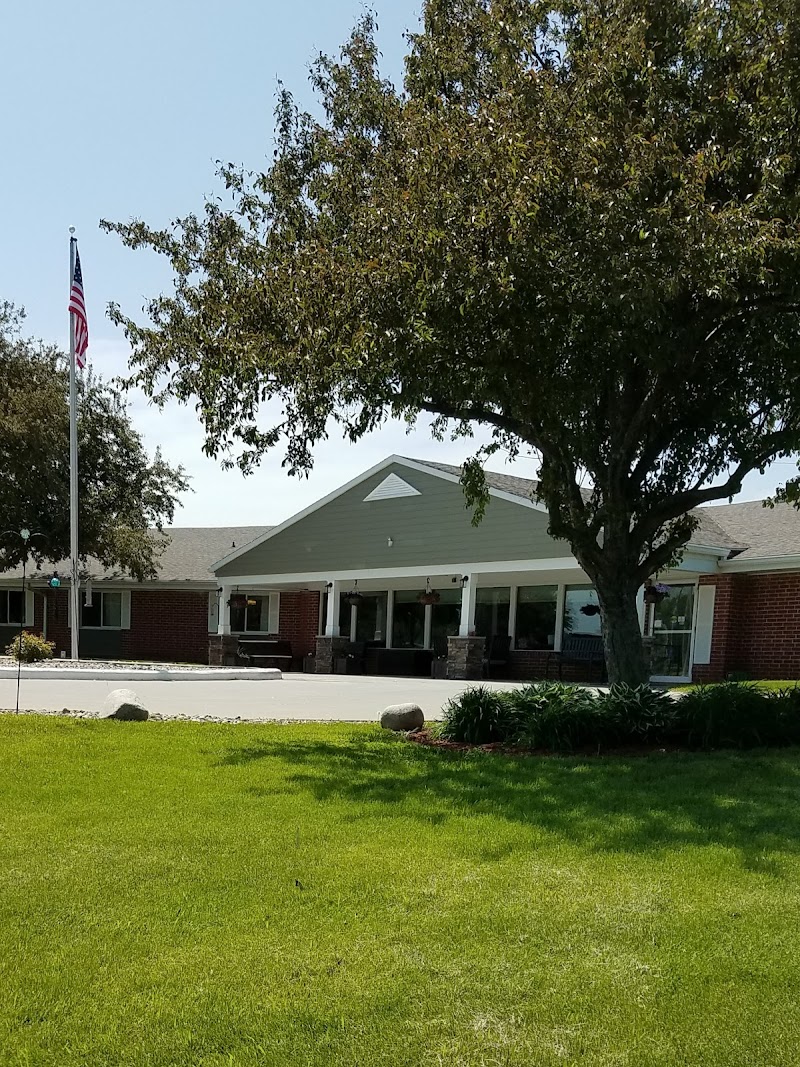
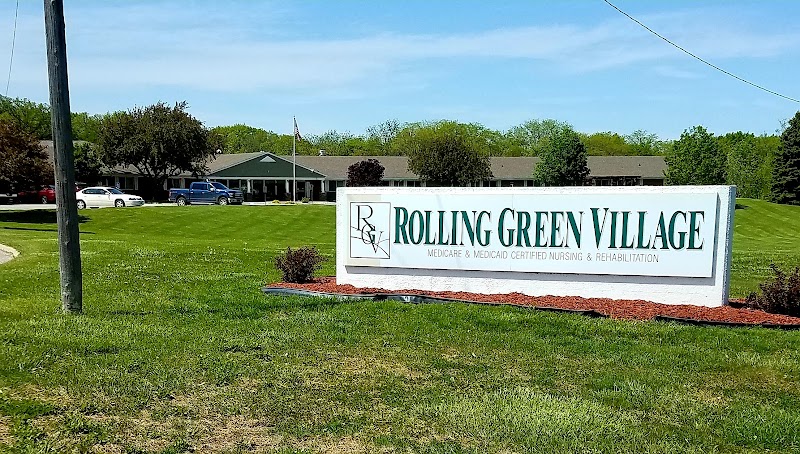
Rolling Green Village Care Center


100 SIXTH STREET, NEVADA, IA 50201 (515) 382-6556
For profit - Limited Liability company 58 Beds LEGACY HEALTHCARE Data: November 2025
Trust Grade
55/100
#225 of 392 in IA
Last Inspection: November 2024

Within standard 12-15 month inspection cycle. Federal law requires annual inspections.

Overview

Rolling Green Village Care Center in Nevada, Iowa, has a Trust Grade of C, which means it falls in the average range-neither great nor terrible. It ranks #225 out of 392 facilities in Iowa, placing it in the bottom half, and #6 out of 7 in Story County, indicating there is only one local option that is better. Unfortunately, the facility's performance is worsening, with the number of issues increasing from 5 in 2023 to 9 in 2024. While staffing is considered a strength with a 4 out of 5 star rating, the turnover rate is concerning at 59%, higher than the state average. Notably, there have been incidents where residents did not receive proper care for pressure ulcers, and there were days without adequate RN coverage, highlighting both strengths in staffing and significant areas needing improvement.

Trust Score
C
55/100
In Iowa
#225/392
Bottom 43%
Safety Record
Moderate
Needs review
Inspections
Getting Worse
5 → 9 violations
Staff Stability
⚠ Watch
59% turnover. Above average. Higher turnover means staff may not know residents' routines.
Penalties
✓ Good
No fines on record. Clean compliance history, better than most Iowa facilities.
Skilled Nurses
✓ Good
Each resident gets 51 minutes of Registered Nurse (RN) attention daily — more than average for Iowa. RNs are trained to catch health problems early.
Violations
⚠ Watch
15 deficiencies on record. Higher than average. Multiple issues found across inspections.
★★★☆☆
3.0
Overall Rating
★★★★☆
4.0
Staff Levels
★★★☆☆
3.0
Care Quality
★★★☆☆
3.0
Inspection Score
Stable
2023: 5 issues
2024: 9 issues

The Good

  • 4-Star Staffing Rating · Above-average nurse staffing levels
  • Full Sprinkler Coverage · Fire safety systems throughout facility
  • No fines on record

Facility shows strength in staffing levels, fire safety.

The Bad

3-Star Overall Rating

Near Iowa average (3.1)

Meets federal standards, typical of most facilities

Staff Turnover: 59%

13pts above Iowa avg (46%)

Frequent staff changes - ask about care continuity

Chain: LEGACY HEALTHCARE

Part of a multi-facility chain

Ask about local staffing decisions and management

Staff turnover is elevated (59%)

11 points above Iowa average of 48%

The Ugly 15 deficiencies on record

1 actual harm
Nov 2024 9 deficiencies 1 Harm
SERIOUS (G) 📢 Someone Reported This

A family member, employee, or ombudsman was alarmed enough to file a formal complaint

Actual Harm - a resident was hurt due to facility failures

Pressure Ulcer Prevention (Tag F0686)

A resident was harmed · This affected 1 resident

**NOTE- TERMS IN BRACKETS HAVE BEEN EDITED TO PROTECT CONFIDENTIALITY** Based on observation, interviews, record reviews and policy the facility failed to assess and treat a pressure ulcer for 2 of 2 ...

Read full inspector narrative →
**NOTE- TERMS IN BRACKETS HAVE BEEN EDITED TO PROTECT CONFIDENTIALITY** Based on observation, interviews, record reviews and policy the facility failed to assess and treat a pressure ulcer for 2 of 2 residents observed with pressure ulcers (Residents #9 and #50). Resident #50 documentation indicated the facility found their pressure wound on 11/1/24. Interviews determined hospice found the pressure wound before that date. The facility, hospice staff, and Resident #50's family had a meeting before the facility documented the pressure ulcer. At the meeting, hospice reported the got an order for heel protectors for Resident #50. Resident #50's clinical record lacked documentation of the order. When the facility reported the concern to the physician, the directed to monitor the wound. Resident #50 reported she didn't like the boots because they made her feet hot. Resident #50's heel pressure ulcer declined and the facility failed to intervene to prevent the decline. Resident #9 had a pressure ulcer to their buttock. The nurse failed to provide clean technique while completing the wound treatment. The facility reported a census of 47 residents. Findings included: 1. Resident #50's Minimum Data Set (MDS) assessment dated [DATE] included diagnoses of anemia (low iron levels in the blood), atrial fibrillation (abnormal heart rate), hypertension, and demyelinating disease of the central nervous system (protective tissue surrounding special cells are damaged and disrupting the transmission of signals). The MDS indicated Resident #50 had a risk for a pressure ulcer, but didn't have one at the time of assessment. The Care Plan Focuses with a target date of 1/16/25 indicated: a. Resident #50 elected hospice services. The Interventions directed the following: i. Coordinate her care with hospice services to keep her as comfortable as possible. ii. May experience expected skin breakdown due to terminal disease process, poor nutrition, weight loss and decreased mobility, may be diagnosed with a Kennedy ulcer (occurs is some near final weeks of life) due to my terminal diagnosis. Skin issues are not expected to heal due to terminal disease process, poor nutrition, perfusion and decreased mobility. b. Resident #50 had a risk for alteration in skin integrity related to falls from terminal restlessness, altered skin integrity related to a terminal diagnosis of demyelinating disease, limited mobility and the use of a mechanical lift. Updated 11/8/24 Left calf medial aspect 4.0 by 2.0 centimeters (cm), left cheek bruising 5.0 by 5.0 cm extends down along left jawline, bruising is yellow and fading, and right medial heel measures 4.0 by 5.0 cm dark red center stage 2 pressure ulcer - hospice notified. Resident #50 had heel boots present but she often removed them. The Goal indicated Resident #50 would not develop skin alterations out of her disease process and skin impairment would heal without complications. The Interventions directed to use pillows/position devices as needed. The Skin Condition Note dated 11/1/24 indicated Staff E, Licensed Practical Nurse (LPN) completed Resident #50's weekly skin check, which revealed a right medial heel stage 2 pressure ulcer measuring 2.5 by 2.0 cm. The physician responded to continue to monitor. The Skin Condition Note dated 11/8/24 reflected Staff E completed the weekly skin check which revealed Resident #50's right heel stage 2 pressure ulcer measured 4.0 x 5.0 cm with a dark red center. Resident #50 remained on hospice level of care, heel boot present but she removed them often. Staff E placed a mepilex (dressing) to her right heel for protection and she alerted hospice to provide more. The Physician responded on 11/11/24 to continue to monitor. On 11/13/24 at 3:05 PM Staff C, Registered Nurse, reported they checked the Treatment Administration Record (TAR), and remarked it didn't have a treatment for Resident #50's right heel pressure ulcer. During an interview on 11/13/24 at 3:24 PM Resident #50's Power of Attorney (POA) voiced they had a meeting about two weeks before (10/30/24) with family, hospice, and the facility staff. They discussed the heel concern and hospice brought heel protectors. The POA reported she understood they had something new on order since Resident #50 wouldn't wear the heel protectors. On 11/13/24 at 3:25 PM Resident #50 acknowledged she didn't like to wear the heel protectors, as they made her feet hot. Resident #50 added that it would be nice if a doctor looked at her heel. She couldn't recall if it had a covered dressing or treatments. During an observation on 11/13/24 at 3:30 PM Staff C, Registered Nurse (RN), measured Resident #50's heel wound and reported it measured 1.5 by (x) 2.2 x 0.1 cm depth. They cleansed the wound and covered it with a mepilex dressing. Staff C said the TAR should include the heel boots, but it didn't. Staff C stated the previous Sunday they recalled the heel as dry with a darkened area, flat and reported the measurements in the skin book are much larger. They didn't appear accurate from their recalled comparison. Staff C explained the wound opened, they didn't have a treatment order and they should. During an interview on 11/14/24 at 1:35 PM Staff E stated they first saw the heel wound on 11/1/24. At that time, they measured, documented left medial heel, 2.5 x 2 cm stage 2, indicated the wound as open, notified the physician via fax, and alerted Staff D, Hospice RN, verbally. Staff E reported they didn't get any treatment orders and the Physician, directed to continue to monitor. Further interview, record review and discussion on 11/14/24 at 1:38 PM with LPN, Staff E included review of weekly skin record. LPN, Staff E acknowledged had measured the wound again on 11/8/24 noted increased size, stage II (two) measured 4.0 x 5.0 centimeters, dark red center, recorded placed mepilex (dressing) on for protection and alerted hospice to provide more direction. LPN, Staff E relayed, should not of staged the wound, is not qualified to do so as an LPN, relayed had staged as two since wound was open. Relayed updated Physician, Staff F and responded again to the updated measurements on 11/11/24 continue to monitor. During an interview on 11/14/24 at 3:00 PM, Staff D reported they documented in her hospice notes and acknowledged the following: a. On 10/29/24 suspected deep tissue injury, deep purple, obtained a physician order for the protective heel boots. b. On 10/31/24 met with family, the heel was intact, reddened, ensured a written order to the facility nurse for the heel protectors that didn't get transcribed to the TAR. c. On 11/11/24 obtained an order to cover wound with mepilex dressing, gave the order to the nursing facility staff, and again not transcribed to the TAR, and the order couldn't be located. d. On 11/12/24 measure the heel wound at 3 x 2.5 x .0.2 cm depth. e. On 11/14/24 at 3:05 PM, Staff D acknowledged the wound depth increased. They thought the facility should have transcribed the orders to the TAR. During an interview on 11/13/24 at 3:50 PM the Assistant Director of Nursing (ADON) acknowledged they only monitored the Stage 2 pressure ulcer weekly per the weekly skin book. The ADON verified Resident #50 had heel boots in her room, but no treatment orders. During an interview on 11/13/24 at 3:50 PM the Administrator acknowledged Resident #50 had a stage 2 pressure ulcer to her heel. They added the physician ordered to just monitor the wound and they wouldn't override a doctor's order. On 11/14/24 at 3:13 PM the ADON stated they have a process, when hospice got an order they give the written note to a facility nurse. Two nurses verify the order and add it to the electronic TAR. The ADON couldn't explain why the orders didn't get transcribed for the heel protectors or the mepilex dressing. The ADON expressed she trusted Staff D gave the orders to the facility nurse. The facility didn't provide a policy for pressure ulcer treatments. 2. Resident #9's Minimum Data Set (MDS) assessment dated [DATE] identified a Brief Interview for Mental Status (BIMS) score of 13, indicating intact cognition. The MDS included diagnoses of heart disease, respiratory failure, metabolic encephalopathy (brain dysfunction due to problems with the metabolism) and depression. The MDS documented Resident #9 had a pressure ulcer. Resident #9 November 2024 TAR included an order dated 11/13/24 apply a Hydrofiber (soft, absorbent material that transforms into a gel on contact with wound fluid) with bordered foam dressing to change on Monday, Wednesday and Friday for skin healing. On 11/13/24 at 9:40 AM, observed Resident #9 lying on her side. Staff C explained they sanitized their hands, put on gloves, and removed the coccyx dressing. Staff C cleansed the coccyx wound with dermal (skin) cleanser, cut the hydro fiber, and placed it on the wound, labeled the dressing with a pen and applied it to Resident #9's coccyx. During the treatment, Staff C didn't complete hand hygiene between removing the old dressing and applying the ordered treatment. In an interview on 11/13/24 at 10:32 AM following Resident #9's coccyx wound treatment, Staff C reiterated the treatment process and verified they should have sanitized their hands before placing the new dressing on. In an interview on 11/13/24 at 3:00 PM the ADON acknowledged hand hygiene is standard practice after removing an old dressing, after taking off gloves, and prior to putting on gloves. The Infection Prevention and Control policy revised 7/31/24 instructed staff to perform hand hygiene before and after direct patient contact and after each situation that necessitates hand hygiene. To complete the hand hygiene, they will use an alcohol -based hand rub or hand washing for 20 seconds.
CONCERN (D)

Potential for Harm - no one hurt, but risky conditions existed

Comprehensive Care Plan (Tag F0656)

Could have caused harm · This affected 1 resident

**NOTE- TERMS IN BRACKETS HAVE BEEN EDITED TO PROTECT CONFIDENTIALITY** Based on clinical record review and staff interviews, the facility failed to develop and implement a comprehensive person center...

Read full inspector narrative →
**NOTE- TERMS IN BRACKETS HAVE BEEN EDITED TO PROTECT CONFIDENTIALITY** Based on clinical record review and staff interviews, the facility failed to develop and implement a comprehensive person centered Care Plan for 1 of 14 residents reviewed for Care Plans (Resident #8). The facility reported a census of 47 residents. Findings include: Resident #8's Minimum Data Set (MDS) assessment dated [DATE] indicated they had symptoms of feeling down, depressed or hopeless for several days during the lookback period. The MDS included diagnoses of medically complex conditions and depression. The MDS reflected Resident #8 took an antidepressant during the lookback period. Resident #8's Medical Diagnoses reviewed on 11/14/24 listed diagnoses of major depressive disorder, recurrent, in partial remission. Resident #8's November 2024 Medication Administration Record (MAR) included the following orders: a. Bupropion HCI ER (antidepressant) oral tablet 150 milligrams (mg) related to Major Depressive Disorder b. Fluoxetine HCI (antidepressant) oral capsule 40 mg, related to Major Depressive Disorder c. Risperidone (antipsychotic) oral tablet 0.5 mg, two times daily, related to Major Depressive Disorder. Resident #8's Care Plan with a target date of 1/15/25, lacked information related to their mood or antipsychotic medications. During an interview on 11/14/24 at 8:00 AM, the MDS Coordinator explained they expected the Care Plan contain a Focus and Interventions for Resident #8's antidepressant medications, mood, and behaviors. The MDS Coordinator stated the Care Plan should include that, but verified it didn't. During an interview on 11/14/24 at 8:13 AM, the Administrator stated the facility didn't have a policy on Care Plans, as they followed standard practices.
CONCERN (D)

Potential for Harm - no one hurt, but risky conditions existed

Deficiency F0657 (Tag F0657)

Could have caused harm · This affected 1 resident

**NOTE- TERMS IN BRACKETS HAVE BEEN EDITED TO PROTECT CONFIDENTIALITY** Based on clinical record review, staff interviews, and policy review the facility failed to revise a Care Plan for 1 of 15 resid...

Read full inspector narrative →
**NOTE- TERMS IN BRACKETS HAVE BEEN EDITED TO PROTECT CONFIDENTIALITY** Based on clinical record review, staff interviews, and policy review the facility failed to revise a Care Plan for 1 of 15 residents reviewed (Residents #47). The facility reported a census of 47 residents. Findings include: Resident #47's Minimum Data Set (MDS) assessment dated [DATE] identified a Brief Interview for Mental Status (BIMS) score of 15, indicating intact cognition. The MDS identified Resident #47 required set up or clean up assistance with eating. Resident #47's MDS included diagnoses of hypertension (high blood pressure), traumatic brain injury, and dysphagia (difficulty with swallowing). The MDS documented Resident #47 received a mechanically altered diet that required a change in texture of food or liquids. A Physician diet order dated 7/22/24 directed staff to administer a mechanical soft diet with pureed meats with all solids cut into bite size pieces, only soft canned vegetables or fruit, no lettuce or cabbage unless pureed and honey consistency liquids. The Share Negotiated Risk Agreement dated 10/21/24 documented Resident #47 received a pureed diet with thickened liquids. Resident #47 requested to have a regular diet with no thickened liquids. The form indicated Resident #47 and the Power of Attorney (POA) knew he would have a risk for aspiration (food, liquid, or other material accidentally enters a person's airway or lungs) and death by not following the speech recommended diet. The form documented the final agreement as Resident #47 to receive a regular diet with regular consistency liquids per his request. Resident #47 signed the form, POA, facility Administrator on 10/21/24. The Physician documented a hand-written note on the form dated 10/24/24 that Resident #47 was at a very high risk of aspiration and rehospitalization. The Physician recommended to stay on speech recommended pureed diet and thickened liquids. The Care Plan Focus with a target date of 12/25/24 reflected Resident #47 had a potential for nutritional risk related to dysphagia (difficulty swallowing) and the need for a mechanical altered diet. The Care Plan Interventions directed staff to administer a mechanical soft diet with puree meats, lettuce, and cabbage. In addition, the Care Plan directed the staff to cut all of his food into bite sized pieces, serving only canned fruit/vegetables, and honey thickened liquids in a nosey cup (cup with a cut out allowing it to tip farther without hitting the face). The Care Plan lacked information related to the shared negotiated risk agreement. On 11/14/24 at 8:35 AM, the MDS Coordinator verified the Care Plan didn't address the Shared Negotiated Risk Agreement, but she would update the Care Plan. On 11/14/24 at 8:45 AM, the Nurse Consultant reported the facility didn't have a Care Plan policy. She stated the facility followed the standard nursing practice and the Resident Assessment Instrument (RAI) manual when updating the Care Plan.
CONCERN (D)

Potential for Harm - no one hurt, but risky conditions existed

Deficiency F0658 (Tag F0658)

Could have caused harm · This affected 1 resident

**NOTE- TERMS IN BRACKETS HAVE BEEN EDITED TO PROTECT CONFIDENTIALITY** Based on clinical record review, resident and staff interview, the facility failed to meet professional standards of quality for...

Read full inspector narrative →
**NOTE- TERMS IN BRACKETS HAVE BEEN EDITED TO PROTECT CONFIDENTIALITY** Based on clinical record review, resident and staff interview, the facility failed to meet professional standards of quality for services provided during medication administration for 1 of 1 resident reviewed (Resident #51). The facility reported a census of 47 residents. Finding include: Resident #51's Minimum Data Set (MDS) assessment dated [DATE], identified a Brief Interview for Mental Status (BIMS) score of 15, indicating intact cognition. The MDS included diagnoses of medically complex conditions, anemia (low iron levels in the blood), atrial fibrillation (abnormal heart rate), hypertension (high blood pressure), renal insufficiency (poor kidney function), diabetes mellitus, hyperlipidemia (elevated type of cholesterol), seizure disorder, respiratory failure and metabolic encephalopathy (brain dysfunction due to problems with the metabolism). The Incident Report - Medication Event dated 11/2/24 at 7:21 PM identified Resident #51 received another resident's (Resident #46) supper and hour of sleep (HS) medications. During an interview on 11/13/24 at 1:45 PM, the Administrator stated she completed an internal investigation regarding Resident #51's medication error. The Administrator provided a copy of the internal investigation. The Administrator stated Staff K, Certified Medication Assistant (CMA), who gave Resident #51 the incorrect medications no longer worked at the facility. She left the faciity on her own on the night of the incident. The Administrator explained Staff K was in training and only worked at the facility for a few days. Staff L, CMA, who trained her, still worked at the facility. They gave her a written disciplinary action, required her to take additional training on medication administration, and the Assistant Director of Nursing (ADON) conducted a medication audit. Staff L worked at the facility for approximately one year. During an interview on 11/14/24 at 10:25 AM, the Administrator stated Resident #51's medication error, identified a concern with the broken process of Staff L providing orientation to Staff K and her not knowing her training or following professional standards with the 5 rights. Staff L should have given the medications as she is the one who got them ready, or she should have gone into the room with Staff K to observe her give the medication. The Administrator stated they expected the right resident received the medication as prescribed. The Administrator stated they didn't have a policy for medication administration, as they followed professional standards. During an interview on 11/14/24 at 11:07 AM, Staff K, Certified Medical Assistant (CMA), explained it was only her second day in training at the facility and when Staff L, another CMA, trained her, they worked the 2 PM to 10 PM shift. Staff K stated she started the shift by observing Staff L pass medications. Around supper time Staff L started having Staff K give residents their medications. Staff L put the medications in the cup, then told Staff K to go and give it to the resident. She told Staff K who the resident was and where they were. Staff K stated because she didn't know the residents, she felt uncomfortable with this process as Staff L didn't go with her to give the medications. Staff K stated she gave some residents their medications while they were in the dining room. Staff L told her what color of hair they had and to find them based on their hair color, name, and where they sat. Staff K stated she got frustrated and concerned because she wasn't the one putting the medications in the container and she didn't know the residents. Staff K stated Staff L seemed frustrated with her because she kept asking questions. She added she didn't know the residents and Staff L didn't go with her. Staff K no longer worked at the facility as that was her last night at the facility. During an interview on 11/14/24 at 11:30 AM, Resident #51 and her husband recalled the night of 11/2/24 when Resident #51 received another resident's medication. A CMA, whom they never met before, came into the room then went up to Resident #51 and said she had her medications. The CMA didn't ask Resident #51 her name. Resident #51 said she asked the CMA what the medications were as she hadn't got medications that looked like that before. The CMA said she didn't know what the medications were. The CMA gave Resident #51 the medications with just water. Resident #51 said she had a hard time swallowing them as she usually got her medication with applesauce. Resident #51 said she started to gag on the medications and the CMA patted her on the back, then went to get her applesauce. The CMA came back to the room with the applesauce and then tried to give Resident #51's husband a cup of medications. Resident #51's husband said he told the CMA he wasn't a resident there and then she left the room. Resident #51 and her husband stated they feel the facility administration handled the incident well after finding out what happened. They said this never should have happened and said it is their policy for the person who signed out the medication be the person who gave the medication. During an interview on 11/14/24 at 12:00 PM, Staff L reported she trained Staff K on the night of 11/2/24. She added that night was Staff K's second night working at the facility. She trained Staff K the first night, and Staff K shadowed her that night. When asked to talk about the training process and how she trained Staff K, Staff L stated she didn't want to talk about it. She said she messed up, made a mistake, and learned a valuable lesson. She said she didn't follow the 6 rights and she should have. Staff L stated she gave Staff K medications to give to residents, without having Staff L put the medications in the cup herself and didn't go with her to ensure she gave the medication to the correct resident. Staff L stated she gave Staff K several resident medications that night, however couldn't give a specific number of residents she gave medication for Staff K to give. Staff L stated they were in the [NAME] hallway and she gave Staff K medication to at least one resident in the dining room, telling her what the resident looked like, but didn't go with her to give the resident the medication. Staff L stated she knew she didn't follow what she was supposed to follow and made a mistake. She said she put the medications for a resident in a cup with Staff K standing next to her, then gave the cup to Staff K. Staff L told her where to find the resident. Staff L stated she didn't feel like she needed to hold Staff K's hand. Staff L stated she didn't want to talk any further about the incident when asked what training she received before and after the incident. During an interview on 11/14/24 at 12:30 PM, Staff M, CMA, recalled working the night of 11/2/24. She recalled Staff L trained Staff K and it was Staff K's second night in training. Staff M stated at one point in the evening, before and around super time, she and Staff L had their medication carts side by side by the beauty shop in the hallway. Staff M heard Staff K say she wasn't ready to put the medications in the cups herself or give them herself, as she wanted to observe more with Staff L. Staff M stated Staff L showed Staff K the Medication Administration Record (MAR) and Staff K stood next to Staff L, when Staff L put the medication in a cup for a resident. Staff M stated Staff L gave Staff K medications for residents while they were still in the dining room and wouldn't go with her to give the medication to the resident. However, Staff L gave Staff K a description of the resident and she saw their picture on the MAR. Staff L would write the name of the resident on the medication cup. Staff L also gave Staff K medication to give to residents in their room in the [NAME] hallway. Staff L told Staff K the name of the resident and their room number. Staff M heard Staff L talk to Staff K about Resident #46's medication, that she was in room [ROOM NUMBER], and married. Staff L didn't go with Staff K to room [ROOM NUMBER] to give Resident #46 her medication. Staff M heard about Staff K giving Resident #51 the medication meant for Resident #46.
CONCERN (D)

Potential for Harm - no one hurt, but risky conditions existed

Accident Prevention (Tag F0689)

Could have caused harm · This affected 1 resident

**NOTE- TERMS IN BRACKETS HAVE BEEN EDITED TO PROTECT CONFIDENTIALITY** Based on observation, record review, facility policy review, resident, and staff interview the facility failed to keep a residen...

Read full inspector narrative →
**NOTE- TERMS IN BRACKETS HAVE BEEN EDITED TO PROTECT CONFIDENTIALITY** Based on observation, record review, facility policy review, resident, and staff interview the facility failed to keep a resident's environment free from accidents and hazards by not storing the resident's smoking materials in a secured location for 1 of 1 resident reviewed for smoking (Resident #30). The facility reported a census of 47 residents. Findings include: Resident #30's Minimum Data Set (MDS) assessment dated [DATE] identified a Brief Interview for Mental Status (BIMS) score of 15, indicating intact cognition. Resident #30 used a wheelchair for mobility. The MDS further documented the resident had diagnoses to include diabetes, arthritis, Parkinson's disease, chronic obstructive pulmonary disease (COPD), and pulmonary fibrosis. Resident #30 reported shortness of breath with exertion and while lying flat. The MDS described Resident #30 as a current tobacco use. The Care Plan Focus with a target date of 12/26/24 indicated Resident #30 preferred to smoke. The Goal reflected Resident #30 would follow the facility guidelines for smoking in designated smoking areas and wouldn't sustain significant smoking related injuries. The Care Plan Interventions identified Resident #30 could exit and re enter the facility independently. They stored his smoking supplies at the nurse's station. If Resident #30 failed to let staff keep his smoking supplies at the nurse's station he could lose his smoking privileges. Resident #30 had a history of being non-compliant at times with the smoking practices outlined in the Care Plan. He would move the extinguishing receptacles and smoke beyond the boundaries of the designated smoking area. If staff observe those issues, they should intervene and ask him to comply. A Smoking assessment dated [DATE], indicated the facility educated Resident #50 about the risks of smoking. Resident #50 could light his cigarettes safely, hold the cigarette safely, put ashes in the ashtray, extinguish the cigarette safely, exhibited safety awareness when smoking, didn't have burn holes in clothing, and had no evidence of blisters or burns on his fingers. The facility approved his smoking privileges and allowed Resident #50 to smoke independently. He could exit and enter the facility independently. In addition, Resident #50 needed to store his smoking materials at the nurse's station, especially important because of oxygen in his room. Failure to keep the smoking supplies at the nurse's station may result in loss of his smoking privileges. On 11/13/24 at 10:20 AM, observed Resident #30 seated in his recliner in his room, remove his oxygen, ambulate to his motorized wheelchair, and put on his coat to go outside to smoke. Resident #30 independently exited the facility out the front door and located himself by the smoking receptacle. He removed a pack of cigarettes from his pocket in the front of his bib overalls. The pack of cigarettes contained several cigarettes and a lighter. Resident #30 removed 1 cigarette, the lighter, and safely lit the cigarette. He returned the pack of cigarettes back to the pocket in his bib overalls. He smoked the cigarette, ashed, extinguished, and placed the butt in the receptacle appropriately. Resident #30 re entered the building independently and returned to his room. Resident #30 didn't obtain his smoking materials from the nurse's station nor did he return them to the nurse's station after he finished smoking. In an interview on 11/12/24 at 3:17 PM, Resident #30 reported he smoked 4 5 cigarettes per day and could smoke independently. He stated he either smoked out front or in the back of the facility, as both had smoking receptacles. He reported he used his motorized wheelchair to get to and from the smoking areas. He added he removed his oxygen in the room prior to going out to smoke. Resident #30 stated he kept his cigarettes and lighter in his possession. He reported the facility would like him to obtain and relinquish his smoking supplies to the nurse's station when he smoked but he felt he had to wait too long for the staff to get them so he rarely turned his supplies in. In an interview on 11/14/24 at 7:28 AM, Staff G, Certified Nursing Assistant (CNA), stated Resident #30 went to the nurse's station to get his smoking supplies and returned the smoking supplies to the nurse's station after he finished. Staff G stated Resident #30 didn't specifically ask her for the smoking supplies, he just asked whomever happened to be at the nurse's station at the time. Staff G stated Resident #30 did at times forget to turn in his smoking supplies. If the staff saw him come in without turning the supplies in, they stop him and ask him for them to return them to the nurse's station. In an interview on 11/14/24 at 7:33 AM, Staff H, Certified Medical Assistant (CMA), stated Resident #30 theoretically had to get his cigarettes and lighter from the nurse's station. She reported he didn't comply and kept his cigarettes on his person most of the time. Staff H stated the Director of Nursing (DON) and Administrator knew but Resident #30 was just non compliant most of the time. In an interview on 11/14/24 at 11:18 AM, Staff I, CNA, stated Resident #30 smoked independently and obtained his supplies from the nurse's station when he wanted to go out to smoke. Then he was to turn the smoking supplies back in after he finished smoking. Staff I stated she didn't know Resident #30 ever kept his cigarettes on him and didn't witnessed that behavior from him. In an interview on 11/14/24 at 1:07 PM, the Administrator stated any resident who smoked must have a Smoking Assessment completed. Resident #30 had to go to the nurse's station to obtain his cigarettes and lighter, then turn them back into the nurse's station when finished. They talked to Resident #30 about other options such as a lock box but he needed to store his smoking materials at the nurse's station at that time. In a facility provided policy titled Smoking Policy Notification with a revision date of September 2023 instructed the facility requested their cooperation in observing the facilities smoking policy, as it was a NON SMOKING facility. The authorized area(s) in the facility for permitted smoking is/are: The facility had no notations behind any of the above options.
CONCERN (D)

Potential for Harm - no one hurt, but risky conditions existed

Drug Regimen Review (Tag F0756)

Could have caused harm · This affected 1 resident

**NOTE- TERMS IN BRACKETS HAVE BEEN EDITED TO PROTECT CONFIDENTIALITY** Based on clinical record review, policy review and staff interview, the physician failed to respond to gradual dose recommendati...

Read full inspector narrative →
**NOTE- TERMS IN BRACKETS HAVE BEEN EDITED TO PROTECT CONFIDENTIALITY** Based on clinical record review, policy review and staff interview, the physician failed to respond to gradual dose recommendations (GDR) for 1 of 5 residents reviewed (Residents #9). The facility reported a census of 47 residents. Findings included: 1. Resident #9's Minimum Data Set (MDS) assessment dated [DATE] identified a Brief Interview for Mental Status (BIMS) score of 13, indicating intact cognition. The MDS included diagnoses of heart disease, respiratory failure, metabolic encephalopathy (brain dysfunction due to problems with the metabolism) and depression. The MDS documented Resident #9 received an antidepressant medication during the lookback period. The Care Plan Focus with a target date of 11/27/24 indicated Resident #9 used a psychotropic medication in the category of an antidepressant. The Intervention instructed to evaluate for GDR quarterly or as indicated. Resident #9's November 2024 Medication Administration Record (MAR) included the following psychotropic medications: a. Start date 3/25/24: Amitriptyline 25 milligrams (mg) tablet, by mouth one time a day for nerve pain. b. Start dated 3/26/24: Bupropion, 300 mg extended release 24-hour by mouth one time a day related to depression. The Pharmacy Review - GDR Request Psychotropic Medications dated 10/2/24 requested the provider access for possible GDR for amitriptyline 25 mg and Wellbutrin (bupropion) 300 mg. The physician responded they didn't agree with the recommendation and indicated they addressed this previously. Resident #9's clinical record lacked documentation of any other physician response to the GDR. On 11/14/24 at 2/26/24 PM the Administrator and the Assistant Director of Nursing (ADON) both acknowledged the facility should have documented a physician's response to pharmacy recommendations, but they couldn't locate the documents. The Medication Regimen Review policy, revised 8/16/24 directed the consultant pharmacist to review the medication regimen including psychotropic medication with considerations for dose reduction, potentially unnecessary medication usage, and required written communication intended for the attending physician. The facility would maintain the completed medication regimen consultation in the resident's clinical record. The facility is responsible for ensuring all clinical records are available for review.
CONCERN (D)

Potential for Harm - no one hurt, but risky conditions existed

Deficiency F0760 (Tag F0760)

Could have caused harm · This affected 1 resident

**NOTE- TERMS IN BRACKETS HAVE BEEN EDITED TO PROTECT CONFIDENTIALITY** Based on clinical record review, resident interview, staff interviews and policy review, the facility failed to ensure residents...

Read full inspector narrative →
**NOTE- TERMS IN BRACKETS HAVE BEEN EDITED TO PROTECT CONFIDENTIALITY** Based on clinical record review, resident interview, staff interviews and policy review, the facility failed to ensure residents are free of significant medication errors for 1 of 1 resident reviewed (Resident #51). During the orientation of one Certified Medication Aide (CMA), Staff K, the trainer gave the person in training resident's medications without ensuring they gave the medications to the correct resident. Due to it only being Staff K's second day of training she didn't know the residents and gave Resident #51, Resident #46's supper and hour of sleep medications (HS). The facility reported a census of 47 residents. Findings include: Resident #51's Minimum Data Set (MDS) assessment dated [DATE], identified a Brief Interview for Mental Status (BIMS) score of 15, indicating intact cognition. The MDS included diagnoses of medically complex conditions, anemia (low iron levels in the blood), atrial fibrillation (abnormal heart rate), hypertension (high blood pressure), renal insufficiency (poor kidney function), diabetes mellitus, hyperlipidemia (elevated type of cholesterol), seizure disorder, respiratory failure and metabolic encephalopathy (brain dysfunction due to problems with the metabolism). The Incident Report - Medication Event dated 11/2/24 at 7:21 PM identified Resident #51 received another resident's (Resident #46) supper and HS medications. Resident #46 November 2024 Medication Administration Record (MAR) reflected their supper and HS medications as: a. Donepezil HCI oral tablet, 10 milligrams (mg), related to mild cognitive impairment. b. Calcium Carbonate Vitamin D oral tablet with minerals, 600 800 mg unit, for bone health c. Potassium oral tablet, 99 mg, for nutritional supplement. During an interview on 11/13/24 at 1:45 PM, the Administrator stated she completed an internal investigation regarding the medication error with Resident #51. The Internal Investigation File included a progress note completed by Resident #51's primary care physician (PCP), dated 11/5/24. Under Chief Complaint/Nature of Presenting Problem section the PCP documented an acute visit to follow up on emergency department visit for hyperkalemia (elevated level of potassium in the blood). Under History of Present Illness, the PCP documented on 11/2/24 Resident #51 received a potassium supplement pill inadvertently (accidentally). She had mildly high potassium level in the hospital and this had been improving on labs. Her potassium level in the emergency department was 5.8, she received IV fluids and Lasix. When her potassium level normalized to 4.9, she discharge back to the facility. During an interview on 11/13/24 at 2:30 PM, Staff J, Advanced Registered Nurse Practitioner (ARNP), stated she worked with Resident #51's PCP in the same office and is Resident #51's ARNP at the facility. Staff J recalled when Resident #51 received another resident's medication in error, which included a potassium pill. Resident #51 already had high potassium levels, they did have her go in for lab work the following morning to check her potassium levels, which were slightly elevated, however they cannot definitively say the slight elevation happened because of the medication error. Staff J stated Resident #51 went to the emergency room previously for elevated potassium and they treated her for this. Her levels are good now. Staff J described the resident as physically okay, she didn't have symptoms of high potassium, and didn't require additional medical treatment or admission to the hospital. Staff J stated the 3 medications Resident #51 received in error were a low risk medication error, and didn't place the resident at high risk or high level of harm or death. During an interview on 11/14/24 at 10:25 AM, the Administrator stated they expected the right resident received the medication as prescribed. The Administrator stated they didn't have a policy for medication administration, as they followed professional standards, but they did have a policy for following physician orders. During an interview on 11/14/24 at 11:07 AM, Staff K, Certified Medical Assistant (CMA) explained Staff K stated Staff L, CMA, put medications in a cup and told her to go give it to the lady in the room they were in before, the lady with the husband. Staff L didn't go with her, and stayed with the medication cart, she couldn't see down the hallway where Staff K was going. Staff K stated she went into the room where she thought she should go and gave the lady the medications. The lady (Resident #51) started choking a little, Staff K slapped her on the back to help her and she coughed up the pills. Staff K asked Resident #51 if she wanted some applesauce with the medications and she said yes. Staff K went back to the medication cart and got some applesauce. Staff L then gave her another cup of medications and said these are for the husband. Staff K went back to the room and gave Resident #51 the applesauce and she swallowed the medications. Staff K then told to Resident #51's husband she had his medications. He told her he wasn't a resident at this facility. Staff K realized at this point she was in the wrong room and just gave Resident #51 the wrong medication. She went to room [ROOM NUMBER] next door to Resident #51's room and gave the man in that room the medication that she just tried to give to Resident #51's husband. She stated she tried to find Staff L to tell her what happened but said she couldn't find her. Resident #51 later told the charge nurse what happened and the charge nurse came to talk to Staff K. During an interview on 11/14/24 at 11:30 AM, Resident #51 and her husband recalled the night of 11/2/24 when Resident #51 received another resident's medication. A CMA, whom they never met before, came into the room then went up to Resident #51 and said she had her medications. The CMA didn't ask Resident #51 her name. Resident #51 said she asked the CMA what the medications were as she hadn't got medications that looked like that before. The CMA said she didn't know what the medications were. The CMA gave Resident #51 the medications with just water. Resident #51 said she had a hard time swallowing them as she usually got her medication with applesauce. Resident #51 said she started to gag on the medications and the CMA patted her on the back, then went to get her applesauce. The CMA came back to the room with the applesauce and then tried to give Resident #51's husband a cup of medications. Resident #51's husband said he told the CMA he wasn't a resident there and then she left the room. Resident #51 and her husband stated they visited with their daughter at the time and their daughter said she thought Resident #51 just got the wrong medication. No one came to the room to talk to them about this and then approximately 30 minutes later the charge nurse came in to start the feeding tube. They told her they thought Resident #51 received the wrong medication. The charge nurse said it needed to be reported and looked concerned. They called the doctor's office and watched Resident #51 throughout the night. Resident #51 stated she didn't feel any side effects from receiving the wrong medications and felt okay. She went to the Emergency Department the next morning for a flush and they got her potassium down. During an interview on 11/14/24 at 12:00 PM, Staff L reported she trained Staff K on the night of 11/2/24. Staff L stated she put Resident #46's supper and hour of sleep (HS) medications into a cup and gave the cup to Staff K. She then told her to give Resident #46 the medication. She described Resident #46 as the one who was married and told her the room number. Staff K indicated she knew who Staff L was talking about. Staff L stated she didn't go with Staff K and couldn't see her from where she stood by the medication cart. Staff L stated she still stood by the medication cart when Staff K returned and said she needed applesauce. Staff L then gave Staff K a cup of medication that she prepared while Staff K was gone for her to take to Resident #46's husband, Resident #45. Staff L stated she didn't go with Staff K to give the medication. Staff L didn't recall talking to Staff K again that night. The Physician Orders policy, revised 8/16/24, instructed all resident medications must be in accordance to the licensed physician's orders. The facility shall ensure to follow physician orders.
CONCERN (D) 📢 Someone Reported This

A family member, employee, or ombudsman was alarmed enough to file a formal complaint

Potential for Harm - no one hurt, but risky conditions existed

Deficiency F0761 (Tag F0761)

Could have caused harm · This affected 1 resident

Based on observation and staff interview, the facility failed to discard expired stock medications to avoid compromising the integrity of the medications. The facility reported a census of 47 resident...

Read full inspector narrative →
Based on observation and staff interview, the facility failed to discard expired stock medications to avoid compromising the integrity of the medications. The facility reported a census of 47 residents. Findings include: On 11/13/24 at 2:35 PM observed the medication room across from the nurses' station with Staff B, Licensed Practical Nurse (LPN). The room contained the following expired items: a. 1 unopened bottle of Rubbing Alcohol 70%, 16 fluid ounces with an expiration date of March 2024. b. 1 unopened box of Assure Prism Blood Glucose Monitoring System with an expiration date of 8/25/24 c. 2 unopened bottles of Geri Dryl (similar to Benadryl) Allergy Relief with an expiration date of September 2024. In an interview on 11/13/24 at 3:10 PM, the Assistant Director of Nursing (ADON) stated she didn't know if they had a facility policy related the prevention of expired stock medications in the medication storage area but she would implement one if they didn't. She stated she expected the staff to discard all expired medications, so the staff didn't use or give them to the residents. On 11/14/24 at 11:44 AM, the Administrator reported the facility didn't have a policy relating to expired medications.
CONCERN (D) 📢 Someone Reported This

A family member, employee, or ombudsman was alarmed enough to file a formal complaint

Potential for Harm - no one hurt, but risky conditions existed

Deficiency F0805 (Tag F0805)

Could have caused harm · This affected 1 resident

Based on clinical record review, menu review, observations, staff interviews, and policy review the facility failed to provide residents food in a form to meet the needs of 2 of 6 residents (Resident ...

Read full inspector narrative →
Based on clinical record review, menu review, observations, staff interviews, and policy review the facility failed to provide residents food in a form to meet the needs of 2 of 6 residents (Resident #51 and #50). The facility reported a census of 47 residents. Findings include: A Physician diet order dated 10/24/24 for Resident #51 directed staff to administer a mechanical soft, ground meat diet. A Physician diet order dated 11/6/24 for Resident #50 directed staff to administer a mechanical soft texture diet. A facility menu titled Week 3 Wednesday documented the noon meal for a mechanical soft diet included a ground steak sandwich with grilled onion, potato salad with no raw vegetables, cooked broccoli cuts and maraschino cherry cake. On 11/13/24 at 11:20 AM, prior to the start of the noon meal service, observed the steam table didn't contain ground steak meat. The observation of the steak meat revealed various sizes of cut up meat. On 11/13/24 observations during the noon meal service revealed Staff A, Cook, prepared a steak sandwich with cut up meat for Resident #51. They served Resident #51 the non ground steak sandwich on a room tray. During the middle of the meal service, Staff A took several servings of the cut-up steak meat out of the steam table, grounded the meat using a robot coupe and returned the ground meat to the steam table. As the meal service continued, Staff A prepared and plated a steak sandwich with cut up meat (non ground) for Resident #50. Staff A placed it on a tray on the food cart. At 12:22 PM, the Dietary Manager intervened and stated she couldn't let the food trays leave the kitchen. She stated Resident #50's sandwich wasn't prepared with ground meat. Staff A removed Resident #50's plate from the food cart and acknowledged Resident #50's sandwich as prepared with cut up meat and not ground meat. Staff A prepared a new sandwich with ground meat for Resident #50. The Dietary Manager agreed if she didn't intervene Resident #50 would have received non ground meat. On 11/13/24 at 12:30 PM, the Dietary Manager reported she expected the staff to follow the menu and grind the meat as indicated on the menu. On 11/13/24 at 12:40 PM, Staff A reported she forgot to prepare the ground meat prior to the start of meal service. Staff A said when she prepared Resident #51's food tray she chopped up the food into small pieces in the pan before serving it. Staff A reported she made a mistake and overlooked the ground meat for Resident #50. On 11/13/24 at 12:45 PM, Resident #51 and her husband reported she had a sandwich with meat pieces for lunch. Resident #51's husband reported his wife shouldn't have a mechanically soft diet, as his wife could chew her meat with no problems. Resident #51 said she could chew her meat without difficulty. Resident #51's husband said he took his wife to a local restaurant the previous night and she ate chicken on the bone without difficulty. Resident #51 said she ate the chicken off the bone and didn't have any problems with chewing or swallowing. Resident #51 said she hasn't choked on her food. Resident #51 and her husband said a staff member comes to the room and provides supervision while she eats. Resident #51 and her husband said the meat was in smaller pieces that day for lunch. Resident #51 reported she ate all of her lunch, stating it was good and she had no difficulty swallowing or chewing. On 11/13/24 at 2:30 PM, the Dietary Manager provided a counseling form signed by Staff A on 11/13/24. The form indicated the problem was ensuring proper diets are prepared before meal service and to double check the correct diets are served. The form documented Human Resources would assign an online course to Staff A regarding proper food service procedures. The Altered Textured Diet Orders policy revised April 2012 instructed diet orders for residents requiring altered textures for chewing and swallowing problems, be written in a standardized language to specify the appropriate consistency of food and fluids to meet residents' safety, tolerance, and preferences.
Oct 2023 5 deficiencies
CONCERN (D) 📢 Someone Reported This

A family member, employee, or ombudsman was alarmed enough to file a formal complaint

Potential for Harm - no one hurt, but risky conditions existed

Deficiency F0658 (Tag F0658)

Could have caused harm · This affected 1 resident

**NOTE- TERMS IN BRACKETS HAVE BEEN EDITED TO PROTECT CONFIDENTIALITY** Based on clinical record review, observation and staff interviews, the facility failed to supervise administration of medication...

Read full inspector narrative →
**NOTE- TERMS IN BRACKETS HAVE BEEN EDITED TO PROTECT CONFIDENTIALITY** Based on clinical record review, observation and staff interviews, the facility failed to supervise administration of medication according to accepted standards of clinical practice for 2 of 6 residents reviewed for medication administration (Residents #15 and #188). The facility reported a census of 37 residents. Findings include: 1. The Minimum Data Set (MDS) dated [DATE] documented Resident #15 had a Brief Interview for Mental Status (BIMS) of 5 out of 15 indicating severely impaired cognition. The MDS further documented the resident had diagnoses to include non-Alzheimer's dementia. The Care Plan with a target date 12/14/23 documented Resident #15 had impaired cognition such as impaired short term/long term memory, being easily confused, disorientation to person, situation and needing assist with decisions. The Care Plan had a goal the resident would accept redirection when confused. Review of Resident #15's October 2023 Medication Administration Record (MAR) revealed the following order: a. Miralax Oral Powder 17/grams (GM) 1 scoop one time a day for constipation with a start date 9/8/23 at 7:00 AM. On 10/25/23 at 8:17 AM observed Staff B, Certified Medication Aide (CMA) turn around while administering medication to Resident #27 in the dining room and ask Resident #15 if he would drink more of his drink for her. Staff were not present at the table with Resident #15. At 8:18 AM after completing her medication pass to Resident #27 while exiting the dining room, Staff B revealed Resident #15 had been drinking Miralax. Observation 10/25/23 at 8:28 AM revealed 3/4 cup of Miralax mixture remained sitting in front of Resident #15 at the table in the dining room without staff present. Two other residents were also present at the dining room table. During an interview on 10/25/23 at 08:20 AM, the Director of Nursing (DON) acknowledged Resident #15 had been drinking Miralax unsupervised after seeing the Miralax mixture in the cup in front of the resident and stated the resident should have been supervised by the staff member that passed the medication. 2. The MDS dated [DATE] documented Resident #188 had a BIMS of 15 out of 15 indicating intact cognition. The MDS further documented the resident had a diagnosis of mild intellectual abilities and cerebral palsy. The Care Plan with a target date 12/07/2023 documented Resident #188 had impaired cognition and needed assistance with decisions, had difficulty in understanding/being understood and had some forgetfulness. Review of Resident #188's October 2023 MAR documented the following order: a. Arginaid two times a day for skin healing with a start date 10/20/23 at 2:00 PM. Observation on 10/25/23 at 8:08 AM revealed Staff B, CMA left 3/4 cup of water containing the Arginaid with Resident #188 at the dining room table with 3 other residents present. Staff B encouraged the resident to drink more of the mixture and then walked away from the table and left the dining room. No other staff were present at the table. Observation on 10/25/23 at 8:20 AM revealed 1/4 cup of Resident #188's Arginaid mixture remained at the dining room table and the resident was no longer present. After being shown the mixture the DON acknowledged the supplement particles present and planned to check on a policy with the corporate nurse. During an interview on 10/26/23 at 8:37 AM, the Administrator revealed residents should be supervised when administered medication. During an interview, on 10/26/23 at 8:43 AM the DON revealed any medicine broken or placed in water should be supervised by the person that passed the medication. During an interview on 10/26/23 at 10:51 AM the Nurse Consultant revealed the facility does not have a medication administration policy, does not have an audit form for medication administration, and does not have a form they use as part of orientation to audit staff for medication administration. The Nurse Consultant further stated the staff know how to pass medications by being trained by facility staff or nurse consultants coming in and observing the process.
CONCERN (D) 📢 Someone Reported This

A family member, employee, or ombudsman was alarmed enough to file a formal complaint

Potential for Harm - no one hurt, but risky conditions existed

Respiratory Care (Tag F0695)

Could have caused harm · This affected 1 resident

**NOTE- TERMS IN BRACKETS HAVE BEEN EDITED TO PROTECT CONFIDENTIALITY** Based on observation, record review, and staff interview the facility failed to ensure each resident received necessary respirat...

Read full inspector narrative →
**NOTE- TERMS IN BRACKETS HAVE BEEN EDITED TO PROTECT CONFIDENTIALITY** Based on observation, record review, and staff interview the facility failed to ensure each resident received necessary respiratory care and services in accordance with professional standards of practice as the facility failed to obtain a physician's order for a continuous positive airway pressure (CPAP) and failed to ensure proper cleaning and storage of the CPAP machine, tubing, and mask for 1 of 3 residents (Resident #15) reviewed. Facility reported a census of 37 residents. Findings include: A Minimum Data Set (MDS) dated [DATE] for Resident #15, included diagnoses of Non-Alzheimer's Dementia and Obstructive Sleep Apnea. A Brief Interview for Mental Status (BIMS) score of 5 out of 15 indicated severe cognitive impairment for decision making. Observation and interview on 10/24/23 at 2:48 PM, a CPAP, mask and tubing were sitting on Resident #15's end stand. The resident stated he wears the CPAP at night as the CPAP helps him sleep better, the staff have to help him put the CPAP on, and he denied that the staff clean the mask and tubing. Resident #15's Physician Orders lacked an order for a CPAP or cleaning and storage of a CPAP, tubing, and mask. Interview on 10/24/23 at 2:55 PM, Staff D, Certified Nurse Aide (CNA) stated she works the evening shift and Resident #15 wears a CPAP when he goes to bed. Staff D stated the resident puts the CPAP on or the nurse helps him with the CPAP. Interview on 10/25/23 at 11:12 AM, Staff E, CNA on day shift, stated Resident #15 wears a CPAP at night and removes the CPAP in the morning and places the CPAP on his end stand. Staff E stated day shift does not do anything with the CPAP, tubing or mask, the night shift cleans it. Interview on 10/25/23 at 4:00 PM, Staff F, Certified Medication Aide stated Resident #15 does wear a CPAP at night and she assists him with putting the CPAP on and fills the water. Staff F stated cleaning of the CPAP, mask and tubing is to be done on day shift. Interview on 10/25/23 at 4:08 PM, Staff C, Registered Nurse stated Resident #15 wears a CPAP at night and just got an order a few weeks ago as resident brought the machine in from home. Observation on 10/26/23 at 7:57 AM, Resident #15 in bed with CPAP on. Interview on 10/26/23 at 8:51 AM, the Director of Nursing confirmed Resident #15 did not have a physician's order or cleaning schedule for a CPAP and expectation to have a physician's order for the CPAP and cleaning to be completed.
CONCERN (D)

Potential for Harm - no one hurt, but risky conditions existed

Food Safety (Tag F0812)

Could have caused harm · This affected 1 resident

Based on observation, staff interview, and facility policy review the facility failed to store food in accordance with professional standards for 37 of 37 residents. The facility reported a census of ...

Read full inspector narrative →
Based on observation, staff interview, and facility policy review the facility failed to store food in accordance with professional standards for 37 of 37 residents. The facility reported a census of 37 residents. Findings include: On 10/23/2023 from 11:00 AM through 11:20 AM a continuous observation during the initial kitchen tour revealed: a. A 4 pound bag of Fajita Blend vegetables opened with approximately half of the vegetables gone with no open date in the double door freezer in the kitchen. b. A 4 pound bag of Country Blend vegetables opened with approximately half of the vegetables gone with no open date in the double door freezer in the kitchen. During an interview on 10/23/2023 at 11:10 AM with the Dietary Manager revealed her expectation is for opened items to have a date on the bags to show when they were opened. During an interview on 10/23/2023 at 12:43 PM with the Administrator revealed that her expectation is for items to be dated when opened in the kitchen. Review of a facility provided policy titled Frozen Food Storage, documented: Frozen leftovers will be labeled, dated and stored no longer than 6 months.
CONCERN (D)

Potential for Harm - no one hurt, but risky conditions existed

Infection Control (Tag F0880)

Could have caused harm · This affected 1 resident

**NOTE- TERMS IN BRACKETS HAVE BEEN EDITED TO PROTECT CONFIDENTIALITY** Based on clinical record review, observation, staff interview, facility policy review and skills checklist review, the facility ...

Read full inspector narrative →
**NOTE- TERMS IN BRACKETS HAVE BEEN EDITED TO PROTECT CONFIDENTIALITY** Based on clinical record review, observation, staff interview, facility policy review and skills checklist review, the facility failed to maintain proper infection control practices to prevent cross contamination and potential infection of residents when providing cares and treatments. (Resident #4 and #31). The facility reported a census of 37 residents. Findings include: 1. Resident #4's Minimum Data Set (MDS) assessment dated [DATE] identified a Brief Interview for Mental Status (BIMS) score of 15 out of 15 indicating intact cognition. The MDS indicated Resident #4 required an indwelling catheter. The MDS included diagnoses of obstructive uropathy, diabetes mellitus, anxiety disorder and depression. During an observation of catheter care and emptying of the catheter bag on 10/24/23 at 2:00 PM, Staff A, Certified Nursing Assistant (CNA) completed hand hygiene and donned appropriate personal protective equipment (PPE) for Enhanced Barrier Precautions prior to entering the resident's room. Resident #4 stood in the bathroom in front of the toilet for the catheter care. Staff A completed catheter care but did not change her gloves or complete hand hygiene upon completion. Using the same gloves, Staff A placed a basin with a graduate in it on the floor and proceeded to empty the catheter using appropriate technique. Once completed, Staff A removed her gloves but failed to complete hand hygiene prior to leaving the room. In an interview on 10/25/23 at 3:20 PM, the Director of Nursing (DON) stated the facility did not have a policy on catheter care or emptying a catheter bag but staff were to follow the Standards of Care for this process. The DON stated it was the expectation, staff wash their hands and don gloves before starting catheter care and in between catheter care and emptying of the catheter bag. Prior to leaving the room hand hygiene was to be completed. The DON stated the facility had a skills fair in June 2023 and catheter care was covered. A skills checklist was used for training purposes. Facility provided checklist titled Skills Checklist: Catheter Care directs staff to: a. Introduce self, identify tenant by name, and explain procedure b. Perform hand hygiene c. Assemble equipment d. Provide privacy e. Don gloves f. Complete incontinence care g. Cleanse around the meatus; using a clean area of washcloth with each stroke h. Hold the catheter near meatus to avoid tugging the catheter. i. Clean at least four inches of catheter nearest meatus. Move in only one direction, away from meatus. Use a clean area of cloth for each stroke. j. Dip a clean washcloth in water. Rinse at least four inches of catheter nearest meatus. Move in only one direction, away from meatus. Use a clean area of cloth for each stroke. k. Clean and put equipment away l. Doff gloves m. Perform hand hygiene n. Report any unusual observations to the RN Designee. 2. The MDS assessment for Resident #31 dated 9/7/2023, included diagnoses of Diabetes Mellitus and Depression. The MDS documented the resident had a Stage 3 pressure ulcer (full thickness tissue loss). The MDS documented a BIMS score of 15 out of 15, indicting no cognitive impairment for decision-making. Resident #31's Treatment Administration Record for 10/1/23 - 10/31/23 documented a physician's scheduled order for betadine to right heel 2 times a day for skin breakdown. Observation on 10/24/23 at 12:37 PM, Staff C, Registered Nurse placed betadine in a cup and added sponges. Staff C applied gloves, entered Resident #31's room, and touched the end stand and removed resident's right shoe and sock. Staff C proceeded with the same gloved hands and applied betadine to wound area on right heel. Staff C then removed gloves and washed hands. Facility policy, Infection Prevention and Control Program Guidelines documented hand hygiene should be performed before and after changing a dressing. Interview on 10/25/23 at 10:47 AM, the Administrator stated the facility did not have a policy for catheter care, emptying a catheter bag, and hand hygiene/glove usage and the expectation was to use standards of care. Interview on 10/25/23 at 11:25 AM, the Director of Nursing stated expectation to complete hand hygiene and apply new gloves before completing a treatment.
CONCERN (E) 📢 Someone Reported This

A family member, employee, or ombudsman was alarmed enough to file a formal complaint

Potential for Harm - no one hurt, but risky conditions existed

Deficiency F0727 (Tag F0727)

Could have caused harm · This affected multiple residents

Based on facility document review, and staff interviews the facility failed to ensure a Registered Nurse (RN) was in the facility for eight (8) consecutive hours for 5 of 31 days reviewed (September 2...

Read full inspector narrative →
Based on facility document review, and staff interviews the facility failed to ensure a Registered Nurse (RN) was in the facility for eight (8) consecutive hours for 5 of 31 days reviewed (September 23rd through October 23rd). The facility reported a census of 37 residents. Findings include: Review of a facility provided document titled Nurse Dept (9/23/2023-10/23/2023) revealed the facility had no RN coverage on 9/24/23, 10/7/23, 10/21/23, and 10/22/23. The document further revealed that the facility only had 4.5 hours of RN coverage on 10/8/23. During an interview on 10/26/23 at 11:21 AM with the Administrator revealed that there was no RN coverage for 8 hours on 9/24/23, 10/7/23, 10/13/23, 10/21/23, and 10/22/23. The Administrator revealed there was RN coverage from 3:30 PM-8 PM only on 10/8/23. The Administrator further revealed her expectation is for RN coverage for 8 hours a day. During a follow up interview 10/26/23 at 1:40 PM with the Administrator revealed the facility does not have a policy for staffing RN's 8 hours a day, but that it's a regulation.
Aug 2022 1 deficiency
CONCERN (D)

Potential for Harm - no one hurt, but risky conditions existed

Respiratory Care (Tag F0695)

Could have caused harm · This affected 1 resident

**NOTE- TERMS IN BRACKETS HAVE BEEN EDITED TO PROTECT CONFIDENTIALITY** Based on observations, record reviews, interviews, and facility policy review, the facility failed to provide respiratory servic...

Read full inspector narrative →
**NOTE- TERMS IN BRACKETS HAVE BEEN EDITED TO PROTECT CONFIDENTIALITY** Based on observations, record reviews, interviews, and facility policy review, the facility failed to provide respiratory services in accordance with the accepted standards of practice for 2 of 4 residents reviewed (Resident #137 and Resident #3) for respiratory services. Specifically: - The facility failed to obtain physician orders for bilevel positive airway pressure (BiPAP) therapy. The facility failed to ensure proper cleaning and storage of the BiPAP machine, tubing, and mask for Resident #137. - The facility failed to obtain physician orders for a continuous positive airway pressure (CPAP) therapy. The facility failed to ensure proper cleaning and storage of the CPAP machine, mask, and tubing for Resident #3. Findings included: A review of an undated facility policy titled, CPAP Machine and Equipment Cleaning Guidelines, revealed, Nursing staff will be responsible for cleaning resident's CPAP tubing, mask, humidifier, and headgear on a scheduled basis. The policy further indicated the following: - Nasal, full mask, tubing. Wash daily. Disinfect weekly. - CPAP Unit (clean as needed). - Humidifier. Wash daily. Disinfect weekly. 1. Resident #137's admission Record included diagnoses of acute congestive heart failure, morbid obesity, and insomnia. Resident #137's quarterly Minimum Data Set (MDS) assessment dated [DATE] identified a Brief Interview for Mental Status (BIMS) score of 14, indicating intact cognition. The resident required limited to extensive assistance of one person for most activities of daily living (ADLs). A review of an undated Care Plan Detail revealed Resident #137 used a BiPAP related to a hospital stay for respiratory failure. The goal indicated that Resident #127 wanted to have a restful night of sleep and not be tired throughout the day. The Care Plan Detail included the following interventions: a. Assist Resident #137 with cleaning and maintenance of the BiPAP machine b. Please follow the physician's orders for the resident's BiPAP machine. Observations on 8/2/22 at 9:33 AM, 10:27 AM and 1:05 PM revealed Resident #137's BiPAP machine on the table next to her bed. The BiPAP mask laid on the seat of the resident's recliner, incorrectly stored. Observations on 8/3/22 at 8:45 AM and 1:44 PM determined that the BIPAP mask laid on the armrest of the recliner next to the bed without Resident #137 in her room. The Physician's Orders in the electronic medical record lacked a physician's order for Resident #137's BiPAP therapy until 8/3/22 (during the survey). The order directed that Resident #137 should receive BIPAP 16/8 Rate: 6 Oxygen: 55%. The directions instructed to apply at night and remove in the morning related to congestive heart failure. The Orders for care and cleaning of the BiPAP equipment had an order date of 8/3/22 during the survey. During an interview on 8/3/22 at 2:12 PM, Resident #137 stated that she sometimes used the BiPAP machine at night. The staff put it on her, turned on the oxygen, and put water in the humidifier chamber. According to Resident #137, the staff never cleaned the mask, tubing, or humidifier chamber of the BiPAP machine. During an interview on 8/3/22 at 2:18 PM, Staff A, Certified Nurse Aide (CNA), stated she would rinse out the water (humidifier) chamber and wipe down the mask. According to Staff A, she thought the nurses did something also but did not know for sure. Staff A stated she tried to store Resident #137's mask on a shelf in the closet but she didn't have a chance to do it yet. Staff A stated she did not document anything about the BiPAP because it was a nurse thing. During an interview on 8/3/22 at 2:24 PM, Staff B, CNA, said the nurses provided the care for the BiPAP machines. During an interview on 8/3/22 at 2:30 PM, Staff C, CNA, explained that she only made sure the BIPAP machine had water in it while the resident wore it. Staff C reported that the person responsible to clean, sanitize, and store the BiPAP mask as the nurse. In an interview on 8/3/22 at 2:37 PM, Staff D, Licensed Practical Nurse (LPN), stated she had two residents on her hall who used a CPAP or BiPAP machine. She explained that she had to clean the equipment with mild soap and lay it out to air dry. Staff D reported that once it was air dried, it should be stored in a plastic bag. She stated she forgot to do this today. During an interview on 8/3/22 at 2:52 PM, Registered Nurse (RN) Staff E stated the BiPAP machine should be cleaned daily and air dried. He stated the mask should be stored in the case, and the humidifier chamber should be cleaned when the mask was removed. On 8/3/22 at 3:00 PM, the Assistant Director of Nursing (ADON), who stated the mask and tubing for the BiPAP machine should be cleansed with mild soap and water, hung up to dry, and then stored in a bag. She stated the machine should be cleaned weekly, including the humidifier chamber. According to the ADON, the nurses were responsible for doing those tasks. The ADON reported that Resident #137 should have an order that included the settings for the machine. On 8/3/22 at 3:19 PM, the Administrator stated she expected the staff to follow manufacturer's recommendations for the routine daily and weekly cleanings, along with the storage of the BiPAP mask and tubing. 2. Resident #3's admission Record reviewed on 8/3/22 at 3:39 PM included a diagnosis of obstructive sleep apnea. Resident #3's quarterly MDS assessment dated [DATE], BIMS score of 7, indicating severe cognitive impairment. Per the MDS, Resident #3 required supervision to limited assistance of one person for ADLs. The undated Care Plan Detail Focus identified that Resident #3 had impaired ADL and mobility independence related to a generalized decline while at home. The Care Plan listed an intervention that Resident #3 used a CPAP. Resident #3 could apply and remove the CPAP mask herself. Resident #3 needed assistance to fill the CPAP with water. Additionally, the Care Plan included documentation that Resident #3 refused to wear her CPAP at times. The intervention directed the staff to educate Resident #3 on the importance of wearing the CPAP while resting in bed. Resident #3's Physician Orders lacked an order for CPAP therapy. During an observation on 8/2/22 at 9:03 AM, Resident #3 laid in bed with a CPAP mask on. At 9:36 AM, with Resident #3 out of her room; her CPAP mask sat on top of the CPAP machine that sat on top of the nightstand. An observation showed a container of distilled water on the floor between the bed and the nightstand. At 10:26 AM and 1:06 PM, Resident #3's CPAP mask remained on top of the CPAP machine. During an observation on 8/3/22 at 11:28 AM, Resident #3 laid in bed with the CPAP mask on. At 1:41 PM, Resident #3 sat in her recliner in her room, and her CPAP mask laid on her pillow. Resident #3 stated that she put the CPAP mask on and usually added water to the humidifier. According to Resident #3, the facility staff never cleaned the mask, the tubing, or the humidifier chamber. During an interview on 8/3/22 at 2:18 PM, Staff A, CNA, stated she would rinse out the water (humidifier) chamber and wipe down the mask. According to Staff A, she thought the nurses did something also but didn't know for sure. Staff A reported that she tried to store Resident #3's mask, but she liked to keep it on the table next to her bed. Staff A explained that she did not document anything about the CPAP because it was a nurse thing. During an interview on 8/3/22 at 2:24 PM, Staff B, CNA, stated the nurses provided the care for the CPAP machines. During an interview on 8/3/22 at 2:30 PM, Staff C, CNA, acknowledged that her only responsibility with a CPAP machine was to make sure it had water in it when the resident wore it. According to Staff C, it was the nurse's responsibility to clean, sanitize, and store the mask. In an interview on 8/3/22 at 2:37 PM, Staff D, LPN, explained that she had two residents on her hall who used a CPAP or BiPAP machine. She stated she was supposed to clean the equipment with mild soap and lay it out to air dry. Staff D reported that once it was air dried, it should be stored in a plastic bag. She stated she forgot to do that day. During an interview on 8/3/22 at 2:52 PM, Staff E, RN, said the CPAP machine should be cleansed daily and air dried. He stated the mask should be stored in the case, and the humidifier chamber should be cleaned once the mask got removed. On 8/3/22 at 3:00 PM, the ADON reported that the mask and tubing for the CPAP machine should be cleansed with mild soap and water, hung up to dry, and then stored in a bag. She stated the machine should be cleaned weekly, including the humidifier chamber. According to the ADON, the nurses were responsible for doing these tasks. During an interview on 8/3/22 at 3:19 PM, the Administrator stated she expected the staff to follow manufacturer's recommendations for the routine daily and weekly cleaning and storage of the CPAP mask and tubing.
Understanding Severity Codes (click to expand)
Life-Threatening (Immediate Jeopardy)
J - Isolated K - Pattern L - Widespread
Actual Harm
G - Isolated H - Pattern I - Widespread
Potential for Harm
D - Isolated E - Pattern F - Widespread
No Harm (Minor)
A - Isolated B - Pattern C - Widespread

Questions to Ask on Your Visit

  • "Why is there high staff turnover? How do you retain staff?"
  • "Can I speak with families of current residents?"
  • "What's your RN coverage like on weekends and overnight?"

Our Honest Assessment

Strengths
  • • No fines on record. Clean compliance history, better than most Iowa facilities.
Concerns
  • • 15 deficiencies on record, including 1 serious (caused harm) violation. Ask about corrective actions taken.
  • • Grade C (55/100). Below average facility with significant concerns.
  • • 59% turnover. Above average. Higher turnover means staff may not know residents' routines.
Bottom line: Mixed indicators with Trust Score of 55/100. Visit in person and ask pointed questions.

About This Facility

What is Rolling Green Village Care Center's CMS Rating?

CMS assigns Rolling Green Village Care Center an overall rating of 3 out of 5 stars, which is considered average nationally. Within Iowa, this rating places the facility higher than 0% of the state's 100 nursing homes. This mid-range rating indicates the facility meets federal standards but may have areas for improvement.
How is Rolling Green Village Care Center Staffed?
CMS rates Rolling Green Village Care Center's staffing level at 4 out of 5 stars, which is above average compared to other nursing homes. Staff turnover is 59%, which is 13 percentage points above the Iowa average of 46%. High turnover can affect care consistency as new staff learn residents' individual needs.

What Have Inspectors Found at Rolling Green Village Care Center?

State health inspectors documented 15 deficiencies at Rolling Green Village Care Center during 2022 to 2024. These included: 1 that caused actual resident harm and 14 with potential for harm. Deficiencies causing actual harm indicate documented cases where residents experienced negative health consequences.

Who Owns and Operates Rolling Green Village Care Center?

Rolling Green Village Care Center is owned by a for-profit company. For-profit facilities operate as businesses with obligations to shareholders or private owners. The facility is operated by LEGACY HEALTHCARE, a chain that manages multiple nursing homes. With 58 certified beds and approximately 45 residents (about 78% occupancy), it is a smaller facility located in NEVADA, Iowa.

How Does Rolling Green Village Care Center Compare to Other Iowa Nursing Homes?

Compared to the 100 nursing homes in Iowa, Rolling Green Village Care Center's overall rating (3 stars) is below the state average of 3.1, staff turnover (59%) is significantly higher than the state average of 46%, and health inspection rating (3 stars) is at the national benchmark.

What Should Families Ask When Visiting Rolling Green Village Care Center?

Based on this facility's data, families visiting should ask: "How do you ensure continuity of care given staff turnover, and what is your staff retention strategy?" "Can I visit during a mealtime to observe dining assistance and food quality?" "How do you handle medical emergencies, and what is your hospital transfer rate?" "Can I speak with family members of current residents about their experience?" These questions are particularly relevant given the facility's high staff turnover rate.

Is Rolling Green Village Care Center Safe?

Based on CMS inspection data, Rolling Green Village Care Center has a clean safety record: no substantiated abuse findings (meaning no confirmed cases of resident harm), no Immediate Jeopardy citations (the most serious violation level indicating risk of serious injury or death), and is not on the Special Focus Facility watch list (a federal program monitoring the lowest-performing 1% of nursing homes). The facility has a 3-star overall rating and ranks #100 of 100 nursing homes in Iowa. While no facility is perfect, families should still ask about staff-to-resident ratios and recent inspection results during their visit.

Do Nurses at Rolling Green Village Care Center Stick Around?

Staff turnover at Rolling Green Village Care Center is high. At 59%, the facility is 13 percentage points above the Iowa average of 46%. High turnover means new staff may not know residents' individual needs, medications, or preferences. It can also be disorienting for residents, especially those with dementia who rely on familiar faces. Families should ask: What is causing the turnover? What retention programs are in place? How do you ensure care continuity during staff transitions?

Was Rolling Green Village Care Center Ever Fined?

Rolling Green Village Care Center has no federal fines on record. CMS issues fines when nursing homes fail to meet care standards or don't correct problems found during inspections. The absence of fines suggests the facility has either maintained compliance or corrected any issues before penalties were assessed. This is a positive indicator, though families should still review recent inspection reports for the full picture.

Is Rolling Green Village Care Center on Any Federal Watch List?

Rolling Green Village Care Center is not on any federal watch list. The most significant is the Special Focus Facility (SFF) program, which identifies the bottom 1% of nursing homes nationally based on persistent, serious quality problems. Not being on this list means the facility has avoided the pattern of deficiencies that triggers enhanced federal oversight. This is a positive indicator, though families should still review the facility's inspection history directly.