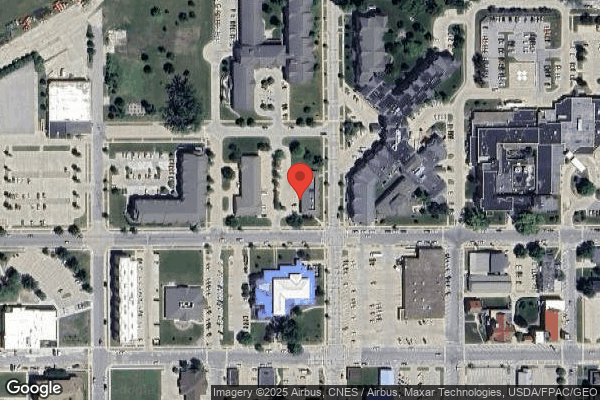
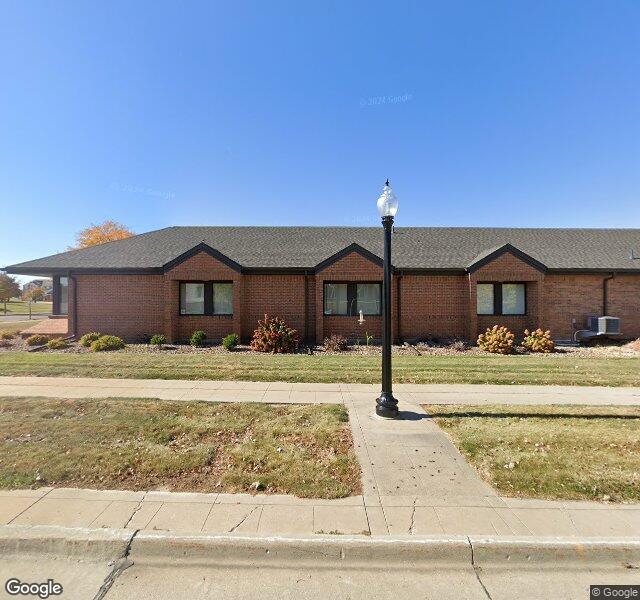
Wesley Park Centre

500 FIRST STREET NORTH, NEWTON, IA 50208 (641) 791-5000
Non profit - Corporation 66 Beds WESLEYLIFE Data: November 2025 1 Immediate Jeopardy citation
Trust Grade
51/100
#240 of 392 in IA
Last Inspection: January 2025

Within standard 12-15 month inspection cycle. Federal law requires annual inspections.

Overview

Wesley Park Centre in Newton, Iowa, has a Trust Grade of C, which means it is average compared to other facilities. It ranks #240 out of 392 facilities in Iowa, placing it in the bottom half, and #3 out of 5 in Jasper County, indicating only two local options are better. Unfortunately, the facility is worsening, with issues increasing from 1 in 2024 to 6 in 2025. Staffing is a strong point, with a perfect 5/5 rating and a turnover rate of 40%, which is lower than the state average, suggesting staff consistency. However, there are concerning incidents, such as a resident falling while only receiving assistance from one staff member instead of two, leading to a serious injury and subsequent death, and another resident developing a pressure wound that went unaddressed due to improper care practices. Additionally, there were issues with food temperature during meal service. Overall, while the staffing and some care aspects are strong, the recent incidents and worsening trend are significant red flags for families to consider.

Trust Score
C
51/100
In Iowa
#240/392
Bottom 39%
Safety Record
High Risk
Review needed
Inspections
Getting Worse
1 → 6 violations
Staff Stability
○ Average
40% turnover. Near Iowa's 48% average. Typical for the industry.
Penalties
⚠ Watch
$17,345 in fines. Higher than 78% of Iowa facilities, suggesting repeated compliance issues.
Skilled Nurses
✓ Good
Each resident gets 59 minutes of Registered Nurse (RN) attention daily — more than average for Iowa. RNs are trained to catch health problems early.
Violations
○ Average
8 deficiencies on record. Average for a facility this size. Mostly minor or procedural issues.
★★★☆☆
3.0
Overall Rating
★★★★★
5.0
Staff Levels
★★★☆☆
3.0
Care Quality
★★☆☆☆
2.0
Inspection Score
Stable
2024: 1 issues
2025: 6 issues

The Good

  • 5-Star Staffing Rating · Excellent nurse staffing levels
  • Full Sprinkler Coverage · Fire safety systems throughout facility
  • No fines on record
  • Staff turnover below average (40%)

    8 points below Iowa average of 48%

Facility shows strength in staffing levels, fire safety.

The Bad

3-Star Overall Rating

Near Iowa average (3.1)

Meets federal standards, typical of most facilities

Staff Turnover: 40%

Near Iowa avg (46%)

Typical for the industry

Federal Fines: $17,345

Below median ($33,413)

Minor penalties assessed

Chain: WESLEYLIFE

Part of a multi-facility chain

Ask about local staffing decisions and management

The Ugly 8 deficiencies on record

1 life-threatening 1 actual harm
Jan 2025 6 deficiencies 1 IJ
CRITICAL (J) 📢 Someone Reported This

A family member, employee, or ombudsman was alarmed enough to file a formal complaint

Immediate Jeopardy (IJ) - the most serious Medicare violation

Accident Prevention (Tag F0689)

Someone could have died · This affected 1 resident

**NOTE- TERMS IN BRACKETS HAVE BEEN EDITED TO PROTECT CONFIDENTIALITY** Based on record and document review, staff and family interviews, the facility failed to follow Physical Therapy recommendations...

Read full inspector narrative →
**NOTE- TERMS IN BRACKETS HAVE BEEN EDITED TO PROTECT CONFIDENTIALITY** Based on record and document review, staff and family interviews, the facility failed to follow Physical Therapy recommendations regarding the ambulation status for 1 of 3 residents reviewed for falls (Resident #61). Resident #61 was to be an assist of 2, on [DATE] Resident #61 was only provided an assist of 1 which resulted in a fall. Resident #61 was transferred to a tertiary hospital and diagnosed with a right femur fracture that required surgery on [DATE]. Following surgery, Resident #61 was placed in intensive care and subsequently died on [DATE]. The Death Certificate revealed manner of death: complications of femur fracture due to or as a consequence of ground level fall.The facility reported a census of 65 residents. The facility was notified of the Immediate Jeopardy (IJ) on [DATE] for the immediacy which began on [DATE]. On [DATE], the surveyor reviewed and confirmed the prior actions taken by the facility based upon their investigation were implemented. Therefore, it was determined the IJ was lifted as of [DATE] and the scope and severity was dropped to a G On [DATE] The Director of Nursing intiated staff education to ensure all nursing staff were aware to check [NAME]/Communication tab (computer) update (phone) for the correct and most up to date information before starting each shift for their assigned unit.On [DATE] a Risk Management session was conducted to review incidents, that included root cause analysis. The faciltiy conducted Quality Assurance reviews on [DATE], [DATE], and [DATE] that included communications related to resident changes, and updated Plans of Care. Findings include: Review of admission Minimum Data Set (MDS) dated [DATE] revealed, Resident #61 was admitted from the hospital to the facility for skilled rehabilitation on [DATE] with the goal to discharge home. Diagnoses included; Hypertension, Peripheral Vascular Disease, Renal insufficiency, Paraplegia (paralysis of legs and lower body related to history of a back injury), groin abscess, lymphedema, and cellulitis of right lower leg. Resident #61's Brief Interview for Mental Status (BIMS) of 13, which indicated cognitively intact. On admission MDS indicated Resident #61's impairment to both lower extremities and needing partial/moderate assistance (helper does less than half the effort, helper lifts, holds, and supports trunk or limbs, but provides less than half the effort) for sitting to stand, transfers to and from bed or wheelchair, and walking 10 to 50 feet. Baseline Care Plan dated [DATE] revealed Resident #61 needed one person physical assist for transfers and walking with the use of a walker. Safety risk indicated Resident #61 had a fall in the past month prior to admission due to weakness while ambulating. Noted skin integrity included right groin, right inner thigh, right inner calf, right heel, and coccyx. Physical Therapy (PT) to be provided to improve functional status. Resident #61's Orders Summary revealed an order dated [DATE] for PT and Occupational Therapy (OT) to evaluate and treat. Progress note dated [DATE] at 9:54 AM stated, Resident #61 told therapy that she would not be walking with a walker, she would be using a wheelchair to walk with and then tried to tell therapy staff that she would fall if they made her use a walker and then pushed into therapy staff attempting to fall. Therapy explained that Resident #61 needs to use walker to work towards independence to go home. Resident #61 continued to attempt to fall on OT staff. Skilled evaluation note dated [DATE] at 10:27 AM revealed, Resident #61 has an unsteady gait and poor balance. Progress note dated [DATE] at 6:43 PM revealed, Resident #61 admitted post hospitalization for right leg and groin abscesses, skilled level of care (SNF LOC) to work with therapy, currently assist of 2 for ambulation with wheelchair to follow, stand pivot for transfers. Progress note dated [DATE] at 5:19 AM revealed, Resident #61 continues SNF LOC post hospitalization for leg wounds. Lung sounds clear to auscultation, shortness of breath noted with exertion. Resident up with assist of 1 and walker for toileting and moving to bed. Review of Resident #61's Care Plan initiated on [DATE] revealed, Resident #61 required assist of 2 and Front Wheel [NAME] (FWW) for transfers, required assist of 2 and FWW during ambulation in room with wheelchair to follow, and only stand pivot transfers. Progress note dated [DATE] at 7:15 AM revealed, Resident #61 was being transferred to the bathroom with assistance of CNA, gait belt, and walker. CNA reported falling with resident #61 in the bathroom. When this nurse walked into Resident#61's bathroom she was lying on the floor with legs out in front of her and her back up against the wall in the shower. Resident #61 reported that she had hit the back of her head, right lower extremity with outer rotation. Resident unable to move at initial assessment. Resident #61 had non-skid socks on. This nurse went to call the physician to get an order to send to the ER to evaluate and treat. Progress note dated [DATE] at 10:48 AM revealed, Resident #61's Representative called and said Resident broke her femur. Orthopedics had been called to see if they are going to do surgery. Facility's Discharge Summary note dated [DATE] at 1:06 PM revealed, Resident #61 had a femur fracture due to a fall and was sent to ER via ambulance. Resident #61's Representative stated Resident will be at the hospital for weeks and does not want to hold the bed. Review of Facility Provided Investigation dated [DATE], revealed the following: 1. On [DATE] Resident #61 was admitted as an assist x1 for transfers, ambulation, and toileting from hospital. Nursing review and this is acceptable as the Resident did well and reported limitations. Baseline Care Plan started upon admission after completion of assessment and review. Nursing staff in the unit made aware of status. 2. On [DATE] Incident occurred with therapy, resulting in therapy recommendation changing Resident #61 to assist x2 with no ambulation; OT reported Resident #61 was attempting to fall into her and refused to use a walker for ambulation as she wanted to use a wheelchair to walk with as she did at home. 3. On [DATE] Interdisciplinary Team (IDT) notified of incident during rounding; IDT and nursing staff discussed and determined no ambulation would hinder Resident #61's progress and would continue using Baseline Care Plan information as there were no reports of fall or incident during hospitalization. Nursing staff reported no concerns of Resident #61 attempting to fall into them. Nursing staff also reported Resident #61 requested FWW for ambulation attempts and refused to use a wheelchair while in her room. 4. On the evening of [DATE] Resident #61's status update for PT was provided to MDS nurse for Resident #61 to be assist x2 with wheelchair to follow. Therapy recommendation was developed as a result of the encounter with OT on 6/25. Nursing staff continue to use the Baseline Care Plan based off IDT's review on [DATE]. 5. Interview on [DATE], Staff H, CNA RA (restorative aide), determined she asked her peer Staff E, CNA about Resident #61's transfer status prior to working with her. 6. Interview on [DATE], Staff E, CNA, reported status of transfer and ambulation for Resident #61 as an assist x1 with FWW and toileting as an assist x1 since admission. 7. Facility reviewed Resident #61's progress notes and Point of Care (POC) charting on [DATE] which reflected Resident #61 as an assist x1 for transfer, toileting, and ambulation. After occurrence with OT there is one progress note indicating Resident #61 was assist x2 for a short period ([DATE] at 6:43PM) next note and all following indicated assist x1 with FWW with no difficulty. 8. Therapy notes reviewed on [DATE], stated Resident #61 needed limited assistance (assist x1 with FWW) for transfer and ambulation. Facility Provided Investigation dated [DATE] stated; Upon completion of investigation, it was determined Staff H, CNA RA, was using safe transfer technique as well as fall interventions were in place at time of incident. Prior to the incident occurring there is no record of knee buckling in Resident #61's history that the facility was made aware of. Nursing staff were following the Baseline Care Plan at the time of the incident. Review of Facility's Investigation included statement by Staff H, CNA RA, on [DATE] revealed Staff H, CNA RA stated Resident #61 had said she tripped over the transition strip from the room to the bathroom, Staff H reported being clear of this transition and were halfway into the bathroom when the fall happened, making it impossible for Resident #61 to trip on the transition strip. Staff H, CNA RA also stated she spoke with the Therapy team and they advise her, Resident #61's update was that way because when working with OT Resident #61 was acting like she was going to fall several times and kept saying, I (Resident #61) cannot walk without my wheelchair as my walker or I will fall Review of PT Discharge Summary, end of care date [DATE], revealed Resident #61 was walking with aide to the bathroom and had a fall. Resident was sent to the hospital with a fractured femur. Skilled services provided included, gait training, therapeutic exercise, therapeutic activity, and balance training. Resident #61 was assist x2 with staff for gait and transfers. During an interview on [DATE] 11:39 AM, DON stated there was no documentation of the IDT meeting on [DATE] when it was determined Resident #61 would continue as an assist x1 instead of Physical Therapy's recommendation of an assist x2 with FWW and wheelchair to follow. Review of Facility's Self Report submitted on [DATE] by DON (Director of Nursing) to Iowa Department of Inspections, Appeals, and Licensing (DIAL) revealed the following: 1. Incident Summary: Timeline of Incident: On [DATE] at approximately 8:50 AM, DON was notified Resident #61 had a fall and was sent to the ED on [DATE] for evaluation. Facility staff were notified of confirmed fracture at approximately 12:00 PM and Resident #61 would be admitted to the hospital. Staff H, CNA RA, stated she was assisting Resident #61 with getting ready for the day, she went into Resident #61's room and asked if she was ready to get up for the day. Resident #61 stated she was and needed the restroom. Staff H, CNA RA, stated she grabbed the gait belt, her walker, and ensured Resident #61 had her gripper socks on. Resident #61 sat up independently on the side of the bed and waited for Staff H. Staff H, CNA RA, secured the gait belt on Resident #61 and placed the walker in front of her. Resident #61 stood without difficulty and started to ambulate to the restroom. Resident #61 entered the restroom and started to side step, Staff H, CNA RA, asked Resident #61 if she was ok. Resident #61 reported she needed to sit on the toilet. Staff H, CNA RA, reminded Resident #61 she needed to get closer to the toilet and Resident #61 fell straight down on the floor. Staff H, CNA RA, reported she had a hand on the gait belt, however it occurred quickly therefore unable to slowly lower Resident #61 to the floor. Staff H, CNA RA ensured Resident #61 was safe and as if she was okay. Resident #61 reported her right leg hurt a little. Staff H, CNA RA placed a pillow behind Resident #61's head for comfort and immediately called for the nurse. Staff I, RN responded to Resident #61's room and completed a full head to toe assessment and obtained vitals. RN's assessment revealed external rotation of the right lower extremity and noted the right lower extremity was shorter than the left. Facility Physician was notified and an order to send Resident #61 to ER was obtained. Ambulance arrived at 7:30 AM and left facility with Resident #61 at 8:00 AM. Resident #61's Representative was notified at approximately 7:26 AM. Hospital notes state: Severe osteoarthritis both hips, greater in the right. Moderately displaced impacted spiral fracture proximal right femur shaft and negative for acute intracranial process. Corrective Action Description: Facility immediately initiated investigation and additional information will follow, Facility respectfully requests to provide further information and updates as appropriate and/or it occurs. 2. Amendment Details: On [DATE] Liaison notified Facility, Resident #61 passed away on [DATE]. Suspected related to known peripheral vascular disease that resulted in multiple prolonged hospital stays prior to skilled stay at Facility. Post-surgical notes state risk of surgical repair include; bleeding, infection, nerve injury, muscle damage, malunion of fractures, nonunion of fractures, need for additional procedures. Resident #61 opted for surgery and underwent surgical repair the morning of [DATE]. Surgery went well without complications noted. Overnight Resident #61 went into A-Fib and respiratory failure resulting in ICU admission and intubation with initiation of pressor support. Family met and discussed current condition along with past several months of ongoing medical concerns and determined Resident #61 should be placed on comfort measures and extubated around 9:30 AM. Resident #61 passed around 9:40 PM on [DATE]. 3. On [DATE] at 4:06 PM Report status changed to Pending Review by DIAL. 4. On [DATE] at 2:49 PM Report status changed from Pending Review to No Investigation by DIAL. During an interview on [DATE] at 3:24 PM Staff C, LPN explained the process when Therapy determines new recommendations. Staff C, LPN revealed therapy will notify the nurses with a form that indicates the recommendations. The Nurse will then note recommended changes in Resident's #61 Electronic Health Record (EHR). The [NAME] (plan of care used by CNA staff) will be updated by the nurse, when this is done a notification will show up on CNA's phones to make them aware of the changes. Therapy will give a copy of the recommendations to the MDS coordinator to update Resident' s MDS and Care Plan. During an interview on [DATE] at 1:20 PM, Staff J, Physical Therapist (PT) stated OT had done an evaluation the morning of [DATE], Resident #61 had made statements of falling, after this encounter OT recommended Resident #61 be an assist x2. Later that day Staff J, PT had evaluated Resident #61, stating she had done well functionally ambulating from her bed to the bathroom. On the way back to Resident #61's bed, she became weak and tired. Staff J, PT had to get a wheelchair and placed behind it behind Resident #61 to prevent her from falling. Due to Resident #61's low stamina, Staff J, PT recommended Resident #61 have an assist of 2 using FWW and wheelchair to follow due to the risk of fatigue and falls. During an interview on [DATE] 2:01 PM, Facility's Medical Director stated he would expect nursing staff to follow Therapy's recommendations. Facility's Medical Director also confirmed, he does sign off and approve Therapy's recommendations, If therapy recommended a Resident to be an assist x2, staff should be following these recommendations and provide the assistance of 2. Review of Resident #61's Certificate Of Death revealed, Resident #61 died on [DATE] at 9:36PM, with Manner of Death: Accident, Immediate Cause of Death: Complications of femur fracture, due to or as a consequence of: ground level fall. Review of Facility provided Ambulation Policy originated 6/2016 revealed Facility's procedure is to check resident's medical records for any ambulation related order, note equipment ordered if any and check Care Plan for level of assistance with ambulation.
SERIOUS (G) 📢 Someone Reported This

A family member, employee, or ombudsman was alarmed enough to file a formal complaint

Actual Harm - a resident was hurt due to facility failures

Pressure Ulcer Prevention (Tag F0686)

A resident was harmed · This affected 1 resident

**NOTE- TERMS IN BRACKETS HAVE BEEN EDITED TO PROTECT CONFIDENTIALITY** Based on observations, record review, resident, family and staff interview and policy review, the facility failed to accurately ...

Read full inspector narrative →
**NOTE- TERMS IN BRACKETS HAVE BEEN EDITED TO PROTECT CONFIDENTIALITY** Based on observations, record review, resident, family and staff interview and policy review, the facility failed to accurately assess and prevent a pressure wound to 1 of 3 residents reviewed for pressure ulcers (Resident #54). The nursing staff identified a pressure wound caused by the Ankle/Foot Orthotic (AFO) splint to right foot and continued to utilize the AFO for transfers, resulting in a wound that needed a higher level of treatment. The facility reported a census of 65 residents. Findings include: The admission Minimum Data Set (MDS) dated [DATE] for Resident #54 revealed a diagnosis of a Stroke with aphasia (difficulty speaking) and right sided hemiplegia (paralysis), Diabetes Mellitus and end stage renal disease and received hemodialysis via the peripherally inserted central catheter (PICC) access (a long, flexible tube inserted into a vein in the arm). The Brief Interview for Mental Status (BIMS) revealed a score of 14 which suggested an intact cognition. The MDS documented that the resident was at risk for developing pressure ulcers/injuries. The MDS did not document unhealed pressure ulcers/injuries. The document titled Base line Care Plan Summary dated 11/14/24 for Resident #54 revealed current skin integrity issue as redness of coccyx, no further skin integrity issues and directed staff to encourage good nutrition and hydration in order to promote healthier skin and to follow protocols for treatment of injury. The document titled Nursing Assessment on admit for Resident #54 dated 11/14/24 revealed self-care performance for dressing required 1 person and for transfers 2 persons to physically assist with a cane mobility device. The document titled Clinical admission with the date 11/14/24 documented the only skin concern as; redness of coccyx area. A document titled Patient Discharge and Transfer Form dated 11/14/24 identified devices to assist Resident #54 as a walker, a specialty mattress, and glasses. The orders failed to identify a prosthetic or an AFO. Therapies ordered as Physical Therapy (PT), Occupational Therapy (OT), Speech Therapy (ST) and Dialysis. Progress note on 12/30/24 for Resident #54 revealed: 1. Skin issue #1 to right chest, port for dialysis. 2. Assistive device listed as ½ side rail, hemi walker and brace used for right upper extremity with transfers. 3. PT, OT, ST, the resident continues to participate in therapy as ordered. Progress note on 1/6/25 at 2:47 PM for Resident #54 revealed: 1. A new skin issue to right lateral foot, a scab in place, with redness noted to surrounding skin. 2. Appears area was related to his brace worn to right lower extremity, brace off until healed. Progress note on 1/7/25 at 2:05 PM for Resident #54 revealed: 1. New wound care orders. 2. Antibiotic ordered for 7 days. 3. Therapy aware of needing to evaluate his brace to right lower extremity. 4. Not wearing brace. The Physician Orders for Resident #54 failed to contain an order for a brace or AFO to right foot. A document titled Physical Therapy PT Evaluation & Plan of Treatment dated 11/14/24 for Resident #54 revealed: 1. Patient will demonstrate stand supported for greater than 3 - 5 minutes in order to increase participation with activities of daily living (ADL) tasks. 2. Patient will demonstrate improved functional lower extremity strength as evidenced by an improved score to 3 on the 30 second sit to stand test. 3. Patient will improve ability to safely transfer to a standing position from sitting in a chair, wheelchair or the side of the bed with supervision or touching assistance with ability to right self to maintain balance. 4. Patient will improve ability to safely transfer from lying on back to sitting on the side of the bed with no back support. 5. Patient will improve ability to safely transfer from bed to chair. 6. Patient will navigate 4 stairs with a rail to safely enter /exit home. 7. Patient will safely ambulate on level surfaces 200 feet using a hemi walker. 8. The PT evaluation failed to address or recommend an AFO to the right lower extremity, foot or ankle. A document titled Microbiology Culture Final for Resident #54 revealed: 1. The sample was collected on 1/15/25 from right foot wound. 2. A heavy growth of Methicillin Resistant Staphylococcus Aureus (MRSA). During an observation on 1/21/25 at 3:39 PM Resident #54 was in a bariatric bed with head at the top of the mattress and his feet inches away from the foot board of the bed. Resident did not have the anti-embolism socks on and had a wound to his right lateral foot the approximate size of a silver dollar. The wound was uncovered and had a small amount of drainage on the bed. During an interview on 1/21/25 at 3:39 PM Resident #54's wife stated he was admitted on [DATE] after a stroke for dialysis and therapy for strengthening. The wife stated he had a splint applied to the right foot that caused the open wound and the nursing staff continued to use the splint after finding the wound. Documents titled Skin and Wound Evaluation for Resident #54 revealed an in-house acquired pressure wound to right lateral (outside) mid-foot: 1. Date 1/15/25, measured 1.8 centimeters (cm) x 1.4 cm x (unable to measure as wound bed as it contained 50% slough (dead skin debris) and 50% eschar (black dead skin) with a light seropurulent (combination of pus and serous fluid) drainage, evidence of infection. Unknown how long the wound was present. 2. Date 1/19/25 measured 1.8 cm x 1.8 cm x not applicable (100% slough). During an interview on 1/23/24 at 11:10 AM, Staff G Physical Therapist (PT) stated Resident #54 arrived on admit wearing a right ankle foot orthotic (AFO). Staff G stated therapy staff was walking Resident #54 while he was wearing the AFO, and stated that type of AFO is usually changed to a different type of walking splint, But that takes a while. During an interview on 1/23/25 at 8:56 AM, Staff F, Licensed Practical Nurse (LPN) stated the night nurse would assist the Certified Nursing Assistant (CNA) to get Resident #54 dressed, put the anti-embolism socks and brace on, before he went to dialysis in the mornings. E-mail on 1/23/25 at 2:40 PM, The Director of Nursing wrote in regards to Resident #54 that they attempted to add additional nutritional support for the last couple of months with the wife continuing to refuse. The DON wrote, When the area was first noted, we encouraged staff to only use the brace upon transferring, once we noted the wound worsening, we did hold the brace completely. The house wound nurse assessed on 1/15/25 and notified (the provider) of the area to obtain a wound culture and start antibiotics and sent out for additional wound nurse support (local facility that specialized in geriatric care) on 1/20/25 as we believe this wound will be difficult to heal so we want as much support and guidance as we can. A document titled Wound Treatment Plan dated 1/24/25 revealed: 1. Resident #54 did wear an AFO to his foot and now had a pressure wound so they are not using the AFO. 2. Resident #54 is taking Bactrim (antibiotic) for the foot wound. 3. Skin inspection: pressure ulcer right foot that measures 2.5 cm x 1.6 cm x 0.3 depth, 20% deep tissue injury with small amount of exudate (drainage). 4. Discontinue the current treatment. Cleanse with wound cleanser and apply betadine moistened gauze to the wound bead and cover with dry gauze and secure with gauze wrap and tape daily. A policy titled Foot Care dated 1/2025 revealed: 1. Purpose was to prevent infection of the feet. 2. Wash feet well and soak approximately 10 minutes, rinse well and dry between toes. 3. Examine feet carefully for evidence of discoloration, mushy heels, breaks in skin integrity irritation or edema (swelling). 4. Toenails are to be clipped with toenail clippers straight across. 5. Note: The podiatrist or licensed nurse is to provide foot care for all diabetic residents.
CONCERN (D)

Potential for Harm - no one hurt, but risky conditions existed

Resident Rights (Tag F0550)

Could have caused harm · This affected 1 resident

**NOTE- TERMS IN BRACKETS HAVE BEEN EDITED TO PROTECT CONFIDENTIALITY** Based on observations, record review, resident and staff interviews, the facility failed to provide dignity with care by turning...

Read full inspector narrative →
**NOTE- TERMS IN BRACKETS HAVE BEEN EDITED TO PROTECT CONFIDENTIALITY** Based on observations, record review, resident and staff interviews, the facility failed to provide dignity with care by turning off the call light and leaving the room without ensuring the resident's needs were met for 1 of 6 residents reviewed for dignity (Resident #54). The facility reported a census of 65 residents. Findings include: The admission Minimum Data Set (MDS) dated [DATE] for Resident #54 revealed a diagnosis of a Stroke with aphasia (difficulty speaking) and right sided hemiplegia (paralysis), Diabetes Mellitus, and required the assistance of 2 for repositioning in bed. The Brief Interview for Mental Status (BIMS) score was 14 which suggested an intact cognition. The Care Plan for Resident #54 directed staff to allow adequate time to respond when communicating, and repeat if necessary or request clarification from the resident to ensure understanding and required the assistance of 2 staff for bed mobility, toileting and transfers. During an observation on 1/21/25 at 3:39 PM Resident #54 was in a Bariatric bed with his head at the top of the mattress and his feet inches away from the foot board of the bed. During an interview on 1/21/25 at 3:39 PM Resident #54 stated on Friday (1/17/25) after dinner, a young gal put him to bed. Resident #54 stated, I tried to tell her my foot was stuck in the foot board. Resident #54 stated she had left his room without adjusting him and he had turned the call light on again, and the she did not assist him when she had responded to the call light. Resident #54 stated he then called his family. During an interview on 1/21/25 at 3:39 PM, Resident #54's wife stated he called her phone 7 times on 1/17/25, first at 5:30 PM and reported the staff forgot his supper. He then called after 10:30 PM when Resident #54 told her that his feet were stuck in the foot board and the Certified Nursing Assistant (CNA) walked out on him 3 times without assisting him. The wife stated she called the facility both times and talked to Staff C Licensed Practical Nurse (LPN) who assured Resident #54's wife that it would be looked into. During an interview on 1/22/25 at 1 PM Staff D, CNA stated she had worked Friday 1/17/25 on the overnight shift. Staff D stated it was an extremely busy night and she had entered Resident #54's room a few times but was unable to understand what it was that he needed. Staff D stated Staff C, LPN did work the evening shift but did not inform her that family had called. Staff D stated Resident #54's feet was always down to the foot board, as he was a tall man. During an interview on 1/22/25 at 1:13 PM, Resident #54 stated Staff C LPN never checked on him the evening of 1/17/25. Resident #54 stated that the night shift staff ignore him and that it makes him feel worthless. During an interview on 1/22/25 at 3:10 PM, Staff C, LPN stated he had worked the evening shift on 1/17/25 and had remembered a phone call from Resident #54's wife at dinner time, but did not remember getting a call later in the evening. Staff C stated his expectation of the CNA's was to inform the nurse if a resident was in need and could not be understood. During an interview on 1/23/25 at 9:10 AM, Staff E, CNA stated she had worked at the facility for 2 years and found that a couple of CNA's on the night shift didn't have the patience to listen to the residents.
CONCERN (D) 📢 Someone Reported This

A family member, employee, or ombudsman was alarmed enough to file a formal complaint

Potential for Harm - no one hurt, but risky conditions existed

Safe Environment (Tag F0921)

Could have caused harm · This affected 1 resident

**NOTE- TERMS IN BRACKETS HAVE BEEN EDITED TO PROTECT CONFIDENTIALITY** Based on observation, policy review, and staff interviews, the facility failed to ensure water temperatures at points of deliver...

Read full inspector narrative →
**NOTE- TERMS IN BRACKETS HAVE BEEN EDITED TO PROTECT CONFIDENTIALITY** Based on observation, policy review, and staff interviews, the facility failed to ensure water temperatures at points of delivery did not exceed safe maximum temperatures for 4 of 6 resident room sinks and for 1 of 3 shower rooms. The facility reported a census of 65 residents. Findings Include: Temperature readings obtained by the State Agency on 1/22/25 revealed the following concerns: 8:15 a.m. room [ROOM NUMBER] bathroom sink 127.7 F(Fahrenheit) 8:20 a.m. room [ROOM NUMBER] bathroom sink 126.4 F 8:26 a.m. South Sunset Shower room [ROOM NUMBER].4 F 8:38 a.m. room [ROOM NUMBER] bathroom sink 125.4 F 8:42 a.m. room [ROOM NUMBER] bathroom sink 121.6 F Temperature readings obtained by Staff B Maintenance Staff on 1/22/25 revealed the following concerns: 8:49 a.m. room [ROOM NUMBER] bathroom sink 125.2 F. Staff B stated that's not good while he obtained this temperature. 8:52 a.m. room [ROOM NUMBER] bathroom sink 124.5 F. After the temperature measurements, Staff B stated water temps should be less than 120 F and stated he would adjust the mixing valve to add more cold. On 1/22/25 at 1:02 p.m., Staff B rechecked the sinks in room [ROOM NUMBER], room [ROOM NUMBER], room [ROOM NUMBER], room [ROOM NUMBER], and the South Sunset Shower room and all temperatures measured less than 112 F. The facility policy Water Systems: Hot Water Temperature Readings, revised 9/2019, directed staff to maintain hot water temperatures at 110 degrees F in all resident areas. On 1/23/25 at 10:27 a.m., the Executive Director stated that the acceptable water temperature range was 100-120 F. The stated after the high temperatures yesterday, the facility increased the frequency of checks. She stated they would discuss the concern in their Quality Assurance(QA) meetings to decide the frequency of monitoring moving forward. Based on observations, staff interviews, and facility policy the facility failed also to ensure water temperatures at points of delivery did not exceed safe maximum temperatures for 4 of 6 resident room sinks and for 1 of 3 shower rooms. The facility reported a census of 65 residents. .
CONCERN (E)

Potential for Harm - no one hurt, but risky conditions existed

Deficiency F0804 (Tag F0804)

Could have caused harm · This affected multiple residents

**NOTE- TERMS IN BRACKETS HAVE BEEN EDITED TO PROTECT CONFIDENTIALITY** Based on observation, policy review, and resident and staff interviews, the facility failed to ensure hot foods were held at an ...

Read full inspector narrative →
**NOTE- TERMS IN BRACKETS HAVE BEEN EDITED TO PROTECT CONFIDENTIALITY** Based on observation, policy review, and resident and staff interviews, the facility failed to ensure hot foods were held at an appetizing temperature for 1 of 1 meal observed and for 2 of 24 residents reviewed (Residents #48 and #163). The facility reported a census of 65 residents. Findings include: 1. An observation prior to the start of the lunch service on 1/22/25, Staff A [NAME] obtained the following temperatures: grilled ham and cheese sandwiches 151.6 F at 11:53 a.m. meat sauce 162.6 F at 11:56 a.m. noodles 172.6 F at 11:59 a.m. mashed potatoes 160.4 F at 11:58 a.m. pureed vegetables 132.2 at 12:01 p.m. Staff A did not heat up the pureed vegetables prior to the start of service. Staff A served the first tray at 12:10 p.m. and the last tray at 12:55 p.m. Immediately after staff served the last tray, the State Agency requested a test tray. The State Agency obtained the following temperatures with a facility provided thermometer. The Certified Dietary Manager was present during this process. grilled ham and cheese sandwiches 107.3 F at 12:57 p.m. noodles covered with meat sauce 106.6 F at 12:58 p.m. mashed potatoes 122.9 F at 12:59 p.m. After the service, no pureed vegetables remained for a temperature reading. The facility policy Food Safety, revised July 2024, stated the U.S. Department of Health and Human Services Food Code used 135° F for hot foods but directed to check state regulations as they varied. On 1/23/24 at 9:35 a.m., the Certified Dietary Manager(CDM) stated staff should maintain hot holding temperatures in a range which was appetizing and appealing and a minimum of 135 degrees. She stated (after the temperatures yesterday) the facility took corrective actions such as turning up the hot box. 2. The Minimum Data set (MDS) dated [DATE] for Resident #48 revealed the Brief Interview for Mental Status (BIMS) as 12 which suggested an intact cognition. During an interview on 1/21/25 at 10:15 AM Resident #48 stated when the food was served in the dining room, it was cold. Resident #48 stated he had to ask staff on multiple occasions to warm it up before he could consume it. 3. The Minimum Data set (MDS) dated [DATE] for Resident #163 revealed the Brief Interview for Mental Status (BIMS) as 15 which suggested an intact cognition. During an interview on 1/21/25 at 10:15 AM Resident #163 stated the food was cold when served to him on a tray brought to his room multiple times and had to ask that it be warmed up.
CONCERN (E)

Potential for Harm - no one hurt, but risky conditions existed

Food Safety (Tag F0812)

Could have caused harm · This affected multiple residents

Based on observation, policy review, and staff interview, the facility failed to ensure staff prepared food under sanitary conditions for 2 of 2 kitchen observations. The facility reported a census of...

Read full inspector narrative →
Based on observation, policy review, and staff interview, the facility failed to ensure staff prepared food under sanitary conditions for 2 of 2 kitchen observations. The facility reported a census of 65 residents. Findings include: During the initial kitchen tour on 1/21/25 at 9:46 a.m., dust particles hung from 8 of 8 fire suppression spigots. Two string-like particles of dust, approximately 2 inches in length, hung down from the spigot on the left side of the stove hood, located directly above a pot of boiling food. During a follow-up visit to the kitchen on 1/22/25 at 10:59 a.m., dust remained on the spigots of the fire suppression system. The metal surface behind the tilt skillet also contained a thick layer of dust particles. The undated facility Night [NAME] Closing List and Morning [NAME] Checklist did not include direction for staff to clean the fire suppression system spigots. The facility policy Food Safety, revised July 2024, directed staff to monitor the risk of contamination during cooking, cooling, holding, and reheating. On 1/23/24 at 9:35 a.m., the Certified Dietary Manager(CDM) stated the kitchen should be sanitized and they will work on a plan regarding the dust buildup on the spigots.
Mar 2024 1 deficiency
CONCERN (D)

Potential for Harm - no one hurt, but risky conditions existed

Deficiency F0558 (Tag F0558)

Could have caused harm · This affected 1 resident

**NOTE- TERMS IN BRACKETS HAVE BEEN EDITED TO PROTECT CONFIDENTIALITY** Based on observations, clinical record review, staff interview, resident interview and policy review the facility failed to ensu...

Read full inspector narrative →
**NOTE- TERMS IN BRACKETS HAVE BEEN EDITED TO PROTECT CONFIDENTIALITY** Based on observations, clinical record review, staff interview, resident interview and policy review the facility failed to ensure resident call light within reach for 1 of 21 residents reviewed (Resident #22). The facility reported the census is 64. Findings include: The Minimum Data Set (MDS) dated [DATE] for Resident #22 documented a Brief Interview of Mental Status (BIMS) of 8 indicating moderate cognitive impairment. The MDS documented diagnosis to include heart disease, renal disease, dementia, anxiety and stroke or transient ischemic attack. The Care Plan included intervention initiated 3/19/24 for Resident #22, documented resident often times places call light pendant in small places and unable to recall location. Resident #22 does have wall pendant in place and able to verbalize needs to staff. Care plan focus initiated 1/15/24 included, Resident #22 is at risk for falls related to dementia, hallucinations, insomnia, and possible medication side effects. Interventions included Resident #22 encouraged to sit back down if dizzy and call for assistance. Observation on 03/18/24 at 2:14 PM of Resident #22 sitting in her chair, no necklace pendant viewed, and no call light within reach. Observation on 03/20/24 at 2:10 PM of Resident #22 ambulating out of room for bingo activity, Resident #22 responded in regards to a call pendant that she does not have a necklace. In an interview on 3/20/24 at 4:00 PM Resident #22 sitting in her recliner in her room, and queried about how she would get staff help if needed. Resident #22 voiced she had a call necklace but they took it away from her. Resident #22 acknowledged having a call light on the wall above the bed, to use at night. No call light within reach while in her recliner. Observation on 03/21/24 at 10:27 AM of Resident #22 asleep in her recliner, the only call light in the room is the one attached to the wall, above the bed that is not within reach. In an interview on 03/21/24 at 11:54 AM the Director of Nursing (DON) acknowledged the expectations for call lights is to be within reach. The DON relayed there is one call light policy for the entire facility. Facility policy titled Memory Care/Support Call Light Procedure, revised 4/2022 stated: Through the admission assessment or as significant changes occur the clinical team will identify those residents who are able to understand and use the call light system appropriately. These residents will have the call signal within reach or available in their room as needed.
Feb 2023 1 deficiency
CONCERN (D)

Potential for Harm - no one hurt, but risky conditions existed

Deficiency F0698 (Tag F0698)

Could have caused harm · This affected 1 resident

**NOTE- TERMS IN BRACKETS HAVE BEEN EDITED TO PROTECT CONFIDENTIALITY** Based on clinical record review staff interview and policy review the facility failed to ensure assessments before and after out...

Read full inspector narrative →
**NOTE- TERMS IN BRACKETS HAVE BEEN EDITED TO PROTECT CONFIDENTIALITY** Based on clinical record review staff interview and policy review the facility failed to ensure assessments before and after outpatient hemodialysis treatments for 1 of 1 resident reviewed that required dialysis. (Resident 42) The facility reported a census 55. Residents 42's Minimum Data Set, dated [DATE] revealed a Brief Interview for Mental Status of 15, which indicated an intact cognition. Diagnoses documented diabetes, kidney failure and dependence on renal dialysis. Orders dated 1/31/23 revealed Hemodialysis on Monday, Wednesday and Friday with DaVita at MercyOne [NAME], or other location as needed. Assess port fistula to right arm, check for Infection daily - warm, pain, redness, swelling, discharge, temperature, tenderness Dressing - remove Band-Aids or gauze 4 hours after discharge from dialysis. Observe for clotted access and\or hematoma. Assess patency daily by feeling the access for a thrill; listen with a stethoscope for a bruit. The care plan focus area with a revision date of 7/28/22 identified a need for hemodialysis (the process of running the blood through an external machine to rid the blood of toxins) on Monday, Wednesday, Friday and as needed per physician orders. The care plan documented an intervention to Assess Bruit and Thrill of fistula each shift and report abnormalities to physician. Facility assessments titled Dialysis Preassessment Version 1 (V-1), Dialysis Preassessment Version 2 (V-2), and Pre/Post Dialysis Evaluation failed to document 6 of 13 preassessments and 4 of 13 post assessments for 30 days reviewed in January 2023. a.1/2/23 Pre and Post b.1/13/23 Pre and Post c. 1/16/23 Pre and Post d.1/18/23 Pre e. 1/20/23 Pre f. 1/25/23 Pre g. 1/30/23 Post Interview with Infection Preventionist 2/1/23 at 2:30 PM revealed the expectation for the resident to have an assessment prior to dialysis and upon return. She stated the facility had recently retired a version 1 of a pre and post assessment form. She stated a version 2 had been initiated and a Pre/Post evaluation assessment had been utilized as well. She stated it was possible that some agency nurses documented assessments in the progress notes. Interview with ADON 2/2/23 at 8:30 AM revealed the facility had not been consistently completing pre and post assessments. Interview with the DON 2/2/23 at 10:30 AM revealed she had obtained a clarification order, placed assessments on the medication administration record and clarified the assessment form to be completed in the electronic health record. Facility document dated 2/2023 titled Dialysis Process directed the facility to complete pre and post dialysis assessments on the Dialysis Evaluation in the electronic health record.
Understanding Severity Codes (click to expand)
Life-Threatening (Immediate Jeopardy)
J - Isolated K - Pattern L - Widespread
Actual Harm
G - Isolated H - Pattern I - Widespread
Potential for Harm
D - Isolated E - Pattern F - Widespread
No Harm (Minor)
A - Isolated B - Pattern C - Widespread

Questions to Ask on Your Visit

  • "What changes have you made since the serious inspection findings?"
  • "Can I speak with families of current residents?"
  • "What's your RN coverage like on weekends and overnight?"

Our Honest Assessment

Strengths
  • • 40% turnover. Below Iowa's 48% average. Good staff retention means consistent care.
Concerns
  • • Multiple safety concerns identified: 1 life-threatening violation(s), 1 harm violation(s). Review inspection reports carefully.
  • • 8 deficiencies on record, including 1 critical (life-threatening) violation. These warrant careful review before choosing this facility.
  • • $17,345 in fines. Above average for Iowa. Some compliance problems on record.
  • • Grade C (51/100). Below average facility with significant concerns.
Bottom line: Mixed indicators with Trust Score of 51/100. Visit in person and ask pointed questions.

About This Facility

What is Wesley Park Centre's CMS Rating?

CMS assigns Wesley Park Centre an overall rating of 3 out of 5 stars, which is considered average nationally. Within Iowa, this rating places the facility higher than 0% of the state's 100 nursing homes. This mid-range rating indicates the facility meets federal standards but may have areas for improvement.

How is Wesley Park Centre Staffed?

CMS rates Wesley Park Centre's staffing level at 5 out of 5 stars, which is much above average compared to other nursing homes. Staff turnover is 40%, compared to the Iowa average of 46%. This relatively stable workforce can support continuity of care.

What Have Inspectors Found at Wesley Park Centre?

State health inspectors documented 8 deficiencies at Wesley Park Centre during 2023 to 2025. These included: 1 Immediate Jeopardy (the most serious level, indicating potential for serious harm or death), 1 that caused actual resident harm, and 6 with potential for harm. Immediate Jeopardy findings are rare and represent the most serious regulatory concerns. They require immediate corrective action.

Who Owns and Operates Wesley Park Centre?

Wesley Park Centre is owned by a non-profit organization. Non-profit facilities reinvest revenue into operations rather than distributing to shareholders. The facility is operated by WESLEYLIFE, a chain that manages multiple nursing homes. With 66 certified beds and approximately 61 residents (about 92% occupancy), it is a smaller facility located in NEWTON, Iowa.

How Does Wesley Park Centre Compare to Other Iowa Nursing Homes?

Compared to the 100 nursing homes in Iowa, Wesley Park Centre's overall rating (3 stars) is below the state average of 3.1, staff turnover (40%) is near the state average of 46%, and health inspection rating (2 stars) is below the national benchmark.

What Should Families Ask When Visiting Wesley Park Centre?

Based on this facility's data, families visiting should ask: "What changes have been made since the serious inspection findings, and how are you preventing similar issues?" "Can I visit during a mealtime to observe dining assistance and food quality?" "How do you handle medical emergencies, and what is your hospital transfer rate?" "Can I speak with family members of current residents about their experience?" These questions are particularly relevant given the facility's Immediate Jeopardy citations.

Is Wesley Park Centre Safe?

Based on CMS inspection data, Wesley Park Centre has documented safety concerns. Inspectors have issued 1 Immediate Jeopardy citation (the most serious violation level indicating risk of serious injury or death). The facility has a 3-star overall rating and ranks #100 of 100 nursing homes in Iowa. Families considering this facility should ask detailed questions about what corrective actions have been taken since these incidents.

Do Nurses at Wesley Park Centre Stick Around?

Wesley Park Centre has a staff turnover rate of 40%, which is about average for Iowa nursing homes (state average: 46%). Moderate turnover is common in nursing homes, but families should still ask about staff tenure and how the facility maintains care continuity when employees leave.

Was Wesley Park Centre Ever Fined?

Wesley Park Centre has been fined $17,345 across 1 penalty action. This is below the Iowa average of $33,252. While any fine indicates a compliance issue, fines under $50,000 are relatively common and typically reflect isolated problems that were subsequently corrected. Families should ask what specific issues led to these fines and confirm they've been resolved.

Is Wesley Park Centre on Any Federal Watch List?

Wesley Park Centre is not on any federal watch list. The most significant is the Special Focus Facility (SFF) program, which identifies the bottom 1% of nursing homes nationally based on persistent, serious quality problems. Not being on this list means the facility has avoided the pattern of deficiencies that triggers enhanced federal oversight. This is a positive indicator, though families should still review the facility's inspection history directly.