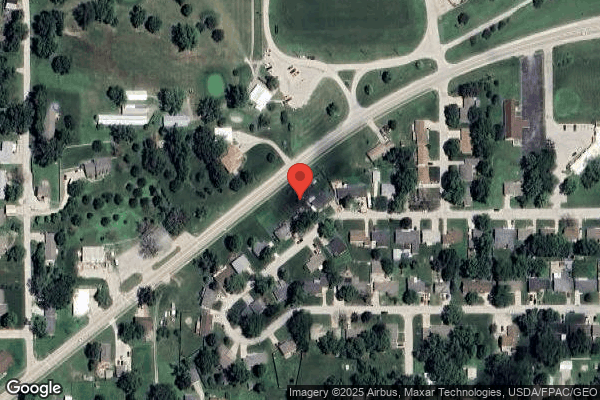
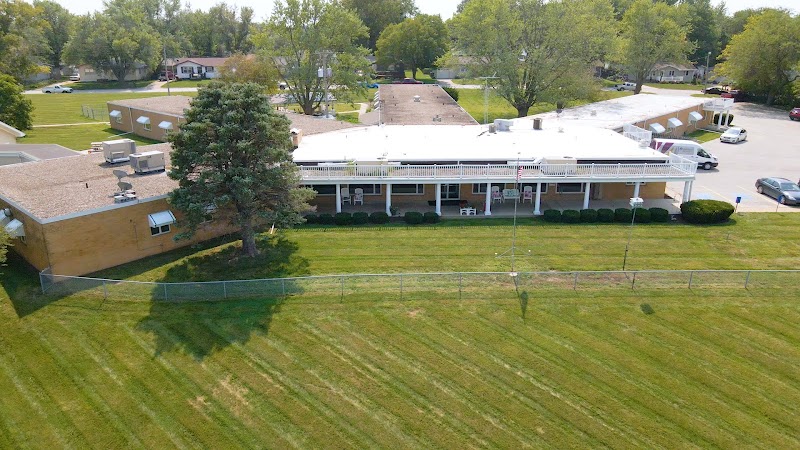
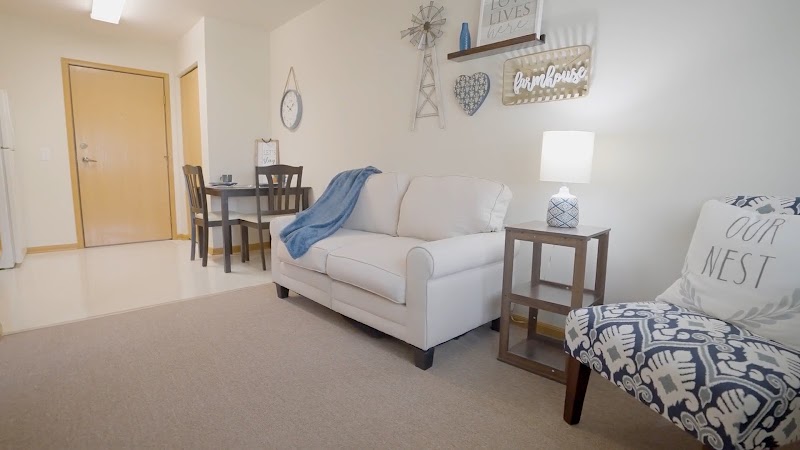
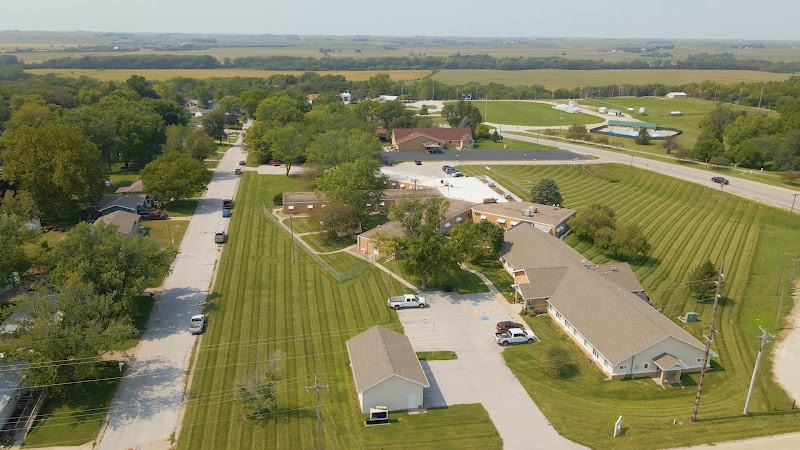
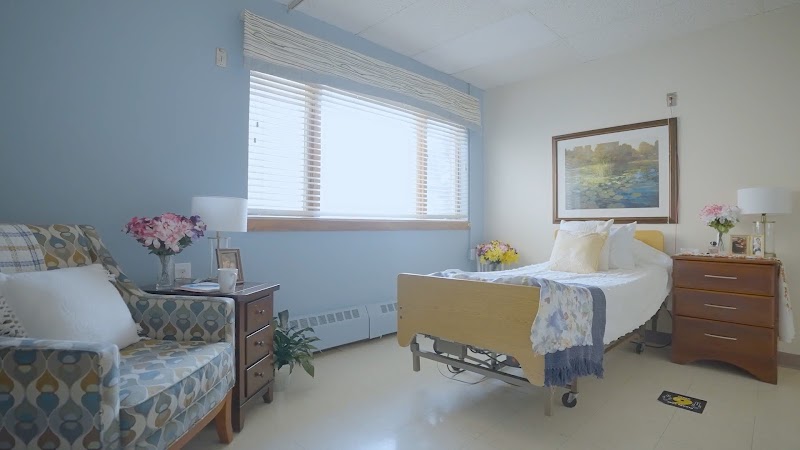
Oakland Manor

737 North Highway, Oakland, IA 51560 (712) 482-6403
For profit - Corporation 61 Beds MGM HEALTHCARE Data: November 2025
Trust Grade
13/100
#366 of 392 in IA
Last Inspection: November 2024

Within standard 12-15 month inspection cycle. Federal law requires annual inspections.

Overview

Oakland Manor has received a Trust Grade of F, indicating significant concerns about the quality of care provided. It ranks #366 out of 392 facilities in Iowa, placing it in the bottom half of all facilities statewide and at #7 out of 7 in Pottawattamie County, meaning there are no better local options available. The facility's trend is worsening, with issues increasing from 14 in 2024 to 15 in 2025. Staffing is a major concern, with a rating of 1 out of 5 stars and a turnover rate of 63%, much higher than the state average of 44%. There have been serious incidents, including a resident sliding from their wheelchair due to improper seatbelt use and complications arising from inadequate care for a resident with a feeding tube, leading to multiple hospital visits. While the facility has some good quality measures, the overall picture shows both strengths and weaknesses that families should carefully consider.

Trust Score
F
13/100
In Iowa
#366/392
Bottom 7%
Safety Record
High Risk
Review needed
Inspections
Getting Worse
14 → 15 violations
Staff Stability
⚠ Watch
63% turnover. Above average. Higher turnover means staff may not know residents' routines.
Penalties
✓ Good
$15,593 in fines. Lower than most Iowa facilities. Relatively clean record.
Skilled Nurses
○ Average
Each resident gets 30 minutes of Registered Nurse (RN) attention daily — about average for Iowa. RNs are the most trained staff who monitor for health changes.
Violations
⚠ Watch
63 deficiencies on record. Higher than average. Multiple issues found across inspections.
★☆☆☆☆
1.0
Overall Rating
★☆☆☆☆
1.0
Staff Levels
★★★★☆
4.0
Care Quality
★☆☆☆☆
1.0
Inspection Score
Stable
2024: 14 issues
2025: 15 issues

The Good

  • 4-Star Quality Measures · Strong clinical quality outcomes
  • Full Sprinkler Coverage · Fire safety systems throughout facility
  • No fines on record

Facility shows strength in quality measures, fire safety.

The Bad

1-Star Overall Rating

Below Iowa average (3.0)

Significant quality concerns identified by CMS

Staff Turnover: 63%

17pts above Iowa avg (46%)

Frequent staff changes - ask about care continuity

Federal Fines: $15,593

Below median ($33,413)

Minor penalties assessed

Chain: MGM HEALTHCARE

Part of a multi-facility chain

Ask about local staffing decisions and management

Staff turnover is elevated (63%)

15 points above Iowa average of 48%

The Ugly 63 deficiencies on record

4 actual harm
Jul 2025 15 deficiencies 2 Harm
SERIOUS (G) 📢 Someone Reported This

A family member, employee, or ombudsman was alarmed enough to file a formal complaint

Actual Harm - a resident was hurt due to facility failures

Accident Prevention (Tag F0689)

A resident was harmed · This affected 1 resident

**NOTE- TERMS IN BRACKETS HAVE BEEN EDITED TO PROTECT CONFIDENTIALITY** Based on resident interviews, staff interviews, clinical record review and staff file review, the facility failed to prevent acc...

Read full inspector narrative →
**NOTE- TERMS IN BRACKETS HAVE BEEN EDITED TO PROTECT CONFIDENTIALITY** Based on resident interviews, staff interviews, clinical record review and staff file review, the facility failed to prevent accidents for 1 of 7 residents. Resident #36 slid from her wheelchair while being transported to an appointment in the facility van. The staff failed to ensure that the resident was stabilized by applying the shoulder strap of the seat belt. The facility reported a census of 47 residents. Findings include:According to the Minimum Data Set (MDS) dated [DATE], Resident #36 had a Brief Interview for Mental Status (BIMS) score of 13 (moderate cognitive deficits). She required substantial assistance with dressing, toileting, hygiene, and was totally dependent on staff for transfers. Her diagnoses included: peripheral vascular disease, renal insufficiency, diabetes mellitus, low back pain and unsteadiness on feet. The Care Plan updated on 6/9/25, showed that Resident #36 was at risk for falls and on 5/14/25, she had a fall from the wheelchair, sustained an abrasion to the left knee, treatment and order in place. Weekly treatment documentation would include measurement of each area of skin breakdown, width, length, depth and type of tissue and exudate. According to an Incident Report dated 5/13/25 at 7:30 AM, Resident #36 transferred to an appointment in the facility van and she slid out of her Wheelchair (WC) and onto the pedals of the WC. The resident was not making sense when she returned to the facility, and she had an abrasion to the left knee. All the van drivers were re-educated and demonstrated the proper way to secure residents who were in wheel chairs. A Progressive Discipline Request dated 5/14/25, for Staff M, Transportation Specialist, showed that on 5/13/25, he was driving to an appointment with two residents in the van. Staff M approached a red light too quickly and pressed hard on the brakes. The breaking caused Resident #36 to slide forward in her wheelchair, the cushion slid down onto the top of the foot pedals and her feet were on the floor of the van. Staff M failed to follow safety protocol in the van. The resident only had a lap belt on and not the shoulder strap. Staff M did not notify the residents nurse or take the resident to be evaluated. Staff M failed to report the incident to the administration and the event was reported by the resident. Staff M was terminated from employment on 5/15/25. On 7/7/25 at 3:00 PM, Resident #36 said that Staff M would drive fast in the van and he would stop very quickly. She said that his driving did scare her sometimes because he was careless, but she didn't tell anyone that it made her nervous or afraid. The resident said that she had a lap strap on but not a shoulder strap. Resident #36 said that she slid out of her WC and ended up sitting on the foot pedals. She had a scrape on her left knee. A Skin Observation Tool dated 5/13/25 at 10:00 PM, showed that Resident #36 sustained a left knee abrasion. The document lacked measurements or further description. An Order Audit Report showed that on 5/14/25 at 11:53 AM, staff were directed to apply ski prep to the left knee daily until resolved. On 7/1/25 at 10:30 AM, Resident #32 said that the previous van driver would drive like crazy. He said that he would drive fast, stop and go quickly. The resident said that the driving did not scare him. According to the Minimum Data Set (MDS) dated [DATE], Resident #32 had a Brief Interview for Mental Status (BIMS) score of 12 (moderate cognitive deficits.) The resident was totally dependent on staff for toileting hygiene, showers, dressing and transfers. His diagnoses included: Neurogenic bladder, paraplegia, adult failure to thrive. On 7/7/25 at 3:10 PM, the Maintenance Director (MD) said that the van had room for two, wheelchairs. At the time of the incident with Resident #32, there was just one shoulder strap for the front WC chair. The strap was not working very well, it would get stuck, so he ordered two new straps and those had been installed. On 7/8/25 at 12:32 PM, Staff M said that Resident #32 didn't slide very far, and he got in trouble because he didn't have a nurse assess her right away. He said that he pulled over and assisted the resident back into the wheelchair, then took her appointment. He said that in hindsight, he should have gotten a nurse. He acknowledged that he hadn't used the shoulder strap to secure her in better. Staff M said that he thought he had proper training, it was just that when the light changed it was bad timing and a distance thing so he had to slam on the breaks. When asked if any of the residents ever expressed to him that his driving made them nervous he said that a couple of residents did tell him that he was a fast driver so he tried to keep it down. He said that for some reason, they were in a rush that day. On 7/7/25 at 5:00 PM, the Administrator, Director of Nursing, and Assistant Director of Nursing maintained that they had no knowledge that some residents had concerns about Staff M's driving or that the shoulder straps were not working in van. They said that they would expect that eventually, residents would mention these kinds of concerns in Resident Counsel, or to their Care Partners, (managers assigned to specific residents. They were to check in with them on a regular bases and build trusting relationships).According to the Driver Acknowledgement Form, included in the file for Staff M, as a condition of being permitted to operate or be in possession of a vehicle provided or owned by the company or to operate any other vehicle as part of his job duties for the company, the staff member acknowledged and agreed that when operating a company vehicle or any other vehicle while on company business, he would always wear his seat belt. He acknowledged that he was also responsible to ensure that all passengers were wearing their seat belts and would periodically inspect all seat belts for possible cuts in the fabric or fabric loosening at the buckle or anchor brackets. If involved in an accident, he would immediately call for medical aid and call supervisor or director of the facility.
SERIOUS (G) 📢 Someone Reported This

A family member, employee, or ombudsman was alarmed enough to file a formal complaint

Actual Harm - a resident was hurt due to facility failures

Tube Feeding (Tag F0693)

A resident was harmed · This affected 1 resident

**NOTE- TERMS IN BRACKETS HAVE BEEN EDITED TO PROTECT CONFIDENTIALITY** Based on electronic medical record (EMR) review, resident interview, staff interviews, and policy review the facility failed to ...

Read full inspector narrative →
**NOTE- TERMS IN BRACKETS HAVE BEEN EDITED TO PROTECT CONFIDENTIALITY** Based on electronic medical record (EMR) review, resident interview, staff interviews, and policy review the facility failed to provide care and service to an individual with a feeding tube resulting in complication of enteral feeding and medication administration for 1 of 1 residents reviewed (Resident #1). The facility failed to identify the skills and abilities needed of the direct care staff when providing enteral medications to the resident resulting in 4 hospital visits including 3 overnight stays within 4 weeks. The facility reported a census of 47 residents. Findings include: The Minimum Data Set (MDS) for Resident #1 dated 4/18/25 revealed the Brief Interview for Mental Status (BIMS) score of 10/15 indicating moderate cognitive deficit. The document revealed diagnoses of cancer, anxiety disorder, depression, psychotic disorder, spinal stenosis, oral phase dysphagia, and pharyngeal phase dysphagia. The document revealed that while a resident of the facility and within the last 7 days the resident had a feeding tube and mechanically altered diet. The assessment revealed the resident did not have a 5% weight loss in the past month or 10% in the last 6 months. Resident #1's Care Plan dated 6/4/25 revealed a focus area with an alternative nutritional intake via tube feeding initiated on 12/19/24 and resolved on 4/22/25. The interventions for staff included checking tubing placement and gastric contents/residual volume per facility protocol/record (initiated 12/19/24 and resolved 4/22/25), elevate the head of bed 45 degrees during and 30 minutes after tube feed (initiated 12/19/24 and resolved 4/22/25), and monitor/document/report any signs/symptoms of aspiration, tube dislodged, infection, tube dysfunction or malfunction (initiated 12/19/24 and resolved 4/22/25). An additional focus area of nutritional problem area initiated 10/1/24 with a revision on 4/22/25 included 12/16/24 severe dysphagia - resident receives nothing by mouth (NPO), receives nutrition via Percutaneous Endoscopic Gastrostomy (PEG) tube (holding), need for mechanically altered diet. Interventions for this focus area included administer medications as ordered initiated 10/1/24, monitor/record/report to physician as needed signs/symptoms of malnutrition: emaciation, muscle wasting, significant weight loss: 3 pounds in 1 week, >5% in 1 month, >7.5% in 3 months, >10% in 6 months initiated on 10/1/24, provide tube feeding as ordered (holding) initiated 12/16/24 and revised 4/22/25, alternate liquids and solids, strict 1:1 bite to drink ratio, must be cued by staff at all meals to alternate liquids with solids and supervision with all oral intake, initiated on 4/16/25, and Registered Dietitian (RD) to make tube feeding rate recommendations as needed (PRN) initiated 12/16/24 and revised 2/24/25.The hospital Continuum of Care Transfer Report dated 12/12/24 revealed Resident #1 was admitted to the hospital with a planned surgical intervention of C4-C7 anterior cervical discectomy and fusion on 12/2/24; complications during the course of hospital recovery resulted in the placement of a PEG tube on 12/11/24, and recommendation for NPO due to severe pharyngeal dysphagia. The Medication Administration Record (MAR) - Treatment Administration Record (TAR) 12/24 revealed orders for flush tube with water with 200 milliliters (ml) 6 hours 4 times a day with an order dated of 12/12/24 and discharge 12/17/24, flush tube with water with 150 milliliters (ml) every 4 hours for flush with an order date of 12/17/24, tube feeding Osmolite 1.5 300 ml every 6 hours via PEG tube 4 times/day with an order date of 12/15/24. Increase water flushes for medications 60 ml every day and night shift with an order date of 12/21/24, check tube placement prior to feeding/medication administration with an order date 12/12/24, intake and output every 24 hour total from feeding tube with an order date of 12/12/24, and a highlighted For Your Information (FYI) resident is NPO, all meds crushed and given in bolus, give per G-tube, 30 ml flush before and after meds, at all times NPO with a start date of 12/12/24. The EMR Progress Note dated 12/12/24 revealed Resident #1 returned to the facility with a PEG tube in place, patent with flushes and the tube feedings infusing at 50 ml per hour, bolus water flushes 200 ml every 6 hours. The EMR Clinical Census reported the following hospitalizations:12/17/24 hospital <3 days with return on 12/19/241/5/25 hospital <3 days with return on 1/6/25.1/8/25 hospital <3 days with return on 1/9/25.The EMR Progress Notes beginning 12/17/24 revealed Resident #1's PEG tube had become clogged and the resident was transferred to the hospital. The resident returned to the facility with the hospital not addressing the clogged tube, and the resident was sent back to the hospital. An entry on 12/18/24 disclosed the resident was being admitted to the hospital for G-Tube replacement. The hospital document After Visit Summary dated 12/18/24 - 12/19/24 revealed the primary diagnosis for admission was Complication of Artificial Opening of Stomach. The hospital document Continuum of Care Transfer Report dated 12/19/24 provided diagnoses for admission Gastrostomy Tube Dysfunction and Feeding Tube Blocked. A Progress Note entry dated 12/19/24 revealed Resident #1 returned from the hospital with a G-Tube replacement. Progress Note entries dated 12/31/24 at 7:23 AM revealed Resident #1's G-Tube was clogged while medications were going in; medications were dissolved in warm water with very small particles present. The facility was unable to unclog and the resident was transferred to the hospital. An entry at 12:39 PM revealed the resident returned to the facility. The hospital document, After Visit Summary, dated 12/31/24 revealed Resident #1 was seen for Complication of Artificial Opening of the Stomach (G-Tube problem) and Obstruction of Feeding Tube. The resident had a Fluoroscopy of the Gastrointestinal Tube Placement imaging completed while in the hospital. Progress Note entries beginning on 1/5/25 at 3:55 PM revealed the resident was transferred via emergency transport to the hospital due to the PEG tube being clogged. An entry at 11:02 PM revealed Resident #1 was being admitted to the hospital due to the clogged tube. On 1/6/25 at 5:20 PM the resident returned to the facility with the G-Tube being patent. The hospital document, Care Port, dated 1/6/25 revealed the resident was sent to the hospital for a clogged G-Tube on 1/5/25. The document disclosed Resident #1 had a previous admission of a clogged G-Tube with Interventional Radiology (IR) being necessary to unclog the tube. The resident was admitted on [DATE] due to IR being unavailable on the weekends and would require IR intervention to declog the tube. Resident #1 was provided intravenous (IV) fluids for hydration until the procedure was completed. Progress Note entries beginning on 1/8/25 at 9:45 AM revealed Resident #1's PEG tube became clogged following medication administration. Entry with a time stamp of 11:15 AM revealed the resident was to be sent to the hospital. On 1/8/25 at 2:30 PM the Progress Note entry disclosed the hospital called and stated they were unable to declog the G-Tube due to being stuck with medications. The entry on 1/9/23 at 12:23 AM provided the resident was admitted to the hospital for the clogged G-Tube and if they were unable to replace the tube it would be replaced. The entry on 1/9/25 at 10:02 AM stated Resident #1 was having surgery for G-Tube replacement with a large size tube insertion. The entry at 12:38 PM revealed the resident returned to the facility with a larger size PEG tube. The hospital document, After Visit Summary, dated 1/8/25 - 1/9/25 revealed the resident was admitted for Complication of Artificial Opening of the Stomach and Obstruction of Feeding Tube.Review of EMR Weight and Vital Summary provided the following weights:11/7/24 150.4# wheelchair (w/c) - pre PEG tube12/13/24 141.4# standing - post PEG tube. Decrease of 9# (5.98%) from 11/7/24.12/23/24 142.2# w/c - post PEG tube placement. Decrease of 12# (5.45%) from 11/7/24.1/13/25 138.4# w/c decrease of 3.8# (2.12%) from 12/23/24. 1/27/25 138.6# standing2/17/25 138.3# w/c3/1/25 136.6# standing3/17/25 137.4# w/c4/16/25 135.6# w/c4/28/25 133.2# standing decrease of 3.4# (2.49%) from 3/1/255/19/25 136.4# w/c5/28/25 129.8# w/c decrease of 6.6# (4.84%) from 5/19/24 6/18/25 129.6# w/c6/25/25 124.6# standing decrease of 8.6# (6.46%)6/30/25 124.6# standing7/7/25 122.0# standing decrease of 2.6# (2.09%) from 6/25/25.The Weight Loss Summary for Resident #1 revealed the following: 11/7/24 to 5/28/25 the resident lost 20.6# (13.7%) - 6 month weight loss11/7/24 to 7/7/25 the resident lost 28.4# (28.88%) - 7 month weight loss12/13/25 to 7/7/25 the resident lost 19.4# (13.72%) - 6 month weight loss from post PEG tube placement On 7/2/25 at 12:36 PM Staff B, Registered Nurse (RN) stated Resident #1 was sent out multiple times from December to January for clogging of his PEG tube with the resident eventually getting a larger tube. The staff stated it had been a very long time since the facility had any residents with PEG tubes. Staff B stated there had been no training or education provided prior to Resident #1 returning to the facility with the PEG tube. The staff stated they were told to figure it out if they didn't know something; the staff recalled a PRN staff working who had not worked with a G-Tube in a very long time and asked for assistance from an Administrative Nurse and was told she was a RN and should know how to manage it. When asked if any training was provided when Resident #1 began having clogging of his PEG tube, the staff responded with no training being provided for the resident. Staff B stated training in the facility consisted of reading a clip board and signing your name with no hands on training or question/answer training provided. The staff stated the resident may refuse breakfast if he had his last PEG tube feeding too close to breakfast as feedings may be completed 1 hour before or after the scheduled time. Staff B indicated the increase in enteral feeding refusals appear to have increased since the feedings changed to overnight. The staff stated she had not spoken with the physician or dietitian regarding the refusals in oral or enteral intake. On 7/3/25 at 5:30 AM Staff S, Agency Licensed Practical Nurse (LPN), stated she had not been provided with any training by the facility regarding Resident #1 and his enteral feedings. The staff stated the only training she received was to refer to the nurse she was working with during her shift. Staff S stated Resident #1 will occasionally refuse the 4 AM enteral feeding. The staff stated she did not notify anyone if the resident refused a feeding.On 7/3/25 at 5:50 AM Staff T, LPN, stated Resident #1's tube became clogged as people did not know what to do regarding medication administration. Staff T stated other staff did not know to crush medications and place them in water to dissolve prior to placement in the PEG tube. The staff did not recall any training provided to staff prior to the resident ' s return with the new PEG tube or when re-hospitalization visits began due to the G-Tube clogging due to medications. Staff T stated Resident #1 had refused his enteral feedings, but had been eating more orally. The staff stated the resident did have the ability to recognize things about his body including the sensation of feeling full. Staff T stated the PEG tube feedings were considered supplemental feedings as the resident was eating all meals orally so notifications were not generated for refusals. The staff were unaware if the resident was losing weight. On 7/3/25 at 11:50 AM Staff F, Contract SLP, stated the enteral feedings could have an effect on the resident's oral intake. The staff believed the resident received more of his nutrients and hydration orally rather than enterally. The staff stated Resident #1 had told her he had lost more weight, was around 124#, and preferred to be around 150#.On 7/3/25 at 12:07 PM Staff G, RD, Licensed Dietitian (LD), stated the resident consumed a regular diet pureed and did not receive all nutrients through enteral feed. Staff G stated the resident needed to have an appetite in order to eat, and should be having an appetite if has an order to consume meals orally. The staff stated the resident could be considered a pleasure eater as he did have meal refusals and variable amount of intake when eating. Staff G was not aware of the resident's refusal of enteral intake, and continuous gradual weight loss since December. On 7/3/25 at 1:54 PM the RD, Staff H stated Resident #1 had originally been NPO post surgery in December and the plan was for the resident to eat safely as he did not like the PEG tube. Staff H stated she was unaware of the resident's gradual continuous weight loss from 12/24. On 7/7/25 at 10:57 the Assistant Director of Nursing (ADON)/MDS Coordinator with the Administrator present disclosed prior to Resident #1 returning to the facility in 12/24 with a new PEG tube, the facility had not had a resident for close to a year with a PEG tube. The ADON/MDS Coordinator stated she was unsure of what, if any, education the previous Director of Nursing (DON) had provided to the nursing staff. The ADON/MDS Coordinator stated she had completed hands-on training with a couple of nurses but could not provide training sheets for the training she completed or any training the previous DON may have completed. The ADON/MDS Coordinator stated following the second hospital visit for the clogged PEG tube new medication crushing machines were ordered but it took a few weeks to receive them. The staff stated since the new medication crushing machines were obtained and the resident received a new larger PEG tube there were no more problems. The ADON/MDS Coordinator with DON present stated the SLP was the guiding discipline in the transition to oral intake. The DON stated Resident #1 had been discussed in the previous week ' s Risk Meeting but due to the holiday notification to the RD had not been made. When asked about the length of time before having an IDT meeting regarding the oral and enteral intake refusals, and weight loss no answer was provided by the management leaders present. The facility's Tube Feeding Policy, last reviewed 8/21/24, revealed the PEG tube feeding will be monitored by the RD to ensure the nutritional needs of the resident were being met. The document disclosed the RD will complete assessments to include medication review, estimation of nutritional needs, and weight changes.
CONCERN (D) 📢 Someone Reported This

A family member, employee, or ombudsman was alarmed enough to file a formal complaint

Potential for Harm - no one hurt, but risky conditions existed

Free from Abuse/Neglect (Tag F0600)

Could have caused harm · This affected 1 resident

**NOTE- TERMS IN BRACKETS HAVE BEEN EDITED TO PROTECT CONFIDENTIALITY** Based on record review, staff interviews, facility investigative file review, and facility policy review. The facility failed to...

Read full inspector narrative →
**NOTE- TERMS IN BRACKETS HAVE BEEN EDITED TO PROTECT CONFIDENTIALITY** Based on record review, staff interviews, facility investigative file review, and facility policy review. The facility failed to ensure 2 of 3 residents (Resident #31 and #34) were free from abuse. The facility reported a census of 47 residents. Findings include:1. According to the quarterly Minimum Data Set (MDS) assessment tool with a reference date of 2/21/2025 documented Resident #31 had a Brief Interview of Mental Status (BIMS) score of 4. A BIMS score of 4 suggested she had severe cognitive impairment. The MDS documented she utilized a wheelchair for mobility. Resident #31 required substantial/maximal assistance for person hygiene (including combing her hair). The MDS listed the following diagnoses for Resident #31: hypertensive urgency, pneumonia, non-Alzheimer's dementia, adult failure to thrive, and dysphagia. The Care Plan Focus Area with an initiated date of 8/15/2024 documented Resident #31 has Activities of Daily Living (ADL) self-care deficit. The Care Plan documented she required the assistance of one staff for personal hygiene. Staff were encouraged to praise all efforts at self-care. A second Care Plan Focus Area with an initiation date of 8/15/2024 documented impaired cognitive function/dementia or impaired thought processes. The Care Plan directed staff to provide the resident with a homelike environment, encourage family to bring items from home to decorate her room. A third Care Plan Focus Area with an initiated date of 8/15/2024 documented she had a communication problem.The facility's investigative file included the following summary: Resident #31 is an alert [AGE] year-old female who was admitted to the facility on [DATE] that has short/long term memory impairment with a BIMS of 4. On 2/17/2025 at approximately 1:00 PM Staff P Activities Supervisor/Driver/Certified Nursing Assistant (CNA) reported receiving a snapchat from a coworker on shift. Staff P reported it to the Staff C previous Assistant Director of Nursing (ADON) potential HIPAA violation via snapchat of Resident #31 from Staff D CNA while on shift. Staff C reported to the Director of Nursing (DON) and Administrator. The video contained Staff D and Resident #31 in the dining room talking about the resident's hair; Staff D has placed pigtails on Resident #31. Staff D asked the resident to leave her hair up and Staff D asked Resident #31 if she liked her hair two times. The video had a banner or tag that read she can never hear me or so she acts that way. Upon completion of the investigation, it was determined that the resident involved was unable to give consent to the video and was in direct violation of the facility's social media policy. Staff D was interviewed and she stated she was sharing Resident #31's hair because it was cute. She did not think it was an issue and the video was already taken down, then she apologized. She was released from employment on the same day and sent home. Review of the video revealed a clock in the background that indicated it was right before noon. On the top left corner of the video it had Staff D's name and the name of group it was posted to v.i.p. only. According to the stamp on the video it was posted an hour before facility staff were aware of it. At the beginning of the video a female staff member's face was present, then the video was flipped to face Resident #31. Resident #31 sat in her wheelchair in the dining room, fully clothed, her glasses on and bun like piggy tails on each side of her head. In the background sat three other residents by the door leading to the kitchen. The video had a caption that read She can never hear me or so she acts that way with two emojis: a face with a magnified eye piece on and another face that is laughing with tears coming out of the eyes. The resident is directly in front of the phone. Staff D stated leave your buns on your head. The resident said eh and Staff D stated again to leave your buns on your head and laughed. The resident grabbed her hair and Staff D asked if she liked them. Staff D then zoomed the video in closer to the resident and asked if she liked them as the resident continued to touch her hair. Staff D said yea then stated Resident #31's first name. She said her name a second time and the resident said what, Staff D asked her if she liked her hair and the resident shook her head yes. Staff D told her she looked cute, Resident #31 told her thank you and Staff D informed her she did her hair for her. The resident mouthed something and Staff D asked I did good? The video ended and lasted 44 seconds. On 7/2/2025 at 9:39 AM Staff B Registered Nurse (RN) stated she was working when Staff A CNA came up to her and said she needed to show her something. Staff A pulled out her phone and played the video. It was from Staff C's snapchat. She had Staff A go show Staff C since she was in the building. Staff B stated the video was on Staff D's snapchat story and it sounded like she was making fun of Resident #31 for being hard of hearing. Resident #31 was in the video with space buns in her hair and Staff D kept telling her to leave them alone. Staff B stated she felt like Staff D was degrading Resident #31. The video was recorded as Resident #31 was in the dining room with 2-3 other residents in the background. Staff B added there was a caption on the video but she could not remember what it said. On 7/2/2025 at 9:49 AM Staff A stated she had stepped out of the building for her 15-minute break and scrolled through her phone when she saw the snapchat video of Resident #31 in the dining room as Staff D complimented her hair. The resident just said what in the video; she was hard of hearing. She did not believe the resident knew she was being recorded, she was just staring and saying what. She went to her charge nurse Staff B immediately. On 7/2025 at 12:21 PM an attempt to speak with Staff D was made. Her cell phone was not accepting messages so a text message was sent. At the conclusion of the survey, Staff D had not returned the call. On 7/2/2025 at 2:41 PM Staff P stated Staff D had posted a snapchat video of Resident #31. She was not sure what was said but it was a video of the resident and her hair. She indicated there was a caption but could not remember what it said. Staff A showed her the video and she went to the charge nurse, Staff B to report it. On 7/2/2025 at 2:50 PM the Administrator stated a CNA was looking through her snapchat while on break and saw the video Staff D had posted on her story of Resident #31. Staff D's face was at the beginning of the video. The staff member showed it to Staff C to show her. The ADON, DON and herself reviewed the video, met with Staff D and informed her it was grounds for termination and she was released from her job.On 7/3/2025 at 1:34 PM Staff C stated she was pulled in to the medication room by Staff A, stating she needed to see this. She indicated they showed her a snapchat video of Resident #31 with her hair in little buns and had posted it on her snapchat story. Staff C went to the Administrator and reported this to her. On 7/8/2025 at 2:10 PM the interim Director of Nursing (DON) stated staff should not use their cell phones to record residents. Recording of residents without their consent is considered abuse. In Staff D's employee file a document was signed and dated by her on 4/22/2022. The document indicated all residents have the right to be free from abuse, neglect, misappropriation of resident property, exploitation, corporal punishment, involuntary seclusion, and any physical or chemical restraint not required to treat the resident's medical symptoms. This includes prohibiting nursing facility staff from taking or using photographs or recordings in any manner that would demean or humiliate a resident, and prohibits using any type of equipment (e.g., cameras, smart phones, and other electronic devices) to take, keep or distribute photographs and/or recordings on social media or through multimedia messages. The facility provided a document titled Employment Policies and Procedures from the facility's Employee Handbook. In the Social Media section, it states: we recognize the growing importance of social media as an effective tool for sharing ideas and exchanging information. However, the nature of online communication is such that anything that you say or share will be captured instantly and can be transmitted forever without your knowledge or consent. The primary goal of this policy is to ensure that our employees understand and observe certain boundaries regarding the appropriate use of social media where doing so has the potential: 1) do harm to the organization's other employees or residents; or 2) create potential legal risks. Company information should not be shared outside the company. Do not share information about residents or coworkers that would violate our other policies against discrimination, harassment, or hostility, and do not identify coworkers or residents by name or otherwise. Do not post online in the company's name or in a manner that could reasonably be attributed to the company without prior written authorization. Staff will not share information about residents that would violate our other policies against discrimination, harassment, or hostility. Staff will not identify residents by name or otherwise. Staff will not post online in the company's name or in a manner that could reasonably be attributed to the company without prior written authorization. In the Personal Cell Phones, it states: use of personal cell phones or other similar devices while on duty is prohibited. Employees must understand that your first priority is the care and welfare of the residents. Use of personal cell phones or other similar devices while on duty is prohibited, limited to breaks and meal periods. The facility provided a document titled Resident Rights with a last reviewed date of 4/26/2023. The document indicated the facility shall treat residents with kindness, respect, and dignity and ensure resident rights are being followed. The resident/resident representative will be informed on their rights upon admission. The facility provided a document titled Abuse Prevention with a last revised date of 10/21/2022. The facility is committed to protecting the residents from abuse by anyone including, but not necessarily limited to: facility staff, other residents, and staff from agencies providing services to our residents, family members, legal guardians, surrogates, sponsors, friends, visitors and any other individual. The facility provided a form titled Media Release Form documented by signing this release, I understand this permission signifies that photographic or video recordings of me may be electronically displayed via the Internet or in the public educational setting. I will be consulted about the use of the photographs or video recording for any purpose other than those listed above. There is no time limit on the validity of this release nor is there any geographic limitation on where these materials may be distributed. However, I may revoke this authorization in writing at any time. By signing this release, I acknowledge that I have completely read and fully understand the above release and agree to be bound thereby. I hereby release any and all claims against any person or organization utilizing this material for educational or marketing purposes. Staff indicated this is provided per instance for each resident. 2. The MDS for Resident #34, dated 6/25/25, showed that she had a BIMS score of 13 (moderate cognitive deficits). The resident had a serious mental illness and was appointed a legal guardian. Since the onset of mental status, there was no evidence of a change from the baseline. She had disorganized thinking (rambling or irrelevant conversation, unclear of illogical flow of ideas or unpredictable switching from subject to subject) was present continuously. Resident #34 required supervision with dressing, hygiene, ambulation and her diagnoses included: heart failure, Non-Alzheimer's Dementia, depression, bipolar disorder, insomnia and adjustment disorder with mixed anxiety and depressed mood. The Care Plan last revised on 4/13/25 showed that Resident #34 had cognitive impairment, impaired decision making and short-term memory impairment. Staff were to assist with decisions as needed, and to provide cues for activities of daily living. Resident #34 had difficulty understanding directives due to inability to focus, flight of ideas and had difficulty expressing herself. She had a history of potential for sexual behaviors and had a tendency to be manipulative with male residents. According to the Preadmission Screening and Resident Review (PASRR) Level II, assessment dated [DATE], limited information was gathered from the resident because she was confused and her guardian provided information on her behalf. The assessment determined that Resident #34 needed specialized services for her behavioral health and/or developmental condition. She had ongoing severe mental health symptoms and aggressive behaviors, irritability and paranoia. Services were authorized to help redirect and redirect her mind and energy so that she could maintain control of her emotions. Some of her most common symptoms included: irritability, tearfulness, unpredictable behaviors, racing thoughts. These symptoms made it difficult for her to interact with others. The result of mental health issues and memory concerns was that she may have a poor awareness to her needs and did not always appear to be capable of making decisions based on health, safety and best interests. The resident had the support of a guardian as appointed by the District Court. On 7/1/25 at 1:32 PM, when asked if there were any residents in the facility that were having sexual relationships, the Social Worker (SW) said that Resident #34 and male, Resident #14 were having intercourse for a while and this had been approved by the guardian. She was not aware of a specific consent form or documentation of that approval from the guardian. On 7/1/25 at 1:00 PM, Resident #34 was in her room sitting on the bed. When asked if there were any residents that come into her room that she did not want in there, she said that there was one resident that she was friends with but she didn't want him in her room any more because he would take my dollars. The resident said that she liked to sit with him at meals and outside. When asked if she thought this resident wanted to have a more intimate relationship with her, she said well he's on medication and that makes him flat. She then explained that his medications make his penis flat. The resident said that he showed her his penis and that he wanted to try but he was just flat. On 7/7/25 at 9:15 AM, the Director from the company that provided a guardian for Resident #34 said that the person she had as a guardian was no longer with the company. The Director went through the file and Care Plan for Resident #34 and did not see anything regarding a consent or conversations related to her having the capacity to make the decision to have sexual relationships with another resident. On 7/8/25 at 9:51 AM, Staff P, Activities Director said that it was a couple of weeks prior, she was passing out newspapers to the resident when she asked Resident #34 if she wanted anything from the store because she was going shopping. The resident told her that she didn't have anything left because he took it all and she didn't have any dollars left. Staff P said that Resident #14 had been spending a lot of time in the room of Resident #34 but she did not have any first-hand knowledge of a sexual relationship, just what staff talked about. The residents are allowed to keep some money in their rooms, but she thought that Resident #34 would get about $10 a month and have her buy snacks and soda. Staff P said that they had a talk with Resident #14 and the situation had been resolved. Staff P said that Resident #34 usually was not intimidated by other residents but it seemed that Resident #34 handled this situation differently, as if she didn't want to upset Resident #14. Staff P had asked Resident #34 if she had told him to stop coming into her room and the resident responded he just won't.On 7/8/25 at 9:30 AM, Staff Q Licensed Practical Nurse (LPN) said that she became aware of a sexual relationship between Resident #34 and #14 during the time when Resident #34 had hyponatremia and she was more confused. Staff Q said that Resident #34 wanted to have this relationship with him and would talk about it openly. Staff Q said that Resident #14 took advantage of her money and would help himself to the snacks and soda she kept in her room. Staff Q said that the facility staff hadn't been educated or given direction on how to manage the situation between the two residents. There was an understanding that their Power of Attorneys (POAs) had approved of the relationship and they were to allow privacy. On 7/8/25 at 9:40 AM, Staff B, Registered Nurse (RN) said that Resident #34 was excited about having a relationship with Resident #14 and she would brag that they were having sex. She did not believe that Resident #34 had been coaxed or intimidated into this relationship. Staff B said that it was her understanding they got the consent from the POA's She said that the facility staff were not given any direction on how to manage or supervise the situation. On 7/8/25 at 4:19 PM Staff R RN said that she did not get the impression that Resident #34 didn't want Resident #14 to hang around with her, she was just a very nice lady, and may have been concerned about hurting his feelings or not wanting a confrontation. On 7/9/25 at 11:40 AM, Staff O, Nurse Practitioner (NP) said that he was providing psychiatric services for Resident #34 for some time. He said that he was aware that in the past, there had been some concerns from staff that she was having sexual relationships with another resident and wondering if she could make that kind of decision on her own. He said the facility was managing that situation on their end and he wasn't aware of any recent concerns. When asked if he thought that the resident had the capacity to make that kind of decision (to have sex) on her own, he said given her history of cognitive impairment I would say, no. According to the facility policy titled: Sexual History/Activity, staff would complete a Resident Interview for Capacity to Consent to Consent Sexual Intercourse. Social Services would document the Determination of the Capacity to Consent. Social Services would review and document on the sexual education provided. If consent was granted, staff would provide further education. Staff were to review Capacity to Consent annually and or with change in condition. Education provided on definition of abuse, sexual assault and who to contact to report any issues. The admission agreement included section on Personal Property the resident had the right to management personal funds. A Resident Fund Management Service (RFMS) may be established with the approval of the resident.
CONCERN (D) 📢 Someone Reported This

A family member, employee, or ombudsman was alarmed enough to file a formal complaint

Potential for Harm - no one hurt, but risky conditions existed

Report Alleged Abuse (Tag F0609)

Could have caused harm · This affected 1 resident

**NOTE- TERMS IN BRACKETS HAVE BEEN EDITED TO PROTECT CONFIDENTIALITY** Based on record review, facility investigative file review, staff interviews and facility policy review the facility failed to r...

Read full inspector narrative →
**NOTE- TERMS IN BRACKETS HAVE BEEN EDITED TO PROTECT CONFIDENTIALITY** Based on record review, facility investigative file review, staff interviews and facility policy review the facility failed to report a reportable incident to the State Agency within 2 hours of the alleged incident. The facility reported a census of 47 residents. Findings include:According to the quarterly Minimum Data Set (MDS) assessment tool with a reference date of 4/17/2025 documented Resident #31 had a Brief Interview of Mental Status (BIMS) score of 4. A BIMS score of 4 suggested she had severe cognitive impairment. The MDS documented she utilized a wheelchair for mobility. Resident #31 required substantial/maximal assistance for person hygiene (including combing her hair). The MDS listed the following diagnoses for Resident #31: hypertensive urgency, pneumonia, non-Alzheimer's dementia, adult failure to thrive, and dysphagia. The Care Plan Focus Area with an initiated date of 8/15/2024 documented Resident #31 has Activities of Daily Living (ADL) self-care deficit. The Care Plan documented she required the assistance of one staff for personal hygiene. Staff were encouraged to praise all efforts at self-care. A second Care Plan Focus Area with an initiation date of 8/15/2024 documented impaired cognitive function/dementia or impaired thought processes. The Care Plan directed staff to provide the resident with a homelike environment, encourage family to bring items from home to decorate her room. A third Care Plan Focus Area with an initiated date of 8/15/2024 documented she had a communication problem.The facility's investigative file included the following summary: Resident #31 is an alert [AGE] year-old female who was admitted to the facility on [DATE] that has short/long term memory impairment with a BIMS of 4. On 2/17/2025 at approximately 1:00 PM Staff P Activities Supervisor/Driver/Certified Nursing Assistant (CNA) reported receiving a snapchat from a coworker on shift. Staff P reported it to the Staff C previous Assistant Director of Nursing (ADON) potential HIPAA violation via snapchat of Resident #31 from Staff D CNA while on shift. Staff C reported to the Director of Nursing (DON) and Administrator. The video contained Staff D and Resident #31 in the dining room talking about the resident's hair; Staff D has placed pigtails on Resident #31. Staff D asked the resident to leave her hair up and Staff D asked Resident #31 if she liked her hair two times. The video had a banner or tag that read she can never hear me or so she acts that way. Upon completion of the investigation, it was determined that the resident involved was unable to give consent to the video and was in direct violation of the facility's social media policy. Staff D was interviewed and she stated she was sharing Resident #31's hair because it was cute. She did not think it was an issue and the video was already taken down, then she apologized. She was released from employment on the same day and sent home. Review of the Online Reports to the State Agency documented the approximate date and time the incident occurred was 2/17/2025 at 1:00 PM. The documented indicated the report status changed from unfiled to file initiated on 2/20/2025 at 7:33 PM. Review of the video revealed a clock in the background that indicated it was right before noon. On the top left corner of the video it had Staff D's name and the name of group it was posted to v.i.p. only. According to the stamp on the video it was posted an hour before facility staff were aware of it. At the beginning of the video a female staff member's face was present, then the video was flipped to face Resident #31. Resident #31 sat in her wheelchair in the dining room, fully clothed, her glasses on and bun like piggy tails on each side of her head. In the background sat three other residents by the door leading to the kitchen. The video had a caption that read She can never hear me or so she acts that way with two emojis: a face with a magnified eye piece on and another face that is laughing with tears coming out of the eyes. The resident is directly in front of the phone. Staff D stated leave your buns on your head. The resident said eh and Staff D stated again to leave your buns on your head and laughed. The resident grabbed her hair and Staff D asked if she liked them. Staff D then zoomed the video in closer to the resident and asked if she liked them as the resident continued to touch her hair. Staff D said yea then stated Resident #31's first name. She said her name a second time and the resident said what, Staff D asked her if she liked her hair and the resident shook her head yes. Staff D told her she looked cute, Resident #31 told her thank you and Staff D informed her she did her hair for her. The resident mouthed something and Staff D asked I did good? The video ended and lasted 44 seconds. On 7/2/2025 at 9:39 AM Staff B Registered Nurse (RN) stated she was working when Staff A CNA came up to her and said she needed to show her something. Staff A pulled out her phone and played the video. It was from Staff C's snapchat. She had Staff A go show Staff C since she was in the building. Staff B stated the video was on Staff D's snapchat story and it sounded like she was making fun of Resident #31 for being hard of hearing. Resident #31 was in the video with space buns in her hair and Staff D kept telling her to leave them alone. Staff B stated she felt like Staff D was degrading Resident #31. The video was recorded as Resident #31 was in the dining room with 2-3 other residents in the background. Staff B added there was a caption on the video but she could not remember what it said. On 7/2/2025 at 9:49 AM Staff A stated she had stepped out of the building for her 15-minute break and scrolled through her phone when she saw the snapchat video of Resident #31 in the dining room as Staff D complimented her hair. The resident just said what in the video; she was hard of hearing. She did not believe the resident knew she was being recorded, she was just staring and saying what. She went to her charge nurse Staff B immediately. On 7/2025 at 12:21 PM an attempt to speak with Staff D was made. Her cell phone was not accepting messages so a text message was sent. At the conclusion of the survey, Staff D had not returned the call. On 7/2/2025 at 2:41 PM Staff P stated Staff D had posted a snapchat video of Resident #31. She was not sure what was said but it was a video of the resident and her hair. She indicated there was a caption but could not remember what it said. Staff A showed her the video and she went to the charge nurse, Staff B to report it. On 7/2/2025 at 2:50 PM the Administrator stated a CNA was looking through her snapchat while on break and saw the video Staff D had posted on her story of Resident #31. Staff D's face was at the beginning of the video. The staff member showed it to Staff C to show her. They looked at their policy and at that time it was a HIPPA violation. The ADON, DON and herself reviewed the video, met with Staff D and informed her it was grounds for termination and she was released from her job. They reached out to their regional office, they indicated it was more than a HIPPA violation; it was abuse. The Administrator stated then it was reported to the State Agency. She acknowledged that's why it was reported late and it should have been reported immediately. On 7/3/2025 at 1:34 PM Staff C stated she was pulled in to the medication room by Staff A, stating she needed to see this. She indicated they showed her a snapchat video of Resident #31 with her hair in little buns and had posted it on her snapchat story. Staff C went to the Administrator and reported this to her.On 7/8/2025 at 2:10 PM the Interim Director of Nursing (DON) stated allegations of abuse should be reported when they happen and reported to the State Agency within two hours. The facility provided a documented titled Abuse Prevention with a revised date of 10/21/2022. The policy stated the facility is committed to protecting the residents from abuse by anyone including, but not necessarily limited to: facility staff, other residents, and staff from other agencies providing services to our residents, family members, legal guardians, surrogates, sponsors, friends, visitors, or any other individuals. -Reporting:2. Alleged violations involving abuse, neglect, exploitation or mistreatment, including injuries of an unknown source and misappropriation of resident property are reported immediately, but not later than 2 hours after the allegation is made, if the events that cause the allegation involve abuse or result in serious bodily injury. If the events that cause the allegation do not involve abuse and do not result in serious bodily injury, are reported immediately, but not later than 24 hours after the allegation is made, to the Administrator of the facility and to other officials (including State Survey Agency).
CONCERN (D) 📢 Someone Reported This

A family member, employee, or ombudsman was alarmed enough to file a formal complaint

Potential for Harm - no one hurt, but risky conditions existed

Deficiency F0657 (Tag F0657)

Could have caused harm · This affected 1 resident

Based on observations, staff interviews, clinical record review, and policy review the facility failed to review and revise the Care Plans for 2 of 36 residents reviewed (Resident #1 and Resident #34)...

Read full inspector narrative →
Based on observations, staff interviews, clinical record review, and policy review the facility failed to review and revise the Care Plans for 2 of 36 residents reviewed (Resident #1 and Resident #34). The facility failed to revise the Interventions for a resident who received oral and enteral intake, and the Goals and Interventions for 2 residents for intimate relations. The facility reported a census of 47 residents.Findings include: 1. The Minimum Data Set (MDS) for Resident #1 dated 4/18/25 revealed the Brief Interview for Mental Status (BIMS) score of 10/15 indicating moderate cognitive deficit. The document revealed diagnoses of cancer, anxiety disorder, depression, psychotic disorder, spinal stenosis, oral phase dysphagia and pharyngeal phase dysphagia. The document revealed that while a resident of the facility and within the last 7 days the resident had a feeding tube and mechanically altered diet. Resident #1's Care Plan dated 6/4/25 revealed an Activities of Daily Living (ADL) Self Care Performance Focus Area dated 10/17/23 with an intervention for staff that the resident was independent with eating dated 10/27/23. The document contained a focus area of impaired cognitive function/dementia or impaired thought process with a revision of 9/19/24 with an intervention stating the resident was nothing by mouth (NPO) revised on 2/24/25. The Care Plan revealed a focus area for a nutritional problem related to malignant larynx cancer, oral phase dysphagia, severe dysphagia; 12/16/24 severe dysphagia - the resident is NPO, receives nutrition via PEG tube (holding), and receiving mechanically altered texture at meals revised 4/22/25. Interventions for staff to follow included: provide tube feeding as ordered (holding) revised 4/22/25; Registered Dietitian (RD) to make tube feeding rate recommendations as needed (PRN) revised 2/24/25, refusing enteral feeding at night due to feeling full revised 6/4/25. The facility failed to revise the Care Plan to identify Resident #1's current status of use of the g-tube feedings at night, and supervised oral intake. On 7/8/25 at 12:30 PM the Assistant Director of Nursing (ADON)/MDS Coordinator stated the Care Plan should match the resident's needs and current abilities. Staff K, Regional Nurse Consultant (RNC), and Staff L, RNC, concurred the Care Plan should match the resident's needs and Physician Orders.The facility's Comprehensive Person-Centered Care Plan Policy, last reviewed 10/23/19, revealed upon a change in condition the Care Plan will be updated to reflect the risks/occurrences with a problem area, including goals and interventions. 2. The MDS for Resident #34, dated 6/25/25, showed that she had a BIMS score of 13 (moderate cognitive deficits.) The resident had a serious mental illness and was appointed a legal guardian. Since the onset of mental status, there was no evidence of a change from the baseline. She had disorganized thinking (rambling or irrelevant conversation, unclear of illogical flow of ideas or unpredictable switching from subject to subject) was present continuously. Resident #34 required supervision with dressing, hygiene, ambulation and her diagnoses included: heart failure, Non-Alzheimer's Dementia, depression, bipolar disorder, insomnia and adjustment disorder with mixed anxiety and depressed mood. The Care Plan last revised on 4/13/25 showed that Resident #34 had cognitive impairment, impaired decision making and short-term memory impairment. Staff were to assist with decisions as needed, and to provide cues for activities of daily living. Resident #34 had difficulty understanding directives due to inability to focus, flight of ideas and had difficulty expressing herself. She had a history of potential for sexual behaviors and had a tendency to be manipulative with male residents. In the intervention column of the Care Plan, dated 9/4/24, it was noted that the resident was having sexual relationship with another resident, but the document lacked interventions or goals related to this issue. A resolved Care Plan focus dated 9/22/20, showed that Resident #34 had a consensual sexual relationship with a male resident. On 7/7/25 at 5:00 PM the Administrator said that she would expect that the goals and interventions related to the sexual relationship between two residents would be included on the Care Plan.
CONCERN (D) 📢 Someone Reported This

A family member, employee, or ombudsman was alarmed enough to file a formal complaint

Potential for Harm - no one hurt, but risky conditions existed

Deficiency F0658 (Tag F0658)

Could have caused harm · This affected 1 resident

Based on observations, interviews, Electronic Medical Record (EMR) reviews, and policy review the facility failed to provide services meeting professional standards for 1 of 36 residents reviewed (Res...

Read full inspector narrative →
Based on observations, interviews, Electronic Medical Record (EMR) reviews, and policy review the facility failed to provide services meeting professional standards for 1 of 36 residents reviewed (Resident #1). The facility failed to enter orders on the Medication Administration Record (MAR) - Treatment Administration Record (TAR) for correct route, complete and document physician orders on the MAR - TAR, and follow physician orders for interventions required during oral intake. The facility had a census of 47. Findings include: The Minimum Data Set (MDS) for Resident #1 dated 4/18/25 revealed the Brief Interview for Mental Status (BIMS) score of 10/15 indicating moderate cognitive deficit. The document revealed diagnoses of cancer, anxiety disorder, depression, psychotic disorder, spinal stenosis, oral phase dysphagia and pharyngeal phase dysphagia. The document revealed that while a resident of the facility and within the last 7 days the resident had a feeding tube and mechanically altered diet. The assessment revealed the resident did not have a 5% weight loss in the past month or 10% in the last 6 months. Resident #1's Care Plan dated 6/4/25 revealed a focus area for a nutritional problem related to malignant larynx cancer, oral phase dysphagia, severe dysphagia, receiving nutrition via PEG tube (holding), and receiving mechanically altered texture at meals revised 4/22/25. Interventions for staff to follow included: monitor/record/report to physician as needed signs/symptoms of malnutrition: emaciation, muscle wasting, significant weight loss: 3 pounds in 1 week, >5% in 1 month, >7.5% in 3 months, >10% in 6 months initiated on 10/1/24; alternate liquids and solids, strict 1:1 bite to drink ratio, must be cued by staff at all meals to alternate liquids with solids and supervision with all oral intake, initiated on 4/16/25; provide tube feeding as ordered (holding) revised 4/22/25; Registered Dietitian (RD) to make tube feeding rate recommendations as needed (PRN) revised 2/24/25, refusing enteral feeding at night due to feeling full revised 6/4/25. The hospital Continuum of Care Transfer Report dated 12/12/24 revealed Resident #1 was admitted to the hospital with a planned surgical intervention of C4-C7 anterior cervical discectomy and fusion on 12/2/24; complications during the course of hospital recovery resulted in the placement of a PEG tube on 12/11/24, and recommendation for NPO due to severe pharyngeal dysphagia. The Medication Administration Record (MAR) - Treatment Administration Record (TAR) 12/24 disclosed Cyanocobalamin Tablet 1000 MCG, Folic Acid Tablet, Aspirin 81, Bupropion HCI ER (XL), Cholecalciferol Tablet, and Thiamine HCI 100 mg with start dates of 12/13/24 and to provide by mouth; Apixaban 5 mg, Buprenorphine HCI Midodrine HCI 10 mg, Acetaminophen 500 mg, Cyclobenzaprine HCI 10 mg, and Senna-Docusate Sodium with start dates of 12/12/24 and provide orally. The EMR Progress Note dated 1/9/25 revealed an entry with pharmacy recommendation for medications for G-Tube (NPO) orders. An additional Progress Note dated 1/28/25 revealed pharmacist recommendation to nursing staff was to ensure administration instructions for resident ' s orders to state via G-Tube and not by mouth as resident NPO. The Therapy to Nursing Staff Communication form provided to nursing and dietary from Speech Therapy (ST) dated 4/11/25 and signed by the physician revealed the resident must be cued at meals to alternate liquids with solids, strict 1:1 bite to drink ratio, and supervision with all oral intake. The Medication Administration Record (MAR) - Treatment Administration Record (TAR) 6/25 revealed the resident had an order for a regular diet, pureed texture, thin consistency, alternate liquids and solids, strict 1:1 bite to drink ratio, must be cued by staff at all meals to alternate liquids with solids. Supervision with all oral intake for history of dysphagia. Upon review the 6/25 MAR-TAR document disclosed incomplete data in the following areas:Intake and output every 24 hours total from feeding tube dated 3/13/25 - no data recorded on 6/20/25 6a-6p, 6/22/25 6p-6a.Enteral feed order 3 times a day, Osmolite 1.5 1 carton at midnight, 4 AM, and 6 AM dated 4/25/25 - no data recorded on 6/3/25 for 4 AM. On 7/1/25 at 7:39 AM observed Resident #1 seated at a dining room table and was provided with 2 glasses of cranberry juice. There was no staff seated at the table with the resident.Continuous observation on 7/1/25 at 7:57 AM Staff N, Certified Nurse Assistant (CNA), moved to Resident #1's table, but sat back away from the table and resident. Dietary staff served the resident a plate of eggs. The resident took 4 bites of eggs and the staff walked away from the area. Upon return the resident took a 5th bite of eggs, and took a drink. The resident took 2 bites of eggs, and the staff provided a verbal prompt to take a drink. The resident completed 1 bite to 1 drink ratio. The resident proceeded to complete 3 sequences of 2 bites to 1 drink. The resident completed 3 bites to 1 drink. The resident completed 2 bites to 1 drink. The resident consumed approximately 75% of the eggs. During the observation the staff provided cues only 1 time during the meal. Staff was observed having conversations with other residents and staff in the dining room. On 7/3/25 at 11:50 AM Staff F, Contract Speech Language Pathologist (SLP), stated she worked with Resident #1 to improve his swallow to optimize the safest oral intake for prevention of aspiration. The staff stated the most recent Fiberoptic Endoscopic Evaluation of Swallowing (FEES), completed on 5/27/25, revealed the safest diet consistency for the resident remained at a pureed texture with thin liquids. Staff F stated the safest interventions for the resident were 1 bite to 1 drink with staff supervision. On 7/8/25 at 9:30 AM the Assistant Director of Nursing (ADON)/MDS Coordinator stated if staff is providing cues for Resident #1 the staff needs to provide the cues for 1:1 ratio per physician order. The ADON/MDS Coordinator stated the staff needs to be attentive to the resident, not talking to other residents/staff, and not walking away from the resident during intake. The ADON/MDS Coordinator stated there should be no holes in the MAR-TAR especially with the transition to the electronic format. On 7/8/25 at 3:08 PM Staff K, Regional Nurse Consultant, stated the facility did not have a policy specifically for correct entry and completed documentation, but the expectation is for Nursing to follow Professional Standards for Documentation. The facility's Physician Orders Policy, reviewed 9/28/22, revealed that Physician Orders were to be transcribed and implemented in accordance with Professional Standards, State and Federal Guidelines. The document revealed it is the responsibility of Licensed Nurses, Nursing Administration, and the DON to ensure orders were completed and followed.
CONCERN (D) 📢 Someone Reported This

A family member, employee, or ombudsman was alarmed enough to file a formal complaint

Potential for Harm - no one hurt, but risky conditions existed

ADL Care (Tag F0677)

Could have caused harm · This affected 1 resident

**NOTE- TERMS IN BRACKETS HAVE BEEN EDITED TO PROTECT CONFIDENTIALITY** Based on observation, staff and resident interviews and record review, the facility failed to ensure that residents received bat...

Read full inspector narrative →
**NOTE- TERMS IN BRACKETS HAVE BEEN EDITED TO PROTECT CONFIDENTIALITY** Based on observation, staff and resident interviews and record review, the facility failed to ensure that residents received baths per preference for 1 of 3 residents reviewed. Resident #32 a paraplegia was unable to sit in the shower chair due to lack of trunk support. Staff were providing bed baths only. The facility reported a census of 47 residents. Findings include:According to Minimum Data Set (MDS) dated [DATE], Resident #32 was admitted to the facility on [DATE] from another nursing home. He had a Brief Interview for Mental Status (BIMS) score of 12 (moderate cognitive deficits.) He was impaired on both sides upper and lower extremities, and had an indwelling urinary catheter. He was totally dependent on staff for hygiene showers, dressing and transfers and used a motorized wheel chair for mobility. The residents' diagnoses included: neurogenic bladder, paraplegia, recurrent dislocation of left hip, pressure ulcer of sacral region, insomnia and adult failure to thrive. The Care Plan dated 5/29/25, showed that Resident #32 had self-care performance deficits. Staff were to offer bathing/showering twice weekly and as necessary. He required staff assistance to turn and reposition in bed and 2-staff assistance with the mechanical lift for transfers.In an observation of cares on 7/1/25 at 10:30 AM, Staff J, Certified Nurse Aid (CNA) and Staff I, CNA, transferred Resident #32 from the bed to a shower bed. The aides were unsure how to adjust the rails on the sides and said that it was the first time they had used the equipment. Staff I said that they had been providing bed baths and the resident responded that he really needed to have a real shower at least once a week. A review of the weekly shower/bath documentation, from his admission on [DATE], until 5/10, the resident had one shower. a. The census tab showed that the resident was in the hospital from 5/12-5/15. b. The shower documentation showed that on 5/17/25 he had a bed bath, on 5/20, the resident refused. c. The census showed that from 5/24-5/28, he was in hospital. d. The shower sheets showed that on 5/31 he had shower no documentation of shower offered from 6/1 until June 14th e. The census showed that he went to the hospital on 6/18-6/24. f. Shower documentation showed that he was not offered a shower from 6/25 through 6/30g. Shower documentation indicated the he refused on 7/5. No documentation that he was offered at another time. On 7/2/25 at 8:00 AM, Staff B, Registered Nurse (RN) said that Resident #32 was just getting bed baths because he didn't have the trunk support to sit in the shower chair. It was just on 7/1 that they found the shower bed in the basement of the facility to use in the shower room. According to facility policy titled: ADL Care Bathing last reviewed on 7/21/22, nursing staff would assist in bathing resident to promote cleanliness and dignity. The charge nurse would be made aware of residents who refused bathing.
CONCERN (D) 📢 Someone Reported This

A family member, employee, or ombudsman was alarmed enough to file a formal complaint

Potential for Harm - no one hurt, but risky conditions existed

Quality of Care (Tag F0684)

Could have caused harm · This affected 1 resident

**NOTE- TERMS IN BRACKETS HAVE BEEN EDITED TO PROTECT CONFIDENTIALITY** Based on clinical record review, staff interviews, provider interview and policy review, the facility failed to ensure that resi...

Read full inspector narrative →
**NOTE- TERMS IN BRACKETS HAVE BEEN EDITED TO PROTECT CONFIDENTIALITY** Based on clinical record review, staff interviews, provider interview and policy review, the facility failed to ensure that residents received adequate and timely assessments and interventions for 2 of 12 residents reviewed (Residents #23 and #31). Staff failed to consistently monitor Resident #23 for side effects from psychotropic medications, and failed to complete neurological assessments after Resident #31 had an unwitnessed fall. The facility reported a census of 47 residents. Findings include:1. According to the Minimum Data Set (MDS) dated [DATE], Resident #23 had a Brief Interview of Mental Status (BIMS) score of 11 (moderate cognitive deficits). The resident required supervision with hygiene, dressing, toileting and transfers. Her diagnoses included: anxiety, depression, bipolar disorder, chronic pain disorder, opioid dependence. The high-risk medication included: antipsychotic, antianxiety, antidepressant, and opioids.The Care Plan for Resident #23 updated on 3/20/25, showed that she had a history of behavior problems, staff were to administer medications as ordered, monitor and document side effects and effectiveness. The medications that Resident #23 was prescribed, put her at risk for adverse side effects, staff were to notify the physician of any abnormal findings. The side effects for antipsychotic medications included tardive dyskinesia (TD) (involuntary repetitive muscle movements), Extrapyramidal Symptoms (EPS), shuffling gait, rigid muscles and shaking. Abnormal Involuntary Movement Score (AIMS) is a standard structured assessment for the initial screening and routine monitoring of TD symptoms. The American Psychiatric Association recommends an assessment at least every 6 months in patients at high risk of TD. Retrieved on 7/9/25 at 5:52 AM from: https://www.austedohcp.com/tardive-dyskinesia/screening-diagnosis-and-assessment?According to the census tab, Resident #23 was admitted to the facility on [DATE]. The chart lacked documentation of any AIMS assessments or other routine monitoring tools for TD until 5/30/25. The following was found in the Nursing Progress Notes:a. From 2/24/25 - 3/27/25 the nursing notes lacked documentation of any resident complaint of tremors or shaking. b. On 3/27/25 at 4:37 AM, the resident reported feeling more shaky and thinks it's due to her medications. Nurse educated her on side effects, will continue to monitor. c. On 3/27/25 at 7:40 PM, observed hands were shaking when handed a cup of medicationd. On 4/1/25 at 9:35 AM, behavior observed: resident complained of feeling weak and shaky. Seen numerous times talking in the hallway without assistance. Stating she needs a wheel chair. e. On 4/3/25 at 8:26 PM, the Nurse Practitioner (NP) noted tremors and shakiness, suggested to be behavioralf. On 4/4/25 at 2:26 AM, shaky during medication pass. Head shaking along with hands when taking medication. g. On 4/8/25 at 2:15 PM, attention seeking behavior noted. The resident rolled into office with walker that she feels she needs with no tremors noted. Begins having tremors while she turned into office, gait stead, behavior noted. The nurse explained that if there was new symptoms she needed to let the provider know when she comes to the facility. h. On 5/30/25 at 4:30 PM, AIMS completed, moderate tremor left arm and hand. i. On 6/3/25 at 1:52 AM, new orders regarding tremors from possible medication side effects included neurologist appointment and a decrease in gabapentin. j. On 6/10/25 at 10:53 AM resident stated mouth cannot stop moving and it felt weird, educated on TD. Shaking had increase, noted tremors. Informed NP resident on aripiprazole 10mg with SE of tremors. Asked to complete the AIMS assessment and compare it to previous A Patient Note from the Nurse Practitioner (NP) dated 6/15/25 at 9:00 AM, showed that Resident had an AIMS score of 11. She was noted to have increased tremors in her hands. Staff reported increased movements, concerned primarily in her hands and face. (A positive AIMS examination is a score of 2 in two or more movements or a score of 3 or 4 in a single movement). A hospital report dated 6/29/25 at 7:25 PM, showed a psychiatric evaluation due to suicidal ideation included reference to involuntary tremors, worsening symptoms of depression anxiety and self-harm, concerns for TD. On 7/9/25 at 7:42 AM, Staff O, Nurse Practitioner (NP), said that he would like to see the AIMS assessment completed upon admission when a resident was on a psychotropic medications. He said it should be completed upon admission and at least quarterly. On 7/7 2:24 PM Staff Q, Licensed Practical Nurse (LPN) said that she was not familiar with an AIMS assessment. She thought that the assessment was used to determine behaviors and suicidal ideation. She doesn't remember every seeing one or using one. On 7/7/25, at 2:43 PM, Staff B, Registered Nurse (RN) said that she was not very familiar with the AIMS assessments and the first one she ever did was when Resident #32 had been watching a commercial about TD and asked her if she thought she might have that side effect. Staff B then called the doctor and completed an AIMS. On 7/7/25 at 5:00 PM, Staff K, Nurse Consultant said that in their other facilities, they do the AIMS assessment with the start of a psychotropic medications, upon admission, or with a significant change. The Director of Nursing (DON) said that she didn't believe that the nurses were aware of AIMS assessments and they needed to provide more education. She said that they would expect do complete the AIMS every 6 months. According to a facility policy, Psychotropic Management Guidelines, last reviewed on 7/26/23 a psychotropic drug affects the brain activities associated with mental health processes and behaviors. The physician and pharmacist would review the progress of the resident and advise nursing staff in the development of goals and a plan to maintain the resident at the lowest dosage possible to control symptoms. Monitoring and evaluation of the resident for the potential reduction of the psychoactive medication would be reviewed at the residents quarterly care plan meeting. 2. According to the quarterly MDS assessment tool with a reference date of 2/21/2025 documented Resident #31 had a BIMS score of 4. A BIMS score of 4 suggested she had severe cognitive impairment. The MDS documented she utilized a wheelchair for mobility. Resident #31 required substantial/maximal assistance for person hygiene (including combing her hair). The MDS listed the following diagnoses for Resident #31: hypertensive urgency, pneumonia, non-Alzheimer's dementia, adult failure to thrive, and dysphagia.The Care Plan Focus Area with an initiated date of 8/15/2024 documented Resident #31 was at risk for falls. The Care Plan encouraged staff to not leave her alone on the toilet/commode, keep walkway free of clutter, lay the resident down for bed after dinner time meal, nonskid strips to be applied to floor in front of toilet/commode and side of bed, and provide a fidget board or take to fidget station when resident is restless and wanting to help staff.The following Progress Note was documented: on 4/22/2025 at 5:44 AM resident had a fall in her bedroom. The Certified Nursing Assistant (CNA) last eyes on her during rounds, she was changed then and went back to sleep. She then decided to get up out of bed to transfer to the commode; she fell while transferring. Neurological checks were restarted. Review of Resident #31's clinical record revealed a neurological evaluation form dated 4/22/2025. The form instructed staff to completed post fall if resident hit their head or had an unwitnessed fall: every 15 minutes for 1 hour, every 30 minutes for 1 hour, every hour for 2 hours, every 2 hours for 8 hours, every 4 hours for 12 hours and every shift for 48 hours. Staff failed to complete the neurological evaluation on 4/22/2025 at 9:30 PM, 4/23/2025 at 1:30 AM, 5:30 AM, 6:00 PM, and 4/25/2025 at 6:00 AM.On 7/8/2025 at 2:10 PM the Interim Director of Nursing (DON) stated neurological assessments should be completed every 15 minutes for 1 hour, every 30 minutes for 1 hours, every hour for 2 hours, every 2 hours for 8 hours, every 4 hours for 12 hours then every shift for 48 hours. Essentially, they are to be completed for 72 hours once they are all done. Resident #31's neurological evaluation form dated on 4/22/2025 was reviewed with her. She acknowledged she could see they were not completed as they should have been.The facility provided a document titled Neurological Evaluation with a last reviewed date of 3/28/2023. The documented a neurological evaluation will be performed by a licensed nurse when a resident's status warrants; suspected head injury, stroke, and/or an unwitnessed fall to identify a change in condition related to a possible head injury or a physician's order. PROCEDURE:General Information-The licensed nurse shall perform a neurological evaluation as followed for a 72-hour timeframe, unless otherwise ordered by the physician. The results will be recorded on the Neurological Evaluation Form. -Every 15 Minutes X1 Hour-Every 30 Minutes X1 Hour-Every 1 Hour X2 Hours-Every 2 Hours X8 Hours-Every 4 Hours X12 Hours-Every Shift X48 HoursInspect Pupil Reaction-Darken roomPerform hand hygiene & apply gloves. Open eyelid with finger, turn on flashlight & observe pupil size and reaction. Repeat steps for the other eye. Determine motor ability; instruct resident to move upper extremities & squeeze nurse's fingers; Document strength bilaterally. Observe if resident obeys commands & pain. Note resident reacts to pain, withdraws, or has no response. Determine sensation in extremities; rub resident's arms at the same time to see if decrease in sensation, numbness and/or tingling in either arm. Have the resident smile; determine if there is facial drooping and document accordingly. During neurological evaluation; compare the right side of the body to the Left side. Additional information shall be recorded in the resident's medical record.
CONCERN (D) 📢 Someone Reported This

A family member, employee, or ombudsman was alarmed enough to file a formal complaint

Potential for Harm - no one hurt, but risky conditions existed

Incontinence Care (Tag F0690)

Could have caused harm · This affected 1 resident

**NOTE- TERMS IN BRACKETS HAVE BEEN EDITED TO PROTECT CONFIDENTIALITY** Based on observation, interview and record review the facility failed to ensure that they monitored urine output for residents w...

Read full inspector narrative →
**NOTE- TERMS IN BRACKETS HAVE BEEN EDITED TO PROTECT CONFIDENTIALITY** Based on observation, interview and record review the facility failed to ensure that they monitored urine output for residents with urinary catheter and were at risk for urinary tract infections for 1 of 3 residents reviewed. (Resident #32.) The facility reported a census of 47 residents. Findings include:According to the Minimum Data Set (MDS) dated [DATE], Resident #32 was admitted to the facility on [DATE] and had a Brief Interview for Mental Status (BIMS) score of 12 (moderate cognitive deficits.) The resident was totally dependent and on staff for toileting hygiene, showers, dressing and transfers. He was always incontinent of bowel, and had a urinary catheter. His diagnoses included: neurogenic bladder, paraplegia and adult failure to thrive. The Care Plan dated 5/2/25, showed that Resident #32 had self-care performance deficit and required staff assistance to turn and reposition in bed. The resident had a suprapubic catheter due to diagnosis of neurogenic bladder. Staff were to monitor for signs and symptoms of urinary tract infection including no output. On 7/1/25 at 10:30 AM, Certified Nurse Aid (CNA) said they monitored urine output on all catheters.The Orders tab in the electronic chart showed an order dated 5/4/25 at 8:30 AM, directing staff to record the amount of output from catheter per shift, monitoring for signs and symptoms of infection every shift for urine output.The hospital report dated 5/3/25 at 10:10 AM showed that Resident #32 had been admitted to the hospital on [DATE] with a primary complaint of septic shock. A review of the Medication and Treatment Administration Records (MAR/TAR) for June showed that on 3 days, the output was collected just once, and from June 24th - 30th the chart lacked any documentation of urine output.The Point of Care (POC) Response History for Foley Output this Shift, in a 30 day look back period, the chart lacked documentation of urine output from 7/1/25 - 7/7/25On 7/7/25 at 5:00 PM, Staff K, Nurse Consultant, said that they don't do output on all catheters, but if there was a physician order or if the resident was high risk, she would expect monitoring of urine output. She said that there was documentation in the tasks. A reference from a nursing textbook, sent on 7/8/25, showed that staff would monitor intake and output as ordered. Monitor for changes in urine output including volume and color. Notify the practitioner of abnormal changes. Empty the bag regularly when it became one-half to two-theirs full to prevent undue traction on the urethra from the weight of urine in the bag.
CONCERN (D) 📢 Someone Reported This

A family member, employee, or ombudsman was alarmed enough to file a formal complaint

Potential for Harm - no one hurt, but risky conditions existed

Deficiency F0692 (Tag F0692)

Could have caused harm · This affected 1 resident

Based on electronic medical record (EMR) review, staff interviews, provider interview and policy review the facility failed to develop and implement interventions to stabilize or improve a resident's ...

Read full inspector narrative →
Based on electronic medical record (EMR) review, staff interviews, provider interview and policy review the facility failed to develop and implement interventions to stabilize or improve a resident's nutritional status before complications arose for 1 of 1 resident reviewed (Resident #1). The facility failed to monitor enteral and oral intake, respond to continuous weight loss over a 7 month period, and develop an integrated approach to the progression of enteral intake to oral intake. The facility reported a census of 47 residents. Findings include:The Minimum Data Set (MDS) for Resident #1 dated 4/18/25 revealed the Brief Interview for Mental Status (BIMS) score of 10/15 indicating moderate cognitive deficit. The document revealed diagnoses of cancer, anxiety disorder, depression, psychotic disorder, spinal stenosis, oral phase dysphagia, and pharyngeal phase dysphagia. The document revealed that while a resident of the facility and within the last 7 days the resident had a feeding tube and mechanically altered diet. The assessment revealed the resident did not have a 5% weight loss in the past month or 10% in the last 6 months. Resident #1's Care Plan dated 6/4/25 revealed a focus area for a nutritional problem related to malignant larynx cancer, oral phase dysphagia (swallowing disorder), severe dysphagia, receiving nutrition via PEG tube (holding), and receiving mechanically altered texture at meals revised 4/22/25. Interventions for staff to follow included: monitor/record/report to physician as needed signs/symptoms of malnutrition: emaciation, muscle wasting , significant weight loss: 3 pounds in 1 week, >5% in 1 month, >7.5% in 3 months, >10% in 6 months initiated on 10/1/24; alternate liquids and solids, strict 1:1 bite to drink ratio, must be cued by staff at all meals to alternate liquids with solids and supervision with all oral intake, initiated on 4/16/25; provide tube feeding as ordered (holding) revised 4/22/25; Registered Dietitian (RD) to make tube feeding rate recommendations as needed (PRN) revised 2/24/25, refusing enteral feeding at night due to feeling full revised 6/4/25. A Care Plan Focus Area of Activities of Daily Living (ADL) performance contained an intervention of independent eating dated 10/27/23. A focus area of impaired cognition with a revision on 9/19/24 revealed an intervention of the resident having nothing by mouth (NPO).The facility failed to integrate Resident #1's oral and enteral intakes into an integrated approach with the entries indicating the tube feedings were being held as updated on 4/22/25 by Staff H, RD, notification to the physician for symptoms of malnutrition, interventions contradicting each other with supervision and strict 1:1 bite drink ratio and indicating the resident was independent in self feeding, and the resident was NPO. The hospital Continuum of Care Transfer Report dated 12/12/24 revealed Resident #1 was admitted to the hospital with a planned surgical intervention of C4-C7 anterior cervical discectomy and fusion on 12/2/24; complications during the course of hospital recovery resulted in the placement of a Percutaneous Endoscopic Gastrostomy (PEG) tube on 12/11/24, and recommendation for NPO due to severe pharyngeal dysphagia. The Fiberoptic Endoscopic Evaluation of Swallowing (FEES) evaluation and report dated 12/26/24 recommended the continuation of NPO, and all nutrition, hydration, and medications continue via the PEG tube. The FEES evaluation and report dated 3/4/25 recommended pureed solids and thin liquids with the Speech Language Pathologist (SLP) only and progression of the diet be determined by the resident, family and medical team. The resident required a 1 bite to 1 drink ratio (1:1) alternation to optimize safety and minimize aspiration risk. The facility document Therapy to Nursing Staff Communication Form dated 3/4/25 revealed Resident #1 to receive thin liquids and pureed trials only with SLP, monitor for signs/symptoms of aspiration, and complete oral care daily. In the EMR Progress Notes an entry on 3/24/25 by the Registered Dietician, (RD) Staff H, revealed the resident's weight was stable at 137.6#, NPO, and received nutrition via PEG tube. The document indicated the resident received 300 cubic centimeters (cc's) Osmolite 1.5 4 times/day (QID) with 150 cc's water (H20) QID which provided 1800 kilocalories (kcals), 76 gram (gm) protein and 1760 cc's fluid or 29 kcal/kilogram (kg), 1.3 g protein/kg and 28 ccs fluid/kg - stable weight indicated needs were met.The facility document Therapy to Nursing Staff Communication Form dated 4/11/25 with the physician signature provided to Nursing and Dietary revealed Resident #1 to receive pureed texture and thin liquids for all meals, required cues at meals for strict 1:1 bite to drink ratio, upright 60 minutes after meals, oral care 2-3 times/day, supervision with all oral intake, and medications crushed in puree. The EMR Progress Note entered by Staff H, RD on 4/24/25 revealed the resident's weight of 134.4# was stable, received regular diet with pureed texture - consuming 25-75% at 2 meals/day - Received 300 cc's Osmolite 1.5 QID with recommendation of changing feeding rate to 80 cc/hour (hr) Osmolite 1.5 with 40 cc/hr H20 x 12 hours overnight - recommended tube feeding would provide 1440 kcals, 60 gm protein and 1248 cc's fluid; recommended rate met 80% of estimated nutritional needs - monitor weights and intakes and re-evaluate each week - will recommend decreasing tube feeding as oral intake increases.The EMR Progress Note dated 4/25/25 by Staff H noted a change in enteral feeding to bolus feedings of 237 cc's (1 carton) three times (TID) overnight - this will provide 711 cc's Osmolite 1.5 = 1066 kcals, and 45 gm protein - will monitor weights and meal consumptions.The EMR Nutrition Progress Note dated 5/27/25 by Staff H revealed resident's weight of 134.8# was stable, received regular diet with pureed texture, consuming 25-75% at 2 meals/day; received 300 cc's Osmolite 1.5 QID - with the recommendation of changing feeding rate to 80 cc/hr Osmolite 1.5 with 40 cc/hr H20 x 12 hours overnight - recommended tube feeding will provide 1440 kcals, 60 gm protein and 1248 cc's fluid - recommended rate meets 80% of estimated nutritional needs - monitor weights and intakes.The facility failed to communicate with the RD, Staff H regarding the 5/27/25 entry with the need for a new physician order changing the PEG tube feeding to QID or correcting the entry to the current order of TID, and the recognition of Staff H copying a previous entry to the new date. The facility failed to document the monitoring of weight, intakes and re-evaluation each week for the decreasing of tube feedings as oral intake increases.The EMR Clinical Physician Orders revealed an order dated 4/14/25 by Staff H for regular diet, pureed texture, thin consistency with alternating liquids and solids, strict 1:1 bite to drink ratio, must be cued by staff at all meals to alternate liquids with solids, upright 60 minutes after each meal, oral care 2-3 times daily, and supervision with all oral intake. The review also noted an order dated 4/24/25 revealed enteral feed TID with Osmolite 1.5, 1 carton at midnight, 4 AM, and 6 AM.The EMR Fluids Intake for 6/25 revealed Resident #1 refused 22 of 80 opportunities documented. The document disclosed the resident consumed the following fluids during the month: 15 opportunities 480 cc41 opportunities 240 cc 1 opportunity 40 cc 2 opportunities 0 cc The EMR Nutrition Intake for 6/25 revealed Resident #1 refused 21 of 80 opportunities documented. The resident consumed the following oral nutrition during the month:7 opportunities 0-25%4 opportunities 26-50%24 opportunities 51-75%24 opportunities 76-100%The Medication Administration Record (MAR) - Treatment Administration Record (TAR) 6/25 revealed Resident #1 had an order for enteral feed 3 times/day, Osmolite 1.5, 1 carton at midnight, 4 AM, and 6 AM with a start date of 4/25/25. The document revealed the resident refused 55 of 80 feedings documented during the month.The facility failed to meet as an Interdisciplinary Team (IDT) and discuss the resident's refusals of enteral and oral intake. The facility failed to notify the physician of the frequency of oral and enteral intake refusals. Review of EMR Weight and Vital Summary provided the following weights:11/7/24 150.4# wheelchair (w/c) - pre PEG tube12/13/24 141.4# standing - post PEG tube. Decrease of 9# (5.98%) from 11/7/24.12/23/24 142.2# w/c - post PEG tube placement. Decrease of 12# (5.45%) from 11/7/24.1/13/25 138.4# w/c decrease of 3.8# (2.12%) from 12/23/24. 1/27/25 138.6# standing2/17/25 138.3# w/c3/1/25 136.6# standing3/17/25 137.4# w/c4/16/25 135.6# w/c4/28/25 133.2# standing decrease of 3.4# (2.49%) from 3/1/255/19/25 136.4# w/c5/28/25 129.8# w/c decrease of 6.6# (4.84%) from 5/19/24 6/18/25 129.6# w/c6/25/25 124.6# standing decrease of 8.6# (6.46%)6/30/25 124.6# standing7/7/25 122.0# standing decrease of 2.6# (2.09%) from 6/25/25The weight loss summary for Resident #1 revealed the following: 11/7/24 to 5/28/25 the resident lost 20.6# (13.7%) - 6 month weight loss11/7/24 to 7/7/25 the resident lost 28.4# (28.88%) - 7 month weight loss12/13/25 to 7/7/25 the resident lost 19.4# (13.72%) - 6 month weight loss from post PEG tube placementThe facility failed to notify the physician of weight loss greater than 3# in 1 week for weight loss from 5/19 to 5/28/25, 6 month weight loss of 20.6# (13.7%) from 11/7/24 to 5/28/25, and 6 month weight loss of 19.4# (13.72%) from 12/13/24 to 7/7/25. The facility failed to meet as an interdisciplinary team (IDT) to discuss and develop a plan for management of the continuous weight loss for Resident #1 from 11/7/24 to 7/7/25. On 7/1/25 at 11:50 AM Staff Q, Licensed Practical Nurse (LPN), stated when Resident #1 transitioned to eating 3 meals/day his enteral feedings were changed to bolus feedings TID overnights. The staff stated the resident may occasionally refuse his PEG tube feedings and say he was full. On 7/2/25 at 12:36 PM Staff B, Registered Nurse (RN), stated she had not had PEG tube feeding refusals for Resident #1. The staff stated the resident may refuse breakfast if he had his last PEG tube feeding too close to breakfast as feedings may be completed 1 hour before or after the scheduled time. Staff B indicated the increase in enteral feeding refusals appear to have increased since the feedings changed to overnight. The staff stated she had not spoken with the physician or dietitian regarding the refusals in oral or enteral intake. Staff B acknowledged Resident #1 may have had weight loss. On 7/3/25 at 5:30 AM Staff S, Agency LPN, stated Resident #1 will occasionally refuse the 4 AM enteral feeding. The staff stated she did not notify anyone if the resident refused a feeding. On 7/3/25 at 5:50 AM Staff T, LPN, stated Resident #1 had refused his enteral feedings, but had been eating more orally. The staff stated the resident did have the ability to recognize things about his body including the sensation of feeling full. Staff T stated the PEG tube feedings were considered supplemental feedings as the resident was eating all meals orally so notifications were not generated for refusals. The staff were unaware if the resident was losing weight. On 7/3/25 at 11:50 AM Staff F, Contract SLP, stated the resident needed to be hungry to optimize the oral intake. The staff stated the amount of enteral feedings could have an effect on the oral intake. Staff F stated she believed Resident #1 received more of his nutrients and hydration orally rather than enterally. The staff acknowledged she had not conferred with the RD regarding the transition from PEG tube feeding to oral intake. The staff stated Resident #1 had told her he had lost more weight, was around 124#, and preferred to be around 150#. On 7/3/25 at 12:07 PM Staff G, RD, Licensed Dietitian (LD), stated the resident consumed a regular diet pureed and did not receive all nutrients through enteral feed. Staff G stated the resident needed to have an appetite in order to eat, and should be having an appetite if has an order to consume meals orally. The staff stated she had only been in the position since 6/15/25 and was still reviewing residents' data. The staff stated the resident could be considered a pleasure eater as he did have meal refusals and variable amount of intake when eating. Staff G was not aware of the resident ' s refusal of enteral intake, and continuous gradual weight loss since December. The staff stated if Resident #1 was continuously losing weight they may need to add an additional enteral feed at a different time. Staff G stated she would coordinate with the Director of Nursing (DON) regarding support for the resident and had not spoken with the SLP. On 7/3/25 at 1:54 PM Staff H stated Resident #1 had originally been NPO post surgery in December and the plan was for the resident to eat safely as he did not like the PEG tube. When asked about the EMR Progress Note entered on 5/27/25 the staff admitted the note had been copied from a previous entry with the plan of modification to reflect the resident's current status. Staff H stated she was unaware of the resident's gradual continuous weight loss from 12/24 or the enteral/oral refusals. The staff stated she attended weekly Risk Meetings and if there were a concern it would have been brought up at that time. On 7/7/25 at 10:40 AM Resident #1 stated he had been losing weight, and it was unintentional. The resident stated he was not happy about the weight loss, and was 30# less than he wanted to be. On 7/7/25 at 10:57 AM the ADON/MDS Coordinator with the Administrator and DON present stated the physician should have been notified of the resident's unintentional weight loss. The ADON/MDS Coordinator stated the SLP was the guiding discipline in the transition to oral intake. The DON stated Resident #1 had been discussed in the previous week's Risk Meeting but due to the holiday notification to the RD had not been made. When asked about the length of time before having an IDT meeting regarding the oral and enteral intake refusals, and weight loss no answer was provided by the management leaders present. The ADON and Administrator acknowledged with the entry by the RD on 5/27/25 the facility should have questioned whether a new order for PEG tube feeding was needed or if the entry was made in error. On 7/7/25 at 1:30 PM the Physician stated she was recently made aware of the resident's weight loss and enteral feeding, but would not elaborate how recently she had been made aware of the weight loss and refusals. The Physician stated the resident was in a special situation, made his own decisions and may not always be good decisions, and may have some weight loss. The facility's Tube Feeding Policy, last reviewed 8/21/24, revealed the PEG tube feeding will be monitored by the RD to ensure the nutritional needs of the resident were being met. The document disclosed the RD will complete assessments to include medication review, estimation of nutritional needs, and weight changes.
CONCERN (D) 📢 Someone Reported This

A family member, employee, or ombudsman was alarmed enough to file a formal complaint

Potential for Harm - no one hurt, but risky conditions existed

Infection Control (Tag F0880)

Could have caused harm · This affected 1 resident

**NOTE- TERMS IN BRACKETS HAVE BEEN EDITED TO PROTECT CONFIDENTIALITY** Based on observations, Electronic Health Record (EHR) reviews, staff interviews, and policy reviews the facility failed to imple...

Read full inspector narrative →
**NOTE- TERMS IN BRACKETS HAVE BEEN EDITED TO PROTECT CONFIDENTIALITY** Based on observations, Electronic Health Record (EHR) reviews, staff interviews, and policy reviews the facility failed to implement appropriate hand hygiene and infection control practices to mitigate the spread of pathogens during resident cares for 3 of 3 residents (Resident #33, Resident #1, and Resident #32). The facility failed to maintain appropriate placement of catheter bag placement, utilize hand hygiene, appropriate glove use, and Enhanced Barrier Precautions (EBP). The facility reported a census of 47. Findings include:1. The Minimum Data Set (MDS) for Resident #33 dated 7/3/25 in progress revealed a Brief Interview for Mental Status (BIMS) score of 13/15 indicating normal cognitive function. The document revealed diagnoses of Cerebrovascular Accident (CVA)/Transient Ischemic Attacks (TIA), anxiety order, depression, psychotic disorder, Schizophrenia, and Cauda Equina Syndrome. The MDS identified the resident had an indwelling catheter.Resident #33's Care Plan dated 7/2/26 under development revealed a Focus Area with Suprapubic Catheter with a revision on 6/30/25. Observed on 6/30/25 3:16 PM Resident #33's catheter bag lying on the floor while the resident was in bed. On 7/7/25 at 10:57 AM the Assistant Director of Nursing (ADON) with the Administrator present stated a catheter bag should not be lying on the floor. 2. The MDS for Resident #1 dated 4/18/25 revealed the BIMS score of 10/15 indicating moderate cognitive deficit. The document revealed diagnoses of cancer, anxiety disorder, depression, psychotic disorder, spinal stenosis, oral phase dysphagia and pharyngeal phase dysphagia. The document revealed that while a resident of the facility and within the last 7 days the resident had a feeding tube and mechanically altered diet. The assessment revealed the resident did not have a 5% weight loss in the past month or 10% in the last 6 months. Resident #1's Care Plan dated 6/4/25 revealed a focus area related to EBP initiated on 5/30/24. The interventions provided for staff knowledge include completion of enteral tube and wound care required the use of gown and gloves. Observed on 6/30/24 at 11:00 AM Resident #1 had an EBP sign on the door reflecting the personal protective equipment (PPE) needed and when to wear. Continuous observation on 7/1/25 at 9:48 AM Staff E, Registered Nurse (RN), revealed provision of enteral tube flushing and bandage change with Resident #1. A, The staff brought in the supplies for the dressing change, donned gloves. B. The staff removed the bandages from around the gastrostomy tube (g-tube), removed gloves, washed hands and donned new gloves.C. Staff E opened the bandage packages, sprayed the gauze pads, and cleaned around the insertion site. D. The staff removed gloves, donned new gloves and proceeded to spray new gauze and wipe the area. E. The staff obtained a new gauze pad and dried the area. F. Staff E obtained an additional gauze pad, sprayed the gauze, and wiped the resident's tube. G. The staff discovered did not have the correct bandage to complete the dressing change, placed a temporary gauze pad on top, taped it in place, removed the gloves, and left the room to obtain the necessary bandage. H. Staff E re-entered Resident #1's room, opened the packages, donned gloves, placed the bandages, secured in place, dated, removed gloves, and left the room. I. The staff returned to the room with a new graduated cylinder and syringe for flushing Resident #1's tube. J. The staff dated the cylinder, donned gloves, and proceeded to flush the resident's tube with 2 syringes of water. K. Staff E completed the treatment with taping the g-tube in place to prevent getting caught. L. Gloves removed, trash sealed and removed from the room. Staff E demonstrated inconsistent hand hygiene practices with glove removal/application, did not utilize a gown with dressing change, g-tube flushing, did not maintain clean and dirty environments when opening packages, placement and removal of bandages, and non-use of a barrier for bandages during dressing change. In an interview on 7/7/25 at 10:57 AM the Assistant Director of Nursing (ADON) with the Administrator present stated the expectation is for hand hygiene and glove changes to be completed between dirty and clean tasks, the use of a barrier for clean supplies, and EBP during any tasks involving Resident #1's g-tube. The ADON stated EBP consisted of a gown and gloves during personal care and g-tube care. The Administrator concurred with the ADON's statements. The facility's policy Enhanced Barrier Precautions, reviewed 5/15/24, revealed the use of gown and gloves for high-contact resident care activities is indicated when Contact Precautions do not apply for residents with wounds and/or indwelling medical devices regardless of multidrug-resistant organism (MDRO) colonization. The document further revealed a sign should be posted in the resident room with the required personal protective equipment (PPE) including gown and gloves for high contact activities including device care with examples of urinary catheter, enteral tube, dressing transfers, and toileting. The facility's policy Hand Hygiene, reviewed 4/28/22, indicated hand hygiene should be performed before and after applying/removing gloves/PPE, and before/after performing care. The U.S. Department of Health and Human Services Centers for Disease Control and Prevention EBP sign on Resident #1 and Resident #32's doors revealed providers and staff must wear gloves and gown during high contact resident care activities including dressing, bathing, transferring, hygiene, changing briefs or assisting with toileting, and wound care. 2. According to the MDS dated [DATE], Resident #32 was admitted to the facility on [DATE] from another nursing home. He had a Brief Interview for Mental Status (BIMS) score of 12 (moderate cognitive deficits). He was impaired on both sides upper and lower extremities, and had an indwelling urinary catheter. He was totally dependent on staff for hygiene showers, dressing and transfers and used a motorized wheel chair for mobility. The residents' diagnoses included: neurogenic bladder, paraplegia, recurrent dislocation of left hip, pressure ulcer of sacral region, insomnia and adult failure to thrive. The Care Plan dated 5/29/25, showed that Resident #32 had self-care performance deficits. Staff were to offer bathing/showering twice weekly and as necessary. He required staff assistance to turn and reposition in bed and 2-staff assistance with the mechanical lift for transfers. Staff were to provide Enhanced Barrier Precautions (EBP) related to wounds and indwelling catheter. EBP when transferring and providing hygiene. In an observation on 7/1/25 at 10:30 AM, Staff J, Certified Nurse Aid (CNA) and Staff I, CNA, provided personal incontinence cares for Resident #32. Staff J wiped the resident's gluteal area with disposable wipes while his urinary catheter bag rested on the bed. The resident had a bandage on his bottom. The staff members failed to wear gowns while providing the care and transfer. On 7/7/25 at 5:00 PM, the Administrator said that the CNA should have donned EBP when providing care to Resident #32 due to his catheter and wounds. According to the facility policy titled: Enhanced Barrier Precautions reviewed on 5/15/24 examples of high contact resident care activities required gown and gloves for urinary catheters and wound care.
CONCERN (E) 📢 Someone Reported This

A family member, employee, or ombudsman was alarmed enough to file a formal complaint

Potential for Harm - no one hurt, but risky conditions existed

Deficiency F0560 (Tag F0560)

Could have caused harm · This affected multiple residents

**NOTE- TERMS IN BRACKETS HAVE BEEN EDITED TO PROTECT CONFIDENTIALITY** Based on observation, interview and record review the facility failed to notify residents or resident representatives of room ch...

Read full inspector narrative →
**NOTE- TERMS IN BRACKETS HAVE BEEN EDITED TO PROTECT CONFIDENTIALITY** Based on observation, interview and record review the facility failed to notify residents or resident representatives of room change decisions, or provide explanation for the changes for 4 of 4 residents reviewed (#19, #17, #8, #1). The facility reported a census of 47 residentsFindings include:1) According to the Minimum Data Set (MDS) dated [DATE], Resident #19 had a Brief Interview for Mental Status (BIMS) score of 3 (severe cognitive deficit). She required partial assistance with dressing and hygiene and supervision only with walking and transferring. Resident #19 had daily wandering activity. The Care Plan for Resident #19, updated on 5/21/25, showed that she had the potential for eloping and staff were to remind her of the location of her room. The resident had a verbal altercation with another resident while rummaging through the wrong room, staff were to intervene as necessary to protect the rights and safety of others. During an ongoing observation on 7/1/25 at 3:40 PM, Resident #19 wandered throughout the hallways, near the offices and fussed with some boxes that were sitting in the hallway. She rambled about doing her job. She got a little irritated when she was redirected but moved on without incident. According to the census tab in the electronic chart, since 1/18/25, Resident #19 had moved rooms 4 times: 1/18/25, 4/1/25, 6/16/25 and 6/27. The chart lacked documentation that that family had been notified. On 7/7/25 at 11:42 AM, a Family Member (FM) emergency contact, said that the family had not been notified of the room changes and were not invited to care conferences. 2) According to the MDS dated [DATE], Resident #17 had a BIMS score of 3 (severe cognitive deficit.) He was independent with eating, personal hygiene and transfers. His diagnoses included: renal insufficiency, cerebrovascular accident (CVA) anxiety, depression and insomnia. The Care Plan updated on 2/20/25, showed that Resident #17 had anxiety disorder, and would pace the halls and accidently enter other resident rooms. Staff put a sign on the door to help remind him of the location of his room. Staff were to include the resident and or responsible party in his treatment plan, and update them as needed regarding change in condition or treatment plan. The census tab in the electronic chart showed that Resident #17 changed rooms on 1/5/25, and again on 1/10/25. The chart lacked notification of family and lacked explanation for the moves. The following was found in the Nursing Progress Notes:a. On 1/6/25 at 9:01 AM, monitoring due to room move, continues to wander around the facility. b. On 1/6/25 at 9:58 AM, the resident said I'm tired of this when attempting to find his room.c. On 1/12/25 at 3:36 AM, Change in Condition, the resident had been up pacing halls throughout the night. More lost/confused than normal.3) The MDS dated [DATE] for Resident #8, showed that he had a BIMS score of 6 (moderate cognitive deficit.) He required supervision with hygiene, dressing, transfers and walking. The resident did not have wandering behaviors and his diagnoses included obstructive uropathy, heart failure, anxiety and intellectual disabilities. The Care Plan for Resident #8, updated on 5/5/25, showed that he and another resident had a verbal altercation in the hallway. He was at risk for falls, staff were to anticipate and meet his needs and to ensure that the call light was within reach. According to the census tab, Resident #8 was moved on 1/1/25 and 2/10/25. The nursing notes lacked explanation of room change or response or family notification. 4) According to the MDS dated [DATE], Resident #1 had a BIMS score of 10 (moderate cognitive deficits.) He required supervision for hygiene, dressing, eating, transfers and toileting. The resident had a feeding tube and his diagnoses included: cancer, anemia, anxiety, depression and psychotic disorder, The Care Plan updated on 5/21/25, showed that Resident #1 had self-care performance deficits, had hypoxic brain related to cardiac arrest, and impaired cognitive function and thought process. The census tab showed that Resident #1 had room changes on 1/28/25 and 2/5/25. The nursing notes lacked explanation or response to the room changes. On 7/7/25 at 4:50 PM, the Administrator said the Social Worker was not aware of their policy regarding notification and explanation for room changes. She would expect that before room changes, staff would visit with the roommates and resident representatives regarding the plans.According to the facility policy titled: Room/Roommate Change reviewed on 10/7/21, Social Services would complete room/roommate change form, resident/resident representative would be made aware of the Room/Roommate change and change forms would be kept in Social Services Department.
CONCERN (E) 📢 Someone Reported This

A family member, employee, or ombudsman was alarmed enough to file a formal complaint

Potential for Harm - no one hurt, but risky conditions existed

Notification of Changes (Tag F0580)

Could have caused harm · This affected multiple residents

**NOTE- TERMS IN BRACKETS HAVE BEEN EDITED TO PROTECT CONFIDENTIALITY** Based on observations, interviews, Electronic Medical Record (EMR) reviews, and policy review the facility failed to notify the ...

Read full inspector narrative →
**NOTE- TERMS IN BRACKETS HAVE BEEN EDITED TO PROTECT CONFIDENTIALITY** Based on observations, interviews, Electronic Medical Record (EMR) reviews, and policy review the facility failed to notify the physician and resident representative when a change in medical condition and/or treatment occurred for 4 of 4 residents (Resident #1, Resident #14, Resident #19, Resident #18). The facility failed to notify a resident Power of Attorney (POA) of a positive Covid test, a resident's POA of a fall, a physician of oral and enteral feeding refusals with the resident having continued weight loss, and a resident's POA of a psychotropic medication change. The facility had a census of 47. Findings include:1) The Minimum Data Set (MDS) for Resident #1 dated 4/18/25 revealed the Brief Interview for Mental Status (BIMS) score of 10/15 indicating moderate cognitive deficit. The document revealed diagnoses of cancer, anxiety disorder, depression, psychotic disorder, spinal stenosis, oral phase dysphagia and pharyngeal phase dysphagia. The document revealed that while a resident of the facility and within the last 7 days the resident had a feeding tube (g-tube) and mechanically altered diet. The assessment revealed the resident did not have a 5% weight loss in the past month or 10% in the last 6 months. Resident #1's Care Plan dated 6/4/25 revealed a Focus Area for a nutritional problem related to malignant larynx cancer, oral phase dysphagia, severe dysphagia, receiving nutrition via PEG tube (holding), and receiving mechanically altered texture at meals revised 4/22/25. Interventions for staff to follow included: monitor/record/report to physician as needed signs/symptoms of malnutrition: emaciation, muscle wasting , significant weight loss: 3 pounds in 1 week, >5% in 1 month, >7.5% in 3 months, >10% in 6 months initiated on 10/1/24; alternate liquids and solids, strict 1:1 bite to drink ratio, must be cued by staff at all meals to alternate liquids with solids and supervision with all oral intake, initiated on 4/16/25; provide tube feeding as ordered (holding) revised 4/22/25; Registered Dietitian (RD) to make tube feeding rate recommendations as needed (PRN) revised 2/24/25, refusing enteral feeding at night due to feeling full revised 6/4/25. The Medication Administration Record (MAR) - Treatment Administration Record (TAR) 6/25 revealed Resident #1 had an order for enteral feed 3 times/day, give Osmolite 1.5, 1 carton at midnight, 4 AM, and 6 AM with a start date of 4/25/25. The document revealed the resident refused 55 of 80 feedings documented during the month. The facility failed to notify the physician of the numerous enteral feeding refusals during the month. The EMR Fluids Intake for 6/25 revealed Resident #1 refused 22 of 80 opportunities documented. The document disclosed the resident consumed the following fluids during the month: 15 opportunities 480 cc41 opportunities 240 cc 1 opportunity 40 cc 2 opportunities 0 cc The EMR Nutrition Intake for 6/25 revealed Resident #1 refused 21 of 80 opportunities documented. The resident consumed the following oral nutrition during the month:7 opportunities 0-25%4 opportunities 26-50%24 opportunities 51-75%24 opportunities 76-100%The facility failed to notify the physician of the oral refusals of hydration and nutrition. An order on the MAR-TAR 6/25 revealed weekly weight 1 time/day every Wednesday for baseline monitoring, must obtain, must notify MD of refusals initiated 4/9/25. The weights revealed a weight of 129.6# on 6/18/25 and a weight of 124.6# on 6/24/25, a difference of 5#.The facility failed to notify the physician of a 5# weight loss. The EMR Weights Summary revealed Resident #1 on 11/7/24 weighed 150.4# prior to the g-tube placement. The first recorded weight after the g-tube placement on 12/13/24 revealed a weight of 141.4#. The recorded weight on 6/30/25 revealed a weight of 124.6#. The difference from 11/7/24 to 6/30/25 was 25.8# and the difference from 12/13/24 to 6/30/25 was 16.8#. The facility failed to notify the physician of the continuous weight loss from November (pre g-tube) to June and/or the weight loss from December (post g-tube) to June weight loss.On 7/2/25 at 12;36 PM Staff B, Registered Nurse, stated a physician should be notified if a resident lost 3# in a day or 5# in a week. On 7/7/25 at 10:57 AM the Assistant Director of Nursing (ADON) with the Administrator and Director of Nursing (DON) present stated the physician should have been notified of the resident's weight loss during the month, as well as the gradual weight loss since 11/24. The DON stated Resident #1 was discussed in the previous week's Risk Meeting (week of 6/30/25) but with the holiday during the week all notifications had not been completed. When asked about the length of time from November to July without notification to the physician, a response was not given. On 7/7/25 at 1:30 PM the Physician stated she had just recently been aware of the resident's weight loss and refusals. 2) Resident #14's MDS dated [DATE] revealed a BIMS score of 13/15 indicating normal cognition. The document included diagnoses of diabetes mellitus, hypertension, hyperlipidemia, Non-Alzheimer's Dementia, personal history of traumatic brain injury, and bipolar disorder. The document revealed the resident had antipsychotic and antidepressant medications, and no gradual dose reduction (GDR) had been attempted.Resident #14's Care Plan dated 5/8/25 revealed a Focus Area of alteration in neurological status revised on 4/17/24 with an Intervention of assessment for effects of psychotropic medications. An additional Focus Area of antipsychotic medications related to behavior management revised on 7/26/24 revealed Interventions for staff of administration of psychotropic medications as ordered with documentation/reporting of any adverse effects. Resident #14's Care Plan dated 5/8/25 revealed a nutritional problem related to Type 2 Diabetes revised on 11/19/24 with an intervention for staff to obtain and monitor lab/diagnostic work as ordered and report results to physician and follow up as indicated. The Consultant Pharmacist Recommendation to Physician revealed a recommendation from 10/2024 for reduction of Quetiapine 150 mg daily or Risperidone 2.5 mg every evening. The physician recommended a reduction of Risperdal to 2 mg at night on 1/2/25 with notation by nursing on 1/3/25. The 1/25 MAR-TAR revealed Risperidone 2 mg by mouth at bedtime related to Schizoaffective Disorder was started on 1/3/25. Review of the EMR Progress Notes revealed there was notification to the Resident #14's POA regarding the medication change. The EMR Clinical Physician Orders identified an order for blood sugar testing 4 times/day related to Type 2 Diabetes Mellitus without Complications and to notify if <60 or >450 and as needed. The MAR-TAR handwritten for 3/25 revealed on 3/2/25 Resident #14 had a blood sugar of 506 at 9:00 PM. The document did not provide any additional order regarding insulin provided as a result of the high blood sugar. The EMR Progress Notes revealed no documentation for physician or family notification on 3/2/25. An entry was noted for 3/4/25 entered on 3/6/25 by the MDS Coordinator for notification to the resident's sister regarding the high blood sugar and notification to the physician. An additional late entry note dated 3/4/25 entered on 3/6/25 by the MDS Coordinator indicated the physician was notified of the high blood sugar and insulin was provided as ordered. The facility failed to document notification to the physician regarding the high blood sugar and orders received for insulin in the Progress Notes and/or the MAR-TAR. On 7/2/25 at 9:25 AM Resident #14's POA stated she was not made aware of the resident's change in psychotropic medications until the resident began having delusions like the family had not seen in many years. The POA additionally stated she was not made aware of the resident's high blood sugar until a few days later. On 7/2/25 at 12:36 PM Staff B stated notification should be made to the physician if a resident has a blood sugar of 450. On 7/3/25 at 5:30 AM Staff S, Agency LPN, stated if a resident has a blood sugar over 450 the primary care provider (PCP) should be notified. On 7/7/25 at 10:57 AM the ADON stated family notification should occur with any change of condition, increase in pain, increase in blood sugars, psychotropic medication change and weight loss. The facility's Notification of a Change in Condition Policy, reviewed and revised 2/6/25, revealed the Attending Physician and Resident Representative will be notified of a resident's change in condition per Standards of Practice and Federal and/or State Regulations. The document identified change in medical/cognitive status, accident/incident, abnormal laboratory findings, refusal to take prescribed medications as reasons for notification. The document further disclosed documentation in the EMR needed to include the change in condition, notification to the provider and the Resident Representative. 3) According to the MDS dated [DATE], Resident #19 had a BIMS score of 3 (severe cognitive deficit). She required partial assistance with dressing and hygiene and supervision only with walking and transferring. Resident #19 had daily wandering activity. The Care Plan for Resident #19, updated on 5/21/25, showed that she was at risk for contracting Covid-19 due to nursing facility/community living. She was at risk for fatal complications.During an ongoing observation on 7/1/25 at 3:40 PM, Resident #19 wandered throughout the hallways, near the offices and fussed with some boxes that were sitting in the hallway. She rambled about doing her job. She got a little irritated when she was redirected but moved on without incident. On 7/7/25 at 11:42 AM, a Family Member (FM) emergency contact, said that the family had not been invited to care conferences. The FM said that the last time they heard from facility was when there was an automated call telling them how many new Covid positive cases there were in the facility. The FM called the facility to ask if Resident #19 had been one of the positive residents and it was confirmed that she was, and her positive test had been 2-3 days prior.4) The MDS dated [DATE] for Resident #18, showed that he did not have a BIMS assessment because he was rarely/never understood. The resident had severe cognitive impairment, hallucinations and delusions. Resident #18 required supervision only for sit to stand, transfers and walking. The Care Plan closed on 4/15/25, for Resident #18, showed that he was at risk for psychosocial wellbeing deficits, staff were to offer and assist with use of the telephone or computer to maintain contact with family and friends. Staff were directed to increase communication between the resident/family/caregivers about the care and the environment. The resident was at risk for falls, and the Care Plan included more than 25 falls with interventions, but lacked an intervention to notify the family of falls. According to a Hospice Coordination Notes Report, printed on 7/2/25 at 9:01 AM, on 4/5/25 the hospice nurse spoke with the resident's family member and she indicated that the facility had not called her about a fall that happened that morning. The hospice nurse was notified on 4/5/25 at 5:55 AM, that the resident had fallen on his face, and had lacerations on his forehead.A Nursing Note dated 4/5/25 at 6:16 AM, showed that Resident #18 was found on the floor in front of the nurses station, Hospice and the administration was notified. The chart lacked documentation that the family had been contacted. On 7/7/25 at 5:00 PM, the Administrator said that their Covid notification of positive cases was automated with the numbers updated daily. She said that the nurse would have called the family to let them know if their loved one tested positive. She said that even though a resident was on Hospice service, the charge nurse was still responsible for calling the family when there was a change in condition.
CONCERN (E) 📢 Someone Reported This

A family member, employee, or ombudsman was alarmed enough to file a formal complaint

Potential for Harm - no one hurt, but risky conditions existed

Abuse Prevention Policies (Tag F0607)

Could have caused harm · This affected multiple residents

Based on employee file review, staff interviews and facility policy review the facility failed to complete additional research for 1 of 3 employees (Staff D CNA) when her background check indicated it...

Read full inspector narrative →
Based on employee file review, staff interviews and facility policy review the facility failed to complete additional research for 1 of 3 employees (Staff D CNA) when her background check indicated it required additional research. The facility reported a census of 47 residents. Findings include:Review of Staff D Certified Nursing Assistant (CNA) employee file reviewed the following:-a hired date of 4/22/2022-a Single Contact License and Background Check was completed on 4/27/2022 at 12:01 PM. The background check documented further research was required.Staff D's employee file lacked the Department of Human Services (DHS) release that indicated she would be able or not able to work in the facility following further research in to her criminal history research. During an email correspondence on 7/3/2025 at 11:30 AM the Administrator indicated she was unable to track down Staff D's DHS work letter. On 7/8/2025 at 2:10 PM the Interim Director of Nursing (DON) stated Human Resource (HR) staff completes the background checks. Now that they do not have someone in HR it will be the Administrator completing the background checks. She stated historically if a background check comes back flagged for additional research corporate will get involved. If she is not misspeaking, corporate or the Administrator will fill the additional forms out and decide whether or not that staff member can be hired. This should be done prior to the staff member working in the building and documents should be filed in their employee files. On 7/9/2025 at 9:08 AM the Administrator indicated typically HR runs the background checks but she is their back up if they don't have someone in HR. When a staff member requires more research after their background check has been completed its her understanding they inform the employee they have to get additional information, have them fill out additional paperwork and wait for the results from DHS on whether they are allowed to work or not. These documents are then kept in the employee's file. The facility provided a document titled Abuse Prevention with a last revised date of 10/21/2022. Steps to Prevent, Detect and Report:1) The facility conducts employee background checks and will not knowingly employ any individual who has been convicted of abusing, neglecting, or mistreating individuals or misappropriation of property. 2) The facility will pre-screen all potential new employees and residents for a history of abusive behavior.
CONCERN (E) 📢 Someone Reported This

A family member, employee, or ombudsman was alarmed enough to file a formal complaint

Potential for Harm - no one hurt, but risky conditions existed

Deficiency F0865 (Tag F0865)

Could have caused harm · This affected multiple residents

Based on the previous Centers for Medicare and Medicaid Services (CMS) form 2567 review, staff interviews, and facility policy review the facility failed to ensure they provided a comprehensive, effec...

Read full inspector narrative →
Based on the previous Centers for Medicare and Medicaid Services (CMS) form 2567 review, staff interviews, and facility policy review the facility failed to ensure they provided a comprehensive, effective Quality Assessment and Performance Improvement (QAPI) program. The facility reported a census of 47 residents. Findings include:A review of the Department of Inspections, Appeals, and Licensing website revealed the facility had repeat deficient practices identified during the annual, revisit surveys and complaint investigations from 12/20/2021 to 12/23/2024. The repeat deficiencies cited include:-12/20/2021 during a complaint investigation: 580 Notification of Changes, 684 Quality of Care, 693 Tube Feeding Management, and 880 Infection Control-3/25/2022 during a revisit survey: 880 Infection Control-6/3/2022 during a recertification and complaint survey: 580 Notification of Changes, 607 Develop/Implement Abuse/Neglect, etc Policies, 689 Accidents and Hazards, 692 Nutrition/Hydration Status Maintenance-8/31/2023 during a recertification survey: 657 Care Plan Timing and Revision, 684 Quality of Care, 693 Tube Feeding Maintenance, 880 Infection Control-4/22/2024 during a compliant investigation: 580 Notification of Changes, 658 Services Provided Meet Professional Standards, 880 Infection Control-11/21/2024 during a recertification survey: 689 Accidents and Hazards, 880 Infection Control-12/23/2024 during a compliant investigation: 880 Infection Control.On 7/9/2025 at 9:08 AM the Administrator stated after they receive the results of a survey, they will immediately start educating staff on all problem areas and ensure interventions are in place. She will hold a mandatory in-service with everyone. Making them aware of what deficiencies were cited, what they can do better and get their input on what they can do to improve. To help ensure the deficiencies are not repeated during future surveys, they will continue to do audits after they have cleared the 2567. The facility provided a document titled QAPI, with a revision date of 1/10/2025. QAPI is the coordinated application of two mutually reinforcing aspects of a quality management system: Quality Assurance (QA) and Performance Improvement (PI). QAPI takes a systematic, comprehensive, and data driven approach to maintaining and improving safety and quality in nursing homes while involving all nursing caregivers in practical and creative problem solving. Procedure:-The QAPI members shall include representatives from all departments in the Interdisciplinary Teams. This also includes seeking input from residents, resident representative, and front line care staff.-Reviews collected data that helps to identify opportunities for improvement in care and processes.-Identify Quality Care and Process Improvement opportunities.-Complete a Process Improvement Plan (PIP), which includes root cause analysis, to create Action Plans for areas identified. The facility provided a document titled QAPI Plan that had the following purpose statement: QAPI takes a structured and proactive approach guiding us to continually improve the way we care for and engage with the people we serve, our co-workers, and our business partners. QAPI helps us strive for excellence in all that we do. Above all, we focus on quality.1.Guiding Principles:-We make QAPI a part of all that we do.-We focus on improving systems and processes. -We us data to monitor, benchmark, and prioritize decision making with the root cause analysis tool.-Our QAPI plan prioritizes opportunities for improvement. We clearly define goals, review them monthly, and update them at least every six months. -We continuously seek input from the people we serve and their families, employees, and business partners to help guide and prioritize our QAPI efforts. -We encourage all employees to identify opportunities for improvement and share ideas for change. -We use the facility's QAPI tools and techniques to make improvements in all departments and all levels of care.-We continue to learn and share information along with best practices-We work together to solve issues and make improvements.2. Scope-All departments and levels of care (service lines) will implement QAPI and use QAPI methods and tools.-QAPI will address quality of life, quality of clinical care and services, safety and resident autonomy and choice.-QAPI will utilize evidence-based practices, data, benchmarks and clinical guidelines to define and measure goals.
Dec 2024 1 deficiency
CONCERN (E) 📢 Someone Reported This

A family member, employee, or ombudsman was alarmed enough to file a formal complaint

Potential for Harm - no one hurt, but risky conditions existed

Infection Control (Tag F0880)

Could have caused harm · This affected multiple residents

Based on observations, staff interviews and policy review the facility failed to implement appropriate infection control practices to mitigate the spread of pathogens and diminish the risk of spreadin...

Read full inspector narrative →
Based on observations, staff interviews and policy review the facility failed to implement appropriate infection control practices to mitigate the spread of pathogens and diminish the risk of spreading SARS-CoV-2 (COVID-19) during an active outbreak. The facility reported a census of 48. Findings include: Observed on 12/23/24 at 9:25 AM upon entry into the facility a sign posted that stated all visitors must wear masks due to Covid. Observed on 12/23/24 at 9:30 AM Staff A, Dietary Cook, stood in the dining room, looked at the front door and back towards the nurses station and said Are we ready? Staff A proceeded to walk through the dining room, to the front door, opened the door, and led the Surveyor through a living room/dining room area, and down a hall to meet Staff G, Minimum Data Set (MDS) Coordinator/backup Infection Preventionist (IP). The total distance walked by Staff A was 100 feet. Staff A walked past 5 residents who were not wearing masks. Observed on 12/23/24 at 9:35 AM 14 rooms designated as being COVID-19 positive rooms with Personal Protective Equipment (PPE) hanging on the outside of each door. 3 residents were observed in the building to be wearing masks. Of the 3 only 1 resident had a mask on appropriately. Observed on 12/23/24 at 12:02 PM Staff F, Pharmacy Consultant, walked in the front door, through the dining room/living room area, and to the Supply Room. The staff walked past 4 residents who were eating lunch. The distance walked by Staff F was approximately 50 feet. Observed on 12/23/24 at 12:19 PM Staff F seated in the Supply Room with the door open with the refrigerator door open without wearing a mask. Staff G was observed walking out of the Supply Room, pulling the door closed behind. Staff G returned to the room and educated Staff F on the door remaining closed if not wearing a mask. Observed on 12/23/24 at 2:35 PM no signage posted at the entrance of the facility indicating it was in COVID-19 outbreak status and recommendation for use of masks. On 12/23/24 at 9:45 AM Staff B, Licensed Practical Nurse (LPN), stated there were a lot of COVID-19 positive residents within the facility and the facility had agency staff working due to facility hired staff (Core Staff) being off. On 12/23/24 at 9:50 AM Staff G stated the facility census was 48 with 22 residents testing positive for COVID-19. The staff stated the facility went into outbreak status on 12/16/24. Staff G stated the most recent testing was completed on 12/23/24 with only 1 resident testing positive. The staff stated there had been 9 staff who tested positive and there had been several agency staff working. Staff G stated through contact tracing it was determined the outbreak began with a staff member. Staff G stated there had been 1 hospitalization and no deaths since the outbreak. The staff stated there were 3 residents with dementia who will not stay in their rooms, and were encouraged to wear masks when outside of their rooms. On 12/23/24 at 11:00 AM Staff A stated staff should be wearing a mask at all times and all PPE when entering a COVID-19 positive room. On 12/23/24 at 11:42 AM Staff D, Certified Nursing Assistant (CNA), stated staff are required to wear N95 mask, face shield, gloves, and gown when entering a COVID-19 positive room. Staff D stated individuals with COVID-19 had PPE hanging on the outside of the doors, and individuals who required Enhanced Barrier Precautions (EBP) had PPE hanging on the inside of their doors. The staff stated regular masks were mandatory throughout the building On 12/23/24 at 11:51 AM Staff C, CNA, stated when entering a COVID-19 positive room staff were required to wear N95 mask, gown, gloves, and face shield. The staff stated outside of the positive room staff were required to wear a mask at all times. On 12/23/24 at 12:09 PM Staff H, Housekeeping Assistant, stated she cleans the COVID-19 positive rooms last and wears N95 mask, face shield, gown, and gloves when cleaning these rooms. The staff stated the PPE is put on before entering, and taken off before exiting the positive rooms. Staff H stated masks are required at all times in the building. On 12/23/24 at 12:30 PM Staff E, Registered Nurse (RN), stated when entering a COVID-19 positive room staff need to wear N95 mask, face shield, gown, and gloves. The staff stated there had been a shortage of N95 masks and the staff had doubled on surgical masks when entering the COVID-19 positive rooms. Staff E stated staff were to wear regular masks at all times. On 12/23/24 at 1:15 PM Staff G stated the staff have been required to wear masks since a week ago, when outbreak first began. The staff stated the facility could encourage visitors and 3rd party contractors/consultants to wear masks, but cannot force them. Staff G stated she had not posted the sign on the door indicating visitors were required to wear masks, and did not know who had. On 12/23/24 at 1:30 PM the Administrator stated all facility staff were expected to wear masks when in COVID-19 outbreak status. The Administrator further stated she would expect visitors and consultants to wear masks, but cannot force them. The facility document, Novel Coronavirus COVID-19, revised 8/13/24 revealed the facility should reference the Center for Disease Control (CDC) Guidelines for precautions to mitigate transmission. The facility document, Respiratory Illness Management Policy, revised 9/4/24 revealed appropriate precautions will be initiated and discontinued based upon symptoms and diagnosis as per CDC guidelines. The facility document, Visitation Guidelines, revised 9/4/24, revealed visual alerts will be posted at the entrance on current recommendations for infection control practices. The CDC document, Infection Control Guidance: SARS-CoV-2 dated 6/24/24, provided guidance to healthcare settings including nursing homes in the United States. The document revealed facilities should post visual alerts ensuring everyone is aware of the infection prevention and control (IPC) in the facility and current recommendations. The document further revealed source control measures included use of well-fitting masks that cover the mouth and nose, and prevent the spread of respiratory secretions when individuals were breathing, talking, coughing, or sneezing. The document disclosed source control may be implemented more facility-wide targeting higher risk areas or resident populations. The document also revealed those working in a facility experiencing an outbreak the universal use of source control may be discontinued as a mitigation measure once no new cases have been identified for 14 days.
Nov 2024 9 deficiencies
CONCERN (D)

Potential for Harm - no one hurt, but risky conditions existed

Assessment Accuracy (Tag F0641)

Could have caused harm · This affected 1 resident

**NOTE- TERMS IN BRACKETS HAVE BEEN EDITED TO PROTECT CONFIDENTIALITY** 3. The MDS of Resident #48 dated 10/17/24 documented in Section H - Bladder and Bowel the resident had an external catheter. Th...

Read full inspector narrative →
**NOTE- TERMS IN BRACKETS HAVE BEEN EDITED TO PROTECT CONFIDENTIALITY** 3. The MDS of Resident #48 dated 10/17/24 documented in Section H - Bladder and Bowel the resident had an external catheter. The Care Plan of Resident #48, created on 10/10/24 and revised on 10/25/24, documented the resident required catheterization indwelling due to diagnosis of: neurogenic bladder. The MAR for Resident #48 for the month of 11/24 failed to reveal documentation of an external catheter. The MAR reflected that the resident required a Size 16fr 10ml bulb catheter with a diagnosis of a neurogenic bladder. On 11/20/24 at 10:25 AM the Director of Nursing (DON) and the Regional Nurse Consultant confirmed Resident #48 had an indwelling catheter. The staff stated the Care Plan was correct and the MDS was coded incorrectly. The facility policy, MDS 3.0, revised 4/26/23, revealed the assessment is completed using direct observation, communication with resident/family/staff, and documentation in the Medical Record. The document further revealed that the completion of the MDS and Care Area Assessments (CAA) were used to develop a comprehensive person-centered care plan. Based on clinical record review, policy review, and staff interviews the facility failed to represent an accurate assessment of the resident's status during the observation period of the Minimum Data Set (MDS) by not accurately assessing the use of an anticoagulant, insulin or an indwelling catheter for 3 of 10 residents reviewed (Resident #25, #32 and #48). The facility reported a census of 51 residents. Finding include: 1. The MDS assessment dated [DATE] for Resident #25 documented a Brief Interview for Mental Status (BIMS) score of 15 indicating no cognitive impairment. Review of Resident #25's MDS dated [DATE] documented use of anticoagulant therapy by Resident #25. Review of Resident #25's Medication Administration Record (MAR) documented a physician's order for clopidogrel bisulfate (Plavix) oral tablet 75 mg, an anti-platelet. Review of Resident #25's MAR documented no physician order for use of an anti-coagulant. 2. The MDS assessment dated [DATE] for Resident #32 documented a BIMS score of 15 indicating no cognitive impairment. Review of Resident #32's MDS dated [DATE] documented use of insulin therapy by Resident #32. Review of Resident #32's MAR documented a physician's order for Trulicity Subcutaneous Solution Pen-injector 4.5 MG/0.5ML. Review of Resident #32's MAR documented no physician order for insulin. On 11/19/24 at 1:39 PM the ADON stated Resident #25 was on Plavix. The ADON stated she thought Plavix was an anticoagulant and had not realized it was an anti-platelet. The ADON acknowledged that the MDS was coded incorrectly for Resident #25. The ADON stated Resident #32 had never been on insulin since he entered the facility. The ADON stated Resident #32 was on Trulicity and that is why Resident #32's MDS was coded that way. The ADON acknowledged that the MDS was coded in error when documented as receiving insulin 7 days during the last 7 days of the MDS for Resident #32. On 11/19/24 at 1:44 PM the DON stated that Plavix was an antiplatelet. The DON acknowledged the MDS was coded incorrectly with the Plavix as an anticoagulant for Resident #25 and the Trulicity as an insulin for Resident #32. Review of policy revised 4/26/23 titled, MDS 3.0 documented the MDS Coordinator, in conjunction with the Interdisciplinary Team (IDT), is expected to complete assessments using the MDS 3.0 Resident Assessment Instrument (RAI) specified by the state in compliance with the MDS 3.0 RAI User's Manual guidelines. Everyone completing a portion of the assessment must sign and certify the accuracy of the portion of the assessment they completed.
CONCERN (D)

Potential for Harm - no one hurt, but risky conditions existed

Comprehensive Care Plan (Tag F0656)

Could have caused harm · This affected 1 resident

**NOTE- TERMS IN BRACKETS HAVE BEEN EDITED TO PROTECT CONFIDENTIALITY** 2. The MDS assessment for Resident #48 dated 10/17/24 identified a BIMS score of 12 which indicated moderate cognitive impairmen...

Read full inspector narrative →
**NOTE- TERMS IN BRACKETS HAVE BEEN EDITED TO PROTECT CONFIDENTIALITY** 2. The MDS assessment for Resident #48 dated 10/17/24 identified a BIMS score of 12 which indicated moderate cognitive impairment. The MDS documented diagnoses that included: septicemia, multiple sclerosis, pressure ulcer of right hip (unstageable), bacteremia, neurogenic bladder, urinary tract infection, and rhabdomyolysis. The Care Plan printed on 11/20/24 lacked documentation pertaining to enhanced barrier precautions (EBP). The document did contain a treatment regime for a wound to the right hip and coccyx/bilateral buttocks. The document further revealed the resident had an indwelling catheter. On 11/20/24 at 2:15 PM the Director of Nursing (DON) stated the need for EBP should be noted in the resident's care plan. Based on clinical record review, policy review and staff interviews the facility failed to provide a comprehensive care plan that included goals or interventions for enhanced barrier precautions (EBP) for a resident with a catheter and use of an anti-platelet for 2 of 10 residents reviewed (Resident #25 and #48). The facility reported a census of 51 residents. Finding include: 1. The Minimum Data Set (MDS) assessment dated [DATE] for Resident #25 documented a Brief Interview for Mental Status (BIMS) score of 15 indicating no cognitive impairment. Review of Resident #25's Medication Administration Record (MAR) documented a physician's order for clopidogrel bisulfate (Plavix) oral tablet 75 mg an anti-platelet. Review of Resident #25's Care Plan documented no focus, goals or interventions for anti-platelet therapy. On 11/19/24 at 1:44 PM the DON stated that Plavix was an antiplatelet. The DON stated Resident #25 should have a Care Plan in place related to the risk for bleeding on the Care Plan. The DON acknowledged Resident #25 did not have a Care Plan with a focus, goal, or interventions in place related to use of antiplatelet therapy. Review of a policy reviewed on 10/23/19 titled, Comprehensive Person-Centered Care Plan documented Each resident will have a person centered plan of care to identify problems, needs, strengths, preferences, and goals that will identify how the interdisciplinary team will provide care.
CONCERN (D)

Potential for Harm - no one hurt, but risky conditions existed

Accident Prevention (Tag F0689)

Could have caused harm · This affected 1 resident

**NOTE- TERMS IN BRACKETS HAVE BEEN EDITED TO PROTECT CONFIDENTIALITY** Based on observations, clinical record review, and staff interviews, the facility failed to protect residents from possible acci...

Read full inspector narrative →
**NOTE- TERMS IN BRACKETS HAVE BEEN EDITED TO PROTECT CONFIDENTIALITY** Based on observations, clinical record review, and staff interviews, the facility failed to protect residents from possible accidents and injuries for 2 of 17 residents (Resident #8, and #15) reviewed. The facility reported a census of 51 residents. Findings include: 1. Review of Resident #8's Minimum Data Set ( MDS) assessment dated [DATE] revealed a Brief Interview for Mental Status (BIMS) score of 14 indicating normal cognitive function. Section GG, Functional Abilities, disclosed the resident utilized a manual wheelchair (w/c) and required substantial/maximal assistance. Resident #8's Care Plan dated 7/13/24 revealed the resident required the use of a Hoyer for transfers. Observation on 11/19/24 at 11:42 AM revealed Staff E, Certified Nursing Assistant (CNA), pushing Resident #8 in his w/c without foot pedals from his bedroom to the dining room. On 11/19/24 at 11:53 AM Staff E stated she was a contract staff, but had worked here many times. The staff stated she had been provided on training from the facility on facility expectations on use of w/c's, and transfers. 2. Review of Resident #15's MDS dated [DATE] revealed a BIMS score of 7 indicating severe cognitive impairment. Section GG, Functional Abilities, disclosed the resident utilized a manual wheelchair (w/c) and could self propel 150' with setup assistance. Resident #15's Care Plan revealed the resident should wear appropriate footwear with use of a w/c and during transfers. Observation on 11/19/24 at 7:55 AM revealed Staff F, Licensed Practical Nurse (LPN), pushing Resident #15 from the dining room to the nurses station and back without foot pedals. The distance was approximately 8' in each direction. Observation on 11/19/24 at 2:15 PM revealed Resident #15 self propelling his w/c from the smoking area into the building. Observation on 11/20/24 at 11:40 PM revealed Resident #15 self propelling his w/c within the facility. On 11/19/24 at 2:05 PM Staff I, housekeeping, stated staff could not push residents' w/c's without their foot pedals. On 11/21/24 at 11:40 AM Staff B, Registered Nurse (RN), stated a resident must have foot pedals on to be pushed in a wheelchair. The staff stated this had been trained in CNA school as well as the facility. On 11/20/24 at 10:50 AM the Director of Nursing (DON) and Assistant Director of Nursing (ADON) stated the expectation was for staff to utilize foot pedals when pushing residents in their w/c's. The DON stated education had previously been provided to staff regarding location of extra foot pedals and use of foot pedals. On 11/20/24 at 12:14 PM the Administrator stated staff should not push residents without foot pedals on their w/c's. On 11/21/24 at 12:45 PM the Administrator stated the facility did not have a policy for foot pedals and w/c propulsion. The facility followed Standards of Practice.
CONCERN (E) 📢 Someone Reported This

A family member, employee, or ombudsman was alarmed enough to file a formal complaint

Potential for Harm - no one hurt, but risky conditions existed

Deficiency F0567 (Tag F0567)

Could have caused harm · This affected multiple residents

**NOTE- TERMS IN BRACKETS HAVE BEEN EDITED TO PROTECT CONFIDENTIALITY** Based on the record review, resident interviews, staff interviews and policy review the facility failed to provide access to per...

Read full inspector narrative →
**NOTE- TERMS IN BRACKETS HAVE BEEN EDITED TO PROTECT CONFIDENTIALITY** Based on the record review, resident interviews, staff interviews and policy review the facility failed to provide access to personal funds managed by the facility or manage personal funds deposited at the facility. The facility reported a census of 51 residents. Findings include: 1. The Minimum Data Set (MDS) assessment dated [DATE] documented Resident #4 had a Brief Interview for Mental Status (BIMS) score of 14 indicating no cognitive impairment. On 11/18/24 at 12:13 PM Resident #4 stated he obtained money on Saturday this week from Staff K. Resident #4 stated Staff K worked in the business office across from the Administrator. Resident #4 stated residents could not get the money when the business office was closed. Resident #4 stated he could not get money at night or after the business office closes. Resident #4 stated the bank hours were 9am - 2pm Monday through Friday. 2. The MDS assessment dated [DATE] documented Resident #21 had a BIMS score of 15 indicating no cognitive impairment. On 11/18/24 at 1:41 PM Resident #21 stated Staff K kept the money in the safe in her office and if Staff K or the Administrator was not at the facility there was no money available for any resident. On 11/19/24 at 10:49 AM Staff L ,Registered Nurse (RN), stated she had worked at the facility for about a year and a half. Staff L stated she worked the weekends and during the week 6am - 6pm. Staff L stated cash was not available in the evening or on the weekend when Staff K in HR was not at the facility. Staff L stated residents have asked for money on the weekend usually to break 20 dollar bills. Staff L stated the residents know they can not get cash when HR was not available. On 11/19/24 at 10:53 AM Staff F LPN stated the Administrator and she had spoken about making a lock box available for weekends and overnights. Staff F stated the cash would be counted like narcotics and locked up. Staff F stated she had worked at the facility for 2 years. On 11/19/24 at 10:58 AM Staff K, Business Office Manager (BOM) stated she had worked at the facility since 9/15/24. Staff K stated residents did not have access to their funds unless she was working. Staff K stated the future plan is that there will be a binder with prepared funds available for the residents. Staff K stated she worked on the weekend when she is the manager on duty (MOD). Staff K stated she had worked every day in the month of November. Staff K stated the bank hours are 9am till 2pm. Staff K stated if she was at the facility and it was not between 9am and 2pm she would get the residents money. Staff K stated bank hours are 9am - 2pm on the weekend if she is the MOD that weekend as well. Staff K stated she had residents ask for money on the weekend and in the evening when she was working. Staff K stated that there was a maximum of $50.00 a day limit for each resident. Staff K stated the only residents who are new or she had not had the conversation with already have asked for more than $50.00 in a day. Staff K stated there was only one dollar in the safe right now. Staff K stated there was a resident right now who requested $5.00 and was not currently available and another resident also who would like $50.00. Staff K stated there were grievances related to the money not being available in the petty cash. On 11/19/24 at 11:36 AM Staff M, Social Worker stated she was an aide that started in 2017 and started the position as a social worker in June or July of this year. Staff M stated she was the current grievance officer. Staff M stated there were 7 grievances related to personal funds being available for the month of November. Staff M stated she gave the grievance to the Administrator when it had to do with personal funds. Staff M stated the facility increased the petty cash amount and set banking hours. Staff M stated banking hours were set so that Staff K could be accessible for the residents. Review of the document dated 11/24 titled, Grievance/Missing Property Monthly Tracking Log documented 7 residents filed grievances on 11/6/24 that they had been trying to get money from the BOM for a few days. Outcome resolution explained as the BOM was new and struggled to meet cash demands. Increased petty cash amount and set banking hours. On 11/19/24 11:16 AM the Administrator stated as long as there is someone at the facility that has access to the safe the residents have access to their personal funds. The Administrator stated Staff K and the Administrator had access to the residents personal funds. The Administrator stated there was no access to the residents personal funds on the weekends or in the evening when the Administrator or Staff K were not at the facility. The Administrator stated it had happened once before that residents had wanted money and it was not available for them to obtain. The Administrator stated she went to the bank and withdrew money so the residents had the money at that time. The Administrator stated there was a grievance written related to a resident not having funds available. The Administrator stated the time that this happened Staff K was in training and meetings and was not available to give them the money at that minute. The Administrator stated the resident did not come and complain to her about the funds not being available. The Administrator stated as soon as she found out she obtained the funds for the resident that day. The Administrator stated she did not remember the of the resident that complained of personal funds that day off the top of her head. The Administrator stated there was a process that was being worked on currently but does not have a finalized policy currently. Review of undated policy tiltled Business Office - Resident Trust Fund Policy and Procedure documented residents of a Skilled Nursing Center are to have their funds managed and personal spending money available to them. The Center shall maintain a Resident Trust Cash Box to provide for cash withdrawals of the resident. This will be kept in a separate cash box from all other Center petty cash. The Resident Trust Cash Box will have a set maximum balance to be established by the corporate office. If the Resident Trust Cash Box maximum fund should need to be increased, a request must be sent to the corporate office. When the Resident Trust Cash Box is replenished, funds should be used from the Resident Trust Bank account. The Resident Trust Cash Box funds will not be comingled with any other Center petty cash. When writing checks to replenish trust cash box: Write a check to Cash or payable to the Center and take to the Center's local bank where the Resident Trust account is held. If the bank holding the Resident Trust account isn't local, write a check to the Center and cash at the Center's local bank where the Center operating petty cash account is held. Any checks written out of the RFMS accounts must be signed by two authorized signers and may not be signed by the business office manager or the account custodian. Residents shall have the right, during normal banking office hours, to be informed of the balance in the Resident Trust Fund, as well as make deposits. The resident banking hours are to be posted at the Business Office. Residents shall be able to make withdrawals from their account at any time. The Center will honor any request of resident funds $50 ($100 for Medicare residents) or less that same day and any request of resident funds over $50 ($100 for Medicare residents) within 3 business days of the request.
CONCERN (E)

Potential for Harm - no one hurt, but risky conditions existed

Safe Environment (Tag F0584)

Could have caused harm · This affected multiple residents

Based on observations, and staff interview, the facility failed to provide maintenance services necessary to maintain a sanitary, orderly, and comfortable interior. The facility reported a census of 5...

Read full inspector narrative →
Based on observations, and staff interview, the facility failed to provide maintenance services necessary to maintain a sanitary, orderly, and comfortable interior. The facility reported a census of 51 residents. Findings include: On 11/18/24 at 10:00 am, an observation revealed multiple areas of missing or damaged floor tile in the north hall. On 11/19/24, a follow-up observation revealed the flooring tile had not been repaired or replaced. On 11/20/24 at 2:09 pm, the Maintenance Director stated he was responsible for minor repairs but major repairs required a contract company respective to the repair need. He stated cosmetic repairs were entered into a facility application available to all staff but indicated there were no unresolved building repairs. He also stated maintenance rounds were performed on a monthly basis. At 2:17 pm, he stated floor tile repair was a task he could repair and added he had no reason for why it had not been repaired. On 11/21/24 at 1:03 pm, the Corporate Director of Operations stated the facility did not have a policy specifically for homelike environment or maintenance repairs.
CONCERN (E)

Potential for Harm - no one hurt, but risky conditions existed

Deficiency F0804 (Tag F0804)

Could have caused harm · This affected multiple residents

Based on observations, and staff interviews, the facility failed to provide food served by a method to maintain a safe and appetizing temperature. The facility reported a census of 51. Findings includ...

Read full inspector narrative →
Based on observations, and staff interviews, the facility failed to provide food served by a method to maintain a safe and appetizing temperature. The facility reported a census of 51. Findings include: On 11/20/24 at 7:32 am, Staff A, Cook, checked the temperature of the breakfast menu items. The sausage gravy temperature was recorded at 180° Fahrenheit (F). On 11/20/24 at 8:33 am, Staff A checked the temperature of the remaining breakfast items. The sausage gravy temperature was recorded at 130° F. On 11/20/24 at 3:11 pm, the Dietary Manager stated staff should check the food temperatures before, during, and after meal service to ensure the food maintains regulatory temperature. On 11/21/24 at 1:03 pm, the Corporate Director of Operations stated the facility did not have a policy specific to holding temperatures for meal service.
CONCERN (E)

Potential for Harm - no one hurt, but risky conditions existed

Food Safety (Tag F0812)

Could have caused harm · This affected multiple residents

**NOTE- TERMS IN BRACKETS HAVE BEEN EDITED TO PROTECT CONFIDENTIALITY** Based on observations, interviews, and policy review, the facility failed to properly label stored food, failed to maintain sani...

Read full inspector narrative →
**NOTE- TERMS IN BRACKETS HAVE BEEN EDITED TO PROTECT CONFIDENTIALITY** Based on observations, interviews, and policy review, the facility failed to properly label stored food, failed to maintain sanitary practices by using the dedicated hand hygiene sink to fill a pitcher of water for resident use, and failed to ensure the appropriate amount of sanitizer solution was used to effectively sanitize food preparation surfaces. The facility reported a census of 51 residents. Findings include: On 11/18/24 at 11:15 am, Staff B, Registered Nurse (RN) was observed using the kitchen hand hygiene sink and filled a pitcher of water for resident use. Staff C, Cook, asked Staff B if she was supposed to use the hand hygiene sink for resident water to which Staff B replied she was instructed to use the (hand hygiene) sink. On 11/20/24 at 6:30 am, a kitchen observation revealed the [NAME] refrigerator contained the following items: a) An unlabeled package of round, pink meat. b) An unlabeled, undated, tan pitcher of liquid in the refrigerator. On 11/20/24 at 6:35 am, the pantry contained the following item: a) Two (2) clear, unlabeled bags of multicolored, ring-shaped items On 11/20/24 at 8:45 am, Staff D, dietary aide (DA) performed a sanitizer solution concentration check. The documented results were 100 parts-per-million (ppm). During a review of the kitchen policy dated 2010 on 11/30/22 at 3:00 PM, page 10 of the policy revealed that the cook is responsible for properly storing, preparing, and handling food. On 11/20/24 at 3:11 pm, the Dietary Manager (DM) stated staff should date and label everything. She also stated staff should not use the hand hygiene sink for non-hand hygiene purposes. On 11/21/24 at 8:25 am, the DM stated staff should prepare a new bucket of sanitizer prior to each meal service use. The manufacturer's AutoChlor chlorine Precautionary Statement label indicated the solution should be 200 ppm to be effective at sanitizing food preparation surfaces. A policy titled Nutritional Services Sanitation dated 3/31/21 indicated equipment shall be cleaned, sanitized, delimed, etc. in accordance with manufacturer recommendations. It also indicated detergents and sanitizers shall be used in the correct dilutions consistent with Federal and State guidelines and ordinances governing food service. A policy titled Refrigeration dated 3/31/21 did not include dating and labeling requirements for stored food other than leftovers. A policy titled Nutritional Service Hand Hygiene 3/31/21 directed staff to clean their hands and wrist area for at least 20 seconds in a designated handwashing sink (which shall not include a food preparation sink, pot washing sink, a service sink or an area designated to dispose of mop water).
CONCERN (E)

Potential for Harm - no one hurt, but risky conditions existed

Infection Control (Tag F0880)

Could have caused harm · This affected multiple residents

Based on observations, clinical record review, staff interviews and policy reviews the facility failed to implement appropriate hand hygiene and infection control practices to mitigate the spread of p...

Read full inspector narrative →
Based on observations, clinical record review, staff interviews and policy reviews the facility failed to implement appropriate hand hygiene and infection control practices to mitigate the spread of pathogens during resident cares (Resident #48), medication administration and laundry delivery. The facility reported a census of 51. Findings include: 1. The Minimum Data Set (MDS) assessment for Resident #48 dated 10/17/24 identified a Brief Interview of Mental Status (BIMS) score of 12 which indicated moderate cognitive impairment. The MDS documented diagnoses that included: septicemia, multiple sclerosis, pressure ulcer of right hip, unstageable, bacteremia, neurogenic bladder, urinary tract infection and rhabdomyolysis. Resident #48's Care Plan revealed the resident had an indwelling catheter and a wound to the right hip and coccyx/bilateral buttocks. The Catholic Health Initiatives (CHI) laboratory report dated 10/14/24 revealed the right hip had moderate mixed microbial flora with Moderate Gram Negative Rods (2 colony types) including Probable Proteus species. Observation on 11/18/24 at 2:00 PM noted Resident #48 did not have signage posted that indicated the resident required enhanced barrier precautions (EBP). On the back of the resident's door contained personal protective equipment (PPE) including gloves and gowns. During a continuous observation on 11/19/24 at 1:36 PM Staff B, Registered Nurse (RN), and Staff G, RN, completed Resident #48's wound care on the right hip. Staff G stated the resident is currently on antibiotics due to the infection in the wound and had been admitted with the wound. a. Staff B and Staff G entered the resident's room, washed their hands, and donned gloves. b. Staff B and Staff G assisted the resident into standing, removed her pants and transferred into the bed. c. Staff B removed gloves, completed hand sanitizer, and donned new gloves. d. Staff G removed gloves and donned new gloves - no hand hygiene. e. Staff G completed Vashe wash for 5 minutes. f. Staff B managed the timer. g. Staff G removed gloves and donned new gloves without hand hygiene, and applied Santyl. h. Staff B applied zinc to the wound area. i. Staff G removed gloves, donned gloves without hand hygiene, and applied dry dressing. j. Staff B dropped an adhesive bandage, picked up, threw it away, removed gloves, and left the room to obtain a new adhesive. k. Staff B and G donned gloves without hand hygiene, assisted the resident with clothing management, and transferred to the wheelchair. l. Staff B and G removed gloves, and gathered trash. On 11/20/24 at 10:20 AM the Director of Nursing (DON) and Assistant Director of Nursing (ADON)/Infection Preventionist (IP) stated the Resident #48 would have EBP with the wound and the indwelling catheter. The DON and ADON/IP were unable to recall if there was a sign posted at the resident's door, but the PPE was in the resident's room. The DON and ADON/IP stated they would expect nursing staff to wear PPE during wound care including gloves and gown. The staff stated hand hygiene should be completed before donning gloves and upon removal. The facility document, Policy and Procedure Handwashing, dated 2/16, revealed the use of alcohol-based hand rub before applying gloves and after removing gloves or other PPE. The facility document, Enhanced Barrier Precautions, reviewed 5/24, revealed the use of gowns and gloves for high-contact resident care activities as indicated, when Contact Precautions do not otherwise apply, for facility residents with wounds and/or indwelling medical devices regardless of multidrug-resident organism (MDRO) colonization as well as for residents with MDRO infection/colonization. The Centers for Disease Control and Prevention website document titled, Implementation of Personal Protective Equipment (PPE) Use in Nursing Homes to Prevent Spread of Multidrug-resistant Organisms (MDROs), updated 7/12/22 revealed recent changes included, additional rationale for the use of Enhanced Barrier Precautions (EBP) in nursing homes, including the high prevalence of multidrug-resistant organism (MDRO) colonization among residents in this setting. Expanded residents for whom EBP applies to include any resident with an indwelling medical device or wound (regardless of MDRO colonization or infection status). Expanded MDROs for which EBP applies. Clarified that, in the majority of situations, EBP are to be continued for the duration of a resident's admission. EBP may be indicated (when Contact Precautions do not otherwise apply) for residents with any of the following: Wounds or indwelling medical devices, regardless of MDRO colonization status and Infection or colonization with an MDRO. Effective implementation of EBP requires staff training on the proper use of personal protective equipment (PPE) and the availability of PPE and hand hygiene supplies at the point of care. 2. Continuous observation on 11/19/24 beginning at 6:49 AM of Staff F, Licensed Practical Nurse (LPN), completing medication administration: a. Staff F poured Vitamin D from a stock bottle into the lid needing 2 pills. Staff F spilled a third pill onto the medication cart. Using an ungloved hand the staff picked up the pill and placed it back in the bottle, and continued to dispense medications. No hand hygiene was observed. b. Staff F dropped an aspirin 325 mg onto the medication cart. Staff F with an ungloved hand picked up the medication, placed it in the medication cup, and continued to dispense medications. No hand hygiene was observed. c. Staff F dispensed an injection medication without use of gloves or hand sanitizer. d. Staff F prepared to dispense an injectable medication, was prompted to don gloves for completion. The staff proceeded to don gloves without hand hygiene. Continuous observation on 11/19/24 beginning at 7:27 AM of Staff H, Certified Medication Technician (CMT), completing medication administration. a. Staff H dispensed stock medication with an extra pill falling into the lid. Staff H donned a single glove, removed the pill, disposed of the pill, and removed the single glove. No hand hygiene completed. b. Staff H donned gloves without hand hygiene to crush medications. A single pill fell onto the medication cart, the staff picked up the pill, placed it in the medication bag, and continued crushing medications. Staff H removed her gloves and proceeded to mix the medications. Continuous observation on 11/19/24 beginning at 9:27 AM of Staff G, RN, completing medication administration: a. Staff G donned and doffed gloves for eye drop medication without hand hygiene. b. Staff G donned and doffed gloves for application of a topical cream without hand hygiene. On 11/20/24 at 11:50 AM the DON and ADON/IP stated nursing staff should wear gloves when handling medications rather than using bare hands to pick up pills. The staff stated if medications were spilled, medications should be disposed of as per facility policy/procedure, and not put into medication cups or returned to stock pill bottles. The DON and ADON/IP stated staff should complete hand hygiene before and after use of gloves. The facility policy Medication Administration-Preparation and General Guidelines, revised 8/14, revealed hand sanitization is completed between hand washings, returning to the medication cart, and after each medication pass. The document identified hand hygiene was to be completed before putting on gloves and upon removal for administration of topical, ophthalmic, and injectable medications. 3. Multiple observations of laundry delivery revealed the following: a. Observed on 11/18/24 at 12:14 PM Staff I, housekeeping, carried laundry from basement laundry room to linen closets. The laundry was in baskets and not in baskets. Laundry not in baskets was carried close to Staff I's face. The laundry was not covered during delivery. b. Observed on 11/18/24 at 3:32 PM Staff I deliver resident hanging laundry uncovered to multiple rooms. The staff carried all laundry into multiple resident rooms. Staff I utilized hand sanitizer 1 time between 4 rooms. Laundry was not covered during delivery. c. Observed on 11/18/24 at 3:38 PM Staff I deliver resident hanging laundry to resident rooms. Staff I hung laundry on the handrail in the hallway with the residents' clothes touching the floor. Staff I utilized hand sanitizer 1 time amongst 5 rooms. Laundry was not covered during delivery. d. Observed on 11/19/24 at 11:21 AM Staff J delivered resident hanging laundry to resident rooms. Staff carried the uncovered laundry in and out of multiple resident rooms. On 11/20/24 at 12:16 PM the Maintenance Director stated staff will place clothes on hangers or in baskets to carry upstairs to the resident rooms from the laundry in the basement. The Maintenance Director stated the laundry staff do not cover the clean laundry before delivery. On 11/20/24 at 2:25 PM the DON and the ADON/IP expected that laundry would be covered when being delivered. The staff stated clean laundry should neither be carried near a staff's face nor touching the floor. The facility policy, Handling Linen/Laundry, reviewed 7/2/24 revealed linen and laundry should be handled, transported, and stored to prevent the spread of infection. The document revealed employees should be educated at a minimum of transportation of clean linens and laundry. The document informed the reader that clean linen/laundry shall be covered during transport to ensure cleanliness and protect against dust and soilage.
CONCERN (F)

Potential for Harm - no one hurt, but risky conditions existed

Staffing Data (Tag F0851)

Could have caused harm · This affected most or all residents

Based on the Center for Medicare and Medicaid Services (CMS) Payroll Based Journal (PBJ) Staffing Data Report (April 1 - June 30) review, facility staffing reports review, and staff interviews, the fa...

Read full inspector narrative →
Based on the Center for Medicare and Medicaid Services (CMS) Payroll Based Journal (PBJ) Staffing Data Report (April 1 - June 30) review, facility staffing reports review, and staff interviews, the facility failed to submit accurate staff reports for the PBJ Staffing Data Report. The facility reported a census of 51 residents. Findings include: The PBJ Staffing Data Report run date 11/13/24 for quarter 3 2024 triggered for excessively low weekend staffing and one star staffing rating. Review of weekend staffing schedules for quarter 3, months of April, May, and June revealed equal staffing during the week and the weekend. On 11/20/24 at 2:01 PM the Administrator stated the facility followed the per patient day (PPD) formula defined in the facility assessment for staff numbers and there is no change in the numbers for staffing on the weekend. The Administrator acknowledged the PBJ was reported inaccurately. The Administrator stated the facility was going to review the PBJ to ensure the reported information was accurate.
Apr 2024 4 deficiencies
CONCERN (D) 📢 Someone Reported This

A family member, employee, or ombudsman was alarmed enough to file a formal complaint

Potential for Harm - no one hurt, but risky conditions existed

Notification of Changes (Tag F0580)

Could have caused harm · This affected 1 resident

**NOTE- TERMS IN BRACKETS HAVE BEEN EDITED TO PROTECT CONFIDENTIALITY** Based on clinical record review, family interviews, resident interview, staff interviews and facility policy review the facility...

Read full inspector narrative →
**NOTE- TERMS IN BRACKETS HAVE BEEN EDITED TO PROTECT CONFIDENTIALITY** Based on clinical record review, family interviews, resident interview, staff interviews and facility policy review the facility failed to notify resident representatives after falls for 2 of 3 residents (Resident #6, and #4) reviewed. The facility reported a census of 48 residents. Findings include: 1) According to the Minimum Data Set (MDS) dated [DATE], Resident #6 had a Brief Interview for Mental Status (BIMS) of 11 (moderate cognitive deficits). The resident required set-up assistance with hygiene, dressing needs, and supervision for walking and toileting. The resident's diagnoses included coronary artery disease, non- Alzheimer's dementia, encephalopathy, and alcohol dependence with persisting amnestic disorder. The Care Plan updated on 3/18/24, showed that Resident #6 had limited physical mobility related to alcohol abuse and dementia, and the discharge plan was to go home. Staff directed to evaluate and record the resident's abilities. The resident admitted for a short term stay and required therapy services for strengthening and pain management. According to the incident report, on 3/12/24 at 7:45 PM, Resident #6 pushed another resident in a wheelchair outside. While pushing the wheelchair, he stepped off sidewalk onto grass, lost footing and fell onto the ground. Staff completed an assessment and found no injuries at the time of incident. The Director of Nursing (DON), and Assistant Director of Nursing (ADON) notified the physician. The document lacked information regarding family notification. On 4/16/24 at 8:11 AM, a family member for the resident said that she did not have any knowledge of a fall on 3/12/24. 2) According to the MDS dated [DATE], Resident #4 admitted to the facility on [DATE] and had a BIMS score of 15 (intact cognitive ability). The resident used a walker for mobility and required substantial assistance with toileting, dressing and personal hygiene. The MDS documented the resident frequently incontinent of bladder and always incontinent of bowel. Her diagnoses included deep venous thrombosis, renal insufficiency, seizure disorder, anxiety and depression. The Care Plan updated on 3/5/24, showed that Resident #4 was at risk for falls, and staff directed to initiate frequent neurological assessments and bleeding evaluation if/when she would fall. The resident had a history of pain, staff to monitor and report resident complaints of pain. The Progress Note dated 3/27/24 at 12:25 PM, showed that Resident #4 reported to staff that when she stood up to go to the bathroom, she got dizzy, fell and hit her head. On 4/17/24 at 8:22 AM, the emergency contact and representative for Resident #4 said that she was not aware that the resident had a fall on 3/27/24. She said that initially, the facility would call her about everything but that seemed to change. On 4/17/24 at 8:52 AM, the DON and ADON said that on 3/27/24, the resident discharged and her representative was on her way, so they figured she must've been told about the fall at that time. They acknowledged that the chart lacked a neurological assessment or a full body assessment after the unwitnessed fall. The DON said that it is expected that nursing would do a full assessment for an unwitnessed fall. On 4/17/24 at 10:20 AM Resident #4 said that when she was discharged home, she had another fall and ended up right in the hospital again. She said that there was a lot of miscommunication at the facility. According to a facility policy title: Notification of a Change in Condition, dated 4/27/23, the attending physician and the resident representative would be notified of a change in residents' condition per stands of practice and federal and or state regulations. Guidelines for notification of physician/resident representative include accident/incidents.
CONCERN (D) 📢 Someone Reported This

A family member, employee, or ombudsman was alarmed enough to file a formal complaint

Potential for Harm - no one hurt, but risky conditions existed

Infection Control (Tag F0880)

Could have caused harm · This affected 1 resident

**NOTE- TERMS IN BRACKETS HAVE BEEN EDITED TO PROTECT CONFIDENTIALITY** Based on observation, staff interview, clinical record review and facility policy review the facility failed to follow standard ...

Read full inspector narrative →
**NOTE- TERMS IN BRACKETS HAVE BEEN EDITED TO PROTECT CONFIDENTIALITY** Based on observation, staff interview, clinical record review and facility policy review the facility failed to follow standard infection control practices related to proper hand hygiene for 1 of 3 residents reviewed. While providing incontinence cares for Resident #7, two Certified Nurse Aides (CNA) failed to change their gloves and perform hand hygiene after they had wiped the resident's legs and buttocks. The facility reported a census of 48 residents. Findings include: According to the Minimum data Set (MDS) dated [DATE], Resident #7 had a Brief interview for Mental Status (BIMS) score of 14 (intact cognitive ability). He required substantial assistance with dressing and hygiene and was totally dependent on staff for toileting and bathing. His diagnosis included anemia, coronary artery disease, heart failure renal insufficiency, diabetes mellitus, and cerebrovascular accident (CVA). The Care Plan updated on 2/29/24, showed that Resident #7 required assistance for meeting emotional intellectual, physical and social needs related to immobility. The resident required 2 staff assistance to turn and reposition in bed. He had peripheral vascular disease and staff were to monitor for injury infection or ulcers. The Progress Note dated 2/18/24 at 1:57 PM, showed that Resident #7 was on an antibiotic for acute cholecystitis (inflammation of the gall bladder). On 4/18/224 at 9:40 AM, Staff B, CNA, and Staff C transferred Resident #7 from the wheelchair to his bed with the use of a mechanical lift. Both staff members were wearing disposable gloves. After removing the sling and moving the machine, Staff B went to the opposite side of the bed. They removed the resident's pants and soiled brief. Staff B used disposable wipes and cleaned the front peritoneal area and penis. Without changing gloves, she held out her right hand for the resident to grab and with her left hand held his thigh. Staff C assisted to roll him over to expose his backside for Staff C to wipe. Staff C used disposable wipes to clean feces from his bottom. She gathered up the soiled brief and threw it in the trash. The CNA's continued to use the same gloves as they put on the clean brief, pulled up his pants. Staff B then removed her gloves but failed to use sanitizer. Staff C did not change her gloves, applied the sling and hooked the resident to the mechanical lift, drove the controls on the lift and then lowered him into the wheel chair. On 4/22 at 1:15 PM the Administrator acknowledged that the staff should have changed their gloves after performing incontinence cares. A facility policy titled: Hand Hygiene, last reviewed 4/28/22, indicated that hand hygiene would be performed following the clinical indications; before/after providing care, contact with blood, body fluids or contaminated surfaces.
CONCERN (E) 📢 Someone Reported This

A family member, employee, or ombudsman was alarmed enough to file a formal complaint

Potential for Harm - no one hurt, but risky conditions existed

Deficiency F0658 (Tag F0658)

Could have caused harm · This affected multiple residents

**NOTE- TERMS IN BRACKETS HAVE BEEN EDITED TO PROTECT CONFIDENTIALITY** Based on observation, interview and record review the facility failed to provide accurate and timely assessment and intervention...

Read full inspector narrative →
**NOTE- TERMS IN BRACKETS HAVE BEEN EDITED TO PROTECT CONFIDENTIALITY** Based on observation, interview and record review the facility failed to provide accurate and timely assessment and interventions. Staff failed to obtain a physician's order for home medications for 1 of 3 residents reviewed (Resident #3). Staff failed to adequately assess 1 of 3 residents reviewed for falls (Resident #4), and failed to contact the physician with high blood glucose levels for 2 of 2 residents reviewed (Resident #2, #9). The facility reported a census of 48 residents. Findings include: 1) According to the Minimum Data Set (MDS) dated [DATE], Resident #3 had a BIMS score of 15 (intact cognitive ability). He needed some help with self-care and used a manual wheelchair. Resident #3 required partial assistance with dressing, and toileting. He had an external urinary catheter and was always incontinent of bowel. Diagnosis included anemia, obstructive uropathy, diabetes mellitus, malnutrition and schizophrenia. The care plan showed that Resident #3 had been approved for short-term nursing home placement. Discharge planning included in-home meals, and the Social Worker would assist to set up grocery delivery upon discharge. Staff were to plan the discharge with the resident and family members and evaluate progress. Resident #3 had diabetes mellitus, a history of falls and hypotension (low blood pressure). He was incontinent of bowel and had chronic diarrhea. The resident was admitted to facility therapy services for strength endurance or pain management. On 4/16/24 at 11:58 AM Staff A, Licensed Practical Nurse (LPN) said that she did not get advanced notice that Resident #3 would be discharged during her shift on 4/9/24. Shortly after she started her shift, Staff A learned that a driver was ready to take the resident to his apartment with the facility van. She didn't know how to do a discharge and the medication list hadn't been sent to the pharmacy. Staff A said that the Administrator told her to gather left over medications and send them with the resident. Staff A was not sure about giving the resident narcotics, but she was told that it was alright. Resident #3 had 3 tabs of hydrocodone-acetaminophen (hydro/APAP) 5-325 milligrams (mg) in the drawer. She said he had his evening dose of meds and understood that the pharmacy would have what he needed the next day and home health would be in. According to the Controlled Substance Accountability Sheet, on 4/9/24 at 12:45 PM, 3 tabs of Hydroco/APAP 5-325 mg had been given to resident. On 4/17/24 at 11:27 AM, the Administrator said that Alixa was a medication service they use to dispense daily medications. Alixa also provided a service that would send supplies of medications for residents upon discharge. When a resident was discharged , they could ship the supply overnight. She said that typically, they would need a 72-hour timeframe to get the medications to the facility. The Administrator said she had the application completed for home medication for Resident #3 and had given it to the nursing staff. She said that nursing did not follow up on the order. On 4/18/24 at 8:00 AM, the Assistant Director of Nursing (ADON) pointed out a standing order dated 4/3/24 that said: okay to discharge with current medication and treatment with home health of choice if needed. Authorized by the Nurse Practitioner (NP). On 4/18/24 at 8:44 AM, the NP said that the general discharge order was entered by nursing and not intended to include authorization to send medications home. She said that if/when they send medications home with a resident it would be a separate, more detailed order to include what medications and number of days, usually just enough to get them through to their first doctor appointment. When asked if she was aware that Resident #3 had been discharged with medications from the facility that included narcotics, the NP said that she was not aware of that and said I would never authorize that She added that a narcotics order would require a separate prescription. According to a facility policy titled: Discharge with Medications; may be sent with the resident on discharge if ordered by the prescriber. The prescriber should list the medications to be released upon discharge. 2) According to the MDS dated [DATE], Resident #4 was admitted to the facility on [DATE] and had a BIMS score of 15 (intact cognitive ability). The resident used a walker for mobility and required substantial assistance with toileting, dressing and personal hygiene. The resident was frequently incontinent of bladder and always incontinent of bowel. Her diagnosis included; deep venous thrombosis, renal insufficiency, seizure disorder, anxiety and depression. The care plan updated on 3/5/24, showed that Resident #4 was at risk for falls, and staff were directed to initiate frequent neurological assessments and bleeding evaluation if/when she would fall. The resident had a history of pain, staff were to monitor and report resident complaints of pain. Resident #4 had a psychosocial well-being problem related to anxiety. A nursing note dated 3/27/24 at 12:25 PM, showed that Resident #4 reported to staff that when she stood up to go to the bathroom, she got dizzy, fell and hit her head. The chart lacked a complete assessment to include neurological checks. On 4/17/24 at 8:52 AM, The Director of Nursing (DON) and Assistant Director of Nursing (ADON) acknowledged that the chart lacked an incident report for fall on 3/27. not a neuro assessment in the chart or documentation of a full body assessment after the unwitnessed fall. The DON said that it is expected that nursing would do a full assessment to include neuros for an unwitnessed fall. On 4/17/24 at 10:20 AM, Resident #4 said that when she was discharged home, she had a fall and ended up back in the hospital. She said that when she fell in the bathroom at the facility, staff did not check her head or anywhere on body for injuries. Policy titled Neurological Evaluation dated 3/28/23, a neurological evaluation would be performed by a license nurse when the resident status warrants; suspected head injury or unwitnessed fall to identify a change in condition related to possible head injury. 3) The MDS dated [DATE] for Resident #9 showed that she was admitted to the facility on [DATE] Resident #9 had a BIMS score of 15 (intact cognitive ability). She required set-up assistance for eating, dressing and hygiene, and supervision only for transfers and toileting. Her diagnosis included heart failure, renal insufficiency, diabetes mellitus, metabolic encephalopathy, and thyroid disorder. The care plan last updated on 2/28/24, showed a self-care performance deficit related to congestive heart failure. Resident #9 had a history of severe sepsis related to diabetes mellitus and impaired cognitive function related to dementia. Staff were directed to educate the resident regarding medications and importance of compliance and to monitor for side effects and effectiveness of diabetes medications. In an observation on 4/18/24 at 11:54 AM, Resident #9 was still in bed. At 12:40 PM, Staff set a covered plate and 2 drinks on her nightstand. The resident was sleeping in bed and did not respond to a knock on the door. At 1:05 PM, she was in the same position and the food had not changed with the lid still on top of the plate, at 1:29 PM, she was in the same position and the lid was still on the plate. At 2:20 PM Resident #9 was sitting on the side of her bed eating the food that was left for her earlier. When asked if the staff had taken her blood glucose she said they do that before every meal. According to the Medication Administration Record (MAR), Resident #9 had an order dated 7/10/23 at 11:09 AM, for blood sugar readings to be taken at 8:00 AM, 12:00 PM, and 4:30 PM, before meals. The orders tab in the electronic chart showed an order dated 3/29/24 to notify the physician if the blood sugar was less than 70 or greater than 200. According to the Blood Sugar Summary in the electronic chart, in the month of April, on the following days Resident #9 had blood sugar levels outside of parameters; over 400 milligrams per deciliter (mg/dl), under 70 mg/dl, and the nursing notes lacked documentation that the physician had been notified. 4/21/24 at 1:16 PM; 499 4/20/24 at 5:17 PM; 450 4/16/24 at 10:14 PM; 409 4/16/24 at 7:48 AM; 55 4/15/24 at 4:29 PM; 54 4/13/24 at 1:00 PM; 46 4/11/24 at 5:20 PM; 442 4/8/24 at 8:51 AM; 475 4/3/24 at 1:21 PM; 418 4/2/24 at 6:01 PM; 415 4/2/24 at 7:52 AM; 573 4/1/24 at 9:00 AM; 61 A review of the chart revealed that the most recent progress note for Resident #9 was on 3/28/24 at 5:40 PM. 4) The MDS dated [DATE], showed that Resident #2 had a BIMS score of 15 (intact cognitive ability). The resident required substantial assistance with toileting, showers and dressing. Her diagnosis included anemia, diabetes mellitus, thyroid disorder, hemiplegia or hemiparesis, depression and adult failure to thrive. The care plan updated on 2/28/24 showed that Resident #2 had limited physical mobility related to a stroke that affected the left side and she had impaired cognitive function related to dementia. The resident had diabetes mellitus, staff were directed to administer medications as ordered and to monitor and document for effectiveness. According to the Blood Sugar Summary, in the month of April, the levels for Resident #2 were higher than 400 mg/dl and lower than 70 mg/dl on the following days, and the nursing notes did not reflect communication with the provider or follow up orders: 4/16/24 at 7:48 AM; 45 4/15/24 at 7:15 AM; 55 4/14/24 at 8:00 AM; 57 4/10/24 at 9:50 AM; 55 4/9/24 at 1:34 PM; 400 4/9/24 at 8:45 AM; 65 4/7/24 at 7:50 AM; 493 4/3/24 at 7:30 AM; 62 4/1/24 at 9:16 PM; 439 On 4/22/24 at 12:15 PM, the DON said that the order for physician notification when the blood glucose is over 200 mg/dl, seemed like it was a low number and thought it maybe a mis-entry. Later, she was made aware that the blood sugar parameters per facility policy are; 70 mg/dl and 200 mg/dl. On 4/18/24 at 8:44, the Nurse Practitioner (NP) expressed that the communication between the facility and the providers was inconsistent and she was working with the staff to provide education. She said that she eventually gets information from nursing about concerns, however, it's not always done in a timely manner so that she can follow up with appropriate orders. A facility policy titled: Notification of a Change in Condition indicated that the attending physician and the resident representative would be notified of a change in a Resident's condition, per standards of practice and federal and/or state regulations. Procedures guidelines for notification included glucometer reading below 70 mg/dl or above 200 mg/dl (unless specific parameters were given by the physician for reporting)
CONCERN (E) 📢 Someone Reported This

A family member, employee, or ombudsman was alarmed enough to file a formal complaint

Potential for Harm - no one hurt, but risky conditions existed

Deficiency F0660 (Tag F0660)

Could have caused harm · This affected multiple residents

**NOTE- TERMS IN BRACKETS HAVE BEEN EDITED TO PROTECT CONFIDENTIALITY** Based on clinical record review, family interview, pharmacy staff interview, home health staff interview, facility staff intervi...

Read full inspector narrative →
**NOTE- TERMS IN BRACKETS HAVE BEEN EDITED TO PROTECT CONFIDENTIALITY** Based on clinical record review, family interview, pharmacy staff interview, home health staff interview, facility staff interviews and facility policy review, the facility failed to ensure adequate discharge planning for 4 of 5 residents reviewed. Facility staff discharged Resident's #1, #3 and #6 without ensuring that they had the needed home medications. Staff discharged Resident #4 without advanced planning or arranging for the needed home health and therapy services. The facility reported a census of 48 residents. Findings include: 1) According to the Minimum Data Set (MDS) dated [DATE], Resident #1 had a Brief Interview for Mental Status (BIMS) score of 15 (intact cognitive ability). The MDS documented the resident independent with all cares and mobility. His diagnoses included seizure disorder, chronic obstructive pulmonary disease, early onset ataxia, alcohol dependence and adult failure to thrive. The MDS documented active discharge planning already occurring for the resident to return to the community and a referral made to the local contact agency. The Care Plan updated on 11/7/23 showed that Residents #1 planned to remain in long term care placement at this center. Staff directed to invite resident and or responsible party to care plan meetings as indicated and review discharge plans quarterly and per resident/responsible party requests. Social service staff to assist with discharge planning. An addition made to the Care Plan on 4/4/24 to establish a pre-discharge plan with resident and family and evaluate progress and revise the plan as indicated. The resident had alteration in his gastro-intestinal status related to polyp removal. He had depression and severe alcohol dependence and nutritional problems related to alcoholism. The Progress Notes for the resident documented the following: On 3/28/24 at 12:28 PM new order to discharge home with current medications and treatments and home health of choice if needed. On 4/8/24 at 7:23 PM resident picked up by a family member at 7:20 PM, resident denies having any questions or concerns with going to independent living situation. Bedtime medication given before leaving. Late entry on 4/9/24 at 11:49 AM per daughters request medication orders faxed to pharmacy of choice. Late entry on 4/9/24 at 6:13 PM daughter called and stated the pharmacy did get the orders but they were unsure on the provider signature due to it not being on the signature line and they could not read it and other concern was the quantity. Nurse got it straightened out to where they knew the provider and quantity. They were also having issues with insurance so nurse got ahold of the Business Office Manager and provided that information. The Progress Notes lack any other documentation on discharge planning. The Discharge Planning Review dated 3/25/24 documented the resident would be discharging to an apartment and his daughter would be the caregiver. The form lacked any documentation on medication or appointment follow up. According to the signed Discharge Summary for Resident #1, initiated and dated 3/31/24 at 4:00 PM, the reason for discharge stated no longer needed skilled level of care. The form documented the treatment provided as PT/OT (physical therapy/occupation therapy) and the progress as returned to baseline. The form documented the resident would be living with his nephew. It also documented the resident refused home health services. The form documented medication list sent with the resident and disposition of medications showed the medications were sent with the resident. The document lacked information regarding scheduled appointments. On 4/15/24 at 11:56 AM, a family member said that when Resident #1 discharged , there was some miscommunication between the facility and the pharmacy, and it took more than a day to get his medications. The family said that she got a call from business personnel on 4/8/24 that the residents authorization for services had run out and if he chose to stay, it would be private pay. The family told her that she did not have the money for the daily rate and the business personnel responded that she could come and pick him up that evening. The family was shocked and unprepared, but couldn't afford to pay for the room so her husband went to the facility that evening. When he got to the facility, the resident was packing up his things by himself. The nurse told him that his medications would be ready for them at the pharmacy. She said that Resident #1 went almost 2 days without his medications and he was having headaches and vomiting, she thought it may have been from not having his Eliquis. While preparing for the discharge, the facility told her that the resident would get meals delivered to his apartment and the business personnel told her not to worry, that they would get everything set up for him. She was told that a home health worker would pick him up from the facility upon discharge, and that the medications would be delivered to his apartment. The family ended up having to take the resident into her home for a week to make sure everything was in line before letting him out on his own. On 4/16/24 at 10:00 AM, the DON said that she had helped with some of the discharges and the form that they sent to the pharmacy was an order summary that did not include quantity. She said that when planning discharges, they try to make sure all the appointments and medications were in place 1-2 days in advance. The DON said that she was not aware that Resident #1 was being discharged on 4/8/24 and that the resident's daughter just unexpectedly came to pick him up that evening. When asked why, the DON said that it had something to do with his apartment and that he had to be there or he would lose the space. The DON printed off an order summary and sent it to the Nurse Practitioner (NP) to sign electronically. They eventually got it figured out and the resident got his medications on 4/9/24. On 4/16/24 at 11:58 AM, Staff A, Registered Nurse (RN) said that she was the nurse on duty when Resident #1 was discharged . Just as she had gotten to work, she was told by the business personnel the resident would be leaving in an hour. Staff A said she asked the business personnel about the paperwork and medications, she said she did not know about that, and she left for the day. Staff A sent a text to the DON and Administrator that she hadn't done discharges before. The Administrator told her that the medication list had been faxed over to the pharmacy. When the family member came to get the resident, she gave him the summary and told him that the medications were ready at the pharmacy, but she didn't know which ones or the quantity. Later that evening, the daughter called and Staff A told her she would have to call the next morning to talk to the DON or Administrator with questions. A communication with the pharmacy on 4/18/24 at 1:21 PM, indicated that they received the discharge order summary report for Resident #1 on 4/9/24 at 3:43 PM. The summary did not include a quantity of medication to dispense, the prescriber name was illegible, and there was no phone number or address to contact the facility. The patient representative arrived on 4/9/24 at 6:30 PM to pick up the medications. They were able to get ahold of the Director of Nursing (DON) and eventually were able to get questions answered. The medications were released to family around 7:50 PM on 4/9/24. 2) According to the MDS dated [DATE], Resident #3 admitted to the facility on [DATE] under a Medicare Part A stay. The MDS documented the resident had a BIMS score of 15 (intact cognitive ability). The MDS documented he needed some help with self-care and used a manual wheelchair. The resident required partial assistance with dressing, and toileting, had an external urinary catheter and was always incontinent of bowel. Diagnoses included anemia, obstructive uropathy, diabetes mellitus, malnutrition and schizophrenia. The MDS documented active discharge planning occurring for the resident to return to the community and a referral made to the local contact agency. The Care Plan dated 3/14/24, showed that Resident #3 admitted to facility for a short term stay and required therapy services for strength endurance and pain management. The discharge plan for Resident #3 was to return home with home delivered meals and the Social Worker would assist to set up grocery delivery. Staff directed to establish a pre-discharge plan with the resident and family members and evaluate the progress. Resident #3 had diabetes mellitus, a history of falls with hypotension, bowel incontinence and chronic diarrhea. The Progress Notes for the resident documented the following: On 4/7/24 at 12:16 AM eInteract SBAR completed for nausea and vomiting. Blood glucose at 7:20 AM 92. Diagnoses listed to include diabetes mellitus, adult failure to thrive, noncompliance with medication regime, bipolar disorder and schizophrenia. On 4/7/24 at 12:35 PM blood sugar 453, resident refused noon insulin. On 4/9/24 at 12:25 PM medication set up with Alixa to get him started until he get to the doctor. Meds should go to his home. If they go to the facility to let the Director of Nursing (DON) know so we can get them to him. On 4/9/24 at 1:11 PM resident discharged to his own apartment at approximately 1:00 PM. No complaints of pain prior to leaving and Foley empty. All blood sugar supplies and meter given to resident along with Medication Administration Record and Treatment Administration Records to give his home heath aide to help set up his meds. All stock medications given to resident and taken by company van. On 4/9/24 at 5:19 PM resident called and said he needed the strips to test his blood sugar that the facility sent everything but that. Nurse took them to him and while nurse there explained again about discharge summary, his appointment on Monday and where it was. Explained what paper work needs taken to the doctor and to ask the doctor to set up his medication with local pharmacy for delivery. Resident stated he did not need anything else before nurse left. On 4/10/24 at 11:46 AM follow up call to resident. Let him know he would need to arrange on transportation to doctor appointments and let him know where they were. He said he was okay. Informed that when his medications came in from Alixa would drop them off. Late entry for 4/11/24 at 10:31 AM call received that resident's blood sugar read high and he did not have medication. Facility searched and did find one each of short acting and long acting insulin. Pharmacy called and they stated his meds were ready but he needed to pay copays. Facility delivered insulin to resident home and local emergency squad there. Insulin given to resident and he stated he didn't want it. Offered to pick up medications but he would need to pay copays and he refused. On 4/12/24 at 11:31 AM nurse called to check on resident and he stated he is doing okay but needs food. He stated he cannot make it to the store, cannot make it up the hill to the store. He stated he was at the hospital yesterday and they sent him home with supplies and the pharmacy and copay all taken care of. The signed Discharge Instructions dated 4/9/24 at 12:45 PM, indicated that Resident #3 would be discharged to his apartment with home health services. The Discharge summary dated [DATE] documented the reason for discharge as improvement back to baseline and end of skilled stay. The summary documented to see drug list and medication scripts sent to Alixa Home Meds. The summary lacked any documentation of meal delivery or grocery delivery as stated above on care plan. On 4/15/24 at 11:56 AM, the home health nurse said that when she went to visit Resident #3 after his discharge from the facility, in his apartment, he did not have enough insulin for his next dose. He was discharged on 4/9/24 and she visited him on 4/10/24. She said that the facility didn't send medical records with him, and didn't tell him where to go for his medications. The nurse said that she called the pharmacy service that the facility said they used, and they told her they didn't have the proper paperwork so they didn't have medications ready for him. She arranged for Resident #3 to get to the doctor and made sure that he had the needed medication. At that time, the residents blood glucose had been so high that it didn't register on the glucometer so he was sent to the emergency room for stabilization. The nurse said that she talked to the DON on 4/14/24 and she said that they found more insulin pens in the refrigerator for him at the facility, but she had already gotten a supply for him. On 4/16/24 at 11:58 AM Staff A, Licensed Practical Nurse (LPN) said that she did not get advanced notice that Resident #3 would be discharged during her shift on 4/9/24. Shortly after she started her shift, Staff A learned that a driver was ready to take the resident to his apartment with the facility van. She didn't know how to do a discharge and the medication list hadn't been sent to the pharmacy. Staff A said that the Administrator told her to gather left over medications and send them with the resident. Staff A was not sure about giving the resident narcotics, but she was told that it was alright. Resident #3 had 3 tabs of Hydrocodone-acetaminophen (hydro/APAP) 5-325 milligrams (mg) in the drawer. She said he had his evening dose of meds and understood that the pharmacy would have what he needed the next day and home health would be in. On 4/17/24 at 11:27 AM, the Administrator said that Alixa was a medication service they use to dispense daily medications. Alixa also provided a service that would send supplies of medications for residents upon discharge. When a resident was discharged , they could ship the supply overnight. She said typically, they would need a 72-hour timeframe to get the medications to the facility. The Administrator said she had the application completed for home medication for Resident #3 and had given it to the nursing staff. She said that nursing did not follow up on the order. 3) According to the Minimum Data Set (MDS) dated [DATE], Resident #6 had a Brief Interview for Mental Status. BIMS of 11 (moderate cognitive deficits). The resident required set-up assistance with hygiene, dressing needs, and supervision for walking and toileting. The resident's diagnosis included coronary artery disease, non-Alzheimer's dementia, encephalopathy, and alcohol dependence with persisting amnestic disorder. The Care Plan updated on 3/18/24, showed that Resident #6 had limited physical mobility related to alcohol abuse and dementia, with the discharge plan to go home. Staff directed to evaluate and record the resident's abilities. The resident admitted to the facility for a short term stay and required therapy services for strengthening and pain management. The Progress Note dated 3/14/24 at 10:58 AM showed that the resident discharged on that date without home health, follow up appointments or prescriptions. Social services explained that it was not how they arrange discharges, but the daughter said she needed to take him home because she could not afford the daily charges that would begin the following day. According to the Discharge Planning Review dated 3/4/24 at 1:53 PM, Social Services would arrange for home health services. The Discharge summary dated [DATE] at 9:53 AM, indicated that the resident's insurance would not cover home health. The Reason for Discharge; daughter unable to make co pay. On 4/16/24 at 8:11 AM, a family member for Resident #6 said that he was discharged on 3/14/24. She said that she got a call on 3/14/24 and was told that she had to come and get him because the insurance authorization had run out. It was her understanding that the resident would be getting physical therapy and occupational therapy in the home, but that didn't happen. When she came to pick him up, they did not have paperwork completed or a list of medications. She had to go to the primary doctor and get his list and take it to the pharmacy. 4) According to the MDS dated [DATE], Resident #4 admitted to the facility on [DATE] after short term hospital stay and had a BIMS score of 15. She used a walker for mobility and required substantial assistance with toileting, dressing and personal hygiene. The resident frequently incontinent of bladder and always incontinent of bowel. Diagnoses included deep venous thrombosis, renal insufficiency, seizure disorder, anxiety and depression. The Care Plan updated on 3/5/24, showed that Resident #4 at risk for falls, and staff directed to initiate frequent neurological assessments and bleeding evaluation per facility protocol. The discharge planning for home with home health, establish pre-discharge plan with the resident and family and evaluate progress and revise plan as indicated. History of pain, monitor and report resident complaints of pain Resident had a psychosocial well-being problem related to anxiety. The Progress Notes for the resident included the following: On 3/24/24 at 2:44 PM call received from Power of Attorney asking how resident is doing. Informed her resident has been good and has a planned discharge on [DATE]. POA unaware of this. On 3/25/24 at 8:38 AM resident is now discharging on Wednesday or Thursday. (note lacked documentation of family notification) On 4/17/24 at 8:22 AM a Family Representative for Resident #4 said that shortly after Resident #4 came home, she was back in the hospital due to a fall, and was currently in another facility. Family said that she didn't know that the resident was being discharged on 3/27/24, until she called to talk to the resident and she told her that they were discharging her that day. She said that the Social Worker told her that the resident was being discharged because; there was nothing wrong with her. Home Health services had not been arranged for the resident. A facility policy dated 10/7/21 titled: Discharge Plan/Summary Voluntary. Social work should coordinate the discharge planning process. If the resident was discharging to home, social work should meet with the person accepting responsibility for the residents. Referrals needed should be made to home health, or to others based upon the needs of the resident. Nursing should meet with the person responsible for the resident at home and provide instruction to that person in regard to medications and treatments to be continued at home. Any unused medications that were currently ordered after discharge may be sent with the resident prior to discharge, according to state regulations.
Aug 2023 16 deficiencies 1 Harm
SERIOUS (G)

Actual Harm - a resident was hurt due to facility failures

Quality of Care (Tag F0684)

A resident was harmed · This affected 1 resident

**NOTE- TERMS IN BRACKETS HAVE BEEN EDITED TO PROTECT CONFIDENTIALITY** 3. The MDS dated [DATE] for Resident #37 revealed a BIMS of 00 out of 15 indicating severe cognitive impairment. The Progress N...

Read full inspector narrative →
**NOTE- TERMS IN BRACKETS HAVE BEEN EDITED TO PROTECT CONFIDENTIALITY** 3. The MDS dated [DATE] for Resident #37 revealed a BIMS of 00 out of 15 indicating severe cognitive impairment. The Progress Notes for Resident #37 documented the following: On 7/17/23 at 11:26 AM the resident returned from the hospital at 10:00 AM. Vitals include 97.2, O2 saturations 93%, 76, 144/70. On 7/17/23 at 2:28 PM a new verbal order from the physician for doxycycline monohydrate oral tablets to be given two times a day for aspiration pneumonia for 7 days. On 7/18/23 at 10:39 PM resident alert/confused, keeps removing clothes and throwing them on the floor, started on antibiotic with no adverse reaction. On 7/19/23 at 11:32 PM temperature 98.1, continues on antibiotic for aspiration pneumonia. Lung sounds have rhonchi throughout and audible wheezes. On 7/21/23 at 2:15 AM resident continues on antibiotic without any adverse reactions to treatment. Lung sounds course throughout, no audible wheezes noted at this time. On 7/21/23 at 12:55 PM provider spoke to family about hospice services and they are agreeable. On 7/22/23 at 3:00 PM resident fell out of wheelchair unwitnessed. All vitals and neuro good with no injury. On 7/24/23 at 9:12 PM received final dose of antibiotics. On 7/25/23 at 11:16 AM change in condition reported on due to abnormal vital signs. On 7/25/23 at 3:47 PM resident's condition continues to decline. Vitals 111/81, O2 saturations 97%, 27, 127, 97.8. Pupils did not fully contract to light. Breath sounds shallow and resident extremely sweaty. On 7/25/23 at 4:10 PM called power of attorney and nurse practitioner with verbal order for resident to be sent to the emergency room due to decline and being a full code for advanced directives. On 7/26/23 at 12:43 AM call to hospital to get an update and informed resident admitted for sepsis and altered mental status. Review of Resident #37's Vitals Summary's revealed vital signs not obtained 7/17/23 - 7/25/23 unless noted above in Progress Notes. Review of document titled Office Progress Notes service dated 7/27/23 revealed chief complaint was urinary tract infection/sepsis. Based on clinical record review, CDC guidelines, staff interviews, physician interview and facility policy review the facility failed to provide timely assessments and interventions for 3 of 13 residents reviewed (Resident #46, #8 and #37). Resident #46 had a urinary tract infection (UTI) and was on an antibiotic. Staff failed to conduct daily vital signs and did not contact the provider when his condition worsened. The resident went to the hospital in septic shock due to a kidney infection. Daily skilled nurse charting for Resident #8 and Resident #37 showed that staff used vital signs from previous days. The facility reported a census of 45 residents. Findings include: 1. According to the Minimum Data Set (MDS) dated [DATE], Resident #46 had a Brief Interview for Mental Status (BIMS) score of 5 out of 15 (severe cognitive deficits). The MDS documented he was totally dependent on 2 staff for transferring, dressing and toileting. The Care Plan updated on 7/31/23 documented the resident had altered nutritional intake related to a tube feeding, and to monitor for aspiration. The Care Plan documented the resident had an indwelling urinary catheter due to neurogenic bladder and directed staff to monitor for signs and symptoms of UTI: pain, burning, blood tinged urine, cloudiness, no output, deepening of urine color, increased pulse, increased temperature, urinary frequency, foul smelling urine, fever, chills, altered mental status, change in behavior and/or change in eating patterns. The Care Plan documented diagnoses to include severe protein-calorie malnutrition, type 2 diabetes, fusion of spine and urine retention. The Progress Notes for Resident #46 in the electronic record revealed the following: On 8/12/23 at 2:00 AM resident refused catheter change, preferred that it be done during the day. On 8/12/23 at 10:45 AM lab results received and faxed to the doctor, awaiting orders. On 8/12/23 at 1:21 PM vital signs documented for the day were dated 8/9/23 1:11 PM. On 8/14/23 at 11:17 PM vital signs documented on this date were dated 8/9/23 1:11 PM. On 8/15/23 at 8:29 PM vital signs 97.3, 92, 18, 118/64, O2 saturations 96%. On 8/17/23 at 3:37 PM vital signs documented at this time were dated 8/15/23 at 8:32 PM. Noticed sludge in the tubing of the catheter, reminded staff to flush per order. On 8/18/23 at 4:18 PM an antibiotic was started for a UTI, vital signs included in this note were dated 8/15/23 at 8:23 PM. On 8/19/23 at 3:01 AM Foley patent, will start antibiotic at 8:00 AM. The notes lacked documentation of current vitals. On 8/20/23 at 5:50 AM the resident refused to allow the nurse to change his catheter. The notes lack any other documentation of vitals or urinary assessment. On 8/23/23 at 9:25 AM vital signs used in the documentation were dated 8/20/23 at 10:57 AM On 8/24/23 at 9:42 AM vitals used were dated 8/20/23 at 10:57 AM On 8/25/23 at 11:57 AM the resident reported tenderness in the abdomen. Abdomen was firm and provider notified. The vital signs included in this note were from 8/22/23 at 9:12 AM. On 8/25/23 at 12:11 PM, the provider was contacted and gave order to continue the antibiotic for 5 more days. On 8/26/23 at 10:04 AM, the resident was moaning in pain and grabbing his abdomen. Vital signs: temperature 99.8 Fahrenheit, respirations 34 per minute, oxygen saturation from 71%-84%. Unable to obtain a blood pressure. Supplemental oxygen applied, the resident was unable to respond to questions. The catheter was changed at that time and 2000 cubic centimeters (cc) of dark red urine with strong odor returned. The resident was sent to the hospital and they reported that he had been intubated. According to the hospital report dated 8/26/23, Resident #46 presented to the emergency room in respiratory distress and found to be in septic shock (severe infection in body) due to pyelonephritis (kidney infection). A bronchoscopy (examination of the lungs) was performed and he was found to have thick, brown mucus collection in the lungs. The diagnosis at the hospital included; septic shock, blood stream infection, acute hypoxic respiratory failure, acute kidney injury and gut distention/ileus (intestine stop moving). The report showed that on 8/27/23, in a 24-hour period, the resident had 2990 milliliters of urine output. According to the Center for Disease Control and Prevention. The normal urine output in a 24 period is between 0.5 - 1.5 cubic centimeters (cc) per kilogram of weight. Retrieved from Urine Output (cdc.gov) on 8/31/23. The census tab in the electronic chart showed that Resident #42 weighed 83.18 kilograms. Which calculated to [PHONE NUMBER] cc of urine output expected in a 24-hour timeframe. The Medication Administration Record (MAR) for Resident #46 showed the following output leading up to his hospitalization: a. 8/21/23: 1340 cc b. 8/22/23: 0 c. 8/23/23: 600 d. 8/24/23: 1200 e. 8/25/23: 0 According to the MAR, the resident had an order for Macrobid antibiotic 100 milligrams twice a day for 5 days. The MAR showed that staff failed to administer the two doses of antibiotic on the 21st and the 22nd and gave just one dose on the 23rd. On 8/29/23 at 12:43 PM, Certified Nurse Aide (CNA) Staff K stated that just before Resident #46 went to the hospital, she had noticed more bloody urine and she had last worked on 8/24/23. She reported this concern to nurse but didn't know if there was any follow up. On 8/29/23 at 12:50 PM, CNA Staff L stated she had noticed more blood in the resident's urine before he went to hospital and his penis was sore with a white substance around it. She told nurse, but she did not know if there was follow up. On 8/29/23 at 2:13 PM, CNA Staff M stated the resident would sit in his own feces for hours and it was difficult to get him to allow them to clean him. In the days leading up to his hospitalization, she did notice that his urine was bloody and there was barely anything in the catheter bag. She stated she reported it to the nurses. On 8/29/23 at 12:54 PM Licensed Practical Nurse (LPN) Staff E stated that when she walked into the room of Resident #46 on 8/26/23, he was lethargic, pale and could not hold a conversation. There was very little urine in his catheter and it was a dark red/brown. His abdomen was distended and when she listened to his bowel sounds, he grimaced when she put the stethoscope on his belly. They couldn't get a blood pressure reading and his oxygen level was very low. She said that it was the morning shift and when she got shift report from the overnight nurse, she had reported the resident had pain through the night and she had flushed his catheter and got 400 cc of urine returned. She and the Director of Nursing (DON) changed his catheter and there was 2000 cc of urine out. He was taken to the hospital shortly thereafter. On 8/29/23 at 2:27 PM, the Primary Care (PC) Physician, stated that he was not aware that the resident had been sent out to the hospital and was not aware of his condition. He checked the file and said that he got a fax on 8/14/23 with results of a urine culture and started the resident on an antibiotic. He was not notified of his change in condition that included increased pain, decrease in urine output and blood in the urine. He would have wanted to know about this especially since they had already determined that there was a UTI. He stated he would have wanted to know the 2000 cc's of urine was returned when they put in a new catheter because he would have wanted to explore why there was so much in his bladder. Staff should have noticed a decrease in output and contacted him for further orders. He stated that he had not been notified on the 25th of distended abdomen and increased pain. On 8/30/23 at 2:10 PM, the Assistant Director of Nursing (ADON) stated that on 8/25/23 she did not call the PC for Resident #42 when the resident had continued pain, but called the Nurse Practitioner (NP) for the medical director of the facility. She asked the NP for an extension on the antibiotic and agreed that the PC should have been contacted. On 8/30/23 at 2:30 PM, the DON stated the staff were expected to contact the primary care physician for the residents. A facility policy titled: Notification of Change, dated 11/1/18 showed that the guidelines for notification of the physician included significant change in condition or unstable vital signs, and signs and symptoms of infection. 2. According to the MDS dated [DATE], Resident #8 was totally dependent on 1 staff for eating, toileting and hygiene. The Care Plan updated on 8/3/23 showed that the resident had congestive heart failure and staff were directed to monitor for orthostatic hypotension (low blood pressure) and increased heart rate. The resident was on a feeding tube and staff were to monitor his heart rate and lung functioning. Daily Skilled Charting included the following in the electronic nursing notes: On 8/10/23 at 7:25 PM the vitals entered had been obtained on 8/8/23 at 1:17 PM. On 8/11/23 at 2:15 PM the vitals entered had been obtained on 8/8/23 at 1:17 PM. On 8/22/23 at 3:37 AM the vitals entered had been obtained on 8/17/23 at 5:45 AM. On 8/30/23 at 2:15 PM the Administrator stated that it was expected that staff would provide monitoring every shift for residents that had infections, this would include vital signs every shift and not using the vitals from previous days.
CONCERN (D)

Potential for Harm - no one hurt, but risky conditions existed

Transfer Notice (Tag F0623)

Could have caused harm · This affected 1 resident

**NOTE- TERMS IN BRACKETS HAVE BEEN EDITED TO PROTECT CONFIDENTIALITY** Based on clinical record review, facility documents, and staff interviews the facility failed to notify the Long-Term Care Ombud...

Read full inspector narrative →
**NOTE- TERMS IN BRACKETS HAVE BEEN EDITED TO PROTECT CONFIDENTIALITY** Based on clinical record review, facility documents, and staff interviews the facility failed to notify the Long-Term Care Ombudsman of a transfer to a hospital for 1 of 3 residents (Resident #37) reviewed. The facility reported a census of 45 residents. Findings include: Review of the Electronic Health Record (EHR) revealed Resident #37 was hospitalized from [DATE] through 7/31/23. Review of a facility provided document titled, Notice of Discharge to Ombudsman, dated July 2023 revealed that Resident #37's hospitalization for 7/10/23 was documented. This document further revealed that Resident #37's hospitalization was not documented for 7/25/23. This document further instructed that this report was to be due by the beginning of the following month. During an interview on 8/30/23 at 3:07 PM with the Administrator revealed her expectation is for notification to the Ombudsman to identify if someone is admitted to the hospital more than once in a month. During an interview 8/30/23 at 4:45 PM with Staff J revealed the Ombudsman Notice for July 2023 was to be submitted at the beginning of August 2023.
CONCERN (D)

Potential for Harm - no one hurt, but risky conditions existed

PASARR Coordination (Tag F0644)

Could have caused harm · This affected 1 resident

**NOTE- TERMS IN BRACKETS HAVE BEEN EDITED TO PROTECT CONFIDENTIALITY** Based on clinical record review, and staff interviews the facility failed to refer 2 residents for the Pre-admission Screening a...

Read full inspector narrative →
**NOTE- TERMS IN BRACKETS HAVE BEEN EDITED TO PROTECT CONFIDENTIALITY** Based on clinical record review, and staff interviews the facility failed to refer 2 residents for the Pre-admission Screening and Resident Review (PASRR), who was later identified with newly evident or possible serious mental disorder, intellectual disability, or other related condition, to the appropriate state-designated authority for Level II PASRR evaluation and determination for 2 out of 5 residents (Resident #18 and #37) reviewed for PASRR requirements. The facility reported a census of 45 residents. Finding include: 1. The Minimum Data Set (MDS) dated [DATE] for Resident #18 documented a Brief Interview of Mental Status (BIMS) of 1 out of 15 indicating severe cognitive impairment. The MDS revealed diagnoses of schizoaffective disorder. Review of document titled Notice of PASRR Level 2 Outcome revealed completed on 4/25/23. Document also revealed no documentation of schizoaffective disorder review in the mental health diagnosis questions portion of the document. Review of Resident #18's Electronic Health Records (EHR) revealed diagnoses of schizoaffective disorder on 3/28/23. Review of Resident #18 EHR revealed the resident admitted to the facility on [DATE]. 2. The MDS dated [DATE] for Resident #37 documented a BIMS of 00 out of 15 indicating severe cognitive impairment. The MDS revealed diagnoses of bipolar disorder. Review of MDS for Resident #37 dated 8/4/23 revealed diagnosis of bipolar disorder Review of document titled Notice of PASRR Level 1 Outcome revealed completed on 11/7/22. The document also revealed no documentation of bipolar disorder review in the mental health diagnosis questions portion of the document. Review of Resident #37 EHR revealed diagnoses of bipolar disorder on 12/27/22. Review of Resident #37 EHR revealed the resident admitted to the facility on [DATE]. On 8/30/23 at 8:58 AM Staff J stated PASRR form for Resident #18 and #37 should have been resubmitted. On 8/30/23 at 9:15 AM the DON stated the facility's expectation is that the PASRR form would have been resubmitted with new mental health diagnosis.
CONCERN (D)

Potential for Harm - no one hurt, but risky conditions existed

Deficiency F0657 (Tag F0657)

Could have caused harm · This affected 1 resident

**NOTE- TERMS IN BRACKETS HAVE BEEN EDITED TO PROTECT CONFIDENTIALITY** Based on clinical record review, staff interview, and facility policy review the facility failed to update the resident's care p...

Read full inspector narrative →
**NOTE- TERMS IN BRACKETS HAVE BEEN EDITED TO PROTECT CONFIDENTIALITY** Based on clinical record review, staff interview, and facility policy review the facility failed to update the resident's care plan to accurately reflect the resident for 1 of 23 residents reviewed (Resident #29). The facility reported a census of 45 residents. Findings include: The Minimum Data Set (MDS) dated [DATE] for Resident #29 documented a Brief Interview of Mental Status (BIMS) of 15 out of 15 indicating intact cognition. The MDS further documented diagnosis of renal insufficiency, morbid obesity, and diabetes mellitus. Review of Resident #29's Care Plan with revision date of 8/7/2023 lacked information that the resident had an indwelling catheter, lacked staff directives and potential complications. Interview 8/29/23 at 12:50 PM with the Director of Nursing (DON) revealed her expectation is for care plans to be updated and revised to match physician orders. Review of the facility provided policy titled Comprehensive Person-Centered Care Plan, with a reviewed date of 10/23/2019 instructed: Upon a Change in Condition, the Comprehensive Person Centered Care Plan or Baseline Care Plan will be updated if applicable: The Baseline Care Plan/Comprehensive Person Centered Care Plan is updated to reflect risk/occurrences with a problem area, including goals and interventions to reduce the risk/occurrence.
CONCERN (D)

Potential for Harm - no one hurt, but risky conditions existed

Tube Feeding (Tag F0693)

Could have caused harm · This affected 1 resident

Based on observation, clinical record review, staff interviews, and facility policy review the facility failed to provide enteral tube feeding as appropriate per orders for 1 of 1 residents reviewed (...

Read full inspector narrative →
Based on observation, clinical record review, staff interviews, and facility policy review the facility failed to provide enteral tube feeding as appropriate per orders for 1 of 1 residents reviewed (Resident #45). The facility reported a census of 45 residents. Findings include: The Minimum Data Set (MDS) for Resident #45 dated 6/6/23 revealed diagnosis of stroke, aphasia (loss of ability to understand or express speech), hemiplegia (paralysis to one side of the body), and respiratory failure. Observation 8/29/23 at 3:02 PM of Resident #45's feeding pump revealed tube feeding rate noted to be 50 millimeters an hour with 50 milliliters water flush every hour. Review of Medication Administration Record (MAR) dated 8/1/2023-8/31/2023 revealed physician order for Glucerna 1.5 50 ml/hr with water flushes at 20 ml/hr to run continuously. Interview 8/29/23 at 3:03 PM with Staff B Licensed Practical Nurse (LPN) revealed she paused the feeding earlier to give meds around 9 AM, but did not check the feeding rate of the pump. Observed Staff B adjust the rate of the water at this time. Interview 8/29/23 at 3:09 PM with the Director of Nursing (DON) revealed her expectation is for feeding rates and water flush rates to be monitored and checked for accuracy on the electronic feeding pumps during enteral feedings. The DON further revealed that feeding rates should be checked against the physician's order. Interview on 8/30/23 at 9:45 AM with the Administrator revealed the facility might not have a policy related to enteral (tube) feedings, but they follow standards of practice. Review of facility document provided titled, Tube Feedings from an unknown book with an unknown date revealed: Implementation: Verify the practitioner's order, including the patient's identifiers, prescribed route based on the enteral tube ' s tip location, enteral feeding device, prescribed enteral formula, administration method, volume and rate of administration, and type, volume, and frequency of water flushes.
CONCERN (D)

Potential for Harm - no one hurt, but risky conditions existed

Respiratory Care (Tag F0695)

Could have caused harm · This affected 1 resident

Based on observations, clinical record review, resident interview, and staff interviews the facility failed to change oxygen tubing for respiratory care and services in accordance with professional st...

Read full inspector narrative →
Based on observations, clinical record review, resident interview, and staff interviews the facility failed to change oxygen tubing for respiratory care and services in accordance with professional standards of practice for 1 of 2 residents reviewed (Resident #3) requiring the use of oxygen. The facility reported a census of 45 residents. Findings included: The Minimum Data Set (MDS) for Resident #3 dated 6/4/23 documented a Brief Interview of Mental Status (BIMS) of 15 out of 15 indicating intact cognition. The MDS further documented diagnosis of chronic obstructive pulmonary disease (COPD), respiratory failure, anxiety, morbid obesity, and a need for assistance with personal care. The MDS documented the need for oxygen in the last 14 days. Review of a document titled Clinical Physician Orders dated 9/4/22, revealed a physician's order to change oxygen tubing every night shift on Sundays. During an observation on 8/27/23 at 11:15 AM revealed oxygen tubing connected from the concentrator to the continuous positive airway pressure (cpap) machine was dated 4/2. Interview 8/27/2023 at 11:15 AM with Resident #3 revealed staff doesn't change the oxygen tubing frequently. Interview 8/29/2023 at 8:03 AM with the Director of Nursing (DON) revealed her expectations would be to change oxygen tubing per the physician's orders, but did not feel this oxygen tubing going from the concentrator to the cpap machine did not constitute oxygen tubing. Interview 8/30/2023 at 9:45 AM with the Administrator revealed the facility follows the standards of practice for changing oxygen tubing.
CONCERN (D)

Potential for Harm - no one hurt, but risky conditions existed

Deficiency F0698 (Tag F0698)

Could have caused harm · This affected 1 resident

**NOTE- TERMS IN BRACKETS HAVE BEEN EDITED TO PROTECT CONFIDENTIALITY** Based on clincial record review, facility policy review and staff interviews the facility failed to provide dialysis services co...

Read full inspector narrative →
**NOTE- TERMS IN BRACKETS HAVE BEEN EDITED TO PROTECT CONFIDENTIALITY** Based on clincial record review, facility policy review and staff interviews the facility failed to provide dialysis services consistent with professional standards by not completing a post dialysis assessment to 1 of 1 residents reviewed (Resident #31). The facility reported a census of 45 residents. Finding include: The Minimum Data Set (MDS) dated [DATE] for Resident #31 documented a Brief Interview of Mental Status (BIMS) of 14 out of 15 indicating no cognitive impairment. The MDS documented diagnosis of end stage renal disease. On 8/30/23 at 11:52 AM Staff B stated the facility's procedure is to take the vitals and give medication prior to Resident #31 leaving. Staff B stated when Resident #31 returns from the dialysis center, the nurse was supposed to complete a post dialysis assessment. Staff B stated the facility's dialysis document no longer has a post assessment portion. Staff B stated post assessment is not documented in electronic health records (EHR). On 8/30/23 at 12:15 PM the ADON stated the current dialysis document is flawed. The ADON stated document only has an area to document one assessment. On 8/30/23 at 12:18 PM the DON stated pre assessments are charted on document on the dialysis sheet. The DON stated the dialysis center has the responsibility to complete the post assessment. On 8/30/23 at 12:39 PM Staff F Did not complete dialysis pre assessment non Resident #31 the morning of 8/30/23. Staff F stated she had never completed an assessment prior to Resident #31 leaving for dialysis but they just changed the time for dialysis. Staff F stated she was trained the dialysis center is supposed to complete the assessment prior to returning to the facility. On 8/30/23 at 2:29 PM the DON stated the facility ' s expectation was the dialysis assessments would be completed before and after dialysis treatment and then entered in EHR. On 8/30/23 at 2:36 PM the Administrator stated the facility ' s expectation was that pre and post assessments should be completed on dialysis days. The Administrator stated nurses should be completing assessments on non-dialysis days as well. Review of documents titled Pre and Post Dialysis Assessments for dates 8/30, 8/28, 8/25, 8/21, 7/24, 7/21, 7/19, 7/17, 7/10, 6/23, 6/21, 6/16, 6/5, 6/2, 5/31, 5/26, 5/19, 5/17/ and 5/15 revealed no documentation of a second assessment on any dates. Review of policy titled dialysis communication transfer reviewed 10/7/21 revealed a. The top section of the Dialysis Communication Transfer Form is completed by the nurse responsible for sending the resident to the dialysis unit/facility. b. The Letter of Understanding Consolidated [NAME] is on the back side of the form. c. The bottom section of the form is completed by personnel responsible for the resident at the dialysis facility and returned to the nursing home with the resident. d. Once the form is completed, the most recent form should be stored in the medical record. e. Any instructions related to the resident care received from the dialysis unit should be relayed to the appropriate facility staff (i.e., nursing, dietary, etc.) and followed up as indicated.
CONCERN (D)

Potential for Harm - no one hurt, but risky conditions existed

Deficiency F0725 (Tag F0725)

Could have caused harm · This affected 1 resident

**NOTE- TERMS IN BRACKETS HAVE BEEN EDITED TO PROTECT CONFIDENTIALITY** Based on observation, resident interview, and staff interview the facility failed to provide nursing staff to assure residents s...

Read full inspector narrative →
**NOTE- TERMS IN BRACKETS HAVE BEEN EDITED TO PROTECT CONFIDENTIALITY** Based on observation, resident interview, and staff interview the facility failed to provide nursing staff to assure residents safety by not responding to call lights in a timely manner. The facility reported a census of 45 residents. Findings include: The Minimum Data Set (MDS) dated [DATE] for Resident #7 documented a Brief Interview of Mental Status (BIMS) of 4 out of 15 indicating severe cognitive impairment. On 8/30/23 at 1:50 PM a continuous observation revealed Resident #7's call light on. Continued observation revealed the call light answered by staff at 2:08 PM. On 8/30/23 at 2:08 PM Staff H stated call lights should be answered within one to three minutes. Staff H stated that she thought the CNA's did their best for having three CNA's on the floor. On 8/30/23 at 2:11 PM Resident #7 who resided in room [ROOM NUMBER] stated she turned the call light on to raise her head up in the recliner. On 8/30/23 at 2:29 PM the Director of Nursing (DON) stated the facility's expectation was call lights to be answered within five to seven minutes. On 8/30/23 at 2:36 PM the Administrator stated the facility's expectation of answering call lights would be less than three minutes. The Administrator stated the goal is to answer call lights within 15 minutes. The Administrator stated the facility has no policy on call lights.
CONCERN (D)

Potential for Harm - no one hurt, but risky conditions existed

Deficiency F0757 (Tag F0757)

Could have caused harm · This affected 1 resident

**NOTE- TERMS IN BRACKETS HAVE BEEN EDITED TO PROTECT CONFIDENTIALITY** Based on observation, staff interview, pharmacist interview and clinical record review the facility failed to ensure that reside...

Read full inspector narrative →
**NOTE- TERMS IN BRACKETS HAVE BEEN EDITED TO PROTECT CONFIDENTIALITY** Based on observation, staff interview, pharmacist interview and clinical record review the facility failed to ensure that residents did not have unnecessary medication prescribed for 1 of 5 reviews for narcotic medication use (Resident #30). The facility reported a census of 45 residents. Findings include: According to the Minimum Data Set (MDS) dated [DATE], Resident #30 was totally dependent on 2 staff for dressing, toileting and personal hygiene. She had diagnosis that included anxiety disorder, depression and psychotic disorder. On 8/29/23 at 8:30 AM observed Certified Medication Aide (CMA), Staff I look through the locked drawer that contained narcotic medications and found that Resident #30 had 31 tabs of lorazepam. According to the Controlled Substance Accountability Sheet Resident #30 had an order for lorazepam 0.5 milligrams (mg) and from 8/9/23 through 8/22/23 the number of tablets had increased from 7 to 31 tabs. Staff I said that the number was increasing because the medication dispenser continued to drop 2 pills a day even if they were not being used. A review of the medication orders in the electronic chart revealed an active order dated 9/12/22 at 8:00 PM for lorazepam 0.5 mg as needed twice a day. On 8/31/23 at 1:02 PM a representative from the pharmacy stated she could see that there was still an active order for lorazepam dated 9/12/22. She stated that it looked like it had been addressed by the pharmacy but it didn't get discontinued in the electronic chart. According to a facility policy titled: Disposal of Medication and Medication Related Supplies dated 2014, the Director of Nursing (DON), in collaborations with consultant pharmacist was responsible for facility compliance with Federal and State laws and regulations in handling of controlled medications.
CONCERN (D)

Potential for Harm - no one hurt, but risky conditions existed

Deficiency F0761 (Tag F0761)

Could have caused harm · This affected 1 resident

**NOTE- TERMS IN BRACKETS HAVE BEEN EDITED TO PROTECT CONFIDENTIALITY** Based on observation, facility document review, staff interviews and clinical record review the facility failed to properly labe...

Read full inspector narrative →
**NOTE- TERMS IN BRACKETS HAVE BEEN EDITED TO PROTECT CONFIDENTIALITY** Based on observation, facility document review, staff interviews and clinical record review the facility failed to properly label and store resident medications according to regulations. In an observation on [DATE], it was discovered that three insulin pens did not have documentation of the date opened and 1 insulin pen was being used passed the recommended 28 days after opening. The facility reported a census of 45 residents. Findings include: In an observation of the medication pass on [DATE] at 7:38 AM it was discovered that 3 pens containing insulin in the medication cart did not have the dates open documented. Two of the pens belonged to Resident #29. One contained Insulin Aspart, used three times a day, and the other was Detemir used once a day. A further investigation of the medication cart containing insulins found a Novolog pen for Resident #12 did not have a opened date and a pen for Resident #10 with Novolog was dated [DATE]. According to a screenshot dated [DATE] provided by the facility, from a web site titled: Diabetes Self-Managed, after opening, Novolog should not be used passed 28 days. On [DATE] at 8:30 AM Licensed Practical Nurse (LPN) Staff B stated that she had been directed by the Director of Nursing (DON) to destroy the insulin pens that did not have open dates and the one expired pen. On [DATE] at 2:30 PM the DON stated the facility was going by the expired dates after opening according to the web site screenshot provided and the nurse that first opened the medication was responsible for dating the pen.
CONCERN (D) 📢 Someone Reported This

A family member, employee, or ombudsman was alarmed enough to file a formal complaint

Potential for Harm - no one hurt, but risky conditions existed

Deficiency F0800 (Tag F0800)

Could have caused harm · This affected 1 resident

**NOTE- TERMS IN BRACKETS HAVE BEEN EDITED TO PROTECT CONFIDENTIALITY** Based on clinical record review, staff interviews, and facility policy review the facility failed to provide a well balanced die...

Read full inspector narrative →
**NOTE- TERMS IN BRACKETS HAVE BEEN EDITED TO PROTECT CONFIDENTIALITY** Based on clinical record review, staff interviews, and facility policy review the facility failed to provide a well balanced diet that meets nutritional and special dietary needs for 1 of 10 residents reviewed (Resident #32) The facility reported a census of 45 residents. Findings include: The Minimum Data Set (MDS) dated [DATE] for Resident #32 documented a Brief Interview of Mental Status (BIMS) of 13 out of 15 indicating no cognitive impairment. The MDS revealed diagnosis of adult failure to thrive and prediabetes. Review of Resident #32's physician orders revealed an order for low concentrated sweets (LCS) diet, regular texture, thin consistency with low sodium and consistent carbohydrate for prediabetes dated 3/30/23. On 8/29/23 at 9:08 AM Staff N stated the kitchen offered smaller portions for dessert otherwise the residents all received the same meals. On 8/29/23 at 9:12 AM Staff A stated diabetics are served low concentrated sweets (LCS) and follow the menu for LCS which is half sized snacks and follow the menu for LCS for all diabetics. On 8/29/23 at 9:31 AM Staff O stated she does not know the diabetic residents. Staff O stated she has been asking Staff A to put on the tray cards who are diabetic. Staff O stated diabetics get half a glass of juice and sweet and low and sugar free creamer. Staff O stated she did not know what residents got half glasses of juice she gives all residents the same amount of juice. On 8/29/23 during continuous observation between 12:00 PM and 12:40 PM all residents who received cranberry juice, received full 120 mL glasses of juice. On 8/29/23 a continuous observation of room tray delivery revealed Staff L, CNA delivered all room trays to 300 hall. All residents who received cranberry juice received full 120 mL glasses of juice. On 8/29/23 at 12:49 PM Staff L stated had worked at the facility for over a year. Staff L stated she was not sure what the LCS on the meal tickets stood for. Staff L stated the same size dessert to everyone. Staff L stated everyone receives the same meal no difference for the diabetics or LCS. On 8/29/23 at 12:51 PM Staff K stated she worked at the facility for over 3 years. Staff K stated she does not know what the LCS means on the meal ticket. Staff K stated every resident gets the same amount of juice with room trays. Staff K stated Everyone gets the same dessert size with room trays. On 8/29/23 at 1:17 PM the DON stated the facility's expectation was that the menu would be followed as it is written and ordered by the physician. On 8/30/23 at 2:36 PM the Administrator stated staff are to follow physician orders when serving diets. On 8/30/23 at 1:19 PM Staff P stated she had worked at the facility for 16 or 17 months. Staff P stated when she first started working at the facility there were different tray cards with diets on them. Staff P stated covid was really crazy and the tray cards were taken away. Staff P stated at that time the facility had only puree and mechanical soft there were no other differences in meals. Staff P stated the kitchen was told to offer the low concentrated sweets but US foods did not have any low concentrated sweets or low sodium options. Staff P stated during her time as the dietary manager options were not available to offer any differences in low concentrated sweets and the rest of meals. Staff P stated only complaint about meals was from family of Resident #32. Staff P stated when she was the dietary manager Resident #32 received the same meals as everyone else. Review of policy titled Therapeutic diets last reviewed 8/16/23 revealed the tray cards would be updated to reflect diet and nutritional interventions to include but not limit to LCS (Low Concentrated Sweets), NAS (No Added Salt), fortified foods, double portions, double protein, and, supplements.
CONCERN (D)

Potential for Harm - no one hurt, but risky conditions existed

Deficiency F0804 (Tag F0804)

Could have caused harm · This affected 1 resident

**NOTE- TERMS IN BRACKETS HAVE BEEN EDITED TO PROTECT CONFIDENTIALITY** Based on resident interviews, staff interviews, and policy review the facility failed to provide food at an appetizing and palat...

Read full inspector narrative →
**NOTE- TERMS IN BRACKETS HAVE BEEN EDITED TO PROTECT CONFIDENTIALITY** Based on resident interviews, staff interviews, and policy review the facility failed to provide food at an appetizing and palatable temperature to 3 of 18 residents reviewed (Resident #1, #6, and #40) The facility reported a census of 45 residents. Findings include: 1. The Minimum Data Set (MDS) dated [DATE] for Resident #1 documented a Brief Interview of Mental Status (BIMS) of 15 out of 15 indicating no cognitive impairment. On 8/27/23 at 2:41 PM Resident #1 stated the food could be better. Resident #1 stated the food is occasionally cold. 2. The MDS dated [DATE] for Resident #6 documented a BIMS of 2 out of 15 indicating severe cognitive impairment. On 8/27/23 at 10:44 AM Resident #6 stated she eats her food in her room. Resident #6 stated the food is always cold when it arrives in the room. Resident #6 stated that she just eats it. 3. The MDS dated [DATE] for Resident #40 documented a BIMS of 15 out of 15 indicating no cognitive impairment. On 8/28/23 at 9:03 AM Resident #40 stated the food sucks. The resident asked to write that exactly as she stated. Resident #40 stated the food is always cold when taken to the room. Resident #40 stated she had told the CNA's and the kitchen staff but eats it anyway's. On 8/29/23 at 9:12 AM Staff A Dietary Manager stated residents have mentioned that room trays do arrive cold. Staff A stated usually the residents eat the meal and tell them that it was cold and does not remember residents in particular had complaints. Staff A stated sometimes the staff will mention it when room trays are picked up and CNA's will tell the kitchen. Staff A stated if the resident stated the food was cold she would get them a new tray. Staff A stated she had been telling the CNA's when room trays were being prepped instead the kitchen used to wait for the CNA's to come back and get them. Staff A stated the kitchen used to wheel the trays out on a cart to the nursing station and leave them by the station. Staff A stated in the last two weeks has changed to not taking the meal cart to the nurses station. Staff A stated room trays are prepared and put into an insulated cart. Staff A stated she then lets a CNA know the cart is ready and the CNA takes them to the rooms. On 8/27/23 at 12:58 PM the last room tray was delivered and requested tray inside insulated cart had temperature checked and revealed roast beef temperature at 120.3, potatoes at 123.2, and carrots at 112 degrees. On 8/28/23 at 10:09 AM the Administrator revealed her expectation is for room trays to be brought to rooms with the proper temperature standards. The Administrator stated the facility uses the document titled Meal Service Temperature Logs for guidelines. Review of an undated document titled Meal Service Temperature Log revealed hot food needs to be maintained at 135 degrees Fahrenheit or above in the steam table.
CONCERN (D)

Potential for Harm - no one hurt, but risky conditions existed

Infection Control (Tag F0880)

Could have caused harm · This affected 1 resident

**NOTE- TERMS IN BRACKETS HAVE BEEN EDITED TO PROTECT CONFIDENTIALITY** 2. The Minimum Data Set (MDS) dated [DATE] for Resident #7 documented a Brief Interview of Mental Status (BIMS) of 4 out of 15 i...

Read full inspector narrative →
**NOTE- TERMS IN BRACKETS HAVE BEEN EDITED TO PROTECT CONFIDENTIALITY** 2. The Minimum Data Set (MDS) dated [DATE] for Resident #7 documented a Brief Interview of Mental Status (BIMS) of 4 out of 15 indicating severe cognitive impairment. The MDS dated [DATE] revealed total dependence with toilet use with a 2 person assistance needed. On 8/27/23 at 2:22 PM a continuous observation of mechanical lift transfer of Resident #7 revealed Staff G operated the mechanical lift while Staff Q was the 2nd staff member to help move the lift. Hand hygiene completed by Staff Q and Staff G but no gloves applied. Resident #7 sat in the wheelchair while Staff G and Staff Q applied the lift sling. Staff operated the controls to the mechanical lift to raise the resident. Staff Q held onto the lift and helped to move away from Resident #7's wheelchair. Staff Q put index and middle fingers into the back of the brief between buttocks and brief and pulled the brief and pants back in order to see the inside of the brief. No gloves were applied by Staff Q and hand hygiene was not performed before inserting fingers into the back of brief or after. Staff Q then grabbed lift and helped move to the recliner and sit Resident #7 into the recliner. Staff Q and Staff G performed hand hygiene. On 8/27/23 at 2:30 PM Staff Q stated she does not wear gloves when just transferring a resident. Staff Q stated she should have worn gloves when pulling the brief back to check for incontinence. On 8/27/23 at 4:37 PM the Director of Nursing (DON) stated the facility's expectation was that hand hygiene would be completed and gloves would be utilized during any residents' cares that might come in contact with any contaminate. Review of policy titled Hand Hygiene reviewed 4/28/22 provided by the Administrator revealed Hand Hygiene should be performed following the Clinical Indications: before/after providing care, contact with blood, body fluids, or contaminated surfaces, before/after applying/removing gloves/PPE, and after handling soiled linens/items potentially contaminated with blood, body fluids, or secretions. Based on observations, interviews and record review the facility failed to provide infection control measures to mitigate the spread of pathogens. An observation of the laundry room found that the wash machine chemical pumps were not working and none of the chemicals or soaps were getting into the wash. Observations during food service and during patient care revealed inadequate hand hygiene and lack of appropriate glove use. The facility reported a census of 45 residents Findings include: 1) In an observation of the laundry area on 8/30/23 at 9:14 AM, the Laundry Manager (LM) pointed out two wash machines in the corner of the room. Both of the machines contained full loads of clothing and linens. Behind the machines were 8 pumps on the wall (4 per machine), with tubes that led into buckets of detergent, odor preventative agent, softener and chlorine. The pumps were not moving and there were no lights on them. As the machines ran through the cycle it was observed that none of the liquids were moving through the tubes and into the wash machines. Two of the 5-gallon buckets on the floor, with tubes inside, were empty; the chlorine and the softener. The LM found full buckets of the chlorine and softener and said that in her year on staff, she hadn't ever changed any of the buckets. The chlorine bucket had a sticker on the top with a date of 2/27/23. The LM said that she did about 10 loads of laundry per day. On 8/30/23 at 9:33 AM a representative for the chemical supply company said the amount of chlorine per load depended on the size of the machine. A 35-pound machine used an average of 2 oz per load. A 100-pound machine used an average of 6 oz per load. in either case, the 5-gallon bucket of chlorine at 10 loads a day would not last more than 30 days. On 8/30/23 at 10:15 AM the Maintenance Manager (MM) said that they figured out that the pumps got disconnected from power. They plugged them in and the chemicals were flowing into the machines. He did not know how long it may have been disconnected.
CONCERN (E)

Potential for Harm - no one hurt, but risky conditions existed

Assessment Accuracy (Tag F0641)

Could have caused harm · This affected multiple residents

**NOTE- TERMS IN BRACKETS HAVE BEEN EDITED TO PROTECT CONFIDENTIALITY** 3. The MDS dated [DATE] for Resident #29 documented the use of an external catheter. The MDS lacked documentation the resident h...

Read full inspector narrative →
**NOTE- TERMS IN BRACKETS HAVE BEEN EDITED TO PROTECT CONFIDENTIALITY** 3. The MDS dated [DATE] for Resident #29 documented the use of an external catheter. The MDS lacked documentation the resident had an indwelling catheter. Record review of a document titled Clinical Physicians Orders , Resident #29 physician orders revealed an order for a 16 french indwelling catheter to bedside drainage dated 8/27/23. 4. The MDS dated [DATE] for Resident #41 documented bed rails as restraints which were used daily. On 8/27/23 at 3:47 PM Assistant Director of Nursing (ADON)/MDS coordinator stated did not understand that portion of the MDS. The ADON stated she used the RIA manual that was online for direction. The ADON stated was not correctly coded. The ADON stated an accurate assessment was not documented for Resident #41. The ADON stated the MDS had an inaccurate assessment on all U bar handrails for all residents with use of U bars. On 8/27/23 at 4:37 PM the DON stated the ADON was new to the position. The DON stated the assessments should have been completed accurately and documented accurately. The DON stated Residents 12, 35 and #41 did not have a restraint in place. Based on clinical record review, and staff interviews the facility failed to represent an accurate assessment of the resident's status during the observation period of the Minimum Data Set (MDS) by not accurately assessing need for restraints and catheter for 4 of 4 residents reviewed (Resident #12, #29, #35, and 41). The facility reported a census of 45 residents. Finding include: 1. The MDS for Resident #12 dated 5/25/23 documented a Brief Interview of Mental Status (BIMS) of 15 out of 15 indicating no cognitive impairment. The MDS documented the resident used bed rails daily as a physical restraint. The Care Plan for Resident #12 documented the resident has a self-care performance deficit and directed staff that an assistive device placed on her bed to help increase bed mobility and increase independence. It also directed staff that the resident had U bars to bilateral head of the bed. On 8/27/23 at 3:47 PM the Assistant Director of Nursing (ADON)/MDS coordinator stated she did not understand that portion of the MDS. The ADON stated she used the RIA manual that was online for direction. The ADON stated the MDS was not correctly coded. The ADON stated an accurate assessment was not documented for Resident #12. The ADON stated the MDS had an inaccurate assessment on all U bar handrails for all residents with use of U bars. 2. The MDS for Resident #35 dated 6/19/23 documented a BIMS of 9 out of 15 indicating moderate cognitive impairment. The MDS revealed bed rail used daily as a restraint. The Care Plan dated 10/7/22 documented Resident #35 had a self-care performance deficit and directed staff that a U bar placed on the bed to help increase bed mobility and increase independence. On 8/27/23 at 3:47 PM Assistant Director of Nursing (ADON)/MDS coordinator stated did not understand that portion of the MDS. The ADON stated she used the RIA manual that was online for direction. The ADON stated was not correctly coded. The ADON stated an accurate assessment was not documented for Resident #35. The ADON stated the MDS had an inaccurate assessment on all U bar handrails for all residents with use of U bars.
CONCERN (E)

Potential for Harm - no one hurt, but risky conditions existed

Deficiency F0801 (Tag F0801)

Could have caused harm · This affected multiple residents

Based on personnel document review, and staff interviews the facility failed to employ sufficient staff with the appropriate competencies and skills sets to carry out the functions of the food and nut...

Read full inspector narrative →
Based on personnel document review, and staff interviews the facility failed to employ sufficient staff with the appropriate competencies and skills sets to carry out the functions of the food and nutrition service by not having a qualified professional serve as the dietary manager. The facility reported a census of 45 residents. Findings include: Review of personnel records for Staff C, the Dietary Manager, revealed no current certification. During an interview 8/27/23 at 9:53 AM with Staff C revealed that the current Dietary Manager did not have her certification, but was enrolled in the classes. During an interview 8/27/23 at 11:37 AM with the facilities Dietary Manager revealed she does not have education and training completed to be a qualified professional to serve as the Dietary Manager at the facility. During an interview 8/27/23 at 11:37 AM with Staff A revealed she did not have her certification for dietary manager. She further revealed she is enrolled in the classes, but has not started. During an interview 8/27/23 at 3:46 PM with the Administrator revealed her expectation is to hire a qualified certified dietary manager and if the certification isn't completed the facility will put the staff in the class and they have a year to complete. During an interview 8/28/23 at 1:48 PM with Staff A revealed she had not had two years of experience in a managerial position.
CONCERN (E)

Potential for Harm - no one hurt, but risky conditions existed

Food Safety (Tag F0812)

Could have caused harm · This affected multiple residents

Based on observation, staff interviews, and facility policy review the facility failed to prepare, serve and distribute food in accordance with professional standards. The facility reported a census o...

Read full inspector narrative →
Based on observation, staff interviews, and facility policy review the facility failed to prepare, serve and distribute food in accordance with professional standards. The facility reported a census of 45 residents. Findings include: During continuous observation on 8/27/23 from 11:25 AM through 12:00 PM Staff D observed washing his hands and then applying gloves. After gloves applied Staff D observed touching cups on the brim of the glass, trays, fridge handles, reaching inside of the fridge for drink cartons, drawer handles, and pouring drinks while wearing the same pair of gloves. Staff D then doffed his gloves and washed his hands. Interview 08/27/23 at 12:00 PM with the facility Dietary Manager revealed her expectation is for good hand hygiene to be completed. The Dietary Manager further revealed her expectation is for staff not to touch everything with the same pair of gloves. Interview 8/27/23 at 3:49 PM with the Director of Nursing (DON) revealed her expectation is for staff to change gloves between each task and to complete hand hygiene. Review of provided facility policy titled, Food handling and use of gloves, last reviewed 8/16/23 instructed: When donning gloves, hands must be washed first. Once gloves are donned, one job should be completed. When changing jobs or major tasks, gloves should be removed and discarded. New gloves should be put on after hands are washed.
Jul 2023 1 deficiency
CONCERN (D) 📢 Someone Reported This

A family member, employee, or ombudsman was alarmed enough to file a formal complaint

Potential for Harm - no one hurt, but risky conditions existed

Deficiency F0602 (Tag F0602)

Could have caused harm · This affected 1 resident

Based on observations, clinical record review, resident and staff interviews, facility investigative files, and facility policy review the facility failed to ensure 3 of 4 residents (#1, #7 and #8) we...

Read full inspector narrative →
Based on observations, clinical record review, resident and staff interviews, facility investigative files, and facility policy review the facility failed to ensure 3 of 4 residents (#1, #7 and #8) were free of the misappropriation of their medication. The facility reported a census of 47 residents. Findings include: 1. The quarterly Minimum Data Set (MDS) assessment tool with a reference date of 3/31/23 documented Resident #1 had a Brief Interview of Mental Status (BIMS) score of 15 out of 15. A BIMS score of 15 suggested no cognitive impairment. The MDS documented she required total dependence of two staff for bed mobility, transfers, dressing, toilet use and extensive assistance of one staff for personal hygiene. The MDS listed the following diagnoses for Resident #1: renal failure, diabetes mellitus, acquired absence of right leg below knee, obesity, acquired absence of left toes, stage 2 pressure ulcer of sacral region, stage 2 pressure ulcer of right buttock and long-term use of insulin. The MDS documented the resident received opioid medication during the 7 day look back period. The Care Plan focus area with a revision date of 3/1/23 indicated Resident #1 was on pain medication therapy due to chronic pain related to deconditioning and immobility. The care plan instructed staff to administer medications as ordered by the physician. The care plan documented she had a right below the knee amputation and left toes due to her diabetes and severe peripheral vascular disease. Staff are to anticipate the resident's need for pain relief and respond immediately to any complaint of pain then evaluate the effectiveness of the pain interventions as indicated. The Order Summary Report for Resident #1 dated 3/26/23 listed the following orders with a start date of 2/27/23: oxycodone (narcotic pain medication) oral tablet 5 milligrams (mg) give 1 tablet every four hours as needed (PRN) for pain 1-2 tablets and oxycodone 5mg give two tablets every four hours as needed for pain 1-2 tablets. The physician signed and dated this report on 3/27/23. Review of the Emergency Kit (E-Kit) Dispense Report with a review date of 3/21/23-4/20/23 revealed Staff A Licensed Practical Nurse (LPN) removed oxycodone 5mg tablet for Resident #1 on the following days: -3/25/23 at 6:29 AM 6 tablets -3/31/23 at 6:58 AM 10 tablets -4/1/23 at 7:15 AM 6 tablets -4/5/23 at 9:21 AM 8 tablets -4/11/23 at 7:21 AM 6 tablets Review of the March 2023 Nurse/Med Tech Schedule revealed Staff A worked on 3/25/23 and 3/31/23 6:00 AM-6:00 PM. Review of the April 2023 Nurse/Med Tech Schedule revealed Staff A worked on 4/1/23, 4/5/23, and 4/11/23 6:00 AM-6:00 PM. Review of #1's pharmacy Remittance Statement dated 3/31/23, revealed she was billed for the following: -oxycodone 5mg tablet on 3/3/23 for 30 tablets - oxycodone 5mg tablet on 3/8/23 for 38 tablets - oxycodone 5mg tablet on 3/9/23 for 8 tablets - oxycodone 5mg tablet on 3/13/23 for 30 tablets - oxycodone 5mg tablet on 3/16/23 for 60 tablets - oxycodone 5mg tablet on 3/25/23 for 28 tablets - oxycodone 5mg tablet on 3/27/23 for 16 tablets - oxycodone 5mg tablet on 3/31/23 for 70 tablets Review of the facility's pharmacy delivery sheet dated 4/12/23 revealed 30 tablets of 5mg oxycodone tablets was delivered to the facility for Resident #1. Review of the facility's pharmacy Delivery Sheet dated 4/15/23 revealed 30 tablets of 5mg oxycodone tablets was delivered to the facility for Resident #1. Review of the facility's pharmacy Delivery Sheet dated 4/20/23 revealed 30 tablets of 5mg oxycodone tablets was delivered to the facility for Resident #1. Review of the February 2023 Medication Administration Record (MAR) revealed the following order: oxycodone 5mg, 1-2 tablet every four hours as needed for pain and give 2 tablets every 4 hours as needed for pain. This order had a start dated of 2/27/23 and was not signed out as being given during February. Review of the March 2023 MAR revealed it did not contain a PRN oxycodone order. The MAR was missing pages 7 and 8. When the MAR was pulled up in the Electronic Health Record (EHR) the order was on the MAR but not part of the paper MAR used for staff to sign out medications. Review of the April 2023 MAR revealed the following order: oxycodone 5mg, 1-2 tablet every four hours as needed for pain and give 2 tablets every 4 hours as needed for pain. This order had a start dated of 2/27/23 and was not signed out as being given during April. Review of Resident #1's Progress Notes from 3/1/23-4/29/23 revealed no notes documenting resident's pain or requests for pain medication. Resident #1's clinical record lacked narcotic count sheets for her PRN oxycodone order for the months of February, March and April. The facility's Investigative File contained a missing medication audit spreadsheet with the following number of medications missing after they were delivered from the pharmacy for Resident #1: -3/4/23 30 tablets -3/14/23 30 tablets -3/17/23 60 tablets -3/27/23 60 tablets -4/12/23 30 tablets -4/15/23 30 tablets -4/20/23 30 tablets The facility's Investigation File contained a fill history receipt from their pharmacy. The receipt listed on the following dates oxycodone 5mg tablets were delivered to the facility for Resident #1: -2/28/23 30 tablets -3/3/23 30 tablets -3/8/23 30 tablets -3/9/23 6 tablets -3/13/23 30 tablets -3/16/23 60 tablets -3/25/23 22 tablets -3/27/23 16 tablets -3/31/23 60 tablets -4/4/23 6 tablets -4/5/23 30 tablets -4/11/23 30 tablets -4/14/23 30 tablets -4/19/23 30 tablets On 4/20/23 at 6:02 AM the pharmacy delivered two narcotic cards for: Resident #1 oxycodone 5mg 30 tablets and Resident #7 oxycodone 5mg 26 tablets. Staff D signed the delivery receipt. On 7/5/23 at 12:51 PM Resident #1 indicated she received her pharmacy bill and they had charged her for medications she had never received. When asked if that medication was oxycodone, she said yes. She indicated she never asked for that medication because she wore a Fentanyl patch for pain control. She paid the bill but has yet to get refunded for the medication she did not receive nor did she ask for. 2. According to the admission MDS with a reference date of 3/28/23 Resident #7 scored 14 out of 15 on the BIMS indicating no cognitive impairment. The MDS indicated he required limited assistance of one staff for bed mobility, transfers, dressing, toilet use, personal hygiene, and bathing. The MDS document he did not receive an opioid during the 7 day review period. The MDS indicated he had multiple fractures. The Care Plan focus area with an initiated date of 3/21/23 documented he had a bone fracture due to a motor vehicle accident. He had a right humerus and right medial malleolus fracture. The Care Plan directed staff to give pain and anti-inflammatory medications as ordered and to monitor and document side effects as well as effectiveness. The Order Summary Report for Resident #7 dated 3/26/23 listed the following order with a start date of 3/21/23: oxycodone oral tablet 5 mg give 1 tablet every four hours as needed for severe pain. The physician signed and dated this report on 3/27/23. Review of the Emergency Kit Dispense Report with a review date of 3/21/23-4/20/23 revealed Staff A removed oxycodone 5mg tablet for Resident #7 on the following days: -4/11/23 at 7:22 AM 4 tablets Review of the pharmacy Deliver Sheet dated 4/12/23 revealed 30 tablets of 5mg oxycodone delivered for Resident #7. Review of the pharmacy Delivery Sheet dated 4/20/23 revealed 26 tablets of 5mg oxycodone delivered for Resident #7. Review of the March 2023 MAR revealed page 4 of the MAR missing. Review of the EHR revealed the oxycodone order was on the MAR but not part of the paper MAR used for staff to sign out medications. Review of the April 2023 MAR revealed the following order: oxycodone 5mg, give 1 tablet by mouth every 4 hours PRN for severe pain, with a start date of 3/21/23. The order was discontinued on 4/21/23. The order was signed out as being given on 4/12 and 4/13 but no initials were documented on who administered the medication. On 7/10/23 at 3:11 PM Resident #7 denied ever receiving pain medications while he was at the facility. He also denied anyone asking if he needed anything for pain, just something to help with his breathing. He stated he heard someone had taken several pills from the facility but he does not know anything about the pills and no one ever asked if ne needed anything nor did he ask for pain medications. 3. According to the annual MDS with a reference date of 4/4/23 Resident #8 had a BIMS score of 15 out of 15 indicating no cognitive impairment. The MDS documented the resident independent for bed mobility, transfers, dressing, eating, toilet use, and personal hygiene. The MDS documented the following diagnoses for Resident #8: venous insufficiency, septicemia, hyperglycemia, and pain in her right knee. The Care Plan focus area with an initiation date of 6/14/21 indicated she was on pain medication therapy due to a venous stasis ulcer. The resident's pain is aggravated by venous stasis ulcer and is alleviated by PRN pain medication. Staff instructed to monitor, record and report to the nurse the resident's complaints of pain or requests for pain treatment. The Order Summary Report for Resident #8 dated 4/27/23 listed the following orders with a start date of 5/5/22: hydrocodone-acetaminophen (pain reliever) 5-325mg tablet, give 1 tablet by mouth every 6 hours PRN for severe pain. Hydrocodone-acetaminophen 5-325mg, give 2 tablets by mouth every 6 hours as needed for severe pain. The physician signed and dated this report on 5/2/23. Review of the Control PRN Dispense Report with a review date of 3/21/23-4/20/23 revealed Staff A removed hydrocodone-acetaminophen 5-325mg tablets for Resident #8 on the following days: - 3/25/23 at 1:39 PM 8 tablets - 3/27/23 at 1:11 PM 8 tablets - 3/31/23 at 11:01 AM 8 tablets - 4/1/23 at 12:41 PM 8 tablets - 4/2/23 at 7:27 AM 8 tablets - 4/5/23 at 11:32 AM 8 tablets - 4/7/23 at 7:09 AM 8 tablets - 4/9/23 at 11:59 PM 8 tablets - 4/10/23 at 12:53 AM 8 tablets - 4/11/23 at 7:09 AM 8 tablets - 4/14/23 at 2:21 PM 4 tablets - 4/15/23 at 10:17 AM 6 tablets - 4/16/23 at 6:41 AM 8 tablets Review of the April MAR revealed the following order: hydrocodone-acetaminophen tablet 5-325mg, give 1 tablet by mouth every 6 hours PRN for severe pain and give 2 tablets by mouth every 6 hours as needed for severe pain, with a start date of 5/5/22. The MAR revealed Staff A signed the medication as being given on 4/1 twice, 4/2, 4/14 twice and 4/15 twice. On 7/11/23 at 9:51 AM the resident stated she did not require much pain medications prior to her deep infection to her leg. When asked if she needed any pain medications multiple times a day, she stated no but she could only have 2 pills a day because of how the order was written. Since her recent surgery to her leg she has needed more pain medications than she has needed before because she is in a lot pain. She added she knows when she needs pain medications and does not remember asking for any prior to her recent surgery. The facility's Investigative File contained the following summary: -On 4/20/23 Resident #1 had concerns about a pharmacy bill. She was getting billed for Oxycodone which she says has not taken. In looking at the bill in question the following was noted: 3/3/23 30 tablets of Oxycodone, 3/8/23 38 tablets Oxycodone, 3/9/23 8 tablets of Oxycodone, 3/13/23 30 tablets of Oxycodone, 3/16/23 60 tablets of Oxycodone, 3/25/23 28 tablets of Oxycodone, 3/27/23 16 tablets of Oxycodone, and 3/31/23 70 tablets of Oxycodone. Again, resident stated she did not take this medication. The facility went to Alixa ADU (automated dispensing unit) (packages patient-specific oral-solid medications on-demand) to see what was being pulled from it. In reviewing the pull sheets, it was noted that Staff A was pulling medications for Resident #1 as well as the Oxycodone that was being ordered. It was also noted that Staff A was pulling Hydrocodone, Oxycodone and other narcotic pain relievers frequently on her scheduled days of work. In reviewing the resident's MAR PRN record and it was noted that Staff A had signed of Resident #1 Oxycodone yet the resident states she does not take it. In talking with staff it was noted that the night nurse Staff D Licensed Practical Nurse (LPN) signed for the 30 tablets of Oxycodone for Resident #1 and 26 tablets of Oxycodone for Resident #7 at shift change. She gave the cards to Staff G Certified Medication Aide (CMA). Staff G was counting with Staff A and handed them to her because she said she would take care of them. It was said that Staff A put them in the bottom of the cart. This was the last time the medications were seen. The facility called the policy and an officer came to the facility to begin his case work. It was noted at that time Staff A had her son trade out cars where her son took hers and she had his. According to the interview with Staff A she stated that it was change of shift and the medications were delivered at that time. She said Staff G gave her the medications and she put them in the bottom drawer of the cart. All other scheduled medications were accounted for except for Resident #1 and Resident #8's Oxycodone. Upon talking with Human Resources, it was determined that due to the pull sheets by Staff A, initialing the MARs as administering Resident #1's Oxycodone and she stating she did not receive them and the missing cards that she stated she put on the bottom of the medication cart, she was relieved of her duties at the facility. On 7/11/23 at 8:41 AM the Assistant Director of Nursing (ADON) assisted with logging in to the Alixa ADU to see how medications can be removed. The ADON stated that once logged in, staff have the option to pull medications from the E-Kit or from their personal PRN supply. When the PRN option is selected it lists all the residents in the facility that has PRN medications and how many medications remain in the ADU. On 7/5/23 at 8:45 AM the ADON stated when they started their investigation for the two missing narcotic medication cards they could not find the count sheets that went with the cards. When those medications are delivered to the facility, a count sheet is immediately started. She believed they were shredded. The pharmacy will deliver the controlled medications in totes, the nurse will open them, sign the receipt to indicate they received the medications, give the pharmacy staff a copy of the receipt, the other copy goes to her, immediately log the medications, put them in the narcotic lock box and that was not happening in this case. The ADON thought I was strange that Staff A had her son come pick up her car on the day in question. She also had her purse in the activities room, which she never did. On 7/6/23 at 1:40 PM she was asked for the PRN sheets that went behind the MARs for Resident #1, #7, #8 and she indicated they were not in the binder with the MARs. When the MARs are printed out, there is a page printed that goes on the back of each resident's MAR. Staff are expected to document on that page when they give a PRN. When they did their investigation, they did not find the PRN pages for those residents. She added even some of the PRN pages that contained the orders on the MAR were missing from the binders. But if you go to the EHR and pull a MAR report electronically, the orders are there. The paper copies used to document on everyday were missing for those residents. When asked who had medication cards missing she stated Resident #1 and Resident #7. On 7/11/23 at 8:41 AM she indicated they completed numerous education to nurses and CMAs to only pull the medications needed at the time they need it. Staff A would pull medications at one time but multiple pills. Her excuse was that agency staff did not know how to pull medications. But it is not common practice to pull 8-9 pills at one time. They should only pull what is needed. Staff are expected to chart on the MAR order, count sheet and PRN sheet on the back of the MAR when they administer a controlled PRN medication. When narcotics are delivered to the facility, the one signing in the medications must immediately make a count sheet and put in the lock box, no where else in the medication cart. The ADON added Staff A was always worried where the pharmacy delivery person was, why they were late and when they would be at the facility. They do have cameras but they do no work. The hall cameras she believed did not record, can just see in the moment. On 7/5/23 at 9:52 AM Staff E Licensed Practical Nurse (LPN) stated if a resident requests a controlled PRN medication she would check the MAR to see what the orders were, check the narcotic book as well to see when the medication was last signed out. If they can have the medication she would give it but if they can't she would talk to them to see about alternatives. The controlled medications either come from the pharmacy or are in the Alixa ADU. They get their log ins and passwords to the Alixa ADU from the Administrator. When asked if she gives a lot of controlled PRN medications she denied residents requiring a lot of PRN medications. She added in the event they require them frequently, she would talk with the doctor about getting them routinely. When asked if there were residents in the facility that received PRN Oxycodone, she stated she has never given that medication to a certain resident. Staff E was asked to walk through the documentation process when giving a PRN controlled medication. Staff E stated she would document on the narcotic sheet how many pills she pulled out and how many she gave. In the narcotic book they use count sheets to document, would document on the MAR and there is a sheet behind the MAR PRN page that requires documentation for all PRN's given. When medications are delivered to the facility from the pharmacy, papers with C on them will come for the controlled medications. She will get two copies of these papers; one for the pharmacy and one for the facility. She will sign and date the papers, circle the amount that was delivered then give one to the pharmacy staff and one will go to the DON. The medication card will go in the narcotic lock box and a new count sheet is made. Staff E was asked if Resident #1 ever requested her PRN oxycodone, she stated she never did. She indicated she did not even know she had an order for it. She worked a lot a never remembers seeing the medication in the narcotic lock box. When she does her medication passes she always asks her resident if they need anything for pain and she never wanted anything. She wore a Fentanyl patch for pain and does not even ask for her Tylenol. Staff E indicated they are to complete counts at every shift so if Resident #1's card was in there it would have been part of her count. She added, there are not many cards in the lock box so you know from day to day what cards are in the chart. On 7/5/23 at 2:01 PM Staff D's cell phone called, with no answer, left a message to call back at her convenience. A second call placed on 7/10/23 at 3:08 PM, with no answer, left second message to call back at her convenience. A text message sent to her to call. At 3:10 PM she responded via text that she had already spoke to someone about this situation. Informed Staff D this is a separate investigation with no response. On 7/5/23 at 2:34 PM Staff G stated when the pharmacy makes a delivery the nurses will take the medications and sign for them. The medications are then taken out of the red totes, are put in the narcotic lock box, a count sheet is created and then counted again to ensure the total is accurate. The narcotics are kept in the second drawer lock box. When asked what steps are taken when a resident requests a PRN medication he stated he would go to the MAR and see what orders they have. If the resident is not in a lot of pain he would give Tylenol. If the resident was in a lot of pain, he would get in the lock box to ensure he has the right narcotic card for that resident and compare it with the MAR. He would then administrator the medications then chart it on the MAR, count sheet and on the last page of the MAR there is a PRN sheet that he would document on as well. Staff G was asked if Resident #1 requested PRN pain medications, he stated pre-surgery she did not ask for anything but after her surgery she started to ask for medications. Her surgery was last week. During a follow-up interview on 7/11/23 at 8:25 AM he stated on the morning in question pharmacy arrived at shift change to make a delivery. Staff A was running late, so he started to put the medications that were delivered away. Just as she walked in to the facility he was getting ready to put the narcotics away. Staff A told him he did not need to fill out the count sheets that she would do it. When they did their counts they did not count the new narcotics but did not think much of it. There was no count sheet so they could not do the count. Staff A told him not to worry about writing out the sheets for the narcotics that she would do it. He indicated she must have put the two cards away because nothing was on the medication cart when he left. He did not notice them in the cart with the other medications so he believed she put them in the lock box. On 7/7/23 at 1:34 PM Staff F Agency CMA stated she worked the day in question when the pharmacy delivered medication. She indicated they delivered about 6:00 AM and Staff A and Staff G got the medications for their cart. She counted her counts with her nurse and with Staff G. She could not remember if the two narcotic cards were in the medication cart. When she took over Staff A's cart at noon they completed a count. All the medications that had count sheets in the book were in the medication cart. The two missing narcotic cards were not in the cart nor were there count sheets for them. She denied the count included Resident #1 and Resident #8's Oxycodone order. When asked if Resident #1 and Resident #8's narcotic cards were in the lock box she indicated they were not in there or the other drawers that contained medications. When asked if they were in the bottom drawer of the medication cart, she stated no that is where they put the liquid medications and did not see them in there when she had to get a liquid medication out. When she took over Staff A's medication cart at noon the Administrator and Director of Nursing (DON), at that time, kept looking through the cart over and over but the cards were not in there. She had no idea what had happened until the Administrator asked her to bring the 100 hall medication cart up to the front desk. Staff F could not remember if Resident #1 had ever asked if a PRN medications. She does remember Resident #8 did not ask for any PRN pain medications. Staff F stated she has been a CMA for 20 years and she would always do a narcotic count with the nurse then put the medications in the lock box. Staff F stated when the DON and Administrator were going through the medication cart, Staff A was acting kind of funny; more fidgety, walking back and forth, looking at everyone. On 7/11/23 at 9:33 AM an attempt was made to call Staff A. A pre-recorded message indicated the number dialed as changed, disconnected or is no longer in service. An email sent to the email found in her employee file at 9:36 AM. At 3:08 PM she replied she had no desire to step back into the facility due to they put her through hell. At 4:14 PM informed her we would not meet at the facility, we could meet in a public setting. At the conclusion of the investigation, she had not responded. On 7/11/23 at 12:43 PM the Administrator acknowledged she completed the investigation in this matter. When she spoke to Staff A on the day in question she let her know that she was in charge of the cart that day, she signed for them, so it's was her responsibility. While they were talking Staff A appeared nervous, made no eye contact, began to cry and could not explain what had happened. The Administrator indicated Staff A was irresponsible in that she took the controlled medication cards and threw them in the medication cart. Staff A was told this needed to be investigated and she needed to go home. Through interviews, Staff A was the last one to touch the two narcotic medication cards that were missing for Resident #1 and Resident #7. Through further investigation they found for the most part she was the only staff that was signing out PRN narcotics. They had talked with Staff A before that if the agency staff members she's working with did not have a log in or if the CMA did not feel comfortable signing out the medications she would just sign them out. They let her know she can't be pulling medications for other staff, these staff members can get log ins right away once the Administrator is aware of that need. Staff A would say she could anticipate the need for those medications, that's why she pulled multiple medications. The Administrator stated she should only pull what was needed at that given time. Since this incident she sees the reports on what is being pulled, who is pulling them in real time. When asked if there was documentation missing she indicated the count sheets, the PRN MARS but the scheduled medications MARs were there just not the PRN medication MARs. Staff A had it down to a science of when pharmacy drop off was. Staff D had signed for the medications and gave them to Staff G. When they asked if Staff D had misplaced or shredded the receipt for those missing medications she indicated there was no response to shred it because they have to keep them. The Administrator assumed Staff A took the cards to lock up for Staff G to save him some time at the end of his shift. The Administrator was shown page 3 of Resident #8's PRN MAR to verify Staff A's initials, she confirmed those were her initials. The facility's Controlled Substance Prescriptions policy with a revision date of 8/2014 revealed each controlled substance prescription is documented in the resident's medical record with the date, time, and signature of the person receiving the prescription. The facility's Controlled Substances policy with a revision date of 8/2014 indicated medications listed as Schedules II, III, IV, and V are stored under double lock. Only licensed personnel may receive controlled substances from the pharmacy driver/courier. Procedures for receiving controlled substances included: -A nurse signs for the medications, including the controlled substances, on the pharmacy delivery ticket and inspects the medications. -A nurse reconciles controlled substance orders and refill requests against what has been received from the pharmacy. -A nurse notifies the pharmacist if controlled substance orders or doses are missing or incorrect. -The receiving nurse transfers medications and accompanying inventory sheets to an authorized nurse on the unit. -Controlled substance inventory sheets are completed, if necessary, and filed appropriately per state regulation. The facility's Controlled Substance Storage with a revision date of 8/2014 indicated the controlled substance box is designated to store both punch card-controlled substances and ADU packet-controlled substances. At each shift change or when keys are transferred, a physical inventory of all controlled substances, is conducted by two licensed nurses, or per facility policy and is documented. Current controlled substance accountability records are kept in the MAR or designed book. The facility's Abuse Prevention Policy with a revision date of 10/21/22 defined misuse of funds/resident property as the misappropriation or conversion for any purpose of a consumer's funds or property by an employee or employees with or without the consent of the consumer or the purchase of the property or services from a consumer in which the purchase price substantially varies from market value.
Jun 2022 17 deficiencies 1 Harm
SERIOUS (G)

Actual Harm - a resident was hurt due to facility failures

Quality of Care (Tag F0684)

A resident was harmed · This affected 1 resident

**NOTE- TERMS IN BRACKETS HAVE BEEN EDITED TO PROTECT CONFIDENTIALITY** Based on interview, record review, and policy review, the facility failed to ensure the Licensed Practical Nurses (LPN) facilita...

Read full inspector narrative →
**NOTE- TERMS IN BRACKETS HAVE BEEN EDITED TO PROTECT CONFIDENTIALITY** Based on interview, record review, and policy review, the facility failed to ensure the Licensed Practical Nurses (LPN) facilitated needed intervention (a hospital transfer) for 1 of 15 sampled residents (Resident (R) 38). This resulted in a delay of the hospital admission care which resulted in harm when R38 was admitted to the hospital on the following morning with a diagnosis of acute kidney injury, acute sigmoid diverticulitis and gastrointestinal (GI) bleed and required immediate transfusion of two units of blood. The facility identified a census of 36 residents. Findings include: Review of the facility policy titled ''Notification of a change in a resident's condition,'' reviewed 04/28/21, revealed the ''Guideline for Notification of Physician/Resident Representative included emesis/diarrhea, change in level of consciousness, and abnormal complaints of pain-ineffective relief of pain from current regime, glucose reading below 70 or above 200.'' Review of the ''Face Sheet,'' under the ''Profile'' tab in the electronic medical record (EMR), revealed R38 was admitted to the facility on [DATE] with diagnoses including displaced bicondylar fracture of left tibia closed fracture for subsequent healing and other chronic pancreatitis. Review of the ''Progress Notes'' tab in the EMR for R38 dated 05/22/22 at 1:52 PM, Licensed Practical Nurse (LPN) 6 documented R38 was ''sitting up, felt dizzy, nauseous, in pain with vital signs [vs] blood pressure [BP] 110/48, pulse [p] 84, respirations [r] 18 and Oxygen saturation [O2sat] 95 % [percent]. The resident reported she was continually passing out, there were no signs of her passing out. Resident stated she wanted to go to the hospital to figure out what was going on with her.'' The resident blood sugar was checked, and results were 400, and resident did not eat lunch, rechecked her blood sugar at 1:30 PM with result 548. LPN6 called the physician to report the blood sugar results and obtain insulin orders. Review of the ''Progress Notes'' tab in the EMR for R38 dated 05/23/22 at 7:17 AM, revealed LPN 5 documented about R38, the Certified Nursing Assistant (CNA) requested LPN5 immediately assess R38 due to change in condition, that throughout the shift R38 complained of nausea and unresolved pain described by R38 as unbearable. Vital signs were BP 99/73, p 95 irregular r 20 and O2sat 95%. Resident was transferred to the hospital. Review of the ''Progress Notes'' tab in the EMR for R38 dated 05/23/22 at 9:33 AM, LPN4 documented ''received call from ER and [R38] was admitted with diagnoses including acute kidney injury, GI [gastrointestinal] bleed, hyperkalemia [elevated potassium], anemia, sepsis, and acute diverticulitis.'' There were no additional progress notes in the EMR between 05/22/22 at 1:52 PM and 05/23/22 at 9:33 AM. Review of the ''SBAR'' report, completed by LPN5, under the Assessments tab in the EMR, dated 05/23/22, documented R38 vital signs as BP 99/73, p 95, r30, O2sat 95%. Review of the paper Medication Administration Record (MAR), located in a binder at the medication cart, for the month of May 2022 revealed R38 had an order for Norco Tablet (hydrocodone/APAP) 5-325 milligrams (MG) every four hours as needed for pain, started 05/11/22. R38 was administered Norco four times a day on 05/15/22, twice on 05/16/22, twice on 05/17/22, four times a day on 05/18/22, three times on 05/19/22, five times on 05/20/22, and three times on 05/21/22; on 05/22/22 R38 received one tablet at 8:30 AM, no pain level documented; one tablet at 1:50 PM, pain level of 10 out of 10; and one tablet at 6:30 PM, no pain level documented. The MAR lacked documentation of pain medication after 6:30 PM on 05/22/22. There was no documentation to show if the pain medication was effective. There was no additional documentation of pain assessments on 05/22/22 and 05/23/22. Review of the paper MAR for the month of May 2022 revealed R38 had an order for Ondansetron HCI Tablet 4 MG every 8 hours as needed for nausea, started 05/11/22. R38 was administered Ondansetron HCL once on 05/16/22, once on 05/17/22, and twice on 05/18/22. There were no additional documented administrations of Ondansetron. Review of paper MAR for the month of May 2022 revealed R38 had an order of 8 units of Insulin Lispro, stated 05/13/22, to be given before meals and to notify the medical doctor of blood sugars over 400. R38's blood sugars were below 200, except for the following dates and times: On 05/19/22 at 4:00 PM, BS was 333. On 05/21/22 at 11:00 AM, BS was 397. On 05/21/22 at 4:00 PM, BS was 515. On 5/22/22 at 7:30 AM, BS was 326. On 05/22/22 at 11:00 AM, BS was 400. On 05/22/22 at 4:00 PM, BS was 310. It should be noted per the progress note above on 05/22/22 at 1:52 PM, on 05/22/22 at 1:30 PM R38's BS was 548. Per the nursing note, the LPN received orders for additional insulin. No additional blood sugar monitoring was documented on 05/22/22 between 1:30 PM and 4:00 PM, or after 05/22/22 at 4:00 PM until R38 discharged on the morning of 05/23/22. Review of the facility-provided hospital admission record dated 05/23/22 revealed R38 ''presented at the ER with complaints of LLQ [left lower quadrant] abdominal pain, nausea, vomiting and diarrhea over the last three days. Had blood in her stools according to the facility staff. Denies fevers or chills and is currently complaining of feeling very weak. Emergency department evaluation included CT of the abdomen with impression acute sigmoid diverticulitis and hemoglobin (hgb) 4.7 (down from 9.3 on 5/16/22 with baseline hemoglobin around 10).'' Further review of the hospital records dated 05/23/22, revealed the assessment and plan for R38 as the following: 1. Severe normocytic (red blood cell) blood loss anemia; hgb 4.7 with melena (stool containing blood); type/cross and transfuse 2 units now; holding 2; goal hgb 7.0 or better. 2. Acute diverticulitis; no gas collection or abscess; start on lV zosyn (antibiotic); general surgery to consult, keeping NPO (nothing by mouth), pain control PRN 3. Gl bleed; had maroon gelled stool in ER; started on intravenous (lV) protonix (medication to reduce stomach acid) infusion; requiring blood transfusion 4. Hyperkalemia; treated with hyperkalemia protocol in ER; repeat potassium level 5. Acute kidney injury; no evidence of UTI; likely secondary to anemia/volume depletion; continue with volume resuscitation. During a telephone interview on 06/02/22 at 10:19 AM, LPN6 was requested to recount the events during her shift on 05/22/22 from 6:00 AM until shift end at 6:00 PM. LPN6 recounted the CNA told her R38 wanted to go to the emergency room (ER) and when LPN6 checked on her found she was dizzy and checked her vital signs and blood sugar, which was high. LPN6 commented that R38 had been eating red candy in her room. The CNA showed her stool from R38 that was blackish brown with a smear of blood. LPN6 called the Assistant Director of Nursing (ADON) about the dizziness and the resident request to go to the ER. The ADON told LPN6 it was okay to send R38 to the ER and to call the I-DON and physician. LPN6 called the Interim Director of Nursing (I-DON) mentioning R38 wanting to go to ER due to dizziness, abdominal pain, and high blood sugar. Also called the Medical Director and reported information about the high blood sugar and got orders for insulin and to obtain a urine sample; LPN6 did not notify the Medical Director of R38's blackish stool, abdominal pain, dizziness, or reports of passing out. LPN6 reported R38 felt better after the insulin and pain medication. Two hours later R38 was asleep, snoring. The facility provided an internal investigation concerning R38 on 05/22/22 with statements written and signed by staff on 05/24/22. LPN6 documented the events of working the weekend day shift on 05/22/22. LPN6 documented R38 stated ''she did not feel right and wanted to go to the ER.'' LPN6 documented addressing R38's dizziness by placing her back in bed, applying oxygen and verbal reassurance. R38 may have gotten up too fast. LPN6 documented the CNAs changed R38 and the stool was unformed black to brownish in color with scant blood. Informed the ADON, I-DON and physician about the dizziness and blood sugar and reported the resident felt better after the insulin, pain medication, and Zofran (anti-nausea medication). During a telephone interview on 06/02/22 at 10:06 AM, CNA12, who worked with LPN6 on the day shift on 05/22/22, remembered R38 used call light requesting a brief change. CNA12 noted the stool in the brief was maroon in color and brought it to the attention of LPN6 who responded she thought the maroon color was due to food R38 had eaten. CNA12 witnessed R38's eyes rolled back in her head after getting up to the wheelchair and R38 responded when her name was called. CNA12 reported this to LPN6, requesting her to assess the resident and reported another maroon stool. The facility provided an internal investigation concerning R38 on 05/22/22 with statements written and signed by staff on 05/24/22. CNA12 recounted the events of working with LPN6 on 05/22/22 day shift. CNA12 documented she (CNA12) went into R38's room to answer the call light about changing her brief. CNA12 noted the stool had some discoloration to it and she had puked up brown stuff. After R38 was cleaned up, she declined going to breakfast because she did not feel well. Before lunch she put on her call light and had another bowel movement and requested to be up in the wheelchair to see if she would feel better. R38 put on the light again and had another discolored stool. R38 was talking and her eyes rolled back in her head but responded when her name was called. After being placed in bed again, R38 asked for the nurse (LPN6) because she wanted to go to the ER. When LPN6 asked why she wanted to go to the ER, R38 said she was ''scared.'' Her eyes kept rolling back and she had 4-6 discolored stools. CNA12 documented that R38's stools were normal on Friday and Saturday (5/20/22 and 5/21/22). During a telephone interview on 06/02/22 at 9:41AM, LPN5 was requested to recount the events during the shift on 05/22/22 from 6:00 PM until shift end on 05/23/22 at 6:00AM. LPN5 recounted R38 complained of pain often. LPN5 would check on R38 and the resident was sleeping. LPN5 revealed sometimes R38's pain would also make her nauseous and she kept finding R38 asleep. The CNA working with LPN5 reported the stool was colored but he (LPN5) did not see what color it was. LPN5 knew R38 had pancreatitis and that stool could be clayish in color and the CNA did not show him the color of the stool. LPN5 reported R38 described her pain as a 12 on a scale of 1-10. LPN5 knew the physician had been called and the physician did not give an order to send the request R38 go to the ER. The facility provided an internal investigation concerning R38 on 05/22/22 with statements written and signed by staff on 05/24/22. LPN5 documented the events of working the weekend shift on 05/22/22 from 6:00 PM to 05/23/22 at 6:00 AM. LPN5 documented the CNAs were concerned about R38's stools because they were an odd color. The resident complained of nausea and LPN5 administered Zofran and pain medication as ordered by the physician. The resident had a sudden change in condition at the end of the shift and was sent to the ER. During a telephone interview on 06/02/22 at 9:41AM, CNA10 was requested to recount the events during the shift on 05/22/22 from 6:00 PM until shift end on 05/23/22 at 6:00AM. CNA10 remembered working with LPN5 and got report from the day shift that R38 did not get up to eat that day and it was unusual and had emesis, vomiting a maroon color, stool was maroon and thought it was red candy R38 had eaten. When CNA10 looked in on R38 at the beginning of the shift, R38 looked like she did not feel good and asked for crackers. At about 3:00 AM, CNA10 changed R38's brief and R38 continued to say she did not feel well, something was wrong. R38 was pale and sweaty, and her legs were cold. CNA10 told LPN5 and LPN5 came into the room and asked if the medication had been effective and walked out, not addressing the issues or taking CNA10 seriously. As soon as the nurse for the day shift came onto the unit CNA10 had LPN4 come to R38's room and LPN4 began the process to send R38 to the hospital. During an interview on 06/01/22 at 1:56 PM, LPN4 recounted what occurred on 05/23/22 with R38 when LPN4 came on shift at 6:00 AM. LPN4 recalled the CNA from the night shift was shaking and saying LPN4 had to come right away to look at R38. LPN4 found R38 clammy, sweaty, in extreme abdominal pain, and begging to be sent to the hospital. LPN4 was hearing from the night shift CNAs that maroon stools were reported to LPN5 and nothing was done. LPN4 proceeded with the process to have R38 transported to the hospital. During a telephone interview on 06/03/22 at 1:22 PM, the Medical Director was requested to recount a phone call about R38 that occurred on 05/22/22. The Medical Director remembered a call about blood sugar being high and asking about the history of blood sugars. He ordered a sliding scale insulin and to increase the next morning insulin to be increased by 5 units. The Medical Director stated he was not informed about maroon stools, brown emesis, abdominal pain, or other symptoms R38 was experiencing. The Medical Director confirmed if he had known about the additional symptoms of maroon stools and brown emesis, he would have had R38 admitted to the hospital. The facility provided an internal investigation concerning R38 on 05/22/22 with statements written and signed by staff on 05/24/22. Included in the documentation of the event with R38 on 05/22/22-05/23/22 the conclusion of the investigation provided by the Administrator revealed LPN6 would be terminated, LPN5 would be terminated, and Nursing Management would monitor change in conditions for residents for proper assessment and notification of physician, family/Responsible Party. An interview on 06/03/22 at 1:18 PM, the Interim Director of Nursing (I-DON) confirmed for the reference for nursing practice the facility uses Lippincott Nursing Management. Review of Lippincott Nursing Management of Upper Gastrointestinal Bleeding, dated 01/2022, revealed assessment for GI bleeding included vomiting of blood or coffee-ground appearing material or melena. Patient symptoms include dizziness, light-headedness, cold/clammy extremities, upper abdominal pain, nausea, and emesis. Retrieved from www.nursingcenter.com/clinical-resources/nursing-pocket-cards/management-of-upper-gastrointestinal-bleeding.
CONCERN (D)

Potential for Harm - no one hurt, but risky conditions existed

Notification of Changes (Tag F0580)

Could have caused harm · This affected 1 resident

**NOTE- TERMS IN BRACKETS HAVE BEEN EDITED TO PROTECT CONFIDENTIALITY** Based on interview, record review, and policy review, the facility failed to ensure the Licensed Practical Nurses (LPN's) notifi...

Read full inspector narrative →
**NOTE- TERMS IN BRACKETS HAVE BEEN EDITED TO PROTECT CONFIDENTIALITY** Based on interview, record review, and policy review, the facility failed to ensure the Licensed Practical Nurses (LPN's) notified the physician of all symptoms of a condition change for one of 15 residents reviewed (Resident (R)38), which resulted in a delayed hospital admission and subsequent care. This caused harm to R38 due to the prolonged pain they experienced and when sent to the hospital on the following morning, they were admitted to the hospital with diagnoses of acute kidney injury and acute sigmoid diverticulitis. The resident required an immediate transfusion of two units of blood due to a gastrointestinal bleed. The facility identified a census of 36 residents. Findings include: Review of the facility policy titled ''Notification of a change in a resident's condition,'' reviewed 04/28/21, revealed the ''Guideline for Notification of Physician/Resident Representative included emesis/diarrhea, change in level of consciousness, and abnormal complaints of pain-ineffective relief of pain from current regime, glucose reading below 70 or above 200.'' Review of the ''Face Sheet,'' under the ''Profile'' tab in the electronic medical record (EMR), revealed R38 admitted to the facility on [DATE] with diagnoses including displaced bicondylar fracture of left tibia, closed fracture for subsequent healing, and other chronic pancreatitis. Review of the ''Progress Notes'' tab in the EMR for R38 dated 05/22/22 at 1:52 PM, revealed Licensed Practical Nurse (LPN) 6 documented R38 was ''sitting up, felt dizzy, nauseous, in pain with vs [vital signs], BP [blood pressure] 110/48, p [pulse] 84, r [respirations] 18 and O 2 sat [Oxygen saturation] 95%. The resident reported she was continually passing out, there were no signs of her passing out. Resident stated she wanted to go to the hospital to figure out what was going on with her.'' The resident blood sugar was checked, and results were 400, and resident did not eat lunch, rechecked her blood sugar at 1:30 PM with result 548. LPN6 called the physician to report the blood sugar results and obtain insulin orders. Review of the ''Progress Notes'' tab in the EMR for R38 dated 05/23/22 at 7:17 AM, revealed LPN5 documented the Certified Nursing Assistant (CNA) requested LPN5 immediately assess R38 due to a change in condition, that throughout the shift R38 complained of nausea and unresolved pain described by R38 as unbearable. Vital signs were BP 99/73, p 95 irregular r 20 and O 2 sat 95%. Resident was transferred to the hospital. Review of the paper Medication Administration Record (MAR), located in a binder at the medication cart, for the month of May 2022 revealed R38 had an order for Norco Tablet (hydrocodone/APAP) 5-325 milligrams (MG) every four hours as needed for pain, started 05/11/22. R38 was administered Norco four times a day on 05/15/22, twice on 05/16/22, twice on 05/17/22, four times a day on 05/18/22, three times on 05/19/22, five times on 05/20/22, and three times on 05/21/22; on 05/22/22 R38 received one tablet at 8:30 AM, no pain level documented; one tablet at 1:50 PM, pain level of 10 out of 10; and one tablet at 6:30 PM, no pain level documented. The MAR lacked documentation of pain medication after 6:30 PM on 05/22/22. There was no documentation to show if the pain medication was effective. Review of the ''Progress Notes'' tab in the EMR for R38 dated 05/23/22 at 09:33 AM, revealed LPN4 documented ''received call from ER and R38 was admitted with diagnoses including acute kidney injury, gastrointestinal [GI] bleed, hyperkalemia [elevated potassium], anemia, sepsis, and acute diverticulitis [inflammation or infection in one or more small pouches in the digestive tract].'' Review of the hospital admission record dated 05/23/22 revealed R38 ''presented at the ER with complaints of LLQ [left lower quadrant] abdominal pain, nausea, vomiting and diarrhea over the last three days. Had blood in her stools according to the facility staff. Denies fevers or chills and is currently complaining of feeling very weak. Emergency department evaluation included CT [computerized tomography] of the abdomen with impression acute sigmoid diverticulitis and hgb [hemoglobin] 4.7 (down from 9.3 on 5/16/22 with baseline hemoglobin around 10).'' Further review of the hospital records dated 05/23/22, revealed the assessment and plan for R38 as the follows: 1. Severe normocytic (red blood cell) blood loss anemia; hgb 4.7 with melena (stool containing blood); type/cross and transfuse 2 units now; holding 2; goal hgb 7.0 or better. 2. Acute diverticulitis; no gas collection or abscess; start on lV zosyn (antibiotic); general surgery to consult, keeping NPO (nothing by mouth), pain control PRN 3. Gl bleed; had maroon gelled stool in ER; started on intravenous (lV) protonix (medication to reduce stomach acid) infusion; requiring blood transfusion 4. Hyperkalemia; treated with hyperkalemia protocol in ER; repeat potassium level 5. Acute kidney injury; no evidence of UTI; likely secondary to anemia/volume depletion; continue with volume resuscitation. The facility provided an internal investigation concerning R38 on 05/22/22 with statements written and signed by staff on 05/24/22. LPN6 documented the events of working the weekend day shift on 05/22/22: R38 stated ''she did not feel right and wanted to go to the ER.'' LPN6 documented addressing the complaint the resident was dizzy by placing her back in bed, applying oxygen and verbal reassurance R38 may have gotten up to fast. LPN6 documented the CNAs changed R38 and the stool was unformed black to brownish in color with scant blood. Informed the ADON, I-DON and physician about the dizziness and blood sugar and reported the resident felt better after the insulin, pain medication and Zofran (anti-nausea medication). During a telephone interview on 06/02/22 at 10:19 AM, LPN6 was asked to recount the events during her shift on 05/22/22 from 6:00 AM until shift end at 6:00 PM. LPN6 reported the CNA told her R38 wanted to go to the emergency room (ER) and when LPN6 checked on her, she found she was dizzy. LPN6 checked her vital signs and blood sugar, which was high. The CNA showed her stool from the resident that was blackish brown with a smear of blood. LPN6 called the Assistant Director of Nursing (ADON) about the dizziness and reported the resident requested to go to the ER. The ADON told LPN6 it was okay to send R38 to the ER and to call the Interim Director of Nursing (I-DON) and physician. LPN6 called the I-DON mentioning R38 wanting to go to ER due to dizziness, abdominal pain, and high blood sugar. The same LPN also called the Medical Director, reported information about the high blood sugar, and got orders for insulin and to obtain a urine sample; LPN6 did not recall notifying the Medical Director of R38's blackish stool, abdominal pain, dizziness, or reports of passing out. LPN6 reported R38 felt better after the insulin and pain medication. Two hours later R38 was asleep, snoring. The facility provided an internal investigation concerning R38 on 05/22/22 with statements written and signed by staff on 05/24/22. CNA12 recounted the events of working with LPN6 on 05/22/22 day shift. CNA12 documented she (CMA) noted R38's stool had some discoloration to it during a brief change and she had puked up brown stuff. After R38 was cleaned up, she declined going to breakfast because she did not feel well. Before lunch she put on her call light and had another bowel movement and requested to be up in the wheelchair to see if she would feel better. R38 put on the light again and had another discolored stool. R38 was talking and her eyes rolled back in her head, did respond when they called her name. After being placed in bed again, R38 asked for the nurse (LPN6) because she wanted to go to the ER. When LPN6 asked why she wanted to go to the ER, R38 said she was ''scared.'' Her eyes kept rolling back and she had 4-6 discolored stools. CNA12 documented that R38's stools were normal on Friday and Saturday (5/20/22 and 5/21/22). During a telephone interview on 06/02/22 at 10:06 AM, CNA12, confirmed working with LPN6 on the day shift on 05/22/22 and providing care for R38. CNA12 noted during a brief change that R38's stool was maroon in color and brought it to the attention of LPN6 who responded she thought the maroon color was due to food R38 had eaten. CNA12 recalled witnessing R38's eyes roll back in her head after getting up to the wheelchair and responding when her name was called. CNA12 reported this to LPN6, and asked her to assess the resident and also reported another maroon stool. The facility provided an internal investigation concerning R38 on 05/22/22 with statements written and signed by staff on 05/24/22. LPN5 documented the events of working the weekend shift on 05/22/22 from 6:00 PM to 05/23/22 at 6:00 AM. LPN5 documented the CNAs were concerned about R38's stools because they were an odd color. The resident complained of nausea and LPN5 administered Zofran and pain medication as ordered by the physician. The resident had a sudden change in condition at the end of the shift and was sent to the ER. During a telephone interview on 06/02/22 at 9:41AM, LPN5 was asked to recount the events during the shift on 05/22/22 from 6:00 PM until shift end on 05/23/22 at 6:00AM. LPN5 reported R38 complained of pain often. LPN5 would check on R38 and the resident was sleeping. LPN5 revealed sometimes R38's pain would also make her nauseous and she kept finding R38 asleep. The CNA working with LPN5 reported the stool was colored but he (LPN5) did not see what color it was. LPN5 knew the R38 had pancreatitis and that stool would be clayish in color and the CNA did not show him the color of the stool. LPN5 reported R38 described her pain as a 12 on a scale of 1-10. LPN5 knew the physician had been called and the physician did not ask staff to send R38 to the ER. During a telephone interview on 06/02/22 at 9:41AM, CNA10 was asked to recount the events during the shift on 05/22/22 from 6:00 PM until shift end on 05/23/22 at 6:00AM. CNA10 remembered working with LPN5 and in report, day shift staff said R38 did not get up to eat that day and it was unusual. CNA10 recalled that R38 had a maroon colored emesis (vomit) and they thought it was red candy R38 had eaten. When CNA10 looked in on R38 at the beginning of the shift. R38 looked like she did not feel good and asked for crackers. At about 3:00 AM, CNA10 changed R38's brief and R38 continued to say she did not feel well, something was wrong. R38 was pale and sweaty, and her legs were cold. CNA10 told LPN5 and LPN5 came into the room and asked if the medication had been effective and walked out, not addressing the issues or taking CNA10 seriously. As soon as the nurse for the day shift came onto the unit, CNA10 had LPN4 come to R38's room and LPN4 began the process to send R38 to the hospital. During an interview on 06/01/22 at 1:56 PM, LPN4 reviewed what occurred on 05/23/22 with R38 when LPN4 came on shift at 6:00 AM. The CNA from the night shift was shaking and saying LPN4 had to come right away to look at R38. LPN4 found R38 clammy, sweaty, in extreme abdominal pain, and begging to be sent to the hospital. LPN4 was hearing from the night shift CNAs that maroon stools were reported to LPN5, and nothing was done. LPN4 proceeded with the process to have R38 transported to the hospital. During a telephone interview on 06/03/22 at 1:22 PM, when asked to recount a phone call about R38 that occurred on 05/22/22, the Medical Director remembered a call about blood sugar being high and asking about the history of blood sugars. The Medical Director stated he was not informed about maroon stools, brown emesis, abdominal pain, or other symptoms R38 was experiencing. The Medical Director confirmed if he had known about the additional symptoms of maroon stools and brown emesis, he would have had R38 admitted to the hospital. An interview on 06/03/22 at 1:18 PM, the Interim Director of Nursing (IDON) confirmed for the reference for nursing practice the facility uses Lippincott Nursing Management. Review of Lippincott Nursing Management of Upper Gastrointestinal Bleeding, dated 01/2022, revealed assessment for GI bleeding included vomiting of blood or coffee-ground appearing material or melena. Patient symptoms include dizziness, light-headedness, cold/clammy extremities, upper abdominal pain, nausea, and emesis. www.nursingcenter.com/clinical-resources/nursing-pocket-cards/management-of-upper-gastrointestinal-bleeding
CONCERN (D)

Potential for Harm - no one hurt, but risky conditions existed

Abuse Prevention Policies (Tag F0607)

Could have caused harm · This affected 1 resident

Based on interviews, record review, and facility policy review, the facility failed to adhere to and implement their abuse policies for 1 of 3 Certified Nursing Assistants (CNAs) reviewed for abuse pr...

Read full inspector narrative →
Based on interviews, record review, and facility policy review, the facility failed to adhere to and implement their abuse policies for 1 of 3 Certified Nursing Assistants (CNAs) reviewed for abuse prevention training (CNA11). The facility's failure to not provide a care giver with abuse prevention training had, potentially, left 36 of 36 current residents at risk for abuse. (Cross Reference F943). The facility identified a census of 36 residents. Findings include: Review of a policy provided by the facility titled ''Abuse Prevention,'' dated 03/20/19, revealed ''.All facility staff shall be in-serviced upon initial employment, and at least annually thereafter, regarding Resident's Rights, including freedom from abuse, neglect, mistreatment, misappropriation of property, exploitation and the related reporting requirements and obligations. Employees will also be notified of their rights and the facility will post information on employee rights including the right to be free from retaliation for reporting a suspected crime . Train employees, through orientation and on-going sessions on issues related to abuse prohibition practices such as . Appropriate interventions to deal with aggressive and/or catastrophic reactions of residents.How staff should report their knowledge related to allegations without fear of reprisal . How to recognize signs of burnout, frustration and stress that may lead to abuse . What constitutes abuse, neglect, exploitation, and misappropriation of resident property . Training will also include prohibiting staff from using any type of equipment (e.g., cameras, smart phones, and other electronic devices) to take, keep, or distribute photographs and recordings of residents that are demeaning or humiliating .'' Review of CNA11's employee file indicated CNA11 was hired on 05/17/21. Review of an undated document provided by the facility titled ''Healthcare Academy,'' failed to include information that showed CNA11 attended abuse prevention during new employee orientation, and also contained no documentation to indicate CNA11 attended any training for the year she worked as a CNA. During an interview on 06/03/22 at 12:55 PM, the Business Office Manager/Human Resource Manager confirmed the lack of abuse prevention training in CNA 11's employee file. The Business Office Manager/Human Resources Manager stated there should be information in the employee's file which reflected she completed the on-line abuse prevention training. During an interview on 06/03/22 at 11:10 AM, the Administrator stated her expectation for the implementation of the facility's abuse policies were to hold a new employee in-service, and this was part of the hiring packet. The Administrator stated she was unaware there was no indication, in CNA11's employee file, to show the facility trained her regarding abuse prevention upon hire. The facility did not provide information on in-services for abuse prevention prior to the survey team's exit from the facility.
CONCERN (D)

Potential for Harm - no one hurt, but risky conditions existed

Assessment Accuracy (Tag F0641)

Could have caused harm · This affected 1 resident

**NOTE- TERMS IN BRACKETS HAVE BEEN EDITED TO PROTECT CONFIDENTIALITY** Based on observation, record review, staff interview, and review of the Resident Assessment Instrument (RAI) Manual, the facilit...

Read full inspector narrative →
**NOTE- TERMS IN BRACKETS HAVE BEEN EDITED TO PROTECT CONFIDENTIALITY** Based on observation, record review, staff interview, and review of the Resident Assessment Instrument (RAI) Manual, the facility failed to ensure staff coded the Minimum Data Set (MDS) assessment tool accurately for 4 of 15 sampled residents (Resident (R) 17, R35, R19 and R3). The facility identified a census of 36 residents. Findings include: The RAI Manual, dated 10/01/19, directed, ''. It is important to note here that information obtained should cover the same observation period as specified by the Minimum Data Set (MDS) items on the assessment and should be validated for accuracy (what the resident's actual status was during that observation period) by the IDT [interdisciplinary team] completing the assessment.'' 1. Review of an undated ''Face Sheet,'' located in the electronic medical record (EMR) under the ''Profile,'' tab revealed R17 admitted to the facility on [DATE]. Review of R17's EMR ''Smoke Safety Screen'' dated 04/08/22 located under ''Assmts (Assessments)'' tab revealed staff had identified R17 as safe to smoke with supervision. Review of R17's admission ''MDS'' with an ''Assessment Reference Date (ARD)'' of 04/15/22, revealed the resident had a ''Brief Interview for Mental Status (BIMS)'' score of 15, which indicated the resident demonstrated intact cognitive abilities. The assessment noted the resident did not smoke. During an observation on 05/31/22 at 10:07 AM, R17 began to smoke cigarettes taken from his packet of cigarettes. During an interview on 06/02/22 at 9:01 AM, the Regional Assessment Coordinator (RAC) stated she would come into the facility, observe a resident, review the clinical record, and speak with the resident and/or staff. The RAC stated she looked for discrepancies in the MDS and added she planned to come into the facility next week to train Certified Nursing Assistants (CNAs) regarding entering resident information into the activity of daily living tracking records properly. The RAC stated CNAs need to enter the correct documentation and specified she would correct R17's smoking status on the MDS. 2. Review of an undated ''Face Sheet,'' located in R35's EMR under the ''Profile,'' tab indicated the resident admitted to the facility on [DATE]. Review of R35's annual ''MDS'' with an ''ARD'' of 05/06/22, revealed the resident had a ''BIMS'' score of 11 of 15 possible points that meant the resident displayed moderately impaired cognitive abilities. The MDS documented R35 required limited assist of one staff for bed mobility and transfers and also extensive assist of one staff for toilet use. This assessment indicated R35 was always continent of urine. During an interview on 06/02/22 at 8:48 AM, R35 stated she was always incontinent of urine and added she could get herself in and out of bed and take herself to the bedside commode. Observation at the time of the interview revealed the bedside commode sat next to the right side of her bed. During an interview on 06/02/22 at 8:55 AM, Certified Nursing Assistant (CNA)13 reported R35 dribbled urine and confirmed the resident could get herself in and out of bed. During an interview on 06/02/22 at 9:35 AM, Certified Medication Technician (CMT)14 stated R36 was occasionally incontinent. When had she had gathered the resident's cloth bed protectors, she had identified some urine on the padding, but not to the point of saturation. During an interview on 06/02/22 at 11:43 AM, the RAC confirmed R35's MDS assessment has inaccurately documented the resident as continent of urine. 3. Review of the ''Face Sheet,'' under the ''Profile'' tab in the EMR, revealed R19 admitted to the facility on [DATE] and readmitted on [DATE] with a diagnosis of acute respiratory failure. Review of the ''Orders'' tab in the EMR revealed the physician's orders for R19 did not include an order that directed staff to administer an anticoagulant (blood thinner) medication. Review of a quarterly MDS with an ARD of 04/06/22 documented in the medications section that staff administered anticoagulant medication on 7 of 7 days reviewed during the look back period. During an interview on 06/02/22 at 11:23 AM, the Regional Assessment Coordinator identified the look back period for the 04/06/22 ARD as 03/31/22 to 04/06/22, and she verified R19 had not taken an anticoagulant during that time. R19 had previously had taken the anticoagulant Xarelto but the physician discontinued it on 3/17/22. The RAC confirmed the incorrectly coded 04/06/22 MDS was an error. 4. Review of the ''Face Sheet,'' under the ''Profile'' tab in the EMR, revealed R3 admitted to the facility on [DATE] with a diagnosis of acute respiratory failure. Review of the ''Assessments'' tab in R3's EMR revealed staff had completed a Morse Scale Fall Evaluation when R3 fell on the following 7 dates: 10/25/21, 12/31/21, 02/02/22, 02/26/22, 02/27/22, 04/14/22 and 05/05/22. Review of R3's significant change MDS with an ARD of 01/17/22 and a quarterly MDS with ARD of 03/11/22 documented R3 had no falls. During an interview on 06/02/22 at 11:31 AM, the RAC verified she did not capture R3's 01/17/22 and 03/11/22 falls on R3's MDS assessments. The Regional Assessment Coordinator commented, ''I do not know how I missed the falls.''
CONCERN (D)

Potential for Harm - no one hurt, but risky conditions existed

Comprehensive Care Plan (Tag F0656)

Could have caused harm · This affected 1 resident

**NOTE- TERMS IN BRACKETS HAVE BEEN EDITED TO PROTECT CONFIDENTIALITY** Based on observation, record review,facility policy review, and staff interviews, the facility failed to develop and implement a...

Read full inspector narrative →
**NOTE- TERMS IN BRACKETS HAVE BEEN EDITED TO PROTECT CONFIDENTIALITY** Based on observation, record review,facility policy review, and staff interviews, the facility failed to develop and implement a person-centered comprehensive plan of care with measurable goals and plans for 1 of 15 residents (Resident (R) R35) reviewed for care plans. The facility identified a census of 36 residents. Findings include: Review of the Minimum Data Set (MDS) 3.0 Resident Assessment Instrument (RAI) Manual, dated 10/19, indicated, . Care Area Assessment (CAA) Process. This process is designed to assist the assessor to systematically interpret the information recorded on the MDS . The CAA process helps the clinician to focus on key issues identified during the assessment process so that decisions as to whether and how to intervene can be explored with the resident . Specific components of the CAA process include: - Care Area Triggers (CATs) are specific resident responses for one or a combination of MDS elements. The triggers identify residents who have or are at risk for developing specific functional problems and require further assessment . The MDS does not constitute a comprehensive assessment. Rather, it is a preliminary assessment to identify potential resident problems, strengths, and preferences. Care Areas are triggered by MDS item responses that indicate the need for additional assessment based on problem identification, known as 'triggered care areas,' which form a critical link between the MDS and decisions about care planning . Review of a policy provided by the facility titled Comprehensive Person-Centered Care Plan, dated 10/23/19 indicated .Each resident will have a person centered care plan of care to identify problems, needs, strengths, preferences, and goals that will identify how the interdisciplinary team will provide care . The Comprehensive Person Centered Care Plan can be reviewed and/or revised at quarterly intervals in conjunction with the completion of MDS quarterly, significant change and annual assessments per the RAI manual . Review of an undated Face Sheet, located in R35's electronic medical record (EMR) under Profile, tab indicated the resident was admitted to the facility on [DATE] with diagnoses that included chronic obstructive pulmonary disease. Review of an annual Minimum Data Set (MDS) assessment tool dated 05/06/22, revealed R35 scored 11 of 15 possible points, which meant the resident demonstrated moderately impaired cognitive skills. The MDS identified R35 had broken teeth, and the Care Area Assessment (CAA) indicated R35 triggered for dental care. Review of the EMR Care Plan, located under the Care Plan tab no dental care plan to address R35's broken teeth and need for dental care. During an interview on 06/02/22 at 11:43 AM, the Regional Assessment Coordinator (RAC) confirmed that a care plan should have been developed to address dental care for R35. The RAC nurse stated an actual or potential problem triggered the CAA, they need to develop a care plan. During an interview on 06/02/22 at 12:40 PM, the Director of Nursing (DON) anything triggered under the CAA needs a care plan to address it.
CONCERN (D)

Potential for Harm - no one hurt, but risky conditions existed

Deficiency F0687 (Tag F0687)

Could have caused harm · This affected 1 resident

**NOTE- TERMS IN BRACKETS HAVE BEEN EDITED TO PROTECT CONFIDENTIALITY** Based on observation, interview, record review, and facility policy review, the facility failed to ensure staff provided foot ca...

Read full inspector narrative →
**NOTE- TERMS IN BRACKETS HAVE BEEN EDITED TO PROTECT CONFIDENTIALITY** Based on observation, interview, record review, and facility policy review, the facility failed to ensure staff provided foot care as needed for 2 of 15 sampled residents (Resident (R) 17 and R7). The residents had diagnoses that included diabetes, and when staff failed to provide nail care, it had the potential to limit mobility or cause pain if the toenails were left untreated. The facility identified a census of 36 residents. Findings include: Review of a policy provided by the facility titled ''Podiatry Services,'' dated 10/07/21 indicated ''. Determine when the Podiatrist will be in the facility . The Charge Nurse will prepare a list of residents who require Podiatry Services . Communication to the attending physician will be done by the licensed nursing staff of any recommended treatment made by the Podiatrist.'' 1. Review of an undated ''Face Sheet,'' located in R17's electronic medical record (EMR) under ''Profile,'' tab indicated the resident was admitted to the facility on [DATE] with a diagnosis of type two diabetes mellitus. Review of R17's admission ''Minimum Data Set (MDS)'' with an ''Assessment Reference Date (ARD)'' of 04/15/22, revealed the resident had a ''Brief Interview for Mental Status (BIMS)'' score of 15 out of 15, which indicated the resident demonstrated intact cognition. This assessment indicated the resident required extensive assist for bed mobility but was independent with transfers. Review of R17's Electronic Medical Record (EMR) ''Care Plan'' located under ''Care Plan'' tab dated 04/26/22 revealed the resident had a care plan that addressed diabetes mellitus. There were no interventions that address toenail/foot care on R17's care plan. Review of documents provided by the facility titled ''Skin Monitoring: Comprehensive CNA [Certified Nursing Assistant] Shower Records,'' for the month of May 2022 revealed that on three occasions (05/21/22, 05/24/22, and 05/31/22) the CNA staff alerted nursing staff that R17 needed his toenails cut. During an interview on 05/31/22 at 9:58 AM, R17 stated his toenails had not been cut at the facility. R17 stated he needed his toenails to be cut and he had already gone through a couple pairs of socks as a result. During an interview on 06/01/22 at 9:38 AM, CNA13 stated the staff checked the resident's toenails and documented this on the resident's shower record. R17 gave permission to have his socks removed by CNA13. During an observation at 9:39 AM, the left foot was exposed. The long toe (the one next to the big toe) had a toenail that extended beyond the tip of the toe. The middle and fourth toe had nails that extended beyond the tip of each toe. At 9:40 AM, CNA11 and CNA13 stated they had both written on the shower records that R17 needed his toenails cut. Both CNA13 and CNA11 stated the resident was diabetic and they were not permitted to cut his toenails. During an interview on 06/01/22 at 12:07 PM, the Interim Director of Nursing (I-DON) stated her expectations were for staff to file or trim toenails during baths. The I-DON stated if a resident was diabetic the nurse could trim the resident's toenails. The I-DON said she would look into R17's situation. During a subsequent interview on 06/02/22 at 9:06 AM, the I-DON stated R17's toenails did need to be trimmed and she completed this for him. 2. Review of an undated ''Face Sheet,'' located in R7's EMR under the ''Profile,'' tab indicated the resident was admitted to the facility on [DATE] with a diagnosis of type two diabetes mellitus, respiratory failure, and anxiety disorder. Review of R7's admission MDS'' with an ARD of 03/25/22, revealed R7 had a ''BIMS'' score of 13 out of 15, which indicated the resident demonstrated intact cognitive abilities. This assessment indicated R7 required extensive assistance for bed mobility, transfers, and activities of daily living (ADL's). Review of R7's EMR ''Care Plan,'' located under the ''Care Plan'' tab, dated 03/25/22 revealed the resident had a care plan that addressed ADL self-care performance deficits and directed staff ''.to check nail length and trim and clean on bath day and as necessary. Report any changes to the nurse.'' There were no specifics that addressed the type of nail care, or resident's history of refusal of toenail/foot care on R7's care plan. Review of one document provided by the facility titled ''Skin Monitoring: Comprehensive CNA Shower Records,'' for the month of October 2021 revealed that on one occasion (10/29/21) the CNA staff alerted nursing staff that R7 needed her toenails cut and R7 had refused. During an observation on 05/31/22 at 2:30 PM, R7 had her feet propped up on the wheeled walker and her toenails on each foot were observed overgrown (approximately quarter inch to half an inch in length), jagged, thick, and in need of trimming. During an interview on 06/02/22 at 10:45 AM, Licensed Practical Nurse (LPN) 4 stated R7 was not cooperative at all with ADL's. LPN 4 stated R7 would scream, yell, push her walker at staff or run from staff. During an observation on 06/02/22 at 10:50 AM with LPN4 of R7's feet and toenails, LPN4 uncovered R7's feet and confirmed that her toenails were indeed in need of trimming as they were ragged and thick. LPN4 stated that she (LPN4) would not feel comfortable trimming them as they appear to be too thick and would require the podiatrist to trim them. LPN4 was unable to state if the podiatrist had ever seen R7 but did state the podiatrist was scheduled to be at the facility in six days and she would put R7 on the list to be seen. During an interview on 06/02/22 at 11:20 AM, LPN4 stated the podiatrist was at the facility in November 2021 and attempted to see R7, however the resident refused to allow the podiatrist to trim her nails. LPN4 also stated the podiatrist was scheduled to return in March 2022, but due to a COVID outbreak the facility was in, the podiatrist did not come. Review of R7's EMR ''Progress Notes,'' located under the Progress Note tab, revealed no documentation from the podiatrist that R7 had been seen, or that R7 had refused to see the podiatrist, or refused toenail trims from the nursing staff. During an interview on 06/02/22 at 11:40 AM, the I-DON stated the facility expectation would be for nursing staff to document any refusals of care in the progress notes. The I-DON also stated the CNAs would document any skin issues, finger or toenails that needed trimmed, on the bath sheets to give to the nurse.
CONCERN (D)

Potential for Harm - no one hurt, but risky conditions existed

Accident Prevention (Tag F0689)

Could have caused harm · This affected 1 resident

**NOTE- TERMS IN BRACKETS HAVE BEEN EDITED TO PROTECT CONFIDENTIALITY** Based on observations, interviews, record review, and facility policy review, the facility failed to ensure the environment rema...

Read full inspector narrative →
**NOTE- TERMS IN BRACKETS HAVE BEEN EDITED TO PROTECT CONFIDENTIALITY** Based on observations, interviews, record review, and facility policy review, the facility failed to ensure the environment remained as free of accident hazards as possible and each resident received adequate supervision and assistance to prevent accidents for 2 of 15 sampled residents (Resident (R) 35 and R3). The facility failed to assess the fall risk of cloth pads used on R35's floor and find alternatives to meet her needs. The facility failed to complete a root-cause analysis and identify new interventions for R3's repeated falls. The facility identified a census of 36 residents. Findings include: Review of a policy provided by the facility titled ''Falls Management Guideline Overview,'' dated 07/14/17, indicated ''.Each resident is assisted in attaining/maintaining his or her highest practicable level of function by providing the resident adequate supervision, assistive devices and/or functional programs as appropriate to minimize the risk for falls. The Interdisciplinary Team (IDT) evaluates each resident's fall risks. A Plan of Care is developed and implemented, based on this evaluation, with ongoing review. the IDT modifies and implements a Care Plan and treatment approach to minimize repeated falls and the risk of injury related to the fall. The Care Plan will be reviewed and revised as indicated. The CNA Assignment Sheets/Care Kardex's were updated as appropriate. The IDT will review the Incident and Accident Report in [EMR] and ensure follow through and document notes from meeting are completed and signed off.'' 1. Review of the ''Face Sheet,'' under the ''Profile'' tab in the electronic medical record (EMR), revealed R3 admitted to the facility on [DATE] with diagnoses that included mild cognitive impairment, repeated falls, difficulty in walking, generalized muscle weakness, lack of coordination, unsteadiness on feet, unspecified disorders of bone density, and unspecified fall initial encounter. Review of R3's ''Progress Notes'' tab for the EMR dated 10/25/21 at 7:00 PM, reviewed Licensed Practical Nurse (LPN)3 documented ''I heard a resident yell at another resident to go get help. When I came down the hall, I seen [sic] [R3] on the floor in the doorway of her room on her buttocks she was bleeding a little from a skin tear on her right forearm. A head-to-toe assessment was performed, and vitals taken B/P [blood pressure] 165/66, HR [heart rate] 72, r [respirations] 24, Temp [temperature in Fahrenheit] 97.0 and O2 [oxygen] sat [saturations] 96 %. She had a skin tear on her right arm which I tried to clean, and she rejected it. I the Nurse and a CNA [certified nursing assistant] assisted R3 up into her wheelchair and she was educated on the use of her call light when she or her roommate needs help to pull it and we will come to assist you.'' Review of the ''Progress Notes'' tab for R3 in the EMR dated 12/31/21 at 1:15 PM, revealed the Director of Nursing (DON-2) documented ''at approximately [1:00 PM] the CNA went to the residents' room and found her sitting on her bottom beside her bed, resident states she was trying to pull herself up in bed and slipped, no noted injuries, resident denies hitting her head. Dr [doctor], POA [Power of Attorney] notified.'' Review of R3's ''Assessments'' tab in the EMR revealed a ''Fall Scale-Morse'' post fall evaluation dated 12/31/21 with a score of 55. High fall risk = any score over 45. Review of the ''Progress Note'' tab for R3 in the EMR dated 01/02/22 at 6:25 PM, revealed LPN6 documented ''Resident was found on the floor when she was asked what happened, she stated that she slipped off the bed and fell on her bottom on the floor, she stated no injuries and she did not hit her head, she was wearing gripper socks at the time.'' Review of the ''Progress Note'' tab for R3 in the EMR dated 02/02/22 at 1:34 PM, revealed LPN6 documented the ''Resident was found on the floor in the living area, resident stated that she tried reaching for a handle on her wheelchair and fell out of the wheelchair and onto the floor, she stated no injuries, vitals WNL [within normal limits], provider and family member notified.'' Review of R3's ''Assessments'' tab in the EMR revealed a ''Fall Scale-Morse'' post fall evaluation dated 02/02/22 with a score of 75 (high risk for falls). Review of R3's ''Progress Note'' tab in the EMR dated 02/25/22 at 10:50 PM, revealed LPN8 documented ''Patient observed sitting upright against the bed in room. No injuries noted at the present time. No c/o [complaints of] pain and discomfort noted. Patient stated, 'she was up out of bed looking for her new bras. Getting dress for the day.' Patient had on appropriate footwear at the present time during fall. Alert and oriented x 1 with confusion noted. No s/s [signs or symptoms] of acute distress noted at the present time.'' Review of R3's ''Assessments'' tab in the EMR revealed a ''Fall Scale-Morse'' post fall evaluation dated 02/26/22 with a score of 75. Review of R3's ''Progress Note'' tab in the EMR dated 02/27/22 at 3:00 PM, revealed LPN6 documented ''Resident was found on her bottom on the floor outside her bathroom in her bedroom, when asked, she stated that she was getting up to go to the bathroom and fell. I advised resident to use the call light for help when transferring. She did complain of back pain but stated she had no other injuries. Vitals WNL. Administrator, DON, hospice, and POA notified.'' Review of R3's ''Assessments'' tab in the EMR revealed a ''Fall Scale-Morse'' post fall evaluation dated 02/27/22 with a score of 75. Review of R3's ''Progress Note'' tab in the EMR dated 04/14/22 at 3:00 PM, revealed LPN7 documented ''During rounds resident was observed sitting on room floor beside her bed. Resident was sitting facing bed with legs extended outward. When asked how she came to be on floor. Resident stated that she was getting into wheelchair. Wheelchair was located near foot of bed. BUE [Bilateral upper extremity] and BLE [bilateral lower extremity] ROM [range of motion] assessed and within normal range for resident. No pain voiced during ROM or during transfer from fall to bed.'' Review of R3's ''Assessments'' tab in the EMR revealed a ''Fall Scale-Morse'' post fall evaluation dated 04/14/22 with a score of 65. Review of R3's ''Assessments'' tab in the EMR revealed a ''Fall Scale-Morse'' post fall evaluation dated 05/05/22 with a score of 75. Review of R3's ''Care Plan'' tab in the EMR revealed a focus of at risk for falls initiated on 01/16/20 and revised on 10/14/21. Interventions were updated on 04/2021 with application of gripper socks and skid strips in the bathroom. The next update was 05/2022 for anti-tip bar applied to wheelchair and assure gripper socks are in place. The care plan for at risk for falls had no other interventions between 04/2021 and 05/2022. During an interview on 06/03/22 at 11:03 AM, the Infection Preventionist/Regional Nurse Consultant verified the care plan for R3 had no new interventions between April 2021 and May 2022 and R3 had fallen many times. The Infection Preventionist/Regional Nurse Consultant confirmed there should have been new, reviewed, or revised interventions with each fall. Review of R3's significant change MDS with ARD 01/17/22 and quarterly MDS with ARD 03/11/22 documented R3 had no falls. During an interview on 06/02/22 at 11:31 AM, the Regional Assessment Coordinator (RAC) confirmed R3 did experience falls that were not documented on the MDS assessments for 01/17/22 and 03/11/22 and verified they were incorrect. The RAC nurse stated, ''I do not know how I missed the falls.'' During an interview on 06/02/22 at 2:56 PM, the Interim Director of Nursing (I-DON) confirmed when a resident falls, a follow up intervention in care planning was expected and interventions such as reviewing labs, therapy screening, and identifying the lowest common dominator cause for the falls to investigate what else to do to prevent falls. The I-DON verified that process was not done for R3 for the number of falls experienced. Review of R3's ''Assessments'' tab in the EMR revealed a ''Care Conference -Interdisciplinary Team (IDT)'' held quarterly for 11/05/21, 02/03/22, and 05/05/22. Notes for all three quarterly reports lacked documentation of R3's falls. During an interview on 06/03/22 at 12:50 PM, the Infection Preventionist/Regional Nurse Consultant confirmed she attended the IDT meetings and confirmed the IDT notes lacked documentation about a plan or interventions to prevent R3's falls. Currently any resident who falls is reviewed in the daily clinical meetings and discussed as part of the morning meetings during the weekdays. The Preventionist/Regional Nurse Consultant confirmed the facility was currently not tracking and trending the falls in the facility. 2. Review of the undated ''admission Record,'' found in R35's electronic medical record (EMR) under ''Profile'' tab indicated the resident was admitted to the facility on [DATE] with diagnoses that included chronic obstructive pulmonary disease and vascular dementia without behavioral disturbance. Review of the ''Care Plan'' dated 10/14/21, found in R35's EMR under ''Care Plan'' tab indicated the resident was at risk for falls due to deconditioning and a history of falls and incontinence. Review of the ''Fall Scale,'' dated 03/15/22 found in R35's EMR under ''Assmts (Assessment)'' tab indicated the resident scored 75 and was identified to be at high risk for falls. Review of R35's annual ''Minimum Data Set (MDS)'' dated 05/06/22, revealed the resident scored 11 of 15 possible points on the ''Brief Interview for Mental Status (BIMS),'' which meant the resident displayed moderately impaired cognitive skills. The MDS documented R35 required limited assist with bed mobility and transfers and extensive assist for toilet use. Review of a document provided by the facility titled ''Fall'' referred to as an incident report, dated 05/25/22 indicated staff found R35 on the floor. The document revealed R35 stated her sock got stuck on the non-skin floor strips and she fell. R35 sustained bruising to her left lower leg. R35 sustained no other injuries. The incident report indicated R35 wore improper foot wear at the time and lost their balance while transferring. During an interview on 06/02/22 at 8:48 AM, R35 was sitting up on the side of her bed, facing the wall. During this interview, cloth protective pads (used on beds) were observed under the resident's feet, and one was under her bedside commode which was located next to the head of her bed. R35 stated she used the cloth pads to gather her urine when she dripped. The resident said this was to prevent her from sliding on the floor and possibly falling. The resident stated she could transfer herself from her bed to her bedside commode. The resident stated she wore adult briefs occasionally. During an interview on 06/02/22 at 8:55 AM, Certified Nursing Assistant (CNA)13 stated she was aware R35 used cloth protective pads on the floor. CNA13 stated the pads were used to collect the resident's urine when she dribbled. CNA13 stated once the pads were soiled, she gathered them up and the staff replaced the pads. During an observation on 06/02/22 at 9:33 AM, R35 lay in her bed, sleeping. During an interview on 06/02/22 at 9:35 AM, Certified Medication Technician (CMT)4 stated she has seen R35 use the protective cloth pads on the floor since she was hired approximately three months ago. CMT4 stated R35 used the pads on the floor to collect the resident's urine that she dribbled. During an interview on 06/02/22 at 10:20 AM, Licensed Practical Nurse (LPN)4 stated R35 could get to her bedside commode on her own. LPN4 stated she was aware R35 used the cloth protective pads on the floor and when she attempted to remove the pads from the floor, the resident became upset. LPN4 stated R35 had been using the pads on the floor since last year. During an interview on 06/02/22 at 10:30 AM, LPN7 stated she was the one that completed the incident report for R35 on 05/25/22. LPN7 stated she did not recall if R35 had the cloth protective pads on the floor during this fall incident. LPN7 stated R35 had stress incontinence and confirmed the resident had the ability to transfer herself to the bedside commode. LPN7 stated she has picked up the pads from the floor since she was aware the pads were an accident hazard. During an interview on 06/02/22 at 10:42 AM, LPN4 confirmed R35 was at risk for falls. During an interview on 06/02/22 at 11:00 AM, the Infection Control Preventionist/Regional Nurse Consultant stated the facility did not have policies on environmental accident hazards. During an interview on 06/02/22 at 12:40 PM, the Interim-Director of Nursing (I-DON) stated she was not aware R35 used cloth protective pads on the floor. The DON stated we need to find an alternative to meet the resident's needs instead of using pads on the floor as she R35 was at risk for falls. Review of the ''Assessments'' tab for R3 in the EMR revealed a ''Fall Scale-Morse'' post fall evaluation dated 02/27/22 with a score of 75. High risk for falling is any score over 45. Review of the ''Progress Note'' tab for R3 in the EMR dated 04/14/22 at 3:00 PM, LPN7 documented ''During rounds resident was observed sitting on room floor beside her bed. Resident was sitting facing bed with legs extended outward. When asked how she came to be on floor. Resident stated that she was getting into wheelchair. Wheelchair was located near foot of bed. BUE [Bilateral upper extremity] and BLE [bilateral lower extremity] ROM [range of motion] assessed and within normal range for resident. No pain voiced during ROM or during transfer from fall to bed.'' Review of the ''Assessments'' tab for R3 in the EMR revealed a ''Fall Scale-Morse'' post fall evaluation dated 04/14/22 with a score of 65. High risk for falling is any score over 45. Review of the ''Assessments'' tab for R3 in the EMR revealed a ''Fall Scale-Morse'' post fall evaluation dated 05/05/22 with a score of 75. High risk for falling is any score over 45. Review of the ''Care Plan'' tab for R3 in the EMR revealed a focus of at risk for falls was initiated 01/16/20 and revised 10/14/21. Interventions were updated on 04/2021 with application of gripper socks and skid strips in the bathroom. The next update was 05/2022 for anti-tip bar applied to wheelchair and assure gripper socks are in place. The care plan for at risk for falls had no other interventions between 04/2021 and 05/2022. During an interview on 06/03/22 at 11:03 AM, the Infection Preventionist/Regional Nurse Consultant verified the care plan for R3 had no new interventions between April 2021 and May 2022 and R3 had fallen many times. The Infection Preventionist/Regional Nurse Consultant confirmed there should have been new, reviewed, or revised interventions with each fall. Review of R3's significant change MDS with ARD 01/17/22 and quarterly MDS with ARD 03/11/22 documented R3 had no falls. During an interview on 06/02/22 at 11:31 AM, the Regional Assessment Coordinator confirmed R3 did have falls that were not documented on the MDS assessments for 01/17/22 and 03/11/22 were incorrect and the resident had experienced falls. The Regional Assessment Coordinator stated, ''I do not know how I missed the falls.'' During an interview on 06/02/22 at 2:56 PM, the Interim Director of Nursing (I-DON) confirmed when a resident falls a follow up intervention in care planning was expected and interventions like reviewing labs, therapy screening and looking for the lowest common dominator cause for the falls and need to investigate what else to do to prevent falls. The I-DON verified that process was not done for R3 for the number of falls experienced. Review of the ''Assessments'' tab for R3 in the EMR revealed ''Care Conference -Interdisciplinary Team (IDT)'' quarterly for 11/05/21, 02/03/22, and 05/05/22. Notes for all three quarterly reports lacked documentation of R3's falls. During an interview on 06/03/22 at 12:50 PM, the Infection Preventionist/Regional Nurse Consultant confirmed she attended the IDT meetings, confirmed the IDT notes lacked documentation about a plan or interventions to prevent falls for R3. Currently any resident who falls is reviewed in the daily clinical meetings and discussed as part of the morning meetings during the weekdays. The Preventionist/Regional Nurse Consultant confirmed the facility was currently not tracking and trending the falls in the facility. 2. Review of the undated ''admission Record,'' found in R35's electronic medical record (EMR) under the ''Profile'' tab indicated R35 admitted to the facility on [DATE] with diagnoses that included chronic obstructive pulmonary disease and vascular dementia without behavioral disturbance. Review of R35's Care Plan dated 10/14/21, and found under the 'Care Plan tab in the resident's EMR under ''indicated the resident was at risk for falls due to deconditioning and a history of falls and incontinence. Review of the ''Fall Scale,'' dated 03/15/22 found in R35's EMR under ''Assmts (Assessment)'' tab indicated the resident scored 75 (high risk for falls). According to R35's annual ''Minimum Data Set (MDS)'' with an Assessment Reference Date (ARD) of 05/06/22, revealed the resident had a ''Brief Interview for Mental Status (BIMS)'' score of 11 out of 15, which indicated the resident was moderately cognitively impaired. The assessment noted the resident required limited assistance with bed mobility and transfers. This assessment indicated the resident required extensive assistance for toileting. Review of a document provided by the facility titled ''Fall'' referred to as an incident report, dated 05/25/22 indicated R35 was found on the floor by staff. The document revealed R35 stated her sock got stuck on the non-skin floor strips and she fell. R35 sustained bruising to her left lower leg. R35 sustained no other injuries. The incident report indicated R35 had improper food wear on and lost balance while transferring. The physician was notified of the fall. During an interview on 06/02/22 at 8:48 AM, R35 was sitting up on the side of her bed, facing the wall. During this interview, cloth protective pads (used on beds) were observed under the resident's feet, and one was under her bedside commode which was located next to the head of her bed. R35 stated she used the cloth pads to gather her urine when she dripped. The resident said this was to prevent her from sliding on the floor and possibly falling. The resident stated she could transfer herself from her bed to her bedside commode. The resident stated she wore adult briefs occasionally. During an interview on 06/02/22 at 8:55 AM, Certified Nursing Assistant (CNA) 13 stated she was aware R35 used cloth protective pads on the floor. CNA 13 stated the pads were used to collect the resident's urine when she dribbled. CNA 13 stated once the pads get soiled, she gathered them up and the staff replaced the pads. During an observation on 06/02/22 at 9:33 AM, R35 slept in her bed. During an interview on 06/02/22 at 9:35 AM, Certified Medication Technician (CMT)4 stated she has seen R35 use the protective cloth pads on the floor since she was hired approximately three months ago. CMT4 stated R35 used the pads on the floor to collect the resident's urine that she dribbled. During an interview on 06/02/22 at 10:20 AM, Licensed Practical Nurse (LPN)4 stated R35 was able to get her to bedside commode on her own. LPN4 stated she was aware R35 used the cloth protective pads on the floor and when she attempted to remove the pads from the floor the resident became upset. LPN4 stated R35 had been using the pads on the floor since last year. During an interview on 06/02/22 at 10:30 AM, LPN 7 stated she was the one that who completed the incident report for R35 on 05/25/22. LPN 7 stated she did not recall if R35 had the cloth protective pads on the floor during this fall incident. LPN 7 stated R35 had stress incontinence and confirmed the resident was able to transfer herself to the bedside commode. LPN 7 stated she has picked up the pads from the floor since she was aware the pads were an accident hazard. During an interview on 06/02/22 at 10:42 AM, LPN 4 confirmed R35 was a fall risk. During an interview on 06/02/22 at 11:00 AM, the Infection Control Preventionist/Regional Nurse Consultant stated the facility did not have policies on environmental accident hazards. During an interview on 06/02/22 at 12:40 PM, the Interim-Director of Nursing (I-DON) stated she was not aware R35 used cloth protective pads on the floor. The DON stated we need to find an alternative to meet the resident's needs instead of using pads on the floor as R35 is at risk for falls. Surveyor: [NAME], [NAME]
CONCERN (D)

Potential for Harm - no one hurt, but risky conditions existed

Deficiency F0692 (Tag F0692)

Could have caused harm · This affected 1 resident

**NOTE- TERMS IN BRACKETS HAVE BEEN EDITED TO PROTECT CONFIDENTIALITY** Based on record review, staff interviews, and facility policy review, the facility failed to implement nutritional interventions...

Read full inspector narrative →
**NOTE- TERMS IN BRACKETS HAVE BEEN EDITED TO PROTECT CONFIDENTIALITY** Based on record review, staff interviews, and facility policy review, the facility failed to implement nutritional interventions recommended by the dialysis center one of three residents (Resident (R) 17) reviewed for nutrition in a total sample of 15 residents. Findings include: Review of a policy provided by the facility titled ''Weight Variances,'' dated 03/31/21, indicated ''. Recommendations from Registered Dietitian to include but not limit to adding calorie rich/preferred snacks between meals, fortification, supplements, liberalizing diet, and plan or expected weight changes. Residents receiving supplements shall be monitored for acceptance by the Dietary Manager, Nursing Staff . Once the order is obtained nutrition intervention is communicated to Dietary Manager and/or designee through nursing and/or Nutrition Management.'' Review of an undated ''Face Sheet,'' found in R17's electronic medical record (EMR) under ''Profile'' tab indicated the resident was admitted to the facility on [DATE] with a diagnosis of end stage renal disease (ESRD) and required dialysis treatment three times per week. Review of R17's admission ''Minimum Data Set (MDS)'' with an ''Assessment Reference Date (ARD)'' of 04/15/22 revealed the resident had a ''Brief Interview for Mental Status (BIMS)'' score of 15 out of 15, which indicated the resident was cognitively intact. Under the Care Area Assessment (CAA), R17 triggered for being at risk nutritionally and directed the staff to develop a care plan. Review of the ''Nutritional Assessment'' located in R17's EMR ''Assmts (Assessment)'' dated 04/19/22 revealed the resident was nutritionally at risk based on his diagnosis of ESRD. The assessment indicated the resident took no nutritional supplements. Review of the ''Care Plan,'' located in R17's EMR ''Care Plan,'' tab dated 04/19/22 revealed the resident had a potential of being nutritionally at risk due to diet restrictions. The care plan directed staff to monitor blood results and diagnostic work as ordered. Report results to Medical Doctor (MD) and the Registered Dietitian (RD) was to evaluate and make recommendations as needed. Review of a dialysis document provided by the facility tiled ''Nutrition and Blood Test Results,'' dated 05/18/22 indicted R17 had an albumin (calculates the amount of protein in blood) dated 04/11/22 and the results were 3.9 and another albumin was obtained on 04/20/22 and the laboratory results were 3.8. There was a handwritten note which asked the facility to ''.start a protein supplement.'' Review of the ''Physician Orders,'' located in R17's EMR ''Orders'' tab failed to reveal the physician of the resident was alerted to the request to begin a protein supplement for R17. Review of the nursing ''Progress Notes,'' located in R17's EMR ''Prog (Progress) Note'' failed to reveal if the RD was notified of the change in the resident's dietary status. During an interview on 06/01/22 at 9:54 AM, R17 stated he was not receiving any protein supplements. During an interview on 06/01/22 at 9:59 AM, the Dietary Manager stated he did not believe R17 received a protein supplement. During an interview on 06/01/22 at 10:06 AM, Licensed Practical Nurse (LPN) 4 stated if there was a request from the dialysis center for a protein supplement, nursing would make the referral to the kitchen staff. LPN4 then reviewed the physician orders in the EMR and confirmed there was no order for a protein supplement. During an interview on 06/01/22 at 2:04 PM, the RD stated R17 weights were stable. The RD stated she was not aware of the albumin levels from the dialysis center and was not informed of the need for a protein supplement. The RD stated it would be her expectation that she be notified, and this was an easy fix since the facility currently had a protein supplement in their formulary. The RD said she would also consider doubling R17's protein intake.
CONCERN (D)

Potential for Harm - no one hurt, but risky conditions existed

Respiratory Care (Tag F0695)

Could have caused harm · This affected 1 resident

**NOTE- TERMS IN BRACKETS HAVE BEEN EDITED TO PROTECT CONFIDENTIALITY** Based on observation, interview, record review, and policy review, the facility failed to ensure a physician's order was in plac...

Read full inspector narrative →
**NOTE- TERMS IN BRACKETS HAVE BEEN EDITED TO PROTECT CONFIDENTIALITY** Based on observation, interview, record review, and policy review, the facility failed to ensure a physician's order was in place prior to administering oxygen to two of two residents (Resident (R) 3 and R14) reviewed for oxygen administration. As a result of this deficient practice there was a potential not following physician's orders, delivering too much or too little oxygen intended. Findings include: Review of the facility's policy titled ''Oxygen Therapy Overview,'' undated, revealed ''Oxygen is a drug prescribed by a physician.'' 1. Review of the ''Face Sheet,'' under the ''Profile'' tab in the electronic medical record (EMR), revealed R3 was admitted to the facility on [DATE] with diagnoses including mild cognitive impairment, Chronic Obstructive Pulmonary Disease (COPD), pulmonary fibrosis, COVID-19, unspecified chronic bronchitis, and unspecified diastolic congestive heart failure. Observation on 05/31/22 at 10:33 AM, R3 was supine in bed with nasal oxygen tubing in place, asleep. Oxygen concentrator was set for 2 liters (L). Review of the ''Orders'' tab in the EMR lacked a physician's order for oxygen administration for R3. Review of the ''Care Plan'' tab for R3 in the EMR revealed a focus of Resident has COPD revised on 03/09/20 with an intervention revised on 03/09/20 to give oxygen as ordered by the physician. 2. Review of the ''Face Sheet'' under the ''Profile'' tab in the EMR revealed R14 was admitted to the facility on [DATE] and readmitted on [DATE] with diagnoses including COPD with acute exacerbation, pulmonary fibrosis, and pneumonia. Observation on 05/31/22 at 10:33 AM, R14 was sitting on the side of the bed with nasal oxygen tubing in place. Oxygen concentrator was set for 2 liters (L) Review of the ''Orders'' tab in the EMR lacked a physician's order for oxygen administration for R14. Review of the ''Care Plan'' tab for R14 in the EMR revealed a focus of Resident has COPD related to smoking initiated on 04/08/22 with an intervention revised on 04/08/22 oxygen therapy via nasal prongs as ordered by the physician. During an interview on 06/02/22 at 11:07 AM, Licensed Practical Nurse (LPN) 4 verified that residents on oxygen needed a physician's order for the administration. LPN4 confirmed R3 and R14 were receiving oxygen therapy and did not have a physician's order for the administration. During an interview on 06/02/22 at 2:53 PM, the Interim Director of Nursing (I-DON) confirmed there should be a physician's order for the administration of oxygen and verified R3 and R14 did not have physician's orders for the oxygen administration.
CONCERN (D)

Potential for Harm - no one hurt, but risky conditions existed

QAPI Program (Tag F0867)

Could have caused harm · This affected 1 resident

Based on interviews and review of the facility documentation, the facility failed to ensure policies and procedures were implemented to address the facility's Quality Assessment and Performance Improv...

Read full inspector narrative →
Based on interviews and review of the facility documentation, the facility failed to ensure policies and procedures were implemented to address the facility's Quality Assessment and Performance Improvement (QAPI) plan and program, in which data was gathered, analyzed, developed, implemented, and re-evaluated to address adverse events related to potential deficient practice. This had the potential to affect any of the 36 residents residing in the facility at the time of the survey who had a change in condition. Findings include: Review of the internal investigation provided by the facility concerning R38 on 05/22/22 revealed R38 experienced a delay in treatment of a gastrointestinal bleed related to incomplete notification to the physician and lack of staff assessment (cross-reference F684). The facility documented in the follow-up documentation that Nursing Management would monitor change in conditions for residents for proper assessment and notification of physician, family/Responsible Party. Review of a policy provided by the facility titled ''Quality Assurance and Performance Improvement Program,'' dated 12/01/15, indicated ''.Data Collection and Analysis . Opportunities for improvement are continuously identified and addressed through a systematic process. Recognized important aspects of care and services are routinely monitored, and the facility's performance is evaluated against appropriate benchmarks or performance goals. Data is collected through a number of sources, including but not limited to the facility's health information management system, resident satisfaction surveys, resident and family complaints, internal and external audits . clinical and administrative review site visits . Root Cause Analysis . When quality of care or services does not meet the expected standards, a root cause analysis is conducted to assess the reasons for the identified deficiencies. Techniques used to determine the barriers or root causes for the results may include the collection of additional data, classification and trending of the data, or analysis of subgroup data in order to drill down sufficiently to understand the reasons for the results . Interventions . In accordance with the root cause analysis, opportunities for improvement are identified and prioritized focusing on variables that can result in improved performance . Evaluation of Effectiveness . All interventions and corrective actions are followed by re-assessment or remeasurement to evaluate the effectiveness of the intervention. Trends are identified and analyzed to determine their significance.'' Further review of the QAPI program revealed no evaluation of when to notify the physician when a resident demonstrated a change in condition. During an interview on 06/03/22 at 11:14 AM, the Administrator and Infection Control Preventionist/Regional Nurse Consultant were present. The Infection Control Preventionist/Regional Nurse Consultant stated the Assistant Director of Nursing (ADON) was the staff member who collected data but was not present for the survey due to a family emergency. The Administrator stated she was unable to show how data was collected, how it was tracked, how data was trended, and how the facility sustains compliance.
CONCERN (D)

Potential for Harm - no one hurt, but risky conditions existed

Safe Environment (Tag F0921)

Could have caused harm · This affected 1 resident

**NOTE- TERMS IN BRACKETS HAVE BEEN EDITED TO PROTECT CONFIDENTIALITY** Based on observation, interview and record review, the facility failed to ensure that public restrooms, available for staff and ...

Read full inspector narrative →
**NOTE- TERMS IN BRACKETS HAVE BEEN EDITED TO PROTECT CONFIDENTIALITY** Based on observation, interview and record review, the facility failed to ensure that public restrooms, available for staff and visitor use and accessible to residents, had a call light system within reach in case of an emergency resulting in the potential for accidents or injuries to go unnoticed by the facility, affecting residents independent with ambulation (walking). Findings include: During an observation of the visitor bathrooms on 06/02/22 at 11:45 AM, , Resident (R)6 entered restroom two and used the restroom. R6 observed ambulating independently about his room, using the bathroom, and ambulating independently throughout the facility. Review of R6's undated Face Sheet indicated R6 admitted to the facility on [DATE]. The face sheet revealed R6 had a diagnosis of Alzheimer's dementia. Review of the Minimum Data Set Assessment (MDS) tool dated 3/25/22 revealed R6 scored 2 of 15 possible points on the Brief Interview for Mental Status (BIMS) test, which indicated R6 demonstrated severely impaired cognitive abilities. During an interview on 06/02/22 at 11:50 AM, the Interim Director of Nursing (I-DON) and Regional Nurse Consultant (RNC) stated those bathrooms were for staff and visitors and not for resident use. The two facility public restrooms did have a call light in them, however the call lights were located approximately six inches from the ceiling and the cord attached to them for use hung approximately halfway down the wall. Should a person fall or require assistance while sitting on the toilet, they would be unable to reach the cord. The I-DON further stated that R6 did not have the cognitive ability to use a call light. During an observation on 06/02/22 at 12:00 PM of the visitor bathrooms, the Administrator confirmed the call light cord length was insufficient and would not be accessible to someone, especially if they were on the floor. The Administrator stated .We are going to put a longer cord on there now and have locks placed so only staff and visitors can use it . During an observation on 06/02/22 at 12:05 PM, the Maintenance Supervisor entered visitor bathroom two with new string which he attached to the current string and ran it down to the floor. He did the same to visitor bathroom one. While attaching the new cords to the call lights, the Maintenance Supervisor verified the call lights did work. During an observation on 06/02/22 at 12:30 PM R6 entered and used visitor bathroom two. During an observation on 06/03/22 at 9:35 AM, R6 entered and used visitor bathroom two, which did not have the new keyed lock installed yet.
CONCERN (F)

Potential for Harm - no one hurt, but risky conditions existed

Deficiency F0727 (Tag F0727)

Could have caused harm · This affected most or all residents

Based on interview, review of the staffing records for facility from 05/01/22 to 05/31/22, facility policy review, and review of the Facility Assessment, the facility failed to ensure the services of ...

Read full inspector narrative →
Based on interview, review of the staffing records for facility from 05/01/22 to 05/31/22, facility policy review, and review of the Facility Assessment, the facility failed to ensure the services of a Registered Nurse (RN) for at least eight consecutive hours a day seven days a week for seven of the 31 days reviewed. Failure to have an RN on the unit for eight consecutive hours a day has the potential to affect the care provided to the current 36 residents. Findings include: Review of a policy provided by the facility titled Emergency Staffing Protocol, dated 03/01/21 indicated .The facility has established policies and procedures to address the use of emergency staffing strategies during emergencies and disasters. The facility is committed to providing the residents with the safest environment possible . If insufficient [sic] Clinical staff are not available to assist with emergency staffing, the Administrator will coordinate other available resources to obtain additional employees . Contract with Local Staffing Agency. Review of a document provided by the facility titled Oakland Manor, referred to as the facility's assessment dated 01/22 indicated the facility staffed with one full time RN for 12 hours on the day and night shifts. Review of a document provided by the facility titled Nursing,'' referred to as the working schedule, dated May 2022 indicated there were no RNs scheduled on 05/01/22, 05/07/22, 05/08/22, 05/14/22, 05/15/22, 05/21/22, and 05/22/22. During an interview on 06/01/22 at 2:50 PM, the Administrator stated it had been difficult to get a RN on the weekends and had recently contracted with a staffing agency to assist in the coverage.
CONCERN (F)

Potential for Harm - no one hurt, but risky conditions existed

Food Safety (Tag F0812)

Could have caused harm · This affected most or all residents

Based on observation, interview, review of facility policy and temperature logs, and review of the Food and Drug Administration (FDA) Code, the facility failed to assure that food was stored, prepared...

Read full inspector narrative →
Based on observation, interview, review of facility policy and temperature logs, and review of the Food and Drug Administration (FDA) Code, the facility failed to assure that food was stored, prepared, and served in dishware that was clean and sanitized. The facility failed to monitor the dish machine chemical levels, to ensure the dish machine was providing the correct amount of chemicals needed to sanitize dishware. These failures had the potential to increase the risk of food borne illnesses and affect 36 residents living at the facility who received food from dietary services. Findings include: Review of the FDA Food Code 2017 revealed, Adequate cleaning and sanitization of dishes and utensils using a ware-washing machine is directly dependent on the exposure time during the wash, rinse, and sanitizing cycles. Failure to meet manufacturer and Code requirements for cycle times could result in failure to clean and sanitize. If the exposure time during any of the cycles is not met, the surface of the items may not reach the time-temperature parameter required for sanitization. Contact time is also important in ware-washing machines that use a chemical sanitizer since the sanitizer must contact the items long enough for sanitization to occur. In addition, a chemical sanitizer will not sanitize a dirty dish; therefore, the cycle times during the wash and rinse phases are critical to sanitization . Concentration of the sanitizing solution shall be accurately determined by using a test kit or other device. Review of a policy provided by the facility titled Warewashing dated 03/31/21 indicated .Nutritional services employees shall ensure food is prepared and serviced in clean food-safe supplies and maintain compliance with Federal, State, and Local regulations governing food safety . If the dish machine is a high temperature machine, a detergent and a rinse drying agent shall be used . Test strips shall be available for the pot sink and low temp dish machine sanitizer. Results shall be checked and recorded daily. During an observation on 05/31/22 at 8:58 AM of the kitchen, the Dietary Manager (DM) began the tour by testing the dishwasher. At 9:00 AM, the DM tested the chemical level in the quaternary (quat) bucket. The DM retrieved a chemical test strip and placed it in the liquid held in the quat bucket, there was no color change on the test strip. At 9:03 AM, the DM retested the chemical content of the quat bucket, there was no color change on the test strip. The DM confirmed the test strip was negative for chemicals in the quat bucket. At 9:04 AM, a Dietary Aide (DA) 1, began the kitchen's dishwasher (Auto Chlor, a chemical-based dishwashing system). DA 1 placed a test strip in the front external rinse solution cup and then took the test strip out and compared the color results to the test strip container. DA 1 stated the test strip revealed no rinse chemicals were present. The dishwashing logs were requested during this observation. DA 1 presented a document titled ''Warewashing Log - Dishmachine'' dated 05/22. There were 15 missing entries on this document which would register the sanitizing chemical level of parts per million (ppm) of the dishwasher. During an interview on 05/31/22 at 10:48 AM, the DM stated there were chemicals in the dish machine and the facility was waiting for a delivery of new test strips since the DM believed the test strips were outdated. During a subsequent interview on 05/31/22 at 3:07 PM, the DM stated he reached out to the company for the dish machine. The DM stated all the dishwasher required was to be primed and this was completed. The DM stated he was not aware of the need to prime the dish machine. During an interview on 06/01/22 at 10:30 AM, the Regional Registered Dietician (RRD) stated her expectation was for the kitchen equipment to be functional and logs to be completed daily to show if the dish machine was functioning.
CONCERN (F)

Potential for Harm - no one hurt, but risky conditions existed

Deficiency F0865 (Tag F0865)

Could have caused harm · This affected most or all residents

Based on interview and review of facility documentation, the facility failed to ensure a Quality Assurance Performance Improvement (QAPI) plan was developed to drive quality assurance (QA) measures wh...

Read full inspector narrative →
Based on interview and review of facility documentation, the facility failed to ensure a Quality Assurance Performance Improvement (QAPI) plan was developed to drive quality assurance (QA) measures which addressed resident care and safety, quality of life, and resident choice. This failure had the potential to affect all 36 residents who currently lived in the facility. Findings include: Review of a document provided by the facility titled QAPI Plan--Oakland Manor 2021 indicated .QAPI Purpose Statement: QAPI takes a structured and proactive approach guiding us to continually improve the way we care for and engage with the people we serve, our co-workers, and our business partners. QAPI helps us strive for excellence in all that we do. Above all, we focus on quality . Guiding principles . We make QAPI a part of all that we do . We focus on improving systems and processes . We us data to monitor, benchmark, and prioritize decision making . Our QAPI plan prioritizes opportunities for improvement. We clearly define goals, review them monthly, and update them at least every six weeks . We continuously seek input from the people we serve and their families, employees, and business partners to help guide and prioritize our QAPI efforts . We encourage all employees to identify opportunities for improvement and share ideas for change. The facility's QAPI plan specifically stated they were addressing urinary trach infections (UTIs), falls, and pressure ulcers as a Performance Improvement Plan (PIP). The facility's QAPI plan failed to address the following potential quality of care issues: There was no data-driven information, such as tracking and trending, and the measurement of performance made by the facility. There was no evaluation of general nursing issues and corrective action taken, such as pressure ulcers, UTIs, and falls. There was no evidence of an effective training and orientation program for abuse and dementia care. There was no evidence of residents identified who were at risk for falls and failed to identify residents who had a history of falls were evaluated, tracked, trended, and failed to identify how compliance was maintained and how corrective action was taken by the facility. During an interview on 06/03/22 at 11:12 AM, when the Administrator was asked how she developed her QAPI plan, the Administrator stated she held a weekly meeting to address clinical issues, such as weight loss. The Administrator stated the facility then completed a root cause analysis, implemented changes and collected data and then would evaluate the data. The Infection Preventionist/Regional Nurse Consultant stated the facility conducted audits and trained staff. This information was requested during this interview, and nothing was provided by the time the survey team exited.
MINOR (C)

Minor Issue - procedural, no safety impact

Staffing Information (Tag F0732)

Minor procedural issue · This affected most or all residents

Based on observations and interview, the facility failed to ensure daily staffing was posted in which the public and residents had access to this information. Findings include: During an observation ...

Read full inspector narrative →
Based on observations and interview, the facility failed to ensure daily staffing was posted in which the public and residents had access to this information. Findings include: During an observation on 05/31/22 at 8:45 AM, the staff posting for the facility was dated 05/27/22. The posting was located on a white clip board on a ledge facing the front door of the lobby. During an observation on 05/31/22 at 4:15 PM, the staff posting for the facility was dated 05/27/22. The posting was located on a white clip board on a ledge facing the front door of the lobby. During an observation on 06/01/22 at 8:45 AM, the white clip board failed to have the facility's staff posted. The clip board was located on a ledge facing the front door of the lobby. During an interview on 06/01/22 at 2:50 PM, the Administrator stated the late staff posting was an oversight and typically she completed the postings for the weekend and the day nurse would post for that day.
MINOR (C)

Minor Issue - procedural, no safety impact

Menu Adequacy (Tag F0803)

Minor procedural issue · This affected most or all residents

Based on observation, interview, facility document review, and policy review, the facility did not follow the menu and failed to ensure 35 out of 36 residents who were to receive the planned dessert w...

Read full inspector narrative →
Based on observation, interview, facility document review, and policy review, the facility did not follow the menu and failed to ensure 35 out of 36 residents who were to receive the planned dessert were notified that the menu was altered. Findings include: Review of a policy provided by the facility titled, ''Menu Alternates & Substitutions,'' dated 03/31/21, indicated ''. Alternates shall be available for all meals for residents who dislike the menu item. In cases when the menu item as well as the alternate is refused, staff shall investigate a reasonable solution within product availability.'' The policy failed to address that the menu needs to be followed. Review of the 2022 spring and summer menu provided by the facility and signed by the Regional RD dated 04/07/22 indicated the menu included ambrosia (a creamy fruit salad) for the lunch dessert on 06/01/22. During an observation of tray line on 06/01/22 at 11:58 AM, a random kitchen staff member pulled out a tray of cups of fruit cocktail. The Dietary Manager confirmed the residents were to be served fruit cocktail for dessert with the lunch meal. The Dietary Manager stated he could not obtain whipped cream to make the ambrosia. The Regional Dietician, who was also present during this observation and interview stated the facility should have updated the menu for the lunch meal.
MINOR (C)

Minor Issue - procedural, no safety impact

Deficiency F0868 (Tag F0868)

Minor procedural issue · This affected most or all residents

Based on document and facility policy review and interviews, the facility failed to ensure that the Director of Nursing (DON), Medical Director, and two other attendees of the facility's staff partici...

Read full inspector narrative →
Based on document and facility policy review and interviews, the facility failed to ensure that the Director of Nursing (DON), Medical Director, and two other attendees of the facility's staff participated in the quarterly QAPI meetings. This had the potential to affect the care and services for each of the 36 residents residing in the facility at the time of the survey. Findings include: Review of a policy provided by the facility titled ''Quality Assurance and Performance Improvement Program,'' dated 12/01/15 indicated, ''.Frequency of Meetings . Meetings occur at least monthly, with the participation of the Medical Director at least quarterly. Membership . Administrator . Director of Nursing . Other staff members as directed by the Administrator.'' Review of documents provided by the facility titled ''QAPI Sign-In Sheet for 2021 through 2022, revealed for the month of 01/27/22, the Medical Director did not attend QAPI and failed to have the additional two staff members in attendance in the QA meeting. For the month of 04/29/22, the DON was not present. During an interview on 06/03/22 at 11:14 AM, with the Administrator and the Infection Control Preventionist/Regional Nurse Consultant, when asked about the attendance requirements of the quarterly QAPI meetings, the Infection Control Preventionist/Regional Nurse Consultant stated, it has been a difficult past year.
Understanding Severity Codes (click to expand)
Life-Threatening (Immediate Jeopardy)
J - Isolated K - Pattern L - Widespread
Actual Harm
G - Isolated H - Pattern I - Widespread
Potential for Harm
D - Isolated E - Pattern F - Widespread
No Harm (Minor)
A - Isolated B - Pattern C - Widespread

Questions to Ask on Your Visit

  • "Why is there high staff turnover? How do you retain staff?"
  • "Can I speak with families of current residents?"
  • "What's your RN coverage like on weekends and overnight?"

Our Honest Assessment

Strengths
  • • Licensed and certified facility. Meets minimum state requirements.
Concerns
  • • Multiple safety concerns identified: 4 harm violation(s). Review inspection reports carefully.
  • • 63 deficiencies on record, including 4 serious (caused harm) violations. Ask about corrective actions taken.
  • • $15,593 in fines. Above average for Iowa. Some compliance problems on record.
  • • Grade F (13/100). Below average facility with significant concerns.
Bottom line: Trust Score of 13/100 indicates significant concerns. Thoroughly evaluate alternatives.

About This Facility

What is Oakland Manor's CMS Rating?

CMS assigns Oakland Manor an overall rating of 1 out of 5 stars, which is considered much below average nationally. Within Iowa, this rating places the facility higher than 0% of the state's 100 nursing homes. A rating at this level reflects concerns identified through health inspections, staffing assessments, or quality measures that families should carefully consider.

How is Oakland Manor Staffed?

CMS rates Oakland Manor's staffing level at 1 out of 5 stars, which is much below average compared to other nursing homes. Staff turnover is 63%, which is 17 percentage points above the Iowa average of 46%. High turnover can affect care consistency as new staff learn residents' individual needs.

What Have Inspectors Found at Oakland Manor?

State health inspectors documented 63 deficiencies at Oakland Manor during 2022 to 2025. These included: 4 that caused actual resident harm, 56 with potential for harm, and 3 minor or isolated issues. Deficiencies causing actual harm indicate documented cases where residents experienced negative health consequences.

Who Owns and Operates Oakland Manor?

Oakland Manor is owned by a for-profit company. For-profit facilities operate as businesses with obligations to shareholders or private owners. The facility is operated by MGM HEALTHCARE, a chain that manages multiple nursing homes. With 61 certified beds and approximately 46 residents (about 75% occupancy), it is a smaller facility located in Oakland, Iowa.

How Does Oakland Manor Compare to Other Iowa Nursing Homes?

Compared to the 100 nursing homes in Iowa, Oakland Manor's overall rating (1 stars) is below the state average of 3.0, staff turnover (63%) is significantly higher than the state average of 46%, and health inspection rating (1 stars) is much below the national benchmark.

What Should Families Ask When Visiting Oakland Manor?

Based on this facility's data, families visiting should ask: "How do you ensure continuity of care given staff turnover, and what is your staff retention strategy?" "Can you walk me through typical staffing levels on day, evening, and night shifts?" "Can I visit during a mealtime to observe dining assistance and food quality?" "How do you handle medical emergencies, and what is your hospital transfer rate?" These questions are particularly relevant given the facility's high staff turnover rate and the below-average staffing rating.

Is Oakland Manor Safe?

Based on CMS inspection data, Oakland Manor has a clean safety record: no substantiated abuse findings (meaning no confirmed cases of resident harm), no Immediate Jeopardy citations (the most serious violation level indicating risk of serious injury or death), and is not on the Special Focus Facility watch list (a federal program monitoring the lowest-performing 1% of nursing homes). The facility has a 1-star overall rating and ranks #100 of 100 nursing homes in Iowa. While no facility is perfect, families should still ask about staff-to-resident ratios and recent inspection results during their visit.

Do Nurses at Oakland Manor Stick Around?

Staff turnover at Oakland Manor is high. At 63%, the facility is 17 percentage points above the Iowa average of 46%. High turnover means new staff may not know residents' individual needs, medications, or preferences. It can also be disorienting for residents, especially those with dementia who rely on familiar faces. Families should ask: What is causing the turnover? What retention programs are in place? How do you ensure care continuity during staff transitions?

Was Oakland Manor Ever Fined?

Oakland Manor has been fined $15,593 across 1 penalty action. This is below the Iowa average of $33,235. While any fine indicates a compliance issue, fines under $50,000 are relatively common and typically reflect isolated problems that were subsequently corrected. Families should ask what specific issues led to these fines and confirm they've been resolved.

Is Oakland Manor on Any Federal Watch List?

Oakland Manor is not on any federal watch list. The most significant is the Special Focus Facility (SFF) program, which identifies the bottom 1% of nursing homes nationally based on persistent, serious quality problems. Not being on this list means the facility has avoided the pattern of deficiencies that triggers enhanced federal oversight. This is a positive indicator, though families should still review the facility's inspection history directly.