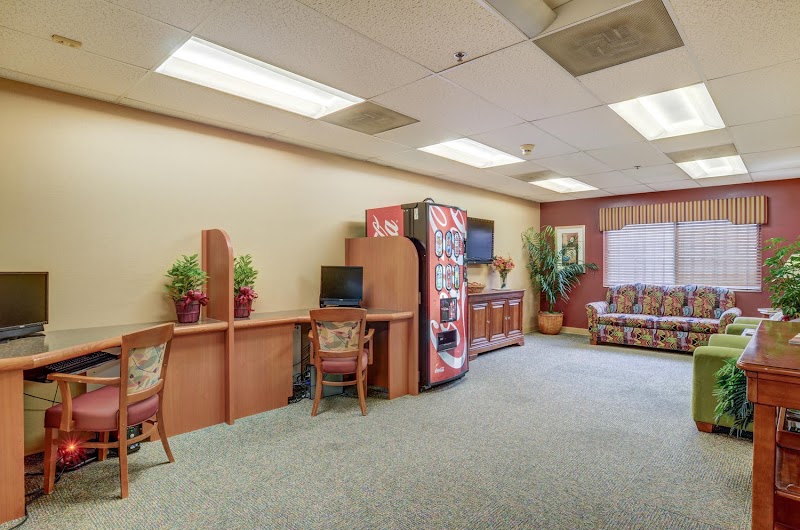
Harmony Waterloo

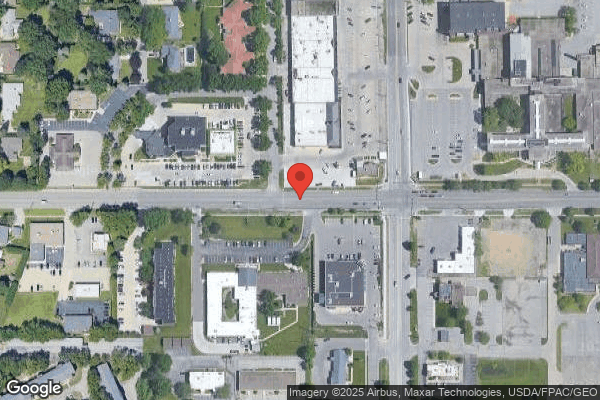
201 West Ridgeway Avenue, Waterloo, IA 50701 (319) 234-7777
For profit - Limited Liability company 88 Beds LEGACY HEALTHCARE Data: November 2025
Trust Grade
58/100
#197 of 392 in IA
Last Inspection: January 2025

Within standard 12-15 month inspection cycle. Federal law requires annual inspections.

Overview

Harmony Waterloo has a Trust Grade of C, which means it is average and sits in the middle of the pack among nursing homes. It ranks #197 out of 392 facilities in Iowa, placing it in the bottom half, and #5 out of 12 in Black Hawk County, indicating only four local facilities are better. The facility is improving, with issues dropping from 7 in 2024 to 6 in 2025. Staffing is a strength here, rated at 4 out of 5 stars with a turnover rate of 41%, which is slightly better than the state average. However, families should be aware of some concerning incidents, such as residents being left in the dining room for long periods after meals and the lack of clean, well-maintained living spaces, including dirty floors and missing furniture in resident rooms. Overall, while there are notable strengths in staffing, the facility does have some significant areas needing improvement.

Trust Score
C
58/100
In Iowa
#197/392
Top 50%
Safety Record
Low Risk
No red flags
Inspections
Getting Better
7 → 6 violations
Staff Stability
○ Average
41% turnover. Near Iowa's 48% average. Typical for the industry.
Penalties
✓ Good
$10,557 in fines. Lower than most Iowa facilities. Relatively clean record.
Skilled Nurses
○ Average
Each resident gets 40 minutes of Registered Nurse (RN) attention daily — about average for Iowa. RNs are the most trained staff who monitor for health changes.
Violations
⚠ Watch
24 deficiencies on record. Higher than average. Multiple issues found across inspections.
★★★☆☆
3.0
Overall Rating
★★★★☆
4.0
Staff Levels
★★★★☆
4.0
Care Quality
★★★☆☆
3.0
Inspection Score
Stable
2024: 7 issues
2025: 6 issues

The Good

  • 4-Star Staffing Rating · Above-average nurse staffing levels
  • 4-Star Quality Measures · Strong clinical quality outcomes
  • Full Sprinkler Coverage · Fire safety systems throughout facility
  • No fines on record
  • Staff turnover below average (41%)

    7 points below Iowa average of 48%

Facility shows strength in staffing levels, quality measures, fire safety.

The Bad

3-Star Overall Rating

Near Iowa average (3.1)

Meets federal standards, typical of most facilities

Staff Turnover: 41%

Near Iowa avg (46%)

Typical for the industry

Federal Fines: $10,557

Below median ($33,413)

Minor penalties assessed

Chain: LEGACY HEALTHCARE

Part of a multi-facility chain

Ask about local staffing decisions and management

The Ugly 24 deficiencies on record

May 2025 1 deficiency
CONCERN (D) 📢 Someone Reported This

A family member, employee, or ombudsman was alarmed enough to file a formal complaint

Potential for Harm - no one hurt, but risky conditions existed

Deficiency F0602 (Tag F0602)

Could have caused harm · This affected 1 resident

**NOTE- TERMS IN BRACKETS HAVE BEEN EDITED TO PROTECT CONFIDENTIALITY** Based on observation, clinical record review, document review, policy review, resident and staff interviews, the facility failed...

Read full inspector narrative →
**NOTE- TERMS IN BRACKETS HAVE BEEN EDITED TO PROTECT CONFIDENTIALITY** Based on observation, clinical record review, document review, policy review, resident and staff interviews, the facility failed to keep resident's free from financial exploitation (abuse) when a staff member utilized a resident's credit card to pay their personal cell phone bill for 1 of 4 resident's sampled (Resident #7). The residents gave the staff money, credit, and/or debit cards to purchase pop for them from the vending machine. The staff reported they always did this, especially for residents who couldn't get out of bed to get the pop themselves. After 1 resident discharged from the facility, the resident received a phone call from her bank regarding an overdraft charge for a cellular phone bill, the resident contacted the police who started an investigation. The investigation determined the name on the cellular phone account belong to a staff member, Staff A, Certified Nurse Aide (CNA), who worked at the facility during the time Resident #7 lived at the facility. The facility identified a census of 74 residents. Findings include: Resident #7's Clinical Census reflected she admitted to the facility on [DATE] and discharged on 11/27/24. She resided in room [ROOM NUMBER]-B in the back hallway at that time. Resident #7's Minimum Data Set (MDS) assessment dated [DATE] indicated she had adequate hearing, clear speech, the ability to understand communication and be understood. She had adequate vision without corrective lenses. The MDS identified a Brief Interview for Mental Status (BIMS) score of 15, indicating intact cognition. Resident #7 did not exhibit any behaviors. The MDS listed Resident #7 as dependent upon staff for bed to chair transfers, she couldn't walk, and required full staff assistance once up in a wheelchair. Resident #7 had frequent pain, that she rated a level 4 out of 10 which required scheduled and as needed pain medication. The MDS included diagnoses of paraplegia (loss of movement and sensation in the lower part of the bod), stage four (deep wounds into the bone) pressure ulcers of the sacrum, right hip, left hip, osteomyelitis (bone infection) of the vertebra, lumbosacral (lower spine) region, diabetes mellitus, anxiety and depression. The MDS reflected Resident #7 had 3 pressure ulcers that received care. The Compliance Plan Receipt and Acknowledgement signed by Staff A on 11/5/24 reflected she acknowledged she received a personal copy of the company Code of Ethics. In addition, she read and fully understood the Code of Ethics and agreed to comply with the Code of Ethics. An Iowa Incident Report dated 12/2/24 at 3:46 PM identified the police officers responded to a call about credit card fraud. The Iowa Incident Report listed Resident #7 as the victim. Resident #7 stated her bank notified her someone used her credit card on 11/19/24 to (pay) a cellular phone bill for $417 or $418 dollars. Resident #7 did not utilize that cellular phone services. Resident #7 reported she lived at the facility from 10/14/24 to 11/27/24 and thought an employee of the facility used her card. An Investigation Summary dated 2/25/25 - 2/28/25 completed by the facility listed the Summary of Alleged Incident as a Police Officer notified the Administrator on 2/25/25 that Resident #7, contacted the police department after she left the facility about credit card fraud. The Police Officer showed the Administrator a subpoenaed cellular phone bill with Staff A's name on it as the account holder. The Critical Information Obtained During the Investigation summary noted Resident #7 gave her cash app card and her bank card to staff to get her pop from the vending machine. Resident #7 reported Staff B, Licensed Practical Nurse (LPN), reported she couldn't take her card, but other staff took her card to the vending machine to get her pop. Resident #7 reported Staff C, CNA; Staff D, CNA; Staff E, CNA; and Staff F all got her pop from the vending machine. Resident #7 identified other staff also got her pop, but she couldn't remember who else, other than both nurses and CNAs. Resident #7 believed someone stole her credit card information when the staff got her pop from the vending machine. She received a call from her bank when a charge to her card made her account negative. At that time, she contacted the police. In addition, Resident #7 reported to the Administrator a staff member helped her pay her WIFI bill on-line. That CNA didn't have a pen or paper during the incident so she didn't believe it happened then. The Administrator called Staff A on 2/26/25. Staff A reported she didn't take any residents' card to pay her phone bill. She didn't know who Resident #7 was and didn't work at the facility long. Staff A reported she never worked in the back hall. A review conducted on 3/17/25 at 1:00 PM of Staff A's Employee File revealed an Iowa Record Check Request Form S dated 5/17/24. The results section had an X marked for computerized criminal history (CCH). The Record Check Evaluation completed on 5/20/24 reflected Staff A may work at the facility. The Single Contact License & Background Check complete as of 10/30/24 listed the report required further research. The Iowa Criminal History Results dated 11/4/24 indicated the search resulted with an Iowa Criminal History Record Found. The section labeled Criminal History Record Information listed a history of third-degree theft that turned into a fourth-degree theft. The charge resulted in a non-conviction with a deferred judgement of $315 civil penalty and a 12-month probation. Staff A's Employee File contained a verbal One-to-One In-service Record review dated 11/8/24 regarding her unsatisfactory work performance including, but not limited to, her failure to complete work assignments, incompetence, or poor performance of work assignments. An Iowa Incident Report Supplemental (Police Department) dated 4/2/25 documented on 2/14/25 the officer received with the name of the cellular phone service account holder. The account paid with Resident #7's credit card returned as Staff A. A 4/28/25 review of Staff A's Iowa Time Card Report revealed the following work hours: a. 11/6/24 In at 9:38 PM; out at 6:06 AM; total hours 7.45. b. 11/7/24 In at 9:47 PM; out at 6:02 AM; total hours 7.45. c. 11/10/24 In at 9:42 PM; out at 6:09 AM; total hours 8.0. d. 11/11/24 In at 9:33 PM; out at 6:04 AM; total hours 8.0. e. 11/11/24 In at 9:42 PM; out at 6:09 AM; total hours 8.0. Review of the Daily Staffing Schedules listed Staff A as scheduled to work the back hallway where Resident #7 lived on 11/7/24 and 11/12/24. Interview on 4/28/25 at 2:18 PM Staff G, CNA, voiced the facility had a vending machine in the breakroom with pop machines in the back-hallway lounge and in rehabilitation unit. She reported Resident #14 asked the staff to get her Mountain Dew out of the pop machines. She had a small wallet, that she gave the staff. The staff went right down to the pop machine, used it and brought it right back with the pop. She used the pop machine right across from another resident's room. She assumed other staff get pop for Resident #14. Staff G reported she only worked at the facility for a few weeks, but she didn't receive direction about getting pop for residents when she started at the facility. Interview on 4/28/25 at 2:22 PM Staff H, LPN, reported if a resident wanted a pop, the resident needed to ask the activity coordinator to assist them to the vending machines to get a pop. The staff aren't to assist or take money/cards from a resident to get them pop. She reported it as always supposed to be that way. Interview on 4/18/25 at 3:00 PM Staff J, CNA, reported they used to take Resident #7's money or credit card and swipe it in the pop machine. Afterwards Staff J took her the pop and the card back to her. That happened probably six months to one year ago, then management stopped that. Staff J recalled Staff A worked at the facility, but she didn't stay long. She believed Staff A told her, this isn't enough money, then she just disappeared and didn't work at the facility any longer. On 4/28/25 at 3:18 PM the Provisional Administrator stated obviously it (incident) happened. The statements brought in by the police documented the incident. She thought it happened when Resident #7 gave her card to staff to get her pop. Resident #7 reported she gave the staff her card on the third shift, but couldn't recall the names of all the staff she gave her card. They thought Staff A may have took a picture of her card. Resident #7 didn't reside at the facility when it happened. The facility didn't have other residents who identified any misuse of their cards when they got pop. Interview on 4/28/25 at 3:36 PM Staff E, stated she primarily worked the night shift, usually assigned to the back hallway. The residents gave the staff money or a card to get them pop from the pop machine. The rehabilitation unit and the back-hallway lounge had pop machines with a vending machine containing candy/chips in the staff breakroom. Resident #7 asked the staff to get her a pop. She reported she did get Resident #7 a pop once. Management knew the residents who couldn't get out of bed gave the staff money or credit cards to get them a pop. She didn't know for sure if the facility had any stipulations that only managers could get residents a pop. Interview on 4/28/25 at 3:51 PM Staff C, reported she worked at the facility for approximately 15 years. Staff C stated she never got pop for any residents, then changed her response and stated she actually had residents give her cash to get them pop from the pop machine. Resident #7 asked her to get her a pop from the vending machine. Resident #7 offered to give her a credit card, but she refused to take it. Staff C instead, bought Resident #7 a pop using her own card. Staff C verbalized the facility didn't allow staff to carry cell phones when they worked the floor. Staff C explained the facility didn't want staff to take resident credit cards anymore as something happened with a resident's credit card. Interview on 4/28/25 at 4:05 PM Staff K, CNA, voiced she worked at the facility for close to nine years, primarily working the third shift (10:00 PM to 6:00 AM). When asked if residents gave the staff cash or credit cards to get them a pop, Staff K responded, ya. She got a pop for Resident #19 as he couldn't get out of bed. One time Resident #19 gave her cash and another time he gave her a card. She told Resident #19 she didn't feel comfortable with that, but she did get him pop a few times. The facility had a meeting about a month ago and where the told the staff they couldn't take residents' cards any longer. She missed the meeting but she learned that they couldn't take cards or the facility would terminate them. She worked with Staff A and it seemed like she disappeared from the floor every now and then. The staff have cell phones but they are not to have them out when they worked. Staff K said Staff A may have had a pen and paper on her because when they train they have report sheets they write the resident assistance levels on and keep it in their pockets. During an interview on 4/20/25 at 12:23 PM Staff L, LPN, voiced she primarily worked night shift on the front, center, and back hallways. In regards to the staff taking residents' credit/debit cards to purchase pop from the pop machines, Staff L reported it probably happened. She added if they did it, they did it behind her back. Any resident on the back hallway probably tried to get the staff to get them pop. Resident #7 lived in the back hallway and she always tried to give staff her credit card, cash app card, or cash to go to the gas station to get things for her. Staff L didn't know what direction the facility gave staff about taking residents' money or credit/debit cards. Interview on 4/29/25 at 12:55 PM Staff M, CNA, reported he worked at the facility for around 2 years. When asked about staff taking residents' cash or credit/debit cards to get pop, he responded it happened. The facility had a meeting because of that as residents had issues about missing money. They directed to not accept money or cards from residents. The facility had two residents in the rehabilitation unit and a few residents in the back hallway who would ask staff to go get them a pop. Some of the residents couldn't get out of bed, so it was convenient for staff to go get them a pop. The residents gave staff both cash and credit/debit cards. He added it happened for as long as he worked at the facility. During a telephone interview on 4/29/25 at 4:13 PM Staff A voiced she worked at the facility last year (2024), but not long. She worked the overnight shift (10:00 PM to 6:00 AM). She worked all the hallways (areas) at the facility. Staff A verbalized she didn't have any residents give her cash, cash app cards, or credit cards to get them pop from the vending machines. She added the facility locked that stuff up in the business office. Staff A reported they didn't have issues during her employment at the facility. On 4/30/25 at 11:10 AM observed a pop machine in the back hallway approximately 60-65 feet from Resident #7's room when she lived at the facility. The path from Resident #7's room to the pop machine went directly by the back-hallway nurses' station. The nurses' staff included access to paper, pens, pencils, and a photocopy machine. On 4/30/25 at 11:20 AM witnessed 2 cell phones sitting on the back-hallway nurses' station desk. Staff N, LPN, reported the staff kept their cell phones on the nurses' station desk and checked them off and on as long as they didn't take and use them in resident care areas. During an interview on 4/30/25 at 12:16 PM the Director of Nursing (DON) stated a CNA who no longer worked at the facility must have took a picture of the card. Resident #7's card had a charge of $400-$600. Resident #7 gave her card to the CNA to get her pop. The CNA would have had her cell phone on her. The DON explained the staff aren't supposed to have cell phones in patient care areas, but the staff still had phones in their pockets. The DON voiced she didn't want staff to have their cell phones at the nurses' station. The DON reported staff took residents' credit cards to go get them pop from the pop machines. The DON confirmed the staff shouldn't take residents' money or cards, unless the resident can accompany the staff member to the pop machine. The DON thought the employee handbook outlined this under abuse, but she hadn't read the handbook in years. She remarked you can't trust anybody. During an interview on 4/30/25 at 2:13 PM the Provisional Administrator reported in conclusion it had happened, but as an isolated incident. The facility didn't have the issue prior. They implemented all staff abuse training on their training software and they provided one to one education regarding all types of abuse, missing money, property, or credit card is a form of financial abuse. The reviewed with residents about missing items and provided them lock boxes. The staff do a weekly angel round to check with residents, which included missing items. Interview on 4/30/25 at 2:30 PM Staff B voiced she worked at the facility since February 2020 on the 2:00 PM to 10:00 PM shift in the back hallway. Residents would give staff their credit/debit cards. Then the staff would take the card, tap on the pop machine, and take the pop and card back to the resident. They used the machine in back hallway lounge. The staff did get pop for Resident #7 once in a while. Before Christmas, the facility instructed them to not to take residents' credit cards to get pop. The Patient Protection Guidelines, Abuse Prevention, Reporting and Investigation Policy revised September 2023 directed residents must not be subjected to abuse by anyone, including, but not limited to the facility staff. The Policy defined misappropriation of resident property as the deliberate wrongful, temporary or permanent use of a patient's belongings or money without the patient's consent. The policy lacked direction to the staff regarding handling of a resident's cash app, debit, or credit cards. The facility's Employee Handbook, 2023, regarding Ethics and Confidentiality directed the company had the responsibility of safeguarding the privacy of all patients so that no patient is caused unnecessary embarrassment or discomfort, or is made the object of scorn, ridicule or exploitation as a result of their stay at the facility. Examples of Confidential Information included patient records and information including financial information. The Handbook directed each patient had the right to be free from financial abuse. The Company would promote and protect the rights of each patient. The staff behavior must reflect the belief in those patient rights. The Handbook specifically prohibited the use of a personal cell phone use during worktime.
Jan 2025 5 deficiencies
CONCERN (D) 📢 Someone Reported This

A family member, employee, or ombudsman was alarmed enough to file a formal complaint

Potential for Harm - no one hurt, but risky conditions existed

Resident Rights (Tag F0550)

Could have caused harm · This affected 1 resident

2. During an interview on 1/12/25 at 11:57 AM, Resident #8 reported that she frequently visits other resident's as they are her only family. She was visiting Resident #65 recently and asked where the ...

Read full inspector narrative →
2. During an interview on 1/12/25 at 11:57 AM, Resident #8 reported that she frequently visits other resident's as they are her only family. She was visiting Resident #65 recently and asked where the Resident #11 was as she noted the resident was not in the room. Resident #65 explained Resident #11 was in the hospital. Resident #8 stated she expressed concern saying I hope she feels better. Resident #65 said me too. Nothing more was said about Resident #11. A short time later Staff A came into the room and told them they couldn't be talking about other residents. She stated it made her feel upset because it was genuine concern. Based on record review, resident and staff interviews, the facility failed to treat residents with dignity and respect ensuring the resident 's rights were met for 2 of 3 residents reviewed (Resident #65 and #8). The facility reported a census of 80 residents. Finding include: 1.The Minimum Data Set ( MDS) for Resident #65 dated 12/19/24 revealed Brief Interview for Mental Status (BIMS) score of 15 indicating intact cognition. The MDS further documented she has diagnoses of congestive heart failure, hypertension, diabetes and anxiety. During an interview on 1/12/25 at 1:12 PM Resident #65 reported Staff A, Licensed Practical Nurse (LPN) is not a nice nurse she at times talks rude and degrading toward her. Resident #65 reported when her roommate (Resident #11) was in the hospital, Resident #8 came around to deliver the monthly newsletter for the facility. When Resident #8 asked where Resident #11 , Resident #65 told her she was in hospital. Resident #65 reported they both were saying they hoped Resident #11 felt better soon. Resident #65 reported they didn't feel that they did anything wrong saying that . She reported she felt bad after she was told not to talk about her roommate to other people by Staff A, LPN. During the interview with Resident #65 her roommate Resident #11 verbalized she was not upset because her roommate told the other resident she was in the hospital. She reported the residents are like family and that she didn ' t say anything concerning to get into trouble. She reported Staff A, LPN is not very nice to Resident #65 and was not treated with dignity. Review of Resident #65 ' s the progress notes dated 1/10/25 at 12:54 PM documented this resident was discussing roommate with another resident. This nurse educated them that this was not appropriate to have this type of conversation. Administrator notified. During an interview on 1/14/25 at 1:05 PM Staff A, LPN reports that she did not overhear the residents talking to each other; it was another staff member who heard it and told her about it. She could not remember what staff member it was that told her about it. She did not get any information on what was said just was told Resident #65 was talking about her roommate to Resident #8. In an interview on 1/14/25 at 1:35 PM The Director of Nursing reports they encourage residents not to talk about other residents but they are not medical professionals so they do not have to follow the Health Insurance Portability and Accountability Act (HIPPA). The conversation Resident #65 had with Resident #8, she felt there was no concern with the conversation they had. She felt there was no need to discuss concerns to Resident #65 about the conversation.
CONCERN (D)

Potential for Harm - no one hurt, but risky conditions existed

Safe Environment (Tag F0584)

Could have caused harm · This affected 1 resident

Based on observations, resident and staff interviews, the facility failed to keep the shower room at a comfortable temperature to meet within regulation of 71 to 81 degrees per resident request (Resid...

Read full inspector narrative →
Based on observations, resident and staff interviews, the facility failed to keep the shower room at a comfortable temperature to meet within regulation of 71 to 81 degrees per resident request (Resident#38 and #65). The facility reported a census of 80 residents. Findings include: 1. The Minimum Data Set (MDS) for Resident #38 dated 12/25/24 identified a Brief Interview for Mental Status (BIMS) score of 15 indicating intact cognition. The MDS documented the resident needs supervision or touching assistance with bathing and dressing (Helper provides verbal cues and/or touching/steadying and/or contact guard assistance as resident completes activity. Assistance may be provided throughout the activity or intermittently). The MDS further documented the resident had diagnoses of anxiety, hypertension, localized edema and chronic back pain. During an interview on 1/12/25 at 2:05 PM Resident #38 reported the temperature in the shower room is cold. The water is warm but the room itself is cold. He reported it was discussed since November at resident council but nothing gets done. In an observation on 1/13/25 at 10:00 AM Maintenance took the temperature in the shower room on the PARS end of the building and the temperature is 66.7 degrees. Maintenance reported they are having issues with the heating system and there is someone coming to look at the system. He reported it is cold in the PARS lounge , shower room and Physical therapy room. In an observation on 1/14/25 at 9:45 AM after two residents on the PARS wing were showered in the shower room, Maintenance took temperature in the shower room and it was 66.5 degrees today. He reported they are looking into the heat. He reported staff are to be using the heat lamps in the shower to warm the room in the meantime. During an interview on 1/14/25 at 10:10 AM Resident #38 reported staff do not use the heat lamp in the shower room. He reported they never do. During an interview on 1/14/25 at 10:30 AM the Administrator gave a concern form with a date received as 12/17/24 documenting the shower rooms are cold. She reported that in November there was an electrician here to fix the heat lamp in the shower room on 11/22/24 but residents still reported it was cold. She reported she did not know of the concern form filled out right away because the activities department that does resident council did not get the concerns to her right away and so it was not assigned until 12/23/24 and still is a concern. 2. The MDS for Resident #65 dated 12/19/24 revealed BIMS score of 15 indicating intact cognition. The MDS documented the resident requires substantial/maximal assistance with bathing (Helper does MORE THAN HALF the effort. Helper lifts or holds trunk or limbs and provides more than half the effort.) and dependent with dressing (Helper does ALL of the effort. Resident does none of the effort to complete the activity. Or, the assistance of 2 or more helpers is required for the resident to complete the activity). The MDS further documented she has diagnoses of congestive heart failure, hypertension, diabetes and anxiety. During an interview on 1/14/25 10:00 AM Resident #65 reported she had a shower last evening on 1/13/25 and the shower room was cold. She reported staff do not use the heat lamp in the shower. She reported they never use it.
CONCERN (D)

Potential for Harm - no one hurt, but risky conditions existed

Assessment Accuracy (Tag F0641)

Could have caused harm · This affected 1 resident

Based on clinical record review, staff interviews and the Resident Assessment Instrument (RAI) manual, the facility failed to accurately document and submit accurate resident Minimum Data Set (MDS) As...

Read full inspector narrative →
Based on clinical record review, staff interviews and the Resident Assessment Instrument (RAI) manual, the facility failed to accurately document and submit accurate resident Minimum Data Set (MDS) Assessment for 2 of 5 residents reviewed (Resident #36 and #65). The facility reported a census of 80 residents. Findings include: 1. The MDS for Resident #36 dated 11/16/23 revealed a diagnoses of congestive heart failure, hypertension and renal insufficiency. The MDS lacked documentation of the resident on a diuretic (medication to help increase excretions of water from the body through the kidneys). Review of the November 2024 Medication Administration Record (MAR) documented the resident received Lasix during the 7 day look back period. In an interview on 1/14/25 at 2:29 PM, the Director of Nursing (DON) reported the MDS was not correct for Resident #36 and he should have been coded for diuretic medication on the MDS and it was missed. On 1/14/25 at 3:02 PM the Administrator reported the facility does not have a policy for MDS. She reported the facility follows the RAI manual. Review of the Long-Term Care Facility RAI 3.0 Manual section N:Medications revised October 2024 directs staff to review the resident 's medical record for documentation that any of the high risk medications were received by the resident and for the indication of their use during the 7-day look back period (or since admission/entry or reentry if less than 7 days). Diuretics are on the list of high risk medications. 2. The MDS for Resident #65 dated 12/19/24 revealed a diagnoses of congestive heart failure, hypertension, diabetes and anxiety. The MDS documented the resident had received an anti-psychotic medication on a routine basis. Review of Resident #65 MAR for November 2024, December 2024, and January 2025 lacked documentation of an anti-psychotic medication given. During an interview on 1/14/25 at 2:50 PM, the DON reported the MDS was coded wrong and Resident #64 was not on an anti-psych medication.
CONCERN (D)

Potential for Harm - no one hurt, but risky conditions existed

Deficiency F0645 (Tag F0645)

Could have caused harm · This affected 1 resident

Based on record review and staff interview the facility failed to ensure 1 of 1 residents (Resident #72) Pre-admission Screening and Resident Review (PASRR) was submitted for review when she had new d...

Read full inspector narrative →
Based on record review and staff interview the facility failed to ensure 1 of 1 residents (Resident #72) Pre-admission Screening and Resident Review (PASRR) was submitted for review when she had new diagnoses documented in her medical record. The facility reported a census of 80 residents. Findings include: The Minimum Data Set (MDS) for Resident #72 dated 10/17/24 identified a Brief Interview for Mental Status (BIMS) score of 13 indicating intact cognition. The MDS documented the resident had diagnoses of diabetes, hypertension, alcohol abuse and history of stroke. Review of Resident #72 ' s PASRR dated 10/09/24 documented no mental health conditions and did not require a level II to be completed. It documented the resident was on an anti-psychotic medication but no diagnosis was given for the medication. Provider Intake Notes from Neuropsychiatry documented Resident #72 had a diagnosis of anxiety and Bipolar depression in which she was on an anti-psychotic medication and started on a new antidepressant. Review of Resident #72 ' s Electronic Health Records lacked a new PASRR submission with the new diagnosis and medications. During an interview on 1/13/25 at 3:00 PM Social Services Director reported the MDS coordinator will report to her if a resident gets a new mental health diagnosis that she needs to be aware of to submit a new PASRR. She reported she was not aware of Resident #72 having the new diagnosis for Bipolar depression and she should have had a new PASRR completed. On 1/14/25 at 3:00 PM, the Administrator reported the facility does not have a PASRR policy. She reported the facility follows the federal regulations.
CONCERN (D)

Potential for Harm - no one hurt, but risky conditions existed

Deficiency F0658 (Tag F0658)

Could have caused harm · This affected 1 resident

Based on clinical record review, facility policy and staff interview the facility failed to follow up on blood sugar levels that were out of physician defined parameters for 1 of 2 diabetic residents ...

Read full inspector narrative →
Based on clinical record review, facility policy and staff interview the facility failed to follow up on blood sugar levels that were out of physician defined parameters for 1 of 2 diabetic residents (Resident #9) reviewed. The facility reported a census of 80 residents. Findings include: The Medication Administration Record (MAR) for Resident #9 dated December 2024 included an order for fingerstick blood sugar 4 times a day. The order directed staff to call the Medical Doctor (MD) for levels less than 70 or greater than 300. On 12/15/24 at 9:00 PM the MAR documented a blood sugar of 364. On 12/22/24 at 4:00 PM the MAR documented a blood sugar of 375. The Progress Note written on 12/15/24 at 9:29 PM documented the resident had a blood sugar of 364. Per orders staff are to notify the MD if the blood sugar is greater than 300. The nurse attempted to reach the MD. She was unable to do so and put the fax in the fax folder. The clinical record lacked documentation for 12/22/24. The facility policy titled Diabetes Management (Hyperglycemia/Hypoglycemia) last revised 11/2023 directed staff to report the physician any abnormal blood sugar level outside of the parameters as ordered. The facility policy titled Physician Orders/Transcription of Orders last revised 7/2023 directed staff to follow and carry out active orders as written. During an interview on 1/14/25 at 1:30 PM the Director of Nursing explained she would expect the MD to be notified of blood sugars outside of the parameters. She further explained that she would expect to be notified if there were issues reaching the MD. She would expect an order to be received and a progress note to be written in the resident's clinical record regard the abnormal level, MD notification and new order received.
Nov 2024 1 deficiency
CONCERN (D) 📢 Someone Reported This

A family member, employee, or ombudsman was alarmed enough to file a formal complaint

Potential for Harm - no one hurt, but risky conditions existed

Quality of Care (Tag F0684)

Could have caused harm · This affected 1 resident

**NOTE- TERMS IN BRACKETS HAVE BEEN EDITED TO PROTECT CONFIDENTIALITY** Based on clinical record review, staff interviews, family interviews and policy review, the facility failed to complete a full a...

Read full inspector narrative →
**NOTE- TERMS IN BRACKETS HAVE BEEN EDITED TO PROTECT CONFIDENTIALITY** Based on clinical record review, staff interviews, family interviews and policy review, the facility failed to complete a full assessment to include neurological assessments and failed to notify family and the provider timely for 1 of 4 residents reviewed (Resident #1). Resident #1 fell out of her wheelchair and landed on her face. The fall was witnessed by Staff A, Registered Nurse (RN). The facility reported a census of 79 residents. Findings include: A Minimum Data Set (MDS) assessment dated [DATE], documented diagnoses for Resident #1 included non-Alzheimer's dementia, unspecified dementia with other behavioral disturbances, and repeated falls. A Brief Interview for Mental Status (BIMS) score revealed that this resident was rarely/never understood. This resident was dependent on staff for transfers. Resident #1's Progress Notes documented the following: On 10/27/24 at 8:45 p.m., (completed as a late entry on 10/28/24 by Staff A) Resident #1 had been attempting to get out of her chair and bed all shift. At some point, the resident fell and hit her right forehead, leaving a 5cm bruise. Resident is now in a new room, and is lying comfortably in bed. Neuro's (neurological checks) started and all aware. On 10/27/24 at 10:30 p.m., Staff C documented unable to get vital signs (VS) due to resident cooperation at this time. Resident #1 was lying in bed holding her head and yelling out. Upon assessment, there was a 5 cm (centimeter) in diameter hematoma (bruise) noted to the right side of her forehead at the hairline. Resident was asked what happened but she just groaned and continued to cry and yell out. No falls were noted recently. Attempted neuros (neuro checks). Unable to obtain VS or neuro eval due to resident cooperation. It does not appear there was a change in LOC (Level of Consciousness). 5mg (milligrams) of Morphine sulfate solution (narcotic pain medication) administered via oral syringe. Staff A stayed with resident at bedside while this nurse contacted the Nurse Practitioner. Contacted Resident #1's daughter and she does not want to send resident out to the hospital at this time. Facility nurse on call also notified. Will continue to monitor resident frequently throughout the overnight shift. On 11/19/24 at 11:34 a.m., Staff C stated she had gone into work the night of 10/27/24 and received shift report. Staff C heard Resident #1 call out and Staff C went to check on the resident. Staff A had told Staff C that the resident had been in her room and her roommate opened a window and as it was getting cold out, Staff B had moved Resident #1 to a different room that was close to the nurses' station, the one that was next to the lounge. Staff A had not told Staff C that Resident #1 had fallen. Staff C stated Resident #1 falling should have been on report. Staff C did ask Staff A before Staff A left if Staff A had noticed that Resident #1 had a bruise on her forehead and Staff A said no. She stated Staff A did not tell her that Resident #1 had fallen and Staff C did not hear that Resident #1 had fallen until she returned to work a few days later. It was not long after Staff C got to work when she went to assess Resident #1 and she was kind of smacking her forehead and reaching out. That prompted Staff C to pull back Resident #1's hair because this resident normally doesn't hit/smack her head. That's when Staff C noticed a hematoma right along her hairline. It was like a purple goose egg. Staff C stated she got vital signs first and then called the Nurse Practitioner who wanted to send Resident #1 out for evaluation. The on call provider called the daughter with Staff C on the phone to ask the daughter if she wanted to send her mother out to the ER. The daughter at that time said no because she didn't want her mother to go back on Hospice. When dayshift came on Staff C shared all of the information with the day nurse. Resident #1 had been moved to the other end of the hall as her room was too cold for her. Staff C thought it was Staff D that she gave shift to shift report to. She told Staff D that she had done neuro checks on Resident #1 through the night. On 11/19/24 at 12:51 p.m., Staff B stated the night shift reported Resident #1 had fallen the evening before, hit her head and had a goose egg on her head. Resident #1 was being restless in bed. Staff B had staff get the resident up. Resident #1 wasn't acting right. They offered Resident #1 a banana, she loves bananas. The resident kind of glanced at the banana but really didn't track it. It was like she didn't recognize it as food. She was up in her wheelchair for like 15 minutes. She could hear your voice but really didn't follow, like turn her head toward a voice. The resident had kind of a blank stare on her face. That's why it was decided to send her out around 7:30/8:00 a.m. Staff B stated she had not done any neuros as she hadn't made it in to Resident #1's room yet. When asked if the resident's pupils were fixed, Staff B stated that a few of the staff noticed that Resident #1 kind of had a fixed stare, she wasn't tracking. Staff B along with other staff decided Resident #1 wasn't acting right and she needed to be sent out. Staff B stated she sent her out for AMS (Altered Mental Status). Staff B called the daughter and told her that Resident #1 had a huge bruise on her forehead. Staff B told her about the banana. The daughter agreed to send her mom up to the hospital. On 11/19/24 at 3:28 p.m., Staff A stated Resident #1's roommate had been keeping the room at a freezing cold temperature and Resident #1 kept trying to get out of her bed. It was getting close to the end of shift. Resident #1 was in her wheelchair (w/c) and she dropped her baby doll on the floor and tried to reach for it and fell out of the w/c. Staff A saw it happen but couldn't get to the baby doll in time to hand it back to Resident #1. This happened in the hallway. Staff E, Certified Nurse Aide (CNA), and Staff A helped this resident back into her w/c. Staff A assessed Resident #1 but didn't start the neuros. Staff C came in shortly after the fall. When report was over Staff A ran out of the facility and forgot to do neuros or document anything but Staff C had started neuros. Staff A reported to Staff C that Resident #1 had a fall. Staff A stated that when Resident #1 fell out of the w/c, her forehead wasn't anything like the goose egg and bruising. Staff A thought that during the 15 minutes when they were giving report the goose egg and bruise happened. Staff A called the daughter to tell her what happened and she didn't answer the phone. Staff A didn't leave a message. Staff A was then shown the late entry she documented on 10/28/24 the day after the fall, regarding the fall where Staff A had documented that the entry should have been put in on 10/27/24 at 8:45 p.m. The entry was read to her to include that at some point the resident fell and hit her forehead, leaving a 5 cm bruise. Staff A stated the above time of the late entry for the effective date is an error. She said it wasn't at 8:45 p.m., it was more like 9:45 p.m. On 11/19/24 at 3:56 p.m., Staff E stated she worked 2nd shift the evening of 10/27/24 with 2 other CNA's. Staff E had walked in the room because they were going to lay Resident #1's roommate down. It looked like Resident #1 was cold, so Staff E changed the resident's clothes and put her in her w/c with a blanket on her. Staff E stated it was around 4:45 p.m. to 5:00 p.m., before supper. Staff E didn't recall if Resident #1 ate supper that night. Resident #1 started down the hallway. She was propelling herself down the hall. Then Staff A asked Staff E to help Staff A put Resident #1 back into the chair. Staff E helped Staff A pick this resident off of the floor and back into her wheelchair. Staff E did not see Resident #1 fall. Staff E then went back into the resident's room to help lay Resident #1's roommate down. Staff A pushed Resident #1 down by the nurses' station. Then Staff A called for Staff E's assistance again. Staff E went down to the lounge area (across from the nurses' station) and Staff A said that Resident #1 was very antsy and Staff A was worried this resident was going to roll off the couch. Staff E stated that it was a long time in between from when Staff E helped Staff A get this resident off of the floor and into her w/c, to Staff E helping Staff A lay this resident on to the couch in the lounge. Staff E went down again when Staff A asked for help to lay this resident onto the floor as Resident #1 was getting antsy and acting like she was going to roll off of the couch. Staff A wanted to prevent this resident from falling off the couch so Staff A had grabbed blankets and the pillows and placed them on the floor. Staff E stated she thought they laid this resident on the couch around 8:45 p.m. Then around 9:30/9:45 p.m., Staff A and Staff E lifted this resident back into her wheelchair. Staff A and Staff E then brought this resident into a different room, room [ROOM NUMBER] and not her regular room which was room [ROOM NUMBER]. Staff E then transferred Resident #1 into bed. Staff E stated that Resident #1 was shivering all through the shift. Staff E stated the resident's regular room, room [ROOM NUMBER], was like 66 degrees (Fahrenheit(F)). Staff E repeated that Resident #1 was shaking and was doing the shaking thing for the rest of the shift. Staff E thought Resident #1's shaking was maybe related to dementia and maybe Resident #1 was stuck on thinking she was cold. Staff E told Staff A that she (Staff E) still thought that Resident #1 was cold. Resident #1 looked drowsy, which was a normal look that she would get. Staff A had just come to Staff E earlier and as she needed help because Resident #1 had slid out of her chair. Staff E went to lift Resident #1 up and Resident #1 was like dead weight. Staff E looked at Staff A for help and then Staff A helped. Staff E stated that resident #1 really didn't want to get off of the floor. Staff E didn't notice any bump or bruising. The only assessment Staff E saw Staff A do was take Resident #1's temperature. Staff E laid Resident #1 down (in room [ROOM NUMBER]), and Staff A was in there. Staff E saw a little bruise on the side of this resident's forehead. Staff E pointed this out to Staff A and asked Staff A how Resident #1 got a bruise. Staff A responded that she didn't know how that happened. Staff E asked Staff A to take this resident's temperature. Staff E thought Staff A said this resident's temperature was 96.5/F. Staff E did not know if Staff A did anything further as far as assessment. Staff E just assumed Staff A would do an incident report and whatever her other duties were. When asked if the time of fall could have been closer to the end of the shift like around 9:30, Staff E said no. When told that was the timeframe given by Staff A, Staff E stated this resident's fall happened before supper. Staff E stated that this resident's roommate always wants to lay down at 5/5:30 p.m., that's how Staff E can remember about what time it was. Staff E stated at around 5/5:30 was when she went into the room to assist another CNA. Staff E noticed this resident was shivering. Staff E then stopped and tended to Resident #1, getting her dressed and up out of bed and into her wheelchair, then Resident #1 propelled herself down the hall. Staff E then assisted getting the roommate in the bed and when she was finished with that, Staff A asked Staff E to come help as Resident #1 was on the floor. On 11/20/24 at 9:52 a.m., Resident #1's daughter stated she never received a call from Staff A the evening of her mother's fall. Resident #1's daughter stated she had looked back at her call log when she found out from the Administrator that the fall had happened on the second shift. The daughter stated there were absolutely no calls until Staff B called the daughter with the on call provider service around 11:00 p.m. On 11/20/24 at 2:09 p.m., Staff A stated she could not put an exact time on the fall. She stated it was maybe bed time but it was not supper time. When Staff A saw Resident #1 fall, it was in the hallway and no one would come to help but Staff F. When Resident #1 fell she was in the hall approximately 10 feet in front of the nurse's station. Resident #1 was falling asleep in her wheelchair and her baby doll fell on the floor. Resident #1 reached down to grab her baby doll and fell face first onto the floor. Staff A hollered at Staff E. Staff E and Staff A then got Resident #1 up off of the floor and into the wheelchair. Staff A checked her arms and legs and noted Resident #1 was talking. Staff A waited until she could get a hold of management so that Staff A could put this resident in a different room. Staff B came onto her shift and found the bump on Resident #1's head. Staff C started doing neuros. It was not supper time. Staff A stated she should have started neuros at the time of the fall but it was in the middle of medication (med) pass and Staff A was just everywhere. Staff A stated that Resident #1 had fallen a lot, and was acting fine, so that's why she didn't start neuro checks. Staff A didn't see the bump on Resident #1's forehead at that time. Staff A stated that policy directs that the nurse has to do an assessment and IR (incident report) and they are to inform everybody. Staff A stated she called a provider. Staff A used the company phone to call the daughter and Staff A left a message. Staff A stated she did call the daughter and she had the proof. When asked to see the proof of the call, Staff A said she could not show proof as it wasn't on the company phone. The proof was in Staff A's head. Staff A said that Staff C then called the daughter again later. When told that the provider service had no record of a call previous to the one Staff C had made, Staff A stated that it was Staff C who called the provider not Staff A. Staff A was just sitting by Staff C when Staff C made the call. On 11/20/24 at 2:43 p.m., the DON stated that she talked to Staff A and Staff A thought that maybe Staff E had confused the night of the fall with another fall that had happened earlier in the month. When asked about the shivering and chills, laying on the couch then the floor, then moving to a different room happened after both falls, the DON acknowledged it did not. All of the above only happened on the evening of 10/26/24. The Administrator stated that the on-call phone showed that on 10/27/24 Staff A called the on-call phone at 8:26 p.m. and 8:48 p.m. On 11/20/24 at 3:00 p.m., Staff G, MDS Coordinator, RN, stated she was the on-call nurse the night of 10/27/24. Staff G stated she received a call from Staff A that night as the roommate (Resident #5) was hot and Resident #1 was cold. Staff G gave permission to move Resident #1 into an empty room for the night. Staff G stated that Staff A did not tell Staff G that Resident #1 had fallen. Staff G stated that Staff A should have told her. The DON was in the room during this conversation and stated that it was an expectation that the on call nurse was to be notified of all resident falls. It was acceptable that if it was a fall with no injury that the nurse could text the on-call nurse and let her know. The DON stated that in this case there was a hematoma and the on call nurse should have been called. She stated neuros should have been started at the time of the fall. On 11/20/24 at 3:37 p.m., the DON stated there were no texts sent by Staff A about the fall to the on-call phone. On 11/20/24 at 3:40 p.m., Staff E was asked if there was any way she had confused the two recent falls that Resident #1 had in November. Staff E said there was no way she was confusing the two falls. She said she absolutely did not confuse them. She stated she knows for sure because it was the day after her son's birthday. She said there is no way the fall happened at 8:00 p.m. or 8:30 p.m. on 10/27/24. She stated the fall was between 5:30 p.m. and 6:00 p.m. She said she knows what happened and nobody is going to change her mind. A Fall Occurrence policy dated 2/24 directed staff: Purpose: It is the policy of the facility to ensure that residents are evaluated for fall risks and implement interventions to minimize risk for falls and/or risk for injury from falls Procedure: 1. A Fall Risk Assessment is completed by the nurse upon admission, readmission, and as necessary. 2. Based on assessment, interventions are implemented and placed on care plan. 3. An incident report will be completed by the nurse each time a resident has a fall. 4. Residents will be assessed by a licensed nurse prior to being moved after a fall. 5. Nurse will notify physician and resident representative. 6. Additional intervention(s) will be implemented post fall. IDT may change the intervention(s) if IDT investigation identifies a more appropriate intervention for the individual fall. 7. The resident's care plan will be updated with any new or revised intervention(s). 8. Neurological assessment will be initiated for unwitnessed falls and/or falls that are witnessed and resident hits their head (neuros completed as directed on neuro flowsheet, see below). 9. Documentation and monitoring to be completed for 72 hours post fall.
Aug 2024 2 deficiencies
CONCERN (D) 📢 Someone Reported This

A family member, employee, or ombudsman was alarmed enough to file a formal complaint

Potential for Harm - no one hurt, but risky conditions existed

Pharmacy Services (Tag F0755)

Could have caused harm · This affected 1 resident

**NOTE- TERMS IN BRACKETS HAVE BEEN EDITED TO PROTECT CONFIDENTIALITY** Based on clinical record review, resident interview, staff interview and pharmacist interview, the facility failed to ensure anx...

Read full inspector narrative →
**NOTE- TERMS IN BRACKETS HAVE BEEN EDITED TO PROTECT CONFIDENTIALITY** Based on clinical record review, resident interview, staff interview and pharmacist interview, the facility failed to ensure anxiety medications administered for 1 of 3 residents reviewed (Resident #2). The facility reported a census of 84 . Findings include: Resident #2's Minimum Data Set (MDS) dated [DATE] identified a Brief Interview for Mental Status (BIMS) score of 10, indicating moderately impaired cognition. The MDS coded Resident #2 as dependent for mobility, included dependent for transfers, and they didn't attempt to walk him due to medical condition. The MDS included a diagnosis of amyotrophic lateral sclerosis (ALS), weakness, anxiety disorder and depression. The Care Plan Focus initiated 6/3/24 indicated Resident #2 utilized psychotropic medications for anxiety. The Interventions directed to administer medications as ordered. On 8/8/24 at 11:55 AM Resident #2 said he didn't receive his anxiety medication because the facility ran out. Resident #2 relayed this is not the first time the facility didn't have his medications. Resident #2's August 2024 Medication Administration Record included the following orders: a. Started 7/5/24 at 12:00 AM: Diazepam 5 milligrams (mg) by mouth one time a day for anxiety, while awake. i. Discontinued 8/6/24. b. Started 8/6/24: Diazepam 5 mg by mouth every 6 hours for anxiety. i. On 8/7/24 at 12:00 PM dose not given, coded unavailable (UV). ii. On 8/7/24 at 6:00 PM dose not given, coded UV. iii. On 8/8/24 at 12:00 AM dose not given, coded UV. iv. On 8/7/24 at 6:00 AM dose not given, coded nurses note (NN). - Hospice notified Resident #2 needed a script. v. On 8/7/24 at 12:00 PM dose not given, coded UV. On 8/8/24 at 12:05 PM Staff B, Registered Nurse (RN), explained the facility ordered the medications on demand. She reported Resident #2 received his last dose of diazepam on 8/6/24. The narcotic count sheet reflected zero diazepam left. Staff B voiced the ordering process for medication is on demand, the nursing staff need to notified the pharmacy when a medication has 3 to 4 left. They typically receive the medications the next day. Staff B couldn't find that someone ordered the diazepam medication before being depleted. On 8/8/24 at 12:56 PM Staff C, Pharmacist, said the pharmacy didn't receive a reorder for Resident #2's daily diazepam. If they did Resident #2 wouldn't have ran out of his diazepam medication. The Pharmacist added the new order to increase the daily dose didn't have a physician's signature. The pharmacy sent a request to the primary care doctor who responded, they no longer managed Resident #2's medication. The Pharmacist identified the need to contact the hospice affiliated physician which led to further delays in Resident #2 receiving his medication. On 8/8/24 at 1:00 PM the Director of Nursing (DON) explained the staff should order the controlled medications when the resident had three or four doses left. The DON added that hospice may give a new order but fail to have the physician sign the order. Then sends it to the pharmacy which delayed the residents from getting their medications. The DON believed that resulted in Resident #2 not receiving his diazepam. The DON explained she contacted Hospice that morning to inform them the pharmacy still didn't have a script. The DON acknowledged Resident #2 missed several doses of medication. They confirmed they needed to work to ensure the pharmacy received new orders from hospice appropriately and that staff order medications timely. The Physician Orders/Transcription of Orders policy dated July 2023 instructed to carry out active orders as written and transcribed.
CONCERN (E) 📢 Someone Reported This

A family member, employee, or ombudsman was alarmed enough to file a formal complaint

Potential for Harm - no one hurt, but risky conditions existed

Resident Rights (Tag F0550)

Could have caused harm · This affected multiple residents

**NOTE- TERMS IN BRACKETS HAVE BEEN EDITED TO PROTECT CONFIDENTIALITY** Based on observation, interviews and record reviews, the facility failed to treats residents with dignity for 4 residents (Resid...

Read full inspector narrative →
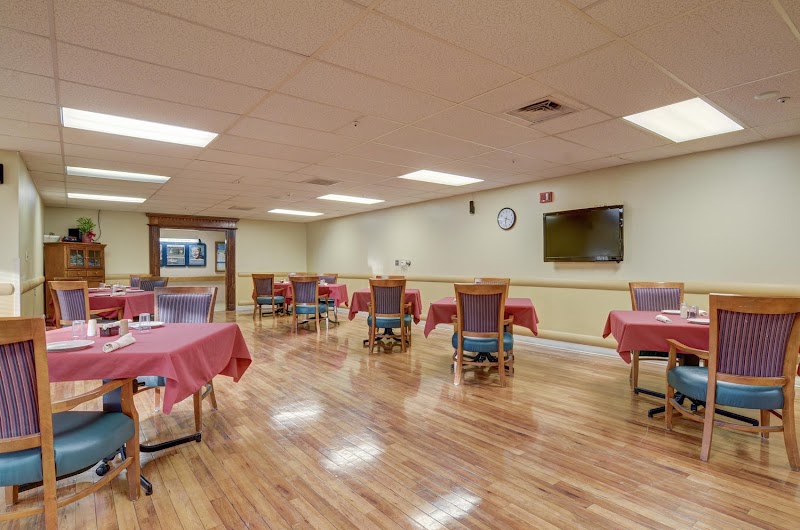
**NOTE- TERMS IN BRACKETS HAVE BEEN EDITED TO PROTECT CONFIDENTIALITY** Based on observation, interviews and record reviews, the facility failed to treats residents with dignity for 4 residents (Resident #2, #6, #7, and #8). Observations revealed the 4 residents left in the dining room for extended periods after meals. The facility reported a census of 84 residents. Findings include: 1. Resident #2's Minimum Data Set (MDS) dated [DATE] identified a Brief Interview for Mental Status (BIMS) score of 10, indicating moderately impaired cognition. The MDS coded Resident #2 as dependent for mobility, transfers, and they didn't attempt to walk him due to a medical condition. The MDS included a diagnosis of amyotrophic lateral sclerosis (ALS). The Care Plan Focus dated 4/10/24 indicated Resident #2 required assistance with activities of daily living (ADLs). The Intervention described him as dependent for eating and needed assistance of two for transferring. In an interview on 8/6/24 at 1:45 PM Resident #2 reported the staff left in the dining room for long periods of time after meals. He explained he had waited up to three hours for the staff to assist back to his room. 2. Resident #6's MDS dated [DATE] identified a Brief Interview for Mental Status (BIMS) score of 15, indicating intact cognition. The MDS coded Resident #6 as dependent for mobility, chair to chair transfers, and listed walking as non applicable. The MDS included a diagnosis of Parkinson's disease. The Care Plan Focus initiated 3/1/24 reflected Resident #6 required assistance with ADLs. The Interventions indicated he required partial assistance with supervision with eating. In addition, he required two assist and a mechanical standing lift to transfer. On 8/5/24 at 9:00 AM witnessed 4 residents in the dining room who required assistance with eating. Of the 4 residents, observed Resident #6 asleep in a geriatric wheelchair. In an interview on 8/6/24 at 9:05 AM Resident #6 sat in the main dining room in his wheelchair. He stated the staff usually started assisting him out of bed about 6:30 AM. They wheel him to the dining room right after they get him up. He ate breakfast around 8:00 AM and then has to wait for someone to push wheelchair back to his room. Resident #6 explained he wanted to go back to his room but he had to wait for someone to take him. He declared the wait could be a long time after the meal. In an interview on 8/6/24 at 1:30 PM Resident #6 explained that day the staff brought him right back to the room after lunch. He felt it had to do with the surveyor's presence. Sometimes they take everyone else, then he waited an hour or more alone, as he couldn't propel the wheelchair himself. Resident #6 stated, he felt alone and forgotten. He had another resident push him once because he waited so long. The other also sat in a wheelchair and pushed him in his wheelchair. 3. Resident #7's MDS dated [DATE] identified a BIMS score of 14, indicating intact cognition. The MDS listed Resident #7 used a wheelchair. The MDS included a diagnosis of multiple sclerosis. The Care Plan Focus initiated 2/20/23 reflected Resident #7 demonstrated physical aggression as evidenced by running his wheelchair into staff. In an interview on 8/6/24 at 1:15 PM Resident #7 reported he could take himself back in his wheelchair but residents that couldn't had to wait a long time for help back. Resident #7 explained around 10:00 PM, he attempted pushing Resident #6 back to his room while in his wheelchair because he still sat in the dining room. The staff often said they would be back again and again. 4. Resident #8's MDS dated [DATE] identified a BIMS score of 15, indicating intact cognition. The MDS coded Resident #8 needed partial to moderate assistance with transfers and walking. The MDS included diagnosis of stroke with hemiplegia (one-sided paralysis). The Care Plan Focus initiated 4/16/24 indicated Resident #8 required assistance with ADLs. The Interventions instructed Resident #8 required assistance of one person with transferring and used a wheelchair with a right side armrest. On 8/5/24 at 9:00 AM observed Resident #8 with her head on the table, asleep after breakfast. In an interview on 8/6/24 at 12:30 PM, Staff A, Certified Nursing Assistant (CNA), said the staff could get very busy. They said the residents did wait a very long time in the dining room if they can't get back to their room independently. Staff A reported a resident recently complained they waited until 8:00 PM to be brought back from supper. A facility policy titled Resident Rights, Dignity and Respect revised April 2024 directed each resident has the right to considerate and respectful care, to be treated with honesty, dignity, respect and with reasonable accommodation of individual needs except where the health, safety, or rights of the resident or other individuals in the facility would be endangered.
May 2024 4 deficiencies
CONCERN (D) 📢 Someone Reported This

A family member, employee, or ombudsman was alarmed enough to file a formal complaint

Potential for Harm - no one hurt, but risky conditions existed

Safe Environment (Tag F0584)

Could have caused harm · This affected 1 resident

3. During observation of Resident #60's room on 5/21/24 at 5:34 AM revealed a hand urinal 3/4ths full of urine sitting on the floor. The floor had a visible spot of a drying yellow substance present b...

Read full inspector narrative →
3. During observation of Resident #60's room on 5/21/24 at 5:34 AM revealed a hand urinal 3/4ths full of urine sitting on the floor. The floor had a visible spot of a drying yellow substance present beneath the hand urinal. During a subsequent observation of Resident #60's room on 5/21/24 at 9:21 AM witnessed the hand urinal moved to the top of a heating unit, not emptied, and had a small quantity of dried urine staining on the heating unit. The yellowed spot noted earlier remained on the floor. At the time, the surveyor took a picture. In an interview on 5/21/24 at 9:32 AM Resident #60 noted that he used the hand urinal before bed on 5/20/24. He stated he worried about the staff not emptying his urinal in a timely manner, as he struggled to use a hand urinal when it became heavy. He stated he placed the hand urinal on the floor, but did not place it on the heating unit. In an interview on 5/22/24 at 11:24 AM Staff G, Certified Nurse Aide (CNA)/Certified Medication Aide (CMA), stated she understood no one should place urinals on the floor, heating elements, or other surfaces outside of a designated place to hang them on the bed. Staff G noted they should sanitize the areas the hand urinal came into contact with after every encounter. Staff G stated that at minimum, they should empty the urinals every two hours when conducting rounds. In an interview on 5/22/24 at 12:29 PM the Director of Nursing (DON) reiterated what Staff G stated. She believed someone should empty the hand urinals at a minimum every two hours on rounds, and they should clean all surfaces the hand urinal came into contact with. She acknowledged the area didn't appear clean below the urinal. The Resident Room Daily Cleaning policy revised October 2023 directed to dust mop hard surface floors, and vacuum if carpeted. The Infection Control Manual Exposure Control plan revised March 2024 instructed to clean all surfaces that come into contact with bodily fluids. Based on observation, staff interview and policy review, the facility failed to provide a comfortable, clean, homelike environment. Resident #21 had difficulty managing their urinal and frequently spilled his urinal. This resulted in his room and hallway outside of his room to smell like urine. Resident #51's room had dried fecal on his floor that remained there for over 24-hours. Resident #60's had a urinal present sitting on his floor and then moved to the hearing unit. The urinal contained urine and had a visible amount of urine on the floor/heating unit beneath the urinal. In addition, the facility failed to provide a homelike enviroment during meals by removing the trays used to carry the residents' food to the table. The facility reported a census of 71 residents. Findings include: 1. On 5/19/24 at 11:28 AM, smelled the presence of strong urine odor outside of Resident #21's room. On 5/20/24 at 8:58 AM, identified the presence of strong urine odor in the hallway outside of Resident #21's room. Interview on 5/20/24 at 9:32 AM, with Resident #21 in his room, revealed the continued presence of a strong urine odor. Resident #21 stated he often spilled his urinal while attempting to use it. On 5/21/24 at 6:37 AM, noted a strong urine odor outside of Resident #21's closed room door. During an interview on 5/21/24 at 2:11 PM, observed Resident #21 sit in his wheelchair with wet pants. He reported having trouble using his urinal without spilling it. He explained therapy is looking for an alternative urinal to avoid spilling. Noted a half full urinal hung on the footboard of his bed, with a puddle of urine on the floor pooling underneath the bed, and smelled of urine. During an interview on 5/21/24 at 2:58 PM, Staff F, Administrator, acknowledged the urine smell coming from Resident #21's room. During an interview on 5/22/24 at 7:49 AM, Staff F provided interventions the facility put in place to help minimize the urine odor in Resident #21's room and stated therapy continued to find an alternative urinal for Resident #21. Interview on 5/21/24 at 8:47AM, with Staff D, Housekeeping Manager, explained they cleaned the residents' rooms daily including mopping floors. The staff notify housekeeping if any areas need cleaned prior to their routine cleaning. 2. Observation of Resident #51's room on 5/20/24 at 9:20 AM, revealed presence of dried fecal (poop) on the floor. Noted a larger spot next Resident #51's bed (closest to the door) with smaller spots that trailed across the room to the restroom. Observation of Resident #51's room on 5/21/24 at 6:22 AM, revealed Resident #51's room continued to have the same areas of fecal on the floor from his bed trailing smaller spots across the room to the restroom. Observation of Resident #51's room on 5/21/24 at 8:23 AM, revealed Resident #51's floor of his room unchanged. Observation of Resident #51's room on 5/21/24 at 9:20 AM, continued to remain unchanged. On 5/21/24 at 8:47AM, Staff D explained they cleaned the residents' rooms daily including mopping floors. The staff notify housekeeping if any areas need cleaned prior to their routine cleaning. Interview on 5/21/24 at 9:19 AM, Staff E, Housekeeping, reported the housekeepers are to clean resident's rooms daily, including sweeping, mopping, dusting, cleaning bathrooms, wiping tables, doors, and door handles. Interview on 5/21/24 at 2:58 PM, Staff F, Facility Administrator, acknowledged she saw the fecal areas on Resident #51's room floor and had housekeeping clean his floor. 4. During an observation of the noon meal on 5/19/24, 13 residents chose to eat in the facility dining room. All 13 residents received their meals on trays, the staff failed to remove the trays and place the meals on the table. During an observation of the noon meal on 5/21/24, 14 residents chose to eat in the facility dining room. All 14 residents received their meals on trays, the staff failed to remove the trays and place the meals on the table.
CONCERN (D) 📢 Someone Reported This

A family member, employee, or ombudsman was alarmed enough to file a formal complaint

Potential for Harm - no one hurt, but risky conditions existed

ADL Care (Tag F0677)

Could have caused harm · This affected 1 resident

Based on observation and resident interview the facility failed to maintain dignity for 2 of 2 residents reviewed (Residents #6 and #65). The facility failed to shave the facial hair of 1 female resid...

Read full inspector narrative →
Based on observation and resident interview the facility failed to maintain dignity for 2 of 2 residents reviewed (Residents #6 and #65). The facility failed to shave the facial hair of 1 female resident (Resident #6) and 1 male resident (Resident #65). The facility reported a census of 71 residents. Findings include: 1. On 5/19/24 at 2:41 PM and 5/20/24 at 1:26 PM observed Resident #6 (female) with multiple lengthy chin hairs. On 5/21/24 at 10:15 AM observed Resident #6's chin hairs removed. 2. On 5/19/24 at 2:55 PM witnessed Resident #65 with multiple days of facial hair growth. During an interview at that time, he explained he preferred to be clean shaven. On 5/20/24 at 5:12 PM and 5/21/24 at 10:14 AM noted Resident #65 still had multiple days of facial hair.
CONCERN (D) 📢 Someone Reported This

A family member, employee, or ombudsman was alarmed enough to file a formal complaint

Potential for Harm - no one hurt, but risky conditions existed

Respiratory Care (Tag F0695)

Could have caused harm · This affected 1 resident

**NOTE- TERMS IN BRACKETS HAVE BEEN EDITED TO PROTECT CONFIDENTIALITY** Based on observation, record review, resident and staff interviews, the facility failed to obtain a physician order for the use ...

Read full inspector narrative →
**NOTE- TERMS IN BRACKETS HAVE BEEN EDITED TO PROTECT CONFIDENTIALITY** Based on observation, record review, resident and staff interviews, the facility failed to obtain a physician order for the use of oxygen therapy for 1 of 19 residents reviewed (Resident #19) for oxygen therapy. The facility reported a census of 71 residents. Findings include: Resident #19's Minimum Data Set (MDS) dated [DATE] identified a Brief Interview for Mental Status (BIMS) score of 15, indicating intact cognition. Resident #19 required the assistance from 1 2 persons for care. The MDS included diagnoses of asthma, chronic obstructive pulmonary disease (COPD). The MDS lacked documentation of Resident #19 receiving oxygen. On 5/19/24 at 11:44 AM, observed Resident #19 wearing oxygen with the dose set at 2 Liters (L). The Clinical Physician Orders reviewed on 5/20/24 at 9:54 AM lacked a current order for oxygen. The last order of oxygen, discontinued on 4/15/24. The Care Plan Focus reviewed on 5/21/24 at 10:41 AM, indicated Resident #19 had an altered respiratory status related to COPD, obesity hypoventilation syndrome, chronic bronchitis, and had a risk for inadequate gas exchange. The Interventions directed to provide oxygen as ordered. During an interview on 5/19/23 at 11:44 AM, Resident #19 stated the nurse started her on oxygen (O2) when she admitted to the facility and she used the C Pap (breathing machine to help breathe in air) at night. The Weights & Vitals related to oxygen saturations reviewed on 5/21/24 at 10:51 AM identified Resident #19 received oxygen on 12/26/23 and 5/17/24. The record lacked documentation of Resident #19 using oxygen between those dates. During an interview on 5/21/24 at 11:33 AM, Staff A, Licensed Practical Nurse (LPN), stated she worked at the facility for 2 years. She identified Resident #19 received oxygen therapy and the C Pap. During an interview on 5/21/24 at 11:42 AM, Staff B, Assistant Director of Nursing (ADON), stated when the Care Plan team addressed her oxygen therapy and accidentally deleted it.
CONCERN (D)

Potential for Harm - no one hurt, but risky conditions existed

Food Safety (Tag F0812)

Could have caused harm · This affected 1 resident

Based on observation, staff interview, and policy review, the facility failed to store food in accordance with professional standards. The facility failed to seal, label, and date opened items. The fa...

Read full inspector narrative →
Based on observation, staff interview, and policy review, the facility failed to store food in accordance with professional standards. The facility failed to seal, label, and date opened items. The facility reported a census of 71. Findings include: On 5/19/24 at 10:15 AM, the initial observation of the kitchen's food storage and freezers revealed the following items opened, unsealed (open to air), undated, and unlabeled to identify product: a. Frozen bag of strawberries b. Frozen premade omelets c. Frozen cookie dough d. Package of hot dog buns e. Package of bread with visible mold. During an interview 5/21/24 at 11:39 AM, Staff C, Dietary Manager, acknowledged they should seal, label, date the item when opened, and/or discarded the food. Staff C removed the unsealed items. The Food Storage policy, dated 2020, instructed, All food items will be labeled. The label must include the name of the food and the date received. Once opened, a package will be re-dated with the date opened and shall be used by the safe food storage guidelines or by manufacturer's expiration date.
Oct 2023 1 deficiency
CONCERN (E) 📢 Someone Reported This

A family member, employee, or ombudsman was alarmed enough to file a formal complaint

Potential for Harm - no one hurt, but risky conditions existed

Safe Environment (Tag F0584)

Could have caused harm · This affected multiple residents

**NOTE- TERMS IN BRACKETS HAVE BEEN EDITED TO PROTECT CONFIDENTIALITY** Based on observation and staff interview, the facility failed to provide housekeeping services in a manner to maintain a safe, c...

Read full inspector narrative →
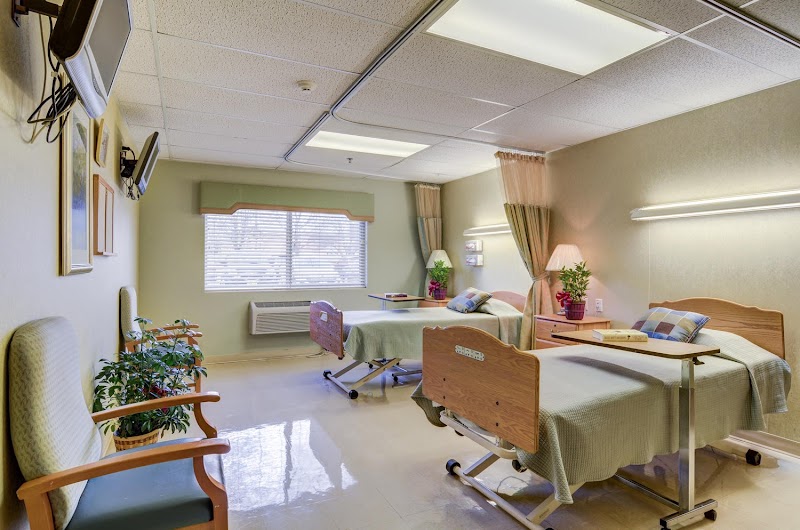
**NOTE- TERMS IN BRACKETS HAVE BEEN EDITED TO PROTECT CONFIDENTIALITY** Based on observation and staff interview, the facility failed to provide housekeeping services in a manner to maintain a safe, clean, comfortable and homelike environment. The facility reported a census of 63 residents. Findings include: Facility observation on 10/16/2023 at 8:10 A.M. included: The floors in rooms 201, 137, 154, 142, 144, 148, 151, 153, 154, 156, 158, 162, 164, 174, 176 had heavy grime and dirt. Rooms 144, 148, 151, 162, 176 had areas of missing paint and scuffed walls and doors. room [ROOM NUMBER] had trim along the floor & underneath the sink peeling away from the fixture. room [ROOM NUMBER] had an approximately 4 inch section of the bathroom door jam missing. The back hall carpet had heavy dirt. The back nurse's station had plastic that covered a construction area where a wall had been removed. Staff A, Housekeeping, revealed the facility had one less housekeeper working than they normally do. Staff perform daily cleaning tasks in resident rooms that included cleaning the sink, mopping the floors, cleaning the bathroom, and removing the garbage. Staff B, Maintenance reported the nurse's station in the back hall is under construction, they are adding a new shower room. The crew needed to complete drywall, tile, and some plumbing. The facility had no plan to replace carpet, but they did hire a new floor person. The facility used Rent to Kill pest control and had no recent concerns regarding pests. room [ROOM NUMBER] had electrical issues, the heat had been turned up too high, for too long. The residents transferred to a room across the hall, and he checked the resident's new room daily. The electrician planned to repair the outlet on 10/17/2023.
Apr 2023 1 deficiency
CONCERN (D) 📢 Someone Reported This

A family member, employee, or ombudsman was alarmed enough to file a formal complaint

Potential for Harm - no one hurt, but risky conditions existed

Unnecessary Medications (Tag F0759)

Could have caused harm · This affected 1 resident

Based on observation, clinical record review, and staff interview the facility failed to prepare and administer medications as prescribed and ordered by the physician for 2 of 8 residents (Resident #9...

Read full inspector narrative →
Based on observation, clinical record review, and staff interview the facility failed to prepare and administer medications as prescribed and ordered by the physician for 2 of 8 residents (Resident #9 and Resident #12) observed. The facility reported a census of 72 residents. The Face Sheet for Resident # 9 recorded an admission date of 12/21/22. The resident's medication orders included aspirin 81 milligrams (mg) to be given via G-Tube (gastric tube) once a day. The Face Sheet for Resident #12 recorded an admission date of 6/11/22. The resident's medication orders included Gabapentin 100 mg to be given via G-Tube 3 times a day. During an observation on 4/11/23 at 8:41 AM, Staff A (RN) set a bottle of aspirin on top of the medication cart. She proceeded to get all of the morning medications ready for Resident #9. Staff A was observed preparing Carbidopa/Levodopa 25/100 mg, clopidogrel 75 mg, Colace 50 mg/5 milliliter (ml)- 5 ml, doxazosin 1 mg, famotidine 40 mg/5 ml- 2.5 ml, Lisinopril 20 mg, MiraLAX 1 cap in water, and Insulin Glargine 100 units (u)/ml- 10 u. Staff A did not open or prepare the bottle of aspirin. At the time of administration, she confirmed she had 7 medications plus insulin for a total of 8. Mediations were administered via G- Tube. During an observation on 4/12/23 at 12:04 PM, Staff A prepared medications for Resident #12 including Buspirone 10 mg, Carbidopa/Levodopa 25/100 mg, Methocarbamol 750 mg, Tylenol 160 mg/5 ml- 10 ml and Gabapentin 250 mg/5 ml. The Gabapentin dosage was to be 2 ml. Staff A presented the syringe to the surveyor to see the dose she was giving, confirming she was prepared and committed to giving the dose, there was 2.5 ml in the syringe. Staff A confirmed the dose was to be 2 ml. She corrected the dose to 2 ml and gave the medications via G-Tube. A total of 26 medications were observed to be given or should have been given. Of the 26 opportunities, there were 2 errors for a medication error rate of 7.69% During an interview on 4/13/23 at 2:07 PM the Director of Nursing (DON) stated she would expect medications to be give as prescribed and administered exactly as ordered.
Feb 2023 7 deficiencies
CONCERN (D)

Potential for Harm - no one hurt, but risky conditions existed

Deficiency F0658 (Tag F0658)

Could have caused harm · This affected 1 resident

**NOTE- TERMS IN BRACKETS HAVE BEEN EDITED TO PROTECT CONFIDENTIALITY** Based on observation, clinical record review, policy review, resident interview and staff interview the facility failed to monit...

Read full inspector narrative →
**NOTE- TERMS IN BRACKETS HAVE BEEN EDITED TO PROTECT CONFIDENTIALITY** Based on observation, clinical record review, policy review, resident interview and staff interview the facility failed to monitor bruising on the hand and face for 1 of 18 residents (Resident #72) reviewed. The facility reported a census of 75 residents. Findings include: The Minimum Data Set (MDS) dated [DATE] documented Resident #72 was admitted to the facility on [DATE]. She had a Brief Interview for Mental Status (BIMS) of 14 indicating no cognitive impairment. The MDS documented she needed extensive staff assistance for bed mobility, transfers, dressing, toilet use and bathing. Her diagnoses included Chronic Obstructive Pulmonary Disease (COPD), heart failure and chronic respiratory failure without hypoxia. During an observation on 2/13/23 at 1:27 PM, Resident #72 was noted to have bruising on the right side of her chin/jaw line and on the top of her left hand. She stated at that time, she wasn't sure how she got the bruises. She stated she did not have them when she came to the facility. She stated the bruise on her hand showed up a few days after she was admitted . She wasn't sure when the facial bruise appeared. The admission Assessment completed on 1/16/23 at 8:28 PM documented the resident's skin was warm and dry and skin color was within normal limits. There were no skin integrity issues noted on admission. The Order Summary Report for Resident #72 documented the resident was on clopidogrel (antiplatelet medication) daily. The Care Plan for Resident #72 documented she had the potential for alterations in skin integrity and related complications. The Care Plan interventions included observation for skin condition with activities of daily living (ADL's) and to report abnormalities. Record review for Resident #72 the Progress Notes lacked any documentation regarding bruising, there were no skin monitoring sheets regarding the bruising, and there were no bath/skin observation sheets regarding the bruising. The facility policy titled Skin Management Guidelines dated 3/2022 directed the licensed nurse to evaluate and document bruising. The policy directed the licensed nurse to complete a body audit weekly for residents without pressure injuries and the nursing assistant to complete body audits during scheduled baths/showers. During an interview on 2/14/23 at 11:55 AM the Director of Nursing (DON) stated there were no skin sheets for the bruising and that the bruises were not being monitored. During an interview on 2/14/23 at 2:43 PM the DON acknowledged there was no records of the bruises, on admission or since admission. She explained she had looked at the admission assessment, notes from the Primary Care Provider (PCP) and bath sheets and could not find any documentation regarding the bruising.
CONCERN (D)

Potential for Harm - no one hurt, but risky conditions existed

Quality of Care (Tag F0684)

Could have caused harm · This affected 1 resident

Based on record review, staff and resident interview, and policy review the facility failed to follow physician orders to obtain weights for 1 of 3 residents (Resident #18) reviewed for weight gain/lo...

Read full inspector narrative →
Based on record review, staff and resident interview, and policy review the facility failed to follow physician orders to obtain weights for 1 of 3 residents (Resident #18) reviewed for weight gain/loss. The facility reported a census of 75 residents. Findings include: Record review of Resident #18 current Orders, instructed staff as of 10/17/2022 to weigh him every Monday and Thursday on day shift. During an interview with Resident #18 on 2/15/23 at 12:23 PM revealed he has never refused to get weighed unless he wasn't feeling well. Record review of Resident #18, Medication Administration Record (MAR) for October 2022, documented the facility failed to obtain weights as ordered on the following dates: a. 10/17/22 b. 10/31/22 Record review of Resident #18, MAR for November 2022, documented the facility failed to obtain weights as ordered on the following dates: a. 11/3/22 b. 11/7/22 c. 11/10/22 d. 11/14/22 e. 11/17/22 f. 11/21/22 g. 11/24/22 Record review of Resident #18, MAR for December 2022, documented the facility failed to obtain weights as ordered on the following dates: a. 12/12/22 b. 12/15/22 c. 12/19/22 d. 12/26/22 Record review of Resident #18, MAR for January 2023, documented the facility failed to obtain weights as ordered on the following dates: a. 1/2/23 b. 1/9/23 c. 1/12/23 d. 1/23/23 e. 1/26/23 Record review of Resident #18 Progress Notes, lacked documentation of notification to the physician why weights were not obtained for all the dates missed in October, November, December, and January. During an interview on 2/15/23 at 12:31 PM the Director of Nursing (DON) stated she would expect the nurses to follow physician orders and obtain weights as directed. During an interview on 2/15/2023 at 3:15 PM the facility Administrator stated she would expect staff to obtain resident weights as the physician orders. Review of a facility policy titled, Weight Management Guidelines, revised 1/2022, instructed staff to obtain timely and accurate weights using consistent parameters.
CONCERN (D)

Potential for Harm - no one hurt, but risky conditions existed

Incontinence Care (Tag F0690)

Could have caused harm · This affected 1 resident

**NOTE- TERMS IN BRACKETS HAVE BEEN EDITED TO PROTECT CONFIDENTIALITY** Based on observation, clinical record review, and staff interview, the facility failed to perform incontinence care to minimize ...

Read full inspector narrative →
**NOTE- TERMS IN BRACKETS HAVE BEEN EDITED TO PROTECT CONFIDENTIALITY** Based on observation, clinical record review, and staff interview, the facility failed to perform incontinence care to minimize the risk of cross-contamination and potential urinary tract infection for 1 of 2 residents (Resident #181) sampled with urinary catheters. The facility identified a census of 75 residents. Findings include: The Electronic Health Record census showed Resident #181 admitted to the facility on [DATE]. An Order Summary Report for Resident #181 signed by the Practitioner on 2/03/23 documented a physician order that staff may replace the 16 French 10 cubic centimeters (cc) Foley catheter or straight catheterize every shift (resident's choice) due to (urinary) retention. A urinalysis with culture dated 1/12/23 completed for Resident #181 showed no growth of microorganisms after 2 days. During an interview on 2/13/23 at 11:05 a.m. Resident #181 reported she had been complaining to them for over a day that her catheter hadn't been draining as she had been wet. The nurse finally did change her catheter and she had 700 cc's of urine out. She feels like she has a urinary tract infection starting. The Resident sat in her wheelchair with the Foley catheter bag and tubing contained in a privacy bag under the wheelchair. Her catheter drained clear yellow urine. Resident #181 further reported she had a urinary tract infection prior to coming into the nursing home that had been treated. During an observation on 2/15/23 at 3:18 p.m. Staff E and Staff F, both Certified Nursing Assistants (CNA's) entered into Resident #181's room and explained they were going to complete her catheter care. Resident #181 lay in bed supine. Staff E performed hand hygiene, gloved and unfastened the front of the Resident's brief tucking the front of the brief under the Resident's buttocks. Staff F placed the package of cleansing cloths in the bed by the resident's right lower leg. Staff E cleaned the lower abdomen and didn't have a trash can to be able to dispose of the cleansing cloth. Staff F using her right gloved hand grabbed the trash can by the upper rim to move over by Staff E. The trash can was half full of garbage. Staff E cleansed the right groin and left groin using a new cleansing cloth for each swipe. Staff E then cleansed from the top of the catheter down toward the catheter connection hub. Staff E folded and tucked the front part of the brief under the Resident's bottom again. Without changing her gloves, Staff E assisted to turn the Resident on to her left side by placing her gloved hands on the residents right outer hip and right thigh. The Resident's brief had a moderate amount of brown soiling along the outer right side and middle of the brief. Staff F removed the soiled brief out from under the Resident with her gloved hands and Staff E cleansed the gluteal fold and right buttock. Staff F using her same gloved hands placed the clean brief under the Resident bottom. Then Staff E and Staff F touched the resident with their gloved hands to assist to roll over to her right side to finish placing the clean brief under the Resident. Staff E did not fully cleanse the left buttock. Staff F put her right gloved hand out and Staff E holding the barrier cream with her dirty gloved hand placed skin protectant cream onto Staff F's gloved right hand. Staff F using her dirty gloved right hand swiped the skin protectant cream between the Resident's legs touching the top of the catheter as she applied the barrier cream. During an interview on 2/15/23 at 3:32 p.m. Staff F reported she should have changed her gloves and done hand hygiene after touching the trash can and proceeding with cares. During an interview on 2/15/23 at 3:45 a.m. the Assistant Director of Nursing/Unit Manager reported she would expect staff to change their gloves and completed hand hygiene after touching a dirty item like the garbage can. She would expect staff to complete peri-cares and catheter care from clean to dirty changing the gloves and completing hand hygiene as needed after touching any dirty item. She stated she observed contaminated gloves that touched many items during the catheter care. The Incontinence Care: Feces and Urinary Policy dated 6/2021 provided by the facility documented a purpose to cleanse the perineum and buttocks after an incontinence episode or with daily care. The Procedure directed the staff in the following: a. Perform hand hygiene b. [NAME] latex free non-sterile gloves c. Position the resident on their back with knees flexed and feet flat on the bed. d. If feces is present, remove with toilet paper or disposable wipe by wiping from front of perineum toward the rectum. Discard soiled materials and gloves. e. Perform hand hygiene. f. [NAME] latex free non-sterile gloves. g. Cleanse peri-area and buttocks with cleansing agent or disposable wipe wiping from front of the perineum toward the rectum. Use separate area of the cloth or new disposable wipe for each stroke. Turn the resident on their side to cleanse entire affected area, as needed. Rinse with water, if needed, or per incontinent product manufacturer's instructions. h. Apply skin protectant products, if needed, as per the physician order. The Procedure failed to direct staff to change gloves or use clean gloves to apply skin protectant product or provide care clean to dirty. The Catheter Care: Indwelling Catheter dated 6/2021 provided by the facility failed to direct staff to not handle the catheter with dirty/contaminated gloves. The Hand Hygiene Policy dated 6/2021 provided by the facility directed the staff to perform hand-washing or use an alcohol-based hand rub for the following: a. Before and after removing gloves. b. After having direct contact with a resident's skin. c. After contact with body fluids or excretions, mucous membranes, non-intact skin and wound dressings if hands are not visibly soiled. d. moving from a contaminated body site to a clean body site during resident care.
CONCERN (D) 📢 Someone Reported This

A family member, employee, or ombudsman was alarmed enough to file a formal complaint

Potential for Harm - no one hurt, but risky conditions existed

Deficiency F0760 (Tag F0760)

Could have caused harm · This affected 1 resident

**NOTE- TERMS IN BRACKETS HAVE BEEN EDITED TO PROTECT CONFIDENTIALITY** Based on observation, clinical records review, manufacturer's directions for use and staff interview, the facility failed to ass...

Read full inspector narrative →
**NOTE- TERMS IN BRACKETS HAVE BEEN EDITED TO PROTECT CONFIDENTIALITY** Based on observation, clinical records review, manufacturer's directions for use and staff interview, the facility failed to assure residents were free from significant medication errors for 2 of 4 residents observed when Resident #183's Lidocaine patches were administered every 12 hours instead of per the physician order and staff failed to do a 5 second hold during insulin kwik pen administration per the manufacturer's directions for Resident #181. The facility identified a census of 75 residents. Finding include: 1. The Electronic Health Record Census showed Resident #183 admitted to the facility on [DATE]. The February 2023 Medication Administration Record (MAR) for Resident #183 listed the following medication orders: a. Lidocaine External Patch 5 % (Lidocaine) apply to the painful area topically every 12 hours for pain. During observation on 2/14/23 at 8:40 a.m. Staff A, Certified Medication Aide (CMA) pulled a Lidocaine 5 % patch from the medication cart and compared to the physician order listed on the February 2023 MAR. Staff A proceeded to Resident #183's room. During an observation on 2/14/23 at 8:42 a.m. Staff A removed a Lidocaine 5% patch dated 2/13/23 from Resident # 183's left ankle. The Resident stated he thought the patches were only to be on for 12 hours at a time as that is how he had used them at home. Staff A informed Resident #183 the patches are to be removed but the MAR (Medication Administration Record) orders they are to put the patch back on every 12 hours. A review on 2/14/23 at 8:55 a.m. of the Hospital Discharge orders dated 2/07/23 showed the following physician orders: a. Lidocaine 5% Patch. Place one patch onto the skin daily. Remove patch after 12 hours. A review on 2/14/23 at 8:56 a.m. of the Physician Nursing Facility Visit dated 2/10/23 documented the following physician orders: a. Lidocaine (Lidoderm) 5%. Place one patch onto the skin daily. Remove the patch after 12 hours. Further review on 2/14/23 at 2:00 p.m. of the February 2023 MAR revealed the Lidocaine 5% Patch had been applied twice a day on February 8, 11, and 13th by Staff A. During an interview on 2/14/23 at approximately 9:00 a.m. the Assistant Director Nursing who had observed the medication pass reported the Lidocaine patch should only be applied for 12 hours and then removed. She would be checking on Resident #183's orders. During an observation on 2/15/23 at 10:30 a.m. Resident #183 ambulated from the therapy room to his room with a walker and assist of one staff with a gait belt. He exhibited a steady gait. During an interview on 2/15/23 at 11:45 p.m. Resident #183 reported he pays attention to all of his medications. He noted the directions from when he used the Lidocaine patches prior to being in the nursing home had directed to only apply for 12 hours. He stated he had not experienced any side effects that he was aware of since staff had applied multiple patches in a day. The Food and Drug Administration (FDA) information on the Lidocaine Patch %5 retrieved from https://www.accessdata.fda.gov/drugsatfda_docs/label/2015/020612s012lbl.pdf listed the following: under Excessive Dosing documented excessive dosing by applying LIDODERM to larger areas or for longer than the recommended wearing time could result in increased absorption of lidocaine and high blood concentrations, leading to serious adverse effects (see ADVERSE REACTIONS, Systemic Reactions). Adverse reactions listed the following: a. Application site reactions: During or immediately after treatment with LIDODERM (lidocaine patch 5%), the skin at the site of application may develop blisters, bruising, burning sensation, depigmentation, dermatitis, discoloration, edema, erythema, exfoliation, irritation, papules, petechia (pinpoint, round spots that appear on the skin as a result of bleeding), pruritus (itching), vesicles, or may be the locus of abnormal sensation. These reactions are generally mild and transient, resolving spontaneously within a few minutes to hours. b. Allergic reactions: Allergic and anaphylactoid reactions associated with lidocaine, although rare, can occur. They are characterized by angioedema (swelling of the deeper layers of the skin, caused by a build-up of fluid), bronchospasm (limits the amount of oxygen your body receives), dermatitis, dyspnea, hypersensitivity, laryngospasm (reversible spasm of the vocal cords that temporarily makes it difficult to speak or breathe), pruritus (itching), shock ( critical condition brought on by the sudden drop in blood flow through the body), and urticaria (raised, itchy rash that appears on the skin). If they occur, they should be managed by conventional means. c. Other adverse reactions: Asthenia (abnormal physical weakness), confusion, disorientation, dizziness, headache, hyperesthesia (increased sensitivity to stimulation), hypoesthesia (decreased sensitivity to stimulation), lightheadedness, metallic taste, nausea, nervousness, pain exacerbated, paresthesia, somnolence, taste alteration, vomiting, visual disturbances such as blurred vision, flushing, tinnitus, and tremor. d. Systemic adverse effects of lidocaine are similar in nature to those observed with other amide local anesthetic agents, including CNS excitation and/or depression (light-headedness, nervousness, apprehension, euphoria, confusion, dizziness, drowsiness, tinnitus, blurred or double vision, vomiting, sensations of heat, cold or numbness, twitching, tremors, convulsions, unconsciousness, respiratory depression and arrest). Excitatory CNS reactions may be brief or not occur at all, in which case the first manifestation may be drowsiness merging into unconsciousness. Cardiovascular manifestations may include bradycardia (slow heart rate), hypotension (low blood pressure) and cardiovascular collapse leading to arrest. The Dosing and Administration directed to apply Lidoderm (patch) to intact skin to covering the most painful area. Apply the prescribed number of patches (maximum of 3), only once for up to 12 hours within a 24 hour period. 2. The Electronic Health Record census showed Resident #181 admitted to the facility on [DATE]. An Order Summary Report signed by the Practitioner on 2/03/23 documented a physician order for Humalog Subcutaneous Solution 100 units/milliliter (ML) (Insulin Lispro) Inject as per sliding scale a. If 0 - 150 = No units <60 Call Medical Doctor (MD); b. 151 - 200 = 2 units; c. 201 - 250 = 4 units; d. 251 - 300 = 6 units >300 administer 10 units and call MD, subcutaneously four times a day for diabetes mellitus. The February 2023 Medication Administration Record (MAR) documented a blood sugar on 2/14/23 at 12:00 p.m. of 253 milligrams (MG)/deciliter (DL). During an observation on 2/14/23 at 11:24 a.m. Staff B, Licensed Practical Nurse (LPN) stated to the Surveyor that the resident had a blood sugar of 253 and Resident #181 would receive 6 units of Lispro sliding scale insulin. Staff B failed to check the physician order on the MAR with the Surveyor prior to preparing the insulin for administration. Staff B prepared the insulin for administration then went to Resident #181's room. Staff B entered the Resident's room and donned a pair of gloves without performing hand hygiene. Staff B injected the Lispro insulin into the upper left abdomen. Staff B inserted the kwik pen needle into the Resident's left upper abdomen and depressed the dose knob, then immediately pulled the needle out of her abdomen. Staff B failed to hold the dose knob for a full 5 seconds after the insulin injection to ensure the Resident received the proper insulin dose. Staff B then exited Resident #181's room still wearing the same gloves. He went out to the medication cart and removed the gloves, then put the insulin pen in a small bag into the medication cart and proceeded to another resident's room to perform a blood sugar without performing hand hygiene. During an interview on 12/14/23 at 12:08 p.m. the Director of Nursing (DON) reported the facility uses a community blood glucose machine. She stated she expects the blood glucose meter should not be stored in nursing uniform pockets, barrier should be used for the supplies and the meter should be disinfected with the Sani wipes for 5 minutes. She expects the nurses to hold the insulin pen for a full 10 second hold during insulin administration. During an interview and observation on 2/15/23 at 10:41 a.m. Staff C, LPN, stated she knows she had seen a medication reference book in the nurses station at some time. She looked at the chart rack, nurses station drawers and medication room and could not find the medication book at the PARS nurses station. During an interview on 2/15/23 at 10:42 a.m. the Director of Nursing (DON) reported the medication book should be on the rack above charts. During an observation on 2/15/23 at 10:44 a.m. the Assistant Director of Nursing went to the PARS nursing station and searched the drawer, rack, and medication room. She did not find a medication book for the nurses to reference. She reported in all the time she had worked at the facility, she remembers there being a medication reference book at the (PARS) nurses station. On 2/15/23 at 10:55 a.m. Staff D, Registered Nurse (RN), reported in their electronic health record system they have a [NAME] Procedure module that they can reference for procedures. She referenced the procedure for insulin pen home use from the module. The Insulin Pen Use, Home Care directed under Insulin Administration to leave the needle in the skin for 10 seconds to prevent leakage from the injection site and then pull the needle out of the skin at the same angle used for insertion. The [NAME] Lilly Instructions for use for Insulin Lispro Kwik Pen under Step 11 directed the following: a. Insert the needle into the skin. b. Push the dose knob all the way in. c. Continue to hold the dose knob in and slowly count to 5 seconds before removing the needle. d. Check the number in the dose window. If a 0 is seen, the full amount of insulin was received. If a 0 is not seen, insert the needle into the skin and finish the injection.
CONCERN (D)

Potential for Harm - no one hurt, but risky conditions existed

Dental Services (Tag F0791)

Could have caused harm · This affected 1 resident

**NOTE- TERMS IN BRACKETS HAVE BEEN EDITED TO PROTECT CONFIDENTIALITY** Based on record review, resident, family, and staff interviews, and policy review the facility failed to obtain and set appointm...

Read full inspector narrative →
**NOTE- TERMS IN BRACKETS HAVE BEEN EDITED TO PROTECT CONFIDENTIALITY** Based on record review, resident, family, and staff interviews, and policy review the facility failed to obtain and set appointments for 2 of 2 residents requesting dentures (Resident #2 and #18) reviewed for dental services. The facility reported a census of 75 residents. Findings include: 1. The Minimum Data Set (MDS), dated [DATE] for Resident #2, documented a Brief Interview of Mental Status (BIMS) of 99 indicating the resident was unable to complete the interview. Staff completed for him and documented he has long-term and short-term memory problem and his cognitive skill for daily decision making was moderately impaired. The MDS documented diagnoses of aphasia (loss of ability to understand or express speech, caused by brain damage), malnutrition, and schizophrenia. The MDS also documented mouth or facial pain, discomfort or difficulty with chewing Record review of Resident #2 current Care Plan, documented a Focus of dental or oral cavity health problems as evidenced by missing teeth, difficulty chewing and is at risk for decreased nutritional intake, dated 7/22/22 the facility implemented an intervention of having him referred to dentist/hygienist for evaluation/recommendation regarding denture new fitting also dated 7/22/22. Record review of a documented titled, Clinical Notes Report from a local dentist documented the Chief Complaints when Resident #2 came for appointments on the following dates: 3/31/22 - I want to start the denture process 2/15/23 - My top teeth are causing me problems Record review of Resident #2 Progress Notes from 2/10/23 - 3/15/22 lacked documentation at facility attempts to obtain dentures. During an interview with family of Resident #2 on 02/13/23 at 1:34 PM revealed they have tried to get him new dentures several times but unable to obtain. 2. The MDS for Resident #18 dated 1/19/23 documented a BIMS of 15 indicating no cognitive impairment. The MDS also documented diagnoses of diabetes mellitus, anemia, and depression. Record review of an untitled document, dated 6/9/22 for Resident #18 documented the facilities dental services will complete upper and lower denture initial placement in the future. Record review of a document titled, Oral Assessment Schedule L, dated 6/9/22 for Resident #18 documented the resident is interested in dentures. Record review of Resident #18 current Care Plan dated 2/15/23 documented a Focus of a potential for oral cavity health problems related to edentulous without the use of dentures dated 2/13/20 and an Intervention to refer to dentist/hygienist for evaluation/recommendation regarding denture new fitting as able dated 8/28/22. Record review of Resident #18 Progress notes from 2/15/23 to 6/9/22 lacked documentation of setting up an appointment to obtain dentures. During an interview with Resident #18 on 2/13/23 at 3:40 PM revealed he has been wanting to get dentures for a long time but the facility can't do it here. During an interview with the Director of Nursing (DON) on 2/14/23 at 1:18 PM revealed Resident #18 can go get dentures anytime but she does not believe he wants them. She revealed his last dental assessment was 6/9/22 and the next one will be around 6/9/23. During an interview on 02/15/2023 at 3:15 PM the Administrator stated she would expect staff to get the residents in for dental services timely as they desired. Record review of an undated policy titled, Routine/Emergency Dental services in Skilled Nursing Facilities instructed staff to provide or obtain from an outside resource routine and emergency dental services to meet the needs of each resident.
CONCERN (D)

Potential for Harm - no one hurt, but risky conditions existed

Medical Records (Tag F0842)

Could have caused harm · This affected 1 resident

**NOTE- TERMS IN BRACKETS HAVE BEEN EDITED TO PROTECT CONFIDENTIALITY** Based on record review, resident and staff interviews, and policy review the facility failed to keep accurate records when white...

Read full inspector narrative →
**NOTE- TERMS IN BRACKETS HAVE BEEN EDITED TO PROTECT CONFIDENTIALITY** Based on record review, resident and staff interviews, and policy review the facility failed to keep accurate records when white out was used on a formal document for 1 of 19 residents reviewed (Resident #49). The facility reported a census of 75 residents. Findings include: Record review on [DATE] at 12:22 PM of Resident #49 Physician Orders for Life-Sustaining Treatment (POLST) (a form designed to improve resident care by creating a portable medical order form that records resident's treatment wishes so that emergency personnel know what treatments the resident wants in the event of a medical emergency) dated [DATE] revealed white out had been used to cover over the Cardiopulmonary Resuscitation (CPR) box, that had a check mark under it. A check mark was also on the Do Not Attempt Resuscitation (DNR) box. During and interview with Resident #49 on [DATE] at 12:03 PM revealed her wishes are to be a DNR status. During an interview on [DATE] at 01:00 PM with Staff G, Registered Nurse (RN) who completed Resident #49 POLST revealed she does not recall ever using white out on a POLST. During an interview on [DATE] at 12:12 PM with the Director of Nursing (DON) revealed she would expect staff to not use white out on any document in the facility. During an interview on [DATE] at 3:15 PM with the Administrator, revealed she would expect staff to never use white out on a legal document. Record review of an undated document titled, General Dos and Don't's, instructed staff to not use white-out, correcting tape, marker, or otherwise cover up the entries so that they cannot be read.
CONCERN (D)

Potential for Harm - no one hurt, but risky conditions existed

Infection Control (Tag F0880)

Could have caused harm · This affected 1 resident

**NOTE- TERMS IN BRACKETS HAVE BEEN EDITED TO PROTECT CONFIDENTIALITY** Based on observation, clinical record review, and staff interview, the facility failed provide appropriate hand hygiene before a...

Read full inspector narrative →
**NOTE- TERMS IN BRACKETS HAVE BEEN EDITED TO PROTECT CONFIDENTIALITY** Based on observation, clinical record review, and staff interview, the facility failed provide appropriate hand hygiene before and after gloving (Resident #181) and sanitize a blood glucose meter for 1 of 8 residents (Resident #229) that utilize the facility blood glucose machine. The facility reported a census of 75 residents. Findings include: 1. The Electronic Health Care Census Record showed Resident #181 admitted to the facility on [DATE]. During an observation on 2/14/23 at 11:24 a.m. Staff B, Licensed Practical Nurse (LPN) stated to the Surveyor that the resident had a blood sugar of 253 and she would receive 6 units of Lispro sliding scale insulin. Staff B prepared the insulin for administration then went to Resident #181's room. Staff B entered the Resident's room and donned a pair of gloves without performing hand hygiene. Staff B injected the Lispro insulin into the upper left abdomen, then exited Resident #181's room still wearing the same gloves. He went out to the medication cart and removed the gloves, then put the insulin pen in a small bag into the medication cart and proceeded to Resident #229's room to perform a blood sugar without performing hand hygiene. 2. An Electronic Health Record Census showed Resident #229 admitted to the facility on [DATE]. A Hospital Clinical Summary dated 2/10/23 for Resident #229 listed a physician order to check blood sugars four times per day before meals and at bedtime. During an observation on 2/14/23 at Staff B, LPN, came out of Resident #181's room wearing the gloves he had injected her insulin with. He held Resident #181's insulin pen in his hand as he removed his gloves at the medication cart outside of her room. Staff B failed to perform hand hygiene and proceeded down the hallway to Resident #229's room. At 11:29 a.m. Staff B entered Resident #229's room and donned a pair of gloves with out performing hand hygiene. He pulled a facility (communal) use blood glucose meter out of his left uniform pocket. The blood glucose machine already had a strip inserted into the meter. He pulled a lancet out of his left uniform pocket and proceeded to use an alcohol prep pad to clean Resident #229's finger to take a sample of blood to test the Resident's blood sugar. After taking the blood sugar, Staff B left the Resident's room and proceeded to the medication cart by the nurses' station. He disposed of the lancet in the sharps container and removed the gloves he had used to take the Resident's blood sugar. Staff B opened the medication cart and placed the blood glucose meter in the drawer of the medication cart without disinfecting the meter. During an interview on 12/14/23 at 12:08 p.m. the Director of Nursing (DON) reported the facility uses a community blood glucose machine. She stated she expects the blood glucose meter should not be stored in nursing uniform pockets, barrier should be used for the supplies and the meter should be disinfected with the Sani wipes for 5 minutes. During an interview on 2/15/23 at 7:35 a.m. Staff C, RN, reported they are to use a Micro Kill Germicidal Wipe to disinfect the blood glucose meter after each use for 2 minutes. A Review of the Micro Kills Disinfectant Wipe on 2/15/23 at 7:45 a.m. with the Director of Nursing revealed the product must be utilized for 3 minutes to disinfect the blood glucose meter. The Glucose Blood Monitoring (Finger Stick Blood Sugar) Policy dated 2021 provided by the facility under step 5 to perform hand hygiene prior to apply latex free non-sterile gloves and step 17 directed the staff to clean the blood glucose meter utilizing an Environmental Protection Agency (EPA) approved bleach wipe or approved germicidal disinfectant. The Hand Hygiene Policy dated 6/2021 provided by the facility directed the staff to perform hand-washing or use an alcohol-based hand rub for the following: a. Before and after removing gloves. b. After having direct contact with a resident's skin. c. After contact with body fluids or excretions, mucous membranes, non-intact skin and wound dressings if hands are not visibly soiled. d. moving from a contaminated body site to a clean body site during resident care. e. After contact with inanimate objects (including medical equipment) in the immediate vicinity of the resident. The Center for Disease Control and Prevention (CDC) Hand Hygiene in Healthcare Settings When and How to Perform Hand Hygiene Multiple directs opportunities for hand hygiene may occur during a single care episode. Following are the clinical indications for hand hygiene: a. Use an Alcohol-Based Hand Sanitizer 1. Immediately before touching a patient. 2. After touching a patient or the patient ' s immediate environment. 3. After contact with blood, body fluids or contaminated surfaces. 4. Immediately after glove removal. b. Wash with Soap and Water 1. When hands are visibly soiled.
Nov 2022 2 deficiencies
CONCERN (D) 📢 Someone Reported This

A family member, employee, or ombudsman was alarmed enough to file a formal complaint

Potential for Harm - no one hurt, but risky conditions existed

Assessment Accuracy (Tag F0641)

Could have caused harm · This affected 1 resident

**NOTE- TERMS IN BRACKETS HAVE BEEN EDITED TO PROTECT CONFIDENTIALITY** 2. The Progress Note written by Staff B, RN on 10/29/22 at 7:04 PM documented Resident #23 was complaining of burning with urina...

Read full inspector narrative →
**NOTE- TERMS IN BRACKETS HAVE BEEN EDITED TO PROTECT CONFIDENTIALITY** 2. The Progress Note written by Staff B, RN on 10/29/22 at 7:04 PM documented Resident #23 was complaining of burning with urination. Staff B left a message for the Nurse Practioner (NP) requesting an order for a Urine Analysis (UA) and a Culture and Sensitivity (C&S). The NP did not return the nurses call. The clinical record did not include any documentation for 10/30/22. A Progress Note written by Staff E, LPN, on 10/31/22 at 4:50 AM documented the resident complained of heaviness and tingling in chest and bilateral arms and hands. Staff E took the resident's vital signs. The resident's temperature was 97.3 degrees Fahrenheit (F). Staff E called the physician and NP. Neither one answered the call. The nurse left a message for each but did not receive a call back from either. The Progress Note written by the NP on 11/1/22 at 10:00 AM documented the resident denied dysuria (painful, frequent or urgent urination) or hematuria. A Progress Note written by the NP on 11/1/22 at 11:30 AM documented nursing staff advised the resident had a previous episode of painful urination. A UA and C&S were ordered. A Progress Note written by Staff F on 11/1/22 at 2:05 PM documented the UA had been collected and the lab had been contacted to pick up specimen. The UA results on 11/1/22 at 9:06 PM included a moderate amount of blood, a moderate amount of Leukocyte Esterase, and 3+ bacteria all indicating a Urinary Tract Infection (UTI). The Progress Note written by Staff B on 11/1/22 at 6:30 PM documented the resident had nausea, had vomited a small amount of liquid twice and had an elevated temperature of 99.1 F. The nurse notified the NP and was waiting for a return call. The Progress Note written by Staff B on 11/2/22 at 12:00 AM documented the resident was transported to the hospital via ambulance with daughter to follow. The emergency room (ER) nurse stated the resident had a temperature of 103 F in the ER and the resident was being admitted for a UTI and Sepsis (potentially life-threatening complication of an infection). During an interview on 11/21/22 at 1:09 PM Staff C, RN, Unit Manager stated she would expect a nurse to follow up if a provider failed to return a call. She stated if it was urgent she would expect the nurse to place a follow up call within 5 minutes, 2 hours if it was serious and up to 24 hours for painful, burning urination. She stated if they did not receive a return call the nurse would first reach out to the Medical Director and if still no return call, they would reach out to the provider group. Based on clinical record review and staff interviews the facility failed to provide appropriate nursing assessment for two of three residents reviewed. (Resident #21 and Resident #23). The facility reported a census of 79 residents. Findings include: 1. Resident #21 admitted to the facility from the hospital on 9/19/2022 for skilled services, discharged to the hospital on 9/28/2022 and readmitted to the facility on [DATE]. According to the MDS (Minimum Data Set) dated 9/28/2022, Resident #21 required extensive assistance of two staff to transfer from one surface to another, had incontinence and diagnoses including urinary tract infection, hypertension, cholecystitis (gall bladder) and atherosclerotic heart disease ( a buildup of plaque in the walls of the arteries). The Care Plan initiated 9/20/2022 included bowel elimination, constipation related to lack of exercise, potential for falls and fall related injury due to physical limitations, deconditioning, potential medication side effects, respiratory failure, and critical illness myopathy, pain related to physical limitations, potential for alteration in skin integrity and related complications related to physical limitations, deconditioning, respiratory failure, asthma,malnutrition, critical illness myopathy and cholecystitis. On 10/5/2022 the Care Plan added the resident received anticoagulant therapy related to post surgical Bental (aortic valve replacement) and at risk for abnormal bleeding. It instructed staff to obtain labs as ordered and report abnormal labs to the physician. The Physician Order's included: 9/19/2022 - Cholecystectomy tube to gravity drainage: Measure output every shift, every shift for monitoring. 9/20/2022 - daily weight, notify MD (physician) if 3 or more pounds gain in a day for 5 pounds in a week. 9/20/2022 - PT/INR ( lab test to measure clot time) on 10/3/2022. 9/20/2022 - Aspirin low dose oral tablet 81 mg (milligrams) every day 9/20/2022 - Warfarin Sodium (anticoagulant) 1 mg, give 1.5 tablets by mouth every day. A review of the resident's clinical record review revealed staff provided comprehensive skilled assessments on 9/22, 9/23, 9/24, 9/26 and 9/27/2022. Nursing staff failed to perform a skilled assessment on 9/25/2022. On 9/28/2022 at 6:48 a.m. the Progress Notes documented the resident complained of hemoptysis ( coughing up blood). On 9/27/2022 at 6:20 a.m. the resident complained of dysuria ( painful urination) and discolored, dark amber with red tinged. The resident denied urgency/frequency. Vitals per patient normal and afebrile (no high temperature). On 11/21/2022 at 1:45 p.m., Staff A, RN (Registered Nurse), Director of Nursing revealed nursing staff were required to do daily comprehensive skilled assessments and were documented in the Progress Notes. On 11/21/2022 at 2:20 p.m., Staff B, RN revealed all skilled patients are required to complete daily nursing assessments and documented in the progress notes. On 11/23/2022 at 7:30 a.m., Staff A, RN (Registered Nurse), DON (Director of Nursing) indicated nursing staff were required to complete a skilled assessment at least one time every twenty-four hours, alternating between day and evening shifts. Staff A reported the facility had an issue with staff failing to complete the assessments, they were working on it and have seen an improvement.
CONCERN (E) 📢 Someone Reported This

A family member, employee, or ombudsman was alarmed enough to file a formal complaint

Potential for Harm - no one hurt, but risky conditions existed

Deficiency F0558 (Tag F0558)

Could have caused harm · This affected multiple residents

Based on clinical record review, staff and resident interviews and observations the facility failed to provide each resident a chair in their room for 15 of 15 residents observed. The facility reporte...

Read full inspector narrative →
Based on clinical record review, staff and resident interviews and observations the facility failed to provide each resident a chair in their room for 15 of 15 residents observed. The facility reported a census of 79. Findings included: During a tour of resident rooms on 11/21/2022 at 1:50 pm revealed Resident rooms 151-158 had 15 occupied beds and 15 residents without a side chair. Observations revealed 15 of 15 residents reviewed were laying in their bed at the time of the tour. During the tour on 11/21/22 from 1:50 pm-2:15 pm interviews with the following residents the facility identified as interviewable revealed: a. Resident # 22 observed laying in her bed, the resident asked if she wished to have a chair in her room, she stated I would like to have one both for myself and visitors. b. Resident #25 observed laying in her bed, the resident asked if she wished to have a chair in her room, the resident stated she would love a chair, it would be nice to have somewhere else to sit beside the bed. c. Resident #26 observed laying in her bed, the resident asked if she wished to have a chair in her room, she said it would be great to have a chair in her room if it had arms. d. Resident #27 observed laying in her bed, the resident asked if she wished to have a chair in her room, she voiced she would love to have a chair in her room and questioned where it would be placed. e. Resident #28 observed sitting in her bed, the resident asked if she wished to have a chair in her room, she stated she would love to have a recliner. She stated she sleeps, eats and spends all day in her bed, voiced it would be great to be somewhere besides my bed. During an interview with Staff A-Director of Nurses on 11/21/22 at 2:15 pm, Staff A stated its' always been like that and besides where would you put a chair in their rooms there isn't any room.
Understanding Severity Codes (click to expand)
Life-Threatening (Immediate Jeopardy)
J - Isolated K - Pattern L - Widespread
Actual Harm
G - Isolated H - Pattern I - Widespread
Potential for Harm
D - Isolated E - Pattern F - Widespread
No Harm (Minor)
A - Isolated B - Pattern C - Widespread

Questions to Ask on Your Visit

  • "Can I speak with families of current residents?"
  • "What's your RN coverage like on weekends and overnight?"

Our Honest Assessment

Strengths
  • • No major safety red flags. No abuse findings, life-threatening violations, or SFF status.
  • • 41% turnover. Below Iowa's 48% average. Good staff retention means consistent care.
Concerns
  • • 24 deficiencies on record. Higher than average. Multiple issues found across inspections.
  • • $10,557 in fines. Above average for Iowa. Some compliance problems on record.
  • • Grade C (58/100). Below average facility with significant concerns.
Bottom line: Mixed indicators with Trust Score of 58/100. Visit in person and ask pointed questions.

About This Facility

What is Harmony Waterloo's CMS Rating?

CMS assigns Harmony Waterloo an overall rating of 3 out of 5 stars, which is considered average nationally. Within Iowa, this rating places the facility higher than 0% of the state's 100 nursing homes. This mid-range rating indicates the facility meets federal standards but may have areas for improvement.

How is Harmony Waterloo Staffed?

CMS rates Harmony Waterloo's staffing level at 4 out of 5 stars, which is above average compared to other nursing homes. Staff turnover is 41%, compared to the Iowa average of 46%. This relatively stable workforce can support continuity of care.

What Have Inspectors Found at Harmony Waterloo?

State health inspectors documented 24 deficiencies at Harmony Waterloo during 2022 to 2025. These included: 24 with potential for harm.

Who Owns and Operates Harmony Waterloo?

Harmony Waterloo is owned by a for-profit company. For-profit facilities operate as businesses with obligations to shareholders or private owners. The facility is operated by LEGACY HEALTHCARE, a chain that manages multiple nursing homes. With 88 certified beds and approximately 72 residents (about 82% occupancy), it is a smaller facility located in Waterloo, Iowa.

How Does Harmony Waterloo Compare to Other Iowa Nursing Homes?

Compared to the 100 nursing homes in Iowa, Harmony Waterloo's overall rating (3 stars) is below the state average of 3.1, staff turnover (41%) is near the state average of 46%, and health inspection rating (3 stars) is at the national benchmark.

What Should Families Ask When Visiting Harmony Waterloo?

Based on this facility's data, families visiting should ask: "Can I visit during a mealtime to observe dining assistance and food quality?" "How do you handle medical emergencies, and what is your hospital transfer rate?" "Can I speak with family members of current residents about their experience?"

Is Harmony Waterloo Safe?

Based on CMS inspection data, Harmony Waterloo has a clean safety record: no substantiated abuse findings (meaning no confirmed cases of resident harm), no Immediate Jeopardy citations (the most serious violation level indicating risk of serious injury or death), and is not on the Special Focus Facility watch list (a federal program monitoring the lowest-performing 1% of nursing homes). The facility has a 3-star overall rating and ranks #100 of 100 nursing homes in Iowa. While no facility is perfect, families should still ask about staff-to-resident ratios and recent inspection results during their visit.

Do Nurses at Harmony Waterloo Stick Around?

Harmony Waterloo has a staff turnover rate of 41%, which is about average for Iowa nursing homes (state average: 46%). Moderate turnover is common in nursing homes, but families should still ask about staff tenure and how the facility maintains care continuity when employees leave.

Was Harmony Waterloo Ever Fined?

Harmony Waterloo has been fined $10,557 across 1 penalty action. This is below the Iowa average of $33,184. While any fine indicates a compliance issue, fines under $50,000 are relatively common and typically reflect isolated problems that were subsequently corrected. Families should ask what specific issues led to these fines and confirm they've been resolved.

Is Harmony Waterloo on Any Federal Watch List?

Harmony Waterloo is not on any federal watch list. The most significant is the Special Focus Facility (SFF) program, which identifies the bottom 1% of nursing homes nationally based on persistent, serious quality problems. Not being on this list means the facility has avoided the pattern of deficiencies that triggers enhanced federal oversight. This is a positive indicator, though families should still review the facility's inspection history directly.