Parkview Manor

516 13th Street, Wellman, IA 52356 (319) 646-2911
For profit - Corporation 62 Beds MGM HEALTHCARE Data: November 2025 4 Immediate Jeopardy citations
Trust Grade
0/100
#369 of 392 in IA
Last Inspection: August 2025

Inspected within the last 6 months. Data reflects current conditions.

Overview

Parkview Manor in Wellman, Iowa has received a Trust Grade of F, indicating poor performance with significant concerns in care quality. Ranking #369 out of 392 facilities in Iowa places them in the bottom half statewide, and they are last among the five nursing homes in Washington County. Although the facility is showing some improvement with a reduction in issues from 25 in 2024 to 13 in 2025, serious problems persist, including a critical incident where a resident was neglected after a fall, leading to a brain bleed. Staffing is a notable weakness, with an 85% turnover rate, which is much higher than the state average, and only 2 out of 5 stars for staffing quality. Additionally, the facility has accumulated $93,473 in fines, indicating compliance problems, and there is less RN coverage than 77% of other Iowa facilities, which may affect the quality of care provided.

Trust Score
F
0/100
In Iowa
#369/392
Bottom 6%
Safety Record
High Risk
Review needed
Inspections
Getting Better
25 → 13 violations
Staff Stability
⚠ Watch
85% turnover. Very high, 37 points above average. Constant new faces learning your loved one's needs.
Penalties
✓ Good
$93,473 in fines. Lower than most Iowa facilities. Relatively clean record.
Skilled Nurses
○ Average
Each resident gets 32 minutes of Registered Nurse (RN) attention daily — about average for Iowa. RNs are the most trained staff who monitor for health changes.
Violations
⚠ Watch
48 deficiencies on record. Higher than average. Multiple issues found across inspections.
★☆☆☆☆
1.0
Overall Rating
★★☆☆☆
2.0
Staff Levels
★★☆☆☆
2.0
Care Quality
★☆☆☆☆
1.0
Inspection Score
Stable
2024: 25 issues
2025: 13 issues

The Good

  • Full Sprinkler Coverage · Fire safety systems throughout facility
  • No fines on record

Facility shows strength in fire safety.

The Bad

1-Star Overall Rating

Below Iowa average (3.0)

Significant quality concerns identified by CMS

Staff Turnover: 85%

39pts above Iowa avg (46%)

Frequent staff changes - ask about care continuity

Federal Fines: $93,473

Well above median ($33,413)

Moderate penalties - review what triggered them

Chain: MGM HEALTHCARE

Part of a multi-facility chain

Ask about local staffing decisions and management

Staff turnover is very high (85%)

37 points above Iowa average of 48%

The Ugly 48 deficiencies on record

4 life-threatening 1 actual harm
Aug 2025 6 deficiencies
CONCERN (D)

Potential for Harm - no one hurt, but risky conditions existed

Resident Rights (Tag F0550)

Could have caused harm · This affected 1 resident

**NOTE- TERMS IN BRACKETS HAVE BEEN EDITED TO PROTECT CONFIDENTIALITY** Based on observation, staff interviews, resident interview and facility assessment review, the facility failed to treat resident...

Read full inspector narrative →
**NOTE- TERMS IN BRACKETS HAVE BEEN EDITED TO PROTECT CONFIDENTIALITY** Based on observation, staff interviews, resident interview and facility assessment review, the facility failed to treat residents with dignity and respect for 2 of 21 reviewed (Resident #29 and Resident #41) reviewed for dignity. The facility reported a census of 50 residents. Findings included:. 1. Review of the Minimum Data Set (MDS) dated [DATE] revealed Resident #29 list of diagnoses included heart failure, dementia and anxiety. The Brief Interview for Mental Status (BIMS) score of 11 out of 15 indicated moderate cognitive impairment.Review of the Care Plan revealed a Focus area, dated 1/19/23 for Resident #29 to address self-care performance deficit, alerted needed encouragement to change clothes, needs clean clothes put out daily and she can then dress, encourage to change clothes daily, goals included to assist with facial hair and maintain resident's dignity.During an observation on 8/7/25 at 2:43 PM, Resident #29 sat in common area, wearing a thin shirt without wearing a bra, and noticeable yellowish food stains. Resident #29's hair appeared unbrushed. During an interview on 8/7/25 at 2:45 PM Resident #29 relayed was not feeling good, had a bothering rash pointed chest area. Licensed Practical Nurse (LPN) Staff C came from behind the nurse station and escorted Resident #29 to her room with a medicated powder. During an observation on 8/7/25 at 2:50 PM LPN, Staff C, LPN and Resident #29 came from residents' room, LPN Staff C escorting resident back to the common area. Resident #29 pointed to the stains on her shirt said she did not have any other short sleeve shirts. Staff C shared the rash worsened and would be contacting the provider. Staff B, LPN intervened when quired about the clothing and brought Resident B several short sleeve shirts to choose. Resident expressed gratitude.During an interview on 8/11/25 at 12:28 LPN, nurse, Staff B stated the facility had a large storage boutique downstairs from donations for residents to have as needed and felt any resident who needed clothing could be supported. 2. Review of the MDS assessment dated [DATE] identified Resident #41 list of diagnoses included cancer, renal disease, diabetes, anxiety and depression. The BIMS score of 15 out of 15 indicated intact cognition.Review of the Care Plan revealed a Focus area, dated 2/19/25 for Resident #41 to address a history of trauma and loss is at risk for psychosocial well-being concerns, a goal included to remain free of signs of distress.During an interview on 8/4/25 at 2:38 PM, Resident #41 shared an experience that caused her to be upset and did not think was handled right. She explained there was a room search and several personal items that were important were bagged up and taken, which included special scissors and tweezers, she had for over 40 years. Resident #41 stated she was told she needed to get a lock box, which her family supplied. She stated the items were lost by staff and she had to repeatedly ask, before they were found up to three weeks later. During an interview on 8/12/25 at 5:00 PM, Staff H, Social Services, stated the wide spread room search was for resident's safety. Staff H stated she had been aware of Resident #41 being upset that her scissors and tweezers were taken and misplaced by staff. Staff H explained they were eventually found and given back. Staff H stated she was aware the items were important to Resident #4 and was upset about them being lost. During an interview on 8/12/24 at 5:30 PM, the Administrator relayed the search was necessary to take items of risk for other resident safety. She explained they would have replaced the lost items had not been found.Review of the facility assessment dated [DATE], revealed Person Centered and Person Directed Care required affording people dignity compassion and respect, offering of personalized care, support or treatment.
CONCERN (D)

Potential for Harm - no one hurt, but risky conditions existed

Deficiency F0558 (Tag F0558)

Could have caused harm · This affected 1 resident

**NOTE- TERMS IN BRACKETS HAVE BEEN EDITED TO PROTECT CONFIDENTIALITY** Based on observations, clinical record review, staff interview and resident interview the facility failed to ensure resident cal...

Read full inspector narrative →
**NOTE- TERMS IN BRACKETS HAVE BEEN EDITED TO PROTECT CONFIDENTIALITY** Based on observations, clinical record review, staff interview and resident interview the facility failed to ensure resident call lights were within reach for 2 of 24 residents reviewed (Resident #30,Resident# 36). The facility reported the census is 50.Findings include:1. Review of the Minimum Data Set (MDS) dated [DATE] for Resident #30 revealed a Brief Interview of Mental Status (BIMS) score of 4 out of 12, which indicated a severe cognitive impairment. The list of diagnoses included dementia, diabetes, lung disease, lack of coordination, unsteadiness on feet, aphasia and dysphagia referring to difficulty with language and swallowingReview of the Care plan revealed a Focus area, initiated 11/11/24 to address Resident #30 communication problem, cognitive impairment secondary to dementia directed staff to allow time for response, ask yes/no questions, use simple, brief, consistent words and cues. The Care Plan did not address the call light for resident use. During an observation on 8/4/25 at 2:18 PM, Resident #30 lying perpendicular on his bed, with head against the wall, and feet, off the side of the bed, relayed would like help. The call light was on the floor around a nearby table leg, not within reach.During an observation on 8/5/25 at 1:55 PM, Resident #30 in his room, with the call light cord hanging on the wall at the wall connection for the cord, out of his reach. During an interview on 8/5/25 at 1:56 PM, Resident #30 acknowledged the call light was not within reach, and hung on the wall at the connection site. During an observation on 8/7/25 at 2:18 PM, Resident #30 call light continued to hang on the wall at the wall connection, not accessible to resident sitting on the bed. 2. Review of the MDS dated [DATE] for Resident #36 documented a BIMS score of 9 out of 15, which indicated a moderate cognitive impairment. The MDS documented Resident #36 needed partial/moderate assistance to sit to lye, sit to stand and for chair to bed transfers. Review of the Care Plan revealed a Focus area, initiated 2/3/25 Resident #36 to address a selfcare performance deficit, required staff assistance to turn and reposition, assist of one with walker and wheel chair, one person assist with personal hygiene toilet use and transfers. The Care Plan documented risk for falls and to be sure the call light is within reach, encourage use and needs prompt response to all requests for assistance.During an observation on 8/4/25 at 3:12 PM, Resident #36 in her room in a recliner with her head slouched down near the seat and bottom partly off the chair seat. The call light rested on a chair next to the recliner, out of the residents reach. The resident stated she wanted help to lie down in bed.During an interview [NAME] 8/4/25 at 3:13 PM, Staff B, Licensed Practical Nurse (LPN) entered Resident #36 room with visiting Nurse Practitioner, Staff A acknowledged resident could not reach the call light, proceeded to help Resident #36 to bed as requested.During an interview on 08/11/25 at 12:42 PM, the Director of Nursing stated all residents should have a call light accessible to them and the expectation is for staff to ensure call lights are accessible to all residents.
CONCERN (D)

Potential for Harm - no one hurt, but risky conditions existed

Deficiency F0578 (Tag F0578)

Could have caused harm · This affected 1 resident

**NOTE- TERMS IN BRACKETS HAVE BEEN EDITED TO PROTECT CONFIDENTIALITY** Based on clinical record review, staff interviews, and policy review the facility failed to accurately document resident's cardi...

Read full inspector narrative →
**NOTE- TERMS IN BRACKETS HAVE BEEN EDITED TO PROTECT CONFIDENTIALITY** Based on clinical record review, staff interviews, and policy review the facility failed to accurately document resident's cardiopulmonary resuscitation (CPR) status for 1 of 24 (Resident #34) residents reviewed. Findings include:Review of Resident #34's electronic health record (EHR) revealed a profile page with indicated a status of Do not Resuscitate (DNR). Review of Resident #34's scanned EHR documents revealed a DNR IPOST for different resident. Review of Resident #34's Physician Orders, revealed a verbal order dated [DATE] stating Resident #34's DNR code status. Review of Resident #34's Care Plan dated [DATE] revealed, Resident #34 and his responsible party, requested a code status for CPR/initiate CPR.On [DATE] at 12:36 PM, a review of facility provided binder containing resident's IPOST, revealed Resident #34's IPOST indicated CPR status. Verbal consent for signature received by Resident #34's legal healthcare representative on [DATE] and signed by facility physician on [DATE]During an interview on [DATE] at 11:58 AM, Staff C, Licensed Practical Nurse (LPN), stated a resident's code status is found on their profile page, under their name in PCC and there is also a binder at the nurses station that has all the resident's IPOST. During an interview on [DATE] at 10:18 AM, Staff I, LPN, stated she checks code status on Resident's PCC profile page and there is also an IPOST binder at the nurses station. Staff I, LPN, stated depending on the situation is where she would look. If she is at a computer when she is notified of a situation, she would look there. If she was closer to the nurses station and not logged in she would find the resident's IPOST for code status. Review of the facility policy titled, Code Status (DNR)(CPR) Validation - Quick Reference Guide, dated [DATE] All Code Status orders must be validated upon admission and reviewed quarterly. Code Status orders must have the required state approved DNR form signed by all appropirate parties prior to entering a No CPR order in [name of EHR brand redaced]
CONCERN (D)

Potential for Harm - no one hurt, but risky conditions existed

Safe Environment (Tag F0584)

Could have caused harm · This affected 1 resident

Based on observation, staff interviews, and the facility housekeeping assistant job description, the facility failed to thoroughly mop the dining room floor after each meal service and clean the ceili...

Read full inspector narrative →
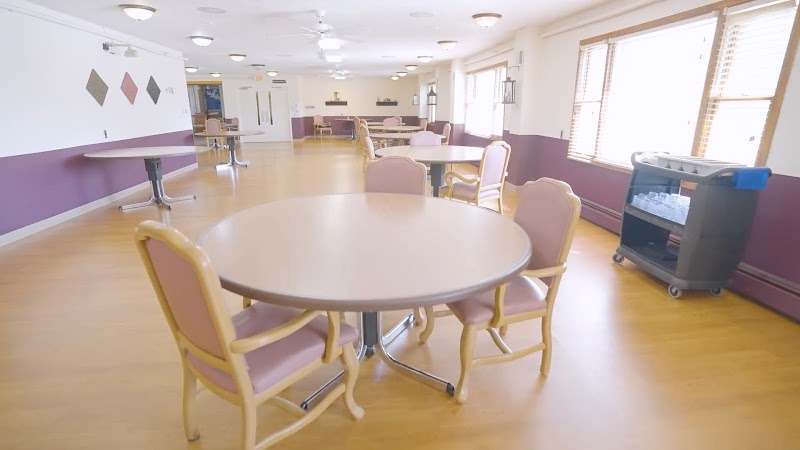
Based on observation, staff interviews, and the facility housekeeping assistant job description, the facility failed to thoroughly mop the dining room floor after each meal service and clean the ceiling fans in the dining room on a routine basis. The facility reported a census of 50 residents.Findings include:During an observation on 8/11/25 at 1:58 PM, after dining service finished, the floor noted to be sticky around the walls by the baseboards near the front entrance of the dining room. Dried liquids marks under and around the dining room tables near the front entrance of the dining room. A dried pink liquid stain observed under a chair in the dining room. Two of the ceiling fans closest to the entrance door were covered in dust and had a ring of dust around the ceiling fans on the ceiling. During an observation at breakfast service on 8/12/25 at 7:58 AM, the floors remained sticky near the baseboards along the wall near the front entrance of the dining room. The floor had dried liquids stains and a pink stain on the floor in the same places as yesterday. Thick dust remained on the ceiling fans and ceiling. During an interview on 8/12/25 at 10:39 AM, Staff F, Housekeeping queried on when housekeeping mopped the dining room and Staff F stated after breakfast and lunch. Staff F stated she Staff G, Housekeeping spot mopped the dining room floor yesterday after lunch because they can't get into the dining room until 1:15 PM and then the residents played Bingo in the dining room. Staff G stated on Monday and Wednesdays housekeeping spot mopped after lunch due to activities in the afternoon. Staff F asked who cleaned the fixtures such as the ceiling fans, and Staff F stated another housekeeper cleaned the ceiling fans recently. During an interview on 8/12/25 at 10:54 AM, Staff G, Housekeeping queried when housekeeping mopped the dining room floor and Staff G stated everyday after breakfast and lunch. Staff G stated she didn't know who mopped after dinner. Staff G stated housekeeping staff spot mopped the dining room floor after lunch because the residents got out of the dining room late and played Bingo. Staff G stated if residents were not in the dining at 12:45 PM, housekeeping could fully mop the dining room floor after lunch. Staff G asked who cleaned the ceiling fans in the dining room, and Staff G stated housekeeping did them a week or two ago. During an interview on 8/12/25 at 11:01 AM, the Housekeeping Supervisor stated the dining room floor mopped three times a day. The Housekeeping Supervisor stated housekeeping mopped the dining room floor after breakfast and lunch and dietary staff cleaned after dinner service. The Housekeeping Supervisor queried on how often the ceiling fans cleaned in the dining room and the Housekeeping Supervisor stated weekly. The Housekeeping Supervisor observed the ceiling fans and the sticky floors in the dining room and stated he appreciated bringing to his attention. The Housekeeping Supervisor confirmed the ceiling fans needed cleaned and the floors sticky around the baseboards. During an interview on 8/12/25 at 3:34 PM, the Administrator informed of the sticky floors and dusty ceiling fans in the dining room and the Administrator stated the Housekeeping Supervisor already told her the fans were filthy. The Administrator stated housekeeping cleaned them and the Housekeeping Supervisor spoke with his team about the dining room floors. The Administrator stated if lunch ran late, housekeeping staff spot mopped and after dinner dietary staff spot mopped. Per email on 8/12/25 at 4:25 PM, the Administrator documented the facility didn't have a formal housekeeping policy for cleaning and sanitizing common areas. Review of the facility Job Description: Housekeeping Assistant dated 5/22 revealed, in part: Essential Functions of Housekeeping Assistant: Sweep and mop floors; Clean furniture, equipment, fixtures, and hardware
CONCERN (D)

Potential for Harm - no one hurt, but risky conditions existed

Deficiency F0761 (Tag F0761)

Could have caused harm · This affected 1 resident

Based on observation, clinical record review, facility policy review and staff interviews, the facility failed to store medications that required refrigeration at an appropriate temperature. The facil...

Read full inspector narrative →
Based on observation, clinical record review, facility policy review and staff interviews, the facility failed to store medications that required refrigeration at an appropriate temperature. The facility reported a census of 50 residents. Findings include:During an observation on 8/11/25 at 2:12 PM, the thermometer on the inside of the medication storage refrigerator revealed 50 degrees. The freezer compartment on the mini refrigerator was covered with dried ice that almost filled the entire freezer compartment except for 2 ice bags that sat on the dried ice. The refrigerator held multiple insulin pens and other medications. The Refrigerator/Freezer Temperature Record for August 2025 revealed PM temperatures: a. 8/1/25 at 46 degreesb. 8/2/25 at 48 degreesc. 8/3/25 at 47 degreesd. 8/4/25 at 50 degreese. 8/5/25 - no temp documentedf. 8/6/25- 48 degreesg. 8/7/25 at 48 degreesh. 8/8/25 no temp documentedi. 8/9/25 at 50 degreesj. 8/1/25 at 48 degreesDuring an interview on 8/11/25 at 2:22 PM, Staff E, Registered Nurse (RN) queried on what the medication storage refrigerator temperature needed to be at and Staff E stated around 40 degrees. Staff E informed the thermometer read 50 degrees and Staff E stated she would look into it.During an interview on 8/11/25 at 2:28 PM, the Director of Nursing (DON) queried on what temperature the medication storage refrigerator temperature needed kept at and the DON stated she didn't know off the top of her head but definitely below 50 degrees. The DON showed the temperature log and informed the freezer section of the refrigerator full of ice and the DON stated they would need to defrost it and they would put the medications in another refrigerator in the other medication storage room. The Facility Medication Storage in the Facility Storage of Medication Policy dated 11/18 revealed: Medications requiring refrigeration are kept in a refrigerator at temperatures between 36 degrees Fahrenheit and 46 degrees Fahrenheit with a thermometer to allow temperature monitoring.
CONCERN (E)

Potential for Harm - no one hurt, but risky conditions existed

Quality of Care (Tag F0684)

Could have caused harm · This affected multiple residents

**NOTE- TERMS IN BRACKETS HAVE BEEN EDITED TO PROTECT CONFIDENTIALITY** Based on record review, staff interviews, and policy review the facility failed to carry out provider orders for 10 of 24 reside...

Read full inspector narrative →
**NOTE- TERMS IN BRACKETS HAVE BEEN EDITED TO PROTECT CONFIDENTIALITY** Based on record review, staff interviews, and policy review the facility failed to carry out provider orders for 10 of 24 residents reviewed (R#1, R#8, R#13, R#17, R#26, R#29, R#30, R#40 R#43, R#45). The facility reported a census of 50 residents.Findings include:1. The Minimum Data Set (MDS) for Resident #1 assessment, dated 7/22/25 listed diagnoses for Resident #1 included dementia, disorder of thyroid. A Brief Interview for Mental Status (BIMS) score of 13 out of 15 which indicated intact cognition. The Care plan initiated 3/20/24 for Resident #1 relayed has medications listed with black box warning referring to risks and potential adverse reactions. Intervention included to obtain and report laboratory draws and result as ordered. A Clinic Note date of service 10/10/24 for Resident #1 revealed, the provider directed routine labs every six months, last labs collected in April 2024, directed to collect labs as ordered on the next lab day. During an interview on 8/12/25 at 12:49 PM, the Director of Nurses (DON) stated the labs ordered 10/10/24 were missed and that in October there was not a process. The DON explained the current process is the provider was to alert the floor nurse of orders. The nurse should have added the order to the Nurses, Medication Administration Record (MAR). The DON relayed the lab order was put on the regular MAR and a Medication Aide signed the lab as it was being completed in error. 2. The MDS dated [DATE] for Resident #30 documented diagnoses included diabetes, lung disease, lack of coordination, unsteadiness on feet, aphasia and dysphagia referring to difficulty talking and swallowing. The Care Plan focus initiated 3/6/25 for Resident #30 documented diagnoses of diabetes, with a goal of no related complications. Interventions included to take medications as ordered by the doctor, included to monitor and document side effects and effectiveness. The Care Plan directed to obtain and monitor lab, diagnostic work as ordered, report results to the provider and follow up as indicated. The Clinic Note dated 1/20/25 for Resident #30 documented lab ordered in November 2024 outstanding, will remind of outstanding labs. Review of a Clinic Note dated 3/24/25 for Resident #30 revealed collection of labs on lab day in November 2024 and again on 1/20/2025 documented reviewed labs collected, were dated 1/26/25.The Clinic Note dated 5/27/25 for Resident #30 documented last labs collected 3/2025, recheck diabetes labs in three (3) months, due by 6/30/25 added additional thyroid lab. Review of a Clinic Note dated 7/28/25 revealed the last lab work was collected 3/2025, lab orders provided in May 2025 were not completed, new orders provided included to collect the labs by the end of this week. During an interview on 8/12/25 at 1:10 PM, the DON voiced the labs ordered per the clinician visit note for Resident # 30 on 11/14/24 were not done. The DON relayed it appeared the order was again put on the standard MAR and signed off as completed in error. 3. The MDS dated [DATE] for Resident #43 documented diagnoses included cancer, heart disease, vascular disease, diabetes, stroke, and respiratory disease. The Care Plan initiated 7/17/24 for Resident #43 directed to obtain and report lab results as ordered by the physician or nurse practitioner, to obtain and report laboratory draws, results as ordered. The Clinic Note dated 5/27/25 for Resident #43 documented last labs collected 3/2025 and directed additional labs the week of 6/30/2025. The Clinic Note dated 7/28/25 for Resident #43 documented Last labs were collected in 03/2025. Previous lab orders provided at last visits for collection during the week of 06/30/2025 were not collected. Directed to collect by the end of the week. During an interview on 8/13/25 at 12:55 PM, the Administrator stated this resident is one that could have refused lab work and was not documented, relayed will need to get better with documentation. 4. The MDS dated [DATE] for Resident #45 documented diagnoses included diabetes and seizure disorder. The Care Plan initiated 2/14/25 for Resident #45 documented a focus for diabetes with a goal to avoid complications. Also relayed had potential for nutritional problem, directed to obtain and monitor lab/diagnostic work as ordered. Report results to the provider and follow up as indicated. The Clinic Note dated 3/17/25 for Resident #45 relayed are no recent labs available on Resident #45. Please collect on next lab day, outline of labs listed. The Clinic Note dated 4/21/25 for Resident #45 documented no recent labs available, lab orders provided last visit were not collected. Please collect the next facility lab day. In an email communication on 8/11/25 at 11:04 AM, the DON responded and explained the facility process, relayed when our providers make their weekly rounds, they look to see who needs labs and they write the orders. Lab draws are on Monday unless it’s a stat lab, needed right away. The Administrator or DON takes the lab to the hospital and they fax the results to us and to the providers. We notify the family of results and follow up with the provider to see if they want any new orders. During an interview on 8/12/25 at 1:19 PM, the DON stated she cannot explain what occurred, as to why labs were not done, relayed, labs should have been put on the Medication Administration Record (MAR) and done by the nurse on lab day Monday or Tuesday. The DON relayed would be looking into and working on a better plan regarding labs. 5. Review of Resident #8’s MDS dated [DATE] revealed a BIMS score of 15 out of 15, which indicated intact cognition. The list of diagnoses included coronary artery disease, hypertension, renal insufficiency, depression, anxiety disorder, arthritis, hip fracture, and pain in left hip. Review of Care Plan dated 6/25/25 revealed Resident #8 is at risk for falls with interventions including placing non-slide strips in front of her closet, ensuring Resident #8 is wearing appropriate footwear when ambulating and staff setting out gripper socks for Resident #8 each night. Resident #8 has a left displaced femur fracture related to a fall with interventions including following physician’s orders for weight bearing status and for nursing staff to see physician’s orders and/or Physical Therapy treatment plan. Review of Resident #8’s Electronic Health Record (EHR) revealed the following nursing progress notes:a. 5/26/25 at 6:30 AM Resident #8 was found on the floor sitting in front of her recliner, Resident #8 stated “I was trying to get up out of my chair and lost my balance. I fell on my left side, my arm and leg hurt a little bit but I’m able to move everything. I’m unsure if I hit my head. My head does not hurt.” Initiated neuros, called on call provider to make aware of situation and Resident #8’s status. Assessed for injury; none. Educated Resident #8 on the importance of wearing proper footwear (socks and shoes, gripper socks) while transferring and to utilize the call light if assistance is needed. b. 5/26/25 at 9:40 AM Resident #8 is complaining of increased pain in her left leg/hip since the fall. Resident #8 is able to move leg but states that it hurts when she stands on it. Call placed to on-call Physician and requested an x-ray of the left hip/leg. Physician gave the okay for x-ray service to come and perform a bedside x-ray due to advanced age and limited mobility. Resident #8 aware. c. 5/26/25 at 1:30 PM X-ray service arrived and performed an x-ray of Resident #8’s left hip and left femur. Results are as follows: right hip arthroplasty, Displaced fracture involving the greater trochanter but no obvious periprosthetic extension. The on call Physician notified of results and received an order to send Resident #8 to the ER for further evaluation and treatment. Review of Resident #8’s ER report dated 5/26/25 at 10:00 PM, revealed the on-call Orthopedics Physician reviewed further imaging and noted this fracture would typically be managed nonoperatively, weightbearing as tolerated, and Resident #8 will need to follow-up with Orthopedics. Resident #8 was admitted to the hospital for pain management. Review of Resident #8’s Hospital Discharge Summary Notes dated 5/29/25 at 9:07 AM, revealed Resident #8 is requiring narcotics as pain is still significant with ambulation. Resident #8 required scheduled oxycodone each morning to tolerate Physical Therapy. Resident #8 is stable for discharge back to facility with Physical Therapy (PT) and Occupational Therapy (OT) Services. Resident #8 requires continued assessment and treatment to establish an appropriate level of assistance and to follow-up with Orthopedics. Resident #8’s EHR revealed a Nursing Progress note dated 6/3/25 at 2:25 PM, stated, phone call received from Orthopedic Clinic, stating Resident #8’s previous Orthopedic surgeon would like Resident #8 to follow up. Passed this message along to staff with scheduling to get this appointment made. Review of Facility’s Provider Progress Note dated 6/16/25, revealed Resident #8 was seen on this day for follow-up hospitalization for a ground level fall resulting in fracture of left hip. Resident #8 reports pain is well-controlled and feeling well overall. Resident #8 is actively working with PT/OT; Resident #8's pain has been well-controlled, continue with PT/OT and follow-up visits with Orthopedics. Continued review of Resident #8’s EHR failed to reveal nursing documentation or Orthopedic Clinic notes indicating Resident #8 had been seen for a follow-up for the fracture. On 8/13/25 at 1:05 PM, documentation for Resident #8’s follow-up Orthopedic visit was requested from the Director of Nursing (DON) and Facility Administrator. On 8/13/25 at 2:07 PM, DON stated via email, A follow-up appointment was not made for Resident #8, the nurse reports putting the request under the Activity’s door for our appointment/transportation person. 6. The MDS for Resident #13 MDS dated [DATE] revealed a BIMS of 13, indicating cognitively intact and diagnoses of hypertension, hyperlipidemia, history of stroke, seizure disorder, anxiety disorder and depression. Review of Resident #13's Care Plan initiated 9/3/24, documented a focus for risk of falls due to gait/balance problems, with interventions of requesting labs including seizure medications. Review of Clinic Note dated 9/13/24 for Resident #13 documented Lipid and Dilantin levels obtained 9/2024, due for routine labs on next facility lab day. Review of Clinic Note dated 3/24/25 for Resident #13 documented last labs were collected 9/2024 and directed to collect labs as ordered on the next lab day including level for monitoring seizure medications. Review of Clinic Note dated 5/27/25 for Resident #13 documented last labs were collected 9/2024 and directed to collect labs as ordered on the next lab day including level for monitoring seizure medications, orders provided last visit. Review of Clinic Note dated 7/28/25 for Resident #13 documented last labs were collected 9/2024 and directed to collect labs as ordered on the next lab day including level for monitoring seizure medications, orders provided last visit. Review of Nursing Progress notes and Order Summary for Resident #13 dated 9/13/24 to 7/28/25 failed to provide directed labs had been ordered or collected. 7. Review of Resident #17's MDS dated [DATE] revealed BIMS of 14, indicating cognitively intact and diagnoses of heart failure, hypertension, renal insufficiency, hyperlipidemia, depression, chronic atrial fibrillation, and insomnia. Review of Resident #17's Care Plan initiated 4/13/2020 directed to obtain and monitor lab and diagnostic work as ordered, reporting results to MD and follow up as indicated. A focus dated 6/1/23 indicating Resident #17 having episodes of insomnia due to not sleeping through the night, resulting in complaints of tiredness and need for naps during the day. Review of Clinic Note dated 10/24/24 for Resident #17 documented proceed with ordered sleep study for evaluation as result of Insomnia, Snoring and Daytime Hypersomnia. Review of Resident's condition, assessment, finding and pertinent laboratory and or diagnostic tests were discussed with nursing staff, understanding voice and acceptance of proposed place of care indicated. Review of Clinic Note dated 1/6/25 for Resident #17 documented at time of last visit on 10/24/24, an order was placed for a sleep study, will check on the status of this. Review of Resident's condition, assessment, finding and pertinent laboratory and or diagnostic tests were discussed with nursing staff, understanding voice and acceptance of proposed place of care indicated. Review of Clinic Note dated 5/5/25 for Resident #17 documented at time of visit on 10/24/24, an order was placed for a sleep study, chart review shows that scheduling has been unsuccessful at reaching facility to get this scheduled. Will have nurse reach out and see about getting this coordinated. Review of Cardiology Progress Note dated 5/14/25 documented Resident #17 does not sleep well and wakes up frequently through the night, has high blood pressure and would benefit getting a sleep study done and test has been ordered. Resident #17 will be notified of those results when received. Review of Clinic Note dated 7/7/25 for Resident #17 documented at time of visit on 10/24/24, an order was placed for a sleep study, chart review shows that scheduling has been unsuccessful at reaching facility to get this scheduled. Will have nurse reach out and see about getting this coordinated. Updated order placed. Review of Resident's condition, assessment, finding and pertinent laboratory and or diagnostic tests were discussed with nursing staff, understanding voice and acceptance of proposed place of care indicated. Review of Resident #17's Nursing Progress Notes revealed the following: 3/16/25 at 1:59 AM, Resident #17 stated she was supposed to have a sleep study two years ago and hasn't. This nurse stated the information would be pass on. 5/6/25 at 5:23 PM, Call received from Provider's office for Sleep Study order at local hospital, will call to set up Sleep Study. 7/8/25 at 9:30 AM, Received orders from Provider for Sleep Study, will call Facility with further direction. Resident aware. Review of Order Summary for Resident #17 dated 10/24/24 to 7/7/25 failed to provide directed Sleep Study had been ordered or completed. 8. The MDS dated [DATE] for Resident #26 revealed BIMS of 13, indicating cognitively intact and diagnoses of hypertension, renal insufficiency, hyperlipidemia, and hyponatremia (low sodium levels related to kidney disease and diabetes). Review of Care Plan initiated 3/31/22 for Resident #26 revealed, obtain and monitor lab/diagnostic work as ordered, report results to MD and follow up as indicated related to Resident #26's nutritional problem due to hyponatremia, hypertension, and Stage 3 chronic kidney disease. Review of Clinic Note dated 12/19/24 for Resident #26 documented, Resident #26 has had a steady weight gain since her admission in 2022, as a result of her diagnosis of Heart Failure, weight monitoring frequency should increase to daily weight checks with an order for Furosemide 20mg by mouth daily as needed for weight gain of 3lbs or greater in 24 hours or 5lbs or greater in one week. A Clinic Noted dated 2/17/25 documented, Resident #26 has had a steady weight gain since her admission in 2022, as a result of her diagnosis of Heart Failure, weight monitoring frequency should increase to daily weight checks. Review of PCC in which they have not been weighing consistently on a daily basis as ordered, provided reminder. Routine labs every 6 months, please collect on next facility lab day. Review of Resident #26's weights revealed consistent daily weights were started on 2/11/25. Review of Resident #26's EHR failed to indicate as needed Furosemide was administered on the Medication Administration Record (MAR) and/or Nursing Progress Notes as ordered for weight gain of 3lbs or greater in 24 hours or 5lbs or greater in one week, for the following dates and weight changes: a. 3/22/25 169lbs, 3/23/25 172.2lbs (increase of 3lbs in 24 hours), 3/24/25 174lbs (increase of 5lbs in 48 hours) b. 4/21/25 172.6lbs, 4/22/25 176lbs (increase of 4lbs in 24 hours) c. 5/8/25 171.4lbs, 5/9/25 174lbs (increase of 3lbs in 24 hours) Review of Resident #26's labs ordered 2/17/25, collected on 3/26/25 and resulted on 3/27/25 documented, I have reviewed these results, repeat CBC with diff in 2 weeks. Review of Resident #26's Nursing Progress note created on 3/29/25 with effective date 3/27/25 revealed lab results reviewed by Facility Provider, no new orders at this time. Review of Clinic Note dated 4/21/25 for Resident #26 documented, last labs were collected 3/26/25, recommended at that time to collect repeat CBC in 2 weeks. I do not see this has been done, please collect CBC, BMP, and A1c on next facility lab day. Review of Clinic Note dated 6/3/25 for Resident #26 documented, last requested labs were collected 6/30/2025. 9. Review of MDS dated [DATE] for Resident #29 revealed BIMS of 11, indicating moderate cognitive impairment and diagnoses of hypertension, hyperlipidemia, non-Alzheimer’s dementia, chronic atrial fibrillation, and congestive heart failure. Review of Care Plan initiated 1/19/23 with focus of Resident #29's diuretic therapy with interventions to administer diuretic medications as ordered by Physician. A Clinic Note dated 10/3/24 for Resident #29 documented orders for daily weight monitoring and administer additional Furosemide 20mg with weight increase of 3lbs or more in 24-hour time period, provided to DON. A Clinic Note dated 12/12/24 for Resident #29 documented weights show trend increase, at time of last visit on 10/3/24, an order for daily weight monitoring as a result of weight increase trend with recommendation to add an additional 20mg Furosemide with weight increase of 3lbs or more in 24 hours’ time however, orders were not completed as requested. Review of Clinic Noted dated 2/10/25 for Resident #29 documented Provider has continued request for daily weight monitoring. At time of last visit on 10/3/24 and 12/12/24, an order for daily weight monitoring as a result of weight increase trend with recommendation to add an additional 20mg Furosemide with weight increase of 3lbs or more in 24 hours’ time however, daily weight monitoring has not been occurring. Reminded facility of the importance of this order. Review of Resident #29's EHR failed to indicate as needed Furosemide was administered on the MAR and/or Nursing Progress Notes as ordered for weight gain of 3lbs or greater in 24 hours or 5lbs or greater in one week, for the following dates and weight changes: a. 2/24/25 208lbs, 2/25/25 215lbs (increase of 7lbs in 24 hours) b. 3/1/25 210lbs, 3/2/25 215lbs (increase of 5lbs in 24 hours) c. 3/15/25 208lbs, 3/16/25 214lbs (increase of 6lbs in 24 hours) d. 3/29/25 210lbs, 3/30/25 215lbs (increase of 5lbs in 24 hours) e. 5/11/25 212lbs, 5/12/25 215lbs (increase of 3lbs in 24 hours) f. 6/2/25 212lbs, 6/3/25 215lbs (increase of 3lbs in 24 hours) g. 7/15/25 205.4lbs, 7/16/25 209lbs (increase of 4lbs in 24 hours) 10. The MDS dated [DATE] for Resident #40 revealed BIMS of 14, indicating cognitively intact and diagnoses of hypertension, renal insufficiency, diabetes mellitus, hyperlipidemia, thyroid disorder and depression. Review of Resident #40's Care plan initiated 6/28/25 documented focus on potential for nutritional problems due to Type 2 diabetes mellitus, hyperlipidemia, and chronic kidney disease with interventions to obtain and monitor labs/diagnostic work as ordered. report results to MD and follow up as indicated, Registered Dietitian to evaluate and make diet change recommendations as needed, and weigh and record weight per facility protocol. Review of Clinic Note dated 12/19/24 for Resident #40 documented weight loss noted over the last 60 days, referral to Facility Dietitian, diabetic labs ordered to be collected on next facility lab day. Review of Clinic Note dated 2/17/25 for Resident #40 documented weight loss noted over the last 60 days, weight loss was noted at time of last visit when it was recommended that Resident #40 be referred to facility Dietitian. Chart review shows this has not been done, will reach out to facility to have referral created for evaluation. Diabetic labs recommended to be obtained at time of last visit, these have not been completed, collect diabetic labs on next facility lab day. Review of Clinic Note dated 4/21/25 for Resident #40 documented weight loss noted over last 60 days, this was noted at time of last visit 2/17/25 when it was recommended that patient be referred to facility dietitian. Chart review shows this has not been done, will reach out to facility to have referral created for evaluation. Diabetic labs collected 4/21/25, new orders provided for further labs to be collected on next facility lab day. Review of lab results dated 4/29/25 for Resident #40 documented reviewed lab results, Resident #40 would benefit from protein supplementation, previously advised dietitian referral. A Clinic Note dated 6/30/25 for Resident #40 documented previous routine labs resulted 4/21/25 reviewed, previously advised Dietitian referral, Resident #40 would benefit from protein supplementation Review of Nutritional Evaluation dated 4/30/25 for Resident #40 documented Dr's office provided Registered Dietitian referral for supplements secondary weight loss and hyponatremia, recommend liquid protein three times daily and Mighty Shakes at lunch and supper for additional calories and protein. Review of Physicians Orders for Resident #40 revealed an order dated 5/1/25 for liquid protein three times daily and Mighty Shakes at lunch and supper dated 4/30/25. In an email on 8/11/25 at 11:04 AM the DON responded and explained the facility process, relayed when our providers make their weekly rounds, they look to see who needs labs and they write the orders. Lab draws are on Monday unless it’s a stat lab, needed right away. The Administrator or DON takes the lab to the hospital and they fax the results to us and to the providers. We notify the family of results and follow up with the provider to see if they want any new orders. During an interview on 8/12/25 at 1:19 PM with the DON relayed cannot say what occurred, labs should have been put on the Medication Administration Record (MAR) and done by the nurse on lab day Monday or Tuesday. The DON relayed would be looking into and working on a better plan regarding labs. During an interview on 8/13/25 at 12:59 PM and email communication on 8/14/25 at 12:56 PM, Facility Administrator stated when the Provider is in the facility doing rounds the DON or MDS Coordinator are with the provider, any orders or recommendations are then communicated to that person. The Provider will also write these orders on a carbon copy form, this form is given to the nurse assigned to that resident hall during this shift, once the nurse receives the orders they are responsible for transcribing and processing these orders. The Provider will dictate their visit into EPIC (hospital electronic health system), when this is completed it is expected the Medical Records Department will export these Clinic Notes into the appropriate resident's PCC. At the time of the interview the Administrator confirmed the completed dictated Clinic Notes are not reviewed by nurses to note/sign or acknowledge the Clinic Note is reviewed and orders are received. The Administrator acknowledged the missed lab orders, sleep study, Orthopedic follow-up, blood glucose monitoring, weight monitoring with as needed Diuretics, weight and nutrition concerns and stated there is a systemic issue with the Facility Providers and Facility as well as the reliance on Agency Staff in the past and the inconsistency it brings. When nursing staff are frequently changing, it can disrupt continuity of care and hinder effective communication between Providers and the team. This inconsistency can lead to delays or misinterpretations in implementing provider orders. The Administrator stated she would expect nursing staff to treat provider orders with urgency and accuracy, ensuring they are processed promptly and implemented as intended. Clear documentation, timely follow-through, and proactive communication are key. It is essential to for nurses to feel empowered to ask questions or seek clarification when needed, especially when orders are complex or require coordination across discipline. Review of facility policy titled Physician Orders Policy, reviewed 9/28/22 directed: To provide guidance and ensure Physician Orders are transcribed and implemented in accordance with Professional Standards, State & Federal Guidelines. 1.Physician Orders shall be provided by Licensed Practitioners (Physicians, Nurse Practitioners, & Physician’s Assistants) authorized to prescribe Orders.2. Orders must be Recorded in the Medical Record by the Licensed Nurse authorized to transcribe such Orders.3. Physician Orders must be documented clearly in the Medical Record. The required components of a Complete Order:a. Date and Time of Orderb. Name of Practitioner Providing Orderc. Name and Strength of Medication/Treatment d. Quantity/Duratione. Dosage/Frequency f. Route of Administrationg. Indication/Diagnosis h. Stop Date, if Indicated4. Physician Orders that are missing required components, are illegible or unclear must be clarified prior to implementation.5. Physician Order Sheet (POS) will be maintained with current Physician Orders as New Orders are received. Discontinued Orders will be marked as discontinued with the date, and all new Orders will be written in the appropriate area on the POS with the date the order was received.6. Physician Orders will be transcribed to the appropriate Administration Record (MAR/eMAR or TAR/eTAR).7. Medications will be ordered from the Pharmacy to ensure prompt delivery. Medications available from the Emergency Drug Supply (E-Kit) or Automatic Dispensing Unit (ADU) shall be utilized for the first dose until a supply arrives from Pharmacy, if available
Mar 2025 7 deficiencies
CONCERN (D) 📢 Someone Reported This

A family member, employee, or ombudsman was alarmed enough to file a formal complaint

Potential for Harm - no one hurt, but risky conditions existed

Resident Rights (Tag F0550)

Could have caused harm · This affected 1 resident

Based on clinical record review, facility policy review, staff and resident interviews, the facility failed to ensure staff treated residents with dignity and respect while providing incontinence care...

Read full inspector narrative →
Based on clinical record review, facility policy review, staff and resident interviews, the facility failed to ensure staff treated residents with dignity and respect while providing incontinence cares for 2 of 6 residents reviewed for dignity(Residents #2 and #7). The facility reported a census of 49 residents. Findings include: 1. The Minimum Data Set(MDS) assessment tool, dated 2/4/25, listed diagnoses for Resident #2 which included non-Alzheimer's dementia, multiple sclerosis (a disease which causes impairment in the nerves), and diabetes. The MDS stated the resident required partial/moderate assistance with toileting hygiene and listed her Brief Interview for Mental Status (BIMS) score as 5 out of 15, indicating severely impaired cognition. The facility policy Resident Rights reviewed 4/26/23, stated the facility would treat residents with kindness, respect, and dignity. Review of Care Plan, dated 7/3/24, revealed a Focus area to address [Name redacted] has a psychosocial well-being problem due to past trauma in her life Anxiety. Interventions included, in part: Allow [name redacted] time to answer questions and to verbalize feelings, perceptions, and fears. Review of the Care Plan, dated 7/15/24 revealed a Focus area to address [Name redacted] is ADL self-care performance deficit. Interventions included, in part TOILET USE; partial, needs cueing and reminders to toilet and help with incontinence care, date initiated: 7/15/24. A 3/9/25 Nurses Note stated Resident #2 and her roommate reported that the Certified Nursing Assistant (CNA) was very rough and mean when she entered the room to help the resident. The resident stated she just pulled my pants down and pushed me over. The resident was very distraught and the nurse informed her she would speak with the CNA and pass the information along to management. Both residents stated they did not want the CNA to return to their room. After speaking with the CNA, the nurse heard her in the same resident room trying to turn off the call light speaking in a snippy and hostile manner. During an interview on 3/25/25 at 9:45 a.m., Resident #3 (Resident #2's roommate) stated Staff A came into the resident's room in the middle of the night and Resident #2 was asleep and she could hear her snoring. Resident #3 stated Staff A flipped the blankets down and pulled Resident #2's pants down. Resident #2 told Staff A no and she swatted her hand at Staff A and said oww. Resident #3 stated that Staff A then said that we all had to do things we didn't want to do. Staff A then placed the brief on Resident #2 and Resident #2 told her to get out and she left the room. Review of Staff A's Time Card documented she punched in on 3/8/25 at 10:00 p.m. and punched out at 6:00 a.m. During an interview on 3/25/25 at 3:47 p.m., Staff D Licensed Practical Nurse (LPN) stated she was called into Resident #2's room by her roommate and they both said they did not appreciate how the CNA behaved towards Resident #2. They stated she did not warn her before rolling her and was harsh with her wording. She said both residents were not happy and did not want her to return. She stated later in the shift she heard Staff A in Resident #2 and #3's room and she was speaking in a short manner and not using proper bedside manner right after she had spoken to her about it. She said she could not make out the words she was saying. Staff D stated she texted the Director of Nursing(DON) towards the end of her shift regarding Staff A. 2. The MDS assessment tool, dated 2/12/25, listed diagnoses for Resident #7 which included morbid (severe) obesity, anxiety, and depression. The MDS stated the resident required partial/moderate assistance rolling left and right and substantial/maximal assistance with toileting hygiene. The MDS listed the resident's BIMS score as 15 out of 15, indicating intact cognition. A 9/14/22 Care Plan entry directed staff to assist the resident with cleansing after each incontinent episode. During an interview on 3/25/25 at 3:02 p.m., Resident #7 stated Staff A came into her room and asked her to roll over. She stated she felt Staff A's manner towards her was almost like she was mad. She stated she told Staff D about it and she did not have her come in her room anymore. During an interview on 3/26/25 at 12:47 p.m. Staff F CNA stated that Resident #7 told her that Staff A was rude and rough when rolling her and was throwing her during rolling. Staff F stated she reported this the the nurse about 2 weeks ago but was not sure which nurse. During an interview on 3/26/25 at 4:00 p.m., the Administrator stated if someone was mean, rude, or rough, they completed an observation of that worker. She was under the impression the concerns with Staff A were were more related to cultural differences. She stated staff did not tell her she was mean or rough. Staff did not report any concerns with Resident #7. She stated if staff reported such concerns they would take it seriously. They would investigate and suspend that person and report it to the State Agency within 2 hours. She stated she did not know about the situation with Resident #2 until they were scanning over the weekend progress notes on Monday morning 3/10/25. She stated she would not have wanted Staff A to continue working(after the allegation was made).
CONCERN (D) 📢 Someone Reported This

A family member, employee, or ombudsman was alarmed enough to file a formal complaint

Potential for Harm - no one hurt, but risky conditions existed

Report Alleged Abuse (Tag F0609)

Could have caused harm · This affected 1 resident

Based on clinical record review, policy review, and staff and resident interviews, the facility failed to report allegations of abuse for 2 of 2 residents reviewed for abuse (Residents #2 and #7). The...

Read full inspector narrative →
Based on clinical record review, policy review, and staff and resident interviews, the facility failed to report allegations of abuse for 2 of 2 residents reviewed for abuse (Residents #2 and #7). The facility reported a census of 49 residents. Findings include: 1. The Minimum Data Set (MDS) assessment tool, dated 2/4/25, listed diagnoses for Resident #2 which included non-Alzheimer's dementia, multiple sclerosis(a disease which causes impairment in the nerves), and diabetes. The MDS stated the resident required partial/moderate assistance with toileting hygiene and listed her Brief Interview for Mental Status (BIMS) score as 5 out of 15, indicating severely impaired cognition. The facility Abuse Prevention policy, dated 10/21/22, declared: a. The facility was committed to protecting the residents from abuse by anyone including facility staff. b. The facility would report alleged abuse violations to the State Survey Agency immediately but not later than 2 hours after the allegation was made. Review of Care Plan, dated 7/3/24, revealed a Focus area to address [Name redacted] has a psychosocial well-being problem due to past trauma in her life Anxiety. Interventions included, in part: Allow [name redacted] time to answer questions and to verbalize feelings, perceptions, and fears. Review of the Care Plan, dated 7/15/24 revealed a Focus area to address [Name redacted] is ADL self-care performance deficit. Interventions included, in part TOILET USE; partial, needs cueing and reminders to toilet and help with incontinence care, date initiated: 7/15/24. A 3/9/25 Nurses Note stated Resident #2 and her roommate reported that the Certified Nursing Assistant (CNA) was very rough and mean when she entered the room to help the resident. The resident stated she just pulled my pants down and pushed me over. The resident was very distraught and the nurse informed her she would speak with the CNA and pass the information along to management. Both residents stated they did not want the CNA to return to their room. After speaking with the CNA, the nurse heard her in the same resident room trying to turn off the call light speaking in a snippy and hostile manner. During an interview on 3/25/25 at 9:45 a.m., Resident #3 (Resident #2's roommate) stated Staff A came into the resident's room in the middle of the night and Resident #2 was asleep and she could hear her snoring. Resident #3 stated Staff A flipped the blankets down and pulled Resident #2's pants down. Resident #2 told Staff A no and she swatted her hand at Staff A and said oww. Resident #3 stated that Staff A then said that we all had to do things we didn't want to do. Staff A then placed the brief on Resident #2 and Resident #2 told her to get out and she left the room. Review of Staff A's Time Card documented she punched in on 3/8/25 at 10:00 p.m. and punched out at 6:00 a.m. The facility lacked documentation they reported the allegation to the State Agency (SA) prior to 3/10/25. During an interview on 3/25/25 at 3:47 p.m., Staff D Licensed Practical Nurse (LPN) stated she was called into Resident #2's room by her roommate and they both said they did not appreciate how the CNA behaved towards Resident #2. They stated she did not warn her before rolling her and was harsh with her wording. She said both residents were not happy and did not want her to return. She stated later in the shift she heard Staff A in Resident #2 and #3's room and she was speaking in a short manner and not using proper bedside manner right after she had spoken to her about it. She said she could not make out the words she was saying. Staff D stated she texted the Director of Nursing (DON) towards the end of her shift regarding Staff A. 2. The MDS assessment tool, dated 2/12/25, listed diagnoses for Resident #7 which included morbid(severe) obesity, anxiety, and depression. The MDS stated the resident required partial/moderate assistance rolling left and right and substantial/maximal assistance with toileting hygiene. The MDS listed the resident's BIMS score as 15 out of 15, indicating intact cognition. A 9/14/22 Care Plan entry directed staff to assist the resident with cleansing after each incontinent episode. During an interview on 3/25/25 at 3:02 p.m., Resident #7 stated Staff A came into her room and asked her to roll over. She stated she felt Staff A's manner towards her was almost like she was mad. She stated she told Staff D about it and she did not have her come in her room anymore. During an interview on 3/26/25 at 12:47 p.m. Staff F CNA stated that Resident #7 told her that Staff A was rude and rough when rolling her and was throwing her during rolling. Staff F stated she reported this the the nurse about 2 weeks ago but was not sure which nurse. The facility lacked documentation they reported the allegation to the State Agency. During an interview on 3/26/25 at 4:00 p.m., the Administrator stated if someone was mean, rude, or rough, they completed an observation of that worker. She was under the impression the concerns with Staff A were were more related to cultural differences. She stated staff did not tell her she was mean or rough. Staff did not report any concerns with Resident #7. She stated if staff reported such concerns they would take it seriously. They would investigate and suspend that person and report it to the State Agency within 2 hours. She stated she did not know about the situation with Resident #2 until they were scanning over the weekend progress notes on Monday morning 3/10/25. She stated she would not have wanted Staff A to continue working (after the allegation was made).
CONCERN (D) 📢 Someone Reported This

A family member, employee, or ombudsman was alarmed enough to file a formal complaint

Potential for Harm - no one hurt, but risky conditions existed

Investigate Abuse (Tag F0610)

Could have caused harm · This affected 1 resident

Based on clinical record review, policy review, and staff and resident interviews, the facility failed to investigate allegations of abuse and failed to ensure separation between the alleged perpetrat...

Read full inspector narrative →
Based on clinical record review, policy review, and staff and resident interviews, the facility failed to investigate allegations of abuse and failed to ensure separation between the alleged perpetrator of abuse and residents for 2 of 2 residents reviewed for abuse(Residents #2 and #7). The facility reported a census of 49 residents. Findings include: 1. The Minimum Data Set(MDS) assessment tool, dated 2/4/25, listed diagnoses for Resident #2 which included non-Alzheimer's dementia, multiple sclerosis(a disease which causes impairment in the nerves), and diabetes. The MDS stated the resident required partial/moderate assistance with toileting hygiene and listed her Brief Interview for Mental Status(BIMS) score as 5 out of 15, indicating severely impaired cognition. The facility Abuse Prevention policy, dated 10/21/22, stated the facility was committed to protecting the residents from abuse by anyone including facility staff. The policy stated the facility would investigate allegations of abuse and suspend employees accused of abuse during the investigation. Review of Care Plan, dated 7/3/24, revealed a Focus area to address [Name redacted] has a psychosocial well-being problem due to past trauma in her life Anxiety. Interventions included, in part: Allow [name redacted] time to answer questions and to verbalize feelings, perceptions, and fears. Review of the Care Plan, dated 7/15/24 revealed a Focus area to address [Name redacted] is ADL self-care performance deficit. Interventions included, in part TOILET USE; partial, needs cueing and reminders to toilet and help with incontinence care, date initiated: 7/15/24. A 3/9/25 Nurses Note stated Resident #2 and her roommate reported that the Certified Nursing Assistant(CNA) was very rough and mean when she entered the room to help the resident. The resident stated she just pulled my pants down and pushed me over. The resident was very distraught and the nurse informed her she would speak with the CNA and pass the information along to management. Both residents stated they did not want the CNA to return to their room. After speaking with the CNA, the nurse heard her in the same resident room trying to turn off the call light speaking in a snippy and hostile manner. During an interview on 3/25/25 at 9:45 a.m., Resident #3(Resident #2's roommate) stated Staff A came into the resident's room in the middle of the night and Resident #2 was asleep and she could hear her snoring. Resident #3 stated Staff A flipped the blankets down and pulled Resident #2's pants down. Resident #2 told Staff A no and she swatted her hand at Staff A and said oww. Resident #3 stated that Staff A then said that we all had to do things we didn't want to do. Staff A then placed the brief on Resident #2 and Resident #2 told her to get out and she left the room. Staff A's Time Card documented she punched in on 3/8/25 at 10:00 p.m. and punched out at 6:00 a.m. The facility lacked documentation of an investigation initiated prior to 3/10/25 and lacked documentation Staff A was separated from residents from the time of the allegation to the end of her shift on 3/9/25. During an interview on 3/25/25 at 3:47 p.m., Staff D Licensed Practical Nurse (LPN) stated she was called into Resident #2's room by her roommate and they both said they did not appreciate how the CNA behaved towards Resident #2. They stated she did not warn her before rolling her and was harsh with her wording. She said both residents were not happy and did not want her to return. She stated later in the shift she heard Staff A in Resident #2 and #3's room and she was speaking in a short manner and not using proper bedside manner right after she had spoken to her about it. She said she could not make out the words she was saying. Staff D stated she texted the Director of Nursing(DON) towards the end of her shift regarding Staff A. 2. The MDS assessment tool, dated 2/12/25, listed diagnoses for Resident #7 which included morbid(severe) obesity, anxiety, and depression. The MDS stated the resident required partial/moderate assistance rolling left and right and substantial/maximal assistance with toileting hygiene. The MDS listed the resident's BIMS score as 15 out of 15, indicating intact cognition. A 9/14/22 Care Plan entry directed staff to assist the resident with cleansing after each incontinent episode. During an interview on 3/25/25 at 3:02 p.m., Resident #7 stated Staff A came into her room and asked her to roll over. She stated she felt Staff A's manner towards her was almost like she was mad. She stated she told Staff D about it and she did not have her come in her room anymore. During an interview on 3/26/25 at 12:47 p.m. Staff F CNA stated that Resident #7 told her that Staff A was rude and rough when rolling her and was throwing her during rolling. Staff F stated she reported this the the nurse about 2 weeks ago but was not sure which nurse. The facility lacked documentation of an investigation initiated regarding Resident #7's allegation and lacked documentation Staff A was separated from residents at the time of the allegation. During an interview on 3/26/25 at 4:00 p.m., the Administrator stated if someone was mean, rude, or rough, they completed an observation of that worker. She was under the impression the concerns with Staff A were were more related to cultural differences. She stated staff did not tell her she was mean or rough. Staff did not report any concerns with Resident #7. She stated if staff reported such concerns they would take it seriously. They would investigate and suspend that person and report it to the State Agency within 2 hours. She stated she did not know about the situation with Resident #2 until they were scanning over the weekend progress notes on Monday morning 3/10/25. She stated she would not have wanted Staff A to continue working(after the allegation was made).
CONCERN (D) 📢 Someone Reported This

A family member, employee, or ombudsman was alarmed enough to file a formal complaint

Potential for Harm - no one hurt, but risky conditions existed

Transfer Notice (Tag F0623)

Could have caused harm · This affected 1 resident

Based on clinical record review, policy review, and staff interview, the facility failed to notify the resident and the resident's representative(s) of the transfer or discharge and the reasons for th...

Read full inspector narrative →
Based on clinical record review, policy review, and staff interview, the facility failed to notify the resident and the resident's representative(s) of the transfer or discharge and the reasons for the move in writing and in a language and manner they understand and send a copy of the notice to a representative of the Office of the State Long-Term Care Ombudsman for 1 of 1 discharges reviewed (Resident #8). The facility reported a census of 49 residents. Findings included: 1. The Minimum Data Set (MDS) assessment tool, dated 1/17/25, listed diagnoses for Resident #8 which included bipolar disorder, anxiety, and depression and listed the resident's Brief Interview for Mental Status (BIMS) score as 14 out of 15, indicating intact cognition. A 2/4/25 Health Status Note stated the resident had increasing behaviors and the facility sent him to the hospital for evaluation. The facility lacked documentation of resident representative and ombudsman notification of discharge. On 3/27/25 at 10:21 a.m., via email, the Administrator stated the facility did not notify the ombudsman of the resident's discharge. The facility policy Notification of Transfer and Discharge, dated 3/17/25, stated the facility would provide the resident and resident representative notice of an impending transfer or discharge. The facility would notify the resident and resident representative(s) of the impending transfer or discharge and the reasons for the move in writing and in a language and manner they would understand. The facility would also send a copy of the notice to a representative of the Office of the State Long Term Care Ombudsman.
CONCERN (D) 📢 Someone Reported This

A family member, employee, or ombudsman was alarmed enough to file a formal complaint

Potential for Harm - no one hurt, but risky conditions existed

Deficiency F0625 (Tag F0625)

Could have caused harm · This affected 1 resident

Based on clinical record review, policy review, and staff interview, the facility failed to provide the resident and/or the resident's representative(s) a notice of bed-hold policy for 1 of 1 discharg...

Read full inspector narrative →
Based on clinical record review, policy review, and staff interview, the facility failed to provide the resident and/or the resident's representative(s) a notice of bed-hold policy for 1 of 1 discharges reviewed (Resident #8). The facility reported a census of 49 residents. Findings included: The Minimum Data Set (MDS) assessment tool, dated 1/17/25, listed diagnoses for Resident #8 which included bipolar disorder, anxiety, and depression and listed the resident's Brief Interview for Mental Status (BIMS) score as 14 out of 15, indicating intact cognition. The facility policy Resident Bed Hold, dated 11/15/22, stated the facility would provide written information to the resident and/or the resident representative regarding the bed hold policy prior to transferring the resident to the hospital. The facility would provide written information about these policies prior to and upon transfer for such absences. A 2/4/25 Health Status note stated the facility planned to transfer the resident to the hospital. The note lacked documentation of family notification of the transfer or bed hold information provided to the family. The 2/4/25 Discharge Evaluation lacked documentation regarding bed hold. The facility lacked documentation they provided the resident and/or the resident's representative(s) a notice of bed-hold policy at the time of the resident's discharge. On 3/27/25 at 10:42 a.m. via email, the Administrator stated it was her understanding the nurse on duty communicated with the family regarding the resident's discharge to the hospital and this would have included bed hold information.
CONCERN (D) 📢 Someone Reported This

A family member, employee, or ombudsman was alarmed enough to file a formal complaint

Potential for Harm - no one hurt, but risky conditions existed

Safe Transfer (Tag F0626)

Could have caused harm · This affected 1 resident

Based on clinical record review, policy review, and staff interview, the facility failed to ensure the completion of proper notices and documentation after they did not allow a resident to return to t...

Read full inspector narrative →
Based on clinical record review, policy review, and staff interview, the facility failed to ensure the completion of proper notices and documentation after they did not allow a resident to return to the facility after a hospitalization for 1 of 1 discharged residents reviewed(Resident #8). The facility reported a census of 49 residents. Findings included: The Minimum Data Set (MDS) assessment tool, dated 1/17/25, listed diagnoses for Resident #8 which included bipolar disorder, anxiety, and depression and listed the resident's Brief Interview for Mental Status (BIMS) score as 14 out of 15, indicating intact cognition. The MDS stated the resident had no behaviors during the review period. The facility policy Notification of Transfer and Discharge, dated 3/17/25, stated the facility would provide the resident and resident representative notice of an impending transfer or discharge which would include the reason for discharge and information regarding appeal rights. A 10/24/24 Nurses Notes stated the resident admitted to the facility and was pleasant and cooperative. A 12/14/24 Behavior Note stated the resident's family member stated the resident sounded depressed. The Director of Nursing (DON) spoke to the resident and he stated he had no plan to harm himself but did not feel like himself. The facility lacked documentation of any further behaviors displayed by the resident from his admission until 2/2/25. A 2/2/25 Nurses Note stated the resident had increased behaviors. A 2/4/25 8:37 a.m. Health Status note documented the resident was behaviorally different from baseline after his electroconvulsive therapy (ECT) treatment yesterday. Throughout the evening and overnight, the resident's behaviors became increasingly erratic and included, urinating on the floor, and taking all of his clothes off. The facility obtained an order to send him to the hospital for evaluation. The resident's clinical record lacked the following: a. documentation related to the clinical decision making process regarding the resident's inability to return to the facility. b. documentation of provider consultation in the decision making to not allow the resident to return. c. documentation of which specific needs the facility could not provide the resident. d. documentation that the facility provided the family with information regarding appeal rights including the name, address(mailing and email), and telephone number of the entity which received such requests; and information on how to obtain an appeal form and assistance in completing the form and submitting the appeal hearing request. During an interview on 3/25/25 at 1:51 p.m. Staff B, Licensed Practical Nurse (LPN) stated prior to the night the resident had his change in condition, they did not have problems with him. She stated after he came back from his ECT appointment, he couldn't move his legs and he was in a wheelchair. She stated he lost it and was not in the same mental status. He threw his shoes and needed to have one on one supervision. She stated he was very out of character and they had to provide individual supervision to keep him from falling. On 3/25/25 at 2:09 p.m., Staff C, Certified Nursing Assistant (CNA) stated normally Resident #8 would joke around and seemed like a regular person. He stated the day before he discharged from the facility, he went to the hospital for a treatment and when he came back he said he felt drunk but had not been drinking. Staff C stated he became more loud and obnoxious and unaware of what was going on. Staff C stated he had to lead him out of another resident's room and he undressed himself in the dining room. Staff C stated this was not like him. During an interview on 3/25/25 at 3:47 p.m., Staff D, LPN stated Resident #8 did not need a whole lot of help and she never had problems with him or observed behavioral issues. On 3/26/25 at 12:47 p.m. Staff F CNA stated she loved Resident #8 and he was usually so relaxed and calm. She said he was friends with another resident and played cards at night. She stated however that the last night he was at the facility he was not himself. He was in the hallway and had his shorts off and threw them across the hallway. She stated this was very odd for him and her jaw dropped. She stated she had to sit with him for an hour because he kept getting up. She stated the nurse took his vitals and they were fine and they didn't think they could send him out in the middle of the night based solely on his behaviors. She stated the kitchen staff arrived and made him an early breakfast because he said he was hungry but he then refused the meal and threw the food items. During an interview 3/26/25 at 3:36 p.m., the Social Worker stated it was difficult to have the resident in the facility because they could not carry out one on one supervision. She stated they had a meeting with the family and told them if something else happened they did not know if they could bring him back. On 3/26/25 at 4:00 p.m., the Administrator stated the made the decision they were not going to take the resident back and stated the company's regional consultant gave them specific reasons but she did not have documentation of those reasons. During an interview on 3/27/25 at 1:18 p.m., the Administrator stated she did not have documentation related to the decision making process with regard to Resident #1 not being allowed to return to the facility. She stated she thought that the paperwork including appeal notices did not need to be completed if the resident was out of the facility more than 10 days.
CONCERN (D) 📢 Someone Reported This

A family member, employee, or ombudsman was alarmed enough to file a formal complaint

Potential for Harm - no one hurt, but risky conditions existed

Deficiency F0713 (Tag F0713)

Could have caused harm · This affected 1 resident

Based on clinical record review, policy review, and staff interview, the facility failed to provide emergency services in a timely manner (Resident #8). The facility reported a census of 49 residents....

Read full inspector narrative →
Based on clinical record review, policy review, and staff interview, the facility failed to provide emergency services in a timely manner (Resident #8). The facility reported a census of 49 residents. Findings included: The Minimum Data Set (MDS) assessment tool, dated 1/17/25, listed diagnoses for Resident #8 which included bipolar disorder, anxiety, and depression and listed the resident's Brief Interview for Mental Status (BIMS) score as 14 out of 15, indicating intact cognition. The MDS stated the resident had no behaviors during the review period. The facility policy Notification of a Change in Condition, revised 4/26/23, stated the facility would notify the provider of a resident's change in condition including unusual behavior. A 2/2/25 Nurses Note stated the resident had increased behaviors. A 2/4/25 8:37 a.m. Health Status note stated the resident was behaviorally different from baseline after his electroconvulsive therapy (ECT) treatment yesterday. Throughout the evening and overnight, the resident's behaviors became increasingly erratic and included, urinating on the floor and taking all of his clothes off. The facility obtained an order to send him to the hospital for evaluation. On 3/25/25 at 2:09 p.m., Staff C CNA stated normally Resident #8 would joke around and seemed like a regular person. He stated the day before he discharged from the facility, he went to the hospital for a treatment and when he came back he said he felt drunk but had not been drinking. Staff C stated he became more loud and obnoxious and unaware of what was going on. Staff C stated he had to lead him out of another resident's room and he undressed himself in the dining room. Staff C stated this was not like him. On 3/25/25 at 3:47 p.m., Staff D LPN stated Resident #8 did not need a whole lot of help and she never had problems with him or observed behavioral issues. On 3/26/25 at 12:47 p.m. Staff F CNA stated she loved Resident #8 and he was usually so relaxed and calm. She said he was friends with another resident and played cards at night. She stated however that the last night he was at the facility he was not himself. He was in the hallway and had his shorts off and threw them across the hallway. She stated this was very odd for him and her jaw dropped. She stated she had to sit with him for an hour because he kept getting up. She stated the nurse took his vitals and they were fine and they didn't think they could send him out in the middle of the night based solely on his behaviors. She stated the kitchen staff arrived and made him an early breakfast because he said he was hungry but he then refused the meal and threw the food items. The facility lacked documentation of an assessment carried out or physician notification when staff identified a change in mentation in the middle of the night on 2/3/25 to 2/4/25. The facility lacked documentation of physician notification of the changes prior to 2/4/25 at 8:27 a.m. On 3/27/25 at 10:45 a.m., the Director of Nursing (DON) stated if a resident had a change in mental status, nurses should notify the provider immediately and have them sent out if there was a complete change from baseline.
Oct 2024 1 deficiency
CONCERN (D) 📢 Someone Reported This

A family member, employee, or ombudsman was alarmed enough to file a formal complaint

Potential for Harm - no one hurt, but risky conditions existed

Deficiency F0660 (Tag F0660)

Could have caused harm · This affected 1 resident

**NOTE- TERMS IN BRACKETS HAVE BEEN EDITED TO PROTECT CONFIDENTIALITY** Based on clinical record review, policy review, provider and staff interviews, the facility failed to develop interventions to m...

Read full inspector narrative →
**NOTE- TERMS IN BRACKETS HAVE BEEN EDITED TO PROTECT CONFIDENTIALITY** Based on clinical record review, policy review, provider and staff interviews, the facility failed to develop interventions to meet the resident's discharge goals and needs to ensure a smooth and safe transition from the facility to a post-discharge setting. (Resident #3) The facility reported census was 47. Findings include: The Minimum Data Set (MDS), dated [DATE], listed diagnoses for Resident #3 included: diabetes mellitus, and neurogenic bladder. The Brief Interview for Mental Status (BIMS) score of 15 out of 15 indicated intact cognition. The MDS assessed Resident #3 required moderate assistance with transfers, mobility, dressing, toilet use and personal hygiene needs and was occasionally incontinent of bladder. The MDS documented Resident #3 had taken a hypoglycemic (medication used to lower blood sugar, includes insulin). A review of the clinical record revealed a Nurses Note, dated 8/30/24 at 9:55 a.m., documenting Resident #3 given discharge information. Reviewed signs and symptoms of high and low blood sugar and to check blood sugar and to continue to check blood sugars before meals and that should track for new physician and take to first appointment, Reviewed infections signs and symptoms and to notified doctor if experiencing any S& (sign and symptoms) for further instruction regarding care. Shower bench going with resident and all belongings have been packed and put on transport van. Medication scripts being faxed to [pharmacy name redacted] in [name of town redacted]. During an interview on 10/9/24 at 9:40 a.m. Staff I, Social Worker, stated she met with representatives with Resident #3's Managed Care Organization discuss the discharge plans. Staff I was unable to provide the date and time of this meeting, and used email exchanges for reference. Staff I described Resident #3's discharge placement as a host home with two adult foster parents. Staff I stated Resident #3 was in need of a shower chair, home health services and medication administration assistance. Following the meeting, Staff I stated she was able to obtain the shower chair, but home health services could not be provided until Resident #3 was seen by a physician, not affiliated with the facility. Staff I seemed to believe she would not be the one to set up this appointment and was unaware who may of made the referral and when the appointment was, leaving home health services for Resident #3 uncertain. Staff I stated the Director of Nursing (DON) was working on the medications which included the need for insulin and supplies. Staff I stated the pharmacy they use was unable to provide insulin supplies so they had to change pharmacies last minute. Staff I was unaware of any issues related to the pharmacy change and was uncertain who would be administering the insulin and whether they were trained. Resident #3 was discharged on 8/30/24 without having home health services arranged or of a clear understanding how the medications would be given. During an interview on 10/9/24 at 10:47 a.m. Staff J, Registered Nurse, stated she attended a care conference in which Resident #3's discharge plans were discussed. Staff J recalls the Nurse Practitioner (NP) sending scripts to their pharmacy and there being an issue with the insulin and insurance. The NP then sent scripts to another pharmacy and there was an issue in the way the insulin was ordered and the NP had to re-order the insulin. Staff J stated she didn't know anything more about the discharge. During an interview on 10/14/24 at 12:56 p.m. Staff CM, Case Manager, stated they had found placement for Resident #3 in a host home through a community provider. The home had a married couple who would provide supervision and support 24/7. Staff CM stated they had met with the facility and began planning the discharge, but prior to the discharge, Resident #3 was hospitalized and diagnosed with diabetes mellitus requiring the use of insulin. Staff CM stated she suggested moving the discharge back, but the facility wanted to move forward. The discharge was scheduled on a Friday (8/30/24), which can be problematic if there are any issues. The plan was to have a 30 day supply of medications sent home with Resident #3. Apparently there was an issue and they had to switch pharmacies as well as discovering the insulin dosage and type of administration type was wrong. Staff CM stated the facility never contacted her about any issues and by Sunday or Monday she reached out and found out about the problems. Staff CM stated she found out about the incorrect insulin dosage and how they sent out insulin bottles instead of a quick pen. Staff CM stated she spent several hours trying to get the right scripts sent to the pharmacy. Staff CM stated she also questioned whether Resident #3 was properly trained on insulin administration as he kept bending needles. Staff CM stated they were able to get an appointment scheduled with a physician and home health services started in the home. Staff CM stated there was a lack of communication and proper planning by the facility to insure a smooth transition. A review of the clinical record revealed a lack of documentation regarding discharge planning for Resident #3 prior to the discharge on [DATE] at 9:55 a.m. During an interview on 10/14/24 at 1:34 p.m. Staff HH, Host Home, stated there was a lot of miscommunication surrounding the discharge of Resident #3. Staff HH stated as a result Resident #3 went without his medications, including his insulin for over a week. Staff HH stated Resident #3 is doing fine now. A facility policy, dated April 2017, titled Discharge Planning Process review revealed A Policy Interpretation and Implementation section directing the Interdisciplinary Team, which includes the resident and/or representative: 1. Evaluate the resident ' s discharge potential and needs; 2. Develop a discharge plan as part of the comprehensive care plan which includes: a. The resident ' s goals of care and treatment preferences; b. The resident ' s interest in being discharged or transferred; c. Needs of the resident upon discharge; d. Capacity of the resident and care givers to meet the needs of the resident upon discharge/transfer; e. Is the discharge/transfer feasible – who made this decision and why; f. Names of the Interdisciplinary Team involved in developing the discharge plan; g. Documented and dated resident ' s involvement and h. Date when the discharge plan was reviewed and updated 3. Share the discharge plan with the resident and/or representative 4. Update the discharge plan as needed 5. Prepare the resident and/or representative for discharge 6. Document reason for discharge or transfer 7. Provide required information 8. Complete a discharge summary
Aug 2024 4 deficiencies
CONCERN (D)

Potential for Harm - no one hurt, but risky conditions existed

Pressure Ulcer Prevention (Tag F0686)

Could have caused harm · This affected 1 resident

Based on observation, clinical record review, policy review, and staff and resident interviews, the facility failed to carry out a treatment as ordered for 1 of 3 residents reviewed(Resident #34). The...

Read full inspector narrative →
Based on observation, clinical record review, policy review, and staff and resident interviews, the facility failed to carry out a treatment as ordered for 1 of 3 residents reviewed(Resident #34). The facility reported a census of 53 residents. Findings include: The MDS (Minimum Data Set) assessment identifies the definition of pressure ulcers: Stage I is an intact skin with non-blanchable redness of a localized area usually over a bony prominence. Darkly pigmented skin may not have a visible blanching; in dark skin tones only it may appear with persistent blue or purple hues. Stage II is partial thickness loss of dermis presenting as a shallow open ulcer with a red or pink wound bed, without slough (dead tissue, usually cream or yellow in color). May also present as an intact or open/ruptured blister. Stage III Full thickness tissue loss. Subcutaneous fat may be visible but bone, tendon or muscle is not exposed. Slough may be present but does not obscure the depth of tissue loss. May include undermining and tunneling. Stage IV is full thickness tissue loss with exposed bone, tendon or muscle. Slough or eschar (dry, black, hard necrotic tissue). may be present on some parts of the wound bed. Often includes undermining and tunneling or eschar. Unstageable Ulcer: inability to see the wound bed. Other staging considerations include: Deep Tissue Pressure Injury (DTPI): Persistent non-blanchable deep red, maroon or purple discoloration. Intact skin with localized area of persistent non-blanchable deep red, maroon, purple discoloration due to damage of underlying soft tissue. This area may be preceded by tissue that is painful, firm, mushy, boggy, warmer or cooler as compared to adjacent tissue. These changes often precede skin color changes and discoloration may appear differently in darkly pigmented skin. This injury results from intense and/or prolonged pressure and shear forces at the bone-muscle interface. The Minimum Data Set(MDS) assessment tool, dated 5/26/24, listed diagnoses for Resident #34 which included diabetes, respiratory failure, and morbid obesity. The MDS stated the resident had a Stage 4 pressure ulcer and listed the resident's Brief Interview for Mental Status(BIMS) score of 14 out of 15, indicating intact cognition. The 11/15/22 Wound Management policy, dated 11/15/22, stated the facility would provide treatments in accordance with the physician orders. A 1/24/23 Care Plan entry list stated the resident had a Stage 4 pressure ulcer. A 6/15/23 Care Plan entry directed staff to treat as per the orders. The 7/30/24 Specialty Physician Wound Evaluation and Management Summary stated the resident had a Stage 4 Pressure Wound of the left ischium(the lower back hip bone) and directed staff to apply skin prep once daily for 16 days. The July and August 2024 Treatment Administration Records(TARs) listed a 6/13/24 order for skin prep to the wound on the left ischium every day shift. The 7/3/24 and 7/4/24 entries were blank and lacked initials to indicate staff completed the dressing. The 7/26/24 entry contained scribbled out initials which were illegible. The 8/5/24 entry contained the initials of Staff J Registered Nurse(RN) and the 8/6/24 entry had the initial of Staff G Licensed Practical Nurse(LPN). The TARs lacked documentation of an order for Maxorb (type of wound dressing used to treat draining wounds) to the wound. On 8/6/24 at 9:01 a.m. Resident #34 stated that staff did not carry out treatments as they should on her buttock. She stated she missed treatments. On 8/7/24 at 10:44 a.m. Staff G LPN agreed to complete the resident's wound treatment and measurements. Staff G stated that she would measure the open areas. The resident laid on her back and Staff G uncovered her and lifted up her abdominal folds. Staff G inspected under the folds and stated she was clear. Staff G then covered the resident back up. She stated she did not think the resident had an area on her bottom. Staff G rolled the resident over on her right side and she had a red open wound on her left ischium. Staff G stated she would retrieve dressing supplies and she left the room. Upon return, Staff G measured the wound which had a red wound bed with yellow slough on the top and the bottom as 3.2 centimeters(cm) x 1.3 cm x 0.3 cm(length x width x depth). She then applied Maxorb to the wound and covered it with a foam dressing. After the dressing change, Staff G stated she did not complete a treatment on 8/6/24 to the resident's ischium. When queried regarding the presence of her initials on the entry for the resident's 8/6/24 skin prep, she stated the physician carried out the treatment. On 8/7/24 at 4:06 p.m., via phone, Staff J Registered Nurse(RN) stated on 8/5/24, she signed off the resident's skin prep as complete with the intention of completing it later in the day. She stated after 2.5 hours of the shift though, the facility terminated her contract and she was unable to complete this On 8/8/24 at 10:40 a.m. the Director of Nursing(DON) stated she expected staff to carry out all treatment orders.
CONCERN (D)

Potential for Harm - no one hurt, but risky conditions existed

Tube Feeding (Tag F0693)

Could have caused harm · This affected 1 resident

**NOTE- TERMS IN BRACKETS HAVE BEEN EDITED TO PROTECT CONFIDENTIALITY** Based on observation, interview, clinical record review, and facility policy review, the facility failed to elevate the head of ...

Read full inspector narrative →
**NOTE- TERMS IN BRACKETS HAVE BEEN EDITED TO PROTECT CONFIDENTIALITY** Based on observation, interview, clinical record review, and facility policy review, the facility failed to elevate the head of bed during administration of enteral feeding and failed to label supplemental formula bag with the date and time that enteral feeding had started for 1 of 2 residents (Resident #33) reviewed for enteral/tube feeding. The facility reported a census of 53 residents. Findings include: The Minimum Data Set (MDS), dated [DATE], revealed a Brief Interview for Mental Status (BIMS) score of 11 out of 15, indicating moderate cognitive impairment. Resident #33 required partial to moderate staff assistance to turn and reposition in bed and had been dependent upon staff to transfer. Diagnoses included alcohol induced acute pancreatitis without necrosis or infection, malnutrition, generalized peritonitis, sacroiliitis, autoimmune thyroiditis, and gastrostomy status. Resident #33 required feeding tube prior to and while a resident at facility, she received 25% or less proportion of total calories through tube feeing. The Care Plan, initiated 6/12/24, revealed Resident #33 had an alternative nutritional intake via tube feeding with the goal that resident will remain free of side effects or complications related to tube feeding through the review date. An intervention instructed staff to elevate the head of bed 45 degrees during and for thirty minutes after tube feed. The Order Summary, dated August 2024, revealed an active order, with the start date of 6/13/24, to change out enteral feed set (bags, formula, piston syringe, and cylinder) every 24 hours on overnight shift. This order instructed staff to label bags with time and date for gastrostomy tube (g-tube) care. The facility document titled, Visual/Bedside [NAME] Report, dated 8/07/24, for Resident #33, instructed staff to elevate the head of bed to 45 degrees during and thirty minutes after tube feed. On 8/07/24 at 7:56 AM, Resident #33 laid flat in bed, the head of bed remained in lowest position, tube feeding noted to be running at 35 milliliters (mL) per hour with a water flush of 40 mL every hour. Noted label on formula bag which indicated tube feeding administration had been initiated at 12:00 AM on 8/07/24. On 08/07/24 at 8:14 AM, Staff K, Certified Nursing Assistant (CNA) informed that Resident #33 should never be flat in her bed during tube feeding due to risk for aspiration. Staff K stated that Resident #33 never refused cares or repositioning from staff that she is aware of. On 8/07/24 at 8:20 AM, Director of Nursing (DON), entered Resident #33's room, Resident #33 continued to lay flat in bed, with head of bed at lowest position, DON informed that the resident's head of bed should be up more during tube feeding administration and proceeded to elevate the head of bed to resident's preference. DON revealed the expectation that staff elevate Resident #33's head of bed to her preference or comfort and that Resident #33 should not lay flat during administration of tube feeding. On 8/08/24 at 8:40 AM, Resident #33 laid in bed with head of bed slightly elevated, noted tube feeding running via pump at 35mL per hour, with 40mL water flush per hour. The bag of supplemental formula that hung from the pump lacked label or identification of date and time that tube feeding administration had been initiated. On 08/08/24 at 8:43 AM, Staff G, Licensed Practical Nurse (LPN) entered Resident #33's room and had been unable to find a label with date and time to Resident #33's supplemental formula feeding being administered. On 08/08/24 at 10:42 AM, DON revealed expectation that supplemental formula hung for tube feeding administration be labeled with date and time initiated. The facility provided a document of procedures followed for enteral feedings, titled Tube Feedings, dated 2019, which instructed staff to position the patient with head of the bed elevated to at least 30 degrees or upright in a chair to prevent aspiration. The document additionally instructed staff to label the enteral administration set with the date and time that it is hung.
CONCERN (D)

Potential for Harm - no one hurt, but risky conditions existed

Infection Control (Tag F0880)

Could have caused harm · This affected 1 resident

Based on observations, staff interviews and policy review, the facility failed to practice appropriate infection control measures with the laundry, during the passing of ice water, provide environment...

Read full inspector narrative →
Based on observations, staff interviews and policy review, the facility failed to practice appropriate infection control measures with the laundry, during the passing of ice water, provide environmental cleaning and disinfecting of areas between laundry and dietary and were low on Personal Protective Equipment (PPE) gloves, not readily accessible in all resident areas. The facility reported a census of 53 residents. During an observation on 8/05/24 at 11:40 AM, Staff L, Hospitality Aide passed water, filled the ice cup for resident's residing in the 200 hall and dropped the scoop back into the ice and closed the lid at each resident room. During an observation on 8/06/24 at 11:02 AM, Staff E, Laundry Aide delivered towels and washcloths to the large laundry carts in the halls. The wire basket containing the clean laundry brought up from the basement laundry room was not covered. During an observation on 8/7/24 at 7:56 AM, in the hallway by the elevator leading to laundry services and the backdoor of the kitchen, a bag of trash with brown liquid substance in a wire basket dripped a puddle onto the floor where people were walking by to go to elevator that travels to the basement laundry area. The elevator floor was dirty with brown substance and dirt. Upon entering the laundry area, three piles of laundry were on the floor between the wash machine and three vinyl baskets. Three dryers were actively drying clothes. Staff C, Laundry Aide, opened the lint doors to find all three dryers filters filled with lint. During an interview on 8/7/24 at 7:56 AM, Staff C, Laundry Aide stated the laundry staff separated the laundry on the floor this morning. Staff C stated she was providing training to the staff. Staff C stated the dryer filters get cleaned at the end of each day. Staff C stated Staff E, Laundry Aide was to have cleaned them at the end of day 8/6/24. During an interview on 8/7/24 at 8 AM, Staff D, laundry aide stated she was taught to clean the dryer filters two times a day but had not checked it this morning as she assumed that Staff E cleaned them last night. During an interview on 8/7/24 at 8:18 AM, The Administrator stated she was training a new laundry/housekeeping supervisor, the hallway to the elevator was mopped and disinfected, the laundry was picked up and the floor was disinfected, and the laundry staff will be trained in the required fire safety for the driers. During an interview on 8/7/24 at 1:18 PM Staff B, Certified Nursing Assistant (CNA) stated it was hard to find wipes and gloves as they were short in supply. During an interview on 8/07/24 at 3:26 PM, Staff A, Infection Preventionist stated the large and medium gloves were in back order, the X-large gloves were in the basement and small gloves in the supply closet. The policies provided by the Infection Preventionist failed to address Personal Protective Equipment (PPE).
CONCERN (E)

Potential for Harm - no one hurt, but risky conditions existed

Deficiency F0725 (Tag F0725)

Could have caused harm · This affected multiple residents

**NOTE- TERMS IN BRACKETS HAVE BEEN EDITED TO PROTECT CONFIDENTIALITY** 3. The MDS, dated [DATE], revealed a Brief Interview for Mental Status (BIMS) score of 13 out of 15, indicating intact cognition...

Read full inspector narrative →
**NOTE- TERMS IN BRACKETS HAVE BEEN EDITED TO PROTECT CONFIDENTIALITY** 3. The MDS, dated [DATE], revealed a Brief Interview for Mental Status (BIMS) score of 13 out of 15, indicating intact cognition. Resident #50 required substantial to maximal staff assistance with bed mobility and transfers to and from bed. Resident #50 had frequent pain symptoms, post spinal fusion surgery, and had a documented Stage 3 pressure injuries to sacrum. Diagnoses included: multiple injuries, subsequent encounter, monoplegia of upper limb affecting left non-dominant side, necrotizing vasculopathy, post-laminectomy syndrome, and contusion of lung. The Care Plan, initiated 7/08/24, revealed Resident #50 at risk for falls, staff instructed that Resident #50 needed prompt response to all requests for assistance. On 8/06/24 at 9:31 AM, Resident #50 reported a concern with long call light wait time and stated it depended upon the staff working as some may be prompt to answer and other take 30 minutes to an hour or more to assist him when call light is pressed. On 8/8/24 at 11:30 a.m., the Administrator stated she did not have the ability to print call light logs but stated the surveyor could view them at the computer at the nursing station. The logs included the following response times: Resident #50 On 8/1/24, the call light response time was 19 minutes, from 1:44 p.m. to 2:03 p.m. On 8/4/24, the call light response time was 21 minutes, from 9:51 a.m. to 10:12 a.m. On 8/5/24, the call light response time was 19 minutes, from 2:55 p.m. to 3:14 p.m. Based on record review, resident and staff interviews, call light logs, facility policy and resident council minutes the facility staff failed to respond to call lights within a reasonable amount of time. Residents reported having to wait from 30 minutes to over an hour for the call light to be answered numerous times (Resident #10, #22, #34, & #50). The facility reported a census of 53 residents. Findings include: 1. The Minimum Data Set (MDS) dated [DATE] for Resident #22 revealed a diagnosis of obesity and a chronic wound to the left foot therefore required the assistance of 1 for dressing and personal hygiene. Resident # 22 had a Brief Interview for Mental Status (BIM) score of 15 suggesting an intact cognition. During an interview on 8/05/24 at 9:19 AM, Resident #22 stated the staff are often slow at answering her call light, 30 mins to 2 hours. Resident #22 stated if it's longer than 45 minutes, she will call the front desk, if no answer, then she will call the social worker. Resident #22 stated she can make it to the bathroom but needed assistance in the bathroom and had waited for over an hour on the toilet and the staff told her they had forgotten she was down that hall. 2. The MDS dated [DATE] for Resident #10 revealed a diagnosis of heart failure, had a history of falls and required moderate assistance with dressing, toileting and maximal assistance with personal hygiene needs. Resident #10 had a BIM score of 13 suggesting an intact cognition. During an interview on 8/5/24 at 10:48 AM, Resident #10 stated she would put her call light on for assistance to change her clothes and it may take the staff more than a half an hour to respond. On 8/8/24 at 11:30 a.m., the Administrator stated she did not have the ability to print call light logs but stated the surveyor could view them at the computer at the nursing station. The logs included the following response times: Resident #10 On 7/30/24, the call light response time was 40 minutes, from 5:28 p.m. to 6:09 p.m. On 8/1/24, the call light response time was 23 minutes, from 4:13 p.m. to 4:37 p.m. 4. The 6/26/24 Resident Council Minutes, stated the issue of call light response was not resolved. The 7/25/24 Resident Council Minutes stated the issue of call lights was resolved but stated it depends on staff. The minutes did not contain further details about the issue. 5. The MDS assessment tool, dated 5/26/24, listed diagnoses for Resident #34 which included diabetes, respiratory failure, and morbid obesity and listed the resident's Brief Interview for Mental Status(BIMS) score of 14 out of 15, indicating intact cognition. A 9/14/22 Care Plan entry stated the resident had bladder incontinence. On 8/6/24 at 9:01 a.m., Resident #34 stated call lights were terrible. She stated a lot of times one had to wait for an hour for help and this could happen any time of the day. She stated this last week she waited at least 30 minutes a couple times and used her phone to time this. She stated about a week ago, she had an incontinent episode due to the long wait time and when this happened she felt not very good. An 8/8/24 Care Plan entry encouraged staff to assist the resident to the toilet. On 08/08/24 at 11:30 a.m., the Administrator stated she did not have the ability to print call light logs but stated the surveyor could view them at the computer at the nursing station. The logs included the following response times: Resident #34 On 7/31/24, the call light response time was 26 minutes, from 9:40 a.m. to 10:07 a.m. On 8/1/24, the call light response time was 36 minutes, from 12:35 p.m. to 1:11 p.m. On 8/8/24 at 9:49 a.m., Staff I Certified Nursing Assistant(CNA) stated lately staffing was not as good. She stated staff were sometimes unable to answer call lights within 15 minutes when they were in a room with another resident. She stated if there were many call lights alerted, the response time could be up to 30 minutes. On 8/8/24 at 10:40 a.m., the Director of Nursing(DON) stated staff should respond to call lights within 15 minutes. On 8/8/24 at 1:59 p.m., the Administrator stated staff should answer call lights within 15 minutes. Via email correspondence on 8/8/24 at 2:40 p.m., the Administrator stated the facility did not have a policy which addressed call lights.
Jun 2024 1 deficiency
CONCERN (D) 📢 Someone Reported This

A family member, employee, or ombudsman was alarmed enough to file a formal complaint

Potential for Harm - no one hurt, but risky conditions existed

Deficiency F0658 (Tag F0658)

Could have caused harm · This affected 1 resident

**NOTE- TERMS IN BRACKETS HAVE BEEN EDITED TO PROTECT CONFIDENTIALITY** Based on observation, clinical record review, and staff interviews, the facility failed to administer medications as ordered for...

Read full inspector narrative →
**NOTE- TERMS IN BRACKETS HAVE BEEN EDITED TO PROTECT CONFIDENTIALITY** Based on observation, clinical record review, and staff interviews, the facility failed to administer medications as ordered for 1 of 5 residents reviewed (Resident #1). The facility's failure resulted in Resident #1's increased agitation and escalation of physical behaviors that resulted in aggressive physical contact between Resident #1 and another resident (Resident #2). In addition, a staff member, Staff A, Certified Nurse Aide (CNA), got injured from an encounter with Resident #1. The facility reported a census of 55 residents. Findings include: Resident #1's Minimum Data Set (MDS) assessment dated [DATE] listed his admission date as 5/30/24 from an inpatient psychiatric hospital. Resident #1 could make himself understood, and usually understood others. The MDS reflected Resident #1 had a Level II Preadmission Screening and Resident Review (PASRR) initated for severe mental illness. The MDS indicated he had delusions, physical, and verbal behaviors directed towards others that occurred from 1 to 3 days of the 7 days that preceded the assessment the behaviors put Resident #1 at increased risk for physical illness or injury, significantly interfered with Resident #1's care and participation in activities/social interaction, put others at risk for significant injury, was significantly intrusive on the privacy or activities of others, and significantly disrupted the care or living environment. The MDS indentified a Brief Interview for Mental Status (BIMS) score of 10, indicating moderately impaired cognition. Resident #1 required limited staff assistance/supervision for eating, dressing the upper body and personal hygiene. He required moderate staff assistance for transfers from chair to bed or toilet, dressing his lower body and bathing. He didn't walk and used a wheel chair for his primary mode of transportation. A Hospitalization Summary Report dated 5/28/24 indicated Resident #1 stayed in the hospital since 5/13/24 at the inpatient psychiatric unit following an episode of physical aggression at a his Assisted Living (AL) facility. They reported he had aggressive behaviors ongoing for the past several months, and consistent with major neurocognitive disorder with behavioral disturbance. Resident #1 would benefit from medication optimization. The Level II PASRR dated 5/24/24 reflected Resident #1 had diagnoses that included major neurocognitive disorder, major depressive disorder, generalized anxiety disorder, gambling disorder, and alcohol abuse in remission. The PASRR identified Resident #1 met the criteria and determined appropriate for long term care facility placement. The assessment indicated he required specialized services that included ongoing psychiatric medication management by a psychiatrist or a psychiatric Advanced Registered Nurse Practitioner (ARNP) to evaluate his response and effectiveness of the psychotropic medications on target symptoms, modify medication orders, and evaluate ongoing need for additional behavioral health services. Resident #1's Medication orders listed on the hospital Discharge summary dated [DATE] included: a. Trazodone (anti-depressant and can be used as a sedative) 50 milligram (mg) administered by mouth (oral) twice daily at 12:00 p.m. and 5:00 p.m. b. Trazodone 25 mg administered oral twice daily as needed (PRN) for prolonged agitation, with notation 1st line (first treatment of choice for resident agitation). c. Quetiapine (anti-psychotic) 50 mg administered oral daily. d. Quetiapine 75 mg administered oral daily at 6:30 p.m. A Nursing Progress Note transcribed by Staff B, Registered Nurse (RN), on 5/30/24 at 4:13 p.m. reflected Resident #1 arrived to facility at approximately 2:45 p.m. via a wheelchair van. He appeared alert and oriented, however he had a new diagnosis of dementia with a history of sundowners (increased agitation and confusion around sunset hours), intermittent confusion, speech clear, and appropriate. Resident #1 visited with the other residents in common area and appeared to adjust well. The clinical record review revealed the Director of Nursing (DON) entered Resident #1's medication orders in the electronic record on 5/30/24 at the following times: a. Trazodone 50 mg oral tablet, give 50 mg by mouth daily in the afternoon, entered at 6:00 p.m. - The medication order said to start on 5/31/24 at 11:00 a.m. b. Trazodone 50 mg oral tablet, give 50 mg by mouth daily in the evening, entered at 6:00 p.m. - The medication order directed to start on 5/31/24 at 4:00 p.m. c. Trazodone 50 mg oral tablet, give 25 mg by mouth as needed (0.5 tab) 2 times a day for agitation, entered at 5:30 p.m. - The medication order directed to start on 5/30/24 at 5:30 p.m. d. Quetiapine 25 mg oral tablet, give 50 mg by mouth in the morning, entered at 6:00 p.m. - The medication order directed to start on 5/31/24 at 6:00 a.m. e. Quetiapine 25 mg oral tablet, give 75 mg by mouth in the evening, entered at 6:00 p.m. - The medication order directed to start on 5/31/24 at 4:00 p.m. Nursing Progress Note entries by Staff C, Licensed Practical Nurse (LPN) revealed: a. On 5/30/24 at 7:16 p.m. Resident actively attempted to exit, stating he had a doctor appointment and needed to leave. Staff provided multiple redirects from the front door. b. On 5/30/24 at 7:45 p.m., 8:28 p.m., 9:28 p.m., 9:48 p.m., 10:17 p.m., 10:48 p.m., 11:03 p.m. and 11:36 p.m. described Resident #1 continued his exit seeking behavior that required mulitple redirects by staff. c. On 5/31/24 at 12:17 a.m., 1:43 a.m. and 2:05 a.m. described Resident #1 required 1 to 1 staff supervision in the common area due to his exit seeking behavior. d. On 5/31/24 at 3:00 a.m., Resident #1 actively attempted to exit, stating he had a doctor appointment and needed to leave. Staff C informed him that its still night time and they could figure it out in the morning. Resident #1 became very aggressive, stood up from his wheelchair, declared he is going to leave, and no one is going to stop him! He expressed being very angry for being locked up in the facility. e. Additional entries by Staff C on 5/31/24 at 4:00 a.m. and 4:30 a.m. described Resident #1's continued exit seeking behavior. f. On 5/31/24 at 6:45 a.m. Resident #1 went through kitchen and set off the east dining room door alarm, he reported looking for the night nurse. Staff C redirected him back over to the lounge area. The facility's Nurse Practitioner (NP), an adult and geriatric specialty NP, assessed Resident #1 on 5/31/24 at 2:23 p.m. and ordered Resident #1 to receive lorazepam (anti-anxiety medication) 0.5 mg by mouth daily at bedtime (HS) and 0.5 mg by mouth as needed for anxiety. A Nursing Progress Note transcribed by Staff D, RN, on 5/31/24 at 10:42 p.m. indicated around 9:15 p.m., upon reaching the nurses station Resident #1 sat in his wheelchair, hitting and attempting to kick a CNA. The CNA reported Resident #1 went in Resident #2's room, hitting and pushing that resident. The CNA stepped in and assisted Resident #1 back to the nurses station. During that time Resident #1 kept screaming and attempting to either hit or kick the CNA and Staff D while trying to ask what happened. Staff D notified the DON, Administrator and Nurse Practitioner (NP). They received an order to transport Resident #1 to the hospital emergency room (ER) for psychiatric evaluation. Staff D called 911 dispatch, the county sheriff and ambulance arrived around 9:25 p.m. to 9:30 p.m Review of Resident #1's May, 2024 Medication Administration Record (MAR) revealed Resident #1 didn't receive the following medications as ordered: a. Trazodone 50 mg tablet ordered daily at 5:00 p.m. on 5/30/24 b. Quetiapine 75 mg ordered daily at 6:30 p.m. on 5/30/24. c. Trazodone ordered as needed, the 1st line for agitation. d. Resident #1 did receive lorazepam as ordered at HS on 5/31/24. A Hospital ER Progress Note and Psychiatrist Physician assessment dated [DATE] stated: Patient had past psychiatric history of major depressive disorder and dementia who presented to the emergency department for violent behaviors at care facility. Dementia is a chronic and progressive disease that cannot be cured, and often times comes with agitation. At this time, patient wouldn't benefit from psychiatric admission as he previously was admitted and subsequently had violent behaviors immediately after discharge. Furthermore, patients with major neurocognitive disorders can often decompensate and become even more confused with the change to setting, worsening their behaviors. In terms of agitation, lorazepam as needed will often disinhibit elderly patients and make agitation worse. In order to decrease harm from known risks of benzodiazepines (group of sedative medication that includes lorazepam) in elderly patients, recommend changing as needed lorazepam to trazodone. A Nursing Progress Note transcribed by Staff E, LPN, on 6/3/24 at 1:22 p.m. indicated they sent a message to the NP regarding the as needed order for lorazepam. The facility's NP made additional psychiatric medication order changes that included: a. Lorazepam 0.5 mg administer oral daily at 1:00 p.m., ordered 6/1/24. b. Haldoperidol (anti-psychotic) administer 2 mg tablet oral twice a day as needed, ordered 6/2/24. c. Lorazepam 0.5 mg administer oral daily at 1:00 p.m. discontinued 6/3/24 at 2:35 p.m. d. Lorazepam 0.5 mg administer oral as needed (ordered on 5/31/24) discontinued 6/3/24 at 2:35 p.m. e. Lorazepam 0.5 mg administer by intramuscular injection (a shot) daily as needed, ordered 6/5/24. f. Haldoperidol 4 mg administer oral 4 times a day as needed, ordered 6/5/24. g. Trazodone dose increased to 75 mg administer oral twice daily, ordered 6/5/24. The clinical record did not reveal, and the facility couldn't provide documentation the facility NP consulted or coordinated Resident #1's psychiatric medication orders with a psychiatrist or psychiatric nurse practitioner. A Nursing Progress Note transcribed by Staff C on 6/18/24 at 8:50 p.m. stated: Resident #1 assaulted a CNA as they provided 1:1 while in room. The staff stated Resident #1 hit her in the arm and face, bit her left hand, twisted her hand causing her nails to break, and drew blood. The nurse notified the Administrator immediately, who gave instructions to call 911, request ambulance with escort to send Resident #1 to the ER. 9:05 p.m.: DON (Director of Nursing) at the facility. 9:15 p.m.: EMS (Emergency Medical Services) and Sheriff at the facility. 9:30 p.m.: County paramedics at the facility. 9:37 p.m.: Resident left the facility with EMS. Review of Resident #1's June 2024 MAR revealed: a. Trazodone 50 mg administered oral daily at 12:00 administered from 6/2/24 through 6/5/24. b. Trazodone 50 mg administered oral daily at 5:00 p.m. administered 6/2/24 through 6/5/24. c. Trazodone 75 mg administered oral daily at 12:00 p.m. not administered on 6/7/24, recorded by Staff F, Certified Medication Aide (CMA). d. Trazodone 75 mg administered oral daily at 5:00 p.m. administered from 6/6/24 through 6/17/24. e. Quetiapine 50 mg administered oral daily in the morning not administered on 6/1/24 as resident was not in the facility, and not administered on 6/7/24 and 6/14/24, documented by Staff F, CMA. f. Quetiapine 75 mg administered oral daily at 6:30 p.m. not administered on 6/1/24 as resident was not in the facility, and not administered on 6/7/24 recorded by Staff F, CMA, 6/8/24 recorded by Staff H, CMA, 6/9/24 recorded by Staff I, CMA, 6/10/24 and 6/11/24 recorded by Staff G, CMA, 6/12/24 recorded by Staff J, CMA, 6/13/24 recorded by Staff F, CMA, and 6/14/24 recorded by Staff H, CMA. g. Trazodone 25 mg administered oral 2 times daily as needed administered 5 times. Observations: On 6/20/24 at 11:19 a.m. Staff L, MDS Nurse, revealed 2 automated medication dispensing machines located in a locked medication room. An inventory list of medications available through the system included both trazodone and quetiapine, in various prescription strengths that provided availability for a wide range of medication orders, including coverage if the facility couldn't find Resident #1's medications due to getting lost or misplaced. On 6/20/24 at 1:14 p.m. in the Administrator's office, with the Administrator and DON, there were 3 cardboard boxes, approximate size 14 inches by 18 inches by 10 inches high, each held a large clear plastic bag that contained multiple prescription bottles of medications and bulk over-the-counter medication supplies from the Veteran's Administration (VA) pharmacy for Resident #1. In addition, they had a large clear plastic bag with multiple prescription bottles and pharmacy supplies provided by the VA pharmcy for Resident #1. All together, they had at least 70 prescription medication bottles between the 4 bags for Resident #1. Count of Resident #1's trazodone and quetiapine medications issued by the VA pharmacy at that time revealed: a. Trazadone 50 milligram (mg) tablets, 90 tablets dispensed 5/30/24, instructions on the bottle directed 1 tablet administered oral daily at noon, 1 tablet administered oral daily in the evening at 5:00 p.m., and 1/2 tablet administered oral as needed twice daily, 88 whole tablets and 1 half tablet remained in the bottle. b. Seroquel (brand name for quetiapine) 25 mg tablets, 150 tablets dispensed 5/30/24, instructions on the bottle directed 2 tablets administered oral daily in the morning and 3 tablets administered oral daily in the evening at 6:30 p.m., 141 tablets remained in the bottle. c. Trazodone 50 mg tablets, 45 dispensed on 2/12/24, instructions on the bottle directed 1 tablet administered oral daily and a half tablet administered once daily as needed, 6 whole tablets and a half tablet remained in the bottle. d. Trazodone 50 mg tablets, 60 dispensed on 4/15/24, instructions on the bottle directed 1 tablet administered oral daily at hour of sleep (HS), and 1/2 tablet administered oral twice a day as needed, 33 whole tablets and a half tablet remained in the bottle. A medication dispensing card sent by the facility's pharmacy (not the VA) revealed 28 trazodone 75 mg doses (each were 1/2 of a 150 mg trazodone pill) dispensed on 6/6/24, the label on the card instructed take one-half tablet (75 mg) by mouth every afternoon and every evening, 8 doses (1/2 tablets) remained in the dispensing card on 6/20/24. The facility provided documentation Assisted Living (AL) staff picked up a prescription bottle of quetiapine 25 mg tablets from the VA pharmacy, 30 tablets dispensed on 5/10/24, the bottle label directed 1 tablet administered oral daily in the evening. The prescription bottle was not in Resident #1's supply of VA meds inspected on 6/20/24, staff would have discarded the bottle when empty. Documentation of medication administration from AL revealed the medication was not administered on 5/10/24 and 1 dose administered at HS on 5/11/24. Per facility records, Resident #1 received: a. Trazodone i. 50 mg dose - 11 documented administrations ii. 75 mg dose - 24 documented administrations iii. 25 mg as needed - 5 documented administrations - The review determined Resident #1 should have received 19 and 1/2 tablets from the supply on hand - Resident #1 only had 1 and 1/2 tablets removed from the bottle, leaving at least 18 doses not administered. b. Quetiapine i. 50 mg dose - 16 documented administrations ii. 75 mg dose - 9 documented administrations - The review determined Resident #1 had 59 of the 25 mg tablets administered from the supply on hand, 29 from the bottle dispensed on 5/10/24 and the other 30 from the 5/30/24 bottle. - However, the bottle dispensed on 5/30/24 only had 9 tablets removed from the bottle, indicating 11 doses not administered. The facility's Equipment and Supplies for Administering Medications policy revised August, 2014, directed staff: a. The facility maintains equipment and supplies necessary for preparation and administration of medications. b. The charge nurse is notified if supplies are inadequate or equipment fails to work properly. The charge nurse reports equipment and supply deficiencies to the DON. The facility's Medication Administration General Guidelines policy revised August, 2014, directed staff: a. Medications are administered as prescribed in accordance with good nursing principles and practices. b. If a medication with a current, active order cannot be located in the medication cart, medication room,and facility, the pharmacy is contacted or medication removed from the emergency medication kit. c. Medications are administered in accordance with written orders of the prescribe. d. Residents may actively refuse medications. Medication refusal must be reported to the prescriber based upon facility guidelines. e. If a dose of regularly scheduled medication is withheld, refused, not available, or given at a time other than the scheduled time, the space provided on the MAR for that dosage administration is initialed and circled. Documentation of the event is required in the record. The facility's Emergency Pharmacy Service and Emergency Kits policy, revised August 2014, listed the emergency pharmacy service is available on a 24 hour basis. Emergency needs for medication are met by using the facility's approved emergency medication supply or by special order from the provider pharmacy. The provider pharmacy supplies emergency medications including emergency drugs, antibiotics, controlled substances, products for infusion in the automated dispensing unit and/or electronic medication cabinet. Staff Interviews On 6/20/24 at 1:28 p.m., the Administrator stated when Resident #1 admitted on [DATE] to the facility, he had all of his prescription medications issued from the VA pharmacy with him. On 6/25/24 at 2:25 p.m. Staff C stated she worked the 6:00 p.m. to 6:00 am shift through agency at the facility. Seh explained the CMA's had the responsiblility to provide the medication administration on the evening shift (6:00 p.m. to 10:00 p.m.). She worked from 6:00 p.m. on 5/30/24 through 6:00 a.m. on 5/31/24. Resident #1 acted more like he experienced sundowning, she could talk to him and redirect him to calm him down. He pretty much required 1 to 1 with him that night. She did not administer the as needed trazodone because she could redirect him from the exit seeking behaviors. On 6/19/24 at 2:41 p.m. Staff A stated she worked the evening shift on 5/31/24, as she walked a different resident in the hall she observed Resident #1 push Resident #2 into her room. He had a hold of her wrists and wouldn't let go as he yelled at the resident to go lay down. Staff A stated she had to get the resident she ambulated safely seated before she could intervene, yelled for help and got to Resident #2's room as quickly as she could. She attempted to separate Resident #1 from Resident #2. Staff M, CNA, also responded and helped to separate the residents, Staff M stayed with Resident #2 as Staff A got Resident #1 out of her room. She took him towards the Nurse's Station and Resident #1 kicked her in the stomach, but not hard enough to cause injury. The facility assigned her to work 1:1 with Resident #1 on the 6/18/24 evening shift. Resident #1 demanded to see her papers, because he saw his name on the clipboard. She let him see the clipboard and he became more agitated, he struck her on the chin with his hand, she raised her left arm to protect herself and he bit her on that hand, twisted her hand hard and pulled her fingers back which caused 2 of her fingernails to break off and fractured the distal end of her finger. Staff A reported she had an evaluation, where they treated her injuries on the morning of 6/19/24. On 6/25/24 at 3:32 p.m. Staff F, Certified Medication Aide (CMA), stated Resident #1 had times he would take his medication fine, other times he said he didn't need it and wouldn't take it. Sometimes the facility didn't have the medication available and had to get it from the automated dispensing machine at the facility. She told the nurse if Resident #1 refused, and she would try to offer the medication at another time, but she didn't document that. Staff F documented an H for held when she was responsible for medication administration on 6/7/24 for the 12:00 p.m. Trazodone dose and the morning and 6:30 p.m. Quetiapine doses, the 6:30 p.m. Quetiapine dose on 6/13/24, and the morning Quetiapine dose on 6/14/24. On 6/25/24 at 3:01 p.m. Staff G, CMA, stated she marked Resident #1's MAR with NA for not administered when she couldn't find the bottle for the medication, and they didn't have the correct dose for him in the automated medication dispensing machine. Later she realized she could have gave 2 pills for a dose, so she could have gave him the correct dosage from the dispenser. She didn't remember if she told the nurse about the missed dose because she didn't think the nurse could get the correct dose from the dispenser. Staff G recorded NA for the 6:30 p.m. quetiapine dose on 6/11/24, and did not administer the dose on 6/10/24 documented as a circle around her initials on the MAR. Staff G stated she suspected the other staff didn't administer Resident #1's VA medications, but she had no proof and didn't report it to anyone. On 6/25/24 at 4:35 p.m. Staff H, CMA, stated when she administered Resident #1's medications on the 6/8/24 evening shift, she found an empty bottle of quetiapine in the med cart, and documented NA for not available. She realized afterward she should have told the nurse to pull the medication from the automated dispenser, but did not. She recorded an R when Resident #1 refused the quetiapine 6:30 p.m. dose on 6/14/24, and did not tell the nurse he refused the medication, she added Resident #1 usually took his medications pretty good. On 6/25/24 at 3:46 p.m., the DON thought the reason the 5:00 p.m. trazodone dose and 6:30 p.m. quetiapine dose didn't start until 5/31/24 had to due to the time she entered the orders in the computer. She didn't know until 6/21/24 that staff didn't look for or administer his VA medications at times. The CMA staff reported they didn't know why they didn't look for the meds when she asked them about it but they did inform the nurses. The nurses reported the CMA's didn't tell them they couldn't find the medication or Resident #1 didn't receive the medications at those times. The facility educated the staff on medication administration, and their responsibilities if the medication is not available or if the resident refused the medication. On 6/26/24 at 12:15 p.m., the facility's Corporate Nurse, Staff K, Registered Nurse (RN), stated the software had a default in the electronic medication ordering software. If someone entered the order after the administration start time, the medication order defaulted to the next day. When that occurred, she expected staff to enter another one time order for the medication administration that day, so Resident #1 would receive the medication as ordered that day, without delay. The DON should have did that for the trazodone and quetiapine orders entered on 5/30/24. Staff K explained the facility educated all nurses and med aides the week before on what to do if they couldn't find a medication or it wasn't available. They needed to report it to the nurse, the nurse needed to obtain the medication from the automated dispenser if possible, and document the events. It was not acceptable for staff not to administer the medication and not take the needed action. On 6/26/24 at 11:10 a.m., the Administrator stated she thought the facility NP attempted to contact Resident #1's psychiatric provider at the VA and thought it was documented in the progress notes.
May 2024 4 deficiencies
CONCERN (D) 📢 Someone Reported This

A family member, employee, or ombudsman was alarmed enough to file a formal complaint

Potential for Harm - no one hurt, but risky conditions existed

Resident Rights (Tag F0550)

Could have caused harm · This affected 1 resident

**NOTE- TERMS IN BRACKETS HAVE BEEN EDITED TO PROTECT CONFIDENTIALITY** Based on observation, clinical record review and staff interview, the facility failed to ensure residents are treated with digni...

Read full inspector narrative →
**NOTE- TERMS IN BRACKETS HAVE BEEN EDITED TO PROTECT CONFIDENTIALITY** Based on observation, clinical record review and staff interview, the facility failed to ensure residents are treated with dignity while being provided care for 2 of 4 residents reviewed. (Residents #14, #21) The facility reported census was 46. Findings include: 1. According to the Quarterly Minimum Data set (MDS) with an assessment reference date of 4/3/24, Resident #14 had a severely impaired cognitive status. Resident #14 required total dependence with mobility, transfers, dressing, toilet use and personal hygiene needs. The MDS documented Resident#14's diagnoses included Cerebral palsy, obstructive uropathy. During an observation on 5/2/24 at 1:50 p.m. Resident #14 was propelled back to his room and transferred into bed with a mechanical lift and assistance of two staff members (Staff D, Certified Nurses Aide (CNA)/Staff P, CNA). Both staff donned proper personal protective equipment (PPE) in accordance with Enhanced Barrier Precaution (EBP) protocols. Staff P proceeded to provide peri care and noted the resident was a little red, but was unaware where a barrier cream was. While providing care, Staff P placed the catheter bag on the bed, head level and when rolling Resident #14 to his left side, Resident #14's face was positioned directly on the catheter bag. Staff P failed to cleanse the supra pubic catheter tubing and when emptying the catheter bag, failed to use an alcohol swab to cleanse the stop valve tubing. Staff P placed the catheter bag on the bed frame and placed a blanket over the resident before leaving. 2. According to the Quarterly MDS with an assessment reference date of 4/5/24, Resident #21 had a minimally impaired cognitive status. Resident #21 required limited assistance with mobility and transfers. Moderate to maximal assistance with dressing, toilet use and personal hygiene needs. Resident #21 was frequently incontinent of bladder and always incontinent of bowel. During an observation on 5/7/24 at 8:00 a.m. a strong odor of urine detected on 100 hall, permeating primarily from room [ROOM NUMBER] (Resident #21's room). During an observation on 5/9/24 at 12:15 p.m. Resident #21 sat in his wheelchair with TV on, but appeared asleep. A strong urine odor was noted upon entering Resident #21's room. During an observation on 5/13/24 at 12:00 p.m. Resident #21's room was currently empty with a housekeeping cart sitting outside the doorway. One full urinal and one partially full urinal was sitting on the floor. A urine stain was noted beneath the Resident #21' s bed. When the sheets were pulled back, two urine stains were noted on the sheet. In an interview on 5/13/24 at 12:00 p.m. Staff X, Housekeeping Supervisor, stated room [ROOM NUMBER] is the worst room for odors due to the residents spilling their urinals onto their sheets or the floor. Staff X stated when she entered the room today, there were wet briefs and pull ups left in the room adding to the odor problem.
CONCERN (D) 📢 Someone Reported This

A family member, employee, or ombudsman was alarmed enough to file a formal complaint

Potential for Harm - no one hurt, but risky conditions existed

Safe Environment (Tag F0584)

Could have caused harm · This affected 1 resident

**NOTE- TERMS IN BRACKETS HAVE BEEN EDITED TO PROTECT CONFIDENTIALITY** Based on observations, clinical record review and staff interviews, the facility failed to ensure the facility remains free of p...

Read full inspector narrative →
**NOTE- TERMS IN BRACKETS HAVE BEEN EDITED TO PROTECT CONFIDENTIALITY** Based on observations, clinical record review and staff interviews, the facility failed to ensure the facility remains free of persistent odors. (Resident #21) The facility reported census was 46. Findings include: According to the Quarterly Minimum Data Set (MDS) with an assessment reference date of 4/5/24, Resident #21 had a minimally impaired cognitive status. Resident #21 required limited assistance with mobility and transfers. Moderate to maximal assistance with dressing, toilet use and personal hygiene needs. Resident #21 was frequently incontinent of bladder and always incontinent of bowel. During an observation on 5/7/24 at 8:00 a.m. a strong odor of urine detected on 100 hall, permeating primarily from room [ROOM NUMBER] (Resident #21's room). During an observation on 5/9/24 at 12:15 p.m. Resident #21 sat in his wheelchair with the television on, but appeared asleep. A strong urine odor was noted upon entering Resident #21's room. During an observation on 5/13/24 at 12:00 p.m. Resident #21's room was currently empty with a housekeeping cart sitting outside the doorway. One full urinal and one partially full urinal was sitting on the floor. A urine stain was noted beneath the Resident #21' s bed. When the sheets were pulled back, two urine stains were noted on the sheet. In an interview on 5/13/24 at 12:00 p.m. Staff X, Housekeeping Supervisor, stated room [ROOM NUMBER] is the worst room for odors due to the residents spilling their urinals onto their sheets or the floor. Staff X stated when she entered the room today, there were wet briefs and pull ups left in the room adding to the odor problem.
CONCERN (D) 📢 Someone Reported This

A family member, employee, or ombudsman was alarmed enough to file a formal complaint

Potential for Harm - no one hurt, but risky conditions existed

Deficiency F0658 (Tag F0658)

Could have caused harm · This affected 1 resident

Based on clinical record review, the facility failed to complete treatment of wounds in accordance with physician orders for 2 of 2 resident reviewed. (Resident #12, #15) The facility reported census ...

Read full inspector narrative →
Based on clinical record review, the facility failed to complete treatment of wounds in accordance with physician orders for 2 of 2 resident reviewed. (Resident #12, #15) The facility reported census was 46. Findings include: 1. According to a Minimum Data Set (MDS) with a reference date of 4/8/24, Resident #15 had a Brief Mental Status (BIMS) score of 8 which indicated a moderately impaired cognitive status. Resident #15 was independent with mobility, transfers, dressing, toilet use and personal hygiene needs. Resident #15's diagnosis included Non-Alzheimer's dementia, septicemia, chronic obstructive pulmonary disease and respiratory failure. According to Resident #15's Physician's orders dated 4/24/24 and April and May 2023 Treatment Administration Record (TAR), Resident #15 was to have her face washed four times per day with bacitracin and Vaseline on gauze applied over her nose and ears. The April TAR indicated this treatment was not completed two times on 4/25/24, and the May TAR indicated this treatment was not completed three times on 5/1/24. According to Resident #15's Physician's orders dated 4/22/24 and April and May 2023 Treatment Administration Record (TAR), Resident #15 was to have Bacitracin Ointment applied to her face twice daily. The order was not transcribed on the April TAR and consequently no treatments were completed as ordered on 4/23, 2/24, 4/25, 4/26, 4/27, 4/28, 4/29, 4/30. The May TAR indicated this treatment was not completed on 5/1/24. According to Resident #15's Physician's order dated 4/24/24 and April and May 2023 Treatment Administration Record (TAR), Resident #15 was to have Sulfamylon applied to her scalp, right wrist and left finger four times per day. The April and May TAR indicated this treatment was not completed twice on 4/25/24, not at all on 4/29/24 and 4/30/24 and only completed once on 5/1/24. According to Resident #15's Physician's order dated 4/24/24 and April and May 2023 Treatment Administration Record (TAR), Resident #15 was to have Sodium Chloride Nasal Solution 1 spray in both nostrils four times per day and a cotton applicator to clean and remove dead skin from her nostrils four times a day. The order was not transcribed on the April TAR and consequently no treatments were completed as ordered on 4/24, 4/25, 4/26, 4/27, 4/28, 4/29, 4/30. The May TAR indicated this treatment was not completed three times on 5/1/24. 2. According to the minimum data set (MDS) with an assessment reference date of 4/6/24, Resident #12 had a Brief Interview for Mental Status (BIMS) of 14 indicating an intact cognitive status. Resident #12 required dependent to maximal assistance with mobility, transfers, dressing, toilet use and personal hygiene needs. Resident #12 was coded as always incontinent of bowel and bladder. Diagnosis included coronary artery disease, peripheral vascular disease, renal insufficiency, diabetes mellitus, cerebrovascular accident (stroke), hemiplegia and chronic obstructive pulmonary disease. According to Resident #12's Treatment Administration Record (TAR) for April 2024, Resident #12 was to have Triple Antibiotic External Ointment applied to his right inner thigh abrasion twice daily until healed. The TAR indicated treatments were not provided on the evenings of 4/3, 4/21 and 4/27. According to Resident #12's TAR for April 2024, Resident #12 was to have Urea Cream 10% applied to his bilateral lower legs twice daily. The TAR indicated treatments were not provided on the evenings of 4/3 and 4/21.
CONCERN (D) 📢 Someone Reported This

A family member, employee, or ombudsman was alarmed enough to file a formal complaint

Potential for Harm - no one hurt, but risky conditions existed

ADL Care (Tag F0677)

Could have caused harm · This affected 1 resident

Based on observation, clinical record review, bathing records and staff interview, the facility failed to ensure residents are provided adequate personal hygiene services to include at least two bathi...

Read full inspector narrative →
Based on observation, clinical record review, bathing records and staff interview, the facility failed to ensure residents are provided adequate personal hygiene services to include at least two bathing opportunities per week for 3 of 4 residents reviewed and failed to provide catheter care in accordance with professional standards of practice. (Residents #12, #14, #18) The facility reported census was 46. Findings include: 1. According to Quarterly Minimum Data Set (MDS) with an assessment reference date of 4/6/24, Resident #12 had a Brief Interview for Mental Status (BIMS) score of 14 which indicated an intact cognitive status. The MDS documented that the resident required dependent to maximal assistance with mobility, transfers, dressing, toilet use and personal hygiene needs. The MDS coded Resident #12 as always incontinent of bowel and bladder. The MDS documented the resident with diagnoses which included coronary artery disease, peripheral vascular disease, renal insufficiency, diabetes mellitus, cerebrovascular accident (stroke), hemiplegia and chronic obstructive pulmonary disease. The Care Plan for the resident documented a focus area with initiated date of 11/03/2015 as follows: the resident needs help with Activities of Daily Living (ADL)'s due to a stroke and weakness to the left side, chronic pulmonary disease with shortness of breath, impaired vision and incontinence due to inability to feel the urge to void of have bowel movements. The Care Plan directed the staff with the following interventions; encourage bathing twice a week as tolerates, inspect skin during showers and alert charge nurse to any skin issues, check nail length and trim/clean on bath days and as necessary, and report any changes to charge nurse. When the resident declines showers/baths staff are to re-approach at a later time and offer shower again. The revision date for the previous intervention was 3/24/24. According to the Shower Schedule undated document given to the survey team, Resident #12 was to receive shower opportunities on Tuesdays and Fridays. Bathing records during April and May 2024 indicated Resident #12 was provided bathing opportunities as scheduled on all dates except 4/2 and 4/26. Bathing records indicated he refused showers on 4/16 and 4/30. 2. According to the Quarterly MDS with an assessment reference date of 4/3/24, Resident #14 had a severely impaired cognitive status. The MDS documented Resident #14 required total dependence with mobility, transfers, dressing, toilet use and personal hygiene needs. Resident #14 had a suprapubic catheter and was always incontinent of bowel. The MDS documented the resident had diagnoses which included cerebral palsy, obstructive uropathy. The Care Plan for Resident#12 documented a focus area with initiated date of 11/2/2017 as follows; Activated of Daily Living (ADL's) self care performance deficit related to musculoskeletal impairment, limited mobility, cerebral palsy, intellectual disabilities, scoliosis, seizures and congenital hearing loss. The Care Plan directed staff with the intervention to offer bathing/showering twice weekly and as necessary, check nail length then trim and clean on bath day and as necessary. Report any changes to the nurse, with revision date of 4/16/24. According to shower schedules, Resident #14 was to receive shower opportunities on Tuesdays and Fridays. Bathing records during April and May 2024 indicated Resident #14 was not provided bathing opportunities as scheduled on 4/2, 4/5, 4/9, 4/16, 4/19 and 5/3. During an observation on 5/2/24 at 1:50 p.m. Resident #14 was propelled back to his room and transferred into bed with a mechanical lift and assistance of two Certified Nurses Aides (CNA) staff members (Staff D/Staff P). During the observation Staff P failed to cleanse the supra pubic catheter tubing and when emptying the catheter bag, failed to use an alcohol swab to cleanse the stop valve tubing. Staff P CNA placed the catheter bag on the bed towards the head of the bed, and when the staff rolled the resident over to the left side the resident's face was in contact with the catheter bag. Observation on 5/7/24 at 8:15 a.m. Resident provide morning care by Staff D, CNA . Resident's face and axilla washed, peri care provided, resident dressed and oral hygiene completed. Proper Personal Protective Equipment (PPE) and hand hygiene used. Staff D did not cleanse Resident's supra pubic catheter tubing or site. Blood noted in catheter tubing. Braces applied to feet Resident was transferred properly via the mechanical lift with assistance Staff D, CNA and Staff V, CNA. The Resident was then propelled to the dining room for breakfast. In an interview on 5/7/24 at 2:10 p.m. the Director of Nursing (DON) reported catheter care is to be completed each shift and as needed if the tubing becomes soiled. Catheter care includes cleansing the tubing from the resident up to 6 inches or so from the body. Nurse aides are responsible for the basic cleansing needs, unless there is a supra pubic catheter that has a split gauze, in which a nurse would be responsible to cleanse and change the dressing each shift. The DON stated the process when emptying the catheter bag each shift includes ensuring an alcohol wipe is used to cleanse the stop valve before returning it back into its closed position. 3. According to the MDS with an assessment reference date of 1/24/24, Resident #18 had a Brief Interview for Mental Status (BIMS) score of 13 which indicated an intact cognitive status. The MDS documented that Resident #18 required moderate to maximal assistance with mobility, transfers, dressing, toilet use and personal hygiene needs. The MDS documented that the resident had diagnoses which included congestive heart failure, gastroesophageal reflux disease. The Care Plan for Resident#18 identified a focus area with initiated date of 1/30/2024 as ADL self-care performance deficit. The Care Plan directed staff with interventions as follows; offer bathing/showering twice weekly and as necessary, check nail length and trim and clean on bath day and as necessary. Report any changes to the nurse. Revision date of the interventions documented as 2/7/2024. According to shower schedules, Resident #18 was to receive shower opportunities on Mondays and Thursdays. Bathing records during April and May 2024 indicated Resident #18 was not provided bathing opportunities as scheduled on 4/1, 4/8, 4/11, 4/22 and 5/2. Bathing records indicated he refused showers on 4/18, 4/29 and 5/6. According to facility catheter care policy: The facility will maintain consistent and adequate hygiene standards for residents with an Indwelling Catheter to maintain function and prevention of infection or complications. RESPONSIBILITY: Nursing Staff, Licensed Nurses, Nursing Administration, & Director of Nursing. PROCEDURE: Gather Supplies: Towel, Incontinent Wipes, Incontinent Pad. Identify Resident & Explain Procedure. Provide Privacy Perform Hand Hygiene & Apply Gloves If able, Position Female Resident in the Dorsal Recumbent Position; Males in the Supine Position. Place Incontinent Pad under Resident's Hips. Place sheet over Resident; Only exposing Perineal Area. Perform Incontinence Care per facility protocol prior to providing Catheter Care. Female: With non-dominant hand, retract labia to fully expose urethral meatus and Catheter insertion site. Maintain hand position throughout the procedure. Cleanse the labia major using soap and water and a clean washcloth, cleanse downward motion. Change the position of the washcloth with each downward stroke. Repeat for the labia minor using a clean washcloth cleansing down the length of the Catheter at least 4. Do not allow the washcloth to drag on resident's skin or bed linen. Male: Retract the foreskin of the uncircumcised penis to expose urethral meatus and Catheter insertion site. Maintain hand position throughout the procedure. Cleanse the urethral meatus using soap and water and a clean washcloth down the length of the catheter at least 4. Cleanse glans using circular strokes from the meatus outward. Change the position of the washcloth with each cleansing stroke. With a clean washcloth, rinse with warm water using the above technique. Return foreskin to normal position. Avoid pulling the Catheter during Cleansing. Remove Gloves, Perform Hand Hygiene. Apply Gloves & Reposition Resident's Clothing/Bedding to ensure Privacy/Comfortable. Discard Contaminated Items in Designated Containers. Remove Gloves & Perform Hand Hygiene.
Jan 2024 15 deficiencies 4 IJ (3 affecting multiple)
CRITICAL (J) 📢 Someone Reported This

A family member, employee, or ombudsman was alarmed enough to file a formal complaint

Immediate Jeopardy (IJ) - the most serious Medicare violation

Deficiency F0697 (Tag F0697)

Someone could have died · This affected 1 resident

**NOTE- TERMS IN BRACKETS HAVE BEEN EDITED TO PROTECT CONFIDENTIALITY** Based on clinical record review, family and staff interviews, and policy review, the facility failed to provide appropriate pain...

Read full inspector narrative →
**NOTE- TERMS IN BRACKETS HAVE BEEN EDITED TO PROTECT CONFIDENTIALITY** Based on clinical record review, family and staff interviews, and policy review, the facility failed to provide appropriate pain management for 1 out of 5 residents reviewed (Resident #6). Clinical record review revealed on 9/26/23 at 4:00 p.m., Resident #6 fell and sustained a hematoma to her head. The facility staff failed to conduct a dementia pain assessment for 16 hours, or treat the resident's pain. The facility sent the resident to the emergency room (ER) where the resident was assessed to have a subdural hematoma (brain bleed), fracture of the right clavicle, and a urinary tract infection. The State Agency informed the facility of the Immediate Jeopardy (IJ) that began as of September 26, 2023 on December 19, 2023 at 12:15 p.m. The facility staff removed the Immediate Jeopardy on December 19, 2023 by implementing the following actions: 1) DON/Designee completed Inservice with licensed staff 12/19/2023 on A) Change in Condition B) Pain Management C) Interventions for Pain Management and Pain Relief. D) Physician notification of new pain 2) DON and or designee completed 100% audit on residents with any symptoms of pain A) Completed Pain interview B) Interventions were administered C) Dr/NP were notified as needed 3) DON/Designee will educate new hires on: A) Change in Condition B) Pain Management C) Interventions for Pain Management D) Physician Notification of new pain. The scope lowered from a J to a D at the time of the survey after ensuring the facility implemented education and their policy and procedures. The facility reported a census of 50 residents. Findings Include: The Quarterly Minimum Data Set (MDS) dated [DATE] for Resident #6 revealed the diagnosis Diabetes Mellitus, hypertension, renal insufficiency, aphasia (loss of ability to understand or express speech), altered mental status. Resident #6 required limited assistance for bed mobility, transfers, toileting, and for personal care. Resident #6 used a wheeled walker to ambulate and was frequently incontinent of urine. Resident #6 had a Brief Interview for Mental Status (BIMS) score of 1 which suggested a severe cognitive impairment. The Care Plan dated 9/15/23, instructed the staff to ambulate Resident #6 with a wheeled walker, provide assistance with transfer, toileting, personal hygiene and dressing with the assistance of 1 staff member. Resident #6 was identified as a fall risk and staff was directed to check frequently and assist as needed. Progress notes 9/26/23 at 4 p.m. for Resident #6 revealed: a. Staff I, Licensed Practical Nurse (LPN) notified that Resident #6 fell. b. Assessment complete and Neuro checks were initiated. c. A 4 cm x 5 cm bruise and swelling noted to the right side of forehead. d. Resident #6 was confused at the time and Urinary tract infection (UTI) was suspected. e. Three staff assisted the resident in a wheelchair, to the nurse's station for 1 on 1 supervision. f. Family was notified. g. Staff J, Advance Registered Nurse Practitioner (ARNP) was notified. h. A new order for one time dose of 12.5 mg Hydralazine due to blood pressure (BP) of 165/101 and obtain a urine sample. The Medication Administration Record (MAR) for Resident #6 dated September 2023 revealed: a. Tylenol 650 mg administered on 9/26/23 at 5 p.m. lacked documentation of pain assessment. b. Tylenol 650 mg, to be given 2 times a day, lacked documentation on dates 9/1, 19, 20, 12, 22 26, 27 at 8 a.m. and 9/3/23 at 5 p.m. c. Acetaminophen 650 mg every 4 hours as needed for mild pain not administered in September. d. Pain level assessment lacked documentation on 9/1, 2, 3, 19, 20, 21, 22, 26, and 9/27/23. The Neurological Evaluation for Resident #6 documented: a. Neurological assessments were initiated on 9/26/23 at 4 p.m. b. At 4:00 p.m. blood pressure (BP) 165/101, pulse (P) 92, Respiration (R) 18 (temperature was not assessed), LOC (level of Consciousness) 4+ (Lethargic, sleepy or drowsy), Pupils 4 and reactive to light (+), Hand grips refused, Lacked pain assessment. c. At 5:15 p.m. BP 129/95, P 98, R 18, LOC 4+ Lethargic, pupils 4+ Hand grasps AB (absent) d. Lack of documentation for the following assessment date and time: 1. On 9/26/23 at 5:45, 6:45, 7:45, 9:45, and 11:45 p.m. 2. On 9/27/23 at 1:45, 3:45, and 7:45 a.m. e. 9/27/23 at 11:15 a.m. revealed: BP 154/48, P 116, R 16, LOC 3+ stuporous (not awake), lacked assessment of pupil size, responsiveness, hand grips and pain assessment. Progress note dated 9/27/23 at 11:10 a.m. for Resident #6 revealed: a. Staff M, RN asked by staff to assess Resident #6. b. Resident eyes closed, did not respond to name or touch. c. Vital Signs: temperature (T) 100.4, P 114, R 16, BP 158/48. d. Unable to arouse the resident. Progress note dated 9/27/23 at 11:25 a.m. for Resident #6 revealed that Staff M, RN notified the family who requested transport to the Emergency department for evaluation and the ambulance was notified. The Situation, Background, Assessment, and Recommendation (SBAR) dated 9/27/23 at 11:25 a.m., completed by Staff M, RN, the findings included: a. Unresponsiveness b. Condition, symptom, sign had not occurred before c. Pain: does the resident have pain? yes, non-verbal, occasional moan or groan, facial grimacing d. testing none e. Interventions none f. Family was notified on 9/27/23 at 11:25 a.m. g. On 9/27/23 at 11:38 a.m. Staff J, ARNP notified. Progress note dated 9/27/23 at 11:55 a.m. revealed that Resident #6 was transported to the local hospital. During an interview on 12/18/23 at 3:29 p.m. Staff P, CNA stated Resident #6 was pleasantly confused on 9/26/23, which was her normal. Staff P stated she was in the hall when she heard a loud thunk and started searching rooms. Staff P stated she found Resident #6 face down in her room with a big goose egg on her forehead. Staff P stated she stayed with the resident while Staff O, CNA went to get Staff I, LPN. Staff P stated Resident #6's face was grimaced, she acted confused, moving to try to sit up and dazed, eyes not tracking and not responsive to her name. Staff P stated Staff O returned with Staff I who took vital signs then instructed the CNA's to get her up to the recliner. Staff P stated Resident #6 was not acting like herself, and the CNA's checked on her every 15 minutes, then Staff I instructed CNA's to place her in a wheelchair and take her to the nurse's station. Staff P stated they were instructed to take Resident #6 to bed about 7 p.m. and she was normally a 1 person assist but at that time was a 2 person assist with a gait belt. During an interview on 12/18/23 at 3:47 p.m. Staff O, CNA stated on 9/26/23 about 4 p.m. she was caring for a resident and heard a loud thump. Staff O stated, I knew it was a body hitting the floor. Staff O stated she assisted Staff P, CNA and found Resident #6 on the floor, on her right side, 4-5 steps from her recliner with the walker at her feet. Staff O stated Resident #6 rolled over and had a bruise to her head and did not recognize her name. Staff O stated she went after Staff I, LPN who took Resident #6 vitals but she did not have a flashlight to assess neuro's, did not assess the resident's arms or legs, and gave direction to Staff O and Staff P to get the resident up to the recliner. Staff O stated she assisted Staff P to clean Resident #6 as she was incontinent, then placed her in a wheelchair to assist her to the nurse's station. Staff O stated Resident #6 did not eat supper and was directed to put Resident #6 to bed at 7 p.m. by Staff K, RN who stated it was ok to put her to bed. Staff O stated she had been a CNA for 9 years and Resident #6 was not ok and she asked Staff I and Staff K if they were going to send her to the hospital. Staff O stated she and Staff P checked on her often to be sure she was still breathing due to Resident #6 did not arouse again after being put to bed. Staff O stated Staff K did not go into Resident #6's room to assess her. During an interview on 12/18/23 at 1:09 p.m. Staff I, LPN stated she worked on 9/26/23, 6 a.m. to 6 p.m. and was notified by staff CNA's that Resident #6 had an unwitnessed fall in her room about 4 p.m. Staff I stated, She had a goose egg on her forehead. Staff I stated it took 3 staff to get Resident #6 off the floor. Staff I stated she had notified Staff J, ARNP and was told to monitor the resident. Staff I stated she initiated a neurological sheet with the date and times neuro checks were to be completed and it was given to the 6 p.m. to 6 a.m. staff nurse in report, Staff K, RN. Staff I stated Resident #6 was restless, could not sit still, and cried. During an interview on 2/18/23 at 2:59 p.m., Staff D, CNA stated she worked the evening shift on 9/26/23. Staff D stated Resident #6 was in a wheelchair at the nurse's station with a nasty bruise on her forehead and Resident #6 said it hurt when touched. During an interview on 12/19/23 at 3:47 p.m. Staff A, CNA stated she worked on 6/27/23 at 6 a.m., rounded with the night shift CNA's who reported that they did not hear Resident #6 get up to the bathroom during the night so they did not go in. Staff A stated Resident #6 looked like she was in discomfort and asked Staff K, RN what happened to her, and was told by Staff K that he had given Resident #6 pain medication. Staff A stated she proceeded to give Resident #6 a bed bath. Staff A stated Resident #6 moaned when turned. Staff A stated Resident #6 did not eat so she left her in bed, changed her once and then went to get Staff M, RN around 11 a.m. to make an assessment due to Resident #6 looked rough. During an interview on 12/18/23 at 3:01 p.m. Staff M, RN stated she had worked as the previous Director of Nursing (DON) in the facility and worked on 9/27/23 as the day nurse, 6 a.m. to 6 p.m. Staff M stated she had received report at 6 a.m. from Staff K, RN that Resident #6 had a fall but Staff K did not share the extent of the fall. Staff M stated she was caring for a very sick resident down a different hall all morning until Staff A, CNA came to find her around 11 a.m. and stated Resident #6 was not waking up. Staff M stated she found Resident #6 unresponsive and notified Staff J, ARNP and the resident's family then transferred the resident to the hospital. Staff M stated she found the neuro sheet under a stack of papers at the nurse's station. Staff M stated she interviewed Staff K over the phone who stated he had not assessed Resident #6 during the night as she was asleep. Staff M stated it was normal practice for staff to call and notify the DON if there was a fall and there was no notification given to her. During an interview on 12/19/23 at 8:52 a.m., Resident #6's son stated his mother was quarantined in her room behind a closed door due to COVID and had two falls, a week apart. The son stated the family was notified of both falls but felt this last fall on 9/26/23 was down played. The son stated he received a call on 9/27/23 asking if the family would want her evaluated at the local hospital due to a possible UTI. The son stated he went to the hospital, I could not believe it, I could not recognize her ''. The son stated he spoke with his brother since this was more than a UTI and felt it was more than the local hospital could handle, therefore had Resident #6 transferred to the tertiary hospital for higher level of care. The son stated he was not going to send his mother back to this facility, requested the hospital Hospice to assist with the location of a facility, then transferred mother to a different facility until she passed from her injuries 2 weeks later on 10/28/23. Tertiary Hospital Record Review for Resident #6 dated 9/27/23 revealed: a. Subdural Hematoma (blood between the brain and its outermost covering). b. Bruises to right head and right shoulder c. Acute Encephalopathy (brain disease that alters brain function causes infection, tumor, and stroke) d. Fracture of the right clavicle e. UTI (urinary tract infection) f. Unresponsive to sternal rub g. Tachycardia (fast heart rate) h. Febrile (high body temperature) i. Vital Signs Blood pressure 138/79, Pulse 113, Respirations 20, Temperature 100.6 j. admitted to the tertiary hospital During an interview on 12/19/23 at 8:59 AM Staff N, Medical Examiner Investigator stated the cause death for Resident #6 was a result of complications from blunt force trauma injuries to head and clavicle, date of death [DATE]. During an interview on 12/18/23 at 1:20 p.m., Staff J, ARNP, stated she had received a call on 9/26/23, informed that Resident #6 fell, hit her head and the neurological test was normal. Staff J stated an order was given to monitor the resident and expected a call if there were changes or an inability to awaken the resident. Staff J stated she did not receive a follow up call, no one identified that Resident #6 was crying, restlessness that would suggest pain or confusion. Staff J stated, I would have sent her out if I felt she had further injuries or if in pain. Policy titled Pain Management dated 11/15/22 revealed: a. Recognize when Resident is experiencing pain and identify circumstances when pain can be anticipated. b. Observe for nonverbal indicators, change in gait, increased pulse or blood pressure, decline in activity of daily living (ADL), increased restlessness, facial expressions (grimacing), behavioral changes, difficulty eating, and negative vocalizations (groaning or crying). c. Verbal descriptors d. Nursing will complete a Pain Evaluation Tool, appropriate for the resident's cognitive status. e. Nursing will reassess resident's pain management for effectiveness. f. Nursing will notify the practitioner if the resident's pain is not controlled by the current treatment regimen.
CRITICAL (K) 📢 Someone Reported This

A family member, employee, or ombudsman was alarmed enough to file a formal complaint

Immediate Jeopardy (IJ) - the most serious Medicare violation

Free from Abuse/Neglect (Tag F0600)

Someone could have died · This affected multiple residents

**NOTE- TERMS IN BRACKETS HAVE BEEN EDITED TO PROTECT CONFIDENTIALITY** Based on clinical record review, family and staff interviews, observations, and policy review, the facility failed to maintain a...

Read full inspector narrative →
**NOTE- TERMS IN BRACKETS HAVE BEEN EDITED TO PROTECT CONFIDENTIALITY** Based on clinical record review, family and staff interviews, observations, and policy review, the facility failed to maintain a safe environment free from resident abuse for 8 of 9 residents reviewed for abuse (Resident #2, #3, #4, #5, #6, #8, #11, #15). Clinical record review revealed on 9/26/23 at 4:00 p.m., Resident #6 fell and sustained a hematoma to her head. After the initial hour of assessments, the facility staff neglected to conduct follow up assessments and neurological assessments (as per ordered by the provider) throughout the evening, night and next morning. On 9/27/23 the day shift Certified Nurses Aide (CNA) requested for a nurse to assess Resident #6 who was unconscious, (16 hours after last assessment).The facility sent the resident to the emergency room where the resident was assessed to have a Subdural Hematoma (brain bleed), fracture of right clavicle, urinary tract infection (UTI), Tachycardia (fast heart rate) and Fever. Resident #2 was physically aggressive with Resident #8, kicked Resident #5, and struck Residents #4, #11, and #15, and kicked and punched Resident #3. Resident #5 struck Resident #2. Staff X was physically rough with Resident #3 when removing him from the medication cart area. The above incidents spanned over a time frame from at least June of 2023 until October 2023. Staff reported that residents were scared of Resident #2 when he would arrive in a common area. The facility reported a census of 50 residents. The State Agency informed the facility of the Immediate Jeopardy (IJ) that began as of September 26, 2023 on December 19, 2023 at 12:15 p.m. The facility staff removed the Immediate Jeopardy on December 19, 2023 by implementing the following actions: 1) The Director of Nursing (DON)/Designee educated staff 12/19/23 on A) Abuse Prevention B) Neurological evaluations with un-witnessed falls, head injuries. C) Change in Condition notifications with physician and responsible parties. D) follow up evaluations with falls/changes in conditions 2) DON/Designee audited falls/changes in condition for proper follow up evaluations and neurological evaluations 3) DON/Designee will be notified with falls for proper follow up. A) Will review for proper evaluations and notifications as well as appropriate interventions. The scope lowered from J to E at the time of the survey after ensuring the facility implemented education and their policy and procedures. The facility reported a census of 50 residents. Findings Include: 1. The Minimum Data Set (MDS) dated [DATE] for Resident #6 revealed the diagnosis Diabetes Mellitus, hypertension, renal insufficiency, aphasia (loss of ability to understand or express speech), altered mental status. Resident #6 required limited assistance for bed mobility, transfers, toileting, and for personal care. Resident #6 used a wheeled walker to ambulate and was frequently incontinent of urine. Resident #6 had a Brief Interview for Mental Status (BIMS) score of 1 which suggested a severe cognitive impairment. The Care Plan dated 9/15/23, instructed the staff to ambulate Resident #6 with a wheeled walker, provide assistance with transfer, toileting, personal hygiene and dressing with the assistance of 1 staff member. Resident #6 was identified as a fall risk and staff was directed to check frequently and assist as needed. Progress notes 9/26/23 at 4 p.m. for Resident #6 revealed: a. Staff I, Licensed Practical Nurse (LPN) notified that Resident #6 fell. b. Assessment complete and Neuro checks were initiated. c. A 4 cm x 5 cm bruise and swelling noted to the right side of forehead. d. Resident #6 was confused at the time and Urinary tract infection (UTI) was suspected. e. Three staff assisted the resident in a wheelchair, to the nurses station for 1 on 1 supervision. f. Family was notified. g. Staff J, Advance Registered Nurse Practitioner (ARNP) was notified. h. A new order for one time dose of 12.5 mg Hydralazine due to blood pressure (BP) of 165/101 and obtain a urine sample. Neurological Evaluation form directed staff to complete post fall if resident hit head or unwitnessed fall: every 15 minutes for 1 hour every 30 minutes for hour every hour for 2 hours every 2 hours for 8 hours every 4 hours for 12 hours every shift for 72 hours. The Neurological Evaluation for Resident #6 revealed with start date of 9/26/23 documented as follows: a. Neurological assessments were initiated on 9/26/23 at 4 p.m. b. At 4:00 p.m. blood pressure (BP) 165/101,pulse (P) 92, Respiration (R) 18 (temperature was not assessed), LOC (level of Consciousness) 4+ (Lethargic, sleepy or drowsy), Pupils 4 and reactive to light (+), Hand grips refused, Lacked pain assessment. c. At 5:15 p.m. BP 129/95, P 98, R 18, LOC 4+ Lethargic, pupils 4+ Hand grasps AB (absent) d. Lack of documentation for the following assessment date and time: 1. On 9/26/23 at 5:45, 6:45, 7:45, 9:45, and 11:45 p.m. 2. On 9/27/23 at 1:45, 3:45, and 7:45 a.m. e. 9/27/23 at 11:15 a.m. revealed: BP 154/48, P 116, R 16, LOC 3+ stuporous (not awake), lacked assessment of pupil size, responsiveness, hand grips and pain assessment. f. The Neurological assessment initiated on 9/26/23 at 4 p.m. lacked documentation of last every four hour assessment, and lacked documentation of the required assessments for the every 72 hour evaluations. Progress note dated 9/27/23 at 11:10 a.m. for Resident #6 revealed: a. Staff M, RN asked by staff to assess Resident #6. b. Resident eyes closed, did not respond to name or touch. c. Vital Signs: temperature (T) 100.4, P 114, R 16, BP 158/48. d. Unable to arouse the resident. Progress note dated 9/27/23 at 11:25 a.m. for Resident #6 revealed that Staff M, RN notified the family who requested transport to the Emergency department for evaluation and the ambulance was notified. The Situation, Background, Assessment, and Recommendation (SBAR) dated 9/27/23 at 11:25 a.m., completed by Staff M, RN, the findings included: a. Unresponsiveness b. The condition, symptom, sign had not occurred before c. Pain: does the resident have pain? yes non-verbal occasional moan or groan, facial grimacing d. testing none e. Interventions none f. Family was notified on 9/27/23 at 11:25 a.m. g. On 9/27/23 at 11:38 a.m. Staff J, ARNP notified. Progress note dated 9/27/23 at 11:55 a.m. revealed that Resident #6 was transported to the local hospital. During an interview on 12/18/23 at 3:29 p.m. Staff P, CNA stated Resident #6 was pleasantly confused on 9/26/23, which was her normal. Staff P stated she was in the hall when she heard a loud thunk and started searching rooms. Staff P stated she found Resident #6 face down in her room with a big goose egg on her forehead. Staff P stated she stayed with the resident while Staff O, CNA went to get Staff I, Licensed Practical Nurse (LPN). Staff P stated Resident #6's face was grimaced, she acted confused, moving to try to sit up and dazed, eyes not tracking and not responsive to her name. Staff P stated Staff O returned with Staff I who took vital signs then instructed the CNA's to get her up to the recliner. Staff P stated Resident #6 was not acting like herself, and the CNA's checked on her every 15 minutes, then Staff I instructed CNA's to place her in a wheelchair and take her to the nurses station. Staff P stated they were instructed by Staff K, RN to take Resident #6 to bed about 7 p.m. and she was normally a 1 person assist but at that time was a 2 person assist with a gait belt. During an interview on 12/18/23 at 3:47 p.m. Staff O, CNA stated on 9/26/23 about 4 p.m. she was caring for a resident and heard a loud thump. Staff O stated, I knew it was a body hitting the floor. Staff O stated she assisted Staff P, CNA and found Resident #6 on the floor, on her right side, 4-5 steps from her recliner with the walker at her feet. Staff O stated Resident #6 rolled over and had a bruise to her head and did not recognize her name. Staff O stated she went after Staff I, LPN who took Resident #6 vitals but she did not have a flashlight to assess neuro ' s, did not assess the residents arms or legs, and gave direction to Staff O and Staff P to get the resident up to the recliner. Staff O stated Resident #6 did not eat supper and was directed to put Resident #6 to bed at 7 p.m. by Staff K, RN who stated it was ok to put her to bed. Staff O stated she had been a CNA for 9 years and Resident #6 was not ok and she asked Staff I and Staff K if they were going to send her to the hospital. Staff O stated she and Staff P checked on her often to be sure she was still breathing due to Resident #6 did not arouse again after being put to bed. Staff O stated Staff K did not go into Resident #6's room to assess her. During an interview on 12/18/23 at 1:09 p.m. Staff I, LPN stated she worked on 9/26/23, 6 a.m. to 6 p.m. and was notified by staff CNA's that Resident #6 had an unwitnessed fall in her room about 4 p.m. Staff I stated, She had a goose egg on her forehead. Staff I stated it took 3 staff to get Resident #6 off the floor. Staff I stated she had notified Staff J, Advanced Registered Nurse Practitioner (ARNP) and was told to monitor the resident. Staff I stated she initiated a neurological sheet with the date and times neuro checks were to be completed and it was given to the 6 p.m. to 6 a.m. staff nurse in report, Staff K, Registered Nurse (RN). Staff I stated Resident #6 was restless, could not sit still, and cried. During an interview on 12/18/23 at 1:20 p.m., Staff J, ARNP, stated she had received a call on 9/26/23, informed that Resident #6 fell, hit her head and the neurological test was normal. Staff J stated an order was given to monitor the resident and expected a call if there were changes or an inability to awaken the resident. Staff J stated she did not receive a follow up call, no one identified that Resident #6 was crying, restlessness that would suggest pain or confusion. Staff J stated, I would have sent her out if I felt she had further injuries or if in pain. Staff J stated she had provided training to nursing staff in the past to include tube feeding, neuro and dementia pain assessments. Staff J stated, There is a big gap in the knowledge of the nurses here. During an interview on 12/19/23 at 3:47 p.m. Staff A, CNA stated she worked on 6/27/23 at 6 a.m., rounded with the the night shift CNA's who reported that they did not hear Resident #6 get up to the bathroom during the night so they did not go in. Staff A stated Resident #6 looked like she was in discomfort and asked Staff K, RN what happened to her, and was told by Staff K that he had given Resident #6 pain medication. Staff A stated she proceeded to give Resident #6 a bed bath. Staff A stated Resident #6 moaned when turned. Staff A stated Resident #6 did not eat so she left her in bed, changed her once and then went to get Staff M, RN around 11 a.m. to make an assessment due to Resident #6 looked rough. During an interview on 12/18/23 at 3:01 p.m. Staff M, RN stated she had worked as the previous Director of Nursing (DON) in the facility and worked on 9/27/23 as the day nurse, 6 a.m. to 6 p.m. Staff M stated she had received report at 6 a.m. from Staff K, RN that Resident #6 had a fall but Staff K did not share the extent of the fall. Staff M stated she was caring for a very sick resident down a different hall all morning until Staff A, CNA came to find her around 11 a.m. and stated Resident #6 was not waking up. Staff M stated she found Resident #6 unresponsive and notified Staff J, ARNP and the resident's family then transferred the resident to the hospital. Staff M stated she found the neuro sheet under a stack of papers at the nurses station. Staff M stated she interviewed Staff K over the phone who stated he had not assessed Resident #6 as she was asleep. Staff M stated it was normal practice for staff to call and notify the DON if there was a fall and there was no notification given to her. During an interview on 12/19/23 at 8:52 a.m., Resident #6's son stated his mother was quarantined in her room behind a closed door due to COVID and had two falls, a week apart. The son stated the family was notified of both falls but felt this last fall on 9/26/23 was down played. The son stated he received a call on 9/27/23 asking if the family would want her evaluated at the local hospital due to a possible UTI. The son stated he went to the hospital, I could not believe it, I could not recognize her ''. The son stated he spoke with his brother since this was more than a UTI and felt it was more than the local hospital could handle, therefore had Resident #6 transferred to the tertiary hospital for higher level of care. The son stated he was not going to send his mother back to this facility, requested the hospital Hospice to assist with the location of a facility, then transferred mother to a different facility until she passed from her injuries 2 weeks later on 10/28/23. Tertiary Hospital Record Review for Resident #6 dated 9/27/23 revealed: a. Subdural Hematoma (blood between the brain and its outermost covering). b. Bruises to right head and right shoulder c. Acute Encephalopathy (brain disease that alters brain function causes infection, tumor, and stroke) d. Fracture of the right clavicle e. UTI (urinary tract infection) f. Unresponsive to sternal rub (chest bone) g. Tachycardia (fast heart rate) h. Febrile (high body temperature) i. Vital Signs Blood pressure 138/79, Pulse 113, Respirations 20, Temperature 100.6 j. admitted to the tertiary hospital During an interview on 12/19/23 at 8:59 AM Staff N, Medical Examiner Investigator stated the cause death for Resident #6 was a result of complications from blunt force trauma injuries to head and clavicle, date of death [DATE]. The policy titled Neurological Evaluation dated 3/28/23 revealed: a. A neurological evaluation will be performed by a licensed nurse when a resident's status warrants suspected head injury, CVA (stroke) and/or unwitnessed fall to identify a change of condition related to a possible head injury. b. Concern over change in mental status c. A change in level of consciousness d. Inspect pupil reaction with flashlight, e. Observe if resident moves all extremities f. Observe if the resident obeys commands & pain g. Notify physician for pupil reaction changes, decrease level of consciousness, changes in vital signs and or change of condition 2. The Quarterly Minimum Data Set(MDS) assessment tool, dated 6/8/23, listed diagnoses for Resident #2 which included non-Alzheimer's dementia, traumatic brain injury, and communication deficit. The MDS stated the resident had physical behavioral symptoms directed towards others(e.g. hitting, kicking, pushing, scratching, grabbing, abusing others sexually) for 1-3 days in the 7 day review period and listed the resident's Brief Interview for Mental Status(BIMS) score as 4 out of 15, indicating severely impaired cognition. The facility policy Abuse Prevention, revised 10/21/22, define abuse as willful infliction of injury resulting in physical harm, pain, mental anguish or emotional distress and stated abuse included resident-to-resident and staff-to-resident interactions. The policy defined neglect as the failure of an employee to provide reasonable or necessary services to maintain the physical and mental health of any consumer when that failure presented either imminent danger to the health, safety, or welfare of a consumer or a substantial probability that death or serious physical injury would result. The policy stated the facility was committed to protecting the resident from abuse. The Significant Change in Status MDS assessment tool, dated 3/31/23, listed diagnoses for Resident #8 which included non-Alzheimer's dementia, repeated falls, and adult failure to thrive. The MDS listed the resident's BIMS score as 2 out of 15, indicating severely impaired cognition. The admission MDS assessment tool, dated 6/7/23, listed diagnoses for Resident #5 which included diabetes, anxiety disorder, and insomnia. The MDS listed the resident's BIMS score as 15 out of 15, indicating intact cognition. The admission MDS assessment tool, dated 6/30/23, listed diagnoses for Resident #3 which included non-Alzheimer's dementia, encephalopathy(disease of the brain), and constipation. The MDS listed the resident's cognition as severely impaired. The Quarterly MDS assessment tool, dated 5/25/23, listed diagnoses for Resident #11 which included non-Alzheimer's dementia, anxiety disorder, and depression. The MDS listed the resident's BIMS score as 12 out of 15, indicating moderately impaired cognition. The Quarterly MDS assessment tool, dated 5/10/23, listed diagnoses for Resident #15 which included diabetes, anxiety, and depression. The MDS listed the resident's BIMS score as 15 out of 15, indicating intact cognition. The Annual MDS assessment tool, dated 5/22/23, listed diagnoses for Resident #4 which included seizure disorder, anxiety disorder, and weakness. The MDS listed the resident's BIMS score as 0 out of 15, indicating severely impaired cognition. A 12/14/22 12:47 p.m. Nurses Note stated Resident #2 had increased behaviors and went into another resident's room and yelled at them, raised his fist at them, and defecated(had a bowel movement) in the hall. A 5/1/23 10:23 p.m. Nurses Note stated there were female residents who were afraid of Resident#2 and male residents who did not know what to do when he approached. A 5/26/23 3:48 p.m. Nurses Note stated Resident #2 attempted to hit a resident with his wheelchair. The other resident was scared and was consoled by staff. A 6/7/23 5:21 a.m. Progress Note for Resident #2 stated the resident had Resident #8 cornered in his room and was physically abusive towards him. The note stated Resident #8 reported that Resident #2 kicked him in the legs and the resident's legs were a little red but unsure if it was related to the incident. A untitled, undated facility document stated on 7/3/23 Resident #2 kicked Resident #5 and hit his finger. A 7/5/23 10:41 p.m. Nurses Note for Resident #2 stated Resident #2 was found in his room on the floor along with Resident #3. It appeared that a physical altercation between the 2 was what led to both men being on the floor. An Entity Self-Report stated Resident #2 and Resident #3 ended up on the floor during a physical altercation and Resident #2 struck Resident #3 with a closed fist. A 7/9/23 12:50 p.m. Behavior Note stated the Resident #2 was observed attempting to trip another resident. A 7/14/23 3:40 p.m. Nurses Note stated another resident reported Resident #2 kicked another resident (Resident#5) in the side of the right knee while he was walking past so the other resident slapped Resident #2 in the face. A 7/19/23 10:51 a.m. Behavior Note stated Resident #2 started hitting Resident #11 and then she hit him back with a newspaper. A 8/5/23 Incident Report stated Resident #2 hit another resident(Resident #15) on the hand after the other resident bumped his wheelchair when going around him. A 8/7/23 6:45 a.m. Incident Note stated Resident #2 kicked another resident(Resident #3) who just happened to be standing there and it was unprovoked. An 8/8/23 10: 25 a.m. Behavior Note stated a staff member intervened as the resident was going to hit another resident sitting at the table. An 8/8/23 1:12 p.m. Behavior Note stated the resident transferred to the ER due to behaviors. An 8/9/23 7:15 a.m. Nurses Note stated the resident returned from the ER and had an order to increase Trazadone(a sedative). An 8/10/23 1:45 p.m. Incident Note stated the resident kicked Resident #4. An 8/11/23 untitled document, written by Staff CC Certified Medication Assistant(CMA) stated on 8/10/23, Resident #2 aggressively swung his foot and kicked Resident #4 on her foot and Resident #4 screamed out in pain. An 8/13/23 Incident Report stated Resident #2 punched Resident #3 on the left side of his face. A 9/5/23 Witness Statement, written by Staff O Certified Nursing Assistant(CNA), stated Resident #2 kicked Resident #3 in the left leg around the shin and knee area. A 10/2/23 Incident Note stated Resident #2 was a victim of physical aggression. He sat in the common area with blood running down his face and stated he thought he was punched. A 10/2/23 Activities Note for Resident #5 stated Resident #5 was the aggressor in the above incident with Resident #2. Resident #5 stated that he and Resident #2 were arguing about a seat and that he hit Resident #2 at least twice with an open hand. A 10/8/23 6:30 p.m. Nurses Note stated Resident #2 approached another resident and slammed his hand down on the table beside her and told her to be quiet and shut up you idiot. A 10/14/23 11:49 a.m. Nurses Note stated another resident was making loud noises and Resident #2 went over and smacked her. A 10/14/23 Incident Report stated staff observed Resident #2 slap Resident #4's arm. A 10/17/23 Social Services note stated the resident would transfer to another facility. Care Plan entries for Resident#2 directed staff with the following interventions: 3/7/23 Zoloft(an antidepressant) 50 milligrams initiated and 15 minute checks and redirection as needed. 4/13/23 Analyze key times, places, circumstances, triggers and deescalate the behavior and document. Juice, snacks and complements have been successful. 5/1/23 Assess for the cause of the situation. 5/25/23 Assess for pain and verbal and non-verbal indications. 6/1/23 and 7/5/23 Medication adjustments made. 6/15/22 The resident has hit staff and other residents and the facility attempted to relocate. 7/15/23 Looking for other placement for the resident. 7/19/23 Facility finding additional resources for the resident to deal with his aggression. 8/5/23 Daughter requested evaluation for infection. 8/7/23 and 8/8/23 Sent out to the hospital for evaluation. 8/9/23 15 minute checks to continue until other placement found for the resident. 8/10/23 The facility would contact the Medical Director for insight to assist with keeping the resident and others safe. 8/10/23 One time dose of lorazepam (an anti-anxiety medication) and quieter eating environment. 10/30/23 Adjustments to pain medication and antidepressants to address issues that may cause behaviors. 10/30/23 Reach out to [name redacted, assisting agency] for assistance. 10/30/23 Observe interaction with other residents and keep other residents safe and remove them from the situation. 10/30/23 TV in room to entertain. 10/30/23 When noting onset of agitation, intervene before agitation escalates. On 12/7/23 at 10:58 a.m. via phone Staff O Certified Nursing Assistant (CNA) stated Resident #2 was aggressive and unpredictable. She stated there were multiple times when he harmed other residents. They tried to implement 15 minute checks but he would still do this (harm other residents). She stated there were some residents who were fearful because of him. On 12/7/23 at 1:25 p.m., Staff J Advanced Registered Nurse Practitioner(ARNP) stated Resident #2 was aggressive and could be the sweetest and nicest or rough, angry, and downright mean. He would try to stick his foot out at others and had multiple behavioral issues which could have ended up with him getting hurt. She stated she wrote a discharge order for him to go to another facility for memory care. On 12/7/23 at 2:15 p.m., Staff H Registered Nurse (RN), Minimum Data Set(MDS) Coordinator stated Resident #2 was either pleasant or agitated and it didn't take very much for him to become agitated. She stated she knew of several people that he hit or kicked. She stated she did not know of any interventions which were effective and they tried managing his pain and therapy. They were unable to distract him and he did not interact well in activities. On 12/11/23 at 9:51 a.m., the Social Services Supervisor stated Resident #2 had a lot of behaviors and the residents were really scared of him. She stated there were not a lot of warning signs when he would get aggressive and stated at first he became aggressive with the more mobile people who could talk back. Towards the end of his stay though, he started to seek out residents who were more vulnerable She stated his behaviors lasted over a period of months and would go up and down. There were times when it got really bad and then got better. She stated there were a lot of aggressive behaviors which would endanger residents and staff. She stated they implemented 15 minute checks but it did not prevent him from hurting other residents. She stated she would be in her office and came out right away(if she heard something going on) but she could not stop him towards the end. On 12/11/23 at 10:09 a.m. via phone, Staff U former Administrator stated Resident #2 had a traumatic brain injury and they care planned many interventions to decrease his behaviors. She stated things would go well for a while and then he would strike out or hit another resident who was more verbal. She stated at the end of his stay he would target residents who could not protect themselves and stated it was a period of months that he was physically aggressive towards other residents. She stated it increased in June and July(2023) and he would strike someone so quickly they did not have the opportunity to stop him. She stated they discharged him to keep the other resident's safe and she was fearful he would hurt someone. On 12/12/23 at 9:57 a.m., Staff M former Director of Nursing(DON) stated Resident #2's behavior started to change and he would act out unprovoked and if another residents rolled by, he would strike out. He was difficult to redirect and aggressive with staff, which lasted up until the time of discharge. She stated they would try(an intervention) and it was at first successful but then stopped working. She felt there was a risk to other residents. On 12/21/23 at 2:54 p.m. the Assistant Director of Nursing(ADON) stated she remembered hearing about Resident #2 hurting other residents and none of the facility's interventions worked in preventing it from happening again. 3. The admission MDS assessment tool, dated 6/30/23, listed diagnoses for Resident #3 which included non-Alzheimer's dementia, encephalopathy(disease of the brain), and constipation. The MDS listed the resident's cognition as severely impaired. A 9/2/23 written statement by Staff W Certified Nursing Assistant(CNA) stated Staff X Certified Medication Aide(CMA) was verbally and physically aggressive with a resident and stated don't touch me I know where your hands have been while shoving the resident's hands and body away from him. Staff X then grabbed the resident's arm and forcefully redirected him. A 9/2/23 written statement by Staff DD Registered Nurse(RN) stated on 9/2/23 at approximately 6:30 a.m., Resident #3 began talking to Staff X and reached out to touch his arm. Staff X then grabbed the resident around the left biceps and placed his closed fist on the resident's back and physically moved him away from his medication cart. The resident had slight redness and a possible bruise beginning on his left upper arm. On 12/19/23 at 1:06 p.m., via phone, Staff W stated Staff X tried to pass medication and Resident #3 was being Resident #3. She stated Staff X turned Resident #3 hard enough that he had a bruise on his arm. Staff W stated Staff X was hateful and told the residents they stunk. On 12/19/23 at 2:06 p.m., via phone, Staff Y Scheduler stated on the day of the alleged incident with Resident #3, Staff X was getting ready to start the medication pass and Resident #3 walked over to Staff X's medication cart but before the resident touched anything Staff X told the resident to get the f---(expletive) away from his cart. Staff X then grabbed Resident #3's arm and jerked him away from the medication cart and put his fist in his back to push him away. She stated the resident was in shock and got defensive. She stated they removed the resident from the area and she notified the Administrator and Staff X left the facility immediately. On 12/21/23 at 8:52 a.m. via phone, Staff DD, RN stated Staff X prepared some medications and Resident #3 liked to be up in your face. Staff X was irritated and grabbed the resident's arm to lead him away. Staff DD stated there was some redness on his arm but no bruising. On 12/21/23 at 2:54 p.m. Staff V Assistant Director of Nursing (ADON) stated staff should not grab residents by the arm in a rough manner. On 1/3/23 at 11:46 a.m., Staff V stated residents should be safe from other residents and staff.
CRITICAL (K) 📢 Someone Reported This

A family member, employee, or ombudsman was alarmed enough to file a formal complaint

Immediate Jeopardy (IJ) - the most serious Medicare violation

Quality of Care (Tag F0684)

Someone could have died · This affected multiple residents

**NOTE- TERMS IN BRACKETS HAVE BEEN EDITED TO PROTECT CONFIDENTIALITY** Based on observations, clinical record review, staff interviews and policy review, the facility failed to conduct assessments an...

Read full inspector narrative →
**NOTE- TERMS IN BRACKETS HAVE BEEN EDITED TO PROTECT CONFIDENTIALITY** Based on observations, clinical record review, staff interviews and policy review, the facility failed to conduct assessments and provide timely interventions for 6 out of 6 residents with a change of condition (Resident #13, #6, #1, #14, #8 & #10). The facility failed to assess Resident #13 after the Speech Therapist conducted a swallowing evaluation that revealed moderately severe dysphagia, and clinical signs of aspiration during the study on 10/11/23, and subsequently the resident was hospitalized [DATE] with Hypoxia (lack of oxygen), fever, acute aspiration pneumonia, Rhinovirus (common cold), Methicillan-resistant Staphylococcus Aureus (MRSA, a contagious antibiotic-resistant staph infection) positive in both nares, acute kidney injury and a leaking PEG feeding tube that required replacement. Clinical record review revealed on 9/26/23 at 4:00 p.m., Resident #6 fell and sustained a hematoma to her head. The facility staff initiated neurological assessments but failed to conduct follow-up neurological assessments and report changes to the provider for 16 hours. The facility then sent the resident to the ER where the resident was assessed to have a subdural hematoma (brain bleed), fracture of the right clavicle and urinary tract infection. The facility failed to provide an assessment for Resident #1 and #14 after a change of condition which required hospitalization and failed to provide an assessment and intervention for Resident #8 & #10 after identification of no bowel movements. The State Agency informed the facility of the Immediate Jeopardy (IJ) that began as of October 11, 2023 on December 7, 2023 at 12:25 p.m. The facility staff removed the Immediate Jeopardy on December 11, 2023 by implementing the following actions: 1. DON Completed In-Service w/Licensed Staff on 12/7/23: a. Recognizing & Reporting Change in Condition. i. Completed eLearning Healthcare Academy Course on Recognizing/Reporting Resident Changes in Condition. b. Change of Condition Evaluation. c. Implementation of Interventions w/Change in Condition. d. Notification of Change in Condition Policy. e. admission readmission Orders Policy. 2. DON/Designee Completed 100% Audit on Residents on 12/7/23: a. Completed Change of Condition Evaluation. b. Implemented Interventions w/Change in Condition. c. Physician/NP/RR Notifications were Completed. d. Staff educated on Admission/Readmit orders e. Verify Admits/readmission Medication Orders with Physician/NP. 3. DON/Designee will Orientate New Hires/Agency Employees on 12/7/23: a. Complete eLearning Course; Recognizing/Reporting Resident Changes in Condition. b. Change in Condition Evaluation. c. Implementation of Interventions w/Change in Condition. d. Following Notification Change in Condition Policy. e. admission readmission Orders Policy. The scope lowered from K to E at the time of the survey after ensuring the facility implemented educaiton and their policy and procedures. The facility reported a census of 50 residents. Findings Include: 1. The Quarterly Minimum Data Set (MDS) dated [DATE] for Resident #13 revealed a diagnosis of chronic obstructive pulmonary disease (COPD), gastro-esophageal reflux disease (GERD), complete loss of teeth due to periodontal disease and tracheostomy with dependence on supplemental oxygen. Resident #13 had a Brief Interview for Mental Status (BIMS) of 15 suggesting an intact cognition. Care Plan dated 5/2/23 directed staff to observe, document and report any difficulty breathing, acute signs of respiratory insufficiency, respiratory infection and difficulty swallowing. Document titled Therapy and Nursing Communication (Speech Therapy Evaluation and Plan of Treatment) dated 10/11/23 for Resident #13. Staff EE, Speech Therapist (ST) evaluation and treat for correct diet revealed: a. Clinical impressions: Resident #13 demonstrated moderately severe oral pharyngeal dysphagia (difficulty swallowing) characterized by clinical signs of aspiration (robust and repeated coughing) for thin liquids and mechanical soft solids. b. Recommendation to continue puree diet with nectar thickened liquids (NTL), one bite at a time, sit upright after oral intake for 30 minutes. c. Strongly recommend to have Modified Barium Swallow (MBS) to rule out aspiration, determine most appropriate diet and therapeutic exercises for rehabilitation. Progress note dated 10/18/23 at 9:51 p.m. documentation by Staff J, Advanced Registered Nurse Practioner (ARNP) revealed Resident #13 had diminished lung sounds in bases of lungs and recommended for staff to continue to monitor for changes. Progress notes dated 11/6/23 at 8:30 p.m., documentation by Staff J, ARNP, revealed Resident #13 had: a. A history of swallowing difficulties that included aspiration pneumonia. b. Diminished lung sounds in the bases of both lungs. c. Teeth removed and had yet to be fitted for dentures. d. A plan for a swallow study ordered. e. Tube feedings as needed for nutrition. f. A recommendation for staff to continue to monitor for changes in condition. Nurses progress notes reviewed for Resident #13 dated 10/10/23 through 11/12/23 which lacked assessments by nursing staff, and the barium swallow evaluation appointment to rule out aspiration was not followed through. Progress note dated 11/12/23 at 1:54 p.m. for Resident #13 stated the nurse was notified in report that Resident #13 was sent out due to respiratory distress and oxygen sat in the 70's (oxygen saturation in the blood normal 95-100%). During an interview on 12/6/23 at 3:39 p.m. Staff EE, Speech Therapist (ST) stated that on 10/11/23 she informed the Staff FF, Therapy Director that Resident #13 had aspirated during the swallowing evaluation, she would notify the staff nurse who would notify the physician. During an interview on 12/7/23 at 9:52 a.m. Staff FF, Therapy Director, stated she was notified by Staff EE that Resident #13 had aspirated during the swallow study and the recommendations to continue the thickened liquids, puree diet and he needed a swallow study done. Staff FF stated she relayed this information to the nurse in charge and notified the dietary staff of the diet recommendations. Staff FF stated she also provided the information to the Utilization Review meeting staff and Staff M, former Director of Nursing (DON) was present. During an interview on 12/6/23 at 9:04 a.m. Staff H, MDS Coordinator stated she had notified the provider the day after Resident #13 transferred to the hospital and documented it due to not being documented in pointclickcare progress notes by the agency staff nurse who transferred Resident #13. Staff H stated she was surprised that Resident #13 was transferred as she was unaware of his issues. Staff H stated if a resident was having issues, they are to be placed on the Hot Chart sheet and the nurses are to assess the resident and document in the nurses notes. Staff H stated, Nobody consistently puts notes on the Hot Chart sheet. During an interview on 12/6/23 at 12:00 p.m. Staff M, Former DON, stated Resident #13 was evaluated by speech therapy and Staff FF Therapy Director informs nursing so it can be put in the book at the nursing station, updated on the medication orders and care plan by the MDS coordinator. Staff M stated she was not aware Resident #13 had aspirated and was not informed that he was transferred to the hospital and did not recall if the provider was notified. During an interview on 12/7/23 at 1:33 p.m., Staff J, Advanced Registered Nurse Practioner (ARNP), stated she had seen the speech therapy evaluation and was aware Resident #13 had aspirated during the evaluation. Staff J stated she would expect the nurses to assess Resident #13 after that evaluation, At least his heart and lungs. Staff J stated she did not receive a call with an update for Resident #1's condition and did not receive a call that he was transferred. Staff J stated, I would expect the nurse to call me, I did not know and feel terrible. Tertiary Hospital Record Review for Resident #13 dated 11/14/23 revealed: a. Treated in the emergency room on [DATE] with a high probability of imminent life deterioration due to acute respiratory failure. b. admitted to the Medical Intensive Care Unit (MICU). c. Hypoxia (lack of oxygen) d. Fever e. Acute aspiration pneumonia f. Rhinovirus with MRSA positive in both nares g. Acute kidney injury h. Leaking PEG feeding tube that required replacement. 2. The Quarterly Minimum Data Set (MDS) dated [DATE] for Resident #6 revealed the diagnosis Diabetes Mellitus, hypertension, renal insufficiency, aphasia (loss of ability to understand or express speech), altered mental status. Resident #6 required limited assistance for bed mobility, transfers, toileting, and for personal care. Resident #6 used a wheeled walker to ambulate and was frequently incontinent of urine. Resident #6 had a Brief Interview for Mental Status (BIMS) score of 1 which suggested a severe cognitive impairment. The Care Plan dated 9/15/23, instructed the staff to ambulate Resident #6 with a wheeled walker, provide assistance with transfer, toileting, personal hygiene and dressing with the assistance of 1 staff member. Resident #6 was identified as a fall risk and staff was directed to check frequently and assist as needed. Progress notes 9/26/23 at 4 p.m. for Resident #6 revealed: a. Staff I, Licensed Practical Nurse (LPN) notified that Resident #6 fell. b. Assessment complete and Neuro checks were initiated. c. A 4 cm x 5 cm bruise and swelling noted to the right side of forehead. d. Resident #6 was confused at the time and Urinary tract infection (UTI) was suspected. e. Three staff assisted the resident in a wheelchair, to the nurses station for 1 on 1 supervision. f. Family was notified. g. Staff J, Advance Registered Nurse Practitioner (ARNP) was notified. h. A new order for one time dose of 12.5 mg Hydralazine due to blood pressure (BP) of 165/101 and obtain a urine sample. Neurological Evaluation form directed staff to complete post fall if resident hit head or unwitnessed fall: a. every 15 minutes for 1 hour b. every 30 minutes for hour c. every hour for 2 hours d. every 2 hours for 8 hours e. every 4 hours for 12 hours f. every shift for 72 hours. The Neurological Evaluation for Resident #6 revealed: a. Neurological assessments were initiated on 9/26/23 at 4 p.m. b. At 4:00 p.m. blood pressure (BP) 165/101,pulse (P) 92, Respiration (R) 18 (temperature was not assessed), LOC (level of Consciousness) 4+ (Lethargic, sleepy or drowsy), Pupils 4 and reactive to light (+), Hand grips refused, Lacked pain assessment. c. At 5:15 p.m. BP 129/95, P 98, R 18, LOC 4+ Lethargic, pupils 4+ Hand grasps AB (absent) d. Lack of documentation for the following assessment date and time: e. On 9/26/23 at 5:45, 6:45, 7:45, 9:45, and 11:45 p.m. f. On 9/27/23 at 1:45, 3:45, and 7:45 a.m. g. On 9/27/23 at 11:15 a.m. revealed: BP 154/48, P 116, R 16, LOC 3+ stuporous (not awake), lacked assessment of pupil size, responsiveness, hand grips and pain assessment. Progress note dated 9/27/23 at 11:10 a.m. for Resident #6 revealed: a. Staff M, RN asked by staff to assess Resident #6. b. Resident eyes closed, did not respond to name or touch. c. Vital Signs: temperature (T) 100.4, P 114, R 16, BP 158/48. d. Unable to arouse the resident. Progress note dated 9/27/23 at 11:25 a.m. for Resident #6 revealed that Staff M, RN notified the family who requested transport to the Emergency department for evaluation. The ambulance was notified. The Situation, Background, Assessment, and Recommendation (SBAR) dated 9/27/23 at 11:25 a.m., completed by Staff M, RN, the findings included: a. Unresponsiveness b. Condition, symptom, sign had not occurred before c. Pain: does the resident have pain? yes non-verbal occasional moan or groan, facial grimacing d. Testing none e. Interventions none f. Family was notified on 9/27/23 at 11:25 a.m. g. On 9/27/23 at 11:38 a.m. Staff J, ARNP notified. Progress note dated 9/27/23 at 11:55 a.m. revealed that Resident #6 was transported to the local hospital. During an interview on 12/18/23 at 3:29 p.m. Staff P, CNA stated Resident #6 was pleasantly confused on 9/26/23, which was her normal. Staff P stated she was in the hall when she heard a loud thunk and started searching rooms. Staff P stated she found Resident #6 face down in her room with a big goose egg on her forehead. Staff P stated she stayed with the resident while Staff O, CNA went to get Staff I, LPN. Staff P stated Resident #6's face was grimaced, she acted confused, moving to try to sit up and dazed, eyes not tracking and not responsive to her name. Staff P stated Staff O returned with Staff I who took vital signs then instructed the CNA's to get her up to the recliner. Staff P stated Resident #6 was not acting like herself, and the CNA's checked on her every 15 minutes, then Staff I instructed CNA's to place her in a wheelchair and take her to the nurses station. Staff P stated they were instructed to take Resident #6 to bed about 7 p.m. and she was normally a 1 person assist but at that time was a 2 person assist with a gait belt. During an interview on 12/18/23 at 3:47 p.m. Staff O, CNA stated on 9/26/23 about 4 p.m. she was caring for a resident and heard a loud thump. Staff O stated, I knew it was a body hitting the floor. Staff O stated she assisted Staff P, CNA and found Resident #6 on the floor, on her right side, 4-5 steps from her recliner with the walker at her feet. Staff O stated Resident #6 rolled over and had a bruise to her head and did not recognize her name. Staff O stated she went after Staff I, LPN who took Resident #6 vitals but she did not have a flashlight to assess neuro's, did not assess the residents arms or legs, and gave direction to Staff O and Staff P to get the resident up to the recliner. Staff O stated Resident #6 did not eat supper and was directed to put Resident #6 to bed at 7 p.m. by Staff K, RN who stated it was ok to put her to bed. Staff O stated she had been a CNA for 9 years and Resident #6 was not ok and she asked Staff I and Staff K if they were going to send her to the hospital. Staff O stated she and Staff P checked on her often to be sure she was still breathing due to Resident #6 did not arouse again after being put to bed. Staff O stated Staff K did not go into Resident #6 ' s room to assess her. During an interview on 12/18/23 at 1:09 p.m. Staff I, LPN stated she worked on 9/26/23, 6 a.m. to 6 p.m. and was notified by staff CNA ' s that Resident #6 had an unwitnessed fall in her room about 4 p.m. Staff I stated, She had a goose egg on her forehead. Staff I stated it took 3 staff to get Resident #6 off the floor. Staff I stated she had notified Staff J, ARNP and was told to monitor the resident. Staff I stated she initiated a neurological sheet with the date and times neuro checks were to be completed and it was given to the 6 p.m. to 6 a.m. staff nurse in report, Staff K, RN. Staff I stated Resident #6 was restless, could not sit still, and cried. During an interview on 12/18/23 at 1:20 p.m., Staff J, ARNP, stated she had received a call on 9/26/23, informed that Resident #6 fell, hit her head and the neurological test was normal. Staff J stated an order was given to monitor the resident and expected a call if there were changes or an inability to awaken the resident. Staff J stated she did not receive a follow up call, no one identified that Resident #6 was crying, restlessness that would suggest pain or confusion. Staff J stated, I would have sent her out if I felt she had further injuries or if in pain. Staff J stated she had provided training to nursing staff in the past to include tube feeding, neuro and dementia pain assessments. Staff J stated, There is a big gap in the knowledge of the nurses here. During an interview on 12/19/23 at 3:47 p.m. Staff A, CNA stated she worked on 6/27/23 at 6 a.m., rounded with the the night shift CNA's who reported that they did not hear Resident #6 get up to the bathroom during the night so they did not go in. Staff A stated Resident #6 looked like she was in discomfort and asked Staff K, RN what happened to her, and was told by Staff K that he had given Resident #6 pain medication. Staff A stated she proceeded to give Resident #6 a bed bath. Staff A stated Resident #6 moaned when turned. Staff A stated Resident #6 did not eat so she left her in bed, changed her once and then went to get Staff M, RN around 11 a.m. to make an assessment due to Resident #6 looked rough. During an interview on 12/18/23 at 3:01 p.m. Staff M, RN stated she had worked as the previous Director of Nursing (DON) in the facility and worked on 9/27/23 as the day nurse, 6 a.m. to 6 p.m. Staff M stated she had received report at 6 a.m. from Staff K, RN that Resident #6 had a fall but Staff K did not share the extent of the fall. Staff M stated she was caring for a very sick resident down a different hall all morning until Staff A, CNA came to find her around 11 a.m. and stated Resident #6 was not waking up. Staff M stated she found Resident #6 unresponsive and notified Staff J, ARNP and the resident's family then transferred the resident to the hospital. Staff M stated she found the neuro sheet under a stack of papers at the nurses station. Staff M stated she interviewed Staff K over the phone who stated he had not assessed Resident #6 as she was asleep. Staff M stated it was normal practice for staff to call and notify the DON if there was a fall and she did not receive any notification. During an interview on 12/19/23 at 8:52 a.m., Resident #6's son stated his mother was quarantined in her room behind a closed door due to COVID and had two falls, a week apart. The son stated the family was notified of both falls but felt this last fall on 9/26/23 was down played. The son stated he received a call on 9/27/23 asking if the family would want her evaluated at the local hospital due to a possible UTI. The son stated he went to the hospital, I could not believe it, I could not recognize her''. The son stated he spoke with his brother since this was more than a UTI and felt it was more than the local hospital could handle, therefore he had Resident #6 transferred to the tertiary hospital for higher level of care. The son stated he was not going to send his mother back to this facility, requested the hospital Hospice to assist with the location of a facility, then transferred mother to a different facility until she passed from her injuries 2 weeks later on 10/28/23. Tertiary Hospital Record Review for Resident #6 dated 9/27/23 revealed: a. Subdural Hematoma (blood between the brain and its outermost covering). b. Bruises to right head and right shoulder c. Acute Encephalopathy (brain disease that alters brain function causes infection, tumor, and stroke) d. Fracture of the right clavicle e. UTI (urinary tract infection) f. Unresponsive to sternal rub (chest bone) g. Tachycardic (fast heart rate) h. Febrile (high body temperature) i. Vital Signs Blood pressure 138/79, Pulse 113, Respirations 20, Temperature 100.6 j. admitted to the tertiary hospital During an interview on 12/19/23 at 8:59 AM Staff N, Medical Examiner Investigator stated the cause death for Resident #6 was a result of complications from blunt force trauma injuries to head and clavicle, date of death [DATE]. During an interview on 12/6/23 at 8:30 a.m. Staff S, DON stated her expectation of the nurse on admission was for the nurse to review the discharge orders, and after falls and change of condition, place the resident on the Hot Chart sheet and perform an assessment every shift until the DON instructs them to stop. The policy titled Neurological Evaluation dated 3/28/23 revealed: a. A neurological evaluation will be performed by a licensed nurse when a resident ' s status warrants suspected head injury, CVA (stroke) and/or unwitnessed fall to identify a change of condition related to a possible head injury. b. Concern over change in mental status c. A change in level of consciousness d. Inspect pupil reaction with flashlight, e. Observe if resident moves all extremities f. Observe if the resident obeys commands & pain g. Notify physician for pupil reaction changes, decrease level of consciousness, changes in vital signs and or change of condition 3. The MDS dated [DATE] for Resident #14 revealed a diagnosis of cerebral palsy, aphasia (inability to speak), dysphagia (difficulty swallowing), profound intellectual disabilities and a PEG tube feeding to receive nutrition and medications. The Care Plan dated 11/16/23 for Resident #14 instructed staff to observe closely for signs of pain, dehydration, no urine output, increased pulse, fever and observe and report signs of aspiration, abnormal lung sounds and abdominal distension. The care plan instructed to keep the head of the bed elevated due to the tube feeding and flush the peg tube with 200 ml (milliliters) of water every 6 hours and 30 ml of water before and after administering medications. Progress note dated 10/31/23 Resident #14's temperature (T) was 100.3 and the ARNP was aware, COVID testing was negative. Progress notes lacked nursing assessment dates 11/1/23 through 11/14/23. Progress note dated 11/14/23 at 9:40 p.m. Resident #14 was having gurgling sounds, T 99.9 heart rate 126 respirations 26 and Oxygen saturation 70%, resident was vomiting, abdomen distended. Lacked documentation of notification to ARNP and POA (power of attorney) at that time. Progress note dated 11/15/23 at 12:10 a.m. Staff J, ARNP notified of Resident #14's condition, notified POA who requested transfer to the hospital, Emergency Medical Services (EMS) notified. Tertiary Hospital Record Review for Resident #14 dated 11/15/23 revealed: a. Severe sepsis (body's extreme response to an infection) with septic shock (life-threatening condition that happens when the blood pressure drops to a dangerously low level after an infection). b. Blood pressure 69/43 c. Lab [NAME] Blood Count (WBC) 24.9 (normal 3.7-10.5) 4. The MDS dated [DATE] for Resident #10 revealed a diagnosis of Alzheimer's disease, cognitive communication deficit, dysphagia and required assistance of one person for toileting. Progress notes for Resident #10 revealed a lack of bowel assessment and intervention for November and December 2023. Physician Orders for Resident #10 revealed Milk of Magnesia Suspension give 30 cc by mouth every 24 hours As Needed (PRN) for constipation. Elimination Flow sheet December 2023 for Resident #10 revealed: a. No documentation for Bowel Movement (BM) on day shift dated 1st, 2nd, 3rd, and 4th, 2023 b. Documentation for BM evening shifts dates 1st zero, 2nd small, 3rd no documentation, 4th zero c. Documentation for BM night shift dates 1st, 3rd, and 4th no documentation. 2nd zero BM. Medication Administration Record (MAR) for Resident #10 revealed: a. December 1-4, 2023 Milk of Magnesia Suspension give 30 cc by mouth every 24 hours PRN constipation per bowel protocol was not administered. b. November 2023 Milk of Magnesia Suspension give 30 cc by mouth every 24 hours PRN constipation per bowel protocol was not administered. Document titled Nursing Hot Sheet BM's for South Hall for Resident #10 revealed: a. Date 11/14/23 last BM on 11/10/23, no PRN given and no assessment of results. b. Date 11/27/23 last BM on 11/10/23, no PRN given, no assessment of results. c. Date 12/5/23 last BM on 12/2/23, no PRN given, no assessment of results. 5. The MDS dated [DATE] for Resident #8 revealed a diagnosis of dementia, heart disease, legally blind and required the assistance of 1 for toileting. Progress notes for Resident #8 revealed a lack of bowel assessment and intervention for November and December 2023. Elimination Flow Sheet dated December 2023 for Resident #8 revealed: a. No documentation of BM's on day shift 1-4th, 2023 b. Evening shift 1st zero, 2nd small, 3rd no documentation, 4th zero BM c. Night shift no documentation on 1st, 3rd and 4th. On the 2nd zero. Document titled Nursing Hot Sheet BM's for South Hall for Resident #8 revealed: a. Date 12/4/23 last BM 12/2/23 no PRN given and no assessment completed. b. Date 11/27/23 last BM 11/22/23 no PRN given and no assessment completed. Medication Administration Record (MAR) for Resident #8 revealed: a. December 2023 Senna Plus tablet 8.6-5.0 milligram (mg), give 1 tablet by mouth one time a day for bowel management was not given on 12/2/23. b. December 2023 no order for a PRN medication to treat constipation. c. November 2023 no order for a PRN medication to treat constipation. 2. The Minimum Data Set(MDS) assessment tool, dated 10/25/23, listed diagnoses for Resident #1 which included schizophrenia, major depressive disorder, and dementia. The MDS stated the resident was dependent on staff for eating, oral hygiene, toileting, showering, upper and lower body dressing, personal hygiene, and chair to bed transfers. The MDS listed the resident's Brief Interview for Mental Status(BIMS) score as 0 out of 15, indicating severely impaired cognition. A 10/31/23 Nurses Note stated the resident transferred to the hospital yesterday(10/30/23). A hospital Discharge summary, dated [DATE], stated the resident's principal diagnosis was sepsis(an infection throughout the body) due to a urinary tract infection. An 11/3/23 2:50 p.m. admission Note stated the resident arrived at the facility via ambulance. An 11/3/23 4:00 p.m. Nurses Note stated the resident had an order for doxycycline(an antibiotic) 100 milligrams(mg) due to urinary tract infection(UTI). An 11/6/23 Nurses Note, written by Staff H Advanced Registered Nurse Practitioner(ARNP) stated the resident recently returned from the hospital with a diagnosis of sepsis secondary to UTI. The Temperature Summary listed an 11/21/23 4:31 a.m. temperature of 103.6 degrees Fahrenheit. An 11/21/23 5:30 a.m. Activities Note stated the resident's daughter agreed to transfer the resident to the hospital for evaluation and treatment and the resident transferred to the ER at 5:30 a.m. The note did not include the reason for the transfer. An 11/21/23 Skilled Nursing Facility(SNF)/Nursing Facility(NF) to Hospital Transfer Form stated the resident transferred to due to a high temp of 103.6 degrees Fahrenheit. An 11/21/23 ED to Hosp-admission Note stated the resident arrived this morning due to increasing agitation and decreased alertness overnight. Staff at the facility stated she became more sleepy and had not been to meals since the evening of 11/19/23. Staff stated last night she felt warm and had a temperature of 104 degrees Fahrenheit. The facility lacked documentation of a change in condition and assessments and intervention prior to 11/21/23. The facility lacked documentation of assessments carried out from 11/19/23-11/21/23. The resident's Temperature Summary lacked a temperature from 11/15/23-11/21/23. The resident's Care Plan as of 11/21/23 did not address the resident's history of urinary tract infection or sepsis. During an interview on 1/3/23 at 9:00 a.m., the Administrator stated the facility did not have a general assessment and intervention policy. On 12/21/23 at 2:54 p.m. the Assistant Director of Nursing(ADON) was queried about her expectations if a resident did not go to meals and was lethargic. She stated she would expect staff to carry out an assessment, complete vital sights and complete a full head to toe assessment. She stated staff should notify the provider and the family.
CRITICAL (K) 📢 Someone Reported This

A family member, employee, or ombudsman was alarmed enough to file a formal complaint

Immediate Jeopardy (IJ) - the most serious Medicare violation

Infection Control (Tag F0880)

Someone could have died · This affected multiple residents

**NOTE- TERMS IN BRACKETS HAVE BEEN EDITED TO PROTECT CONFIDENTIALITY** Based on observations, clinical record review, staff interviews and policy review, the facility failed to implement their infect...

Read full inspector narrative →
**NOTE- TERMS IN BRACKETS HAVE BEEN EDITED TO PROTECT CONFIDENTIALITY** Based on observations, clinical record review, staff interviews and policy review, the facility failed to implement their infection control policy to ensure MRSA (a contagious staph bacteria infection) was contained. Hospital record review revealed Resident #13 was hospitalized for hypoxia, aspiration pneumonia and was found to be positive for MRSA in the nares (nose). Due to the nursing staff that re-admitted Resident #13 not reviewing the hospital discharge records, lab results were not reported and the facility did not provide personal protective equipment for staff use for 10 days. The facility also failed to follow infection control practices during a meal service for Resident #19 & #20. The State Agency informed the facility of the Immediate Jeopardy (IJ) that began as of November 27, 2023 on December 7, 2023 at 12:25 p.m. The facility staff removed the Immediate Jeopardy on December 7, 2023 by implementing the following actions: 1. DON Completed In-Service with (w)/Licensed Staff on Enhanced Barrier Precautions Policy on 12/7/23. 2. DON Completed In-Service w/All Staff on Enhanced Barrier Precautions Policy on 12/7/23. 3. DON Completed 100% Audit on Residents to Ensure Enhanced Barrier Policy is being followed on 12/7/23. 4. DON/Designee will Orientate New Hires/Agency Employees on Enhanced Barrier Policy on 12/7/23. The facility reported a census of 50 residents. Findings Include: 1. The MDS dated [DATE] for Resident #13 revealed a diagnosis of chronic obstructive pulmonary disease (COPD), gastro-esophageal reflux disease (GERD), complete loss of teeth due to periodontal disease and tracheostomy with dependence on supplemental oxygen. Resident #13 had a BIMS of 15 which suggested an intact cognition. During an observation on 12/4/23 at 10:43 a.m. Resident #13 was in bed, in his room, unable to speak due to congestion, harsh, productive cough with thick phlegm, and had oxygen tubing that should have been in his nose, located under his chin. During an observation on 12/4/23 at 12:20 p.m. Resident #13 was in the dining room at a table with 3 lady residents, his head on the table, coughing and did not eat the food offered. During an observation on 12/4/23 at 3:15 p.m. Resident #13 was in bed. Staff T, Registered Nurse (RN) was sitting on his bed, next to Resident #13, with a torn glove on the left hand, and provided a dressing change to his neck. Document provided by the tertiary hospital consult notes dated 11/14/23 from the infectious disease practioner revealed the present illness for Resident #13 was pneumonia from pseudomonas and positive for MRSA in nares. Progress note dated 11/27/23 at 3:21 p.m. revealed Resident #13 returned from the hospital at 2 p.m. following hospitalization for pneumonia, oxygen at 3 liters, and complaints of sore throat. Progress note dated 11/28/23 at 2:31 p.m. revealed Resident #13 had been out of room for meals, poor intake, and oxygen lowered from 6 liters to 3 liters. During an interview on 12/12/23 at 1:32 PM, Staff T, Registered Nurse, (RN) stated that she didn't want to work at this facility due to lack of staffing and lack of support during admits. Staff T stated, I feel there are too many residents for one nurse and I don't want to get caught in a situation where I'll be missing information on a resident. During an interview on 12/6/23 at 8:30 a.m., Staff S, Director of Nursing (DON) stated she was unable to locate Resident #13's recent hospital and discharge documents, but the expectation of the nursing staff completing admission was to review the discharge documents, place the resident on the Hot Chart sheet and document an assessment every shift until directed to stop by the DON. Staff S, reported she had worked at this facility as an agency nurse for 5 weeks, and as director for a week. Staff S stated she was unaware that Resident #13 had MRSA. During an interview on 12/7/23 at 1:33 PM, Staff J Advanced Registered Nurse Practitioner (ARNP) stated when Resident #13 returned from the hospital on [DATE], she had asked the Director of Nursing for the discharge orders, requested to have them posted on the PointClickCare computer system for review, and it was not posted until 12/6/23. Staff J stated she was not aware of the MRSA until she was informed on 12/6/23 in the afternoon. Policy titled Surveillance for Healthcare Associated Infections dated 10/7/21 revealed the procedure was to obtain a physician's diagnosis of infection or identify conditions that meet McGreer's Criteria & Centers for Disease Control (CDC) Guidelines for surveillance in long term care settings and to review laboratory reports for cultures with pathogens. Policy titled Contact Isolation Precautions dated 10/25/22 revealed that the facility will implement contact isolation precautions on residents as appropriate to reduce risk of transmitting infectious agents such as Multi-Drug Resistant Organisms (MDRO's) to include personal protective equipment (PPE) for staff. Policy titled Enhanced Barrier Precautions dated 2/28/22 revealed that the facility may expand the use of PPE during high contact resident care activities that provide opportunities for transfer of MDRO's to hands/clothing for facility residents with wound or indwelling medical devices regardless of the MDRO colonization as well as for residents with MDRO infection/colonization. The CDC webpage https://www.cdc.gov/mrsa/healthcare//index.html published 7/31/23 contained the following information regarding MRSA in a healthcare setting: a. MRSA is usually spread by direct contact. b. The only way to know if MRSA is the cause of an infection is to perform a culture (a laboratory test) of the bacteria. c. Successful MRSA prevention requires action both at the healthcare facility level, among healthcare providers and healthcare leadership. d. Based on the current evidence, CDC continues to recommend the use of Contact Precautions for MRSA-colonized or infected patients. 2. During an observation on 12/6/23 at 9:10 a.m., Staff A Certified Nursing Assistant (CNA) ate a donut with her bare hands while she stood in front of the kitchen serving window. Without washing her hands, she picked up some clean napkins and handed them to Resident #19. Staff A then sat down next to Resident #20 and picked up one of her cups to assist her. Staff A then picked up a soiled napkin which was on the table next to another resident's empty plate and used it to wipe the table off in front of Resident #20's plate. When she did this, the soiled napkin touched Resident #20's plate. Staff A did not wash her hands during this interaction and then continued to assist Resident #20 to eat. On 12/6/23 at 3:37 p.m., Staff S Director of Nursing (DON) stated staff should not eat in the dining room and when notified of the above events related to Staff A, she stated this should not have happened and was not appropriate. On 1/3/23 at 10:55 a.m., the Administrator stated the facility did not have a policy related to infection control practices in the dining room.
SERIOUS (G) 📢 Someone Reported This

A family member, employee, or ombudsman was alarmed enough to file a formal complaint

Actual Harm - a resident was hurt due to facility failures

Pressure Ulcer Prevention (Tag F0686)

A resident was harmed · This affected 1 resident

**NOTE- TERMS IN BRACKETS HAVE BEEN EDITED TO PROTECT CONFIDENTIALITY** Based on observation, clinical record review, policy review, resident interview, and staff interview, the facility failed to car...

Read full inspector narrative →
**NOTE- TERMS IN BRACKETS HAVE BEEN EDITED TO PROTECT CONFIDENTIALITY** Based on observation, clinical record review, policy review, resident interview, and staff interview, the facility failed to carry out treatments and assessments to prevent the worsening of a pressure ulcer for 2 of 3 residents reviewed for pressure ulcers (Residents #1 and #9). Resident #1 had a wound to the left buttock and during the period of 11/3/23 until 11/21/23 the facility failed to complete regular assessments, treatments, and preventative interventions in order to promote healing of the area. The resident was also at risk for heel breakdown and the facility failed to document measures to prevent heel breakdown. Resident #9 had a history of a pressure ulcer to the buttock. The facility failed to document the completion of ordered treatments. Resident #9's ulcer reopened. The facility reported a census of 50 residents. Findings include: The MDS (Minimum Data Set) assessment identifies the definition of pressure ulcers: Stage I is an intact skin with non-blanchable redness of a localized area usually over a bony prominence. Darkly pigmented skin may not have a visible blanching; in dark skin tones only, it may appear with persistent blue or purple hues. Stage II is partial thickness loss of dermis presenting as a shallow open ulcer with a red or pink wound bed, without slough (dead tissue, usually cream or yellow in color). May also present as an intact or open/ruptured blister. Stage III Full thickness tissue loss. Subcutaneous fat may be visible but bone, tendon or muscle is not exposed. Slough may be present but does not obscure the depth of tissue loss. May include undermining and tunneling. Stage IV is full thickness tissue loss with exposed bone, tendon or muscle. Slough or eschar (dry, black, hard necrotic tissue). may be present on some parts of the wound bed. Often includes undermining and tunneling or eschar. Unstageable Ulcer: inability to see the wound bed. Other staging considerations include: Deep Tissue Pressure Injury (DTPI): Persistent non-blanchable deep red, maroon or purple discoloration. Intact skin with localized area of persistent non-blanchable deep red, maroon, purple discoloration due to damage of underlying soft tissue. This area may be preceded by tissue that is painful, firm, mushy, boggy, warmer or cooler as compared to adjacent tissue. These changes often precede skin color changes and discoloration may appear differently in darkly pigmented skin. This injury results from intense and/or prolonged pressure and shear forces at the bone-muscle interface. 1. The Quarterly MDS assessment tool, dated 10/25/23, listed diagnoses for Resident #1 which included schizophrenia, major depressive disorder, and dementia. The MDS stated the resident was dependent on staff for eating, oral hygiene, toileting, showering, upper and lower body dressing, personal hygiene, and chair to bed transfers. The MDS stated the resident was at risk of developing pressure ulcers and had no unhealed pressure ulcers. The MDS listed the resident's Brief Interview for Mental Status(BIMS) score as 0 out of 15, indicating severely impaired cognition. The facility policy Wound Management reviewed 11/14/22, directed staff to complete wound treatments in accordance with physician orders and document location, size, and characteristics of the wound. A 4/21/23 Care Plan entry stated the resident had the potential for impairment to the skin integrity of the perineal area related to fragile skin and incontinence. The Care Plan did not address the resident's actual skin impairment to the left buttocks or interventions to treat the area. The Care Plan did not address the resident's risk of pressure injury to the heels and lacked interventions such as boots or floating heels to prevent breakdown to the area. A 10/31/23 2:36 p.m. Nurses Note documented the resident transferred to the hospital on [DATE]. A 10/30/23 hospital Wound Care note stated the resident had a wound on the left buttock of undetermined etiology (origin) with serosanguinous (watery,bloody) drainage. The note directed staff to cover the area with Mepilex AG (a type of dressing) dressing every 5-7 days and change if saturated sooner. The note directed staff to provide pressure redistribution and suspend heels off the surface with pillows and apply Mepilex (a type of protective dressing) border dressing to bony prominence's. A 10/30/23 hospital photograph of the resident's left buttock revealed an open wound with a red wound bed. An 11/2/23 hospital Pressure Ulcer/Injury Prevention note stated the resident had a Mepilex dressing to the right heel. An 11/3/23 2:50 p.m. admission Note stated the resident returned to the facility via ambulance. An 11/3/23 admission Skin Observation Tool stated the resident had moisture associated skin damage (MASD) to the left buttock which measured 0.7 centimeters (cm) x 2.2 cm x 0.1 cm (length x width x depth). The document did not state the resident had skin impairment on the heel. An 11/15/23 Skin Observation Tool stated the resident had MASD to the left buttock which measured 0.7 x 2.2 x 0.1. The document did not state the resident had skin impairment on the heel. The facility lacked further skin assessments during the period of 11/3/23-11/15/23. The November Treatment Administration Record (TAR) listed an order for the gluteal fold to cleanse the area with wound wash and pat dry, apply calcium alginate (a wound treatment) to the wound bed and secure with border foam or Mepilex, change daily and prn(as needed). The following days were blank and lacked staff initials to indicate the completion of the treatment: 11/4/23, 11/5/23, 11/6/23, 11/8/23, 11/9/23, 11/12/23, 11/13/23, 11/14/23, and 11/20/23. An 11/21/23 Skilled Nursing Facility (SNF)/Nursing Facility (NF) to Hospital Transfer Form stated the resident transferred to due to a high temp of 103.6 degrees Fahrenheit. A hospital photograph, dated 11/21, displayed the resident's right heel with a border bandage applied with the date 10/30/23. An 11/21/23 hospital photograph of the right heel revealed the right medial heel had 2 areas of dark purple redness. An 11/21/22 hospital Wound Care Properties note stated the resident had a pressure injury to the right heel. A 3/15/23 Nutrition Note stated the resident's Stage 4 pressure ulcer on her left ischium (back portion of the pelvis) was improving. An 11/22/23 hospital Wound Care Note state the resident had a Stage 3 Pressure Ulcer to the left buttock. On 12/7/23 at 11:32 a.m. via phone, Staff HH stated when the resident arrived at the hospital on [DATE], she had a dressing to her heel which was dated 10/30/23. 2. The 9/8/23 Quarterly MDS assessment tool listed diagnoses for Resident #9 which included morbid obesity, anxiety, and depression. The MDS stated the resident required limited assistance of 1 staff member for bed mobility, transfers, walking, personal hygiene, and dressing, and extensive assistance of 1 staff for toileting and bathing. The MDS stated the resident was frequently incontinent of urine and occasionally incontinent of bowel and was at risk for developing pressure ulcers but had no unhealed pressure injuries. The MDS listed the resident's BIMS score as 14 out of 15, indicating intact cognition. A 12/21/22 Care Plan entry directed staff to educate the resident regarding skin integrity, the risks, and how to take care of her wounds. The Care Plan lacked further interventions to treat and prevent the development of pressure ulcers. A 12/14/22 Nurses Note stated the resident had a Stage 4 pressure ulcer of the left buttock A 1/24/23 Care Plan entry stated the resident had a Stage 4 pressure ulcer to the left ischium (referring to the lower pelvic bone). An 11/20/23 Nurses Note, written by Staff J Advanced Registered Nursing Practitioner (ARNP)stated the resident reported soreness in the same site of a Stage 4 pressure ulcer which was healed for several months. The area appeared reddened and irritated and was most likely moisture associated dermatitis. The note directed staff to apply barrier cream to the affected areas twice per day as needed. The note stated the resident educated on the importance of reducing pressure applied to the area by not sitting up all day and lying on her side. An 11/28/23 Skin Observation Tool stated the area on the buttock reopened and had a treatment of Vaseline. The tool contained no further measurements or assessments. A 12/3/23 Skin Observation Tool stated the buttock area continued to be open. The tool contained no further measurements or assessments. A 12/3/23 eINTERACT SBAR Summary for Providers stated the resident had a change in condition related to a skin wound or ulcer. The document contained no further information or measurements regarding the wound. The November and December 2023 TARs listed an order for Vaseline Gel and directed staff to apply to the left ishium wound two times per day for pressure wound. The following entries were blank and lacked initials to indicate staff completed the treatment for both the morning and evening applications: 11/3/23, 11/5/23, 11/12/23, 11/21/23, 12/1/23, 12/6/23, 12/7/23, 12/8/23, 12/9/23, 12/11/23, 12/12/23, 12/14/23, 12/15/23 The following entries were blank and lacked initials to indicate staff completed the treatment for the evening application: 11/4/23, 11/8/23, 11/9/23, 11/13/23, 11/14/23, 11/15/23, 11/16/23, 11/24/23, 11/28/23, 11/29/23, 11/30/23, 12/2, 12/4, 12/5, 12/10 The facility lacked further detailed assessments of the wound during the time period of 11/20/23-12/18/23 including wound measurements and characteristics of the wound. A 12/19/23 Skin Observation Tool stated the resident had a Stage 3 pressure ulcer to the left buttocks which measured 7 cm x 2 cm x 0.5 cm. On 12/19/23 at 1:40 p.m., Resident #9 stated staff missed completing her treatments at times and she missed it this morning as well. She stated this happened when temporary staff worked. On 12/20/23 at 10:20 a.m. Staff GG Licensed Practical Nurse (LPN) measured a left buttock wound as 4 cm x 2 cm. The wound bed was red and glossy looking. The resident stated she did not want poked to measure depth. On 12/7/23 at 1:25 p.m., Staff J stated she expected nurses to carry out wound treatments and assess wounds daily. On 12/7/23 at 2:15 p.m., Staff H Registered Nurse (RN), Minimum Data Set (MDS) Coordinator stated she measured Resident #1's buttock wound a couple times and she was supposed to split the assessments with the former ADON. She stated she was sure that some were missed. On 12/19/23 at 9:08 a.m., Staff V Assistant Director of Nursing (ADON) stated Resident #9 had an area on her bottom which closed but recently reopened again. On 12/21/23 at 2:54 p.m. Staff V stated staff should assess wounds when they completed a treatment or provided shower assistance and as ADON, she would complete weekly skin assessments. She stated staff should carry out treatments as ordered and she heard of treatments not completed. She stated from her point of view as a staff nurse, there was so much to complete and she attributed the missing treatments to this. She stated there was only 1 nurse to perform all the nursing duties and this was not enough. She stated recently they were approved for the facility to be staffed with 2 nurses. She stated having agency staff was also an issue as they did not arrive for their shifts. She stated the facility was trying to get more of their own staff in the facility.
CONCERN (D) 📢 Someone Reported This

A family member, employee, or ombudsman was alarmed enough to file a formal complaint

Potential for Harm - no one hurt, but risky conditions existed

Resident Rights (Tag F0550)

Could have caused harm · This affected 1 resident

Based on clinical record review, written staff statements, policy review, and staff interview, the facility failed to treat residents with dignity by posting a picture of a resident on social media(Re...

Read full inspector narrative →
Based on clinical record review, written staff statements, policy review, and staff interview, the facility failed to treat residents with dignity by posting a picture of a resident on social media(Resident #15) and speaking to/handling a resident in a rough manner(Resident#2) for 2 of 5 residents reviewed for dignity. The facility reported a census of 50 residents. Findings include: 1. The Quarterly Minimum Data Set (MDS) assessment tool, dated 6/8/23, listed diagnoses for Resident #2 which included non-Alzheimer's dementia, traumatic brain injury, and communication deficit. The MDS documented the resident had physical behavioral symptoms directed towards others(e.g. hitting, kicking, pushing, scratching, grabbing, abusing others sexually) for 1-3 days in the 7 day review period and listed the resident's Brief Interview for Mental Status(BIMS) score as 4 out of 15, indicating severely impaired cognition. A 6/15/22 Care Plan entry stated the resident had the potential to be verbally and physically aggressive. A 4/13/23 Care Plan entry directed staff to analyze the triggers of the behavior and attempt de-escalation such as offering juice and snacks and complementing him on his appearance as the resident appreciated it. A 7/4/23 written statement by Staff I Licensed Practical Nurse(LPN) stated on 7/4/23 Resident #2 argued and yelled at another resident and Staff R Certified Medication Assistants(CMA) yelled at Resident #2 to stop and leave the other resident alone. When Resident #2 continued yelling, Staff R yanked his wheelchair back, causing his foot to catch on the wheel under the wheelchair and he became agitated with Staff R. Resident #2 stated to Staff R that he was going to hit her if she didn't leave him alone and Staff R laughed and said if you hit me, I'll punch you back. A 7/4/23 written statement by Staff M Registered Nurse(RN), former Director of Nursing(DON) stated that Staff R stated I need to tell on myself before someone else does. Staff R stated Resident #2 was yelling at Resident #22 and she became upset. Staff R stated she went over and pulled back on Resident #2's wheelchair and she caught his foot on the wheel of the wheelchair. After his foot caught he became increasingly agitated and tried to hit Staff R. Staff R stated she told the resident if he punched her, she would punch him back. On 12/18/23 at 1:02 p.m., via phone, Staff I stated Resident #2 was being his normal self, being belligerent and yelling at everyone. Staff R pulled the resident's wheelchair back to turn him around and ended up hitting his foot on something. He yelled at her and told her she hurt his foot. She then jokingly said something to him like he was lucky she was at work because she would hit him back if he hit her. She stated she believed Staff R was trying to get the resident away from another resident. She stated this occurred around 6:00 a.m. and it was around 8:00 a.m. when the office arrived and they became aware. 2. The MDS assessment tool, dated 5/10/23, listed diagnoses for Resident #15 which included diabetes, anxiety, and depression. The MDS listed the resident's BIMS score as 15 out of 15, indicating intact cognition. The facility policy Abuse Prevention, reviewed 10/21/22, defined mental abuse to include taking photographs in any manner that would demean or humiliate a resident. The facility policy Resident Rights, reviewed 4/26/23, stated the facility would treat residents with kindness, respect, and dignity. An undated photo, provided by the facility as part of their investigation, showed a resident's room with items on the floor such as papers and clothes. A resident laid in bed and her right arm was visible. The photo displayed m.facebook.com on the top. On 12/20/23 at 9:22 a.m., Staff Z Dietary Aide stated she heard that Staff AA Housekeeper posted a picture of a resident on social media. She stated Staff BB [NAME] sent her(Staff Z) downstairs to assist Staff AA to remove the photo from the social media site. She stated Staff AA was yelling that she could not figure it out and stated she tried to send the photo through private messaging. On 12/20/23 at 9:44 a.m., Staff BB stated on the day in question, she scrolled through a social media site and saw 3 pictures of a resident's room which was a mess. She stated at the time, she did not see the resident in the photo. She called the Housekeeping Supervisor and Staff Z assisted Staff AA to remove the photo. Staff BB stated she did not believe Staff AA intended to post it on social media. She stated there was a feud between the housekeeping staff and thought Staff AA wanted to show that another housekeeper did not clean the room. On 12/20/23 at 12:15 p.m., the Housekeeping Supervisor stated Staff BB informed her of the picture and Staff Z assisted Staff AA to remove it. She stated Staff AA did not intend to include the resident in the photo and was upset and crying due to the situation. On 12/21/23 at 2:54 p.m., the Assistant Director of Nursing(ADON) stated if a resident became aggressive, she expected staff to stay calm and not tell them they would hit them back. She stated staff should not post photos of residents on social media.
CONCERN (D) 📢 Someone Reported This

A family member, employee, or ombudsman was alarmed enough to file a formal complaint

Potential for Harm - no one hurt, but risky conditions existed

Notification of Changes (Tag F0580)

Could have caused harm · This affected 1 resident

Based on clinical record review, policy review, and staff interviews, the facility failed to notify a family member of a finger injury for 1 of 3 residents reviewed for a change in condition(Resident ...

Read full inspector narrative →
Based on clinical record review, policy review, and staff interviews, the facility failed to notify a family member of a finger injury for 1 of 3 residents reviewed for a change in condition(Resident #10). The facility reported a census of 50 residents. Findings Include: 1. The Annual Minimum Data Set(MDS) assessment tool, dated 8/6/23, listed diagnoses for Resident #10 which included Alzheimer's disease, non-Alzheimer's dementia, and anxiety disorder. The MDS stated the resident was independent with bed mobility, transfers, walking, and eating, required limited assistance of 1 staff for dressing, toilet use, and personal hygiene, and extensive assistance of 1 staff for bathing. The MDS documented the resident's cognition was severely impaired. The facility policy Notification of a Change in a Resident's Condition, dated 4/28/21, directed staff to notify a resident's representative after any accident or incident. An 8/11/23 1:19 p.m. Nurses Note stated the resident had bruising and swelling to her left ring finger at 6:30 a.m. and had pain which increased her anxiety. An 8/14/23 12:31 p.m. Nurses Note stated bruising remained to the fingers and the resident was able to move her fingers within normal range of motion with only slight pain. An 8/16/23 3:23 p.m. Nurses Note stated the facility obtained an order for an x-ray to the left hand. An 8/18/23 6:16 a.m. Nurses Note stated the resident had a fracture of the ring finger. An 8/18/23 7:24 a.m. Nurses Note stated the facility notified the resident's daughter of the x-ray results. An 8/18/23 hospital Emergency Department General Instructions with Exit Writer form stated the resident had a fracture of the left ring finger. The facility lacked documentation that they reported the change in condition to the resident's daughter prior to 8/18/23. On 1/3/23 at 11:46 a.m., Staff V Assistant Director of Nursing(ADON) stated family notification of changes in condition should occur within 24 hours.
CONCERN (D) 📢 Someone Reported This

A family member, employee, or ombudsman was alarmed enough to file a formal complaint

Potential for Harm - no one hurt, but risky conditions existed

Report Alleged Abuse (Tag F0609)

Could have caused harm · This affected 1 resident

Based on clinical record review, policy review, and staff interview, the facility failed to report an injury of unknown origin to the State Agency for 1 of 9 resident's reviewed for abuse(Resident #10...

Read full inspector narrative →
Based on clinical record review, policy review, and staff interview, the facility failed to report an injury of unknown origin to the State Agency for 1 of 9 resident's reviewed for abuse(Resident #10). The facility reported a census of 50 residents. Findings Include: 1. The Annual Minimum Data Set(MDS) assessment tool, dated 8/6/23, listed diagnoses for Resident #10 which included Alzheimer's disease, non-Alzheimer's dementia, and anxiety disorder. The MDS stated the resident was independent with bed mobility, transfers, walking, and eating, required limited assistance of 1 staff for dressing, toilet use, and personal hygiene, and extensive assistance of 1 staff for bathing. The MDS stated the resident's cognition was severely impaired. The facility policy Abuse Prevention revised 10/21/22, stated the facility would report all injuries of unknown source immediately but not later than 2 hours after the allegation was made. An 8/18/23 12:29 p.m. Nurses Note stated the resident's daughter stated while the resident was out, she noticed a bruise to the left buttock and requested the nurse assess the bruise. The nurse stated understanding and would assess the bruise to the left buttocks. An 8/18/23 4:35 p.m. Nurses Note stated the resident had a dark purple bruise to the left buttocks which measured approximately 6 centimeters(cm) x 2 cm. The facility records lacked documentation that they conducted an investigation into the origin of the bruise or reported it to the State Agency On 1/3/23 at 3:13 p.m., the Administrator stated if there was an injury of unknown origin and the resident could not report what occurred, this would be reportable and the facility would initiate an investigation including querying staff.
CONCERN (D) 📢 Someone Reported This

A family member, employee, or ombudsman was alarmed enough to file a formal complaint

Potential for Harm - no one hurt, but risky conditions existed

ADL Care (Tag F0677)

Could have caused harm · This affected 1 resident

**NOTE- TERMS IN BRACKETS HAVE BEEN EDITED TO PROTECT CONFIDENTIALITY** Based on observation, clinical record review, policy review, and staff interview, the facility failed to provide timely incontin...

Read full inspector narrative →
**NOTE- TERMS IN BRACKETS HAVE BEEN EDITED TO PROTECT CONFIDENTIALITY** Based on observation, clinical record review, policy review, and staff interview, the facility failed to provide timely incontinent cares for 1 of 3 residents reviewed for personal cares(Resident #17) and failed to complete oral cares for 1 of 3 (Resident #13)residents reviewed for oral cares. The facility reported a census of 50 residents. Findings include: 1. The Quarterly Minimum Data Set(MDS) assessment tool, dated 11/4/23, listed diagnoses for Resident #17 which included non-Alzheimer's dementia, hemiplegia(one-sided paralysis), and malnutrition. The MDS stated the resident was dependent on staff for toileting hygiene and listed the resident's Brief Interview for Mental Status(BIMS) score as 5 out of 15, indicating severely impaired cognition. A Care Plan entry, dated 10/4/21, stated the resident was incontinent(unable to control their bowels and/or bladder) and directed staff to check and change his incontinent brief. The facility policy Incontinent Care dated 7/21/23, stated the facility would provide incontinence care as directed in the plan of care and would include the promotion of hygiene. Continuous observations on 12/6/23 of Resident #17 revealed the following: 8:15 a.m. The resident sat in his wheelchair in the hallway outside of the dining room. 8:28 a.m. A staff member wheeled the resident into the dining room. 9:19 a.m. A staff member wheeled the resident into the TV room. 9:38 a.m. Staff A Certified Nursing Assistant(CNA)/Activities Director) wheeled the resident into the Activity Room. The resident remained in the Activity Room until Staff B CNA wheeled the resident to the TV room at 10:34 a.m. 10:43 a.m. Staff C Certified Occupational Therapy Assistant(COTA) wheeled him to the therapy room and worked with him until 11:26 a.m. when she wheeled him back to the TV room. Staff C did not assist the resident with toileting or incontinence cares. The resident remained in the TV room until 11:55 a.m. when Staff D CNA wheeled the resident into the dining room. Continuous observation revealed the resident did not receive incontinence care or toileting assistance from 8:15 a.m.-11:55 a.m. After the surveyor notified Staff F Nurse Consultant that the resident had not received incontinence care assistance during the time frame above, he stated he would obtain CNA help for the resident. Staff F approached Staff G Certified Medication Assistant(CMA) and asked her when Resident #17 was changed and she said it should be every 2 hours if incontinent. Staff F stated he would locate a CNA. On 12/6/23 at 11:59 a.m. Staff E CNA wheeled the resident down to his room, and Staff E and Staff D stood him up, and unfastened his incontinent brief. The resident's brief contained urine and a large amount of feces. Staff E cleansed the resident's perineal area and applied a new brief. On 12/6/23 at 3:37 p.m., Staff S Director of Nursing (DON) stated staff should provide perineal cares for all residents when they were wet or every 2 hours. 2. The Quarterly MDS dated [DATE] for Resident #13 revealed a diagnosis of Chronic Obstructive Pulmonary Disease (COPD), malnutrition and required a feeding tube, a complete loss of teeth, muscle wasting, required the assistance of 1 for activities of daily living (ADL) personal hygiene and listed the BIMS score as 15 out of 15 indicating an intact cognition. The Care Plan dated 10/25/23 for Resident #13 directed staff to assist with personal hygiene. The ADL Documentation Flow Sheet December 2023 for oral hygiene revealed: Day shift: no documentation for dates 1st, 2nd, 3rd, and 4th, 2023 Evening shift: no documentation on the 3rd. The 1st, 2nd, 4th required maximal assist. Night Shift: no documentation on 1st, 3rd, and 4th, but required partial assistance on the 2nd. During an interview on 12/6/23 at 8:34 a.m. Resident #13 stated he did not remember the last time someone swabbed his mouth, it had been a long time, and had not been shaved for three days. 3. The Annual MDS dated [DATE] for Resident #10 reveals a diagnosis of Alzheimer's Disease, cognitive communication deficit, dysphagia, required the assistance of 1 staff member for personal hygiene needs and listed the BIMS score as 0 out of 15, indicating severely impaired cognition. The Care Plan dated 11/15/23 revealed Resident #10 was independent for oral care and had not been revised since 9/20/21. The ADL Documentation Flow Sheet December 2023 for oral hygiene revealed: Day shift: no documentation for dates 1st, 2nd, 3rd, and 4th, 2023 Evening shift: no documentation on the 3rd. The 1st, 2nd, 4th required maximal assist. Night Shift: no documentation on 1st, 3rd, and 4th, but required partial assistance on the 2nd. 4. The MDS dated [DATE] for Resident #8 revealed a diagnosis of dementia, heart disease, legally blind, cognitive communication deficit, required assistance of 1 staff member for ADL care and listed the BIMS score as 2 out of 15, indicating severely impaired cognition. The Care Plan dated 2/9/22 directed staff to assist with oral care three times a day. During an interview on 12/5/23 at 8:40 a.m. Staff II, CNA stated she did not brush Resident #8's teeth today, claimed she was the only CNA on the 100 hall since two CNA's called in. Observation of morning ADL care provided on 12/5/23 for Resident #8, oral care was not offered before breakfast or after breakfast and Resident #8 was assisted to bed, eyes closed. The ADL Documentation Flow Sheet December 2023 for oral hygiene revealed: oral care not completed day shift 1-4th, 2023 oral care not completed 12/3/23 evening shift oral care completed on 12/2/23 night shift
CONCERN (D) 📢 Someone Reported This

A family member, employee, or ombudsman was alarmed enough to file a formal complaint

Potential for Harm - no one hurt, but risky conditions existed

Tube Feeding (Tag F0693)

Could have caused harm · This affected 1 resident

**NOTE- TERMS IN BRACKETS HAVE BEEN EDITED TO PROTECT CONFIDENTIALITY** Based on record review, observations and staff interviews, the facility failed to provide proper care for a gastric tube and fai...

Read full inspector narrative →
**NOTE- TERMS IN BRACKETS HAVE BEEN EDITED TO PROTECT CONFIDENTIALITY** Based on record review, observations and staff interviews, the facility failed to provide proper care for a gastric tube and failed to provide nutritional feeding as per physician orders for 2 of 2 residents reviewed for tube feeding (Resident #13 & #14). The facility reported a census of 50 residents. Findings Include: 1. The Quarterly Minimum Data Set (MDS) dated [DATE] for Resident # 14 revealed a diagnosis of cerebral palsy, aphasia (inability to communicate), dysphagia (swallowing disorder) and profound intellectual disabilities, identified a tube feeding and listed the Brief Interview for Mental Status (BIMS) score as 0 out of 15, indicating severely impaired cognition. The MDS documented that the portion total calories the resident received through tube feeding was 51% or more, and the average fluid intake per day by feeding tube was 501 milliliters per day or more. The Care Plan dated 11/16/23 for Resident #14 directed staff to flush the feeding tube with 30 milliliters (ml) of water before and after medications, flush with 200 ml of water every 6 hours to prevent dehydration and follow current physician orders for tube feeding. The Medication Administration Record (MAR) dated November 2023 for Resident # 14 revealed: a. Lack of documentation for water flush with 30 cubic centimeters (cc) prior to, during, and after medication administration (equal to 90 cc) on dates: 11/1/23 all 3 shifts, 11/2/23 all 3 shifts, 11/3/23 all 3 shifts, 11/4/23 2 shifts, 11/5/23 2 shifts, 11/12/23 day shift, 11/14/23 evening shift. b. Lack of documentation for 200 milliliters (ml) of water flush ordered every 6 hours: 11/4/23 midnight, 11/8/23 midnight, 11/12/23 6 pm, 11/14/23 midnight and at 6 am. c. Lack of documentation for Enteral Feeding for TwoCal HN (calorie and protein dense nutrition) at 80 ml/hour over 12 hours, and flush with 40 ml water every hour during feeding for dates of 11/1/23 and 11/12/23. The Progress notes revealed: a. On 10/31/23 Resident #14's temperature (T) was 100.3, the COVID test was negative and Staff J Advanced Registered Nurse Practioner (ARNP) was notified. b. On 11/3/23 Staff JJ, Registered Dietitian (RD) documented a quarterly review for Resident #14 which documented: 1. Weight was stable with a Body Mass Index of BMI of 21.0. 2. Nothing by mouth (NPO) due to severe dysphagia. 3. Nutrition via gastric-tube, feeding of 80 cubic centimeters (cc)/hour, TwoCal HN times 12 hours with 40 cc/hr water flush. 4. Water was provided with medications and between feeding at 200 cc's four times a day that equals 960 cc's of TwoCal HN and 800 cc's H20 which provided 1920 kilocalories, 76 grams (gm) of protein and 2048 cc's of fluid. 5. The feeding was tolerated. c. On 11/14/23 at 9:40 p.m. Resident #14's Temp 99.9, heart rate of 126, respiratory rate of 26 and oxygen saturation (oxygen in the blood) was 79. Oxygen was administered per nursing judgement. Resident #14 was vomiting, his abdomen was distended. Lacked documentation of notification to ARNP and Power of Attorney (POA) at that time. d. On 11/14/23 at 12:10 a.m., the ARNP and POA was notified and Resident #14 was transferred to the hospital. The Tertiary Hospital notes dated 11/15/23 revealed Resident #14 was admitted with diagnosis: a. Hypernatremia (increased concentration of sodium in blood due to lack of water) b. Severe Sepsis Septic Shock with white blood count of 24.9 c. Gastric feeding tube dislodged. During an interview on 12/21/23 at 1:32 p.m. Staff T, Registered Nurse (RN) stated she felt there were too many residents for 1 nurse. Staff T stated she felt that Resident #14 received all of his feeding and medications but she did not administer additional water. Staff T stated the staff would lay Resident #14 down to change him and did not believe they would lay him flat during the feeding but two days before his admission to the hospital, Staff T stated he made gurgle sounds and she felt confident the next shift would care for him. Staff T stated, They (nurses) didn ' t put it on the Hot Chart and he wasn ' t followed up on. 2. The Quarterly MDS dated [DATE] for Resident #13 revealed a diagnosis of chronic obstructive pulmonary disease (COPD), gastro-esophageal reflux disease (GERD), complete loss of teeth due to periodontal disease and tracheostomy with dependence on supplemental oxygen. Resident #13 had a BIMS of 15 which indicated an intact cognition. The MDS documented that the portion total calories the resident received through tube feeding was 51% or more, and the average fluid intake per day by feeding tube was 501 milliliters per day or more. Care Plan dated 5/2/23 directed staff to assist with the tube feeding and water flushed according to the physician orders and observe, document and report any difficulty breathing, acute signs of respiratory insufficiency, respiratory infection and difficulty swallowing. The Physician Orders for Resident #13 revealed an order for enternal feeding of Osmolite 1.2 at 55cc/hour with 30 cc water flush every four hours to be administered one time a day. The MAR dated December 2023 for Resident # 13 revealed a lack of documentation for enteral feeding orders, to be administered one time a day, Osmolite 1.2 to flow at 55 cc/hour with 30 cc water flush every four hours on 12/3/23 and 12/4/23. During an observation on 12/6/23 at 5:15 A.M. Resident #13's tube feeding was infused and connected to his gastric tube port. Staff LL, Licensed Practical Nurse (LPN) took a 60 ml syringe that was floating in a graduate sitting on a dresser next to a television with approximately 500 ml of clear liquid and disconnected the tube feeding, flushed the port and dropped the syringe back into the graduate. Staff LL discarded the tube feeding bag, adjoining bag of water and tubing into the trash. The tube feeding pump that was set at 55 cc/hour was turned off. Staff LL left the graduate with the syringe next to the Television and left the room. During an interview on 12/6/23 at 5:30 a.m., Staff LL, LPN stated she was called in as the facility was short staffed. During an interview on 12/7/23 at 1:33 p.m., Staff J, ARNP, stated the expectation for the nursing staff was for an assessment to be completed each shift after a return from the hospital. Staff J stated Resident #14's gastric tube was high on his abdomen and would get dislodged. Staff J stated she was aware of Resident #13's low intake after her review of his dietary sheets and that the nurses were not instilling the gastric tubing with water. Staff J stated she had demonstrated to several nurses at this facility the general gastric tube care to include installation of feeding and flushes. Staff J stated that if Resident #13 had not had feeding or fluids in one shift that she would expect notification. Staff J stated she was unaware of the lack of gastric feedings. The facility did not provide a policy for gastric tube care and installation of feeding and fluids.
CONCERN (D) 📢 Someone Reported This

A family member, employee, or ombudsman was alarmed enough to file a formal complaint

Potential for Harm - no one hurt, but risky conditions existed

Deficiency F0760 (Tag F0760)

Could have caused harm · This affected 1 resident

**NOTE- TERMS IN BRACKETS HAVE BEEN EDITED TO PROTECT CONFIDENTIALITY** Based on clinical record review, policy review, and staff interview, the facility failed to prevent significant medication error...

Read full inspector narrative →
**NOTE- TERMS IN BRACKETS HAVE BEEN EDITED TO PROTECT CONFIDENTIALITY** Based on clinical record review, policy review, and staff interview, the facility failed to prevent significant medication errors for 2 of 7 residents reviewed for medications(Resident #1 and #21). The facility reported a census of 50 residents. Findings includes: 1. The Quarterly Minimum Data Set (MDS) assessment tool, dated 10/25/23, listed diagnoses for Resident #1 which included schizophrenia, major depressive disorder, and dementia. The MDS stated the resident was dependent on staff for eating, oral hygiene, toileting, showering, upper and lower body dressing, personal hygiene, and chair to bed transfers. The MDS listed the resident's Brief Interview for Mental Status (BIMS) score as 0 out of 15, which indicated severely impaired cognition. The facility policy Transdermal Drug Delivery System (Patch) Application, dated 12/17, directed staff to remove old patches prior to the application of a new patch. The facility policy Medication Administration-General Guidelines dated 12/17, stated medication were administered as prescribe in accordance with good nursing principles and practices. A 4/21/21 Care Plan entry stated the resident was at risk of potential pain related to low back pain. A 5/15/23 Care Plan entry stated the resident had a pain medication adjustment to better control pain. The November 2023 Medication Administration Record(MAR) revealed an order for Fentanyl(a narcotic pain medication) transdermal patch 72 hours/50 micrograms(mcg) per hour and directed staff to apply 1 patch transdermally every 72 hours for pain. A portion of the order was cut off on the left hand side so the order date was not visible nor was the first portion of the medication order. The MAR revealed the following: The resident received the patch on 11/6/23. The 11/9/23 entry was blank and lacked initials to indicate the resident received a new patch and staff removed the old patch. The resident received the patch on 11/13/23 but the entry lacked documentation of the removal of the old patch. The 11/16/23 and 11/19/23 entries were blank and lacked initials to indicate the resident received new patches and staff removed the old patches. On 12/7/23 at 10:58 a.m., Staff O Certified Nursing Assistant (CNA) stated Resident #1 had a Fentanyl patch on each shoulder during one of her bath days in November of 2023. She stated one of the patches was the current one and the other was dated 4-5 days earlier. She stated she informed the nurse and the nurse removed the patch. On 12/7/23 at 11:32 a.m. via phone, Staff HH, hospital staff stated when Resident #1 arrived at the hospital on [DATE], she had on 2 Fentanyl patches. On 12/12/23 at 9:57 a.m., Staff M, former Director of Nursing (DON) stated she was aware Resident #1 had a new Fentanyl patch on along with an old one. 2. The Quarterly MDS assessment tool, dated 10/12/23, listed diagnoses for Resident #21 which in included cancer, anxiety disorder, and low back pain. The MDS listed the resident's BIMS score as 15 out of 15, indicating intact cognition. A 2/8/23 Care Plan entry stated the resident has the potential and history of pain and directed staff to anticipate his needs and respond immediately to any complaint. The December 2023 MAR listed an order for Fentanyl patch 12 mcg/hr 1 patch every 72 hours for pain. The MAR revealed the resident did not receive the patch from 12/1/23-12/16/23. On 12/7/23 at 11:42 a.m., Staff T Registered Nurse (RN) stated she recently removed an old patch from Resident #21 and he also had a current patch on. On 12/7/23 at 2:49 p.m., Staff S Director of Nursing (DON) stated staff should removed the old Fentanyl patch when they applied the new one and she would carry out education with the staff.
CONCERN (E) 📢 Someone Reported This

A family member, employee, or ombudsman was alarmed enough to file a formal complaint

Potential for Harm - no one hurt, but risky conditions existed

Investigate Abuse (Tag F0610)

Could have caused harm · This affected multiple residents

Based on clinical record review, staff written statements, policy review, and staff interviews, the facility failed to immediately protect a resident after an allegation of abuse(Resident #2) for 1 of...

Read full inspector narrative →
Based on clinical record review, staff written statements, policy review, and staff interviews, the facility failed to immediately protect a resident after an allegation of abuse(Resident #2) for 1 of 2 resident's reviewed for an allegation of staff to resident abuse, failed to protect residents from resident-to-resident abuse for 7 of 7 residents reviewed for resident-to-resident abuse(Residents #2, #3, #4, #5, #8, #11, and #15), and failed to investigate an injury of unknown origin(a buttock bruise) for 1 of 9 residents reviewed for abuse(Resident #10). The facility reported a census of 50 residents. Findings include: 1. The Quarterly Minimum Data Set(MDS) assessment tool, dated 6/8/23, listed diagnoses for Resident #2 which included non-Alzheimer's dementia, traumatic brain injury, and communication deficit. The MDS stated the resident had physical behavioral symptoms directed towards others(e.g. hitting, kicking, pushing, scratching, grabbing, abusing others sexually) for 1-3 days in the 7 day review period and listed the resident's Brief Interview for Mental Status(BIMS) score as 4 out of 15, indicating severely impaired cognition. The facility policy Abuse Prevention revised 10/21/22, stated the facility would initiate at the time of any finding of potential abuse or neglect an investigation to determine cause and effect and provide protection to any alleged victims to prevent harm during he continuance of the investigation. The policy defined abuse as willful infliction of injury resulting in physical harm, pain, mental anguish or emotional distress and stated abuse included resident-to-resident and staff-to-resident interactions. The policy stated the facility would investigate any finding of potential abuse and stated the facility was committed to protecting the resident from abuse. A 6/15/22 Care Plan entry stated the resident had the potential to be verbally and physically aggressive. A 4/13/23 Care Plan entry directed staff to analyze the triggers of the behavior and attempt de-escalation such as offering juice and snacks and complementing him on his appearance as the resident appreciated it. A 7/4/23 written statement by Staff I Licensed Practical Nurse(LPN) stated on 7/4/23 Resident #2 argued and yelled at another resident and Staff R Certified Medication Assistants(CMA) yelled at Resident #2 to stop and leave the other resident alone. When Resident #2 continued yelling, Staff R yanked his wheelchair back, causing his foot to catch on the wheel under the wheelchair and he became agitated with Staff R. Resident #2 stated to Staff R that he was going to hit her if she didn't leave him alone and Staff R laughed and said if you hit me, I'll punch you back. A 7/4/23 written statement by Staff M Registered Nurse(RN), former Director of Nursing(DON) stated that Staff R stated I need to tell on myself before someone else does. Staff R stated Resident #2 was yelling at Resident #22 and she became upset. Staff R stated she went over and pulled back on Resident #2's wheelchair and she caught his foot on the wheel of the wheelchair. After his foot caught he became increasingly agitated and tried to hit Staff R. Staff R stated she told the resident if he punched her, she would punch him back. A 7/4/23 written statement by Staff M former Director of Nursing(DON) stated when she arrived at the facility on 7/4/23 at 7:00 a.m., Staff R stated she needed to tell on herself before someone else did. Staff R stated she pulled back on Resident #2's chair and caught his foot ton eh wheel of the wheelchair and the resident became increasingly agitated and tried to hit Staff R. Staff R stated she told the resident if he punched her, she would punch him back. The statement stated she waited until 9:45 a.m. to discuss the incident with the Administrator. On 12/18/23 at 1:02 p.m., via phone, Staff I stated Resident #2 was being his normal self, being belligerent and yelling at everyone. Staff R pulled the resident's wheelchair back to turn him around and ended up hitting his foot on something. He yelled at her and told her she hurt his foot. She then jokingly said something to him like he was lucky she was at work because she would hit him back if he hit her. She stated she believed Staff R was trying to get the resident away from another resident. She stated this occurred around 6:00 a.m. and it was around 8:00 a.m. when the office arrived and they became aware. The facility lacked documentation that the facility separated Staff R from residents immediately after the allegation of abuse. On 1/3/23 at 11:46 a.m., Staff V Assistant Director of Nursing(ADON) stated residents should be safe from other residents and staff and should be separated immediately from an alleged abusive staff member. 2. The Quarterly Minimum Data Set(MDS) assessment tool, dated 6/8/23, listed diagnoses for Resident #2 which included non-Alzheimer's dementia, traumatic brain injury, and communication deficit. The MDS stated the resident had physical behavioral symptoms directed towards others(e.g. hitting, kicking, pushing, scratching, grabbing, abusing others sexually) for 1-3 days in the 7 day review period and listed the resident's Brief Interview for Mental Status(BIMS) score as 4 out of 15, indicating severely impaired cognition. The Significant Change in status MDS assessment tool, dated 3/31/23, listed diagnoses for Resident #8 which included non-Alzheimer's dementia, repeated falls, and adult failure to thrive. The MDS listed the resident's BIMS score as 2 out of 15, indicating severely impaired cognition. The admission MDS assessment tool, dated 6/7/23, listed diagnoses for Resident #5 which included diabetes, anxiety disorder, and insomnia. The MDS listed the resident's BIMS score as 15 out of 15, indicating intact cognition. The admission MDS assessment tool, dated 6/30/23, listed diagnoses for Resident #3 which included non-Alzheimer's dementia, encephalopathy(disease of the brain), and constipation. The MDS listed the resident's cognition as severely impaired. The Quarterly MDS assessment tool, dated 5/25/23, listed diagnoses for Resident #11 which included non-Alzheimer's dementia, anxiety disorder, and depression. The MDS listed the resident's BIMS score as 12 out of 15, indicating moderately impaired cognition. The Quarterly MDS assessment tool, dated 5/10/23, listed diagnoses for Resident #15 which included diabetes, anxiety, and depression. The MDS listed the resident's BIMS score as 15 out of 15, indicating intact cognition. The Quarterly MDS assessment tool, dated 5/22/23, listed diagnoses for Resident #4 which included seizure disorder, anxiety disorder, and weakness. The MDS listed the resident's BIMS score as 0 out of 15, indicating severely impaired cognition. A 12/14/22 12:47 p.m. Nurses Note stated Resident #2 had increased behaviors and went into another resident's room and yelled at them, raised his fist at them, and defecated(had a bowel movement) in the hall. A 5/1/23 10:23 p.m. Nurses Note stated there were female residents who were afraid of Resident#2 and male residents who did not know what to do when he approached. A 5/26/23 3:48 p.m. Nurses Note stated Resident #2 attempted to hit a resident with his wheelchair. The other resident was scared and was consoled by staff. A 6/7/23 5:21 a.m. Progress Note for Resident #2 stated the resident had Resident #8 cornered in his room and was physically abusive towards him. The note stated Resident #8 reported that Resident #2 kicked him in the legs and the resident's legs were a little red but unsure if it was related to the incident. A untitled, undated facility document stated on 7/3/23 Resident #2 kicked Resident #5 and hit his finger. A 7/5/23 10:41 p.m. Nurses Note for Resident #2 stated Resident #2 was found in his room on the floor along with Resident #3. It appeared that a physical altercation between the 2 was what led to both men being on the floor. An Entity Self-Report stated Resident #2 and Resident #3 ended up on the floor during a physical altercation and Resident #2 struck Resident #3 with a closed fist. A 7/9/23 12:50 p.m. Behavior Note stated the Resident #2 was observed attempting to trip another resident. A 7/14/23 3:40 p.m. Nurses Note stated another resident reported Resident #2 kicked another resident(Resident#5) in the side of the right knee while he was walking past so the other resident slapped Resident #2 in the face. A 7/19/23 10:51 a.m. Behavior Note stated Resident #2 started hitting Resident #11 and then she hit him back with a newspaper. A 8/5/23 9:10 a.m. Incident Report stated Resident #2 hit another resident(Resident #15) on the hand after the other resident bumped his wheelchair when going around him. A 8/7/23 6:45 a.m. Incident Note stated Resident #2 kicked another resident(Resident #3) who just happened to be standing there and it was unprovoked. An 8/8/23 10:25 a.m. Behavior Note stated a staff member intervened as the resident was going to hit another resident sitting at the table. An 8/8/23 1:12 p.m. Behavior Note stated the resident transferred to the ER due to behaviors. An 8/9/23 7:15 a.m. Nurses Note stated the resident returned from the ER and had an order to increase Trazadone(a sedative). An 8/10/23 1:45 p.m. Incident Note stated the resident kicked Resident #4. An 8/11/23 untitled document, written by Staff CC Certified Medication Assistant(CMA) stated on 8/10/23, Resident #2 aggressively swung his foot and kicked Resident #4 on her foot and Resident #4 screamed out in pain. An 8/13/23 Incident Report stated Resident #2 punched Resident #3 on the left side of his face. A 9/5/23 Witness Statement, written by Staff O Certified Nursing Assistant(CNA), stated Resident #2 kicked Resident #3 in the left leg around the shin and knee area. A 10/2/23 Incident Note stated Resident #2 was a victim of physical aggression. He sat in the common area with blood running down his face and stated he thought he was punched. A 10/2/23 Activities Note for Resident #5 stated Resident #5 was the aggressor in the above incident with Resident #2. Resident #5 stated that he and Resident #2 were arguing about a seat and that he hit Resident #2 at least twice with an open hand. A 10/8/23 6:30 p.m. Nurses Note stated Resident #2 approached another resident and slammed his hand down on the table beside her and told her to be quiet and shut up you idiot. A 10/14/23 11:49 a.m. Nurses Note stated another resident was making loud noises and Resident #2 went over and smacked her. A 10/14/23 Incident Report stated staff observed Resident #2 slap Resident #4's arm. A 10/17/23 4:12 p.m. Social Services note stated the resident would transfer to another facility. Care Plan entries revealed the following interventions: 3/7/23 Zoloft(an antidepressant) 50 milligrams initiated and 15 minute checks and redirection as needed. 4/13/23 Analyze key times, places, circumstances, triggers and deescalate the behavior and document. Juice, snacks and complements have been successful. 5/1/23 Assess for the cause of the situation. 5/25/23 Assess for pain and verbal and non-verbal indications. 6/1/23 and 7/5/23 Medication adjustments made. 6/15/22 The resident has hit staff and other residents and the facility attempted to relocate. 7/15/23 Looking for other placement for the resident. 7/19/23 Facility finding additional resources for the resident to deal with his aggression. 8/5/23 Daughter requested evaluation for infection. 8/7/23 and 8/8/23 Sent out to the hospital for evaluation. 8/9/23 15 minute checks to continue until other placement found for the resident. 8/10/23 The facility would contact the Medical Director for insight to assist with keeping the resident and others safe. 8/10/23 One time dose of lorazepam(an anti-anxiety medication) and quieter eating environment. 10/30/23 Adjustments to pain medication and antidepressants to address issues that may cause behaviors. 10/30/23 Reach out to [name redacted, assisting agency] for assistance. 10/30/23 Observe interaction with other residents and keep other residents safe and remove them from the situation. 10/30/23 TV in room to entertain. 10/30/23 When noting onset of agitation, intervene before agitation escalates. On 12/7/23 at 10:58 a.m. via phone Staff O Certified Nursing Assistant(CNA) stated Resident #2 was aggressive and unpredictable. She stated there were multiple times when he harmed other residents. They tried to implement 15 minute checks but he would still do this(harm other residents). She stated there were some residents who were fearful because of him. On 12/7/23 at 1:25 p.m., Staff J Advanced Registered Nurse Practitioner(ARNP) stated Resident #2 was aggressive and could be the sweetest and nicest or rough, angry, and downright mean. He would try to stick his foot out at others and had multiple behavioral issues which could have ended up with him getting hurt. She stated she wrote a discharge order for him to go to another facility for memory care. On 12/7/23 at 2:15 p.m., Staff H Registered Nurse(RN), Minimum Data Set(MDS) Coordinator stated Resident #2 was either pleasant or agitated and it didn't take very much for him to become agitated. She stated she knew of several people that he hit or kicked. She stated she did not know of any interventions which were effective and they tried managing his pain and therapy. They were unable to distract him and he did not interact well in activities. On 12/11/23 at 9:51 a.m., the Social Services Supervisor stated Resident #2 had a lot of behaviors and the residents were really scared of him. She stated there were not a lot of warning signs when he would get aggressive and stated at first he became aggressive with the more mobile people who could talk back. Towards the end of his stay though, he started to seek out residents who were more vulnerable. She stated his behaviors lasted over a period of months and would go up and down. There were times when it got really bad and then got better. She stated there were a lot of aggressive behaviors which would endanger residents and staff. She stated they implemented 15 minute checks but it did not prevent him from hurting other residents. She stated she would be in her office and came out right away(if she heard something going on) but she could not stop him towards the end. On 12/11/23 at 10:09 a.m. via phone, Staff U former Administrator stated Resident #2 had a traumatic brain injury and they care planned many interventions to decrease his behaviors. She stated things would go well for a while and then he would strike out or hit another resident who was more verbal. She stated at the end of his stay he would target residents who could not protect themselves and stated it was a period of months that he was physically aggressive towards other residents. She stated it increased in June and July(2023) and he would strike someone so quickly they did not have the opportunity to stop him. She stated they discharged him to keep the other resident's safe and she was fearful he would hurt someone. On 12/12/23 at 9:57 a.m., Staff M former Director of Nursing(DON) stated Resident #2's behavior started to change and he would act out unprovoked and if another residents rolled by, he would strike out. He was difficult to redirect and aggressive with staff, which lasted up until the time of discharge. She stated they would try(an intervention) and it was at first successful but then stopped working. She felt there was a risk to other residents. On 12/21/23 at 2:54 p.m. the Assistant Director of Nursing(ADON) stated she remembered hearing about Resident #2 hurting other residents and none of the facility's interventions worked in preventing it from happening again. 3. The MDS assessment tool, dated 8/6/23, listed diagnoses for Resident #10 which included Alzheimer's disease, non-Alzheimer's dementia, and anxiety disorder. The MDS stated the resident was independent with bed mobility, transfers, walking, and eating, required limited assistance of 1 staff for dressing, toilet use, and personal hygiene, and extensive assistance of 1 staff for bathing. The MDS stated the resident's cognition was severely impaired. An 8/18/23 Nurses Note stated the resident's daughter stated while the resident was out, she noticed a bruise to the left buttock and requested the nurse assess the bruise. The nurse stated understanding and would assess the bruise. An 8/18/23 Nurses Note stated the resident had a dark purple bruise to the left buttock which measured approximately 6 centimeters(cm) x 2 cm. The facility lacked documentation they conducted an investigation into the origin of the bruise or reported it to the State Agency On 1/3/23 at 3:13 p.m., the Administrator stated if there was an injury of unknown origin and the resident could not report what occurred, this would be reportable and the facility would initiate an investigation including querying staff.
CONCERN (E) 📢 Someone Reported This

A family member, employee, or ombudsman was alarmed enough to file a formal complaint

Potential for Harm - no one hurt, but risky conditions existed

Deficiency F0658 (Tag F0658)

Could have caused harm · This affected multiple residents

**NOTE- TERMS IN BRACKETS HAVE BEEN EDITED TO PROTECT CONFIDENTIALITY** Based on clinical record review, policy review, and staff interview, the facility failed to follow physician's orders for 4 of 7...

Read full inspector narrative →
**NOTE- TERMS IN BRACKETS HAVE BEEN EDITED TO PROTECT CONFIDENTIALITY** Based on clinical record review, policy review, and staff interview, the facility failed to follow physician's orders for 4 of 7 residents reviewed for medications(Residents #1, #6, #9, #14). The facility reported a census of 50 residents. Findings Include: 1. The Quarterly Minimum Data Set(MDS) assessment tool, dated 10/25/23, listed diagnoses for Resident #1 which included schizophrenia, major depressive disorder, and dementia. The MDS stated the resident was dependent on staff for eating, oral hygiene, toileting, showering, upper and lower body dressing, personal hygiene, and chair to bed transfers. The MDS listed the resident's Brief Interview for Mental Status(BIMS) score as 0 out of 15, indicating severely impaired cognition. The facility policy Medication Administration-General Guidelines, dated 12/17, stated medications were administered as prescribed in accordance with good nursing principles and practices. The facility policy Physician Orders, dated 9/28/22, stated the policy provided guidance to ensure physician orders were implemented in accordance with professional standards, State, and Federal guidelines. The November 2023 Medication Administration Record(MAR) revealed the following concerns: a. The MAR listed an order for Doxycycline(an antibiotic) 100 milligram(mg) 1 tablet two times a day for sepsis for 14 administrations. The MAR revealed the resident received the medications twice per day from 11/5/23-11/10/23 for a total of 12 administrations. The MAR lacked documentation the resident received 2 additional doses. A portion of the order was cut off on the left side of the MAR so the order date and a portion of the medication was not visible. b. The MAR listed an order for Pregabalin(used for nerve pain) 100 mg at bed time. The following entries were blank and/or lacked staff initials to indicate the administration of the medication: 11/4/23, 11/11/23, 11/12/23, 11/15/23, 11/17/23, and 11/18/23. A portion of the order was cut off on the left side of the MAR so the order date and a portion of the medication was not visible. c. The MAR listed an order for Trazadone(used for insomnia and depression) 50 mg at bed time. The following entries were blank and/or lacked staff initials to indicate the administration of the medication: 11/3/23, 11/11/23, 11/12/23, 11/15/23, 11/17/23, 11/18/23. A portion of the order was cut off on the left side of the MAR so the order date and a portion of the medication was not visible. An 11/3/23 Order Details Report listed an order for Doxycycline(an antibiotic) 1 tablet twice daily for sepsis(a systemic infection) for 14 administrations. The Order Summary Report, dated 11/21/23, listed the following: An 11/3/23 order for Trazadone 50 mg at bedtime. An 11/3/23 order for Pregabalin 100 mg at bedtime 2. The Quarterly 9/8/23 MDS assessment tool listed diagnoses for Resident #9 which included morbid obesity, anxiety, and depression. The MDS stated the resident required limited assistance of 1 staff member for bed mobility, transfers, walking, personal hygiene, and dressing, and extensive assistance of 1 staff for toileting and bathing. The MDS stated the resident was frequently incontinent of urine and occasionally incontinent of bowel and was at risk for developing pressure ulcers but had no unhealed pressure injuries. The MDS listed the resident's BIMS score as 14 out of 15, indicating intact cognition. An 8/25/23 3:43 p.m. Activities Note, written by an Advance Registered Nurse Practitioner(ARNP) stated the resident had ongoing skin issues in the fold of her neck, knees, chest, and abdomen and the areas were reddened with a yeasty smell. An 8/26/23 1:31 p.m. Nurses Note stated the facility obtained the following orders: a. Diflucan(used to treat yeast infections) 100 mg 2 tabs today and 1 tabs on days 2-6 b. Topical Antifungal Cream to areas of yeast infection twice daily The August 2023 MARS lacked documentation of the implementation of the above orders. On 1/3/23 at 11:46 a.m., Staff V Assistant Director of Nursing(ADON) stated medications and treatments should be completed as ordered. She stated she would like to get away from paper charting in order to improve medication administration. She also stated that agency staff had a lot to to with medications getting missed. They may not be familiar with paper charting and did not get a lot of training. 3. The Quarterly Minimum Data Set (MDS) dated [DATE] for Resident #6 revealed the diagnosis Diabetes Mellitus, hypertension, renal insufficiency, aphasia (loss of ability to understand or express speech), altered mental status. The Care Plan dated 9/15/23, instructed the staff to give anti-hypertensive medications as ordered and to monitor for side effects such as orthostatic hypotension (blood pressure lowers with standing), increased heart rate (Tachycardia) and effectiveness. The Medication Administration Record (MAR) for Resident #6 dated September 2023 revealed: a. Metoprolol Succinate Extended Release ER) tablet 50 mg to be given 1 time a day in morning, lacked documentation on dates 9/9, 9/22 and 9/26/2023. b. Lacked documentation for Hydralazine 12.5 mg one time order received 9/26/23 c. Tylenol 650 mg administered on 9/26/23 at 5 p.m. lacked documentation of pain assessment. d. Tylenol 650 mg, to be given 2 times a day, lacked documentation on dates 9/1, 19, 20, 12, 22 26, 27 at 8 a.m. and 9/3/23 at 5 p.m. e. Acetaminophen 650 mg every 4 hours PRN (as needed) for mild pain not administered in September. f. Pain level assessment lacked documentation on 9/1, 2, 3, 19, 20, 21, 22, 26, and 9/27/23. g. Orthostatic blood pressure (standing and sitting) starting on the 1st and ending on the 10th of every month, lacked documentation for the 10 days. During an interview on 12/21/23 at 9:28 a.m. Staff J, ARNP stated she had given a one time order for a blood pressure medication to be given to Resident #6 on 9/26/23 after her fall for high blood pressure. Staff J stated her expectation was for the medication (Hydralazine 12.5 milligram (mg)) to be taken out of the E-Kit and to be given immediately. During an observation on 12/21/23 at 9:39 a.m. Staff H, RN, MDS Coordinator, entered the locked medication room. There were two tall E-Kit locked medication dispensing units. One of the units contained Hydralazine 25 mg that was available for use. During an interview on 12/12/23 at 12:31 PM, Staff S, DON stated the expectation was that if a nurse does not have a medication available to give, they are to remove it from the emergency kit or notify the provider that it is not available. During an interview on 12/12/23 at 1:32 PM, Staff T, RN stated she told her Agency that she didn't want to work any more shifts at this facility due to lack of staffing and lack of support during admissions. Staff T stated, I feel there are too many residents for 1 nurse and I've been staying late past my shift, and I don't want to get caught in a situation where I'll be missing information on a resident. 4. The MAR dated 10/27/23 for Resident # 14 revealed a diagnosis of cerebral palsy, dysphagia and profound intellectual disabilities. The Care Plan dated 11/16/23 for Resident #14 directed staff to administer medications as ordered. MAR dated November 2023 for Resident # 14 revealed: a. missing times of water flush with 30 cc prior to, during, and after medication administration (equal to 90 cc) dates: 11/1/23 all 3 shifts, 11/2/23 all 3 shifts, 11/3/23 all 3 shifts, 11/4/23 2 shifts, 11/5/23 2 shifts, 11/12/23 day shift, 11/14/23 evening shift. b. Missing medication administration: Levothyroxine Sodium 75 mcg 1 tab on 11/1, 11/4, and on 11/12/23. Polyethylene Glycol 3350 kit 17 gram on 11/1, and on 11/4/23. Metoclopramide HCL 5 mg tab TID (three times a day) on 11/1/23 (3 doses), 11/2/23 (1 dose), 11/4/23 (1 dose), 11/7/23 (1 dose), 11/13/23 (1 dose).
CONCERN (E) 📢 Someone Reported This

A family member, employee, or ombudsman was alarmed enough to file a formal complaint

Potential for Harm - no one hurt, but risky conditions existed

Deficiency F0725 (Tag F0725)

Could have caused harm · This affected multiple residents

**NOTE- TERMS IN BRACKETS HAVE BEEN EDITED TO PROTECT CONFIDENTIALITY** 5. The Minimum Data Set (MDS) dated [DATE] for Resident #6 revealed the diagnosis Diabetes Mellitus, hypertension, renal insuffi...

Read full inspector narrative →
**NOTE- TERMS IN BRACKETS HAVE BEEN EDITED TO PROTECT CONFIDENTIALITY** 5. The Minimum Data Set (MDS) dated [DATE] for Resident #6 revealed the diagnosis Diabetes Mellitus, hypertension, renal insufficiency, aphasia (loss of ability to understand or express speech), altered mental status. The Care Plan dated 9/15/23, instructed the staff to give anti-hypertensive medications as ordered and to monitor for side effects such as orthostatic hypotension (blood pressure lowers with standing), increased heart rate (Tachycardia) and effectiveness. The Medication Administration Record (MAR) for Resident #6 dated September 2023 revealed: a. Metoprolol Succinate Extended Release ER) tablet 50 mg to be given 1 time a day in morning, lacked documentation on dates 9/9, 9/22 and 9/26/2023. b. Lacked documentation for Hydralazine 12.5 mg one time order received 9/26/23 c. Tylenol 650mg administered on 9/26/23 at 5 p.m. lacked documentation of pain assessment. d. Tylenol 650 mg, to be given 2 times a day, lacked documentation on dates 9/1, 19, 20, 12, 22 26, 27 at 8 a.m. and 9/3/23 at 5 p.m. e. Acetaminophen 650 mg every 4 hours PRN (as needed) for mild pain not administered in September. f. Pain level assessment lacked documentation on 9/1, 2, 3, 19, 20, 21, 22, 26, and 9/27/23. g. Orthostatic blood pressure (standing and sitting) starting on the 1st and ending on the 10th of every month, lacked documentation for the 10 days. During an interview on 12/21/23 at 9:28 a.m. Staff J, ARNP stated she had given a one time order for a blood pressure medication to be given to Resident #6 on 9/26/23 after her fall for high blood pressure. Staff J stated her expecation was for the medication (Hydralazine 12.5 milligram (mg)) to be taken out of the E-Kit and to be given immediately. During an observation on 12/21/23 at 9:39 a.m. Staff H, RN, MDS Coordinator, entered the locked medication room. There were two tall E-Kit locked medication dispensing units. One of the units contained Hydralazine 25 mg that was available for use. During an interview on 12/12/23 at 12:31 PM, Staff S, DONstated the expectation was that if a nurse does not have a medication available to give, they are to remove it from the emergency kit or notify the provider that it is not available. During an interview on 12/12/23 at 1:32 PM, Staff T, RN stated she told her Agency that she didn ' t want to work any more shifts at this facility due to lack of staffing and lack of support during admissions. Staff T stated, I feel there are too many residents for 1 nurse and I ' ve been staying late past my shift, and I don ' t want to get caught in a situation where I ' ll be missing information on a resident. 6. The MAR dated 10/27/23 for Resident # 14 revealed a diagnosis of cerebral palsy, dysphagia and profound intellectual disabilities. The Care Plan dated 11/16/23 for Resident #14 directed staff to administer medications as ordered. MAR dated November 2023 for Resident # 14 revealed a lack of documentation of medication administration: a. Levothyroxine Sodium 75 mcg 1 tab on 11/1, 11/4, and on 11/12/23. b. Polyethylene Glycol 3350 kit 17 gram on 11/1, and on 11/4/23. c. Metoclopramide HCL 5mg tab TID (three times a day) on 11/1/23 (3 doses), 11/2/23 (1 dose), 11/4/23 (1 dose), 11/7/23 (1 dose), 11/13/23 (1 dose). During an interview on 12/6/23 at 5:30 a.m., Staff LL, Licensed Practical Nurse (LPN) stated she was called in as the facility was short staffed. During an interview on 12/21/23 at 1:32 p.m. Staff T, Registered Nurse (RN) stated she felt there were too many residents for 1 nurse. Staff T stated she felt that Resident #14 received all of his feeding and medications but she did not administer additional water. Based on observation, clinical record review, policy review, resident interview, and staff interview, the facility failed to maintain sufficient staffing in order to carryout treatment orders for 2 of 3 residents reviewed for pressure ulcers(Resident #1 and #9) and medication orders for 4 of 7 residents reviewed for medications(Residents #1, #6, #9, #14). The facility reported a census of 50 residents. Findings include: The MDS (Minimum Data Set) assessment identifies the definition of pressure ulcers: Stage I is an intact skin with non-blanchable redness of a localized area usually over a bony prominence. Darkly pigmented skin may not have a visible blanching; in dark skin tones only it may appear with persistent blue or purple hues. Stage II is partial thickness loss of dermis presenting as a shallow open ulcer with a red or pink wound bed, without slough (dead tissue, usually cream or yellow in color). May also present as an intact or open/ruptured blister. Stage III Full thickness tissue loss. Subcutaneous fat may be visible but bone, tendon or muscle is not exposed. Slough may be present but does not obscure the depth of tissue loss. May include undermining and tunneling. Stage IV is full thickness tissue loss with exposed bone, tendon or muscle. Slough or eschar (dry, black, hard necrotic tissue). may be present on some parts of the wound bed. Often includes undermining and tunneling or eschar. Unstageable Ulcer: inability to see the wound bed. Other staging considerations include: Deep Tissue Pressure Injury (DTPI): Persistent non-blanchable deep red, maroon or purple discoloration. Intact skin with localized area of persistent non-blanchable deep red, maroon, purple discoloration due to damage of underlying soft tissue. This area may be preceded by tissue that is painful, firm, mushy, boggy, warmer or cooler as compared to adjacent tissue. These changes often precede skin color changes and discoloration may appear differently in darkly pigmented skin. This injury results from intense and/or prolonged pressure and shear forces at the bone-muscle interface. 1. The Quarterly MDS assessment tool, dated 10/25/23, listed diagnoses for Resident #1 which included schizophrenia, major depressive disorder, and dementia. The MDS stated the resident was dependent on staff for eating, oral hygiene, toileting, showering, upper and lower body dressing, personal hygiene, and chair to bed transfers. The MDS stated the resident was at risk of developing pressure ulcers and had no unhealed pressure ulcers. The MDS listed the resident's Brief Interview for Mental Status(BIMS) score as 0 out of 15, indicating severely impaired cognition. A 4/21/23 Care Plan entry stated the resident had the potential for impairment to the skin integrity of the perineal area related to fragile skin and incontinence. The Care Plan did not address the resident's actual skin impairment to the left buttocks or interventions to treat the area. The Care Plan did not address the resident's risk of pressure injury to the heels and lacked interventions such as boots or floating heels to prevent breakdown to the area. A 10/31/23 Nurses Note stated the resident transferred to the hospital on [DATE]. A 10/30/23 hospital Wound Care note stated the resident had a wound on the left buttock of undetermined etiology(origin) with serosanguinous(watery,bloody)drainage. The note directed staff to cover the area with Mepilex AG(a type of dressing) dressing every 5-7 days and change if saturated sooner. The note directed staff to provide pressure redistribution and suspend heels off the surface with pillows and apply Mepilex(a type of protective dressing) border dressing to bony prominence's. A 10/30/23 hospital photograph of the resident's left buttock revealed an open wound with a red wound bed. An 11/2/23 hospital Pressure Ulcer/Injury Prevention note stated the resident had a Mepilex dressing to the right heel. An 11/3/23 2:50 p.m. admission Note stated the resident returned to the facility via ambulance. An 11/3/23 admission Skin Observation Tool stated the resident had moisture associated skin damage(MASD) to the left buttock which measured 0.7 centimeters(cm) x 2.2 cm x 0.1 cm(length x width x depth). The document did not state the resident had skin impairment on the heel. An 11/15/23 Skin Observation Tool stated the resident had MASD to the left buttock which measured 0.7 x 2.2 x 0.1. The document did not state the resident had skin impairment on the heel. The facility lacked further skin assessments during the period of 11/3/23-11/15/23. The November Treatment Administration Record(TAR) listed an order for the gluteal fold to cleanse the area with wound wash and pat dry, apply calcium alginate(a wound treatment) to the wound bed and secure with border foam or Mepilex, change daily and prn(as needed). The following days were blank and lacked staff initials to indicate the completion of the treatment: 11/4/23, 11/5/23, 11/6/23, 11/8/23, 11/9/23, 11/12/23, 11/13/23, 11/14/23, and 11/20/23. An 11/21/23 Skilled Nursing Facility(SNF)/Nursing Facility(NF) to Hospital Transfer Form stated the resident transferred to due to a high temp of 103.6 degrees Fahrenheit. A hospital photograph, dated 11/21, displayed the resident's right heel with a border bandage applied with the date 10/30/23. An 11/21/23 hospital photograph of the right heel revealed the right medial heel had 2 areas of dark purple redness. An 11/21/22 hospital Wound Care Properties note stated the resident had a pressure injury to the right heel. An 11/22/23 hospital Wound Care Note state the resident had a Stage 3 Pressure Ulcer to the left buttock. On 12/7/23 at 11:32 a.m. via phone, Staff HH stated when the resident arrived at the hospital on [DATE], she had a dressing to her heel which was dated 10/30/23. 2. The Quarterly 9/8/23 MDS assessment tool listed diagnoses for Resident #9 which included morbid obesity, anxiety, and depression. The MDS stated the resident required limited assistance of 1 staff member for bed mobility, transfers, walking, personal hygiene, and dressing, and extensive assistance of 1 staff for toileting and bathing. The MDS stated the resident was frequently incontinent of urine and occasionally incontinent of bowel and was at risk for developing pressure ulcers but had no unhealed pressure injuries. The MDS listed the resident's BIMS score as 14 out of 15, indicating intact cognition. A 12/21/22 Care Plan entry directed staff to educate the resident regarding skin integrity, the risks, and how to take care of her wounds. The Care Plan lacked further interventions to treat and prevent the development of pressure ulcers. A 12/14/22 Nurses Note stated the resident had a Stage 4 pressure ulcer of the left buttock A 1/24/23 Care Plan entry stated the resident had a Stage 4 pressure ulcer to the left ischium(referring to the lower pelvic bone). An 11/20/23 Nurses Note, written by Staff J Advanced Registered Nursing Practitioner(ARNP)stated the resident reported soreness in the same site of a Stage 4 pressure ulcer which was healed for several months. The area appeared reddened and irritated and was most likely moisture associated dermatitis. The note directed staff to apply barrier cream to the affected areas twice per day as needed. The note stated the resident educated on the importance of reducing pressure applied to the area by not sitting up all day and lying on her side. An 11/28/23 Skin Observation Tool stated the area on the buttock reopened and had a treatment of Vaseline. The tool contained no further measurements or assessments. A 12/3/23 Skin Observation Tool stated the buttock area continued to be open. The tool contained no further measurements or assessments. A 12/3/23 eINTERACT SBAR Summary for Providers stated the resident had a change in condition related to a skin wound or ulcer. The document contained no further information or measurements regarding the wound. The November and December 2023 TARs listed an order for Vaseline Gel and directed staff to apply to the left ishium wound two times per day for pressure wound. The following entries were blank and lacked initials to indicate staff completed the treatment for both the morning and evening applications: 11/3/23, 11/5/23, 11/12/23, 11/21/23, 12/1/23, 12/6/23, 12/7/23, 12/8/23, 12/9/23, 12/11/23, 12/12/23, 12/14/23, 12/15/23 The following entries were blank and lacked initials to indicate staff completed the treatment for the evening application: 11/4/23, 11/8/23, 11/9/23, 11/13/23, 11/14/23, 11/15/23, 11/16/23, 11/24/23, 11/28/23, 11/29/23, 11/30/23, 12/2, 12/4, 12/5, 12/10 The facility lacked further detailed assessments of the wound during the time period of 11/20/23-12/18/23 including wound measurements and characteristics of the wound. A 12/19/23 Skin Observation Tool stated the resident had a Stage 3 pressure ulcer to the left buttocks which measured 7 cm x 2 cm x 0.5 cm. On 12/19/23 at 1:40 p.m., Resident #9 stated staff missed completing her treatments at times and she missed it this morning as well. She stated this happened when temporary staff worked. On 12/20/23 at 10:20 a.m. Staff GG Licensed Practical Nurse(LPN) measured a left buttock wound as 4 cm x 2 cm. The wound bed was red and glossy looking. The resident stated she did not want poked to measure depth. On 12/7/23 at 1:25 p.m., Staff J stated she expected nurses to carry out wound treatments and assess wounds daily. On 12/7/23 at 2:15 p.m., Staff H Registered Nurse(RN), Minimum Data Set(MDS) Coordinator stated she measured Resident #1's buttock wound a couple times and she was supposed to split the assessments with the former ADON. She stated she was sure that some were missed. On 12/19/23 at 9:08 a.m., Staff V Assistant Director of Nursing(ADON) stated Resident #9 had an area on her bottom which closed but recently reopened again. On 12/21/23 at 2:54 p.m. Staff V stated staff should assess wounds when they completed a treatment or provided shower assistance and as ADON, she would complete weekly skin assessments. She stated staff should carry out treatments as ordered and she heard of treatments not completed. She stated from her point of view as a staff nurse, there was so much to complete and she attributed the missing treatments to this. She stated there was only 1 nurse to perform all the nursing duties and this was not enough. She stated recently they were approved for the facility to be staffed with 2 nurses. She stated having agency staff was also an issue as they did not arrive for their shifts. She stated the facility was trying to get more of their own staff in the facility. 3. The Quarterly Minimum Data Set(MDS) assessment tool, dated 10/25/23, listed diagnoses for Resident #1 which included schizophrenia, major depressive disorder, and dementia. The MDS stated the resident was dependent on staff for eating, oral hygiene, toileting, showering, upper and lower body dressing, personal hygiene, and chair to bed transfers. The MDS listed the resident's Brief Interview for Mental Status(BIMS) score as 0 out of 15, indicating severely impaired cognition. The facility policy Medication Administration-General Guidelines, dated 12/17, stated medications were administered as prescribed in accordance with good nursing principles and practices. The facility policy Physician Orders, dated 9/28/23, stated the policy provided guidance to ensure physician orders were implemented in accordance with professional standards, State, and Federal guidelines. The November 2023 Medication Administration Record(MAR) revealed the following concerns: a. The MAR listed an order for doxycycline(an antibiotic) 100 milligram(mg) 1 tablet two times a day for sepsis for 14 administrations. The MAR revealed the resident received the medications twice per day from 11/5/23-11/10/23 for a total of 12 administrations. The MAR lacked documentation the resident received 2 additional doses. A portion of the order was cut off on the left side of the MAR so the order date and a portion of the medication was not visible. b. The MAR listed an order for pregabalin(used for nerve pain) 100 mg at bed time. The following entries were blank and/or lacked staff initials to indicate the administration of the medication: 11/4/23, 11/11/23, 11/12/23, 11/15/23, 11/17/23, and 11/18/23. A portion of the order was cut off on the left side of the MAR so the order date and a portion of the medication was not visible. c. The MAR listed an order for trazodone(used for insomnia and depression) 50 mg at bed time. The following entries were blank and/or lacked staff initials to indicate the administration of the medication: 11/3/23, 11/11/23, 11/12/23, 11/15/23, 11/17/23, 11/18/23. A portion of the order was cut off on the left side of the MAR so the order date and a portion of the medication was not visible. An 11/3/23 Order Details Report listed an order for doxycycline(an antibiotic) 1 tablet twice daily for sepsis(a systemic infection) for 14 administrations. The Order Summary Report, dated 11/21/23, listed the following: An 11/3/23 order for Trazadone 50 mg at bedtime. An 11/3/23 order for Pregabalin 100 mg at bedtime 4. The Quarterly 9/8/23 MDS assessment tool listed diagnoses for Resident #9 which included morbid obesity, anxiety, and depression. The MDS stated the resident required limited assistance of 1 staff member for bed mobility, transfers, walking, personal hygiene, and dressing, and extensive assistance of 1 staff for toileting and bathing. The MDS stated the resident was frequently incontinent of urine and occasionally incontinent of bowel and was at risk for developing pressure ulcers but had no unhealed pressure injuries. The MDS listed the resident's BIMS score as 14 out of 15, indicating intact cognition. An 8/25/23 Activities Note, written by an Advance Registered Nurse Practitioner(ARNP) stated the resident had ongoing skin issues in the fold of her neck, knees, chest, and abdomen and the areas were reddened with a yeasty smell. An 8/26/23 Nurses Note stated the facility obtained the following orders: a. Diflucan(used to treat yeast infections) 100 mg 2 tabs today and 1 tabs on days 2-6 b. topical antifungal cream to areas of yeast infection twice daily The August 2023 MARS lacked documentation of the implementation of the above orders. On 1/3/23 at 11:46 a.m., Staff V Assistant Director of Nursing(ADON) stated medications and treatments should be completed as ordered. She stated she would like to get away from paper charting in order to improve medication administration. She also stated that agency staff had a lot to to with medications getting missed. They may not be familiar with paper charting and did not get a lot of training. During an interview on 1/3/23 at 9:00 a.m., the Administrator stated the facility did not have a policy related to staffing.
CONCERN (E) 📢 Someone Reported This

A family member, employee, or ombudsman was alarmed enough to file a formal complaint

Potential for Harm - no one hurt, but risky conditions existed

QAPI Program (Tag F0867)

Could have caused harm · This affected multiple residents

Based on review of Quality Assurance (QA) meeting documentation, policy review, and staff interview, the facility failed to carry out quality assurance activities to obtain feedback, use data, and tak...

Read full inspector narrative →
Based on review of Quality Assurance (QA) meeting documentation, policy review, and staff interview, the facility failed to carry out quality assurance activities to obtain feedback, use data, and take action to conduct structured, systematic investigations and analysis of underlying causes or contributing factors of problems affecting facility-wide processes that impact quality of care, quality of life, and resident safety. The facility reported a census of 50 residents. Findings Include: The facility policy Quality Assurance and Process Improvement (QAPI), reviewed 8/20/20, stated the QA Committee would meet monthly and discuss quality measures and concerns and implement action items for improvement. Review of QA meeting documentation from May 2023 until the start of the current survey on 11/28/23 revealed the facility held a QA meeting on 6/29/23. The facility lacked documentation of further QA activities during this time frame. On 1/4/23 at 9:15 a.m. via phone, the Administrator stated the only QA documentation she could locate between May of 2023 and current was in June of 2023. She stated QA should be conducted monthly.
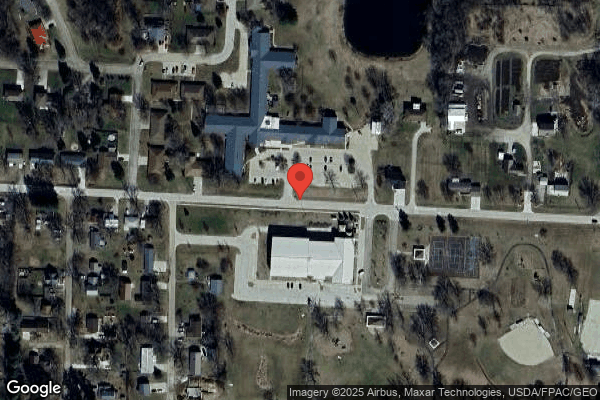
May 2023 5 deficiencies
CONCERN (D)

Potential for Harm - no one hurt, but risky conditions existed

PASARR Coordination (Tag F0644)

Could have caused harm · This affected 1 resident

**NOTE- TERMS IN BRACKETS HAVE BEEN EDITED TO PROTECT CONFIDENTIALITY** Based on record review, interview, and document review the facility failed to ensure a resident was referred for a Level I Pread...

Read full inspector narrative →
**NOTE- TERMS IN BRACKETS HAVE BEEN EDITED TO PROTECT CONFIDENTIALITY** Based on record review, interview, and document review the facility failed to ensure a resident was referred for a Level I Preadmission Screening and Resident Review (PASRR) when the resident experienced a change and had a newly diagnosed mental illnesses for 1 (Resident #25) of 2 residents reviewed for the PASRR assessment. Findings included: A review of a document provided by the facility titled, PASRR [Preadmission Screening and Resident Review] and Level of Care Screening Procedures for Long Term Care Services, revised 08/19/2020, indicated, The purpose of the Level I screen is to identify individuals intended for evaluation through the PASRR Level II process - those individuals with known or suspected MI [Mental Illness] and ID/RC [Intellectual Disability/Related Condition]. The document further indicated the Level I screen must be submitted For residents of Medicaid certified NFs [Nursing Facilities] experiencing changes in status that suggests the need for a first-time or updated PASRR Level II evaluation. A review of Resident #25's admission Record indicated the facility admitted the resident on 02/25/2021 with diagnoses that included major depressive disorder. The admission record further indicated Resident #25 was diagnosed on [DATE] with schizoaffective disorder. A review of Resident #25's Notice of PASRR Level I Screen Outcome, dated 02/24/2021, revealed no mental health diagnosis was known or suspected, no Level II was required, and the Level I screen indicated that a PASRR disability was not present because there was no evidence of a PASRR condition of an intellectual/developmental disability or a serious behavioral health condition. The document also indicated If changes occur or new information refutes these findings, a new screen must be submitted. A review of Resident #25's record revealed no evidence that another PASRR screen was completed after Resident #25 was diagnosed with schizoaffective disorder on 05/11/2022. During an interview with the Social Service Director (SSD) on 05/11/2023 at 8:57 AM, she said that she had been responsible for the Level I PASRRs for approximately one year. After review of Resident #25's Level I PASRR dated 02/24/2021, the SSD said that a new level I PASSR determination should have been submitted due to significant changes in the resident's mental health diagnoses. During an interview on 05/11/2023 at 9:08 AM, the Director of Nursing (DON) said her knowledge of PASRRs was limited, but she knew residents had to have one done before they were admitted to the facility. The DON reported that she thought they had to resubmit a Level I PASRR if a resident developed a new mental health diagnosis after they were admitted . The DON stated her expectation was that if a resident developed a new mental health diagnosis, a new Level I PASRR screen would be done so the facility could ensure that the resident received all the necessary care and services for their mental illnesses. During an interview on 05/11/2023 at 9:37 AM, the Administrator said that her expectation was if a resident developed a new mental health diagnosis after they were admitted , a new Level I PASRR should be completed.
CONCERN (D)

Potential for Harm - no one hurt, but risky conditions existed

Deficiency F0761 (Tag F0761)

Could have caused harm · This affected 1 resident

Based on observations, interviews, record reviews, and facility policy review, it was determined that the facility failed to ensure medications were properly labeled for 1 (Resident #32) of 3 resident...

Read full inspector narrative →
Based on observations, interviews, record reviews, and facility policy review, it was determined that the facility failed to ensure medications were properly labeled for 1 (Resident #32) of 3 resident medications observed on the South Hall medication cart. Findings included: Review of a facility policy titled, Storage of Medications, dated June 2015, revealed, All medications dispensed by the pharmacy are stored in the container with the pharmacy label. The policy further indicated, When the original seal of a manufacturer's container or vial is initially broken, the container or vial will be dated. 1) The nurse shall place a date opened sticker on the medication and enter the date opened and the new date of expiration (NOTE: the best stickers to affix contain both a date opened and expiration notation line). A review of an admission Record indicated the facility admitted Resident #32 on 11/04/2022 with diagnoses that included chronic obstructive pulmonary disease. A review of Resident #32's Order Summary Report, revealed an order, dated 05/09/2023, for albuterol sulfate inhaler, inhale two puffs every six hours as needed. During an observation of the South Hall medication cart on 05/10/2023 at 11:11 AM with the Director of Nursing (DON) and Certified Medication Aide (CMA) #3, revealed Resident #32's albuterol sulfate inhaler only contained the resident's first name written on the plastic case. The DON indicated the inhaler was not appropriately labeled. During an interview on 05/11/2023 at 6:29 PM, the Administrator indicated she expected for proper labeling of medications to be done at all times.
CONCERN (D)

Potential for Harm - no one hurt, but risky conditions existed

Deficiency F0836 (Tag F0836)

Could have caused harm · This affected 1 resident

THE FOLLOWING DEFICIENCIES RELATE TO THE IOWA ADMINISTRATIVE CODE (IAC) CHAPTER 58. 58.12(135C) Admission, transfer, and discharge. 58.12(1) General admission policies. l. For all residents residin...

Read full inspector narrative →
THE FOLLOWING DEFICIENCIES RELATE TO THE IOWA ADMINISTRATIVE CODE (IAC) CHAPTER 58. 58.12(135C) Admission, transfer, and discharge. 58.12(1) General admission policies. l. For all residents residing in a health care facility receiving reimbursement through the medical assistance program under Iowa Code chapter 249A on July 1, 2003, and all others subsequently admitted , the facility shall collect and report information regarding the resident's eligibility or potential eligibility for benefits through the Federal Department of Veterans Affairs as requested by the Iowa commission on Veterans Affairs. The facility shall collect and report the information on forms and by the procedures prescribed by the Iowa commissions on veteran's affairs. Where appropriate, the facility may also report such information to the Iowa department of human services. In the event that a resident is unable to assist the facility in obtaining the information, the facility shall seek the requested information from the resident's family members or responsible party. For all new admissions, the facility shall collect and report the required information regarding the resident's eligibility or potential eligibility to the Iowa commission on veterans' affairs within 30 days of the resident's admission. For residents residing in the facility as of July 1, 2003, and prior to May 5, 2004, the facility shall collect and report the required information regarding the resident's eligibility or potential eligibility to the Iowa commission on veterans' affairs within 90 days after May 5, 2004. If a resident is eligible for benefits through the federal Department of Affairs or other third-party payor, the facility shall seek reimbursement from such benefits to the maximum extent available before seeking reimbursement from the medical assistance program established under Iowa Code chapter 249A. The provisions of this paragraph shall not apply to the admission of an individual as a resident to a state mental health institute for acute psychiatric care or to the admission of an individual to the Iowa Veterans Home. (II, III) Based on record review and staff interview, the facility failed to check for veteran status within 30 days of admission in order to report potential veterans to the Iowa Department of Veterans Affairs for 5 of 5 new admissions screened (Residents #51, #43, #32, #46 and #40). The facility reported a census of 47 residents. Findings included: 1. The facility's Admissions/Discharges to/from Report, for the period of 03/11/2022 - 05/10/2023 included the following new residents and admission dates: a. Resident #51 on 02/08/2023. b. Resident #43 on 10/19/2022. c. Resident #32 on 11/04/2022. d. Resident #46 on 12/07/2022. e. Resident #40 on 08/10/2022. The facility lacked documentation of veteran status checks completed within 30 days of the dates of admission. An interview on 05/11/2023 at 8:58 AM, with the Social Services Director (SSD) #5 revealed she never had a role with checking new admission veterans' eligibility. She indicated she had just become aware this week that she was responsible, but confirmed she was not doing this prior to now. An interview on 05/11/2023 at 9:13 AM, with the Business Office Manager (BOM) #10 revealed she was not aware there was a requirement to screen new admissions for veterans' eligibility. BOM #10 stated she had never received training on how to complete this or how to submit any information into a state database. BOM #10 stated she had just become aware this week that it was her responsibility. An interview on 05/11/2023 at 2:38 PM, with the Director of Nursing (DON) revealed she was not sure of the facility's process related to screening new admissions for veteran status and was not involved with that. However, the DON stated she would expect staff to screen all new admissions for veterans' eligibility within 30 days of their admission. The DON stated she was unsure if the facility had a policy related to this, but she would check. An interview on 05/11/2023 at 4:15 PM with the Administrator revealed the facility did not have a policy for veteran eligibility checks. An interview on 05/11/2023 at 4:46 PM with the Administrator revealed that she started in her position in March of 2022 and the facility had lost a lot of their administrative staff during that time. The Administrator stated she believed BOM #10, along with SSD #5, completed new admission checks for veteran status, but she never checked or audited the process to ensure it was being completed. The Administrator stated she just became aware during the survey process that staff were not checking new admissions for veterans' eligibility status.
CONCERN (D)

Potential for Harm - no one hurt, but risky conditions existed

Medical Records (Tag F0842)

Could have caused harm · This affected 1 resident

**NOTE- TERMS IN BRACKETS HAVE BEEN EDITED TO PROTECT CONFIDENTIALITY** Based on interviews and record review, it was determined that the facility failed to document the record of death for 1 (Residen...

Read full inspector narrative →
**NOTE- TERMS IN BRACKETS HAVE BEEN EDITED TO PROTECT CONFIDENTIALITY** Based on interviews and record review, it was determined that the facility failed to document the record of death for 1 (Resident #45) of 2 sampled residents that expired in the facility. The facility further failed to properly transcribe orders for 1 (Resident #6) of 3 residents observed for medication administration. Specifically, the facility failed to transcribe an order to discontinue Resident #6's Lotensin (a medication used to treat high blood pressure) when a new order was received on [DATE]. Findings included: 1. Review of Resident #45's admission Record, revealed the facility admitted the resident on [DATE] with diagnoses that included hypertension and nonrheumatic aortic (valve) stenosis. The admission Record also indicated Resident #45 was discharged to a funeral home on [DATE]. The Quarterly Minimum Data Set (MDS), with an Assessment Reference Date (ARD) of [DATE], revealed Resident #45 had a Brief Interview for Mental Status (BIMS) score of 14, which indicated the resident was cognitively intact. Per the MDS, the resident received hospice care. Review of Resident #45's care plan initiated [DATE], revealed the resident had a terminal prognosis related to aortic valve stenosis. Interventions included the facility would work with the hospice team and nursing staff to provide maximum comfort. A review of Resident #45's medical record revealed there were no details or documentation of the resident's death on [DATE]. The last progress note contained in Resident #45's medical record was dated [DATE] and indicated the resident had experienced a decline in their overall condition. During an interview on [DATE] at 5:12 PM, the Director of Nursing (DON) indicated there was no documentation of the resident's death. The DON indicated an agency nurse had worked that day and did not document the resident's death. The DON stated the death should have been documented. In a follow-up interview on [DATE] at 5:58 PM, the DON indicated there was a concern with the lack of documentation. During an interview on [DATE] at 6:29 PM, the Administrator indicated she expected for documentation to be done at least once a day or based on the need of the resident. The Administrator indicated the facility needed to be more proactive and remind the staff to document. 2. A review of an admission Record indicated the facility admitted Resident #6 on [DATE] with diagnoses that included hypertension. A review of Resident #6's Order Summary Report, revealed an order dated [DATE], that directed staff to administer a half tablet of Lotensin (a medication used to treat high blood pressure) 10 milligram daily for hypertension. There was also another order dated [DATE], that directed the staff to administer 10 mg of Lotensin one time a day for a diagnosis of essential hypertension. Both orders, dated [DATE] and [DATE], were listed as active orders. During an interview on [DATE] at 10:37 AM, the Director of Nursing indicated Resident #6's physician's order for the half tablet of Lotensin 10 mg should have been discontinued.
CONCERN (E)

Potential for Harm - no one hurt, but risky conditions existed

Deficiency F0883 (Tag F0883)

Could have caused harm · This affected multiple residents

Based on record reviews, interviews, and facility policy review, it was determined that the facility failed to ensure pneumococcal vaccine education was provided and the vaccine was offered to 4 (Resi...

Read full inspector narrative →
Based on record reviews, interviews, and facility policy review, it was determined that the facility failed to ensure pneumococcal vaccine education was provided and the vaccine was offered to 4 (Residents #24, #40, #41, and #43) of 5 residents reviewed for immunizations. Findings included: A review of a facility policy titled, Pneumococcal Vaccine Policy, dated March 2017, revealed, 1. Prior to or upon admission, residents will be assessed for eligibility to receive the pneumococcal vaccine series, and when indicated, will be offered the vaccine series within thirty-five (35) days of admission to the facility unless medically contraindicated or the resident has already been vaccinated. 2. Assessments of pneumococcal vaccination status will be conducted within fifteen (15) working days of the resident's admission if not conducted prior to admission. 3. Before receiving a pneumococcal vaccine, the resident or legal representative shall receive information and education regarding the benefits and potential side effects of the pneumococcal vaccine. A review of an admission Record indicated the facility admitted Resident #40 on 08/10/2022 with diagnoses that included morbid obesity and hypertension. A review of an admission Record indicated the facility admitted Resident #41 on 10/13/2022 with diagnoses that included quadriplegia and type 2 diabetes mellitus. A review of an admission Record indicated the facility admitted Resident #43 on 10/19/2022 with diagnoses that included cerebral infarction and chronic obstructive pulmonary disease. A review of an admission Record indicated the facility admitted Resident #24 on 01/06/2023 with diagnoses that included Alzheimer's disease and type 2 diabetes mellitus. During an interview on 05/10/2023 at 4:29 PM, the Administrator indicated the pneumococcal vaccine had not been offered since she started at the facility in March 2022. During an interview on 05/10/2023 at 4:30 PM, the Director of Nursing (DON) stated the pneumococcal vaccine had not been offered since she had started at the facility in August 2022. During a telephone interview on 05/11/2023 at 8:40 AM, the Medical Director (MD) indicated he was not aware the pneumococcal vaccine had not been offered in the facility since March 2022. The MD indicated the pneumococcal vaccine should be offered, whether the resident refused or not. Per the MD, the pneumococcal vaccine could help prevent pneumonia and death. The MD indicated he expected for the vaccine to be offered.
Feb 2023 5 deficiencies
CONCERN (D) 📢 Someone Reported This

A family member, employee, or ombudsman was alarmed enough to file a formal complaint

Potential for Harm - no one hurt, but risky conditions existed

Pharmacy Services (Tag F0755)

Could have caused harm · This affected 1 resident

**NOTE- TERMS IN BRACKETS HAVE BEEN EDITED TO PROTECT CONFIDENTIALITY** Based on record review and staff interviews, the facility failed to ensure controlled medications are properly acquired, stored ...

Read full inspector narrative →
**NOTE- TERMS IN BRACKETS HAVE BEEN EDITED TO PROTECT CONFIDENTIALITY** Based on record review and staff interviews, the facility failed to ensure controlled medications are properly acquired, stored and recorded in sufficient detail to enable an accurate reconciliation. The facility failed to properly dispose of and record destruction of controlled medications in the presence of a witness and failed to ensure controlled medications are secured in a double locked compartment. (Residents #11) The facility identified a census of 52 residents. Findings include: The Minimum Data Set (MDS) with an assessment reference date of 1/2/23 indicated Resident #11 with a Brief Interview for Mental Status (BIMS) score of 14 indicating an intact cognitive status. Resident #11 required extensive assistance with transfers, mobility, dressing, eating, toilet use and personal hygiene needs. Resident #11's diagnosis included septicemia, coronary artery disease, diabetes mellitus, cerebrovascular accident (stroke), hemiplegia, chronic obstructive pulmonary disease and respiratory failure. December 2022 Medication Administration Record indicated Resident #11 received Tramadol HCL 50 milligrams (controlled medication) four times a day and recorded the last dose given on 12/5/22 at 12:00 p.m. In an interview on 2/2/23 at 11:27 a.m. Staff E, Director of Nursing (DON), stated on the morning of 12/7/22, she and Staff L were in the medication room and noticed four cellophane packages bonded together in a red bin next to the Alixa machine (medication dispensing machine). Each package contained two pills of Tramadol HCL 50 milligrams, in all totaling 8 tablets. The packaging was dated 12/7/22 and belonged to Resident #11. Staff E stated Resident #11 had been hospitalized since 12/5/22 and had not returned, noting there would have been no reason for someone to request medication for him. Staff E stated they looked at Resident #11's Controlled Substance Accountability Sheet (CSAS) in order to record the destruction of the 8 tablets of Tramadol dated 12/7/22, which they had discovered in the red bin. The eight tablets dated 12/7/22 had not been recorded on the CSAS, nor had 8 tablets dated 12/6/22, which would have been requested prior to receiving the 12/7/22 doses. The CSAS indicated that 4 tablets of Tramadol remained in stock and were the unused doses from 12/5/22 when Resident #11 was sent to the hospital. Staff E stated they then searched the medication cart and discovered there were no doses of Tramadol in Resident #11's stock. At this point Staff L began searching for packaging which the doses would have came in and opened the shred box. There she discovered the 12/5/22 evening and bedtime doses packaging and the empty packaging for all of the 12/6/22 doses. Staff E indicated in all there were 12 tablets of Tramadol HCL 50 milligrams belonging to Resident #11 missing. Staff E stated she pulled the Controlled Substance Dispense History from the Alixa machine and found Staff A had requested the 12/6/22 medications at 6:09 a.m. which included Resident #11's 8 tablets of Tramadol and requested the 12/7/22 medications at 4:39 p.m. which included Resident #11's 8 tablets of Tramadol which had been discovered in the red bin. Staff E stated it was the responsibility of the overnight staff to order the next days medications and she was unsure why Staff A would have ordered the 12/7/22 medications on 12/6/22 at 4:39 p.m. Staff E stated the process when requesting controlled medications from the Alixa is to immediately record the doses obtained on the CSAS and then lock the controlled medication in the narcotic box. In an interview on 2/1/23 at 2:15 p.m. Staff L, licensed practical nurse, stated on the morning of 12/7/22 she and Staff E were in the medication room and noticed medication packages with pills in them in a red bin next to the Alixa machine. Staff L stated the pills belonged to Resident #11 and were controlled medications. The pills were Tramadol HCL 50 milligrams and there was two tablets in each package and four packages all dated 12/7/22. Staff L stated she and Staff E went to destroy the medications and noted the 12/7/22 doses had not been recorded on the CSAS. It was also noted that the 12/6/22 doses were not recorded on the CSAS. Staff L stated when they checked in the narcotic box, in the medication cart, there were no doses of Tramadol HCL 50 milligrams for Resident #11. Staff L stated Resident #11 had been sent to the hospital on [DATE] and had not returned. Resident #11 should have had two doses or four tablets of Tramadol HCL 50 milligrams remaining. Staff L stated she then looked in the shredder box, where most cellophane wrappers are disposed of, and found four opened cellophane packages dated 12/6/22 for Resident #11's Tramadol HCL 50 milligrams. Staff L stated she and Staff E destroyed the 8 tablets removed for 12/7/22 and Staff E took over the investigation. According to the Controlled Substance Dispense History, Staff A requested 8 tablets of Tramadol HCL 50 mg for Resident #11 on 12/6/22 at 6:09 a.m. and on 12/6/22 at 4:39 p.m. In an interview on 2/6/23 at 12:45 p.m. the Administrator stated she was not familiar with the entire process involving Resident #11's missing Tramadol and had Staff E gather most of the documentation. The Administrator stated when they spoke to Staff K about the missing Tramadol, he stated he knew nothing about Resident #11's Tramadol and stated he was not involved with destroying any of it with anyone on 12/6/22. The Administrator stated when they spoke with Staff A, she claimed she destroyed four tablets of Tramadol with Staff K, at the end of her shift on 12/6/22. The doses were those left over from 12/5/22 when Resident #11 was hospitalized . The Administrator stated Staff A's account was inconsistent. The Administrator asked Staff A where the missing 8 tablets of Tramadol belonging to Resident #11, that she had requested and acquired on 12/6/22 had gone? Staff A responded I do not know anything about that. In an interview on 2/6/23 at 3:02 p.m. Staff K, licensed practical nurse, stated he arrived at work at around 6:10 a.m. on 12/6/22 and took possession of the North hall medication cart. Resident #11 resides on the North hall, but was in the hospital that day. Staff K stated he knew there was 4 tablets of Tramadol belonging to Resident #11, left over from the day before, but was uncertain whether he destroyed the four tablets that day. Staff K stated if he signed the CSAS on 12/6/22 as destroying the four tablets with Staff A witnessing, then he was sure it was done. Staff K stated he knows nothing related to the 8 tablets of Tramadol allegedly received on 12/6/22 for Resident #11. In an interview on 2/6/23 at 5:15 p.m. Staff A, licensed practical nurse, stated she works 6:00 p.m. to 6:00 a.m. on Monday through Wednesday. She is from Muscatine and when she is working the facility provides her with a condo to stay in. Staff A was asked about 8 missing tablets of Tramadol HCL 50 milligrams belonging to Resident #11 which she had dispensed from the Alixa on 12/6/22 at 6:09 a.m. Staff A stated she printed out the controlled medications that morning and handed them to Staff K, who had the North cart and Staff M, who was assigned the South cart. Staff A stated the controlled medications given to Staff K included the 8 tablets of Tramadol for Resident #11. Staff A stated when the issue of the missing Tramadol came up, Staff K did not admit he was given Resident #11's Tramadol for 12/6/22. Staff A stated she spoke with Staff K afterwards and he stated he signed in all of the other controlled medications, how hard is it to figure out he destroyed them. Staff A then stated Staff K had been known to destroy controlled medications without a witness. In an interview on 2/6/23 at 4:23 p.m. Staff M, certified medication aide, stated she worked 6:00 a.m. to 2:00 p.m. on 12/6/22 and was assigned the South cart. Staff M stated she had no knowledge of any missing medications belonging to Resident #11 and did not see any packages or pills laying around. Staff M stated she was asked by Staff A on the morning of 12/7/22 to witness a destruction of a controlled medication, but noted it was only one pill. Staff M stated Staff A had a handful of medication packages and went to the North cart to sign them in.
CONCERN (E) 📢 Someone Reported This

A family member, employee, or ombudsman was alarmed enough to file a formal complaint

Potential for Harm - no one hurt, but risky conditions existed

Deficiency F0657 (Tag F0657)

Could have caused harm · This affected multiple residents

**NOTE- TERMS IN BRACKETS HAVE BEEN EDITED TO PROTECT CONFIDENTIALITY** Based on observation, record review and staff interview, the facility failed to revise a care plan to address a male resident's ...

Read full inspector narrative →
**NOTE- TERMS IN BRACKETS HAVE BEEN EDITED TO PROTECT CONFIDENTIALITY** Based on observation, record review and staff interview, the facility failed to revise a care plan to address a male resident's inappropriate sexual behavior towards female residents and supervision needed to prevent reoccurrences. (Resident #13). The facility reported census was 52. Findings include: The Minimum Data Set (MDS) with an assessment reference date of 11/18/22 indicated Resident #13 with a Brief Interview for Mental Status (BIMS) score of 7 indicating a severely impaired cognitive status. Resident #13 was independent with transfers, mobility, dressing, eating, toilet use and personal hygiene needs. Resident #13's diagnosis included Non-Ahlzheimer's dementia, coronary artery disease, aphasia and traumatic brain injury. The Minimum Data Set (MDS) with an assessment reference date of 1/20/23 indicated Resident #14 with long term memory deficits and severely impaired cognitive ability's for daily decision making. Resident #14 required supervision with transfers, mobility, limited assistance with dressing, eating and toilet use and extensive assistance with personal hygiene needs. Resident #14's diagnosis included Non-Ahlzheimer's, malnutrition and repeated falls. The Minimum Data Set (MDS) with an assessment reference date of 1/10/23 indicated Resident #17 with a Brief Interview for Mental Status (BIMS) score of 13 indicating an intact cognitive status. Resident #17 was independent with transfers, mobility, dressing, eating, toilet use and personal hygiene needs. Resident #17's diagnosis included Non-Ahlzheimer's dementia. According to progress notes dated 1/16/23 at 10:50 a.m. Resident #13 was observed touching another female (Resident #17) inappropriately. Residents were separated and the Administrator and family representatives were notified. In an interview on 2/7/23 at 1:35 p.m. Staff J, social worker, stated she first had become aware of Resident #14 and #17 having interest in each other was on 1/16/23 when Resident #14 was in Resident #17's room and Resident #17 stated she wanted to show him her girls. Staff J stated she contacted the resident's family representatives and both gave approval for the relationship as long as it was consensual. Staff J stated she was going to add this to the care plans and then thought the nurses were going to take care of it. According to a progress note dated 1/17/23 at 6:50 p.m. Staff A, LPN was alerted by Staff H, CNA to come to Resident #13's room. Immediately, upon entering room, Resident #13 and a female resident #17 were both naked in resident's bed and appeared to be having intercourse. Resident's were separated and female resident who's room was 4 doors down the same hall, was then moved to a different room on another hall further away, in order to better monitor. Resident's both cooperated. Administrator and DON notified and will investigate. Staff H was bringing resident's roommate in to this room [ROOM NUMBER], when she discovered this behavior. According to a progress note dated 1/17/23 at 8:45 a.m. and identified as a Late Entry, the Administrator stated Staff H. CNA alerted me that Resident #13 and a female resident #17 were in the females' room on her bed. I walked to the females' room and spoke with Resident #13 and #17. The Resident #17 shared with me she was trying to show Resident #13 her girls (Indicating her breast) and could not get her sweatshirt zipper down. I redirected both residents out of the room and discussed that interaction between them needed to remain in staff presence and with clothing on. According to a progress note dated 1/18/23 at 9:30 p.m. Staff A was walking to TV common area to check on another resident, as she approached the area she witnessed Resident #13 with his hand up female Resident #14's gown in her private area and his other had on her breast. Resident #14's brief was on the floor. Residents were separated immediately, DON and Administrator notified and DON instructed this nurse to call police to make a police report. In an interview on 2/6/23 at 5:15 p.m. Staff A, licensed practical nurse, stated on the evening of 1/18/23, sometime after supper, she discovered Resident #13 in the common area with his hands under the gown of female Resident #14, touching her inappropriately. Staff A stated she immediately separated the two and placed Resident #13 on 15 minute checks. Staff A stated at the time of the incident the residents were sitting on the other side of a wall and not visible from the nurse's station. Staff A stated Resident #13 had a female friend Resident #17 and family was okay with them holding hands and such, but about three weeks ago (1/17/23) they were caught in bed without their clothes on. Staff A stated last week Resident #13 was observed rubbing the back and leg of another female resident. Review of Resident #13's care plan found no focus areas addressing his relationship with Resident #17 and no focus areas addressing Resident #13's inappropriate sexual contact with other impaired female residents.
CONCERN (E) 📢 Someone Reported This

A family member, employee, or ombudsman was alarmed enough to file a formal complaint

Potential for Harm - no one hurt, but risky conditions existed

Quality of Care (Tag F0684)

Could have caused harm · This affected multiple residents

Based on record review and staff interview, the facility failed to ensure residents receive treatments and care in accordance with physician orders and professional standards of practice for 7 of 7 re...

Read full inspector narrative →
Based on record review and staff interview, the facility failed to ensure residents receive treatments and care in accordance with physician orders and professional standards of practice for 7 of 7 residents reviewed. (Residents #4, #5, #7, #9, #10, #18 and #19) The facility reported census was 52 residents. Findings include: 1. The Minimum Data Set (MDS) with an assessment reference date of 9/16/22 indicated Resident #4 with a Brief Interview for Mental Status (BIMS) score of 15 indicating an intact cognitive status. Resident #4 required extensive assistance with transfers, mobility, dressing, toilet use and personal hygiene needs. Resident #4's diagnosis included post traumatic stress disorder, chronic obstructive pulmonary disease, debility and hemiplegia. Review of Resident #4's September 2022 medication administration record (MAR) Resident #4 was receiving Clonazepam 1 milligram twice daily for PTSD. On 9/8/22 a physician order changed the dose to 1 milligram in the morning and 1.5 milligrams at bedtime for one month. According to the September MAR, facility staff continued to administer 1 milligram twice daily throughout the remainder of the month. Review of Resident #4's October 2022 MAR found the doses had been changed to reflect the increase to 1.5 milligrams at bedtime, however staff continued to administer several doses beyond the 30 day timeline. Review of Resident #4's October 2022 medication administration record (MAR) found medications not completed as ordered. Resident #4 had Neuromed 7 cream 4% to be given topically to left shoulder for pain four times daily. According to the MAR, the medication was not administered 19 times in the morning, 22 times at noon, 24 times in the evening and 15 times at bedtime. Resident #4 was ordered nicotene patches 24 hours, apply 14 milligrams transdermally daily. According to the MAR, the nicotene patches were recorded as not available from 10/4/22 through 10/27/22 at which time Resident #4 was discharged from the facility. In an interview on 2/14/23 at 3:14 p.m. Staff E, Director of Nursing, stated Resident #4 was getting nicotene patches everyday until sometime in mid September the corporate person said we should not be paying for the patches. They contacted the family who stated the facility had a VA (Veterans Administration) contract and they were not responsible. Staff E stated the social worker contacted the VA nurse who stated the facility would be reimbursed through the VA if a request would be made. 2. The Minimum Data Set (MDS) with an assessment reference date of 9/23/22 indicated Resident #5 with a Brief Interview for Mental Status (BIMS) score of 13 indicating an intact cognitive status. Resident #5 was independent with transfers and mobility and needed limited assistance with dressing, toilet use and personal hygiene needs. Resident #5's diagnosis included congestive heart failure, renal insufficiency, diabetes mellitus and chronic obstructive pulmonary disease. Review of Resident #5's October 2022 treatment administration records (TAR) found assessments, treatments and accu-checks were not completed as ordered. Accu-checks scheduled for twice daily, were not completed four times on morning shift and ten times on evening shift during the month reviewed. Pain assessments scheduled for twice daily, were not completed eleven times on morning shift and eleven times on evening shift during the month reviewed. Skin treatments scheduled for twice daily were not completed seven times on morning shift and eleven times on evening shift during the month reviewed. Review of Resident #5's September bowel records found multiple consecutive days in which a bowel movement was not recorded. On 9/1/22 through 9/6/22 (6 days) noted without action taken by the facility and on 9/19/22 through 9/30/22 (12 days) there were no recorded bowel movements or actions taken by the facility to resolve the issue. In an interview on 2/20/23 at 2:20 p.m. Staff E, Director of Nursing, stated the aides are to record bowel movements each shift. The overnight nurse was responsible for reviewing the documentation and taking action, by administering milk of magnesia (MOM) following two consecutive days without a bowel movement and administering a suppository should there be no bowel movement for three consecutive days. Staff E stated she was uncertain whether there were standing orders for this protocol. 3. The Minimum Data Set (MDS) with an assessment reference date of 9/2/22 indicated Resident #7 with short and long term memory deficits and a severely impaired cognitive status for daily decision making. Resident #7 required limited assistance with transfers and mobility and extensive assistance with dressing,toilet use and personal hygiene needs. Resident #7's diagnosis included Alzheimer's disease, Non-Alzheimer's dementia and post traumatic stress disorder. Review of Resident #7's September 2022 medication and treatment administration record (MAR/TAR) found medications and treatments not being administered or completed as ordered. Resident #7 was to be administered Seroquel 12.5 milligrams twice daily. According to the MAR, morning doses were not administered eight days and evening doses were not administered nine days during the month reviewed. On 9/18/22, Resident #7 was ordered a skin tear treatment to left hand to cleanse, apply triple antibiotic and a gauze dressing daily. According to the TAR, the treatment was not completed on 9/19, 9/21, 9/24 and 9/25. On 9/18/22, Resident #7 was ordered a skin tear treatment to left elbow to cleanse, apply triple antibiotic and a gauze dressing every other day. According to the TAR, the treatment was not completed on 9/24. 4. The Minimum Data Set (MDS) with an assessment reference date of 9/16/22 indicated Resident #9 with a Brief Interview for Mental Status (BIMS) score of 15 indicating an intact cognitive status. Resident #9 was independent with transfers, mobility and dressing and needed extensive assistance with toilet use and personal hygiene needs. Resident #9's diagnosis included coronary artery disease, congestive heart failure, renal insufficiency, diabetes mellitus, cerebrovascular accident (stroke), seizure disorder, respiratory failure and post traumatic stress disorder. Review of Resident #9's October 2022 treatment administration records (TAR) found assessments and treatments not completed as ordered. Weekly weights ordered were not completed. Assessments to monitor for anticoagulant side effects every 12 hours were not completed nineteen times during the month reviewed. Assessments to monitor for antipsychotic medication side effects every 12 hours were not completed twenty four times during the month reviewed. Assessments to monitor for behaviors every 12 hours were not completed twenty one times during the month reviewed. Assessments to monitor for pain every 12 hours were not completed twenty four times during the month reviewed. A treatment for Resident #9's right buttock pressure sore to be done daily, was not completed nineteen times in October. Weekly skin assessments of his pressure sore was only completed once in October. In an interview on 2/14/23 at 3:14 p.m. Staff E, Director of Nursing, stated the facility has used a lot of agency nurses. Staff E stated she feels the insulin's and treatments were done, but not recorded. Staff E stated the insulin's, treatment and assessment sheets are in a separate binder (rather than the medication administration binder). Staff E asked how staff would know insulin doses, treatments and assessment needs if they were not looking at the documents to record the task. Staff E stated I do not know. 5. The Minimum Data Set (MDS) with an assessment reference date of 11/25/22 indicated Resident #10 with a Brief Interview for Mental Status (BIMS) score of 14 indicating an intact cognitive status. Resident #10 required extensive assistance with transfers, mobility, dressing, toilet use and personal hygiene needs. Resident #10's diagnosis included congestive heart disease, urinary tract infection, diabetes mellitus, aphasia and respiratory failure. According to the Centers for Disease Control (CDC) 2011 Checklist for Prevention of Central Line Associated Blood Stream Infections; *Perform routine dressing changes using aseptic technique with clean or sterile gloves. *Change gauze dressings at least every two days or semipermeable dressings at least every seven days. Review of Resident #10's plan of care noted a focus area on risk for complications related to IV antibiotics with interventions which include: a. Monitor for IV infiltrations. b. Observe dressing site every shift and as needed, change dressing and record observations of site left arm per physician orders. c. Monitor, document and report as needed signs and symptoms of infection. Drainage, inflammation, swelling, redness, warmth. d. Monitor, document and report as needed signs and symptoms of leaking at the site, edema at the insertion site, taut, shiny or stretched skin, whitening , blanching or coolness of the skin, slowing or stopping of the infusion, leaking of the IV fluid out of the insertion site. The care plan does not include a dressing change frequency. According to the hospital's Nurse Assisted Procedure Note, Resident #10 had a Peripheral Inserted Central Catheter (PICC line) inserted on 11/10/22. Discharge instructions included to check the PICC line daily for leakage, redness, swelling or pain, but did not provided aftercare instructions for dressing changes. According to the facilities PICC line dressing change policy, the policy provided detailed dressing change procedure, but did not provide guidance on frequency of dressing changes. According to Resident #10's treatment administration records (TAR) for November 2022 through December 2022, there were no entries addressing dressing changes. In an interview on 2/13/23 Staff E, Director of Nursing, was questioned regarding Resident #10's PICC line care, treatment and administration of an antibiotic. Staff E stated Resident #10 was the first resident in the facility that had ever had a PICC since her becoming the DON in August 2022. Staff E stated she was the primary nurse to administer the IV medication. Staff E asked what her expectation she had regarding dressing changes and whether she was aware of any order. Staff E stated she would expect PICC dressings to be changed weekly and stated yes, there should have been an order. Staff E informed the documentation received thus far, including the medication administration record (MAR) and treatment administration record (TAR), for both November 2022 and December 2022, does not include any documentation of the antibiotic ordered on 11/7/22 being administered or any documentation of dressing changes or orders for dressing changes. Staff E asked if she could provide this documentation. Staff E stated she would search for it. In an email dated 2/13/23 at 2:04 p.m., Staff E stated she was unable to locate a MAR or TAR with administration documentation for the IV antibiotic and was unable to find documentation for PICC dressing changes. Review of progress notes found entries which addressed the PICC site for redness, swelling and pain. Progress note dated 12/6/22 at 7:05 a.m. indicated this nurse (Staff A) notified by staff that Resident #10 was having difficulty breathing and could not be woken. Upon assessment Resident #10 found to be vomiting brown foamy liquid, having difficulty breathing, using abdominal muscles to breathe and had a distended abdomen. Resident #10 was making loud gurgling sounds on expirations. Resident #10 could not be aroused with a sternal rub. Orders obtained to have Resident #10 transferred to an emergency department for evaluation and treatment. According to hospital discharge summary, Resident #10 diagnosis included recurrent aspiration pneomonitis secondary to emesis resulting in recurrent respiratory failure. Resident #10's condition was unrelated to her PICC line care. 6. The Minimum Data Set (MDS) with an assessment reference date of 1/27/23 indicated Resident #18 with short and long term memory deficits and a severely impaired cognitive status for daily decision making. Resident #18 required total dependence on others transfers, mobility, dressing, eating, toilet use and personal hygiene needs. Resident #18's diagnosis included cerebral palsy aphasia and seizure disorder. Review of progress notes found on 1/4/23 the dietitian noted Resident #18 with a 5 pound loss in the last 30 days and a 24 pound loss in the last 6 months, indicating a significant weight loss. The dietitian recommended to increase the bedtime feeding to 360 cc and to monitor weights three times weekly. The recommendation went unresponded to until 1/11/23 at which time the nurse practitioner ordered the feedings to be increased to 360 cc three times per day. That order went unanswered until 1/23/23, when the nurse practitioner ordered the bedtime feeding increased to 360 cc. The next morning, nursing staff made a note to increase the feeding at bedtime to 360 cc. The order was never transcribed onto the TAR and remained unchanged until the new February TAR went into effect. On 1/31/23 a note indicated Resident #18 was now down to 120.6 pounds, 7.4 pounds since 1/11/23. On 2/6/23 the nurse practitioner note indicated Resident #18 continued to loose weight and to change his feeding to continuous every 12 hours to run at 80 cc per hour. The new orders were promptly transcribed onto the February 2023 TAR and administered as ordered. Review of Resident #18's January 2023 treatment administration record (TAR) found Resident #18 was to be administered tube feedings via bolus three times per day. According to the TAR, staff failed to administer feedings on the morning of 1/14, on the evenings of 1/10, 1/14, 1/18, 1/26, 1/31 and at bedtime on 1/18 and 1/26. Staff also failed to flush the tubing with 200 cc of water following each feeding on the morning of 1/14, on the evening of 1/10, 1/14, 1/20/ 1/26 and at bedtime on 1/18, 1/26 and 1/30. 7. The Minimum Data Set (MDS) with an assessment reference date of 12/14/22 indicated Resident #19 with a Brief Interview for Mental Status (BIMS) score of 14 indicating an intact cognitive status. Resident #19 was independent with transfers, mobility, dressing, toilet use and personal hygiene needs. Resident #19's diagnosis included schizophrenia. Review of Resident #19's December 2022 medication administration record (MAR) noted on 12/26/22 Resident #19 was ordered an antipsychotic medication to be given intramuscular every 21 days to control agitation. The initial dose was administered on 12/28/22. According to the January 2023 MAR the next dose was administered timely on 1/19/23. According to the February 2023 MAR the medication was scheduled to be administered on 2/9/23, but was not administered as ordered until 2/14/23.
CONCERN (E) 📢 Someone Reported This

A family member, employee, or ombudsman was alarmed enough to file a formal complaint

Potential for Harm - no one hurt, but risky conditions existed

Deficiency F0760 (Tag F0760)

Could have caused harm · This affected multiple residents

**NOTE- TERMS IN BRACKETS HAVE BEEN EDITED TO PROTECT CONFIDENTIALITY** . Based on record review and staff interview, the facility failed to ensure residents are free of any significant medication err...

Read full inspector narrative →
**NOTE- TERMS IN BRACKETS HAVE BEEN EDITED TO PROTECT CONFIDENTIALITY** . Based on record review and staff interview, the facility failed to ensure residents are free of any significant medication errors, for three of three residents reviewed.(Resident #5, #9, #16) The facility reported census was 52. Findings include: 1. The Minimum Data Set (MDS) with an assessment reference date of 9/23/22 indicated Resident #5 with a Brief Interview for Mental Status (BIMS) score of 13 indicating an intact cognitive status. Resident #5 was independent with transfers and mobility and needed limited assistance with dressing, toilet use and personal hygiene needs. Resident #5's diagnosis included congestive heart failure, renal insufficiency, diabetes mellitus and chronic obstructive pulmonary disease. Review of Resident #5's October 2022 medication administration records found multiple omissions of Resident #5's insulin. On 10/1/22 Resident #5 was to be administered Lantus 20 units subcutaneous twice daily. One dose was given on the morning of 10/1 before a physician order changed the insulin to Glargine 10 units subcutaneous twice daily. No insulin was given for three days, from the 10/1 evening dose through the 10/4 morning dose. The new order for Glargine was started on the evening dose on 10/4 and was not given the morning doses on 10/13 and 10/18 and the evening doses on 10/7, 10/10, 10/11, 10/13, 10/14, 10/18, 10/19 and 10/23. On 10/25/22 the Glargine was increased to 15 units subcutaneous twice daily and given as ordered through his discharge on [DATE]. 2. The Minimum Data Set (MDS) with an assessment reference date of 9/16/22 indicated Resident #9 with a Brief Interview for Mental Status (BIMS) score of 15 indicating an intact cognitive status. Resident #9 was independent with transfers, mobility and dressing and needed extensive assistance with toilet use and personal hygiene needs. Resident #9's diagnosis included coronary artery disease, congestive heart failure, renal insufficiency, diabetes mellitus, cerebrovascular accident (stroke), seizure disorder, respiratory failure and post traumatic stress disorder. Review of Resident #9's October 2022 medication administration records found multiple omissions of Resident #9's insulin. On 10/1/22, Resident #9 was to be administered Aspart solution 18 units subcutaneous daily. During the month of October, Resident #9 did not receive doses on 10/3, 10/6, 10/7, 10/13 and 10/18. Resident #9 was also to be administered Glargine 26 units subcutaneous twice daily. During the month of October, the Glargine was not given the morning doses on 10/14, 10/18, 10/21 and 10/23 and the evening doses on 10/6, 10/7, 10/9, 10/11, 10/12, 10/13, 10/15, 10/18, 10/19, 10/22, 10/24 and 10/25. In an interview on 2/14/23 at 3:14 p.m. Staff E, Director of Nursing, stated the facility has used a lot of agency nurses. Staff E stated she feels the insulin's and treatments were done, but not recorded. Staff E stated the insulin's, treatment and assessment sheets are in a separate binder (rather than the medication administration binder). Staff E asked how staff would know insulin doses, treatments and assessment needs if they were not looking at the documents to record the task. Staff E stated I do not know. 3. The Minimum Data Set (MDS) with an assessment reference date of 12/23/22 indicated Resident #16 with a Brief Interview for Mental Status (BIMS) score of 12 indicating a moderately impaired cognitive status. Resident #16 was independent with transfers, mobility, dressing, toilet use and personal hygiene needs. Resident #16's diagnosis included Parkinson's Disease, Non-Alzheimer's dementia, diabetes mellitus and seizure disorder. According to hospice orders dated 1/30/23 at 10:51 a.m. Resident #16 medication orders included: a. Lorazepam 0.5 milligrams (0.25 milliliters) every 2 hours as needed for restlessness/agitation. b. Morphine concentrate 5 milligrams (0.25 milliliters) every 2 hours as needed for pain. According to hospice orders dated 1/31/23 at 8:34 a.m. Resident #16 medication orders: a. Added Haloperidol lactate 0.5 milligrams (0.25 milliliters) every 6 hours as needed for restlessness. According to hospice orders dated 1/31/23 at 7:32 p.m. Resident #16 medication orders: a. Discontinued Haloperidol lactate 0.5 milligrams (0.25 milliliters) every 6 hours as needed for restlessness. b. Added Haloperidol lactate 1 milligram (0.5 milliliters) every 6 hours routinely. c. Added Haloperidol lactate 5 milligrams (1 milliliters) injection, one time dose. According to hospice orders dated 2/1/23 at 2:43 a.m. Resident #16 medication orders: a. Discontinued Haloperidol lactate 1 milligram (0.5 milliliters) every 6 hours routinely. b. Added Haloperidol lactate 2 milligram (1 milliliter) every 4 hours routinely. c. Added Haloperidol lactate 1 milligram (0.5 milliliters) every 2 hours as needed for breakthrough restlessness. d. Added Morphine concentrate 10 milligrams (0.5 milliliters) every 1 hours as needed for pain. According to hospice orders dated 2/1/23 at 3:11 p.m. Resident #16 medication orders: a. Discontinued Haloperidol lactate 2 milligrams (1 milliliter) every 4 hours routinely. b. Added Haloperidol lactate 4 milligrams (2 milliliters) every 4 hours routinely. c. Continue Morphine concentrate 10 milligrams (0.5 milliliters) every 1 hours as needed for pain. According to Resident #16's medication administration record beginning 2/1/23 at 2:50 p.m., Resident #16 was administered Morphine 0.5 milliliters (10 milligrams) every hour as needed for pain in accordance to physician orders. At 5:50 p.m., Resident #16 was administered his first dose of what should have been Haloperidol 2 milliliters (4 milligrams) every 4 hours. Staff failed to administer doses at 9:50 p.m., 1:50 a.m. and 5:50 a.m. At 6:50 a.m. Staff P, certified medication aide, administered only 1 milliliter (2 milligrams) of Haloperidol followed by a 1 milliliter (2 milligram) dose at 7:50 a.m., 2 milliliter (4 milligram) doses at 8:50 a.m., 10:00 a.m. and 11:00 a.m. According to the facilities incident report dated 2/2/23 at 3:37 p.m. Staff P came to Director of Nursing, Staff E and stated the bottle of Haloperidol was empty. Staff E was concerned that the bottle of Haloperidol was gone so quickly as it had just been ordered. Staff E reviewed the medication records and discovered the Haloperidol had been given incorrectly by Staff P. Staff P notified the nurse practitioner and received orders to hold the routine Haloperidol and any other as needed medication were only to be administered following a nurse assessment. According to a progress not dated 2/3/2023 at 1:20 p.m., Facility staff called this nurse to resident room, concerned that resident may have passed. This nurse entered room and noted resident still having respirations, family summoned to resident room. This nurse pronounced death at 1320. Hospice RN was notified by hospice aid. Hospice RN notified funeral home.
CONCERN (E) 📢 Someone Reported This

A family member, employee, or ombudsman was alarmed enough to file a formal complaint

Potential for Harm - no one hurt, but risky conditions existed

Deficiency F0802 (Tag F0802)

Could have caused harm · This affected multiple residents

Based on observation and staff interview, the facility failed to provide sufficient dietary support personnel to carry out the functions of the food and nutrition services. The facility reported censu...

Read full inspector narrative →
Based on observation and staff interview, the facility failed to provide sufficient dietary support personnel to carry out the functions of the food and nutrition services. The facility reported census was 52. Findings include: During an observation of the meal service on 2/20/23 at 5:20 p.m., it was noted the evening meal was being served on paper plates. There were sufficient staff serving the meals. In an interview on 2/20/23 at 5:25 p.m. Staff R, dietary supervisor, was asked why the facility was using paper plates. Staff R stated they were very short of staff, only having 3 full time dietary employees, which included himself and a cook. Staff E stated by using the paper plates he could avoid having to wash plates, saving time and getting his high school staff out before 7:30 p.m.
Understanding Severity Codes (click to expand)
Life-Threatening (Immediate Jeopardy)
J - Isolated K - Pattern L - Widespread
Actual Harm
G - Isolated H - Pattern I - Widespread
Potential for Harm
D - Isolated E - Pattern F - Widespread
No Harm (Minor)
A - Isolated B - Pattern C - Widespread

Questions to Ask on Your Visit

  • "What changes have you made since the serious inspection findings?"
  • "Why is there high staff turnover? How do you retain staff?"
  • "Can I speak with families of current residents?"
  • "What's your RN coverage like on weekends and overnight?"

Our Honest Assessment

Strengths
  • • Licensed and certified facility. Meets minimum state requirements.
Concerns
  • • Multiple safety concerns identified: 4 life-threatening violation(s), 1 harm violation(s), $93,473 in fines, Payment denial on record. Review inspection reports carefully.
  • • 48 deficiencies on record, including 4 critical (life-threatening) violations. These warrant careful review before choosing this facility.
  • • $93,473 in fines. Extremely high, among the most fined facilities in Iowa. Major compliance failures.
  • • Grade F (0/100). Below average facility with significant concerns.
Bottom line: This facility has 4 Immediate Jeopardy findings. Serious concerns require careful evaluation.

About This Facility

What is Parkview Manor's CMS Rating?

CMS assigns Parkview Manor an overall rating of 1 out of 5 stars, which is considered much below average nationally. Within Iowa, this rating places the facility higher than 0% of the state's 100 nursing homes. A rating at this level reflects concerns identified through health inspections, staffing assessments, or quality measures that families should carefully consider.

How is Parkview Manor Staffed?

CMS rates Parkview Manor's staffing level at 2 out of 5 stars, which is below average compared to other nursing homes. Staff turnover is 85%, which is 39 percentage points above the Iowa average of 46%. High turnover can affect care consistency as new staff learn residents' individual needs. RN turnover specifically is 93%, which is notably high. RNs provide skilled clinical oversight, so turnover in this role can affect medical care quality.

What Have Inspectors Found at Parkview Manor?

State health inspectors documented 48 deficiencies at Parkview Manor during 2023 to 2025. These included: 4 Immediate Jeopardy (the most serious level, indicating potential for serious harm or death), 1 that caused actual resident harm, and 43 with potential for harm. Immediate Jeopardy findings are rare and represent the most serious regulatory concerns. They require immediate corrective action.

Who Owns and Operates Parkview Manor?

Parkview Manor is owned by a for-profit company. For-profit facilities operate as businesses with obligations to shareholders or private owners. The facility is operated by MGM HEALTHCARE, a chain that manages multiple nursing homes. With 62 certified beds and approximately 49 residents (about 79% occupancy), it is a smaller facility located in Wellman, Iowa.

How Does Parkview Manor Compare to Other Iowa Nursing Homes?

Compared to the 100 nursing homes in Iowa, Parkview Manor's overall rating (1 stars) is below the state average of 3.0, staff turnover (85%) is significantly higher than the state average of 46%, and health inspection rating (1 stars) is much below the national benchmark.

What Should Families Ask When Visiting Parkview Manor?

Based on this facility's data, families visiting should ask: "What changes have been made since the serious inspection findings, and how are you preventing similar issues?" "How do you ensure continuity of care given staff turnover, and what is your staff retention strategy?" "Can you walk me through typical staffing levels on day, evening, and night shifts?" "Can I visit during a mealtime to observe dining assistance and food quality?" These questions are particularly relevant given the facility's Immediate Jeopardy citations, the facility's high staff turnover rate, and the below-average staffing rating.

Is Parkview Manor Safe?

Based on CMS inspection data, Parkview Manor has documented safety concerns. Inspectors have issued 4 Immediate Jeopardy citations (the most serious violation level indicating risk of serious injury or death). The facility has a 1-star overall rating and ranks #100 of 100 nursing homes in Iowa. Families considering this facility should ask detailed questions about what corrective actions have been taken since these incidents.

Do Nurses at Parkview Manor Stick Around?

Staff turnover at Parkview Manor is high. At 85%, the facility is 39 percentage points above the Iowa average of 46%. Registered Nurse turnover is particularly concerning at 93%. RNs handle complex medical decisions and coordinate care — frequent RN changes can directly impact care quality. High turnover means new staff may not know residents' individual needs, medications, or preferences. It can also be disorienting for residents, especially those with dementia who rely on familiar faces. Families should ask: What is causing the turnover? What retention programs are in place? How do you ensure care continuity during staff transitions?

Was Parkview Manor Ever Fined?

Parkview Manor has been fined $93,473 across 1 penalty action. This is above the Iowa average of $34,014. Fines in this range indicate compliance issues significant enough for CMS to impose meaningful financial consequences. Common causes include delayed correction of deficiencies, repeat violations, or care failures affecting resident safety. Families should ask facility leadership what changes have been made since these penalties.

Is Parkview Manor on Any Federal Watch List?

Parkview Manor is not on any federal watch list. The most significant is the Special Focus Facility (SFF) program, which identifies the bottom 1% of nursing homes nationally based on persistent, serious quality problems. Not being on this list means the facility has avoided the pattern of deficiencies that triggers enhanced federal oversight. This is a positive indicator, though families should still review the facility's inspection history directly.