PLAZA WEST HEALTHCARE AND REHAB
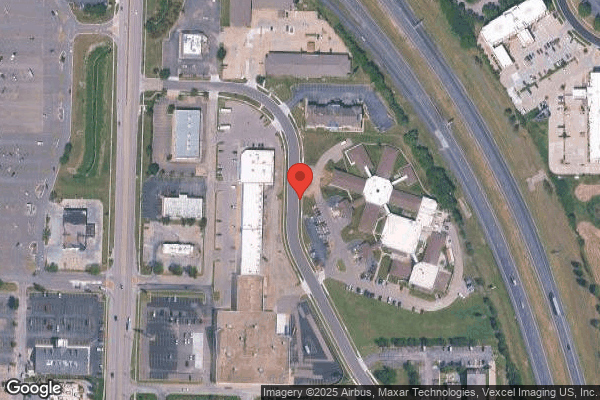
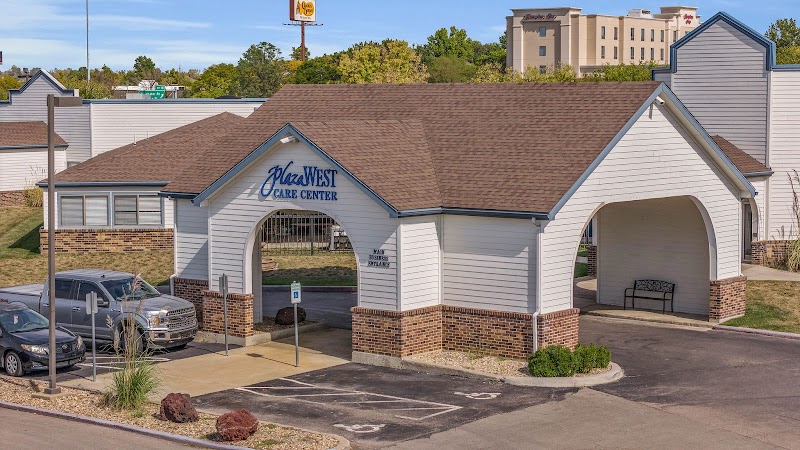
1570 SW WESTPORT DRIVE, TOPEKA, KS 66604 (785) 271-6700
For profit - Limited Liability company 151 Beds RECOVER-CARE HEALTHCARE Data: November 2025 3 Immediate Jeopardy citations
Trust Grade
0/100
#276 of 295 in KS
Last Inspection: March 2025

Within standard 12-15 month inspection cycle. Federal law requires annual inspections.

Overview

Plaza West Healthcare and Rehab has received a Trust Grade of F, indicating significant concerns and a poor quality of care. It ranks #276 out of 295 facilities in Kansas, placing it in the bottom half, and #11 out of 15 in Shawnee County, meaning there are only a few local options that are better. The facility's performance is worsening, with issues increasing from 4 in 2024 to 22 in 2025. Staffing appears to be a major concern, with a low rating of 1 out of 5 stars and a turnover rate of 67%, well above the state average of 48%. Additionally, the facility has accumulated $162,610 in fines, which is higher than 88% of Kansas facilities, suggesting repeated compliance problems. There have been critical incidents, including staff failing to follow physician orders related to medication, resulting in a resident receiving potassium despite having high potassium levels, and not administering other necessary medications on time. Overall, while there are some strengths in terms of available beds, the facility faces serious weaknesses that families should carefully consider.

Trust Score
F
0/100
In Kansas
#276/295
Bottom 7%
Safety Record
High Risk
Review needed
Inspections
Getting Worse
4 → 22 violations
Staff Stability
⚠ Watch
67% turnover. Above average. Higher turnover means staff may not know residents' routines.
Penalties
✓ Good
$162,610 in fines. Lower than most Kansas facilities. Relatively clean record.
Skilled Nurses
⚠ Watch
Each resident gets only 26 minutes of Registered Nurse (RN) attention daily — below average for Kansas. Fewer RN minutes means fewer trained eyes watching for problems.
Violations
⚠ Watch
75 deficiencies on record. Higher than average. Multiple issues found across inspections.
★☆☆☆☆
1.0
Overall Rating
★☆☆☆☆
1.0
Staff Levels
★★☆☆☆
2.0
Care Quality
★☆☆☆☆
1.0
Inspection Score
Stable
2024: 4 issues
2025: 22 issues

The Good

  • Full Sprinkler Coverage · Fire safety systems throughout facility
  • No fines on record

Facility shows strength in fire safety.

The Bad

1-Star Overall Rating

Below Kansas average (2.9)

Significant quality concerns identified by CMS

Staff Turnover: 67%

21pts above Kansas avg (46%)

Frequent staff changes - ask about care continuity

Federal Fines: $162,610

Well above median ($33,413)

Significant penalties indicating serious issues

Chain: RECOVER-CARE HEALTHCARE

Part of a multi-facility chain

Ask about local staffing decisions and management

Staff turnover is elevated (67%)

19 points above Kansas average of 48%

The Ugly 75 deficiencies on record

3 life-threatening 2 actual harm
Mar 2025 21 deficiencies
CONCERN (D) 📢 Someone Reported This

A family member, employee, or ombudsman was alarmed enough to file a formal complaint

Potential for Harm - no one hurt, but risky conditions existed

Deficiency F0582 (Tag F0582)

Could have caused harm · This affected 1 resident

The facility had a census of 130 residents, with three reviewed for Center for Medicare and Medicaid Services (CMS) Beneficiary Liability notices. Based on record review and interview, the facility fa...

Read full inspector narrative →
The facility had a census of 130 residents, with three reviewed for Center for Medicare and Medicaid Services (CMS) Beneficiary Liability notices. Based on record review and interview, the facility failed to provide form CMS 10055 Advanced Beneficiary Notice (ABN), which included the estimated cost to continue services for skilled services to the resident or their representative for one of three residents, Resident (R) 2. This deficient practice placed R2 at risk for uninformed decisions and unanticipated costs related to skilled services. Findings included: - The Medicare ABN form informed the beneficiaries that Medicare may not pay for future skilled therapy and did not provide an estimated cost to continue their services. The form included an option for the beneficiary to (1) receive specified services listed, and bill Medicare for an official decision on payment, but can appeal to Medicare. (2) receive therapy listed, but do not bill Medicare, I am responsible for payment of services. (3) I do not want the listed services. The facility lacked documentation staff provided R2 (or their representative) the ABN form 10055 when the resident's skilled services ended on 01/10/25. On 03/18/25 at 01:30 PM, Social Service Y stated the facility had not provided R2 the CMS form 10055. Social Service Y stated the previous SS X no longer worked at the facility and had not given him the 10055 form. On 03/19/25 at 02:55 PM, Administrative Nurse D stated that R2 should have received the CMS 1005 form with the estimated cost. The facility's Advance Beneficiary Notices policy, dated 03/19/25, documented the facility would provide timely notices regarding Medicare eligibility and coverage. The facility would provide the resident a Skilled Nursing Facility Advanced Beneficiary Notice (SNFABN), Form CMS-10055. The Facility failed to provide R2 with the appropriate non-coverage notice and cost estimate for further services, placing the resident at risk for uninformed decisions regarding skilled services.
CONCERN (D) 📢 Someone Reported This

A family member, employee, or ombudsman was alarmed enough to file a formal complaint

Potential for Harm - no one hurt, but risky conditions existed

Free from Abuse/Neglect (Tag F0600)

Could have caused harm · This affected 1 resident

**NOTE- TERMS IN BRACKETS HAVE BEEN EDITED TO PROTECT CONFIDENTIALITY** The facility had a census of 130 residents. The sample included 27 residents. Based on observation, record review, and interview...

Read full inspector narrative →
**NOTE- TERMS IN BRACKETS HAVE BEEN EDITED TO PROTECT CONFIDENTIALITY** The facility had a census of 130 residents. The sample included 27 residents. Based on observation, record review, and interview, the facility failed to ensure Resident (R) 121's sexually aggressive behaviors were addressed. This placed the residents of the facility at risk of sexual abuse. Findings included: The Electronic Medical Recorded (EMR) documented R121 had diagnoses of cerebral infarction (stroke - sudden death of brain cells due to lack of oxygen caused by impaired blood flow to the brain by blockage or rupture of an artery to the brain), spastic hemiplegia (paralysis of one side of the body) affecting the nondominant side, dysphagia (swallowing difficulty), cognitive-communication deficit (an impairment in organization, sequencing, attention, memory, planning, problem-solving, and safety awareness), and difficulty in walking. The admission Minimum Data Set (MDS), dated [DATE], documented R121 had intact cognition, felt down, depressed, and hopeless, and social isolation. The resident had no signs or symptoms of delirium (sudden severe confusion, disorientation, and restlessness), psychosis (any major mental disorder characterized by a gross impairment in reality perception), or exhibited behaviors. R121 had a functional range of motion impairment of one side upper extremity, was dependent on toileting, and lower body dressing, and required substantial/maximal assistance with mobility. The resident had frequent incontinence of urine. The MDS further documented that R121 had occasional mild pain and two non-injury falls since admission. The resident received speech, occupational, and physical therapy. The Functional Abilities Care Area Assessment (CAA), dated 06/29/24, documented R121 had been admitted following hospitalization with a diagnosis of cerebral infarction, requiring assistance of one to two staff members for activities of daily living and transfers, worked with physical and occupational therapies for strengthening and returning to his prior level of function. He used a wheelchair for mobility. The Quarterly MDS, dated 01/15/25, document R121 had intact cognition, a mood score of 01 with feeling down, depressed, or hopeless, and socially isolated. The resident exhibited no delirium, psychosis, or behaviors. The MDS further documented R121 was dependent with toileting, bathing, and upper and lower body dressing, and required substantial/maximal assistance with mobility. R121 was always incontinent of urine and bowel, had pain frequently which occasionally interfered with day-to-day activities, and had one non-injury fall. R121's Care Plan on 07/03/24, documented R121 had a behavior problem and could be sexually inappropriate to female staff and had allegations of abuse when he was not tended to immediately when requested and of only allowing assistance from certain staff members. The Care Plan directed staff to provide care in pairs only, due to sexually inappropriate behaviors and history of allegations of staff abuse. The Care plan further stated R121 sometimes would touch female staff in inappropriate places and would make sexually inappropriate statements and staff was to encourage him not to do so. On 03/8/25 the care plan documented R121 placed on one-to-one care of staff. The Progress Note dated 07/02/24 at 02:57 PM, documented R121 had exhibited inappropriate behaviors during care in the morning, groping the nurse aide, pulling the aide into bed during the bed bath, calling the aide baby and getting upset when the nurse aide talked to other people, and would make inappropriate comments to the aide. The Progress Note dated 08/09/24 at 05:52 AM, documented when nursing staff went into R121 to give medication R121 was holding his penis and made two sexually inappropriate remarks. The Progress Note dated 08/09/24 at 06:09 AM, documented a nurse aide reported R121 made inappropriate sexual comments. The Progress Note dated 03/08/25 at 06:52 PM, documented R121 had inappropriately touched another R71. R121 was immediately placed on one-to-one care. R121's family member was notified of the situation. The police department spoke to the resident and a family member. Staff explained appropriate touch and the family member told R121 not to be touching any women and inquired about transferring to a facility that only had men and asked that this would be discussed with the physician. The Progress Note dated 03/17/25 at 04:24 PM, documented facility staff spoke with R121's Durable Power of Attorney (DPOA) about new medication order and permission for the resident to receive the medication and to have staff chart any sexual behaviors over the next 48 hours and would reassess the need for one-to-one care. The EMR lacked physician notification of sexual behaviors involving staff. On 03/18/25 at 07:08 AM, Activity Staff Z was seated in the hallway outside of R121 room. Activity Aide stated she was assigned to monitor R121. She stated she was not sure of the reason R121 was being monitored, reporting her supervisor had been also providing one-to-one observation. On 03/18/25 at 12:21 PM, R121 was brought to the dining room by staff. R121 was placed at a meal table which seated several male residents. Staff sat at the table with R121 throughout the meal. On 03/19/25 at 09:37 AM, Certified Nurse Aide (CNA) N reported R121 had been respectful and told the CNA often he appreciated the assistance. On 03/19/25 at 03:15 PM, Administrative Nurse D reported the nursing management went with R121 physician, and the physician was made aware of the behaviors. Administrative Nurse D thought the physician had made note of the sexual behaviors but was not able to find information regarding behaviors in the medical record. The facility's Abuse, Neglect, and Exploitation Policy, dated 03/17/25, documented it is the policy of this facility to provide protections for the health, welfare, and rights of each resident by developing and implementing written policies and procedures that prevent abuse, neglect, exploitation, and misappropriation of resident property. Identifying, correcting, and intervening in situations in which abuse, neglect, and exploitation were more likely to occur with the deployment of trained and qualified, registered, licensed, and certified staff on each shift in sufficient numbers to meet the needs of the residents and assure that the staff have knowledge of the individual residents' care needs and behavioral symptoms. The identification, ongoing assessment, care planning for appropriate interventions, and monitoring of residents with needs that might lead to conflict or neglect. The facility failed to ensure R121's sexually aggressive behaviors were addressed. This placed the residents of the facility at risk of sexual abuse.
CONCERN (D) 📢 Someone Reported This

A family member, employee, or ombudsman was alarmed enough to file a formal complaint

Potential for Harm - no one hurt, but risky conditions existed

Comprehensive Assessments (Tag F0636)

Could have caused harm · This affected 1 resident

**NOTE- TERMS IN BRACKETS HAVE BEEN EDITED TO PROTECT CONFIDENTIALITY** The facility identified a census of 130 residents. The sample included 27 residents who were reviewed for comprehensive assessme...

Read full inspector narrative →
**NOTE- TERMS IN BRACKETS HAVE BEEN EDITED TO PROTECT CONFIDENTIALITY** The facility identified a census of 130 residents. The sample included 27 residents who were reviewed for comprehensive assessments and timing. Based on observation, record review, and interview, the facility failed to ensure the admission comprehensive Minimum Data Set (MDS) was completed for Resident (R) 98, R112, and R13 using the Centers for Medicaid and Medicare (CMS) - specified Resident Assessment Instrument (RAI) guidelines. This deficient practice placed these residents at risk for inaccurate reflections of the resident's status and needed to develop an individualized comprehensive person-centered plan of care. Findings included: - R98 admitted to the facility on [DATE]. R98's admission MDS had an assessment reference date (ARD) of 02/12/25 and a completion date of 03/02/25. R98's Care Area Assessments were not completed until 03/02/25. R112 re-admitted to the facility on [DATE]. R112's admission MDS had a date of 03/03/25 but had been completed. R13 admitted to the facility on [DATE]. R13's admission MDS with an ARD of 03/11/25 had not been completed. On 03/19/25 at 12:50 PM, Licensed Nurse (LN) I stated that she completed the MDSs. LN I stated she had been working on the floor to cover for them being short of help. LN I stated she had gotten behind on completing some of the MDS assessments, so she was to blame for that. On 03/19/25 at 03:15 PM, Administrative Nurse D stated she was aware that some of the MDS assessments had not been completed when they should have. Administrative Nurse D stated she was working on getting more facility staff so the MDS coordinator could get back to focusing on only doing the MDS assessments. The Assessment Frequency/Timeliness policy dated 02/01/20 documented the MDS/RAI coordinator would be responsible for tracking due dates for all MDS assessments, whether scheduled or unscheduled. The comprehensive admission assessment would be completed within 14 days after admission, excluding readmissions in which there was no significant change. Medicare PPS assessments, scheduled or unscheduled, would be completed within 14 days of ARD. The type of assessment and ARD would adhere to Medicare guidelines for each assessment. The facility failed to ensure the admission comprehensive MDS was completed for R98, R112, and R13 using the CMS-specified RAI guidelines. This deficient practice placed these residents at risk for inaccurate reflections of the resident's status and needed to develop an individualized comprehensive person-centered plan of care.
CONCERN (D) 📢 Someone Reported This

A family member, employee, or ombudsman was alarmed enough to file a formal complaint

Potential for Harm - no one hurt, but risky conditions existed

Deficiency F0657 (Tag F0657)

Could have caused harm · This affected 1 resident

**NOTE- TERMS IN BRACKETS HAVE BEEN EDITED TO PROTECT CONFIDENTIALITY** The facility had a census of 130 residents. The sample included 27 residents. Based on observation, record review, and interview...

Read full inspector narrative →
**NOTE- TERMS IN BRACKETS HAVE BEEN EDITED TO PROTECT CONFIDENTIALITY** The facility had a census of 130 residents. The sample included 27 residents. Based on observation, record review, and interview, the facility failed to revise the care plan for Resident (R) 117 with interventions to prevent skin tears and failed to [NAME] R78's care plan with interventions to prevent pressure ulcers. This placed the residents at risk of further injury and uncommunicative care needs. Findings included: - The Electronic Medical Record (EMR) for R117 documented diagnoses of vascular dementia (a progressive mental disorder characterized by failing memory and confusion caused by a decreased blood flow to the brain), depression (a mood disorder that causes a persistent feeling of sadness and loss of interest), and epilepsy (brain disorder characterized by repeated seizures). The Annual Minimum Data Set (MDS), dated [DATE], documented R117 had severely impaired cognition. R117 was dependent upon staff for all activities of daily living (ADL). R117 had upper one-side functional impairment and had no skin issues. The Quarterly MDS, dated 01/14/25, documented R117 had severely impaired cognition. R117 was dependent upon staff for all ADLs. R117 had lower functional impairment on both sides and had no skin issues. R117's Care Plan, dated 01/20/25, initiated on 08/05/23, documented R117 was at risk for alterations in skin integrity and directed staff to educate R117 and her family of the causes of skin breakdown. The staff were directed to encourage R117 to report any pain with repositioning, wear pressure relief boots as tolerated, obtain a low air loss mattress, and provide treatment as ordered. The care plan lacked direction to staff on interventions to prevent skin tears and bruises. On 03/18/25 at 09:20 AM, observation revealed R117 had a red, bloody area on her left forearm. The area had a clear bandage on top of it that wrapped around the inner aspect of her forearm. R117's EMR lacked documentation of an assessment of the area or a description of what caused the area. On 03/18/25 at 09:25 AM, Licensed Nurse G stated R117 she was unsure what happened to R117's arm. LN G stated, that R117 often scratched herself and that the area had been there for a couple of days. On 03/18/25 at 09:30 AM, Administrative Staff A stated he was unable to find an assessment or paperwork regarding the skin tear. Administrative Staff A had talked with LN G who was aware of the skin tear and an assessment would be completed and the physician notified. On 03/19/25 at 02:55 PM, Administrative Nurse D stated staff should complete skin assessments when there are skin tears or bruises, and the care plan should be updated with interventions to prevent skin tears. The facility's Care Plan Revisions Upon Status Change policy, dated on 02/01/20, documented the comprehensive care plan would be reviewed and revised as necessary when a resident experienced a status change. The team met and discussed the resident's condition and collaborated on intervention options. The facility failed to revise R117's care plan with interventions to prevent skin tears and bruises. This placed the resident at risk for further injury and uncommunicative care needs. - R78's Electronic Medical Record (EMR) documented diagnoses of atrial fibrillation (A-Fib rapid, irregular heartbeat), congestive heart failure (CHF - a condition with low heart output and the body becomes congested with fluid), embolism (an obstruction in a blood vessel due to a blood clot or other foreign matter that gets stuck while traveling through the bloodstream), and thrombosis (a clot that develops within a blood vessel) of lower extremities. R78's admission Minimum Data Set (MDS) dated 02/09/25 documented both short and long-term memory problems. R78 had moderately impaired cognitive skills for daily decision-making. R78 had impairment on both sides of his upper extremity. R78 required a wheelchair for mobility. R78 was dependent on staff for all functional abilities. R78 was always incontinent of bowel and bladder. R78 was at risk of pressure ulcer development. R78 had no pressure ulcers on admission. R78 had a pressure-reducing device for the bed. R78 had application ointments and medications other than to feet. R78's Pressure Ulcer Care Area Assessment (CAA) dated 03/01/25 documented pressure ulcers would be addressed in R78's care plan. Staff were to assist with repositioning per protocol and as needed to help maintain skin integrity. Licensed nursing staff were to monitor skin integrity every week to help monitor for any skin issues. Incontinence creams were to be used as needed to help maintain skin integrity. A pressure redistributing surface was in place to the resident's bed and to the wheelchair to help maintain skin integrity. R78's Care Plan dated 02/08/25 directed staff to educate family and caregivers of causative factors and measures to prevent skin injury. Staff were directed to encourage good nutrition and hydration to promote healthier skin. Staff were directed that R78 preferred to bathe and shower on Wednesday and Saturday evenings. R78's care plan had not been updated and revised to direct staff on his wound care or how much assistance R78 required from staff. R78's Braden Scale Pressure for Predicting Pressure Sore Risk (a tool used to assess the risk of developing a pressure ulcer) admission assessment dated [DATE] documented a score of nine that indicated a high risk of pressure ulcer development. R78's Orders tab of the EMR documented an order dated 02/07/25 for weekly skin assessments by the licensed nurse. Document the findings on the weekly skin UDA every Thursday. R78's 'Weekly Skin Check under the Assessment tab of the EMR revealed skin checks had been completed on 02/12/25, 02/19/25, 02/20/25, 02/27/25, 02/28/25, and 03/06/25. R78's Weekly Skin Check under the Assessments tab dated 02/28/25 documented a new skin issue, pressure related to the right buttock. The skin check lacked any documentation of the skin area characteristics or measurements. R78's Skin/Wound Note under the Progress Notes tab of the EMR dated 02/28/25 at 02:40 PM documented R78 had an open were to the right buttock noted. The area was cleansed and venelex (an ointment used to treat skin wounds) was applied and covered with a border foam dressing. The nurse practitioner and R78's spouse was notified. The Orders tab documented an order dated 02/28/25 for comfort border foam dressing to the right buttock wound. Change twice daily and as needed. R78 had been seen by the Advance Practice Registered Nurse (APRN) on 03/03/25, 03/10/25, 03/13/25, and 03/17/25 but the provider had not addressed R78's pressure wound. A Wound Evaluation completed on 03/19/25 under the Skin and Wound tab of the EMR documented a Stage 3 (a full-thickness pressure injury extending through the skin into the tissue below) pressure ulcer. The wound measured a length of 4.33 centimeters (cm), width of 1.51 cm, depth of 0.1 cm, and total area of 5.01 cm squared. On 03/18/25 at 09:42 AM, R78 laid in bed as nursing staff prepared the resident for care. On 03/19/25 at 10:30 AM, Certified Nurse Aide (CNA) O stated the aides were to look over the resident's skin at each bath given. CNA O stated if any skin changes had been noted it was to be documented on the shower sheet and the nurse was notified immediately. CNA O stated the resident's care plan should list any care for the resident or if cream should be applied. On 03/19/25 at 12:33 PM, Licensed Nurse (LN) J stated a R78's care plan should have staff direction for skin issues and how much assistance was needed for the resident. R78 was dependent on staff for his care. LN J stated the unit manager or the MDS coordinator was who updated orders and the care plan when new issues arose. LN J stated she had not noticed that R78 did not have interventions in place to address his pressure ulcer care. LN J stated she did do the daily dressing changes on R78. LN J stated that R78 did have a wound on his bottom that had just opened a few days ago. LN J stated the wound nurse did see R78 today. On 03/19/25 at 12:50 PM, LN I stated she and the unit manager had gotten behind on getting the care plans and MDSs updated lately. LN I stated a resident's care plan should be updated with any new interventions. R78's care plan should have interventions in place for his wound, but they had not been added yet. On 03/19/25 at 02:53 PM, Administrative Nurse D stated she would expect that a resident would have interventions in place and revised for a resident that had pressure wounds. Administrative Nurse D stated the staff that had updated the care plans had gotten a little behind on getting them updated or completed since those staff had been helping on the floor. Administrative Nurse D would expect that staff had been doing weekly skin assessments and making sure that measurements had been recorded for those wounds. Administrative Nurse D stated she would speak with staff to ensure a resident got the care needed. The Care Plan Revisions Upon Status Change policy implemented on 02/01/20 documented the comprehensive care plan would be reviewed, and revised as necessary when a resident experienced a status change. Upon identification of a change in status, the nurse would notify the MDS Coordinator, the physician, and the resident representative. The care plan would be updated with the new or modified interventions. Care plans would be modified as needed by the MDS Coordinator or other designated staff member. The Unit Manager or other designated staff member would communicate care plan interventions to all staff involved with the resident's care. The facility failed to ensure a care area and interventions were put in place and implemented to care for R78's Stage 3 pressure ulcer on his buttock. This deficient practice placed R78 at risk of complications and possible infection.
CONCERN (D) 📢 Someone Reported This

A family member, employee, or ombudsman was alarmed enough to file a formal complaint

Potential for Harm - no one hurt, but risky conditions existed

Pressure Ulcer Prevention (Tag F0686)

Could have caused harm · This affected 1 resident

**NOTE- TERMS IN BRACKETS HAVE BEEN EDITED TO PROTECT CONFIDENTIALITY** The facility identified a census of 130 residents. The sample included 27 residents, with four sampled residents reviewed for pr...

Read full inspector narrative →
**NOTE- TERMS IN BRACKETS HAVE BEEN EDITED TO PROTECT CONFIDENTIALITY** The facility identified a census of 130 residents. The sample included 27 residents, with four sampled residents reviewed for pressure ulcers (localized injury to the skin and/or underlying tissue usually over a bony prominence, as the result of pressure, or pressure in combination with shear and/or friction). Based on observation, record review, and interview, the facility failed to ensure interventions were in place and implemented for Resident (R) 78 to prevent skin breakdown which resulted in an avoidable pressure ulcer development. This deficient practice placed R78 at risk for complications and possible infection-associated pressure wounds. Findings included: - R78 ' s Electronic Medical Record (EMR) documented diagnoses of atrial fibrillation (A-Fib rapid, irregular heartbeat), congestive heart failure (CHF - a condition with low heart output and the body becomes congested with fluid), embolism (an obstruction in a blood vessel due to a blood clot or other foreign matter that gets stuck while traveling through the bloodstream), and thrombosis (a clot that develops within a blood vessel) of lower extremities. R78 ' s admission Minimum Data Set (MDS) dated 02/09/25 documented both short and long-term memory problems. R78 had moderately impaired cognitive skills for daily decision-making. R78 had impairment on both sides of his upper extremity. R78 required a wheelchair for mobility. R78 was dependent on staff for all functional abilities. R78 was always incontinent of bowel and bladder. R78 was at risk of pressure ulcer development. R78 had no pressure ulcers on admission. R78 had a pressure-reducing device for the bed. R78 had application ointments and medications other than to feet. R78 ' s Pressure Ulcer Care Area Assessment (CAA) dated 03/01/25 documented pressure ulcers would be addressed in R78 ' s care plan. Staff were to assist with repositioning per protocol and as needed to help maintain skin integrity. Licensed nursing staff were to monitor skin integrity every week to help monitor for any skin issues. Incontinence creams were to be used as needed to help maintain skin integrity. A pressure redistributing surface was in place to the resident ' s bed and to the wheelchair to help maintain skin integrity. R78 ' s Care Plan dated 02/08/25 directed staff to educate family, and caregivers of causative factors and measures to prevent skin injury. Staff were directed to encourage good nutrition and hydration to promote healthier skin. Staff were directed that R78 preferred to bathe and shower on Wednesday and Saturday evenings. R78 ' s care plan had not been updated and revised to direct staff on his wound care or how much assistance R78 required from staff. R78 ' s Orders tab of the EMR documented an order dated 02/07/25 for weekly skin assessments by the licensed nurse. Document findings on the weekly skin UDA every Thursday. The Orders tab documented an order dated 02/28/25 for comfort border foam dressing to the right buttock wound. Change twice daily and as needed. R78 ' s Braden Scale Pressure for Predicting Pressure Sore Risk (a tool used to assess the risk of developing a pressure ulcer) admission assessment dated [DATE] documented a score of nine that indicated a high risk of pressure ulcer development. R78 ' s ' Weekly Skin Check under the Assessment tab of the EMR revealed skin checks had been completed on 02/12/25, 02/19/25, 02/20/25, 02/27/25, 02/28/25, and 03/06/25. R78 ' s Weekly Skin Check under the Assessments tab dated 02/28/25 documented a new skin issue, pressure related to the right buttock. The skin check lacked any documentation of the skin area characteristics or measurements. R78 ' s Skin/Wound Note under the Progress Notes tab of the EMR dated 02/28/25 at 02:40 PM documented R78 had an open area to the right buttock noted. The area was cleansed and venelex (an ointment used to treat skin wounds) was applied and covered with a border foam dressing. The nurse practitioner and R78 ' s spouse was notified. R78 was seen by the Advance Practice Registered Nurse (APRN) on 03/03/25, 03/10/25, 03/13/25, and 03/17/25, but the provider failed to address R78 ' s pressure wound. A Wound Evaluation completed on 03/19/25 under the Skin and Wound tab of the EMR documented a Stage 3 (a full-thickness pressure injury extending through the skin into the tissue below) pressure ulcer. The wound measured a length of 4.33 centimeters (cm), width of 1.51 cm, depth of 0.1 cm, and total area of 5.01 cm squared. This evaluation was the first time the wound had been measured. On 03/18/25 at 09:42 AM, R78 laid in bed as nursing staff prepared the resident for care. On 03/19/25 at 10:30 AM, Certified Nurse [NAME] (CNA) O stated the aides were to look over the resident ' s skin when each bath was given. CNA O stated if any skin changes were found it was to be noted on the shower sheet, and the nurse notified immediately. CNA O stated the resident's care plan should list any care for the resident or if cream should be applied. On 03/19/25 at 12:33 PM, Licensed Nurse (LN) J stated a R78 ' s care plan should have staff direction for skin issues and how much assistance was needed for the resident. R78 was dependent on staff for his care. LN J stated the unit manager or the MDS coordinator was who updated orders and the care plan when new issues arose. LN J stated she had not known there were no interventions in place to address R78 ' s pressure ulcer care. LN J stated she did do the daily dressing changes on R78. LN J stated that R78 did have a wound on his bottom that had just opened a few days ago. LN J stated the wound nurse had seen R78 today. On 03/19/25 at 12:50 PM, LN I stated she and the unit manager had gotten behind on getting the care plans and MDSs updated lately. LN I stated a resident's care plan should be updated with any new interventions. R78 ' s care plan should have interventions in place for his wound, but they had not been added yet. On 03/19/25 at 02:53 PM, Administrative Nurse D stated she would expect that a resident would have interventions in place and revised for a resident that had pressure wounds. Administrative Nurse D stated the staff that updated the care plans had gotten a little behind on getting them updated, or completed since those staff had been helping on the floor. Administrative Nurse D would expect that staff had been doing weekly skin assessments and making sure that measurements had been recorded for those wounds. Administrative Nurse D stated she would speak with staff to ensure a resident got the care needed. The Pressure Injury Prevention and Management policy implemented 03/19/25 documented the facility shall establish and utilize a systematic approach for pressure injury prevention and management, including prompt assessment and treatment; intervening to stabilize, reduce, or remove underlying risk factors; monitoring the impact of the interventions; and modifying the interventions as appropriate. Licensed nurses would conduct a pressure injury risk assessment on all residents upon admission/re-admission, weekly for four weeks, then quarterly or whenever the resident ' s condition changed significantly. Findings would be documented in the medical record. Assessments of the pressure injuries would be performed by a licensed nurse and documented. The staging of pressure injuries would be clearly identified to ensure correct coding on the MDS. After completing a thorough assessment, the interdisciplinary team (IDT) shall develop a relevant care plan that included measurable goals for the prevention and management of pressure injuries with appropriate interventions. The unit manager would review relevant documentation regarding skin assessments and document a summary of findings in the medical record. The attending physician would be notified of the presence of the new injury, and the progression toward healing weekly. The facility failed to ensure interventions were put in place and implemented to prevent the avoidable development of R78 ' s Stage 3 pressure ulcer on his buttock. This deficient practice placed R78 at risk of complications and possible infection.
CONCERN (D) 📢 Someone Reported This

A family member, employee, or ombudsman was alarmed enough to file a formal complaint

Potential for Harm - no one hurt, but risky conditions existed

Respiratory Care (Tag F0695)

Could have caused harm · This affected 1 resident

The facility identified a census of 130 residents. The sample included 27 residents with two sampled residents reviewed for respiratory care. Based on observation, record review, and interview, the fa...

Read full inspector narrative →
The facility identified a census of 130 residents. The sample included 27 residents with two sampled residents reviewed for respiratory care. Based on observation, record review, and interview, the facility failed to ensure that Resident (R) 346 had a physician's order for supplement oxygen (O2) therapy. The facility failed to ensure staff monitored and documented the effectiveness of R346's supplemental O2. The facility failed to ensure R346's nasal cannula (NC - a thin hollow tube that assists in providing supplemental eO2) was appropriately stored when not used. This deficient practice placed R346 at risk of respiratory complications and possible infection. Findings included: - R346's Electronic Medical Record (EMR) recorded an admission dated 03/01/25 and documented diagnoses of end-stage renal disease (ESRD - when the kidney lose their ability to function and filter waste and excess fluid from the blood), congestive heart failure (CHF - a condition with low heart output and the body becomes congested with fluid), and respiratory failure (inadequate gas exchange by the respiratory system). R346's admission Minimum Date Set (MDS) had not been completed yet due to her admission dated 03/01/25. R346's Care Plan initiated on 03/03/25 lacked a care area for O2 therapy. R346's Orders tab of the EMR reviewed on 03/18/25 lacked a physician's order for supplemental oxygen. R346's Treatment Administration Record (TAR) lacked staff direction to check and monitor R346's O2 saturation level each shift. On 03/17/25 at 12:05 PM, R346 laid in bed resting. R346 had NC in her nose. An O2 concentrator (a machine that provides supplemental oxygen) was in her room and turned on. The wheelchair in her room had an oxygen canister on the back of it. An NC was connected to the canister but was not stored in a bag. On 03/18/25 at 09:15 AM, R346 laid in her bed, had NC in her nose. On 03/19/25 at 10:30 AM Certified Nurse Aide (CNA) O stated the O2 cannula should be stored in a bag when not in use. On 03/19/25 at 12:33, Licensed Nurse (LN) J stated if a resident was on O2 there should be an order for it in the EMR and the saturation levels should be monitored each shift. R346's order might not have been re-entered when she had come back from the hospital. On 03/19/25 at 12:50 PM, Licensed Nurse (LN) I stated she had put in R346's orders when she returned from her hospital visit and she must have overlooked that she omitted getting the O2 order put in. On 03/19/25 at 02:53 PM, Administrative Nurse D stated any resident that received supplemental oxygen needed an order to have it. Administrative Nurse D stated staff should be monitoring the O2 saturation level each shift. Administrative Nurse D could not state why R346 did not have the order for her O2 entered in the EMR. The Medication Orders policy implemented on 01/01/20 documented that medications should be administered only upon the signed order of a person lawfully authorized to prescribe. Elements of the medication order were the date and time the order was written; the resident's full name; the name of the medications; the dosage-strength of the medicated; the time or frequency of administration; type/formulation (if applicable); the hour of administration; and the diagnosis or indication for use. Each medication order should be documented with the date, time, and signature of the person receiving the order. The order should be recorded on the physician's order sheet, and the Medication Administration Record (MAR). The facility that R346 had a physician's order for supplemental O2. The facility failed to ensure staff monitored and documented the effectiveness of R346's supplemental O2. The facility failed to ensure R346's NC was appropriately stored when not used. This deficient practice placed R346 at risk of respiratory complications and possible infection.
CONCERN (D) 📢 Someone Reported This

A family member, employee, or ombudsman was alarmed enough to file a formal complaint

Potential for Harm - no one hurt, but risky conditions existed

Deficiency F0698 (Tag F0698)

Could have caused harm · This affected 1 resident

The facility had a census of 130 residents. The sample included 27 residents. Based on observation, record review, and interview, the facility failed to ensure Resident (R) 295 who received care and s...

Read full inspector narrative →
The facility had a census of 130 residents. The sample included 27 residents. Based on observation, record review, and interview, the facility failed to ensure Resident (R) 295 who received care and services for dialysis (a procedure where impurities or wastes were removed from the blood), was consistent with professional standards of practice, which included ongoing assessments of residents' condition, communication, and collaboration with the dialysis facility. This placed R295 at risk of complications and unmet care needs related to dialysis treatment. Findings included: - The Electronic Medical Record (EMR) for R295 documented diagnoses of fracture (broken bone)of the left tibia (bone of the lower leg), arteriovenous fistula (AV - a surgically created connection between an artery and a vein), dependence on renal (pertaining to kidneys) dialysis, end-stage renal disease, bipolar disorder (a major mental illness that causes people to have episodes of severe high and low moods), and anxiety (mental or emotional reaction characterized by apprehension, uncertainty, and irrational fear) disorder. The Minimum Data Set (MDS) had not been completed due to recent admission had not met the criteria for completion or submission. R295's Baseline Care Plan, dated 03/12/25, lacked documentation regarding R295 dialysis process or directed staff of care. The Physician Orders lacked orders for dialysis. The Progress Notes lacked documentation of the need or participation in the dialysis process. On 03/18/25 at 07:43 AM, Certified Medication Aide (CMA) S reported that R295 went to dialysis on Mondays and Fridays. On 03/18/25 at 08:29 AM, R295 stated she had been at the facility for over three weeks and went to dialysis on Mondays and Fridays. R295 stated the facility staff had not assessed the AV shunt when returning to the facility following dialysis treatment. R295 also reported the facility had not sent a communication sheet with her to dialysis. On 03/18/25 at 08:39 AM, Licensed Nurse (LN) K reported not working on Mondays and Fridays. LN K stated dialysis residents' vital signs, changes of condition, or medications to be sent were on a communication sheet with a resident who received dialysis treatments. LN K was unable to locate any dialysis communication for R295. On 03/19/25 at 03:15 PM, Administrative Nurse D stated dialysis residents should have assessments before and after dialysis treatments and a communication sheet should accompany the resident at each treatment and verified this had not been completed for R295. Administrative Nurse D stated that R295's care plan should reflect R295's dialysis with directions for care. The facility's Hemodialysis policy, dated 03/19/25, documented the facility will ensure that each resident receiving care and services for the services for the provision of hemodialysis is consistent with professional standards of practice. This would include ongoing assessment and oversight of the resident before, during, and after dialysis treatments, including monitoring of the resident's condition during treatments, monitoring for complications, implementation of appropriate interventions, and using appropriate infection control practices, with ongoing communication and collaboration with the dialysis facility regarding dialysis care and services. The facility failed to provide care and services consistent with professional standards of practice which included ongoing assessment of condition, communication, and collaboration with the dialysis treatment center. This placed R295 at risk for complications and unmet care needs related to dialysis treatment.
CONCERN (D) 📢 Someone Reported This

A family member, employee, or ombudsman was alarmed enough to file a formal complaint

Potential for Harm - no one hurt, but risky conditions existed

Pharmacy Services (Tag F0755)

Could have caused harm · This affected 1 resident

The facility had a census of 130 residents. The sample included 27 residents. Based on observation, record review, and interview, the facility failed to provide an accurate reconciliation of controlle...

Read full inspector narrative →
The facility had a census of 130 residents. The sample included 27 residents. Based on observation, record review, and interview, the facility failed to provide an accurate reconciliation of controlled drugs during the daily work shift. This placed residents at risk for misappropriation of medication by staff. Findings included: - On 03/17/25 at 08:06 AM, observation of the 400-hall treatment cart revealed the count for controlled medication lacked 03/13/25 and 03/14/25 of the going off-shift signatures, and the 03/15/25 coming on shift staff signature. On 03/17/25 at 08:06 AM, Licensed Nurse (LN) G stated staff should sign at the beginning and end of shifts to ensure the accuracy of the controlled medication count. On 03/17/25 at 08:09 AM, observation of the 400-hall medication cart revealed the count for controlled medication lacked 03/15/25 and 03/16/25 both coming on shifts and going off shift staff signatures. On 03/17/25 at 08:09 AM, Certified Medication Aide (CMA) S stated the count for controlled medications should be signed. On 03/19/25 at 03:15 PM, Administrative Nurse D stated she expected staff to sign the controlled medication log with the on-coming and off-shift signatures. The facility's Controlled Substance Administration and Accountability policy dated 01/01/20, documented it was the policy of the facility to promote safe, high-quality patient care, compliant with state and federal regulations regarding monitoring the use of controlled substances. The facility will have safeguards in place to prevent loss, diversion, or accidental exposure. In an inventory count without automated dispensing systems, two licensed nurses account for all controlled substances and access keys at the end of each shift. The facility failed to provide an accurate reconciliation of controlled medication at the end and beginning of daily work shifts, placing the residents at risk for misappropriation of medications by staff.
CONCERN (D) 📢 Someone Reported This

A family member, employee, or ombudsman was alarmed enough to file a formal complaint

Potential for Harm - no one hurt, but risky conditions existed

Drug Regimen Review (Tag F0756)

Could have caused harm · This affected 1 resident

**NOTE- TERMS IN BRACKETS HAVE BEEN EDITED TO PROTECT CONFIDENTIALITY** The facility had a census of 130 residents. The sample included 27 residents, with six reviewed for unnecessary medications. Bas...

Read full inspector narrative →
**NOTE- TERMS IN BRACKETS HAVE BEEN EDITED TO PROTECT CONFIDENTIALITY** The facility had a census of 130 residents. The sample included 27 residents, with six reviewed for unnecessary medications. Based on observation, record review, and interview, the facility's Consultant Pharmacist (CP) failed to identify and report to facility administration the staff had not notified the physician of out-of-parameter accu-checks (blood glucose monitoring test) for one resident, Resident (R) 29. This placed the resident at risk for physical decline and an ineffective medication regimen. Findings included: - The Electronic Medical Record (EMR) for R29 documented diagnoses of diabetes mellitus (DM - when the body cannot use glucose, not enough insulin is made, or the body cannot respond to the insulin), depressive disorder (a mood disorder that causes a persistent feeling of sadness and loss of interest), vascular dementia (a progressive mental disorder characterized by failing memory and confusion caused by a decreased blood flow to the brain), hypertension (high blood pressure), and epilepsy (epilepsy (brain disorder characterized by repeated seizures). The Annual Minimum Data Set (MDS), dated [DATE], documented R29 had moderately impaired cognition. R29 required supervision of staff with eating, showers, and ambulation. The MDS documented R29 received insulin daily. The Quarterly MDS, dated 12/13/24, documented R29 had moderately impaired cognition. R29 required set-up assistance with eating, personal hygiene, and showers. R29 was independent with mobility, and transfers, and did not ambulate. The MDS documented R29 received insulin daily. R29's Care Plan dated 01/07/25, initiated on 10/11/23, directed staff to administer medications as ordered and monitor for side effects and effectiveness, fasting blood sugars as ordered, monitor for signs and symptoms of hyperglycemia (high blood sugar), and identify areas of non-compliance. The Physician's Order, dated 10/30/24, directed staff to administer Lantus (a long-acting insulin), inject 12 Units (U), subcutaneously (under the skin), in the morning, and call the physician if the fasting blood sugar was greater than 160 milliliters (ml) per deciliter (dl), for diabetes mellitus type two. The order was discontinued on 03/10/25. Review of the EMR revealed the following times the accu-checks were outside of the physician-ordered parameters and the physician was not notified: January 2025: 25 out of the 31 administrations. February 2025: 17 out of the 28 administrations. March 2025: six out of the 18 administrations. The Medication Regimen Review, for the months of January, and February 2025, lacked documentation the CP identified and notified the facility administration of the outside of the physician-ordered parameters and the physician had not been notified. On 03/1825 at 08:00 AM, Certified Medication Aide (CMA) R administered her medications prior to the breakfast meal. On 03/19/25 at 12:14 PM, Licensed Nurse (LN) H stated she would notify the physician if the blood sugar was below 60 or above 400 and did not know why the order had not been followed. On 03/19/24 at 02:55 PM, Administrative Nurse D stated, that staff needed to follow the physician's orders and stated the CP had not notified her of any concerns. The facility's Pharmacy Services policy, dated 03/19/25, documented the facility would employ or obtain the services of a licensed pharmacist (in accordance with state requirements) who would provide consultation on all aspects of the provision of pharmacy services in the facility. The facility's CP failed to identify and report to facility administration the staff had not notified the physician of out-of-parameter accuchecks for R29. This placed the resident at risk for physical decline and an ineffective medication regimen.
CONCERN (D) 📢 Someone Reported This

A family member, employee, or ombudsman was alarmed enough to file a formal complaint

Potential for Harm - no one hurt, but risky conditions existed

Deficiency F0757 (Tag F0757)

Could have caused harm · This affected 1 resident

**NOTE- TERMS IN BRACKETS HAVE BEEN EDITED TO PROTECT CONFIDENTIALITY** The facility had a census of 130 residents. The sample included 27 residents, with six reviewed for unnecessary medications. Bas...

Read full inspector narrative →
**NOTE- TERMS IN BRACKETS HAVE BEEN EDITED TO PROTECT CONFIDENTIALITY** The facility had a census of 130 residents. The sample included 27 residents, with six reviewed for unnecessary medications. Based on observation, record review, and interview, the facility failed to notify the physician for an Accu-check (blood glucose monitoring test) outside of physician-ordered parameters, for one resident, Resident (R) 29. The facility failed to document in the Medication Administration Record (MAR) after administering medication for R295. This placed the residents at risk for adverse effects related to medications. Findings included: - The Electronic Medical Record (EMR) for R29 documented diagnoses of diabetes mellitus (DM - when the body cannot use glucose, not enough insulin is made, or the body cannot respond to the insulin), depressive disorder (a mood disorder that causes a persistent feeling of sadness and loss of interest), vascular dementia (a progressive mental disorder characterized by failing memory and confusion caused by a decreased blood flow to the brain), hypertension (high blood pressure), and epilepsy (epilepsy (brain disorder characterized by repeated seizures). The Annual Minimum Data Set (MDS), dated [DATE], documented R29 had moderately impaired cognition. R29 required supervision of staff with eating, showers, and ambulation. The MDS documented R29 received insulin daily. The Quarterly MDS, dated 12/13/24, documented R29 had moderately impaired cognition. R29 required set-up assistance with eating, personal hygiene, and showers. R29 was independent with mobility, and transfers, and did not ambulate. The MDS documented R29 received insulin daily. R29's Care Plan dated 01/07/25, initiated on 10/11/23, directed staff to administer medications as ordered and monitor for side effects and effectiveness, fasting blood sugars as ordered, monitor for signs and symptoms of hyperglycemia (high blood sugar), and identify areas of non-compliance. The Physician's Order, dated 10/30/24, directed staff to administer Lantus (a long-acting insulin) inject 12 Units (U), subcutaneously (under the skin), in the morning, and call the physician if the fasting blood sugar was greater than 160 milliliters (ml) per deciliter (dl), for diabetes mellitus type two. The order was discontinued on 03/10/25. Review of the EMR revealed the following times the accu-checks were outside of the physician-ordered parameters and the physician was not notified: January 2025: 25 out of the 31 administrations. February 2025: 17 out of the 28 administrations. March 2025: six out of the 18 administrations. On 03/1825 at 08:00 AM, Certified Medication Aide (CMA) R administered her medications prior to the breakfast meal. On 03/19/25 at 12:14 PM, Licensed Nurse (LN) H stated she would notify the physician if the blood sugar was below 60 or above 400 and did not know why the order had not been followed. On 03/19/25 at 02:55 PM, Administrative Nurse D stated, staff should follow physician orders. The facility's Unnecessary Drugs policy, dated 03/19/25, documented that each resident's entire drug/medication regimen was managed and monitored to promote or maintain the resident's highest practicable mental, physical, physical, and psychosocial well-being free from unnecessary drugs. The facility failed to notify the physician for Accu-checks outside of the physician-ordered parameters for R29. This placed the resident at risk for physical decline.- The Electronic Medical Record (EMR) for R295 documented diagnoses of fracture (broken bone) of the left tibia (bone of the lower leg), arteriovenous fistula (AV - a surgically created connection between an artery and a vein), dependence on renal (pertaining to kidneys) dialysis, end-stage renal disease, bipolar disorder (a major mental illness that causes people to have episodes of severe high and low moods), and anxiety (mental or emotional reaction characterized by apprehension, uncertainty, and irrational fear) disorder. The Minimum Data Set (MDS) had not been completed due to recent admission had not met the criteria for completion or submission. R295's Baseline Care Plan dated 03/12/25, had not included medication. The Physician Orders dated 02/28/25 directed staff to administer: Bupropion (a class of medications used to treat mood disorders) 150 milligrams (mg) Extended Release tablet daily in the morning for depression. Levothyroxine (a medication to treat an underactive thyroid- (an organ at the front of the neck that secretes hormones) 200 micrograms (mcg) tablet one time a day for hypothyroidism. Upon review of the 03/2025 MAR, the Bupropion lacked documentation of administration on March 3rd, 4th, 5th, 6th, 8th, and 9th, and Levothyroxine on March 2nd, 3rd, 7th, 11th, 12th, 15th, and 17th without documentation of reason of unsigned administration. The documentation lacked physician notification. On 03/19/25 at 12:01 PM, Certified Medication Aide (CMA) S reported the night shift nurse was scheduled to give the Levothyroxine but did not know why it had not been signed for as administered. The bupropion may not have been available from the pharmacy but was unsure of that also. On 03/19/25 at 03:20 PM, Administrative Nurse D stated medications should be given as ordered and signed in the MAR. The nursing staff were to record why the medication was not administered. The facility's Medication Administration policy, dated 03/19/25, documented that medications are administered by licensed nurses, or other staff who are legally authorized to do so in this state, as ordered by the physician and in accordance with professional standards of practice. The Medication Administration Record (MAR) is reviewed to identify the medication to be administered, observe the resident's consumption of medication, and sign the MAR after administration. The facility failed to ensure that R295 had documentation of the administration of his medications. This placed the resident at risk of not receiving prescribed medications.
CONCERN (D) 📢 Someone Reported This

A family member, employee, or ombudsman was alarmed enough to file a formal complaint

Potential for Harm - no one hurt, but risky conditions existed

Deficiency F0760 (Tag F0760)

Could have caused harm · This affected 1 resident

**NOTE- TERMS IN BRACKETS HAVE BEEN EDITED TO PROTECT CONFIDENTIALITY** The facility had a census of 130 residents. The sample included 27 residents. Based on observation, record review, and interview...

Read full inspector narrative →
**NOTE- TERMS IN BRACKETS HAVE BEEN EDITED TO PROTECT CONFIDENTIALITY** The facility had a census of 130 residents. The sample included 27 residents. Based on observation, record review, and interview, the facility failed to prevent medication administration errors for Resident (R) 29, who received the wrong dosage of a medication supplement for six out of six administrations. This placed the resident at risk for physical decline and other related complications. Findings included: - The Electronic Medical Record (EMR) for R29 documented diagnoses of diabetes mellitus (DM - when the body cannot use glucose, not enough insulin is made, or the body cannot respond to the insulin), depressive disorder (a mood disorder that causes a persistent feeling of sadness and loss of interest), vascular dementia (a progressive mental disorder characterized by failing memory and confusion caused by a decreased blood flow to the brain), hypertension (high blood pressure), and epilepsy (epilepsy (brain disorder characterized by repeated seizures). The Quarterly Minimum Data Set (MDS), dated [DATE], documented R29 had moderately impaired cognition. R29 required set-up assistance with eating, personal hygiene, and showers. R29 was independent with mobility, and transfers, and did not ambulate. The MDS documented R29 received insulin (a hormone produced by the pancreas, that helps your boy use sugar from food as energy), diuretic (a medication to promote the formation and excretion of urine), hypoglycemia (less than normal amount of sugar in the blood) medication daily. R29's Care Plan, dated 01/07/25, initiated on 10/11/23, directed staff to administer medications as ordered and monitor for potential side effects related to the current medication regimen. The Physician's Order, dated 03/12/25, directed staff to administer Zinc (a supplement), 30 milligrams (mg), by mouth, in the morning for Respiratory Syncytial Virus (RSV), until 03/28/25. The Medication Administration Record (MAR), dated March 2025, documented R29 received six doses of the Zinc supplement at the wrong dose. On 03/18/25 at 8:00 AM, Certified Medication Aide (CMA) R prepared R29's morning medication pass. CMA R looked at the over-the-counter bottle of Zinc and then looked at the physician's order in the EMR and stated, that the Zinc in the bottle was 50 mg, which was higher than what R29 was prescribed. CMA R notified Licensed Nurse (LN) G that there was a discrepancy and LN G stated she would look at the original order. LN G stated she notified the physician of the error and he discontinued the medication. CMA R stated she had given R29 the medication since it had been ordered and should have read the order more carefully. On 03/19/25 at 02:55 PM, Administrative Nurse D stated the CMA had been educated to check the physician's order before she administered the medication. The facility's Medication Errors policy, dated 01/01/20, documented the facility should ensure medications would be administered per physician's orders and in accordance with accepted standards and principles that apply to professionals providing services. Medication errors, once identified, would be evaluated to determine if considered significant or not by utilizing the guidelines of residents' condition, drug category, and frequency of error. The facility failed to prevent medication administration errors for R29, who received the wrong dosage of a medication supplement for six out of six administrations. This placed the resident at risk for physical decline and other related complications.
CONCERN (D) 📢 Someone Reported This

A family member, employee, or ombudsman was alarmed enough to file a formal complaint

Potential for Harm - no one hurt, but risky conditions existed

Deficiency F0761 (Tag F0761)

Could have caused harm · This affected 1 resident

The facility had a census of 130 residents. The sample included 27 residents. Based on observation, record review, and interview, the facility failed to store and label biologicals as required in one ...

Read full inspector narrative →
The facility had a census of 130 residents. The sample included 27 residents. Based on observation, record review, and interview, the facility failed to store and label biologicals as required in one of seven medication carts, when staff failed to place a stop date on R31's Humalog (rapid-acting) Insulin (a hormone that lowers the level of glucose in the blood) Kwik pen (a prefilled, disposable insulin pen). Findings included: - On 03/17/25 at 07:41 AM, on hall 700, 800, and 900 hall treatment cart R31's Humalog insulin Kwik pen lacked an open date. Licensed Nurse (LN) J verified the pen had been opened and stated staff should have placed an open date when they opened it. On 03/19/25 at 03:05 PM, Administrative Nurse D stated she would expect staff to place an open date on an insulin pen when they open it. Upon request, the facility did not provide a policy regarding opening Humalog pens. The facility failed to place an open date on R31's Humalog insulin pen. This placed the residents at risk of receiving an ineffective dose of the medication.
CONCERN (D) 📢 Someone Reported This

A family member, employee, or ombudsman was alarmed enough to file a formal complaint

Potential for Harm - no one hurt, but risky conditions existed

Deficiency F0849 (Tag F0849)

Could have caused harm · This affected 1 resident

The facility identified a census of 130 residents. The sample included 27 residents, with two residents sampled for hospice care. Based on observation, record review, and interview, the facility faile...

Read full inspector narrative →
The facility identified a census of 130 residents. The sample included 27 residents, with two residents sampled for hospice care. Based on observation, record review, and interview, the facility failed to ensure there was a collaboration of care between Resident (R) 112's hospice provider and the facility. This placed R112 at risk of inadequate end-of-life care. Findings included: - R112's Electronic Medical Record (EMR) documented diagnoses of malignant neoplasm of the right lung (lung cancer), cerebral infarction (stroke - sudden death of brain cells due to lack of oxygen caused by impaired blood flow to the brain by blockage or rupture of an artery to the brain), chronic kidney disease (a condition where the kidneys gradually lose their ability to filter waste products from the blood), and peripheral vascular disease (PVD - slow and progressive circulation disorder causing narrowing, blockage, or spasms in a blood vessel). R112's admission Minimum Data Set (MDS) dated 09/28/24 documented she had a Brief Interview for Mental Status (BIMS) score of 10 which indicated moderately impaired cognition. R112 had functional limitation in range of motion (ROM) impairment on both sides of her upper extremity and impairment on one side of the lower extremity. R112 used a wheelchair to assist with mobility. R112 required supervision for toileting, upper body dressing; partial assistance with bathing; and substantial assistance with lower body dressing and putting on and taking off footwear. R112's Functional Abilities Care Area Assessment (CAA) dated 10/07/24 documented functional mobility would be addressed in the resident's care plan. Staff was to assist with activities of daily living (ADL) care as needed, anticipating care, so that care needs were effectively met. Therapy services were to be used as needed to help increase functional mobility. Staff were to encourage the resident to participate in ADL care as much as possible to promote independence. R112's Quarterly MDS dated 11/25/24 documented she had a BIMS score of 10 which indicated moderately impaired cognition. R112 required partial assistance to total dependence on staff for her functional abilities. R112 used a wheelchair to assist with mobility. R112's Care Plan last revised 02/20/25 directed staff that she was on hospice starting 02/20/25. Staff was directed to assess for pain, restlessness, agitation, constipation, and other symptoms of discomfort, medicate as ordered, and evaluate the effectiveness. Staff was directed bereavement service was provided by hospice as needed to help with grief and loss, provided her and her family support. Staff was directed to notify hospice of significant changes, clinical complications needing plan of care change, or need to send to the emergency department or death. Staff was to provide ADL support, companionship, and other interventions as desired to provide comfort. Staff was to provide R112 and her family emotional and social support to address anticipatory grief of end-of-life wishes and planning needs. Staff was to provide medications per hospice and the physician's orders. The care plan did not indicate the medications or supplies provided by hospice. R112's Orders tab documented an order dated 02/26/25 to admit R112 to hospice for hypertensive heart and chronic kidney disease. A review of R112's hospice provider notebook on 03/19/25 revealed the lack of a hospice plan of care. On 03/18/25 at 12:15 PM, R112 sat in her wheelchair at the dining table waiting for lunch to arrive. On 03/19/25 at 12:33 PM, Licensed Nurse (LN) J stated that R112's hospice book should have her hospice plan of care in it. LN J stated she would contact the hospice provider to request the plan of care from them. On 03/19/25 at 02:53 PM, Administrative Nurse D stated any resident who was on hospice services should have the plan of care, the list of medications hospice provides as well as any equipment provided by hospice in the hospice book. Administrative Nurse D could not state a reason why R112 did not have her hospice plan of care in her book. The Coordination of Hospice Services policy implemented on 03/19/25 documented the facility would coordinate and provide care in cooperation with the hospice staff to promote the resident's highest practicable physical, mental, and psychosocial well-being. The facility would maintain written agreements with hospice providers that specify the care and services to be provided and the process for hospice and nursing home communication of the necessary information regarding the resident's care. The facility and hospice provider would coordinate a plan of care and would implement interventions in accordance with the resident's needs, goals, and recognized standards of practice in consultation with the resident's attending physician and the resident's representative. The plan of care would identify the care and services that each entity would provide to meet the needs of the resident and his/her expressed desire for hospice care. The facility failed to ensure there was a collaboration of care between R112's hospice provider and the facility. This placed R112 at risk of inadequate end-of-life care.
CONCERN (D) 📢 Someone Reported This

A family member, employee, or ombudsman was alarmed enough to file a formal complaint

Potential for Harm - no one hurt, but risky conditions existed

Infection Control (Tag F0880)

Could have caused harm · This affected 1 resident

**NOTE- TERMS IN BRACKETS HAVE BEEN EDITED TO PROTECT CONFIDENTIALITY** The facility had a census of 130 residents. The sample included 27 residents. Based on observation, record review, and interview...

Read full inspector narrative →
**NOTE- TERMS IN BRACKETS HAVE BEEN EDITED TO PROTECT CONFIDENTIALITY** The facility had a census of 130 residents. The sample included 27 residents. Based on observation, record review, and interview, the facility failed to ensure a sanitary and comfortable environment to help prevent the development and transmission of communicable diseases and infections when staff failed to provide enhanced barrier precautions (EBP - infection control interventions designed to reduce transmission of resistant organisms which employ targeted gown and glove use during high contact care) for Resident (R) 8 and R88. This deficient practice placed the residents at risk for possible exposure to infection for R8 and R88. Findings included: - R8's Electronic Medical Record (EMR) documented that R8 had a diagnosis of dysphagia (swallowing difficulty). R8's Quarterly Minimum Data Set (MDS), dated [DATE], documented that R8 had a Brief Interview of Mental Status (BIMS) score of 12, which indicated moderate cognitive impairment. The MDS documented R8 had a feeding tube. R8's Care Plan, revised 03/03/25, documented R8 required supervision with eating, she was on Enhanced Barrier Precautions due to the she had an internal feeding tube. The plan instructed staff to don personal protective equipment while providing care to the affected area. On 03/18/25 at 08:40 AM, Certified Nurse Aide (CNA) Q applied gloves, entered R8's room, and failed to don on gown. CNA Q assisted the resident in standing, using a gait belt, and pivot transferred to a wheelchair, during transfer touched her clothes against R8's clothes. CNA Q assisted R8 in transferring from the wheelchair to the toilet, took off her pajama top, and placed a new blouse on R8. On 03/18/25 at 09:00 AM, CNA Q when asked if R8 was on EBP, replied she did not know, she had not been trained about EBP. On 03/18/25 at 11:19 AM, Administrative Nurse D stated he expected staff to follow the EBP precautions for R8. Administrative Nurse D stated the door had an EBP sign on the side of the entrance room door and supplies were on the back of the R8's entrance door. The facility's EBP policy, implemented 06/14/23, documented EBP referred to the use of gloves and gown for use during high contact resident care activities for residents known to be colonized or infected with a Multi-Drug Resistant Organism (MDRO - bacteria that resist treatment with more than one antibiotic) as well as those at increased risk of MDRO acquisition (residents with a wound or indwelling medical device. High-contact resident care activities included the following: a. dressing, b. bathing c. transferring d. providing hygiene e. changing linens f. changing briefs or assisting with toileting g. device care or use of central lines, urinary catheters, feeding tubes, tracheostomy (opening through the neck into the trachea through which an indwelling tube may be inserted), ventilator, wound care, and skin opening requiring a dressing. The facility staff failed to ensure staff provided EBP when providing care for R8, who had a feeding tube. This placed the resident at risk for infection. - R88's Electronic Medical Record (EMR) documented R88 had a diagnosis of urine retention (lack of ability to urinate and empty the bladder). R88's admission Minimum Data Set (MDS), dated [DATE], documented R88 had a Brief Interview of Mental Status (BIMs) of 14, which indicated intact cognition. The MDS documented R88 as independent with most activities of daily living (ADL). The MDS documented R88 had a urinary catheter (a tube inserted into the bladder to drain the urine into a collection bag). The Urinary Incontinence Care Area Assessment (CAA), dated 12/03/25, documented urinary incontinence would be addressed in the resident's care plan. Staff to monitor for signs and symptoms of consequences of incontinence, such as infection, to help prevent prolongation of infection. Staff to encourage fluids to help prevent infection. Staff to provide incontinence care as needed to help minimize risks of incontinence. R88's Care Plan, revised 02/24/25, documented R88 required Enhanced Barrier Precautions (EBP) due to having an indwelling medical device. The plan instructed staff to don personal protective equipment (PPE) while providing care to the effected area. On 03/18/25 at 11:50 AM, Licensed Nurse (LN) Q entered R88's room, applied gloves and asked R88 if it was ok to empty her urinary catheter bag, LN Q failed to don a gown. LN Q stated R88's urinary catheter bag had two ports. LN Q retrieved a graduated cylinder from the bathroom, placed it on the floor, took the port from the holder, unclipped it drained the urine into the cylinder, refastened the port, and placed it in the holder. LN Q unscrewed the cap from the other drainage port, drained the urine into the cylinder with the other urine, and placed the cap back on the drainage port without disinfecting either port. LN Q placed the uncovered urinary catheter bag back on the bed, towards the head of the bed, with the uncovered urinary catheter bag touching the floor. LN Q verified the urinary catheter bag was uncovered and touched the floor. When asked if she would normally wipe off the drainage ports with a disinfectant wipe or alcohol pad, LN Q stated she had not been trained to do that, but she could. On 03/18/25 at 01:15 PM, when asked if anyone in the 600 hall was on EBP LN Q stated she was unaware of anyone being on EBP. LN Q verified she had not donned a gown when providing catheter care for R88. On 03/19/25 at 11:19 AM, Administrative Nurse D stated he expected staff to follow the EBP precautions for R8. Administrative Nurse D stated the door had an EBP sign on the side of the entrance room door and supplies were on the back of the R8's entrance door. The facility's EBP policy, implemented 06/14/23, documented EBP referred to the use of gloves and gown for use during high contact resident care activities for residents known to be colonized or infected with a Multi-Drug Resistant Organism (MDRO-bacteria that resist treatment with more than one antibiotic) as well as those at increased risk of MDRO acquisition (residents with a wound or indwelling medical device. High-contact resident care activities included the following: a. dressing, b. bathing c. transferring d. providing hygiene e. changing linens f. changing briefs or assisting with toileting g. device care or use of central lines, urinary catheters, feeding tubes, tracheostomy (opening through the neck into the trachea through which an indwelling tube may be inserted), ventilator, wound care, and skin opening requiring a dressing. The facility staff failed to ensure staff provided EBP when providing care for R8, who had a feeding tube. This placed the resident at risk for infection.
CONCERN (E) 📢 Someone Reported This

A family member, employee, or ombudsman was alarmed enough to file a formal complaint

Potential for Harm - no one hurt, but risky conditions existed

Safe Environment (Tag F0584)

Could have caused harm · This affected multiple residents

The facility had a census of 130 residents. Based on observation and interview, the facility failed to maintain a clean homelike environment free of odor-free environment for one of the nine halls. Th...

Read full inspector narrative →
The facility had a census of 130 residents. Based on observation and interview, the facility failed to maintain a clean homelike environment free of odor-free environment for one of the nine halls. This deficient practice placed the resident at risk for unhomelike, unsanitary conditions. Findings included: - On 03/17/25 at 08:30 AM the entirety of Hall 400 emanated a strong urine odor which continued throughout the day. The odor could be detected before entering the hallway in the commons area. On 03/18/25 at 07:05 AM the entirety of Hall 400 emanated a strong urine odor which continued throughout the day. The odor could be detected before entering the hallway in the commons area. On 03/17/25 at 08:30 AM, the Hall 400 commons area had two blue-colored couches that had brown stains on both. On 03/19/25 at 02:31 PM, Administrative Staff A verified the odor. Administrative Staff A stated he would notify the floor maintenance staff and housekeeping to check and clean where the possible odor was coming from and the couches. Administrative Staff A stated the facility had purchased 30 new mattresses and would check to see if the mattress had been put into place. Upon request, the facility failed to provide a clean environment policy. The facility failed to provide the residents located on hall 400 with a clean, odor-free environment. This deficient practice placed the residents at risk for an unhomelike stay.
CONCERN (E) 📢 Someone Reported This

A family member, employee, or ombudsman was alarmed enough to file a formal complaint

Potential for Harm - no one hurt, but risky conditions existed

Deficiency F0655 (Tag F0655)

Could have caused harm · This affected multiple residents

**NOTE- TERMS IN BRACKETS HAVE BEEN EDITED TO PROTECT CONFIDENTIALITY** - Resident (R) 295 Electronic Medical Record (EMR) included diagnoses of fracture (broken bone) of left tibia (bone of the lower...

Read full inspector narrative →
**NOTE- TERMS IN BRACKETS HAVE BEEN EDITED TO PROTECT CONFIDENTIALITY** - Resident (R) 295 Electronic Medical Record (EMR) included diagnoses of fracture (broken bone) of left tibia (bone of the lower leg), arteriovenous fistula (AV - a surgically created connection between an artery and a vein), dependence on renal (pertaining to kidneys) dialysis, end-stage renal disease, bipolar disorder (a major mental illness that causes people to have episodes of severe high and low moods), and anxiety (mental or emotional reaction characterized by apprehension, uncertainty, and irrational fear) disorder. The Minimum Data Set (MDS) had not been completed due to recent admission and had not met the criteria for completion or submission. R295's Baseline Care Plan dated 03/12/25, lacked documentation regarding R295's dialysis process or directed staff of care. The Physician Orders lacked orders for dialysis. The Progress Notes lacked documentation of the need or participation in the dialysis process. On 03/18/25 at 07:43 AM, Certified Medication Aide (CMA) S reported that R295 went to dialysis on Mondays and Fridays. On 03/18/25 at 08:29 AM, R295 stated she had been at the facility for over three weeks and went to dialysis on Mondays and Fridays. R295 stated the facility staff had not assessed the AV shunt when returning to the facility following dialysis treatment. R295 also reported the facility had not sent a communication sheet with her to dialysis. On 03/19/25 at 03:15 PM, Administrative Nurse D verified the baseline care plan should include R295's dialysis care and treatment. The facility's Baseline Care Plan policy, dated 02/01/20, documented the facility would develop and implement a baseline care plan for each resident that includes the instructions needed to provide effective and person-centered care of the resident that meets professional standards of quality care. The facility failed to include R295's dialysis care and treatment in the care plan. This deficient practice placed the resident at risk of unmet care needs. The facility identified a census of 130 residents. The sample included 27 residents reviewed for baseline care plans. Based on observation, record review, and interview, the facility failed to ensure Resident (R) 78, R98, and R13 baseline care plans were developed and implemented to provide effective and person-centered care that included interventions with staff direction for the resident's needed cares of their activities of daily living (ADL). The facility failed to develop a baseline care plan that included care areas and interventions for R295's ADLs and her dialysis (a procedure where impurities or wastes are removed from the blood) care. The facility failed to develop a baseline care plan that included dialysis care and treatment. This deficient practice placed these residents at risk of delayed care, possible decline, and injuries. Findings included: - R78 admitted to the facility on [DATE]. R78's baseline care plan in the Electronic Medical Record (EMR) that was initiated on 02/11/25 lacked a care area for ADLs and interventions to direct staff for basic care needs for the resident. R98 admitted to the facility on [DATE]. R98's baseline care plan in the EMR that was initiated on 02/13/25 lacked a care area for ADLs and interventions to direct staff for basic care needs for the resident. R13 admitted to the facility on [DATE]. R13's baseline care plan initiated in the EMR that was on 02/26/25 but lacked a care area for ADLs and interventions to direct staff for basic care needs for the resident. R346 admitted to the facility on [DATE]. R346's baseline care plan in the EMR was initiated on 03/08/25 but lacked a care area for ADLs and interventions to direct staff for basic care needs for the resident. R346's baseline care plan lacked a care area for dialysis. R347 admitted to the facility on [DATE]. R347's baseline care plan in the EMR that was initiated on 03/12/25 lacked a care area for ADLs, colostomy care, wound vac care, and interventions to direct staff for the care needs of the resident. On 03/19/25 at 10:30 AM, Certified Nurse Aide (CNA) O stated each resident's care plan should have how much assistance was needed with their ADLs for each resident. CNA O stated the nurses would typically tell staff when a new resident arrived how much assistance that resident needed or if a lift was required for transfers. CNA O could not state why these residents did not have ADL interventions in their care plans but did say that staff did complete ADLs on these residents that included toileting, bathing, and other basic needs. On 03/19/25 at 12:30 PM, Licensed Nurse (LN) J stated she was the nurse on the unit for these residents. LN J stated she was not the staff that did the baseline care plans for the residents, but she did know that the residents had received the basic care needed to be cared for. LN J stated the unit manager was typically responsible for getting the care plan completed and she would inform the staff of the resident's ADLs during their morning meeting. On 03/19/25 at 02:53 PM, Administrative Nurse D stated the unit manager, or the Minimum Data Set (MDS) Coordinator was responsible for completing and putting the baseline care plan into the EMR. Administrative Nurse D expected new admission residents to have a baseline care plan that included ADL care, and any specific care areas for dialysis, or wound care and colostomy care. Administrative Nurse D said she would speak with her staff to ensure that this was being completed. The facility's Baseline Care Plans policy implemented on 02/01/20 documented the facility would develop and implement a baseline care plan for each resident that included the instructions needed to provide effective and person-centered care of the resident that meet the professional standards of quality care. The baseline care plan would be developed within 48 hours of the resident's admission and would include the minimum healthcare information necessary to properly care for a resident including, but not limited to: initial goals based on admission orders; physician orders; dietary orders; therapy orders; and social services. The admitting nurse, or supervising nurse, shall gather information from the admission physical assessment, hospital transfer information, physician order, and discussion with the resident and resident representative, if applicable. Once gathered initial goals shall be established that reflect the resident's stated goals and objectives. Interventions shall be initiated that address the resident's current needs including any health and safety concerns to prevent decline or injury; any identified needs for supervision, behavioral interventions, and assistance with ADL; and any special needs such as for intravenous (IV) therapy, dialysis, or wound care. The facility failed to ensure staff developed and implemented a baseline care plan that included the instruction needed to provide effective and person-centered care that included ADL care for dialysis care, wound care, and colostomy care for residents. This deficient practice placed these residents at risk of delayed care, possible decline, and injury.
CONCERN (E) 📢 Someone Reported This

A family member, employee, or ombudsman was alarmed enough to file a formal complaint

Potential for Harm - no one hurt, but risky conditions existed

ADL Care (Tag F0677)

Could have caused harm · This affected multiple residents

**NOTE- TERMS IN BRACKETS HAVE BEEN EDITED TO PROTECT CONFIDENTIALITY** - R71's Electronic Medical Record (EMR) documented she had diagnoses of vascular dementia (a progressive mental disorder charact...

Read full inspector narrative →
**NOTE- TERMS IN BRACKETS HAVE BEEN EDITED TO PROTECT CONFIDENTIALITY** - R71's Electronic Medical Record (EMR) documented she had diagnoses of vascular dementia (a progressive mental disorder characterized by failing memory and confusion caused by a decreased blood flow to the brain), osteoporosis (abnormal loss of bone density and deterioration of bone tissue with an increased fracture risk), urge incontinence (involuntary passage of urine occurring soon after a strong sense of urgency to void), and intellectual disabilities (involuntary passage of urine occurring soon after a strong sense of urgency to void). R71's Annual Minimum Data Set(MDS), dated [DATE], documented that R71 had a Brief Interview of Mental Status (BIMS) score of 15, which indicated intact cognition. The MDS also documented that the resident required partial, moderate staff assistance with bathing, and it was very important to choose the type of bathing. R71's Urinary Incontinence Care Area Assessment (CAA), dated 07/06/24, documented urinary incontinence, which would be addressed in the resident's care plan. The CAA instructed staff to monitor for signs and symptoms of incontinence complications, such as infection. The CAA instructed staff to encourage R71 to drink fluids to help prevent infection, and provide incontinence care as needed (PRN). R71's CAA lacked triggering for bathing. R71's Activities of Daily Living (ADL) Care Plan, revised 12/23/24, documented R71 preferred a shower twice a week in the evening and required substantial, maximal staff assistance with showering. The EMR Bathing Sheets revealed R71 was scheduled for showers/baths every Tuesday and Friday days and received a bath on the following dates: 01/16/25 01/24/25 01/28/25 01/31/25 02/07/25 02/14/25 02/28/25 03/07/25 03/14/25 R71 refused on the following dates: 01/14/25 01/15/25 02/04/25 02/11/25 02/21/25 02/25/25 03/04/25 On 03/17/25 at 03:55 PM, R71 sat in a chair at the dining room table with greasy hair. On 09/11/23 at 01:19 PM, Certified Nurse Aide (CNA) M stated R71 frequently refused baths and said she would try to get R71 to bathe at least once a week. On 03/19/25 at 12:25 PM, Licensed Nurse (LN) L stated R71 had refused showers and if a resident refused a shower staff have them sign a bathing sheet, then offer on a different day. On 03/19/25 at 03:05 PM, Administrative Nurse D stated R71 refused baths, and administration had recently employed a bath aide. Administrative Nurse D stated if a resident refused a bath, staff should offer other forms of bathing. The facility's Bathing a Resident Policy, implemented 03/19/25, documented it was the practice of the facility to assist residents with bathing to maintain proper hygiene and help prevent skin issues. The facility failed to provide R71 provide bathing on a regular basis. This deficient practice placed the resident at risk for poor personal hygiene. The facility had a census of 130 residents. The sample included 27 residents, with 15 reviewed for bathing. Based on observation, record review, and interview, the facility failed to provide consistent bathing for seven sampled residents, Resident (R) 48, R99, R117, R125, R71, and R121. This placed the residents at risk for poor hygiene. Findings included: - The Electronic Medical Record (EMR) for R48 documented diagnoses of dementia (a progressive mental disorder characterized by failing memory and confusion) without behavioral disturbance, depression (a mood disorder that causes a persistent feeling of sadness and loss of interest), hypertension (high blood pressure), and chronic kidney disease (the kidneys are damaged and can't filter blood as well as they should) stage three. The admission Minimum Data Set (MDS), dated [DATE], documented R48 had severely impaired cognition. R48 required partial assistance from staff for toileting hygiene, dressing, and personal hygiene, and R48 refused showers. The Quarterly MDS, dated 02/14/24, documented R48 had severely impaired cognition. R48 required set-up assistance from staff for eating, oral hygiene, toilet hygiene, and partial assistance with bathing. R48's Care Plan, dated 01/28/25, initiated on 12/24/24, documented R48 often refused bathing/showers and directed staff to continue to offer and remind her of the importance of hygiene. R48 could request a bath or shower at any time and staff would do their best to accommodate her. Staff were directed to offer R48 wash clothes and soapy water for sponge bathing if she continued to refuse a bath or shower. The January 2025 Bathing and Facility Bathing Sheets, documented R48 had requested showers on Monday and Thursday dayshift and documented R48 had not received a bath or shower during the following days from 01/10/25 through 01/31/25 (22 days). The EMR documented R48 refused her baths on 01/16/25, 01/20/25, 01/23/25, 01/27/25, and 01/30/25 and was not offered other bathing alternatives or different times to take a bath or shower. The February 2025 Bathing and Facility Bathing Sheets, documented R48 had requested showers on Monday and Thursday dayshift and documented R48 had not received a bath or shower during the following days from 02/01/25 through 02/28/25 (28 days). The EMR documented R48 refused her baths on 02/03/25, 02/06/25, 02/10/25, 02/17/25, 02/20/25, 02/24/25, 02/27/25 and was not offered other bathing alternatives or different times to take a bath or shower. The March 2025 Bathing and Facility Bathing Sheets, documented R48 had requested showers on Monday and Thursday dayshift and documented R48 had not received a bath or shower during the following days from 03/01/25 through 03/18/25 (18 days). The EMR documented R48 refused her baths on 03/03/25, 03/10/25, 03/13/25, and 03/17/25 and was not offered other bathing alternatives or different times to take a bath or shower. On 03/18/25 at 09:15 AM, R48 had on a gray top and pants, her hair was greasy and slicked back out of her face. On 03/19/25 at 08:52 AM, R48 had on the same gray top and pants as the previous day, her hair was greasy and slicked back out of her face. On 03/18/25 at 08:00 AM, Certified Nurse Aide (CNA) M stated if R48 refused her shower, they try again later. CNA M further stated shower sheets were filled out and given to the charge nurse. On 03/19/25 at 12:00 PM, Licensed Nurse (LN) H stated some residents refused and would get angry with staff. R48 was more independent, and she would wash her face and armpits but was unsure if her perineal area was being washed. On 03/19/25 at 2:55 PM, Administrative Nurse D stated she expected staff to follow R48's care plan and to offer her a washcloth so she could wash up. Administrative Nurse D further stated there should be follow-up documentation of the attempts taken to give her a shower. The facility's Bathing a Resident policy, dated 03/19/25, documented the facility assisted the residents with bathing to maintain proper hygiene and help in the prevention of skin issues. The policy directed staff to assist the residents with showering as needed and have the residents participate as much as possible. Staff were to provide clean washcloths to cleanse the perineal area. The facility failed to provide consistent bathing for cognitively impaired R48. This placed her at risk for poor hygiene. - The Electronic Medical Record (EMR) for R99 documented diagnoses of dementia (a progressive mental disorder characterized by failing memory and confusion), atrial fibrillation (rapid, irregular heartbeat), adult failure to thrive (includes not doing well, feeling poorly, weight loss, and poor self-care that could be seen in elderly individuals), and chronic obstructive pulmonary disease (COPD - a progressive and irreversible condition characterized by diminished lung capacity and difficulty or discomfort in breathing). The Annual Minimum Data Set (MDS), dated [DATE], documented R99 had severely impaired cognition. R99 required supervision with eating, oral hygiene, and toileting hygiene. R99 was dependent upon staff for bathing. The Quarterly MDS, dated 01/28/25, documented R99 had severely impaired cognition. R99 required substantial assistance with dressing and personal hygiene. R99 was dependent upon staff for bathing. R99's Care Plan, dated 01/07/25, initiated on 12/24/24 documented R99 often refused bathing/showers and directed staff to continue to offer and remind her of the importance of hygiene. R99 could request a bath or shower at any time and staff would do their best to accommodate her. Staff were directed to offer R99 wash clothes and soapy water for sponge bathing if she continued to refuse a bath or shower. The March 2025 Bathing and Facility Bathing Sheets, documented R99 had requested showers on Tuesday and Friday dayshift and documented R99 had not received a bath or shower during the following days from 03/01/25 through 03/18/25 (18 days). The EMR documented R99 refused her shower on 03/04/25 and 03/07/25. R99 was not offered other bathing alternatives or different times to take a bath or shower. On 03/19/25 at 08:46 AM, for three of three days onsite, R99 had on the same purple sweatshirt and gray pants. R99's hair was smashed down to the back of her head, and not combed. On 03/18/25 at 08:00 AM, Certified Nurse Aide, (CNA) M stated if R99 refused her shower, they try again later. CNA M further stated shower sheets are filled out and given to the charge nurse. On 03/19/25 at 12:00 PM, Licensed Nurse (LN) H stated some residents refused, would get angry with staff, and staff would try again later. On 03/19/25 at 2:55 PM, Administrative Nurse D stated she expected staff to follow R99's care plan. Administrative Nurse D further stated there should be follow-up documentation of the attempts taken to give her a shower. The facility's Bathing a Resident policy, dated 03/19/25, documented the facility assisted the resident with bathing to maintain proper hygiene and help in the prevention of skin issues. The policy directed staff to assist the resident with showering as needed and have the resident participate as much as possible. Staff were to provide clean washcloths to cleanse the perineal area. The facility failed to provide consistent bathing for cognitively impaired R99. This placed her at risk for poor hygiene. - The Electronic Medical Record (EMR) for R117 documented diagnoses of vascular dementia (a progressive mental disorder characterized by failing memory and confusion caused by a decreased blood flow to the brain), depression (a mood disorder that causes a persistent feeling of sadness and loss of interest), and epilepsy (brain disorder characterized by repeated seizures). The Annual Minimum Data Set (MDS), dated [DATE], documented R117 had severely impaired cognition. R117 was dependent upon staff for all activities of daily living (ADL). R117 was always incontinent of bladder and bowel. The Quarterly MDS, dated 01/14/25, documented R117 had severely impaired cognition. R117 was dependent upon staff for all ADLs. R117 was always incontinent of bladder and bowel. R117's Care Plan, dated 01/20/25, initiated on 02/07/24, documented R 117 often refused bathing/showers and directed staff to continue to offer and remind her of the importance of hygiene. R 117 could request a bath or shower at any time and staff would do their best to accommodate her. Staff were directed to offer R117 washcloths and soapy water for sponge bathing if she continued to refuse a bath or shower. The February 2025 Bathing and Facility Bathing Sheets, documented R117 had requested showers on Sunday and Thursday dayshift and documented R117 had not received a bath or shower from 02/07/25 through 02/19/25 (13 days). The EMR lacked documentation R117 refused her shower and lacked documentation R117 was not offered other bathing alternatives or different times to take a bath or shower. On 03/18/25 at 07:40 AM, R117's hair was uncombed, disheveled, and in her face. On 03/18/25 at 08:00 AM, Certified Nurse Aide (CNA) M stated if R117 refused her shower, they try again later. CNA M further stated shower sheets are filled out and given to the charge nurse. On 03/19/25 at 12:00 PM, Licensed Nurse (LN) H stated some residents refused, would get angry with staff, and staff would try again later. On 03/19/25 at 2:55 PM, Administrative Nurse D stated she expected staff to follow R117's care plan. Administrative Nurse D further stated there should be follow-up documentation of the attempts taken to give her a shower. The facility's Bathing a Resident policy, dated 03/19/25, documented the facility assisted the resident with bathing to maintain proper hygiene and help in the prevention of skin issues. The policy directed staff to assist the resident with showering as needed and have the resident participate as much as possible. Staff were to provide clean washcloths to cleanse the perineal area. The facility failed to provide consistent bathing for cognitively impaired R117. This placed her at risk for poor hygiene. - The Electronic Medical Record (EMR) for R125 documented diagnoses of dementia (a progressive mental disorder characterized by failing memory and confusion), hyperlipidemia (condition of elevated blood lipid levels), and anxiety (mental or emotional reaction characterized by apprehension, uncertainty, and irrational fear). The admission Minimum Data Set (MDS), dated [DATE], documented R125 had severely impaired cognition. R125 required set-up assistance from staff for eating, dressing, personal hygiene, and supervision with showers. R125's Care Plan, dated 01/28/25, initiated on 12/24/24, documented R125 often refused bathing/showers and directed staff to continue to offer and remind her of the importance of hygiene. R125 could request a bath or shower at any time and staff would do their best to accommodate her. Staff were directed to offer R125 washcloths and soapy water for sponge bathing if she continued to refuse a bath or shower. The February 2025 Bathing and Facility Bathing Sheets, documented R125 had requested showers on Thursday and Sunday dayshift and documented R125 had not received a bath or shower from 02/07/25 through 02/28/25 (22 days). The EMR lacked documentation refused her shower and lacked documentation R125 was not offered other bathing alternatives or different times to take a bath or shower. On 03/18/25 at 07:27 AM, R125 wore the same shirt as the day before and her hair was greasy with white, flaky substance throughout her hair. On 03/18/25 at 08:00 AM, Certified Nurse Aide, (CNA) M stated if R125 refused her shower, they try again later. CNA M further stated shower sheets are filled out and given to the charge nurse. On 03/19/25 at 12:00 PM, Licensed Nurse (LN) H stated some residents refused, would get angry with staff, and staff would try again later. On 03/19/25 at 2:55 PM, Administrative Nurse D stated she expected staff to follow R125's care plan. Administrative Nurse D further stated there should be follow-up documentation of the attempts taken to give her a shower. The facility's Bathing a Resident policy, dated 03/19/25, documented the facility assisted the resident with bathing to maintain proper hygiene and help in the prevention of skin issues. The policy directed staff to assist the resident with showering as needed and have the resident participate as much as possible. Staff were to provide clean washcloths to cleanse the perineal area. The facility failed to provide consistent bathing for cognitively impaired R125. This placed her at risk for poor hygiene. - Resident (R) 121's Electronic Medical Recorded (EMR) documented diagnoses of cerebral infarction (stroke - sudden death of brain cells due to lack of oxygen caused by impaired blood flow to the brain by blockage or rupture of an artery to the brain), spastic hemiplegia (paralysis of one side of the body) affecting the nondominant side, dysphagia (swallowing difficulty), cognitive-communication deficit (an impairment in the organization, sequencing, attention, memory, planning, problem-solving, and safety awareness), and difficulty in walking. The admission Minimum Data Set (MDS), dated [DATE], documented that R121 had intact cognition, felt down, depressed, and hopeless, and social isolation. R121 had no signs or symptoms of delirium (sudden severe confusion, disorientation, and restlessness), psychosis (any major mental disorder characterized by a gross impairment in reality perception), or exhibited behaviors. R121 had a functional range of motion impairment of one side upper extremity, was dependent on toileting, and lower body dressing, and required substantial/maximal assistance with mobility. The resident had frequent incontinence of urine. The MDS further documented that R121 had occasional mild pain and two non-injury falls since admission. The resident received speech, occupational, and physical therapy. The Functional Abilities Care Area Assessment (CAA), dated 06/29/24, documented R121 had been admitted following hospitalization with a diagnosis of cerebral infarction, requiring assistance of one to two staff members for activities of daily living and transfers, worked with physical and occupational therapies for strengthening and returning to his prior level of function. He used a wheelchair for mobility. The Quarterly MDS, dated 01/15/25, document R121 had intact cognition, had mood score of 01 with feeling down, depressed, or hopeless and socially isolated. The resident exhibited no delirium, psychosis, or behaviors. The MDS further documented R121 was dependent with toileting, bathing, upper and lower body dressing, and required substantial/maximal assistance with mobility. R121 was always incontinent of urine and bowel, had pain frequently which occasionally interfered with day-to-day activities, and had one non-injury fall. The Care Plan dated 06/21/24, documents R121 needed assistance with Activities of Daily Living (ADL) related to cerebral infarction and would like to shower on Wednesday and Sunday evenings, the care plan further instructed staff R121 required substantial/maximal assistance with his bathing task. On 03/17/25 at 10:38 AM, R121 looked disheveled and unshaven reporting it had been a while since his last bath/shower, and he would like them more frequently. Upon review of January 25, February 25, and up to 03/17/2025 bathing records revealed R121 had only received a bath on 01/08/25 and 01/22/25, but lacked bathing for February 25, and refused a bath on 03/12/2025. On 03/18/25 at 08:01 AM, Certified Nurse Aide (CNA) MM stated the resident who has a bath during the shift would show up on the dashboard of the computerized medical record, they check when they come to work. CNA MM reported the bath aide or the staff assigned to the hall were to give baths and if the resident refused a bath, they were to offer a different type of bath like a bed bath before recording the resident refusal. On 03/19/25 at 03:20 PM, Administrative Nurse D stated the facility's implementation of a bath aide to the nursing schedule. Administrative Nurse D verified the nurse aides assigned to the hall were also to give baths for the assigned days. The nursing staff were to offer alternative bathing options if the resident refused before recording if the resident refused. Upon request, the facility failed to provide a bathing policy. The facility failed to provide R121 assistance with bathing, which placed the resident at risk for poor hygiene.
CONCERN (E) 📢 Someone Reported This

A family member, employee, or ombudsman was alarmed enough to file a formal complaint

Potential for Harm - no one hurt, but risky conditions existed

Quality of Care (Tag F0684)

Could have caused harm · This affected multiple residents

**NOTE- TERMS IN BRACKETS HAVE BEEN EDITED TO PROTECT CONFIDENTIALITY** The facility had a census of 130 residents. The sample included 27 residents, with five residents sampled for assessments, inter...

Read full inspector narrative →
**NOTE- TERMS IN BRACKETS HAVE BEEN EDITED TO PROTECT CONFIDENTIALITY** The facility had a census of 130 residents. The sample included 27 residents, with five residents sampled for assessments, interventions placed timely, and follow-up for Resident (R) 35, R117, R128, R142, and R13. This placed the residents at risk for lack of quality of care. Findings included: - R35's Electronic Medical Record (EMR) documented R35 had diagnoses of cerebral infarction (stroke - the sudden death of brain cells due to lack of oxygen caused by impaired blood flow to the brain by blockage or rupture of an artery to the brain), atrial fibrillation (rapid, irregular heartbeat), and gastrostomy tube (G-tube - tube surgically placed through an artificial opening into the stomach). R35's Quarterly Minimum Data Set (MDS), dated [DATE], documented R35 had. The MDS documented R9 required extensive staff assistance with short and long-term memory problems and severely impaired cognition. The MDS documented R35 dependent on staff assistance with activities of daily living (ADL). The MDS documented R35 received 51% of total calories and fluid intake through tube feedings. R35's Care Plan, dated 03/09/25, documented R35 was dependent on staff with ADLs. The plan documented R35 required tube feedings and instructed staff to check for tube placement and gastric contents/residual (the amount of fluid or contents remaining in the stomach after a feeding) volume per facility protocol, record findings, and hold feeding if the residual was greater than 60 cubic centimeters (cc). The plan instructed staff to monitor, document, and report as needed (PRN) any signs or symptoms of fever, tube dislodged, infection at tube site, abnormal breath/lung sounds, abnormal lab values, abdominal pain, and distension. The Nurse's Note dated 01/17/25 at 02:30 PM documented the resident being hospitalized . The Progress Note dated 01/22/25 at 07:55 PM documented Social Service Staff X e-mailed the discharge transfer and bed hold form to a family member. The EMR lacked a nurse assessment or note regarding why or when the resident was discharged to the hospital. The Nutrition/Dietary Note dated 1/24/2025 at 12:15 PM documented R35 readmitted from the hospital. On 03/17/25 at 03:50 PM, R35 rested quietly in bed with eyes closed. On 03/19/25 at 03:05 PM, Administrative Nurse D stated she would expect the nurse to complete an interactive transfer form in the progress notes, which addressed an assessment of the resident before transferring a resident to the hospital. The facility's Transfer and Discharge Policy, revised 01/09/24, documented for emergency transfers, and discharges, staff would document resident assessment findings and other relevant information regarding the transfer in the medical record. The facility staff failed to document R35's assessment with relevant information regarding her transfer to the hospital on [DATE]. This placed R35 at risk for lack of quality of care.- The Electronic Medical Record (EMR) for R117 documented diagnoses of vascular dementia (a progressive mental disorder characterized by failing memory and confusion caused by a decreased blood flow to the brain), depression (a mood disorder that causes a persistent feeling of sadness and loss of interest), and epilepsy (brain disorder characterized by repeated seizures). The Annual Minimum Data Set (MDS), dated [DATE], documented R117 had severely impaired cognition. R117 was dependent upon staff for all activities of daily living (ADL). R117 had upper one-side functional impairment and had no skin issues. The Quarterly MDS, dated 01/14/25, documented R117 had severely impaired cognition. R117 was dependent upon staff for all ADLs. R117 had lower functional impairment on both sides and had no skin issues. R117's Care Plan, dated 01/20/25, initiated on 08/05/23, documented R117 was at risk for alterations in skin integrity and directed staff to educate R117 and her family about the causes of skin breakdown. The staff were directed to encourage R117 to report any pain with repositioning, were pressure relief boots as tolerated, obtain a low air loss mattress, and provide treatment as ordered. The care plan lacked direction to staff on interventions to prevent skin tears and bruises. On 03/18/25 at 09:20 AM, observation revealed R117 had a red, bloody area on her left forearm. The area had a clear bandage on top of it that wrapped around the inner aspect of her forearm. R117's EMR lacked documentation of an assessment of the area or a description of what caused the area. On 03/18/25 at 09:25 AM, Licensed Nurse G stated R117 she was unsure what happened to R117's arm but stated, R117 often scratched herself and that the area had been there for a couple of days. On 03/18/25 at 09:30 AM, Administrative Staff A stated he was unable to find an assessment or paperwork regarding the skin tear. Administrative Staff A had talked with LN G who was aware of the skin tear and an assessment would be completed and the physician notified. On 03/19/25 at 02:55 PM, Administrative Nurse D stated staff should complete skin assessments when there are skin tears or bruises. The facility's Skin Assessment, policy, dated 03/19/25, documented, that the policy of the facility was to perform a thorough examination of the resident's skin, looking for any skin conditions Staff are to pay close attention and note any skin conditions such as redness, bruising, rashes, skin tears, blisters, open areas, ulcers, and lesions. The policy directed staff to document observations of the skin condition, type of wound, description of wound, and any other information as indicated or appropriate. The facility failed to identify, assess, and implement interventions to prevent skin tears for R117, who obtained a skin tear to her left forearm. This placed the resident at risk of further injury. - The Electronic Medical Record (EMR) documented R128 was admitted into the facility on [DATE] with Hospice- specialized care that mainly aims to provide comfort and dignity to the patients, by providing physical comfort and emotional, social, and spiritual support for people nearing the end of life.) services. R128 had diagnoses of diabetes mellitus (DM - when the body cannot use glucose, not enough insulin is made, or the body cannot respond to the insulin) type two, hypertension (high blood pressure), and bradycardia (low heart rate, less than 60 beats per minute). A Minimum Data Set was not completed as R128 was only in the facility two days before he transferred out of the facility. The EMR lacked an admission nursing assessment as well as any nursing assessments, including a baseline care plan, prior to his discharge from the facility on 02/22/25 On 03/12/25 at 0:39 AM, Administrative Nurse D verified she was unable to find any nursing assessment or nursing documentation related to R128's care while in the facility. Administrative Nurse D stated the nurse on duty, Licensed Nurse (LN) GG, was a new nurse and did not understand that she needed to document everything. Administrative Nurse D was unable to provide a reason that the EMR lacked any nursing assessments or documentation of care provided while R128 was in the facility. On 03/19/25 at 11:28 AM, Licensed Nurse (LN) I stated nursing assessments were completed upon admission, and for at least every shift for the first three days. LN I verified there were no nursing assessments in the EMR for R128. The facility's admission of a Resident policy, dated 02/01/20, documented the admission process was intended to obtain all the information possible about the resident, for the development of comprehensive plans of care, and to assist the resident in becoming comfortable with the facility. Residents are admitted to the facility under the orders of the attending physician. The facility failed to obtain a nursing admission assessment and obtain the necessary nursing assessment to provide care and services for R128. This placed R128 at risk for inappropriate care and decline. - The Electronic Medical Record (EMR) for R142 documented diagnoses of epilepsy (brain disorder characterized by repeated seizures), dementia (a progressive mental disorder characterized by failing memory and confusion), obsessive-compulsive disorder (OCD - an anxiety disorder characterized by recurrent and persistent thoughts, ideas, and feelings of obsessions severe enough to cause marked distress, consume considerable time, or significantly interfere with the resident's occupational, social, or interpersonal functioning), and depressive disorder (a mood disorder that causes a persistent feeling of sadness and loss of interest). The Annual Minimum Data Set (MDS), dated [DATE], documented R142 had severely impaired cognition. R142 was dependent upon staff for all activities of daily living (ADL). R142 had upper and lower functional impairment on both sides, was short of breath when lying flat, and was always incontinent of bladder and bowel. The Quarterly MDS, dated 11/30/24, documented R142 had moderately impaired cognition. R142 was dependent upon staff for all ADLs. R142 had upper and lower functional impairment on both sides, was short of breath when lying flat, and was always incontinent of bladder and bowel. R142's Care Plan, dated 11/20/24, initiated on 02/15/22, documented R142 was prescribed medication for her seizure disorder. Staff were directed to monitor for seizure activity, frequency, duration, and type. The staff were directed to monitor for anxiety (anxiety (mental or emotional reaction characterized by apprehension, uncertainty, and irrational fear), drowsiness, and lethargy (lack of energy and motivation). Take medication as ordered, and monitor labs as ordered by the physician. The Hospital Transfer Form, dated 02/10/24 at 07:00 AM, documented R142 was transferred to the hospital for abnormal pulse oximetry (low oxygen saturation). Her vital signs (clinical measurements that indicate the state of the patient's essential body functions) were blood pressure (the pressure of the blood in the system), 118/67 millimeters of mercury (mmHg), heart rate was 110 beats per minute (bpm), oxygen saturation (percentage of oxygen in the blood) 74% (normal range is 95-100%). Review of the EMR lacked documentation of any nursing assessments prior to R142's discharge to the hospital or at the time of discharge. On 03/12/25 at 09:30 AM, Administrative Nurse D stated there had been some staffing changes related to the nurses that had been on duty for this resident. Administrative Nurse D further stated the nurse on duty when R142 went to the hospital was a new nurse and was unsure about what to document in the EMR. Administrative Nurse D further stated she thought R142 had been having respiratory issues and that there should have been nursing assessments on the resident. The facility's Transfer and Discharge (including AMA) policy, dated 02/01/20, documented that if the transfers were initiated by the facility for medical reasons, or the immediate safety and welfare of a resident, they would obtain a physician order, notify the family, and contact an ambulance service. The resident's current status, including baseline and current mental, behavioral, and functional status and recent vital signs. The facility would document assessment findings and other relevant information regarding the transfer in the medical record. The facility failed to document in the EMR, any nursing assessments prior to her hospital discharge, this placed R142 at risk for physical decline.- R13's Electronic Medical Record (EMR) documented an admission to the facility on [DATE] with diagnoses of fracture (broken bone) of the third lumbar vertebrae (spine bone), unsteadiness on the feet, and congestive heart failure (CHF - a condition with low heart output and the body becomes congested with fluid). R13's admission Minimum Data Set (MDS) was still in progress. R13's Care Plan initiated on 02/26/25 directed staff that she was a full code. Staff was directed to review the discharge plan quarterly in the care plan meetings. Staff were directed to assist with the goal of going home. R13's care plan lacked staff direction for her activities of daily living (ADL). R13's care plan lacked staff direction for care regarding her care for her vertebrae fracture. A hospital Discharge Summary dated 02/26/25 documented R13 had been admitted to the hospital on [DATE] after sustaining a closed compression fracture (occurs when one or more bones in the spine weaken and crumple) of the lumbar third (L3) vertebrae after a fall and hitting her back. Neurosurgery was consulted and placed a thoracic-lumbar-sacral orthosis (TLSO a brace that limits movement in your spine from the mid back to your tailbone) brace with recommendations to wear the brace when she was out of bed. Physical therapy and occupational therapy evaluation and therapy to be provided to maintain functional mobility. An inpatient post-acute setting is recommended. Patient to follow up with a physician in seven days following discharge and with neurosurgery in 12 weeks. R13's Order Summary documented an order dated 02/27/25 for physical therapy (PT) clarification order: PT to evaluate and treat five to seven times a week for 30 days. Treatment may include therapeutic exercises, therapeutic activities, neuromuscular reeducation, gait, and group therapy. R13's Order's tab of the EMR reviewed on 03/18/25 lacked a physician's order on admission for a back brace or instructions for its application and removal. On 03/17/25 at 02:17 PM, R13 sat in her wheelchair in her room. In the chair beside R13 was some sort of back brace. R13 stated she was supposed to wear the brace because she had a fracture to one of her bones in her spine. R13 stated she did not like to wear the brace. On 03/18/25 at 08:43 AM, R13 sat in her wheelchair at the dining table and had a back brace on. On 03/19/25 at 12:33 PM, Licensed Nurse (LN) J stated R13 has had the brace since she was admitted and was told she was to wear it when she was out of bed. LN J stated there should be an order or mention of the brace in the care plan. LN J could not say for certain without looking in R13's chart if there was in fact an order for the brace or if R13's care plan had staff direction for the use of the brace. On 03/19/25 at 02:53 PM, Administrative Nurse D stated R13 has had the brace since her admission and would expect there to be an order for the brace. Administrative Nurse D stated she would expect R13's care plan to reflect her lumbar fracture and the need for staff to put on and take off the brace. The facility policy admission of a Resident implemented on 02/01/20 documented that the admission process was intended to obtain all the information possible about the resident, for the development of comprehensive plans of care, and to assist the resident in becoming comfortable in the facility. Residents were admitted to the facility under the orders of the attending physician. The facility failed to ensure staff entered R13's physician's order for her TLSO back brace and included instructions on when to put it on and when to remove the brace. This placed R13 at risk of unmet goals and delays in her recovery.
CONCERN (E) 📢 Someone Reported This

A family member, employee, or ombudsman was alarmed enough to file a formal complaint

Potential for Harm - no one hurt, but risky conditions existed

Deficiency F0809 (Tag F0809)

Could have caused harm · This affected multiple residents

- On 03/17/25 at 12:00 PM, residents were seated in the Memory Care Unit dining room. Staff provided residents with their drinks and health supplements. On 03/17/25 at 12:15 PM, the residents were sti...

Read full inspector narrative →
- On 03/17/25 at 12:00 PM, residents were seated in the Memory Care Unit dining room. Staff provided residents with their drinks and health supplements. On 03/17/25 at 12:15 PM, the residents were still seated in the Memory Care Unit dining room without food. On 03/17/25 at 12:45 PM, residents continue to wait for their food in the Memory Care unit. Two residents at a table questioned staff when the food would be delivered, and staff could not provide an answer. On 03/17/25 at 01:15 PM, residents still had not received their food in the Memory Care Unit. On 03/17/25 at 01:40 PM, the residents received their meal in the Memory Care Unit. On 03/18/25 at 08:30 AM, residents were seated in the Memory Care Unit dining room. Staff provided their drinks to the residents. On 03/18/25 at 09:00 AM, R 125 stated, Come on, come on, let's go! Certified Nurse Aide (CNA) M stated, Where do you want to go? R125 stated, I want to go get something to eat. R125 repeated this request over and over. On 3/18/25 at 09:05 AM, R124 clapped her hands together, and screamed I want to eat! R124 did this multiple times. On 03/18/25 at 09:15 AM, Resident's in the Memory Care Unit received their food. On 03/18/25 at 09:15 AM, Certified Nurse Aide (CNA) M stated that the meals were late more than they were on time. Upon request, a policy for mealtimes and meal service was not provided by the facility. The facility failed to provide regular times comparable to normal mealtimes for the residents in the Memory Care Unit. This placed the residents at risk of meals by resident needs, preferences, requests, and plans of care for having to wait extended periods before receiving meals. The facility had a census of 130 residents. The sample included 27 residents. Based on observation, record review, and interview, the facility failed to provide at regular times comparable to normal mealtimes for two dining room and room meal trays. This placed the residents at risk of meals by resident needs, preferences, requests, and plans of care for having to wait extended periods before receiving meals. Findings included: - The facility's posted lunch mealtime of 11:45 AM to 01:30 PM. On 03/17/25 at 11:57 AM, facility residents had been entering the large dining room toward the entrance of the facility independently and with staff assistance. One unidentified dietary staff provided residents with beverages and paper-wrapped silverware. Several residents lifted their arms and hands to gain attention from the one dietary staff member but would become fatigued and could not keep their hands and arms raised. On 03/17/25 at 12:11 PM, some residents asked when the food would be served. Dietary staff continued to provide beverages of choice and take the menu of some of the residents. On 03/17/25 at 12:17 PM, no food had been served to the residents, and dietary staff informed residents the computer system for taking their meal choices was not working correctly. On 03/17/25 at 01:04 PM, the first meal was brought out of the kitchen for the residents in the large dining room. On 03/17/25 at 01:09 PM, a table of three male residents left the dining room commenting it was taking too long to get their meal. On 03/17/25 at 01:13 PM, residents asked dietary staff about getting their menu order so they could receive their meal. Dietary Staff began taking meal preferences with paper and pencils. On 03/17/25 at 01:15 PM, staff walked by the dining room with two pizza boxes, and the front receptionist was the dietary staff to provide meal plates to the residents. Numerous residents voiced frustration about not having their meals by this time or being furnished with beverages. On 03/17/25 at 01:30 PM, most of the residents had been served their meal in the large dining room. Residents who had come to the dining room at later times got food before the residents who came early. Observation further revealed residents at the same table did not get served their meal at the same time. Residents would finish their meals and leave while the other residents at the table watched without getting their meals to eat. Meals were served randomly to tables. On 03/18/25 at 11:48 AM, observation of the large dining room revealed residents already in the dining room and staff assisting the residents to the dining room. Drink preferences were provided by two dietary staff. Some of the residents received disposable cups and silverware. One unidentified dietary member announced to several of the residents who inquired about the dishes, the dishwasher had conked out. Dietary staff were also taking menu selections on their tablets. On 03/18/24 at 12:10 PM, residents continued to enter the dining room. No food was served from the kitchen at that time. On 03/18/25 at 12:17 PM, one resident had been served their meal. On 03/18/25 at 12:30 PM, Resident (R) 19 who had been present in the dining room since before 11:48 AM was served. Residents were observed holding their arms and hands up to get the attention of staff in the room, but again the residents would become fatigued and lower their arms before staff would respond. On 03/18/25 at 12:49 PM, R298 and R250 who had been sitting in the dining room since 11:30 AM had not received their meal, reporting late meal serving was usual and it did not matter who came to the dining room early or later. At this time several residents had asked for a second soft beef taco and dietary staff informed the residents they would have to wait and see if there was enough for everyone to be served. On 03/18/25 at 01:38 PM, the room tray meal cart left the kitchen and was taken to Hall 400. Further observation revealed not all residents in the dining room had received their meal. Upon request, the facility failed to provide a policy for serving meals. The facility failed to provide regular times comparable to normal mealtimes for two dining rooms and room meal trays. This placed the residents at risk of meals by resident needs, preferences, requests, and plans of care for having to wait extended periods before receiving meals.
CONCERN (E) 📢 Someone Reported This

A family member, employee, or ombudsman was alarmed enough to file a formal complaint

Potential for Harm - no one hurt, but risky conditions existed

QAPI Program (Tag F0867)

Could have caused harm · This affected multiple residents

The facility had a census of 130 residents. The sample included 27 residents. Based on observation., record review, and interview, the facility's Quality Assessment and Assurance (QAA) program failed ...

Read full inspector narrative →
The facility had a census of 130 residents. The sample included 27 residents. Based on observation., record review, and interview, the facility's Quality Assessment and Assurance (QAA) program failed to provide good faith efforts to identify multiple issues of concern for the 130 residents who resided in the facility. This placed all residents at risk for unidentified and ongoing care issues. Findings included: - The facility failed to provide R2 with the Center for Medicare and Medicaid Services (CMS) Form 10055. Refer to F582. The facility failed to provide a safe, comfortable environment. Refer to F584. The facility failed to address the resident's history of sexually aggressive behavior. Refer to F600. The facility failed to complete comprehensive assessments in a timely manner for R13, R98, and R112. Refer to F636. The facility failed to complete baseline care plans for R13, R78, R98, and R295. Refer to F655. The facility failed to revise care plans for R78 and R117. Refer to F657. The facility failed to provide consistent bathing for R48, R71, R92, R99, R117, R121, and R125. Refer to F677. The facility failed to complete nursing assessments prior to a discharge to the hospital for R35 and R142. The facility failed to complete a nursing assessment following admission for R128. The facility failed to implement intervention to prevent a skin tear for R117, and implement intervention related to R13s back brace. Refer to F684. The facility failed to implement preventative interventions for R78, who had a pressure ulcer. Refer to F686. The facility failed to obtain an order for oxygen therapy and failed to store oxygen tubing in a bag for R346. Refer to F695. The facility failed to obtain orders for R295, who received Dialysis Services. Refer to F698. The facility failed to ensure adequate daily nursing staff were always available to meet the needs of the residents who resided in the facility. Refer to F725. The facility failed to ensure staff possessed the competencies and skill sets necessary to provide nursing and related services for R128 and R142. Refer to F726. The facility failed to ensure physician involvement for R121, who had behaviors. Refer to F742. The facility failed to document signatures in the narcotic count boot. Refer to F755. The facility failed to ensure the Consultant Pharmacist identified and reported to the facility R29's out-of-parameters accu-checks. Refer to F756. The facility failed to notify the physician for Accu-check outside of physician-ordered parameters for R29. The facility failed to document in the Medication Administration Record after administering medication for R295. Refer to F757. The facility failed to prevent medication administration errors for R29, who received the wrong dosage of a medication supplement for six out of six administrations. Refer to F760. The facility failed to store and label biologicals as required in one of seven medication carts when staff failed to place a stop date on R31's Humalog Insulin) Kwik pen. Refer to F761. The facility failed to provide, at regular times comparable to normal mealtimes for two dining room and room meal trays. Refer to F809. The facility failed to provide a plan of care for R112, who was on hospice. Refer to F849. The facility failed to provide a safe, sanitary environment to help prevent the development and transmission of communicable diseases and infections. Refer to F880. On 03/19/25 at 05:00 PM, Administrative Staff A stated the team meets monthly and discussed concerns related to the residents. They had been making a lot of changes for the good of the residents and hope to continue improving the quality of life for all of the residents. The facility's Quality Assurance and Performance Improvement (QAPI) policy, dated 03/19/25, documented the facility, develop, implement, and maintain an effective, comprehensive, data-driven QAPI program. The program focused on indicators of the outcomes of care and quality of life and addresses all the care and unique services the facility provides. The facility's Quality Assessment and Assurance (QAA) program failed to provide good faith efforts to identify multiple issues of concern for the 130 residents who resided in the facility. This placed all residents at risk for unidentified and ongoing care issues.
CONCERN (F) 📢 Someone Reported This

A family member, employee, or ombudsman was alarmed enough to file a formal complaint

Potential for Harm - no one hurt, but risky conditions existed

Deficiency F0725 (Tag F0725)

Could have caused harm · This affected most or all residents

The facility had a census of 130 residents. The sample included 27 residents. Based on observation, record review, and interview, the facility failed to ensure adequate daily nursing staff were always...

Read full inspector narrative →
The facility had a census of 130 residents. The sample included 27 residents. Based on observation, record review, and interview, the facility failed to ensure adequate daily nursing staff were always available to meet the needs of the residents who resided in the facility. Findings included: - The Facility Assessment, revised 12/19/24, documented staffing needs and assignments vary based on the census and acuity level of the resident in the facility. Resident preference additional staffing during certain times as indicated and as available per resident preferences. The facility would designate consistent hall assignments for individual staff as able to ensure continuity of care. Full-time staff would work weekend days as well as weekdays to ensure continuity of care throughout the week. Review of the nursing daily staffing schedules from 12/01/24 to 03/18/25 revealed numerous slots in the schedule with open in app in different halls at different times for nurses, certified nurse aides (CNA), and certified medication aides (CMA). The schedules lacked documentation these slots were filled with another staff member. 03/19/25 at 07:37 AM, CMA T stated she was responsible for completing the facility's daily nursing staffing. CMA T stated if she is not on duty in the facility and staff call in, or do not show up, or there is a need for nursing staff the charge nurse or Administrative Nurse D would call or text staff to replace them. Sometimes they fail to add the replacement staff to the schedules. 03/19/25 at 02:50 PM, CMA RR she was usually scheduled as administrating medications but must help CNAs because the facility is short-staffed 50% of the time. Upon request, the facility failed to provide a staffing policy. The facility failed to ensure adequate nursing staff was available daily to meet the needs of the residents who resided in the facility. This placed the 130 residents at risk of waiting a long time for their needs.
Jan 2025 1 deficiency
CONCERN (D) 📢 Someone Reported This

A family member, employee, or ombudsman was alarmed enough to file a formal complaint

Potential for Harm - no one hurt, but risky conditions existed

Respiratory Care (Tag F0695)

Could have caused harm · This affected 1 resident

The facility identified a census of 134 residents. The sample included one resident reviewed for respiratory services. Based on observations, record review, and interviews, the facility failed to prov...

Read full inspector narrative →
The facility identified a census of 134 residents. The sample included one resident reviewed for respiratory services. Based on observations, record review, and interviews, the facility failed to provide necessary respiratory care and services for Resident (R) 1. This deficient practice placed R1 at risk for infection and unwarranted physical complications. Findings included: - R1's Electronic Medical Record (EMR) documented diagnoses of chronic obstructive pulmonary disease (COPD - a progressive and irreversible condition characterized by diminished lung capacity and difficulty or discomfort in breathing), tobacco use, dementia (a progressive mental disorder characterized by failing memory, confusion) with behavioral disturbance, and personal history of pulmonary embolism (an obstruction in a blood vessel due to a blood clot or other foreign matter that gets stuck while traveling through the bloodstream in the lungs). The Annual Minimum Data Set (MDS) dated 08/09/24, documented R1 had a Brief Interview for Mental Status (BIMS) score of 15 which indicated intact cognition. R1 had impairment on one side both upper and lower extremities. The Quarterly MDS dated 11/09/24, documented R1 had a BIMS score of 15 which indicated intact cognition. R1 had impairment on one side both upper and lower extremities. The Functional Abilities Care Area Assessment (CAA) dated 08/19/24, documented R1 was at risk for a decline in functional abilities and she had a loss of function in her upper and lower extremities. R1's Care Plan dated 10/24/23, documented R1 had altered respiratory status and difficulty breathing related to COPD and emphysema (long-term, progressive disease of the lungs characterized by shortness of breath) and directed staff to administer R1's medications and puffers as ordered and monitored for effectiveness and side effects. R1's EMR revealed the following: An order with a start date of 09/23/24 for ipratropium-albuterol (medication given through a nebulizer [device which changes liquid medication into a mist easily inhaled into the lungs] that relaxes airways for those with lung conditions) solution 0.5-2.5 milligrams (mg) per three milliliters (mL) inhalation every eight hours for wheezing related to COPD. Review of R1's Treatment Administration Record (TAR) for 11/01/24 to 01/27/25 revealed a lack of documentation that R1 received ipratropium-albuterol nebulizer treatments for 26 out of 90 scheduled treatments in November 2024, 17 out of 93 scheduled treatments in December 2024, and nine out of 81 scheduled treatments from 01/01/25 to 01/27/25. On 01/28/25 at 12:15 PM, observation of R1's room revealed her nebulizer mask was stored in a plastic bag, however, the tubing was disconnected from the mask and laid on the floor. On 01/28/25 at 03:00 PM, observation of R1's room revealed her nebulizer mask was stored in a plastic bag, however, the tubing was disconnected from the mask and laid on the floor. On 01/28/25 at 03:00 PM. R1 sat in her wheelchair in the hallway. She stated she did not receive her breathing treatments as scheduled but she could ask for them. On 01/28/25 at 04:14 PM, Licensed Nurse (LN) G stated the nurse administered the scheduled breathing treatments which were usually three times a day. She stated if a resident refused a breathing treatment, she documented it in the TAR and if they received it then she documented that in the TAR as well. LN G stated R1 had reported in the past that staff refused to give her breathing treatments or refused to offer them to her. She stated the nurse stored the nebulizer mask and tubing in a bag once the treatment finished. LN G stated if she saw nebulizer tubing on the floor, she replaced the tubing. On 01/28/25 at 04:21 PM, Administrative Nurse D stated the nurses gave breathing treatments located on the TAR. She stated she expected nurses to give the breathing treatments as scheduled and then document in the TAR including any refusals. Administrative Nurse D stated after the treatment, the nurse rinsed the mask out and set it out to dry then placed it in a bag for storage along with the tubing. The facility's Medication Administration policy, dated 01/27/25, directed the facility to administer medications as ordered in accordance with manufacturer specifications and signed the Medication Administration Record (MAR) after administration. The facility's Oxygen Safety policy, dated 01/27/25, directed the facility to provide a safe environment for residents, staff, and the public, and the facility educated staff, residents, and families on oxygen safety precautions in accordance with their roles and responsibilities related to the use and storage of oxygen. The policy did not address nebulizer tubing storage. The facility failed to provide necessary respiratory care and services for R1. This deficient practice had the risk for infection and unwarranted physical complications for R1.
Sept 2024 4 deficiencies
CONCERN (D) 📢 Someone Reported This

A family member, employee, or ombudsman was alarmed enough to file a formal complaint

Potential for Harm - no one hurt, but risky conditions existed

Resident Rights (Tag F0550)

Could have caused harm · This affected 1 resident

The facility identified a census of 133 residents. The sample included three residents. Based on record review and interviews, the facility failed to ensure staff treated Resident (R) 1 with dignity. ...

Read full inspector narrative →
The facility identified a census of 133 residents. The sample included three residents. Based on record review and interviews, the facility failed to ensure staff treated Resident (R) 1 with dignity. This deficient practice placed R1 at risk for decreased self-esteem and dignity. Findings included: - R1's Electronic Medical Record (EMR) documented diagnoses of end-stage renal disease (ESRD-a terminal disease of the kidneys), unsteadiness on feet, cognitive communication deficit, and need for assistance with personal care. The Annual Minimum Data Set (MDS) dated 04/17/24, documented R1 had a Brief Interview for Mental Status (BIMS) score of 12 which indicated moderate cognitive impairment. R1 required substantial/maximal assistance with toileting hygiene and was independent with transfers. The Quarterly MDS dated 08/22/24, documented R1 had a BIMS score of 12 which indicated moderate cognitive impairment. R1 required dependence on staff for toileting hygiene; partial/moderate assistance with sit-to-stand positioning; and substantial/maximal assistance with chair/bed-to-chair transfers and toilet transfers. The Cognitive Loss/Dementia (progressive mental disorder characterized by failing memory, confusion) Care Area Assessment (CAA) dated 05/01/24, documented that staff approached R1 in a calm and non-threatening manner to help her feel calm and unhurried. R1's Care Plan dated 04/18/22, documented R1 had impaired cognitive function or impaired thought processes and at times had impaired decision-making related to cognitive communication deficit. The plan documented staff approached R1 in a gentle, friendly, and unhurried manner. A review of video footage, which included audio and a date and timestamp of 09/18/24 at 01:22 AM, revealed the following interaction between R1 and Certified Nurse Aide (CNA) M: R1 laid in bed on her back with her knees bent, her covers were at her feet. CNA M walked into R1's room and up to R1's bed. CNA M asked R1 what she needed and then placed her hands on her hips while looking down at R1. In a raised voice, CNA M stated to R1 she was not going to do this, it was the second time R1 was on the light, and asked R1 what she needed. Unable to understand or hear R1's response due to the television volume. CNA M grabbed a brief out of R1's closet, closed R1's blinds, moved her bedside table, and then went back to R1's bedside. CNA M asked R1 about what time she goes to dialysis (a procedure where impurities or wastes are removed from the blood). CNA M proceeded to assist R1 with incontinence care. CNA M stated to R1 she was not getting anybody up that morning and they would be there to get everybody up with breakfast and all that. CNA M asked R1 to lift her bottom then unfastened her brief and pulled it down in front. R1 stated ow. CNA M asked R1 what she was doing. Unable to understand R1's response. CNA M told R1 to roll over so she could get the boo-boo (bowel movement) off of her. CNA M pulled the soiled brief out from under R1 and threw it in the trash. She grabbed wipes off of the table and cleaned R1's bottom off. R1 stated ow. CNA M asked R1 what she had going on, and what was she yelling about, and there was nothing wrong with R1. CNA M grabbed more wipes off of the table but dropped them on the floor, she picked the wipes up and proceeded to use them on R1. R1 said ow, twice. In a raised voice, CNA told R1 that was uncalled for. CNA M finished wiping R1 and placed the clean brief underneath her. CNA M directed R1 to roll over back on her back. CNA M pulled R1 towards her and finished pulling the clean brief underneath her and fastened the brief. CNA M pulled R1's pants back up and then closed the wipes package on the table. She grabbed the trash and left the room. A review of video footage, which included audio and a date and timestamp of 09/18/24 at 02:42 AM, revealed the following interaction between R1 and CNA M: R1 sat on the side of her bed. CNA M walked into her room. CNA M stated to R1 she was not going to do this ma'am. CNA M turned off R1's call light then took the call light from R1 and placed it on the bed. She positioned R1's wheelchair by the bed, close to R1. R1 stated ow. CNA M positioned the wheelchair back a bit and put her arms under R1's underarms. R1 stated ow. CNA M told R1 to come on. R1 told CNA M to quit. CNA M told R1 to stand up. R1 replied she could not. CNA M stated to R1 to stand up and asked if she was ready. CNA M lifted R1 under her arms and pivoted her toward her wheelchair. R1 screamed put me down. CNA M placed R1 into her wheelchair and then turned the wheelchair. CNA M turned her light on and placed the call light on her lap. She threw her gloves in the trash and walked out of the room. On 09/30/24 at 03:04 PM, CNA N stated she treated residents with dignity by staying aware of their rights and giving them their independence. She stated she maintained a resident's dignity by ensuring privacy, knocking on their door and announcing herself, speaking softly and nicely, being mindful of her tone and attitude, and treating residents with respect. CNA N stated if she became frustrated with a resident, she answered their call light kept her tone calm, and worked through it because the facility was the resident's home. On 09/30/24 at 03:10 PM, Licensed Nurse (LN) G stated she treated residents with dignity by calling them by their preferred name, and asking them if they were comfortable or if they needed anything. She stated she stayed very polite and mindful of her tone and attitude. She stated when she answered a call light, she addressed the residents by name and asked them what they needed then provided help if she could. On 09/30/24 at 03:21 PM, Administrative Nurse D stated she expected staff to treat residents with dignity by being aware of their privacy, knocking on their door, and explaining what they were there to do. She stated she expected staff to have a respectful tone and treat residents with respect. Administrative Nurse D stated if staff became frustrated with a resident, she expected them to ensure the resident's safety and then walk away to get help from another staff member. The facility's Resident Rights policy, not dated, directed the resident had the right to be treated with respect and dignity. The facility's Promoting/Maintaining Resident Dignity policy, not dated, directed all staff members to provide care to promote and maintain resident dignity and to respect resident rights. The policy directed staff to speak respectfully to residents. The facility failed to ensure staff treated R1 with dignity. This deficient practice placed R1 at risk for decreased self-esteem and dignity.
CONCERN (D) 📢 Someone Reported This

A family member, employee, or ombudsman was alarmed enough to file a formal complaint

Potential for Harm - no one hurt, but risky conditions existed

Infection Control (Tag F0880)

Could have caused harm · This affected 1 resident

The facility identified a census of 133 residents. Based on observations, record review, and interviews, the facility failed to ensure staff prevented cross-contamination during incontinence care (lac...

Read full inspector narrative →
The facility identified a census of 133 residents. Based on observations, record review, and interviews, the facility failed to ensure staff prevented cross-contamination during incontinence care (lack of voluntary control over urination or defecation) for Resident (R) 2 and failed to disinfect the Hoyer lift (total body mechanical lift) between resident usage. This deficient practice placed the affected residents at risk for infection and related complications. Findings included: - On 09/30/24 at 01:37 PM, Certified Nurse Aide (CNA) O and CNA P entered R2's room with the Hoyer lift. R2 sat in her wheelchair. CNA O positioned the Hoyer lift in front of R2 and CNA P hooked the sling up to the lift. Both CNA O and CNA P donned (put on) gloves. CNA P stood beside R2 while CNA O controlled the lift. They positioned R2 over her bed, lowered R2 down, unhooked the sling, and pulled the Hoyer lift out from under the bed. CNA O tucked the sling under R2 then CNA O and CNA P rolled R2 towards the wall. CNA O pulled out the lift sling and soiled incontinence pad from under R2. CNA P grabbed a new brief out of the closet. CNA O pulled R2's pants down and placed them on the floor then grabbed a package of wipes from R2's drawer. CNA O unfastened R2's soiled brief and used a new wipe with each swipe in front. CNA P rolled R2 over onto her side and pulled the soiled brief out. CNA O used a new wipe with each swipe on R2's buttocks and placed a new brief under R2. CNA O did not doff gloves and perform hygiene after the dirty portion of incontinence care and don clean gloves before moving to the clean portion of incontinence care. CNA P squeezed barrier cream onto CNA O's gloved left hand. CNA O applied the barrier cream to R2's buttocks and then doffed (removed) gloves. CNA O closed the package of wipes and placed it in R2's drawer then she washed her hands in the sink. CNA P fastened R2's briefs and made R2 comfortable in bed. CNA P doffed gloves and exited R2's room with the trash. CNA O donned gloves and placed soiled linen in a trash bag, then doffed gloves. On 09/30/24 at 01:47 PM, CNA P returned to R2's room and exited the room with the Hoyer lift. CNA P took the Hoyer lift to R3's room and entered his room without disinfecting it. On 09/30/24 at 03:04 PM, CNA N stated she prevented cross-contamination during incontinence care by wearing gloves, washing her hands before and after resident contact, sanitizing her hands after removing gloves and before putting new gloves on, and changing gloves after cleaning the resident and before putting the new brief and clean clothes on. She stated she prevented cross-contamination with the Hoyer lift by disinfecting the lift between each resident use. On 09/30/24 at 03:10 PM, Licensed Nurse (LN) G stated staff prevented cross-contamination during incontinence care by washing their hands, wearing gloves, using one wipe with each swipe, and changing gloves when going from dirty to clean. She stated she changed her gloves before using barrier cream after cleaning a resident. LN G stated staff sanitized the Hoyer lift between residents to prevent cross-contamination. On 09/30/24 at 03:21 PM, Administrative Nurse D stated she expected staff to change their gloves when moving from dirty to clean during incontinence care. She stated she expected staff to perform hand hygiene when changing gloves and to change gloves before putting a new brief on. Administrative Nurse D stated she expected staff to wipe lifts down between residents. The facility's Perineal Care policy, not dated, directed the facility to provide perineal care (involves washing the genital and rectal areas of the body or peri-area) to all incontinent residents during routine baths and as needed to promote cleanliness and comfort, prevent infection to the extent possible, and to prevent and assess for skin breakdown. The policy directed staff to perform hand hygiene and put on gloves, set up supplies, and perform perineal. The policy directed staff to change gloves if soiled and continue with perineal care. The facility's Cleaning and Disinfection of Resident-Care Equipment policy, not dated, directed staff to follow established infection control principles for cleaning and disinfecting reusable, non-critical equipment, and each user cleaned and disinfected multi-resident items after each use, particularly before the use of another resident. The facility failed to ensure staff prevented cross-contamination during incontinence care for R2 and failed to disinfect the Hoyer lift between resident usage. This deficient practice placed the affected residents at risk for infection and related complications.
CONCERN (E) 📢 Someone Reported This

A family member, employee, or ombudsman was alarmed enough to file a formal complaint

Potential for Harm - no one hurt, but risky conditions existed

Deficiency F0941 (Tag F0941)

Could have caused harm · This affected multiple residents

The facility identified a census of 133 residents. Based on record review and interviews, the facility failed to ensure Certified Nurse Aide (CNA) M received the required effective communication train...

Read full inspector narrative →
The facility identified a census of 133 residents. Based on record review and interviews, the facility failed to ensure Certified Nurse Aide (CNA) M received the required effective communication training. This deficient practice placed residents at risk for impaired communication. Findings included: - A review of video footage, which included audio and a date and timestamp of 09/18/24 at 01:22 AM, revealed the following interaction between R1 and Certified Nurse Aide (CNA) M: R1 laid in bed on her back with her knees bent, her covers were at her feet. CNA M walked into R1's room and up to R1's bed. CNA M asked R1 what she needed and then placed her hands on her hips while looking down at R1. In a raised voice, CNA M stated to R1 she was not going to do this, it was the second time R1 was on the light, and asked R1 what she needed. Unable to understand or hear R1's response due to the television volume. CNA M grabbed a brief out of R1's closet, closed R1's blinds, moved her bedside table, and then went back to R1's bedside. CNA M asked R1 about what time she goes to dialysis (a procedure where impurities or wastes are removed from the blood). CNA M proceeded to assist R1 with incontinence care. CNA M stated to R1 she was not getting anybody up that morning and they would be there to get everybody up with breakfast and all that. CNA M asked R1 to lift her bottom then unfastened her brief and pulled it down in front. R1 stated ow. CNA M asked R1 what she was doing. Unable to understand R1's response. CNA M told R1 to roll over so she could get the boo-boo (bowel movement) off of her. CNA M pulled the soiled brief out from under R1 and threw it in the trash. She grabbed wipes off of the table and cleaned R1's bottom off. R1 stated ow. CNA M asked R1 what she had going on, and what was she yelling about, and there was nothing wrong with R1. CNA M grabbed more wipes off of the table but dropped them on the floor, she picked the wipes up and proceeded to use them on R1. R1 said ow, twice. In a raised voice, CNA told R1 that was uncalled for. CNA M finished wiping R1 and placed the clean brief underneath her. CNA M directed R1 to roll over back on her back. CNA M pulled R1 towards her and finished pulling the clean brief underneath her and fastened the brief. CNA M pulled R1's pants back up and then closed the wipes package on the table. She grabbed the trash and left the room. A review of video footage, which included audio and a date and timestamp of 09/18/24 at 02:42 AM, revealed the following interaction between R1 and CNA M: R1 sat on the side of her bed. CNA M walked into her room. CNA M stated to R1 she was not going to do this ma'am. CNA M turned off R1's call light then took the call light from R1 and placed it on the bed. She positioned R1's wheelchair by the bed, close to R1. R1 stated ow. CNA M positioned the wheelchair back a bit and put her arms under R1's underarms. R1 stated ow. CNA M told R1 to come on. R1 told CNA M to quit. CNA M told R1 to stand up. R1 replied she could not. CNA M stated to R1 to stand up and asked if she was ready. CNA M lifted R1 under her arms and pivoted her toward her wheelchair. R1 screamed put me down. CNA M placed R1 into her wheelchair and then turned the wheelchair. CNA M turned her light on and placed the call light on her lap. She threw her gloves in the trash and walked out of the room. Upon request, the facility was unable to provide documentation that CNA M completed education on effective communication from the facility as required. On 09/30/24 at 03:21 AM, Administrative Nurse D stated staff completed onboarding education before they started working which included resident rights, infection control, hand washing, and abuse. On 09/30/24 at 03:49 AM, Administrative Staff A stated in Quality Assurance and Performance Improvement (QAPI) meetings they audited staff training. He stated staff completed policy and procedure training before working on the floor. Administrative Staff A verified CNA M did not have communication training. The facility did not provide a policy on effective communication training. The facility failed to ensure CNA M received the required effective communication training. This deficient practice placed residents at risk for impaired communication.
CONCERN (E) 📢 Someone Reported This

A family member, employee, or ombudsman was alarmed enough to file a formal complaint

Potential for Harm - no one hurt, but risky conditions existed

Deficiency F0942 (Tag F0942)

Could have caused harm · This affected multiple residents

The facility identified a census of 133 residents. Based on record review and interviews, the facility failed to ensure Certified Nurse Aide (CNA) M received the required resident rights training. Thi...

Read full inspector narrative →
The facility identified a census of 133 residents. Based on record review and interviews, the facility failed to ensure Certified Nurse Aide (CNA) M received the required resident rights training. This deficient practice placed residents at risk for impaired resident rights and loss of dignity. Findings included: - A review of video footage, which included audio and a date and timestamp of 09/18/24 at 01:22 AM, revealed the following interaction between R1 and Certified Nurse Aide (CNA) M: R1 laid in bed on her back with her knees bent, her covers were at her feet. CNA M walked into R1's room and up to R1's bed. CNA M asked R1 what she needed and then placed her hands on her hips while looking down at R1. In a raised voice, CNA M stated to R1 she was not going to do this, it was the second time R1 was on the light, and asked R1 what she needed. Unable to understand or hear R1's response due to the television volume. CNA M grabbed a brief out of R1's closet, closed R1's blinds, moved her bedside table, and then went back to R1's bedside. CNA M asked R1 about what time she goes to dialysis (a procedure where impurities or wastes are removed from the blood). CNA M proceeded to assist R1 with incontinence care. CNA M stated to R1 she was not getting anybody up that morning and they would be there to get everybody up with breakfast and all that. CNA M asked R1 to lift her bottom then unfastened her brief and pulled it down in front. R1 stated ow. CNA M asked R1 what she was doing. Unable to understand R1's response. CNA M told R1 to roll over so she could get the boo-boo (bowel movement) off of her. CNA M pulled the soiled brief out from under R1 and threw it in the trash. She grabbed wipes off of the table and cleaned R1's bottom off. R1 stated ow. CNA M asked R1 what she had going on, and what was she yelling about, and there was nothing wrong with R1. CNA M grabbed more wipes off of the table but dropped them on the floor, she picked the wipes up and proceeded to use them on R1. R1 said ow, twice. In a raised voice, CNA told R1 that was uncalled for. CNA M finished wiping R1 and placed the clean brief underneath her. CNA M directed R1 to roll over back on her back. CNA M pulled R1 towards her and finished pulling the clean brief underneath her and fastened the brief. CNA M pulled R1's pants back up and then closed the wipes package on the table. She grabbed the trash and left the room. A review of video footage, which included audio and a date and timestamp of 09/18/24 at 02:42 AM, revealed the following interaction between R1 and CNA M: R1 sat on the side of her bed. CNA M walked into her room. CNA M stated to R1 she was not going to do this ma'am. CNA M turned off R1's call light then took the call light from R1 and placed it on the bed. She positioned R1's wheelchair by the bed, close to R1. R1 stated ow. CNA M positioned the wheelchair back a bit and put her arms under R1's underarms. R1 stated ow. CNA M told R1 to come on. R1 told CNA M to quit. CNA M told R1 to stand up. R1 replied she could not. CNA M stated to R1 to stand up and asked if she was ready. CNA M lifted R1 under her arms and pivoted her toward her wheelchair. R1 screamed put me down. CNA M placed R1 into her wheelchair and then turned the wheelchair. CNA M turned her light on and placed the call light on her lap. She threw her gloves in the trash and walked out of the room. Upon request, the facility was unable to provide documentation that CNA M completed education on resident rights from the facility as required. On 09/30/24 at 03:21 AM, Administrative Nurse D stated staff completed onboarding education before they started working which included resident rights, infection control, hand washing, and abuse. On 09/30/24 at 03:49 AM, Administrative Staff A stated in Quality Assurance and Performance Improvement (QAPI) meetings they audited staff training. He stated staff completed policy and procedure training before working on the floor. Administrative Staff A verified CNA M did not have resident rights training. The facility did not provide a policy on resident rights training. The facility failed to ensure CNA M received the required resident rights training. This deficient practice placed residents at risk for impaired resident rights and loss of dignity.
Dec 2023 3 deficiencies
CONCERN (D) 📢 Someone Reported This

A family member, employee, or ombudsman was alarmed enough to file a formal complaint

Potential for Harm - no one hurt, but risky conditions existed

Transfer Notice (Tag F0623)

Could have caused harm · This affected 1 resident

**NOTE- TERMS IN BRACKETS HAVE BEEN EDITED TO PROTECT CONFIDENTIALITY** The facility had census of 122 residents. The sample included seven residents with three reviewed for hospitalization. Based on ...

Read full inspector narrative →
**NOTE- TERMS IN BRACKETS HAVE BEEN EDITED TO PROTECT CONFIDENTIALITY** The facility had census of 122 residents. The sample included seven residents with three reviewed for hospitalization. Based on observation, record review, and interview, the facility failed to provide a written notice as soon as practicable for a facility-initiated transfer to Resident (R) 3 and R4, or their representatives, when they were transferred to the hospital. This placed the residents at risk for uninformed care choices. Findings included: - R3's Electronic Medical Record (EMR) documented R3 had diagnoses of pain in left hip, left femur (thigh bone) fracture, and falls. R3's admission Minimum Data Set (MDS) documented R3 had a Brief Interview of Mental Status (BIMS) score of three, which indicated severe impaired cognition. The MDS documented R3 required maximal staff assistance with most activities of daily living (ADLs). R3's Care Plan, revised 12/13/23, instructed staff to anticipate and meet R3's needs, be sure his call light was within reach and respond promptly to all requests for assistance. The plan further directed staff to follow physician orders for weight bearing status and monitor his pain level. R3 required moderate staff assistance with ADLs. The Progress Note, dated 11/26/2023 at 10:00 PM documented R3 was admitted to the hospital. Review of R3's clinical record lacked evidence the resident or representative was provided written notice when he was transferred to the hospital. On 12/27/23 at 3:06 PM, observation revealed R3 rested in bed in low position, call light within reach by his side, and a fall mat on the floor by his bed. On 12/27/23 at 1:14 PM, Social Service Designee (SSD) X stated she was responsible for notifying residents or their representatives when they were sent to hospital. SSD X stated if the resident was private pay, she notified representative by phone but verified she lacked any written notification to R3 or their representative. On 12/19/23 at 01:10PM, Administrative Nurse D stated social service staff were responsible for providing written transfer information to R3 or his representative when R3 was transferred to the hospital. The facility's Notification of Change Policy, revised November 2017, documented the facility must inform the resident, consult with the resident's physician and /or notify the resident's family member or legal representative when there is a change requiring such notification. Circumstances requiring notification included a transfer or discharge of the resident from the facility. The facility failed to provide R3 or her representative written notice as soon as practicable regarding R3's facility-initiated transfer to the hospital. This placed the resident at risk of uninformed care choices. - R4's Electronic Medical Record (EMR) documented R4 had diagnoses of chronic obstructive pulmonary disease (COPD- progressive and irreversible condition characterized by diminished lung capacity and difficulty or discomfort in breathing) and chronic (persisting for a long period) respiratory failure. R4's admission Minimum Data Set (MDS), dated [DATE], documented R4 had a Brief Interview of Mental Status (BIMS) of 15, which indicated intact cognition. The MDS documented the resident required maximal staff assistance with most activities of daily living (ADLs). R4's Care Plan, revised 12/02/23, documented the resident required maximal staff assistance with ADLs, and instructed staff to monitor R4 every shift for shortness of breath, administer R4's breathing treatments as ordered., and monitor/document any side effects and effectiveness of the medications. The care plan instructed staff to identify and eliminate sources of respiratory irritation such as cigarette smoke and monitor R4 for signs/symptoms of acute respiratory insufficiency such as anxiety, confusion, and restlessness. The Progress Note, dated 12/11/2023 at 07:46 AM documented R4 was admitted to the hospital. Review of R4's clinical record lacked evidence the resident or representative was provided written notice when she was transferred to the hospital. On 12/28/23 at 02:30PM, observation revealed R4 sat in a wheelchair in her room with no sign/symptoms of respiratory distress. On 12/27/23 at 1:14 PM, Social Service Designee (SSD) X stated she was responsible for notifying residents or their representatives when they were sent to hospital. SSD X stated if the resident was private pay, she notified representative by phone but verified she lacked any written notification to R3 or their representative. On 12/19/23 at 01:10PM, Administrative Nurse D stated social service staff was responsible for providing transfer information to R4 or his representative when the resident was transferred to the hospital. The facility's Notification of Change Policy, revised November 2017, documented the facility must inform the resident, consult with the resident's physician and /or notify the resident's family member or legal representative when there is a change requiring such notification. Circumstances requiring notification included a transfer or discharge of the resident from the facility. The facility failed to provide R4 or her representative written notice within a practicable time regarding R4's facility-intiated transfer to the hospital. This placed the resident and/or her representative at risk of uninformed care choices.
CONCERN (D) 📢 Someone Reported This

A family member, employee, or ombudsman was alarmed enough to file a formal complaint

Potential for Harm - no one hurt, but risky conditions existed

Deficiency F0625 (Tag F0625)

Could have caused harm · This affected 1 resident

**NOTE- TERMS IN BRACKETS HAVE BEEN EDITED TO PROTECT CONFIDENTIALITY** The facility had a census of 122 residents. The sample included eight residents. Based on observation, record review, and interv...

Read full inspector narrative →
**NOTE- TERMS IN BRACKETS HAVE BEEN EDITED TO PROTECT CONFIDENTIALITY** The facility had a census of 122 residents. The sample included eight residents. Based on observation, record review, and interview, the facility failed to provide two of three residents reviewed for hospitalization, Resident (R)3 and R4 or their representative, with written information regarding the facility bed hold policy when they were transferred to the hospital. This placed the residents at risk for not being permitted to return and resume residence in the nursing facility. Findings included: - R3's Electronic Medical Record (EMR) documented R3 had diagnoses of pain in left hip, left femur (thigh bone) fracture, and falls. R3's admission Minimum Data Set (MDS) documented R3 had a Brief Interview of Mental Status (BIMS) score of three, which indicated severe impaired cognition. The MDS documented R3 required maximal staff assistance with most activities of daily living (ADLs). R3's Care Plan, revised 12/13/23, instructed staff to anticipate and meet R3's needs, be sure his call light was within reach and respond promptly to all requests for assistance. The plan further directed staff to follow physician orders for weight bearing status and monitor his pain level. R3 required moderate staff assistance with ADLs. The Progress Note, dated 11/26/2023 at 10:00 PM documented R3 was admitted to the hospital. Review of R3's clinical record lacked evidence the resident or representative was provided the bed hold policy when he was transferred to the hospital. On 12/27/23 at 03:06 PM, observation revealed R3 rested in bed in low position, call light within reach by his side, and a fall mat on the floor by his bed. On 12/27/23 at 01:14 PM, Social Service Designee (SSD) X stated nursing was responsible for providing the bed hold policy with hospital transfer papers when R3 was transferred to the hospital. SSD X stated she did not receive the form back, but if the resident was Medicare or Medicaid the facility automatically held their bed for 10 days; if the resident was private pay, she notified the representative by phone regarding the facility's bed hold policy but did not document the phone call. On 12/19/23 at 01:10PM, Administrative Nurse D stated nursing staff sends the bed hold policy with hospital transfer papers and SSD X was responsible for obtaining the signed copy. The facility's Bed Hold Notice Upon Transfer Policy, revised February 2023, documented at the time of transfer for hospitalization or therapeutic leave, the facility will provide to the resident and/or the resident representative written notice which specifies the duration of the bed-hold policy and addresses information explaining the return of the resident to the next available bed.The facility would keep a signed and dated copy of the bed-hold notice information given to the resident and/or resident representative in the resident's file. The facility failed to provide R3 or his representatives with the bed hold policy when they were transferred to the hospital. This placed the resident at risk for not being permitted to return and resume residence in the nursing facility. - R4's Electronic Medical Record (EMR) documented R4 had diagnoses of chronic obstructive pulmonary disease (COPD- progressive and irreversible condition characterized by diminished lung capacity and difficulty or discomfort in breathing) and chronic (persisting for a long period) respiratory failure. R4's admission Minimum Data Set (MDS), dated [DATE], documented R4 had a Brief Interview of Mental Status (BIMS) of 15, which indicated intact cognition. The MDS documented the resident required maximal staff assistance with most activities of daily living (ADLs). R4's Care Plan, revised 12/02/23, documented the resident required maximal staff assistance with ADLs, and instructed staff to monitor R4 every shift for shortness of breath, administer R4's breathing treatments as ordered., and monitor/document any side effects and effectiveness of the medications. The care plan instructed staff to identify and eliminate sources of respiratory irritation such as cigarette smoke and monitor R4 for signs/symptoms of acute respiratory insufficiency such as anxiety, confusion, and restlessness. The Progress Note, dated 12/11/2023 at 07:46 AM documented R4 was admitted to the hospital. Review of R4's clinical record lacked evidence the resident or representative was provided the bed hold policy when she was transferred to the hospital. On 12/28/23 at 02:30PM, observation revealed R4 sat in a wheelchair in her room with no sign/symptoms of respiratory distress. On 12/27/23 at 01:14 PM, Social Service Designee (SSD) X stated nursing was responsible for providing the bed hold policy with hospital transfer papers when R3 was transferred to the hospital. SSD X stated she did not receive the form back, but if the resident was Medicare or Medicaid the facility automatically held their bed for 10 days; if the resident was private pay, she notified the representative by phone regarding the facility's bed hold policy but did not document the phone call. On 12/19/23 at 01:10PM, Administrative Nurse D stated nursing staff sends the bed hold policy with hospital transfer papers and SSD X was responsible for obtaining the signed copy. The facility's Bed Hold Notice Upon Transfer Policy, revised February 2023, documented at the time of transfer for hospitalization or therapeutic leave, the facility will provide to the resident and/or the resident representative written notice which specifies the duration of the bed-hold policy and addresses information explaining the return of the resident to the next available bed.The facility would keep a signed and dated copy of the bed-hold notice information given to the resident and/or resident representative in the resident's file. The facility failed to provide R4 or his representatives with the bed hold policy when they were transferred to the hospital. This placed the resident at risk for not being permitted to return and resume residence in the nursing facility.
CONCERN (D) 📢 Someone Reported This

A family member, employee, or ombudsman was alarmed enough to file a formal complaint

Potential for Harm - no one hurt, but risky conditions existed

Deficiency F0676 (Tag F0676)

Could have caused harm · This affected 1 resident

**NOTE- TERMS IN BRACKETS HAVE BEEN EDITED TO PROTECT CONFIDENTIALITY** The facility had a census of 122 residents. The sample included eight residents with three reviewed for activities of daily livi...

Read full inspector narrative →
**NOTE- TERMS IN BRACKETS HAVE BEEN EDITED TO PROTECT CONFIDENTIALITY** The facility had a census of 122 residents. The sample included eight residents with three reviewed for activities of daily living (ADLs). Based on record review and interview, the facility staff failed to provide appropriate ADL care and assistance for Resident (R) 1 when staff left her on the toilet in the shower room unsupervised. This placed R1 at risk or impaired ADL and decreased quality of life. Findings included: - R1's Electronic Medical Record (EMR) documented the resident admitted [DATE]. R1's EMR documented she had diagnoses of unsteadiness on her feet, cognitive communication deficiency and cholecystitis (inflammation of the gallbladder). R1s admission Minimum Data Set (MDS), dated [DATE], documented R1 admitted to the facility from the hospital. R1's Care Plan, dated 08/19/02, documented R1 required maximal staff assistance with toileting The facility's Incident Report, dated 12/02/23, documented Certified Medication Aide (CMA) M assisted R1 to the shower room toilet, gave R1 the call light, instructed R1 to use call light when she was finished, and then left the shower room. The report documented CMA M returned approximately 10-15 minutes later and R1 was not finished, so CMA M left the shower room to go assist other residents. The report documented CMA M thought someone else assisted R1 off the toilet. The report documented CMA M started passing residents medications, then the housekeeper notified her R1 was still sitting on the toilet in the shower room. CMA M stopped administering medications and went to the shower room to assist R1. On 12/27/23 at 11:08 AM, Certified Nurse Aide (CNA) N stated R1 required staff assistance with toileting, but sometimes she assited R1 to the toilet and left her there. CNA N said a few times, when she left R1, when she went back to check on her, R1 would already be back in her chair. On 12/27/23 at 03:32 PM, Administrative Nurse D stated staff should not have left R1 unattended on the toilet in the shower room. The facility's ADL Policy, revised 08/01/19, documented a resident who was unable to carry out ADLs would receive necessary services to maintain personal hygiene. The facility's failed to provide necessary ADL care and assistance for R1, when staff left R1 unattended on the toilet in the shower room. This placed R1 at risk or impaired ADL and decreased quality of life.
Oct 2023 22 deficiencies 1 Harm
SERIOUS (G) 📢 Someone Reported This

A family member, employee, or ombudsman was alarmed enough to file a formal complaint

Actual Harm - a resident was hurt due to facility failures

Pressure Ulcer Prevention (Tag F0686)

A resident was harmed · This affected 1 resident

**NOTE- TERMS IN BRACKETS HAVE BEEN EDITED TO PROTECT CONFIDENTIALITY** The facility had a census of 117 residents. The sample included 28 residents. Based on observation, record review, and interview...

Read full inspector narrative →
**NOTE- TERMS IN BRACKETS HAVE BEEN EDITED TO PROTECT CONFIDENTIALITY** The facility had a census of 117 residents. The sample included 28 residents. Based on observation, record review, and interview, the facility failed to prevent pressure ulcers (localized injury to the skin and/or underlying tissue usually over a bony prominence, as a result of pressure, or pressure in combination with shear and/or friction) for Resident (R) 84 who developed two stage 3 pressure ulcers (full thickness pressure injury extending through the skin into the tissue below) and one stage 4 pressure ulcers (a deep wound that reaches the muscles, ligaments, or even bone) and R32 who developed a stage 4 pressure ulcer. The facility also failed to promote healing of the pressure injury for R32. These deficient practices placed the resident at risk of further unhealed pressure injuries. Findings included: - The Electronic Medical Record (EMR) document R84 had diagnoses of chronic obstructive pulmonary disease (COPD- progressive and irreversible condition characterized by diminished lung capacity and difficulty or discomfort in breathing), retention of urine, diabetes mellitus (DM-when the body cannot use glucose, not enough insulin made or the body cannot respond to the insulin), venous insufficiency, anemia (inadequate number of healthy red blood cells to carry adequate oxygen to body tissues), chondrocalcinosis (a condition in which calcium crystals deposit in the joint causing pain), and benign prostatic hyperplasia (BPH-non-cancerous enlargement of the prostate which can lead to interference with urine flow, urinary frequency and urinary tract infections). The admission Minimum Data Set (MDS), dated [DATE], documented R84 had moderately impaired cognition, required extensive assistance of two staff for bed mobility, transfers, and dressing. R84 also required physical help of two staff with bathing, and supervision and one-person physical assistance with eating. The MDS further documented R84 was not steady, and only able to stabilize with staff assistance with transition. R84 had an indwelling urinary catheter (tube placed in the bladder to drain urine into a collection bag) and was frequently incontinent of bowel. The MDS further documented R84 was at risk for pressure ulcer/injury, had no ulcers, had pressure reducing device for chair and bed, and application of ointment/medication other than to feet. The Quarterly MDS, dated 09/06/23, documented R84 required extensive assistance of one staff with bed mobility, toileting, and personal hygiene; bathing had not occurred. R84 had an indwelling urinary catheter and was frequently incontinent of bowel. The MDS further documented R84 had two unhealed stage 3 and one stage 4 pressure ulcer/injuries. R84 had pressure relieving devices for bed and chair, but no turning/repositioning program, or nutrition or hydration intervention to manage skin problems. R84 received pressure ulcer care and had applications of ointment/medication other than to feet. The Pressure Ulcer Care Area Assessment (CAA), dated 09/26/23, documented staff to assist the resident with repositioning per protocol and as needed to help maintain skin integrity. The staff were to use incontinence creams as needed on the resident to help maintain skin integrity. The staff placed a pressure redistributing surface to the resident's bed and chair. The Activity of Daily Living (ADL) CAA, dated 09/26/23, documented staff to assist R84 with ADL cares as needed and anticipate cares, so care needs were effectively met. R84's Care Plan initiated on 06/07/23, documented R84 was at risk for skin alteration in skin integrity related to incontinence and decreased mobility. The care plan directed staff to educate the resident, family, and caregivers as to causes of skin breakdown including transfer and positioning requirements, the importance of taking care during ambulation, good nutrition, and frequent repositioning. R84's Care Plan initiated 06/07/23 documented R84 had a self-care performance deficit and required assistance with cares. The care plan directed staff to assist R84 with showers twice a week and as necessary. R84 required moderate assistance with turning and repositioning in bed every two hours and as necessary. R84 could eat with setup and cleanup assistance. R84 required a Hoyer lift (full body mechanical lift) to move between surfaces every two hours and as necessary. On 08/02/23, the care plan was updated to include use of a low air loss mattress, on 09/19/23 an addition also added to wear pressure reducing boots as tolerated. An update dated 09/20/23 again directed R84 required a mechanical lift with two staff assistance for transfers. On 09/19/23, R84's Care Plan was updated to direct he would wear pressure relieving boots as tolerated. The Progress Note, dated 05/28/24 at 02:50 PM, documented R84 admitted to the facility and nursing staff completed a full assessment for ADL needs to formulate a plan of care. The Progress Note, dated 06/09/23 at 12:13 AM, documented R84 had intact skin. The Progress Note, dated 07/31/23 at 08:01 PM, documented new skin concerns were identified. The note did not specify the location of the new skin condition or a description. The Progress Note, dated 08/02/23 at 03:31 PM, documented a new treatment order was received for a right ankle wound. The Wound Progress Note, dated 08/07/23, documented a new patient wound care visit. R84 had a stage three pressure ulcer to the left heel and a stage four pressure ulcer to right lateral malleolus (outer ankle bone) with bone exposure. The Progress Note, dated 08/11/23 at 09:25 AM, documented R84 had tested positive for COVID-19 (highly contagious respiratory virus). The Wound Progress Note, dated 08/14/23, documented R84 received Demacyte (a human amniotic membrane) graft to the left heel and right lateral malleolus. The Wound Progress Note, dated 08/22/23, documented R84 continued with stage three pressure ulcer to left heel, a stage four pressure ulcer to right lateral malleolus, and an unstageable (depth of the wound is unknown due to the wound bed is covered by a thick layer of other tissue and pus) pressure ulcer to the coccyx (area at the base of the spine). The note further documented R84 had moved to a new room related to COVID-19 precautions and the low air loss mattress was not moved with him to the new room. This resulted in increased pressure and ultimately breakdown to the coccyx; R84 now had the low air loss mattress. The Wound Progress Note, dated 08/28/23, documented R84 continued with a stage three pressure ulcer to the left heel, a stage four pressure ulcer to the right malleolus, and an unstageable coccyx wound . The Wound Progress Note, dated 08/28/23, documented R84 continued with a stage 3 pressure ulcer to the left heel, a stage 4 pressure ulcer to the right malleolus, and an unstageable coccyx wound. The note included a new order to obtain a culture for the coccyx wound due to purulent drainage (producing or containing pus) and foul odor. The Progress Note, dated 08/31/23 at 12:43 PM, documented a request for the social service staff to speak with R84 regarding a hospice (end of life care) evaluation due to R84's wound. The Interdisciplinary Team (IDT) Progress Note, dated 09/28/23, documented R84 still with in-house acquired pressure coccyx and right malleolus pressure ulcers which continued to improve. R84 required pressure relief boots to both legs, a low air loss mattress, and a pressure relief cushion for the wheelchair. On 10/03/23 at 12:15 PM observation revealed R84 sat in the dining room in his wheelchair. R84 was not approached by dietary staff for menu selection for midday meal until 12:59 PM, and he did not receive his meal until 01:15 PM. The observation further revealed R84 remained in the dining room until staff took him to the coffee garden at 03:46 PM. This observation period revealed R84 remained in the wheelchair 3.5 hours without a position change. On 10/04/23 at 10:40 AM observation revealed R84 was in the dining room for a group activity. At that time, the breakfast cart arrived at the hall where R84's room was located. Staff placed a breakfast meal on R84's over bed table wrapped in clear plastic wrap; the meal included ground sausage with gravy, pureed waffle, and scrambled eggs topped with cheese. At 11:14 AM staff brought R84 to the coffee garden, where R84 tried to see donuts in the containers there, with the coffee. Staff stopped briefly and the resident asked about the content of the donut boxes and staff informed him there was just coffee, no donuts. R84's breakfast plate remained in the resident's room, uneaten, and covered. At 12:15 PM R84 sat in the dining room. Staff brought food to the table which consisted of pork roast and French fries. R84 was not provided silverware or a clothing protecter. The staff removed R84 from the dining room at 02:31 PM to lay R84 down so the charge nurse could do dressing changes. At 03:49 PM R84 remained up his wheelchair, still awaiting the dressing change. The observation revealed R84 was up to his wheelchair for approximately five hours without a position change. On 10/04/23 at 02:28 PM, Certified Nurse Aide (CNA) M reported R84 required extensive assistance of two staff for ADL cares and stated the resident should be repositioned every two hours. CNA M said R84 had a good appetite. On 10/09/23 at 07:00 AM, Administrative Nurse E verified R82's pressure reducing low air loss mattress was not moved when the resident had a room change due to COVID 19. Administrative Nurse E also verified the resident's need of assistance with meal set up and stated R84 should have received meals. Administrative Nurse E said R84 should have had position changes every two hours but went on to say the resident often refused to lay down during the day. On 10/09/23 at 02:02 PM, Administrative Nurse D verified R84's pressure ulcers to the left heel, right malleolus, and coccyx. Administrative Nurse D said staff should have assisted R84 with eating, and more frequent position changes. On 10/09/23 at 09:50 AM, Consultant GG state the facility did not have enough staff, which contributed to wounds and infections. The facility's Pressure Injury Prevention and Management policy, dated 01/01/20, documented the facility is committed to prevention of avoidable pressure injuries and the promotion of healing of existing pressure injuries. The facility shall establish and utilized a systematic approach for pressure ulcer prevention and management including prompt assessment and treatment: intervening to stabilize, reduce or remove underlying risk factors: monitoring the impact of the interventions; and modifying the interventions appropriately. The facility failed to provide care and services including the offloading or pressure reduction for heels to prevent the development of R84's heel and ankle pressure ulcers and further failed to ensure R84 received the required pressure reducing mattress when he changed rooms which resulted in the development of a stage 4 coccyx ulcer. This also placed the resident at risk for continued pressure ulcers. - The Electronic Medical Record (EMR) for R32 documented diagnoses of diabetes mellitus (DM - when the body cannot use glucose, not enough insulin made, or the body cannot respond to the insulin) type 2, congestive heart failure (CHF - a condition with low heart output and the body becomes congested with fluid), chronic kidney disease (kidneys are damaged and cannot filter blood they way they should), mild protein calorie malnutrition (a nutritional status in which reduced availability of nutrition's leads to changes in body composition and function), and vitamin D deficiency (when there is not enough vitamin D in the body). The Quarterly Minimum Data Set (MDS), dated [DATE], documented R32 had intact cognition and was dependent upon two staff for transfers, and toileting. R32 required extensive assistance of one staff for bed mobility, dressing, personal hygiene, and bathing. The assessment further documented R32 as at risk for pressure ulcers, had pressure reducing devices in her bed and chair, required a turning and repositioning program, and had no skin breakdown. The Quarterly MDS, dated 07/08/23, documented R32 had intact cognition, and was dependent upon two staff for transfers. R32 required extensive assistance of two staff for bed mobility, dressing, toileting, and personal hygiene. The assessment further documented R32 had an unhealed stage 4 (a deep wound that reaches the muscles, ligaments, or even bone) pressure ulcer, had a pressure reducing device in her bed and chair, received pressure ulcer care, and had a nutrition and hydration program. The Braden Scale Assessment, (a formal assessment for predicting pressure ulcer risk) dated 08/22/22, 11/27/22, 01/06/23, 04/03/23, 04/11/23, 04/18/23, and 04/24/23 documented the resident had a moderate risk for pressure ulcers and the 07/22/23 assessment documented a high risk for skin breakdown. The Skin Integrity Care Plan, initiated on 02/13/22 and revised on 04/05/23, documented R32 was at risk for alterations in skin integrity due to impaired mobility and documented R32 had a wound on her coccyx (area at the base of the spine). The plan documented R32 had a low air loss mattress and a wheelchair cushion (02/13/22) and would have skin assessed by a nurse (02/13/222). The plan directed the resident preferred to be positioned on her back, required extensive assistance to turn and reposition at least every two hours or more often as needed, and had a cushion in her wheelchair to help with pressure reduction. The update, dated 03/08/23, directed staff to treat as ordered. The Nurse's Notes, dated 08/31/22 at 11:59 PM, documented resident had red under her armpits and under her breasts with treatment orders in place, lotion applied to bilateral upper extremities, bilateral lower extremities, heels floated, and barrier cream to an irritated area to her bottom. The Physician's Order, dated 10/10/22, directed staff to use wound cleanser on the coccyx wound and apply Chamosyn ointment (moisture barrier cream) with Manuka honey (used as a natural ointment for wounds) every shift and as needed. The order was discontinued on 11/04/22. The Physician's Order, dated 11/04/22, directed staff to cleanse the coccyx wound with wound cleanser, apply Medi-honey (medical grade honey used to aid wound healing) and apply a 4x4 Opti-foam dressing, check every shift and change every three days and as needed. The order was discontinued on 01/19/23. R32's EMR lacked wound assessments and measurements from 08/31/22 when the order was received for the wound until 12/14/22. The Skin and Wound Assessment, dated 12/14/22, documented R32 had an inhouse acquired stage 4 pressure ulcer on her coccyx. The note documented it was unknown how long the resident had the pressure ulcer. The wound measured 0.7 centimeter (cm) squared x 1.1 cm x 0.9 cm x 0.4 cm. The Skin and Wound Assessment, dated 01/17/23, documented R32 had a stage 4 pressure ulcer on her coccyx, which measured 1.5 cm2 x 1.6 cm x 1.3 cm, unsure of depth, and 0.6 cm undermining. The Physician's Order, dated 01/19/23, directed staff to cleanse the wound with wound cleanser, apply calcium alginate (highly absorbent dressing), and place 4 x 4 Opti-foam dressing over the wound (an absorbent foam dressing), change daily and as needed. The order was discontinued on 03/08/23. The Skin and Wound Assessment, dated 03/03/23, documented R32 had a stage 4 pressure ulcer on her coccyx which measured 3.3 cm2 x 3.7 cm x 1.1 cm x 0.5 cm. The Physician's Order, dated 03/09/23, directed staff to cleanse the wound with wound cleanser, pat dry, apply adhesive foam dressing, and change it daily and as needed. The order further directed staff to use skin prep on the peri-wound to help dressing adhere. The order was discontinued on 04/03/23. The Hospital Dietician Assessment, dated 03/31/23, documented R32 received the consult due to a stage 4 pressure injury. The dietician recommended increasing calorie level to 2200 calories to allow for 75 grams of carbohydrate per meal as R32 needed calories and protein to heal her wound. The assessment directed to consider adding a multivitamin, vitamin C, zinc, a probiotic, and vitamin D if a deficiency was suspected. The Hospital Discharge Summary, dated 04/03/23, documented R32 had a non-healing sacral (coccyx) wound, that had been progressively worsening over the past several months. Staff stated that she had been very lethargic and not as interactive as normal plus a worsening smell from the ulcer, so she was brought to the emergency room. The resident had a foul-smelling drainage that was observed by wound care who determined the wound was not actually infected. The Physician's Order, dated 04/03/23, directed staff to apply a normal saline wet to dry dressing, every shift until healed. The order was discontinued on 07/26/23. The Physician's Order, dated 06/08/23, directed staff to administer active liquid protein every day and evening shift for wound care for 90 days. The Physician's Order, dated 06/09/23, directed staff to administer a multiple vitamin, 1 tablet, by mouth for the diagnosis of wound care for 90 days. The order was discontinued on 08/12/23. The Physician's Order, dated 06/15/23, directed staff to administer zinc sulfate (nutritional supplement), 220 milligrams (mg), in the morning, for the diagnosis of wound care. The Physician's Order, dated 06/17/23, directed staff to administer skin, hair, and nails multivitamins with minerals, two gummies, with meals, for the diagnosis of wound care. The Physician's Order, dated 07/29/23, directed staff to cleanse her coccyx with saline, pat dry, apply skin prep to peri wound, apply maxsorb II calcium alginate (dressing that is used for moderate to heavily draining partial and full thickness wounds) to wound bed, fluffed 4 x4 to fill wound, cover with 4x4 and mefix tape on Monday, Wednesday, and Friday The Nurse's Notes, dated 09/04/23 at 03:04 AM, documented to cleanse the coccyx with wound cleanser, apply Medi-honey, a 4x4 Opti-foam Gentle (absorbent foam dressing); check every shift and change every three days and as needed for wound care. The Physician's Order, dated 09/10/23, directed staff to administer active liquid protein, twice per day for wound care for 30 days. The Physician's Order, dated 09/10/23, directed staff to administer Vitamin C, 400 mg, 1 tablet, by mouth, twice daily for 30 days for wound healing. The Nutritional Assessment, dated 09/10/23, documented R32 had a stage 4 pressure ulcer that was improving. R32 received liquid protein twice per day, and her needs were met with diet and supplement. On 10/04/23 at 01:30 PM, observation revealed R32 laid on her left side. Licensed Nurse (LN) G donned clean gloves, cleansed the wound with wound cleanser, removed soiled gloves, donned clean gloves, wiped the peri wound with skin prep, placed a 2x2 gauze with calcium alginate inside the wound, and placed a foam dressing on the wound. LN G placed a wedge cushion behind R32 and a pillow between her legs. On 10/04/23 at 01:30 PM, LN G stated R32 was repositioned hourly, and had liquid protein ordered. LN G stated R32 had the pressure ulcer for a long time. On 10/09/23 at 07:18 AM, Administrative Nurse E stated the wound was from pressure. Administrative Nurse E said R32 received vitamins and supplements and had a low air loss mattress. Administrative Nurse E further stated she had recently taken over wound care and was unsure why R32 was not ordered the vitamins and supplements sooner. On 10/09/23 at 09:30 AM, Certified Nurse Aide (CNA) N stated she repositioned R32 every time she went into the room. CNA N stated R32 liked to face the television. On 10/09/23 at 10:49 AM, Consultant GG stated that there was not enough staff in the building and that contributed to wounds and infections. On 10/09/23 at 02:00 PM, Administrative Nurse D stated she would check into documentation related to R32's pressure ulcer and when R32 first obtained the wound. The facility's Pressure Injury Prevention and Management, dated 01/01/20, documented the facility was committed to the prevention of avoidable pressure injuries and the promotion of healing existing pressure injuries. The facility shall establish and utilize a systematic approach for pressure ulcer prevention and management, including prompt assessment and treatment, intervening to stabilize, reduce, or remove underlying risk factors, monitoring the impact of the interventions and modifying the interventions as appropriated. The facility failed to monitor interventions and revise as needed to prevent the development of a facility acquired stage 4 pressure ulcer. The facility further failed to promote healing of the pressure injury when they failed to implement nutritional interventions for many months after the wound was identified.
CONCERN (D) 📢 Someone Reported This

A family member, employee, or ombudsman was alarmed enough to file a formal complaint

Potential for Harm - no one hurt, but risky conditions existed

Resident Rights (Tag F0550)

Could have caused harm · This affected 1 resident

The facility had a census of 117 residents. The sample included 28 residents. Based on observation, record review, and interview, the facility failed to maintain an environment that promoted dignity f...

Read full inspector narrative →
The facility had a census of 117 residents. The sample included 28 residents. Based on observation, record review, and interview, the facility failed to maintain an environment that promoted dignity for Resident (R) 84, R115, and R31. This deficient practice placed the residents at risk for undignified experience and embarrassment. Findings included: - On 10/03/23 at 12:15 PM observation revealed R84 sat in the dining room in his wheelchair. R84's catheter (tube inserted into the bladder to drain urine) urine drainage bag was fastened to the underside of the seat without a privacy bag. On 10/09/23 at 02:05 PM, Administrative Nurse D verified the catheter urine drainage bag should be covered. The facility's Promoting/Maintaining Resident Dignity policy, dated 01/01/20, documented it was the practice of the facility to protect and promote resident rights and treat each resident with respect and dignity as well as care for each resident in a manner and in an environment, maintains or enhances resident's quality of life by recognizing each resident's individually. The facility failed to provide a privacy bag for R84's catheter during dining which placed the resident at risk for undignified dining experience and embarrassment. - On 10/04/23 at 10:45 AM, observation revealed R115 sat in a wheelchair in the transitional care dining room looking at staff and visitors walk back and forth in the hallway. Continued observation revealed R115 had her dress pulled up to her thighs and her adult incontinence brief, between her legs, was in full view from the hallway. On 10/04/23 at 10:50 AM, Certified Medication Aide (CMA) Q stated R115 had brain surgery and she had behaviors related to the surgery. CMA Q said R115 threw food at staff and on the floor and was resistive to cares. CMA Q stated the staff were aware R115 pulled her dress up and staff tried to keep it pulled down. CMA Q further stated staff tried to put a longer dress on R115 and have tried pants on the resident, but R115 refused to let staff put pants on her. On 10/05/23 at 01:30 PM, observation revealed R115 sat in a wheelchair in the transitional care dining room hollering help, help. R115 stated she was going to have a bowel movement in her pants over and over. Three staff were observed in the immediate area, but they did not talk to or respond to the resident or go over and see if she needed to go to the bathroom. Staff did not ask R115 what she wanted. After alerted by the survey team, the nurse at the desk asked if the staff members heard R115 ask for help to go to the bathroom. The staff members stated R115 hollers out and went on to say R115 had a traumatic brain injury and did not know what she was saying. When asked if R115 needed to use the bathroom, staff responded that it was R115's behaviors she demonstrated to try to go back to her room. The staff member stated R115 was a fall risk so if her representative was not in the room, staff tried to keep R115 in the dining area where staff could watch her. The staff stated R115 required a Hoyer (mechanical total body lift) so it took two staff to get the resident on the toilet or provide cares. Continued observation revealed staff transferred R115 from the dining room to the living room where she was placed in front of the TV. Staff did not take R115 to the toilet or provide incontinent cares. On 10/10/23 at 01:30 PM, interview with Administrative Nurse D verified the staff should take R115 to the toilet or to her room if she had to go to the bathroom. Administrative Nurse D said it was not appropriate for staff to move R115 from the dining room to the living room and not assist her with cares. The facility's Promoting/Maintaining Residents Dignity policy, dated 01/01/20220, documented the practice of the facility is to protect and promote resident rights and treat each resident with respect and dignity as well as care for each resident in a manner and in an environment, that maintains or enhances the resident's quality of life and recognized each resident's individuality. The policy documented staff members would pay attention to the resident as an individual and maintain resident's dignity and provide equal care regardless of diagnosis, severity of condition or payment source. The policy documented random observation and/or verification would be conducted by the Director if Nursing or designee, to ensure compliance of the policy. The facility failed to promote care for R115 in a manner to maintain and enhance dignity and respect placing the resident at risk or impaired psychosocial wellbeing. - On 10/09/23 at 12:40 PM, observation revealed Licensed Nurse (LN) J obtained R33's blood sugar reading using a glucometer (a blood glucose meter monitor device that you test the amount of glucose in the blood) from R33's right index finger, then administered an insulin (hormone used to control blood glucose levels) injection in R33' right upper arm, at the table in the dining room. There was another resident seated at the table and one other resident seated in the dining room eating lunch when this occurred. On 10/09/23 01:30 PM, Administrative Nurse D stated staff should not check residents' blood sugar or administer an injection while the resident is at the dining room table; staff should take the resident to the room or to a private area. The facility's Promoting/Maintaining Residents Dignity policy, dated 01/01/20220, documented the practice of the facility is to protect and promote resident rights and treat each resident with respect and dignity as well as care for each resident in a manner and in an environment, that maintains or enhances the resident's quality of life and recognized each resident's individuality. The policy documented staff members would pay attention to the resident as an individual and maintain resident's dignity and provide equal care regardless of diagnosis, severity of condition or payment source. The policy documented random observation and/or verification would be conducted by the Director if Nursing or designee, to ensure compliance of the policy. The facility failed to promote care for R33 in a manner to maintain and enhance dignity and respect placing the resident at risk or impaired psychosocial wellbeing.
CONCERN (D) 📢 Someone Reported This

A family member, employee, or ombudsman was alarmed enough to file a formal complaint

Potential for Harm - no one hurt, but risky conditions existed

Deficiency F0553 (Tag F0553)

Could have caused harm · This affected 1 resident

The facility had a census of 117 residents. The sample included 28 residents. Based on observation, record review, and interview, the facility failed to include Resident (R) 48 in the development and ...

Read full inspector narrative →
The facility had a census of 117 residents. The sample included 28 residents. Based on observation, record review, and interview, the facility failed to include Resident (R) 48 in the development and planning of the resident's care plan, which placed R48 at risk of impaired care and autonomy. Findings included: - R48's Electronic Medical Record (EMR) documented diagnoses of bipolar disorder (major mental illness that caused people to have episodes of severe high and low moods), hypertension (elevated blood pressure), diabetes mellitus (DM-when the body cannot use glucose, not enough insulin made or the body cannot respond to the insulin), polyneuropathy (weakness, numbness and pain from nerve damage, usually in the hands and feet), muscle weakness, morbid obesity (serious health condition that results in higher body mass), fibromyalgia (condition of musculoskeletal pain, spasms, stiffness, fatigue and severe sleep disturbance) , anxiety (mental or emotional reaction characterized by apprehension, uncertainty and irrational fear), depression (a mood disorder that causes a persistent feeling of sadness and loss of interest), chronic kidney disease. The Annual Minimum Data Set (MDS ), dated 05/02/23, documented R48 had intact cognition and lacked evidence the Preference for Customary Routine and Activities interview was conducted. The Activity of Daily Living (ADL) Care Area Assessment (CAA), dated 05/02/23, documented R48 required extensive assistance to total dependence with ADLs related to chronic health conditions. The Quarterly MDS, dated 07/04/23, documented R48 had intact cognition and exhibited no behaviors. R48 required extensive assistance of two staff for bed mobility, transfers, dressing, toilet use, and personal hygiene, and was totally dependent on one staff assistance with bathing. The MDS further documented R48 was frequently incontinent of urine and bowel. The Mobility Care Plan dated 02/28/22, documented R48 had a self-care performance deficit and required assistance with care needs. The care plan directed staff to offer R48 a choice of whirlpool or shower based on individualized preference. R48 was able to shower with extensive assistance of one to two staff, two times a week on Tuesday and Friday evening. The Progress Note dated 02/21/23 at 10:31 AM documented a quarterly care conference was held. R48 was able to make her needs known, required extensive assistance with all ADLs, was frequently incontinent of urine and bowel, had areas of redness to skin folds, had bouts of depression and struggled with anxiety which limited activity, and fell in the shower that caused resident to be afraid of showers. The note further documented the plan was reviewed with the resident. The EMR lacked further documentation of care conferences. On 10/03/23 at 10:36 AM R48 reported living at the facility for two years and said she had not participated in a recent care plan process. She said she desired to participate. On 10/09/23 at 02:02 PM, Administrative Nurse D stated the social service staff was responsible for the care plan schedule and the resident/representative invitations. Administrative Nurse D verified R48 should be invited to participate in her care planning process. Administrative Nurse D was not able to provide information related to R48's care plan meetings. The facility's Comprehensive Care Plan policy, dated 01/01/20, documented the facility would develop and implement a comprehensive person-centered care plan for each resident, consistent with resident rights, that included measurable objectives in timeframes to meet a resident's medical, nursing, and mental and psychosocial needs that are identified in the resident's comprehensive assessment. The facility failed to include R48 in the development and planning of the resident's care plan placing the resident at risk for impaired care and autonomy.
CONCERN (D) 📢 Someone Reported This

A family member, employee, or ombudsman was alarmed enough to file a formal complaint

Potential for Harm - no one hurt, but risky conditions existed

Deficiency F0554 (Tag F0554)

Could have caused harm · This affected 1 resident

**NOTE- TERMS IN BRACKETS HAVE BEEN EDITED TO PROTECT CONFIDENTIALITY** The facility had a census of 117 residents. The sample included 28 residents. Based on observation, record review and interview,...

Read full inspector narrative →
**NOTE- TERMS IN BRACKETS HAVE BEEN EDITED TO PROTECT CONFIDENTIALITY** The facility had a census of 117 residents. The sample included 28 residents. Based on observation, record review and interview, the facility failed to ensure Resident (R) 101 was assessed for the ability to safely self-administer nasal spray medication. This placed R101 at risk of improper use of medication and related side effects. Findings included: - R101's Electronic Medical Record documented diagnoses of irritable bowel syndrome (IBS- abnormally increased motility of the small and large intestines), hypertension (high blood pressure), dementia (progressive mental disorder characterized by failing memory, confusion), and overactive bladder (a sudden need to urinate). The admission Minimum Data Set (MDS), dated [DATE], documented R101 had intact cognition and required limited assistance of one staff for bathing, and set up assistance and supervision with personal hygiene. The MDS recorded R101 was independent with set up assistance with bed mobility, transfers, and toileting. R101's Care Plan, dated 08/14/23, documented R101 was at risk for potential side effects related to current medication regimen and directed staff to administer medication as ordered. The Physician's Order, dated 08/03/23, directed staff to administer fluticasone propionate (Flonase-a corticosteroid nasal spray that helps reduce inflammation, treats sneezing, itchy, runny noses, or other symptoms caused by allergies), 50 microgram (mcg), two sprays in both nostrils, in the morning for allergies. On 10/05/23 at 08:00 AM, R101 stated she had received her medications earlier than usual. R101 said she kept her Flonase in her drawer and used it in the evening. Further observation revealed a bottle of Flonase nasal spray in R101's nightstand drawer. On 10/05/23 at 10:30 AM, Certified Medication Aide (CMA) R stated she did not have R101's nasal spray in her cart and said she would need to order another one. 10/05/23 at 10:45 AM, Licensed Nurse (LN) J stated R101 was not supposed to have the nasal spray in her room as it was not assessed or care planned that she could self-administer the nasal spray. On 10/05/23 at 11:15 AM, Administrative Nurse D stated she remembered R101 told her she liked to use the nasal spray at night. Administrative Nurse D stated she would get an order and R101 would be assessed to have the nasal spray in her room. The facility's Resident Self Administration of Medication policy, dated 01/01/20, documented the facility supported each resident's right to self-administer medication and a resident may only self-administer medication after the facility's team has determined which medication may be self-administer safely. The medications stored at the bedside are reordered in the same manner as other medications. The facility failed to ensure R101 was assessed for the ability to safely self-administer nasal spray which placed the resident at risk for improper use of medication and related side effects.
CONCERN (D) 📢 Someone Reported This

A family member, employee, or ombudsman was alarmed enough to file a formal complaint

Potential for Harm - no one hurt, but risky conditions existed

Deficiency F0561 (Tag F0561)

Could have caused harm · This affected 1 resident

The facility had a census of 117 residents. The sample included 28 residents. Based on observation, record review, and interview, the facility failed to support Resident (R) 48's bathing preferences w...

Read full inspector narrative →
The facility had a census of 117 residents. The sample included 28 residents. Based on observation, record review, and interview, the facility failed to support Resident (R) 48's bathing preferences which placed the residents at risk for impaired rights to exercise their autonomy regarding those things that are important in their life. Findings included: - R48's Electronic Medical Record (EMR) documented diagnoses of bipolar disorder (major mental illness that caused people to have episodes of severe high and low moods), hypertension (elevated blood pressure), diabetes mellitus (DM-when the body cannot use glucose, not enough insulin made or the body cannot respond to the insulin), polyneuropathy (weakness, numbness and pain from nerve damage, usually in the hands and feet), muscle weakness, morbid obesity (serious health condition that results in higher body mass), fibromyalgia (condition of musculoskeletal pain, spasms, stiffness, fatigue and severe sleep disturbance) , anxiety (mental or emotional reaction characterized by apprehension, uncertainty and irrational fear), depression (a mood disorder that causes a persistent feeling of sadness and loss of interest), chronic kidney disease. The Annual Minimum Data Set (MDS ), dated 05/02/23, documented R48 had intact cognition and lacked evidence the Preference for Customary Routine and Activities interview was conducted. The Activity of Daily Living (ADL) Care Area Assessment (CAA), dated 05/02/23, documented R48 required extensive assistance to total dependence with ADLs related to chronic health conditions. The Quarterly MDS, dated 07/04/23, documented R48 had intact cognition and exhibited no behaviors. R48 required extensive assistance of two staff for bed mobility, transfers, dressing, toilet use, and personal hygiene, and was totally dependent on one staff assistance with bathing. The MDS further documented R48 was frequently incontinent of urine and bowel. The Mobility Care Plan dated 02/28/22, documented R48 had a self-care performance deficit and required assistance with care needs. The care plan directed staff to offer R48 a choice of whirlpool or shower based on individualized preference. R48 was able to shower with extensive assistance of one to two staff, two times a week on Tuesday and Friday evening. On 10/04/23 at 07:56 AM observation revealed R48 in bed watching TV and waiting for breakfast. On 10/03/23 at 10:23 AM R48 reported she would like bathing two times a week, but usually only received one weekly. On 10/09/23 at 02:02 PM, Administrative Nurse D stated residents should have bathing per the care planned preferences. The facility's Promoting/Maintaining Resident Dignity policy, dated 01/01/20, documented it is the practice of the facility to protect and promote resident rights and treat each resident with respect and dignity as well as care for each resident in a manner that maintains or enhances resident's quality of life by recognizing each resident's individuality. Interview results will be documented, the provision of care and care plans will be revised if appropriate, based on information obtained from resident interviews. The failed to honor R48's preference of bathing two times a week consistently, which placed the resident at risk of inability to exercise her autonomy regarding those things that are important in her life.
CONCERN (D) 📢 Someone Reported This

A family member, employee, or ombudsman was alarmed enough to file a formal complaint

Potential for Harm - no one hurt, but risky conditions existed

Comprehensive Care Plan (Tag F0656)

Could have caused harm · This affected 1 resident

**NOTE- TERMS IN BRACKETS HAVE BEEN EDITED TO PROTECT CONFIDENTIALITY** The facility had a census of 117 residents. The sample included 28 residents. Based on observation, record review, and interview...

Read full inspector narrative →
**NOTE- TERMS IN BRACKETS HAVE BEEN EDITED TO PROTECT CONFIDENTIALITY** The facility had a census of 117 residents. The sample included 28 residents. Based on observation, record review, and interview, the facility failed to develop a comprehensive care plan for Resident (R) 8's post-traumatic stress disorder (PTSD- mental disorder characterized by an acute emotional response to a traumatic event or situation involving severe environmental stress) diagnosis which placed the R8 at risk for uncommunicated care needs. Findings included: - R8's Electronic Medical Record (EMR) documented diagnoses of generalized anxiety (mental or emotional reaction characterized by apprehension, uncertainty and irrational fear) disorder, major depressive disorder (major mood disorder which causes persistent feelings of sadness), epilepsy (brain disorder characterized by repeated seizures), diabetes mellitus (DM-when the body cannot use glucose, not enough insulin made or the body cannot respond to the insulin), hemiplegia (weakness and paralysis on one side of the body)following a cerebral infarction (stroke - sudden death of brain cells due to lack of oxygen caused by impaired blood flow to the brain by blockage or rupture of an artery to the brain), insomnia (inability to sleep), delusional (untrue persistent belief or perception held by a person although evidence shows it was untrue) disorders and posttraumatic stress disorder (PTSD- mental disorder characterized by an acute emotional response to a traumatic event or situation involving severe environmental stress). The Annual Minimum Data Set (MDS), dated [DATE], documented R8 had intact cognition, exhibited no behaviors, required extensive assistance of one staff for activities of daily living (adl), had diagnoses of hemiplegia, seizure disorder or anxiety disorder, depression, psychotic disorder. PTSD was not included. The Psychiatric Drug Use Care Area Assessment (CAA), date 03/21/23, documented R8 took an antipsychotic (medication used to treat severe mental illness) and the care plan team would review goals and interventions. R8's Care Plan lacked information related to the PTSD diagnosis. R8's clinical record lacked evidence the facility assessed and attempted to identify the traumatic event and related triggers associated with R8's PTSD. On 10/03/23 at 09:49 AM, observation revealed R8 seated in a wheelchair, in the hallway, near the medication cart, tearful, asking for medication. On 10/09/23 at 10:46 AM Social Service Staff X stated the initial care plan is completed by nursing staff and the social history had area for trauma informed care, but no further assessment. Social Service Staff X reported going over the admission diagnosis and updated the comprehensive care plan as needed and had not included R8's PTSD diagnosis. The facility's Comprehensive Care Plan policy, dated 01/01/20, documented the care planning process will include and assessment of the resident's strengths and needs, and will incorporate the resident's personal and cultural preferences in developing goals of care. Services provided or arranged by the facility, as outlined by the comprehensive care plan, shall be culturally competent and trauma informed. The facility failed to develop a comprehensive care plan which included trauma informed to address R8's PTSD. This placed the residnet at risk for unmet and uncommunicated care needs.
CONCERN (D) 📢 Someone Reported This

A family member, employee, or ombudsman was alarmed enough to file a formal complaint

Potential for Harm - no one hurt, but risky conditions existed

Deficiency F0679 (Tag F0679)

Could have caused harm · This affected 1 resident

The facility identified a census of 117 residents. The sample included 28 residents. Based on observation, record review, and interviews, the facility failed to consistently provide activities for the...

Read full inspector narrative →
The facility identified a census of 117 residents. The sample included 28 residents. Based on observation, record review, and interviews, the facility failed to consistently provide activities for the 13 residents who lived on Willow, the locked dementia unit. This deficient practice had the risk for a decline in physical, mental, and psychosocial well-being and independence for these residents. Findings included: - Review of the Electronic Medical record (EMR) under Reports for Activity Participation for revealed the following: Resident (R) 7, from 09/17/23 to 10/04/23 (18 days), lacked evidence of activity participation documentation. R106, from 09/12/23 to 10/04/23 (23 days), lacked evidence of activity participation documentation. R327, from 09/14/23 to 10/04/23 (21 days), lacked evidence of activity participation documentation. R328, from 10/01/23 to 10/04/23 (3 days), lacked evidence of activity participation documentation. Observation on 10/03/23 at 10:30 AM Fun Fitness was scheduled as an activity to occur on [NAME] and the residents sat in the common area with the TV on. No fitness activity was observed. On 10/03/23 at 10:45 AM Music Exploration was scheduled as an activity on Willow. Resident sat in the common area with the TV on. No music activity was observed. On 10/04/23 at 10:30 AM Fun Fitness was scheduled as an activity to occur on Willow. The residents sat in the common area with the TV on. R327 walked up and down the hallways. R7 slept in her wheelchair in the common area. No fitness activity was observed. On 10/04/23 at 10:45 AM Sensory was scheduled a s an activity on Willow. The resident sat in the common area with the TV on. R327 walked in the hallway and attempted to open the locked door to the unit. R7 sat in her wheelchair asleep. R79 sat a table in common area. No sensory activity was observed. On 10/04/23 at 03:08 PM Activity Z stated there was an activity staff member available seven days a week. Activity Z stated activity staff assisted with activities on the [NAME] unit. Activity Z stated the activities that each resident participated in was documented in the EMR. On 10/08/23 at 10:37 AM Certified Medication Aide (CMA) S stated she worked every Sunday and no activity staff member every came to assist with activities on the weekend. CMA S stated she did not have time to provide activities on a routine basis related to being the only staff person assigned to the unit. CMA S stated she was not provided supplies to engage the residents in activities. On 10/08/23 at 10:47 AM Licensed Nurse (LN) G stated activities did occur at times on the [NAME] unit. LN G said she was aware of the parachute game activity. On 10/08/23 at 02:00 PM Administrative Nurse D stated the direct care staff were to provide the scheduled activities. Administrative Nurse D stated she was not sure who provided the supplies and items needed to complete the scheduled activities, but she had never been asked for any supplies. Administrative Nurse D stated she knew that LN G provided some activities for the residents Willow. The facility's Activities policy dated 08/03/19 documented it was the policy of this facility to provide an ongoing program to support residents in their choice of activities based on their comprehensive assessment, care plan, and preferences of each resident. Facility-sponsored group and individual activities and independent activities would be designed to meet the interests of and support the physical, mental, and psychosocial well-being of each resident, as well as encourage both independence and interaction within the community. Activities refer to any endeavor, other than routine ADLs, in which a resident participates that is intended to enhance her/his sense of well-being and to promote or enhance physical cognitive, and emotional health. Activities would be designed with the intent to: a. Enhance the resident's sense of well-being, belonging, and usefulness. b. Promote or enhance physical activity. c. Promote or enhance cognition. d. Promote or enhance emotional health. e. Promote self-esteem, dignity, pleasure, comfort, education, creativity, success, and independence. f. Reflect resident's interests and age. g. Reflect cultural and religious interests of the residents. h. Reflect choices of the residents. g. special considerations would be made for developing meaningful activities for residents with dementia and/or special needs. These include, but are not limited to, considerations for: a. Residents who exhibit unusual amounts of energy or walking without purpose, b. Residents who engage in behaviors not conducive with a therapeutic home like environment, c. Residents who exhibit behaviors that require a less stimulating environment to discontinue behaviors not welcomed by others sharing their social space, d. Residents who go through others' belongings, e. Residents who have withdrawn from previous activity interest/customary routines, and isolates self in room/bed most of the day, f. Residents who excessively seek attention from staff and/or peers, g. Residents who lack awareness of personal safety, h. Residents who have delusional and hallucinatory behavior that is stressful to themselves. The facility failed to consistently provide activities for 13 residents who resided on the locked dementia unit. This deficient practice had the risk for a decline in physical, mental, and psychosocial well-being and independence for these residents.
CONCERN (D) 📢 Someone Reported This

A family member, employee, or ombudsman was alarmed enough to file a formal complaint

Potential for Harm - no one hurt, but risky conditions existed

Quality of Care (Tag F0684)

Could have caused harm · This affected 1 resident

**NOTE- TERMS IN BRACKETS HAVE BEEN EDITED TO PROTECT CONFIDENTIALITY** - R7's Electronic Medical Record (EMR) from the Diagnoses tab documented diagnoses of congestive heart failure (CHF-a condition ...

Read full inspector narrative →
**NOTE- TERMS IN BRACKETS HAVE BEEN EDITED TO PROTECT CONFIDENTIALITY** - R7's Electronic Medical Record (EMR) from the Diagnoses tab documented diagnoses of congestive heart failure (CHF-a condition with low heart output and the body becomes congested with fluid) and dementia (progressive mental disorder characterized by failing memory, confusion). The Annual Minimum Data Set (MDS) dated documented a Brief Interview of Mental Status (BIMS) score of five which indicated severley impaired cognition. The MDS documented that R7 required extensive assistance of two staff members for activities of daily living (ADLs). The MDS documented R7 had received diuretic (medication to promote the formation and excretion of urine) for seven days during the look back period. R7's Cognitive Loss/Dementia Care Area Assessment (CAA) dated 07/20/23 documented staff would communicate with R7 using short and simple sentences to allow adequate time for her to understand and communicate her needs. R7's Care Plan dated 12/12/21 documented staff would administer cardiac (heart) medications as ordered. Review of the EMR under Orders tab revealed physician orders: Elevate left upper extremity help decrease edema (swelling resulting from an excessive accumulation of fluid in the body tissues) dated 03/28/23. Edema glove to left hand/arm daily. Apply in the morning and off at bedtime for edema dated 06/12/23. Aldactone oral tablet (diuretic) 50 milligram (mg) give one tablet by mouth in the morning for CHF dated 06/20/23. Daily weight, call physician if a three pound (lbs.) gain in in 24hrs or five lbs. gain in seven days for CHF dated 06/26/23. Bumex oral tablet (diuretic) 1mg give one tablet by mouth in the morning for CHF dated 06/26/23. Tubi-grips (elasticated tubular bandage designed to provide tissue support in treating strains, sprains, soft tissue injuries, general edema, and tissue protection) on at all times for wound care dated 08/28/23. Review of R7's Treatment Administration Record (TAR) from 06/27/23 to 09/04/23 (91 days) lacked evidence staff measured and recorded R7's weight) on following dates 07/10/23, 07/21/23, 8/02/23, 08/03/23, 08/04/23, 08/07/23, 08/18/23, 09/04/23, and 10/01/23. The clinical record lacked documentation of physician notification of daily weight was not obtained. Observation on 10/03/23 at 02:34 PM R7 sat in her wheelchair in the TV area. She was not wearing her edema glove on her left arm/hand or tubi-grips on her bilateral lower extremities. On 10/04/23 at 01:42 PM R7 sat in her wheelchair in the common area with her bilateral lower extremities hanging down with no tubi-grips on her lower extremities. On 10/09/23 at 09:49 AM R7 sat in wheelchair at the dining room table. She was wearing her edema glove on her left hand/arm. On 10/08/23 at 10:37 AM Certified Medication Aide (CMA) S stated the nurse was responsible to obtain and record the R7's daily weight and said she completed weekly weights every Sunday. CMA S stated R7 was to wear her edema glove every day and the nurse was to apply R7's tubi-grip after the nurse completed the treatment to R7's foot. On 10/08/23 at 10:47 AM Licensed Nurse (LN) G stated the direct care staff was responsible to obtain the daily weight and report that weight to the nurse. LN G stated the direct care staff applied the edema glove to R7's left hand/arm when the assisted her with dressing in the morning and applied the tubi-grips to R7's bilateral lower extremities. LN G stated she was aware of R7's tubi-grips had become soiled and needed to be replaced. On 10/08/23 at 02:00 PM Administrative Nurse D stated the nurse was responsible to document the daily weights for R7 to monitor for weight gain and make sure she was wearing her edema glove and tubi-grips. The facility's Weight Monitoring policy dated 01/02/20 lacked documentation related to fluid overload monitoring. The facility failed to follow a physician order for daily weights to monitor weight gain for fluid overload for R7. The facility further failed to ensure R7's edema glove and tubi-grips were on as ordered by the physician. This deficient practice placed R7 at risk of adverse side effects for unnecessary complications related to fluid overload and edema. The facility had a census of 117 residents. The sample included 28 residents. Based on observation, record review, and interview, the facility failed to implement interventions to prevent skin tears and failed to follow the care plan for Resident (R) 47. The facility further failed to monitor daily weights for R7. This placed the residents at risk for further injury and declining health. Findings included: - R47's Electronic Medical Record (EMR) documented diagnoses of cerebral infarction (stroke - sudden death of brain cells due to lack of oxygen caused by impaired blood flow to the brain by blockage or rupture of an artery to the brain), difficulty walking, altered mental status (a change in mental status), and neuropathy (weakness, numbness and pain from nerve damage, usually in the hands and feet). The Quarterly Minimum Data Set (MDS), dated [DATE], documented R47 had impaired cognition and required limited assistance of one staff for bed mobility, toileting, personal hygiene, and supervision with set up assistance for transfers and ambulation. R47 had no skin issues. The Quarterly MDS, dated 08/23/23, documented R47 had impaired cognition and required limited assistance and one staff for toileting, personal hygiene, supervision with bed mobility, transfers. He was independent with ambulation, and had no skin issues. R47's Care Plan dated 08/22/23, initiated on 02/21/22, directed staff to assess R47's skin weekly by a licensed nurse. The update, dated 03/16/23, documented R47 obtained a skin tear due to his fingernails being too long and cutting into his skin. The plan directed staff were educated to assess R47's fingernails and offer him Geri--sleeve (protective sleeves) to help protect his skin. The Investigation, dated 03/16/23 at 11:00 AM documented R47 had a small skin tear on his left wrist and one on his left hand; he did not know why he had the skin tears. The investigation further documented staff cleansed the wounds and treated them with triple antibiotic ointment, then placed a dressing over it. On 10/03/23 at 08:36 AM, observation revealed a large purple bruise to R47's left arm. R47 did not wear Geri-sleeves. On 10/04/23 at 02:35 PM, Administrative Nurse D stated she was unaware of the bruise on R47's arm but said R47 often refused to wear the Geri-sleeves. Administrative Nurse D said she would update R47's care plan to reflect that he does refuse to wear the sleeves at times. On 10/09/23 at 07:14 AM, Certified Nurse Aide (CNA) O stated she was unaware of the bruise on R47's arm but would tell the nurse if she saw and bruises or skin tears. The facility's Skin Integrity policy, dated 01/01/20, documented the facility was to provide proper treatment and care to maintain skin integrity. This pertains to the preventions and management of skin tears. The facility would utilize a systemic approach for the prevention and management of skin tears including assessment, care planning, monitoring, and modifications of interventions as appropriate. The facility failed to implement care planned interventions to prevent skin tears and bruises for R47 which placed the resident at risk for further injury.
CONCERN (D)

Potential for Harm - no one hurt, but risky conditions existed

Deficiency F0687 (Tag F0687)

Could have caused harm · This affected 1 resident

**NOTE- TERMS IN BRACKETS HAVE BEEN EDITED TO PROTECT CONFIDENTIALITY** The facility had a census of 117 residents. The sample included 28 residents. Based on observation, record review, and interview...

Read full inspector narrative →
**NOTE- TERMS IN BRACKETS HAVE BEEN EDITED TO PROTECT CONFIDENTIALITY** The facility had a census of 117 residents. The sample included 28 residents. Based on observation, record review, and interview, the facility failed to provide footcare to one sampled resident, Resident (32), who had a diagnosis of diabetes mellitus (DM-when the body cannot use glucose, not enough insulin made, or the body cannot respond to the insulin) type 2 and required foot care from a licensed nurse. This placed the resident at risk for complications, poor hygiene and injuries. Findings included: - R32's Electronic Medical Record (EMR) documented diagnoses of diabetes mellitus type 2, congestive heart failure (CHF-a condition with low heart output and the body becomes congested with fluid), chronic kidney disease (kidneys are damaged and cannot filter blood the way they should), mild protein calorie malnutrition (a nutritional status in which reduced availability of nutrition's leads to changes in body composition and function), and vitamin D deficiency (when there is not enough vitamin D in the body). The Quarterly Minimum Data Set (MDS), dated [DATE], documented R32 had intact cognition, and was dependent upon two staff for transfers. He requried extensive assistance of two staff for bed mobility, dressing, toileting, and personal hygiene. The MDS further documented R32 was dependent upon one staff member for bathing. On 10/04/23 at 01:30 PM, observation revealed R32 laid in bed right after a shower. Her feet were uncovered, and her toenails were long and grown over the tips of her toes. R32's toes were dry with flaking skin. On 10/09/23 at 09:30 AM, Certified Nurse Aide (CNA) O stated R32 received showers during dayshift but said the aides cannot cut R32's toenails because R32 was diabetic. On 10/09/23 at 10:00 AM, Licensed Nurse H stated nailcare wass provided by a nurse when a resident was diabetic. On 10/09/23 at 02:00 PM, Administrative Nurse D stated the nurse should provide nailcare for R32. The facility's Skin Integrity-Foot Care policy, dated 01/01/20, documented the facility ensures residents receive proper treatment and care to maintain mobility and good foot health. The facility would provide foot care and treatment in accordance with professional standards, and nursing assistants would inspect skin during baths and report any concerns to the nurse immediately after the task. The facility failed to provide foot care to R32, who had overgrown toenails on both feet. This placed the resident at risk for foot complications.
CONCERN (D) 📢 Someone Reported This

A family member, employee, or ombudsman was alarmed enough to file a formal complaint

Potential for Harm - no one hurt, but risky conditions existed

Incontinence Care (Tag F0690)

Could have caused harm · This affected 1 resident

**NOTE- TERMS IN BRACKETS HAVE BEEN EDITED TO PROTECT CONFIDENTIALITY** The facility had a census of 117 residents. The sample included 28 residents. Based on observation, record review, and interview...

Read full inspector narrative →
**NOTE- TERMS IN BRACKETS HAVE BEEN EDITED TO PROTECT CONFIDENTIALITY** The facility had a census of 117 residents. The sample included 28 residents. Based on observation, record review, and interview, the facility failed to ensure Resident (R) 25 received services and assistance to maintain continence, and/or improve incontinence and failed to manage R84's catheter (tube inserted into the bladder to drain urine) in a sanitary manner. This placed the residents at risk for increased incontinence and urinary tract infections related complications. Findings included: - R25's Electronic Medical Record (EMR) documented diagnoses of chronic kidney disease, unspecified infectious disease, peripheral vascular disease (PVD- slow and progressive circulation disorder causing narrowing, blockage, or spasms in a blood vessel), visual loss in both eyes, non-pressure chronic ulcer unspecified part of left lower leg, diabetes mellitus (DM-when the body cannot use glucose, not enough insulin made or the body cannot respond to the insulin), lymphedema (swelling caused by accumulation of lymph) , major depressive disorder (a mood disorder that causes a persistent feeling of sadness and loss of interest), and senile degeneration of brain. The Quarterly Minimum Data Set (MDS), dated [DATE], documented R25 had severe cognitive impairment, inattention and disorganized thinking which fluctuated. R25 exhibited no behaviors and required extensive assistance of one staff for bed mobility, transfers, dressing, personal hygiene, toilet use and bathing. The MDS further documented R25 required supervision and set up help for eating. R25 had no urinary toileting program and was frequently incontinent of urine and bowel. The MDS also documented R25 had a multiple drug resistant organism (MDRO-common bacteria that have developed resistance to multiple types of antibiotics) and wound infection. The Activity of Daily Living (ADL) Care Area Assessment (CAA), dated 06/07/23, documented staff were to assist with ADL cares as needed, anticipating cares, so that care needs were effectively met. Staff were to encourage R25 to participate in ADL cares as much as able to promote independence. The Bowel and Bladder Care Plan, revision date 02/19/22, documented R25 was incontinent, required extensive assistance for toileting, transfers and hygiene care. The care plan further documented R25 wore briefs at all time to remain dry and clean. The care plan directed staff to offer to toilet resident at approximately midnight, 05:00 AM, 07:00 AM, 10:00 AM, 12:00 PM, 01:30 PM, 04:00 PM, 07:30 PM and 09:30 PM. The Bowel and Bladder Assessment dated 05/16/22, documented a score of eight which indicated R25 was a candidate for toileting schedule time voiding. The assessment directed a bowel and bladder diary was required due to R25 was always incontinent of bladder and a toileting program was not appropriate. R25's EMR lacked evidence a bowel and bladder diary was completed. The Bowel and Bladder Assessment dated 05/15/23, documented a score of 10 which indicated R25 was a candidate for toileting schedule time voiding. A bowel and bladder diary was required and R25 had the ability to communicate needs, was always incontinent, and had mobility restrictions. On 10/03/23 at 03:37 PM observation revealed R25 sat in a wheelchair in the coffee garden area with other residents. R25 commented I just pee and they come and then they wipe me several times. On 10/03/23 at 03:56 PM observation revealed staff took R25 from the coffee garden area, telling R25 staff were going to freshen her up for supper. On 10/04/23 at 10:37 AM observation revealed Certified Nurse Aide (CNA) M assisted R25 out of bed and provided morning cares for the resident. CNA M conversed with R25 during the process giving instruction on what she was doing. R25 was cooperative and friendly. CNA M took the resident to the bathroom and assisted R25 onto the toilet. R25's incontinent brief was dry and R25 talked about wanting to wear regular underwear due to comfort. R25 had a bowel movement while on the toilet. CNA M provided hygiene care and placed an incontinent brief on R25 and then finished dressing and grooming R25 for the day. On 10/04/23 at 10:45 AM observation revealed R25 ate breakfast in the coffee garden. Further observation revealed staff took R25 to the dining room without offering toileting assistance at 01:05 PM. At 02:07 PM, staff took R25 to the coffee garden. Continued observation revealed at t 02:57 PM R25 asked staff who passed by to take her places and staff responded by telling R25 to hold on. R25 remained in the coffee garden until a visitor brought a milk shake at 03:48 PM. R25 was not toileted since 10:37 AM. On 10/04/23 at 10:37 AM, CNA M stated R25 was generally continent during the day, and the resident should be toileted before and after meal. On 10/09/23 at 02:02 PM Administrative Nurse D Verified R25 should have been toileted as directed by the care plan and as requested. Upon request the facility did not provide a bowel and bladder incontinence policy. The facility failed to ensure R25 received services and assistance to maintain continence and improve incontinence which placed the resident at risk for related complications. -R84's Electronic Medical Record (EMR) documented diagnoses of chronic obstructive pulmonary disease (COPD- progressive and irreversible condition characterized by diminished lung capacity and difficulty or discomfort in breathing), retention of urine, diabetes mellitus (DM-when the body cannot use glucose, not enough insulin made or the body cannot respond to the insulin), venous insufficiency, anemia (inadequate number of healthy red blood cells to carry adequate oxygen to body tissues), chondrocalcinosis (a condition in which calcium crystals deposit in the joint causing pain), and benign prostatic hyperplasia (BPH-non-cancerous enlargement of the prostate which can lead to interference with urine flow, urinary frequency and urinary tract infections). The Quarterly MDS, dated 09/06/23, documented R84 required extensive assistance of one-person with bed mobility, toileting, personal hygiene, and bathing had not occurred. R84 had an indwelling urinary catheter and was frequently incontinent of bowel. The MDS further documented R84 had unhealed two stage three (partial thickness pressure injury) and one stage four (full thickness) pressure ulcer/injuries. R84 had pressure relieving device for bed and chair, no turning/repositioning program, no nutrition or hydration intervention to manage skin problems, received pressure ulcer care and had applications of ointment/medication other than to feet. The Urinary Incontinence/Indwelling Catheter CAA, dated 09/26/23, documented staff to monitor signs and symptoms of consequences of incontinences such as infection, to help prevent prolongation of infection. Staff to encourage fluids to prevent infection. The Catheter Care Plan, initiated on 06/19/23, directed staff to anchor tubing to prevent injury, catheter care every shift and as needed. It further directed staff to monitor, document, record and report to medical doctor signs and symptoms or urinary tract infections. The Progress Note dated 09/09/23 at 09:30 AM, documented urine analysis (UA) results were called to R84's practitioner and orders received for Bactrim DS ( antibiotic) twice a day for seven days. On 10/05/23 at 11:21 AM observation revealed Certified Nurse Aide (CNA) M and CNA O provide catheter care to the insertion site with soap and water. The CNAs assisted R84 to the wheelchair with a mechanical lift. During the transfer from the bed to the wheelchair, the catheter drainage bag fell onto the floor. CNA M placed the catheter drainage bag onto the R84's lap, then staff finished transferring the resident to the wheelchair. CNA M then placed the catheter drainage bag into the privacy bag underneath the seat of the wheelchair without cleaning the drainage bag which touched the floor. On 10/09/23 at 07:00 AM Administrative Nurse E stated the catheter bag should not have touched the ground or been placed above the bladder. The facility's Catheter Care Policy with the Competency Checklist-Catheter Care, dated 10/01/19, documented the policy of the facility to provide catheter care to all residents that have an indwelling catheter in an effort to reduce bladder and kidney infections. The Competency Checklist documented to secure tubing to keep the drainage bag below the level of the bladder, not touching the floor. The facility failed to ensure R84's catheter drainage bag was managed in an sanitary manner when it touched the floor and further failed to ensure the bag remained below the bladder to prevent backflow which placed R84 at increased risk for continued urinary tract infections and catheter related complication.
CONCERN (D) 📢 Someone Reported This

A family member, employee, or ombudsman was alarmed enough to file a formal complaint

Potential for Harm - no one hurt, but risky conditions existed

Respiratory Care (Tag F0695)

Could have caused harm · This affected 1 resident

**NOTE- TERMS IN BRACKETS HAVE BEEN EDITED TO PROTECT CONFIDENTIALITY** The facility had a census of 117 residents. The sample included 28 residents, with one reviewed for respiratory care. Based on o...

Read full inspector narrative →
**NOTE- TERMS IN BRACKETS HAVE BEEN EDITED TO PROTECT CONFIDENTIALITY** The facility had a census of 117 residents. The sample included 28 residents, with one reviewed for respiratory care. Based on observation, record review, and interview, the facility failed to provide necessary respiratory care and services for Resident (R) 30, when staff stored the uncovered nebulizer (turns liquid medication into a mist so that you can inhale it into your lungs) masks on top of the nebulizer machine. This placed the resident at increased risk for respiratory infections and complications. Findings included: - R30's Electronic Medical Record (EMR) documented diagnoses of heart failure (a condition with low hear output and the body becomes congested with fluid), hypertension (high blood pressure) and chronic obstructive pulmonary disease (COPD- progressive and irreversible condition characterized by diminished lung capacity and difficulty or discomfort in breathing). The Quarterly Minimum Data Set (MDS), dated [DATE], documented R30 had severely impaired cognition and required extensive assistance of one staff for bed mobility, dressing, bathing, and limited assistance of one staff for transfers, toileting, and personal hygiene. The MDS further documented R30 did not have any shortness of breath. The Care Plan, dated 07/08/23, initiated on 11/11/21, directed staff to administer medications as ordered, monitor for effectiveness due to altered respiratory status and COPD, and monitor for signs and symptoms of respiratory distress. The Physician's Order, dated 07/30/21, directed staff to change nebulizer t-set, mask, tubing and storage bag every Friday and as needed when soiled; date all when changed out, every Friday. The Physician's Order, dated 7/30/21 directed staff to clean nebulizer cup, T-piece, mouthpiece. T tube by rinsing in water, soaking for 60 minutes in a mixture of vinegar water (1 part vinegar water and 3 parts water), rinse and allow to air dry until completely dry. Wash mask only with hot soapy water and rinse. Place dry nebulizer parts/mask in plastic bag with residents name and date on it. every night shift for nebulizer equipment cleaning. The Physician Order, dated 09/23/23, instructed staff to administer ipratropium albuterol solution (a sterile medicated inhalation solution), 0.5-2.5 milligram (mg)/3 milliliter (ml), nebulizer treatment, every four hours as needed for COPD. On 10/03/23 at 08:45 AM, observation revealed R30's unbagged nebulizer mask, tubing, and nebulizer cup lying on top of his bed. On 10/04/23 at 07:40 AM, observation revealed R30's unbagged nebulizer mask, tubing, and nebulizer cup lying on top of his recliner. On 10/05/23 at 07:35 AM, observation revealed R30's unbagged nebulizer mask, tubing, and nebulizer cup lying on top of his recliner. On 10/09/23 at 11:33 AM, observation revealed R30's unbagged nebulizer maskd, tubing, and nebulizer cup lying on top of his recliner. On 10/09/23 at 09:13 AM, Licensed Nurse (LN) H stated night shift cleaned the nebulizers and there was a bag that the masks should be stored in. On 10/09/23 at 02:00 PM, Administrative Nurse D stated, the nebulizer mask were stored in bags in the rooms. Administrative Nurse D said sometimes the resident took it out of the bag and did not put it back in. The facility's Nebulizer Therapy policy, dated 01/01/20, documented, the nebulizers are to be cleaned after each use, disassemble parts after each treatment, rinse the nebulizer cup and mouthpiece with sterile or distilled water. Once they are dry, store the nebulizer cup and mouthpiece in a zip lock bag, and periodically disinfect the unit per manufacturer's recommendations. The facility failed to properly store R30's nebulizer mask when staff stored it uncovered on top of the nebulizer machine. This placed the resident at risk for infection and respiratory complications.
CONCERN (D) 📢 Someone Reported This

A family member, employee, or ombudsman was alarmed enough to file a formal complaint

Potential for Harm - no one hurt, but risky conditions existed

Deficiency F0699 (Tag F0699)

Could have caused harm · This affected 1 resident

**NOTE- TERMS IN BRACKETS HAVE BEEN EDITED TO PROTECT CONFIDENTIALITY** The facility had a census of 117 residents. The sample included 28 residents. Based on observation, record review, and interview...

Read full inspector narrative →
**NOTE- TERMS IN BRACKETS HAVE BEEN EDITED TO PROTECT CONFIDENTIALITY** The facility had a census of 117 residents. The sample included 28 residents. Based on observation, record review, and interview, the facility failed to ensure Resident (R) 8 received trauma informed care to eliminate or mitigate triggers that may cause re-traumatization of the resident's which placed the resident at risk for unmet behavioral health care needs. Findings included: - R8's Electronic Medical Record (EMR) documented diagnoses of generalized anxiety (mental or emotional reaction characterized by apprehension, uncertainty and irrational fear) disorder, major depressive disorder (major mood disorder which causes persistent feelings of sadness), epilepsy (brain disorder characterized by repeated seizures), diabetes mellitus (DM-when the body cannot use glucose, not enough insulin made or the body cannot respond to the insulin), hemiplegia (weakness and paralysis on one side of the body)following a cerebral infarction (stroke - sudden death of brain cells due to lack of oxygen caused by impaired blood flow to the brain by blockage or rupture of an artery to the brain), insomnia (inability to sleep), delusional (untrue persistent belief or perception held by a person although evidence shows it was untrue) disorders and posttraumatic stress disorder (PTSD- mental disorder characterized by an acute emotional response to a traumatic event or situation involving severe environmental stress). The Annual Minimum Data Set (MDS), dated [DATE], documented R8 had intact cognition, exhibited no behaviors, required extensive assistance of one staff for activities of daily living (adl), had diagnoses of hemiplegia, seizure disorder or anxiety disorder, depression, psychotic disorder. Post Traumatic Stress Disorder (PTSD) was not included. The Psychiatric Drug Use Care Area Assessment (CAA), date 03/21/23, documented R8 took an antipsychotic (medication used to treat severe mental illness) and the care plan team would review goals and interventions. R8's Care Plan lacked information related to the PTSD diagnosis. R8's clinical record lacked evidence the facility assessed and attempted to identify the traumatic event and related triggers associated with R8's PTSD. On 10/03/23 at 09:49 AM, observation revealed R8 seated in a wheelchair, in the hallway, near the medication cart, tearful, asking for medication. On 10/09/23 at 10:46 AM Social Service Staff X stated the initial care plan is completed by nursing staff and the social history had area for trauma informed care, but no further assessment. Social Service Staff X reported going over the admission diagnosis and updated the comprehensive care plan as needed and had not included R8's PTSD diagnosis. The facility's Trauma Informed Care policy, undated policy, documented the facility to provide care and services which, in addition to meeting professional standards, are delivered using approaches which are culturally-competent, accounting for experiences and preferences, and addressing the needs of trauma survivors by minimizing triggers and/or re-traumatization. The facility failed to ensure R8 received trauma informed care to eliminate or mitigate triggers that may cause re-traumatization of the resident which placed the resident at risk for unmet care emotional and psychosocial needs.
CONCERN (D) 📢 Someone Reported This

A family member, employee, or ombudsman was alarmed enough to file a formal complaint

Potential for Harm - no one hurt, but risky conditions existed

Deficiency F0726 (Tag F0726)

Could have caused harm · This affected 1 resident

**NOTE- TERMS IN BRACKETS HAVE BEEN EDITED TO PROTECT CONFIDENTIALITY** The facility had a census of 117 residents. The sample included 28 residents. Based on observation, record review, and interview...

Read full inspector narrative →
**NOTE- TERMS IN BRACKETS HAVE BEEN EDITED TO PROTECT CONFIDENTIALITY** The facility had a census of 117 residents. The sample included 28 residents. Based on observation, record review, and interview, the facility failed to ensure certified staff possessed the competencies and skill sets necessary to provide nursing and related services to meet the residents' needs safely and in a manner that promoted each resident's rights, physical, mental and psychosocial well-being when a Certified Medication Aide (CMA) did not administer medications as ordered or within acceptable standards of practice This placed the affected resident at risk for decreased quality of care. Findings included: - R101's Electronic Medical Record (EMR) documented diagnoses of irritable bowel syndrome (IBS- abnormally increased motility of the small and large intestines), hypertension (high blood pressure), dementia (progressive mental disorder characterized by failing memory, confusion), and overactive bladder (a sudden need to urinate). The admission Minimum Data Set (MDS), dated [DATE], documented R101 had intact cognition and required limited assistance of one staff for bathing, and set up assistance and supervision with personal hygiene. The MDS recorded R 101 was independent with set up assistance with bed mobility, transfers, and toileting. The Care Plan, dated 08/14/23, documented R101 was at risk for potential side effects related to current medication regimen and directed staff to administer medication as ordered. The Physician's Order, dated 08/03/23, directed staff to administer fluticasone propionate (a corticosteroid nasal spray that helps reduce inflammation, treats sneezing, itchy, runny noses, or other symptoms caused by allergies), 50 microgram (mcg)/act, two sprays in both nostrils, in the morning for allergies. The Competency Checklist for Medication Administration for CMA R was not dated. On 10/05/23 at 08:00 AM, R101 stated she had received her medications earlier than usual. R101 said she kept her Flonase in her drawer and used it in the evening. Further observation revealed a bottle of Flonase nasal spray in R101's nightstand drawer. On 10/04/23 at 08:42 AM, observation revealed CMA R administered medication to R101 in the sitting area by Hall 400. R101 took one pill at a time out of the medication cup and dropped one of her pills between the cushion and arm of the couch. Further observation revealed R101 dug for the pill,and found it. The pill had hair and lint on it, but CMA R let R101 take the medication. On 10/05/23 at 08:30 AM, observation revealed CMA R stood at the medication cart. When asked for R101's nasal spray, CMA R stated she needed to order more because she gave it to the resident and it was now empty. She said she threw the bottle away and she did not know where she threw the bottle away at because she had worked two carts that morning. After being informed that R101's nasal spray was in a drawer in R101's room and that R101 stated she takes her nasal spray in the evening and had not received it from CMA R that day or the previous day,CMA R stated Well I need to look at the care plan to see if she can have it in her room, I must have left it in her room. Further observation revealed CMA R went to the nurse and asked her if it was on R101's care plan to have her nasal spray in her room. The nurse looked and said it was not care planned to be in R101's room and that R101 was not supposed to administer it by herself. On 10/05/23 at 09:15 AM, Administrative Nurse D became aware of the situation with CMA R and stated she would obtain an order for R101 to have the nasal spray in her room. Administrative Nurse D said she would assess R101 to make sure she was able to self-administer the medication. The facility's Nursing Services and Sufficient Staff undated policy documented it was the policy of this facility to provide sufficient staff with appropriate competencies and skill sets to assure resident safety and attain or maintain the highest practicable physical, mental and psychosocial well- being of each resident, The facility's census acuity and diagnoses of the resident population would be considered based on the facility assessment, The facility would supply services by sufficient numbers of each of the following personnel types on a 24-hour basis to provide nursing care to all residents in accordance with res care plans, and the facility must ensure that nurse aides are able to demonstrate competency in skills and techniques necessary to care for resident's needs, as identified through res assessments, and described in plan of care. The facility failed ensure a certified staff possessed the competencies and skill sets necessary to provide nursing and related services to meet the residents' needs safely and in a manner that promotes each resident's rights, physical, mental and psychosocial well-being when a CMA did not administer physician ordered nasal spray to R101 as ordered, This placed the resident at risk for decreased quality of care.
CONCERN (D) 📢 Someone Reported This

A family member, employee, or ombudsman was alarmed enough to file a formal complaint

Potential for Harm - no one hurt, but risky conditions existed

Deficiency F0744 (Tag F0744)

Could have caused harm · This affected 1 resident

**NOTE- TERMS IN BRACKETS HAVE BEEN EDITED TO PROTECT CONFIDENTIALITY** The facility identified a census of 117 residents. The sample included 28 residents with two residents reviewed for dementia (pr...

Read full inspector narrative →
**NOTE- TERMS IN BRACKETS HAVE BEEN EDITED TO PROTECT CONFIDENTIALITY** The facility identified a census of 117 residents. The sample included 28 residents with two residents reviewed for dementia (progressive mental disorder characterized by failing memory, confusion). Based on observation, record review, and interviews, the facility failed to provide dementia care and services for Resident (R) 327, who had behaviors. This deficient practice placed R327 at risk for increased behaviors, confusion, and decline in ability to maintain the highest practicable mental and psychosocial well-being. Findings included: - R327's Electronic Medical Record (EMR) from the Diagnoses tab documented diagnoses of dementia and depression (a mood disorder that causes a persistent feeling of sadness and loss of interest). The admission Minimum Data Set (MDS) dated [DATE] documented a Brief Interview of Mental Status (BIMS) score of zero which indicated severely impaired cognition. The MDS documented that R327 required limited assistance for activities of daily living (ADLs). The MDS lacked a dementia diagnosis. R327's Cognitive Loss/Dementia Care Area Assessment (CAA) dated 09/26/23 documented R327's cognition would be addressed on plan of care. Staff would monitor for signs and symptoms of acute mental status changes to help treat the underlying condition. Staff would communicate using short and simple sentences to allow adequate time for R327 to understand others and for her to communicate her needs. Staff would approach in calm and non-threatening manner as to help R327 feel calm and unhurried. R327's Care Plan lacked documentation of how to address her dementia care needs. Review of R327's EMR under the Progress Notes revealed a note dated 09/28/23 at 12:27 PM which documented nursing staff reported R327 hit and kicked her and called the staff member names. The documentation lacked what intervention or approach was done to redirect R327 at that time or to prevent or redirect future incidents. Review of R327's EMR under the Progress Notes revealed a note dated 10/06/23 at 07:20 PM which documented R327 had aggressive behavior. She tried to strike the screen of the TV in the common area. The documentation lacked what intervention or approach that staff did to redirect R327 at that or to prevent or redirect future incidents. Observation on 10/03/23 01:14 PM R327 walked up and down the hallway with one shoe off and talked to herself. On 10/04/23 at 10:15 AM R327 attempted to exit the unit by pressing on the secured exit door. On 10/05/23 at 10:27 AM R327 walked up and down the hallway on the unit. R327 entered R7's room, R7 yelled for R327 to get out of her room. R327 exited R7's room and R327 attempted to push R7 in a wheelchair. Nursing staff stepped in between and pushed R7, in the wheelchair, to the common area. On 10/05/23 at 01:50 PM R327 walked up to other residents in the common area and spoke very loud to the other residents. Licensed Nurse (LN) G attempted to redirect R327 to walk in the hallway. On 10/08/23 at 10:37 AM Certified Medication Aide (CMA) S stated she was not aware of any intervention or direction on R327's plan of care to address behaviors. CMA S stated R327 had scratched CMA S's arms. CMA S stated she would step in between any residents when R327 would approach them in an aggressive manner. On 10/08/23 at 10:47 AM LN G stated R327 refused her medication frequently and said she thought R327 would not be so aggressive if she would take her medication as ordered. LN G stated R327 did what she wanted and was not easily redirectable. LN G stated she was not aware of any activity R327 would enjoy except to walk in the hallways. On 10/08/23 at 02:00 PM Administrative Nurse D stated R327's plan of care should have individualized interventions to address her dementia and behaviors. The facility's ADL Care of Dementia Unit Residents policy date 06/01/19 documented it was the policy of this facility to provide ADL care to residents on the dementia unit to ensure all ADL needs were met daily. 1. Each resident' s physical functioning would be assessed in accordance with the facility's assessment procedures. 2. The resident, to the extent possible, and/or the family/representative would be included in setting goals of care related to ADLs/physical functioning. 3. The level of assistance needed for any ADL activity would be included on the resident's plan of care. 4. The care plan would describe potential distress triggers or behaviors as related to the completion of ADLs. 5. The care plan would include strategies and approaches to address distress triggers or behaviors so that the level of distress could be minimized, and to facilitate completion of ADL tasks. 6. A variety of approaches, such as task segmentation, would be utilized in assisting the dementia unit residents with ADLs. 7. Approaches would be in accordance with dementia care principles. Dementia care resources would be kept on the unit for staff use. 8. The care plan interventions would be monitored on an ongoing basis for effectiveness and would be reviewed/revised as necessary. 9. Appropriate referrals would be made if current interventions are ineffective, or resident shows a decline in physical functioning. The facility failed to develop and implement a person-centered dementia plan of care for R327 to receive the treatment and services to attain and/or maintain her practicable physical, mental, and psychosocial well-being. This deficient practice placed her at risk of increased confusion, behaviors, isolation, and lack of appropriate activities and interaction.
CONCERN (D) 📢 Someone Reported This

A family member, employee, or ombudsman was alarmed enough to file a formal complaint

Potential for Harm - no one hurt, but risky conditions existed

Medication Errors (Tag F0758)

Could have caused harm · This affected 1 resident

The facility identified a census of 117 residents. The sample included 28 residents with five reviewed for unnecessary medications. Based on observation, record review, and interviews, the facility fa...

Read full inspector narrative →
The facility identified a census of 117 residents. The sample included 28 residents with five reviewed for unnecessary medications. Based on observation, record review, and interviews, the facility failed to ensure R78's as needed psychotropic (affects mood or thought) clonazepam (psychotropic medication used to teat stress or anxiety) had a stop date or a physician ordered specified duration for administration. This deficient practice placed R78 at risk for potential harm and adverse side effects related to unnecessary medications. Findings included: - R78's Electronic Medical Record (EMR) from the Diagnoses tab documented diagnoses of bipolar disorder (major mental illness that caused people to have episodes of severe high and low moods), major depressive disorder (major mood disorder which causes persistent feelings pf sadness), and anxiety (mental or emotional reaction characterized by apprehension, uncertainty, and irrational fear). The admission Minimum Data Set (MDS) dated documented a Brief Interview of Mental Status (BIMS) score of 15 which indicated intact cognition. The MDS documented that R78 required set up assistance of one staff member for activities of daily living (ADLs). The MDS had documented R78 had received antipsychotic (class of medications used to treat major mental conditions which cause a break from reality), antidepressant (class of medications used to treat mood disorders), antianxiety (class of medications that calm and relax people), and opiod (a class of medication used to treat pain) for the past seven days during the look back period. The Quarterly MDS dated 07/15/23 documented a BIMS score of 14 which indicated intact cognition. The MDS documented that R78 required supervision of one staff member for ADLs. The MDS documented R78 had received antipsychotic, antidepressant, and antianxiety medication for seven days, and opiod medication for six days during the look back period. R78's Psychotropic Drug Use Care Area Assessment (CAA) dated 04/21/23 documented she received psychoactive medication that had the potential for adverse side effects. R78's Care Plan dated 07/12/23 documented nursing staff would administer medication as ordered by the physician and monitor and document side effects and effectiveness. Review of the EMR under Orders tab revealed physician orders: Clonazepam tablet (antianxiety)one milligram (mg) give one half of tablet (0.5mg) by mouth as needed for anxiety or agitation: violent or aggressive behavior to staff or residents twice a day as needed. Hold if somnolent (excessive sleepiness) dated 09/20/23. The as needed medication lacked a 14 day stop date, or a physician ordered specified duration. Observation on 10/03/23 at 02:10 PM R78 sat in her recliner in her room. On 10/08/23 at 10:47 AM Licensed Nurse (LN) G stated R78's clonazepam medication was just reordered by the physician. LN G stated she was not sure if the medication had a stop date. On 10/08/23 at 02:00 PM Administrative Nurse D stated every as needed psychotropic medication was reviewed almost daily to ensure there was a duration of time for each order. Administrative Nurse D stated she was not sure how R78's as needed psychotropic medication had slipped through the cracks. The facility's Use pf Psychotropic Drugs policy date 01/01/20 documented residents would not be given psychotropic drugs unless the medication was necessary to treat a specific condition, as diagnosed and documented in the clinical record, and the medication was beneficial to the resident, as demonstrated by monitoring and documentation of the resident' s response to the medication(s). The attending physician would assume leadership in medication management by developing, monitoring, and modifying the medication regime in collaboration with resident, their families and/or representative, other professionals, and the interdisciplinary team. Residents who use psychotropic drugs would receive gradual dose reductions, unless clinically contraindicated, in an effort to discontinue these drugs. As needed ordered psychotropic drugs would be used only when the medication was necessary to treat a diagnosed specific condition that is documented in the clinical record, and for a limited duration (i.e., 14 days). If the attending physician or prescribing practitioner believed that it was appropriate for the as needed order to be extended beyond 14 days, he or she would document their rationale in the resident's medical record and indicate the duration for the as needed order. The facility failed to ensure R78's as needed psychotropic clonazepam had a stop date or a physician ordered specified duration for administration. This deficient practice placed R78 at risk for potential harm and adverse side effects related to unnecessary medications.
CONCERN (D) 📢 Someone Reported This

A family member, employee, or ombudsman was alarmed enough to file a formal complaint

Potential for Harm - no one hurt, but risky conditions existed

Deficiency F0883 (Tag F0883)

Could have caused harm · This affected 1 resident

**NOTE- TERMS IN BRACKETS HAVE BEEN EDITED TO PROTECT CONFIDENTIALITY** The facility identified a census of 117 residents. The sample included 28 residents with three residents reviewed for pneumococc...

Read full inspector narrative →
**NOTE- TERMS IN BRACKETS HAVE BEEN EDITED TO PROTECT CONFIDENTIALITY** The facility identified a census of 117 residents. The sample included 28 residents with three residents reviewed for pneumococcal (a disease that refers to a range of illnesses that affect various parts of the body and are caused by infection) vaccinations and Influenza (highly contagious viral disease). Based on record review and interviews, the facility failed to obtain pneumococcal and/or influenza vaccination consent and administer vaccines, or obtain informed declinations for Resident (R) 95, R 115 and R120 after the residents were admitted to the facility. This deficient practice placed the residents at risk to acquire, spread, and experience complications from the pneumococcal and influenza disease. Findings included: - R95's clinical medical record lack evidence the resident or the resident representative received, or signed a consent or informed declination for the pneumococcal and influenza vaccinations upon admission to the facility on [DATE]. R115's clinical medical record lack evidence the resident or the resident representative received or signed a consent or informed declination for the pneumococcal and influenza vaccinations upon admission to the facility on [DATE]. R120's clinical medical record lack evidence the resident or the resident representative received or signed a consent or informed declination for the pneumococcal and influenza vaccinations upon admission to the facility on [DATE]. On 10/09/23 at 11:25 AM, Nurse Consultant HH stated the facility had recently had a complaint survey and the facility received a deficiency for not obtaining consent for the residents pneumococcal vaccination and the plan of correction was to have every new admission sign the immunization consent forms for influenza, pneumococcal and Covid ( highly contagious respiratory virus). Nurse Consultant HH verified the facility had 71 new admits in the last three months and the facility failed to obtain the required consent or informed declination forms for the influenza and pneumococcal vaccinations however the facility was up to date on offering and tracking the new admission for the Covid vaccinations. She stated on admission, the nurses should ask the resident if they have had their pneumococcal, influenza, and COVID-19 vaccinations, and then offer and obtain a signed consent or refusal on every new admit. The facility's Pneumococcal Vaccine (Series) policy, dated 01/31/22, directed each resident was assessed for pneumococcal immunization upon admission and every resident was offered a pneumococcal immunization unless medically contraindicated or the resident was already immunized. The policy directed a consent form was signed prior to the administration and was filed in the resident's medical record. The facility's Influenza Vaccine policy, dated 11/01/19, documented it was the policy of the facility to have an immunization program against influenza disease in accordance with national standards of practice. Prior to administering the influenza vaccine, the person receiving the immunization, his/her legal representative, would be provided with a copy of the CDCs current vaccine information sheet relative to the influenza vaccination. The facility failed to offer and obtain a signed consent or declination of the influenza and pneumococcal vaccination for R95, R115 and R120. This deficient practice placed the residents at risk to acquire, spread, and experience complications from influenza and pneumococcal disease.
CONCERN (E) 📢 Someone Reported This

A family member, employee, or ombudsman was alarmed enough to file a formal complaint

Potential for Harm - no one hurt, but risky conditions existed

Deficiency F0565 (Tag F0565)

Could have caused harm · This affected multiple residents

The facility had a census of 117 residents. The sample included 28 residents. Based on observation, record review, and interview, the facility failed to act upon the concerns for the resident council ...

Read full inspector narrative →
The facility had a census of 117 residents. The sample included 28 residents. Based on observation, record review, and interview, the facility failed to act upon the concerns for the resident council group concerning issues of care and life in the facility. This placed the residents at risk of decreased quality of care and services. Findings included: - Upon record review of the monthly Resident Council meeting recorded the following: In January 2023 the combined household meeting note review recorded concerns of late mealtimes in dining room and for room trays, and cold food. Further concerns logged were staff not answering call lights time, beds not being made, and not enough staff. In February 2023, the meals continued to be late and food was cold; beds not provided with clean linens, trash was not picked up on the weekends, and residents wanted wanting earlier showers. Further concerns logged included lengthy call light response, and not enough staff. In March 2023, the meals continued to be late, rooms were not cleaned properly, staff were yelling to each other and laundry carts were noisy. Further concerns logged included lengthy call light response, and staffing. In April 2023 the meals continued to be late, and rooms were not cleaned completely. In May 2023, the meals continued to be late, the food was cold, staff were not wearing name tags, and there was sticky floors in the hallways. In June 2023, the coffee garden needed snacks, dietary did not have availability of requested foods and beverages, and there was poor quality food. Further concerns logged included residents wanted more shower assistance, toilet cleaning and room mopping were not done daily, and nursing staff used curse words. In July 2023, the meals continued to be late, and the hallways were too noisy. Further concerns noted included room cleaning, and the need of more staff. In August 2023, the room trays were late and cold, and trays were not being taken from rooms after meals. Other concerns included not stocking foods of choice or provided beverages as requested, a need for more staff, rooms not getting cleaned completely noise levels in the hallways after midnight, and lengthy call light response. On 10/04/23 at 03:31 PM Activity Staff Z verified he assisted and attended the monthly resident council meetings. Activity Staff Z verified the continued resident concerns reflected from month to month and stated he presented the concerns to the appropriate departments for follow up and/or resolution. On 10/09/23 at 05:19 PM Administrative Staff A verified awareness of the resident council's ongoing concerns and said he reviewed the minutes. Administrative Staff A wished not to comment on the resolutions attempted but stated efforts were ongoing. The facility Resident Council Meetings policy, dated 08/31/19, documented the facility supports the rights of the residents to organize and participate in resident groups in the facility. The facility shall act upon concerns and recommendation of the council, make attempts to accommodate recommendations to the extent practicable, and communicate its decisions to the council. The facility failed to act promptly upon the concerns of the resident council groups concerning issues of care and life in the facility, which placed the residents who reside in the facility at risk for decreased quality of life.
CONCERN (E) 📢 Someone Reported This

A family member, employee, or ombudsman was alarmed enough to file a formal complaint

Potential for Harm - no one hurt, but risky conditions existed

ADL Care (Tag F0677)

Could have caused harm · This affected multiple residents

**NOTE- TERMS IN BRACKETS HAVE BEEN EDITED TO PROTECT CONFIDENTIALITY** - R78's Electronic Medical Record (EMR) from the Diagnoses tab documented diagnoses of bipolar disorder (major mental illness th...

Read full inspector narrative →
**NOTE- TERMS IN BRACKETS HAVE BEEN EDITED TO PROTECT CONFIDENTIALITY** - R78's Electronic Medical Record (EMR) from the Diagnoses tab documented diagnoses of bipolar disorder (major mental illness that caused people to have episodes of severe high and low moods), major depressive disorder (major mood disorder which causes persistent feelings pf sadness), and anxiety (mental or emotional reaction characterized by apprehension, uncertainty and irrational fear). The admission Minimum Data Set (MDS) dated documented a Brief Interview of Mental Status (BIMS) score of 15 which indicated intact cognition. The MDS documented that R78 required set up assistance of one staff member for activities of daily living (ADLs). The MDS documented R78 required supervision of oversight with her bathing activity during the look back period. The Quarterly MDS dated 07/15/23 documented a BIMS score of 14 which indicated intact cognition. The MDS documented that R78 required supervision of one staff member for ADLs. The MDS documented R78 required physical assistance during bathing look back period. R78's ADL Functional/Rehabilitation Potential Care Area Assessment (CAA) dated 04/21/23 documented R78 required assistance or supervision with some of her ADLs. R78's Care Plan dated 09/01/23 documented R78 required set up/clean up assistance with showering twice weekly and as needed. The care plan documented staff would provide a sponge bath for R78 when she was unable to tolerate a full shower. Review of the EMR under Reports tab for bathing reviewed from 07/01/23 to 10/03/23 (95 days) revealed R78 received three baths/showers on the following dates: 07/12/23, 07/16/23, and 07/26/23. The Bathing task was documented Not Applicable eight occasions on the following dates: 07/2/23, 07/19/23, 08/9/23, 08/13/23, 08/16/23, 08/23/23, 09/13/23, and 09/24/23. The task documented Resident refused three occasions on the following dates: 07/05/23, 08/02/23, and 08/30/23. Observation on 10/03/23 at 02:10 PM R78 sat in her recliner in her room. R78 stated she did not receive her scheduled shower if only one staff was assigned to each hallway. R78 stated the staff would report that they would not have enough time to complete showers. R78 stated she was able to wash herself up in the bathroom sink, but she still felt dirty. On 10/04/23 at 03:30 PM Administrative Nurse D stated she felt there was a documentation issue with the direct care's charting of the bathing. Administrative Nurse D stated she was sure the baths/showers had been given. Administrative Nurse D stated the only place bathing documentation was in the residents EMR. On 10/08/23 at 10:30 AM Certified Medication Aide (CMA) T stated R78 did refuse her shower occasionally, but not very often. CMA T stated she was not aware of a reason a resident's bath/shower would not be provided unless staffing was short. On 10/08/23 at 10:47 AM Licensed Nurse (LN) G stated R78 did occasional refuse her shower but was provided a shower when she requested one. On 10/08/23 at 02:00 PM Administrative Nurse D stated if a resident was to refuse their bath/shower after several attempts by the direct care staff, the nurse would be notified, and they would attempt to find out why they had refused. Administrative Nurse D stated alternatives would be offered and if the resident continued to refuse their shower, staff would attempt to find out what the cause was. The facility's Activities of Daily Living (ADLs) policy dated 08/01/19 documented the facility would ensure a resident's abilities in ADLs did not deteriorate unless deterioration was unavoidable. A resident who was unable to carry out activities of daily living would receive the necessary services to maintain good nutrition, grooming, and personal and oral hygiene. The facility failed to ensure a shower/bath was provided for R78, who required assistance with ADLs, which had the potential to cause skin breakdown and/or skin complications due to poor personal hygiene and impaired psychosocial wellbeing. - R3's Electronic Medical Record (EMR) documented diagnoses of hemiparesis (weakness and paralysis on one side of the body) following a cerebral infarction (stroke - sudden death of brain cells due to lack of oxygen caused by impaired blood flow to the brain by blockage or rupture of an artery to the brain), major depressive disorder (a mood disorder that causes a persistent feeling of sadness and loss of interest), chronic pain, dysphagia (swallowing difficulty), and dementia (progressive mental disorder characterized by failing memory, confusion). The Quarterly Minimum Data Set (MDS), dated [DATE], documented R3 had severe cognitive impairment, required extensive assistance for one to two staff for activities of daily living and was totally dependent on one staff. R3 had functional range of motion impairment for one side upper and lower extremities. The MDS further documented R3 was always incontinent of urine and bowel. R3's Care Plan, revision date 04/16/21, documented R3 needed help with bathing. The care plan documented R3 preferred bathing in the evening two times a week. R3 preferred female staff to help with bathing. The care plan then documented R3 wanted showers in the morning and will need two staff with mechanical lift for transferring and one person for bathing, and shower days on Thursday and Sunday. The Progress Note dated 09/29/23 at 01:03 PM documented a family member spoke with social services regarding issues with R3's neck and R3 not being bathed. Social service staff documented nursing was asked to shower the resident as soon as possible. Review of the bathing record revealed R3 received bathing twice in July 2023 on 07/05/23 and 07/26/23. In August 2023, bathing occurred on 08/12/23 and 08/28/23. Bathing occurred once in September 2023 on 09/23/23, and October 2023 on 10/04/23. On 10/04/23 at 10:36 AM, observation revealed R3 remained in bed. R3's breakfast plate was on the overbed table wrapped in clear plastic wrap. R3 tried to get the plate unwrapped and was not successful. On 10/09/23 at 02:05 PM, Administrative Nurse D verified residents should have bathing as the care plan directed. Administrative Nurse D said if the resident refused, nursing staff should find the reason and offer alternative types of bathing. The facility's Activities of Daily Living (ADLs) policy, dated 08/01/19, documented the facility will ensure a resident's abilities in ADLs do not deteriorate unless deterioration is unavoidable. A resident who is unable to carry out activities of daily living will receive the necessary services to maintain good nutrition, grooming, and personal and oral hygiene. The facility failed to provide R3 assistance with bathing, which placed the resident at risk for poor hygiene. - R25's Electronic Medical Record (EMR) documented diagnoses of chronic kidney disease, unspecified infectious disease, peripheral vascular disease (PVD- slow and progressive circulation disorder causing narrowing, blockage, or spasms in a blood vessel), visual loss in both eyes, non-pressure chronic ulcer unspecified part of left lower leg, diabetes mellitus (DM-when the body cannot use glucose, not enough insulin made or the body cannot respond to the insulin), lymphedema (swelling caused by accumulation of lymph) , major depressive disorder (a mood disorder that causes a persistent feeling of sadness and loss of interest), and senile degeneration of brain. The Quarterly Minimum Data Set (MDS), dated [DATE], documented R25 had severe cognitive impairment, inattention and disorganized thinking which fluctuated. R25 exhibited no behaviors and required extensive assistance of one staff for bed mobility, transfers, dressing, personal hygiene, toilet use and bathing. The MDS further documented R25 required supervision and set up help for eating. R25 had no urinary toileting program and was frequently incontinent of urine and bowel. The MDS also documented R25 had a multiple drug resistant organism (MDRO-common bacteria that have developed resistance to multiple types of antibiotics) and wound infection. The Activity of Daily Living (ADL) Care Area Assessment (CAA), dated 06/07/23, documented staff were to assist with ADL cares as needed, anticipating cares, so that care needs were effectively met. Staff were to encourage R25 to participate in ADL cares as much as able to promote independence. R25's Care Plan, revised on 02/19/22, documented R25 required assistance with activities of daily living due to impaired gait, cognition and overall health. The care plan further documented R25 would like showers and needed one staff assistance on Thursday and Sunday evenings. R25 preferred female staff and if she refused, remind R25 in the importance of hygiene. Review of the bathing record revealed R25 bathed three times in July 2023 on 07/01/23, 07/12/23, 07/22/23, and once in August 2023 on 08/19/23. R25 received one bath in September 2023 on 09/20/23. No baths were recorded October 2023. On 10/03/23 at 03:37 PM observation revealed R25 sat in a wheelchair in the coffee garden area with other residents. R25 commented I just pee and they come and then they wipe me several times. On 10/04/23 at 03:30 PM Administrative Nurse D stated she felt there was a documentation issue with the direct care's charting of the bathing. Administrative Nurse D stated she was sure the baths/showers had been given. Administrative Nurse D stated the only place bathing documentation was in the residents EMR. The facility's Activities of Daily Living (ADLs) policy, dated 08/01/19, documented the facility will ensure a resident's abilities in ADLs do not deteriorate unless deterioration is unavoidable. A resident who is unable to carry out activities of daily living will receive the necessary services to maintain good nutrition, grooming, and personal and oral hygiene. The facility failed to provide R25 assistance with bathing, which placed the resident at risk for poor hygiene. - R2's Electronic Medical Record (EMR) documented diagnoses of hypertension (high blood pressure), epilepsy (brain disorder characterized by repeated seizures), dementia (progressive mental disorder characterized by failing memory, confusion), and anxiety (mental or emotional reaction characterized by apprehension, uncertainty and irrational fear). The Quarterly Minimum Data Set (MDS), dated [DATE], documented R2 had severely impaired cognition and required set up assistance with all activities of daily living except of supervision and set up assistance for personal hygiene. The assessment further documented R2 had not received any bathing during the look back period. R2's Care Plan, dated 08/13/23, initiated on 02/28/22, documented R2 often refused showers, and directed staff to continue to offer and remind her of the importance of hygiene. The plan directed staff to educate R2 that she could request a bath/shower at any time and staff would do their best to accommodate her. The update, dated 01/03/23, documented R2 required limited assistance with bathing/showering, received two showers a week on Monday and Friday evening shift, and as needed. The July 2023 Bathing Report documented R2 requested showers on Monday and Friday evening shift and documented the resident had not received a bath or shower during the following days: 07/01/23- 07/13/23 (13 days) 07/15/23-07/31/23 (17 days) The EMR documented R2 refused showers on 07/17/23 and 07/28/23. The August 2023 Bathing report documented R2 requested showers on Monday and Friday evening shift and documented the resident had not received a bath or shower during the following days: 08/01/23-08/31/23 (31 days) The EMR lacked documentation R2 refused a shower. The September and October 2023 Bathing report documented R2 requested showers on Monday and Friday evening shift and documented the resident had not received a bath or shower during the following days: 09/01/23-09/07/23 (7 days) 09/09/23-09/30/21 10/01/23-10/05/23 (26 days) The EMR lacked documentation R2 refused a shower. On 10/03/23 at 03:00 PM, observation revealed R2 was confused and asked for directions to her room. Further observation revealed, R2 had a moderate amount of facial hair on her chin. On 10/4/23 at 08:30 AM, observation revealed R2 continued with a moderate amount of facial hair on her chin. On 10/09/23 at 07:14 AM, Certified Nurse Aide (CNA) O stated baths were charted in the computer, and staff had a shower list. CNA O stated if the resident was new, the resident may not be on the list so staff may not know when the resident's bath day was. CNA O further stated R2 took evening baths and the CNA did not know if R2 refused or not. On 20/9/23 at 02:19 PM, Licensed Nurse (LN) G stated R2 sometimes refused her baths and staff continued to offer at different times. On 10/09/23 at 02:00 PM, Administrative Nurse D stated residents received showers and she believed that the staff were not documenting correctly in the computer. Administrative Nurse D said there was a possibility that some baths were missed. The facility's Activities of Daily Living-ADLs policy, dated 08/01/19, documented, the facility would ensure a resident's abilities in adl's do not deteriorate unless deterioration was avoidable. The facility would provide a maintenance and restorative program to assist the resident in achieving and maintaining the highest practicable outcome based on the comprehensive assessment. A resident who was unable to carry out activities of daily living would receive the necessary services to maintain good nutrition, grooming, and personal and oral hygiene. The facility failed to provide consistent bathing and grooming for R2, placing the resident at risk for complications related to poor hygiene. - R32's Electronic Medical Record (EMR) documented diagnoses of diabetes mellitus (DM-when the body cannot use glucose, not enough insulin made, or the body cannot respond to the insulin) type 2, congestive heart failure (CHF-a condition with low heart output and the body becomes congested with fluid), chronic kidney disease (kidneys are damaged and cannot filter blood the way they should), mild protein calorie malnutrition (a nutritional status in which reduced availability of nutrition's leads to changes in body composition and function), and vitamin D deficiency (when there is not enough vitamin D in the body). The Quarterly Minimum Data Set (MDS), dated [DATE], documented R32 had intact cognition and was dependent upon two staff for transfers, toileting, and required extensive assistance of one staff for bed mobility, dressing, personal hygiene, and bathing. The Quarterly MDS, dated 07/08/23, documented R32 had intact cognition, and was dependent upon two staff for transfers. R32 required extensive assistance of two staff for bed mobility, dressing, toileting, personal hygiene, and bathing. R32's Care Plan, dated 07/11/23, documented R32 was an extensive assistance of one staff for grooming and hygiene, requested two showers per week in the morning and as needed, and did not have a preference on a male or female to assist her. The care plan further documented she wanted her hair washed during the shower, liquid soap, and deodorant or lotion that she provided. The August and September 2023 Bathing Record documented R32 requested Wednesday and Saturday morning showers and lacked documentation R32 received the requested two showers per week. On 10/04/23 at 01:30 PM, observation revealed R32 laid in bed right after a shower. Her feet were uncovered and her toenails were long and grown over the tips of her toes. R32's toes were dry with flaking skin. On 10/09/23 at 09:30 AM, Certified Nurse Aide (CNA) O stated R32 received showers during dayshift but said the aides cannot cut R32's toenails because R32 was diabetic. On 10/09/23 at 10:00 AM, Licensed Nurse H stated R32 should receive her requested two showers per week during the day and nailcare provide by a nurse. On 10/09/23 at 02:00 PM, Administrative Nurse D stated showers are getting done, the documentation is not being completed by the staff. Administrative Nurse D further stated the nurse should provide nailcare for R32. The facility's Activities of Daily Living-ADLs policy, dated 08/01/19, documented, the facility would ensure a resident's abilities in adl's do not deteriorate unless deterioration was avoidable. The facility would provide a maintenance and restorative program to assist the resident in achieving and maintaining the highest practicable outcome based on the comprehensive assessment. A resident who was unable to carry out activities of daily living would receive the necessary services to maintain good nutrition, grooming, and personal and oral hygiene. The facility failed to provide consistent bathing for R32 as care planned. This placed R32 at risk for complications from poor hygiene. - R47's Electronic Medical Record (EMR) documented diagnoses of cerebral infarction (stroke - sudden death of brain cells due to lack of oxygen caused by impaired blood flow to the brain by blockage or rupture of an artery to the brain), difficulty walking, altered mental status (a change in mental status), and neuropathy (weakness, numbness and pain from nerve damage, usually in the hands and feet). The Quarterly Minimum Data Set (MDS, dated 08/23/23, documented R47 had impaired cognition and required limited assistance and one staff for toileting, personal hygiene, supervision with bed mobility, transfers, and was independent with ambulation. R47's Care Plan, dated 08/22/23, initiated on 07/09/21, directed staff to encourage R47 to use the call light for assistance, praise all efforts at self- care, and ensure he was wearing appropriate foot wear, The update, dated 02/21/22, documented R47 was able to dress himself, perform oral care, and take himself to the bathroom, and transfer himself with limited assistance. The update, dated 02/12/23, documented R47 received hospice (end of life care) services for cerebral infarction. The September 2023 Activities of Daily Living Report documented R47 did not receive AM oral care on the following days: 09/09/23 09/10/23 09/11/23 09/14/23 09/15/23 09/16/23 09/17/23 09/18/23 On 10/03/23 at 09:52 AM, observation revealed R47 read a book in bed. R47 was unshaven and had visible food debris in his teeth. On 10/9/23 at 615 AM, observation revealed, R47 sat on the side of his bed and attempted to dress himself. R47 had difficulty getting his pants on and became agitated when he had difficulty getting the catheter bag through his pants. R47 shook his head yes indicating he needed assistance. R47 used hand gestures as he has trouble communicating. When asked if staff usually helped him get dressed, R47 shook his head no. On 10/9/23 at 9:00 AM, observation revealed R47's call light was on, and he laid on his bed. His pants were down, and his incontinence brief was partially on. When asked if he needed assistance, he shook his head yes. A member of the survey team requested assistance from the nurse passing medications who said she would assist R47 when she was finished with a different resident. Further observation revealed R47 came to the doorway with his walker; his pants were around his ankles and his incontinence brief started to fall. On 10/09/23 at 07:14 AM, Certified Nurse Aide (CNA) O stated that R47 was starting to require more assistance with his cares and hygiene. On 10/09/23 at 02:00 PM, Administrative Nurse D agreed R47 may need some increasedr assistance with cares. The facility's Activities of Daily Living-ADLs policy, dated 08/01/19, documented, the facility would ensure a resident's abilities in adl's do not deteriorate unless deterioration was avoidable. The facility would provide a maintenance and restorative program to assist the resident in achieving and maintaining the highest practicable outcome based on the comprehensive assessment. A resident who was unable to carry out activities of daily living would receive the necessary services to maintain good nutrition, grooming, and personal and oral hygiene. The facility failed to assist R47, who received hospice services, with personal hygiene, oral care, and assistance with dressing. This placed the resident at risk for uunmet care needs and complications from poor hygiene. - R90's Electronic Medical Record (EMR) documented diagnoses of cerebral infarction (stroke - sudden death of brain cells due to lack of oxygen caused by impaired blood flow to the brain by blockage or rupture of an artery to the brain), hemiparesis/hemiplegia (weakness and paralysis on one side of the body), schizophrenia (mental disorder characterized by gross distortion of reality, disturbances of language and communication and fragmentation of thought), and personal care. The Quarterly Minimum Data Set (MDS), dated [DATE], documented R90 had intact cognition and required extensive assistance of one staff for bathing and supervision of one staff for all other activities of daily living. R90's Care Plan, date 07/18/23, initiated on 07/19/22, documented R90 often refused bathing/showers, directed staff to remind him of the importance of hygiene, educate him that he may request a bath/shower at any time, and offer a washcloth and soapy water for sponge bathing if R90 continued to refuse. The update, dated 07/19/22, documented R90 required moderate assistance from one staff with showers twice a week. The plan directed staff to checkR90's nail length, trim, and clean the nails on bath days and as necessary. The update, dated, 01/04/23, directed staff to offer R90 a choice of whirlpool or shower based on his preference on Tuesday and Friday dayshift. The September and October 2023 Bathing Report lacked documentation R90 received a bath or shower the following days: 09/05/23-09/19/23 (14 days) 09/21/23-10/03/23 (13 day) The EMR lacked documentation R90 was offered a sponge bath or washcloth for bathing. The EMR documented R90 refused a bath or shower on 09/22/23, 09/26/23, and 09/28/23. On 10/09/23 at 07:14 AM, Certified Nurse Aide O stated she was unsure if he refused his baths as he was on evening shift. 10/9/23 at 09:13 AM, Licensed Nurse H stated R90 sometimes refused his showers and staff will ask him again at another time. On 10/09/23 at 02:00 PM, Administrative Nurse D stated residents received showers and she believed that the staff were not documenting correctly in the computer. Administrative Nurse D said and there was a possibility that some baths were missed. The facility's Activities of Daily Living-ADLs policy, dated 08/01/19, documented, the facility would ensure a resident's abilities in adl's do not deteriorate unless deterioration was avoidable. The facility would provide a maintenance and restorative program to assist the resident in achieving and maintaining the highest practicable outcome based on the comprehensive assessment. A resident who was unable to carry out activities of daily living would receive the necessary services to maintain good nutrition, grooming, and personal and oral hygiene. The facility failed to provide consistent bathing and grooming for R90, placing the resident at risk for complications related to poor hygiene. - R101's Electronic Medical Record (EMR) documented diagnoses of irritable bowel syndrome (IBS- abnormally increased motility of the small and large intestines), hypertension (high blood pressure), dementia (progressive mental disorder characterized by failing memory, confusion), and overactive bladder (a sudden need to urinate). The admission Minimum Data Set (MDS), dated [DATE], documented R101 had intact cognition and required limited assistance of one staff for bathing, s, and et up assistance and supervision with personal hygiene. The MDS recorded R101was independent with set up assistance with bed mobility, transfers, and toileting. R101's Care Plan, dated 08/14/23, directed staff to offer a choice of a whirlpool or shower based on her preference, check the length of her nails, and trim and clean nails on bath days. The plan directed that R101 required moderate assistance of one staff with showering twice per week. The August and September 2023 Bathing Report lacked documentation R101 received a shower on 08/06/23 - 08/22/23 (17 days) 08/27/23 - 09/09/23 (13 days The EMR documented R101 refused showers only on 08/07/23, 08/09/23, 08/17/23. On 10/04/23at 08:16 AM, observation revealed R101's teeth had food debris despite the fact R101 had not been to breakfast yet. R101 had dry, crusty skin around her lips, greasy hair, dirty glasses, and facial hair on her chin. On 10/09/23 at 07:14 AM, Certified Nurse Aide (CNA) O stated R101 was independent but was unsure when her bath days were. On 10/9/23 at 09:13am, Licensed Nurse (LN) H stated R101 was independent and LN H did not know when R101's bath days were or if the resident refused her showers. On 10/09/23 at 02:00 PM, Administrative Nurse D stated residents received showers and she believed that the staff were not documenting correctly in the computer. Administrative Nurse D said and there was a possibility that some baths were missed. The facility's Activities of Daily Living-ADLs policy, dated 08/01/19, documented, the facility would ensure a resident's abilities in adl's do not deteriorate unless deterioration was avoidable. The facility would provide a maintenance and restorative program to assist the resident in achieving and maintaining the highest practicable outcome based on the comprehensive assessment. A resident who was unable to carry out activities of daily living would receive the necessary services to maintain good nutrition, grooming, and personal and oral hygiene. The facility failed to provide consistent bathing and grooming assistance for R101 placing the resident at risk for complications related to poor hygiene. The facility had a census of 117 residents. The sample included 28 residents. Based on observation, record review, and interview, the facility failed to provide personal hygiene assistance and consistent bathing for Resident (R) 115, R52, R35, R2, R32, R47, R90, R101, R3, R25, and R78, which placed the residents at risk for impaired dignity, increased risk for skin issues and other complications. Findings included: - R115's Electronic Medical Record (EMR) documented diagnoses of toxic encephalopathy (inflammatory condition of the brain,) diabetes mellites (DM-when the body cannot use glucose, not enough insulin made or the body cannot respond to the insulin,) congestive heart failure (CHF- a condition where low heart output and the body becomes congested with fluid), epilepsy (brain disorder characterized by repeated seizures), depression (a mood disorder that causes a persistent feeling of sadness and loss of interest), and obesity (abnormal or excessive fat accumulation that presents a risk to health). R115's admission Minimum Data Set (MDS), dated [DATE], documented R115 had moderately impaired cognition and required extensive assistance of two staff for bed mobility, transfers, dressing, toileting and personal hygiene. The MDS recorded bathing activity did not occur in the look back period. R115's Activities of Daily Living (ADL) Care Plan, dated 08/12/23, directed staff to use a Hoyer (total body mechanical lift) lift with two staff assistance for transfers, and encourage the resident to participate to the fullest extent possible with each interaction. The care plan documented the resident would choose a whirlpool or shower based on individual preferences on chosen bath days. The care plan recorded the resident required extensive assistance of one staff with bathing two times a week and as necessary and provide a sponge bath when a full bath or shower cannot be tolerated. R115's Bathing Report in the EMR documented the resident received a bath on Wednesday and Saturday evening shift. The August 2023 Bathing Report documented the resident received a bath/shower on the following days: Admit to the facility 08/07/23 08/29/23 (21 days no bath/shower) The September 2023 Bathing Report documented the resident received a bath/shower on the following days: 09/11/23 (11 days no bath/shower) The October 2023 Bathing Report documented the resident received a bath/shower on the following days: 10/04/23 (23 days no bath/shower) On 10/03/23 at 12:30 PM, observation revealed R115 sat in a wheelchair, in the dining room eating lunch. Continued observation revealed resident's shoulder length hair appeared greasy, uncombed, and was ratted on the back side of her head. The resident appeared unkempt and wore a wrinkled dress. On 10/04/23 at 02:30 PM, Administrative Nurse D verified the residents have scheduled bath/shower days and the aides documented in the EMR; if the resident refused, the aides informed the charge nurse who would talk to the resident and document in the EMR the resident's reason for refusal. Administrative Nurse D stated she believed the residents baths/showers were getting done but the staff failed to chart in the EMR. The facility's Activities of Daily Living (ADL) policy, dated 08/01/2019, documented the facility would ensure residents abilities in ADLs would not deteriorate unless avoidable, including the resident's ability to bathe, dress and groom. A resident who is unable to carry out ADLs would receive necessary services to maintain good grooming, personal and oral hygiene. The facility would maintain individualized objectives of the care plan and periodic review and evaluation. The facility failed to provide the necessary care and bathing services for R115, placing the resident at risk for poor hygiene. - R52's Electronic Medical Record (EMR) documented diagnoses of diabetes mellites (DM-when the body cannot use glucose, not enough insulin made or the body cannot respond to the insulin), congestive heart failure (CHF- a condition where low heart output and the body becomes congested with fluid), osteoarthritis (degenerative changes to one or many joints characterized by swelling and pain), and cerebral infarct (CVA- stroke-sudden death of brain cells due to lack of oxygen caused by injury or abnormal flow to the brain by blockage or rupture of an artery to the brain). R52's admission Minimum Data Set (MDS), dated [DATE], documented R52 had moderately impaired cognition and required extensive assistance of one staff for bed mobility, transfers, toileting and personal hygiene. The MDS recorded bathing activity did not occur in the look back period. R52's Activities of Daily Living (ADL) Care Plan, dated 07/18/23, directed staff to offer the resident a choice of a whirlpool or shower based on individual preferences on chosen bath days. The care plan recorded the resident required extensive assistance of one staff with bathing two times a week and as necessary and provide a sponge bath when a full bath or shower cannot be tolerated. R52's Bathing Report in the EMR documented the resident received a bath on Sunday and Thursday day shift. The July 2023 Bathing Report documented the resident received a bath/shower on the following days: Admit to the facility 07/17/23 07/30/23 (12 days no bath/shower) The August 2023 Bathing Report documented the resident received a bath/shower on the following days: 08/13/23 (12 days no bath/shower) 08/17/23 08/27/23 (9 d[TRUNCATED]
CONCERN (E) 📢 Someone Reported This

A family member, employee, or ombudsman was alarmed enough to file a formal complaint

Potential for Harm - no one hurt, but risky conditions existed

Accident Prevention (Tag F0689)

Could have caused harm · This affected multiple residents

**NOTE- TERMS IN BRACKETS HAVE BEEN EDITED TO PROTECT CONFIDENTIALITY** - R106's Electronic Medical Record (EMR) from the Diagnoses tab documented diagnoses of dementia (progressive mental disorder ch...

Read full inspector narrative →
**NOTE- TERMS IN BRACKETS HAVE BEEN EDITED TO PROTECT CONFIDENTIALITY** - R106's Electronic Medical Record (EMR) from the Diagnoses tab documented diagnoses of dementia (progressive mental disorder characterized by failing memory, confusion), repeated falls, lack of coordination, need for assistance with personal care, and communication deficient. The Significant Change Minimum Data Set (MDS) dated [DATE] documented a Brief Interview of Mental Status (BIMS) score of five which indicated severely impaired cognition. The MDS documented that R106 required extensive of two staff members for transfers. The Quarterly MDS dated 09/09/09 documented a BIMS score of one which indicated severely impaired cognition. The MDS documented that R106 was dependent on two staff members assistance for transfers. R106's Activities of Daily Living Functional/Rehabilitation Potential Care Area Assessment (CAA) dated 04/06/23 documented R106 required assistance from staff for many of her ADLs. R106's Care Plan dated 03/08/23 documented R106 required assistance of two staff members with the stand-up lift to transfer between surfaces every two hours and as needed. On 10/04/23 08:03 AM observation revealed R106 suspended in the air, in a sling, by a Hoyer (total body mechanical lift) operated by one staff, Certified Medication Aide (CMA) s. CMA S placed R106 into a Broda chair (specialized wheelchair with the ability to tilt and recline) using the Hoyer lift. On 10/04/23 at 08:50 AM Administrative Nurse D stated there should always be two staff members present during a Hoyer lift transfer. Administrative Nurse D stated if there was only one staff on the household, that staff could get assistance by opening the locked door to the other hallways and asking or there were always a lot of staff that entered the dementia household. On 10/04/23 at 10:44 AM Certified Medication Aide (CMA) S stated she should have had another staff member assist during R106's Hoyer lift transfer for safety. CMA S stated that usually, around ninety percent of the time, there was only one staff member assigned on the dementia household. The facility's undated Competency Checklist- Total (Hoyer) Lift lacked direction for two staff members needed for transfer. The facility's undated Accidents and Supervision policy documented the resident environment remained as free of accident hazards as was possible; and each resident received adequate supervision and assistive devices to prevent accidents. This included: l. Identifying hazard(s) and risk(s). 2. Evaluating and analyzing hazard(s) and risk(s). 3. Implementing interventions to reduce hazard(s) and risk(s). 4. Monitoring for effectiveness and modifying interventions when necessary. Definitions: Accident refers to any unexpected or unintentional incident, which results in injury or illness to a resident. Hazards refers to elements of the resident environment that have the potential to cause injury or illness. Risk refers to any external factor, facility characteristic (e.g., staffing, or physical environment) or characteristic of an individual resident that influences the likelihood of an accident. Supervision/Adequate Supervision refers to intervention and means of mitigating risk of an accident. The facility would make a reasonable effort to identify the hazards and risk factors for each resident. The facility failed to ensure the safe use of Hoyer lift for a total lift transfer for R106. This deficient practice placed R106 at risk of preventable accidents and related injuries. - R328's Electronic Medical Record (EMR) from the Diagnoses tab documented diagnoses of Alzheimer's disease (progressive mental deterioration characterized by confusion and memory failure), depression (abnormal emotional state characterized by exaggerated feelings of sadness, worthlessness, and emptiness), dementia (progressive mental disorder characterized by failing memory, confusion), and left hip fracture (broken bone). The admission Minimum Data Set (MDS) was not yet due. R328's Care Plan dated 09/28/23 documented staff would ensure R328 was wearing appropriate footwear when ambulating, in the wheelchair or when she utilized a walker. Observation on 10/04/23 at 08:33 AM Certified Medication Aide (CMA) S pushed R328 in her wheelchair from the TV area down the hallway to R328's room with her bare feet sliding on the floor. On 10/04/23 at 10:22 AM Hospitality Aide AA pushed R328 up and down the hallway on the dementia household with the resident's bilateral feet sliding on the floor. Hospitality Aide AA asked R328 to hold her feet up off the floor, R328 was only able to hold her feet up a short period of time. On 10/09/23 at 09:51 AM CMA S pushed R328 from the dining room area down the hallway to the TV area with the resident's bilateral feet sliding on the floor. On 10/08/23 at 10:37 AM Certified Medication Aide (CMA) S stated the residents did not use wheelchair pedals because the pedals would be a trip hazard. CMA S stated that it was a facility policy that, on the dementia household, foot pedals were not to be used. On 10/08/23 at 10:47 AM Licensed Nurse (LN) G stated she was not sure if R328 should have foot pedals on her wheelchair. LN G stated R328 could fall forward if she attempted to stop the wheelchair while in motion. On 10/08/23 at 02:00 PM Administrative Nurse D stated R328 should have foot pedals on her wheelchair if staff pushed her in the wheelchair. The facility's undated Accidents and Supervision policy documented the resident environment remained as free of accident hazards as was possible; and each resident received adequate supervision and assistive devices to prevent accidents. This included: l. Identifying hazard(s) and risk(s). 2. Evaluating and analyzing hazard(s) and risk(s). 3. Implementing interventions to reduce hazard(s) and risk(s). 4. Monitoring for effectiveness and modifying interventions when necessary. Definitions: Accident refers to any unexpected or unintentional incident, which results in injury or illness to a resident. Hazards refers to elements of the resident environment that have the potential to cause injury or illness. Risk refers to any external factor, facility characteristic (e.g., staffing, or physical environment) or characteristic of an individual resident that influences the likelihood of an accident. Supervision/Adequate Supervision refers to intervention and means of mitigating risk of an accident. The facility would make a reasonable effort to identify the hazards and risk factors for each resident. The facility failed to ensure a safe environment free from accident hazards when staff failed to use foot pedals on R328's wheelchair when staff pushed the wheelchair. This deficient practice placed R328 at risk of accident and related injuries. The facility had a census of 117 residents. The sample included 27 residents, with 14 reviewed for accidents. Based on observation, record review, and interview, the facility failed to to prevent accidents for two residents, Resident (R) 84 and R115, who both fell out from mechanical lifts. The facility failed to utilize two staff during a full body mechanical lift transfer for R106, and failed to put foot pedals on R328's wheelchair while transporting a resident. These deficient practices placed the residents at risk for increased risk for falls and related injury. Findings included: - The Electronic Medical Record (EMR) documented R84 had diagnoses of chronic obstructive pulmonary disease (COPD- progressive and irreversible condition characterized by diminished lung capacity and difficulty or discomfort in breathing), retention of urine, diabetes mellitus (DM-when the body cannot use glucose, not enough insulin made or the body cannot respond to the insulin), venous insufficiency, anemia (inadequate number of healthy red blood cells to carry adequate oxygen to body tissues), chondrocalcinosis (a condition in which calcium crystals deposit in the joint causing pain), and benign prostatic hyperplasia (BPH-non-cancerous enlargement of the prostate which can lead to interference with urine flow, urinary frequency and urinary tract infections). The Significant Change Minimum Data Set (MDS), dated [DATE], documented R84 had severe cognitive impairment, exhibited no behaviors, and required extensive assistance of two staff for transfers and dressing. R84 required extensive assistance of one staff for toileting and personal hygiene. The MDS recorded bathing did not occur during the observations period. The MDS further documented R84 had a condition or chronic disease that may result in a life expectancy of less than six months and received hospice care. The Activity of Daily Living Care Plan, initiated 06/07/23, documented R84 had self-care performance deficit and required assistance with care needs, related to limited mobility, musculoskeletal impairment. The care plan directed staff R84 required a mechanical lift with two staff for moving between surfaces. On 09/20/23 the care planned was updated to also again directing staff R84 required a mechanical lift with two staff assistance for transfers. The Progress Note dated 09/19/23 at 08:48 PM, documented a nurse was called to R84's room due to the resident was on the floor. The Certified Nurse Aide (CNA) stated she had used a sit to stand lift to get R84 up from a chair due to the resident being a two-person transfer. The CNA instructed R84 to hang on to the lift and lifted him up, and R84 then slid to the floor. R84 reported pain in his right hip and shoulder. On 10/03/23 at 12:15 PM observation revealed R84 sat in the dining room in his wheelchair, with the catheter drainage bag fastened to the underside of the seat without a privacy bag. R84 was not approached by dietary staff for menu selection for midday meal until 12:59 PM, and he did not receive his meal until 01:15 PM. The observation further revealed R84 remained in the dining room until staff took him to the coffee garden at 03:46 PM. This observation period revealed R84 remained in the wheelchair 3.5 hours without a position change. On 10/04/23 at 10/05/23 at 11:21 AM, observation revealed CNA M and CNA O assisted R84 with morning activities of daily living. Staff utilized a full body mechanical lift to assist R84 into his wheelchair. CNA M reported R84 required the assistance of two staff for transfers and he did not have the strength to use the sit to stand lift; CNA M said staff were supposed to use two staff for transfers with the mechanical lifts. On 10/09/23 at 02:02 PM, Administrative Nurse D verified R84 slipped from a sit to stand lift while only one staff member was present and using the lift. Administrative Nurse D verified the resident was a two staff assist with transfers using lifts and the CNA involved with the sit to stand lift was re-educated on lift transfers. The facility's Accidents and Supervision undated policy, documented the resident environment remains as free of accident hazards as is possible; each resident receives adequate supervision and assistive devices to prevent accidents. Implementation of interventions using specific interventions to try to reduce a resident's risk from hazards in the environment. The process included resident-directed approaches may include facility records document the implementation of interventions. The facility failed to ensure a safe transfer for R84. This placed the resident at risk for preventable accidents and injury.- The Electronic Medical Record (EMR) documented R115 had diagnoses of toxic encephalopathy (inflammatory condition of the brain), diabetes mellites (DM-when the body cannot use glucose, not enough insulin made or the body cannot respond to the insulin), congestive heart failure (CHF- a condition where low heart output and the body becomes congested with fluid), epilepsy (brain disorder characterized by repeated seizures), depression (a mood disorder that causes a persistent feeling of sadness and loss of interest), and obesity (abnormal or excessive fat accumulation that presents a risk to health). R115's Admisison Minimum Data Set (MDS), dated [DATE], documented R115 had moderately impaired cognition and required extensive assistance of two staff for bed mobility, transfers, dressing, toileting and personal hygiene. The MDS documented R115 had one non-injury fall, no functional impairment and unsteady balance. R115's Fall Risk Assessments, dated 08/11/23, documented the resident was a high risk for falls. R115's Activities of Daily Living (ADL) Care Plan, dated 08/12/23, directed staff to use a Hoyer (total body mechanical lift) lift with two staff assistance for transfers, and encourage the resident to participate to the fullest extent possible with each interaction R115's Fall Care Plan, dated 08/27/23, directed staff to pivot transfer the resident, with a walker and gait belt. The Nurses Note, dated 08/27/23 at 11:45 PM, documented R115 was transferred with a sit to stand lift over the bed when she reported to the nurse aide that her knee was giving out. The note documented staff lowered the resident to the bed, and then sthe resident slid from the edge of the bed to the floor. The note documented when the resident was on the edge of the bed, she let go of the lift and sat directly on the floor. The note documented the resident did not hit her head, her vital signs were at baseline and shedenied pain or discomfort. Staff assisted the resident back into bed with the use of a Hoyer lift. R115's representative was present at the time of the incident and staff notified the primary care physician and the assistant director of nursing. The Fall Incident Report, date 08/28/23 at 05:44 AM, documented a nurse aide transferred R115 into bed with a sit to stand lift and when lowering R115, the resident's bottom briefly sat on the surface of the bed and the resident stated her leg was giving out. R115 let go of the lift and landed on the floor. The report documented the resident stated her knee gave out and she let go of the lift. The report documented the resident was assisted up from the floor with a Hoyer lift and three nurse aides and the nurse performed a skin assessment with no visible injuries noted. On 10/03/23 at 12:30 PM, observation revealed R115 sat in her wheelchair, in the dining room, and ate lunch. On 10/05/23 at 02:30 PM, Nurse Consultant HH verified R115 had a fall from a sit to stand lift on 08/27/23 and the resident was not care planned for a sit to stand lift. Consultant HH verified the residnet was care planned for a Hoyer (total body) lift. Nurse Consultant HH verified the incident happened on the weekend and the aide was disciplined by management the following Monday. The facility's Accident and Supervisions policy, undated, documented the resident's environment remains as free of accident hazards as is possible, and each resident receives adequate supervision and assistive devices to prevent accidents, to include identifying hazards, risk evaluating and analyzing hazards and risks, implementing interventions to reduce hazards and risk, monitoring for effectiveness and modifying interventions when necessary. The facility shall establish and utilize a systemic approach to address resident risk and environmental hazards to minimize the likelihood of accidents. Implementation or Interventions- using specific interventions to try and reduce a resident risk from hazards in the environment, the process includes, documenting interventions, ensure interventions are based on the result of the evaluation and analysis of information about hazards and risk and are consistent with relevant standards, including evidence-based practice. Monitoring is the process of evaluating the effectiveness of care plan interventions. Modification is the process of adjusting interventions as needed to make them more effective in addressing hazards and risk Monitoring and modification process include ensuring that interventions are implemented correctly and consistently. Evaluate the effectiveness of interventions, modifying or replacing interventions as needed. Evaluating the effectiveness of new interventions. Interventions are based on the result of the evaluation and analysis of information about hazards and risks and are consistent with relevant standards, including evidence -based practice. The facility failed to ensure R115 was safely transferred per her care plan which resulted in a preventable fall. This deficient practice placed the resident at risk for further falls and injuries.
CONCERN (E) 📢 Someone Reported This

A family member, employee, or ombudsman was alarmed enough to file a formal complaint

Potential for Harm - no one hurt, but risky conditions existed

Deficiency F0761 (Tag F0761)

Could have caused harm · This affected multiple residents

The facility had a census of 117 residents. The sample included 28 residents. Based on observation, interview, and record review, the facility failed to label Resident (R)33, R115 and R119s' insulin (...

Read full inspector narrative →
The facility had a census of 117 residents. The sample included 28 residents. Based on observation, interview, and record review, the facility failed to label Resident (R)33, R115 and R119s' insulin (hormone which allows cells throughout the body to uptake glucose) flex pens with the date opened and discard date on one medication cart and failed to discard expired stock medication in one medication room. These deficient practices placed the affected resident at risk for ineffective medications. Findings included: - On 08/09/23 at 08:10AM, observation of the medication cart for the 700, 800, and 900 Halls revealed the following: R33's lispro (short acting insulin) flex pen lacked an open date and discard date. R33's glargine (long acting insulin) flex pen lacked a date opened and discard date. R115's lispro flex pen lacked an open date and discard date. R119's lispro flex pen lacked an open date and discard date. On 10/03/23 at 08:20 AM, observation of the 700,800 and 900 Hall medication room revealed the following: One emergency kit (e-kit) in the refrigerator with the expiration date of 11/2020; inside the e-kit were Bisacodyl (laxative) suppositories, three expired 11/2020 and three expired 09/2021, and two vials of Lorazepam (antianxiety medication,) 2 milligram (mg) vials expired 11/2021 and 02/2022. On 10/03/23 at 08:30 AM, Licensed Nurse (LN) G verified the nurses were to date the flex pens when opened and discard the expired insulin and discard expired medications. On 10/03/23 at 11:30 AM, Administrative Nurse D verified the nurses should label and date the flex pens with the resident's name and discard expired pens and expired medications. The facility's Storage of Medications policy, dated 01/01/2020, documented the facility shall store all drugs and biologicals according to the manufactures recommendations and the facility designee staff should routinely inspect for discontinued, outdated, defective or deteriorated medications with worn, illegible, or missing labels and destroy in accordance with facility policy. The facility ' s Insulin Pen, policy, dated 01/01/2020, documented the facility would label the insulin opens with the resident ' s name, physician name, date dispensed, type of insulin, amount to be administered, frequency and expiration date. Once opened, pens would be labeled and disposed of 28 days or in accordance with the manufacture ' s recommendation. The facility failed to label, and date the resident's flex pens, with date opened and expiration dates and failed to dispose of expired medication placing the residents at risk for ineffective medication.
CONCERN (F) 📢 Someone Reported This

A family member, employee, or ombudsman was alarmed enough to file a formal complaint

Potential for Harm - no one hurt, but risky conditions existed

Infection Control (Tag F0880)

Could have caused harm · This affected most or all residents

**NOTE- TERMS IN BRACKETS HAVE BEEN EDITED TO PROTECT CONFIDENTIALITY** The facility had a census of 117 residents. The sample included 28 residents. Based on observation, record review, and interview...

Read full inspector narrative →
**NOTE- TERMS IN BRACKETS HAVE BEEN EDITED TO PROTECT CONFIDENTIALITY** The facility had a census of 117 residents. The sample included 28 residents. Based on observation, record review, and interview the facility failed to implement a water management program for the Legionella disease (Legionella is a bacterium spread through mist, such as from air-conditioning units for large buildings. Adults over the age of 50 and people with weak immune systems, chronic lung disease or heavy tobacco use are most at risk of developing a pneumonia caused by legionella). This placed the residents in the facility at risk for infectious disease. Findings Included: - On 10/06/23 at 12:55 PM, Administrative Staff A stated the last maintenance supervisor was fired a few months ago and the facility was unable to locate or retrieve the information regarding the water testing if or when it had been completed and the testing results. Administrative Staff A had the information material for the water management process however lacked documentation the process was completed. The facility's Legionella Surveillance policy dated 11/01/2019, documented the purpose of the facility to establish primary and secondary strategies for the prevention and control of Legionella infections. Legionella surveillance is one component of the facility's water management plans for reducing the risk of Legionella and other opportunistic pathogens in the facility's water system. The policy further documented the facility should use the [NAME] criteria when diagnosing pneumonia. Residents with health care associated pneumonia or who have failed antibiotic therapy for community acquired pneumonia shall be tested for Legionella using both culture of lower respiratory secretions and Legionella urinary antigen test. Investigation for a facility source of Legionella, which may include culturing the facility water for Legionella. The Infection Preventionist will investigate all definite healthcare associated Legionnaires' disease for the source of the legionella. The Infection Preventionist will also investigate the source of Legionella when two or more possible health care associated Legionnaires' disease are identified. The policy further documented the requirements will be met by the following: inspection of water storage tanks, inspection of hot water tank hot water stored above 140 degrees, cool water shall be stored below 68 degrees, non-potable water systems routinely cleaned, and disinfected, nebulization devices shall be filled only with sterile water, cooling towers and potable water systems shall be routinely maintained. And at-risk medical equipment shall be cleaned and maintained in accordance with manufacture recommendations. A full-scale environmental investigation to identify environmental sources may include perform environmental sampling, as indicated by the environmental assessment. Evaluate potential environmental exposure, actively identify all new and recent residents with healthcare associated pneumonia and testing them for Legionella using both culture of lower respiratory secretions and the Legionella urinary antigen test. The facility failed to implement a water management program to test and manage waterborne pathogens placing the residents who reside in the facility at risk of contracting Legionella pneumonia.
MINOR (C) 📢 Someone Reported This

A family member, employee, or ombudsman was alarmed enough to file a formal complaint

Minor Issue - procedural, no safety impact

Staffing Information (Tag F0732)

Minor procedural issue · This affected most or all residents

The facility had a census of 117 residents. The sample included 28 residents. Based on observation and interview, the facility failed to display current daily hours for nursing staff. Findings includ...

Read full inspector narrative →
The facility had a census of 117 residents. The sample included 28 residents. Based on observation and interview, the facility failed to display current daily hours for nursing staff. Findings included: - During the survey process on 10/03/23, 10/04/23, 10/05/23, and 10/09/23, observation revealed the nursing staff list was in a schedule book and did not contain the actual nursing staff hours. On 10/09/23 at 02:00 PM, Administrative Nurse D stated the facility would start posting the correct information for the resident's and families. Upon request the facility did not provide a staff posting policy. The facility failed to display current daily nursing hour information.
Jun 2023 4 deficiencies
CONCERN (D) 📢 Someone Reported This

A family member, employee, or ombudsman was alarmed enough to file a formal complaint

Potential for Harm - no one hurt, but risky conditions existed

Quality of Care (Tag F0684)

Could have caused harm · This affected 1 resident

**NOTE- TERMS IN BRACKETS HAVE BEEN EDITED TO PROTECT CONFIDENTIALITY** The facility identified a census of 120 residents. The sample included 13 residents. Based on observations, record review, and i...

Read full inspector narrative →
**NOTE- TERMS IN BRACKETS HAVE BEEN EDITED TO PROTECT CONFIDENTIALITY** The facility identified a census of 120 residents. The sample included 13 residents. Based on observations, record review, and interviews, the facility failed to implement care consistent with the physician orders when staff failed to ensure accurate transcription of Resident (R) 13's orders from the hospital on admission to the facility. This deficient practice had the risk for missed medications, side effects, and unwarranted physical complications for R13. Findings included: - R13 admitted to the facility on [DATE] and discharged to another facility on 06/20/23. The Diagnoses tab of R13's Electronic Medical Record (EMR) documented a diagnosis of sarcoidosis (a disease characterized by the growth of tiny collections of inflammatory cells in any part of the body). The admission Minimum Data Set (MDS) dated 05/13/23, documented R13 had a Brief Interview for Mental Status (BIMS) score of 15 which indicated intact cognition. The Activities of Daily Living (ADL) Functional/Rehabilitation Potential Care Area Assessment (CAA) dated 05/16/23, documented R13 admitted post hospital stay with a diagnosis of sarcoidosis and had a BIMS score of 15 which indicated she was cognitively intact. The Black Box Warning (BBW- warnings required by the Food and Drug Administration for certain medications that carry serious safety risks) care plan, dated 05/10/23, documented R13 was at risk for potential side effects related to her current medication regimen. The Care Plan directed staff administered medications as ordered. The Miscellaneous tab of R13's EMR revealed an After Visit Summary from the hospital, dated 05/09/23, that documented an order for methotrexate 2.5 mg with directions to take two tabs every seven days, then three tabs every seven days, then four tabs every seven days, then five tabs every seven days, then six tabs every seven days thereafter. The Orders tab of R13's EMR documented the following orders: An order with a start date of 05/12/23 for methotrexate (immunosuppressive medication that interferes with cell growth used to treat types of cancers and arthritis [inflammation of a joint characterized by pain, swelling, heat, redness and limitation of movement]) 2.5 milligrams (mg) give two tablets in the morning every Friday for rheumatoid arthritis (RA- chronic inflammatory disease that affected joints and other organ systems) until 05/12/23. After titration had reached six tablets (15 mg) on 06/09/23, continue that dose every week on Friday. An order with a start date of 05/19/23 for methotrexate 2.5 mg give three tablets every Friday for RA until 05/19/23. After titration had reached six tablets (15 mg) on 06/09/23, continue that dose every week on Friday. An order with a start date of 05/26/23 for methotrexate 2.5 mg give four tablets every Friday for RA until 05/26/23. After titration had reached six tablets (15 mg) on 06/09/23, continue that dose every week on Friday. An order with a start date of 06/02/23 for methotrexate 2.5 mg give five tablets every Friday for RA until 06/02/23. After titration had reached six tablets (15 mg) on 06/09/23, continue that dose every week on Friday. An order with a start date of 06/09/23 for methotrexate 2.5 mg give six tablets every Friday for RA until 06/09/23. After titration had reached six tablets (15 mg) on 06/09/23, continue that dose every week on Friday. The Orders tab did not document an order for methotrexate 2.5 mg six tablets every Friday after 06/09/23. On 06/20/23 at 10:25 AM, R13 sat in her wheelchair in her room and waited to be discharged to the next facility. On 06/20/23 at 02:36 PM, Certified Medication Aide (CMA) R stated R13's methotrexate order did stop and she did not remember it in the cart for her to give on Friday after 06/09/23. On 06/20/23 at 02:41 PM, Licensed Nurse (LN) H stated when a resident admits from the hospital, the nurse puts the orders into the computer from the hospital paperwork and the nurse manager verified it was correct during the audit. On 06/20/23 at 02:54 PM, Administrative Nurse D stated the nurses or the secretary put the admission orders into the computer depending on the time of day. She stated management sometimes helped put orders in and did audits the next day to make sure the orders were up to date. Administrative Nurse D stated R13's methotrexate titration order was put into the computer put the scheduled dose after the titration did not get added. The facility's Consulting Physician/Practitioner Orders policy, dated 01/01/20, directed the attending physician authenticated orders for the care and treatment of assigned residents. For orders received in writing, the nurse called the attending physician to verify the order; documented the verification order by entering the order and the time, date, and signature on the physician order sheet; and followed facility procedures for verbal and telephone orders including noting the order, submitting to pharmacy, and transcribing to medication or treatment administration record. The facility failed to ensure accurate transcription of medication orders on admission for R13. This deficient practice had the risk for missed medication doses, side effects, and unwarranted physical complications for R13.
CONCERN (D) 📢 Someone Reported This

A family member, employee, or ombudsman was alarmed enough to file a formal complaint

Potential for Harm - no one hurt, but risky conditions existed

Deficiency F0883 (Tag F0883)

Could have caused harm · This affected 1 resident

The facility identified a census of 120 residents. The sample included 13 residents with three residents reviewed for pneumococcal (a disease that refers to a range of illnesses that affect various pa...

Read full inspector narrative →
The facility identified a census of 120 residents. The sample included 13 residents with three residents reviewed for pneumococcal (a disease that refers to a range of illnesses that affect various parts of the body and are caused by infection) vaccinations. Based on record review and interviews, the facility failed to provide pneumococcal vaccinations after consent was obtained for Resident (R) 10 and R12 and the facility failed to obtain a signed consent or declination for pneumococcal vaccination for R11. This deficient practice placed the residents at risk to acquire, spread, and experience complications from pneumococcal disease. Findings included: - A consent form was signed by staff on 08/23/22 which documented R10's representative gave verbal consent to staff for R10 to receive a pneumococcal vaccination. R10's clinical record lacked evidence that he received the pneumococcal vaccination after the consent was obtained. R12 signed a consent form on 08/26/22 to receive a pneumococcal vaccination. R12's clinical record lacked evidence that he received the pneumococcal vaccination after the consent was obtained. R11's clinical record lacked evidence that he was offered and consented, declined, or received the pneumococcal vaccination. Upon request, the facility was unable to provide a signed consent or declination for pneumococcal vaccination. On 06/20/23 at 02:41 PM, Licensed Nurse (LN) H stated the nurse asked residents on admission if they wanted the influenza (highly contagious viral infection that attacks the lungs, nose, and throat and can be deadly in high-risk groups) and COVID-19 (an acute respiratory illness in humans caused by coronavirus, capable of producing severe symptoms and in some cases death) vaccinations but they did not ask about pneumococcal vaccination. She stated if the resident gave consent, then the nurse manager was notified. LN H stated if a vaccination was given, it was documented in the Immunization tab in Point Click Care (PCC- Electronic Medical Record [EMR] system). On 06/20/23 at 02:54 PM, Administrative Nurse D stated the facility had recently discussed the process for who obtained consents for immunizations. She stated on admission, the nurses asked if the resident had received their pneumococcal, influenza, and COVID-19 vaccinations. Administrative Nurse D stated staff should ask if the resident wanted to receive the pneumococcal vaccination and if they consented to it then the facility obtained it from the pharmacy then administered it to the resident. She stated the facility did not have a consent or declination for pneumococcal vaccination for R11. The facility's Pneumococcal Vaccine (Series) policy, last revised 01/31/22, directed each resident was assessed for pneumococcal immunization upon admission and every resident was offered a pneumococcal immunization unless medically contraindicated or the resident was already immunized. The policy directed a consent form was signed prior to the administration and was filed in the resident's medical record. The facility failed to provide pneumococcal vaccinations after consent was obtained for R10 and R12 and the facility failed to obtain a signed consent or declination for pneumococcal vaccination for R11. This deficient practice placed the residents at risk to acquire, spread, and experience complications from pneumococcal disease.
CONCERN (D) 📢 Someone Reported This

A family member, employee, or ombudsman was alarmed enough to file a formal complaint

Potential for Harm - no one hurt, but risky conditions existed

Deficiency F0887 (Tag F0887)

Could have caused harm · This affected 1 resident

The facility identified a census of 120 residents. The sample included 13 residents with three residents reviewed for COVID-19 (an acute respiratory illness in humans caused by coronavirus, capable of...

Read full inspector narrative →
The facility identified a census of 120 residents. The sample included 13 residents with three residents reviewed for COVID-19 (an acute respiratory illness in humans caused by coronavirus, capable of producing severe symptoms and in some cases death) vaccinations. Based on record review and interviews, the facility failed to provide COVID-19 vaccination after consent was obtained for Resident (R) 10. This deficient practice placed R10 at risk to acquire, spread, and experience complications from COVID-19. Findings included: - A consent form signed by staff on 01/13/23 documented R10's representative gave verbal consent for R10 to receive a COVID-19 vaccination. R10's clinical record lacked evidence he received the COVID-19 vaccination after the consent was obtained. On 06/20/23 at 02:41 PM, Licensed Nurse (LN) H stated the nurse asked residents on admission if they wanted the influenza (highly contagious viral infection that attacks the lungs, nose, and throat and can be deadly in high-risk groups) and COVID-19 (an acute respiratory illness in humans caused by coronavirus, capable of producing severe symptoms and in some cases death) vaccinations. She stated if the resident gave consent, then the nurse manager was notified. LN H stated if a vaccination was given, it was documented in the Immunization tab in Point Click Care (PCC- Electronic Medical Record [EMR] system). On 06/20/23 at 02:54 PM, Administrative Nurse D stated the facility had recently discussed the process for who obtained consents for immunizations. She stated on admission, the nurses asked if the resident had received their pneumococcal (a disease that refers to a range of illnesses that affect various parts of the body and are caused by infection), influenza, and COVID-19 vaccinations. Administrative Nurse D stated if consent was obtained for a vaccination, then the serum was ordered from the pharmacy, and it was administered to the resident. The facility's COVID-19 Vaccination policy, dated 09/06/22, directed COVID-19 vaccinations were offered to residents when supplies were available and the facility administered the vaccine directly or indirectly through an arrangement with a pharmacy. The policy directed that prior to offering the vaccination, the resident and/or resident's representative was educated regarding the risks and benefits associated with the vaccine, and the resident and/or resident's representative signed a consent form prior to the administration of the COVID-19 vaccine. The facility failed to provide COVID-19 vaccination after consent was obtained for R10. This deficient practice placed R10 at risk to acquire, spread, and experience complications from COVID-19.
CONCERN (E) 📢 Someone Reported This

A family member, employee, or ombudsman was alarmed enough to file a formal complaint

Potential for Harm - no one hurt, but risky conditions existed

Infection Control (Tag F0880)

Could have caused harm · This affected multiple residents

The facility identified a census of 120 residents. Based on observations, record review, and interviews, the facility failed to ensure staff performed appropriate hand hygiene and failed to ensure sta...

Read full inspector narrative →
The facility identified a census of 120 residents. Based on observations, record review, and interviews, the facility failed to ensure staff performed appropriate hand hygiene and failed to ensure staff usage of the necessary personal protective equipment (PPE- gowns, face shields and/or eye glasses/goggles, and gloves) to care for Resident (R) 1, who was in isolation for a respiratory infection. This deficient practice had the risk to spread illness and infection to all affected residents. Findings included: - On 06/20/23 at 10:39 AM, Certified Nurse Aide (CNA) M walked into R1's room without donning (put on) PPE, she already wore a face mask. R1 had an isolation PPE cart, a covered isolation trash bin, and covered linen bin outside her room. There was a sign on R1's door that stated Special Droplet/Contact Precautions with directions that everyone must clean hands when entering and exiting the room and to wear a face mask, eye protection (face shield or goggles), gown, and gloves at the door. R1 had a roommate, R2. CNA M exited R1's room with a trash bag and placed it in the trash bin outside her room. There was no hand hygiene performed after exiting room and throwing trash away before she proceeded to the meal cart and grabbed R1's breakfast plate. She delivered the breakfast plate to R1 without donning PPE then exited the room, no hand hygiene was performed. CNA M grabbed another breakfast plate and delivered it to R3's room, she exited R3's room and did not perform hand hygiene before entering R4's room. CNA M exited R4's room without performing hand hygiene, grabbed silverware for R1, and delivered them to R1. She exited R1's room, entered R4's room again, exited R4's room, entered R1's room, exited R1's room, then returned to the meal cart, no hand hygiene was performed during any of the entries or exits and no PPE was donned into R1's room. On 06/20/23 at 10:51 AM, CNA M entered R5's room with breakfast tray, exited her room, and entered R1's room again without donning PPE or performing hand hygiene. She exited R1's room and grabbed another tray then proceeded into R6's room who was not in her room at the time. CNA M exited R6's room and proceeded to the nourishment room at the end of the hall with the tray. She exited the nourishment room with the tray and delivered it to R2, PPE was not worn into the room and hand hygiene was not performed upon exiting. CNA M entered R1's room again and was within one foot of her, she did not wear PPE or perform hand hygiene upon exiting. She entered R7's room, grabbed his finished breakfast plate, placed it on the meal cart then entered R4's room to grab her finished breakfast plate and placed it on the meal cart. No hand hygiene was observed. CNA M entered R1's room without PPE and told R1 she would put the isolation bins back into her bathroom. She exited R1's and grabbed the isolation bins from outside her door and placed them in R1's bathroom. CNA M asked R2 if she wanted assistance with cutting her toast in half. R2 said yes so CNA M donned gloves to cut up the toast. CNA M doffed (removed) gloves and exited R2's room, she did not perform hand hygiene during the observation. She pushed the meal cart down the hallway and entered R8's room to grab the plate cover then grabbed a cranberry juice off of the cart and delivered it to R4 then exited the room. She did not perform hand hygiene. CNA M entered R1's room without PPE and asked if she wanted an extra cranberry juice to which R1 said yes. She exited R1's room, grabbed the cranberry juice off of the meal cart, delivered it to R1, exited R1's room with a water cup, and proceeded down the hallway to refill the water cup. CNA M refilled the water cup for R1 in the kitchenette area then returned it to R1's room, she did not don PPE before entering but did perform hand hygiene upon exiting. On 06/20/23 at 11:13 AM, Licensed Nurse (LN) G pushed the nurses' cart down the hallway to R9's room. R9 was sitting in her wheelchair in her doorway. LN G donned gloves and pulled the glucometer (machine used to check blood sugar levels) out of the top drawer and placed it on top of the cart. She held the glucometer and supplies in her hand while she checked R9's blood sugar. After she obtained R9's blood sugar level, she doffed her gloves and placed the glucometer on top of the cart. LN G did not perform hand hygiene after doffing gloves and before donning new gloves. She administered insulin (hormone that lowers the level of glucose in the blood) to R9 appropriately. LN G doffed her gloves, performed hand hygiene, disinfected the glucometer and the top of the cart, placed the glucometer in the top drawer, doffed her gloves, then performed hand hygiene. On 06/20/23 at 10:39 AM, CNA M stated she was not sure if staff were donning and doffing PPE to enter R1's room. On 06/20/23 at 11:05 AM, CNA M stated R1 had isolation bins in her room so she would assume R1 was on isolation. She stated if a resident was on isolation, staff would know by the signs on the door that told staff what to do with the isolation. On 06/20/23 at 02:36 PM, Certified Medication Aide (CMA) R stated hand hygiene was performed between rooms, when hands were visibly soiled, after toileting, after eating, after removing gloves, and between tray passes. She stated if a resident was on isolation, there was a sign on the door with the type of isolation and what PPE to wear. CMA R stated staff had to wear PPE to enter isolation rooms. On 06/20/23 at 02:41 PM, LN H stated hand hygiene was performed when entering and upon exiting room, after doffing soiled gloves and before donning new gloves, and in between meal tray passes. She stated residents on isolation had a bin outside their room with a sign on the door with what type of PPE to wear. LN H stated staff donned PPE before entering an isolation room and removed the PPE before coming out. On 06/20/23 at 02:54 PM, Administrative Nurse D stated hand hygiene was performed between residents, after doing cares, after removing gloves and putting new gloves on, and between meal tray passes. She stated staff knew what residents were on isolation by signage on the door. She stated the signage let staff know what type of isolation the resident was in and what PPE to wear. The facility's Hand Hygiene policy, dated 11/01/19, directed all staff performed proper hand hygiene procedures to prevent the spread of infection to other personnel, residents, and visitors. The policy directed hand hygiene was indicated and performed between resident contacts; before and after handling clean or soiled dressings, linens, et cetera; and before and after providing care to residents in isolation. The policy directed the use of gloves did not replace hand hygiene and if the task required gloves, hand hygiene was performed prior to donning gloves and immediately after removing gloves. The facility's Transmission-Based (Isolation) Precautions policy, dated 10/24/22, directed the facility had PPE readily available near the entrance of the resident's room and staff donned appropriate PPE before or upon entry into the environment of a resident on transmission-based precautions. The facility failed to ensure staff performed appropriate hand hygiene and failed to ensure staff usage of the necessary PPE to care for R1, who was in isolation for a respiratory infection. This deficient practice had the risk to spread illness and infection to all affected
May 2023 2 deficiencies
CONCERN (D) 📢 Someone Reported This

A family member, employee, or ombudsman was alarmed enough to file a formal complaint

Potential for Harm - no one hurt, but risky conditions existed

Deficiency F0804 (Tag F0804)

Could have caused harm · This affected 1 resident

The facility identified a census of 125 residents. The sample included three residents. Based on observation, interview, and record review, the facility failed ensure safe and palatable food temperatu...

Read full inspector narrative →
The facility identified a census of 125 residents. The sample included three residents. Based on observation, interview, and record review, the facility failed ensure safe and palatable food temperatures for Resident (R)1, and R3. This deficient practice placed the residents at risk for impaired food palatability and decreased nutrition. Findings included: - Upon review, the food temperature log for 05/28/23 revealed no temperatures were assessed. The log for 05/29/23 recorded temperatures were assessed for breakfast but lacked lunch and dinner meals temperatures. The 05/30/23 temperatures were documented for the breakfast but lacked evidence the lunch meal temperatures were assessed. On 05/30/23 at 12:19 PM CMA R picked up R1's lunch plate which contained a chicken quesadilla. The chicken quesadilla temperature registered at 113.5 degrees Fahrenheit (F). CMA R confirmed the temperature reading on the thermometer. On 05/30/23 at 12:23 PM R3's hall tray was picked up which contained a chicken quesadilla. The chicken quesadilla temperature registered at 133.8 degrees F. CMA R confirmed the temperature reading on the thermometer. On 05/30/23 at 12:35 PM R3 stated that his food was usually delivered cold. R3 stated he wanted it to be warm, but revealed that it took too long for staff to get the food warmed up and redelivered. R3 stated he chose to eat his food cold rather then waiting any longer. On 05/30/23 at 02:05 PM Dietary BB stated the temperatures of the food should be warmer than what was obtained during the above observations. Dietary BB stated the cook assigned for the meal was responsible to assess the temperatures for the meals. Dietary BB said the temperature log was beside the steam tables, so there was no excuse for the temperatures not being documented. Dietary BB revealed that he had not checked to ensure the food temperatures were done because he felt the cook assigned to the task was reliable. The facilities General HACCP Guidelines for Food Safety dated 2021 directed that food and nutrition services staff would be educated and supervised on all information and procedures. It further directed that when temperatures are not acceptable, to take immediate action. The facility failed to ensure safe and palatable food during meal services. This deficient practice placed the residents at risk for impaired food palatability and decreased nutrition.
CONCERN (E) 📢 Someone Reported This

A family member, employee, or ombudsman was alarmed enough to file a formal complaint

Potential for Harm - no one hurt, but risky conditions existed

Food Safety (Tag F0812)

Could have caused harm · This affected multiple residents

The facility identified a census of 125 residents. The facility had one kitchen. Based on observation, interview, and record review, the facility failed to prepare, and serve meals at a safe and sanit...

Read full inspector narrative →
The facility identified a census of 125 residents. The facility had one kitchen. Based on observation, interview, and record review, the facility failed to prepare, and serve meals at a safe and sanitary manner for the residents at the facility that received food from the kitchen. This deficient practice placed the affected residents at risk for food born illness. Findings included: - Upon review, the food temperature log for 05/28/23 revealed no temperatures were assessed. The log for 05/29/23 recorded temperatures were assessed for breakfast but lacked lunch and dinner meals temperatures. The 05/30/23 temperatures were documented for the breakfast but lacked evidence the lunch meal temperatures were assessed. On 05/30/23 at 12:19 PM CMA R picked up R1's lunch plate which contained a chicken quesadilla. The chicken quesadilla temperature registered at 113.5 degrees Fahrenheit (F). CMA R confirmed the temperature reading on the thermometer. On 05/30/23 at 12:23 PM R3's hall tray was picked up which contained a chicken quesadilla. The chicken quesadilla temperature registered at 133.8 degrees F. CMA R confirmed the temperature reading on the thermometer. On 05/30/23 at 12:35 PM R3 stated that his food was usually delivered cold. R3 stated he wanted it to be warm, but revealed that it took too long for staff to get the food warmed up and redelivered. R3 stated he chose to eat his food cold rather then waiting any longer. On 05/30/23 at 02:05 PM Dietary BB stated the temperatures of the food should be warmer than what was obtained during the above observations. Dietary BB stated the cook assigned for the meal was responsible to assess the temperatures for the meals. Dietary BB said the temperature log was beside the steam tables, so there was no excuse for the temperatures not being documented. Dietary BB revealed that he had not checked to ensure the food temperatures were done because he felt the cook assigned to the task was reliable. The facilities General HACCP Guidelines for Food Safety dated 2021 directed that food and nutrition services staff would be educated and supervised on all information and procedures. It further directed that when temperatures are not acceptable, to take immediate action. The facility failed to store, prepare, and service meals in a safe and sanitary manner for the residents at the facility. This deficient practice placed the affected residents who received meals from the kitchen at risk for food borne illness.
Feb 2023 5 deficiencies 3 IJ
CRITICAL (J) 📢 Someone Reported This

A family member, employee, or ombudsman was alarmed enough to file a formal complaint

Immediate Jeopardy (IJ) - the most serious Medicare violation

Free from Abuse/Neglect (Tag F0600)

Someone could have died · This affected 1 resident

**NOTE- TERMS IN BRACKETS HAVE BEEN EDITED TO PROTECT CONFIDENTIALITY** The facility identified a census of 126 residents. The sample included three residents reviewed for neglect. The facility failed...

Read full inspector narrative →
**NOTE- TERMS IN BRACKETS HAVE BEEN EDITED TO PROTECT CONFIDENTIALITY** The facility identified a census of 126 residents. The sample included three residents reviewed for neglect. The facility failed to ensure resident (R) 1 remained free from neglect when staff failed to follow physician orders, prevent medication errors, ensure physician ordered labs were collected, and abnormal results reported to the physician and subsequent orders acted upon. The facility failed to report abnormal vital signs as directed by a defined physician ordered parameter results and failed to provide an ongoing assessment of resident condition after an acute change or abnormal results were identified. On [DATE] resident (R)1's potassium (K) level was high at 5.5 and the staff received an order to discontinue the supplemental K and recheck the K level on [DATE]. The staff did not remove the medication card of potassium from the medication cart and continued to administer it to R1 from [DATE] through [DATE]. The staff did not recheck the K level on [DATE] as ordered, until the morning of [DATE]. The lab result indicated an abnormal high K level of 5.9 and was faxed to the facility at 10:13 AM on [DATE], but nursing staff did not respond and contact the physician until after office hours on [DATE]. The facility further held two doses of sildenafil (medication being used to treat high blood pressure) on the afternoon and evening of [DATE] without notifying the physician. The facility received an order to administer Kayexalate (medication used to reduce potassium levels in the body) and administered around 08:45PM on [DATE], but the staff did not perform a reassessment after doing so. On [DATE], staff again held the morning dose of sildenafil and failed to report R1's pulse 108 bpm as directed by the physician order to report a pulse greater than 100bpm. R1, who also received an antibiotic and oral anti-inflammatory related to pneumonia, was reportedly short of breath on the morning of [DATE] and staff failed to respond to assess and follow up. On [DATE], R1, who had an active Do Not Resuscitate (DNR), was found leaning over in the chair with blue lips. The staff called 911, and the resident expired in the facility at 12:18 PM. The facility failure to ensure R1 remained free from neglect which placed R1 in Immediate Jeopardy. Findings included: - R1's Electronic Medical Record (EMR) documented under the Diagnoses tab the following diagnoses: pulmonary hypertension (type of high blood pressure that affects the arteries in the lungs and the right side of the heart), atrial premature depolarization (premature heart beat that arises in the upper chambers of the heart), and nonrheumatic mitral valve insufficiency (mitral valve regurgitation-heart valve disease in which the valve between the left heart chambers does not close completely, allowing blood to leak backwards across the valve). The admission Minimum Data Set (MDS) dated [DATE] documented a Brief Interview for Mental Status (BIMS) score of 15, which indicated intact cognition. R1 required extensive assistance of two staff members for bed mobility, transfers, and toilet use. R1 required extensive assistance of one staff member for dressing. R1 received diuretics (medication to promote the formation and excretion of urine) and opioid (a broad group of pain-relieving drugs that work by interacting with opioid receptors in the cells) medication six out of the seven days during the lookback period. The Activities of Daily Living (ADL) Care Area Assessment (CAA) dated [DATE] documented R1 needed extensive assistance with her daily cares related to her chronic health conditions. The Five Day MDS dated [DATE] documented R1 had a BIMS score of 14, which indicated intact cognition. R1 required extensive assistance of one staff member for bed mobility and dressing. The Black Box Warning Care Plan revised on [DATE] directed staff to administer medications as ordered and monitor labs and report findings to the nurse practitioner or physician as indicated. The Care Plan lacked documentation of R1's heart conditions. The physician orders under the Order tab in the EMR documented: [DATE] potassium chloride extended release (ER) tablet 20 mEq, staff were to administer one tablet by mouth one time a day for hypokalemia (low level of potassium in the blood). This order was discontinued [DATE]. [DATE] Sildenafil citrate tablet 20 milligrams. Staff were to give one tablet by mouth three times a day for hypertension (elevated blood pressure) and hold and notify nurse if systolic blood pressure (blood pressure when the heart is contracting) was under 90 mm/Hg or pulse was less than 60 beats per minute (bpm). Staff were to notify the physician if the systolic blood pressure was over 200 or the pulse was over 100 bpm. [DATE] Opsumit tablet, staff were to give 10 milligrams by mouth one time a say for hypertension, hold and notify nurse if systolic blood pressure was less than 90 mm/Hg or pulse was less than 60 bpm. Staff were to notify the physician if the systolic blood pressure is over 200 mm/Hg, or the pulse is over 100 bpm. [DATE] One time check Basic Metabolic Panel (BMP) for hyponatremia (less than normal amount of sodium in the blood) on [DATE]. Review of the BMP lab collected [DATE] at 07:19 AM, results received to the facility [DATE] at 09:38 AM, noted the resident's potassium level was 5.5 millimoles per liter (mmol/L), which was high (the normal range for potassium levels is 3.6 - 4.9 mmol/L). The physician orders under the Order tab in the EMR documented an order dated [DATE] for a one-time check of the resident's BMP for hyponatremia on [DATE]. Review of the BMP lab collected on [DATE] at 07:05 AM, a day late, and received by the facility at 10:15 AM on [DATE] noted R1's potassium level was high at 5.9 (the normal range for potassium levels is 3.6 - 4.9 mmol/L). Review of the Medication Error Report dated [DATE] at 06:00 PM noted R1's BMP was off, so LN G went through the medication cart and noted R1's potassium and Lasix (diuretic medication) remained in the slot with medications punched out, which indicated it was administered. The Nurses Note dated [DATE] at 06:59 PM documented recent BMP results were reported to the physician's office. Licensed Nurse (LN) L inquired if R1 was still taking any diuretics or potassium supplements. LN G reviewed R1's orders and confirmed R1 had no diuretics or potassium currently ordered. The physician ordered a one-time dose of Kayexalate to be given immediately. After speaking with the physician, LN G went through the medication cart and noted a card of potassium supplements and Lasix in R1's AM medications slot with dates punched out, which indicated the medications were administered. LN G wrote up the medication error and relayed information to Administrative Nurse F. R1's daughter and the physician were made aware of the error. LN G also noted staff failed to administer R1's sildenafil medication on [DATE], this was relayed to the oncoming shift. The physician orders under the Order tab in the EMR documented an order dated [DATE] at 07:52 PM for sodium polystyrene sulfonate oral suspension (Kayexalate) 15 grams (GM)/ 60 milliliter (ml), give 60 ml orally, which staff would administer one time only for hyperkalemia (greater than normal amount of potassium in the blood) for one day. Review of R1's February Medication Administration Record (MAR) 2023 revealed staff administered Kayexalate at 08:46 PM, and sildenafil citrate was not administered two times on [DATE] and one time on [DATE]. R1's Opsumit administration noted R1's pulse of 108 BPM on [DATE] at AM medication pass and the medication was administered. R1's clinical recorded lacked evidence of physician notification of missed medications, elevated pulse outside of physician ordered parameters, and of the lab not being drawn as ordered. R1's clinical record further lacked evidence a physical assessment was completed after the administration of Kayexalate, or further assessment related to increased potassium levels. The Nurses Note draft dated [DATE] at 01:36 PM documented staff reported R1 was in her wheelchair, leaning to the left side, with blue fingertips and lips. Staff called 911, and R1 expired in the facility at 12:18 PM. On [DATE] at 12:25 PM R1's potassium medication card was pulled from the medication cart with all her medication cards and placed in the medication room in the discontinued medication basket. Observation of the potassium medication card revealed it was delivered from the pharmacy on [DATE]. The card was noted to have the following numbers with the tablet punched out: 11, 12, 13, 14, 15, 16, and 17 On [DATE] at 12:26 PM Certified Medication Aide (CMA) R stated when she passed medications for residents, she checked the medication card with the medication administration record to review the order before popping the medication. CMA R verified the numbers with the missing potassium tablet matched the dates the medication would have been given. On [DATE] at 02:03 PM CMA R revealed she was the medication aide that administered R1 the potassium that was not ordered. CMA R further revealed that she had no excuse for giving the potassium that was not on the medication administration order. CMA R stated she messed up. On [DATE] at 02:15 PM Administrative Nurse D stated the lab would have come in on that Friday, [DATE], when the receptionist was not in the facility. Administrative Nurse D further stated she did not know what happened on the days that the receptionist was not at the facility to get the results of labs off the fax machine. Administrative Nurse D stated she did not know why there was a delayed response to the faxed lab. Administrative Nurse D revealed the nurses were the individuals to confirm that a lab was entered into the EMR system to be drawn. Administrative Nurse D further revealed the facility lacked a double check system for the nurses that entered labs, and no one would have reviewed R1's medication administration record after she passed because it would have been out of the system. Administrative Nurse D stated that if a physician ordered a lab on Thursday, it should have been clarified that it was the date needed, due to the lab not coming to the facility on Thursdays. Administrative Nurse D stated if the lab was ordered for that date, it should have been clarified with the physician before drawing the lab a different day. On [DATE] at 02:18 PM Administrative Nurse F stated when a resident passed in the facility it was not reviewed because, there was no reason to. Administrative Nurse F revealed that physicians knew not to order labs on Thursdays because labs were not drawn on Thursday and that service was not available in the facility. On [DATE] at 03:34 PM LN H stated R1 had labs drawn the morning of [DATE] and her potassium was high. LN G went to the medication cart and found the medication that were being held were still in the cart. LN H revealed she administered 60 milliliters of Kayexalate. LN H further revealed R1 started to sound more like herself. LN H reported that the previous night, [DATE], R1 had not sounded like herself and was saying that something was off. LN H stated because R1 had labs ordered, LN H waited for the labs to be drawn and did not call the physician that night when R1 seemed more off than R1 had previously been. LN H reported that R1 was off, and it was passed to the day shift nurse coming on [DATE]. The facility's policy Freedom from Abuse, Neglect, and Exploitation Policy and Procedure revised [DATE] documented to ensure the proper management of conduct between residents and the staff to facility the resident's right to be free from abuse, neglect, misappropriation of resident's property, and exploitation. The facility failed to ensure R1 remained free from neglect when staff failed to provide R1 with the necessary care and services she required. The facility failed to follow physician orders, prevent medication errors, ensure physician ordered labs were collected, and failed to ensure abnormal results were reported to the physician and subsequent orders acted upon. The facility also failed to report abnormal vital signs as directed by a defined physician ordered parameter results and failed to provide an ongoing assessment of resident condition after an acute change or abnormal results were identified. This neglect placed R1 in Immediate Jeopardy. The facility removed the immediacy on [DATE] when the following corrective actions were completed: 1. Administrator/ Designee will train all staff on Neglect 2. DON/ Designee reviewed medication orders from the last 30 days and verified accuracy 3. DON/ Designee reviewed laboratory orders from the last 90 days and verified accuracy 4. DON/ Designee clarified any physician order that needed clarification 5. DON/ Designee notified physician of any physician order that needs to be held because it is unavailable 6. DON/ Designee notified pharmacy of medications that need to be ordered 7. DON/ Designee checked all medication carts for expired and/ or discontinued medications 8. DON/ Designee will educate medication administration professionals a. Medication errors b. Physician notification c. Neglect d. Medication Administration e. Laboratory orders f. Medication destruction/ removal g. 8 Rights of Medication Administration h. Medications unavailable i. Quality of Care 9. DON / Designee will review new medication orders daily at clinical meeting 10. DON/ Designee will review laboratory orders daily at clinical meeting 11. Ad-hoc QAPI at 0800 on [DATE] After the onsite surveyor verified the immediate jeopardy as removed, the scope and severity remained at a G (actual harm).
CRITICAL (J) 📢 Someone Reported This

A family member, employee, or ombudsman was alarmed enough to file a formal complaint

Immediate Jeopardy (IJ) - the most serious Medicare violation

Quality of Care (Tag F0684)

Someone could have died · This affected 1 resident

**NOTE- TERMS IN BRACKETS HAVE BEEN EDITED TO PROTECT CONFIDENTIALITY** The facility identified a census of 126 residents. The sample included seven residents. Based on record review, interview, and o...

Read full inspector narrative →
**NOTE- TERMS IN BRACKETS HAVE BEEN EDITED TO PROTECT CONFIDENTIALITY** The facility identified a census of 126 residents. The sample included seven residents. Based on record review, interview, and observation, the facility failed to ensure staff implemented care and treatment consistent with standards of care when staff failed to follow physician orders, prevent medication errors, ensure physician ordered labs were collected, and abnormal results were reported to the physician, and subsequent orders were acted upon. The facility failed to report abnormal vital signs as directed by a defined physician ordered parameter and failed to provide an ongoing assessment of a resident's condition after an acute change or abnormal results were identified. On [DATE] Resident (R)1's potassium (K) level was high at 5.5 millimoles per liter (mmol/L) and the staff received an order to discontinue the supplemental K and recheck the K level on [DATE]. The staff did not remove the medication card of potassium from the medication cart and continued to administer it to R1 from [DATE] through [DATE]. The staff did not recheck R1's K level on [DATE] as ordered and waited until the morning of [DATE]. The lab result indicated an abnormal high K level of 5.9 mmol/L and was faxed to the facility at 10:13 AM on [DATE], but nursing staff did not respond and waited to contact the physician until after office hours on [DATE]. The facility further held two doses of sildenafil (medication being used to treat high blood pressure) on the afternoon and evening of [DATE] without notifying the physician. The facility received an order to administer Kayexalate (medication used to reduce potassium levels in the body) and administered it around 08:45 PM on [DATE], but the staff did not perform a reassessment after doing so. On [DATE], staff again held the morning dose of sildenafil and failed to report R1's pulse of 108 beats per minute (BPM) as directed by the physician order to report a pulse greater than 100 bpm. On [DATE], staff found R1, who had an active Do Not Resuscitate (DNR), with blue lips and leaned over in the chair. The staff called 911 and the resident expired in the facility at 12:18 PM. The facility's failure to ensure staff provided adequate nursing care for R1 placed R1 in Immediate Jeopardy. Additionally, the facility failed to monitor bowel movements, assess bowel function, respond to the resident's verbalized concerns regarding abdominal discomfort, and provide interventions to prevent constipation for R3. As a result, R3's representatives transported R3 to the emergency room (ER) at R3's request and was diagnosed with a mild fecal impaction (accumulation of hardened feces in the rectum the individual is unable to expel). Findings included: - R1's Electronic Medical Record (EMR) documented under the Diagnoses tab the following diagnoses: pulmonary hypertension (type of high blood pressure that affects the arteries in the lungs and the right side of the heart), atrial premature depolarization (premature heart beat that arises in the upper chambers of the heart), and nonrheumatic mitral valve insufficiency (mitral valve regurgitation-heart valve disease in which the valve between the left heart chambers does not close completely, allowing blood to leak backwards across the valve). The admission Minimum Data Set (MDS) dated [DATE] documented a Brief Interview for Mental Status (BIMS) score of 15, which indicated intact cognition. R1 required extensive assistance of two staff members for bed mobility, transfers, and toilet use. R1 required extensive assistance of one staff member for dressing. R1 received diuretics (medication to promote the formation and excretion of urine) and opioid (a broad group of pain-relieving drugs that work by interacting with opioid receptors in the cells) medication six out of the seven days during the lookback period. The Activities of Daily Living (ADL) Care Area Assessment (CAA) dated [DATE] documented R1 needed extensive assistance with her daily cares related to her chronic health conditions. The Five Day MDS dated [DATE] documented R1 had a BIMS score of 14, which indicated intact cognition. R1 required extensive assistance of one staff member for bed mobility and dressing. The Black Box Warning Care Plan revised on [DATE] directed staff to administer medications as ordered and monitor labs and report findings to the nurse practitioner or physician as indicated. The Care Plan lacked documentation of R1's heart conditions. The physician orders under the Order tab in the EMR documented: [DATE] potassium chloride extended release (ER) tablet 20 mEq, staff were to administer one tablet by mouth one time a day for hypokalemia (low level of potassium in the blood). This order was discontinued [DATE]. [DATE] Sildenafil citrate tablet 20 milligrams. Staff were to give one tablet by mouth three times a day for hypertension (elevated blood pressure) and hold and notify nurse if systolic blood pressure (blood pressure when the heart is contracting) was under 90 mm/Hg or pulse was less than 60 beats per minute (bpm). Staff were to notify the physician if the systolic blood pressure was over 200 or the pulse was over 100 bpm. [DATE] Opsumit tablet, staff were to give 10 milligrams by mouth one time a say for hypertension, hold and notify nurse if systolic blood pressure was less than 90 mm/Hg or pulse was less than 60 bpm. Staff were to notify the physician if the systolic blood pressure is over 200 mm/Hg or the pulse is over 100 bpm. [DATE] One time check Basic Metabolic Panel (BMP) for hyponatremia (less than normal amount of sodium in the blood) on [DATE]. Review of the BMP lab collected [DATE] at 07:19 AM, results received to the facility [DATE] at 09:38 AM, noted the resident's potassium level was 5.5 millimoles per liter (mmol/L), which was high (the normal range for potassium levels is 3.6 - 4.9 mmol/L). The physician orders under the Order tab in the EMR documented an order dated [DATE] for a one-time check of the resident's BMP for hyponatremia on [DATE]. Review of the BMP lab collected on [DATE] at 07:05 AM, a day late, and received by the facility at 10:15 AM on [DATE] noted R1's potassium level was high at 5.9 (the normal range for potassium levels is 3.6 - 4.9 mmol/L). Review of the Medication Error Report dated [DATE] at 06:00 PM noted R1's BMP was off, so LN G went through the medication cart and noted R1's potassium and Lasix (diuretic medication) remained in the slot with medications punched out, which indicated it was administered. The Nurses Note dated [DATE] at 06:59 PM documented recent BMP results were reported to the physician's office. Licensed Nurse (LN) L inquired if R1 was still taking any diuretics or potassium supplements. LN G reviewed R1's orders and confirmed R1 had no diuretics or potassium currently ordered. The physician ordered a one-time dose of Kayexalate to be given immediately. After speaking with the physician, LN G went through the medication cart and noted a card of potassium supplements and Lasix in R1's AM medications slot with dates punched out, which indicated the medications were administered. LN G wrote up the medication error and relayed information to Administrative Nurse F. R1's daughter and the physician were made aware of the error. LN G also noted staff failed to administer R1's sildenafil medication on [DATE], this was relayed to the oncoming shift. The physician orders under the Order tab in the EMR documented an order dated [DATE] at 07:52 PM for sodium polystyrene sulfonate oral suspension (Kayexalate) 15 grams (GM)/ 60 milliliter (ml), give 60 ml orally, which staff would administer one time only for hyperkalemia (greater than normal amount of potassium in the blood) for one day. Review of R1's February Medication Administration Record (MAR) 2023 revealed staff administered Kayexalate at 08:46 PM, and sildenafil citrate was not administered two times on [DATE] and one time on [DATE]. R1's Opsumit administration noted R1's pulse of 108 BPM on [DATE] at AM medication pass and the medication was administered. R1's clinical recorded lacked evidence of physician notification of missed medications, elevated pulse outside of physician ordered parameters, and of the lab not being drawn as ordered. R1's clinical record further lacked evidence a physical assessment was completed after the administration of Kayexalate, or further assessment related to increased potassium levels. The Nurses Note draft dated [DATE] at 01:36 PM documented staff reported R1 was in her wheelchair, leaning to the left side, with blue fingertips and lips. Staff called 911, and R1 expired in the facility at 12:18 PM. On [DATE] at 12:25 PM R1's potassium medication card was pulled from the medication cart with all of her medication cards and placed in the medication room in the discontinued medication basket. Observation of the potassium medication card revealed it was delivered from the pharmacy on [DATE]. The card was noted to have the following numbers with the tablet punched out: 11, 12, 13, 14, 15, 16, and 17. On [DATE] at 12:26 PM Certified Medication Aide (CMA) R stated when she passed medications for residents, she checked the medication card with the medication administration record to review the order before popping the medication. CMA R verified the numbers with the missing potassium tablet matched the dates the medication would have been given. On [DATE] at 02:03 PM CMA R revealed she was the medication aide that administered R1 the potassium that was not ordered. CMA R further revealed that she had no excuse for giving the potassium that was not on the medication administration order. CMA R stated she messed up. On [DATE] at 02:15 PM Administrative Nurse D stated the lab would have come in on that Friday, [DATE], when the receptionist was not in the facility. Administrative Nurse D further stated she did not know what happened on the days that the receptionist was not at the facility to get the results of labs off of the fax machine. Administrative Nurse D stated she did not know why there was a delayed response to the faxed lab. Administrative Nurse D revealed the nurses were the individuals to confirm that a lab was entered into the EMR system to be drawn. Administrative Nurse D further revealed the facility lacked a double check system for the nurses that entered labs, and no one would have reviewed R1's medication administration record after she passed because it would have been out of the system. Administrative Nurse D stated that if a physician ordered a lab on Thursday, it should have been clarified that it was the date needed, due to the lab not coming to the facility on Thursdays. Administrative Nurse D stated if the lab was ordered for that date, it should have been clarified with the physician before drawing the lab a different day. On [DATE] at 02:18 PM Administrative Nurse F stated when a resident passed in the facility it was not reviewed because, there was no reason to. Administrative Nurse F revealed that physicians knew not to order labs on Thursdays because labs were not drawn on Thursday and that service was not available in the facility. On [DATE] at 03:34 PM LN H stated R1 had labs drawn the morning of [DATE] and her potassium was high. LN G went to the medication cart and found the medication that were being held were still in the cart. LN H revealed she administered 60 milliliters of Kayexalate. LN H further revealed R1 started to sound more like herself. LN H reported that the previous night, [DATE], R1 had not sounded like herself and was saying that something was off. LN H stated because R1 had labs ordered, LN H waited for the labs to be drawn and did not call the physician that night when R1 seemed more off than R1 had previously been. LN H reported that R1 was off, and it was passed to the day shift nurse coming on [DATE]. The facility's policy Medication Errors implemented [DATE] directed the facility shall ensure medications would be administered according to the physician's orders. The facility will consider factors indicating errors in medication administration when medications administered not in accordance with the prescriber's order or medication administered not in accordance with professional standards and principles. If a medication error occurs, the following procedure will be initiated: the nurse assesses and examines the resident's condition and notifies the physician or health care practitioner as soon as possible, monitor and document the resident's condition, including response to medical treatment or nursing interventions, and document actions taken in the medical record. The facility's policy Preventing Medication Errors implemented [DATE] directed staff to obtain and record vital signs when applicable or per physician's orders, review the MAR to identify medication to be administered, and compare medication source (bubble pack, vial, etc.) with the MAR to verify resident name, medication name, form, dose, route, and time. It further directed staff that medication would be held for vital signs outside the physician's prescribed parameters. The policy lacked directions for discontinued medications in the medication cart. The facility's policy Diagnostic Testing Services implemented [DATE] directed that the facility would provide the appropriate diagnostic services (laboratory and radiology) required to maintain the overall health of its residents and in accordance with State and Federal guidelines. The facility would maintain a schedule of diagnostic tests (laboratory and radiology) in accordance with the physician's orders. Documentation of diagnostic tests, the results, and date/time of Physicians notification will be maintained in the resident's clinical record. In instances where diagnostic testing is not available to be performed on-site this facility will work with the resident and their family to secure appropriate transportation arrangements for such appointments. The facility's policy Notifications of Changes implemented [DATE] directed staff to ensure the facility promptly informs the resident, consulted the resident's physician; and notify, consistent with his or her authority, resident's representative when there is a change requiring notification. The facility failed to ensure staff implemented care and treatment consistent with standards of care and the physician orders when staff failed to follow physician orders, prevent medication errors, ensure physician ordered labs were collected, and abnormal results reported to the physician and subsequent orders acted upon. The facility failed to report abnormal vital signs as directed by a defined physician-ordered parameter and failed to provide an ongoing assessment of resident condition after an acute change or abnormal results were identified. These failures placed R1 in immediate jeopardy. The facility removed the immediacy on [DATE] when the following corrective actions were completed: 1. DON/ Designee reviewed medication orders from the last 30 days and verified accuracy 2. DON/ Designee reviewed laboratory orders from the last 90 days and verified accuracy 3. DON/ Designee clarified any physician order that needed clarification 4. DON/ Designee notified physician of any physician order that needs to be held because it is unavailable 5. DON/ Designee notified pharmacy of medications that need to be ordered 6. DON/ Designee checked all medication carts for expired and/ or discontinued medications 7. DON/ Designee will educate medication administration professionals a. Medication errors b. Physician notification c. Neglect d. Medication Administration e. Laboratory orders f. Medication destruction/ removal g. 8 Rights of Medication Administration h. Medications unavailable i. Quality of Care 8. DON / Designee will review new medication orders daily at clinical meeting 9. DON/ Designee will review laboratory orders daily at clinical meeting 10. Ad-hoc QAPI at 0800 on [DATE] After the onsite surveyor verified the immediate jeopardy as removed, the scope and severity remained at a G (actual harm). - R3's Electronic Medical Record (EMR) under the Diagnoses tab recorded the following diagnoses: pain, fecal impaction (accumulation of hardened feces in the rectum that the individual was unable to move), anxiety disorder (mental or emotional reaction characterized by apprehension, uncertainty and irrational fear), quadriplegia (paralysis of the arms, legs and trunk of the body below the level of an associated injury to the spinal cord), and need for assistance with personal care. The admission Minimum Data Set (MDS) dated [DATE] documented a Brief Interview for Mental Status (BIMS) score of 15 which indicated intact cognition. R3 required total dependence of two staff members for transfers and toilet use. R3 required extensive assistance of two staff members for personal hygiene, dressing, locomotion on and off the unit, and bed mobility. R3 was frequently incontinent of bowel and had a catheter (a flexible tube inserted through a narrow opening into a body cavity, particularly the bladder, for removing fluid). R3 received opioids (a broad group of pain-relieving drugs that work by interacting with opioid receptors in the cells) one day out of seven day lookback period. The Urinary Care Area Assessment (CAA) dated [DATE] documented R3 was incontinent of bowels and required assistance of two staff members to provide peri cares and to change incontinent brief. The Quarterly MDS dated [DATE] documented a BIMS score of 15 which indicated intact cognition. R3 had total dependence on two staff members for bed mobility, and transfers. R3 had total dependence on one staff member for locomotion on and off the unit, dressing, eating, toilet use, and personal hygiene. R3 was always incontinent of bowels and had a catheter. R3 received opioids seven days out of seven day lookback period. R3's EMR, under the Orders tab, noted the following physician's orders which could cause constipation: [DATE]: oxycodone Hcl (opioid medication used to treat pain) capsule five mg, give one table by mouth two times a day for pain hold if somnolent. [DATE]: oxycodone Hcl capsule five mg give one tablet by mouth every six hours as needed for moderate to severe pain, hold if somnolent (abnormally drowsy). R3's EMR under the Orders tab noted the following physician's orders related to bowel management: [DATE]: docusate sodium (laxative used to treat constipation) capsule 100 milligrams (mg) give one capsule by mouth at bedtime for bowel management. [DATE]: glycolax powder (MiraLAX-laxative used to treat occasional constipation) give 17 grams (gm) by mouth one time a day for constipation in liquid. Review of [DATE] Medication Administration Record (MAR) lacked evidence of administration of any medication on an as needed basis to address R3's constipation Review of [DATE] documentation survey report noted no bowel movement for three days (07:00 AM [DATE] to 07:00 AM [DATE]), and 43 out of 93 opportunities which lacked evidence staff consistently monitored bowel activity: [DATE] missed night opportunity [DATE] missed evening and night opportunities [DATE] missed evening and night opportunities [DATE] missed night opportunity [DATE] missed evening opportunity [DATE] missed all three opportunities [DATE] missed evening opportunity [DATE] missed night opportunity [DATE] missed night opportunity [DATE] missed all three opportunities [DATE] missed all three opportunities [DATE] missed evening and night opportunities [DATE] missed evening opportunity [DATE] missed evening and night opportunities [DATE] missed day and night opportunities [DATE] missed evening and night opportunities [DATE] missed evening and night opportunities [DATE] missed night opportunity [DATE] missed evening opportunity [DATE] missed evening and night opportunities [DATE] missed night opportunity [DATE] missed day and evening opportunity [DATE] missed all three opportunities [DATE] missed day and evening opportunities [DATE] missed evening opportunities Review of [DATE] Medication Administration Record (MAR) lacked evidence of administration of any medication on an as needed basis to address R3's constipation R3's clinical recorded documented R3 had no bowel movement documented for three days at the end of January and the beginning of February, 07:00 AM [DATE] to 07:00 AM [DATE]. Review of February 2023 Documentation Survey Report noted no bowel movement for nine days (03:00 PM [DATE] to 03:00 PM [DATE]), no bowel movement for four days (07:00 AM [DATE] to 07:00 AM [DATE]), and 26 out of 60 opportunities which lacked evidence staff consistently monitored bowel activity: [DATE] missed all three opportunities [DATE] missed all three opportunities [DATE] inaccurately documented evening shift at 11:59 PM; night shift 06:59 AM [DATE] missed evening shift opportunity; night shift inaccurately documented 06:59 AM R3 was out of facility at the ER during this documentation time for bowel movement. [DATE] missed all three opportunities. [DATE] evening opportunity [DATE] missed all three opportunities [DATE] missed all three opportunities [DATE] missed evening and night opportunity [DATE] missed evening opportunity [DATE] missed night opportunity 02//14/23 missed evening opportunity [DATE] missed evening opportunity [DATE] missed night opportunity [DATE] missed day and evening opportunity Review of the February 2023 MAR lacked evidence of administration of any medication on an as needed basis to address R3's constipation. The Social Service Note dated [DATE] at 11:03 AM documented R3 wanted to go to the hospital. Administrative Nurse D reported R3's catheter was checked, and it was noted to be leaking. An unidentified Licensed Nurse (LN) offered to assist R3 to which R3 declined. R3 further stated that her family was taking her to the hospital. The Progress Notes lacked a nursing assessment prior to R3 leaving for the hospital and upon returning to the facility. The Assessments tab lacked a transfer form related to R3's transfer to the ER on [DATE]. Review of the hospital paperwork dated [DATE] documented R3 had been experiencing continued lower abdominal pain with rectal and vaginal pressure. R3 reported that she constantly dealt with constipation. R3 was noted to have a slightly protuberant (protruding; bulging) abdomen and a stool ball in her rectum (end of the digestive tract). R3 was manually dis-impacted (to remove an impaction) of fecal material and was immediately provided a milk and molasses enema (introduction of a solution into the rectum for cleansing or therapeutic purposes). Review of the hospital Discharge Summary documented a computed tomography (CT- scan that used x-ray technology to make multiple cross-sectional views of organs, bone, soft tissue and blood vessels) was completed on [DATE] and documented an impression of fecal impaction in the rectum and mild proctitis (inflammation of the lining of rectum, the lower part of the digestive system) and presacral (situated in front of the sacrum - large triangular bone between the two hip bones) standing. R3 received an enema to clear the impaction and an order to start MiraLAX powder 17 grams by mouth one time a day in liquid for constipation. On [DATE] at 11:04 AM Certified Medication Aide (CMA) S stated that when she first started at the facility a few years ago, she had training on charting in point of care (POC) for documenting activities of daily living for the residents. CMA S further stated in POC there was a part to document bowel movements and continence. CMA S revealed that if a resident had trouble having a bowel movement or there was a concern with the bowel movement she would let the chart nurse know who was working that shift. On [DATE] at 11:40 AM R3 stated that she had not had a bowel movement in a while. R3 revealed that she told the nursing staff, but nothing was done about it. R3 stated she had even asked if her family could come and give her a suppository because she had not had a bowel movement in a while. R3 said she told this to LN J and said LN J told her the facility did R3's medications and offered R3 warm prune juice. R3 revealed that when this happened her bowel sounds were not assessed. On [DATE] at 11:41 AM R3 was observed in her Broda chair (specialized wheelchair with the ability to tilt and recline), leaned back. R3 appeared clean and well groomed, her call light was noted to be tucked behind the headboard of her bed and out of reach. On [DATE] at 02:40 PM Administrative Nurse D stated that when a resident has not had a bowel movement in more then 72 hours it triggered, this 72 hours triggered as well if a bowel movement had not been documented in more then 72 hours. The triggered bowel movements were reviewed in the morning. Administrative Nurse D stated that the nurse administration team was getting more detailed on how to drill down on the lack of bowel movements and making sure residents had a bowel movement. On [DATE] at 11:48 AM LN G reported that residents who had not had a bowel management triggered on the message board. LN G revealed the message board needed to be checked every shift to see what residents would need an assessment and intervention related to a lack of bowel movements. On [DATE] at 12:32 PM LN J stated upon arriving to work on [DATE] R3 had already called her family and requested the family call R3 an ambulance for her to get evaluated and treated at the ER. LN J revealed that he spoke to the off-going nurse and was told that R3 was going out. LN J further revealed that he did assess R3 prior to her leaving to go to the ER and recalled listening to bowel sounds and they were positive in all four quadrants but were noted to be sluggish in the in the lower left quadrant. LN J stated he was called to enter the charting in a few days later by Administrative Staff A. LN J received a report from the ER staff that R3 had a mild fecal impaction, and received a fleet enema. R3 had a new order for MiraLAX daily. LN J stated that upon R3's return he assessed R3 and looked R3 over. LN J said R3 was always incontinent of bowels. On [DATE] at 01:05 PM Certified Nurse Aide (CNA) N stated she documented cares and bowel movements in the kiosk and there were times that she was unable to complete her charting. On [DATE] at 02:05 PM LN K stated that activities of daily living (ADL) were reviewed, and bowel and bladder elimination were reviewed when doing the MDS. LN K revealed that she occasionally found inaccuracies with point of care (POC) documentation. LN K further revealed that R3 was incontinent of bowels and had a catheter. LN K explained that there were a lot of missing documentation in the charting for POC. On [DATE] at 02:13 PM Administrative Nurse D stated that the administrative nurses checked each morning to see what documentation had been completed. Administrative Nurse D revealed that the administrative nurses walked the hallways to make sure documentation got completed. Administrative Nurse D further revealed that usually accuracy for POC documentation was completed through the MDS documentation. Administrative Nurse D reported that the documentation on R3 did not reflect R3 completely. Administrative Nurse D stated that a one at the beginning of the POC bowel charting indicated that the resident was continent. Administrative Nurse D stated that R3 was not placed on the toilet and that R3 had her brief changed when she had a bowel movement. Administrative Nurse D revealed that the documentation in POC was missing was reported to the staff that was working to be completed. Administrative Nurse D further revealed that follow up was not effective to assure that documentation was completed. The facility's policy Bladder and Bowel Management dated [DATE] documented that bowel management involved promoting regular , voluntary, controlled bowel evacuations of normal consistency. The policy documented protocol standing orders for constipation: Protocol 1. Milk of Magnesium (MOM) 30 cc by mouth daily as needed for no stool for three days. Protocol 2. Bisacodyl suppository one rectally as needed in no stool for three days and MOM is ineffective then move to protocol 3. Protocol 3. Fleets enema rectally as needed if MOM or suppository was not effective. Notify physician if constipation persists. The facility failed to consistently and accurately monitor R3's bowel elimination and assess her when she reported abdominal pain. R3 subsequently developed a mild fecal impaction, which required treated at the emergency room.
CRITICAL (J) 📢 Someone Reported This

A family member, employee, or ombudsman was alarmed enough to file a formal complaint

Immediate Jeopardy (IJ) - the most serious Medicare violation

Deficiency F0760 (Tag F0760)

Someone could have died · This affected 1 resident

**NOTE- TERMS IN BRACKETS HAVE BEEN EDITED TO PROTECT CONFIDENTIALITY** The facility identified a census of 126 residents. The sample included seven residents. The facility failed to prevent a signifi...

Read full inspector narrative →
**NOTE- TERMS IN BRACKETS HAVE BEEN EDITED TO PROTECT CONFIDENTIALITY** The facility identified a census of 126 residents. The sample included seven residents. The facility failed to prevent a significant medication error when facility staff wrongly administered potassium to Resident (R) 1, who had a high potassium level. On [DATE] R1's potassium level was abnormally high at 5.5 millimoles per liter (mmol/L). The physician ordered to discontinue the potassium 20 milliequivalents (meq) daily. The facility staff failed to remove the medication card from the medication cart and staff continued to administer the medication from the card without checking the actual orders. As a result, R1 received potassium, despite her already elevated levels, for four additional days from [DATE] through [DATE]. On [DATE], R1's potassium level was even more elevated at 5.9 mmol/L. The facility additionally failed to administer R1's sildenafil, a medication used to treat R1's cardiac condition, the afternoon and evening of [DATE], and the morning of [DATE]. The following day, staff found R1 in her room, leaned over in her chair, with blue lips. R1 expired in the facility on [DATE] at 12:20 PM. These significant medication errors placed R1 in Immediate Jeopardy. Findings included: - R1's Electronic Medical Record (EMR) documented under the Diagnoses tab the following diagnoses: pulmonary hypertension (type of high blood pressure that affects the arteries in the lungs and the right side of the heart), atrial premature depolarization ( premature heart beat that arises in the upper chambers of the heart), and nonrheumatic mitral valve insufficiency (mitral valve regurgitation-heart valve disease in which the valve between the left heart chambers does not close completely, allowing blood to leak backwards across the valve). The admission Minimum Data Set (MDS) dated [DATE] documented a Brief Interview for Mental Status (BIMS) score of 15 which indicated intact cognition. R1 required extensive assistance of two staff members for bed mobility, transfers, and toilet use. R1 required extensive assistance of one staff member for dressing. R1 received diuretics (medication to promote the formation and excretion of urine) and opioid (a broad group of pain-relieving drugs that work by interacting with opioid receptors in the cells) medication six out of the seven days during the lookback period. The Activities for Daily Living (ADL) Care Area Assessment (CAA) dated [DATE] documented R1 needed extensive assistance with her daily cares related to her chronic health conditions. The Five Day MDS dated [DATE] documented R1 had a BIMS score of 14 which indicated intact cognition. R1 required extensive assistance of one staff member for bed mobility and dressing. The Black Box Warning Care Plan revised on [DATE] directed staff to administer medications as ordered and monitor labs and report findings to the nurse practitioner or physician as indicated. The Care Plan lacked documentation of R1's heart conditions. The physician orders under the Order tab in R1's EMR documented: [DATE] potassium chloride extended release (ER) tablet 20 milliequivalent (mEq), one tablet by mouth one time a day for hypokalemia (low level of potassium in the blood). This order was discontinued [DATE]. [DATE] Sildenafil citrate tablet 20 milligrams, one tablet by mouth three times a day for hypertension (elevated blood pressure). Hold and notify nurse if systolic blood pressure (blood pressure when the heart is contracting) was under 90 or pulse is less then 60 beats per minute (bpm). Staff were to notify the physician if the systolic blood pressure was over 200 or the pulse is over 100 bpm. [DATE] One time check Basic Metabolic Panel (BMP) for hyponatremia (less than normal amount of sodium in the blood) on [DATE]. Review of the BMP lab collected [DATE] at 07:19 AM, results received to the facility [DATE] at 09:38 AM, noted the resident's potassium level was 5.5 millimoles per liter (mmol/L), which was high (the normal range for potassium levels is 3.6 - 4.9 mmol/L). The physician orders under the Order tab in the EMR documented an order dated [DATE] for a one-time check of the resident's BMP for hyponatremia on [DATE]. Review of the BMP lab collected on [DATE] at 07:05 AM, a day late, and received by the facility at 10:15 AM on [DATE] noted R1's potassium level was high at 5.9 (the normal range for potassium levels is 3.6 - 4.9 mmol/L). Review of the Medication Error Report dated [DATE] at 06:00 PM noted R1's BMP was off, so LN G went through the medication cart and noted R1's potassium and Lasix (diuretic medication) remained in the slot with medications punched out, which indicated it was administered. The Nurses Note dated [DATE] at 06:59 PM documented recent BMP results were reported to the physician's office. Licensed Nurse (LN) L inquired if R1 was still taking any diuretics or potassium supplements. LN G reviewed R1's orders and confirmed R1 had no diuretics or potassium currently ordered. The physician ordered a one-time dose of Kayexalate to be given immediately. After speaking with the physician, LN G went through the medication cart and noted a card of potassium supplements and Lasix in R1's AM medications slot with dates punched out, which indicated the medications were administered. LN G wrote up the medication error and relayed information to Administrative Nurse F. R1's daughter and the physician were made aware of the error. LN G also noted staff failed to administer R1's sildenafil medication on [DATE], this was relayed to the oncoming shift. The physician orders under the Order tab in the EMR documented an order dated [DATE] at 07:52 PM for sodium polystyrene sulfonate oral suspension (Kayexalate) 15 grams (GM)/ 60 milliliter (ml), give 60 ml orally, which staff would administer one time only for hyperkalemia (greater than normal amount of potassium in the blood) for one day. Review of R1's February Medication Administration Record (MAR) 2023 revealed staff administered Kayexalate at 08:46 PM, and sildenafil citrate was not administered two times on [DATE] and one time on [DATE]. The Nurses Note draft dated [DATE] at 01:36 PM documented staff reported R1 was in her wheelchair, leaning to the left side, with blue fingertips and lips. Staff called 911, and R1 expired in the facility at 12:18 PM. On [DATE] at 12:25 PM R1's potassium medication card was pulled from the medication cart with all her medication cards and placed in the medication room in the discontinued medication basket. Observation of the potassium medication card revealed it was delivered from the pharmacy on [DATE]. The card was noted to have the following numbers with the tablet punched out: 11, 12, 13, 14, 15, 16, and 17. On [DATE] at 12:26 PM Certified Medication Aide (CMA) R stated when she passed medications for residents, she checked the medication card with the medication administration record to review the order before popping the medication. CMA R verified the numbers with the missing potassium tablet matched the dates the medication would have been given. On [DATE] at 02:03 PM CMA R revealed she was the medication aide that administered R1 the potassium that was not ordered. CMA R further revealed that she had no excuse for giving the potassium that was not on the medication administration order. CMA R stated she messed up. On [DATE] at 02:15 PM Administrative Nurse D reported that the missed medications were reviewed the following day at morning stand up and followed up accordingly. Administrative Nurse D revealed that R1's medications would probably not have been reviewed if the medication error had not been caught. On [DATE] at 03:34 PM LN H stated R1 had labs drawn the morning of [DATE] and her potassium was high. LN G went to the medication cart and found the medication that were being held were still in the cart. LN H revealed she administered 60 milliliters of Kayexalate. LN H further revealed R1 started to sound more like herself. LN H reported that the previous night, [DATE], R1 had not sounded like herself and was saying that something was off. LN H stated because R1 had labs ordered, LN H waited for the labs to be drawn and did not call the physician that night when R1 seemed more off than R1 had previously been. LN H reported that R1 was off, and it was passed to the day shift nurse coming on [DATE]. The facility's policy Medication Errors implemented [DATE] directed the facility shall ensure medications would be administered according to the physician's orders. The facility will consider factors indicating errors in medication administration when medications administered not in accordance with the prescriber's order or medication administered not in accordance with professional standards and principles. If a medication error occurs, the following procedure will be initiated: the nurse assesses and examines the resident's condition and notifies the physician or health care practitioner as soon as possible, monitor and document the resident's condition, including response to medical treatment or nursing interventions, and document actions taken in the medical record. The facility's policy Preventing Medication Errors implemented [DATE] directed staff to obtain and record vital signs when applicable or per physician's orders, review the MAR to identify medication to be administered, and compare medication source (bubble pack, vial, etc.) with the MAR to verify resident name, medication name, form, dose, route, and time. It further directed staff that medication would be held for vital signs outside the physician's prescribed parameters. The policy lacked directions for discontinued medications in the medication cart. The facility failed to prevent a significant medication error when facility staff wrongly administered potassium to R1, who had a high potassium level. The facility further failed to administer three doses of R1's cardiac medication as ordered. These deficient practices placed R1 in Immediate Jeopardy. The facility removed the immediacy on [DATE] when the following corrective actions were completed: 1. DON/ Designee reviewed medication orders from the last 30 days and verified accuracy 2. DON/ Designee reviewed laboratory orders from the last 90 days and verified accuracy 3. DON/ Designee clarified any physician order that needed clarification 4. DON/ Designee notified physician of any physician order that needs to be held because it is unavailable 5. DON/ Designee notified pharmacy of medications that need to be ordered 6. DON/ Designee checked all medication carts for expired and/ or discontinued medications 7. DON/ Designee will educate medication administration professionals a. Medication errors b. Physician notification c. Neglect d. Medication Administration e. Laboratory orders f. Medication destruction/ removal g. 8 Rights of Medication Administration h. Medications unavailable i. Quality of Care 8. DON / Designee will review new medication orders daily at clinical meeting 9. DON/ Designee will review laboratory orders daily at clinical meeting 10. Ad-hoc QAPI at 0800 on [DATE] After the onsite surveyor verified the immediate jeopardy as removed, the scope and severity remained at a G (actual harm).
SERIOUS (G) 📢 Someone Reported This

A family member, employee, or ombudsman was alarmed enough to file a formal complaint

Actual Harm - a resident was hurt due to facility failures

Accident Prevention (Tag F0689)

A resident was harmed · This affected 1 resident

**NOTE- TERMS IN BRACKETS HAVE BEEN EDITED TO PROTECT CONFIDENTIALITY** The facility identified a census of 126 residents. The sample included three residents reviewed for accidents. Based on record r...

Read full inspector narrative →
**NOTE- TERMS IN BRACKETS HAVE BEEN EDITED TO PROTECT CONFIDENTIALITY** The facility identified a census of 126 residents. The sample included three residents reviewed for accidents. Based on record review, interview, and observation the facility failed to ensure one resident was free from accidents and injury when staff failed to provide the necessary services as directed by Resident (R) 2's plan of care. R2 required physical assistance from two staff members with the use of a sit to stand lift to safely transfer R2. On 02/07/23, Certified Nurse Aide (CNA) M operated the sit to stand lift without use of a second staff member to transfer R2 between the wheelchair to her bed. Subsequently, R2 began to lose her ability to stand when the sit to stand lift pivoted between locations, which resulted in R2 receiving bruises to her right shoulder, left knee, and swelling to her left knee. R2 was further noted to have a left leg fracture (broken bone) that required surgical intervention. Findings included: - R2's Electronic Medical Record (EMR) documented under the Diagnoses tab the following diagnoses: repeated falls, cognitive communication deficit, impulsiveness, Alzheimer's disease (progressive mental deterioration characterized by confusion and memory failure), muscle weakness, unsteadiness on feet, and presence of left artificial knee joint. The admission Minimum Data Set (MDS) dated [DATE] documented a Brief Interview for Mental Status (BIMS) score of three, which indicated severely impaired cognition. R2 was totally dependent of two staff members for bed mobility, and transfers. R2 was totally dependent of one staff member for dressing and personal hygiene. The Falls Care Area Assessment (CAA) dated 05/13/22 documented R2 required assistance of a full body lift and assistance of two staff members for all transfers. The Quarterly MDS dated 12/19/22 documented a BIMS score of three, which indicated severely impaired cognition. R2 required extensive assistance of two staff members with transfers. R2 required total dependence of one staff member with dressing, and locomotion on and off the unit. R2 required extensive assistance of one staff member for personal hygiene, toilet use, and bed mobility. The Rehab and Mobility Care Plan initiated on 05/12/22 directed R2 transferred with two staff members max assistance to move between surfaces, with use of sit to stand lift. The Skin Integrity Care Plan revised on 02/08/23 revealed nursing assessed redness and swelling to R2's left knee and the physician ordered an x-ray and to send to emergency room (ER) for evaluation. The Weekly Skin Check dated 02/01/23 at 06:18 PM documented R2 had a previously identified area, staff were monitoring a hematoma (collection of blood trapped in the tissues of the skin or in an organ, resulting from trauma) on the posterior knee, and no new skin concerns were noted. The Incident Note dated 02/08/23 at 05:47 PM documented an unidentified staff member notified Licensed Nurse (LN) G that R2's leg was swollen and bruised. R2's left leg was red and yellow in color, swollen, and warm to touch. The whole left knee was bruised. Upon further examination staff noted R2 had a golf ball size yellow bruise on her left shoulder and two dime size yellow bruises to her right arm (one close to the elbow and the other in the middle of the right upper arm). Range of Motion (ROM) was attempted, R2 showed signs of pain with facial expressions. The physician was notified, ordered received for two view x-rays of R2's left knee, keep R2 non-weight bearing and perform a return call with the results. R2 received the x-rays and was noted to have a fracture of the distal end of the left femur. The physician was notified, orders received to send to the ER to have the fracture evaluated and treated. The Progress Notes lacked an incident entry to indicate injury or accident event regarding R2. The Weekly Skin Check Assessment dated 02/08/23 at 10:52 AM documented new skin concerns identified: right antecubital (bend of the elbow) had bruising, right elbow had bruising, left knee (front) had bruising, and left shoulder (front) had bruising. Review of the Left Knee, ½ view X-Ray dated 02/08/23 documented displaced fracture of the distal femur. The impressions of acute fracture, fracture deformity is new compared to 05/25/22. Review of the facility reported incident, emailed on 02/09/23 intake number 8069, noted that R2 had a near fall in an unsafe transfer of the sit to stand mechanical lift and one staff member. The unnotarized Witness Statement by LN I, lacked a date, documented on 02/06/23 R2 received treatment to R2's knees as ordered with only old bruise and hematoma noted to the back of R2's left knee. LN I noted no bruise to the top of either knee in the morning or at lunch. The unnotarized Witness Statement by Certified Nurse Aide (CNA) M, dated 02/09/23, documented R2 almost had a fall on 02/07/23 during a transfer. CNA M reported R2 started to fall during a transfer, twisting to the right. CNA M stated R2 was quickly transferred to the bed. Another unnotarized Witness Statement by CNA M, lacked a date, documented R2 was being transferred with the sit to stand lift when R2 started to go down while in the lift. CNA M hurried up and pushed R2 and the lift to the bed. CNA M stated the lift would not come down and R2 continued to fall out of the lift onto the bed at the same time. After a couple of seconds CNA M stated the lift went down. Review of Individual Performance Improvement Plan dated 02/09/23 documented CNA M used a mechanical lift without a second person resulting in an unsafe transfer. On 02/23/23 at 11:04 AM Certified Medication Aide (CMA) S stated mechanical transfers required two staff members. CMA S revealed if during a mechanical lift transfer a resident should start to fall CMA S and the other staff member that was with her would try to get the resident over a safe place to lower the resident like the bed, toilet, or wheelchair. CMA S further revealed that if that was not able to happen, she would safely lower the resident to the floor. On 02/23/23 at 11:29 AM CNA M attempted contact, unavailable for interview. On 02/23/23 at 11:48 AM LN G stated that prior to R2 getting the most recent fracture R2 used the sit to stand mechanical lift for transfers. LN G stated she located R2's bruising and swelling and contacted the physician, family and Administrative Nurse D. LN G revealed that she was nervous to contact R2's family due to not knowing how R2 initially got hurt. LN G revealed to the family the injury was being investigated and theand the facility would follow up and let the family know the findings of the investigation. On 02/23/23 at 02:13 PM Administrative Nurse D stated she believed R2's family had been notified about R2's injury and how it was suspected to have occurred. Administrative Nurse D further stated she knew that R2's family was notified about the bruise, butbruise but could not confirm R2's family was notified of the end results of the facility investigation. On 02/23/23 at 02:38 PM R2's representative stated the facility did not notify the family about any completion of the investigation related to R2's fractured left leg. R2's representative revealed the facility only informed them about the bruising and R2 going out to the ER. The facility's policy Accidents and Supervision, lacking a date, documented the resident environment would remain as free of accident hazards as is possible; and each resident received adequate supervision and assistive devices to prevent accidents. The facility should make a reasonable effort to identify the hazards and risk factors for each resident. The facility failed to ensure R2 was free from accidents and safety hazards when facility staff failed to transfer R2 with two staff members, while utilizing the sit to stand mechanical lift. This deficient practice caused actual harm to R2 when she sustained a fractured left distal femur that required surgical intervention. The facility completed an all nursing staff in-service on education for proper use of sit to stand mechanical lifts on 02/09/22, which included ensuring the appropriate number of staff were available for the transfer Due to the facility's corrective actions implemented on 02/09/22 this deficient practice was cited as past non-compliance and existed at a G (isolated, actual harm) scope and severity.
CONCERN (D) 📢 Someone Reported This

A family member, employee, or ombudsman was alarmed enough to file a formal complaint

Potential for Harm - no one hurt, but risky conditions existed

Deficiency F0558 (Tag F0558)

Could have caused harm · This affected 1 resident

The facility identified a census of 126 residents. The sample included seven residents. Based on record review, interview, and observation the facility failed to ensure Resident (R) 3, R4, and R5 had ...

Read full inspector narrative →
The facility identified a census of 126 residents. The sample included seven residents. Based on record review, interview, and observation the facility failed to ensure Resident (R) 3, R4, and R5 had their call lights within reach and assessable to be able to notify staff if assistance was needed, which placed R3, R4, and R5 at risk for inadequate care, unmet needs and feelings of helplessness. Findings included: - On 02/21/23 at 10:40 AM R4 laid in her bed leaning towards her right side. R4's call light was not within reach. Upon further observation the call light was noted to be hung over the call light where it plugged into the wall. R4 stated that the staff never gave her the call light. R4 stated that unidentified nursing staff stated R4 used her call light too often so R4 felt that was why the call light was placed out of reach. On 02/21/23 at 10:42 AM Certified Medication Aide (CMA) T stated that the call lights should be placed in reach of all of the residents. CMA T verified that R4's call light was not in reach. CMA T reached out to get the call light for R4 from the wall where it was hanging over the call light plugs. CMA T had to pull on the cord to get R4's call light to untangle from the other call light cord plugged in to the wall. On 02/22/23 at 11:40 AM R3 sat in her Broda chair (specialized wheelchair with the ability to tilt and recline) without a call light within reach. R3's call light was noted to be looped behind the headboard to R3's bed and covered by the room divider curtain. R3 reported that she had been instructed by staff to get her roommate, R5, to press R5's call light if R3 needed assistance. R3 further stated that an unidentified staff stated R3 used her call light too often. On 02/22/23 at 11:43 AM CMA R verified that R3 could not reach the call light. CMA R stated that it was a tube that R3 blew through to trigger the call light because R3 could not move her arms or hands to trigger the call light. CMA R revealed that she had seen R3 without the call light at different times but stated R3 needed to have her call light to notify staff if she needed something. CMA R was noted to bend R3's call light towards R3's face to get the call light into place. R3's call light was a bendable tube with a straw like ending that R3 blows to trigger the light. CMA R placed the call light where R3 could reach it and verified R3 was comfortable with the call light placement. On 02/23/23 at 11:39 AM R3 sat in her Broda chair without her call light. R3's call light was noted to be under R3's pillow on her bed. R3 reported that her call light was moved out of her reach through the night last night. IN the same room, R5 sat in her Broda chair beside the foot of her bed, with her call light placed at the head of her bed, out of reach. R5 stated she could not reach the call light to call for assistance. R5 further stated that staff do ask R3 to tell R5 to push the call light when R3 needed help. On 02/23/23 at 11:42 AM CMA U verified that R3 and R5 did not have a call light within reach to call for assistance. CMA U further verified that with R3 and R5's room door closed. it would be hard to hear them if they yelled for help. CMA U stated that R3 needed assistance placing her call light in front of her mouth so that she could blow on it to activate her call light. CMA U stated that R5 had a green push pad for her call light and that the call light was laying at the top of R5's pillow, out of reach. CMA U revealed that CMA U saw R3 and R5 without their call lights occasionally and that R3 and R5 had to verbally call out for help. CMA U stated when she worked, regardless of CMA U's assignment, CMA U would make sure the door was opened to R3 and R5's room so R3 and R5 could be heard yelling if the call light was not within reach for either resident. On 02/23/23 at 11:48 AM Licensed Nurse (LN) G stated that call lights are to be placed within the residents reach. LN G revealed that if R3's call light was not positioned correctly, she could not use it. R3's call light was a bendable tube with a straw at the end for R3 to blow into that triggered the call light to go off. LN G verified that there were times that R3's call light was out of reach and further stated that R3's door was closed on night shift but opened through the day. LN G said that some nursing staff relied on R3 to yell out for assistance. On 02/23/23 at 02:13 PM Administrative Nurse D stated that she could not recall hearing that residents have not had their call lights in reach. Administrative Nurse D further stated that if there was a concern with staff placing the call lights out of reach, she would find out which staff member it was and coach them on call light placement. The facility's policy Call lights: Accessibility and Timely Response implemented 08/01/19 documented staff would be educated on the proper use of the resident call light system, ensuring the residents had access to the call light. With each interaction in the resident's room or bathroom, staff would ensure that the call light was within reach of the resident and secured, as needed. The facility failed to ensure that R3, R4, and R5 had access to their call lights when each resident was in their rooms. This placed R3, R4, and R5 at risk for inadequate care, unmet needs and feelings of helplessness.
Feb 2023 1 deficiency
CONCERN (E) 📢 Someone Reported This

A family member, employee, or ombudsman was alarmed enough to file a formal complaint

Potential for Harm - no one hurt, but risky conditions existed

Infection Control (Tag F0880)

Could have caused harm · This affected multiple residents

The facility identified a census of 124 residents with 17 reviewed for infection control, with nine residents who tested positive to Covid-19 (severe viral respiratory infection). Based on record revi...

Read full inspector narrative →
The facility identified a census of 124 residents with 17 reviewed for infection control, with nine residents who tested positive to Covid-19 (severe viral respiratory infection). Based on record review and interview, the facility failed to protect seven residents from prolonged exposure to Covid-19 when residents who tested Covid-19 negative were roomed with another resident that was positive for Covid-19 placing those residents at increased risk for Covid-19 infection. Findings included: - Review of the Covid-19 positive resident list provided by the facility identified that Resident (R)14 tested positive for Covid-19 on 12/02/22. Review of R14's Orders tab documented a physician order dated 12/02/22 which ordered resident in droplet isolation related to Covid-19 for ten days. The Isolation Late Entry progress note dated 12/02/22 at 08:35 PM documented R14 required droplet isolation. All cares for R14 were to be provided in R14's room. R14 was noted to share a room with R15. Review of facility Covid-19 documentation revealed R15 was not positive for Covid-19. Review of R15's Orders tab lacked documentation of isolation related to know Covid-19 exposure. Review of R15's progress notes lacked documentation indicating isolation/quarantine related to Covid-19 exposure. Review of the Covid-19 positive resident list provided by the facility identified that R11 tested positive for Covid-19 on 12/02/22. Review of R11's Order tab documented physicians order dated 12/02/22 ordered R11 in droplet isolation related to Covid-19 for ten days. The Nurse's Note dated 12/02/22 at 11:30 AM documented R11 had tested positive for Covid-19. R11 was noted to share a room with R12. Review of facility Covid-19 documentation revealed R12 was negative for Covid-19. Review of R12's Orders tab lacked documentation of isolation related to known Covid-19 exposure. The Nurses Note dated 12/02/22 at 04:43 PM documented R12 remained in droplet isolation/quarantine for Covid-19. The Interdisciplinary Team (IDT) Note dated 12/05/22 documented R12 had a rapid Covid-19 test on 12/02/22 and 12/05/22 and both results were negative. R12's Census line documented R12 moved to R13's room on 12/07/22. Review of the Covid-19 positive resident list provided by the facility identified that R9 tested positive for Covid-19 on 12/02/22. Review of R9's Orders tab documented physician order dated 12/02/22 ordered resident in droplet isolation related to Covid-19 for ten days. The Isolation progress note dated 12/02/22 at 08:34 PM documented R9 required droplet isolation. All cares for R9 were to be provided in R9's room. R9 was noted to share a room with R10. The IDT Note dated 12/02/22 at 09:19 PM documented R10 was on physician ordered isolation and droplet isolation was required. All cares for R10 were to be provided in her room. Review of R10's Orders tab lacked documentation of isolation related to known Covid-19 exposure for 12/02/22. Covid-19 negative R10 remained in isolation in the same room with Covid-19 positive R9. Review of the Covid-19 positive resident list provided by the facility identified that R7 tested positive for Covid-19 on 12/07/22. The Nurse's Note dated 12/07/22 at 03:37 PM documented R7 tested positive for Covid-19 and would be isolated for ten days. Review of R7's Orders tab documented physician order dated 12/07/22 ordered droplet isolation related to Covid-19 for ten days. R7 was noted to share a room with R8. Review of R8's Orders tab documented physician order dated 12/07/22 ordered droplet isolation related to Covid-19 for ten days. The Nurse's Note dated 12/07/22 at 03:47 PM documented R8 was exposed to Covid-19 positive residents ( but was not Covid-19 positive) and would be in isolation for ten days. Covid-19 negative R8 remained in isolation in the same room with Covid-19 positive R7. Review of the Covid-19 positive resident list provided by the facility identified that R5 tested positive for Covid-19 on 12/07/22. Review of R5's Orders tab documented physician order dated 12/07/22 ordered droplet isolation related to Covid-19 for ten days. The Nurse's Note dated 12/07/22 at 03:45 PM documented R5 tested positive for Covid-19 and would be isolated for ten days. R5 was noted to share a room with R6. Review of R6's Orders tab documented physician order dated 12/07/22 ordered droplet isolation related to Covid-19 for ten days. The Nurse's Note dated 12/07/22 documented R6 was exposed to Covid-19 positive residents and would be in isolation for ten days. Covid-19 negative R6 remained in isolation in the same room with Covid-19 positive R5. Review of the Covid-19 positive resident list provided by the facility identified that R3 tested positive for Covid-19 on 12/20/22. Review of R3's Orders tab documented physician order dated 12/20/22 ordered droplet isolation related to Covid-19 for ten days. The Infection Note dated 12/22/22 at 12:51 PM documented an infection control assessment was completed due to noted infection. The IDT Note dated 12/29/22 at 12:33 PM documented R3 tested positive for Covid-19. R3 was noted to share a room with R4. Review of R4's Orders tab documented physician order dated 12/20/22 ordered droplet isolation related to Covid-19 exposure for ten days. The Isolation Note dated 12/23/22 at 11:03 AM documented physician ordered isolation, droplet isolation required. All cares and services for R4 would be provided in R4's room. Covid-19 negative R4 remained in isolation in the same room with Covid-19 positive R3 Review of the Covid-19 positive resident list provided by the facility identified that R1 tested positive for Covid-19 on 12/20/22. Review of R1's Orders tab documented physician order dated 12/20/22 ordered droplet isolation related to Covid-19 for ten days. The Nurse's Note dated 12/20/22 at 03:17 PM documented R1 Covid-19 test came back positive with Covid-19. R1 was placed on ten day droplet isolation. R1 was noted to share a room with R2. Review of R2's Orders tab documented physician order dated 12/20/22 ordered droplet isolation related to Covid-19 exposure for ten days. The Nurse's Note dated 12/21/22 at 03:10 PM documented R2's roommate, R1, tested positive for Covid-19. R2 was placed in ten day droplet isolation. Covid-19 negative R2 remained in isolation in the same room with Covid-19 positive R1 On 02/06/23 at 03:15 PM Administrative Nurse E confirmed that Covid-19 positive and Covid-19 negative residents were isolated together in their rooms. Administrative Nurse E further stated that she had not been told residents that Covid-19 positive and negative residents should not be isolated together. Administrative Nurse E stated that the facility was almost full and moving residents was difficult. She was unaware of the facility plan in the case of Covid-19 outbreak. On 02/06/23 at 03:45 PM Administrative Staff A stated that cohorting a positive and negative but exposed Covid-19 resident seemed the right thing to do. The Centers for Disease Control and Prevention (CDC) directed transmission based precautions for residents with symptoms of Covid-19 (even before results of diagnostic testing) and asymptomatic residents who have met the criteria for empiric transmission-based precautions based on close contact with someone with Covid-19 infection. However, those residents should NOT be cohorted with residents with confirmed Covid-19 infection unless they are confirmed to have Covid-19 infection through testing. The facility's Infection Control in Emergencies policy Revised 05/31/22 documented cohorting of residents with common infections would be prioritized. The facility failed to protect seven residents from extended exposure to Covid-19 when the facility cohorted Covid-19 positive residents with negative residents due to possible exposure despite CDC guidance not to do so placing the exposed residents at increased risk for transmission of Covid-19.
Apr 2022 12 deficiencies
CONCERN (D)

Potential for Harm - no one hurt, but risky conditions existed

Resident Rights (Tag F0550)

Could have caused harm · This affected 1 resident

**NOTE- TERMS IN BRACKETS HAVE BEEN EDITED TO PROTECT CONFIDENTIALITY** - R13's Physician Order Sheet (POS), documented diagnoses of acquired absence of left leg above the knee, retention of urine, de...

Read full inspector narrative →
**NOTE- TERMS IN BRACKETS HAVE BEEN EDITED TO PROTECT CONFIDENTIALITY** - R13's Physician Order Sheet (POS), documented diagnoses of acquired absence of left leg above the knee, retention of urine, depressive disorder (abnormal emotional state characterized by exaggerated feelings of sadness, worthlessness, emptiness and hopelessness), vascular dementia (a progressive mental disorder characterized by failing memory and confusion caused by a decreased blood flow to the brain )with behavioral disturbance, pressure ulcer (localized injury to the skin and/or underlying tissue usually over a bony prominence, as a result of pressure, or pressure in combination with shear and/or friction) stage four (full thickness tissue loss with exposed muscle, tendon, cartilage or bone). R13's Quarterly Minimum Data Set (MDS), dated [DATE], recorded the resident had moderately impaired cognition, required extensive assistance of one staff for activities of daily living, used a wheelchair for mobility and had an indwelling catheter (tube placed in the bladder to drain urine into a collection bag )and was incontinent of bowel. The Urinary Incontinence/Indwelling Catheter Care Area Assessment (CAA), dated 08/16/21, recorded an indwelling catheter due to pressure ulcer to the coccyx (small triangular bone at the base of the spine). The Care Plan, dated 02/23/22, recorded R13 had an indwelling catheter related to stage 4 sacral (large triangular bone between the two hip bones) pressure wound. The care plan directed staff to anchor catheter tubing to prevent injury, position catheter bag and tubing below the level of her bladder and away from the entrance door to the room. The Physician Order, dated 09/14/21, directed staff to provide catheter care every shift, anchor catheter to prevent injury, and record output every shift. On 04/19/22 at 07:45 AM observation revealed R13's room door open. She had her eyes closed, uncovered bare legs, and her catheter drainage bag with yellow urine laid on a dark color mat on the floor, visible from the hallway. On 04/20/22 at 07:49 AM, observation revealed R13 laid in bed with her eyes closed. Her bare, uncovered legs were visible as her catheter drainage bag was uncovered and rested on the floor. On 04/19/22 at 10:08 AM, Licensed Nurse I verified the catheter bag was to be placed in a privacy bag if it was facing the door, visible from the hallway. The facility's Promoting/Maintaining Resident Dignity policy, dated 01/01/20, recorded it was the practice of the facility to protect and promote resident rights and treat each resident with respect and dignity as well as care for each resident in a manner and in an environment that maintains or enhances resident's quality of life by recognizing each resident individuality and maintain resident privacy. The facility failed to provide R13 with a privacy cover for her urinary catheter drainage bag by being visible from the resident's door, placing the resident at risk for an undignified experience. The facility had a census of 122 residents. The sample included 25 residents of which four were reviewed for dignity. Based on observation, record review and interview the facility failed to treat two of the four residents, Resident (R) 96 and R 13, with respect and dignity when the facility failed to ensure the urine collection bag was covered and not visible to other residents and guests. This placed the residents at risk for impaired dignity. Findings included: - R96's Electronic Medical Record (EMR) recorded a diagnosis of urinary retention (difficulty urinating and completely emptying the bladder). R96's admission Minimum Data Set (MDS), dated [DATE], recorded the resident had intact cognition and a urinary catheter (a tube in the bladder which allows the urine to drain in a collection bag). The Urinary Catheter Care Plan dated 04/01/22 directed the staff to position the catheter bag and tubing below the level of the bladder and away from the entrance door of the room. The care plan directed the staff to place the catheter bag in a covered bag. On 04/18/22 at 10:10AM, observation revealed the resident laid on his bed. R96's bed was near the door of the room, and the urinary catheter hung on the side of the bed with yellow urine visible from the doorway. On 04/19/22 at 07:20AM, observation revealed the resident laid on his bed. R96's bed was near the door of the room, and the urinary catheter hung on the side of the bed with yellow urine visible from the doorway. On 04/19/22 at 10:10AM, Certified Nurse Aide (CNA) M stated I did not realize his catheter bag was not covered. CNA M then said It should be covered. On 04/19/22 at 10:40AM, Licensed Nurse (LN) J verified R96's urinary catheter bag was not covered but should be. On 04/21/22 at 11:00AM, Administrative Nurse D verified R96 had a urinary catheter and she would expect the bag to be covered. The facility's Dignity, policy dated January 1,2020, stated each resident shall be cared for in a manner that promotes and enhances his or her sense of well-being, feelings of self-worth and self-esteem. Demeaning practices and standards of care that compromise dignity are prohibited. The facility failed to provide dignity for R96, by not covering the urinary drainage bag, placing the resident at risk for embarrassment and an undignified environment.
CONCERN (D)

Potential for Harm - no one hurt, but risky conditions existed

Deficiency F0552 (Tag F0552)

Could have caused harm · This affected 1 resident

**NOTE- TERMS IN BRACKETS HAVE BEEN EDITED TO PROTECT CONFIDENTIALITY** The facility had a census of 122 residents. The sample included 25 residents, with eight reviewed for bathing. Based on observat...

Read full inspector narrative →
**NOTE- TERMS IN BRACKETS HAVE BEEN EDITED TO PROTECT CONFIDENTIALITY** The facility had a census of 122 residents. The sample included 25 residents, with eight reviewed for bathing. Based on observation, record review, and interview, the facility failed to honor Resident (R) 15's choice to have a female staff member assist her with bathing as care planned. This placed the resident at risk for an undignified and unpleasant bathing experience. Findings included: - The Electronic Medication Record (EMR) reported R15 had diagnoses of dementia (progressive mental disorder characterized by failing memory and confusion), chronic kidney disease (longstanding disease of the kidneys leading to renal failure), hypertension (high blood pressure), and anxiety (mental or emotional reaction characterized by apprehension, uncertainty and irrational fear). The Quarterly Minimum Data Set (MDS), dated [DATE], documented R15's cognition was not assessed and documented the resident required extensive assistance of one staff for bed mobility, transfers, dressing, toileting, personal hygiene, and bathing. The Activities of Daily Living Care Plan (ADLs), dated 02/27/22, documented R15 requested a bath on Monday and Thursday evenings, had a fear of water, requested a female staff member assist with her bathing. The March 2022 Bathing Record documented the resident received a bath or a shower by a male staff member on the following days: 03/10/22 03/14/22 03/24/22 The April 2022 Bathing Record documented the resident received a bath or a shower by a male staff member on 04/11/22. On 04/20/22 at 09:55 AM, Certified Nurse Aide (CNA) P stated she was unaware of R15's preference to be showered by female staff. On 04/21/22 at 10:38 AM, Administrative Nurse D stated staff should follow the resident's care plan and off other alternatives for bathing. She verified only female staff should assist R15 in the shower. The facility's Promoting/Maintaining Resident Dignity policy, dated 01/01/20, documented the facility protects and promoted resident rights and treat each resident with respect and dignity as well as care of each resident in a manner and in an environment that maintains or enhanced resident's quality of life by recognizing each resident's individuality. The policy further documented the facility groom and dress residents according to resident preference. The facility failed to honor R15's choice to have a female staff assist her with bathing, placing her at risk for an undignified, unpleasant bathing experience.
CONCERN (D)

Potential for Harm - no one hurt, but risky conditions existed

Deficiency F0657 (Tag F0657)

Could have caused harm · This affected 1 resident

**NOTE- TERMS IN BRACKETS HAVE BEEN EDITED TO PROTECT CONFIDENTIALITY** The facility had a census of 122 residents. The sample included 25 residents. Based on observation, interview, and record review...

Read full inspector narrative →
**NOTE- TERMS IN BRACKETS HAVE BEEN EDITED TO PROTECT CONFIDENTIALITY** The facility had a census of 122 residents. The sample included 25 residents. Based on observation, interview, and record review the facility failed to revise the care plan with interventions to prevent further falls when Resident (R)60 fell while attempting to toilet herself. This deficient practice placed R60 at risk for inadequate care. Findings included: - R60 was admitted to the facility after a fall causing a femur (large bone of the upper leg) fracture and surgery. The medical record included diagnoses of anxiety (nervous disorder characterized by a state of excessive uneasiness and apprehension) hemiparesis (partial paralysis affecting only one side of the body) following a stroke, and epilepsy (central nervous system (neurological) disorder in which brain activity becomes abnormal, causing seizures or periods of unusual behavior, sensations and sometimes loss of awareness). The admission Minimum Data Set (MDS), dated [DATE], documented a Brief Interview for Mental Status (BIMS) score of eight, indicating moderately impaired decision-making skill. The MDS documented the resident did not walk, required extensive staff assistance for bed mobility, transfers, dressing, toileting, and hygiene. R60 had impaired range of motion (ROM) one upper and one lower extremity, used a wheelchair, had impaired balance with transfers, and was frequently incontinent of urine. The Care Area Assessment (CAA), dated 03/11/22, documented R60 had a history of falls with fracture prior to admission and required extensive assistance with her daily care, including toileting, related to her recent hospital stay and chronic health conditions. The Fall Care Plan, dated 03/08/22, directed staff to ensure R60's call light was within reach and encourage her to use it for assistance as needed. It further directed to review lab drawn for a fall on 03/10/22 and indicated an elimination diary was in process. Physical Therapy (PT) to evaluate and treat as ordered or as needed (PRN). The care plan documented R60 had a fall on 03/12/22 and instructed staff to put orange tape on her wheelchair handles which alerted staff not to leave R60 on toilet by herself. The care plan directed staff to place R60 on a toileting schedule. R60 required one staff moderate assistance for toileting and transfers between surfaces. On 03/31/22 the care plan directed staff to offer assistance to bathroom around times. 8am, 11am, 2pm, 5pm and 9pm during night as needed. The Urinary Care Plan, dated 03/31/22 (initiated 24 days after admission), documented R60 required moderate staff assistance for toileting, and she was incontinent of urine and at risk for complications. She used disposable briefs to remain dry and clean. and needed extensive assistance for toileting needs and transfers. She needed to be offered assistance to bathroom around times: 8am, 11am, 2pm, 5pm and 9pm during night as needed. The Fall Risk Assessment, dated 03/07/22, documented a score of 80.0, indicating R60 was at high risk for falling. R60 had a history of falls, no ambulatory aids in use., R60 exhibited impaired gait, and was aware of her own safety limits. The Progress Note, dated 03/10/22, documented a Bowel and Bladder Assessment was completed with a score of 15 which documented R60 was not incontinent of urine. The Fall Note, dated 3/10/22 at 09:45 PM, documented the nurse was called to R60's room and upon entering room, observed R60 on her left side with her legs partially under bed and her upper body under the bedside table. R60 denied hitting her head, was incontinent of bowel at the time of the fall and her call light was on. R60 said she was getting up to do something but could not recall what she was getting up to do. The nurse obtained x-ray for the left elbow to be completed in the morning and for neurological checks (to make sure an individual's neurological functions aren't impaired or non-responsive after an injury) to be completed for two hours. The clinical record lacked evidence resident-specific toileting schedules and instructions were placed after the 03/10/22 fall in an effort to prevent future toileting related falls. The Fall Note, dated 03/12/22 at 07:10 pm, documented a Certified Nurse Aide (CNA) stated R60 fell in her bathroom, and was on the floor with her back against the wall. R60 stated she had pulled the call light, and no one came so she attempted to put on her brief herself. R60 stated she hit her back when she fell and rated back pain 10/10 on her right upper side. Review of toileting documentation 03/29/22 to 04/18/22 revealed staff toileted the resident one to three times per 24-hour day. On 04/19/22 at 09:30 am, observation revealed staff wheeled R60 from her room to the dining room. She ate independently without problems, and after eating she attended an activity in the dining room, then self-propelled her wheelchair with her hands to her room. On 04/21/22 at 11:42 AM, Administrative Nurse D and Consultant Nurse GG stated R60 had problems understanding to call for help and staff should follow the care plan for toileting. The facility's Fall Prevention Program, dated 02/01/20, documented for a resident at high risk for falls staff would implement interventions that address unique risk factors such as medications, psychological, cognitive status, or recent change in functional status. Additional interventions included scheduled toileting assistance. The facility failed to implement resident-centered toileting interventions for R60, who was non-weight bearing, and had falls related to toileting. This deficient practice placed R60 at risk for unmet care needs.
CONCERN (D)

Potential for Harm - no one hurt, but risky conditions existed

ADL Care (Tag F0677)

Could have caused harm · This affected 1 resident

**NOTE- TERMS IN BRACKETS HAVE BEEN EDITED TO PROTECT CONFIDENTIALITY** The facility had a census of 122 residents. The sample included 25 residents, with eight reviewed for activities of daily living...

Read full inspector narrative →
**NOTE- TERMS IN BRACKETS HAVE BEEN EDITED TO PROTECT CONFIDENTIALITY** The facility had a census of 122 residents. The sample included 25 residents, with eight reviewed for activities of daily living (ADLs). Based on observation, record review, and interview, the facility failed to provide consistent bathing services for two sampled residents, Resident (R) 14 and R15. This placed the residents at risk for complications related to poor hygiene. Findings included: - The Electronic Medical Record (EMR) recorded diagnoses of hypertension (high blood pressure), pain (physical suffering or discomfort by illness or injury), chronic kidney disease (long standing disease of the kidneys leading to renal failure), anxiety (mental or emotional reaction characterized by apprehension, uncertainty and irrational fear). and depression (abnormal emotional state characterized by exaggerated feelings of sadness, worthlessness and emptiness). R14's Quarterly and Five-Day Minimum Data Set (MDS), dated [DATE], documented R14's cognition was not assessed and documented the resident required extensive assistance of one staff for bed mobility, transfers, dressing, toileting, and personal hygiene. The assessment further documented bathing did not occur during the lookback period. The ADL Care Plan, dated 03/06/22, documented R14 often refused bathing or showers, directed staff to continue to offer and remind R14 the importance of hygiene. The care plan further directed staff to offer washcloths and soapy water for sponge bathing or offer R14 the choice of whirlpool or shower based on her preference. The March 2022 Bathing Record documented R14 requested showers on Wednesday and Saturday evenings and documented the resident had not received a bath or shower during the following days: 03/03/22-03/13/22 (11 days) The EMR lacked evidence R14 refused a shower. The April 2022 Bathing Record documented R14 requested showers on Wednesday and Saturday evening and documented the resident had not received a bath or shower during the following days: 04/01/22-04/19/22 (19 days) The EMR lacked evidence R14 refused a shower. On 04/18/22 at 10:23 AM, observation revealed R14's hair was unbrushed, and smashed to the back of her head. On 04/19/22 at 08:30 AM, observation revealed R14's hair unbrushed, dirty, and smashed to the back of her head. On 04/20/22 at 09:50 AM, Certified Nurse Aide (CNA) P stated if the resident refused showers, the refusal would be documented in the resident's medical record and further stated the resident often refused showers. On 04/20/22 at 10:09 AM, Licensed Nurse (LN) G verified the medical record lacked documentation the resident refused her showers. On 04/21/22 at 10:38 AM, Administrative Nurse D stated staff should offer alternatives to showers when a resident refuse. She said staff should assist R14 to care for and comb her hair. The facility's Bathing A Resident policy, dated 09/09/21, documented the facility assisted residents with bathing to maintain proper hygiene and helped to prevent skin issues. The facility failed to provide bathing for R14, placing the resident at risk for complications related to poor hygiene. - The Electronic Medication Record (EMR) reported R15 had diagnoses of dementia (progressive mental disorder characterized by failing memory and confusion), chronic kidney disease (longstanding disease of the kidneys leading to renal failure), hypertension (high blood pressure), and anxiety (mental or emotional reaction characterized by apprehension, uncertainty and irrational fear). The Quarterly Minimum Data Set (MDS), dated [DATE], documented R15's cognition was not assessed and documented the resident required extensive assistance of one staff for bed mobility, transfers, dressing, toileting, personal hygiene, and bathing. The Activities of Daily Living Care Plan (ADLs), dated 02/27/22, documented R15 requested a bath on Monday and Thursday evenings, had a fear of water, requested a female staff member assist with her bathing. R15 often refused showers, and staff were to offer washcloths and soapy water for sponge bathing if R15 continued to refuse. The February 2022 Bathing Record documented R15 requested showers on Monday and Thursday evening and documented the resident had not received a bath or shower during the following days: 02/11/22-02/28/22 (18 days) The EMR lacked evidence R15 refused a shower. The March and April 2022 Bathing Record documented R15 requested showers on Monday and Thursday evening and documented the resident had not received a bath or shower during the following days: 03/27/22-04/10/22 (15 days) The EMR lacked evidence R15 refused a shower. On 04/18/22 at 10:55 AM, observation revealed R15's hair was greasy. She had dried food particles on her pants. On 04/19/22 at 09:21 AM, observation revealed R15's hair was greasy. On 04/20/22 at 11:26 AM, observation revealed R15's hair remained greasy and she had dried food particles on her green sweater and black pants. On 04/20/22 at 09:55 AM, Certified Nurse Aide (CNA) P stated R15 had a fear of water and often refused showers. CNA P stated when the resident refused, other staff were supposed to offer a shower later. CNA P stated, she was unaware of R15's preference to be showered by female staff. On 04/20/22 at 01:09 AM, Licensed Nurse (LN) G stated R15 would refuse showers and would scream when staff tried putting her in the water. When the resident refused, staff should document a refusal and try again at a different time. On 04/21/22 at 10:38 AM, Administrative Nurse D stated staff should follow the resident's care plan and off other alternatives for bathing. She verified only female staff should assist R15 in the shower. The facility's Bathing A Resident policy, dated 09/09/21, documented the facility assisted residents with bathing to maintain proper hygiene and helped to prevent skin issues. The facility failed to provide consistent bathing for R15, placing the resident at risk for complications related to poor hygiene.
CONCERN (D)

Potential for Harm - no one hurt, but risky conditions existed

Pressure Ulcer Prevention (Tag F0686)

Could have caused harm · This affected 1 resident

**NOTE- TERMS IN BRACKETS HAVE BEEN EDITED TO PROTECT CONFIDENTIALITY** The facility had a census of 122 residents. The sample included 25 residents with seven residents reviewed for pressure ulcers (...

Read full inspector narrative →
**NOTE- TERMS IN BRACKETS HAVE BEEN EDITED TO PROTECT CONFIDENTIALITY** The facility had a census of 122 residents. The sample included 25 residents with seven residents reviewed for pressure ulcers (PU- injuries to skin and underlying tissue resulting from prolonged pressure on the skin). Based on observation, interview, and record review the facility failed to provide interventions for Resident (R) 57's left foot to prevent the development of a new PU. This deficient practice placed R57 at increased risk for wound related complications including infection and pain. Findings included: - R57's medical record documented diagnoses including hemiparesis (partial paralysis affecting only one side of the body), diabetes mellitus with diabetic polyneuropathy ( a type of nerve damage caused by long-term high blood sugar levels) heart failure (chronic, progressive condition in which the heart muscle is unable to pump enough blood to meet the body's needs), and peripheral vascular disease (circulatory condition in which narrowed blood vessels reduce blood flow to the limbs). The Significant Change Minimum Data Set (MDS), dated [DATE], documented no short- and long-term memory loss but moderately impaired decision-making skill. The MDS documented the resident required total assistance for eating, extensive assistance for toileting, bed mobility, transfers, locomotion, and dressing. R57 did not walk, had range of motion (ROM) impairment in one upper and one lower extremity, and used a wheelchair. The MDS documented R57 had one stage one (the skin is still intact with a localized area of redness that does not turn white when pressure is applied) PU, one stage 2 (partial-thickness loss of skin with exposed dermis) PU (present on admission), and one unstageable deep tissue injury (when the extent of tissue damage within the ulcer cannot be ascertained because it is obscured) (present on admission). The Care Area Assessment (CAA), dated 03/09/22, documented R57 was readmitted with wounds on her coccyx (tailbone) and right foot areas. The Skin Care Plan, dated 03/11/22, documented R57 had a stroke and right sided paralysis. The care plan directed staff to change the dressing to the coccyx every three days and as needed (PRN), cleanse site with wound cleanser, apply skin prep (liquid skin barrier), and cover with foam/bordered foam. The care plan further directed staff to clean popped blister on R57's right heel with wound cleanser, apply xerofoam (medicated gauze), cover with non-adhesive foam dressing, secure with gauze wrap, and change every three days or PRN. It directed staff to remind the resident to keep her shoes off and notify the wound nurse with any concerns; reposition R57 approximately every two hours, as she was paralyzed on her right side. It further directed staff to keep pressure off with floating foot on pillow or with boot. Cleanse site with wound cleanser, apply skin prep, and cover with kerlex. Notify the wound nurse with any concerns; overlay mattress added for pressure reduction in bed. The care plan instructed staff to ensure that R57's heels were floated when in bed for protection. The 03/05/22 re-admission Assessment, documented R57's right heel was initially an intact blister, but the blister broke when staff repositioned her, so was open. R57's coccyx area and right outer ankle also had an open area. The Physician Oder, dated 03/21/22, directed staff to apply Unna boots (compression dressing consisting of a paste, primarily made of zinc oxide, that is applied both under and over a gauze bandage) to both lower extremities every Monday, Wednesday, and Friday night shift and check every shift for placement. The Wound Assessment, dated 03/28/22, documented a new, facility acquired PU to R57's left foot, measuring 0.87 x 1.2 centimeters (cm). The Physician Order, dated 03/28/22, directed staff to apply offloading boots to both lower extremities while in bed. The 03/30/22 radial study of lower legs suggested no peripheral vascular disease present. The Wound Assessment documentation for R57's left foot reveled the PU slowly improved but was still a scabbed area on 04/20/22. On 04/19/22 at 08:05 am, observation revealed R57 in bed, on her back, with one offloading boot on the floor, and her right foot on a pillow. On 04/19/22 at 11:10 am, observation revealed Certified Nurse Aides (CNA) N and M dressed R57. The resident had wound dressings on both heels, coccyx, and her right knee. The right foot dressing had a large amount of brownish stain and a small pink stain was on the sheet where her right foot rested. Further observation revealed staff applied the right offloading boot and used a total lift to transfer R57 from bed to wheelchair. On 04/20/22 at 11:38 am, observation revealed Licensed Nurse (LN) G performed wound care for R57. LNG removed the soiled dressings, used hand gel, and changed gloves between wounds. The coccyx had a moderate sized open area with pink tissue noted. LN G used scissors to cut the dressing from R57's right foot, which had a large blackish eschar (sdead tissue) to the right heel. LN G washed her hands and gloved before starting the application of new dressings. LN G cleansed the coccyx wound, changed gloves, applied Santyl (prescription medicated ointment) to coccyx, changed gloves, applied moistened gauze on the wound, then applied bordered foam dressing. LN G cleansed the right heel, changed gloves, and washed hands. Observation revealed a large area towards mid foot had peeling skin approximately 5 x 7 cm. LN G applied skin prep and dry gauze over the peeling skin areas, a heel protector cup to the right heel, skin prep to outer right ankle, and wrapped R57's right foot/ankle with gauze. LN G changed gloves, washed hands, cleansed and applied powder to left toes per a new physician order. On the survey onsite days, 04/18/22 through 04/21/22, no left foot pressure offloading boot was ever observed on R57's left foot. On 04/20/22 at 03:20 PM, Consultant HH stated staff should have offloaded R57's left foot before 03/21/22. Consultant HH verified the left foot PU was avoidable as her circulation was ok. On 04/21/22 at 11:42 AM, Administrative Nurse D and Regional Nurse Consultant GG verified they would expect staff to follow the physician order to apply offloading boots to both feet. The facility's Pressure Injury Prevention Guidelines, dated 01/01/20, documented intervention would be implemented in accordance with physician orders, and in the absence of physician orders the licensed nurses will utilize nursing judgment in accordance with pressure ulcer prevention guidelines to provide care. Interventions will be documented in the care plan and communicated to staff. The facility failed to provide pressure offloading boots to both feet before the development of a new Stage II pressure ulcer for R57. This deficient practice placed R57 at risk for further pressure injuries and complications related to wounds.
CONCERN (D)

Potential for Harm - no one hurt, but risky conditions existed

Accident Prevention (Tag F0689)

Could have caused harm · This affected 1 resident

**NOTE- TERMS IN BRACKETS HAVE BEEN EDITED TO PROTECT CONFIDENTIALITY** The facility had a census of 122 residents. The sample included 25 residents with 10 reviewed for falls. Based on observation, i...

Read full inspector narrative →
**NOTE- TERMS IN BRACKETS HAVE BEEN EDITED TO PROTECT CONFIDENTIALITY** The facility had a census of 122 residents. The sample included 25 residents with 10 reviewed for falls. Based on observation, interview, and record review the facility failed to provide interventions to prevent falls for two of ten sampled residents. Resident (R)60 fell while attempting to toilet herself and R95 fell when staff failed to place his feet on wheelchair footrests while loading into the facility van. This deficient practice placed R60 and R95 at risk for falls and injury. Findings included: - R60 was admitted to the facility after a fall causing a femur (large bone of the upper leg) fracture and surgery. The medical record included diagnoses of anxiety (nervous disorder characterized by a state of excessive uneasiness and apprehension) hemiparesis (partial paralysis affecting only one side of the body) following a stroke, and epilepsy (central nervous system (neurological) disorder in which brain activity becomes abnormal, causing seizures or periods of unusual behavior, sensations and sometimes loss of awareness). The admission Minimum Data Set (MDS), dated [DATE], documented a Brief Interview for Mental Status (BIMS) score of eight, indicating moderately impaired decision-making skill. The MDS documented the resident did not walk, required extensive staff assistance for bed mobility, transfers, dressing, toileting, and hygiene. R60 had impaired range of motion (ROM) one upper and one lower extremity, used a wheelchair, had impaired balance with transfers, and was frequently incontinent of urine. The Care Area Assessment (CAA), dated 03/11/22, documented R60 had a history of falls with fracture prior to admission and required extensive assistance with her daily care related to her recent hospital stay and chronic health conditions. The Fall Care Plan, dated 03/08/22, directed staff to ensure R60's call light was within reach and encourage her to use it for assistance as needed. It further directed to review lab drawn for a fall on 03/10/22 and indicated an elimination diary was in process. Physical Therapy (PT) to evaluate and treat as ordered or as needed (PRN). The care plan documented R60 had a fall on 03/12/22 and instructed staff to put orange tape on her wheelchair handles which alerted staff not to leave R60 on toilet by herself. The care plan directed staff to place R60 on a toileting schedule. R60 required one staff moderate assistance for toileting and transfers between surfaces. On 03/31/22 the care plan directed staff to offer assistance to bathroom around times. 8am, 11am, 2pm, 5pm and 9pm during night as needed. The Fall Risk Assessment, dated 03/07/22, documented a score of 80.0, indicating R60 was at high risk for falling. R60 had a history of falls, no ambulatory aids in use. R60 exhibited impaired gait, and was aware of her own safety limits. The Progress Note, dated 03/10/22, documented a Bowel and Bladder Assessment was completed with a score of 15 which documented R60 was not incontinent of urine. The Fall Note, dated 3/10/22 at 09:45 PM, documented the nurse was called to R60's room and upon entering room, observed R60 on her left side with her legs partially under bed and her upper body under the bedside table. R60 denied hitting her head, was incontinent of bowel at the time of the fall and her call light was on. R60 said she was getting up to do something but could not recall what she was getting up to do. The nurse obtained x-ray for the left elbow to be completed in the morning and for neurological checks (to make sure an individual's neurological functions aren't impaired or non-responsive after an injury) to be completed for two hours. The clinical record lacked evidence resident-specific toileting schedules and instructions were placed after the 03/10/22 fall in an effort to prevent future toileting related falls. The Fall Note, dated 03/12/22 at 07:10 pm, documented a Certified Nurse Aide (CNA) stated R60 fell in her bathroom, and was on the floor with her back against the wall. R60 stated she had pulled the call light, and no one came so she attempted to put on her brief herself. R60 stated she hit her back when she fell and rated back pain 10/10 on her right upper side. Review of toileting documentation 03/29/22 to 04/18/22 revealed staff toileted the resident one to three times per day. On 04/19/22 at 09:30 am, observation revealed staff wheeled R60 from her room to the dining room. She ate independently without problems, and after eating she attended an activity in the dining room, then self-propelled her wheelchair with her hands to her room. On 04/21/22 at 11:42 AM, Administrative Nurse D and Consultant Nurse GG stated R60 had problems understanding to call for help and staff should have followed the care plan for toileting. The facility's Fall Prevention Program, dated 02/01/20, documented for a resident at high risk for falls staff would implement interventions that address unique risk factors such as medications, psychological, cognitive status, or recent change in functional status. Additional interventions included scheduled toileting assistance. The facility failed to provide resident-centered toileting interventions for R60, who was non-weight bearing, and had falls related to toileting. This deficient practice placed R60 at risk for more falls and potential injuries. - R95's medical record included a diagnosis of Parkinson's disease (progressive nervous system disorder that affects movement) and syncope (fainting). The Quarterly Minimum Data Set (MDS), dated [DATE], documented a Brief Interview for Mental Status (BIMS) score of 14, indicating intact cognition. The MDS documented R95 was independent with eating, required supervision for locomotion, and limited staff assistance for walking. He used a walker and wheelchair, had two or more non-injury falls and two or more minor injury falls. The Fall Care Plan, dated 03/12/22, documented on 03/29/22 R95 slid out of his wheelchair on the van lift and the interventions were a teachable moment and maintenance reviewed van lift. The care plan lacked direction for staff to place R95's feet on wheelchair footrests when providing locomotion assistance or when loading into the van. The Fall Note, dated 03/29/22 at 12:11 pm, documented at 10:45 am, transportation called to report R95 fell out of his chair while staff tried to load him onto the bus. The note documented staff moved the resident after the fall prior to nurse assessment. R95 stated he fell while coming off the lift. No new injuries were noted at that time. The facility in-service for 03/29/22 fall documented two transportation drivers and one maintenance person were educated on using foot pedals when transporting with wheelchair: The van driver Witness Statement documented R95 was in his wheelchair and attempted to exit the lift gate going into the van when he fell out of the wheelchair and hit his head and right shoulder on the van floor. On 04/20/22 at 09:53 am, observation revealed R95 self-propelled his wheelchair to his bathroom. R95 did not use the call light and self-transferred to the toilet. Staff checked and reminded him to use the call light when done, then shut the room door and left. At 10:06 am, Licensed Nurse (LN) G checked on the resident and left him on the toilet. At 10:12 am, observation revealed the resident was in his wheelchair beside his bed. On 04/20/22 at 04:16 PM, Administrative Nurse D stated R95's feet were not on the wheelchair footrests during the transfer into the van and his feet caught at the edge of the van. Administrative Nurse D stated staff should have put on footrests when wheeling him up the ramp onto the van. On 04/21/22 at 08:00 am, Administrative Staff A stated the facility drivers watched manufacturers videos and trained yearly. He stated the van driver was always in charge of the van lift and loading of residents. The facility's Driver Safety Responsibilities policy, dated 2020, documented no one other than the trained facility driver was to load residents onto the van or bus. The facility failed to ensure footrests or similar safety equipment was in place before attempting to load R95 onto the facility van. This deficient practice placed R95 at risk for injury.
CONCERN (D)

Potential for Harm - no one hurt, but risky conditions existed

Incontinence Care (Tag F0690)

Could have caused harm · This affected 1 resident

**NOTE- TERMS IN BRACKETS HAVE BEEN EDITED TO PROTECT CONFIDENTIALITY** - R13's Physician Order Sheet (POS), documented diagnoses of acquired absence of left leg above the knee, retention of urine, de...

Read full inspector narrative →
**NOTE- TERMS IN BRACKETS HAVE BEEN EDITED TO PROTECT CONFIDENTIALITY** - R13's Physician Order Sheet (POS), documented diagnoses of acquired absence of left leg above the knee, retention of urine, depressive disorder (abnormal emotional state characterized by exaggerated feelings of sadness, worthlessness, emptiness and hopelessness), vascular dementia (a progressive mental disorder characterized by failing memory and confusion caused by a decreased blood flow to the brain )with behavioral disturbance, pressure ulcer (localized injury to the skin and/or underlying tissue usually over a bony prominence, as a result of pressure, or pressure in combination with shear and/or friction) stage four (full thickness tissue loss with exposed muscle, tendon, cartilage or bone). R13's Quarterly Minimum Data Set (MDS), dated [DATE], recorded the resident had moderately impaired cognition, required extensive assistance of one staff for activities of daily living, used a wheelchair for mobility and had an indwelling catheter (tube placed in the bladder to drain urine into a collection bag) and was incontinent of bowel. The Urinary Incontinence/Indwelling Catheter Care Area Assessment (CAA), dated 08/16/21, recorded an indwelling catheter due to pressure ulcer to the coccyx (small triangular bone at the base of the spine). The Care Plan, dated 02/23/22, recorded R13 had an indwelling catheter related to stage 4 sacral (large triangular bone between the two hip bones) pressure wound. The care plan directed staff to anchor catheter tubing to prevent injury, position catheter bag and tubing below the level of her bladder and away from the entrance door to the room. The Physician Order, dated 09/14/21, directed staff to provide catheter care every shift, anchor catheter to prevent injury, and record output every shift. On 04/19/22 at 07:45 AM observation revealed R13's room door open. She had her eyes and her catheter drainage bag with yellow urine laid on a dark color mat on the floor. On 04/19/22 at 11:16 AM observation revealed Certified Nurse Aide (CNA) NN and CNA OO wheeled R13 to her room seated in her wheelchair with the catheter tubing dragging on the floor underneath the wheelchair. CNA P took the catheter drainage bag out of the privacy bag and laid it on the floor. The CNAs then assisted R13 into the bed. Once in the bed the staff passed the catheter drainage bag with yellow urine above the resident's bladder, then attached to the frame of the bed which rested on the floor and resident had no catheter secure in place. On 04/20/22 at 07:49 AM, observation revealed R13 laid in bed with her eyes closed. Her catheter drainage bag was uncovered and rested on the floor. On 04/19/22 at 11:38 AM Licensed Nurse (LN) I verified the catheter tubing and drainage bag should not touch the floor and should not be passed across the resident above the bladder. She said the catheter secure device should be in place. The facility's Catheter Care Policy dated 10/01/19, documented this facility to provide catheter care to all residents that have an indwelling catheter in an effort to reduce bladder and kidney infection. The facility failed to anchor catheter to prevent injury, failed to ensure the tubing or drainage bag did not touch the ground, or be passed above the resident's bladder placing the resident at risk for urinary tract infections and injury. The facility had a census of 122 residents. The sample included 25 residents, with two reviewed for bowel and bladder incontinence, and one for Catheter care. Based on observation, record review, and interview, the facility failed to follow the toileting as directed in the care plan for two sampled residents, Resident (R) 15 and R60 and failed to anchor R13's catheter to prevent injury, failed to ensure the tubing or drainage bag did not touch the ground, or be passed above the resident's bladder placing the residents at risk for urinary tract infections UTI's, skin breakdown and falls. Findings included: -- The Electronic Medication Record (EMR) reported R15 had diagnoses of dementia (progressive mental disorder characterized by failing memory and confusion), chronic kidney disease (longstanding disease of the kidneys leading to renal failure), hypertension (high blood pressure), and anxiety (mental or emotional reaction characterized by apprehension, uncertainty and irrational fear). The Quarterly Minimum Data Set (MDS), dated [DATE], documented R15's cognition was not assessed and documented the resident required extensive assistance of one staff for bed mobility, transfers, dressing, toileting, personal hygiene, and bathing. The assessment further documented R15 was always incontinent of bladder and had no toileting program. The Bowel and Bladder Incontinence Care Plan, dated 02/27/22, directed staff to check and change R15 every two hours, provide good peri-care after incontinent episodes, and use a barrier cream to maintain dignity and healthy skin. The Three Day Voiding Diary, dated 03/11/22, directed staff to assist R15 with toileting every two hours. The Bladder and Bowel Assessment, dated 03/11/33, documented the resident scored a seven, which indicated the resident would be a candidate for toileting schedule/ timed voiding. The assessment documented the resident was confused and required physical prompting. R15's clinical record lacked evidence of a individualized, resident centered toileting time/schedule. On 04/18/22 at 11:48 AM, observation revealed R15 sat in her wheelchair since 08:30 AM, without repositioning or toileting. Further observation revealed at 01:40 PM, R15 remained in her wheelchair and had not been repositioned or toileted. On 04/18/22 at 02:00 PM, observation revealed Licensed Nurse (LN) H placed a gait belt around R15's waist and had her grab onto the silver grab bar in the bathroom. LN H assisted R15 to stand up. LN H pulled down R15's pants and had R15 sit down on the toilet. Continued observation revealed the resident's incontinence brief was heavily soiled with urine and her buttocks (bottom) were pink in color. R15's pants were wet. LN H assisted R15 with a pair of dry, clean pants. On 04/20/22 at 11:09 AM, observation revealed R15 in a group activity. R15 had not been toileted since 08:15 AM when she got up for breakfast. Continued observation at 11:26 AM revealed Certified Nurse Aide (CNA) Q and CNA MM took the resident into her room to be assisted with toileting . On 04/18/22 at 02:00 PM, LN H stated the resident was care-planned to be assisted with toileting every two hours and verified the resident's pants were wet. On 04/20/22 at 11:30 AM, CNA Q stated the resident needed to have a bowel movement (movement of feces [undigested food, bacteria] through the bowel and out the anus) and that her incontinence brief was soiled. On 04/21/22 at 10:38 AM, Administrative Nurse D stated staff should follow the resident's care plan with toileting and repositioning. The facility's Helping a Resident with Toileting policy, dated 09/09/20, documented the facility staff assist residents with toileting needs in order to maintain the resident's dignity as well as proper hygiene. The facility failed to assist R15 with toileting as care planned, placing her at risk for skin breakdown. The facility further failed to develop and implement an individualized toileting program for R15 who would have benefited from a toileting schedule per assessment. This placed R15 at risk for increased incontinence and impaired psychosocial well-being. The facility failed to assist R15 with toileting as care planned, placing her at risk for skin breakdown. - R60 was admitted to the facility after a fall causing a femur (large bone of the upper leg) fracture and surgery. The medical record included diagnoses of anxiety (nervous disorder characterized by a state of excessive uneasiness and apprehension) hemiparesis (partial paralysis affecting only one side of the body) following a stroke, and epilepsy (central nervous system (neurological) disorder in which brain activity becomes abnormal, causing seizures or periods of unusual behavior, sensations and sometimes loss of awareness). The admission Minimum Data Set (MDS), dated [DATE], documented a Brief Interview for Mental Status (BIMS) score of eight, indicating moderately impaired decision-making skill. The MDS documented the resident did not walk, required extensive staff assistance for bed mobility, transfers, dressing, toileting, and hygiene. R60 had impaired range of motion (ROM) one upper and one lower extremity, used a wheelchair, had impaired balance with transfers, and was frequently incontinent of urine. The Urinary Care Plan, dated 03/31/22 (initiated 24 days after admission), documented R60 required moderate staff assistance for toileting, and she was incontinent of urine and at risk for complications. I use disposable briefs to remain dry and clean. Clean peri-area with each incontinence episode. I need extensive assistance for toileting needs and transfers. I need to be offered assistance to bathroom around times. 8am, 11am, 2pm, 5pm and 9pm during night as needed. Monitor/document for s/sx UTI: pain, burning, blood tinged urine, cloudiness, no output, deepening of urine color, increased pulse, increased temp, Urinary frequency, foul smelling urine, fever, chills, altered mental status, change in behavior, change in eating patterns. Monitor/document/report PRN any possible causes of incontinence: bladder infection, constipation, loss of bladder tone, weakening of control muscles, decreased bladder capacity, diabetes, Stroke, medication side effects. The Progress Note, dated 03/10/22, documented a Bowel and Bladder Assessment was completed with a score of 15 which documented R60 was not incontinent of urine. The clinical record lacked evidence of resident-specific toileting schedules and instructions were placed upon admission, and after the 03/10/22 fall and bladder assessment. Review of toileting documentation 03/29/22 to 04/18/22 revealed staff toileted the resident one to three times per 24 hours. On 04/19/22 at 09:30 am, observation revealed staff assisted the resident with dressing and toilet use before staff wheeled R60 from her room to the dining room. On 04/21/22 at 11:42 AM, Administrative Nurse D and Consultant Nurse GG stated R60 had problems understanding to call for help and staff should have followed the care plan for toileting. The facility's Bladder and Bowel Management policy, dated 02/01/20, documented the staff would initiate a written plan of care upon completion of the bowel and bladder continence assessment and update as necessary. The staff would develop an individualized toileting routine for each resident and ensure all residents were toileted. The facility failed to identify and implement resident-centered toileting interventions for R60, who was non-weight bearing and required extensive staff assistance for toileting. This deficient practice placed R60 at risk for increased incontinence and impaired psychosocial well-being.
CONCERN (D)

Potential for Harm - no one hurt, but risky conditions existed

Drug Regimen Review (Tag F0756)

Could have caused harm · This affected 1 resident

**NOTE- TERMS IN BRACKETS HAVE BEEN EDITED TO PROTECT CONFIDENTIALITY** The facility had a census of 122 residents. The sample included 25 residents, with five reviewed for unnecessary medications. Ba...

Read full inspector narrative →
**NOTE- TERMS IN BRACKETS HAVE BEEN EDITED TO PROTECT CONFIDENTIALITY** The facility had a census of 122 residents. The sample included 25 residents, with five reviewed for unnecessary medications. Based on observation, record review, and interview, the facility's Consultant Pharmacist (CP) failed to identify and report multiple episodes of systolic blood pressures outside of physician ordered parameters for Resident (R)15. This place R15 at risk for physical decline and complications related to low blood pressures. Findings included: - The Electronic Medication Record (EMR) reported the resident had diagnoses of dementia (progressive mental disorder characterized by failing memory and confusion), chronic kidney disease (longstanding disease of the kidneys leading to renal failure), hypertension (high blood pressure), and anxiety (mental or emotional reaction characterized by apprehension, uncertainty and irrational fear). The Quarterly Minimum Data Set (MDS), dated [DATE], documented R15's cognition was not assessed and documented the resident required extensive assistance of one staff for bed mobility, transfers, dressing, toileting, and personal hygiene. The assessment documented R15 received an antidepressant (a class of medication that used to treat mood disorders and relieve symptoms of depression) during the look back period. The Black Box Warning Care Plan, dated 02/27/22, documented R15 was at risk for potential side effects and directed staff to administer medications as ordered. The Physicians Order, dated 07/10/21, directed staff to administer amlodipine besylate 5 milligrams (mg, give 2.5 mg daily. The order directed staff to hold the medication if the residents systolic blood pressure (SBP-top number that measures the force the heart exerts on the walls of the arteries each time it beats) was less than 120 millimeters of mercury (mmHg). The Medication Administration Record (MAR), dated January 2022, documented the following days the R15 received the medication when the SBP was below the ordered parameter: 01/10/22 - 108/57 01/15/22 - 108/61 01/16/22 - 116/64 01/27/22 - 113/61 01/29/22 - 119/76 01/30/22 - 117/57 The Medication Regimen Review, dated 01/21/22, lacked evidence the CP identified and reported R15's blood pressures out of parameters. The Medication Administration Record (MAR), dated February 2022, documented the following days R15 received the medication when the SBP was below the ordered parameter: 02/01/22 - 102/59 02/02/22 - 100/57 02/05/22 - 100/69 02/06/22 - 109/84 02/07/22 - 113/65 02/08/22 - 112/60 02/14/22 - 104/54 02/15/22 - 102/67 02/21/22 - 115/63 02/25/22 - 113/60 02/27/22 - 108/64 02/28/22 - 118/68 The Medication Regimen Review, dated 02/21/22, lacked evidence the CP identified and reported R15's blood pressures out of parameters. The Medication Administration Record (MAR), dated March 2022, documented the following days R15 received the medication when the SBP was below the ordered parameter: 03/06/22 - 118/60 03/08/22 - 111/67 03/10/22 - 119/65 The Medication Regimen Review, dated 03/19/22, lacked evidence the CP identified and reported R15's blood pressures out of parameters. The Medication Administration Record (MAR), dated April 2022, documented the following days R15 received the medication when the SBP was below the ordered parameter: 04/01/22 - 119/59 04/02/22 - 106/67 04/04/22 - 104/77 04/07/22 - 103/63 04/09/22 - 109/60 04/11/22 - 116/69 04/12/22 - 112/61 04/15/22 - 116/71 04/18/22 - 113/59 The Medication Regimen Review, dated 04/12/22, lacked evidence the CP identified and reported R15's blood pressures out of parameters. On 04/19/22 at 07:55 AM observation revealed R15 sat in her wheelchair, in the dining room, and ate breakfast. On 04/20/22 at 08:38 AM, Certified Medication Tech (CMT) R verified he had not held R15's blood pressure medication and stated he should have contacted the nurse when the resident's blood pressure was outside of the ordered parameter. On 04/20/22 at 10:09 AM, Licensed Nurse (LN) G verified multiple days R15's SBP was less than 120 mmHg. LN G verified the amlodipine was administered when it should have been held. On 04/21/22 at 10:38 AM, Administrative Nurse D stated the medication should have been held and the nurse notified. Administrative Nurse D stated she expected staff to follow the physician's order if the resident's SBP was out of parameters and the pharmacist did not address the concern. On 04/25/22 at 08:42 AM, Consultant Pharmacist (CP) JJ stated when he looked at resident records, he looked at physician orders and medical records including blood pressures and parameters. CP JJ stated he cannot say whether he informed the facility on this resident's low blood pressures. The facility's Medication Regimen Review policy, 01/01/20, documented resident's medical records were reviewed at least once a month by a licensed pharmacist and included a review of the resident's medical chart. The pharmacist communicated any irregularities to the facility, verbally or written to the facility's medical director and the director of nursing. The facility staff shall at upon all recommendations according to procedures for addressing medication regimen review irregularities. The facility's CP failed to identify and report to the Director of Nursing, physician, and medical director R15's systolic blood pressures outside of the physician ordered parameters, placing the resident at risk for physical decline.
CONCERN (D)

Potential for Harm - no one hurt, but risky conditions existed

Deficiency F0757 (Tag F0757)

Could have caused harm · This affected 1 resident

**NOTE- TERMS IN BRACKETS HAVE BEEN EDITED TO PROTECT CONFIDENTIALITY** The facility had a census of 122 residents. The sample included 25 residents, with five reviewed for unnecessary medication. Bas...

Read full inspector narrative →
**NOTE- TERMS IN BRACKETS HAVE BEEN EDITED TO PROTECT CONFIDENTIALITY** The facility had a census of 122 residents. The sample included 25 residents, with five reviewed for unnecessary medication. Based on observation, record review, and interview, the facility failed to hold amlodipine (a medication for high blood pressure) when systolic blood pressures were out of parameter for one of five sampled residents, Resident (R) 15. This placed R15 at risk for physical decline and complications related to low blood pressure. Findings included: - The Electronic Medication Record (EMR) reported the resident had diagnoses of dementia (progressive mental disorder characterized by failing memory and confusion), chronic kidney disease (longstanding disease of the kidneys leading to renal failure), hypertension (high blood pressure), and anxiety (mental or emotional reaction characterized by apprehension, uncertainty and irrational fear). The Quarterly Minimum Data Set (MDS), dated [DATE], documented R15's cognition was not assessed and documented the resident required extensive assistance of one staff for bed mobility, transfers, dressing, toileting, and personal hygiene. The assessment documented R15 received an antidepressant (a class of medication that used to treat mood disorders and relieve symptoms of depression) during the look back period. The Black Box Warning Care Plan, dated 02/27/22, documented R15 was at risk for potential side effects and directed staff to administer medications as ordered. The Physicians Order, dated 07/10/21, directed staff to administer amlodipine besylate 5 milligrams (mg0give 2.5 mg daily. The order directed staff to hold the medication if the residents systolic blood pressure (SBP-the top number that measures the force the heart exerts on the walls of the arteries each time it beats) was less than 120 millimeters of mercury (mmHg). The Medication Administration Record (MAR), dated January 2022, documented the following days the R15 received the medication when the SBP was below the ordered parameter: 01/10/22 - 108/57 01/15/22 - 108/61 01/16/22 - 116/64 01/27/22 - 113/61 01/29/22 - 119/76 01/30/22 - 117/57 The Medication Administration Record (MAR), dated February 2022, documented the following days R15 received the medication when the SBP was below the ordered parameter: 02/01/22 - 102/59 02/02/22 - 100/57 02/05/22 - 100/69 02/06/22 - 109/84 02/07/22 - 113/65 02/08/22 - 112/60 02/14/22 - 104/54 02/15/22 - 102/67 02/21/22 - 115/63 02/25/22 - 113/60 02/27/22 - 108/64 02/28/22 - 118/68 The Medication Administration Record (MAR), dated March 2022, documented the following days R15 received the medication when the SBP was below the ordered parameter: 03/06/22 - 118/60 03/08/22 - 111/67 03/10/22 - 119/65 The Medication Administration Record (MAR), dated April 2022, documented the following days R15 received the medication when the SBP was below the ordered parameter: 04/01/22 - 119/59 04/02/22 - 106/67 04/04/22 - 104/77 04/07/22 - 103/63 04/09/22 - 109/60 04/11/22 - 116/69 04/12/22 - 112/61 04/15/22 - 116/71 04/18/22 - 113/59 On 04/19/22 at 07:55 AM observation revealed R15 sat in her wheelchair, in the dining room, and ate breakfast. On 04/20/22 at 08:38 AM, Certified Medication Tech (CMT) R verified he had not held R15's blood pressure medication and stated he should have contacted the nurse when the resident's blood pressure was outside of the ordered parameter. On 04/20/22 at 10:09 AM, Licensed Nurse (LN) G verified multiple days R15's SBP was less than 120 mmHg. LN G verified the amlodipine was administered when it should have been held. On 04/21/22 at 10:38 AM, Administrative Nurse D stated the medication should have been held and the nurse notified. Administrative Nurse D stated she expected staff to follow the physician's order if the resident's SBP was out of parameters. The facility's Medication Errors policy, dated January 2020, documented the facility provided protections for the health, welfare, and rights of each resident by ensuring residents receive care and services safely in an environment free of significant medication errors and the facility shall ensure medication would be administered according to physician's orders, in accordance with accepted standards and principles which apply to professionals providing services. The facility failed to hold R15's amlodipine when systolic blood pressures were out of parameter. This placed R15 at risk for physical decline and complications related to low blood pressure.
CONCERN (E)

Potential for Harm - no one hurt, but risky conditions existed

Respiratory Care (Tag F0695)

Could have caused harm · This affected multiple residents

**NOTE- TERMS IN BRACKETS HAVE BEEN EDITED TO PROTECT CONFIDENTIALITY** -Resident (R) 11 Physician Order Sheet (POS), documented diagnoses of chronic kidney disease, major depressive disorder (abnorma...

Read full inspector narrative →
**NOTE- TERMS IN BRACKETS HAVE BEEN EDITED TO PROTECT CONFIDENTIALITY** -Resident (R) 11 Physician Order Sheet (POS), documented diagnoses of chronic kidney disease, major depressive disorder (abnormal emotional state characterized by exaggerated feelings of sadness, worthlessness, emptiness and hopelessness), chronic obstructive pulmonary disease (COPD- progressive and irreversible condition characterized by diminished lung capacity and difficulty or discomfort in breathing), and dementia (progressive mental disorder characterized by failing memory, confusion) with behavioral disturbance. The Quarterly Minimum Data Set (MDS), dated [DATE], documented R11 had intact cognition, delusions (untrue persistent belief or perception held by a person although evidence shows it was untrue), verbal and physical behavioral symptoms directed at others and rejection of care which occurred four to six days of the look back period. The MDS further documented she required limited to extensive assistance of two staff for activities of daily living, received oxygen and respiratory therapy daily. The Oxygen Therapy Care Plan dated 02/22/22, documented R11 required use of supplemental oxygen, and was at risk for complications. The care plan directed staff to monitor for changes in oxygenation status, and keep the physician informed. The POS directed staff to administer Ipratropium-Albuterol Solution (a medication used to treat COPD) inhalation treatment three times a day related to COPD, and change nebulizer tubing , mask, and storage bag every Friday and date all when changed out. On 04/19/22 at 08:11 AM observation R11 sat in her bed, oxygen concentrator running with tubing loop draped on the floor, and the mask and tubing to the nebulizer machine placed on top of the machine uncovered. On 04/20/22 at 07:50 AM observation revealed R11's nebulizer treatment mask and tubing hooked to the holding tab on the nebulizer machine uncovered. On 04/20/22 at 10:21 AM, observation of Licensed Nurse (LN) I administer the nebulizer treatment. The set up was not covered or contained before or after treatment. On 04/21/22 at 10:38 AM, Administrative Nurse D verified the nebulizer mask stored on top of the nebulizer machine should be stored in a plastic bag The facility's Nebulizer Therapy policy, dated 01/01/20, documented once ordered, nebulizer treatments are administered by nursing staff as directed using proper technique and standard precautions. The policy directed staff to clean after use, disassemble parts after every use, air dry on an absorbent towel, and once completely dry, store nebulizer cup and the mouthpiece in a zip lock bag. The facility failed to properly store R11's nebulizer mask, when staff stored it uncovered on top of the nebulizer machine. This placed the resident at risk for infection and respiratory complications. - R88's 'Physician Order Sheet (POS) documented diagnoses of acute and chronic respiratory failure, chronic obstructive pulmonary disease (COPD- progressive and irreversible condition characterized by diminished lung capacity and difficulty or discomfort in breathing), and chronic pain syndrome. The Quarterly Minimum Data Set (MDS), dated [DATE], documented R88 had intact cognition, verbal behaviors directed toward others, required limited to extensive assistance of one staff for activities of daily living, received scheduled pain medication, used oxygen, and received respiratory therapy daily. The Respiratory Complication Care Plan, dated 04/05/22, documented R88 was at risk for respiratory complications related to COPD, shortness of breath, always wore oxygen. It directed staff to change nebulizer equipment, and cleanse per facility policy. The POS directed staff to administer Albuterol Sulfate solution 0.083 percent (%) via nebulizer every eight hours for shortness of breath/wheezing, ensure tubing and mask in the bag when not in use. Formoterol nebulization solution, one vial via nebulizer two times a day for COPD, and directed staff to clean nebulizer cup, tubing, and mouth piece by soaking for 60 minutes in vinegar and water solution, rinse and allow to dry until completely dry and place dry nebulizer parts in a plastic bag with the resident's name and date on it. On 04/20/22 at 12:07 PM, observation revealed R88 in the hallway in her electric wheelchair. In R88's her nebulizer treatment pieces were placed on top of the nebulizer machine uncovered. On 04/21/22 at 10:38 AM, Administrative Nurse D verified nebulizer masks stored on top of the nebulizer machine should be stored in a plastic bag. The facility's Nebulizer Therapy policy, dated 01/01/20, documented once ordered, nebulizer treatments are administered by nursing staff as directed using proper technique and standard precautions. The policy directed staff to clean after use, disassemble parts after every use, air dry on an absorbent towel, and once completely dry, store nebulizer cup and the mouthpiece in a zip lock bag. The facility failed to properly store R88's nebulizer mask, when staff stored it uncovered on top of the nebulizer machine. This placed the resident at risk for infection and respiratory complications. The facility had a census of 122 residents. The sample included 25 residents, with five reviewed for respiratory care. Based on observation, record review, and interview, the facility failed to provide necessary respiratory care and services for Resident (R) 36, R51, R11, and R88, when staff stored their uncovered nebulizer (turns liquid medication into a mist so that you can inhale it into your lungs) masks on top of their nebulizer machines, This placed the affected residents at increased risk for respiratory infections and complications Findings included: - R36's Electronic Medical Record (EMR) documented diagnoses of chronic obstructive pulmonary disease (COPD-progressive and irreversible condition characterized by diminished lung capacity and difficulty or discomfort in breathing), hypertension (high blood pressure), and heart failure (the heart muscle doesn't pump blood as well as it should). R36's Quarterly Minimum Data Set (MDS), dated [DATE], documented the resident had intact cognition and required extensive assistance of one staff for transfers, toileting, and dressing The MDS documented R36 had no shortness of breath and received seven days of respiratory therapy. R36's Respiratory Status/Difficulty Breathing Care Plan, dated 04/10/22, directed staff to administer medication as ordered and monitor for effectiveness and side effects. The care plan further directed staff to monitor for signs and symptoms of respiratory distress and administer nebulizer treatments as ordered. R36's Physician Order, dated 07/29/21, instructed staff to administer 1 ipratropium albuterol solution (a sterile medicated inhalation solution), 0.5-2.5 milligram (mg)/3 milliliter (ml), nebulizer treatment, three times daily for COPD. R36's Physician Order, dated 07/30/22, instructed staff to change nebulizer, mask, tubing, and storage bag every Friday and as needed when soiled. On 04/18/22 at 11:07 AM, observation revealed R36's uncovered nebulizer mask stored on top of the nebulizer machine. On 04/20/22 at 07:47 AM, observation revealed R36's uncovered nebulizer mask stored on top of the nebulizer machine. On 04/21/22 at 07:50 AM, observation revealed R36's uncovered nebulizer mask stored on top of the nebulizer machine. On 04/21/22 at 10:38 AM, Administrative Nurse D verified R36's uncovered nebulizer mask stored on top of the nebulizer machine should be stored in a plastic bag. The facility's Nebulizer Therapy policy, dated 01/01/20, documented once ordered, nebulizer treatments are administered by nursing staff as directed using proper technique and standard precautions. The policy directed staff to clean after use, disassemble parts after every use, air dry on an absorbent towel, and once completely dry, store nebulizer cup and the mouth piece in a zip lock bag. The facility failed to properly store R36's nebulizer mask, when staff stored it uncovered on top of the nebulizer machine. This placed the resident at risk for infection and respiratory complications. - R51's Electronic Medical Record (EMR) documented the resident had diagnoses of edema (swelling resulting from an excessive accumulation of fluid in the body tissues), hypertension (high blood pressure), and shortness of breath (difficulty breathing). R51's Significant Change Minimum Data Set (MDS), documented R51 had severely impaired cognition and required extensive assistance of one staff for bed mobility, transfers, dressing, toileting, and personal hygiene. The MDS documented the resident did not receive respiratory therapy and did not have shortness of breath during the lookback period. R51's Shortness of Breath Care Plan, dated 03/11/22, directed staff to maintain a clear airway by encouraging the resident to cough and to suction the resident as needed to clear secretions, report any respiratory abnormalities to the physician, and administer medication as ordered. R51's Physician Order, dated 07/29/21, instructed staff to administer 1 ipratropium albuterol solution (a sterile medicated inhalation solution), 0.5-2.5 (3) milligram (mg)/3 milliliter (ml), nebulizer treatment, twice daily for shortness of air and wheezing (breathing with a whistling or rattling sound in the chest). R51's Physician Order, dated 07/30/22, instructed staff to clean the nebulizer mouth piece by rinsing in water, then soaking for 60 minutes in a mixture of vinegar and water, rinse and allow to air dry until completely dry. The order further directed staff to cleanse the resident's nebulizer mask with hot soapy water and rinse, and place dry nebulizer parts and mask in a plastic bag with the resident's name on it. On 04/18/22 at 10:17 AM, observation revealed R51's uncovered nebulizer masked stored on top of his nebulizer machine. On 04/19/22 at 12:19 PM, observation revealed R51's uncovered nebulizer masked stored on top of his nebulizer machine. On 04/20/21 at 1:33 PM, observation revealed R51's uncovered nebulizer masked stored on top of his nebulizer machine. On 04/21/22 at 10:38 AM, Administrative Nurse D verified R51's uncovered nebulizer mask stored on top of the nebulizer machine should be stored in a plastic bag. The facility's Nebulizer Therapy policy, dated 01/01/20, documented once ordered, nebulizer treatments are administered by nursing staff as directed using proper technique and standard precautions. The policy directed staff to clean after use, disassemble parts after every use, air dry on an absorbent towel, and once completely dry, store nebulizer cup and the mouth piece in a zip lock bag. The facility failed to properly store R51's nebulizer mask, when staff stored it uncovered on top of the nebulizer machine. This placed the resident at risk for infection and respiratory complications.
CONCERN (F)

Potential for Harm - no one hurt, but risky conditions existed

Deficiency F0804 (Tag F0804)

Could have caused harm · This affected most or all residents

The facility had a census of 122 residents. The sample included 25 residents. Based on observation, record review, and interview, the facility failed to hold food at safe temperature to prevent foodbo...

Read full inspector narrative →
The facility had a census of 122 residents. The sample included 25 residents. Based on observation, record review, and interview, the facility failed to hold food at safe temperature to prevent foodborne illness of the 122 residents who received meals from one of one kitchen. This placed the residents at risk for foodborne illness. Findings included: -On 04/19/22 at 11:35 AM observation revealed holding temperature of steam table foods for midday meal taken by Dietary Staff (DS) CC: Enchiladas 140 degrees Fahrenheit (F) Pureed Enchiladas 112 degrees F. Corn 130 degrees F. Pureed corn 112 degrees F. Mashed potatoes 120 degrees F. Pureed beans 112 degrees F. The dietary staff began to plate the food for delivery to the residents. Surveyor notified DS BB the food temperatures were not at correct holding temperature. DS BB alerted facility staff the food could not be served at the current temperature. Staff retrieved items from the steam table and placed them in a convection type oven to reheat. On 04/19/22 at 11:50 AM, the food temperature reading all previous foods temperature rose to 165 degrees F. or higher and DS BB began plating the food for residents eating in the dining room. On 04/19/22 at 12:00 PM toward the end of service, the enchiladas in the steam table, temperature dropped to 120 degrees F. The remainder of the enchiladas were pulled from the steam table and discarded. On 04/19/22 at 12:00 PM DS BB verified the holding temperature for food should be 135 degrees or higher for safe consumption by the residents and it should not be served until it reached the correct temperature. The facility's HACCP and Food Safety policy, date 2017, staff will recognize potentially hazardous the U.S. Department of Health and Human Services Food Codes use 135-degree F. for holding hot foods. The facility failed to hold food temperatures above 135 degrees F. placing the residents who received meals from the kitchen at risk for foodborne illness.
CONCERN (F)

Potential for Harm - no one hurt, but risky conditions existed

Food Safety (Tag F0812)

Could have caused harm · This affected most or all residents

The facility had a census of 122 residents. The sample included 25 residents. Based on observation, record review, and interview, the facility failed to store, prepare, and serve food under sanitary c...

Read full inspector narrative →
The facility had a census of 122 residents. The sample included 25 residents. Based on observation, record review, and interview, the facility failed to store, prepare, and serve food under sanitary conditions for 122 residents who resided in the facility and received meals from the facility kitchen, placing the residents at risk for food borne illness. Findings included: -On 04/18/22 at 07:22 AM, during initial tour of the kitchen observation revealed the walk in freezer had an open box of hash brown patties sitting on the floor of the freezer opened and not dated, a package of tator tots, box of hotdog/sausage links, and a round container of sherbet, open and undated. Further observation revealed the center prep work area with a white charging cord attached to an orange/pink colored cell phone and a black purse with gold chain strap on the lower shelf of a work area next to the serving steam table. On 04/18/22 at 08:17 AM, Dietary Staff (DS)BB verified the food in the walk-in freezer should not be stored on the floor, packages of food items if opened have the date in which the packages opened and sealed closed for storage. DS BB also verified the cell phone or purse should not be stored on or near the food preparation areas. The facility's Food Safety and Sanitation policy, dated 2017, documented all local, state, and federal standards and regulation will be followed in order to assure a safe and sanitary department of food and nutrition will be followed in order to assure a safe and sanitary department of food and nutrition services. Staff will have clean personal habits and will use safe food handling practices with items with potential contamination. The policy further documented when a food package is open, the food item should be marked to indicate the open date. The date is used to determine when to discard the food. In order to assure that nutritional needs of the residents are being met ad that the facility maintains sanitary conditions, all food and dining areas should be inspected on a regular basis. The facility failed to store, prepare, and serve, food under sanitary conditions for 122 residents who received meals prepared in the facility kitchen, placing the residents at risk for food borne illness.
Understanding Severity Codes (click to expand)
Life-Threatening (Immediate Jeopardy)
J - Isolated K - Pattern L - Widespread
Actual Harm
G - Isolated H - Pattern I - Widespread
Potential for Harm
D - Isolated E - Pattern F - Widespread
No Harm (Minor)
A - Isolated B - Pattern C - Widespread

Questions to Ask on Your Visit

  • "What changes have you made since the serious inspection findings?"
  • "Why is there high staff turnover? How do you retain staff?"
  • "Can I speak with families of current residents?"
  • "What's your RN coverage like on weekends and overnight?"

Our Honest Assessment

Strengths
  • • Licensed and certified facility. Meets minimum state requirements.
Concerns
  • • Multiple safety concerns identified: 3 life-threatening violation(s), 2 harm violation(s), $162,610 in fines. Review inspection reports carefully.
  • • 75 deficiencies on record, including 3 critical (life-threatening) violations. These warrant careful review before choosing this facility.
  • • $162,610 in fines. Extremely high, among the most fined facilities in Kansas. Major compliance failures.
  • • Grade F (0/100). Below average facility with significant concerns.
Bottom line: This facility has 3 Immediate Jeopardy findings. Serious concerns require careful evaluation.

About This Facility

What is Plaza West Healthcare And Rehab's CMS Rating?

CMS assigns PLAZA WEST HEALTHCARE AND REHAB an overall rating of 1 out of 5 stars, which is considered much below average nationally. Within Kansas, this rating places the facility higher than 0% of the state's 100 nursing homes. A rating at this level reflects concerns identified through health inspections, staffing assessments, or quality measures that families should carefully consider.
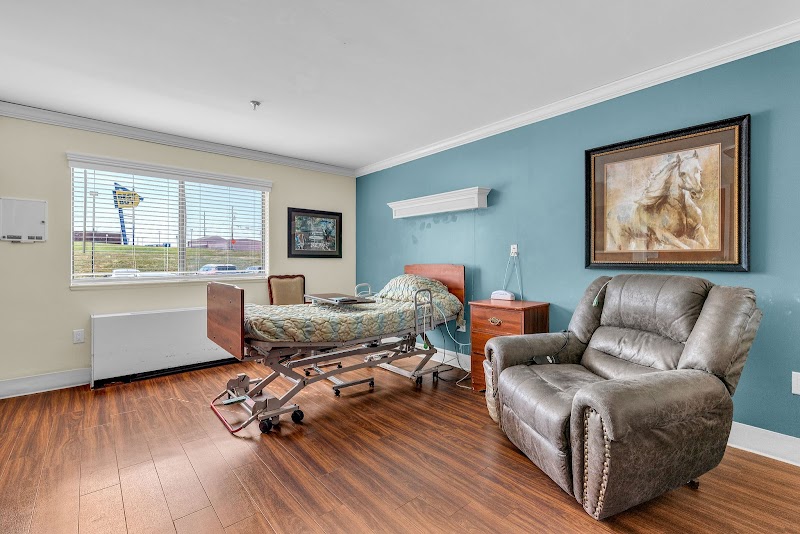
How is Plaza West Healthcare And Rehab Staffed?

CMS rates PLAZA WEST HEALTHCARE AND REHAB's staffing level at 1 out of 5 stars, which is much below average compared to other nursing homes. Staff turnover is 67%, which is 21 percentage points above the Kansas average of 46%. High turnover can affect care consistency as new staff learn residents' individual needs. RN turnover specifically is 58%, which is notably high. RNs provide skilled clinical oversight, so turnover in this role can affect medical care quality.

What Have Inspectors Found at Plaza West Healthcare And Rehab?

State health inspectors documented 75 deficiencies at PLAZA WEST HEALTHCARE AND REHAB during 2022 to 2025. These included: 3 Immediate Jeopardy (the most serious level, indicating potential for serious harm or death), 2 that caused actual resident harm, 69 with potential for harm, and 1 minor or isolated issues. Immediate Jeopardy findings are rare and represent the most serious regulatory concerns. They require immediate corrective action.
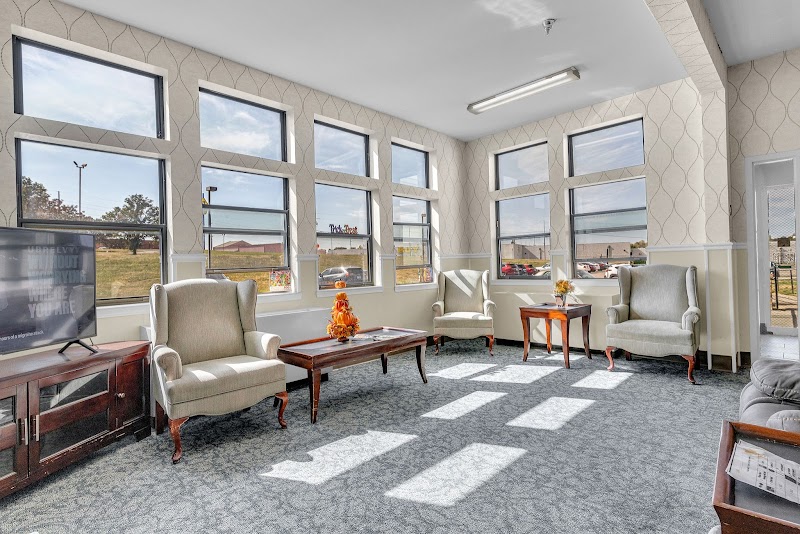
Who Owns and Operates Plaza West Healthcare And Rehab?

PLAZA WEST HEALTHCARE AND REHAB is owned by a for-profit company. For-profit facilities operate as businesses with obligations to shareholders or private owners. The facility is operated by RECOVER-CARE HEALTHCARE, a chain that manages multiple nursing homes. With 151 certified beds and approximately 125 residents (about 83% occupancy), it is a mid-sized facility located in TOPEKA, Kansas.
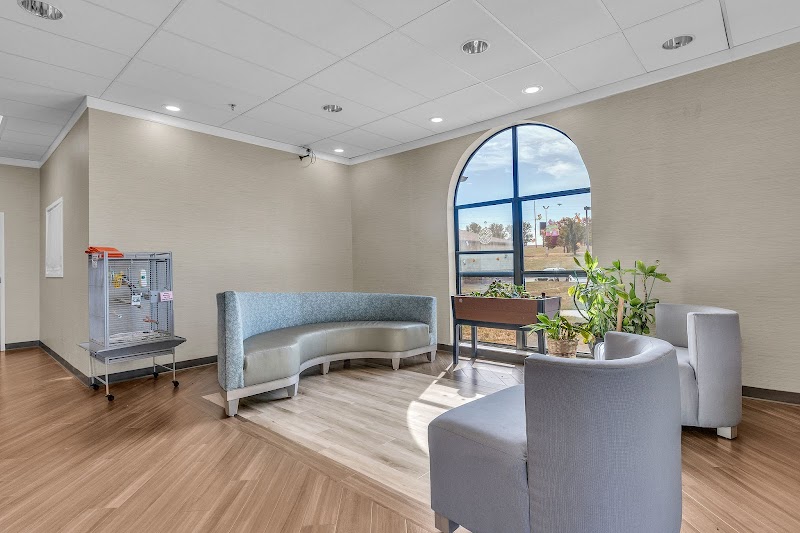
How Does Plaza West Healthcare And Rehab Compare to Other Kansas Nursing Homes?

Compared to the 100 nursing homes in Kansas, PLAZA WEST HEALTHCARE AND REHAB's overall rating (1 stars) is below the state average of 2.9, staff turnover (67%) is significantly higher than the state average of 46%, and health inspection rating (1 stars) is much below the national benchmark.

What Should Families Ask When Visiting Plaza West Healthcare And Rehab?

Based on this facility's data, families visiting should ask: "What changes have been made since the serious inspection findings, and how are you preventing similar issues?" "How do you ensure continuity of care given staff turnover, and what is your staff retention strategy?" "Can you walk me through typical staffing levels on day, evening, and night shifts?" "Can I visit during a mealtime to observe dining assistance and food quality?" These questions are particularly relevant given the facility's Immediate Jeopardy citations, the facility's high staff turnover rate, and the below-average staffing rating.

Is Plaza West Healthcare And Rehab Safe?

Based on CMS inspection data, PLAZA WEST HEALTHCARE AND REHAB has documented safety concerns. Inspectors have issued 3 Immediate Jeopardy citations (the most serious violation level indicating risk of serious injury or death). The facility has a 1-star overall rating and ranks #100 of 100 nursing homes in Kansas. Families considering this facility should ask detailed questions about what corrective actions have been taken since these incidents.

Do Nurses at Plaza West Healthcare And Rehab Stick Around?

Staff turnover at PLAZA WEST HEALTHCARE AND REHAB is high. At 67%, the facility is 21 percentage points above the Kansas average of 46%. Registered Nurse turnover is particularly concerning at 58%. RNs handle complex medical decisions and coordinate care — frequent RN changes can directly impact care quality. High turnover means new staff may not know residents' individual needs, medications, or preferences. It can also be disorienting for residents, especially those with dementia who rely on familiar faces. Families should ask: What is causing the turnover? What retention programs are in place? How do you ensure care continuity during staff transitions?

Was Plaza West Healthcare And Rehab Ever Fined?

PLAZA WEST HEALTHCARE AND REHAB has been fined $162,610 across 12 penalty actions. This is 4.7x the Kansas average of $34,705. Fines at this level are uncommon and typically indicate a pattern of serious deficiencies, repeated violations, or failure to correct problems promptly. CMS reserves penalties of this magnitude for facilities that pose significant, documented risk to resident health or safety. Families should request specific documentation of what issues led to these fines and what systemic changes have been implemented.

Is Plaza West Healthcare And Rehab on Any Federal Watch List?

PLAZA WEST HEALTHCARE AND REHAB is not on any federal watch list. The most significant is the Special Focus Facility (SFF) program, which identifies the bottom 1% of nursing homes nationally based on persistent, serious quality problems. Not being on this list means the facility has avoided the pattern of deficiencies that triggers enhanced federal oversight. This is a positive indicator, though families should still review the facility's inspection history directly.