TOPEKA PRESBYTERIAN MANOR
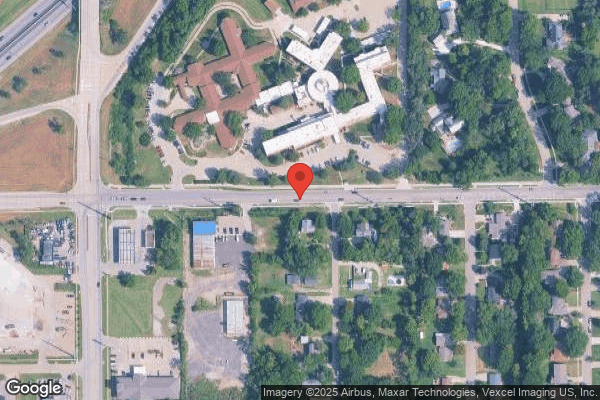
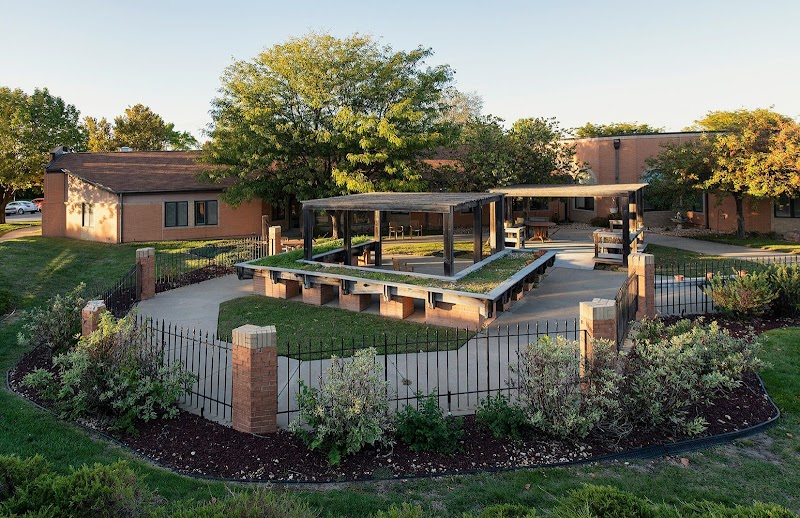
4712 SW 6TH AVE, TOPEKA, KS 66606 (785) 272-6510
Non profit - Corporation 68 Beds PRESBYTERIAN MANORS OF MID-AMERICA Data: November 2025
Trust Grade
20/100
#228 of 295 in KS
Last Inspection: December 2024

Within standard 12-15 month inspection cycle. Federal law requires annual inspections.

Overview

Topeka Presbyterian Manor has received a Trust Grade of F, indicating significant concerns about its operations and care quality. Ranked #228 out of 295 facilities in Kansas, it falls within the bottom half, and at #9 out of 15 in Shawnee County, only a few local options are worse. The facility is improving, having reduced its issues from 16 in 2024 to just 1 in 2025, but it still struggles with serious problems, including incidents where residents were not safely transferred, leading to fractures. Staffing is a relative strength, with a 4/5 star rating, but the turnover rate is 58%, which is higher than the state average, suggesting some instability. The facility also faces concerning fines totaling $39,105, indicating compliance issues, and it has below-average RN coverage, which could impact resident care.

Trust Score
F
20/100
In Kansas
#228/295
Bottom 23%
Safety Record
High Risk
Review needed
Inspections
Getting Better
16 → 1 violations
Staff Stability
⚠ Watch
58% turnover. Above average. Higher turnover means staff may not know residents' routines.
Penalties
✓ Good
$39,105 in fines. Lower than most Kansas facilities. Relatively clean record.
Skilled Nurses
○ Average
Each resident gets 31 minutes of Registered Nurse (RN) attention daily — about average for Kansas. RNs are the most trained staff who monitor for health changes.
Violations
⚠ Watch
33 deficiencies on record. Higher than average. Multiple issues found across inspections.
★★☆☆☆
2.0
Overall Rating
★★★★☆
4.0
Staff Levels
★★☆☆☆
2.0
Care Quality
★★☆☆☆
2.0
Inspection Score
Stable
2024: 16 issues
2025: 1 issues

The Good

  • 4-Star Staffing Rating · Above-average nurse staffing levels
  • Full Sprinkler Coverage · Fire safety systems throughout facility
  • No fines on record

Facility shows strength in staffing levels, fire safety.

The Bad

2-Star Overall Rating

Below Kansas average (2.9)

Below average - review inspection findings carefully

Staff Turnover: 58%

12pts above Kansas avg (46%)

Frequent staff changes - ask about care continuity

Federal Fines: $39,105

Above median ($33,413)

Moderate penalties - review what triggered them

Chain: PRESBYTERIAN MANORS OF MID-AMERICA

Part of a multi-facility chain

Ask about local staffing decisions and management

Staff turnover is elevated (58%)

10 points above Kansas average of 48%

The Ugly 33 deficiencies on record

4 actual harm
Jun 2025 1 deficiency
CONCERN (D) 📢 Someone Reported This

A family member, employee, or ombudsman was alarmed enough to file a formal complaint

Potential for Harm - no one hurt, but risky conditions existed

Accident Prevention (Tag F0689)

Could have caused harm · This affected 1 resident

The facility reported a census of 68 residents. The sample included four residents, with four reviewed for accidents and supervision. Based on observations, interviews, and record review, the facility...

Read full inspector narrative →
The facility reported a census of 68 residents. The sample included four residents, with four reviewed for accidents and supervision. Based on observations, interviews, and record review, the facility failed to provide adequate supervision for Resident (R) 1 resulting in an elopement from the facility. This deficient practice placed R1 at risk for preventable accidents and injuries. Findings included: - The Medical Diagnosis section within R1's Electronic Medical Record (EMR) included diagnoses of Alzheimer's disease (progressive mental deterioration characterized by confusion and memory failure), generalized anxiety disorder (mental or emotional reaction characterized by apprehension, uncertainty, and irrational fear), and chronic obstructive pulmonary disorder (COPD- a progressive and irreversible condition characterized by diminished lung capacity and difficulty or discomfort in breathing). R1's Quarterly Minimum Data Set (MDS) completed 06/05/25 noted a Brief Interview for Mental Status (BIMS) of nine, indicating moderate cognitive impairment. The MDS noted he had physically aggressive behaviors, rejections of care, and wandering observed for one to three days. The MDS noted he had bilateral lower extremity impairments but could walk independently with his walker. The MDS noted no falls. R1's Functional Ability Care Area Assessment (CAA) completed 03/11/25 indicated he required limited to extensive assistance with his activities of daily living (ADLs). The CAA noted he could ambulate independently with his walker. The CAA noted he could speak clearly and make his needs known. The CAA noted he had no falls since the last review. R1's Behaviors CAA completed 03/11/25 noted he had physical and verbal behaviors noted in the past. The CAA noted he had wandering behaviors due to his Alzheimer's and wore a Wanderguard (proximity bracelet that alerted staff when he was close too to the exit doors). R1's Care Plan initiated on 02/24/25 indicated he was at risk for elopement related to his Alzheimer's disease. The plan noted he used a walker and was able to ambulate independently. The plan indicated he had a Wandergurad and instructed staff to check its placement each shift and functionality daily. The plan noted he would pace by the facility entrance waiting for his wife to come visit. The plan instructed staff to provide redirection, food, drinks, or activities when pacing. R1's EMR under Physician's Orders revealed an order (dated 02/24/25) indicating he wore a Wanderguard bracelet on his right wrist The order instructed staff to check its placement each shift and functionality daily. R1's EMR under Progress Notes revealed a Behavior Note completed on 06/01/25. The note revealed that R1 followed someone out the door before the door's lock could engage. The note revealed the facility's Wanderguard alarm system activated alerting staff to the elopement. The note revealed staff found R1 resting against the brick wall outside the main entry to the facility. The note indicated R1 was assessed with no injuries and R1 was redirected back into the facility. A Facility Incident Report #5756 completed on 06/02/25 revealed that R1 eloped from the facility on 06/01/25 at 08:29 AM. The report indicated his Wanderguard bracelet alerted staff to the front entrance to find R1 leaning up against a brick wall waiting for his wife to arrive to take him to church. The report indicated staff escorted him back inside the facility and assessed him. The report's root-cause analysis revealed that R1 exited the facility behind a visitor leaving the facility. The report revealed all resident designated power of attorneys (DPOAs) were notified not to allow residents out of the facility without checking with staff. The report also noted signage was placed next to the door entry indicating visitors were to check with staff before allowing residents to exit the building. The report indicated all staff were provided education related to wandering and elopement. On 06/17/25 at 09:02 AM an inspection of the Main Entrance revealed signage posted next to the entry doors. The sign indicated All visitors must check with staff before allowing residents to exit the facility. On 06/17/25 at 11:15 AM, R1 rested in his bed. R1 stated he preferred to wait for his wife to arrive at the facility and often met her at the entrance. R1 stated he could not recall the elopement incident but felt he was safe to go outside when he wanted to. R1's Wanderguard bracelet was around his right wrist. On 06/17/25 at 12:05 PM, Licensed Nurse G stated R1's Wandergaurd was checked each shift and tested before bedtime. She stated he liked to wait in the front lobby area for his wife to arrive at the facility to go on outings. She stated that R1 was often confused and required supervision while being outside. On 06/17/25 at 12:20 PM, Administrative Nurse D stated that R1 would often wait for his wife and go to church with her. She stated that R1 followed a visitor out of the facility. She stated the Wanderguard system was triggered, and staff were able to get him back inside without behaviors or issues. She stated the facility had educated staff and visitors about the risks of wandering and elopement. The facility's Wandering and Elopement policy (undated) indicated the facility would monitor all residents at risk for elopement would be closely monitored. The policy noted staff would follow each resident's individualized care interventions as well as facility-wide processes. The facility implemented and completed the following corrective actions related to this incident prior to onsite survey: 1. R1 was immediately assessed on 06/01/25. 2. The facility emailed all DPOAs education related to checking with staff before allowing residents to exit the facility and placed signage on 06/02/25. 3. The facility identified all at-risk residents with potential elopement risks on 06/02/25. 4. The facility completed an audit of all residents with Wanderguard bracelets on 06/02/25. 5. Staff training and education were provided related to wandering and elopement risks on 06/02/25. 6. A medication review was completed for R1 on 06/02/25. Due to the corrective actions completed on 06/02/25, prior to the onsite visit on 06/17/25, the deficient practice was deemed past non-compliance at a D (potential for harm) scope and severity.
Dec 2024 14 deficiencies
CONCERN (D)

Potential for Harm - no one hurt, but risky conditions existed

Deficiency F0558 (Tag F0558)

Could have caused harm · This affected 1 resident

The facility had a census of 63 residents. The sample included 18 residents with two reviewed for accommodation of needs related to assistive devices. Based on observation, record review, and intervie...

Read full inspector narrative →
The facility had a census of 63 residents. The sample included 18 residents with two reviewed for accommodation of needs related to assistive devices. Based on observation, record review, and interview the facility failed to utilize and ensure the appropriate use of foot pedals during wheelchair transports for Resident (R) 1, R41, and R47. This placed the residents at risk for preventable accidents and injuries. Findings Included: - On 12/09/24 at 07:30 AM, R1 (resident with upper and lower extremity impairments) was wheeled out of his room to the medication cart by the nurse's station. R1's foot pedals were not in place as staff pushed him down the hall. At 07:35 AM, staff applied his foot pedals and wheeled him to breakfast. On 12/10/24 at 08:32 AM, R41 (severely cognitively and physically impaired resident) sat upright in his Broda chair as an unidentified staff pushed his chair down the hallway toward the edge of the dining room close to his room. R41's feet slid along on the floor as staff pushed his chair. On 12/10/24 at 08:56 AM, R41 sat upright in his Broda chair by the dining room near his room. R41's feet were not appropriately positioned in his Broda chair and his feet slid on the ground as staff wheeled him down the hallway. On 12/11/24 at 08:00 AM, Licnesed Nurse (LN) G pushed R47 down the Cedar View hallway. R47's wheelchair had no foot pedals in place, and her feet slid on the ground as she was pushed. On 12/11/24 at 11:45 AM, LN G stated all the residents had foot pedals and staff should ensure they were in place before transporting the residents. On 12/11/24 at 12:55 PM, Certified Nurse Aide (CNA) Q stated staff was expected to verify the foot pedals were in place and the residents were in the proper positioning before wheeling them anywhere. On 12/11/24 at 02:01 PM, Administrative Nurse D stated staff were expected to ensure the foot pedals were utilized while transporting residents. The facility did not provide a policy related to accommodation of needs or assistive devices for wheelchairs. The facility failed to utilize and ensure the appropriate use of foot pedals during wheelchair transports for R1, R41, and R47. This placed the resident at risk for preventable accidents and injuries.
CONCERN (D)

Potential for Harm - no one hurt, but risky conditions existed

ADL Care (Tag F0677)

Could have caused harm · This affected 1 resident

**NOTE- TERMS IN BRACKETS HAVE BEEN EDITED TO PROTECT CONFIDENTIALITY** The facility identified a census of 63 residents. The sample included 18 residents with four residents reviewed for activities o...

Read full inspector narrative →
**NOTE- TERMS IN BRACKETS HAVE BEEN EDITED TO PROTECT CONFIDENTIALITY** The facility identified a census of 63 residents. The sample included 18 residents with four residents reviewed for activities of daily living (ADL) care. Based on observation, record review, and interviews, the facility failed to ensure staff assisted Resident (R) 4 with grooming. This deficient practice placed R4 at risk for impaired dignity and a further decline in ADL. Finding Included: - R4's Diagnosis section within the Electronic Medical Record (EMR) noted diagnoses of ischemia (decreased supply of oxygenated blood to a body part), heart disease (the heart does not pump as well as it should), myocardial infarction (heart attack), hypertension (high blood pressure), cognitive decline, kidney disease stage four (severe damage to the kidneys and a significant decline in function), and obesity (excessive body fat). R4's Quarterly Minimum Data Set (MDS) dated [DATE] noted a Brief Interview of Mental Status (BIMS) score of four which indicated severe cognitive impairment. The MDS indicated R4 needed partial to moderate assistance with bathing, and setup and clean up with personal hygiene. The MDS documented R4 needed set up and clean up for toileting. R4's Cognitive Loss/Dementia Care Area Assessment (CAA) completed 05/07/24 indicated R4 had some issues with recall ability and orientation. R4 would sometimes refuse her shower. The CAA documented R4 had expressive dysphagia (swallowing difficulty) due to Alzheimer's disease (progressive mental deterioration characterized by confusion and memory failure). R4's Communication CAA completed 05/07/24 indicated R4 hears without any difficulty and was able to make her needs known. R4's CAA indicated she had difficulty finding words and finishing her thoughts, and she had poor memory and decision-making. R4's Care Plan dated 06/24/21 documented R4 needed staff assistance with set up to limited assistance with ADLs and staff would document R4 would receive appropriate assistance with ADLs such as grooming, repositioning, toileting, eating, transferring, and bathing. R4's plan of care documented she had no preference of when her shower time would be, or what day. R4's medical record consistently documented refusals for showering. On 12/09/24 at 12:01 PM, R4 sat in her wheelchair at the dining room table, R4's hair was matted at the back of her head, and the top of her hair was sticking straight up. On 12/09/24 at 01:24 PM, R4 stated she would take a shower. R4 stated that she was unable to comb her own hair. On 12/11/24 at 11:15 AM, Licensed Nurse (LN) J stated that R4 gets her hair styled at the salon twice a week and the next day her hair does not look like she has gone to the salon. She stated it was the responsibility of the staff member to get R4 ready to go to lunch and ensure she was clean, and her hair was combed before they took her from her room. On 12/11/24 at 12:34 PM, Certified Nurse's Aide (CNA) Q stated all nursing staff were responsible for ensuring the residents were clean, their hair was combed, and they had on clean clothes before each resident left their room. On 12/11/24 at 03:24 PM, Administrative Nurse D stated it was the expectation of the facility that each staff member be responsible for ensuring the residents look presentable before the resident leaves their room. The facility failed to provide a policy for activities of daily living. The facility failed to ensure staff assisted R4 with grooming. This deficient practice placed resident R4 at risk for impaired dignity and a further decline in ADL.
CONCERN (D)

Potential for Harm - no one hurt, but risky conditions existed

Pressure Ulcer Prevention (Tag F0686)

Could have caused harm · This affected 1 resident

**NOTE- TERMS IN BRACKETS HAVE BEEN EDITED TO PROTECT CONFIDENTIALITY** The facility identified a census of 63 residents. The sample included 18 residents with two residents reviewed for treatment and...

Read full inspector narrative →
**NOTE- TERMS IN BRACKETS HAVE BEEN EDITED TO PROTECT CONFIDENTIALITY** The facility identified a census of 63 residents. The sample included 18 residents with two residents reviewed for treatment and services to prevent and heal pressure ulcers (localized injury to the skin and/or underlying tissue usually over a bony prominence, because of pressure, or pressure in combination with shear and/or friction). Based on observation, record review, and interviews, the facility failed to ensure Resident (R)32's low air-loss mattress was set at the appropriate weight for pressure reduction. This placed R32 at increased risk for pressure ulcer development and delayed healing. Findings Included: - R32's Electronic Medical Record (EMR) from the Diagnosis tab documented diagnoses of hemiplegia (paralysis of one side of the body) on the left dominant side, muscle wasting, muscle weakness, difficulty in walking, dysphagia (swallowing difficulty), obesity (excessive body fat), aphasia (condition with disordered or absent language function), anemia (an inadequate number of healthy red blood cells to carry adequate oxygen to body tissues), anxiety (mental or emotional reaction characterized by apprehension, uncertainty, and irrational fear), major depressive disorder (major mood disorder that causes persistent feelings of sadness), and Alzheimer's disease (progressive mental deterioration characterized by confusion and memory failure). The Quarterly Minimum Data Set (MDS) dated [DATE] documented a Brief Interview of Mental Status (BIMS) score of 13 which indicated intact cognition. The MDS documented that R32 had an impairment on one side of her body. The MDS documented R32 was dependent on staff for upper and lower body dressing, and toileting. The MDS documented R32 needed substantial to maximum assistance with showers and oral hygiene and was dependent on staff to roll right to left. The MDS documented R32 was at risk for pressure ulcers and had a pressure-reducing device on her bed and in her chair. R32's Pressure Ulcer/ Injury Care Area Assessment dated 02/27/24 documented R32 was at risk for skin issues and pressure injuries. R32 spends most of her time in her bed. R32 had a low air-loss mattress in place and a turning schedule. R32's CAA documented she was incontinent of bowel and bladder. R32's Care Plan dated 08/16/19 documented R32 was at risk for pressure ulcers and skin impairments, due to decreased mobility and incontinence. R32's plan of care documented she had a low air-loss mattress and staff should set the firmness of her mattress between 190-210 pounds. Staff were to assist R32 with repositioning when she was in bed and in her wheelchair. R32's plan of care dated 07/24/23 documented she should wear a resting splint to her left hand, and staff were to inspect her hand for redness daily. R32's Braden Scale for Prediction Pressure Sore Risk dated 11/05/2024 documented a score of 10 indicating a high risk for pressure ulcers. R32's EMR under Treatment Administration Record (TAR) documented the following physicians' orders: Barrier cream to buttocks after each incontinent episode/brief change, apply three times daily dated 06/19/24. R32's medical record lacked evidence of monitoring of R32's low air-loss mattress. R32's EMR under Vital Stats documented a weight of 201.8 dated 12/07/24. On 12/09/24 at 09:05 AM, R32 lay on her bed on her right side. R32's low air-loss mattress pump (Protect-Aire 2000) was set at 320 (pounds) and had a setting to adjust in 30-pound increments. On 12/11/24 at 1:28 AM, Licensed Nurse (LN) K stated she monitored the low air loss pump to ensure the mattress was plugged in and was set at the correct weight. LN K was unable to find where the bed was being monitored in R32's EMR. LN K stated the nurse in charge when the low air-loss mattress was put in place should have put monitoring of the mattress on the TAR. LN K stated the pump should be set by the current weight of the resident. On 12/11/24 at 12:48 PM, Certified Nursing Aid (CNA) Q stated if she went into a room and the pump was beeping, she would ensure the bed was plugged in and let her charge nurse know. She stated she does not turn the settings on the residents' low air-loss pump. On 12/11/24 at 03:24 PM, Administrative Nurse D stated nursing checks each mattress every day. Administrative Nurse D stated nurses sign off on the Treatment Administration Record (TAR) each shift, stating the mattress was plugged in and the pump was set at the correct weight. The facility's Skin Integrity policy dated 09/05/24 documented that all residents were considered to have some risk for the development of pressure ulcers/injuries. Nursing staff would evaluate skin integrity and tissue tolerance, implement preventative measures as indicated, and treat skin breakdown. The primary care provider admission orders authorize approval to begin using established skin and treatment guidelines. Licensed nurses performed dressing changes. Licensed nurses may delegate minor skin tear treatment and preventative treatments in closed areas who have received appropriate skin care training. The facility failed to ensure R32's low air-loss mattress was set at the correct weight setting to prevent pressure ulcers. This placed R32 at increased risk for pressure ulcer development.
CONCERN (D)

Potential for Harm - no one hurt, but risky conditions existed

Deficiency F0700 (Tag F0700)

Could have caused harm · This affected 1 resident

**NOTE- TERMS IN BRACKETS HAVE BEEN EDITED TO PROTECT CONFIDENTIALITY** The facility identified a census of 63 residents. The sample included 18 residents with eight residents reviewed for accidents. ...

Read full inspector narrative →
**NOTE- TERMS IN BRACKETS HAVE BEEN EDITED TO PROTECT CONFIDENTIALITY** The facility identified a census of 63 residents. The sample included 18 residents with eight residents reviewed for accidents. Based on observation, record review, and interviews, the facility failed to ensure that Resident (R) 33 had a safety assessment for the use of side rails that acknowledged the risks when used with a low air-loss mattress. This deficient practice placed R33 at risk for uninformed decisions and impaired safety related to the risks associated with the use of side rails. Findings Included: - The Diagnosis section within R33's Electronic Medical Records (EMR) documented diagnoses of Alzheimer's disease (progressive mental deterioration characterized by confusion and memory failure), history of fractures (broken bones) related to falls, hearing loss, age-related physical debility, fatigue, urinary retention, and age-related macular degeneration (progressive deterioration of the retina). R33's Quarterly Minimum Data Set (MDS) dated [DATE] documented a Brief Interview of Mental Status (BIMS) score of three indicating severe cognitive impairment. The MDS indicated she was fully dependent on staff assistance for transfers, bed mobility, bathing, toileting, personal hygiene, and dressing. The MDS documented she had one fall since her last assessment. The MDS documented bed rails were not in use. R33's Functional Abilities Care Area Assessment (CAA) completed 04/29/24 indicated she was at risk for falls related to her medical diagnoses and cognitive impairment. The CAA documented she had visual and hearing impairments. The CAA documented she required extensive to total assistance from staff for her activities of daily living (ADLs) and transfers. R33's Fall CAA completed 04/29/24 indicated she had one fall since and was at risk due to her impaired vision, hearing, cognition, and mobility. R33's Care Plan initiated on 12/19/23 indicated she was at risk for falls and required extensive to total assistance from staff for grooming, toileting, bathing, transfers, and repositioning. The plan instructed staff to follow her provided toileting plan, assist with ADLs, ensure her bed was in the lowest position, and encourage her to use her call light for assistance. The plan documented she had a positional rail (grab bar) mounted on the right side of her bed. The plan documented she had a low air-loss mattress to prevent pressure-related injuries. R33's EMR under Forms revealed an Assistive Device for Bed Screening form completed on 10/14/24. The screening documented that R33 had an ADL impairment and a history of falls. The screening documented she had poor trunk control, difficulty repositioning, and fluctuations in her level of consciousness. The screening documented she used the bed mobility device for transfers and repositioning. The screening failed not acknowledge the use of her low air-loss mattress. A review of the low air-loss mattress manufacturer's operation (Drive Model #14530 Series) manual indicated the usage of bed rails with the air mattress system should be assessed based on the risk of entrapment. On 12/10/24 at 11:03 AM, R33's mattress sat in the low position. Her Low air-loss mattress pump, Drive Model #14530 Series, was set at 80 pounds (lbs.) per her orders. Her bed had a right-sided hand-bar style side rail toward the head of her bed. On 12/11/24 at 11:30 AM, Licensed Nurse (LN) G stated staff looked at each resident's bed and attachment each shift to ensure the mattresses were set appropriately and each bed was safe. She stated that low air-loss mattresses were set by weight and that the bed rails should have no gaps. On 12/11/24 at 02:01 PM, Administrative Nurse D stated the facility did not assess side rails or handrails in relation to the use of low air-loss mattresses. She stated they look at the placement of the rails and ensure no gaps exist. The facility's Assistive Device Used for Bed policy revised 09/2024 indicated the facility would assess the need for the use of all assistive devices to ensure functionality, safety, and appropriate use. The policy indicated the facility would ensure identification of the risks and hazards associated with railing. The policy documented the use of low air-loss mattresses would be included in the evaluation of potential risks. The facility failed to ensure that R33 had a safety assessment for the use of side rails that acknowledged the risks when used with a low air-loss mattress. This placed R33 at risk for uninformed decisions and impaired safety related to the risks associated with the use of side rails.
CONCERN (D)

Potential for Harm - no one hurt, but risky conditions existed

Medication Errors (Tag F0758)

Could have caused harm · This affected 1 resident

**NOTE- TERMS IN BRACKETS HAVE BEEN EDITED TO PROTECT CONFIDENTIALITY** The facility identified a census of 63 residents. The sample included 18 residents with five residents reviewed for unnecessary ...

Read full inspector narrative →
**NOTE- TERMS IN BRACKETS HAVE BEEN EDITED TO PROTECT CONFIDENTIALITY** The facility identified a census of 63 residents. The sample included 18 residents with five residents reviewed for unnecessary medications. Based on observation, record review, and interviews, the facility failed to ensure Resident (R) 41 had a Centers for Medicare and Medicaid (CMS) approved indication or the required physician-documented rationale including risk versus benefits and nonpharmocologcal attempts prior to the use of the antipsychotic (a class of medications used to treat major mental conditions that cause a break from reality) medication Zyprexa. This placed R41 at risk for unnecessary medication administration and possible adverse side effects. Findings included: - R41's Electronic Medical Record (EMR) documented diagnoses of vascular dementia with irritation (a condition where a person experiences increased motor activity, restlessness, aggressiveness, and emotional distress), depression (a mood disorder that causes a persistent feeling of sadness and loss of interest), anxiety (mental or emotional reaction characterized by apprehension, uncertainty, and irrational fear), and delirium (sudden severe confusion, disorientation, and restlessness). R41's Significant Change Minimum Data Set (MDS) dated [DATE] documented a Brief Interview for Mental Status (BIMS) score of three which indicated a severely impaired cognition. R41 had a limitation in range of motion with impairment on one side of the upper extremity. R41 required substantial assistance to complete dependence on staff for activities of daily living (ADLs) and functional abilities. R41 was receiving hospice services. The MDS documented R41 had a diagnosis of dementia (a progressive mental disorder characterized by failing memory and confusion). The MDS documented R41 had received antipsychotic medication, antidepressant (a class of medication used to treat mood disorders) medication, antianxiety (a class of medication that calms and relaxes people) medication, and opioid (a class of controlled drugs used to treat pain) medication during the observation period. The MDS documented no gradual dose reduction was completed and there was physician documentation that a gradual dose reduction was contraindicated for R41. R41's Quarterly MDS dated 09/17/24 documented a BIMS score of three which indicated a severely impaired cognition. R41 had a limitation in range of motion with impairment on both sides of the upper extremity. R41 required substantial assistance to complete dependence on staff for ADLs and functional abilities. R41 was receiving hospice services. The MDS documented R41 had a diagnosis of dementia. The MDS documented R41 had received antipsychotic medication, antidepressant medication, antianxiety medication, and opioid medication during the observation period. The MDS documented no gradual dose reduction was completed and there was physician documentation that a gradual dose reduction was contraindicated for R41. R41's Psychotropic Care Area Assessment (CAA) dated 06/24/24 documented he took antianxiety, antidepressant, and antipsychotic medications daily. He has a diagnosis of severe dementia with agitation, depression, and anxiety. R41 has had falls since the last review and scored high risk for falls. R41 was at risk for changes in mood/behaviors and the effects of medications. R41's Care Plan revised on 04/22/24 directed staff he took Zyprexa and needed to be monitored for side effects. Staff were directed to report any medication side effects to the charge nurse for further evaluation. R41's Orders tab of the EMR documented an order dated 08/12/24 for Zyprexa five milligrams (mg) by mouth daily for delirium and anxiety. R41's EMR lacked a physician documented rationale along with risks versus benefits and nonpharmacological interventions attempted and failed. On 12/10/24 at 07:12 AM, R41 sat in his Broda chair (specialized wheelchair with the ability to tilt and recline) in the hallway across from the nurse's station asleep. R41 had a dressing on his right temple and his hair was uncombed. On 12/10/24 at 01:56 PM, R41 sat in his Broda chair yelling out as staff walked by without addressing him. On 12/11/24 at 03:25 PM, Administrative Nurse D stated she expected the physician to document the risk versus benefit rationale for the use of antipsychotic medications. Administrative Nurse D stated that R41's restlessness had increased, and the resident was admitted to hospice services. The Psychoactive Psychopharmacological Medications policy revised 07/05/22 documented that psychoactive medications would not be used for discipline or for convenience and would not be used unless necessary to treat medical symptoms. Psychoactive medications would be monitored by the interdisciplinary team (IDT) through the care planning process. The benefits and side effects of these medications would be discussed with the primary care provider, so drug selection and dosages were adjusted as necessary to provide the best therapeutic effect for the resident. The facility failed to ensure R41 had a CMS-approved indication or the required physician documented rationale including risks versus benefits for the use of Zyprexa. This placed R41 at risk for unnecessary medication administration and possible adverse side effects.
CONCERN (D)

Potential for Harm - no one hurt, but risky conditions existed

Deficiency F0849 (Tag F0849)

Could have caused harm · This affected 1 resident

**NOTE- TERMS IN BRACKETS HAVE BEEN EDITED TO PROTECT CONFIDENTIALITY** The facility identified a census of 63 residents. The sample included 18 residents with two residents reviewed for hospice. Base...

Read full inspector narrative →
**NOTE- TERMS IN BRACKETS HAVE BEEN EDITED TO PROTECT CONFIDENTIALITY** The facility identified a census of 63 residents. The sample included 18 residents with two residents reviewed for hospice. Based on observation, record review, and interviews, the facility failed to ensure coordinated care and services provided by the facility with the care and services provided by hospice for Resident (R) 43 and R38. This placed the residents at risk for inadequate end-of-life care. Finding Included: - R43's Electronic Medical Record (EMR) from the Diagnosis tab documented diagnoses of anxiety (mental or emotional reaction characterized by apprehension, uncertainty, and irrational fear), kidney failure (a condition where one or both kidneys no longer work on their own), chronic obstructive pulmonary disease (COPD - a progressive and irreversible condition characterized by diminished lung capacity and difficulty or discomfort in breathing), hypertension (high blood pressure), major depressive disorder (major mood disorder that causes persistent feelings of sadness), Parkinson's disease (a slowly progressive neurologic disorder characterized by resting tremors, rolling of the fingers, masklike faces, shuffling gait, muscle rigidity, and weakness), and chronic respiratory failure with hypoxia (when there was not enough oxygen in the blood). The Significant Change in Status Minimum Data Set (MDS) dated [DATE] recorded a Brief Interview for Mental Status (BIMS) score of 12, which indicated moderately impaired cognition. The MDS documented R43 was dependent on staff for personal hygiene, toileting, and dressing. The MDS documented R43 received hospice services during the observation period. R43's Cognitive Loss/Dementia Care Area Assessment (CAA) dated 10/09/24 documented R43 had issues with recall ability at times. The CAA documented R43 was newly re-admitted to hospice services and nursing would see R43's medication list, as-needed (PRN) medications, and ensure medicines were ordered for R43's mood state. The MDS documented staff would see the nurse practitioner's note for a diagnosis of dementia (a progressive mental disorder characterized by failing memory and confusion); R43 had an alteration in thought processes due to dementia. R43's Care Plan dated 07/11/22 documented R43 required maximum assistance of one staff with activities of daily living (ADL) such as eating, bathing transfers, bathing, and toileting. Nursing staff were to encourage R43 to wear footwear in the mornings. R43's plan of care dated 10/10/24 documented R43 would receive hospice services. R43's plan of care dated 10/11/24 documented the hospice provider would coordinate services with the facility. The care plan lacked instruction on the services provided by hospice; including the frequency and type of support visits, supplies and medical equipment provided by hospice, medications covered by hospice, and the hospice contact information. A review of the hospice-provided communication binder revealed R43 was admitted to hospice services on 10/15/24. On 12/09/24 at 09:44 AM, R43 sat in her chair in her room, covered with a blanket. On 12/10/24 at 11:42 AM, R43 sat at the dining room table, waiting for her lunch. On 12/11/24 at 11:15 AM, Licensed Nurse (LN) J stated anything hospice provided for a resident should be care planned, such as when the aid or nurse would come to the facility, equipment, medications, and supplies. LN J stated she does not do care plans and was unsure where staff would find the information if it was not in the resident's care plan. On 12/11/24 at 12:54 PM, Certified Nursing Aide (CNA) Q stated she did not know if the care plan stated what hospice provided for a resident. CNA Q stated when she charted her tasks, she was able to see the resident's needs. CNA Q stated she would ask her nurse about the specific equipment hospice provided or look at the tag on the back of the resident's chair. On 12/11/24 at 03:24 PM, Administrated Nurse D stated the resident's care plan should state what was provided by hospice, what medication, equipment, and supplies, and when the hospice staff would be in the building. Administrated Nurse D stated staff could find the information in the hospice-provided binder, but she did not believe this information was in the facility's care plan. The facility's Care Management policy reviewed on 10/11/21 documented that management of resident care was conducted systematically and comprehensively by an interdisciplinary team knowledgeable in current concepts of geriatric care. Management used the five steps of the nurse process: assessment, diagnosis, goal setting, implantation, and evaluation; and was always consistent with the medical plan of care. The facility failed to coordinate care between the facility and the hospice provider for R43, who received hospice services. This deficient practice placed the resident at risk for inadequate end-of-life care. - R38's Electronic Medical Record (EMR) documented diagnoses of respiratory failure (a condition that occurs when the lungs cannot get enough oxygen into the blood), chronic kidney disease (a long-term condition where the kidneys gradually lose their ability to filter blood properly), and hypertension (HTN - elevated blood pressure). R38's Significant Change Minimum Data Set (MDS) dated [DATE] documented that she had short and long-term memory problems. R38 had impairment on one side of her upper extremity. R38 was dependent on staff for activities of daily living (ADLs) and functional abilities. R38 received hospice services. R38's Cognitive Care Area Assessment (CAA) dated 11/19/24 documented she had impaired cognition and was non-verbal. R38 recently had a decline and was on hospice services. R38's Care Plan revised on 11/19/24 directed staff that hospice would provide durable medical equipment (DME) of a mattress, wheelchair, briefs, and oxygen. The care plan directed staff that hospice staff was to visit per the hospice plan of care (POC). The care plan lacked staff direction on what services the hospice staff would provide and when, as well as what medications were covered. R38's EMR under the Orders tab revealed the following physician orders: May consult hospice dated 11/08/24. On 12/10/24 at 07:11 AM, R38 sat in her recliner in her room. R38's TV was on, but the lights were turned off. On 12/11/24 at 11:15 AM, Licensed Nurse (LN) J stated anything hospice provided for a resident should be care planned, such as when the aid or nurse would come to the facility, equipment, medications, and supplies. LN J stated she does not do care plans and was unsure where staff would find the information if it was not located in the resident's care plan. On 12/11/24 at 12:54 PM, Certified Nursing Aide (CNA) Q stated she did not know if the care plan stated what hospice provided for a resident. CNA Q stated when she charted her tasks, she was able to see the resident's needs. CNA Q stated she would ask her nurse about the specific equipment hospice provided or look at the tag on the back of the resident's chair. On 12/11/24 at 03:24 PM, Administrated Nurse D stated the resident's care plan should state what was provided by hospice, what medication, equipment, and supplies, and when the hospice staff would be in the building. Administrated Nurse D stated staff could find the information in the hospice-provided binder, but she did not believe this information was in the facility's care plan. The facility's Care Management policy reviewed on 10/11/21 documented that management of resident care was conducted systematically and comprehensively by an interdisciplinary team knowledgeable in current concepts of geriatric care. Management used the five steps of the nurse process: assessment, diagnosis, goal setting, implantation, and evaluation; and was always consistent with the medical plan of care. The facility failed to coordinate care between the facility and the hospice provider for R38, who received hospice services. This deficient practice placed the resident at risk for inadequate end-of-life care.
CONCERN (D)

Potential for Harm - no one hurt, but risky conditions existed

Deficiency F0883 (Tag F0883)

Could have caused harm · This affected 1 resident

The facility identified a census of 63 residents. The sample included 18 residents with five residents reviewed for influenza (a contagious respiratory illness that infects the nose, throat, and somet...

Read full inspector narrative →
The facility identified a census of 63 residents. The sample included 18 residents with five residents reviewed for influenza (a contagious respiratory illness that infects the nose, throat, and sometimes the lungs) and pneumococcal (a disease that refers to a range of illnesses that affect various parts of the body and are caused by infection) immunizations. Based on record review and interviews the facility failed to ensure Resident (R) 51 received the pneumococcal vaccine after consenting to the vaccination. This deficient practice placed R51 at risk for acquiring, transmitting, or experiencing complications from the pneumococcal disease. Findings included: - On 12/11/24 an review for influenza and pneumococcal immunizations was completed for R17, R27, R31, R43, and R51. R51's Immunization tab in the EMR revealed he received a pneumococcal (PPSV23) vaccination on 12/17/14 and a pneumococcal vaccination (PCV13) on 01/20/16. The EMR lacked documentation that other pneumococcal vaccinations (PCV20 or PCV21) were offered or given. On 12/10/24 at 08:05 AM, R51 stated he admitted to the facility in 2023 and had not received pneumococcal vaccinations since his admission. He stated someone talked to him a few months ago but he has not received any update on it. On 12/11/24 at 01:25 PM, Administrative Nurse D provided a Pneumococcal Consent Form for R51 completed on 08/28/24. The form indicated R51 consented to receive the newer PCV20 pneumococcal vaccination on 08/28/24 but never received the vaccination. On 12/11/24 at 02:01 PM, Administrative Nurse D stated she gave R51 his vaccination earlier in the morning (12/11/24). Administrative Nurse D was unable to explain why the vaccination had not been given since August. The facility's Immunization-Pneumococcal revised 07/2024 indicated all residents would be screened for pneumococcal vaccinations. The policy indicated the facility would assess each resident's history, health status, and preferences. The facility failed to ensure R51 received the pneumococcal vaccine after consenting to the vaccination. This deficient practice placed R51 at risk for acquiring, transmitting, or experiencing complications from the pneumococcal disease.
CONCERN (E)

Potential for Harm - no one hurt, but risky conditions existed

Deficiency F0679 (Tag F0679)

Could have caused harm · This affected multiple residents

The facility identified a census of 63 residents. The sample included 18 residents. Based on observation, record review, and interviews, the facility failed to provide consistent weekend activities on...

Read full inspector narrative →
The facility identified a census of 63 residents. The sample included 18 residents. Based on observation, record review, and interviews, the facility failed to provide consistent weekend activities on Saturdays to promote socialization. This deficient practice placed the affected residents at risk for decreased psychosocial well-being, boredom, and isolation. Findings included: - A review of the facility's Activity Calendar for October, November, and December 2024 was completed. The Activity Calendar for October recorded the following Saturday activities: for 10/05/24 were Chronicles and Current Events, afternoon bingo, deep breathing, exercise, and balance; and on 10/12/24 the activity was afternoon bingo, exercise, balance, and deep breathing. The Activities Calendar recorded no activities for 10/19/24, and 10/26/24. The Activity Calendar for November 2024 recorded no activity on 11/02/24, and 11/09/24. The Activity Calendar listed 11/16/24 was a musical performance. The Activity Calendar on 11/23/24 listed deserts for Thanksgiving open house, and no activities on 11/30/24. The Activities Calendar for December 2024 revealed each Saturday had no activities listed. On 12/10/24 at 08:59 AM, Resident Council members reported on weekends, starting in October, there were not many activities. The council reported they could go to church services on Sundays. The Resident Council stated there were no consistent activities on Saturday and residents stayed in their rooms and watched TV. The Resident Council stated the weekends get very long and boring. On 12/11/24 at 11:06 AM, Activities Staff Z verified the facility did not have consistent weekend activities. She stated the facility was working on getting volunteers from the churches and staff for activities on the weekends. On 12/11/24 at 12:54 PM, Certified Nursing Aide (CNA) Q stated she was unsure if there were weekend activities. She stated she had never done any weekend activities for the residents. On 12/11/24 at 03:24 PM, Administrative D stated the facility had volunteers on Sundays, and the nursing staff could do weekend activities. She stated the facility had activities that nursing staff could hand out to the residents on the weekends. The facility's Life Enrichment Programs policy reviewed on 10/13/21 documented that group life enrichment programs would be provided which are designed to meet, in accordance with the comprehensive assessment, the interest and the physical, mental, and psychosocial well-being of each resident. Residents would be encouraged to participate in group life enrichment of interest and encouraged to develop new interests. The facility failed to provide consistent weekend activities for the residents to promote socialization. This deficient practice placed the affected residents at risk for decreased psychosocial well-being, boredom, and isolation.
CONCERN (E)

Potential for Harm - no one hurt, but risky conditions existed

Accident Prevention (Tag F0689)

Could have caused harm · This affected multiple residents

- R43's Electronic Medical Record (EMR) from the Diagnosis tab documented diagnoses of anxiety (mental or emotional reaction characterized by apprehension, uncertainty, and irrational fear), kidney fa...

Read full inspector narrative →
- R43's Electronic Medical Record (EMR) from the Diagnosis tab documented diagnoses of anxiety (mental or emotional reaction characterized by apprehension, uncertainty, and irrational fear), kidney failure (a condition where one or both kidneys no longer work on their own), chronic obstructive pulmonary disease (COPD - a progressive and irreversible condition characterized by diminished lung capacity and difficulty or discomfort in breathing), hypertension (high blood pressure), major depressive disorder (major mood disorder that causes persistent feelings of sadness), Parkinson's disease (a slowly progressive neurologic disorder characterized by resting tremors, rolling of the fingers, masklike faces, shuffling gait, muscle rigidity, and weakness), and chronic respiratory failure with hypoxia (when there was not enough oxygen in the blood). The Significant Change in Status Minimum Data Set (MDS) for R43 dated 10/09/24 recorded a Brief Interview for Mental Status (BIMS) score of 12, which indicated moderately impaired cognition. The MDS documented R43 was dependent on staff for personal hygiene, toileting, and dressing. The MDS documented R43 was at risk for falls and had one non-injury fall. R43's Fall Care Area Assessment dated 10/09/24 documented R43 scored at high risk for falls. R43 had a non-injury unwitnessed fall on 10/09/24. R43 was started on hospice services. The CAA documented R43 required extensive assistance of one staff with transfers, had daily incontinence, and required total assistance with toileting needs. R43's CAA documented R43 used a wheelchair for mobility and required total assistance from one staff. R43's Care Plan dated 07/11/22 documented staff were to encourage R43 to wear long sleeves or arm protectors due to the high risk of bruising. R43's plan of care documented staff were to encourage R43 to allow staff to put footwear on in the mornings. R43's plan of care documented staff would ensure R43's wheelchair was next to her. R43's plan of care dated 11/04/24 documented staff were to put R43 in her chair or in her bed after each meal. R43's EMR under ID Notes dated 10/09/24 documented nursing staff were called to R43's room by a Certified Nurse Aide (CNA). Upon arrival, the nurse noted R43 was sitting in front of her wheelchair on top of the wheelchair foot pedals. R43 denied hitting her head and stated there was someone in her recliner but was unable to elaborate. R43 stated she did not have to go to the bathroom. The nurse and CNA assisted R43 to her recliner. R43 was able to bear weight and assist with the transfer. Staff notified R43's physician and hospice provider and the CNA staff assisted R43 with her evening cares. On 12/10/24 at 02:14 PM, R43 sat in her easy chair. R43's pedals to her wheelchair sat by her chair. R43's wheelchair was folded up inside her bathroom and out of her reach. On 12/11/24 at 11:15 AM, Licensed Nurse (LN) J stated all staff had access to the resident's care plan. LN J stated all staff working the hall were responsible for ensuring the safety of all residents. LN J stated the CNAs had a paragraph on their daily charting that tells the CNA pertinent information about each resident. On 12/11/24 at 12:54 PM, CNA Q stated she was able to see each resident's care plan. She stated that on most days, she does not have time to read each resident's care plan. She stated the charge nurse on her hall would let her know if there was anything specific she needed to know about each resident she was caring for. On 12/11/24 at 03:24 PM, Administrative Nurse D stated all nursing staff had access to the residents' care plans. Administrative Nurse D stated she expected staff to read the resident's care plan and take care of the resident as the care plan stated. The facility's Falls policy dated 10/08/24 documented that residents would be identified for risk of falls and interventions implemented to reduce the risk of falls. Fall risk screening tool would be completed on admission, quarterly for healthcare, and annually for assisted living and when there was a significant change of condition and as applicable, after a fall. Residents' high-risk status would be documented on the comprehensive plan of care or service plan. The facility failed to ensure R43's wheelchair was placed next to her per her plan of care to prevent further falls. This deficient practice placed R43 at risk for falls and fall-related injuries. The facility had a census of 63 residents. The sample included 18 residents with eight reviewed for accidents. Based on observation, record review and interview the facility failed to secure electrical panels and cleaning chemicals in a safe, locked area, and out of reach of the ten cognitively impaired, independently mobile residents. The facility additionally failed to provide adequate supervision for Resident (R) 33 and follow R43's care-planned fall interventions related to her wheelchair placement. This placed the affected residents at risk for preventable accidents and injuries. Findings Included: - On 12/09/24 at 07:05 AM, a walk-through of the Cedar View halls was completed with the following observations: An inspection of an unsecured housekeeping closet in the 580's hallway revealed numerous heavy-duty 3M brand cleaning products on the wall. The room also contained multipurpose sprays and floor cleaners. The cleaning products contained the warning label, Keep out of reach of children, hazardous to humans can cause eye irritation, harmful if swallowed. An inspection of an unsecured soiled linen closet in the 580's hallway revealed a bottle of crystal spray spot cleaner on a shelf. The bottle contained the warning label, Keep out of reach of children, hazardous to humans can cause eye irritation, harmful if swallowed. The room also contained three unlocked electrical panels with the warning high voltage - the danger of electric shock. On 12/09/24 at 07:05 AM, an inspection of an unsecured storage closet in the 560's hallway revealed three unlocked electrical panels with the warning high voltage - the danger of electric shock. On 12/09/24 at 07:31 AM, Maintenance Staff U stated all the storage rooms and closets should be locked. He then checked the closet doors and secured them. On 12/11/24 at 11:45 AM, an inspection of the Spa room on the 560's hallway revealed the door was unsecured. An inspection of the room revealed an unlocked cabinet with unsecured purple sanitary bleach wipes. On 12/11/24 at 11:50 AM, Licensed Nurse (LN) G stated the Spa room should be always locked and residents should not be in the room without a staff member present. She stated the utility rooms and janitor closets should always be locked. On 12/11/24 at 02:47 PM, Administrative Nurse D stated the utility rooms and closets were to remain locked. She stated residents should not have access to areas containing potential hazards. She stated staff were expected to check the rooms and ensure they remained secured. The facility did not provide a policy related to accidents and hazards as requested on 12/11/24. The facility failed to secure electrical panels and cleaning chemicals in a safe, locked area, and out of reach of the ten cognitively impaired, independently mobile residents. This placed the affected residents at risk for preventable accidents and injuries. - The Diagnosis section within R33's Electronic Medical Records (EMR) noted diagnoses of Alzheimer's disease (progressive mental deterioration characterized by confusion and memory failure), history of fractures (broken bones) related to falls, hearing loss, age-related physical debility, fatigue, urinary retention, and age-related macular degeneration (progressive deterioration of the retina). R33's Quarterly Minimum Data Set (MDS) completed 03/21/24 documented a Brief Interview of Mental Status (BIMS) score of nine indicating moderate cognitive impairment. The MDS documented she required partial to moderate staff assistance with toileting, bathing, dressing, personal hygiene, and transfers. The MDS indicated she was fully dependent on staff assistance for walking or ambulation. The MDS documented she had a history of falls since her last assessment. R33's Quarterly MDS dated 10/17/24 documented a BIMS score of three indicating severe cognitive impairment. The MDS indicated she was fully dependent on staff assistance for transfers, bed mobility, bathing, toileting, personal hygiene, and dressing. The MDS documented she had one fall since her last assessment. The MDS documented bed rails were not in use. R33's Functional Abilities Care Area Assessment (CAA) completed 04/29/24 indicated she was at risk for falls related to her medical diagnoses and cognitive impairment. The CAA documented she had visual and hearing impairments. The CAA documented she required extensive to total assistance from staff for her activities of daily living (ADLs) and transfers. R33's Fall CAA completed 04/29/24 indicated she had one fall since and was at risk due to her impaired vision, hearing, cognition, and mobility. R33's Care Plan initiated on 12/19/23 indicated she was at risk for falls and required extensive to total assistance from staff for grooming, toileting, bathing, transfers, and repositioning. The care plan instructed staff to follow her implemented toileting plan, assist with ADLs, ensure her bed was in the lowest position, and encourage her to use her call light for assistance. The care plan documented she had a positional rail (grab bar) mounted on the right side of her bed. A note dated 04/14/24 at 07:49 PM, in R33's EMR under Notes, documented staff heard R33 yelling for help in the unit's shower room. The note indicated staff assessed R33 for injuries and assisted her into her recliner. The note revealed no injuries. The facility's Root Cause Analysis Investigation completed on 04/15/24 indicated R33 was seen in her recliner before her fall. The report indicated that R33 walked into the shower room and fell while attempting to toilet herself. On 12/10/24 at 12:45 PM, R33 sat in her Broda chair (specialized wheelchair with the ability to tilt and recline) in front of the fireplace area. The recliner area was located directly access from the shower room. An inspection of the shower room revealed a sign on the back stating Leave door locked at all times. On 12/11/24 at 11:45 AM, an inspection of the Spa room on the 560's hallway revealed the door was unsecured. An inspection of the room revealed an unlocked cabinet with unsecured purple sanitary bleach wipes. On 12/11/24 at 11:50 AM, Licensed Nurse (LN) G stated R33 required supervision even before her fall. She stated that R33 was impulsive and often attempted to transfer herself or walk without staff present. She stated the shower room should be locked at all times and residents should never be allowed to go in alone due to the chance of falls or accidents. On 12/11/24 at 02:01 PM, Administrative Nurse D stated R33 was impulsive and walked herself to the shower room. She stated the shower room should have been locked and residents were not allowed to enter them alone. She stated she put R33 on a toileting program to prevent her from seeking out a bathroom. She stated staff were educated to leave the doors locked. The facility's Falls policy dated 10/08/24 documented that residents would be identified for risk of falls and interventions implemented to reduce the risk of falls. Fall risk screening tool would be completed on admission, quarterly for healthcare, and annually for assisted living and when there was a significant change of condition and as applicable, after a fall. Residents' high-risk status would be documented on the comprehensive plan of care or service plan. The facility failed to ensure consistent supervision for R33 resulting in a fall in an unsecured shower room. This deficient practice placed R33 at risk for preventable accidents and injuries.
CONCERN (E)

Potential for Harm - no one hurt, but risky conditions existed

Deficiency F0730 (Tag F0730)

Could have caused harm · This affected multiple residents

The facility identified a census of 63 residents. The sample included 18 residents and five Certified Nurse Aides (CNA) were reviewed for yearly performance evaluations and the associated in-service t...

Read full inspector narrative →
The facility identified a census of 63 residents. The sample included 18 residents and five Certified Nurse Aides (CNA) were reviewed for yearly performance evaluations and the associated in-service training. Based on record review and interview, the facility failed to ensure one of the five CNA staff reviewed had yearly performance evaluations completed. This placed the residents at risk for inadequate care. Findings included: - A review of the facility's staffing list revealed the following CNAs were employed with the facility for more than 12 months: CNA N, hired 09/05/23, had no yearly performance evaluation upon request. On 12/11/24 at 09:28 AM, Administrative Staff A stated CNA N had just been there a year and her yearly performance had not been completed at this time. Administrative Staff A stated the facility was a little behind in completing their staff's yearly performance. The facility failed to provide a policy related to yearly staff performance reviews. The facility failed to ensure one of the five CNA staff reviewed had the required yearly performance evaluations completed. This placed the residents at risk for inadequate care.
CONCERN (E)

Potential for Harm - no one hurt, but risky conditions existed

Food Safety (Tag F0812)

Could have caused harm · This affected multiple residents

The facility identified a census of 63 residents with one kitchen and three dining rooms. Based on observation, record review, and interviews, the facility failed to follow sanitary dietary standards ...

Read full inspector narrative →
The facility identified a census of 63 residents with one kitchen and three dining rooms. Based on observation, record review, and interviews, the facility failed to follow sanitary dietary standards related to maintaining a sanitary service environment for food storage and meal service. These deficient practices placed the affected residents at risk related to food-borne illnesses and food safety concerns. Findings Included: - On 12/09/24 at 07:21 AM, an inspection of the dining room for Cedar View revealed dirty plates stored on the table next to the kitchenette's serving window from the previous evening's meal service. The table contained a stack of domed plate covers stored in an upward position. Inspection of the condiment shelf in the dining room to the right of the service window revealed a large, uncovered container of instant food thickener with no lid on the top shelf. Thickener residue covered the top of the countertop. On 12/09/24 at 08:40 AM, an inspection of the Cedar View dining room revealed that the thickener container had been moved to the table next to the service window. The container remained uncovered, with no lid present. On 12/09/24 at 08:50 AM, Certified Nurse Aide (CNA) M received a plate from the kitchenette and placed a dome cover on top of the plate. The dome cover sat directly on top of the food pushing it downward. The plate was then delivered to Resident (R) 29 in her room. On 12/09/24 at 08:55 AM, CNA M assisted R56's positioning and returned to the service window. CNA M received R56's breakfast plate and placed a dome lid on it. CNA M placed the food in front of R56 with the dome still on it and walked away from the table. CNA M then walked across the dining room to R56's table. CNA M repositioned and wheeled R23 over to R56's table while R23 slept. CNA M then sat at the table and assisted a male resident with his meal without completing hand hygiene before assisting R23. On 12/10/24 at 07:03 AM, an inspection of the Cedar View dining area revealed dirty plates and drink glasses on the table next to the service window. The food thickener container remained uncovered with no lid. On 12/10/24 at 07:10 AM, Dietary Staff BB cleaned up the dining room service area. He put a dome cover on top of the food thickener container and stated staff should keep this covered at all times when not in use. He stated staff should be attempting to keep the area clean and organized. On 12/10/24 at 10:01 AM, the thickener container was moved to the second shelf on the condiment table. No lid or cover was placed on it. On 12/11/24 at 12:55 PM, CNA Q stated staff were expected to complete hand hygiene before, during, and after assisting residents in meal service. She stated staff should be hand sanitizing in between delivering meal trays and assisting residents at the table. On 12/11/24 at 01:02 PM, Licensed Nurse (LN) G stated staff should be using the hand sanitizer dispenser before touching meal trays and after moving the residents to the tables. She stated staff were expected to ensure the dining areas remained clean and sanitary. She stated staff should be storing the plates inside the kitchenette when the dietary staff were not available to keep the area clean. On 12/11/24 at 02:46 PM, Administrative Nurse D stated staff were expected to complete hand hygiene in between assisting residents and providing meals. The facility's Equipment: Storage, Cleaning and Sanitizing policy (undated) indicated food service areas would remain clean and sanitary. The policy indicated the facility would ensure all food and supplies would be stored appropriately to ensure quality and maximize the safety of the food. The facility failed to follow sanitary dietary standards related to maintaining a sanitary service environment for food storage and meal service. These deficient practices placed the affected residents at risk related to food-borne illnesses and food safety concerns.
CONCERN (E)

Potential for Harm - no one hurt, but risky conditions existed

Infection Control (Tag F0880)

Could have caused harm · This affected multiple residents

The facility identified a census of 63 residents. The facility identified eight residents on Enhanced Barrier Precautions (EBP-infection control interventions designed to reduce transmission of resist...

Read full inspector narrative →
The facility identified a census of 63 residents. The facility identified eight residents on Enhanced Barrier Precautions (EBP-infection control interventions designed to reduce transmission of resistant organisms that employ targeted gown and glove use during high contact care). Based on record review, observations, and interviews, the facility failed to develop and implement a system to alert staff and visitors of EBP needs and additionally failed to complete hand hygiene during wound care and to ensure the sanitary storage of oxygen therapy equipment. These deficient practices placed the residents at risk for infectious diseases. Included Findings: - On 12/09/24 the facility identified Resident (R) 2, R5, R9, R13, R48 R50, R51, and R260 as being on EBP. An inspection of the above residents' rooms revealed personal protective equipment (PPE) stored within them though there was no signage related to EBP or the required PPE An inspection of the rooms revealed no visible indicator or signage for EBP. On 12/09/24 at 09:22 AM, R4's nebulizer mask lay directly on her coffee table alongside her recliner. On 12/09/24 at 10:00 AM, R51's nasal cannula and oxygen tubing hung over the end of the bed. R51's nebulizer mask lay directly on the bedside table. On 12/09/24 at 08:35 AM, R23's nasal cannula and oxygen tubing rested directly on her bed. On 12/10/24 at 12:24 AM, R4's nebulizer mask hung over her coffee table next to her recliner. On 12/11/24 at 08:45 AM, an inspection of R27's room revealed her continuous positive airway pressure (CPAP- ventilation device that blows a gentle stream of air into the nose to keep the airway open during sleep) mask lay directly on top of her dresser without a barrier or clean storage bag. On 12/11/24 at 09:07 AM, R13 lay on her bed. Licensed Nurse (LN) H washed her hands and donned a pair of gloves. She removed R13's percutaneous endoscope gastrostomy tube (PEG-a tube inserted through the wall of the abdomen directly into the stomach) site dressing. LN H disposed of the soiled dressing in the trash. Wearing the same soiled gloves, LN H applied R13's clean PEG site dressing. LN H doffed her gloves and performed hand hygiene. On 12/11/24 at 08:20 AM, LN G stated nursing staff passed down information on which residents were on EBP and would let staff know what precautions were necessary. She stated PPE is stored inside closets of each room on the shelves. She was not aware of signage or indicators placed to let staff and visitors know of the required precautions. She stated oxygen equipment and tubing should be stored in a plastic bag when not in use. On 12/11/24 at 10:05 AM, Certified Nurse Aide (CNA) MM stated she was agency and not aware of the indicator placed in the rooms for EBP. She stated the nurses notify direct care staff in person of which residents were on EBP and the EMR displays it. She stated she was not aware of signage or indicators physically placed in the room to show EBP. On 12/11/24 at 11:30 AM, LN G stated she was just notified the blue dots on the resident's doors indicate EBP rooms. On 12/11/24 at 01:58 PM, LN H stated that hand hygiene should be performed between glove changes and going from a dirty field to a clean field. On 12/11/24 at 02:24 PM, Administrative Nurse D stated all staff have been educated on EBP and the requirements of PPE. She stated the rooms were identified with blue dots on the door plates. She stated the facility recently educated all staff on infection control practices. The facility's Hand Hygiene policy dated 09/07/22 documented all staff members would comply with current Centers for Disease Control and Prevention (CDC) hand hygiene guidelines, as effective hand hygiene reduces the incidence of healthcare-associated infections. Hand hygiene in long-term care would be prior to touching a resident, prior to aseptic procedures, after body fluid exposure, and after touching a resident's belongings. The facility's Oxygen Therapy policy dated 10/08/21 documented that oxygen was treated as a medication ordered by the physician. The order includes the amount per minute to be delivered, the device used for delivery, and during what times to deliver oxygen therapy. When the device is not in use, store it in a plastic or other bag to keep the tubing and the device off the floor. The Infection Control policy dated 06/14/24 documented the infection control program included identifying, investigating, controlling, reporting, and preventing infections and communicable diseases in the community including appropriate immunizations, and standard and transmission-based precautions to prevent the spread of infections. Standard precautions include hand hygiene, glove usage, gown, mask, eye protection, or face shield depending on anticipated exposure. The facility failed to ensure the staff were aware of the EBP indicators in place for the residents. The facility additionally failed to complete hand hygiene during wound care and to ensure the sanitary storage of oxygen therapy equipment. These deficient practices placed the residents at risk for infectious diseases.
CONCERN (E)

Potential for Harm - no one hurt, but risky conditions existed

Deficiency F0942 (Tag F0942)

Could have caused harm · This affected multiple residents

The facility identified a census of 63 residents. Based on record review and interviews, the facility failed to ensure agency staff received the required resident rights training. This placed the resi...

Read full inspector narrative →
The facility identified a census of 63 residents. Based on record review and interviews, the facility failed to ensure agency staff received the required resident rights training. This placed the residents at risk for impaired care and decreased quality of life. Findings included: - On 12/11/24 at 09:30 AM, the training record on file at the facility for agency Certified Nurses Aid (CNA) O, CNA P, and Licensed Nurse (LN) I revealed the following: CNA O's facility-provided credentialing file lacked documented training completed for resident rights training. LN I facility credentialing file lacked documented training completed for resident rights training. The file documented she was provided abuse, neglect, and exploitation (ANE) training. On 12/11/24 at 12:48 PM, CNA Q confirmed she was agency staff. She stated she had completed some in-services through the staffing agency through which she was contracted. On 12/11/24 at 01:48 PM, Licensed Nurse (LN) H confirmed she was agency staff. She stated she contracted through several different staffing agencies, and she had completed nursing competency for the agency company. LN H stated she had attended in-services at the facility occasionally during her time working at the facility. On 12/11/24 at 03:25 PM, Administrative Nurse D stated she expected the agency that the facility used for staffing to ensure agency staff had completed the required in-services. Administrative Nurse D revealed she did not have a system in place to ensure the agency staff the facility used to care for the residents had the required in-services. The facility's Education policy dated 08/2022 documented that the goal of the facility was to ensure all staff received appropriate training in order to ensure the safety and well-being of all residents. An electronic learning management system (ELMS) was used as the primary education provider. Additional education was provided via online webinars, conference calls, in-service meetings, and conferences. The facility failed to ensure the required resident rights training was completed by staff who provided care in the facility. This placed the residents at risk for impaired care and decreased quality of life.
CONCERN (E)

Potential for Harm - no one hurt, but risky conditions existed

Deficiency F0945 (Tag F0945)

Could have caused harm · This affected multiple residents

The facility identified a census of 63 residents. Based on record review and interviews, the facility failed to ensure agency staff received the required infection control training. This placed the re...

Read full inspector narrative →
The facility identified a census of 63 residents. Based on record review and interviews, the facility failed to ensure agency staff received the required infection control training. This placed the residents at risk for impaired care and decreased quality of life. Findings included: - On 12/11/24 at 09:30 AM the training record on file at the facility for agency Certified Nurses Aid (CNA) O, CNA P and Licensed Nurse (LN) I revealed the following: CNA O's facility-provided credentialing file lacked documented training completed for infection control training. CNA P's facility-provided credentialing file lacked documented training completed for infection control training. The file noted she was provided abuse, neglect, and exploitation (ANE), and resident rights training. LN I facility credentialing file lacked documented training completed for infection control training. The file noted she was provided abuse, neglect, and exploitation (ANE) training. On 12/11/24 at 12:48 PM, CNA Q confirmed she was agency staff. She stated she had completed some in-services through the staffing agency she was contracted through. On 12/11/24 at 01:48 PM, Licensed Nurse (LN) H confirmed she was agency staff. She stated she contracted through several different staffing agencies, and she had completed nursing competency for the agency company. LN H stated she had attended in-services at the facility occasionally during her time working at the facility. On 12/11/24 at 03:25 PM, Administrative Nurse D stated she expected the agency that the facility used for staffing to ensure agency staff had completed the required in-services. Administrative Nurse D stated she did not have a system in place to ensure the agency staff the facility used to care for the residents had the required in-services. The facility's Education policy dated 08/2022 documented the goal of the facility was to ensure all staff received appropriate training in order to ensure the safety and well-being of all residents. An electronic learning management system (ELMS) was used as the primary provider of education. Additional education was provided via online webinars, conference calls, in-service meetings, and conferences. The facility failed to ensure the completion of the required infection control training for staff who provided care in the facility. This placed the residents at risk for impaired care and decreased quality of life.
Sept 2024 1 deficiency 1 Harm
SERIOUS (G) 📢 Someone Reported This

A family member, employee, or ombudsman was alarmed enough to file a formal complaint

Actual Harm - a resident was hurt due to facility failures

Accident Prevention (Tag F0689)

A resident was harmed · This affected 1 resident

**NOTE- TERMS IN BRACKETS HAVE BEEN EDITED TO PROTECT CONFIDENTIALITY** The facility identified a census of 60 residents. The sample included three residents reviewed for accidents. Based on record re...

Read full inspector narrative →
**NOTE- TERMS IN BRACKETS HAVE BEEN EDITED TO PROTECT CONFIDENTIALITY** The facility identified a census of 60 residents. The sample included three residents reviewed for accidents. Based on record review, interviews, and observations, the facility failed to ensure Resident (R)1 remained free from avoidable accident hazards when staff failed to provide safe transfers using the required number of staff and the required equipment per the resident's plan of care. Subsequently, R1 sustained fractures to both her ankles/lower legs. This deficient practice also placed R1 at risk for increased pain and impaired well-being. Findings include: - R1's Electronic Medical Record (EMR), under the Diagnosis tab, recorded diagnoses of malignant neoplasm (tumor) of the lower right lung, chronic obstructive pulmonary disease (COPD- a progressive and irreversible condition characterized by diminished lung capacity and difficulty or discomfort in breathing), age-related osteoporosis (abnormal loss of bone density and deterioration of bone tissue with an increased fracture risk), thrombocytopenia (abnormally low number of platelets, the parts of the blood that help blood to clot, sometimes associated with abnormal bleeding), long term use of anticoagulants (a class of medications sued to prevent the blood from clotting), and hypertension (elevated blood pressure). The Annual Minimum Data Set (MDS) dated [DATE] documented a Brief Interview for Mental Status (BIMS) score of 11, which indicated mildly impaired cognition. R1 had no impairment to the upper or lower extremities and used a wheelchair for mobility. R1 required partial to moderate assistance for upper body dressing. R1 required substantial to maximal assistance for showers, lower body dressing, sitting-to-standing, and all transfers. R1 was dependent on staff assistance for putting on and taking off her footwear. R1 displayed no mood concerns or behaviors. The Cognitive Loss/Dementia Care Area Assessment (CAA) dated 02/14/24 documented R1 had some issues with orientation and recall ability at times. R1 was able to make her needs known verbally and could hear the speaker with no issues noted. The Activities of Daily Living [ADL] CAA dated 02/14/24 documented R1 required limited to extensive assistance with ADLs, transfers, and mobility. R1 transferred with a sit-to-stand lift and used a wheelchair with the assistance of one staff member for mobility. The Falls CAA dated 02/14/24 documented R1 scored a moderate risk for falls. R1's left leg was shorter than her right leg after hip surgery. R1 required transfers with extensive assistance and the sit-to-stand lift. R1's speech was clear, and she was able to make her needs known. The Quarterly MDS dated 08/08/24 documented a BIMS score of 13 which indicated intact cognition. R1 had no impairment to the upper or lower extremities and used a wheelchair for mobility. R1 required substantial to maximal assistance for showers, upper body dressing, and transfers. R1 was dependent on staff assistance for lower body dressing and putting on and taking off footwear. R1 displayed no mood concerns or behaviors. R1's Care Plan implemented 02/28/23 documented R1 used the sit-to-stand lift with extensive assistance of two staff members for transfers. On 09/03/24 at 06:55 AM a Social Service Note documented R1 was tearful regarding her feet and ankles. Hospice care was notified and requested to check on R1's ankles and feet during the next visit. On 09/03/24 at 10:33 AM a Registered Nurse Note documented staff received orders for X-rays of R1's bilateral ankles related to pain and swelling. On 09/03/24 at 03:34 PM the Xray Report documented R1 had significant findings of the left ankle with the impression of osteoarthritic (degenerative changes to one or many joints characterized by swelling and pain) changes, bones were osteopenic (reduced bone density), and there was acute fractures (broken bones) of the distal (away from the farthest point of origin or attachment) tibia (bone of the lower leg) and fibula (one of the two bones of the lower leg) with associated soft tissue swelling. On 09/03/24 at 03:42 PM the Xray Report documented R1 had significant findings of the right ankle with the impression of a spiral fracture (a type of complete fracture that occurs when a long bone is broken by a twisting force) across the distal tibial shaft, a nondisplaced fracture (type of fracture where the bone cracks in only one place and does not move to change alignment) of the fibular shaft, arthrosis (joint or articulation) across the hindfoot (posterior portion of the foot), midfoot (the anterior part of the foot), Achilles calcific tendinopathy (deterioration of the Achilles tendon in the heel), generalized osteoporosis (abnormal loss of bone density and deterioration of bone tissue with an increased fracture risk), atherosclerotic disease (buildup of fats, cholesterol, and other substances in and on the artery walls), and a calcaneal (the bone that forms the heel of the foot) spur (bony projections that develop along bone edges). On 09/03/24 at 04:55 PM Registered Nurse Note documented Administrative Nurse D requested to transfer R1 to the hospital due to R1's fractured ankles. On 09/03/24 at 09:23 PM a Registered Nurse Note documented R1 was ready to return to the facility. R1's legs were splinted. The Facility Investigation dated 09/11/24 documented, according to a staff interview, R1 required a pivot transfer on 09/01/24. Certified Nurse Aide (CNA) M entered R1's room and found R1 had her legs dangling over the side of the bed. CNA M reported R1 was adamant about getting up. The investigation documented two CNAs transferred R1 from the bed to R1's wheelchair, at R1's request, to prevent R1 from falling. The facility investigation documented R1 reported bilateral ankle pain, with R1's left ankle showing mild edema on 09/03/24. R1's physician obtained X-ray orders. The portable X-ray results received on 09/03/24 at 03:30 PM and identified a fracture. R1's physician gave orders to send R1 out to the emergency room for further evaluation. The investigation documented CNA M but lacked identification of any other staff who assisted in the transfer. A notarized Witness Statement dated 09/11/24 documented an interview obtained from CNA M via a phone conversation with Administrative Nurse D. CNA M reported that on 09/01/24 at approximately 10:00 AM while walking by R1's room, R1 had swung her legs out of the bed. CNA M went into R1's room and attempted to have R1 lay back down in bed, but R1 refused. CNA M reported an unidentified CNA helped CNA M stand and pivot R1 into her wheelchair because CNA M was afraid R1 would fall on the floor. The Facility Investigation lacked further staff interviews or statements from the unidentified CNA related to R1's transfer or care on 09/01/24. Review of the facility's staffing schedule for 09/01/24 indicated staff on duty were Licensed Nurse (LN) G, CNA M, CNA N, CNA O, and Certified Medication Aide (CMA) R. On 09/12/24 at 11:10 AM R1 did not respond to a knock on her door or her name. R1 lay in bed on her back with a blanket covering her midsection; her head and feet were uncovered. R1's feet were at a 90-degree angle and wrapped with braces on both feet. On 09/12/24 at 02:30 PM R1 laid in bed on her back with her feet elevated. R1 had family at her bedside. R1's feet were uncovered, and braces were visible on both feet. On 09/12/24 at 01:41 PM CNA O stated she did not help with transferring R1 on 09/01/24. On 09/12/24 at 01:58 PM CNA N stated no one helped CNA M get R1 up into the wheelchair. CNA N observed CNA M leave R1's room and R1 was up in her wheelchair with no sling underneath her to assist with getting R1 back into bed. CNA N stated she assisted CNA M in transferring R1 back into bed. CNA N stated that the transfer was an arm-in-arm transfer she did with CNA M. CNA N said CNA M and she stood on either side of R1 and lifted and pivoted R1 into bed. CNA N confirmed they did not use a gait belt or the lift. On 09/12/24 at 02:05 PM CNA M was unavailable for interview. On 09/12/24 at 02:05 PM LN G stated that she did not know who had helped CNA M transfer R1 out of bed. On 09/12/24 at 02:18 PM CMA R stated she had not helped CNA M transfer R1 out of bed. CMA R revealed that she arrived at R1's room to administer medications and observed CNA M pushing R1 out of her room in her wheelchair with no gait belt (belt used to help transfer or stabilize during activity), no sling. CMA R stated there were no other staff members in the room nor had one just exited R1's room when CMA R approached to administer R1's medication. On 09/12/24 at 03:35 PM Administrative Nurse D stated that she had completed a thorough investigation and felt she knew the cause of R1's injuries. Administrative Nurse D revealed that she only interviewed CNA M even after it was reported that the transfer was done with two staff members, but the second staff member was not identified. After learning of the statements provided by the other staff who worked with R1 on 09/01/24, Administrative Nurse D revealed she had more questions about the event but still felt she knew the cause of the injuries and that there was no abuse or neglect. Administrative Nurse D stated that if R1 was transferred with only one staff, it was to keep R1 safe and that would be acceptable if R1 was about to fall off the bed. Administrative Nurse D confirmed that in the statement received from CNA M appeared that R1 was not unsafe or about to fall off the bed. Administrative Nurse D also confirmed that an arm-in-arm transfer without the use of a gait belt was not a safe transfer for R1. The facility's policy Lifting & Transferring Residents revised 10/25/23 documented a safe work environment for resident care areas by providing and requiring the use of safety materials, equipment, and training designed to prevent injury. The policy directed that staff would utilize the proper transfer procedure for each resident. This included the use of the resident transfer devices or other lifting equipment and applying proper body mechanics. The facility did not provide a policy on accidents. The facility failed to ensure R1 remained free from avoidable accidents resulting in bilateral ankle and/or lower leg fractures. This also placed R1 at risk for increased pain and impaired well-being.
Feb 2024 1 deficiency 1 Harm
SERIOUS (G) 📢 Someone Reported This

A family member, employee, or ombudsman was alarmed enough to file a formal complaint

Actual Harm - a resident was hurt due to facility failures

Accident Prevention (Tag F0689)

A resident was harmed · This affected 1 resident

**NOTE- TERMS IN BRACKETS HAVE BEEN EDITED TO PROTECT CONFIDENTIALITY** The facility identified a census of 62 residents. The sample included three residents reviewed for accidents. Based on record re...

Read full inspector narrative →
**NOTE- TERMS IN BRACKETS HAVE BEEN EDITED TO PROTECT CONFIDENTIALITY** The facility identified a census of 62 residents. The sample included three residents reviewed for accidents. Based on record review, interview, and observation, the facility failed to provide an environment free from safety hazards when staff left Resident (R) 1 in a mechanical recliner, with the footrest raised, without assessing R1's ability to lower the footrest. On 01/10/24 R1 attempted to get out of the recliner by climbing over the footrest and fell. As a result, R1 sustained a fractured sternum (breastbone) and left fourth rib. This also placed R1 at risk for pain, decreased mobility, and impaired quality of life. Findings included: - R1's Electronic Medical Record (EMR), under the Diagnosis section, recorded diagnoses of fracture of the coccyx (small triangular bone at the base of the spine), fall, acute posthemorrhagic anemia (type of anemia that occurs when a person loses a large amount of blood quickly), Parkinson's disorder (a slowly progressive neurologic disorder characterized by resting tremor, rolling of the fingers, masklike faces, shuffling gait, muscle rigidity and weakness), personal history of malignant (the tendency of a medical condition, especially tumors, to become progressively worse, most familiar as a characteristic of cancer) neoplasm (tumor) of brain, and overactive bladder. The admission Minimum Data Set (MDS) dated [DATE] documented a Brief Interview for Mental Status (BIMS) score of nine, which indicated moderately impaired cognition. R1 required substantial to maximum assistance with supervision or touching assistance with sit to stand transitions, and chair/bed to chair transfer. The Activities of Daily Living (ADL) Care Area Assessment (CAA) dated 01/10/24 documented R1 required limited to extensive assistance with wheelchair mobility. R1 had some memory and decision-making difficulties. The Falls CAA dated 01/10/24 documented R1 scored at moderate risk for falls. R1's Interdisciplinary Admit and Baseline Care Plan dated 01/05/24 documented R1 required extensive assistance from two staff members with transferring, bed mobility, and toileting. R1 required extensive assistance from one staff member to walk in the room or corridor and for locomotion on and off the unit. R1 was at risk for falls and had a history of falls with an injury of a fractured tailbone. R1's admission Fall Risk Assessment dated 01/05/24 documented a score of 12, which indicated R1 had a moderate fall risk. R1's EMR lacked evidence the staff assessed R1's ability to lower the footrest on the manual recliner. An Interdisciplinary Team (IDT) Nurse's Note dated 01/10/24 at 11:33 PM documented at the beginning of shift change, Certified Nurse Aide (CNA) M stated R1 was on the floor. Licensed Nurse (LN) G assessed R1 and then LN G and CNA M assisted R1 up to her wheelchair. CNA M assisted R1 to the bathroom and then back to bed. The IDT Nurse's Note dated 01/11/24 at 12:48 AM documented R1 sustained an unwitnessed fall at approximately 10:10 PM (on 01/10/24). When asked what happened, R1 reported she was trying to get out of the recliner. The note documented R1's recliner footrest was extended. The IDT Nurse's Note dated 01/11/24 at 03:05 AM documented R1 stated her right shoulder hurt. R1's shoulder was assessed with no noted discoloration or raised areas; the skin was intact. The IDT Nurse's Note dated 01/11/24 at 09:27 AM documented R1's primary care physician (PCP) was aware of R1's fall and R1 reported pain in her left rib and chest area. R1's PCP gave an order for a portable two-view chest X-ray due to physical limitations secondary to pain after a fall. Staff notified the X-ray technician of the order. The IDT Nurse's Note dated 01/11/24 at 12:24 PM documented R1's X-ray was obtained, and staff awaited a response of results. The IDT Nurse's Note dated 01/11/24 at 02:22 PM documented that R1's X-ray revealed no acute process. R1's lungs were adequately expanded and clear without suspicious mass lesions (lesions greater than three centimeters in length) or infiltration (the diffusion or acclimation of foreign substances in amounts excess of the normal). The mediastinal structures (space within your chest that contains your heart and both lungs) and heart were noted to be within normal limits. Staff notified R1's PCP with no new orders noted. The facility investigation dated 01/31/24 documented CNA M observed R1 laying on the floor to the left of R1's recliner on 01/10/24 at 10:20 PM. The recliner footrest was extended. CNA M immediately notified LN G who assessed R1 with no injuries identified. When asked what happened, R1 stated she was getting out of the recliner and fell. When asked if she knew where she was, R1 replied she was at home and when asked the day of the week, R1 replied Saturday though the day was Wednesday. R1 was incontinent at the time of the event. R1 had her call pendant in reach but failed to activate it. R1 reported pain in her right shoulder during the night after the fall. Staff offered R1 as-needed pain medication to which R1 declined. R1's PCP ordered a bone scan related to continued chest wall pain. R1's bone scan was completed on 01/22/24 and revealed a fractured sternum and left fourth rib. CNA M's Witness Statement dated 01/10/24 documented on 01/10/24 at 10:10 PM CNA M found R1 on the floor in R1's room while doing room checks. R1 lay on her left side and to the left side of her recliner. The footrest for R1's recliner was in the raised position. LN H's Witness Statement dated 01/10/24 documented on 01/10/24 at 10:10 PM LN H went to R1's room and observed R1 on the floor to the left of the recliner. The recliner footrest was extended. LN G's Witness Statement dated 01/10/24 documented on 01/10/24 at 10:00 PM CNA M alerted LN G that R1 was on the floor, to the left of R1's recliner. R1 laid on her left lateral side. R1's EMR and the facility's investigation lacked information related to when R1 was last checked, assisted to the bathroom, or observed in her recliner before the fall on 01/10/24. On 02/01/24 at 02:45 PM, CNA N stated she thought R1 was not strong enough to maneuver the manual recliner and put the footrest down. CNA N stated she doubted R1 could have lowered the footrest on her own. On 02/01/24 at 02:55 PM Administrative Nurse D stated that R1 had a manual recliner before the fall and afterwards, R1's family brought in an electric recliner. Administrative Nurse D stated she was unable to determine when R1 was last toileted or checked because CNA P refused to give a statement. Administrative Nurse D said CNA P stopped coming to work after R1's fall and refused to give a statement of what happened the evening R1 fell. On 02/01/24 at 03:10 PM, Consultant GG stated that R1 may have had the strength to maneuver the manual recliner handle but R1 had a lot of pain related to her fractured tailbone. Consultant GG revealed that R1 was working on repetitive motions with therapy and required a lot of cues to complete tasks including cueing to use the call light. Consultant GG stated R1 was forgetful. On 02/01/24 at 03:51 PM, CNA O stated that she assisted R1 into the recliner the day R1 had the fall (01/11/24). CNA O estimated the time she assisted R1 to the recliner was approximately 06:00 PM. CNA O further stated that R1 requested the footrest be raised. CNA O stated the footrest was lifted for R1 and she asked R1 if the resident could lower the footrest, and the resident said she could. CNA O admitted she never saw R1 raise or lower the footrest. CNA O further revealed she later asked CNA P to assist R1 to bed. CNA O told CNA P that R1 was in the recliner and that R1 liked to go to bed around 09:00 PM or 09:30 PM. CNA O believed that CNA P was the staff member assigned to assist R1 to bed. The facility's policy Falls revised 10/12/22 documented residents would be identified for risk of falls and interventions would be implemented to reduce risk. The Fall Prevention Reference Sheet by Type of Fall Appendix B lacked reference to recliner evaluations to assess resident safety. The facility failed to provide R1 with adequate supervision or evaluation of the ability of R1 to safely lower the footrest of the manual recliner, which resulted in a fall. R1 sustained a fractured sternum and fourth left rib as a result of the deficient practice.
Nov 2023 2 deficiencies 1 Harm
SERIOUS (G) 📢 Someone Reported This

A family member, employee, or ombudsman was alarmed enough to file a formal complaint

Actual Harm - a resident was hurt due to facility failures

Free from Abuse/Neglect (Tag F0600)

A resident was harmed · This affected 1 resident

The facility identified a census of 62 residents. The sample included three residents. Based on observations, record review, and interviews, the facility failed to ensure Resident (R) 1 remained free ...

Read full inspector narrative →
The facility identified a census of 62 residents. The sample included three residents. Based on observations, record review, and interviews, the facility failed to ensure Resident (R) 1 remained free from abuse when Certified Nurse Aide (CNA) M struck R1 on her arm after R1 had physical behaviors towards her. This deficient practice resulted in impaired psychosocial well-being and placed R1 at risk for continued abuse. Findings included: - R1's Electronic Medical Record (EMR) documented diagnoses of Alzheimer's disease (progressive mental deterioration characterized by confusion and memory failure) and encounter for palliative care (treatment designed to relieve or reduce intensity of uncomfortable symptoms). The Annual Minimum Data Set (MDS) dated 03/30/23, documented a Brief Interview for Mental Status (BIMS) was not conducted due to R1 was rarely/never understood. R1 had physical behaviors directed towards others one to three days in the assessment period. R1 required extensive assistance with two staff for bed mobility, transfers, dressing, and toileting; extensive assistance with one staff for personal hygiene; and total dependence with one staff for locomotion. The Quarterly MDS dated 09/13/23, documented a BIMS was not conducted due to R1 rarely/never understood. R1 had physical and verbal behaviors directed towards others and other behavioral symptoms not directed towards others one to three days in the assessment period. R1 required extensive assistance with two staff for bed mobility, dressing, and toileting; extensive assistance with one staff for personal hygiene; and total dependence with one staff for locomotion. The Cognitive Loss/Dementia [progressive mental disorder characterized by failing memory, confusion] Care Area Assessment [CAA] dated 04/03/23 documented R1 was unable to answer BIMS questions and staff assessment for cognition and showed problems with orientation and recall ability. The Activities of Daily Living [ADL] Functional/Rehabilitation Potential CAA dated 04/03/23, documented R1 required extensive assistance with ADL and transfers. R1's speech was clear, and she had difficulty finding words or finishing thoughts. The Behavioral Symptoms CAA dated 03/31/23, documented R1 had physical behaviors in the last week. R1's Care Plan dated 04/12/22 documented R1 had the physical behavior of swinging at staff when resisting cares at times and verbally resisting cares related to her diagnosis of dementia. The Care Plan directed staff were to be alert to R1's triggers such as coaxing her to eat and waking her and to avoid them as much as possible by allowing her to feed herself and allowing her to wake naturally. The Care Plan documented an intervention dated 09/18/23 that directed if R1 became agitated or unsettled, staff were to try these interventions to de-escalate: allow her time to settle, look at her family album with her, give her plenty of time to respond to staff, make sure her hearing aides were in, and explain procedures in advance. The facility's Investigative Report, dated 11/15/23, documented on 11/08/23 CNA N reported to Administrative Nurse D that she assisted CNA M to get R1 dressed for the day. As CNA N and CNA M transferred R1 to her Broda (specialized wheelchair with the ability to tilt and recline) chair, R1 suddenly struck CNA M, a behavior that was not uncommon and was care planned. CNA N described that CNA M quickly released her contact with R1, dropping her into her chair and proceeded to slap R1 twice on each arm while yelling at her to not hit people. R1 had no further aggression and did not react to CNA M's aggression. CNA M left the room and CNA N finished seating R1 in her preferred position in the Broda chair. The report documented CNA M was familiar with R1 and had provided ADL care to her many times. The report documented CNA M was immediately escorted out of the building and placed on suspension pending completion of the investigation. Administrative Nurse D assessed R1, who rested quietly in her recliner with her eyes closed. R1 did not react to Administrative Nurse D touching her arms and her arms were pink and warm without bruising. In a signed Witness Statement obtained by the facility on 11/08/23, CNA M stated she and CNA N went into R1's room to get her changed and R1 was in her Broda chair, ripping up her incontinence brief. She stated she told R1 they were going to change her and when CNA M grabbed R1 to stand, R1 swung at her face and tried to kick her. CNA M stated she gently pushed R1's legs and hands away and told her not to hit people then R1 pinched CNA M on her buttocks. In a signed Witness Statement obtained by the facility on 11/08/23, CNA N stated she was helping CNA M get R1 up and dressed for the day and R1 hit CNA M when she picked R1 up. CNA N stated CNA M dropped R1 back in her chair and slapped R1 twice on each arm and yelled at her. In a signed Witness Statement on 11/27/23, CNA N stated she and CNA M were in R1's room to get her up for the day and R1 had ripped up her incontinence brief which upset CNA M. She stated CNA M told her she was going to lift R1 while CNA N pulled her pants up. When CNA M picked R1 up, R1 pinched and hit CNA M and CNA M dropped R1 back into her Broda chair and hit R1 for sure on the left arm. CNA N stated she heard two slaps. CNA N stated R1 grabbed her left arm, rubbed it, and stated ow . On 11/27/23 at 11:02 AM, R1 laid in her bed with her eyes closed and appeared to be resting comfortably. On 11/27/23 at 11:16 AM, CNA N stated on 11/08/23, she and CNA M went into R1's room to get her ready and when CNA M picked her up from her Broda chair so CNA N could pull up her pants, R1 pinched and hit CNA M. She stated CNA M dropped R1 back into her chair then slapped R1. CNA N stated she was not sure if it was two separate arms or just her left arm, but it was loud slapping and R1 rubbed her left arm and said ow quietly. CNA N stated there was no way CNA M's actions could have been mistaken as anything other than a slap. On 11/27/23 at 11:37 AM, CNA M was unavailable for interview. On 11/27/23 at 11:45 AM, CNA N stated her statement differed from her original statement because on the morning of 11/08/23, she was under a lot of pressure and in her head, it was both arms that were slapped because it was two slaps. She stated she actually saw CNA M make contact with R1's left arm. On 11/27/23 at 11:46 AM, Licensed Nurse (LN) G stated she worked on 11/08/23 but was told about the incident the next day. She stated she did not witness any injuries on R1. On 11/27/23 at 12:44 PM, CNA N stated the charting system listed behavior triggers and interventions. She stated right now, R1's trigger was anything to do with her foot because of wounds. CNA N stated if R1 hit staff, staff were to calm her down and talk to her. She stated the care plan does not direct staff to slap or push R1's arms or hands. On 11/27/23 at 01:13 PM, LN G stated she was not sure if the CNAs had access to the care plans, but the care plans had behavior triggers and interventions on them. She stated R1's behaviors included swinging at staff, yelling out, and sometimes crying. LN G stated if R1 had behaviors, staff were to gently calm her and talk to her. She stated if R1 was hitting staff, staff could have stopped what they were doing and gave her time to calm down along with general reassurance and staying out of her space. On 11/27/23 at 01:18 PM, Administrative Nurse D stated on 11/08/23, CNA N came into her office shortly after 08:00 AM and stated she saw CNA M hit R1. She had CNA N stay in her office while she got CNA M to write a witness statement then escorted CNA M out of the building. Administrative Nurse D stated CNA M wrote in her witness statement that they were changing R1 and R1 swung at CNA M's face, so she gently pushed her hands and legs away. Administrative Nurse D stated the facility substantiated the abuse and education was conducted on abuse, neglect, and exploitation (ANE) but not on behavior management. She stated CNAs had access to the care plans which contained what behaviors residents typically exhibited and how staff were to intervene. Administrative Nurse D stated R1's care plan directed during behaviors, staff were to let her be and reapproach which did not happen on 11/08/23. She stated she expected if R1 had behaviors, staff allowed time for her to settle down, look at her family album, give her plenty of time, make sure she had her hearing aids in, and explained procedures in advance. Administrative Nurse D stated CNA N reported to her that she and CNA M had went in to change R1 and when CNA M lifted R1 up, R1 started hitting CNA M. CNA N stated to Administrative Nurse D that CNA M then dropped R1 back into her chair, slapped her twice on each arm, and yelled at her. Administrative Nurse D stated CNA N did not report that R1 said ow after the slap. The facility's ANE: Abuse Prevention, Intervention, Reporting, and Investigation- Staff Treatment of Residents policy, last revised 09/07/22, directed residents had the right to be free from verbal, sexual, physical, mental abuse, corporal punishment, exploitation, and involuntary seclusion. The policy directed prevention measures were in place which provided residents, families, and staff information related to reporting and handling concerns and grievances and included identifying, correcting, and/or intervening in situations in which abuse was more likely to occur. The facility failed to prevent physical abuse when CNA M hit R1 on 11/08/23. The scope and severity were determined to be actual harm based on the reasonable person concept due to the circumstances of R1's impaired cognitive status and inability to self-identify and express her feelings.
CONCERN (D) 📢 Someone Reported This

A family member, employee, or ombudsman was alarmed enough to file a formal complaint

Potential for Harm - no one hurt, but risky conditions existed

Deficiency F0744 (Tag F0744)

Could have caused harm · This affected 1 resident

The facility identified a census of 62 residents. The sample included three residents with one reviewed for dementia (progressive mental disorder characterized by failing memory, confusion) care. Base...

Read full inspector narrative →
The facility identified a census of 62 residents. The sample included three residents with one reviewed for dementia (progressive mental disorder characterized by failing memory, confusion) care. Based on observations, record review, and interviews, the facility failed to provide dementia care and services for Resident (R) 1 when the facility failed to ensure CNA M followed care-planned interventions in response to R1's dementia related behaviors. This deficient practice created an environment that affected R1's ability to maintain her highest practicable level for physical, mental, and psychosocial well-being and placed the resident at risk for ongoing abuse (See F600). Findings included: - R1's Electronic Medical Record (EMR) documented diagnoses of Alzheimer's disease (progressive mental deterioration characterized by confusion and memory failure) and encounter for palliative care (treatment designed to relieve or reduce intensity of uncomfortable symptoms). The Annual Minimum Data Set (MDS) dated 03/30/23, documented a Brief Interview for Mental Status (BIMS) was not conducted due to R1 was rarely/never understood. R1 had physical behaviors directed towards others one to three days in the assessment period. R1 required extensive assistance with two staff for bed mobility, transfers, dressing, and toileting; extensive assistance with one staff for personal hygiene; and total dependence with one staff for locomotion. The Quarterly MDS dated 09/13/23, documented a BIMS was not conducted due to R1 rarely/never understood. R1 had physical and verbal behaviors directed towards others and other behavioral symptoms not directed towards others one to three days in the assessment period. R1 required extensive assistance with two staff for bed mobility, dressing, and toileting; extensive assistance with one staff for personal hygiene; and total dependence with one staff for locomotion. The Cognitive Loss/Dementia [progressive mental disorder characterized by failing memory, confusion] Care Area Assessment [CAA] dated 04/03/23 documented R1 was unable to answer BIMS questions and staff assessment for cognition showed problems with orientation and recall ability. The Activities of Daily Living [ADL] Functional/Rehabilitation Potential CAA dated 04/03/23, documented R1 required extensive assistance with ADL and transfers. R1's speech was clear, and she had difficulty finding words or finishing thoughts. The Behavioral Symptoms CAA dated 03/31/23, documented R1 had physical behaviors in the last week. R1's Care Plan dated 04/12/22 documented R1 had the physical behavior of swinging at staff when resisting cares at times and verbally resisting cares related to her diagnosis of dementia. The care plan directed staff were to be alert to R1's triggers such as coaxing her to eat and waking her and to avoid them as much as possible by allowing her to feed herself and allowing her to wake naturally. The care plan documented an intervention dated 09/18/23 that directed if R1 became agitated or unsettled, staff were to try these interventions to de-escalate allow her time to settle, look at her family album with her, give her plenty of time to respond to staff, make sure her hearing aides were in, and explain procedures in advance. The facility's Investigative Report, dated 11/15/23, documented on 11/08/23 CNA N reported to Administrative Nurse D that she assisted CNA M to get R1 dressed for the day. As CNA N and CNA M transferred R1 to her Broda (specialized wheelchair with the ability to tilt and recline) chair, R1 suddenly struck CNA M, a behavior that was not uncommon and was care planned. CNA N described that CNA M quickly released her contact with R1, dropping her into her chair and proceeded to slap R1 twice on each arm while yelling at her to not hit people. R1 had no further aggression and did not react to CNA M's aggression. CNA M left the room and CNA N finished seating R1 in her preferred position in the Broda chair. The report documented record review, staff interview, environmental review, and assistive device review revealed that two CNAs assisted R1 to dress for the day and were in the process of transferring R1 to her Broda chair when R1 struck out at CNA M. CNA M responded by releasing her grasp of R1 and slapping her twice, once on each forearm while yelling at R1 do not hit people. CNA M was familiar with R1 and had provided ADL care to her many times. The report documented CNA M was immediately escorted out of the building and placed on suspension pending completion of the investigation. Administrative Nurse D assessed R1, who rested quietly in her recliner with her eyes closed. R1 did not react to Administrative Nurse D touching her arms and her arms were pink and warm without bruising. In a signed Witness Statement on 11/08/23, CNA M stated she and CNA N went into R1's room to get her changed and R1 was in her Broda chair, ripping up her incontinence brief. She stated she told R1 they were going to change her and when CNA M grabbed R1 to stand, R1 swung at her face and tried to kick her. CNA M stated she gently pushed R1's legs and hands away and told her not to hit people then R1 pinched CNA M on her buttocks. In a signed Witness Statement on 11/08/23, CNA N stated she was helping CNA M get R1 up and dressed for the day and R1 hit CNA M when she picked R1 up. CNA N stated CNA M dropped R1 back in her chair and slapped R1 twice on each arm and yelled at her. In a signed Witness Statement on 11/27/23, CNA N stated she and CNA M were in R1's room to get her up for the day and R1 had ripped up her incontinence brief which upset CNA M. She stated CNA M told her she was going to lift R1 while CNA N pulled her pants up. When CNA M picked R1 up, R1 pinched and hit CNA M and CNA M dropped R1 back into her Broda chair and hit R1 for sure on the left arm. CNA N stated she heard two slaps. CNA N stated R1 grabbed her left arm, rubbed it, and stated ow. On 11/27/23 at 11:02 AM, R1 laid in her bed with her eyes closed and appeared to be resting comfortably. On 11/27/23 at 11:16 AM, CNA N stated on 11/08/23, she and CNA M went into R1's room to get her ready and when CNA M picked her up from her Broda chair so CNA N could pull up her pants, R1 pinched and hit CNA M. She stated CNA M dropped R1 back into her chair then slapped R1. CNA N stated she was not sure if it was two separate arms or just her left arm, but it was loud slapping and R1 rubbed her left arm and said ow quietly. CNA N stated there was no way CNA M's actions could have been mistaken as anything other than a slap. On 11/27/23 at 11:37 AM, CNA M was unavailable for interview. On 11/27/23 at 11:45 AM, CNA N stated her statement differed from her original statement because on the morning of 11/08/23, she was under a lot of pressure and in her head, it was both arms that were slapped because it was two slaps. She stated she actually saw CNA M make contact with R1's left arm. On 11/27/23 at 11:46 AM, Licensed Nurse (LN) G stated she worked on 11/08/23 but was told about the incident the next day. She stated she did not witness any injuries on R1. On 11/27/23 at 12:44 PM, CNA N stated the charting system listed behavior triggers and interventions. She stated right now, R1's trigger was anything to do with her foot because of wounds. CNA N stated if R1 hit staff, staff were to calm her down and talk to her. She stated the care plan does not direct staff to slap or push R1's arms or hands. On 11/27/23 at 01:13 PM, LN G stated she was not sure if the CNAs had access to the care plans, but the care plans had behavior triggers and interventions on them. She stated R1's behaviors included swinging at staff, yelling out, and sometimes crying. LN G stated if R1 had behaviors, staff were to gently calm her and talk to her. She stated if R1 was hitting staff, staff could have stopped what they were doing and gave her time to calm down along with general reassurance and staying out of her space. On 11/27/23 at 01:18 PM, Administrative Nurse D stated on 11/08/23, CNA N came into her office shortly after 08:00 AM and stated she saw CNA M hit R1. She had CNA N stay in her office while she got CNA M to write a witness statement then escorted CNA M out of the building. Administrative Nurse D stated CNA M wrote in her witness statement that they were changing R1 and R1 swung at CNA M's face, so she gently pushed her hands and legs away. Administrative Nurse D stated the facility substantiated the abuse and education was conducted on abuse, neglect, and exploitation (ANE) but not on behavior management. She stated CNAs had access to the care plans which contained what behaviors residents typically exhibited and how staff were to intervene. Administrative Nurse D stated R1's care plan directed during behaviors, staff were to let her be and reapproach which did not happen on 11/08/23. She stated she expected if R1 had behaviors, staff allowed time for her to settle down, look at her family album, give her plenty of time, make sure she had her hearing aids in, and explained procedures in advance. Administrative Nurse D stated CNA N \reported to her that she and CNA M had went in to change R1 and when CNA M lifted R1 up, R1 started hitting CNA M. CNA N stated to Administrative Nurse D that CNA M then dropped R1 back into her chair, slapped her twice on each arm, and yelled at her. The facility's Behavioral Health Services policy, last revised 10/27/22, directed providing behavioral health care and services was an integral part of the person-centered environment and the facility provided treatment and services to meet dementia and cognitive impairment needs of residents. The policy directed a resident who displayed or was diagnosed with dementia received appropriate treatment and services to attain or maintain the resident's highest practicable physical, mental, and psychosocial well-being per dementia policies and procedures. The facility failed to provide dementia care and services for R1 when the facility failed to ensure CNA M followed care-planned interventions in response to her behaviors. This deficient practice created an environment that affected R1's ability to maintain her highest practicable level for physical, mental, and psychosocial well-being and placed the resident at risk for ongoing abuse (See F600)
Jul 2023 9 deficiencies 1 Harm
SERIOUS (G)

Actual Harm - a resident was hurt due to facility failures

Quality of Care (Tag F0684)

A resident was harmed · This affected 1 resident

The facility identified a census of 63 residents. The sample included 16 residents with five residents reviewed for falls. Based on observation, interview, and record review the facility failed to res...

Read full inspector narrative →
The facility identified a census of 63 residents. The sample included 16 residents with five residents reviewed for falls. Based on observation, interview, and record review the facility failed to respond to falls, assess, and identify injury, and apply standards of care for fall follow up for Resident (R)28. On 07/02/23 at 01:30 AM R28, who had severe cognitive impairment, had an unwitnessed fall in her room. Licensed Nurse (LN) K found R28 on the floor at which time R28 stated she was trying to get to her recliner. LN K assessed the resident and noted an abrasion to the left shoulder. R28 complained of left hip pain at that time. LN K assisted R28 to the recliner but failed to notify R28's physician and representative of the incident. LN K failed to follow up immediately after the occurrence with neurological checks and post fall assessments to identify changes and or injuries and failed to treat the reported pain in R28's left hip. Several hours later, Administrative Nurse E assessed R28, noted a deformity to the residents left leg and sent the resident to the acute hospital where R28 was diagnosed with a left hip fracture. The facility failure to provide post fall assessment and treatments per the standard of care, including neurological checks, vital sign assessment, and assessment and treatment of reported pain caused a delay in identification and treatment of a fall related fracture and placed R28 at risk for prolonged pain. Findings Included: - R28's Electronic Medical Record (EMR) documented diagnosis of generalized muscle weakness, difficulty walking, cognitive communication deficit, homonymous bilateral field defects (condition in which a person sees only one side of the visual field of each eye), senile degeneration of the brain (dementia - progressive mental disorder characterized by failing memory and confusion), and hallucinations (sensing things while awake that appear to be real, but the mind created). The Significant Change Minimum Data Set (MDS) dated 02/28/23 documented a Brief Interview for Mental Status (BIMS) score of seven, which indicated severe cognitive impairment. The MDS further documented R28 required limited assistance of one staff for bed mobility, transfers, dressing, toileting, and personal hygiene. She required extensive assistance of one staff for locomotion on and off the unit. The Cognitive Loss/Dementia Care Area Assessment (CAA), dated 03/01/23, documented R28 had a BIMS of seven and noted she had some confusion, but could answer questions. The Falls CAA, dated 03/06/23 documented R28 had a moderate risk for falls, required limited to extensive assistance from staff, and had poor memory and decision-making difficulty. The Care Plan with an intervention dated 06/22/23, documented R28 had a risk for falls, had senile degeneration of the brain, and hallucinations. The Care Plan intervention dated 06/22/23 documented as R28's senile degeneration progressed, her safety awareness was decreasing and noted she would attempt to do things that she had always done, but could no longer accomplish. It directed staff to do frequent visual checks and offer assistance as needed. A Registered Nurse Note dated 07/02/23 at 02:03 AM documented staff found R28 seated on the floor when LN K entered the room at 01:30 AM. The note further documented the resident stated she fell while attempting to get to her recliner. The note documented R28 showed no changes in alertness or orientation and vital signs were obtained. The note further documented R28 had an abrasion to the outer left shoulder the nurse cleaned the area and applied a dressing. The note documented R28 complained of left hip pain at that time and that no redness or bruising was noted to the left hip area. R28's EMR lacked evidence that LN K contacted R28's provider or representatives of the incident when it occurred. The EMR further lacked evidence that LN K conducted neurological checks or completed a post fall physical assessment. R28's EMR lacked evidence LN K assessed and treated the left hip pain reported by the resident immediately after the fall. The Medication Record dated 07/2023 documented R28 received morphine (medication used to treat moderate to severe pain) concentrate 20 milligrams per milliliter (mg/ml) with a dose of 0.25 ml at 05:43 AM and a dose of Tylenol (medication used to treat pain) 650mg at 05:47 AM on 07/02/23, four hours after the fall. A Registered Nurse Note dated 07/02/23 at 07:42 AM documented LN K notified Administrative Nurse E that R28 fell at approximately 01:30 AM. The note documented an abrasion/bruising to R28's left upper arm and notes staff assisted R28 back into bed. The note documented R28 had a pulse of 160 beats per minute (bpm) while taking morning vitals. Administrative Nurse E notified the provider of R28's severe left hip pain, pulse of 160 bpm and received an order for tramadol (medication used to treat moderate to severe pain) but the medication was unable to be obtained at that time. The note further documented LN K gave R28 morphine with no pain relief noted. Administrative Nurse E assessed R28 and a noted slight shortening of her left leg and R28 stated that she could not move her leg at all without severe pain. It also documented R28 complained of severe pain in left hip that radiated into R28's groin when she attempted to move her left knee. Administrative Nurse E notified R28's hospice nurse, and family. The hospice nurse arrived at approximately 07:15 AM and assessed R28, the on-call provider was updated on R28's status and agreed to send R28 to the ER. A Registered Nurse Note dated 07/02/23 at 11:32 AM documented the emergency room (ER) provider contacted the facility and requested information on R28. The note further documented the ER provider reported R28 had a left hip fracture. The note documented the facility was waiting for a response from R28's family regarding further care and an orthopedic consult. A Registered Nurse Note dated 07/06/23 at 12:44 PM documented staff sent R28 to the hospital due to a left hip fracture that occurred on 07/02/23 and was returning to the facility. It further documented that R28 had received a hemiarthroplasty (a surgical procedure where half of the hip is replaced. This procedure is typically used to repair a broken or fractured hip) on 07/03/23. An observation on 07/25/23 at 01:41 PM R28 sat in Broda chair (specialized wheelchair with the ability to tilt and recline) at nurse's station. Staff sat next to R29 for safety observations. R28 had a large bruise noted around her right eye. On 07/26/23 at 11:26 AM Administrative Nurse D stated she was not able to locate the neurological checks related to R28's fall on 07/02/23. She stated the facility did not have any record of the checks and she was only able to find the vital signs that were entered at that time. She stated LN K was an agency nurse and was not permitted to return/work at the facility in the future. On 07/26/23 at 01:30 PM LN K reported R28 was found on 07/02/23 around 01:30 AM by Certified Nurse Aide (CNA) MM and he was called in to assist. He stated R28 reported pain on her left side and must have rubbed against the wall during her fall because she had an abrasion on her left side hip. He stated he completed neurological checks, pain assessments, and evaluated R28, but did not know where to document the information due to not being trained properly. He stated he did give R28 oxycodone (medication used to treat pain) or some narcotic that evening. He stated he and CNA MM assisted R28 into the resident's bed, but R28 continued to have pain throughout the shift. He stated no other nurses were around to help him that evening and he did not know how to document assessments or complete medication entries into the medical records. He stated the medical doctor was notified upon the next shift arriving and R28 was sent out later in the morning. LN K stated he was not sure of a facility protocol for injuries or falls so he did what he thought was right. He stated R28 was very confused at the time of the fall but reported pain. On 07/26/23 at 01:45PM CNA MM reported she found R28 around 01:30AM on the floor. She stated R28 complained of pain in her left hip. She stated LN K followed her into R28's room. She stated R28 was assessed by the nurse but did not receive pain medication until sometime later. She stated R28 continued to complain about pain after the pain medication was administered and while performing cares later in the morning. She stated she offered R28 an ice pack or heat for the pain, but LN K declined to give it to her. On 07/26/23 at 02:12 PM Administrative Nurse E stated she worked on 07/02/23 after R28 fell. She stated LN K was concerned about R28's racing pulse of 160 bpm. Administrative Nurse E stated R28 had a history of atrial fibrillation (irregular heart rhythm) and racing pulse. She stated the only way to slow R28's pulse was to have her bear down (having a bowel movement). Administrative Nurse E stated she went to R28's room to assist her to the bathroom. She reported R28 stated she could not get up, as she was in pain. Administrative Nurse E stated neurological checks should be entered into the computer. She stated when the nurse enters a fall investigation into the computer, it created a notification for staff to start neurological checks. On 07/26/23 at 04:11 PM Administrative Nurse D stated she discussed the lack of neurological checks with the quality assurance nurse. She stated when entering a fall incident report, neurological checks should have been initiated and that LN K would have received a notice that they needed to be completed. She stated that when staff log in it shows them the tasks that need to be done and neurological checks would have been on that list. A review of the facility's Fall policy revised 10/2022 indicated all residents at risk for falls received review by the facility's interdisciplinary team. The policy noted each resident will be routinely assessed and provided individualized interventions to reduce the risk of falls. The policy indicated staff were to ensure each resident's care needs were provided and followed per the plan of care. The policy indicated the facility's quality assurance (QA) nurse would review fall interventions and update the plans as needed. The facility failure to provide post fall assessment and treatments per the standard of care, including neurological checks, ongoing vital sign assessment, and assessment and treatment of reported pain which caused a delay in identification and treatment of a fall related fracture and placed R28 at risk for prolonged pain.
CONCERN (D) 📢 Someone Reported This

A family member, employee, or ombudsman was alarmed enough to file a formal complaint

Potential for Harm - no one hurt, but risky conditions existed

Deficiency F0657 (Tag F0657)

Could have caused harm · This affected 1 resident

**NOTE- TERMS IN BRACKETS HAVE BEEN EDITED TO PROTECT CONFIDENTIALITY** The facility identified a census of 63 residents. The sample included 13 residents reviewed for care plans. Based on observation...

Read full inspector narrative →
**NOTE- TERMS IN BRACKETS HAVE BEEN EDITED TO PROTECT CONFIDENTIALITY** The facility identified a census of 63 residents. The sample included 13 residents reviewed for care plans. Based on observation, record review, and interview the facility failed to revise Residents (R)10 and R36's care plans related to the level of staff assistance needed during cares provided by staff. This deficient practice placed the residents at risk for preventable falls and injuries to uncommunicated or unmet care needs. Findings Included: - The Medical Diagnosis section within R10's Electronic Medical Records (EMR) included diagnoses of seizures (violent involuntary series of contractions of a group of muscles), left hand contracture (abnormal permanent fixation of a joint), artificial left hip, cerebral infarction (sudden death of brain cells due to lack of oxygen caused by impaired blood flow to the brain by blockage or rupture of an artery to the brain), history of fractures (broken bone) to ribs, kidney disorder, and osteoarthritis (chronic arthritis without inflammation). R10's Quarterly Minimum Data Set (MDS) completed 04/19/23 noted a Brief Interview for Mental Status (BIMS) score of nine indicating moderate cognitive impairment. The MDS indicated she required extensive assistance from two staff bed mobility, transfers, locomotion, dressing, toileting, personal hygiene, and bathing. The MDS indicated she used a walker and wheelchair for mobility. The MDS indicated she had two non-injury falls since last assessment. R10's Fall Care Area Assessment (CAA) completed 01/25/23 indicated she was a high fall risk related to her history of falls, impaired mobility, cognitive impairment, and medical diagnoses. The CAA indicated she had trouble finding thoughts and words when communicating but could make her needs known. The CAA noted she had difficulty with memory and decision making. The CAA indicated she would attempt to transfer independently without calling for assistance. The CAA indicated she required extensive staff assistance related all activities of daily living (ADL). The CAA noted R10 had a fall before her admission that resulted in a hip fracture. R10's Care Plan created 05/05/21 indicated she had a history of falls due to her medical diagnoses and required extensive assistance from two staff for transfers (05/05/21). The plan indicated she had a Dycem (assistive pad used to prevent sliding) placed in her wheelchair (06/07/21). The plan noted she required a gait belt and contact guard assist during transfers and ambulation 07/14/21. The plan noted she had a one-way slide positioned in her recliner to prevent her from falling forward out of her chair (12/02/21) and for staff to give reminders to call for assistance (12/30/21). The plan noted she always had a reaching device in reach (04/15/22). On 06/01/23 an intervention was added to her plan indicating staff would note on her Treatment Administration Record (TAR) that her one-way slide was in place on her recliner. On 01/20/22 R10's care plan noted she required extensive assistance of one staff for grooming, repositioning, toileting, bathing, and transfers. The plan lacked clarification if R10 required extensive assistance from one or two for transfers. On 07/24/23 at 09:03AM R10 sat in her recliner. R10 held her reaching device and pulled her craft boxes closer to her recliner. R10's recliner had her one-way slider mat and Dycem in place. R10 had a pendant call device necklace around her neck. R10 reported had had several falls but reported she would often forget to call for help or attempt to grab items by herself too far out of reach. R10's gait belt hung off the wall behind her recliner next to the entrance door. The gait belt rested half on the floor due to the wall hook being waist high. On 07/26/23 at 03:15PM Certified Nurse Aid (CNA) P stated R10 required two staff and a Sit-to-Stand lift for transfers. He stated staff should follow the care planned interventions for ADL and transfers. He stated if conflicting interventions are listed in the plan staff should use the intervention involving the higher level of care and verify with charge nurse. On 07/26/23 at 03:35PM Licensed Nurse (LN) I stated staff were to check each resident's care needs before attempts to transfer them. She stated if a resident has conflicting intervnetions, staff were to use the higher level of assistance. On 07/26/23 at 03:53PM Administrative Nurse F stated care plans were reviewed within every 90 days, but the facility held weekly interdisciplinary team meetings to discuss changes in care and updated interventions. She stated staff had access to review the care plans. She stated nursing staff could adjust the plans. She stated nursing staff may have only changed one intervention for falls but forget to update the ADL interventions to match the level of assistance needed. A review of the facility's Care Plan policy revised 08/2021 indicated all residents will be assessed and provided person-centered care plans with ongoing review by the facility's multidisciplinary team. The policy indicated interventions will be updated based on regular re-evaluations of the resident's preferences, needs, and goals. The policy indicated the person-centered plan of care will be reviewed and revised quarterly, annually, and when significant changes occurred. The facility failed to revise R10's care plan related to her level of staff assistance needed for transfers. This deficient practice placed R10 at risk for preventable falls and injuries due to uncommunicated care needs. - The electronic medical record (EMR) for R36 documented diagnoses of Alzheimer's disease (a progressive mental deterioration characterized by confusion and memory failure), orthostatic hypotension (blood pressure dropping with change of position), hypertension (HTN-an elevated blood pressure), and dementia (progressive mental disorder characterized by failing memory, confusion). The Annual Minimum Data Set (MDS) dated [DATE] documented R36 had both long and short-term memory loss. R36 required extensive to total assistance with activities of daily living (ADLs) of one to two staff. R36 used a wheelchair for mobility. R36 had a history of falls. R36 received an antipsychotic medication (class of medications used to treat psychosis and other mental emotional conditions) on six of seven days during the lookback period. R36 received hospice services. The Quarterly MDS dated 06/22/23 documented R36 had both long and short-term memory loss. R36 required extensive to total assistance with ADLs of one to two staff. R36 required the assistance of two staff with toileting. R36 had a history of falls. R36 received an antipsychotic medication on five of seven days during the lookback period. R36 received hospice services. The Falls Care Area Assessment (CAA) dated 04/03/23 documented R36 scored high risk for falls R36 required extensive assist of two with transfers and had poor balance. R36's speech was clear and had difficulty finding words/finishing thoughts. R36 spoke one-word sentences and on hospice services for Alzheimer's disease. R36 took a scheduled narcotic, antidepressant (class of medications used to treat mood disorders and relieve symptoms of depression), a diuretic (medication to promote the formation and excretion of urine) and an antipsychotic daily. R36 had poor memory and decision-making skills. The Fall Care Plan initiated 04/12/22 for R36 directed staff to ensure adaptive/positioning devices: Broda chair(a specialized wheelchair that has the ability to tilt and recline) were within my reach and easy access. Staff was directed R36 required limited to extensive assist of one to two with transfers, due to her dementia assistance varied. Staff was to assist of one with use of walker for ambulation/locomotion. Revisions to the Fall Care Plan dated 06/07/22 directed staff to please assist R36 to the bathroom between five and six in the morning as R36 would not call for assistance. A revision on 06/13/22 directed staff R36 require extensive assist of one with toileting upon arising, after meals and as needed. Staff was to offer toileting to R36 when she was restless as R36 was unaware of her toileting needs. Staff was directed due to R36's diagnosis of dementia please use one word when asking/guiding her with cares and to allow her time to process before moving to next task. The Fall Care Plan last revised on 04/21/23 for R36 directed staff that R36 required extensive assist of two with toileting upon arising, after meals and as needed. Staff was to check and change R36 every two to three hours though the night. Staff was to offer toileting when R36 was restless. R36 was unaware of her toileting needs. Staff was to assist R35 to the bathroom between five and six in the morning as R36 would not call for assistance. R36's care plan still had the previous interventions directing staff with her transfers and assistance needed while toileting. On 07/26/23 at 02:38 PM R6 sat in her Broda chair (a specialized wheelchair with the ability to tilt and recline) watching tv. R36 did not respond when spoken to. On 07/26/23 at 03:15PM Certified Nurse Aid (CNA) P stated R36 required two staff for transfers while being toileted. CNA P stated staff should follow the care planned interventions for ADLs and transfers. CNA P stated if conflicting interventions were listed in the plan staff should use the intervention involving the higher level of care and verify with charge nurse. On 07/26/23 at 03:35PM Licensed Nurse (LN) I stated staff should always ask before using interventions that conflict with the residents needs or use the higher level of assistance until the care plan was updated. LN I stated R36 did require two staff for transfers during toileting. On 07/26/23 at 03:53PM Administrative Nurse F stated care plans were reviewed within every 90 days, but the facility held weekly interdisciplinary team meetings to discuss changes in care and updated interventions. Administrative Nurse F stated all staff had access to review the care plans. Administrative Nurse F stated nurses can go in and adjust the care plans. Administrative Nurse F stated nursing staff may have only changed one intervention for falls but forget to update the ADL interventions to match. A review of the facility's Care Plan policy revised 08/2021 indicated all residents would be assessed and provided person-centered care plans with ongoing review by the facility's multidisciplinary team. The policy indicated interventions would be updated based on regular re-evaluations of the resident's preferences, needs, and goals. The policy indicated the person-centered plan of care will be reviewed and revised quarterly, annually, and when significant changes occurred. The facility failed to ensure staff updated/revised and removed old interventions for R36's care plan so staff had clear direction on how much assistance R36 required during transfers while being toileted. This placed R36 at risk of possible harm and or injury while being toileted.
CONCERN (D) 📢 Someone Reported This

A family member, employee, or ombudsman was alarmed enough to file a formal complaint

Potential for Harm - no one hurt, but risky conditions existed

Drug Regimen Review (Tag F0756)

Could have caused harm · This affected 1 resident

**NOTE- TERMS IN BRACKETS HAVE BEEN EDITED TO PROTECT CONFIDENTIALITY** The facility identified a census of 63 residents the sample included 16 residents with five sampled residents reviewed for unnec...

Read full inspector narrative →
**NOTE- TERMS IN BRACKETS HAVE BEEN EDITED TO PROTECT CONFIDENTIALITY** The facility identified a census of 63 residents the sample included 16 residents with five sampled residents reviewed for unnecessary medications. Based on observation, record review and interview, the facility failed to ensure the Consultant Pharmacist (CP) identified and reported Resident (R)36's Zyprexa (antipsychotic-a class of medications used to treat psychosis and other mental emotional conditions) medication had an appropriate indication for use, or the required physician documentation. This deficient practice placed R36 at risk of unnecessary medication administration and possible adverse side effects. Findings included: - The electronic medical record (EMR) for R36 documented diagnoses of Alzheimer's disease (a progressive mental deterioration characterized by confusion and memory failure), orthostatic hypotension (blood pressure dropping with change of position), hypertension (HTN-an elevated blood pressure), and dementia (progressive mental disorder characterized by failing memory, confusion). The Annual Minimum Data Set (MDS) dated [DATE] documented R36 had both long and short-term memory loss. R36 required extensive to total assistance with activities of daily living (ADLs) of one to two staff. R36 used a wheelchair for mobility. R36 had a history of falls. R36 received an antipsychotic medication on six of seven days during the lookback period. R36 received hospice services. The Quarterly MDS dated 06/22/23 documented R36 had both long and short-term memory loss. R36 required extensive to total assistance with ADLs of one to two staff. R36 required the assistance of two staff with toileting. R36 had a history of falls. R36 received an antipsychotic medication on five of seven days during the lookback period. R36 received hospice services. The Psychotropic Drug Use Care Area Assessment (CAA) dated 04/03/23 for R36 documented R36 takes an antidepressant (a class of medications used to treat mood disorders and relieve symptoms of depression) for insomnia, and an antipsychotic daily and antianxiety (a class of medications that calm and relax people with excessive anxiety, nervousness, or tension) as needed. R36 has had no noted adverse effects of medications. R36 was on hospice services for Alzheimer's dementia and was at risk for changes in mood/behavior and effects of medications. The Polypharmacy Care Plan initiated 04/12/22 documented R36 took Zyprexa (an antipsychotic medication) for her diagnosis of agitation. The plan directed staff to ensure benefits versus risk for use and to perform a gradual dose reduction (GDR) if possible. Under the Physician Orders tab of the EMR for R36 documented a current order dated 01/24/23 for Zyprexa daily for agitation. R36's EMR lacked a physician rationale which included unsuccessful attempts for nonpharmacological symptom management and risk versus benefits for continued use of Zyprexa. A review of the CP's Monthly Regimen Review (MRR) for R36 revealed a recommendation to the physician on September 2022 and 11/17/23 which docuemtnedd federal regulations required a GDR or statement indicating that a dose reduction was clinically contraindicated in two separate quarters of the first year when a psychotropic medication was started or dose change occurred, and annually thereafter. The current order for Zyprexa 5 milligram (mg) tablet since 04/19/23. A review of the CP's MRR lacked any recommendations to the physician for an appropriate indication for use, or the required physician documentation for nonpharmacological symptom management and risk versus benefits for continued use of Zyprexa. A Physician's Response signed on 01/24/23 by the physician to the CP MRR on 11/17/22 documented: to decrease Zyprexa to 2.5mg at bedtime. On 07/26/23 at 02:38 PM R36 sat in her Broda chair (a specialized wheelchair with the ability to tilt and recline) watching tv, door open staff nearby, R36 did not respond when spoken to. On 07/26/23 at 03:34 PM Licensed Nurse (LN) I stated an appropriate diagnosis for an antipsychotic medication used would be like bipolar (a major mental illness that caused people to have episodes of severe high and low moods) or something like that. LN I stated that agitation probably was not a good indication for use of Zyprexa. On 07/26/23 at 04:10 PM Administrative Nurse D stated agitation was not normally a good diagnosis for use of Zyprexa and had tried to get the physician to not use the antipsychotics if the resident did not have the appropriate diagnosis for use. R36 was on hospice and the Zyprexa had been effective but would generally expect other medications to be used first before the used of the antipsychotic. Administrative Nurse D stated to her knowledge the CP had not made nor had she seen any recommendations to change the diagnosis for the Zyprexa use. A call to Consultant GG was attempted on 07/27/23 at 12:25 PM. The staff member that answered the phone stated Consultant GG was unavailable and out of the office. The facility policy Psychoactive Psychopharmacological Medications last revised 07/05/22 documented: psychoactive medications would not be used for discipline or for convenience and would not be used unless necessary to treat medical symptoms. For any of these types of medications, GDR and behavioral interventions would be done per physician orders, unless clinically contraindicated, in an effort to discontinue the medication or to reach the lowest effective dose. Psychotropic medications are to be given to treat a specific condition diagnosed and documented in the clinical record. The facility failed to ensure the CP identified and reported an inadequate indication for use, or the lack of required physician documentation, for R36's Zyprexa. This placed R36 at risk for unnecessary medication administration and adverse side effects.
CONCERN (D) 📢 Someone Reported This

A family member, employee, or ombudsman was alarmed enough to file a formal complaint

Potential for Harm - no one hurt, but risky conditions existed

Medication Errors (Tag F0758)

Could have caused harm · This affected 1 resident

**NOTE- TERMS IN BRACKETS HAVE BEEN EDITED TO PROTECT CONFIDENTIALITY** - R44's Electronic Medical Record (EMR) from the Diagnoses tab documented diagnoses of dementia (progressive mental disorder cha...

Read full inspector narrative →
**NOTE- TERMS IN BRACKETS HAVE BEEN EDITED TO PROTECT CONFIDENTIALITY** - R44's Electronic Medical Record (EMR) from the Diagnoses tab documented diagnoses of dementia (progressive mental disorder characterized by failing memory, confusion), Alzheimer's disease (progressive mental deterioration characterized by confusion and memory failure), anxiety (mental or emotional reaction characterized by apprehension, uncertainty and irrational fear), and depressive disorder (abnormal emotional state characterized by exaggerated feelings of sadness, worthlessness, emptiness and hopelessness). The admission Minimum Data Set (MDS) dated [DATE] documented a Brief Interview of Mental Status (BIMS) score of six which indicated severely impaired cognition. The MDS documented that R44 was dependent on two staff members assistance for activities of daily living (ADLs). The MDS documented R44 had received antipsychotic (class of medications used to treat psychosis [any major mental disorder characterized by a gross impairment in reality testing] and other mental emotional conditions) for six days, antidepressant (class of medications used to treat mood disorders and relieve symptoms of depression), diuretic (medication to promote the formation and excretion of urine) for five days, and opioid (a class of medication used to treat pain) for one day during the look back period. The Quarterly MDS dated 06/05/23 documented a BIMS score of five which indicated severely impaired cognition. The MDS documented that R44 was dependent on two staff members assistance for ADLs. The MDS documented R44 had received antipsychotic, antidepressant, diuretic, medications for seven days, and opioid medication for one day during look back period. R44's Psychotropic Drug Use Care Area Assessment (CAA) dated 03/09/23 documented R44 was at risk for changes in mood and behavior, along with at risk fore side effects of antipsychotic medications. R44's Care Plan dated 03/09/23 documented R44 was receiving an antipsychotic medication with the potential for drug related complications related to her diagnosis of dementia. Review of the EMR under Orders tab revealed physician orders: Seroquel (antipsychotic) 50 milligram (mg) tablet give one tablet by mouth at bedtime, for hallucinations dated 03/30/23. Seroquel 25 mg tablet give one tablet daily for hallucinations dated 03/31/23. R44's clinical record lacked evidence of a physician rationale which included unsuccessful attempts for nonpharmacological symptom management and risk versus benefits for the continued use of Seroquel. An observation on 07/25/23 at 01:51 PM revealed R44 laid in bed awake watching TV. On 07/26/23 at 03:34 PM Licensed Nurse (LN) I stated that she believed bipolar (major mental illness that caused people to have episodes of severe high and low moods) was an approved diagnosis for antipsychotic medications. She stated that was not sure what other diagnosis would be appropriate. On 07/26/23 at 04:11 PM Administrative Nurse D stated per regulations antipsychotics should be used to treat Tourette's (disorder that involves repetitive movements or unwanted sounds that can't be easily controlled) and schizophrenia (psychotic disorder characterized by gross distortion of reality, disturbances of language and communication and fragmentation of thought). She stated that there was one other approved diagnosis but was not able to recall at that time. She stated that she was not sure if there were others but reported that the facility had used antipsychotics to treat hallucinations if they were found to be disturbing to the residents or if the residents were a harm to themselves or others. On 07/26/23 at 04:19 PM Administrative Staff A stated that the team tried to work with the doctors to reduce the number of antipsychotics that were given. She stated that facility staff were aware of the need for specific diagnoses for antipsychotic use, but that it was difficult at times to get it listed when medications were ordered. She reported that facility did request the changes be made from the doctors. The facility's Psychoactive Psychopharmacological Medication policy last revised 07/05/22 documented psychoactive medications would not be used for discipline or for convenience and would not be used unless necessary to treat medical symptoms. Psychotropic medications are given to treat a specific condition diagnosed and documented in the clinical record. Psychoactive medications would be monitored by interdisciplinary team (IDT) through the care planning process. Benefits and side effects of these medications would be discussed with the primary care provider (PCP), so drug selection and dosages are adjusted as necessary to provide the best therapeutic effect for resident. Individualized behavioral interventions would also be addressed through the care planning process and documented on EMR. The facility failed to ensure an appropriate indication, or the required physician documentation, for continued use for R44's Seroquel. This deficient practice placed R44 at risk for unnecessary psychotropic (alters mood or thought) medications and adverse side effects. The facility identified a census of 63 residents. The sample included 16 residents with five sampled for unnecessary medications. Based on observation, record review and interview, the facility failed to ensure Resident (R)36 and R44 had an appropriate indication for use, or the required physician documentation, for their anti-psychotic (a class of medications used to treat psychosis and other mental emotional conditions) medications. This deficient practice placed these residents at risk of unnecessary medication administration and possible adverse side effects. Findings included: - The electronic medical record (EMR) for R36 documented diagnoses of Alzheimer's disease (a progressive mental deterioration characterized by confusion and memory failure), orthostatic hypotension (blood pressure dropping with change of position), hypertension (HTN-an elevated blood pressure), and dementia (progressive mental disorder characterized by failing memory, confusion). The Annual Minimum Data Set (MDS) dated [DATE] documented R36 had both long and short-term memory loss. R36 required extensive to total assistance with activities of daily living (ADLs) of one to two staff. R36 used a wheelchair for mobility. R36 had a history of falls. R36 received an antipsychotic medication on six of seven days during the lookback period. R36 received hospice services. The Quarterly MDS dated 06/22/23 documented R36 had both long and short-term memory loss. R36 required extensive to total assistance with ADLs of one to two staff. R36 required the assistance of two staff with toileting. R36 had a history of falls. R36 received an antipsychotic medication on five of seven days during the lookback period. R36 received hospice services. The Psychotropic Drug Use Care Area Assessment (CAA) dated 04/03/23 for R36 documented R36 takes an antidepressant (a class of medications used to treat mood disorders and relieve symptoms of depression) for insomnia, and an antipsychotic daily and antianxiety (a class of medications that calm and relax people with excessive anxiety, nervousness, or tension) as needed. R36 has had no noted adverse effects of medications. R36 was on hospice services for Alzheimer's dementia and was at risk for changes in mood/behavior and effects of medications. The Polypharmacy Care Plan initiated 04/12/22 documented R36 took Zyprexa (an antipsychotic medication) for her diagnosis of agitation. The plan directed staff to ensure benefits versus risk for use and to perform a gradual dose reduction (GDR) if possible. Under the Physician Orders tab of the EMR for R36 documented a current order dated 01/24/23 for Zyprexa daily for agitation. R36's EMR lacked a physician rationale which included unsuccessful attempts for nonpharmacological symptom management and risk versus benefits for continued use of Zyprexa. On 07/26/23 at 02:38 PM R6 sat in her Broda chair (a specialized wheelchair with the ability to tilt and recline) watching tv. R36 did not respond when spoken to. R36 displayed no noted behaviors. On 07/26/23 at 03:34 PM Licensed Nurse (LN) I stated an appropriate diagnosis for an antipsychotic medication used would be bipolar disorder (a major mental illness that caused people to have episodes of severe high and low moods) or something like that. LN I stated that agitation probably was not a good indication for use of Zyprexa. On 07/26/23 at 04:10 PM Administrative Nurse D stated agitation was not normally a good diagnosis for use of Zyprexa and said she tried to get the physician not to use the antipsychotics if the resident did not have the appropriate diagnosis for use. Administrative Nurse D stated R36 was on hospice and the Zyprexa had been effective but would generally expect other medications to be used first before the used of the antipsychotic. The facility policy Psychoactive Psychopharmacological Medications last revised 07/05/22 documented: psychoactive medications would not be used for discipline or for convenience and would not be used unless necessary to treat medical symptoms. For any of these types of medications, GDR and behavioral interventions would be done per physician orders, unless clinically contraindicated, in an effort to discontinue the medication or to reach the lowest effective dose. Psychotropic medications are to be given to treat a specific condition diagnosed and documented in the clinical record. The facility failed to ensure an adequate indication for use, or the required physician documentation, for R36's Zyprexa. This placed R36 at risk for unnecessary medication administration and adverse side effects.
CONCERN (D) 📢 Someone Reported This

A family member, employee, or ombudsman was alarmed enough to file a formal complaint

Potential for Harm - no one hurt, but risky conditions existed

Unnecessary Medications (Tag F0759)

Could have caused harm · This affected 1 resident

The facility identified a census of 63 residents. Six residents were observed for medication administration. Based on observation, record review and interview, the facility failed to ensure a medicati...

Read full inspector narrative →
The facility identified a census of 63 residents. Six residents were observed for medication administration. Based on observation, record review and interview, the facility failed to ensure a medication administration error rate of five percent (%) or less when medication administration observations revealed an error rate of 33.33 %. Findings included: - On 07/25/23 at 08:20 AM Licensed Nurse (LN) G entered Resident (R)16's room and placed a barrier on the bedside table then obtained the 60 milliliter (ml) syringe from R16's bathroom and a plastic cylinder filled with water and placed it on the barrier on the table. LN G exited R16's room and returned to her medication cart where she obtained and prepared R16's morning medications for enteral administration via R16's feeding tube. LN G placed each physician ordered pill which included: aspirin (medication used to treat pain, fever, headache and inflammation) 81 milligrams (mg), vitamin B-12 (1000 micrograms), Lasix (a diuretic medication used to promote the formation and excretion of urine) 20 mg, Pepcid (a medication used to treat gastric reflux and conditions that cause excess stomach acid) 20 mg, sertraline (a medication used to treat depression) 25 mg, ascorbic acid (vitamin c) 250 mg, metoprolol (a medication used to treat high blood pressure, chest pain and heart failure) 25 mg, acetaminophen (a pain reliever and fever reducer) 1000 mg (two 500 mg tablets) into a plastic medication cup. LN G obtained a clean plastic medication cup and poured R16's ordered ferrous sulfate (iron) 220mg/5 ml give 7.5 ml, and oxycodone 5mg/5ml (an opioid medication used to treat pain) into the cup. LN G then placed all the pills from the first medication cup into a plastic sleeve and crushed the medications and then emptied the crushed medications into the medication cup that contained the two liquid medications. LN G entered R16's room with the medication cup and sat it on the barrier on the table. LN G placed the 60 ml syringe in the water and filled syringe with 30 ml of water, then she opened the cap to the tube and connected the syringe and flushed the tube with the 30 ml of water. LN G then filled the 60 ml syringe with the contents of the medication cup and connected the syringe to the tube and administered the slurry of medication via tube. LN G filled the 60 ml syringe with 30 ml of water again and flushed R16's tube. Review of R16's medication orders lacked evidence of a physician order to crush and mix medications for administration. On 07/26/23 at 09:38 AM LN G stated most enteral medications should be administered individually. LN G stated R16 did not have a physician's order for her medications to be mixed and administered together but she did not have an order say they couldn't be mixed and administered together. On 07/26/23 at 04:10 PM Administrative Nurse D stated typically when the facility had a resident received medications via feeding tube they would ask the physician if they could have an order to crush and administer the medications together. Administrative Nurse D stated that she had just received an order for R16's medications to be mixed/crushed and administered together from the physician. The Medication Administration facility policy last revised 06/02/23 documented: The standard of practice is that crushed medications should not be combined and given all at once via feeding tube. Crushing and combining medications may result in physical and chemical incompatibilities leading to an altered therapeutic response, or cause feeding tube occlusions when the crushed medications are combined and administered via feeding tube. Flushing the feeding tube between each medication is also standard of practice. A facility is not required to flush the tubing between each medication if there is a physician's order that specifies a different flush schedule because of a fluid restriction. The facility failed to ensure licensed nursing staff ensured the medication administration error rate was less than five percent when LN G crushed and mixed medications for R16 without a physician's order. This deficient practice created a medication error rate of 33.33%.
CONCERN (D) 📢 Someone Reported This

A family member, employee, or ombudsman was alarmed enough to file a formal complaint

Potential for Harm - no one hurt, but risky conditions existed

Deficiency F0761 (Tag F0761)

Could have caused harm · This affected 1 resident

The facility identified a census of 63 residents, two medication rooms, and four medication carts. Based on observation, record review, and interview, the facility failed to properly date one insulin ...

Read full inspector narrative →
The facility identified a census of 63 residents, two medication rooms, and four medication carts. Based on observation, record review, and interview, the facility failed to properly date one insulin pen (a hormone which regulates blood sugar) for Resident (R) 32 when the pen was opened for use. This deficient practice left the resident being administered the insulin at risk for adverse effects or less effective insulin administration. Findings included: - On 07/24/23 at 07:12 AM during the initial tour of the facility Licensed Nurse (LN) J's medication cart was inspected. The inspection revealed one opened Novolog 70/30 insulin pen (an insulin analog with an earlier onset and intermediate duration of action) labeled for R32 that did not have an open and/or expiration date noted on the label. On 07/24/23 at 07:15 AM LN J stated all the insulin pens should have an open date as well as the expiration date written on them. LN J stated she could not say for fact who had opened that insulin pen for the first use, but that nurse should have put the open date on it at that time. On 07/26/23 at 04:10 PM Administrative Nurse D stated she would expect all her nurses to label and date the insulin pens when first opened to include the open date and the expiration date. Administration Nurse D stated the medication room had the insulin information sheet with instructions on labeling the pens when opened. The facility did not provide a policy regarding medication labeling and storage. The facility failed to ensure nursing staff labeled R32's Novolog 70/30 insulin pen with an open and expiration dates upon opening the new pen. This placed R32 at risk for adverse effects or less effective insulin administration.
CONCERN (E) 📢 Someone Reported This

A family member, employee, or ombudsman was alarmed enough to file a formal complaint

Potential for Harm - no one hurt, but risky conditions existed

Accident Prevention (Tag F0689)

Could have caused harm · This affected multiple residents

**NOTE- TERMS IN BRACKETS HAVE BEEN EDITED TO PROTECT CONFIDENTIALITY** The facility had a census of 63 residents. The sample included 13 residents with five residents reviewed for accidents and/or ha...

Read full inspector narrative →
**NOTE- TERMS IN BRACKETS HAVE BEEN EDITED TO PROTECT CONFIDENTIALITY** The facility had a census of 63 residents. The sample included 13 residents with five residents reviewed for accidents and/or hazards. Based on observation, record review, and interview the facility failed to secure chemicals in a safe, locked area, and out of reach of the eleven cognitively impaired, independently mobile residents. The facility additionally failed to follow care planned interventions for Residents(R)10 and R36 resulting in non-injury falls for both residents. This deficient practice placed the residents at risk for preventable injuries and accidents. Findings Included: - On 07/24/23 at 07:05AM an inspection of the facility revealed an unsecured room labelled Trash in the southwest hall. The room contained six spray cans of cleaning Spot Remover, room deodorizer, and dry crystal floor cleaner stored on a shelf next to the door. All products identified contained the warning, Keep out of reach of children, hazardous to humans can cause eye irritation, harmful if swallowed. The room also contained two electrical switch boxes and a ten-foot ladder. An inspection of the facility's southwest hall revealed purple disinfectant wipes stored on an unattended medication cart and a container stored on a table outside of R36's room. The bottles contained the warning, Keep out of reach of children, hazardous to humans can cause eye irritation, harmful if swallowed. On 07/26/23 at 03:15PM Certified Nurse Aid (CNA) P indicated hazardous chemicals should be stored in a locked area when not in use or kept in close supervision when in use. He stated all residents should be protected from unsafe chemical products. On 07/26/23 at 03:35PM Licensed Nurse (LN) I stated cognitively impaired residents should be kept away from cleaning chemicals and products. She stated staff were to ensure stored chemical rooms always remained locked. On 07/26/23 at 03:53PM Administrative Nurse F stated staff were expected to keep cleaning chemicals and products out of reach of the residents. She stated the storage room should have been locked and we provide reminders of staff to pull the doors fully closed. The facility did not provide a policy related to safe chemical storage as requested on 07/26/23. The facility failed to secure chemicals in a safe, locked area, and out of reach of the eleven cognitively impaired, independently mobile residents. This placed the affected residents at risk for preventable accidents. -The Medical Diagnosis section within R10's Electronic Medical Records (EMR) included diagnoses of seizures (violent involuntary series of contractions of a group of muscles), left hand contracture (abnormal permanent fixation of a joint), artificial left hip, cerebral infarction (sudden death of brain cells due to lack of oxygen caused by impaired blood flow to the brain by blockage or rupture of an artery to the brain), history of fractures (broken bone) to ribs, kidney disorder, and osteoarthritis (chronic arthritis without inflammation). R10's Quarterly Minimum Data Set (MDS) completed 04/19/23 noted a Brief Interview for Mental Status (BIMS) score of nine indicating moderate cognitive impairment. The MDS indicated she required extensive assistance from two staff bed mobility, transfers, locomotion, dressing, toileting, personal hygiene, and bathing. The MDS indicated she used a walker and wheelchair for mobility. The MDS indicated she had two non-injury falls since last assessment. R10's Fall Care Area Assessment (CAA) completed 01/25/23 indicated she was a high fall risk related to her history of falls, impaired mobility, cognitive impairment, and medical diagnoses. The CAA indicated she had trouble finding thoughts and words when communicating but could make her needs known. The CAA noted she had difficulty with memory and decision making. The CAA indicated she would attempt to transfer independently without calling for assistance. The CAA indicated she required extensive staff assistance related all activities of daily living (ADLs). The CAA noted a fall before her admission that resulted in a hip fracture. A review of R10's Care Plan created 05/05/21 indicated she had a history of falls due to her medical diagnoses and required extensive assistance from two staff for transfers (05/05/21). The plan indicated she had a Dycem (assistive pad used to prevent sliding) placed in her wheelchair (06/07/21). The plan noted she required a gait belt and contact guard assist during transfers and ambulation 07/14/21. The plan noted she had a one-way slide positioned in her recliner to prevent her from falling out of her chair (12/02/21) and for staff to give reminders to call for assistance (12/30/21). The plan noted she always had a reaching device in reach (04/15/22). On 06/01/23 an intervention was added to her plan indicating staff would note on her Treatment Administration Record (TAR) that her one-way slide was in place on her recliner. On 01/20/22 R10's care plan noted she required extensive assistance of one staff for grooming, repositioning, toileting, bathing, and transfers. A review of a Fall Investigation dated 06/02/23 indicated R10 fell out of her chair while attempting to pick up crafting beads off the floor. The report indicated staff recently transferred back to her recliner after lunch and the one-way slide mat was not relocated back to the recliner by staff. The report indicated R10 was assessed, and no injuries occurred from the fall. The report indicated staff would be required to sign-off on R10's TAR each shift verifying placement on the one-way slide. On 07/24/23 at 09:03AM R10 sat in her recliner. R10 held her reaching device and pulled her craft boxes closer to her recliner. R10's recliner had her one-way slider mat and Dycem in place. R10 had a pendant call device necklace around her neck. R10 reported had had several falls but reported she would often forget to call for help or attempt to grab items by herself too far out of reach. R10's gait belt hung off the wall behind her recliner next to the entrance door. The gait belt rested half on the floor due to the wall hook being waist high. On 07/26/23 at 03:15PM Certified Nurse Aid (CNA) P stated R10 required a gait belt and extensive assistance from one staff for all transfers. He stated she had falls in the past due to not waiting for staff to assist her and trying to reach for items out of her reach. He stated R10 should have a reaching device and non-slip pad in her chair to prevent her from sliding out. He stated staff were to ensure her call light device was in reach. On 07/26/23 at 03:35PM Licensed Nurse (LN) I said staff should check the resident's care needs before assisting R10. She stated R10 required assistance of one staff and a gait belt. She stated R10 would frequently attempt to transfer without calling for help. She stated R10's interventions included ensuring her call light was in reach, offering frequent assistance, and ensuring R10 had her reaching device. On 07/26/23 at 03:53PM Administrative Nurse D indicated staff should review the care plans for each resident and following the interventions listed. She stated R10 had several interventions in place due to recent falls including non-slip mats, frequent checks by staff, and reminders to call for assistance. She stated staff were expected to follow the care plan interventions and report any concerns or issues to her. The facility did not provide a policy related to fall prevention as requested on 07/26/23. The facility failed to utilize R10's care planned one-way recliner slide mat resulting in a non-injury fall. This deficient practice placed R10 at risk for preventable accidents and injuries due to uncommunicated care needs. - The electronic medical record (EMR) for R36 documented diagnoses of Alzheimer's disease (a progressive mental deterioration characterized by confusion and memory failure), orthostatic hypotension (blood pressure dropping with change of position), hypertension (HTN-an elevated blood pressure), and dementia (progressive mental disorder characterized by failing memory, confusion). The Annual Minimum Data Set (MDS) dated [DATE] documented R36 had both long and short-term memory loss. R36 required extensive to total assistance with activities of daily living (ADLs) of one to two staff. R36 used a wheelchair for mobility. R36 had a history of falls. R36 received an antipsychotic medication (class of medications used to treat psychosis and other mental emotional conditions) on six of seven days during the lookback period. R36 received hospice services. The Quarterly MDS dated 06/22/23 documented R36 had both long and short-term memory loss. R36 required extensive to total assistance with ADLs of one to two staff. R36 required the assistance of two staff with toileting. R36 had a history of falls. R36 received an antipsychotic medication on five of seven days during the lookback period. R36 received hospice services. The Falls Care Area Assessment (CAA) dated 04/03/23 documented R36 scored high risk for falls R36 required extensive assist of two with transfers and had poor balance. R36's speech was clear and had difficulty finding words/finishing thoughts. R36 spoke one-word sentences and on hospice services for Alzheimer's disease. R36 took a scheduled narcotic, antidepressant (class of medications used to treat mood disorders and relieve symptoms of depression), a diuretic (medication to promote the formation and excretion of urine) and an antipsychotic daily. R36 had poor memory and decision-making skills. The Fall Care Plan revised on 04/21/23 for R36 directed staff that R36 required extensive assist of two with toileting upon arising, after meals and as needed. Staff was to check and change R36 every two to three hours though the night. Staff was to offer toileting when R36 was restless. R36 was unaware of her toileting needs. Staff was to assist R35 to the bathroom between five and six in the morning as R36 would not call for assistance. A Fall Risk Assessment Tool for R36 dated 03/28/23 documented R36 had a fall risk score of 25 which indicated R36 was a high fall risk. A Fall Risk Assessment Tool for R36 dated 06/17/23 documented R36 had a fall risk score of 16 which indicated R36 was a high fall risk. A Facilty Investigation dated 07/13/23 by Administrative Nurse E documented on 07/13/23 at approximately 10:20 AM Licensed Nurse (LN) H sat at the nurse station. Certified Nurse Aide (CNA) N exited R36's room and asked for assistance with transferring R36 off the commode. When LN H stood up to go help, she heard a crashing sound and R36 scream. Upon entering resident's room R36 sat on the floor with her brief off and the commode was tipped over backward in front of door. CNA O was standing before R36 bent over with her hands on her knees. CNA O stated R36 slid off the commode and was lowered to the floor. R36 was assessed for injury with no injuries noted at time of the incident. R36's family and physician were notified. R36 was cleaned up and returned to her Broda chair (specialized wheelchair with the ability to tilt and recline). Record review, staff interview, environmental and assistive device review revealed that two CNA's had assisted R36 to the commode chair using arm in arm transfer. As staff were attempting to clean R36's backside, R36 became agitated and combative with staff. CNA N exited the room to get help from LN H. While CNA O was alone with R36, R36 continued to be aggressive and slid forward from the commode chair onto the floor. CNA O described that she was able to protect R36 from injury by putting herself under R36 and R36 was assisted to the floor. Staff interviews revealed that staff had not used a gait belt in the transfer and that CNA N left the room when R36 was agitated, and the call light was available. A Complaint Investigation Witness Statement of Facts by CNA O documented R36 was on the commode. CNA O stood in front of R36 and held on to her. R36 was sliding and pushing forward, so CNA N stepped out to get the nurse. R36 was getting more anxious and pushing forward. CNA O noted she was still in front of R36 and held onto R36 as she slid to the ground. CNA O stated at the time R36 went down, CNA O nudged the commode out of the way and both CNA O and R36 fell to the ground. A Complaint Investigation Witness Statement of Facts by CNA N date 07/13/23 documented at about 10:00 AM R36 wanted to use the restroom. CNA N let R36 know she was going to get another aide (CNA O). CNA N asked CNA O to help toilet R36 and we arm and armed R36 to the commode. CNA N and CNA O arm and armed R36 to stand so that they could get her pants and brief off to be able to sit her on the commode they noticed she had an extra-large bowel movement in her brief. Staff again did an arm and arm transfer to be able to get the brief out because R36 had sat on her brief as staff were getting her on the commode. Once they got the brief and her pants taken care of, CNA N went to get more wipes to be able to clean R36's groin. CNA N noticed she was running out of briefs and had asked CNA O the other aide if she could get more wipes. CNA N noticed CNA O was having trouble standing R36 up, so staff sat R36 back on the commode and then tried to stand R36 back up. R36 did not want to stand and she was still having trouble, so staff sat R36 down on the commode and then attempted an arm and arm transfer again to try and get R36 seated on the commode better. CNA N told CNA O she was going get the nurse so the nurse could help them. CNA N went to go get LN H to ask if to assist standing R36 up to wipe her. As CNA N was walking back to R36's room she heard R36 yell and CNA O say, Oh my gosh, CNA N quickly rushed in and found R36 on the floor with CNA O as well. LN H and CNA N got R36 up in the shower chair and both decided R36 should get a shower. A Complaint Investigation Witness Statement of Facts by LN H dated 07/13/23 documented LN H was sitting at the computer charting at approximately 10:20 AM. Both CNA N and CNA O had been in R36's room for 10 or 15 minutes assisting her with using the commode and toileting. CNA N came out of the room and approached the desk asking LN H to come help transfer R36 off the commode. LN H got up to do so and heard a crashing sound and R36 crying out. LN H immediately entered the room and saw R36 sitting on her bottom by the recliner (right side of her body) with the commode lying on its back angled toward the door. CNA O was standing bent over resident with hands on knees. LN H immediately assessed R36 for signs of injury and the CNA's assisted with cleanup. LN H determined R36 was stable enough to transfer off the floor to her chair. CNA O was standing next to R36 still and got into position to help raise R36 off the floor. CNA N took R36 into the bathroom to shower. After R36 was showered LN H returned to her room to further assess her. On 07/25/23 at 02:03 PM R36 laid on her bed with a call light within reach; the bed was in the low position. On 07/26/23 at 01:45 PM R36 sat in her Broda chair in her room. On 07/26/23 at 02:38 PM CNA Q stated R36 was a two to one assist with toileting and should not be left alone in the bathroom while being toileted. CNA Q stated R36 has had a recent fall when staff was present. CNA Q stated she would call the nurse on her phone or turn on the call light in the room if extra assistance was needed but would not leave the room until someone else came in to assist her or was relieved by that person. On 07/26/23 at 03:343 PM LN I stated R36 was a high fall risk and was a two-person transfer/assist with toileting. LN I stated a gait belt should be used with transferring R36 and staff should always remain with R36 while being toileted. LN I stated she would expect staff to call on their phone or turn on the call light if R36 or another resident needed further assistance. On 07/26/23 at 04:10 PM Administrative Nurse D stated R36 was a two-person assist with transfers for toileting. Administrative Nurse D stated on the date of R36's falls the staff should have turned the call light on instead of leaving R36 with only one staff member present in the room. The facility policy Falls revised 10/12/22 documented: resident's high-risk status will be documented on the Comprehensive Plan of Care or Service Plan. Staff will remain in room with resident while on the commode/toilet. Increase amount of assistance to next level, or from one to two staff until further assessment completed. Place assistive devices within reach. Place personal items within reach. The facility failed to ensure staff appropriately followed R36's care plan direction of extensive assist of two with toileting which resulted in an avoidable fall when one staff member left the bathroom to get more assistance. This deficient practice placed R36 at risk for further accidents and injury.
CONCERN (E) 📢 Someone Reported This

A family member, employee, or ombudsman was alarmed enough to file a formal complaint

Potential for Harm - no one hurt, but risky conditions existed

Food Safety (Tag F0812)

Could have caused harm · This affected multiple residents

The facility identified a census of 63 residents with one kitchen. Based on observation, record review, and interviews, the facility failed to maintain sanitary dietary standards related to storage of...

Read full inspector narrative →
The facility identified a census of 63 residents with one kitchen. Based on observation, record review, and interviews, the facility failed to maintain sanitary dietary standards related to storage of food and kitchenware. This deficient practice placed the residents at risk related to food borne illnesses and food safety concerns. Findings included: - On 07/24/23 at 07:19 AM an observation in the main kitchen area revealed a stack of pans on a storage shelf. The pans were not covered or inverted. On 07/24/23 at 07:20 AM an observation in the main kitchen area revealed two pots and a bowl on a storage shelf. The pots and bowl were not covered or inverted. On 07/24/23 at 07:22 AM an observation in the main kitchen area revealed a plastic bin on the end of a serving table. The plastic bin was full of small, clear plastic bowls. The bowls were not covered or inverted. On 07/24/23 at 07:26 AM an observation in the kitchen's dry food storage room revealed one opened bottle of caramel dessert topping. The bottle was undated. On 07/24/23 at 07:28 AM an observation in the kitchen's dry food storage room revealed one opened bag of walnut pieces. The bag was undated. On 07/24/23 at 07:35 AM an observation in the kitchen's walk-in freezer revealed one box of frozen fish. The box was open to air and the fish was uncovered. On 07/24/23 at 07:36 AM an observation in the kitchen's walk-in freezer revealed one box of frozen beef patties. The box was open to air and the patties were uncovered. On 07/24/23 at 07:42 AM an observation in the kitchen's walk-in refrigerator revealed one box of green bell peppers. Approximately ten peppers had noticeable soft spots and had mold on them. On 07/24/23 at 07:42 AM an observation in the kitchen's walk-in refrigerator revealed one box of tomatoes. Four of the tomatoes had notable soft spots and one was smashed on the bottom of the inside of the box. The smashed tomato was covered in mold. On 07/24/23 at 07:52 AM an observation in the kitchen's walk-in refrigerator revealed a box of melons. One melon had been cut in half and was wrapped in plastic. The melon/plastic covering was undated. On 07/25/23 at 11:12 AM an observation in the main kitchen area revealed an unknown kitchen staff member grabbed a large bowl from a stack of bowls on a storage shelf. While taking a bowl from the stack, she dropped one of the large bowls, face down, onto the floor. The bowl slid along the floor as the staff member picked it up. She then returned the bowl to the clean stack on the shelf and walked away. On 07/26/23 at 01:16 PM Dietary BB stated items should be stored first in first out with the oldest in front and a date that the item was received and opened. Dietary BB stated that it was the responsibility of everyone to monitor food and to throw it away when they found something that was spoiled. He stated that he goes through and checks for spoiled food as well and that it was checked every day. Dietary BB stated dishes should be stacked neatly, on top of each other and that if a staff member dropped a clean dish on the floor, that dish should be sent to the dish washer and not placed back on the shelf. The facility's Storing: Food and Equipment policy documented team members must store food in a manner that ensures quality, freshness and safeguards against foodborne illness. The facility failed to maintain sanitary dietary standards related to storage of food and kitchenware. This deficient practice placed the residents at risk related to food borne illnesses and food safety concerns.
CONCERN (E) 📢 Someone Reported This

A family member, employee, or ombudsman was alarmed enough to file a formal complaint

Potential for Harm - no one hurt, but risky conditions existed

Infection Control (Tag F0880)

Could have caused harm · This affected multiple residents

The facility identified a census of 63 residents. Based on observation, record review, and interviews, the facility failed to ensure proper infection control standards were followed related to hand hy...

Read full inspector narrative →
The facility identified a census of 63 residents. Based on observation, record review, and interviews, the facility failed to ensure proper infection control standards were followed related to hand hygiene, soiled linen, and trash storage. This deficient practice placed the residents at risk for complications related to infectious diseases. Findings included: - On 07/24/23 at 07:10 AM a small trash bag and a larger bag containing soiled linen sat on the floor outside the chapel in the hallway. On 07/24/23 at 08:00 AM Resident (R)10's gait belt hung on the wall next to her recliner. Half the belt rested on the floor of her room due to the wall hook being waist high. The gait belt rested half on the floor through 07/26/23. On 07/24/23 at 11:40 AM Certified Nurse Aide (CNA) M donned gloves to cut a resident's food. CNA M then removed the gloves but did not perform hand hygiene before serving a plate of food to another resident. On 07/25/23 at 07:10 AM a large trash bag containing soiled linen sat on the floor in the south hall by the equipment storage area. On 07/25/23 at 08:20 AM Resident R16 sat on the bed. Licensed Nurse (LN) G placed a clean barrier onto the table, then placed R16's tube feeding supplies onto the barrier. LN G left room to dispense medication for administration to R16 via percutaneous endoscope gastrostomy (PEG-a tube inserted through the wall of the abdomen directly into the stomach), LN G failed to preform hand hygiene prior to crushing medication or after mixing medication for administration. LN G returned to R16's room with medications and personal protective equipment (PPE). No hand hygiene was performed before LN G donned gown and gloves. LN G disconnected R16's feeding tube, administered medications, and flushed with water. LN G reconnected tube feeding to port. LN G doffed gloves and failed to preform hand hygiene. LN G placed a new clean barrier onto the bedside table placed dressing change items onto the barrier and hand hygiene was not preformed. LN G donned new gloves removed soiled dressing from stoma (surgically created opening of an internal organ on the surface of the body), LN G then cleaned around the stoma, doffed her gloves, and failed to preform hand hygiene. LN G donned new gloves and placed a clean dressing around stoma, LN G then doffed her PPE and failed to preform hand hygiene. On 07/26/23 at 09:38 AM LN G stated hand hygiene should be performed before medication administration and donning and doffing PPE. On 07/26/23 at 03:14 PM Certified Nurse Aide (CNA) P stated hand hygiene should be performed between donning and doffing gloves, when hands are soiled, and after touching anything. CNA P stated soiled linen and trash should never be placed on the floor. On 07/26/23 at 03:34 PM Licensed Nurse (LN) I stated hand hygiene should be performed between donning and doffing PPE, and between direct care of the residents. LN I stated soiled linen and trash should not be left on the floor at any time. On 07/26/23 at 04:11 PM Administrative Nurse D stated she expected hand hygiene to be performed between donning and doffing of PPE, after direct care of residents, and when hands are soiled. Administrative Nurse D stated soiled linen or trash should never be placed on the floor in plastic bags in the hallway. The facility's Hand Hygiene policy last revised 09/07/22 documented all staff members would comply with current Centers for Disease Control and Prevention (CDC) hand hygiene guidelines, as effective hand hygiene reduces the incidence of healthcare-associated infections (HAIs). Indications for handwashing: Before and after contact with body fluids or excretions, mucous membranes, non- intact skin, and wound dressings, even if hands are not visibly soiled. After removing gloves. Before and after medication administration. The facility failed to ensure proper infection control standards were followed related to hand hygiene practices and storage of soiled linen and trash. This deficient practice placed the residents at risk for complications related to infectious diseases.
Dec 2022 1 deficiency
CONCERN (D) 📢 Someone Reported This

A family member, employee, or ombudsman was alarmed enough to file a formal complaint

Potential for Harm - no one hurt, but risky conditions existed

Report Alleged Abuse (Tag F0609)

Could have caused harm · This affected 1 resident

**NOTE- TERMS IN BRACKETS HAVE BEEN EDITED TO PROTECT CONFIDENTIALITY** The facility reported a census of 60 residents. The sample included three residents with one resident sampled for abuse. Based o...

Read full inspector narrative →
**NOTE- TERMS IN BRACKETS HAVE BEEN EDITED TO PROTECT CONFIDENTIALITY** The facility reported a census of 60 residents. The sample included three residents with one resident sampled for abuse. Based on observations, record review, and interview, the facility failed to report to the State Agency (SA), within the mandated timeframe, an allegation of abuse made by Resident (R) 1. This deficient practice placed R1 at risk for unresolved and ongoing abuse. Findings included: - R1 admitted to the facility on [DATE]. R1's Electronic Medical Record (EMR) documented diagnoses of Parkinson's disease (slowly progressive neurologic disorder characterized by resting tremor, rolling of the fingers, masklike faces, shuffling gait, muscle rigidity and weakness) and generalized muscle weakness. The admission Minimum Data Set (MDS) dated 09/26/22, documented R1 had a Brief Interview for Mental Status (BIMS) score of 15 which indicated intact cognition. R1 required extensive physical assistance with two staff for transfers and toileting; total physical assistance with one staff for locomotion; extensive physical assistance with one staff for dressing and personal hygiene; and limited physical assistance with one staff for eating. The Activities of Daily Living (ADL) Functional/Rehabilitation Potential Care Area Assessment (CAA) dated 09/28/22, documented R1 required extensive to total assistance with ADLs, transfers, and mobility. R1 had clear speech and was able to make his needs known. The Care Plan dated 12/01/22, documented R1 had an alteration in thought processes, long-term and short-term memory problems, and impaired decision making due to Parkinson's disease. The Care Plan directed R1 communicated best by verbal communication in a quiet setting and he required extra time to process things at times. The Care Plan dated 12/01/22, documented R1 had a self-care deficit related to Parkinson's disease and directed he required limited assistance of one staff for ADLs such as grooming and eating and extensive physical assistance of one staff for ADLs such as repositioning, toileting, bathing, transferring, and locomotion. The facility's Investigation dated 12/13/22, documented on 12/03/22 at approximately 11:45 PM, R1 asked to speak to Licensed Nurse (LN) G. R1 stated to LN G that he wanted to make a police report regarding the previous nurse. LN G asked R1 if he was hurt in any way and he said no. LN G explained to R1 that she had other residents that were waiting on their medication and she could contact social services for him or he could use his cell phone to contact the police. LN G explained to R1 that she would return to sit and discuss his concerns. R1 told LN G to not come back, no one listened anyway. On 12/05/22, R1 reported to Administrative Nurse E that he wanted to call the police to report that Certified Nurse Aide (CNA) M and CNA N pushed him down on 12/03/22 between 07:00 PM and 10:00 PM while being repositioned. R1 stated that the staff pushed him to the floor. Administrative Nurse E assessed R1 for physical injury and no injuries were identified then initiated immediate investigation. Upon request, the facility provided the e-mail for the facility reported incident for R1's allegation. The e-mail was sent to the SA on 12/07/22 at 08:20 AM. On 12/13/22 at 11:57 AM, R1 sat in his recliner in his room and watched television. On 12/13/22 at 02:21 PM, CNA O stated if a resident reported an allegation of abuse to her, she would report it to the head nurse or the Director of Nursing (DON) as soon as she heard it. On 12/13/22 at 02:44 PM, LN H stated if a resident reported an allegation of abuse to him, he would call the on-call supervision and DON after assessing the situation. On 12/13/22 at 02:48 PM, Administrative Nurse E stated on 12/05/22, she was notified that R1 wanted to call the police. She went down to R1's room to speak to him and he told her about the allegation. Administrative Nurse E stated she notified the SA on 12/07/22 then continued investigating. She stated allegations of abuse were required to be reported to the SA within two hours and the incident was not reported within a timely manner because the facility was investigating. On 12/13/22 at 02:53 PM, Administrative Nurse D stated the facility had two hours to report allegations of abuse to the SA and that this allegation was not reported within a timely manner. She stated the investigation took a while and was completed by time the allegation was sent in to the SA on 12/07/22. On 12/13/22 at 03:11 PM, Administrative Staff A stated allegations of abuse were reported within two hours and all other occurrences were reported within 24 hours. She stated this allegation was not reported in a timely manner. The facility's Abuse Neglect Exploitation: Abuse Prevention, Intervention, Reporting and Investigation- Staff Treatment of Residents policy, last revised 09/07/22, directed all alleged violations involving abuse, neglect, exploitation, or mistreatment were reported to the SA immediately and no later than two hours after the allegation was made if the events that caused the allegation involved abuse or resulted in serious bodily injury. The facility failed to report to the SA, within the mandated timeframe, an allegation of abuse made by R1. This deficient practice placed R1 at risk for unresolved and ongoing abuse.
Dec 2021 4 deficiencies
CONCERN (D)

Potential for Harm - no one hurt, but risky conditions existed

ADL Care (Tag F0677)

Could have caused harm · This affected 1 resident

**NOTE- TERMS IN BRACKETS HAVE BEEN EDITED TO PROTECT CONFIDENTIALITY** The facility had a census of 58 residents. The sample included 18 residents with which two reviewed for bathing. Based on observ...

Read full inspector narrative →
**NOTE- TERMS IN BRACKETS HAVE BEEN EDITED TO PROTECT CONFIDENTIALITY** The facility had a census of 58 residents. The sample included 18 residents with which two reviewed for bathing. Based on observation, record review, and interview, the facility failed to provide Resident (R) 14 bathing assistance twice a week, placing the resident at risk for poor hygiene and decreased self-esteem. Finding included: - R14's Physician Order Sheet (POS), dated 12/01/21, included diagnoses of atrial fibrillation (rapid, irregular heart beat), anxiety disorder (mental or emotional reaction characterized by apprehension, uncertainty and irrational fear ), depression (abnormal emotional state characterized by exaggerated feelings of sadness, worthlessness, emptiness and hopelessness), and dementia (progressive impairments to memory, thinking, and behavior, which negatively impact a person's ability to function and carry out everyday activities.) without behavior disturbance. The Significant Change Minimum Data Set (MDS), dated [DATE], documented R14 had intact cognition, required extensive assistance of one staff for transfers, toileting, personal hygiene, and bathing. The MDS further documented it was very important for R14 to choose between tub bath, shower, bed bath, or sponge bath. The Activity of Daily Living (ADL) Care Area Assessment (CAA), dated 10/12/21, documented R14 required increased assistance with ADL's, transfers and mobility. The Care Plan documented R14 required extensive assistance with ADLs. R14 liked her showers after midday. Review of the Bathing Record from 09/29/21 through 12/29/21 (91 days) revealed R14 received a shower on 10 occasions on the following dates: 09/29/21 10/13/21 (13 days between showers) 10/20/21 (6 days between showers) 10/27/21 (6 days between showers) 11/10/21 (13 days between showers) 11/24/21 (13 days between showers) 12/01/21 (6 days between showers) 12/05/21 (3 days between showers) 12/14/21 (8 days between showers) 12/29/21 (14 days between showers) On 12/27/21 at 11:15 AM, R14 reported she was not getting showers and she would like a shower twice a week. On 12/28/21 at 10:30 AM observation revealed two staff assisted R14 into the bathroom with a sit to stand lift . On 12/28/21 at 09:45 AM Licensed Nurse (LN) G stated if a resident did not get their bath on their designated schedule, usually scheduled twice a week, the staff will try to do it the next day and it should be document in the electronic record . On 12/29/21 at 10:00 AM Administrative Nurse G stated shower preferences should be honored. Upon request the facility failed to provide a bathing policy. The facility failed to provide R14 with her preferred two showers a week, placing the resident at risk for poor hygiene.
CONCERN (D)

Potential for Harm - no one hurt, but risky conditions existed

Medication Errors (Tag F0758)

Could have caused harm · This affected 1 resident

**NOTE- TERMS IN BRACKETS HAVE BEEN EDITED TO PROTECT CONFIDENTIALITY** The facility had a census of 58 residents. The sample included 18 residents with five reviewed for unnecessary medications. Base...

Read full inspector narrative →
**NOTE- TERMS IN BRACKETS HAVE BEEN EDITED TO PROTECT CONFIDENTIALITY** The facility had a census of 58 residents. The sample included 18 residents with five reviewed for unnecessary medications. Based on observation, record review, and interview, the facility failed to ensure Resident (R) 14's as needed Ativan (an antianxiety medication) has a stop date as required, placing the resident at risk for adverse side effects related to psychotropic ( altering mood or mind) medication use. Findings included: - R14 Physician Order Sheet (POS), dated 12/01/21, included diagnoses of atrial fibrillation (rapid, irregular heart beat), anxiety disorder (mental or emotional reaction characterized by apprehension, uncertainty and irrational fear), depression (abnormal emotional state characterized by exaggerated feelings of sadness, worthlessness, emptiness and hopelessness), chronic pain, type two diabetes (when the body cannot use glucose, not enough insulin made or the body cannot respond to the insulin), and dementia (progressive mental disorder characterized by failing memory, confusion ) without behavior disturbance. The Significant Change Minimum Data Set (MDS), dated [DATE], documented R14 had intact cognition, had not exhibited behaviors, required extensive assistance of one staff for activities of daily living (ADLs), received insulin (medication to lower blood sugar levels), antianxiety (class of medications that calm and relax people with excessive anxiety, nervousness, or tension), antidepressant (class of medications used to treat mood disorders and relieve symptoms of depression), antibiotic, and an opioid (medication to treat moderate to severe pain), daily during the lookback period. The Psychotropic Drug Care Area Assessment (CAA), dated 10/12/21, documented R14 took an antidepressant and antianxiety medication daily. The Medication Care Plan documented R14 received an antidepression and antianxiety medication and was at risk of side effects and or complications due to polypharmacy (simultaneous use of multiple drugs to treat a single ailment or condition). The Physician Order dated 09/21/21, directed staff to administer Ativan 0.5 milligram (mg) daily as needed (PRN) for anxiety. The order did not specify a stop date. The Physician Order dated 10/20/21, directed staff to administer Ativan 1 mg daily for anxiety disorder. The Pharmacy Consult Report, dated 09/22/21, documented PRN orders for psychotropic drug use was limited to 14 days, unless the primary care provider reviewed, evaluated, and documented a rationale for extension. The clinical record lacked evidence the physician evaluated, reviewed and documented a rationale for the PRN Ativan order which lacked a stop date. On 12/29/21 at 04:02 PM, Administrative Nurse D reported the physician ordered Ativan 1 mg daily but had not discontinued the PRN Ativan order. Administrative Nurse D verified Ativan 0.5 mg PRN daily should have a stop date. The facility Psychoactive Psychopharmacological Medications policy, undated, documented as needed psychotropic medication (antidepressant, antianxiety, and hypnotics (sleep inducing medication)) are limited to 14 days unless the attending physician believes a prescription for longer than 14 days is appropriate and documents rationale in the medical record. The facility failed to ensure R14's medication regimen was free of unnecessary medications, placing the resident at risk for adverse side effects.
CONCERN (E)

Potential for Harm - no one hurt, but risky conditions existed

Deficiency F0761 (Tag F0761)

Could have caused harm · This affected multiple residents

The facility had a census of 58 residents. The sample included 18 residents. Based on observation, interview and record review the facility failed to ensure expired medications were removed from use i...

Read full inspector narrative →
The facility had a census of 58 residents. The sample included 18 residents. Based on observation, interview and record review the facility failed to ensure expired medications were removed from use in one of two medication rooms and one of four medication carts. This placed the affected residents at risk for decreased or ineffective therapeutic medication effects. Findings included: - On 12/27/21 at 09:11 AM, observation revealed the Cottonwood/Cedar View medication room had two containers of expired medications: Aspirin (mild pain reliever nad blood thinner) 81 milligrams (mg), expired 10/2021 Aspirin 325 mg, expired 11/2021 On 12/27/21 at 09:20 AM, observation revealed the Cedar View medication cart held four containers of expired medications: Multivitamin expired 08/2021 Tylenol (pain reliever) 650 mg, expired 09/2021 B12 (vitamin) 500 micrograms (mcg), expired 11/2021 Geri-Tussin liquid (cough syrup), expired 11/2021 On 12/27/21 at 09:11 AM Licensed Nurse (LN) H verified staff should dispose of the expired medications. On 12/27/21 at 09:20 AM LN I verified staff should have removed the expired medications from use. The facility's Medication Storage policy, dated 11/23/2021, documented expired medications are immediately removed from stock and disposed of according to procedures for medication disposal. The facility failed to ensure expired medications were removed from use in one of two medication rooms and one of four medication carts, placing residents who required those medication to at risk for receiving ineffective, expired medication.
CONCERN (F)

Potential for Harm - no one hurt, but risky conditions existed

Food Safety (Tag F0812)

Could have caused harm · This affected most or all residents

The facility had a census of 58 residents. The sample included 18 residents. Based on observation, record review, and observation, the facility failed to store, prepare, and serve food under sanitary ...

Read full inspector narrative →
The facility had a census of 58 residents. The sample included 18 residents. Based on observation, record review, and observation, the facility failed to store, prepare, and serve food under sanitary conditions for 58 residents who reside in the facility and receive meals from the facility kitchen placing the residents at risk for food borne illness. Findings included: - On 12/29/21 at 11:08 AM observation revealed shelving throughout the kitchen with dried food debris and crumbs. The top of the dishwasher had white/grey debris dried in place and the dishwasher sprinkler heads were rusted, water pipes corroded with white lime scale and grey/brown lint type material was observed. The oven doors, knobs, interior, along with the grill top, had dark brown/black material throughout all equipment. The kitchen flooring had ground in debris and stains all throughout the kitchen and dishwashing areas. The stainless-steel legs on the work prep equipment had rust and dried food particles which was also present throughout the kitchen and dishwashing areas. The piping behind the stoves had brown/grey greasy lint material, which was also present throughout the kitchen and preparation areas. On 12/29/21 at 10:37 AM observation revealed Dietary Staff (DS) CC removed clean dishes and silverware with bare hands, touching the eating surface of the plates and silverware. On 12/29/21 at 11:55 AM DS DD, observed in the P kitchenette, plated sliced ham and potatoes on a plate which nursing staff took and placed in front of a resident. The resident requested ground meat. The nursing staff took the plate off the table and returned it to the kitchen. DS DD took the plate and placed the sliced meat from the plate back into the meat steam table pan. DS DD then plated ham onto a plate that was not clean. When she identified the plate was not clean, she removed the ham slice from the unclean plate and placed it back into the meat steam table pan. DS touched her mask and her shirt with her gloved hands then touched the eating surface of plates being served to the residents with the same gloves. On 12/29/21 at 11:08 AM DS EE, observed in the Cedar View dining room, placed soiled water glasses and cups on the counter, and without washing her hands, handled the beverages from the refrigerator to the ice bath for resident use. The ice bath contained milk, orange juice, cranberry juice, apple juice and tea carafes. On 12/29/21 at 11:35 AM, DS EE checked food temperatures and used the same alcohol pad to clean the thermometer after each food item. On 12/29/21 at 02:43 PM, DS BB stated she had implemented a new cleaning schedule as of the previous week. She reported the previous dietary manager took all the cleaning schedules and temperature logs when he/she left the facility. She verified the kitchen needed a thorough deep cleaning. DS BB verified DS CC should not have handled dishes or silverware with bare hands. DS BB verified DS DD should not have taken sliced ham from plates served or soiled plates and returned the ham back to the steam table containers. DS BB verified staff should not touch their mask or clothing without changing gloves. On 12/29/21 at 04:13 PM, DS BB verified staff should wash their hands after handling soiled dishes and before going to clean items. She also verified a new alcohol pad should be used to clean the thermometer between foods while checking the serving temperature. The facility's Hand Washing policy, dated September 2021, documented hand washing when handling one type of food to another, putting on gloves, touching clean glasses, dishes, pot and pans, moving from non-food tasks to food preparation, changing gloves. Frequent hand washing throughout the day is encouraged as a means of reducing the bacterial count on hands. Dining service employees using the dishwashing machine must properly practice safe and efficient hand washing techniques between the soiled dish area and before approaching the clean dish area and touching any clean dishes. This included changing gloves after washing hands after touching hair, coughing, sneezing, or touching body parts, collecting soiled plates, food waste, handling trash, door handles or other potentially contaminated articles. The facility's Cleaning and Sanitation of Work Surfaces policy, dated 09/17/21, documented food service employees are responsible for completing and sanitizing tasks effectively. Work surfaces are cleaned and sanitized by using heat or chemicals. The facility failed to store, prepare, and serve, food under sanitary conditions for 58 residents who received meals prepared in the facility kitchen and kitchenettes, placing the residents at risk for food borne illness.
Understanding Severity Codes (click to expand)
Life-Threatening (Immediate Jeopardy)
J - Isolated K - Pattern L - Widespread
Actual Harm
G - Isolated H - Pattern I - Widespread
Potential for Harm
D - Isolated E - Pattern F - Widespread
No Harm (Minor)
A - Isolated B - Pattern C - Widespread

Questions to Ask on Your Visit

  • "Why is there high staff turnover? How do you retain staff?"
  • "Can I speak with families of current residents?"
  • "What's your RN coverage like on weekends and overnight?"

Our Honest Assessment

Strengths
  • • Licensed and certified facility. Meets minimum state requirements.
Concerns
  • • Multiple safety concerns identified: 4 harm violation(s), $39,105 in fines, Payment denial on record. Review inspection reports carefully.
  • • 33 deficiencies on record, including 4 serious (caused harm) violations. Ask about corrective actions taken.
  • • $39,105 in fines. Higher than 94% of Kansas facilities, suggesting repeated compliance issues.
  • • Grade F (20/100). Below average facility with significant concerns.
Bottom line: Trust Score of 20/100 indicates significant concerns. Thoroughly evaluate alternatives.

About This Facility

What is Topeka Presbyterian Manor's CMS Rating?

CMS assigns TOPEKA PRESBYTERIAN MANOR an overall rating of 2 out of 5 stars, which is considered below average nationally. Within Kansas, this rating places the facility higher than 0% of the state's 100 nursing homes. A rating at this level reflects concerns identified through health inspections, staffing assessments, or quality measures that families should carefully consider.

How is Topeka Presbyterian Manor Staffed?

CMS rates TOPEKA PRESBYTERIAN MANOR's staffing level at 4 out of 5 stars, which is above average compared to other nursing homes. Staff turnover is 58%, which is 12 percentage points above the Kansas average of 46%. High turnover can affect care consistency as new staff learn residents' individual needs. RN turnover specifically is 67%, which is notably high. RNs provide skilled clinical oversight, so turnover in this role can affect medical care quality.

What Have Inspectors Found at Topeka Presbyterian Manor?

State health inspectors documented 33 deficiencies at TOPEKA PRESBYTERIAN MANOR during 2021 to 2025. These included: 4 that caused actual resident harm and 29 with potential for harm. Deficiencies causing actual harm indicate documented cases where residents experienced negative health consequences.
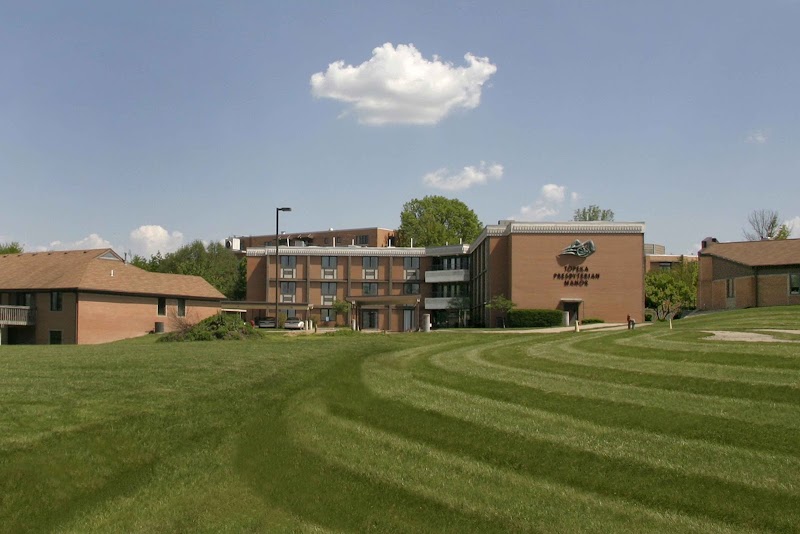
Who Owns and Operates Topeka Presbyterian Manor?

TOPEKA PRESBYTERIAN MANOR is owned by a non-profit organization. Non-profit facilities reinvest revenue into operations rather than distributing to shareholders. The facility is operated by PRESBYTERIAN MANORS OF MID-AMERICA, a chain that manages multiple nursing homes. With 68 certified beds and approximately 58 residents (about 85% occupancy), it is a smaller facility located in TOPEKA, Kansas.

How Does Topeka Presbyterian Manor Compare to Other Kansas Nursing Homes?

Compared to the 100 nursing homes in Kansas, TOPEKA PRESBYTERIAN MANOR's overall rating (2 stars) is below the state average of 2.9, staff turnover (58%) is significantly higher than the state average of 46%, and health inspection rating (2 stars) is below the national benchmark.

What Should Families Ask When Visiting Topeka Presbyterian Manor?

Based on this facility's data, families visiting should ask: "How do you ensure continuity of care given staff turnover, and what is your staff retention strategy?" "Can I visit during a mealtime to observe dining assistance and food quality?" "How do you handle medical emergencies, and what is your hospital transfer rate?" "Can I speak with family members of current residents about their experience?" These questions are particularly relevant given the facility's high staff turnover rate.

Is Topeka Presbyterian Manor Safe?

Based on CMS inspection data, TOPEKA PRESBYTERIAN MANOR has a clean safety record: no substantiated abuse findings (meaning no confirmed cases of resident harm), no Immediate Jeopardy citations (the most serious violation level indicating risk of serious injury or death), and is not on the Special Focus Facility watch list (a federal program monitoring the lowest-performing 1% of nursing homes). The facility has a 2-star overall rating and ranks #100 of 100 nursing homes in Kansas. While no facility is perfect, families should still ask about staff-to-resident ratios and recent inspection results during their visit.

Do Nurses at Topeka Presbyterian Manor Stick Around?

Staff turnover at TOPEKA PRESBYTERIAN MANOR is high. At 58%, the facility is 12 percentage points above the Kansas average of 46%. Registered Nurse turnover is particularly concerning at 67%. RNs handle complex medical decisions and coordinate care — frequent RN changes can directly impact care quality. High turnover means new staff may not know residents' individual needs, medications, or preferences. It can also be disorienting for residents, especially those with dementia who rely on familiar faces. Families should ask: What is causing the turnover? What retention programs are in place? How do you ensure care continuity during staff transitions?

Was Topeka Presbyterian Manor Ever Fined?

TOPEKA PRESBYTERIAN MANOR has been fined $39,105 across 3 penalty actions. The Kansas average is $33,470. While any fine indicates a compliance issue, fines under $50,000 are relatively common and typically reflect isolated problems that were subsequently corrected. Families should ask what specific issues led to these fines and confirm they've been resolved.

Is Topeka Presbyterian Manor on Any Federal Watch List?

TOPEKA PRESBYTERIAN MANOR is not on any federal watch list. The most significant is the Special Focus Facility (SFF) program, which identifies the bottom 1% of nursing homes nationally based on persistent, serious quality problems. Not being on this list means the facility has avoided the pattern of deficiencies that triggers enhanced federal oversight. This is a positive indicator, though families should still review the facility's inspection history directly.