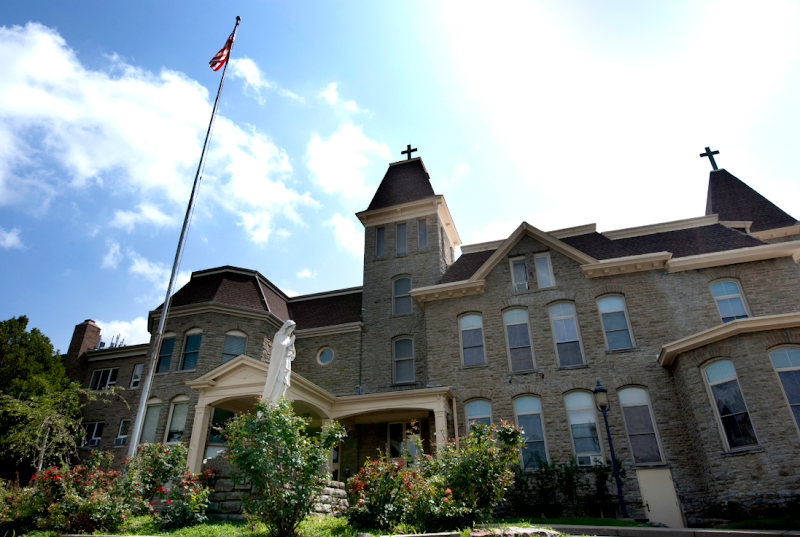
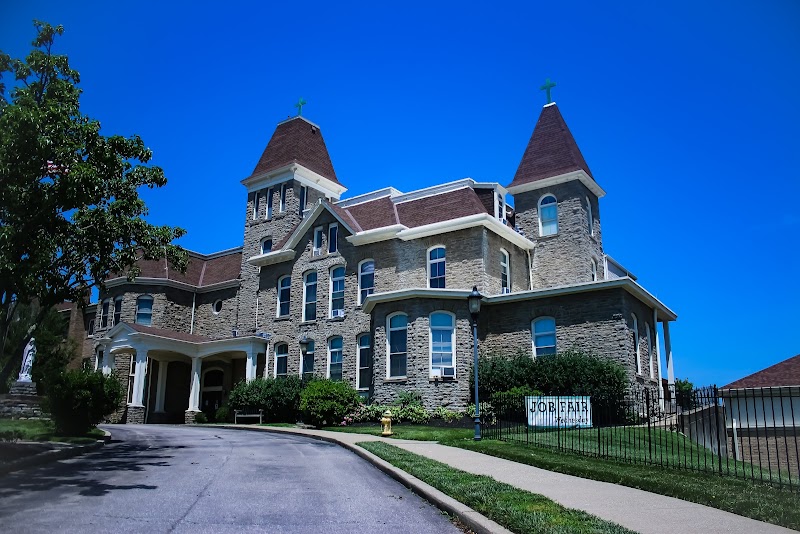
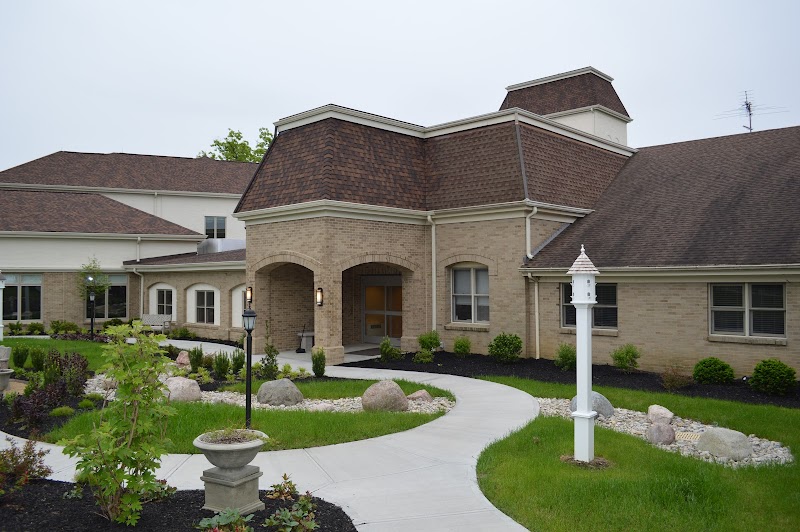
Carmel Manor

100 CARMEL MANOR ROAD, FORT THOMAS, KY 41075 (859) 781-5111
Non profit - Corporation 95 Beds Independent Data: November 2025 7 Immediate Jeopardy citations
Trust Grade
0/100
#212 of 266 in KY
Last Inspection: May 2023

Over 2 years since last inspection. Current conditions may differ from available data.

Overview

Carmel Manor in Fort Thomas, Kentucky has received a Trust Grade of F, indicating poor performance with significant concerns regarding resident safety and care. It ranks #212 out of 266 nursing homes in Kentucky, placing it in the bottom half of facilities statewide, and #5 out of 5 in Campbell County, meaning there are no better local options. The trend is worsening, with issues increasing from 7 in 2023 to 15 in 2025, highlighting deteriorating conditions. Staffing is rated 4 out of 5 stars, which is a strength, but with a high turnover rate of 69%, significantly above the state average of 46%, which may disrupt continuity of care. The facility has also accumulated $46,777 in fines, higher than 88% of Kentucky facilities, indicating ongoing compliance issues. Recent inspector findings reveal critical incidents, including the failure to prevent sexual abuse between cognitively impaired residents, with staff not taking appropriate action when the incidents occurred. This lack of protection and failure to conduct thorough investigations into abuse allegations raises serious concerns about resident safety. Overall, while there are some strengths in staffing, the significant issues and critical findings about abuse make this facility a concerning choice for families.

Trust Score
F
0/100
In Kentucky
#212/266
Bottom 21%
Safety Record
High Risk
Review needed
Inspections
Getting Worse
7 → 15 violations
Staff Stability
⚠ Watch
69% turnover. Above average. Higher turnover means staff may not know residents' routines.
Penalties
✓ Good
$46,777 in fines. Lower than most Kentucky facilities. Relatively clean record.
Skilled Nurses
✓ Good
Each resident gets 48 minutes of Registered Nurse (RN) attention daily — more than average for Kentucky. RNs are trained to catch health problems early.
Violations
⚠ Watch
37 deficiencies on record. Higher than average. Multiple issues found across inspections.
★☆☆☆☆
1.0
Overall Rating
★★★★☆
4.0
Staff Levels
★☆☆☆☆
1.0
Care Quality
★☆☆☆☆
1.0
Inspection Score
Stable
2023: 7 issues
2025: 15 issues

The Good

  • 4-Star Staffing Rating · Above-average nurse staffing levels
  • Full Sprinkler Coverage · Fire safety systems throughout facility
  • No fines on record

Facility shows strength in staffing levels, fire safety.

The Bad

1-Star Overall Rating

Below Kentucky average (2.8)

Significant quality concerns identified by CMS

Staff Turnover: 69%

23pts above Kentucky avg (46%)

Frequent staff changes - ask about care continuity

Federal Fines: $46,777

Above median ($33,413)

Moderate penalties - review what triggered them

Staff turnover is elevated (69%)

21 points above Kentucky average of 48%

The Ugly 37 deficiencies on record

7 life-threatening 4 actual harm
Jul 2025 8 deficiencies 5 IJ
CRITICAL (J) 📢 Someone Reported This

A family member, employee, or ombudsman was alarmed enough to file a formal complaint

Immediate Jeopardy (IJ) - the most serious Medicare violation

Free from Abuse/Neglect (Tag F0600)

Someone could have died · This affected 1 resident

**NOTE- TERMS IN BRACKETS HAVE BEEN EDITED TO PROTECT CONFIDENTIALITY** Based on observation, interview, record review, review of the facility's investigation, and review of the facility's policy, the...

Read full inspector narrative →
**NOTE- TERMS IN BRACKETS HAVE BEEN EDITED TO PROTECT CONFIDENTIALITY** Based on observation, interview, record review, review of the facility's investigation, and review of the facility's policy, the facility failed to take steps to prevent sexual abuse from occurring for 2 of 15 sampled residents, Resident (R) 2 and R3.R2 and R3, two cognitively impaired residents, were observed having intercourse. Instead of separating the residents, staff were told to close the resident's door and provide the cognitively impaired residents privacy. Staff stated the residents were not assessed to have the ability to consent to the sexual activity, and interviews with staff revealed they did not know what to do for R2 and R3.The facility's failure to have an effective system in place to ensure residents were protected from sexual abuse is likely to cause serious injury, impairment, or death if immediate action is not taken. Immediate Jeopardy (IJ) was identified on 07/17/2025 at 42 CFR 483.12 Freedom From Abuse, Neglect, and Exploitation (F600) at the highest Scope and Severity (S/S) of a J. Substandard Quality of Care (SQC) was identified at 42 CFR 483.12 Freedom from Abuse, Neglect, and Exploitation (F600). The IJ was determined to exist on 06/30/2025. The facility was notified of IJ on 07/17/2025. An acceptable IJ Removal Plan was received on 07/24/2025, which alleged removal of the IJ on 07/24/2025. The State Survey Agency (SSA) validated the IJ was removed on 07/24/2025, prior to exit on 07/24/2025. Non-compliance remained in the area of 42 CFR 483.12 Free from Abuse, Neglect, and Exploitation (F600) at a S/S of a D while the facility monitors the effectiveness of systemic changes and quality assurance activities.The findings include:Review of the facility's policy titled, Abuse, Neglect and Exploitation, dated 03/31/2025, revealed an immediate investigation was warranted when suspicion or reports of abuse, neglect, or exploitation occurred. Further review revealed efforts would be made to ensure all residents were protected from physical and psychological harm as well as additional abuse during and after the investigation. Review of the State Survey Agency, intake Information, titled Entity Self-Reported allegation of Resident/Patient/Client Abuse, with category listed as sexual, was reported on 07/01/2025 at 5:09 PM via E-mail. Further review revealed two residents with cognitive impairment were found disrobed under blankets. Continued review of the intake information revealed the residents were immediately separated and one resident was placed on 1:1; and initial assessment of both residents found no evidence of any injury. Review of the final report Facility Internal Investigation [FII], dated 07/07/2025 at 4:45 PM, initial report dated 07/01/2025 at 5:00 PM, revealed on 06/30/2025, no time given, staff and the Administrator became aware of the incident between R2 and R3, and the physician and the families were notified on 07/01/2025, no time given. Additional review of the FII indicated no other notifications were made on 06/30/2025. The findings of the FII revealed both residents were found disrobed under blankets; they were immediately separated; R2 was then placed on 1:1 monitoring; and R2 and R3 had no injuries. Further review revealed the FII findings concluded sexual abuse did not occur based on staff interviews, stating the residents were able to voice understanding and consequences of their activity. The State Survey Agency (SSA), however, determined through observation, interviews, and record review that R2 and R3 were observed on 06/30/2025, earlier during the day, to be holding hands, hugging, and kissing on each other and was redirected by staff throughout the day. Later in the evening, staff found R2 in R3's room and they were observed having sex. Instead of separating the residents, LPN5 told staff to let them finish, clean them up, and provide supervision later. The residents were allowed to continue for another 15 minutes before STNA13 separated the residents. Though R2 was placed on 1:1 supervision, the supervision did not last and had not been cared planned, which placed R2 and other residents at risk for continued abuse. The facility's report addresses the residents being able to consent, however, there was no documentation to support the residents were assessed to be capable of consenting. Further, the facility waited two days before reporting the allegations to State Agencies, which should have occurred immediately, but no later than two hours.Review of taped audio conversation sent to the SSA by the facility's staff [STNA13] via text on 07/21/2025 at 7:49 AM revealed, the DON's instructions to staff related to their statements. The DON stated this was an open investigation. The DON stated staff could not speak to anyone, and it was serious. The DON stated not to make any assumptions and give nothing but facts. During continued listening of the taped audio conversation, one employee asked if she should put in the comment from the nurse telling them to shut the door and let them finish. The DON stated, absolutely not. The DON stated this was a dementia unit, and staff was to keep residents safe and provide a safe environment. The DON stated if staff placed that in their statement it would open another can of worms. 1. Review of R2's Face Sheet in R2's electronic health record (EHR) revealed the facility admitted the resident on 05/30/2025 after his health declined and wife was unable to provide care. Admitting diagnoses included Alzheimer's disease, chronic obstructive pulmonary disease (COPD), and heart disease. Continued review of R2's EHR revealed he was transferred to the Memory Care Unit (MCU) on 06/01/2025 for exit seeking behavior.Review of R2's admission Minimum Data Set [MDS], with an Assessment Reference Date (ARD) of 06/04/2025, revealed the facility assessed the resident to have a Brief Interview for Mental Status [BIMS] score of four out of 15, which indicated severe cognitive impairment.Review of R2's Behavior Note, dated 06/10/2025 at 7:00 PM, in the progress notes, revealed LPN15 charted R2 requested to call his wife several times, and at 9:00 PM, he became very upset when not done immediately. Review of R2's Comprehensive Care Plan [CCP], dated 06/11/2025, revealed a focus was identified as R2 being at risk for behaviors related to depression, mood disorder, and Alzheimer's. Further review revealed the goal was for R2 to display reduction of cognitive behaviors; however specific interventions were not placed addressing behaviors.Further review of R2's CCP, dated 06/11/2025, revealed a focus was placed on 07/01/2025 indicating R2 experienced loneliness and sought companionship with goals of finding companionship through holding hands, sitting close, and one on one conversations. Interventions were placed on 07/01/2025 to include monitoring for ability to make own decisions and monitor as needed for resident's capacity to consent. However, there was no documentation to support the resident was assessed to have the capacity to consent for sexual activity. Additionally, the resident was not care planned for increased supervision, though the resident was placed on 1:1 supervision after the 06/30/2025 incident.Review of R2's Behavior Note, dated 06/30/2025 at 9:25 PM, in the progress notes, revealed LPN6 charted that R2 was in his room at this time with a sitter on 1:1 supervision. The note stated there was an earlier incident with him going into a female resident's room, and he was found under the sheets with the female resident. Review of the Nurse Practitioner (NP) Progress Note, dated 07/01/2025 and signed at 11:54 AM, revealed R2's visit was for an assessment after finding R2 in bed undressed with another resident. Per the note, staff was unable to confirm if any inappropriate activity occurred but reported R2 had nocturnal wandering which might have led to the incident. The note stated psychological findings revealed R2 was oriented to person and had no bruising or pain.Observation and interview, on 07/10/2025 at 6:30 AM, revealed R2 exiting his room without any supervision. The resident stated he was going to get breakfast and coffee. Observation on 07/24/2025 at 8:32 AM revealed STNA12 providing R2's 1:1 supervision; however, in brief interview with STNA12, she stated she was performing other duties. Continued observation revealed STNA12 left R2 in the common area and went into the pantry area, and the door closed behind her. STNA12 stated when asked what 1:1 meant, she stated to always keep eyes on the resident, but she was helping to get coffee. The SSA Surveyor was unable to reach R2's Power-of-Attorney (POA) after two attempts, on 07/10/2025 at 5:46 PM and on 07/15/2025 at 6:45 PM.2. Review of R3's Face Sheet, in R3's EHR, revealed the facility admitted the resident on 11/19/2024 after an acute care hospital stay for increasing weakness; R3 had been living with her sister. Admitting diagnoses included encephalopathy, vascular dementia, and stroke without deficits. Per the EHR, R3 was transferred to the MCU on 06/04/2025 for exit seeking behavior.Review of R3's quarterly MDS, with an ARD of 05/20/2025, revealed the facility assessed the resident to have a BIMS score of two out of 15, which indicated the resident had severe cognitive impairment.Review of R3's Comprehensive Care Plan [CCP], dated 03/31/2025, revealed a focus of R3 wandering in and out of other residents' rooms. Interventions placed on 03/31/2025 included to monitor behavior and attempt to determine underlying causes.Review of R3's Health Status Note, dated 06/30/2025 at 10:00 AM, in the progress notes, revealed LPN 5 charted she redirected R3 with mutual intentions away from the male resident, taking walks and sitting together.Further review of R3's CCP, dated 07/01/2025, revealed a focus which indicated the resident experienced loneliness with a goal to find companionship by holding hands, rubbing and patting backs, and one on one conversations and activities with other residents. Further review of R3's CCP revealed interventions, dated 07/01/2025, to include to monitor the resident's ability to make own decisions and to consult appropriate services to monitor and re-evaluate for resident's capacity to consent; however, there was no documentation to support the resident was assessed to be able to have the capacity to consent to sexual activity. Additionally, the care plan was not person-centered or individualized to address the resident's need for increased supervision. Review of the Nurse Practitioner Progress Note, dated 07/01/2025 and signed at 11:41 AM, revealed staff requested a head-to-toe exam after staff found R3 in bed undressed with another resident last night. Per the note, there was no confirmation if any sexual intercourse took place, and her diagnosis of dementia limited the exam. Additional review revealed the exam revealed excoriation to the groin likely associated with brief use, and no bruising was noted. Review of Psychotherapy Note, dated 07/02/2025 signed by provider (Psychotherapist) at 4:14 PM revealed the referral was for the resident exhibiting new behaviors, not saying what they were, and R3 was a poor historian due to cognitive and psychiatric impairment. Further review revealed cognition was assessed as oriented to person, poor short- and long-term memory. In an interview with R3's family member (FM) on 07/10/2025 at 5:47 PM, she stated the facility had called and told her a male resident was found in R3's bed. She stated staff told her they felt it was a consensual act. She stated with R3's diagnosis of dementia, she was not surprised. However, she stated the one thing she was most concerned about was if the male resident was married. She stated she was told R2 was married, and she expressed R3 would not have been ok with engaging in sexual activity or having an ongoing relationship with a married man. Per the interview, R3's FM stated she voiced her concerns to the facility and staff told her R2 would be transferred from the MCU if it happened again. R3's family member stated she did not want R3 moved because it seemed like every time her environment changed, we lose a piece of her.During an interview with STNA14 on 07/11/2025 at 4:41 PM, she stated as she was rounding at the end of day shift and the beginning of her shift, on 06/30/2025, she found R2 and R3 naked in R3's bed with a sheet over them. She stated she reported the incident to the nurses immediately. She stated once both nurses entered R3's room, LPN5 told staff to close the door and let them [the residents] finish. She stated the door was closed, and the nurses went back to the nurses' station. She stated since she really did not know what to do, she did as the nurse told her.In an interview with LPN5 on 07/11/2025 at 8:30 AM, she stated she worked on 06/30/2025 from 7:00 AM to 7:00 PM. She stated an aide came to the desk at the end of the shift and told her to come to R3's room immediately. She stated upon arriving to R3's room, she saw R2 on top of R3 under a blanket, and the physical motions suggested the residents were doing something. LPN5 stated staff left them to continue since she was unsure of what to do. She stated she notified Unit Manager (UM) 1 and House Supervisor (HS) 2. She stated she did not stop them from engaging in the activity and the residents continued for approximately 15 minutes until the aides stopped them. LPN5 stated she never went back in R3's room before going home at the end of her shift. She stated R2 and R3 had been trying to get together all day, and staff had to continually separate them. LPN5 added she felt like it would happen again since R2 was lost in space.In an interview on 07/11/2025 at 5:04 PM with LPN6, she stated 06/30/2025 was her first 7:00 PM until 7:00 AM shift at the facility, and she was an agency nurse. She stated she was getting report from day shift staff when a nurse aide came to the end of the hall and started yelling for a nurse. She stated when she and the day shift nurse, LPN5, got to R3's room, R2 was lying flat on his back with R3's head on his chest. Per the interview, she stated R2 was not wearing a shirt but R3 was wearing one. She stated a sheet covered both residents, and she was unsure what clothes they wore. Further, she stated LPN5 told staff to close the resident's door, let them finish, and then clean them up. She stated LPN5 told them someone would need to supervise them the rest of the night, but she did not recall any extra staff called in. LPN6 stated LPN5 told her that R2 and R3 had been at it all day with kissing, hugging, sitting next to each other, with R3 trying to go into R2's room. LPN6 stated she told LPN5, Isn't that the way it is supposed to be, if residents want to have sex, I don't know what the big deal is. She stated she did not notify anyone related to the incident and did not complete any assessments on the residents, other than completing the residents' vitals. The LPN stated the House Supervisor came to the MCU unit and called the Director of Nursing (DON. LPN6 stated she was just going by what the House Supervisor told her to do. In an interview with STNA13 on 07/10/2025 at 12:41 PM, she stated when she got to work on 06/30/2025 around 8:00 PM, STNA14 told her she had something to show her. However, she stated the day shift nurse interrupted and told them to let it continue, but STNA14 stated she needed to know. She stated as she and STNA14 entered R3's room, R2 was on top of R3 having intercourse. She stated the sheet covered him [R2], and she instructed him to stop. She stated that while the resident stopped the physical action, he continued to lay beside R3. STNA13 stated she immediately called LPN3 and asked her to get in touch with the House Supervisor (HS) 2 and tell her to get down to the MCU. She stated HS2 called, and she explained the situation to her over the phone. She stated both R2 and R3 were completely naked. Per the interview, she stated as R2 got out of R3's bed, he started kissing her on the mouth and penetrating her vagina with his finger. She stated she told R2 he could not do that and touched his arm to guide him off R3. She stated R3, however, kept pulling him back towards her. She stated R3 was completely confused as to why they had to stop. STNA13 stated once R2 was dressed he patted R3's back and told her Thank You, and he was taken back to his room. In an interview with LPN3 on 07/16/2025 at 10:56 AM, she stated she was working another unit when STNA14 texted her saying help during report from day shift. She stated she called her and was told she found R2 and R3 having sex, and they needed help since the nurses there were not doing anything. She stated she instructed them to separate the residents immediately, and she notified HS2.In an interview with HS2 on 07/14/2025 at 11:24 AM, she stated she was the evening supervisor and had worked the evening of 06/30/2025 and recalled the nurse close to her office upstairs had received a call from nurse aides on the MCU that they needed me to come to the MCU. She stated when she arrived at the MCU, she was told by STNA13 and STNA14 that R2 and R3 were in bed together. She stated she called the DON to report the incident and then saw the aides bring the two residents to the dining/common area. She stated she did not go to R3's room, so she could not say what was going on and did not know. She stated she did not contact the families or the provider because she thought the DON would have done that. Further, HS2 stated she never performed an assessment on the residents, thinking the nurse on the unit would have completed that task. She stated the only part she had in the incident was gathering the staff to write statements, and she forwarded the statements to the DON. In an interview with the facility's Social Worker on 07/21/2025 at 1:35 PM, she stated management reported to her that R2 and R3 engaged in sexual activity. Further, she stated she had not performed an evaluation or interviewed the residents following the incident. In an interview with the Nurse Practitioner on 07/10/2025 at 2:10 PM, she stated it had been reported to her R2 and R3 were together undressed, and the facility management had requested she perform an evaluation of R2 and R3 for the capacity to consent. She stated she informed them psych would need to be consulted for that evaluation. In an interview with the Psychotherapist on 07/10/2025 at 3:08 PM, she stated the facility had asked her to perform an assessment for R2 and R3 but had not told her the reason other than there had been some inappropriate behavior toward each other, but did not communicate with her what the inappropriate behavior was. Further, she stated the residents were only capable of answering yes or no questions.In an interview with the DON on 07/14/2025 at 4:20 PM, she stated she was contacted by HS2, who did not say that much. She stated she was told the residents were found in bed. Per the interview, she stated she requested the staff working that night to write a statement listing the facts. She stated an investigation was immediately started. R2 was placed on 1:1 supervision, which ensured R3's safety. The DON stated her expectations of staff during the incident was for staff to separate the residents until everything was sorted out. During an interview with the Administrator on 07/17/2025 at 12:02 PM, she stated the DON had called her the night of 06/30/2025, no time specified, stating R2 and R3 were found in bed with each other under the covers. She stated she was told that both residents were assessed, and R2 was placed on a 1:1 supervision. Per the interview, she defined sexual abuse as a forcible act on someone, and one might not be willing to engage in the activity. She stated the two residents had been in high school together, and they knew each other. She stated she felt that was why the incident happened. She further stated the police were not contacted that night and was unsure of the facility's policy related to reporting notifications. In continued interview, on 07/17/2025 at 12:02 PM, the Administrator stated she was never told LPN5 advised staff to close the resident's door to provide privacy, but if privacy was needed, then staff would close the door, she added. She stated she was not sure if the residents were separated immediately. Further, the State Survey Agency (SSA) surveyor reviewed the FII with the Administrator and she confirmed the reporting day [of the incident] to the SSA was on 07/01/2025 at 5:00 PM [approximately two days after the incident] and on 07/07/2025 at 4:45 PM [approximately six days after the facility had completed their investigationThe SSA Surveyor continued the Review of the FII, with the Administrator on 07/17/2025 at 12:02 PM and identified a discrepancy within the investigation. The FII noted notifications to families, as one note stated both families were notified on 06/30/2025, and another stated they were notified on 07/01/2025. The Administrator stated she was unable to explain the discrepancy in the report. Further, she stated she was unsure when R2's 1:1 monitoring ended. In an interview with the facility's Medical Director on 07/16/2025 at 2:30 PM, she stated she had just started as the Medical Director and had not evaluated or seen either R2 or R3. She stated she could not elaborate on either being able to consent for any type of relationship and or sexual relationship. She stated the residents should have been separated and all parties notified immediately, and the facility should have done a self-report immediately. Immediate Jeopardy (IJ) Removal Plan verbatim: Actions Taken to Remove the Immediate Jeopardy1. Actions taken to correct the deficiency for identified residentsR2 and R3 were separated and clothed following the interaction. R2 was placed on 1:1 supervision starting 6/30/2025. The 1:1 supervision was ended 7/8/2025 and was reinstated on 7/17/2025 and is ongoing.An initial report was made to the OIG on 7/1/2025 by the Administrator.Resident families/legal representatives were notified on 7/1/2025 Administrator. The medical director was notified on 7/1/2025 by the Administrator. A final report was made to the OIG on 7/7/2025 by the Administrator.On 7/18/2025, the Administrator notified Local Law Enforcement.On 7/23/2025, reports were made to APS by the Interim CEO.Residents R2 and R3 Comprehensive assessments (cognitive, physical, psychosocial) were completed for both residents by Social Worker and Interim Director of Nursing on 7/23/2025. R2 and R3 care plans were updated by the System Director of Clinical Reimbursement on 7/22/2025 to provide resident centered interventions to prevent abuse and include their capacity to make decisions regarding sexual interactions.The investigation into this deficiency has been reopened on 7/22/2025 and any new findings will be addressed within policy. 2. Actions taken to identify other residents at risk? Sexual Competency Consent Screening completed on 13 of 15 residents in the Memory Care Unit by Social Worker on 7/22/2025. Two residents refused screening and the Social Worker will continue to attempt screening. On 7/23/2025, the Interim Director of Nursing completed skin assessments on every resident in the memory care unit. The Interim Director of Nursing will continue throughout the rest of the facility until all residents have been assessed. Care plans updated on 7/22/2025 for residents R2 and R3 who are unable to make decisions regarding sexual interactions by the System Director of Clinical Reimbursement. 3. Actions taken to prevent recurrence of the deficient practice? Corporate staff reviewed the following policies on 7/21/2025. Abuse, Neglect and Exploitation Policy and Procedure. Policies and Procedures were reviewed by: 1. Carmelite System CEO 2. Carmelite System Director of Quality, Safety, and Risk 3. RN Clinical Consultant - [NAME] Clinical 4. Carmelite System Interim CEO of Carmel Manor Education on Abuse, Neglect and Exploitation provided to 65 of 130 staff members starting on 7/23/2025. Staff who have not been educated will be educated by the Internal Clinical Consultant prior to beginning their next shift. The Nursing Supervisor is responsible for educating agency staff prior to beginning their shift.Education provided by Internal Clinical Consultant to staff on updating care plans beginning on 7/23/2025. 12 out of 31 completed. The Clinical Consultant and the Nursing Supervisor will ensure staff who were not educated on 7/23/2025 will be educated prior to beginning their next shift. The nursing supervisor will be responsible for educating agency nursing staff prior to working their shift.Additional topics include 1. How to assess and document a resident's capacity to consent 2. Clear instructions for responding to observed or suspected abuse 3. How to identify triggers that could lead to or indicate an intent to engage in sexual activity. 4. Describe how performance will be monitored to ensure effectiveness of the interventions and that the solutions are sustained? The Internal Clinical Consultant and Outside Clinical Consultant will interview residents and staff members starting on 7/24/2025 to ensure no resident feels they have been abused and no staff member has knowledge of abuse.They are going to ensure every allegation is following reporting policy by triggering a phone call with the facility leadership immediately upon the start of any new allegation.Results will be reported weekly to ad-hoc QAPI members who will determine continued level of monitoring.Alleged IJ Removal Date [sic]: 7/24/2025 The facility asserts that the Immediate Jeopardy has been removed as of this date. All residents have been assessed, staff have received comprehensive retraining, systemic policy and procedure changes are in place, and safeguards to prevent recurrence have been implemented and are actively monitored.
CRITICAL (J) 📢 Someone Reported This

A family member, employee, or ombudsman was alarmed enough to file a formal complaint

Immediate Jeopardy (IJ) - the most serious Medicare violation

Abuse Prevention Policies (Tag F0607)

Someone could have died · This affected 1 resident

**NOTE- TERMS IN BRACKETS HAVE BEEN EDITED TO PROTECT CONFIDENTIALITY** Based on interview, record review, review of the facility's investigation, review of the facility's job descriptions, and review...

Read full inspector narrative →
**NOTE- TERMS IN BRACKETS HAVE BEEN EDITED TO PROTECT CONFIDENTIALITY** Based on interview, record review, review of the facility's investigation, review of the facility's job descriptions, and review of the facility's policy, the facility failed to develop and implement policies and procedures to prohibit and prevent abuse and failed to establish policies and procedures to thoroughly investigate allegations of abuse for 2 of 15 residents, Resident (R) 2 and R3. R2 and R3, both cognitively impaired, were observed having sexual intercourse.Additionally, the facility failed to promote a culture of safety and open communication in the work environment through prohibiting retaliation against an employee for reporting abuse. The facility's failure to have an effective system in place to ensure residents were protected from sexual abuse is likely to cause serious injury, impairment, or death if immediate action is not taken. Immediate Jeopardy (IJ) was identified on 07/17/2025 at 42 CFR 483.12 Freedom From Abuse, Neglect, and Exploitation (F607) at the highest Scope and Severity (S/S) of a J. Substandard Quality of Care (SQC) was identified at 42 CFR 483.12 Freedom from Abuse, Neglect, and Exploitation (F607). The IJ was determined to exist on 06/30/2025. The facility was notified of IJ on 07/17/2025. An acceptable IJ Removal Plan was received on 07/24/2025, which alleged removal of the IJ on 07/24/2025. The State Survey Agency (SSA) validated the IJ was removed on 07/24/2025, prior to exit on 07/24/2025. Non-compliance remained in the area of 42 CFR 483.12 Free from Abuse, Neglect, and Exploitation (F607) at a S/S of a D while the facility monitors the effectiveness of systemic changes and quality assurance activities.Cross-reference F600The findings include:Review of the facility's policy titled, Abuse, Neglect and Exploitation, dated 03/31/2025, revealed an immediate investigation was warranted when suspicion or reports of abuse, neglect, or exploitation occurred. Further review revealed efforts would be made to ensure all residents were protected from physical and psychological harm as well as additional abuse during and after the investigation. Additional review revealed the procedures included reporting all alleged violations to the Administrator, state agency, adult protective services (APS), and other required agencies, such as law enforcement, immediately but not later than two hours after the allegation was made.Review of the facility's job description Nursing Assistant Job Description and Performance Appraisal, revision date 07/2023, revealed staff would strive for excellence in performance and adherence to professional and regulatory standards. Further review revealed the job summary included to ensure the highest degree of quality resident care was delivered to residents, including recognition and reporting a resident's change of condition. The nursing assistant job duties included reporting all allegations of abuse, neglect, mistreatment, and misappropriation, and making any required reports and statements within required timeframes while keeping residents safe. The job description revealed the nurse aide worked within the scope of practice for the state of practice and followed established policies and procedures at all times. Review of the facility's document, Job Description and Performance Appraisal Administrator, dated 03/2023, revealed the Administrator was responsible for assuring the highest degree of quality resident care was delivered at all times. Further review revealed the Administrator maintained responsibility for all accident and incident report investigations and reviewed and ensured timely reporting when necessary to maintain the effectiveness of the facility's risk management program. Additional review revealed the Administrator was to act with integrity and honesty in all matters and demonstrated uncompromising adherence to ethical principles and organizational values.Review of the facility's final report Facility Internal Investigation (FII), dated 07/07/2025 at 4:45 PM, the initial report was dated 07/01/2025 at 5:00 PM, revealed the date staff and the Administrator was made aware of the incident between R2 and R3 was 06/30/2025, no time given. Per the report, the physician and families were notified 07/01/2025, no time given. Additional review indicated no other notifications were made on 06/30/2025. The report revealed both residents were found disrobed under blankets, they were immediately separated, R2 was then placed on 1:1 supervision, and R2 and R3 had no injuries. Per the report, it concluded sexual abuse did not occur based on staff interviews, stating the residents were able to voice understanding and consequences of the activity. Additional review revealed both residents willingly engaged in the activity and had the ability to consent as determined by the Interdisciplinary team (IDT), Nurse Practitioner (NP), and counselor [therapist]. Continued review revealed the resident representatives agreed and consented to participation in an intimate relationship, and the facility would re-evaluate the residents' capacity to consent as needed. Per the report, the reporting party was the Administrator, and the residents' care plans were to be reviewed and updated.The State Survey Agency (SSA), however, determined through observation, interviews, and record review that R2 and R3 were observed on 06/30/2025, earlier during the day, to be holding hands, hugging, and kissing on each other and was redirected by staff throughout the day. Later in the evening, staff found R2 in R3's room and they were observed having sex. Instead of separating the residents, LPN5 told staff to let them finish, clean them up, and provide supervision later. The residents were allowed to continue for another 15 minutes before STNA13 separated the residents. Though R2 was placed on 1:1 supervision, the supervision did not last and had not been cared planned, which placed R3 and other residents at risk for continued abuse. The facility's report addresses the residents being able to consent, however, there was no documentation to support the residents were assessed to be capable of consenting. Further, the facility waited two days before reporting the allegations to State Agencies, which should have occurred immediately, but no later than two hours.Review of the facility's clinical notes revealed no documentation to support Resident (R)2 or R3 had the capacity to consent to sexual intercourse. Review of the State Survey Agency, intake Information, titled Entity Self-Reported allegation of Resident/Patient/Client Abuse, with category listed as sexual, was reported on 07/02/2025 at 1:07 PM via E-mail. Further review revealed two residents with cognitive impairment were found disrobed under blankets. Continued review of the intake information revealed the residents were immediately separated and one resident was placed on 1:1; and initial assessment of both residents found no evidence of any injury.1. Review of R2's Face Sheet, found in the electronic health record (EHR) revealed the facility admitted the resident on 05/30/2025 after his health declined and his wife was unable to provide care. Admitting diagnoses included Alzheimer's disease, chronic obstructive pulmonary disease (COPD), and heart disease. Review of R2's admission Minimum Data Set [MDS], with an Assessment Reference Date (ARD) of 06/04/2025, revealed the facility assessed the resident to have a Brief Interview for Mental Status [BIMS] score of four out of 15, which indicated the resident was severely cognitively impaired. Review of R2's Physician's Orders, dated 05/30/2025, revealed an order for staff to monitor behavior every shift, document, and notify the physician as needed.2. Review of R3's Face Sheet, found in the EHR, revealed the facility admitted the resident on 11/19/2024 after an acute care hospital stay for increasing weakness. Admitting diagnoses included encephalopathy, vascular dementia, and stroke without deficits. Continued review of the EHR revealed R3 was transferred to the Memory Care Unit (MCU) on 06/04/2025 for exit seeking behavior. Review of R3's quarterly MDS, with an ARD of 05/20/2025, revealed the facility assessed the resident to have a BIMS score of two out of 15, which indicated the resident was severely cognitively impaired. Review of R3's Physician's Orders, dated 01/31/2025, revealed an order placed to monitor behavior every shift and notify the physician as needed. In an interview with R3's family member (FM) on 07/10/2025 at 5:47 PM, she stated the facility had called and told her a male resident was found in R3's bed. She stated staff told her they felt it was a consensual act. She stated with R3's diagnosis of dementia, she was not surprised. However, she stated the one thing she was most concerned about was if the male resident was married. She stated she was told R2 was married, and she expressed R3 would not have been ok with engaging in sexual activity or having an ongoing relationship with a married man. Per the interview, R3's FM stated she voiced her concerns to the facility and staff told her R2 would be transferred from the MCU if it happened again. R3's family member stated she did not want R3 moved because it seemed like every time her environment changed, we lose a piece of her.In an interview with Licensed Practical Nurse (LPN) 5 on 07/11/2025 at 8:30 AM, she stated she worked the 7:00 AM to 7:00 PM (day shift) on 06/30/2025. She stated an aide came to the desk at the end of the day shift and told her to come to R3's room immediately, and she thought someone had fallen. She stated upon arriving to R3's room she saw R2 on top of R3 under a blanket, and it looked like they were doing something because of the physical motions being made. She stated staff left the residents to continue since she was unsure of what to do. She stated she notified House Supervisor (HS) 2. She stated she did not do any immediate intervention to stop them from engaging. She stated probably 15 minutes elapsed, and she thought the aides stopped them. She stated she never went back in R3's room and went home.In an interview with LPN6 on 07/11/2025 at 5:04 PM, she stated the night shift, 7:00 PM to 7:00 AM, on 06/30/2025 was her first night shift at the facility, and she was from an agency. She stated she was getting report from day shift when a nurse aide came to the end of the hall and started yelling for a nurse. She stated when she and the day shift nurse, LPN5, got to R3's room, R2 was lying flat on his back with R3's head on his chest. She stated a sheet covered both, and she was unsure if all clothes were on. She stated the day shift nurse, LPN5, told staff to close the door and let them finish, and then clean them up. She stated LPN5 told staff someone would need to supervise them the rest of the night, but she did not recall any extra staff called in.Further interview with LPN6 on 07/11/2025 at 5:04 PM, revealed LPN5 told her R2 and R3 had been at it all day kissing, hugging, sitting next to each other, and R3 trying to go into R2's room. LPN6 stated she did not notify anyone, and she did not do any assessments other than getting a set of vitals on R2 and R3. LPN6 stated the House Supervisor came to the unit, called the Director of Nursing (DON), and did not tell her if the provider had been contacted. She stated the DON gave instructions to staff to not put any extra details in statements and to not add or take away anything. LPN6 stated staff was made to re-write statements and could not put in any details of earlier incidents two weeks ago, but she did not know what that was about.Review of the picture of the original written statement of staff member State Trained Nurse Aide (STNA) 13, dated 06/30/2025 with time stamp of 9:22 PM revealed the wording was changed from putting fingers in R3's private area to fondling R3's genitalia area.Review of a taped audio conversation sent to the SSA by the facility's staff [STNA13] via text on 07/21/2025 at 7:49 AM revealed, concerning the DON's instructions to staff for statements, the DON stated this was an open investigation. The DON stated staff could not speak to anyone, and it was serious. The DON stated not to make any assumptions and give nothing but facts. The DON stated she did not understand how this happened. The DON stated staff had been on top of their behavior, and the residents should never have been left alone. Continued listening of the taped audio conversation revealed the DON instructed the House Supervisor (HS) to call her once the statements were gathered, and they would review them. During continued listening of the taped audio conversation, one employee asked if she should put in the comment from the nurse telling them to shut the door and let them finish. The DON stated absolutely not. The DON stated this was a dementia unit, and staff was to keep residents safe and provide a safe environment. The DON stated if staff placed that in their statement it would open another can of worms. The DON stated if staff did not see the residents having sex, staff could not use the word sex. Further listening revealed a staff member informed the DON that R2 was fingering R3. Then, the DON stated she was not telling staff to withhold any information but to state just what they saw.In a telephone interview with Registered Nurse (RN) 1 on 07/16/2025 at 12:37 PM, she stated she did not feel comfortable talking in the facility about the incident that happened between R2 and R3 when they were found in the bed naked. She stated she had worked day shift on another unit and was giving LPN3 report when the nurse aides contacted LPN3. RN1 stated HS2 had told her not to say anything about what had happened to anyone related to R2 and R3. RN1 stated R2 had behaviors before the incident on 06/30/2025 of kissing R3, and he should not have been around R3. She stated she was told by the DON not to say anything about another incident, and she feared losing her job if the DON found out she talked about the incident.In an interview with the DON on 07/17/2025 at 12:40 PM, she stated the strike outs in R2's progress notes were incorrect documentation on that resident, and some was hearsay and should not have been charted. She stated she was unsure who performed the strike outs, she would need to look at additional notes.In an interview with HS2 on 07/14/2025 at 11:24 AM, she stated she was the evening supervisor and had worked the evening of 06/30/2025. She stated her tasks included to make sure everything ran smoothly in the evening. She stated that meant she rounded every two hours, checking on staff and assuring documentation was being performed. She stated there had been an incident on 06/30/2025 on the MCU involving a male and female resident. She stated the nurse close to her office upstairs had received a call from nurse aides on the MCU and told her staff needed me to come to the MCU. She stated when she got to the MCU, STNA13 and STNA14 told her that R2 and R3 were in bed together. She stated she called the DON to report that, and she then saw the aides bring the two residents to the dining/common area. She stated she did not go to R3's room, and she could not say what was going on and did not really know. She stated she did not contact family or the provider because she thought the DON did, and she never performed an assessment, thinking the nurse did. She stated the only part she had in the incident was gathering the staff to write statements and forwarding them to the DON.In an additional interview with the DON on 07/14/2025 at 4:20 PM, she stated she had been the DON since January 2025, and her tasks included oversight of the nursing department. She stated, concerning the incident with R2 and R3, she was called by House Supervisor (HS) 2, who did not tell her much, only that they were in R3's bed. She stated she did not come to the facility after the call. She stated she had talked to staff and requested they each write a statement just listing the facts. She stated an investigation was immediately started, the residents were separated and brought to the common area, and R2 was placed on 1:1 supervision, which ensured R3's safety too. She stated extra staff was not brought in for the 1:1 supervision, but she thought other staff was shuffled to cover. She stated she was unsure if the abuse policy was implemented, and if any skin assessments were performed on any resident, but she thought the nurse had done that since that would be the normal process. She stated the only person she called that night was the Administrator, and she had not contacted the provider and families but thought the nurse had done so.In further interview with the DON, on 07/14/2025 at 4:20 PM, she stated it would be the Administrator's task to notify the police. She stated staff statements about the incident were in her mailbox the next morning. When asked how the investigation determined it was not sexual abuse, she stated they felt like it was not since R2 and R3 enjoyed each other's company, and they made each other happy. She stated no one saw any penetration, so she did not think a sexual act happened, and she felt the residents knew what they were doing. However, review of the DON's taped conversation, provided to the SSA on 07/21/2025 at 7:49 AM, revealed she stated, the residents should never have been left alone .this is a dementia unit, and staff was to keep residents safe and provide a safe environment. In an interview with the Administrator on 07/17/2025 at 12:02 PM, she stated she had been the Administrator since May 2025, and the job task was to provide for the overall function of the facility and to serve as the Abuse Coordinator (AC). She stated as the AC she opened an investigation when there was an allegation of abuse following the facility's policy and reporting immediately. She further explained she did not know what immediately meant, adding, whatever the definition is. She stated she may not be the first to get the report, depending on her availability, but the Director of Nursing (DON) or House Supervisor (HS) would be contacted. She stated the DON called her the night of 06/30/2025 and told her R2 and R3 were found in bed with each other under the covers. She stated she did not remember whose room and did not state the time contacted. She stated both residents were assessed, and R2 was placed on a 1:1 supervision.Per continued interview, with the Administrator on 07/17/2025 at 12:02 PM, She stated she had abuse training and defined sexual abuse as an act when someone forced another person to do something they might not be willing to do. In further interview, the State Survey Agency (SSA) Surveyor informed the Administrator there were no entries from the clinicians stating the residents understanding of their actions, or their ability to consent, the Administrator stated she was unable to provide the additional documentation to support that but was sure she had something stating that. Further, she stated the police were not contacted that night and was unsure if the police should have been contacted, after reviewing the facility's Abuse Policy with the SSA surveyor.In continued interview, on 07/17/2025 at 12:02 PM, with the Administrator, she stated she did not know if extra staff was brought in the night of 06/30/2025, for R2's supervision, and she would have to ask the DON. She stated she told the residents' families that they were found in bed together naked, and both families were ok with that. Further, she stated R2's wife, however, was never contacted, but R3's family knew R2 was married and was okay with the relationship. However, interview with R3's family member, on 07/10/2025 at 5:47 PM revealed the resident would never have engaged in any relationship, with R2, because he was a married man. Further, she was asked what she told the family had happened between the residents and she stated she would have to check for any notes she had made. Review of the FII continued, and a discrepancy was noted for notifications to families, as one note stated both families were notified on 06/30/2025, and another note stated they were notified on 07/01/2025. However, the Administrator was unable address the discrepancy. The Administrator stated the facility had completed a thorough investigation. In review of the facility's investigation, the SSA surveyor pointed out to the Administrator a witness statement that stated R2 was fondling R3's private area. The SSA surveyor asked the Administrator if this would have been considered sexual abuse? She stated it would not have been considered sexual abuse because it was consensual. However, review of the facility's clinical notes revealed no documentation to support Resident (R)2 or R3 had the capacity to consent to sexual intercourse.Further interview on 07/17/2025 at 12:02 PM, with the Administrator, she stated that in the process of the facility's investigation, she was never informed by anyone that LPN5 instructed other staff members to close R3's room door so they could complete the sexual activity, but added, if privacy was needed, then staff would close the door. The FII was reviewed with the Administrator, and she confirmed the reporting day and time was correct as 07/01/2025 at 5:00 PM; however, review of a Self-Reporting form provided by the facility, by way of email, revealed the facility reported on 07/01/2025, which was a failure to report to state agencies timely and implement the facility's policy. Observation and Interview on 07/18/2025 at 12:58 PM revealed a police vehicle parked in the facility's parking lot. The Administrator stated she never contacted the police the night of R2 and R3's incident and thought she should call the police now. Immediate Jeopardy (IJ) Removal Plan verbatim: Actions Taken to Remove the Immediate Jeopardy1. Actions taken to correct the deficiency for identified residentsR2 and R3 were separated and clothed following the interaction. R2 was placed on 1:1 supervision starting 6/30/2025. The 1:1 supervision was ended 7/8/2025 and was reinstated on 7/17/2025 and is ongoing.An initial report was made to the OIG on 7/1/2025 by the Administrator.Resident families/legal representatives were notified on 7/1/2025 Administrator. The medical director was notified on 7/1/2025 by the Administrator. A final report was made to the OIG on 7/7/2025 by the Administrator.On 7/18/2025, the Administrator notified Local Law Enforcement.On 7/23/2025, reports were made to APS by the Interim CEO.Residents R2 and R3 Comprehensive assessments (cognitive, physical, psychosocial) were completed for both residents by Social Worker and Interim Director of Nursing on 7/23/2025. R2 and R3 care plans were updated by the System Director of Clinical Reimbursement on 7/22/2025 to provide resident centered interventions to prevent abuse and include their capacity to make decisions regarding sexual interactions.The investigation into this deficiency has been reopened on 7/22/2025 and any new findings will be addressed within policy. 2. Actions taken to identify other residents at risk? Sexual Competency Consent Screening completed on 13 of 15 residents in the Memory Care Unit by Social Worker on 7/22/2025. Two residents refused screening and the Social Worker will continue to attempt screening. On 7/23/2025, the Interim Director of Nursing completed skin assessments on every resident in the memory care unit. The Interim Director of Nursing will continue throughout the rest of the facility until all residents have been assessed. Care plans updated on 7/22/2025 for residents R2 and R3 who are unable to make decisions regarding sexual interactions by the System Director of Clinical Reimbursement. 3. Actions taken to prevent recurrence of the deficient practice? Corporate staff reviewed the following policies on 7/21/2025. Abuse, Neglect and Exploitation Policy and Procedure. Policies and Procedures were reviewed by: 1. Carmelite System CEO 2. Carmelite System Director of Quality, Safety, and Risk 3. RN Clinical Consultant - [NAME] Clinical 4. Carmelite System Interim CEO of Carmel Manor Education on Abuse, Neglect and Exploitation provided to 65 of 130 staff members starting on 7/23/2025. Staff who have not been educated will be educated by the Internal Clinical Consultant prior to beginning their next shift. The Nursing Supervisor is responsible for educating agency staff prior to beginning their shift.Education provided by Internal Clinical Consultant to staff on updating care plans beginning on 7/23/2025. 12 out of 31 completed. The Clinical Consultant and the Nursing Supervisor will ensure staff who were not educated on 7/23/2025 will be educated prior to beginning their next shift. The nursing supervisor will be responsible for educating agency nursing staff prior to working their shift.Additional topics include 1. How to assess and document a resident's capacity to consent 2. Clear instructions for responding to observed or suspected abuse 3. How to identify triggers that could lead to or indicate an intent to engage in sexual activity. 4. Describe how performance will be monitored to ensure effectiveness of the interventions and that the solutions are sustained? The Internal Clinical Consultant and Outside Clinical Consultant will interview residents and staff members starting on 7/24/2025 to ensure no resident feels they have been abused and no staff member has knowledge of abuse.They are going to ensure every allegation is following reporting policy by triggering a phone call with the facility leadership immediately upon the start of any new allegation.Results will be reported weekly to ad-hoc QAPI members who will determine continued level of monitoring.Alleged IJ Removal Date [sic]: 7/24/2025 The facility asserts that the Immediate Jeopardy has been removed as of this date. All residents have been assessed, staff have received comprehensive retraining, systemic policy and procedure changes are in place, and safeguards to prevent recurrence have been implemented and are actively monitored.
CRITICAL (J) 📢 Someone Reported This

A family member, employee, or ombudsman was alarmed enough to file a formal complaint

Immediate Jeopardy (IJ) - the most serious Medicare violation

Investigate Abuse (Tag F0610)

Someone could have died · This affected 1 resident

**NOTE- TERMS IN BRACKETS HAVE BEEN EDITED TO PROTECT CONFIDENTIALITY** Based on observation, interview, record review, review of the facility's job descriptions, review of the facility's investigatio...

Read full inspector narrative →
**NOTE- TERMS IN BRACKETS HAVE BEEN EDITED TO PROTECT CONFIDENTIALITY** Based on observation, interview, record review, review of the facility's job descriptions, review of the facility's investigation, and review of the facility's policy, the facility failed to ensure, in response to an incident of witnessed sexual abuse, it had evidence of a thorough investigation, to include reporting the incident to the state agency timely, and protecting the residents during and after the investigation for 2 of 15 sampled residents, Resident (R) 2 and R3. On 06/30/2025, R2 and R3 were found by staff in R3's bed naked. The residents were not separated immediately, and based on interview, the room door was closed. Review of medical records and interviews revealed immediate assessments had not been performed. Additional review and interview revealed the families and medical providers of R2 and R3, authorities, and state agencies had not been contacted immediately on 06/30/2025.The facility's failure to have an effective system in place to ensure residents were protected from sexual abuse is likely to cause serious injury, impairment, or death if immediate action is not taken. Immediate Jeopardy (IJ) was identified on 07/17/2025 at 42 CFR 483.12 Freedom From Abuse, Neglect, and Exploitation (F610) at the highest Scope and Severity (S/S) of a J. Substandard Quality of Care (SQC) was identified at 42 CFR 483.12 Freedom from Abuse, Neglect, and Exploitation (F610). The IJ was determined to exist on 06/30/2025. The facility was notified of IJ on 07/17/2025. An acceptable IJ Removal Plan was received on 07/24/2025, which alleged removal of the IJ on 07/24/2025. The State Survey Agency (SSA) validated the IJ was removed on 07/24/2025, prior to exit on 07/24/2025. Non-compliance remained in the area of 42 CFR 483.12 Free from Abuse, Neglect, and Exploitation (F610) at a S/S of a D while the facility monitors the effectiveness of systemic changes and quality assurance activities.Cross reference F600The findings include:Review of the facility's policy titled, Abuse, Neglect and Exploitation, dated 03/31/2025, revealed an immediate investigation was warranted when suspicion or reports of abuse, neglect, or exploitation occurred. Further review revealed efforts would be made to ensure all residents were protected from physical and psychological harm as well as additional abuse during and after the investigation. Additional review revealed the procedures included reporting all alleged violations to the Administrator, state agency, adult protective services (APS), and other required agencies, such as law enforcement, immediately but not later than two hours after the allegation was made.Review of the facility's investigation revealed R3's Incident Report [IR], dated 07/01/2025 at 9:30 AM, revealed a male resident [R2] came into R3's room, and both were found under the sheets. Further review revealed both residents were immediately assessed for injury and distress, and the male resident was placed on a 1:1 observation.Review of the facility's investigation revealed R2's IR, dated 07/01/2025 at 9:45 AM, revealed R2 was found in a female resident's [R3] bed under sheets, residents were separated and assessed for injuries, and R2 was then placed on 1:1 supervision.Review of the State Survey Agency, intake Information, titled Entity Self-Reported allegation of Resident/Patient/Client Abuse, with category listed as sexual, was reported on 07/02/2025 at 1:07 PM via E-mail. Further review revealed two residents with cognitive impairment were found disrobed under blankets. Continued review of the intake information revealed the residents were immediately separated and one resident was placed on 1:1; and initial assessment of both residents found no evidence of any injury.Review of the facility's final report, Facility Internal Investigation (FII), dated 07/07/2025 at 4:45 PM, the initial report was dated 07/01/2025 at 5:00 PM, revealed the date staff and the Administrator was aware of the incident between R2 and R3 was 06/30/2025, no time given. Per the report, the physician was notified on 07/01/2025, no time given. Additional review revealed no other notifications were made on 06/30/2025. Per the report, both residents were found disrobed under blankets, they were immediately separated. R2 was then placed on 1:1 supervision. The report determined sexual abuse did not occur based on staff interviews.However, review of the State Survey Agency (SSA) investigation, through observation, interviews, and record review, revealed the facility failed to conduct a thorough investigation. Interviews with staff revealed the residents were not separated immediately and though the facility's investigative documentation states R2 was provided 1:1 supervision during the investigation, additional staff was not provided to complete the 1:1 protection/supervision. Further, there was no documentation to support the residents were assessed for physical or psychosocial harm on 06/30/2025, after the incident was observed by staff. Further, the facility reported the allegation of abuse to the state survey agency on 07/01/2025 at 5:09 PM, approximately 1 day after the alleged abuse and should have reported immediately, but no later than two hours after learning of the abuse, as per the facility's policy. Review of the facility's schedule for the Memory Care Unit (MCU), where R2 and R3 resided, dated 06/30/2025, did not list any additional staff for R2's close 1:1 observation after the sexual incident. Further review of the facility's documentation revealed, however, no documentation to support R3 was provided increased supervision, for her safety.1. Review of R2's Face Sheet, in the electronic health record (EHR), revealed the facility admitted the resident on 05/30/2025 after his health declined and his wife was unable to provide care. Admitting diagnoses to include Alzheimer's disease, chronic obstructive heart disease (COPD) and heart disease. Review of R2's admission Minimum Data Set [MDS], with an Assessment Reference Date (ARD) of 06/04/2025, revealed the facility assessed the resident to have a Brief Interview for Mental Status [BIMS] score of four out of 15, which indicated the resident was severely cognitively impaired. Review of R2's Physician's Orders, dated 05/30/2025 revealed an order for staff to monitor behavior every shift, document, and notify the physician as needed.Review of R2's June 2025 skin assessments did not reveal a skin assessment, dated 06/30/2025, the date the alleged incident occurred. Review of R2's 1:1 Close Observation forms revealed they were initiated on 06/30/2025 at 8:30 PM. Observations were recorded on this form for 15-minute checks. Further review revealed missing documentation from 07/04/2025 at 11:15 PM through 07/05/2025 at 6:45 AM; 07/05/2025 at 11:15 PM through 07/06/2025 at 6:45 AM; 07/07/2025 at 12:00 AM through 3:15 PM and 3:45 PM through 6:45 PM; 07/07/2025 at 11:15 PM through 07/08/2025 6:45 AM; and no entries after 11:15 PM on 07/08/2025. Additional observation forms were given, and their review revealed 15-minute checks were initiated on 07/09/2025 at 7:00 AM. However, there were no entries for 6:15 AM, 6:30 AM, or 6:45 AM. Further review revealed on 07/10/2025 at 7:00 AM, 30-minute checks were initiated and ended at 6:30 AM on 07/11/2025; then at 7:00 AM, hourly checks for 12 hours were initiated. These hourly checks ended on 07/11/2025 at 7:00 PM. No additional forms were provided by the facility. Review of R2's Nurse Practitioner Progress Note, dated 07/01/2025 and signed at 11:54 AM, revealed the visit was for an assessment after finding R2 in bed undressed with another resident. The note stated staff was unable to confirm if any inappropriate activity occurred but reported R2 had nocturnal wandering which might have led to the incident.Observation and interview, on 07/10/2025 at 6:30 AM, R2 was observed exiting his room without any supervision. The resident stated he was going to get breakfast and coffee. In interviews with STNA13 at 12:41 PM on 07/10/2025 and STNA14 at 4:41 PM on 07/11/2025, they stated no extra staff was brought in for 1:1 supervision on the night of the incident, 06/30/2025. They both stated they had to take turns watching R2 between performing other tasks.Observation and interview, on 07/24/2025 at 8:32 AM, State Tested Nurse Aide (STNA) 12 was observed providing R2 1:1 supervision. STNA12 stated she was performing other duties as well. Further observation revealed STNA12 left R2 in the common area, by himself, and went in the pantry area, with the door closed behind her. She stated she was supposed to always keep eyes on the resident, but she had to assist with getting coffee for the residents. 2. Review of R3's Face Sheet, in the EHR, revealed the facility admitted the resident on 11/19/2024 after an acute care hospital stay for increasing weakness. Admitting diagnoses included encephalopathy, vascular dementia, and stroke without deficits. Further review of the EHR revealed R3 was transferred to the Memory Care Unit (MCU) on 06/04/2025 for exit seeking behavior. Review of R3's quarterly MDS, with an ARD of 05/20/2025, revealed the facility assessed the resident to have a BIMS score of two out of 15, which indicated the resident was severely cognitively impaired. Review of R3's skin assessments did not reveal one was performed on 06/30/2025, after the incident with R2. Review of R3's Nurse Practitioner Progress Note, dated 07/01/2025 and signed at 11:41 AM, revealed staff requested a head-to-toe exam after staff found R3 in bed undressed with another resident last night. Further review of the note revealed R3 was not taking any medications for dementia and was not being followed by psychiatry. Per the note, there was no confirmation that any sexual intercourse took place, and her diagnosis of dementia limited the exam. Additional review of the exam revealed excoriation to the groin likely associated with brief use, and no bruising was noted.In an interview with R3's family member (FM) on 07/10/2025 at 5:47 PM, she stated the facility had called and told her a male resident was found in R3's bed. She stated staff told her they felt it was a consensual act. She stated with R3's diagnosis of dementia, she was not surprised. However, she stated the one thing she was most concerned about was if the male resident was married. She stated she was told R2 was married, and she expressed R3 would not have been ok with engaging in any type of relationship with a married man.In an interview with LPN5 on 07/11/2025 at 8:30 AM, she stated an aide came to the desk at the end of the shift and told her to come to R3's room immediately. She stated upon arriving to R3's room, she saw R2 on top of R3 under a blanket, and the physical motions suggested the residents were doing something. LPN5 stated staff left them to continue since she was unsure of what to do. She stated she notified the House Supervisor (HS) 2. She stated she did not stop them from engaging in the activity and the residents continued for approximately 15 minutes until the aides stopped them.In an interview with STNA13 on 07/10/2025 at 12:41 PM, she stated when she got to work on 06/30/2025 around 8:00 PM, STNA14 told her she had something to show her. However, she stated the day shift nurse interrupted and told them to let it continue, but STNA14 stated she needed to know. She stated as she and STNA14 entered R3's room, R2 was on top of R3 having intercourse. She stated the sheet covered him [R2], and she instructed him to stop. She stated that while the resident stopped the physical action, he continued to lay beside R3. STNA13 stated she immediately called LPN3 and asked her to get in touch with the House Supervisor (HS) 2 and tell her to get down to the MCU. She stated HS2 called, and she explained the situation to her over the phone. She stated both R2 and R3 were completely naked. Per the interview, she stated as R2 got out of R3's bed, he started kissing her on the mouth and penetrating her vagina with his finger.During an interview with STNA14 on 07/11/2025 at 4:41 PM, she stated as she was rounding at the end of day shift and the beginning of her shift, on 06/30/2025, she found R2 and R3 naked in R3's bed with a sheet over them. She stated she reported to the nurses immediately. She stated once both nurses entered R3's room, LPN5 told staff to close the door and let them finish. She stated the door was closed, and the nurses went back to the nurses' station. She stated since she really did not know what to do, she did as she was told by the nurse.In an interview with LPN3 on 07/16/2025 at 10:56 AM, she stated she was working another unit when STNA14 texted her saying help during report from day shift. She stated she called her and was told she found R2 and R3 having sex, and they needed help since the nurses there were not doing anything. She stated she instructed them to separate the residents immediately, and she notified HS2.In an interview with HS2 on 07/14/2025 at 11:24 AM, she stated she was the evening supervisor and had worked the evening of 06/30/2025 and recalled the nurse close to her office upstairs had received a call from nurse aides on the MCU that they needed me to come to the MCU. She stated when she arrived at the MCU, she was told by STNA13 and STNA14 that R2 and R3 were in bed together. She stated she called the DON to report the incident and then saw the aides bring the two residents to the dining/common area.In an interview with the DON on 07/14/2025 at 4:20 PM, she stated her tasks included oversight of the nursing department. She stated she was called by the House Supervisor (HS) 2, who did not say much about the incident with R2 and R3, except R2 and R3 were in R3's bed. She stated she did not come to the facility after the call, but stated an investigation was immediately started. She stated the residents were separated and brought to the common area, and R2 was placed on 1:1 supervision, which also ensured R3's safety. Further, she stated staff assured other residents' safety by having the nursing management talk to the staff about R2 and R3. The DON stated she did not place R3 on 1:1 supervision because R2 was more mobile than R3. She stated she was unsure if the other residents were assessed after the incident. Further, she stated she was unsure if any skin assessments were performed on any resident, but she thought the nurse had done that since that would be the normal process [for conducting an abuse investigation]. She stated the only person she called the night of the incident was the Administrator, and she had not contacted the provider or family but thought the nurse had done so. She stated it was the Administrator's responsibility to notify police if needed. The DON, per the interview, stated she had not notified the police.In an interview with the Administrator on 07/17/2025 at 12:02 PM, she stated she served as the Abuse Coordinator (AC). She stated as the AC she opened an investigation when there was an allegation of abuse following facility policy and reporting [the allegations] immediately [to state agencies]. She stated the DON had called her the night of 06/30/2025 (she did not state the time) and informed her that R2 and R3 were found in bed with each other under the covers. She stated both were assessed, and R2 was placed on a 1:1 supervision. The Administrator stated it was her expectation that an assessment would have been completed on the residents immediately following the incident, but was unsure it that was completed, adding, she would have to check with the DON. Per the interview, she stated the police were not contacted the night of the incident and was uncertain if they should have been. The Administrator stated she thought the facility completed a thorough investigation and identified no deficient practice. The State Survey Agency (SSA) surveyor reviewed the facility's documentation with the Administrator, and she confirmed she reported the allegation of abuse initially on 07/01/2025 at 5:09 PM, approximately one day after the incident occurred.Observation and interview, on 07/18/2025 at 12:58 PM, revealed a police vehicle parked in the facility's parking lot. The Administrator stated she had contacted the police since she never called the police the night of the incident between R2 and R3.In an interview with the facility's Medical Director, on 07/16/2025 at 2:30 PM, she stated she had just started as the facility's Medical Director, had not evaluated or seen either R2 or R3, and could not elaborate on either being able to consent for any type of relationship and/or sexual relationship. She stated the residents should have been separated and all parties notified immediately, and the facility should have done a self-report immediately.Immediate Jeopardy (IJ) Removal Plan verbatim: Actions Taken to Remove the Immediate Jeopardy1. Actions taken to correct the deficiency for identified residentsR2 and R3 were separated and clothed following the interaction. R2 was placed on 1:1 supervision starting 6/30/2025. The 1:1 supervision was ended 7/8/2025 and was reinstated on 7/17/2025 and is ongoing.An initial report was made to the OIG on 7/1/2025 by the Administrator.Resident families/legal representatives were notified on 7/1/2025 Administrator. The medical director was notified on 7/1/2025 by the Administrator. A final report was made to the OIG on 7/7/2025 by the Administrator.On 7/18/2025, the Administrator notified Local Law Enforcement.On 7/23/2025, reports were made to APS by the Interim CEO.Residents R2 and R3 Comprehensive assessments (cognitive, physical, psychosocial) were completed for both residents by Social Worker and Interim Director of Nursing on 7/23/2025. R2 and R3 care plans were updated by the System Director of Clinical Reimbursement on 7/22/2025 to provide resident centered interventions to prevent abuse and include their capacity to make decisions regarding sexual interactions.The investigation into this deficiency has been reopened on 7/22/2025 and any new findings will be addressed within policy. 2. Actions taken to identify other residents at risk? Sexual Competency Consent Screening completed on 13 of 15 residents in the Memory Care Unit by Social Worker on 7/22/2025. Two residents refused screening and the Social Worker will continue to attempt screening. On 7/23/2025, the Interim Director of Nursing completed skin assessments on every resident in the memory care unit. The Interim Director of Nursing will continue throughout the rest of the facility until all residents have been assessed. Care plans updated on 7/22/2025 for residents R2 and R3 who are unable to make decisions regarding sexual interactions by the System Director of Clinical Reimbursement. 3. Actions taken to prevent recurrence of the deficient practice? Corporate staff reviewed the following policies on 7/21/2025. Abuse, Neglect and Exploitation Policy and Procedure. Policies and Procedures were reviewed by: 1. Carmelite System CEO 2. Carmelite System Director of Quality, Safety, and Risk 3. RN Clinical Consultant - [NAME] Clinical 4. Carmelite System Interim CEO of Carmel Manor Education on Abuse, Neglect and Exploitation provided to 65 of 130 staff members starting on 7/23/2025. Staff who have not been educated will be educated by the Internal Clinical Consultant prior to beginning their next shift. The Nursing Supervisor is responsible for educating agency staff prior to beginning their shift.Education provided by Internal Clinical Consultant to staff on updating care plans beginning on 7/23/2025. 12 out of 31 completed. The Clinical Consultant and the Nursing Supervisor will ensure staff who were not educated on 7/23/2025 will be educated prior to beginning their next shift. The nursing supervisor will be responsible for educating agency nursing staff prior to working their shift.Additional topics include 1. How to assess and document a resident's capacity to consent 2. Clear instructions for responding to observed or suspected abuse 3. How to identify triggers that could lead to or indicate an intent to engage in sexual activity. 4. Describe how performance will be monitored to ensure effectiveness of the interventions and that the solutions are sustained? The Internal Clinical Consultant and Outside Clinical Consultant will interview residents and staff members starting on 7/24/2025 to ensure no resident feels they have been abused and no staff member has knowledge of abuse.They are going to ensure every allegation is following reporting policy by triggering a phone call with the facility leadership immediately upon the start of any new allegation.Results will be reported weekly to ad-hoc QAPI members who will determine continued level of monitoring.Alleged IJ Removal Date [sic]: 7/24/2025 The facility asserts that the Immediate Jeopardy has been removed as of this date. All residents have been assessed, staff have received comprehensive retraining, systemic policy and procedure changes are in place, and safeguards to prevent recurrence have been implemented and are actively monitored.Review of the State Survey Agency, intake Information, titled Entity Self-Reported allegation of Resident/Patient/Client Abuse, with category listed as sexual, was reported on 07/02/2025 at 1:07 PM via E-mail. Further review revealed two residents with cognitive impairment were found disrobed under blankets. Continued review of the intake information revealed the residents were immediately separated and one resident was placed on 1:1; and initial assessment of both residents found no evidence of any injury. Review of the facility's final report, Facility Internal Investigation (FII), dated 07/07/2025 at 4:45 PM, the initial report was dated 07/01/2025 at 5:00 PM, revealed the date staff and the Administrator was aware of the incident between R2 and R3 was 06/30/2025, no time given. Per the report, the physician was notified on 07/01/2025, no time given. Additional review revealed no other notifications were made on 06/30/2025. Per the report, both residents were found disrobed under blankets, they were immediately separated. R2 was then placed on 1:1 supervision. The report determined sexual abuse did not occur based on staff interviews. However, review of the State Survey Agency (SSA) investigation, through observation, interviews, and record review, revealed the facility failed to conduct a thorough investigation. Interviews with staff revealed the residents were not separated immediately and though the facility's investigative documentation states R2 was provided 1:1 supervision during the investigation, additional staff was not provided to complete the 1:1 protection/supervision. Further, there was no documentation to support the residents were assessed for physical or psychosocial harm on 06/30/2025, after the incident was observed by staff. Further, the facility reported the allegation of abuse to the state survey agency on 07/01/2025 at 5:09 PM, approximately 1 day after the alleged abuse and should have reported immediately, but no later than two hours after learning of the abuse, as per the facility's policy. Review of the facility's schedule for the Memory Care Unit (MCU), where R2 and R3 resided, dated 06/30/2025, did not list any additional staff for R2's close 1:1 observation after the sexual incident. Further review of the facility's documentation revealed, however, no documentation to support R3 was provided increased supervision, for her safety. 1. Review of R2's Face Sheet, in the electronic health record (EHR), revealed the facility admitted the resident on 05/30/2025 after his health declined and his wife was unable to provide care. Admitting diagnoses to include Alzheimer's disease, chronic obstructive heart disease (COPD) and heart disease. Review of R2's admission Minimum Data Set [MDS], with an Assessment Reference Date (ARD) of 06/04/2025, revealed the facility assessed the resident to have a Brief Interview for Mental Status [BIMS] score of four out of 15, which indicated the resident was severely cognitively impaired. Review of R2's Physician's Orders, dated 05/30/2025 revealed an order for staff to monitor behavior every shift, document, and notify the physician as needed.Review of R2's June 2025 skin assessments did not reveal a skin assessment, dated 06/30/2025, the date the alleged incident occurred. Review of R2's 1:1 Close Observation forms revealed they were initiated on 06/30/2025 at 8:30 PM. Observations were recorded on this form for 15-minute checks. Further review revealed missing documentation from 07/04/2025 at 11:15 PM through 07/05/2025 at 6:45 AM; 07/05/2025 at 11:15 PM through 07/06/2025 at 6:45 AM; 07/07/2025 at 12:00 AM through 3:15 PM and 3:45 PM through 6:45 PM; 07/07/2025 at 11:15 PM through 07/08/2025 6:45 AM; and no entries after 11:15 PM on 07/08/2025. Additional observation forms were given, and their review revealed 15-minute checks were initiated on 07/09/2025 at 7:00 AM. However, there were no entries for 6:15 AM, 6:30 AM, or 6:45 AM. Further review revealed on 07/10/2025 at 7:00 AM, 30-minute checks were initiated and ended at 6:30 AM on 07/11/2025; then at 7:00 AM, hourly checks for 12 hours were initiated. These hourly checks ended on 07/11/2025 at 7:00 PM. No additional forms were provided by the facility. Review of R2's Nurse Practitioner Progress Note, dated 07/01/2025 and signed at 11:54 AM, revealed the visit was for an assessment after finding R2 in bed undressed with another resident. The note stated staff was unable to confirm if any inappropriate activity occurred but reported R2 had nocturnal wandering which might have led to the incident.Observation and interview, on 07/10/2025 at 6:30 AM, R2 was observed exiting his room without any supervision. The resident stated he was going to get breakfast and coffee.In interviews with STNA13 at 12:41 PM on 07/10/2025 and STNA14 at 4:41 PM on 07/11/2025, they stated no extra staff was brought in for 1:1 supervision on the night of the incident, 06/30/2025. They both stated they had to take turns watching R2 between performing other tasks.Observation and interview, on 07/24/2025 at 8:32 AM, State Tested Nurse Aide (STNA) 12 was observed providing R2 1:1 supervision. STNA12 stated she was performing other duties as well. Further observation revealed STNA12 left R2 in the common area, by himself, and went in the pantry area, with the door closed behind her. She stated she was supposed to always keep eyes on the resident, but she had to assist with getting coffee for the residents. 2. Review of R3's Face Sheet, in the EHR, revealed the facility admitted the resident on 11/19/2024 after an acute care hospital stay for increasing weakness. Admitting diagnoses included encephalopathy, vascular dementia, and stroke without deficits. Further review of the EHR revealed R3 was transferred to the Memory Care Unit (MCU) on 06/04/2025 for exit seeking behavior. Review of R3's quarterly MDS, with an ARD of 05/20/2025, revealed the facility assessed the resident to have a BIMS score of two out of 15, which indicated the resident was severely cognitively impaired. Review of R3's skin assessments did not reveal one was performed on 06/30/2025, after the incident with R2. Review of R3's Nurse Practitioner Progress Note, dated 07/01/2025 and signed at 11:41 AM, revealed staff requested a head-to-toe exam after staff found R3 in bed undressed with another resident last night. Further review of the note revealed R3 was not taking any medications for dementia and was not being followed by psychiatry. Per the note, there was no confirmation that any sexual intercourse took place, and her diagnosis of dementia limited the exam. Additional review of the exam revealed excoriation to the groin likely associated with brief use, and no bruising was noted. In an interview with R3's family member (FM) on 07/10/2025 at 5:47 PM, she stated the facility had called and told her a male resident was found in R3's bed. She stated staff told her they felt it was a consensual act. She stated with R3's diagnosis of dementia, she was not surprised. However, she stated the one thing she was most concerned about was if the male resident was married. She stated she was told R2 was married, and she expressed R3 would not have been ok with engaging in any type of relationship with a married man.In an interview with LPN5 on 07/11/2025 at 8:30 AM, she stated an aide came to the desk at the end of the shift and told her to come to R3's room immediately. She stated upon arriving to R3's room, she saw R2 on top of R3 under a blanket, and the physical motions suggested the residents were doing something. LPN5 stated staff left them to continue since she was unsure of what to do. She stated she notified the House Supervisor (HS) 2. She stated she did not stop them from engaging in the activity and the residents continued for approximately 15 minutes until the aides stopped them.In an interview with STNA13 on 07/10/2025 at 12:41 PM, she stated when she got to work on 06/30/2025 around 8:00 PM, STNA14 told her she had something to show her. However, she stated the day shift nurse interrupted and told them to let it continue, but STNA14 stated she needed to know. She stated as she and STNA14 entered R3's room, R2 was on top of R3 having intercourse. She stated the sheet covered him [R2], and she instructed him to stop. She stated that while the resident stopped the physical action, he continued to lay beside R3. STNA13 stated she immediately called LPN3 and asked her to get in touch with the House Supervisor (HS) 2 and tell her to get down to the MCU. She stated HS2 called, and she explained the situation to her over the phone. She stated both R2 and R3 were completely naked. Per the interview, she stated as R2 got out of R3's bed, he started kissing her on the mouth and penetrating her vagina with his finger.During an interview with STNA14 on 07/11/2025 at 4:41 PM, she stated as she was rounding at the end of day shift and the beginning of her shift, on 06/30/2025, she found R2 and R3 naked in R3's bed with a sheet over them. She stated she reported to the nurses immediately. She stated once both nurses entered R3's room, LPN5 told staff to close the door and let them finish. She stated the door was closed, and the nurses went back to the nurses' station. She stated since she really did not know what to do, she did as she was told by the nurse.In an interview with LPN3 on 07/16/2025 at 10:56 AM, she stated she was working another unit when STNA14 texted her saying help during report from day shift. She stated she called her and was told she found R2 and R3 having sex, and they needed help since the nurses there were not doing anything. She stated she instructed them to separate the residents immediately, and she notified HS2.In an interview with HS2 on 07/14/2025 at 11:24 AM, she stated she was the evening supervisor and had worked the evening of 06/30/2025 and recalled the nurse close to her office upstairs had received a call from nurse aides on the MCU that they needed me to come to the MCU. She stated when she arrived at the MCU, she was told by STNA13 and STNA14 that R2 and R3 were in bed together. She stated she called the DON to report the incident and then saw the aides bring the two residents to the dining/common area.In an interview with the DON on 07/14/2025 at 4:20 PM, she stated her tasks included oversight of the nursing department. She stated she was called by the House Supervisor (HS) 2, who did not say much about the incident with R2 and R3, except R2 and R3 were in R3's bed. She stated she did not come to the facility after the call, but stated an investigation was immediately started. She stated the residents were separated and brought to the common area, and R2 was placed on 1:1 supervision, which also ensured R3's safety. Further, she stated staff assured other residents' safety by having the nursing management talk to the staff about R2 and R3. The DON stated she did not place R3 on 1:1 supervision because R2 was more mobile than R3. She stated she was unsure if the other residents were assessed after the incident. Further, she stated she was unsure if any skin assessments were performed on any resident, but she thought the nurse had done that since that would be the normal process [for conducting an abuse investigation]. She stated the only person she called the night of the incident was the Administrator, and she had not contacted the provider or family but thought the nurse had done so. She stated it was the Administra[TRUN
CRITICAL (J) 📢 Someone Reported This

A family member, employee, or ombudsman was alarmed enough to file a formal complaint

Immediate Jeopardy (IJ) - the most serious Medicare violation

Comprehensive Care Plan (Tag F0656)

Someone could have died · This affected 1 resident

**NOTE- TERMS IN BRACKETS HAVE BEEN EDITED TO PROTECT CONFIDENTIALITY** Based on observation, interview, record review, and review of the facility's policies, the facility failed to develop person-cen...

Read full inspector narrative →
**NOTE- TERMS IN BRACKETS HAVE BEEN EDITED TO PROTECT CONFIDENTIALITY** Based on observation, interview, record review, and review of the facility's policies, the facility failed to develop person-centered care plan interventions for 4 of 7 sampled residents, Resident (R) 1, R2, R3, and R11. 1. The facility failed to follow interventions placed on R1's Comprehensive Care Plan [CCP] and Kardex to prevent an accident on 06/19/2025, resulting in a compound fracture of R1's right lower extremity, which required surgical intervention.2. The facility failed to develop R11's CCP with person-centered interventions to prevent falls for R11. On 07/14/2025, R11 fell out of bed and sustained a right shoulder fracture.3. The facility failed to develop R2's and R3's CCP with person-centered interventions to address the residents' behaviors, assessments, ability to consent to sexual activity, or supervision needs following the sexual encounter. R2 and R3, both cognitively impaired were found in bed naked on 06/30/2025 and engaging in sexual activity. Staff stated the residents were not assessed to have the ability to consent to the sexual activity, and interviews with staff revealed they did not know what to do for R2 and R3.The facility's failure to have an effective system in place to ensure residents' CCP were developed with person-centered interventions to protect them from sexual abuse is likely to cause serious injury, impairment, or death if immediate action is not taken. Immediate Jeopardy (IJ) was identified on 07/17/2025 at 42 CFRS483.21 Comprehensive Care Plans (F656) at the highest Scope and Severity (S/S) of a J. The IJ was determined to exist on 06/30/2025. The facility was notified of IJ on 07/17/2025. An acceptable IJ Removal Plan was received on 07/24/2025, which alleged removal of the IJ on 07/24/2025. The State Survey Agency (SSA) validated the IJ was removed on 07/24/2025, prior to exit on 07/24/2025. Non-compliance remained in the area of 42 CFRS483.21 Comprehensive Care Plans (F656) at a S/S of a G while the facility monitors the effectiveness of systemic changes and quality assurance activities.Cross reference F600 and F689The findings include: Review of the facility's policy titled, Comprehensive Care Plans, dated 02/09/2024, revealed the facility was to develop and implement a comprehensive person-centered care plan for each resident consistent with residents' rights that included measurable objectives and timeframes to meet a resident's medical, nursing, and mental and psychosocial needs that were identified in each resident's comprehensive assessment. Further review revealed guidelines included services would be furnished to attain or maintain the residents highest practicable physical, mental, and psychosocial wellbeing, and alternate interventions would be documented as needed. Additional review revealed the care plan could be prepared by any interdisciplinary team which included but was not limited to include registered nurses and nurse aides. Additional review revealed qualified staff responsible for carrying out interventions would be notified of their roles and responsibilities for carrying out interventions initially and when changes were made. Record review and interviews revealed Resident (R)2 and R3 resided on the Memory Care Unit (MCU) and were assessed to have severe cognitive impairment. On 06/30/2025, earlier during the day, staff reported redirecting the residents and separating the residents due to kissing, hugging, and mutual intentions. However, staff did not fully develop the residents' care plans to include increased supervision and monitoring. Later, that evening, R2 was found in R3's room, in her bed and was observed on top of R3 having sex. Licensed Practical Nurse (LPN)5 told staff to close the door and provide the residents privacy with agency nurse, LPN6 stating, Isn't that the way it is supposed to be, if residents want to have sex, I don't know what the big deal is. The residents' care plans failed to instruct staff on how to care for the cognitively impaired residents.Cross Reference F600 and F689Review of taped audio conversation sent to the State Survey Agency (SSA) surveyor by the facility's staff [STNA13] via text on 07/21/2025 at 7:49 AM revealed the Director of Nursing (DON) stated the residents were on a dementia unit and staff were to keep the residents safe and provide a safe environment. 1. a. Review of R2's Face Sheet, found in the electronic health record (EHR), revealed the facility admitted the resident on 05/30/2025 after his health declined, and his wife was unable to provide care with diagnoses to include Alzheimer's disease, chronic obstructive pulmonary disease (COPD), and heart disease. Review of R2's Minimum Data Set [MDS], with an ARD of 06/04/2025, revealed the facility assessed the resident to have a Brief Interview for Mental Status [BIMS] score of four out of 15, which indicated the resident was severely cognitively impaired. Review of R2's 'Physician's Orders, dated 05/30/2025, revealed an order for staff to monitor behavior every shift, document, and notify physician as needed.Review of R2's Comprehensive Care Plan [CCP], dated 06/11/2025, revealed a focus was identified as R2 being at risk for behaviors related to depression, mood disorder, and Alzheimer's. Further review revealed the goal was for R2 to display reduction of cognitive behaviors. Further review of the resident's care plan revealed it had not been fully developed to include monitoring or supervision of the resident for his behaviors, as noted in the resident's physician's orders. Review of R2's Health Status Note, dated 06/30/2025 at 10:57 AM, in the progress notes, revealed LPN5 charted R2 was encouraged and redirected from a female resident, for mutual walks and sitting together. On the same day at 4:59 PM, LPN5 charted R2 was redirected from a female resident from walking and sitting together. Though staff redirected the resident from a female resident on 06/30/2025, his care plan was not fully developed to include increased supervision and monitoring of his observed behaviors. Review of R2's Behavior Note, dated 06/30/2025 at 9:25 PM, in the progress notes, revealed LPN6 charted that R2 was in his room at this time with a sitter on 1:1 supervision. The note stated there was an earlier incident with him going into a female resident's room, and he was found under the sheets with the female resident [R3], with no distress noted. Per the note, it stated to continue to monitor this resident closely, and the supervisor had been informed.Review of R2's revised CCP revealed intervention placed on 07/01/2025 included to encourage the resident to express feelings, and to monitor and document signs of loneliness and depression. Though the resident's care plan was revised after the 06/30/2025 incident, the care plan failed to include the 1:1 supervision and to monitor the resident closely. b. Review of R3's Face Sheet, in the EHR, revealed the facility admitted the resident on 11/19/2024 after an acute care hospital stay for increasing weakness, with diagnoses which included encephalopathy, vascular dementia, and stroke without deficits. Review of R3's quarterly MDS, with an ARD of 05/20/2025, revealed the facility assessed the resident to have a BIMS score of two out of 15, which indicated the resident was severely cognitively impaired. Review of R3's Physician's Orders, dated 01/31/2025, revealed an order to monitor behavior every shift and notify physician as needed. Review of R3's CCP, dated 03/31/2025, revealed a focus of R3 wandering in and out of other residents' rooms and refusal of care with a goal of fewer episodes of refusal of care. Interventions placed on 03/31/2025 included to monitor behavior and attempt to determine underlying causes. Further review of the resident's care plan revealed it had not been fully developed to include increased supervision of the resident for her behaviors, to include wandering in and out of other residents' rooms. Review of R3's Health Status Note, dated 06/30/2025 at 10:00 AM, in the progress notes, revealed LPN 5 charted she redirected R3 with mutual intentions away from the male resident, taking walks and sitting together. Though staff redirected the resident from a male resident on 06/30/2025, her care plan was not fully developed to include increased supervision and monitoring of her observed behaviors. During an interview with State Tested Nurse Aide (STNA)14, on 07/11/2025 at 4:41 PM, she stated as she was rounding at the end of day shift and the beginning of her shift, on 06/30/2025, she found R2 and R3 naked in R3's bed with a sheet over them. She stated she reported to the nurses immediately. She stated once both nurses entered R3's room, LPN5 told staff to close the door and let them finish. She stated the door was closed, and the nurses went back to the nurses' station. She stated since she really did not know what to do, she did as the nurse told her.In an interview with Licensed Practical Nurse (LPN)5, on 07/11/2025 at 8:30 AM, she stated R2 and R3 had been trying to get together all day, and staff had to continually separate them. Per the interview, LPN 5 stated she saw R2 on top of R3 under a blanket, and the physical motions suggested the residents were doing something. She stated she notified Unit Manager (UM) 1 and House Supervisor (HS) 2. LPN5 stated she did not intervene to stop the residents, and they continued for approximately 15 minutes until the aides went in to stop them.In an interview on 07/11/2025 at 5:04 PM with LPN6, she stated she was an agency nurse and worked on 06/30/2025 from 7:00 PM until 7:00 AM shift. She stated she was getting report from day shift staff when a nurse aide came to the end of the hall and started yelling for a nurse. She stated when she and the day shift nurse, LPN5, got to R3's room, R2 was lying flat on his back with R3's head on his chest. She stated R2 was not wearing a shirt, but R3 was wearing one. She stated a sheet covered both residents, and she was unsure what clothes they wore. LPN6 stated LPN5 told staff to close the door and let them finish and then clean them up. She stated LPN5 told them someone would need to supervise them the rest of the night, but she did not recall any extra staff called in. LPN6 stated LPN5 told her that R2 and R3 had been at it all day with kissing, hugging, sitting next to each other, with R3 trying to go into R2's room. LPN6 stated to the SSA surveyor, Isn't that the way it is supposed to be, if residents want to have sex, I don't know what the big deal is.In an interview with STNA13 on 07/10/2025 at 12:41 PM, she stated when she got to work on 06/30/2025 around 8 PM, STNA14, told her she had something to show her. She stated the day shift nurse interrupted and told them to let it continue. She stated as she and STNA14 entered R3's room, R2 was on top of R3 having intercourse. She stated the sheet covered him [R2], and she instructed him to stop. She stated that while the resident stopped the physical action, he continued to lay beside R3. STNA13 stated she immediately called LPN3 and asked her to get in touch with the House Supervisor (HS) 2 and tell her to get down to the MCU. She stated both R2 and R3 were completely naked. Per the interview, she stated as R2 got out of R3's bed, he started kissing her on the mouth and penetrating her vagina with his finger. She stated she told R2 he could not do that and touched his arm to guide him off R3. She stated R3 was completely confused as to why they had to stop.In an interview with the Psychotherapist on 07/10/2025 at 3:08 PM, she stated the facility had asked her to perform an assessment for R2 and R3 but had not told her the reason other than there had been some inappropriate behavior toward each other, not saying what the behavior was.During an interview with the Director of Nursing (DON) on 07/17/2025 at 12:40 PM, she stated that after reviewing the Progress notes, related to R2's behaviors, she stated the CCP should have been developed to include interventions towards his behaviors.2. Review of the facility's policy titled, Resident Care-Safe Handling/Transfers, dated 09/12/2024, revealed the facility was to take measures to ensure residents were handled and transferred safely to prevent or minimize risks for injury and provide and promote a safe, secure, and comfortable experience for the resident while keeping the employee safe in accordance with current standards and guidelines. Further review revealed guidelines included ensuring the sling designed for the mechanical lift (a device used to transfer a resident from one surface to another) was utilized with that specific lift, and two staff members must be utilized when transferring residents with a mechanical lift. Additional review revealed staff was to be educated upon hire, annually, and as the need arose or changes in equipment occurred. The policy stated staff must demonstrate competency in the use of the mechanical lift prior to using and annually. Continued review revealed staff was to follow the resident's individual plan of care and manufacturer's instructions, and staff was expected to maintain compliance with them.Review of R1's face sheet revealed the facility admitted the resident on 08/24/2018, with diagnoses to include Alzheimer's Disease, contracture of right knee, and peripheral vascular disease. Review of the Hospice Plan of Care revealed R1 was admitted to Hospice on 05/07/2025 for early onset of Alzheimer's. Review of R1's Minimum Data Set (MDS) with an Assessment Reference Date (ARD) of 05/13/2025 revealed the resident was not given a Brief Interview for Mental Status (BIMS) score. Review of the Physician's Order, dated 11/18/2024 revealed an order was placed for mechanical lift for all transfers. Activities of daily living (ADLs) upon admission, 08/24/2018 revealed independent with minimum assist and Review of the Quarterly MDS dated [DATE] revealed activities of daily living (ADLs) to be assessed as needing extensive assist of 2, wheelchair (W/C), and Hoyer lift for transfers with impairments bilaterally.Review of the Comprehensive Care Plan (CCP) dated 07/19/2023, revealed R1's focus was having insomnia with a goal to report feeling rested. Interventions placed 06/23/2025 included the resident prefers to not get up until after breakfast and before lunch. Added review of CCP revealed R1 required two (2) staff assistance for transfers. However, per staff interviews, R1 was transferred from the bed to the chair and placed in the common area at approximately 5:00 AM.Review of R1's Kardex (a tool used by nurse aides that summarizes patient care), dated 06/19/2025, revealed under special instructions, daughter does not want resident out of bed until after 7:00 AM. Additional review revealed two staff for transfers with Hoyer lift. However, based on staff interviews, R1 was transferred with the Hoyer lift with only one person assist.During an interview with LPN1on 07/09/2025 at 10:23 AM, she stated she had worked that day and was unsure who on night shift had gotten R1 up to chair and the night shift nurse had not reported any incidents to her.During an interview with RN2, on 07/08/2025 at 9:48 AM she stated she had worked night shift on 06/18/2025 to 06/19/2025. She stated she had not helped with the transfer and did not see the transfer.Review of R1's radiology report on 06/19/2025 at 12:42 PM revealed displaced fractures of the distal one third of the right tibia and fibula (broken lower leg bones toward ankle) and a computed tomography scan (CT) revealed osteoporotic bone.Review of the hospital note dated 06/19/2025 revealed R1 had bruising to right anterior shin and laceration tracking down to the bone and treated as open fracture. Further review of orthopedic note revealed surgical intervention performed on 06/19/2025.In an interview with State Tested Nurse Aide (STNA) 1 on 07/08/2025 at 3:40 PM, she stated R1 was always cared planned not to be up before 10:00 AM, but when she arrived to work on 06/19/2025 around 7:00 AM, the resident was in a Broda chair (a specialized chair designed to provide comfortable, supportive, and safe seating for persons with mobility limitations) in the common area. She stated she was trained to always have two people for Hoyer transfers. She stated she did not know why staff got R1 out of bed so early since everyone knew the daughter preferred this to happen with her after breakfast, and it was always on R1's CCP. She stated she did not know who got R1 up.In an additional interview with STNA1 on 07/22/2025 at 11:40 PM, she stated care plans were important, so staff was familiar with the care to provide. She stated if she felt an intervention was not on the resident's CCP, she would report it to the nurse immediately. In an interview with STNA2 on 07/08/2025 at 2:15 PM, she stated when she got to work on 06/19/2025, she clocked in at 6:53 AM, R1 was already in a Broda chair in the common area. She stated she thought that was weird since she knew R1was care planned, and the daughter did not want R1 up until after 7:00 AM. STNA2 stated she knew to always check the Hoyer lift for proper functioning and to always have two staff for transfers. The State Survey Agency (SSA) Surveyor was unable to reach the night shift aide, STNA4, that worked 06/18/2025 after three attempts, on 07/08/2025 at 8:37 AM; on 07/09/2025 at 11:03 AM; and on 0712/2025 at 12:09 PM.3. Review of R11's Face Sheet, in the EHR, revealed the facility admitted the resident on 12/04/2019 with diagnoses to include Alzheimer's disease, dementia, and repeated falls. Review of R11's quarterly MDS, with an ARD of 06/02/2025, revealed the facility assessed the resident to have a BIMS score of zero out of 15, which indicated the resident was severely cognitively impaired. Review of R11's Physician's Orders, dated 01/17/2025, revealed an order for a soft touch call light. An additional order was placed on 07/14/2025, for bed to be in the lowest position while the resident was in bed. Review of R11's CCP identified R11 as a fall risk on 12/04/2019 with the goal to be free of falls. Further review revealed additional intervention placed on 01/08/2024 for a soft touch call light in reach. Continued review revealed an intervention placed on 07/14/2025 stating no Description provided without additional entries, perimeter mattress in place for positioning and safety, to evaluate fall risk on admission and as needed. In an interview with House Supervisor (HS) 3 on 07/15/2025 at 3:16 PM, she stated for two months she had only worked part-time. She stated she worked night shift on 07/13/2025 and received a call about 6:00 AM, on 07/14/2025, to come to the Memory Care Unit (MCU), and she arrived on the MCU at 6:08 AM. She said she saw R11 lying on the floor. She stated R11 had a knot in the center of her forehead, and her right shoulder had bruising. She stated when she got into R11's room the bed was about waist high, and not in low position. She stated the aide, (agency) State Tested Nurse Aide (STNA) 6, told her the bed was not in low position. She stated she obtained statements from everyone. She stated the STNA6 told her the last time he was in R11's room was about 4:00 AM, and he thought the bed was not placed in low position, but R11 had a perimeter mattress. In an interview with STNA6 on 07/17/2025 at 5:02 PM, he stated he worked the night shift on 07/13/2025, and R11 sustained a fall from the bed. He stated he did not know what happened, and he had checked on her around 3:30 AM or 4:00 AM. He stated the bed was not in high position but was not in the lowest position either. He stated if the bed was in the lowest position, it pretty much sat on the floor, and that made it impossible to provide care. He stated R11 had a huge perimeter mattress on the bed, and he could not figure out how she got out of the bed. He stated he saw a bruise to the front of R11's head and a scratch to her hand and knee, but he did not recall if they were on her right or left side.In an additional interview with STNA6 on 07/18/2025 at 8:40 AM, he stated R11 was found on the left side of the bed and could not remember if the fall mat was there or not, but he was unsure how she got up over the hump of the perimeter mattress since it was so huge. In an interview with the MDS Nurse on 07/18/2025 at 3:07 PM, she stated she had been in the position for less than three months, remotely and not on site. She stated she relied on the facility's documentation including hospital records to assist her with care planning for the resident. The MDS Nurse stated care plans should be developed and updated with any acute issues immediately by nurses. She stated the Interdisciplinary Team (IDT) reviewed care plans for appropriateness and to see if anything needed to be added. She stated care plans were important because they dictated all care and preferences of the residents. Further, she stated the revisions were performed on an as needed basis and quarterly, aligning with the MDS assessments. During an interview with the Director of Nursing (DON) on 07/17/2025 at 12:40 PM, she stated her expectations were for staff to follow and update care plans. She stated care plans existed, so staff knew how to care for a resident.During an interview with the Administrator on 07/17/2025 at 12:02 PM, she stated it was her expectation for staff to follow facility policy and procedures related to the development and revision of care plans. Immediate Jeopardy (IJ) Removal Plan verbatim:Actions Taken to Remove the Immediate Jeopardy1. Actions taken to correct the deficiency for identified residents?R2 and R3 care plans were updated by the System Director of Clinical Reimbursement on 7/22/2025 to include their capacity to make decisions regarding sexual interactions.Comprehensive assessments (cognitive, physical, psychosocial and sexual consent capacity) were completed for both residents by Social Services and Interim Director of Nursing on 7/23/2025.2. Actions taken to identify other residents at risk?Sexual Competency Consent Screening was completed on all residents in the Memory Care Unit by the Social Service Director on 7/22/2025.Care plans updated on 7/23/2025 by Clinical Consultant for residents who are unable to make decisions regarding sexual interactions.Starting on 7/24/2025 the social service director will complete a sexual consent screen on all cognitively impaired residents. Care plans will be updated as screens are completed.Starting on 7/23/2025, routine staff on the dementia unit will be interviewed related to resident behaviors, supervision, and sexual encounters. Care plans will be updated based on staff observations. This will be completed by the Clinical Consultant, System Director of Clinical Education and Infection Prevention, and Interim Director of Nursing. 2 out of 5 completed.3. Actions taken to prevent recurrence of the deficient practice?Corporate staff reviewed the following policies on 7/21/2025.Comprehensive Care Plans Policy and ProcedureThe policy was reviewed and determined no revisions were necessary by:1. Carmelite System CEO2. Carmelite System Director of Quality, Safety, and Risk3. RN Clinical Consultant - [NAME] Clinical4. Carmelite System Interim CEO of Carmel ManorEducation provided by Clinical Consultant to licensed staff on updating care plans beginning on 7/23/2025. 10 out of 31 completed.The Clinical Consultant and the Nursing Supervisor will ensure staff who were not educated on 7/23/2025 will be educated prior to beginning their next shift.The nursing supervisor will be responsible for educating agency nursing staff prior to working their shift.Education will include:Updating care plans following events that demonstrate the need for a changeWriting person-centered care plans with interventions that relate to the resident, their specific conditions and interventions that arespecific to the resident's needs4. Describe how performance will be monitored to ensure effectiveness of the interventions and that the solutions are sustained?By 7/23/2025, The Internal Clinical Consultant and Outside Clinical Consultant will review and edit all residents' care plans on the memory care unit to ensure personalized interventions for behaviors.The Internal Clinical Consultant and Outside Clinical Consultant will review care plans for updates following events, and for personalization starting on 7/24/2025.There will be ongoing monitoring of care plan revisions 4 days a week for any residents related to behaviors and sexual abuse.Results will be reported weekly to ad-hoc QAPI members who will determine continued level of monitoring.Alleged IJ Removal Date [sic]: 7/24/2025The facility asserts that Immediate Jeopardy has been removed as of this date. All residents have been assessed, staff have received comprehensive retraining, systemic policy and procedure changes are in place, and safeguards to prevent recurrence have been implemented and are actively monitored.
CRITICAL (J) 📢 Someone Reported This

A family member, employee, or ombudsman was alarmed enough to file a formal complaint

Immediate Jeopardy (IJ) - the most serious Medicare violation

Administration (Tag F0835)

Someone could have died · This affected 1 resident

**NOTE- TERMS IN BRACKETS HAVE BEEN EDITED TO PROTECT CONFIDENTIALITY** Based on interview, record review, and review of the facility's policy, the facility failed to ensure it was administered in a m...

Read full inspector narrative →
**NOTE- TERMS IN BRACKETS HAVE BEEN EDITED TO PROTECT CONFIDENTIALITY** Based on interview, record review, and review of the facility's policy, the facility failed to ensure it was administered in a manner that enabled it to use its resources effectively and efficiently to attain or maintain the highest practicable, physical, mental, and psychosocial well-being of each resident by failing to follow the abuse policy and procedures related to protecting residents and conducting a thorough investigation of abuse after two cognitively impaired residents were observed having sexual intercourse, Resident (R) 2 and R3.On 06/30/2025, R2 and R3 were found in R3's bed naked, engaging in sexual activity, and neither had been assessed for ability to consent to activity.The facility's failure to have an effective system in place to ensure residents were protected from sexual abuse is likely to cause serious injury, impairment, or death if immediate action is not taken. Immediate Jeopardy (IJ) was identified on 07/17/2025 at 42 CFR 483.70 Administration (F835) at the highest Scope and Severity (S/S) of a J. The IJ was determined to exist on 06/30/2025. The facility was notified of IJ on 07/17/2025. An acceptable IJ Removal Plan was received on 07/24/2025, which alleged removal of the IJ on 07/24/2025. The State Survey Agency (SSA) validated the IJ was removed on 07/24/2025, prior to exit on 07/24/2025. Non-compliance remained in the area of 42 CFR 483.70 Administration (F835) at a S/S of a D while the facility monitors the effectiveness of systemic changes and quality assurance activities.The findings include:Review of the facility document titled, Job Description and Performance Appraisal - Administrator, dated 03/2023, revealed the Administrator is responsible for assuring the highest degree of quality resident care is delivered at all times. Further review revealed the Administrator maintains responsibility for all accident and incident report investigations and reviews and ensures timely reporting when necessary to maintain the effectiveness of the facility's risk management program. Additional review revealed the Administrator is to act with integrity and honesty in all matters and demonstrate uncompromising adherence to ethical principles and organizational values.Review of the facility document titled, Job Description and Performance Appraisal - Director of Nursing (DON), dated 03/2023, revealed the DON is responsible for planning, organizing, developing, and directing the operations of the Nursing Services Department in accordance with local, state, and federal regulation and established home policies and procedures. Further review revealed job duties include overseeing resident accidents, incidents, and concerns and identifies potential indicators of abuse, neglect, or misappropriation daily and reports promptly to the Administrator and state agency and actively participates in a thorough investigation. Additional review revealed job duties included ensuring a robust education program that provides staff with necessary competencies.Review of the facility's policy titled, Abuse, Neglect and Exploitation, dated 03/31/2025, revealed an immediate investigation was warranted when suspicion or reports of abuse, neglect, or exploitation occurred; and defining sexual abuse as non-consensual sexual contact of any type with a resident. Further review revealed efforts would be made to ensure all residents were protected from physical and psychological harm as well as additional abuse during and after the investigation. Additional review revealed the procedures included reporting all alleged violations to the Administrator, state agency, adult protective services (APS), and other required agencies, such as law enforcement, immediately but not later than two hours after the allegation was made. Continued review of facility policy revealed prevention measures for abuse, neglect, and exploitation included providing residents, representatives, and staff information on how and to whom they may report concerns, incidents, and grievances without the fear of retribution. Further review revealed the facility would promote a culture of safety and open communications in the work environment prohibiting retaliation against any employee who reports a suspicion of a crime. 1.Interviews and record review revealed staff were asked to change their statements when reporting allegations of abuse. Staff stated they changed their interviews out of fear of retaliation. During an interview with STNA14 on 07/11/2025 at 4:41 PM, she stated as she was rounding at the end of day shift and the beginning of her shift, on 06/30/2025, she found R2 and R3 naked in R3's bed with a sheet over them. She stated she reported to the nurses immediately. She stated once both nurses entered R3's room, LPN5 told staff to close the door and let them finish. She stated the door was closed, and the nurses went back to the nurses' station. She stated since she really did not know what to do, she did as the nurse told her. She stated the DON asked her to change her written statement and she changed her report out of fear of losing her job, adding, I just caved, cause I need a job. In an interview with STNA13 on 07/10/2025 at 12:41 PM , she stated she was told by the Director of nursing (DON) to change her statement. STNA13 stated during the conversation with the DON, she witnessed STNA14 ask the DON if she should include within her statement that LPN5 asked staff to close the resident's door for the residents to continue the activity. She stated the DON stated, absolutely not. STNA13 stated she recorded the DON's conversation on her phone. She stated around 9:30 PM on 06/30/2025, she was asked to come to the House Supervisor's (HS) office. She stated when she arrived, HS2 called the DON, and she was instructed to change her statement because her documentation were not the facts. She stated when she told the DON they were the facts and that was what she saw, the DON started yelling. She stated she was in the HS's office for about one to two hours re-writing her statement, then she took a picture of the original one and still had it. She stated the DON told her if she left all that in the statement, it would open a can of worms that did not need to be opened.In a telephone interview with Registered Nurse (RN) 1 on 07/16/2025 at 12:37 PM, she stated she did not feel comfortable talking in the facility about the incident that happened between R2 and R3 when they were found in the bed naked. She stated she had worked day shift on another unit and was giving LPN3 report when the nurse aides from Memory Care Unit contacted LPN3. RN1 stated HS2 had told her not to say anything about what had happened to anyone related to R2 and R3. RN1 stated R2 had behaviors before the incident on 06/30/2025 of kissing R3, and he should not have been around R3. She stated she was told by the DON not to say anything about another incident, and she feared losing her job if the DON found out she talked about either incident and that was reason for the telephone call.In an interview with LPN3 on 07/16/2025 at 10:56 AM, she stated she was working another unit when STNA14 texted her saying help during report from day shift. She stated she called her and was told she found R2 and R3 having sex, and they needed help since the nurses there were not doing anything. She stated she instructed them to separate the residents immediately, and she informed HS2. She stated HS2 called the DON, and she could hear the DON yelling over the phone for HS2 to get to the MCU. LPN3 stated when HS2 got back to the unit, she told LPN3 that the DON had asked her to get statements from staff and soft file them, meaning the facility conducted its own investigation. LPN3 stated she stepped outside the facility at that time and reported the incident anonymously, adding, I knew I was at risk of losing my job. She stated she had told HS1 after she reported it and HS1 told her to watch her back. Further interview with LPN3, on 07/16/2025 at 10:56 AM, revealed she could hear the DON yelling in the HS office later that evening, but was unable to tell what was being said or who was in office. She stated sometime later, STNA13 came out of the office and told her she could not talk about it right now. She stated she had worked the MCU but was unable to say when, and R2 was having behaviors of touching and kissing R3, and staff was continuously redirecting. She stated after the incident on 06/30/2025, the DON told staff to be very careful what they charted and to call her if they had any questions about what to chart concerning R2. She stated the DON had called her agency and requested not to send her back to the facility. LPN3 added she felt like the DON somehow found out she had reported the incident and that was why she was asked not to come back but could not say for sure.Review of the picture of the original written statement of staff member [STNA13], dated 06/30/2025 with time stamp of 9:22 PM, revealed wording was changed from putting fingers in R3's private area to fondling R3's genitalia area.Review of taped audio conversation sent to the SSA by the facility's staff [STNA13], via text message on 07/21/2025 at 7:49 AM, revealed the DON's instructions to staff for statements and the DON stated it was an open investigation. The DON stated staff could not speak to anyone, and it was serious. The DON stated not to make any assumptions and give nothing but facts. The DON stated she did not understand how this happened, but she did because the residents were quick. The DON stated staff had been on top of their behavior, and the residents should never have been left alone. Continued listening of the taped audio conversation revealed the DON instructed the HS to call her once the statements were gathered, and they would review them. During continued listening of the taped audio conversation, one employee asked if she should put in the comment from the nurse telling them to shut the door and let them finish, and the DON stated absolutely not. The DON stated this was a dementia unit, and staff was to keep residents safe and provide a safe environment. The DON stated if staff placed that in their statement it would open another can of worms. The DON stated if staff did not see the residents having sex, staff could not use the word sex. Further listening revealed a staff member informed the DON that R2 was fingering R3. Then, the DON stated she was not telling staff to withhold any information but to state just what they saw.In an interview with State Tested Nurse Aide/Kentucky Medication Aide (STNA/KMA)18 on 07/21/2025 at 7:38 PM, she stated she had charted R2 behaviors, and the DON had made her change it, saying it was inappropriate charting. Further, she stated she was terminated without notice for not charting correctly.Review of R2's Alert Note, dated 06/15/2025 at 2:05 PM, in the progress notes, revealed State Tested Nurse Aide, Kentucky Medication Aide (STNA/KMA)18 charted R2 was holding hands with another resident, and a visitor reported R2 was kissing another resident. Further review revealed STNA/KMA18 at 2:30 PM charted an aide reported a female resident was in R2's room, and R2 was in bed naked under a blanket. Per the note, R2 stated they were praying together, and the female resident was removed from the room. However, the entry was struck out on 06/16/2025 at 5:37 PM with reason as incorrect documentation. In further interview with STNA/KMA18, on 07/21/2025 at 7:38 PM, she stated R2 had always had behaviors such as kissing female residents' hands and wandering in and out of female residents' rooms. She stated staff continually redirected R2. In an interview with Licensed Practical Nurse (LPN)3 on 07/16/2025 at 10:56 AM, she stated she had worked the MCU but was unable to say when, and R2 was having behaviors of touching and kissing R3, and staff was continuously redirecting. She stated after the incident on 06/30/2025, the DON told staff to be very careful what they charted and to call her if they had any questions about what to chart concerning R2. She stated the DON had called her agency and requested not to send her back to the facility.In an interview with the DON on 07/17/2025 at 12:40 PM, she stated the strike outs in R2's progress notes were incorrect documentation on that resident, and some was hearsay and should not have been charted. She stated she was unsure who performed the strike outs, she would need to look at additional notes.2. Additionally, the Administration Failed to report the allegation of abuse and investigate in a timely manner. Interviews and record review revealed the allegation of abuse occurred on 06/30/2025. The facility failed to notify the appropriate State Agencies timely and local law authorities on the alleged abuse allegations. Review of the final report Facility Internal Investigation [FII], dated 07/07/2025 at 4:45 PM, initial report dated 07/01/2025 at 5:00 PM, revealed on 06/30/2025, no time given, staff and the Administrator became aware of the incident between R2 and R3, and the physician and the families were notified on 07/01/2025, no time given. Additional review of the FII indicated no other notifications were made on 06/30/2025. Review of the Intake Information revealed an Entity Self-Reported allegation of Resident/Patient/Client Abuse with category listed as sexual was reported to the State Survey Agency (SSA) on 07/01/2025 at 5:09 PM via E-mail (electronic mail). Further review revealed two residents, identified as cognitively impaired, were found disrobed under blankets. Further review of the intake information revealed the residents were immediately separated and one resident was placed on 1:1; and initial assessment of both residents found no evidence of any injury. In an interview with the DON on 07/14/2025 at 4:20 PM, she stated her tasks included to offer oversight of the nursing department and helping with education. She stated she did not come to the facility after the incident [between R2 and R3] was reported to her, and she had talked to staff and requested they each write a statement just listing the facts. She stated an investigation was immediately started, the residents were separated and brought to the common area, and R2 was placed on 1:1 supervision. She stated R3 was not placed on 1:1 because she was not as mobile as R2. The DON stated she reviewed the staffs' statements related to the incident the next morning, when they were first sent to her in her mailbox. She stated the facility's investigation determined sexual abuse did not occur since R2 and R3 enjoyed each other's company. Further interview revealed the DON was unsure if a psychiatrist had assessed the residents to determine if the residents were capable of consenting to sexual activity. During an interview with the Administrator on 07/17/2025 at 12:02 PM, she stated the job task was to oversee all the functions of the facility and to serve as the Abuse Coordinator (AC). She stated as the AC she opened an investigation when there was an allegation of abuse following the facility's policy and reporting it immediately. When asked what immediately meant, she stated she did not know, whatever the definition is. She stated she might not be the first to get the report, but the DON or HS would be contacted. She stated the DON had called her the night of 06/30/2025, no time specified, stating R2 and R3 were found in bed with each other under the covers. She stated she was told that both residents were assessed, and R2 was placed on a 1:1 supervision. The Administrator stated R2 was placed on 1:1 supervision out of an abundance of caution but was unable to state what the caution was. During continued interview with the Administrator, on 07/17/2025 at 12:02 PM, she stated the investigation was thorough, and no deficient practice was identified since there was no negative outcome. She stated she had not interviewed any of the witnesses, but she sat in on the interviews staff had with the DON, which occurred the next day. She stated statements were obtained from staff by the DON, and when asked if she thought the statements were accurate, she stated she would not know, anybody can write anything. When the Administrator was informed by the SSA Surveyor one of the statements revealed that R2 was fondling R3's private area, she stated if it was consensual, then one would not consider that sexual abuse. In continued interview, on 07/17/2025 at 12:02 PM, the Administrator stated she was never told LPN5 advised staff to close the resident's door to provide privacy, but if privacy was needed, then staff would close the door. She stated she was not sure if the residents were separated immediately. Further, the State Survey Agency (SSA) surveyor reviewed the FII with the Administrator and she confirmed the reporting day [of the incident] to the SSA was on 07/01/2025 at 5:09 PM [approximately one day after the incident]; however, it should have been completed immediately, but no later than two hours after staff became aware of the incident.Immediate Jeopardy (IJ) Removal Plan verbatim: Actions Taken to Remove the Immediate Jeopardy1. Actions taken to correct the deficiency for identified residentsR2 and R3 were separated and clothed following the interaction. R2 was placed on 1:1 supervision starting 6/30/2025. The 1:1 supervision was ended 7/8/2025 and was reinstated on 7/17/2025 and is ongoing.An initial report was made to the OIG on 7/1/2025 by the Administrator.Resident families/legal representatives were notified on 7/1/2025 Administrator. The medical director was notified on 7/1/2025 by the Administrator. A final report was made to the OIG on 7/7/2025 by the Administrator.On 7/18/2025, the Administrator notified Local Law Enforcement.On 7/23/2025, reports were made to APS by the Interim CEO.Residents R2 and R3 Comprehensive assessments (cognitive, physical, psychosocial) were completed for both residents by Social Worker and Interim Director of Nursing on 7/23/2025. R2 and R3 care plans were updated by the System Director of Clinical Reimbursement on 7/22/2025 to provide resident centered interventions to prevent abuse and include their capacity to make decisions regarding sexual interactions.The investigation into this deficiency has been reopened on 7/22/2025 and any new findings will be addressed within policy. 2. Actions taken to identify other residents at risk? Sexual Competency Consent Screening completed on 13 of 15 residents in the Memory Care Unit by Social Worker on 7/22/2025. Two residents refused screening and the Social Worker will continue to attempt screening. On 7/23/2025, the Interim Director of Nursing completed skin assessments on every resident in the memory care unit. The Interim Director of Nursing will continue throughout the rest of the facility until all residents have been assessed. Care plans updated on 7/22/2025 for residents R2 and R3 who are unable to make decisions regarding sexual interactions by the System Director of Clinical Reimbursement. 3. Actions taken to prevent recurrence of the deficient practice? Corporate staff reviewed the following policies on 7/21/2025. Abuse, Neglect and Exploitation Policy and Procedure. Policies and Procedures were reviewed by: 1. Carmelite System CEO 2. Carmelite System Director of Quality, Safety, and Risk 3. RN Clinical Consultant - [NAME] Clinical 4. Carmelite System Interim CEO of Carmel Manor Education on Abuse, Neglect and Exploitation provided to 65 of 130 staff members starting on 7/23/2025. Staff who have not been educated will be educated by the Internal Clinical Consultant prior to beginning their next shift. The Nursing Supervisor is responsible for educating agency staff prior to beginning their shift.Education provided by Internal Clinical Consultant to staff on updating care plans beginning on 7/23/2025. 12 out of 31 completed. The Clinical Consultant and the Nursing Supervisor will ensure staff who were not educated on 7/23/2025 will be educated prior to beginning their next shift. The nursing supervisor will be responsible for educating agency nursing staff prior to working their shift.Additional topics include 1. How to assess and document a resident's capacity to consent 2. Clear instructions for responding to observed or suspected abuse 3. How to identify triggers that could lead to or indicate an intent to engage in sexual activity. 4. Describe how performance will be monitored to ensure effectiveness of the interventions and that the solutions are sustained? The Internal Clinical Consultant and Outside Clinical Consultant will interview residents and staff members starting on 7/24/2025 to ensure no resident feels they have been abused and no staff member has knowledge of abuse.They are going to ensure every allegation is following reporting policy by triggering a phone call with the facility leadership immediately upon the start of any new allegation.Results will be reported weekly to ad-hoc QAPI members who will determine continued level of monitoring.Alleged IJ Removal Date [sic]: 7/24/2025 The facility asserts that the Immediate Jeopardy has been removed as of this date. All residents have been assessed, staff have received comprehensive retraining, systemic policy and procedure changes are in place, and safeguards to prevent recurrence have been implemented and are actively monitored.
SERIOUS (G) 📢 Someone Reported This

A family member, employee, or ombudsman was alarmed enough to file a formal complaint

Actual Harm - a resident was hurt due to facility failures

Accident Prevention (Tag F0689)

A resident was harmed · This affected 1 resident

**NOTE- TERMS IN BRACKETS HAVE BEEN EDITED TO PROTECT CONFIDENTIALITY** Based on observation, interview, record review, and facility policy review, the facility failed to ensure the residents' environ...

Read full inspector narrative →
**NOTE- TERMS IN BRACKETS HAVE BEEN EDITED TO PROTECT CONFIDENTIALITY** Based on observation, interview, record review, and facility policy review, the facility failed to ensure the residents' environment remains as free of accident hazards as possible; and each resident receives adequate supervision and assistance devices to prevent accidents for 3 of 3 residents reviewed for accidents, Resident (R)1, R7, and R11.1) On 06/19/2025, R1 sustained a compound fracture to right lower extremity during a transfer, requiring surgical interventions. However, review of the facility's investigation, they determined it was an injury of unknow origin and the cause was unable to be determined.2) On 07/14/2025, R11 was found in her room on the floor and was transferred to local hospital. Hospital records revealed R11 sustained a broken shoulder.3) On 07/09/2025, observation during an interview with R7 revealed a medication cup with 2 pills in it on the overbed table. Additional observation revealed one pill lying on the over bed table. During an immediate interview, Registered Nurse (RN)3 stated she had not given any medication to R7, they must have been left by the previous shift.The findings include: Review of the facility's policy titled, Comprehensive Care Plans, dated 02/09/2024, revealed the facility was to develop and implement a comprehensive person-centered care plan for each resident consistent with residents' rights that included measurable objectives and timeframes to meet a resident's medical, nursing, and mental and psychosocial needs that were identified in each resident's comprehensive assessment. Further review revealed guidelines included services would be furnished to attain or maintain the residents highest practicable physical, mental, and psychosocial wellbeing, and alternate interventions would be documented as needed. Additional review revealed the care plan could be prepared by any interdisciplinary team which included but was not limited to include registered nurses and nurse aides. Additional review revealed qualified staff responsible for carrying out interventions would be notified of their roles and responsibilities for carrying out interventions initially and when changes were made. Record review and interviews revealed Resident (R)2 and R3 resided on the Memory Care Unit (MCU) and were assessed to have severe cognitive impairment. On 06/30/2025, earlier during the day, staff reported redirecting the residents and separating the residents due to kissing, hugging, and mutual intentions. However, staff did not fully develop the residents' care plans to include increased supervision and monitoring. Later, that evening, R2 was found in R3's room, in her bed and was observed on top of R3 having sex. Licensed Practical Nurse (LPN)5 told staff to close the door and provide the residents privacy with agency nurse, LPN6 stating, Isn't that the way it is supposed to be, if residents want to have sex, I don't know what the big deal is. The residents' care plans failed to instruct staff on how to care for the cognitively impaired residents.Cross Reference F600 and F689Review of taped audio conversation sent to the State Survey Agency (SSA) surveyor by the facility's staff [STNA13] via text on 07/21/2025 at 7:49 AM revealed the Director of Nursing (DON) stated the residents were on a dementia unit and staff were to keep the residents safe and provide a safe environment. 1. a. Review of R2's Face Sheet, found in the electronic health record (EHR), revealed the facility admitted the resident on 05/30/2025 after his health declined, and his wife was unable to provide care with diagnoses to include Alzheimer's disease, chronic obstructive pulmonary disease (COPD), and heart disease. Review of R2's Minimum Data Set [MDS], with an ARD of 06/04/2025, revealed the facility assessed the resident to have a Brief Interview for Mental Status [BIMS] score of four out of 15, which indicated the resident was severely cognitively impaired. Review of R2's 'Physician's Orders, dated 05/30/2025, revealed an order for staff to monitor behavior every shift, document, and notify physician as needed.Review of R2's Comprehensive Care Plan [CCP], dated 06/11/2025, revealed a focus was identified as R2 being at risk for behaviors related to depression, mood disorder, and Alzheimer's. Further review revealed the goal was for R2 to display reduction of cognitive behaviors. Further review of the resident's care plan revealed it had not been fully developed to include monitoring or supervision of the resident for his behaviors, as noted in the resident's physician's orders.Review of R2's Health Status Note, dated 06/30/2025 at 10:57 AM, in the progress notes, revealed LPN5 charted R2 was encouraged and redirected from a female resident, for mutual walks and sitting together. On the same day at 4:59 PM, LPN5 charted R2 was redirected from a female resident from walking and sitting together. Though staff redirected the resident from a female resident on 06/30/2025, his care plan was not fully developed to include increased supervision and monitoring of his observed behaviors. Review of R2's Behavior Note, dated 06/30/2025 at 9:25 PM, in the progress notes, revealed LPN6 charted that R2 was in his room at this time with a sitter on 1:1 supervision. The note stated there was an earlier incident with him going into a female resident's room, and he was found under the sheets with the female resident [R3], with no distress noted. Per the note, it stated to continue to monitor this resident closely, and the supervisor had been informed.Review of R2's revised CCP revealed intervention placed on 07/01/2025 included to encourage the resident to express feelings, and to monitor and document signs of loneliness and depression. Though the resident's care plan was revised after the 06/30/2025 incident, the care plan failed to include the 1:1 supervision and to monitor the resident closely.b. Review of R3's Face Sheet, in the EHR, revealed the facility admitted the resident on 11/19/2024 after an acute care hospital stay for increasing weakness, with diagnoses which included encephalopathy, vascular dementia, and stroke without deficits. Review of R3's quarterly MDS, with an ARD of 05/20/2025, revealed the facility assessed the resident to have a BIMS score of two out of 15, which indicated the resident was severely cognitively impaired. Review of R3's Physician's Orders, dated 01/31/2025, revealed an order to monitor behavior every shift and notify physician as needed. Review of R3's CCP, dated 03/31/2025, revealed a focus of R3 wandering in and out of other residents' rooms and refusal of care with a goal of fewer episodes of refusal of care. Interventions placed on 03/31/2025 included to monitor behavior and attempt to determine underlying causes. Further review of the resident's care plan revealed it had not been fully developed to include increased supervision of the resident for her behaviors, to include wandering in and out of other residents' rooms.Review of R3's Health Status Note, dated 06/30/2025 at 10:00 AM, in the progress notes, revealed LPN 5 charted she redirected R3 with mutual intentions away from the male resident, taking walks and sitting together. Though staff redirected the resident from a male resident on 06/30/2025, her care plan was not fully developed to include increased supervision and monitoring of her observed behaviors. During an interview with State Tested Nurse Aide (STNA)14, on 07/11/2025 at 4:41 PM, she stated as she was rounding at the end of day shift and the beginning of her shift, on 06/30/2025, she found R2 and R3 naked in R3's bed with a sheet over them. She stated she reported to the nurses immediately. She stated once both nurses entered R3's room, LPN5 told staff to close the door and let them finish. She stated the door was closed, and the nurses went back to the nurses' station. She stated since she really did not know what to do, she did as the nurse told her.In an interview with Licensed Practical Nurse (LPN)5, on 07/11/2025 at 8:30 AM, she stated R2 and R3 had been trying to get together all day, and staff had to continually separate them. Per the interview, LPN 5 stated she saw R2 on top of R3 under a blanket, and the physical motions suggested the residents were doing something. She stated she notified Unit Manager (UM) 1 and House Supervisor (HS) 2. LPN5 stated she did not intervene to stop the residents, and they continued for approximately 15 minutes until the aides went in to stop them.In an interview on 07/11/2025 at 5:04 PM with LPN6, she stated she was an agency nurse and worked on 06/30/2025 from 7:00 PM until 7:00 AM shift. She stated she was getting report from day shift staff when a nurse aide came to the end of the hall and started yelling for a nurse. She stated when she and the day shift nurse, LPN5, got to R3's room, R2 was lying flat on his back with R3's head on his chest. She stated R2 was not wearing a shirt, but R3 was wearing one. She stated a sheet covered both residents, and she was unsure what clothes they wore. LPN6 stated LPN5 told staff to close the door and let them finish and then clean them up. She stated LPN5 told them someone would need to supervise them the rest of the night, but she did not recall any extra staff called in. LPN6 stated LPN5 told her that R2 and R3 had been at it all day with kissing, hugging, sitting next to each other, with R3 trying to go into R2's room. LPN6 stated to the SSA surveyor, Isn't that the way it is supposed to be, if residents want to have sex, I don't know what the big deal is.In an interview with STNA13 on 07/10/2025 at 12:41 PM, she stated when she got to work on 06/30/2025 around 8 PM, STNA14, told her she had something to show her. She stated the day shift nurse interrupted and told them to let it continue. She stated as she and STNA14 entered R3's room, R2 was on top of R3 having intercourse. She stated the sheet covered him [R2], and she instructed him to stop. She stated that while the resident stopped the physical action, he continued to lay beside R3. STNA13 stated she immediately called LPN3 and asked her to get in touch with the House Supervisor (HS) 2 and tell her to get down to the MCU. She stated both R2 and R3 were completely naked. Per the interview, she stated as R2 got out of R3's bed, he started kissing her on the mouth and penetrating her vagina with his finger. She stated she told R2 he could not do that and touched his arm to guide him off R3. She stated R3 was completely confused as to why they had to stop.In an interview with the Psychotherapist on 07/10/2025 at 3:08 PM, she stated the facility had asked her to perform an assessment for R2 and R3 but had not told her the reason other than there had been some inappropriate behavior toward each other, not saying what the behavior was.During an interview with the Director of Nursing (DON) on 07/17/2025 at 12:40 PM, she stated that after reviewing the Progress notes, related to R2's behaviors, she stated the CCP should have been developed to include interventions towards his behaviors.2. Review of the facility's policy titled, Resident Care-Safe Handling/Transfers, dated 09/12/2024, revealed the facility was to take measures to ensure residents were handled and transferred safely to prevent or minimize risks for injury and provide and promote a safe, secure, and comfortable experience for the resident while keeping the employee safe in accordance with current standards and guidelines. Further review revealed guidelines included ensuring the sling designed for the mechanical lift (a device used to transfer a resident from one surface to another) was utilized with that specific lift, and two staff members must be utilized when transferring residents with a mechanical lift. Additional review revealed staff was to be educated upon hire, annually, and as the need arose or changes in equipment occurred. The policy stated staff must demonstrate competency in the use of the mechanical lift prior to using and annually. Continued review revealed staff was to follow the resident's individual plan of care and manufacturer's instructions, and staff was expected to maintain compliance with them.Review of R1's face sheet revealed the facility admitted the resident on 08/24/2018, with diagnoses to include Alzheimer's Disease, contracture of right knee, and peripheral vascular disease. Review of the Hospice Plan of Care revealed R1 was admitted to Hospice on 05/07/2025 for early onset of Alzheimer's. Review of R1's Minimum Data Set (MDS) with an Assessment Reference Date (ARD) of 05/13/2025 revealed the resident was not given a Brief Interview for Mental Status (BIMS) score. Review of the Physician's Order, dated 11/18/2024 revealed an order was placed for mechanical lift for all transfers. Activities of daily living (ADLs) upon admission, 08/24/2018 revealed independent with minimum assist and Review of the Quarterly MDS dated [DATE] revealed activities of daily living (ADLs) to be assessed as needing extensive assist of 2, wheelchair (W/C), and Hoyer lift for transfers with impairments bilaterally.Review of the Comprehensive Care Plan (CCP) dated 07/19/2023, revealed R1's focus was having insomnia with a goal to report feeling rested. Interventions placed 06/23/2025 included the resident prefers to not get up until after breakfast and before lunch. Added review of CCP revealed R1 required two (2) staff assistance for transfers. However, per staff interviews, R1 was transferred from the bed to the chair and placed in the common area at approximately 5:00 AM.Review of R1's Kardex (a tool used by nurse aides that summarizes patient care), dated 06/19/2025, revealed under special instructions, daughter does not want resident out of bed until after 7:00 AM. Additional review revealed two staff for transfers with Hoyer lift. However, based on staff interviews, R1 was transferred with the Hoyer lift with only one person assist.During an interview with LPN1on 07/09/2025 at 10:23 AM, she stated she had worked that day and was unsure who on night shift had gotten R1 up to chair and the night shift nurse had not reported any incidents to her.During an interview with RN2, on 07/08/2025 at 9:48 AM she stated she had worked night shift on 06/18/2025 to 06/19/2025. She stated she had not helped with the transfer and did not see the transfer.Review of R1's radiology report on 06/19/2025 at 12:42 PM revealed displaced fractures of the distal one third of the right tibia and fibula (broken lower leg bones toward ankle) and a computed tomography scan (CT) revealed osteoporotic bone.Review of the hospital note dated 06/19/2025 revealed R1 had bruising to right anterior shin and laceration tracking down to the bone and treated as open fracture. Further review of orthopedic note revealed surgical intervention performed on 06/19/2025.In an interview with State Tested Nurse Aide (STNA) 1 on 07/08/2025 at 3:40 PM, she stated R1 was always cared planned not to be up before 10:00 AM, but when she arrived to work on 06/19/2025 around 7:00 AM, the resident was in a Broda chair (a specialized chair designed to provide comfortable, supportive, and safe seating for persons with mobility limitations) in the common area. She stated she was trained to always have two people for Hoyer transfers. She stated she did not know why staff got R1 out of bed so early since everyone knew the daughter preferred this to happen with her after breakfast, and it was always on R1's CCP. She stated she did not know who got R1 up.In an additional interview with STNA1 on 07/22/2025 at 11:40 PM, she stated care plans were important, so staff was familiar with the care to provide. She stated if she felt an intervention was not on the resident's CCP, she would report it to the nurse immediately. In an interview with STNA2 on 07/08/2025 at 2:15 PM, she stated when she got to work on 06/19/2025, she clocked in at 6:53 AM, R1 was already in a Broda chair in the common area. She stated she thought that was weird since she knew R1was care planned, and the daughter did not want R1 up until after 7:00 AM. STNA2 stated she knew to always check the Hoyer lift for proper functioning and to always have two staff for transfers. The State Survey Agency (SSA) Surveyor was unable to reach the night shift aide, STNA4, that worked 06/18/2025 after three attempts, on 07/08/2025 at 8:37 AM; on 07/09/2025 at 11:03 AM; and on 0712/2025 at 12:09 PM.3. Review of R11's Face Sheet, in the EHR, revealed the facility admitted the resident on 12/04/2019 with diagnoses to include Alzheimer's disease, dementia, and repeated falls. Review of R11's quarterly MDS, with an ARD of 06/02/2025, revealed the facility assessed the resident to have a BIMS score of zero out of 15, which indicated the resident was severely cognitively impaired. Review of R11's Physician's Orders, dated 01/17/2025, revealed an order for a soft touch call light. An additional order was placed on 07/14/2025, for bed to be in the lowest position while the resident was in bed. Review of R11's CCP identified R11 as a fall risk on 12/04/2019 with the goal to be free of falls. Further review revealed additional intervention placed on 01/08/2024 for a soft touch call light in reach. Continued review revealed an intervention placed on 07/14/2025 stating no Description provided without additional entries, perimeter mattress in place for positioning and safety, to evaluate fall risk on admission and as needed. In an interview with House Supervisor (HS) 3 on 07/15/2025 at 3:16 PM, she stated for two months she had only worked part-time. She stated she worked night shift on 07/13/2025 and received a call about 6:00 AM, on 07/14/2025, to come to the Memory Care Unit (MCU), and she arrived on the MCU at 6:08 AM. She said she saw R11 lying on the floor. She stated R11 had a knot in the center of her forehead, and her right shoulder had bruising. She stated when she got into R11's room the bed was about waist high, and not in low position. She stated the aide, (agency) State Tested Nurse Aide (STNA) 6, told her the bed was not in low position. She stated she obtained statements from everyone. She stated the STNA6 told her the last time he was in R11's room was about 4:00 AM, and he thought the bed was not placed in low position, but R11 had a perimeter mattress. In an interview with STNA6 on 07/17/2025 at 5:02 PM, he stated he worked the night shift on 07/13/2025, and R11 sustained a fall from the bed. He stated he did not know what happened, and he had checked on her around 3:30 AM or 4:00 AM. He stated the bed was not in high position but was not in the lowest position either. He stated if the bed was in the lowest position, it pretty much sat on the floor, and that made it impossible to provide care. He stated R11 had a huge perimeter mattress on the bed, and he could not figure out how she got out of the bed. He stated he saw a bruise to the front of R11's head and a scratch to her hand and knee, but he did not recall if they were on her right or left side.In an additional interview with STNA6 on 07/18/2025 at 8:40 AM, he stated R11 was found on the left side of the bed and could not remember if the fall mat was there or not, but he was unsure how she got up over the hump of the perimeter mattress since it was so huge. In an interview with the MDS Nurse on 07/18/2025 at 3:07 PM, she stated she had been in the position for less than three months, remotely and not on site. She stated she relied on the facility's documentation including hospital records to assist her with care planning for the resident. The MDS Nurse stated care plans should be developed and updated with any acute issues immediately by nurses. She stated the Interdisciplinary Team (IDT) reviewed care plans for appropriateness and to see if anything needed to be added. She stated care plans were important because they dictated all care and preferences of the residents. Further, she stated the revisions were performed on an as needed basis and quarterly, aligning with the MDS assessments.During an interview with the Director of Nursing (DON) on 07/17/2025 at 12:40 PM, she stated her expectations were for staff to follow and update care plans. She stated care plans existed, so staff knew how to care for a resident.During an interview with the Administrator on 07/17/2025 at 12:02 PM, she stated it was her expectation for staff to follow facility policy and procedures related to the development and revision of care plans. Immediate Jeopardy (IJ) Removal Plan verbatim:Actions Taken to Remove the Immediate Jeopardy1. Actions taken to correct the deficiency for identified residents?R2 and R3 care plans were updated by the System Director of Clinical Reimbursement on 7/22/2025 to include their capacity to make decisions regarding sexual interactions.Comprehensive assessments (cognitive, physical, psychosocial and sexual consent capacity) were completed for both residents by Social Services and Interim Director of Nursing on 7/23/2025.2. Actions taken to identify other residents at risk?Sexual Competency Consent Screening was completed on all residents in the Memory Care Unit by the Social Service Director on 7/22/2025.Care plans updated on 7/23/2025 by Clinical Consultant for residents who are unable to make decisions regarding sexual interactions.Starting on 7/24/2025 the social service director will complete a sexual consent screen on all cognitively impaired residents. Care plans will be updated as screens are completed.Starting on 7/23/2025, routine staff on the dementia unit will be interviewed related to resident behaviors, supervision, and sexual encounters. Care plans will be updated based on staff observations. This will be completed by the Clinical Consultant, System Director of Clinical Education and Infection Prevention, and Interim Director of Nursing. 2 out of 5 completed.3. Actions taken to prevent recurrence of the deficient practice?Corporate staff reviewed the following policies on 7/21/2025.Comprehensive Care Plans Policy and ProcedureThe policy was reviewed and determined no revisions were necessary by:1. Carmelite System CEO2. Carmelite System Director of Quality, Safety, and Risk3. RN Clinical Consultant - [NAME] Clinical4. Carmelite System Interim CEO of Carmel ManorEducation provided by Clinical Consultant to licensed staff on updating care plans beginning on 7/23/2025. 10 out of 31 completed.The Clinical Consultant and the Nursing Supervisor will ensure staff who were not educated on 7/23/2025 will be educated prior to beginning their next shift.The nursing supervisor will be responsible for educating agency nursing staff prior to working their shift.Education will include:Updating care plans following events that demonstrate the need for a changeWriting person-centered care plans with interventions that relate to the resident, their specific conditions and interventions that arespecific to the resident's needs4. Describe how performance will be monitored to ensure effectiveness of the interventions and that the solutions are sustained?By 7/23/2025, The Internal Clinical Consultant and Outside Clinical Consultant will review and edit all residents' care plans on the memory care unit to ensure personalized interventions for behaviors.The Internal Clinical Consultant and Outside Clinical Consultant will review care plans for updates following events, and for personalization starting on 7/24/2025.There will be ongoing monitoring of care plan revisions 4 days a week for any residents related to behaviors and sexual abuse.Results will be reported weekly to ad-hoc QAPI members who will determine continued level of monitoring.Alleged IJ Removal Date [sic]: 7/24/2025The facility asserts that Immediate Jeopardy has been removed as of this date. All residents have been assessed, staff have received comprehensive retraining, systemic policy and procedure changes are in place, and safeguards to prevent recurrence have been implemented and are actively monitored.
CONCERN (E) 📢 Someone Reported This

A family member, employee, or ombudsman was alarmed enough to file a formal complaint

Potential for Harm - no one hurt, but risky conditions existed

Infection Control (Tag F0880)

Could have caused harm · This affected multiple residents

**NOTE- TERMS IN BRACKETS HAVE BEEN EDITED TO PROTECT CONFIDENTIALITY** Based on observation, interview, record review, review of the Centers for Disease Control and Prevention (CDC) guidelines, and r...

Read full inspector narrative →
**NOTE- TERMS IN BRACKETS HAVE BEEN EDITED TO PROTECT CONFIDENTIALITY** Based on observation, interview, record review, review of the Centers for Disease Control and Prevention (CDC) guidelines, and review of the facility's policy, the facility failed to establish and maintain an infection prevention and control program designed to provide a safe, sanitary, and comfortable environment and to help prevent the development and transmission of communicable diseases and infections for 2 of 2 sampled residents, Resident (R) 27 and R28The findings include:Review of the CDC's guidelines titled, Core Infection Prevention and Control Practices for Safe Healthcare Delivery in All Settings, dated 04/12/2024, revealed hand hygiene should be performed immediately before providing resident care and after care is completed. Further review revealed to ensure proper selection and use of personal protective equipment (PPE) based on the nature of the patient interaction and potential for exposure to blood, body fluids, and/or infectious materials.Review of the facility's policy titled, Infection Prevention and Control Plan, undated, revealed the facility maintained an infection prevention and control program designed to help prevent the development and transmission of communicable diseases and infections per CDC guidelines. The policy stated its goal was to limit unprotected exposure to pathogens through the use of hand hygiene and PPE isolation precautions and improving compliance within work practices. Additionally, the policy stated that it would limit the transmission of infections associated with the use of medical equipment devices and supplies through the cleaning and disinfection of equipment.1. Review of R27's admission Record revealed the facility admitted R27 on 07/23/2025 with diagnoses that included COVID-19, epilepsy, and chronic kidney disease. R27 did not have a Brief Interview for Mental Status (BIMS) assessment as he was a new admit.Review of R27's baseline Care Plan Report, dated 07/23/2025, revealed the facility care planned the resident for a COVID-19 infection. Goals included the infection would be resolved without complications. Interventions included placing R27 in droplet isolation precautions. Additional interventions included that the resident would be redirected back to her room if she wandered out while in isolation.Review of R27's physician Order Summary Report, revealed R27 was placed in droplet isolation precautions on 07/23/2025 for COVID-19.Observation of R27's room on 07/23/2025 at 11:48 AM revealed there was no CDC signage displayed on the entrance door indicating the resident was under droplet isolation precautions. Outside of the room, there was a container holding PPE. Additionally, R27, who was diagnosed with COVID-19, was not in her room; R27 was self-ambulating in her wheelchair in the living room area and was not wearing a mask. Staff were walking in the area but did not redirect the resident back to her room until the SSA surveyor asked why the resident was not in her room.During an interview with State Tested Nursing Assistant (STNA12) on 07/24/2025 at 11:25 AM, she stated that R27 tested positive for COVID-19 and was currently in isolation in a single room. However, the STNA stated there was no droplet isolation precaution sign on the door to indicate the type of transmission-based precautions (TBP) in place. STNA12 stated she served breakfast to R27 without wearing PPE because there were no signs on the door indicating droplet precautions were in effect. Additionally, she stated that the nursing staff provided reports at the beginning of each shift, but the reports were often not detailed enough, making it difficult to get a complete understanding of the resident's status. STNA12 stated that during her orientation, she received training on infection prevention and control practices (IPCP), which included instructions for wearing gowns and gloves when providing direct care for residents under enhanced barrier (EBP) and TBP. She stated full PPE was required to enter the room of residents who were under droplet precautions.During an interview with STNA1 on 07/24/2025 at 4:49 PM, she stated she had received IPCP training upon hire and periodically throughout the year. The STNA stated that there should be a PPE bin outside all TBP rooms. She stated that she had observed there was neither a PPE container nor a sign on R27's door yesterday when the resident was admitted . She confirmed there was still no sign on the door today. Additionally, STNA1 stated R27 should remain in the room with the door closed and should not be allowed to ambulate in the hallway. When asked how she knew it was a droplet isolation room without the required CDC signage, she stated, Usually, the nurse would stop you before you entered. However, she also stated that yesterday, if the nurse had not been present, she would have entered the room because there was no sign on the door or PPE container outside of the room.During an interview with LPN2 on 07/24/2025 at 11:55 AM, she stated R27 should not be out of her room. She stated the resident had to be educated on staying in her room while she was under droplet isolation precautions. LPN2 stated staff were given report every morning on each resident's status, and all staff were made aware that R27 was COVID-19 positive and under TBP. LPN2 stated it was the responsibility of housekeeping and the Infection Preventionist (IP) to ensure the proper signage and PPE was available outside of the room. She stated she had made staff aware of R27's isolation status in report. LPN2 stated it was important to follow CDC guidelines to prevent the spread of infection.During an interview with the Interim Director of Nursing (DON)/IP on 07/24/2025 at 12:45 PM, she stated she did not know why R27 did not have a droplet isolation sign on her door. She stated she did not know why the resident was not in her room. She stated it was her expectation that IPCP were followed and that staff should ensure that the residents in TBP isolation remained in their rooms or had the proper PPE on when in common areas. She stated following IPCP was important to prevent the spread of disease. The IDON/IP stated it was the nursing staff's responsibility to ensure appropriate signage was placed on the doors of all TBP and EBP rooms.2. Review of R28's admission Record revealed the facility admitted R28 on 07/27/2022 with diagnoses that included type 2 diabetes mellitus, chronic kidney disease, and chronic obstructive pulmonary disease (COPD).Review of R28 annual Minimum Data Set (MDS) with an Assessment Reference Date (ARD) of 05/19/2025, revealed a BIMS score of 15 out of 15, indicating the resident was cognitively intact.During an observation of the St. [NAME] Unit on 07/24/2025 at 8:00 AM, LPN2 exited R28's room carrying a contaminated glucometer, along with two medicine cups that contained a used alcohol pad and a used lancet on her clipboard. She then set the clipboard on the medication cart. LPN2 did not clean and disinfect the glucometer after use. Furthermore, the nurse left the glucometer on top of the clipboard on the medication cart and walked away without returning to clean the device during the observation period. During an interview with LPN2 on 07/24/2025 at 5:09 PM, she stated she had received IPCP training. She stated the glucometer should be cleaned with a disinfectant wipe before and after each use, and the glucometer needed to remain wet for two minutes before being allowed to dry. She stated, For the most part, everyone has their own glucometer. Additionally, LPN2 stated after the glucometer was dry, it should be placed in a plastic bag. She stated she had not cleaned the glucometer after performing a fingerstick on R28. She stated she did clean it before putting it away. The LPN stated placing contaminated equipment down without a barrier cloth could cause cross-contamination. LPN2 stated it was important to clean shared equipment to prevent the spread of infection.During an interview with the Medical Director on 07/24/2025 at 11:30 AM, she stated it was her second day in the facility, and she could not answer questions without further reviewing the policies. However, the Medical Director stated following CDC guidelines was important for the safety and well-being of residents and staff.During an interview with the IDON/IP on 07/22/2025 at 10:48 AM, she stated the facility followed the CDC's recommendation and the facility's infection prevention and control policies. The IDON/IP stated the importance of adhering to the CDC's guidelines for infection prevention and control was to help prevent the spread of diseases and infections. According to the IDON/IP, all staff members, including those from the agency, received education related to IPCP. She stated all staff were trained upon hire in the use of PPE and isolation precautions. The IDON/IP stated each TBP room should be equipped with a CDC sign to indicate the type of PPE staff were required to wear. Additionally, each precaution room should have an individual PPE cart located outside the door. She stated the appropriate PPE must be worn when providing care to residents in isolation precautions. The IDON/IP stated it was her expectation that all staff adhered to facility policies and procedures to help prevent the spread of infections. She stated it was important for the health and safety of the residents.During an interview with the Interim Administrator on 07/24/2025 at 7:28 PM, she stated the IP nurse was responsible for infection control oversight, but everyone must follow policies. She stated that following policy and CDC guidelines was important for the safety of residents and staff.
CONCERN (E) 📢 Someone Reported This

A family member, employee, or ombudsman was alarmed enough to file a formal complaint

Potential for Harm - no one hurt, but risky conditions existed

Deficiency F0887 (Tag F0887)

Could have caused harm · This affected multiple residents

Based on interview, record review, review of the Centers for Medicare & Medicaid Services (CMS), Center for Clinical Standards and Quality/Quality, Safety & Oversight Group's 'QSO-21-19-NH Memo''', an...

Read full inspector narrative →
Based on interview, record review, review of the Centers for Medicare & Medicaid Services (CMS), Center for Clinical Standards and Quality/Quality, Safety & Oversight Group's 'QSO-21-19-NH Memo''', and review of the facility's policy, the facility failed to maintain documentation of screening, education, offering, and current Coronavirus Disease 2019 (COVID-19) vaccination status for 3 of 4 sampled staff, Registered Nurse (RN) 7, Licensed Practical Nurse (LPN) 11, and LPN12.The findings include:Review of the CMS Center for Clinical Standards and Quality/Quality, Safety & Oversight Group's QSO-21-19-NH Memo, dated 05/01/2021, revealed Long-term Care (LTC) facilities must offer staff vaccination against COVID-19 when vaccine supplies were available to the facility. LTC's must screen staff prior to offering the vaccination for prior immunization, medical precautions, and contraindications to determine whether they were appropriate candidates for vaccination. Per the guidance, the vaccine might be offered and provided directly by the LTC facility or indirectly, such as through an arrangement with a pharmacy partner, local health department, or other appropriate health entity.Review of the facility's policy titled, Infection Prevention and Control Plan, undated, revealed the facility would implement and maintain an active organization wide program for the prevention control and investigation of infections and communicable diseases to reduce the risk of infections in residents, and health care workers. Per the policy, the employee health program would include education and monitoring of staff for COVID-19 immunizations to minimize the risk of acquiring transmitting disease. 1. Review of RN7's employee file revealed no documented evidence noting RN7 was offered the COVID-19 vaccination. Additionally, there was no documentation that education regarding the benefits, risks, and potential side effects of the vaccine was provided to the employee. RN7 was unavailable for interview.2. Review of LPN11's employee file revealed no documented evidence the facility had provided LPN11 with education regarding the benefits, risks, and potential side effects of the COVID-19 vaccination. LPN11 was unavailable for interview.3. Review of LPN12's employee file revealed no documented evidence the facility had provided LPN12 with education regarding the benefits, risks, and potential side effects of the COVID-19 vaccination.LPN12 was unavailable for interview.During an interview with State Tested Nursing Assistant (STNA) 12 on 07/24/2025 at 11:25 AM, she stated she had not been educated about or asked regarding her COVID-19 vaccination status. She further stated she had not signed any forms related to this issue and was not required to present a COVID-19 vaccination card or sign any documentation.During an interview with the Medical Director on 07/24/2025 at 1:00 PM, she stated it was only her second day in the facility and that she could not answer questions without further reviewing the policies. However, she stated following CDC guidelines was important for the safety and well-being of residents and staff.During an interview with the Interim Director of Nurses (IDON)/Infection Preventionist (IP) on 07/22/2025 at 10:48 AM, she stated the facility followed the recommendation of the Centers for Disease Control and Prevention (CDC) for all immunizations and vaccines but had not provided education regarding the benefits and risks and potential side effects associated with the COVID-19 vaccine immunization education to all its employees. Furthermore, she stated she did not have documentation for staff related to the employee's COVID-19 vaccine education documentation. The IDON/IP stated it was important for the facility to educate staff about and offer the COVID-19 vaccine. Additionally, the IDON/IP stated the facility should maintain documentation of each staff member's immunization status or their decision to decline the vaccine in their personnel files. She stated the importance of adhering to the CDC's guidelines for infection prevention and control to help prevent the spread of diseases and infections.During an interview with the Interim Administrator on 07/24/2025 at 7:28 PM, she stated it was important that the facility maintained the appropriate documentation to reflect that it provided the required COVID-19 vaccine education to employees to comply with CDC recommendations and adhere to the facility's infection control program. She stated the IP Nurse was responsible for infection control oversight, but everyone must follow policies. She stated further that following policy and CDC guidelines was important for the safety of residents and staff.
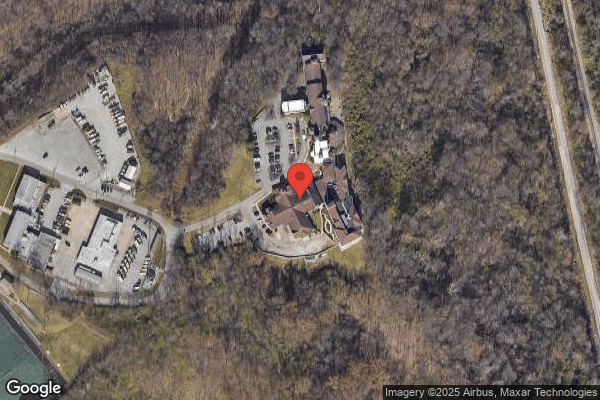
Mar 2025 7 deficiencies 2 IJ
CRITICAL (J) 📢 Someone Reported This

A family member, employee, or ombudsman was alarmed enough to file a formal complaint

Immediate Jeopardy (IJ) - the most serious Medicare violation

Comprehensive Care Plan (Tag F0656)

Someone could have died · This affected 1 resident

Based on interview, record review, and review of the facility's policy, the facility failed to develop and implement a comprehensive person-centered care plan for each resident consistent with residen...

Read full inspector narrative →
Based on interview, record review, and review of the facility's policy, the facility failed to develop and implement a comprehensive person-centered care plan for each resident consistent with resident rights and provide services required to attain or maintain the resident's highest practicable physical, mental, and psychosocial well-being for 2 of 12 sampled residents, Resident (R)1 and R24. 1. On 02/25/2025, R1, who resided on the facility's locked Memory Care Unit (MCU), and was care planned to wear a wanderguard (a monitoring device that triggers door alarms to alert staff when a resident was near a door or going out a door) was observed entering the facility through the main door which was equipped with an alarming device. However, the door did not alarm when R1 entered the facility. During interviews with the MCU staff, they stated they had last seen the resident at approximately 4:00 PM, and were unaware R1 left the building without staff's knowledge until they received a phone call from Receptionist 2, alerting them R1 was entering the facility. Receptionist 2 stated R1 was not wearing the wanderguard bracelet when he returned to the facility at approximately 5:15 PM, although the resident's Comprehensive Care Plan (CCP) dated 05/20/2024, revealed an intervention for the use of a wanderguard to the right wrist to prevent him from leaving the facility unattended. 2. R24 (hospice resident) was care planned with interventions for pain medication as ordered; and monitor for effectiveness of the pain medication. However, R24's family had a surveillance device in the resident's room that did not detect any staff members administering medication or providing care to her from 03/11/2025 at 6:03 PM, until 03/12/2025 at 5:41 AM, approximately 12 hours. The facility's failure to have an effective system in place to ensure the Comprehensive Care Plan is developed and implemented is likely to cause serious injury, impairment, or death, if immediate action is not taken. Immediate Jeopardy (IJ) was identified on 03/07/2025, was determined to exist on 02/25/2025 in the area of 42 CFR 483.21 Comprehensive Resident Centered Care Plan, F656. The facility provided an acceptable Immediate Jeopardy Removal Plan, on 03/12/2025, alleging removal of the IJ on 03/10/2025. The State Survey Agency (SSA) validated the IJ was removed on 03/15/2025, prior to exit. Remaining non-compliance continues at a Scope and Severity of a D while the facility develops and implements a Plan of Correction (PoC) and the facility's Quality Assurance (QA) monitors to ensure compliance with systemic changes. Refer to F658 and F689 The findings include: Review of the facility's policy titled, Comprehensive Care Plans (CCP), undated, revealed it was the policy of the facility to develop and implement a comprehensive person-centered care plan for each resident, consistent with resident rights, that included measurable objectives and timeframes to meet a resident's medical, nursing, mental and psychosocial needs that were identified in the resident's comprehensive assessment. Per policy, the CCP would describe the services to be furnished to attain or maintain the resident's highest practicable physical, mental and psychosocial well-being. The policy stated the CCP would include resident specific interventions that reflected the resident's needs and preferences. 1. Review of R1's admission Record, located in the resident's electronic medical record (EMR), revealed the facility admitted the resident on 04/16/2024 with diagnoses which included mild cognitive impairment/severe vascular dementia with agitation, moderate malnutrition, and the need for assistance with personal care. On 09/05/2024, R1 was diagnosed with wandering. Review of R1's CCP, dated 05/20/2024, located in the resident's EMR, revealed the resident was an elopement risk/wanderer related to impaired safety awareness and wandered aimlessly. The goal stated the resident would not leave the facility unattended. Interventions included: distract resident from wandering by offering pleasant diversions, structured activities, food, conversation, television, book. Resident prefers: photography, and outdoor activities. There was also an intervention for wanderguard to the right wrist with the nurse to check placement each shift with an initiation date of 05/20/2024. Review of R1's Clinical Orders, dated 05/20/2024, revealed orders for R1 to wear a wanderguard bracelet to the right wrist and to check every shift. Review of R1's quarterly Minimum Data Set [MDS], with an Assessment Reference Date (ARD) of 01/23/2025, located in the resident's EMR, revealed the facility assessed R1 to have a Brief Interview for Mental Status (BIMS) score of nine out of 15, which indicated moderate cognitive impairment. Additional review revealed the facility assessed the resident as wandering one to three days during the look back period. Review of R1's Clinical Orders, dated 01/31/2025, revealed orders for R1 to wear a wanderguard bracelet to the right wrist and to check every shift. Review of R1's Treatment Administration Record (TAR), dated 02/2025, revealed the placement of R1's wanderguard had been charted as checked and charted as present on 02/25/2025 by Licensed Practical Nurse (LPN)1. However, there was no intervention on the TAR to check functionality of the wanderguard and there was no documented evidence a check of functionality of the wanderguard had been completed. Review of R1's Progress Note, dated 02/25/2025 at 11:05 PM, signed by the MDS Nurse, located in the resident's EMR, revealed R1 followed visitors through the exit doors on the MCU. Per the note, R1 exited the facility for a short time, and then returned through the front doors. R1 told the receptionist he needed to sign back in, and he was out looking for his dog. According to the note, the receptionist recognized R1 and assisted the resident back to the locked MCU. Further review, revealed the nurse completed a head-to-toe assessment with no injuries noted at the time. Per the note, R1 had no complaints of pain with touch and vital signs were within normal range. The note further stated R1 was placed on one on one (1:1) observation for safety, and his family was in the facility and was given notification. During an interview, on 03/06/2025 at 4:11 PM, with Receptionist 2, she stated on the evening R1 eloped (02/25/2025), it was very busy with people going in and out with the phones ringing when she saw R1 walk in through the front facility door at approximately 5:15 PM. She stated she knew who he was because he had attempted to leave the facility before. Receptionist 2 stated R1's wanderguard was not visible, and no alarm sounded when he re-entered the facility. She stated she recalled R1 was wearing shorts and a t-shirt and it was warm that day. Receptionist 2 further stated she did not witness nor did she hear R1 go out the front door. She stated there was always 24/7 coverage in place at the main entrance reception desk, even before R1 eloped. During an interview, on 03/06/2025 at 2:35 PM, with State Trained Nurse Assistant (STNA)1, he stated he was assigned to R1 the day he eloped (02/25/2025). STNA1 stated the last time he remembered seeing R1 that day was about 3:45 PM to 4:00 PM when the resident was in the Common Room. After that, he was giving another resident a shower and did not hear any alarms sounding on the unit. STNA1 further stated he was made aware R1 was returning to the unit on the elevator. STNA1 stated he did not recall seeing the wanderguard on R1 at the beginning of the shift, but he was not looking for it specifically. He stated the nurses checked placement of the wanderguards. During an interview, on 03/06/2025 at 2:49 PM, with LPN1, she stated she was assigned to R1 on the day he eloped. LPN1 stated the last time she saw R1 was around 4:00 PM in the Common Room that day. LPN1 further stated she was caring for another resident, and did not hear an alarm. In continued interview, LPN1 stated there was an order to check the placement of R1's wanderguard every shift which she did that day prior to the elopement. She stated she observed it on his wrist, but she could not recall the exact time she checked the placement of the wanderguard. LPN1 stated after R1 returned she questioned the resident as to where his wanderguard was and he stated, I took it off and threw it. LPN1 stated staff searched R1's room, the MCU, and the garbage and did not find the wanderguard. During further interview with LPN1 on 03/06/2025 at 2:49 PM, she stated prior to R1's eloping, she checked the residents' wanderguard devices weekly by pushing the resident's wheelchair near to the door or walking the resident up near the door and making sure the alarm would sound. LPN1 further stated she did not have a wand or device to test the wanderguard alarm on the unit. In continued interview, she stated the charting for the alarm check for the wanderguards used to be a task on the resident's Medication/Treatment Administration Record (MAR/TAR), but at some point the intervention to test the wanderguard bracelets for function no longer showed up on the MAR/TAR, and therefore she did not document the checks anywhere. During an interview, on 03/07/2025 at 10:32 AM, with the MDS Nurse, she stated the floor nurses, the unit managers, and the Director of Nursing (DON) could update a resident's care plan, and then she reviewed the entire care plan with each MDS assessment. The MDS nurse stated the care plan should be developed with interventions to provide the best possible outcome for the resident and the care plan was to be person-centered. She stated the care plan was important as it provided staff information on how to care for the resident. Further, she stated information from the care plan flowed to the resident's Kardex (a nurse aide care plan which indicated a resident's specific care needs which was visible on the resident's EMR) so all staff would have access to the information on the resident's activities of daily living. The MDS Nurse stated this included information such as how the resident transferred and if the resident used an alarming device for wandering, etc. She further stated if the care plan was not followed, it could lead to harm for the resident, as the care plan was the main tool used for direction of resident care. During an interview, on 03/06/2025 at 5:30 PM, with the Interim Administrator and the Director of Nursing (DON), the Interim Administrator stated going forward, the function of the residents' wanderguards was to be checked every day instead of weekly, and placement of the residents' wanderguards was to be checked every shift and charted on the TAR and in the Progress Notes. They both stated if a resident had a wanderguard, the wanderguard should be marked on the resident's care plan and Kardex in order to alert all staff the resident had a wanderguard. Both stated the resident's care plan directed resident care, and it was important for the care plan to be followed to ensure the safety of the residents and to also ensure the resident's care needs would be met. They stated going forward, there would be an intervention to check placement and functionality on R1's care plan and that would flow to the STNA Kardex. 2. Review of R24's admission Record, located in R24's EMR, revealed the facility admitted R24 on 07/02/2024 with diagnoses to include Parkinson's disease, spondylosis (degeneration of the vertebral column), and spinal stenosis (narrowing of the spaces in the spine) with sciatica (pain along the sciatic nerve). Review of R24's quarterly MDS with an ARD of 01/28/2025, located in R24's EMR, revealed the resident's BIMS was not assessed. A staff assessment for mental status indicated R24 had short and long-term memory problems. Further review of the MDS revealed the facility assessed the resident as being a substantial/maximum assist (helper did more than half of the effort) for transfers, mobility, and activities of daily living (ADL). Review of R24's CCP, undated, revealed the resident was care planned for being at risk for alteration in comfort and pain. Goals included R24 would be free of any discomfort or adverse side effects from pain medication. Interventions included administer pain medication as ordered; monitor for effectiveness of the pain medication; document all interventions; and report any unrelieved pain or condition change to the primary care provider. Review of R24's Physician Orders, located in R24's EMR, revealed an order, dated 01/16/2025, for Hospice (end of life) Care due to her Parkinson's diagnosis. Further review revealed an order dated 01/25/2025, for tramadol HCl oral tablet 50 milligrams (mg), one tablet by mouth three times a day for pain/comfort (narcotic pain reliever). Review of R24's Medication Administration Report (MAR), found in R24's EMR, dated March 2025, revealed Registered Nurse (RN) 6 documented in the MAR that she administered R24's 9:00 PM tramadol at 9:21 PM. During an interview with Family (F)2, on 03/14/2025 at 3:35 PM, he stated after reviewing video from the family's surveillance device in R24's room, it showed no person or staff member had entered R24's room from 03/11/2025 at approximately 6:03 PM to 03/12/2025 at 5:45 AM to provide essential care for R24. F2 stated he was concerned the resident was not observed for pain, repositioned to decrease pain, or administered her 9:00 PM pain medications (tramadol). Review of R24's family surveillance video, on 03/14/2024 at 3:35 PM, by the SSA Surveyor, provided by the family, revealed captured video of the resident's room, including the resident in the bed and a full view of the entrance door to the room. The video showed the resident's room, from 03/11/2025 at 5:45 PM to 03/12/2025 at 5:45 AM. The video confirmed the last staff person left R24's room on 03/11/2025 at 6:03 PM, and no facility staff returned to the room until 5:41 AM on 03/12/2025. During a telephone interview with STNA22, on 03/13/2024 at 2:39 PM, he stated he rounded on R24 every hour during the time from 11:00 PM on 03/11/2025 to 7:00 AM on 03/12/2025. When the SSA Surveyor questioned how he monitored R24 throughout the night, he stated every other hour he opened the door to her room enough to see her and make sure she was in bed. However, he verified during these checks, he did not always go into the room and did not turn on the room lights. During the next hour, he stated he entered the room and checked R24's brief for wetness, but the resident was not wet until last rounds. He stated R24 could not move around on her own but could move a little while in bed and often attempted to crawl out. He further stated he checked her and repositioned her every two hours. Additionally, STNA22 stated nurses rounded every other hour, checking on residents by opening doors to ensure everyone was sleeping well. During an interview, with SRNA23, on 03/13/2024 at 4:27 PM, she stated she worked the 7:00 PM to 11:00 PM shift on 03/11/2025. She stated she rounded on R24 in her room at around 6:45 PM, but did not provide care at that time. However, she stated she continued to round on the resident until end of shift at 11:00 PM. Telephone interview with RN6 was attempted by the SSA Surveyor on 03/13/2025 at 2:27 PM, 2:38 PM, and 3:14 PM. A voicemail was left each time to return the SSA Surveyor's call. No return call was received. During an interview with the DON, on 03/13/2025 at 11:30 AM, she stated F3 complained on the morning of 03/12/2025, that the resident had not been cared for during the night, and F3 had video surveillance showing R24 was left alone all night. The DON stated she notified the Administrator, and an investigation was initiated. She stated R24 should have been checked on at least every two hours. Further, R24 should have been monitored for pain. The DON stated it was her expectation that clinical staff rounded on residents throughout the night and that nursing staff provided care for residents as per the CCP. She further stated following the plan of care was important to provide appropriate, resident-specific care. During an interview with the Interim Administrator, on 03/15/2025 at 11:46 AM, she stated she was notified of the staff's failure to round on R24 by the DON. The Interim Administrator stated F3 showed her the complete recording of video footage using the monitoring application on her iPhone. The Interim Administrator stated she initiated an investigation and suspended the staff members involved. She stated it was her expectation clinical staff rounded on residents and provided care as ordered and as per the CCP. During an interview with the Medical Director on 03/13/2025 at 3:08 PM, he stated he was notified about a video from R24's family, which revealed the resident was not monitored by clinical staff throughout the night. He further stated it appeared R24 did not receive any of her evening medications. He stated it was his expectation nursing staff implemented the CCP to ensure the facility maintained the resident's highest practicable level of functioning and well-being.
CRITICAL (J) 📢 Someone Reported This

A family member, employee, or ombudsman was alarmed enough to file a formal complaint

Immediate Jeopardy (IJ) - the most serious Medicare violation

Accident Prevention (Tag F0689)

Someone could have died · This affected 1 resident

**NOTE- TERMS IN BRACKETS HAVE BEEN EDITED TO PROTECT CONFIDENTIALITY** Based on observation, interview, record review, review of the RoamAlert Resident Safety User Guide, and review of the facility's...

Read full inspector narrative →
**NOTE- TERMS IN BRACKETS HAVE BEEN EDITED TO PROTECT CONFIDENTIALITY** Based on observation, interview, record review, review of the RoamAlert Resident Safety User Guide, and review of the facility's documents and policies, the facility failed to have an effective system in place to ensure each resident received adequate supervision and properly functioning assistance devices to prevent unsafe wandering, elopement, and falls for 3 of 11 sampled residents, Resident (R)1, R12, and R13. 1. R1's Clinical orders, initiated 05/20/2024, revealed orders for the resident to wear a wanderguard bracelet (an electronic device that caused an alarm to sound when the resident tried to exit a door that had an accompanying device installed) to his right wrist and to check every shift. Per R1's Progress Note, dated 06/25/2024, R1 was exit-seeking, went outside the exit door, and was brought back into the facility immediately. However, per the 06/25/2024 note, the wanderguard was not on R1's right wrist upon staff bringing the resident back inside. Subsequently, on 02/25/2025, R1 who resided on the locked Memory Care Unit (MCU) was observed entering the facility through the main door which was equipped with an alarming device, but the door did not alarm when the resident entered the building as R1 was again not wearing the wanderguard bracelet upon return to the facility. Interviews were conducted with MCU staff who were on duty during the time of the 02/25/2025 elopement, and they stated they had last seen the resident at approximately 4:00 PM, and were unaware R1 left the building unsupervised until they received a phone call from Receptionist 2, alerting them R1 was entering the facility. Also, there was no documented evidence the facility had checked R1's wanderguard for functionality, and on 02/28/2025, the vendor for the alarm system found it was not working properly. 2. On 06/07/2024, R12 was transferred without the use of a gait belt, as per policy. The resident sustained a wound to the left knee, a wound to the left arm, and bruising with scratches on the left ribcage. Additionally, a CT of the Chest was performed on 06/08/2024, which revealed an age-indeterminate nondisplaced left 8th rib fracture. There was no documented evidence of a root cause analysis or investigation related to the fall. 3. On 06/06/2024, R13 sustained an unwitnessed fall, resulting in a hematoma and three lacerations on the right side of the resident's forehead requiring seven sutures to close the lacerations. There was no documented evidence of a root cause analysis or investigation related to the fall. Additionally, there was no documented evidence the CCP was updated in an attempt to prevent future potential falls. The facility's failure to have an effective system in place to ensure residents' safety is likely to cause serious injury, impairment, or death, if immediate action is not taken. Immediate Jeopardy (IJ) was identified on 03/07/2025, was determined to exist on 02/25/2025 in the area of 42 CFR 483.25 Quality of Care, F689, and Substandard Quality of Care (SQC) at 42 CFR 483.25. The facility provided an acceptable Immediate Jeopardy Removal Plan, on 03/12/2025, alleging removal of the IJ on 03/10/2025. The State Survey Agency (SSA) validated the IJ was removed on 03/15/2025, prior to exit. Remaining non-compliance continues at a Scope and Severity of a G while the facility develops and implements a Plan of Correction (PoC) and the facility's Quality Assurance (QA) monitors to ensure compliance with systemic changes. Refer to F656 and F657 The findings include: 1. Review of the facility's policy titled, Elopements and Wandering Residents, dated 04/18/2024, revealed the facility ensured residents who exhibited wandering behavior and/or were at risk for elopement received adequate supervision to prevent accidents. The policy further stated residents received care in accordance with their person-centered care plan of addressing their unique factors contributing to wandering or elopement risk. Per policy, the facility was equipped with door locks/alarms to help avoid resident elopements, but alarms were not a replacement for necessary supervision. Further review revealed devices used to prevent elopement were checked for functionality and placement, and this would be documented every shift on the Treatment Administration Record (TAR). The policy stated a system would be in place for systematic and frequent checks of all critical components of the electronic alarm system with clear designation of responsibility for monitoring and maintaining the system. Per policy, a basic check of the system was to be done every 24 hours to assure proper functioning. Additionally, the policy stated maintenance of the system must be consistent with the manufacturer's guidelines, and a complete systems check must be performed at least annually. Review of the website's manual (found at https://jmacfiles.s3.amazonaws.com/docs_Roam_Alert_User_Guide.pdf) RoamAlert Resident Safety User Guide, dated 01/2010, revealed monthly testing and maintenance was essential to ensure the program was operating correctly. It also stated the failure to do regular testing and maintenance would increase the risk of system failure and the failure to detect resident wandering. The State Survey Agency (SSA) Surveyor requested the log of the wanderguard system/electronic alarm system checks from the Maintenance Director on 03/05/2025 at 3:28 PM and from the Interim Administrator on 03/06/2025 at 9:07 AM and 03/07/2025 at 8:30 AM. However, the log was not provided. Review of the facility's document titled, Service Orders for [Facility Name] Nursing Home, dated 02/26/2025 to 03/07/2025, revealed the vendor for the wanderguard system had serviced the facility on 02/26/2025 to reprogram the RoamAlert/wanderguard keypad passcode; on 02/28/2025 for wanderguard not recognizing when someone went through the door; on 03/06/2025 for wanderguard alarming on its own; and on 03/10/2025 to confirm the order for two new door controllers. Review of the Weather underground.com temperature history for the facility area on 02/25/2025, revealed a temperature of 65 degrees Fahrenheit from 3:30 PM until 5:30 PM. Review of R1's admission Record, located in the resident's electronic medical record (EMR), revealed the facility admitted R1 on 04/16/2024 with diagnoses including mild cognitive impairment/severe vascular dementia with agitation, moderate malnutrition, and need for assistance with personal care. On 09/05/2024, R1 was diagnosed with wandering. Per the EMR, the resident resided on the locked MCU. Review of R1's Comprehensive Care Plan (CCP), dated 05/20/2024, located in the resident's EMR, revealed R1 was an elopement risk/wanderer related to impaired safety awareness and wandered aimlessly. The goal stated R1 would not leave the facility unattended. Interventions included resident to wear wanderguard to his right wrist and for the nurse to check placement each shift. Review of R1's Clinical Orders, dated 05/20/2024 and 01/31/2025, located in the resident's EMR, revealed orders for R1 to wear a wanderguard bracelet to his right wrist and to check every shift. Review of R1's Progress Notes, from 04/16/2024 to 02/25/2025, revealed instances where R1 had been noted to be wandering and required redirection. These dates included: 04/19/2024, 04/26/2024, 06/25/2024, 06/30/2024, 09/04/2024, 09/05/2024, 09/06/2024, 09/09/2024, 09/16/2024, 11/13/2024, and 01/21/ 2025. Review of R1's Progress Note, dated 06/25/2024 at 3:44 PM, revealed R1 was exit-seeking, went outside the exit door, and was brought back into the facility immediately. However, per the note, the wanderguard was not on his right wrist, and R1 stated he lost it at some point during the night. The note stated a new wanderguard was applied to R1's right wrist and checked to ensure it was working properly. Further review revealed an order was in place to ensure the wanderguard was checked each shift. Review of R1's Elopement Risk Assessment, dated 01/23/2025, revealed a score of seven which indicated he was at high risk for elopement. Per the legend, any score above three was considered high risk. Review of R1's quarterly Minimum Data Set (MDS), with an Assessment Reference Date (ARD) of 01/23/2025, located in the resident's EMR, revealed the facility assessed R1 to have a Brief Interview for Mental Status [BIMS] score of nine out of 15, indicating moderate cognitive impairment. Further review revealed the facility assessed the resident to have wandered one to three days during the look back period. Review of R1's Treatment Administration Record (TAR), dated 02/2025, located in the resident's EMR, revealed the placement of R1's wanderguard had been charted as checked and charted as present on 02/25/2025 on day shift by Licensed Practical Nurse (LPN) 1. However, there was no documented evidence a check of functionality had been completed. Review of R1's Progress Note, dated 02/25/2025 at 11:05 PM, signed by the MDS Nurse, located in the resident's EMR, revealed R1 had followed visitors through the exit doors on the MCU, exited the facility for a short time, and returned through the front doors. Per the note, R1 told the receptionist he needed to sign back in, and he was out looking for his dog. The receptionist recognized the resident and assisted the resident back to the locked MCU. The note stated the nurse completed a head-to-toe assessment with no injuries noted. Per the note, R1 had no complaints of pain with touch and vital signs were within normal range. The note stated R1 was placed on one on one (1:1) observation for safety, and R1's family was in the facility and was given notification. Observation on 03/05/2025 at 12:10 PM, revealed R1 was ambulating independently with his son and entered the facility through the main doors. R1's wanderguard was visible on his right wrist, and the alarm was sounding as he entered. Observation on 03/05/2025 at 12:13 PM, revealed R1 was in his room, in bed. R1 stated he wore a wristwatch and this other one, while pointing at the wanderguard. R1 denied knowing the purpose of the wanderguard bracelet. During an interview, on 03/05/2025 at 12:19 PM, with R1's Power of Attorney (POA), he stated the facility notified him of the resident leaving the facility unaccompanied on 02/25/2025, within 30 minutes of the resident returning to the facility. He further stated he understood R1 had returned on his own, walked through the facility's front door, and signed himself in as Me. R1's POA stated no harm had come to R1, and he was not sure if R1's wanderguard was in place the last time he visited. He further stated, It was like a wristwatch, and I just got used to seeing it on him. In continued interview, R1's POA stated the facility told him R1 was not wearing the wanderguard when he returned to the facility, and to his knowledge, the facility had not been able to locate it. He stated he asked R1 what happened to it, and R1 told him he was in the field and a girl had cut it off. R1's POA stated he observed staff replacing the wanderguard while he was visiting R1. During an interview, on 03/06/2025 at 2:35 PM, with State Trained Nurse Assistant (STNA) 1, he stated he had worked at the facility since 04/02/2024 and was assigned to R1 the day he eloped. STNA1 stated the last time he remembered seeing R1 was about 3:45 PM to 4:00 PM that day in the Common Room, and after that, he was giving another resident a shower and did not hear any alarms sounding on the unit. STNA1 stated he was made aware R1 was returning to the unit on the elevator and did not recall specifically seeing a wanderguard on R1, but if R1 had come within about six feet of the door, it would have alarmed. STNA1 stated the alarm was loud and audible over the whole unit, but since he was in the shower room with another resident he might not have heard it sound. STNA1 also stated the alarm for the side fire door off the unit and next to the elevators was also very loud, and he was able to hear it on the memory care unit if it sounded. During an interview, on 03/06/2025 at 2:49 PM, with Licensed Practical Nurse (LPN)1, she stated she had worked at the facility since 03/13/2006 and was assigned to R1 on the day he eloped. LPN1 stated the last time she saw R1 was around 4:00 PM in the Common Room where the residents were listening to music and watching television. LPN1 stated she received a readmission from the hospital at about 4:15 PM and was providing care for that resident in the resident's room, and did not hear any alarms sound on the unit during that time. LPN1 stated she received a call from Receptionist 2 and was told R1 was returning to the facility alone through the front entrance, and she would assist him to the elevator and send him down to the MCU. LPN1 stated that happened around 5:00 PM to 5:15 PM, and she knew that because supper meal trays were out. In continued interview, LPN1 stated there was an order to check the placement of R1's wanderguard every shift. She stated she checked the placement of R1's wanderguard on 02/25/2025, and it was on his wrist, but she could not remember the exact time she checked the wanderguard for placement. LPN1 stated when a resident with a wanderguard got close to the door, it would alarm, but not too loud, then it would beep for about 30 seconds, and then would turn off by itself. LPN1 stated there was no code for staff to shut the alarm off. During continued interview with LPN1, on 03/06/2025 at 2:49 PM, she stated R1 had previously complained his wanderguard was too tight, but he had not complained about it on 02/25/2025 or the day before and she had never cut his wanderguard off. LPN1 stated a new one had been placed on R1 when he returned to the unit on 02/25/2025. LPN1 stated she asked R1 where his wanderguard was when he returned and he stated, I took it off and threw it. LPN1 stated the staff searched the unit, R1's room, and the garbage, but could not find the missing device. She stated prior to R1 eloping, she checked the function of the residents' wanderguard devices weekly by pushing the resident's wheelchair near to or walking the resident up near the door and making sure the alarm would sound. LPN1 stated she did not have a wand or device to test the wanderguard alarm on the unit. Further, she stated she did not document checking the function of the residents' wanderguard. LPN1 stated the day R1 eloped, it was supper time, the television was on, the music was loud, and since she was in a room with another resident, she did not hear any alarms go off. LPN1 further stated the double doors to the MCU had a delay in closing. During an interview, on 03/05/2025 at 3:28 PM, with the Maintenance Director, he stated he had been at the facility for 13 years and had reviewed the facility's video footage of the front door. He stated he observed R1 coming back to the facility through the front door but was not able to identify him leaving the facility through the front door. He further stated the camera was situated to record the main entrance between the outside door and the locked facility door in the vestibule. He also stated it was difficult to tell R1 from other visitors, and he might have been able to follow a group of visitors out the front door. The Maintenance Director stated none of the staff heard an alarm go off around the time R1 left the facility, and therefore thought R1 must have tailgated with the visitors out the double doors of the MCU, rode the elevator up to the main floor, and then exited out the front door. The Maintenance Director stated prior to R1 leaving the facility unattended, family members were given the code to the locked double doors to the MCU and could come and go without staff assistance. Further, he stated that since the incident, the codes to the doors had been changed and were given to staff only. During an interview, on 03/05/2025 at 3:52 PM, the Interim Administrator stated she had been at the facility since 02/17/2025, and the Director of Nursing (DON) stated she had been at the facility for eight weeks. They both stated they felt R1 had followed visitors out the locked double doors to the MCU and then exited out the side fire door next to the gated garden area near Elevators 6 and 7. The Interim Administrator stated she was new to the facility and had only been in the facility for a week when R1 eloped. She stated if she had been aware family members and visitors had the code to the locked MCU doors, she would have had the codes changed sooner. The Interim Administrator further stated the facility's investigation revealed R1's elopement happened right before supper service, during a time when a resident activity was happening which often included a movie or music, and staff did not hear the side fire door alarm when R1 left. Additionally, the Interim Administrator stated Emergency Medical Services (EMS) was in the building at the time R1 eloped which added to the traffic/activity on and off the unit. The Interim Administrator stated the codes to all the locked doors had been changed, and a letter went out to the residents' families explaining the need for the doors to stay locked and the need for the codes to be changed. The Interim Administrator stated going forward, staff would have to assist visitors in and out of the facility. The Interim Administrator further stated her plan was to have a telephone/intercom system installed outside the MCU double doors to replace the push pad so visitors would have to call into the unit for entry. In additional interview, with the Interim Administrator, on 03/06/2025 at 9:07 AM, she stated the contractor/vendor for the wanderguard sensors was contacted on 02/26/2025, for a system check, to evaluate the alarm and how it responded when the wanderguard bracelet was near it. She stated, on 02/28/2025, the contractor/vendor found the main wanderguard unit, which was housed in the ceiling just inside the double doors to the MCU near the nurses' station, was not receiving information from the exciter sensors. The Interim Administrator stated the other control boxes for the other facility doors were functioning, but not the one for MCU, and the unit would need to be replaced. In further interview, on 03/06/2025 at 5:30 PM, with the Interim Administrator and the DON, they stated the MCU was a very busy unit, especially at the time of day R1 eloped. They stated often the Common area was full of residents and staff engaged in activities, music and/or watching television, and it could be loud. The Interim Administrator stated depending on the time of day and the environment, alarm audibility could vary. The Interim Administrator stated going forward, the function of the residents' wanderguards was to be checked every day, and placement of the residents' wanderguards was to be checked every shift and charted on the MAR/TAR and in the Progress Notes. Observation on 03/13/2025 at 9:57 AM, revealed R1 was sitting at a table in the MCU Common area with staff in the general area. STNA14, the staff person assigned to R1 as his 1:1 monitor for today, was observed in R1's room sitting in the recliner on her phone (at the opposite corner of the unit and out of eyesight/earshot of R1) The Interim Administrator was rounding on the MCU and was made aware by the SSA Surveyor. During an interview, on 03/13/2025 at 10:05 AM, with STNA14, she stated she had been educated related to elopement and 1:1 observation and was expected to have eyes on R1 at all times. STNA14 further stated she had just gone back to R1's room to get her phone, and she had told RN4 and STNA15 she was going there and asked them to keep eyes on R1. During an interview, on 03/13/2025 at 10:09 AM, with RN4, she denied STNA14 telling her she was going to R1's room or asking her to keep eyes on R1. During an interview, on 03/13/2025 at 10:15 AM, with STNA15, she stated she had not been told to watch R1 while STNA14 went to R1's room. She further stated she had told STNA14 not to leave R1 unattended on two other occasions and had made LPN1 and the Weekend Supervisor aware. During a telephone interview, on 03/14/2024 at 4:20 PM, with the Weekend Supervisor, she denied being made aware by any staff that STNA14 was observed leaving R1 unattended while she was responsible for his 1:1 observation. During an interview, on 03/15/2024 at 1:05 PM, with LPN1, she stated to be a 1:1 sitter meant the staff person had eyes on the resident at all times, and if they needed a break, she would have the resident sit with her in the Common area. LPN1 denied any staff ever told her STNA14 left R1 unsupervised. During an interview with RN1, on 03/13/2025 at 10:25 AM, he stated STNA14 was being escorted out of the building at this time, and RN4 had been told to keep eyes on R1 while R1 was in the Common area. RN1 stated he was told if R1 got up to leave the Common area, either RN4 or STNA15 were to accompany R1. On 03/14/2025 at 12:09 PM, RN1 accompanied the SSA Surveyor to the second floor unit, on the [NAME] Unit, and activated the wanderguard alarm on the second floor near the entrance/exit to the unit. An audible alarm sounded for 41 seconds with no staff response. The alarm silenced with no staff entry of a code. After a second immediate activation and after the alarm sounded for 10 seconds, a staff member was overheard to ask, What is that sound? Then, per observation, a second staff person answered, That's the door. The audible alarm sounded for an additional 67 seconds, with no staff response. The total alarm time was 77 seconds, with no staff [LPN4 or STNA19] response. Interview was conducted, on 03/14/2025 at 2:15 PM, with LPN4, who had been employed by the facility for 10 years and STNA19, who had been employed by the facility for two years, and they both stated they only had one resident on the unit that used a wanderguard on the [NAME] unit. They stated, if the alarm went off and they had eyes on her, they did not worry about the alarm. LPN4 and STNA19 also stated it was not always easy to hear alarms in the back hall. Observation and interview with STNA17, on 03/15/2025 at 10:00 AM, on the MCU, revealed STNA17 was assigned 1:1 monitoring for R1 and was posted outside R1's room with eyes on him. STNA17 stated she had received continued education on elopement, missing resident, and additional information on the response to alarms yesterday and this morning. During interview on 03/15/2025 at 10:05 AM, with STNA18, who was monitoring the entry doors to the MCU, he stated he had received education on elopement, a missing resident, and response to alarms. During interview on 03/15/2025 at 10:24 AM, with LPN5, on the [NAME] Unit, located on the second floor, she stated she received education on elopement and new education During interview on 03/15/2025 at 10:26 AM, with RN1, he stated there was a whole house test yesterday on door alarms and wanderguards, and the policy was reviewed. RN1 also stated all the alarms on all the units had been made louder. During interview on 03/15/2025 at 12:00 PM, with the Interim Administrator and the DON, they stated it was their expectation the facility would have an elopement and wandering system in place with immediate staff response, a head count of residents completed, and for staff to report to a manager/supervisor on duty when concerns occur, to ensure resident safety. Further, the DON stated the facility should have been checking placement and functionality of the resident's wanderguards and documenting both in the resident record and the system functionality should have also been checked regularly and documented. Review of the facility's Fall Prevention Program policy, undated, revealed each resident would be assessed for fall risk, and care and services would be provided according to each resident's individualized level of risk to minimize the likelihood of falls. Per policy, fall risk protocols included to implement environmental interventions that decreased the risk of falling; provide routine rounding; wear footwear with non-slip soles while ambulating (residents); complete a fall risk assessment upon admission, quarterly, and as indicated for significant condition changes or after each fall; and provide interventions that addressed risk factors as directed by the resident's assessment. Further review revealed when a resident fell, the facility would assess them, complete a post-fall assessment, and generate an incident report. The policy stated the physician and family would be notified, and the care plan would be updated as needed. Per policy, all actions would be documented, witness statements collected if there was an injury, and the interdisciplinary team (IDT) would review the interventions and conduct a complete investigation. 2. Review of the facility's Use of Gait Belts policy, undated, revealed gait belts were to be used for any resident who could not independently walk or transfer, ensuring their safety. Additionally, per policy, all employees received training on the proper use of gait belts during their orientation and annually. Review of R12's admission Record, located in the resident's EMR, revealed the facility admitted the resident on 10/23/2023 with diagnoses to include myasthenia gravis (neuromuscular disorder causing muscle weakness), transient cerebral ischemic attack (mini stroke) and type 2 diabetes. Review of R12's CCP, dated 10/24/2023, located in the resident's EMR, revealed R12 was care planned for being at increased risk for falls related to impaired mobility and a self-care performance deficit. Interventions included keeping the resident's call light within reach and follow fall protocols. Review of R12's quarterly MDS with an ARD of 04/09/2024, located in the resident's EMR, revealed the facility assessed R12 to have a BIMS score of nine out of 15, which indicated moderate cognitive impairment. Further review revealed the resident was assessed as not having any falls during the look back period. Continued review revealed the facility assessed R12 as requiring substantial/maximum assist (helper did more than half of the effort) for transfers. Review of R12's Health Status Note, dated 06/07/2024 at 10:46 PM, located in the resident's EMR, revealed at approximately 8:00 PM, R12 was sitting in the living room recliner when STNA12 assisted her into a wheelchair. During the transfer, R12 fell, landing on top of STNA12. Per the note, the resident sustained three injuries: a wound on the left knee, a wound on the left arm, and bruising with scratches on the left ribcage. The note further stated R12 reported pain at an intensity of eight out of 10 on a pain scale with 10 being the worst. R12 was transported to the local hospital. Review of R12's Incident Report, dated 06/07/2024 at 8:47 PM, revealed STNA12 acknowledged he did not use a gait belt when transferring R12 from the recliner to her wheelchair. Per the report, STNA12 stated it was an accidental fall, and he attempted to break the fall with his own body. According to the report, R12 leaned back into him, causing him to lose his balance and fall backward, with the resident landing on top of him. Review of R12's ED Provider Notes, dated 06/08/2024 at 7:52 AM, located in the resident's EMR, revealed R12 presented to the local ED after a fall. Per the note, R12 complained of chest wall and back pain and a skin tear to the right arm. Review of R12's Computed Tomography (CT) (x-ray imaging) of the Chest, dated 06/08/2024 at 7:11 AM, located in R12's EMR, revealed an age-indeterminate nondisplaced left 8th rib fracture. Additional review of R12's CCP, dated 10/24/2023, located in the EMR, revealed R12's care plan was updated on 06/08/2024 to state the resident required extensive assistance by two staff to move between surfaces; however, the CCP was not revised to include transfer using a gait belt. Review of the facility's Schedule, for 06/07/2024, at the time of R12's fall, revealed the unit where R12 resided was fully staffed with one nurse and two STNAs, and STNA13 was orienting STNA12 The nurse on duty the evening of R12's fall was no longer an employee at the facility. During an interview with Human Resources (HR), on 03/12/2024 at 8:35 AM, she stated on 06/07/2024, STNA12 was on orientation in the facility and was shadowing STNA13. She stated STNA12 should not have been left alone to provide care. The State Survey Agency (SSA) Surveyor attempted a telephone interview with STNA13, on 03/12/2025 at 9:04 AM and 9:07 AM, with no success, and a voicemail could not be left. The SSA Surveyor attempted a telephone interview with STNA12, on 03/12/2025 at 9:05 AM, with no success, and a message stated the phone number dialed did not have voicemail set up. During an interview with STNA11 (agency), on 03/11/2024 at 10:55 AM, she stated it was the facility's policy to use a gait belt with all residents who required assistance with transfers. During an interview with STNA20, on 03/13/2025 at 2:35 PM, she stated she used a gait belt for all resident transfers. During an interview with the Infection Prevention and Staff Development Coordinator (IP/SDC), on 03/12/2024 at 10:30 AM, she stated employees received education upon hire, which included training for safe resident transfers. She stated STNAs did not receive gait belt training during the facility's orientation, as this training was part of their nursing aide course curriculum. Additionally, the IP/SDC stated staff members received orientation on the floor and were paired with a senior staff member for preceptorship. She stated new employees completed a checklist during that orientation, which the preceptor and employee were required to sign. She further stated it typically took three to four days to finish the checklist. Further, while being oriented on the floor, new hires were not allowed to perform resident care independently. She stated she did not know why STNA12 independently transferred R12. The IP/SDC stated it was her expectation that staff followed facility policy in an attempt to prevent falls and used gait belts for all assisted transfers to ensure resident and staff safety. During an interview with the DON on 03/13/2025 at 11:30 AM, she stated gait belts were to be used for all transfers with residents who were not independent. She stated it was her expectation that staff followed the facility's policy and use gait belts on all residents requiring transfer assistance. The DON stated this was important for the safety and well-being of the residents. In further interview, the DON stated she was unable to locate IDT notes nor was she able to find an investigation related to R12's 06/07/2024 fall. 3. Review of R13's admission Record, located in the resident's EMR, revealed the facility admitted R13 on 06/29/2023 with diagnoses to include Alzheimer's disease, muscle weakness, and reduced mobility. Review of R13's CCP, dated 06/29/2023, located in the resident's EMR, revealed R13 was care planned for being at increased risk for falls related to a history of falls. Interventions included keeping the resident's call light in reach, encouraging the resident to participate in activities, ensuring the resident was wearing appropriate footwear, and following fall protocol. Review of R13's Occurrence History report provided by the facility, revealed she had one fall on 06/09/2024 resulting in a minor injury, and four non-injury falls on 07/17/2024, 09/06/2024, 02/25/2025, and 03/09/2025. Furthermore, a witnessed non-injury fall, on 03/04/2024, was not noted on this report. Review of R13's Fall Checklist, provided by the facility and dated 02/25/2025 at 4:02 AM, revealed an intervention to initiate an [TRUNCATED]
SERIOUS (G) 📢 Someone Reported This

A family member, employee, or ombudsman was alarmed enough to file a formal complaint

Actual Harm - a resident was hurt due to facility failures

Deficiency F0657 (Tag F0657)

A resident was harmed · This affected 1 resident

Based on interview, record review, and review of the facility's policy, the facility failed to ensure the Comprehensive Care Plan (CCP) was reviewed and revised by an interdisciplinary team composed o...

Read full inspector narrative →
Based on interview, record review, and review of the facility's policy, the facility failed to ensure the Comprehensive Care Plan (CCP) was reviewed and revised by an interdisciplinary team composed of individuals who have knowledge of the resident and his/her needs for 2 of 12 sampled residents, Resident (R)12 and R13. 1. On 06/07/2024, R12 was transferred without the use of a gait belt, as per policy. The resident sustained wounds to the left knee, and left arm, and bruising with scratches on the left ribcage. Additionally, a CT of the Chest performed on 06/08/2024, revealed an age-indeterminate nondisplaced left 8th rib fracture. R12's care plan was updated on 06/08/2024 to state the resident required extensive assistance by two staff to move between surfaces; however, the CCP was not revised to include an intervention for the use of a gait belt during transfers. 2. R13 sustained 6 falls from 03/04/2024 through 03/09/2025. However, there was no documented evidence the CCP was revised with new interventions to prevent recurrence. On 06/06/2024, R13 sustained an unwitnessed fall, resulting in a hematoma and 3 lacerations on the right side of the resident's forehead requiring 7 sutures. Again, there was no documented evidence the CCP was revised with new interventions to prevent recurrence. Refer to F689 The findings include: Review of the facility's policy titled, Interdisciplinary: Comprehensive Care Plan, dated 01/01/2023, revealed the comprehensive care plan would be reviewed and revised by the interdisciplinary team after each comprehensive and quarterly MDS assessment. The objectives would be utilized to monitor the resident's progress. Per the policy, alternative interventions would be documented, as needed. Review of the facility's Fall Prevention Program policy, undated, revealed each resident would be assessed for fall risk, and care and services would be provided according to each resident's individualized level of risk to minimize the likelihood of falls. Per policy, fall risk protocols included to complete a fall risk assessment after each fall and to provide interventions that addressed risk factors as directed by the resident's assessment. 1. Review of the facility's Use of Gait Belts policy, undated, revealed gait belts were to be used for any resident who could not independently walk or transfer, ensuring their safety. Review of R12's admission Record, located in the resident's Electronic Medical Record (EMR), revealed the facility admitted R12 on 10/23/2023 with diagnoses including myasthenia gravis (neuromuscular disorder causing muscle weakness), transient cerebral ischemic attack (mini stroke) and type 2 diabetes. Review of the quarterly Minimum Data Set (MDS), located in R12's EMR, with an Assessment Reference Date (ARD) of 04/09/2024, revealed the facility assessed R12 to have a Brief Interview for Mental Status (BIMS) score of nine out of 15, which indicated moderate cognitive impairment. Further review of the MDS revealed the facility assessed the resident as requiring substantial/maximum assist (helper did more than half of the effort) for transfers; and as having no falls during the look back period. Review of R12's CCP, dated 10/24/2023, located in R12's EMR, revealed the resident was care planned for being at increased risk for falls related to impaired mobility and self-care performance deficit. Interventions included keeping the resident's call light placed within reach and to follow fall protocols. However, the CCP did not include an intervention for the use of a gait belt during transfers. Review of R12's Health Status Note, dated 06/07/2024 at 10:46 PM, located in the resident's EMR, revealed at approximately 8:00 PM, R12 was sitting in the living room recliner when State Trained Nurse Assistant (STNA)12 assisted her into a wheelchair. During the transfer, R12 fell, landing on top of STNA12. According to the note, the resident sustained three injuries: a wound on the left knee, a wound on the left arm, and bruising with scratches on the left ribcage. The note further stated R12 reported pain at an intensity of eight out of 10 on a pain scale with 10 being the worst, and was transported to the local hospital. Review of R12's Incident Report, dated 06/07/2024 at 8:47 PM, revealed STNA12 stated he failed to use a gait belt while transferring R12 from a recliner to her wheelchair. STNA12 described the incident as an accidental fall. Review of R12's Emergency Department (ED) Provider Notes, dated 06/08/2024 at 7:52 AM, located in the resident's EMR, revealed the resident presented to the local ED after sustaining a fall. According to the note, R12 complained of chest wall and back pain and a skin tear to the right arm. Review of R12's Computed Tomography (CT) (x-ray imaging) of the Chest, dated 06/08/2024 at 7:11 AM, located in R12's EMR, revealed an age-indeterminate nondisplaced left 8th rib fracture. Additional review of R12's CCP, dated 10/24/2023, located in the EMR, revealed R12's care plan was updated on 06/08/2024 to state the resident required extensive assistance by two staff to move between surfaces; however, the CCP was not developed to include transfer using a gait belt. During an interview with the MDS Nurse, on 03/11/2025 at 3:41 PM, she stated R12's CCP should have been revised to include the use of a gait belt with all transfers. 2. Review of the admission Record, located in R13's EMR, indicated the facility admitted the resident on 06/29/2023 with diagnoses to include Alzheimer's disease, muscle weakness, and reduced mobility. Review of R13's CCP, dated 06/29/2023, located in the resident's EMR, revealed R13 was care planned for being at increased risk for falls related to a history of falls. Listed interventions included to keep the resident's call light in reach, encourage the resident to participate in activities, ensure the resident was wearing appropriate footwear, and follow fall protocol. All the above interventions were dated 06/29/2023. Review of an Occurrence History report for R13, provided by the facility, revealed she had one fall on 06/09/2024 resulting in a minor injury, and four non-injury falls on 07/17/2024, 09/06/2024, 02/25/2025, and 03/09/2025. Additionally, a witnessed non-injury fall, on 03/04/2024, was not noted on this report. Review of a Fall Checklist, provided by the facility and dated 02/25/2025 at 4:02 AM, revealed an intervention to initiate an exercise program for gait training was documented; however, the CCP was not revised with this intervention. Review of a Fall Checklist, provided by the facility and dated 03/04/2025 at 6:10 PM, revealed the CCP was not revised with a new intervention after R13 experienced a non-injury fall. Further review of R13's EMR, revealed no documented evidence the facility's Interdisciplinary Team (IDT) reviewed the above six falls or verified that previous care planned interventions were in place at the time of the resident's falls. Furthermore, there was no documented evidence the facility revised the CCP in an attempt to prevent recurrence. Review of R13's Health Status Note, dated 06/06/2024 at 10:27 PM, located in the resident's EMR, revealed LPN6 reported she found R13 on the side of the bed in a sitting position and blood was streaming down her face. According to the note, R13 was unable to explain how the fall occurred or what she was attempting to do at the time of the incident. Additional review revealed LPN6 notified the House Supervisor, Provider, Resident Representative (RR), and Emergency Medical Services (EMS). R13 was transferred to the local hospital for assessment. Review of R13's Emergency Department (ED) Provider Notes, dated 06/07/2024 at 1:12 AM, located in R13's EMR, revealed the resident presented to the local ED due to a head injury sustained from a fall. According to the ED notes, the examination revealed three lacerations on the right side of the resident's forehead, accompanied by an underlying hematoma. Per the ED note, R13 received a total of seven sutures to close the lacerations, and a CT scan of the head was conducted, which showed no intracranial processes. Further review revealed the resident was alert and neurologically intact at the time of discharge. Review of R13's Health Status Note, dated 06/07/2024 at 12:00 AM, located in the resident's EMR, revealed Nurse Practitioner (NP)1 reported R13 returned from the hospital with 6-9 sutures in head per nursing and complained of right lower rib pain. A chest radiograph (x-ray) was ordered. Review of R13's X-ray Rib Right Chest, dated 06/07/2024 at 11:49 AM, located in the resident's EMR, revealed no definite rib fracture. Although R13's EMR revealed the resident suffered injury related to the 06/06/2025 fall, there was no documented evidence the facility's Interdisciplinary Team (IDT) reviewed R13's falls or verified previous care planned interventions were in place at the time of the resident's falls. Nor did the facility revise the CCP in an attempt to prevent recurrence. Review of R13's quarterly MDS, with an ARD of 02/16/2025, located in R13's EMR, revealed the facility assessed R13 to have a BIMS score of five out of 15, which indicated severe cognitive impairment. Further review revealed the resident was not assessed for having falls during the look back period. Continued review revealed the facility assessed the resident as requiring substantial/maximum assist (helpers did more than half the effort) for transfers and once seated was able to wheel self short distances in a wheelchair. During an interview with LPN1, on 03/15/2025 at 10:22 AM, she stated she was familiar with R13 and due to the resident's diagnosis of Alzheimer's, R13 was forgetful and attempted to self-transfer without staff assistance. LPN1 stated R13 was care planned as a fall risk. She stated staff provided increased checks on the resident and provided activities if she was restless. During additional interview with the MDS Nurse, on 03/11/2025 at 3:55 PM, she stated the CCP should address the resident's needs based on diagnoses and assessments. The MDS Nurse further stated, every resident is at risk for falls, and residents with a history of falls required careful monitoring. She stated the care plan should be revised with new interventions to be implemented after a fall in an attempt to prevent further falls. The MDS Nurse further stated she was unsure why no new interventions were implemented after R13's fall on 06/06/2024. During an interview, on 03/13/2025 at 11:30 AM, with the Director of Nursing (DON), she stated staff was to follow the facility's fall protocol which included completing the Fall Checklist, which listed each step to complete when a fall occurred. She stated the checklist was to be completed by the nurse on duty and given to the DON for review at the Interdisciplinary Team (IDT) meeting. She further stated the IDT would then review the incident and add/revise interventions to prevent future falls. In further interview, she stated she could not find a Fall Checklist for R13's 06/06/2024 fall. The DON stated she currently kept IDT notes in a binder as they were not part of the EMR. During an interview with the Interim Administrator, on 03/15/2025 at 11:46 AM, she stated it was her expectation that staff would follow the facility's policies related to falls, and development/revision of care plans for the safety of the residents.
CONCERN (D) 📢 Someone Reported This

A family member, employee, or ombudsman was alarmed enough to file a formal complaint

Potential for Harm - no one hurt, but risky conditions existed

Report Alleged Abuse (Tag F0609)

Could have caused harm · This affected 1 resident

Based on interview, record review, and review of the facility's documents and policies, the facility failed to ensure that all alleged violations involving misappropriation of the residents' property ...

Read full inspector narrative →
Based on interview, record review, and review of the facility's documents and policies, the facility failed to ensure that all alleged violations involving misappropriation of the residents' property were reported to the State Survey Agency (SSA) and local law enforcement within 24 hours of when the misappropriation was suspected. This affected 1 of 12 sample residents, Resident (R)25. The findings include: Review of the facility's policy titled, Prevention, Identification, Investigation and Reporting of Abuse, Neglect, Mistreatment or Exploitation of a Resident or Misappropriation of Resident Property, effective date 02/26/2025 and previously revised on 08/2017, revealed the facility, its employees, consultants, contractors, volunteers, and other caregivers would provide an environment for residents that was safe and free from abuse, neglect, exploitation, mistreatment, and misappropriation, treating each resident with respect, dignity, and provision of privacy. The policy stated that after ensuring the resident was protected, staff must immediately report any allegation or suspicion of the misappropriation of resident property to his or her supervisor or the Administrator. Per the policy, upon receipt of the report, the Administrator or his designee must report to state or federal agencies, as applicable, any suspected or alleged misappropriation within 24 hours of the report. Review of the facility's document Initial Report, dated 02/28/2025, revealed on 02/17/2025, Registered Nurse (RN)1 was notified by a written statement from STNA16, dated 02/16/2025, that during her shift on R25's ring went missing. The report documented that STNA16 stated that during her shift, she took R25's ring off to clean it, placed the ring on the sink, and then left the room to pass meal trays. Further review of the report revealed that STNA16 stated that when she returned to the [resident ' s] room, the ring was missing. The STNA16 looked multiple times but could not locate the ring. Per the report, STNA16 stated she asked STNA21 to look for the ring, but was unsure where the ring could have gone. Continued review of the initial report revealed local law enforcement was notified (no date specified) and STNA16 was suspended during the investigation. Review of the facility's document Final Report-Five Day Follow-Up, dated 03/07/2025, revealed local law enforcement had been notified on 02/27/2025, Police report #2025-03811, and as of 03/15/2025, the case remained opened. Review of R25's admission Record, found in R25's electronic medical record (EMR), revealed the facility admitted R25 on 08/31/2020 with diagnoses of Alzheimer's disease, unspecified dementia, and anxiety. Review of R25's quarterly Minimum Data Set [MDS], with an Assessment Reference Date (ARD) of 02/02/2025, found in R25's EMR, revealed the facility assessed the resident to have a Brief Interview for Mental Status [BIMS] score of 10 out of 15, indicating R25 had moderate cognitive impairment. During an interview on 03/14/2025 at 4:30 PM with R25, she stated she felt safe at the facility and staff were very kind to her. She stated she was not aware anyone had ever taken anything from her and denied currently missing any belongings. During a telephone interview on 03/13/2025 at 7:30 PM with R25's Family Member (FM)1 and FM2 , they stated they had wished the facility would have notified local law enforcement sooner so the police could have checked with the local pawn shops so that they would have had more success in finding their loved one ' s ring. They also stated they understood the investigation was in the hands of law enforcement and neither law enforcement nor the facility had been able to reach the aide [STNA16] involved in the incident. FM1 and FM2 stated the ring had more sentimental value than monetary, but they still wished R25 had it back. The ring was described as gold and resembled a flower. Review of State Trained Nurse Assistant (STNA)16's written witness statement, undated, revealed she documented that she took R25's ring off to clean and laid it down on R25's sink. STNA16 then documented she asked STNA21 to help her lay R25 down, and then both STNAs went to pass meal trays. STNA16 documented when she returned to R25's room, the ring was gone, and both she and STNA21 looked for it, but did not find it. An interview by telephone was attempted with STNA16 on 03/13/2025 at 8:30 PM, but was unsuccessful. A second attempt was made on 03/15/2025 at 8:32 AM, but was also unsuccessful. Review of STNA21's written witness statement, dated 02/27/2025, revealed she documented that at approximately 5:00 PM she helped STNA16 change R25 and put her in bed, but did not notice whether R25's ring was on her finger or whether the ring was in R25's bathroom. STNA21 documented STNA16 approached her [on 02/16/2025] at approximately 5:30 PM and asked if she had seen R25's ring. Further review of the written statement revealed she had not seen the [resident's] ring but looked for R25's ring in the [resident's] room and bathroom without the help of STNA16. STNA21's written statement revealed she did not find the [resident's] ring. The State Survey Agency (SSA) surveyor attempted to reach STNA21 on 03/13/2025 at 8:30PM; however, was unsuccessful. Review of the Licensed Practical Nurse (LPN) 5's written witness statement, dated 02/18/2025, revealed she was not made aware of the missing property until 02/16/2025 at approximately 6:30 PM, the shift R25's ring was reported missing. LPN5 wrote she spoke with STNA16 and STNA21 and instructed STNA16 to fill out a statement detailing what happened. Further review revealed that the LPN then asked STNA16 to turn her written statement to her supervisor. LPN5 documented she did not follow up with the supervisor, but believed STNA16 had followed through as instructed. During an interview on 03/15/2025 at 10:24 AM with LPN5, she stated she did not remember who the supervisor was the night R25's ring was reported missing but told STNA16 to write a statement and to turn it in to her supervisor. Review of the Social Services Director's (SSD) written witness statement, dated 02/27/2025, revealed she met with RN1 on 02/27/2025 to discuss R25's missing ring. According to the written statement, RN1 had just spoken with STNA16 regarding the written statement left on RN1's desk, on 02/16/2025. The SSD also documented RN1 interviewed STNA21 while the SSD was in the room, and STNA21 denied knowing R25's ring was taken off her hand and that she and STNA16 searched for the ring together. The SSD further documented that it was at this point, RN1 called local law enforcement to report the ring as missing . During an interview on 03/06/2025 at 3:38 PM with RN1, he stated he reported R25's missing ring to the previous Administrator, who was the Administrator and abuse coordinator at the time the resident's ring went missing. RN1 stated he became aware the incident had not been reported when the Interim Administrator made him aware. He stated he then assisted with the investigation by completing the paperwork and notified local law enforcement. During an interview on 03/05/2025 at 11:15 AM with the Interim Administrator, she stated her first day at the facility was 02/17/2025, and the previous Administrator was asked to leave not long after that. She stated she became aware there were several facility-reported incidents that were ongoing, and one involved a resident's ring which had not been reported to the State Survey Agency (SSA) or to the local law enforcement. She stated she then reported it as soon as she was made aware and made sure staff knew what a reportable incident was and what the regulatory time frames were. She stated it was her expectation that all reportable incidents be reported timely and as the regulation outlined.
CONCERN (D) 📢 Someone Reported This

A family member, employee, or ombudsman was alarmed enough to file a formal complaint

Potential for Harm - no one hurt, but risky conditions existed

Deficiency F0658 (Tag F0658)

Could have caused harm · This affected 1 resident

Based on interview, record review, review of a surveillance video recording, review of the facility's job descriptions, and review of the facility's policies, the facility failed to ensure that servic...

Read full inspector narrative →
Based on interview, record review, review of a surveillance video recording, review of the facility's job descriptions, and review of the facility's policies, the facility failed to ensure that services provided met professional nursing standards for 1 of 33 sampled residents, Residents (R) 24. Review, on 03/14/2025 at 3:35 PM, of a surveillance video of R24, provided by the resident's family, revealed video footage of the resident and her room. The video revealed the last staff member left R24's room at 6:03 PM on 03/11/2025. Following this departure, no facility personnel re-entered the room until 5:41 AM on 03/12/2025, approximately 11 hours and 38 minutes. During this time, R24 did not receive monitoring or physician-ordered care, including assessments and administration of pain medications. The findings include: Review of the facility's policy titled, Rounding, undated, revealed the facility must ensure that staff routinely rounded on each resident to provide necessary care and services as needed. Review of the facility's policy titled, Administration of Medication, undated, revealed medications were administered as ordered by the physician, in accordance with professional standards of practice. Review of the facility's Nursing Assistant Job Description and Performance Appraisal, revised 07/2023, revealed the State Trained Nurse Aide (STNA) carried out delegated activities in accordance with current standards of practice that governed long term care facilities to ensure compliance. Furthermore, the job description stated the STNA was to make multiple rounds on the assigned unit to ensure residents were safe and accounted for, addressing the emergent issues. Review of the facility's Registered Nurse Job Description and Performance Appraisal, revised 06/2023, revealed the Registered Nurse (RN) carried out delegated activities in accordance with current standards of practice that governed long term care facilities to ensure compliance. Furthermore, the job description stated the RN ensured that medical nursing care was administered, medications were given as ordered, nursing documentation were complete and accurate to reflect the care provided and the resident's response to that care, and medication was administered in accordance with policy. Review of R24's admission Record, found in R24's electronic medical record (EMR), revealed the facility admitted R24 on 07/02/2024 with diagnoses to include Parkinson's disease, spondylosis (degeneration of the vertebral column), and spinal stenosis (narrowing of the spaces in the spine) with sciatica (pain along the sciatic nerve). Review of R24's Quarterly Minimum Data Set [MDS], found in R24's EMR, with an Assessment Reference Date (ARD) of 01/28/2025, revealed R24's Brief Interview for Mental Status [BIMS] was not assessed. A staff assessment for mental status indicated R24 had short and long-term memory problems. Further review of the MDS revealed the facility assessed the resident as being a substantial/maximum assist (helper did more than half of the effort) for transfers, mobility, and activities of daily living (ADL). Review of R24's Comprehensive Care Plan [CCP], undated, revealed the facility care planned the resident for being at risk for alteration in comfort and pain. Goals included R24 would be free of any discomfort or adverse side effects from pain medication. R24 would be given the pain medication as ordered, would be monitored, and the effectiveness of the pain medication and all interventions would be documented; and any unrelieved pain or condition change would be reported to the primary care provider. Review of R24's Physician Orders Summary, found in R24's EMR, revealed an order, dated 01/25/2025, for tramadol HCl oral tablet 50 milligrams (mg), one tablet by mouth three times a day for pain/comfort. Further review of the orders revealed R24 was admitted to Hospice (end of life) care on 01/16/2025. Review of R24's Medication Administration Report [MAR], found in R24's EMR, dated March 2025, revealed Registered Nurse (RN) 6 documented in the MAR that she administered R24's 9:00 PM tramadol at 9:21 PM. Review of the video surveillance footage of R24's room, on 03/14/2025 at 3:35 PM revealed it was started on 03/11/2025 at 5:45 PM and ended on 03/12/2025 at 6:07 AM. The video footage was provided by R24's family member (F2) via his cell phone's Ring monitoring application. The video showed that at 5:45 PM, R24 and a family member were in the room. A dayshift STNA entered R24's room and assisted her into bed, then left the room and closed the door at 6:03 PM. The family member remained with R24 until 6:25 PM, when she left the room, leaving the door open. Per the video, at 7:15 PM, another resident, who was assigned to close doors, shut R24's door. The resident moved around in bed at 3:33 AM. At 4:47 AM, R24 awoke and looked under her bed covers. She changed positions slightly, and then laid back down. From that time until 5:41 AM, no one was seen opening the door or entering R24's room to provide care during that timeframe. The door remained fully closed all night. At 5:41 AM, STNA22 entered the room, changed R24, and then transferred her to a wheelchair. He exited the room with R24 at 5:56 AM. During a telephone interview with Family Member 3 (F3) on 03/13/2025 at 9:37 AM, she identified herself as R24's Power of Attorney (POA). F3 expressed concerns regarding R24's care. She stated that, until now, the staff had generally been good, although her interactions had primarily been with the day shift staff, and she was unfamiliar with the night shift staff. F3 stated she had sent a 10-hour recording from a surveillance camera located in R24's room to the facility's Administrator. She stated that she and her siblings reviewed the video footage daily and noted there had not been any instances where the staff failed to check on their mother. However, F3 stated she had a specific concern regarding the evening shift on 03/11/2025. She stated R24 was not checked on after being put to bed by the day shift staff until the following morning when an aide woke her at 5:41 AM. During that time, F3 stated R24 was not observed by staff, was not changed, did not receive care, and was not given her evening medications. F3 stated she was very concerned about the inadequate care provided to R24, who was admitted to Hospice for end-of-life treatment and pain management due to Parkinson's disease and severe spinal pain. During an interview with F2 on 03/14/2025 at 3:35 PM, he stated after reviewing the video it showed that no one entered R24's room from 03/11/2025 at approximately 6:03 PM to 03/12/2025 at 5:45 AM. He stated he was concerned that his mother was not observed, provided care, or administered her 9:00 PM pain medication. Furthermore, F2 stated the camera would follow and maintain focus on any activity occurring throughout the room, including R24's movements in bed. He stated the camera operated 24 hours a day, seven days a week, to ensure comprehensive monitoring at all times. During a telephone interview with STNA22 on 03/13/2024 at 2:39 PM, he stated he rounded on R24 every hour during the time from 11:00 PM to 7:00 AM. The STNA stated, I opened the door to check on her to make sure she was asleep when I first arrived. He stated he did not change R24 at his start of shift because the STNA who gave him report told him R24 had just been changed. He stated, She was asleep, and I checked on her probably every hour until she woke her up at about 5:15 AM. When asked by the SSA Surveyor how he monitored R24 throughout the night, he stated that every other hour he opened the door to her room enough to see her and make sure she was in bed. However, he stated during these checks, he did not always go into the room and did not turn on the room lights. During the next hour, he stated he entered the room and checked R24's brief for wetness. He stated he was uncertain when R24 went to bed on 03/11/2025 because he did not start his shift until 11:00 PM. Additionally, STNA22 stated nurses rounded every other hour, checking on residents by opening the doors to ensure everyone was sleeping well. He stated staff members were aware of which residents required more frequent changes, so they were checked on more often. He stated, when he woke R24, he found her wet but not soaked. He stated staff should follow the facility's policy to round once every hour, and then check and reposition the resident every two hours. During an interview with SRNA23 on 03/13/2024 at 4:27 PM, she stated she worked the 7:00 PM to 11:00 PM shift on 03/11/2025. She stated she rounded on R24 in her room around 6:45 PM, but she did not provide care at that time. However, she stated she continued to round on the resident until the end of her shift at 11:00 PM. A telephone interview with RN6 was attempted by the SSA Surveyor on 03/13/2025 at 2:27 PM, 2:38 PM, and 3:14 PM. A voicemail was left each time to return the SSA Surveyor's call. No return call was received. During an interview with the Director of Nursing (DON) on 03/13/2025 at 11:30 AM, she stated F3 made a complaint to her on 03/12/2025 in the morning, that her mother had not been cared for during the night. The DON stated F3 told her that she had video surveillance showing R24 was left alone all night. The DON stated she notified the Administrator, and an investigation began. The DON stated it was her expectation that clinical staff rounded on residents throughout the night and that nursing staff provided care for residents as directed to support their highest level of functioning and well-being. During an interview with the Interim Administrator on 03/15/2025 at 11:46 AM, she stated she was made aware of the staff's failure to round on R24 by the DON. She stated that she, the DON, and the Nurse Consultant met with R24's family to address their concerns. The Interim Administrator stated she requested to review the video footage, and F3 showed her the complete recording. She stated she initiated an investigation and suspended the staff members involved. She stated that routine rounding was essential for ensuring the well-being and safety of residents, and it was her expectation that clinical staff rounded on residents and provided care as ordered. During an interview with the Medical Director on 03/13/2025 at 3:08 PM, he stated he was informed about a video from R24's family,which revealed the resident was not monitored by clinical staff throughout the night. He further stated it appeared R24 did not receive any of her evening medications. The Medical Director stated it was his expectation that such occurrences did not happen in the future. He stated, Missing a dose or two is not ideal. I don't believe she was harmed in any way, but it's still not an acceptable situation. I would like to prevent this from happening again. Additionally, he stated it was his expectation that nursing staff provided resident care as ordered to ensure the facility maintained the resident's highest practicable level of functioning and well-being.
CONCERN (D) 📢 Someone Reported This

A family member, employee, or ombudsman was alarmed enough to file a formal complaint

Potential for Harm - no one hurt, but risky conditions existed

Deficiency F0697 (Tag F0697)

Could have caused harm · This affected 1 resident

Based on interview, record review, and review of the facility's policies, the facility failed to ensure that residents who required pain management were provided such services, for 1 of 33 sampled res...

Read full inspector narrative →
Based on interview, record review, and review of the facility's policies, the facility failed to ensure that residents who required pain management were provided such services, for 1 of 33 sampled residents, Resident (R) 24. Review, on 03/14/2025 at 3:35 PM, of a surveillance video of R24, provided by the family, revealed the resident in her room. The video confirmed the last staff member left R24's room at 6:03 PM on 03/11/2025 and re-entered the resident's room at 5:14 AM on 03/12/2025. During this time, R24 was not administered her scheduled pain medication or assessed for signs and symptoms of pain. The findings include: Review of the facility's policy titled, Pain Management, undated, revealed the facility must ensure that pain management was provided to residents who required such services consistent with professional standards of practice and the comprehensive person-centered care plan (CCP). Furthermore, the facility must ensure that residents' pain was regularly assessed. Review of the facility's policy titled, Administration of Medication, undated, revealed medications were administered as ordered by the physician in accordance with professional standards of practice. Review of R24's admission Record, found in the electronic medical record (EMR), revealed the facility admitted R24 on 07/02/2024 with diagnoses that included Parkinson's disease, spondylosis (degeneration of the vertebral column), and spinal stenosis (narrowing of the spaces in the spine) with sciatica (pain along the sciatic nerve). Review of R24's Quarterly Minimum Data Set [MDS], found in R24's EMR, with an Assessment Reference Date (ARD) of 01/28/2025, revealed R24's Brief Interview for Mental Status [BIMS] was not assessed. However, the facility assessed R24's mental status as short and long-term memory problems. Review of R24's Physician Orders, found in R24's EMR, revealed the facility admitted R24 to Hospice (end-of-life) care on 01/16/2025. The physician ordered several pain medications that included: tramadol HCl 50 milligrams (mg), one tablet by mouth, scheduled three times a day for pain/comfort; tramadol HCl 50 mg, one tablet by mouth, every six hours as needed for signs and symptoms of pain; acetaminophen 500 mg, two tablets by mouth at bedtime for chronic pain; Salonpas external pain relief patch 3-10%, apply to lower back topically one time a day for intervertebral disc degeneration and back pain, and diclofenac sodium external gel 1% topically for right hip and sacral pain. Further review revealed nursing staff were required to perform and document monitoring and assessments for R24. This included interviewing and observing for signs and symptoms of pain every shift, monitoring behavior every shift, and checking for non-purposeful facial movements (such as lip puckering, frowning, or irregular eyebrow movement) and non-purposeful irregular body movements. Review of R24's Comprehensive Care Plan [CCP], undated, revealed the facility care planned the resident as at risk for alteration in comfort and pain. Goals included R24 would be free of any discomfort or adverse side effects from pain medication; R24 would be given the pain medication as ordered, would be monitored, and the effectiveness of the pain medication and all interventions would be documented; and any unrelieved pain or condition change would be reported to the primary care provider. Review of R24's Medication Administration Record [MAR], dated 03/2025, revealed Registered Nurse (RN) 6 documented she administered R24's 9:00 PM medications at 9:21 PM. Scheduled 9:00 PM medications included: acetaminophen 500 mg for pain; Carbidopa-Levodopa 25-100 mg for Parkinson's; trazodone HCl 50 mg for primary insomnia; Depakote sprinkles 125 mg for anxiety and restlessness related to dementia; Salonpas external pain relief patch 3-10% for intervertebral disc degeneration and back pain; diclofenac sodium external gel 1% for right hip and sacral pain; tramadol HCl 50 mg for pain/comfort; and Calmoseptine external ointment 0.44-20.6 % for buttocks/coccyx redness. Continued review of the MAR revealed RN6 documented R24's pain level at 0 (having no pain), during the shift. During a telephone interview with Family (F) 3 on 03/13/2025 at 9:37 AM, she stated she was R24's Power of Attorney (POA). She stated she had some concerns regarding R24's care. F3 stated, up until this point, the staff had generally been good, but her interactions were mostly with the dayshift staff, and she was not familiar with any night shift staff. F3 stated her family reviewed the surveillance camera's video footage every day, and there had not been any instances where the staff did not check on her mother. She stated usually, her mother was checked on regularly throughout the night. F3 expressed concern that no one checked on her mother at all the night before last, and R24 was not given her pain medications. F3 stated R24 was admitted to Hospice to provide end of life care and manage her pain due to Parkinson's disease and severe spinal pain. During an interview with F2 on 03/14/2025 at 3:35 PM, he stated the family placed a surveillance camera in R24's room to monitor her. F2 stated the surveillance camera was designed to record video footage the moment it detected any movement in the room. Furthermore, F2 stated the camera would follow and maintain focus on any activity occurring throughout the room, including R24's movements in bed. F2 stated the surveillance camera operated 24 hours a day, seven days a week, to ensure comprehensive monitoring at all times. He stated staff was aware of the camera as there was a sign located outside of R24's room, which announced video surveillance was in progress. F2 stated, after reviewing the video he discovered that no staff member had entered R24's room from 03/11/2025 at approximately 6:03 PM to 03/12/2025 at 5:45 AM. He stated he was concerned that his mother was not observed, provided care, or administered her 9:00 PM pain medications. The SSA Surveyor attempted a telephone interview with RN6 on 03/13/2025 at 2:27 PM, 2:38 PM and 3:14 PM. A voicemail was left each time to return the SSA Surveyor's call. However, no return call was received. During an interview with the Director of Nursing (DON) on 03/13/2025 at 11:30 AM, she stated F3 made a compliant to her, on 03/12/2025 in the morning, that her mother had not received care during the night. The DON stated F3 told her she had video surveillance showing R24 was left alone all night. The DON stated she notified the Administrator, and an investigation began. According to the DON, she reviewed R24's MAR and noted that RN6 had documented she had administered R24's 9:00 PM medications, which were given at 9:21 PM. The medications included a scheduled pain medication and an external pain patch. The DON stated when she interviewed RN6, the nurse told her that she had provided the care and medication as documented in the resident's record. The DON stated, upon assessing resident R24, she discovered R24 was not wearing an external pain patch. She stated this was when she realized that RN6 had not provided care to R24 during the evening shift. The DON stated it was her expectation that nursing staff rounded on residents regularly and provided ordered care. She stated nursing staff was required to administer prescribed medication as directed to ensure residents achieved their highest level of functioning, received adequate pain control, and maintained their overall well-being. During an interview with the Interim Administrator on 03/15/2025 at 11:46 AM, she stated she was made aware of the staff's failure to round on R24 by the DON. She stated that she, the DON, and the Nurse Consultant met with R24's family to address their concerns. The Interim Administrator requested to review the video footage, and F3 showed her the complete recording using the monitoring application on her iPhone. She stated she (the Interim Administrator) and Social Services reviewed the video footage with the family present. The Interim Administrator stated the video revealed R24 did not receive medicine or bedside care as documented. The Interim Administrator stated she initiated an investigation and suspended the staff members involved. She stated it was her expectation that clinical staff provided care as ordered to include administration of pain medications. She stated it was important to maintain adequate pain control to promote the residents' well-being. During an interview with the Medical Director on 03/13/2025 at 3:08 PM, he stated he was informed about a video from R24's family, which revealed R24 was not monitored by clinical staff throughout the night. He stated it appeared R24 did not receive any of her evening medications. The Medical Director stated it was his expectation that such occurrences did not happen in the future. He stated, Missing a dose or two is not ideal. I don't believe she was harmed in any way, but it's still not an acceptable situation. I would like to prevent this from happening again. Additionally, he stated it was his expectation that nursing staff provide resident care as ordered to ensure the facility maintained the resident's highest practicable level of functioning and well-being.
CONCERN (D) 📢 Someone Reported This

A family member, employee, or ombudsman was alarmed enough to file a formal complaint

Potential for Harm - no one hurt, but risky conditions existed

Infection Control (Tag F0880)

Could have caused harm · This affected 1 resident

**NOTE- TERMS IN BRACKETS HAVE BEEN EDITED TO PROTECT CONFIDENTIALITY** Based on observation, interview, record review, review of the Centers for Disease Control and Prevention (CDC) guidelines, and r...

Read full inspector narrative →
**NOTE- TERMS IN BRACKETS HAVE BEEN EDITED TO PROTECT CONFIDENTIALITY** Based on observation, interview, record review, review of the Centers for Disease Control and Prevention (CDC) guidelines, and review of the facility's policies, the facility failed to establish and maintain an infection prevention and control program designed to provide a safe, sanitary, and comfortable environment and to help prevent the development and transmission of communicable diseases and infections for 3 of 33 sampled Residents (R) 8, R18, and R20. 1. Observation and interview on 03/11/2025 revealed State Trained Nurse Aide (STNA) 11 did not put on personal protective equipment (PPE) before providing care for R20's who was under contact isolation precautions. Additionally, STNA11 failed to perform hand hygiene before entering or after exiting the room. 2. Observation and interview on 03/11/2025 revealed that a Hospice Certified Nursing Assistant (CNA) failed to remove her gloves after providing care for R18, who was under enhanced barrier precautions, before exiting the room. The CNA removed her contaminated gloves in the hallway and placed them on top of the PPE container. The CNA failed to perform hand hygiene before opening the drawers to the PPE container. 3. Observation and interview on 03/12/2025 revealed Licensed Practical Nurse (LPN) 3 failed to implement infection control practices during R24's medication administration preparation, including the use of gloves when touching medication. Additionally, LPN3 placed R8's hydroxyzine oral tablet directly on top of the medication cart without a barrier. The findings include: Review of the facility's policy titled, Infection Prevention and Control Program [IPCP], undated, revealed the facility maintained an infection prevention and control program designed to provide a safe sanitary and comfortable environment and to help prevent the development and transmission of communicable diseases and infections per accepted national standards and guidelines. All staff are responsible for adhering to IPCP policies, including the use of PPE and hand hygiene according to established procedures. Review of the Centers' for Disease Control and Prevention (CDC) Guidelines, titled, Core Infection Prevention and Control Practices for Safe Healthcare Delivery in All Settings, dated 04/12/2024, revealed hand hygiene should be performed immediately before providing resident care and after care is completed. Ensure proper selection and use of PPE based on the nature of the patient interaction and potential for exposure to blood, body fluids and/or infectious materials. Review of the facility's policy titled Transmission-Based Precautions [TBP], undated, revealed staff will implement TBP precautions alongside standard precautions for residents known or suspected to be infected with certain agents to prevent transmission. Review of the facility's policy titled Enhanced Barrier Precautions [EBP], undated, revealed staff will implement EBP precautions to include targeted gown and glove use during high contact care activities for residents known or suspected to be infected with multi drug-resistant organisms (MDRO). Review of the facility's policy titled Medication Administration, undated, revealed while preparing medication for administration, nursing staff should not touch the medication with bare hands. 1. Review of an admission Record, found in R20's EMR, revealed the facility admitted R20 on 05/02/2023 with diagnoses that included Parkinson's disease, spondylosis (degeneration of the vertebral column) and urinary tract infections (UTI) related to Escherichia coli (E. coli, a bacterial infection). Review of R20's Quarterly Minimum Data Set (MDS), found in the electronic medical records (EMR), with an Assessment Reference Date (ARD) of 12/31/2024, revealed a Brief Interview for Mental Status (BIMS) score of 14 out of 15, which indicated the resident was cognitively intact. Review of the CCP, dated 01/07/2025, revealed the facility care planned R20 for a history of recurrent UTIs related to E coli. Goals included R20's infection would be resolved without complications. Interventions included placing R20 in contact precautions. Review of the Physician's Order Summary Report, found in R20's EMR, revealed the facility placed R20 on contact isolation precautions on 02/28/2025 for an urinary tract infection caused by Escherichia coli (bacteria). During an observation on the St. [NAME] Unit on 03/11/2025 at 11:45 AM, STNA11 was observed taking a lunch tray into R20's room, a contact isolation room. STNA11 transferred R20 from her bed to her recliner and set up her lunch tray. The STNA left the room and did not perform hand hygiene. During an interview with STNA11 on 03/11/2025 at 12:05 PM, she stated that she was unaware that R20 was under contact precautions and did not notice the CDC signage on the door. She stated that she forgot to perform hand hygiene. STNA11 stated that she had received education on infection control through her staffing agency prior to her assignment at the facility. She stated that the facility's policy required staff to wear a gown and gloves at all times while in a contact precaution room and to perform hand hygiene both before and after providing care to protect both the resident and staff from the spread of infection. 2. Review of the admission Record, found in R18's EMR, revealed the facility admitted R18 on 01/07/2025 with diagnoses that included end-stage renal disease (ESRD), anemia, and malnutrition. Review of a Quarterly MDS found in R18's EMR, with an ARD of 01/13/2025, revealed a BIMS score of 07 out of 15, which indicated the resident was severely cognitively impaired. During an observation of the St. [NAME] Unit on 03/11/2025 at 12:46 PM, a Hospice CNA was observed to exit R18's room, an EBP room, wearing gloves. Further observation revealed the CNA removed her contaminated gloves in the hallway and placed them on top of the PPE container. She did not perform hand hygiene before opening the drawers to the PPE container to pull additional PPE out of the drawers. During an interview with the Hospice CNA on 03/11/2025 at 12:46 PM, she stated that she was not an employee of the facility. She stated she worked for Hospice and was visiting R18. She stated she provided care to R18 and was coming out of the room to get a gown. She stated she forgot to remove her gloves and perform hand hygiene before exiting the room. She stated she had received infection control training as part of her CNA curriculum. The CNA stated it was important to follow infection control procedures to prevent the spread of disease. 3. Review of the admission Record, found in R8's EMR, revealed the facility admitted R8 on 08/01/2022 with diagnoses that included dementia, anxiety, and atherosclerotic heart disease. Review of the Quarterly MDS found in R8's EMR, with an ARD of 02/11/2025, revealed a BIMS score of 11 out of 15, which indicated the resident was moderately impaired. Review of the CCP, dated 03/03/2025, revealed the facility care planned R8 as at risk for behaviors associated with cognitive decline. Interventions initiated on 08/03/2022, included to give medications as ordered. Review of Physician Orders, found in R8's EMR, dated 02/25/2025, revealed the physician ordered hydroxyzine HCL, 25 milligram (mg) oral tablet, one tablet by mouth every six hours as needed for anxiety. Observation on the St. [NAME] Unit on 03/12/2025 at 1:00 PM, revealed LPN3 touching R8's hydroxyzine 25 mg capsule with ungloved hands. She took the capsule out of the medication pack and placed it directly on top of the medication cart without first placing the pill in a cup. During an interview with LPN3 on 03/12/2025 at 1:00 PM, she stated that R8's medications were to be administered in crushed form, and she was in the process of preparing the medications. She stated she should not have placed the pill on the medication cart as it could have been contaminated. LPN3 stated that following infection control procedures was important to prevent the spread of infection and cross-contamination. Further interview revealed that LPN3 was unaware of the requirement to wear gloves when handling medications. She stated she had received training on infection control and medication administration upon hiring; however, she had not been instructed to use gloves when touching medications with her bare hands. During an interview with the Infection Preventionist/Staff Development Coordinator (IP/SDC) on 03/11/2025 at 1:50 PM, she stated that the facility adhered to the CDC's guidelines and followed the facility's infection prevention and control policies (IPCP). According to the IP/SDC, all staff members, including those from the agency, received education related to IPCP. She stated all staff were trained upon hire in the use of PPE and isolation precautions, including contact precautions and EBP. The IP/SDC stated the facility's vendors, including Hospice staff should follow the CDC guidelines for infection control. She stated if they were unsure, they have been advised to consult with a staff member. During continued interview, on 03/11/2025 at 1:50 PM, the IP/SDC stated she was unsure why some staff did not follow isolation precautions despite having been educated on the importance of observing the signs posted on doors. She stated each TBP/EBP room was equipped with a CDC sign and a yellow stop sign to indicate that PPE was required. Additionally, each precaution room has an individual PPE cart located outside the door. She stated gowns and gloves must be worn whenever staff entered a contact precaution room, or an EBP room if they were providing high-level care. She stated it was her expectation that all staff adhere to the facility's policies and procedures to help prevent the spread of infections. She stated it was important for the health and safety of the residents. During an interview with the Director of Nursing (DON) on 03/13/2025 at 11:30 AM, she stated all staff received infection control training upon hire and periodically throughout the year. The DON stated staff was updated on current CDC guidelines when they changed. She stated it was her expectation that all staff maintained IPCP guidelines at all times to decrease the potential spread of infection. During an interview with the Interim Administrator on 03/15/2025 at 11:46 AM, she stated it was her expectation that staff followed the facility's infection control policies to prevent the spread of infection to residents and staff. During a telephone interview with the Medical Director on 03/13/2025 at 3:08 PM, he stated it was his expectation for staff to follow the facility's policy to help prevent the spread of infections. The Medical Director stated it was important to prevent the spread of disease and infection and for the health and safety of the residents.
May 2023 7 deficiencies
CONCERN (D) 📢 Someone Reported This

A family member, employee, or ombudsman was alarmed enough to file a formal complaint

Potential for Harm - no one hurt, but risky conditions existed

Free from Abuse/Neglect (Tag F0600)

Could have caused harm · This affected 1 resident

Based on interview, record review, review of the facility's investigation, and review of the facility's policy, it was determined the facility failed to ensure residents were protected from abuse for ...

Read full inspector narrative →
Based on interview, record review, review of the facility's investigation, and review of the facility's policy, it was determined the facility failed to ensure residents were protected from abuse for one (1) of thirty-eight (38) sampled residents (Resident #64). Certified Nursing Assistant (CNA) # 5, on 05/03/2023 at 2:06 PM, stated she observed Resident #55 strike Resident #64 on the face on 04/17/2023. Immediately following the incident, Resident #55 was placed on every fifteen (15) minute observation for seventy-two (72) hours. The resident had exhibited behaviors, described by nursing staff in the Progress Notes as being agitated, being upset, and arguing on 01/12/2023, 02/11/2023, 02/14/2023, and 04/09/2023. The findings include: Review of the facility's policy titled, Prevention, Identification, Investigation and Reporting of Abuse, Neglect, Mistreatment Or Exploitation of a Resident or Misappropriation of Resident Property, effective 03/23/2023, revealed the facility would provide an environment for residents that was safe and free from abuse, neglect, exploitation, mistreatment, and misappropriation. In addition, the facility would separate the residents and provide for temporary one-to-one (1:1) supervision, if necessary. Review of Resident #55's medical record revealed the facility admitted the resident, on 07/17/2021, with diagnoses which included Dementia, Unspecified Mood (Affective) Disorder, and Essential (Primary) Hypertension. Review of Resident #55's Quarterly Minimum Data Set (MDS) Assessment, dated 02/23/2023, revealed the facility assessed Resident #55 to have a Brief Interview for Mental Status (BIMS) score of six (6) of fifteen (15), which indicated he/she had severe cognitive impairment. Further review of the MDS Section E revealed the facility assessed Resident #55's behaviors to have occurred one (1) to three (3) days of the week of this type in these two (2) categories: physical behavioral symptoms directed toward others (such as hitting, kicking, pushing, scratching, grabbing, abusing others sexually) and verbal behavioral symptoms directed toward others (such as threatening others, screaming at others, cussing at others). Review of Resident #64's medical record revealed the facility admitted the resident on 03/15/2023, with diagnoses of Alzheimer's Disease with Late Onset, Major Depressive Disorder, and Rheumatoid Arthritis. Review of Resident #64's admission MDS Assessment, dated 03/21/2023, revealed the facility assessed Resident #64 to have a Brief Interview for Mental Status (BIMS) score of three (3) of fifteen (15), which indicated he/she had severe cognitive impairment. Further review of the MDS Section E revealed the facility assessed Resident #64's behaviors to have occurred one (1) to three (3) days of the week of this type in the category of physical behavioral symptoms directed toward others (such as hitting, kicking, pushing, scratching, grabbing, abusing others sexually). Review of the facility's investigation of the incident, dated 04/17/2023, completed by the Administrator, Director of Nursing (DON) and Social Services Designee (SS), revealed CNA #5 observed Resident #55 strike Resident #64 in the face. CNA #5 informed Registered Nurse (RN) #1 and CNA #10, who assisted in assessing residents and separating them. Nursing staff contacted Administration regarding the incident. The DON assessed Resident #64 for physical and psychosocial harm. The Physician's Assistant (PA) assessed Resident #55 and ordered laboratory tests. Resident #55 was placed on every fifteen (15) minute observation for seventy-two (72) hours. Continued review of the facility's investigation revealed no further concerns with Resident #55's behaviors during the seventy-two (72) hour observation period. The SS interviewed a resident, Resident #60, following the incident asked about Resident #60's feeling of safety. The Social Services Director evaluated Resident #64 on 04/19/2023 for psychosocial harm. Review of the Progress Notes, dated 05/30/2022 through 04/17/2023, revealed ten (10) instances of documentation from nursing staff of Resident #55 being agitated, angry, or argumentative. Resident #55 would become agitated at other residents when other residents would disturb him/her by their wandering behaviors. He/she became upset at seeing new visitors come onto the memory unit if he/she was unfamiliar with them. Resident #55 yelled and used profanities during times when confused. Further review revealed the staff at the facility redirected, reassured, and monitored Resident #55's behaviors, as well as evaluated him/her medically with laboratory tests. The Advanced Practice Registered Nurse (APRN) for Outpatient Behavioral Health saw Resident #55 bi-monthly. During interview with CNA #5, on 05/03/2023 at 2:06 PM, she stated she observed Resident #55 and Resident #64 approximately thirty five (35) steps away at the other end of the hallway in the memory care unit. CNA #5 stated she saw Resident #55's left hand go back and smack Resident #64's cheek. The CNA stated she immediately intervened and asked Resident #55 what happened. Resident #55 stated Resident #64 kept bothering him/her and wouldn't leave him/her alone. Resident #64 stated Resident #55 liked to hit females, but Resident #55 denied this. CNA #5 stated there were no marks on the resident's face. The residents were separated, and she took Resident #64 to monitor. CNA #10 stated, in an interview on 05/05/2023 at 9:43 AM, that CNA #5 told her she saw Resident #55 smack Resident #64. She stated Registered Nurse (RN) #1 was notified, and the residents were separated. The CNA stated Resident #55 was taken to a seat by the window in the common area, placed on fifteen (15) minute checks for seventy-two (72) hours. Registered Nurse (RN) #1, stated during interview, on 05/02/2023 at 3:20 PM, that Resident #55 had a history of exhibiting behaviors, including agitation and outbursts. She stated the resident had failed a Gradual Dose Reduction of Clonazepam (a sedative to treat anxiety) recently. On 05/04/2023 at 9:35 AM, RN #1 stated a nursing assistant had reported to her that Resident #64 reported that Resident #55 had slapped him/her in the face. The PA assessed Resident #64 and stated the resident had no red marks on his/her face and had no physical evidence of the incident. The RN stated she spoke with Resident #55 who stated to her that he/she did not like the way Resident #64 talked. RN #1 stated that Resident #55 stated, I just touched [his/her] face. RN #1 stated Resident #55 was put on every fifteen (15) minute observation for forty-eight (48) hours. During an interview with the Social Services Designee/Case Management (SS), on 05/04/2023 at 1:40 PM, she stated she was contacted regarding the incident between Resident #55 and #64. She stated the protocol was for Social Services to interview five (5) other residents with a Brief Interview for Mental Status (BIMS) score that was higher than five (5). She stated, on the memory care unit, only two (2) residents had BIMS scores of five (5) or more, leaving only one (1) other person to interview other than Resident #55. She stated Resident #60 responded that he/she felt safe in the facility. The Physician's Assistant (PA), stated during interview, on 05/04/2023 at 9:00 AM, that she assessed Resident #55 after the incident on 04/17/2023. The PA stated Resident #55 had reliable short term memory. She stated Resident #55 told her that he/she was only comforting Resident #64 and had only touched the resident's face. The PA stated Resident #55 was placed on every fifteen (15) minute monitoring for forty-eight (48) hours to keep him/her away from other residents. She stated Resident #55 had never displayed aggressive behaviors before. She stated Resident #55 was seen for outpatient psychiatric services, monthly or bi-monthly. The PA stated this meant psychiatry would see Resident #55 on the regularly scheduled rounds with the resident; there would be no additional visit or new assessment. The PA stated she tried Gradual Dose Reduction (GDR) with Resident #55 which failed. During interview with the Director of Nursing (DON), on 05/04/2023 at 10:10 AM, he stated he was notified by the nursing staff on the memory care unit, following the abuse incident. He stated he performed a head-to-toe assessment on Resident #64, and monitored Resident #64 for a couple of hours following the incident. He stated Resident #55 was placed on a seventy-two (72) hour observation with every fifteen (15) minute checks. The DON stated the monitoring was done in the common area. The Administrator, in an interview on 05/04/2023 at 2:49 PM, stated the incident involving Resident #55 and Resident #64 was immediately reported to him following its occurrence. He stated he led the investigation by directing the DON, SS, and the PA to conduct assessments of the involved residents following the incident. The Administrator stated that Resident #55 reported that he/she touched Resident #64 on the resident's face. He stated he had the PA run laboratory tests to determine if Resident #55 had a medical reason for his/her behavior. The Administrator stated Resident #55 was placed in observation for seventy-two (72) hours with every fifteen minute (15) checks to monitor his/her behavior. He also stated he sent the SS to interview five (5) residents in the memory care unit regarding the residents' feelings of personal safety following the incident. The Administrator stated he had discussed Resident #55's behaviors with the PA and the need for a psychiatric evaluation. He stated Resident #55 was seen by an outpatient psychiatric firm already bi-monthly. During further interview, he stated other interventions implemented on the resident's care plan included enhanced activities and diversional activities. He stated to prevent incidents of abuse in the future, the staff was attuned to the person-centered care plan and Resident #55's triggers. The Administrator stated all staff would report allegations of abuse immediately and that staff would have no fear of retaliation for reporting.
CONCERN (D)

Potential for Harm - no one hurt, but risky conditions existed

Abuse Prevention Policies (Tag F0607)

Could have caused harm · This affected 1 resident

Based on interview, record review, and review of the facility's policies, it was determined the facility failed to ensure employees were properly screened prior to hire. Three (3) of seven (7) employe...

Read full inspector narrative →
Based on interview, record review, and review of the facility's policies, it was determined the facility failed to ensure employees were properly screened prior to hire. Three (3) of seven (7) employees' files reviewed did not have abuse registry checks completed prior to hire. The findings include: Review of the facility's policy titled, Prevention, Identification, Investigation and Reporting of Abuse, Neglect, Mistreatment or Exploitation of a Resident or Misappropriation of Resident Property, effective 03/23/2023, revealed employees and volunteers would be screened for a history of abuse through professional references, criminal background checks, and credential verification prior to employment. Review of the facility's policy titled, . Homes Compliance Program: Policy 4: Employee Screening, not dated, revealed the background investigation for all applicants would include the Office of Inspector General's lists of excluded individuals and screening would take place prior to employment. Review of employees' files revealed three (3) of seven (7) employees did not have abuse registry checks on file: 1. Security #1, hired on 02/17/2023, did not have an abuse registry check; 2. The Housekeeping Supervisor, hired on 03/28/2023, did not have an abuse registry check; 3. Licensed Practical Nurse (LPN) #9, hired on 04/19/2023, did not have an abuse registry check. During an interview with the Human Resources Manager (HRM), on 05/04/2023 at 10:30 AM, she stated she had been trained by a prior acting administrator on conducting background checks. She stated she did not realize abuse registry checks for individuals without a health care license needed to be completed. The HRM stated she was unsure why an abuse registry check had not been completed for LPN #9. The Administrator stated during an interview on 05/04/2023 at 2:15 PM, that the HRM had been at the facility for less than three (3) months, and he had been at the facility for just over one (1) month. He stated the HRM had inherited a bit of a disorganized mess and had been working on getting processes cleaned up. The Administrator stated his expectation was for the facility to follow state and federal regulations and for employees to be screened prior to having contact with any residents.
CONCERN (D) 📢 Someone Reported This

A family member, employee, or ombudsman was alarmed enough to file a formal complaint

Potential for Harm - no one hurt, but risky conditions existed

Deficiency F0657 (Tag F0657)

Could have caused harm · This affected 1 resident

**NOTE- TERMS IN BRACKETS HAVE BEEN EDITED TO PROTECT CONFIDENTIALITY** 2. Review of the facility's Incident Report, from 09/13/2022, revealed Resident #76 was found on the floor. The report revealed ...

Read full inspector narrative →
**NOTE- TERMS IN BRACKETS HAVE BEEN EDITED TO PROTECT CONFIDENTIALITY** 2. Review of the facility's Incident Report, from 09/13/2022, revealed Resident #76 was found on the floor. The report revealed Resident #76 was going to use the bathroom when his/her feet slipped out from beneath him/her. Per the report, there was a possible fracture. Resident #76 was sent to the emergency room (ER) for evaluation. Review of Resident #76's medical record revealed the facility admitted the resident, on 02/21/2022, with diagnoses including Orthostatic Hypotension, Heart Failure, and Anxiety Disorder. Further review revealed, on 09/13/2022, the resident had a fracture to the right tibia/fibula (ankle) and was sent to the hospital. The record stated he/she came back from the hospital on [DATE] and was non-weight bearing (NWB) to the affected extremity. Review of Resident #76's Quarterly MDS Assessment, dated 08/24/2022, revealed a BIMS' score of thirteen (13) of fifteen (15), which indicated intact cognition. In addition, this Quarterly MDS Assessment, Section G, revealed Resident #76 used a walker with supervision for ambulation. Review of Resident #76's care plan, dated 04/26/2022, revealed the resident had the following fall interventions in place: anticipate the resident's needs; apply gripper socks; be sure the call light was within reach and encourage the resident to use it for assistance; education on needing assistance; encourage resident to participate in activities that promoted exercise; physical activity for strengthening and improved mobility; ensure the resident was wearing appropriate footwear when ambulating or mobilizing in wheelchair; follow facility fall protocol; check range of motion as needed; continue interventions on the at-risk plan; for no apparent acute injury, determine and address causative factors for the fall; monitor/document/report as needed for seventy-two (72) hours to Physician for signs and symptoms; pharmacy consult to evaluate medications; and resident wanted to be put in bed after showers. Further review revealed a care plan update with interventions to address the fall was not completed for the 09/13/2022 incident. There were no new interventions after the 09/13/2022 fall. The DON, in an interview on 05/05/2023 at 10:27 AM, stated the hospital could not say if Resident #76's ankle fracture was a spontaneous fracture that caused the fall. He stated the resident did have a history of osteoporosis. He further stated the IDT consisted of the management team to include Dietary, Therapy, Activities, and MDS Nurses. The DON stated usually the Unit Manager updated the care plan and the nurses were responsible for the acute care plans. He stated the MDS Nurses would be responsible for the chronic care plans. The DON stated fall interventions were usually completed by the Unit Manager, then the MDS Nurses reviewed and updated the care plans, if needed. He stated the MDS Nurses reviewed care plans quarterly, and behaviors should be updated also. As oversight, the DON stated he would spot check to see if the care plans were being updated, but he could not check all the care plans. The DON stated he did not feel comfortable answering questions regarding what potential negative outcomes could be for residents when care plans were not updated or lack of supervision was not provided. The Administrator, in an interview on 05/04/2023 at 2:24 PM, stated he had been in his position since 03/2023 and was responsible to review system failures and do root cause analyses for these failures. He stated he partnered with families and residents to ensure they understood realistic expectations and to ensure resident safety was most important. The Administrator stated he expected staff to update the care plan as needed. Based on observation, interview, record review, and review of the facility's policies, it was determined the facility failed to review and revise a comprehensive person-centered care plan that included measurable objectives and timeframes to meet a resident's medical, nursing, mental and psychosocial needs that were identified in the comprehensive assessment for two (2) of thirty-eight (38) sampled residents (Residents #474 and #76). Resident #474 who had been on thirty (30) minute checks was placed on one-to-one (1:1) supervision due to fall risk. However, Resident #474's care plan was not revised to reflect this intervention. Resident #76's care plan was not revised after a fall. The findings include: Review of the facility's policy titled, Interdisciplinary: Comprehensive Care Plan, dated 01/01/2023 revealed the facility would develop and implement a comprehensive person-centered care plan for each resident, consistent with the resident's rights, that included measurable objectives and timeframes to meet the resident's medical, and nursing, as well as mental and psychosocial needs that were identified in the resident's comprehensive assessment. Further review revealed the comprehensive care plan would be reviewed and revised by the interdisciplinary team after each comprehensive and quarterly MDS assessment. The objectives would be utilized to monitor the resident's progress. Per the policy, alternative interventions would be documented, as needed. Review of the facility's policy titled, Fall Investigation Committee, dated 05/13/2008, revealed the committee, consisting of the Director of Nursing (DON), Quality Assurance (QA) Coordinator, Restorative Nurse, Director of Social Services (DSS), Therapy Representative, and Director of Activities would meet bi-weekly and review any admissions, falls in the last week, and falls in the last thirty (30) days. Per the policy, they would discuss falls and would make recommendations based on the findings. Then, the care plans would be reviewed, and new interventions would be initiated. 1. Review of Resident #474's admission Record revealed the facility admitted the resident, on 07/07/2022, with diagnoses that included Dementia, History of Falls, Abnormality of Gait and Mobility, and Anxiety Disorder. Review of Resident #474's admission Minimum Data Set (MDS) Assessment, dated 07/12/2022, revealed a Brief Interview for Mental Status (BIMS) score of eight (8) of fifteen (15), which indicated moderate cognitive impairment. Review of Section G of the MDS assessment revealed Resident #474 required extensive assistance with two (2) person physical assist with bed mobility, transfers, and walking in his/her room and/or the hallway. Continued review of the MDS assessment, Section E, revealed Resident #474 had verbal behavioral symptoms directed toward others (e.g., threatening others, screaming at others, cursing at others), and other behavioral symptoms not directed toward others (e.g., physical symptoms such as hitting or scratching self, pacing, rummaging, public sexual acts, disrobing in public, throwing or smearing food or bodily wastes, or verbal/vocal symptoms like screaming, disruptive sounds), that had occurred in the past one (1) to three (3) days. Review of Resident #474's care plan dated, 07/08/2022, revealed a focus for increased risk for falls related to a history of falls and impaired balance, with a goal to include the resident would be free of falls, and the facility would strive to prevent injury from a fall. Interventions included: anticipate and meet the resident's needs, ensure the resident's call light was within reach and encourage the resident to use it for assistance as needed; the resident needed prompt response to all requests for assistance; follow the facility's fall protocol; and the resident needed a safe environment with: even floors, free from spills and/or clutter; adequate, glare-free light; a working and reachable call light, the bed in low position at night; handrails on walls; and personal items within reach. Continued review of Resident #474's care plan, dated 07/08/2022, revealed, on 07/09/2022, after the resident sustained a fall, an intervention was added for the resident to be assisted to bed after 12:00 AM. Further review revealed the resident sustained a fall on 07/11/2022, due to lack of supervision, with new interventions to include: encourage the resident to participate in activities that promoted exercise, ensure that the resident was wearing appropriate footwear when ambulating or mobilizing in the wheelchair, and every thirty (30) minute visual checks for seventy-two (72) hours. Further review revealed on 07/11/2022, a focus to include: the resident had an actual fall related to unsteady gait, with a new goal that the resident would resume usual activities without further incident. Interventions included anti-roll back to wheelchair; apply gripper socks as tolerated; check range of motion daily; for no apparent acute injury, determine and address causative factors of the fall; and the resident needed activities to minimize the potential for falls while providing diversion and distraction. Review of Resident #474's Nurses Notes, dated 07/09/2022, 07/11/2022, and 07/30/2022, revealed Resident #474 had sustained falls. Continued review revealed, on 08/20/2023, Resident #474 sustained two (2) falls with the second fall resulting in injury, which required emergency room (ER) evaluation for a laceration requiring sutures. This fall was due to lack of supervision, when the CNA turned away from the resident to get something from her bag. Review of Resident #474's Nurses' Note, dated 07/14/2022 at 10:40 PM, revealed orders to monitor his/her behavior every shift, document, and notify the Medical Director (MD) as needed. Per documentation, the resident threw a cup of water across the dining room and refused to take medications on the first two (2) attempts. Continued review revealed the resident was swearing and hitting at staff when staff attempted to redirect the resident from standing from his/her wheelchair without assistance. Per the note, the resident became agitated when staff attempted to assist with needs, and the Resident stated, Can't I do anything by myself, why are you always watching me? Further review revealed the resident was placed on one-to-one (1:1) supervision for safety and was placed in the television area for closer supervision. However, the care plan was not updated to reflect the need for one-to-one (1:1) supervision on 07/14/2022. The Social Services Director (SSD), stated during an interview on 05/05/2023 at 8:44 AM, that each department was responsible for their care plan area. She stated any changes in a resident's condition would be communicated using Communication Notes in the electronic medical record (EMR). The SSD stated she was responsible for advance directives and discharge planning. She stated that she and nursing shared psychosocial, behavioral, and mood care planning. The SSD stated a clinical meeting was held every morning Monday to Friday and adjustments were made to the care plan as needed. She stated the care plan should be updated to reflect any new changes. During an interview with Registered Nurse (RN) #5, on 05/05/2023 at 9:38 AM, she stated she remembered the incident on 08/20/2022 when Resident #474 fell, and sustained a laceration above his/her eye which required sutures. Per the interview, the Certified Nursing Assistant (CNA) was supposed to be watching the resident closer, but she did not remember if the resident was on one-to-one (1:1) supervision at that time. RN #5 recalled Resident #474 had prior falls and was a high fall risk. She stated the care plan was usually updated by management when increased supervision was needed, then updates would be addressed in report during morning clinical meeting. The RN stated normally if a resident was on one-to-one (1:1) supervision, a CNA would sit with the resident. She stated all resident interventions should be on the [NAME] for the CNAs, and the care plan should be updated with any new changes. During an interview with the Director of Nursing (DON), on 05/05/2023 at 8:54 AM, he stated usually there was no written order for one-to-one (1:1) supervision to be put in place, and very little one-to-one (1:1) supervision was provided to residents due to staffing issues. Per the interview, reasons for placing a resident on one-to-one (1:1) supervision would be harm to self or others. The DON stated he vaguely remembered Resident #474, but the Interdisciplinary Team (IDT) made the decision to provide one-to-one (1:1) supervision when needed.
CONCERN (D) 📢 Someone Reported This

A family member, employee, or ombudsman was alarmed enough to file a formal complaint

Potential for Harm - no one hurt, but risky conditions existed

Accident Prevention (Tag F0689)

Could have caused harm · This affected 1 resident

2. Review of the facility's Incident Report, dated 09/13/2022, revealed Resident #76 was noted to be on the floor. The report revealed Resident #76 was going to use the bathroom when his/her feet slip...

Read full inspector narrative →
2. Review of the facility's Incident Report, dated 09/13/2022, revealed Resident #76 was noted to be on the floor. The report revealed Resident #76 was going to use the bathroom when his/her feet slipped out from beneath him/her. Resident #76 was sent to the emergency room for evaluation with a possible fracture. Review of Resident #76's medical record revealed the facility admitted the resident, on 02/21/2022, with diagnoses that included Orthostatic Hypotension, Heart Failure, and Anxiety Disorder. Review of Resident #76's Quarterly MDS Assessment, dated 08/24/2022, revealed a Brief Interview for Mental Status (BIMS) score of thirteen (13) of fifteen (15) which indicated intact cognition. In addition, this Quarterly MDS Assessment, Section G, revealed Resident #76 used a walker with supervision for ambulation. Review of Resident #76's Nursing Progress Note, dated 09/13/2022 at 9:01 AM, revealed around 6:15 AM on 09/13/2022, the nurse was informed by staff that Resident #76 was on the floor. The nurse found the resident on the floor, screaming of pain to his/her right lower extremity and right hand. Resident #76 had a large skin tear to the right hand and forearm. Per the note, Resident #76 stated he/she was going to the restroom without his/her walker, and his/her feet slipped from under him/her. Resident #76 rated his/her pain at a ten (10) on a one to ten (1-10) scale and described the pain as throbbing. Further review revealed Resident #76's right ankle had started to swell. The resident was transported to the Emergency Room. Continued review revealed Resident #76 was noted to have a right ankle fracture and was to be discharged back to facility. Review of the Progress Note, dated 09/13/2022 at 9:48 AM, revealed Resident #76 had a right tibia/fibula (ankle) fracture and would need to schedule a follow up appointment with an orthopedic physician. Resident #76 was non-weight bearing to the right lower extremely. Review of Resident #76's care plan, dated 04/26/2022, revealed the resident had the following fall interventions in place: anticipate the resident's needs; apply gripper socks; be sure the call light was within reach and encourage resident to use it for assistance; education on needing assistance; ensure the resident was wearing appropriate footwear when ambulating; and follow the facility's fall protocol. During an interview with the Therapy Director, on 05/05/2023 at 11:41 AM, he stated Resident #76 was noncompliant with transfer status and ambulation with a walker. The Administrator, in an interview on 05/04/2023 at 2:24 PM, stated he had been in the position since 03/2023, and it was his responsibility to review system failures and root cause analyses. He stated he partnered with families/residents to ensure they understood realistic expectations and to ensure resident safety was of utmost importance. He stated he expected staff to follow all the facility's policies to prevent falls and ensure the safety of all residents. Based on interview, record review, review of the facility's investigation reports, and review of the facility's policies, it was determined the facility failed to ensure each resident received proper care and/or services to ensure each resident was free from accidents and hazards for two (2) of (38) sampled residents (Residents #474 and #76). The facility assessed Resident #474 to be at risk for falls and required one-to-one (1:1) supervision. However, the resident had a fall and sustained a facial laceration, which required sutures. Resident #76 had a fall which resulted in an ankle fracture. The findings include: Review of the facility's policy titled, Fall Prevention Program, implemented on 05/20/2008, revealed all residents would be evaluated to determine if they were at risk for falls. Residents identified as High Risk for Falls and/or having a history for falls would be communicated to staff. Further review revealed a care plan would be implemented on all High Risk for Falls with individualized goals and interventions specific to each situation. Review of the facility's policy titled, Accidents and Supervision, effective 03/23/2023, revealed the resident's environment would remain as free of accidents hazards as possible, and each resident would receive adequate supervision and assistive devices to prevent accidents. This included identifying hazard(s) and risk(s) and implementing interventions to reduce hazards(s) and risk(s), and monitoring effectiveness and modifying interventions when necessary. Further review revealed a fall referred to any resident unintentionally coming to rest on the ground, floor, or other lower level, but not because of an overwhelming external force. Per the policy, unless there was evidence suggesting otherwise, when a resident was found on the floor, a fall was considered to have occurred. Review of the facility's policy titled, Fall Investigation Committee, dated 05/13/2008, revealed the committee members included: the Director of Nursing (DON), Quality Assurance (QA) Coordinator, Restorative Nurse, Director of Social Services, Therapy Representative, and Director of Activities would meet bi-weekly and review any admissions, falls in the last week, and falls in the last thirty (30) days. Further review revealed they would discuss falls, make recommendations based on the findings, and the care plans would be reviewed, with new interventions initiated. 1. Review of Resident #474's admission Record revealed the facility admitted the resident on 07/07/2022 with diagnoses that included Dementia, History of Falls, Abnormality of Gait and Mobility, and Anxiety Disorder. Review of Resident #474's admission Minimum Data Set (MDS) Assessment, dated 07/12/2022 revealed a Brief Interview for Mental Status (BIMS) score of eight (8) of fifteen (15), which indicated moderate cognitive impairment. Review of Section G of the MDS assessment revealed Resident #474 required the extensive assistance of two (2) persons for physical assist with bed mobility, transfers, and walking in his/her room and/or the hallway. Continued review of the MDS assessment Section E, revealed the resident had verbal behavioral symptoms directed toward others (e.g., threatening others, screaming at others, cursing at others), and other behavioral symptoms not directed toward others (e.g., physical symptoms such as hitting or scratching self, pacing, rummaging, public sexual acts, disrobing in public, throwing or smearing food or bodily wastes, or verbal/vocal symptoms like screaming, disruptive sounds), that had occurred in the past one (1) to three (3) days. Review of Resident #474's care plan, dated 07/08/2022, revealed a focus for increased risk for falls related to a history of falls, and impaired balance, with a goal to include the resident would be free of falls, and the facility would strive to prevent injury from a fall. Interventions included: anticipate and meet the resident's needs, ensure the resident's call light was within reach and encourage the resident to use it for assistance as needed, and the resident needed prompt response to all requests for assistance, and follow the facility's fall protocol. Continued review revealed additional interventions that included: the resident needed a safe environment with level floors; free from spills and/or clutter; adequate, glare-free light; a working and reachable call light; the bed in low position at night; handrails on walls, and personal items within reach. Continued review of Resident #474's care plan revealed, on 07/09/2022, after the resident sustained a fall, an intervention was added for the resident to be assisted to bed after 12:00 AM. Continued review revealed the resident sustained a fall due to lack of supervision, on 07/11/2022, with new interventions that included: encourage the resident to participate in activities that promoted exercise, ensure that the resident was wearing appropriate footwear when ambulating or mobilizing in wheelchair, and every thirty (30) minute visual checks for seventy-two (72) hours. Record review revealed on 07/11/2022, a focus to include the resident had an actual fall related to unsteady gait, with a new goal that the resident would resume usual activities without further incident. Interventions included: anti-roll back to wheelchair; apply gripper socks as tolerated; check range of motion daily; for no apparent acute injury determine and address causative factors of the fall; and the resident needed activities to minimize the potential for falls while providing diversion and distraction. However, the care plan was not updated to reflect that the resident required one-to-one (1:1) supervision on 07/14/2022. Review of the Nurse's Progress Note, dated 08/20/2022 at 7:28 AM, written by Registered Nurse (RN) #5, revealed Resident #474 slid out of the recliner chair and was observed lying face down on the floor in the Common Area. Resident #474 had a laceration above the left eyebrow. Resident #474 stated his/her head hurt. Continued review revealed the Medical Director (MD), Director of Nursing (DON), and Power of Attorney (POA) were notified, and Resident #474 was sent to the emergency room (ER) for evaluation. Review of the facility's Initial Investigation Report, dated 08/20/2022, completed by the [NAME] President of Compliance and Risk (Interim Administrator at that time), revealed Resident #474 stood up earlier in the evening on 08/20/2022, by the table, and when he/she went to sit down the chair slid out from under him/her, and the resident slid to the floor with no injury noted. Continued review revealed Resident #474 was a fall risk and an aide was sitting nearby. Per review of the report, the aide got up to get something, turned around, saw the resident face down on the floor, and the resident had sustained a cut above the eyebrow. Resident #474 was sent to the ER for evaluation and received sutures to the laceration. Further review revealed the facility had documented the care plan was being followed and fall interventions were in place. Review of Nurses Notes, dated 07/09/2022, 07/11/2022, and 07/30/2022, revealed Resident #474 had sustained falls. Continued review revealed on 08/20/2022, Resident #474 sustained two (2) falls with the second fall resulting in injury which required emergency room (ER) evaluation for a laceration, which required sutures. Certified Nursing Assistant (CNA) #6, in an interview on 05/04/2023 at 2:46 PM, stated the resident, who she cared for many times, frequently required one-to-one (1:1) supervision because the resident often would try to get out of the recliner without assistance. Per the interview, Resident #474 was often kept in the recliner close to the nurses' station near the window so staff could provide increased supervision to prevent falls. During an interview with the Social Services Director (SSD), on 05/05/2023 at 8:44 AM, she stated each department was responsible for care plan areas. She stated any changes in a resident's condition would be communicated using the Communication Notes in the electronic medical record (EMR). RN #5, in an interview on 05/05/2023 at 9:38 AM, stated she remembered the 08/20/2022 incident when Resident #474 fell sustaining a laceration above the eye which required sutures. Per the interview, the CNA was supposed to be watching the resident closer, but she did not remember if the resident was on one-to-one (1:1) supervision at that time. RN #5 stated Resident #474 had prior falls and was a high fall risk. The RN stated that the care plan was usually updated by management when increased supervision was needed, then updates would be addressed in report during the morning clinical meeting. She stated that normally if a resident was on one-to-one (1:1) supervision, one (1) CNA would sit with the resident while the other CNA did his/her daily tasks; then they would switch so the other CNA could do his/her tasks. RN #5 stated she did not witness the fall but did assess the resident and sent the resident to the emergency room (ER). She stated, if a resident was on one-to-one (1:1) supervision, a staff member always should be in proximity, next to the resident. She stated as far as she knew, the facility did not have a system (form) in place for staff to document the one-to-one (1:1) supervision. CNA #19, in an interview on 05/05/2023 at 3:51 PM, stated she had provided one-to-one (1:1) supervision to Resident #474 in the past due to the resident getting up without assistance. CNA #19 stated, when providing one-to-one supervision, staff always should be within reaching distance of the resident. The Director of Nursing (DON), stated in an interview on 05/05/2023 at 8:54 AM, that usually there was no written order for one-to-one (1:1) supervision to be put in place, and very little (1:1) supervision was provided to residents due to staffing issues. Per the interview, reasons for placing a resident on one-to-one (1:1) supervision would be harm to self or others. The DON stated he vaguely remembered Resident #474, but the Interdisciplinary Team (IDT) made the decision to provide one-to-one (1:1) supervision when needed. The DON stated he expected all staff to follow the facility's policy to prevent falls.
CONCERN (D) 📢 Someone Reported This

A family member, employee, or ombudsman was alarmed enough to file a formal complaint

Potential for Harm - no one hurt, but risky conditions existed

Deficiency F0700 (Tag F0700)

Could have caused harm · This affected 1 resident

Based on observation, interview, record review and review of the facility's policy, it was determined the facility failed to review the risks and benefits of bed rails and assess residents for risk of...

Read full inspector narrative →
Based on observation, interview, record review and review of the facility's policy, it was determined the facility failed to review the risks and benefits of bed rails and assess residents for risk of entrapment from bed rails for three (3) of thirty-eight (38) sampled residents (Residents #77, #78, and #224). The findings include: Review of the facility's policy titled, Bed Rails, dated 11/15/2017, revealed upon admission, re-admission, or change of condition, residents would be screened to determine the level of independence, bed comfort level, and if the bed met the manufacturer's recommendations and specifications pertaining to the resident's height and weight. Residents would be assessed to identify alternatives to bed rails and assessed for risk of entrapment, and bed rails would not be used when a resident was unable to raise and lower themselves easily. Continued review revealed there must be documentation of the ongoing need for the use of bed rails, reviewing the risk and benefits with the resident/resident representative, obtaining informed consent, obtaining the physician's order for the medical symptom assessed for the need of bed rail use, and the resident's care plan, including the use of bed rails, would also be completed. 1. Review of Resident #224's medical record revealed the facility admitted the resident on 04/05/2022 with diagnoses that included Dementia, End Stage Heart Failure, and Pressure Injury Stage Two (2) to the sacrum. Resident #224 was admitted for Hospice services through Hospice #1. Review of Resident #224's admission Minimum Data Set (MDS) Assessment, dated 04/14/2022, revealed the facility assessed the resident to have a Brief Interview for Mental Status (BIMS) score of ninety-nine (99) which indicated the resident's cognition could not be assessed. Review of the Physician's Orders revealed an order for a low air loss mattress on 04/05/2022. Further review of the record revealed a bed rail assessment was not completed prior to 04/29/2022. Continued review of Resident #224's medical record revealed the facility failed to assess the resident's specific conditions that would be met using bed rails. Furthermore, the facility failed to assess for entrapment and the risks and benefits of having bed rails. Review of Resident #224's facility reported incident revealed on 04/29/2022 at approximately 2:10 AM, Resident #224 was found on his/her knees, facing his/her low bed with one (1) hand placed on the assist bar and his/her head noted between the assist bar and mattress. Resident #224 had brief redness to the left side of his/her head, ear, left hip, and bilateral knees, which quickly resolved. An assessment of devices was completed after the incident, which included an assessment of medical symptoms which required the use of a device; any impairment to safety awareness; a condition that required immobility of a body part; which type of device was to be used; how the device would assist the resident in reaching his/her highest level of physical and psychological well-being; and a restraint evaluation. Staff also assessed whether the risks were discussed with the resident/resident representative and if an alternative had been attempted. The facility did perform a facility-wide assessment after the incident and created a new side rail assessment. They removed Resident #224's assist bar and added a bolster bed and a fall mat. The responsible party was notified and requested to keep the assist bar. However, the facility determined the risks outweighed the benefits and removed it. Residents were not assessed prior to the incident. After the incident, the facility did assess everyone in the facility with an assist bar/bed rail. Team Lead at Hospice #1, in an interview on 05/05/2023 at 9:28 AM, stated they had orders for a low air loss mattress that was ordered for Resident #224 on 04/05/2022. Hospice #1 stated she was notified about a fall on 04/29/2022, and the facility had asked for a bolster bed. She stated the order was received on the weekend and they would check about the mattress on Monday of the following week with Durable Medical Equipment #1. During continued interview, Hospice #1 stated that on 05/02/2022, the Case Manager was able to get the bolster bed delivered and on 05/03/2022, Durable Medical Equipment #2 picked up the low air loss mattress. She stated they did not evaluate for entrapment risk; it was the responsibility of the facility. 2. Review of Resident #77's medical record revealed the facility admitted the resident on 04/26/2023 with diagnoses that included Hypertension, Hyperlipidemia, and Need for Assistance with Personal Care. Further review of Resident #77's medical record revealed the facility failed to assess the resident's specific conditions that would be met using bed rails. Furthermore, the facility failed to assess for entrapment and the risks and benefits of having bed rails. 3. Review of Resident #78's medical record revealed the facility admitted the resident on 05/02/2023 with diagnoses that included Parkinson's Disease, Dystonia, and Osteoarthritis. Further review of Resident #78's medical record revealed the facility failed to assess the resident's specific conditions that would be met using bed rails. Furthermore, the facility failed to assess for entrapment and the risks and benefits of having bed rails. Interview was attempted, on 05/05/2023 at 9:36 AM and 9:51 AM, with the Director of Nursing (DON) at the time of the incident, however, there was no no answer. During an interview with Maintenance, on 05/05/2023 at 1:45 PM, he stated he started doing an audit on his own this year for bed rails, and he had a cone, a measuring device to ensure nothing bigger than it could pass through, to reduce the risk of entrapment because it said if the bed passed or failed. Prior tothis year, he would only audit if he got an order from nursing. He further stated he could shorten the bed to ensure a proper fit. During an interview with the Therapy Director, on 05/05/2023 at 11:41 AM, he stated therapy did not evaluate Resident #224 as the resident was admitted on Hospice care. The Director stated therapy did not initiate bed rails, and the process for that was for nursing to do an assessment and then ask therapy if bed rails were appropriate for the resident. During continued interview, the Therapy Director stated therapy would response yes or no, then nursing did everything else. The Staff Development Coordinator, in an interview on 05/05/2023 at 10:35 AM, stated bed rails were present on admission for Resident #224. She was unsure of the type of bed rails, but there were bed rails on the bed. She stated it was therapy that evaluated for bed rails. During an interview with Corporate Risk and Compliance, on 05/05/2023 at 3:29 PM, she stated Resident #224 was not entangled, his/her head was just sitting in between the mattress and side rail. She stated therapy always assessed for bed rails, and even if Resident #224 came in for Hospice services, therapy would still evaluate. The DON, in an interview on 05/04/2023 at 3:07 PM, stated he was not employed at the facility at the time of the incident. He stated the facility currently only had T (trapeze) bars for residents that were physically able to help themselves. The DON stated T bars were not side rails and did not have to be assessed on admission or quarterly. When the State Survey Agency Surveyor told him she had only observed side rails, he did not respond. The Administrator, in an interview on 05/04/2023 at 2:48 PM, stated he had been working at the facility for thirty (30) days and did not have knowledge of the incident; however, he would expect staff to follow the facility's policy on side rails.
CONCERN (D) 📢 Someone Reported This

A family member, employee, or ombudsman was alarmed enough to file a formal complaint

Potential for Harm - no one hurt, but risky conditions existed

Deficiency F0760 (Tag F0760)

Could have caused harm · This affected 1 resident

Based on interview, record review, and review of the facility's policy, it was determined the facility failed to ensure residents were free of significant medication errors for one (1) of thirty-eight...

Read full inspector narrative →
Based on interview, record review, and review of the facility's policy, it was determined the facility failed to ensure residents were free of significant medication errors for one (1) of thirty-eight (38) sampled residents (Resident #174). Record review and interview revealed on 09/07/2022, Resident #174 received eight (8) medications prescribed for Resident #7. These medications incorrectly given to Resident #174 included an antibiotic, an anticoagulant or blood thinner, an anticonvulsant, and insulin to treat elevated blood sugar levels. The findings include: Review of the facility's policy titled, Medication Administration, effective 08/18/2010, revealed the nurse was to administer the correct dose of the correct medication, to the correct resident, by the correct route, at the correct time. Continued review revealed the nurse was to (a) read the resident's Medication Administration Record (MAR) to determine if the medication was due; (b) read each medication order carefully, noting the name of the medication, dose, route, and frequency; (c) remove the medication from the container, using the three (3) step rule, reading the label three (3) times before removing the medication from the container, before administering, and following administration; and (d) identify the resident before administering the medication. Review of Resident #174's admission Record revealed the facility admitted the resident on 08/08/2022, with diagnoses that included Hyperkalemia, Cystitis with Urinary Tract Infection (UTI), and Hyperglycemia. Review of Resident #174's admission Minimum Data Set (MDS) Assessment, dated 08/14/2022, revealed the facility assessed the resident to have a Brief Interview for Mental Status (BIMS) score of two (2) of fifteen (15), indicating severe cognitive impairment. Review of the facility's document Medication Error Report Form, dated 08/25/2022, revealed Licensed Practical Nurse (LPN) #8 administered Keflex 500 milligrams (mg) (used to treat bacterial infections), Eliquis 5 mg (blood thinner used to prevent blood clots), Mucinex 600 mg (used for temporary relief of coughs), Protonix 40 mg (used to treat certain stomach and esophagus problems), Lipitor 40 mg (used to treat high cholesterol), Neurontin 300 mg (used to prevent and control seizures), Lantus 50 units (used to treat diabetes), and Albuterol two (2) puffs (used to treat or prevent bronchospasm in patients [residents] with asthma, bronchitis, emphysema, and other lung diseases) to Resident #174. However, the medications administered to Resident #174 had been prescribed for Resident #7. LPN #8 failed to administer the right medications to the right resident. During interview, on 05/05/2023 at 8:22 AM with LPN #8, she stated the residents had the same last name as another resident, and the medications were next to each other in the cart. Family #4, Resident #174's spouse, in an interview on 05/05/2023 at 8:40 AM, stated the nurse did ask the resident what his/her name was before administering the medications; however, the medication administered had a different first name on it. Resident #174's spouse stated he/she was not sure what medications the resident usually took at night, but had observed the nurse with an inhaler in her hand, and questioned why it had been administered to Resident #174. The spouse stated LPN #8 then realized it had the wrong first name on it. LPN #8, in an interview on 05/05/2023 at 8:22 AM, stated she asked Resident #174 his/her name before administering medications, and the resident told her what it was. However, LPN #8 stated she thought Resident#174's first name that was given was a nickname the resident went by. She stated Resident #174's spouse informed her, after she had administered the medications to Resident #174, the name on the medications was not the resident's first name. LPN # 8 stated the Physician was immediately notified and orders were obtained to monitor Resident #174's vital signs every two (2) hours. She stated, if complications were observed, Resident #174 was to be sent to the emergency room for evaluation. LPN #8 reported vitals were stable and no adverse outcomes were noted. The LPN stated the Administrator was notified, an incident report was completed, and a medication error form was completed by administration. She would not state if she knew the policy, but stated staff did medication administration education and medication error education with her after the incident. The Pharmacist, in an interview on 05/04/2023 at 11:48 AM, stated there was always a small chance that anyone could have a reaction to any medication. However, the Pharmacist stated the medications given to Resident #174 would not create a life-threatening situation with one (1) dose; but, the resident should have been monitored after the medications were given, and the staff should have followed the facility's policy. The Director of Nursing (DON), in an interview on 05/03/2023 at 4:05 PM, stated nurses were expected to verify the name and room number before administering medications to a resident. He stated giving a resident the wrong medication could potentially cause serious harm, and all nurses and Kentucky Medication Aids (KMAs) were expected to follow the facility's policy when administering medications. The Administrator, in an interview on 05/04/2023 at 2:22 PM, stated he expected the nurses and the KMAs to utilize the five (5) rights of medication administration and to use the electronic health record (EHR) and safety features in place to help prevent medication errors.
CONCERN (E) 📢 Someone Reported This

A family member, employee, or ombudsman was alarmed enough to file a formal complaint

Potential for Harm - no one hurt, but risky conditions existed

Comprehensive Care Plan (Tag F0656)

Could have caused harm · This affected multiple residents

**NOTE- TERMS IN BRACKETS HAVE BEEN EDITED TO PROTECT CONFIDENTIALITY** 4. Review of Resident #55's medical record revealed the facility admitted the resident, on 07/17/2021, with diagnoses which incl...

Read full inspector narrative →
**NOTE- TERMS IN BRACKETS HAVE BEEN EDITED TO PROTECT CONFIDENTIALITY** 4. Review of Resident #55's medical record revealed the facility admitted the resident, on 07/17/2021, with diagnoses which included Dementia, Unspecified Mood (Affective) Disorder, and Essential (Primary) Hypertension. Review of Resident #55's Quarterly MDS Assessment, dated 02/23/2023, revealed the facility assessed Resident #55 to have a BIMS score of six (6) of fifteen (15), which indicated he/she had severe cognitive impairment. Further review of the MDS, Section E, revealed the facility assessed Resident #55's behaviors to have occurred one (1) to three (3) days in one (1) week of this type in these two (2) categories: physical behavioral symptoms directed toward others (such as hitting, kicking, pushing, scratching, grabbing, abusing others sexually) and verbal behavioral symptoms directed toward others (such as threatening others, screaming at others, cussing at others). Review of Resident #55's care plan, dated 08/19/2021, revealed Resident #55 was at risk related to psychotropic medication usage which the facility would monitor for side effects and effectiveness of those medications, as well as behaviors such as violence and aggression toward staff and others. The care plan Focus and interventions were revised on 10/10/2022 and resolved on 10/10/2022. Review of Resident #55's Nurse's Progress Notes, following the resolution of the care plan,on 10/10/2022 regarding behaviors, revealed Resident #55 exhibited behaviors of aggression and agitation. On 01/06/2023, a newly admitted resident to the memory unit agitated the resident, and on 01/10/2023, a visitor agitated him/her. Per the notes, both times, Resident #55 was verbally threatening to the other person. On 01/08/2023, nursing staff documented a wandering resident agitated the resident. On 01/12/2023 and 02/14/2023, the resident was agitated and argumentative with staff as staff attempted to orient him/her due to his/her confusion in thinking another resident was his/her spouse. On 04/09/2023, a resident's family member visit upset him/her. Per the notes, following the incident on 04/17/2023, when Resident #55 smacked Resident #64, nursing staff documented occurrences of outbursts and agitation from Resident #55 on 04/26/2023, 04/27/2023, and 05/01/2023. Review of Resident #55's Physician's orders revealed Resident #55 had an order, dated 04/28/2023 for Clonazepam 0.25 milligrams (mg) three (3) times per day (a benzodiazepine given for anxiety) and Mirtazapine 7.5 mg nightly (an antidepressant used to treat depression), dated 07/29/2022. During an interview with Certified Nursing Assistant (CNA) #10, on 05/05/2023 at 9:43 AM, she stated she was informed by CNA #5 that she saw Resident #55 smack Resident #64. CNA #10 stated interventions to be implemented by nursing staff following an incident such as this would be found in the resident's Comprehensive Care Plan and on the [NAME] in Point Click Care (PCC, a computer software program). However, review of the record revealed no care plan for the residents' behaviors. Registered Nurse (RN) #1, who worked on the memory unit, stated in an interview on 05/02/2023 at 3:20 PM, that Resident #55 exhibited agitation and outbursts. The RN stated Resident #55's Gradual Dose Reduction (GDR) failed, as the resident would have first taken Clonazepam two (2) times per day, but it was reduced to once daily. As the GDR failed, the Clonazepam was increased to twice per day, which also failed. The resident's last order was for Clonazepam three (3) times per day. During an additional interview with RN #1, on 05/04/2023 at 9:35 AM, she stated she was unsure if Resident #55's care plan had interventions to address his/her behaviors. She stated she was unsure if she could update the care plan for a change in a resident's conditions or not. RN #1 stated she would inform the Nursing Supervisor or Unit Manager to update the care plan when needed. Additionally, she stated the MDS Coordinator would update the care plan when needed. The Director of Nursing (DON), in an interview on 05/05/2023 at 7:47 AM, stated, after he reviewed Resident #55's record, the resident had no care plan in place for behaviors. The DON stated nursing staff updated the care plan for acute care, which included daily care items, but he would expect Social Services (SS) to update the care plan for behavioral needs. He stated the MDS Coordinator put the baseline care plan in place for each resident. The DON stated he 'spot' checked to ensure staff was updating the care plans for residents, but he was unable to check all care plans. He stated the Staff Development Coordinator (SDC) educated Nursing and Social Services on how and when to update the care plan. During an interview with the Staff Development Coordinator/Nurse Educator (SDC), on 05/05/2023 at 12:50 PM, she stated she had not educated nursing staff or social services on the development and use of the care plan. She stated each Unit Manager educated their nursing staff on comprehensive care planning. She further stated the facility used a company that currently provided MDS services for the facility, and this company updated comprehensive care plans for residents whenever needed. The Administrator, in an interview on 05/04/2023 at 2:49 PM, stated a resident-to-resident abuse incident occurred at the facility on 04/17/2023, involving Resident #55 and Resident #64. He stated interventions implemented on Resident #55's care plan would include enhanced activities and diversional activities. He stated the facility's staff was attuned to the person-centered care plan and Resident #55's triggers. Based on interview, record review, and review of the facility's policy, it was determined the facility failed to develop and implement a comprehensive, person-centered care plan to meet each of the medical, nursing, mental and psychosocial needs identified on the resident's comprehensive assessment. The facility also failed to ensure the care/services were furnished so that residents attained or maintained their highest practicable physical, mental and psychosocial well-being, for four (4) of thirty-eight (38) sampled residents (Resident #55, Resident #4, Resident #26, and Resident #224). The facility admitted Resident #55 with a primary diagnosis of dementia on 07/17/2021 and was diagnosed with anxiety on 02/22/2022. Resident #55 exhibited behaviors that included agitation, being upset, and as arguing between 05/30/2022 and 05/01/2023. On 04/17/2023, the resident was observed smacking another resident in the face. Review of Resident #55's Comprehensive Care Plan revealed no evidence the facility addressed the behaviors the resident exhibited. The facility failed to care plan bed rails for Resident #224, Resident #4, and Resident #26. The findings include: Review of the facility's policy titled, Interdisciplinary Comprehensive Care Plan, effective 01/01/2023, revealed the facility would develop and implement a comprehensive person-centered care plan for each resident. The care plan would include measurable objectives and timeframes to meet the resident's medical, nursing, as well as mental and psychosocial needs that were identified in the resident's comprehensive assessment. Review of the facility's policy titled, Bed Rails, dated 11/15/2017, revealed the resident's care plans would include the use of bed rails as assessed. In addition, based on the individualized comprehensive assessment, if it was determined that bed rails would be indicated to assist residents in maintaining or improving their functional ability and did not constitute a restriction as defined as a restrain, bed rails could be utilized and care planned with consent of the resident/resident's representative to meet the individualized needs of the resident. 1. Review of the facility's incident report, dated 04/29/2022, revealed around 2:10 AM, Resident #224 was found on his/her knees, facing his/her low bed with one (1) hand placed on the assist bar and his/her head noted between the assist bar and mattress. Per the report, the resident had brief redness to his/her left side of head, ear, left hip, and bilateral knees which quickly resolved. An assessment of devices was completed after the fall. There was no care plan for bed rails. Review of Resident #224 medical record revealed the facility admitted the resident, on 04/05/2022, with diagnoses of Dementia, End Stage Heart Failure, and Pressure Injury Stage 2 to the sacrum. The resident was admitted for Hospice services. Further review revealed no evidence the facility completed a bed rail assessment prior to 04/29/2022. Review of Resident #224's admission Minimum Data Set Assessment, dated 04/14/2022, revealed the Brief Interview for Mental Status (BIMS) score was noted as a 99 which indicated the resident's cognition was unable to be assessed. Review of Resident #224's care plan, dated 04/26/2022, revealed the facility failed to initiate a care plan for bed rails. Review of Resident #224's Physician's Order, dated 04/05/2022, revealed a low air loss mattress was ordered on 04/05/2022. The Staff Development Coordinator (SDC), stated during an interview, on 05/04/2023 at 2:35 PM, that the bed rails were present on admission for Resident #224. She stated she was unsure about the type of bed rails Resident #224 had, but there were bed rails on the bed. She indicated it was therapy who evaluated for bed rails. 2. Observation, on 05/05/2023 at 11:00 AM, revealed Resident #4 had bilateral side rails on his/her bed. Review of Resident #4's medical record revealed the facility admitted the resident, on 11/27/2022, with diagnoses of Heart Failure, Anxiety Disorder, and History of Falls. Review of Resident #4's Quarterly MDS Assessment, dated 04/16/2023, revealed a BIMS score of fifteen (15) of fifteen (15) which indicated no cognitive impairment. Further review of Resident #4's medical record revealed he/she had two (2) device/enabler/restraint assessments in process, dated 11/30/2022 and 04/18/2023. Review of Resident #4's care plan, dated 03/15/2023, revealed there was no care plan for bed rails. During interview with Resident #4, on 05/05/2023 at 11:05 AM, he/she stated he/she used side rails to pull him/herself-up in bed. 3. Observation, on 05/05/2023 at 11:00 AM, revealed Resident #26 had bilateral side rails on his/her bed. Review of Resident #26's medical record revealed the facility admitted the resident, on 10/11/2022 with diagnoses of Chronic Kidney Disease, Atrial Fibrillation, and History of Falls. Review of Resident #26's Quarterly MDS Assessment, dated 02/14/2023, revealed a BIMS' score of fifteen (15) of fifteen (15) which indicated no cognitive impairment. Further review of Resident #26's medical record revealed he/she had a completed device/enabler/restraint assessment, dated 10/20/2022. Review of Resident #26's care plan, dated 03/08/2023, revealed the resident was care planned for half side rails to the right side of his/her bed, instead of bilateral side rails, as observed. Resident #26, stated during an interview on 05/05/2023 at 11:08 AM, that he/she actively used the side rails. The Director of Nursing (DON), stated during an interview on 05/04/2023 at 3:07 PM, that he was not working at the time and could not speak to the incident. He said currently the facility used only T bars (trapeze bars on beds) for residents that were physically able to help themselves. The Administrator, in an interview on 05/04/2023 at 2:48 PM, stated he would expect staff to follow the policy on side rails and care plan them.
Mar 2022 10 deficiencies 2 Harm
SERIOUS (G)

Actual Harm - a resident was hurt due to facility failures

Comprehensive Care Plan (Tag F0656)

A resident was harmed · This affected 1 resident

**NOTE- TERMS IN BRACKETS HAVE BEEN EDITED TO PROTECT CONFIDENTIALITY** Based on interview, record review, and review of the facility's policy, it was determined the facility failed to develop and imp...

Read full inspector narrative →
**NOTE- TERMS IN BRACKETS HAVE BEEN EDITED TO PROTECT CONFIDENTIALITY** Based on interview, record review, and review of the facility's policy, it was determined the facility failed to develop and implement a comprehensive, person-centered care plan to meet each of the medical, nursing, mental and psychosocial needs identified on the resident's comprehensive assessment. The facility also failed to ensure the care/services were furnished so that residents attained or maintained their highest practicable physical, mental and psychosocial well-being, for three (3) of twenty-three (23) sampled residents (Residents #41, #22 and #14). Resident #41's care plan instructed staff to use a mechanical lift for transfers, however a State Registered Nurse Assistant (SRNA) stated she transferred the resident with a stand and pivot transfer, instead of using a mechanical lift. Resident #41 received a laceration to the left lower extremity which required twelve (12) sutures to repair. Resident #22's care plan instructed staff to have a dycem pad (a non-slip pad used to prevent falling or sliding out of a wheelchair) on his/her wheelchair to prevent falling. However, the resident was in the wrong wheelchair during activity. Resident #22 had a fall from the wheelchair. Review of Resident #14's care plan revealed no documentation for the need for the resident to have a specialized Kick Pad, which served as his/her call light. Nor was there documentation that the Kick Pad was to velcroed to the foot board of the bed to ensure it did not fall off. Resident #14 was left for several hours without the ability to call for help. The findings include: Review of the facility's policy titled, Interdisciplinary Comprehensive Care Plan, effective 01/31/2022, revealed the facility would develop and implement a comprehensive person-centered care plan for each resident. The care plan would include measurable objectives and timeframes to meet the resident's medical, nursing, as well as mental and psychosocial needs that were identified in the resident's comprehensive assessment. 1. Review of Resident #41's medical record revealed the facility admitted the resident, on 05/03/2017, with diagnoses that included: Unspecified Dementia without Behaviors, Moderate Protein-Calorie Malnutrition, Muscle Weakness, Anemia, Anxiety Disorder, and Age-Related Osteoporosis. Review of Resident #41's Annual Minimum Data Set (MDS) Assessment, dated 12/30/2021, revealed the facility assessed Resident #41 with a Brief Interview for Mental Status (BIMS) score of four (4) of fifteen (15), which indicated the resident had severe cognitive impairment. Continued review of Resident #41's MDS Assessment revealed the facility assessed the resident as totally dependent on the physical assistance of two (2) staff for transfers between surfaces: bed, chair, and wheelchair. The facility assessed the resident to have total upper body impairment and was not assessed for use of any mobility device. Review of Resident #41's Comprehensive Care Plan, last reviewed on 01/15/2022, revealed the resident had a deficit of self-care related to Dementia, impaired balance, and history of left hip fracture. An intervention was initiated, on 05/18/2017, that extra care was to be taken when the resident was transferred to prevent arm, legs, and hands from contacting sharp objects. Further review revealed an intervention was initiated, on 07/31/2019, that the resident required a mechanical lift for all transfers. The care plan also documented the resident was dependent on staff to turn and reposition in bed every two (2) hours, which was last revised on 10/08/2020. Review of Resident #41's Electronic Medical Record (EMR) Progress Notes (PN), dated 01/05/2022, revealed, on 01/05/2022 at approximately 8:20 AM, the resident sustained a laceration to the lower left leg. Further review revealed the resident was sent to the hospital Emergency Department (ED and required twelve (12) stitches to repair the wound. Review of the facility's initial report to the State Survey Agency (SSA) dated 01/05/2022, revealed State Registered Nurse Aide (SRNA) #1 transferred Resident #41 via a stand and pivot transfer. Resident #41's leg bumped on the wheelchair and resulted in a skin tear. The initial report revealed the resident was care planned for a mechanical lift for transfers. Interview with SRNA #1, on 03/17/2022 at 4:04 PM, revealed she was unable to follow Resident's #41's care plan because she could not find a mechanical lift, nor could she find any staff member to help her move Resident #41 to his/her wheelchair from the bed. She revealed she had only worked at the facility three (3) or four (4) times when this incident happened. She stated other aides had informed her Resident #41 had to be up in his/her chair for all meals no matter what. SRNA #1 stated when she asked other staff for help, no one would help her. Further interview revealed on 01/05/2022 she did a regular transfer on Resident #41 and was not aware that his/her leg got caught, until she moved the resident's legs. 2. Review of Resident #22's medical record revealed the facility admitted the resident, on 08/19/2021, with diagnoses that included: End Stage Renal Disease, Transient Ischemic Attack (TIA), Dementia, Malnutrition, Manic Depressive Disorder, and Chronic Obstructive Pulmonary Disease (COPD). Review of Resident #22's Quarterly MDS Assessment, dated 11/25/2021, revealed the facility assessed the resident to mobilize with the use of a wheelchair and/or walker. The assessment stated Resident #22 was generally able to move about the facility with the limited assistance of one (1) staff member. Further review revealed the Brief Interview for Mental Status (BIMS) was not done because the interview could not be completed due to the resident's memory problems. Review of Resident #22's Care Plan, last revised 01/18/2022, revealed the resident had Activities of Daily Living (ADL) self-care deficits related to impaired mobility, incontinence and Dementia. It stated the resident required limited to extensive assistance by staff for bed mobility, to get dressed, to use the bathroom, and for transfers. Resident #22 was to have dycem (non-stick material) on his/her wheelchair. These interventions were initiated on 08/20/2021. The facility assessed Resident #22 to be a fall risk due to impaired mobility and Dementia. In addition, it stated the resident could not be responsible for getting into the wrong wheelchair due to cognitive impairment. Interview with the Activity Director (AD), on 03/17/2022 at 3:30 PM, revealed she witnessed Resident #22 slip out of the wheelchair. She also revealed the resident was not in his/her assigned wheelchair. She stated Resident #22 had a big letter B on his/her wheelchair cushion, and it stood out. 3. Review of Resident #14's medical record revealed the facility admitted the resident, on 10/16/2021, with diagnoses that included: Amyotrophic Lateral Sclerosis (ALS), Anorexia, Anxiety Disorder, Adjustment Disorder, Dorsalgia, and Other Signs and Symptoms Involving the Musculoskeletal System (no use of upper extremities). Review of Resident #14's admission MDS Assessment, dated 11/02/2021, revealed the facility assessed the resident to have a BIMS score of thirteen (13) of fifteen (15), which indicated the resident was cognitively intact. The MDS Assessment also revealed the facility assessed the resident to require one (1) person extensive assistance for bed mobility and transfers. Further review revealed the facility assessed Resident #14 to be totally dependent for eating, toileting, and personal hygiene, with extensive assistance of one (1) staff member. Continued review of Resident #14's MDS Assessment revealed the resident was always continent of his/her bowels, had no history of falls prior to entrance to the facility, and was triggered as high risk for pressure ulcers. Review of Resident #14's Care Plan, last reviewed 01/2022, revealed the resident had Activities of Daily Living (ADL) self-care deficits related to impaired mobility and limited range of motion (ROM) to bilateral upper extremities. One (1) intervention listed was to ensure the resident's soft touch call light was within reach of his/her feet and to encourage the resident to use it for assistance. The care plan was updated, on 01/17/2022, for the soft touch call light to be attached with Velcro to the foot of the bed. Interview with Resident #14, on 03/14/2022 at 4:20 PM, revealed the resident did not have use of his/her arms or hands because of ALS. Resident #14 stated that on 01/17/2022 his/her foot call light fell off the bed, and he/she was unable to call for help, from about 11:00 PM until the morning shift arrived and did rounds. Resident #14 revealed he/she did not have a blanket all night, and he/she was very cold. Interview with Registered Nurse (RN) #1 on 03/16/2022 at 2:47 PM, revealed on 01/18/2022 when she arrived for shift and completed her rounds, she found Resident #14, and the resident told her that he/she was so cold and he/she endured the cold all night because the call light fell to the floor and there was no way to get help. She stated she contacted maintenance to fix the call light that day. Interview with the Maintenance Director, on 03/17/2022 at 4:20 PM, revealed he had been contacted by the DON about fixing the kick pad call light for Resident #14. He stated he believed he had been contacted the same day the incident took place. However, he provided a copy of the email he received from the DON, and it was dated 01/19/2022. The kick pad was velcroed to the bed on 01/19/2022. Interview with SRNA #8, on 03/17/2022 at 2:47 PM, revealed she looked at the care plan to determine the appropriate care for each resident. She stated the care plan should always be followed to ensure resident safety was being maintained. She also stated if the care plan was not followed, the resident could get hurt. Interview with Licensed Practical Nurse (LPN) #2, on 03/17/2022 at 9:58 AM, revealed it was important for staff to follow the care plan because that was the guide to what residents needed for their care. LPN #2 revealed the care plan was used to ensure each resident attained their best possible life. He stated when the care plan was followed, residents were more likely to be safe and get proper care. Interview with RN #1, on 03/16/2022 at 2:47 PM, revealed she used the care plan and [NAME] to know how to care for each resident. She also revealed it was important to follow the care plan to better prevent accident or injuries and to ensure the right care was provided to the resident. RN #1 also stated, for example, if the resident was care planned for a mechanical lift, but the staff provided a different lift for the resident, the resident could sustain a cut or break a bone. Interview with the DON, on 03/17/2022 at 7:11 PM, revealed the care plan directed staff in the needs and preferences of each resident. She also revealed it was important to follow the care plan to ensure residents got the assistance they needed. She stated she, along with the MDS Coordinator and Night Shift Supervisor, updated care plans. She stated all nurses were able to update care plans, but she was not sure if they did. She explained she and the MDS Coordinator read all orders and updated the care plans accordingly. Continued interview with the DON, on 03/17/2022 at 7:11 PM, revealed the care plans should be updated when there were any changes for a resident. She stated she expected staff to follow the care plan, and if something was incorrect, she expected staff to notify her or the MDS Coordinator to ensure changes would be made. The DON stated SRNA's used the [NAME], which reflected interventions mandated by the care plan, and were expected to follow what the [NAME] showed for resident care. Interview with the Administrator, on 03/17/2022 at 7:48 PM, revealed he expected all of his staff to follow the policies and procedures of the facility and the residents' care plans.
SERIOUS (G)

Actual Harm - a resident was hurt due to facility failures

Accident Prevention (Tag F0689)

A resident was harmed · This affected 1 resident

**NOTE- TERMS IN BRACKETS HAVE BEEN EDITED TO PROTECT CONFIDENTIALITY** Based on observation, interview, record review, and review of the facility's policies, it was determined the facility failed to ...

Read full inspector narrative →
**NOTE- TERMS IN BRACKETS HAVE BEEN EDITED TO PROTECT CONFIDENTIALITY** Based on observation, interview, record review, and review of the facility's policies, it was determined the facility failed to ensure each resident received proper care and/or services to ensure he/she was free from accidents and hazards for two (2) of twenty-three (23) sampled residents (Resident #41 and Resident #22). The facility assessed Resident #41 to be an extensive assist of two (2) staff for transfers with a mechanical lift: However, State Registered Nurse Aide (SRNA) #10 used a stand and pivot, one (1) person transfer on 01/05/2022 which resulted in a laceration to Resident #41's left lower leg. Resident #41 was sent to the Emergency Department and received twelve (12) sutures. Resident #22 sustained a non-injury fall on 02/14/2022. Resident #22 had orders for his/her wheelchair to have a dycem cushion to prevent falls. After the fall, it was discovered Resident #22 had not been in his/her wheelchair which had the dycem cushion/pad. Resident #22 had been sitting in a wheelchair without a dycem cushion/pad and slid out of the wheelchair onto the floor. The findings include: Review of the facility's policy titled, Safe Resident Handling/Transfers, undated, revealed it was the policy of the facility to ensure residents were handled and transferred safely to prevent or minimize risks of injury and provide and promote a safe, secure, and comfortable experience. The policy also revealed two (2) staff members were required when a mechanical lift was used to transfer residents. Additionally, the policy noted, each staff member was expected to maintain compliance with safe transfer practices as well as complete this task as described in each resident's personalized care plan. Failure to follow these guidelines would result in disciplinary action up to termination of the staff members. Review of the facility's policy titled, Fall Prevention Program, implemented on 01/31/2022, revealed each resident's risk factors and environmental hazards would be evaluated when the Comprehensive Care Plan was developed, interventions would be monitored for effectiveness, and the care plan would be revised as needed. Review of the facility's policy titled, Falls and Fall Risk Management, revised March 2018, revealed the staff, with intervention of the attending physician, would implement a resident-centered fall prevention plan to reduce the risk factors of falls for each resident at risk or with a history of falls. Review of the facility's policy titled, Resident Rights, dated 04/01/2021, revealed residents had the right to reside in a safe, clean, comfortable, and functional environment and support with activities of daily living. The facility did not provide the State Survey Agency (SSA) with their Accidents and Hazards policy as requested by the Surveyor. 1. Review of Resident #41's medical records revealed the facility admitted the resident, on 05/03/2017, with diagnoses that included: Unspecified Dementia without Behaviors, Moderate Protein-Calorie Malnutrition, Muscle Weakness, Anemia, Anxiety Disorder, and Age-Related Osteoporosis. Review of Resident #41's Comprehensive Care Plan, last reviewed on 01/15/2022, revealed an intervention was initiated, on 05/18/2017, that extra care was to be taken when the resident was transferred to prevent arm, legs, and hands from contact with sharp objects. Another intervention initiated on 07/31/2019, was that the resident required a mechanical lift for all transfers. Review of Resident #41's Annual Minimum Data Set (MDS) Assessment, dated 12/30/2021, revealed the facility assessed Resident #41 with a Brief Interview for Mental Status (BIMS) score of four (4) of fifteen (15), which indicated the resident had a severe cognitive impairment. Continued review of Resident #41's MDS Assessment also revealed the facility assessed the resident as totally dependent on physical assistance of two (2) staff for transfers between surfaces: bed, chair and wheelchair. The facility assessed the resident to have total upper body impairment and was not assessed for use of any mobility devices. Observation of Resident #41, on 03/14/2022 at 3:45 PM, in the common area, revealed the resident was dressed in personal clothes, and when asked, the resident said he/she was doing okay. Staff informed the SSA Surveyor that the resident was non-verbal. Additional observation revealed Resident #41 was in a high back wheelchair, with padding around his/her head and on the footrest. The padding did not have any cuts or cracks in it. Review of Resident #41's Electronic Medical Record (EMR) Progress Notes (PN), dated 01/05/2022, revealed at approximately 8:20 AM, the resident sustained a laceration to the lower left leg. The Wound Care Nurse Practitioner (NP) was on site and recommended the resident be sent to the hospital. Emergency Medical Services (EMS) was called, and the resident was transported to the hospital. Review of the Emergency Department (ED) provider's notes, dated 01/05/2022, no time, revealed the facility sent Resident #41 to the ED due to an injury sustained when staff transferred the resident and caught the resident's leg on an unknown object. The note stated the resident had a four and one-half (4.5) cm (centimeter) laceration to the left distal lateral lower leg and surrounding skin tears. There was a minor gaping defect to the most distal portion and bleeding was controlled at presentation. The ED note stated Resident #41 received two (2) inner sutures and ten (10) outer sutures to the laceration. Also, the note stated Resident #41 was sent back to the nursing home and would be followed by wound care. Review of Progress Notes for Resident #41, dated 01/05/2022, not timed, revealed he/she returned to the facility with ten (10) stitches on the surface of the laceration and two (2) stitches under the skin. Upon the resident's return to the facility, it was noted the wound was dressed and secure; the resident was placed back in bed without concern. Observation of Resident #41's wound, on 03/17/2022 at 11:10 AM, revealed the left lower leg had an intact wound which measured approximately three (3) centimeters (cm) by one (1) cm. The wound area was reddish pink and approximated with well-defined edges. The wound had no discharge or odor. There were no signs or symptoms of infection. Review of the facility's initial report to the State Survey Agency (SSA), dated 01/05/2022, revealed Resident #41 was transferred by State Registered Nurse Aide (SRNA) #1 via a stand and pivot transfer. Resident #41's leg bumped on the wheelchair and resulted in a skin tear. The initial report revealed the resident was care planned for a mechanical lift for transfers. The report also revealed the resident received immediate care for a skin tear and the staff member was reeducated on accessing and following the care plan. The facility unsubstantiated this complaint. Interview with SRNA #10, on 03/17/2022 at 4:04 PM, revealed she was unable to find a mechanical lift, nor could she find any staff member to help her move Resident #41 to his/her wheelchair from the bed. SRNA #10 stated she had only worked at the facility three (3) or four (4) times when this incident happened. She stated other aides had informed her Resident #41 had to be up in his/her chair for all meals no matter what. SRNA #10 revealed when she asked other staff for help, none would help her. She said, on 01/05/2022, she did a regular transfer on Resident #41 and was not aware that his/her leg got caught on anything until she fixed the resident's legs. At that point, she went to get a nurse because she observed the resident was bleeding badly. She stated she had to go back out and call for the nurse again because the nurse did not come directly to help. She was unable to identify the nurse on duty. Interview with SRNA #2, on 03/17/2022 at 9:31 AM, revealed she was an agency staff member, on contract for eight (8) weeks, and she was on her third week. She stated a resident's lift status could be found on the [NAME] under lifts. SRNA #2 stated a two (2) person lift should never be done by one (1) person. She also stated mechanical lifts required two (2) staff members to use it. However, she was not able to get the help she needed when she had to transfer the resident. SRNA #2 explained if lifts were done incorrectly, the resident or staff member could be injured. Interview with Licensed Practical Nurse (LPN) #2, on 03/17/2022 at 9:58 AM, revealed if the proper lift techniques were not followed, residents could be hurt. He stated a mechanical lift required two (2) staff members to complete the transfer. He stated it was sometimes difficult to complete a two person lift because staff was not always present to help. LPN #2 reported if this was the case, he would let the resident know he was trying to find another staff member and would get them taken care of as soon as possible. LPN #2 also stated it was important to follow the proper technique with a mechanical lift to prevent injury to the resident or staff member. Interview with the Director of Nursing (DON), on 03/17/2022 at 7:11 PM, revealed she expected staff to transfer residents in a safe manner and that she expected staff to follow the facility's policy and the resident's care plan. She stated staff could complete a mechanical lift with one (1) staff member only in an emergent situation such as a fall or a fire. She stated she was not present on 01/05/2022 and was not a part of the investigation regarding Resident #41's leg injury. 2. Review of Resident #22's medical record revealed the facility admitted the resident, on 08/19/2021, with diagnoses that included: End Stage Renal Disease, Transient Ischemic Attack (TIA), Dementia, Malnutrition, Manic Depressive Disorder and Chronic Obstructive Pulmonary Disease (COPD). Review of Resident #22's Comprehensive Care Plan, revealed a fall's intervention, dated 08/20/2021, for the resident to have a dycem pad (a non-slip pad used to prevent falling or sliding out of a wheelchair) attached to his/her wheelchair. Review of Resident #22's Quarterly MDS Assessment, dated 11/25/2021, revealed the facility assessed the resident to mobilize with the use of a wheelchair and/or walker. The assessment stated Resident #22 was generally able to move about the facility with the limited assistance of one (1) staff member. Further review revealed the Brief Interview for Mental Status (BIMS) could not be completed due to the resident's memory problems. Review of the facility's Fall Evaluation document, created on 02/14/2022 at 11:10 AM, and the Progress Notes, dated 02/14/2022, revealed Resident #22 was in the common area, in a wheelchair and participated in a volleyball activity. The document stated Resident #22 leaned forward too far to hit the balloon and slid out of the wheelchair. It was noted the resident was not in his/her own wheelchair at the time. Resident #22 was switched to the correct wheelchair, which had a dycem pad and rollbacks in place. Continued review revealed, on 02/20/2022 at 7:23 PM, the DON concluded Resident #22 was in the wrong wheelchair; however, resident's own wheelchair had anti-rollbacks, which would not have changed the situation. Observation of Resident #22, on 03/14/2022 at 3:55 PM, revealed the resident was in the common area seated in his/her wheelchair. Resident #22 had his/her legs outstretched and his/her back leaned slouched in the chair. Resident #22 did not make any attempts to lean forward or get out of the wheelchair. Observation of Resident #22, on 03/14/2022 at 4:25 PM, revealed the resident was seated in his/her wheelchair in the common area, slouched in the chair, with his/her legs outstretched. Resident #22 had the dycem cushion/pad in place on his/her wheelchair. The resident was able to self-propel around the common area. Interview with the Activity Director (AD), on 03/17/2022 at 3:30 PM, revealed she was present on 02/14/2022 when Resident #22 fell out of his/her wheelchair. She revealed the resident just slipped right out of the wheelchair. She also revealed the resident was not in his/her correct wheelchair. The AD stated Resident #22 had a big letter B for the resident's first name on his/her wheelchair, and it could not be missed. She stated the nurses knew it was not the resident's correct wheelchair, and they went to find the proper wheelchair and placed the resident in it. The AD also explained it was not uncommon for Resident #22 to move around on his/her own, and it was very possible the resident put him/herself in the wrong wheelchair. Interview with Physical Therapy Program Manager (PTPM) #1, on 03/17/2022 at 6:00 PM, revealed Physical Therapy (PT) was only involved with wheelchair assessments in some cases. She revealed Resident #22 was reassessed in April 2021 because the resident appeared to be too twisted up in his/her current wheelchair. She stated Resident #22 was placed in a Broda chair (a multi-position wheelchair to promote skin integrity) at that time. The PTPM revealed Resident #22 was not reassessed by PT for a new cushion or dycem pad, and that would usually be done by nursing staff. Continued interview with the DON, on 03/17/2022 at 7:11 PM, revealed Resident #22 had two (2) different wheelchairs in his/her room. Resident #22 had one (1) with anti-rollbacks, but that would not have prevented Resident #22's fall. She stated the dycem pad was put in place after the incident on 02/14/2022. However, Resident #22's care plan revealed dycem was care planned on 08/20/2021. Interview with the Administrator, on 03/17/2022 at 7:48 PM, revealed he expected all staff members to follow the policies and procedures of the facility. He stated he also expected staff to follow each resident's care plan to ensure they got the best practicable care available to them.
CONCERN (D)

Potential for Harm - no one hurt, but risky conditions existed

Deficiency F0558 (Tag F0558)

Could have caused harm · This affected 1 resident

Based on interview and record review, it was determined the facility failed to provide reasonable accommodations of needs for one (1) of twenty-three (23) sampled residents (Resident #14). The facili...

Read full inspector narrative →
Based on interview and record review, it was determined the facility failed to provide reasonable accommodations of needs for one (1) of twenty-three (23) sampled residents (Resident #14). The facility assessed Resident #14 for special accommodations of a call light and emergency kick pad to be placed at the foot of the resident's bed. Resident #14 lacked the use of his/her upper extremities and was unable to use a regular call light. The facility did not ensure that the kick pad was properly attached to the resident's bed. In addition, the facility failed to prevent the call light from falling off the resident's bed, resulting in the resident's inability to call for help throughout the night. The findings include: Review of Resident #14's Electronic Medical Record (EMR) revealed the facility admitted the resident, on 10/26/2021, with diagnoses that included Amyotrophic Lateral Sclerosis (ALS), Reduced Mobility, Other Related Musculoskeletal Signs/Symptoms, and History of Falls. Review of Resident #14's Comprehensive Care Plan, last reviewed 01/2022, revealed the resident had an Activities of Daily Living (ADL) deficit related to impaired mobility, limited range of motion to bilateral upper extremities, initiated 10/26/2021. Further review revealed Resident #14 required extensive assistance to turn and reposition in bed, which was also initiated on 10/26/2021. The Care Plan also stated the resident was identified as a fall risk, and it was noted the resident's soft touch call light was to be within reach of his/her feet; and staff were to encourage the use of the soft call light for assistance, initiated on 11/04/2021. The care plan revealed the facility noted the push pad call light would be velcroed (attached) to the foot of the bed to secure the call light's placement. This intervention for attaching the push pad call light was initiated on 01/17/2022 and was completed on 01/19/2022. Review of Resident #14's admission Minimum Data Set (MDS) Assessment, dated 11/02/2021, revealed the facility assessed the resident to have a Brief Interview for Mental Status (BIMS) score of thirteen (13) of fifteen (15), which indicated the resident was cognitively intact. The MDS Assessment also revealed the facility assessed the resident to require one (1) person extensive assistance for bed mobility and transfers. Also, Resident #14 was assessed as totally dependent for eating, toileting, and personal hygiene, with extensive assistance of one (1) staff member. Review of Resident #14's Physician's Orders revealed the facility was to ensure the resident's push pad call light was secured to the foot board of the bed, per the resident's preference as of 02/02/2022. Review of an email written by the Director of Nursing (DON), dated 01/19/2022, addressed to the Maintenance Director noted, Can you please place Velcro to his/her foot board and call light please, we had an incident where it fell down. Observation of Resident #14, on 03/14/2022 at 4:20 PM, revealed the resident was in bed, in his/her personal clothes. The resident looked clean and well groomed, and no odors were present in the room. Further observation revealed Resident #14 was on the top of his/her comforter, but was covered with a smaller throw blanket. Interview with Resident #14, during the observation, revealed he/she had ALS and did not have the use of his/her arms or hands. Resident #14 referenced the kick call pad attached at the bottom of his/her bed. The resident stated the facility had recently fastened it to the bed with velcroe after an incident of it being knocked to the floor, which left him/her unable to call for help for several hours. Interview with Resident #14, on 03/14/2022 at 4:20 PM, revealed there was an incident around the middle of January 2022 when his/her kick call pad fell off of the bed, and he/she could not access it. Resident #14 explained he/she was placed in bed around 11:00 PM, and throughout the night, neither the nurse or aide came to check on him/her. Resident #14 stated it was not until the morning shift arrived that he/she was able to explain what had taken place. Resident #14 stated his/her blanket had also fallen off in the middle of the night, and he/she was not able to call for help. Because of this, the resident stated he/she was very cold all night. Interview with Registered Nurse (RN) #1, on 03/16/2022 at 2:47 PM, revealed when she reported to work one (1) morning, she could not recall the day, she found Resident #14 in bed, and his/her call button had fallen to the floor. She stated when she went to do her morning rounds, she found Resident #14 without a blanket, and he/she said that he/she froze all night long. She stated the resident informed her that he/she had no way to call for help, and the nurse did not come to check on him/her at all through the night. RN #1 stated she covered Resident #14 with a blanket. Also, she stated she noted the kick pad was on the floor. The RN stated she notified maintenance that the light needed to be fixed. She revealed Resident #14 was very upset, and stated he/she did not sleep all night long. Interview with the Maintenance Director, on 03/17/2022 at 4:20 PM, revealed he believed he was notified the day the incident happened when Resident #14's kick call light had fallen off the bed, and the resident was left unable to call for help. He stated he had not been involved in assessing the kick call pad when the resident first arrived at the facility. He explained this was a special situation, and he probably should have been made aware of it to begin with to ensure a solution was found that would prevent the light from falling to the floor. Interview with the Administrator, on 03/17/2022 at 7:48 PM, revealed he expected all staff members to follow each resident's care plan to ensure he/she received the best practicable care available to them.
CONCERN (D)

Potential for Harm - no one hurt, but risky conditions existed

Notification of Changes (Tag F0580)

Could have caused harm · This affected 1 resident

**NOTE- TERMS IN BRACKETS HAVE BEEN EDITED TO PROTECT CONFIDENTIALITY** Based on interview and record review, it was determined the facility failed to timely report an injury of unknown source resulti...

Read full inspector narrative →
**NOTE- TERMS IN BRACKETS HAVE BEEN EDITED TO PROTECT CONFIDENTIALITY** Based on interview and record review, it was determined the facility failed to timely report an injury of unknown source resulting in bruising for one (1) of twenty-three (23) sampled residents (Resident #295). Resident #295 was discovered to have an injury of unknown origin on the night of [DATE], per staff interview. However, staff failed to notify Resident #295's Physician of the injury of unknown origin until [DATE]. The findings include: Interview with the Director of Nursing (DON), on [DATE] at 2:30 PM, revealed there was no written policy on notifying the physician of a resident's injury, which resulted in a change in skin integrity. The DON stated she thought a time span of two (2) shifts was enough time to complete the notification. Review of Resident #295's closed medical record revealed the facility admitted the resident, on [DATE], with diagnoses which included Alzheimer's Disease, Chronic Obstructive Pulmonary Disease (COPD), Chronic Kidney Disease, and History of Falling. Review of the Quarterly Minimum Data Set (MDS) Assessment, dated [DATE], revealed no bruising noted. In addition, Resident #295's Brief Interview for Mental Status (BIMS) score was three (3) of fifteen (15) which indicated severe cognitive impairment. Further review revealed Resident #295 expired at the facility on [DATE]. Review of Resident #295's Physician's Orders revealed an order for Aspirin (used to prevent heart attack and/or stroke and could also increase the tendency for bruising) 81 milligrams (mg) to be given once daily, dated [DATE]. Review of Resident #295's care plan, dated [DATE], revealed Resident #295 was at risk for complications related to Aspirin therapy with interventions in place to report any abnormalities to the nurse. These abnormalities to report included blood tinged or red blood in urine, black tarry stools, dark or bright red blood in stools, bruising, and significant or sudden changes in vital signs. Review of Resident #295's Nurse Progress Notes, dated [DATE] at 3:57 PM, by Registered Nurse (RN) #1, revealed bruising remained on the resident's right upper arm, right upper side, and outer breast. Another note, dated [DATE] at 5:39 PM, by Clinical Consultant #1, revealed the physician was notified of bruising to the right arm and the left elbow. Review of e-mails concerning Resident #295's bruising revealed the Department for Community Based Services was notified via e-mail by Clinical Consultant #1, on [DATE] at 5:34 PM. In addition, the Administrator was notified via email by Clinical Consultant #1, on [DATE] at 5:36 PM. Review of the facility's Incident Investigation, dated [DATE], revealed RN #1 had noted new bruising to Resident #295's right arm, on [DATE], and was told it had been reported on [DATE]. The investigation report also stated two (2) State Registered Nurse Aides (SRNA) were interviewed, on [DATE], and revealed no concerns for mistreatment to Resident #295. Interview with RN #1, on [DATE] at 9:40 AM, revealed she worked the 7:00 AM to 7:00 PM shift on [DATE]. She stated Resident #295's bruising to the underside of the right upper arm, right upper side, and outer breast that she referenced in her progress note, from [DATE] at 3:57 PM, were new. RN #1 stated she did not report the new bruises because she thought the nurse from the previous shift, RN #6, had reported them to the physician. She stated the new bruising occurred when RN #6 was working, the previous shift, from 7:00 PM on [DATE] to 7:00 AM on [DATE]. Interview with State Registered Nurse Aide (SRNA) #3, on [DATE] at 3:21 PM, revealed she had provided care to Resident #295 but was only able to recall an incident where Resident #295 had fallen from a chair, but could not remember the date. State Survey Agency (SSA) Surveyor attempted to contact RN # 6 per telephone, on [DATE] at 3:36 PM. There was no answer, and a voice message was left; however, a call back was never received. SSA Surveyor attempted to contact Resident #295's Physician, on [DATE] at 4:20 PM and on [DATE] at 2:30 PM. However, the office personnel stated the Physician had gone for the day. Therefore, there was no interview to determine if the Physician had been notified or made aware of bruising noted in the Progress Note, dated [DATE] at 3:57 PM, or if bruising referenced in the Progress Note, dated [DATE] at 5:39 PM, was in fact a new occurrence. Interview with the Director of Nursing (DON), on [DATE] at 2:30 PM, revealed she was not employed at the facility in [DATE] and started in her position in [DATE]. Therefore, she stated she had no knowledge of the incident with Resident #295. Interview with the Administrator, on [DATE] at 2:35 PM, revealed he believed the notification to Resident #295's Physician of the resident's bruising had been done timely.
CONCERN (D)

Potential for Harm - no one hurt, but risky conditions existed

Deficiency F0658 (Tag F0658)

Could have caused harm · This affected 1 resident

Based on observation, interview, record review, review of Lippincott Nursing Procedures (9th Edition), review of Lippincott Manual of Nursing Practice (11th Edition), and review of the facility's poli...

Read full inspector narrative →
Based on observation, interview, record review, review of Lippincott Nursing Procedures (9th Edition), review of Lippincott Manual of Nursing Practice (11th Edition), and review of the facility's policies, it was determined the facility failed to ensure that services provided met professional nursing standards. Licensed Practical Nurse (LPN) #3 failed to don (put on) gloves before administering eye drops for one (1) of twenty-three (23) sampled residents (Resident #29). The finding include: Review of the facility's policy titled, Infection Prevention and Control (IPC) Program, not dated, revealed all staff were responsible for following the IPC program, which included licensed staff would adhere to safe medication administration practices. Review of the facility's policy titled, Administration of Medication, updated 10/29/2018, revealed gloves were to be worn when administering eye drops. Review of the Lippincott Nursing Procedures (9th Edition), related to administering eye drops, revealed to ensure compliance with standard precautions, to prevent the transmission of infection to the resident, and to ensure ophthalmic solutions remained sterile, the licensed professional should first perform hand hygiene and don (put on) clean gloves. Next, the licensed professional should administer the prescribed ophthalmic solution (eye drops). Additionally, this reference stated to not touch the eyeball, eyelids, or eyelashes with the hand. Finally, instructions revealed to remove gloves and perform hand hygiene. Review of the Lippincott Manual of Nursing Practice (11th Edition), for standards of nursing practice, revealed that the nurse should wear a clean pair of gloves when instilling eye drops into a resident's eye. Review of Resident #29's Physician's Orders revealed an active order for treatment of dry eyes. The order, dated 02/01/2022, was for Carboxymethylcellulose Sodium Solution 1%, instill one (1) drop in both eyes three (3) times a day for dry eyes. Observation, on 03/16/2022 at 8:51 AM, revealed LPN #3 failed to don (put on) gloves before instilling Resident #29's Carboxymethylcellulose Sodium Solution 1% ophthalmic drop into both eyes. Interview with LPN #3, on 03/16/2022 at 8:55 AM, revealed he was contracted by an agency to work at the facility. He stated he was not aware he failed to wear gloves during the administration of eye drops to Resident #29. Additionally, he stated he had received IPC education, including how to perform hand hygiene through his agency. He stated further that standards of nursing care guidelines should be followed for the safety and well-being of the resident. Interview with LPN #1, on 03/16/2022 at 9:05 AM, and LPN #2, on 03/16/2022 at 9:10 AM, revealed it was the facility's policy and standards of nursing care that gloves should be worn when administering eye drops. Per LPN #1 and LPN #2, it was important to follow the facility's policies and procedures, along with giving care, based on nursing care standards, to prevent the spread of infection. Interview with the Director of Nursing (DON), on 03/17/2022 at 5:15 PM, revealed it was her expectation that nursing staff adhered to the facility's medication administration policy when administering medications. The DON stated the facility used the Lippincott Manual of Nursing Practice (11th Edition) as a reference for professional nursing practice. Further interview revealed it was important to follow standard precautions and adhere to professional nursing standards to prevent medication errors, and ensure quality of care for residents. Interview with the Administrator, on 03/17/2022 at 7:51 PM, revealed it was his expectation that staff should follow established policies related to medication administration. He stated nursing staff should provide care based on established standards of nursing care.
CONCERN (D)

Potential for Harm - no one hurt, but risky conditions existed

Unnecessary Medications (Tag F0759)

Could have caused harm · This affected 1 resident

Based on observation, interview, record review, and review of the facility's policy, it was determined the facility failed to ensure the medication error rate for the facility was not five (5) percent...

Read full inspector narrative →
Based on observation, interview, record review, and review of the facility's policy, it was determined the facility failed to ensure the medication error rate for the facility was not five (5) percent or greater. Observation of thirty (30) opportunities for administration of medication revealed there were two (2) opportunities in which medications were not administered according to the Physician's Order, which resulted in an error rate of six point six seven percent (6.67%). This affected two (2) of twenty-three (23) sampled residents (Resident #1 and #29). The findings include: Review of the facility's policy titled, Administration of Medications, revision date 10/29/2021, revealed the purpose of the policy was to ensure all oral medications were safely and properly administered. 1. Review of Resident #1's medical record revealed the facility admitted the resident, on 01/23/2018 with diagnoses that included Anemia, Atrial Fibrillation, Hypertension, Gastroesophageal Reflux Disease (GERD), Renal Insufficiency, Diabetes Mellitus, Dementia, Depression, Osteoporosis, and Arthritis. Review of the Resident #1's Annual Minimum Data Set (MDS) Assessment, with a reference date of 10/06/2021, revealed the facility assessed resident's Brief Interview for Mental Status (BIMS) score as five (5) of fifteen (15), which indicated the resident had severe cognitive impairment. Review of Resident #1's Medication Administration Record (MAR), dated 03/01/2022 to 03/31/2022, revealed a Physician's Order to give one (1) Sertraline Hydrochloride (HCl) 50 milligram (mg) tablet (used to treat depression/anxiety) orally at 9:00 AM every morning. Observation during medication administration, on 03/16/2022 at 8:35 AM, revealed Licensed Practical Nurse (LPN) #3 had twelve (12) opportunities to administer medications. However, the Sertraline 50 mg tablet ordered to be given at that time was omitted in error. 2. Review of Resident #29's medical record revealed the facility admitted the resident, on 11/23/2018 with diagnoses that included Anemia, Atrial Fibrillation, Heart Failure, Renal Failure, Diabetes Mellitus, Respiratory Failure, Asthma, Hyperlipidemia, Thyroid Disorder, Seizure Disorder, Depression, and Osteoporosis,. Review of Resident #29's Quarterly MDS Assessment, with a reference date of 12/10/2021, revealed the facility assessed the resident's BIMS score as nine (9) of fifteen (15), which indicated the resident had moderate cognitive impairment. Review of Resident #29's MAR, dated 03/01/2022 to 03/31/2022, revealed a Physician's Order to give Memantine HCl five (5) mg tablet (used to treat dementia related to Alzheimer's Disease) two (2) tablets orally in the morning. Observation during medication administration, on 03/16/2022 at 8:51 AM, revealed LPN #3 had thirteen (13) opportunities to administer medications. However, one (1) Memantine HCl 5 mg tablet was given in error instead of two (2) tablets, as ordered. Interview with LPN #3, on 03/16/2022 at 9:05 AM, revealed he was contracted by an agency to work at the facility. LPN #3 stated he had worked at this facility before and was familiar with the residents. He stated that he administered medications to each resident according to the Physician's Orders found on the electronic MAR. He stated he reviewed the Physician's Order, pulled the medication from the resident's drawer, compared the medication to the order, and administered the medication. LPN #3 stated, it was a standard of care/quality to administer per the Physician's Orders to prevent errors. Interview with the Director of Nursing (DON), on 03/17/2022 at 5:15 PM, revealed her expectation was for nursing staff to adhere to the facility's policy when administering medications. The DON stated medications would be administered per the Physician's Orders and best practice standards. Continued interview revealed it was important that a resident received his/her medications per the Physician's Order and that medications were properly administered to prevent errors and maintain a safe environment for the resident. Interview with the Administrator, on 03/17/2022 at 7:51 PM, revealed it was his expectation staff should follow established policies related to medication administration to ensure residents' safety and quality of care.
CONCERN (D)

Potential for Harm - no one hurt, but risky conditions existed

Deficiency F0761 (Tag F0761)

Could have caused harm · This affected 1 resident

**NOTE- TERMS IN BRACKETS HAVE BEEN EDITED TO PROTECT CONFIDENTIALITY** Based on observation, interview, review of the Centers for Medicare and Medicaid Services (CMS) guidelines, review of the Manufa...

Read full inspector narrative →
**NOTE- TERMS IN BRACKETS HAVE BEEN EDITED TO PROTECT CONFIDENTIALITY** Based on observation, interview, review of the Centers for Medicare and Medicaid Services (CMS) guidelines, review of the Manufacturer's Package Insert for Dorzolamide and website, and review of the facility's policy, it was determined the facility failed to ensure that all drugs and biologicals were labeled in accordance with professional standards to include the date opened and expiration dates. Facility staff failed to label nine (9) Docusate Sodium liquid medication bottles, with the date opened; and, failed to label one (1) bottle of Dorzolamide 2% (20 milligrams/milliliter (mg/ml)) ophthalmic solution eye drops with the expiration date. The findings include: Review of the Centers for Medicare and Medicaid Services (CMS) State Operations Manual (SOM), revised 11/22/2017, revealed multi-dose vials, which had been opened or accessed, should be dated and discarded within twenty-eight days (28) days unless the manufacturer specified a different (shorter or longer) date for that opened vial. Review of the Manufacturer's Package Insert for Dorzolamide 2% ophthalmic solution eye drops (used to decrease pressure in the eye, for glaucoma) revealed the bottle should be kept in the outer carton to protect from light and used within twenty-eight (28)days after opening the bottle (https://www.medicines.org.uk/emc/files/pil.3320.pdf). Review of the facility's policy titled, Storage of Medications, updated 10/01/2018, revealed the purpose of the policy was to provide guidelines for the storage of medications based on federal, state, and local regulations. Observation of the St. [NAME] Hall's Medication Cart #2, on 03/16/2022 at 9:10 AM, revealed nine (9) opened bottles of Docusate Sodium (stool softener), which had not been dated when first opened. Further observation revealed one (1) opened bottle of Dorzolamide 2% (20 mg/ml) ophthalmic solution eye drops that was not in its original container. The bottle had an expiration date label affixed to it, but the expiration date had not been documented. Interview with Licensed Practical Nurse (LPN) #1, on 03/16/2022 at 9:05 AM, revealed it was the facility's policy and standard of nursing care to label liquid medications when opened. He stated it was the responsibility of the nurse administering the medication to keep the medication cart stocked and clean, which included purging discontinued and/or expired medications. Further interview revealed a pharmacy representative audited the medication cart periodically for discontinued and expired drugs. Per LPN #1, it was important to follow the facility's policies and procedures and basic nursing care standards. Interview with LPN #2, on 03/16/2022 at 9:10 AM, revealed it was the facility's policy to label liquid medications when opened. Per the interview, all opened multi-dose medications should have an opened date written on them; including eye drops and ointments. Continued interview revealed it was the nurse's responsibility to audit the Medication Carts to make sure medications were labeled and stored appropriately with opened dates. He stated that expired and discontinued medications should be discarded. LPN #2 stated it was important to date medications when opened so they could be discarded when expired; and, for the safety of the residents. State Survey Agency (SSA) Surveyor attempted an interview with the Consultant Pharmacist. However, there was no answer and a voice mail was left; but, there was no return call. Interview with the Director of Nursing (DON), on 03/17/2022 at 5:15 PM, revealed it was her expectation that nursing staff adhere to the facility's medication storage policy to ensure the safety of all residents. She stated the Consultant Pharmacist checked expiration dates and removed discontinued and expired medications during the monthly audits. Interview with the Administrator, on 03/17/2022 at 7:51 PM, revealed it was his expectation that staff should follow established policies related to medication storage to ensure the safety of all residents.
CONCERN (D)

Potential for Harm - no one hurt, but risky conditions existed

Medical Records (Tag F0842)

Could have caused harm · This affected 1 resident

Based on interview and record review, it was determined the facility failed to ensure medical records were accurately documented for one (1) of twenty-three (23) sampled residents (Resident #41). Resi...

Read full inspector narrative →
Based on interview and record review, it was determined the facility failed to ensure medical records were accurately documented for one (1) of twenty-three (23) sampled residents (Resident #41). Resident #41 sustained a laceration to his/her left lower extremity, on 01/05/2022, but the wound was incorrectly documented as being on the resident's right lower extremity multiple times. The findings include: Review of the facility's policy titled, Charting and Documentation, undated, revealed all services provided to the resident, or any changes in the resident's condition, should be recorded in the resident's medical record. Continued review revealed, should an error in documentation occur, erasures of any type should not be made in the medical record. A follow up note should be completed stating that there was an error in documentation in a previous note, the date, time and name of the person completing the error should be noted in the error report note, and what error was made, then the correction of the error should be written on a new note. Review of Resident #41's medical record revealed the facility admitted the resident, on 05/03/2017, with diagnoses that included, but not limited to: Unspecified Dementia without Behaviors, Moderate Protein-Calorie Malnutrition, Muscle Weakness, Anemia, Anxiety Disorder, and Age-Related Osteoporosis. Review of Resident #41's Electronic Medical Record (EMR) revealed, on 01/05/2022 at 8:29 AM, the resident sustained a laceration to his/her left lower extremity and was sent to the Emergency Department for treatment. Review of the Emergency Department provider's notes, dated 01/05/2022, revealed Resident #41 had a four and one-half (4.5) centimeter (cm) laceration to the left distal lateral lower leg. The notes stated the resident received two (2) inner sutures and ten (10) outer sutures to repair the laceration. In addition, per the notes, Resident #41 was sent back to the facility, on 01/05/2022, to be followed by wound care. Review of Resident #41's Progress Notes, revealed Registered Nurse (RN) #1 documented, on 01/09/2022, the wound to the right lower extremity was cleansed and a new dressing applied. In addition, on 01/19/2022, 01/24/2022, and 02/07/2022, the facility's Wound Care Nurse (WCN) documented, in the Weekly Wound Documentation, that the resident's wound was evaluated, and the resident had one (1) wound on the right lower leg. Interview with the WCN, on 03/17/2022 at 6:02 PM, revealed she had been the WCN for about one (1) and a half months. She stated if she provided care to a resident and had a concern about an order being incorrect, she would return to the resident and check both extremities to determine which one needed care and make that correction. She stated she had made a mistake when she documented Resident #41's wound as being on the right lower extremity when it was on the left lower extremity. Interview with the Director of Nursing (DON), on 03/17/2022 at 7:11 PM, revealed accurate documentation was important because it showed what the facility did as professionals to provide services to the residents. She stated if staff found inaccurate notes, she would hope they would look at them and make corrections. The DON stated she tried to review the Progress Notes daily, but she was not aware of the four (4) instances of inaccurate documentation related to Resident #41's injury that was noted to be on the right leg instead of the left leg. Interview with the Administrator, on 03/17/2022 at 7:48 PM, revealed he expected all staff to follow the facility's policies and procedures and to correctly document care provided to residents by staff.
CONCERN (D)

Potential for Harm - no one hurt, but risky conditions existed

Deficiency F0883 (Tag F0883)

Could have caused harm · This affected 1 resident

Based on interview, record review, review of the Centers' for Disease Control and Prevention (CDC) guidelines and recommendations, and review of the facility's policies, it was determined the facility...

Read full inspector narrative →
Based on interview, record review, review of the Centers' for Disease Control and Prevention (CDC) guidelines and recommendations, and review of the facility's policies, it was determined the facility failed to ensure two (2) of twenty three (23) sampled residents (Residents #10 and #21) received a pneumonia vaccine as required. Review of the records for Residents #10 and #21 revealed no evidence their recommended pneumococcal vaccine series was completed to include the pneumococcal polysaccharide vaccine (PPSV23). The findings include: Review of the Centers for Disease Control and Prevention (CDC) guidelines and recommendations for pneumococcal vaccines revealed the CDC recommended pneumococcal vaccination for all adults sixty-five (65) years of age or older. The timing for adults, who had received the pneumococcal conjugate vaccine (PCV13), but had not completed their recommended pneumococcal vaccine series with the PPSV23, revealed revaccination with PPSV23 was recommended for residents sixty-five (65) years or older at least one (1) year after a PCV13 dose. Review of the facility's policy titled, Infection Prevention and Control Program, not dated, revealed it was the facility's policy to maintain an infection prevention and control (IPC) program that provided a safe, comfortable, and sanitary environment to help prevent the development and transmission of disease and infection. Review of the facility's policy titled, Influenza and Pneumococcal Immunizations, not dated, revealed it was the facility's policy to offer residents immunization against pneumococcal disease in accordance with current CDC guidelines and recommendations. Further review of the policy revealed it was the Infection Preventionist's (IP) responsibility to stay informed on the current CDC recommendations and standards of practice. 1. Review of Resident #10's medical record revealed the facility admitted the resident, on 04/24/2020, with diagnoses that included Hypertension, Gastroesophageal Reflux Disease (GERD), Osteoporosis, and Arthritis. Review of Resident #10's Quarterly Minimum Data Set (MDS) Assessment, with a reference date of 10/22/2021, revealed the resident's Brief Interview for Mental Status (BIMS) score was six (6) of fifteen (15), which indicated the resident had severe cognitive impairment and was not interviewable. Further review of the record revealed a historical account that Resident #10 received the PCV13 vaccine on 01/05/2016. However, there was no documentation the resident received the recommended revaccination with the PPSV23 pneumococcal vaccine. Additionally, there was no documented evidence that Resident #10 or the resident's representative (RR) was offered or declined the PPSV23 pneumococcal vaccination. 2. Review of Resident #21's medical record revealed the facility admitted the resident, on 08/24/2018, with diagnoses that included Alzheimer's Disease, Unspecified Dementia with Behavioral Disturbance, Cognitive Communication Deficit, Dysphagia, and Chronic Kidney Disease. Review of Resident #21's Quarterly Minimum Data Set (MDS) Assessment, with a reference date of 11/22/2021, revealed the facility assessed the resident's Brief Interview for Mental Status (BIMS) score as eleven (11) of fifteen (15), which indicated the resident had moderate cognitive impairment. Record review revealed Resident #21 consented to and received the PCV13 vaccine on 08/31/2018. However, there was no documentation the resident received the recommended revaccination with the PPSV23 pneumococcal vaccine. Additionally, there was no documented evidence Resident #21 or the RR declined the PPSV23 pneumococcal vaccination. Interview with Resident #21, on 03/17/2022 at approximately 4:30 PM, revealed the resident did not recall when his/her last pneumonia vaccine was given. Interview with the Director of Nursing/IP (DON/IP), on 03/17/2022 at 5:15 PM, revealed the facility followed the CDC's recommendation for all immunizations and vaccines. Per the interview, the DON/IP stated she believed the pneumonia vaccines were based on age, and after a certain age, the resident would no longer require further pneumococcal vaccinations. She stated she was unsure why Residents #10 and #21 had not received the vaccine. Further interview revealed it was the DON/IP's expectation that all residents received vaccinations according to the CDC's recommended guidelines. The DON/IP stated it was important to follow the CDC's recommendations for IPC to prevent the spread of disease and infections. Interview with the Administrator, on 03/17/2022 at 7:51 PM, revealed it was his expectation that all of the facility's policies were followed. The Administrator stated it was important to follow IPC protocols to prevent the spread of disease.
CONCERN (F)

Potential for Harm - no one hurt, but risky conditions existed

Infection Control (Tag F0880)

Could have caused harm · This affected most or all residents

Based on observation, interview, record review, review of the Centers for Disease Control and Prevention's (CDC) guidelines, CDC website, review of the Lippincott Manual of Nursing Practice 11th Editi...

Read full inspector narrative →
Based on observation, interview, record review, review of the Centers for Disease Control and Prevention's (CDC) guidelines, CDC website, review of the Lippincott Manual of Nursing Practice 11th Edition, and review of the facility's policies, it was determined the facility failed to establish and maintain an Infection Prevention and Control (IPC) program designed to provide a safe, sanitary, and comfortable environment and to help prevent and control the development and transmission of communicable diseases, affecting twenty-five (25) residents on the Transitional Unit. Observations, on 03/14/2022 at 5:45 PM, revealed Dietary Aide #1 failed to perform hand hygiene multiple times during meal service. Observations, on 03/16/2022 at 8:19 AM, 8:35 AM, 8:45 AM, and 8:51 AM, during medication administration, revealed Licensed Practical Nurse (LPN) #3 failed to perform hand hygiene; failed to discard pills that had been dropped on the medication cart; failed to don (put on) gloves when administering eye drops; and, failed to disinfect a stethoscope and blood pressure (BP) cuff after use on a resident. Observation, on 03/17/2022 at 8:15 AM, revealed Receptionist #1 failed to doff (remove) gloves after she handled contaminated COVID-19 rapid test cards. Further, the receptionist placed the cards on a tissue barrier; however, she did not clean and sanitize the surface of the desk before placing items on the desk. Observation, on 03/17/2022 at 11:50 AM, revealed Registered Nurse (RN) #1 placed a contaminated blood glucose monitor (glucometer) into a basket of clean supplies and onto clean surfaces without disinfecting them after removal of the glucometer. The findings include: Review of the CDC's COVID-19 Interim Infection Prevention and Control Recommendations to Prevent SARS-CoV-2 Spread in Nursing Homes & Long-Term Care Facilities, updated 02/02/2022, revealed older adults living in congregate settings were at high risk of being affected by SARS-CoV-2, and a strong IPC program was critical to protect residents. Review of the CDC's guidance on Healthcare-Associated Infections (HAIs), Environmental Cleaning Procedures, under section 4.7 - Noncritical Patient Care Equipment, reviewed April 2020, web site https://www.cdc.gov/hai/prevent/resource-limited/cleaning-procedures.html#anchor_1585939448562, revealed information related to cleaning medical equipment. The guidance revealed health care personnel (HCP) were responsible for ensuring shared high-touch, non-critical medical equipment was cleaned and disinfected according to the manufacturer's instructions and the facility's policies before use on another resident. High-touch items used by healthcare workers to touch residents included blood pressure cuffs, stethoscopes, and pulse oximeters. Review of the CDC's Injection Safety Guideline, Infection Prevention During Blood Glucose Monitoring and Insulin Administration, not dated, revealed staff should not share blood glucose meters between residents whenever possible. The device should be cleaned and disinfected according to the manufacturer's instructions after each use and before touching clean surfaces. Furthermore, gloves that had touched potentially blood-contaminated objects or fingerstick wounds should be removed before touching clean surfaces. The guideline stated staff should perform hand hygiene immediately after removing gloves and before touching surfaces or other medical supplies intended for use on other persons. Review of the CDC's document, Clean Hands Count for Healthcare Providers, reviewed 01/08/2021, revealed hand hygiene reduced the spread of infection and disease to patients. Alcohol-based hand rub (ABHR) and washing hands with soap and water were the two (2) methods for hand hygiene. Continued review revealed there could be multiple opportunities for hand hygiene to occur during a single care episode. Further review revealed hand hygiene should be performed immediately before touching a patient, after touching a patient or the patient's belongings and immediate environment, when staff had visibly soiled hands, and before preparing or handling medications and food. Review of the facility's policy titled, Infection Prevention and Control Program, not dated, revealed the facility established and maintained an IPC program, designed to provide residents and staff with a safe, sanitary, and comfortable environment. Per the policy, all staff were responsible for following the IPC program, which included performing correct hand hygiene; adhering to safe medication administration practices for licensed staff; and, cleaning and disinfecting all shared resident equipment between uses. Review of the facility's policy titled, Policy and Procedure for Shared Medical Equipment, not dated, revealed shared equipment that was at high risk for contamination should be cleaned with a sanitation wipe and allowed to dry per the recommended dry times. Review of the facility's policy titled, Administration of Medication, updated 10/29/2018, revealed licensed staff must perform hand hygiene before and after each medication administration to prevent cross contamination between residents. Further review revealed that tablets and capsules should be handled so that fingers did not touch them. In addition, if a medication was dropped, the tablet or capsule should be discarded. Continued review revealed that gloves were to be worn when administering eye drops. Review of the facility's policy titled, Hand Hygiene, not dated, revealed the purpose of the policy was to ensure all staff, working in all locations of the facility, performed hand hygiene according to accepted standards of practice to prevent the spread of infection. Per the policy, all health care workers would wash hands or use ABHR before and after direct contact with residents, after handling contaminated objects, after contact with objects in the immediate vicinity of the resident, before and after performing resident care, and before and after handling medications. Review of the Lippincott Manual of Nursing Practice, 11th Edition, for standards of nursing practice, revealed that the nurse should wear a clean pair of gloves when instilling eye drops into a resident's eye. 1. (a) Observations, on 03/16/2022 during morning medication administration, between 8:19 AM and 8:51 AM, revealed LPN #3 failed to perform hand hygiene before and after medication administration. LPN #3 exited room T107 without performing hand hygiene and proceeded to the medication cart. LPN #3 prepared medications for Resident #33. He walked to the dining room, and without using ABHR, he administered medication to Resident #33. Further observation revealed LPN #3 did not perform hand hygiene after the medication administration. LPN #3 then prepared Resident #20's medications. Without performing hand hygiene, LPN #3 entered room T116 and administered medications to Resident #20. Again, without performing hand hygiene, LPN #3 went back to the medication cart and prepared medications for Resident #1. He entered room T115B without using ABHR and administered medication to Resident #1. Finally, without using ABHR, LPN #3 prepared medications for Resident #29. LPN #3 used ABHR before entering room T115A. 1. (b) Further observation, on 03/16/2022 at 8:45 AM, revealed LPN #3 failed to disinfect a stethoscope and blood pressure (BP) cuff after use on Resident #1. 1. (c) Observation, on 03/16/2022 between 8:20 AM and 8:51 AM, revealed LPN #3 dropped two (2) residents' (Residents #1 and #2) medication onto a mouse pad located on top of the medication cart. LPN #3 did not discard the medications, but picked them up with his hands and placed the pills back into the medication cups. 1. (d) Observation, on 03/16/2022 at 8:51 AM, revealed LPN #3 failed to don (put on) gloves before instilling Resident #29's Carboxymethylcellulose Sodium Solution 1% ophthalmic eye drops into both eyes, which was given to treat dry eyes. Interview with LPN #3, on 03/16/2022 at 8:55 AM, revealed he was an agency staff. Furthermore, LPN #3 stated hand hygiene should be performed between each resident's care. He stated he was not aware he failed to perform hand hygiene between each resident or that he did not wear gloves during the administration of eye drops to Resident #29. LPN #3 stated that shared equipment was cleaned once daily unless it was visibly dirty. Further interview revealed residents who had infectious disease should have dedicated equipment. If dedicated equipment was not available, shared equipment should be cleaned after use on a resident under transmission-based precautions (TBP). Additionally, he stated he had received IPC education, including how to perform hand hygiene, through his agency. Interview with LPN #1, on 03/14/2022 at 3:33 PM and 03/16/2022 at 9:05 AM, revealed it was the facility's policy and standards of nursing care to discard any medication that spilled or fell onto any surface other than the medication container or cup. He stated it was also the facility's policy to not touch any medication with ungloved hands. LPN #1 stated that hand hygiene should be performed before and after resident care, which included medication administration. LPN #1 stated, per facility policy, gloves should be worn when administering eye drops. Continued interview revealed it was important to follow the facility's policies and procedures, along with providing care, based on accepted nursing care standards, to prevent the spread of infection. Interview with LPN #2, on 03/16/2022 at 9:20 AM, revealed any medication that touched an unclean surface should be discarded. LPN #2 stated that hand hygiene should be performed before and after administering medication to residents. He stated further, per facility policy, gloves should be worn when administering eye drops. LPN #2 stated it was important to maintain nursing standards of care and follow the facility's policies to prevent cross contamination and the spread of infectious disease. Continued interview revealed staff was trained to perform hand hygiene between resident care, use gloves, and then perform hand hygiene after removing PPE. Additionally, he stated he had received IPC education upon hire. 2. Observation of COVID-19 self-testing, on 03/17/2022 at 8:15 AM, revealed staff performed self-testing within a screened area in the front lobby. Of the six (6) self-tests observed, none of the staff wore gloves when performing the test. Staff obtained their self-collected specimen then walked approximately six (feet) with the contaminated cotton-tipped nasal swab to Receptionist #1's desk where the receptionist was given the swab. After the receptionist received each nasal swab, she placed it into the COVID-19 Antigen (Ag) card and dropped the extraction reagent into the top hole of the swab well, closed the card, and set a fifteen (15) minute timer. There was ABHR on the desk, behind papers; however, it was not used at any time during the observation. During the observation, the receptionist collected six (6) contaminated test cards from staff. She placed them on the desk surface. She sanitized the desk surface after discarding two (2) of the cards. but failed to do it for the remaining four (4) tests. Further observation, on 03/17/2022 at 8:15 AM, revealed Receptionist #1 failed to doff (remove) gloves and perform hand hygiene after she handled contaminated cotton-tipped applicators and COVID-19 rapid test cards. Additionally, while still wearing contaminated gloves, the receptionist handled paperwork, touched surfaces of her immediate environment, and answered the phone. Furthermore, the receptionist placed the contaminated self-test cards on a tissue barrier; however, she did not clean and sanitize the surface of the desk each time after removing the contaminated cards and before placing clean items down. She placed paperwork down on the same surface. Receptionist #1 disposed of the test card and nasal swab into a regular trash receptacle with a clear plastic trash liner, which was not marked as containing biohazardous waste. Interview with Receptionist #1, on 03/16/2022 at 9:20 AM, revealed she was responsible for obtaining the self-test cards from employees who entered the building between shifts. She stated she had been trained by the facility to handle the COVID-19 Antigen self-test cards and interpret the test results. She stated that she cleaned the desk after discarding the tissue and test card. She stated that she wore gloves when handling contaminated COVID-19 testing supplies and used ABHR to perform hand hygiene after handling the contaminated supplies. The receptionist stated further that the area of the desk used for holding the COVID-19 Antigen self-test cards was not used for any other purpose when testing. When asked why she did not change her gloves, she stated she was not aware that she had not removed them. Furthermore, she stated she was not aware that she contaminated paperwork, the telephone, and her environment when she failed to doff gloves and perform hand hygiene. 3. Observation, on 03/17/2022 at 11:50 AM, revealed Registered Nurse (RN) #1 placed a contaminated blood glucose monitor (glucometer) into a basket of clean supplies containing individually packaged alcohol prep pads and finger stick lancets. She then took the basket into a resident's bathroom, placing it on the bathroom counter near the sink, while she washed her hands. RN #1 did not clean and disinfect the basket before placing it back in the medication cart drawer. Additionally, when RN #1 removed the glucometer from the basket, she placed it on the top of the medication cart. RN #1 did not clean and disinfect the medication cart after she placed the contaminated glucometer on the cart. Interview with RN #1, on 03/17/2022 at 11:50 AM, revealed she placed the glucometer in the basket when she completed the blood sugar test. She stated she was nervous and did not realize she had put the basket on the bathroom counter or put the contaminated glucometer on the medication cart. She stated proper cleaning and disinfection of environmental surfaces was important to prevent the spread of infection. Continued interview revealed staff was trained to perform hand hygiene between resident care, use gloves, and then perform hand hygiene after removing PPE. Additionally, she stated she had received IPC education through in-services and annual training. Interview with LPN #1, on 03/16/2022 at 9:05 AM, revealed it was the facility's policy to clean and disinfect the glucometer after each use by wiping it with a bleach wipe and setting it on a barrier to dry. He stated that environmental surfaces should be cleaned after a contaminated item, such as a glucometer, was placed on it. Per LPN #1, it was important to follow the facility's policies and procedures, along with using basic nursing care standards when giving care, to prevent the spread of infection. 4. Observations of the Transitional Unit, on 03/15/2022 at 5:45 PM during the supper meal service, revealed Dietary Aide (DA) #1 touched his face, hair, and the wall phone without changing gloves and/or washing his hands while assisting with cold food product service in the dining room kitchen. He also was observed touching his hospital mask to place over his nose throughout the meal service without changing his gloves or washing his hands. Review of DA #1's on-line training record revealed he completed the Hand Hygiene quiz, on 02/14/2022, and the Glove Usage Inservice quiz and Cross Contamination Inservice quiz on 02/21/2022. Interview with DA #1, on 03/16/2022 at 4:44 PM, revealed he had been in-serviced on hand hygiene and glove changing. He stated there could have been cross contamination to the residents' food from touching the phone, mask, and face or hair and not performing hand hygiene and changing gloves. Interview with DA #2, on 03/16/2022 at 4:39 PM, revealed she would remind DA #1 to put a mask over his nose. She stated she told all Dietary staff, if she saw them touching their faces, masks, or hair, to change their gloves and wash their hands. She stated it was important, after staff members touched their faces, masks, or hair to remove gloves, wash hands, and put on a new pair of gloves. In addition, she stated food should not be touched with contaminated hands because bacteria could transfer from hands to the resident's food. Interview with the Corporate Training Manager for Food Service and the Dietary Manager, on 03/16/2022 at 2:26 PM, revealed they expected dietary staff to perform hand hygiene and change gloves after touching their face, hair, and mask to prevent cross contamination to dishware and to the resident's food. In addition, they stated Dietary staff had been provided on-line training concerning hand hygiene and preventing cross contamination. Interview with the Director of Nursing (DON), on 03/17/2022 at 5:34 PM, revealed she expected staff who touched their face, hair, or mask. The DON stated staff should change their gloves and perform hand hygiene. Continued interview revealed putting on new gloves would help to prevent transmission-based germs or bacteria from spreading to residents' food. Interview with the Infection Preventionist (IP), on 03/17/2022 at 5:15 PM, revealed it was her expectation that all nursing staff follow IPC guidelines to decrease the chance of the spread of infections and to keep residents and staff safe. Additional interview with the DON, on 03/17/2022 at 5:15 PM, revealed following IPC policies and procedures and established guidelines for IPC and hand hygiene was essential to prevent the spread of infectious disease and to ensure the safety of the residents and staff. She stated the facility followed the CDC, state, and local IPC guidelines. Additionally, it was her expectation that nursing staff adhered to the facility's IPC policy with regard to hand hygiene, medication administration, resident care, and meal service. Interview with the Administrator, on 03/17/2022 at 7:51 PM, revealed it was his expectation that staff should follow established policies related to IPC and hand hygiene to ensure residents' safety and quality of care.
Jul 2019 5 deficiencies
CONCERN (D)

Potential for Harm - no one hurt, but risky conditions existed

Drug Regimen Review (Tag F0756)

Could have caused harm · This affected 1 resident

Based on interview, record review, and review of facility Policy, it was determined the facility failed to ensure the Consulting Pharmacist reported irregularities related to psychotropic medication t...

Read full inspector narrative →
Based on interview, record review, and review of facility Policy, it was determined the facility failed to ensure the Consulting Pharmacist reported irregularities related to psychotropic medication to the Attending Physician, Medical Director and Director of Nursing (DON) for three (3) of eighteen (18) sampled residents (Residents #8, #17, and #62). Residents #8, #17, and #62 had orders for PRN (as needed) psychotropic medications. The orders did not include a stop date and there was no documented rationale in the medical record for extending the medication past fourteen (14) days, with indication of the duration for the PRN order. However, there was no documented evidence the Consultant Pharmacist reported these irregularities to the facility. The findings include: Review of the facility's Policy titled, Psychoactive Medication Monitoring and Dosage Reduction, undated, revealed any resident requiring usage of a psychoactive medication will have ongoing monitoring to assure the medication is effective for treating targeted diagnosis and behavior symptoms, and being used at the lowest effective dosage with the least amount of side effects. 1. Review of Resident #8's clinical record revealed the facility admitted the resident on 08/24/16 with diagnoses including Unspecified Dementia without Behavioral Disturbance; Anxiety Disorder; and Insomnia. Review of Resident #8's active Physician's Orders as of 07/11/19, revealed orders for Lorazepam solution 2 mg/ml (two (2) milligrams per milliliter), inject 0.5 mg intramuscularly (IM) every six (6) hours as needed for agitation/anxiety, with an Order date/Start date of 01/05/19. However, the order did not include a stop date. There was no documented evidence the resident's need of the PRN psychotropic medication (Lorazepam IM), was re-evaluated after fourteen (14) days of the initial order dated 01/05/19. Additionally, review of the medical record revealed there was no documented evidence the Attending Physician or prescribing practitioner documented the rationale for extending the PRN psychotropic medication (Lorazepam IM) after fourteen (14) days, with indication of the duration for the PRN order. Review of Resident #8's Physician's Orders/Active orders as of 07/11/19 revealed orders for Lorazepam tablet 0.5 mg, give 0.5 mg by mouth every six (6) hours as needed for agitation/anxiety, with an Order date/Start date 01/05/19. However, the Order did not include a stop date. There was no documented evidence in the medical record Resident #8's need of the PRN psychotropic medication (Lorazepam oral medication) had been re-evaluated after fourteen (14) days of the initial order dated 01/05/19. Further, there was no documented evidence in the medical record the Attending Physician or prescribing practitioner documented the rationale for extending the PRN psychotropic medication (Lorazepam oral medication) after fourteen (14) days, with indication of the duration for the PRN order. Review of Resident #8's active Physician's Orders as of 07/11/19, revealed Orders for Clonazepam tablet 0.5 milligram (mg), give 0.5 tablet orally every twenty-four (24) hours PRN at HS (Hour of Sleep-bedtime) for anxiety related to anxiety disorder, with an Order date/Start date of 02/12/19. However, the Order did not include a stop date for the medication. Resident #8's MAR, dated March 2019, revealed Orders for Clonazepam tablet 0.5 mg, give 0.5 tablet orally every twenty-four (24) hours PRN at HS for anxiety with an Order date/Start date of 02/12/19. Further review of the MAR, revealed the resident received 0.25 mg Clonazepam on 03/31/19, revealing the medication was administered after the fourteen (14) day period. Review of Resident #8's medical record revealed no documented evidence the resident's need of the PRN psychotropic medication (Clonazepam) was re-evaluated after fourteen (14) days of the initial order on 02/12/19. Further, there was no documented evidence in the medical record the Attending Physician or prescribing practitioner had documented the rationale for extending the PRN psychotropic medication (Clonazepam) after fourteen (14) days, with indication of the duration for the PRN order. In addition, further review of the medical record revealed there was no documented evidence the Consultant Pharmacist reported the irregularities to the facility regarding the 14 day limit for PRN medications including Clonazepam, Lorazepam tablet and Lorazepam solution for injection for Resident #8. 2. Review of Resident #17's clinical record revealed the facility admitted the resident on 03/28/19 with diagnoses including Parkinson's Disease; and Anoxic Brain Damage. Review of Resident #17's Physician's Orders/Active orders as of 07/11/19 revealed orders for Lorazepam tablet 0.5 mg, give one (1) tablet by mouth every four (4) hours PRN for agitation with an Order date/Start date 04/08/19. However, the Order did not include a stop date for the medication. Review of Resident #17's Medication Regimen Review, revealed medications were reviewed by the pharmacist on 05/07/19; however, there was no documented evidence of recommendations related to the need for a stop date for the Lorazepam PRN ordered 04/08/19, which was past the fourteen (14) day limit. Resident #17's MAR, dated May, 2019 MAR, revealed orders for Lorazepam tablet 0.5 mg, give one (1) tablet by mouth every four (4) hours PRN for agitation, with a start date of 04/08/19. Further review of the MAR, revealed five (5) doses of the PRN Lorazepam were administered to Resident #17 in May 2019, revealing the medication was administered after the fourteen (14) day period. Review of Resident #17's Medication Regimen Review dated 06/06/19, revealed medications were reviewed by the Pharmacist. Although there was a note stating, assess Ativan (Lorazepam) 14, there were no recommendations from the Pharmacist related to the psychotropic medication, ordered 04/08/19, which did not have a stop date. Resident #17's June 2019 MAR, revealed orders for Lorazepam tablet 0.5 mg, give one (1) tablet by mouth every four (4) hours PRN (as needed) for agitation, with a start date of 04/08/19. Continued review of the MAR, revealed Resident #17 received thirteen (13) doses of the Ativan PRN in June 2019, revealing the medication was administered after the fourteen (14) day period. Resident #17's MAR, dated July 2019, revealed orders for Lorazepam tablet 0.5 mg, give one (1) tablet by mouth every four (4) hours PRN (as needed) for agitation, with a start date of 04/08/19. Further review of the July 2019 MAR, revealed Resident #17 received four (4) doses of the Lorazepam PRN, revealing the medication was administered after the fourteen (14) day period. Additional review of Resident #17's medical record revealed there was no documented evidence the resident's PRN psychotropic medication (Lorazepam) had been re-evaluated after fourteen (14) days of the initial order dated 04/08/19. Continued review revealed no documented evidence the Attending Physician or prescribing provider documented the rationale for extending the PRN psychotropic medication after fourteen (14) days, with indication of the duration for the PRN order. In addition, further review of the medical record revealed there was no documented evidence the Consultant Pharmacist reported the irregularities regarding the 14 day PRN limit for Lorazepam to the facility for Resident #17. 3. Review of Resident #62's clinical record revealed the facility admitted the resident on 12/01/16 with diagnoses including Other Psychotic Disorder not Due to a Substance or Known Physiological Condition; Pseudobulbar Disorder; Insomnia; Dementia without Behavioral Disturbance; and Anxiety Disorder. Review of Resident #62's Physician's Orders/Active orders as of 07/11/19 revealed orders for Lorazepam tablet 0.5 mg, give one (1) tablet by mouth every eight (8) hours PRN for anxiety related to Pseudobulbar Affect, with an Order date/Start date of 12/04/18. However, the order did not include a stop date for the medication. Review of Resident #62's Medication Regimen Review revealed medications were reviewed by the pharmacist monthly on 02/07/19, 03/31/19, 04/13/19, and 5/25/19; however, there was no documented evidence of a recommendation related to the fourteen (14) day limit for the PRN Lorazepam. Resident #62's May 2019 MAR, revealed orders for Lorazepam tablet 0.5 mg, give one (1) tablet by mouth every eight (8) hours PRN for anxiety related to Pseudobulbar Affect, with a start date of 12/04/18. Further review of the May 2019 MAR, revealed Resident #62 received two (2) doses of the PRN Ativan, revealing the medication was administered after the fourteen (14) day period. Review of Resident #62's Medication Regimen Review, revealed medications were reviewed by the Pharmacist on 06/06/19; however, there was no documented evidence of a recommendation related to the fourteen (14) day limit for the PRN Lorazepam. Resident #62's June 2019 MAR, revealed orders for Lorazepam tablet 0.5 mg, give one (1) tablet by mouth every eight (8) hours PRN for anxiety related to Pseudobulbar Affect, with a start date of 12/04/18. Per the June 2019 MAR, Resident #62 received two (2) doses of the Lorazepam PRN medication, revealing the medication was administered after the fourteen (14) day period. Additional review of Resident #62's medical record revealed no documented evidence the resident's need for the PRN psychotropic medication (Lorazepam) had been re-evaluated after fourteen (14) days of the initial order dated 12/04/18. Continued review revealed there was no documented evidence the Attending Physician or prescribing provider documented the rationale for extending the PRN psychotropic medication after fourteen (14) days, with indication of the duration for the PRN order. In addition, further review of the medical record revealed there was no documented evidence the Consultant Pharmacist reported the irregularities regarding the 14 day PRN limit for Lorazepam to the facility for Resident #62. Interview with the Consultant Pharmacist, on 07/11/19 at 6:10 PM, revealed she had been coming to the facility since May 2019. Continued interview revealed she completed a drug regimen review for each resident every month. Per interview, during her monthly chart reviews, she reviewed the Order Summary Reports, laboratory values, Progress Notes, any new Physician's Orders, drug interactions, appropriate duration of drug therapy, drug doses, psychotropic medications, Gradual Dose Reductions (GDR), target behaviors, inappropriate medications, diagnoses to support drugs, and also reviewed for unnecessary drugs. Continued interview with the Consultant Pharmacist, revealed PRN Psychotropic Medications should have a stop date after fourteen (14) days. Per interview, if the medication was to continue beyond fourteen (14) days PRN, the clinical rationale for the continued use of the PRN medication should be documented in the chart by the Provider. Further interview revealed it was important to monitor for unnecessary medications, to monitor for adverse effects, and to ensure the psychotropic medications were clinically indicated, especially for the geriatric population. Per interview, the Provider should try to titrate and wean residents off medications as residents receiving unnecessary medications had the potential for adverse side effects. Further Interview with the Consultant Pharmacist regarding Residents #8, #17, and #62, revealed there should have been a stop date for the psychotropic medications fourteen (14) days after the start date, or there should have been documented rationale in the chart related to the reason for extending the medication past fourteen (14) days with continuous monitoring of the medication by the Provider. The Consultant Pharmacist revealed the monthly drug regimen reviews for Residents #8, #17, and #62 should have addressed the lack of a stop date for the PRN psychotropic medications and the lack of rationale for continued use of the PRN psychotropic medications. Interview on 07/11/19 at 6:00 PM with the DON, revealed the Consultant Pharmacist completed a review of each resident's drug regimen monthly and made recommendations and these recommendations were sent to the Physicians to review. Per interview, if there was a recommendation for a psychotropic medication change, these recommendations were frequently sent to the Psychiatric Practitioner for review. Further interview revealed he was aware of the regulation related to PRN psychotropic medications being limited to fourteen (14) days unless the Attending Physician or Prescribing Practitioner felt it was appropriate for the PRN order to be extended beyond the fourteen (14) days. He stated, in that case, there should be documentation of the rationale in the resident's medical record indicating the duration for the PRN order. Per interview, it was his expectation the Consultant Pharmacist identify any concerns related to PRN psychotropic medications during their monthly drug reviews. Additional interview with the DON, revealed after reviewing documentation for Resident #8, #17, and #62, there should have been a stop date for the PRN psychotropic for these residents after fourteen (14) days or documentation from the physician in the record related to the need to continue the PRN psychotropic past the fourteen (14) days. He stated the Consultant Pharmacist should have caught this during the drug regimen reviews. Interview with the Administrator, on 07/11/19 at 6:30 PM, revealed the facility could find no documented evidence of the rationale for continued use of PRN psychotropic medications for Resident #8, #17, and #62. Additional interview with the Administrator, revealed the Pharmacist Consultant reviewed resident records monthly and made recommendations, and it was her expectation the Consultant Pharmacist inform the Providers when the regulation was not being followed.
CONCERN (D)

Potential for Harm - no one hurt, but risky conditions existed

Deficiency F0761 (Tag F0761)

Could have caused harm · This affected 1 resident

**NOTE- TERMS IN BRACKETS HAVE BEEN EDITED TO PROTECT CONFIDENTIALITY** Based on observation, interview, and review of facility policy, it was determined the facility failed to ensure proper storage o...

Read full inspector narrative →
**NOTE- TERMS IN BRACKETS HAVE BEEN EDITED TO PROTECT CONFIDENTIALITY** Based on observation, interview, and review of facility policy, it was determined the facility failed to ensure proper storage of drugs. Observation on 07/11/19 of the medication refrigerator on the Saint [NAME] Unit, revealed expired Bisacodyl suppositories (laxative medication), accessible for use. The findings include: Review of the facility's Medication Storage Policy, undated, revealed it is the policy of the facility to properly label and store all medications. Observation on 07/11/19 at 3:01 PM, revealed the medication refrigerator located in the medication storage room on the Saint [NAME] Unit, contained two (2) 10 milligram (mg) Bisacodyl suppositories with an expiration date of 03/2018; one (1) 10 mg Bisacodyl suppository with an expiration date of 07/2018; two (2) 10 mg Bisacodyl suppositories with an expiration date of 08/2018; six (6) 10 mg Bisacodyl suppositories with an expiration date of 04/2019; one (1) 10 mg Bisacodyl suppository with an expiration date of 05/2019, and four (4) 10 mg Bisacodyl suppositories with an expiration date of 06/2019. Interview on 07/11/19 at 3:01 PM, with Registered Nurse (RN) #2, revealed expired medications should not be in the medication refrigerator. She stated using expired medications could result in the medication not being effective. She further stated the Pharmacist checked the medication carts once a month for expired medications, but she was unsure if the Pharmacist checked the medication refrigerator. Interview on 07/11/19 at 5:40 PM, with the Director of Nursing (DON), revealed it was his expectation expired medication be removed from the medication storage refrigerator when the medication expired. He stated the expired Bisacodyl suppositories should not have been accessible for use. Per interview, expired medication may be ineffective if administered. Interview on 07/11/19 at 5:47 PM, with the Administrator, revealed it was her expectation expired medications be removed from the medication storage refrigerator. She stated if staff were to administer expired medications, the medications may not be effective.
CONCERN (D)

Potential for Harm - no one hurt, but risky conditions existed

Food Safety (Tag F0812)

Could have caused harm · This affected 1 resident

Based on observation, interview, and review of facility Policy, it was determined the facility failed to store, prepare, distribute and serve food in accordance with professional standards for food se...

Read full inspector narrative →
Based on observation, interview, and review of facility Policy, it was determined the facility failed to store, prepare, distribute and serve food in accordance with professional standards for food service safety. Observation of the walk-in freezer in the kitchen on 07/09/19, revealed an opened plastic bag containing grilled chicken breasts and an opened plastic bag containing potato fries which were not sealed or wrapped and were not dated with the open date. The findings include: Review of the facility's Dietary Storage, Policy, undated, revealed it was the policy of the facility to store and issue foods, nonfood items, and supplies in a safe, clean, and appropriate environment. Further review revealed all food items in refrigerators and freezers should be dated, labeled, and placed in containers with lids or wrapped properly. Observation on 07/09/19 at 10:30 AM, of the walk-in freezer located in the kitchen, revealed an opened plastic bag containing Tyson grilled chicken breasts which was not sealed or wrapped and was not dated with the open date. Continued observation revealed an opened plastic bag containing potato fries which was not sealed or wrapped and was not dated with the open date. Interview on 07/09/19 at 10:50 AM, with the Dietary Manager, revealed the bag of chicken and bag of potatoes should have been wrapped in plastic cling wrap and dated with the open date. Per interview, serving food with an unknown open date or serving food which had not been stored and sealed properly could lead to food borne illness. Interview on 07/11/19 at 5:49 PM, with the Administrator, revealed it was her expectation food be stored in accordance with facility policy. She stated dietary staff should ensure food was stored properly for food safety.
CONCERN (D)

Potential for Harm - no one hurt, but risky conditions existed

Infection Control (Tag F0880)

Could have caused harm · This affected 1 resident

Based on observation, interview, and review of facility policy, it was determined the facility failed to establish and maintain an infection prevention and control program designed to provide a safe, ...

Read full inspector narrative →
Based on observation, interview, and review of facility policy, it was determined the facility failed to establish and maintain an infection prevention and control program designed to provide a safe, sanitary and comfortable environment and to help prevent the development and transmission of communicable diseases and infections. Observation during lunch meal service revealed a Certified Nursing Assistant (CNA) failed to ensure proper hand hygiene between delivering resident meal trays. The Findings Include: Review of facility Handwashing Policy, undated, revealed all employees are to follow procedure for hand hygiene especially before and after direct contact with all residents and as indicated to minimize the spread of infection. Per policy, contaminated (unclean) hands are the most common means of spreading germs; and the greatest single factor in the prevention of transfer of such germs is proper hand hygiene. Continued review revealed hands should always be washed or gelled before and after caring for each resident; before serving meals, feeding the patient, or eating; and before serving fluids or fresh water. Observation during the lunch meal service on 07/09/19 at 12:50 PM, revealed CNA #2, delivered resident trays to multiple residents in the dining room without performing hand hygiene between each resident. CNA #2 was observed repositioning a resident at the table, and moving the resident's glasses of fluids which had been touched by the resident. The CNA then failed to perform hand hygiene before delivering a tray to another resident. Interview with CNA #2, on 07/09/19 at 1:05 PM, revealed she had worked at the facility for one (1) month. She stated she forgot to use hand sanitizer during the meal service. Continued interview revealed staff was supposed to use hand sanitizer between passing each tray, in order to prevent the transfer of germs from resident to resident. The CNA then stated staff was to use the sanitizer station on the wall for hand sanitation. Interview with Dietary Aide #1 on 07/09/19 at 1:11 PM, revealed she had worked at the facility for twenty-five (25) years. Continued interview revealed staff was supposed to perform hand hygiene with hand sanitizer between each resident, when passing meal trays. Interview with the Infection Control Nurse (ICN), on 07/11/19 at 10:34 AM, revealed when passing meal trays, staff should wash hands before they begin, sanitize their hands between passing resident meal trays and physically wash their hands with soap and water after passing trays to every third resident, as per facility protocol. Per interview, there were hand sanitizer stations at each unit dining area in the facility. Per interview, staff should perform hand hygiene to prevent cross contamination between residents. Interview on 07/11/19 at 6:00 PM, with the Director of Nursing (DON), revealed during meal pass, staff should either wash hands or sanitize hands between passing trays to each resident. Continued interview revealed if hands were visibly soiled, hands should be washed with soap and water. Per interview, the facility encouraged handwashing after using sanitizer three (3) times. Additional interview with the DON, revealed it was important for staff to use proper hand hygiene for infection control. Interview with the Administrator, on 07/11/19 at 6:30 PM, revealed during tray pass at meal times, staff should be using hand sanitizer between every resident for infection control purposes.
CONCERN (E)

Potential for Harm - no one hurt, but risky conditions existed

Medication Errors (Tag F0758)

Could have caused harm · This affected multiple residents

Based on interview, record review, and review of facility Policy, it was determined the facility failed to ensure psychotropic drugs (defined as any drug that affects brain activities associated with ...

Read full inspector narrative →
Based on interview, record review, and review of facility Policy, it was determined the facility failed to ensure psychotropic drugs (defined as any drug that affects brain activities associated with mental processes and behavior) when ordered PRN (as needed), was limited to fourteen (14) days unless extended by the Physician or prescribing practitioner with documented rationale in the resident's medical record with indication of the duration of the PRN order, for four (4) of eighteen (18) sampled residents (Residents #8, #17, #60, and #62). Residents #8, #17, #60, and #62 had orders for PRN psychotropic medications with no stop date, and no rationale for extending the medication past the fourteen (14) days. In addition, the facility Policy was not revised related to PRN orders for psychotropic drugs being limited to fourteen (14) days, unless the Provider documents the rationale in the resident's medical record and indicates the duration for the PRN order. The findings include: Review of the facility's Psychoactive Medication Monitoring and Dosage Reduction Policy, undated, revealed any resident requiring usage of a psychoactive medication will have ongoing monitoring to assure the medication is effective for treating targeted diagnosis and behavior symptoms, and being used at the lowest effective dosage with the least amount of side effects. However, the facility Policy was not revised related to PRN orders for psychotropic drugs being limited to fourteen (14) days, unless the Provider documents the rationale in the resident's medical record and indicates the duration for the PRN order. 1. Review of Resident #8's medical record revealed the facility admitted the resident on 08/24/16 with diagnoses including Unspecified Dementia without Behavioral Disturbance; Anxiety Disorder; and Insomnia. Review of the Quarterly Minimum Data Set (MDS) Assessment, dated 04/09/19, revealed the facility assessed Resident #8 as having a Brief Interview for Mental Status (BIMS) score of fifteen (15) out of fifteen (15) revealing the resident was cognitively intact. Continued review of the MDS Assessment, revealed the facility assessed the resident as as having no behaviors. Review of Resident #8's active Physician's Orders as of 07/11/19, revealed an order for Lorazepam solution 2 mg/ml (two (2) milligrams per milliliter), inject 0.5 mg intramuscularly (IM) every six (6) hours as needed for agitation/anxiety, with an Order date/Start date of 01/05/19. The Orders did not include a stop date. There was no documented evidence in the medical record this resident's PRN psychotropic medication (Lorazepam IM) had been re-evaluated after fourteen (14) days of the initial order dated 01/05/19. In addition, there was no documented evidence in the medical record the Attending Physician or prescribing practitioner had documented the rationale for extending the PRN psychotropic medication (Lorazepam IM) after fourteen (14) days, with indication of the duration for the PRN order. Review of Resident #8's Physician's Orders/Active orders as of 07/11/19 revealed an order for Lorazepam tablet 0.5 mg, give 0.5 mg by mouth every six (6) hours as needed for agitation/anxiety, with an Order date/Start date 01/05/19. The Orders did not include a stop date. There was no documented evidence in the medical record this resident's PRN psychotropic medication (Lorazepam oral medication) had been re-evaluated after fourteen (14) days of the initial order dated 01/05/19. In addition, there was no documented evidence in the medical record the Attending Physician or prescribing practitioner had documented the rationale for extending the PRN psychotropic medication (Lorazepam oral medication) after fourteen (14) days, with indication of the duration for the PRN order. Review of Resident #8's active Physician's Orders as of 07/11/19, revealed Orders for Clonazepam tablet 0.5 milligram (mg), give 0.5 tablet orally every twenty-four (24) hours PRN (as needed) at HS (Hour of Sleep-bedtime) for anxiety related to anxiety disorder, with an Order date/Start date of 02/12/19. The Orders did not include a stop date for the medication. Review of Resident #8's Medication Administration Record (MAR), dated March 2019, revealed Orders for Clonazepam tablet 0.5 mg, give 0.5 tablet orally every twenty-four (24) hours PRN at HS for anxiety with an Order date/Start date of 02/12/19, and no stop date. Per the MAR, the resident received 0.25 mg Clonazepam on 03/31/19, revealing the medication was administered after the fourteen (14) day period. There was no documented evidence in the medical record this resident's PRN psychotropic medication (Clonazepam) had been re-evaluated after fourteen (14) days of the initial order of 02/12/19. In addition, there was no documented evidence in the medical record the Attending Physician or prescribing practitioner had documented the rationale for extending the PRN psychotropic medication (Clonazepam) after fourteen (14) days, with indication of the duration for the PRN order. 2. Review of Resident #17's medical record revealed the facility admitted the resident on 03/28/19 with diagnoses including Parkinson's Disease; and Anoxic Brain Damage. Review of the admission MDS Assessment, dated 04/04/19, revealed the facility assessed Resident #17 as having a BIMS score of eleven (11) out of fifteen (15), indicating moderate cognitive impairment. Continued review of the MDS Assessment revealed the facility assessed the resident as fidgety or restless moving around more than usual on two (2) to six (6) days over the last fourteen (14) days and as having thoughts of feeling better off dead twelve (12) days over the last fourteen (14) days. Review of Resident #17's Physician's Orders/Active orders as of 07/11/19 revealed an order for Lorazepam tablet 0.5 mg, give one (1) tablet by mouth every four (4) hours PRN for agitation with an Order date/Start date 04/08/19. There was no stop date on the order. Review of the Medication Regimen Review revealed Resident #17's medications were reviewed by the pharmacist on 05/07/19; however, there were no recommendations even though the Lorazepam PRN for Resident #17 was ordered 04/08/19, which was past the fourteen (14) day limit, and there was no stop date for the medication. Review of Resident #17's MAR, dated Ma, 2019 MAR, revealed orders for Lorazepam tablet 0.5 mg, give one (1) tablet by mouth every four (4) hours PRN (as needed) for agitation, with a start date 04/08/19. There was no stop date for the medication. Further review of the MAR revealed Resident #17 received five (5) doses of the PRN Lorazepam in May 2019, revealing the medication was administered after the fourteen (14) day period. Review of the Medication Regimen Review dated 06/06/19, revealed Resident #17's medications were reviewed by the Pharmacist. There was a note stating, assess Ativan (Lorazepam) 14. However, there were no recommendations from the Pharmacist related to the psychotropic medication ordered 04/08/19, without a stop date. Review of Resident #17's MAR, dated June 2019 MAR, revealed orders for Lorazepam tablet 0.5 mg, give one (1) tablet by mouth every four (4) hours PRN (as needed) for agitation, with a start date of 04/08/19. There was no stop date for the medication. Further review of the MAR, revealed Resident #17 received thirteen (13) doses of the Ativan PRN in June 2019, revealing the medication was administered after the fourteen (14) day period. Review of Resident #17's MAR, dated July 2019, revealed orders for Lorazepam tablet 0.5 mg, give one (1) tablet by mouth every four (4) hours PRN (as needed) for agitation, with a start date of 04/08/19. The MAR did not indicate a stop date for the medication. Continued review of the July, 2019 MAR, revealed Resident #17 received four (4) doses of the Lorazepam PRN, revealing the medication was administered after the fourteen (14) day period. Additional review of Resident #17's medical record revealed no documented evidence the resident's PRN psychotropic medication (Lorazepam) had been re-evaluated after fourteen (14) days of the initial order dated 04/08/19. Continued review revealed no documented evidence the Attending Physician or prescribing provider had documented the rationale for extending the PRN psychotropic medication after fourteen (14) days, with indication of the duration for the PRN order. 3. Review of Resident #60's medical record revealed the facility admitted the resident on 05/24/19 with diagnoses including Traumatic Hemorrhage of Cerebrum; Anxiety disorder; and Difficulty in Walking. Review of Resident #60's admission MDS Assessment, dated 05/31/19, revealed the facility assessed the resident as having a BIMS score of of ten (10) out of fifteen (15) indicating moderate cognitive impairment. Continued review of the MDS Assessment revealed the facility assessed the resident as feeling fidgety or restless moving around more than usual on twelve (12) to fourteen (14) days during the last fourteen (14) days. Resident #60 was not assessed by the facility as having behaviors during the assessment period. Review of Resident #60's Physician's Orders/Active orders as of 07/11/19 revealed orders for Lorazepam tablet 0.5 mg, give 0.5 mg by mouth every six (6) hours PRN for anxiety/agitation with an Order date/Start date of 06/20/19. The order did not include a stop date for the medication. Review of Resident #60's July 2019 MAR, revealed orders for Lorazepam tablet 0.5 mg, give 0.5 MG by mouth every six (6) hours PRN for anxiety/agitation, with a start date 06/20/19, and no evidence of a stop date after fourteen (14) days. Continued review of the July 2019 MAR, revealed Resident #60 received seven (7) doses of the Lorazepam PRN from 07/05/19 through 07/10/19, revealing the medication was administered after the fourteen (14) day period. Additional review of Resident #17's medical record revealed no documented evidence the resident's PRN psychotropic medication (Lorazepam) had been re-evaluated after fourteen (14) days of the initial order dated 06/20/19. Continued review revealed no documented evidence the Attending Physician or prescribing provider had documented the rationale for extending the PRN psychotropic medication after fourteen (14) days, with indication of the duration for the PRN order. 4. Review of Resident #62's medical record revealed the facility admitted the resident on 12/01/16 with diagnoses including Other Psychotic Disorder not Due to a Substance or Known Physiological Condition; Pseudobulbar Disorder; Insomnia; Dementia without Behavioral Disturbance; and Anxiety Disorder. Review of the Quarterly MDS Assessment, dated 06/06/19, revealed the facility assessed Resident #62 as having a BIMS score of ninety-nine (99), indicating the resident could not complete the interview. Continued review of the MDS Assessment revealed the facility assessed the resident as having trouble concentrating on two (2) to six (6) days over the last fourteen (14) days. Further review of the MDS Assessment, revealed the facility assessed Resident #62 as having behavior symptoms not directed at others and as receiving anti-anxiety medication one (1) day out of the last seven (7) days. Review of Resident #62's Physician's Orders/Active orders as of 07/11/19 revealed an order for Lorazepam tablet 0.5 mg, give one (1) tablet by mouth every eight (8) hours PRN for anxiety related to Pseudobulbar Affect, with an Order date/Start date of 12/04/18. The order did not include a stop date for the medication. Review of the Medication Regimen Review revealed Resident #62's medications were reviewed by the pharmacist monthly on 02/7/19, 03/31/19, 04/13/19, and 5/25/19; however, there was no documented evidence of a recommendation related to the fourteen (14) day limit for the PRN Lorazepam. Review of the May 2019 MAR, revealed orders for Lorazepam tablet 0.5 mg, give one (1) tablet by mouth every eight (8) hours PRN for anxiety related to Pseudobulbar Affect, with a start date of 12/04/18. There was no stop date for the medication on the MAR. Per the May 2019 MAR, Resident #62 received two (2) doses of the PRN Ativan, revealing the medication was administered after the fourteen (14) day period. Review of the Medication Regimen Review revealed Resident #62's medications were reviewed by the pharmacist on 06/06/19; however, there was no documented evidence of a recommendation related to the fourteen (14) day limit for the PRN Lorazepam. Review of the June, 2019 MAR, revealed orders for Lorazepam tablet 0.5 mg, give one (1) tablet by mouth every eight (8) hours PRN for anxiety related to Pseudobulbar Affect, with a start date of 12/04/18. There was no stop date for the medication on the MAR. Per the June 2019 MAR, Resident #62 received two (2) doses of the Lorazepam PRN medication, revealing the medication was administered after the fourteen (14) day period. Additional review of Resident #62's medical record revealed no documented evidence the resident's PRN psychotropic medication (Lorazepam) had been re-evaluated after fourteen (14) days of the initial order dated 12/04/18. Continued review revealed no documented evidence the Attending Physician or prescribing provider documented the rationale for extending the PRN psychotropic medication after fourteen (14) days, with indication of the duration for the PRN order. Interview with the Consultant Pharmacist on 07/11/19 at 6:10 PM, revealed PRN Psychotropic Medications should have a stop date after fourteen (14) days, and for continued use beyond 14 days PRN, the clinical rationale should be documented in the chart by the Provider. Per interview, it was important to monitor for unnecessary medications, to monitor for adverse effects, and to ensure the psychotropic medications were clinically indicated, especially for the geriatric population. Additional Interview with the Pharmacist regarding Residents #8, #17, #60 and #62, revealed there should have been a stop date for the PRN psychotropic medications fourteen (14) days after the start date, or there should have been documented rationale in the chart related to the reason for extending the medication past fourteen (14) days with continuous monitoring of the medication by the Provider. Interview on 07/11/19 at 6:00 PM, with the Director of Nursing (DON), revealed he was aware of the regulation related to PRN psychotropic medications being limited to fourteen (14) days unless the Attending Physician or Prescribing Practitioner felt it was appropriate for the PRN order to be extended beyond the fourteen (14) days. Per interview, in that case there should be documentation of the rationale in the resident's medical record indicating the duration for the PRN order. Per interview, the Physicians had been educated related to this regulation. Additional interview with the DON, after he reviewed the medical records for Resident #8, #17, #60, and #62, revealed there should have been a stop date for the PRN psychotropics for these residents after fourteen (14) days or documentation from the physician in the record related to continuing the PRN psychotropics past the fourteen (14) days. He stated the facility did not follow the regulation and this should have been noted during the Pharmacy drug regimen reviews. Continued interview revealed potential outcome for residents who receive unnecessary psychotropic medications included risk of sedation, or risk for drug interactions. The DON stated it was his expectation the Physicians follow regulations. Interview with the Administrator, on 07/11/19 at 6:30 PM, revealed the facility Policy related to psychotropic medications needed to be updated as it did not fully address the regulation related to PRN psychotropic medications being limited to fourteen (14) days unless the Attending Physician or Prescribing Practitioner documented rationale for the continued medication in the resident's medical record and indicated the duration for the PRN order. Per interview, the facility could find no documented evidence of the rationale for continued use of PRN psychotropic medications for Resident #8, #17, #60, and #62. Additional interview with the Administrator, revealed the Pharmacist Consultant reviewed resident records monthly and made recommendations, and she would expect pharmacy to inform the Physicians when the regulation was not being followed. She further stated she expected the Physicians to follow the regulations.
Understanding Severity Codes (click to expand)
Life-Threatening (Immediate Jeopardy)
J - Isolated K - Pattern L - Widespread
Actual Harm
G - Isolated H - Pattern I - Widespread
Potential for Harm
D - Isolated E - Pattern F - Widespread
No Harm (Minor)
A - Isolated B - Pattern C - Widespread

Questions to Ask on Your Visit

  • "What changes have you made since the serious inspection findings?"
  • "What safeguards are in place to prevent abuse and neglect?"
  • "Why is there high staff turnover? How do you retain staff?"
  • "Can I speak with families of current residents?"
  • "What's your RN coverage like on weekends and overnight?"

Our Honest Assessment

Strengths
  • • Licensed and certified facility. Meets minimum state requirements.
Concerns
  • • Multiple safety concerns identified: Federal abuse finding, 7 life-threatening violation(s), Special Focus Facility, 4 harm violation(s), $46,777 in fines, Payment denial on record. Review inspection reports carefully.
  • • 37 deficiencies on record, including 7 critical (life-threatening) violations. These warrant careful review before choosing this facility.
  • • $46,777 in fines. Higher than 94% of Kentucky facilities, suggesting repeated compliance issues.
  • • Grade F (0/100). Below average facility with significant concerns.
Bottom line: This facility has a substantiated abuse finding. Extreme caution advised. Explore alternatives.

About This Facility

What is Carmel Manor's CMS Rating?

CMS assigns Carmel Manor an overall rating of 1 out of 5 stars, which is considered much below average nationally. Within Kentucky, this rating places the facility higher than 0% of the state's 100 nursing homes. A rating at this level reflects concerns identified through health inspections, staffing assessments, or quality measures that families should carefully consider.

How is Carmel Manor Staffed?

CMS rates Carmel Manor's staffing level at 4 out of 5 stars, which is above average compared to other nursing homes. Staff turnover is 69%, which is 23 percentage points above the Kentucky average of 46%. High turnover can affect care consistency as new staff learn residents' individual needs. RN turnover specifically is 55%, which is notably high. RNs provide skilled clinical oversight, so turnover in this role can affect medical care quality.

What Have Inspectors Found at Carmel Manor?

State health inspectors documented 37 deficiencies at Carmel Manor during 2019 to 2025. These included: 7 Immediate Jeopardy (the most serious level, indicating potential for serious harm or death), 4 that caused actual resident harm, and 26 with potential for harm. Immediate Jeopardy findings are rare and represent the most serious regulatory concerns. They require immediate corrective action.

Who Owns and Operates Carmel Manor?

Carmel Manor is owned by a non-profit organization. Non-profit facilities reinvest revenue into operations rather than distributing to shareholders. The facility operates independently rather than as part of a larger chain. With 95 certified beds and approximately 85 residents (about 89% occupancy), it is a smaller facility located in FORT THOMAS, Kentucky.

How Does Carmel Manor Compare to Other Kentucky Nursing Homes?

Compared to the 100 nursing homes in Kentucky, Carmel Manor's overall rating (1 stars) is below the state average of 2.8, staff turnover (69%) is significantly higher than the state average of 46%, and health inspection rating (1 stars) is much below the national benchmark.

What Should Families Ask When Visiting Carmel Manor?

Based on this facility's data, families visiting should ask: "What changes have been made since the serious inspection findings, and how are you preventing similar issues?" "What safeguards and monitoring systems are in place to protect residents from abuse or neglect?" "How do you ensure continuity of care given staff turnover, and what is your staff retention strategy?" "Can I visit during a mealtime to observe dining assistance and food quality?" These questions are particularly relevant given the facility's Immediate Jeopardy citations, the substantiated abuse finding on record, and the facility's high staff turnover rate.

Is Carmel Manor Safe?

Based on CMS inspection data, Carmel Manor has documented safety concerns. The facility has 1 substantiated abuse finding (meaning confirmed case of resident harm by staff or other residents). Inspectors have issued 7 Immediate Jeopardy citations (the most serious violation level indicating risk of serious injury or death). The facility is currently on the Special Focus Facility watch list (a federal program monitoring the lowest-performing 1% of nursing homes nationwide). The facility has a 1-star overall rating and ranks #100 of 100 nursing homes in Kentucky. Families considering this facility should ask detailed questions about what corrective actions have been taken since these incidents.

Do Nurses at Carmel Manor Stick Around?

Staff turnover at Carmel Manor is high. At 69%, the facility is 23 percentage points above the Kentucky average of 46%. Registered Nurse turnover is particularly concerning at 55%. RNs handle complex medical decisions and coordinate care — frequent RN changes can directly impact care quality. High turnover means new staff may not know residents' individual needs, medications, or preferences. It can also be disorienting for residents, especially those with dementia who rely on familiar faces. Families should ask: What is causing the turnover? What retention programs are in place? How do you ensure care continuity during staff transitions?

Was Carmel Manor Ever Fined?

Carmel Manor has been fined $46,777 across 8 penalty actions. The Kentucky average is $33,547. While any fine indicates a compliance issue, fines under $50,000 are relatively common and typically reflect isolated problems that were subsequently corrected. Families should ask what specific issues led to these fines and confirm they've been resolved.

Is Carmel Manor on Any Federal Watch List?

Carmel Manor is currently an SFF Candidate, meaning CMS has identified it as potentially qualifying for the Special Focus Facility watch list. SFF Candidates have a history of serious deficiencies but haven't yet reached the threshold for full SFF designation. The facility is being monitored more closely — if problems continue, it may be added to the official watch list. Families should ask what the facility is doing to address the issues that led to this status.