TJ Samson Community Hospital
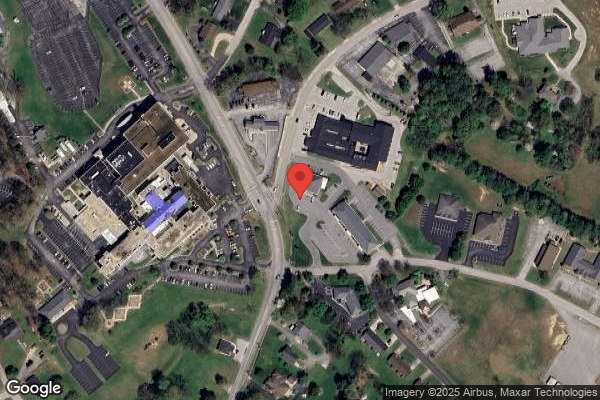
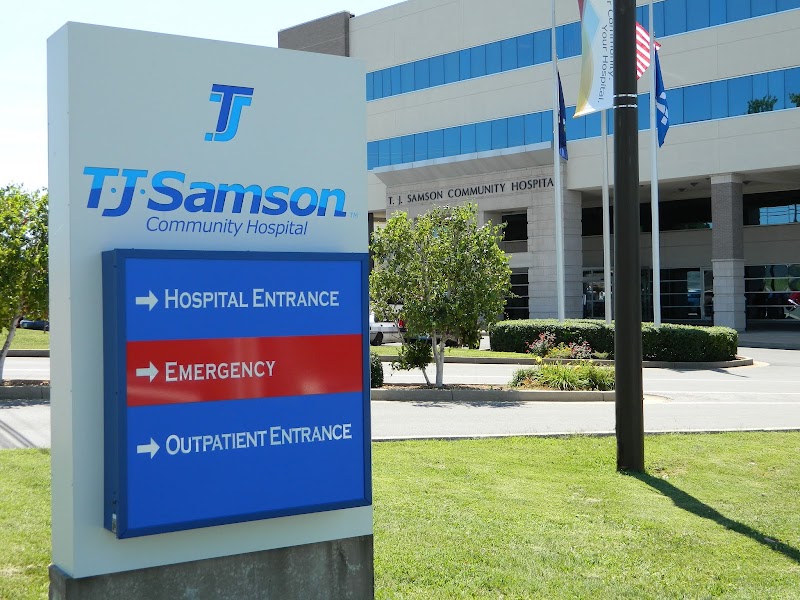
1301 N Race Street, Glasgow, KY 42141 (270) 651-4458
Non profit - Corporation 16 Beds Independent Data: November 2025
Trust Grade
70/100
#81 of 266 in KY
Last Inspection: April 2025

Within standard 12-15 month inspection cycle. Federal law requires annual inspections.

Overview

TJ Samson Community Hospital in Glasgow, Kentucky, has a Trust Grade of B, indicating it is a good choice for families considering nursing home options. It ranks #81 out of 266 facilities in Kentucky, placing it in the top half, and #3 out of 6 in Barren County, suggesting only two local facilities are better. However, the facility is experiencing a worsening trend, with issues increasing from 1 in 2022 to 2 in 2025. Staffing is rated as a strength with 4 out of 5 stars, but a concerning turnover rate of 82% is significantly higher than the state average of 46%. Fortunately, there have been no fines recorded, and the facility offers more RN coverage than 99% of Kentucky facilities, ensuring better oversight of resident care. On the downside, recent inspections revealed some significant concerns, such as improper food storage practices, where opened food items were not labeled or dated, and expired food was found in the kitchen. Additionally, the facility failed to develop a necessary care plan for a resident within the required timeframe, which could impact their nutritional care. While there are commendable aspects, families should weigh these issues when considering this facility for their loved ones.

Trust Score
B
70/100
In Kentucky
#81/266
Top 30%
Safety Record
Low Risk
No red flags
Inspections
Getting Worse
1 → 2 violations
Staff Stability
⚠ Watch
82% turnover. Very high, 34 points above average. Constant new faces learning your loved one's needs.
Penalties
✓ Good
No fines on record. Clean compliance history, better than most Kentucky facilities.
Skilled Nurses
✓ Good
Each resident gets 316 minutes of Registered Nurse (RN) attention daily — more than 97% of Kentucky nursing homes. RNs are the most trained staff who catch health problems before they become serious.
Violations
✓ Good
Only 3 deficiencies on record. Cleaner than most facilities. Minor issues only.
★★★★☆
4.0
Overall Rating
★★★★☆
4.0
Staff Levels
★★★★☆
4.0
Care Quality
★★★★☆
4.0
Inspection Score
Stable
2022: 1 issues
2025: 2 issues

The Good

  • 4-Star Staffing Rating · Above-average nurse staffing levels
  • 4-Star Quality Measures · Strong clinical quality outcomes
  • Full Sprinkler Coverage · Fire safety systems throughout facility
  • No fines on record

Facility shows strength in staffing levels, quality measures, fire safety.

The Bad

Staff Turnover: 82%

36pts above Kentucky avg (46%)

Frequent staff changes - ask about care continuity

Staff turnover is very high (82%)

34 points above Kentucky average of 48%

The Ugly 3 deficiencies on record

Apr 2025 2 deficiencies
CONCERN (D)

Potential for Harm - no one hurt, but risky conditions existed

Deficiency F0655 (Tag F0655)

Could have caused harm · This affected 1 resident

Based on interview, record review and review of the facility policy, the facility failed to develop and implement a baseline care plan that included instructions needed to provide effective and person...

Read full inspector narrative →
Based on interview, record review and review of the facility policy, the facility failed to develop and implement a baseline care plan that included instructions needed to provide effective and person-centered care for 1 of 6 sampled residents, (Resident (R)3). Review of the Baseline Care Plan dated 04/01/2025, revealed the facility failed to develop a care plan for R3 related to nutritional risk until 04/16/2025, 15 days following admission to the facility. The findings include: Review of the facility policy, Care Plans, reviewed on 11/29/2023, revealed, to ensure that a resident's immediate care needs were met and maintained, a baseline care plan would be developed within forty-eight (48) hours of admission. Continued review revealed the interdisciplinary team (IDT) was to review orders, dietary needs, social needs, therapy orders, and treatments to ensure the care plan met the residents' baseline needs. Review of the medical record for R3 revealed the facility admitted the resident on 04/01/2025, with diagnoses to include postmenopausal vaginal bleeding, morbid obesity, and physical deconditioning. Review of the admission Minimum Data Set (MDS) Assessment, with an Assessment Reference Date (ARD) of 04/04/2025, revealed the facility assessed R3 to have a Brief Interview for Mental Status (BIMS) score of 15 of 15, indicating the resident was cognitively intact. Continued review of the Care Area Assessments (CAA) revealed a nutrition care plan was to be developed. Review of the Baseline Care Plan dated 04/01/2025, revealed no documented evidence the facility developed a care plan for R3 related to nutritional risk until 04/16/2025, 15 days following admission to the facility. Review of the Comprehensive Care Plan dated 04/16/2025, revealed the facility developed a nutritional risk care plan for R3 due to being the resident being a new admission to the facility and having an elevated body mass index (BMI) with interventions. Review of the Nutrition/Dietary Note dated 04/15/2025 at 3:08 PM, and signed by the Registered Dietician (RD) revealed the patient had experienced a 17.7 pound, 7% weight loss since admission. Continued review revealed R3 was not on a diuretic and was to continue on a regular diet. Further review revealed the RD noted adding Ensure Clear TID (Nutritional supplement three times a day). In addition, review revealed R3 had very poor intakes due to nausea, might benefit from an appetite stimulant, and staff were to encourage intakes of meals and supplements. In interview with the RD on 04/24/2025 at 2:00 PM, she stated the Director of Nursing (DON) was responsible for developing the residents' baseline care plans. She reported care plans should be developed within 72 hours of admission. The RD said residents' weights and intakes were checked twice weekly by herself, the Administrator, and the DON. In interview with the DON on 04/24/2025 at 2:25 PM, she stated she was responsible for the residents' baseline care plans. She stated the baseline care plans were based on a resident's diagnoses and medications and was typically completed within two hours of admission. In interview with the Administrator on 04/24/2025 at 3:45 PM, he stated his expectation was that the DON complete the baseline care plan, if applicable, when a resident was admitted and within forty-eight hours.
CONCERN (F)

Potential for Harm - no one hurt, but risky conditions existed

Food Safety (Tag F0812)

Could have caused harm · This affected most or all residents

Based on observation, interview, and facility policy review, it was determined the facility failed to store food in accordance with professional standards for food service safety. Observation revealed...

Read full inspector narrative →
Based on observation, interview, and facility policy review, it was determined the facility failed to store food in accordance with professional standards for food service safety. Observation revealed opened food items which were not dated or labeled; no thermometer in the walk in cooler; a meat thermometer in the freezer; and an employees lunch bag in the walk in cooler. The findings include: Review of the facility policy, Culinary Service Group, Label and Date Standards, undated, revealed, a mandatory label and date system was to be used for all food items that were opened, cooked, processed, or changed in any manner. Per policy review, a food label must be attached to all food items intended to be used at a later date, and if being stored in a refrigerator, freezer, or in dry storage area. Continued review revealed refrigerator temperatures should be at 40 degrees Fahrenheit (F) or below. Further review revealed every refrigerator must be equipped with an inside thermometer and was not to exceed 40°F, and freezer temperature should be at 0°F or below. In addition, policy review revealed Do not refreeze frozen food which has been thawed, and the holding temperature for frozen foods was from 0°F or below. Observation of the facility's kitchen area on 04/23/2025 at 10:50 AM, revealed the walk-in cooler did not have a thermometer inside and an employees lunch bag was stored inside the cooler. Observation of the freezer revealed it contained two bags of frozen green beans which were opened, unlabeled and undated. Continued observation of the freezer revealed a bag of diced onions wrapped with plastic wrap, not labeled or dated, with black marker writing that read, refrozen 04/11/2025. Further observation of the freezer revealed it had a meat thermometer inside it. In interview with the Food Service Director on 04/23/2025 at 11:15 AM, he stated the cooler and freezer should have had the appropriate thermometers in them, and the freezer should not have had a meat thermometer. He stated the temperature readings were also located on the outside. The Food Services Director said the employee lunch bag should not have been stored in the walk in cooler as employees had their own refrigerator to store their items. He reported thawed items were not to be placed back in the freezer once thawed, and the frozen beans should have been labeled and dated. The Food Services Director further stated there was not a policy on employees storing meals in the coolers; however, he expected the kitchen staff to follow the guidelines. In interview with the Administrator on 04/24/2025 at 3:34 PM, he stated he expected the food services staff to follow their guidelines. He stated items should be labeled and dated before being stored. The Administrator reported the correct thermometers should be used in the coolers and freezers and employees could not store their personal lunch bags in the coolers. He said there was a designated area for employees to store their personal items. The Administrator further stated outcomes for patients could be nausea and vomiting if served food that was not stored properly.
Mar 2022 1 deficiency
CONCERN (F)

Potential for Harm - no one hurt, but risky conditions existed

Food Safety (Tag F0812)

Could have caused harm · This affected most or all residents

Based on observation, interview, and facility policy review, it was determined the facility failed to store food in accordance with professional standards for food service safety. Observation revealed...

Read full inspector narrative →
Based on observation, interview, and facility policy review, it was determined the facility failed to store food in accordance with professional standards for food service safety. Observation revealed opened food items which were not dated, and/or expired. The findings include: 1. Review of the facility policy titled, Food and Supply Storage, revised 01/2022 revealed all food, non-food items and supplies used in food preparation were to be stored in such a manner as to prevent contamination and maintain the safety and wholesomeness of the food for human consumption. Continued review revealed unused portions and open packages of food items were to be covered, labeled and dated. Further review revealed food items which were past the use by, sell by, best by or enjoy by dates should be discarded. Observation of the facility's kitchen area on 03/29/2022 at 9:45 AM, revealed the walk-in cooler had an opened container of strawberries with approximately a quarter of berries left in it, and an opened container of blueberries with approximately half the berries left in it. Continued observation revealed both containers of berries were unlabeled and not dated with an opened date. Observation of the walk-in freezer area revealed an opened bag of frozen turkey sausage links which were not labeled and dated with the opened dated. In addition, observation of the reach in refrigerator revealed an expired half gallon of milk which was dated 03/28/2022. Interview on 03/30/2022 at 2:11 PM, with the Director of Food and Nutrition Services revealed all opened food items located in the refrigerator or freezer areas should always be labeled and dated. She revealed items not dated or labeled should have been removed and discarded as there was a potential for food borne illness if such items were used. 2. Review of the facility policy titled, Uniform Dress Code revised 01/2022 revealed personal cleanliness and a neat appearance were essential components for the food service worker. Further review revealed associates working with food were to wear the approved hair restraint when on duty regardless of the length or presence of hair. Observation on 03/29/2022 at 10:45 AM, revealed a kitchen staff member entered the kitchen area without applying a hair covering to her head. Continued observation revealed the staff member walked all the way through the kitchen area to a coat rack area located at the side of the kitchen. Interview on 03/29/2022 at 10:45 AM, with the kitchen staff member, a Dietary Aide revealed she had not applied a hair covering upon entering the kitchen area. Further interview revealed she typically did not apply a hair covering at the doorway of the kitchen (as required by policy). Interview on 03/30/2022 at 2:11 PM, with the Director of Food and Nutrition Services revealed anyone entering the kitchen area were to apply a hair covering upon entering through the door. She revealed hair coverings were located at each entrance into the kitchen for that reason and should be utilized as required.
Understanding Severity Codes (click to expand)
Life-Threatening (Immediate Jeopardy)
J - Isolated K - Pattern L - Widespread
Actual Harm
G - Isolated H - Pattern I - Widespread
Potential for Harm
D - Isolated E - Pattern F - Widespread
No Harm (Minor)
A - Isolated B - Pattern C - Widespread

Questions to Ask on Your Visit

  • "Why is there high staff turnover? How do you retain staff?"
  • "Can I speak with families of current residents?"
  • "What's your RN coverage like on weekends and overnight?"

Our Honest Assessment

Strengths
  • • No major safety red flags. No abuse findings, life-threatening violations, or SFF status.
  • • No fines on record. Clean compliance history, better than most Kentucky facilities.
  • • Only 3 deficiencies on record. Cleaner than most facilities. Minor issues only.
Concerns
  • • 82% turnover. Very high, 34 points above average. Constant new faces learning your loved one's needs.
Bottom line: Mixed indicators with Trust Score of 70/100. Visit in person and ask pointed questions.

About This Facility

What is Tj Samson Community Hospital's CMS Rating?

CMS assigns TJ Samson Community Hospital an overall rating of 4 out of 5 stars, which is considered above average nationally. Within Kentucky, this rating places the facility higher than 99% of the state's 100 nursing homes. This rating reflects solid performance across the metrics CMS uses to evaluate nursing home quality.
How is Tj Samson Community Hospital Staffed?

CMS rates TJ Samson Community Hospital's staffing level at 4 out of 5 stars, which is above average compared to other nursing homes. Staff turnover is 82%, which is 36 percentage points above the Kentucky average of 46%. High turnover can affect care consistency as new staff learn residents' individual needs. RN turnover specifically is 80%, which is notably high. RNs provide skilled clinical oversight, so turnover in this role can affect medical care quality.

What Have Inspectors Found at Tj Samson Community Hospital?

State health inspectors documented 3 deficiencies at TJ Samson Community Hospital during 2022 to 2025. These included: 3 with potential for harm.

Who Owns and Operates Tj Samson Community Hospital?

TJ Samson Community Hospital is owned by a non-profit organization. Non-profit facilities reinvest revenue into operations rather than distributing to shareholders. The facility operates independently rather than as part of a larger chain. With 16 certified beds and approximately 7 residents (about 44% occupancy), it is a smaller facility located in Glasgow, Kentucky.

How Does Tj Samson Community Hospital Compare to Other Kentucky Nursing Homes?

Compared to the 100 nursing homes in Kentucky, TJ Samson Community Hospital's overall rating (4 stars) is above the state average of 2.8, staff turnover (82%) is significantly higher than the state average of 46%, and health inspection rating (4 stars) is above the national benchmark.

What Should Families Ask When Visiting Tj Samson Community Hospital?

Based on this facility's data, families visiting should ask: "How do you ensure continuity of care given staff turnover, and what is your staff retention strategy?" "Can I visit during a mealtime to observe dining assistance and food quality?" "How do you handle medical emergencies, and what is your hospital transfer rate?" "Can I speak with family members of current residents about their experience?" These questions are particularly relevant given the facility's high staff turnover rate.

Is Tj Samson Community Hospital Safe?

Based on CMS inspection data, TJ Samson Community Hospital has a clean safety record: no substantiated abuse findings (meaning no confirmed cases of resident harm), no Immediate Jeopardy citations (the most serious violation level indicating risk of serious injury or death), and is not on the Special Focus Facility watch list (a federal program monitoring the lowest-performing 1% of nursing homes). The facility has a 4-star overall rating and ranks #1 of 100 nursing homes in Kentucky. While no facility is perfect, families should still ask about staff-to-resident ratios and recent inspection results during their visit.

Do Nurses at Tj Samson Community Hospital Stick Around?

Staff turnover at TJ Samson Community Hospital is high. At 82%, the facility is 36 percentage points above the Kentucky average of 46%. Registered Nurse turnover is particularly concerning at 80%. RNs handle complex medical decisions and coordinate care — frequent RN changes can directly impact care quality. High turnover means new staff may not know residents' individual needs, medications, or preferences. It can also be disorienting for residents, especially those with dementia who rely on familiar faces. Families should ask: What is causing the turnover? What retention programs are in place? How do you ensure care continuity during staff transitions?

Was Tj Samson Community Hospital Ever Fined?

TJ Samson Community Hospital has no federal fines on record. CMS issues fines when nursing homes fail to meet care standards or don't correct problems found during inspections. The absence of fines suggests the facility has either maintained compliance or corrected any issues before penalties were assessed. This is a positive indicator, though families should still review recent inspection reports for the full picture.

Is Tj Samson Community Hospital on Any Federal Watch List?

TJ Samson Community Hospital is not on any federal watch list. The most significant is the Special Focus Facility (SFF) program, which identifies the bottom 1% of nursing homes nationally based on persistent, serious quality problems. Not being on this list means the facility has avoided the pattern of deficiencies that triggers enhanced federal oversight. This is a positive indicator, though families should still review the facility's inspection history directly.