Signature Healthcare of Hartford Rehab & Wellness
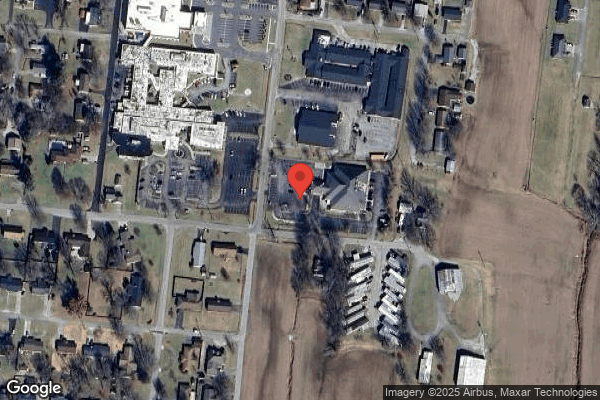
114 McMurtry, Hartford, KY 42347 (270) 298-7437
For profit - Limited Liability company 110 Beds SIGNATURE HEALTHCARE Data: November 2025
Trust Grade
80/100
#77 of 266 in KY
Last Inspection: July 2025

Inspected within the last 6 months. Data reflects current conditions.

Overview

Signature Healthcare of Hartford Rehab & Wellness has a Trust Grade of B+, indicating it is above average and recommended for care. It ranks #77 out of 266 facilities in Kentucky, placing it in the top half, and is the best option among the three nursing homes in Ohio County. However, the facility is experiencing a worsening trend, with reported issues increasing from 2 in 2019 to 3 in 2025. Staffing is a mixed picture, with a rating of 3 out of 5 stars and a 51% turnover rate, which is average compared to state levels. On the positive side, there have been no fines, and the facility offers more RN coverage than 77% of Kentucky facilities, which helps ensure better care. Despite these strengths, there are notable concerns. The inspector found that the facility failed to develop personalized care plans and improperly administered psychotropic medications without adequate monitoring for one resident, creating potential harm. Additionally, there were instances where residents may not have received necessary behavioral interventions. While the facility has strengths in RN coverage and no fines, families should weigh these against the identified issues in care practices.

Trust Score
B+
80/100
In Kentucky
#77/266
Top 28%
Safety Record
Low Risk
No red flags
Inspections
Getting Worse
2 → 3 violations
Staff Stability
⚠ Watch
51% turnover. Above average. Higher turnover means staff may not know residents' routines.
Penalties
✓ Good
No fines on record. Clean compliance history, better than most Kentucky facilities.
Skilled Nurses
✓ Good
Each resident gets 52 minutes of Registered Nurse (RN) attention daily — more than average for Kentucky. RNs are trained to catch health problems early.
Violations
✓ Good
Only 5 deficiencies on record. Cleaner than most facilities. Minor issues only.
★★★★☆
4.0
Overall Rating
★★★☆☆
3.0
Staff Levels
★★☆☆☆
2.0
Care Quality
★★★★☆
4.0
Inspection Score
Stable
2019: 2 issues
2025: 3 issues

The Good

  • Full Sprinkler Coverage · Fire safety systems throughout facility
  • No fines on record

Facility shows strength in fire safety.

The Bad

Staff Turnover: 51%

Near Kentucky avg (46%)

Higher turnover may affect care consistency

Chain: SIGNATURE HEALTHCARE

Part of a multi-facility chain

Ask about local staffing decisions and management

The Ugly 5 deficiencies on record

Jul 2025 3 deficiencies
CONCERN (D)

Potential for Harm - no one hurt, but risky conditions existed

Deficiency F0605 (Tag F0605)

Could have caused harm · This affected 1 resident

**NOTE- TERMS IN BRACKETS HAVE BEEN EDITED TO PROTECT CONFIDENTIALITY** Based on interview, record review, and review of facility policy, the facility failed to ensure that each resident was free from...

Read full inspector narrative →
**NOTE- TERMS IN BRACKETS HAVE BEEN EDITED TO PROTECT CONFIDENTIALITY** Based on interview, record review, and review of facility policy, the facility failed to ensure that each resident was free from chemical restraints imposed for purposes of discipline or convenience and that were not required to treat the resident's medical symptoms. Additionally, the facility failed to ensure that residents who use psychotropic drugs have behavior monitoring, non-pharmacological, and behavioral interventions for one of three sampled residents, Resident (R) 83.The findings include: Review of the facility's policy titled, Psychotropic Medications Policy, dated 05/07/2024, revealed psychotropic medications would be used appropriately for residents with mental illness and or related disorders. A psychotropic drug is any drug that affects brain activities associated with mental processes and behavior. These drugs include, but are not limited to, drugs in the following categories: anti-psychotics, antidepressants, antianxiety, and hypnotics. Continued review revealed the facility would make every effort to comply with state and federal regulations related to the use of psychotropic medications in the long-term care facility to include regular review for continued need, appropriate dosage, side effects, risk, and/or benefits. Each resident's entire drug medication regimen is managed and monitored to promote or maintain the resident's highest practical mental, physical and psychosocial well-being. As part of the residents' medication management, it is important for the interdisciplinary team to implement non-pharmacological approaches designed to meet the individual needs of each resident. The facility supports the goal of determining the underlying cause of residents having difficulty sleeping, so the appropriate treatment of environmental or medical interventions can be utilized prior to psychotropic medication use. Review of R83's Resident Face Sheet revealed the facility admitted the resident on 05/27/2025 with diagnoses that included multiple sclerosis, unspecified dementia, mild, with other behavioral disturbance, insomnia, and psychoactive substance abuse, uncomplicated.Review of the admission Minimum Data Set (MDS) with an assessment reference date (ARD) of 05/29/2025, revealed a Brief Interview for Mental Status (BIMS) score of 14 of 15, indicating R83 was cognitively intact. Continued review of the MDS assessment revealed R83 had not exhibited any behaviors and active diagnosis included, non-Alzheimer's Dementia, and no psychiatric or mood disorders were documented on the admission MDS. Additional review of the MDS assessment revealed R83 received antipsychotic medication with an indication noted. Further review revealed that question N2001, drug regimen review, was not answered and was left blank.Review of the Hospital Discharge summary dated [DATE] revealed R83 discharge diagnoses included self-care deficit, multiple sclerosis, decubitus ulcer of sacrum stage 3, mild dementia with mood disturbance, history of drug abuse and chronic pain.Review of Event Report, Pharmacy Recommendation, dated 05/29/2025, revealed the pharmacy consultant completed a medication regimen review but gave no recommendations related to psychotropic medications and or diagnosis.Review of Event Report, Pharmacy Recommendations dated 06/16/2025, revealed the Medication Regimen Review (MRR) was completed and no recommendations were made.Review of physician order dated 05/27/2025, revealed R83 admitted to the facility with an order Seroquel (an antipsychotic) 100 milligrams (mg) daily at bedtime. The indication (diagnosis) for the medication was insomnia and dementia with mood disorder.Review of physician order dated 05/30/2025, revealed an order that read, 'Target Behavior: restlessness, inability to concentrate, impulsiveness, and lack of interest. Documentation directions read, at the end of each shift mark frequency-how often behavior occurred and intensity-how resident responded to redirection. Intensity code: 0=did not occur, 1=easily altered; 2= difficult to redirect.In an interview with the Pharmacy Consultant on 07/03/2025 at 10:36 AM, she stated she does medication reviews on admission and monthly. She stated insomnia was not an adequate diagnosis for the use of Seroquel. She stated R83 had a history of drug abuse which can cause mental and psychological issues. She stated Seroquel was a mood stabilizer and could be beneficial. She stated when reading the admission note that the NP provided, she saw a diagnosis of neurocognitive disorder and did not address the insomnia diagnosis listed as the indication for use. She further stated she does not typically ask for a dose reduction on psychotropic medications until the residents have settled in at the facility.In an interview with the interim Nurse Practitioner on 07/03/2025 at 11:03 AM, she stated she was just filling in and was not the routine provider for the facility. The NP stated using Seroquel for a diagnosis of insomnia would be dependent on the resident. She stated she gave no new diagnosis to R83, and she read he had a diagnosis of neurocognitive disorder in the hospital records. She stated she would expect behavior monitoring and care plan to be in place for a resident receiving psychotropic, specifically antipsychotic medications. In an interview with the Minimum Data Set (MDS) nurse and the Regional Clinical Reimbursement Specialist (CRS) on 07/03/2025 at 3:31 PM, the MDS nurse stated she had been the MDS nurse since February and was still in training. She stated Seroquel was an antipsychotic and was typically given for bipolar disorder, schizophrenia or mood disorder. The MDS nurse stated psychoactive substance abuse would be an indication for an antipsychotic medication. She stated she coded an indication because insomnia and dementia were listed in the physician's order.In an interview with the Assistant Director of Nursing (ADON) on 07/03/2025 at 3:58 PM, she stated Seroquel could be given for insomnia as an off label use. She stated R83 admitted to the facility on the medication, and she would have expected the pharmacy consultant to have noted any discrepancies or errors. She further stated it was the responsibility of the pharmacy consult to notify the provider. She stated she was aware the NP referred R83 for psych consult and that he was offered services and had refused. In an interview with the Director of Nursing on 07/03/2025 at 4:07 PM, she stated new admissions were reviewed in clinical meetings to ensure orders and diagnosis were in place. She stated R83 had mood disorder and that was an indication for Seroquel and was listed in the order. On 07/03/2025 at 4:45 PM the Assistant Director of Nursing brought a declination of psych services that was dated 07/03/2025.In an interview with R83 at on 07/03/2025 at 4:56 PM, he stated he was offered psych services today, just a few minutes ago and not prior to this date. R83 stated he had seen a therapist in another county last year and when he requested something to help him sleep, Seroquel was what she gave him. He stated he had been receiving the medication for about a year.In an interview with the Administrator on 07/03/2025 at 5:01 PM, he stated he expected the Pharmacy Consult to follow guidelines and policies when doing the monthly medication reviews. He stated if the Nurse Practitioner referred a resident for a psychiatric consult that information would be communicated to the Social Services Director who would reach out to the provider. He stated he was not sure if R83 had been offered or refused psych services since admission to the facility.
CONCERN (D)

Potential for Harm - no one hurt, but risky conditions existed

Comprehensive Care Plan (Tag F0656)

Could have caused harm · This affected 1 resident

**NOTE- TERMS IN BRACKETS HAVE BEEN EDITED TO PROTECT CONFIDENTIALITY** Based on observation, interview, record review, and review of facility policies, it was determined that the facility failed to d...

Read full inspector narrative →
**NOTE- TERMS IN BRACKETS HAVE BEEN EDITED TO PROTECT CONFIDENTIALITY** Based on observation, interview, record review, and review of facility policies, it was determined that the facility failed to develop and implement a comprehensive person-centered care plan for each resident, to meet a resident's medical, nursing, and mental and psychosocial needs that were identified in the comprehensive assessment for two of 22 sampled Resident (R) 83 and R59. The findings include: 1.Review of facility policy, Comprehensive Care Plans', reviewed on 01/31/2025, revealed the facility would develop and implement a comprehensive person- centered care plan for each resident that included measurable objectives, the time frames to meet a residents’ medical, nursing, mental and psychosocial needs that were identified in the comprehensive assessment. Continued review revealed the licensed nurse and or the interdisciplinary team (IDT) would develop and maintain a comprehensive care plan for each resident that identified the highest level of functioning the resident may be expected to attain. Each resident's comprehensive care plan was designed to incorporate identified problem areas and incorporate risk factors associated with identified problems. The comprehensive care plan would be person-centered for each resident. Review of facility policy Psychotropic Medications Policy, dated 05/07/2024, revealed psychotropic medications would be used appropriately for residents with mental illness and or related disorders. Residents who use psychotropic drugs receive gradual dose reductions and behavioral interventions unless clinically contraindicated in an effort to discontinue these drugs. It was important for the interdisciplinary team (IDT) to implement non-pharmacological approaches designed to meet the individual needs of each resident. The facility supported the goal of determining the underlying cause of residents having difficulty sleeping, so the appropriate treatment of environmental or medical interventions can be utilized prior to psychotropic medication use. Review of Resident Face Sheet revealed the facility admitted Resident 83 (R83) to the facility on [DATE] with diagnoses that included multiple sclerosis, unspecified dementia, mild, with other behavioral disturbance, insomnia, and psychoactive substance abuse, uncomplicated. Review of the admission Minimum Data Set with an assessment reference date (ARD) of 05/29/2025, revealed a Brief Interview for Mental Status (BIMS) score of 14 of 15, indicating R83 was cognitively intact. Review of MDS, section E, Behavior, revealed R83 had not exhibited any behaviors. Review of physician order dated 05/27/2025, revealed R83 admitted to the facility with an order Seroquel (an antipsychotic) 100 milligrams (mg) daily at bedtime. The indication (diagnosis) for the medication was insomnia and dementia with mood disorder. Review of physician order dated 05/30/2025, revealed an order that read, 'Target Behavior: 'restlessness, inability to concentrate, impulsiveness, and lack of interest. Documentation directions read, at the end of each shift, mark frequency-how often behavior occurred, and intensity-how resident responded to redirection. Intensity code: 0=did not occur, 1=easily altered; 2=difficult to redirect. Review of R83's Comprehensive Care Plan (CCP), dated 05/27/2025, revealed the care plan did not include a focus problem for any type of behavior monitoring as indicated by the physician's order. Additionally, there was no evidence that a care plan had been developed for R83's diagnosis of insomnia. Review of CCP focus problem, Health Related Complications, dated 05/27/2025, revealed Patient was at risk for substance abuse due to substance use disorder. Interventions dated 05/27/2025 included offer behavioral health services as indicated for substance use disorder, be alert for bizarre behaviors with visiting friends and family members. Review of Psych Services Consent to Treat, not signed by R83 or his representative, revealed, R83 declined services on 07/03/2025. During an interview with the Minimum Data Set (MDS) nurse and the Regional Clinical Reimbursement Specialist (CRS) on 07/03/2025 at 3:31 PM, the MDS nurse stated she had been the MDS nurse since February and was still in training. The MDS nurse stated, the purpose of the care plan was to plan care for the resident to guide staff. She stated it was important for the care plan to be accurate so that staff know what care a resident needed. The MDS nurse stated R83 did not have a behavior care plan because he did not have behaviors. She stated that the Seroquel was for insomnia. During an interview with the Assistant Director of Nursing (ADON) on 07/03/2025 at 3:58 PM, she stated R83 really doesn't have any behaviors. She stated he had a diagnosis of insomnia, dementia with mood disorder, and substance abuse. She stated she would not expect R83 to have a behavior care plan if he did not have behaviors. During an interview with the Director of Nursing on 07/03/2025 at 4:07 PM, she stated she expected care plans to reflect the needs of the residents. She stated R83 should have had a care plan for insomnia. The DON stated that if behavior monitoring was being done on a resident, then the resident should have a behavior care plan. The DON stated that nonpharmacological interventions vary and should be specific to the residents. During an interview 07/03/2025 with R83 at 4:56 PM, he stated he was offered psych services today, just a few minutes ago. He stated he had not been provided with psych services previously. R83 stated he had seen a therapist in another county last year, and when he requested something to help him sleep, Seroquel was prescribed. He stated he had been taking the medication for about a year. During an interview with the Administrator on 07/03/2025 at 5:01 PM, he stated he expected the Pharmacy Consult to follow guidelines and policies when doing the monthly medication reviews. He stated if the Nurse Practitioner referred a resident for a psychiatric consult, that information would be communicated to the Social Services Director, who would reach out to the provider. He stated he was not sure if R 83 had been offered or refused psych services since admission to the facility. 2. Review of the facility's policy titled, Falls, last revised on 01/31/2025, revealed care plan goals and interventions would be revised as applicable, and a comprehensive care plan would be implemented with interventions specific to each resident to attempt to reduce the risk of avoidable falls. Review of R59' Face Sheet revealed the facility admitted the resident on 05/26/2022 with diagnoses that included unspecified displaced fracture of surgical neck of left humerus, subsequent encounter for fracture with routine healing, and chronic obstructive pulmonary disease. Review of the Minimum Data Set (MDS) with an Assessment Reference Date (ARD) of 05/02/202 revealed a Brief Interview for Mental Status (BIMS) score of 15 out of 15 indicating R59 is cognitively intact. Review of a Progress Note dated 06/04/2025 at 8:38 AM revealed R59 experienced a fall during a self-transfer to the recliner when the recliner moved causing R59 to fall without injury. Review of the Fall Event report dated 06/04/2025 at 8:59 AM revealed the Interdisciplinary Team (IDT) discussed the root cause of the fall and determined placing dycem under the legs of the recliner would address the root cause of the recliner sliding when weight was applied during a transfer. Review of the care plan in the category Falls identified an intervention with an approach start date of 06/04/2025 that stated dycem to legs under recliner. Observation on 06/30/2025 at 12:36 PM, 06/30/2025 at 4:15 PM, and 07/03/2025 at 5:02 PM, revealed there was no dycem was present under the legs of the recliner. In an interview with Certified Nursing Assistant (CNA) 4 (CNA4) on 07/03/2025 at 5:01 PM, CNA4 stated she was assigned to R56 on 07/03/2025. CNA4 stated she used the CNA paper as a guide to care. Upon viewing the CNA paper care guide, it was dated 05/27/2025 with no update regarding dycem related to the fall intervention placed for R59 on 06/04/2025. In an interview with Housekeeper (HK) 13 (HK13) on 07/03/2025 at 5:07 PM, HK13 stated she cleaned R59's room today but didn't recall seeing the dycem under R59's recliner. She added that she cleans on several of the halls and can't recall if she has seen the dycem in R59's room or not but knows what dycem was. In an interview with the Staff Scheduler / Ambassador (SS/A) on 07/03/25 at 5:29 PM, the SS/A stated she has been the Ambassador for R59 since around November [2024]. She stated she knew what dycem was and it normally sets under the metal frame of the recliner. The SS/A stated she doesn't know why it wasn't there. In an interview with the Director of Nursing (DON) on 07/03/2025 at 5:19 PM, the DON stated when a fall occurs, staff create an event in the electronic medical record (EMR) then call her or the on-call staff to notify of the fall and the immediate intervention. The DON stated events were reviewed as part of their clinical meetings and following the meeting, one staff will go and ensure the intervention is in place. The DON added that Ambassador Rounds were done daily to ensure interventions stay in place. She stated the CNA Care guide was updated daily and printed a couple of times a week then taken to the respective nursing desk to be placed in the binder but, added that CNAs can also see the plan of care in the EMR. She stated the interventions were in place to ensure the safety of the resident. In an interview with the Administrator on 07/03/2025 at 5:12 PM, he stated that if the IDT reviews an event and determines an intervention based on the root cause and reviews the intervention in place and may add to or change the intervention to ensure the resident was safe. He stated an intervention should be put in place, given a fair amount of time to place the intervention. He stated that from 06/04/2025 to 07/03/2025 would be a fair amount of time to place dycem under the resident's recliner. The Administrator further stated the IDT keeps the CNA care guide up to date and no one person was responsible to change out the updated versions. He stated the CNA could utilize the EMR to view the residents one at a time but, the care guide allowed more than one resident's information for ease of access.
CONCERN (D)

Potential for Harm - no one hurt, but risky conditions existed

Deficiency F0757 (Tag F0757)

Could have caused harm · This affected 1 resident

Based on interview, record review, and review of facility policy, the facility failed to ensure each resident's drug regimen was free from unnecessary drugs. An unnecessary drug is any drug without an...

Read full inspector narrative →
Based on interview, record review, and review of facility policy, the facility failed to ensure each resident's drug regimen was free from unnecessary drugs. An unnecessary drug is any drug without an adequate indication for its use. This affected one of three of 22 sampled residents Resident (R) 83. Review of record revealed R 83 was receiving an antipsychotic medication (seroquel) for an indication of insomnia and dementia. Review of the facility's policy titled, Psychotropic Medications Policy, dated 05/07/2024, revealed psychotropic medications would be used appropriately for residents with 's mental illness and or related disorders. A psychotropic drug is any drug that affects brain activities associated with mental processes and behavior. These drugs include, but are not limited to, drugs in the following categories: antipsychotics, antidepressants, anti-anxiety, and hypnotics. Continued review revealed the facility would make every effort to comply with state and federal regulations related to the use of psychotropic medications in the long-term care facility, to include regular review for continued need, appropriate dosage, side effects, including psychosocial, and risk and or benefits. Residents who use psychotropic drugs received gradual dose reductions and behavioral interventions unless clinically contraindicated in an effort to discontinue these drugs. Each resident's entire drug medication regimen is managed and monitored to promote or maintain the resident's highest practical mental, physical, and psychosocial well-being. As part of the resident's medication management, it was important for the interdisciplinary team (IDT) to implement non-pharmacological approaches designed to meet the individual needs of each resident. The facility supported the goal of determining the underlying cause of residents having difficulty sleeping, so the appropriate treatment of environmental or medical interventions can be utilized prior to psychotropic medication use. Review of R83's Resident Face Sheet revealed the facility admitted the resident on 05/27/2025 with diagnoses that included multiple sclerosis, unspecified dementia, mild, with other behavioral disturbance, insomnia, and psychoactive substance abuse, uncomplicated.Review of the admission Minimum Data Set (MDS) with an assessment reference date (ARD) of 05/29/2025, revealed a Brief Interview for Mental Status (BIMS) score of 14 of 15, indicating R83 was cognitively intact. Review of MDS, section E, Behavior, revealed R83 had not exhibited any behaviors.Review of MDS assessment revealed R83 was coded as having non-Alzheimer's Dementia, and no psychiatric or mood disorders were documented on the MDS. Further review revealed R83 received an antipsychotic medication with an indication noted. Continued review revealed that question N2001, drug regimen review, was not answered and was left blank.Review of physician order dated 05/27/2025, revealed R83 admitted to the facility with an order Seroquel (an antipsychotic) 100 milligrams (mg) daily at bedtime. The indication (diagnosis) for the medication was insomnia and dementia with mood disorder.Review of physician order dated 05/30/2025, revealed an order that read, 'Target Behavior: restlessness, inability to concentrate, impulsiveness, and lack of interest. Documentation directions read, at the end of each shift, mark frequency-how often behavior occurred, and intensity-how the resident responded to redirection. Intensity code: 0=did not occur, 1=easily altered; 2=difficult to redirect.Review of Event Report, Pharmacy Recommendation', dated 05/29/2025, revealed the pharmacy consultant completed a medication regimen review but gave no recommendations related to psychotropic medications and or diagnosis.Review of Event Report, Pharmacy Recommendations dated 06/16/2025, revealed the MRR was completed, and no recommendations were made Interview with the Pharmacy Consultant on 07/03/2025 at 10:36 AM, she stated she does medication reviews on admission and monthly. She stated insomnia was not an adequate diagnosis for the use of Seroquel. She stated R83 had a history of drug abuse, which can cause mental and psychological issues. She stated Seroquel was a mood stabilizer and could be beneficial. She stated that when reading the admission note that the Nurse Practitioner (NP) provided, she saw a diagnosis of neurocognitive disorder and did not address the insomnia diagnosis listed as the indication for use. She further stated she does not typically ask for a dose reduction on psychotropic medications until the residents have settled in at the facility.Interview with the interim Nurse Practitioner on 07/03/2025 at 11:03 AM, she stated she was just filling in and was not the routine provider for the facility. The NP stated that using Seroquel for a diagnosis of insomnia would be dependent on the resident. She stated she gave no new diagnosis to R 83, and she read he had a diagnosis of neurocognitive disorder in the hospital records. She stated she would expect behavior monitoring and a care plan to be in place for a resident receiving psychotropic medications, specifically antipsychotic medications. Interview with the Minimum Data Set (MDS) nurse and the Regional Clinical Reimbursement Specialist (CRS) on 07/03/2025 at 3:31 PM, the MDS nurse stated she had been the MDS nurse since February and was still in training. She stated Seroquel was an antipsychotic and was typically given for bipolar disorder, schizophrenia, or mood disorder. She stated that the R83 had a diagnosis of psychoactive substance abuse, and that would be an indication for the use of an antipsychotic. The MDS nurse stated she could not speak to whether Seroquel was an adequate diagnosis for insomnia. She stated R83 was receiving the antipsychotic medication for insomnia, as that was what was on the order.Interview with the Assistant Director of Nursing (ADON) on 07/03/2025 at 3:58 PM, she stated Seroquel could be given for insomnia as an off-label use, and it was not an unnecessary medication, as he took it for insomnia. She stated R83 was admitted to the facility on medication and has a diagnosis of dementia with mood disorder and substance abuse. She stated R83 did not have any behaviors that she was aware of. She stated she was aware that the NP had referred R83 for psych services and that he was offered services and had refused.Interview with the Director of Nursing on 07/03/2025 at 4:07 PM, she stated new admissions were reviewed in clinical meetings to ensure orders and diagnoses care plans were in place. She stated R83 had mood disorder and insomnia, and those were indications for Seroquel. She stated R83 did not have behaviors Interview with the Administrator on 07/03/2025 at 5:01 PM, he stated he expected staff to follow policies and procedures of the facility. He stated if the Nurse Practitioner referred a resident for a psychiatric consult that information would be communicated to the Social Services Director, who would reach out to the provider.
Feb 2019 2 deficiencies
CONCERN (D)

Potential for Harm - no one hurt, but risky conditions existed

Resident Rights (Tag F0550)

Could have caused harm · This affected 1 resident

Based on observation, interview, record review, and review of the facility's policy, it was determined the facility failed to ensure it must treat each resident with respect and dignity and care for e...

Read full inspector narrative →
Based on observation, interview, record review, and review of the facility's policy, it was determined the facility failed to ensure it must treat each resident with respect and dignity and care for each resident in a manner and in an environment that promotes maintenance or enhancement of his or her quality of life, for two (2) of twenty-two (22) sampled residents (Residents #72 and #88). Observations on 02/13/19 and 02/14/19 revealed a staff entered Resident #72's and #88's rooms without knocking on the door prior to entering. The findings include: Review of the facility policy titled, Resident Rights, dated 06/01/15 and last revised 08/16/18, revealed all residents have the right to be treated with respect and dignity. These rights will be promoted and protected by the facility. When providing care and services, the stakeholders will respect the resident's individuality and value their input by providing them a dignified existence, through self determination and communication with and access to persons and services inside and outside the facility. Federal and state laws guarantee certain basic rights to all residents of this facility. These rights include the resident's right to privacy and confidentiality. The facility will make every effort to support each resident in exercising his/her right to assure that the resident is always treated with respect, kindness, and dignity. 1. Record review revealed the facility admitted Resident #72 on 01/15/19 with diagnoses which included Dementia with Behavioral Disturbance, Psychotic Disorder with Hallucinations, Major Depressive Disorder, and Anxiety Disorder. Review of the admission Minimum Data Set (MDS) assessment, dated 01/22/19 revealed the Brief Interview of Mental Status (BIMS) score was coded at ninety-nine (99) which indicated the resident was unable to complete the interview. Observation on 02/13/19 at 9:25 AM revealed Registered Nurse (RN) #1 walked into Resident' #72's room to provide wound care without knocking on the door and asking permission to enter. This surveyor knocked on the door prior to entering. An attempt to interview Resident #72 on 02/14/19 at 1:56 PM was unsuccessful due to severe cognitive impairment. 2. Record review revealed the facility admitted Resident #88 on 01/16/19 with diagnoses which included Adult Failure too Thrive, Transient Cerebral Ischemic Attack, Altered Mental Status, Anxiety Disorder, and Morbid Obesity. Review of the admission MDS assessment, dated 01/23/19 revealed the BIMS was coded as ninety-nine (99) due to the resident being hardly/never understood. Observation on 02/14/19 at 1:58 PM revealed RN #1 walked into Resident #88's room to provide Gastrostomy tube care without knocking on the door. Further observation revealed the Certified Nurse Aide (CNA) behind the nurse tried to knock on the door but she had her hands full of linen. The nurse then turned around after entering the room, went back and knocked on the door. Interview with RN #1 on 02/14/19 at 2:18 PM revealed she was not aware she had not knocked on the residents' doors. She stated she usually knocked on the residents' doors before entering and was aware the residents had a right to privacy and the facility was their home. She further stated she was forgetful. Interview on 02/14/19 at 3:44 PM with the Director of Nursing (DON) revealed it was not proper for RN#1 to enter resident' rooms without knocking. She stated she expected all staff to knock on the door prior to going into the room and staff should be invited into the room by the resident, if able.
CONCERN (D)

Potential for Harm - no one hurt, but risky conditions existed

Infection Control (Tag F0880)

Could have caused harm · This affected 1 resident

Based on observation, interview, record review and review of facility policy, it was determined the facility failed to establish and maintain an infection prevention and control program designed to pr...

Read full inspector narrative →
Based on observation, interview, record review and review of facility policy, it was determined the facility failed to establish and maintain an infection prevention and control program designed to provide a safe, sanitary and comfortable environment and to help prevent the development and transmission of communicable diseases and infections for three (3) of twenty-two (22) sampled residents (Residents #72, #76 and #88). Observations revealed staff failed to establish a clean field prior to dressing changes;, and, to wash hands and change gloves when moving from dirty to clean area, and before contact with items in the room when providing treatments or dressing changes for Residents #76, #72 and #88. The findings include: Review of the facility policy titled, Infection Control' last revised October 2018, revealed the facility's infection control policies and practices are intended to facilitate maintaining a safe, sanitary and comfortable environment and to help prevent and manage transmission of diseases and infections. The objectives of the infection control policies and practices are to prevent, detect, investigate, and control infections in the facility; and, maintain a safe sanitary, and comfortable environment for personnel, residents, visitors, and the general public. Establish guidelines for implementing Isolation Precautions, including Standard and Transmission Based Precautions. All personnel will be trained on our infection control policies and practices upon hire and periodically thereafter, including where and how to find and use pertinent procedures and equipment related to infection control. Review of the Non-Sterile Dressing Change Competency dated 06/01/15 revealed preparation included assembling equipment and explaining the procedure to the resident, provide privacy, and ask if any pain. Steps include: 1. Wash and dry hands thoroughly 2. Position to expose area for treatment 3. Put on non-sterile gloves 4. Remove soiled dressing and discard in appropriate receptacle 5. Remove gloves and discard them. Wash and dry hands. 6. Establish a clean field, date dressing or label tape. 7. Put on non-sterile gloves 8 Cleanse wound per Physicians's orders. Assess Wound. 9. Remove gloves and discard. Wash and dry hands. 10. Put on non-sterile gloves. 11. Apply dressings and secure per physician's order. 12. Remove and discard gloves 13. Wash and dry hands thoroughly 1. Record review revealed the facility admitted Resident #72 on 01/15/19 with diagnoses which included Dementia with Behavioral Disturbance, Psychotic Disorder with Hallucinations, Major Depressive Disorder, and Anxiety Disorder. Review of the admission Minimum Data Set (MDS) assessment, dated 01/22/19 revealed the Brief Interview of Mental Status (BIMS) score was coded at ninety-nine (99) which indicated the resident was not interviewable. Observation of Resident #72's pressure ulcer care to right heel, on 02/13/19 at 9:25 AM revealed a 3.3 centimeter (cm) by 4.0 cm unstagable pressure ulcer with eschar. Registered Nurse #1 placed a bath basin with the dressings inside on the resident's bed, instead of using a barrier on the overbed table at the resident's bed side to establish a clean field per facility policy. Interview with RN #1, on 02/14/19 at 9:15 AM revealed she used the bath basin to keep her supplies in and should have used the bedside table with a barrier instead of the resident's bed. She stated she was not sure what the facility's policy said. 2. Record review revealed the facility readmitted Resident #76 on 09/22/18 with diagnoses which included Bacteremia, Acute Gastritis with Bleeding, Chronic Obstructive Pulmonary Disease, Dysphagia, Dementia, Alzheimer's Disease, and Anxiety Disorder. Review of the quarterly MDS assessment, dated 01/21/19, revealed the facility assessed Resident 76's cognition as moderately impaired with a BIMS score of ten (10) which indicated the resident was interviewable. Observation of skin assessment on 02/14/19 at 8:50 AM for Resident# 76 revealed the Director of Nursing (DON) washed her hands and donned Personal Protective Equipment (PPE) prior to going into the resident's room due to the resident being on contact precautions. The DON brought Acyclovir cream (cream for Shingles treatment) into the room. The Certified Nurse Aide (CNA) helped turn the resident on his/her side and removed the resident's shirt. The DON then applied the Acyclovir cream to the shingles which were over the entire left side of resident's back and down toward buttocks. The resident then complained about itching to the buttock and down upper thigh and the CNA stated she had been using a barrier cream on the buttocks. The DON then reached into the resident's bed side table with her soiled gloves, pulled out the barrier cream, applied the cream to her soiled glove, and then applied the cream to the resident's buttocks with the gloved hands she had used to place the Acyclovir cream on the resident's shingles. She then put the resident's brief back on with the dirty gloves, straightened the bed covers on the resident, and moved the privacy curtain from around the resident's bed, still with the dirty gloves on that had touched the shingles. She removed her gloves, washed her hands and went out of the room. Interview with the DON on 02/14/19 at 9:15 AM, revealed she should not have reached into the resident's bed side table without removing the gloves and washing her hands. She stated she should not have touched the resident's personal property, curtain and supplies without removing her gloves and washing her hands. 3. Record review revealed the facility admitted Resident #88 on 01/16/19 with diagnoses which included Adult Failure too Thrive, Transient Cerebral Ischemic Attack, Sepsis, Altered Mental Status, Anxiety Disorder, and Morbid Obesity. Review of the admission MDS assessment, dated 01/23/19 revealed the BIMS was coded as ninety-nine (99) due to the resident being hardly/never understood which indicated the resident was not interviewable. Observation of Resident #88's gastrostomy-tube site dressing change on 02/14/19 at 9:58 AM revealed RN #1 gathered her supplies in a bath basin, washed her hands in the room, then picked up the basin with the supplies in it and placed it on the resident's bed without a barrier to establish a clean field. RN #1 did not open any of her supplies prior to starting procedure, and each time she needed a gauze pad, she had to reach into the basin, pick up the package, peel the sticker off the package, then open the package and get the gauze out of the package. She also picked up her new bottle of normal saline, opened it, and placed the cap on the bed, then handed the bottle to the CNA that was assisting her. Further observation revealed after the procedure was completed, she was tying up her trash bag she had placed on the resident's bed, and the CNA asked if she wanted her bottle of saline. RN #1 said yes, picked up the cap and replaced it and carried it out of the room. As she was leaving the room she removed her gloves, washed her hands, then picked up the soiled trash with her bare hands and left the room. Interview with RN #1 at 10:15 AM on 02/14/19 revealed she always used a basin for her supplies and brings it into the room for care. She stated the basin was clean since she removed it from the supply room prior to going into the room. She revealed she should have washed her hands between removing the soiled dressing and cleaning the area around the tube site. She stated she also should have put on gloves to carry the soiled trash out of the room and not put it on the resident's bed. Interview with Staff Development Coordinator/Infection Control Nurse on 02/14/19 at 9:59 AM regarding infection control policy and education regarding hand washing, dressing changes and the use of PPE with a Contact Isolation resident revealed employees are educated on hire, annually, and as needed. She stated Resident #76 has shingles and that was why the resident was on contact isolation and required the use of PPE. She further stated staff should follow facility policies and procedures as written. Interview with the DON on 02/14/19 at 3:38 PM revealed RN #1 should have used a barrier like a towel used under residents for dressing changes. She stated she was not sure why RN #1 placed the supplies in a bath basin and then placed the basin on the bed. She revealed she expected the nurses to use a barrier and open the supplies needed on to the barrier. She further stated all staff should follow the policy and procedures for wound care, isolation, and hand washing as written.
Understanding Severity Codes (click to expand)
Life-Threatening (Immediate Jeopardy)
J - Isolated K - Pattern L - Widespread
Actual Harm
G - Isolated H - Pattern I - Widespread
Potential for Harm
D - Isolated E - Pattern F - Widespread
No Harm (Minor)
A - Isolated B - Pattern C - Widespread

Questions to Ask on Your Visit

  • "Can I speak with families of current residents?"
  • "What's your RN coverage like on weekends and overnight?"

Our Honest Assessment

Strengths
  • • Grade B+ (80/100). Above average facility, better than most options in Kentucky.
  • • No major safety red flags. No abuse findings, life-threatening violations, or SFF status.
  • • No fines on record. Clean compliance history, better than most Kentucky facilities.
  • • Only 5 deficiencies on record. Cleaner than most facilities. Minor issues only.
Concerns
  • • No significant concerns identified. This facility shows no red flags across CMS ratings, staff turnover, or federal penalties.
Bottom line: Generally positive indicators. Standard due diligence and a personal visit recommended.

About This Facility

What is Signature Healthcare Of Hartford Rehab & Wellness's CMS Rating?

CMS assigns Signature Healthcare of Hartford Rehab & Wellness an overall rating of 4 out of 5 stars, which is considered above average nationally. Within Kentucky, this rating places the facility higher than 99% of the state's 100 nursing homes. This rating reflects solid performance across the metrics CMS uses to evaluate nursing home quality.

How is Signature Healthcare Of Hartford Rehab & Wellness Staffed?

CMS rates Signature Healthcare of Hartford Rehab & Wellness's staffing level at 3 out of 5 stars, which is average compared to other nursing homes. Staff turnover is 51%, compared to the Kentucky average of 46%. RN turnover specifically is 62%, which is notably high. RNs provide skilled clinical oversight, so turnover in this role can affect medical care quality.

What Have Inspectors Found at Signature Healthcare Of Hartford Rehab & Wellness?

State health inspectors documented 5 deficiencies at Signature Healthcare of Hartford Rehab & Wellness during 2019 to 2025. These included: 5 with potential for harm.

Who Owns and Operates Signature Healthcare Of Hartford Rehab & Wellness?

Signature Healthcare of Hartford Rehab & Wellness is owned by a for-profit company. For-profit facilities operate as businesses with obligations to shareholders or private owners. The facility is operated by SIGNATURE HEALTHCARE, a chain that manages multiple nursing homes. With 110 certified beds and approximately 83 residents (about 75% occupancy), it is a mid-sized facility located in Hartford, Kentucky.

How Does Signature Healthcare Of Hartford Rehab & Wellness Compare to Other Kentucky Nursing Homes?

Compared to the 100 nursing homes in Kentucky, Signature Healthcare of Hartford Rehab & Wellness's overall rating (4 stars) is above the state average of 2.8, staff turnover (51%) is near the state average of 46%, and health inspection rating (4 stars) is above the national benchmark.

What Should Families Ask When Visiting Signature Healthcare Of Hartford Rehab & Wellness?

Based on this facility's data, families visiting should ask: "Can I visit during a mealtime to observe dining assistance and food quality?" "How do you handle medical emergencies, and what is your hospital transfer rate?" "Can I speak with family members of current residents about their experience?"

Is Signature Healthcare Of Hartford Rehab & Wellness Safe?

Based on CMS inspection data, Signature Healthcare of Hartford Rehab & Wellness has a clean safety record: no substantiated abuse findings (meaning no confirmed cases of resident harm), no Immediate Jeopardy citations (the most serious violation level indicating risk of serious injury or death), and is not on the Special Focus Facility watch list (a federal program monitoring the lowest-performing 1% of nursing homes). The facility has a 4-star overall rating and ranks #1 of 100 nursing homes in Kentucky. While no facility is perfect, families should still ask about staff-to-resident ratios and recent inspection results during their visit.

Do Nurses at Signature Healthcare Of Hartford Rehab & Wellness Stick Around?

Signature Healthcare of Hartford Rehab & Wellness has a staff turnover rate of 51%, which is 5 percentage points above the Kentucky average of 46%. Moderate turnover is common in nursing homes, but families should still ask about staff tenure and how the facility maintains care continuity when employees leave.

Was Signature Healthcare Of Hartford Rehab & Wellness Ever Fined?

Signature Healthcare of Hartford Rehab & Wellness has no federal fines on record. CMS issues fines when nursing homes fail to meet care standards or don't correct problems found during inspections. The absence of fines suggests the facility has either maintained compliance or corrected any issues before penalties were assessed. This is a positive indicator, though families should still review recent inspection reports for the full picture.

Is Signature Healthcare Of Hartford Rehab & Wellness on Any Federal Watch List?

Signature Healthcare of Hartford Rehab & Wellness is not on any federal watch list. The most significant is the Special Focus Facility (SFF) program, which identifies the bottom 1% of nursing homes nationally based on persistent, serious quality problems. Not being on this list means the facility has avoided the pattern of deficiencies that triggers enhanced federal oversight. This is a positive indicator, though families should still review the facility's inspection history directly.