CRITICAL
(J)
Immediate Jeopardy (IJ) - the most serious Medicare violation
Accident Prevention
(Tag F0689)
Someone could have died · This affected 1 resident
**NOTE- TERMS IN BRACKETS HAVE BEEN EDITED TO PROTECT CONFIDENTIALITY** 2. Observation, on 03/10/2021 at 3:05 PM, revealed the facility's Maintenance Director (MD) walked through with the State Survey...
Read full inspector narrative →
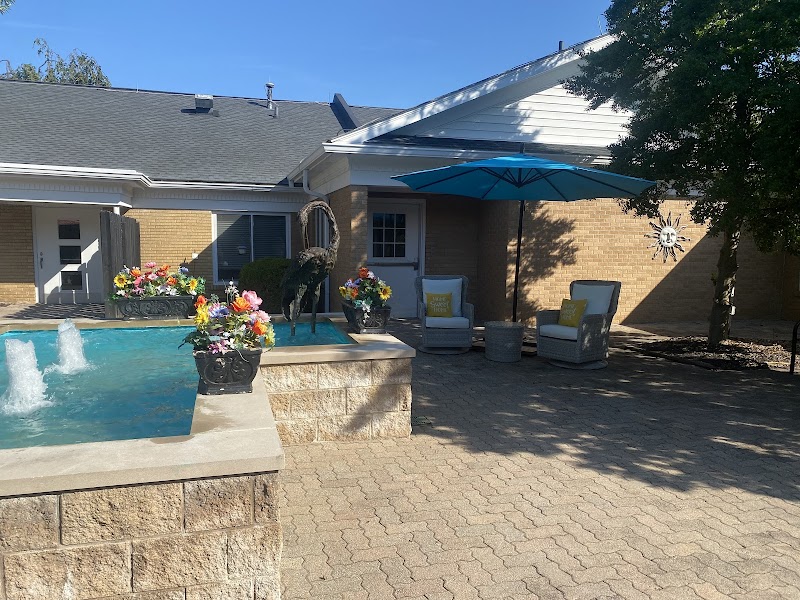
**NOTE- TERMS IN BRACKETS HAVE BEEN EDITED TO PROTECT CONFIDENTIALITY** 2. Observation, on 03/10/2021 at 3:05 PM, revealed the facility's Maintenance Director (MD) walked through with the State Survey Agency (Surveyor) in the C/D courtyard. Observations revealed on the immediate left an unlocked gate. The opened gate revealed a steep concrete staircase leading to a door. Items on the staircase included threaded nails for a nail gun with the sharp edges facing upwards, two (2) propane gas tanks half off the second stair, flower pots, and two (2) large deck umbrellas. Further observation revealed an unlocked second gate on the opposite side. The contents included various seasonal items and a recessed window well. Continued observations revealed copious metal nails on the sidewalk, bricks raised up in several places which could cause a tripping hazard.
Interview with the Maintenance Director (MD), on 03/10/2021 at 3:12 PM, revealed the two (2) gates had not had locks since 12/2019. He stated the stairs led to the boiler room. Further interview revealed Resident #8 went into the courtyard by himself /herself in the wheelchair.
Review of Resident #8's clinical record revealed the facility admitted the resident, on 10/25/2018, with diagnoses that included Dementia with behaviors, Depression, and Weakness. Review of the Minimum Data Set (MDS), dated [DATE], revealed the facility assessed for cognitive patterns with the Brief Interview for Mental Status (BIMS). Resident #8's had a score of two (2). The facility determined the resident was not interviewable. The facility assessed the resident's mobility to include the use of a wheelchair, with the transfer assistance of one for supervision.
Interview with Resident #8, on 03/10/2021 at 3:15 PM, revealed that he/she went into the courtyard daily.
Interview with the Executive Director (ED), on 03/10/2021 at 3:17 PM, revealed she was unaware the gates did not have locks. She stated the gates should be locked at all times.
Interview with the Director of Clinical Services, on 03/10/2021 at 3:25 PM, revealed he questioned the concern for the unlocked gates because Resident #8's sliding glass door jammed after 3 inches which ensured the resident did not go into the courtyard from the resident's room, and he/she could not access the courtyard. Further interview revealed if the resident went into the courtyard, then the staff would be with the resident to provide supervision. He stated staff would open the door for the resident for access.
Observation, on 03/11/2021 at 1:39 PM, revealed Resident #8 wheeled to the courtyard locked door, entered a code, and proceeded to go into the courtyard, unattended by staff.
Continued interview with Resident #8, on 03/11/2021 at 1:39 PM, revealed facility staff gave him/her the code to the door years ago when he/she came to the facility. The resident stated he/she went outside when he/she wanted. The resident stated the code to the door which was the same code the ED had shared with the SSA Surveyor.
Further interview with the MD, on 03/13/2021 at 3:30 PM, revealed the gates to the courtyard never had a lock. He stated he did not think about the need to secure the gates. He stated residents may attempt to access the steps, fall, and possibly not be found immediately. The MD stated the facility's responsibility included to ensure all residents remained safe in or around the facility. He further stated all the facility's door codes with a keypad were the same number code as the courtyard. The MD stated he had changed the code to the doors.
However observation, on 03/14/2021 at 11:30 AM, revealed Resident #8 sat in the middle of the courtyard without supervision. Interview with Resident #8, on 03/14/2021 at 11:30 AM, revealed the resident let himself/herself into the courtyard with the normal code.
Interview with Certified Nursing Assistant (CNA) #18, on 03/14/2021 at 11:45 AM, revealed Resident #8 went to the courtyard on sunny days. The CNA stated the resident went out alone. CNA #18 stated she was not aware of the unlocked gates, nails, or raised bricks in the courtyard. The CNA stated the facility's responsibility included to ensure residents remained safe while in the facility.
Interview with Licensed Practical Nurse (LPN) #2, on 03/20/2021 at 7:45 AM, revealed Resident #8 went into the courtyard alone in his/her wheelchair. The LPN stated the facility allowed the resident go out alone; management knew he/she went out alone, and the resident knew the access code. LPN #2 stated staff did not have time to spend over an hour while the resident enjoyed the day. The LPN stated the other residents did not go out to the courtyard since COVID. LPN #2 stated they did not know who or how the resident gained knowledge of the code. However, all the codes to all the locked doors in the facility were the same numbers. The LPN stated the resident did not exhibit exit seeking behaviors. However, the LPN was aware the resident presented with Dementia which could change his/her behaviors without notice.
3. Review of the clinical record revealed the facility admitted Resident #90, on 02/12/2021, with the diagnoses of Severe Intellectual Disabilities, Seizures, and PICA (Craving or intake of non-nutritional foods i.e.: clay, paper). Review of Resident #90's Minimum Data Set (MDS), dated [DATE], revealed the facility assessed the resident as severely cognitive impaired. Review of the diet order revealed the resident had orders to receive Nectar Thick Liquids (NTL).
Observations, on 03/10/2021 at 10:00 AM, revealed the facility placed Resident #90 in a wheelchair. Observation of the resident's table revealed multiple boxes of fruit cups, breakfast bars, juice packets. Observations revealed the resident chewed on semi-hard plastic animals.
Interview with Family Member #3, on 03/11/2021 at 11:54 AM, revealed the facility's Executive Director was aware of Resident #90's diagnoses of PICA and severe intellectual disabilities. She stated the resident always had something in his/her hands and his/her mouth. Further interview revealed the resident chewed on anything and was always ready to eat. Family Member #3 stated she had brought many food items in boxes to supplement the resident's diet. The family member stated she brought the chew animals to the facility from the group home, which kept the resident busy with his/her need to chew.
Observations, on 03/11/2021 at 12:40 PM, revealed CNA #3 attempted to feed Resident #90. The resident continually reached for the food on the tray. Continued observation at 12:51 PM revealed a palm sized hole in the resident's wall. The hole exposed a white chalky substance with paper peeled off the wall. Further observations revealed the food boxes remained stacked on the table.
Interview with CNA #3, on 03/11/2021 at 12:51 PM, revealed the location of the resident's room made supervision of the resident difficult. The CNA stated staff could not supervise the resident and had voiced concerns to management. CNA #3 stated staff locked the resident's wheelchair because the resident already ate non edible items. Further interview revealed staff had found the resident eating paper, and the resident had dug the wall plaster out with his/her fingernail and ate the plaster. The CNA stated the facility needed to keep everything out of reach of the resident. CNA #3 stated the resident ate anything he/she could grab and was like a toddler. However, observation revealed the boxes of food remained on the table.
Observation, on 03/13/2021 at 8:20 AM, revealed the facility wrapped the call bell cord around Resident #90's wheelchair arm rest. Observation revealed the boxes of stacked foods remained on the resident's table. The staff did not lock the resident's wheels and the resident rocked back and forth in the chair while he/she chewed on the items the family had provided. In addition, the room contained an open pack of briefs in the recliner chair next to the resident, an open pack of cleaning wipes on the table with the stacked food items, three (3) boxes of open gloves on the table, and the bathroom door was open. Further observation revealed no staff was present in the back hall on the B Unit where the resident resided.
Further observation, on 03/14/2021 at 9:31 AM, revealed the hall where Resident #90's room was located did not have staff present. The resident positioned the wheelchair in front of the table with the stacked boxes of food. Resident #90 proceeded to grab a box of breakfast bars and ripped open the box at the seams and removed several packaged bars and proceeded to place two (2) packaged bars into his/her mouth with attempts to eat the contents. The SSA Surveyor alerted CNA #19 on the other hall of the observation. CNA #19 came to the resident's room and removed the items from the resident's mouth. The CNA proceeded to remove the boxes and placed them in the drawer or in the closet.
Interview with CNA #19, on 03/14/2021 at 9:31 AM, revealed the resident's diagnoses included PICA. The CNA stated staff's instructions included to ensure all food and medical items remained out of reach and sight of the resident. The CNA stated the resident placed anything in his/her mouth to try to eat it. CNA #19 stated staff could not supervise the resident in a back hallway. Continued interview revealed the staff needed to keep the resident safe because of the resident's conditions. The CNA stated all foods needed to be stored in the closet as directed by the family and speech therapist. However, the facility and staff stacked food on the table and left care supplies in the room.
Further interview with Family Member #3, on 03/15/2021 at 9:11 AM, revealed the family brought food in on 03/13/2021 and watched staff stack the food on the table. The family stated when staff left they observed Resident #90 pull to the table with his/her heels, proceeded to open packages, and attempted to eat the packages of food. Family Member #3 stated she called and alerted the facility of the observation. She stated CNA #19 entered the room, removed the packages, and gave the resident melt away treats per the family's instructions. Continued interview revealed at that time they met with the Executive Director and when the family returned the food remained stacked on the table. Family Member #3 further stated that in a conversation with the Executive Director, she had expressed the facility's acceptance of the resident for admission with full knowledge of the resident's high care needs. She stated staff knew about the resident's PICA issues and the need to keep food or other items out of reach and eyesight. However, the facility did not provide specific safety because food and care items were left within reach of the resident.
Review of Resident #90's initial speech assessment, dated 02/06/2021, revealed the resident's caregiver reported the resident possessed fair gross motor gestures and placed items in his/her mouth often. The assessment noted a history of multiple abdominal surgeries for items swallowed which needed to be surgically removed. The assessment noted precautions for the resident which included items to be out of reach for the resident, due to his/her PICA.
Interview with the Speech Therapist (ST), on 03/16/2021 at 1:46 PM, revealed Resident #90 grabbed at food because the resident loved to eat. The ST stated she instructed staff that the resident could not have access to food or any other items. The ST stated she instructed the staff on the A/B Unit to place food that the family brought in for the resident in the upper closet and keep medical supplies out of the room. Continued interview revealed she had not identified issues with food or medical supplies in the room and within reach. However, observation revealed staff placed items on the tables within reach of the resident.
Interview with Licensed Practical Nurse (LPN) #2, on 03/20/2021 at 7:45 AM, revealed staff was aware Resident #90 did not have safety awareness. The nurse stated staff was to keep all items out of the resident's reach or the resident would try to eat the item. LPN #2 stated the resident currently had eating restrictions due to a weak swallow which increased his/her risk of choking. The nurse stated he did not see food stacked in the room. LPN #2 stated staff should remove any care products like gloves and briefs because the resident would eat those items as well. The nurse stated supervision for Resident #90 was difficult because the resident had been placed in a room in the farthest corner of the hall which could not be observed with daily activity on the unit. LPN #2 stated staff had to specifically go to the room to supervise the resident. The nurse stated staff kept items out of reach of the resident to maintain safety. However, the resident obtained food and packages and attempted to eat them.
Interview with Registered Nurse (RN) #11, on 03/18/2021 at 2:03 PM, revealed Resident #90 could not have any food or non-food items near him/her because the resident would attempt to eat the item. The RN stated he did not identify food had been stacked on the table or supplies left in the room. RN #11 stated Resident #90 could be mobile in the wheelchair and could grab items. Further interview revealed the resident could choke on food still in packages, and food that was not consistent with the resident's diet, or non-related food. The RN stated the facility's responsibilities included to ensure all residents remained safe. However, the RN stated staff had other responsibilities and staff could not adequately supervise the resident with his/her current room on the back hall. RN #11 stated with the resident's disabilities, PICA, and poor safety awareness, the resident's risk of safety issues was higher than other residents.
Interview with the Director of Nursing Services (DNS), on 03/20/2021 at 12:51 PM, revealed the responsibilities of the facility included to keep residents safe. He stated he expected all staff to ensure residents remained safe at all times. He stated the facility knew Resident #90 had PICA, an eating disorder. Continued interview revealed staff stored items in the closet away from the resident. The DNS stated he was not aware of the boxes of food on tables within the resident's reach. He stated the resident could choke if he/she ingested the package and food.
Interview with the Executive Director (ED) on 04/02/2021 at 2:30 PM, revealed the facility was responsible to provide supervision to residents to maintain the resident's safety. She stated supervision minimized the potential for accidents. The ED stated Resident #90's family did not discuss potential safety issues for staff to monitor. She stated staff did not notify her of supervision or safety issues. Continued interview revealed staff was to take all care items out of the room or store in the closet. She stated the resident's risks included eating a non-food item. Furthermore, the ED stated the facility reviewed Resident #90's referral and made the decision the facility could meet the resident's needs for care and safety.
4. Review of Resident #28's clinical record revealed the facility admitted the resident on 08/07/2019, with diagnoses of Congestive Heart Failure, Morbid Obesity, Hypertension, Bipolar, and Transient Cerebral Ischemic Attack.
Review of the Baseline Comprehensive Care Plan (CCP), revised on 08/20/2020, revealed Resident #28 had Resident Specific Fall Interventions put into the care plan after the resident's fall on 06/14/2020. The interventions included to have non-skid strips at bedside, encourage resident to use incontinent products, and have a low air loss mattress with bolsters.
Review of the Annual Minimum Data Set, dated [DATE], revealed the facility completed a Brief Interview for Mental Status (BIMS) and assessed the resident to have a score of fifteen (15) out of fifteen (15). The facility assessed the resident to be interviewable.
Observation on, 03/12/2021 at 3:52 PM, revealed Resident #28's room was free of clutter and the resident was lying in bed. No fall strips were observed on the floor near his/her bed.
Interview with Resident #28, on 03/15/2021 at 3:18 PM, revealed the resident never had fall strips on the floor.
Interview with Certified Nursing Assistant (CNA) #11, on 03/18/2021 at 10:45 AM, revealed Resident #28 had never had fall strips on the floor by the bed.
Interview with Licensed Practical Nurse (LPN) #14, on 03/20/2021 at 11:09 AM, revealed that if a resident had fall strips on their care plan they should have them to help prevent falls. LPN #14 stated that if the resident did not have them, then the care plan was not being followed. She stated, you would not want a patient (resident) to fall because they could possibly get hurt.
Interview with the Director of Nursing Services (DNS), on 03/20/2021 at 4:18 PM, revealed that it was the facility's responsibility to provide a safe environment. He said that it was the responsibility of the nurse taking care of the resident to make sure interventions from the care plan were implemented and that they were implemented immediately.
Interview with the Executive Director, on 03/21/2021 at 1:48 PM, revealed that she had identified issues with care plans before the survey began. She stated it was the IDT's responsibility to ensure the baseline care plans were completed and that the care plans were individualized.
Based on observation, interview, record review, and review of the facility's policy, www.timeanddate.com and Googles Maps, it was determined the facility failed to provide an environment that was free from accident hazards as possible for four (4) of sixty- nine (69) sampled residents (Residents #8, #28, #90, and #248).
The facility assessed Resident #248 to be at risk of wandering and elopement on 11/13/2020, and initiated care plan interventions on 11/24/2020 which included to maintain a safe environment. The facility utilized a wander management system, Accutech. However, the facility did not place a wander bracelet on the resident. On 12/17/2020, Resident #248 exited the facility without staff knowledge. Around 5:30 PM, staff from another facility discovered Resident #248 on the ground in the parking lot adjacent to the facility. Staff from the other facility contacted the Long Term Care (LTC) facility's staff and informed them a resident was in the parking lot. The LTC facility staff was unaware Resident #248 had eloped from the facility until they were notified by staff from the other facility.
The facility failed to ensure the C/D Unit garden tow (2) patio gates were secure. The gates led to a stair case and a storage area with a depressed window encasement. Resident #8, who was assessed to have dementia and required supervision with transfers, accessed the locked door with the door code and went outside unsupervised.
Resident #90, has the diagnosis of PICA (an eating disorder). The facility failed to ensure adequate supervision, and failed to secure boxes and packages of food, and supplies for resident care were removed from the room, not assessable to Resident #90
In addition, the facility failed to ensure non-skid strips were placed to the floor for Resident #28 after a fall.
Immediate Jeopardy was identified in the areas of 42 CFR 483.21 Comprehensive Resident Centered Care Plans, F656 Develop/Implement Comprehensive Care Plan at scope and severity (S/S) of K; 42 CFR 483.25 Quality of Care F689 Free of Accidents/Hazards/Supervision/Devices at a S/S of J; and 42 CFR 483.35 Nursing Services F726 Competent Nursing Staff at a S/S of L. Substandard quality of care was identified at 42 CFR 483.25 Quality of Care, F689 Free of Accident Hazards/Supervision/Devices. The facility was notified of the immediate jeopardies on 03/07/2021.
Immediate Jeopardy was identified on 03/21/2021 and determined to exist on 07/09/2020. Immediate Jeopardy was identified in the areas of 42 CFR 483.25 Quality of Care, F692 Nutrition/Hydration Status Maintenance at a S/S of J and F693 Tube Feeding Management/Restore Eating Skills at a S/S of J; 42 CFR 483.45 Pharmacy Services, F755 Pharmacy Services/Procedures/Pharmacist/Records at a S/S of K; 42 CFR 483.70 Administration, F835 Administration at a S/S of L; and 42 CFR 483.75 Quality Assurance and Performance Improvement, F865 QAPI Program/Plan, disclosure/Good Faith Attempt at a S/S of L. Substandard Quality of Care was identified at 42 CFR 483.25, F692 Nutrition/Hydration Status Maintenance and F693 Tube Feeding Managment/Restore Eating Skills. The facility was notified of these immediate jeopardies on 03/21/2021.
After supervisory review immediate jeopardy was identified on 03/24/2021 and determined to exist on 07/09/2020 in the area of 42 CFR 483.70 Administration, F837 Governing Body at a S/S of L.
The facility provided an acceptable Allegation of Compliance (AoC) on 03/30/2021 alleging removal of immediate jeopardy on 03/30/2021.
The facility provided an acceptable Credible Allegation of Compliance (AoC) on 03/30/2021, alleging removal of the Immediate Jeopardy on 03/30/2021. The State Survey Agency determined the facility implemented their AoC as alleged by 03/30/2021, prior to exit on 04/03/2021 with the remaining non-compliance in the areas of 42 CFR 483.21 Comprehensive Resident Centered Care Plans, F656 Develop/Implement Comprehensive Care Plan at scope and severity (S/S) of E; 42 CFR 483.25 Quality of Care F689 Free of Accidents/Hazards/Supervision/Devices at a S/S of D; and 42 CFR 483.35 Nursing Services F726 Competent Nursing Staff at a S/S of F; 42 CFR 483.25 Quality of Care, F692 Nutrition/Hydration Status Maintenance at a S/S of D and F693 Tube Feeding Management/Restore Eating Skills at a S/S of D; 42 CFR 483.45 Pharmacy Services, F755 Pharmacy Services/Procedures/Pharmacist/Records at a S/S of E; 42 CFR 483.70 Administration, F835 Administration at a S/S of F; and 42 CFR 483.75 Quality Assurance and Performance Improvement, F865 QAPI Program/Plan, disclosure/Good Faith Attempt at a S/S of F, and, 42 CFR 483.70 Administration, F837 Governing Body at a S/S of F, while the facility developed and implemented a Plan of Correction and monitored the effectiveness of the systematic changes.
The findings include:
1. Review of the facility's policy, Wandering, Unsafe Resident, revised August 2014, revealed the facility would strive to prevent unsafe wandering while maintaining the least restrictive environment for residents at risk of elopement. Facility staff would identify residents at risk of harm because of unsafe wandering, including elopement.
Review of the facility's policy Elopement (Risk and Missing Resident), dated October 2019, revealed care team members were responsible for knowing the location of residents under their care. Residents identified at risk for elopement may utilize a security bracelet if the facility utilized an electronic monitoring system and need for the device was on the care plan. Care team members would teach staff to check the outside environment to ensure no resident had exited the building, when an alarm sounded.
The facility was unable to provide policies for resident behaviors, the Accutech door alarm system, or the Accutech code alert security bracelet.
Review of the staff schedule, dated 12/17/2020, revealed one (1) nurse and one (1) aide scheduled on the E Hall from 3:00 PM to 11:00 PM; and, on the F Hall one (1) nurse from 7:00 AM to 7:00 PM and one (1) aide from 3:00 PM to 11:00 PM were scheduled.
1. Review of the closed clinical record for Resident #248 revealed the facility admitted the resident on 11/12/2020 with diagnoses of Dementia without Behaviors, Repeated Falls, and Fracture of Sacrum. The facility completed a Wandering/Elopement Risk Scale, dated 11/12/2020, and found the resident was non-ambulatory or unable to self-propel in a wheelchair (w/c) and at Low Risk for elopement. The Baseline Care Plan, not dated, revealed the resident used a walker and w/c, was not at risk for elopement, and was cognitively impaired with Dementia and confusion was noted.
Review of a Progress Note, dated 11/13/2020 at 11:36 AM, revealed the night nurse reported to the day nurse that Resident #248 could not be located in his/her room. A nurse from another hallway brought the resident back to his/her unit. During the first medication pass, staff saw the resident in the hallway and escorted the resident back to his/her room. The housekeeper informed the nurse the resident was in the hallway, and the nurse escorted the resident back to his/her room and changed the resident's brief. Further review revealed, at 11:30 AM, a nurse from another unit informed the resident's nurse that Resident #248 was on the other unit. The resident's nurse brought Resident #248 back to his/her room. Record review revealed no documented evidence the facility increased the resident's supervision.
Review of a Wandering/Elopement Risk Scale, dated 11/13/2020 at 6:26 PM, revealed a significant change in condition, the resident was ambulatory or able to propel himself/herself in a w/c, and the resident had a history of wandering with exit seeking behaviors. Further review revealed the facility assessed Resident #248 at High Risk to Wander and High Risk for Elopement. Review of a Progress Note, dated 11/13/2020 at 6:28 PM, revealed the resident wandered into the hallway twice and remained confused. The facility utilized a wander management system, Accutech. However, the facility did not place a wander bracelet on the resident. Record review revealed there was no documented evidence the facility increased the resident's supervision.
Review of the admission Minimum Data Set (MDS), dated [DATE], revealed the facility assessed that Resident #248 was unable to complete the Brief Interview for Mental Status (BIMS) and assessed the resident to be cognitively moderately impaired. The facility assessed the resident wandered one (1) to three (3) days, and used a walker and w/c.
Review of the care plan for Resident #248, dated 11/24/2020, revealed the resident exhibited behavior symptoms of wandering and was at risk of injury. Further review revealed an intervention to maintain a safe environment. However, record review revealed no documented evidence the facility increased the supervision for Resident #248.
Review of an incident note, dated 12/17/2020 at 8:08 PM, by Registered Nurse (RN) #8 revealed Resident #248 was found outside sitting on the ground. The note revealed staff warmed the resident and no injuries were noted.
Review of the temperature record, for 12/17/2020 at 6:00 PM, on www.timeanddate.com revealed the temperature was 34 degrees Fahrenheit.
Review of Google Maps revealed the distance from the E/F Unit nurse's station door, followed along the parking lot to the other facility's parking lot location where Resident #248 was discovered, was approximately 262 feet.
Review of an IDT (interdisciplinary team) note, dated 12/18/2020 at 9:57 AM, revealed on 12/17/2020 Resident #248 was observed sitting on the ground outside. The facility assessed the resident without injury and assisted the resident into his/her w/c. The note further revealed environmental factors were not noted at the time of the event, and the resident could not provide a statement of the event.
Record review revealed Resident #248 was no longer in the facility and had been discharged on 12/21/2020.
Observation, on 03/03/2021 at 9:10 AM, of the E/F Unit nurse's station revealed a common area with an exterior door to the side parking lot. A sign on the door noted to push until the alarm sounded, the door could be opened in fifteen (15) seconds. Further observation revealed a sign posted that stated not to use the door, please use front entrance.
On 03/03/2021 at 2:49 PM, observation of the E/F exterior door at the nurse's station alarmed. At 2:58 PM, the Executive Director silenced the alarm. The alarm then sounded again and the Executive Director silenced the door alarm again, walked toward the E/F nurse's station and asked the four (4) staff at the nurse's station if they heard the alarm. According to the facility's policy, staff would check outside to ensure no resident had exited the building when an alarm sounded.
Observation of the E/F Unit nurse's station door, on 03/04/2021 at 2:00 PM, with the Scheduler, revealed the resident was found on the ground in the parking lot of the other facility adjacent to the LTC facility. Observation revealed the E/F Unit nurse's station door exited out to a patio area that led to a parking area. To the left of the patio, the drive led to two (2) dumpsters and around the back of the building. Straight ahead of the patio past the parking lot was the other facility building. To the left of the patio, approximately ten (10) parking spaces down was a speed bump. Just past the speed bump was a turn to enter the other facility's parking lot. Approximately eight (8) parking spaces down, the resident was witnessed to fall (the other facility's staff witnessed). The handicap space where the resident fell was visible to the other facility's main entrance.
Observation, on 03/05/2021 at 1:45 PM, with the Maintenance Director, of the E/F Unit nurse's station exit door revealed the Accutech keypad, a sound box, and a code alert antenna under the keypad. Continued observation, on 03/05/2021 at 1:52 PM, with the Maintenance Director revealed an alarm sounded when a code alert device was nearby. The State Survey Agency (SSA) heard the alarm down the E Hall to room E4, two (2) rooms down the hall from the nurse's station. The Maintenance Director, without the code device alert, pushed on the E/F Unit door and an alarm sounded, and the door opened after fifteen (15) seconds. The fifteen (15) second alarm sounded similar to the call lights ringing at the E/F Unit nurse's station right in front of the door.
On 03/11/2021 at 4:15 AM, observation of the delivery door near the kitchen revealed the fifteen (15) second alarm sounded. At 4:17 AM, CNA #14 exited the kitchen near the delivery door, silenced the alarm and stepped away from the door. The CNA did not check the environment outside to ensure no resident had exited, per the facility's policy.
Observation of the E/F Unit nurse's station, on 03/11/2021 at 4:29 AM, revealed no staff was visible at the nurse's station or down either the E or F Halls.
Interview with elopement Witness #1, on 03/04/2021 at 10:43 AM, revealed she worked near the LTC facility. She stated the receptionist at her work site reported to her that she saw the resident fall in their parking lot, around mealtime. The witness revealed she and another coworker went outside to the resident. She stated it was dark outside and there was no walker or w/c present. Witness #1 stated she was unable to reach the Executive Director of the LTC facility when she called, so she spoke to the Scheduler. The witness stated the LTC staff brought out a w/c for the resident, and returned the resident to the LTC facility.
On 03/04/21021 at 11:09 AM, interview with Certified Nurse Aide (CNA) #11 revealed Resident #248 liked to wander and was able to walk. She stated the E/F Unit nurse's station door had a wander alert (Accutech) alarm; however, not all of the facility's doors had the Accutech alarm. CNA #11 stated the purpose of the alarm was to ensure residents did not leave the facility and if the alarm sounded, the facility should check to ensure they accounted for all the residents. She revealed it was unsafe if a resident left the facility. CNA #11 stated the resident could get into an accident or die.
Interview with the Scheduler, on 03/04/2021 at 11:30 AM, revealed staff from another facility called and reported to him that a LTC resident was in the parking lot sometime after 5:00 PM. He stated he had already left the facility and was only five (5) minutes away, and returned [TRUNCATED]
CRITICAL
(J)
Immediate Jeopardy (IJ) - the most serious Medicare violation
Deficiency F0692
(Tag F0692)
Someone could have died · This affected 1 resident
**NOTE- TERMS IN BRACKETS HAVE BEEN EDITED TO PROTECT CONFIDENTIALITY** 2. Review of the clinical record revealed the facility admitted Resident #60 on 08/11/2020 with diagnoses that included Traumati...
Read full inspector narrative →
**NOTE- TERMS IN BRACKETS HAVE BEEN EDITED TO PROTECT CONFIDENTIALITY** 2. Review of the clinical record revealed the facility admitted Resident #60 on 08/11/2020 with diagnoses that included Traumatic Subdural Hemorrhage, Maxillary (jawbone) Fracture, Orbital Roof Fracture (bone around the eye), and Zygomatic (cheekbone) Fracture.
Review of Resident #60's Physician Orders, dated 09/2020 through 03/2021, revealed Resident #60 was taking nothing by mouth (NPO) and receiving tube feedings for nutrition. The orders included a 200 ml g-tube flush four times daily ordered on 11/03/2020 and discontinued on 12/12/2020; and flush 200 ml g-tube flush with normal saline every six hours, ordered on 12/16/2020 and started on 03/16/2021. The enteral feeding, Jevity 1.2 at a continuous rate of seventy (70) ml per hour, was ordered on 12/15/2020.
Review of the Medication Administration Record (MAR), from 12/2020 through 03/2021, revealed documentation of enteral tube flush 200 ml four (4) times daily was ordered on 12/01/2020 and discontinued on 12/10/2020. On 01/13/2021, a new order was received for five (5) ml of water flushed through g-tube between medications.
Review of the monthly weights, revealed Resident #60 weighed 157 lbs., on 12/04/2020; 151 lbs. on 01/05/2021; and, 133.4 lbs. on 03/16/2021. A weight of 105 lbs. from 03/03/3021 was marked as incorrect documentation on 03/16/2021.
Review of the Quarterly Minimum Data Set Assessment, dated 02/08/2021, revealed Resident #60 was receiving enteral feedings without any weight loss.
Review of Resident #60's hospital Discharge summary, dated [DATE], revealed Comprehensive Metabolic Panel (CMP) lab work collected on 12/15/2020 that included Sodium of 141 miliequivalent per liter (mEq/L), Potassium of 3.8 mEq/L, Blood Urea Nitrogen of 11 milligram per deciliter (mg/dL), Creatinine 0.30 mg/dL, and Calcium 9.2 mg/dL. The hospital discharge summary did not include g-tube flushes.
Review of Resident #60's CMP, dated 03/17/2021, revealed Sodium of 146 mEq/l, Potassium of 3.9 mEq/L, Blood Urea Nitrogen 21 mg/dL, Creatinine 0.7 mg/dL, and Calcium 10.8 mg/dL.
Review of Resident #60's care plan, initiated on 08/11/2020 and last revised on 12/20/2020, included interventions to administer enteral feedings, and water flushes as ordered, monitor weights with notification of physician and responsible party of significant weight changes, and evaluation by the Registered Dietician as needed or recommended.
Review of the Dietician tube feeding review, dated 09/03/2020, revealed the administration of the enteral feeding of Jevity 1.5 at 60 ml per hour and the water flushes of 250 ml every six (6) hours were meeting Resident #60's nutritional needs. The Dietician did not make any changes or new recommendations. There were no further nutritional notes or assessments until the Weight Review, dated 03/16/2021, which identified 11.4 percent (%) or 17.8 lbs. weight loss in two (2) months. The RD recommended TwoCal (nutritional supplement) 60 ml twice daily and added Resident #60 to the Nutritionally at Risk (NAR) list to monitor.
Interview with Certified Nurse Aide (CNA) #11, on 03/18/2021 at 10:45 AM, revealed the monthly and weekly weights needing to be completed were communicate to the aides by the nurse.
Interview with CNA #20, on 03/19/2021 at 11:18 AM, revealed the monthly weight list was provided by administration. She states monitoring residents' weights determined if there was weight gain or loss and receiving proper nutrition. CNA #20 stated the facility wanted to ensure the residents received quality care and proper nutrition.
Interview with Licensed Practical Nurse (LPN) #8, on 03/15/2021 at 2:20 PM, revealed Resident #60 did not have an order for water flushes so she flushed his g-tube with 30 ml of water with medication administration. LPN #8 stated she was concerned the resident did not have an order for water flushes but did not notify the physician. She stated not getting appropriate amount of water for enteral feedings could result in dehydration or a urinary tract infection.
Interview with Registered Nurse (RN) #13, on 03/18/2021 at 3:45 PM, revealed the monthly weight list was provided to each nurse's station on a list printed out by the Director of Nursing Services (DNS) and was posted at the nurse's station to ensure they are completed. RN #13 stated he did not look at the previous weight, 151 lbs., documented on 01/05/2021. He stated Resident #60 was weighed using the lift.
Interview with the Dietician, on 03/16/2021 at 2:49 PM, revealed she monitored all residents' weights, including residents with weight loss, pressure ulcers, and the residents on enteral feedings. The Dietician stated she reviewed the monthly weights and would obtain a reweigh for a significant loss or gain. She stated she had not had an issue with completion of the monthly weights. The Dietician stated residents on enteral feedings with no oral intake were supposed to have water flushes for hydration. She stated Resident #60 could have suffered from dehydration due to the absence of water flushes when readmitted to the facility on [DATE].
Interview with the DNS, on 03/20/2021 at 4:17 PM, revealed it was a standard for residents who were NPO and on enteral feedings was to receive water flushes. He stated he would expect the nurse to contact the physician or refer to the dietician when the orders did not include water flushes. The DNS stated when residents leave the facility orders current at the time were discontinued and when readmitted to the facility all of the previous orders would be reordered with revisions by the Physician or Nurse Practitioner (NP). He stated resident weights were obtained on admission, readmission, monthly, or more frequently if ordered by the physician. The DNS stated monitoring weights was important to ensure the residents were receiving proper nutrition. He stated the goal was to provide proper nutrition, including hydration, and monitor weights to promote quality of care for the residents.
Interview with the NP, on 03/30/2021 at 3:40 PM, revealed when residents returned from the hospital, she or the facility physician reviewed the hospital records and reconciled the medications. She stated for residents on enteral feedings, she usually continues the water flushes as listed on the discharge summary. The NP stated she reviewed Resident #60's hospital discharge summary and omission of water flushes for enteral feedings was an oversight. She stated a failure to provide Resident #60 with proper hydration could have resulted in dehydration or kidney failure.
Interview with the Executive Director (ED) on 03/21/2021 at 1:48 PM, revealed the facility had a policy for obtaining weights, which were completed at least monthly or more frequently as per physician's orders. The ED stated the facility had a monthly weight policy. She stated the weekly Nutritionally at Risk (NAR) meetings included review of weights and nutritional intake of those determined at risk that included residents on altered diets including enteral feedings or required special feeding assistance. The ED stated the facility monitored residents receiving altered diets from the admission and thereafter. She stated the facility did not review current weights with previous weights because the MDS assessment revealed any changes. The ED stated she had not identified any issues with resident weight loss prior to the survey.
The facility alleged it implemented the following actions to remove immediacy:
1. On 03/22/2021, the Registered Dietician and clinical nursing evaluated Residents #60, and #90.
2. On 03/23/2021, the Registered Dietician reviewed all diet orders and all enteral feeding orders. The Registered Dietician reviewed all residents for nutrition status on 03/24/2021, reviewed and revised as needed all residents receiving enteral feedings, on 03/23/2021.
4. The ED, DNS, and IDT committee were educated on 03/23/2021 regarding policies for weight loss and nutritional risk which included enteral feeding.
5. All nurses and CNA's were educated on the proper use of mechanical/wheelchair scales and the weight policy. The education included weights on admission per policy and initiated on 03/23/2021 with ongoing education. All nurses were educated on the operation of the enteral feeding pumps, initiated on 03/23/2021 and ongoing as needed.
6. The IDT was educated regarding the policy weights, and how to operate the facility enteral feeding pump, on 03/23/2021 with ongoing education.
7. The DNS or the Assistant DNS would audit the resident weekly weight lists to ensure weights were obtained by staff as per policy.
8. The IDT team reviewed all nursing notes, orders, new admissions, readmissions, diet changes, weights were obtained and documented. The IDT would reviewed for changes during the clinical start-up meetings five (5) days a week with additional interventions discussed as needed, initiated on 03/24/2021.
9. The IDT reviewed the weight changes weekly with the Nutrition At Risk (NAR) committee meeting.
10. All audits were forwarded to the Executive Director upon completion and reviewed by the QAPI committee (Executive Director, Medical Director, Director of Nursing, and a minimum of three (3) department managers twice a week until abatement, then weekly for four (4) weeks, and then monthly to ensure the facility sustained the interventions.
The SSA validated the facility implemented the following actions:
1. Interview with the Registered Dietician, on 04/01/2021 at 10:21 AM, revealed she reviewed Residents #60 and #90's nutritional status including diet and enteral feeding orders. Record review, on 04/01/2021, revealed all residents' diet orders and enteral feeding orders with water flushes were reviewed, on 03/23/2021. The DNS, on 04/03/2021 at 2:50 PM, revealed floor staff assessed the resident diet orders and hydration status.
2. Continued interview with the Registered Dietician, on 04/01/2021 at 10:21 AM, revealed resident diet orders were reviewed, on 03/23/2021, to ensure appropriate and accurate diets were entered appropriately. She stated she evaluated residents receiving enteral feeding. She evaluated for diet and water flush orders, on 03/23/2021, with order revisions as indicated. The Registered Dietician stated she completed nutritional assessments for all residents on enteral feeding, ensured water flushes, and reviewed weights.
3. Interview, on 04/02/2021 at 11:25 AM, with the RDO revealed the ED, DNS, and ADNS were educated on weight loss, hydration, and monitoring at risk residents with or without feeding tubes, on 03/23/2021. Record review revealed a sign in sheet dated 03/23/2021 titled weights, hydration, and monitoring was signed by the ED, DNS, and ADNS. She stated the floor staff received education presented by the Regional Clinical Coordinator (RCC) on 03/24/2021 and ongoing.
4. Interview with CNA #7, on 03/31/2021 at 10:35 AM, revealed she received education for the weight policy, resident hydration, and use of lift/wheelchair scales with a return demonstration. Interview with CNA #9, on 03/31/2021 at 11:47 AM, revealed the facility provided in-services for the weight policy, use of Hoyer lift/wheelchair scale, and hydration management. Interview with LPN #24, on 04/01/2021 at 2:42 PM, revealed she attended an in-service that discussed the facility weight policy, enteral feeding pump, enteral flushes, and resident hydration. Review of the facility's education sign in sheet revealed education was initiated on 03/23/2021.
5. Interview with the DNS, on 04/01/2021 at 4:10 PM, revealed he received education for the facility's weight policy for monitoring weight loss, nutritional risk, and hydration including residents that received enteral feedings and flushes. He stated during the five (5) day a week IDT meeting, admissions, readmits, nurses notes, physician orders, resident weights, and diet changes were reviewed. The DNS stated the morning meeting was a review and the afternoon meeting reviewed to ensure an updated weight list with residents were listed on the correct units and completion of March 2021's weight list. He stated the weekly NAR meetings discussed all residents at risk for weight loss and orders were revised as needed.
6. Interview with the Medical Director, on 04/02/021 at 11:16 AM, revealed the facility held a QAPI meeting on 03/23/2021. He stated the facility initiated administrative staff education on 03/23/2021. Further interview revealed the facility maintained daily contact with him for the audit updates and/or identified concerns.
7. Interview with the DNS, on 04/01/2021 at 4:10 PM, revealed he audited resident weights weekly to insure completion.
8. Interview with the DNS, on 04/01/2021 at 4:10 PM, revealed during the five (5) day a week IDT meeting, admissions, readmits, Nurses' Notes, Physician's Orders, resident weights, and diet changes were reviewed. The DNS stated the morning meeting was a review for the weight list and the afternoon meeting he reviewed them again to ensure weights were completed.
9. Interview with the ADNS, on 04/01/2021 at 1:42 PM, revealed during the weekly NAR meetings residents were reviewed for weight changes. Interview with the DNS, on 04/01/2021 at 4:10 PM, revealed weights were reviewed during the weekly NAR meetings. Interview with the Registered Dietician, on 04/01/2021 at 10:21 AM, revealed they reviewed the weights of the residents on the NAR list.
10. Interview with the Medical Director, on 04/02/021 at 11:16 AM, revealed the facility held a QAPI meeting on 03/23/2021. He stated the facility initiated administrative staff education on 03/23/2021. Further interview revealed the facility maintained daily contact with him for the audit updates and/or identified concerns. Interview with the ED, on 04/03/2021 at 2:00 PM, revealed she received education on the facility's weight policy and how the clinical team monitored for weight loss and hydration. Further interview with the ED revealed the QAPI committee completed a fish bone diagram to address the concerns that included nutrition, weight loss, and hydration. She stated a plan and audit tools were developed by the QAPI committee and included observation, education, record reviews, and actions taken to correct the identified issues. The ED stated she reviewed the completed audits and was provided with a daily update for the plan of correction. She stated audits were conducted twice weekly until abatement was achieved, then weekly for four (4) weeks and monthly to ensure facility staff addressed and monitored concerns with nutrition, hydration, and weight loss.
Based on observations, interviews, record reviews and review of the facility's policy it was determined the facility failed to ensure residents identified at nutritional risk were monitored and provided nutritional services to meet the needs of the resident to prevent excessive weight loss for two (2) of sixty-nine (69) sampled residents (Resident #60 and Resident #90).
The facility admitted Resident #90, on 02/12/2021, with the diagnoses of Severe Intellectual Disabilities, Dysphagia and PICA (eating disorder). The facility did not record an admission weight. However, review of the resident's hospital discharge record revealed the resident's weight was seventy-four (74) kilograms (kg) or one hundred and sixty-three (163) pounds (lb.). Resident #90 was on a Nectar Thick Liquid (NTL/consistency of an applesauce) diet. According to the facility's policy, residents were to be weighted on admission and weekly for four (4) weeks.
On 02/19/2021, the facility assessed the resident with swallowing disorders with loss of liquids/solids with eating/drinking and held food in his/her mouth.
Resident #90's record review revealed, on 02/16/2021, the Speech Therapist (ST) completed the resident's initial assessment with the notation of a thin liquid consistency and ordered thin liquids. On 02/19/2021, the Speech Therapist changed the order to NTL and noted the resident's weight was one-hundred and fifty-four (154) pounds, eight (8) days after admission.
On 03/14/2021, the facility documented the resident's next weight of 113.6 lbs. Record review revealed from 02/26/2021 to 03/06/2021, the facility did not record the resident's intake for any meal.
Observations revealed the Certified Nursing Assistant (CNA) #3 and Registered Nurse (RN) #11 obtained Resident's #90's weight on 03/01/2021 with a noted weight of one hundred and nine point one (109.1) lb., with a re-weigh of the same weight. The resident had a weight loss of forty-five (45) pounds or twenty-nine (29) percent (percentage) weight loss in four (4) weeks.
Interview with Resident #90's family revealed the family spoke to the facility numerous times related to concerns of the resident's appearance of weight loss. Interview revealed the family requested weight reports daily with multiple requests to the Executive Director (ED), unanswered.
The facility admitted Resident #60, on 08/11/2020, with diagnoses that included status post status post Tracheostomy, Gastrostomy Tube (a feeding tube in the stomach).
Resident #60's nutritional status included enteral feedings and nothing by mouth (NPO). The facility transferred Resident #60 to the hospital on [DATE] and he/she returned to the facility on [DATE]. However, the previously ordered water flushes of 200 milliliters (ml) every six (6) hours was not reordered. Resident did not have an active order for water flushes via gastrostomy (g-tube) for a total of ninety (90) days.
Review of Resident #60's weights revealed the facility assessed the resident's weight to be 157 lbs. on 12/05/2020; 151 lbs. on 01/05/2021; and 133.4 lbs. on 03/16/2021. The 03/16/2021 weight of 133.4 lbs. revealed 17.6 lbs. weight loss in 68 days.
Immediate Jeopardy and Substandard Quality of Care (SQC) were identified on 03/21/2021 and determined to exist on 12/15/2020.
The facility's failure to have an effective system in place to ensure each resident received adequate nutrition and diets to prevent excessive weight loss has caused or is likely to cause serious injury, harm, impairment, or death to a resident. Immediate Jeopardy (IJ) was identified at 42 CFR 483.25 Quality of Care (F692 at S/S of J) and Substandard Quality of Care (SQC) 42 CFR 483.21 Comprehensive Person Centered Care Plan (F656 at S/S of K) were identified on 03/21/2021 and determined to exist on 12/15/2021.
The facility provided an acceptable credible Allegation of Compliance (AoC) on 03/30/2021 alleging removal of the Immediate Jeopardy on 03/30/2021. The State Survey Agency validated removal of the Immediate Jeopardy as alleged on 03/30/2021, prior to exit on 04/03/2021, with remaining non-compliance at a Scope and Severity of a E while the facility develops and implements a Plan of Correction, and the facility's Quality Assurance (QA) monitors to ensure compliance with systemic changes.
The findings include:
Review of the facility's policy Resident Weight Monitoring dated 10/2018, revealed upon admission or re-admission, the facility would weigh the resident; and, for four (4) weeks after admission with documentation in the EMR (electronic medical record). A significant weight change included 5% (percent) in 30 days, 7.5% in 90 days, and 10% in three (3) months.
Review of the facility's policy IDT (interdisciplinary) Risk Review dated 07/2020 revealed weekly weights would be obtained and monitored. The purpose included to identify residents at risk for weight loss.
Review of the facility's policy, Activities of Daily Living (ADL's) Supporting, revised 03/2018, revealed the facility's responsibility for residents' identified as unable to carry out ADL's independently included to receive the necessary services to maintain good nutrition, grooming, and hygiene.
Review of the Resident Weight Monitoring Policy, dated 10/18, revealed monthly weights were to be completed by the fifth (5th) of every month and documented in the electronic medical records vital signs section. For residents with a change of greater than or less than five (5) pound difference, the staff would obtain a reweigh by the sixth (6th) of every month.
Review of the Registered Dietician Recommendations Policy, dated 10/18, revealed the Registered Dietician (RD) would routinely review the nutritional status of residents and make recommendations to maintain or improve nutritional status.
Review of the Registered Dietician job description, dated 02/2020, revealed the Registered Dietician's primary responsibility included completion of comprehensive nutritional assessments and incorporation of nutritional interventions in the resident's individualized care plan to meet professional standards of practice.
1. Record review revealed the facility admitted Resident #90, on 02/12/2021, with the diagnoses of Intellectual Disability, Eating Disorder (PICA), and Seizures. Review of the Minimum Data Set (MDS) assessment, dated 02/19/2021, revealed the facility assessed the resident as severely impaired to make decisions. The facility assessed the resident's eating status as independence with the assistance of one. The facility noted the resident's weight was 154 lbs.
Review of Resident #90's admission Report, dated 02/12/2021 at 10:41 AM, revealed the resident's weight was seventy-four (74) kilograms (kg) or one hundred and sixty-three (163) pounds (lb.). The report noted the resident was to have NTL (nectar thick liquids), no straws, and one on one supervision with oral intake. The resident's diagnoses included PICA, and he/she was non-verbal.
Review of Resident #90's recorded meal intake revealed the facility failed to document meal intake for twenty-three (23) occurrences from 02/13/2021 to 02/28/2021. The facility failed to document any intake from 02/26/2021 through 03/07/2021. Further review revealed the facility had one hundred and eighty-four (184) opportunities to document the resident's meal intake from 02/13/2021 to 03/08/2021. The facility documented forty-seven (47) instances of meal intake for Resident #90. The resident's meal intake varied with 0% to 25%, a total of twelve (12) time; 26% to 50% six (6) times: 51% to 75% nine (9) times; 76% to 100% ten (10) times; and, five (5) refusals.
Record review revealed on 02/12/2021 the report from the discharge hospital noted the resident's weight was seventy-four (74) kilograms (kg) or one hundred and sixty-three (163) pounds (lb.). Review of Resident #90's weight history revealed the facility documented on 02/19/2021 a weight of 154 lbs., eight (8) days after admission. The facility recorded the resident's next weight on 03/13/2021 at 113 lbs., which was twenty-two (22) days after the first recorded weight. However, per the facility's policy, the facility would weigh the resident upon admission and weekly for four (4) weeks and then monthly.
Review of Resident #90's Order Summary Sheet, dated 03/17/2021, revealed, on 02/19/2021 the facility initiated with an active order for a pureed texture diet, nectar consistency liquids with supervision and swallow precautions. Further review revealed the facility did not initiate the nutritional supplementation for caloric intake and appetite stimulation therapy until 03/15/2021.
Observation, on 03/11/2021 at 12:40 PM, revealed a sign above Resident #90's headboard, which revealed Nectar Thick Liquids only, mechanical soft food by ST only. Continued observation, on 12:40 PM, revealed a tray next to the CNA (certified nurse aide), and the resident on the opposite side of the CNA. Review of the meal ticket, dated 03/11/2021, revealed pureed as the diet and thin liquids. Continued observation revealed staff offered the entire cup of fluids at one time to the resident. Observation revealed the liquid ran over the lip of the cup onto the resident. The liquid was noted to have a thin consistency. The observation revealed the resident produced an immediate cough with each intake of the fluid. Interview with CNA #3 revealed the resident did eat well at breakfast. Resident #90 constantly reached for the tray reaching around the CNA, attempted to grab the food, and the CNA pushed the resident's hands away from the tray. Personal Care Assistant (PCA) #1 entered the room, and CNA #3 requested help with keeping the resident's hands out of the way. PCA #1 placed their hands to the resident's shoulders, slid her hand onto the upper arms and pulled the resident's arms down which also placed the resident shoulders back on the chair. The resident continued to attempt to reach for the food at this time while CNA #3 attempted to fully assist the resident to eat. The PCA released the resident after CNA #3 revealed the resident would not eat the pureed food. Further observation revealed the PCA obtained two (2) boxes of chocolate milk and served both boxes to the resident. Again, the resident excessively coughed with the quick intake of the fluids. Observation of the table revealed boxes of Nutra-grain bars, fruit cups of several types, bananas, and cookies.
Interview with CNA #3, on 03/11/2021 at 12:51 PM revealed the CNA locked the wheel chair to keep the resident from obtaining items due to his/her PICA. The CNA revealed the resident ate anything, and pointed to the wall. She revealed the gouges in the wall above the bedside table resulted from when the resident dug into the plaster and ate the matter he/she picked out of the hole, which she observed. However, she did not report it to anybody above the nurse. The CNA revealed the family came to the window and instructed staff how to feed the resident and other care routines. CNA #3 revealed the resident's level of care required full assistance with meals.
Continued interview with CNA #3 on 03/11/2021 at 12:51 PM revealed the kitchen did not always send powdered packets for thickener on the meal tray. She revealed if the tray did not have a packet, the nurses had packets in the medication cart. CNA #3 revealed staff provided extra milk when the resident did not eat well for the calories. She revealed if a resident coughed when they drank it meant the resident aspirated. Further interview revealed Resident #90 coughed after every intake of the apple juice, which she stated, appeared to be thin in consistency. CNA #3 identified the date on the lunch ticket as 03/11/2021, and the tray had pureed foods and thin liquids. However, the CNA revealed the resident should receive NTL. The CNA revealed the aides reported to the nurse on the unit each time the resident did not eat up to half of the meal. Review of meal intake documentation for 03/11/2021 revealed the CNA documented two (2) lunch intakes as 0 %-25 % eaten and, 26%-50%, both intakes were entered at 2:40 PM.
Further observation, on 03/12/2021 at 8:52 AM, revealed CNA #3 loaded Resident #90's pureed breakfast food items on the utensil and attempted to feed the resident. Resident #90 continued to reach for the tray which was placed on the opposite side of the CNA away from the resident. The CNA called the resident boy-boy while she encouraged the resident to eat. Observation of the printed tray ticket, dated 03/12/2020, revealed Resident #90's meal included pureed foods and thin liquids. The aide identified the liquid in the cup as thin. Continued observation revealed the resident constantly coughed with every intake of the fluid. PCA #1 entered the room; held the resident's hands and stood in front of him/her, as directed by CNA #3, to prevent the resident from reaching for the tray. CNA #19 entered the room with a pudding cup, staff gave two-thirds (2/3) of the pudding, announced the meal was done and removed the tray at 9:00 AM. CNA #3 then locked the resident's brakes to the wheelchair, and gave some items to the resident to hold. The resident's tray consisted of a scoop of ground eggs and meat, one (1) bowl of creamed cereal, 1 cup of a pudding type substance, and 1 cup of a yellow liquid. The resident accepted three (3) spoonful's of the egg/meal mixture and drank one-half (1/2) cup of a yellow fluids. Review of meal intake documentation CNA #3, on 03/12/2021, at breakfast revealed the aide documented 0-25 percent (%) as the amount eaten.
Interview with Family #3, on 03/11/2021 at 11:54 AM, revealed, when she requested, the facility could not provide the family, an admission weight and daily weights. However, she revealed the Executive Director (ED) cited the facility's lack of staff and that the family's request was an unreasonable request. The Family revealed they spoke to the ED because the facility did not have a DNE in the building for several weeks. Family #3 revealed the ED informed them the minimum requirement for weights included monthly weights or as directed by the provider. The family revealed the ED reported his/her weekly lab work would identify dehydration or malnutrition after they voiced their concern of intake and the resident's appearance of weight loss.
Continued interview on 03/11/2021 at 11:54 AM, with Family #3 revealed the facility provided a weight after numerous requests. On, 03/09/2021, the ED notified the family of a weight of 109 lbs. and reported the scale was possibly broken as a reason for the weight. Interview revealed the family expressed to the ED they feared for the resident's safety. She revealed RN #11 reported a weight of 109.1 pounds on 03/12/2021 when the family inquired the day's weight. Continued interview revealed RN #11 reported to have re-weighed the resident and remarked the weight as accurate with the weight of the wheelchair subtracted.
Continued interview on 03/11/2021 at 11:54 AM with the family revealed she spoke to the ED, on 03/09/2021. Interview revealed the family felt the facility placed Resident #90's life in jeopardy because the facility did not meet the resident's required care needs. According to the family, the facility's administration knew before the resident was admitted , after several lengthy conversations with the ED.
Interview, on 03/15/2021 at 9:11 AM, revealed the family vocalized to the ED that the facility did not have a systematic process to obtain weights. The family revealed they observed Resident #90's attempts to open packages left in the open and they had reported to the facility that the behavior could mean hunger. During further interview, the family revealed the facility could not produce records of the resident's meal intake when requested as the facility voiced their requests were unreasonable. The family revealed they felt the resident remained hungry throughout the day.
Further interview on 03/11/2021 at 11:54 AM revealed with the family revealed they had gone into detail with the ST, RN and CNA's how to allow the resident to feed himself/herself. This included staff to allow the resident to hold a regular spoon, assist with load of food to the spoon, tap the top of the resident's hand as the cue to put the food in his/her mouth. Staff were to place a small amount of liquid in a cup as the resident could drink without assistance. The family revealed they informed the ED that the facility accepted the resident with full knowledge of his/her high needs. Continued interview revealed after several meetings, the facility accepted the resident. She revealed the facility's responsibility included to ensure the care given to the resident met his/her needs. Furthermore, the family revealed they felt the facility neglected the resident's nutritional requirements because of the excessive weight loss.
Interview with Personal Care Aide (PCA) #1, on 03/18/2021 at 3:52 PM, revealed the PCA retrieved pudding, chocolate milk and house shakes for staff to give to Resident #90 because the resident did not like the pureed texture of the food. The PCA revealed occasionally the resident would eat an entire meal, usually breakfast. PCA #1 revealed the kitchen sent regular drinks for the resident. However, there was not always a packet of thickener on the tray, and staff did not ask[TRUNCATED]
CRITICAL
(J)
Immediate Jeopardy (IJ) - the most serious Medicare violation
Tube Feeding
(Tag F0693)
Someone could have died · This affected 1 resident
**NOTE- TERMS IN BRACKETS HAVE BEEN EDITED TO PROTECT CONFIDENTIALITY** Based on interview, record review and review of the facility's policy it was determined the facility failed to ensure hydration ...
Read full inspector narrative →
**NOTE- TERMS IN BRACKETS HAVE BEEN EDITED TO PROTECT CONFIDENTIALITY** Based on interview, record review and review of the facility's policy it was determined the facility failed to ensure hydration for one (1) of sixty-nine (69) sampled residents (Resident #85).
The facility admitted Resident #85 on 04/10/2020, and assessed him/her to be at nutritional risk. Resident #85 had Physician's Orders for free water (the amount of the additional water needed to meet residents hydration needs). The NP (Nurse Practitioner) wrote the orders based on continuous free water provided by a dual pump. However, the dual pump was broken. There was no documented evidence the facility monitored or provided the free water as ordered.
On 03/09/2021 the facility was notified of a critical lab report for Resident #85 which revealed a Blood Urea Nitrogen (BUN) level of 111 Critical (reference range 7 mg/dL to 25 mg/dL ) indicating dehydration. Intravenous (IV) fluids were ordered. However, the facility did not start the intravenous fluids for approximately 15 hours after the orders were received. 24 hours later the resident's BUN was 122 mg/dL. Resident #85 was transferred to an acute care facility and diagnosed with dehydration.
The facility's failure to have an effective system in place to ensure residents maintained acceptable parameters of nutritional and hydration status has caused or is likely to cause serious injury, harm, impairment or death to a resident. Immediate Jeopardy (IJ) and Substandard Quality of Care (SQC) was identified on 03/21/2021, and determined to exist on 02/24/2021 in the areas of 42 CFR 483.21 Comprehensive Resident Centered Care Plan (F656 Develop / Implement Comprehensive Care Plan at S/S of K) with Substandard Quality of Care identified at 42 CFR 483.25 Quality of Care (F693 Tube Feeding Management at S/S of J). The facility was notified of the Immediate Jeopardy on 03/21/2021.
The facility provided an acceptable credible Allegation of Compliance (AoC) on 03/30/2021 alleging removal of the Immediate Jeopardy on 03/30/2021. The State Survey Agency validated removal of the Immediate Jeopardy as alleged on 03/30/2021, prior to exit on 04/03/2021, with remaining non-compliance at a Scope and Severity of a E while the facility develops and implements a Plan of Correction, and the facility's Quality Assurance (QA) monitors to ensure compliance with systemic changes.
The findings include:
Review of the facility's policy, Change in Condition, dated October 2019, revealed any serious change in condition should be communicated to the physician and the responsible party.
Review of the facility's policy, Hydration - Clinical Protocol, reviewed/revised 03/21/2011, revealed the physician would manage significant fluid and electrolyte imbalance and the associated risk in a timely manner. The timeliness would depend on the severity, nature and cause. For severe or complicated fluid electrolyte imbalance, subcutaneous or IV hydration may be needed.
Review of the Enteral Nutrition policy, revised November 2018, revealed adequate nutritional support through enteral nutrition is provided to residents as ordered. The dietician with input from the provider and nurse will estimate fluid needs, recommend special food formulations and calculate fluids beyond free fluids in formula to be provided. The nursing staff and provider will monitor the resident for signs and symptoms of inadequate nutrition, altered hydration, hypo or hyperglycemia (low or high blood sugar), and altered electrolytes. Additionally, monitor the resident for worsening of conditions.
Review of Resident #85 clinical record revealed the facility initially admitted the resident on 04/10/2020 with diagnoses of Traumatic Brain Injury, Diabetes Mellitus, and included Enteral Feed (gastrostomy/feeding tube). Review of the Quarterly Minimum Data Set (MDS), dated [DATE], revealed the resident had a Brief Interview of Metal Status (BIMS) of four (4).
Review of Resident #85's Comprehensive Care Plan, initiated 05/01/2020 with a focus of resident presents with a potential for nutritional risk related to reliance on therapeutic enteral feeding for nutrition, significant weight loss, altered skin integrity and diagnoses of anemia and diabetes. The goal stated the resident would not exhibit unplanned significant weight change thought the next review and the resident would receive adequate nutrition and hydration with a target date of 04/29/2021. Interventions included lab/diagnostic tests as ordered, report results to MD and follow up as indicated; provide tube feeding as ordered; Registered Dietician (RD) to evaluate and make diet change recommendations as needed; therapy to screen quarterly as needed; weights as ordered/indicated, notify provider and family of significant weight changes.
Review of Resident #85's Nutrition at Risk (NAR) review effective 02/24/2021 at 10:04 AM revealed Resident #85 was on NAR related to G-tube feeding, high potassium and significant weight loss. Resident #85 received Nepro 50 ml/hour (milliliter per hour) continuous and free water ordered for 300 ml every four (4) hours. Weight changes were anticipated related to Lasix (diuretic). Resident's skin was intact with noted edema.
Review of the clinical records revealed no documented evidence of free water or flushes for Resident #85 from 12/28/2020-03/10/2021, when Resident #85 was sent to the hospital.
Review of a Physician's Progress Note dated 03/09/2021 at 4:14 PM written by the NP (Nurse Practitioner), revealed Resident #85's review of systems was at baseline and assessed for 1) hypernatremia; 2) fluid volume deficit; 3) Chronic Kidney Disease; and, 4) Dementia.
Review of the American Health Associates (AHA) Lab call times reflect an approximate 12 hours delay before the labs were reported to the facility due to the inability to reach floor staff.
Interview with the American Health Associates (AHA) Lab call representative on 03/18/2021 at 8:38 AM revealed there was a Basic Metabolic Panel (BMP) collected on 03/08/2021 and reported on 03/09/2021 to CMT at 1:05 AM. She further revealed two (2) additional calls were made on 03/08/2021 at 1:34 PM and 03/08/2021 at 9:22 PM with no answer.
Interview with Certified Medication Technician (CMT) on 03/20/2021 at 11:12 AM revealed she was new to the facility and was assigned to G Hall the evening of 03/09/2021 with her shift beginning at 7:00 PM. She recalled she had received a call for a critical lab for BUN of 111 for Resident #85. The nurse assigned to the G Hall was attending to a resident and unavailable to answer the call. The CMT stated she immediately reported to the nurse on the A Hall assigned to Resident #85.
Review of the Lab Results Report for Resident #85 revealed the normal range for Blood Urea Nitrogen (BUN) was 7 mg-dL to 25 mg/dL. On 02/15/2021 Resident #85's BUN was 47 mg/dL. On 02/22/2021, Resident #85's BUN was 68 mg/dL. On 03/05/2021, Resident #85's BUN was 95 mg/dL. Further review revealed on 03/08/2021, Resident #85's BUN reached a critical level of 111 mg/dL.
Review of a Physician/ Prescriber Order written by the Nurse Practitioner dated 03/09/2021 untimed, revealed orders were written to: 1) hold Lantus 03/14/2021-03/16/2021, resume on 03/17/2021; 2) Place midline/Peripherally inserted central catheter (PICC) line; 3) D5W at 100 cc/hour continuous; and, 4) BMP (basic metabolic panel).
Review of Physician/Prescriber orders in Point Click Care (PCC) reflected the orders were placed into the system at 4:14 PM on 03/09/2021 by Licensed Practical Nurse (LPN) #11, approximately 15 hours after the critical lab was called to the facility.
Review of Vascular Access Inc. report dated 03/09/2021, revealed they (a third party contractor) received a call at 5:00 PM for placement of a midline, arrived at 6:50 PM and departed the facility at 7:15 PM. A midline IV was placed in the resident's left arm.
Review of the Medication Administration Record (MAR) revealed the order for D5W (intravenous sugar solution given to rehydrate) was administered on 03/10/2021 at 8:00 AM, approximately 15 hours after the order was entered into the PCC.
Record review revealed on 03/10/2021 Resident #85's BUN was critical at 122 mg/dL. Resident #85 was transferred to an acute care facility and admitted .
Review of Resident #85's Hospital records, revealed the resident was admitted to the hospital on [DATE] at 12:35 PM with a primary diagnosis of Dehydration with hypernatremia secondary to Acute Kidney Injury. Review of the Hospital labs, dated 03/10/2021 at 12:56 PM, revealed a BUN lab value of 123 mg/dL (reference range 7-20 mg/deciliter (dL)), (The BUN test measures the level of nitrogen in the blood to assess the functions of the kidneys and liver) and Sodium of 155 mmol/L (reference range 137-145 mmol/L).
Interview with the Registered Dietician (RD) on 03/18/2021 at 2:42 PM revealed she calculated the tube feed and free water needs and would give suggested orders. However, sometimes the Advanced Practice Registered Nurse (APRN) would also give orders for free water. The Dietician stated feeding pumps were discussed in clinical meeting, and dual pumps had pre-programmed amounts to ensure the resident received free water to potentially prevent elevated labs or dehydration. She also indicated Resident #85 was last assessed as a Nutrition at Risk (NAR) resident on 02/24/2021 and was suggested to receive 300 ml of free water every four (4) hours.
Interview with Licensed Practical Nurse (LPN) #4 on 03/18/2021 at 10:40 AM and 1:46 PM, revealed the dual feeding machine used to deliver both the tube feed and free water had recently stopped working at the end of February or beginning of March. She indicated Central Supply was aware. LPN #4 stated she was advised to use the feeding pump machine, which held one (1) bag. She further explained free water was then delivered manually every three (3) hours using a syringe to deliver approximately 180 ml every four (4) hours. In addition, she stated there was nowhere to document the free water given to the resident on the MAR/TAR. LPN #4 indicated this made it hard to ensure the resident received continuous, consistent hydration because it could be forgotten or easily missed and could result in dehydration.
Interview with Scheduler/Central Supply on 03/18/2021 at 2:01 PM, revealed LPN #4 had brought a broken dual feeding pump to him around the end February. He stated LPN #4 had explained the pump was important to prevent dehydration of the resident because it could provide consistent hydration. He additionally stated, he had replaced it with a single feeding pump because the dual pump was not available from corporate. However he had informed the ED on 02/24/2021 of a suggested replacement dual pump.
Interview with LPN #6 on 03/18/2021 at 2:27 PM revealed there were no orders in the computer that would reflect on the MAR/TAR for Resident #85 to receive free water. She stated on night shift from 11:00 PM to 7:00 AM she would flush his/her PEG (feeding tube) tube with 60 ml of water when she changed his/her feeding bag.
Interview with LPN #12 on 03/20/2021 at 10:47 AM, revealed she worked at facility for a month and was familiar with Resident #85. She stated typically she worked the A/B Hall from 7:00 PM-7:00 AM and after 11:00 PM she additionally picked up the C/D Hall until 7:00 AM. She said on 03/09/2021, staff working on the G Hall brought a critical lab to her. She did not recall the time but indicated it was in the middle of the night. LPN #12 then explained she immediately called the NP. LPN #12 indicated the NP said she would address the critical lab BUN of 111 when she came in the morning and did not give any orders during the call. She additionally reported she checked on Resident #85. He/she was sleeping and vital signs were good. She reported she replaced his/her enteral feeding and flushed with water.
An additional interview with LPN #6 on 03/17/2021 at 10:57 AM revealed she was new to the facility. The night of 03/09/2021 was her first shift off orientation and she was oriented by a non-licensed nurse. She stated she worked from 11:00 PM to 7:00 AM. She reported that during daily shift handoff report, she was told Resident #85 was dehydrated and had intravenous (IV) fluids ordered to be started; however the IV pump had not arrived from pharmacy. LPN #6 stated she was not told of any critical value. She further detailed Resident #85 had a midline and all the other IV equipment was in the room. LPN #6 indicated she called the pharmacy and was told the IV pump would arrive at 1:00 AM. She further revealed there was a dial regulator IV pump available. However, she had not received any training on how to use it and was unfamiliar with the equipment, protocols, and resources of the facility. Additionally, she stated there was not a Night Supervisor the evening of 03/09/2021 and she did not have resources to reach out for assistance. LPN #6 explained the IV pump arrived in the morning and the oncoming day shift nurse, LPN #4, started the IV fluids. LPN #6 stated Resident #85 just slept during the night and showed no signs of distress. Furthermore, LPN #6 explained critical lab BUN of 111 could impact the kidneys and heart and could lead to death.
An additional interview with LPN #4 on 03/17/2021 at 2:41 PM revealed she sent Resident #85 to an acute care facility on 03/10/2021 between 11:00 AM and 12:00 PM. She stated there was an order on 03/09/2021 to start D5W on Resident #85. The night shift nurse, LPN #6, relayed at shift change at approximately 7:00 AM, that the fluids should have started on second shift. However, the pump had not arrived during second shift (3:00 PM-11:00 PM). LPN #4 further stated LPN #6 was new to the facility and not familiar with the pump. In addition, LPN #4 indicated the facility also had dial up (manual regulator) and was not sure why it was not used. LPN #4 stated all the supplies were available. LPN #4 started the D5W at the start of her shift on 03/10/2021. She stated she later received a call from the NP, who stated she had seen the labs and asked why the fluids had not been started for two (2) shifts. LPN #4 stated the NP then instructed her to send Resident #85 to the emergency room (ER). LPN #4 indicated the NP spoke with the ED and DNS to make them aware the fluids had not been started resulting in delay in treatment.
Further interview with LPN #4 on 03/17/2021 at 2:41 PM revealed Resident #85's BUN was 122 indicating the resident was severely dehydrated. LPN #4 stated there was potential he/she could go unconscious or die. She stated he/she did not look right but was able to answer questions. The LPN stated she was familiar with the resident and could tell he/she was not quite right by his/her mannerisms. She additionally indicated she called the family and informed the family Resident #85 was sent to the ER due to critical labs.
Interview with the Scheduler/Central Supply on 03/19/2021 at 10:57 AM revealed there was no Night House Supervisor on 03/09/2021- 03/10/2021. Additionally, he stated there were three (3) LPNs working the night of 03/09/2021; one agency, one new hire, and one established to the facility. The LPN established to the facility would be considered the nurse in charge; however, this nurse still had a group assigned.
Interview with Resident #85's family member on 03/17/2021 at 3:03 PM revealed he/she was notified of a change in condition by a nurse who stated Resident #85 was being sent out due to critical labs that were worse than the day before.
Interview with the Nurse Practitioner (NP) on 03/18/2021 at 10:50 AM and on 03/20/21 at 3:40 PM, revealed Resident #85 had a Foley (brand name for an indwelling catheter) catheter and was reliant on tube feed. She stated the resident had recently been switched to Nepro tube feeding and went back and forth with the amount of free water ordered. The NP explained free water was the extra water given to residents with tube feedings to meet their daily hydration needs. She indicated sometimes there were multiple orders for free water and flushes and she may have overlooked and overridden the previous order for 300 ml every four (4) hours. Continued interview with the NP revealed her expectation for Resident #85 was to receive free water through his/her dual feeding pump at a rate of 1500 cc every 24 hour or 62 cc/hour as the resident had a dual pump that delivered water separate from the tube feed.
Continued interview with the NP on 03/18/2021 at 10:50 AM and on 03/20/21 at 3:40 PM revealed she could not recall the day or time the first critical lab was received. However, she stated she was aware of the critical lab and remembered writing orders probably mid-morning or early afternoon. She also indicated sometimes the facility called or texted with a critical lab at night, but staff had the option to call other providers. She further stated, Usually if it is critical they call me. The NP stated for a BUN of 111 she would have written orders when rounding on Monday or Thursday, as she received lab results typically before they were reported to the facility. In addition, she indicated the causes of the elevated BUN would be Chronic Kidney Disease, dehydration, and kidney failure. She stated her expectations were the IV fluids should be administered as soon as possible. However it was communicated that the fluid were not started until the first (1st) shift the following day. The NP further stated the potential outcome of not receiving fluids timely was kidney failure.
Interview with LPN #11 on 03/18/2021 at 3:18 PM, revealed she was familiar with Resident #85 and had taken care of him/her on second shift (3:00 PM-11:00 PM) on 03/08/2021 and 03/09/2021 prior to the hospitalization on 03/10/2021. LPN #11 stated Resident #85 was ordered free water flushes of 1500 cc per day or 62 ml/hour. She stated she delivered 62 cc every hour manually with a syringe. She additionally stated she had put the order into the system but did not recall if the order came up on the MAR to document.
Further interview with LPN #11 on 03/18/2021 at 3:18 PM, revealed Resident #85 was not acting out of the norm and did not show any signs of distress. LPN #11 identified critical labs as labs in a range, which could be threatening for the resident. She further stated the lab company typically called to the floor to report critical lab, however she did not recall missing any calls during her shifts. In addition, she stated potential outcomes for not treating critical labs could be system failures and added labs would not improve on their own. She also indicated Vascular Assess inserted a Midline intravenous (IV) catheter on 03/09/2021 in the resident's left upper arm. She further stated she did not start the ordered fluids on her shift, because she called pharmacy and they were sending a pump. She further indicated flow regulators were in the emergency kit box and could have been used, however, she thought the pump was on the way.
Interview with Director of Nursing Services (DNS) on 03/19/2021 at 11:40 AM, revealed free water or flushes were calculated by the Registered Dietician (RD) and she made recommendations. However, the order would need to come from the provider. He additionally indicated free water or flushes should show on the MAR and staff should document the frequency and amount the resident received, adding, if it's not on the MAR the nurse wouldn't know to do it. He additionally added that not receiving hydration could lead to a clogged G -tube or would be a potential for dehydration.
Further interview with the DNS, on 03/19/2021 at 11:40 AM, revealed there was a Night House Manager (Supervisor) who should not carry a team assignment. In addition, he stated he was unaware if there was a House Manager on 03/09/2021. He further stated, he was unsure of the official policy for reporting critical labs to the provider and added, the phone systems had been recently been serviced. The DNS stated there were times it was difficult to reach the facility; however, he was unaware the critical lab reported for Resident #85 had taken three (3) attempts to reach the facility. He further stated critical labs should be reported to a nurse, not a CNA or CMT. He added critical labs were also faxed to the facility and uploaded to Point Click Care (PCC). Additionally, he was unsure if education was provided for reporting critical labs and expanded by stating he did not know if it would be covered on floor orientation. He indicated there was a checklist, but he did not know if it has been utilized. He explained it should be used, because it ensured competency. The DNS stated the checklist may need to be expanded to include critical lab notification because the implementation of provider orders could be delayed.
Continued interview revealed the DNS, on 03/19/2021 at 11:40 AM, revealed he was not aware of the two (2) shift delay in Resident #85 receiving maintenance fluids due to pump availability and staff knowledge of the IV pumps. He stated the pharmacy had several types of IV pumps and they were responsible to ensure staff was trained on their use. Additionally, he stated, the facility also had dial flow regulators, which could have been utilized for maintenance fluids. He said they were simple to use and he could have provided training quickly. In addition, he said treatment should have begun as soon as the IV access was obtained and that should not have been an issue. The DNS stated the potential outcome for a BUN of 111 mg/dL could be kidney injury.
Interview with the Executive Director, on 03/21/2021 at 2:26 PM, revealed the facility had not identified any issues with hydration and free water for residents with tube feedings. She stated residents with g-tubes were higher acuity residents and their intakes were reviewed weekly in the Nutrition at Risk (NAR) meeting. She stated if the resident was newly admitted , or if a current resident had a decline, the NAR meeting would begin to monitor the resident. The Executive Director revealed if a resident was stable, the NAR Committee would take the resident off weekly NAR monitoring. She further stated Physician's Orders were reviewed on admission and when changed. She stated the Dietician reviewed free water, however she was unsure of the frequency of those reviews. The Executive Director stated she was unsure how free water was missed for the resident, as the clinical meeting should have identified if there was an issue for free water for a resident with a g-tube.
The facility alleged it implemented the following actions to remove immediacy:
1. On 03/22/2021, the Registered Dietician and clinical nursing evaluated Residents #60, #85, and #90.
2. On 03/23/2021, the Registered Dietician reviewed all diet orders, enteral feeding orders, and enteral feeding flushes with water.
3. The Registered Dietician reviewed all residents for nutrition/status on 03/24/2021. The Registered Dietician reviewed and revised as needed, all residents receiving enteral feedings and water flushes on 03/23/2021.
4. The ED, DNS, and IDT Committee were educated on 03/23/2021 regarding policies for weight loss/nutritional risk/hydration and included enteral feedings and water flushes.
5. All nurses and CNA's were educated on the proper use of mechanical/wheelchair scales, and the weight policy, which included weights on admission and as per policy, was initiated on 03/23/2021 and was ongoing. Nurses were educated on the operation of the enteral feeding pumps, initiated on 03/23/2021 and was ongoing.
6. The IDT was educated regarding the policy for enteral flushes and nurses were to be educated on the policy and how to provide flushes. Education was provided to all nursing staff on how to operate an enteral feeding pump, on 03/23/2021, and was ongoing.
7. The DNS or the Assistant DNS would audit the resident weight lists weekly to ensure weights were obtained by staff as per policy.
8. The IDT team reviewed all nursing notes, orders, new admissions, readmission and diet changes. Weights were obtained and reviewed for changes during the clinical start-up meetings five (5) days a week with additional interventions discussed as needed, on 03/24/2021.
9. The IDT reviewed the weight changes weekly during the Nutrition At Risk (NAR) meeting.
10. All audits were forwarded to the Executive Director upon completion and reviewed by the QAPI Committee. The committee members included the Executive Director, Medical Director, Director of Nursing Services, and a minimum of three (3) department managers. The audits will be reviewed twice a week until abatement, then weekly for four (4) weeks, and then monthly to ensure the facility sustained the interventions.
The SSA validated the facility implemented the following actions:
1. Interview with the Registered Dietician, on 04/01/2021 at 10:21 AM, revealed she reviewed Residents' #60, #85, and #90's nutritional status including diet, hydration status, and water flushes with revisions as indicated. Record review revealed the Registered Dietician conducted a nutritional assessment for Residents #60 and #90. Resident #85 was in the hospital and remained in the hospital during validation of AOC.
2. Interview with the Registered Dietician, on 04/01/2021 at 10:21 AM, revealed she reviewed all diet orders, enteral feeding orders, and enteral feeding flushes with water for all residents in the facility on 03/23/2021. She stated the use of a facility census to review diet, enteral feeding, and enteral water flush orders was used.
3. Interview with the Registered Dietician, on 04/01/2021 at 10:21 AM, revealed she reviewed and revised as needed for residents receiving enteral feedings and water flushes on 03/23/2021. The Registered Dietician stated she performed a nutrition/hydration audit for the fifteen (15) residents receiving enteral nutrition or residents at risk for issues with nutrition/hydration. Record review, on 04/01/2021, revealed nutrition/hydration audits on 03/23/2021 for the residents receiving enteral nutrition, residents at risk, or those on the Nutritionally at Risk (NAR) list. The audit documented if the resident was on the NAR list, presence of weight loss, hydration status, and tube feeding with water flushes. Record review, on 04/01/2021, revealed all residents' diet orders and enteral feeding orders that included water flushes were reviewed on 03/23/2021. Interview with the DNS, on 04/03/2021 at 2:50 PM, revealed the floor staff assessed the residents for hydration and diet orders.
4. Interview, on 04/02/2021 at 11:25 AM, with the RDO revealed the ED, DNS, and ADNS were educated on weight loss, hydration, and monitoring at risk residents with or without feeding tubes, on 03/23/2021. Record review revealed a sign in sheet dated 03/23/2021 titled, Weights, Hydration, and Monitoring was signed by the ED, DNS, and ADNS. She stated the floor staff received education presented by the Regional Clinical Coordinator (RCC) on 03/24/2021.
5. Interview with CNA #7, on 03/31/2021 at 10:35 AM, revealed she received education for the weight policy, resident hydration, and use of lift/wheelchair scales with a return demonstration. Interview with CNA #9, on 03/31/2021 at 11:47 AM, revealed the facility provided in-services for the weight policy, use of Hoyer lift/wheelchair scale, and hydration management. Interview with LPN #24, on 04/01/2021 at 2:42 PM, revealed she attended an in-service that discussed the facility's weight policy, enteral feeding pump, enteral flushes, and resident hydration.
Interview with the Regional Clinical Coordinator (RCC), on 04/02/2021 at 11:42 AM, revealed she educated staff about weights, hydration, mechanical lift operation, and feeding pump operation. She stated educating staff was an ongoing process. The RCC stated the schedule for the next day was reviewed to ensure staff education was not needed and was kept on a master list. Review of the facility's education sign in sheet, revealed staff education was initiated on 03/23/2021.
6. Interview with the IDT team members, on 04/03/2021 at 8:33 AM, revealed Medical Records, Minimum Data Set Coordinator, ADNS, DNS, Maintenance Director, Activities Director, Dietary Manager, Business Office Manager, Director of Rehabilitation Services, Admissions Director, and Human Resources Manager received education for enteral flush policy and nursing staff education for enteral flushes.
7. Interview with the DNS, on 04/01/2021 at 4:10 PM, revealed he received education for the facility's weight policy for monitoring weight loss, nutritional risk, and hydration including residents that received enteral feedings and flushes.
8. Interview with the DNS, on 04/01/2021 at 4:10 PM, revealed during the five (5) day a week IDT meeting, admissions, readmits, Nurses' Notes, Physician's Orders, resident weights, and diet changes were reviewed. The DNS stated the morning meeting was a review for the weight list and the afternoon meeting he reviewed them again to ensure weights were completed.
9. Interview with the ADNS, on 04/01/2021 at 1:42 PM, revealed during the weekly NAR meetings residents were reviewed for weight changes. Interview with the DNS, on 04/01/2021 at 4:10 PM, revealed weights were reviewed during the weekly NAR meetings. Interview with the Registered Dietician, on 04/01/2021 at 10:21 AM, revealed they reviewed the weights of the residents on the NAR list.
10. Interview with the Medical Director, on 04/02/021 at 11:16 AM, revealed the facility held a QAPI meeting on 03/23/2021. He stated the facility initiated administrative staff education on 03/23/2021. Further interview revealed the facility maintained daily contact with him for the audit updates and/or identified concerns. Interview with the ED, on 04/03/2021 at 2:00 PM, revealed she received education on the facility's weight policy and how the clinical team monitored for weight loss and hydration. Further interview with the ED revealed the QAPI committee completed a fish bone diagram to address the concerns that included nutrition, weight loss, and hydration. She stated a plan and audit tools were developed by the QAPI committee and included observation, education, record reviews, and actions taken to correct the identified issues. The ED stated she reviewed the completed audits and was provided with a daily update for the plan of correction. She stated audits were conducted twice weekly until abatement was achieved, then weekly for four (4) weeks and monthly to ensure facility staff addressed and monitored concerns with nutrition, hydration, and weight loss.
CRITICAL
(K)
Immediate Jeopardy (IJ) - the most serious Medicare violation
Comprehensive Care Plan
(Tag F0656)
Someone could have died · This affected multiple residents
**NOTE- TERMS IN BRACKETS HAVE BEEN EDITED TO PROTECT CONFIDENTIALITY**
Based on observation, interview, record review, and review of the facility policy it was determined the facility failed to deve...
Read full inspector narrative →
**NOTE- TERMS IN BRACKETS HAVE BEEN EDITED TO PROTECT CONFIDENTIALITY**
Based on observation, interview, record review, and review of the facility policy it was determined the facility failed to develop or implement the resident care plan for sixteen (16) of sixty-nine (69) sampled residents, Residents #8, #23, #28, #33, #39, #46, #54, #60, #82, #84, #85, #90, #248, #445, and #447.
1. Review of Resident #248's care plan revealed an intervention to maintain a safe environment. However, on 12/17/2020, Resident #248 eloped from the facility without staff knowledge and was discovered by staff from another facility on the ground in the parking lot.
2. The facility initally admitted Resident #85 on 04/10/2020. He/she was assessed to be at nutritional risk. However, there was no developed care plan in place to ensure his/her fluids were monitored or received. In addition, the facility failed to implement Resident 85's care plan related to lab test ordered and follow up as needed. On 03/09/2021 a critical BUN was reported to the facility which revealed a Blood Urea Nitrogen (BUN) level of 111 Critical (reference range 7mg/dL to 25mg/dL ) indicating dehydration, and intravenous (IV) fluids were ordered. Intravenous fluids were not started for approximately 15 hours after orders were received.
3. The facility Care Plan for Resident #90 identified a potential nutritional risk and the facility would provide altered fluid consistency and diet as ordered. However, there were no interventions for the special needs for assistance with meals, consistency of the fluid, special utensils, or weight monitoring. The resident exhibited behavior symptoms of eating inappropriate objects and the facility would maintain a safe environment for the resident, however items were left in reach of the resident who attempted to eat non-edible items.
4. The facility failed to implement Resident #60's care plan to monitor for hydration and nutritional status related to enteral feedings. Record review revealed a weight of 127 pounds (lbs.) documented on 01/05/2021 and 101 lbs. on 03/03/2021. Resident #60 was transferred to the hospital on [DATE], returned on 12/15/2020 and did not have an order for water flushes. Review of the weights revealed, on 03/16/2021, Resident #60 had significant weight loss of 17.4 lbs., which was an 11.4% weight loss in 68 days identified by the facility on 03/16/2021.
5. The facility failed to develop a care plan related to pain associated with neuropathy for Resident #39. Review of Resident #39's comprehensive care plan, dated 12/31/2020, revealed he/she was not care planned for Neuropathy or Pain associated with Neuropathy nor was the care plan revised when Resident #39 experienced pain related to missing 19 doses of his/her Gabapentin (refer to F755) . Review of the Care Area Assessment Summary (CAAS) revealed Resident #39 was not triggered for pain for his/her care plan.
6. Review of the Resident #46's Care Plan for Actual Chronic Pain revealed the facility would administer medications as ordered. However, review of Resident #46's Medication Administration Record (MAR) revealed the facility missed four (4) doses for January of 2021, three (3) doses in February 2021, and five (5) doses in March 2021.
7. Review of the Resident #23's Care Plan for Chronic Pain revealed the facility would administer pain medication as ordered. Review of Resident #23's Medication Administration Record (MAR) for March 2021 revealed the resident did not receive the ordered Gabapentin for six (6) doses. The resident experienced pain when staff did not adminsiter the ordered Gabapentin.
8. Review of the Baseline Care Plan, revised on 08/20/2020, revealed Resident #28 fell on [DATE]. The facility added Resident Specific Fall Interventions to the care plan after fall. The interventions included to have non-skid strips at bedside. Observation on, 03/18/2021 at 10:38 AM, revealed that Resident #28 did not have any fall strips on his/her floor. The resident experienced a fall after the care plan intervention of non-skid strips was developed, however he/she did not sustain any injury.
9. Review of the Resident #33's Care Plan for at risk for Alterations in Mood revealed the facility would administer medications as ordered. However, the resident missed eighteen (18) doses since December 2020 of his/her anxiety medicaiton per the plan of care. The facility care plan for Resident #33's Activities of Daily Living (ADL's), revised 01/19/2021, revealed the resident would have his/her care needs met daily with assistance of staff. However, there were no intervention(s) related to ADL needs for bathing. The resident had to tell the Certified Nursing Assistant (CNA) when he/she wanted to shower.
10. The ADL Care Plan, revised 11/18/19, revealed Resident #82 needed assistance with ADL's, included bathing and showering, due to Fibromyalgia, Chronic Fatigue, and Arthritis. However, resident interview revealed the facility did not provide routine showers and his/her last shower was in November 2020 as staff stated they did not have time.
11. Review Resident #84's ADL Care Plan, initiated 12/27/19, revealed the resident needed assistance with ADL's related to vascular dementia, Parkinson's disease, and a history of falls. The care plan included an intervention for staff to assist with bathing/showering. However, interview with Resident #84, on 03/09/2021 at 9:56 AM, revealed the facility had not assisted him/her to shower in a couple of weeks.
12. Resident #54 was care planned for communication deficit due to English as a second language, but observation revealed the communication board listed on the care plan was not present in the resident's room.
13. Review of the Baseline Care Plan for Resident #445, revised 03/17/2021, revealed staff assessed the resident with difficulty with communication due to a language barrier. Interventions included anticipate needs and provide translator as necessary to communicate with resident. The translator would be Spanish-speaking staff. Observation revealed Resident #445 went to the desk to ask for assistance. When the resident would have a non-Spanish speaking nurse, the resident would go to the desk and what appeared to be repeatedly ask the same thing many times, and the resident did not appear to understand the nurse's answer to the question. The State Survey Agency (SSA) was unable to interview the resident for additional information due to the language barrier.
14. Review of Resident #8's clinical record revealed the facility admitted the resident, on 10/25/2018, with diagnosis that included Dementia with behaviors. Interview with Resident #8, on 03/10/2021 at 3:15 PM, revealed staff provided him/her the door code years ago to the C/D courtyard, staff never went out with him/her, and he/she went out daily with good weather. Observation on, 03/10/2021, at 3:25 PM, revealed Resident #8 entered a code into the keypad on the wall and opened the courtyard door. Observation of the C/D courtyard, on 03/10/2021 at 3:05 PM, revealed two (2) unlocked gates. One (1) gate revealed a steep concrete staircase that led to a door. Items on the staircase included threaded nails for a nail gun with the sharp edges facing upwards, two (2) propane gas tanks half off the second stair, flower pots, and two (2) large deck umbrellas. The second unlocked second gate on the opposite side caontained various seasonal items and a recessed window well. Continued observations revealed copious metal nails on the sidewalk and bricks raised up in several places which could cause a tripping hazard. Review of Resident #8's Comprehensive Care Plan revealed the facility did not initiate on admission a care plan for Dementia or for Activities which would include access to the courtyard with continued reassessments for MDS evaluations.
15. Review of Resident #14's comprehensive care plan for bladder and bowel, dated 12/12/2019, revealed the resident experienced episodes of incontinence. Review revealed the care plan interventions address to check and provide incontinence care as needed. However, record review revealed the resident's use of the rest room which may require assistance and safety over site was not addressed. Interview with Resident #14, on 03/12/2021 at 11:08 AM, revealed he/she could toilet independent with occasional assistance in the bath room. The resident revealed he/she wanted to maintain independence as much as possible. The resident revealed he/she used a brief for occasional accidents when in bed because he/she required help to get out of bed.
16. Review of Resident #447's clinical record revealed the facility admitted the resident on 03/06/2021, with diagnoses, which included Cerebral Infarction and Dementia. The Baseline Care Plan, revised 03/11/2021, revealed the resident exhibited behavior symptoms of physical and verbal aggression, such as yelling, pounding on walls/windows, and attempt to tear down blinds. An intervention included administer medications as ordered. However, the physician's orders in the computer system compared to the hand written order revealed an order for Risperdal 1 milligram (mg) was entered into the computer system twice. The order was written for 0.5 mg in the morning and 1 mg at night The order was entered into the computer as 1 mg in the morning and at night.
The facility's failure to develop/implement resident's plan of care has caused or is likely to cause serious injury, harm, impairment or death to a resident. Immediate Jeopardy was identified in the areas of 42 CFR 483.21 Comprehensive Resident Centered Care Plans, F656 Develop/Implement Comprehensive Care Plan at scope and severity (S/S) of K; 42 CFR 483.25 Quality of Care F689 Free of Accidents/Hazards/Supervision/Devices at a S/S of J; and 42 CFR 483.35 Nursing Services F726 Competent Nursing Staff at a S/S of L. Substandard quality of care was identified at 42 CFR 483.25 Quality of Care, F689 Free of Accident Hazards/Supervision/Devices. The facility was notified of the immediate jeopardies on 03/07/2021.
Immediate Jeopardy was identified on 03/21/2021 and determined to exist on 07/09/2020. Immediate Jeopardy was identified in the areas of 42 CFR 483.25 Quality of Care, F692 Nutrition/Hydration Status Maintenance at a S/S of J and F693 Tube Feeding Management/Restore Eating Skills at a S/S of J; 42 CFR 483.45 Pharmacy Services, F755 Pharmacy Services/Procedures/Pharmacist/Records at a S/S of K; 42 CFR 483.70 Administration, F835 Administration at a S/S of L; and 42 CFR 483.75 Quality Assurance and Performance Improvement, F865 QAPI Program/Plan, disclosure/Good Faith Attempt at a S/S of L. Substandard Quality of Care was identified at 42 CFR 483.25, F692 Nutrition/Hydration Status Maintenance and F693 Tube Feeding Managment/Restore Eating Skills. The facility was notified of these immediate jeopardies on 03/21/2021.
After supervisory review immediate jeopardy was identified on 03/24/2021 and determined to exist on 07/09/2020 in the area of 42 CFR 483.70 Administration, F837 Governing Body at a S/S of L.
The facility provided an acceptable Allegation of Compliance (AoC) on 03/30/2021 alleging removal of immediate jeopardy on 03/30/2021. The State Survey Agency determined the facility implemented their AoC as alleged by 03/30/2021, prior to exit on 04/03/2021 with the remaining non-compliance in the areas of 42 CFR 483.21 Comprehensive Resident Centered Care Plans, F656 Develop/Implement Comprehensive Care Plan at scope and severity (S/S) of E; 42 CFR 483.25 Quality of Care F689 Free of Accidents/Hazards/Supervision/Devices at a S/S of D; and 42 CFR 483.35 Nursing Services F726 Competent Nursing Staff at a S/S of F; 42 CFR 483.25 Quality of Care, F692 Nutrition/Hydration Status Maintenance at a S/S of D and F693 Tube Feeding Management/Restore Eating Skills at a S/S of D; 42 CFR 483.45 Pharmacy Services, F755 Pharmacy Services/Procedures/Pharmacist/Records at a S/S of E; 42 CFR 483.70 Administration, F835 Administration at a S/S of F; and 42 CFR 483.75 Quality Assurance and Performance Improvement, F865 QAPI Program/Plan, disclosure/Good Faith Attempt at a S/S of F, and, 42 CFR 483.70 Administration, F837 Governing Body at a S/S of F, while the facility developed and implemented a Plan of Correction and monitored the effectiveness of the systematic changes.
The findings include:
1. Review of the facility policy Care Plans, Comprehensive Person-Centered, dated December 2016, revealed the care plan was developed and implemented for each resident. The care plan included measurable objectives to meet the resident's physical, psychosocial and functional needs. A care plan would include identified problem areas and risk factors associated with the identified problems.
The facility was unable to provide a policy regarding resident behaviors.
Review of Resident #248's closed clinical record revealed the facility admitted the resident on 11/12/2020 with diagnoses of Dementia without Behaviors and Repeated Falls. The facility completed a Wandering/Elopement Risk Scale, dated 11/12/2020, and found the resident was non-ambulatory or unable to self-propel in a wheelchair (w/c) and at Low Risk for elopement. The Baseline Care Plan, not dated, revealed the resident used a walker and w/c, was not at risk for elopement, and cognitively impaired with Dementia and confusion noted.
Review of a progress note, dated 11/13/2020 at 11:36 AM, revealed the night nurse reported to the day nurse Resident #248 could not be located in his/her room and a nurse from another hallway brought the nurse back to his/her unit. During the first med pass, staff saw the resident in the hallway and escorted the resident back to his/her room. Additionally, the note revealed a housekeeper informed the nurse Resident #248 was in the hallway, and the nurse escorted the resident back to his/her room. At 11:30 AM, a nurse from another unit informed the resident's nurse that Resident #248 was on the other unit. The resident's nurse returned Resident #248 back to his/her room.
Review of a significant change in condition Wandering/Elopement Risk Scale, dated 11/13/2020 at 6:26 PM, revealed the resident was ambulatory or able to propel him/herself in a w/c. The assessment revealed the resident had a history of wandering with exit seeking behaviors. The facility assessed Resident #248 at High Risk to Wander and High Risk for Elopement. Review of a progress note, dated 11/13/2020 at 6:28 PM, revealed the resident wandered into the hallway twice and remained confused.
Review of the admission Minimum Data Set (MDS), dated [DATE], revealed the facility assessed Resident #248 was unable to complete the Brief Interview Mental Status (BIMS) and staff assessed the resident was Moderately impaired. The facility assessed the resident wandered for one (1) to three (3) days, and used a walker and w/c.
Review of the care plan for Resident #248, dated 11/24/2020, revealed the resident exhibited behavior symptoms of wandering and at risk of injury, with an intervention to maintain a safe environment.
Review of the communication binder for the Nurse Practitioner (NP) revealed, on 12/16/2020, Resident #248 was listed for the provider to visit the resident as he/she had behaviors during the shift. The Nurse Practitioner (NP) initialed and dated 12/17/2020.
Review of a physician progress note, dated 12/17/2020 at 9:45 AM, revealed the NP saw Resident #248 due to nursing reported an increase in behaviors and confusion. The NP noted the resident cried a lot without reason and needed a psychiatric evaluation for inappropriate crying and behaviors.
Review of an incident note, dated 12/17/2020 at 8:08 PM, by Registered Nurse (RN) #8 revealed Resident #248 was found sitting on the ground outside in the parking lot.
The resident was no longer in the facility and discharged on 12/21/2020.
Interview, on 03/04/2021 at 2:25 PM, with RN #8, revealed she provided care to Resident #248 the day the resident eloped. She stated she and the other nurse working the E/F Unit were with another resident providing care at the time of the elopement. The RN revealed she was unsure how many Certified Nurse Aides (CNA) worked at that time. She stated she was unaware of the resident's care plan interventions before the elopement. The nurse stated the purpose of the care plan was to identify how to care for the resident. She revealed the facility tried to do something for the resident per the care plan, however it was not possible to eliminate risk for the resident.
On 03/04/2021 at 3:30 PM, interview with CNA #12, revealed he heard Resident #248 eloped when he returned to the E/F Unit with the dinner tray cart. He stated usually there were two (2) nurses and two (2) CNAs on the E/F Unit. The aide revealed when he left the unit to get the dinner cart, he was unaware of the location of the other CNA on the unit. The CNA further revealed the resident care plan was at the nurse's station, however the facility did not use a Kardex (CNA care plan).
Interview with the MDS Coordinator, on 03/06/2021 at 3:03 PM, revealed Resident #248's care plan intervention to maintain a safe environment referred to the entire facility environment. However, the intervention did not provide information on how to maintain a safe environment. She stated at the time the resident eloped, the CNAs carried resident care records, similar to a Kardex. The MDS Coordinator revealed if the resident care plan was not followed, a resident could elope and could be harmed. She stated the care plan was a nursing duty, however, she was unsure of nurses were trained on resident care plans.
Interview, on 03/06/2021 at 4:15 PM, with the Director of Nursing Services (DNS), revealed he was not employed at the facility when Resident #248 eloped on 12/17/2020. He stated the purpose of the care plan was to place all staff in the facility on the same page, what the plan of care for the resident was, and how to achieve that goal. The DNS revealed the care plan interventions were how the facility would accomplish those goals. He further revealed to follow the care plan intervention to maintain a safe environment included to ensure the resident did not get to the door. The DNS stated staff did everything they could to keep the resident safe and there were times no one was available to maintain a safe environment due to everyone was providing care to other residents.
Continued interview with the DNS, on 03/20/2021 at 4:18 PM, revealed the care plan was a blueprint for what staff were to do for the resident. He stated staff were expected to follow the resident's care plan at all times. He revealed staff were responsible to review the care plan at the beginning of the shift and as needed. The DNS stated if the care plan was not followed, then staff were not following the resident's plan of care. He further stated the facility should keep residents safe to reduce harm.
On 03/06/2021 at 5:44 PM, interview with the Executive Director (ED), revealed the care plan should be followed by all staff, and staff were trained to follow the resident's care plan. She stated Resident #248's care plan intervention to maintain a safe environment meant to ensure safety around the resident. The ED revealed RN #8 and RNA #4 were providing care for another resident, CNA #12 left the unit to get the dinner tray cart, and was unaware where CNA #13 was located when Resident #248 eloped. The ED further revealed she and Medical Records were also both on the unit to see other residents at the time of the elopement. She stated although they were all with other residents, Medical Records, RNA #4, and the other staff on the unit were accessible to maintain a safe environment for Resident #248. She further stated as no one heard the door alarm sound, and she was unsure how the resident got out.
2. Review of Resident #85 clinical record revealed the facility initially admitted the resident on 04/10/2020 with diagnosis of Traumatic Brain Injury, Diabetes Mellitus, and included Enteral Feed. Further review of the quarterly Minimum Data Set (MDS), dated [DATE], revealed the resident had a Brief Interview of Metal Status (BIMS) of four (4).
Review of Resident #85's Comprehensive Care Plan, initiated 05/01/2020, revealed the resident had a potential for nutritional risk related to reliance on therapeutic enteral feeding for nutrition, significant weight loss, altered skin integrity and diagnoses of anemia and diabetes. The plan was last revised on 01/25/2021. The goal stated the resident would receive adequate nutrition and hydration with an initiation date of 11/04/2020. Interventions included lab/diagnostic tests as ordered, report results to MD and follow up as indicated; provide tube feeding as ordered; Registered Dietician (RD) to evaluate and make diet change recommendations as needed; therapy to screen quarterly as needed; weights as ordered/indicated, notify provider and family of significant weight changes.
Review of Physician/ Prescriber order written by Nurse Practitioner sheet, dated 03/09/2021 and untimed, revealed orders were written to: 1) hold Lantus 03/14/2021-03/16/2021, resume on 03/17/2021 2) Place midline/ PICC line 3) administer D5W at 100 cc/hour continuous 4) BMP in AM.
Review of Physician/ Prescriber orders in Point Click Care (PCC), dated 03/09/2021 reflected the orders were placed into the system at 4:14 PM approximately 15 hours after the critical lab was called to the facility by LPN #11.
Review of Medication Administration Record (MAR) revealed the order for D5W was administered on 03/10/2021 at 8:00 AM, approximately 15 hours after the order was entered into PCC.
Record review revealed Resident #85 was transferred to an acute care facility on 03/10/2021 and was not in the facility during the investigation. admission hospital records, dated 03/18/2021 at 12:31 PM, indicated the primary admitting diagnoses to be Dehydration with hypernatremia and poorly controlled type 2 diabetes mellitus.
Review of clinical records show no documentation of free water or flushes for Resident #85.
Interview with Licensed Practical Nurse (LPN) #11 on 03/18/2021 at 3:18 PM, revealed she was familiar with Resident #85' plan of care and had taken care of him/her on second (2nd ) shift (3:00 PM-11:00 PM) on 03/08/2021 and 03/09/2021, prior to hospitalization on 03/10/2021. LPN #11 stated Resident #85 was ordered free water flushes of 1500mL per day or 62 mL/hour. She stated she delivered 62mL every hour manually with a syringe. She additionally stated she had put the order into the system but did not recall if the order came up on the MAR to document.
Further interview with LPN #11 revealed she was aware Resident #85 was sent out due to critical labs and identified the resident was on routine lab draws. She stated she did not initially administer the ordered D5W on her shift, per the plan of care, because she was waiting on pharmacy to deliver a pump. She further indicated flow regulators were in the emergency kit box and could have been used, however, she thought the pump was on the way.
Interview with LPN #6, on 03/18/21 at 2:27 PM, revealed there were no orders in the computer showing on the MAR/TAR for Resident #85 to receive free water to ensure the resident was hydrated, per the plan of care. She stated on night shift from 11:00 PM to 7:00 AM, however, she would flush his/her PEG tube with 60ml of water when she changed his/her feeding bag.
An additional interview with LPN #6, on 03/17/2021 at 10:57 AM, revealed she was new to the facility. She stated the night of 03/09/2021 was her first shift off orientation and she worked from 11:00 PM to 7:00AM. She indicated during shift handoff report, she was told Resident #85 was dehydrated and had intravenous (IV) fluids ordered to be started, per the plan of care. However, the IV pump had not arrived from pharmacy. She further detailed she was unfamiliar with the IV pump and had limited resources. LPN #6 stated the oncoming day shift nurse, LPN #4, started the IV fluids. Furthermore, LPN #6 stated critical lab BUN of 11 could impact the kidneys and heart and could lead to death.
Interview with LPN #4, on 03/17/2021 at 2:41 PM, revealed per the plan of care, there was an order received, on 03/09/2021 to start D5W on Resident #85. The night shift nurse, LPN #6, relayed at shift change approximately 7:00 AM the fluids should have started on the previous shift, however the pump had not arrived during second shift (3:00PM-11:00PM). LPN #4 further stated LPN #6 was new to the facility and not familiar with the pump. In addition, LPN #4 indicated the facility also had dial up (manual regulator) and was not sure why it was not used. LPN #4 stated all the supplies were available. She started the D5W at the beginning of her shift on 03/10/2021. She stated she later received call on her cell phone from NP. NP indicated she had seen the labs and asked why fluids were not started for two (2) shifts. NP then instructed to send Resident #85 to the emergency room (ER). LPN #4 indicated the NP spoke with the ED and DNS to make them aware the fluid have not been started resulting in delay in treatment.
Interview with the Registered Dietician (RD), on 03/18/2021 at 2:42 PM, revealed she calculated the tube feed and free water needs and would give suggested orders. The Dietician stated feeding pumps were discussed in clinical meeting, and dual pumps had pre-programmed amounts to ensure the resident received free water to potentially prevent elevated labs or dehydration. She also indicated Resident #85 was last assessed as a Nutrition at Risk (NAR) resident on 02/24/2021 and per the plan of care she suggested the resident receive 300 ml of free water every four (4) hours.
Interview with the ED, on 03/21/2021 at 2:26 PM, revealed the facility had not identified any issues with, resident's plans of care related to hydration or free water for residents with tube feedings. She stated residents with g-tubes were higher acuity residents and their intakes were reviewed weekly in the Nutrition At Risk (NAR) meeting. She revealed if the resident was newly admitted , or a current resident had a decline, the NAR meeting would begin to monitor the resident. The Administrator revealed if a resident was stable, the NAR committee would take a resident off weekly NAR monitoring. She further revealed physician orders were reviewed on admission and when changed, for free water. She stated the Dietician reviewed free water, however she was unsure of the frequency of those reviews. The ED revealed she was unsure how free water was missed for the resident, as the clinical meeting should have identified if there was an issue for free water for a resident with a g-tube.
3. Review of the clinical record revealed the facility admitted Resident #90 on 02/12/2021 with diagnoses to include unspecified Intellectual Disabilities, specified Eating Disorder (PICA), and unspecified Convulsions.
Review of the annual Minimum Data Set (MDS), dated [DATE], revealed the facility assessed Resident #90 unable to complete a Brief Interview of Mental Status (BIMS) due to severe impaired cognitive skills for daily decisions.
Review of the Care Plan for Potential Nutritional Risk, dated 02/19/2021, revealed the facility would provide the altered fluid consistency, provide, and serve diet as ordered. However, there was no interventions for the special needs for assistance with meals, consistency of the fluid, special utensils, or weight monitoring. Continued review of the care plan for Behavior Symptoms of eating inappropriate objects revealed the facility would maintain a safe environment for the resident. In addition, review of the care plan for Communication revealed the staff would speak on an adult level to the resident.
Review of Dietary Order, on 02/19/2021, revealed the facility should provide the fluid consistency of Nectar Thick Liquids (NTL)
Interview with Family #3, on 03/15/2021 at 9:11 AM, revealed they informed the facility the resident required maximum assistance with meals, could cue to eat food with the assist of loading a spoon, then tap the top of the residents hand, and the resident could mostly feed him/herself. The family stated the resident could drink with a two sided handled cup with minimal assistance. The family stated they requested a weekly weight on the resident because the resident looked like he/she lost weight. The family stated Resident #90 could follow simple cues for tasks. However, the resident could not speak, make needs known, and did not have safety awareness. Furthermore, the family stated Resident #90 had PICA. The family stated PICA involved putting any object in the mouth to chew and swallow. The family stated they informed the facility it needed to ensure all objects or food could not be obtained by Resident #90 because he/she would eat it. However, the Nutritional care plan did not reflect the specific needs of the resident and the Behavior plan did not reflect the need for objects to be out of reach.
Observation, on 03/11/2021 at 12:40 PM, revealed a facility meal ticket included thin liquids. The tray contained a glass cup of thin yellow liquid. Staff fed Resident #90 without assistance from the resident. Staff fed the resident the drink from the glass cup. Resident #90 grabbed at or reached for the food on the tray situated on the other side of the aide. The facility stacked food brought by family on the low rise table in the resident's room. However, the staff did not allow the resident to be involved with the meal, provide special utensils, or remove the boxes of food from the residents reach. In addition, the facility did not provide the NTL's as ordered.
Continued observation, on 03/12/2021 at 8:52 AM, revealed the tray ticket revealed thin liquids. The resident continued to reach for the food while staff tried to feed the resident. Staff identified the liquid in the glass cup as thin apple juice. Staff called the resident boy-boy and continued with baby talk when the resident continued to reach for food while they fed the resident. Observations revealed food remained stacked in boxes and bags on the low rise table. However, facility did not maintain an adult conversation, provide NTL's, allow the resident to assist with meal intake or maintain a safe environment.
Observation on, 03/13/2021 at 8:32 AM, revealed Resident #90 in a wheelchair and mobile. An open package of briefs laid on the chair, a package of cleaning wipes laid on the side table of the bed, three (3) opened boxes of gloves on the table, and continued presence of the boxes and bags of food on the low rise table. However, the facility did not maintain a safe environment for the resident.
Further observation, on 03/14/2021 at 9:31 AM, revealed Resident #90 ripped open boxes of food at the low rise table, obtained two to three packages of food, and placed the package and food into his/her mouth and started to consume the products. Survey staff alerted facility staff because there were not staff in or around the resident's room, which at the time staff removed the food and placed the food in the closet. However, the facility did not maintain a safe environment to ensure the resident did not consume non-food items.
Interview with CNA #3, on 03/19/2021 at 10:34 AM, revealed the aides followed the resident tasks in the computer. The aide stated previously aides referred to a resident care list. However, the care list went by the wayside with the computer charting. The aide stated the previous resident care list gave detail to what the residents' needed. The aide stated the task in the computer contained basic information. The aide stated the facility should follow the CNA care plan to ensure the resident get their care. The aide stated if residents' do not get their care the resident could fall and not get what they need to get to get better.
Interview with CNA #19, on 03/14/2021 at 9:31 AM, revealed the facility CNA tasks were located on the KIOSK (electronic charting), which wa
CRITICAL
(K)
Immediate Jeopardy (IJ) - the most serious Medicare violation
Pharmacy Services
(Tag F0755)
Someone could have died · This affected multiple residents
**NOTE- TERMS IN BRACKETS HAVE BEEN EDITED TO PROTECT CONFIDENTIALITY** Based on observations, interviews, record reviews and review of the facility's policies it was determined the facility failed to...
Read full inspector narrative →
**NOTE- TERMS IN BRACKETS HAVE BEEN EDITED TO PROTECT CONFIDENTIALITY** Based on observations, interviews, record reviews and review of the facility's policies it was determined the facility failed to provide and maintain pharmaceutical services to meet residents needs related to medications not being available, medication orders not initiated and/or medication errors for five (5) out of sixty-nine (69) sampled residents (Resident #23, Resident #33, Resident #39, Resident #46, and Resident #447). In addition, the facility failed to maintain proper infection control during medication pass for three (3) of four (4) halls.
The facility failed to obtain a prescription for Gabapentin (medication used to treat pain associated with Neuropathy) timely and failed to obtain the medication through the emergency drug system. The facility failed to administer Resident #39 nineteen (19) doses of Gabapentin, from 01/21/2021 through 01/27/2021.
Additionally, the facility failed to obtain/provide medications as ordered for Resident #23 (Gabapentin), Resident #33 (anti-anxiety medication), and Resident #46 (pain medication). Review of the record revealed the facility duplicated Resident #447's medication order for Risperdal.
Observations during survey revealed staff failed to utilize infection control practices regarding medication storage, and medication administration.
The facility's failure to provide and maintain pharmaceutical services to meet residents' needs has caused or is likely to cause serious injury, harm, impairment or death to a resident. Immediate Jeopardy (IJ) and Substandard Quality of Care (SQC) was identified, on 03/21/2021, and was determined to exist on 01/21/2021, in the areas of 42 CFR 483.45 Pharmacy Services (F755 at S/S of K). The facility was notified of the Immediate Jeopardy on 03/21/2021.
An acceptable Allegation of Compliance was received on 03/30/2021, which alleged removal of Immediate Jeopardy on 03/30/2021. The State Survey Agency determined the Immediate Jeopardy was removed on 03/30/2021 as alleged, before exit on 04/03/2021, which lowered the scope and severity to a F while the facility monitors the effectiveness of systemic changes and quality assurance activities.
The findings include:
1. Review of the facility's policy Pain Management, dated 01/2020, revealed it is the policy of the facility to provide necessary care to allow a resident to be as pain free as possible.
Review of the facility's policy Provider Pharmacy Requirements, revised 08/2020, revealed the provider pharmacy agreed to provide routine and timely pharmacy service as contracted, as well as emergency pharmacy services 24 hours per day, seven days per week. Continued review revealed new medication orders are available for administration on the next day routine delivery, unless otherwise requested by facility staff. Medication will be delivered by the primary pharmacy or back-up pharmacy or was available from the emergency medication kit/back-up medication supply.
Review of the facility's policy, Ordering and Receiving Non-Controlled Medications, revised 08/2020, revealed when phoning in, sending electronically, or faxing a medication order to the pharmacy, the following information must be given: residents name, medication name, complete order if a new medication order or direction change(s) to a previous order, name of prescriber if different from the attending physician, indication for use and name of person calling in the order.
Review of the facility's policy, Medication Therapy, revised 04/2007, revealed medication use shall be consistent with an individual's condition, prognosis, values, wishes, and responses to such treatments. Continued review revealed periodically, and when circumstances are present that represent a greater risk for medication-related complications, the staff and practitioner will review the medication regimen for possible adverse consequences. Further review revealed the Consultant Pharmacist shall review each resident's medication regimen monthly, as requested by the staff or practitioner or when a clinically significant adverse consequence is confirmed or suspected. Additionally, the facility shall review medication-related issues as part of its Quality Assurance Committee and activities.
Review of the contract with the provider pharmacy Form of Pharmaceutical Services Contract, dated 08/29/2019, revealed all pharmacy medication and related services required by the Residents including prescription and non-prescription drugs, intravenous drugs and pharmaceutical supplies as ordered by physicians and other health care professionals. Continued review revealed the pharmacy shall provide medications to the facility in a thirty (30)-dose bingo drug dispensing system. Further review revealed the pharmacy shall establish an emergency system for backup and/or interim order dispensing. Additionally during each month of the term, the pharmacy shall review Medication Administration Records (MAR) and Treatment Administration Records (TAR) for accuracy and the facility shall ensure that all documents are reviewed for accuracy.
Review of the facility's contract Consultant Pharmacist Services Agreement, dated 10/01/2019, revealed the consulting pharmacist will provide the facility with regularly scheduled consulting services. Continued review revealed the consulting pharmacist will consult with the facility's staff as to each client's drug regimen and provide a written report of concerns of inappropriate utilization patterns to the facility's Executive Director, Director of Nursing Services or the client's Physician. Further review revealed this contract was not signed and dated by the facility nor the consulting pharmacy.
Review of the Emergency Drug System inventory revealed there were five (5) capsules of 300 mg (milligram) Gabapentin available for the facility to use.
The facility failed to provide documentation related to medication cart audits, medication room audits and medication refrigerator audits.
The facility failed to provide documentation related to the 24 hour Shift Reports that were reviewed in the morning meeting and the Communication Log for January 2021 that was utilized by staff to communicate concerns with the NP (Nurse Practitioner) related to Resident #39's missed Gabapentin. Interview with the Executive Director, on 03/16/2021 at 9:20 AM, revealed the 24 hour Shift Reports and the communication logs were not retained due to not being part of the medical records.
1. Record review revealed the facility admitted Resident #39 on 12/30/2020 with diagnoses to include: Type II Diabetes Mellitus with Neuropathy, Chronic Atrial Fibrillation, Peripheral Vascular Disease (PVD), Heart Failure, Hypertension, and a history of Myocardial Infarction (MI). Further review revealed Resident #39 was admitted for rehabilitation with the potential for discharging home.
Review of Resident #39's Minimum Data Set (MDS), dated [DATE], revealed his/her Brief Interview for Mental Status (BIMS) was assessed to be fifteen (15). The facility determined the resident was interviewable. Continued review revealed the resident's diagnoses included Diabetes Mellitus. Further review revealed Resident #39 was assessed to have been administered pain medication on a scheduled regimen and to occasionally have experienced pain.
Review of the Physical Therapy (PT) notes, dated 01/25/2021, revealed Resident #39 reported to PT that he/she had not received medication for neuropathy pain (related to Diabetes Mellitus) throughout the weekend. Continued review revealed Resident #39 verbalized his/her pain limited the resident's functional status. Further review revealed Resident #39 reported numbness and tingling in his/her feet, legs, arms, and hands. Additionally it was revealed Resident #39 refused PT treatment due to increased pain. Resident #39 related that he/she had very little sleep last night and over the weekend due to the neuropathy pain.
Review of Resident #39's care plan, dated 12/31/2020, revealed he/she was not care planned for neuropathy or pain associated with neuropathy.
Record review revealed Resident #39 was admitted with a prescription from the hospital, dated 12/28/2020 for Gabapentin 300 mg with instructions to take two (2) capsules by mouth three (3) times daily. Record review revealed a Physician's Order for the Gabapentin. Further review revealed the Nurse Practitioner (NP) wrote a prescription upon Resident #39's admission to the facility, dated 12/30/2020, for Gabapentin 300 mg (milligram) capsules with instructions to take two (2) capsules by mouth three (3) times a daily, quantity of 180 capsules.
Record review revealed a new prescription written for Gabapentin 300 mg, two (2) capsules three (3) times a day by the NP on 01/25/2021.
Interview with the Pharmacy Technician, on 03/12/2021 at 9:17 AM, revealed the pharmacy received a fax for the 01/25/2021 prescription on 01/27/2021 at 8:36 AM and the Gabapentin was received at the facility on 01/27/2021 at 4:21 PM.
Review of Resident #39's Medication Administration Record (MAR), dated 01/01/2021 through 01/05/2021, revealed the Gabapentin 300 mg, two (2) capsules, three (3) times a day, scheduled at 8:00 AM, 2:00 PM and 6:00 PM were documented as administered. Continued review revealed on 01/05/2021, the Gabapentin order that was entered on 12/30/2020 was discontinued and a new order for Gabapentin was ordered with the same dose and frequency, but the administration times were changed to reflect every eight (8) hours; Midnight, 8:00 AM and 4:00 PM, per Resident #39's request.
Further review of Resident #39's MAR revealed the facility failed to administer nineteen (19) doses of the scheduled Gabapentin starting on 01/21/2021 at 4:00 PM through 01/27/2021 at 4:00 PM. Further review revealed some administration times were not charted (01/23/2021 at Midnight, 01/25/2021 at 8:00 AM and 4:00 PM) and some administration times were charted that the resident received his/her Gabapentin as ordered (01/24/2021 at 8:00 AM and 4:00 PM and 01/26/2021 at Midnight and 8:00 AM) but there was no documented evidence that staff used the emergency drug kit available in the facility. Review of Resident #39's January 2021 Gabapentin Narcotic sheets revealed he/she received Gabapentin on 01/21/2021 at 8:00 AM and did not receive another dose until 01/27/2021 at 12:00 AM. Additionally, review of the Nexsus January 2021 Transaction List revealed staff did not request to obtain Gabapentin at any time from 01/21/2021 through 01/27/2021.
Review of the Progress Notes, dated 01/21/2021 through 01/27/2021, revealed the Gabapentin medication was not available for administration on 01/21/2021 at 5:42 PM, 01/22/2021 at 1:25 AM, 01/22/2021 at 1:12 PM, 01/22/2021 at 5:44 PM, 01/23/2021 at 9:41 AM, 01/23/2021 at 3:43 PM, 01/23/2021 at 11:45 PM, 01/25/2021 at 2:30 AM, 01/26/2021 4:49 PM, 01/27/2021 at 1:51 AM, 01/27/2021 at 8:16 AM, and 01/27/2021 at 3:57 PM.
Review of the vital signs dated, 01/2021 through 03/2021, revealed there was no blood pressure, heart rate or respiration rate documented for Resident #39 from 01/11/2021 through 02/05/2021.
Interview with the Quality Assurance Director of the provider pharmacy, on 03/17/2021 at 9:50 AM, revealed the pharmacy received a hospital prescription for the ordered Gabapentin on 12/30/2020 and the medication was delivered to the facility on [DATE]. Continued interview revealed the NP's prescription for Gabapentin was faxed to the pharmacy on 12/30/2020 and placed on hold due to having a valid prescription (from the hospital) on file already. Further interview revealed after the hospital prescription was exhausted and the pharmacy sent 90 of the 180 Gabapentin capsules from the NP prescription on 01/04/2021, delivering the medication to the facility on [DATE]. Additionally, it was revealed when staff entered the new order for Gabapentin on 01/05/2021 related to the change of administration times, it voided the remaining 90 capsules of the NP's prescription, therefore needing a new valid prescription from the provider. Further interview with the Quality Assurance Director revealed no requests had been sent to the pharmacy from the facility during that time period for use of the Gabapentin that was stocked in the emergency drug system. Per review of the facility's Nexus Inventory provided by the provider pharamcys QA Director, the facility had five (5) 300mg Gabapentin capsules available to use.
Interview with Resident #39, on 03/03/2021 at 3:00 PM, revealed he/she missed five (5) or six (6) days of his/her scheduled Gabapentin toward the end of January but was unsure of the exact dates. Continued interview revealed the nurse notified him/her that the medication was out. Further interview revealed his/her neuropathy had the potential to be bad if it was not treated. He/she continued that when he/she missed those doses the neuropathy felt like the sensation of a second degree sunburn on his/her thighs, back, head and arms and the only relief from the pain was to stay covered from neck to toes with a blanket because the weight dulled the sensation. Interview with Resident #39, on 03/10/2021 at 9:05 AM, revealed he/she was less inclined to do therapy during this period and skipped a few meals because he/she would rather stay cocooned in the blankets. Additionally, Resident #39 revealed he/she was able to ask for his/her as needed (PRN) pain medication and the nurse would administer the medication timely. He/she stated the PRN pain medication would soothe the burning sensation caused by the neuropathy.
Interview with Certified Nurse Assistant (CNA) #20, on 03/12/2021 at 1:26 PM, revealed Resident #39 would occasionally request pain medication, and she would ensure the nurse went in to his/her room and followed up with him/her. Continued interview revealed she would work 3 PM-11 PM shift and at times Resident #39 would complain of his/her hands hurting and not wanting to eat.
Interview with Licensed Practical Nurse (LPN) #16 on 03/13/2021 at 9:27 AM, revealed if a medication was out she would notify pharmacy. LPN #16 stated regarding Resident #39, a new prescription was needed. She revealed she did not know who was on call that shift and she didn't recall if she notified the provider. Continued interview revealed the facility told staff not to bother the providers on night shift for narcotic prescriptions. LPN #16 revealed that the blister pack the medications come packaged in were marked at a certain place to remind staff to reorder the medication. Further interview revealed she would not notify the provider at night time for a prescription, she would relay that to the dayshift nurse to pass on to the provider. She revealed pain regarding neuropathy would be a complication from Resident #39 not receiving his/her ordered medication.
Interview with Medical Records, on 03/13/2021 at 1:30 PM, revealed when needed, she would work on the unit taking a medication cart. Continued interview revealed there was a reorder box that could be checked in the computer system. She stated medications should be reordered when the medication was down to the last five (5) doses. Further interview revealed medications that were not available could also be pulled from the emergency drug system in the facility and if the medication was not available, a call to pharmacy could be placed to have the missing medication sent over STAT (as soon as possible). Additionally, she revealed staff would need to notify the provider of the missing medication and family. She continued it should be noted in the progress notes that the medication was not available and notifications were made. Further interview with the Medical Records revealed she did not recall Resident #39's Gabapentin not being available or if she made any notifications regarding reordering the medication.
Interview with Registered Nurse (RN) #14, on 03/13/2021 at 9:43 AM, revealed staff would normally reorder a medication when there was a few doses left. She revealed there was a sticker on the card that you pulled out and placed on a sheet and faxed to pharmacy for refills. Continued interview revealed if a new prescription was needed, a call to the provider would need to be made and the provider could call in to the pharmacy with the new prescription or send in a new one. She revealed that if a resident was out of a medication she would document she notified the pharmacy and notified the provider and Director of Nursing Services (DNS) of the missing dose. Further interview revealed when a medication was not administered it was considered a medication error. Additionally, she could not recall if she gave Resident #39 his/her last dose of Gabapentin on 01/21/2021, nor could she recall if she sent a reorder request to the pharmacy or made any notifications.
Attempts were made to contact an RN Agency Nurse, on 03/12/2021 at 10:16 AM and 03/13/2021 at 9:16 AM. Attempts were made to contact another agency nurse. Attempts were made on 03/10/2021 at 8:15 AM and 03/11/2021 at 8:30 AM to contact an agency nurse but the calls were not returned. Further attempts were made to contact an agency nurse on 03/16/2021 at 10:54 and an email was sent to the agency on 11:01 for assistance reaching out. Additionally, attempts were made to contact a CNA on 03/12/2021 at 9:45 AM and 1:23 PM to no avail.
Interview with the Quality Assurance Director of the provider pharmacy, on 03/15/2021 at 9:24 AM, revealed withdrawal-like symptoms from Gabapentin would start to appear anywhere from 12 hours up to seven (7) days after the last dose was administered. Continued interview revealed withdrawal symptoms could be sweating, stomach issues, tremors, increased blood pressure, and insomnia. Further interview revealed with Resident #39 missing 19 doses of Gabapentin he/she would have been symptomatic for pain.
Interview with the Quality Assurance Director of the provider pharmacy, on 03/16/2021 at 1:00 PM, revealed the representative did not perform any routine audits during their facility visits. However, the facility's consultant pharmacist did perform scheduled audits. Additionally, the pharmacy representative had not observed or witnessed missed doses for any residents at the facility.
Interview with the Consultant Pharmacist, on 03/16/2021 at 3:45 PM, revealed she reviewed charts remotely. Continued interview revealed she performed the drug regimen review as defined by Centers for Medicare and Medicaid Services (CMS). Further interview revealed she sends the facility and a member of the corporate team reports of the reviews she performed. Additionally, she revealed she did not perform audits and the pharmacy that provides the facility with medications would do the audits. She continued that sometimes she reviewed the MARs for holes but it was difficult to identify concerns because staff could mark that they gave a medication when in fact they did not. The consultant Pharmacist continued to say she did not recall reviewing Resident #39's chart and his/her 19 missed doses of medication.
Interview with the NP, on 03/15/2021 at 8:27 AM, revealed the facility was supposed to give the provider a few days notice that a new prescription was needed so the resident did not go without ordered medication. She revealed at times she was told at the last minute that a new prescription was needed and may not be available right then to write it and send it to pharmacy. Continued interview revealed she expected staff to notify her when a medication was not available to be administered. She continued that if Resident #39 missed his/her Gabapenti he/she would have an increase of neuropathy pain but, she was not sure of the withdrawal symptoms. Further interview revealed she was not notified that Resident #39 missed 19 doses of his/her Gabapentin and she should have been. Additional interview on 03/16/2021 at 9:40 AM, revealed she could not recall when she was notified of Resident #39 needing a new prescription but she believed she was notified when she was in the facility making her rounds. Further interview revealed she could not recall if she was notified when Resident #39 requested to have the administration times changed for Gabapentin. She stated as long as the dose and frequency was not changed, a new order was not needed.
Interview with Interim DNS #1, on 03/18/2021 at 11:25 AM, revealed she was in the facility for the weeks of 01/13/2021 through 01/17/2021 and 01/27/2021 through 01/29/2021. She revealed she was in the facility from 01/13-01/17 then was on-call and could be called for guidance before returning to the facility on [DATE]. Continued interview revealed the DNS duties included oversight of the clinical side of the facility. Further interview revealed she did participate in morning meeting Monday through Friday while she was the Interim DNS. She stated the team would review progress notes, admissions, readmissions, any falls incidents, new orders, lab results and any x-rays. Additionally, she could not recall any specifics about Resident #39 missing 19 doses of Gabapentin, but that would have been something reviewed and discussed in morning meeting.
Interview with Interim DNS #2, on 03/18/2021 at 11:34 AM, revealed she was in the facility from 01/18/2021 through 01/26/2021. Further interview revealed she could not recall discusses related to Resident #39 missing doses of Gabapentin, nor recall identifying concerns with residents not receiving their medications.
Interview with the DNS, on 03/18/2021 at 10:09 AM, revealed his first day as DNS was 02/01/2021. He stated any licensed nurse in the facility could reorder medications. He stated per the Director of Operations, all medications have been on autofill since 02/01/2021. Continued interview revealed he was made aware if requests were made to early and addressed the concern accordingly. He revealed there have been concerns identified with initial medication orders and narcotic prescriptions, and plans were being made to address those concerns. Further interview revealed narcotic/controlled medications would need to be reorders by the date set by the pharmacy and staff should not wait until the last minute to reorder medications requiring prescriptions. He stated that would be the expectation of staff to reorder the medications as indicated on the blister pack. The DNS revealed there were many different ways to reorder medications but reordering through the portal was the most streamline, efficient and preferred method. Continued interview revealed if a controlled medication was not available, it may be available in the emergency drug system and an access code would be needed from the pharmacy.
Further interview with the DNS on 03/15/2021 at 8:27 AM revealed if a resident missed a dose the nurse should call the provider for further instruction, family, and pharmacy. He stated it was important for the nurse to do due diligence and figure out why the medication was not available and address it. Further interview revealed the nurse should document the missed medication and notifications in the progress notes. Continued interview revealed during the meetings the 24 Hour Report was reviewed through the computer system, along with progress notes. The DNS stated when the nurse would call the pharmacy to request a refill of a controlled medication, pharmacy would notify them that a new prescription was needed therefore, prompting the nurse to call the provider. Continued interview revealed when medications were not given, it was considered a medication error and the IDT would discuss during the morning clinical meeting. He revealed audits were not completed on narcotic books, and the facility relied on the nurses to be honest and forthcoming with issues. The DNS revealed medication errors prompted some level of coaching and education or disciplinary actions. He revealed he had not done any facility wide training but had provided one-on-one education to a nurse when he identified a medication error. Further interview revealed there was a pain assessment in the system the nurse could use but, he believed it was not being utilized effectively. He stated it would make it easier to track and trend pain for residents to identify concerns and notify the provider for adjustments if needed. Additionally, the DNS revealed if Gabapentin was not given as ordered, the underlying reason why it was ordered was not being treated effectively.
Interview with the Executive Director, on 03/18/2021 at 11:00 AM, revealed her expectation with staff reordering medications was to follow the facility's protocol and that the proper notifications to family and the provider are made. Continued interview revealed she was not aware of any audits completed by the pharmacy or the facility regarding medication administration, therefore no concerns were identified.
2. Review of Resident #23's clinical record revealed the facility admitted the resident, on 06/29/2018, with the diagnoses of Parkinson's disease, Fibromyalgia, and Pain. Review of the Minimum Data Set, dated [DATE], revealed the facility assessed for cognitive patterns with the Brief Interview for Mental Status (BIMS) with a score of eleven (11) and determined the resident was interviewable. Further review revealed the facility assessed the resident's pain as frequent pain with limited day to day activity and the resident received scheduled pain medications.
Review of Resident #23's order summary report revealed the provider ordered Hydrocodone-Acetaminophen (Norco) five (5) three hundred and twenty-five (325) milligram (mg), give half a tablet every twelve (12) hours for pain as needed, Gabapentin one hundred (100) mg two (2) times a day for neuropathy (nerve damage), and Optive to both eyes every six (6) hour for dry eyes.
Review of Resident #23's Medication Administration Record (MAR) revealed the facility failed to administer the dose of Gabapentin 100 mg for March 2021 on 03/10/21 PM dose, 03/12/2021 AM dose, 03/12 PM dose, 03/13/201 AM dose, 03/13/2021 PM dose, and the 03/14/2021 AM dose.
Interview with Resident #23, on 03/09/2021 at 9:00 AM, revealed he/she missed doses of Gabapentin because the facility did not keep the medications in stock. He/she stated staff's explanation included no medication on the cart; needed to order; or needed to obtain a prescription. He/she stated when the facility did not have the Gabapentin in stock his/her feet and lower legs burned and hurt. Resident #23 stated the pain kept him/her from sleeping.
Review of Resident #23's Progress Notes, dated 03/10/2021 at 10:36 PM, revealed the staff documented the Gabapentin not available with a plan to call pharmacy to reorder. Continued review, on 03/12/2021 at 11:02 PM, revealed the facility sent a new prescription to the pharmacy for the resident's Gabapentin reorder. Further review revealed staff documented on, 03/14/2021 at 10:31 PM, the facility awaited the pharmacy to deliver the Gabapentin.
Continued interview with Resident #23, on 03/13/2021 at 9:30 AM, revealed the facility did not have his/her nerve medication. He/she stated the staff gave multiple excuses, which included to not have a prescription. He/she stated the ordered over the counter pain reliever and as needed Norco did not help his/her pain in his/her feet. He/she further stated he/she had difficulty with sleep in general and did not sleep throughout the night because his/her feet burned.
3. Record review revealed the facility admitted Resident #33 on 10/25/2018 with the diagnoses of Spinal Stenosis, Depression, and Anxiety. Review of the MDS, dated [DATE], revealed the facility assessed for cognitive patterns with the BIMS with a score of eleven (11). The facility assessed the resident to be interviewable.
Review of the medication section revealed the resident received seven (7) of seven (7) days of anti-anxiety medication. Further review of Resident #33's Order Summary Report revealed the provider ordered Alprazolam (a medication to decrease anxiety) zero point two five (0.25) mg twice a day.
Interview with Resident #33, on 03/14/2021 at 11:14 AM, revealed he/she missed medications frequently. He/she stated the provider ordered medication for his/her anxiety. Resident #33 stated the staff's excuse included no prescription for a refill or the previous staff did not reorder. He/she stated when they did not have the medication his/her anxiety increased.
Review of Resident #33's MAR revealed the facility failed to administer the resident's ordered Alprazolam in December 2020 on 12/02/2020 AM and PM doses; 12/15/2020 AM and PM doses; 12/16/2020 AM dose; 12/27/2020 AM and PM doses; and, on 12/29/2020 AM dose.
Review for the January of 2021 MAR revealed the missed doses included 01/07/2021 PM dose; 01/08/2021 AM and PM doses; 01/09/2021 AM dose; and, on 01/24/2021 AM dose. Review of the February 2021 MAR revealed the missed doses included 02/16/2021 AM and PM doses. Review of the March 2021 MAR revealed the missed doses included 03/02/2021 AM dose; 03/12/2021 AM and PM doses; and. 03/16/2021 AM and PM doses.
4. Record review revealed the facility admitted the Resident #46 on 12/15/2020 with the diagnoses of Paraplegia, Chronic Pain, and Diabetes. Review of MDS, dated [DATE] revealed the facility assessed for cognitive patterns with the BIMS with a score of fourteen (14) and determined the resident was interviewable.
Review of medication section revealed the resident received seven (7) of seven (7) days of pain medication with a pain score of nine (9) out of ten (10). Review of Resident #46's Order Summary Report revealed the provider ordered Baclofen (for muscle spasms) twenty (20) mg, two (2) tablets every six (6) hours for chronic pain.
Interview with Resident #46, on 03/09/2021 at 10:54 AM, revealed the facility did not have his/her medication over the weekend and on 03/07/2021. He/she stated the nurses explained the last staff did not reorder the medication and the facility did not have a current prescription. However, the resident stated he/she spoke to the provider the day before and requested the provider to check to see if a new prescription would be required. Resident #46 stated the facility did not have a system to order medications, one nurse thinks the other nurse reordered or did not ask for the prescription. He/she stated when they do not get the pain medication, his/her legs jumps constantly which caused pain. Resident #46 further stated he/she laid under the bed covers all day while in unrelieved pain.
Review of Resident #46's MAR revealed the facility failed do provide and administer the resident's ordered Baclofen for January of 2021 included: 01/07/2021 at 6:00 AM and 6:00 PM; 01/25/2021 at 6:00 AM; and, 01/30/2021 at 6:00 AM.
Review of the February 2021 MAR revealed the missed doses included 02/06/2021 at 6:00 AM; 02/18/2021 at 6:00 AM; and, on 02/28/2021 at 6:00 PM.
Review of March 2021 MAR revealed the missed doses included 03/10/2021 at 12:00 PM and 6:00 PM; 03/13/2021 at 6:00 PM; and on 03/14/2021 at 12:00 PM and 6:00 PM.
Interview with Registered Nurse (RN) #11, on 03/13/2021 at 8:47 AM, revealed the night shift staffs' responsibilities included to review residents' medication cards to reorder medication and list needed prescriptions on the unit report log for the providers. The RN stated staff was able to review in the Electronic Medical Record (EMR) when the last reorder occurred and how many tablets were left for the scheduled medications for reorder. He stated if the reorder amount was zero (0) for a scheduled drug, then the pharmacy required a new prescription. On weekends, the provider may or may not respond to a text message for a requested need of a prescription. The RN stated the provider could order a three (3) day emergency refill. RN #11 stated agency staff did not take the time, and did not know how to reorder or ask for a new prescription. The RN stated he often finds empty scheduled medication cards. The RN stated residents go without the scheduled medication if
CRITICAL
(L)
Immediate Jeopardy (IJ) - the most serious Medicare violation
Deficiency F0726
(Tag F0726)
Someone could have died · This affected most or all residents
⚠️ Facility-wide issue
Based on observation, interview, record review and facility policy review it was determined the facility failed to ensure those with a provisional license were provided with direct supervision while p...
Read full inspector narrative →
Based on observation, interview, record review and facility policy review it was determined the facility failed to ensure those with a provisional license were provided with direct supervision while providing resident care. The facility failed to ensure, per the Kentucky Board of Nursing regulatory requirements, that six (6) Registered Nurse Applicants (RNA) were provided direct supervision by a Registered Nurse (RN) during the provision of resident care. In addition, the facility failed to ensure one (1) Licensed Practical Nurse Applicant (LPNA) was provided direct supervision by a RN or Licensed Practical Nurse (LPN) during the provision of resident care, and licensed staff were at all times physically present in the facility and immediately available to applicants while the applicants held a provisional license. The facility utilized the RNAs and LPNAs independently, on six (6) out of seven (7) halls (A/B, C/D, and E/F), across all three (3) shifts, and across all seven (7) days of the week, for a total sample of sixty-nine (69) residents. In addition, the facility did not obtain or track competencies prior to independent work.
The facility's failure to have sufficient licensed staff to monitor/supervise unlicensed staff (RNAs and LPNA) that provided nursing services to assure resident safety has caused or is likely to cause serious injury, harm, impairment or death to a resident. Immediate jeopardy was identified on 03/07/2021 and determined to exist on 12/17/2020. Immediate Jeopardy was identified in the areas of 42 CFR 483.21 Comprehensive Resident Centered Care Plans, F656 Develop/Implement Comprehensive Care Plan at scope and severity (S/S) of K; 42 CFR 483.25 Quality of Care F689 Free of Accidents/Hazards/Supervision/Devices at a S/S of J; and 42 CFR 483.35 Nursing Services F726 Competent Nursing Staff at a S/S of L. Substandard quality of care was identified at 42 CFR 483.25 Quality of Care, F689 Free of Accident Hazards/Supervision/Devices. The facility was notified of the immediate jeopardies on 03/07/2021.
Immediate Jeopardy was identified on 03/21/2021 and determined to exist on 07/09/2020. Immediate Jeopardy was identified in the areas of 42 CFR 483.25 Quality of Care, F692 Nutrition/Hydration Status Maintenance at a S/S of J and F693 Tube Feeding Management/Restore Eating Skills at a S/S of J; 42 CFR 483.45 Pharmacy Services, F755 Pharmacy Services/Procedures/Pharmacist/Records at a S/S of K; 42 CFR 483.70 Administration, F835 Administration at a S/S of L; and 42 CFR 483.75 Quality Assurance and Performance Improvement, F865 QAPI Program/Plan, disclosure/Good Faith Attempt at a S/S of L. Substandard Quality of Care was identified at 42 CFR 483.25, F692 Nutrition/Hydration Status Maintenance and F693 Tube Feeding Managment/Restore Eating Skills. The facility was notified of these immediate jeopardies on 03/21/2021.
After supervisory review immediate jeopardy was identified on 03/24/2021 and determined to exist on 07/09/2020 in the area of 42 CFR 483.70 Administration, F837 Governing Body at a S/S of L.
The facility provided an acceptable credible Allegation of Compliance (AoC) on 03/30/2021, alleging removal of the Immediate Jeopardy on 03/30/2021. The State Survey Agency determined the Immediate Jeopardy had been removed 03/30/2021, as alleged, prior to exit on 04/03/2021, with remaining non-compliance in the areas of 42 CFR 483.21 Comprehensive Resident Centered Care Plans, F656 Develop/Implement Comprehensive Care Plan at scope and severity (S/S) of E; 42 CFR 483.25 Quality of Care F689 Free of Accidents/Hazards/Supervision/Devices at a S/S of D; and 42 CFR 483.35 Nursing Services F726 Competent Nursing Staff at a S/S of F; 42 CFR 483.25 Quality of Care, F692 Nutrition/Hydration Status Maintenance at a S/S of D and F693 Tube Feeding Management/Restore Eating Skills at a S/S of D; 42 CFR 483.45 Pharmacy Services, F755 Pharmacy Services/Procedures/Pharmacist/Records at a S/S of E; 42 CFR 483.70 Administration, F835 Administration at a S/S of F; and 42 CFR 483.75 Quality Assurance and Performance Improvement, F865 QAPI Program/Plan, disclosure/Good Faith Attempt at a S/S of F, and, 42 CFR 483.70 Administration, F837 Governing Body at a S/S of F, while the facility developed and implemented a Plan of Correction and monitored the effectiveness of the systematic changes.
The findings include:
1. Review of the Kentucky Board of Nursing (KBN) website https://kbn.ky.gov/ revealed a Provisional License (PL) was invalidated upon unsuccessful completion of the NCLEX (the national exam to license nurses in the United States). Practice on a PL required direct supervision and required the nurse responsible for the applicant should at all times be physically present in the facility and immediately available to the applicant during work hours while the applicant held a PL. An RNA required direct supervision by a Registered Nurse (RN) or Advanced Practice Registered Nurse (APRN) and an LPNA required direct supervision by an LPN, RN, or APRN. Additionally, practice under a PL required use of the title RN Applicant (RNA) or LPN Applicant (LPNA). The PL required practice under direct supervision until full licensure was issued.
Review of the facility policy Credentialing of Nursing Service Personnel, revised May 2019, revealed nursing personnel who require a license to perform resident care or treatment without direction or supervision must present verification of such license prior to or upon employment. Nursing personnel who require a license were not permitted to perform direct resident care services until a licensing check was completed. The Director of Nursing Services (DNS) or designee would contact the appropriate state licensing board to obtain verification/computer printout of the license. Inquiries concerning credentialing were referred to the Executive Director or DNS.
Review of RNA #1, #2, #3, #4, #5, ad #6 Personnel Files, revealed each RNA held a provisional license (PL) with the KBN. Review of the KBN Online Validation Results for each RNA, revealed the individual must practice under the direct supervision of an Advanced Nurse Practitioner (APRN) or a RN.
Review of RNA #1's Personnel File, revealed the facility hired the RNA on 10/01/2020. The KBN Online Validation Result, revealed the RNA held a PL with an expiration date of 08/05/2021. The signed Job Description by the RNA was for an RN.
Review of RNA #2's Personnel File, revealed the facility hired the RNA on 10/01/2020. The KBN Online Validation Result, revealed the RNA held a PL with an expiration date of 03/24/2021. The signed Job Description by the RNA was for an RN.
Review of RNA #3's Personnel File, revealed the facility hired RNA #3, on 07/09/2020. The KBN Online Validation Result revealed the RNA held a PL with an expiration date of 06/29/2021. The signed Job Description by the RNA and the Executive Director, dated 07/10/2020, was for an RN.
Review of RNA #4's Personnel File, revealed the facility hired RNA #4, on 09/24/2020. The KBN Online Validation Result revealed the RNA held a PL with an expiration date of 08/31/2021. The Job Description signed by the RNA and the Executive Director, on 09/24/2020, was for an RN.
Review of RNA #5 and RNA #6 Personnel Files, revealed the facility hired both RNAs on 10/06/2020. RNA #5 had a signed job description for an RN. The facility was unable to provide a signed job description for RNA #6.
Review of the personnel file for LPNA #1, revealed the LPNA began employment at the facility on 01/19/2021. Review of the KBN Online Validation Results for licensure verification, dated 01/05/2021, revealed the LPNA held a PL with an expiration date of 05/29/2021. The results also revealed the individual must practice under the direct supervision of an Advanced Nurse Practitioner (APRN), a Registered Nurse (RN), or Licensed Practical Nurse (LPN). Review of the signed Job Description by the LPNA, revealed she signed the job description for an LPN, on 01/19/2021.
On 03/12/2021 at 9:14 AM, interview with the HR Manager revealed she was re-hired on 12/22/2020. She stated the RNAs had already been working the floor when she started. She stated she did not hire any RNAs, however she did hire the LPNA. She revealed the Scheduler and Executive Director informed her the RNAs worked in the facility. She stated the Scheduler was responsible for who the RNAs and LPNA oriented with, and those nurses were responsible to supervise the PL nurse. The HR Manager stated the RNAs and LPNAs orient on the floor for two (2) weeks, or longer if needed. She revealed she checked in with LPNA #1 once a week to see if she had any concerns, and her floor orientation lasted three (3) weeks. She stated she provided LPNA #1 a skills checklist, however she had not followed up and had not gotten it back from LPNA #1. She revealed she was unable to find any skills checklists for any of the RNAs hired before she started. The HR Manager further revealed after they completed floor orientation, the RNAs and LPNA were scheduled on a cart on the floor. She revealed she would check with the nurse orienting the applicants to see how they were doing, however there was no documentation of this. The HR Manager stated the facility did not have a Staff Development Coordinator (SDC); however, the ADNS performed some of the SDC duties, as well as the DNS. She revealed the A in RNA and LPNA referred to a Nurse Applicant, who had completed education but must be supervised. She stated supervision did not mean with someone the entire time, but paired up with to double check the RNAs and LPNA work for accuracy for the entire shift. She stated if the nurse went to lunch, another nurse would need to take over or they would take lunch at the same time. The HR Manager stated there was no official training program to train an orientee and training was based on the new employee's experience. Additionally, she stated there was no official evaluation after floor orientation. She revealed the ADNS and DNS were responsible to know the KBN requirements for the RNAs and LPNAs and they had a corporate support staff as well. She revealed she checked the RNAs and LPNA licensure in January 2021 as the RNAs and LPNAs have different expiration dates than the RNs and LPNs. She stated the RNAs and LPNA were listed in the computer as RN and LPN as the system did not have a code for RNA or LPNA. She stated if the nurse applicant's documented in the chart, it could appear as if they were an RN or LPN.
Interview with the Scheduler, on 03/10/2021 at 11:38 AM, revealed the RNAs and LPNA were provisional nurses and thought they had forty-five (45) days to take the NCLEX licensure exam. He stated the RNAs and LPNA were trained three (3) to four (4) weeks. The Scheduler revealed the RNAs trained with an RN, and the LPNA trained with an LPN or RN. He stated the facility had not used RNAs or LPNAs before the pandemic. He stated the ADNS was responsible to check and document the RNAs and LPNA skills in orientation. He further stated once the nurse applicants felt comfortable, they were assigned to work independently by themselves. The Scheduler revealed if the RNAs or LPNA had questions they could go to another nurse or the ADNS. He stated he was informed the RNAs and LPNA did not require one to one (1:1) supervision, only that an RN was in the building. He revealed an RN scheduled on the COVID unit did not meet the requirement as that nurse was not available to help the RNA or LPNA. He further revealed he scheduled an RNA on the COVID unit, who could call the ADNS to come in if needed. The Scheduler revealed the ADNS was not in the building at night, and would therefore not meet the KBN requirement for direct supervision.
Review of the Nursing Daily Schedule, dated 12/17/2020 and 12/18/2020, revealed an RNA was scheduled as the only nurse on the COVID unit from 7:00 PM to 7:00 AM.
Review of the facility Nursing Daily Schedules, dated 03/01/2021 through 03/07/2021, revealed the facility scheduled LPNA #1 and RNA #1 through RNA #6, as the only nurses on their hall for six (6) out of seven (7) halls (A/B, C/D, and E/F), across all three (3) shifts, and across all seven (7) days of the week. The schedule, dated 03/03/2021, revealed between 11:00 PM and 7:00 AM, RNA #3 worked the E/F Unit and the only other scheduled RN worked the COVID unit. Continued review of the schedule, dated 03/06/2021, revealed between 7:00 PM and 11:00 PM the facility scheduled a RNA on the C/D unit and the only other RN in the building scheduled on the COVID unit.
Review of the facility Nursing Daily Schedule, dated 03/03/2021, revealed Registered Nurse Applicant (RNA) #3 was scheduled as the only nurse on the E/F Unit (covering both E and F Halls) from 11:00 PM to 7:00 AM. Review of the COVID unit schedule, dated 03/03/2021, revealed RN #10 was scheduled as the only nurse on the COVID unit. RN #10 was the only RN scheduled in the building from 11:00 PM to 7:00 AM.
Interview with the Scheduler, on 03/10/2021 at 11:38 AM, revealed an RN scheduled on the COVID unit was not available to assist the scheduled RNA on another unit. He stated he was informed an RN had to be in the building, but did not need to provide one to one (1:1) supervision. The Scheduler revealed an RN scheduled on the COVID unit did not meet the requirement to be available to help the RNA as the RN could not leave the COVID unit to another part of the building.
Interview with LPNA #1, on 03/04/2021 at 6:10 AM, revealed she had been employed by the facility for three (3) months and referred to herself as a LPN. She stated she was assigned to the A/B Hall with twenty (20) residents. She also stated she oriented LPN #6 to work the floor for a total of two (2) shifts.
Review of the facility Nursing Daily Schedule, dated 03/04/2021, revealed RNA #1 was scheduled as the only nurse on the E Hall from 07:00 AM to 3:00 PM.
Review of the Nursing Daily Schedule, dated 03/05/2021, revealed RNA #1 was scheduled as the only nurse on the E Hall from 7:00 AM to 3:00 PM, and RNA #2 was scheduled as the only nurse on the F Hall from 7:00 AM to 3:00 PM.
Observation of RNA #1, on 03/06/2021 at 11:45 AM, revealed he worked independently and flushed a resident's G-tube, which did not have a gauze dressing present around the tube and crust-like drainage was noted. RNA #1 stated he would clean the site later.
Interview with RNA #1, on 03/04/2021 at 7:24 AM, revealed he identified himself as a RN. He stated he was the only nurse on the E Hall at the time.
Further interview with RNA #1, on 03/05/2021 at 2:04 PM, revealed he identified himself as an RN and was hired as a nurse. He stated he worked for the facility about six (6) months. He revealed he did not know what the A in RNA meant. The RNA stated he was an RN for six (6) months and had not yet scheduled the exam for licensure. RNA #1 further stated he planned to take the exam in June or July 2021. He stated he worked as the only nurse on the floor on the E Hall. The RNA revealed he oriented on the floor with another nurse about two (2) weeks and then worked as the only nurse after those two (2) weeks of orientation. He stated he ensured residents were safe, administered medications, even via resident G-tubes. He stated he administered insulin and continuous feeding for residents with a g-tube. Provided residents oxygen therapy and assessed vital signs and oxygen saturation. RNA #1 stated he conducted new admissions assessments for resident newly admitted from the hospital or another facility. He notified physician or NP of change in condition, and performed skin assessments and wound care. He further stated if he had concerns or questions he would go to the supervisor or the Administrator (who was not a nurse).
Observation of RNA #2, on 03/06/2021 at 11:20 AM, revealed she checked a resident's blood sugar in room D3 and administered insulin via insulin pen into the left upper arm, with no concerns noted.
Additional observation of RNA #2, on 03/06/2021 at 1:20 PM, revealed he worked independently and administered insulin via syringe in room E7 a resident's right lower abdomen and administered an oral medication with no concerns noted.
Interview on 03/05/2021 at 10:21 AM, with RNA #2, revealed she identified herself as a RN and the facility hired her as a nurse about five (5) to six (6) months ago. She stated she did not know what the A in RNA stood for. She revealed she provided care to residents can we say unsupervised here?? such as blood pressure checks, obtaining blood sugar, medication administration, and completing pain assessments and assessments for medication effectiveness. She also stated she provided Gastrostomy Tube (g-tube) care, including check patency and placement. She stated she administered medications through the g-tube also. RNA #2 revealed she conducted lung assessments, assessed oxygen saturation and respiration rate. The RNA further revealed she conducted neurological checks, wound assessments and wound care. She stated she conducted skilled nursing assessments, documented skilled nurse's notes, completed skin assessments, and monitored intake and output. She revealed when the facility hired her as a nurse, she oriented with another nurse on the floor for two (2) weeks. She further revealed after the two (2) weeks of floor orientation with another nurse she began working alone. RNA #2 stated if she had questions regarding what to do for a resident she did not know who she would go to for help and would just ask the first nurse she saw.
Interview on 03/04/2021 at 6:14 AM, with Registered Nurse Applicant (RNA) #3, revealed he was the only nurse on the E/F Unit after 11:00 PM. The RNA identified himself as an RN. He stated the night House Supervisor (an LPN) was available if he needed assistance.
Interview on the E/F Unit with the House Supervisor, on 03/04/2021 at 6:14 AM, revealed she was an LPN and it was her first night back working for the facility. She stated she could help RNA #3 if needed.
On 03/04/2021 at 2:25 PM, interview with RN #8, revealed she worked on 12/17/2020 and she was the only nurse on the F Hall, and RNA #4 was the only nurse on the E Hall. The RN stated RNA #4 worked independently.
On 03/05/2021 at 10:55 AM, interview with RNA #4, revealed she identified herself as an RNA and still needed to take the exam for licensure. She stated she had not yet scheduled the test. The RNA stated she began employment at the facility as a nurse in October 2020. She revealed when Resident #248 eloped, on 12/17/2020, she was the only nurse assigned to the E Hall and the other nurse, RN #8, worked the F Hall. She stated there was usually only one (1) nurse assigned the E Hall from 3:00 PM until 11:00 PM. She revealed she completed all nursing activities on her shift including: medication administration and documentation on the Medication Administration Record (MAR) and Treatment Administration Record (TAR). She stated she checked vital signs, completed assessments, made skilled notes, and obtained new physician or NP orders. She stated she provided test results to the physician and NP, observed resident intake of meals, checked blood sugar and gave insulin. In addition, she assessed and cared for g-tubes and removed Foley catheters. She revealed when she began employment with the facility, she oriented on the floor with another nurse for two (2) weeks and the other nurse said her orientation was up. She revealed if she needed assistance she could ask a more experienced nurse. RNA #4 stated the nurse scheduled on the F Hall recently, was an LPN.
Interview with LPN #6, on 03/11/2021 at 4:12 AM, revealed she was employed with the facility for five (5) shifts. She further stated two (2) of her three (3) orientation shifts were provided by LPNA #1. LPN #6 revealed LPNA #1 showed her, during her orientation, the process of tracheostomy care as she was unfamiliar with the task.
Interview on 03/12/2021 at 8:47 AM, with the Assistant Director of Nursing Services (ADNS), revealed she worked for the facility for four (4) weeks. She stated she was the only ADNS at the time. She stated the facility did not have an Staff Development Coordinator at the time and was unaware who was performing those duties. She revealed she was still learning her role and was unaware of the process for using RNAs and LPNAs. She stated the A stood for Applicant and the RNAs and LPNA had a PL. The ADNS stated she had not worked with the RNAs and LPNA and was unsure what they could or could not do in their roles. She revealed she was ADNS for the entire building, however she supervised the E/F Unit and was unaware who supervised the A/B, C/D, or G Units. She stated the RNAs had not come to her with questions, concerns, or need of assistance as they would go to the DNS. She revealed she was not asked, and did not keep documentation, on the nurse applicants and had not been presented with any documentation. She further revealed no one had asked her how the RNAs progressed and was unaware who was responsible to follow up with the RNAs and LPNA. The ADNS stated she did not know if they worked independently as a nurse on the floor, or under supervision. Continued interview with the ADNS, on 03/15/2021 at 11:15 AM, revealed she was unaware if anyone was assigned to supervise the RNAs or LPNA on 03/07/2021 or 03/08/2021. She stated the DNS would have that information. She stated no one discussed with her the RNAs or LPNA could work independently. The ADNS revealed she did not observe the RNAs or LPNA administer medications, perform breathing or wound treatments, care of IVs, or g-tubes.
Interview, on 03/06/2021 at 4:15 PM, with the Director of Nursing Services (DNS), revealed he began employment with the facility on 02/01/21, and was out sick the last two (2) weeks of February. He stated an RNA and LPNA was a provisional license (PL) and the individual had finished nursing school but had not taken the NCLEX licensure exam. Additionally, the DNS stated if the PL nurse was unsuccessful in the exam, the applicant's PL was voided. He revealed he did not know what the A in RNA meant. The DNS stated Human Resources (HR) was responsible to check nurse licensure through the KBN website for the nurse applicants. He further revealed he was unsure how the RNAs and LPNA were trained before he began employment at the facility. He revealed once the RNAs and LPNA were checked off, and they and their preceptor felt comfortable, the RNAs and LPNA would be scheduled by themselves. The DNS revealed the facility had complex residents who required care of g-tubes, tracheostomy. He stated the KBN requirement of direct supervision for RNAs and LPNAs was a loose term and an active RN or House Supervisor could be utilized to oversee the RNA or LPNA. He stated direct supervision did not mean walk side by side but to review and audit the RNA's and LPNA's work, identify weakness in charting, and immediately address issues with the RNA or LPNA. He revealed if the RNAs and LPNA needed assistance or had questions, they could go to their immediate supervisor. He revealed he was unaware the reason the LPN Night Supervisor supervised RNA #3, on 03/03/21. The DNS stated the RNAs and LPNA could do anything an RN or LPN could do, even with a PL, including: any type of assessment, g-tubes, tracheostomy care, medication administration, injections, and admissions. The DNS stated the facility utilized a lot of RNAs on the E/F Unit. He stated he did not like using RNAs and LPNAs and would rather have a licensed nurse.
Continued interview, on 03/15/2021 at 3:10 PM, with the DNS revealed, on 12/17/2020 and 12/18/2020 from 7:00 PM to 7:00 AM, it appeared an RNA was scheduled alone on the COVID unit. He stated there was an RN scheduled in the facility from 11:00 PM to 7:00 AM; however, the DNS was unaware if the RN provided assistance to the RNA. He stated he was unsure who was responsible to ensure KBN requirements were met when the RNAs were hired before he began employment. He revealed he had faith those before him did their due diligence and operated within the KBN regulations. He stated to work independently meant work free of direct supervision. He revealed the facility had complex acuity of residents and the RNAs and LPNA may not perform nursing duties per standard. Additionally, the DNS revealed he was unaware the LPNA trained an LPN. He further revealed it was not okay for a PL nurse to train another nurse. He stated a nurse should be trained by an equal or greater than nurse, and not a nurse lesser than their license. He stated an LPN should not train a RN as their scopes of practice were different. He revealed he was unsure what the KBN requirement for RNA and LPNA titles were, compared to RN and LPN, and did not want to speculate those differences as related to documentation in the computer reflected as RN and LPN.
Interview with the Administrator, dated 03/06/2021 at 5:44 PM, revealed the RNA and LPNA was a provisional licensed nurse. She stated the RNAs and LPNA attended one (1) to two (2) days of classroom orientation, then oriented on the floor for three (3) to four (4) weeks. She stated she was unsure what was involved in the floor orientation or what the RNAs and LPNA could or could not do. She revealed she expected the RNAs and LPNA fulfilled the position of the nurse on duty. The Administrator stated the KBN requirement of direct supervision by an RN meant any of the RNs in the facility were readily accessible, including the managers such as the Assistant DNS (ADNS), the DNS, and the House Supervisor. She stated the House Supervisor was an LPN and not able to supervise and RNA. Additionally, she revealed the LPNA should not have oriented LPN #6 to the floor as she did not expect unlicensed staff to orient licensed staff. She stated she could not speculate on a potential outcome for utilizing unlicensed staff to orient an LPN.
Continued interview, on 03/16/2021 at 2:26 PM, with the Administrator, revealed RNA and LPNA direct supervision meant an RN in the building. She stated immediately available meant the nurse be accessible and included the leadership team. The Administrator stated her expectation was the RNAs and LPNA would reach out to an RN, if they needed supplies or had questions. She further stated if an RN needed to go to the COVID unit to assist an RNA, the RN would then need to leave the facility, as he/she could not return to their unit from the COVID unit. The Administrator, revealed she was responsible for knowledge of the KBN requirements. She further revealed the first RNA began 07/09/2020. Additionally, the Administrator revealed the RNAs and LPNA documenting as RN or LPN did not meet the KBN requirement of use of the title RNA or LPNA.
2. Review of the facility policy, Orientation Program for Newly Hired Employees, Transfers, Volunteers, revised January 2008, revealed an orientation program should be conducted for all newly hired employees. In addition, to the general orientation, each department would orientate newly hired employee to the department's policies and procedures. The orientation program was an in-depth review of the facility's policies and procedures. A checklist was used to record materials reviewed with each employee. A written record would be maintained for each employee's individual orientation program. The orientation records should include the date reviewed, employee's initials, subject matter reviewed, and other information deemed necessary or appropriate. Orientation records should be filed in the employee's personnel file upon completion of the orientation program. Completed copies of the Employee Orientation Checklist were filed in the employee's personnel file.
Review of a blank facility Registered Nurse RN Orientation/Competency Checklist and Licensed Practical Nurse LPN Ortientation /Competency Checklist revealed a list of competencies and skills, a column to document the date, and a column to document employee initials.
Review of six (6) of six (6) RNA and one (1) of one (1) LPNA employee files, revealed there were no floor orientation/skills checklists in the personnel files.
This surveyor requested copies of Job decriptions, however, the facility was unable to provide Job Descriptions for the role of an RNA or LPNA (instead of RN or LPN) or Orientation/Competency Checklists for the role of an RNA or LPNA.
On 03/10/2021 at 9:55 AM, interview with RN #6, revealed he began employment with the facility in September 2020 and was his first job as a nurse. He stated he oriented three (3) to four (4) weeks and had a form to document which he kept.
Interview, on 03/10/2021 at 10:01 AM, with RN #11, revealed he worked for the facility about six (6) months. He stated he oriented on the floor for about two (2) weeks with a different person every two (2) days. He revealed he also trained new nurses, however could not recall any documentation of the training. He stated the new nurses oriented to the floor for two (2) weeks, however, training could extend another seven (7) days if needed. RN #11 revealed the DNS and SDC asked him if he thought the nurses were ready to work independently. He stated he was not trained how to precept new nurses and he was not instructed to continue to follow up or supervise the new nurses after they completed floor orientation. The nurse revealed after the new nurses completed floor orientation they were scheduled to work by themselves. He stated the PL meant they graduated nursing school but had not taken the licensure exam.
Interview with LPN #2, on 03/10/2021 at 10:22 AM, revealed he worked for the facility about fourteen (14) months. He stated he last oriented incoming nurses, including RNAs and LPNAs, to the floor in 2020. The LPN revealed orientation included medication administration, and what they involved with new nurses just out of school, how to complete an admission, document in the computer, and assessments. He stated the facility did not train him how to orient new staff. The nurse revealed he did document as a trainer however he did not know what happened to the form once the orientee completed floor orientation. He stated new nurses oriented for five (5) to seven (7) days, and experienced nurses oriented three (3) to four (4) days with different preceptors. LPN #2 revealed he was asked how the orientee was doing and if they needed more time, however could not recall who asked him. He further revealed he did not follow up or supervise the orientee after orientation. He stated RNAs and LPNA had not passed the licensure exam.
Interview, on 03/10/2021 at 11:16 AM, with RN #1 revealed she worked for the facility about one (1) month. She stated she had three (3) days floor orientation and had worked as an RN before her employment with the facility. She stated she had a document for the preceptor to sign in her orientation, however she had not turned it in. The RN revealed she did not know who or where to turn in the form.
Interview with LPN #6, on 03/11/2021 at 4:12 AM, revealed she was employed with the facility for five (5) shifts. She stated she was oriented for three (3) shifts and was not provided with an orientation checklist to complete.
Interview, on 03/06/2021 at 4:15 PM, with the Director of Nursing Services (DNS), revealed he was unsure how the RNAs and LPNA were trained before he began employment at the facility. He stated after the initial corporate orientation was completed, he would expect the RNAs and LPNA received adequate floor orientation. The DNS stated the facility did not have a Staff Development Coordinator (SDC) for a time and was unsure if the RNAs and LPNA had completed the floor orientation checklist. He further stated the preceptor should have checked off on the RNAs and LPNA skills and if issues came up, they would be addressed by the preceptor or SDC. He revealed once the RNAs and LPNA were checked off, and they and their preceptor felt comfortable, the RNAs and LPNA would be scheduled by themselves. He stated a seasoned nurse received three (3) days[TRUNCATED]
CRITICAL
(L)
Immediate Jeopardy (IJ) - the most serious Medicare violation
Administration
(Tag F0835)
Someone could have died · This affected most or all residents
⚠️ Facility-wide issue
Based on interview, record review, and review of the facility's policy, it was determined the facility failed to be administered in a manner that enabled it to use its resources effectively and effici...
Read full inspector narrative →
Based on interview, record review, and review of the facility's policy, it was determined the facility failed to be administered in a manner that enabled it to use its resources effectively and efficiently to attain or maintain the highest practicable physical, mental, and psychosocial well-being of each resident.
The failure to identify potential or actual system failure or deficient practice, which could or has led to potential or actual harm. (Refer to F656, F689, F692, F693, F726, F755, F835, F837, and F865). In addition, the facility failed to maintain standard levels of care and services to the residents. Total census 90. (Refer to F584, F606, F656, F689 and F759.
The facility's failure to provide an effective administration to ensure care and services related to state and federal regulations guideline for the care and services to the residents has caused or is likely to cause serious injury, harm, impairment or death to residents.
An abbreviated survey was initiated 03/03/2021 to investigate KY 30063, KY 30682, KY 31187, KY 31312, KY 32775, KY 32862, KY 33110, KY 33209, KY 33330, KY 33369, and KY 33376. Immediate jeopardy was identified on 03/07/2021 and determined to exist on 07/09/2020. Immediate Jeopardy was identified in the areas of 42 CFR 483.21 Comprehensive Resident Centered Care Plans, F656 Develop/Implement Comprehensive Care Plan at scope and severity (S/S) of J; 42 CFR 483.25 Quality of Care F689 Free of Accidents/Hazards/Supervision/Devices at a S/S of J; and 42 CFR 483.35 Nursing Services F726 Competent Nursing Staff at a S/S of L. Substandard quality of care was identified at 42 CFR 483.25 Quality of Care, F689 Free of Accident Hazards/Supervision/Devices. The facility was notified of the immediate jeopardies on 03/07/2021.
The abbreviated survey transitioned to a standard health Recertification survey on 03/09/2021. Additional complaints were investigated, including KY 31224, KY 31272, KY 33431, and KY 33465. Immediate Jeopardy was identified on 03/21/2021 and determined to exist on 07/09/2020. Immediate Jeopardy was identified in the areas of 42 CFR 483.25 Quality of Care, F692 Nutrition/Hydration Status Maintenance at a S/S of J and F693 Tube Feeding Management/Restore Eating Skills at a S/S of J; 42 CFR 483.45 Pharmacy Services, F755 Pharmacy Services/Procedures/Pharmacist/Records at a S/S of K; 42 CFR 483.70 Administration, F835 Administration at a S/S of L; and 42 CFR 483.75 Quality Assurance and Performance Improvement, F867 QAPI/QAA Improvement Activities at a S/S of L. Substandard Quality of Care was identified at 42 CFR 483.25, F692 Nutrition/Hydration Status Maintenance, and F693 Tube Feeding Management/Restore Eating Skills. The facility was notified of these immediate jeopardies on 03/21/2021. After supervisory review immediate jeopardy was identified on 03/24/2021 and determined to exist on 07/09/2020 in the area of 42 CFR 483.70 Administration, F837 Governing Body at a S/S of L.
Additional deficiencies were cited in the areas of 42 CFR 483.10 Resident Rights, F550 Resident Rights/Exercise of Rights at a S/S of D, F553 Right to Participate in Planning Care at a S/S of D, F558 Reasonable Accommodations of Needs/Preferences at a S/S of E, F583 Personal Privacy/Confidentiality of Records at a S/S of D, and F584 Safe/Clean/comfortable/Homelike Environment at a S/S of F; 42 CFR 483.12 Freedom from Abuse, Neglect, and Exploitation, F606 Not Employ/Engage Staff with Adverse Actions at a S/S of F, and F609 Reporting of Alleged Violations at a S/S of D; 42 CFR 483.20 Resident Assessments, F641 Accuracy of Assessments at a S/S of E; 42 Comprehensive Resident Centered Care Plans, F657 Care Plan Timing and Revision at a S/S of D; 42 CFR 483.24 Quality of Life, F677 ADL Care Provided for Dependent Residents at a S/S of D; 42 CFR 483.35 Nursing Services, F725 Sufficient Nursing Staff at a SS of E; 42 CFR 483.45 Pharmacy Services, F759 Free of Medication Error Rates of 5% or More at a S/S of F and F761 Label/Store Drugs & Biologicals at a S/S F; 42 CFR 483.60 Food and Nutrition Services, F812 Food Procurement, Store/Prepare/Serve - Sanitary at S/S of F; and 42 CFR 483.80 Infection Control, F880 Infection Prevention and Control at a S/S of F.
Additional substandard quality of care was identified at 42 CFR 483.10 Resident Rights, F584 Safe/Clean/Comfortable/Homelike Environment; 42 CFR 483.12 Freedom from Abuse, Neglect, and Exploitation, F606 Not Employ/Engage Staff with Adverse Events; and F759 42 CFR 483.45 Pharmacy Services. Immediate Jeopardy (IJ) and Substandard Quality of Care (SQC) were identified, on 03/07/2021, and was determined to exist on 12/17/2020, in the areas of 42 CFR 483.25 Quality of Care (F689 at S/S of J); and, 42 CFR 483.21 Comprehensive Resident Centered Care Plan (F656 at S/S of K).
The facility provided an acceptable Credible Allegation of Compliance (AoC) on 03/30/2021, alleging removal of the Immediate Jeopardy on 03/30/2021. The State Survey Agency determined the Immediate Jeopardy had been removed 03/30/2021, as alleged, prior to exit on 04/03/2021, with remaining non-compliance at a Scope and Severity of a F while the facility develops and implements a Plan of Correction and the facility's Quality Assurance (QA) monitors to ensure compliance with systemic changes.
The findings include:
Review of the Executive Director (ED) job description, dated August 2019, revealed the ED responsibilities included to administer an efficient compliance with the company's policies and procedures as well as Federal and State regulations. The ED strived to provide the highest quality of care as possible to the community. In addition, the ED was responsible to lead an effective QAPI Program.
Review of the facility untitled policy statement, undated, revealed the facility QAPI process included to monitor, evaluate, and have appropriate follow-up action. The ED was the head of the committee who with the facility management team identified opportunities for improvement, addressed system break down or process, then developed, implemented, and monitored the effectiveness of the interventions. Under heading of Governing Body (GB), the body responsibilities included to develop and implement the QAPI program. The GB included the Regional [NAME] President of Operations (VPO), Regional Director of Operations (RDO), Medical Directors (MD), ED and the Director of Clinical Services (DNS).
Review of the facility's policy Administrative Management, revised October 2017 revealed the management was responsible for the operation of the facility. The GB responsibility included oversight of the care and services in accordance with professional standards of practice, principles, and establishment with ongoing review of the programs for the facility's management, operations, and QAPI.
Interview with the DNS, on 03/2/2021 at 12:58 PM, revealed as DNS he identified numerous issues with care and services. However, he had only been in the position since first of February 2021. He stated the facility initiated automatic refills first of February for daily medications which did not need a prescription after numerous resident's complaints. He stated the facility identified care issues through review of the electronic chart, review of nurse's notes, assessments, medication administration review, admission review, and review of reported concerns. He stated the facility did not identify system issues other than F755. However, he stated as the new DNS he expected staff to provide the care and services ordered, provide standard nursing care, to take initiative, and he would not allow staff to be complacent in regard to their responsibilities to the residents because this was the resident's home, and they gave up everything in order to receive the care they required.
Interview with the ED, on 04/03/2021 at 2:00 PM, revealed the facility did not identify issues to which the facility received immediate jeopardy, care issues, staffing, or infection control. The ED stated the facility had areas in need of improvement. She stated the facility worked with the consultation agency to help identify and develop improvement plans to address identified concerns. She stated the consultant agency were members of the GB. The ED stated the facility identified concerns through, complaints, grievance, review of reports, interviews with staff and residents, and the discussion of care and services with the Interdepartmental Team (IDT) daily meeting. She stated as Executive Director, she oversaw the QAPI meetings. However, she stated she did not review or have the State and Federal Regulations for reference to ensure the facility-maintained compliance or could develop a Performance Improvement (PI) plan to ensure the facility met compliance after an identification of an issue. In addition, she stated she knew she had room for improvement as an Executive Director and to become more knowledgeable to be an effective Executive Director. She further stated the DNS, MD's, RDO, and VPO oversaw the Administrative management and the services provided by staff, which followed policies and regulations for resident care. Furthermore, other than the reporting to the consultants, she did not know who she would report to or be held accountable by as the facility was its own entity.
Interview with the MD, on 03/20/2021 at 12:01 AM, revealed he identified issues of care and services when he first came to the facility a year ago. He stated he worked with the facility Executive Director and discussed in QAPI identified issues to which the facility made an Improvement Plan (IP) and the facility had made some improvements. However, he described the Executive Director as young, inexperienced, and the facility had a long way to go to become a good the facility he envisioned. He further stated as the Medical Director he had high standards for care and services for all residents, and the facility continued to try identify issues and work toward higher standards of care for the residents.
Interview with the RDO, 04/02/2021 at 11:16 AM, revealed the RDO had responsibility for the oversite of the facility with consultation from Administration. She stated the RDO responsibilities included to help identify issues in the facility with the Administration and set a plan to correct the issue. She stated the Administration held monthly QAPI meetings in part to identify issues which may affect resident care and complete audit review of previously identified issues. The RDO stated the facility did not identify care issues identified by the survey team. She stated the Administration reported to her. However, she was not employed under the facility, but rather a consultant agency which worked with facilities to help improve the care and service to residents.
Interview with the VPO, on 04/03/2021 at 9:11 AM, revealed the facility did not have over site from the Chief Operating Officer or Chief Executive Officer or a Board of Directors to which the Administration had accountability. She stated the RDO and herself oversaw the facility Administration for effectiveness of services provided. She stated as VPO, further decision needed to be weighted whether the current Executive Director could effectively manage a facility with a bed count of one-hundred and seven (107). However, an effective Administration had not been identified before survey.
The facility alleged it implemented the following actions to remove immediacy:
1. The facility clinical team assessed Resident's #23, #33, #39, #46, #60, #85, AND #90 with care plan review for the residents completed by the Regional Clinician.
2. The Registered Dietician evaluated Resident's, #60, #85, and #90.
3. The Regional MDS Coordinator reviewed resident care plans for Nutrition/Hydration and pain, on 03/24/2021
4. The VPO completed education to the ED related to Quality Assurance (QA) meetings, and monitoring, and reviewed the need for additional QAPI meetings and the timeliness and necessity to meet with the Governing Body, on 03/29/2021.
5. The Regional Clinical Coordinator (RCC) completed education to the ED and DNS with regard to how to monitor Care Plans, Nutrition/Hydration, and Enteral Feeding, on 03/29/2021.
6. The facility removed the provisional nurses on 03/09/2021.
7. The facility initiated, on 03/24/2021, the IDT committee review would include nursing notes, new admissions, readmission, daily clinical alerts, new exit seeking behaviors, diet changes, weights obtained upon entry to the facility, and review of the resident's care plan for update as needed with the five day a week clinical review.
8. The facility would review for weight changes weekly by the IDT at the Nutrition at Risk (NAR) meeting with care plan updates as needed.
9. The facility initiated, on 03/24/2021, comprehensive care plan audits by a licensed nurse two times a week. Then the facility would audit for four weeks and then weekly for four months.
10. The facility assessed Resident's #23, #33, #39, and #46 were assessed by the nurse for pharmacy services and notified the MD.
11. The pharmacy consultant audited all medication carts to ensure medications were available to the residents, completed on 03/23/2021.
12. The ED, DNS, and IDT received education by the RCC on 03/23/2021, on the policy for medications.
13. The pharmacy consultant provided education to all nurses for reordering when a medication was not available, completed on 03/23/2021
14. After 03/23/2021, the RCC continued education for nurses for the process of reordering medications.
15. The IDT reviewed all notes entered by nurses, new admissions, readmissions and Medication Administration Records (MAR) seven days a week to ensure residents received the medication, initiated on 03/24/2021.
16. The facility QAPI committee meeting were to be held twice a week until abatement was achieved. Then, the meetings would occur weekly for four weeks, and then monthly until the interventions were maintained.
17. The Regional designee would attend the facility QAPI meeting at least weekly until abatement and then monthly. The ED would forward all meeting minutes to the Governing Body and the corporate compliance officer for review of all audits, results, and to ensure they are completed as the QAPI calendar indicated.
The SSA validated the facility implemented the following actions:
1. Clinical record reviews of resident care plans revealed care plans were reviewed and revisions noted.
Interview with the DNS, on 04/03/2021 at 2:50 PM, revealed Resident's #23, #33, #39, #46, #60, #85, and #90 care plans were reviewed with the IDT committee for pain, nutritional needs, and enteral feeding. The DNS stated the Regional MDS coordinator assisted the facility with the review.
2. Interview with the Registered Dietician, on 04/01/2021 at 10:21 AM, revealed review of Resident #60, #85, and #90 diet order and nutritional status were completed on 03/23/2021. She stated the resident care plan were revised as indicated.
Record review on, 04/01/2021, revealed the facility completed review of the resident's care plans with revision noted for Resident #90.
3. Interview with the Regional Material Data Set (MDS) coordinator, on 04/03/2021 at 09:19 AM, revealed she reviewed and revised resident's care plans for accuracy. Record review of care plan audits revealed care plans were reviewed on 03/24/2021
4. Interview with the ED, on 04/03/2021 at 2:00 PM, revealed the VPO provided education one to one for QA, monitoring, and schedule of Governing Body Meetings. She revealed the QAPI process was reviewed, use of the fishbone diagram for root cause analysis, and outcome for root cause, on 03/29/2021.
Interview with the VPO, on 04/02/2021 at 11:25 AM, revealed she provided education to the ED for administrative duties for the facility and QA within the facility to ensure regulations were followed. She stated the QAPI process was also reviewed.
In addition, record review revealed the ED signed an education in service for 03/29/2021, titled QAPI Governing Body.
5. Interview with the ED, on 04/03/2021 at 2:00 PM, and the DNS on 04/03/2021 at 2:50 PM, revealed they completed, on 03/29/2021, education with the Regional Clinical Coordinator (RCC), on the topics of care plans, nutrition, hydration, and enteral feedings. Record review, dated 03/29/2021, revealed the RCC completed an in-service with the ED and DNS.
6. Record review of the facility schedules, on 04/01/2021 at 1:45 PM, revealed schedules from 03/10/2021 through 03/31/2021 did not have provisional nurses on the schedules.
Interview with the staff scheduler, on 04/01/2021 at 1:55 PM, revealed on 03/09/2021 the ED instructed him to remove the clinical applicants from the facility schedule and he completed as directed.
7. Interview with the DNS, on 04/03/2021 at 2:50 PM, revealed on a daily basis the facility clinical team review included all notes, alerts, admissions, weight obtainment, and new behaviors for exit seeking. He stated the resident would be reassessed and the care plan updated for new interventions or to initiate elopement precautions. He stated this would be done 5 days a week. He stated residents on the nutritional risk listing were reviewed weekly.
Interview with the ED, on 04/02/2021 at 2:00 PM, revealed the RDO and VPO met with the facility on 03/23/2021, discussed with the administrative team the areas of concern and formulated audits for abatement and monitoring after abatement. The ED stated the clinical administration reviewed the clinical portion of the audits five times a week.
8. Interview with the DNS, on 04/03/2021 at 2:50 PM, revealed the Regional MDS initially reviewed care plans for accuracy and updated as needed, on 03/24/2021. He stated clinical nursing will continue to conduct reviews twice a week for four weeks and then weekly to ensure the care plans are accurate and followed. There were no audits for review. He stated the audits would be reviewed by the IDT in QAPI with the determination of weekly progress. In addition, the facility would continue to review NAR weekly. The DNS revealed the IDT reviewed the NAR list to ensure it was accurate.
9. Review of care plan audit tool revealed on, 03//24/2021, and the regional MDS coordinator documented review of resident care plans for accuracy. Interview with the DNS, on 04/03/2021 at 2:50 PM, revealed the IDT team reviewed care plans at the IDT morning meeting with review of new orders, treatment changes, and changes of conditions.
10. Review of the pharmacy consultant audit revealed Resident's #23, #33, #39, and #46 medications for the cart audits were completed on 03/24/2021.
Interview with the DNS on 04/03/2021 at 2:50 PM, revealed Residents #23, #33, #39 and #46 physician orders to medication cards in the carts were reviewed to ensure the medications were available and orders were up to date for prescriptions.
11. Review of the pharmacy consultant audit revealed all medication cart audits were completed on 03/24/2021 and 03/25/2021.
Interview with the Consultant Pharmacist, on 04/01/2021 at 2:38 PM, revealed the audits were completed by two (2) Senior Clinical Consultants from a third party with the Consultant Pharmacist was to help facilitate reordering medications and assisted with house-stock.
12. Interviews with ED on 04/02/2021 at 2:21 PM and DNS on 04/03/2021 at 2:50 PM revealed they completed education by the RCC on 03/23/2021, on the policy for medications.
Record review revealed the ED, DNS, and ADNS signed the in-services form, dated 03/23/2021, titled Weights.
13. Record review of the education and sign-in sheet revealed the Pharmacy Consultant educated all nurses on the medication reorder process and how to use the Nexus System to reorder, on 03/23/2021.
Interview with LPN #1, on 04/02/2021 at 8:36 AM, she received education from the Regional Nurse Consultant and Pharmacy consultant on alternate ways to reach to pharmacy. Continued interview revealed the in-service was discussed verbally and hand-outs were given. The LPN revealed the Pharmacy Consultant educated her on how to use the Nexus system. Additionally, she revealed if a medication is not available to look for alternate orders, reach out to pharmacy, and document findings.
14. Interview with the RCC, on 04/01/2021 at 11:42 AM, revealed she completed education to the Executive Director and IDT committee regarding the medication policy. The RCC stated education for reordering would continue to staff nurses as needed.
15. Interview with the DNS, on 04/03/2021 at 2:50 PM, revealed the IDT team morning meeting reviewed daily nurses notes, the one new admission, and printed the MAR morning report to review for red flag warnings for missed doses of medications daily since 03/24/2021.
Review of facility IDT morning packets revealed the facility printed out the daily morning report for medications and nurses notes with noted documentation to the side of how addressed.
Interview with the RCC, on 04/01/2021 at 11:42 AM, revealed when the IDT identified issues with residents not receiving medications she went to the medication cart to review if the medication was or was not available, if it was reordered, and immediately educated staff involved in regard to what she found with her investigation.
16. Interview with DNS, on 04/03/2021 at 2:50 PM, revealed the committee held a QAPI meeting almost daily with the AoC. He stated the meeting continued weekly after abatement until the facility achieved the goals set by the committee.
Interview the ED, on 04/02/2021 at 2:21 PM, revealed the facility held daily QAPI meetings while working on the AoC and would work weekly when abatement occurred. She stated then the committee would meet weekly until the goals were obtained and maintained with all reports forwarded to the RDO.
Interview with MD, on 04/02/2020 at 11:16 AM, revealed the facility updated him daily on the QAPI, education, and audit process. He stated the committee would meet weekly until the facility met the goals set by the committee and then return to monthly. He stated he attended by phone if he was not in the building. The facility declined the survey team to review the QAPI notes/meeting documentation.
Review of the QAPI sign in sheets, dated 03/24/2021 and 03/25/2021 revealed the RDO, ED, DNS, ADNS and department heads attended 03/24/2021 and RDO, ED, DNS and ADNS met on 03/25/2021.
17. Interview with the RDO, on 04/03/2021 at 9:11 AM, revealed the QAPI meet on 03/24/2021 and 03/25/2021 with daily review to discuss the immediacy notification. She further revealed the facility increased the QAPI meetings to twice a week, then weekly, then twice a month for three months and then return to the monthly schedule. She revealed the GB committee would meet every three months and have the information provided monthly to each participant. She stated all meetings would be forwarded to her for review and she would attended monthly meetings with the facility to ensure all meetings scheduled where held as planned.
Interview with the VPO, on 04/02/2021 at 11:25 AM, revealed she attended all meetings in the facility during the abatement formulation process. She revealed the facility increased QAPI meetings and the RDO would meet with the facility monthly at the QAPI meeting. She revealed the RDO would be in all QAPI meeting information and documentation would be sent to her, she would review reports submitted and forward the information to the Corporate Compliance Officer for further.
CRITICAL
(L)
Immediate Jeopardy (IJ) - the most serious Medicare violation
Deficiency F0837
(Tag F0837)
Someone could have died · This affected most or all residents
⚠️ Facility-wide issue
The facility alleged it implemented the following actions to remove immediacy:
1. The facility held a QAPI meeting on, 03/24/2021, to discuss F656, F689, F726, F692, F693, F755, F835, and F865, to di...
Read full inspector narrative →
The facility alleged it implemented the following actions to remove immediacy:
1. The facility held a QAPI meeting on, 03/24/2021, to discuss F656, F689, F726, F692, F693, F755, F835, and F865, to discuss abatement and interventions. The ED, DNS Regional Nurse Consultant, RDO, and Medical Director met on 03/24/2021 and 03/25/2021 to discuss Governing Body.
2. Review of the 01/2021, 02/2021, and 03/2021 QAPI meeting notes were reviewed by the ED for trends and used the fishbone diagram for root cause on 03/24/2021. On 03/25/2021, the ED shared the notes with the QAPI team ad hoc.
3. On 03/24/2021, the RDO educated the QAPI committee on the QA process and audit calendar. The RDO and VPO met and provided education to the ED, DNE, and Medical Directors for Governing Body (GB) duties, on 03/25/2021. The fish bone diagram tool would be utilized for root cause analysis.
4. The facility QAPI committee would meet twice weekly until abatement. Then the QAPI committee would be held bi-weekly for three months, then monthly. In addition, a regional QAPI meeting would be held weekly for four weeks with the regional team in attendance and then monthly. The Regional team included the RDO and VPO.
5. The Governing Body meeting would occur quarterly for the year and then reevaluate.
The SSA validated the facility implemented the following actions:
1. Interview with the ED, on 04/03/2021 at 2:00 PM, revealed the facility held a meeting on 03/24/2021 and on 03/25/2021 for a Governing Body meeting. The meetings were held to discuss the abatement the areas of jeopardy. She revealed she reviewed three months of QAPI notes, plans, and shared with the GB and QAPI committee. She revealed a fishbone diagram was used to determine root causes for each area. She revealed the received education for the QA process and the audit calendar, as well of the responsibility of the Governing Body.
2. Interview with the DNS, on 04/03/2021 at 2:50 PM, revealed he attended meetings on 03/24/2021 and 03/25/2021 for QAPI and GB. He revealed the RDO educated on the duties of the members of the Governing Body, QA process, root cause analysis, the QAPI calendar, and the use of the fishbone diagram for root cause. He revealed the GB would meet quarterly as a separate entity for a year.
3. Interview with the Medical Director, on 04/02/2021 at 11:16 PM, revealed the GB met on 03/24/2021 and on 03/25/2021 with attendance on the phone and then in person. He revealed the ED reviewed the responsibilities of the GB with policy, procedure, and the QAPI process to ensure in the future the facility resident's received the care by the policies of the facility. He revealed the ED, DNS, RDO, and VPO discussed what the GB meetings would be in the future with quarterly meetings. He further revealed QAPI meetings were increased to twice a month for three months until the GB and QAPI committee concluded the facility could continue the achieved care without continued audits.
4. Interview with the RDO, on 04/03/2021 at 9:11 AM, revealed the GB meet on 3/24/2021 and 03/25/2021 with the QAPI meeting to discuss the immediacy notification. She revealed the ED reviewed past QAPI with the committee's and past Process Improvement Plans (PIP). She revealed the committee' were educated on the QAPI process and calendar for review of systems in the facility. She revealed she consulted with the ED for success of abatement. She further revealed the facility would increase QAPI meetings to twice a month for three months and then return to the monthly schedule. She revealed the GB committee would meet every three months. Furthermore, she revealed the facility used the fishbone diagram for root cause analysis for all notified immediate jeopardizes in order to formulate the plan for abatement.
5. Interview with the VPO, on 04/02/2021 at 11:25 AM, revealed she attended all meetings in the facility during the abatement formulation process and to provide over site consultation for success. She revealed the RDO provided education to the facility administration for GB and QAPI duties and expectations. She revealed the facility increased QAPI meetings and set a quarterly meeting for the GB. She revealed the RDO would be in all QAPI/GB meetings which would be reported to her and she would review reports submitted by the ED to ensure the facility met compliance. Furthermore, all reports would be sent to the Corporate Compliance Officer for further review of all audits and report after her review.
Based on observation, interview, record review and review of the facility policy related to Quality Assurance Performance Improvement (QAPI) and review of the Executive Director's Job description, it was determined the facility failed to ensure the Governing Body who was responsible for the establishment and implementation of policies managed the operation of the facility. Interviews revealed not all listed participants were aware of their GB role and/or responsibility. The facility's GB failed to hold responsible the Executive Director (ED) in regards to the establishment and implementation of policies/procedures to ensure the provision of quality care and services. Interviews revealed the ED did not report QAPI/GB findings to the Owner/CEO and the Owner/CEO did not attend QAPI/GB meetings, nor was not listed on the GB committee. The facility failed to be governed in a manner to ensure residents were free from accidents and hazards, provided nutrition/hydration to prevent weight loss or dehydration, weights were monitored, care plan interventions implemented, along with ensuring employees providing care with a provisional license had supervision. In addition, the facility failed to ensure medications were available and administered as ordered. (Refer to F656, F689, F692, F693, F726, F755, F835, F837, and F865).
The facility's failure to provide an effective Governing Body to ensure oversite which included the establishment and implementation of policies for the effective management and operation of the facility has caused or is likely to cause serious injury, harm, impairment or death to residents. Total census 90.
An abbreviated survey was initiated 03/03/2021 to investigate KY30063, KY30682, KY31187, KY31312, KY 32775, KY 32862, KY33110, KY33209, KY33330, KY33369, and KY33376. Immediate jeopardy was identified on 03/07/2021 and determined to exist on 07/09/2020. Immediate Jeopardy was identified in the areas of 42 CFR 483.21 Comprehensive Resident Centered Care Plans, F656 Develop/Implement Comprehensive Care Plan at scope and severity (S/S) of J; 42 CFR 483.25 Quality of Care F689 Free of Accidents/Hazards/Supervision/Devices at a S/S of J; and 42 CFR 483.35 Nursing Services F726 Competent Nursing Staff at a S/S of L. Substandard quality of care was identified at 42 CFR 483.25 Quality of Care, F689 Free of Accident Hazards/Supervision/Devices. The facility was notified of the immediate jeopardies on 03/07/2021.
The abbreviated survey transitioned to a standard health recertification survey on 03/09/2021. Additional complaints were investigated, including KY 31224, KY 31272, KY 33431, and KY 33465. Immediate Jeopardy was identified on 03/21/2021 and determined to exist on 07/09/2020. Immediate Jeopardy was identified in the areas of 42 CFR 483.25 Quality of Care, F692 Nutrition/Hydration Status Maintenance at a S/S of J and F693 Tube Feeding Management/Restore Eating Skills at a S/S of J; 42 CFR 483.45 Pharmacy Services, F755 Pharmacy Services/Procedures/Pharmacist/Records at a S/S of K; 42 CFR 483.70 Administration, F835 Administration at a S/S of L; and 42 CFR 483.75 Quality Assurance and Performance Improvement, F867 QAPI/QAA Improvement Activities at a S/S of L. Substandard Quality of Care was identified at 42 CFR 483.25, F692 Nutrition/Hydration Status Maintenance, and F693 Tube Feeding Management/Restore Eating Skills. The facility was notified of these immediate jeopardies on 03/21/2021. After supervisory review immediate jeopardy was identified on 03/24/2021 and determined to exist on 07/09/2020 in the area of 42 CFR 483.70 Administration, F837 Governing Body at a S/S of L.
Additional deficiencies were cited in the areas of 42 CFR 483.10 Resident Rights, F550 Resident Rights/Exercise of Rights at a S/S of D, F553 Right to Participate in Planning Care at a S/S of D, F558 Reasonable Accommodations of Needs/Preferences at a S/S of E, F583 Personal Privacy/Confidentiality of Records at a S/S of D, and F584 Safe/Clean/comfortable/Homelike Environment at a S/S of F; 42 CFR 483.12 Freedom from Abuse, Neglect, and Exploitation, F606 Not Employ/Engage Staff with Adverse Actions at a S/S of F, and F609 Reporting of Alleged Violations at a S/S of D; 42 CFR 483.20 Resident Assessments, F641 Accuracy of Assessments at a S/S of E; 42 Comprehensive Resident Centered Care Plans, F657 Care Plan Timing and Revision at a S/S of D; 42 CFR 483.24 Quality of Life, F677 ADL Care Provided for Dependent Residents at a S/S of D; 42 CFR 483.35 Nursing Services, F725 Sufficient Nursing Staff at a S/S of E; 42 CFR 483.45 Pharmacy Services, F759 Free of Medication Error Rates of 5% or More at a S/S of F and F761 Label/Store Drugs & Biologicals at a S/S F; 42 CFR 483.60 Food and Nutrition Services, F812 Food Procurement, Store/Prepare/Serve - Sanitary at S/S of F; and 42 CFR 483.80 Infection Control, F880 Infection Prevention and Control at a S/S of F.
Additional substandard quality of care was identified at 42 CFR 483.10 Resident Rights, F584 Safe/Clean/Comfortable/Homelike Environment; 42 CFR 483.12 Freedom from Abuse, Neglect, and Exploitation, F606 Not Employ/Engage Staff with Adverse Events; and F759 42 CFR 483.45 Pharmacy Services. Immediate Jeopardy (IJ) and Substandard Quality of Care (SQC) were identified, on 03/07/2021, and was determined to exist on 12/17/2020, in the areas of 42 CFR 483.25 Quality of Care (F689 at S/S of J); and, 42 CFR 483.21 Comprehensive Resident Centered Care Plan (F656 at S/S of K).
The facility provided an acceptable credible Allegation of Compliance (AoC) on 03/30/2021, alleging removal of the Immediate Jeopardy on 03/30/2021. The State Survey Agency determined the Immediate Jeopardy had been removed 03/30/2021, as alleged, prior to exit on 04/03/2021, with remaining non-compliance at a Scope and Severity of a F while the facility develops and implements a Plan of Correction and the facility's Quality Assurance (QA) monitors to ensure compliance with systemic changes.
The findings include:
Review of the facility untitled policy statement, undated, revealed the facility process for QAPI included a GB. The GB included the [NAME] President of Operations (VPO), the Regional Director of Operations (RDO), Medical Director (MD), Executive Director (ED), and Director of Nursing Services (DNS). The GB responsibilities included the identification and prioritization of problems based on data performance, incorporation of resident and team member input, to ensure corrective action addressed gaps in the system and evaluated for effectiveness, set clear expectations for safety, quality, rights, choices and respect. In addition the GB ensured to have adequate resources to conduct QAPI efforts.
Review of the DNS and ED job description revealed the responsibilities did not include GB participation.
Record review of contract titled Health Care Services Agreement (Medical Director Services), undated, revealed the agreement included services with a company owned and operated by an Advanced Practice Nurse Practitioner. Review revealed the contractor responsibility included the MD agreed to serve as part of the facility Governing Body (GB). However, the facility did not list the MD of the contracted company as part of the GB.
Review of contract titled Health Care Services Agreement (Medical Director Services), undated, revealed the agreement included services with a company owned and operated by an Advanced Practice Nurse Practitioner. Review revealed the contractor responsibility included the MD agreed to serve as part of the facility Governing Body (GB). However, the facility did not list the MD of the contracted company as part of the GB.
Interview with the DNS, on 03/21/2021 at 12:58 PM, revealed the facility did not approach him about being on a board of a GB for the facility. He revealed he did not know anything about inclusion of a GB role with the DNS title.
Further interview with the DNS, on 04/02/2021 at 12:11 PM, revealed the ED notified him he was part of the GB because he was part of the QAPI. The DNS revealed the ED revealed the GB helped identify issues and improved the care of the residents through the QAPI process. However, he revealed participation on the GB was not part of his signed contract.
Interview with the Executive Director (ED), on 04/03/2021 at 2:00 PM, revealed the RDO was her direct supervisor. She revealed she did not report to anyone above her who had ownership of the facility. She revealed the facility was not a part of a corporation but rather a facility under its own ownership. She revealed the RDO and VPO were employees of a consultation agency, she reported to them, and they participated as members of the GB. She revealed the GB met during the QAPI meeting because the GB consisted of the same members and discussed the same topics. Furthermore, she revealed the first standalone GB meeting since 08/2019 occurred on 03/25/2021 for the Immediate Jeopardy. She revealed the CEO and Board of Directors did not participate with QAPI/GB meetings and did not attend on 03/25/2021. She further revealed the medical directors held contracts with the facility. She revealed the facility did not govern itself even though members listed as on the GB, included facility management,such as the Medical Directors, the VPO, and RDO who were contracted consultants. The ED further revealed the QAPI members were the same as the listed GB members. The ED revealed she did not refer to reference material for Federal and State Regulations during the QAPI/GB meetings to review and ensure the regulations were followed. She revealed facility did not identify issues with the areas of notification of jeopardy. The ED revealed she knew she and the facility had areas to improve.
Review of the blank facility QAPI Agenda/Minutes tool, dated 2017, revealed four (4) pages. Review revealed the facility GB notes, updates, discussion were identified on the 4 pages provided. The facility did not have the title Governing Body on the tool or an area to address any discussion in reference to the GB. In addition, the RDO and VPO were not listed on the tool for signature.
Interview with the Pulmonary Medical Director (PMD),03/20/2021 at 9:30 AM, revealed he did not govern any part of the facility, did not do politics for the facility, and did not know what the surveyor was talking about regarding the topic of a GB of the facility. The PMD revealed he did not participate with the development of the facility assessment. The PMD revealed his responsibility included provision of care for the resident's with respiratory care needs. In addition, he attended or the facility updated him on the QAPI meeting and he provided over site for the care provided to the residents.
Interview with the MD, on 03/20/2021 at 12:01 AM, revealed he was not a part of the GB of the facility. He revealed he only conducted the medical portion of care. He revealed he attended QAPI by phone or in person. However, the ED never vocally or in writing identified the QAPI meetings as a dual meeting for GB during the attended meetings. He revealed he had not discussed with anyone, including the CFO/COO about participation in a GB.
Interview with the RDO, 04/02/2021 at 11:16 AM, revealed she did not work for the facility but consulted with the facility for a consultation agency. She revealed the facility held QAPI/GB at the same time because the agenda and members were the same. She revealed she attended the facility QAPI/GB meeting either in person or by phone. She revealed she and the VPO were members of the GB committee. She revealed she reviewed with the facility the discussed topic, which may require an improvement plan and made recommendations to the facility. She revealed she reported recommendations, follow-up, and resolutions of the facility consultation for concerns to the VPO. She revealed she did not have a set schedule to meet with the facility before surveys but had been in the building at least weekly. She revealed she reviewed the completed audits of the facility's improvement plans to ensure resolution by discussion and observations. She revealed she consulted with the facility to ensure resident care followed the regulations required by the state and federal guidelines; and the facility held the responsibility to act on the recommendations, to ensure the facility met the care and service needs for the residents. However, she revealed the consultation company and the facility did not identify issues prior to survey which the survey identified.
Interview with the VPO, on 04/03/2021 at 9:11 AM, revealed she did not work for the facility but consulted with the facility for her consultation agency. She revealed the facility held QAPI/GB meetings together because the content covered, and members were the same. She revealed she and the RDO identified facility issues, cause, and resolution under the responsibilities as part of their duties under the services provided by the agency. The facility QAPI team included the ED, DNS, MD, and the clinical supervisors for the facility. She revealed the RDO attended the QAPI/GB meetings and the RDO reported to her and she reviewed weekly reports submitted by the ED. However, on 03/25/2021, she revealed the facility conducted the first GB meeting with all the members present. She revealed the COO/CEOs or Board of Directors did not meet as part of the GB. She further revealed the facility was a stand-alone facility that was responsible for the care and services for the residents under a Limited Liability Company (LLC), which featured both partnerships and a traditional corporation. The VPO revealed the facility did not report to her or the RDO the identified survey concerns related to jeopardy or the other identified care areas. In addition the VPO revealed the consultation members did not identify issues in the areas with jeopardy.
CRITICAL
(L)
Immediate Jeopardy (IJ) - the most serious Medicare violation
Deficiency F0865
(Tag F0865)
Someone could have died · This affected most or all residents
⚠️ Facility-wide issue
Review of the facility Plan of Correction from the State Survey Agency (SSA) Covid-19 Focused Infection Control Survey, dated 11/16/2020 through 11/17/2020, revealed F880 was cited as a scope and seve...
Read full inspector narrative →
Review of the facility Plan of Correction from the State Survey Agency (SSA) Covid-19 Focused Infection Control Survey, dated 11/16/2020 through 11/17/2020, revealed F880 was cited as a scope and severity of a D. The Plan of Corrective, revealed the Director of Nursing Services (DNS) and other members of the clinical team would round the facility five (5) days a week for three (3) weeks to ensure staff appropriately used PPE and infection control procedures were followed on each unit. Results were forwarded to the QAPI committee for review.
However, observation, on 03/04/2021 at 8:41 AM, of the F hall revealed a yellow zone sign on F6's door, with listed PPE required included a gown with each encounter. Certified Nurse Aide (CNA) #8 entered the room without putting on a gown.
Observation of CNA #5, on 03/09/2021 at 12:50 PM, on the G Hall (the yellow zone) revealed the CNA did not don (put on) gloves before entering seven (7) isolation rooms during lunch tray delivery.
Observation, on 03/09/2021 at 8:42 AM, revealed a yellow zone sign on Resident #24's door, with PPE required included a gown. CNA #20 entered the resident's room with towels, without putting on a gown. The aide exited the room at 8:51 AM with a trash bag of items and placed the bag in a hallway closet
Observation of RN #10, on 03/11/2021 at 4:10 AM, revealed the RN sitting at nurse's station without a mask or eye protection. On 03/03/2021 at 3:04 PM, observation of the F Hall revealed Registered Nurse (RN) #12 entered Resident #24's room, without putting on a gown. The RN left the room still wearing gloves.
On 03/19/2021 at 10:08 AM, interview with the DNS revealed he provided on the spot education to staff when he identified infection control risks. He stated he rounded the facility and did not identify any systemic concerns which needed to be addressed in QAPI.
Interview with the Executive Director (ED), on 04/02/2021 at 2:31 PM, revealed QAPI committee identified infection control issues in November 2020 and conducted frequent audits. She stated infection control issues were isolated instances to particular team members. She revealed QAPI audits monitored use of personal protective equipment (PPE) and hand hygiene. She stated she was unsure of the current frequency of QAPI audits for infection control and no other concerns were identified which needed to be addressed with QAPI to resume the Improvement Plan or generate a new Performance Improvement Plan.
The facility alleged it implemented the following actions to remove immediacy:
1. The facility held a QAPI meeting on, 03/24/2021 and continued the meeting on 03/25/2021 to review, identify, and plan on what the facility needed to do to remove the immediate jeopardy for F656, F689, F726, F692, F693, F755, F835, and F865. Attendee's included the ED, Regional Nurse Consultant (RCC), Medical Directors, DNS, and the RDO.
2. The ED reviewed the 01/2021, 02/2021, and 03/2021 QAPI meeting notes for trends and shared with the committee. The ED and committee used the fishbone diagram for root cause identification. The ad hoc QAPI meeting on 03/24/2021 and on 03/25/2021 discussed all relevant factors and findings related to the jeopardy's.
3. On 03/24/2021 the RDO educated the QAPI committee on the QA process and audit calendar. The committee members included the ED, DNE, Assistant DNE, Activity Director (AD) , Housekeeping Manager (HM), Admissions, Maintenance Director, and Medical Records (MR).
4. On 03/25/2021, the RDO and VPO provided education to the ED, DNS, and Medical Directors for the Quality Assurance Analysis (QAA) process for the QAPI process, participation, and the need to identify root causes of identified concerns. The facility would utilize the fish bone diagram tool for root cause analysis, which followed federal guidelines and the audit. The QAPI committee would follow the QAPI calendar for auditing systems in the facility.
5. The facility QAPI committee would meet twice weekly until abatement. Then the QAPI committee would be held weekly for four weeks, then bi-monthly for three months, then monthly. In addition, a regional team person would attend weekly QAPI meetings until abatement was achieved and then monthly.
6. The ED would forward all QAPI meeting minutes to the VPO, Regional VPO, DNS, and MD for review. The facility would forward all audit results and results from the QAPI calendar to the Corporate Compliance Officer (CCO) for review.
The SSA validated the facility implemented the following actions:
1. Interview with the QAPI committee members, on 04/03/2021 at 8:33 AM, revealed the members in attendance included the AD, HM, Admissions Director, Maintenance Director, and Medical Records (MR). The committee staff stated to have received education from the RDO for the QAPI process, expectations, and the QAPI calendar. The committee members stated the jeopardy's were reviewed and then they were dismissed because they were not clinical staff.
2. Interview with the DNS, on 04/03/2021 at 2:50 PM, revealed he attended meetings on 03/24/2021 and 03/25/2021 for QAPI. He stated the RDO and VPO educated the committee on duties, QAA process, root cause analysis, reviewed the QAPI calendar and reasons to follow the calendar. He stated the facility used of the fishbone diagram to identify root cause. He stated the facility started audits for the identified jeopardy's
3. Interview with the ED, on 04/03/2021 at 2:00 PM, revealed the facility held an ad hoc QAPI meeting on 03/24/2021 and on 03/25/2021 with all the QAPI committee members. The meetings were held to discuss the abatement for the areas of jeopardy. She stated she reviewed three months of QAPI notes, plans, and shared with the GB and QAPI committee to identify trends. She stated the facility used the fishbone diagram to determine a root causes for every area. She stated the RDO and VPO provided education for the QAA process and the QAPI audit calendar. She stated all audits will be forwarded to the RDO, VPO, and CCO for review during and after abatement. She further stated the facility held twice a week meetings until notified of abatement. Then the committee would meet weekly and then bimonthly for three months. She stated the facility would return to monthly when all area's continued to show compliance. She stated the RDO or VPO would attend QAPI monthly.
4. Interview with the Medical Director, on 04/02/2021 at 11:16 PM, revealed the QAPI committee met on 03/24/2021 and on 03/25/2021. He stated he attended on the phone and then in person. He stated the RDO and VPO educated the team on the QAPI process and discussed to ensure the QAPI calendar was followed. He stated the ED and RDO reviewed the root cause found for the notified jeopardy's. and the clinical team completed what audits were to be completed and by whom.
5. Interview with the RDO, on 04/03/2021 at 9:11 AM, revealed the full QAPI committee met on 3/24/2021 and she provided education for the QAA and QAPI process with emphasis on the QAPI calendar. She stated on 03/25/2021 the RDO and VPO discussed the clinical portion for abatement for the jeopardy notification. She stated the facility increased the QAPI meetings to twice a week until abatement, weekly for four weeks and then twice a month for three months with the return to a monthly schedule. She stated she would attend the QAPI meetings monthly and report to the VPO.
6. Interview with the VPO, on 04/02/2021 at 11:25 AM, revealed she attended all QAPI meetings in the facility during the abatement process. She stated she educated the ED, DNS, and ADNS on the QAPI process and expectations. She stated the RDO would attend monthly QAPI meetings and report back to her. She stated the CCO would receive all audits and QAPI minutes to review for compliance.
Based on interview, record review and review of the facility's policy it was determined the facility failed to have an effective system to maintain a Quality Assurance Performance Improvement (QAPI) program which developed and implemented plans of action to correct system failures in a manner to maintain compliance. The facility failed to ensure residents were free from accidents/hazards, and provided nutrition and hydration. In addition, the facility failed to ensure residents were monitored for weight loss and their care plans implemented. Further it was determine nursing applicants employed by the facility were not provided supervision and or had licensed nurse immediately available to assist with provision of resident care. Additionally, the facility failed to ensure infection control practices cited from the 11/16/2020 survey were monitored to identify infection control risks and resulted in F880 as a repeat deficiency. (Refer to F656, F689, F692, F693, F726, F755, F835, F837, F865, and F880).
The facility's failure to provide an effective QAPI program that identified, developed and implemented plans of action to correct quality deficiencies has caused or is likely to cause serious injury, harm, impairment or death to residents.
An abbreviated survey was initiated 03/03/2021 to investigate KY30063, KY30682, KY31187, KY31312, KY 32775, KY 32862, KY33110, KY33209, KY33330, KY33369, and KY33376. Immediate jeopardy was identified on 03/07/2021 and determined to exist on 07/09/2020. Immediate Jeopardy was identified in the areas of 42 CFR 483.21 Comprehensive Resident Centered Care Plans, F656 Develop/Implement Comprehensive Care Plan at scope and severity (S/S) of J; 42 CFR 483.25 Quality of Care F689 Free of Accidents/Hazards/Supervision/Devices at a S/S of J; and 42 CFR 483.35 Nursing Services F726 Competent Nursing Staff at a S/S of L. Substandard quality of care was identified at 42 CFR 483.25 Quality of Care, F689 Free of Accident Hazards/Supervision/Devices. The facility was notified of the immediate jeopardy on 03/07/2021.
The abbreviated survey transitioned to a standard health recertification survey on 03/09/2021. Additional complaints were investigated, including KY 31224, KY 31272, KY 33431, and KY 33465. Immediate Jeopardy was identified on 03/21/2021 and determined to exist on 07/09/2020. Immediate Jeopardy was identified in the areas of 42 CFR 483.25 Quality of Care, F692 Nutrition/Hydration Status Maintenance at a S/S of J and F693 Tube Feeding Management/Restore Eating Skills at a S/S of J; 42 CFR 483.45 Pharmacy Services, F755 Pharmacy Services/Procedures/Pharmacist/Records at a S/S of K; 42 CFR 483.70 Administration, F835 Administration at a S/S of L, ; and 42 CFR 483.75 Quality Assurance and Performance Improvement, F867 QAPI/QAA Improvement Activities at a S/S of L. Substandard Quality of Care was identified at 42 CFR 483.25, F692 Nutrition/Hydration Status Maintenance, and F693 Tube Feeding Management/Restore Eating Skills. The facility was notified of these immediate jeopardy on 03/21/2021. After supervisory review immediate jeopardy was identified on 03/24/2021 and determined to exist on 07/09/2020 in the area of 42 CFR 483.70 Administration, F837 Governing Body at a S/S of L.
Additional deficiencies were cited in the areas of 42 CFR 483.10 Resident Rights, F550 Resident Rights/Exercise of Rights at a S/S of D, F553 Right to Participate in Planning Care at a S/S of D, F558 Reasonable Accommodations of Needs/Preferences at a S/S of E, F583 Personal Privacy/Confidentiality of Records at a S/S of D, and F584 Safe/Clean/comfortable/Homelike Environment at a S/S of F; 42 CFR 483.12 Freedom from Abuse, Neglect, and Exploitation, F606 Not Employ/Engage Staff with Adverse Actions at a S/S of F, and F609 Reporting of Alleged Violations at a S/S of D; 42 CFR 483.20 Resident Assessments, F641 Accuracy of Assessments at a S/S of E; 42 Comprehensive Resident Centered Care Plans, F657 Care Plan Timing and Revision at a S/S of D; 42 CFR 483.24 Quality of Life, F677 ADL Care Provided for Dependent Residents at a S/S of D; 42 CFR 483.35 Nursing Services, F725 Sufficient Nursing Staff at a S/S of E; 42 CFR 483.45 Pharmacy Services, F759 Free of Medication Error Rates of 5% or More at a S/S of F and F761 Label/Store Drugs & Biologicals at a S/S F; 42 CFR 483.60 Food and Nutrition Services, F812 Food Procurement, Store/Prepare/Serve - Sanitary at S/S of F; and 42 CFR 483.80 Infection Control, F880 Infection Prevention and Control at a S/S of F.
Additional substandard quality of care was identified at 42 CFR 483.10 Resident Rights, F584 Safe/Clean/Comfortable/Homelike Environment; 42 CFR 483.12 Freedom from Abuse, Neglect, and Exploitation, F606 Not Employ/Engage Staff with Adverse Events; and F759 42 CFR 483.45 Pharmacy Services. Immediate Jeopardy (IJ) and Substandard Quality of Care (SQC) were identified, on 03/07/2021, and was determined to exist on 12/17/2020, in the areas of 42 CFR 483.25 Quality of Care (F689 at S/S of J); and, 42 CFR 483.21 Comprehensive Resident Centered Care Plan (F656 at S/S of K).
The facility provided an acceptable Credible Allegation of Compliance (AoC) on 03/30/2021, alleging removal of the Immediate Jeopardy on 03/30/2021. The State Survey Agency determined the Immediate Jeopardy had been removed 03/30/2021, as alleged, prior to exit on 04/03/2021, with remaining non-compliance at a Scope and Severity of a F while the facility develops and implements a Plan of Correction and the facility's Quality Assurance (QA) monitors to ensure compliance with systemic changes.
The facility provided an acceptable credible Allegation of Compliance (AoC) on 03/30/2021, alleging removal of the Immediate Jeopardy on 03/30/2021. The State Survey Agency determined the Immediate Jeopardy had been removed 03/30//2021, as alleged, prior to exit on 04/03/2021, with remaining non-compliance at a Scope and Severity of a F while the facility develops and implements a Plan of Correction and the facility's Quality Assurance (QA) monitors to ensure compliance with systemic changes.
The findings include:
Review of the facility untitled policy statement, undated, revealed the facility process for QAPI included to monitor, evaluate, and follow-up to continue improvement in the facility. The QAPI consisted of a systematic comprehensive, data-driven approach for performance improvement. The committee identified opportunity for improvement, addressed system break down or process, developed, implemented, and monitored the effectiveness of the interventions at each monthly meeting. The Executive Director (ED) served as the QAPI chair person. Department heads completed the Quality Assessment Tool (QAT). The QAPI team would incorporate direct care staff, department team members, or family as needed. Department directors who identified an area or process to improve conducted a root cause analysis, developed and initiate an action plan, and guided systematic change for the area which needed improvement. Discussion of the facility QAPI initiatives occurred with resident council, family meetings, and orientation with staff as needed. A Pharmacy consultant should attend QAPI as able. Completed QA tools were shown to surveyors as requested. However, all other documents (completed tools, tracking forms) were internal documents and did not need to be shared. One of the tracking forms included the Resident Council minutes and these concerns were added to QAPI. In addition, the facility QAPI was an improvement process for performance base on data which would fix and resolve an issue rather than a continued Band-Aid or provide a quick fix. In addition, the QAPI policy included Governing Body (GB) to which the GB responsibilities included to develop and implement the facility QAPI program.
Interview with the Director of Nursing Service (DNS), on 03/2/2021 at 12:58 PM, revealed he had only attended one QAPI since becoming DNS. He stated the facility did identify issues with medication availability through resident complaints. He stated the facility just initiated an automatic refill process for all resident medications except scheduled medications. He stated the facility initiated this because residents complained they did not receive ordered medication because they were unavailable so they took the reorder process to an automatic reorder. He stated the facility had many areas to improve for resident care, and the processes to ensure care and services were provided. He stated his expectation would be for the facility to provide the best care and services for the residents; because the residents in the facility required assistance or else they would not be in the facility. He stated going forward the facility clinical care would improve with the DNS input and over site of clinical care, which would include the QAPI process to look at all services after completion of survey requirements.
Interview with the Executive Director (ED), on 04/03/2021 at 2:00 PM, revealed the facility gathered information through audits, chart review, review of new admissions, quality tools filled out by the department heads, trends, discussions with staff, observations, and complaints from residents or family. She stated as the head of QAPI she directed and guided the facility for good service and care for the residents. She stated the facility could not provide or allow the survey team to review audit tools gathered for QAPI determination because they were part of the QAPI process. She stated the facility did not have floor staff on the QAPI committee. The ED stated the QAPI committee included members of the clinical management team who completed monthly audits from the QAPI audit form. The ED stated the tool included staff interviews and this met the requirement to have front line staff involved with QAPI. She stated she had the responsibility to ensure the QAPI process identified areas for improvement. She stated the consultants ensured identified concerned were followed through with the QAPI process and the concern was resolved or improved. The ED stated the committee removed concerns from the QAPI ongoing audits by observations, interviews, record review, reports, and resident satisfaction. In addition, she stated the facility identified process issues with the reorder of resident medications through resident complaints. The ED stated the facility recently initiated automatic refills for all routine medications. She stated the facility identified scheduled medication refills as well. However, she stated the facility needed to work with the providers for a better process. She further stated the facility QAPI committee and GB members did not identify or come to her with identified issues for citations identified on survey.
Further interview, on 03/21/2021 at 2:26 PM, with the ED revealed she was responsible to ensure the facility followed KBN requirements for the RNAs and LPNA. She stated she, the DNS at the time, and Human Resources (HR) made the decision to hire RNAs and LPNAs. The Executive Director revealed the Quality Assurance (QA) committee did not discuss use of the RNAs or LPN in the facility. She further revealed she did not inform or seek approval from higher up in the corporation.
Interview with the Pulmonary Medical Director (PMD), 03/20/2021 at 9:30 AM, revealed he attended QAPI or the facility kept him up to date with QAPI results and plans. He stated he brought concerns to the ED for resident care needs to QAPI. He stated he saw residents twice a week to ensure their needs were met and that any QAPI identified concerns had improved. He further stated his practitioners had not identified nor had he identified concerns to bring and discuss in the QAPI meetings for the areas of the notified jeopardy's.
Interview with the Medical Director (MD), on 03/20/2021 at 12:01 AM, revealed he attended QAPI by phone or in person. He stated the facility had marked improvement from a year prior. He stated he brought concerns to the ED, which were discussed in QAPI. He stated the facility, nor he, had identified issues identified on survey. He stated the facility had consultants in the building to help identify issues and concerns. He stated the consultant reviewed and made suggestions for improvement for care, services, and physical needs of the building. He stated when he came to the facility a year ago the whole facility smelled of urine. He stated he immediately brought this the ED and QAPI was started with good resolution. He stated he did not except anything but high quality of care for the residents under his and the facility care. However, he further stated the facility had a long way to go with improvements.
Interview with the Regional Director of Operations (RDO), 04/02/2021 at 11:16 AM, revealed she provided consultation services to the facility. She stated she attended or was involved with QAPI/GB over site. She stated she made suggestions for care, services, and improvement for the facility with identified issues. She stated identified issues were brought to QAPI, with the identification of a root cause and used the fishbone diagram. She stated she reviewed the facility QAPI, audit tools, monthly reports, spoke with staff, residents and department heads to help identify issues for improvement. However, her time in the building was dictated by the needs in the facility. In addition, she continued constant contact with the ED, when she was not physical in the building. The RDO stated the QAPI/GB identified agency staff, who did not have a commitment to residents, as a factor for the identified issues through the QAPI process. She stated the goal of the facility included not to use agency staff, hire for the Staff Development position, and bring the level of care identified by survey into compliance working with the ED.
Interview with the [NAME] President of Operations (VPO), on 04/03/2021 at 9:11 AM, revealed she provided consultation to the ED for over site with the facility. She stated she could not be in the facility weekly for observations and review of services. However, the RDO gave frequent reports verbally and written, which she reviewed because the RDO could spend more time for the needs of the facility. She stated the RDO role included to help resolve issues identified through QAPI. She stated the ED was ultimately responsible to ensure the compliance in the facility through QAPI. However, she stated the RDO nor the ED had identified systemic process issues which needed to be brought to QAPI. She stated the identified care issues with notification of immediate jeopardy determined a need to review of the ability of the ED to effectively oversee the care and services for the residents in the facility with a total census capability of one hundred and seven (107).
SERIOUS
(G)
Actual Harm - a resident was hurt due to facility failures
Resident Rights
(Tag F0550)
A resident was harmed · This affected 1 resident
**NOTE- TERMS IN BRACKETS HAVE BEEN EDITED TO PROTECT CONFIDENTIALITY** Based on observation, interview, record review and review of the facility's policy it was determined the facility failed to ensu...
Read full inspector narrative →
**NOTE- TERMS IN BRACKETS HAVE BEEN EDITED TO PROTECT CONFIDENTIALITY** Based on observation, interview, record review and review of the facility's policy it was determined the facility failed to ensure residents were treated in a dignified manner for two (2) of sixty-nine (69) sampled residents (Residents #14 and #90). Interview and observations revealed Resident #14 was transferred from a room which he/she could enter a bathroom to a room in which the size of his/her wheelchair prohibited access to the bathroom. The sink and toilet were not accessible to Resident #14. The facility provided Resident #14 a bedside commode, placed near a window leaving the resident exposed to the outside. Resident #14 was still unable to wash his/her hands.
In addition, observations revealed facility staff used baby talk when talking with Resident #90. Resident #90, was able to feed himself/herself. However, staff held the resident's hands or shoulders while other staff fed him/her to prevent interference from the resident's hands and arms.
The findings include:
Review of the facility's policy, Quality of Life-Dignity, revised August 2019, revealed staff would promote, maintain, and protect resident privacy and dignity,which included bodily privacy.
Review of the facility's policy, Quality of Life - Accommodation of Needs, revised August 2009, revealed the resident's individual needs and preferences would be accommodated to the extent possible.
Review of the facility's policy, Appointing a Resident Representative, revised December 2016, revealed a resident who had not been found to be incompetent had a right to appoint a representative who may exercise the resident's right to the extent provided by state law. The representative acted on behalf of the resident to support the resident's decisions. The facility treated the representative's decisions as the decision of the resident.
1. Review of Resident #14's clinical record revealed the facility admitted Resident #14, on 04/18/2019, with the diagnoses of Morbid Obesity, Major Depressive Disorder, and Parkinson's disease. Review of the Annual Minimum Data Set (MDS), dated [DATE], revealed the facility assessed Resident #14 with a Brief Interview for Mental Status (BIMS) score of fourteen (14) and determined he/she was interviewable. Continued review revealed the resident used a w/c for locomotion. Further review revealed the resident's bed status in the facility, on 02/12/2021, included the transfer of the resident from the C Unit room nine (9) to the B Unit room seven (7).
Observations, on 03/12/2021 at 11:08 AM, revealed the facility transferred Resident #14 to room B-7. Observations revealed the resident transferred independently from the chair to an extra wide wheelchair (w/c); wheeled self to the bathroom door, and attempted unsuccessfully to enter the bathroom. Continued observations revealed the bathroom door opened against the wall, therefore it only opened at a forty-five (45) degree angle. A standard size beside commode sat against the wall by the opened windows with toilet paper on the windowsill.
Interview with Resident #14, on 03/12/2021 at 11:08 AM, revealed the facility moved him/her to the room after notification of the facility's transition of room C-9 to a semi-private room. The resident stated his/her POA instructed the facility not to move him/her. The resident stated he/she was fearful the facility would discharge him/her if he/she did not move. The resident stated staff brought him/her to look at the room. However, he/she did not attempt to go into the bathroom. He/she stated one would think the facility assessed the bathroom door to ensure he/she could fit into the room with the oversized wheelchair. Resident #14 stated within one (1) hour of the move he/she attempted to toilet with the realization the w/c did not fit through the door. The resident stated he/she notified staff with requests to return to the original room. The resident stated on 02/13/2021, the therapist came to the new room, evaluated his/her ability to pass through the door in the w/c, and determined it was unsafe for the resident to attempt to take the several steps into the room to toilet and notified the Executive Director. Resident #14 stated, on 02/13/2021, the facility staff brought him/her a BSC for use. He/she stated because the facility did not bring the BSC, on 02/12/2021, he/she had to use the brief to toilet for the remainder of the day. Resident #14 stated he/she felt the facility did not care about his/her desire to use a real toilet. The resident stated he/she had to use the chair in an open room, staff had to now assist him/her with cleaning, and he/she felt afraid someone would see him/her exposed because of the windows. Furthermore, he/she stated the BSC was to small and she/he remained fearful of injury.
Interview with Family Member (FM) #6, on, 03/13/2021 at 1:35 PM, revealed Resident #14 told her often he/she could not get into the bathroom to toilet or to wash his/her hands after toileting or before meals. The FM stated the resident stated they used a warm cloth or used bacterial gel for hand hygiene. Continued interview revealed the FM stated Resident #14 felt humiliated because he/she could not access the bathroom and wanted to remain independent. FM #6 stated the other room (he/she had moved from) had a wide entrance and the door fully opened. The FM stated the family voiced and wrote not to move the resident. FM #6 stated the resident expressed anger and fear of body exposure to the outside.
Interview with FM #7, on 03/13/2021 at 1:59 PM, revealed the facility continually asked the resident to move and the FM told the Executive Director they attempted to bully the resident to move. The FM stated they informed the Executive Director through phone conversations and mail that as the POA (Power of Attorney) for Resident #14, the facility may not move Resident #14. FM #6 stated they were informed of the move when the resident called them about the move and said he/she could not get into the bathroom in the new room. The FM stated the resident reported the facility staff left the BSC full of waste and the entire room smelled of the waste often. He further stated, the Therapy Department informed the facility about the safety concerns for the resident's inability to get into the bathroom and the use of the BSC because it was too small. FM #6 stated the resident expressed fear of exposure due to the commode placement by the window. The FM further stated all conversations fell on deaf ears with the Executive Director.
Review of FM #7's letter to the facility Executive Director, dated 02/03/2021, revealed FM #7 notified the Executive Director, as the representative for Resident #14. The FM requested the facility not move the resident to a new room without consent or input.
Review of the Progress Notes, dated 02/12/2021 at 12: 08 PM, revealed the facility moved the resident to room B-7 around 11:00 AM. Further review of the clinical record revealed no documented evidence the facility notified the POA of the resident's room change.
Record review revealed the facility admitted Resident #78 on 08/14/2020 with the diagnoses of Alzheimer's, Diabetes, and Anemia. Review of the resident's Quarterly MDS assessment, dated 02/12/2021, revealed the resident used a wheelchair for locomotion, and required minimal assist of one for toileting.
Review of Resident #78's Progress Notes, dated 02/12/2021 at 1:10 PM, revealed the facility moved the resident to room C-9. Room C-9 was the room Resident #14 had resided before he/she was moved.
Interview with Certified Nursing Aide (CNA) #18, on 03/14/2021 at 11:20 AM, revealed the CNA assisted the Resident #14 on both units. The CNA stated when Resident #14 lived on the C unit, the resident could transfer from the wheel chair, toilet independently, and take care of his/her cleansing after use of the toilet. The CNA stated when the resident remained in bed they required extensive help to clean and change the brief. CNA #18 stated Resident #14 was independent with minor assistance. However, the resident required help in the room on the B Wing. The CNA stated the resident could not reach to clean himself/herself, required assistance on and off the commode. The CNA stated Resident #14 wanted to remain independent. The CNA stated if they were moved to a room and had to use a commode after having a bathroom they would be very angry and may become more depressed.
Interview with Licensed Practical Nurse (LPN) #2, on 03/20/2021 at 7:45 AM, revealed Resident #14 expressed the fear of exposure to other people in or outside of the facility. The LPN stated the resident could not pull the room curtain or shut the blinds to provide privacy when he/she toileted on the BSC. The LPN further stated it was a privacy issue and people liked to keep independent and private to the best of their ability.
Interview with the Occupational Therapist (OT), on 03/15/2021 at 3:41 PM, revealed the OT worked with Resident #14 on the B and C Units. The OT stated he met Resident #14 in the new room in B-7 on 02/13/2021 for therapy. The OT stated the resident remarked the w/c could not fit into the bathroom. Further interview revealed the OT stated the resident told him he/she had used the briefs since transfer to the room for toileting. The OT stated the resident remarked he/she felt worthless because the facility would not listen to him/her about the bathroom. The OT stated they informed the Executive Director of Resident #14's comments and concern for the resident's safety if the resident attempted to go into the bathroom. The OT further stated when they returned to the resident the next day the resident stated the facility had provided a BSC and appeared very upset. He stated he would feel worthless if the facility provided a BSC when he could use a toilet.
Interview with the Maintenance Director, 03/13/2021 at 3:30 PM, revealed he assisted the facility to move Resident #14 to room B-7. He stated the facility gave the resident a BSC because the bathroom door was too small for the resident's wheelchair. He stated the resident expressed that he/she was upset to have to use the BSC and that the facility did not care how he/she felt. He stated he would not feel good to use a BSC when the other room allowed the person to use a full bathroom.
2. Record review revealed the facility admitted Resident #90 on 02/12/2021 with the diagnoses of Severe Intellectual Disabilities, Seizures, and Dysphagia. Review of the Initial MDS assessment, dated 02/19/2021, revealed the resident required full assistance with all Activity of Daily Living (ADL) care. Further review revealed the resident required one assist with meals.
Interview with Family Member (FM) #3, on 03/11/2021 at 11:54 AM, revealed the facility was provided full instruction by the family and care givers from the group home for the resident's care. The FM stated the resident fed himself/herself with required assistance to place the food onto the utensil. She stated the resident's meals were a messy event. However, they informed the facility to allow the resident to remain involved in order to not lose his/her skills.
Observation, on 03/11/2021 at 12:40 PM, revealed CNA #3 assisted Resident #90 with lunch. The staff attempted to fully feed the resident who actively reached for the food on the tray. The resident did not have a personal protector in place to prevent spillage onto clothing. Personal Care Assistant (PCA) #1 entered the room and CNA #3 requested help to keep the resident's hands out of the way. The PCA placed their hands on top and forward onto the resident's shoulders and kept both of the resident's arms from reaching for the tray. The PCA continued until the CNA stated the resident did not want the meal.
Further observation, on 03/12/2021 at 8:52 AM, revealed CNA #3 fed Resident #90 breakfast while conversing to with the resident. The resident constantly reached for the tray, which was placed on the opposite side of the CNA. The CNA called the resident boy-boy while the aide encouraged him/her to eat with other baby talk. In addition, observations revealed PCA #1 entered to assist the CNA. The PCA stood in front of the resident and held the resident's hands while the CNA continued feeding and encouraging the resident. The resident did not have a cloth protector with the meal.
Interview with Personal Care Aide (PCA) #1, on 03/18/2021 at 3:52 PM, revealed the PCA worked to assist the CNA's in the facility. The PCA stated Resident #90's mind was like a baby, and he/she reached for everything. The PCA stated at times CNA #3 would ask to have the resident's hands held because the resident pushed the aides hands away or constantly reached for the tray. PCA #1 stated when an elder resident constantly reached or pushed away, the staff would not hold their hands in order to feed the resident. However, she stated the difference between an elder and Resident #90 was the resident's cognitive level was that of a two (2) year old. PCA #1 stated the facility educated staff on abuse and resident's rights. She stated staff was to ensure resident's rights were protected. However, the PCA stated she did not know if holding a resident's hands down or arms to prevent grabbing or reaching could be a dignity concern with the rights of a resident.
Interview with CNA #3, on 03/19/2021 at 10:34 AM, revealed the facility trained staff on abuse, dignity and resident rights. The CNA stated staff needed assistance to keep Resident #90's hands out of the way when they fed him/her. CNA #3 stated the resident became agitated when she attempted to feed him/her. The CNA stated the resident was on a level of a toddler and she attempted to meet the needs of the resident's on his/her cognitive level.
Interview with CNA #19, on 03/19/2021 at 11:18 AM, revealed the facility educated staff of resident rights, which included abuse and dignity. The CNA stated when they fed Resident #90 the resident could get agitated. However, the CNA stated they would stop attempting to feed the resident, distract the resident and retry to feed the resident. The CNA stated staff were not to hold Resident #90's hands or prevent his/her arms from reaching or pushing away the food. The CNA stated when staff spoke to the resident they should speak to him/her like you would any other adult. The aide stated baby talk and nick names were disrespectful to the resident.
Interview with LPN #2, on 03/20/2021 at 7:45 AM, revealed the facility was to ensure all residents were treated as family. The LPN stated residents should be treated like family which included respect and dignity. The LPN stated all residents were to be spoken to as an adult. He stated Resident #90 followed normal talk, simple commands and did not require baby type language. He further stated the facility provided education to staff for abuse, resident rights, and how to treat residents with dignity.
Interview with the DNS (Director of Nursing Services) on 03/20/20201 at 12:51 PM, revealed staff should treat all residents in the facility like family, therefore respect and dignity should occur at all times. He stated he was not in the facility when staff moved Resident #14 to the new room and the facility was attempting to find suitable arrangements for a new room. However, he stated the use of a BSC when someone could toilet would make someone feel more depressed. In addition, he stated he expected staff to meet Resident #90's needs in a professional manner. He stated this included speaking to residents like an adult. In addition, he stated as the new DNS, moving forward included providing good care to the residents at all times because the facility was there to provide care.
Interview with the Executive Director (ED), on 04/031/21 at 2:00 PM, revealed the facility had not identified issues with dignity toward residents. She stated the facility had applied for the transition of single rooms to double occupancy. However, to date the State had not notified the facility of approval. She stated conversations with Resident #14's family included not to move the resident to a semi-private room. However, Resident #14 was cognitively intact to make his/her own decisions without his/her POA and approved the room move. The ED stated the OT notified her of the inability of Resident #14 to use the restroom and the facility provided a BSC because the facility attempted to ensure the resident remained in a private room as requested. Continued interview revealed she would not know what she would feel if she had to use a BSC in an open room with possible exposure of her body. The ED stated she expected staff to talk respectful to all residents at all times. She stated she would not want to be spoken to in a negative or derogatory manner by staff. In addition, she expected staff to use diversional activities if needed, when they assisted residents with a meal. The ED stated everyone was human and were to be treated with respect and dignity at all times.
SERIOUS
(G)
Actual Harm - a resident was hurt due to facility failures
Deficiency F0558
(Tag F0558)
A resident was harmed · This affected 1 resident
**NOTE- TERMS IN BRACKETS HAVE BEEN EDITED TO PROTECT CONFIDENTIALITY** 5. Review of the clinical record revealed the facility admitted Resident #82 on 10/21/2019 with diagnoses to include Alzheimer's...
Read full inspector narrative →
**NOTE- TERMS IN BRACKETS HAVE BEEN EDITED TO PROTECT CONFIDENTIALITY** 5. Review of the clinical record revealed the facility admitted Resident #82 on 10/21/2019 with diagnoses to include Alzheimer's disease, Major depressive disorder, and Osteoarthritis.
Review of the Quarterly Minimum Data Set (MDS), dated [DATE], revealed the facility assessed Resident #82 with a Brief Interview for Mental Status (BIMS) score of fifteen (15) and determined he/she was interviewable.
Interview with Resident #82, on 03/09/2021 at 3:24 PM, revealed the bathroom sink would not drain and the resident was not able to wash his/her face or hands. The resident revealed there had been a problem with the drain since the facility moved him/her to the room in November and he/she reported the issue to Certified Nursing Assistants (CNAs), nurses, housekeeping, maintenance, and the Administrator. According to the resident, the facility provided him/her with aloe-cleaning cloths for hygiene. In addition, the resident stated the overhead light fixture had only one bulb and was dim. The resident revealed he/she could not see well and there was not enough light in the room to do personal paperwork.
Observation of the bathroom sink, on 03/10/2021 at 1:18 PM, revealed approximately five (5) inches of gray water. Interview with the resident during observation revealed it took about seven (7) to ten (10) days to drain completely.
Observation, on 03/12/2021 at 9:26 AM, revealed approximately one (1) inch of gray colored liquid standing in the bathroom sink. Resident #82 was seated at the window and requested the State SurVey Agency Surveyor come closer in order to see better in the light. Interview with the resident, during this observation, revealed the sink was full when he/she went to bed and a CNA dipped some of the water out. Continued interview revealed the resident could not understand why the facility would not do something about the light in the room.
Observation on 03/13/2021 at 8:47 AM, revealed approximately one (1) inch of gray liquid standing in the resident's bathroom sink.
Review of Work Orders, dated December 2020 through February 2021, revealed no work orders related to Resident #82's clogged sink or broken ceiling light.
Interview with CNA #2, on 03/31/2021 at 3:02 PM, revealed she noticed the clogged sink before the facility moved Resident #82 to the room. She stated she dipped water out of the sink to try to clean it up and reported the issue to the nurse. She stated a clogged drain should be addressed immediately because it was not homelike for the resident.
Interview with CNA #17, on 03/13/2021 at 9:07 AM, revealed she noticed Resident #82's clogged sink, but she did not report the issue to maintenance because she was so busy. CNA #17 stated staff was supposed to fill out a work order and put it in the maintenance basket. She stated water stood in the sink and it was an inconvenience because the resident could not wash their hands. The CNA stated she was not aware of an issue with the lighting in the room.
Interview with CNA #18, on 03/13/2021 at 9:51 AM, revealed he was not sure where to locate a work order. CNA #18 stated he put a note under the door of the maintenance office when he noticed an issue. The CNA revealed it would be important to ensure adequate lighting to ensure residents could read and help prevent falls.
Interview with CNA #4, on 03/13/2021 at 1:49 PM, revealed she reported maintenance issues to the nurse or told maintenance if she saw them.
Interview with Licensed Practical Nurse (LPN) #4, on 03/16/2021 at 4:09 PM, revealed the C/D unit used a maintenance log to report issues. She stated Resident #82 reported the sink drain was backed up about a month ago and she reported the issue to the Maintenance Director. The LPN revealed the resident performed his/her own hygiene and the sink was the only place to wash up. She further revealed it was important for the resident to perform hand hygiene to prevent the spread of infection. She stated she was not aware of the issue with the light; however, it was important to ensure adequate lighting for safety reasons.
Interview with the former Housekeeping Manager, on 03/13/2021 at 3:06 PM, revealed Resident #82's sink had been stopped up since the resident moved to the room and stated she bailed water from the sink in order to clean it. The Manager revealed she submitted work orders for the sink and reported the issue to the Maintenance Director. However, the issue was never resolved. In addition, the Housekeeping Manager revealed she submitted a work order for the light at the request of the resident. The Housekeeping Manager revealed the facility ordered a new ballast light for the resident's room, but Maintenance never installed it. The Manager revealed it was important to address the maintenance issues because the resident did a lot of reading and needed adequate light. She further revealed the resident needed a functioning sink to wash his/her hands after toileting. According to the Housekeeping Manager, the Administrator did not follow up on concerns unless her boss or the state survey agency (SSA) was in the building.
Interview with the Maintenance Director, on 03/13/2021 at 3:54 PM, revealed he was aware of the issue with Resident #82's sink drain. He revealed he was not aware of any work orders related to the clogged sink and could not recall how long there had been an issue. In addition, he revealed the resident reported the broken light to him; however, he forgot about it. According to the Maintenance Director, the light had been broken for about a week and a half. He revealed staff reported maintenance issues by word of mouth or by text and he did more work without a work order than he did with a work order. He stated once work orders were resolved he wrote 'done' on the paper and put them in a drawer. The Maintenance Director revealed it would be important to ensure issues were resolved so the resident could wash his/her hands and read.
Interview with the Administrator, on 04/02/2021 at 2:51 PM, revealed she was aware of the issue with Resident #82's sink and stated the facility worked on it several times. She further revealed she became aware of the lighting issue when the Maintenance Director changed the light. However, she was not aware how long the light had been broken. The Administrator revealed it was important to ensure residents had access to a working sink and adequate lighting.
Based on observation, interview, record review, and facility policy review it was determined the facility failed to ensure reasonable accommodation of needs for five (5) of sixty-nine (69) sampled residents (Residents #14, #54, #56, #82, and #445).
Interviews revealed the facility moved Resident #14 from a room with an accessible rest room to a room in which the rest room door did not accommodate the resident's wheel chair. Interviews revealed the resident reported to the facility on [DATE] he/she could not get into the bathroom immediately after the facility transferred him/her to a new room. However, the facility did not address the need to use the bathroom until 02/13/2021 when the facility provided Resident #14 with a bedside commode. Resident #14 had to use a brief when the facility did not respond for twenty-four (24) hours. Resident #14 stated he/she felt invisible and uncared for by the facility. Staff reported the resident appeared upset, sad, and angry when the facility provided the BSC instead of the use of a bathroom.
Observation and interviews revealed the facility failed to provide translation services for communication with staff for Residents #54, #56, and #445, whose primary language was not English. Resident #445's primary language was Spanish and Residents #54's and #56's primary language was Russian.
Observation and interviews revealed Resident #82 could not use the bathroom sink due to a backup of water and could not read due to inadequate lighting in the room. The resident revealed he/she liked to wash in the sink on a daily basis and wash his/her hands after toileting. However, the resident revealed he/she could not complete either and was afraid of getting an infection from his/her hands not being clean.
The findings include:
Review of the facility's policy, Quality of Life - Accommodation of Needs, revised August 2009, revealed the resident's individual needs and preferences would be accommodated to the extent possible, except when the health and safety of the individual or other resident would be endangered. The policy revealed in order to accommodate individual needs and preferences, adaptations may be made to the physical environment, including the resident's bedroom and bathroom, as well as the common areas in the facility. The policy revealed staff's attitudes and behaviors must be directed towards assisting the residents in maintaining independence, dignity, and well-being to the extent possible and in accordance with the residents' wishes.
Review of the facility's policy Quality of Life - Homelike Environment, revised May 2017, revealed the facility's staff and management would maximize, to the extent possible, the characteristics of the facility that reflect a personalized, homelike setting. These characteristics included: a clean, sanitary and orderly environment; and comfortable (minimum glare) yet adequate (suitable to the task) lighting. The policy revealed comfortable and adequate lighting was provided in all areas of the facility to promote a safe, comfortable, and homelike environment. The lighting design emphasizes: sufficient general lighting in resident-use areas; Task lighting as needed; Reduction in glare; even light levels; Maximum use of daylight; Night lighting to promote safety and independence; and dimming switches, where feasible.
1. Review of the clinical record revealed the facility admitted Resident #14, on 10/20/2019, with diagnoses to include Parkinson's disease, Major depressive disorder, and Morbid Obesity.
Review of the Quarterly Minimum Data Set (MDS), dated [DATE], revealed the facility assessed Resident #14 with a Brief Interview for Mental Status (BIMS) score of fourteen (14) and determined he/she was interviewable. The facility assessed the resident's locomotion with use of a wheelchair (w/c).
Review of the facility's notification letter, undated, revealed the facility planned to change the C Unit private rooms to semi-private rooms and would assist with transfer to another unit to continue use of a single room if desired. In addition, the facility would accommodate residents' needs as possible. The administrator signed the notification letter.
Review of the bed status revealed the facility transferred Resident #14's, on 02/12/2021, from the C Unit room nine (C-9) to the B Unit room seven (B-7).
Observations, on 03/12/2021 at 11:08 AM, revealed the facility room placement for Resident #14 was B-7. Observations revealed the resident transferred independently from the chair to an extra wide w/c, he/she went to the bathroom door, and attempted unsuccessfully to enter the bathroom because the width of the w/c. Observations revealed the bathroom door opened against the wall, therefore it only opened at a forty-five (45) degree angle. The bedside commode laid against the wall at the window and toilet paper sat on the windowsill.
Interview with Resident #14, on 03/12/2021 at 11:08 AM, revealed the facility moved him/her to B-7 on 02/12/2021. The resident revealed the C-wing contained all single rooms. The resident stated the facility notified families of the intent to transition the C Unit rooms into double occupancy rooms. Resident #14 stated because of the size of his/her w/c it could not fit through a regular rest room door and the facility placed him/her in C-9 to allow him/her to maintain independence with toileting. Furthermore, the resident revealed his/her Power of Attorney (POA) notified the facility's administrator not to move the resident without consent or involvement. However, the resident revealed the administrator and upper management 'badgered him/her to move to another unit whereas he/she could remain in a single room and feared the facility would discharge him/her for continued refusal. The resident revealed he/she looked at the room prior to the move. However, the resident stated the facility did not ensure his/her w/c would fit in the rest room. The resident revealed he/she figured the facility reviewed the rest room door to accommodate the width of the w/c. Furthermore, the resident stated once in the room, he/she discovered the door to the rest room could not fit the w/c. Resident #14 stated he/she notified the administrator and POA with the request to return to C-9 until other arrangements could be made. The resident stated the facility did not respond on 03/12/2021 and he/she had to toilet in the brief from 02/12/2021 early afternoon to 02/13/2021 late morning when staff brought the BSC. Resident #14 revealed when staff brought the BSC on 03/13/2021 they remarked the resident would have to toilet in the BSC or use his/her brief. The resident stated he/she felt bad to be forced to use a brief or BSC. In addition, the resident remarked he/she felt like the facility did not care about what he/she needed to remain independent to the best of his/her ability and he/she felt invisible to the facility.
Interview with Family Member (FM) #6, on, 03/13/2021 at 1:35 PM, revealed Resident #14 stated that he/she could not get into the bathroom to toilet or to wash his/her hands. The FM revealed the resident revealed he/she used a warm cloth or used bacterial gel for hand hygiene. The FM revealed the resident stated the w/c could not get through the rest room door. The FM revealed the other room had a wide entrance to the rest room and the door fully opened. The FM revealed Resident #14's POA requested the facility not to move the resident. The FM revealed the resident expressed anger because the facility would move him/her to a room that could accommodate the size of the w/c.
Interview with FM #7, on 03/13/2021 at 1:59 PM, revealed they represented Resident #14 as his/her POA. The FM revealed they informed the administrator through phone conversations and mail that as the POA for Resident #14, the facility may not move Resident #14 without consent or input. The FM revealed Resident #14 informed the family after the move when the resident called and reported he/she could not get into the bathroom in the new room. The FM revealed they notified the administrator the facility moved the resident without the POA's consent and requested the resident either return the original room or a room which could accommodate the w/c. The FM revealed the administrator stated Resident #14 was cognitively intact and could make his/her own decisions and the resident gave consent after looking at the room and determined it accommodated his/her needs. The FM revealed the resident's therapist informed the facility the rest room could not accommodate the w/c and risked the resident's safety. The FM further revealed because the facility would not move the resident to accommodate the w/c, the facility provided a BSC in the open room for toileting. The FM revealed the facility did not accommodate the resident's toileting needs after numerous requests to remain independent to his/her ability.
Review of FM #7's letter to the facility's Administrator, dated 02/03/2021, revealed as the representative for Resident #14, the FM requested the facility not move the resident to a new room without consent or input,.
Review of Progress Notes, dated 02/12/2021 at 12: 08 PM, revealed the facility moved the resident to room B-7 around 11:00 AM. The facility failed to provide documentation of notification to the POA of the resident's room change.
Observations with the Maintenance Director (MD), on 03/15/2021 at 11:00 AM, revealed the Director of Maintenance used the facility's tape to measure B-7 rest room door with the open angle of the door reported by the MD as less than ninety (90) degrees and the entry measured twenty-nine (29) inches. Further observation revealed the MD measurement for C-9's rest room included the door opened to one-hundred and eighty (180) degrees and the rest room door entry measured thirty-six (36) inches. In addition, the MD measured Resident #14's w/c width as 29 inches.
Interview with the MD, on 03/15/2021 at 11:00 AM, revealed the facility did not request him to measure the rest room entry to B-7 before the facility moved Resident #14. He revealed plain visual sight could reveal the entry to B-7 could not accommodate the width of the w/c. He further revealed the facility knew the resident could not enter the rest room in B-7 when the administrator asked him to look at the entry the next day of the move. He revealed he notified the administrator even after he attempted to move the furniture around the room the resident still could not get into the rest room. He revealed facility administrator revealed she attempted to accommodate the resident with the move to a single room, the resident gave approval of the move, and therefore the resident decided the room worked for his/her needs with toileting. Furthermore, he revealed he felt the facility should move the resident to accommodate the resident to toilet in a restroom and not a BSC.
Interview with the Occupational Therapist, on 03/15/2021 at 3:41 PM, revealed they assessed the resident's room for safety and accommodation for use of the rest room with the resident's w/c. He revealed the w/c could not fit through the rest room door. He revealed the resident's goal included to remain as independent as possible. He revealed he reported the use of the bathroom would be a risk to the resident's safety to the administrator. The OT stated the resident required a room with a larger entry to the rest room. However, the OT revealed the administrator remarked the resident made the decision to accept the room and the next time the OT went to complete therapy the room contained a BSC. The OT revealed Resident #14 expressed anger and dismay to be made to use a BSC and seemed more depressed after he/she was transferred to the new room. Furthermore, the OT revealed the facility provided a normal sized BSC and the equipment remained a safety concern for the resident's weight with the ability to sit and stand as the BSC caught the resident's hips.
Interview with the admission Director (AD), on 03/20/2021 at 10:59 AM, revealed the facility's administration made the decision to move Resident #14 to the B Unit because the resident wanted to remain in a single room. The AD stated the facility did not inquire if the room could accommodate a large w/c. He stated the facility knew how upset Resident #14 was since he/she moved to the room and would not move the resident to a new room. Continued interview revealed the facility approached him on 3/19/2021 to locate a room which could a rest room could accommodate Resident #14's w/c. He revealed the facility responsibility included to ensure the rights of the residents, make the residents comfortable and live in a homelike environment to accommodate the resident to maintain independence. The AD revealed the use of a BSC could make Resident #14 depressed as it would anyone.
Interview with CNA #1, on 03/17/2021 at 1:16 PM, revealed Resident #14 could self-transfer and toilet when he/she resided in C-9. However, the aide revealed the resident required moderate assistance now that the facility provided the resident with a BSC. The aide revealed the resident reported to staff he/she wanted to use the rest room and requested many time to move to a room which could accommodate the size of his/her w/c. The aide revealed the resident told the administrator he/she didn't like to use the BSC and needed different accommodations. However, the administrator would not move the resident. Furthermore, the aide revealed the resident appeared emotional upset and at times angry when he/she could use a bathroom and was made to use the BSC. Furthermore, the aide revealed the resident's risk of falls increased because the resident could not use the grab bars to steady or pull up off the BSC which further increased the dependency for staff. The aide further revealed the resident did not have any accommodations to ensure he/she lived in a homelike environment and the facility's responsibilities included to provide a place like the resident lived in at home.
Interview with CNA #18, on 03/14/2021 at 11:20 AM, revealed the aide cared for Resident #14 on Unit A/B and previously on Unit C/D. The CNA revealed when Resident #14 could transfer from the wheel chair, toilet independently, and take care cleansing after use of the toilet with occasional minimal assistance. However, the resident required assistance with toileting in B-7. CNA #18 revealed the resident could not reach to clean himslf/herself and required assistance on and off the BSC. The CNA revealed Resident #14 wanted to remain independent. CNA #18 revealed the resident's rights included to have the facility accommodate needs of the residents. The CNA further revealed because the resident could not get into the rest room, the resident could not wash their hands. The aide further revealed the resident feared losing his/her independence.
Interview with Medical Records Coordinator/LPN, on 03/14/2021 at 9:40 AM, revealed she took care of Resident #14 when she filled in as a nurse on the unit for staff. She revealed the resident's abilities while he/she resided in C-9 included to transfer independently, able to toilet with minor assist and fiercely independent. The LPN revealed the resident could enter and exit the rest room in C-9 and he/she could not in B-7. The LPN revealed the facility provided the resident a BSC in B-7. The LPN stated Resident #14 complained frequently to staff about the required use of a BSC when he/she could use the rest room in C-9.
Interview with Licensed Practical Nurse (LPN) #2, on 03/20/2021 at 7:45 AM, revealed the facility knew the resident could not enter the rest room in B-7. He stated instead of moving the resident the facility accommodated his/her toileting needs with a BSC. LPN #2 stated he considered the BSC disgraceful, and the facility's treatment to the resident was indignant, and the resident voiced to the facility provider that it was undignified utilities for toileting.
Interview with Social Services, on 03/19/2021 at 10:12 AM, revealed the any resident who could use a rest room and was made to use a BSC would be upset and uncomfortable with the situation. The SS stated if the situation occurred to him he would demand to know why this happened and demand a room change to use the rest room.
Interview with the DNS, on 03/20/2021 at 12:51 PM, revealed the facility should provide accommodations in the facility to meet a resident's request or need to maintain his/her level of care. the DNS revealed the facility moved Resident #14 while out of the building. The DNS revealed the rest room in Resident #14's room was small and the resident could not use the rest room. The DNS further stated the focus of the facility should always be about what the resident needs, not what the facility decided the resident needed. Furthermore, he expected the facility to provide and accommodate resident's needs to remain at the level physically and mentally to the best of the facility and staff's ability.
Interview with the Executive Director (ED), on 04/03/202021 at 2:00 PM, revealed the facility moved Resident #14 after the resident decided the room on the B Unit could accommodate his/her needs, including toileting.
The ED revealed communications with the POA included only to not move the resident into a double occupancy room. The ED stated the facility moved the resident because the facility applied for the ability to increase census with double rooms. However, the ED revealed to date, the facility had not been notified of approval from the State. The ED revealed the facility utilized a program called magical moments where staff routinely met with the residents and document complaints or needs and as the ED, she signed off on the forms. The ED revealed staff notified her of Resident #14's concerns of the inability to access the rest room. She stated she spoke to the resident and discussed his/her desire to have a private room and the facility provided the private room as requested. She stated that in order to stay in a private room she would see if renovations could be done by maintenance to the door to allow access.The ED further revealed the facility's responsibilities included to provide residents with a quality of life which accommodated the resident's needs at all times. The ED revealed the failure to accommodate the resident's needs could cause an adverse effect to the resident.
2. Review of the facility's Quality of Life-Accommodation of Needs Policy, revised 08/2009, revealed the facility's goal was to provide an environment to maintain dignity and achieve the highest level of function and well-being for the residents. The policy revealed the facility would provide assistive devices for the physical environment and staff would communicate with the residents achieving the highest level of functioning while maintaining dignity.
The facility did not provide a requested policy regarding translation for Residents with a language barrier or spoke a foreign language.
Review of the clinical record revealed the facility admitted Resident #54 on 05/12/2020, with diagnoses that included Cognitive Communication Deficit, Dementia with Behavioral Disturbance, Acute on Chronic Congestive Heart Failure, and Type Two (2) Diabetes Mellitus.
Review of the Quarterly Minimum Data Set (MDS), dated [DATE], revealed a Brief Interview of Mental Status (BIMS) score of three (3) and resident usually comprehended and was understood by others.
Review of Resident #54's care plan, initiated on 05/15/2020 with revisions on 02/10/2021, revealed interventions included difficulty with communication due to English as a second language and the goal to ensure communication of Resident #54's basic needs. The interventions included staff's anticipation of resident's needs, communication without distractions, use of simple words, and alternative tools as needed. Further care plan review revealed the provision of a communication board and therapy to screen quarterly and as needed.
Review of the Social Services Progress Review for MDS Documentation, dated 01/29/2021, revealed Resident #54's speech was clear, was usually understood by staff, and understood communication provided by facility staff.
Review of Speech Language Pathology Discharge summary, dated [DATE], revealed speech therapy identified Resident #54 had a moderate/expressive communication disorder and had difficulty understanding English, as his/her primary language was Russian. The speech therapy discharge summary revealed Resident #54 still required maximum cueing for communication with the use of simple yes/no questions, use of visual aides, and speaking slowly to increase understanding.
Review of Psychiatry Progress Notes, dated 12/2020 through 02/2021, revealed Resident #54 had a mild comprehension impairment, was oriented to person, and English was not his/her primary language which affected communication with the resident.
Observation of Resident #54, on 03/09/2021 at 11:28 AM, revealed Resident #54 lying in bed and just smiled when spoken to. When asked resident to verify his/her name, he/she repeated his/her last name back. Additional observation, on 03/18/2021 at 11:55 AM, revealed resident well groomed, dressed appropriately, and sitting in his/her wheelchair in the room. A communication board was not present.
Interview with Certified Nurse Aide (CAN) #8, on 03/18/2021 at 10:58 AM, revealed she requested Resident #54 to speak English and the resident also had a communication board.
Interview with CNA #21, on 03/13/2021 at 2:42 PM, revealed she used a translation application on her personal cellular phone to communicate with the residents with language barriers.
Interview with CNA #17, on 03/13/2021 at 2:44 PM, revealed she used hand gestures to communicate with Resident #54 because the facility did not have translation services available.
Interview with the Speech Language Pathologist (SLP), on 03/16/2021 at 2:14 PM, revealed assessments for residents with language barriers were completed on admission and quarterly. She stated she used a cellular phone translator application to communicate with non-English speaking residents. The SLP stated she communicated with facility staff to determine if the resident was having any difficulty with communication for the quarterly assessment.
Interview with the Director of Social Services (SSD), on 03/17/2021 at 8:14 AM, revealed he did not use any tools to evaluate Resident #54 for a BIMS assessment for the MDS assessment. He stated he used video conference by telephone or utilized family members to translate for the residents with English as a second language with communication difficulties. He stated the facility did not have translation services available for staff to communicate with residents. The SSD stated Resident #54 did not have a communication board in his/her room.
Interview with the Advanced Practice Nurse Practitioner (APRN), on 03/20/2021 at 3:40 PM, revealed her communication with non-English speaking residents and those with communication barriers was to motion to him/her what she was going to assess. She stated facility staff were also used to translate for non-English speaking residents. The APRN stated the facility did not have translation services available for staff use and therefore, she used her cellular phone at times to translate from English to another language.
Interview with the Director of Nursing Services (DNS), on 03/21/2021 at 03/20/2021 4:17 PM, revealed the facility did not have any translation services available to staff to utilize. He stated there could be an inaccurate translation with the use of a translation application via cellular phone, which was not his preference. The DNS stated the facility was attempting to arrange for translation services for the facility.
Interview with the Executive Director (ED), on 04/02/2021 at 2:30 PM, revealed the facility utilized visual translation boards, facility staff, and family members to translate for the residents who spoke a foreign language. She stated the facility had translation services via a telephone service, which was available to the ED, DNS, and SSD. She stated the contact information was not available to other facility staff members. She stated it could be frustrating for the residents not being able to communicate his/her needs. The ED stated the lack of awareness for translation services was an education opportunity.
3. Review of the clinical record revealed the facility admitted Resident #56, on 11/25/2016, with diagnoses of Aphasia, Hemiplegia, and Hemiparesis following a Cerebral Infarction Affecting the Left Non-Dominant Side.
Review of the Physician Orders, dated 01/2021-03/2021, revealed no SLP services ordered.
Review of the Quarterly Minimum Data Set (MDS), dated [DATE], revealed a BIMS score of fourteen (14), resident was sometimes understood by others and sometimes understood communication with others. The MDS revealed Resident #56 required one (1) person staff support for transfers, walking in room/hall, dressing, eating, toilet use, personal hygiene, locomotion on/off unit. The assessment revealed resident had impaired range of motion for upper and lower extremities and required the use of a wheelchair and walker for mobility. Bed mobility required the assistance of two (2) staff members. The MDS revealed Resident #56 was always incontinent of bowel and bladder.
Review of Resident #56's care plan, initiated on 02/23/2020 and last revised on 02/13/2021, revealed difficulty with communication due to Russian being primary language with English as a second language. The goal was to ensure Resident #56 was able to make basic needs known on a daily basis. The care plan reveal[TRUNCATED]
SERIOUS
(G)
Actual Harm - a resident was hurt due to facility failures
Deficiency F0710
(Tag F0710)
A resident was harmed · This affected 1 resident
**NOTE- TERMS IN BRACKETS HAVE BEEN EDITED TO PROTECT CONFIDENTIALITY** Based on interview, record review and review of the facility's policy, it was determined the facility failed to ensure the Nurse...
Read full inspector narrative →
**NOTE- TERMS IN BRACKETS HAVE BEEN EDITED TO PROTECT CONFIDENTIALITY** Based on interview, record review and review of the facility's policy, it was determined the facility failed to ensure the Nurse Practitioner (NP) Care Services provided timely orders for one (1) of sixty nine (69) sampled residents (Resident #85).
The facility received a critical lab value of a Blood Urea Nitrogen (BUN) level of 111 (above 20 is high) mg/dl (deciLiter) on 03/09/2021 at 1:00 AM. The facility notified the NP immediately. However, there was no documented evidence the NP addressed the critical lab until 4:14 PM (03/09/2021), roughly fifteen (15) hours later.
In addition, the facility failed to provide adequate fluids per dietary recommendations after the NP ordered a reduction of fluid intake per Enteral Feeding.
Furthermore, the NP failed to follow-up with pharmacy regarding insulin orders which were not initiated.
The findings include:
The State Survey Agency requested the facility's policy related to Reporting Critical Lab values. The facility presented its Change in Condition policy.
Review of the Change in Condition policy dated October 2019 revealed an acute change in condition would be communicated to the physician and the responsible party.
Review of the contract titled, Health Care Services Agreement (Medical Director Services), undated, revealed the agreement included services with a company owned and operated by an Advanced Practice Nurse Practitioner. The agreement revealed midlevel NP's provided services to the facility and residents for sudden needs of a resident. Further review revealed in an emergency the contractor availability on call included to advise the facility with resident concerns when the facility identified the medical provider as unavailable. However, the contracted NP failed to provide immediate services for Resident #85's critical lab and then provided services to the resident without documented consultation with the Pulmonary Medical Director (PMD).
1. Record review revealed Resident #85 was transferred to an acute care facility on 03/10/2021 and was not in the facility during the investigation.
Review of Resident #85 clinical record revealed the facility initially admitted the resident on 04/10/2020 with diagnoses of Traumatic Brain Injury, Diabetes Mellitus, and Enteral Feed (tube feeding). Review of the Quarterly Minimum Data Set (MDS), dated [DATE], revealed the resident had a Brief Interview of Mental Status (BIMS) score of four (4).
Review of Resident #85's Comprehensive Care Plan, initiated 05/01/2020, revealed a potential for nutritional risk related to reliance on therapeutic enteral feeding for nutrition, significant weight loss, altered skin integrity and diagnoses of anemia and diabetes. The goal stated the resident would not exhibit unplanned significant weight change thought the next review and the resident would receive adequate nutrition and hydration with a target date of 04/29/2021. Interventions included lab/diagnostic tests as ordered, report results to MD and follow up as indicated; provide tube feeding as ordered.
Interview with Licensed Practical Nurse (LPN) #11 on 03/18/2021 at 3:18 PM revealed critical labs could be threatening to the resident. She indicated the lab would call to the floor and report the critical lab to a nurse. Per protocol, the nurse would then call the doctor/NP and the doctor/NP would give orders to intervene. LPN #11 further stated the outcome of untreated critical labs could be system failures.
Review of the Lab Results Report for Resident #85, revealed the normal range for Blood Urea Nitrogen (BUN) was 7 mg/dL to 25 mg/dL. On 02/15/2021 Resident #85's BUN was 47 mg/dL. On 02/22/2021, Resident #85's BUN was 68 mg/dL. On 03/05/2021, Resident #85's BUN was 95 mg/dL. On 03/08/2021, Resident #85's BUN reached a critical level of 111 mg/dL. On 03/10/2021 Resident #85's BUN was again critical at 122 mg/dL.
Interview with Certified Medication Technician (CMT), on 03/20/2021 at 11:11 AM, revealed she was new to the facility and assigned to the G Hall on 03/09/2021, the evening the critical lab value for Resident #85 was called into the facility. CMT indicated she always answered the phone, however the nurse on her hall was in a resident's room providing treatment, so she took the critical lab for Resident #85's BUN of 111 mg/dL. CMT further stated she immediately reported the critical lab to the nurse on the A- Hall, LPN #12. She revealed she did not remember time. However, indicated it was after midnight.
Interview with LPN #12 on 03/20/2021 at 10:47 AM, revealed she was responsible for the A/B Unit and the C/D Unit on the night the critical lab for Resident #85 was reported. She stated she took over the C/D Unit at 11:00 PM. LPN #12 explained an unnamed staff member on the G-hall took the critical lab value. She stated she did not recall the time, but it was the middle of the night. She additionally stated she immediately notified the NP by phone of Resident #85's BUN of 111. The NP indicated she would address the critical lab when she made her morning rounds.
Review of Physician/ Prescriber orders in Point Click Care (PCC) reflected the orders were placed into the system by Licensed Practical Nurse (LPN) #11, on 03/09/2021 at 4:14 PM, approximately 15 hours after the critical lab was called to the facility.
Review of the Physician/ Prescriber Order written by the Nurse Practitioner, dated 03/09/2021 untimed, revealed orders were written to administer D5W (intravenous sugar solution to rehydrate) at 100 cc/hour continuous; Basic Metabolic Panel (BMP) in AM (morning).
Review of Resident #85's Hospital records, revealed the resident was admitted to the hospital on [DATE] at 12:35 PM with a primary diagnosis of Dehydration with Hypernatremia secondary to Acute Kidney Injury. Review of the Hospital labs, dated 03/10/2021 at 12:56 PM, revealed a Blood Urea Nitrogen (BUN) lab value of 123 mg/dL (reference range 7-20 mg/deciliter (dL)), (The BUN test measures the level of nitrogen in the blood to assess the functions of the kidneys and liver) and Sodium of 155 mmol/L (reference range 137-145 mmol/L.
Interview with the Medical Records Coordinator, on 03/18/2021 at 3:47 PM, revealed after the facility received a critical lab, the doctor or NP should be notified for guidance. She further stated, critical labs should be acted on immediately because the resident's condition could get worse.
Interview with the Director of Nursing Services (DNS) on 03/19/2021 at 11:40 AM, revealed he did not know the official policy for reporting critical labs. He stated the nurse should immediately notify the doctor/ NP of the critical labs by phone call. The nurse should then document the call in the progress notes along with any orders.
An additional interview with DNS on 03/21/2021 at 12:25 PM revealed Physician Services were to oversee care of the residents. He stated he was unaware of the fifteen (15) hour delay after the facility notified the NP of the critical labs. The DNS further stated, the provider should deal with critical labs immediately and indicated it would not be practical to wait. Additionally, the DNS stated there could be adverse outcome with a delay in treatment.
Interview with the NP on 03/18/2021 at 10:50 AM revealed the cause of an elevated BUN was Chronic Kidney Disease, dehydration, and/or kidney failure. The NP further stated potential complication of BUN of 111 could be kidney failure and dysfunction.
Further interview with NP on 03/20/2021 at 3:40 PM, revealed she did not remember when the first critical lab for Resident #85's BUN of 111 mg/dL was reported to her. She indicated she rounded in the facility and wrote orders for Resident #85 midmorning or early afternoon and added she could not remember the date. She explained sometimes the facility called or texted with critical labs at night, adding, they had the option to call other providers. However, if it was a critical lab they usually called her. However, she explained she would have given orders when notified of a critical lab BUN of 111 mg/dL. She added, usually she would see the critical labs before they were reported to facility.
2. Review of Physician/ Prescriber physical order sheet written by the NP, dated 02/22/2021 untimed, revealed a written order to increase free water to one thousand and five-hundred (1500) cc every twenty-four (24) hours or sixty-two (62) cc per hour. Review revealed the previous order included 300 cc of water every 4 hours. This resulted in a decrease of free water by 300 cc in a 24 hour period.
Review of the Progress Notes- Nutrition/Dietary Notes written by the RD effective 01/19/2021 at 10:57 AM and on 02/24/2021 at 10:04 AM revealed the Nutrition at Risk (NAR) review. Review revealed the recommendations for free water/flushes of 300 cc every four (4) hours for a total of 1800 cc every day. However, the recommendation was not ordered after the NAR review on 02/24/2021.
Review of Resident #85's Medication Administration Record (MAR) dated 01/01/2021- 03/01/2021, revealed the facility did not include on the MAR or Treatment Administration Record (TAR) an order for free water or flushes.
Review of Resident #85's clinical record revealed the facility documented evidence did not include that staff provided the resident free water/flushes or monitored for hydration from 12/28/2020-03/10/2021. The facility sent Resident #85 to an acute facility for an evaluation on 03/10/2021 after review of lab results drawn on 03/10/2021 at 4:28 AM.
Review of Resident #85's Lab Result, dated 03/10/2021 at 4:28 AM, revealed the resident's BUN was 122 mg/dL (reference range 7-25 mg/dL) and a sodium level of 158 mEq/L (reference range 135-145 mEq/L). The result of 122mg/dL was noted as a critical level.
Review of admission hospital records, dated 03/10/2021, revealed the primary diagnosis to be dehydration with Hypernatremia.
Interview with LPN #6 on 03/17/2021 at 10:57 AM revealed Resident #85 was ordered 1500 cc of free water every 24 hours. However, she was unsure if it appeared on the MAR to chart. She also stated the potential outcome for a resident not receiving enough fluids would be dehydration.
Interview with LPN #11 on 03/18/2021 at 2:27 PM revealed there were no free water no orders on the MAR to administer free water to Resident #85. She stated she flushed with 60 cc of water when she changed Resident #85's feeding bag. However, did not give any additional water free to Resident #85.
Interview with Registered Dietician (RD) on 03/18/2021 at 2:42 PM revealed she calculated tube feeds and free water needs and would give suggested orders. She stated sometimes the Advanced Practice Registered Nurse (APRN) would also give orders for free water. The RD additionally stated feeding pumps were discussed in clinical meeting. Dual pumps had pre-programmed amounts to ensure residents received free water to potentially prevent elevated labs or dehydration. She also indicated Resident #85 was last assessed as a Nutrition at Risk (NAR) resident on 02/24/2021 and was suggested him/her to receive 300 ml of free water every four (4) hours. RD assessed MAR/Treatment Administration Record (TAR) record on PCC during the interview and replied she did not see free water flushes on the MAR/TAR. However, stated free water flushes were ordered for February and March. She indicated she did not know how to ensure free water was given if it did not show up on the MAR/TAR and stated, That would be a DNS question. RD additionally stated the potential outcome for not receiving free water flushes could be elevated labs or dehydration.
Interview with DNS on 03/19/2021 at 11:40 AM revealed free water was given via G-tube and calculated by dietician. He explained the RD made recommendations. However, the orders for free water would need to come from the doctor. He indicated the order for free water should show on the MAR and explained, if it's not on the MAR the nurse would not know to do give free water. In addition, he stated the potential outcome for not receiving hydration would be a clogged G -tube and potential for dehydration.
Interview with NP on 03/20/2021 at 1:40 PM revealed free water is the extra water given to residents to accommodate their needs. NP was asked to clarify the free water order written by NP on 02/22/2021 increase free water to 1500 cc per 24 hours or 62 cc per hour. The previous free water order was 300 cc every 4 hours. The NP explained she could not give you definitive answer as to why free water was decreased. However, stated Resident #85 did have a history of Heart Failure or there were multiple orders for free water/flushes and may have been over looked.
3. Review of Physician order, dated 03/01/2021, revealed the NP ordered on, 03/01/202, to start Lantus 10 units subcutaneous twice a day. Review revealed this was an increase from the previous order which was to administer Lantus 10 units subcutaneous once a day.
Review of Resident #85's March 2021 MAR/TAR revealed Pending Confirmation an order for Lantus Solostar 100 units/ml, inject 10 units subcutaneous twice a day for diabetes. The provider ordered the Lantus 10 unit one time a day, the previous order, to be discontinued on 03/14/2021. However, record review revealed the Lantus Solostar 10 units subcutaneous two times a day was not imitated as ordered. However, review revealed Resident #85 continued to receive the discontinued dose of Lantus 10 units once a day.
Record review of Resident #85's Lab Result, dated 03/10/2021 at 4:28 AM, revealed a blood glucose level of four hundred and eighty-three (483) mg/dL. The normal range for glucose included 65-125 mg/dL. Further review of Resident #85 Weight and Vitals Summary, dated 03/10/2021, revealed documented blood sugars of three hundred and eighty-seven (387) mg/dL at 7:48 AM and three hundred and eighty-nine (389) mg/dL at 10:11 AM prior to Resident #85 being sent to the hospital.
Record review of Resident #85's hospital admission records, dated 03/10/202, revealed the resident diagnoses included poor control of Type 2 Diabetes Mellitus.
Interview with the Lead Pharmacist, on 03/20/2021 at 12:23 PM, revealed the facility entered an electronic order entered, on 03/01/2021 at 1:16 PM, for Solostar Lantus 10 units subcutaneous to be given twice a day. However, the order remained pending confirmation until discontinued on 03/14/2021 when Resident #85 was sent to the hospital. The Lead Pharmacist stated pending confirmation meant the doctor or NP would need to sign off on the order. He also stated pharmacy could not see PCC and explained they used a different system. He stated when the doctor/NP signed the order, it would be electronically submitted and the order would appear for staff on the MAR. He stated a new electronic order was received on 03/19/2021 for Lantus 10 units once a day instead of twice a day.
Further interview with the NP, on 03/20/2021 at 3:40 PM, revealed she worked independently, without oversite from the Medical Directors or a Physician because after four (4) years of work as a NP, the state of Kentucky did not require someone to oversee her. She revealed she had seen orders with pending confirmation. However, she stated she was not sure what pending confirmation meant and was never instructed that she needed to make any changes to orders with pending confirmation. the NP stated she thought the nursing staff addressed those orders. She stated she could not verify every order she wrote was imitated and did not follow-up to ensure orders were entered into PCC. She stated the potential outcome for not receiving the updated order for insulin included uncontrolled blood sugar, a higher risk of infections, long-term eye nerve damage, kidney issues, heart issues, or stroke.
Interview with the Pulmonary Medical Director (PMD), on 03/20/2021 at 9:30 AM, revealed the facility Nurse Practitioner (NP) rarely worked with the PMD. The PMD revealed he only worked with two NP's employed by his practice. Furthermore, the PMD revealed he did not provide supervision because the NP was contracted for services by the facility and not under his practice. Further interview on 04/02/2021 at 11:15 AM, revealed the contracted NP did not take call for emergency, on call services, or notifications for the PMD residents. The PMD revealed he expected the facility to call him or his NP's for all care needs related to residents under his services. However, the contracted NP should directly notified the PMD for any concerns with resident's which he may need to address. The PMD revealed the contracted NP notified him of resident needs because staff addressed issues with the contracted NP who made daily rounds while he made rounds twice a week.
Interview with the Medical Director (MD), on 03/20/2021 at 12:01 PM, revealed he oversaw the medical aspect for the facility and the second medical director oversaw the residents with pulmonary diagnoses. The MD revealed the facility held an independent contract with the facility NP and he did not provide oversite or supervision. Further interview, on 04/02/2021 at 10:01 AM, revealed when the MD first became the director the contracted NP made changes to resident care without notification. The MD revealed he met with the contracted NP with specific instructions to consult him for resident needs which may require significant order changes. The MD revealed the contracted NP addressed care needs in the facility for low level management for urgent care response needs (I.E. a urinary tract infection). Otherwise, the MD revealed he expected the contracted NP to call and discuss any changes in care. Furthermore, the MD revealed the contracted NP worked for the facility and the facility was a single entity business and therefore not the supervisor for the contracted NP. The MD further revealed the PMD followed Resident #85 for care.
CONCERN
(D)
Potential for Harm - no one hurt, but risky conditions existed
Deficiency F0553
(Tag F0553)
Could have caused harm · This affected 1 resident
**NOTE- TERMS IN BRACKETS HAVE BEEN EDITED TO PROTECT CONFIDENTIALITY** Based on interview, record review, and policy review, it was determined the facility failed to ensure residents' representatives...
Read full inspector narrative →
**NOTE- TERMS IN BRACKETS HAVE BEEN EDITED TO PROTECT CONFIDENTIALITY** Based on interview, record review, and policy review, it was determined the facility failed to ensure residents' representatives were invited, attended, or mailed completed documentation of care plan conferences (CCC) for one (1) of sixty-nine (69) sampled resident (Resident #12).
The findings include:
Review of the facility's policy, Care Planning-Interdisciplinary Team, revised September 2013, revealed the facility allowed the resident's legal guardian or representative to participate in the development and revisions of the care plan. Further review revealed the facility made an effort to schedule the care plan meetings at the best time of the day for the resident and or family.
Review of the facility's policy, Appointing a Resident Representative, revised December 2016, revealed a resident who had not been found to be incompetent had a right to appoint a representative who may exercise the resident's right to the extent provided by state law. The representative acted on behalf of the resident to support the resident's decisions. The facility treated the representative's decisions as the decision of the resident.
Review of the facility's policy, Care Plan, Comprehensive Person - Centered, revised December 2016, revealed the care plan allowed the resident's representative involvement. Furthermore, the review revealed the Interdisciplinary Team (IDT) reviewed the resident's care plan at least quarterly and at the time of the Minimum Data Set (MDS) assessment.
Review of Resident #12's clinical record revealed the facility admitted the resident, on 12/07/2019, with the diagnoses of Traumatic Brain Injury, Quadriplegia, and Respiratory Failure. Review of the Annual Minimum Data Set, dated [DATE], revealed the facility could not assess Resident #12 with a Brief Interview for Mental Status (BIMS) exam and determined the resident was not interviewable. Continued review revealed the representative for Resident #12 included Family Member (FM) #12. Further review revealed FM #12 was appointed guardian and the Power of Attorney (POA).
Interview with FM #12, on 03/11/2021 at 10:54 AM, revealed with the exception of the first care plan meeting when Resident #12 was admitted , the facility had not contacted him/her by phone or mail to attend care plan reviews to discuss changes or needs for the resident for the past year. The FM revealed he/she could have attended by phone or video if the facility had contacted them for the review. Furthermore, the FM stated he/she wanted to be involved with the care because Resident #12 could not speak for himself/herself and FM #12 knew him/her the best. FM #12 further stated the facility did not send a copy of the resident's care plan when the facility had held a meeting for FM #12 to review.
Review of the Resident #12's MDS revealed the facility completed annual assessments on 12/02/2020 and 03/04/2021. Further review revealed the facility completed quarterly assessments on 06/03/2020, and 09/01/2020 and 03/10/2021.
Interview with the Director of Nursing Services (DNS), on 03/19/2021 at 9:11 AM, revealed the only documentation for the CCC was on 01/08/2020 and 04/02/2020. The DNS stated the facility could not provide documentation from 04/03/2020 to 03/04/2021.
Interview with the MDS Coordinator, on 03/19/2021 at 10:17 AM, revealed the facility had not provided communication to residents' families, while COVID-19 closed the facility for CCC's. The Coordinator stated communication to families overall lacked in the facility. She stated Resident #12's Representative worked with the facility for the well-being of the resident since admission and remained involved with frequent phone calls or visits to the resident's window. The Coordinator further revealed Resident #12 could not voice his/her care needs or choices to staff. In addition, she stated the previous DNS in the facility could not coordinate with the MDS Coordinator to hold CCC, so the Coordinators completed the assessments and updated the care plan if an identified issue needed to be put on the care plan.
Further interview with the DNS, on 03/20/20201 at 12:51 PM, revealed the facility held care plan meetings with families or representatives on admission, quarterly and as needed. The DNS revealed the facility did not document CCC's for Resident #12. He stated residents who were unable to vocalize their needs normally had family as a representative and the facility included or invited the person. The DNS revealed the facility's clinical documentation included who attended the CCC as well as the date, time and discussion. Further interview revealed he could not give an answer as to why the chart held no documentation or what had happened during the year's span during COVID. The DNS further stated the requirements included at a minimum quarterly care plan conference.
Interview with the ED (Executive Director), on 04/02/2020 at 2:00 PM, revealed she did not know the reason the facility failed to document or hold residents' CCC's. The ED revealed the COVID-19 pandemic took everything over immediately after she accepted the position as the ED. Continued interview revealed the pandemic required full facility focus and the previous nurse management did not report an issue in regard to holding CCC, as required.
CONCERN
(D)
Potential for Harm - no one hurt, but risky conditions existed
Deficiency F0583
(Tag F0583)
Could have caused harm · This affected 1 resident
Based on observation, interview, record review, and review of the facility's policy, it was determined the facility failed to ensure privacy during medication administration of an injection for one (1...
Read full inspector narrative →
Based on observation, interview, record review, and review of the facility's policy, it was determined the facility failed to ensure privacy during medication administration of an injection for one (1) of sixty-nine (69) sampled residents (Resident #56). The nurse administered an insulin injection in the resident's abdomen with the door and curtain open; the resident was visible from the hallway.
The findings include:
Review of the facility's policy Quality of Life-Dignity, revised August 2019, revealed staff promoted, maintained, and protected resident privacy, including bodily privacy during assistance with personal care and during treatment procedures.
Review of the clinical record for Resident #56 revealed the facility admitted the resident on 03/01/2020 with a diagnosis of Diabetes Mellitus. Record review revealed English was the resident's second language.
Observation, on 03/03/2021 at 3:20 PM, revealed Resident #56 sat next to the window in his/her room. Registered Nurse (RN) #4 entered the resident's room with a syringe. Further observation revealed the resident lifted his/her shirt and the nurse administered an injection in Resident #56's abdomen. Resident #56 remained visible from the hallway.
Interview with RN #4, on 03/03/2021 at 3:24 PM, revealed he did not provide privacy for the resident's injection. He stated he had worked with the resident for about a year, and should have closed the door to the resident's room.
Attempted to interview Resident #56, on 03/13/2021 at 1:37 PM and on 03/19/2021 at 8:56 AM, revealed the resident said hello and he/she was doing fine. However when the State Survey Agency (SSA) Surveyor attempted further conversation, the resident revealed he/she did not speak English.
On 03/19/2021 at 9:11 AM, interview with Certified Nurse Aide (CNA) #11 revealed Resident #56 could understand some English and make his/her needs known. She stated she closed the door when she provided care for the resident, for privacy.
Interview, on 03/20/2021 at 4:18 PM, with the Director of Nursing Services (DNS) revealed he expected staff to provide privacy in the resident's room and pull the curtain or close the door. He stated the nurse did not provide adequate privacy for Resident #56 when the resident's shirt was pulled up and the resident could be seen from the hallway.
Interview with the Executive Director (ED), on 04/02/2021 at 2:31 PM, revealed she expected the nurse to uphold the resident's privacy during insulin administration. She stated to maintain the resident's privacy and dignity, the door or curtain should have been closed. The ED revealed she was unaware how the facility monitored administration of injections.
CONCERN
(D)
Potential for Harm - no one hurt, but risky conditions existed
Report Alleged Abuse
(Tag F0609)
Could have caused harm · This affected 1 resident
**NOTE- TERMS IN BRACKETS HAVE BEEN EDITED TO PROTECT CONFIDENTIALITY** Based on interview and record review and interviews it was determined the facility failed to report potential allegations of abu...
Read full inspector narrative →
**NOTE- TERMS IN BRACKETS HAVE BEEN EDITED TO PROTECT CONFIDENTIALITY** Based on interview and record review and interviews it was determined the facility failed to report potential allegations of abuse for two (2) of sixty-nine (69) sampled residents (Resident #55 and Resident #7.) Resident #55 reported fear and pain from a previous occurrence, to staff who reported to the supervisor and Director of Nursing Services (DNS) on 08/18/2020. However, the facility failed to report to the appropriate agencies until 03/05/2021 when identified by the State Survey Agency (SSA).
Additionally, on 03/09/2021, Resident #7 reported to the SSA that Certified Nursing Assistant (CNA) #13 had touched Resident #7's buttocks with his (CNA #13's) penis while providing incontinence care and at a later time stated he was going to cut Resident #7. The facility reported the allegation to appropriate agencies on 03/10/2021.
The findings include:
Review of the Abuse Prevention Program revised 02/22/2018, revealed residents have the right to be free from abuse, neglect and misappropriation. The facility defined abuse as willful and purposeful infliction of harm or injury, which affected the resident's physical, mental, psychosocial well-being. Additionally, the policy revealed the goal of the facility was to protect the residents from abuse by staff, other residents, volunteers, consultants, and other agencies providing care to the residents, family members, legal guardians, friends, sponsors, and any other person. The abuse prevention program provided policies and procedures that govern: timely and thorough investigations of all reports and allegations of abuse; reporting and filing of accurate documents relative to incidents of abuse. In addition, employees, facility consultants and attending physicians must immediately report any suspected abuse or incidents of abuse to the Executive Director, regardless of the time of day. When an alleged case of mistreatment, neglect, injuries of unknown source or abuse is reported the facility's Executive Director or DNS (Director of Nursing Services) will immediately (not to exceed twenty-four (24) hours if the event does not result in serious bodily injury) notify the following person or agencies of such incident: 1) state licensing agency; 2) Resident Representative; 3) Attending Physician or Medical Director; and, 4) any agencies as required by state's law.
1. Record review revealed the facility admitted Resident #55 on 11/24/2017 with diagnoses including Type 2 Diabetes, Osteoarthritis, Dementia with Behavioral Disturbances, Bipolar Disorder with Psychotic Features, Major Depressive Disorder, and Paraplegia. Review of the Quarterly Minimum Data Set (MDS) dated [DATE] indicated the resident had a Brief Interview of Mental Status of twelve (12).
Review of the Long Term Care Facility - Self Reported Incident Form dated 03/05/2021 by the Executive Director (ED), revealed the allegation of abuse occurred on 08/18/2020.
Review of the Occupational Therapy Treatment Encounter Note dated 08/18/2020 revealed Resident #55 was instructed by Certified Occupational Therapist Assistant (COTA) in therapeutic exercise to increase strength for improved performance in functional transfers. Resident #55 required visual and verbal instructions and monitoring to ensure proper alignment. Further review revealed skilled interventions focused on bed mobility training, instruction in scooting forward, backward, side-to-side in supine, instruction in use of handrails to enable rolling to side, to come to sitting and maintain balance while on sitting on the edge of the bed. Resident #55 required maximum assistance to sit on the edge of the bed from a lying position. He/she was unable to maintain an upright position due to decreased range of motion in the bilateral lower extremities. Resident #55 was noted to have no pain present via verbal and nonverbal communication.
Review of the Occupational Therapy Treatment Encounter Note, dated 08/20/2020, revealed during the last set of exercises Resident #55 stated he/she was afraid of COTA because he/she was hurt during the previous session when the COTA attempted to assist the resident with sitting from lying to the end of bed. Further review revealed this same COTA terminated the session and exited the resident's room, notified nursing of resident's claims and requested nursing enter resident's room to collect therapy tools.
Interview with the COTA, on 03/05/2021 at 1:20 PM, revealed he initially could not remember if he reported the allegation to his supervisor. However, he did remember writing an encounter note and reporting to nursing, but could not remember the nurse's name. Further interview revealed he did report to the Former Director of Rehabilitation and the Former Director of Nursing Services (DNS) #2.
Interview with Licensed Practical Nurse (LPN) #4, on 03/05/2021 at 1:53 PM, revealed Resident #55 told LPN #4 the COTA tried to break his/her legs when the resident left his/her leg dangling off the side of the bed. LPN #4 stated she went to the Former DNS to report the allegation, and was informed it had already been reported. LPN #4 was unsure which Former DNS she reported to, but thought it was the Former DNS #2.
Interview with Former DNS #1, on 03/11/2021 at 11:06 AM, revealed she worked at the facility from July, 2020 to January or February 2021. She stated she did not recall the incident; however, she did recall the resident and the COTA. Former DNS #1 stated Resident #5 had complained of pain, but she did not recall any specific incidents or anyone coming to her with an allegation of abuse related to the involved parties. She indicated she would report immediately to the Executive Director (ED) with any allegation of abuse and explained both of them handled reporting to state. She additionally stated, failure to report could lead to negative outcomes possible to the residents involved.
Interview with the Former DNS #2, on 03/10/2021 at 3:17 PM, revealed she was not working at the facility during the incident and indicated she left the facility's employment in June or July 2020. She stated she was very familiar with Resident #55 and had a good relationship with the resident; however, the resident had metal health issues. She further explained the COTA was good with residents and had treated Resident #55. She indicated Resident #5 was very particular with who provided therapy to him/her. She stated she definitely would make sure the ED was aware, to ensure the residents were safe because there could be the potential other residents could be at risk.
Interview with the Occupational Therapist and former Director of Rehabilitation, on 03/10/2021 at 10:56 AM, revealed the COTA verbally explained the encounter to her and also documented in the Therapy Notes the report of the incident. She also indicated the allegation of abuse had been reported to the Former DNS #2. She stated after the encounter no personnel action was taken on her side, as Physical Therapy was subcontracted through the facility. She additionally stated, she was unaware of any actions by the facility or if any follow up was made. She explained the COTA left the room immediately after the accusations and no longer provided therapy to Resident #5, however, he was still employed full time.
An additional interview with Occupational Therapist and former Director of Rehabilitation on 03/12/2021 at 3:26 PM, revealed she did not report the allegations to her supervisor because she did not think it was an abuse situation. She stated in retrospect, she should have followed up the resident.
Interviews with the Social Services Director on 03/09/2021 at 12:00 PM and 03/12/2021 at 3:48 PM, revealed he was not employed at the time of the incident.
Interview with DNS on 03/19/2021 at 11:38 AM, revealed he was hired on 02/01/2021. He explained he was not employed at the time of the incident and served as a witness in the resident interview.
Interview with the ED on 03/05/2021 at 5:40 PM revealed she did some investigating and stated the incident should have been a facility reported incident. She stated she was currently completing the self-report to the state.
2. Review of the clinical record revealed the facility admitted Resident #7 on 04/11/2018 with diagnoses that included Recurrent Depressive Disorder, Delusional Disorders, and Unspecified Psychosis.
Review of the Progress Notes, dated 01/2021 through 03/2021, revealed on 03/03/2021 the resident had complained of headache, blurry vision, and tremors. Further review revealed the Advanced Practice Registered Nurse (APRN) was notified and orders were received for labs and a urinalysis.
Review of the Physician's Orders, dated 01/2021 through 03/2021, revealed Risperidone 0.25 mg (milligrams) daily for delusional disorders and Sertraline 50 mg daily for depression. On 03/08/2021, Macrobid 100 mg twice daily for seven days to treat UTI (urinary tract infection) was ordered.
Review of the Comprehensive Minimum Data Set (MDS), dated [DATE], revealed Resident #7's Brief Interview of Mental Status (BIMS) score was fourteen (14), no behaviors were assessed, received seven (7) days of antipsychotic, and seven (7) days of antidepressant medications.
Observation of Resident #7, on 03/09/2021 at 10:59 AM, revealed Resident #7 was groomed, dressed appropriately, lying in bed.
Interview with Resident #7, on 03/09/2021 at 10:59 AM, revealed about two or three weeks ago Certified Nurse Aide #7 touched his/her buttock with his penis during incontinence care. Resident #7 stated he/she told CNA #13 to get him/her dressed. The resident stated he/she reported the incident to Registered Nurse #13 and the SSD (Social Services Director) had visited to ask questions about the incident. Resident #7 stated approximately three weeks ago, CNA #13 stated he was going to cut him/her. He/she stated CNA #13's statement about cutting him/her scared him/her.
Interview with Resident #7's roommate, Resident #28, on 03/09/2021 at 11:15 AM, revealed when CNA #13 left the room to go get supplies, Resident #7 told Resident #28, he/she thought CNA #13 touched him/her on his/her buttocks with his penis when changing his/her brief. Resident #28 also stated she heard CNA #13 tell Resident #7 he was going to cut him/her.
Interview with Registered Nurse #13, on 03/18/2021 at 3:45 PM, revealed about two (2) months ago Resident #7 informed him one night he/she woke up to see CNA #13 with his penis exposed and touching himself. He informed the resident he would complete a report. RN #13 stated Resident #7 asked him not to complete the report because he/she was not sure it happened. Further interview revealed RN #13 asked the resident a second time to verify and he/she said not to report the incident. He instructed Resident #7 to notify him there it occurred again. RN #13 stated staff reported suspected or alleged abuse immediately because the facility's goal was to ensure the residents' safety.
Interview with the Social Services Director (SSD), on 03/17/2021 at 8:14 AM, revealed he spoke with Resident #7 in January of 2021 but he thought Resident #7 was referring to an event that happened years ago. He stated he did not document the conversation with Resident #7. The SSD stated he immediately reported the incident to the Executive Director (ED).
Interview with the Director of Nursing Services (DNS), on 03/20/2021 at 4:17 PM, revealed facility staff was educated to report alleged or suspected abuse immediately to the Executive Director, who was the Abuse Coordinator. He stated reporting abuse ensured the residents' psychosocial status and safety. The DNS stated the facility was not protecting residents' rights to be free from abuse when the staff failed to report abuse allegations.
Interview with the Executive Director, on 04/02/2021 at 2:30 PM, revealed the facility staff did not notify her of the abuse allegation regarding Resident #7 and CNA #13. The ED stated as the Abuse Coordinator, she received report of all abuse allegations. She stated the purpose of reporting abuse was to ensure the safety of the residents, investigate the allegation, and prevent a potential reoccurrence.
CONCERN
(D)
Potential for Harm - no one hurt, but risky conditions existed
ADL Care
(Tag F0677)
Could have caused harm · This affected 1 resident
**NOTE- TERMS IN BRACKETS HAVE BEEN EDITED TO PROTECT CONFIDENTIALITY** Based on observation, interview, record review, and facility policy review it was determined the facility failed to provide Acti...
Read full inspector narrative →
**NOTE- TERMS IN BRACKETS HAVE BEEN EDITED TO PROTECT CONFIDENTIALITY** Based on observation, interview, record review, and facility policy review it was determined the facility failed to provide Activities of Daily Living (ADL) care related to showers for three (3) of sixty-nine (69) sampled residents (Residents #33, #82, and #84). Interviews with Residents #33, #82, and #84 revealed the facility did not provide routine showers.
The findings include:
Review of the facility's policy for Activities of Daily Living, revised [DATE], revealed appropriate care and services would be provided for residents who were unable to carry out ADL's (Activities of Daily Living) independently, with the consent of the resident and in accordance with the plan of care, including appropriate support and assistance with hygiene (bathing, dressing, grooming, and oral care).
1. Review of the clinical record revealed the facility readmitted Resident #33 on [DATE] with diagnoses that included Acute and Chronic Respiratory Failure, Low Back Pain, and History of Falling.
Review of the Annual Minimum Data Set (MDS), dated [DATE], revealed he facility assessed Resident #33 with a Brief Interview of Mental Status (BIMS) score of fifteen (15) and determined he/she was interviewable. Further review revealed the resident required physical assistance with transfers and bathing.
Interview with Resident #33, on [DATE] at 10:03 AM, revealed he/she was scheduled to shower Wednesday and Saturday on 2nd shift. However, the resident had to ask whenever he/she wanted a shower because the CNA's (certified nursing assistance) did not know his/her shower schedule.
Record review revealed no documented evidence of Resident #33's shower sheets for January through [DATE]. The facility did not present the resident's shower sheets. Further review revealed no documented evidence nor did the facility provide Resident #33's Point of Care (POC) documentation for bathing.
Interview with Licensed Practical Nurse (LPN) #11, on [DATE] at 3:55 PM, revealed she filled out a shower sheet when a resident showered/refused and reported it to the oncoming nurse at shift change. She stated she was not aware of residents' concerns with showers. She stated it was important to ensure residents were showered to maintain hygiene and infection control.
2. Review of the clinical record revealed the facility admitted Resident #82 on [DATE] with diagnoses to include Fibromyalgia, Alzheimer's Disease, and Osteoarthritis.
Review of the Quarterly MDS, dated [DATE], revealed the facility assessed Resident #82 with a Brief Interview for Mental Status (BIMS) score of fifteen (15) and determined the resident was interviewable. Further review revealed the resident required only set-up help with bathing.
The facility did not provide Resident #82's Point of Care (POC) documentation for bathing.
Interview, on [DATE] at 3:24 PM, with Resident #82 revealed the facility did not provide routine showers. The resident stated he/she reported the issue with showers to 1st shift staff; however, staff stated they did not have time. Resident #82 stated he/she was not able to wash his/her back and stated his/her last shower was in [DATE].
The facility did not provide evidence of Resident #82's shower sheets for January through [DATE].
3. Review of the clinical record revealed the facility admitted Resident #84 on [DATE] with diagnoses to include Parkinson's Disease, Dementia, Osteoarthritis, and Repeated Falls.
Review of the Annual MDS, dated [DATE], revealed the facility assessed the resident with a BIMS score of twelve (12) and determined he/she was interviewable. Further review revealed the resident required the assistance of one (1) person for bathing.
Interview with Resident #84, on [DATE] at 9:56 AM, revealed the resident had not showered in a couple of weeks.
The facility did not provide evidence of Resident #84's shower sheets. Interview with CNA #29, on [DATE] at 3:30 PM, revealed resident shower days were listed on the CNA care card and in the 'nurses book'. She stated she documented the shower was completed on a shower sheet and gave the sheet to the nurse to sign off. She stated it was important to shower residents because it was a dignity issue.
Interview with CNA #21, on [DATE] at 10:15 AM, revealed the shower schedule was kept at the nurses station. She stated staff filled out a skin assessment/shower sheet when they showered residents and gave the sheet to the nurse. The CNA stated she documented showers in the electronic POC and reported refusals to the nurse for follow-up.
Interview with CNA #29, on [DATE] at 3:30 PM, revealed resident shower days were listed on the CNA care card. She stated she documented the shower was completed on a shower sheet and she gave the sheet to the nurse to sign off. She revealed she was assigned to care for eighteen (18) residents, to include four (4) showers on the C/D Hall. According to the CNA, activities staff sometimes helped with the showers. She stated it was important to shower residents because it was a dignity issue. Interview with CNA #2, on [DATE] at 11:51 AM, revealed the facility sometimes staffed the C/D Unit with one (1) CNA and stated residents reported not getting showers. Continued interview with CNA #2, on [DATE] at 9:49 AM, revealed the Assistant Director of Nursing (ADON) was in the process of revising the shower schedule.
Interview with CNA #17, on [DATE] at 5:03 PM, revealed she was assigned to give four (4) showers; however, she was only able to get one (1) done because she was the only CNA for the C/D Hall. She stated she was responsible for answering call lights, checking/changing residents, changing bed linens, showering residents, and passing out/picking up meal trays. According to CNA #17, there were days when she was assigned to care for up to 32 residents. The CNA stated it was impossible to get all of the assigned showers done or complete POC charting for the shift. She stated when the facility assigned her to care for that many residents she washed them in bed.
Interview with CNA #13, on 03/152021 at 4:09 PM, revealed he was assigned to the C/D Hall for 2nd shift. The CNA revealed he referred to the resident care card for scheduled showers. However, the CNA could not locate the care card for C Hall. Review of the D Hall care card revealed three (3) of the listed residents were deceased and one (1) had moved to C hall. He stated the facility was supposed to update the care card when residents' care needs changed. He stated he was not aware of resident concerns related to missed showers.
Interview with Licensed Practical Nurse (LPN) #4, on [DATE] at 11:23 PM, revealed the shower list was posted at the nurses station. She stated CNA's filled out a shower/skin assessment sheet when they showered residents. Further interview with LPN #4, on [DATE] at 2:30 PM, revealed the facility had a system where CNA's filled out shower sheets and turned them in to the nurse. However, she had not seen a shower sheet in a couple of weeks. She stated she would not know for certain if a resident was showered unless she saw them go in the shower or the CNA turned in a shower sheet.
Interview with the ADON (Assistant Director of Nursing), on [DATE] at 10:12 AM, revealed she had worked at the facility for four (4) weeks. She stated she was not aware of any issues with the shower schedule for the C/D Hall.
Interview with the DON (Director of Nursing), on [DATE] at 4:35 PM, revealed he reviewed the shower sheets. However, he would not be aware of an issue with showers unless staff reported an issue or a grievance was filed. He stated he was aware of an issue with the shower schedule and stated showers were added to the Treatment Administration Record (TAR) to ensure showers were completed.
Interview with the Administrator, on [DATE] at 2:21 PM, revealed she was not aware of any issues related to residents' showers.
CONCERN
(D)
Potential for Harm - no one hurt, but risky conditions existed
Unnecessary Medications
(Tag F0759)
Could have caused harm · This affected 1 resident
Based on observation, record review, and interview it was determined the facility failed to ensure a medication error rate of less than 5%. Observations during survey revealed forty-five opportunities...
Read full inspector narrative →
Based on observation, record review, and interview it was determined the facility failed to ensure a medication error rate of less than 5%. Observations during survey revealed forty-five opportunities during medication pass. The total medication administration errors totaled seven (7), resulting in an error rate of 15.56%.
Observations and record review revealed staff failed to check for gastric-tube (g-tube) placement before administration of medications for two (2) residents (Resident #70 and #446). During observations, staff combined 2 medications together and administered the medications together trough the g-tube for 2 residents. (Resident #70 and #446). In addition, the facility did not have eye drops available and did not complete the administration into both eyes for Resident #21.
In addition the facility failed to ensure the availability of medications to administer to the residents, or staff did not check the emergency medication cart for availability for one (1) medication each for Residents #21 and #346.
The findings include:
Review of the facility's policy titled, Medication and Treatment Orders, dated July 2016, revealed the facility ordered resident medications no less than three (3) days prior to the last dosage.
Review of the facility's Enteral Medication Administration Clinical Performance Evaluation Checklist, not dated, revealed when administering medications via gastrostomy tube (G-tube), each medication should be administered separately and mixed with an appropriate fluid, and each medication should be followed with a five (5) milliliter water flush. Further review of the document revealed the medication should be administered via gravity, and the tube should be flushed with thirty (30) milliliters of water following the completion of the medication administration.
The facility failed to provide a policy for administration of medications by a g-tube.
1. Observation of medication pass, on 03/13/2021 at 11:48 AM, with Registered Nurse (RN) #11, revealed Resident #21's Physician's Orders included to provide one drop to each eye with Refresh tears twice a day for chronic dry eye. However, observation revealed the RN found an empty bottle in the cart and could not administer the drops.
Interview with RN #11, on 03/13/2021 at 11:48 AM, revealed the RN often found medications not available for residents in the medication cart. The RN revealed the nurse who used the last dose should have ordered the medication through the computer to ensure the drops could be given. However, the RN revealed missing one dose would not hurt the resident's eyes. In addition, the RN revealed he knew the emergency cart did not have eye drops.
2. Observations, on 03/12/2021 at 2:28 PM with RN #6, revealed prior to the medication administration for Residents #70 the RN did not check for proper placement of the resident's g-tube. However, standard practice included verification of a g-tube for proper placement with aspiration of gastric content.
Continued observation of Resident #70's medication administration, on 03/12/2021 at 2:28 PM, revealed the RN #6 combined the 2 medications for g-tube administration. The RN mixed Keflex (an antibiotic) with Baclofen (used to treat muscle spasms) in a cup, mixed with water, and proceeded to administer both medications together at the same time through the resident's g-tube. However, the facility clinical performance for g-tube revealed medications were to be administered separately with water in between each medication.
3. Observation of Resident #446's medication administration, on 03/13/2021 at 2:46 PM, revealed RN #6 failed to check for the g-tube for proper placement by aspiration of the g-tube gastric contents. However, standard practice included verification of a g-tube for proper placement with aspiration of gastric content.
Observation of Resident #446's medication administration, on 03/13/2021 at 2:28 PM, revealed RN #6 combined 2 medications to administer through the residents g-tube. The RN mixed Sodium Chloride (sodium supplement) and Hydralazine (used to treat high blood pressure) in a cup, mixed with water, and administered simultaneously through the g-tube. However, the facility clinical performance for g-tube revealed medications were to be administered separately with water in between each medication.
Interview with RN #6, on 03/13/2021 at 2:55 PM, revealed the RN checked Resident #70's and Resident #446 g-tube placement early in the morning. However, the RN revealed the standard practice for g-tube placement verification for the facility included to check four (4) times a day by aspiration of the stomach contents. The RN revealed the orientation to the facility did not include an audit with his medication pass to ensure correct procedures were followed.
Interview with the contracted Director of Quality Assurance Pharmacist, on 03/15/2021 at 10:29 AM, revealed there were no contraindications for the simultaneous administration of Hydralazine with Sodium Chloride and Baclofen with Keflex when given via g-tube.
Interview, on 03/21/2021 at 12:21 PM, with the Director of Nursing Services (DNS), revealed staff expectations included to administer medication as ordered. The DNS revealed medications should be administered separately through the g-tube because of the interaction of some medications with other medications. The DNS revealed proper procedure included to administer all medications separately with a thirty (30) milliliter (ml) flush before, between each medication, and after completion of the administration. The DNS revealed standard practice of care included to check the placement of a resident's g-tube to ensure proper placement of the tube tip in the stomach. Further interview revealed if displaced the resident could aspirate. The DNS revealed the facility identified the issue of staff not ordering medications. However, the DNS revealed due to the short time in the building he had been unable to complete medication pass audits or audits in general with staff for medication administration. The DNS further revealed the facility's rate of 22.6 % concerned him because the rate needed to be less than five (5) percent and he expected staff to provide a safe administration of medications to all residents.
Interview with the Executive Director, on 04/02/2021 at 2:00 PM, revealed the audits did not identify issues with medication administration other than medication availability. The ED revealed the facility recently initiated automatic refills for non-scheduled daily medications for all residents. She revealed it was the end of December 2020 that the facility last had clinical over site for nursing staff's orientation, education, in-services, and audits in the facility. She revealed the facility utilized DNS's from other facilities until the new DNS was hired the first of February 2021.
CONCERN
(E)
Potential for Harm - no one hurt, but risky conditions existed
Grievances
(Tag F0585)
Could have caused harm · This affected multiple residents
**NOTE- TERMS IN BRACKETS HAVE BEEN EDITED TO PROTECT CONFIDENTIALITY** Based on interview, record review, and facility policy review it was determined the facility failed to follow the grievance proc...
Read full inspector narrative →
**NOTE- TERMS IN BRACKETS HAVE BEEN EDITED TO PROTECT CONFIDENTIALITY** Based on interview, record review, and facility policy review it was determined the facility failed to follow the grievance process and failed to follow-up with completed documenation to the resident council or residents regarding the facility's efforts or plans to resolve grievances. In addition, the facility foaled to resolve a grievances related to Residents #3, #14 and #33.
The findings include:
Review of the facility's policy, Resident Concerns and Grievances, revised September 2020, revealed it was the policy of the facility to provide care in a manner that promoted and respected the rights of each resident. The policy revealed a concern/grievance of any kind was documented on a Report of Concern Form. The policy revealed a designated Care Team Member would notify the resident and/or representative of the actions taken to resolve the concern and a copy of the form would be provided unless it was completed anonymously. The policy revealed follow up and resolution of concerns/grievances would be completed as soon as practicable, not to exceed 30 days if feasible. The Executive Director (ED) oversaw the process.
Review of the Complaint/Grievance Report Form, revised 01/2017, revealed the top section included information regarding the complaint. Review of the second section revealed documentation of the investigation, resolution plan, actions taken and signature of who completed the investigation. The resolution section, the last section, included if resolved, follow-up if not resolved, if the complainant was satisfied, and how the facility reported. In addition, the lower section included a line for the signature of the person completing the form with the signature of the individual who filed the complaint.
Interview with the Resident Council, on 03/09/2021 at 3:04 PM, revealed the facility did not provide the Council with responses for reported complaints or grievances. The Council revealed the facility did not resolve complaints, staff from the department in the complaint did not meet with the Council to discuss the complaint and resolution. Further interview revealed the facility did not provide a copy or require a signature for the written grievances which the Activity Director (AD) completed. The Council stated residents may receive a verbal report from the facility, but the issue was never truly resolved.
Interview with the AD, on 03/14/2021 at 9:55 AM, revealed the AD attended resident council meetings. The AD revealed residents reported concerns, and the AD documented on the grievance forms, and gave the forms to the head of the nursing department. Continued interview revealed the AD did not know who held the title of grievance officer for the facility. The AD stated a report of resolution at the Resident Council meeting did not occur because the team members failed to discuss what was done to resolve the issue so he could report back to the council. The AD stated the Council verbalized the facility did not report back to the council for resolutions or discussions. Further interview revealed he signed the form as the person who wrote the grievance and the person who received the form signed the form to show the party had been notified and if the party accepted the resolution. The AD further revealed residents, in general, had remarked to him the facility never followed up with the person or council after a complaint. He stated the residents felt the facility did not care what happened in the facility. The AD stated department heads and/or the ED had not attended the council meetings with him to speak to the residents for concerns or follow-up. The AD further stated the ED held the responsibility to ensure the facility resolved the grievance, notified residents, and ensured staff advocated for the residents.
Review of the Resident Council Grievance Log, on 03/14/2021 at 2:00 PM, revealed the AD kept a binder with copies of grievance forms that had been initiated. Review of the forms with the ED and Director of Nursing Services (DNS) revealed the AD completed twelve (12) forms including concerns with missing clothing, food, and care.
Review of the Resident Council Minutes documentation for September 2020, revealed the council members noted cold and late meals, hard meat, no night time snack, and dirty bathrooms and clothes. Review of the October 2020 Notes revealed lack of documentation for follow-up with department managers for complaints or, review with residents if the areas improved. Further review revealed the documented notes failed to identify new or further areas for improvement; areas for improvement, or any other documentation for attendance or resident input. Review of Council Notes for November 2020 revealed the facility did not document follow-up with the council, new concerns, or documentation of any input from members on council.
Interview with the ED, on 03/14/2021 at 3:30 PM, revealed the ED returned with four (4) of twelve (12) completed grievance forms for visual review. Review with the ED revealed the four (4) concerns included issues with food. The ED stated the facility informed the residents verbally as indicated by the check mark. However, she revealed the resident line for signature on all four (4) forms remained blank. She stated a signature indicated the resident acknowledged notification by the facility. However, she stated even though the resident signature line remained blank, she ensured that the facility always notified the residents.
1. Review of the clinical record revealed the facility admitted Resident #14, on 10/21/2019. Further review revealed the facility assessed Resident #14 with a Brief Interview for Mental Status (BIMS) score of fourteen (14) and determined he/she was interviewable.
Interview with Resident #14, on 03/12/2021 at 11: 08 AM, revealed the facility did not follow-up on complaints or concerns. Resident #14 stated the concerns fall on deaf ears even when (residents) frequently complained. The resident revealed he/she reported several concerns to be addressed and staff did not provide a grievance form to complete or offer to complete one. The resident stated the facility did not communicate with residents and concerns never got resolved.
2. Review of the clinical record revealed the facility admitted Resident #3, on 07/30/2020, with diagnoses to include Cancer, Diabetes, and Heart Failure. Review of the Quarterly Minimum Data Set (MDS), dated [DATE], revealed the facility assessed Resident #3 with a BIMS score of fifteen (15) and determined he/she was interviewable.
Interview with Resident #3, on 03/09/2021 at 11:54 AM, revealed the resident made numerous reports to administration for concerns and lack of services with no follow-up from the facility. The resident stated he/she attended resident council and was unaware if the facility ever attended the council meeting for follow-up of past complaints. The resident revealed the staff never required him/her to fill out a form for grievances and he/she did not know how to obtain a form because the AD completed the forms in the meeting. Furthermore, the resident revealed the facility had generally poor communication and follow through from every department.
Interview with Certified Nursing Assistant (CNA) #19, on 03/19/2021 at 11:18 AM, revealed the residents complained of the facility's lack of resolution with their complaints. Continued interview revealed the facility did not encourage the forms and residents did not have knowledge about the forms. However, the forms were at every nurse's station. The aide stated the residents' rights included to have concerns resolved and to know when or how the facility planned on resolving the issue.
Interview with Licensed Practical Nurse (LPN), on 03/20/2021 at 7:45 AM, revealed the facility had poor follow-up with resident complaints and staff concerns in general. The LPN stated residents and families voiced frustration with the lack of follow through on reported concerns. Continued interviews revealed grievance forms could be found on all units, but rarely were they filled out by staff. The LPN stated the resident council did a good job as a voice for the residents. However, the staff revealed the council members also voiced lack of follow through or effective resolution. The staff revealed the resident rights included to be able to voice their concern and have adequate follow through from the facility.
3. Review of the clinical record revealed the facility admitted Resident #33 on 03/18/2019 with diagnoses to include Acute and Chronic Respiratory Failure, Morbid Obesity, and Hypertension.
Review of the Annual Minimum Data Set (MDS), dated [DATE], revealed the facility assessed the resident with a Brief Interview for Mental Status (BIMS) score of fifteen (15) and determined he/she was interviewable.
Interview with Resident #33, on 03/09/2021 at 10:03 AM, revealed the resident was missing two (2) pair of pants in the laundry. The resident stated he/she reported the issue to the Administrator. However, the items were not returned and the issue was not resolved and according to the resident, the facility did not address resident concerns. Further interview with Resident #33, on 03/16/2021 at 11:47 AM, revealed he/she was still missing one (1) pair of pants and four (4) night gowns. The resident stated he/she reported the missing clothing to the Administrator and laundry staff.
Interview with Laundry Aide #1, on 03/16/2021 at 2:30 PM, revealed Resident #33 reported missing a pair of jeans, a pair of black pants, a shirt, and some other things; but she was not sure what they were. She stated when a resident reported missing clothing she searched the laundry and returned the item(s) as fast as she could. The Laundry Aide stated she notified the Housekeeping Manager or the Administrator whenever she was unable to find missing clothes. However, she did not submit a grievance form.
Observation during interview of the 'Lost and Found' revealed three (3) boxes, five (5) clear plastic bags, and one (1) hanging rack of unclaimed clothes.
Interview with Laundry Aide #2, on 03/16/2021 at 2:40 PM, revealed she was not aware of any reports of missing clothing. She stated when a resident reported missing clothes she told them If I see it I will return it; however, she did not complete a grievance form. The Aide revealed CNA's sometimes searched the laundry for missing items and stated Resident #33 had searched for two (2) pair of missing pants.
Interview with the Laundry Manager, on 03/18/2021 at 2:00 PM, revealed the current process for unlabeled clothes was to hang it up or throw it in a bag. She stated the facility was in the middle of changing the procedure for handling clothing not labeled with a name. The Laundry Manager stated most of the time the resident reported the issue to a laundry aide who then notified the supervisor. She revealed she tried to resolve the issue first before going to the SSD (Social Services Director). The Laundry Manager revealed she was not sure of the facility's policy for grievances, but assumed a grievance should be filed for missing clothes. She stated she reported missing clothes to the SSD because she was not sure when a grievance should be filed. The Manager revealed the facility returned Resident #33's pants and was searching for the missing gowns.
Interview with Licensed Practical Nurse (LPN) #11, on 03/19/2021 at 3:55 PM, revealed she was not aware of Resident #33's missing clothes. She stated she would search the laundry and write a note for the SSD to make him aware of the issue. LPN #1 stated she could file a grievance if she had the form or the SSD could file the grievance.
Interview with LPN #4, on 03/19/2021 at 11:23 AM, revealed she became aware of Resident #33's missing clothes within the last week. She revealed she reported missing clothes to the SSD if she was unable to locate them and he was responsible for filing a grievance.
Interview with the Social Services Director (SSD), on 03/16/21 at 3:17 PM, revealed he reported issues with missing laundry to the interdisciplinary team (IDT) during daily meetings or followed up with the housekeeping team. He stated a grievance would be filed if the issue could not be resolved. The SSD stated any staff member could file a grievance and the form was turned in to him. He stated a copy of the grievance was given to the respective department manager to address/resolve within 48 hours. The SSD revealed after he received the completed form, he logged the grievance resolution, and followed up to ensure the resident was satisfied with the outcome. He revealed he was not aware of Resident #33's issue with missing clothes.
Review of the Grievance Logs, dated September 2020 through February 2021, revealed no grievances related to Resident #33 missing clothes.
The facility did not provide a copy of individual grievance forms.
Interview with the Executive Director, on 04/02/2021 at 2:51 PM, revealed she was not aware of Resident #33's missing clothes prior to the survey and stated some of the items were found or replaced.
Interview with the Director of Nursing Services, on 03/20/2021 at 12:51 PM, revealed the DNS did not know the grievance process in the facility due to the short time with the facility. The DNS stated grievances should be documented and all signatures obtained with completion to ensure the facility and the resident documented satisfaction and resolution. The DNS stated if the facility member did not complete the form with signatures it might indicate the resident did not get informed or have proper resolution.
Interview with the Executive Director (ED), on 04/031/2021 at 2:00 PM, revealed that she oversaw grievances and concerns. The ED revealed the facility included with the Quality Assurance (QA) review, the documentation log for concerns and any written grievances to track and trend issues. The ED revealed the grievance form included a resident signature line to ensure the resident acknowledged notification of what the facility did to resolve the situation. She stated the process included completion of the form after the department head investigated, or to place a new plan for the grievance. Continued interview revealed the department heads did not meet with the council to review the grievance and what took place to resolve it. She stated the facility followed up with the person who voiced the grievance. The ED stated the facility did not identify issues with the grievance process and voiced the facility did a good job with follow through.
CONCERN
(E)
Potential for Harm - no one hurt, but risky conditions existed
Assessment Accuracy
(Tag F0641)
Could have caused harm · This affected multiple residents
**NOTE- TERMS IN BRACKETS HAVE BEEN EDITED TO PROTECT CONFIDENTIALITY** 4. Clinical record review revealed the facility admitted Resident #90, on 02/12/2021, with the diagnoses of Severe Intellectual ...
Read full inspector narrative →
**NOTE- TERMS IN BRACKETS HAVE BEEN EDITED TO PROTECT CONFIDENTIALITY** 4. Clinical record review revealed the facility admitted Resident #90, on 02/12/2021, with the diagnoses of Severe Intellectual Disabilities, Seizures, and Dysphagia.
Review of Resident #90's Initial Comprehensive MDS assessment, dated 02/19/2021, revealed the facility assessed the resident with the ability to sometimes be understood with unclear speech. The facility's assessment concluded the resident's ability to make needs known or communicate rarely or never occurred. In addition, the MDS instruction included to complete staff assessment for mental status. Review revealed the facility did not address yes or no if the resident was or was not able to complete the interview.
Observations on, 03/11/2021 and 03/12/2021, revealed Resident #90 did not verbally respond to staff while assisted with his/her meal. The observation revealed the resident reached for food items with a grunting sound. However. the resident could not verbalize what he/she reached for or wanted.
Attempted interview with Resident #90 could not be completed as the resident could not formulate words.
Interview with Family #3, on 03/11/2021 at 11:54 AM, revealed Resident #90 did not speak words. The FM stated the resident grunted or made vocal noise with excitement. However, the FM stated the resident did not sound out partial or full words for communication.
Interview with the MDS Coordinator, on 03/19/2021 at 10:25 AM, revealed the facility gathered information for initial assessment though interview, record review, orders, and observations. Staff revealed Resident #90's family provided the information on behalf of the resident. Continued interview revealed interview with the family was necessary because the resident could not talk and answer questions. The MDS Coordinator revealed the assessment should accurately reflect the resident's baseline. The staff further stated the MDS personnel did not enter the COVID Unit and the resident went to the COVID Unit for fourteen days for observation and did not have face to face contact.
Interview with the Executive Director, on 04/02/2021 at 2:00 PM, revealed incorrect assessments were not identified. The ED stated she did not know if the MDS assessments were randomly audited in the IDT team meeting and stated the clinical staff did audits. The ED revealed her responsibilities included to ensure all activities in the facility followed state and federal regulations.
Based on observation, interview, policy review, and record review, it was determined the facility failed to ensure accurate assessments to identify the resident's status at the time of the assessment for four (4) of sixty-nine (69) sampled Residents (Residents #24, #60, #90 and #445).
Resident #60's Quarterly Minimum Data Set (MDS) assessment, dated 02/08/2021, revealed the facility assessed the resident as able to walk in the room or hall and and no limitations for range of motion of upper or lower extremities. However, observations revealed the resident's extremities had poor motion.
Resident #24's Comprehensive MDS assessment, dated 12/21/2020, revealed the resident was not receiving hemodialysis treatments. However, the resident received hemodialysis three (3) times a week.
Resident #445's Comprehensive MDS assessment, dated 12/19/2020, revealed the resident's preferred language was Spanish, and the resident understood others and was easily understood. However the resident did not understand or speak English.
Resident #90's Initial Comprehensive MDS assessment, dated 02/19/2021, revealed the facility assessed the resident at the time, was able to speak words and make himself/herself understood. However, observations and interview revealed the resident was unable to voice words.
The findings include:
Review of the facility's policy titled, Resident Examination and Assessment, revised 02/2014, revealed the purpose of the assessment was to reveal any health concerns or issues that could affect the care provided to the resident. The resident information collected contributed to the care plan.
1. Review of the clinical record revealed the facility admitted Resident #60 on 08/11/2020 with diagnoses of Traumatic Subdural Hemorrhage, Maxillary (jawbone) Fracture, Orbital Roof Fracture (bone around the eye), and Hygrometric (cheekbone) Fracture.
Review of the Physician's Orders, dated 09/2020 through 03/2021, revealed orders for occupational therapy for wheelchair and contracture management with completion of treatment on 03/27/2021.
Review of Resident #60's Care Plan, initiated on 08/11/2020 and revised on 12/20/2020, revealed interventions included staff to assist with Activities of Daily Living (ADLs) for bed mobility, repositioning, incontinence care, and impaired communication due to brain injury.
Review of the Quarterly Minimum Data Set (MDS), dated [DATE], revealed Resident #60 did not speak; not able to make needs known; and, could not understand others. The functional status assessment revealed Resident #60 required one (1) person physical assist for walking in room and hall with no impairment of functional range of motion for upper and lower extremities. The assessment revealed Resident #60 was receiving occupational therapy for five (5) days and utilized a wheelchair for mobility.
Observation of Resident #60, on 03/09/2021 at 11:41 AM, revealed the resident lying in bed with a neck pillow and a brace to his/her right hand in place. Resident #60 was nonverbal and not interviewable due to impaired communication deficit.
2. Review of the clinical record revealed the facility admitted Resident #24 on 01/07/2019 with diagnoses of End Stage Renal Disease and Dependence on Renal Dialysis.
Review of the Comprehensive MDS, dated [DATE], revealed Resident #24 had a Brief Interview of Mental Status (BIMS) score of fifteen (15). The assessment revealed End Stage Renal Disease was an active diagnosis, but did not identify hemodialysis as a treatment received by the resident at the time of assessment.
However, review of the Care Areas Assessment (CAA) Worksheet, dated 12/18/2020, revealed Chronic Kidney Disease, End Stage Renal Disease, and Dialysis treatments three (3) times weekly.
Review of Physician's Orders, dated 01/2021 through 03/2021, revealed an order dated 12/10/2020, for hemodialysis three (3) times weekly on Tuesday, Thursday, and Saturday at a dialysis center. Facility staff was to complete the Pre- and Post- section of the dialysis Communication Form.
Review of the Medication Administration Record (MAR), dated 01/2021 through 03/2021, revealed an order to check bruit and thrill (a dialysis fistula assessment) to left arm fistula twice daily with a start date of 11/15/2020 with staff initials for documentation.
Review of the Treatment Administration Record (TAR), dated 01/2021 through 03/2021, revealed an order started on 12/20/2020 with staffs' initials for dialysis treatment days with the dialysis center's address and phone number listed.
Review of the Care Plan, initiated on 07/11/2019 and last revised on 01/15/2021, revealed interventions for dialysis treatments, observe the dialysis access site for infection, monitor resident for worsening renal function, anemia, fluid volume deficit, and fluid volume overload.
Observation of Resident #24, on 03/10/2021 at 10:48 AM, revealed a gauze dressing secured with tape to left upper arm.
Interview with Resident #24, on 03/10/2021 at 10:48 AM revealed he/she received dialysis treatments for a couple of years and had a dialysis treatment yesterday. He/she stated the dressing on his/her arm was where the dialysis access was located.
Interview with the Minimum Data Set (MDS) Coordinator, on 03/19/2021 at 10:17 AM, revealed she gathered information for the MDS by reviewing diagnoses, physician's orders, progress notes, therapy notes, and discharge summaries. The MDS Coordinator stated she gathered additional information through interviews with the resident, family, and facility staff. She stated she utilized the Resident Assessment Instrument, Version One (1), 17.1, dated 10/2019, as a reference for MDS assessments. The MDS Coordinator stated the MDS was a collection of information that reflected a current assessment, which provided CAA's triggered for care plan development. During continued interview, she stated if the MDS Coordinator did not accurately assess for dialysis treatments, then the MDS did not communicate accurate treatments for the resident.
Interview with the Director of Nursing Services (DNS), on 03/20/2021 at 4:17 PM, revealed an inaccurate MDS assessment could affect the baseline care plan and consequently affect the care provided by facility staff. He stated the admitting nurse initiated the baseline care plan, but the MDS Coordinator contributed information to develop the care plan with the collection of pertinent data through record review, assessments, and interviews. He stated the entire Interdisciplinary Team (IDT) was responsible to ensure the MDS was correct.
Interview with the Executive Director (ED), on 04/02/2021 at 2:30 PM, revealed assessments identified the services/interventions each resident required to provide care and ensure fulfillment of residents' needs. She stated an inaccurate assessment could interfere with the determination as to whether the resident's condition was improving or worsening.
3. Review of Resident #445's chart revealed the facility admitted the resident, on 03/01/2021, with the diagnoses of Type 2 Diabetes, Hypertension, and Acute Hematogenous Osteomyelitis of Right Ankle and Foot.
Review of the admission Minimum Data Set (MDS) completed on 12/19/2020, revealed the assessment for Resident #445 identified his/her preferred language to be Spanish. The facility completed a Brief Interview for Mental Status (BIMS) and assessed the resident to have a score of fourteen (14) out of fifteen (15). The MDS also revealed Resident #445 had clear speech, usually understood, and usually understands others. However the resident was unable to speak or read English.
Review of the Centers for Medicaid and Medicare Services (CMS) Resident Assessment Instrument (RAI) Manual v1.17.1, dated 2019, revealed CMS required staff to have clinical competence, observation, interview, and critical thinking skills, and expertise with assessments. The purpose of the Minimum Data Set (MDS) included its use as an assessment tool to identify problems to address on the care plan. The facility's core set of screening, clinical, and functional status assessments formed the foundation of the comprehensive assessment for the resident.
Observation on 03/11/2021 at 6:00 AM and 03/18/2021 at 2:00 PM, revealed Resident #445 approached the nurses' desk to ask for assistance. With non-Spanish speaking staff, the resident repeatedly asked for the same thing and it appeared the resident did not understand the staff.
Attempted an interview with Resident #445, on 03/12/2021 at 3:48 PM, which revealed all the resident verbalized was no English and yes. Continued attempts to interview the resident revealed the resident was unable to converse.
Interview with Certified Nurse Aide (CNA) #21, on 03/13/2021 at 2:42 PM, revealed she used an application on her phone to communicate with Resident #445.
Interview with CNA #17, on 03/13/2021 at 2:42 PM, revealed she just did the best she could to communicate with Resident #445.
Interview with CNA #8, on 03/18/2021 at 10:57 AM, revealed she communicated with Resident #445 by using gestures. She stated some people used a phone application to communicate but she did not.
Interview with the MDS Coordinator, on 03/19/2021 at 10:25 AM, revealed the purpose of the MDS was to first ensure you had accurate information to build the resident's care plan. Further interview revealed tools used to gather information for the MDS included record review, information from staff, talking to nurses, and the RAI manual. She stated the MDS was important because it reflected the care the resident needed.
Interview with the Social Service Director, on 03/17/2021 at 8:14 AM, revealed he was responsible for Sections B, C, D, E, and Q of the MDS. He stated he used no tools to speak to non-English speaking residents except for using staff who also spoke the resident's language and/or using family members who spoke the resident's language. The Social Services Director was unaware if the facility offered translation services.
Interview with the Director of Nursing Services (DNS), on 03/20/2021 at 4:18 PM, revealed an incorrect assessment led to an incorrect baseline and could also cause an inaccurate care plan that affected the resident's care. He stated the facility had speaking boards that staff could use to communicate with residents and properly evaluate them. The DNS stated the facility was also working on a contract with a translation service.
Interview with the Executive Director (ED), on 04/02/2021 at 2:30 PM, revealed the MDS provided staff a picture of the resident's care needs. She stated an item not properly assessed on the MDS could possibly affect the care plan. She stated the facility always had access to translation services.
CONCERN
(F)
Potential for Harm - no one hurt, but risky conditions existed
Safe Environment
(Tag F0584)
Could have caused harm · This affected most or all residents
**NOTE- TERMS IN BRACKETS HAVE BEEN EDITED TO PROTECT CONFIDENTIALITY** Based on observation, interview, review of the clinical record, and review of facility policy it was determined the facility fai...
Read full inspector narrative →
**NOTE- TERMS IN BRACKETS HAVE BEEN EDITED TO PROTECT CONFIDENTIALITY** Based on observation, interview, review of the clinical record, and review of facility policy it was determined the facility failed to provide a safe, clean, comfortable, and homelike environment.
The entire perimeter of the facility, and into the parking lot, contained copious discarded cigarette butts. Discarded cigarette butts were also in the C/D courtyard. Additionally, the facility failed to provide appropriate disposal devices for the discarded cigarette butts to prevent fires.
The shower rooms for one (1) of four (4) units, E and F Halls, were filled with non-bathing materials. The E Hall tub contained a ladder, a lift sling, and a trash bag with unknown materials. The F Hall tub had a standing oscillating fan.
The facility placed Resident #248 on a one to one (1:1) observation after he/she eloped from the facility. The resident was taken to a staff's office for 1:1 observation.
The C/D Unit courtyard was accessible to Resident #8, who frequented the courtyard. Two (2) gates in the courtyard did not have locks; and one (1) gate opened to a set of stairs to the basement. One side of the stairs had items stored, including a propane tank, and strip of nails used in a nail gun. The second gate opened to a storage area of yard equipment.
The findings include:
1. Observation, on 03/10/2021 at 2:10 PM and 03/13/2021 at 2:50 PM, revealed an employee in the parking lot at the edge of the grass, under a light post smoking. Under the parking light, copious numbers of cigarette butts were on the ground, no disposal for the butts in the area. Copious numbers of cigarette butts surrounded the building perimeter. The covered patio with columns, at the C/D Hall exit door, revealed two (2) folding chairs at the side of the patio, with a large concentration of copious cigarette butts underneath bushes in front of the patio, and in the gravel to the side of the patio. Continued interview revealed an employee smoking at the picnic table by the dumpster. No disposal container for butts was present. Cigarette butts were on the ground around the dumpster. A drainage ditch at the back of the building contained copious numbers of cigarette butts along the length of the building. Outside the door leading to the kitchen area were copious numbers of butts on the ground, two (2) trash cans with plastic liners held cigarette butts, plastic bottles, a metal can, and Styrofoam. Further observation revealed a sign on the door that read No smoking on premises. The walls at the door contained copious numbers of black marks to the right and left of the door, and the window ledge. The sidewalk outside the A/B Unit door had [NAME] rock that contained butts. Cigarette butts were also on the ground outside the A/B Unit patio at the nurse's station. Copious numbers of butts were in the landscaping and in the parking lot near the curb. A cigarette butt was in a bush in the landscaping of the parking lot.
Observation of the C/D courtyard, on 03/10/2021 at 3:04 PM, revealed a copious amount of cigarette butts in the gravel landscaping at the patio, near the gate to the stairs of the basement. On 03/11/2021 at 5:02 AM, observation of the C/D courtyard revealed the light from the building illuminated only one (1) to two (2) feet from the patio.
Interview with the Maintenance Director, on 03/13/2021 at 3:30 PM, revealed the facility identified the staff smoking area as the table by the dumpster, however staff mostly smoked by the light pole. He stated he requested to the Regional Maintenance Director to put a disposal bin by the light pole to extinguish the butts properly and keep the grounds clean. However the request was declined. He revealed he removed discarded butts surrounding the facility numerous times. He stated staff smoked where they wanted and other job duties prevented proper attention to the issue. Continued interview revealed he did not identify the butts in the resident courtyard. However, the presence of the butts meant staff went out to smoke and there was not a butt disposal apparatus or extinguisher in the courtyard. He stated the butts were ugly and a potential for fire. The Maintenance Director further revealed the residents negatively commented on the condition in and out of the facility. He stated the facility did not appear homelike with trash outside coupled with the conditions of the inner facility.
Interview with the Director of Nursing Services (DNS), on 03/21/2021 at 12:28 PM, revealed the facility was non-smoking for residents. He stated he was unsure where the designated smoke areas for staff were located. The DNS stated he did not monitor smoking at the facility. He stated there should be designated areas to control cigarette butts to avoid any injuries or potential for a brush fire.
Interview, on 04/02/2021 at 2:31 PM, with the Executive Director revealed the Maintenance Director was responsible to monitor and pick up cigarette butts. She stated he walked through the facility daily and verbally communicated any issues. The Executive Director revealed copious numbers of cigarette butts around the grounds was not very homelike to residents.
2. Observation, on 03/03/2021 at 9:05 AM and 2:43 PM, of the E Hall shower room revealed the tub contained a ladder, a lift sling, and a garbage bag with unknown material.
Observation of the F Hall shower room, on 03/03/2021 at 9:12 AM and 2:48 PM, revealed the tub held a standing oscillating fan.
Interview with Resident #16, on 03/03/2021 at 9:51 AM, revealed the tubs in the shower rooms had been filled with items for a while. He/She stated he/she reported the items in the tub to the Executive Director.
On 03/13/2021 at 3:15 PM, interview with former Housekeeper #1, revealed she had reported the tubs on the E/F Unit had items that needed to be removed. She stated there was a ladder, a trash bag with unlabeled toiletries and junk, a standing fan, and a lift pad. Housekeeper #1 further stated she reported the items in the tubs to the Maintenance Director and Executive Director. She revealed the fan was electric and should not have been in the bathroom. Additionally, she stated residents should be able to take a bath and items stored in the tubs was not homelike and it was the residents' home.
Interview with the Maintenance Director, on 03/13/2021 at 3:55 PM, revealed he had not received any work orders to remove items from the E/F Unit tubs. He stated housekeeping was responsible to clean out the tubs. He further stated it was not homelike for residents, as he doubted residents stored fans and ladders in their tubs. He stated he had seen items stored in the tubs previously, however he did not report this to anyone.
On 03/20/2021 at 4:18 PM, interview with the Director of Nursing Services (DNS) revealed the facility was responsible to provide a safe, clean, homelike environment as it was the residents' home. He stated the facility should ensure the shower room was clean and items stored in the E/F Unit tubs did not present a homelike environment for residents. The DNS revealed if the facility did not provide a homelike environment, a resident could feel uncomfortable.
Interview, on 04/02/2021 at 2:31 PM, with the Executive Director revealed residents used the E and F Hall shower rooms. She stated department managers rounded the facility and documented what they found discussed in the morning meeting. The Executive Director stated the facility had not previously identified items stored in tubs. She stated the she was unsure how a resident would feel with items stored in the tubs.
3. Record review revealed Resident #248 was discharged on 12/21/2020.
Review of the facility's policy Quality of Life-Dignity, revised August 2009, revealed each resident should be cared for in a manner that promoted and enhanced quality of life, dignity, and respect at all times. Residents should be assisted to attend activities of their choice and oriented to their environment. Staff should treat cognitively impaired residents with dignity and sensitivity.
Interview, on 03/05/2021 at 9:33 AM, with Medical Records revealed she provided one to one (1:1) supervision to Resident #248 a couple of times after he/she eloped (exited the facility without staff knowledge) from the facility. She stated she would provide the supervision in her office when other staff went on break or needed to do something, maybe thirty (30) to forty-five (45) minute at a time. Medical Records further stated on one (1) occasion Resident #248 ate lunch in her office. She stated the resident sat behind her in her office, and tried to take his/her clothes off. Further interview revealed during the day was a challenge and someone usually had to pick up the shift to provide 1:1 supervision. Medical Records stated changes were horrible for residents as it threw them off kilter. She revealed providing 1:1 supervision in her office did not provide a homelike environment.
On, 03/20/2021 at 4:18 PM, interview with the Director of Nursing Services (DNS) revealed he began employment with the facility on 02/01/2021 and had been out sick for two (2) weeks. He stated the facility was responsible to provide a homelike environment for residents, as it was their home. The DNS revealed taking Resident #248 to an office for 1:1 supervision was not homelike for the resident and could cause the resident to not feel comfortable.
Interview with the Executive Director, on 04/02/2021 at 2:31 PM, revealed Resident #248 could leave the 1:1 supervision from the staff's office at any time. However, she stated the resident had poor cognition and she was unable to say if the resident knew he/she could leave the staff office at any time he/she wanted. The Executive Director stated she was unsure if 1:1 supervision in a staff's office was homelike for the resident.
4. Observation of the C/D courtyard, on 03/10/2021 at 3:04 PM, with the Maintenance Director revealed an unlocked gate in the courtyard which opened to a set of concrete stairs to the basement. One half (1/2) of the stairs were covered in materials including two (2) patio umbrellas, two (2) propane tanks stored on the side, and a strip of nails (pointed side up) on the top step. Another unlocked gate, on the opposite side of the basement stairs, contained five (5) air conditioner units, shovel, broom, ladder, screen doors, and a jug of deck wash. Next to the gate was an uncovered window well with an approximately five (5) foot pole.
Interview, on 03/10/2021 at 3:12 PM, with the Maintenance Director (MD) revealed the two (2) gates had not had locks since 12/2019. He stated the stairs led to the boiler room.
Observation of Resident #8, on 03/10/2021 at 3:15 PM, revealed his/her room was located next to the door that led to the patio by the basement stairs. Further observation revealed the resident, who was seated in a wheelchair (w/c), opened the sliding patio door to his/her room about three (3) to four (4) inches at the patio.
Interview, on 03/10/2021 at 3:15 PM, with Resident #8 revealed he/she went out to the courtyard. The resident stated he/she spent the whole day on the courtyard in the summer, and had been out earlier on that day. He/she revealed he/she went out by him/herself. The resident stated he/she did not smoke, however he/she saw staff smoke in the courtyard.
Review of the clinical record for Resident #8 revealed the facility admitted the resident, on 10/25/2018, with diagnoses that included Dementia with behaviors and Weakness. Review of the Minimum Data Set (MDS), dated [DATE], revealed the facility assessed the resident with the Brief Interview for Mental Status (BIMS) score of two (2). The facility determined the resident was not interviewable. The MDS further revealed the resident used a w/c.
Interview with the Executive Director, on 03/10/2021 at 3:17 PM, revealed she was unaware the gates did not have locks. She stated the gates should be locked at all times.
Interview, on 03/10/2021 at 3:25 PM, with the Director of Clinical Services revealed Resident #8's sliding glass door stopped at three (3) inches and he questioned the concern for the unlocked gates. He stated the sliding door could not open beyond three (3) inches which ensured the resident did not go into the courtyard from the resident's room, and he/she could not access the courtyard. He further stated if the resident went into the courtyard, then the staff would be with the resident to provide supervision. He stated staff would open the door for the resident for access.
On 03/20/2021 at 4:18 PM, interview with the Director of Nursing Services (DNS) revealed the facility was responsible to provide a safe, clean, and homelike environment for residents as it was their home. He stated the gates in the courtyard should be locked and secure to avoid harm to residents.
CONCERN
(F)
Potential for Harm - no one hurt, but risky conditions existed
Employment Screening
(Tag F0606)
Could have caused harm · This affected most or all residents
**NOTE- TERMS IN BRACKETS HAVE BEEN EDITED TO PROTECT CONFIDENTIALITY** Based on interview, record review, and review of the facility's policy it was determined the facility failed to ensure staff wer...
Read full inspector narrative →
**NOTE- TERMS IN BRACKETS HAVE BEEN EDITED TO PROTECT CONFIDENTIALITY** Based on interview, record review, and review of the facility's policy it was determined the facility failed to ensure staff were not listed on the Kentucky (KY) Nurse Aide Abuse Registry for five (5) of six (6) Registered Nurse Applicants (RNA) and one (1) Licensed Practical Nurse Applicant (LPNA). The facility did not check the KY Nurse Aide Abuse Registry for five (5) RNAs until after their employment began.
The findings include:
Review of the facility's policy titled Abuse Prevention Program, revised [DATE], revealed the facility was committed to protecting residents from abuse. The facility conducted employee background checks per state and federal regulations, and included the Nurse Aide Registry. Policies and procedures were developed to aid the facility to prevent abuse, neglect, or mistreatment of residents and included protocols to conduct employment background checks. The facility conducted background checks to avoid hiring persons who had a finding of abuse, neglect, or mistreatment of individuals entered into the state nurse aide registry.
Review of Kentucky Board of Nursing's (KBN) Response to Pandemic- Emergency Regulations in the KBN Connection, dated Spring 2020, revealed KBN's Emergency Regulations and Enforcement Changes Pursuant to Executive Orders and SB 150 (2020). On [DATE], the Secretary of the Governor's Executive Cabinet approved KBN to allow for provisional licensure (PL) for examination applicants where criminal background checks had not yet been completed. The PL expired after six (6) months, but could be extended by KBN if the criminal background check process was not restored within that period. However, the information did not refer to a delay in the background or Nurse Aide Abuse Registry checks in relation to employment.
Review of the employee personnel file for Registered Nurse Applicant (RNA) #4 revealed she began employment on [DATE]. However, the Online Validation Results revealed the KY Office of Inspector General (OIG) Nurse Aide Abuse Registry was not checked until [DATE].
Review of the employee personnel file for Registered Nurse Applicant (RNA) #1 and RNA #2 revealed they began employment on [DATE]. The Online Validation Results revealed the KY Office of Inspector General Nurse Aide Abuse Registry was not checked until [DATE], for both employees.
Review of two (2) additional RNA employees' files revealed they began employment on [DATE] and their Nurse Aide Abuse Registry checks were dated [DATE].
The facility was unable to provide KY OIG Nurse Aide Abuse Registry checks prior to employment for the five (5) RNAs.
Review of the facility's MedEx Board Action Source Map, updated [DATE], revealed the KY Board of Nursing checked for state board disciplinary actions. The MedEx Abuse Registry Source Map, updated [DATE] revealed it only searched the Imposter Alert for KY. Neither report revealed a check of the KY OIG Nurse Aide Abuse Registry.
Interview with the Human Resource (HR) Manager, on [DATE] at 9:14 AM, revealed she began employment at the facility on [DATE]. She stated the RNAs were already working the floor (providing care) when she began employment. She stated she checked the RNAs on the KBN website to verify the expiration date on their provisional license (PL) in [DATE] and the nurse aide abuse registry to ensure there were no changes or alerts. Continued interview with the HR Manager, on [DATE] at 2:51 PM, revealed she was unable to locate the Nurse Aide Abuse Registry checks for the RNAs prior to the checks she conducted on [DATE]. She stated the purpose of the checks was to make sure employees were clear to keep residents safe.
Interview, on [DATE] at 3:10 PM, with the Director of Nursing Services (DNS) revealed he began employment on [DATE] and was not at the facility when the RNAs were hired. He stated the purpose of checking the nurse aide abuse registry was to verify an individual was not listed on the registry. The DNS revealed the facility would not employ someone with a history of reported abuse. He stated HR was responsible to check if anyone was listed on the nurse aide abuse registry. He further stated if there was a delay in checking the nurse aide abuse registry the facility could employ someone with a reported allegation or conviction for improper care.
On [DATE] at 2:26 PM, interview with the Executive Director revealed the Commonwealth of Kentucky granted waivers for nurses due to the pandemic related to required background checks. (However, the KBN emergency regulations applied to obtaining a nurse's license, not employment.) She stated the facility's background check included the state nurse aide registry check. However she was uncertain if it included the OIG Nurse Aide Abuse Registry or the Department for Community Based Services (DCBS) abuse registry check. The Executive Director revealed the completion date of the background check was the date the entire background check was completed, and she was unsure when the abuse registry check portion of the background check was completed.
Additional interview, with the Executive Director, on [DATE] at 3:14 PM, revealed the facility's MedEx checked abuse registries. However, the MedEx documentation revealed it checked the Imposter Alert in KY, not the Nurse Aide Abuse Registry.
CONCERN
(F)
Potential for Harm - no one hurt, but risky conditions existed
Deficiency F0761
(Tag F0761)
Could have caused harm · This affected most or all residents
Based on observations, interview, record review and review of the facility's policy it was determined the facility failed to ensure to properly label and store drugs and biological's for three (3) of ...
Read full inspector narrative →
Based on observations, interview, record review and review of the facility's policy it was determined the facility failed to ensure to properly label and store drugs and biological's for three (3) of four (4) units; failed to secure medications in the medication refrigerators for four (4) of four (4) units; and, failed to secure medication carts for three (3) of four (4) units.
Observations during survey revealed unlocked and unattended medication carts, medications left unattended in resident rooms, unlocked medication/biological's storage closets, no temperature logs for medication refrigerators.
The findings include:
Review of the facility's policy Storage of Medications, revised April 2019, revealed drugs and biological's used in the facility were stored in locked compartments under proper temperature control. The policy revealed compartments (including, but not limited to, drawers, cabinets, rooms, refrigerators, carts, and boxes) containing drugs and biological's would be locked when not in use; and unlocked medication carts would not be left unattended. Review revealed the policy did not address medications storage in a refrigerator.
1. Observation of the C/D Unit, on 03/09/2021 at 11:07 AM, revealed an unlocked closet across from the nurses' station with an intravenous (IV) medication emergency box (E-Box) stored inside. Interview during observation with the Medical Records Licensed Practical Nurse (LPN) revealed she was not sure if the closet door should be locked. Continued observation, on 03/09/2021 at 11:10 AM, revealed the LPN failed to secure the closet and walked to the front of the building. Two (2) staff were observed walking past the unlocked closet.
Further observation, on 03/09/2021 at 11:14 AM, revealed the LPN returned to the C/D Unit and locked the door. Interview during observation revealed the door to the closet should remain locked to ensure residents and staff could not access the medication. She stated only licensed staff should have access to medications.
Observation of the C/D Unit nurses' station, on 03/11/2021 at 5:45 AM, revealed a red tote labeled refrigerate upon arrival stored under the desk. Observation with the Medical Records LPN revealed the tote contained Resident #85's IV fluids to include: five (5) 1000 milliliter (ml) bags of 5% dextrose, dated 03/10/2021; two (2) IV catheters; IV start kits and administration sets. Interview, at the time of the observation, with the LPN revealed the medications should be stored in a locked medication room.
Interview with LPN #6, on 03/11/2021 at 5:50 AM, revealed she was assigned to the C/D Unit. LPN #6 stated she was not aware of the IV fluids stored at the nurse's station.
Interview with LPN #4, on 03/19/2021 at 11:23 AM, revealed pharmacy delivered the IV fluids to the unit(s) and they were stored in a closet across from the C/D Hall nurse's station. LPN #4 revealed she noticed Resident #85's IV fluids under the desk when she came to work. She stated they should have been stored in the locked medication room. She stated she did not know if residents could get in to the nurse's station, but it was possible someone could take the IV fluids. LPN #4 stated medications should be stored in a secure area to prevent resident access.
Observation of the F Hall medication cart, on 03/11/2021 at 6:02 AM, revealed RN #10 walked down the hall from the medication cart and left it unlocked with two (2) medications in a medicine cup sitting on top. The two medications in the medicine cup were identified as Omeprazole (medication for acid reflux) and Spiractin (medication to get rid of excess water).
Observation of the F Hall medication cart, on 03/11/2021 at 6:26 AM, revealed eight (8) open/undated vials of Lantus insulin, five (5) open/undated vials of Humolog insulin, three (3) open/undated Humolog insulin pens, and two (2) open/undated Lantus insulin pens. Observation revealed an open and dated vial of Purified Protein Derivative serum in the same section of the drawer as the insulin vials.
Observation of the E Hall medication cart, on 03/11/2021 at 6:30 AM, revealed two (2) open/undated vials of Lantus insulin and one (1) open/undated vial of Humalog insulin. Observations of one (1) bottle of Maalox (an antacid), one (1) bottle of liquid Potassium Chloride, one (1) bottle of liquid Colace (stool softener), and two (2) bottles of TUMS (an antacid) were opened and undated. Continued observation revealed one (1) open bottle of TUMS with the lid missing and open to air. The medication cart observation revealed (1) undated bottle of liquid Protonix (acid reflux medication) and was labeled to be stored in the refrigerator.
Observation of the G Hall medication refrigerator, on 03/15/2021 at 10:55 AM, revealed no outer lock to the refrigerator. The medication refrigerator revealed one (1) opened and undated vial of Lantus insulin and one (1) opened/undated vial of Provera (estrogen hormone medication).
Observation of the E/F Hall medication refrigerator, on 03/15/2021 at 11:30 AM, revealed one (1) vial of opened/undated Purified Protein Derivative serum with no lock present on the refrigerator.
Interview with Registered Nurse (RN) #1, on 03/15/2021 at 11:00 AM, revealed the G Hall medication refrigerator did not have a lock on it. She stated residents, staff, or visitors could gain access to unsecured medications.
2. Observation of Medication Administration on the C/D Unit, on 03/14/2021 at 9:30 AM, revealed Licensed Practical Nurse (LPN) #13 sat Resident #78's cup of medications on an over bed table. The LPN left the medication unattended, walked to the medication cart in the hallway, then returned to the room.
Interview with LPN #13, on 03/14/2021 at 11:08 AM, revealed it was not okay to leave medications unattended in a resident's room because they could take them or hide them. She stated she left the medication in the room because of COVID-19 and infection control.
Continued observation of Medication Administration, on 03/14/2021 at 10:00 AM, revealed the medication cart was unlocked and a set of keys was hanging from the lock. LPN #13 left the cart unattended, entered Resident #29's room, then returned to the cart. Interview with the LPN during observation revealed she forgot to remove the keys and lock the cart. The LPN revealed the keys to the medication room, medication cart, and the controlled medication box were on the key ring. She stated the medication cart should be locked and the keys secured because someone could potentially steal medication or a resident could overdose on a medication.
3. Observation of the Medication Refrigerator on the C/D Unit, on 03/15/2021 at 2:35 PM with LPN #10 revealed there was no temperature monitoring log.
Further observation of the Medication Refrigerator revealed five (5) Lispro Kwikpens; five (5) Humalog Kwikpens; one (1) vial of Novolog Aspart insulin; two (2) vials of Humalog insulin, one (1) vial of Novolog insulin; one (1) vial of Lispro insulin; one (1) 0.5 milliliter syringe of Afluria flu vaccine; and an Emergency Box (E-Box) containing vials of insulin, insulin Kwikpens, and Promethazine suppositories were stored in the refrigerator.
Continued interview with LPN #10, on 03/15/2021 at 3:10 PM, revealed the night shift nurse was responsible for checking the temperature of the medication refrigerator. However, she was an agency nurse and was not trained on the facility's process. The LPN revealed it was important to monitor the temperature of the refrigerator to ensure medications were stored at the appropriate temperature. She stated the effectiveness of the medication could potentially be affected if not stored according to the manufacturer's recommendations.
The facility did not provide temperature monitoring logs for the C/D Unit medication refrigerator.
Interview with LPN #4, on 03/16/2021 at 4:09 PM, revealed it was important to monitor the temperature of the refrigerator because medications could go bad if not stored at the appropriate temperature. She stated she had not noticed there was no temperature log for the C/D Unit medication refrigerator.
Observation, on 03/03/2021 at 4:35 PM, of the A/B Hall nurse's station revealed an unlocked treatment cart. The door to the nurse's station was unlocked, and no staff was present. Observation with Licensed Practical Nurse (LPN) #2 revealed the treatment cart contained scissors, bandages, wound care treatments, Santyl and Dakins.
Interview with Licensed Practical Nurse (LPN) #2, on 03/03/2021 at 4:35 PM, at the time of the observation revealed he was trained to keep the medication (med) and treatment carts locked. He stated he completed a treatment earlier and he was the only nurse on the unit. The nurse revealed there were confused residents on the A/B Hall. He stated a resident could ingest or take something from the cart if it was left unlocked.
Observation on 03/11/2021 at 5:16 AM, revealed an unlocked medication cart at the nurse's station on Unit F. Continued observations at 5:18 AM revealed RN #10 walked into the nurse's station for Unit G and locked the cart.
Interview with RN #10, on 03/11/2021 at 5:19 AM, revealed the facility trained staff for cart safety. The RN revealed all carts stayed locked when staff left the cart. The RN revealed the facility's policy included to lock carts. The RN revealed an unlocked cart could be a safety issue if residents got into the cart and took medication. The RN revealed he did not follow policy when he left the cart unlocked.
Observation, on 03/13/2021 at 10:40 AM, revealed an unlocked medication refrigerator at the A/B nurse's station. Observation revealed unlocked doors which lead into the nurse's station. Further observation revealed a temperature monitor unit hung inside the door which read forty (40) degrees. However, the front door lacked a temperature log. Observation revealed a vial with the date of 12/02/2020 on the side of one Tuberculin solution. The refrigerator contained ten (10 unopened labeled self-inject insulin. Continued observation revealed the A Unit cart held three (3) bottles of magnesium oxide, three (3) bottles of lactulose, and five (5) bottles of polyethylene glycol all undated and open. Observation revealed the cart held two glucometers. Observation of the B Unit cart revealed nine (9) insulin syringes and multiple bottles of medication opened and unlabeled.
Interview with Registered Nurse (RN) #11, on 03/13/2021 at 10:40 AM, revealed the unit medication refrigerator never contained a lock. RN #11 revealed he had not been informed the unit needed a lock and it had been unlocked for many months. The RN stated staff did not monitor the temperature of the refrigerator and he had never seen a log to monitor temperatures. RN #11 revealed all opened medications required an open date and time placed by the staff who opened the container. The RN revealed staff kept all medications secured and the refrigerator remained secure because it was behind the glass doors, which had been unlocked when the RN entered the room. RN #11 further revealed staff labeled medications to ensure the medications remained effective and should monitor the temperatures to ensure the medications were kept cool per pharmacy.
Interview with the Director of Nursing Services (DNS), on 03/21/2021 at 12:25 PM, revealed he had noticed issues with unsecured medication carts. However, he had not identified a systemic problem. He stated medication carts should be locked and all medications stored securely to prevent access. The DNS revealed he could not locate temperature logs for the medication refrigerators and stated the refrigerators should be checked daily to ensure medications were stored at the recommended temperatures.
Further interview with the DNS, on 04/01/2021 at 4:35 PM, revealed the IV E-Box should be stored in the secured IV closet. He stated residents could potentially access IV catheters and supplies if the closet was not locked. He stated he was not aware of any issues related to the unsecured closet. In addition, he stated he had no idea why Resident #85's IV fluids were stored at the nurses' station.
Interview with the Executive Director, on 04/02/2021 at 2:51 PM, revealed she would only want licensed staff to have access to medications. She stated the facility had not identified any concerns related to medication storage.
CONCERN
(F)
Potential for Harm - no one hurt, but risky conditions existed
Food Safety
(Tag F0812)
Could have caused harm · This affected most or all residents
Based on observation, interview, record review, and facility policy review it was determined the facility failed to label and store food under sanitary conditions in the refrigerators/freezer of the k...
Read full inspector narrative →
Based on observation, interview, record review, and facility policy review it was determined the facility failed to label and store food under sanitary conditions in the refrigerators/freezer of the kitchen; and, four (4) of four (4) nourishment refrigerators for A/B, C/D, E/F, and G Halls. Observations during the survey revealed opened, undated items in the kitchen refrigerators, freezer, and nursing unit refrigerators. Additional observations and record reviews revealed no monitoring of the unit refrigerators.
The findings include:
Review of the facility's policy, Labeling and Dating, dated October 2018, revealed any ready-to-eat food or prepared food would be labeled with the date opened or prepared and the date of discard. The policy revealed the use by or date of discard would include the day of opening or preparation. The policy revealed leftovers that were initially cooked then cooled would be used within three (3) days (72 hours) of preparation. Further review of the policy revealed all foods would be used or discarded on or before any manufacturers use by or sell by date. All items that were not in their original containers would be labeled and/or easily identifiable. All packaged foods removed from original packing (original case) would be dated with the date received and date opened, if opened (i.e. bags of frozen vegetables removed from the original case).
Review of the facility's policy, Resident Personal Food Policy, dated June 2018, revealed food brought in to the facility by outside sources (e.g. family members or other visitors) for resident consumption would be stored in nourishment room refrigerators or in resident room refrigerators. The policy revealed all resident foods would be stored in a secured container labeled with the resident's name, date purchased or prepared and product name (e.g. chili). The policy revealed perishable foods stored under refrigeration would be discarded after three (3) days. The policy revealed thermometers to check the temperature would be readily accessible in the nourishment rooms.
Review of the facility's policy, Equipment Temperature Monitoring, dated October 2018, revealed each refrigerator/freezer unit would have an internal thermometer. The policy revealed temperatures of refrigeration/freezer equipment would be monitored twice daily to ensure proper operation and recorded on the equipment monitoring log.
Observation of the walk-in refrigerator/freezer, on 03/09/2021 at 9:10 AM, revealed a plastic bag of sliced cheese, an opened bag of french fries, an opened bag of breadsticks, and an opened bag of onion rings that were not labeled with the open and discard date(s). Further observation of the reach-in refrigerators revealed a 22-quart (qt.) container of leftover bean soup with no preparation or discard date; and seven (7) 32-ounce (oz.) bottles of nectar dairy drink with a best by date of 02/12/2021.
Interview with Dietary Aide #2, on 03/12/2021 at 3:30 PM, revealed the [NAME] was responsible for labeling opened/prepared food with the date and contents. According to the Aide, refrigerated food should be discarded after 2-3 days because of the potential for spoilage.
Interview with Dietary Aide #1, on 03/12/2021 at 3:47 PM, revealed dietary staff were responsible for labeling opened food with the contents, date opened, and the discard date. She further revealed all dietary staff were responsible for removing expired food stored in the refrigerator/freezer. The aide revealed opened frozen food should be dated because of the potential for freezer burn, which could affect the taste.
Interview with the Cook, on 03/12/2021 at 3:39 PM, revealed all dietary staff were responsible for labeling food items whenever they opened the packaging. He stated the label should include the date opened and the expiration/discard date. Further interview revealed the [NAME] usually handled prepared foods and was responsible for labeling the container of leftovers with the contents, date prepared, and the use by date. He stated it was important to label food containers to prevent potential food-borne illness. According to the Cook, the Assistant Dietary Manager or the Dietary Manager was responsible for monitoring the refrigerator/freezer and discarding expired food.
Interview with the Dietary Manager, on 03/12/2021 at 3:53 PM, revealed dietary staff should label opened food with an open date to ensure it was discarded by the use by/expiration date. She stated it was important to label the opened food to prevent potential food-borne illness. The Dietary Manager revealed the [NAME] was responsible for monitoring between meals to ensure food was labeled according to food safety guidelines. She further revealed she monitored the refrigerators/freezers daily to ensure packaging was labeled and expired food was removed. However, she did not notice the unlabeled food or expired bottles of dairy drink. The Dietary Manager stated she could not see the incomplete label on the container of bean soup.
2. Observation of the C/D Hall nourishment refrigerator, on 03/11/2021 at 4:50 AM, revealed one (1) opened 32 oz. bottle of thickened dairy drink with a best buy date of 02/12/2021; one (1) unlabeled lunch-meat sandwich; three (3) single-serving containers of yogurt expiration date of 03/05/2021; one (1) opened 12 oz. bottle of Miracle Whip salad dressing expired 02/16/2021; one (1) opened/unlabeled 20 oz. bottle of green tea. Further observation revealed there was no thermometer in the refrigerator.
Observation of the A/B Hall nourishment refrigerator, on 03/11/2021 at 4:55 AM, revealed an unlabeled Styrofoam container of rice, meat, and bananas; three (3) 5 oz. bottles of smoothie expired 02/09/2021; one (1) 8.4 oz. bottle of isosource formula expired 01/28/2021; one (1) opened/unlabeled 64 oz. bottle of cranberry juice; two (2) unlabeled pudding cups; two (2) unlabeled cans of tuna; one (1) opened/unlabeled cup of mushrooms; one (1) unlabeled container of greens; five (5) unlabeled bottles of smoothie with expiration dates of 12/21/2020, 01/13/2021, 01/17/2021, and 01/30/2021; one (1) opened/unlabeled 36 oz. bottle of ranch dressing; one (1) opened/unlabeled pudding cup; and, one (1) unlabeled peanut seasoned noodle bowl.
Observation of the G Hall nourishment refrigerator, on 03/15/2021 at 10:55 AM, revealed one (1) opened/unlabeled plastic bag with food in paper wrapper, one (1) jar of opened/unlabeled mustard, one (1) unlabeled bag of cookies, one (1) unopened/unlabeled plastic container with salad, and two (2) unopened/unlabeled sandwiches on plates. The freezer contained one (1) opened/unlabeled bottle of frozen water, one (1) unlabeled fast food cup with frozen liquid, and one (1) opened/unlabeled soda bottle. The freezer did not have a thermometer present.
Observation of the E/F Hall nourishment refrigerator, on 03/15/2021 at 11:20 AM, revealed one unopened/unlabeled frozen meal, one (1) unopened/unlabeled bag of frozen vegetables, one (1) unopened/unlabeled package of taco meat, one (1) unopened/unlabeled roll of cookie dough, and one (1) unopened/unlabeled container of Gelato in the freezer.
The facility did not provide evidence of temperature monitoring for four (4) of four (4) nourishment refrigerators on the A/B, C/D, E/F, and G Halls.
Interview with Certified Nursing Assistant (CNA) #4, on 03/13/2021 at 1:49 PM, revealed all staff were responsible for labeling food with the date and resident's name when placing it in the refrigerator. The CNA revealed it was important to date the food to ensure staff did not serve the resident expired food. She stated opened food was good for two (2) days and any staff who noticed expired food should discard it. However, she was not sure who was responsible for routine monitoring of the temperature or removal of expired food.
Interview with CNA #13, on 03/15/2021 at 4:09 PM, revealed nursing staff was responsible for labeling food with the resident's name and date; and food should be discarded after four (4) days to prevent the resident from getting sick. According to CNA #13, nurses were responsible for monitoring the temperature of the nourishment refrigerator(s) and housekeeping was responsible for discarding expired food.
Interview with Licensed Practical Nurse (LPN) #6, on 03/11/2021 at 5:15 AM, revealed she was the night shift nurse for the A/B and C/D Halls. She revealed food stored in the refrigerator should be labeled with a name/date and opened food should be discarded after 24 hours. However, she was new to the facility and did not know who was responsible for monitoring the nourishment refrigerator(s).
Interview with Registered Nurse (RN) #11 for the A/B Hall, on 03/13/2021 at 1:46 PM, revealed food should be labeled with the resident's name and dated to ensure it was removed from the refrigerator before it spoiled. He stated nurses were responsible for monitoring the temperature of the nourishment refrigerator; and nurses and CNA's were responsible for removing expired food. The RN stated he checked the refrigerator temperature daily; however, he did not record the temperature on an equipment monitoring log.
Interview with LPN #4, on 03/16/2021 at 4:09 PM, revealed the night shift nurse was responsible for monitoring the refrigerator(s) temperature and removing any expired food on their assigned hall. She stated it was important to maintain the recommended temperature to ensure food was safe for residents to eat. According to LPN #4, a temperature log was kept at the nurses station for each hall.
Interview with the House Supervisor, on 03/11/2021 at 5:00 PM, revealed food items should be labeled/dated to ensure it was served to the correct resident and expired food was discarded. She stated the night shift nurse was responsible for checking the temperature of the nourishment refrigerator(s). According to the Supervisor, it was important to monitor the temperature because food could spoil and make a resident sick.
Interview with the Dietary Manager, on 03/12/2021 at 3:53 PM, revealed nursing staff was responsible for monitoring the temperature of the nourishment refrigerators and removing expired food items.
Interview with the Director of Nursing Services (DNS), on 03/21/2021 at 12:25 PM, revealed staff was responsible for labeling food with a name and date to ensure it was served to the correct resident and was not expired. He further revealed dietary and floor staff was responsible for monitoring to ensure expired food items were discarded. The DNS revealed the temperature of nourishment refrigerators should be monitored daily to ensure food did not spoil. The DNS revealed he was not aware of the issues with the nourishment refrigerators.
Interview with the Executive Director (ED), on 04/02/2021 at 2:51 PM, revealed the night shift nurse was responsible for monitoring the temperature of the nourishment refrigerators. She further revealed dietary staff were responsible for monitoring kitchen and nourishment refrigerators to ensure food items were labeled and expired food discarded. The ED stated she was not aware of any issues related to labeling and storage of food.
CONCERN
(F)
Potential for Harm - no one hurt, but risky conditions existed
Infection Control
(Tag F0880)
Could have caused harm · This affected most or all residents
**NOTE- TERMS IN BRACKETS HAVE BEEN EDITED TO PROTECT CONFIDENTIALITY** 5. Review of the facility's COVID-19 Resident Policy, updated 08/2020, revealed infection control procedures to minimize the cha...
Read full inspector narrative →
**NOTE- TERMS IN BRACKETS HAVE BEEN EDITED TO PROTECT CONFIDENTIALITY** 5. Review of the facility's COVID-19 Resident Policy, updated 08/2020, revealed infection control procedures to minimize the chance for exposure to COVID-19 and prevent the spread of infection. Residents suspected of COVID-19 infection would be placed in droplet precautions with the door closed at all times. Staff should put on personal protective equipment (PPE) prior to entering the room, including a gown, and wash their hands with soap and water or utilize an alcohol-based hand sanitizer after removing PPE.
Review of the facility's zone chart, not dated, revealed the Yellow zone was used for current residents with suspected COVID-19 based upon direct exposure or symptoms. Yellow zone residents were placed in droplet and contact precautions with full PPE.
Review of the Handwashing/Hand Hygiene facility policy, revised 02/2018, revealed the facility considered hand hygiene the primary means to prevent the spread of infection. All staff followed hand hygiene procedures to help prevent the spread of infection to other staff, residents, and visitors. Staff washed their hands with soap and water before and after direct contact with residents and after removing gloves. If hands were not visibly soiled, use of an alcohol-based hand rub could be used.
Review of the facility's policy Personal Protective Equipment (PPE), revised 02/2018, revealed staff required to perform tasks involving possible exposure to body fluids would be provided appropriate protective clothing and equipment, which included gowns, gloves, masks, and eyewear (goggles and/or face shields).
Review of the facility's policy Isolation-Categories of Transmission-Based Precautions, reviewed 02/2018, revealed transmission-based precautions were used when caring for residents suspected to have communicable diseases or infections that can be transmitted to others. Contact precautions required gloves and handwashing after removal of gloves. A gown was required for all interactions that involved contact with the residents or potentially contaminated items in the resident's environment. Droplet precautions were implemented for a resident suspected infection of microorganisms that could be transmitted by coughing, sneezing, or talking.
Observation, on 03/03/2021 at 9:12 AM, revealed a yellow contact droplet sign on Resident #24's door. The sign listed the required personal protective equipment to enter the room of an N95 mask, eyewear (such as face shield or goggles), and a gown with each encounter. A cart next to the room contained personal protective equipment (PPE) of gowns and face shields.
On 03/03/2021 at 3:04 PM, observation on the F Hall revealed Registered Nurse (RN) #12 entered Resident #24's room, without putting on a gown. The RN left the room still wearing gloves.
Interview with RN #12, on 03/03/2021 at 3:08 PM, revealed she was supposed to wear a gown when she entered Resident #24's room as the resident was in a yellow zone. She stated she was trained how to put on and take off the gown. The nurse revealed she was trained to perform hand hygiene before and after she provided resident care. She stated if she did not wear a gown in a yellow zone room, or perform hand hygiene, the resident could get any disease she (the RN) might have.
Observation, on 03/04/2021 at 8:41 AM, of the F hall revealed a yellow zone sign on F6's door, with listed PPE required included a gown with each encounter. Certified Nurse Aide (CNA) #8 entered the room without putting on a gown.
Interview, on 03/04/2021 at 8:45 AM, with CNA #8 revealed she was trained the week before related to COVID-19 and infection control on the different colored zones and what PPE was required. She stated the yellow zone was considered contaminated. The aide revealed she should have worn a gown to protect herself and the resident from contamination.
Observation, on 03/09/2021 at 8:42 AM, revealed a yellow zone sign on Resident #24's door, with PPE required which included a gown. CNA #20 entered the resident's room with towels, without putting on a gown. The aide exited the room at 8:51 AM with a trash bag of items and placed the bag in a hallway closet.
Interview with CNA #20, on 03/09/2021 at 8:52 AM, revealed she was unaware she needed a gown to enter Resident #24's room. She stated she thought the yellow zone sign meant to keep the door closed. The aide revealed she was told to keep yellow zone doors closed and was not aware she needed to wear a gown every time she entered the room. The CNA stated the gown protected herself and the resident from the virus or any other disease.
On 03/19/2021 at 10:08 AM, interview with the Director of Nursing Services (DNS) revealed he began employment with the facility on 02/01/2021. He stated he was the facility's Infection Preventionist. The DNS revealed yellow zone areas required a single use gown. The DNS stated he rounded the facility frequently and corrected on the spot when he identified infection control risks. He stated he did not identify any systemic issues and did not document when he found infection control concerns. The DNS revealed staff should perform hand hygiene before entering a resident's room, between glove changes, when visibly soiled, and per the Centers for Disease Control and Prevention (CDC) recommendations to prevent contamination of residents and staff. He further revealed appropriate PPE should be worn to prevent the spread of infection. He stated without a staff trainer in the facility, he would fulfill some of those duties. However, he had not conducted any training related to infection control or COVID-19 since he began employment.
Interview with the Executive Director, on 04/02/2021 at 2:31 PM, revealed the facility identified in audits from November 2020, concerns with PPE use and hand hygiene. She stated the facility continued the audits, however she was unsure of the frequency and no other concerns were identified. The Executive Director revealed not using appropriate PPE or performing hand hygiene could lead to a potential spread of infection.
4. Review of the document, untitled and undated, revealed the qualifications for residents in the green, yellow, and red zones with Contact Based Precautions that was required, and criteria for removal of isolation restrictions. The green zone included non-COVID-19 positive, asymptomatic, and recovered COVID-19 residents. The yellow zone (those in Contact and Droplet Precautions) included residents exposed to COVID-19 and new admissions to the facility. The red zone included COVID-19 positive residents and required Droplet and Contact Precautions with full PPE.
Review of the document titled, Personal Protective Equipment-Using Gloves, revised 09/2010, revealed glove usage prevented the spread of infection, prevented wound contamination, and protected staff from potentially infectious body fluids. The policy revealed staff utilized sterile gloves during dressing changes and invasive procedures to prevent the spread of infection. The document revealed staff washed their hands after removal of nonsterile and sterile gloves.
Review of the facility's Handwashing/Hand Hygiene policy, revised 08/2019, revealed hand hygiene provided a key practice for infection prevention. The policy revealed staff performed hand hygiene with alcohol-based hand rub or with soap and water. Further review revealed staff performed hand hygiene before and after any type of resident care, medication administration, entering an isolation room, and sterile or nonsterile dressing changes. The policy stated hand hygiene was the last step performed after PPE removal.
Review of the facility's Syringe and Needle Disposal Policy, revised 08/2020, revealed needles and syringes were safely disposed in accordance with safety regulations and the facility's policy. The policy revealed facility staff did not recap used needles and any used sharp was disposed of in a puncture resistant sharps container with a fitted lid usually located on the wall in a room or on the medication cart.
Review of the clinical record revealed the facility admitted Resident #47, on 11/19/2020 with the diagnosis of an Unstageable Pressure Ulcer of Sacral Region and Extended Spectrum Beta Lactamase (ESBL) Resistance.
Review of Physician's Orders, dated 02/19/2021, revealed an order to cleanse the sacral wound with normal saline, pat dry, apply Calcium Alginate 4 x 4 and rope, and cover with two (2) foam dressings daily.
Review of the After Visit Summary, dated 01/02/2021, revealed Resident #47 was in the hospital from [DATE] through 01/02/2021 with a diagnosis of sacral osteomyelitis and was treated with intravenous antibiotics throughout the hospital stay.
Observation of RN #6 in a yellow isolation room, on 03/13/2021 at 2:46 PM, revealed RN #6 disposed of a used blood sugar lancet in the resident's garbage can. Continued observation revealed RN #6 reached into his shirt pocket and retrieved his personal scissors to cut the top string of the isolation gown he was wearing and returned them to his pocket without cleaning them.
Observation of Resident #47's dressing change, on 03/13/2021 at 3:59 PM, revealed Registered Nurse (RN) #6 did not perform hand hygiene before, during, or after the dressing change. RN #6 opened the dressing supplies on the night stand table without cleaning the surface or laying a protective barrier on the surface. RN #6 used his personal scissors to cut a piece of Calcium Alginate (gauze with medication on it) for the dressing. He did not disinfect the scissors before or after use. Further observation revealed RN #6 did not put on sterile gloves to repack the wound during the dressing change. RN #6 removed his gloves after removal of the dressing and applied a new pair of clean gloves prior to application of new dressing.
Interview with RN #6, on 03/13/2021 at 2:55 PM, revealed he was educated that hand hygiene was performed before and after entering resident rooms, during medication administration, dressing changes, and tracheostomy care. RN #6 stated staff donned an isolation gown, gloves, and eye protection to enter the yellow zone isolation rooms. He stated proper hand hygiene in addition to the proper PPE prevented the spread of infection between the residents. RN #6 stated infection control such as wearing sterile gloves during a dressing change prevented the wound from becoming infected from contamination causing the wound to worsen and result in improper healing. He stated improper disposal of sharps in the garbage instead of a sharps container could result in exposure to blood borne pathogens for staff, housekeeping, and/or residents.
Observation of the Laundry Aide, on 03/09/2021 at 10:27 AM, revealed while delivering clean clothes to the residents' rooms, she wore a face shield and mask. The Laundry Aide wore her mask incorrectly positioned below her nose.
Interview of the Laundry Aide, on 03/09/2021 at 10:27 AM, revealed she did not realize the mask was in place below her nose. She stated the mask protected her and the residents from the spread of COVID-19.
Observation of RN #10, on 03/11/2021 at 4:10 AM, revealed the RN sitting at nurse's station without a mask or eye protection.
Interview with RN #10, on 03/11/2021 at 4:18 AM, revealed he took his mask off due to bronchial issues, when sitting at the nurse's station and no one else was around. He stated the purpose of the mask and face shield was to provide protection and prevent the spread of COVID-19 for residents and facility staff.
Observation of the lunch delivery, on 03/09/2021 at 12:17 PM, revealed CNA #7 dropped a coffee mug on the floor and placed it on top of the food cart with the clean coffee mugs. Interview with CNA #7, on 03/09/2021 at 1:00 PM, revealed the goal of infection control and hand hygiene was to prevent the spread of germs and keep residents from getting sick. He stated picking up items from the floor and placing on a clean surface could make others sick.
Observation of CNA #5, on 03/09/2021 at 12:50 PM, on the G Hall (the yellow zone) revealed the CNA did not don gloves before entering seven (7) isolation rooms during the lunch tray delivery.
Interview with CNA #5, on 03/09/2021 at 12:50 PM, revealed when he entered the yellow isolation rooms, he carried the tray into the room, set it down, and put on clean gloves from his pocket before carrying the tray to the resident.
Interview with the Director of Nursing Services (DNS) on 03/21/2021 at 4:17 PM, revealed the expectation for sterile dressing changes included disinfection of the surface or a sterile barrier on which to place the dressing supplies. He stated the importance of correctly performing a sterile dressing was to prevent infections. He stated the improper use of PPE could result in transmission of germs to another resident.
Interview with the Executive Director (ED), on 04/02/2021 at 2:30 PM, revealed infection control practices were pertinent to prevent the spread of infection. She stated audits in 11/2020 revealed improper hand hygiene practice among isolated staff members and they were educated. The ED stated the facility had not identified any concerns regarding proper PPE usage, hand hygiene during resident care, medication administration, and dressing changes.
6. Record review revealed the facility admitted Resident #12, on 12/07/2019, with the diagnoses of Quadriplegia, Tracheostomy, and Chronic Respiratory Failure. Review of the resident's Quarterly MDS assessment, dated 03/04/2021, revealed the resident required the special treatment of tracheostomy care and suctioning. Review of the resident's Physician's Order, dated 11/25/2020, revealed an order to suction the resident every shift and as needed.
Review of the facility's policy, Airway Management, undated, revealed the equipment used to suction a tracheostomy included a sterile tracheostomy kit. The use of the sterile kit decreased transmission of bacteria. Staff used one gloved hand to hold the suction catheter which allowed the catheter to remain sterile while staff completed suctioning to the resident to decrease bacteria transmission.
Observation, on 03/12/2021 at 9:17 AM, revealed Registered Nurse (RN) #11 suctioned Resident #12 with a sterile suction catheter and laid the suction catheter on a bare dirty table. The RN proceeded to use the same catheter to continue suctioning the resident after the resident continued to cough up secretions.
Interview with RN #11, on 03/13/2021 at 9:45 AM, revealed the RN used the dirty catheter because he used the last sterile catheter and did not have another one to use. The RN revealed the facility educated on infection control and he received training by floor staff how to suction under sterile conditions. The RN revealed the dirty suction tube may have transferred bacteria to the resident which could lead to an infection.
Interview with LPN #2, on 03/20/2021 at 8:45 AM, revealed staff used sterile technique to suction tracheotomies. The nurse revealed staff held the catheter to keep the catheter clean. The nurse revealed when the suction tube sat on a table uncovered the tube became dirty. LPN #2 revealed if staff reused the dirty catheter an infection could develop in the resident's lungs. The nurse stated the floor staff trained him on tracheotomy suction and care. However, the facility's clinical administration did not complete a check off list or watch him perform tracheostomy and suctioning.
Observation, on 03/11/2021 at 4:28 AM, revealed CNA #22 worked on Unit A/B with a cloth mask in place.
Interview with CNA #22, on 03/11/2021 at 4:28 AM, revealed the aide wore a personal cloth mask because she could not breath through the required safety mask. The aide revealed the facility required the safety filtered mask when in the facility. CNA #22 stated the safety mask protected her and the resident's from passing COVID-19. The aide revealed the cloth mask allowed COVID-19 to potentially pass to the residents and cause an outbreak in the facility.
Interview with the Night Supervisor, on 03/11/2021 at 4:28 AM, revealed she did see staff in the facility with personal masks in place.
Observation, on 03/11/2021 at 4:36 AM, revealed RN #9 worked in the yellow zone without eye protection in place.
Interview with RN #9, on 03/11/2021 at 4:36 AM, revealed she worked for an agency. The RN revealed she worked in the facility a long time and knew in the yellow zone masks and eye shields were required. The RN did not answer why she did not have eye shields in place.
Observation, on 03/13/2021 at 10:40 AM, revealed the medication cart used for medication pass did not have disinfectant wipes on the cart. RN #11 proceeded to clean the glucometer on top of the cart with alcohol wipes, dried and placed it in the cart.
Interview with RN #11, on 03/13/2021 at 10:40 AM, revealed he used the medication cart for the A/B Unit. The nurse revealed he could not carry disinfectant wipes because the cart was overfilled with medication. RN #11 revealed the proper way to clean the glucometer included to clean with alcohol after every resident and allow to dry. He further revealed equipment used between residents required the equipment to be disinfected because of COVID-19. The RN stated the facility trained him for infection control with medication pass with and without COVID-19 and completed online courses on infection control.
Interview with the Director or Nursing Services (DNS), on 03/21/2021 at 4:17 PM, revealed he expected staff to follow infection control procedures to prevent the spread of infection. The DNS revealed when staff did not use PPE correctly it could result in transmission of germs to another resident. He stated he was not sure of the facility's policy on how to disinfect the facility glucometer's. The DNS stated staff was not to reuse suction catheters if the catheters laid on a dirty table.
Interview with the Executive Director (ED), on 04/02/2021 at 2:30 PM, revealed infection control practices were pertinent to prevent the spread of infection. The ED revealed the facility had not identified any concerns for infection control with staff for improper PPE usage, medication administration, equipment disinfection and reuse of dirty equipment with resident's who had tracheotomies.
Based on observation, interview, record review, and facility policy review it was determined the facility failed to develop and implement an effective infection control and prevention program to prevent and control infections to the extent possible including the COVID-19 virus for four (4) of four (4) units.
In addition, the facility failed to ensure proper infection control practices to prevent the development and transmission of communicable diseases and infections during meal delivery, medication administration, tracheostomy suction, and wound care.
Staff failed to disinfect glucometer's according to manufacturer recommendation for three (3) of four (4) units, A/B, C/D, and E/F.
Residents were observed handling ice in the ice machine and storage cooler using their bare hands and personal cups on two (2) of four (4) units, A/B and E/F.
Staff failed to label enteral nutrition for administration on two (2) of four (4) units, C/D and G (Residents #79 and 85).
Certified Nurse Aide (CNA) #7 retrieved a coffee mug that had fallen on the floor and replaced it on top of the food cart with the clean coffee mugs. CNA #5 entered seven (7) yellow zone isolation rooms before donning gloves.
Registered Nurse (RN) #6 failed to practice proper hand hygiene and utilize the appropriate Personal Protective Equipment (PPE) in isolation rooms during medication administration. RN #6 failed to use proper infection control and sterile technique during Resident #47's dressing change.
The findings include:
1. Review of the facility's policy, Obtaining a Fingerstick Glucose Level, revised October 2011, revealed the facility cleaned and disinfected reusable equipment between uses according to the manufacturer's instructions and current infection control standards of practice.
Review of the Blood Glucose Monitoring System - Healthcare Professional Operator's Manual revealed the meter must be disinfected between patient uses by wiping it with a CaviWipe towelette or an EPA (Environmental Protection Agency) registered disinfecting wipe between tests and cleaned prior to disinfecting. The manual revealed the disinfection process reduced the risk of transmitting infectious diseases if it was performed properly. Disinfection instructions revealed the glucose meter should be wiped thoroughly including the front, back and sides. If a CaviWipes towelette was used, the surface of the meter should remain wet for two (2) minutes. For other EPA-registered disinfecting wipes, the surface should remain wet for the contact time listed on the wipe's instructions for use.
Observation of the C/D Unit medication pass, on 03/14/2021 at 10:05 AM, revealed Licensed Practical Nurse (LPN) #10 laid a glucometer on Resident #29's over bed table and then checked the resident's blood glucose. The nurse failed to disinfect the glucometer, returned to the medication cart, and placed the soiled meter on top of clean lancets inside a drawer. Further observation of the C/D Unit medication cart, on 03/14/2021 at 11:08 AM, revealed no disinfecting wipes available on the cart.
Interview with LPN #10, on 03/14/2021 at 11:08 AM, revealed glucometers should be disinfected after every use to prevent cross-contamination with blood borne pathogens and spread of infection. She stated she forgot to disinfect the glucometer because she was being followed by the State Survey Agency Surveyor.
Interview with LPN #4, on 03/19/2021 at 11:23 AM, revealed glucometers should be disinfected with bleach wipes between each use to ensure infection control for residents.
Interview with LPN #11, on 03/19/2021 at 3:55 PM, revealed glucometers should be disinfected with a bleach wipe after every use to maintain infection control.
Interview with the Director of Nursing Services (DNS), on 03/19/2021 at 8:50 AM, revealed
he was not sure of the facility's policy regarding disinfection of glucometers. However, staff was expected to follow the manufacturer's recommendations. The DNS revealed the glucometer should be cleaned between resident use for infection control purposes. Continued interview with the DNS, on 03/19/2021 at 12:25 PM, revealed he was not aware of any issues related to disinfection of glucometers.
Interview with the Executive Director, on 03/19/2021 at 9:46 AM, revealed bleach wipes were stored on the medication carts and should be utilized to disinfect the glucometer each time it was used.
2. Review of the facility's policy Ice Machines and Ice Storage Chests, revised January 2012, revealed ice-making machines, ice storage chests/containers, and ice could all become contaminated by unsanitary manipulation by employees, residents, and visitors; waterborne microorganisms naturally occurring in the water source; colonization by microorganisms; and/or improper storage or handling of ice. The policy revealed to help prevent contamination of ice machines, ice storage chests/containers or ice, staff should follow precautions to include limiting access to ice machines or ice storage chests/containers to employees only; not handling ice directly by hand; and using a smooth surface ice scoop to obtain and dispense ice. If another receptacle such as a small chest or bin was used to transport ice from the source to another point of distribution, follow the same steps as above.
Observation, on 03/09/2020 at 1:05 PM, revealed Resident #89 entered thru an unlocked Employee Only door to a locker room on the E/F Unit. The resident accessed the ice machine with his/her bare hands and scooped ice using a personal cup. The resident then exited and returned to his/her room.
Continued observation, on 03/09/2021 at 1:09 PM, revealed Licensed Practical Nurse (LPN) #8 entered the Employee Only locker room on the E/F Unit, turned on the faucet with her bare hands, rinsed out a pitcher, and turned the faucet off with her bare hands. The LPN failed to perform hand hygiene or don gloves and used her bare hands to scoop ice in the pitcher. The nurse performed hand hygiene, returned to the E/F Unit, and placed the pitcher of ice water on top of the medication cart. Interview with the LPN, during the observation, revealed she was not sure if she was supposed to don gloves when she scooped ice from the machine. LPN #8 stated she did not know of any potential issues with using her bare hands.
Observation of the A/B Unit, on 03/13/2021 at 10:31 AM, revealed an ice storage chest located at the entrance to the nurse's station. Further observation revealed Resident #29 used his/her bare hands, scooped ice with a personal coffee cup, and returned to his/her room on the C/D Unit.
Interview with Certified Nursing Assistant (CNA) #17, on 03/13/2021 at 9:07 AM, revealed only staff had access to the ice machine on the E/F Unit. However, the door to the room was not locked and sometimes residents went in without permission. She stated residents should not have access to the ice machine because of contamination issues and infection control. The CNA revealed the ice could become contaminated and spread COVID, hepatitis, or any infection. She stated staff also scooped ice into resident containers/cups; however, she had never seen a box of gloves in the room and did not use gloves when she scooped ice. The CNA revealed the ice could become contaminated with germs from hands and fingernails. She stated she did not report the issue with residents accessing the ice machine because staff stopped them from going in the room.
Interview with CNA #21, on 03/13/2021 at 10:15 AM, revealed the door was not secured to the locker room on the E/F Unit and everybody had access to the ice machine. She stated residents were supposed to request ice; however, she had seen Resident #89 go in the room to get ice. According to CNA #21, residents did not always wash and clean their hands. She stated residents should not scoop their own ice because of germs on their hands and the potential for spread of illness. The CNA further revealed a resident could potentially fall if the floor was wet. Additionally, CNA #21 stated the E/F Unit did not have an ice chest and staff took resident cups in the room to get ice. She stated staff were supposed to don gloves when scooping ice; however, she typically did not don gloves because she performed hand hygiene and her hands did not get close to the ice.
Interview with CNA #4, on 03/13/2021 at 1:49 PM, revealed it was not okay for residents to access the ice chest because of the potential for spread of disease to other residents. However, CNA #4 stated residents had access to the ice chest located on the A/B Unit.
Interview with CNA #2, on 03/19/2021 at 11:51 AM, revealed staff stored the ice chest behind the C/D Unit nurse's station to prevent resident access because staff could not be sure residents performed hand hygiene
Interview with LPN #4, on 03/19/2021 at 11:23 AM, revealed the ice chest should be stored at the nurse's station to keep residents from scooping their own ice. She stated it was important to prevent resident access for infection control purposes.
Interview with LPN #11, on 03/19/2021 at 3:55 PM, revealed the ice chest should be stored behind the nurses station to prevent resident or visitor access and maintain infection control.
Interview with Director of Nursing Services (DNS), on 03/21/2021 at 12:25 PM, revealed he assumed only staff had access to ice storage; however, he had not delved into that issue yet. He stated residents were not allowed access to the ice machine/chest because of potential cross contamination of the ice and infection control issues.
Interview with the Executive Director (ED), on 04/02/2021 at 2:51 PM, revealed she was not aware of issues with resident access to the ice chests/machine. She stated the ice chests should be stored inside the nurse's station. Further interview revealed the ice machine was behind a closed door; however, she was not sure if the door was secured. The ED stated residents should not obtain their own ice because of hygiene concerns.
3. The facility did not provide a policy for Labeling of Enteral Feedings.
a. Review of the clinical record revealed the facility admitted Resident #85 on 04/10/2020 with diagnoses to include Type 2 Diabetes Mellitus, Pneumonia, and Gastrostomy.
Review of Resident #85's Physician's Orders, dated 01/19/2021, revealed an order for continuous feeding of Nepro (therapeutic nutrition for persons on dialysis) at 50 milliliters an hour.
Observation, on 03/09/2021 at 11:48 AM, revealed Resident #85's enteral feeding bag was not labeled with the type of formula or the prescribed rate of infusion.
Interview with LPN #19, on 03/09/2021 at 12:50 PM, revealed the enteral feeding bag should be labeled with the name of the formula, the rate of administration, date it was hung and the initials of the person who hung it. She stated it was important to label the administration set to verify the correct formula was administered.
b. Review of Resident #79's clinical record revealed the facility admitted the resident on 02/09/2021 with diagnoses to include Anoxic Brain Damage and Gastrostomy.
Review of the Physician's Orders, dated 03/01/2021, revealed an order for continuous feeding of Jevity 1.2 (therapeutic nutrition) at 55 milliliters an hour.
Observation, on 03/10/2021 at 10:08 AM, revealed Resident #79's enteral feeding bag was not labeled with the name of the formula, the time it was prepared, or the initials of the nurse who prepared/changed the administration set. Interview with Registered Nurse (RN) #1, during the observation revealed the feeding bag should be labeled with the date, time, name of formula, and the rate of infusion. She stated it was important to label the tube feeding because the formula and administration set should be discarded within 24 hours.
Interview with Licensed Practical Nurse (LPN) #4, on 03/10/2021 at 11:10 AM, revealed the night shift nurse was responsible for ensuring the formula and administration sets for enteral feedings were changed and discarded daily.
Interview with LPN #12, on 03/11/2021 at 7:20 AM, revealed she was responsible for changing the formula and administration sets for enteral feedings every night. She stated the feeding bag should be labeled with the resident's name, the prescribed formula, and the date/time it was hung. LPN #12 stated the formula and administration set should be changed every 24 hours to prevent the tubing from getting clogged and prevent growth of bacteria. The LPN revealed it skipped my mind to label Resident #79's and Resident #85's tube feedings.
Interview with the Director of Nursing Services (DNS), on 04/01/2021 at 4:35 PM, revealed enteral feedings should be labeled with the name of the formula, the date and time hung, and initialed by the nurse. He stated it was important to label the feeding to ensure the correct formula was administered and not expired.
Interview with the Executive Director (ED), on 04/02/2021 at 2:51 PM, revealed the DNS was responsible for monitoring to ensure enteral feedings were labeled according to standards of practice. However, she was not sure if the facility conducted rounds to identify potential issues. The ED stated she had not identified any concerns with labeling of enteral feedings.