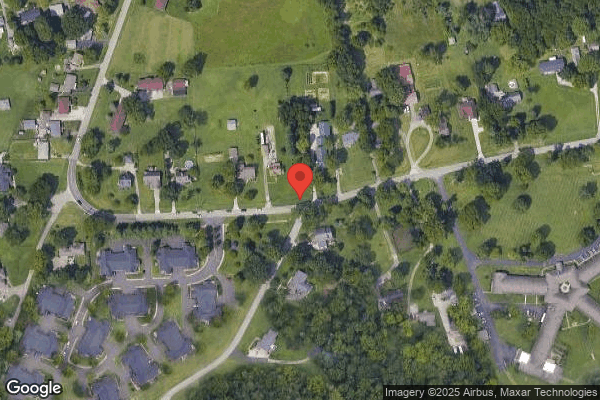
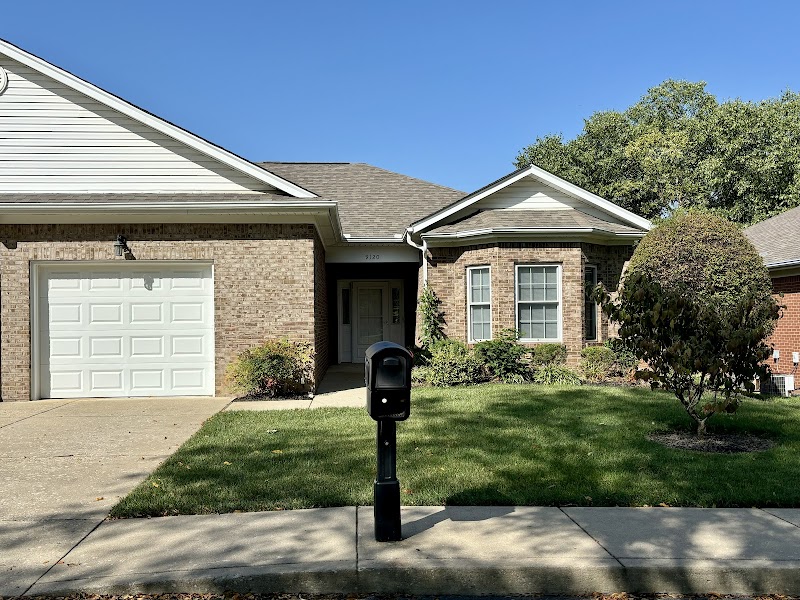
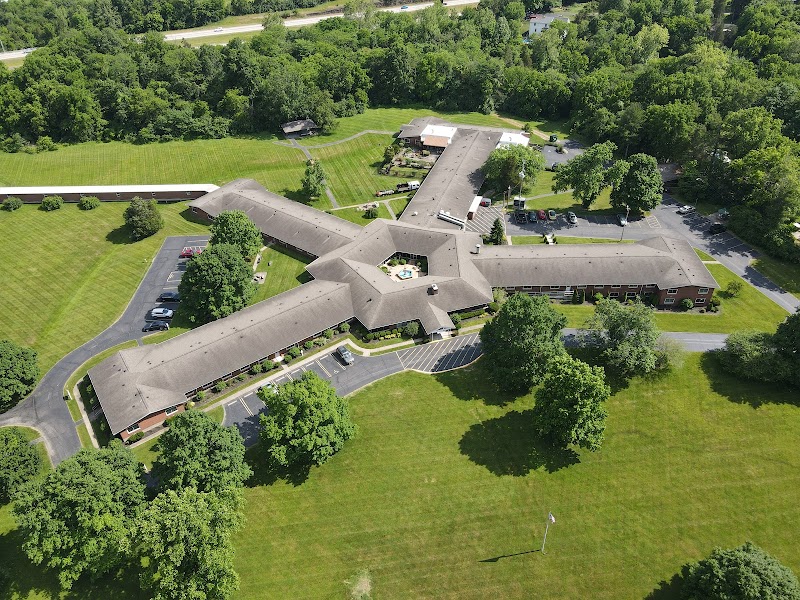
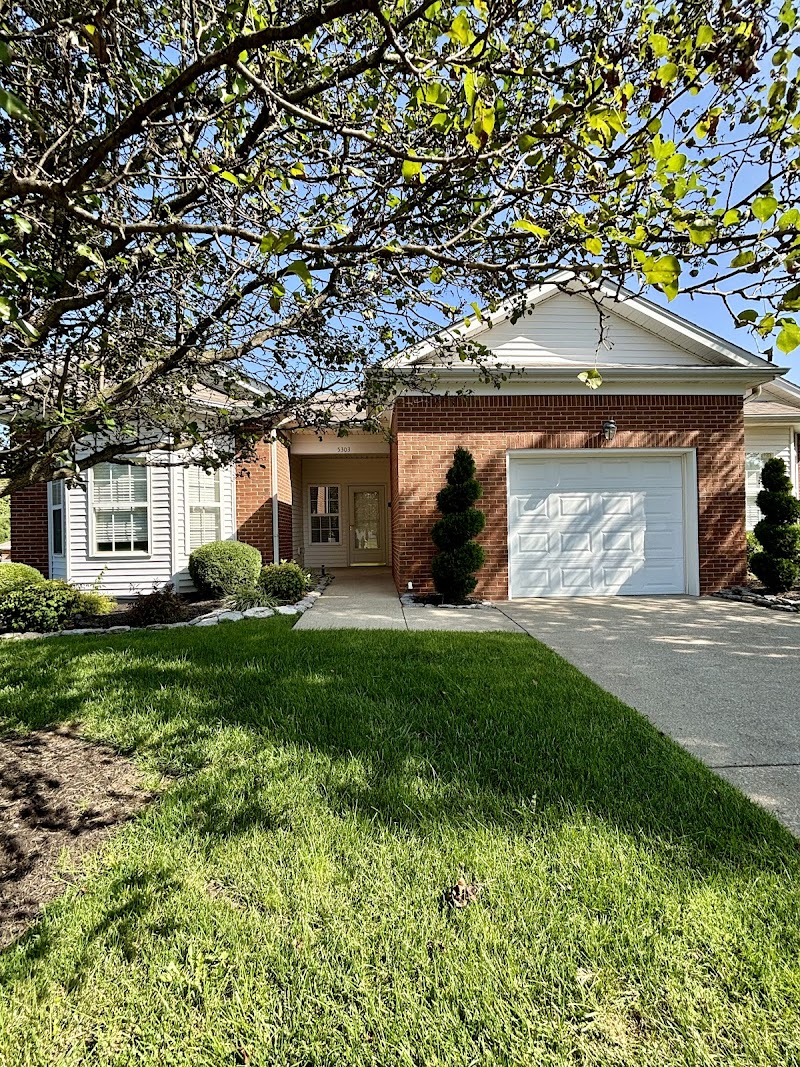
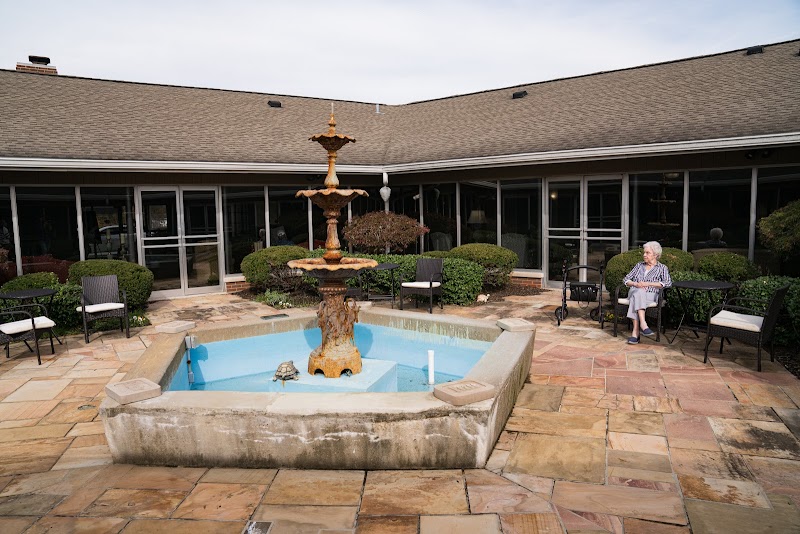
Wesley Manor

5012 East Manslick Road, Louisville, KY 40219 (502) 969-3277
Non profit - Church related 68 Beds Independent Data: November 2025
Trust Grade
80/100
#90 of 266 in KY
Last Inspection: February 2022

Over 2 years since last inspection. Current conditions may differ from available data.

Overview

Wesley Manor, located in Louisville, Kentucky, holds a Trust Grade of B+, indicating that it is above average and recommended for families seeking care. It ranks #90 out of 266 facilities in Kentucky, placing it in the top half, and #15 out of 38 in Jefferson County, meaning only a few local options are better. The facility's trends are stable, with three concerns noted in both 2018 and 2022, and no fines on record, which is a positive sign. Staffing is rated 4 out of 5 stars, with a turnover of 44%, which is slightly below the state average, indicating that staff tends to stay longer and form relationships with residents. However, there are some areas of concern, including incidents where dented canned food was not removed from kitchens, improper infection control practices by a nurse, and a failure to assess a resident's ability to self-administer medications, suggesting that while there are strengths, there are also critical areas needing improvement.

Trust Score
B+
80/100
In Kentucky
#90/266
Top 33%
Safety Record
Low Risk
No red flags
Inspections
Holding Steady
3 → 3 violations
Staff Stability
○ Average
44% turnover. Near Kentucky's 48% average. Typical for the industry.
Penalties
✓ Good
No fines on record. Clean compliance history, better than most Kentucky facilities.
Skilled Nurses
✓ Good
Each resident gets 50 minutes of Registered Nurse (RN) attention daily — more than average for Kentucky. RNs are trained to catch health problems early.
Violations
○ Average
6 deficiencies on record. Average for a facility this size. Mostly minor or procedural issues.
★★★★☆
4.0
Overall Rating
★★★★☆
4.0
Staff Levels
★★★★☆
4.0
Care Quality
★★★★☆
4.0
Inspection Score
Stable
2018: 3 issues
2022: 3 issues

The Good

  • 4-Star Staffing Rating · Above-average nurse staffing levels
  • 4-Star Quality Measures · Strong clinical quality outcomes
  • Full Sprinkler Coverage · Fire safety systems throughout facility
  • No fines on record
  • Staff turnover below average (44%)

    4 points below Kentucky average of 48%

Facility shows strength in staffing levels, quality measures, fire safety.

The Bad

Staff Turnover: 44%

Near Kentucky avg (46%)

Typical for the industry

The Ugly 6 deficiencies on record

Feb 2022 3 deficiencies
CONCERN (D)

Potential for Harm - no one hurt, but risky conditions existed

Deficiency F0554 (Tag F0554)

Could have caused harm · This affected 1 resident

**NOTE- TERMS IN BRACKETS HAVE BEEN EDITED TO PROTECT CONFIDENTIALITY** Based on observation, interview, record review, and facility policy review, the facility failed to assess one (1) of A total sam...

Read full inspector narrative →
**NOTE- TERMS IN BRACKETS HAVE BEEN EDITED TO PROTECT CONFIDENTIALITY** Based on observation, interview, record review, and facility policy review, the facility failed to assess one (1) of A total sample of twenty-three (23) residents, (Resident #18) for self-administration of medications. Observations and interview revealed staff left medications in Resident #18's room for him/her to self-administer. Record review revealed no documented assessments completed for Resident #18 to self-administer medications. The findings included: A review of the facility policy, SELF ADMINISTERING MEDICATIONS, revised 05/2016, revealed resident had the right to self-administer medications if the interdisciplinary team had determined it was appropriate and safe for the resident to do so. Additionally, as part of the overall evaluation, the staff and practitioner assessed each resident's mental and physical abilities to determine whether self-administering medications was clinically appropriate for the resident and performed a more specific skill assessment. Furthermore, the facility stored self-administered medications in a safe and secure place. The facility admitted Resident #18 on 01/19/2019, with diagnoses that included Chronic Obstructive Pulmonary Disease (COPD), Major Depressive Disorder, Nasal Congestion, Anxiety Disorder, and Spinal Stenosis. A Quarterly Minimum Data Set (MDS), dated [DATE], revealed the facility assessed Resident #18 with a Brief Interview for Mental Status (BIMS) score of fifteen (15), and determined the resident was cognitively intact. Continued review of the MDS revealed the resident independent with bed mobility and transfers, required supervision with eating, and required limited assistance with dressing, toilet use, and personal hygiene. A review of Resident #18's Comprehensive Care Plan, revised 12/22/2021, revealed no care plan to self-administer medications. The care plan further revealed Resident #18 at risk for behaviors due to a diagnosis of Anxiety Disorder; and was at risk for Mood Disorder due to diagnoses of Major Depressive Disorder and Chronic Obstructive Pulmonary Disorder. Review of the Physician orders of Resident #18 for the month of February 2022 revealed no order to self-administer medications. Review of the facility assessments for Resident #18 no assessment to self-administer medications. Observation and interview, on 02/24/2022 at 9:17 AM, revealed Resident #18 sat in a recliner. A bedside table was within reach and contained a Symbicort Aerosol Inhaler 160 microgram (a medication for COPD), a Fluticasone Propionate Suspension Nasal Spray 50 microgram (a medication to treat nasal symptoms), and an Azelestine Hydrochloride Nasal Spray 137 microgram (a medication to treat nasal symptoms). Resident #18 revealed staff normally left the medications at the bedside for the resident to self-administer each morning. Resident #18 further revealed staff left the medications in the room all day and the resident normally took the medications back to the nurse later in the day, or sometimes the nurse would come back to get the medications later. Resident #18 stated a couple of different nurses left the medications at the bedside and a nurse provided the resident with education on the use of the medications, but he/she did not remember when staff provided the education. Observation and interview, on 02/24/2022 at 9:26 AM, revealed Licensed Practical Nurse (LPN) #1 exited another resident's room, room [ROOM NUMBER]. LPN #1 stated she left Resident #18's medications in his/her room so the resident could self-administer the medications; but then LPN #1 walked out of Resident #18's room to the computer to check off the medications. LPN #1 stated another resident needed something, so LPN #1 went into room [ROOM NUMBER]. LPN #1 stated she had just not gotten back to Resident #18's room to get the medications that were left. LPN #1 stated Resident #18 did not have an order or assessment to self-administer the medications but should have an order or assessment before self-administering the medications. Interview with the Assistant Director of Nursing and Infection Preventionist (ADON/IPC), on 02/25/2022 at 9:34 AM, revealed she was not aware Resident #18 was self-administering medications. She stated staff should have assessed Resident #18 prior to leaving medications for the resident to self-administer; and the resident did not have an order and was not assessed to self-administer medications. The ADON/IPC stated it was a collaborative effort with the Director of Nursing (DON), MDS Coordinator, and nurse managers to ensure the facility assessed residents before allowing them to self-administer medications. Interview with the MDS Coordinator, on 02/25/2022 at 9:46 AM, revealed the facility had not assessed Resident #18 to self-administer medications. The MDS Coordinator further stated the facility had not care planned Resident #18 to self-administer medications. Interview with the DON, on 02/25/2022 at 10:14 AM, revealed she was not aware Resident #18 self-administered medications. She stated Resident #18 did not have an order to self-administer medications and the facility had not assessed the resident to self-administer medication. The DON stated the facility should assess residents prior to them self-administering medications. The DON stated it was the interdisciplinary team's responsibility to ensure residents were appropriately assessed and deemed safe prior to self-administering medications. Interview with the Administrator, on 02/25/2022 at 11:24 AM, revealed Resident #18 did not have an order or assessment to self-administer medications. The Administrator indicated it was the responsibility of the nurses who passed the medications to ensure the facility assessed the residents before allowing self-administration of medications. The Administrator further stated the Director of Nursing (DON) was ultimately responsible for auditing medication practices to ensure residents were assessed before self-administration and ensure training was provided to all nursing staff.
CONCERN (E)

Potential for Harm - no one hurt, but risky conditions existed

Food Safety (Tag F0812)

Could have caused harm · This affected multiple residents

Based on observation, interview, record review and facility policy review, it was determined the facility failed to maintain professional standards in two (2) of two (2) kitchens. Specifically, the fa...

Read full inspector narrative →
Based on observation, interview, record review and facility policy review, it was determined the facility failed to maintain professional standards in two (2) of two (2) kitchens. Specifically, the facility failed to remove five (5) dented canned food items from one (1) of two (2) kitchens and failed to maintain accurate and complete refrigerator temperature logs in two (2) of two (2) kitchens. These failures had the potential to affect all residents of the facility who received food from the two kitchens. The findings include: Review of facility policy DRY STORAGE, revised 01/2019, revealed damaged dry goods containers were stored together in the main storeroom in a separate and distinct area away from the other food items. The area was labeled and the damaged food containers were returned to the vendor. The facility defined damaged containers as all dented cans/containers, all swollen containers, and all pull-top containers showing a fracture of the lid score line. Initial kitchen observation, on 02/22/2022 at 9:00 AM, revealed the facility had two (2) kitchens. Resident meals were prepared in the main kitchen, covered, and delivered to the satellite kitchen steam table for meal service. The satellite kitchen included a dry storage area for quick access, which contained snacks, beverage storage, and canned food storage. During observations of the dry storage area of the satellite kitchen, five (5) dented cans were found. Two (2) of the dented cans were still in the delivery box; the other three (3) were out on the shelf mixed in with intact canned foods. Continued observation revealed no designated area/shelf for staff to place dented cans to be returned to the supplier. Interview with Dietary Aid (DA) #1, on 02/22/2022 at 9:07 AM. She stated all the cans stayed on the shelf in the dry storage room. She stated she did not screen or unpack the cans and put them on the shelf. She did not know where the dented cans were supposed to be placed. Interview with DA #2, on 02/22/2022 at 9:10 AM, revealed there should be no dented canned goods in the storage area. She stated they should be separated and placed in an area designated for dented canned goods to be returned to the delivery company. She stated the dented can area was in the main kitchen. Initial observations of the main kitchen were conducted on 02/22/2022 at 9:15 AM and revealed a shelf dedicated to dented cans in the main dry goods storage area. Interview with the Registered Dietitian/Dietary Manager (RD/DM), on 02/22/2022 at 9:17 AM, revealed all dented cans were to be pulled aside and returned to the supplier for a credit. She stated there should be no dented cans on the shelf, and the dietary staff were to pull them out during sorting and storage. She stated if the cooks pulled a dented can from the shelf, it was not to be used, and the staff member should put the dented can on the designated shelf to be returned. She stated dented cans could introduce food-borne illness into the facility. Interview with the Director of Nursing (DON), on 02/24/2022 at 1:51 PM, revealed dented cans should be set aside and returned to the supplier to prevent the introduction of food-borne illness into the facility. Interview with Administrator, on 02/25/2022 at 11:40 AM, revealed dented cans should be removed and set aside to be sent back to the manufacturer. Interview with the Health Care Center Food Services Supervisor (HCCFSS), on 02/25/2022 at 2:18 PM, revealed DA #1 was employed at the facility for eight years and received training about removing dented cans from storage. She stated all dented cans should be pulled aside and brought to the main kitchen in the evening and that was the procedure of the satellite kitchen since her employment. She stated training was provided about the removal of dented cans upon hire and annually. 2. Review of facility policy RECORDING OF REFRIGERATOR AND FREEZER TEMPERATURES, revised 02/2022, reveled the Dietary Department checked and recorded refrigerator temperatures at the start and closing of the kitchen. This ensured both refrigerated and frozen food items were maintained at a temperature that prevented spoilage and growth of harmful microorganisms. Observation, on 02/22/2022 at 9:00 AM, revealed the facility had two (2) kitchens. The facility prepared resident meals in the main kitchen, covered the meals, and then sent the meals to the satellite kitchen steam table for meal service. The satellite kitchen had two (2) refrigerators, one (1) of which had a freezer. Continued observation revealed the white refrigerator/freezer temperature log was dated February 2022. No temperatures were logged for the month, which was 22 days. This refrigerator contained beverages and frozen snacks for residents. The thermometer inside the refrigerator read 35 degrees Fahrenheit (F). The thermometer inside the freezer read 0 degrees F. The reach in refrigerator temperature log was dated January 2022, and the temperature log was completed until 01/18/2022. Temperatures were not recorded for 12 days between 01/19/2022 and 01/31/2022. The recorded temperatures were within normal range. There was no February 2022 temperature log, therefore no temperatures were logged for 22 days. This refrigerator contained sandwiches, snacks, and dessert items for residents. The temperature inside the refrigerator read 40 F and was within normal range. Interview with Dietary Aid (DA) #1, on 02/22/2022 at 9:07 AM, revealed staff completed the temperature logs on the refrigerators twice daily; once in the morning and once at night. She stated she was not responsible for changing the temperature sheets. She stated she did not know why the logs were incomplete and not updated to February. Interview with DA #2, on 02/22/2022 at 9:10 AM, revealed staff updated the temperature logs monthly. She stated she did not know why the two refrigerator temperature logs in the satellite kitchen were not kept up to date or current. She stated the refrigerator temperature was checked twice a day and should be logged at that time. Observation of the main kitchen that served the campus, on 02/22/2022 at 9:15 AM, revealed the main kitchen had two (2) refrigerators and one (1) walk in freezer. The main refrigerator/freezer log was dated February 2022 and was complete until 02/10/2022. No temperatures were recorded for 12 days. The recorded temperatures between 02/01/2022 and 02/10/2022 were within normal range. This refrigerator and freezer were both walk in and were the main food storage for the facilities perishable and frozen goods. The thermometer in the walk-in main refrigerator read 30 F and the walk-in freezer's read -5 F. Temperatures were within normal range. Interview with the Registered Dietitian/Dietary Manager (RD/DM), on 02/22/2022 at 9:17 AM, revealed staff completed temperature logs for all the refrigerators and freezers twice daily and changed the form out monthly. She stated she did not know why the temperature logs were not switched out or updated in the satellite or main kitchens. Interview with the Director of Nursing (DON), on 02/24/2022 at 1:51 PM, revealed she expected the temperature logs in both kitchens to be recorded daily and kept up to date. Interview with the Administrator, on 02/25/2022 at 11:40 AM, revealed staff should complete the temperature logs per policy and completed daily. He stated there should be no missing temperatures. Interview with the Health Care Center Food Services Supervisor (HCCFSS), on 02/25/2022 at 2:18 PM, revealed staff switched out the log forms monthly and should be completed twice a day. She stated staff should complete the forms with no missing temperatures to ensure food safety. She stated she was not sure why so many temperature logs were incomplete in the kitchens. She stated temperature log training was covered upon hire and if found to be incomplete retraining occurred at that time. She stated she monitored the temperature logs weekly.
CONCERN (E)

Potential for Harm - no one hurt, but risky conditions existed

Infection Control (Tag F0880)

Could have caused harm · This affected multiple residents

**NOTE- TERMS IN BRACKETS HAVE BEEN EDITED TO PROTECT CONFIDENTIALITY** Based on observation, interview, and facility policy review, it was determined the facility failed to maintain an infection cont...

Read full inspector narrative →
**NOTE- TERMS IN BRACKETS HAVE BEEN EDITED TO PROTECT CONFIDENTIALITY** Based on observation, interview, and facility policy review, it was determined the facility failed to maintain an infection control program to provide a safe and sanitary environment to prevent infections. Observations revealed Registered Nurse (RN) #1 wore an inappropriate face covering and popped pills into his bare hands before placing the medication in a medicine cup while administering medications. Additionally, observations revealed bio-hazard containers placed in improper locations to facilitate proper disposal of used personal protective equipment (PPE). The findings include: 1. Review of facility Standard Precautions Policy, revised 03/2020, revealed staff wore a mask and eye protection or a face shield to protect mucous membranes of the eyes, nose and mouth during procedures and resident-care activities that are likely to generate splashes or sprays of blood, body fluids, secretions, or excretions. Observation, on 02/23/2022 at 11:30 AM, revealed Registered Nurse (RN) #1 wore a cloth, [NAME]-type mask while obtaining a finger stick blood sugar and administering insulin to Resident #51. Interview with RN #1, on 02/23/2022 at 12:15 PM, RN #1 revealed he did not know if the cloth mask he wore was approved by the facility policy. RN #1 further stated the Director of Nursing (DON) had told him to change masks. Interview with the DON, on 02/23/2022 at 1:45 PM, revealed RN #1 was not wearing an approved mask and had not acted in accordance with the facility policies. Interview, on 02/25/2022 at 3:42 PM, with the Administrator, revealed staff should wear N95 or KN95 masks. 2. The facility did not provide a policy related to the use of bare hands while administering medications to residents. Observation and interview during medication administration, on 02/23/2022 at 12:35 PM, revealed Registered Nurse (RN) #1 punched out pills for one resident from the punch card into his ungloved/bare hand. The RN stated handling medications with a bare hand was not a proper/accepted standard practice for the administration of medications. Interview with the DON, on 02/23/2022 at 1:45 PM, revealed RN #1 should not have placed the pills into his bare hands, and he had not acted in accordance with the facility policies. Interview, on 02/25/2022 at 10:02 AM, with the Assistant Director of Nursing/Infection Prevention Coordinator revealed staff should pop pills out of the cards directly into the medicine cup; they should never be handled with a bare hand. Interview with the Administrator, on 02/25/2022 at 3:42 PM, revealed he did not think it was correct for staff to pop pills into their bare hands. 3. Review of the facility's Standard Precautions Policy, revised 03/2020, revealed staff removed gowns and performed hand hygiene before leaving a resident's room. Observation, on 02/23/2022 at 12:35 PM, revealed Registered Nurse (RN) #1 exited the room of a resident who in contact isolation. Continued observation revealed RN #1 removed his PPE, which consisted of a gown and gloves, while he was in the room. He carried the gown and gloves to a biohazard container which was located outside of the resident's room and down the hall about ten (10) feet from the resident's room. Interview with RN #1 immediately following the observation, revealed he did not know if the biohazard container should have been placed inside the resident's room. RN #1 stated he would have to check with someone in infection control. Interview, on 02/23/2022 at 1:45 PM, with the Director of Nursing (DON), revealed RN #1 did not follow approved infection control policies and the biohazard containers should have been placed inside the resident's room. Interview, on 02/25/2022 at 10:02 AM, with the Assistant Director of Nurses/Infection Prevention Coordinator revealed the biohazard containers for the disposal of PPE should be placed in the resident rooms. Interview with the Administrator, on 02/25/2022 at 3:42 PM, revealed RN #1's actions of disposing of PPE in the hallway was not in accordance to facility policy.
May 2018 3 deficiencies
CONCERN (D)

Potential for Harm - no one hurt, but risky conditions existed

Deficiency F0553 (Tag F0553)

Could have caused harm · This affected 1 resident

**NOTE- TERMS IN BRACKETS HAVE BEEN EDITED TO PROTECT CONFIDENTIALITY** Based on interview, record review, and review of the facility's policy and resident handbook, it was determined the facility fai...

Read full inspector narrative →
**NOTE- TERMS IN BRACKETS HAVE BEEN EDITED TO PROTECT CONFIDENTIALITY** Based on interview, record review, and review of the facility's policy and resident handbook, it was determined the facility failed to invite one (1) of sixteen (16) sampled residents, Resident #43, to participate in his/her care plan conference. The findings include: Review of the facility's policy, Resident Care Plans, revised February 2012, revealed the Director of Social Services would inform residents/families of scheduled care conference and encouraged them to attend. The resident and family members present would sign the care conference form at the end of the conference. Review of the facility's Resident Handbook, revised September 2016, revealed the resident and responsible parties were invited to join the Director of Nursing and other staff in establishing goals of care for the resident. Review of the facility's, Your Rights as a Resident of a Long-Term Care Facility, dated March 2016, revealed the resident had a right to participate in his or her assessment and care planning. Review of the clinical record revealed the facility admitted Resident #43 on 09/22/17, with diagnoses of Chronic Obstructive Pulmonary Disease, Hypertension, Diabetes, Vascular Dementia, and Depression. Review of the Quarterly Minimum Data Set (MDS), dated [DATE], revealed the facility assessed the resident with a Brief Interview for Mental Status score of thirteen (13) out of fifteen (15) and determined the resident interviewable. Interview with Resident #43, on 04/30/18 at 2:40 PM, revealed the facility had not invited the resident to any care plan conferences. The resident stated the facility did not tell him/her anything regarding his/her care. The resident state he/she did not know anything because his/her daughter was controlling everything. The resident revealed the facility only talked to his/her daughter and not to him/her. Review of Resident #43's Care Plan Conference Summary Forms, dated 10/11/17, 01/03/18, 01/17/18, 03/07/18, and 04/04/18 revealed no signature of the resident or family member indicating they attended the conference. On 01/17/18 and 03/07/18, the facility checked a care plan conference was held with a family representative via telephone conference. The 04/04/18 Summary, stated the resident and family were invited, but did not attend. There was no resident signature to indicate the care plan was discussed with the resident. Review of Resident #43's Progress Notes, dated 09/22/17 to 04/04/18, revealed no documented evidence the resident was invited or attended the care plan conferences. Interview with the Resident Assessment Instrument (RAI) Coordinator, on 05/01/18 at 2:00 PM, revealed she attended the care plan meetings for each resident and stated all residents received a verbal invitation and the Social Services Director sent letters to family members. She stated Resident #43 was not invited to attend the care plan conferences because of his/her behaviors; however, she could not state what type of behaviors because the resident had not attended any care plan conferences. She stated the resident was upset with the daughter for placement in the facility and the facility conducted the care conference via telephone with the daughter. She revealed the resident was not informed of what was discussed at the care plan conference. The RAI Coordinator stated every resident should be invited to the care plan conference and if they could not attend in person, staff should go to their room and discuss their plan of care with them; however, that had not been done for Resident #43. She went on to state all parties present at the care plan conference were required to sign the form to show they participated in the care plan process. Interview with the Social Services Director (SSD), on 05/01/18 11:30 AM, revealed all residents were invited to the care plan conference verbally and she sent letters to the family members. She stated if the resident could not attend the care plan conference, the team would meet with the resident in their room. The SSD stated Resident #43 and his/her daughter did not get along because the resident was angry with the daughter for placement at the facility. She stated it was better to deal with the daughter instead of triggering behaviors in the resident. She stated she did not think Resident #43 had attended any care plan conferences. Interview with Certified Nursing Assistant (CNA) #1, on 05/02/18 at 10:25 AM, revealed she cared for Resident #43 many times, and had not witnessed any outburst or disruptive behaviors from the resident. CNA #1 stated she had not observed him/her get upset during family visits. She stated the resident had no behaviors that would prevent him from being informed about his/her care. Interview with Licensed Practical Nurse (LPN) #2, on 05/02/18 at 10:35 AM, revealed the only behaviors Resident 43 exhibited was to flirt with others. She stated she heard the resident on the resident's cell phone with his/her daughter and he/she was pleasant with no yelling noted. Interview with LPN #1, on 05/02/18 at 10:45 AM, revealed she cared for Resident #43 and was familiar his/her care needs. She stated when the resident was admitted ; he/she went through an adjustment period but had not exhibited any behaviors such as yelling at staff or others. Interview with the Director of Nursing, on 05/02/18 1:50 PM, revealed all residents were verbally invited to care plan conferences and should be included in their plan of care. She stated she was not aware Resident #43 had not attended any care plan conferences. She stated the resident should be included in the plan of care and she felt the facility had dropped the ball with this resident. Interview with the Administrator, on 05/02/18 at 3:48 PM, revealed Resident #43 was invited to care plan meetings but occasionally a conference call was conducted with Resident #43's daughter, who was his/her power of attorney. He stated he did not attend or plan the care plan meetings, but it was his understanding Resident #43 was always invited to care plan meetings with the exception of the conference calls that occurred only with Resident #43's daughter.
CONCERN (D)

Potential for Harm - no one hurt, but risky conditions existed

Deficiency F0655 (Tag F0655)

Could have caused harm · This affected 1 resident

Based on observation, interview, record review, and review of the facility's policy, it was determined the facility failed to develop a baseline care plan for one (1) of sixteen (16) sampled residents...

Read full inspector narrative →
Based on observation, interview, record review, and review of the facility's policy, it was determined the facility failed to develop a baseline care plan for one (1) of sixteen (16) sampled residents, Resident #310, for monitoring the effects of the resident's antipsychotic, opioid, and anticonvulsant medications. The findings include: Review of the facility's policy, Resident Care Plans, dated February 2012, revealed upon admission, the facility would develop an initial care plan based on the resident's diagnosis, history, and current identified areas of concern. The care plan would include the date initiated, problem area, goals, interventions, department responsible for each intervention, and next goal review date. Review of Resident #310's clinical record revealed the facility admitted the resident on 04/26/18, with diagnoses of Alzheimer's Disease, Disturbance of Salivary Secretion, Dementia with and without Behavioral Disturbances, Insomnia, Osteoarthritis, Muscle Weakness, Cognitive Communication Deficit, and an Encounter for Palliative Care. The facility had not conducted a Minimum Data Set (MDS) assessment because the resident had not been in the facility for the required fourteen (14) days. Review of Resident #310's Physician Orders, dated 04/01/18 to 04/30/18, revealed an order for Depakote (anticonvulsant) 250 milligram (mg) by mouth, two (2) times per day, and Depakote 125 mg by mouth, two (2) times per day for Dementia behavior. There was an order for Seroquel (antipsychotic) 50 mg three (3) times per day, and 50 mg at bedtime for Dementia behavior. In addition, there was an order for Roxanol (opioid) 0.5 milliliters, sublingual every four (4) hours as needed for pain, respiratory distress, or shortness of air. Observation of Resident #310, on 04/30/18 at 2:00 PM, revealed the resident wandering about the secure unit. On 05/01/18 at 12:00 PM, the resident was observed in the secured unit's dining room, leaning to the right side, not eating, with his/her eyes closed. Staff had to prompt the resident several times to eat. Throughout the meal, Resident #310 chewed food with his/her eyes closed. Observation of Resident #310, on 05/02/18 at 12:00 PM, revealed the resident in the dining room not eating with eyes closed. At 1:45 PM, the resident was observed standing in the living room of the secure unit with eyes closed, mouth dropped open, and leaning forward. Observation at 2:30 PM, revealed the resident seated in the dining room during an activity with his/her eyes closed and leaning forward. Observation, on 05/02/18 at 3:05 PM, revealed the resident walking to the exit door and knocking on the glass, he/she would leave, and then immediately return to the door. The resident stood at the door waiting for someone to open the door. The resident's gait was very slow, his/her eyes closed at times, and the resident swayed back and forward. Observation revealed the resident moving his/her tongue around but was not thrusting out. The resident had no expression on his/her face and when called by name, the resident appeared to know his/her name, but was non-verbal. Review of Resident #310's Baseline Care Plan, dated 04/26/18, revealed staff was instructed to monitor for elopement attempts every shift. However, the care plan had no interventions to monitor for side effects of the antipsychotic medications. The care plan had an area labeled Medication/Treatment Orders with a box checked, see Medication Administration Record (MAR)/Treatment Administration Record (TAR). The care plan did not contain information related to monitoring side effects of the opioid, anticonvulsant, and antipsychotic medication. Review of Resident #310's MAR, for 04/24/18 to 04/30/18 and May 2018, revealed no monitoring of the antipsychotic medications for side effects. Interview with Certified Nursing Assistant (CNA) #1, on 05/02/18 12:00 PM, revealed Resident #310 always slept during meals and would generally eat snacks later. Interview with Licensed Practical Nurse (LPN) #1, on 05/02/18 at 3:00 PM, revealed she assumed Resident #310 became tired from wandering throughout the night. She stated she could not recall whether the resident was assessed for sedation related to use of Depakote and Seroquel. She stated the resident had always been like that, and if a resident appeared sedated, nurses would document in the nurses' notes. Interview with the Resident Assessment Instrument (RAI) Coordinator, on 05/02/18 at 10:05 AM, revealed the admitting nurse completed the baseline care plan; she developed the comprehensive care plan. She stated the baseline care plan should include the resident's behaviors and monitoring for side effects if the resident was taking an antipsychotic medication. The nurse who completed the baseline care plan was unavailable for interview. Interview with the Director of Nursing (DON), on 05/02/18 at 3:10 PM, revealed upon admission, all residents received a baseline care plan. She stated if a resident was on antipsychotics, opioids, or anticonvulsant medications, they should be listed on the baseline care plan. If any resident were on medications that required specific instructions for monitoring, it would be listed on MAR, in the nurses' notes, and on the baseline care plan so it could be transferred to the comprehensive care plan. The DON revealed all new admissions were reviewed the next day during the Clinical Care Meeting. Staff reviewed the 24-hour report, physician orders, and nurses' notes, and the baseline care plan would also be reviewed during the meeting. Interview with the Administrator, on 05/02/18 at 3:48 PM, revealed nurses were required to address signs and symptoms of sedation in a resident immediately, inform charge nurses, and follow the chain of command until the issue was resolved.
CONCERN (D)

Potential for Harm - no one hurt, but risky conditions existed

Medication Errors (Tag F0758)

Could have caused harm · This affected 1 resident

Based on observation, interview, record review, and review of facility policy, it was determined the facility failed to ensure residents were free from unnecessary medications for one (1) of sixteen (...

Read full inspector narrative →
Based on observation, interview, record review, and review of facility policy, it was determined the facility failed to ensure residents were free from unnecessary medications for one (1) of sixteen (16) sampled residents, Resident #310. The resident received antipsychotic medications without adequate monitoring and appropriate diagnosis for use. The findings include: Review of the facility's policy, Antipsychotic Medication Use, dated November 2017, revealed residents would only receive antipsychotic medications when necessary to treat specific conditions for which they were indicated and effective. Antipsychotic medications would not be used if the only symptoms were one or more of the following: Wandering, Poor Self-Care, Restlessness, Impaired Memory, Mild Anxiety, Insomnia, Unsociability, Inattention, Indifference to Surroundings, Fidgeting, Nervousness, or Uncooperativeness. In addition, the policy stated nursing staff would monitor and report any of the following side effects to the attending physician: Sedation, Orthostatic Hypotension, Lightheadedness, Dry Mouth, Blurred Vision, Constipation, Urinary Retention, Atropine Psychosis, Extrapyramidal effects, Akathisia, Dystonia, Tremors, Rigidity, or Tardive Dyskinesia. Review of Resident #310's clinical record revealed the facility admitted the resident on 04/26/18, with diagnoses of Alzheimer's Disease, Disturbance of Salivary Secretion, Dementia with and without Behavioral Disturbances, Insomnia, Osteoarthritis, Muscle Weakness, Cognitive Communication Deficit, and an Encounter for Palliative Care. The facility had not conducted a Minimum Data Set (MDS) assessment because the resident had not been in the facility for the required fourteen (14) days. Review of the Physician Orders, dated 04/01/18 to 04/30/18, revealed an order for Depakote (anticonvulsant) 250 milligram (mg) by mouth, two (2) times per day, and Depakote 125 mg by mouth, two (2) times per day for Dementia behaviors. In addition, an order for Seroquel (antipsychotic) 50 mg, three (3) times per day and 50 mg at bedtime for Dementia behaviors. Review of the Baseline Care Plan, dated 04/26/18, revealed staff was instructed to monitor for elopement attempts every shift; however, the care plan had no interventions to monitor for side effects of the antipsychotic medications. Review of Resident #310's Medication Administration Record (MAR), for 04/24/18 to 04/30/18 and May 2018, revealed no monitoring of the antipsychotic medications for side effects. Review of the admission Progress Note, dated 04/26/18, revealed Resident #310 was admitted to a secure unit. The nurse documented the resident was alert to self, pleasant, but non-verbal. The nurse documented the resident attempted to leave with a family member and staff in the secure unit was instructed to monitor for the resident's exit seeking behaviors. At 4:06 PM, the nurse documented the resident frequently had to be redirected from the exit door of the unit. Continued review of the progress notes, dated 04/26/18 to 05/02/18, revealed the resident would pace within the secure unit and tap on the exit doors. Observation of Resident #310, on 04/30/18 at 2:00 PM, revealed the resident wandering about the secure unit. On 05/01/18 at 12:00 PM, the resident was in the secured unit's dining room, leaning to the right side, not eating, with his/her eyes closed. Staff prompted the resident several times to eat and throughout the meal, Resident #310 chewed food with his/her eyes closed. Observation of Resident #310, on 05/02/18 at 12:00 PM, revealed the resident in the dining room not eating with eyes closed. At 1:45 PM, the resident was standing in the living room of the secure unit with eyes closed, mouth dropped open, and leaning forward. Observation at 2:30 PM, revealed the resident seated in the dining room during an activity with his/her eyes closed and leaning forward. Observation, on 05/02/18 at 3:05 PM, revealed Resident #310 walking to the exit door and knocking on the glass. He/she would leave and then immediately return to the door. The resident stood at the door waiting for someone to open the door. The resident's gait was very slow, and his/her eyes closed at times and he/she swayed back and forward. Observation revealed the resident was moving his/her tongue around but was not thrusting out. The resident had no expression on his/her face and when called by name, the resident appeared to know his/her name, but was non-verbal. Interview with Certified Nursing Assistant (CNA) #1, on 05/02/18 12:00 PM, revealed Resident #310 always slept during meals and would generally eat snacks later. She stated the resident had two (2) doughnuts prior to lunch. Interview with Licensed Practical Nurse (LPN) #1, on 05/02/18 at 3:00 PM, revealed she assumed Resident #310 became tired from wandering throughout the night. She stated she could not recall whether the resident was assessed for sedation related to use of Depakote and Seroquel. She stated the resident had always been like that, and if a resident appeared sedated, nurses would document in the nurses' notes. Interview with LPN #3, on 05/02/18 at 3:15 PM, revealed he worked the evening and night shift in the secure unit and was familiar with Resident #310's care. He stated the resident would wander about the unit and that was his/her only behavior to monitor. He revealed the resident was not combative toward staff or other residents and he/she slept most of the night and went to bed between 8:00 PM to 9:00 PM, and usually slept until 5:00 AM. He again stated the only behavior the resident exhibited was wandering. He stated the nurses charted by exception and any behaviors or side effects would be documented in the nurses' notes. The facility did not utilize Behavior Observation Protocol (BOP) sheets to monitor residents' behaviors. Interview with the Social Service Director, on 05/02/18 at 2:45 PM, revealed Resident #310 transferred to the secured unit of the Nursing Facility from a Personal Care Home (PCH) on 04/26/18, because of the resident's wandering and exit seeking behavior. She stated the Psychiatrist visited weekly and the resident was placed on the list to see the Psychiatrist regarding the use of Seroquel and the side effects. She stated the resident had early onset Alzheimer's Disease and declined in the last two (2) months. She stated the resident had stopped walking for a while then improved but his/her wandering behaviors became worse. She stated the resident was exit seeking at the PCH prior to admission and that was the reason for the transfer to the locked secured unit of the Nursing Facility. She stated the resident was on the antipsychotic medications upon admission to control behaviors. She stated a Gradual Dose Reduction (GDR) had not been considered because the resident had only been at the Nursing Facility since 04/26/18, six (6) days. She stated she had not observed the resident for sedation and nurses would conduct an AIMS test for side effects. Interview with the Director of Nursing (DON), on 05/02/18 at 3:10 PM, revealed nurses were responsible for monitoring residents for signs and symptoms of sedation and document in the nurses' notes. The nurse would also put it on the 24-hour report sheet to inform the oncoming nurse to monitor for sedation. She further stated she had not conducted any audits to ensure nurses were monitoring and documenting behaviors and side effects. The DON revealed all new admissions were reviewed the next day during the Clinical Care Meeting, along with the 24-hour report, physician orders, and nurses' notes. At the meeting, the baseline care plan would also be reviewed. She stated she had not seen any reports of Resident #310 being sedated and staff was to observe for over sedation and tell her if a medication needed to be reduced or held. However, the facility did not use BOP sheets (behavior monitoring sheets). Interview with the Administrator, on 05/02/18 at 3:48 PM, revealed nurses were required to address signs and symptoms of sedation in a resident immediately. He stated nurses were required to inform charge nurses and to follow the chain of command until the issue was resolved. He revealed he did not know if staff notified Resident #310's physician regarding signs of sedation.
Understanding Severity Codes (click to expand)
Life-Threatening (Immediate Jeopardy)
J - Isolated K - Pattern L - Widespread
Actual Harm
G - Isolated H - Pattern I - Widespread
Potential for Harm
D - Isolated E - Pattern F - Widespread
No Harm (Minor)
A - Isolated B - Pattern C - Widespread

Questions to Ask on Your Visit

  • "Can I speak with families of current residents?"
  • "What's your RN coverage like on weekends and overnight?"

Our Honest Assessment

Strengths
  • • Grade B+ (80/100). Above average facility, better than most options in Kentucky.
  • • No major safety red flags. No abuse findings, life-threatening violations, or SFF status.
  • • No fines on record. Clean compliance history, better than most Kentucky facilities.
  • • 44% turnover. Below Kentucky's 48% average. Good staff retention means consistent care.
Concerns
  • • No significant concerns identified. This facility shows no red flags across CMS ratings, staff turnover, or federal penalties.
Bottom line: Generally positive indicators. Standard due diligence and a personal visit recommended.

About This Facility

What is Wesley Manor's CMS Rating?

CMS assigns Wesley Manor an overall rating of 4 out of 5 stars, which is considered above average nationally. Within Kentucky, this rating places the facility higher than 99% of the state's 100 nursing homes. This rating reflects solid performance across the metrics CMS uses to evaluate nursing home quality.

How is Wesley Manor Staffed?

CMS rates Wesley Manor's staffing level at 4 out of 5 stars, which is above average compared to other nursing homes. Staff turnover is 44%, compared to the Kentucky average of 46%. This relatively stable workforce can support continuity of care.

What Have Inspectors Found at Wesley Manor?

State health inspectors documented 6 deficiencies at Wesley Manor during 2018 to 2022. These included: 6 with potential for harm.

Who Owns and Operates Wesley Manor?

Wesley Manor is owned by a non-profit organization. Non-profit facilities reinvest revenue into operations rather than distributing to shareholders. The facility operates independently rather than as part of a larger chain. With 68 certified beds and approximately 62 residents (about 91% occupancy), it is a smaller facility located in Louisville, Kentucky.

How Does Wesley Manor Compare to Other Kentucky Nursing Homes?

Compared to the 100 nursing homes in Kentucky, Wesley Manor's overall rating (4 stars) is above the state average of 2.8, staff turnover (44%) is near the state average of 46%, and health inspection rating (4 stars) is above the national benchmark.

What Should Families Ask When Visiting Wesley Manor?

Based on this facility's data, families visiting should ask: "Can I visit during a mealtime to observe dining assistance and food quality?" "How do you handle medical emergencies, and what is your hospital transfer rate?" "Can I speak with family members of current residents about their experience?"

Is Wesley Manor Safe?

Based on CMS inspection data, Wesley Manor has a clean safety record: no substantiated abuse findings (meaning no confirmed cases of resident harm), no Immediate Jeopardy citations (the most serious violation level indicating risk of serious injury or death), and is not on the Special Focus Facility watch list (a federal program monitoring the lowest-performing 1% of nursing homes). The facility has a 4-star overall rating and ranks #1 of 100 nursing homes in Kentucky. While no facility is perfect, families should still ask about staff-to-resident ratios and recent inspection results during their visit.

Do Nurses at Wesley Manor Stick Around?

Wesley Manor has a staff turnover rate of 44%, which is about average for Kentucky nursing homes (state average: 46%). Moderate turnover is common in nursing homes, but families should still ask about staff tenure and how the facility maintains care continuity when employees leave.

Was Wesley Manor Ever Fined?

Wesley Manor has no federal fines on record. CMS issues fines when nursing homes fail to meet care standards or don't correct problems found during inspections. The absence of fines suggests the facility has either maintained compliance or corrected any issues before penalties were assessed. This is a positive indicator, though families should still review recent inspection reports for the full picture.

Is Wesley Manor on Any Federal Watch List?

Wesley Manor is not on any federal watch list. The most significant is the Special Focus Facility (SFF) program, which identifies the bottom 1% of nursing homes nationally based on persistent, serious quality problems. Not being on this list means the facility has avoided the pattern of deficiencies that triggers enhanced federal oversight. This is a positive indicator, though families should still review the facility's inspection history directly.