Westport Place Health Campus
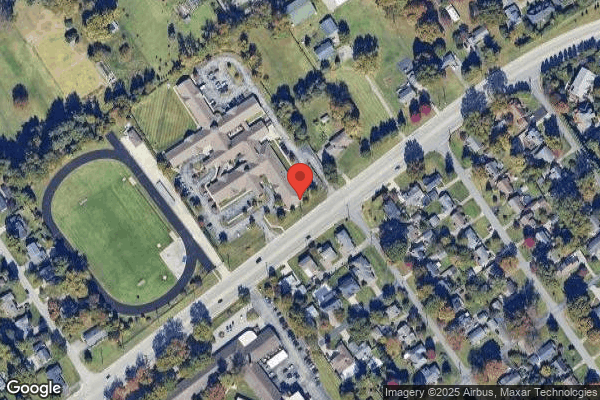
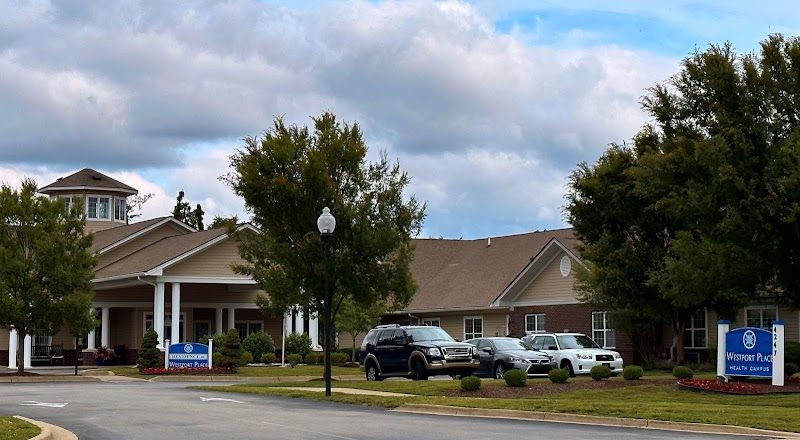
4247 Westport Road, Louisville, KY 40207 (502) 893-3033
For profit - Corporation 62 Beds TRILOGY HEALTH SERVICES Data: November 2025
Trust Grade
90/100
#42 of 266 in KY
Last Inspection: May 2025

Inspected within the last 6 months. Data reflects current conditions.

Overview

Westport Place Health Campus in Louisville, Kentucky, has an excellent Trust Grade of A, which indicates they are highly recommended and perform well compared to other facilities. They rank #42 out of 266 in the state, placing them in the top half, and #7 out of 38 in Jefferson County, meaning only six local options are better. The facility is improving, with the number of issues found decreasing from four in 2022 to just one in 2025. Staffing is a strength, with a 4/5 star rating and a turnover rate of 39%, which is lower than the state average, indicating that staff are experienced and familiar with the residents. While the facility has no fines and offers more RN coverage than 96% of Kentucky facilities, there were some concerns found during inspections, such as failing to properly cap intravenous catheters for three residents, which poses an infection risk, and a medication error rate that slightly exceeded recommended levels. Overall, Westport Place has both strong points and areas that need attention, making it a solid option for families considering nursing home care.
Trust Score
A
90/100
In Kentucky
#42/266
Top 15%
Safety Record
Low Risk
No red flags
Inspections
Getting Better
4 → 1 violations
Staff Stability
○ Average
39% turnover. Near Kentucky's 48% average. Typical for the industry.
Penalties
✓ Good
No fines on record. Clean compliance history, better than most Kentucky facilities.
Skilled Nurses
✓ Good
Each resident gets 90 minutes of Registered Nurse (RN) attention daily — more than 97% of Kentucky nursing homes. RNs are the most trained staff who catch health problems before they become serious.
Violations
✓ Good
Only 5 deficiencies on record. Cleaner than most facilities. Minor issues only.
★★★★★
5.0
Overall Rating
★★★★☆
4.0
Staff Levels
★★★★★
5.0
Care Quality
★★★★☆
4.0
Inspection Score
Stable
2022: 4 issues
2025: 1 issues

The Good

  • 4-Star Staffing Rating · Above-average nurse staffing levels
  • 5-Star Quality Measures · Strong clinical quality outcomes
  • Full Sprinkler Coverage · Fire safety systems throughout facility
  • No fines on record
  • Staff turnover below average (39%)

    9 points below Kentucky average of 48%

Facility shows strength in staffing levels, quality measures, fire safety.

The Bad

Staff Turnover: 39%

Near Kentucky avg (46%)

Typical for the industry

Chain: TRILOGY HEALTH SERVICES

Part of a multi-facility chain

Ask about local staffing decisions and management

The Ugly 5 deficiencies on record

May 2025 1 deficiency
CONCERN (E) 📢 Someone Reported This

A family member, employee, or ombudsman was alarmed enough to file a formal complaint

Potential for Harm - no one hurt, but risky conditions existed

Infection Control (Tag F0880)

Could have caused harm · This affected multiple residents

Based on observation, interview, record review, and review of facility's policies. The facility failed to follow infection control precautions for three of four sampled residents with peripherally ins...

Read full inspector narrative →
Based on observation, interview, record review, and review of facility's policies. The facility failed to follow infection control precautions for three of four sampled residents with peripherally inserted central catheters used for intravenous medication administration for Resident (R) 41, R197 and R6. Observation on 04/29/2025 at 09:23 AM revealed R197 had a peripheral inserted central catheter in right upper arm without a protective cap placed on end of catheter hub (the entry port distal of the catheter that connects to tubing or a syringe to deliver medication intravenously) leaving hub exposed. Observation on 04/29/2025 at 09:43 AM revealed R6 had a peripheral inserted central catheter in left upper arm without a protective cap placed on end of catheter hub, leaving hub exposed. Observation on 04/29/2025 at 09:45 AM revealed R41 had a peripheral inserted central catheter in left upper arm without a protective cap placed on end of catheter hub, leaving hub exposed. The findings include: Review of the facility's policy titled, Catheter Insertion and Care revision date, 12/15, stated under general guidelines, step 7. Apply a sterile end cap to the end of primary tubing when it is disconnected from catheter. The facility's policy does not mention placing a protective cap at the end of peripheral inserted central catheter hub. Review of R41's Physician Orders, located in electronic health record, revealed an order to place caps at the end of peripheral inserted central catheter. Review of R6's Physician Orders, located in electronic health record, revealed an order to place caps at the end of peripheral inserted central catheter. Review of R197's Physician Orders, located in electronic health record, revealed an order to place caps at the end of peripheral inserted central catheter. During an interview with Director of Nursing, acting Infection Preventionist, on 04/30/2025 at 04:10 PM, she stated she was unsure and would follow up to why one of four residents had a cap on the hub of her peripheral inserted central catheter and the others did not. She followed up with Clinical Services and she stated that all peripheral inserted catheters had to have caps at the end of their catheter hubs. During an interview with Registered Nurse (RN) 2 on 05/01/2025 at 04:44 PM, he stated after administering an intravenous medication into a peripherally inserted central catheter he would clean the catheter hub again with alcohol and place a cap at the end. During an interview with Assistant Director of Nursing, on 05/01/2025 at 04:55 PM, she stated that nurses should be cleaning the peripheral inserted central catheters with alcohol after disconnection of tubing or a syringe and placing a cap on the end of catheter's hub. She stated that a potential outcome could be introducing infection to the resident if not placing cap to catheter hub. During an interview with RN3 on 05/01/2025 at 05:12 PM, he stated that after he disconnects intravenous tubing or a syringe, he cleans the end of the catheter hub with alcohol, then flushes and then recaps the end of hub. He stated, there is a hole there and that can introduce bacteria if you do not recap. During an interview with the Administrator, on 05/01/2025 at 05:37 PM, she stated that she is not a nurse, but she expects staff to follow facility policies.
Mar 2022 4 deficiencies
CONCERN (D)

Potential for Harm - no one hurt, but risky conditions existed

Deficiency F0554 (Tag F0554)

Could have caused harm · This affected 1 resident

**NOTE- TERMS IN BRACKETS HAVE BEEN EDITED TO PROTECT CONFIDENTIALITY** Based on observation, interview, and facility policy review, it was determined the facility failed to ensure the facility assess...

Read full inspector narrative →
**NOTE- TERMS IN BRACKETS HAVE BEEN EDITED TO PROTECT CONFIDENTIALITY** Based on observation, interview, and facility policy review, it was determined the facility failed to ensure the facility assessed residents for self-administration of medication for one (1) of three (3) sampled residents (Resident #142). The findings include: A review of facility policy, Guidelines for Self-Administration of Medications, revised 05/22/2018, revealed residents who requested to self-medicate or with self-medication as a part of the plan of care were assessed for the ability. Staff presented the assessment results to the physician for evaluation and an order for self-medication. The order included the type of medication(s) and the facility kept the medication in a locked drawer in the resident's room. The resident and a nurse maintained a key. The facility admitted Resident #142, on 02/24/2022 with diagnosis including Allergic Rhinitis. The admission Minimum Data Set (MDS), dated [DATE], revealed the Brief Interview for Mental Status (BIMS) score to be a fifteen (15) out of fifteen (15), which indicated the resident was cognitively intact, and interviewable. A review of the resident's Comprehensive Care Plan, with a created date of 02/28/2022, did not indicate the facility assessed the resident to self-administer medications. Review of the resident's active physician's orders indicated the resident an order for Flonase Allergy Relief, and to administer one (1) spray in each nostril once a day between the hours of 6:00 AM and 10:00 AM, with a start date of 02/24/2022. Observation, on 03/02/2022 at 8:20 AM, of the morning medication pass with Licensed Practical Nurse (LPN) #3 revealed the LPN administered six (6) medications to Resident #142, however, LPN #3 did not administer Flonase Nasal Spray. Interview, on 03/02/2022 at 8:25 AM, with LPN #3, revealed she administered all the ordered morning medications to Resident #142. Review of Resident #142's Medication Administration Record (MAR), along with the physician orders, revealed the resident was not administered Flonase nasal spray by LPN #3. Continued review revealed the resident no physician order for self-administration of the nasal spray. Interview, on 03/02/2022 at 11:10 AM, with LPN #3 revealed she had not administered Flonase Nasal Spray to the resident because the resident kept the medication in his/her room for self-administration. The LPN continued to state she was unable to locate a Self-Administration Assessment in the resident's Electronic Health Record (EHR). LPN #3 stated she assumed the resident already had the assessment completed by other staff. Observation of Resident #142, on 03/02/2022 at 11:20 AM, revealed the resident removed the Flonase Nasal Spray out of an unlocked drawer at his/her bedside. Interview, on 03/02/2022 at 11:20 AM, with Resident #142 revealed LPN #3 provided him/her with the Flonase Nasal Spray to keep at his/her bedside. The resident continued to state he/she asked the LPN to leave the medication at his/her bedside. Interview, on 03/02/2022 at 11:32 AM, with the Executive Director (ED) revealed staff should complete a self-administration assessment before a medication was left at the bedside. Interview, on 03/03/2022 at 10:05 AM, with the Director of Health Services (DHS) revealed a self-administration assessment should be completed prior to giving the medication to the resident to self-administer.
CONCERN (D)

Potential for Harm - no one hurt, but risky conditions existed

Deficiency F0761 (Tag F0761)

Could have caused harm · This affected 1 resident

Based on observation, interview, and facility policy review, it was determined the facility failed to ensure medication carts were secured when not in use for one (1) of three (3) medication carts. Ob...

Read full inspector narrative →
Based on observation, interview, and facility policy review, it was determined the facility failed to ensure medication carts were secured when not in use for one (1) of three (3) medication carts. Observation revealed an unlocked, unattended medication cart on the 200 Hall. The findings include: Review of the facility's policy, Medication Administration General Guidelines, revised 11/2018, revealed during administration of medications the medication cart was kept closed and locked when out of sight of the facility medication administration personnel. Additionally, staff stored no medications on top of the cart and the cart must be clearly visible to the personnel administering medications, and all outward sides must be inaccessible to residents or others passing by. Observation, on 03/02/2022 at 7:59 AM, revealed an unlocked, and un-attended medication cart located on the 200 Hall. Staff placed the cart in front of the Nurses Station. Continued observation revealed the top drawer of the medication cart could be opened, and there was a clear, unlabeled, medication cup observed which contained numerous medications. At 8:06 AM, LPN (Licensed Practical Nurse) #2 approached the Medication Cart. Interview with LPN # 2, on 03/02/2022 at 8:06 AM, revealed he/she was responsible for the medication cart, and stated the cart should be locked when not in use. The LPN revealed the medication visible in the medication cup was for Resident #40; however, the LPN was called to assist another staff member and left the medication in the cart. Interview on, 03/02/2022 at 12:50 PM with the Executive Director (ED) revealed staff should lock medication carts when not in use. Interview, on 03/03/2022 at 10:21 AM, with the Director of Health Services (DHS) revealed the medication carts should be locked when not in use.
CONCERN (E)

Potential for Harm - no one hurt, but risky conditions existed

Unnecessary Medications (Tag F0759)

Could have caused harm · This affected multiple residents

Based on observation, interview, record review, and review of the facility policies, it was determined the facility failed to ensure a medication error rate of less than 5% for two (2) of three (3) sa...

Read full inspector narrative →
Based on observation, interview, record review, and review of the facility policies, it was determined the facility failed to ensure a medication error rate of less than 5% for two (2) of three (3) sampled residents (Residents #142 and #143) observed during medication administration. Two (2) errors in medication administration observed during thirty-two (32) medication administration opportunities resulted in a medication error rate of 6.25%. The findings include: A review of the facility policy, Medication Administration General Guidelines, revised 11/2018, revealed if staff could not locate a medication with a current, active order in the medication cart/drawer, then staff searched other areas of the medication cart, medication room, and facility (e.g., other units), if possible. If staff fail to locate the medication after further investigation, staff contacted the pharmacy or removed the medication from the emergency drug supply. Additionally, the policy allowed residents to self-administer medications when specifically authorized by the attending physician, and in accordance with procedures for self-administration of medications. 1. Observations during morning medication pass, on 03/02/2022 at 8:20 AM, with Licensed Practical Nurse (LPN) #3, revealed LPN #3 administered six (6) medications to Resident #142, which did not include Flonase nasal spray. LPN #3 was asked specifically if there were any medications that had already been given prior to the observation, any medications that would have been given at a different time than that observation, or any medications that were omitted during that observation. LPN #3 stated she administered all the medication ordered for the resident at that time frame; none had already been administered, and none were remaining to administer. A review of Resident #142's March 2022 active Physician's Orders revealed an order for Flonase Allergy Relief, administered via one (1) spray in each nostril, once a day, between the hours of 6:00 AM and 10:00 AM, with a start date of 02/24/2022. A medication reconciliation review completed by comparing the resident's Physician's Orders to the Medication Administration Record (MAR) revealed seven (7) medications ordered and documented as administered for the 6:00 AM to 10:00 AM medication pass by LPN #3. The medication that was observed as administered was Flonase nasal spray. Interview, on 03/02/2022 at 11:10 AM, with LPN #3 revealed she did not administer the Flonase to the resident, although she charted the administration. LPN #3 stated the resident self-administered the medication and stored the medication in his/her room. Additionally, LPN #3 reviewed the resident's Electronic Health Record (EHR) and stated there was no self-administration assessment documented for the resident. Interview with Resident #142, on 03/02/2022 at 11:20 AM, revealed LPN #3 gave the Flonase to Resident #142 to keep at bedside. The resident stated that he/she told LPN #3, Just give me the bottle and I'll do it myself. The resident pulled the Flonase out of an unlocked drawer at the bedside. Interview, on 03/02/2022 at 11:32 AM, with the Executive Director (ED), revealed staff should complete a self-administration assessment before staff left medication at the bedside. Interview, on 03/03/2022 at 10:05 AM, with the Director of Health Services (DHS) revealed staff should complete a self-administration assessment prior to giving the medication to the resident to self-administer. 2. Observation during morning medication pass, on 03/02/2022 at 8:36 AM, revealed LPN #3 administered eleven (11) medications to Resident #143, which did not include metoprolol (used to treat hypertension or heart disease) or Nystatin suspension (used to treat or prevent fungal infection). LPN #3 was asked specifically if there were any medications already administered prior to the observation, any medications to be administered later, or any medications omitted during that medication pass. LPN #3 stated she provided all the medications, except she held the metoprolol, due to the resident's low blood pressure, but everything else was given to the resident. Review of Resident #143's March 2022 active Physician's Orders revealed an order for Nystatin suspension, five (5) milliliters (mL) orally, four (4) times a day, with a start date of 02/23/2022, and a restart date of 03/01/2022. A medication reconciliation review completed by comparing the resident's Physician Orders to the MAR revealed thirteen (13) medications ordered and documented as administered for the 6:00 AM to 10:00 AM medication pass by LPN #3. The medications not observed being administered during that date and time were the metoprolol, held due to Resident Condition and the Nystatin suspension due to Drug/Item Unavailable. Interview, on 03/02/2022 at 11:10 AM, with LPN #3 revealed the Nystatin suspension was not available from the pharmacy. Continued interview with LPN #3 revealed she was unable to locate the medication in the cart. Interview, on 03/02/2022 at 11:32 AM, with the Executive Director (ED) revealed the nurse should contact the pharmacy or use the emergency medication kit when a medication was not available. The ED stated that if a medication was not given, the doctor should be notified. Interview, on 03/03/2022 at 10:13 AM, with the Director of Health Services (DHS) revealed the nurse should call the doctor to notify them of any missing medication and also call the pharmacy to have something sent over immediately.
CONCERN (E)

Potential for Harm - no one hurt, but risky conditions existed

Food Safety (Tag F0812)

Could have caused harm · This affected multiple residents

Based on observation, interview, record review and review of facility policy, it was determined the facility failed to ensure one (1) of three (3) ice machines were kept clean and sanitary to prevent ...

Read full inspector narrative →
Based on observation, interview, record review and review of facility policy, it was determined the facility failed to ensure one (1) of three (3) ice machines were kept clean and sanitary to prevent foodborne illnesses. This failed practice had the potential to affect all residents and staff. The findings include: A review of the facility policy, Kitchen Equipment Preventative Maintenance, revised 02/08/2018, revealed, staff inspected kitchen equipment monthly, unless otherwise directed. Additionally, staff checked the cleanliness of the ice tray and maintained the ice machine per manufacturer's recommendations. Observation, on 02/28/2022 at 2:30 PM, revealed a soda fountain machine with a push-button activated ice dispenser fitted inside a mounted grey plate that was approximately five (5) inches by three (3) inches with approximately a 1/4-inch space between the ice dispenser. Continued observation revealed the gray plate contained caked black, brown, and pink moist substances which had the potential to drip down and into containers. Interview, on 03/02/2022 at 3:25 PM, with the Director of Food Services (DFS) revealed the soda nozzles and juice maker were on a cleaning schedule, but the ice chute on the soda machine was not on a cleaning schedule. The DFS stated they had only used the soda machine for approximately six (6) months. The DFS stated the ice chute on the soda machine was not on a cleaning schedule because he was new to the facility, and he did not think to have the ice chute cleaned. Further interview revealed the equipment should be on a monthly cleaning schedule like the other ice machine. Interview, on 03/02/2022 at 4:11 PM, with the Executive Director (ED) revealed the facility had a cleaning schedule for the ice machines, but not for the soda fountains with an ice dispenser. The ED stated it was her expectation the ice dispenser be cleaned as frequently as the other ice machines, on a quarterly basis. She stated it was the responsibility of the DFS or the Director of Plant Operation's (DPO) to ensure the cleanliness of the ice machine, and both were aware of the equipment. The ED indicated a potential negative outcome of an unclean ice machine was that someone could become sick. Interview, on 03/03/2022 at 10:23 AM, with the Director of Health Services (DHS) revealed her expectation was the ice dispenser be cleaned regularly, and the observation of the black and pink substances was unacceptable. The DHS further stated she did not know the cleaning schedule. She stated the soda fountain with ice dispenser was used by both staff and residents, and a potential negative outcome of an unclean ice dispenser was that it could cause food borne illnesses.
Understanding Severity Codes (click to expand)
Life-Threatening (Immediate Jeopardy)
J - Isolated K - Pattern L - Widespread
Actual Harm
G - Isolated H - Pattern I - Widespread
Potential for Harm
D - Isolated E - Pattern F - Widespread
No Harm (Minor)
A - Isolated B - Pattern C - Widespread

Questions to Ask on Your Visit

  • "Can I speak with families of current residents?"
  • "What's your RN coverage like on weekends and overnight?"

Our Honest Assessment

Strengths
  • • Grade A (90/100). Above average facility, better than most options in Kentucky.
  • • No major safety red flags. No abuse findings, life-threatening violations, or SFF status.
  • • No fines on record. Clean compliance history, better than most Kentucky facilities.
  • • Only 5 deficiencies on record. Cleaner than most facilities. Minor issues only.
Concerns
  • • No significant concerns identified. This facility shows no red flags across CMS ratings, staff turnover, or federal penalties.
Bottom line: Generally positive indicators. Standard due diligence and a personal visit recommended.

About This Facility

What is Westport Place Health Campus's CMS Rating?

CMS assigns Westport Place Health Campus an overall rating of 5 out of 5 stars, which is considered much above average nationally. Within Kentucky, this rating places the facility higher than 99% of the state's 100 nursing homes. This rating reflects solid performance across the metrics CMS uses to evaluate nursing home quality.

How is Westport Place Health Campus Staffed?

CMS rates Westport Place Health Campus's staffing level at 4 out of 5 stars, which is above average compared to other nursing homes. Staff turnover is 39%, compared to the Kentucky average of 46%. This relatively stable workforce can support continuity of care.

What Have Inspectors Found at Westport Place Health Campus?

State health inspectors documented 5 deficiencies at Westport Place Health Campus during 2022 to 2025. These included: 5 with potential for harm.

Who Owns and Operates Westport Place Health Campus?

Westport Place Health Campus is owned by a for-profit company. For-profit facilities operate as businesses with obligations to shareholders or private owners. The facility is operated by TRILOGY HEALTH SERVICES, a chain that manages multiple nursing homes. With 62 certified beds and approximately 56 residents (about 90% occupancy), it is a smaller facility located in Louisville, Kentucky.

How Does Westport Place Health Campus Compare to Other Kentucky Nursing Homes?

Compared to the 100 nursing homes in Kentucky, Westport Place Health Campus's overall rating (5 stars) is above the state average of 2.8, staff turnover (39%) is near the state average of 46%, and health inspection rating (4 stars) is above the national benchmark.

What Should Families Ask When Visiting Westport Place Health Campus?

Based on this facility's data, families visiting should ask: "Can I visit during a mealtime to observe dining assistance and food quality?" "How do you handle medical emergencies, and what is your hospital transfer rate?" "Can I speak with family members of current residents about their experience?"

Is Westport Place Health Campus Safe?

Based on CMS inspection data, Westport Place Health Campus has a clean safety record: no substantiated abuse findings (meaning no confirmed cases of resident harm), no Immediate Jeopardy citations (the most serious violation level indicating risk of serious injury or death), and is not on the Special Focus Facility watch list (a federal program monitoring the lowest-performing 1% of nursing homes). The facility has a 5-star overall rating and ranks #1 of 100 nursing homes in Kentucky. While no facility is perfect, families should still ask about staff-to-resident ratios and recent inspection results during their visit.

Do Nurses at Westport Place Health Campus Stick Around?

Westport Place Health Campus has a staff turnover rate of 39%, which is about average for Kentucky nursing homes (state average: 46%). Moderate turnover is common in nursing homes, but families should still ask about staff tenure and how the facility maintains care continuity when employees leave.

Was Westport Place Health Campus Ever Fined?

Westport Place Health Campus has no federal fines on record. CMS issues fines when nursing homes fail to meet care standards or don't correct problems found during inspections. The absence of fines suggests the facility has either maintained compliance or corrected any issues before penalties were assessed. This is a positive indicator, though families should still review recent inspection reports for the full picture.

Is Westport Place Health Campus on Any Federal Watch List?

Westport Place Health Campus is not on any federal watch list. The most significant is the Special Focus Facility (SFF) program, which identifies the bottom 1% of nursing homes nationally based on persistent, serious quality problems. Not being on this list means the facility has avoided the pattern of deficiencies that triggers enhanced federal oversight. This is a positive indicator, though families should still review the facility's inspection history directly.